Obvious typographical errors have been silently corrected.
Variations in hyphenation have been standardised but all other spelling
and punctuation remains unchanged with the exception of Greek and
Hebrew which have been extensively corrected. The corrections are
listed at the end of the book. The index appears only in Volume 2 of this work.
A copy was added to this volume for the convenience of readers.
The cover was prepared by the transcriber and is placed in the public domain.
Isis Unveiled :
A MASTER-KEY
TO THE
Mysteries of Ancient and Modern
SCIENCE AND THEOLOGY.
BY
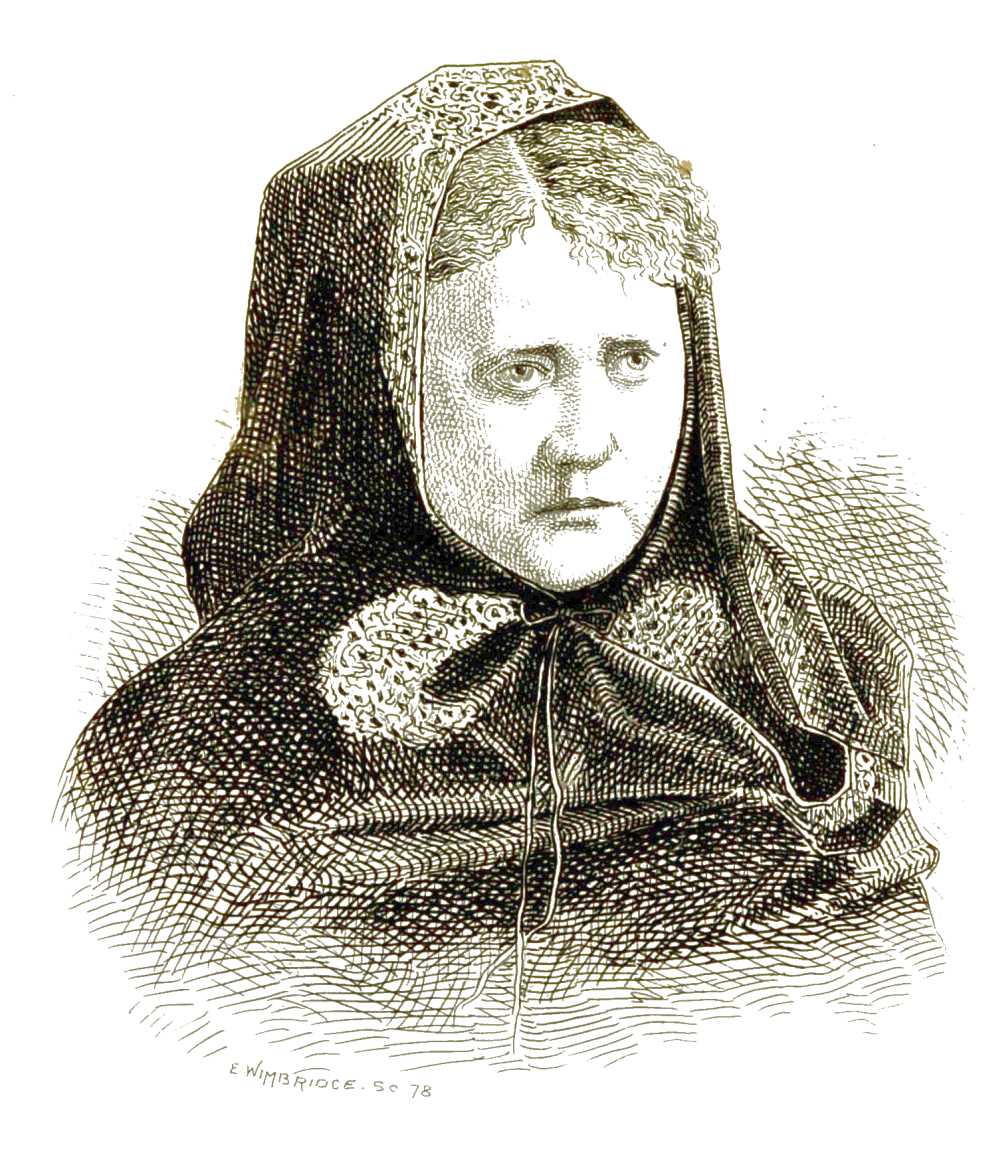
H. P. BLAVATSKY, CORRESPONDING SECRETARY OF THE THEOSOPHICAL SOCIETY.
“Cecy est un livre de bonne Foy.”—Montaigne.
Vol. I.—SCIENCE.
FOURTH EDITION.
NEW YORK:
J. W. BOUTON, 706 BROADWAY. LONDON: BERNARD QUARITCH.
1878.
Copyright, by
J. W. BOUTON.
1877.
Trow’s
Printing and Bookbinding Co.,
PRINTERS AND BOOKBINDERS, 205-213 East 12th. St.,
NEW YORK.
The work now submitted to public judgment is the fruit of a somewhat
intimate acquaintance with Eastern adepts and study of their
science. It is offered to such as are willing to accept truth wherever it
may be found, and to defend it, even looking popular prejudice straight
in the face. It is an attempt to aid the student to detect the vital principles
which underlie the philosophical systems of old.
The book is written in all sincerity. It is meant to do even justice,
and to speak the truth alike without malice or prejudice. But it shows
neither mercy for enthroned error, nor reverence for usurped authority.
It demands for a spoliated past, that credit for its achievements which
has been too long withheld. It calls for a restitution of borrowed robes,
and the vindication of calumniated but glorious reputations. Toward
no form of worship, no religious faith, no scientific hypothesis has its
criticism been directed in any other spirit. Men and parties, sects and
schools are but the mere ephemera of the world’s day. Truth, high-seated
upon its rock of adamant, is alone eternal and supreme.
We believe in no Magic which transcends the scope and capacity of
the human mind, nor in “miracle,” whether divine or diabolical, if such
imply a transgression of the laws of nature instituted from all eternity.
Nevertheless, we accept the saying of the gifted author of Festus, that
the human heart has not yet fully uttered itself, and that we have never
attained or even understood the extent of its powers. Is it too much to
believe that man should be developing new sensibilities and a closer relation
with nature? The logic of evolution must teach as much, if carried
to its legitimate conclusions. If, somewhere, in the line of ascent from
vegetable or ascidian to the noblest man a soul was evolved, gifted with
intellectual qualities, it cannot be unreasonable to infer and believe that
a faculty of perception is also growing in man, enabling him to descry
facts and truths even beyond our ordinary ken. Yet we do not hesitate
to accept the assertion of Biffé, that “the essential is forever the same.
Whether we cut away the marble inward that hides the statue in the
block, or pile stone upon stone outward till the temple is completed,
our NEW result is only an old idea. The latest of all the eternities will
find its destined other half-soul in the earliest.”
When, years ago, we first travelled over the East, exploring the penetralia
of its deserted sanctuaries, two saddening and ever-recurring questions
oppressed our thoughts: Where, WHO, WHATis GOD? Who
ever saw theIMMORTAL SPIRIT of man, so as to be able to assure
himself of man’s immortality?
It was while most anxious to solve these perplexing problems that we
came into contact with certain men, endowed with such mysterious
powers and such profound knowledge that we may truly designate them
as the sages of the Orient. To their instructions we lent a ready ear.
They showed us that by combining science with religion, the existence of
God and immortality of man’s spirit may be demonstrated like a problem
of Euclid. For the first time we received the assurance that the Oriental
philosophy has room for no other faith than an absolute and immovable
faith in the omnipotence of man’s own immortal self. We were taught
that this omnipotence comes from the kinship of man’s spirit with the
Universal Soul—God! The latter, they said, can never be demonstrated
but by the former. Man-spirit proves God-spirit, as the one drop of
water proves a source from which it must have come. Tell one who had
never seen water, that there is an ocean of water, and he must accept it
on faith or reject it altogether. But let one drop fall upon his hand, and
he then has the fact from which all the rest may be inferred. After that
he could by degrees understand that a boundless and fathomless ocean
of water existed. Blind faith would no longer be necessary; he would
have supplanted it with KNOWLEDGE. When one sees mortal man displaying
tremendous capabilities, controlling the forces of nature and
opening up to view the world of spirit, the reflective mind is overwhelmed
with the conviction that if one man’s spiritual Ego can do this much, the
capabilities of the Father Spirit must be relatively as much vaster as
the whole ocean surpasses the single drop in volume and potency. Ex
nihilo nihil fit; prove the soul of man by its wondrous powers—you have
proved God!
In our studies, mysteries were shown to be no mysteries. Names
and places that to the Western mind have only a significance derived
from Eastern fable, were shown to be realities. Reverently we stepped
in spirit within the temple of Isis; to lift aside the veil of “the one
that is and was and shall be” at Saïs; to look through the rent curtain
of the Sanctum Sanctorum at Jerusalem; and even to interrogate within
the crypts which once existed beneath the sacred edifice, the mysterious
Bath-Kol. The Filia Vocis—the daughter of the divine voice—responded
from the mercy-seat within the veil,[1] and science, theology,
every human hypothesis and conception born of imperfect knowledge,
lost forever their authoritative character in our sight. The one-living
God had spoken through his oracle—man, and we were satisfied. Such
knowledge is priceless; and it has been hidden only from those who
overlooked it, derided it, or denied its existence.
From such as these we apprehend criticism, censure, and perhaps
hostility, although the obstacles in our way neither spring from the
validity of proof, the authenticated facts of history, nor the lack of common
sense among the public whom we address. The drift of modern
thought is palpably in the direction of liberalism in religion as well as
science. Each day brings the reactionists nearer to the point where they
must surrender the despotic authority over the public conscience, which
they have so long enjoyed and exercised. When the Pope can go to the
extreme of fulminating anathemas against all who maintain the liberty
of the Press and of speech, or who insist that in the conflict of laws,
civil and ecclesiastical, the civil law should prevail, or that any method
of instruction solely secular, may be approved;[2] and Mr. Tyndall, as
the mouthpiece of nineteenth century science, says, “... the impregnable
position of science may be stated in a few words: we claim, and we
shall wrest from theology, the entire domain of cosmological theory”[3]—the
end is not difficult to foresee.
Centuries of subjection have not quite congealed the life-blood of
men into crystals around the nucleus of blind faith; and the nineteenth
is witnessing the struggles of the giant as he shakes off the Liliputian
cordage and rises to his feet. Even the Protestant communion of England
and America, now engaged in the revision of the text of its Oracles,
will be compelled to show the origin and merits of the text itself.
The day of domineering over men with dogmas has reached its gloaming.
Our work, then, is a plea for the recognition of the Hermetic philosophy,
the anciently universal Wisdom-Religion, as the only possible key
to the Absolute in science and theology. To show that we do not at all
conceal from ourselves the gravity of our undertaking, we may say in advance
that it would not be strange if the following classes should array
themselves against us:
The Christians, who will see that we question the evidences of the
genuineness of their faith.
The Scientists, who will find their pretensions placed in the same bundle
with those of the Roman Catholic Church for infallibility, and, in
certain particulars, the sages and philosophers of the ancient world
classed higher than they.
Pseudo-Scientists will, of course, denounce us furiously.
Broad Churchmen and Freethinkers will find that we do not accept
what they do, but demand the recognition of the whole truth.
Men of letters and various authorities, who hide their real belief
in deference to popular prejudices.
The mercenaries and parasites of the Press, who prostitute its more
than royal power, and dishonor a noble profession, will find it easy to
mock at things too wonderful for them to understand; for to them the
price of a paragraph is more than the value of sincerity. From many
will come honest criticism; from many—cant. But we look to the future.
The contest now going on between the party of public conscience
and the party of reaction, has already developed a healthier tone of thought.
It will hardly fail to result ultimately in the overthrow of error and the
triumph of Truth. We repeat again—we are laboring for the brighter
morrow.
And yet, when we consider the bitter opposition that we are called
upon to face, who is better entitled than we upon entering the arena to
write upon our shield the hail of the Roman gladiator to Cæsar:
Moriturus te Salutat!
New York, September, 1877.
BEFORE THE VEIL.
Joan.—Advance our waving colors on the walls!—King Henry VI. Act IV.
“My life has been devoted to the study of man, his destiny and his happiness.”
—J. R. Buchanan, M.D., Outlines of Lectures on Anthropology.
It is nineteen centuries since, as we are told, the night of Heathenism
and Paganism was first dispelled by the divine light of Christianity;
and two-and-a-half centuries since the bright lamp of Modern Science
began to shine on the darkness of the ignorance of the ages. Within
these respective epochs, we are required to believe, the true moral and
intellectual progress of the race has occurred. The ancient philosophers
were well enough for their respective generations, but they were illiterate
as compared with modern men of science. The ethics of Paganism perhaps
met the wants of the uncultivated people of antiquity, but not until
the advent of the luminous “Star of Bethlehem,” was the true road to
moral perfection and the way to salvation made plain. Of old, brutishness
was the rule, virtue and spirituality the exception. Now, the dullest
may read the will of God in His revealed word; men have every incentive
to be good, and are constantly becoming better.
This is the assumption; what are the facts? On the one hand an
unspiritual, dogmatic, too often debauched clergy; a host of sects, and
three warring great religions; discord instead of union, dogmas without
proofs, sensation-loving preachers, and wealth and pleasure-seeking parishioners’
hypocrisy and bigotry, begotten by the tyrannical exigencies
of respectability, the rule of the day, sincerity and real piety exceptional.
On the other hand, scientific hypotheses built on sand; no accord upon a
single question; rancorous quarrels and jealousy; a general drift into materialism.
A death-grapple of Science with Theology for infallibility—“a
conflict of ages.”
At Rome, the self-styled seat of Christianity, the putative successor
to the chair of Peter is undermining social order with his invisible but
omnipresent net-work of bigoted agents, and incites them to revolutionize
Europe for his temporal as well as spiritual supremacy. We see him
who calls himself the “Vicar of Christ,” fraternizing with the anti-Christian
Moslem against another Christian nation, publicly invoking the blessing
of God upon the arms of those who have for centuries withstood, with
fire and sword, the pretensions of his Christ to Godhood! At Berlin—one
of the great seats of learning—professors of modern exact sciences,
turning their backs on the boasted results of enlightenment of the post-Galileonian
period, are quietly snuffing out the candle of the great Florentine;
seeking, in short, to prove the heliocentric system, and even the
earth’s rotation, but the dreams of deluded scientists, Newton a visionary,
and all past and present astronomers but clever calculators of unverifiable
problems.[4]
Between these two conflicting Titans—Science and Theology—is a
bewildered public, fast losing all belief in man’s personal immortality, in
a deity of any kind, and rapidly descending to the level of a mere animal
existence. Such is the picture of the hour, illumined by the bright noon-day
sun of this Christian and scientific era!
Would it be strict justice to condemn to critical lapidation the most
humble and modest of authors for entirely rejecting the authority of both
these combatants? Are we not bound rather to take as the true aphorism
of this century, the declaration of Horace Greeley: “I accept unreservedly
the views of no man, living or dead”?[5] Such, at all events,
will be our motto, and we mean that principle to be our constant guide
throughout this work.
Among the many phenomenal outgrowths of our century, the strange
creed of the so-called Spiritualists has arisen amid the tottering ruins
of self-styled revealed religions and materialistic philosophies; and yet it
alone offers a possible last refuge of compromise between the two. That
this unexpected ghost of pre-Christian days finds poor welcome from
our sober and positive century, is not surprising. Times have strangely
changed; and it is but recently that a well-known Brooklyn preacher
pointedly remarked in a sermon, that could Jesus come back and behave
in the streets of New York, as he did in those of Jerusalem, he would find
himself confined in the prison of the Tombs.[6] What sort of welcome,
then, could Spiritualism ever expect? True enough, the weird stranger
seems neither attractive nor promising at first sight. Shapeless and uncouth,
like an infant attended by seven nurses, it is coming out of its
teens lame and mutilated. The name of its enemies is legion; its friends
and protectors are a handful. But what of that? When was ever truth
accepted à priori? Because the champions of Spiritualism have in their
fanaticism magnified its qualities, and remained blind to its imperfections,
that gives no excuse to doubt its reality. A forgery is impossible when
we have no model to forge after. The fanaticism of Spiritualists is itself
a proof of the genuineness and possibility of their phenomena. They
give us facts that we may investigate, not assertions that we must believe
without proof. Millions of reasonable men and women do not so easily
succumb to collective hallucination. And so, while the clergy, following
their own interpretations of the Bible, and science its self-made Codex of
possibilities in nature, refuse it a fair hearing, real science and true religion
are silent, and gravely wait further developments.
The whole question of phenomena rests on the correct comprehension
of old philosophies. Whither, then, should we turn, in our perplexity, but
to the ancient sages, since, on the pretext of superstition, we are refused
an explanation by the modern? Let us ask them what they know of
genuine science and religion; not in the matter of mere details, but in
all the broad conception of these twin truths—so strong in their unity, so
weak when divided. Besides, we may find our profit in comparing this
boasted modern science with ancient ignorance; this improved modern
theology with the “Secret doctrines” of the ancient universal religion.
Perhaps we may thus discover a neutral ground whence we can reach
and profit by both.
It is the Platonic philosophy, the most elaborate compend of the
abstruse systems of old India, that can alone afford us this middle ground.
Although twenty-two and a quarter centuries have elapsed since the
death of Plato, the great minds of the world are still occupied with his
writings. He was, in the fullest sense of the word, the world’s interpreter.
And the greatest philosopher of the pre-Christian era mirrored
faithfully in his works the spiritualism of the Vedic philosophers who lived
thousands of years before himself, and its metaphysical expression. Vyasa,
Djeminy, Kapila, Vrihaspati, Sumati, and so many others, will be found
to have transmitted their indelible imprint through the intervening centuries
upon Plato and his school. Thus is warranted the inference that
to Plato and the ancient Hindu sages was alike revealed the same wisdom.
So surviving the shock of time, what can this wisdom be but divine and
eternal?
Plato taught justice as subsisting in the soul of its possessor and his
greatest good. “Men, in proportion to their intellect, have admitted his
transcendent claims.” Yet his commentators, almost with one consent,
shrink from every passage which implies that his metaphysics are based
on a solid foundation, and not on ideal conceptions.
But Plato could not accept a philosophy destitute of spiritual aspirations;
the two were at one with him. For the old Grecian sage there
was a single object of attainment: REAL KNOWLEDGE. He considered
those only to be genuine philosophers, or students of truth, who possess
the knowledge of the really-existing, in opposition to the mere seeing; of
the always-existing, in opposition to the transitory; and of that which
exists permanently, in opposition to that which waxes, wanes, and is
developed and destroyed alternately. “Beyond all finite existences and
secondary causes, all laws, ideas, and principles, there is an INTELLIGENCE
or MIND [νοῦς, nous, the spirit], the first principle of all principles, the
Supreme Idea on which all other ideas are grounded; the Monarch and
Lawgiver of the universe; the ultimate substance from which all things
derive their being and essence, the first and efficient Cause of all the
order, and harmony, and beauty, and excellency, and goodness, which
pervades the universe—who is called, by way of preëminence and
excellence, the Supreme Good, the God (ὁ θεός) ‘the God over all’
(ὁ επι πασι θεός).”[7] He is not the truth nor the intelligence, but “the
father of it.” Though this eternal essence of things may not be perceptible
by our physical senses, it may be apprehended by the mind of those
who are not wilfully obtuse. “To you,” said Jesus to his elect disciples,
“it is given to know the mysteries of the Kingdom of God, but to them
[the πολλοὶ] it is not given; ... therefore speak I to them in parables
[or allegories]; because they seeing, see not, and hearing, they hear not,
neither do they understand.”[8]
The philosophy of Plato, we are assured by Porphyry, of the Neo-platonic
School was taught and illustrated in the MYSTERIES. Many
have questioned and even denied this; and Lobeck, in his Aglaophomus,
has gone to the extreme of representing the sacred orgies as
little more than an empty show to captivate the imagination. As
though Athens and Greece would for twenty centuries and more have
repaired every fifth year to Eleusis to witness a solemn religious farce!
Augustine, the papa-bishop of Hippo, has resolved such assertions. He
declares that the doctrines of the Alexandrian Platonists were the
original esoteric doctrines of the first followers of Plato, and describes
Plotinus as a Plato resuscitated. He also explains the motives of the
great philosopher for veiling the interior sense of what he taught.[9]
As to the myths, Plato declares in the Gorgias and the Phædon that they
were the vehicles of great truths well worth the seeking. But commentators
are so little en rapport with the great philosopher as to be compelled
to acknowledge that they are ignorant where “the doctrinal ends, and
the mythical begins.” Plato put to flight the popular superstition concerning
magic and dæmons, and developed the exaggerated notions of
the time into rational theories and metaphysical conceptions. Perhaps
these would not quite stand the inductive method of reasoning established
by Aristotle; nevertheless they are satisfactory in the highest degree to
those who apprehend the existence of that higher faculty of insight or intuition,
as affording a criterion for ascertaining truth.
Basing all his doctrines upon the presence of the Supreme Mind,
Plato taught that the nous, spirit, or rational soul of man, being “generated
by the Divine Father,” possessed a nature kindred, or even homogeneous,
with the Divinity, and was capable of beholding the eternal
realities. This faculty of contemplating reality in a direct and immediate
manner belongs to God alone; the aspiration for this knowledge constitutes
what is really meant by philosophy—the love of wisdom. The love
of truth is inherently the love of good; and so predominating over every
desire of the soul, purifying it and assimilating it to the divine, thus governing
every act of the individual, it raises man to a participation and
communion with Divinity, and restores him to the likeness of God.
“This flight,” says Plato in the Theætetus, “consists in becoming like
God, and this assimilation is the becoming just and holy with wisdom.”
The basis of this assimilation is always asserted to be the preëxistence
of the spirit or nous. In the allegory of the chariot and winged steeds,
given in the Phædrus, he represents the psychical nature as composite and
two-fold; the thumos, or epithumetic part, formed from the substances
of the world of phenomena; and the θυμοειδές, thumoeides, the essence of
which is linked to the eternal world. The present earth-life is a fall and
punishment. The soul dwells in “the grave which we call the body,”
and in its incorporate state, and previous to the discipline of education,
the noëtic or spiritual element is “asleep.” Life is thus a dream, rather
than a reality. Like the captives in the subterranean cave, described in
The Republic, the back is turned to the light, we perceive only the
shadows of objects, and think them the actual realities. Is not this
the idea of Maya, or the illusion of the senses in physical life, which
is so marked a feature in Buddhistical philosophy? But these shadows,
if we have not given ourselves up absolutely to the sensuous nature,
arouse in us the reminiscence of that higher world that we once inhabited.
“The interior spirit has some dim and shadowy recollection of its antenatal
state of bliss, and some instinctive and proleptic yearnings for its
return.” It is the province of the discipline of philosophy to disinthrall
it from the bondage of sense, and raise it into the empyrean of pure
thought, to the vision of eternal truth, goodness, and beauty. “The
soul,” says Plato, in the Theætetus, “cannot come into the form of a
man if it has never seen the truth. This is a recollection of those things
which our soul formerly saw when journeying with Deity, despising
the things which we now say are, and looking up to that which REALLY
IS. Wherefore the nous, or spirit, of the philosopher (or student of the
higher truth) alone is furnished with wings; because he, to the best of his
ability, keeps these things in mind, of which the contemplation renders
even Deity itself divine. By making the right use of these things remembered
from the former life, by constantly perfecting himself in the perfect
mysteries, a man becomes truly perfect—an initiate into the diviner
wisdom.”
Hence we may understand why the sublimer scenes in the Mysteries
were always in the night. The life of the interior spirit is the death of
the external nature; and the night of the physical world denotes the day
of the spiritual. Dionysus, the night-sun, is, therefore, worshipped rather
than Helios, orb of day. In the Mysteries were symbolized the preëxistent
condition of the spirit and soul, and the lapse of the latter into
earth-life and Hades, the miseries of that life, the purification of the soul,
and its restoration to divine bliss, or reünion with spirit. Theon, of
Smyrna, aptly compares the philosophical discipline to the mystic rites:
“Philosophy,” says he, “may be called the initiation into the true arcana,
and the instruction in the genuine Mysteries. There are five parts
of this initiation: I., the previous purification; II., the admission to participation
in the arcane rites; III., the epoptic revelation; IV., the investiture
or enthroning; V.—the fifth, which is produced from all these,
is friendship and interior communion with God, and the enjoyment of
that felicity which arises from intimate converse with divine beings....
Plato denominates the epopteia, or personal view, the perfect contemplation
of things which are apprehended intuitively, absolute truths
and ideas. He also considers the binding of the head and crowning
as analogous to the authority which any one receives from his
instructors, of leading others into the same contemplation. The fifth
gradation is the most perfect felicity arising from hence, and, according
to Plato, an assimilation to divinity as far as is possible to human
beings.”[10]
Such is Platonism. “Out of Plato,” says Ralph Waldo Emerson,
“come all things that are still written and debated among men of
thought.” He absorbed the learning of his times—of Greece from Philolaus
to Socrates; then of Pythagoras in Italy; then what he could procure
from Egypt and the East. He was so broad that all philosophy,
European and Asiatic, was in his doctrines; and to culture and contemplation
he added the nature and qualities of the poet.
The followers of Plato generally adhered strictly to his psychological
theories. Several, however, like Xenocrates, ventured into bolder speculations.
Speusippus, the nephew and successor of the great philosopher,
was the author of the Numerical Analysis, a treatise on the Pythagorean
numbers. Some of his speculations are not found in the written Dialogues;
but as he was a listener to the unwritten lectures of Plato, the
judgment of Enfield is doubtless correct, that he did not differ from his
master. He was evidently, though not named, the antagonist whom
Aristotle criticised, when professing to cite the argument of Plato against
the doctrine of Pythagoras, that all things were in themselves numbers,
or rather, inseparable from the idea of numbers. He especially endeavored
to show that the Platonic doctrine of ideas differed essentially from
the Pythagorean, in that it presupposed numbers and magnitudes to exist
apart from things. He also asserted that Plato taught that there could
be no real knowledge, if the object of that knowledge was not carried
beyond or above the sensible.
But Aristotle was no trustworthy witness. He misrepresented Plato,
and he almost caricatured the doctrines of Pythagoras. There is a canon
of interpretation, which should guide us in our examinations of every
philosophical opinion: “The human mind has, under the necessary
operation of its own laws, been compelled to entertain the same fundamental
ideas, and the human heart to cherish the same feelings in all
ages.” It is certain that Pythagoras awakened the deepest intellectual
sympathy of his age, and that his doctrines exerted a powerful influence
upon the mind of Plato. His cardinal idea was that there existed a permanent
principle of unity beneath the forms, changes, and other phenomena
of the universe. Aristotle asserted that he taught that “numbers
are the first principles of all entities.” Ritter has expressed the opinion
that the formula of Pythagoras should be taken symbolically, which is
doubtless correct. Aristotle goes on to associate these numbers with the
“forms” and “ideas” of Plato. He even declares that Plato said:
“forms are numbers,” and that “ideas are substantial existences—real
beings.” Yet Plato did not so teach. He declared that the final cause
was the Supreme Goodness—το ἀγαθόν. “Ideas are objects of pure
conception for the human reason, and they are attributes of the Divine
Reason.”[11] Nor did he ever say that “forms are numbers.” What he
did say may be found in the Timæus: “God formed things as they first
arose according to forms and numbers.”
It is recognized by modern science that all the higher laws of nature
assume the form of quantitative statement. This is perhaps a fuller
elaboration or more explicit affirmation of the Pythagorean doctrine.
Numbers were regarded as the best representations of the laws of harmony
which pervade the cosmos. We know too that in chemistry the
doctrine of atoms and the laws of combination are actually and, as it
were, arbitrarily defined by numbers. As Mr. W. Archer Butler has
expressed it: “The world is, then, through all its departments, a living
arithmetic in its development, a realized geometry in its repose.”
The key to the Pythagorean dogmas is the general formula of unity
in multiplicity, the one evolving the many and pervading the many.
This is the ancient doctrine of emanation in few words. Even the
apostle Paul accepted it as true. “Εξ αυτοὺ, και δι᾽ αυτοῦ, και εις αυτὸν
τὰ πάντα”—Out of him and through him and in him all things are.
This, as we can see by the following quotation, is purely Hindu and
Brahmanical:
“When the dissolution—Pralaya—had arrived at its term, the great
Being—Para-Atma or Para-Purusha—the Lord existing through himself,
out of whom and through whom all things were, and are and will be ...
resolved to emanate from his own substance the various creatures”
(Manava-Dharma-Sastra, book i., slokas 6 and 7).
The mystic Decad 1 + 2 + 3 + 4 = 10 is a way of expressing this idea.
The One is God, the Two, matter; the Three, combining Monad and
Duad, and partaking of the nature of both, is the phenomenal world; the
Tetrad, or form of perfection, expresses the emptiness of all; and the
Decad, or sum of all, involves the entire cosmos. The universe is the
combination of a thousand elements, and yet the expression of a single
spirit—a chaos to the sense, a cosmos to the reason.
The whole of this combination of the progression of numbers in the
idea of creation is Hindu. The Being existing through himself, Swayambhu
or Swayambhuva, as he is called by some, is one. He emanates
from himself the creative faculty, Brahma or Purusha (the divine male),
and the one becomes Two; out of this Duad, union of the purely
intellectual principle with the principle of matter, evolves a third, which is
Viradj, the phenomenal world. It is out of this invisible and incomprehensible
trinity, the Brahmanic Trimurty, that evolves the second triad
which represents the three faculties—the creative, the conservative, and
the transforming. These are typified by Brahma, Vishnu, and Siva, but
are again and ever blended into one. Unity, Brahma, or as the Vedas
called him, Tridandi, is the god triply manifested, which gave rise to the
symbolical Aum or the abbreviated Trimurty. It is but under this trinity,
ever active and tangible to all our senses, that the invisible and
unknown Monas can manifest itself to the world of mortals. When he
becomes Sarira, or he who puts on a visible form, he typifies all the
principles of matter, all the germs of life, he is Purusha, the god of the
three visages, or triple power, the essence of the Vedic triad. “Let the
Brahmas know the sacred Syllable (Aum), the three words of the Savitri,
and read the Vedas daily” (Manu, book iv., sloka 125).
“After having produced the universe, He whose power is incomprehensible
vanished again, absorbed in the Supreme Soul.... Having
retired into the primitive darkness, the great Soul remains within the unknown,
and is void of all form....
“When having again reünited the subtile elementary principles, it
introduces itself into either a vegetable or animal seed, it assumes at each
a new form.”
“It is thus that, by an alternative waking and rest, the Immutable Being
causes to revive and die eternally all the existing creatures, active
and inert” (Manu, book i., sloka 50, and others).
He who has studied Pythagoras and his speculations on the Monad,
which, after having emanated the Duad retires into silence and darkness,
and thus creates the Triad can realize whence came the philosophy of the
great Samian Sage, and after him that of Socrates and Plato.
Speusippus seems to have taught that the psychical or thumetic soul
was immortal as well as the spirit or rational soul, and further on we will
show his reasons. He also—like Philolaus and Aristotle, in his disquisitions
upon the soul—makes of æther an element; so that there were five
principal elements to correspond with the five regular figures in Geometry.
This became also a doctrine of the Alexandrian school.[12] Indeed, there
was much in the doctrines of the Philaletheans which did not appear in
the works of the older Platonists, but was doubtless taught in substance
by the philosopher himself, but with his usual reticence was not committed
to writing as being too arcane for promiscuous publication. Speusippus
and Xenocrates after him, held, like their great master, that the
anima mundi, or world-soul, was not the Deity, but a manifestation.
Those philosophers never conceived of the One as an animate nature.[13]
The original One did not exist, as we understand the term. Not till he
had united with the many—emanated existence (the monad and duad)
was a being produced. The τίμιον, honored—the something manifested,
dwells in the centre as in the circumference, but it is only the reflection
of the Deity—the World-Soul.[14] In this doctrine we find the spirit of
esoteric Buddhism.
A man’s idea of God, is that image of blinding light that he sees reflected
in the concave mirror of his own soul, and yet this is not, in very
truth, God, but only His reflection. His glory is there, but, it is the light
of his own Spirit that the man sees, and it is all he can bear to look upon.
The clearer the mirror, the brighter will be the divine image. But the
external world cannot be witnessed in it at the same moment. In the
ecstatic Yogin, in the illuminated Seer, the spirit will shine like the noon-day
sun; in the debased victim of earthly attraction, the radiance has disappeared,
for the mirror is obscured with the stains of matter. Such men
deny their God, and would willingly deprive humanity of soul at one blow.
No God, No Soul? Dreadful, annihilating thought! The maddening
nightmare of a lunatic—Atheist; presenting before his fevered vision,
a hideous, ceaseless procession of sparks of cosmic matter created
by no one; self-appearing, self-existent, and self-developing; this Self
no Self, for it is nothing and nobody; floating onward from nowhence, it is
propelled by no Cause, for there is none, and it rushes nowhither. And
this in a circle of Eternity blind, inert, and—CAUSELESS. What is even
the erroneous conception of the Buddhistic Nirvana in comparison! The
Nirvana is preceded by numberless spiritual transformations and metempsychoses,
during which the entity loses not for a second the sense of
its own individuality, and which may last for millions of ages before the
Final No-thing is reached.
Though some have considered Speusippus as inferior to Aristotle, the
world is nevertheless indebted to him for defining and expounding many
things that Plato had left obscure in his doctrine of the Sensible and Ideal.
His maxim was “The Immaterial is known by means of scientific thought,
the Material by scientific perception.”[15]
Xenocrates expounded many of the unwritten theories and teachings
of his master. He too held the Pythagorean doctrine, and his system of
numerals and mathematics in the highest estimation. Recognizing but
three degrees of knowledge—Thought, Perception, and Envisagement (or
knowledge by Intuition), he made the former busy itself with all that
which is beyond the heavens; Perception with things in the heavens; Intuition
with the heavens themselves.
We find again these theories, and nearly in the same language in the
Manava-Dharma-Sastra, when speaking of the creation of man: “He
(the Supreme) drew from his own essence the immortal breath which
perisheth not in the being, and to this soul of the being he gave the Ahancara
(conscience of the ego) sovereign guide. Then he gave to that
soul of the being (man) the intellect formed of the three qualities, and the
five organs of the outward perception.”
These three qualities are Intelligence, Conscience, and Will; answering
to the Thought, Perception, and Envisagement of Xenocrates. The
relation of numbers to Ideas was developed by him further than by Speusippus,
and he surpassed Plato in his definition of the doctrine of Invisible
Magnitudes. Reducing them to their ideal primary elements, he
demonstrated that every figure and form originated out of the smallest indivisible
line. That Xenocrates held the same theories as Plato in relation
to the human soul (supposed to be a number) is evident, though
Aristotle contradicts this, like every other teaching of this philosopher.[16]
This is conclusive evidence that many of Plato’s doctrines were delivered
orally, even were it shown that Xenocrates and not Plato was the first
to originate the theory of indivisible magnitudes. He derives the Soul
from the first Duad, and calls it a self-moved number.[17] Theophrastus
remarks that he entered and eliminated this Soul-theory more than any
other Platonist. He built upon it the cosmological doctrine, and proved
the necessary existence in every part of the universal space of a successive
and progressive series of animated and thinking though spiritual beings.[18]
The Human Soul with him is a compound of the most spiritual
properties of the Monad and the Duad, possessing the highest principles
of both. If, like Plato and Prodicus, he refers to the Elements as to
Divine Powers, and calls them gods, neither himself nor others connected
any anthropomorphic idea with the appellation. Krische remarks that
he called them gods only that these elementary powers should not be confounded
with the dæmons of the nether world[19] (the Elementary Spirits).
As the Soul of the World permeates the whole Cosmos, even beasts must
have in them something divine.[20] This, also, is the doctrine of Buddhists
and the Hermetists, and Manu endows with a living soul even
the plants and the tiniest blade of grass.
The dæmons, according to this theory, are intermediate beings
between the divine perfection and human sinfulness,[21] and he divides them
into classes, each subdivided in many others. But he states expressly
that the individual or personal soul is the leading guardian dæmon of
every man, and that no dæmon has more power over us than our own.
Thus the Daimonion of Socrates is the god or Divine Entity which inspired
him all his life. It depends on man either to open or close his
perceptions to the Divine voice. Like Speusippus he ascribed immortality
to the ψυχη, psychical body, or irrational soul. But some Hermetic
philosophers have taught that the soul has a separate continued
existence only so long as in its passage through the spheres any material
or earthly particles remain incorporated in it; and that when absolutely
purified, the latter are annihilated, and the quintessence of the soul alone
becomes blended with its divine spirit (the Rational), and the two are
thenceforth one.
Zeller states that Xenocrates forbade the eating of animal food, not
because he saw in beasts something akin to man, as he ascribed to them
a dim consciousness of God, but, “for the opposite reason, lest the irrationality
of animal souls might thereby obtain a certain influence over
us.”[22] But we believe that it was rather because, like Pythagoras, he had
had the Hindu sages for his masters and models. Cicero depicted Xenocrates
utterly despising everything except the highest virtue;[23] and describes
the stainlessness and severe austerity of his character.[24] “To free
ourselves from the subjection of sensuous existence, to conquer the Titanic
elements in our terrestrial nature through the Divine one, is our
problem.” Zeller makes him say:[25] “Purity, even in the secret longings
of our heart, is the greatest duty, and only philosophy and the initiation
into the Mysteries help toward the attainment of this object.”
Crantor, another philosopher associated with the earliest days of
Plato’s Academy, conceived the human soul as formed out of the primary
substance of all things, the Monad or One, and the Duad or the Two.
Plutarch speaks at length of this philosopher, who like his master believed
in souls being distributed in earthly bodies as an exile and punishment.
Herakleides, though some critics do not believe him to have strictly adhered
to Plato’s primal philosophy,[26] taught the same ethics. Zeller presents
him to us imparting, like Hicetas and Ecphantus, the Pythagorean
doctrine of the diurnal rotation of the earth and the immobility of the
fixed stars, but adds that he was ignorant of the annual revolution of the
earth around the sun, and of the heliocentric system.[27] But we have good
evidence that the latter system was taught in the Mysteries, and that Socrates
died for atheism, i. e., for divulging this sacred knowledge. Herakleides
adopted fully the Pythagorean and Platonic views of the human soul, its
faculties and its capabilities. He describes it as a luminous, highly ethereal
essence. He affirms that souls inhabit the milky way before descending
“into generation” or sublunary existence. His dæmons or
spirits are airy and vaporous bodies.
In the Epinomis is fully stated the doctrine of the Pythagorean numbers
in relation to created things. As a true Platonist, its author
maintains that wisdom can only be attained by a thorough inquiry into
the occult nature of the creation; it alone assures us an existence of
bliss after death. The immortality of the soul is greatly speculated upon
in this treatise; but its author adds that we can attain to this knowledge
only through a complete comprehension of the numbers; for the man,
unable to distinguish the straight line from a curved one will never have
wisdom enough to secure a mathematical demonstration of the invisible,
i. e., we must assure ourselves of the objective existence of our soul (astral
body) before we learn that we are in possession of a divine and immortal
spirit. Iamblichus says the same thing; adding, moreover, that it is a
secret belonging to the highest initiation. The Divine Power, he says,
always felt indignant with those “who rendered manifest the composition
of the icostagonus,” viz., who delivered the method of inscribing in a
sphere the dodecahedron.[28]
The idea that “numbers” possessing the greatest virtue, produce always
what is good and never what is evil, refers to justice, equanimity of
temper, and everything that is harmonious. When the author speaks
of every star as an individual soul, he only means what the Hindu initiates
and the Hermetists taught before and after him, viz.: that every star is an
independent planet, which, like our earth, has a soul of its own, every atom
of matter being impregnated with the divine influx of the soul of the
world. It breathes and lives; it feels and suffers as well as enjoys life
in its way. What naturalist is prepared to dispute it on good evidence?
Therefore, we must consider the celestial bodies as the images of gods;
as partaking of the divine powers in their substance; and though they
are not immortal in their soul-entity, their agency in the economy of the
universe is entitled to divine honors, such as we pay to minor gods. The
idea is plain, and one must be malevolent indeed to misrepresent it. If the
author of Epinomis places these fiery gods higher than the animals, plants,
and even mankind, all of which, as earthly creatures, are assigned by him
a lower place, who can prove him wholly wrong? One must needs go
deep indeed into the profundity of the abstract metaphysics of the old
philosophies, who would understand that their various embodiments of
their conceptions are, after all, based upon an identical apprehension of
the nature of the First Cause, its attributes and method.
Again when the author of Epinomis locates between these highest and
lowest gods (embodied souls) three classes of dæmons, and peoples the
universe with invisible beings, he is more rational than our modern scientists,
who make between the two extremes one vast hiatus of being, the
playground of blind forces. Of these three classes the first two are invisible;
their bodies are pure ether and fire (planetary spirits); the
dæmons of the third class are clothed with vapory bodies; they are
usually invisible, but sometimes making themselves concrete become
visible for a few seconds. These are the earthly spirits, or our astral
souls.
It is these doctrines, which, studied analogically, and on the principle
of correspondence, led the ancient, and may now lead the modern Philaletheian
step by step toward the solution of the greatest mysteries.
On the brink of the dark chasm separating the spiritual from the physical
world stands modern science, with eyes closed and head averted, pronouncing
the gulf impassable and bottomless, though she holds in her
hand a torch which she need only lower into the depths to show her her
mistake. But across this chasm, the patient student of Hermetic philosophy
has constructed a bridge.
In his Fragments of Science Tyndall makes the following sad confession:
“If you ask me whether science has solved, or is likely in our day
to solve the problem of this universe, I must shake my head in doubt.”
If moved by an afterthought, he corrects himself later, and assures his
audience that experimental evidence has helped him to discover, in the
opprobrium-covered matter, the “promise and potency of every quality
of life,” he only jokes. It would be as difficult for Professor Tyndall to
offer any ultimate and irrefutable proofs of what he asserts, as it was for
Job to insert a hook into the nose of the leviathan.
To avoid confusion that might easily arise by the frequent employment
of certain terms in a sense different from that familiar to the reader, a
few explanations will be timely. We desire to leave no pretext either for
misunderstanding or misrepresentation. Magic may have one signification
to one class of readers and another to another class. We shall give it
the meaning which it has in the minds of its Oriental students and practitioners.
And so with the words Hermetic Science, Occultism, Hierophant,
Adept, Sorcerer, etc.; there has been little agreement of late as to
their meaning. Though the distinctions between the terms are very often
insignificant—merely ethnic—still, it may be useful to the general reader
to know just what that is. We give a few alphabetically.
Æthrobacy, is the Greek name for walking or being lifted in the
air; levitation, so called, among modern spiritualists. It may be either
conscious or unconscious; in the one case, it is magic; in the other,
either disease or a power which requires a few words of elucidation.
A symbolical explanation of æthrobacy is given in an old Syriac
manuscript which was translated in the fifteenth century by one Malchus,
an alchemist. In connection with the case of Simon Magus, one
passage reads thus:
“Simon, laying his face upon the ground, whispered in her ear, ‘O
mother Earth, give me, I pray thee, some of thy breath; and I will give
thee mine; let me loose, O mother, that I may carry thy words to the
stars, and I will return faithfully to thee after a while.’ And the Earth
strengthening her status, none to her detriment, sent her genius to
breathe of her breath on Simon, while he breathed on her; and the stars
rejoiced to be visited by the mighty One.”
The starting-point here is the recognized electro-chemical principle
that bodies similarly electrified repel each other, while those differently
electrified mutually attract. “The most elementary knowledge of
chemistry,” says Professor Cooke, “shows that, while radicals of opposite
natures combine most eagerly together, two metals, or two closely-allied
metalloids, show but little affinity for each other.”
The earth is a magnetic body; in fact, as some scientists have
found, it is one vast magnet, as Paracelsus affirmed some 300 years ago.
It is charged with one form of electricity—let us call it positive—which
it evolves continuously by spontaneous action, in its interior or centre
of motion. Human bodies, in common with all other forms of matter,
are charged with the opposite form of electricity—negative. That is to
say, organic or inorganic bodies, if left to themselves will constantly and
involuntarily charge themselves with, and evolve the form of electricity
opposed to that of the earth itself. Now, what is weight? Simply
the attraction of the earth. “Without the attractions of the earth
you would have no weight,” says Professor Stewart;[29] “and if you
had an earth twice as heavy as this, you would have double the
attraction.” How then, can we get rid of this attraction? According
to the electrical law above stated, there is an attraction between our
planet and the organisms upon it, which holds them upon the surface of
the ground. But the law of gravitation has been counteracted in many
instances, by levitations of persons and inanimate objects; how account
for this? The condition of our physical systems, say theurgic philosophers,
is largely dependent upon the action of our will. If well-regulated,
it can produce “miracles;” among others a change of this electrical
polarity from negative to positive; the man’s relations with the
earth-magnet would then become repellent, and “gravity” for him
would have ceased to exist. It would then be as natural for him to
rush into the air until the repellent force had exhausted itself, as, before,
it had been for him to remain upon the ground. The altitude of his
levitation would be measured by his ability, greater or less, to charge
his body with positive electricity. This control over the physical forces
once obtained, alteration of his levity or gravity would be as easy as
breathing.
The study of nervous diseases has established that even in ordinary
somnambulism, as well as in mesmerized somnambulists, the weight of
the body seems to be diminished. Professor Perty mentions a somnambulist,
Koehler, who when in the water could not sink, but floated. The
seeress of Prevorst rose to the surface of the bath and could not be
kept seated in it. He speaks of Anna Fleisher, who being subject to
epileptic fits, was often seen by the Superintendent to rise in the air;
and was once, in the presence of two trustworthy witnesses (two deans)
and others, raised two and a half yards from her bed in a horizontal
position. The similar case of Margaret Rule is cited by Upham in his
History of Salem Witchcraft. “In ecstatic subjects,” adds Professor
Perty, “the rising in the air occurs much more frequently than with
somnambulists. We are so accustomed to consider gravitation as being
a something absolute and unalterable, that the idea of a complete or
partial rising in opposition to it seems inadmissible; nevertheless, there
are phenomena in which, by means of material forces, gravitation is
overcome. In several diseases—as, for instance, nervous fever—the
weight of the human body seems to be increased, but in all ecstatic conditions
to be diminished. And there may, likewise, be other forces than
material ones which can counteract this power.”
A Madrid journal, El Criterio Espiritista, of a recent date, reports
the case of a young peasant girl near Santiago, which possesses a peculiar
interest in this connection. “Two bars of magnetized iron held
over her horizontally, half a metre distant, was sufficient to suspend her
body in the air.”
Were our physicians to experiment on such levitated subjects, it
would be found that they are strongly charged with a similar form of
electricity to that of the spot, which, according to the law of gravitation,
ought to attract them, or rather prevent their levitation. And, if
some physical nervous disorder, as well as spiritual ecstasy produce
unconsciously to the subject the same effects, it proves that if this force
in nature were properly studied, it could be regulated at will.
Alchemists.—From Al and Chemi, fire, or the god and patriarch,
Kham, also, the name of Egypt. The Rosicrucians of the middle ages,
such as Robertus de Fluctibus (Robert Fludd), Paracelsus, Thomas
Vaughan (Eugenius Philalethes), Van Helmont, and others, were all
alchemists, who sought for the hidden spirit in every inorganic matter.
Some people—nay, the great majority—have accused alchemists of charlatanry
and false pretending. Surely such men as Roger Bacon, Agrippa,
Henry Kunrath, and the Arabian Geber (the first to introduce into
Europe some of the secrets of chemistry), can hardly be treated as impostors—least
of all as fools. Scientists who are reforming the science of
physics upon the basis of the atomic theory of Demokritus, as restated
by John Dalton, conveniently forget that Demokritus, of Abdera, was an
alchemist, and that the mind that was capable of penetrating so far into
the secret operations of nature in one direction must have had good reasons
to study and become a Hermetic philosopher. Olaus Borrichias
says, that the cradle of alchemy is to be sought in the most distant times.
Astral Light.—The same as the sidereal light of Paracelsus and
other Hermetic philosophers. Physically, it is the ether of modern science.
Metaphysically, and in its spiritual, or occult sense, ether is a
great deal more than is often imagined. In occult physics, and alchemy,
it is well demonstrated to enclose within its shoreless waves not only
Mr. Tyndall’s “promise and potency of every quality of life,” but also
the realization of the potency of every quality of spirit. Alchemists and
Hermetists believe that their astral, or sidereal ether, besides the above
properties of sulphur, and white and red magnesia, or magnes, is the
anima mundi, the workshop of Nature and of all the cosmos, spiritually,
as well as physically. The “grand magisterium” asserts itself in the
phenomenon of mesmerism, in the “levitation” of human and inert objects;
and may be called the ether from its spiritual aspect.
The designation astral is ancient, and was used by some of the Neo-platonists.
Porphyry describes the celestial body which is always joined
with the soul as “immortal, luminous, and star-like.” The root of this
word may be found, perhaps, in the Scythic aist-aer—which means
star, or the Assyrian Istar, which, according to Burnouf has the same
sense. As the Rosicrucians regarded the real, as the direct opposite
of the apparent, and taught that what seems light to matter, is
darkness to spirit, they searched for the latter in the astral ocean of
invisible fire which encompasses the world; and claim to have traced the
equally invisible divine spirit, which overshadows every man and is erroneously
called soul, to the very throne of the Invisible and Unknown
God. As the great cause must always remain invisible and imponderable,
they could prove their assertions merely by demonstration of its effects
in this world of matter, by calling them forth from the unknowable down
into the knowable universe of effects. That this astral light permeates
the whole cosmos, lurking in its latent state even in the minutest particle
of rock, they demonstrate by the phenomenon of the spark from flint
and from every other stone, whose spirit when forcibly disturbed springs
to sight spark-like, and immediately disappears in the realms of the
unknowable.
Paracelsus named it the sidereal light, taking the term from the Latin.
He regarded the starry host (our earth included) as the condensed portions
of the astral light which “fell down into generation and matter,”
but whose magnetic or spiritual emanations kept constantly a never-ceasing
intercommunication between themselves and the parent-fount of
all—the astral light. “The stars attract from us to themselves, and we
again from them to us,” he says. The body is wood and the life is fire,
which comes like the light from the stars and from heaven. “Magic is
the philosophy of alchemy,” he says again.[30] Everything pertaining to the
spiritual world must come to us through the stars, and if we are in friendship
with them, we may attain the greatest magical effects.
“As fire passes through an iron stove, so do the stars pass through
man with all their properties and go into him as the rain into the earth,
which gives fruit out of that same rain. Now observe that the stars surround
the whole earth, as a shell does the egg; through the shell comes
the air, and penetrates to the centre of the world.” The human body is
subjected as well as the earth, and planets, and stars, to a double law; it
attracts and repels, for it is saturated through with double magnetism,
the influx of the astral light. Everything is double in nature; magnetism
is positive and negative, active and passive, male and female.
Night rests humanity from the day’s activity, and restores the equilibrium
of human as well as of cosmic nature. When the mesmerizer will have
learned the grand secret of polarizing the action and endowing his fluid
with a bi-sexual force he will have become the greatest magician living.
Thus the astral light is androgyne, for equilibrium is the resultant of two
opposing forces eternally reacting upon each other. The result of this is
Life. When the two forces are expanded and remain so long inactive,
as to equal one another and so come to a complete rest, the condition isDeath. A human being can blow either a hot or a cold breath; and
can absorb either cold or hot air. Every child knows how to regulate
the temperature of his breath; but how to protect one’s self from either
hot or cold air, no physiologist has yet learned with certainty. The astral
light alone, as the chief agent in magic, can discover to us all secrets
of nature. The astral light is identical with the Hindu akâsa, a word
which we will now explain.
Akâsa.—Literally the word means in Sanscrit sky, but in its mystic
sense it signifies the invisible sky; or, as the Brahmans term it in the
Soma-sacrifice (the Gyotishtoma Agnishtoma), the god Akâsa, or god Sky.
The language of the Vedas shows that the Hindus of fifty centuries ago
ascribed to it the same properties as do the Thibetan lamas of the present
day; that they regarded it as the source of life, the reservoir of all
energy, and the propeller of every change of matter. In its latent state,
it tallies exactly with our idea of the universal ether; in its active state
it became the Akâsa, the all-directing and omnipotent god. In the
Brahmanical sacrificial mysteries it plays the part of Sadasya, or superintendent
over the magical effects of the religious performance, and it
had its own appointed Hotar (or priest), who took its name. In India,
as in other countries in ancient times, the priests are the representatives
on earth of different gods; each taking the name of the deity in whose
name he acts.
The Akâsa is the indispensable agent of every Krityâ, (magical
performance) either religious or profane. The Brahmanical expression
“to stir up the Brahma”Brahma jinvati—means to stir up the
power which lies latent at the bottom of every such magical operation,
for the Vedic sacrifices are but ceremonial magic. This power
is the Akâsa or the occult electricity; the alkahest of the alchemists in
one sense, or the universal solvent, the same anima mundi as the astral
light. At the moment of the sacrifice, the latter becomes imbued with
the spirit of Brahma, and so for the time being is Brahma himself. This
is the evident origin of the Christian dogma of transubstantiation. As
to the most general effects of the Akâsa, the author of one of the most
modern works on the occult philosophy, Art-Magic, gives for the first
time to the world a most intelligible and interesting explanation of the
Akâsa in connection with the phenomena attributed to its influence by
the fakirs and lamas.
Anthropology—the science of man; embracing among other
things:
Physiology, or that branch of natural science which discloses the
mysteries of the organs and their functions in men, animals, and plants;
and also, and especially,
Psychology, or the great, and in our days, so neglected science of the
soul, both as an entity distinct from the spirit and in its relations with
the spirit and body. In modern science, psychology relates only or
principally to conditions of the nervous system, and almost absolutely
ignores the psychical essence and nature. Physicians denominate the
science of insanity psychology, and name the lunatic chair in medical
colleges by that designation.
Chaldeans, or Kasdim.—At first a tribe, then a caste of learned
kabalists. They were the savants, the magians of Babylonia, astrologers
and diviners. The famous Hillel, the precursor of Jesus in philosophy
and in ethics, was a Chaldean. Franck in his Kabbala points to the close
resemblance of the “secret doctrine” found in the Avesta and the religious
metaphysics of the Chaldees.
Dactyls (daktulos, a finger).—A name given to the priests attached to
the worship of Kybelé (Cybelè). Some archæologists derive the name
from δάκτυλος, finger, because they were ten, the same in number as the
fingers of the hand. But we do not believe the latter hypothesis is the
correct one.
Dæmons.—A name given by the ancient people, and especially the
philosophers of the Alexandrian school, to all kinds of spirits, whether
good or bad, human or otherwise. The appellation is often synonymous
with that of gods or angels. But some philosophers tried, with good
reason, to make a just distinction between the many classes.
Demiurgos, or Demiurge.—Artificer; the Supernal Power which
built the universe. Freemasons derive from this word their phrase of
“Supreme Architect.” The chief magistrates of certain Greek cities
bore the title.
Dervishes, or the “whirling charmers,” as they are called. Apart
from the austerities of life, prayer and contemplation, the Mahometan
devotee presents but little similarity with the Hindu fakir. The
latter may become a sannyasi, or saint and holy mendicant; the
former will never reach beyond his second class of occult manifestations.
The dervish may also be a strong mesmerizer, but he will never voluntarily
submit to the abominable and almost incredible self-punishment which the
fakir invents for himself with an ever-increasing avidity, until nature
succumbs and he dies in slow and excruciating tortures. The most
dreadful operations, such as flaying the limbs alive; cutting off the toes,
feet, and legs; tearing out the eyes; and causing one’s self to be buried
alive up to the chin in the earth, and passing whole months in this posture,
seem child’s play to them. One of the most common tortures is that
of Tshiddy-Parvâdy.[31] It consists in suspending the fakir to one of the
mobile arms of a kind of gallows to be seen in the vicinity of many of
the temples. At the end of each of these arms is fixed a pulley over
which passes a rope terminated by an iron hook. This hook is inserted
into the bare back of the fakir, who inundating the soil with blood is
hoisted up in the air and then whirled round the gallows. From the
first moment of this cruel operation until he is either unhooked or the
flesh of his back tears out under the weight of the body and the fakir is
hurled down on the heads of the crowd, not a muscle of his face will
move. He remains calm and serious and as composed as if taking a
refreshing bath. The fakir will laugh to scorn every imaginable torture,
persuaded that the more his outer body is mortified, the brighter
and holier becomes his inner, spiritual body. But the Dervish, neither
in India, nor in other Mahometan lands, will ever submit to such
operations.
Druids.—A sacerdotal caste which flourished in Britain and Gaul.
Elemental Spirits.—The creatures evolved in the four kingdoms of
earth, air, fire, and water, and called by the kabalists gnomes, sylphs,
salamanders, and undines. They may be termed the forces of nature,
and will either operate effects as the servile agents of general law, or may
be employed by the disembodied spirits—whether pure or impure—and
by living adepts of magic and sorcery, to produce desired phenomenal
results. Such beings never become men.[32]
Under the general designation of fairies, and fays, these spirits of the
elements appear in the myth, fable, tradition, or poetry of all nations,
ancient and modern. Their names are legion—peris, devs, djins, sylvans,
satyrs, fauns, elves, dwarfs, trolls, norns, nisses, kobolds, brownies, necks,
stromkarls, undines, nixies, salamanders, goblins, ponkes, banshees, kelpies,
pixies, moss people, good people, good neighbors, wild women, men
of peace, white ladies—and many more. They have been seen, feared,
blessed, banned, and invoked in every quarter of the globe and in every
age. Shall we then concede that all who have met them were hallucinated?
These elementals are the principal agents of disembodied but never
visible spirits at seances, and the producers of all the phenomena except
the subjective.
Elementary Spirits.—Properly, the disembodied souls of the depraved;
these souls having at some time prior to death separated from
themselves their divine spirits, and so lost their chance for immortality.
Eliphas Levi and some other kabalists make little distinction between
elementary spirits who have been men, and those beings which people
the elements, and are the blind forces of nature. Once divorced from
their bodies, these souls (also called “astral bodies”) of purely materialistic
persons, are irresistibly attracted to the earth, where they live a
temporary and finite life amid elements congenial to their gross natures.
From having never, during their natural lives, cultivated their spirituality,
but subordinated it to the material and gross, they are now unfitted for
the lofty career of the pure, disembodied being, for whom the atmosphere
of earth is stifling and mephitic, and whose attractions are all away
from it. After a more or less prolonged period of time these material
souls will begin to disintegrate, and finally, like a column of mist, be
dissolved, atom by atom, in the surrounding elements.
Essenes—from Asa, a healer. A sect of Jews said by Pliny to have
lived near the Dead Sea “per millia sæculorum” for thousands of ages.
Some have supposed them to be extreme Pharisees; and others—which
may be the true theory—the descendants of the Benim nabim of the
Bible, and think they were “Kenites” and “Nazarites.” They had
many Buddhistic ideas and practices; and it is noteworthy that the priests
of the Great Mother at Ephesus, Diana-Bhavani with many breasts, were
also so denominated. Eusebius, and after him De Quincey, declared them
to be the same as the early Christians, which is more than probable.
The title “brother,” used in the early Church, was Essenean: they were
a fraternity, or a koinobion or community like the early converts. It is
noticeable that only the Sadducees, or Zadokites, the priest-caste and
their partisans, persecuted the Christians; the Pharisees were generally
scholastic and mild, and often sided with the latter. James the Just was
a Pharisee till his death; but Paul or Aher was esteemed a schismatic.
Evolution.—The development of higher orders of animals from the
lower. Modern, or so-called exact science, holds but to a one-sided
physical evolution, prudently avoiding and ignoring the higher or spiritual
evolution, which would force our contemporaries to confess the superiority
of the ancient philosophers and psychologists over themselves. The
ancient sages, ascending to the UNKNOWABLE, made their starting-point
from the first manifestation of the unseen, the unavoidable, and from a
strict logical reasoning, the absolutely necessary creative Being, the
Demiurgos of the universe. Evolution began with them from pure
spirit, which descending lower and lower down, assumed at last a visible
and comprehensible form, and became matter. Arrived at this point,
they speculated in the Darwinian method, but on a far more large and
comprehensive basis.
In the Rig-Veda-Sanhita, the oldest book of the World[33] (to which
even our most prudent Indiologists and Sanscrit scholars assign an antiquity
of between two and three thousand years B.C.), in the first book,
“Hymns to the Maruts,” it is said:
“Not-being and Being are in the highest heaven, in the birthplace
of Daksha, in the lap of Aditi” (Mandala, i., Sûkta 166).
“In the first age of the gods, Being (the comprehensible Deity) was
born from Not-being (whom no intellect can comprehend); after it were
born the Regions (the invisible), from them Uttânapada.”
“From Uttânapad the Earth was born, the Regions (those that are
visible) were born from the Earth. Daksha was born of Aditi, and Aditi
from Daksha” (Ibid.).
Aditi is the Infinite, and Daksha is dáksha-pitarah, literally meaning
the father of gods, but understood by Max Müller and Roth to mean
the fathers of strength, “preserving, possessing, granting faculties.”
Therefore, it is easy to see that “Daksha, born of Aditi and Aditi from
Daksha,” means what the moderns understand by “correlation of
forces;” the more so as we find in this passage (translated by Prof.
Müller):
“I place Agni, the source of all beings, the father of strength” (iii.,
27, 2), a clear and identical idea which prevailed so much in the doctrines
of the Zoroastrians, the Magians, and the mediæval fire-philosophers.
Agni is god of fire, of the Spiritual Ether, the very substance of the divine
essence of the Invisible God present in every atom of His creation and
called by the Rosicrucians the “Celestial Fire.” If we only carefully
compare the verses from this Mandala, one of which runs thus: “The
Sky is your father, the Earth your mother, Soma your brother, Aditi your
sister” (i., 191, 6),[34] with the inscription on the Smaragdine Tablet of
Hermes, we will find the same substratum of metaphysical philosophy,
the identical doctrines!
“As all things were produced by the mediation of one being, so all
things were produced from this one thing by adaptation: ‘Its father is
the sun; its mother is the moon’ ... etc. Separate the earth from the
fire, the subtile from the gross.... What I had to say about the operation
of the sun is completed” (Smaragdine Tablet).[35]
Professor Max Müller sees in this Mandala “at last, something like
a theogony, though full of contradictions.”[36] The alchemists, kabalists,
and students of mystic philosophy will find therein a perfectly defined
system of Evolution in the Cosmogony of a people who lived a score of
thousands of years before our era. They will find in it, moreover, a perfect
identity of thought and even doctrine with the Hermetic philosophy,
and also that of Pythagoras and Plato.
In Evolution, as it is now beginning to be understood, there is supposed
to be in all matter an impulse to take on a higher form—a supposition
clearly expressed by Manu and other Hindu philosophers of the
highest antiquity. The philosopher’s tree illustrates it in the case of the
zinc solution. The controversy between the followers of this school
and the Emanationists may be briefly stated thus: The Evolutionist stops
all inquiry at the borders of “the Unknowable;” the Emanationist believes
that nothing can be evolved—or, as the word means, unwombed
or born—except it has first been involved, thus indicating that life is
from a spiritual potency above the whole.
Fakirs.—Religious devotees in East India. They are generally attached
to Brahmanical pagodas and follow the laws of Manu. A strictly
religious fakir will go absolutely naked, with the exception of a small
piece of linen called dhoti, around his loins. They wear their hair long,
and it serves them as a pocket, as they stick in it various objects—such
as a pipe, a small flute called vagudah, the sounds of which throw the
serpents into a cataleptic torpor, and sometimes their bamboo-stick
(about one foot long) with the seven mystical knots on it. This magical
stick, or rather rod, the fakir receives from his guru on the day of his initiation,
together with the three mantrams, which are communicated to
him “mouth to ear.” No fakir will be seen without this powerful adjunct
of his calling. It is, as they all claim, the divining rod, the cause of every
occult phenomenon produced by them.[37] The Brahmanical fakir is entirely
distinct from the Mussulman mendicant of India, also called fakirs in
some parts of the British territory.
Hermetist.—From Hermes, the god of Wisdom, known in Egypt,
Syria, and Phœnicia as Thoth, Tat, Adad, Seth, and Sat-an (the latter not
to be taken in the sense applied to it by Moslems and Christians), and
in Greece as Kadmus. The kabalists identify him with Adam Kadmon,
the first manifestation of the Divine Power, and with Enoch. There were
two Hermes: the elder was the Trismegistus, and the second an emanation,
or “permutation” of himself; the friend and instructor of Isis and Osiris.
Hermes is the god of the priestly wisdom, like Mazeus.
Hierophant.—Discloser of sacred learning. The Old Man, the
Chief of the Adepts at the initiations, who explained the arcane
knowledge to the neophytes, bore this title. In Hebrew and Chaldaic
the term was Peter, or opener, discloser; hence, the Pope, as the successor
of the hierophant of the ancient Mysteries, sits in the Pagan chair
of “St. Peter.” The vindictiveness of the Catholic Church toward the
alchemists, and to arcane and astronomical science, is explained by the
fact that such knowledge was the ancient prerogative of the hierophant,
or representative of Peter, who kept the mysteries of life and death.
Men like Bruno, Galileo, and Kepler, therefore, and even Cagliostro,
trespassed on the preserves of the Church, and were accordingly murdered.
Every nation had its Mysteries and hierophants. Even the Jews
had their Peter—Tanaïm or Rabbin, like Hillel, Akiba,[38] and other
famous kabalists, who alone could impart the awful knowledge contained
in the Merkaba. In India, there was in ancient times one, and
now there are several hierophants scattered about the country, attached
to the principal pagodas, who are known as the Brahma-âtmas. In
Thibet the chief hierophant is the Dalay, or Taley-Lama of Lha-ssa.[39]
Among Christian nations, the Catholics alone have preserved this
“heathen” custom, in the person of their Pope, albeit they have sadly
disfigured its majesty and the dignity of the sacred office.
Initiates.—In times of antiquity, those who had been initiated into
the arcane knowledge taught by the hierophants of the Mysteries; and
in our modern days those who have been initiated by the adepts of mystic
lore into the mysterious knowledge, which, notwithstanding the lapse
of ages, has yet a few real votaries on earth.
Kabalist, from קבלה, Kabala; an unwritten or oral tradition. The
kabalist is a student of “secret science,” one who interprets the hidden
meaning of the Scriptures with the help of the symbolical Kabala, and
explains the real one by these means. The Tanaïm were the first
kabalists among the Jews; they appeared at Jerusalem about the beginning
of the third century before the Christian era. The Books of Ezekiel,
Daniel, Henoch, and the Revelation of St. John, are purely kabalistical.
This secret doctrine is identical with that of the Chaldeans, and
includes at the same time much of the Persian wisdom, or “magic.”
Lamas.—Buddhist monks belonging to the Lamaic religion of
Thibet, as, for instance, friars are the monks belonging to the Popish or
Roman Catholic religion. Every lama is subject to the grand Taley-Lama,
the Buddhist pope of Thibet, who holds his residence at Lha-ssa,
and is a reïncarnation of Buddha.
Mage, or Magian; from Mag or Maha. The word is the root of
the word magician. The Maha-âtma (the great Soul or Spirit) in India
had its priests in the pre-Vedic times. The Magians were priests of the
fire-god; we find them among the Assyrians and Babylonians, as well as
among the Persian fire-worshippers. The three magi, also denominated
kings, that are said to have made gifts of gold, incense, and myrrh to the
infant Jesus, were fire-worshippers like the rest, and astrologers; for
they saw his star. The high priest of the Parsis, at Surat, is called
Mobed, others derived the word from Megh; Meh-ab signifying something
grand and noble. Zoroaster’s disciples were called Meghestom,
according to Kleuker.
Magician.—This term, once a title of renown and distinction, has
come to be wholly perverted from its true meaning. Once the synonym
of all that was honorable and reverent, of a possessor of learning and
wisdom, it has become degraded into an epithet to designate one who is a
pretender and a juggler; a charlatan, in short, or one who has “sold his
soul to the Evil One;” who misuses his knowledge, and employs it for low
and dangerous uses, according to the teachings of the clergy, and a mass
of superstitious fools who believe the magician a sorcerer and an enchanter.
But Christians forget, apparently, that Moses was also a magician,
and Daniel, “Master of the magicians, astrologers, Chaldeans,
and soothsayers” (Daniel, v. 11).
The word magician then, scientifically speaking, is derived from Magh,
Mah, Hindu or Sanscrit Maha—great; a man well versed in the secret
or esoteric knowledge; properly a sacerdote.
Manticism, or mantic frenzy. During this state was developed the gift
of prophecy. The two words are nearly synonymous. One was as honored
as the other. Pythagoras and Plato held it in high esteem, and Socrates
advised his disciples to study Manticism. The Church Fathers, who
condemned so severely the mantic frenzy in Pagan priests and Pythiæ,
were not above applying it to their own uses. The Montanists, who
took their name from Montanus, a bishop of Phrygia, who was considered
divinely inspired, rivalled with the μάντεις (manteis) or prophets. “Tertullian,
Augustine, and the martyrs of Carthage, were of the number,”
says the author of Prophecy, Ancient and Modern. “The Montanists
seem to have resembled the Bacchantes in the wild enthusiasm that
characterized their orgies,” he adds. There is a diversity of opinion as
to the origin of the word Manticism. There was the famous Mantis the
Seer, in the days of Melampus and Prœtus, King of Argos; and there
was Manto, the daughter of the prophet of Thebes, herself a prophetess.
Cicero describes prophecy and mantic frenzy by saying that “in the inner
recesses of the mind is divine prophecy hidden and confined, a divine
impulse, which when it burns more vividly is called furor” (frenzy,
madness).
But there is still another etymology possible for the word mantis, and
to which we doubt if the attention of the philologists was ever drawn. The
mantic frenzy may, perchance, have a still earlier origin. The two sacrificial
cups of the Soma-mystery used during the religious rites, and
generally known as grahâs, are respectively called Sukra and Manti.[40]
It is in the latter manti or manthi cup that Brahma is said to be
“stirred up.” While the initiate drinks (albeit sparingly) of this sacred
soma-juice, the Brahma, or rather his “spirit,” personified by the god
Soma, enters into the man and takes possession of him. Hence, ecstatic
vision, clairvoyance, and the gift of prophecy. Both kinds of divination—the
natural and the artificial—are aroused by the Soma. The Sukra-cup
awakens that which is given to every man by nature. It unites both
spirit and soul, and these, from their own nature and essence, which are
divine, have a foreknowledge of future things, as dreams, unexpected
visions, and presentiments, well prove. The contents of the other cup,
the manti, which “stirs the Brahma,” put there by the soul in communication
not only with the minor gods—the well-informed but not omniscient
spirits—but actually with the highest divine essence itself. The soul
receives a direct illumination from the presence of its “god;” but as it
is not allowed to remember certain things, well known only in heaven,
the initiated person is generally seized with a kind of sacred frenzy,
and upon recovering from it, only remembers that which is allowed
to him. As to the other kind of seers and diviners—those who make a
profession of and a living by it—they are usually held to be possessed by
a gandharva, a deity which is nowhere so little honored as in India.
Mantra.—A Sanskrit word conveying the same idea as the “Ineffable
Name.” Some mantras, when pronounced according to magical
formula taught in the Atharva-Veda, produce an instantaneous and wonderful
effect. In its general sense, though, a mantra is either simply a
prayer to the gods and powers of heaven, as taught by the Brahmanical
books, and especially Manu, or else a magical charm. In its esoteric
sense, the “word” of the mantra, or mystic speech, is called by the Brahmans
Vâch. It resides in the mantra, which literally means those parts
of the sacred books which are considered as the Sruti, or direct divine
revelation.
Marabut.—A Mahometan pilgrim who has been to Mekka; a saint,
after whose death his body is placed in an open sepulchre built on
the surface, like other buildings, but in the middle of the streets and public
places of populated cities. Placed inside the small and only room of the
tomb (and several such public sarcophagi of brick and mortar may be
seen to this day in the streets and squares of Cairo), the devotion of the
wayfarers keeps a lamp ever burning at his head. The tombs of some
of these marabuts have a great fame for the miracles they are alleged
to perform.
Materialization.—A word employed by spiritualists to indicate the
phenomenon of “a spirit clothing himself with a material form.” The far
less objectionable term, “form-manifestation,” has been recently suggested
by Mr. Stainton-Moses, of London. When the real nature of
these apparitions is better comprehended, a still more appropriate name
will doubtless be adopted. To call them materialized spirits is inadmissible,
for they are not spirits but animated portrait-statues.
Mazdeans, from (Ahura) Mazda. (See Spiegel’s Yasna, xl.) They
were the ancient Persian nobles who worshipped Ormazd, and, rejecting
images, inspired the Jews with the same horror for every concrete representation
of the Deity. “They seem in Herodotus’s time to have been
superseded by the Magian religionists. The Parsis and Ghebers (גברים
geberim, mighty men, of Genesis vi. and x. 8) appear to be Magian
religionists.... By a curious muddling of ideas, Zoro-Aster (Zero, a
circle, a son or priest, Aster, Ishtar, or Astartè—in Aryan dialect, a star),
the title of the head of the Magians and fire-worshippers, or Surya-ishtara,
the sun-worshipper, is often confounded in modern times with Zara-tustra,
the reputed Mazdean apostle” (Zoroaster).
Metempsychosis.—The progress of the soul from one stage of existence
to another. Symbolized and vulgarly believed to be rebirths in animal
bodies. A term generally misunderstood by every class of European and
American society, including many scientists. The kabalistic axiom,
“A stone becomes a plant, a plant an animal, an animal a man, a man a
spirit, and a spirit a god,” receives an explanation in Manu’s Manava-Dharma-Sastra,
and other Brahmanical books.
Mysteries.—Greek teletai, or finishings, as analogous to teleuteia or
death. They were observances, generally kept secret from the profane
and uninitiated, in which were taught by dramatic representation and
other methods, the origin of things, the nature of the human spirit, its
relations to the body, and the method of its purification and restoration
to higher life. Physical science, medicine, the laws of music, divination,
were all taught in the same manner. The Hippocratic oath was but a
mystic obligation. Hippocrates was a priest of Asklepios, some of
whose writings chanced to become public. But the Asklepiades were
initiates of the Æsculapian serpent-worship, as the Bacchantes were of
the Dionysia; and both rites were eventually incorporated with the
Eleusinia. We will treat of the Mysteries fully in the subsequent
chapters.
Mystics.—Those initiated. But in the mediæval and later periods
the term was applied to men like Bœhmén the Theosophist, Molinos the
Quietist, Nicholas of Basle, and others who believed in a direct interior
communion with God, analogous to the inspiration of the prophets.
Nabia.—Seership, soothsaying. This oldest and most respected of
mystic phenomena, is the name given to prophecy in the Bible, and is
correctly included among the spiritual powers, such as divination, clairvoyant
visions, trance-conditions, and oracles. But while enchanters,
diviners, and even astrologers are strictly condemned in the Mosaic books,
prophecy, seership, and nabia appear as the special gifts of heaven. In
early ages they were all termed Epoptai, the Greek word for seers, clairvoyants;
after which they were designated as Nebim, “the plural of
Nebo, the Babylonian god of wisdom.” The kabalist distinguishes between
the seer and the magician; one is passive, the other active; Nebirah,
is one who looks into futurity and a clairvoyant; Nebi-poel, he who
possesses magic powers. We notice that Elijah and Apollonius resorted
to the same means to isolate themselves from the disturbing influences
of the outer world, viz.: wrapping their heads entirely in a woolen
mantle: from its being an electric non-conductor we must suppose.
Occultist.—One who studies the various branches of occult science.
The term is used by the French kabalists (See Eliphas Levi’s works).
Occultism embraces the whole range of psychological, physiological,
cosmical, physical, and spiritual phenomena. From the word occult
hidden or secret; applying therefore to the study of the Kabala, astrology,
alchemy, and all arcane sciences.
Pagan Gods.—This term gods is erroneously understood by most of
the reading public, to mean idols. The idea attached to them is not
that of something objective or anthropomorphical. With the exception
of occasions when “gods” mean either divine planetary entities (angels),
or disembodied spirits of pure men, the term simply conveys to the
mind of the mystic—whether Hindu Hotar, Mazdean Mage, Egyptian
hierophant, or disciple of the Greek philosophers—the idea of a visible
or cognized manifestation of an invisible potency of nature. And such
occult potencies are invoked under the appellation of various gods, who,
for the time being, are personating these powers. Thus every one of the
numberless deities of the Hindu, Greek, and Egyptian Pantheons, are
simply Powers of the “Unseen Universe.” When the officiating Brahman
invokes Aditya—who, in her cosmic character, is the goddess-sun—he
simply commands that potency (personified in some god), which, as he
asserts, “resides in the Mantra, as the sacred Vâch.” These god-powers
are allegorically regarded as the divine Hotars of the Supreme One;
while the priest (Brahman) is the human Hotar who officiates on earth,
and representing that particular Power becomes, ambassador-like, invested
with the very potency which he personates.
Pitris.—It is generally believed that the Hindu term Pitris means
the spirits of our direct ancestors; of disembodied people. Hence the
argument of some spiritualists that fakirs, and other Eastern wonder-workers,
are mediums; that they themselves confess to being unable to
produce anything without the help of the Pitris, of whom they are the
obedient instruments. This is in more than one sense erroneous. The
Pitris are not the ancestors of the present living men, but those of the
human kind or Adamic race; the spirits of human races which, on the
great scale of descending evolution, preceded our races of men, and
were physically, as well as spiritually, far superior to our modern pigmies.
In Manava-Dharma-Sastra they are called the Lunar ancestors.
Pythia, or Pythoness.—Webster dismisses the word very briefly by
saying that it was the name of one who delivered the oracles at the
Temple of Delphi, and “any female supposed to have the spirit of
divination in her—a witch,” which is neither complimentary, exact, nor
just. A Pythia, upon the authority of Plutarch, Iamblichus, Lamprias,
and others, was a nervous sensitive; she was chosen from among the
poorest class, young and pure. Attached to the temple, within whose
precincts she had a room, secluded from every other, and to which no
one but the priest, or seer, had admittance, she had no communications
with the outside world, and her life was more strict and ascetic than that
of a Catholic nun. Sitting on a tripod of brass placed over a fissure in
the ground, through which arose intoxicating vapors, these subterranean
exhalations penetrating her whole system produced the prophetic mania.
In this abnormal state she delivered oracles. She was sometimes called
ventriloqua vates,[41] the ventriloquist-prophetess.
The ancients placed the astral soul of man, ψυχη, or his self-consciousness,
in the pit of the stomach. The Brahmans shared this belief with
Plato and other philosophers. Thus we find in the fourth verse of the
second Nâbhânedishtha Hymn it is said: “Hear, O sons of the gods
(spirits) one who speaks through his navel (nâbhâ) for he hails you in
your dwellings!”
Many of the Sanscrit scholars agree that this belief is one of the
most ancient among the Hindus. The modern fakirs, as well as the ancient
gymnosophists, unite themselves with their Âtman and the Deity
by remaining motionless in contemplation and concentrating their whole
thought on their navel. As in modern somnambulic phenomena, the
navel was regarded as “the circle of the sun,” the seat of internal divine
light.[42] Is the fact of a number of modern somnambulists being enabled
to read letters, hear, smell, and see, through that part of their body to
be regarded again as a simple “coincidence,” or shall we admit at last
that the old sages knew something more of physiological and psychological
mysteries than our modern Academicians? In modern Persia,
when a “magician” (often simply a mesmerizer) is consulted upon occasions
of theft and other puzzling occurrences, he makes his manipulations
over the pit of his stomach, and so brings himself into a state of
clairvoyance. Among the modern Parsis, remarks a translator of the
Rig-vedas, there exists a belief up to the present day that their adepts
have a flame in their navel, which enlightens to them all darkness and
discloses the spiritual world, as well as all things unseen, or at a distance.
They call it the lamp of the Deshtur, or high priest; the light
of the Dikshita (the initiate), and otherwise designate it by many other
names.
Samothraces.—A designation of the Fane-gods worshipped at Samothracia
in the Mysteries. They are considered as identical with the Kabeiri,
Dioskuri, and Korybantes. Their names were mystical—denoting
Pluto, Ceres or Proserpina, Bacchus, and Æsculapius or Hermes.
Shamans, or Samaneans.—An order of Buddhists among the Tartars,
especially those of Siberia. They are possibly akin to the philosophers
anciently known as Brachmanes, mistaken sometimes for Brahmans.[43]
They are all magicians, or rather sensitives or mediums artificially developed.
At present those who act as priests among the Tartars are generally
very ignorant, and far below the fakirs in knowledge and education.
Both men and women may be Shamans.
Soma.—This Hindu sacred beverage answers to the Greek ambrosia
or nectar, drunk by the gods of Olympus. A cup of kykeon was also
quaffed by the mysta at the Eleusinian initiation. He who drinks it
easily reaches Bradhna, or place of splendor (Heaven). The soma-drink
known to Europeans is not the genuine beverage, but its substitute;
for the initiated priests alone can taste of the real soma; and
even kings and rajas, when sacrificing, receive the substitute. Haug
shows by his own confession, in his Aytareya Brahmanan, that it was not
the Soma that he tasted and found nasty, but the juice from the roots of
the Nyagradha, a plant or bush which grows on the hills of Poona. We
were positively informed that the majority of the sacrificial priests of the
Dekkan have lost the secret of the true soma. It can be found neither
in the ritual books nor through oral information. The true followers of
the primitive Vedic religion are very few; these are the alleged descendants
from the Rishis, the real Agnihôtris, the initiates of the great
Mysteries. The soma-drink is also commemorated in the Hindu Pantheon,
for it is called the King-Soma. He who drinks of it is made to
participate in the heavenly king, because he becomes filled with it, as
the Christian apostles and their converts became filled with the Holy
Ghost, and purified of their sins. The soma makes a new man of the
initiate; he is reborn and transformed, and his spiritual nature overcomes
the physical; it gives the divine power of inspiration, and develops
the clairvoyant faculty to the utmost. According to the exoteric
explanation the soma is a plant, but, at the same time it is an angel.
It forcibly connects the inner, highest “spirit” of man, which spirit is an
angel like the mystical soma, with his “irrational soul,” or astral body,
and thus united by the power of the magic drink, they soar together
above physical nature, and participate during life in the beatitude and
ineffable glories of Heaven.
Thus the Hindu soma is mystically, and in all respects the same that
the Eucharistic supper is to the Christian. The idea is similar. By
means of the sacrificial prayers—the mantras—this liquor is supposed to
be transformed on the spot into real soma—or the angel, and even into
Brahma himself. Some missionaries have expressed themselves very
indignantly about this ceremony, the more so that, generally speaking,
the Brahmans use a kind of spirituous liquor as a substitute. But do the
Christians believe less fervently in the transubstantiation of the communion-wine
into the blood of Christ, because this wine happens to be more
or less spirituous? Is not the idea of the symbol attached to it the
same? But the missionaries say that this hour of soma-drinking is the
golden hour of Satan, who lurks at the bottom of the Hindu sacrificial
cup.[44]
Spirit.—The lack of any mutual agreement between writers in the use
of this word has resulted in dire confusion. It is commonly made synonymous
with soul; and the lexicographers countenance the usage. This
is the natural result of our ignorance of the other word, and repudiation
of the classification adopted by the ancients. Elsewhere we attempt to
make clear the distinction between the terms “spirit” and “soul.” There
are no more important passages in this work. Meanwhile, we will only add
that “spirit” is the νοῦς of Plato, the immortal, immaterial, and purely
divine principle in man—the crown of the human Triad; whereas,
Soul is the ψυχη, or the nephesh of the Bible; the vital principle, or the
breath of life, which every animal, down to the infusoria, shares with man.
In the translated Bible it stands indifferently for life, blood, and soul.
“Let us not kill his nephesh,” says the original text: “let us not kill him,”
translate the Christians (Genesis xxxvii. 21), and so on.
Theosophists.—In the mediæval ages it was the name by which were
known the disciples of Paracelsus of the sixteenth century, the so-called
fire-philosophers or Philosophi per ignem. As well as the Platonists
they regarded the soul (ψυχη) and the divine spirit, nous (νοῦς), as a particle
of the great Archos—a fire taken from the eternal ocean of light.
The Theosophical Society, to which these volumes are dedicated by
the author as a mark of affectionate regard, was organized at New York
in 1875. The object of its founders was to experiment practically in the
occult powers of Nature, and to collect and disseminate among Christians
information about the Oriental religious philosophies. Later, it has
determined to spread among the “poor benighted heathen” such
evidences as to the practical results of Christianity as will at least give both
sides of the story to the communities among which missionaries are at
work. With this view it has established relations with associations and
individuals throughout the East, to whom it furnishes authenticated
reports of the ecclesiastical crimes and misdemeanors, schisms and heresies,
controversies and litigations, doctrinal differences and biblical criticisms
and revisions, with which the press of Christian Europe and
America constantly teems. Christendom has been long and minutely
informed of the degradation and brutishness into which Buddhism, Brahmanism,
and Confucianism have plunged their deluded votaries, and many
millions have been lavished upon foreign missions under such false representations.
The Theosophical Society, seeing daily exemplifications of
this very state of things as the sequence of Christian teaching and example—the
latter especially—thought it simple justice to make the facts
known in Palestine, India, Ceylon, Cashmere, Tartary, Thibet, China,
and Japan, in all which countries it has influential correspondents. It
may also in time have much to say about the conduct of the missionaries
to those who contribute to their support.
Theurgist.—From Θεος, god, and εργον, work. The first school of
practical theurgy in the Christian period was founded by Iamblichus
among the Alexandrian Platonists; but the priests attached to the temples
of Egypt, Assyria, and Babylonia, and who took an active part in the
evocations of the gods during the Sacred Mysteries, were known by this
name from the earliest archaic period. The purpose of it was to make
spirits visible to the eyes of mortals. A theurgist was one expert in the
esoteric learning of the Sanctuaries of all the great countries. The Neo-platonists
of the school of Iamblichus were called theurgists, for they performed
the so-called “ceremonial magic,” and evoked the “spirits” of
the departed heroes, “gods,” and Daimonia (δαιμονια divine, spiritual
entities). In the rare cases when the presence of a tangible and visible
spirit was required, the theurgist had to furnish the weird apparition with
a portion of his own flesh and blood—he had to perform the theopæa, or
the “creation of gods,” by a mysterious process well known to the modern
fakirs and initiated Brahmans of India. This is what is said in the
Book of Evocations of the pagodas. It shows the perfect identity of
rites and ceremonial between the oldest Brahmanic theurgy and that
of the Alexandrian Platonists:
“The Brahman Grihasta (the evocator) must be in a state of complete
purity before he ventures to call forth the Pitris.”
After having prepared a lamp, some sandal, incense, etc., and having
traced the magic circles taught to him by the superior guru, in order to
keep away bad spirits, he “ceases to breathe, and calls the fire to his
help to disperse his body.” He pronounces a certain number of times
the sacred word, and “his soul escapes from his body, and his body disappears,
and the soul of the evoked spirit descends into the double body
and animates it.” Then “His (Grihasta’s) soul reënters into his body,
whose subtile particles have again been aggregating, after having formed
of their emanations an aërial body to the spirit he evoked.”
And now, that he has formed for the Pitri a body with the particles
the most essential and pure of his own, the grihasta is allowed, after the
ceremonial sacrifice is over, to “converse with the souls of the ancestors
and the Pitris, and offer them questions on the mysteries of the
Being and the transformations of the imperishable.”
“Then after having blown out his lamp he must light it again, and
set at liberty the bad spirits shut out from the place by the magical circles,
and leave the sanctuary of the Pitris.”[45]
The school of Iamblichus was distinct from that of Plotinus and Porphyry,
who were strongly against ceremonial magic and practical theurgy
as dangerous, though these two eminent men firmly believed in both.
“The theurgic or benevolent magic, the Goëtic, or dark and evil necromancy,
were alike in preëminent repute during the first century of the
Christian era.”[46] But never have any of the highly moral and pious philosophers,
whose fame has descended to us spotless of any evil deed,
practiced any other kind of magic than the theurgic, or benevolent, as
Bulwer-Lytton terms it. “Whoever is acquainted with the nature of
divinely luminous appearances (φασματα) knows also on what account
it is requisite to abstain from all birds (animal food), and especially
for him who hastens to be liberated from terrestrial concerns and to
be established with the celestial gods,” says Porphyry.[47]
Though he refused to practice theurgy himself, Porphyry, in his Life
of Plotinus, mentions a priest of Egypt, who, “at the request of a certain
friend of Plotinus (which friend was perhaps Porphyry himself, remarks
T. Taylor), exhibited to Plotinus, in the temple of Isis at Rome, the
familiar daimon, or, in modern language, the guardian angel of that
philosopher.”[48]
The popular, prevailing idea was that the theurgists, as well as the
magicians, worked wonders, such as evoking the souls or shadows of
the heroes and gods, and doing other thaumaturgic works by supernatural
powers.
Yajna.—“The Yajna,” say the Brahmans, exists from eternity, for
it proceeded forth from the Supreme One, the Brahma-Prajapâti, in
whom it lay dormant from “no beginning.” It is the key to the TRAIVIDYA,
the thrice sacred science contained in the Rig verses, which teaches
the Yagus or sacrificial mysteries. “The Yajna” exists as an invisible
thing at all times; it is like the latent power of electricity in an electrifying
machine, requiring only the operation of a suitable apparatus in order
to be elicited. It is supposed to extend from the Ahavaniya or sacrificial
fire to the heavens, forming a bridge or ladder by means of which
the sacrificer can communicate with the world of gods and spirits, and
even ascend when alive to their abodes.[49]
This Yajna is again one of the forms of the Akása, and the mystic
word calling it into existence and pronounced mentally by the initiated
Priest is the Lost Word receiving impulse through WILL-POWER.
To complete the list, we will now add that in the course of the following
chapters, whenever we use the term Archaic, we mean before the
time of Pythagoras; when Ancient, before the time of Mahomet; and
when Mediæval, the period between Mahomet and Martin Luther. It
will only be necessary to infringe the rule when from time to time we
may have to speak of nations of a pre-Pythagorean antiquity, and will
adopt the common custom of calling them “ancient.”
Before closing this initial chapter, we venture to say a few words
in explanation of the plan of this work. Its object is not to force upon
the public the personal views or theories of its author; nor has it the
pretensions of a scientific work, which aims at creating a revolution in
some department of thought. It is rather a brief summary of the religions,
philosophies, and universal traditions of human kind, and the exegesis
of the same, in the spirit of those secret doctrines, of which none—thanks
to prejudice and bigotry—have reached Christendom in so unmutilated
a form, as to secure it a fair judgment. Since the days of the unlucky
mediæval philosophers, the last to write upon these secret doctrines
of which they were the depositaries, few men have dared to brave
persecution and prejudice by placing their knowledge upon record. And
these few have never, as a rule, written for the public, but only for those
of their own and succeeding times who possessed the key to their jargon.
The multitude, not understanding them or their doctrines, have been accustomed
to regard them en masse as either charlatans or dreamers. Hence
the unmerited contempt into which the study of the noblest of sciences—that
of the spiritual man—has gradually fallen.
In undertaking to inquire into the assumed infallibility of Modern
Science and Theology, the author has been forced, even at the risk of
being thought discursive, to make constant comparison of the ideas,
achievements, and pretensions of their representatives, with those of
the ancient philosophers and religious teachers. Things the most widely
separated as to time, have thus been brought into immediate juxtaposition,
for only thus could the priority and parentage of discoveries and
dogmas be determined. In discussing the merits of our scientific contemporaries,
their own confessions of failure in experimental research, of
baffling mysteries, of missing links in their chains of theory, of inability
to comprehend natural phenomena, of ignorance of the laws of the causal
world, have furnished the basis for the present study. Especially (since
Psychology has been so much neglected, and the East is so far away that
few of our investigators will ever get there to study that science where
alone it is understood), we will review the speculations and policy of
noted authorities in connection with those modern psychological phenomena
which began at Rochester and have now overspread the world.
We wish to show how inevitable were their innumerable failures, and
how they must continue until these pretended authorities of the West go to
the Brahmans and Lamaists of the far Orient, and respectfully ask them
to impart the alphabet of true science. We have laid no charge against
scientists that is not supported by their own published admissions, and if
our citations from the records of antiquity rob some of what they have
hitherto viewed as well-earned laurels, the fault is not ours but Truth’s.
No man worthy of the name of philosopher would care to wear honors
that rightfully belong to another.
Deeply sensible of the Titanic struggle that is now in progress between
materialism and the spiritual aspirations of mankind, our constant endeavor
has been to gather into our several chapters, like weapons into armories,
every fact and argument that can be used to aid the latter in defeating
the former. Sickly and deformed child as it now is, the materialism of
To-Day is born of the brutal Yesterday. Unless its growth is arrested,
it may become our master. It is the bastard progeny of the French Revolution
and its reaction against ages of religious bigotry and repression.
To prevent the crushing of these spiritual aspirations, the blighting of these
hopes, and the deadening of that intuition which teaches us of a God
and a hereafter, we must show our false theologies in their naked deformity,
and distinguish between divine religion and human dogmas. Our
voice is raised for spiritual freedom, and our plea made for enfranchisement
from all tyranny, whether of Science or Theology.
CHAPTER I.
THE VEIL OF ISIS.
PART ONE.—SCIENCE.
“Ego sum qui sum.”
—An axiom of Hermetic Philosophy.
“We commenced research where modern conjecture closes its faithless wings. And with us, these
were the common elements of science which the sages of to-day disdain as wild chimeras, or despair of as
unfathomable mysteries.“Bulwer’s “Zanoni.”
There exists somewhere in this wide world an old Book—so very
old that our modern antiquarians might ponder over its pages an
indefinite time, and still not quite agree as to the nature of the fabric
upon which it is written. It is the only original copy now in existence.
The most ancient Hebrew document on occult learning—the Siphra
Dzeniouta—was compiled from it, and that at a time when the former
was already considered in the light of a literary relic. One of its illustrations
represents the Divine Essence emanating from Adam[50] like a
luminous arc proceeding to form a circle; and then, having attained the
highest point of its circumference, the ineffable Glory bends back again,
and returns to earth, bringing a higher type of humanity in its vortex. As
it approaches nearer and nearer to our planet, the Emanation becomes
more and more shadowy, until upon touching the ground it is as black
as night.
A conviction, founded upon seventy thousand years of experience,[51]
as they allege, has been entertained by hermetic philosophers of all
periods that matter has in time become, through sin, more gross and
dense than it was at man’s first formation; that, at the beginning, the
human body was of a half-ethereal nature; and that, before the fall, mankind
communed freely with the now unseen universes. But since that
time matter has become the formidable barrier between us and the world
of spirits. The oldest esoteric traditions also teach that, before the
mystic Adam, many races of human beings lived and died out, each
giving place in its turn to another. Were these precedent types more
perfect? Did any of them belong to the winged race of men mentioned
by Plato in Phædrus? It is the special province of science to solve the
problem. The caves of France and the relics of the stone age afford a
point at which to begin.
As the cycle proceeded, man’s eyes were more and more opened,
until he came to know “good and evil” as well as the Elohim themselves.
Having reached its summit, the cycle began to go downward.
When the arc attained a certain point which brought it parallel with
the fixed line of our terrestrial plane, the man was furnished by nature
with “coats of skin,” and the Lord God “clothed them.”
This same belief in the pre-existence of a far more spiritual race than
the one to which we now belong can be traced back to the earliest traditions
of nearly every people. In the ancient Quiché manuscript, published
by Brasseur de Bourbourg—the Popol Vuh—the first men are mentioned
as a race that could reason and speak, whose sight was unlimited,
and who knew all things at once. According to Philo Judæus, the air is
filled with an invisible host of spirits, some of whom are free from evil
and immortal, and others are pernicious and mortal. “From the sons of
El we are descended, and sons of El must we become again.” And
the unequivocal statement of the anonymous Gnostic who wrote The Gospel
according to John, that “as many as received Him,” i.e., who followed
practically the esoteric doctrine of Jesus, would “become the sons
of God,” points to the same belief. (i., 12.) “Know ye not, ye are gods?”
exclaimed the Master. Plato describes admirably in Phædrus the state
in which man once was, and what he will become again: before, and
after the “loss of his wings;” when “he lived among the gods, a god
himself in the airy world.” From the remotest periods religious philosophies
taught that the whole universe was filled with divine and spiritual
beings of divers races. From one of these evolved, in the course of
time, Adam, the primitive man.
The Kalmucks and some tribes of Siberia also describe in their
legends earlier creations than our present race. These beings, they say,
were possessed of almost boundless knowledge, and in their audacity
even threatened rebellion against the Great Chief Spirit. To punish
their presumption and humble them, he imprisoned them in bodies, and
so shut in their senses. From these they can escape but through long repentance,
self-purification, and development. Their Shamans, they think,
occasionally enjoy the divine powers originally possessed by all human
beings.
The Astor Library of New York has recently been enriched by a fac-simile
of an Egyptian Medical Treatise, written in the sixteenth century
B.C. (or, more precisely, 1552 B.C.), which, according to the commonly
received chronology, is the time when Moses was just twenty-one years
of age. The original is written upon the inner bark of Cyperus papyrus,
and has been pronounced by Professor Schenk, of Leipsig, not only
genuine, but also the most perfect ever seen. It consists of a single
sheet of yellow-brown papyrus of finest quality, three-tenths of a metre
wide, more than twenty metres long, and forming one roll divided into
one hundred and ten pages, all carefully numbered. It was purchased
in Egypt, in 1872-3, by the archæologist Ebers, of “a well-to-do Arab
from Luxor.” The New York Tribune, commenting upon the circumstance,
says: The papyrus “bears internal evidence of being one of the
six Hermetic Books on Medicine, named by Clement of Alexandria.”
The editor further says: “At the time of Iamblichus, A.D. 363,
the priests of Egypt showed forty-two books which they attributed to
Hermes (Thuti). Of these, according to that author, thirty-six contained the
history of all human knowledge; the last six treated of anatomy, of
pathology, of affections of the eye, instruments of surgery, and of medicines.[52]
The Papyrus Ebers is indisputably one of these ancient Hermetic
works.”
If so clear a ray of light has been thrown upon ancient Egyptian
science, by the accidental (?) encounter of the German archæologist with
one “well-to-do Arab” from Luxor, how can we know what sunshine
may be let in upon the dark crypts of history by an equally accidental
meeting between some other prosperous Egyptian and another enterprising
student of antiquity!
The discoveries of modern science do not disagree with the oldest traditions
which claim an incredible antiquity for our race. Within the
last few years geology, which previously had only conceded that man could
be traced as far back as the tertiary period, has found unanswerable
proofs that human existence antedates the last glaciation of Europe—over
250,000 years! A hard nut, this, for Patristic Theology to crack;
but an accepted fact with the ancient philosophers.
Moreover, fossil implements have been exhumed together with human
remains, which show that man hunted in those remote times, and knew
how to build a fire. But the forward step has not yet been taken in
this search for the origin of the race; science comes to a dead stop,
and waits for future proofs. Unfortunately, anthropology and psychology
possess no Cuvier; neither geologists nor archæologists are able to
construct, from the fragmentary bits hitherto discovered, the perfect
skeleton of the triple man—physical, intellectual, and spiritual. Because
the fossil implements of man are found to become more rough and uncouth
as geology penetrates deeper into the bowels of the earth, it seems
a proof to science that the closer we come to the origin of man, the
more savage and brute-like he must be. Strange logic! Does the
finding of the remains in the cave of Devon prove that there were no
contemporary races then who were highly civilized? When the present
population of the earth have disappeared, and some archæologist belonging
to the “coming race” of the distant future shall excavate the domestic
implements of one of our Indian or Andaman Island tribes, will
he be justified in concluding that mankind in the nineteenth century was
“just emerging from the Stone Age?”
It has lately been the fashion to speak of “the untenable conceptions
of an uncultivated past.” As though it were possible to hide behind an
epigram the intellectual quarries out of which the reputations of so many
modern philosophers have been carved! Just as Tyndall is ever ready
to disparage ancient philosophers—for a dressing-up of whose ideas
more than one distinguished scientist has derived honor and credit—so
the geologists seem more and more inclined to take for granted that all
of the archaic races were contemporaneously in a state of dense barbarism.
But not all of our best authorities agree in this opinion. Some
of the most eminent maintain exactly the reverse. Max Müller, for
instance, says: “Many things are still unintelligible to us, and the hieroglyphic
language of antiquity records but half of the mind’s unconscious
intentions. Yet more and more the image of man, in whatever clime we
meet him, rises before us, noble and pure from the very beginning; even
his errors we learn to understand, even his dreams we begin to interpret.
As far as we can trace back the footsteps of man, even on the lowest
strata of history, we see the divine gift of a sound and sober intellect
belonging to him from the very first, and the idea of a humanity emerging
slowly from the depths of an animal brutality can never be maintained
again.”[53]
As it is claimed to be unphilosophical to inquire into first causes,
scientists now occupy themselves with considering their physical effects.
The field of scientific investigation is therefore bounded by physical
nature. When once its limits are reached, enquiry must stop, and their
work be recommenced. With all due respect to our learned men, they
are like the squirrel upon its revolving wheel, for they are doomed to
turn their “matter” over and over again. Science is a mighty potency,
and it is not for us pigmies to question her. But the “scientists” are
not themselves science embodied any more than the men of our planet
are the planet itself. We have neither the right to demand, nor power
to compel our “modern-day philosopher” to accept without challenge a
geographical description of the dark side of the moon. But, if in some
lunar cataclysm one of her inhabitants should be hurled thence into the
attraction of our atmosphere, and land, safe and sound, at Dr. Carpenter’s
door, he would be indictable as recreant to professional duty if he
should fail to set the physical problem at rest.
For a man of science to refuse an opportunity to investigate any new
phenomenon, whether it comes to him in the shape of a man from the
moon, or a ghost from the Eddy homestead, is alike reprehensible.
Whether arrived at by the method of Aristotle, or that of Plato, we
need not stop to inquire; but it is a fact that both the inner and outer
natures of man are claimed to have been thoroughly understood by the
ancient andrologists. Notwithstanding the superficial hypotheses of
geologists, we are beginning to have almost daily proofs in corroboration
of the assertions of those philosophers.
They divided the interminable periods of human existence on this
planet into cycles, during each of which mankind gradually reached the
culminating point of highest civilization and gradually relapsed into abject
barbarism. To what eminence the race in its progress had
several times arrived may be feebly surmised by the wonderful monuments
of old, still visible, and the descriptions given by Herodotus of
other marvels of which no traces now remain. Even in his days the
gigantic structures of many pyramids and world-famous temples were
but masses of ruins. Scattered by the unrelenting hand of time, they are
described by the Father of History as “these venerable witnesses of the
long bygone glory of departed ancestors.” He “shrinks from speaking
of divine things,” and gives to posterity but an imperfect description
from hearsay of some marvellous subterranean chambers of the Labyrinth,
where lay—and now lie—concealed, the sacred remains of the
King-Initiates.
We can judge, moreover, of the lofty civilization reached in some
periods of antiquity by the historical descriptions of the ages of the Ptolemies,
yet in that epoch the arts and sciences were considered to be degenerating,
and the secret of a number of the former had been already
lost. In the recent excavations of Mariette-Bey, at the foot of the Pyramids,
statues of wood and other relics have been exhumed, which show
that long before the period of the first dynasties the Egyptians had
attained to a refinement and perfection which is calculated to excite the
wonder of even the most ardent admirers of Grecian art. Bayard Taylor
describes these statues in one of his lectures, and tells us that the beauty
of the heads, ornamented with eyes of precious stones and copper eyelids,
is unsurpassed. Far below the stratum of sand in which lay the remains
gathered into the collections of Lepsius, Abbott, and the British
Museum, were found buried the tangible proofs of the hermetic doctrine
of cycles which has been already explained.
Dr. Schliemann, the enthusiastic Hellenist, has recently found, in his
excavations in the Troad, abundant evidences of the same gradual
change from barbarism to civilization, and from civilization to barbarism
again. Why then should we feel so reluctant to admit the possibility
that, if the antediluvians were so much better versed than ourselves in
certain sciences as to have been perfectly acquainted with important
arts, which we now term lost, they might have equally excelled in psychological
knowledge? Such a hypothesis must be considered as reasonable
as any other until some countervailing evidence shall be discovered
to destroy it.
Every true savant admits that in many respects human knowledge is
yet in its infancy. Can it be that our cycle began in ages comparatively
recent? These cycles, according to the Chaldean philosophy, do not embrace
all mankind at one and the same time. Professor Draper partially
corroborates this view by saying that the periods into which geology
has “found it convenient to divide the progress of man in civilization are
not abrupt epochs which hold good simultaneously for the whole human
race;” giving as an instance the “wandering Indians of America,” who
“are only at the present moment emerging from the stone age.” Thus
more than once scientific men have unwittingly confirmed the testimony
of the ancients.
Any Kabalist well acquainted with the Pythagorean system of numerals
and geometry can demonstrate that the metaphysical views of
Plato were based upon the strictest mathematical principles. “True
mathematics,” says the Magicon, “is something with which all higher
sciences are connected; common mathematics is but a deceitful phantasmagoria,
whose much-praised infallibility only arises from this—that
materials, conditions, and references are made its foundation.” Scientists
who believe they have adopted the Aristotelian method only because
they creep when they do not run from demonstrated particulars to universals,
glorify this method of inductive philosophy, and reject that of
Plato, which they treat as unsubstantial. Professor Draper laments
that such speculative mystics as Ammonius Saccas and Plotinus should
have taken the place “of the severe geometers of the old museum.”[54]
He forgets that geometry, of all sciences the only one which proceeds
from universals to particulars, was precisely the method employed by
Plato in his philosophy. As long as exact science confines its observations
to physical conditions and proceeds Aristotle-like, it certainly
cannot fail. But notwithstanding that the world of matter is boundless
for us, it still is finite; and thus materialism will turn forever in
this vitiated circle, unable to soar higher than the circumference will
permit. The cosmological theory of numerals which Pythagoras learned
from the Egyptian hierophants, is alone able to reconcile the two units,
matter and spirit, and cause each to demonstrate the other mathematically.
The sacred numbers of the universe in their esoteric combination
solve the great problem and explain the theory of radiation and the cycle
of the emanations. The lower orders before they develop into higher
ones must emanate from the higher spiritual ones, and when arrived at
the turning-point, be reabsorbed again into the infinite.
Physiology, like everything else in this world of constant evolution, is
subject to the cyclic revolution. As it now seems to be hardly emerging
from the shadows of the lower arc, so it may be one day proved to have
been at the highest point of the circumference of the circle far earlier than
the days of Pythagoras.
Mochus, the Sidonian, the physiologist and teacher of the science of
anatomy, flourished long before the Sage of Samos; and the latter received
the sacred instructions from his disciples and descendants. Pythagoras,
the pure philosopher, the deeply-versed in the profounder phenomena of
nature, the noble inheritor of the ancient lore, whose great aim was to
free the soul from the fetters of sense and force it to realize its powers,
must live eternally in human memory.
The impenetrable veil of arcane secrecy was thrown over the sciences
taught in the sanctuary. This is the cause of the modern depreciating
of the ancient philosophies. Even Plato and Philo Judæus have been
accused by many a commentator of absurd inconsistencies, whereas the
design which underlies the maze of metaphysical contradictions so perplexing
to the reader of the Timæus, is but too evident. But has Plato
ever been read understandingly by one of the expounders of the classics?
This is a question warranted by the criticisms to be found in such authors
as Stalbaüm, Schleirmacher, Ficinus (Latin translation), Heindorf, Sydenham,
Buttmann, Taylor and Burges, to say nothing of lesser authorities.
The covert allusions of the Greek philosopher to esoteric things have
manifestly baffled these commentators to the last degree. They not only
with unblushing coolness suggest as to certain difficult passages that
another phraseology was evidently intended, but they audaciously make
the changes! The Orphic line:
“Of the song, the order of the sixth race close”
which can only be interpreted as a reference to the sixth race evolved
in the consecutive evolution of the spheres,[55] Burges says: “ ... was
evidently taken from a cosmogony where man was feigned to be created
the last.”[56]—Ought not one who undertakes to edit another’s works at
least understand what his author means?
Indeed, the ancient philosophers seem to be generally held, even by
the least prejudiced of our modern critics, to have lacked that profundity
and thorough knowledge in the exact sciences of which our century is so
boastful. It is even questioned whether they understood that basic scientific
principle: ex nihilo nihil fit. If they suspected the indestructibility
of matter at all,—say these commentators—it was not in consequence
of a firmly-established formula but only through an intuitional reasoning
and by analogy.
We hold to the contrary opinion. The speculations of these philosophers
upon matter were open to public criticism: but their teachings
in regard to spiritual things were profoundly esoteric. Being thus sworn
to secrecy and religious silence upon abstruse subjects involving the
relations of spirit and matter, they rivalled each other in their ingenious
methods for concealing their real opinions.
The doctrine of Metempsychosis has been abundantly ridiculed by
men of science and rejected by theologians, yet if it had been properly
understood in its application to the indestructibility of matter and the
immortality of spirit, it would have been perceived that it is a sublime
conception. Should we not first regard the subject from the standpoint
of the ancients before venturing to disparage its teachers? The solution
of the great problem of eternity belongs neither to religious superstition
nor to gross materialism. The harmony and mathematical equiformity of
the double evolution—spiritual and physical—are elucidated only in the
universal numerals of Pythagoras, who built his system entirely upon the so-called
“metrical speech” of the Hindu Vedas. It is but lately that one
of the most zealous Sanskrit scholars, Martin Haug, undertook the translation
of the Aitareya Brahmana of the Rig-Veda. It had been till that
time entirely unknown; these explanations indicate beyond dispute the
identity of the Pythagorean and Brahmanical systems. In both, the esoteric
significance is derived from the number: in the former, from the mystic
relation of every number to everything intelligible to the human mind;
in the latter, from the number of syllables of which each verse in the
Mantras consists. Plato, the ardent disciple of Pythagoras, realized it so
fully as to maintain that the Dodecahedron was the geometrical figure
employed by the Demiurgus in constructing the universe. Some of these
figures had a peculiarly solemn significance. For instance four, of which
the Dodecahedron is the trine, was held sacred by the Pythagoreans.
It is the perfect square, and neither of the bounding lines exceeds the
other in length, by a single point. It is the emblem of moral justice and
divine equity geometrically expressed. All the powers and great symphonies
of physical and spiritual nature lie inscribed within the perfect
square; and the ineffable name of Him, which name otherwise, would
remain unutterable, was replaced by this sacred number 4 the most
binding and solemn oath with the ancient mystics—the Tetractys.
If the Pythagorean metempsychosis should be thoroughly explained
and compared with the modern theory of evolution, it would be found
to supply every “missing link” in the chain of the latter. But who of
our scientists would consent to lose his precious time over the vagaries
of the ancients. Notwithstanding proofs to the contrary, they not only
deny that the nations of the archaic periods, but even the ancient
philosophers had any positive knowledge of the Heliocentric system.
The “Venerable Bedes,” the Augustines and Lactantii appear to have
smothered, with their dogmatic ignorance, all faith in the more ancient
theologists of the pre-Christian centuries. But now philology and a
closer acquaintance with Sanskrit literature have partially enabled
us to vindicate them from these unmerited imputations. In the Vedas,
for instance, we find positive proof that so long ago as 2000 B.C., the
Hindu sages and scholars must have been acquainted with the rotundity
of our globe and the Heliocentric system. Hence, Pythagoras and Plato
knew well this astronomical truth; for Pythagoras obtained his knowledge
in India, or from men who had been there, and Plato faithfully echoed his
teachings. We will quote two passages from the Aitareya Brahmana:
In the “Serpent-Mantra,”[57] the Brahmana declares as follows:
that this Mantra is that one which was seen by the Queen of the Serpents,
Sarpa-râjni; because the earth (iyam) is the Queen of the Serpents,
as she is the mother and queen of all that moves (sarpat). In the
beginning she (the earth) was but one head (round), without hair (bald),
i.e., without vegetation. She then perceived this Mantra which confers
upon him who knows it, the power of assuming any form which he might
desire. She “pronounced the Mantra,” i.e., sacrificed to the gods; and,
in consequence, immediately obtained a motley appearance; she became
variegated, and able to produce any form she might like, changing one
form into another. This Mantra begins with the words: “Ayam gaûh
pris’nir akramît” (x., 189).
The description of the earth in the shape of a round and bald head,
which was soft at first, and became hard only from being breathed upon
by the god Vâyu, the lord of the air, forcibly suggests the idea that the
authors of the sacred Vedic books knew the earth to be round or spherical;
moreover, that it had been a gelatinous mass at first, which gradually
cooled off under the influence of the air and time. So much for their
knowledge about our globe’s sphericity; and now we will present the testimony
upon which we base our assertion, that the Hindus were perfectly
acquainted with the Heliocentric system, at least 2000 years B.C.
In the same treatise the Hotar, (priest), is taught how the Shastras
should be repeated, and how the phenomena of sunrise and sunset are to
be explained. It says: “The Agnishtoma is that one (that god) who
burns. The sun never sets nor rises. When people think the sun is setting,
it is not so; they are mistaken. For after having arrived at the end
of the day, it produces two opposite effects, making night to what is below,
and day to what is on the other side. When they (the people) believe it
rises in the morning, the sun only does thus: having reached the end
of the night, it makes itself produce two opposite effects, making day to
what is below, and night to what is on the other side. In fact the sun
never sets; nor does it set for him who has such a knowledge....”[58]
This sentence is so conclusive, that even the translator of the Rig-Veda,
Dr. Haug, was forced to remark it. He says this passage contains
“the denial of the existence of sunrise and sunset,” and that the author
supposes the sun “to remain always in its high position.”[59]
In one of the earliest Nivids, Rishi Kutsa, a Hindu sage of the remotest
antiquity, explains the allegory of the first laws given to the celestial
bodies. For doing “what she ought not to do,” Anâhit (Anaïtis or Nana,
the Persian Venus), representing the earth in the legend, is sentenced to
turn round the sun. The Sattras, or sacrificial sessions[60] prove undoubtedly
that so early as in the eighteenth or twentieth century B.C., the
Hindus had made considerable progress in astronomical science. The
Sattras lasted one year, and were “nothing but an imitation of the sun’s
yearly course. They were divided, says Haug, into two distinct parts,
each consisting of six months of thirty days each; in the midst of both
was the Vishuvan (equator or central day), cutting the whole Sattras
into two halves, etc.”[61] This scholar, although he ascribes the composition
of the bulk of the Brahmanas to the period 1400-1200 B.C., is of
opinion that the oldest of the hymns may be placed at the very commencement
of Vedic literature, between the years 2400-2000, B.C. He
finds no reason for considering the Vedas less ancient than the sacred
books of the Chinese. As the Shu-King or Book of History, and the
sacrificial songs of the Shi-King, or Book of Odes, have been proved
to have an antiquity as early as 2200, B.C., our philologists may yet be
compelled before long to acknowledge, that in astronomical knowledge,
the antediluvian Hindus were their masters.
At all events, there are facts which prove that certain astronomical
calculations were as correct with the Chaldeans in the days of Julius
Cæsar as they are now. When the calendar was reformed by the Conqueror,
the civil year was found to correspond so little with the seasons,
that summer had merged into the autumn months, and the autumn months
into full winter. It was Sosigenes, the Chaldean astronomer, who restored
order into the confusion, by putting back the 25th of March ninety days,
thus making it correspond with the vernal equinox; and it was Sosigenes,
again, who fixed the lengths of the months as they now remain.
In America, it was found by the Motezuman army, that the calendar
of the Aztecs gave an equal number of days and weeks to each
month. The extreme accuracy of their astronomical calculations was
so great, that no error has been discovered in their reckoning by subsequent
verifications; while the Europeans, who landed in Mexico in 1519,
were, by the Julian calendar, nearly eleven days in advance of the exact
time.
It is to the priceless and accurate translations of the Vedic Books,
and to the personal researches of Dr. Haug, that we are indebted for the
corroboration of the claims of the hermetic philosophers. That the period
of Zarathustra Spitama (Zoroaster) was of untold antiquity, can be easily
proved. The Brahmanas, to which Haug ascribes four thousand years,
describe the religious contest between the ancient Hindus, who lived in
the pre-Vedic period, and the Iranians. The battles between the Devas
and the Asuras—the former representing the Hindus and the latter the
Iranians—are described at length in the sacred books. As the Iranian
prophet was the first to raise himself against what he called the “idolatry”
of the Brahmans, and to designate them as the Devas (devils),
how far back must then have been this religious crisis?
“This contest,” answers Dr. Haug, “must have appeared to the
authors of the Brahmanas as old as the feats of King Arthur appear to
English writers of the nineteenth century.”
There was not a philosopher of any notoriety who did not hold to this
doctrine of metempsychosis, as taught by the Brahmans, Buddhists, and
later by the Pythagoreans, in its esoteric sense, whether he expressed it
more or less intelligibly. Origen and Clemens Alexandrinus, Synesius
and Chalcidius, all believed in it; and the Gnostics, who are unhesitatingly
proclaimed by history as a body of the most refined, learned, and
enlightened men,[62] were all believers in metempsychosis. Socrates
entertained opinions identical with those of Pythagoras; and both, as the
penalty of their divine philosophy, were put to a violent death. The
rabble has been the same in all ages. Materialism has been, and will
ever be blind to spiritual truths. These philosophers held, with the Hindus,
that God had infused into matter a portion of his own Divine Spirit,
which animates and moves every particle. They taught that men have
two souls, of separate and quite different natures: the one perishable—the
Astral Soul, or the inner, fluidic body—the other incorruptible and
immortal—the Augoeides, or portion of the Divine Spirit; that the mortal
or Astral Soul perishes at each gradual change at the threshold of every
new sphere, becoming with every transmigration more purified. The
astral man, intangible and invisible as he might be to our mortal, earthly
senses, is still constituted of matter, though sublimated. Aristotle, notwithstanding
that for political reasons of his own he maintained a prudent
silence as to certain esoteric matters, expressed very clearly his
opinion on the subject. It was his belief that human souls are emanations
of God, that are finally reabsorbed into Divinity. Zeno, the founder
of the Stoics, taught that there are “two eternal qualities throughout
nature: the one active; or male, the other passive, or female: that the
former is pure, subtile ether, or Divine Spirit; the other entirely inert in
itself till united with the active principle. That the Divine Spirit acting
upon matter produced fire, water, earth, and air; and that it is the sole
efficient principle by which all nature is moved. The Stoics, like the
Hindu sages, believed in the final absorption. St. Justin believed in
the emanation of these souls from Divinity, and Tatian, the Assyrian,
his disciple, declared that “man was as immortal as God himself.”[63]
That profoundly significant verse of the Genesis, “And to every beast
of the earth, and to every fowl of the air, and to everything that creepeth
upon the earth, I gave a living soul, ...” should arrest the attention
of every Hebrew scholar capable of reading the Scripture in its original,
instead of following the erroneous translation, in which the phrase reads,
“wherein there is life.”[64]
From the first to the last chapters, the translators of the Jewish Sacred
Books misconstrued this meaning. They have even changed the spelling
of the name of God, as Sir W. Drummond proves. Thus El, if written
correctly, would read Al, for it stands in the original אל—Al, and, according
to Higgins, this word means the god Mithra, the Sun, the preserver
and savior. Sir W. Drummond shows that Beth-El means the House of
the Sun in its literal translation, and not of God. “El, in the composition
of these Canaanite names, does not signify Deus, but Sol.”[65] Thus
Theology has disfigured ancient Theosophy, and Science ancient Philosophy.[66]
For lack of comprehension of this great philosophical principle, the
methods of modern science, however exact, must end in nullity. In no
one branch can it demonstrate the origin and ultimate of things. Instead
of tracing the effect from its primal source, its progress is the reverse.
Its higher types, as it teaches, are all evolved from antecedent lower ones.
It starts from the bottom of the cycle, led on step by step in the great
labyrinth of nature by a thread of matter. As soon as this breaks and
the clue is lost, it recoils in affright from the Incomprehensible, and
confesses itself powerless. Not so did Plato and his disciples. With
him the lower types were but the concrete images of the higher abstract
ones. The soul, which is immortal, has an arithmetical, as the body has
a geometrical, beginning. This beginning, as the reflection of the great
universal Archæus, is self-moving, and from the centre diffuses itself
over the whole body of the microcosm.
It was the sad perception of this truth that made Tyndall confess how
powerless is science, even over the world of matter. “The first marshalling
of the atoms, on which all subsequent action depends, baffles a
keener power than that of the microscope.” “Through pure excess of
complexity, and long before observation can have any voice in the matter,
the most highly trained intellect, the most refined and disciplined
imagination, retires in bewilderment from the contemplation of the problem.
We are struck dumb by an astonishment which no microscope can relieve,
doubting not only the power of our instrument, but even whether we ourselves
possess the intellectual elements which will ever enable us to grapple
with the ultimate structural energies of nature.”
The fundamental geometrical figure of the Kabala—that figure which
tradition and the esoteric doctrines tell us was given by the Deity itself
to Moses on Mount Sinai[67]—contains in its grandiose, because simple combination,
the key to the universal problem. This figure contains in itself
all the others. For those who are able to master it, there is no need to
exercise imagination. No earthly microscope can be compared with the
keenness of the spiritual perception.
And even for those who are unacquainted with the GREAT SCIENCE,
the description given by a well-trained child-psychometer of the genesis
of a grain, a fragment of crystal, or any other object—is worth all the telescopes
and microscopes of “exact science.”
There may be more truth in the adventurous pangenesis of Darwin—whom
Tyndall calls a “soaring speculator” than in the cautious, line-bound
hypothesis of the latter; who, in common with other thinkers of
his class, surrounds his imagination “by the firm frontiers of reason.”
The theory of a microscopic germ which contains in itself “a world of
minor germs,” soars in one sense at least into the infinite. It oversteps
the world of matter, and begins unconsciously busying itself in the world
of spirit.
If we accept Darwin’s theory of the development of species, we find
that his starting-point is placed in front of an open door. We are at liberty
with him, to either remain within, or cross the threshold, beyond
which lies the limitless and the incomprehensible, or rather the Unutterable.
If our mortal language is inadequate to express what our spirit
dimly foresees in the great “Beyond” while on this earth—it must realize
it at some point in the timeless Eternity.
Not so with Professor Huxley’s theory of the “Physical Basis of
Life.” Regardless of the formidable majority of “nays” from his German
brother-scientists, he creates a universal protoplasm and appoints its
cells to become henceforth the sacred founts of the principle of all life.
By making the latter identical in living man, “dead mutton,” a nettle-sting,
and a lobster; by shutting in, in the molecular cell of the protoplasm,
the life-principle, and by shutting out from it the divine influx
which comes with subsequent evolution, he closes every door against any
possible escape. Like an able tactician he converts his “laws and facts”
into sentries whom he causes to mount guard over every issue. The
standard under which he rallies them is inscribed with the word “necessity;”
but hardly is it unfurled when he mocks the legend and calls it
“an empty shadow of my own imagination.”[68]
The fundamental doctrines of spiritualism, he says, “lie outside the
limits of philosophical inquiry.” We will be bold enough to contradict
this assertion, and say that they lie a great deal more within such inquiry
than Mr. Huxley’s protoplasm. Insomuch that they present evident and
palpable facts of the existence of spirit, and the protoplasmic cells, once
dead, present none whatever of being the originators or the bases of life,
as this one of the few “foremost thinkers of the day” wants us to believe.[69]
The ancient Kabalist rested upon no hypothesis till he could lay its
basis upon the firm rock of recorded experiment.
But the too great dependence upon physical facts led to a growth of
materialism and a decadence of spirituality and faith. At the time of
Aristotle, this was the prevailing tendency of thought. And though the
Delphic commandment was not as yet completely eliminated from Grecian
thought; and some philosophers still held that “in order to know
what man is, we ought to know what man was”—still materialism had
already begun to gnaw at the root of faith. The Mysteries themselves
had degenerated in a very great degree into mere priestly speculations
and religious fraud. Few were the true adepts and initiates, the heirs and
descendants of those who had been dispersed by the conquering swords
of various invaders of Old Egypt.
The time predicted by the great Hermes in his dialogue with Æsculapius
had indeed come; the time when impious foreigners would accuse
Egypt of adoring monsters, and naught but the letters engraved in stone
upon her monuments would survive—enigmas incredible to posterity.
Their sacred scribes and hierophants were wanderers upon the face of
the earth. Obliged from fear of a profanation of the sacred mysteries to
seek refuge among the Hermetic fraternities—known later as the Essenes—their
esoteric knowledge was buried deeper than ever. The triumphant
brand of Aristotle’s pupil swept away from his path of conquest
every vestige of a once pure religion, and Aristotle himself, the type and
child of his epoch, though instructed in the secret science of the Egyptians,
knew but little of this crowning result of millenniums of esoteric studies.
As well as those who lived in the days of the Psammetics, our present-day
philosophers “lift the Veil of Isis”—for Isis is but the symbol of
nature. But, they see only her physical forms. The soul within escapes
their view; and the Divine Mother has no answer for them. There are
anatomists, who, uncovering to sight no indwelling spirit under the layers
of muscles, the net-work of nerves, or the cineritious matter, which they
lift with the point of the scalpel, assert that man has no soul. Such are
as purblind in sophistry as the student, who, confining his research to the
cold letter of the Kabala, dares say it has no vivifying spirit. To see
the true man who once inhabited the subject which lies before him, on the
dissecting table, the surgeon must use other eyes than those of his body.
So, the glorious truth covered up in the hieratic writings of the ancient
papyri can be revealed only to him who possesses the faculty of intuition—which,
if we call reason the eye of the mind, may be defined as
the eye of the soul.
Our modern science acknowledges a Supreme Power, an Invisible
Principle, but denies a Supreme Being, or Personal God.[70] Logically,
the difference between the two might be questioned; for in this case the
Power and the Being are identical. Human reason can hardly imagine
to itself an Intelligent Supreme Power without associating it with the
idea of an Intelligent Being. The masses can never be expected to have
a clear conception of the omnipotence and omnipresence of a Supreme
God, without investing with those attributes a gigantic projection of their
own personality. But the kabalists have never looked upon the invisible
En-Soph otherwise than as a Power.
So far our modern positivists have been anticipated by thousands of
ages, in their cautious philosophy. What the hermetic adept claims to
demonstrate is, that simple common sense precludes the possibility that
the universe is the result of mere chance. Such an idea appears to him
more absurd than to think that the problems of Euclid were unconsciously
formed by a monkey playing with geometrical figures.
Very few Christians understand, if indeed they know anything at all,
of the Jewish Theology. The Talmud is the darkest of enigmas even for
most Jews, while those Hebrew scholars who do comprehend it do not
boast of their knowledge. Their kabalistic books are still less understood
by them; for in our days more Christian than Jewish students are
engrossed in the elimination of their great truths. How much less is
definitely known of the Oriental, or the universal Kabala! Its adepts
are few; but these heirs elect of the sages who first discovered “the
starry truths which shone on the great Shemaïa of the Chaldean lore”[71]
have solved the “absolute” and are now resting from their grand labor.
They cannot go beyond that which is given to mortals of this earth to
know; and no one, not even these elect, can trespass beyond the line
drawn by the finger of the Divinity itself. Travellers have met these
adepts on the shores of the sacred Ganges, brushed against them in the
silent ruins of Thebes, and in the mysterious deserted chambers of Luxor.
Within the halls upon whose blue and golden vaults the weird signs attract
attention, but whose secret meaning is never penetrated by the idle
gazers, they have been seen but seldom recognized. Historical memoirs
have recorded their presence in the brilliantly illuminated salons of
European aristocracy. They have been encountered again on the arid
and desolate plains of the Great Sahara, as in the caves of Elephanta.
They may be found everywhere, but make themselves known only to
those who have devoted their lives to unselfish study, and are not likely
to turn back.
Maimonides, the great Jewish theologian and historian, who at one
time was almost deified by his countrymen and afterward treated as a
heretic, remarks, that the more absurd and void of sense the Talmud seems
the more sublime is the secret meaning. This learned man has successfully
demonstrated that the Chaldean Magic, the science of Moses and
other learned thaumaturgists was wholly based on an extensive knowledge
of the various and now forgotten branches of natural science.
Thoroughly acquainted with all the resources of the vegetable, animal,
and mineral kingdoms, experts in occult chemistry and physics, psychologists
as well as physiologists, why wonder that the graduates or adepts
instructed in the mysterious sanctuaries of the temples, could perform
wonders, which even in our days of enlightenment would appear supernatural?
It is an insult to human nature to brand magic and the occult
science with the name of imposture. To believe that for so many thousands
of years, one-half of mankind practiced deception and fraud on the
other half, is equivalent to saying that the human race was composed
only of knaves and incurable idiots. Where is the country in which
magic was not practiced? At what age was it wholly forgotten?
In the oldest documents now in our possession—the Vedas and the
older laws of Manu—we find many magical rites practiced and permitted
by the Brahmans.[72] Thibet, Japan and China teach in the present age
that which was taught by the oldest Chaldeans. The clergy of these respective
countries, prove moreover what they teach, namely: that the
practice of moral and physical purity, and of certain austerities, developes
the vital soul power of self-illumination. Affording to man the control
over his own immortal spirit, it gives him truly magical powers over the
elementary spirits inferior to himself. In the West we find magic of as
high an antiquity as in the East. The Druids of Great Britain practiced
it in the silent crypts of their deep caves; and Pliny devotes many a
chapter to the “wisdom”[73] of the leaders of the Celts. The Semothees,—the
Druids of the Gauls, expounded the physical as well as the spiritual
sciences. They taught the secrets of the universe, the harmonious
progress of the heavenly bodies, the formation of the earth, and above
all—the immortality of the soul.[74] Into their sacred groves—natural
academies built by the hand of the Invisible Architect—the initiates assembled
at the still hour of midnight to learn about what man once was
and what he will be.[75] They needed no artificial illumination, nor life-drawing
gas, to light up their temples, for the chaste goddess of night
beamed her most silvery rays on their oak-crowned heads; and their
white-robed sacred bards knew how to converse with the solitary queen
of the starry vault.[76]
On the dead soil of the long bygone past stand their sacred oaks,
now dried up and stripped of their spiritual meaning by the venomous
breath of materialism. But for the student of occult learning, their
vegetation is still as verdant and luxuriant, and as full of deep and sacred
truths, as at that hour when the arch-druid performed his magical cures,
and waving the branch of misletoe, severed with his golden sickle the
green bough from its mother oak-tree. Magic is as old as man. It is
as impossible to name the time when it sprang into existence as to indicate
on what day the first man himself was born. Whenever a writer has
started with the idea of connecting its first foundation in a country with
some historical character, further research has proved his views groundless.
Odin, the Scandinavian priest and monarch, was thought by many
to have originated the practice of magic some seventy years B.C. But
it was easily demonstrated that the mysterious rites of the priestesses
called Voïlers, Valas, were greatly anterior to his age.[77] Some modern
authors were bent on proving that Zoroaster was the founder of magic,
because he was the founder of the Magian religion. Ammianus Marcellinus,
Arnobius, Pliny, and other ancient historians demonstrated conclusively
that he was but a reformer of Magic as practiced by the Chaldeans
and Egyptians.[78]
The greatest teachers of divinity agree that nearly all ancient books
were written symbolically and in a language intelligible only to the initiated.
The biographical sketch of Apollonius of Tyana affords an example.
As every Kabalist knows, it embraces the whole of the Hermetic
philosophy, being a counterpart in many respects of the traditions left us
of King Solomon. It reads like a fairy story, but, as in the case of the
latter, sometimes facts and historical events are presented to the world
under the colors of a fiction. The journey to India represents allegorically
the trials of a neophyte. His long discourses with the Brahmans,
their sage advice, and the dialogues with the Corinthian Menippus would,
if interpreted, give the esoteric catechism. His visit to the empire of
the wise men, and interview with their king Hiarchas, the oracle of Amphiaraüs,
explain symbolically many of the secret dogmas of Hermes.
They would disclose, if understood, some of the most important secrets
of nature. Eliphas Levi points out the great resemblance which exists
between King Hiarchas and the fabulous Hiram, of whom Solomon
procured the cedars of Lebanon and the gold of Ophir. We would like to
know whether modern Masons, even “Grand Lecturers” and the most
intelligent craftsmen belonging to important lodges, understand who the
Hiram is whose death they combine together to avenge?
Putting aside the purely metaphysical teachings of the Kabala, if one
would devote himself but to physical occultism, to the so-called branch of
therapeutics, the results might benefit some of our modern sciences; such
as chemistry and medicine. Says Professor Draper: “Sometimes, not
without surprise, we meet with ideas which we flatter ourselves originated
in our own times.” This remark, uttered in relation to the scientific
writings of the Saracens, would apply still better to the more secret
Treatises of the ancients. Modern medicine, while it has gained
largely in anatomy, physiology, and pathology, and even in therapeutics,
has lost immensely by its narrowness of spirit, its rigid materialism, its
sectarian dogmatism. One school in its purblindness sternly ignores
whatever is developed by other schools; and all unite in ignoring every
grand conception of man or nature, developed by Mesmerism, or by
American experiments on the brain—every principle which does not
conform to a stolid materialism. It would require a convocation of the
hostile physicians of the several different schools to bring together what
is now known of medical science, and it too often happens that after
the best practitioners have vainly exhausted their art upon a patient, a
mesmerist or a “healing medium” will effect a cure! The explorers of
old medical literature, from the time of Hippocrates to that of Paracelsus
and Van Helmont, will find a vast number of well-attested physiological
and psychological facts and of measures or medicines for healing the sick
which modern physicians superciliously refuse to employ.[79] Even with
respect to surgery, modern practitioners have humbly and publicly confessed
the total impossibility of their approximating to anything like the
marvellous skill displayed in the art of bandaging by ancient Egyptians.
The many hundred yards of ligature enveloping a mummy from its ears
down to every separate toe, were studied by the chief surgical operators in
Paris, and, notwithstanding that the models were before their eyes, they
were unable to accomplish anything like it.
In the Abbott Egyptological collection, in New York City, may be
seen numerous evidences of the skill of the ancients in various handicrafts;
among others the art of lace-making; and, as it could hardly be
expected but that the signs of woman’s vanity should go side by side with
those of man’s strength, there are also specimens of artificial hair, and
gold ornaments of different kinds. The New York Tribune, reviewing
the contents of the Ebers Papyrus, says:—“Verily, there is no new
thing under the sun.... Chapters 65, 66, 79, and 89 show that hair-invigorators,
hair dyes, pain-killers, and flea-powders were desiderata
3,400 years ago.”
How few of our recent alleged discoveries are in reality new, and how
many belong to the ancients, is again most fairly and eloquently though
but in part stated by our eminent philosophical writer, Professor John
W. Draper. His Conflict between Religion and Science—a great book
with a very bad title—swarms with such facts. At page 13, he cites a
few of the achievements of ancient philosophers, which excited the admiration
of Greece. In Babylon was a series of Chaldean astronomical observations,
ranging back through nineteen hundred and three years, which Callisthenes
sent to Aristotle. Ptolemy, the Egyptian king-astronomer possessed
a Babylonian record of eclipses going back seven hundred and
forty-seven years before our era. As Prof. Draper truly remarks: “Long-continued
and close observations were necessary before some of these
astronomical results that have reached our times could have been
ascertained. Thus, the Babylonians had fixed the length of a tropical
year within twenty-five seconds of the truth; their estimate of the sidereal
year was barely two minutes in excess. They had detected the
precession of the equinoxes. They knew the causes of eclipses, and, by
the aid of their cycle, called saros, could predict them. Their estimate
of the value of that cycle, which is more than 6,585 days, was within
nineteen and a half minutes of the truth.”
“Such facts furnish incontrovertible proof of the patience and skill
with which astronomy had been cultivated in Mesopotamia, and that,
with very inadequate instrumental means, it had reached no inconsiderable
perfection. These old observers had made a catalogue of the stars,
had divided the zodiac into twelve signs; they had parted the day into
twelve hours, the night into twelve. They had, as Aristotle says, for a
long time devoted themselves to observations of star-occultations by the
moon. They had correct views of the structure of the solar system, and
knew the order of emplacement of the planets. They constructed sundials,
clepsydras, astrolabes, gnomons.”
Speaking of the world of eternal truths that lies “within the world of
transient delusions and unrealities,” Professor Draper says: “That world
is not to be discovered through the vain traditions that have brought down
to us the opinion of men who lived in the morning of civilization, nor in
the dreams of mystics who thought that they were inspired. It is to be
discovered by the investigations of geometry, and by the practical interrogations
of nature.”
Precisely. The issue could not be better stated. This eloquent
writer tells us a profound truth. He does not, however, tell us the whole
truth, because he does not know it. He has not described the nature or
extent of the knowledge imparted in the Mysteries. No subsequent people
has been so proficient in geometry as the builders of the Pyramids and
other Titanic monuments, antediluvian and postdiluvian. On the other
hand, none has ever equalled them in the practical interrogation of nature.
An undeniable proof of this is the significance of their countless
symbols. Every one of these symbols is an embodied idea,—combining
the conception of the Divine Invisible with the earthly and visible. The
former is derived from the latter strictly through analogy according to the
hermetic formula—“as below, so it is above.” Their symbols show
great knowledge of natural sciences and a practical study of cosmical
power.
As to practical results to be obtained by “the investigations of geometry,”
very fortunately for students who are coming upon the stage of
action, we are no longer forced to content ourselves with mere conjectures.
In our own times, an American, Mr. George H. Felt, of New
York, who, if he continues as he has begun, may one day be recognized
as the greatest geometer of the age, has been enabled, by the sole help
of the premises established by the ancient Egyptians, to arrive at results
which we will give in his own language. “Firstly,” says Mr. Felt,
“the fundamental diagram to which all science of elementary geometry,
both plane and solid, is referable; to produce arithmetical systems of
proportion in a geometrical manner; to identify this figure with all the
remains of architecture and sculpture, in all which it had been followed
in a marvellously exact manner; to determine that the Egyptians had
used it as the basis of all their astronomical calculations, on which their
religious symbolism was almost entirely founded; to find its traces among
all the remnants of art and architecture of the Greeks; to discover its
traces so strongly among the Jewish sacred records, as to prove conclusively
that it was founded thereon; to find that the whole system had been
discovered by the Egyptians after researches of tens of thousands of years
into the laws of nature, and that it might truly be called the science of
the Universe.” Further it enabled him “to determine with precision
problems in physiology heretofore only surmised; to first develop such
a Masonic philosophy as showed it to be conclusively the first science
and religion, as it will be the last;” and we may add, lastly, to prove by
ocular demonstrations that the Egyptian sculptors and architects obtained
the models for the quaint figures which adorn the façades and vestibules
of their temples, not in the disordered fantasies of their own
brains, but from the “viewless races of the air,” and other kingdoms of
nature, whom he, like them, claims to make visible by resort to their own
chemical and kabalistical processes.
Schweigger proves that the symbols of all the mythologies have a
scientific foundation and substance.[80] It is only through recent discoveries
of the physical electro-magnetical powers of nature that such
experts in Mesmerism as Ennemoser, Schweigger and Bart, in Germany,
Baron Du Potet and Regazzoni, in France and Italy, were enabled
to trace with almost faultless accuracy the true relation which each
Theomythos bore to some one of these powers. The Idæic finger, which
had such importance in the magic art of healing, means an iron finger,
which is attracted and repulsed in turn by magnetic, natural forces.
It produced, in Samothrace, wonders of healing by restoring affected
organs to their normal condition.
Bart goes deeper than Schweigger into the significations of the old
myths, and studies the subject from both its spiritual and physical aspects.
He treats at length of the Phrygian Dactyls, those “magicians and exorcists
of sickness,” and of the Cabeirian Theurgists. He says: “While we
treat of the close union of the Dactyls and magnetic forces, we are not
necessarily confined to the magnetic stone, and our views of nature but
take a glance at magnetism in its whole meaning. Then it is clear how
the initiated, who called themselves Dactyls, created astonishment in the
people through their magic arts, working as they did, miracles of a healing
nature. To this united themselves many other things which the
priesthood of antiquity was wont to practice; the cultivation of the land
and of morals, the advancement of art and science, mysteries, and secret
consecrations. All this was done by the priestly Cabeirians, and wherefore
not guided and supported by the mysterious spirits of nature?”[81]
Schweigger is of the same opinion, and demonstrates that the phenomena
of ancient Theurgy were produced by magnetic powers “under the guidance
of spirits.”
Despite their apparent Polytheism, the ancients—those of the educated
class at all events—were entirely monotheistical; and this, too, ages
upon ages before the days of Moses. In the Ebers Papyrus this fact
is shown conclusively in the following words, translated from the first
four lines of Plate I.: “I came from Heliopolis with the great ones
from Het-aat, the Lords of Protection, the masters of eternity and salvation.
I came from Sais with the Mother-goddesses, who extended to me
protection. The Lord of the Universe told me how to free the gods from
all murderous diseases.” Eminent men were called gods by the ancients.
The deification of mortal men and supposititious gods is no more a proof
against their monotheism than the monument-building of modern Christians,
who erect statues to their heroes, is proof of their polytheism.
Americans of the present century would consider it absurd in their posterity
3,000 years hence to classify them as idolaters for having built
statues to their god Washington. So shrouded in mystery was the Hermetic
Philosophy that Volney asserted that the ancient peoples worshipped
their gross material symbols as divine in themselves; whereas these were
only considered as representing esoteric principles. Dupuis, also, after
devoting many years of study to the problem, mistook the symbolic circle,
and attributed their religion solely to astronomy. Eberhart (Berliner
Monatschriff) and many other German writers of the last and present
centuries, dispose of magic most unceremoniously, and think it due to
the Platonic mythos of the Timæus. But how, without possessing a
knowledge of the mysteries, was it possible for these men or any others
not endowed with the finer intuition of a Champollion, to discover the
esoteric half of that which was concealed, behind the veil of Isis, from all
except the adepts?
The merit of Champollion as an Egyptologist none will question. He
declares that everything demonstrates the ancient Egyptians to have
been profoundly monotheistical. The accuracy of the writings of the mysterious
Hermes Trismegistus, whose antiquity runs back into the night
of time, is corroborated by him to their minutest details. Ennemoser
also says: “Into Egypt and the East went Herodotus, Thales, Parmenides,
Empedocles, Orpheus, and Pythagoras, to instruct themselves in
Natural Philosophy and Theology.” There, too, Moses acquired his
wisdom, and Jesus passed the earlier years of his life.
Thither gathered the students of all countries before Alexandria was
founded. “How comes it,” Ennemoser goes on to say, “that so little
has become known of these mysteries? through so many ages and
amongst so many different times and people? The answer is that it is
owing to the universally strict silence of the initiated. Another cause
may be found in the destruction and total loss of all the written memorials
of the secret knowledge of the remotest antiquity.” Numa’s books,
described by Livy, consisting of treatises upon natural philosophy, were
found in his tomb; but they were not allowed to be made known, lest
they should reveal the most secret mysteries of the state religion. The
senate and the tribune of the people determined that the books themselves
should be burned, which was done in public.[82]
Magic was considered a divine science which led to a participation in
the attributes of Divinity itself. “It unveils the operations of nature,”
says Philo Judæus, “and leads to the contemplation of celestial powers.”[83]
In later periods its abuse and degeneration into sorcery made it an object
of general abhorrence. We must therefore deal with it only as it was
in the remote past, during those ages when every true religion was based
on a knowledge of the occult powers of nature. It was not the sacerdotal
class in ancient Persia that established magic, as it is commonly
thought, but the Magi, who derive their name from it. The Mobeds,
priests of the Parsis—the ancient Ghebers—are named, even at the
present day, Magoï, in the dialect of the Pehlvi.[84]Magic appeared in the
world with the earlier races of men. Cassien mentions a treatise, well-known
in the fourth and fifth centuries, which was accredited to Ham, the
son of Noah, who in his turn was reputed to have received it from Jared,
the fourth generation from Seth, the son of Adam.[85]
Moses was indebted for his knowledge to the mother of the Egyptian
princess, Thermuthis, who saved him from the waters of the Nile. The
wife of Pharaoh,[86] Batria, was an initiate herself, and the Jews owe to her
the possession of their prophet, “learned in all the wisdom of the Egyptians,
and mighty in words and deeds.”[87] Justin Martyr, giving as his
authority Trogus Pompeius, shows Joseph as having acquired a great
knowledge in magical arts with the high priests of Egypt.[88]
The ancients knew more concerning certain sciences than our modern
savants have yet discovered. Reluctant as many are to confess as much,
it has been acknowledged by more than one scientist. “The degree of
scientific knowledge existing in an early period of society was much
greater than the moderns are willing to admit;” says Dr. A. Todd Thomson,
the editor of Occult Sciences, by Salverte; “but,” he adds,
“it was confined to the temples, carefully veiled from the eyes of the
people and opposed only to the priesthood.” Speaking of the Kabala,
the learned Franz von Baader remarks that “not only our salvation and
wisdom, but our science itself came to us from the Jews.” But why not
complete the sentence and tell the reader from whom the Jews got their
wisdom?
Origen, who had belonged to the Alexandrian school of Platonists,
declares that Moses, besides the teachings of the covenant, communicated
some very important secrets “from the hidden depths of the law”
to the seventy elders. These he enjoined them to impart only to persons
whom they found worthy.
St. Jerome names the Jews of Tiberias and Lydda as the only teachers
of the mystical manner of interpretation. Finally, Ennemoser expresses
a strong opinion that “the writings of Dionysius Areopagita have palpably
been grounded on the Jewish Kabala.” When we take in consideration
that the Gnostics, or early Christians, were but the followers of
the old Essenes under a new name, this fact is nothing to be wondered
at. Professor Molitor gives the Kabala its just due. He says:
“The age of inconsequence and shallowness, in theology as well as
in sciences, is past, and since that revolutionary rationalism has left
nothing behind but its own emptiness, after having destroyed everything
positive, it seems now to be the time to direct our attention anew
to that mysterious revelation which is the living spring whence our salvation
must come ... the Mysteries of ancient Israel, which contain
all secrets of modern Israel, would be particularly calculated to ...
found the fabric of theology upon its deepest theosophical principles, and
to gain a firm basis to all ideal sciences. It would open a new path
... to the obscure labyrinth of the myths, mysteries and constitutions
of primitive nations.... In these traditions alone are contained the
system of the schools of the prophets, which the prophet Samuel did not
found, but only restored, whose end was no other than to lead the scholars
to wisdom and the highest knowledge, and when they had been found
worthy, to induct them into deeper mysteries. Classed with these mysteries
was magic, which was of a double nature—divine magic, and evil
magic, or the black art. Each of these is again divisible into two kinds,
the active and seeing; in the first, man endeavors to place himself en
rapport with the world to learn hidden things; in the latter he endeavors
to gain power over spirits; in the former, to perform good and beneficial
acts; in the latter to do all kinds of diabolical and unnatural
deeds.”[89]
The clergy of the three most prominent Christian bodies, the Greek,
Roman Catholic, and Protestant, discountenance every spiritual phenomenon
manifesting itself through the so-called “mediums.” A very brief
period, indeed, has elapsed since both the two latter ecclesiastical corporations
burned, hanged, and otherwise murdered every helpless victim
through whose organism spirits—and sometimes blind and as yet unexplained
forces of nature—manifested themselves. At the head of these
three churches, pre-eminent stands the Church of Rome. Her hands
are scarlet with the innocent blood of countless victims shed in the
name of the Moloch-like divinity at the head of her creed. She
is ready and eager to begin again. But she is bound hand and foot
by that nineteenth century spirit of progress and religious freedom
which she reviles and blasphemes daily. The Græco-Russian Church is
the most amiable and Christ-like in her primitive, simple, though blind
faith. Despite the fact that there has been no practical union between
the Greek and Latin Churches, and that the two parted company long
centuries ago, the Roman Pontiffs seem to invariably ignore the fact.
They have in the most impudent manner possible arrogated to themselves
jurisdiction not only over the countries within the Greek communion
but also over all Protestants as well. “The Church insists,” says Professor
Draper, “that the state has no rights over any thing which it declares
to be within its domain, and that Protestantism being a mere
rebellion, has no rights at all; that even in Protestant communities the
Catholic bishop is the only lawful spiritual pastor.”[90] Decrees unheeded,
encyclical letters unread, invitations to ecumenical councils unnoticed,
excommunications laughed at—all these have seemed to make no difference.
Their persistence has only been matched by their effrontery. In
1864, the culmination of absurdity was attained when Pius IX. excommunicated
and fulminated publicly his anathemas against the Russian
Emperor, as a “schismatic cast out from the bosom of the Holy Mother
Church.”[91] Neither he nor his ancestors, nor Russia since it was Christianized,
a thousand years ago, have ever consented to join the Roman
Catholics. Why not claim ecclesiastical jurisdiction over the Buddhists
of Thibet, or the shadows of the ancient Hyk-Sos?
The mediumistic phenomena have manifested themselves at all times
in Russia as well as in other countries. This force ignores religious differences;
it laughs at nationalities; and invades unasked any individuality,
whether of a crowned head or a poor beggar.
Not even the present Vice-God, Pius IX., himself, could avoid the
unwelcome guest. For the last fifty years his Holiness has been known
to be subject to very extraordinary fits. Inside the Vatican they are
termed Divine visions; outside, physicians call them epileptic fits; and
popular rumor attributes them to an obsession by the ghosts of Peruggia,
Castelfidardo, and Mentana!
“The lights burn blue: it is now dead midnight,
Cold fearful drops stand on my trembling flesh,
Methought the souls of all that I caused to be murdered
The Prince of Hohenlohe, so famous during the first quarter of our
century for his healing powers, was himself a great medium. Indeed,
these phenomena and powers belong to no particular age or country.
They form a portion of the psychological attributes of man—the Microcosmos.
For centuries have the Klikouchy,[93] the Yourodevoÿ,[94] and other miserable
creatures been afflicted with strange disorders, which the Russian
clergy and the populace attribute to possession by the devil. They
throng the entrances of the cathedrals, without daring to trust themselves
inside, lest their self-willed controlling demons might fling them on the
ground. Voroneg, Kiew, Kazan, and all cities which possess the thaumaturgical
relics of canonized saints, abound with such unconscious mediums.
One can always find numbers of them, congregating in hideous
groups, and hanging about the gates and porches. At certain stages of the
celebration of the mass by the officiating clergy, such as the appearance of
the sacraments, or the beginning of the prayer and chorus, “Ejey Cherouvim,”
these half-maniacs, half-mediums, begin crowing like cocks, barking,
bellowing and braying, and, finally, fall down in fearful convulsions. “The
unclean one cannot bear the holy prayer,” is the pious explanation. Moved
by pity, some charitable souls administer restoratives to the “afflicted
ones,” and distribute alms among them. Occasionally, a priest is invited
to exorcise, in which event he either performs the ceremony for the sake
of love and charity, or the alluring prospect of a twenty-copeck silver bit,
according to his Christian impulses. But these miserable creatures—who
are mediums, for they prophesy and see visions sometimes, when
the fit is genuine[95]—are never molested because of their misfortune.
Why should the clergy persecute them, or people hate and denounce
them as damnable witches or wizards? Common sense and justice
surely suggest that if any are to be punished it is certainly not the
victims who cannot help themselves, but the demon who is alleged to
control their actions. The worst that happens to the patient is, that the
priest inundates him or her with holy water, and causes the poor creature
to catch cold. This failing in efficacy, the Klikoucha is left to the will
of God, and taken care of in love and pity. Superstitious and blind as
it is, a faith conducted on such principles certainly deserves some respect,
and can never be offensive, either to man or the true God. Not so with
that of the Roman Catholics; and hence, it is they, and secondarily, the
Protestant clergy—with the exception of some foremost thinkers among
them—that we purpose questioning in this work. We want to know
upon what grounds they base their right to treat Hindus and Chinese
spiritualists and kabalists in the way they do; denouncing them, in company
with the infidels—creatures of their own making—as so many
convicts sentenced to the inextinguishable fires of hell.
Far from us be the thought of the slightest irreverence—let alone
blasphemy—toward the Divine Power which called into being all things,
visible and invisible. Of its majesty and boundless perfection we dare
not even think. It is enough for us to know that It exists and that It
is all wise. Enough that in common with our fellow creatures we possess
a spark of Its essence. The supreme power whom we revere is the
boundless and endless one—the grand “Central Spiritual Sun” by
whose attributes and the visible effects of whose inaudible WILL we are surrounded—the
God of the ancient and the God of modern seers. His
nature can be studied only in the worlds called forth by his mighty FIAT.
His revelation is traced with his own finger in imperishable figures of
universal harmony upon the face of the Cosmos. It is the only INFALLIBLE
gospel we recognize.
Speaking of ancient geographers, Plutarch remarks in Theseus, that they
“crowd into the edges of their maps parts of the world which they do not
know about, adding notes in the margin to the effect that beyond this lies
nothing but sandy deserts full of wild beasts and unapproachable bogs.”
Do not our theologians and scientists do the same? While the former
people the invisible world with either angels or devils, our philosophers
try to persuade their disciples that where there is no matter there is nothing.
How many of our inveterate skeptics belong, notwithstanding their
materialism, to Masonic Lodges? The brothers of the Rosie-Cross, mysterious
practitioners of the mediæval ages, still live—but in name only.
They may “shed tears at the grave of their respectable Master, Hiram
Abiff;” but vainly will they search for the true locality, “where the sprig
of myrtle was placed.” The dead letter remains alone, the spirit has fled.
They are like the English or German chorus of the Italian opera, who
descend in the fourth act of Ernani into the crypt of Charlemagne, singing
their conspiracy in a tongue utterly unknown to them. So, our modern
knights of the Sacred Arch may descend every night if they choose
“through the nine arches into the bowels of the earth,“they “will never
discover the sacred Delta of Enoch.” The “Sir Knights in the South Valley”
and those in “the North Valley” may try to assure themselves that
“enlightenment dawns upon their minds,” and that as they progress in
Masonry “the veil of superstition, despotism, tyranny” and so on, no longer
obscures the visions of their minds. But these are all empty words so
long as they neglect their mother Magic, and turn their backs upon its
twin sister, Spiritualism. Verily, “Sir Knights of the Orient,” you may
“leave your stations and sit upon the floor in attitudes of grief, with your
heads resting upon your hands,” for you have cause to bewail and mourn
your fate. Since Phillipe le Bel destroyed the Knights-Templars, not one
has appeared to clear up your doubts notwithstanding all claims to the
contrary. Truly, you are “wanderers from Jerusalem, seeking the lost
treasure of the holy place.” Have you found it? Alas, no! for the
holy place is profaned; the pillars of wisdom, strength and beauty are
destroyed. Henceforth, “you must wander in darkness,” and “travel in
humility,” among the woods and mountains in search of the “lost word.”
“Pass on!“you will never find it so long as you limit your journeys
to seven or even seven times seven; because you are “travelling in
darkness,” and this darkness can only be dispelled by the light of the
blazing torch of truth which alone the right descendants of Ormazd carry.
They alone can teach you the true pronunciation of the name revealed
to Enoch, Jacob and Moses. “Pass on!” Till your R. S. W. shall
learn to multiply 333, and strike instead 666—the number of the Apocalyptic
Beast, you may just as well observe prudence and act “sub rosa.”
In order to demonstrate that the notions which the ancients entertained
about dividing human history into cycles were not utterly devoid of a
philosophical basis, we will close this chapter by introducing to the reader
one of the oldest traditions of antiquity as to the evolution of our planet.
At the close of each “great year,” called by Aristotle—according to
Censorinus—the greatest, and which consists of six sars[96] our planet is
subjected to a thorough physical revolution. The polar and equatorial
climates gradually exchange places; the former moving slowly toward
the Line, and the tropical zone, with its exuberant vegetation and swarming
animal life, replacing the forbidding wastes of the icy poles. This
change of climate is necessarily attended by cataclysms, earthquakes, and
other cosmical throes.[97] As the beds of the ocean are displaced, at the end
of every decimillennium and about one neros, a semi-universal deluge
like the legendary Noachian flood is brought about. This year was
called the Heliacal by the Greeks; but no one outside the sanctuary
knew anything certain either as to its duration or particulars. The winter
of this year was called the Cataclysm or the Deluge,—the Summer, the
Ecpyrosis. The popular traditions taught that at these alternate seasons
the world was in turn burned and deluged. This is what we learn at
least from the Astronomical Fragments of Censorinus and Seneca. So
uncertain were the commentators about the length of this year, that none
except Herodotus and Linus, who assigned to it, the former 10,800, and
the latter 13,984, came near the truth.[98] According to the claims of the
Babylonian priests, corroborated by Eupolemus,[99] “the city of Babylon,
owes its foundation to those who were saved from the catastrophe of the
deluge; they were the giants and they built the tower which is noticed
in history.”[100] These giants who were great astrologers and had received
moreover from their fathers, “the sons of God,” every instruction pertaining
to secret matters, instructed the priests in their turn, and left in the
temples all the records of the periodical cataclysm that they had witnessed
themselves. This is how the high priests came by the knowledge of the
great years. When we remember, moreover, that Plato in the Timæus cites
the old Egyptian priest rebuking Solon for his ignorance of the fact that
there were several such deluges as the great one of Ogyges, we can easily
ascertain that this belief in the Heliakos was a doctrine held by the initiated
priests the world over.
The Neroses, the Vrihaspati, or the periods called yugas or kalpas,
are life-problems to solve. The Satya-yug and Buddhistic cycles of
chronology would make a mathematician stand aghast at the array of
ciphers. The Maha-kalpa embraces an untold number of periods far
back in the antediluvian ages. Their system comprises a kalpa or grand
period of 4,320,000,000 years, which they divide into four lesser yugas,
running as follows:
1st.—Satya-yug
1,728,000
years.
2d.—Trêtya yug
1,296,000
years.
3d.—Dvâpa yug
864,000
years.
4th.—Kali yug
432,000
years.
Total
4,320,000
which make one divine age or Maha-yug; seventy-one Maha-yugs make
306,720,000 years, to which is added a sandhi (or the time when day and
night border on each other, morning and evening twilight), equal to a
Satya-yug, 1,728,000, make a manwantara of 308,448,000 years;[101] fourteen
manwantaras make 4,318,272,000 years; to which must be added
a sandhi to begin the kalpa, 1,728,000 years, making the kalpa or grand
period of 4,320,000,000 of years. As we are now only in the Kali-yug
of the twenty-eighth age of the seventh manwantara of 308,448,000
years, we have yet sufficient time before us to wait before we reach
even half of the time allotted to the world.
These ciphers are not fanciful, but founded upon actual astronomical calculations,
as has been demonstrated by S. Davis.[102] Many a scientist, Higgins
among others, notwithstanding their researches, has been utterly perplexed
as to which of these was the secret cycle. Bunsen has demonstrated that the
Egyptian priests, who made the cyclic notations, kept them always in the
profoundest mystery.[103] Perhaps their difficulty arose from the fact that
the calculations of the ancients applied equally to the spiritual progress
of humanity as to the physical. It will not be difficult to understand the
close correspondence drawn by the ancients between the cycles of nature
and of mankind, if we keep in mind their belief in the constant and all-potent
influences of the planets upon the fortunes of humanity. Higgins
justly believed that the cycle of the Indian system, of 432,000, is the true
key of the secret cycle. But his failure in trying to decipher it was made
apparent; for as it pertained to the mystery of the creation, this cycle
was the most inviolable of all. It was repeated in symbolic figures only
in the Chaldean Book of Numbers, the original of which, if now
extant, is certainly not to be found in libraries, as it formed one of the
most ancient Books of Hermes,[104] the number of which is at present
undetermined.
Calculating by the secret period of the Great Neros and the Hindu
Kalpas, some kabalists, mathematicians and archæologists who knew
naught of the secret computations made the above number of 21,000
years to be 24,000 years, for the length of the great year, as it was to
the renewal only of our globe that they thought the last period of 6,000
years applied. Higgins gives as a reason for it, that it was anciently
thought that the equinoxes preceded only after the rate of 2,000, not
2,160, years in a sign; for thus it would allow for the length of the great
year four times 6,000 or 24,000 years. “Hence,” he says, “might arise
their immensely-lengthened cycles; because, it would be the same with
this great year as with the common year, till it travelled round an immensely-lengthened
circle, when it would come to the old point again.”
He therefore accounts for the 24,000 in the following manner: “If the
angle which the plane of the ecliptic makes with the plane of the equator
had decreased gradually and regularly, as it was till very lately supposed
to do, the two planes would have coincided in about ten ages, 6,000 years;
in ten ages, 6,000 years more, the sun would have been situated relatively
to the Southern Hemisphere as he is now to the Northern; in ten ages,
6,000 years more, the two planes would coincide again; and, in ten ages,
6,000 years more, he would be situated as he is now, after a lapse of
about twenty-four or twenty-five thousand years in all. When the sun
arrived at the equator, the ten ages or six thousand years would end,
and the world would be destroyed by fire; when he arrived at the southern
point, it would be destroyed by water. And thus, it would be
destroyed at the end of every 6,000 years, or ten neroses.”[105]
This method of calculating by the neroses, without allowing any consideration
for the secrecy in which the ancient philosophers, who were
exclusively of the sacerdotal order, held their knowledge, gave rise to
the greatest errors. It led the Jews, as well as some of the Christian
Platonists, to maintain that the world would be destroyed at the end of
six thousand years. Gale shows how firmly this belief was rooted in the
Jews. It has also led modern scientists to discredit entirely the hypothesis
of the ancients. It has given rise to the formation of different
religious sects, which, like the Adventists of our century, are always living
in the expectation of the approaching destruction of the world.
As our planet revolves once every year around the sun and at the
same time turns once in every twenty-four hours upon its own axis, thus
traversing minor circles within a larger one, so is the work of the smaller
cyclic periods accomplished and recommenced, within the Great Saros.
The revolution of the physical world, according to the ancient doctrine,
is attended by a like revolution in the world of intellect—the spiritual
evolution of the world proceeding in cycles, like the physical one.
Thus we see in history a regular alternation of ebb and flow in the
tide of human progress. The great kingdoms and empires of the world,
after reaching the culmination of their greatness, descend again, in
accordance with the same law by which they ascended; till, having reached
the lowest point, humanity reasserts itself and mounts up once more, the
height of its attainment being, by this law of ascending progression by
cycles, somewhat higher than the point from which it had before descended.
The division of the history of mankind into Golden, Silver, Copper
and Iron Ages, is not a fiction. We see the same thing in the literature
of peoples. An age of great inspiration and unconscious productiveness
is invariably followed by an age of criticism and consciousness. The one
affords material for the analyzing and critical intellect of the other.
Thus, all those great characters who tower like giants in the history of
mankind, like Buddha-Siddârtha, and Jesus, in the realm of spiritual, and
Alexander the Macedonian and Napoleon the Great, in the realm of physical
conquests, were but reflexed images of human types which had
existed ten thousand years before, in the preceding decimillennium, reproduced
by the mysterious powers controlling the destinies of our world.
There is no prominent character in all the annals of sacred or profane
history whose prototype we cannot find in the half-fictitious and half-real
traditions of bygone religions and mythologies. As the star, glimmering at
an immeasurable distance above our heads, in the boundless immensity
of the sky, reflects itself in the smooth waters of a lake, so does the
imagery of men of the antediluvian ages reflect itself in the periods we
can embrace in an historical retrospect.
“As above, so it is below. That which has been, will return again.
As in heaven, so on earth.”
The world is always ungrateful to its great men. Florence has built
a statue to Galileo, but hardly even mentions Pythagoras. The former
had a ready guide in the treatises of Copernicus, who had been obliged to
contend against the universally established Ptolemaic system. But neither
Galileo nor modern astronomy discovered the emplacement of the planetary
bodies. Thousands of ages before, it was taught by the sages of
Middle Asia, and brought thence by Pythagoras, not as a speculation, but
as a demonstrated science. “The numerals of Pythagoras,” says Porphyry,
“were hieroglyphical symbols, by means whereof he explained all
ideas concerning the nature of all things.”[106]
Verily, then, to antiquity alone have we to look for the origin of all
things. How well Hargrave Jennings expresses himself when speaking
of Pyramids, and how true are his words when he asks: “Is it at all reasonable
to conclude, at a period when knowledge was at the highest, and
when the human powers were, in comparison with ours at the present
time, prodigious, that all these indomitable, scarcely believable physical
effects—that such achievements as those of the Egyptians—were devoted
to a mistake? that the myriads of the Nile were fools laboring in the
dark, and that all the magic of their great men was forgery, and that we,
in despising that which we call their superstition and wasted power, are
alone the wise? No! there is much more in these old religions than
probably—in the audacity of modern denial, in the confidence of these
superficial-science times, and in the derision of these days without faith—is
in the least degree supposed. We do not understand the old time....
Thus we see how classic practice and heathen teaching may
be made to reconcile—how even the Gentile and the Hebrew, the mythological
and the Christian doctrine harmonize in the general faith founded
on Magic. That Magic is indeed possible is the moral of this book.”[107]
It is possible. Thirty years ago, when the first rappings of Rochester
awakened slumbering attention to the reality of an invisible world; when
the gentle shower of raps gradually became a torrent which overflowed
the whole globe, spiritualists had to contend but against two potencies—theology
and science. But the theosophists have, in addition to these,
to meet the world at large and the spiritualists first of all.
“There is a personal God, and there is a personal Devil!” thunders
the Christian preacher. “Let him be anathema who dares say nay!”
“There is no personal God, except the gray matter in our brain,” contemptuously
replies the materialist. “And there is no Devil. Let him
be considered thrice an idiot who says aye.” Meanwhile the occultists
and true philosophers heed neither of the two combatants, but keep
perseveringly at their work. None of them believe in the absurd,
passionate, and fickle God of superstition, but all of them believe in good
and evil. Our human reason, the emanation of our finite mind, is certainly
incapable of comprehending a divine intelligence, an endless and
infinite entity; and, according to strict logic, that which transcends our understanding
and would remain thoroughly incomprehensible to our senses
cannot exist for us; hence, it does not exist. So far finite reason agrees
with science, and says: “There is no God.” But, on the other hand,
our Ego, that which lives and thinks and feels independently of us in our
mortal casket, does more than believe. It knows that there exists a God
in nature, for the sole and invincible Artificer of all lives in us as we live in
Him. No dogmatic faith or exact science is able to uproot that intuitional
feeling inherent in man, when he has once fully realized it in himself.
Human nature is like universal nature in its abhorrence of a vacuum.
It feels an intuitional yearning for a Supreme Power. Without a God,
the cosmos would seem to it but like a soulless corpse. Being forbidden
to search for Him where alone His traces would be found, man filled the
aching void with the personal God whom his spiritual teachers built up
for him from the crumbling ruins of heathen myths and hoary philosophies
of old. How otherwise explain the mushroom growth of new
sects, some of them absurd beyond degree? Mankind have one innate,
irrepressible craving, that must be satisfied in any religion that would supplant
the dogmatic, undemonstrated and undemonstrable theology of our
Christian ages. This is the yearning after the proofs of immortality. As
Sir Thomas Browne has expressed it: ... “it is the heaviest stone that
melancholy can throw at a man, to tell him that he is at the end of his
nature, or that there is no future state to come, unto which this seems
progressive, and otherwise made in vain.” Let any religion offer itself
that can supply these proofs in the shape of scientific facts, and the established
system will be driven to the alternative of fortifying its dogmas
with such facts, or of passing out of the reverence and affection of Christendom.
Many a Christian divine has been forced to acknowledge that
there is no authentic source whence the assurance of a future state could
have been derived by man. How could then such a belief have stood
for countless ages, were it not that among all nations, whether civilized
or savage, man has been allowed the demonstrative proof? Is not the
very existence of such a belief an evidence that thinking philosopher and
unreasoning savage have both been compelled to acknowledge the
testimony of their senses? That if, in isolated instances, spectral
illusion may have resulted from physical causes, on the other hand, in
thousands of instances, apparitions of persons have held converse with
several individuals at once, who saw and heard them collectively, and
could not all have been diseased in mind?
The greatest thinkers of Greece and Rome regarded such matters as
demonstrated facts. They distinguished the apparitions by the names of
manes, anima and umbra: the manes descending after the decease of
the individual into the Underworld; the anima, or pure spirit, ascending
to heaven; and the restless umbra (earth-bound spirit), hovering about
its tomb, because the attraction of matter and love of its earthly body
prevailed in it and prevented its ascension to higher regions.
“Terra legit carnem tumulum circumvolet umbra,
Orcus habet manes, spiritus astra petit,”
says Ovid, speaking of the threefold constituents of souls.
But all such definitions must be subjected to the careful analysis of
philosophy. Too many of our thinkers do not consider that the numerous
changes in language, the allegorical phraseology and evident secretiveness
of old Mystic writers, who were generally under an obligation never
to divulge the solemn secrets of the sanctuary, might have sadly misled
translators and commentators. The phrases of the mediæval alchemist
they read literally; and even the veiled symbolology of Plato is commonly
misunderstood by the modern scholar. One day they may learn
to know better, and so become aware that the method of extreme necessarianism
was practiced in ancient as well as in modern philosophy; that
from the first ages of man, the fundamental truths of all that we are permitted
to know on earth was in the safe keeping of the adepts of the sanctuary;
that the difference in creeds and religious practice was only external;
and that those guardians of the primitive divine revelation, who had
solved every problem that is within the grasp of human intellect, were
bound together by a universal freemasonry of science and philosophy,
which formed one unbroken chain around the globe. It is for philology
and psychology to find the end of the thread. That done, it will then
be ascertained that, by relaxing one single loop of the old religious systems,
the chain of mystery may be disentangled.
The neglect and withholding of these proofs have driven such eminent
minds as Hare and Wallace, and other men of power, into the fold of
modern spiritualism. At the same time it has forced others, congenitally
devoid of spiritual intuitions, into a gross materialism that figures
under various names.
But we see no utility in prosecuting the subject further. For, though
in the opinion of most of our contemporaries, there has been but one
day of learning, in whose twilight stood the older philosophers, and whose
noontide brightness is all our own; and though the testimony of scores
of ancient and mediæval thinkers has proved valueless to modern
experimenters, as though the world dated from A.D. 1, and all knowledge
were of recent growth, we will not lose hope or courage. The
moment is more opportune than ever for the review of old philosophies.
Archæologists, philologists, astronomers, chemists and physicists are getting
nearer and nearer to the point where they will be forced to consider
them. Physical science has already reached its limits of exploration;
dogmatic theology sees the springs of its inspiration dry. Unless we mistake
the signs, the day is approaching when the world will receive the proofs
that only ancient religions were in harmony with nature, and ancient
science embraced all that can be known. Secrets long kept may be
revealed; books long forgotten and arts long time lost may be brought
out to light again; papyri and parchments of inestimable importance will
turn up in the hands of men who pretend to have unrolled them from
mummies, or stumbled upon them in buried crypts; tablets and pillars,
whose sculptured revelations will stagger theologians and confound scientists,
may yet be excavated and interpreted. Who knows the possibilities
of the future? An era of disenchantment and rebuilding will soon begin—nay,
has already begun. The cycle has almost run its course; a new one
is about to begin, and the future pages of history may contain full evidence,
and convey full proof that
“If ancestry can be in aught believed,
Descending spirits have conversed with man,
And told him secrets of the world unknown.”
CHAPTER II.
“Pride, where wit fails, steps in to our defence
And fills up all the mighty void of sense....”
—Pope.
“But why should the operations of nature be changed? There may be a deeper philosophy than we
dream of—a philosophy that discovers the secrets of nature, but does not alter, by penetrating them,
its course.”—Bulwer.
Is it enough for man to know that he exists? Is it enough to be formed
a human being to enable him to deserve the appellation of MAN?
It is our decided impression and conviction, that to become a genuine
spiritual entity, which that designation implies, man must first create
himself anew, so to speak—i.e., thoroughly eliminate from his mind and
spirit, not only the dominating influence of selfishness and other impurity,
but also the infection of superstition and prejudice. The latter is far
different from what we commonly term antipathy or sympathy. We are
at first irresistibly or unwittingly drawn within its dark circle by that
peculiar influence, that powerful current of magnetism which emanates
from ideas as well as from physical bodies. By this we are surrounded,
and finally prevented through moral cowardice—fear of public opinion—from
stepping out of it. It is rare that men regard a thing in either its
true or false light, accepting the conclusion by the free action of their
own judgment. Quite the reverse. The conclusion is more commonly
reached by blindly adopting the opinion current at the hour among those
with whom they associate. A church member will not pay an absurdly
high price for his pew any more than a materialist will go twice to listen to
Mr. Huxley’s talk on evolution, because they think that it is right to do
so; but merely because Mr. and Mrs. So-and-so have done it, and these
personages are the S—and S—’s.
The same holds good with everything else. If psychology had had its
Darwin, the descent of man as regards moral qualities might have been
found inseparably linked with that of his physical form. Society in its
servile condition suggests to the intelligent observer of its mimicry a kinship
between the Simia and human beings even more striking than is exhibited
in the external marks pointed out by the great anthropologist.
The many varieties of the ape—“mocking presentments of ourselves” appear
to have been evolved on purpose to supply a certain class of
expensively-dressed persons with the material for genealogical trees.
Science is daily and rapidly moving toward the great discoveries in
chemistry and physics, organology, and anthropology. Learned men
ought to be free from preconceptions and prejudices of every kind; yet,
although thought and opinion are now free, scientists are still the same
men as of old. An Utopian dreamer is he who thinks that man ever
changes with the evolution and development of new ideas. The soil
may be well fertilized and made to yield with every year a greater and
better variety of fruit; but, dig a little deeper than the stratum required
for the crop, and the same earth will be found in the subsoil as was there
before the first furrow was turned.
Not many years ago, the person who questioned the infallibility of
some theological dogma was branded at once an iconoclast and an
infidel. Væ victis! ... Science has conquered. But in its turn the
victor claims the same infallibility, though it equally fails to prove its
right. “Tempora mutantur et nos mutamur in illis,” the saying of the
good old Lotharius, applies to the case. Nevertheless, we feel as if we
had some right to question the high-priests of science.
For many years we have watched the development and growth of that
apple of discord—MODERN SPIRITUALISM. Familiar with its literature both
in Europe and America, we have closely and eagerly witnessed its interminable
controversies and compared its contradictory hypotheses. Many
educated men and women—heterodox spiritualists, of course—have tried
to fathom the Protean phenomena. The only result was that they came
to the following conclusion: whatever may be the reason of these constant
failures—whether such are to be laid at the door of the investigators
themselves, or of the secret Force at work—it is at least proved that, in
proportion as the psychological manifestations increase in frequency and
variety, the darkness surrounding their origin becomes more impenetrable.
That phenomena are actually witnessed, mysterious in their nature—generally
and perhaps wrongly termed spiritual—it is now idle to deny.
Allowing a large discount for clever fraud, what remains is quite serious
enough to demand the careful scrutiny of science. “E pur se muove,”
the sentence spoken ages since, has passed into the category of household
words. The courage of Galileo is not now required to fling it into the face
of the Academy. Psychological phenomena are already on the offensive.
The position assumed by modern scientists is that even though the
occurrence of certain mysterious phenomena in the presence of the
mediums be a fact, there is no proof that they are not due to some
abnormal nervous condition of those individuals. The possibility that
they may be produced by returning human spirits need not be considered
until the other question is decided. Little exception can be taken to
this position. Unquestionably, the burden of proof rests upon those who
assert the agency of spirits. If the scientists would grapple with the
subject in good faith, showing an earnest desire to solve the perplexing
mystery, instead of treating it with undignified and unprofessional contempt,
they would be open to no censure. True, the great majority of
“spiritual” communications are calculated to disgust investigators of
even moderate intelligence. Even when genuine they are trivial, commonplace,
and often vulgar. During the past twenty years we have
received through various mediums messages purporting to be from
Shakspere, Byron, Franklin, Peter the Great, Napoleon and Josephine,
and even from Voltaire. The general impression made upon us was that
the French conqueror and his consort seemed to have forgotten how to
spell words correctly; Shakspere and Byron had become chronic
inebriates; and Voltaire had turned an imbecile. Who can blame men
trained to habits of exactitude, or even simply well-educated persons,
for hastily concluding that when so much palpable fraud lies upon the
surface, there could hardly be truth if they should go to the bottom?
The huckstering about of pompous names attached to idiotic communications
has given the scientific stomach such an indigestion that it cannot
assimilate even the great truth which lies on the telegraphic plateaux
of this ocean of psychological phenomena. They judge by its
surface, covered with froth and scum. But they might with equal
propriety deny that there is any clear water in the depths of the sea when
an oily scum was floating upon the surface. Therefore, if on one hand
we cannot very well blame them for stepping back at the first sight of
what seems really repulsive, we do, and have a right to censure them for
their unwillingness to explore deeper. Neither pearls nor cut diamonds
are to be found lying loose on the ground; and these persons act as
unwisely as would a professional diver, who should reject an oyster on
account of its filthy and slimy appearance, when by opening it he might
find a precious pearl inside the shell.
Even the just and severe rebukes of some of their leading men are of
no avail; and the fear on the part of men of science to investigate such
an unpopular subject, seems to have now become a general panic.
“The phenomena chase the scientists, and the scientists run away from the
phenomena,” very pointedly remarks M. A. N. Aksakof in an able article
on Mediumism and the St. Petersburg Scientific Committee. The attitude
of this body of professors toward the subject which they had pledged
themselves to investigate was throughout simply disgraceful. Their premature
and prearranged report was so evidently partial and inconclusive
as to call out a scornful protest even from unbelievers.
The inconsistency of the logic of our learned gentlemen against the
philosophy of spiritualism proper is admirably pointed out by Professor
John Fisk—one of their own body. In a recent philosophical work, The
Unseen World, while showing that from the very definition of the terms,
matter and spirit, the existence of spirit cannot be demonstrated to the
senses, and that thus no theory is amenable to scientific tests, he deals a
severe blow at his colleagues in the following lines:
“The testimony in such a case,” he says, “must, under the conditions
of the present life, be forever inaccessible. It lies wholly outside
the range of experience. However abundant it may be, we cannot
expect to meet it. And, accordingly, our failure to produce it does not
raise even the slightest presumption against our theory. When conceived
in this way, the belief in the future life is without scientific
support, but at the same time it is placed beyond the need of scientific
support and the range of scientific criticism. It is a belief which no
imaginable future advance of physical discovery can in any way impugn.
It is a belief which is in no sense irrational, and which may be logically
entertained without in the least affecting our scientific habit of mind, or
influencing our scientific conclusions.” “If now,” he adds, “men of
science will accept the position that spirit is not matter, nor governed by
the laws of matter, and refrain from speculations concerning it restricted
by their knowledge of material things, they will withdraw what is to men
of religion, at present, their principal cause of irritation.”
But, they will do no such thing. They feel incensed at the brave,
loyal, and highly commendable surrender of such superior men as
Wallace, and refuse to accept even the prudent and restrictive policy of
Mr. Crookes.
No other claim is advanced for a hearing of the opinions contained in
the present work than that they are based upon many years’ study of both
ancient magic and its modern form, Spiritualism. The former, even
now, when phenomena of the same nature have become so familiar to all,
is commonly set down as clever jugglery. The latter, when overwhelming
evidence precludes the possibility of truthfully declaring it charlatanry,
is denominated an universal hallucination.
Many years of wandering among “heathen” and “Christian” magicians,
occultists, mesmerisers and the tutti quanti of white and black
art, ought to be sufficient, we think, to give us a certain right to
feel competent to take a practical view of this doubted and very
complicated question. We have associated with the fakirs, the holy men
of India, and seen them when in intercourse with the Pitris. We have
watched the proceedings and modus operandi of the howling and dancing
dervishes; held friendly communications with the marabouts of European
and Asiatic Turkey; and the serpent-charmers of Damascus and Benares
have but few secrets that we have not had the fortune to study. Therefore,
when scientists who have never had an opportunity of living among
these oriental jugglers and can judge at the best but superficially, tell
us that there is naught in their performances but mere tricks of prestidigitation,
we cannot help feeling a profound regret for such hasty conclusions.
That such pretentious claims should be made to a thorough
analysis of the powers of nature, and at the same time such unpardonable
neglect displayed of questions of purely physiological and psychological
character, and astounding phenomena rejected without either
examination or appeal, is an exhibition of inconsistency, strongly savoring
of timidity, if not of moral obliquity.
If, therefore, we should ever receive from some contemporaneous
Faraday the same fling that that gentleman made years since, when, with
more sincerity than good breeding, he said that “many dogs have the
power of coming to much more logical conclusions than some spiritualists,”[108]
we fear we must still persist. Abuse is not argument, least of all,
proof. Because such men as Huxley and Tyndall denominate spiritualism
“a degrading belief” and oriental magic “jugglery,” they cannot
thereby take from truth its verity. Skepticism, whether it proceeds from
a scientific or an ignorant brain, is unable to overturn the immortality of
our souls—if such immortality is a fact—and plunge them into post-mortem
annihilation. “Reason is subject to error,” says Aristotle; so
is opinion; and the personal views of the most learned philosopher are
often more liable to be proved erroneous, than the plain common sense
of his own illiterate cook. In the Tales of the Impious Khalif,
Barrachias-Hassan-Oglu, the Arabian sage holds a wise discourse:
“Beware, O my son, of self-incense,” he says. “It is the most dangerous,
on account of its agreeable intoxication. Profit by thy own
wisdom, but learn to respect the wisdom of thy fathers likewise. And
remember, O my beloved, that the light of Allah’s truth will often
penetrate much easier an empty head, than one that is so crammed
with learning that many a silver ray is crowded out for want of space;
... such is the case with our over-wise Kadi.”
These representatives of modern science in both hemispheres seem
never to have exhibited more scorn, or to have felt more bitterly toward
the unsolvable mystery, than since Mr. Crookes began the investigation
of the phenomena, in London. This courageous gentleman was the first
to introduce to the public one of those alleged “materialized” sentries
that guard the forbidden gates. Following after him, several other learned
members of the scientific body had the rare integrity, combined with a
degree of courage, which, in view of the unpopularity of the subject,
may be deemed heroic, to take the phenomena in hand.
But, alas! although the spirit, indeed, was willing, the mortal flesh
proved weak. Ridicule was more than the majority of them could bear;
and so, the heaviest burden was thrown upon the shoulders of Mr. Crookes.
An account of the benefit this gentleman reaped from his disinterested
investigations, and the thanks he received from his own brother scientists,
can be found in his three pamphlets, entitled, Researches in the Phenomena
of Spiritualism.
After a while, the members appointed on the Committee of the Dialectical
society and Mr. Crookes, who had applied to his mediums the
most crucial tests, were forced by an impatient public to report in so
many plain words what they had seen. But what could they say, except the
truth? Thus, they were compelled to acknowledge: 1st. That the phenomena
which they, at least, had witnessed, were genuine, and impossible to simulate;
thus showing that manifestations produced by some unknown force,
could and did happen. 2d. That, whether the phenomena were produced
by disembodied spirits or other analogous entities, they could not tell;
but that manifestations, thoroughly upsetting many preconceived theories
as to natural laws, did happen and were undeniable. Several of these
occurred in their own families. 3d. That, notwithstanding all their combined
efforts to the contrary, beyond the indisputable fact of the reality
of the phenomena, “glimpses of natural action not yet reduced to law,”[109]
they, to borrow the expression of the Count de Gabalis, “could make
neither head nor tail on’t.”
Now this was precisely what a skeptical public had not bargained for.
The discomfiture of the believers in spiritualism had been impatiently
anticipated before the conclusions of Messrs. Crookes, Varley, and the
Dialectical Society were announced. Such a confession on the part of
their brother-scientists was too humiliating for the pride of even those
who had timorously abstained from investigation. It was regarded as
really too much, that such vulgar and repulsive manifestations of
phenomena which had always, by common consent of educated people, been
regarded as nursery tales, fit only to amuse hysterical servant-girls and afford
revenue to professional somnambulists—that manifestations which had
been consigned by the Academy and Institute of Paris to oblivion, should
so impertinently elude detection at the hands of experts in physical
sciences.
A tornado of indignation followed the confession. Mr. Crookes depicts
it in his pamphlet on Psychic Force. He heads it very pointedly with the
quotation from Galvani: “I am attacked by two very opposite sects—the
scientists and the know-nothings, yet I know that I have discovered
one of the greatest forces in nature....” He then proceeds:
“It was taken for granted that the results of my experiments would
be in accordance with their preconceptions. What they really desired
was not the truth, but an additional witness in favor of their own foregone
conclusions. When they found the facts which that investigation
established could not be made to fit those opinions, why, ... so much
the worse for the facts. They try to creep out of their own confident
recommendations of the inquiry, by declaring ‘that Mr. Home is a clever
conjurer who has duped us all.’ ‘Mr. Crookes might, with equal propriety,
examine the performances of an Indian juggler.’ ‘Mr. Crookes
must get better witnesses before he can be believed.’ ‘The thing is too
absurd to be treated seriously.’ ‘It is impossible, and therefore can’t
be.’ ... (I never said it was impossible, I only said it was true.) ‘The
observers have all been biologized, and fancy they saw things occur
which really never took place,’ etc., etc., etc.”[110]
After expending their energy on such puerile theories as “unconscious
cerebration,” “involuntary muscular contraction,” and the sublimely
ridiculous one of the “cracking knee-joints” (le muscle craqueur); after
meeting ignominious failures by the obstinate survival of the new force,
and finally, after every desperate effort to compass its obliteration, these
filii diffidentiæ—as St. Paul calls their class—thought best to give up
the whole thing in disgust. Sacrificing their courageously persevering
brethren as a holocaust on the altar of public opinion, they withdrew in
dignified silence. Leaving the arena of investigation to more fearless
champions, these unlucky experimenters are not likely to ever enter it
again.[111] It is easier by far to deny the reality of such manifestations from
a secure distance, than find for them a proper place among the classes of
natural phenomena accepted by exact science. And how can they, since
all such phenomena pertain to psychology, and the latter, with its
occult and mysterious powers, is a terra incognita for modern science.
Thus, powerless to explain that which proceeds directly from the nature of
the human soul itself—the existence of which most of them deny—unwilling
at the same time to confess their ignorance, scientists retaliate very
unjustly on those who believe in the evidence of their senses without
any pretence to science.
“A kick from thee, O Jupiter! is sweet,” says the poet Tretiakowsky,
in an old Russian tragedy. Rude as those Jupiters of science may be
occasionally toward us credulous mortals, their vast learning—in less abstruse
questions, we mean—if not their manners, entitles them to public
respect. But unfortunately it is not the gods who shout the loudest.
The eloquent Tertullian, speaking of Satan and his imps, whom he
accuses of ever mimicking the Creator’s works, denominates them the
“monkeys of God.” It is fortunate for the philosophicules that we have
no modern Tertullian to consign them to an immortality of contempt as
the “monkeys of science.”
But to return to genuine scientists. “Phenomena of a merely objective
character,” says A. N. Aksakof, “force themselves upon the representatives
of exact sciences for investigation and explanation; but
the high-priests of science, in the face of apparently such a simple question
... are totally disconcerted! This subject seems to have the
privilege of forcing them to betray, not only the highest code of morality—truth,
but also the supreme law of science—experiment!... They
feel that there is something too serious underlying it. The cases of
Hare, Crookes, de Morgan, Varley, Wallace, and Butleroff create a
panic! They fear that as soon as they concede one step, they will
have to yield the whole ground. Time-honored principles, the contemplative
speculations of a whole life, of a long line of generations, are all
staked on a single card!“[112]
In the face of such experience as that of Crookes and the Dialectical
Society, of Wallace and the late Professor Hare, what can we expect
from our luminaries of erudition? Their attitude toward the undeniable
phenomena is in itself another phenomenon. It is simply incomprehensible,
unless we admit the possibility of another psychological disease, as
mysterious and contagious as hydrophobia. Although we claim no
honor for this new discovery, we nevertheless propose to recognize it
under the name of scientific psychophobia.
They ought to have learned by this time, in the school of bitter experience,
that they can rely on the self-sufficiency of the positive sciences
only to a certain point; and that, so long as there remains one single
unexplained mystery in nature, the word ”impossible” is a dangerous
word for them to pronounce.
In the Researches on the Phenomena of Spiritualism, Mr. Crookes
submits to the option of the reader eight theories “to account for the
phenomena observed.”
These theories run as follows:
“First Theory.—The phenomena are all the result of tricks, clever
mechanical arrangements, or legerdemain; the mediums are impostors,
and the rest of the company fools.
“Second Theory.—The persons at a seance are the victims of a sort
of mania, or delusion, and imagine phenomena to occur which have no
real objective existence.
“Third Theory.—The whole is the result of conscious or unconscious
cerebral action.
“Fourth Theory.—The result of the spirit of the medium, perhaps
in association with the spirits of some or all of the people present.
“Fifth Theory.—The actions of evil spirits, or devils, personifying
whom or what they please, in order to undermine Christianity, and ruin
men’s souls. (Theory of our theologians.)
“Sixth Theory.—The actions of a separate order of beings living on
this earth, but invisible and immaterial to us. Able, however, occasionally
to manifest their presence, known in almost all countries and ages
as demons (not necessarily bad), gnomes, fairies, kobolds, elves, goblins,
Puck, etc. (One of the claims of the kabalists.)
“Seventh Theory.—The actions of departed human beings. (The
spiritual theory par excellence.)
“Eighth Theory.—(The psychic force) ... an adjunct to the
fourth, fifth, sixth, and seventh theories.“
The first of these theories having been proved valid only in exceptional,
though unfortunately still too frequent cases, must be ruled out
as having no material bearing upon the phenomena themselves. Theories
the second and the third are the last crumbling entrenchments of the
guerilla of skeptics and materialists, and remain, as lawyers say, ”Adhuc
sub judice lis est.” Thus, we can deal in this work but with the four
remaining ones, the last, eighth, theory being according to Mr. Crookes’s
opinion, but “a necessary adjunct” of the others.
How subject even a scientific opinion is to error, we may see, if we
only compare the several articles on spiritual phenomena from the able
pen of that gentleman, which appeared from 1870 to 1875. In one of
the first we read: ... “the increased employment of scientific
methods will promote exact observations and greater love of truths
among inquirers, and will produce a race of observers who will drive the
worthless residuum of spiritualism hence into the unknown limbo of magic
and necromancy.” And in 1875, we read, over his own signature, minute
and most interesting descriptions of the materialized spirit—Katie
King![113]
It is hardly possible to suppose that Mr. Crookes could be under
electro-biological influence or hallucination for two or three consecutive
years. The “spirit” appeared in his own house, in his library, under
the most crucial tests, and was seen, felt, and heard by hundreds of
persons.
But Mr. Crookes denies that he ever took Katie King for a disembodied
spirit. What was it then? If it was not Miss Florence Cook,
and his word is our sufficient guarantee for it—then it was either the
spirit of one who had lived on earth, or one of those that come directly
under the sixth theory of the eight the eminent scientist offers to the
public choice. It must have been one of the classes named: “Fairies,
Kobolds, Gnomes, Elves, Goblins, or a Puck.”[114]
Yes; Katie King must have been a fairy—a Titania. For to a fairy
only could be applied with propriety the following poetic effusion which
Mr. Crookes quotes in describing this wonderful spirit:
And thus, after having written, in 1870, his severe sentence against
spiritualism and magic; after saying that even at that moment he believed
“the whole affair a superstition, or, at least, an unexplained trick—a
delusion of the senses;”[116] Mr. Crookes, in 1875, closes his letter with
the following memorable words:—“To imagine, I say, the Katie King of
the last three years to be the result of imposture does more violence to
one’s reason and common sense than to believe her to be what she herself
affirms.”[117] This last remark, moreover, conclusively proves that: 1.
Notwithstanding Mr. Crookes’s full convictions that the somebody calling
herself Katie King was neither the medium nor some confederate, but
on the contrary an unknown force in nature, which—like love—“laughs
at locksmiths;” 2. That that hitherto unrecognized form of
Force, albeit it had become with him “not a matter of opinion, but of
absolute knowledge,“the eminent investigator still did not abandon to
the last his skeptical attitude toward the question. In short, he firmly
believes in the phenomenon, but cannot accept the idea of its being the
human spirit of a departed somebody.
It seems to us, that, as far as public prejudice goes, Mr. Crookes solves
one mystery by creating a still deeper one: the obscurum per obscurius.
In other words, rejecting “the worthless residuum of spiritualism,” the
courageous scientist fearlessly plunges into his own “unknown limbo of
magic and necromancy!”
The recognized laws of physical science account for but a few of the
more objective of the so-called spiritual phenomena. While proving the
reality of certain visible effects of an unknown force, they have not thus far
enabled scientists to control at will even this portion of the phenomena.
The truth is that the professors have not yet discovered the necessary
conditions of their occurrence. They must go as deeply into the study
of the triple nature of man—physiological, psychological, and divine—as
did their predecessors, the magicians, theurgists, and thaumaturgists of
old. Until the present moment, even those who have investigated the
phenomena as thoroughly and impartially as Mr. Crookes, have set aside
the cause as something not to be discovered now, if ever. They have
troubled themselves no more about that than about the first cause of the
cosmic phenomena of the correlation of forces, whose endless effects they
are at such pains to observe and classify. Their course has been as unwise
as that of a man who should attempt to discover the sources of a
river by exploring toward its mouth. It has so narrowed their views of
the possibilities of natural law that very simple forms of occult phenomena
have necessitated their denial that they can occur unless miracles
were possible; and this being a scientific absurdity the result has been
that physical science has latterly been losing prestige. If scientists had
studied the so-called “miracles” instead of denying them, many secret
laws of nature comprehended by the ancients would have been again
discovered. “Conviction,” says Bacon, “comes not through arguments
but through experiments.”
The ancients were always distinguished—especially the Chaldean
astrologers and Magians—for their ardent love and pursuit of knowledge
in every branch of science. They tried to penetrate the secrets of
nature in the same way as our modern naturalists, and by the only method
by which this object can be obtained, namely: by experimental researches
and reason. If our modern philosophers cannot apprehend the fact that
they penetrated deeper than themselves into the mysteries of the universe,
this does not constitute a valid reason why the credit of possessing
this knowledge should be denied them or the imputation of superstition
laid at their door. Nothing warrants the charge; and every new archæological
discovery militates against the assumption. As chemists they
were unequalled, and in his famous lecture on The Lost Arts, Wendell
Phillips says: “The chemistry of the most ancient period had reached a
point which we have never even approached.” The secret of the malleable
glass, which, “if supported by one end by its own weight, in twenty
hours dwindles down to a fine line that you can curve around your
wrist,” would be as difficult to rediscover in our civilized countries as to
fly to the moon.
The fabrication of a cup of glass which was brought by an exile
to Rome in the reign of Tiberius,—a cup “which he dashed upon the
marble pavement, and it was not crushed nor broken by the fall,” and
which, as it got “dented some” was easily brought into shape again with
a hammer, is a historic fact. If it is doubted now it is merely because
the moderns cannot do the same. And yet, in Samarkand and some
monasteries of Thibet such cups and glassware may be found to this
day; nay, there are persons who claim that they can make the same by
virtue of their knowledge of the much-ridiculed and ever-doubted alkahest—the
universal solvent. This agent that Paracelsus and Van Helmont
maintain to be a certain fluid in nature, “capable of reducing all
sublunary bodies, as well homogeneous as mixed, into their ens
primum, or the original matter of which they are composed; or into an uniform,
equable, and potable liquor, that will unite with water, and the
juices of all bodies, and yet retain its own radical virtues; and, if again
mixed with itself will thereby be converted into pure elementary water: “what
impossibilities prevent our crediting the statement? Why
should it not exist and why the idea be considered Utopian? Is it again
because our modern chemists are unable to produce it? But surely it
may be conceived without any great effort of imagination that all bodies
must have originally come from some first matter, and that this matter,
according to the lessons of astronomy, geology and physics, must have
been a fluid. Why should not gold—of whose genesis our scientists know
so little—have been originally a primitive or basic matter of gold, a ponderous
fluid which, as says Van Helmont, “from its own nature or a
strong cohesion between its particles, acquired afterward a solid form?”
There seems to be very little absurdity to believe in a “universal ens that
resolves all bodies into their ens genitale.” Van Helmont calls it “the
highest and most successful of all salts; which having obtained the
supreme degree of simplicity, purity, subtilty, enjoys alone the faculty of
remaining unchanged and unimpaired by the subjects it works upon, and
of dissolving the most stubborn and untractable bodies; as stones, gems,
glass, earth, sulphur, metals, etc., into red salt, equal in weight to the
matter dissolved; and this with as much ease as hot water melts down
snow.”
It is into this fluid that the makers of malleable glass claimed, and
now claim, that they immersed common glass for several hours, to acquire
the property of malleability.
We have a ready and palpable proof of such possibilities. A foreign
correspondent of the Theosophical Society, a well-known medical practitioner,
and one who has studied the occult sciences for upward of thirty
years, has succeeded in obtaining what he terms the “true oil of gold,”
i.e., the primal element. Chemists and physicists have seen and examined
it, and were driven to confess that they neither knew how it was
obtained nor could they do the same. That he desires his name to
remain unknown is not to be wondered at; ridicule and public prejudice
are more dangerous sometimes than the inquisition of old. This “Adamic
earth” is next-door neighbor to the alkahest, and one of the most important
secrets of the alchemists. No Kabalist will reveal it to the
world, for, as he expresses it in the well-known jargon: “it would explain
the eagles of the alchemists, and how the eagles’ wings are clipped,”
a secret that it took Thomas Vaughan (Eugenius Philalethes) twenty
years to learn.
As the dawn of physical science broke into a glaring daylight, the
spiritual sciences merged deeper and deeper into night, and in their turn
they were denied. So, now, these greatest masters in psychology are
looked upon as “ignorant and superstitious ancestors;” as mountebanks
and jugglers, because, forsooth, the sun of modern learning shines to-day
so bright, it has become an axiom that the philosophers and men of science
of the olden time knew nothing, and lived in a night of superstition.
But their traducers forget that the sun of to-day will seem dark by comparison
with the luminary of to-morrow, whether justly or not; and as
the men of our century think their ancestors ignorant, so will perhaps
their descendants count them for know-nothings. The world moves in
cycles. The coming races will be but the reproductions of races long
bygone; as we, perhaps, are the images of those who lived a hundred
centuries ago. The time will come when those who now in public slander
the hermetists, but ponder in secret their dust-covered volumes;
who plagiarize their ideas, assimilate and give them out as their own—will
receive their dues. “Who,” honestly exclaims Pfaff—“what man
has ever taken more comprehensive views of nature than Paracelsus? He
was the bold creator of chemical medicines; the founder of courageous
parties; victorious in controversy, belonging to those spirits who have
created amongst us a new mode of thinking on the natural existence of
things. What he scattered through his writings on the philosopher’s
stone, on pigmies and spirits of the mines; on signs, on homunculi, and
the elixir of life, and which are employed by many to lower his estimation,
cannot extinguish our grateful remembrance of his general works,
nor our admiration of his free, bold exertions, and his noble, intellectual
life.”[118]
More than one pathologist, chemist, homoeopathist, and magnetist
has quenched his thirst for knowledge in the books of Paracelsus.
Frederick Hufeland got his theoretical doctrines on infection from this
mediæval “quack,” as Sprengel delights in calling one who was immeasurably
higher than himself. Hemman, who endeavors to vindicate this
great philosopher, and nobly tries to redress his slandered memory, speaks
of him as the “greatest chemist of his time.”[119] So do Professor Molitor,[120]
and Dr. Ennemoser, the eminent German psychologist.[121] According
to their criticisms on the labors of this Hermetist, Paracelsus is the
most “wondrous intellect of his age,” a “noble genius.” But our modern
lights assume to know better, and the ideas of the Rosicrucians about
the elementary spirits, the goblins and the elves, have sunk into the
“limbo of magic” and fairy tales for early childhood.[122]
We are quite ready to concede to skeptics that one-half, and even
more, of seeming phenomena, are but more or less clever fraud. Recent
exposures, especially of “materializing” mediums, but too well prove
the fact. Unquestionably numerous others are still in store, and this will
continue until tests have become so perfect and spiritualists so reasonable
as no longer to furnish opportunity to mediums or weapons to adversaries.
What should sensible spiritualists think of the character of angel
guides, who after monopolizing, perhaps for years, a poor medium’s time,
health and means, suddenly abandon him when he most needs their
help? None but creatures without soul or conscience would be guilty
of such injustice. Conditions?—Mere sophistry. What sort of spirits
must they be who would not summon if necessary an army of spirit-friends
(if such there be) to snatch the innocent medium from the pit dug for his
feet? Such things happened in the olden time, such may happen now.
There were apparitions before modern spiritualism, and phenomena like
ours in every previous age. If modern manifestations are a reality and
palpable facts, so must have been the so-called “miracles” and thaumaturgic
exploits of old; or if the latter are but fictions of superstition so
must be the former, for they rest on no better testimony.
But, in this daily-increasing torrent of occult phenomena that rushes
from one end of the globe to the other, though two-thirds of the manifestations
are proved spurious, what of those which are proved genuine
beyond doubt or cavil? Among these may be found communications
coming through non-professional as well as professional mediums, which
are sublime and divinely grand. Often, through young children, and
simple-minded ignorant persons, we receive philosophical teachings and
precepts, poetry and inspirational orations, music and paintings that
are fully worthy of the reputations of their alleged authors. Their
prophecies are often verified and their moral disquisitions beneficent,
though the latter is of rarer occurrence. Who are those spirits, what those
powers or intelligences which are evidently outside of the medium proper
and entities per se? These intelligences deserve the appellation; and
they differ as widely from the generality of spooks and goblins that
hover around the cabinets for physical manifestations, as day from night.
We must confess that the situation appears to be very grave. The
control of mediums by such unprincipled and lying “spirits” is constantly
becoming more and more general; and the pernicious effects of seeming
diabolism constantly multiply. Some of the best mediums are abandoning
the public rostrum and retiring from this influence; and the movement
is drifting churchward. We venture the prediction that unless
spiritualists set about the study, of ancient philosophy so as to learn to
discriminate between spirits and to guard themselves against the baser
sort, twenty-five years more will not elapse before they will have to fly
to the Romish communion to escape these “guides” and “controls” that
they have fondled so long. The signs of this catastrophe already exhibit
themselves. At a recent convention at Philadelphia, it was seriously
proposed to organize a sect of Christian Spiritualists! This is because,
having withdrawn from the church and learned nothing of the philosophy
of the phenomena, or the nature of their spirits, they are drifting about
on a sea of uncertainty like a ship without compass or rudder. They
cannot escape the dilemma; they must choose between Porphyry and
Pio Nono.
While men of genuine science, such as Wallace, Crookes, Wagner,
Butlerof, Varley, Buchanan, Hare, Reichenbach, Thury, Perty, de Morgan,
Hoffmann, Goldschmidt, W. Gregory, Flammarion, Sergeant Cox
and many others, firmly believe in the current phenomena, many of the
above named reject the theory of departed spirits. Therefore, it seems
but logical to think that if the London “Katie King,” the only materialized
something which the public is obliged more or less to credit out of
respect to science,—is not the spirit of an ex-mortal, then it must be the
astral solidified shadow of either one of the Rosicrucian spooks—“fantasies
of superstition” or of some as yet unexplained force in nature.
Be it however a “spirit of health or goblin damn’d” it is of little consequence;
for if it be once proved that its organism is not solid matter,
then it must be and is a “spirit,” an apparition, a breath. It is an intelligence
which acts outside our organisms and therefore must belong to
some existing even though unseen race of beings. But what is it?
What is this something which thinks and even speaks but yet is not
human; that is impalpable and yet not a disembodied spirit; that simulates
affection, passion, remorse, fear, joy, but yet feels neither? What
is this canting creature which rejoices in cheating the truthful inquirer
and mocking at sacred human feeling? For, if not Mr. Crookes’s Katie
King, other similar creatures have done all these. Who can fathom the
mystery? The true psychologist alone. And where should he go for
his text-books but to the neglected alcoves of libraries where the works
of despised hermetists and theurgists have been gathering dust these
many years.
Says Henry More, the revered English Platonist, in his answer to an
attack on the believers of spiritual and magic phenomena by a skeptic
of that age, named Webster:[123] “As for that other opinion, that the
greater part of the reformed divines hold, that it was the Devil that
appeared in Samuel’s shape, it is beneath contempt; for though I do not
doubt but that in many of these necromantic apparitions, they are ludicrous
spirits, not the souls of the deceased that appear, yet I am clear for
the appearing of the soul of Samuel, and as clear that in other necromancies,
it may be such kinds of spirits, as Porphyrius above describes, ‘that
change themselves into omnifarious forms and shapes, and one while act
the parts of dæmons, another while of angels or gods, and another while
of the souls of the departed.’ And I confess such a spirit as this might
personate Samuel here, for anything Webster alleged to the contrary, for
his arguments indeed are wonderfully weak and wooden.”
When such a metaphysician and philosopher as Henry More gives
such testimony as this, we may well assume our point to have been well
taken. Learned investigators, all very skeptical as to spirits in general
and “departed human spirits” in particular, during the last twenty years
have taxed their brains to invent new names for an old thing. Thus,
with Mr. Crookes and Sergeant Cox, it is the “psychic force.” Professor
Thury of Geneva calls it the “psychode” or ectenic force; Professor
Balfour Stewart, the “electro-biological power;” Faraday, the
“great master of experimental philosophy in physics,” but apparently a
novice in psychology, superciliously termed it an “unconscious muscular
action,” an “unconscious cerebration,” and what not? Sir William
Hamilton, a “latent thought;” Dr. Carpenter, “the ideo-motor principle,”
etc., etc. So many scientists—so many names.
Years ago the old German philosopher, Schopenhauer, disposed of
this force and matter at the same time; and since the conversion of
Mr. Wallace, the great anthropologist has evidently adopted his ideas.
Schopenhauer’s doctrine is that the universe is but the manifestation of
the will. Every force in nature is also an effect of will, representing a
higher or lower degree of its objectiveness. It is the teaching of Plato,
who stated distinctly that everything visible was created or evolved out
of the invisible and eternal WILL, and after its fashion. Our Heaven—he
says—was produced according to the eternal pattern of the “Ideal
World,” contained, as everything else, in the dodecahedron, the geometrical
model used by the Deity.[124] With Plato, the Primal Being is an
emanation of the Demiurgic Mind (Nous), which contains from the eternity
the “idea” of the “to be created world” within itself, and which
idea he produces out of himself.[125] The laws of nature are the established
relations of this idea to the forms of its manifestations; “these
forms,” says Schopenhauer, “are time, space, and causality. Through
time and space the idea varies in its numberless manifestations.”
These ideas are far from being new, and even with Plato they
were not original. This is what we read in the Chaldean Oracles:[126]
“The works of nature co-exist with the intellectual [νοέρῳ], spiritual Light
of the Father. For it is the soul [ψυχη] which adorned the great heaven,
and which adorns it after the Father.”
“The incorporeal world then was already completed, having its seat in
the Divine Reason,” says Philo,[127] who is erroneously accused of deriving
his philosophy from Plato’s.
In the Theogony of Mochus, we find Æther first, and then the air;
the two principles from which Ulom, the intelligible [νοήτος] God (the
visible universe of matter) is born.[128]
In the Orphic hymns, the Eros-Phanes evolves from the Spiritual Egg,
which the Æthereal winds impregnate, Wind[129] being “the spirit of God,”
who is said to move in Æther, “brooding over the Chaos” the Divine
“Idea.” In the Hindu Katakopanisâd, Purusha, the Divine Spirit,
already stands before the original matter, from whose union springs the
great Soul of the World, “Maha=Atma, Brahm, the Spirit of Life;”[130]
these latter appellations are identical with the Universal Soul, or Anima
Mundi, and the Astral Light of the theurgists and kabalists.
Pythagoras brought his doctrines from the eastern sanctuaries, and
Plato compiled them into a form more intelligible than the mysterious
numerals of the sage—whose doctrines he had fully embraced—to the
uninitiated mind. Thus, the Cosmos is “the Son” with Plato, having for
his father and mother the Divine Thought and Matter.[131]
“The Egyptians,” says Dunlap,[132] “distinguish between an older and
younger Horus, the former the brother of Osiris, the latter the son of
Osiris and Isis.” The first is the Idea of the world remaining in the
Demiurgic Mind, “born in darkness before the creation of the world.”
The second Horus is this “Idea” going forth from the Logos, becoming
clothed with matter, and assuming an actual existence.[133]
“The mundane God, eternal, boundless, young and old, of winding
form,”[134] say the Chaldean oracles.
This “winding form” is a figure to express the vibratory motion of
the Astral Light, with which the ancient priests were perfectly well
acquainted, though they may have differed in views of ether, with modern
scientists; for in the Æther they placed the Eternal Idea pervading the
Universe, or the Will which becomes Force, and creates or organizes
matter.
“The will,” says Van Helmont, “is the first of all powers. For through
the will of the Creator all things were made and put in motion....
The will is the property of all spiritual beings, and displays itself in them
the more actively the more they are freed from matter.” And Paracelsus,
“the divine,” as he was called, adds in the same strain: “Faith
must confirm the imagination, for faith establishes the will.... Determined
will is a beginning of all magical operations.... Because men
do not perfectly imagine and believe the result, is that the arts are uncertain,
while they might be perfectly certain.”
The opposing power alone of unbelief and skepticism, if projected in a
current of equal force, can check the other, and sometimes completely
neutralize it. Why should spiritualists wonder that the presence of some
strong skeptics, or of those who, feeling bitterly opposed to the phenomenon,
unconsciously exercise their will-power in opposition, hinders and
often stops altogether the manifestations? If there is no conscious power
on earth but sometimes finds another to interfere with or even counterbalance
it, why wonder when the unconscious, passive power of a medium
is suddenly paralyzed in its effects by another opposing one,
though it also be as unconsciously exercised? Professors Faraday and
Tyndall boasted that their presence at a circle would stop at once every
manifestation. This fact alone ought to have proved to the eminent
scientists that there was some force in these phenomena worthy to arrest
their attention. As a scientist, Prof. Tyndall was perhaps pre-eminent in
the circle of those who were present at the seance; as a shrewd observer,
one not easily deceived by a tricking medium, he was perhaps no better,
if as clever, as others in the room, and if the manifestations were but a
fraud so ingenious as to deceive the others, they would not have stopped,
even on his account. What medium can ever boast of such phenomena
as were produced by Jesus, and the apostle Paul after him? Yet even
Jesus met with cases where the unconscious force of resistance overpowered
even his so well directed current of will. “And he did not
many mighty works there, because of their unbelief.”
There is a reflection of every one of these views in Schopenhauer’s
philosophy. Our “investigating” scientists might consult his works with
profit. They will find therein many a strange hypothesis founded on old
ideas, speculations on the “new” phenomena, which may prove as reasonable
as any, and be saved the useless trouble of inventing new
theories. The psychic and ectenic forces, the “ideo-motor” and
“electro-biological powers;” “latent thought” and even “unconscious
cerebration” theories, can be condensed in two words: the kabalistic
ASTRAL LIGHT.
The bold theories and opinions expressed in Schopenhauer’s works
differ widely with those of the majority of our orthodox scientists. “In
reality,” remarks this daring speculator, “there is neither matter nor
spirit. The tendency to gravitation in a stone is as unexplainable as
thought in human brain.... If matter can—no one knows why—fall to
the ground, then it can also—no one knows why—think.... As soon,
even in mechanics, as we trespass beyond the purely mathematical, as
soon as we reach the inscrutable, adhesion, gravitation, and so on, we are
faced by phenomena which are to our senses as mysterious as the WILL
and THOUGHT in man—we find ourselves facing the incomprehensible,
for such is every force in nature. Where is then that matter which you
all pretend to know so well; and from which—being so familiar with it—you
draw all your conclusions and explanations, and attribute to it all
things?... That, which can be fully realized by our reason and senses,
is but the superficial: they can never reach the true inner substance of
things. Such was the opinion of Kant. If you consider that there is in
a human head some sort of a spirit, then you are obliged to concede
the same to a stone. If your dead and utterly passive matter can manifest
a tendency toward gravitation, or, like electricity, attract and repel,
and send out sparks—then, as well as the brain, it can also think. In
short, every particle of the so-called spirit, we can replace with an equivalent
of matter, and every particle of matter replace with spirit.... Thus,
it is not the Cartesian division of all things into matter and spirit that can
ever be found philosophically exact; but only if we divide them into will
and manifestation, which form of division has naught to do with the
former, for it spiritualizes every thing: all that, which is in the first
instance real and objective—body and matter—it transforms into a representation,
and every manifestation into will.”[135]
These views corroborate what we have expressed about the various
names given to the same thing. The disputants are battling about mere
words. Call the phenomena force, energy, electricity or magnetism,
will, or spirit-power, it will ever be the partial manifestation of the soul,
whether disembodied or imprisoned for a while in its body—of a portion
of that intelligent, omnipotent, and individual WILL, pervading all
nature, and known, through the insufficiency of human language to
express correctly psychological images, as—GOD.
The ideas of some of our schoolmen about matter are, from the kabalistic
standing-point, in many a way erroneous. Hartmann calls their views
“an instinctual prejudice.” Furthermore, he demonstrates that no experimenter
can have anything to do with matter properly termed, but only
with the forces into which he divides it. The visible effects of matter
are but the effects of force. He concludes thereby, that that which is
now called matter is nothing but the aggregation of atomic forces, to
express which the word matter is used: outside of that, for science matter
is but a word void of sense. Notwithstanding many an honest confession
on the part of our specialists—physicists, physiologists and chemists—that
they know nothing whatever of matter,[136]they deify it. Every new
phenomenon which they find themselves unable to explain, is triturated,
compounded into incense, and burned on the altar of the goddess who
patronizes modern scientists.
No one can better treat his subject than does Schopenhauer in
his Parerga. In this work he discusses at length animal magnetism,
clairvoyance, sympathetic cures, seership, magic, omens,
ghost-seeing, and other spiritual matters. “All these manifestations,” he says, “are
branches of one and the same tree, and furnish us with irrefutable proofs
of the existence of a chain of beings which is based on quite a different
order of things than that nature which has at its foundation laws of space,
time and adaptability. This other order of things is far deeper, for it is
the original and the direct one; in its presence the common laws of
nature, which are simply formal, are unavailing; therefore, under its immediate
action neither time nor space can separate any longer the individuals,
and the separation impendent on these forms presents no more
insurmountable barriers for the intercourse of thoughts and the immediate
action of the will. In this manner changes may be wrought by quite
a different course than the course of physical causality, i.e., through an
action of the manifestation of the will exhibited in a peculiar way and
outside the individual himself. Therefore the peculiar character of all the
aforesaid manifestations is the visioin distante et actio in distante (vision
and action at a distance) in its relation to time as well as in its relation
to space. Such an action at a distance is just what constitutes the fundamental
character of what is called magical; for such is the immediate
action of our will, an action liberated from the causal conditions of physical
action, viz., contact.”
“Besides that,” continues Schopenhauer, “these manifestations present
to us a substantial and perfectly logical contradiction to materialism,
and even to naturalism, because in the light of such manifestations,
that order of things in nature which both these philosophies seek to present
as absolute and the only genuine, appears before us on the contrary
purely phenomenal and superficial, and containing at the bottom of it a
substance of things à parte and perfectly independent of its own laws.
That is why these manifestations—at least from a purely philosophical
point of view—among all the facts which are presented to us in the
domain of experiment, are beyond any comparison the most important.
Therefore, it is the duty of every scientist to acquaint himself with them.”[137]
To pass from the philosophical speculations of a man like Schopenhauer
to the superficial generalizations of some of the French Academicians,
would be profitless but for the fact that it enables us to estimate
the intellectual grasp of the two schools of learning. What the German
makes of profound psychological questions, we have seen. Compare
with it the best that the astronomer Babinet and the chemist Boussingault
can offer by way of explaining an important spiritualistic phenomenon.
In 1854-5 these distinguished specialists presented to the Academy a
memoire, or monograph, whose evident object was to corroborate and at
the same time make clearer Dr. Chevreuil’s too complicated theory in
explanation of the turning-tables, of the commission for the investigation
of which he was a member.
Here it is verbatim: “As to the movements and oscillations alleged
to happen with certain tables, they can have no cause other than the invisible
and involuntary vibrations of the experimenter’s muscular system;
the extended contraction of the muscles manifesting itself at such time
by a series of vibrations, and becoming thus a visible tremor which communicates
to the object a circumrotary motion. This rotation is thus
enabled to manifest itself with a considerable energy, by a gradually
quickening motion, or by a strong resistance, whenever it is required to
stop. Hence the physical explanation of the phenomenon becomes clear
and does not offer the slightest difficulty.”[138]
None whatever. This scientific hypothesis—or demonstration shall
we say?—is as clear as one of M. Babinet’s nebulæ examined on a foggy night.
And still, clear as it may be, it lacks an important feature, i.e.,
common sense. We are at a loss to decide whether or not Babinet
accepts en desespoir de cause Hartmann’s proposition that “the visible
effects of matter are nothing but the effects of a force,” and, that in order
to form a clear conception of matter, one must first form one of force.
The philosophy to the school of which belongs Hartmann, and which is
partly accepted by several of the greatest German scientists, teaches that
the problem of matter can only be solved by that invisible Force,
acquaintance with which Schopenhauer terms the “magical knowledge,”
and “magical effect or action of Will.” Thus, we must first ascertain
whether the “involuntary vibrations of the experimenter’s muscular system,”
which are but “actions of matter,” are influenced by a will within
the experimenter or without. In the former case Babinet makes of him
an unconscious epileptic; the latter, as we will further see, he rejects altogether,
and attributes all intelligent answers of the tipping or rapping
tables to “unconscious ventriloquism.”
We know that every exertion of will results in force, and that, according
to the above-named German school, the manifestations of atomic
forces are individual actions of will, resulting in the unconscious rushing
of atoms into the concrete image already subjectively created by the will.
Democritus taught, after his instructor Leucippus, that the first principles
of all things contained in the universe were atoms and a vacuum. In its
kabalistic sense, the vacuum means in this instance the latent Deity, or
latent force, which at its first manifestation became WILL, and thus communicated
the first impulse to these atoms—whose agglomeration, is
matter. This vacuum was but another name for chaos, and an unsatisfactory
one, for, according to the Peripatetics “nature abhors a vacuum.”
That before Democritus the ancients were familiar with the idea of
the indestructibility of matter is proved by their allegories and numerous
other facts. Movers gives a definition of the Phœnician idea of the ideal
sunlight as a spiritual influence issuing from the highest God, Iao, “the
light conceivable only by intellect—the physical and spiritual Principle
of all things; out of which the soul emanates.” It was the male Essence,
or Wisdom, while the primitive matter or Chaos was the female. Thus
the two first principles—co-eternal and infinite, were already with the
primitive Phœnicians, spirit and matter. Therefore the theory is as old
as the world; for Democritus was not the first philosopher who taught
it; and intuition existed in man before the ultimate development of his
reason. But it is in the denial of the boundless and endless Entity, possessor
of that invisible Will which we for lack of a better term call God,
that lies the powerlessness of every materialistic science to explain the
occult phenomena. It is in the rejection a priori of everything which
might force them to cross the boundary of exact science and step into the
domain of psychological, or, if we prefer, metaphysical physiology, that
we find the secret cause of their discomfiture by the manifestations, and
their absurd theories to account for them. The ancient philosophy
affirmed that it is in consequence of the manifestation of that Will—termed
by Plato the Divine Idea—that everything visible and invisible
sprung into existence. As that Intelligent Idea, which, by directing its
sole will-power toward a centre of localized forces called objective forms
into being, so can man, the microcosm of the great Macrocosm, do the
same in proportion with the development of his will-power. The imaginary
atoms—a figure of speech employed by Democritus, and gratefully
seized upon by the materialists—are like automatic workmen moved inwardly
by the influx of that Universal Will directed upon them, and which,
manifesting itself as force, sets them into activity. The plan of the
structure to be erected is in the brain of the Architect, and reflects his
will; abstract as yet, from the instant of the conception it becomes concrete
through these atoms which follow faithfully every line, point and
figure traced in the imagination of the Divine Geometer.
As God creates, so man can create. Given a certain intensity of
will, and the shapes created by the mind become subjective. Hallucinations,
they are called, although to their creator they are real as any
visible object is to any one else. Given a more intense and intelligent
concentration of this will, and the form becomes concrete, visible, objective;
the man has learned the secret of secrets; he is a MAGICIAN.
The materialist should not object to this logic, for he regards thought
as matter. Conceding it to be so, the cunning mechanism contrived by
the inventor; the fairy scenes born in the poet’s brain; the gorgeous
painting limned by the artist’s fancy; the peerless statue chiselled in
ether by the sculptor; the palaces and castles built in air by the architect—all
these, though invisible and subjective, must exist, for they are
matter, shaped and moulded. Who shall say, then, that there are not
some men of such imperial will as to be able to drag these air-drawn
fancies into view, enveloped in the hard casing of gross substance to
make them tangible?
If the French scientists reaped no laurels in the new field of investigation,
what more was done in England, until the day when Mr. Crookes
offered himself in atonement for the sins of the learned body? Why,
Mr. Faraday, some twenty years ago, actually condescended to be spoken
to once or twice upon the subject. Faraday, whose name is pronounced by
the anti-spiritualists in every discussion upon the phenomena, as a sort
of scientific charm against the evil-eye of Spiritualism, Faraday, who
“blushed” for having published his researches upon such a degrading
belief, is now proved on good authority to have never sat at a tipping
table himself at all! We have but to open a few stray numbers of
the Journal des Debats, published while a noted Scotch medium was in
England, to recall the past events in all their primitive freshness. In
one of these numbers, Dr. Foucault, of Paris, comes out as a champion
for the eminent English experimenter. “Pray, do not imagine,” says he,
“that the grand physicist had ever himself condescended so far as to sit
prosaically at a jumping table.” Whence, then, came the “blushes”
which suffused the cheeks of the “Father of Experimental Philosophy?”
Remembering this fact, we will now examine the nature of Faraday’s
beautiful “Indicator,” the extraordinary “Medium-Catcher,” invented by
him for the detection of mediumistic fraud. That complicated machine,
the memory of which haunts like a nightmare the dreams of dishonest
mediums, is carefully described in Comte de Mirville’s Question des
Esprits.
The better to prove to the experimenters the reality of their own
impulsion, Professor Faraday placed several card-board disks, united to
each other and stuck to the table by a half-soft glue, which, making the
whole adhere for a time together, would, nevertheless, yield to a continuous
pressure. Now, the table having turned—yes, actually having dared
to turn before Mr. Faraday, which fact is of some value, at least—the
disks were examined; and, as they were found to have gradually displaced
themselves by slipping in the same direction as the table, it thus
became an unquestionable proof that the experimenters had pushed the
tables themselves.
Another of the so called scientific tests, so useful in a phenomenon
alleged to be either spiritual or psychical, consisted of a small instrument
which immediately warned the witnesses of the slightest personal impulsion
on their part, or rather, according to Mr. Faraday’s own expression,
“it warned them when they changed from the passive to the active state.”
This needle which betrayed the active motion proved but one thing, viz.:
the action of a force which either emanated from the sitters or controlled
them. And who has ever said that there is no such force? Every one
admits so much, whether this force passes through the operator, as it is
generally shown, or acts independently of him, as is so often the case.
“The whole mystery consisted in the disproportion of the force employed
by the operators, who pushed because they were forced to push, with
certain effects of rotation, or rather, of a really marvellous race. In the
presence of such prodigious effects, how could any one imagine that the
Lilliputian experiments of that kind could have any value in this newly
discovered Land of Giants?”[139]
Professor Agassiz, who occupied in America nearly the same eminent
position as a scientist which Mr. Faraday did in England, acted with a
still greater unfairness. Professor J. R. Buchanan, the distinguished anthropologist,
who has treated Spiritualism in some respects more scientifically
than any one else in America, speaks of Agassiz, in a recent article, with
a very just indignation. For, of all other men, Professor Agassiz ought
to believe in a phenomenon to which he had been a subject himself. But
now that both Faraday and Agassiz are themselves disembodied, we can
do better by questioning the living than the dead.
Thus a force whose secret powers were thoroughly familiar to the
ancient theurgists, is denied by modern skeptics. The antediluvian children—who
perhaps played with it, using it as the boys in Bulwer-Lytton’s
Coming Race, use the tremendous “vril” called it the “Water of
Phtha;” their descendants named it the Anima Mundi, the soul of the
universe; and still later the mediæval hermetists termed it “sidereal
light,” or the “Milk of the Celestial Virgin,” the “Magnes,” and many
other names. But our modern learned men will neither accept nor
recognize it under such appellations; for it pertains to magic, and magic
is, in their conception, a disgraceful superstition.
Apollonius and Iamblichus held that it was not “in the knowledge of
things without, but in the perfection of the soul within, that lies the empire
of man, aspiring to be more than men.”[140] Thus they had arrived at
a perfect cognizance of their godlike souls, the powers of which
they used with all the wisdom, outgrowth of esoteric study of the hermetic
lore, inherited by them from their forefathers. But our philosophers,
tightly shutting themselves up in their shells of flesh, cannot or dare not
carry their timid gaze beyond the comprehensible. For them there is no
future life; there are no godlike dreams, they scorn them as unscientific;
for them the men of old are but “ignorant ancestors,” as they
express it; and whenever they meet during their physiological researches
with an author who believes that this mysterious yearning after spiritual
knowledge is inherent in every human being, and cannot have been given
us utterly in vain, they regard him with contemptuous pity.
Says a Persian proverb: “The darker the sky is, the brighter the
stars will shine.” Thus, on the dark firmament of the mediæval ages
began appearing the mysterious Brothers of the Rosie Cross. They formed
no associations, they built no colleges; for, hunted up and down like so
many wild beasts, when caught by the Christian Church, they were unceremoniously
roasted. “As religion forbids it,” says Bayle, “to spill
blood,” therefore, “to elude the maxim, Ecclesia non novit sanguinem,
they burned human beings, as burning a man does not shed his blood!”
Many of these mystics, by following what they were taught by some
treatises, secretly preserved from one generation to another, achieved discoveries
which would not be despised even in our modern days of
exact sciences. Roger Bacon, the friar, was laughed at as a quack, and
is now generally numbered among “pretenders” to magic art; but his
discoveries were nevertheless accepted, and are now used by those who
ridicule him the most. Roger Bacon belonged by right if not by fact to
that Brotherhood which includes all those who study the occult sciences.
Living in the thirteenth century, almost a contemporary, therefore, of
Albertus Magnus and Thomas Aquinas, his discoveries—such as gunpowder
and optical glasses, and his mechanical achievements—were considered
by every one as so many miracles. He was accused of having
made a compact with the Evil One.
In the legendary history of Friar Bacon, as “well as in an old play
written by Robert Green, a dramatist in the days of Queen Elizabeth, it
is recounted, that, having been summoned before the king, the friar was
induced to show” some of his skill before her majesty the queen. So
he waved his hand (his wand, says the text), and “presently was heard
such excellent music, that they all said they had never heard the like.”
Then there was heard a still louder music and four apparitions suddenly
presented themselves and danced until they vanished and disappeared in
the air. Then he waved his wand again, and suddenly there was such a
smell “as if all the rich perfumes in the whole world had been there prepared
in the best manner that art could set them out.” Then Roger
Bacon having promised a gentleman to show him his sweetheart, he
pulled a hanging in the king’s apartment aside and every one in the
room saw “a kitchen-maid with a basting-ladle in her hand.” The proud
gentleman, although he recognized the maiden who disappeared as suddenly
as she had appeared, was enraged at the humiliating spectacle, and
threatened the friar with his revenge. What does the magician do? He
simply answers: “Threaten not, lest I do you more shame; and do you
take heed how you give scholars the lie again!”
As a commentary on this, the modern historian[141] remarks: “This may
be taken as a sort of exemplification of the class of exhibitions which were
probably the result of a superior knowledge of natural sciences.” No one
ever doubted that it was the result of precisely such a knowledge, and the
hermetists, magicians, astrologers and alchemists never claimed anything
else. It certainly was not their fault that the ignorant masses, under the
influence of an unscrupulous and fanatical clergy, should have attributed
all such works to the agency of the devil. In view of the atrocious
tortures provided by the Inquisition for all suspected of either black or
white magic, it is not strange that these philosophers neither boasted nor
even acknowledged the fact of such an intercourse. On the contrary,
their own writings prove that they held that magic is “no more than the
application of natural active causes to passive things or subjects; by
means thereof, many tremendously surprising but yet natural effects are
produced.”
The phenomena of the mystic odors and music, exhibited by Roger
Bacon, have been often observed in our own time. To say nothing of
our personal experience, we are informed by English correspondents of
the Theosophical Society that they have heard strains of the most
ravishing music, coming from no visible instrument, and inhaled a succession
of delightful odors produced, as they believed, by spirit-agency.
One correspondent tells us that so powerful was one of these familiar
odors—that of sandal-wood—that the house would be impregnated with
it for weeks after the seance. The medium in this case was a member of
a private family, and the experiments were all made within the domestic
circle. Another describes what he calls a “musical rap.” The potencies
that are now capable of producing these phenomena must have existed
and been equally efficacious in the days of Roger Bacon. As to the apparitions,
it suffices to say that they are evoked now in spiritualistic circles,
and guarantied by scientists, and their evocation by Roger Bacon is
thus made more probable than ever.
Baptista Porta, in his treatise on Natural Magic, enumerates a
whole catalogue of secret formulæ for producing extraordinary effects
by employing the occult powers of nature. Although the “magicians”
believed as firmly as our spiritualists in a world of invisible spirits, none
of them claimed to produce his effects under their control or through their
sole help. They knew too well how difficult it is to keep away the elementary
creatures when they have once found the door wide open. Even
the magic of the ancient Chaldeans was but a profound knowledge of the
powers of simples and minerals. It was only when the theurgist desired
divine help in spiritual and earthly matters that he sought direct communication
through religious rites, with pure spiritual beings. With them, even,
those spirits who remain invisible and communicate with mortals through
their awakened inner senses, as in clairvoyance, clairaudience and trance,
could only be evoked subjectively and as a result of purity of life and
prayer. But all physical phenomena were produced simply by applying
a knowledge of natural forces, although certainly not by the method of
legerdemain, practiced in our days by conjurers.
Men possessed of such knowledge and exercising such powers patiently
toiled for something better than the vain glory of a passing fame. Seeking
it not, they became immortal, as do all who labor for the good of the
race, forgetful of mean self. Illuminated with the light of eternal truth,
these rich-poor alchemists fixed their attention upon the things that lie
beyond the common ken, recognizing nothing inscrutable but the First
Cause, and finding no question unsolvable. To dare, to know, to will,
and REMAIN SILENT, was their constant rule; to be beneficent, unselfish,
and unpretending, were, with them, spontaneous impulses. Disdaining the
rewards of petty traffic, spurning wealth, luxury, pomp, and worldly power,
they aspired to knowledge as the most satisfying of all acquisitions.
They esteemed poverty, hunger, toil, and the evil report of men, as none
too great a price to pay for its achievement. They, who might have lain
on downy, velvet-covered beds, suffered themselves to die in hospitals
and by the wayside, rather than debase their souls and allow the profane
cupidity of those who tempted them to triumph over their sacred vows.
The lives of Paracelsus, Cornelius Agrippa, and Philalethes are too well
known to repeat the old, sad story.
If spiritualists are anxious to keep strictly dogmatic in their notions
of the “spirit-world,” they must not set scientists to investigate their phenomena
in the true experimental spirit. The attempt would most surely
result in a partial re-discovery of the magic of old—that of Moses and
Paracelsus. Under the deceptive beauty of some of their apparitions,
they might find some day the sylphs and fair Undines of the Rosicrucians
playing in the currents of psychic and odic force.
Already Mr. Crookes, who fully credits the being, feels that under the
fair skin of Katie, covering a simulacrum of heart borrowed partially
from the medium and the circle, there is no soul! And the learned authors
of The Unseen Universe, abandoning their “electro-biological” theory,
begin to perceive in the universal ether the possibility that it is a photographic
album of En-Soph—the Boundless.
We are far from believing that all the spirits that communicate at circles
are of the classes called “Elemental,” and “Elementary.” Many—especially
among those who control the medium subjectively to speak,
write, and otherwise act in various ways—are human, disembodied spirits.
Whether the majority of such spirits are good or bad, largely depends on
the private morality of the medium, much on the circle present, and a
great deal on the intensity and object of their purpose. If this object is
merely to gratify curiosity and to pass the time, it is useless to expect
anything serious. But, in any case, human spirits can never materialize
themselves in propria personâ. These can never appear to the investigator
clothed with warm, solid flesh, sweating hands and faces, and grossly-material
bodies. The most they can do is to project their æthereal reflection
on the atmospheric waves, and if the touch of their hands and clothing
can become upon rare occasions objective to the senses of a living
mortal, it will be felt as a passing breeze gently sweeping over the
touched spot, not as a human hand or material body. It is useless to
plead that the “materialized spirits” that have exhibited themselves with
beating hearts and loud voices (with or without a trumpet) are human
spirits. The voices—if such sound can be termed a voice at all—of a
spiritual apparition once heard can hardly be forgotten. That of a pure
spirit is like the tremulous murmur of an Æolian harp echoed from a
distance; the voice of a suffering, hence impure, if not utterly bad spirit,
may be assimilated to a human voice issuing from an empty barrel.
This is not our philosophy, but that of the numberless generations of
theurgists and magicians, and based upon their practical experience. The
testimony of antiquity is positive on this subject: “Δαιμονιῶν φωναὶ ἄναρθροι
εἰσί....”[142] The voices of spirits are not articulated. The spirit-voice
consists of a series of sounds which conveys the impression of a
column of compressed air ascending from beneath upward, and spreading
around the living interlocutor. The many eye-witnesses who testified
in the case of Elizabeth Eslinger, namely:[143] the deputy-governor of the
prison of Weinsberg, Mayer, Eckhart, Theurer, and Knorr (sworn evidence),
Düttenhöfer, and Kapff, the mathematician, testified that they saw
the apparition like a pillar of clouds. For the space of eleven weeks,
Doctor Kerner and his sons, several Lutheran ministers, the advocate
Fraas, the engraver Düttenhöfer, two physicians, Siefer and Sicherer, the
judge Heyd, and the Baron von Hugel, with many others, followed this
manifestation daily. During the time it lasted, the prisoner Elizabeth
prayed with a loud voice uninterruptedly; therefore, as the “spirit” was
talking at the same time, it could be no ventriloquism; and that voice,
they say,“had nothing human in it; no one could imitate its sounds.”
Further on we will give abundant proofs from ancient authors concerning
this neglected truism. We will now only again assert that no spirit
claimed by the spiritualists to be human was ever proved to be such on
sufficient testimony. The influence of the disembodied ones can be felt,
and communicated subjectively by them to sensitives. They can produce
objective manifestations, but they cannot produce themselves otherwise
than as described above. They can control the body of a medium, and
express their desires and ideas in various modes well known to spiritualists;
but not materialize what is matterless and purely spiritual—their
divine essence. Thus every so-called “materialization” when
genuine—is either produced (perhaps) by the will of that spirit whom the “appearance”
is claimed to be but can only personate at best, or by the
elementary goblins themselves, which are generally too stupid to deserve
the honor of being called devils. Upon rare occasions the spirits are
able to subdue and control these soulless beings, which are ever ready to
assume pompous names if left to themselves, in such a way that the mischievous
spirit “of the air,” shaped in the real image of the human spirit,
will be moved by the latter like a marionette, and unable to either act or
utter other words than those imposed on him by the “immortal soul.”
But this requires many conditions generally unknown to the circles of
even spiritualists most in the habit of regularly attending seances. Not
every one can attract human spirits who likes. One of the most powerful
attractions of our departed ones is their strong affection for those
whom they have left on earth. It draws them irresistibly, by degrees,
into the current of the Astral Light vibrating between the person sympathetic
to them and the Universal Soul. Another very important condition
is harmony, and the magnetic purity of the persons present.
If this philosophy is wrong, if all the “materialized” forms emerging
in darkened rooms from still darker cabinets, are spirits of men who once
lived upon this earth, why such a difference between them and the ghosts
that appear unexpectedly—ex abrupto—without either cabinet or medium?
Who ever heard of the apparitions, unrestful “souls,” hovering about the
spots where they were murdered, or coming back for some other mysterious
reasons of their own, with “warm hands” feeling like living flesh,
and but that they are known to be dead and buried, not distinguishable
from living mortals? We have well-attested facts of such apparitions
making themselves suddenly visible, but never, until the beginning
of the era of the “materializations,” did we see anything like
them. In the Medium and Day Break, of September 8, 1876, we read
a letter from “a lady travelling on the continent,” narrating a circumstance
that happened in a haunted house. She says: “ ... A strange
sound proceeded from a darkened corner of the library ... on looking
up she perceived a cloud or column of luminous vapor; ... the
earth-bound spirit was hovering about the spot rendered accursed by his
evil deed....” As this spirit was doubtless a genuine elementary apparition,
which made itself visible of its own free will—in short, an umbra—it
was, as every respectable shadow should be, visible but impalpable, or if
palpable at all, communicating to the feeling of touch the sensation of a
mass of water suddenly clasped in the hand, or of condensed but cold
steam. It was luminous and vapory; for aught we can tell it might have
been the real personal umbra of the “spirit,” persecuted, and earth-bound,
either by its own remorse and crimes or those of another person or spirit.
The mysteries of after-death are many, and modern “materializations”
only make them cheap and ridiculous in the eyes of the indifferent.
To these assertions may be opposed a fact well known among spiritualists:
The writer has publicly certified to having seen such materialized
forms. We have most assuredly done so, and are ready to repeat the
testimony. We have recognized such figures as the visible representations
of acquaintances, friends, and even relatives. We have, in company
with many other spectators, heard them pronounce words in languages
unfamiliar not only to the medium and to every one else in the room,
except ourselves, but, in some cases, to almost if not quite every medium
in America and Europe, for they were the tongues of Eastern tribes
and peoples. At the time, these instances were justly regarded as conclusive
proofs of the genuine mediumship of the uneducated Vermont farmer
who sat in the “cabinet.” But, nevertheless, these figures were not the
forms of the persons they appeared to be. They were simply their portrait
statues, constructed, animated and operated by the elementaries. If we
have not previously elucidated this point, it was because the spiritualistic
public was not then ready to even listen to the fundamental proposition
that there are elemental and elementary spirits. Since that time this subject
has been broached and more or less widely discussed. There is less
hazard now in attempting to launch upon the restless sea of criticism the
hoary philosophy of the ancient sages, for there has been some preparation
of the public mind to consider it with impartiality and deliberation.
Two years of agitation have effected a marked change for the better.
Pausanias writes that four hundred years after the battle of Marathon,
there were still heard in the place where it was fought, the neighing of horses
and the shouts of shadowy soldiers. Supposing that the spectres of the
slaughtered soldiers were their genuine spirits, they looked like “shadows,”
not materialized men. Who, then, or what, produced the neighing of
horses? Equine “spirits?” And if it be pronounced untrue that horses
have spirits—which assuredly no one among zoölogists, physiologists or
psychologists, or even spiritualists, can either prove or disprove—then
must we take it for granted that it was the “immortal souls” of men which
produced the neighing at Marathon to make the historical battle scene
more vivid and dramatic? The phantoms of dogs, cats, and various other
animals have been repeatedly seen, and the world-wide testimony is as
trustworthy upon this point as that with respect to human apparitions.
Who or what personates, if we are allowed such an expression, the ghosts
of departed animals? Is it, again, human spirits? As the matter now
stands, there is no side issue; we have either to admit that animals have
surviving spirits and souls as well as ourselves, or hold with Porphyry that
there are in the invisible world a kind of tricky and malicious demons,
intermediary beings between living men and “gods,” spirits that delight
in appearing under every imaginable shape, beginning with the human
form, and ending with those of multifarious animals.[144]
Before venturing to decide the question whether the spectral animal
forms so frequently seen and attested are the returning spirits of dead
beasts, we must carefully consider their reported behavior. Do these
spectres act according to the habits and display the same instincts, as
the animals during life? Do the spectral beasts of prey lie in wait for
victims, and timid animals flee before the presence of man; or do the
latter show a malevolence and disposition to annoy, quite foreign to their
natures? Many victims of these obsessions—notably, the afflicted persons
of Salem and other historical witchcrafts—testify to having seen
dogs, cats, pigs, and other animals, entering their rooms, biting them,
trampling upon their sleeping bodies, and talking to them; often inciting
them to suicide and other crimes. In the well-attested case of Elizabeth
Eslinger, mentioned by Dr. Kerner, the apparition of the ancient priest
of Wimmenthal[145] was accompanied by a large black dog, which he called
his father, and which dog in the presence of numerous witnesses jumped
on all the beds of the prisoners. At another time the priest appeared
with a lamb, and sometimes with two lambs. Most of those accused at
Salem were charged by the seeresses with consulting and plotting mischief
with yellow birds, which would sit on their shoulder or on the beams
overhead.[146] And unless we discredit the testimony of thousands of witnesses,
in all parts of the world, and in all ages, and allow a monopoly
of seership to modern mediums, spectre-animals do appear and manifest
all the worst traits of depraved human nature, without themselves being
human. What, then, can they be but elementals?
Descartes was one of the few who believed and dared say that to
occult medicine we shall owe discoveries “destined to extend the domain
of philosophy;” and Brierre de Boismont not only shared in these hopes
but openly avowed his sympathy with “supernaturalism,” which he considered
the universal “grand creed” “ ... We think with Guizot,”
he says, “that the existence of society is bound up in it. It is in vain
that modern reason, which, notwithstanding its positivism, cannot explain
the intimate cause of any phenomena, rejects the supernatural; it is universal,
and at the root of all hearts. The most elevated minds are
frequently its most ardent disciples.”[147]
Christopher Columbus discovered America, and Americus Vespucius
reaped the glory and usurped his dues. Theophrastus Paracelsus rediscovered
the occult properties of the magnet—“the bone of Horus”
which, twelve centuries before his time, had played such an important
part in the theurgic mysteries—and he very naturally became the founder
of the school of magnetism and of mediæval magico-theurgy. But
Mesmer, who lived nearly three hundred years after him, and as a
disciple of his school brought the magnetic wonders before the public,
reaped the glory that was due to the fire-philosopher, while the great
master died in a hospital!
So goes the world: new discoveries, evolving from old sciences; new
men—the same old nature!
CHAPTER III.
“The mirror of the soul cannot reflect both earth and heaven; and the one vanishes from its surface,
as the other is glassed upon its deep.”
Zanoni.
“Qui, donc, t’a donné la mission d’annoncer au peuple que la Divinité n’existe pas—quel avantage
trouves tu à persuader à l’homme qu’une force aveugle préside à ses destinées et frappe au hazard le
crime et la vertu?”
Robespierre (Discours), May 7, 1794.
We believe that few of those physical phenomena which are
genuine are caused by disembodied human spirits. Still, even
those that are produced by occult forces of nature, such as happen
through a few genuine mediums, and are consciously employed by the
so-called “jugglers” of India and Egypt, deserve a careful and serious
investigation by science; especially now that a number of respected
authorities have testified that in many cases the hypothesis of fraud does
not hold. No doubt, there are professed “conjurors” who can perform
cleverer tricks than all the American and English “John Kings”
together. Robert Houdin unquestionably could, but this did not prevent
his laughing outright in the face of the academicians, when they
desired him to assert in the newspapers, that he could make a table
move, or rap answers to questions, without contact of hands, unless the
table was a prepared one.[148] The fact alone, that a now notorious London
juggler refused to accept a challenge for £1,000 offered him by Mr.
Algernon Joy,[149] to produce such manifestations as are usually obtained
through mediums, unless he was left unbound and free from the hands
of a committee, negatives his exposé of the occult phenomena. Clever
as he may be, we defy and challenge him to reproduce, under the same
conditions, the “tricks” exhibited even by a common Indian juggler.
For instance, the spot to be chosen by the investigators at the moment
of the performance, and the juggler to know nothing of the choice; the
experiment to be made in broad daylight, without the least preparations
for it; without any confederate but a boy absolutely naked, and the juggler
to be in a condition of semi-nudity. After that, we should select
out of a variety three tricks, the most common among such public jugglers,
and that were recently exhibited to some gentlemen belonging to
the suite of the Prince of Wales: I. To transform a rupee—firmly clasped
in the hand of a skeptic—into a living cobra, the bite of which would
prove fatal, as an examination of its fangs would show. 2. To cause a
seed chosen at random by the spectators, and planted in the first semblance
of a flower-pot, furnished by the same skeptics, to grow, mature,
and bear fruit in less than a quarter of an hour. 3. To stretch himself on
three swords, stuck perpendicularly in the ground at their hilts, the sharp
points upward; after that, to have removed first one of the swords, then
the other, and, after an interval of a few seconds, the last one, the juggler
remaining, finally, lying on nothing—on the air, miraculously suspended
at about one yard from the ground. When any prestidigitateur, to begin
with Houdin and end with the last trickster who has secured gratuitous
advertisement by attacking spiritualism, does the same, then—but only
then—we will train ourselves to believe that mankind has been evolved
out of the hind-toe of Mr. Huxley’s Eocene Orohippus.
We assert again, in full confidence, that there does not exist a professional
wizard, either of the North, South or West, who can compete with
anything approaching success, with these untutored, naked sons of the
East. These require no Egyptian Hall for their performances, nor any
preparations or rehearsals; but are ever ready, at a moment’s notice, to
evoke to their help the hidden powers of nature, which, for European
prestidigitateurs as well as for scientists, are a closed book. Verily, as
Elihu puts it, “great men are not always wise; neither do the aged
understand judgment.”[150] To repeat the remark of the English divine, Dr.
Henry More, we may well say: “ ... indeed, if there were any modesty
left in mankind, the histories of the Bible might abundantly assure men
of the existence of angels and spirits.” The same eminent man adds, “I
look upon it as a special piece of Providence that ... fresh examples
of apparitions may awaken our benumbed and lethargic minds into an
assurance that there are other intelligent beings besides those that are
clothed in heavy earth or clay ... for this evidence, showing that there
are bad spirits, will necessarily open a door to the belief that there are
good ones, and lastly, that there is a God.” The instance above given
carries a moral with it, not only to scientists, but theologians. Men who
have made their mark in the pulpit and in professors’ chairs, are continually
showing the lay public that they really know so little of psychology,
as to take up with any plausible schemer who comes their way, and
so make themselves ridiculous in the eyes of the thoughtful student.
Public opinion upon this subject has been manufactured by jugglers and
self-styled savants, unworthy of respectful consideration.
The development of psychological science has been retarded far more
by the ridicule of this class of pretenders, than by the inherent difficulties
of its study. The empty laugh of the scientific nursling or of the fools of
fashion, has done more to keep man ignorant of his imperial psychical
powers, than the obscurities, the obstacles and the dangers that cluster
about the subject. This is especially the case with spiritualistic phenomena.
That their investigation has been so largely confined to incapables, is due
to the fact that men of science, who might and would have studied them,
have been frightened off by the boasted exposures, the paltry jokes, and
the impertinent clamor of those who are not worthy to tie their shoes.
There are moral cowards even in university chairs. The inherent vitality
of modern spiritualism is proven in its survival of the neglect of the
scientific body, and of the obstreperous boasting of its pretended exposers.
If we begin with the contemptuous sneers of the patriarchs of science,
such as Faraday and Brewster, and end with the professional (?) exposés
of the successful mimicker of the phenomena,——, of London, we will
not find them furnishing one single, well-established argument against
the occurrence of spiritual manifestations. “My theory is,” says this
individual, in his recent soi-disant “exposé,” “that Mr. Williams dressed
up and personified John King and Peter. Nobody can prove that it
wasn’t so.” Thus it appears that, notwithstanding the bold tone of assertion,
it is but a theory after all, and spiritualists might well retort upon
the exposer, and demand that he should prove that it is so.
But the most inveterate, uncompromising enemies of Spiritualism are
a class very fortunately composed of but few members, who, nevertheless,
declaim the louder and assert their views with a clamorousness worthy
of a better cause. These are the pretenders to science of young
America—a mongrel class of pseudo-philosophers, mentioned at the
opening of this chapter, with sometimes no better right to be regarded as
scholars than the possession of an electrical machine, or the delivery of
a puerile lecture on insanity and mediomania. Such men are—if you
believe them—profound thinkers and physiologists; there is none of your
metaphysical nonsense about them; they are Positivists—the mental
sucklings of Auguste Comte, whose bosoms swell at the thought of plucking
deluded humanity from the dark abyss of superstition, and rebuilding
the cosmos on improved principles. Irascible psychophobists, no more
cutting insult can be offered them than to suggest that they may be
endowed with immortal spirits. To hear them, one would fancy that
there can be no other souls in men and women than “scientific” or
“unscientific souls;” whatever that kind of soul may be.[151]
Some thirty or forty years ago, in France, Auguste Comte—a pupil of
the Ecole Polytechnique, who had remained for years at that establishment
as a repetiteur of Transcendant Analysis and Rationalistic
Mechanics—awoke one fine morning with the very irrational idea of
becoming a prophet. In America, prophets can be met with at every
street-corner; in Europe, they are as rare as black swans. But France
is the land of novelties. Auguste Comte became a prophet; and so
infectious is fashion, sometimes, that even in sober England he was considered,
for a certain time, the Newton of the nineteenth century.
The epidemic extended, and for the time being, it spread like wildfire
over Germany, England, and America. It found adepts in France, but
the excitement did not last long with these. The prophet needed money:
the disciples were unwilling to furnish it. The fever of admiration for
a religion without a God cooled off as quickly as it had come on; of all
the enthusiastic apostles of the prophet, there remained but one worthy
any attention. It was the famous philologist Littré, a member of the
French Institute, and a would-be member of the Imperial Academy of
Sciences, but whom the archbishop of Orleans maliciously prevented
from becoming one of the “Immortals.”[152]
The philosopher-mathematician—the high-priest of the “religion of
the future” taught his doctrine as do all his brother-prophets of our
modern days. He deified “woman,” and furnished her with an altar;
but the goddess had to pay for its use. The rationalists had laughed at
the mental aberration of Fourier; they had laughed at the St. Simonists;
and their scorn for Spiritualism knew no bounds. The same rationalists
and materialists were caught, like so many empty-headed sparrows,
by the bird-lime of the new prophet’s rhetoric. A longing for some
kind of divinity, a craving for the “unknown,” is a feeling congenital in
man; hence the worst atheists seem not to be exempt from it. Deceived
by the outward brilliancy of this ignus fatuus, the disciples followed it
until they found themselves floundering in a bottomless morass.
Covering themselves with the mask of a pretended erudition, the
Positivists of this country have organized themselves into clubs and committees
with the design of uprooting Spiritualism, while pretending to impartially
investigate it.
Too timid to openly challenge the churches and the Christian doctrine,
they endeavor to sap that upon which all religion is based—man’s
faith in God and his own immortality. Their policy is to ridicule that
which affords an unusual basis for such a faith—phenomenal Spiritualism.
Attacking it at its weakest side, they make the most of its lack of an
inductive method, and of the exaggerations that are to be found in the
transcendental doctrines of its propagandists. Taking advantage of its
unpopularity, and displaying a courage as furious and out of place as that
of the errant knight of La Mancha, they claim recognition as philanthropists
and benefactors who would crush out a monstrous superstition.
Let us see in what degree Comte’s boasted religion of the future is
superior to Spiritualism, and how much less likely its advocates are to
need the refuge of those lunatic asylums which they officiously recommend
for the mediums whom they have been so solicitous about.
Before beginning, let us call attention to the fact that three-fourths of the
disgraceful features exhibited in modern Spiritualism are directly traceable
to the materialistic adventurers pretending to be spiritualists.
Comte has fulsomely depicted the “artificially-fecundated” woman of the
future. She is but elder sister to the Cyprian ideal of the free-lovers.
The immunity against the future offered by the teachings of his moon-struck
disciples, has inoculated some pseudo-spiritualists to such an
extent as to lead them to form communistic associations. None, however,
have proved long-lived. Their leading feature being generally a materialistic
animalism, gilded over with a thin leaf of Dutch-metal philosophy
and tricked out with a combination of hard Greek names, the community
could not prove anything else than a failure.
Plato, in the fifth book of the Republic, suggests a method for improving
the human race by the elimination of the unhealthy or deformed individuals,
and by coupling the better specimens of both sexes. It was
not to be expected that the “genius of our century,” even were he a
prophet, would squeeze out of his brain anything entirely new.
Comte was a mathematician. Cleverly combining several old utopias,
he colored the whole, and, improving on Plato’s idea, materialized it,
and presented the world with the greatest monstrosity that ever emanated
from a human mind!
We beg the reader to keep in view, that we do not attack Comte as
a philosopher, but as a professed reformer. In the irremediable darkness
of his political, philosophical and religious views, we often meet with
isolated observations and remarks in which profound logic and judiciousness
of thought rival the brilliancy of their interpretation. But then,
these dazzle you like flashes of lightning on a gloomy night, to leave
you, the next moment, more in the dark than ever. If condensed and
repunctuated, his several works might produce, on the whole, a volume of
very original aphorisms, giving a very clear and really clever definition
of most of our social evils; but it would be vain to seek, either through
the tedious circumlocution of the six volumes of his Cours de
Philosophie Positive, or in that parody on priesthood, in the form of a dialogue—The
Catechism of the Religion of Positivism—any idea suggestive
of even provisional remedies for such evils. His disciples suggest that
the sublime doctrines of their prophet were not intended for the vulgar.
Comparing the dogmas preached by Positivism with their practical exemplifications
by its apostles, we must confess the possibility of some very
achromatic doctrine being at the bottom of it. While the “high-priest”
preaches that “woman must cease to be the female of the man;”[153] while
the theory of the positivist legislators on marriage and the family, chiefly
consists in making the woman the “mere companion of man by ridding
her of every maternal function;”[154] and while they are preparing against
the future a substitute for that function by applying “to the chaste
woman” “a latent force,”[155] some of its lay priests openly preach polygamy,
and others affirm that their doctrines are the quintessence of
spiritual philosophy.
In the opinion of the Romish clergy, who labor under a chronic nightmare
of the devil, Comte offers his “woman of the future” to the possession
of the “incubi.”[156] In the opinion of more prosaic persons, the
Divinity of Positivism, must henceforth be regarded as a biped broodmare.
Even Littré made prudent restrictions while accepting the apostleship
of this marvellous religion. This is what he wrote in 1859:
“M. Comte not only thought that he found the principles, traced
the outlines, and furnished the method, but that he had deduced the consequences
and constructed the social and religious edifice of the future.
It is in this second division that we make our reservations, declaring, at
the same time, that we accept as an inheritance, the whole of the
first.”[157]
Further, he says: “M. Comte, in a grand work entitled the
System of the Positive Philosophy, established the basis of a philosophy
[?] which must finally supplant every theology and the whole of metaphysics.
Such a work necessarily contains a direct application to the
government of societies; as it has nothing arbitrary in it [?] and as we
find therein a real science [?], my adhesion to the principles involves my
adhesion to the essential consequences.”
M. Littré has shown himself in the light of a true son of his prophet.
Indeed the whole system of Comte appears to us to have been built on
a play of words. When they say “Positivism” read Nihilism; when you
hear the word chastity, know that it means impudicity; and so on.
Being a religion based on a theory of negation, its adherents can hardly
carry it out practically without saying white when meaning black!
“Positive Philosophy,” continues Littré, “does not accept atheism,
for the atheist is not a really-emancipated mind, but is, in his own way,
a theologian still; he gives his explanation about the essence of things;
he knows how they begun!... Atheism is Pantheism; this system is
quite theological yet, and thus belongs to the ancient party.”[158]
It really would be losing time to quote any more of these paradoxical
dissertations. Comte attained to the apotheosis of absurdity and inconsistency
when, after inventing his philosophy, he named it a “Religion.”
And, as is usually the case, the disciples have surpassed the reformer—in
absurdity. Supposititious philosophers, who shine in the American
academies of Comte, like a lampyris noctiluca beside a planet, leave us
in no doubt as to their belief, and contrast “that system of thought and
life” elaborated by the French apostle with the “idiocy” of Spiritualism;
of course to the advantage of the former. “To destroy, you must replace;”
exclaims the author of the Cathechism of the Religion of Positivism,
quoting Cassaudiere, by the way, without crediting him with the
thought; and his disciples proceed to show by what sort of a loathsome
system they are anxious to replace Christianity, Spiritualism, and even
Science.
“Positivism,” perorates one of them, “is an integral doctrine. It
rejects completely all forms of theological and metaphysical belief; all
forms of supernaturalism, and thus—Spiritualism. The true positive
spirit consists in substituting the study of the invariable laws of phenomena
for that of their so-called causes, whether proximate or primary. On
this ground it equally rejects atheism; for the atheist is at bottom a theologian,”
he adds, plagiarizing sentences from Littré’s works: “the
atheist does not reject the problems of theology, only the solution of
these, and so he is illogical. We Positivists reject the problem in our
turn on the ground that it is utterly inaccessible to the intellect, and we
would only waste our strength in a vain search for first and final causes.
As you see, Positivism gives a complete explanation [?] of the world, of
man, his duty and destiny....”![159]
Very brilliant this; and now, by way of contrast, we will quote what a
really great scientist, Professor Hare, thinks of this system. “Comte’s
positive philosophy,” he says, “after all, is merely negative. It is admitted
by Comte, that he knows nothing of the sources and causes of nature’s
laws; that their origination is so perfectly inscrutable as to make it idle to
take up time in any scrutiny for that purpose.... Of course his doctrine
makes him avowedly a thorough ignoramus, as to the causes of laws, or
the means by which they are established, and can have no basis but the
negative argument above stated, in objecting to the facts ascertained in
relation to the spiritual creation. Thus, while allowing the atheist his
material dominion, Spiritualism will erect within and above the same
space a dominion of an importance as much greater as eternity is to the
average duration of human life, and as the boundless regions of the fixed
stars are to the habitable area of this globe.”[160]
In short, Positivism proposes to itself to destroy Theology, Metaphysics,
Spiritualism, Atheism, Materialism, Pantheism, and Science, and
it must finally end in destroying itself. De Mirville thinks that according to
Positivism, “order will begin to reign in the human mind only on the day
when psychology will become a sort of cerebral physics, and history a
kind of social physics.” The modern Mohammed first disburdens man and
woman of God and their own soul, and then unwittingly disembowels his
own doctrine with the too sharp sword of metaphysics, which all the time
he thought he was avoiding, thus letting out every vestige of philosophy.
In 1864, M. Paul Janet, a member of the Institute, pronounced a
discourse upon Positivism, in which occur the following remarkable
words:
“There are some minds which were brought up and fed on exact and
positive sciences, but which feel nevertheless, a sort of instinctive impulse
for philosophy. They can satisfy this instinct but with elements that they
have already on hand. Ignorant in psychological sciences, having studied
only the rudiments of metaphysics, they nevertheless are determined to
fight these same metaphysics as well as psychology, of which they know
as little as of the other. After this is done, they will imagine themselves
to have founded a Positive Science, while the truth is that they have only
built up a new mutilated and incomplete metaphysical theory. They
arrogate to themselves the authority and infallibility properly belonging
alone to the true sciences, those which are based on experience and calculations;
but they lack such an authority, for their ideas, defective as
they may be, nevertheless belong to the same class as those which they
attack. Hence the weakness of their situation, the final ruin of their
ideas, which are soon scattered to the four winds.”[161]
The Positivists of America have joined hands in their untiring efforts
to overthrow Spiritualism. To show their impartiality, though, they propound
such novel queries as follows: “ ... how much rationality
is there in the dogmas of the Immaculate Conception, the Trinity
and Transubstantiation, if submitted to the tests of physiology, mathematics,
and chemistry?” and they “undertake to say, that the vagaries
of Spiritualism do not surpass in absurdity these eminently respectable
beliefs.” Very well. But there is neither theological absurdity
nor spiritualistic delusion that can match in depravity and imbecility
that positivist notion of “artificial fecundation.” Denying to themselves
all thought on primal and final causes, they apply their insane
theories to the construction of an impossible woman for the worship
of future generations; the living, immortal companion of man they
would replace with the Indian female fetich of the Obeah, the wooden
idol that is stuffed every day with serpents’ eggs, to be hatched by the
heat of the sun!
And now, if we are permitted to ask in the name of common-sense,
why should Christian mystics be taxed with credulity or the spiritualists
be consigned to Bedlam, when a religion embodying such revolting
absurdity finds disciples even among Academicians?—when such insane
rhapsodies as the following can be uttered by the mouth of Comte
and admired by his followers: “My eyes are dazzled;—they open each
day more and more to the increasing coincidence between the social advent
of the feminine mystery, and the mental decadence of the eucharistical
sacrament. Already the Virgin has dethroned God in the minds of
Southern Catholics! Positivism realizes the Utopia of the mediæval
ages, by representing all the members of the great family as the issue of
a virgin mother without a husband....” And again, after giving the
modus operandi: “The development of the new process would soon
cause to spring up a caste without heredity, better adapted than vulgar
procreation to the recruitment of spiritual chiefs, or even temporal ones,
whose authority would then rest upon an origin truly superior, which
would not shrink from an investigation.”[162]
To this we might inquire with propriety, whether there has ever been
found in the “vagaries of Spiritualism,” or the mysteries of Christianity,
anything more preposterous than this ideal “coming race.” If the tendency
of materialism is not grossly belied by the behavior of some of its
advocates, those who publicly preach polygamy, we fancy that whether
or not there will ever be a sacerdotal stirp so begotten, we shall see no
end of progeny,—the offspring of “mothers without husbands.”
How natural that a philosophy which could engender such a caste of
didactic incubi, should express through the pen of one of its most
garrulous essayists, the following sentiments: “This is a sad, a very sad
age,[163] full of dead and dying faiths; full of idle prayers sent out in vain
search for the departing gods. But oh! it is a glorious age, full of the
golden light which streams from the ascending sun of science! What
shall we do for those who are shipwrecked in faith, bankrupt in intellect,
but ... who seek comfort in the mirage of spiritualism, the delusions
of transcendentalism, or the will o’ the wisp of mesmerism?...”
The ignis fatuus, now so favorite an image with many dwarf philosophers,
had itself to struggle for recognition. It is not so long since
the now familiar phenomenon was stoutly denied by a correspondent of
the London Times, whose assertions carried weight, till the work of Dr.
Phipson, supported by the testimony of Beccaria, Humboldt, and other
naturalists, set the question at rest.[164] The Positivists should choose some
happier expression, and follow the discoveries of science at the same
time. As to mesmerism, it has been adopted in many parts of Germany,
and is publicly used with undeniable success in more than one hospital;
its occult properties have been proved and are believed in by physicians,
whose eminence, learning, and merited fame, the self-complacent lecturer
on mediums and insanity cannot well hope to equal.
We have to add but a few more words before we drop this unpleasant
subject. We have found Positivists particularly happy in the delusion
that the greatest scientists of Europe were Comtists. How far their
claims may be just, as regards other savants, we do not know, but Huxley,
whom all Europe considers one of her greatest scientists, most
decidedly declines that honor, and Dr. Maudsley, of London, follows
suit. In a lecture delivered by the former gentleman in 1868, in Edinburg,
on The Physical Basis of Life, he even appears to be very much
shocked at the liberty taken by the Archbishop of York, in identifying
him with Comte’s philosophy. “So far as I am concerned,” says
Mr. Huxley, “the most reverend prelate might dialectically hew Mr.
Comte in pieces, as a modern Agag, and I would not attempt to stay his
hand. In so far as my study of what specially characterizes the positive
philosophy has led me, I find, therein, little or nothing of any scientific
value, and a great deal which is as thoroughly antagonistic to the very
essence of science as anything in ultramontane Catholicism. In fact,
Comte’s philosophy in practice might be compendiously described as
Catholicism minus Christianity.” Further, Huxley even becomes wrathful,
and falls to accusing Scotchmen of ingratitude for having allowed
the Bishop to mistake Comte for the founder of a philosophy which
belonged by right to Hume. “It was enough,” exclaims the professor,
“to make David Hume turn in his grave, that here, almost within earshot
of his house, an interested audience should have listened, without
a murmur, whilst his most characteristic doctrines were attributed to a
French writer of fifty years later date, in whose dreary and verbose pages
we miss alike the vigor of thought and the clearness of style....”[165]
Poor Comte! It appears that the highest representatives of his
philosophy are now reduced, at least in this country, to “one physicist,
one physician who has made a specialty of nervous diseases, and one
lawyer.” A very witty critic nicknamed this desperate trio, “an anomalistic
triad, which, amid its arduous labors, finds no time to acquaint itself with
the principles and laws of their language.”[166]
To close the question, the Positivists neglect no means to overthrow
Spiritualism in favor of their religion. Their high priests are made to
blow their trumpets untiringly; and though the walls of no modern Jericho
are ever likely to tumble down in dust before their blast, still they
neglect no means to attain the desired object. Their paradoxes are
unique, and their accusations against spiritualists irresistible in logic. In a
recent lecture, for instance, it was remarked that: “The exclusive exercise
of religious instinct is productive of sexual immorality. Priests,
monks, nuns, saints, media, ecstatics, and devotees are famous for their
impurities.”[167]
We are happy to remark that, while Positivism loudly proclaims itself
a religion, Spiritualism has never pretended to be anything more than a
science, a growing philosophy, or rather a research in hidden and as yet
unexplained forces in nature. The objectiveness of its various phenomena
has been demonstrated by more than one genuine representative of
science, and as ineffectually denied by her “monkeys.”
Finally, it may be remarked of our Positivists who deal so unceremoniously
with every psychological phenomenon, that they are like Samuel
Butler’s rhetorician, who
“ ... could not ope
His mouth, but out there flew a trope.”
We would there were no occasion to extend the critic’s glance beyond
the circle of triflers and pedants who improperly wear the title of men
of science. But it is also undeniable that the treatment of new subjects
by those whose rank is high in the scientific world but too often passes
unchallenged, when it is amenable to censure. The cautiousness bred
of a fixed habit of experimental research, the tentative advance from
opinion to opinion, the weight accorded to recognized authorities—all foster
a conservatism of thought which naturally runs into dogmatism. The
price of scientific progress is too commonly the martyrdom or ostracism
of the innovator. The reformer of the laboratory must, so to speak,
carry the citadel of custom and prejudice at the point of the bayonet.
It is rare that even a postern-door is left ajar by a friendly hand. The
noisy protests and impertinent criticisms of the little people of the antechamber
of science, he can afford to let pass unnoticed; the hostility of
the other class is a real peril that the innovator must face and overcome.
Knowledge does increase apace, but the great body of scientists are not
entitled to the credit. In every instance they have done their best to
shipwreck the new discovery, together with the discoverer. The palm is
to him who has won it by individual courage, intuitiveness, and persistency.
Few are the forces in nature which, when first announced, were not
laughed at, and then set aside as absurd and unscientific. Humbling the
pride of those who had not discovered anything, the just claims of those
who have been denied a hearing until negation was no longer prudent,
and then—alas for poor, selfish humanity! these very discoverers too often
became the opponents and oppressors, in their turn, of still more recent
explorers in the domain of natural law! So, step by step, mankind move
around their circumscribed circle of knowledge, science constantly correcting
its mistakes, and readjusting on the following day the erroneous
theories of the preceding one. This has been the case, not merely with
questions pertaining to psychology, such as mesmerism, in its dual sense
of a physical and spiritual phenomenon, but even with such discoveries as
directly related to exact sciences, and have been easy to demonstrate.
What can we do? Shall we recall the disagreeable past? Shall we
point to mediæval scholars conniving with the clergy to deny the Heliocentric
theory, for fear of hurting an ecclesiastical dogma? Must we
recall how learned conchologists once denied that the fossil shells, found
scattered over the face of the earth, were ever inhabited by living animals
at all? How the naturalists of the eighteenth century declared these but
mere fac-similes of animals? And how these naturalists fought and quarrelled
and battled and called each other names, over these venerable mummies
of the ancient ages for nearly a century, until Buffon settled the
question by proving to the negators that they were mistaken? Surely an
oyster-shell is anything but transcendental, and ought to be quite a palpable
subject for any exact study; and if the scientists could not agree
on that, we can hardly expect them to believe at all that evanescent forms,—of
hands, faces, and whole bodies sometimes—appear at the seances of
spiritual mediums, when the latter are honest.
There exists a certain work which might afford very profitable reading
for the leisure hours of skeptical men of science. It is a book published
by Flourens, the Perpetual Secretary of the French Academy,
called Histoire des Recherches de Buffon. The author shows in it how
the great naturalist combated and finally conquered the advocates of the
fac-simile theory; and how they still went on denying everything under
the sun, until at times the learned body fell into a fury, an epidemic of
negation. It denied Franklin and his refined electricity; laughed at
Fulton and his concentrated steam; voted the engineer Perdonnet a
strait-jacket for his offer to build railroads; stared Harvey out of countenance;
and proclaimed Bernard de Palissy “as stupid as one of his own
pots!”
In his oft-quoted work, Conflict between Religion and Science, Professor
Draper shows a decided propensity to kick the beam of the scales
of justice, and lay all such impediments to the progress of science at the
door of the clergy alone. With all respect and admiration due to this
eloquent writer and scientist, we must protest and give every one his just
due. Many of the above-enumerated discoveries are mentioned by the
author of the Conflict. In every case he denounces the bitter resistance
on the part of the clergy, and keeps silent on the like opposition invariably
experienced by every new discoverer at the hands of science. His claim
on behalf of science that “knowledge is power” is undoubtedly just.
But abuse of power, whether it proceeds from excess of wisdom or ignorance
is alike obnoxious in its effects. Besides, the clergy are silenced
now. Their protests would at this day be scarcely noticed in the world of
science. But while theology is kept in the background, the scientists
have seized the sceptre of despotism with both hands, and they use it,
like the cherubim and flaming sword of Eden, to keep the people away
from the tree of immortal life and within this world of perishable matter.
The editor of the London Spiritualist, in answer to Dr. Gully’s
criticism of Mr. Tyndall’s fire-mist theory, remarks that if the entire body
of spiritualists are not roasting alive at Smithfield in the present century,
it is to science alone that we are indebted for this crowning mercy.
Well, let us admit that the scientists are indirectly public benefactors in
this case, to the extent that the burning of erudite scholars is no longer
fashionable. But is it unfair to ask whether the disposition manifested
toward the spiritualistic doctrine by Faraday, Tyndall, Huxley, Agassiz, and
others, does not warrant the suspicion that if these learned gentlemen
and their following had the unlimited power once held by the Inquisition,
spiritualists would not have reason to feel as easy as they do now?
Even supposing that they should not roast believers in the existence of a
spirit-world—it being unlawful to cremate people alive—would they not
send every spiritualist they could to Bedlam? Do they not call us “incurable
monomaniacs,” “hallucinated fools,” “fetich-worshippers,” and
like characteristic names? Really, we cannot see what should have
stimulated to such extent the gratitude of the editor of the London
Spiritualist, for the benevolent tutelage of the men of science. We
believe that the recent Lankester-Donkin-Slade prosecution in London
ought at last to open the eyes of hopeful spiritualists, and show them
that stubborn materialism is often more stupidly bigoted than religious
fanaticism itself.
One of the cleverest productions of Professor Tyndall’s pen is his caustic
essay upon Martineau and Materialism. At the same time it is one
which in future years the author will doubtless be only too ready to trim
of certain unpardonable grossnesses of expression. For the moment,
however, we will not deal with these, but consider what he has to say of
the phenomenon of consciousness. He quotes this question from Mr.
Martineau: “A man can say ‘I feel, I think, I love;’ but how does
consciousness infuse itself into the problem?” And thus answers:
“The passage from the physics of the brain to the corresponding facts of
consciousness is unthinkable. Granted that a definite thought and a molecular
action in the brain occur simultaneously; we do not possess the intellectual
organ nor apparently any rudiments of the organ, which would
enable us to pass by a process of reasoning from one to the other. They
appear together, but we do not know why. Were our minds and senses
so expanded, strengthened and illuminated, as to enable us to see and
feel the very molecules of the brain; were we capable of following all their
motions, all their groupings, all their electric discharges, if such there be;
and were we intimately acquainted with the corresponding states of thought
and feeling, we should be as far as ever from the solution of the problem,
‘How are these physical processes connected with the facts of consciousness?’
The chasm between the two classes of phenomena would
still remain intellectually impassable.”[168]
This chasm, as impassable to Professor Tyndall as the fire-mist
where the scientist is confronted with his unknowable cause, is a
barrier only to men without spiritual intuitions. Professor Buchanan’s
Outlines of Lectures on the Neurological System of Anthropology, a
work written so far back as 1854, contains suggestions that, if the sciolists
would only heed them, would show how a bridge can be thrown
across this dreadful abyss. It is one of the bins in which the thought-seed
of future harvests is stored up by a frugal present. But the edifice
of materialism is based entirely upon that gross sub-structure—the reason.
When they have stretched its capabilities to their utmost limits, its
teachers can at best only disclose to us an universe of molecules animated
by an occult impulse. What better diagnosis of the ailment of our scientists
could be asked than can be derived from Professor Tyndall’s
analysis of the mental state of the Ultramontane clergy by a very slight
change of names. For “spiritual guides” read “scientists,” for “prescientific
past” substitute “materialistic present,” say “spirit” for
“science,” and in the following paragraph we have a life portrait of the
modern man of science drawn by the hand of a master:
“ ... Their spiritual guides live so exclusively in the prescientific
past, that even the really strong intellects among them are reduced to
atrophy as regards scientific truth. Eyes they have and see not; ears
they have and hear not; for both eyes and ears are taken possession of
by the sights and sounds of another age. In relation to science, the
Ultramontane brain, through lack of exercise, is virtually the undeveloped
brain of the child. And thus it is that as children in scientific knowledge,
but as potent wielders of spiritual power among the ignorant, they
countenance and enforce practices sufficient to bring the blush of shame
to the cheeks of the more intelligent among themselves.”[169] The Occultist
holds this mirror up to science that it may see how it looks itself.
Since history recorded the first laws established by man, there never
was yet a people, whose code did not hang the issues of the life and
death of its citizens upon the testimony of two or three credible witnesses.
“At the mouth of two witnesses, or three witnesses, shall he that is worthy
of death be put to death,”[170] says Moses, the first legislator we meet
in ancient history. “The laws which put to death a man on the deposition
of one witness are fatal to freedom” says Montesquieu. “Reason
claims there should be two witnesses.”[171]
Thus the value of evidence has been tacitly agreed upon and accepted
in every country. But the scientists will not accept the evidence of the
million against one. In vain do hundreds of thousands of men testify to
facts. Oculos habent et non vident! They are determined to remain
blind and deaf. Thirty years of practical demonstrations and the testimony
of some millions of believers in America and Europe are certainly
entitled to some degree of respect and attention. Especially so, when
the verdict of twelve spiritualists, influenced by the evidence testified
to by any two others, is competent to send even a scientist to swing on
the gallows for a crime, perhaps committed under the impulse supplied
by a commotion among the cerebral molecules unrestrained by a consciousness
of future moral RETRIBUTION.
Toward science as a whole, as a divine goal, the whole civilized world
ought to look with respect and veneration; for science alone can enable
man to understand the Deity by the true appreciation of his works.
“Science is the understanding of truth or facts,” says Webster; “it is an
investigation of truth for its own sake and a pursuit of pure knowledge.”
If the definition be correct, then the majority of our modern scholars have
proved false to their goddess. “Truth for its own sake!” And where
should the keys to every truth in nature be searched for, unless in the
hitherto unexplored mystery of psychology? Alas! that in questioning
nature so many men of science should daintily sort over her facts and
choose only such for study as best bolster their prejudices.
Psychology has no worse enemies than the medical school denominated
allopathists. It is in vain to remind them that of the so-called
exact sciences, medicine, confessedly, least deserves the name. Although
of all branches of medical knowledge, psychology ought more than any
other to be studied by physicians, since without its help their practice
degenerates into mere guess-work and chance-intuitions, they almost
wholly neglect it. The least dissent from their promulgated doctrines is
resented as a heresy, and though an unpopular and unrecognized curative
method should be shown to save thousands, they seem, as a body, disposed
to cling to accepted hypotheses and prescriptions, and decry both
innovator and innovation until they get the mint-stamp of regularity.
Thousands of unlucky patients may die meanwhile, but so long as professional
honor is vindicated, this is a matter of secondary importance.
Theoretically the most benignant, at the same time no other school
of science exhibits so many instances of petty prejudice, materialism,
atheism, and malicious stubbornness as medicine. The predilections
and patronage of the leading physicians are scarcely ever measured
by the usefulness of a discovery. Bleeding, by leeching, cupping, and
the lancet, had its epidemic of popularity, but at last fell into merited
disgrace; water, now freely given to fevered patients, was once denied
them, warm baths were superseded by cold water, and for a while hydropathy
was a mania. Peruvian bark—which a modern defender of
biblical authority seriously endeavors to identify with the paradisiacal
“Tree of Life,”[172] and which was brought to Spain in 1632—was
neglected for years. The Church, for once, showed more discrimination
than science. At the request of Cardinal de Lugo, Innocent X. gave it
the prestige of his powerful name.
In an old book entitled Demonologia, the author cites many instances
of important remedies which being neglected at first afterward
rose into notice through mere accident. He also shows that most of the
new discoveries in medicine have turned out to be no more than “the
revival and reädoption of very ancient practices.” During the last century,
the root of the male fern was sold and widely advertised as a secret
nostrum by a Madame Nouffleur, a female quack, for the effective cure of
the tapeworm. The secret was bought by Louis XV. for a large sum of
money; after which the physicians discovered that it was recommended
and administered in that disease by Galen. The famous powder of the
Duke of Portland for the gout, was the diacentaureon of Cælius Aurelianus.
Later it was ascertained that it had been used by the earliest medical
writers, who had found it in the writings of the old Greek philosophers.
So with the eau medicinale of Dr. Husson, whose name it bears. This
famous remedy for the gout was recognized under its new mask to be the
Colchicum autumnale, or meadow saffron, which is identical with a plant
called Hermodactylus, whose merits as a certain antidote to gout were
recognized and defended by Oribasius, a great physician of the fourth
century, and Ætius Amidenus, another eminent physician of Alexandria
(fifth century). Subsequently it was abandoned and fell into disfavor
only because it was too old to be considered good by the members of
the medical faculties that flourished toward the end of the last century!
Even the great Magendie, the wise physiologist, was not above discovering
that which had already been discovered and found good by the
oldest physicians. His proposed remedy against consumption, namely,
the use of prussic acid, may be found in the works of Lumæus, Amenitates
Academicæ, vol. iv., in which he shows distilled laurel water to
have been used with great profit in pulmonary consumption. Pliny
also assures us that the extract of almonds and cherry-pits had cured
the most obstinate coughs. As the author of Demonologia well remarks,
it may be asserted with perfect safety that “all the various secret
preparations of opium which have been lauded as the discovery of modern
times, may be recognized in the works of ancient authors,” who see
themselves so discredited in our days.
It is admitted on all hands that from time immemorial the distant
East was the land of knowledge. Not even in Egypt were botany and
mineralogy so extensively studied as by the savants of archaic Middle Asia.
Sprengel, unjust and prejudiced as he shows himself in everything
else, confesses this much in his Histoire de la Médecine. And yet,
notwithstanding this, whenever the subject of magic is discussed, that of
India has rarely suggested itself to any one, for of its general practice in
that country less is known than among any other ancient people. With
the Hindus it was and is more esoteric, if possible, than it was even
among the Egyptian priests. So sacred was it deemed that its existence
was only half admitted, and it was only practiced in public emergencies.
It was more than a religious matter, for it was considered divine. The
Egyptian hierophants, notwithstanding the practice of a stern and pure
morality, could not be compared for one moment with the ascetical Gymnosophists,
either in holiness of life or miraculous powers developed in
them by the supernatural adjuration of everything earthly. By those
who knew them well they were held in still greater reverence than the
magians of Chaldea. Denying themselves the simplest comforts of life,
they dwelt in woods, and led the life of the most secluded hermits,[173] while
their Egyptian brothers at least congregated together. Notwithstanding
the slur thrown by history on all who practiced magic and divination, it
has proclaimed them as possessing the greatest secrets in medical knowledge
and unsurpassed skill in its practice. Numerous are the volumes
preserved in Hindu convents, in which are recorded the proofs of their
learning. To attempt to say whether these Gymnosophists were the real
founders of magic in India, or whether they only practiced what had
passed to them as an inheritance from the earliest Rishis[174]—the seven
primeval sages—would be regarded as a mere speculation by exact
scholars. “The care which they took in educating youth, in familiarizing
it with generous and virtuous sentiments, did them peculiar honor,
and their maxims and discourses, as recorded by historians, prove that
they were expert in matters of philosophy, metaphysics, astronomy,
morality, and religion,” says a modern writer. They preserved their dignity
under the sway of the most powerful princes, whom they would not
condescend to visit, or to trouble for the slightest favor. If the latter
desired the advice or the prayers of the holy men, they were either
obliged to go themselves, or to send messengers. To these men no
secret power of either plant or mineral was unknown. They had fathomed
nature to its depths, while psychology and physiology were to them
open books, and the result was that science or machagiotia that is now
termed, so superciliously, magic.
While the miracles recorded in the Bible have become accepted facts
with the Christians, to disbelieve which is regarded as infidelity, the narratives
of wonders and prodigies found in the Atharva-Veda,[175] either provoke
their contempt or are viewed as evidences of diabolism. And yet,
in more than one respect, and notwithstanding the unwillingness of certain
Sanscrit scholars, we can show the identity between the two. Moreover,
as the Vedas have now been proved by scholars to antedate the
Jewish Bible by many ages, the inference is an easy one that if one of
them has borrowed from the other, the Hindu sacred books are not to be
charged with plagiarism.
First of all, their cosmogony shows how erroneous has been the opinion
prevalent among the civilized nations that Brahma was ever considered
by the Hindus their chief or Supreme God. Brahma is a secondary deity,
and like Jehovah is “a mover of the waters.” He is the creating god,
and has in his allegorical representations four heads, answering to the
four cardinal points. He is the demiurgos, the architect of the world.
“In the primordiate state of the creation,” says Polier’s Mythologie des
Indous, “the rudimental universe, submerged in water, reposed in the
bosom of the Eternal. Sprang from this chaos and darkness, Brahma,
the architect of the world, poised on a lotus-leaf floated (moved?) upon
the waters, unable to discern anything but water and darkness.” This is
as identical as possible with the Egyptian cosmogony, which shows in its
opening sentences Athtor[176] or Mother Night (which represents illimitable
darkness) as the primeval element which covered the infinite abyss,
animated by water and the universal spirit of the Eternal, dwelling alone
in Chaos. As in the Jewish Scriptures, the history of the creation opens
with the spirit of God and his creative emanation—another Deity.[177] Perceiving
such a dismal state of things, Brahma soliloquizes in consternation:
“Who am I? Whence came I?” Then he hears a voice: “Direct
your prayer to Bhagavant—the Eternal, known, also, as Parabrahma.”
Brahma, rising from his natatory position, seats himself upon the lotus
in an attitude of contemplation, and reflects upon the Eternal, who,
pleased with this evidence of piety, disperses the primeval darkness and
opens his understanding. “After this Brahma issues from the universal
egg—(infinite chaos) as light, for his understanding is now opened, and
he sets himself to work; he moves on the eternal waters, with the spirit
of God within himself; in his capacity of mover of the waters he is
Narayana.”
The lotus, the sacred flower of the Egyptians, as well as the Hindus,
is the symbol of Horus as it is that of Brahma. No temples in Thibet or
Nepaul are found without it; and the meaning of this symbol is extremely
suggestive. The sprig of lilies placed in the hand of the archangel,
who offers them to the Virgin Mary, in the pictures of the “Annunciation,”
have in their esoteric symbolism precisely the same meaning.
We refer the reader to Sir William Jones.[178] With the Hindus, the lotus
is the emblem of the productive power of nature, through the agency of
fire and water (spirit and matter). “Eternal!” says a verse in the
Bhagaveda Gita, “I see Brahma the creator enthroned in thee above
the lotus!” and Sir W. Jones shows that the seeds of the lotus contain—even
before they germinate—perfectly-formed leaves, the miniature
shapes of what one day, as perfected plants, they will become; or, as
the author of The Heathen Religion, has it—“nature thus giving us
a specimen of preformation of its productions;” adding further that
“the seed of all phœnogamous plants bearing proper flowers, contain an
embryo plantlet ready formed.”[179]
With the Buddhists, it has the same signification. Maha-Maya, or
Maha-Deva, the mother of Gautama Bhudda, had the birth of her son
announced to her by Bhôdisât (the spirit of Buddha), who appeared
beside her couch with a lotus in his hand. Thus, also, Osiris and Horus
are represented by the Egyptians constantly in association with the lotus-flower.
These facts all go to show the identical parentage of this idea in the
three religious systems, Hindu, Egyptian and Judaico-Christian. Wherever
the mystic water-lily (lotus) is employed, it signifies the emanation
of the objective from the concealed, or subjective—the eternal thought
of the ever-invisible Deity passing from the abstract into the concrete or
visible form. For as soon as darkness was dispersed and “there was
light,” Brahma’s understanding was opened, and he saw in the ideal
world (which had hitherto lain eternally concealed in the Divine thought)
the archetypal forms of all the infinite future things that would be called
into existence, and hence become visible. At this first stage of action,
Brahma had not yet become the architect, the builder of the universe,
for he had, like the architect, to first acquaint himself with the plan, and
realize the ideal forms which were buried in the bosom of the Eternal
One, as the future lotus-leaves are concealed within the seed of that plant.
And it is in this idea that we must look for the origin and explanation of
the verse in the Jewish cosmogony, which reads: “And God said, Let
the earth bring forth ... the fruit-tree yielding fruit after his kind,
whose seed is in itself.” In all the primitive religions, the “Son of
the Father” is the creative God—i.e., His thought made visible; and
before the Christian era, from the Trimurti of the Hindus down to the
three kabalistic heads of the Jewish-explained scriptures, the triune godhead
of each nation was fully defined and substantiated in its allegories.
In the Christian creed we see but the artificial engrafting of a new branch
upon the old trunk; and the adoption by the Greek and Roman churches
of the lily-symbol held by the archangel at the moment of the Annunciation,
shows a thought of precisely the same metaphysical significance.
The lotus is the product of fire (heat) and water, hence the dual symbol
of spirit and matter. The God Brahma is the second person of the
Trinity, as are Jehovah (Adam-Kadmon) and Osiris, or rather Pimander,
or the Power of the Thought Divine, of Hermes; for it is Pimander
who represents the root of all the Egyptian Sun-gods. The Eternal is
the Spirit of Fire, which stirs up and fructifies and develops into a concrete
form everything that is born of water or the primordial earth, evolved
out of Brahma; but the universe is itself Brahma, and he is the universe.
This is the philosophy of Spinoza, which he derived from that of Pythagoras;
and it is the same for which Bruno died a martyr. How much
Christian theology has gone astray from its point of departure, is demonstrated
in this historical fact. Bruno was slaughtered for the exegesis of
a symbol that was adopted by the earliest Christians, and expounded
by the apostles! The sprig of water-lilies of Bhôdisât, and later of
Gabriel, typifying fire and water, or the idea of creation and generation,
is worked into the earliest dogma of the baptismal sacrament.
Bruno’s and Spinoza’s doctrines are nearly identical, though the words
of the latter are more veiled, and far more cautiously chosen than those
to be found in the theories of the author of the Causa Principio et
Uno, or the Infinito Universo e Mondi. Both Bruno, who confesses
that the source of his information was Pythagoras, and Spinoza, who,
without acknowledging it as frankly, allows his philosophy to betray the
secret, view the First Cause from the same standpoint. With them,
God is an Entity totally per se, an Infinite Spirit, and the only Being
utterly free and independent of either effects or other causes; who,
through that same Will which produced all things and gave the first
impulse to every cosmic law, perpetually keeps in existence and order
everything in the universe. As well as the Hindu Swâbhávikas, erroneously
called Atheists, who assume that all things, men as well as gods
and spirits, were born from Swabhâva, or their own nature,[180] both
Spinoza and Bruno were led to the conclusion that God is to be sought
for within nature and not without. For, creation being proportional to
the power of the Creator, the universe as well as its Creator must be
infinite and eternal, one form emanating from its own essence, and creating
in its turn another. The modern commentators affirm that Bruno,
“unsustained by the hope of another and better world, still surrendered
his life rather than his convictions;” thereby allowing it to be inferred that
Giordano Bruno had no belief in the continued existence of man after
death. Professor Draper asserts most positively that Bruno did not
believe in the immortality of the soul. Speaking of the countless victims
of the religious intolerance of the Popish Church, he remarks: “The
passage from this life to the next, though through a hard trial, was the
passage from a transient trouble to eternal happiness.... On his way
through the dark valley, the martyr believed that there was an invisible
hand that would lead him.... For Bruno there was no such support.
The philosophical opinions, for the sake of which he surrendered his life,
could give him no consolation.”[181]
But Professor Draper seems to have a very superficial knowledge of
the true belief of the philosophers. We can leave Spinoza out of the
question, and even allow him to remain in the eyes of his critics an utter
atheist and materialist; for the cautious reserve which he placed upon
himself in his writings makes it extremely difficult for one who does not
read him between the lines, and is not thoroughly acquainted with
the hidden meaning of the Pythagorean metaphysics, to ascertain
what his real sentiments were. But as for Giordano Bruno, if he
adhered to the doctrines of Pythagoras he must have believed in another
life, hence, he could not have been an atheist whose philosophy offered
him no such “consolation.” His accusation and subsequent confession,
as given by Professor Domenico Berti, in his Life of Bruno, and compiled
from original documents recently published, prove beyond doubt
what were his real philosophy, creed and doctrines. In common with
the Alexandrian Platonists, and the later Kabalists, he held that Jesus
was a magician in the sense given to this appellation by Porphyry and
Cicero, who call it the divina sapientia (divine knowledge), and by Philo
Judæus, who described the Magi as the most wonderful inquirers into the
hidden mysteries of nature, not in the degrading sense given to the word
magic in our century. In his noble conception, the Magi were holy men,
who, setting themselves apart from everything else on this earth, contemplated
the divine virtues and understood the divine nature of the gods
and spirits, the more clearly; and so, initiated others into the same mysteries,
which consist in one holding an uninterrupted intercourse with
these invisible beings during life. But we will show Bruno’s inmost
philosophical convictions better by quoting fragments from the accusation
and his own confession.
The charges in the denunciation of Mocenigo, his accuser, are expressed
in the following terms:
“I, Zuane Mocenigo, son of the most illustrious Ser Marcantonio, denounce
to your very reverend fathership, by constraint of my conscience
and by order of my confessor, that I have heard say by Giordano Bruno,
several times when he discoursed with me in my house, that it is great
blasphemy in Catholics to say that the bread transubstantiates itself into
flesh; that he is opposed to the Mass; that no religion pleases him; that
Christ was a wretch (un tristo), and that if he did wicked works to seduce
the people he might well predict that He ought to be impaled; that there
is no distinction of persons in God, and that it would be imperfection in
God; that the world is eternal, and that there are infinite worlds, and
that God makes them continually, because, he says, He desires all He
can; that Christ did apparent miracles and was a magician, and so were
the apostles, and that he had a mind to do as much and more than they
did; that Christ showed an unwillingness to die, and shunned death all
He could; that there is no punishment of sin, and that souls created by
the operation of nature pass from one animal to another, and that as the
brute animals are born of corruption, so also are men when after dissolution
they come to be born again.”
Perfidious as they are, the above words plainly indicate the belief of
Bruno in the Pythagorean metempsychosis, which, misunderstood as it is,
still shows a belief in the survival of man in one shape or another. Further,
the accuser says:
“He has shown indications of wishing to make himself the author of
a new sect, under the name of ‘New Philosophy.’ He has said that the
Virgin could not have brought forth, and that our Catholic faith is all full
of blasphemies against the majesty of God; that the monks ought to be
deprived of the right of disputation and their revenues, because they pollute
the world; that they are all asses, and that our opinions are doctrines
of asses; that we have no proof that our faith has merit with God,
and that not to do to others what we would not have done to ourselves
suffices for a good life, and that he laughs at all other sins, and wonders
how God can endure so many heresies in Catholics. He says that he
means to apply himself to the art of divination, and make all the world
run after him; that St. Thomas and all the Doctors knew nothing to
compare with him, and that he could ask questions of all the first theologians
of the world that they could not answer.”
To this, the accused philosopher answered by the following profession
of faith, which is that of every disciple of the ancient masters:
“I hold, in brief, to an infinite universe, that is, an effect of infinite
divine power, because I esteemed it a thing unworthy of divine goodness
and power, that, being able to produce besides this world another and
infinite others, it should produce a finite world. Thus I have declared
that there are infinite particular worlds similar to this of the earth, which,
with Pythagoras, I understand to be a star similar in nature with the
moon, the other planets, and the other stars, which are infinite; and that
all those bodies are worlds, and without number, which thus constitute
the infinite universality in an infinite space, and this is called the infinite
universe, in which are innumerable worlds, so that there is a double kind
of infinite greatness in the universe, and of a multitude of worlds. Indirectly,
this may be understood to be repugnant to the truth according to
the true faith.
“Moreover, I place in this universe a universal Providence, by virtue
of which everything lives, vegetates and moves, and stands in its perfection,
and I understand it in two ways; one, in the mode in which the
whole soul is present in the whole and every part of the body, and this I
call nature, the shadow and footprint of divinity; the other, the ineffable
mode in which God, by essence, presence, and power, is in all and above
all, not as part, not as soul, but in mode inexplicable.
“Moreover, I understand all the attributes in divinity to be one and
the same thing. Together with the theologians and great philosophers,
I apprehend three attributes, power, wisdom, and goodness, or, rather,
mind, intellect, love, with which things have first, being, through the
mind; next, ordered and distinct being, through the intellect; and third,
concord and symmetry, through love. Thus I understand being in all
and over all, as there is nothing without participation in being, and there
is no being without essence, just as nothing is beautiful without beauty
being present; thus nothing can be free from the divine presence, and
thus by way of reason, and not by way of substantial truth, do I understand
distinction in divinity.
“Assuming then the world caused and produced, I understand that,
according to all its being, it is dependent upon the first cause, so that it
did not reject the name of creation, which I understand that Aristotle
also has expressed, saying, ‘God is that upon whom the world and all
nature depends,’ so that according to the explanation of St. Thomas,
whether it be eternal or in time, it is, according to all its being, dependent
on the first cause, and nothing in it is independent.
“Next, in regard to what belongs to the true faith, not speaking
philosophically, to come to individuality about the divine persons, the
wisdom and the son of the mind, called by philosophers intellect, and by
theologians the word, which ought to be believed to have taken on
human flesh. But I, abiding in the phrases of philosophy, have not understood
it, but have doubted and held it with inconstant faith, not that
I remember to have shown marks of it in writing nor in speech, except
indirectly from other things, something of it may be gathered as by way
of ingenuity and profession in regard to what may be proved by reason
and concluded from natural light. Thus, in regard to the Holy Spirit in
a third person, I have not been able to comprehend, as ought to be
believed, but, according to the Pythagoric manner, in conformity to the
manner shown by Solomon, I have understood it as the soul of the universe,
or adjoined to the universe according to the saying of the wisdom
of Solomon: ‘The spirit of God filled all the earth, and that which contains
all things,’ all which conforms equally to the Pythagoric doctrine
explained by Virgil in the text of the Æneid”:
Principio cœlum ac terras camposque liquentes,
Lucentemque globum Lunæ, Titaniaque astra
Spiritus intus alit, totamque infusa per artus
Mens agitat molem;
and the lines following.
“From this spirit, then, which is called the life of the universe, I
understand, in my philosophy, proceeds life and soul to everything which
has life and soul, which, moreover, I understand to be immortal, as also
to bodies, which, as to their substance, are all immortal, there being no
other death than division and congregation, which doctrine seems expressed
in Ecclesiastes, where it is said that ‘there is nothing new under
the sun; that which is is that which was.’”
Furthermore, Bruno confesses his inability to comprehend the doctrine
of three persons in the godhead, and his doubts of the incarnation of
God in Jesus, but firmly pronounces his belief in the miracles of Christ.
How could he, being a Pythagorean philosopher, discredit them? If,
under the merciless constraint of the Inquisition, he, like Galileo, subsequently
recanted, and threw himself upon the clemency of his ecclesiastical
persecutors, we must remember that he spoke like a man standing
between the rack and the fagot, and human nature cannot always be
heroic when the corporeal frame is debilitated by torture and imprisonment.
But for the opportune appearance of Berti’s authoritative work, we
would have continued to revere Bruno as a martyr, whose bust was
deservedly set high in the Pantheon of Exact Science, crowned with
laurel by the hand of Draper. But now we see that their hero of an hour
is neither atheist, materialist, nor positivist, but simply a Pythagorean
who taught the philosophy of Upper Asia, and claimed to possess the
powers of the magicians, so despised by Draper’s own school! Nothing
more amusing than this contretemps has happened since the supposed
statue of St. Peter was discovered by irreverent archæologists to be
nothing else than the Jupiter of the Capitol, and Buddha’s identity with
the Catholic St. Josaphat was satisfactorily proven.
Thus, search where we may through the archives of history, we find
that there is no fragment of modern philosophy—whether Newtonian, Cartesian,
Huxleyian or any other—but has been dug from the Oriental
mines. Even Positivism and Nihilism find their prototype in the exoteric
portion of Kapila’s philosophy, as is well remarked by Max Müller.
It was the inspiration of the Hindu sages that penetrated the mysteries
of Praguâ Pâramitâ (perfect wisdom); their hands that rocked the cradle
of the first ancestor of that feeble but noisy child that we have christened
MODERN SCIENCE.
CHAPTER IV.
“I choose the nobler part of Emerson, when, after various disenchantments, he exclaimed, ‘I covet
Truth.’ The gladness of true heroism visits the heart of him who is really competent to say this.”
—Tyndall.
“A testimony is sufficient when it rests on:
1st. A great number of very sensible witnesses who agree in having seen well.
2d. Who are sane, bodily and mentally.
3d. Who are impartial and disinterested.
4th. Who unanimously agree.
5th. Who solemnly certify to the fact.”—Voltaire, Dictionnaire Philosophique.
The Count Agenor de Gasparin is a devoted Protestant. His battle
with des Mousseaux, de Mirville and other fanatics who laid the
whole of the spiritual phenomena at the door of Satan, was long and
fierce. Two volumes of over fifteen hundred pages are the result,
proving the effects, denying the cause, and employing superhuman efforts
to invent every other possible explanation that could be suggested rather
than the true one.
The severe rebuke received by the Journal des Débats from M. de
Gasparin, was read by all civilized Europe.[182] After that gentleman had
minutely described numerous manifestations that he had witnessed himself,
this journal very impertinently proposed to the authorities in France
to send all those who, after having read the fine analysis of the “spiritual
hallucinations” published by Faraday, should insist on crediting this delusion,
to the lunatic asylum for Incurables. “Take care,” wrote de
Gasparin in answer, “the representatives of the exact sciences are on
their way to become ... the Inquisitors of our days.... Facts are
stronger than Academies. Rejected, denied, mocked, they nevertheless
are facts, and do exist.”[183]
The following affirmations of physical phenomena, as witnessed by
himself and Professor Thury, may be found in de Gasparin’s voluminous
work.
“The experimenters have often seen the legs of the table glued, so
to say, to the floor, and, notwithstanding the excitement of those present,
refuse to be moved from their place. On other occasions they have seen
the tables levitated in quite an energetic way. They heard, with their own
ears, loud as well as gentle raps, the former threatening to shatter the table
to pieces on account of their violence, the latter so soft as to become hardly
perceptible.... As to LEVITATIONS WITHOUT CONTACT, we found
means to produce them easily, and with success.... And such levitations
do not pertain to isolated results. We have reproduced them over
THIRTY times.[184] ... One day the table will turn, and lift its legs successively,
its weight being augmented by a man weighing eighty-seven kilogrammes
seated on it; another time it will remain motionless and immovable,
notwithstanding that the person placed on it weighs but sixty.[185] ...
On one occasion we willed it to turn upside down, and it turned over,
with its legs in the air, notwithstanding that our fingers never touched it
once.”[186]
“It is certain,” remarks de Mirville, “that a man who had repeatedly
witnessed such a phenomenon, could not accept the fine analysis of the
English physicist.”[187]
Since 1850, des Mousseaux and de Mirville, uncompromising Roman
Catholics, have published many volumes whose titles are cleverly contrived
to attract public attention. They betray on the part of the
authors a very serious alarm, which, moreover, they take no pains to
conceal. Were it possible to consider the phenomena spurious, the
church of Rome would never have gone so much out of her way to
repress them.
Both sides having agreed upon the facts, leaving skeptics out of the
question, people could divide themselves into but two parties: the believers
in the direct agency of the devil, and the believers in disembodied
and other spirits. The fact alone, that theology dreaded a great
deal more the revelations which might come through this mysterious
agency than all the threatening “conflicts” with Science and the categorical
denials of the latter, ought to have opened the eyes of the most
skeptical. The church of Rome has never been either credulous or
cowardly, as is abundantly proved by the Machiavellism which
marks her policy. Moreover, she has never troubled herself much
about the clever prestidigitateurs whom she knew to be simply adepts in
juggling. Robert Houdin, Comte, Hamilton and Bosco, slept secure in
their beds, while she persecuted such men as Paracelsus, Cagliostro, and
Mesmer, the Hermetic philosophers and mystics—and effectually stopped
every genuine manifestation of an occult nature by killing the mediums.
Those who are unable to believe in a personal devil and the dogmas
of the church must nevertheless accord to the clergy enough of shrewdness
to prevent the compromising of her reputation for infallibility by
making so much of manifestations which, if fraudulent, must inevitably
be some day exposed.
But the best testimony to the reality of this force was given by
Robert Houdin himself, the king of jugglers, who, upon being called as
an expert by the Academy to witness the wonderful clairvoyant powers
and occasional mistakes of a table, said: “We jugglers never make mistakes,
and my second-sight never failed me yet.”
The learned astronomer Babinet was not more fortunate in his
selection of Comte, the celebrated ventriloquist, as an expert to testify
against the phenomena of direct voices and the rappings. Comte, if we
may believe the witnesses, laughed in the face of Babinet at the bare
suggestion that the raps were produced by “unconscious ventriloquism!”
The latter theory, worthy twin-sister of “unconscious cerebration,”
caused many of the most skeptical academicians to blush. Its absurdity
was too apparent.
“The problem of the supernatural,” says de Gasparin, “such as it
was presented by the middle ages, and as it stands now, is not among the
number of those which we are permitted to despise; its breadth and
grandeur escape the notice of no one.... Everything is profoundly
serious in it, both the evil and the remedy, the superstitious recrudescency,
and the physical fact which is destined to conquer the latter.”[188]
Further, he pronounces the following decisive opinion, to which he
came, conquered by the various manifestations, as he says himself—“The
number of facts which claim their place in the broad daylight of truth,
has so much increased of late, that of two consequences one is henceforth
inevitable: either the domain of natural sciences must consent to
expand itself, or the domain of the supernatural will become so enlarged
as to have no bounds.”[189]
Among the multitude of books against spiritualism emanating from
Catholic and Protestant sources, none have produced a more appalling
effect than the works of de Mirville and des Mousseaux: La Magie au
XIXme Siecle—Mœurs et Pratiques des Demons—Hauts Phénomènes de
la Magie—Les Mediateurs de la Magie—Des Esprits et de leurs Manifestations,
etc. They comprise the most cyclopædic biography of the
devil and his imps that has appeared for the private delectation of good
Catholics since the middle ages.
According to the authors, he who was “a liar and murderer from
the beginning,” was also the principal motor of spiritual phenomena.
He had been for thousands of years at the head of pagan theurgy;
and it was he, again, who, encouraged by the increase of heresies,
infidelity, and atheism, had reappeared in our century. The French
Academy lifted up its voice in a general outcry of indignation, and M. de
Gasparin even took it for a personal insult. “This is a declaration of
war, a ‘levée of shields’”—wrote he in his voluminous book of refutations.
“The work of M. de Mirville is a real manifesto.... I would
be glad to see in it the expression of a strictly individual opinion, but, in
truth, it is impossible. The success of the work, these solemn adhesions,
the faithful reproduction of its theses by the journals and writers of the
party, the solidarity established throughout between them and the whole
body of catholicity ... everything goes to show a work which is essentially
an act, and has the value of a collective labor. As it is, I felt that
I had a duty to perform.... I felt obliged to pick up the glove, ...
and lift high the Protestant flag against the Ultramontane banner.”[190]
The medical faculties, as might have been expected, assuming the
part of the Greek chorus, echoed the various expostulations against the
demonological authors. The Medico-Psychological Annals, edited by
Drs. Brierre de Boismont and Cerise, published the following: “Outside
these controversies of antagonistical parties, never in our country did a
writer dare to face, with a more aggressive serenity, ... the sarcasms,
the scorn of what we term common sense; and, as if to defy and challenge
at the same time thundering peals of laughter and shrugging of
shoulders, the author strikes an attitude, and placing himself with effrontery
before the members of the Academy ... addresses to them what
he modestly terms his Mémoire on the Devil!”[191]
That was a cutting insult to the Academicians, to be sure; but ever
since 1850 they seem to have been doomed to suffer in their pride more
than most of them can bear. The idea of asking the attention of the forty
“Immortals” to the pranks of the Devil! They vowed revenge, and,
leaguing themselves together, propounded a theory which exceeded in
absurdity even de Mirville’s demonolatry! Dr. Royer and Jobart de
Lamballe—both celebrities in their way—formed an alliance and presented
to the Institute a German whose cleverness afforded, according to
his statement, the key to all the knockings and rappings of both hemispheres.
“We blush” remarks the Marquis de Mirville—“to say that
the whole of the trick consisted simply in the reiterated displacement of
one of the muscular tendons of the legs. Great demonstration of the system
in full sitting of the Institute—and on the spot ... expressions of
Academical gratitude for this interesting communication, and, a few days
later, a full assurance given to the public by a professor of the medical
faculty, that, scientists having pronounced their opinion, the mystery was
at last unravelled!“[192]
But such scientific explanations neither prevented the phenomenon
from quietly following its course, nor the two writers on demonology
from proceeding to expound their strictly orthodox theories.
Denying that the Church had anything to do with his books, des Mousseaux
gravely gave the Academy, in addition to his Mémoire, the following
interesting and profoundly philosophical thoughts on Satan:
“The Devil is the chief pillar of Faith. He is one of the grand personages
whose life is closely allied to that of the church; and without his
speech which issued out so triumphantly from the mouth of the Serpent, his
medium, the fall of man could not have taken place. Thus, if it was not
for him, the Saviour, the Crucified, the Redeemer, would be but the most
ridiculous of supernumeraries, and the Cross an insult to good sense!”[193]
This writer, be it remembered, is only the faithful echo of the church,
which anathematizes equally the one who denies God and him who doubts
the objective existence of Satan.
But the Marquis de Mirville carries this idea of God’s partnership
with the Devil still further. According to him it is a regular commercial
affair, in which the senior “silent partner” suffers the active business of
the firm to be transacted as it may please his junior associate, by whose
audacity and industry he profits. Who could be of any other opinion,
upon reading the following?
“At the moment of this spiritual invasion of 1853, so slightingly
regarded, we had dared to pronounce the word of a ‘threatening catastrophe.’
The world was nevertheless at peace, but history showing us
the same symptoms at all disastrous epochs, we had a presentiment of
the sad effects of a law which Goërres has formulated thus: [vol. v., p.
356.] ‘These mysterious apparitions have invariably indicated the chastening
hand of God on earth.’”[194]
These guerilla-skirmishes between the champions of the clergy and
the materialistic Academy of Science, prove abundantly how little the
latter has done toward uprooting blind fanaticism from the minds of even
very educated persons. Evidently science has neither completely conquered
nor muzzled theology. She will master her only on that day when she
will condescend to see in the spiritual phenomenon something besides
mere hallucination and charlatanry. But how can she do it without investigating
it thoroughly? Let us suppose that before the time when
electro-magnetism was publicly acknowledged, the Copenhagen Professor
Oersted, its discoverer, had been suffering from an attack of what we
call psychophobia, or pneumatophobia. He notices that the wire along
which a voltaic current is passing shows a tendency to turn the magnetic
needle from its natural position to one perpendicular to the direction of
the current. Suppose, moreover, that the professor had heard much of
certain superstitious people who used that kind of magnetized needles
to converse with unseen intelligences. That they received signals and
even held correct conversations with them by means of the tippings of
such a needle, and that in consequence he suddenly felt a scientific
horror and disgust for such an ignorant belief, and refused, point-blank,
to have anything to do with such a needle. What would have been the
result? Electro-magnetism might not have been discovered till now, and
our experimentalists would have been the principal losers thereby.
Babinet, Royer, and Jobert de Lamballe, all three members of the
Institute, particularly distinguished themselves in this struggle between
skepticism and supernaturalism, and most assuredly have reaped no laurels.
The famous astronomer had imprudently risked himself on the
battlefield of the phenomenon. He had explained scientifically the
manifestations. But, emboldened by the fond belief among scientists
that the new epidemic could not stand close investigation nor outlive the
year, he had the still greater imprudence to publish two articles on them.
As M. de Mirville very wittily remarks, if both of the articles had but a
poor success in the scientific press, they had, on the other hand, none at
all in the daily one.
M. Babinet began by accepting a priori, the rotation and movements
of the furniture, which fact he declared to be ”hors de doute.” “This
rotation,” he said, “being able to manifest itself with a considerable energy,
either by a very great speed, or by a strong resistance when it is
desired that it should stop.”[195]
Now comes the explanation of the eminent scientist. “Gently
pushed by little concordant impulsions of the hands laid upon it, the
table begins to oscillate from right to left.... At the moment when,
after more or less delay, a nervous trepidation is established in the hands
and the little individual impulsions of all the experimenters have become
harmonized, the table is set in motion.”[196]
He finds it very simple, for “all muscular movements are determined
over bodies by levers of the third order, in which the fulcrum is very near
to the point where the force acts. This, consequently, communicates a
great speed to the mobile parts for the very little distance which the motor
force has to run.... Some persons are astonished to see a table
subjected to the action of several well-disposed individuals in a fair way to
conquer powerful obstacles, even break its legs, when suddenly stopped;
but that is very simple if we consider the power of the little concordant
actions.... Once more, the physical explanation offers no difficulty.”[197]
In this dissertation, two results are clearly shown: the reality of the
phenomena proved, and the scientific explanation made ridiculous. But
M. Babinet can well afford to be laughed at a little; he knows, as an
astronomer, that dark spots are to be found even in the sun.
There is one thing, though, that Babinet has always stoutly denied,
viz.: the levitation of furniture without contact. De Mirville catches
him proclaiming that such levitation is impossible: “simply impossible,”
he says, “as impossible as perpetual motion.”[198]
Who can take upon himself, after such a declaration, to maintain that
the word impossible pronounced by science is infallible?
But the tables, after having waltzed, oscillated and turned, began
tipping and rapping. The raps were sometimes as powerful as pistol-detonations.
What of this? Listen: “The witnesses and investigators
are ventriloquists!”
De Mirville refers us to the Revue des Deux Mondes, in which is
published a very interesting dialogue, invented by M. Babinet speaking
of himself to himself, like the Chaldean En-Soph of the Kabalists: “What
can we finally say of all these facts brought under our observation? Are
there such raps produced? Yes. Do such raps answer questions?
Yes. Who produces these sounds? The mediums. By what means?
By the ordinary acoustic method of the ventriloquists. But we were given
to suppose that these sounds might result from the cracking of the toes
and fingers? No; for then they would always proceed from the same
point, and such is not the fact.”[199]
“Now,” asks de Mirville, “what are we to believe of the Americans,
and their thousands of mediums who produce the same raps before millions
of witnesses?” “Ventriloquism, to be sure,” answers Babinet.
“But how can you explain such an impossibility?” The easiest thing
in the world; listen only: “All that was necessary to produce the first
manifestation in the first house in America was, a street-boy knocking at
the door of a mystified citizen, perhaps with a leaden ball attached to a
string, and if Mr. Weekman (the first believer in America) (?)[200] when he
watched for the third time, heard no shouts of laughter in the street, it
is because of the essential difference which exists between a French
street-Arab, and an English or Trans-Atlantic one, the latter being
amply provided with what we call a sad merriment, ”gaité triste.”[201]
Truly says de Mirville in his famous reply to the attacks of de Gasparin,
Babinet, and other scientists: “and thus according to our great
physicist, the tables turn very quickly, very energetically, resist likewise,
and, as M. de Gasparin has proved, they levitate without contact. Said a
minister: ‘With three words of a man’s handwriting, I take upon myself
to have him hung.’ With the above three lines, we take upon ourselves,
in our turn, to throw into the greatest confusion the physicists of
all the globe, or rather to revolutionize the world—if at least, M. de
Babinet had taken the precaution of suggesting, like M. de Gasparin, some
yet unknown law or force. For this would cover the whole ground.”[C]
But it is in the notes embracing the “facts and physical theories,”
that we find the acme of the consistency and logic of Babinet as an
expert investigator on the field of Spiritualism.
It would appear, that M. de Mirville in his narrative of the wonders
manifested at the Presbytere de Cideville,[202] was much struck by the marvellousness
of some facts. Though authenticated before the inquest and
magistrates, they were of so miraculous a nature as to force the demonological
author himself to shrink from the responsibility of publishing
them.
These facts were as follows: “At the precise moment predicted by a
sorcerer” a case of revenge—“a violent clap of thunder was heard
above one of the chimneys of the presbytery, after which the fluid descended
with a formidable noise through that passage, threw down believers
as well as skeptics (as to the power of the sorcerer) who were
warming themselves by the fire; and, having filled the room with a multitude
of fantastic animals, returned to the chimney, and having reascended
it, disappeared, after producing the same terrible noise.” “As,”
adds de Mirville, “we were already but too rich in facts, we recoiled
before this new enormity added to so many others.”[203]
But Babinet, who in common with his learned colleagues had made
such fun of the two writers on demonology, and who was determined,
moreover, to prove the absurdity of all like stories, felt himself obliged
to discredit the above-mentioned fact of the Cideville phenomena, by
presenting one still more incredible. We yield the floor to M. Babinet,
himself.
The following circumstance which he gave to the Academy of Sciences,
on July 5, 1852, can be found without further commentary, and
merely as an instance of a sphere-like lightning, in the “Œuvres de F.
Arago,” vol. i. p. 52. We offer it verbatim.
“After a strong clap of thunder,” says M. Babinet, “but not immediately
following it, a tailor apprentice, living in the Rue St. Jacques,
was just finishing his dinner, when he saw the paper-screen which shut
the fireplace fall down as if pushed out of its place by a moderate gust
of wind. Immediately after that he perceived a globe of fire, as large
as the head of a child, come out quietly and softly from within the grate
and slowly move about the room, without touching the bricks of the floor.
The aspect of this fire-globe was that of a young cat, of middle size
... moving itself without the use of its paws. The fire-globe was rather
brilliant and luminous than hot or inflamed, and the tailor had no sensation
of warmth. This globe approached his feet like a young cat which
wishes to play and rub itself against the legs, as is habitual to these
animals; but the apprentice withdrew his feet from it, and moving with
great caution, avoided contact with the meteor. The latter remained for
a few seconds moving about his legs, the tailor examining it with great
curiosity and bending over it. After having tried several excursions in
opposite directions, but without leaving the centre of the room, the fire-globe
elevated itself vertically to the level of the man’s head, who to avoid
its contact with his face, threw himself backward on his chair. Arrived
at about a yard from the floor the fire-globe slightly lengthened, took an
oblique direction toward a hole in the wall over the fireplace, at about
the height of a metre above the mantelpiece.” This hole had been
made for the purpose of admitting the pipe of a stove in winter; but,
according to the expression of the tailor, “the thunder could not see it,
for it was papered over like the rest of the wall. The fire-globe went
directly to that hole, unglued the paper without damaging it, and reascended
the chimney ... when it arrived at the top, which it did very
slowly ... at least sixty feet above ground ... it produced a
most frightful explosion, which partly destroyed the chimney, ...” etc.
“It seems,” remarks de Mirville in his review, “that we could apply
to M. Babinet the following remark made by a very witty woman to Raynal,
‘If you are not a Christian, it is not for lack of faith.’”[204]
It was not alone believers who wondered at the credulity displayed by
M. Babinet, in persisting to call the manifestation a meteor; for Dr.
Boudin mentions it very seriously in a work on lightning he was just
then publishing. “If these details are exact,” says the doctor, “as
they seem to be, since they are admitted by MM. Babinet and Arago, it
appears very difficult for the phenomenon to retain its appellation of
sphere-shaped lightning. However, we leave it to others to explain, if
they can, the essence of a fire-globe emitting no sensation of heat, having
the aspect of a cat, slowly promenading in a room, which finds means
to escape by reascending the chimney through an aperture in the wall
covered over with a paper which it unglues without damaging it!”[205]
“We are of the same opinion,” adds the marquis, “as the learned
doctor, on the difficulty of an exact definition, and we do not see why
we should not have in future lightning in the shape of a dog, of a monkey,
etc., etc. One shudders at the bare idea of a whole meteorological menagerie,
which, thanks to thunder, might come down to our rooms to
promenade themselves at will.”
Says de Gasparin, in his monster volume of refutations: “In questions
of testimony, certitude must absolutely cease the moment we cross
the borders of the supernatural.”[206]
The line of demarcation not being sufficiently fixed and determined,
which of the opponents is best fitted to take upon himself the difficult
task? Which of the two is better entitled to become the public arbiter?
Is it the party of superstition, which is supported in its testimony by the
evidence of many thousands of people? For nearly two years they
crowded the country where were daily manifested the unprecedented
miracles of Cideville, now nearly forgotten among other countless spiritual
phenomena; shall we believe them, or shall we bow to science,
represented by Babinet, who, on the testimony of one man (the tailor),
accepts the manifestation of the fire-globe, or the meteor-cat, and henceforth
claims for it a place among the established facts of natural phenomena?
Mr. Crookes, in his first article in the Quarterly Journal of Science,
October 1, 1871, mentions de Gasparin and his work Science v.
Spiritualism. He remarks that “the author finally arrived at the conclusion
that all these phenomena are to be accounted for by the action
of natural causes, and do not require the supposition of miracles, nor
the intervention of spirits and diabolical influences! Gasparin considers
it as a fact fully established by his experiments, that the will, in certain
states of organism, can act at a distance on inert matter, and most of his
work is devoted to ascertaining the laws and conditions under which this
action manifests itself.”[207]
Precisely; but as the work of de Gasparin called forth numberless
Answers, Defenses, and Memoirs, it was then demonstrated by his own
work that as he was a Protestant, in point of religious fanaticism, he was
as little to be relied upon as des Mousseaux and de Mirville. The
former is a profoundly pious Calvinist, while the two latter are fanatical
Roman Catholics. Moreover, the very words of de Gasparin betray the
spirit of partisanship:—“I feel I have a duty to perform.... I lift
high the Protestant flag against the Ultramontane banner!” etc.[208] In
such matters as the nature of the so-called spiritual phenomena, no
evidence can be relied upon, except the disinterested testimony of cold
unprejudiced witnesses and science. Truth is one, and Legion is the
name for religious sects; every one of which claims to have found the
unadulterated truth; as “the Devil is the chief pillar of the (Catholic)
Church,” so all supernaturalism and miracles ceased, in de Gasparin’s
opinion, “with apostleship.”
But Mr. Crookes mentioned another eminent scholar, Thury, of
Geneva, professor of natural history, who was a brother-investigator with
Gasparin in the phenomena of Valleyres. This professor contradicts
point-blank the assertions of his colleague. “The first and most
necessary condition,” says Gasparin, “is the will of the experimenter;
without the will, one would obtain nothing; you can form the chain (the
circle) for twenty-four hours consecutively, without obtaining the least
movement.”[209]
The above proves only that de Gasparin makes no difference between
phenomena purely magnetic, produced by the persevering will of the
sitters among whom there may be not even a single medium, developed
or undeveloped, and the so-called spiritual ones. While the first can be
produced consciously by nearly every person, who has a firm and determined
will, the latter overpowers the sensitive very often against his
own consent, and always acts independently of him. The mesmerizer
wills a thing, and if he is powerful enough, that thing is done. The
medium, even if he had an honest purpose to succeed, may get no manifestations
at all; the less he exercises his will, the better the phenomena:
the more he feels anxious, the less he is likely to get anything; to mesmerize
requires a positive nature, to be a medium a perfectly passive one.
This is the Alphabet of Spiritualism, and no medium is ignorant of it.
The opinion of Thury, as we have said, disagrees entirely with
Gasparin’s theories of will-power. He states it in so many plain words,
in a letter, in answer to the invitation of the count to modify the
last article of his mémoire. As the book of Thury is not at hand, we
translate the letter as it is found in the résumé of de Mirville’s Defense.
Thury’s article which so shocked his religious friend, related to the
possibility of the existence and intervention in those manifestations “of
wills other than those of men and animals.”
“I feel, sir, the justness of your observations in relation to the last
pages of this mémoire: they may provoke a very bad feeling for me on
the part of scientists in general. I regret it the more as my determination
seems to affect you so much; nevertheless, I persist in my resolution,
because I think it a duty, to shirk which would be a kind of treason.
“If, against all expectations, there were some truth in Spiritualism,
by abstaining from saying on the part of science, as I conceive it to be,
that the absurdity of the belief in the intervention of spirits is not as yet
demonstrated scientifically (for such is the résumé, and the thesis of the
past pages of my mémoire), by abstaining from saying it to those who,
after having read my work, will feel inclined to experiment with the
phenomena, I might risk to entice such persons on a path many issues
of which are very equivocal.
”Without leaving the domain of science, as I esteem it, I will pursue
my duty to the end, without any reticence to the profit of my own glory,
and, to use your own words, ‘as the great scandal lies there,’ I do not
wish to assume the shame of it. I, moreover, insist that ‘this is as scientific
as anything else.’ If I wanted to sustain now the theory of the
intervention of disembodied spirits, I would have no power for it, for the
facts which are made known are not sufficient for the demonstration of
such a hypothesis. As it is, and in the position I have assumed, I feel
I am strong against every one. Willingly or not, all the scientists must
learn, through experience and their own errors, to suspend their judgment
as to things which they have not sufficiently examined. The lesson
you gave them in this direction cannot be lost.
“Geneva, 21 December, 1854.”
Let us analyze the above letter, and try to discover what the writer
thinks, or rather what he does not think of this new force. One thing is
certain, at least: Professor Thury, a distinguished physicist and naturalist,
admits, and even scientifically proves that various manifestations
take place. Like Mr. Crookes, he does not believe that they are produced
by the interference of spirits or disembodied men who have lived
and died on earth; for he says in his letter that nothing has demonstrated
this theory. He certainly believes no more in the Catholic devils or
demons, for de Mirville, who quotes this letter as a triumphant proof
against de Gasparin’s naturalistic theory, once arrived at the above sentence,
hastens to emphasize it by a foot-note, which runs thus: “At Valleyres—perhaps,
but everywhere else!”[210] showing himself anxious to
convey the idea that the professor only meant the manifestations of Valleyres,
when denying their being produced by demons.
The contradictions, and we are sorry to say, the absurdities in which
de Gasparin allows himself to be caught, are numerous. While bitterly
criticizing the pretensions of the learned Faradaysiacs, he attributes things
which he declares magical, to causes perfectly natural. “If,” he says,
“we had to deal but with such phenomena (as witnessed and explained (?)
by the great physicist), we might as well hold our tongues; but we have
passed beyond, and what good can they do now, I would ask, these
apparatus which demonstrate that an unconscious pressure explains the
whole? It explains all, and the table resists pressure and guidance!
It explains all, and a piece of furniture which nobody touches follows the
fingers pointed at it; it levitates (without contact), and it turns itself
upside down!”[211]
But for all that, he takes upon himself to explain the phenomena.
“People will be advocating miracles, you say—magic! Every new
law appears to them as a prodigy. Calm yourselves; I take upon myself
the task to quiet those who are alarmed. In the face of such phenomena,
we do not cross at all the boundaries of natural law.”[212]
Most assuredly, we do not. But can the scientists assert that they have
in their possession the keys to such law? M. de Gasparin thinks he has.
Let us see.
“I do not risk myself to explain anything; it is no business of mine.(?)
To authenticate simple facts, and maintain a truth which science desires
to smother, is all I pretend to do. Nevertheless, I cannot resist the
temptation to point out to those who would treat us as so many illuminati
or sorcerers, that the manifestation in question affords an interpretation
which agrees with the ordinary laws of science.
“Suppose a fluid, emanating from the experimenters, and chiefly from
some of them; suppose that the will determined the direction taken by
the fluid, and you will readily understand the rotation and levitation of
that one of the legs of the table toward which is ejected with every
action of the will an excess of fluid. Suppose that the glass causes the
fluid to escape, and you will understand how a tumbler placed on the
table can interrupt its rotation, and that the tumbler, placed on one of its
sides, causes the accumulation of the fluid in the opposite side, which, in
consequence of that, is lifted!”
If every one of the experimenters were clever mesmerizers, the
explanation, minus certain important details, might be acceptable. So
much for the power of human will on inanimate matter, according to the
learned minister of Louis Philippe. But how about the intelligence exhibited
by the table? What explanation does he give as to answers obtained
through the agency of this table to questions? answers which could not
possibly have been the “reflections of the brain” of those present (one
of the favorite theories of de Gasparin), for their own ideas were quite
the reverse of the very liberal philosophy given by this wonderful table?
On this he is silent. Anything but spirits, whether human, satanic, or
elemental.
Thus, the “simultaneous concentration of thought,” and the “accumulation
of fluid,” will be found no better than “the unconscious cerebration”
and “psychic force” of other scientists. We must try again;
and we may predict beforehand that the thousand and one theories of
science will prove of no avail until they will confess that this force, far
from being a projection of the accumulated wills of the circle, is, on the
contrary, a force which is abnormal, foreign to themselves, and supra-intelligent.
Professor Thury, who denies the theory of departed human spirits,
rejects the Christian devil-doctrine, and shows himself unwilling to pronounce
in favor of Crookes’s theory (the 6th), that of the hermetists and
ancient theurgists, adopts the one, which, he says in his letter, is “the
most prudent, and makes him feel strong against every one.” Moreover,
he accepts as little of de Gasparin’s hypothesis of “unconscious will-power.”
This is what he says in his work:
“As to the announced phenomena, such as the levitation without
contact, and the displacement of furniture by invisible hands—unable to
demonstrate their impossibility, a priori, no one has the right to treat as
absurd the serious evidences which affirm their occurrence” (p. 9).
As to the theory proposed by M. de Gasparin, Thury judges it very
severely. “While admitting that in the experiments of Valleyres,” says
de Mirville, “the seat of the force might have been in the individual—and
we say that it was intrinsic and extrinsic at the same time—and that
the will might be generally necessary (p. 20), he repeats but what he had
said in his preface, to wit: ‘M. de Gasparin presents us with crude facts,
and the explanations following he offers for what they are worth.
Breathe on them, and not many will be found standing after this. No,
very little, if anything, will remain of his explanations. As to facts, they
are henceforth demonstrated’” (p. 10).
As Mr. Crookes tells us, Professor Thury refutes “all these explanations,
and considers the effects due to a peculiar substance, fluid, or
agent, pervading in a manner similar to the luminiferous ether of the scientists,
all matter, nervous, organic or inorganic, which he terms psychode.
He enters into full discussion as to the properties of this state, or form,
or matter, and proposes the term ectenic force ... for the power
exerted when the mind acts at a distance through the influence of the
psychode.”[213]
Mr. Crookes remarks further, that “Professor Thury’s ectenic force,
and his own ‘psychic force’ are evidently equivalent terms.”
We certainly could very easily demonstrate that the two forces are
identical, moreover, the astral or sidereal light as explained by the
alchemists and Eliphas Levi, in his Dogme et Rituel de la Haute Magie;
and that, under the name of Akasa, or life-principle, this all-pervading
force was known to the gymnosophists, Hindu magicians, and adepts of
all countries, thousands of years ago; and, that it is still known to them,
and used at present by the Thibetan lamas, fakirs, thaumaturgists of all
nationalities, and even by many of the Hindu “jugglers.”
In many cases of trance, artificially induced by mesmerization, it is
also quite possible, even quite probable, that it is the “spirit” of the
subject which acts under the guidance of the operator’s will. But, if the
medium remains conscious, and psycho-physical phenomena occur which
indicate a directing intelligence, then, unless it be conceded that he is a
“magician,” and can project his double, physical exhaustion can signify
nothing more than nervous prostration. The proof that he is the passive
instrument of unseen entities controlling occult potencies, seems conclusive.
Even if Thury’s ectenic and Crookes’s psychic force are substantially
of the same derivation, the respective discoverers seem to differ widely
as to the properties and potencies of this force; while Professor Thury
candidly admits that the phenomena are often produced by “wills not
human,” and so, of course, gives a qualified endorsement to Mr. Crookes’s
theory No. 6, the latter, admitting the genuineness of the phenomena,
has as yet pronounced no definite opinion as to their cause.
Thus, we find that neither M. Thury, who investigated these manifestations
with de Gasparin in 1854, nor Mr. Crookes, who conceded
their undeniable genuineness in 1874, have reached anything definite.
Both are chemists, physicists, and very learned men. Both have given
all their attention to the puzzling question; and besides these two scientists
there were many others who, while coming to the same conclusion,
have hitherto been as unable to furnish the world with a final solution.
It follows then, that in twenty years none of the scientists have made a
single step toward the unravelling of the mystery, which remains as
immovable and impregnable as the walls of an enchanted castle in a
fairy tale.
Would it be too impertinent to surmise that perhaps our modern
scientists have got in what the French term un cercle vicieux? That,
hampered by the weight of their materialism, and the insufficiency of
what they name “the exact sciences” to demonstrate to them tangibly
the existence of a spiritual universe, peopled and inhabited much more
than our visible one, they are doomed forever to creep around inside
that circle, unwilling rather than unable to penetrate beyond its enchanted
ring, and explore it in its length and breadth? It is but prejudice which
keeps them from making a compromise with well-established facts and
seek alliance with such expert magnetists and mesmerizers as were Du
Potet and Regazzoni.
“What, then, is produced from death?” inquired Socrates of Cebes.
“Life,” was the reply.[214] ... Can the soul, since it is immortal, be
anything else than imperishable?[215] The “seed cannot develop unless
it is in part consumed,” says Prof. Lecomte; “it is not quickened unless
it die,” says St. Paul.
A flower blossoms; then withers and dies. It leaves a fragrance
behind, which, long after its delicate petals are but a little dust, still
lingers in the air. Our material sense may not be cognizant of it, but it
nevertheless exists. Let a note be struck on an instrument, and the
faintest sound produces an eternal echo. A disturbance is created on
the invisible waves of the shoreless ocean of space, and the vibration is
never wholly lost. Its energy being once carried from the world of
matter into the immaterial world will live for ever. And man, we are
asked to believe, man, the living, thinking, reasoning entity, the indwelling
deity of our nature’s crowning masterpiece, will evacuate his casket
and be no more! Would the principle of continuity which exists even
for the so-called inorganic matter, for a floating atom, be denied to the
spirit, whose attributes are consciousness, memory, mind, LOVE! Really,
the very idea is preposterous. The more we think and the more we
learn, the more difficult it becomes for us to account for the atheism of
the scientist. We may readily understand that a man ignorant of the
laws of nature, unlearned in either chemistry or physics, may be fatally
drawn into materialism through his very ignorance; his incapacity of
understanding the philosophy of the exact sciences, or drawing any inference
by analogy from the visible to the invisible. A natural-born
metaphysician, an ignorant dreamer, may awake abruptly and say to himself:
“I dreamed it; I have no tangible proof of that which I imagined;
it is all illusion,” etc. But for a man of science, acquainted with the
characteristics of the universal energy, to maintain that life is merely a
phenomenon of matter, a species of energy, amounts simply to a confession
of his own incapability of analyzing and properly understanding the
alpha and the omega even of that—matter.
Sincere skepticism as to the immortality of man’s soul is a malady;
a malformation of the physical brain, and has existed in every age. As
there are infants born with a caul upon their heads, so there are men
who are incapable to their last hour of ridding themselves of that kind
of caul evidently enveloping their organs of spirituality. But it is quite
another feeling which makes them reject the possibility of spiritual and
magical phenomena. The true name for that feeling is—vanity. “We
can neither produce nor explain it—hence, it does not exist, and moreover,
could never have existed.” Such is the irrefutable argument of
our present-day philosophers. Some thirty years ago, E. Salverte startled
the world of the “credulous” by his work, The Philosophy of Magic.
The book claimed to unveil the whole of the miracles of the Bible as well
as those of the Pagan sanctuaries. Its resumé ran thus: Long ages of
observation; a great knowledge (for those days of ignorance) of natural
sciences and philosophy; imposture; legerdemain; optics; phantasmagoria;
exaggeration. Final and logical conclusion: Thaumaturgists,
prophets, magicians, rascals, and knaves; the rest of the world, fools.
Among many other conclusive proofs, the reader can find him offering
the following: “The enthusiastic disciples of Iamblichus affirmed that
when he prayed, he was raised to the height of ten cubits from the
ground; and dupes to the same metaphor, although Christians, have had
the simplicity to attribute a similar miracle to St. Clare, and St. Francis
of Assisi.”[216]
Hundreds of travellers claimed to have seen fakirs produce the
same phenomena, and they were all thought either liars or hallucinated.
But it was but yesterday that the same phenomenon was witnessed
and endorsed by a well-known scientist; it was produced under
test conditions; declared by Mr. Crookes to be genuine, and to be beyond
the possibility of an illusion or a trick. And so was it manifested many
a time before and attested by numerous witnesses, though the latter are
now invariably disbelieved.
Peace to thy scientific ashes, O credulous Eusebe Salverte! Who
knows but before the close of the present century popular wisdom will
have invented a new proverb: “As incredibly credulous as a scientist.”
Why should it appear so impossible that when the spirit is once
separated from its body, it may have the power to animate some
evanescent form, created out of that magical “psychic” or “ectenic” or
“ethereal” force, with the help of the elementaries who furnish it with
the sublimated matter of their own bodies? The only difficulty is, to
realize the fact that surrounding space is not an empty void, but a
reservoir filled to repletion with the models of all things that ever were,
that are, and that will be; and with beings of countless races, unlike our
own. Seemingly supernatural facts—supernatural in that they openly
contradict the demonstrated natural laws of gravitation, as in the above-mentioned
instance of levitation—are recognized by many scientists.
Every one who has dared to investigate with thoroughness has found
himself compelled to admit their existence; only in their unsuccessful
efforts to account for the phenomena on theories based on the laws of
such forces as were already known, some of the highest representatives
of science have involved themselves in inextricable difficulties!
In his Resumé de Mirville describes the argumentation of these adversaries
of spiritualism as consisting of five paradoxes, which he terms
distractions.
First distraction: that of Faraday, who explains the table phenomenon,
by the table which pushes you “in consequence of the resistance
which pushes it back.”
Second distraction: that of Babinet, explaining all the communications
(by raps) which are produced, as he says, “in good faith and with
perfect conscientiousness, correct in every way and sense—by ventriloquism,”
the use of which faculty implies of necessity—bad faith.
Third distraction: That of Dr. Chevreuil, explaining the faculty of
moving furniture without contact, by the preliminary acquisition of that
faculty.
Fourth distraction: that of the French Institute and its members, who
consent to accept the miracles, on condition that the latter will not contradict
in any way those natural laws with which they are acquainted.
Fifth distraction: that of M. de Gasparin, introducing as a very simple
and perfectly elementary phenomenon that which every one rejects, precisely
because no one ever saw the like of it.[217]
While the great, world-known scientists indulge in such fantastic
theories, some less known neurologists find an explanation for occult
phenomena of every kind in an abnormal effluvium resulting from epilepsy.[218]
Another would treat mediums—and poets, too, we may infer—with assafœtida
and ammonia,[219] and declare every one of the believers in spiritual
manifestations lunatics and hallucinated mystics.
To the latter lecturer and professed pathologist is commended that
sensible bit of advice to be found in the New Testament: “Physician,
heal thyself.” Truly, no sane man would so sweepingly charge insanity
upon four hundred and forty-six millions of people in various parts of the
world, who believe in the intercourse of spirits with ourselves!
Considering all this, it remains to us but to wonder at the preposterous
presumption of these men, who claim to be regarded by right of learning
as the high priests of science, to classify a phenomenon they know nothing
about. Surely, several millions of their countrymen and women, if
deluded, deserve at least as much attention as potato-bugs or grasshoppers!
But, instead of that, what do we find? The Congress of the
United States, at the demand of the American Association for the Advancement
of Science, enacts statutes for organization of National Insect Commissions;
chemists are busying themselves in boiling frogs and bugs;
geologists amuse their leisure by osteological surveys of armor-plated
ganoids, and discuss the odontology of the various species of dinichtys;
and entomologists suffer their enthusiasm to carry them to the length of
supping on grasshoppers boiled, fried, and in soup.[220] Meanwhile, millions
of Americans are either losing themselves in the maze of “crazy delusions,”
according to the opinion of some of these very learned encyclopædists,
or perishing physically from “nervous disorders,” brought on or
brought out by mediumistic diathesis.
At one time, there was reason to hope that Russian scientists would
have undertaken the task of giving the phenomena a careful and impartial
study. A commission was appointed by the Imperial University of St.
Petersburg, with Professor Mendeleyeff, the great physicist, at its head.
The advertised programme provided for a series of forty seances to test
mediums, and invitations were extended to all of this class who chose to
come to the Russian capital and submit their powers to examination. As
a rule they refused—doubtless from a prevision of the trap that had been
laid for them. After eight sittings, upon a shallow pretext, and just when
the manifestations were becoming interesting, the commission prejudged
the case, and published a decision adverse to the claims of mediumism.
Instead of pursuing dignified, scientific methods, they set spies to peep
through key-holes. Professor Mendeleyeff declared in a public lecture
that spiritualism, or any such belief in our souls’ immortality, was a mixture
of superstition, delusion, and fraud; adding that every “manifestation”
of such nature—including mind-reading, trance, and other psychological
phenomena, we must suppose—could be, and was produced by
means of clever apparatus and machinery concealed under the clothing
of mediums!
After such a public exhibition of ignorance and prejudice, Mr. Butlerof,
Professor of Chemistry at the St. Petersburg University, and Mr. Aksakof,
Counsellor of State in the same city, who had been invited to assist
on the committee for mediums, became so disgusted that they withdrew.
Having published their protests in the Russian papers, they were supported
by the majority of the press, who did not spare either Mendeleyeff
or his officious committee with their sarcasms. The public acted fairly in
that case. One hundred and thirty names, of the most influential persons of
the best society of St. Petersburg, many of them no spiritualists at all, but
simply investigators, added their signatures to the well-deserved protest.
The inevitable result of such a procedure followed; universal attention
was drawn to the question of spiritualism; private circles were
organized throughout the empire; some of the most liberal journals began
to discuss the subject; and, as we write, a new commission is being
organized to finish the interrupted task.
But now—as a matter of course—they will do their duty less than
ever. They have a better pretext than they ever had in the pretended
exposé of the medium Slade, by Professor Lankester, of London. True,
to the evidence of one scientist and his friend,—Messrs. Lankester and
Donkin—the accused opposed the testimony of Wallace, Crookes, and a
host of others, which totally nullifies an accusation based merely on circumstantial
evidence and prejudice. As the London Spectator very
pertinently observes:
“It is really a pure superstition and nothing else to assume that we
are so fully acquainted with the laws of nature, that even carefully examined
facts, attested by an experienced observer, ought to be cast aside as
utterly unworthy of credit, only because they do not, at first sight, seem
to be in keeping with what is most clearly known already. To assume,
as Professor Lankester appears to do, that because there are fraud and
credulity in plenty to be found in connection with these facts—as there
is, no doubt, in connection with all nervous diseases—fraud and credulity
will account for all the carefully attested statements of accurate and conscientious
observers, is to saw away at the very branch of the tree of
knowledge on which inductive science necessarily rests, and to bring the
whole structure toppling to the ground.”
But what matters all this to scientists? The torrent of superstition,
which, according to them, sweeps away millions of bright intellects in its
impetuous course, cannot reach them. The modern deluge called spiritualism
is unable to affect their strong minds; and the muddy waves of
the flood must expend their raging fury without wetting even the soles
of their boots. Surely it must be but traditional stubbornness on the part
of the Creator that prevents him from confessing what a poor chance his
miracles have in our day in blinding professed scientists. By this time
even He ought to know and take notice that long ago they decided to
write on the porticoes of their universities and colleges:
Both the infidel spiritualists and the orthodox Roman Catholics seem
to have leagued themselves this year against the iconoclastic pretensions
of materialism. Increase of skepticism has developed of late a like
increase of credulity. The champions of the Bible “divine” miracles
rival the panegyrist’s mediumistic phenomena, and the middle ages
revive in the nineteenth century. Once more we see the Virgin Mary
resume her epistolary correspondence with the faithful children of her
church; and while the “angel friends” scribble messages to spiritualists
through their mediums, the “mother of God” drops letters direct from
heaven to earth. The shrine of Notre Dame de Lourdes has turned
into a spiritualistic cabinet for “materializations,” while the cabinets of
popular American mediums are transformed into sacred shrines, into
which Mohammed, Bishop Polk, Joan of Arc and other aristocratic
spirits from over the “dark river,” having descended, “materialize” in
full light. And if the Virgin Mary is seen taking her daily walk in the
woods about Lourdes in full human form, why not the Apostle of Islam,
and the late Bishop of Louisiana? Either both “miracles” are possible,
or both kinds of these manifestations, the “divine” as well as the “spiritual,”
are arrant impostures. Time alone will prove which; but meanwhile,
as science refuses the loan of her magic lamp to illuminate these
mysteries, common people must go stumbling on whether they be mired
or not.
The recent “miracles” at Lourdes having been unfavorably discussed
in the London papers, Monsignor Capel communicates to the
Times the views of the Roman Church in the following terms:
“As to the miraculous cures which are effected, I would refer your
readers to the calm, judicious work, La Grotte de Lourdes, written
by Dr. Dozous, an eminent resident practitioner, inspector of epidemic
diseases for the district, and medical assistant of the Court of Justice.
He prefaces a number of detailed cases of miraculous cures, which he
says he has studied with great care and perseverance, with these words:
‘I declare that these cures effected at the Sanctuary of Lourdes by means
of the water of the fountain, have established their supernatural character
in the eyes of men of good faith. I ought to confess that without these
cures, my mind, little prone to listen to miraculous explanations of any
kind, would have had great difficulty in accepting even this fact (the
apparition), remarkable as it is from so many points of view. But the
cures, of which I have been so often an ocular witness, have given to
my mind a light which does not permit me to ignore the importance of
the visits of Bernadette to the Grotto, and the reality of the apparitions
with which she was favored.’ The testimony of a distinguished medical
man, who has carefully watched from the beginning Bernadette, and the
miraculous cures at the Grotto, is at least worthy of respectful consideration.
I may add, that the vast number of those who come to the Grotto
do so to repent of their sins, to increase their piety, to pray for the regeneration
of their country, to profess publicly their belief in the Son of God
and his Immaculate Mother. Many come to be cured of bodily ailments;
and on the testimony of eye-witnesses several return home freed from their
sickness. To upbraid with non-belief, as does your article, those who
use also the waters of the Pyrenees, is as reasonable as to charge with
unbelief the magistrates who inflict punishment on the peculiar people
for neglecting to have medical aid. Health obliged me to pass the winters
of 1860 to 1867 at Pau. This gave me the opportunity of making
the most minute inquiry into the apparition at Lourdes. After frequent
and lengthened examinations of Bernadette and of some of the miracles
effected, I am convinced that, if facts are to be received on human testimony,
then has the apparition at Lourdes every claim to be received as an
undeniable fact. It is, however, no part of the Catholic faith, and may
be accepted or rejected by any Catholic without the least praise or condemnation.”
Let the reader observe the sentence we have italicized. This makes
it clear that the Catholic Church, despite her infallibility and her liberal
postage convention with the Kingdom of Heaven, is content to accept
even the validity of divine miracles upon human testimony. Now when
we turn to the report of Mr. Huxley’s recent New York lectures on evolution,
we find him saying that it is upon “human historical evidence
that we depend for the greater part of our knowledge for the doings of
the past.” In a lecture on Biology, he has said “ ... every man who
has the interest of truth at heart must earnestly desire that every well-founded
and just criticism that can be made should be made; but it is
essential ... that the critic should know what he is talking about.”
An aphorism that its author should recall when he undertakes to pronounce
upon psychological subjects. Add this to his views, as expressed
above, and who could ask a better platform upon which to meet
him?
Here we have a representative materialist, and a representative
Catholic prelate, enunciating an identical view of the sufficiency of human
testimony to prove facts that it suits the prejudices of each to believe.
After this, what need for either the student of occultism, or even the
spiritualist, to hunt about for endorsements of the argument they have so
long and so persistently advanced, that the psychological phenomena of
ancient and modern thaumaturgists being superabundantly proven upon
human testimony must be accepted as facts? Church and College having
appealed to the tribunal of human evidence, they cannot deny the
rest of mankind an equal privilege. One of the fruits of the recent agitation
in London of the subject of mediumistic phenomena, is the expression
of some remarkably liberal views on the part of the secular press.
“In any case, we are for admitting spiritualism to a place among tolerated
beliefs, and letting it alone accordingly,” says the London Daily
News, in 1876. “It has many votaries who are as intelligent as most of
us, and to whom any obvious and palpable defect in the evidence meant
to convince must have been obvious and palpable long ago. Some of
the wisest men in the world believed in ghosts, and would have continued
to do so even though half-a-dozen persons in succession had been convicted
of frightening people with sham goblins.”
It is not for the first time in the history of the world, that the invisible
world has to contend against the materialistic skepticism of soul-blind
Sadducees. Plato deplores such an unbelief, and refers to this pernicious
tendency more than once in his works.
From Kapila, the Hindu philosopher, who many centuries before Christ
demurred to the claim of the mystic Yogins, that in ecstasy a man has the
power of seeing Deity face to face and conversing with the “highest”
beings, down to the Voltaireans of the eighteenth century, who laughed at
everything that was held sacred by other people, each age had its unbelieving
Thomases. Did they ever succeed in checking the progress of
truth? No more than the ignorant bigots who sat in judgment over
Galileo checked the progress of the earth’s rotation. No exposures
whatever are able to vitally affect the stability or instability of a belief
which humanity inherited from the first races of men, those, who—if we
can believe in the evolution of spiritual man as in that of the physical
one—had the great truth from the lips of their ancestors, the gods of
their fathers, “that were on the other side of the flood.” The identity
of the Bible with the legends of the Hindu sacred books and the cosmogonies
of other nations, must be demonstrated at some future day.
The fables of the mythopœic ages will be found to have but allegorized the
greatest truths of geology and anthropology. It is in these ridiculously
expressed fables that science will have to look for her “missing links.”
Otherwise, whence such strange “coincidences” in the respective
histories of nations and peoples so widely thrown apart? Whence that
identity of primitive conceptions which, fables and legends though they
are termed now, contain in them nevertheless the kernel of historical
facts, of a truth thickly overgrown with the husks of popular embellishment,
but still a truth? Compare only this verse of Genesis vi.: “And
it came to pass, when men began to multiply on the face of the earth, and
daughters were born unto them, that the sons of God saw the daughters
of men that they were fair; and they took them wives of all which they
chose.... There were giants in the earth in those days,” etc., with this
part of the Hindu cosmogony, in the Vedas, which speaks of the descent
of the Brahmans. The first Brahman complains of being alone among all
his brethren without a wife. Notwithstanding that the Eternal advises
him to devote his days solely to the study of the Sacred Knowledge
(Veda), the first-born of mankind insists. Provoked at such ingratitude,
the eternal gave Brahman a wife of the race of the Daints, or giants,
from whom all the Brahmans maternally descend. Thus the entire Hindu
priesthood is descended, on the one hand, from the superior spirits (the
sons of God), and from Daintany, a daughter of the earthly giants, the
primitive men.[222] “And they bare children to them; the same became
mighty men which were of old; men of renown.”[223]
The same is found in the Scandinavian cosmogonical fragment. In
the Edda is given the description to Gangler by Har, one of the three
informants (Har, Jafuhar, and Tredi) of the first man, called Bur, “the
father of Bör, who took for wife Besla, a daughter of the giant Bölthara,
of the race of the primitive giants.” The full and interesting narrative
may be found in the Prose Edda, sects. 4-8, in Mallett’s Northern
Antiquities.[224]
The same groundwork underlies the Grecian fables about the Titans;
and may be found in the legend of the Mexicans—the four successive
races of Popol-Vuh. It constitutes one of the many ends to be found in
the entangled and seemingly inextricable skein of mankind, viewed as a
psychological phenomenon. Belief in supernaturalism would be otherwise
inexplicable. To say that it sprang up, and grew and developed
throughout the countless ages, without either cause or the least firm basis
to rest upon, but merely as an empty fancy, would be to utter as great an
absurdity as the theological doctrine that the universe sprang into creation
out of nothing.
It is too late now to kick against an evidence which manifests itself
as in the full glare of noon. Liberal, as well as Christian papers, and the
organs of the most advanced scientific authorities, begin to protest unanimously
against the dogmatism and narrow prejudices of sciolism. The
Christian World, a religious paper, adds its voice to that of the unbelieving
London press. Following is a good specimen of its common sense:
“If a medium,” it says,[225] “can be shown ever so conclusively to be
an impostor, we shall still object to the disposition manifested by persons
of some authority in scientific matters, to pooh-pooh and knock on the
head all careful inquiry into those subjects of which Mr. Barrett took note
in his paper before the British Association. Because spiritualists have
committed themselves to many absurdities, that is no reason why the phenomena
to which they appeal should be scouted as unworthy of examination.
They may be mesmeric, or clairvoyant, or something else. But
let our wise men tell us what they are, and not snub us, as ignorant people
too often snub inquiring youth, by the easy but unsatisfactory apothegm,
“Little children should not ask questions.”
Thus the time has come when the scientists have lost all right to be
addressed with the Miltonian verse, “O thou who, for the testimony of
truth, hast borne universal reproach!” Sad degeneration, and one that
recalls the exclamation of that “doctor of physic” mentioned one hundred
and eighty years ago by Dr. Henry More, and who, upon hearing
the story told of the drummer of Tedworth and of Ann Walker, “cryed
out presently, If this be true, I have been in a wrong box all this time,
and must begin my account anew.”[226]
But in our century, notwithstanding Huxley’s endorsement of the
value of “human testimony,” even Dr. Henry More has become “an
enthusiast and a visionary, both of which, united in the same person,
constitute a canting madman.”[227]
What psychology has long lacked to make its mysterious laws better
understood and applied to the ordinary as well as extraordinary affairs of
life, is not facts. These it has had in abundance. The need has been
for their recording and classification—for trained observers and competent
analysts. From the scientific body these ought to have been supplied.
If error has prevailed and superstition run riot these many centuries
throughout Christendom, it is the misfortune of the common people, the
reproach of science. The generations have come and gone, each furnishing
its quota of martyrs to conscience and moral courage, and psychology
is little better understood in our day than it was when the heavy
hand of the Vatican sent those brave unfortunates to their untimely doom
and branded their memories with the stigma of heresy and sorcery.
CHAPTER V.
“Ich bin der geist der stets verneint.”
(I am the spirit which still denies.)
—(Mephisto in Faust.)
“The Spirit of truth, whom the world cannot receive because it seeth Him not; neither knoweth
Him.”—Gospel according to John, xiv. 17.
“Millions of spiritual creatures walk the earth
Unseen, both when we wake and when we sleep.”
—Milton.
“Mere intellectual enlightenment cannot recognize the spiritual. As the sun puts out a fire, so spirit
puts out the eyes of mere intellect.”—W. Howitt.
There has been an infinite confusion of names to express one and
the same thing.
The chaos of the ancients; the Zoroastrian sacred fire, or the Antusbyrum
of the Parsees; the Hermes-fire; the Elmes-fire of the ancient
Germans; the lightning of Cybelè; the burning torch of Apollo; the
flame on the altar of Pan; the inextinguishable fire in the temple on the
Acropolis, and in that of Vesta; the fire-flame of Pluto’s helm; the
brilliant sparks on the hats of the Dioscuri, on the Gorgon head, the
helm of Pallas, and the staff of Mercury; the πύρ ἄσβεστος; the Egyptian
Phtha, or Ra; the Grecian Zeus Cataibates (the descending);[228] the
pentacostal fire-tongues; the burning bush of Moses; the pillar of fire
of the Exodus, and the “burning lamp” of Abram; the eternal fire of
the “bottomless pit;” the Delphic oracular vapors; the Sidereal light
of the Rosicrucians; the Akasa of the Hindu adepts; the Astral light
of Eliphas Levi; the nerve-aura and the fluid of the magnetists; the od
of Reichenbach; the fire-globe, or meteor-cat of Babinet; the Psychod
and ectenic force of Thury; the psychic force of Sergeant Cox and Mr.
Crookes; the atmospheric magnetism of some naturalists; galvanism;
and finally, electricity, are but various names for many different manifestations,
or effects of the same mysterious, all-pervading cause—the Greek
Archeus, or Αρχαῖος.
Sir E. Bulwer-Lytton, in his Coming Race, describes it as the VRIL,[229]
used by the subterranean populations, and allowed his readers to take it
for a fiction. “These people,” he says, “consider that in the vril they
had arrived at the unity in natural energic agencies;” and proceeds to
show that Faraday intimated them “under the more cautious term of
correlation,” thus:
“I have long held an opinion, almost amounting to a conviction, in
common, I believe, with many other lovers of natural knowledge, that
the various forms under which the forces of matter are made manifest,
HAVE ONE COMMON ORIGIN; or, in other words, are so directly related
and naturally dependent, that they are convertible, as it were, into one
another, and possess equivalents of power in their action.”
Absurd and unscientific as may appear our comparison of a fictitious
vril invented by the great novelist, and the primal force of the equally
great experimentalist, with the kabalistic astral light, it is nevertheless
the true definition of this force. Discoveries are constantly being made
to corroborate the statement thus boldly put forth. Since we began to
write this part of our book, an announcement has been made in a number
of papers of the supposed discovery of a new force by Mr. Edison,
the electrician, of Newark, New Jersey, which force seems to have little
in common with electricity, or galvanism, except the principle of conductivity.
If demonstrated, it may remain for a long time under some
pseudonymous scientific name; but, nevertheless, it will be but one of
the numerous family of children brought forth from the commencement of
time by our kabalistic mother, the Astral Virgin. In fact, the discoverer
says that, “it is as distinct, and has as regular laws as heat, magnetism,
or electricity.” The journal which contains the first account of the discovery
adds that, “Mr. Edison thinks that it exists in connection with
heat, and that it can also be generated by independent and as yet undiscovered
means.”
Another of the most startling of recent discoveries, is the possibility
of annihilating distance between human voices—by means of the telephone
(distance-sounder), an instrument invented by Professor A. Graham
Bell. This possibility, first suggested by the little “lovers’ telegraph,”
consisting of small tin cups with vellum and drug-twine apparatus,
by which a conversation can be carried on at a distance of two hundred
feet, has developed into the telephone, which will become the wonder
of this age. A long conversation has taken place between Boston and
Cambridgeport by telegraph; “every word being distinctly heard and
perfectly understood, and the modulations of voices being quite distinguishable,”
according to the official report. The voice is seized upon, so to
say, and held in form by a magnet, and the sound-wave transmitted by electricity
acting in unison and co-operating with the magnet. The whole
success depends upon a perfect control of the electric currents and the
power of the magnets used, with which the former must co-operate.
“The invention,” reports the paper, “may be rudely described as a sort
of trumpet, over the bell-mouth of which is drawn a delicate membrane,
which, when the voice is thrown into the tube, swells outward in proportion
to the force of the sound-wave. To the outer side of the membrane
is attached a piece of metal, which, as the membrane swells outward,
connects with a magnet, and this, with the electric circuit, is controlled
by the operator. By some principle, not yet fully understood, the electric
current transmits the sound-wave just as delivered by the voice in the
trumpet, and the listener at the other end of the line, with a twin or fac-simile
trumpet at his ear, hears every word distinctly, and readily detects
the modulations of the speaker’s voice.”
Thus, in the presence of such wonderful discoveries of our age, and
the further magical possibilities lying latent and yet undiscovered in the
boundless realm of nature, and further, in view of the great probability
that Edison’s Force and Professor Graham Bell’s Telephone may unsettle,
if not utterly upset all our ideas of the imponderable fluids, would it
not be well for such persons as may be tempted to traverse our statements,
to wait and see whether they will be corroborated or refuted by
further discoveries.
Only in connection with these discoveries, we may, perhaps, well
remind our readers of the many hints to be found in the ancient histories
as to a certain secret in the possession of the Egyptian priesthood, who
could instantly communicate, during the celebration of the Mysteries,
from one temple to another, even though the former were at Thebes and
the latter at the other end of the country; the legends attributing it, as a
matter of course, to the “invisible tribes” of the air, which carry messages
for mortals. The author of Pre-Adamite Man quotes an instance, which
being given merely on his own authority, and he seeming uncertain
whether the story comes from Macrinus or some other writer, may be
taken for what it is worth. He found good evidence, he says, during
his stay in Egypt, that “one of the Cleopatras (?) sent news by a wire to
all the cities, from Heliopolis to Elephantine, on the Upper Nile.”[230]
It is not so long since Professor Tyndall ushered us into a new world,
peopled with airy shapes of the most ravishing beauty.
“The discovery consists,” he says, “in subjecting the vapors of volatile
liquids to the action of concentrated sunlight, or to the concentrated
beam of the electric light.” The vapors of certain nitrites, iodides, and
acids are subjected to the action of the light in an experimental tube,
lying horizontally, and so arranged that the axis of the tube and that of
the parallel beams issuing from the lamp are coincident. The vapors
form clouds of gorgeous tints, and arrange themselves into the shapes of
vases, of bottles and cones, in nests of six or more; of shells, of tulips,
roses, sunflowers, leaves, and of involved scrolls. “In one case,” he
tells us, “the cloud-bud grew rapidly into a serpent’s head; a mouth was
formed, and from the cloud, a cord of cloud resembling a tongue was
discharged.” Finally, to cap the climax of marvels, “once it positively
assumed the form of a fish, with eyes, gills, and feelers. The twoness of
the animal form was displayed throughout, and no disk, coil, or speck existed
on one side that did not exist on the other.”
These phenomena may possibly be explained in part by the mechanical
action of a beam of light, which Mr. Crookes has recently demonstrated.
For instance, it is a supposable case, that the beams of light may have
constituted a horizontal axis, about which the disturbed molecules of the
vapors gathered into the forms of globes and spindles. But how account
for the fish, the serpent’s head, the vases, the flowers of different varieties,
the shells? This seems to offer a dilemma to science as baffling as
the meteor-cat of Babinet. We do not learn that Tyndall ventured as
absurd an explanation of his extraordinary phenomena as that of the
Frenchman about his.
Those who have not given attention to the subject may be surprised
to find how much was known in former days of that all-pervading,
subtile principle which has recently been baptized The Universal
Ether.
Before proceeding, we desire once more to enunciate in two categorical
propositions, what was hinted at before. These propositions were
demonstrated laws with the ancient theurgists.
I. The so-called miracles, to begin with Moses and end with Cagliostro,
when genuine, were as de Gasparin very justly insinuates in his work on
the phenomena, “perfectly in accordance with natural law;” hence—no
miracles. Electricity and magnetism were unquestionably used in the
production of some of the prodigies; but now, the same as then, they are
put in requisition by every sensitive, who is made to use unconsciously
these powers by the peculiar nature of his or her organization, which
serves as a conductor for some of these imponderable fluids, as yet so
imperfectly known to science. This force is the prolific parent of numberless
attributes and properties, many, or rather, most of which, are as
yet unknown to modern physics.
II. The phenomena of natural magic to be witnessed in Siam, India,
Egypt, and other Oriental countries, bear no relationship whatever to
sleight of hand; the one being an absolute physical effect, due to the
action of occult natural forces, the other, a mere deceptive result
obtained by dexterous manipulations supplemented with confederacy.[231]
The thaumaturgists of all periods, schools, and countries, produced
their wonders, because they were perfectly familiar with the imponderable—in
their effects—but otherwise perfectly tangible waves of the
astral light. They controlled the currents by guiding them with their
will-power. The wonders were both of physical and psychological
character; the former embracing effects produced upon material objects,
the latter the mental phenomena of Mesmer and his successors. This
class has been represented in our time by two illustrious men, Du Potet
and Regazzoni, whose wonderful powers were well attested in France
and other countries. Mesmerism is the most important branch of magic;
and its phenomena are the effects of the universal agent which underlies
all magic and has produced at all ages the so-called miracles.
The ancients called it Chaos; Plato and the Pythagoreans named it
the Soul of the World. According to the Hindus, the Deity in the
shape of Æther pervades all things. It is the invisible, but, as we have
said before, too tangible Fluid. Among other names this universal Proteus—or
“the nebulous Almighty,” as de Mirville calls it in derision—was
termed by the theurgists “the living fire,”[232] the “Spirit of Light,” and
Magnes. This last appellation indicates its magnetic properties and
shows its magical nature. For, as truly expressed by one of its enemies—μάγος
and μάγνης are two branches growing from the same trunk, and
shooting forth the same resultants.
Magnetism is a word for the derivation of which we have to look to
an incredibly early epoch. The stone called magnet is believed by many
to owe its name to Magnesia, a city or district in Thessaly, where these
stones were found in quantity. We believe, however, the opinion of the
Hermetists to be the correct one. The word Magh, magus, is derived
from the Sanskrit Mahaji, the great or wise (the anointed by the
divine wisdom). “Eumolpus is the mythic founder of the Eumolpidæ
(priests); the priests traced their own wisdom to the Divine Intelligence.”[233]
The various cosmogonies show that the Archæal Universal
Soul was held by every nation as the “mind” of the Demiurgic Creator,
the Sophia of the Gnostics, or the Holy Ghost as a female principle.
As the Magi derived their name from it, so the Magnesian stone or Magnet
was called in their honor, for they were the first to discover its wonderful
properties. Their temples dotted the country in all directions,
and among these were some temples of Hercules,[234]—hence the stone,
when it once became known that the priests used it for their curative
and magical purposes, received the name of the Magnesian or Heraclean
stone. Socrates, speaking of it, remarks: “Euripides calls it the
Magnesian stone, but the common people, the Heraclean.[235]” It was the
country and stone which were called after the Magi, not the Magi after
one or the other. Pliny informs us that the wedding-ring among the
Romans was magnetized by the priests before the ceremony. The old
Pagan historians are careful to keep silent on certain Mysteries of the
“wise” (Magi) and Pausanias was warned in a dream, he says, not to
unveil the holy rites of the temple of Demeter and Persephoneia at
Athens.[236]
Modern science, after having ineffectually denied animal magnetism,
has found herself forced to accept it as a fact. It is now a recognized
property of human and animal organization; as to its psychological, occult
influence, the Academies battle with it, in our century, more ferociously
than ever. It is the more to be regretted and even wondered at,
as the representatives of “exact science” are unable to either explain or
even offer us anything like a reasonable hypothesis for the undeniable
mysterious potency contained in a simple magnet. We begin to have
daily proofs that these potencies underlie the theurgic mysteries, and
therefore might perhaps explain the occult faculties possessed by ancient
and modern thaumaturgists as well as a good many of their most astounding
achievements. Such were the gifts transmitted by Jesus to some of
his disciples. At the moment of his miraculous cures, the Nazarene felt a
power issuing from him. Socrates, in his dialogue with Theages,[237] telling
him of his familiar god (demon), and his power of either imparting
his (Socrates’) wisdom to his disciples or preventing it from benefiting
those he associates with, brings the following instance in corroboration of
his words: “I will tell you, Socrates,” says Aristides, “a thing incredible,
indeed, by the gods, but true. I made a proficiency when I associated
with you, even if I was only in the same house, though not in the same
room; but more so, when I was in the same room ... and much more
when I looked at you.... But I made by far the greatest proficiency
when I sat near you and touched you.”
This is the modern magnetism and mesmerism of Du Potet and other
masters, who, when they have subjected a person to their fluidic influence,
can impart to them all their thoughts even at a distance, and with
an irresistible power force their subject to obey their mental orders.
But how far better was this psychic force known to the ancient philosophers!
We can glean some information on that subject from the earliest
sources. Pythagoras taught his disciples that God is the universal mind
diffused through all things, and that this mind by the sole virtue of its
universal sameness could be communicated from one object to another
and be made to create all things by the sole will-power of man. With the
ancient Greeks, Kurios was the god-Mind (Nous). “Now Koros
(Kurios) signifies the pure and unmixed nature of intellect—wisdom,”
says Plato.[238] Kurios is Mercury, the Divine Wisdom, and “Mercury is
the Sol” (Sun),[239] from whom Thaut—Hermes—received this divine wisdom,
which, in his turn, he imparted to the world in his books. Hercules
is also the Sun—the celestial storehouse of the universal magnetism;[240] or
rather Hercules is the magnetic light which, when having made its way
through the “opened eye of heaven,” enters into the regions of our
planet and thus becomes the Creator. Hercules passes through the
twelve labors, the valiant Titan! He is called “Father of All” and
“self-born” “(autophues).”[241] Hercules, the Sun, is killed by the Devil,
Typhon,[242] and so is Osiris, who is the father and brother of Horus, and at
the same time is identical with him; and we must not forget that the
magnet was called the “bone of Horus,” and iron the “bone of Typhon.”
He is called “Hercules Invictus,” only when he descends to Hades
(the subterranean garden), and plucking the “golden apples” from the
“tree of life,” slays the dragon.[243] The rough Titanic power, the “lining”
of every sun-god, opposes its force of blind matter to the divine
magnetic spirit, which tries to harmonize everything in nature.
All the sun-gods, with their symbol, the visible sun, are the creators
of physical nature only. The spiritual is the work of the Highest God—the
Concealed, the Central, Spiritual Sun, and of his Demiurge—the
Divine Mind of Plato, and the Divine Wisdom of Hermes Trismegistus[244]—the
wisdom effused from Oulom or Kronos.
“After the distribution of pure Fire, in the Samothracian Mysteries, a
new life began.”[245] This was the “new birth,” that is alluded to by Jesus,
in his nocturnal conversation with Nicodemus. “Initiated into the most
blessed of all Mysteries, being ourselves pure ... we become just and holy
with wisdom.”[246] “He breathed on them and saith unto them, ‘Take
the Holy Pneuma.’”[247] And this simple act of will-power was sufficient to
impart vaticination in its nobler and most perfect form if both the initiator
and the initiated were worthy of it. To deride this gift, even in its
present aspect, “as the corrupt offspring and lingering remains of an
ignorant age of superstition, and hastily to condemn it as unworthy of
sober investigation, would be as unphilosophical as it is wrong,” remarks
the Rev. J. B. Gross. “To remove the veil which hides our vision from
the future, has been attempted—in all ages of the world; and therefore
the propensity to pry into the lap of time, contemplated as one of the
faculties of human mind, comes recommended to us under the sanction of
God.... Zuinglius, the Swiss reformer, attested the comprehensiveness
of his faith in the providence of the Supreme Being, in the cosmopolitan
doctrine that the Holy Ghost was not entirely excluded from the more
worthy portion of the heathen world. Admitting its truth, we cannot
easily conceive a valid reason why a heathen, thus favored, should not be
capable of true prophecy.”[248]
Now, what is this mystic, primordial substance? In the book of Genesis,
at the beginning of the first chapter, it is termed the “face of the
waters,” said to have been incubated by the “Spirit of God.” Job mentions,
in chap. xxvi., 5, that “dead things are formed from under the
waters, and inhabitants thereof.” In the original text, instead of “dead
things,” it is written dead Rephaim (giants, or mighty primitive men), from
whom “Evolution” may one day trace our present race. In the Egyptian
mythology, Kneph the Eternal unrevealed God is represented by a
snake-emblem of eternity encircling a water-urn, with his head hovering
over the waters, which it incubates with his breath. In this case the serpent
is the Agathodaimon, the good spirit; in its opposite aspect it is
the Kakothodaimon—the bad one. In the Scandinavian Eddas, the
honey-dew—the food of the gods and of the creative, busy Yggdrasill—bees—falls
during the hours of night, when the atmosphere is impregnated
with humidity; and in the Northern mythologies, as the passive principle
of creation, it typifies the creation of the universe out of water;
this dew is the astral light in one of its combinations and possesses creative
as well as destructive properties. In the Chaldean legend of
Berosus, Oännes or Dagon, the man-fish, instructing the people, shows the
infant world created out of water and all beings originating from this
prima materia. Moses teaches that only earth and water can bring a
living soul; and we read in the Scriptures that herbs could not grow
until the Eternal caused it to rain upon earth. In the Mexican Popol-Vuh
man is created out of mud or clay (terre glaise), taken from under
the water. Brahma creates Lomus, the great Muni (or first man), seated
on his lotus, only after having called into being, spirits, who thus enjoyed
among mortals a priority of existence, and he creates him out of
water, air, and earth. Alchemists claim that primordial or pre-Adamic
earth when reduced to its first substance is in its second stage of transformation
like clear-water, the first being the alkahest[249] proper. This
primordial substance is said to contain within itself the essence of all that
goes to make up man; it has not only all the elements of his physical being,
but even the “breath of life” itself in a latent state, ready to be awakened.
This it derives from the “incubation” of the Spirit of God upon the face
of the waters—chaos; in fact, this substance is chaos itself. From this
it was that Paracelsus claimed to be able to make his “homunculi;” and
this is why Thales, the great natural philosopher, maintained that water
was the principle of all things in nature.
What is the primordial Chaos but Æther? The modern Ether; not
such as is recognized by our scientists, but such as it was known to the
ancient philosophers, long before the time of Moses; Ether, with all its
mysterious and occult properties, containing in itself the germs of universal
creation; Ether, the celestial virgin, the spiritual mother of every
existing form and being, from whose bosom as soon as “incubated” by
the Divine Spirit, are called into existence Matter and Life, Force and
Action. Electricity, magnetism, heat, light, and chemical action are so
little understood even now that fresh facts are constantly widening the
range of our knowledge. Who knows where ends the power of this
protean giant—Ether; or whence its mysterious origin?—Who, we
mean, that denies the spirit that works in it and evolves out of it all visible
forms?
It is an easy task to show that the cosmogonical legends all over the
world are based on a knowledge by the ancients of those sciences which
have allied themselves in our days to support the doctrine of evolution;
and that further research may demonstrate that they were far better acquainted
with the fact of evolution itself, embracing both its physical and
spiritual aspects, than we are now. With the old philosophers, evolution
was a universal theorem, a doctrine embracing the whole, and an established
principle; while our modern evolutionists are enabled to present us
merely with speculative theoretics; with particular, if not wholly negative
theorems. It is idle for the representatives of our modern wisdom
to close the debate and pretend that the question is settled, merely because
the obscure phraseology of the Mosaic account clashes with the
definite exegesis of “exact science.”
One fact at least is proved: there is not a cosmogonical fragment, to
whatever nation it may belong, but proves by this universal allegory of
water and the spirit brooding over it, that no more than our modern
physicists did any of them hold the universe to have sprung into existence
out of nothing; for all their legends begin with that period when nascent
vapors and Cimmerian darkness lay brooding over a fluid mass ready to
start on its journey of activity at the first flutter of the breath of Him,
who is the Unrevealed One. Him they felt, if they saw Him not. Their
spiritual intuitions were not so darkened by the subtile sophistry of the
forecoming ages as ours are now. If they talked less of the Silurian age
slowly developing into the Mammalian, and if the Cenozoic time was
only recorded by various allegories of the primitive man—the Adam of
our race—it is but a negative proof after all that their “wise men” and
leaders did not know of these successive periods as well as we do now.
In the days of Democritus and Aristotle, the cycle had already begun to
enter on its downward path of progress. And if these two philosophers
could discuss so well the atomic theory and trace the atom to its material
or physical point, their ancestors may have gone further still and followed
its genesis far beyond that limit where Mr. Tyndall and others seem rooted
to the spot, not daring to cross the line of the “Incomprehensible.” The
lost arts are a sufficient proof that if even their achievements in physiography
are now doubted, because of the unsatisfactory writings of their
physicists and naturalists,—on the other hand their practical knowledge
in phytochemistry and mineralogy far exceeded our own. Furthermore,
they might have been perfectly acquainted with the physical history of
our globe without publishing their knowledge to the ignorant masses in
those ages of religious Mysteries.
Therefore, it is not only from the Mosaic books that we mean to
adduce proof for our further arguments. The ancient Jews got all their
knowledge—religious as well as profane—from the nations with which
we see them mixed up from the earliest periods. Even the oldest of all
sciences, their kabalistic “secret doctrine,” may be traced in each detail
to its primeval source, Upper India, or Turkestan, far before the time of
a distinct separation between the Aryan and Semitic nations. The King
Solomon so celebrated by posterity, as Josephus the historian says,[250]
for his magical skill, got his secret learning from India through Hiram,
the king of Ophir, and perhaps Sheba. His ring, commonly known as
“Solomon’s seal,” so celebrated for the potency of its sway over the
various kinds of genii and
demons, in all the popular
legends, is equally of Hindu
origin. Writing on the pretentious
and abominable skill of the
“devil-worshippers” of Travancore,
the Rev. Samuel Mateer,
of the London Missionary
Society, claims at the same time
to be in possession of a very old
manuscript volume of magical incantations and spells in the Malayâlim
language, giving directions for effecting a great variety of purposes.
Of course he adds, that “many of these are fearful in their malignity
and obscenity,” and gives in his work the fac-simile of some
amulets bearing the magical figures and designs on them. We find
among them one with the following legend: “To remove trembling
arising from demoniacal possession—write this figure on a plant that has
milky juice, and drive a nail through it; the trembling will cease.”[251]
The figure is the identical Solomon’s seal, or double triangle of the
Kabalists. Did the Hindu get it from the Jewish kabalist, or the
latter from India, by inheritance from their great king-kabalist, the
wise Solomon?[252] But we will leave this trifling dispute to continue
the more interesting question of the astral light, and its unknown
properties.
Admitting, then, that this mythical agent is Ether, we will proceed to
see what and how much of it is known to science.
With respect to the various effects of the different solar rays, Robert
Hunt, F.R.S., remarks, in his Researches on Light in its Chemical Relations,
that:
“Those rays which give the most light—the yellow and the orange
rays—will not produce change of color in the chloride of silver;” while
“those rays which have the least illuminating power—the blue and violet—produce
the greatest change, and in exceedingly short time.... The
yellow glasses obstruct scarcely any light; the blue glasses may be
so dark as to admit of the permeation of a very small quantity.”
And still we see that under the blue ray both vegetable and animal
life manifest an inordinate development, while under the yellow ray it is
proportionately arrested. How is it possible to account for this satisfactorily
upon any other hypothesis than that both animal and vegetable life
are differently modified electrico-magnetic phenomena, as yet unknown
in their fundamental principles?
Mr. Hunt finds that the undulatory theory does not account for the
results of his experiments. Sir David Brewster, in his Treatise on Optics,
showing that “the colors of vegetable life arise ... from a specific
attraction which the particles of these bodies exercise over the differently-colored
rays of light,” and that “it is by the light of the sun that the
colored juices of plants are elaborated, that the colors of bodies are
changed, etc....” remarks that it is not easy to allow “that such
effects can be produced by the mere vibration of an ethereal medium.”
And he is forced, he says, “by this class of facts, to reason as if light
was material(?).” Professor Josiah P. Cooke, of Harvard University,
says that he “cannot agree ... with those who regard the wave-theory
of light as an established principle of science.”[253] Herschel’s doctrine, that
the intensity of light, in effect of each undulation, “is inversely as the
square of the distance from the luminous body,” if correct, damages a
good deal if it does not kill the undulatory theory. That he is right,
was proved repeatedly by experiments with photometers; and, though it
begins to be much doubted, the undulatory theory is still alive.
As General Pleasanton, of Philadelphia, has undertaken to combat
this anti-Pythagorean hypothesis, and has devoted to it a whole volume,
we cannot do any better than refer the reader to his recent work on the
Blue Ray, etc. We leave the theory of Thomas Young, who, according
to Tyndall, “placed on an immovable basis the undulatory theory of
light,” to hold its own if it can, with the Philadelphia experimenter.
Eliphas Levi, the modern magician, describes the astral light in the
following sentence: “We have said that to acquire magical power, two
things are necessary: to disengage the will from all servitude, and to
exercise it in control.”
“The sovereign will is represented in our symbols by the woman who
crushes the serpent’s head, and by the resplendent angel who represses
the dragon, and holds him under his foot and spear; the great magical
agent, the dual current of light, the living and astral fire of the earth, has
been represented in the ancient theogonies by the serpent with the head
of a bull, a ram, or a dog. It is the double serpent of the caduceus, it
is the Old Serpent of the Genesis, but it is also the brazen serpent of
Moses entwined around the tau, that is to say, the generative lingha. It
is also the goat of the witch-sabbath, and the Baphomet of the Templars;
it is the Hylé of the Gnostics; it is the double-tail of serpent which
forms the legs of the solar cock of the Abraxas; finally, it is the Devil of
M. Eudes de Mirville. But in very fact it is the blind force which souls
have to conquer to liberate themselves from the bonds of the earth; for
if their will does not free “them from this fatal attraction, they will be
absorbed in the current by the force which has produced them, and will
return to the central and eternal fire.”
This last kabalistic figure of speech, notwithstanding its strange
phraseology, is precisely the one used by Jesus; and in his mind it could
have had no other significance than the one attributed to it by the Gnostics
and the Kabalists. Later the Christian theologians interpreted it
differently, and with them it became the doctrine of Hell. Literally,
though, it simply means what it says—the astral light, or the generator
and destroyer of all forms.
“All the magical operations,” continues Levi, “consist in freeing
one’s self from the coils of the Ancient Serpent; then to place the foot on
its head, and lead it according to the operator’s will. ‘I will give unto
thee,’ says the Serpent, in the Gospel myth, ‘all the kingdoms of the
earth, if thou wilt fall down and worship me.’ The initiate should reply
to him, ‘I will not fall down, but thou shalt crouch at my feet; thou
wilt give me nothing, but I will make use of thee and take whatever I
wish. For I am thy Lord and Master!’ This is the real meaning of
the ambiguous response made by Jesus to the tempter.... Thus, the
Devil is not an Entity. It is an errant force, as the name signifies. An
odic or magnetic current formed by a chain (a circle) of pernicious wills
must create this evil spirit which the Gospel calls legion, and which forces
into the sea a herd of swine—another evangelical allegory showing how
base natures can be driven headlong by the blind forces set in motion by
error and sin.”[254]
In his extensive work on the mystical manifestations of human
nature, the German naturalist and philosopher, Maximilian Perty, has
devoted a whole chapter to the Modern forms of Magic. “The
manifestations of magical life,” he says in his Preface, “partially repose
on quite another order of things than the nature in which we are
acquainted with time, space, and causality; these manifestations can be
experimented with but little; they cannot be called out at our bidding,
but may be observed and carefully followed whenever they occur in our
presence; we can only group them by analogy under certain divisions,
and deduce from them general principles and laws.” Thus, for Professor
Perty, who evidently belongs to the school of Schopenhauer, the possibility
and naturalness of the phenomena which took place in the presence
of Kavindasami, the fakir, and are described by Louis Jacolliot,
the Orientalist, are fully demonstrated on that principle. The fakir
was a man who, through the entire subjugation of the matter of his corporeal
system has attained to that state of purification at which the spirit
becomes nearly freed from its prison,[255] and can produce wonders. His
will, nay, a simple desire of his has become creative force, and he can
command the elements and powers of nature. His body is no more an
impediment to him; hence he can converse “spirit to spirit, breath to
breath.” Under his extended palms, a seed, unknown to him (for Jacolliot
has chosen it at random among a variety of seeds, from a bag, and
planted it himself, after marking it, in a flower pot), will germinate instantly,
and push its way through the soil. Developing in less than two
hours’ time to a size and height which, perhaps, under ordinary circumstances,
would require several days or weeks, it grows miraculously under
the very eyes of the perplexed experimenter, and mockingly upsets every
accepted formula in Botany. Is this a miracle? By no means; it may
be one, perhaps, if we take Webster’s definition, that a miracle is “every
event contrary to the established constitution and course of things—a deviation
from the known laws of nature.” But are our naturalists prepared to
support the claim that what they have once established on observation is infallible?
Or that every law of nature is known to them? In this instance,
the “miracle” is but a little more prominent than the now well-known experiments
of General Pleasanton, of Philadelphia. While the vegetation
and fruitage of his vines were stimulated to an incredible activity by the
artificial violet light, the magnetic fluid emanating from the hands of the
fakir effected still more intense and rapid changes in the vital function of
the Indian plants. It attracted and concentrated the akasa, or life-principle,
on the germ.[256] His magnetism, obeying his will, drew up the akasa
in a concentrated current through the plant towards his hands, and by
keeping up an unintermitted flow for the requisite space of time, the life-principle
of the plant built up cell after cell, layer after layer, with preternatural
activity, until the work was done. The life-principle is but a blind
force obeying a controlling influence. In the ordinary course of nature the
plant-protoplasm would have concentrated and directed it at a certain established
rate. This rate would have been controlled by the prevalent atmospheric
conditions; its growth being rapid or slow, and, in stalk or head,
in proportion to the amount of light, heat, and moisture of the season. But
the fakir, coming to the help of nature with his powerful will and spirit
purified from the contact with matter,[257] condenses, so to speak, the essence
of plant-life into its germ, and forces it to maturity ahead of its time.
This blind force being totally submissive to his will, obeys it with servility.
If he chose to imagine the plant as a monster, it would as surely
become such, as ordinarily it would grow in its natural shape; for the
concrete image—slave to the subjective model outlined in the imagination
of the fakir—is forced to follow the original in its least detail, as the
hand and brush of the painter follow the image which they copy from his
mind. The will of the fakir-conjurer forms an invisible but yet, to it,
perfectly objective matrix, in which the vegetable matter is caused to
deposit itself and assume the fixed shape. The will creates; for the will
in motion is force, and force produces matter.
If some persons object to the explanation on the ground that the
fakir could by no means create the model in his imagination, since he
was kept ignorant by Jacolliot of the kind of seed he had selected for
the experiment; to these we will answer that the spirit of man is like
that of his Creator—omniscient in its essence. While in his natural state
the fakir did not, and could not know whether it was a melon-seed, or
seed of any other plant; once entranced, i.e., bodily dead to all outward
appearance—the spirit, for which there exist neither distance, material
obstacle, nor space of time, experienced no difficulty in perceiving the
melon-seed, whether as it lay deeply buried in the mud of the flower-pot,
or reflected in the faithful picture-gallery of Jacolliot’s brain. Our
visions, portents, and other psychological phenomena, all of which exist
in nature, are corroborative of the above fact.
And now, perhaps, we might as well meet at once another impending
objection. Indian jugglers, they will tell us, do the same, and as well
as the fakir, if we can believe newspapers and travellers’ narratives.
Undoubtedly so; and moreover these strolling jugglers are neither pure
in their modes of living nor considered holy by any one; neither by
foreigners nor their own people. They are generallyFEAREDand despised
by the natives, for they are sorcerers; men practising the black
art. While such a holy man as Kavindasami requires but the help of his
own divine soul, closely united with the astral spirit, and the help of
a few familiar pitris—pure, ethereal beings, who rally around their
elect brother in flesh—the sorcerer can summon to his help but that class
of spirits which we know as the elementals. Like attracts like; and
greed for money, impure purposes, and selfish views, cannot attract any
other spirits than those that the Hebrew kabalists know as the klippoth,
dwellers of Asiah, the fourth world, and the Eastern magicians as the
afrits, or elementary spirits of error, or the devs.
This is how an English paper describes the astounding trick of plant-growth,
as performed by Indian jugglers:
“An empty flower-pot was now placed upon the floor by the juggler,
who requested that his comrades might be allowed to bring up some garden
mould from the little plot of ground below. Permission being
accorded, the man went, and in two minutes returned with a small quantity
of fresh earth tied up in a corner of his chudder, which was deposited
in the flower-pot and lightly pressed down. Taking from his basket a
dry mango-stone, and handing it round to the company that they might
examine it, and satisfy themselves that it was really what it seemed to be,
the juggler scooped out a little earth from the centre of the flower-pot and
placed the stone in the cavity. He then turned the earth lightly over it,
and, having poured a little water over the surface, shut the flower-pot out
of view by means of a sheet thrown over a small triangle. And now,
amid a full chorus of voices and rat-tat-tat accompaniment of the tabor,
the stone germinated; presently a section of the cloth was drawn aside,
and gave to view the tender shoot, characterized by two long leaves of a
blackish-brown color. The cloth was readjusted, and the incantation
resumed. Not long was it, however, before the cloth was a second time
drawn aside, and it was then seen that the two first leaves had given place
to several green ones, and that the plant now stood nine or ten inches
high. A third time, and the foliage was much thicker, the sapling being
about thirteen to fourteen inches in height. A fourth time, and the little
miniature tree, now about eighteen inches in height, had ten or twelve
mangoes about the size of walnuts hanging about its branches. Finally,
after the lapse of three of four minutes, the cloth was altogether removed,
and the fruit, having the perfection of size, though not of maturity, was
plucked and handed to the spectators, and, on being tasted, was found
to be approaching ripeness, being sweetly acid.”
We may add to this, that we have witnessed the same experiment in
India and Thibet, and that more than once we provided the flower-pot
ourselves, by emptying an old tin box of some Liebig extracts. We
filled it with earth with our own hands, and planted in it a small root
handed to us by the conjurer, and until the experiment was ended never
once removed our eyes from the pot, which was placed in our own room.
The result was invariably the same as above described. Does the reader
imagine that any prestidigitator could produce the same manifestation
under the same conditions?
The learned Orioli, Corresponding Member of the Institute of
France, gives a number of instances which show the marvellous effects
produced by the will-power acting upon the invisible Proteus of the mesmerists.
“I have seen,” says he, “certain persons, who simply by pronouncing
certain words, arrest wild bulls and horses at headlong speed,
and suspend in its flight the arrow which cleaves the air.” Thomas
Bartholini affirms the same.
Says Du Potet: “When I trace upon the floor with chalk or charcoal
this figure ... a fire, a light fixes itself on it. Soon it attracts to itself the
person who approaches it; it detains and fascinates him ... and it is
useless for him to try to cross the line. A magic power compels him to
stand still. At the end of a few moments he yields, uttering sobs....
The cause is not in me, it is in this entirely kabalistic sign; in vain
would you employ violence.”[258]
In a series of remarkable experiments made by Regazzoni in the
presence of certain well-known French physicians, at Paris, on the 18th
of May, 1856, they assembled on one night together, and Regazzoni,
with his finger, traced an imaginary kabalistic line upon the floor, over
which he made a few rapid passes. It was agreed that the mesmeric subjects,
selected by the investigators and the committee for the experiments,
and all strangers to him, should be brought blindfold into the room,
and caused to walk toward the line, without a word being spoken to indicate
what was expected of them. The subjects moved along unsuspiciously
till they came to the invisible barrier, when, as it is described,
“their feet, as if they had been suddenly seized and riveted, adhere to the
ground, while their bodies, carried forward by the rapid impulse of the
motion, fall and strike the floor. The sudden rigidity of their limbs was
like that of a frozen corpse, and their heels were rooted with mathematical
precision upon the fatal line!”[259]
In another experiment it was agreed that upon one of the physicians
giving a certain signal by a glance of the eye, the blindfolded girl should
be made to fall on the ground, as if struck by lightning, by the magnetic
fluid emitted by Regazzoni’s will. She was placed at a distance
from the magnetizer; the signal was given, and instantly the subject was
felled to the earth, without a word being spoken or a gesture made. Involuntarily
one of the spectators stretched out his hand as if to catch
her; but Regazzoni, in a voice of thunder, exclaimed, “Do not touch
her! Let her fall; a magnetized subject is never hurt by falling.” Des
Mousseaux, who tells the story, says that “marble is not more rigid than
was her body; her head did not touch the ground; one of her arms remained
stretched in the air; one of her legs was raised and the other
horizontal. She remained in this unnatural posture an indefinite time.
Less rigid is a statue of bronze.”[260]
All the effects witnessed in the experiments of public lecturers upon
mesmerism, were produced by Regazzoni in perfection, and without one
spoken word to indicate what the subject was to do. He even by his
silent will produced the most surprising effects upon the physical systems
of persons totally unknown to him. Directions whispered by the committee
in Regazzoni’s ear were immediately obeyed by the subjects, whose
ears were stuffed with cotton, and whose eyes were bandaged. Nay, in
some cases it was not even necessary for them to express to the magnetizer
what they desired, for their own mental requests were complied
with with perfect fidelity.
Experiments of a similar character were made by Regazzoni in England,
at a distance of three hundred paces from the subject brought to
him. The jettatura, or evil eye, is nothing but the direction of this invisible
fluid, charged with malicious will and hatred, from one person to
another, and sent out with the intention of harming him. It may equally
be employed for a good or evil purpose. In the former case it is magic;
in the latter, sorcery.
What is the WILL? Can “exact science” tell? What is the nature
of that intelligent, intangible, and powerful something which reigns supreme
over all inert matter? The great Universal Idea willed, and the
cosmos sprang into existence. I will, and my limbs obey. I will,
and, my thought traversing space, which does not exist for it, envelops
the body of another individual who is not a part of myself, penetrates
through his pores, and, superseding his own faculties, if they are weaker,
forces him to a predetermined action. It acts like the fluid of a galvanic
battery on the limbs of a corpse. The mysterious effects of attraction
and repulsion are the unconscious agents of that will; fascination,
such as we see exercised by some animals, by serpents over birds, for instance,
is a conscious action of it, and the result of thought. Sealing-wax,
glass, and amber, when rubbed, i.e., when the latent heat which
exists in every substance is awakened, attract light bodies; they exercise
unconsciously, will; for inorganic as well as organic matter possesses a
particle of the divine essence in itself, however infinitesimally small it
may be. And how could it be otherwise? Notwithstanding that in the
progress of its evolution it may from beginning to end have passed
through millions of various forms, it must ever retain its germ-point of
that preëxistent matter, which is the first manifestation and emanation of
the Deity itself. What is then this inexplicable power of attraction but
an atomical portion of that essence that scientists and kabalists equally
recognize as the “principle of life” the akasa? Granted that the attraction
exercised by such bodies may be blind; but as we ascend higher
the scale of the organic beings in nature, we find this principle of life developing
attributes and faculties which become more determined and
marked with every rung of the endless ladder. Man, the most perfect of
organized beings on earth, in whom matter and spirit—i.e., will—are the
most developed and powerful, is alone allowed to give a conscious impulse
to that principle which emanates from him; and only he can impart
to the magnetic fluid opposite and various impulses without limit as
to the direction. “He wills,” says Du Potet, “and organized matter
obeys. It has no poles.”
Dr. Brierre de Boismont, in his volume on Hallucinations, reviews a
wonderful variety of visions, apparitions, and ecstasies, generally termed
hallucinations. “We cannot deny,” he says, “that in certain diseases
we see developed a great surexcitation of sensibility, which lends to the
senses a prodigious acuteness of perception. Thus, some individuals
will perceive at considerable distances, others will announce the approach
of persons who are really on their way, although those present can neither
hear nor see them coming.”[261]
A lucid patient, lying in his bed, announces the arrival of persons to
see whom he must possess transmural vision, and this faculty is termed
by Brierre de Boismont—hallucination. In our ignorance, we have
hitherto innocently supposed that in order to be rightly termed a hallucination,
a vision must be subjective. It must have an existence only in
the delirious brain of the patient. But if the latter announces the visit
of a person, miles away, and this person arrives at the very moment predicted
by the seer, then his vision was no more subjective, but on the
contrary perfectly objective, for he saw that person in the act of coming.
And how could the patient see, through solid bodies and space, an object
shut out from the reach of our mortal sight, if he had not exercised
his spiritual eyes on that occasion? Coincidence?
Cabanis speaks of certain nervous disorders in which the patients
easily distinguished with the naked eye infusoria and other microscopical
beings which others could only perceive through powerful lenses. “I
have met subjects,” he says, “who saw in Cimmerian darkness as well
as in a lighted room; ...” others “who followed persons, tracing them
out like dogs, and recognizing by the smell objects belonging to such
persons or even such as had been only touched by them, with a sagacity
which was hitherto observed only in animals.”[262]
Exactly; because reason, which, as Cabanis says, develops only at the
expense and loss of natural instinct, is a Chinese wall slowly rising on the
soil of sophistry, and which finally shuts out man’s spiritual perceptions of
which the instinct is one of the most important examples. Arrived at
certain stages of physical prostration, when mind and the reasoning
faculties seem paralyzed through weakness and bodily exhaustion, instinct—the
spiritual unity of the five senses—sees, hears, feels, tastes,
and smells, unimpaired by either time or space. What do we know of
the exact limits of mental action? How can a physician take upon himself
to distinguish the imaginary from the real senses in a man who may
be living a spiritual life, in a body so exhausted of its usual vitality that
it actually is unable to prevent the soul from oozing out from its prison?
The divine light through which, unimpeded by matter, the soul
perceives things past, present, and to come, as though their rays were focused
in a mirror; the death-dealing bolt projected in an instant of fierce anger
or at the climax of long-festering hate; the blessing wafted from a grateful
or benevolent heart; and the curse hurled at an object—offender or
victim—all have to pass through that universal agent, which under one
impulse is the breath of God, and under another—the venom of the
devil. It was discovered (?) by Baron Reichenbach and called OD, whether
intentionally or otherwise we cannot say, but it is singular that a name
should have been chosen which is mentioned in the most ancient books
of the Kabala.
Our readers will certainly inquire what then is this invisible all? How
is it that our scientific methods, however perfected, have never discovered
any of the magical properties contained in it? To this we can answer,
that it is no reason because modern scientists are ignorant of them that it
should not possess all the properties with which the ancient philosophers
endowed it. Science rejects many a thing to-day which she may find herself
forced to accept to-morrow. A little less than a century ago the
Academy denied Franklin’s electricity, and, at the present day, we can
hardly find a house without a conductor on its roof. Shooting at the
barn-door, the Academy missed the barn itself. Modern scientists, by
their wilful skepticism and learned ignorance, do this very frequently.
Emepht, the supreme, first principle, produced an egg; by brooding
over which, and permeating the substance of it with its own vivifying
essence, the germ contained within was developed; and Phtha, the active
creative principle proceeded from it, and began his work. From the
boundless expanse of cosmic matter, which had formed itself under
his breath, or will, this cosmic matter—astral light, æther, fire-mist,
principle of life—it matters not how we may call it, this creative principle,
or, as our modern philosophy terms it, law of evolution, by setting in
motion the potencies latent in it, formed suns and stars, and satellites;
controlled their emplacement by the immutable law of harmony, and
peopled them “with every form and quality of life.” In the ancient
Eastern mythologies, the cosmogonic myth states that there was but
water (the father) and the prolific slime (the mother, Ilus or Hylè), from
which crept forth the mundane snake-matter. It was the god Phanes, the
revealed one, the Word, or logos. How willingly this myth was accepted,
even by the Christians who compiled the New Testament, may be easily
inferred from the following fact: Phanes, the revealed god, is represented
in this snake-symbol as a protogonos, a being furnished with the heads of
a man, a hawk or an eagle, a bull—taurus, and a lion, with wings on
both sides. The heads relate to the zodiac, and typify the four seasons
of the year, for the mundane serpent is the mundane year, while the
serpent itself is the symbol of Kneph, the hidden, or unrevealed deity—God
the Father. Time is winged, therefore the serpent is represented with
wings. If we remember that each of the four evangelists is represented
as having near him one of the described animals—grouped together in
Solomon’s triangle in the pentacle of Ezekiel, and to be found in the
four cherubs or sphinxes of the sacred arch—we will perhaps understand
the secret meaning, as well as the reason why the early Christians adopted
this symbol; and how it is that the present Roman Catholics and the
Greeks of the Oriental Church still represent these animals in the pictures
of their evangelists which sometimes accompany the four Gospels.
We will also understand why Irenæus, Bishop of Lyons, had so insisted
upon the necessity of the fourth gospel; giving as a reason that there
could not be less than four of them, as there were four zones in the
world, and four principal winds coming from the four cardinal points, etc.[263]
According to one of the Egyptian myths, the phantom-form of the isle
of Chemmis (Chemi, ancient Egypt), which floats on the ethereal waves
of the empyrean sphere, was called into being by Horus-Apollo, the sun-god,
who caused it to evolve out of the mundane egg.
In the cosmogonical poem of Völuspa (the song of the prophetess),
which contains the Scandinavian legends of the very dawn of ages, the
phantom-germ of the universe is represented as lying in the Ginnunga-gap—or
the cup of illusion, a boundless and void abyss. In this world’s
matrix, formerly a region of night and desolation, Nebelheim (the Mist-place)
dropped a ray of cold light (æther), which overflowed this cup and
froze in it. Then the Invisible blew a scorching wind which dissolved
the frozen waters and cleared the mist. These waters, called the streams
of Elivâgar, distilled in vivifying drops which, falling down, created the
earth and the giant Ymir, who only had “the semblance of man” (male
principle). With him was created the cow, Audhumla[264] (female principle),
from whose udder flowed four streams of milk,[265] which diffused
themselves throughout space (the astral light in its purest emanation).
The cow Audhumla produces a superior being, called Bur, handsome and
powerful, by licking the stones that were covered with mineral salt.
Now, if we take into consideration that this mineral was universally
regarded by ancient philosophers as one of the chief formative principles
in organic creation; by the alchemists as the universal menstruum,
which, they said, was to be wrought from water; and by every one else,
even as it is regarded now by science as well as in the popular ideas, to
be an indispensable ingredient for man and beast; we may readily comprehend
the hidden wisdom of this allegory of the creation of man. Paracelsus
calls salt “the centre of water, wherein metals ought to die,” etc.,
and Van Helmont terms the Alkahest, “summum et felicissimum omnium
salium,” the most successful of all salts.
In the Gospel according to Matthew, Jesus says: “Ye are the salt of
the earth: but if the salt have lost his savor, wherewith shall it be salted?”
and following the parable he adds: “Ye are the light of the world”
(v. 14). This is more than an allegory; these words point to a direct
and unequivocal meaning in relation to the spiritual and physical organisms
of man in his dual nature, and show, moreover, a knowledge of the
“secret doctrine,” the direct traces of which we find equally in the
oldest ancient and current popular traditions, in both the Old and New
Testaments, and in the writings of the ancient and mediæval mystics
and philosophers.
But to return to our Edda-legend. Ymir, the giant, falls asleep, and
sweats profusely. This perspiration causes the pit of his left arm to generate
out of that place a man and a woman, while his foot produces a son
for them. Thus, while the mythic “cow” gives being to a race of superior
spiritual men, the giant Ymir begets a race of evil and depraved men,
the Hrimthursen, or frost-giants. Comparing notes with the Hindu
Vedas, we find it then, with slight modifications, the same cosmogonic
legend in substance and details. Brahma, as soon as Bhagaveda, the
Supreme God, endows him with creative powers, produces animated
beings, wholly spiritual at first. The Dejotas, inhabitants of the Surg’s
(the celestial) region, are unfit to live on earth, therefore Brahma creates
the Daints (giants, who become the dwellers of the Patals, the lower
regions of space), who are also unfit to inhabit Mirtlok (the earth). To
palliate the evil, the creative power evolves from his mouth the first Brahman,
who thus becomes the progenitor of our race; from his right arm
Brahma creates Raettris, the warrior, and from his left Shaterany, the
wife of Raettris. Then their son Bais springs from the right foot of the
creator, and his wife Basany from the left. While in the Scandinavian
legend Bur (the son of the cow Audhumla), a superior being, marries
Besla, a daughter of the depraved race of giants, in the Hindu tradition
the first Brahman marries Daintary, also a daughter of the race of the
giants; and in Genesis we see the sons of God taking for wives the
daughters of men, and likewise producing mighty men of old; the
whole establishing an unquestionable identity of origin between the Christian
inspired Book, and the heathen “fables” of Scandinavia and Hindustan.
The traditions of nearly every other nation, if examined, will yield
a like result.
What modern cosmogonist could compress within so simple a symbol
as the Egyptian serpent in a circle such a world of meaning? Here we
have, in this creature, the whole philosophy of the universe: matter vivified
by spirit, and the two conjointly evolving out of chaos (Force) everything
that was to be. To signify that the elements are fast bound in this
cosmic matter, which the serpent symbolizes, the Egyptians tied its tail
into a knot.
There is one more important emblem connected with the sloughing of
the serpent’s skin, which, so far as we are aware, has never been heretofore
noticed by our symbolists. As the reptile upon casting his coat becomes
freed from a casing of gross matter, which cramped a body grown
too large for it, and resumes its existence with renewed activity, so man,
by casting off the gross material body, enters upon the next stage of his
existence with enlarged powers and quickened vitality. Inversely, the
Chaldean Kabalists tell us that primeval man, who, contrary to the Darwinian
theory was purer, wiser, and far more spiritual, as shown by the
myths of the Scandinavian Bur, the Hindu Dejotas, and the Mosaic
“sons of God,“in short, of a far higher nature than the man of the present
Adamic race, became despiritualized or tainted with matter, and then,
for the first time, was given the fleshly body, which is typified in Genesis
in that profoundly-significant verse: “Unto Adam also and to his wife
did the Lord God make coats of skin, and clothed them.”[266] Unless the
commentators would make of the First Cause a celestial tailor, what else
can the apparently absurd words mean, but that the spiritual man had
reached, through the progress of involution, to that point where matter,
predominating over and conquering spirit, had transformed him into
the physical man, or the second Adam, of the second chapter of
Genesis?
This kabalistical doctrine is much more elaborated in the Book of
Jasher.[267] In chapter vii., these garments of skin are taken by Noah into
the ark, he having obtained them by inheritance from Methuselah and
Enoch, who had them from Adam and his wife. Ham steals them from
his father Noah; gives them “in secret” to Cush, who conceals them
from his sons and brothers, and passes them to Nimrod.
While some Kabalists, and even archæologists say that “Adam, Enoch,
and Noah might, in outward appearance, be different men, but they were
really the self-same divine person.”[268] Others explain that between Adam
and Noah there intervened several cycles. That is to say, that every one
of the antediluvian patriarchs stood as the representative of a race which
had its place in a succession of cycles; and each of which races was less
spiritual than its predecessor. Thus Noah, though a good man, could
not have borne comparison with his ancestor, Enoch, who “walked with
God and did not die.” Hence the allegorical interpretation which makes
Noah have this coat of skin by inheritance from the second Adam
and Enoch, but not wear it himself, for if otherwise, Ham could not have
stolen it. But Noah and his children bridged the flood; and while the
former belonged to the old and still spiritual antediluvian generation,
insomuch as he was selected from all mankind for his purity, his children
were post-diluvian. The coat of skin worn by Cush “in secret,“i. e.,
when his spiritual nature began to be tainted by the material—is placed
on Nimrod, the most powerful and strongest of physical men on this side
of the flood—the last remnant of the antediluvian giants.[269]
In the Scandinavian legend, Ymir, the giant, is slain by the sons of
Bur, and the streams of blood flowing from his wounds were so copious
that the flood drowned the whole race of ice and frost giants, and Bergelmir
alone of that race was saved, with his wife, by taking refuge in a
bark; which fact permitted him to transmit a new branch of giants from
the old stock. But all the sons of Bur remained untouched by the flood.[270]
When the symbolism of this diluvian legend is unravelled, one perceives
at once the real meaning of the allegory. The giant Ymir typifies
the primitive rude organic matter, the blind cosmical forces, in their chaotic
state, before they received the intelligent impulse of the Divine Spirit
which set them into a regular motion dependent on immovable laws.
The progeny of Bur are the “sons of God,” or the minor gods mentioned
by Plato in the Timæus, and who were intrusted, as he expresses
it, with the creation of men; for we see them taking the mangled
remains of Ymir to the Ginnunga-gap, the chaotic abyss, and employing
them for the creation of our world. His blood goes to form oceans
and rivers; his bones, the mountains; his teeth, the rocks and cliffs;
his hair, the trees, etc.; while his skull forms the heavenly vault, supported
by four pillars representing the four cardinal points. From the
eyebrows of Ymir was created the future abode of man—Midgard.
This abode (the earth), says the Edda, in order to be correctly described
in all its minute particulars, must be conceived as round as a ring, or as
a disk, floating in the midst of the Celestial Ocean (Ether). It is encircled
by Yörmungand, the gigantic Midgard or Earth Serpent, holding its
tail in its mouth. This is the mundane snake, matter and spirit, combined
product and emanation of Ymir, the gross rudimental matter, and
of the spirit of the “sons of God,” who fashioned and created all forms.
This emanation is the astral light of the Kabalists, and the as yet problematical,
and hardly known, æther, or the “hypothetical agent of great
elasticity” of our physicists.
How sure the ancients were of this doctrine of man’s trinitarian
nature may be inferred from the same Scandinavian legend of the creation
of mankind. According to the Völuspa, Odin, Hönir, and Lodur,
who are the progenitors of our race, found in one of their walks on the
ocean-beach, two sticks floating on the waves, “powerless and without
destiny.” Odin breathed in them the breath of life; Hönir endowed
them with soul and motion; and Lodur with beauty, speech, sight, and
hearing. The man they called Askr—the ash,[271] and the woman Embla—the
alder. These first men are placed in Midgard (mid-garden, or Eden)
and thus inherit, from their creators, matter or inorganic life; mind, or
soul; and pure spirit; the first corresponding to that part of their organism
which sprung from the remains of Ymir, the giant-matter, the second
from the Æsir, or gods, the descendants of Bur, and the third from the
Vanr, or the representative of pure spirit.
Another version of the Edda makes our visible universe spring from
beneath the luxuriant branches of the mundane tree—the Yggdrasill,
the tree with the three roots. Under the first root runs the fountain of
life, Urdar; under the second is the famous well of Mimer, in which lie
deeply buried Wit and Wisdom. Odin, the Alfadir, asks for a draught of
this water; he gets it, but finds himself obliged to pledge one of his
eyes for it; the eye being in this case the symbol of the Deity revealing
itself in the wisdom of its own creation; for Odin leaves it at the bottom
of the deep well. The care of the mundane tree is intrusted to three
maidens (the Norns or Parcæ), Urdhr, Verdandi, and Skuld—or the
Present, the Past, and the Future. Every morning, while fixing the term
of human life, they draw water from the Urdar-fountain, and sprinkle
with it the roots of the mundane tree, that it may live. The exhalations
of the ash, Yggdrasill, condense, and falling down upon our earth
call into existence and change of form every portion of the inanimate
matter. This tree is the symbol of the universal Life, organic as well
as inorganic; its emanations represent the spirit which vivifies every
form of creation; and of its three roots, one extends to heaven, the
second to the dwelling of the magicians—giants, inhabitants of the lofty
mountains—and at the third, under which is the spring Hvergelmir, gnaws
the monster Nidhögg, who constantly leads mankind into evil. The
Thibetans have also their mundane tree, and the legend is of an untold
antiquity. With them it is called Zampun. The first of its three roots
also extends to heaven, to the top of the highest mountains; the second
passes down to the lower region; the third remains midway, and reaches
the east. The mundane tree of the Hindus is the Aswatha.[272] Its
branches are the components of the visible world; and its leaves the
Mantras of the Vedas, symbols of the universe in its intellectual or
moral character.
Who can study carefully the ancient religious and cosmogonic myths
without perceiving that this striking similitude of conceptions, in their
exoteric form and esoteric spirit, is the result of no mere coincidence,
but manifests a concurrent design? It shows that already in those
ages which are shut out from our sight by the impenetrable mist of tradition,
human religious thought developed in uniform sympathy in every
portion of the globe. Christians call this adoration of nature in her
most concealed verities—Pantheism. But if the latter, which worships
and reveals to us God in space in His only possible objective form—that
of visible nature—perpetually reminds humanity of Him who created it,
and a religion of theological dogmatism only serves to conceal Him the
more from our sight, which is the better adapted to the needs of mankind?
Modern science insists upon the doctrine of evolution; so do human
reason and the “secret doctrine,” and the idea is corroborated by the
ancient legends and myths, and even by the Bible itself when it is read
between the lines. We see a flower slowly developing from a bud, and
the bud from its seed. But whence the latter, with all its predetermined
programme of physical transformation, and its invisible, therefore spiritual
forces which gradually develop its form, color, and odor? The word
evolution speaks for itself. The germ of the present human race must
have preëxisted in the parent of this race, as the seed, in which lies
hidden the flower of next summer, was developed in the capsule of its
parent-flower; the parent may be but slightly different, but it still differs
from its future progeny. The antediluvian ancestors of the present elephant
and lizard were, perhaps, the mammoth and the plesiosaurus; why
should not the progenitors of our human race have been the “giants”
of the Vedas, the Völuspa, and the Book of Genesis? While it is positively
absurd to believe the “transformation of species” to have taken
place according to some of the more materialistic views of the evolutionists,
it is but natural to think that each genus, beginning with the mollusks
and ending with monkey-man, has modified from its own primordial
and distinctive form. Supposing that we concede that “animals have
descended from at most only four or five progenitors;”[273] and that even
à la rigueur “all the organic beings which have ever lived on this
earth have descended from some one primordial form;”[274] still no one
but a stone-blind materialist, one utterly devoid of intuitiveness, can
seriously expect to see “in the distant future ... psychology based on
a new foundation, that of the necessary acquirement of each mental
power and capacity by gradation.”[275]
Physical man, as a product of evolution, may be left in the hands of the
man of exact science. None but he can throw light upon the physical
origin of the race. But, we must positively deny the materialist the
same privilege as to the question of man’s psychical and spiritual evolution,
for he and his highest faculties cannot be proved on any conclusive
evidence to be “as much products of evolution as the humblest plant or
the lowest worm.”[276]
Having said so much, we will now proceed to show the evolution-hypothesis
of the old Brahmans, as embodied by them in the allegory of
the mundane tree. The Hindus represent their mythical tree, which
they call Aswatha, in a way which differs from that of the Scandinavians.
It is described by them as growing in a reversed position, the branches
extending downward and the roots upward; the former typifying the
external world of sense, i.e., the visible cosmical universe, and the latter
the invisible world of spirit, because the roots have their genesis in the
heavenly regions where, from the world’s creation, humanity has placed its
invisible deity. The creative energy having originated in the primordial
point, the religious symbols of every people are so many illustrations of
this metaphysical hypothesis expounded by Pythagoras, Plato, and other
philosophers. “These Chaldeans,” says Philo,[277] “were of opinion that
the Kosmos, among the things that exist, is a single point, either being
itself God (Theos) or that in it is God, comprehending the soul of all
the things.”
The Egyptian Pyramid also symbolically represents this idea of the
mundane tree. Its apex is the mystic link between heaven and earth,
and stands for the root, while the base represents the spreading branches,
extending to the four cardinal points of the universe of matter. It conveys
the idea that all things had their origin in spirit—evolution having
originally begun from above and proceeded downward, instead of the reverse,
as taught in the Darwinian theory. In other words, there has been
a gradual materialization of forms until a fixed ultimate of debasement is
reached. This point is that at which the doctrine of modern evolution
enters into the arena of speculative hypothesis. Arrived at this period we
will find it easier to understand Haeckel’s Anthropogeny, which traces
the pedigree of man “from its protoplasmic root, sodden in the mud of
seas which existed before the oldest of the fossiliferous rocks were
deposited,” according to Professor Huxley’s exposition. We may believe
man evolved “by gradual modification of a mammal of ape-like organization”
still easier when we remember that (though in a more condensed
and less elegant, but still as comprehensible, phraseology) the same theory
was said by Berosus to have been taught many thousands of years before
his time by the man-fish Oannes or Dagon, the semi-demon of Babylonia.[278]
We may add, as a fact of interest, that this ancient theory of evolution is
not only embalmed in allegory and legend, but also depicted upon the
walls of certain temples in India, and, in a fragmentary form, has
been found in those of Egypt and on the slabs of Nimroud and Nineveh,
excavated by Layard.
But what lies back of the Darwinian line of descent? So far as he is
concerned nothing but “unverifiable hypotheses.” For, as he puts it,
he views all beings “as the lineal descendants of some few beings which
lived long before the first bed of the Silurian system was deposited.”[279]
He does not attempt to show us who these “few beings” were. But it
answers our purpose quite as well, for in the admission of their existence
at all, resort to the ancients for corroboration and elaboration of the idea
receives the stamp of scientific approbation. With all the changes that
our globe has passed through as regards temperature, climate, soil, and—if
we may be pardoned, in view of recent developments—its electro-magnetic
condition, he would be bold indeed who dare say that anything
in present science contradicts the ancient hypothesis of ante-Silurian man.
The flint-axes first found by Boucher de Perthes, in the valley of the
Sômme, prove that men must have existed at a period so remote as to
be beyond calculation. If we believe Büchner, man must have lived
even during and before the glacial epoch, a subdivision of the quaternary
or diluvial period probably extending very far back in it. But who can
tell what the next discovery has in store for us?
Now, if we have indisputable proof that man has existed so long as
this, there must have been wonderful modifications of his physical
system, corresponding with the changes of climate and atmosphere.
Does not this seem to show by analogy that, tracing backward, there may
have been other modifications, which fitted the most remote progenitors
of the “frost-giants” to live even contemporaneously with the Devonian
fishes or the Silurian mollusks? True, they left no flint-hatchets behind
them, nor any bones or cave-deposits; but, if the ancients are correct,
the races at that time were composed not only of giants, or “mighty
men of renown,” but also of “sons of God.” If those who believe in
the evolution of spirit as firmly as the materialists believe in that of matter
are charged with teaching “unverifiable hypotheses,” how readily can
they retort upon their accusers by saying that, by their own confession,
their physical evolution is still “an unverified, if not actually an unverifiable
hypothesis.”[280] The former have at least the inferential proof of
legendary myth, the vast antiquity of which is admitted by both philologists
and archæologists; while their antagonists have nothing of a similar
nature, unless they help themselves to a portion of the ancient picture-writings,
and suppress the rest.
It is more than fortunate that, while the works of some men of science—who
have justly won their great reputations—will flatly contradict our
hypotheses, the researches and labors of others not less eminent seem to
fully confirm our views. In the recent work of Mr. Alfred R. Wallace,
The Geographical Distribution of Animals, we find the author seriously
favoring the idea of “some slow process of development” of the present
species from others which have preceded them, his idea extending
back over an innumerable series of cycles. And if animals, why not animal
man, preceded still farther back by a thoroughly “spiritual” one—a
“son of God”?
And now, we may once more return to the symbolology of the olden
times, and their physico-religious myths. Before we close this work, we
hope to demonstrate more or less successfully how closely the conceptions
of the latter were allied with many of the achievements of modern science
in physics and natural philosophy. Under the emblematical devices and
peculiar phraseology of the priesthood of old lie latent hints of sciences
as yet undiscovered during the present cycle. Well acquainted as may
be a scholar with the hieratic writing and hieroglyphical system of the
Egyptians, he must first of all learn to sift their records. He has to assure
himself, compasses and rule in hand, that the picture-writing he is examining
fits, to a line, certain fixed geometrical figures which are the hidden
keys to such records, before he ventures on an interpretation.
But there are myths which speak for themselves. In this class we may
include the double-sexed first creators, of every cosmogony. The Greek
Zeus-Zēn (æther), and Chthonia (the chaotic earth) and Metis (the water),
his wives; Osiris and Isis-Latona—the former god representing also ether—the
first emanation of the Supreme Deity, Amun, the primeval source of
light; the goddess earth and water again; Mithras,[281] the rock-born
god, the symbol of the male mundane-fire, or the personified primordial
light, and Mithra, the fire-goddess, at once his mother and his wife; the
pure element of fire (the active, or male principle) regarded as light and
heat, in conjunction with earth and water, or matter (female or passive
elements of cosmical generation). Mithras is the son of Bordj, the Persian
mundane mountain,[282] from which he flashes out as a radiant ray of light.
Brahma, the fire-god, and his prolific consort; and the Hindu Unghi, the
refulgent deity, from whose body issue a thousand streams of glory and
seven tongues of flame, and in whose honor the Sagniku Brahmans preserve
to this day a perpetual fire; Siva, personated by the mundane
mountain of the Hindus—the Meru (Himalaya). This terrific fire-god,
who is said in the legend to have descended from heaven, like the Jewish
Jehovah, in a pillar of fire, and a dozen of other archaic, double-sexed
deities, all loudly proclaim their hidden meaning. And what can these
dual myths mean but the physico-chemical principle of primordial creation?
The first revelation of the Supreme Cause in its triple manifestation
of spirit, force, and matter; the divine correlation, at its starting-point of
evolution, allegorized as the marriage of fire and water, products of electrifying
spirit, union of the male active principle with the female passive
element, which become the parents of their tellurian child, cosmic matter,
the prima materia, whose spirit is ether, the Astral Light!
Thus all the world-mountains and mundane eggs, the mundane trees,
and the mundane snakes and pillars, may be shown to embody scientifically
demonstrated truths of natural philosophy. All of these mountains
contain, with very trifling variations, the allegorically-expressed description
of primal cosmogony; the mundane trees, that of subsequent evolution
of spirit and matter; the mundane snakes and pillars, symbolical
memorials of the various attributes of this double evolution in its endless
correlation of cosmic forces. Within the mysterious recesses of the mountain—the
matrix of the universe—the gods (powers) prepare the atomic
germs of organic life, and at the same time the life-drink, which, when
tasted, awakens in man-matter the man-spirit. The soma, the sacrificial
drink of the Hindus, is that sacred beverage. For, at the creation of the
prima materia, while the grossest portions of it were used for the physical
embryo-world, the more divine essence of it pervaded the universe,
invisibly permeating and enclosing within its ethereal waves the newly-born
infant, developing and stimulating it to activity as it slowly evolved
out of the eternal chaos.
From the poetry of abstract conception, these mundane myths
gradually passed into the concrete images of cosmic symbols, as
archæology now finds them. The snake, which plays such a prominent
part in the imagery of the ancients, was degraded by the absurd interpretation
of the serpent of the Book of Genesis into a synonym of
Satan, the Prince of Darkness, whereas it is the most ingenious of all the
myths in its various symbolisms. For one, as agathodaimon, it is the
emblem of the healing art and of the immortality of man. It encircles
the images of most of the sanitary or hygienic gods. The cup of health,
in the Egyptian Mysteries, was entwined by serpents. As evil can only
arise from an extreme in good, the serpent, under some other aspects,
became typical of matter; which, the more it recedes from its primal spiritual
source, the more it becomes subject of evil. In the oldest Egyptian
imagery, as in the cosmogonic allegories of Kneph, the mundane snake,
when typifying matter, is usually represented as contained within a circle;
he lies straight across its equator, thus indicating that the universe of astral
light, out of which the physical world evolved, while bounding the latter,
is itself bound by Emepht, or the Supreme First Cause. Phtha producing
Ra, and the myriad forms to which he gives life, are shown as creeping out
of the mundane egg, because it is the most familiar form of that in which
is deposited and developed the germ of every living being. When the serpent
represents eternity and immortality, it encircles the world, biting its
tail, and thus offering no solution of continuity. It then becomes the
astral light. The disciples of the school of Pherecydes taught that ether
(Zeus or Zēn) is the highest empyrean heaven, which encloses the supernal
world, and its light (the astral) is the concentrated primordial element.
Such is the origin of the serpent, metamorphosed in Christian ages
into Satan. It is the Od, the Ob, and the Aour of Moses and the Kabalists.
When in its passive state, when it acts on those who are unwittingly
drawn within its current, the astral light is the Ob, or Python.
Moses was determined to exterminate all those who, sensitive to its influence,
allowed themselves to fall under the easy control of the vicious
beings which move in the astral waves like fish in the water; beings who
surround us, and whom Bulwer-Lytton calls in Zanoni “the dwellers
of the threshold.” It becomes the Od, as soon as it is vivified by the
conscious efflux of an immortal soul; for then the astral currents are acting
under the guidance of either an adept, a pure spirit, or an able mesmerizer,
who is pure himself and knows how to direct the blind forces.
In such cases even a high Planetary Spirit, one of the class of beings that
have never been embodied (though there are many among these hierarchies
who have lived on our earth), descends occasionally to our sphere,
and purifying the surrounding atmosphere enables the subject to see, and
opens in him the springs of true divine prophecy. As to the term Aoûr,
the word is used to designate certain occult properties of the universal
agent. It pertains more directly to the domain of the alchemist, and is
of no interest to the general public.
The author of the Homoiomerian system of philosophy, Anaxagoras of
Clazomenè, firmly believed that the spiritual prototypes of all things, as
well as their elements, were to be found in the boundless ether, where
they were generated, whence they evolved, and whither they returned
from earth. In common with the Hindus who had personified their
Akas’a (sky or ether) and made of it a deific entity, the Greeks and
Latins had deified Æther. Virgil calls Zeus, pater omnipotens æther;[283]Magnus, the great god, Ether.
These beings above alluded to are the elemental spirits of the Kabalists,[284]
whom the Christian clergy denounce as “devils,” the enemies of
mankind.
“Already Tertullian,” gravely remarks Des Mousseaux, in his chapter
on the devils, “has formally discovered the secret of their cunning.”
A priceless discovery, that. And now that we have learned so much
of the mental labors of the holy fathers and their achievements in astral
anthropology, need we be surprised at all, if, in the zeal of their spiritual
explorations, they have so far neglected their own planet as at times to
deny not only its right to motion but even its sphericity?
And this is what we find in Langhorne, the translator of Plutarch:
“Dionysius of Halicarnassus [L. ii.] is of opinion that Numa built the
temple of Vesta in a round form, to represent the figure of the earth, for
by Vesta they meant the earth.” Moreover, Philolaüs, in common with
all other Pythagoreans, held that the element of fire was placed in the
centre of the universe; and Plutarch, speaking on the subject, remarks of
the Pythagoreans that “the earth they suppose not to be without motion,
nor situated in the centre of the world, but to make its revolution round
the sphere of fire, being neither one of the most valuable, nor principal
parts of the great machine.” Plato, too, is reported to have been of the
same opinion. It appears, therefore, that the Pythagoreans anticipated
Galileo’s discovery.
The existence of such an invisible universe being once admitted—as
seems likely to be the fact if the speculations of the authors of the
Unseen Universe are ever accepted by their colleagues—many of the
phenomena, hitherto mysterious and inexplicable, become plain. It acts
on the organism of the magnetized mediums, it penetrates and saturates
them through and through, either directed by the powerful will of a mesmerizer,
or by unseen beings who achieve the same result. Once that
the silent operation is performed, the astral or sidereal phantom of the
mesmerized subject quits its paralyzed, earthly casket, and, after having
roamed in the boundless space, alights at the threshold of the mysterious
“bourne.” For it, the gates of the portal which marks the entrance to
the “silent land,” are now but partially ajar; they will fly wide open
before the soul of the entranced somnambulist only on that day when,
united with its higher immortal essence, it will have quitted forever its
mortal frame. Until then, the seer or seeress can look but through a
chink; it depends on the acuteness of the clairvoyant’s spiritual sight to
see more or less through it.
The trinity in unity is an idea which all the ancient nations held in
common. The three Dejotas—the Hindu Trimurti; the Three Heads
of the Jewish Kabala.[285] “Three heads are hewn in one another and
over one another.” The trinity of the Egyptians and that of the mythological
Greeks were alike representations of the first triple emanation
containing two male and one female principles. It is the union of the
male Logos, or wisdom, the revealed Deity, with the female Aura or Anima
Mundi—“the holy Pneuma,” which is the Sephira of the Kabalists and
the Sophia of the refined Gnostics—that produced all things visible and
invisible. While the true metaphysical interpretation of this universal
dogma remained within the sanctuaries, the Greeks, with their poetical
instincts, impersonated it in many charming myths. In the Dionysiacs
of Nonnus, the god Bacchus, among other allegories, is represented as in
love with the soft, genial breeze (the Holy Pneuma), under the name of
Aura Placida.[286] And now we will leave Godfrey Higgins to speak:
“When the ignorant Fathers were constructing their calendar, they made
out of this gentle zephyr two Roman Catholic saints!!” SS. Aura and
Placida;—nay, they even went so far as to transfer the jolly god into St.
Bacchus, and actually show his coffin and relics at Rome. The festival
of the two “blessed saints,” Aura and Placida, occurs on the 5th of October,
close to the festival of St. Bacchus.[287]
How far more poetical, and how much greater the religious spirit to be
found in the “heathen” Norse legends of creation! In the boundless
abyss of the mundane pit, the Ginnunga-gap, where rage in blind fury
and conflict cosmic matter and the primordial forces, suddenly blows the
thaw-wind. It is the “unrevealed God,” who sends his beneficent breath
from Muspellheim, the sphere of empyreal fire, within whose glowing
rays dwells this great Being, far beyond the limits of the world of matter;
and the animus of the Unseen, the Spirit brooding over the dark, abysmal
waters, calls order out of chaos, and once having given the impulse
to all creation the First Cause retires, and remains for evermore in
statu abscondito![288]
There is both religion and science in these Scandinavian songs of
heathendom. As an example of the latter, take the conception of Thor,
the son of Odin. Whenever this Hercules of the North would grasp the
handle of his terrible weapon, the thunderbolt or electric hammer, he is
obliged to put on his iron gantlets. He also wears a magical belt
known as the “girdle of strength,” which, whenever girded about his
person, greatly augments his celestial power. He rides upon a car
drawn by two rams with silver bridles, and his awful brow is encircled by
a wreath of stars. His chariot has a pointed iron pole, and the spark-scattering
wheels continually roll over rumbling thunder-clouds. He
hurls his hammer with resistless force against the rebellious frost-giants,
whom he dissolves and annihilates. When he repairs to the Urdar fountain,
where the gods meet in conclave to decide the destinies of humanity,
he alone goes on foot, the rest of the deities being mounted. He walks,
for fear that in crossing Bifrost (the rainbow), the many-hued Æsir-bridge,
he might set it on fire with his thunder-car, at the same time causing the
Urdar waters to boil.
Rendered into plain English, how can this myth be interpreted but
as showing that the Norse legend-makers were thoroughly acquainted
with electricity? Thor, the euhemerization of electricity, handles his
peculiar element only when protected by gloves of iron, which is its natural
conductor. His belt of strength is a closed circuit, around which
the isolated current is compelled to run instead of diffusing itself through
space. When he rushes with his car through the clouds, he is electricity
in its active condition, as the sparks scattering from his wheels and the
rumbling thunder of the clouds testify. The pointed iron pole of the
chariot is suggestive of the lightning-rod; the two rams which serve as
his coursers are the familiar ancient symbols of the male or generative
power; their silver bridles typify the female principle, for silver is the
metal of Luna, Astartè, Diana. Therefore in the ram and his bridle we
see combined the active and passive principles of nature in opposition,
one rushing forward, and the other restraining, while both are in subordination
to the world-permeating, electrical principle, which gives them
their impulse. With the electricity supplying the impulse, and the male
and female principles combining and recombining in endless correlation,
the result is—evolution of visible nature, the crown-glory of which is the
planetary system, which in the mythic Thor is allegorized by the circlet
of glittering orbs which bedeck his brow. When in his active condition,
his awful thunderbolts destroy everything, even the lesser other Titanic
forces. But he goes afoot over the rainbow bridge, Bifrost, because to
mingle with other less powerful gods than himself, he is obliged to be in a
latent state, which he could not be in his car; otherwise he would set on
fire and annihilate all. The meaning of the Urdar-fountain, that Thor is
afraid to make boil, and the cause of his reluctance, will only be comprehended
by our physicists when the reciprocal electro-magnetic relations
of the innumerable members of the planetary system, now just suspected,
shall be thoroughly determined. Glimpses of the truth are given in the
recent scientific essays of Professors Mayer and Sterry Hunt. The ancient
philosophers believed that not only volcanos, but boiling springs were
caused by concentrations of underground electric currents, and that this
same cause produced mineral deposits of various natures, which form
curative springs. If it be objected that this fact is not distinctly stated
by the ancient authors, who, in the opinion of our century were hardly
acquainted with electricity, we may simply answer that not all the works
embodying ancient wisdom are now extant among our scientists. The
clear and cool waters of Urdar were required for the daily irrigation of
the mystical mundane tree; and if they had been disturbed by Thor, or
active electricity, they would have been converted into mineral springs
unsuited for the purpose. Such examples as the above will support the
ancient claim of the philosophers that there is a logos in every mythos,
or a groundwork of truth in every fiction.
CHAPTER VI.
“Hermes, who is of my ordinances ever the bearer ...
Then taking his staff, with which he the eyelids of mortals
Closes at will, and the sleeper, at will, reawakens.”—Odyssey, Book V.
“I saw the Samothracian rings
Leap, and steel-filings boil in a brass dish
So soon as underneath it there was placed
The magnet-stone; and with wild terror seemed
The iron to flee from it in stern hate....”—Lucretius, Book VI.
“But that which especially distinguishes the Brotherhood is their marvellous knowledge of the resources
of the medical art. They work not by charms but by simples.”
(MS. Account of the Origin and Attributes of the True Rosicrucians.)
One of the truest things ever said by a man of science is the
remark made by Professor Cooke in his New Chemistry. “The
history of Science shows that the age must be prepared before scientific
truths can take root and grow. The barren premonitions of science
have been barren because these seeds of truth fell upon unfruitful soil;
and, as soon as the fulness of the time has come, the seed has taken
root and the fruit has ripened ... every student is surprised to find how
very little is the share of new truth which even the greatest genius has
added to the previous stock.”
The revolution through which chemistry has recently passed, is well
calculated to concentrate the attention of chemists upon this fact; and
it would not be strange, if, in less time than it has required to effect it,
the claims of the alchemists would be examined with impartiality, and
studied from a rational point of view. To bridge over the narrow gulf
which now separates the new chemistry from old alchemy, is little, if
any harder than what they have done in going from dualism to the law
of Avogadro.
As Ampère served to introduce Avogadro to our contemporary chemists,
so Reichenbach will perhaps one day be found to have paved the
way with his OD for the just appreciation of Paracelsus. It was more
than fifty years before molecules were accepted as units of chemical calculations;
it may require less than half that time to cause the superlative
merits of the Swiss mystic to be acknowledged. The warning paragraph
about healing mediums,[289] which will be found elsewhere, might have
been written by one who had read his works. “You must understand,”
he says, “that the magnet is that spirit of life in man which the infected
seeks, as both unite themselves with chaos from without. And thus the
healthy are infected by the unhealthy through magnetic attraction.”
The primal causes of the diseases afflicting mankind; the secret
relations between physiology and psychology, vainly tortured by men
of modern science for some clew to base their speculations upon; the
specifics and remedies for every ailment of the human body—all are
described and accounted for in his voluminous works. Electro-magnetism,
the so-called discovery of Professor Oersted, had been used by
Paracelsus three centuries before. This may be demonstrated by examining
critically his mode of curing disease. Upon his achievements in
chemistry there is no need to enlarge, for it is admitted by fair and unprejudiced
writers that he was one of the greatest chemists of his time.[290]
Brierre de Boismont terms him a “genius” and agrees with Deleuze that
he created a new epoch in the history of medicine. The secret of his
successful and, as they were called, magic cures lies in his sovereign contempt
for the so-called learned “authorities” of his age. “Seeking for
truth,” says Paracelsus, “I considered with myself that if there were no
teachers of medicine in this world, how would I set to learn the art?
No otherwise than in the great open book of nature, written with the
finger of God.... I am accused and denounced for not having entered
in at the right door of art. But which is the right one? Galen, Avicenna,
Mesue, Rhasis, or honest nature? I believe, the last! Through this
door I entered, and the light of nature, and no apothecary’s lamp
directed me on my way.”
This utter scorn for established laws and scientific formulas, this aspiration
of mortal clay to commingle with the spirit of nature, and look to
it alone for health, and help, and the light of truth, was the cause of the
inveterate hatred shown by the contemporary pigmies to the fire-philosopher
and alchemist. No wonder that he was accused of charlatanry and
even drunkenness. Of the latter charge, Hemmann boldly and fearlessly
exonerates him, and proves that the foul accusation proceeded from
“Oporinus, who lived with him some time in order to learn his secrets,
but his object was defeated; hence, the evil reports of his disciples and
apothecaries.” He was the founder of the School of Animal Magnetism
and the discoverer of the occult properties of the magnet. He was
branded by his age as a sorcerer, because the cures he made were marvellous.
Three centuries later, Baron Du Potet was also accused of sorcery
and demonolatry by the Church of Rome, and of charlatanry by the
academicians of Europe. As the fire-philosophers say, it is not the chemist
who will condescend to look upon the “living fire” otherwise than
his colleagues do. “Thou hast forgotten what thy fathers taught thee
about it—or rather, thou hast never known ... it is too loud for
thee!”[291]
A work upon magico-spiritual philosophy and occult science would be
incomplete without a particular notice of the history of animal magnetism,
as it stands since Paracelsus staggered with it the schoolmen of the
latter half of the sixteenth century.
We will observe briefly its appearance in Paris when imported from
Germany by Anton Mesmer. Let us peruse with care and caution the
old papers now mouldering in the Academy of Sciences of that capital,
for there we will find that, after having rejected in its turn every discovery
that was ever made since Galileo, the Immortals capped the climax
by turning their backs upon magnetism and mesmerism. They voluntarily
shut the doors before themselves, the doors which led to those
greatest mysteries of nature, which lie hid in the dark regions of the psychical
as well as the physical world. The great universal solvent, the Alkahest,
was within their reach—they passed it by; and now, after nearly a
hundred years have elapsed, we read the following confession:
“Still it is true that, beyond the limits of direct observation, our
science (chemistry) is not infallible, and our theories and systems,
although they may all contain a kernel of truth, undergo frequent
changes, and are often revolutionized.”[292]
To assert so dogmatically that mesmerism and animal magnetism
are but hallucinations, implies that it can be proved. But where are
these proofs, which alone ought to have authority in science? Thousands
of times the chance was given to the academicians to assure themselves
of its truth; but, they have invariably declined. Vainly do mesmerists
and healers invoke the testimony of the deaf, the lame, the diseased,
the dying, who were cured or restored to life by simple manipulations
and the apostolic “laying on of hands.” “Coincidence” is the usual
reply, when the fact is too evident to be absolutely denied; “will-o’-the-wisp,”
“exaggeration,” “quackery,” are favorite expressions, with our
but too numerous Thomases. Newton, the well-known American healer,
has performed more instantaneous cures than many a famous physician
of New York City has had patients in all his life; Jacob, the Zouave, has
had a like success in France. Must we then consider the accumulated
testimony of the last forty years upon this subject to be all illusion,
confederacy with clever charlatans, and lunacy? Even to breathe
such a stupendous fallacy would be equivalent to a self-accusation of
lunacy.
Notwithstanding the recent sentence of Leymarie, the scoffs of the
skeptics and of a vast majority of physicians and scientists, the unpopularity
of the subject, and, above all, the indefatigable persecutions of the
Roman Catholic clergy, fighting in mesmerism woman’s traditional
enemy, so evident and unconquerable is the truth of its phenomena that
even the French magistrature was forced tacitly, though very reluctantly,
to admit the same. The famous clairvoyante, Madame Roger, was
charged with obtaining money under false pretenses, in company with
her mesmerist, Dr. Fortin. On May 18th, 1876, she was arraigned
before the Tribunal Correctionnel of the Seine. Her witness was Baron
Du Potet, the grand master of mesmerism in France for the last fifty
years; her advocate, the no less famous Jules Favre. Truth for
once triumphed—the accusation was abandoned. Was it the extraordinary
eloquence of the orator, or bare facts incontrovertible and unimpeachable
that won the day? But Leymarie, the editor of the
Revue Spirite, had also facts in his favor; and, moreover, the evidence
of over a hundred respectable witnesses, among whom were the first
names of Europe. To this there is but one answer—the magistrates
dared not question the facts of mesmerism. Spirit-photography, spirit-rapping,
writing, moving, talking, and even spirit-materializations can be
simulated; there is hardly a physical phenomenon now in Europe and
America but could be imitated—with apparatus—by a clever juggler.
The wonders of mesmerism and subjective phenomena alone defy tricksters,
skepticism, stern science, and dishonest mediums; the cataleptic
state it is impossible to feign. Spiritualists who are anxious to have their
truths proclaimed and forced on science, cultivate the mesmeric phenomena.
Place on the stage of Egyptian Hall a somnambulist plunged
in a deep mesmeric sleep. Let her mesmerist send her freed spirit to
all the places the public may suggest; test her clairvoyance and clairaudience;
stick pins into any part of her body which the mesmerist may
have made his passes over; thrust needles through the skin below her
eyelids; burn her flesh and lacerate it with a sharp instrument. “Do
not fear!” exclaim Regazzoni and Du Potet, Teste and Pierrard, Puysegur
and Dolgorouky—“a mesmerized or entranced subject is never
hurt!” And when all this is performed, invite any popular wizard of
the day who thirsts for puffery, and is, or pretends to be, clever at mimicking
every spiritual phenomenon, to submit his body to the same tests![293]
The speech of Jules Favre is reported to have lasted an hour and a
half, and to have held the judges and the public spellbound by its eloquence.
We who have heard Jules Favre believe it most readily; only
the statement embodied in the last sentence of his argument was unfortunately
premature and erroneous at the same time. “We are in the
presence of a phenomenon which science admits without attempting to
explain. The public may smile at it, but our most illustrious physicians
regard it with gravity. Justice can no longer ignore what science has
acknowledged!”
Were this sweeping declaration based upon fact and had mesmerism
been impartially investigated by many instead of a few true men of science,
more desirous of questioning nature than mere expediency, the public
would never smile. The public is a docile and pious child, and readily
goes whither the nurse leads it. It chooses its idols and fetishes, and
worships them in proportion to the noise they make; and then turns
round with a timid look of adulation to see whether the nurse, old Mrs.
Public Opinion, is satisfied.
Lactantius, the old Christian father, is said to have remarked that no
skeptic in his days would have dared to maintain before a magician that
the soul did not survive the body, but died together with it; “for he
would refute them on the spot by calling up the souls of the dead, rendering
them visible to human eyes, and making them foretell future
events.”[294] So with the magistrates and bench in Madame Roger’s case.
Baron Du Potet was there, and they were afraid to see him mesmerize
the somnambulist, and so force them not only to believe in the phenomenon,
but to acknowledge it—which was far worse.
And now to the doctrine of Paracelsus. His incomprehensible,
though lively style must be read like the biblio-rolls of Ezekiel, “within
and without.” The peril of propounding heterodox theories was great
in those days; the Church was powerful, and sorcerers were burnt by the
dozens. For this reason, we find Paracelsus, Agrippa, and Eugenius
Philalethes as notable for their pious declarations as they were famous
for their achievements in alchemy and magic. The full views of Paracelsus
on the occult properties of the magnet are explained partially in his
famous book, Archidaxarum, in which he describes the wonderful tincture,
a medicine extracted from the magnet and called Magisterium
Magnetis, and partially in the De Ente Dei, and De Ente Astrorum, Lib.
I. But the explanations are all given in a diction unintelligible to the
profane. “Every peasant sees,” said he, “that a magnet will attract
iron, but a wise man must inquire for himself.... I have discovered
that the magnet, besides this visible power, that of attracting iron,
possesses another and concealed power.”
He demonstrates further that in man lies hidden a “sidereal force,”
which is that emanation from the stars and celestial bodies of which the
spiritual form of man—the astral spirit—is composed. This identity of
essence, which we may term the spirit of cometary matter, always stands
in direct relation with the stars from which it was drawn, and thus there
exists a mutual attraction between the two, both being magnets. The
identical composition of the earth and all other planetary bodies and
man’s terrestrial body was a fundamental idea in his philosophy. “The
body comes from the elements, the [astral] spirit from the stars....
Man eats and drinks of the elements, for the sustenance of his blood and
flesh; from the stars are the intellect and thoughts sustained in his
spirit.” The spectroscope has made good his theory as to the identical
composition of man and stars; the physicists now lecture to their classes
upon the magnetic attractions of the sun and planets.[295]
Of the substances known to compose the body of man, there have
been discovered in the stars already, hydrogen, sodium, calcium, magnesium
and iron. In all the stars observed, numbering many hundreds,
hydrogen was found, except in two. Now, if we recollect how they have
deprecated Paracelsus and his theory of man and the stars being composed
of like substances; how ridiculed he was by astronomers and
physicists, for his ideas of chemical affinity and attraction between the
two; and then realize that the spectroscope has vindicated one of his
assertions at least, is it so absurd to prophesy that in time all the rest of
his theories will be substantiated?
And now, a very natural question is suggested. How did Paracelsus
come to learn anything of the composition of the stars, when, till a very
recent period—till the discovery of the spectroscope in fact—the constituents
of the heavenly bodies were utterly unknown to our learned academies?
And even now, notwithstanding tele-spectroscope and other
very important modern improvements, except a few elements and a hypothetical
chromosphere, everything is yet a mystery for them in the stars.
Could Paracelsus have been so sure of the nature of the starry host,
unless he had means of which science knows nothing? Yet knowing
nothing she will not even hear pronounced the very names of these
means, which are—hermetic philosophy and alchemy.
We must bear in mind, moreover, that Paracelsus was the discoverer
of hydrogen, and knew well all its properties and composition long before
any of the orthodox academicians ever thought of it; that he had studied
astrology and astronomy, as all the fire-philosophers did; and that, if he
did assert that man is in a direct affinity with the stars, he knew well
what he asserted.
The next point for the physiologists to verify is his proposition that
the nourishment of the body comes not merely through the stomach, “but
also imperceptibly through the magnetic force, which resides in all nature
and by which every individual member draws its specific nourishment to
itself.” Man, he further says, draws not only health from the elements
when in equilibrium, but also disease when they are disturbed. Living
bodies are subject to the laws of attraction and chemical affinity, as
science admits; the most remarkable physical property of organic tissues,
according to physiologists, is the property of imbibition. What more
natural, then, than this theory of Paracelsus, that this absorbent, attractive,
and chemical body of ours gathers into itself the astral or sidereal
influences? “The sun and the stars attract from us to themselves, and
we again from them to us.” What objection can science offer to this?
What it is that we give off, is shown in Baron Reichenbach’s discovery
of the odic emanations of man, which are identical with flames from
magnets, crystals, and in fact from all vegetable organisms.
The unity of the universe was asserted by Paracelsus, who says that
“the human body is possessed of primeval stuff (or cosmic matter);
the spectroscope has proved the assertion by showing that the same
chemical elements which exist upon earth and in the sun, are also found
in all the stars. The spectroscope does more: it shows that all the stars
are suns, similar in constitution to our own;[296] and as we are told by
Professor Mayer,[297] that the magnetic condition of the earth changes with
every variation upon the sun’s surface, and is said to be “in subjection
to emanations from the sun,” the stars being suns must also give off emanations
which affect us in proportionate degrees.
“In our dreams,” says Paracelsus, “we are like the plants, which have
also the elementary and vital body, but possess not the spirit. In our
sleep the astral body is free and can, by the elasticity of its nature, either
hover round in proximity with its sleeping vehicle, or soar higher to hold
converse with its starry parents, or even communicate with its brothers
at great distances. Dreams of a prophetic character, prescience, and
present wants, are the faculties of the astral spirit. To our elementary
and grosser body, these gifts are not imparted, for at death it descends
into the bosom of the earth and is reunited to the physical elements,
while the several spirits return to the stars. The animals,” he adds,
“have also their presentiments, for they too have an astral body.”
Van Helmont, who was a disciple of Paracelsus, says much the same,
though his theories on magnetism are more largely developed, and still
more carefully elaborated. The Magnale Magnum, the means by which
the secret magnetic property “enables one person to affect another
mutually, is attributed by him to that universal sympathy which exists
between all things in nature. The cause produces the effect, the effect
refers itself back to the cause, and both are reciprocated. “Magnetism,”
he says, “is an unknown property of a heavenly nature; very much
resembling the stars, and not at all impeded by any boundaries of space
or time.... Every created being possesses his own celestial power and
is closely allied with heaven. This magic power of man, which thus
can operate externally, lies, as it were, hidden in the inner man. This
magical wisdom and strength thus sleeps, but, by a mere suggestion is
roused into activity, and becomes more living, the more the outer
man of flesh and the darkness is repressed ... and this, I say, the
kabalistic art effects; it brings back to the soul that magical yet natural
strength which like a startled sleep had left it.”[298]
Both Van Helmont and Paracelsus agree as to the great potency of
the will in the state of ecstasy; they say that “the spirit is everywhere
diffused; and the spirit is the medium of magnetism;” that pure primeval
magic does not consist in superstitious practices and vain ceremonies
but in the imperial will of man. “It is not the spirits of heaven
and of hell which are the masters over physical nature, but the soul and
spirit of man which are concealed in him as the fire is concealed in the
flint.”
The theory of the sidereal influence on man was enunciated by all
the mediæval philosophers. “The stars consist equally of the elements
of earthly bodies,” says Cornelius Agrippa, “and therefore the ideas
attract each other.... Influences only go forth through the help of the
spirit; but this spirit is diffused through the whole universe and is in full
accord with the human spirits. The magician who would acquire supernatural
powers must possess faith, love, and hope.... In all things
there is a secret power concealed, and thence come the miraculous
powers of magic.”
The modern theory of General Pleasanton[299] singularly coincides with
the views of the fire-philosophers. His view of the positive and negative
electricities of man and woman, and the mutual attraction and repulsion
of everything in nature seems to be copied from that of Robert Fludd,
the Grand Master of the Rosicrucians of England. “When two men
approach each other,” says the fire-philosopher, “their magnetism is
either passive or active; that is, positive or negative. If the emanations
which they send out are broken or thrown back, there arises antipathy.
But when the emanations pass through each other from both sides, then
there is positive magnetism, for the rays proceed from the centre to the
circumference. In this case they not only affect sicknesses but also
moral sentiments. This magnetism or sympathy is found not only among
animals but also in plants and in animals.”[300]
And now we will notice how, when Mesmer had imported into
France his “baquet” and system based entirely on the philosophy and
doctrines of the Paracelsites—the great psychological and physiological
discovery was treated by the physicians. It will demonstrate how
much ignorance, superficiality, and prejudice can be displayed by a
scientific body, when the subject clashes with their own cherished theories.
It is the more important because, to the neglect of the committee
of the French Academy of 1784 is probably due the present materialistic
drift of the public mind; and certainly the gaps in the atomic philosophy
which we have seen its most devoted teachers confessing to exist. The
committee of 1784 comprised men of such eminence as Borie, Sallin,
d’Arcet, and the famous Guillotin, to whom were subsequently added,
Franklin, Leroi, Bailly, De Borg and Lavoisier. Borie died shortly afterward
and Magault succeeded him. There can be no doubt of two
things, viz.: that the committee began their work under strong prejudices
and only because peremptorily ordered to do it by the king; and that
their manner of observing the delicate facts of mesmerism was injudicious
and illiberal. Their report, drawn by Bailly, was intended to be
a death-blow to the new science. It was spread ostentatiously throughout
all the schools and ranks of society, arousing the bitterest feelings
among a large portion of the aristocracy and rich commercial class, who
had patronized Mesmer and had been eye-witnesses of his cures. Ant.
L. de Jussieu, an academician of the highest rank, who had thoroughly
investigated the subject with the eminent court-physician, d’Eslon, published
a counter-report drawn with minute exactness, in which he advocated
the careful observation by the medical faculty of the therapeutic
effects of the magnetic fluid and insisted upon the immediate publication
of their discoveries and observations. His demand was met by the
appearance of a great number of memoirs, polemical works, and dogmatical
books developing new facts; and Thouret’s works entitled Recherches
et Doutes sur le Magnetisme Animal, displaying a vast erudition,
stimulated research into the records of the past, and the magnetic phenomena
of successive nations from the remotest antiquity were laid
before the public.
The doctrine of Mesmer was simply a restatement of the doctrines
of Paracelsus, Van Helmont, Santanelli, and Maxwell, the Scotchman;
and he was even guilty of copying texts from the work of Bertrand, and
enunciating them as his own principles.[301] In Professor Stewart’s work,[302]
the author regards our universe as composed of atoms with some sort of
medium between them as the machine, and the laws of energy as the
laws working this machine. Professor Youmans calls this “a modern
doctrine,” but we find among the twenty-seven propositions laid down by
Mesmer, in 1775, just one century earlier, in his Letter to a Foreign
Physician, the following:
1st. There exists a mutual influence between the heavenly bodies, the
earth, and living bodies.
2d. A fluid, universally diffused and continued, so as to admit no
vacuum, whose subtility is beyond all comparison, and which, from its
nature, is capable of receiving, propagating, and communicating all the
impressions of motion, is the medium of this influence.
It would appear from this, that the theory is not so modern after all.
Professor Balfour Stewart says, “We may regard the universe in the
light of a vast physical machine.” And Mesmer:
3d. This reciprocal action is subject to mechanical laws, unknown up
to the present time.
Professor Mayer, reaffirming Gilbert’s doctrine that the earth is a great
magnet, remarks that the mysterious variations in the intensity of its force
seem to be in subjection to emanations from the sun, “changing with
the apparent daily and yearly revolutions of that orb, and pulsating in
sympathy with the huge waves of fire which sweep over its surface.” He
speaks of “the constant fluctuation, the ebb and flow of the earth’s directive
influence.” And Mesmer:
4th. “From this action result alternate effects which may be considered
a flux and reflux.”
6th. It is by this operation (the most universal of those presented to
us by nature) that the relations of activity occur between the heavenly
bodies, the earth, and its constituent parts.
There are two more which will be interesting reading to our modern
scientists:
7th. The properties of matter, and of organized body, depend on this
operation.
8th. The animal body experiences the alternate effects of this agent;
and it is by insinuating itself into the substance of the nerves, that it immediately
affects them.
Among other important works which appeared between 1798 and
1824, when the French Academy appointed its second commission to
investigate mesmerism, the Annales du Magnetisme Animal, by the Baron
d’Henin de Cuvillier, Lieutenant-General, Chevalier of St. Louis, member
of the Academy of Sciences, and correspondent of many of the
learned societies of Europe, may be consulted with great advantage. In
1820 the Prussian government instructed the Academy of Berlin to offer
a prize of three hundred ducats in gold for the best thesis on mesmerism.
The Royal Scientific Society of Paris, under the presidency of His Royal
Highness the Duc d’Angoulême, offered a gold medal for the same purpose.
The Marquis de la Place, peer of France, one of the Forty of
the Academy of Sciences, and honorary member of the learned societies
of all the principal European governments, issued a work entitled Essai
Philosophique sur les Probabilités, in which this eminent scientist says:
“Of all the instruments that we can employ to know the imperceptible
agents of nature, the most sensitive are the nerves, especially when exceptional
influences increase their sensibility.... The singular phenomena
which result from this extreme nervous sensitiveness of certain
individuals, have given birth to diverse opinions as to the existence of a
new agent, which has been named animal magnetism.... We are so
far from knowing all the agents of nature and their various modes of
action that it would be hardly philosophical to deny the phenomena, simply
because they are inexplicable, in the actual state of our information.
It is simply our duty to examine them with an attention as much more
scrupulous as it seems difficult to admit them.”
The experiments of Mesmer were vastly improved upon by the Marquis
de Puysegur, who entirely dispensed with apparatus and produced
remarkable cures among the tenants of his estate at Busancy. These
being given to the public, many other educated men experimented with
like success, and in 1825 M. Foissac proposed to the Academy of Medicine
to institute a new inquiry. A special committee, consisting of Adelon,
Parisey, Marc, Burdin, sen., with Husson as reporter, united in a
recommendation that the suggestion should be adopted. They make the
manly avowal that “in science no decision whatever is absolute and irrevocable,”
and afford us the means to estimate the value which should be
attached to the conclusions of the Franklin committee of 1784, by saying
that “the experiments on which this judgment was founded appeared
to have been conducted without the simultaneous and necessary assembling
together of all the commissioners, and also with moral predispositions,
which, according to the principles of the fact which they were appointed
to examine, must cause their complete failure.”
What they say concerning magnetism as a secret remedy, has been
said many times by the most respected writers upon modern Spiritualism,
namely: “It is the duty of the Academy to study it, to subject it to trials;
finally, to take away the use and practice of it from persons quite strangers
to the art, who abuse this means, and make it an object of lucre and
speculation.”
This report provoked long debates, but in May, 1826, the Academy
appointed a commission which comprised the following illustrious names:
Leroux, Bourdois de la Motte, Double, Magendie, Guersant, Husson,
Thillaye, Marc, Itard, Fouquier, and Guénau de Mussy. They began
their labors immediately, and continued them five years, communicating,
through Monsieur Husson, to the Academy the results of their observations.
The report embraces accounts of phenomena classified under
thirty-four different paragraphs, but as this work is not specially devoted
to the science of magnetism, we must be content with a few brief extracts.
They assert that neither contact of the hands, frictions, nor passes are invariably
needed, since, on several occasions, the will, fixedness of stare,
have sufficed to produce magnetic phenomena, even without the knowledge
of the magnetized. “Well-attested and therapeutical phenomena”
depend on magnetism alone, and are not reproduced without it. The
state of somnambulism exists and “occasions the development of new
faculties, which have received the denominations of clairvoyance, intuition,
internal prevision.” Sleep (the magnetic) has “been excited under circumstances
where those magnetized could not see, and were entirely
ignorant of the means employed to occasion it. The magnetizer, having
once controlled his subject, may “put him completely into somnambulism,
take him out of it without his knowledge, out of his sight, at a certain distance,
and through closed doors.” The external senses of the sleeper
seem to be completely paralyzed, and a duplicate set to be brought into
action. “Most of the time they are entirely strangers to the external
and unexpected noise made in their ears, such as the sound of copper
vessels, forcibly struck, the fall of any heavy substance, and so forth....
One may make them respire hydrochloric acid or ammonia without inconveniencing
them by it, or without even a suspicion on their part.” The
committee could “tickle their feet, nostrils, and the angles of the eyes by
the approach of a feather, pinch their skin so as to produce ecchymosis,
prick it under the nails with pins plunged to a considerable depth, without
the evincing of any pain, or by sign of being at all aware of it.” In
a word, we have seen one person who was insensible to one of the most
painful operations of surgery, and whose countenance, pulse, or respiration
did not manifest the slightest emotion.”
So much for the external senses; now let us see what they have to
say about the internal ones, which may fairly be considered as proving a
marked difference between man and a mutton-protoplasm. “Whilst they
are in this state of somnambulism,” say the committee, “the magnetized
persons we have observed, retain the exercise of the faculties which they
have whilst awake. Their memory even appears to be more faithful and
more extensive.... We have seen two somnambulists distinguish, with
their eyes shut, the objects placed before them; they have told, without
touching them, the color and value of the cards; they have read words
traced with the hand, or some lines of books opened by mere chance. This
phenomenon took place, even when the opening of the eyelids was accurately
closed, by means of the fingers. We met, in two somnambulists,
the power of foreseeing acts more or less complicated of the organism.
One of them announced several days, nay, several months beforehand,
the day, the hour, and the minute when epileptic fits would come on and
return; the other declared the time of the cure. Their previsions were
realized with remarkable exactness.”
The commission say that “it has collected and communicated facts
sufficiently important to induce it to think that the Academy should
encourage the researches on magnetism as a very curious branch of psychology
and natural history.” The committee conclude by saying that the
facts are so extraordinary that they scarcely imagine that the Academy
will concede their reality, but protest that they have been throughout
animated by motives of a lofty character, “the love of science and by
the necessity of justifying the hopes which the Academy had entertained
of our zeal and our devotion.”
Their fears were fully justified by the conduct of at least one member
of their own number, who had absented himself from the experiments,
and, as M. Husson tells us, “did not deem it right to sign the report.”
This was Magendie, the physiologist, who, despite the fact stated by the
official report that he had not “been present at the experiments,” did
not hesitate to devote four pages of his famous work on Human Physiology
to the subject of mesmerism, and after summarizing its alleged phenomena,
without endorsing them as unreservedly as the erudition and
scientific acquirements of his fellow committee-men would seem to have
exacted, says: “Self-respect and the dignity of the profession demand
circumspection on these points. He (the well-informed physician) will
remember how readily mystery glides into charlatanry, and how apt the
profession is to become degraded even by its semblance when countenanced
by respectable practitioners.” No word in the context lets his
readers into the secret that he had been duly appointed by the Academy
to serve on the commission of 1826; had absented himself from its sittings;
had so failed to learn the truth about mesmeric phenomena, and
was now pronouncing judgment ex parte. “Self-respect and the dignity
of the profession” probably exacted silence!
Thirty-eight years later, an English scientist, whose specialty is the
investigation of physics, and whose reputation is even greater than that
of Magendie, stooped to as unfair a course of conduct. When the opportunity
offered to investigate the spiritualistic phenomena, and aid in
taking it out of the hands of ignorant or dishonest investigators, Professor
John Tyndall avoided the subject; but in his Fragments of Science, he
was guilty of the ungentlemanly expressions which we have quoted in
another place.
But we are wrong; he made one attempt, and that sufficed. He
tells us, in the Fragments, that he once got under a table, to see how
the raps were made, and arose with a despair for humanity, such as he
never felt before! Israel Putnam, crawling on hand and knee to kill the
she-wolf in her den, partially affords a parallel by which to estimate the
chemist’s courage in groping in the dark after the ugly truth; but Putnam
killed his wolf, and Tyndall was devoured by his! “Sub mensa
desperatio” should be the motto on his shield.
Speaking of the report of the committee of 1824, Dr. Alphonse Teste,
a distinguished contemporaneous scientist, says that it produced a great
impression on the Academy, but few convictions: “No one could question
the veracity of the commissioners, whose good faith as well as great
knowledge were undeniable, but they were suspected of having been
dupes. In fact, there are certain unfortunate truths which compromise
those who believe in them, and those especially who are so candid as to
avow them publicly.” How true this is, let the records of history, from
the earliest times to this very day, attest. When Professor Robert Hare
announced the preliminary results of his spiritualistic investigations, he,
albeit one of the most eminent chemists and physicists in the world, was,
nevertheless, regarded as a dupe. When he proved that he was not, he
was charged with having fallen into dotage; the Harvard professors denouncing
“his insane adherence to the gigantic humbug.”
When the professor began his investigations in 1853, he announced
that he “felt called upon, as an act of duty to his fellow-creatures, to
bring whatever influence he possessed to the attempt to stem the tide of
popular madness, which, in defiance of reason and science, was fast setting
in favor of the gross delusion called Spiritualism.” Though, according
to his declaration, he “entirely coincided with Faraday’s theory of
table-turning,” he had the true greatness which characterizes the princes
of science to make his investigation thorough, and then tell the truth.
How he was rewarded by his life-long associates, let his own words tell.
In an address delivered in New York, in September, 1854, he says that
“he had been engaged in scientific pursuits for upwards of half a century,
and his accuracy and precision had never been questioned, until he
had become a spiritualist; while his integrity as a man had never in his
life been assailed, until the Harvard professors fulminated their report
against that which he knew to be true, and which they did not know to
be false.”
How much mournful pathos is expressed in these few words! An
old man of seventy-six—a scientist of half a century, deserted for telling
the truth! And now Mr. A. R. Wallace, who had previously been
esteemed among the most illustrious of British scientists, having proclaimed
his belief in spiritualism and mesmerism, is spoken of in terms
of compassion. Professor Nicholas Wagner, of St. Petersburg, whose
reputation as a zöologist is one of the most conspicuous, in his turn pays
the penalty of his exceptional candor, in his outrageous treatment by the
Russian scientists!
There are scientists and scientists; and if the occult sciences suffer in
the instance of modern spiritualism from the malice of one class, nevertheless,
they have had their defenders at all times among men whose
names have shed lustre upon science itself. In the first rank stands
Isaac Newton, “the light of science,” who was a thorough believer in
magnetism, as taught by Paracelsus, Van Helmont, and by the fire-philosophers
in general. No one will presume to deny that his doctrine of
universal space and attraction is purely a theory of magnetism. If his
own words mean anything at all, they mean that he based all his speculations
upon the “soul of the world,” the great universal, magnetic
agent, which he called the divine sensorium.[303] “Here,” he says, “the
question is of a very subtile spirit which penetrates through all, even the
hardest bodies, and which is concealed in their substance. Through the
strength and activity of this spirit, bodies attract each other, and adhere
together when brought into contact. Through it, electrical bodies operate
at the remotest distance, as well as near at hand, attracting and
repelling; through this spirit the light also flows, and is refracted and
reflected, and warms bodies. All senses are excited by this spirit, and
through it the animals move their limbs. But these things cannot be
explained in few words, and we have not yet sufficient experience to
determine fully the laws by which this universal spirit operates.”
There are two kinds of magnetization; the first is purely animal, the
other transcendent, and depending on the will and knowledge of the mesmerizer,
as well as on the degree of spirituality of the subject, and his
capacity to receive the impressions of the astral light. But now it is
next to ascertain that clairvoyance depends a great deal more on the
former than on the latter. To the power of an adept, like Du Potet, the
most positive subject will have to submit. If his sight is ably directed
by the mesmerizer, magician, or spirit, the light must yield up its most
secret records to our scrutiny; for, if it is a book which is ever closed
to those “who see and do not perceive,” on the other hand it is ever
opened for one who wills to see it opened. It keeps an unmutilated
record of all that was, that is, or ever will be. The minutest acts of our
lives are imprinted on it, and even our thoughts rest photographed on its
eternal tablets. It is the book which we see opened by the angel in the
Revelation, “which is the Book of life, and out of which the dead are
judged according to their works.” It is, in short, the MEMORY of
GOD!
“The oracles assert that the impression of thoughts, characters, men,
and other divine visions, appear in the æther.... In this the things without
figure are figured,” says an ancient fragment of the Chaldean Oracles
of Zoroaster.[304]
Thus, ancient as well as modern wisdom, vaticination and science,
agree in corroborating the claims of the kabalists. It is on the indestructible
tablets of the astral light that is stamped the impression of
every thought we think, and every act we perform; and that future
events—effects of long-forgotten causes—are already delineated as a
vivid picture for the eye of the seer and prophet to follow. Memory—the
despair of the materialist, the enigma of the psychologist, the sphinx
of science—is to the student of old philosophies merely a name to
express that power which man unconsciously exerts, and shares with
many of the inferior animals—to look with inner sight into the astral
light, and there behold the images of past sensations and incidents. Instead
of searching the cerebral ganglia for “micrographs of the living
and the dead, of scenes that we have visited, of incidents in which we
have borne a part,”[305] they went to the vast repository where the records
of every man’s life as well as every pulsation of the visible cosmos are
stored up for all Eternity!
That flash of memory which is traditionally supposed to show a
drowning man every long-forgotten scene of his mortal life—as the landscape
is revealed to the traveller by intermittent flashes of lightning—is
simply the sudden glimpse which the struggling soul gets into the silent
galleries where his history is depicted in imperishable colors.
The well-known fact—one corroborated by the personal experience
of nine persons out of ten—that we often recognize as familiar to us,
scenes, and landscapes, and conversations, which we see or hear for the
first time, and sometimes in countries never visited before, is a result of
the same causes. Believers in reïncarnation adduce this as an additional
proof of our antecedent existence in other bodies. This recognition of
men, countries, and things that we have never seen, is attributed by them
to flashes of soul-memory of anterior experiences. But the men of old,
in common with mediæval philosophers, firmly held to a contrary opinion.
They affirmed that though this psychological phenomenon was one
of the greatest arguments in favor of immortality and the soul’s preëxistence,
yet the latter being endowed with an individual memory apart from
that of our physical brain, it is no proof of reïncarnation. As Eliphas
Levi beautifully expresses it, “nature shuts the door after everything that
passes, and pushes life onward” in more perfected forms. The chrysalis
becomes a butterfly; the latter can never become again a grub. In the
stillness of the night-hours, when our bodily senses are fast locked in the
fetters of sleep, and our elementary body rests, the astral form becomes
free. It then oozes out of its earthly prison, and as Paracelsus has it—“confabulates
with the outward world,” and travels round the visible as
well as the invisible worlds. “In sleep,” he says, “the astral body (soul)
is in freer motion; then it soars to its parents, and holds converse with
the stars.” Dreams, forebodings, prescience, prognostications and presentiments
are impressions left by our astral spirit on our brain, which
receives them more or less distinctly, according to the proportion of
blood with which it is supplied during the hours of sleep. The more the
body is exhausted, the freer is the spiritual man, and the more vivid the
impressions of our soul’s memory. In heavy and robust sleep, dreamless
and uninterrupted, upon awakening to outward consciousness, men
may sometimes remember nothing. But the impressions of scenes and
landscapes which the astral body saw in its peregrinations are still there,
though lying latent under the pressure of matter. They may be awakened
at any moment, and then, during such flashes of man’s inner
memory, there is an instantaneous interchange of energies between the
visible and the invisible universes. Between the “micrographs” of the
cerebral ganglia and the photo-scenographic galleries of the astral light,
a current is established. And a man who knows that he has never
visited in body, nor seen the landscape and person that he recognizes
may well assert that still has he seen and knows them, for the acquaintance
was formed while travelling in “spirit.” To this the physiologists
can have but one objection. They will answer that in natural sleep—perfect
and deep, “half of our nature which is volitional is in the condition
of inertia;” hence unable to travel; the more so as the existence
of any such individual astral body or soul is considered by them little
else than a poetical myth. Blumenbach assures us that in the state of
sleep, all intercourse between mind and body is suspended; an assertion
which is denied by Dr. Richardson, F. R. S., who honestly reminds the
German scientist that “the precise limits and connections of mind and
body being unknown” it is more than should be said. This confession,
added to those of the French physiologist, Fournié, and the still more
recent one of Dr. Allchin, an eminent London physician, who frankly
avowed, in an address to students, that “of all scientific pursuits which
practically concern the community, there is none perhaps which rests
upon so uncertain and insecure a basis as medicine,” gives us a certain
right to offset the hypotheses of ancient scientists against those of the
modern ones.
No man, however gross and material he may be, can avoid leading
a double existence; one in the visible universe, the other in the invisible.
The life-principle which animates his physical frame is chiefly in
the astral body; and while the more animal portions of him rest, the
more spiritual ones know neither limits nor obstacles. We are perfectly
aware that many learned, as well as the unlearned, will object to such a
novel theory of the distribution of the life-principle. They would prefer
remaining in blissful ignorance and go on confessing that no one knows
or can pretend to tell whence and whither this mysterious agent appears
and disappears, than to give one moment’s attention to what they consider
old and exploded theories. Some might object on the ground
taken by theology, that dumb brutes have no immortal souls, and hence,
can have no astral spirits; for theologians as well as laymen labor under
the erroneous impression that soul and spirit are one and the same thing.
But if we study Plato and other philosophers of old, we may readily perceive
that while the “irrational soul,” by which Plato meant our astral
body, or the more ethereal representation of ourselves, can have at best
only a more or less prolonged continuity of existence beyond the grave;
the divine spirit—wrongly termed soul, by the Church—is immortal by
its very essence. (Any Hebrew scholar will readily appreciate the distinction
who comprehends the difference between the two words רוח
ruah and נפש nephesh.) If the life-principle is something apart from
the astral spirit and in no way connected with it, why is it that the intensity
of the clairvoyant powers depends so much on the bodily prostration
of the subject? The deeper the trance, the less signs of life the
body shows, the clearer become the spiritual perceptions, and the more
powerful are the soul’s visions. The soul, disburdened of the bodily
senses, shows activity of power in a far greater degree of intensity than it
can in a strong, healthy body. Brierre de Boismont gives repeated instances
of this fact. The organs of sight, smell, taste, touch, and hearing
are proved to become far acuter in a mesmerized subject deprived
of the possibility of exercising them bodily, than while he uses them in
his normal state.
Such facts alone, once proved, ought to stand as invincible demonstrations
of the continuity of individual life, at least for a certain period after
the body has been left by us, either by reason of its being worn out or
by accident. But though during its brief sojourn on earth our soul may
be assimilated to a light hidden under a bushel, it still shines more or
less bright and attracts to itself the influences of kindred spirits; and
when a thought of good or evil import is begotten in our brain, it draws
to it impulses of like nature as irresistibly as the magnet attracts iron
filings. This attraction is also proportionate to the intensity with which
the thought-impulse makes itself felt in the ether; and so it will be understood
how one man may impress himself upon his own epoch so forcibly,
that the influence may be carried—through the ever-interchanging
currents of energy between the two worlds, the visible and the invisible—from
one succeeding age to another, until it affects a large portion of
mankind.
How much the authors of the famous work entitled the Unseen Universe
may have allowed themselves to think in this direction, it would be
difficult to say; but that they have not told all they might will be inferred
from the following language:
“Regard it as you please, there can be no doubt that the properties
of the ether are of a much higher order in the arena of nature than those
of tangible matter. And, as even the high priests of science still find the
latter far beyond their comprehension, except in numerous but minute
and often isolated particulars, it would not become us to speculate further.
It is sufficient for our purpose to know from what the ether certainly
does, that it is capable of vastly more than any has yet ventured to say.”
One of the most interesting discoveries of modern times, is that of
the faculty which enables a certain class of sensitive persons to receive
from any object held in the hand or against the forehead impressions of
the character or appearance of the individual, or any other object with
which it has previously been in contact. Thus a manuscript, painting,
article of clothing, or jewelry—no matter how ancient—conveys to the
sensitive, a vivid picture of the writer, painter, or wearer; even though he
lived in the days of Ptolemy or Enoch. Nay, more; a fragment of an
ancient building will recall its history and even the scenes which transpired
within or about it. A bit of ore will carry the soul-vision back to
the time when it was in process of formation. This faculty is called by
its discoverer—Professor J. R. Buchanan, of Louisville, Kentucky—psychometry.
To him, the world is indebted for this most important
addition to Psychological Sciences; and to him, perhaps, when skepticism
is found felled to the ground by such accumulation of facts, posterity
will have to elevate a statue. In announcing to the public his great discovery,
Professor Buchanan, confining himself to the power of psychometry
to delineate human character, says: “The mental and physiological
influence imparted to writing appears to be imperishable, as the oldest
specimens I have investigated gave their impressions with a distinctness
and force, little impaired by time. Old manuscripts, requiring an antiquary
to decipher their strange old penmanship, were easily interpreted
by the psychometric power.... The property of retaining the impress
of mind is not limited to writing. Drawings, paintings, everything
upon which human contact, thought, and volition have been expended,
may become linked with that thought and life, so as to recall them to
the mind of another when in contact.”
Without, perhaps, really knowing, at the early time of the grand discovery,
the significance of his own prophetic words, the Professor adds:
“This discovery, in its application to the arts and to history, will open a
mine of interesting knowledge.”[306]
The existence of this faculty was first experimentally demonstrated in
1841. It has since been verified by a thousand psychometers in different
parts of the world. It proves that every occurrence in nature—no
matter how minute or unimportant—leaves its indelible impress upon
physical nature; and, as there has been no appreciable molecular
disturbance, the only inference possible is, that these images have been produced
by that invisible, universal force—Ether, or astral light.
In his charming work, entitled The Soul of Things, Professor Denton
the geologist,[307] enters at great length into a discussion of this subject.
He gives a multitude of examples of the psychometrical power, which
Mrs. Denton possesses in a marked degree. A fragment of Cicero’s
house, at Tusculum, enabled her to describe, without the slightest intimation
as to the nature of the object placed on her forehead, not only
the great orator’s surroundings, but also the previous owner of the
building, Cornelius Sulla Felix, or, as he is usually called, Sulla the Dictator.
A fragment of marble from the ancient Christian Church of
Smyrna, brought before her its congregation and officiating priests.
Specimens from Nineveh, China, Jerusalem, Greece, Ararat, and other
places all over the world brought up scenes in the life of various personages,
whose ashes had been scattered thousands of years ago. In many
cases Professor Denton verified the statements by reference to historical
records. More than this, a bit of the skeleton, or a fragment of the
tooth of some antediluvian animal, caused the seeress to perceive the
creature as it was when alive, and even live for a few brief moments its
life, and experience its sensations. Before the eager quest of the psychometer,
the most hidden recesses of the domain of nature yield up
their secrets; and the events of the most remote epochs rival in vividness
of impression the flitting circumstances of yesterday.
Says the author, in the same work: “Not a leaf waves, not an insect
crawls, not a ripple moves, but each motion is recorded by a thousand
faithful scribes in infallible and indelible scripture. This is just as true
of all past time. From the dawn of light upon this infant globe, when
round its cradle the steamy curtains hung, to this moment, nature has
been busy photographing everything. What a picture-gallery is hers!”
It appears to us the height of impossibility to imagine that scenes in
ancient Thebes, or in some temple of prehistoric times should be photographed
only upon the substance of certain atoms. The images of the
events are imbedded in that all-permeating, universal, and ever-retaining
medium, which the philosophers call the “Soul of the World,” and Mr.
Denton “the Soul of Things.” The psychometer, by applying the fragment
of a substance to his forehead, brings his inner-self into relations
with the inner soul of the object he handles. It is now admitted that
the universal æther pervades all things in nature, even the most solid.
It is beginning to be admitted, also, that this preserves the images of all
things which transpire. When the psychometer examines his specimen,
he is brought in contact with the current of the astral light, connected
with that specimen, and which retains pictures of the events associated
with its history. These, according to Denton, pass before his vision with
the swiftness of light; scene after scene crowding upon each other so
rapidly, that it is only by the supreme exercise of the will that he is able
to hold any one in the field of vision long enough to describe it.
The psychometer is clairvoyant; that is, he sees with the inner eye.
Unless his will-power is very strong, unless he has thoroughly trained
himself to that particular phenomenon, and his knowledge of the capabilities
of his sight are profound, his perceptions of places, persons, and events,
must necessarily be very confused. But in the case of mesmerization, in
which this same clairvoyant faculty is developed, the operator, whose will
holds that of the subject under control, can force him to concentrate his
attention upon a given picture long enough to observe all its minute
details. Moreover, under the guidance of an experienced mesmerizer, the
seer would excel the natural psychometer in having a prevision of future
events, more distinct and clear than the latter. And to those who might
object to the possibility of perceiving that which “yet is not,” we may
put the question: Why is it more impossible to see that which will be,
than to bring back to sight that which is gone, and is no more? According
to the kabalistic doctrine, the future exists in the astral light in
embryo, as the present existed in embryo in the past. While man is free
to act as he pleases, the manner in which he will act was foreknown from
all time; not on the ground of fatalism or destiny, but simply on the
principle of universal, unchangeable harmony; and, as it may be foreknown
that, when a musical note is struck, its vibrations will not, and
cannot change into those of another note. Besides, eternity can have
neither past nor future, but only the present; as boundless space, in its
strictly literal sense, can have neither distant nor proximate places. Our
conceptions, limited to the narrow area of our experience, attempt to
fit if not an end, at least a beginning of time and space; but neither of
these exist in reality; for in such case time would not be eternal, nor
space boundless. The past no more exists than the future, as we have
said, only our memories survive; and our memories are but the glimpses
that we catch of the reflections of this past in the currents of the astral
light, as the psychometer catches them from the astral emanations of the
object held by him.
Says Professor E. Hitchcock, when speaking of the influences of light
upon bodies, and of the formation of pictures upon them by means of
it: “It seems, then, that this photographic influence pervades all nature;
nor can we say where it stops. We do not know but it may imprint upon
the world around us our features, as they are modified by various passions,
and thus fill nature with daguerreotype impressions of all our actions;
... it may be, too, that there are tests by which nature, more skilful
than any photographist, can bring out and fix these portraits, so that
acuter senses than ours shall see them as on a great canvas, spread over
the material universe. Perhaps, too, they may never fade from that canvas,
but become specimens in the great picture-gallery of eternity.”[308]
The “perhaps” of Professor Hitchcock is henceforth changed by the
demonstration of psychometry into a triumphant certitude. Those who
understand these psychological and clairvoyant faculties will take exception
to Professor Hitchcock’s idea, that acuter senses than ours are
needed to see these pictures upon his supposed cosmic canvas, and maintain
that he should have confined his limitations to the external senses of
the body. The human spirit, being of the Divine, immortal Spirit, appreciates
neither past nor future, but sees all things as in the present. These
daguerreotypes referred to in the above quotation are imprinted upon the
astral light, where, as we said before—and, according to the Hermetic
teaching, the first portion of which is already accepted and demonstrated
by science—is kept the record of all that was, is, or ever will be.
Of late, some of our learned men have given a particular attention to
a subject hitherto branded with the mark of “superstition.” They begin
speculating on hypothetical and invisible worlds. The authors of the
Unseen Universe were the first to boldly take the lead, and already they
find a follower in Professor Fiske, whose speculations are given in the Unseen
World. Evidently the scientists are probing the insecure ground of
materialism, and, feeling it trembling under their feet, are preparing for a
less dishonorable surrender of arms in case of defeat. Jevons confirms
Babbage, and both firmly believe that every thought, displacing the particles
of the brain and setting them in motion, scatters them throughout
the universe, and think that “each particle of the existing matter must be
a register of all that has happened.”[309] On the other hand, Dr. Thomas
Young, in his lectures on natural philosophy, most positively invites
us to “speculate with freedom on the possibility of independent worlds;
some existing in different parts, others pervading each other, unseen and
unknown, in the same space, and others again to which space may not be
a necessary mode of existence.”
If scientists, proceeding from a strictly scientific point of view, such
as the possibility of energy being transferred into the invisible universe—and
on the principle of continuity, indulge in such speculations, why
should occultists and spiritualists be refused the same privilege?
Ganglionic impressions on the surface of polished metal, are registered and
may be preserved for an indefinite space of time, according to science;
and Professor Draper illustrates the fact most poetically. “A shadow,”
says he, “never falls upon a wall without leaving thereupon a permanent
trace, a trace which might be made visible by resorting to proper processes....
The portraits of our friends, or landscape-views, may be hidden
on the sensitive surface from the eye, but they are ready to make their
appearance, as soon as proper developers are resorted to. A spectre is
concealed on a silver or glassy surface, until, by our necromancy, we
make it come forth into the visible world. Upon the walls of our most
private apartments, where we think the eye of intrusion is altogether shut
out, and our retirement can never be profaned, there exist the vestiges
of all our acts, silhouettes of whatever we have done.”[310]
If an indelible impression may be thus obtained on inorganic matter,
and if nothing is lost or passes completely out of existence in the universe,
why such a scientific levee of arms against the authors of the
Unseen Universe? And on what ground can they reject the hypothesis
that “Thought, conceived to affect the matter of another universe simultaneously
with this, may explain a future state?”[311]
In our opinion, if psychometry is one of the grandest proofs of the
indestructibility of matter, retaining eternally the impressions of the outward
world, the possession of that faculty by our inner sight is a still
greater one in favor of the immortality of man’s individual spirit. Capable
of discerning events which took place hundreds of thousands of years ago,
why would it not apply the same faculty to a future lost in the eternity,
in which there can be neither past nor future, but only one boundless
present?
Notwithstanding the confessions of stupendous ignorance in some
things, made by the scientists themselves, they still deny the existence
of that mysterious spiritual force, lying beyond the grasp of the ordinary
physical laws. They still hope to be able to apply to living beings the
same laws which they have found to answer in reference to dead matter.
And, having discovered what the kabalists term “the gross purgations”
of Ether—light, heat, electricity, and motion—they have rejoiced over
their good fortune, counted its vibrations in producing the colors of the
spectrum; and, proud of their achievements, refuse to see any further.
Several men of science have pondered more or less over its protean
essence, and unable to measure it with their photometers, called it “an
hypothetical medium of great elasticity and extreme tenuity, supposed to
pervade all space, the interior of solid bodies not excepted;” and, “to
be the medium of transmission of light and heat” (Dictionary). Others,
whom we will name “the will-o’-the-wisps” of science—her pseudo-sons—examined
it also, and even went to the trouble of scrutinizing it
“through powerful glasses,” they tell us. But perceiving neither spirits
nor ghosts in it, and failing equally to discover in its treacherous waves
anything of a more scientific character, they turned round and called all
believers in immortality in general, and spiritualists in particular, “insane
fools” and “visionary lunatics;”[312] the whole, in doleful accents, perfectly
appropriate to the circumstance of such a sad failure.
Say the authors of the Unseen Universe:
“We have driven the operation of that mystery called Life out of the
objective universe. The mistake made, lies in imagining that by this
process they completely get rid of a thing so driven before them, and
that it disappears from the universe altogether. It does no such thing.
It only disappears from that small circle of light which we may call
the universe of scientific perception. Call it the trinity of mystery:
mystery of matter, the mystery of life and—the mystery of God—and
these three are One.”[313]
Taking the ground that “the visible universe must certainly, in transformable
energy, and probably in matter, come to an end,” and “the principle
of continuity ... still demanding a continuance of the universe...”
the authors of this remarkable work find themselves forced to believe
“that there is something beyond that which is visible[314] ... and that the
visible system is not the whole universe but only, it may be, a very small
part of it.” Furthermore, looking back as well as forward to the origin
of this visible universe, the authors urge that “if the visible universe is
all that exists then the first abrupt manifestation of it is as truly a break
of continuity as its final overthrow” (Art. 85). Therefore, as such a
break is against the accepted law of continuity, the authors come to the
following conclusion:—
“Now, is it not natural to imagine, that a universe of this nature, which
we have reason to think exists, and is connected by bonds of energy with
the visible universe, is also capable of receiving energy from it?...
May we not regard Ether, or the medium, as not merely a bridge[315] between
one order of things and another, forming as it were a species of cement,
in virtue of which the various orders of the universe are welded together
and made into one? In fine, what we generally called Ether, may be
not a mere medium, but a medium plus the invisible order of things, so
that when the motions of the visible universe are transferred into Ether,
part of them are conveyed as by a bridge into the invisible universe, and
are there made use of and stored up. Nay, is it even necessary to
retain the conception of a bridge? May we not at once say that when
energy is carried from matter into Ether, it is carried from the visible into
the invisible; and that when it is carried from Ether to matter it is
carried from the invisible into the visible?“(Art. 198, Unseen Universe.)
Precisely; and were Science to take a few more steps in that
direction and fathom more seriously the “hypothetical medium” who
knows but Tyndall’s impassable chasm between the physical processes
of the brain and consciousness, might be—at least intellectually—passed
with surprising ease and safety.
So far back as 1856, a man considered a savant in his days—Dr.
Jobard of Paris,—had certainly the same ideas as the authors of the
Unseen Universe, on ether, when he startled the press and the world of
science by the following declaration: “I hold a discovery which frightens
me. There are two kinds of electricity; one, brute and blind, is
produced by the contact of metals and acids;” (the gross purgation) ...
“the other is intelligent and CLAIRVOYANT!... Electricity has bifurcated
itself in the hands of Galvani, Nobili, and Matteuci. The brute
force of the current has followed Jacobi, Bonelli, and Moncal, while the
intellectual one was following Bois-Robert, Thilorier, and the Chevalier
Duplanty. The electric ball or globular electricity contains a thought
which disobeys Newton and Mariotte to follow its own freaks.... We
have, in the annals of the Academy, thousands of proofs of theINTELLIGENCEof the electric bolt.... But I remark that I am permitting myself
to become indiscreet. A little more and I should have disclosed to you
the key which is about to discover to us the universal spirit.”[316]
The foregoing, added to the wonderful confessions of science and
what we have just quoted from the Unseen Universe, throw an additional
lustre on the wisdom of the long departed ages. In one of the preceding
chapters we have alluded to a quotation from Cory’s translation of
Ancient Fragments, in which it appears that one of the Chaldean Oracles
expresses this self-same idea about ether, and in language singularly like
that of the authors of the Unseen Universe. It states that from æther
have come all things, and to it all will return; that the images of all
things are indelibly impressed upon it; and that it is the storehouse of
the germs or of the remains of all visible forms, and even ideas. It
appears as if this case strangely corroborates our assertion that whatever
discoveries may be made in our days will be found to have been anticipated
by many thousand years by our “simple-minded ancestors.”
At the point at which we are now arrived, the attitude assumed by the
materialists toward psychical phenomena being perfectly defined, we
may assert with safety that were this key lying loose on the threshold
of the “chasm” not one of our Tyndalls would stoop to pick it up.
How timid would appear to some kabalists these tentative efforts
to solve the GREAT MYSTERY of the universal ether! Although so far in
advance of anything propounded by contemporary philosophers, what the
intelligent explorers of the Unseen Universe speculate upon, was to the
masters of hermetic philosophy familiar science. To them ether was not
merely a bridge connecting the seen and unseen sides of the universe, but
across its span their daring feet followed the road that led through the mysterious
gates which modern speculators either will not or cannot unlock.
The deeper the research of the modern explorer, the more often he
comes face to face with the discoveries of the ancients. Does Elie de
Beaumont, the great French geologist, venture a hint upon the terrestrial
circulation, in relation to some elements in the earth’s crust, he finds himself
anticipated by the old philosophers. Do we demand of distinguished
technologists, what are the most recent discoveries in regard to the origin
of the metalliferous deposits? We hear one of them, Professor Sterry
Hunt, in showing us how water is a universal solvent, enunciating the
doctrine held and taught by the old Thales, more than two dozen centuries
ago, that water was the principle of all things. We listen to the same professor,
with de Beaumont as authority, expounding the terrestrial circulation,
and the chemical and physical phenomena of the material world. While
we read with pleasure that he is “not prepared to concede that we have
in chemical and physical processes the whole secret of organic life,” we
note with a still greater delight the following honest confession on his
part: “Still we are, in many respects, approximating the phenomena of the
organic world to those of the mineral kingdom; and we at the same time
learn that these so far interest and depend upon each other that we begin
to see a certain truth underlying the notion of those old philosophers, who
extended to the mineral world the notion of a vital force, which led them
to speak of the earth as a great living organism, and to look upon the
various changes of its air, its waters, and its rocky depths, as processes
belonging to the life of our planet.”
Everything in this world must have a beginning. Things have latterly
gone so far with scientists in the matter of prejudice, that it is quite a
wonder that even so much as this should be conceded to ancient philosophy.
The poor, honest primordial elements have long been exiled,
and our ambitious men of science run races to determine who shall
add one more to the fledgling brood of the sixty-three or more elementary
substances. Meanwhile there rages a war in modern chemistry about
terms. We are denied the right to call these substances “chemical elements,”
for they are not “primordial principles or self-existing essences
out of which the universe was fashioned.”[317] Such ideas associated with
the word element were good enough for the “old Greek philosophy,” but
modern science rejects them; for, as Professor Cooke says, “they are
unfortunate terms,” and experimental science will have “nothing to do
with any kind of essences except those which it can see, smell, or
taste.” It must have those that can be put in the eye, the nose, or the
mouth! It leaves others to the metaphysicians.
Therefore, when Van Helmont tells us that, “though a homogeneal
part of elementary earth may be artfully (artificially) converted into water,”
though he still denies “that the same can be done by nature alone; for
no natural agent is able to transmute one element into another,” offering
as a reason that the elements always remain the same, we must believe
him, if not quite an ignoramus, at least an unprogressed disciple of the
mouldy “old Greek philosophy.” Living and dying in blissful ignorance
of the future sixty-three substances, what could either he or his old master,
Paracelsus, achieve? Nothing, of course, but metaphysical and crazy
speculations, clothed in a meaningless jargon common to all mediæval
and ancient alchemists. Nevertheless, in comparing notes, we find in the
latest of all works upon modern chemistry, the following: “The study
of chemistry has revealed a remarkable class of substances, from no one
of which a second substance has ever been produced by any chemical
process which weighs less than the original substance ... by no chemical
process whatever can we obtain from iron a substance weighing less
than the metal used in its production. In a word, we can extract from
iron nothing but iron.”[318] Moreover, it appears, according to Professor
Cooke, that “seventy-five years ago men did not know there was any difference”
between elementary and compound substances, for in old times
alchemists had never conceived “that weight is the measure of material,
and that, as thus measured, no material is ever lost; but, on the contrary,
they imagined that in such experiments[319] as these the substances involved
underwent a mysterious transformation.... Centuries,” in short,
“were wasted in vain attempts to transform the baser metals into
gold.”
Is Professor Cooke, so eminent in modern chemistry, equally proficient
in the knowledge of what the alchemists did or did not know? Is
he quite sure that he understands the meaning of the alchemical diction?
We are not. But let us compare his views as above expressed with but
sentences written in plain and good, albeit old English, from the
translations of Van Helmont and Paracelsus. We learn from their own
admissions that the alkahest induces the following changes:
“(1.) The alkahest never destroys the seminal virtues of the bodies
thereby dissolved: for instance, gold, by its action, is reduced to a salt of
gold, antimony to a salt of antimony, etc., of the same seminal virtues,
or characters with the original concrete. (2.) The subject exposed to
its operation is converted into its three principles, salt, sulphur, and mercury,
and afterwards into salt alone, which then becomes volatile, and at
length is wholly turned into clear water. (3.) Whatever it dissolves may
be rendered volatile by a sand-heat; and if, after volatilizing the solvent,
it be distilled therefrom, the body is left pure, insipid water, but always
equal in quantity to its original self.” Further, we find Van Helmont, the
elder, saying of this salt that it will dissolve the most untractable bodies
into substances of the same seminal virtues, “equal in weight to the matter
dissolved;” and he adds, “This salt, by being several times cohobated
with Paracelsus, sal circulatum, loses all its fixedness, and at length becomes
an insipid water, equal in quantity to the salt it was made from.”[320]
The objection that might be made by Professor Cooke, in behalf of
modern science, to the hermetic expressions, would equally apply to the
Egyptian hieratic writings—they hide that which was meant to be concealed.
If he would profit by the labors of the past, he must employ
the cryptographer, and not the satirist. Paracelsus, like the rest, exhausted
his ingenuity in transpositions of letters and abbreviations of words and
sentences. For example, when he wrote sutratur he meant tartar, and
mutrin meant nitrum, and so on. There was no end to the pretended
explanations of the meaning of the alkahest. Some imagined that it was
an alkaline of salt of tartar salatilized; others that it meant algeist, a German
word which means all-spirit, or spirituous. Paracelsus usually termed
salt “the centre of water wherein metals ought to die.” This gave rise to the
most absurd suppositions, and some persons—such as Glauber—thought
that the alkahest was the spirit of salt. It requires no little hardihood to
assert that Paracelsus and his colleagues were ignorant of the natures of
elementary and compound substances; they may not be called by the
same names as are now in fashion, but that they were known is proved by
the results attained. What matters it by what name the gas given off
when iron is dissolved in sulphuric acid was called by Paracelsus, since
he is recognized, even by our standard authorities, as the discoverer of
hydrogen?[321] His merit is the same; and though Van Helmont may have
concealed, under the name “seminal virtues,” his knowledge of the fact
that elementary substances have their original properties, which the entering
into compounds only temporarily modifies—never destroys—he was
none the less the greatest chemist of his age, and the peer of modern
scientists. He affirmed that the aurum potabile could be obtained with
the alkahest, by converting the whole body of gold into salt, retaining its
seminal virtues, and being soluble in water. When chemists learn what
he meant by aurum potabile, alkahest, salt, and seminal virtues—what he
really meant, not what he said he meant, nor what was thought he meant—then,
and not before, can our chemists safely assume such airs toward
the fire-philosophers and those ancient masters whose mystic teachings
they reverently studied. One thing is clear, at any rate. Taken merely
in its exoteric form, this language of Van Helmont shows that he understood
the solubility of metallic substances in water, which Sterry Hunt
makes the basis of his theory of metalliferous deposits. We would like
to see what sort of terms would be invented by our scientific contempories
to conceal and yet half-reveal their audacious proposition that man’s
“only God is the cineritious matter of his brain,” if in the basement of
the new Court House or the cathedral on Fifth Avenue there were a torture-chamber,
to which judge or cardinal could send them at will.
Professor Sterry Hunt says in one of his lectures:[322] “The alchemists
sought in vain for a universal solvent; but we now know that water,
aided in some cases by heat, pressure, and the presence of certain
widely-distributed substances, such as carbonic acid and alkaline carbonates
and sulphides, will dissolve the most insoluble bodies; so that
it may, after all, be looked upon as the long-sought for alkahest or universal
menstruum.”
This reads almost like a paraphrase of Van Helmont, or Paracelsus
himself! They knew the properties of water as a solvent as well as
modern chemists, and what is more, made no concealment of the fact;
which shows that this was not their universal solvent. Many commentaries
and criticisms of their works are still extant, and one can hardly
take up a book on the subject without finding at least one of their
speculations of which they never thought of making a mystery. This is what
we find in an old work on alchemists—a satire, moreover—of 1820,
written at the beginning of our century when the new theories on the
chemical potency of water were hardly in their embryonic state.
“It may throw some light to observe, that Van Helmont, as well as
Paracelsus, took water for the universal instrument (agent?) of chymistry
and natural philosophy; and earth for the unchangeable basis of all
things—that fire was assigned as the sufficient cause of all things—that
seminal impressions were lodged in the mechanism of the earth—that
water, by dissolving and fermenting with this earth, as it does by means
of fire, brings forth everything; whence originally proceeded animal,
vegetable, and mineral kingdoms.”[323]
The alchemists understand well this universal potency of water. In
the works of Paracelsus, Van Helmont, Philalethes, Pantatem, Tachenius,
and even Boyle, “the great characteristic of the alkahest,” “to dissolve
and change all sublunary bodies—water alone excepted,” is explicitly
stated. And is it possible to believe that Van Helmont, whose
private character was unimpeachable, and whose great learning was universally
recognized, should most solemnly declare himself possessed of
the secret, were it but a vain boast![324]
In a recent address at Nashville, Tennessee, Professor Huxley laid
down a certain rule with respect to the validity of human testimony as a
basis of history and science, which we are quite ready to apply to the
present case. “It is impossible,” he says, “that one’s practical life
should not be more or less influenced by the views which we may hold
as to what has been the past history of things. One of them is human
testimony in its various shapes—all testimony of eye-witnesses, traditional
testimony from the lips of those who have been eye-witnesses, and the
testimony of those who have put their impressions into writing and into
print.... If you read Cæsar’s Commentaries, wherever he gives an
account of his battles with the Gauls, you place a certain amount of confidence
in his statements. You take his testimony upon this. You feel
that Cæsar would not have made these statements unless he had believed
them to be true.”
Now, we cannot in logic permit Mr. Huxley’s philosophical rule
to be applied in a one-sided manner to Cæsar. Either that personage
was naturally truthful or a natural liar; and since Mr. Huxley has
settled that point to his own satisfaction as regards the facts of military
history in his favor, we insist that Cæsar is also a competent witness as
to augurs, diviners, and psychological facts. So with Herodotus, and
all other ancient authorities, unless they were by nature men of truth,
they should not be believed even about civil or military affairs. Falsus
in uno, falsus in omnibus. And equally, if they are credible as to physical
things, they must be regarded as equally so as to spiritual things;
for as Professor Huxley tells us, human nature was of old just as it is
now. Men of intellect and conscience did not lie for the pleasure of
bewildering or disgusting posterity.
The probabilities of falsification by such men having been defined so
clearly by a man of science, we feel free from the necessity of discussing
the question in connection with the names of Van Helmont and his
illustrious but unfortunate master, the much-slandered Paracelsus.
Deleuze, though finding in the works of the former many “mythic, illusory
ideas” perhaps only because he could not understand them—credits
him nevertheless with a vast knowledge, “an acute judgment,”
and at the same time with having given to the world “great truths.” “He
was the first,” he adds, “to give the name of gas to aerial fluids. Without
him it is probable that steel would have given no new impulse to
science.”[325] By what application of the doctrine of chances could we
discover the likelihood that experimentalists, capable of resolving and
recombining chemical substances, as they are admitted to have done,
were ignorant of the nature of elementary substances, their combining
energies, and the solvent or solvents, that would disintegrate them
when wanted? If they had the reputation only of theorists the case
would stand differently and our argument would lose its force, but the
chemical discoveries grudgingly accorded to them, by their worst
enemies, form the basis for much stronger language than we have permitted
ourselves, from a fear of being deemed over partial. And, as this
work, moreover, is based on the idea that there is a higher nature of
man, that his moral and intellectual faculties should be judged psychologically,
we do not hesitate to reaffirm that since Van Helmont asserted,
“most solemnly,” that he was possessed of the secret of the alkahest, no
modern critic has a right to set him down as either a liar or a visionary,
until something more certain is known about the nature of this alleged
universal menstruum.
“Facts are stubborn things,” remarks Mr. A. R. Wallace, in his preface
to Miracles and Modern Spiritualism. Therefore,[326] as facts must be our
strongest allies, we will bring as many of these forward as the “miracles”
of antiquity and those of our modern times will furnish us with. The
authors of the Unseen Universe have scientifically demonstrated the
possibility of certain alleged psychological phenomena through the
medium of the universal ether. Mr. Wallace has as scientifically proved
that the whole catalogue of assumptions to the contrary, including the
sophisms of Hume, are untenable if brought face to face with strict
logic. Mr. Crookes has given to the world of skepticism his own experiments,
which lasted above three years before he was conquered by the
most undeniable of evidence—that of his own senses. A whole list
could be made up of men of science who have recorded their testimony
to that effect; and Camille Flammarion, the well-known French astronomer,
and author of many works which, in the eyes of the skeptical,
should send him to the ranks of the “deluded,” in company with Wallace,
Crookes, and Hare, corroborates our words in the following lines:
“I do not hesitate to affirm my conviction, based on a personal
examination of the subject, that any scientific man who declares the
phenomena denominated ‘magnetic,’ ‘somnambulic,‘ ‘mediumic,’ and
others not yet explained by science, to be impossible, is one who speaks
without knowing what he is talking about, and also any man accustomed,
by his professional avocations, to scientific observations—provided that his
mind be not biassed by preconceived opinions, nor his mental vision
blinded by that opposite kind of illusion, unhappily too common in the
learned world, which consists in imagining that the laws of Nature are
already known to us, and that everything which appears to overstep the
limit of our present formulas is impossible, may require a radical and
absolute certainty of the reality of the facts alluded to.”
In Mr. Crookes’ Notes of an Enquiry into the Phenomena called
Spiritual, on p. 101, this gentleman quotes Mr. Sergeant Cox, who having
named this unknown force, psychic, explains it thus: “As the organism
is itself moved and directed within the structure by a force—which either
is, or is not controlled by—the soul, spirit, or mind ... which constitutes
the individual being we term ‘the man,’ it is an equally reasonable
conclusion that the force which causes the motions beyond the limits of
the body is the same force that produces motion within the limits of the
body. And, as the external force is often directed by intelligence, it is an
equally reasonable conclusion that the directing intelligence of the
external force is the same intelligence that directs the force internally.”
In order to comprehend this theory the better, we may as well divide
it in four propositions and show that Mr. Sergeant Cox believes:
1. That the force which produces physical phenomena proceeds from
(consequently is generated in) the medium.
2. That the intelligence directing the force for the production of
the phenomena (a) may sometimes be other than the intelligence of the
medium; but of this the “proof” is “insufficient;” therefore, (b) the
directing intelligence is probably that of the medium himself. This Mr.
Cox calls “a reasonable conclusion.”
3. He assumes that the force which moves the table is identical
with the force which moves the medium’s body itself.
4. He strongly disputes the spiritualistic theory, or rather assertion,
that “spirits of the dead are the sole agents in the production of all the
phenomena.”
Before we fairly proceed on our analysis of such views we must
remind the reader that we find ourselves placed between two extreme
opposites represented by two parties—the believers and unbelievers in
this agency of human spirits. Neither seem capable of deciding the
point raised by Mr. Cox; for while the spiritualists are so omnivorous
in their credulity as to believe every sound and movement in a circle to
be produced by disembodied human beings, their antagonists dogmatically
deny that anything can be produced by “spirits,” for there are none.
Hence, neither class is in a position to examine the subject without
bias.
If they consider that force which “produces motion within the body”
and the one “which causes the motion beyond the limits of the body”
to be of the same essence, they may be right. But the identity of these
two forces stops here. The life-principle which animates Mr. Cox’s body
is of the same nature as that of his medium; nevertheless he is not the
medium, nor is the latter Mr. Cox.
This force, which, to please Mr. Cox and Mr. Crookes we may just as
well call psychic as anything else, proceeds through not from the individual
medium. In the latter case this force would be generated in the medium
and we are ready to show that it cannot be so; neither in the instances of
levitation of human bodies, the moving of furniture and other objects
without contact, nor in such cases in which the force shows reason and
intelligence. It is a well-known fact to both mediums and spiritualists,
that the more the former is passive, the better the manifestations; and
every one of the above-mentioned phenomena requires a conscious predetermined
will. In cases of levitation, we should have to believe that
this self-generated force would raise the inert mass off the ground, direct
it through the air, and lower it down again, avoiding obstacles and thereby
showing intelligence, and still act automatically, the medium remaining
all the while passive. If such were the fact, the medium would be a
conscious magician, and all pretence for being a passive instrument in the
hands of invisible intelligences would become useless. As well plead
that a quantity of steam sufficient to fill, without bursting, a boiler, will
raise the boiler; or a Leyden jar, full of electricity, overcome the inertia
of the jar, as such a mechanical absurdity. All analogy would seem to
indicate that the force which operates in the presence of a medium upon
external objects comes from a source back of the medium himself. We
may rather compare it with the hydrogen which overcomes the inertia of
the balloon. The gas, under the control of an intelligence, is accumulated
in the receiver in sufficient volume to overcome the attraction of
its combined mass. On the same principle this force moves articles of
furniture, and performs other manifestations; and though identical in its
essence with the astral spirit of the medium, it cannot be his spirit only,
for the latter remains all the while in a kind of cataleptic torpor, when
the mediumship is genuine. Mr. Cox’s first point seems, therefore, not
well taken; it is based upon an hypothesis mechanically untenable. Of
course our argument proceeds upon the supposition that levitation is an
observed fact. The theory of psychic force, to be perfect, must account
for all “visible motions ... in solid substances,” and among these is
levitation.
As to his second point, we deny that “the proof is insufficient”
that the force which produces the phenomena is sometimes directed
by other intelligences than the mind of the “psychic.” On the contrary
there is such an abundance of testimony to show that the mind of the
medium, in a majority of cases, has nothing to do with the phenomena,
that we cannot be content to let Mr. Cox’s bold assertion go unchallenged.
Equally illogical do we conceive to be his third proposition; for if
the medium’s body be not the generator but simply the channel of the
force which produces the phenomena—a question upon which Mr. Cox’s
researches throw no light whatever—then it does not follow that because
the medium’s “soul, spirit, or mind” directs the medium’s organism, therefore
this “soul, spirit, or mind,” lifts a chair or raps at the call of the
alphabet.
As to the fourth proposition, namely, that “spirits of the dead are the
sole agents in the production of all the phenomena,” we need not join
issue at the present moment, inasmuch as the nature of the spirits producing
mediumistic manifestations is treated at length in other chapters.
The philosophers, and especially those who were initiated into the
Mysteries, held that the astral soul is the impalpable duplicate of the
gross external form which we call body. It is the perisprit of the Kardecists
and the spirit-form of the spiritualists. Above this internal duplicate,
and illuminating it as the warm ray of the sun illuminates the earth,
fructifying the germ and calling out to spiritual vivification the latent
qualities dormant in it, hovers the divine spirit. The astral perisprit is
contained and confined within the physical body as ether in a bottle, or
magnetism in magnetized iron. It is a centre and engine of force, fed
from the universal supply of force, and moved by the same general laws
which pervade all nature and produce all cosmical phenomena. Its
inherent activity causes the incessant physical operations of the animal
organism and ultimately results in the destruction of the latter by overuse
and its own escape. It is the prisoner, not the voluntary tenant, of
the body. It has an attraction so powerful to the external universal force,
that after wearing out its casing it finally escapes to it. The stronger,
grosser, more material its encasing body, the longer is the term of its imprisonment.
Some persons are born with organizations so exceptional,
that the door which shuts other people in from communication with the
world of the astral light, can be easily unbarred and opened, and their
souls can look into, or even pass into that world, and return again.
Those who do this consciously, and at will, are termed magicians, hierophants,
seers, adepts; those who are made to do it, either through the
fluid of the mesmerizer or of “spirits,” are “mediums.” The astral soul,
when the barriers are once opened, is so powerfully attracted by the
universal, astral magnet, that it sometimes lifts its encasement with it and
keeps it suspended in mid-air, until the gravity of matter reässerts its
supremacy, and the body redescends again to earth.
Every objective manifestation, whether it be the motion of a living
limb, or the movement of some inorganic body, requires two conditions:
will and force—plus matter, or that which makes the object so moved
visible to our eye; and these three are all convertible forces, or the force-correlation
of the scientists. In their turn they are directed or rather
overshadowed by the Divine intelligence which these men so studiously
leave out of the account, but without which not even the crawling of
the smallest earth-worm could ever take place. The simplest as the most
common of all natural phenomena,—the rustling of the leaves which
tremble under the gentle contact of the breeze—requires a constant exercise
of these faculties. Scientists may well call them cosmic laws, immutable
and unchangeable. Behind these laws we must search for the intelligent
cause, which once having created and set these laws in motion,
has infused into them the essence of its own consciousness. Whether
we call this the first cause, the universal will, or God, it must always bear
intelligence.
And now we may ask, how can a will manifest itself intelligently and
unconsciously at the same time? It is difficult, if not impossible, to conceive
of intellection apart from consciousness. By consciousness we do
not necessarily imply physical or corporeal consciousness. Consciousness
is a quality of the sentient principle, or, in other words, the soul; and
the latter often displays activity even while the body is asleep or paralyzed.
When we lift our arm mechanically, we may imagine that we do it unconsciously
because our superficial senses cannot appreciate the interval
between the formulation of the purpose and its execution. Latent as it
seemed to us, our vigilant will evolved force, and set our matter in
motion. There is nothing in the nature of the most trivial of mediumistic
phenomena to make Mr. Cox’s theory plausible. If the intelligence
manifested by this force is no proof that it belongs to a disembodied
spirit, still less is it evidence that it is unconsciously given out by the
medium; Mr. Crookes himself tells us of cases where the intelligence
could not have emanated from any one in the room; as in the instance
where the word “however,” covered by his finger and unknown even to
himself, was correctly written by planchette.[327] No explanation whatever
can account for this case; the only hypothesis tenable—if we exclude
the agency of a spirit-power—is that the clairvoyant faculties were
brought into play. But scientists deny clairvoyance; and if, to escape
the unwelcome alternative of accrediting the phenomena to a spiritual
source, they concede to us the fact of clairvoyance, it then devolves upon
them to either accept the kabalistic explanation of what this faculty is,
or achieve the task hitherto impracticable of making a new theory to fit
the facts.
Again, if for the sake of argument it should be admitted that Mr.
Crookes’ word “however” might have been clairvoyantly read, what
shall we say of mediumistic communications having a prophetic character?
Does any theory of mediumistic impulse account for the ability to
foretell events beyond the possible knowledge of both speaker and
listener? Mr. Cox will have to try again.
As we have said before, the modern psychic force, and the ancient
oracular fluids, whether terrestrial or sidereal, are identical in essence—simply
a blind force. So is air. And while in a dialogue the sound-waves
produced by a conversation of the speakers affect the same body
of air, that does not imply any doubt of the fact that there are two persons
talking with each other. Is it any more reasonable to say that when
a common agent is employed by medium and “spirit” to intercommunicate,
there must necessarily be but one intelligence displaying itself?
As the air is necessary for the mutual exchange of audible sounds, so are
certain currents of astral light, or ether directed by an Intelligence,
necessary for the production of the phenomena called spiritual. Place
two interlocutors in the exhausted receiver of an air-pump, and, if they
could live, their words would remain inarticulate thoughts, for there
would be no air to vibrate, and hence no ripple of sound would reach
their ears. Place the strongest medium in such isolating atmosphere as
a powerful mesmerizer, familiar with the properties of the magical agent,
can create around him, and no manifestations will take place until some
opposing intelligence, more potential than the will-power of the mesmerizer,
overcomes the latter and terminates the astral inertia.
The ancients were at no loss to discriminate between a blind force
acting spontaneously and the same force when directed by an intelligence.
Plutarch, the priest of Apollo, when speaking of the oracular vapors
which were but a subterranean gas, imbued with intoxicating magnetic
properties, shows its nature to be dual, when he addresses it in these
words: “And who art thou? without a God who creates and ripens thee;
without a dæmon [spirit] who, acting under the orders of God, directs
and governs thee; thou canst do nothing, thou art nothing but a vain
breath.”[328] Thus without the indwelling soul or intelligence, “Psychic
Force” would be also but a “vain breath.”
Aristotle maintains that this gas, or astral emanation, escaping from
inside the earth, is the sole sufficient cause, acting from within outwardly
for the vivification of every living being and plant upon the external crust.
In answer to the skeptical negators of his century, Cicero, moved by a
just wrath, exclaims: “And what can be more divine than the exhalations
of the earth, which affect the human soul so as to enable her to
predict the future? And could the hand of time evaporate such a virtue?
Do you suppose you are talking of some kind of wine or salted
meat?”[329] Do modern experimentalists claim to be wiser than Cicero,
and say that this eternal force has evaporated, and that the springs of prophecy
are dry?
All the prophets of old—inspired sensitives—were said to be uttering
their prophecies under the same conditions, either by the direct outward
efflux of the astral emanation, or a sort of damp fluxion, rising from the
earth. It is this astral matter which serves as a temporary clothing of
the souls who form themselves in this light. Cornelius Agrippa expresses
the same views as to the nature of these phantoms by describing it as
moist or humid: “In spirito turbidoHUMIDOQUE.”[330]
Prophecies are delivered in two ways—consciously, by magicians
who are able to look into the astral light; and unconsciously, by those
who act under what is called inspiration. To the latter class belonged
and belong the Biblical prophets and the modern trance-speakers. So
familiar with this fact was Plato, that of such prophets he says: “No man,
when in his senses, attains prophetic truth and inspiration ... but only
when demented by some distemper or possession ...” (by a daimonion
or spirit).[331] “Some persons call them prophets; they do not know that
they are only repeaters ... and are not to be called prophets at all, but
only transmitters of vision and prophecy,“he adds.
In continuation of his argument, Mr. Cox says: “The most ardent
spiritualists practically admit the existence of psychic force, under the
very inappropriate name of magnetism (to which it has no affinity whatever),
for they assert that the spirits of the dead can only do the acts
attributed to them by using the magnetism (that is, the psychic force) of
the mediums.”[332]
Here, again, a misunderstanding arises in consequence of different
names being applied to what may prove to be one and the same imponderable
compound. Because electricity did not become a science till
the eighteenth century, no one will presume to say that this force has not
existed since the creation; moreover, we are prepared to prove that
even the ancient Hebrews were acquainted with it. But, merely because
exact science did not happen before 1819 to stumble over the discovery
which showed the intimate connection existing between magnetism and
electricity, it does not at all prevent these two agents being identical. If a
bar of iron can be endowed with magnetic properties, by passing a current
of voltaic electricity over some conductor placed in a certain way close to
the bar, why not accept, as a provisional theory, that a medium may also
be a conductor, and nothing more, at a seance? Is it unscientific to say
that the intelligence of “psychic force,” drawing currents of electricity
from the waves of the ether, and employing the medium as a conductor,
develops and calls into action the latent magnetism with which the atmosphere
of the seance-room is saturated, so as to produce the desired
effects? The word magnetism is as appropriate as any other, until
science gives us something more than a merely hypothetical agent
endowed with conjectural properties.
“The difference between the advocates of psychic force and the
spiritualists consists in this,” says Sergeant Cox, “that we contend that
there is as yet insufficient proof of any other directing agent than the
intelligence of the medium, and no proof whatever of the agency of the
‘spirits’ of the dead.”[333]
We fully agree with Mr. Cox as to the lack of proof that the agency
is that of the spirits of the dead; as for the rest, it is a very extraordinary
deduction from “a wealth of facts,” according to the expression of Mr.
Crookes, who remarks further, “On going over my notes, I find ...
such a superabundance of evidence, so overwhelming a mass of testimony
... that I could fill several numbers of the Quarterly.”[334]
Now some of these facts of an “overwhelming evidence” are as follows:
1st. The movement of heavy bodies with contact, but without
mechanical exertion. 2d. The phenomena of percussive and other
sounds. 3d. The alteration of weight of bodies. 4th. Movements of
heavy substances when at a distance from the medium. 5th. The rising of
tables and chairs off the ground, without contact with any person. 6th.
The levitation of human beings.[335] 7th. “Luminous apparitions.”
Says Mr. Crookes, “Under the strictest conditions, I have seen a solid
self-luminous body, the size and nearly the shape of a turkey’s egg, float
noiselessly about the room, at one time higher than any one could reach
on tiptoe, and then gently descend to the floor. It was visible for more
than ten minutes, and before it faded away it struck the table three times
with a sound like that of a hard, solid body.”[336] (We must infer that the
egg was of the same nature as M. Babinet’s meteor-cat, which is classified
with other natural phenomena in Arago’s works.) 8th. The appearance
of hands, either self-luminous or visible by ordinary light. 9th.
“Direct writing” by these same luminous hands, detached, and evidently
endowed with intelligence. (Psychic force?) 10th. “Phantom-forms
and faces.” In this instance, the psychic force comes “from a corner
of the room” as a “phantom form,” takes an accordeon in its hand,
and then glides about the room, playing the instrument; Home, the medium,
being in full view at the time.[337] The whole of the preceding
Mr. Crookes witnessed and tested at his own house, and, having assured
himself scientifically of the genuineness of the phenomenon, reported it
to the Royal Society. Was he welcomed as the discoverer of natural
phenomena of a new and important character? Let the reader consult
his work for the answer.
In addition to these freaks played on human credulity by “psychic
force,” Mr. Crookes gives another class of phenomena, which he terms
“special instances,” which seem (?) to point to the agency of an exterior
intelligence.[338]
“I have been,” says Mr. Crookes, “with Miss Fox when she has
been writing a message automatically to one person present, whilst a message
to another person, on another subject, was being given alphabetically
by means of ‘raps,’ and the whole time she was conversing freely with a
third person, on a subject totally different from either.... During a
seance with Mr. Home, a small lath moved across the table to me, in the
light, and delivered a message to me by tapping my hand; I repeating
the alphabet, and the lath tapping me at the right letters ... being at
a distance from Mr. Home’s hands.” The same lath, upon request of
Mr. Crookes, gave him “a telegraphic message through the Morse alphabet,
by taps on my hand” (the Morse code being quite unknown to any
other person present, and but imperfectly to himself), “and,” adds Mr.
Crookes, “it convinced me that there was a good Morse operator at the
other end of the line, WHEREVER THAT MIGHT BE.”[339] Would it be undignified
in the present case to suggest that Mr. Cox should search for the
operator in his private principality—Psychic Land? But the same lath
does more and better. In full light in Mr. Crookes’ room it is asked to
give a message, “ ... a pencil and some sheets of paper had been lying
on the centre of the table; presently the pencil rose on its point, and
after advancing by hesitating jerks to the paper, fell down. It then rose,
and again fell.... After three unsuccessful attempts, a small wooden
lath” (the Morse operator) “which was lying near upon the table, slid
towards the pencil, and rose a few inches from the table; the pencil rose
again, and propping itself against the lath, the two together made an
effort to mark the paper. It fell, and then a joint effort was made again.
After a third trial the lath gave it up, and moved back to its place; the
pencil lay as it fell across the paper, and an alphabetic message told us:
“We have tried to do as you asked, but our power is exhausted.”[340] The
word our, as the joint intelligent efforts of the friendly lath and pencil,
would make us think that there were two psychic forces present.
In all this, is there any proof that the directing agent was “the intelligence
of the medium”? Is there not, on the contrary, every indication
that the movements of the lath and pencil were directed by spirits “of
the dead,” or at least of those of some other unseen intelligent entities?
Most certainly the word magnetism explains in this case as little as the
term psychic force; howbeit, there is more reason to use the former than
the latter, if it were but for the simple fact that the transcendent magnetism
or mesmerism produces phenomena identical in effects with those of
spiritualism. The phenomenon of the enchanted circle of Baron Du Potet
and Regazzoni, is as contrary to the accepted laws of physiology as the
rising of a table without contact is to the laws of natural philosophy. As
strong men have often found it impossible to raise a small table weighing
a few pounds, and broken it to pieces in the effort, so a dozen of experimenters,
among them sometimes, academicians, were utterly unable to
step across a chalk-line drawn on the floor by Du Potet. On one occasion
a Russian general, well known for his skepticism, persisted until he
fell on the ground in violent convulsions. In this case, the magnetic
fluid which opposed such a resistance was Mr. Cox’s psychic force, which
endows the tables with an extraordinary and supernatural weight. If
they produce the same psychological and physiological effects, there is
good reason to believe them more or less identical. We do not think
the deduction could be very reasonably objected to. Besides, were the
fact even denied, this is no reason why it should not be so. Once upon
a time, all the Academies in Christendom had agreed to deny that
there were any mountains in the moon; and there was a certain time
when, if any one had been so bold as to affirm that there was life in the
superior regions of the atmosphere as well as in the fathomless depths of
the ocean, he would have been set down as a fool or an ignoramus.
“The Devil affirms—it must be a lie!” the pious Abbé Almiguana
used to say, in a discussion with a “spiritualized table.” We will soon
be warranted in paraphrasing the sentence and making it read—“Scientists
deny—then it must be true.”
“There is another and a better world.”—Kotzebue: The Stranger.
After according so much space to the conflicting opinions of our
men of science about certain occult phenomena of our modern
period, it is but just that we give attention to the speculations of mediæval
alchemists and certain other illustrious men. Almost without
exception, ancient and mediæval scholars believed in the arcane doctrines
of wisdom. These included Alchemy, the Chaldeo-Jewish Kabala,
the esoteric systems of Pythagoras and the old Magi, and those of the
later Platonic philosophers and theurgists. We also propose in subsequent
pages to treat of the Indian gymnosophists and the Chaldean astrologers.
We must not neglect to show the grand truths underlying the misunderstood
religions of the past. The four elements of our fathers, earth, air,
water, and fire, contain for the student of alchemy and ancient psychology—or
as it is now termed, magic—many things of which our philosophy
has never dreamed. We must not forget that what is now called
Necromancy by the Church, and Spiritualism by modern believers, and
that includes the evoking of departed spirits, is a science which has,
from remote antiquity, been almost universally diffused over the face of
the globe.
Although neither an alchemist, magician, nor astrologer, but simply
a great philosopher, Henry More, of Cambridge University—a man
universally esteemed, may be named as a shrewd logician, scientist, and
metaphysician. His belief in witchcraft was firm throughout his life.
His faith in immortality and able arguments in demonstration of the survival
of man’s spirit after death are all based on the Pythagorean system,
adopted by Cardan, Van Helmont, and other mystics. The infinite and
uncreated spirit that we usually call God, a substance of the highest
virtue and excellency, produced everything else by emanative causality.
God thus is the primary substance, the rest, the secondary; if the former
created matter with a power of moving itself, he, the primary substance,
is still the cause of that motion as well as of the matter, and yet we
rightly say that it is matter which moves itself. “We may define this
kind of spirit we speak of to be a substance indiscernible, that can move
itself, that can penetrate, contract, and dilate itself, and can also penetrate,
move, and alter matter,”[341] which is the third emanation. He firmly
believed in apparitions, and stoutly defended the theory of the individuality
of every soul in which “personality, memory, and conscience will
surely continue in the future state.” He divided the astral spirit of man
after its exit from the body into two distinct entities: the “aërial” and
the “æthereal vehicle.” During the time that a disembodied man moves
in its aërial clothing, he is subject to Fate—i. e., evil and temptation,
attached to its earthly interests, and therefore is not utterly pure; it is
only when he casts off this garb of the first spheres and becomes ethereal
that he becomes sure of his immortality. “For what shadow can that
body cast that is a pure and transparent light, such as the ethereal
vehicle is? And therefore that oracle is then fulfilled, when the soul has
ascended into that condition we have already described, in which alone
it is out of the reach of fate and mortality.” He concludes his work by
stating that this transcendent and divinely-pure condition was the only
aim of the Pythagoreans.
As to the skeptics of his age, his language is contemptuous and severe.
Speaking of Scot, Adie, and Webster, he terms them “our new inspired
saints ... sworn advocates of the witches, who thus madly and boldly,
against all sense and reason, against all antiquity, all interpreters, and
against the Scripture itself, will have even no Samuel in the scene, but a
confederate knave! Whether the Scripture, or these inblown buffoons,
puffed up with nothing but ignorance, vanity, and stupid infidelity, are to
be believed, let any one judge,” he adds.[342]
What kind of language would this eminent divine have used against
our skeptics of the nineteenth century?
Descartes, although a worshipper of matter, was one of the most
devoted teachers of the magnetic doctrine and, in a certain sense, even
of Alchemy. His system of physics was very much like that of other
great philosophers. Space, which is infinite, is composed, or rather filled
up with a fluid and elementary matter, and is the sole fountain of all life,
enclosing all the celestial globes and keeping them in perpetual motion.
The magnet-streams of Mesmer are disguised by him into the Cartesian
vortices, and both rest on the same principle. Ennemoser does not hesitate
to say that both have more in common “than people suppose, who
have not carefully examined the subject.”[343]
The esteemed philosopher, Pierre Poiret Naudé, was the warmest
defender of the doctrines of occult magnetism and its first propounders,[344]
in 1679. The magico-theosophical philosophy is fully vindicated in his
works.
The well-known Dr. Hufeland has written a work on magic[345] in which
he propounds the theory of the universal magnetic sympathy between
men, animals, plants, and even minerals. The testimony of Campanella,
Van Helmont, and Servius, is confirmed by him in relation to the sympathy
existing between the different parts of the body as well as between
the parts of all organic and even inorganic bodies.
Such also was the doctrine of Tenzel Wirdig. It may even be found
expounded in his works, with far more clearness, logic, and vigor, than in
those of other mystical authors who have treated of the same subject. In
his famous treatise, The New Spiritual Medicine, he demonstrates, on the
ground of the later-accepted fact of universal attraction and repulsion—now
called “gravitation” that the whole nature is ensouled. Wirdig calls this
magnetic sympathy “the accordance of spirits.” Everything is drawn
to its like, and converges with natures congenial to itself. Out of this
sympathy and antipathy arises a constant movement in the whole world,
and in all its parts, and uninterrupted communion between heaven and
earth, which produces universal harmony. Everything lives and perishes
through magnetism; one thing affects another one, even at great distances,
and its “congenitals” may be influenced to health and disease by
the power of this sympathy, at any time, and notwithstanding the intervening
space.[346] “Hufeland,” says Ennemoser, “gives the account of a
nose which had been cut from the back of a porter, but which, when the
porter died, died too and fell off from its artificial position. A piece of
skin,” adds Hufeland, “taken from a living head, had its hair turn gray at
the same time as that on the head from which it was taken.”[347]
Kepler, the forerunner of Newton in many great truths, even in that
of the universal “gravitation” which he very justly attributed to magnetic
attraction, notwithstanding that he terms astrology “the insane
daughter of a most wise mother” Astronomy, shares the kabalistic belief
that the spirits of the stars are so many “intelligences.” He firmly
believes that each planet is the seat of an intelligent principle, and that they
are all inhabited by spiritual beings, who exercise influences over other
beings inhabiting more gross and material spheres than their own and
especially our earth.[348] As Kepler’s spiritual starry influences were
superseded by the vortices of the more materialistic Descartes,
whose atheistical tendencies did not prevent him from believing
that he had found out a diet that would prolong his life five hundred
years and more, so the vortices of the latter and his astronomical
doctrines may some day give place to the intelligent magnetic streams
which are directed by the Anima Mundi.
Baptista Porta, the learned Italian philosopher, notwithstanding his
endeavors to show to the world the groundlessness of their accusations of
magic being a superstition and sorcery, was treated by later critics with
the same unfairness as his colleagues. This celebrated alchemist left a
work on Natural Magic,[349] in which he bases all of the occult phenomena
possible to man upon the world-soul which binds all with all. He shows
that the astral light acts in harmony and sympathy with all nature; that
it is the essence out of which our spirits are formed; and that by acting
in unison with their parent-source, our sidereal bodies are rendered
capable of producing magic wonders. The whole secret depends on our
knowledge of kindred elements. He believed in the philosopher’s stone,
“of which the world hath so great an opinion of, which hath been bragged
of in so many ages and happily attained unto by some.” Finally, he
throws out many valuable hints as to its “spiritual meaning.” In 1643,
there appeared among the mystics a monk, Father Kircher, who taught
a complete philosophy of universal magnetism. His numerous works[350]
embrace many of the subjects merely hinted at by Paracelsus. His
definition of magnetism is very original, for he contradicted Gilbert’s
theory that the earth was a great magnet. He asserted that although
every particle of matter, and even the intangible invisible “powers”
were magnetic, they did not themselves constitute a magnet. There is
but oneMAGNETin the universe, and from it proceeds the magnetization of
everything existing. This magnet is of course what the kabalists term
the central Spiritual Sun, or God. The sun, moon, planets, and stars he
affirmed are highly magnetic; but they have become so by induction
from living in the universal magnetic fluid—the Spiritual light. He
proves the mysterious sympathy existing between the bodies of the three
principal kingdoms of nature, and strengthens his argument by a stupendous
catalogue of instances. Many of these were verified by naturalists,
but still more have remained unauthenticated; therefore, according to
the traditional policy and very equivocal logic of our scientists, they are
denied. For instance, he shows a difference between mineral magnetism
and zoömagnetism, or animal magnetism. He demonstrates it in
the fact that except in the case of the lodestone all the minerals are
magnetized by the higher potency, the animal magnetism, while the latter
enjoys it as the direct emanation from the first cause—the Creator. A
needle can be magnetized by simply being held in the hand of a strong-willed
man, and amber develops its powers more by the friction of the
human hand than by any other object; therefore man can impart his own
life, and, to a certain degree, animate inorganic objects. This, “in the eyes
of the foolish, is sorcery.” “The sun is the most magnetic of all bodies,” he
says; thus anticipating the theory of General Pleasonton by more than two
centuries. “The ancient philosophers never denied the fact,” he adds;
“but have at all times perceived that the sun’s emanations were binding
all things to itself, and that it imparts this binding power to everything
falling under its direct rays.”
As a proof of it he brings the instance of a number of plants being
especially attracted to the sun, and others to the moon, and showing their
irresistible sympathy to the former by following its course in the heavens.
The plant known as the Githymal,[351] faithfully follows its sovereign, even
when it is invisible on account of the fog. The acacia uncloses its petals
at its rising, and closes them at its setting. So does the Egyptian lotos
and the common sunflower. The nightshade exhibits the same predilection
for the moon.
As examples of antipathies or sympathies among plants, he instances
the aversion which the vine feels for the cabbage, and its fondness toward
the olive-tree; the love of the ranunculus for the water-lily, and
of the rue for the fig. The antipathy which sometimes exists even among
kindred substances is clearly demonstrated in the case of the Mexican
pomegranate, whose shoots, when cut to pieces, repel each other with the
“most extraordinary ferocity.”
Kircher accounts for every feeling in human nature as results of
changes in our magnetic condition. Anger, jealousy, friendship, love, and
hatred, are all modifications of the magnetic atmosphere which is developed
in us and constantly emanates from us. Love is one of the most
variable, and therefore the aspects of it are numberless. Spiritual love,
that of a mother for her child, of an artist for some particular art, love as
pure friendship, are purely magnetic manifestations of sympathy in congenial
natures. The magnetism of pure love is the originator of every
created thing. In its ordinary sense love between the sexes is electricity,
and he calls it amor febris species, the fever of species. There are
two kinds of magnetic attraction: sympathy and fascination; the one
holy and natural, the other evil and unnatural. To the latter, fascination,
we must attribute the power of the poisonous toad, which upon
merely opening its mouth, forces the passing reptile or insect to run into
it to its destruction. The deer, as well as smaller animals, are attracted
by the breath of the boa, and are made irresistibly to come within its
reach. The electric fish, the torpedo, repels the arm with a shock that
for a time benumbs it. To exercise such a power for beneficent purposes,
man requires three conditions: 1, nobility of soul; 2, strong will and
imaginative faculty; 3, a subject weaker than the magnetizer; otherwise
he will resist. A man free from worldly incentives and sensuality,
may cure in such a way the most “incurable” diseases, and his vision
may become clear and prophetic.
A curious instance of the above-mentioned universal attraction between
all the bodies of the planetary system and everything organic as
well as inorganic pertaining to them, is found in a quaint old volume of
the seventeenth century. It contains notes of travel and an official
report to the King of France, by his Ambassador, de la Loubère, upon
what he has seen in the kingdom of Siam. “At Siam,” he says, “there
are two species of fresh-water fish, which they respectively call pal-out
and pla-cadi fish. Once salted and placed uncut (whole) in the pot,
they are found to exactly follow the flux and reflux of the sea, growing
higher and lower in the pot as the sea ebbs or flows.”[352] De la Loubère
experimented with this fish for a long time, together with a government
engineer, named Vincent, and, therefore, vouches for the truth of this
assertion, which at first had been dismissed as an idle fable. So powerful
is this mysterious attraction that it affected the fishes even when their
bodies became totally rotten and fell to pieces.
It is especially in the countries unblessed with civilization that we
should seek for an explanation of the nature, and observe the effects of
that subtile power, which ancient philosophers called the “world’s soul.”
In the East only, and on the boundless tracts of unexplored Africa, will
the student of psychology find abundant food for his truth-hungering soul.
The reason is obvious. The atmosphere in populous neighborhoods is
badly vitiated by the smoke and fumes of manufactories, steam-engines,
railroads, and steamboats, and especially by the miasmatic exhalations of
the living and the dead. Nature is as dependent as a human being upon
conditions before she can work, and her mighty breathing, so to say, can
be as easily interfered with, impeded, and arrested, and the correlation
of her forces destroyed in a given spot, as though she were a man. Not
only climate, but also occult influences daily felt not only modify the
physio-psychological nature of man, but even alter the constitution of so-called
inorganic matter in a degree not fairly realized by European science.
Thus the London Medical and Surgical Journal advises surgeons not to
carry lancets to Calcutta, because it has been found by personal
experience “that English steel could not bear the atmosphere of
India;” so a bunch of English or American keys will be completely
covered with rust twenty-four hours after having been brought to Egypt;
while objects made of native steel in those countries remain unoxidized.
So, too, it has been found that a Siberian Shaman who has given stupendous
proofs of his occult powers among his native Tschuktschen, is
gradually and often completely deprived of such powers when coming
into smoky and foggy London. Is the inner organism of man less sensitive
to climatic influences than a bit of steel? If not, then why should
we cast doubt upon the testimony of travellers who may have seen the
Shaman, day after day, exhibit phenomena of the most astounding character
in his native country, and deny the possibility of such powers and
such phenomena, only because he cannot do as much in London or
Paris? In his lecture on the Lost Arts, Wendell Phillips proves that
beside the psychological nature of man being affected by a change of
climate, Oriental people have physical senses far more acute than the
Europeans. The French dyers of Lyons, whom no one can surpass in
skill, he says, “have a theory that there is a certain delicate shade of blue
that Europeans cannot see.... And in Cashmere, where the girls make
shawls worth $30,000, they will show him (the dyer of Lyons) three hundred
distinct colors, which he not only cannot make, but cannot even
distinguish.” If there is such a vast difference between the acuteness
of the external senses of two races, why should there not be the same
in their psychological powers? Moreover, the eye of a Cashmere girl
is able to see objectively a color which does exist, but which being inappreciable
by the European, is therefore non-existent for him. Why
then not concede, that some peculiarly-endowed organisms, which are
thought to be possessed of that mysterious faculty called second sight,
see their pictures as objectively as the girl sees the colors; and that
therefore the former, instead of mere objective hallucinations called forth
by imagination are, on the contrary, reflections of real things and persons
impressed upon the astral ether, as explained by the old philosophy
of the Chaldean Oracles, and surmised by those modern discoverers,
Babbage, Jevons, and the authors of the Unseen Universe?
“Three spirits live and actuate man,” teaches Paracelsus; “three
worlds pour their beams upon him; but all three only as the image and
echo of one and the same all constructing and uniting principle of production.
The first is the spirit of the elements (terrestrial body and vital
force in its brute condition); the second, the spirit of the stars (sidereal
or astral body—the soul); the third is the Divine spirit (Augoeidés).” Our
human body, being possessed of “primeval earth-stuff,” as Paracelsus
calls it, we may readily accept the tendency of modern scientific research
“to regard the processes of both animal and vegetable life as simply physical
and chemical.” This theory only the more corroborates the assertions
of old philosophers and the Mosaic Bible, that from the dust of the
ground our bodies were made, and to dust they will return. But we must
remember that
“‘Dust thou art, to dust returnest,’
Was not spoken of the soul.”
Man is a little world—a microcosm inside the great universe. Like
a fœtus, he is suspended, by all his three spirits, in the matrix of the macrocosmos;
and while his terrestrial body is in constant sympathy with
its parent earth, his astral soul lives in unison with the sidereal anima
mundi. He is in it, as it is in him, for the world-pervading element fills
all space, and is space itself, only shoreless and infinite. As to his third
spirit, the divine, what is it but an infinitesimal ray, one of the countless
radiations proceeding directly from the Highest Cause—the Spiritual
Light of the World? This is the trinity of organic and inorganic
nature—the spiritual and the physical, which are three in one, and of
which Proclus says that “The first monad is the Eternal God; the second,
eternity; the third, the paradigm, or pattern of the universe;” the
three constituting the Intelligible Triad. Everything in this visible universe
is the outflow of this Triad, and a microcosmic triad itself. And
thus they move in majestic procession in the fields of eternity, around the
spiritual sun, as in the heliocentric system the celestial bodies move round
the visible suns. The Pythagorean Monad, which lives “in solitude and
darkness,” may remain on this earth forever invisible, impalpable, and
undemonstrated by experimental science. Still the whole universe
will be gravitating around it, as it did from the “beginning of time,” and
with every second, man and atom approach nearer to that solemn moment
in the eternity, when the Invisible Presence will become clear to their
spiritual sight. When every particle of matter, even the most sublimated,
has been cast off from the last shape that forms the ultimate link of
that chain of double evolution which, throughout millions of ages and
successive transformations, has pushed the entity onward; and when it
shall find itself reclothed in that primordial essence, identical with that
of its Creator, then this once impalpable organic atom will have run its
race, and the sons of God will once more “shout for joy” at the return
of the pilgrim.
“Man,” says Van Helmont, “is the mirror of the universe, and his
triple nature stands in relationship to all things.” The will of the Creator,
through which all things were made and received their first impulse, is
the property of every living being. Man, endowed with an additional
spirituality, has the largest share of it on this planet. It depends on the
proportion of matter in him whether he will exercise its magical faculty
with more or less success. Sharing this divine potency in common with
every inorganic atom, he exercises it through the course of his whole life,
whether consciously or otherwise. In the former case, when in the full
possession of his powers, he will be the master, and the magnale magnum
(the universal soul) will be controlled and guided by him. In the cases
of animals, plants, minerals, and even of the average of humanity, this
ethereal fluid which pervades all things, finding no resistance, and being
left to itself, moves them as its impulse directs. Every created being in
this sublunary sphere, is formed out of the magnale magnum, and is related
to it. Man possesses a double celestial power, and is allied to
heaven. This power is “not only in the outer man, but to a degree also
in the animals, and perhaps in all other things, as all things in the universe
stand in a relation to each other; or, at least, God is in all things, as the
ancients have observed it with a worthy correctness. It is necessary that
the magic strength should be awakened in the outer as well as in the inner
man.... And if we call this a magic power, the uninstructed only
can be terrified by the expression. But, if you prefer it, you can call it
a spiritual power—spirituale robur vocitaveris. There is, therefore, such
magic power in the inner man. But, as there exists a certain relationship
between the inner and the outer man, this strength must be diffused
through the whole man.”[353]
In an extended description of the religious rites, monastic life, and
“superstitions” of the Siamese, de la Loubère cites among other things
the wonderful power possessed by the Talapoin (the monks, or the holy
men of Buddha) over the wild beasts. “The Talapoin of Siam,” he
says, “will pass whole weeks in the dense woods under a small awning
of branches and palm leaves, and never make a fire in the night to scare
away the wild beasts, as all other people do who travel through the
woods of this country.” The people consider it a miracle that no Talapoin
is ever devoured. The tigers, elephants, and rhinoceroses—with
which the neighborhood abounds—respect him; and travellers placed in
secure ambuscade have often seen these wild beasts lick the hands and
feet of the sleeping Talapoin. “They all use magic,” adds the French
gentleman, “and think all nature animated (ensouled);[354] they believe
in tutelar geniuses.” But that which seems to shock the author most is
the idea which prevails among the Siamese, “that all that man was in his
bodily life, he will be after death.” “When the Tartar, which now reigns
at China,” remarks de la Loubère, “would force the Chinese to shave
their hair after the Tartarian fashion, several of them chose rather to
suffer death, than to go, they said, into the other world and appear
before their ancestors without hair; imagining that they shaved the head
of the soul also!”[355] “Now, what is altogether impertinent,” adds the
Ambassador, “in this absurd opinion is, that the Orientals attribute the
human figure rather than any other to the soul.” Without enlightening
his reader as to the particular shape these benighted Orientals ought
to select for their disembodied souls, de la Loubère proceeds to pour
out his wrath on these “savages.” Finally, he attacks the memory of
the old king of Siam, the father of the one to whose court he was sent,
by accusing him of having foolishly spent over two million livres in search
of the philosopher’s stone. “The Chinese,” he says, “reputed so wise,
have for three or four thousand years had the folly of believing in the
existence, and of seeking out a universal remedy by which they hope to
exempt themselves from the necessity of dying. They base themselves
on some foolish traditions, concerning some rare persons that are
reported to have made gold, and to have lived some ages; there are
some very strongly established facts among the Chinese, the Siamese,
and other Orientals, concerning those that know how to render themselves
immortal, either absolutely, or in such a manner that they can die
no otherwise than by violent death.[356] Wherefore, they name some persons
who have withdrawn themselves from the sight of men to enjoy free
and peaceable life. They relate wonders concerning the knowledge of
these pretended immortals.”
If Descartes, a Frenchman and a scientist, could, in the midst of
civilization, firmly believe that such a universal remedy had been found,
and that if possessed of it he could live at least five hundred years, why
are not the Orientals entitled to the same belief? The master-problems
of both life and death are still unsolved by occidental physiologists.
Even sleep is a phenomenon about whose cause there is a great divergence
of opinion among them. How, then, can they pretend to set
limits to the possible, and define the impossible?
From the remotest ages the philosophers have maintained the singular
power of music over certain diseases, especially of the nervous
class. Kircher recommends it, having experienced its good effects in
himself, and he gives an elaborate description of the instrument he
employed. It was a harmonica composed of five tumblers of a very
thin glass, placed in a row. In two of them were two different varieties
of wine; in the third, brandy; in the fourth, oil; in the fifth, water. He
extracted five melodious sounds from them in the usual way, by merely
rubbing his finger on the edges of the tumblers. The sound has an
attractive property; it draws out disease, which streams out to encounter
the musical wave, and the two, blending together, disappear in space.
Asclepiades employed music for the same purpose, some twenty centuries
ago; he blew a trumpet to cure sciatica, and its prolonged sound
making the fibres of the nerves to palpitate, the pain invariably subsided.
Democritus in like manner affirmed that many diseases could be cured
by the melodious sounds of a flute. Mesmer used this very harmonica
described by Kircher for his magnetic cures. The celebrated Scotchman,
Maxwell, offered to prove to various medical faculties that with
certain magnetic means at his disposal, he would cure any of the diseases
abandoned by them as incurable; such as epilepsy, impotence, insanity,
lameness, dropsy, and the most obstinate fevers.[357]
The familiar story of the exorcism of the “evil spirit from God” that
obsessed Saul, will recur to every one in this connection. It is thus related:
“And it came to pass, when the evil spirit from God was upon
Saul, that David took an harp, and played with his hand: so Saul was
refreshed, and was well, and the evil spirit departed from him.”[358]
Maxwell, in his Medicina Magnetica, expounds the following propositions,
all which are the very doctrines of the alchemists and
kabalists.
“That which men call the world-soul, is a life, as fire, spiritual, fleet,
light, and ethereal as light itself. It is a life-spirit everywhere, and
everywhere the same.... All matter is destitute of action, except as
it is ensouled by this spirit. This spirit maintains all things in their
peculiar condition. It is found in nature free from all fetters; and he
who understands how to unite it with a harmonizing body, possesses a
treasure which exceeds all riches.”
“This spirit is the common bond of all quarters of the earth, and
lives through and in all—adest in mundo quid commune omnibus mextis,
in quo ipsa permanent.”
“He who knows this universal life-spirit and its application can prevent
all injuries.”[359]
“If thou canst avail thyself of this spirit and fix it on some particular
body thou wilt perform the mystery of magic.”
“He who knows how to operate on men by this universal spirit, can
heal, and this at any distance that he pleases.”[360]
“He who can invigorate the particular spirit through the universal one,
might continue his life to eternity.”[361]
“There is a blending together of spirits, or of emanations, even when
they are far separated from each other. And what is this blending
together? It is an eternal and incessant outpouring of the rays of one
body into another.”
“In the meantime,” says Maxwell, “it is not without danger to treat
of this. Many abominable abuses of this may take place.”
And now let us see what are these abuses of mesmeric and magnetic
powers in some healing mediums.
Healing, to deserve the name, requires either faith in the patient, or
robust health united with a strong will, in the operator. With expectency
supplemented by faith, one can cure himself of almost any morbific
condition. The tomb of a saint; a holy relic; a talisman; a bit of
paper or a garment that has been handled by the supposed healer; a
nostrum; a penance, or a ceremonial; the laying on of hands, or a few
words impressively pronounced—either will do. It is a question of temperament,
imagination, self-cure. In thousands of instances, the doctor,
the priest, or the relic has had credit for healings that were solely and
simply due to the patient’s unconscious will. The woman with the
bloody issue who pressed through the throng to touch the robe of Jesus,
was told that her “faith” had made her whole.
The influence of mind over the body is so powerful that it has effected
miracles at all ages.
“How many unhoped-for, sudden, and prodigious cures have been
effected by imagination,” says Salverte. “Our medical books are filled
with facts of this nature which would easily pass for miracles.”[362]
But, if the patient has no faith, what then? If he is physically negative
and receptive, and the healer strong, healthy, positive, determined,
the disease may be extirpated by the imperative will of the operator,
which, consciously or unconsciously, draws to and reinforces itself with
the universal spirit of nature, and restores the disturbed equilibrium of
the patient’s aura. He may employ as an auxiliary, a crucifix—as Gassner
did; or impose the hands and “will,” like the French Zouave
Jacob, like our celebrated American, Newton, the healer of many thousands
of sufferers, and like many others; or like Jesus, and some apostles,
he may cure by the word of command. The process in each case
is the same.
In all these instances, the cure is radical and real, and without secondary
ill-effects. But, when one who is himself physically diseased, attempts
healing, he not only fails of that, but often imparts his illness
to his patient, and robs him of what strength he may have. The decrepit
King David reinforced his failing vigor with the healthy magnetism
of the young Abishag;[363] and the medical works tell us of an aged lady
of Bath, England, who broke down the constitutions of two maids in succession,
in the same way. The old sages, and Paracelsus also, removed
disease by applying a healthy organism to the afflicted part, and in the
works of the above-said fire-philosopher, their theory is boldly and categorically
set forth. If a diseased person—medium or not—attempts to
heal, his force may be sufficiently robust to displace the disease, to disturb
it in the present place, and cause it to shift to another, where shortly
it will appear; the patient, meanwhile, thinking himself cured.
But, what if the healer be morally diseased? The consequences may
be infinitely more mischievous; for it is easier to cure a bodily disease
than cleanse a constitution infected with moral turpitude. The mystery
of Morzine, Cevennes, and that of the Jansenists, is still as great a mystery
for physiologists as for psychologists. If the gift of prophecy, as
well as hysteria and convulsions, can be imparted by “infection,” why
not every vice? The healer, in such a case, conveys to his patient—who
is now his victim—the moral poison that infects his own mind and
heart. His magnetic touch is defilement; his glance, profanation.
Against this insidious taint, there is no protection for the passively-receptive
subject. The healer holds him under his power, spellbound and
powerless, as the serpent holds a poor, weak bird. The evil that one such
“healing medium” can effect is incalculably great; and such healers
there are by the hundred.
But, as we have said before, there are real and God-like healers, who,
notwithstanding all the malice and skepticism of their bigoted opponents,
have become famous in the world’s history. Such are the Curé d’Ars, of
Lyons, Jacob, and Newton. Such, also, were Gassner, the clergyman of
Klorstele, and the well-known Valentine Greatrakes, the ignorant and
poor Irishman, who was endorsed by the celebrated Robert Boyle, President
of the Royal Society of London, in 1670. In 1870, he would have
been sent to Bedlam, in company with other healers, if another president
of the same society had had the disposal of the case, or Professor Lankester
would have “summoned” him under the Vagrant Act for practicing
upon Her Majesty’s subjects “by palmistry or otherwise.”
But, to close a list of witnesses which might be extended indefinitely,
it will suffice to say that, from first to last, from Pythagoras down to
Eliphas Levi, from highest to humblest, every one teaches that the magical
power is never possessed by those addicted to vicious indulgences.
Only the pure in heart “see God,” or exercise divine gifts—only such
can heal the ills of the body, and allow themselves, with relative security,
to be guided by the “invisible powers.” Such only can give peace to
the disturbed spirits of their brothers and sisters, for the healing waters
come from no poisonous source; grapes do not grow on thorns, and
thistles bear no figs. But, for all this, “magic has nothing supernal in
it;” it is a science, and even the power of “casting out devils” was a
branch of it, of which the Initiates made a special study. “That skill
which expels demons out of human bodies, is a science useful and sanative
to men,” says Josephus.[364]
The foregoing sketches are sufficient to show why we hold fast to
the wisdom of the ages, in preference to any new theories that may have
been hatched from the occurrences of our later days, respecting the laws
of intermundane intercourse and the occult powers of man. While phenomena
of a physical nature may have their value as a means of arousing
the interest of materialists, and confirming, if not wholly, at least inferentially,
our belief in the survival of our souls and spirits, it is questionable
whether, under their present aspect, the modern phenomena are not
doing more harm than good. Many minds, hungering after proofs of immortality,
are fast falling into fanaticism; and, as Stow remarks, “fanatics
are governed rather by imagination than judgment.”
Undoubtedly, believers in the modern phenomena can claim for
themselves a diversity of endowments, but the “discerning of spirits” is
evidently absent from this catalogue of “spiritual” gifts. Speaking of
the “Diakka,” whom he one fine morning had discovered in a shady corner
of the “Summer Land,” A. J. Davis, the great American seer, remarks:
“A Diakka is one who takes insane delight in playing parts, in juggling
tricks, in personating opposite characters; to whom prayer and profane
utterances are of equi-value; surcharged with a passion for lyrical narrations;
... morally deficient, he is without the active feelings of justice,
philanthropy, or tender affection. He knows nothing of what men call the
sentiment of gratitude; the ends of hate and love are the same to him;
his motto is often fearful and terrible to others—SELF is the whole of private
living, and exalted annihilation the end of all private life.[365] Only
yesterday, one said to a lady medium, signing himself Swedenborg, this:
“Whatsoever is, has been, will be, or may be, that I AM; and private
life is but the aggregative phantasms of thinking throblets, rushing in
their rising onward to the central heart of eternal death!”[366]
Porphyry, whose works—to borrow the expression of an irritated phenomenalist—“are
mouldering like every other antiquated trash in the
closets of oblivion,” speaks thus of these Diakka—if such be their name—rediscovered
in the nineteenth century: “It is with the direct help of
these bad demons, that every kind of sorcery is accomplished ... it is
the result of their operations, and men who injure their fellow-creatures by
enchantments, usually pay great honors to these bad demons, and especially
to their chief. These spirits pass their time in deceiving us, with
a great display of cheap prodigies and illusions; their ambition is to be
taken for gods, and their leader demands to be recognized as the supreme
god.”[367]
The spirit signing himself Swedenborg—just quoted from Davis’s
Diakka, and hinting that he is the I AM, singularly resembles this chief
leader of Porphyry’s bad demons.
What more natural than this vilification of the ancient and experienced
theurgists by certain mediums, when we find Iamblichus, the
expositor of spiritualistic theurgy, strictly forbidding all endeavors to
procure such phenomenal manifestations; unless, after a long preparation
of moral and physical purification, and under the guidance of experienced
theurgists. When, furthermore, he declares that, with very few
exceptions, for a person “to appear elongated or thicker, or be borne aloft
in the air,” is a sure mark of obsession by bad demons.[368]
Everything in this world has its time, and truth, however based upon
unimpeachable evidence, will not root or grow, unless, like a plant, it is
thrown into soil in its proper season. “The age must be prepared,”
says Professor Cooke; and some thirty years ago this humble work would
have been doomed to self-destruction by its own contents. But the
modern phenomenon, notwithstanding the daily exposés, the ridicule with
which it is crowned at the hand of every materialist, and its own numerous
errors, grows and waxes strong in facts, if not in wisdom and spirit.
What would have appeared twenty years ago simply preposterous, may
well be listened to now that the phenomena are endorsed by great scientists.
Unfortunately, if the manifestations increase in power daily,
there is no corresponding improvement in philosophy. The discernment
of spirits is still as wanting as ever.
Perhaps, among the whole body of spiritualist writers of our day, not
one is held in higher esteem for character, education, sincerity, and ability,
than Epes Sargent, of Boston, Massachusetts. His monograph
entitled The Proof Palpable of Immortality, deservedly occupies a high
rank among works upon the subject. With every disposition to be charitable
and apologetic for mediums and their phenomena, Mr. Sargent is
still compelled to use the following language: “The power of spirits to
reproduce simulacra of persons who have passed from the earth-life, suggests
the question—How far can we be assured of the identity of any
spirit, let the tests be what they may? We have not yet arrived at that
stage of enlightenment that would enable us to reply confidently to this
inquiry.... There is much that is yet a puzzle in the language and action
of this class of materialized spirits.” As to the intellectual calibre of
most of the spirits which lurk behind the physical phenomena, Mr. Sargent
will unquestionably be accepted as a most competent judge, and he
says, “the great majority, as in this world, are of the unintellectual sort.”
If it is a fair question, we would like to ask why they should be so lacking
in intelligence, if they are human spirits? Either intelligent human
spirits cannot materialize, or, the spirits that do materialize have not
human intelligence, and, therefore, by Mr. Sargent’s own showing, they
may just as well be “elementary” spirits, who have ceased to be human
altogether, or those demons, which, according to the Persian Magi and
Plato, hold a middle rank between gods and disembodied men.
There is good evidence, that of Mr. Crookes for one, to show that
many “materialized” spirits talk in an audible voice. Now, we have
shown, on the testimony of ancients, that the voice of human spirits is not
and cannot be articulated; being, as Emanuel Swedenborg declares, “a
deep suspiration.” Who of the two classes of witnesses may be trusted
more safely? Is it the ancients who had the experience of so many ages
in theurgical practices, or modern spiritualists, who have had none at all,
and who have no facts upon which to base an opinion, except such as
have been communicated by “spirits,” whose identity they have no means
of proving? There are mediums whose organisms have called out sometimes
hundreds of these would-be “human” forms. And yet we do not
recollect to have seen or heard of one expressing anything but the most
commonplace ideas. This fact ought surely to arrest the attention of
even the most uncritical spiritualist. If a spirit can speak at all, and if
the way is opened to intelligent as well as to unintellectual beings, why
should they not sometimes give us addresses in some remote degree approximating
in quality to the communications we receive through the
“direct writing?” Mr. Sargent puts forward a very suggestive and important
idea in this sentence. “How far they are limited in their mental
operations and in their recollections by the act of materialization, or how
far by the intellectual horizon of the medium is still a question.”[369] If
the same kind of “spirits” materialize that produce the direct writing,
and both manifest through mediums, and the one talk nonsense, while
the other often give us sublime philosophical teachings, why should their
mental operations be limited “by the intellectual horizon of the medium”
in the one instance more than in the other? The materializing mediums—at
least so far as our observation extends—are no more uneducated
than many peasants and mechanics who at different times have, under
supernal influences, given profound and sublime ideas to the world. The
history of psychology teems with examples in illustration of this point,
among which that of Boehmè, the inspired but ignorant shoemaker, and
our own Davis, are conspicuous. As to the matter of unintellectuality
we presume that no more striking cases need be sought than those of
the child-prophets of Cevennes, poets and seers, such as have been mentioned
in previous chapters. When spirits have once furnished themselves
with vocal organs to speak at all, it surely ought to be no more
difficult for them to talk as persons of their assumed respective education,
intelligence, and social rank would in life, instead of falling invariably
into one monotonous tone of commonplace and, but too often, platitude.
As to Mr. Sargent’s hopeful remark, that “the science of Spiritualism
being still in its infancy, we may hope for more light on this question,”
we fear we must reply, that it is not through “dark cabinets” that
this light will ever break.[370]
It is simply ridiculous and absurd to require from every investigator
who comes forward as a witness to the marvels of the day and psychological
phenomena the diploma of a master of arts and sciences. The
experience of the past forty years is an evidence that it is not always the
minds which are the most “scientifically trained” that are the best in
matters of simple common sense and honest truth. Nothing blinds like
fanaticism, or a one sided view of a question. We may take as an illustration
Oriental magic or ancient spiritualism, as well as the modern
phenomena. Hundreds, nay thousands of perfectly trustworthy witnesses,
returning from residence and travels in the East, have testified
to the fact that uneducated fakirs, sheiks, dervishes, and lamas have,
in their presence, without confederates or mechanical appliances, produced
wonders. They have affirmed that the phenomena exhibited by
them were in contravention of all the known laws of science, and thus
tended to prove the existence of many yet unknown occult potencies in
nature, seemingly directed by preterhuman intelligences. What has been
the attitude assumed by our scientists toward this subject? How far
did the testimony of the most “scientifically” trained minds make impression
on their own? Did the investigations of Professors Hare and
de Morgan, of Crookes and Wallace, de Gasparin and Thury, Wagner and
Butlerof, etc., shake for one moment their skepticism? How were the
personal experiences of Jacolliot with the fakirs of India received, or
the psychological elucidations of Professor Perty, of Geneva, viewed?
How far does the loud cry of mankind, craving for palpable and demonstrated
signs of a God, an individual soul, and of eternity, affect them;
and what is their response? They pull down and destroy every vestige
of spiritual things, but they erect nothing. “We cannot get such signs
with either retorts or crucibles,” they say; “hence, it’s all but a delusion!”
In this age of cold reason and prejudice, even the Church has to
look to science for help. Creeds built on sand, and high-towering but
rootless dogmas, crumble down under the cold breath of research, and
pull down true religion in their fall. But the longing for some outward
sign of a God and a life hereafter, remains as tenaciously as ever in the
human heart. In vain is all sophistry of science; it can never stifle the
voice of nature. Only her representatives have poisoned the pure waters
of simple faith, and now humanity mirrors itself in waters made turbid
with all the mud stirred up from the bottom of the once pure spring.
The anthropomorphic God of our fathers is replaced by anthropomorphic
monsters; and what is still worse, by the reflection of humanity itself in
these waters, whose ripples send it back the distorted images of truth and
facts as evoked by its misguided imagination. “It is not a miracle that
we want,” writes the Reverend Brooke Herford, “but to find palpable
evidence of the spiritual and the divine. It is not to the prophets that
men cry for such a “sign,” but rather to the scientists. Men feel as if
all that groping about in the foremost verge or innermost recesses of
creation should bring the investigator at length close to the deep, underlying
facts of all things, to some unmistakable signs of God.” The signs
are there, and the scientists too; what can we expect more of them, now
that they have done so well their duty? Have they not, these Titans of
thought, dragged down God from His hiding-place, and given us instead
a protoplasm?
At the Edinburgh meeting of the British Association, in 1871, Sir
William Thomson said: “Science is bound by the everlasting law of
honor to face fearlessly every problem which can fairly be presented to
it.” In his turn, Professor Huxley remarks: “With regard to the miracle-question,
I can only say that the word ‘impossible’ is not, to my mind,
applicable to matters of philosophy.” The great Humboldt remarks that
“a presumptuous skepticism that rejects facts without examination of their
truth is, in some respects, more injurious than unquestioning credulity.”
These men have proved untrue to their own teachings. The opportunity
afforded them by the opening of the Orient, to investigate for
themselves the phenomena alleged by every traveller to take place in
those countries, has been rejected. Did our physiologists and pathologists
ever so much as think of availing themselves of it to settle this
most momentous subject of human thought? Oh, no; for they would
never dare. It is not to be expected that the principal Academicians of
Europe and America should undertake a joint journey to Thibet and
India, and investigate the fakir marvel on the spot! And were one of
them to go as a solitary pilgrim and witness all the miracles of creation,
in that land of wonders, who, of his colleagues, could be expected to
believe his testimony?
It would be as tedious as superfluous to begin a restatement of facts,
so forcibly put by others. Mr. Wallace and W. Howitt,[371] have repeatedly
and cleverly described the thousand and one absurd errors into
which the learned societies of France and England have fallen, through
their blind skepticism. If Cuvier could throw aside the fossil excavated
in 1828 by Boué, the French geologist, only because the anatomist
thought himself wiser than his colleague, and would not believe that
human skeletons could be found eighty feet deep in the mud of the
Rhine; and if the French Academy could discredit the assertions of
Boucher de Perthes, in 1846, only to be criticised in its turn in 1860,
when the truth of de Perthes’ discoveries and observations was fully
confirmed by the whole body of geologists finding flint weapons in the
drift-gravels of northern France; and if McEnery’s testimony, in 1825,
to the fact that he had discovered worked flints, together with the remains
of extinct animals, in Kent’s Hole Cavern[372] was laughed at; and that of
Godwin Austen to the same effect, in 1840, ridiculed still more, if that
were possible; and all that excess of scientific skepticism and merriment
could, in 1865, finally come to grief, and be shown to have been entirely
uncalled for; when—says Mr. Wallace “all the previous reports for
forty years were confirmed and shown to be even less wonderful than the
reality;“who can be so credulous as to believe in the infallibility of
our science? And why wonder at the exhibition of such a lack of moral
courage in individual members of this great and stubborn body known as
modern science?
Thus fact after fact has been discredited. From all sides we hear
constant complaints. “Very little is known of psychology!” sighs one
F. R. S. “We must confess that we know little, if anything, in physiology,”
says another. “Of all sciences, there is none which rests upon so
uncertain a basis as medicine,” reluctantly testifies a third. “What do we
know about the presumed nervous fluids?... Nothing, as yet,” puts in a
fourth one; and so on in every branch of science. And, meanwhile,
phenomena, surpassing in interest all others of nature, and to be solved
only by physiology, psychology, and the “as yet unknown” fluids, are
either rejected as delusions, or, if even true, “do not interest” scientists.
Or, what is still worse, when a subject, whose organism exhibits in itself
the most important features of such occult though natural potencies,
offers his person for an investigation, instead of an honest experiment
being attempted with him he finds himself entrapped by a scientist (?)
and paid for his trouble with a sentence of three months’ imprisonment!
This is indeed promising.
It is easy to comprehend that a fact given in 1731, testifying to
another fact which happened during the papacy of Paul III., for instance,
is disbelieved in 1876. And when scientists are told that the Romans
preserved lights in their sepulchres for countless years by the oiliness of
gold; and that one of such ever-burning lamps was found brightly burning
in the tomb of Tullia, the daughter of Cicero, notwithstanding that
the tomb had been shut up fifteen hundred and fifty years,[373]—they have a
certain right to doubt, and even disbelieve the statement, until they
assure themselves, on the evidence of their own senses, that such a thing
is possible. In such a case they can reject the testimony of all the
ancient and mediæval philosophers. The burial of living fakirs and
their subsequent resuscitation, after thirty days of inhumation, may have
a suspicious look to them. So also with the self-infliction of mortal
wounds, and the exhibition of their own bowels to the persons present by
various lamas, who heal such wounds almost instantaneously.
For certain men who deny the evidence of their own senses as to
phenomena produced in their own country, and before numerous witnesses,
the narratives to be found in classical books, and in the notes of
travellers, must of course seem absurd. But what we will never be able
to understand is the collective stubbornness of the Academies, in the face
of such bitter lessons in the past, to these institutions which have so often
“darkened counsel by words without knowledge.” Like the Lord answering
Job “out of the whirlwind,” magic can say to modern science: “Where
wast thou when I laid the foundations of the earth? declare, if thou hast understanding!”
And, who art thou who dare say to nature, “Hitherto shalt
thou come, but no further; and here shall thy proud waves be stayed?”
But what matters it if they do deny? Can they prevent phenomena
taking place in the four corners of the world, if their skepticism were a
thousand times more bitter? Fakirs will still be buried and resuscitated,
gratifying the curiosity of European travellers; and lamas and Hindu
ascetics will wound, mutilate, and even disembowel themselves, and find
themselves all the better for it; and the denials of the whole world will
not blow sufficiently to extinguish the perpetually-burning lamps in certain
of the subterranean crypts of India, Thibet, and Japan. One of
such lamps is mentioned by the Rev. S. Mateer, of the London Mission.
In the temple of Trevandrum, in the kingdom of Travancore, South
India, “there is a deep well inside the temple, into which immense riches
are thrown year by year, and in another place, in a hollow covered by a
stone, a great golden lamp, which was lit over 120 years ago, still continues
burning,” says this missionary in his description of the place.
Catholic missionaries attribute these lamps, as a matter of course, to the
obliging services of the devil. The more prudent Protestant divine mentions
the fact, and makes no commentary. The Abbé Huc has seen and
examined one of such lamps, and so have other people whose good luck
it has been to win the confidence and friendship of Eastern lamas and
divines. No more can be denied the wonders seen by Captain Lane in
Egypt; the Benares experiences of Jacolliot and those of Sir Charles
Napier; the levitations of human beings in broad daylight, and which
can be accounted for only on the explanation given in the Introductory
chapter of the present work.[374] Such levitations are testified to—besides
Mr. Crookes—by Professor Perty, who shows them produced in open air,
and lasting sometimes twenty minutes; all these phenomena and many
more have happened, do, and will happen in every country of this globe,
and that in spite of all the skeptics and scientists that ever were evolved
out of the Silurian mud.
Among the ridiculed claims of alchemy is that of the perpetual lamps.
If we tell the reader that we have seen such, we may be asked—in case that
the sincerity of our personal belief is not questioned—how we can tell that
the lamps we have observed are perpetual, as the period of our observation
was but limited? Simply that, as we know the ingredients employed, and
the manner of their construction, and the natural law applicable to the
case, we are confident that our statement can be corroborated upon investigation
in the proper quarter. What that quarter is, and from whom that
knowledge can be learned, our critics must discover, by taking the pains
we did. Meanwhile, however, we will quote a few of the 173 authorities
who have written upon the subject. None of these, as we recollect,
have asserted that these sepulchral lamps would burn perpetually, but only
for an indefinite number of years, and instances are recorded of their continuing
alight for many centuries. It will not be denied that, if there is
a natural law by which a lamp can be made without replenishment to burn
ten years, there is no reason why the same law could not cause the combustion
to continue one hundred or one thousand years.
Among the many well-known personages who firmly believed and
strenuously asserted that such sepulchral lamps burned for several hundreds
of years, and would have continued to burn may be forever, had
they not been extinguished, or the vessels broken by some accident, we
may reckon the following names: Clemens Alexandrinus, Hermolaus
Barbarus, Appian, Burattinus, Citesius, Cœlius, Foxius, Costæus, Casalius,
Cedrenus, Delrius, Ericius, Gesnerus, Jacobonus, Leander, Libavius,
Lazius, P. de la Mirandolla, Philalethes, Licetus, Maiolus, Maturantius,
Baptista Porta, Pancirollus, Ruscellius, Scardonius, Ludovicus Vives,
Volateranus, Paracelsus, several Arabian alchemists, and finally, Pliny,
Solinus, Kircher, and Albertus Magnus.
The discovery is claimed by the ancient Egyptians, those sons of the
Land of Chemistry.[375] At least, they were a people who used these lamps
far more than any other nation, on account of their religious doctrines.
The astral soul of the mummy was believed to be lingering about the
body for the whole space of the three thousand years of the circle of
necessity. Attached to it by a magnetic thread, which could be broken
but by its own exertion, the Egyptians hoped that the ever-burning lamp,
symbol of their incorruptible and immortal spirit, would at last decide
the more material soul to part with its earthly dwelling, and unite forever
with its divine SELF. Therefore lamps were hung in the sepulchres of the
rich. Such lamps are often found in the subterranean caves of the dead,
and Licetus has written a large folio to prove that in his time, whenever a
sepulchre was opened, a burning lamp was found within the tomb, but was
instantaneously extinguished on account of the desecration. T. Livius,
Burattinus, and Michael Schatta, in their letters to Kircher,[376] affirm that
they found many lamps in the subterranean caves of old Memphis. Pausanias
speaks of the golden lamp in the temple of Minerva at Athens,
which he says was the workmanship of Callimachus, and burnt a whole
year. Plutarch[377] affirms that he saw one in the temple of Jupiter Amun,
and that the priests assured him that it had burnt continually for years,
and though it stood in the open air, neither wind nor water could extinguish
it. St. Augustine, the Catholic authority, also describes a lamp in
the fane of Venus, of the same nature as the others, unextinguishable
either by the strongest wind or by water. A lamp was found at Edessa,
says Kedrenus, “which, being hidden at the top of a certain gate, burned
500 years.” But of all such lamps, the one mentioned by Olybius Maximus
of Padua is by far the more wonderful. It was found near Attestè,
and Scardeonius[378] gives a glowing description of it: “In a large earthen
urn was contained a lesser, and in that a burning lamp, which had continued
so for 1500 years, by means of a most pure liquor contained in
two bottles, one of gold and the other of silver. These are in the custody
of Franciscus Maturantius, and are by him valued at an exceeding
rate.”
Taking no account of exaggerations, and putting aside as mere unsupported
negation the affirmation by modern science of the impossibility of
such lamps, we would ask whether, in case these inextinguishable fires are
found to have really existed in the ages of “miracles,” the lamps
burning at Christian shrines and those of Jupiter, Minerva, and other
Pagan deities, ought to be differently regarded. According to certain
theologians, it would appear that the former (for Christianity also
claims such lamps) have burned by a divine, miraculous power, and that the
light of the latter, made by “heathen” art, was supported by the wiles of
the devil. Kircher and Licetus show that they were ordered in these two
diverse ways. The lamp at Antioch, which burned 1500 years, in an open
and public place, over the door of a church, was preserved by the “power
of God,” who “hath made so infinite a number of stars to burn with perpetual
light.” As to the Pagan lamps, St. Augustine assures us they
were the work of the devil, “who deceives us in a thousand ways.”
What more easy for Satan to do than represent a flash of light, or a bright
flame to them who first enter into such a subterranean cave? This was
asserted by all good Christians during the Papacy of Paul III., when upon
opening a tomb in the Appian Way, at Rome, there was found the entire
body of a young girl swimming in a bright liquor which had so well preserved
it, that the face was beautiful and like life itself. At her feet
burned a lamp, whose flame vanished upon opening the sepulchre. From
some engraved signs it was found to have been buried for over 1500
years, and supposed to have been the body of Tulliola, or Tullia, Cicero’s
daughter.[379]
Chemists and physicists deny that perpetual lamps are possible, alleging
that whatever is resolved into vapor or smoke cannot be permanent,
but must consume; and as the oily nutriment of a lighted lamp is
exhaled into a vapor, hence the fire cannot be perpetual for want of
food. Alchemists, on the other hand, deny that all the nourishment of
kindled fire must of necessity be converted into vapor. They say that
there are things in nature which will not only resist the force of fire and
remain inconsumable, but will also prove inextinguishable by either wind
or water. In an old chemical work of the year 1700, called ΝΕΚΡΟΚΗΔΕΙΑ,
the author gives a number of refutations of the claims of various
alchemists. But though he denies that a fire can be made to burn
perpetually, he is half-inclined to believe it possible that a lamp should
burn several hundred years. Besides, we have a mass of testimony from
alchemists who devoted years to these experiments and came to the
conclusion that it was possible.
There are some peculiar preparations of gold, silver, and mercury;
also of naphtha, petroleum, and other bituminous oils. Alchemists
also name the oil of camphor and amber, the Lapis asbestos seu Amianthus,
the Lapis Carystius, Cyprius, and Linum vivum seu Creteum, as employed
for such lamps. They affirm that such matter can be prepared
either of gold or silver, reduced to fluid, and indicate that gold is the fittest
pabulum for their wondrous flame, as, of all metals, gold wastes the
least when either heated or melted, and, moreover, can be made to
reäbsorb its oily humidity as soon as exhaled, so continuously feeding its
own flame when it is once lighted. The Kabalists assert that the secret
was known to Moses, who had learned it from the Egyptians; and that
the lamp ordered by the “Lord” to burn on the tabernacle, was an inextinguishable
lamp. “And thou shalt command the children of Israel,
that they bring thee pure oil-olive beaten for the light, to cause the lamp
to burn always” (Exod. xxvii. 20).
Licetus also denies that these lamps were prepared of metal, but on
page 44 of his work mentions a preparation of quicksilver filtrated seven
times through white sand by fire, of which, he says, lamps were made that
would burn perpetually. Both Maturantius and Citesius firmly believe
that such a work can be done by a purely chemical process. This liquor
of quicksilver was known among alchemists as Aqua Mercurialis,
Materia Metallorum, Perpetua Dispositio, and Materia prima Artis, also
Oleum Vitri. Tritenheim and Bartolomeo Korndorf both made preparations
for the inextinguishable fire, and left their recipes for it.[380]
Asbestos, which was known to the Greeks under the name of
Ασβεστος, or inextinguishable, is a kind of stone, which once set on fire
cannot be quenched, as Pliny and Solinus tell us. Albertus Magnus
describes it as a stone of an iron color, found mostly in Arabia. It
is generally found covered with a hardly-perceptible oleaginous moisture,
which upon being approached with a lighted candle will immediately
catch fire. Many were the experiments made by chemists to extract
from it this indissoluble oil, but they are alleged to have all failed.
But, are our chemists prepared to say that the above operation is utterly
impracticable? If this oil could once be extracted there can be no
question but it would afford a perpetual fuel. The ancients might well
boast of having had the secret of it, for, we repeat, there are experimenters
living at this day who have done so successfully. Chemists who have
vainly tried it, have asserted that the fluid or liquor chemically extracted
from that stone was more of a watery than oily nature, and so impure and
feculent that it could not burn; others affirmed, on the contrary, that
the oil, as soon as exposed to the air, became so thick and solid that it
would hardly flow, and when lighted emitted no flame, but escaped in
dark smoke; whereas the lamps of the ancients are alleged to have
burned with the purest and brightest flame, without emitting the slightest
smoke. Kircher, who shows the practicability of purifying it, thinks it so
difficult as to be accessible only to the highest adepts of alchemy.
St. Augustine, who attributes the whole of these arts to the Christian
scape-goat, the devil, is flatly contradicted by Ludovicus Vives,[381] who
shows that all such would-be magical operations are the work of man’s
industry and deep study of the hidden secrets of nature, wonderful and
miraculous as they may seem. Podocattarus, a Cypriote knight,[382] had
both flax and linen made out of another asbestos, which Porcacchius
says[383] he saw at the house of this knight. Pliny calls this flax linum
vinum, and Indian flax, and says it is done out of asbeston sive asbestinum,
a kind of flax of which they made cloth that was to be cleaned by
throwing it in the fire. He adds that it was as precious as pearls and
diamonds, for not only was it very rarely found but exceedingly difficult
to be woven, on account of the shortness of the threads. Being beaten
flat with a hammer, it is soaked in warm water, and when dried its filaments
can be easily divided into threads like flax and woven into cloth.
Pliny asserts he has seen some towels made of it, and assisted in an
experiment of purifying them by fire. Baptista Porta also states that he
found the same, at Venice, in the hands of a Cyprian lady; he calls this
discovery of Alchemy a secretum optimum.
Dr. Grew, in his description of the curiosities in Gresham College
(seventeenth century), believes the art, as well as the use of such linen,
altogether lost, but it appears that it was not quite so, for we find the
Museum Septalius boasting of the possession of thread, ropes, paper, and
net-work done of this material as late as 1726; some of these articles
made, moreover, by the own hand of Septalius, as we learn in Greenhill’s
Art of Embalming, p. 361. “Grew,” says the author, “seems to
make Asbestinus Lapis and Amianthus all one, and calls them in English
the thrum-stone;” he says it grows in short threads or thrums, from
about a quarter of an inch to an inch in length, parallel and glossy, as
fine as those small, single threads the silk-worms spin, and very flexible
like to flax or tow. That the secret is not altogether lost is proved by
the fact that some Buddhist convents in China and Thibet are in possession
of it. Whether made of the fibre of one or the other of such stones,
we cannot say, but we have seen in a monastery of female Talapoins, a
yellow gown, such as the Buddhist monks wear, thrown into a large pit,
full of glowing coals, and taken out two hours afterward as clear as if
it had been washed with soap and water.
Similar severe trials of asbestos having occurred in Europe and
America in our own times, the substance is being applied to various
industrial purposes, such as roofing-cloth, incombustible dresses and fire-proof
safes. A very valuable deposit on Staten Island, in New York
harbor, yields the mineral in bundles, like dry wood, with fibres of several
feet in length. The finer variety of asbestos, called αμιαντος (undefiled)
by the ancients, took its name from its white, satin-like lustre.
The ancients made the wick of their perpetual lamps from another
stone also, which they called Lapis Carystius. The inhabitants of the
city of Carystos seemed to have made no secret of it, as Matthæus
Raderus says in his work[384] that they “kemb’d, spun, and wove this
downy stone into mantles, table-linen, and the like, which when foul they
purified again with fire instead of water.” Pausanias, in Atticus, and
Plutarch[385] also assert that the wicks of lamps were made from this stone;
but Plutarch adds that it was no more to be found in his time. Licetus
is inclined to believe that the perpetual lamps used by the ancients in
their sepulchres had no wicks at all, as very few have been found; but
Ludovicus Vives is of a contrary opinion and affirms that he has seen
quite a number of them.
Licetus, moreover, is firmly persuaded that a “pabulum for fire may
be given with such an equal temperament as cannot be consumed but
after a long series of ages, and so that neither the matter shall exhale
but strongly resist the fire, nor the fire consume the matter, but be restrained
by it, as it were with a chain, from flying upward.” To this, Sir
Thomas Brown,[386] speaking of lamps which have burned many hundred
years, included in small bodies, observes that “this proceeds from the
purity of the oil, which yields no fuliginous exhalations to suffocate the
fire; for if air had nourished the flame, then it had not continued many
minutes, for it would certainly in that case have been spent and wasted
by the fire.” But he adds, “the art of preparing this inconsumable oil is
lost.”
Not quite; and time will prove it, though all that we now write
should be doomed to fail, like so many other truths.
We are told, in behalf of science, that she accepts no other mode of
investigation than observation and experiment. Agreed; and have we
not the records of say three thousand years of observation of facts going
to prove the occult powers of man? As to experiment, what better
opportunity could have been asked than the so-called modern phenomena
have afforded? In 1869, various scientific Englishmen were invited by
the London Dialectical Society to assist in an investigation of these
phenomena. Let us see what our philosophers replied. Professor
Huxley wrote: “I have no time for such an inquiry, which would involve
much trouble and (unless it were unlike all inquiries of that kind
I have known) much annoyance.... I take no interest in the
subject ... but supposing the phenomena to be genuine—they do not
interest me.”[387] Mr. George H. Lewes expresses a wise thing in the following
sentence: “When any man says that phenomena are produced by
no known physical laws, he declares he knows the laws by which they are
produced.”[388] Professor Tyndall expresses doubt as to the possibility of
good results at any seance which he might attend. His presence, according
to the opinion of Mr. Varley, throws everything in confusion.[389] Professor
Carpenter writes, “I have satisfied myself by personal investigation,
that, whilst a great number of what pass as such (i. e., spiritual manifestations)
are the results of intentional imposture, and many others of self-deception,
there are certain phenomena which are quite genuine, and
must be considered as fair subjects of scientific study ... the source
of these phenomena does not lie in any communication ab-extra, but
depend upon the subjective condition of the individual which operates
according to certain recognized physiological laws ... the process to
which I have given the name ‘unconscious cerebration’ ... performs a
large part in the production of the phenomena known as spiritualistic.”[390]
And it is thus that the world is apprised through the organ of exact
science, that unconscious cerebration has acquired the faculty of making
the guitars fly in the air and forcing furniture to perform various clownish
tricks!
So much for the opinions of the English scientists. The Americans
have not done much better. In 1857, a committee of Harvard University
warned the public against investigating this subject, which “corrupts
the morals and degrades the intellect.” They called it, furthermore, “a
contaminating influence, which surely tends to lessen the truth of man
and the purity of woman.” Later, when Professor Robert Hare, the
great chemist, defying the opinions of his contemporaries, investigated
spiritualism, and became a believer, he was immediately declared non
compos mentis; and in 1874, when one of the New York daily papers
addressed a circular letter to the principal scientists of this country, asking
them to investigate, and offering to pay the expenses, they, like the
guests bidden to the supper, “with one consent, began to make excuses.”
Yet, despite the indifference of Huxley, the jocularity of Tyndall,
and the “unconscious cerebration” of Carpenter, many a scientist as noted
as either of them, has investigated the unwelcome subject, and, overwhelmed
with the evidence, become converted. And another scientist,
and a great author—although not a spiritualist—bears this honorable
testimony: “That the spirits of the dead occasionally revisit the living,
or haunt their former abodes, has been in all ages, in all European
countries, a fixed belief, not confined to rustics, but participated in by the
intelligent.... If human testimony on such subjects can be of any
value, there is a body of evidence reaching from the remotest ages to
the present time, as extensive and unimpeachable as is to be found in support
of anything whatever.”[391]
Unfortunately, human skepticism is a stronghold capable of defying
any amount of testimony. And to begin with Mr. Huxley, our men of
science accept of but so much as suits them, and no more.
How can we account for such divergence of views among men taught
out of the same text-books and deriving their knowledge from the same
source? Clearly, this is but one more corroboration of the truism that
no two men see the same thing exactly alike. This idea is admirably
formulated by Dr. J. J. Garth Wilkinson, in a letter to the Dialectical
Society.
“I have long,” says he, “been convinced, by the experience of my
life as a pioneer in several heterodoxies which are rapidly becoming
orthodoxies, that nearly all truth is temperamental to us, or given in the
affections and intuitions, and that discussion and inquiry do little more
than feed temperament.”
This profound observer might have added to his experience that of
Bacon, who remarks that “ ... a little philosophy inclineth a man’s mind
to atheism, but depth in philosophy bringeth man’s mind about to religion.”
Professor Carpenter vaunts the advanced philosophy of the present
day which “ignores no fact however strange that can be attested by
valid evidence;” and yet he would be the first to reject the claims of
the ancients to philosophical and scientific knowledge, although based
upon evidence quite “as valid” as that which supports the pretensions
of men of our times to philosophical or scientific distinction. In the
department of science, let us take for example the subjects of electricity
and electro-magnetism, which have exalted the names of Franklin
and Morse to so high a place upon our roll of fame. Six centuries
before the Christian era, Thales is said to have discovered the electric
properties of amber; and yet the later researches of Schweigger, as given
in his extensive works on Symbolism, have thoroughly demonstrated
that all the ancient mythologies were based on the science of natural
philosophy, and show that the most occult properties of electricity and
magnetism were known to the theurgists of the earliest Mysteries
recorded in history, those of Samothrace. Diodorus, of Sicily, Herodotus,
and Sanchoniathon, the Phœnician—the oldest of historians—tell
us that these Mysteries originated in the night of time, centuries and
probably thousands of years prior to the historical period. One of the
best proofs of it we find in a most remarkable picture, in Raoul-Rochette’s
Monuments d’Antiquité Figurés, in which, like the “erect-haired
Pan,” all the figures have their hair streaming out in every direction—except
the central figure of the Kabeirian Demeter, from whom the
power issues, and one other, a kneeling man.[393] The picture, according
to Schweigger, evidently represents a part of the ceremony of initiation.
And yet it is not so long since the elementary works on natural philosophy
began to be ornamented with cuts of electrified heads, with hair
standing out in all directions, under the influence of the electric fluid.
Schweigger shows that a lost natural philosophy of antiquity was connected
with the most important religious ceremonies. He demonstrates
in the amplest manner, that magic in the prehistoric periods had a part in
the mysteries and that the greatest phenomena, the so-called miracles—whether
Pagan, Jewish, or Christian—rested in fact on the arcane
knowledge of the ancient priests of physics and all the branches of
chemistry, or rather alchemy.
In chapter xi., which is entirely devoted to the wonderful achievements
of the ancients, we propose to demonstrate our assertions more
fully. We will show, on the evidence of the most trustworthy classics,
that at a period far anterior to the siege of Troy, the learned priests
of the sanctuaries were thoroughly acquainted with electricity and even
lightning-conductors. We will now add but a few more words before
closing the subject.
The theurgists so well understood the minutest properties of magnetism,
that, without possessing the lost key to their arcana, but depending
wholly upon what was known in their modern days of electro-magnetism,
Schweigger and Ennemoser have been able to trace the identity of
the “twin brothers,” the Dioskuri, with the polarity of electricity and
magnetism. Symbolical myths, previously supposed to be meaningless
fictions, are now found to be “the cleverest and at the same time most
profound expressions of a strictly scientifically defined truth of nature,”
according to Ennemoser.[394]
Our physicists pride themselves on the achievements of our century
and exchange antiphonal hymns of praise. The eloquent diction of their
class-lectures, their flowery phraseology, require but a slight modification
to change these lectures into melodious sonnets. Our modern Petrarchs,
Dantes, and Torquato Tassos rival with the troubadours of old in poetical
effusion. In their unbounded glorification of matter, they sing the
amorous commingling of the wandering atoms, and the loving interchange
of protoplasms, and lament the coquettish fickleness of “forces”
which play so provokingly at hide-and-seek with our grave professors in
the great drama of life, called by them “force-correlation.” Proclaiming
matter sole and autocratic sovereign of the Boundless Universe, they
would forcibly divorce her from her consort, and place the widowed
queen on the great throne of nature made vacant by the exiled spirit.
And now, they try to make her appear as attractive as they can by
incensing and worshipping at the shrine of their own building. Do they
forget, or are they utterly unaware of the fact, that in the absence of its
legitimate sovereign, this throne is but a whitened sepulchre, inside of
which all is rottenness and corruption! That matter without the spirit
which vivifies it, and of which it is but the “gross purgation,” to use a
hermetic expression, is nothing but a soulless corpse, whose limbs, in order
to be moved in predetermined directions, require an intelligent operator
at the great galvanic battery called Life!
In what particular is the knowledge of the present century so superior
to that of the ancients? When we say knowledge we do not mean that
brilliant and clear definition of our modern scholars of particulars to the
most trifling detail in every branch of exact science; of that tuition
which finds an appropriate term for every detail insignificant and microscopic
as it may be; a name for every nerve and artery in human and
animal organisms, an appellation for every cell, filament, and rib in a
plant; but the philosophical and ultimate expression of every truth in
nature.
The greatest ancient philosophers are accused of shallowness and a
superficiality of knowledge of those details in exact sciences of which
the moderns boast so much. Plato is declared by his various commentators
to have been utterly ignorant of the anatomy and functions of
the human body; to have known nothing of the uses of the nerves to
convey sensations; and to have had nothing better to offer than vain
speculations concerning physiological questions. He has simply generalized
the divisions of the human body, they say, and given nothing reminding
us of anatomical facts. As to his own views on the human frame,
the microcosmos being in his ideas the image in miniature of the macrocosmos,
they are much too transcendental to be given the least attention
by our exact and materialistic skeptics. The idea of this frame being,
as well as the universe, formed out of triangles, seems preposterously
ridiculous to several of his translators. Alone of the latter, Professor
Jowett, in his introduction to the Timæus, honestly remarks that the
modern physical philosopher “hardly allows to his notions the merit of
being ‘the dead men’s bones’ out of which he has himself risen to a
higher knowledge;”[395] forgetting how much the metaphysics of olden
times has helped the “physical” sciences of the present day. If, instead
of quarrelling with the insufficiency and at times absence of terms and
definitions strictly scientific in Plato’s works, we analyze them carefully,
the Timæus, alone, will be found to contain within its limited space the
germs of every new discovery. The circulation of the blood and the law
of gravitation are clearly mentioned, though the former fact, it may be,
is not so clearly defined as to withstand the reiterated attacks of modern
science; for according to Prof. Jowett, the specific discovery that the
blood flows out at one side of the heart through the arteries, and returns
through the veins at the other, was unknown to him, though Plato was
perfectly aware “that blood is a fluid in constant motion.”
Plato’s method, like that of geometry, was to descend from universals
to particulars. Modern science vainly seeks a first cause among the
permutations of molecules; the former sought and found it amid the
majestic sweep of worlds. For him it was enough to know the great
scheme of creation and to be able to trace the mightiest movements of
the universe through their changes to their ultimates. The petty details,
whose observation and classification have so taxed and demonstrated the
patience of modern scientists, occupied but little of the attention of the
old philosophers. Hence, while a fifth-form boy of an English school
can prate more learnedly about the little things of physical science than
Plato himself, yet, on the other hand, the dullest of Plato’s disciples could
tell more about great cosmic laws and their mutual relations, and
demonstrate a familiarity with and control over the occult forces which
lie behind them, than the most learned professor in the most distinguished
academy of our day.
This fact, so little appreciated and never dwelt upon by Plato’s translators,
accounts for the self-laudation in which we moderns indulge at the
expense of that philosopher and his compeers. Their alleged mistakes in
anatomy and physiology are magnified to an inordinate extent to gratify
our self-love, until, in acquiring the idea of our own superior learning,
we lose sight of the intellectual splendor which adorns the ages of the
past; it is as if one should, in fancy, magnify the solar spots until he should
believe the bright luminary to be totally eclipsed.
The unprofitableness of modern scientific research is evinced in the
fact that while we have a name for the most trivial particle of mineral,
plant, animal, and man, the wisest of our teachers are unable to tell us
anything definite about the vital force which produces the changes in
these several kingdoms. It is necessary to seek further for corroboration
of this statement than the works of our highest scientific authorities
themselves.
It requires no little moral courage in a man of eminent professional
position to do justice to the acquirements of the ancients, in the face of
a public sentiment which is content with nothing else than their abasement.
When we meet with a case of the kind we gladly lay a laurel at
the feet of the bold and honest scholar. Such is Professor Jowett,
Master of Balliol College, and Regius Professor of Greek in the University
of Oxford, who, in his translation of Plato’s works, speaking of “the
physical philosophy of the ancients as a whole,” gives them the following
credit: 1. “That the nebular theory was the received belief of the early
physicists.” Therefore it could not have rested, as Draper asserts,[396] upon
the telescopic discovery made by Herschel I. 2. “That the development
of animals out of frogs who came to land, and of man out of the
animals, was held by Anaximenes in the sixth century before Christ.”
The professor might have added that this theory antedated Anaximenes
by some thousands of years, perhaps; that it was an accepted doctrine
among Chaldeans, and that Darwin’s evolution of species and monkey
theory are of an antediluvian origin. 3. “ ... that, even by Philolaus and
the early Pythagoreans, the earth was held to be a body like the other
stars revolving in space.”[397] Thus Galileo, studying some Pythagorean
fragments, which are shown by Reuchlin to have yet existed in the days
of the Florentine mathematician;[398] being, moreover, familiar with the
doctrines of the old philosophers, but reässerted an astronomical doctrine
which prevailed in India at the remotest antiquity. 4. The
ancients “ ... thought that there was a sex in plants as well as in animals.”
Thus our modern naturalists had but to follow in the steps of their
predecessors. 5. “That musical notes depended on the relative length
or tension of the strings from which they were emitted, and were
measured by ratios of number.” 6. “That mathematical laws pervaded
the world and even qualitative differences were supposed to have their
origin in number;” and 7, “the annihilation of matter was denied by
them, and held to be a transformation only.”[399] “Although one of these
discoveries might have been supposed to be a happy guess,” adds Mr.
Jowett, “we can hardly attribute them all to mere coincidences.”[400]
In short, the Platonic philosophy was one of order, system, and proportion;
it embraced the evolution of worlds and species, the correlation
and conservation of energy, the transmutation of material form, the indestructibility
of matter and of spirit. Their position in the latter respect
being far in advance of modern science, and binding the arch of their
philosophical system with a keystone at once perfect and immovable.
If science has made such colossal strides during these latter days—if we
have such clearer ideas of natural law than the ancients—why are our inquiries
as to the nature and source of life unanswered? If the modern
laboratory is so much richer in the fruits of experimental research than
those of the olden time, how comes it that we make no step except on
paths that were trodden long before the Christian era? How does it
happen that the most advanced standpoint that has been reached in our
times only enables us to see in the dim distance up the Alpine path of
knowledge the monumental proofs that earlier explorers have left to mark
the plateaux they had reached and occupied?
If modern masters are so much in advance of the old ones, why do
they not restore to us the lost arts of our postdiluvian forefathers?
Why do they not give us the unfading colors of Luxor—the Tyrian purple;
the bright vermilion and dazzling blue which decorate the walls of this
place, and are as bright as on the first day of their application? The indestructible
cement of the pyramids and of ancient aqueducts; the Damascus
blade, which can be turned like a corkscrew in its scabbard without
breaking; the gorgeous, unparalleled tints of the stained glass that is
found amid the dust of old ruins and beams in the windows of ancient
cathedrals; and the secret of the true malleable glass? And if chemistry
is so little able to rival even with the early mediæval ages in some arts,
why boast of achievements which, according to strong probability, were
perfectly known thousands of years ago? The more archæology and
philology advance, the more humiliating to our pride are the discoveries
which are daily made, the more glorious testimony do they bear in behalf
of those who, perhaps on account of the distance of their remote
antiquity, have been until now considered ignorant flounderers in the
deepest mire of superstition.
Why should we forget that, ages before the prow of the adventurous
Genoese clove the Western waters, the Phœnician vessels had circumnavigated
the globe, and spread civilization in regions now silent and
deserted? What archæologist will dare assert that the same hand which
planned the Pyramids of Egypt, Karnak, and the thousand ruins now
crumbling to oblivion on the sandy banks of the Nile, did not erect the
monumental Nagkon-Wat of Cambodia? or trace the hieroglyphics on
the obelisks and doors of the deserted Indian village, newly discovered
in British Columbia by Lord Dufferin? or those on the ruins of Palenque
and Uxmal, of Central America? Do not the relics we treasure in
our museums—last mementos of the long “lost arts” speak loudly in
favor of ancient civilization? And do they not prove, over and over
again, that nations and continents that have passed away have buried
along with them arts and sciences, which neither the first crucible ever
heated in a mediæval cloister, nor the last cracked by a modern chemist
have revived, nor will—at least, in the present century.
“They were not without some knowledge of optics,” Professor Draper
magnanimously concedes to the ancients; others positively deny to
them even that little. “The convex lens found at Nimroud shows that
they were not unacquainted with magnifying instruments.”[401] Indeed?
If they were not, all the classical authors must have lied. For, when
Cicero tells us that he had seen the entire Iliad written on skin of such a
miniature size, that it could easily be rolled up inside a nut-shell, and
Pliny asserts that Nero had a ring with a small glass in it, through which
he watched the performance of the gladiators at a distance—could audacity
go farther? Truly, when we are told that Mauritius could see from
the promontory of Sicily over the entire sea to the coast of Africa, with
an instrument called nauscopite, we must either think that all these witnesses
lied, or that the ancients were more than slightly acquainted with
optics and magnifying glasses. Wendell Phillips states that he has a
friend who possesses an extraordinary ring “perhaps three-quarters of
an inch in diameter, and on it is the naked figure of the god Hercules.
By the aid of glasses, you can distinguish the interlacing muscles, and
count every separate hair on the eyebrows.... Rawlinson brought
home a stone about twenty inches long and ten wide, containing an entire
treatise on mathematics. It would be perfectly illegible without
glasses.... In Dr. Abbott’s Museum, there is a ring of Cheops, to which
Bunsen assigns 500 B.C. The signet of the ring is about the size of a
quarter of a dollar, and the engraving is invisible without the aid of
glasses.... At Parma, they will show you a gem once worn on the
finger of Michael Angelo, of which the engraving is 2,000 years old, and on
which there are the figures of seven women. You must have the aid of
powerful glasses in order to distinguish the forms at all.... So the
microscope,” adds the learned lecturer, “instead of dating from our
time, finds its brothers in the Books of Moses—and these are infant
brothers.“
The foregoing facts do not seem to show that the ancients had merely
“some knowledge of optics.” Therefore, totally disagreeing in this
particular with Professor Fiske and his criticism of Professor Draper’s
Conflict in his Unseen World, the only fault we find with the admirable
book of Draper is that, as an historical critic, he sometimes uses his own
optical instruments in the wrong place. While, in order to magnify the
atheism of the Pythagorean Bruno, he looks through convex lenses;
whenever talking of the knowledge of the ancients, he evidently sees things
through concave ones.
It is simply worthy of admiration to follow in various modern works
the cautious attempts of both pious Christians and skeptical, albeit very
learned men, to draw a line of demarcation between what we are and
what we are not to believe, in ancient authors. No credit is ever allowed
them without being followed by a qualifying caution. If Strabo tells us
that ancient Nineveh was forty-seven miles in circumference, and his testimony
is accepted, why should it be otherwise the moment he testifies to
the accomplishment of Sibylline prophecies? Where is the common sense
in calling Herodotus the “Father of History,” and then accusing him,
in the same breath, of silly gibberish, whenever he recounts marvellous
manifestations, of which he was an eye-witness? Perhaps, after all, such
a caution is more than ever necessary, now that our epoch has been
christened the Century of Discovery. The disenchantment may prove
too cruel for Europe. Gunpowder, which has long been thought an
invention of Bacon and Schwartz, is now shown in the school-books to
have been used by the Chinese for levelling hills and blasting rocks,
centuries before our era. “In the Museum of Alexandria,” says Draper,
“there was a machine invented by Hero, the mathematician, a
little more than 100 years B.C. It revolved by the agency of steam, and
was of the form that we should now call a reaction-engine.... Chance
had nothing to do with the invention of the modern steam-engine.”[402]
Europe prides herself upon the discoveries of Copernicus and Galileo,
and now we are told that the astronomical observations of the Chaldeans
extend back to within a hundred years of the flood; and Bunsen fixes
the flood at not less than 10,000 years before our era.[403] Moreover,
a Chinese emperor, more than 2,000 years before the birth of Christ (i. e.,
before Moses) put to death his two chief astronomers for not predicting
an eclipse of the sun.
It may be noted, as an example of the inaccuracy of current notions
as to the scientific claims of the present century, that the discoveries of
the indestructibility of matter and force-correlation, especially the latter,
are heralded as among our crowning triumphs. It is “the most important
discovery of the present century,” as Sir William Armstrong expressed
it in his famous address as president of the British Association. But,
this “important discovery” is no discovery after all. Its origin, apart
from the undeniable traces of it to be found among the old philosophers,
is lost in the dense shadows of prehistoric days. Its first vestiges are
discovered in the dreamy speculations of Vedic theology, in the doctrine of
emanation and absorption, the nirvana in short. John Erigena outlined
it in his bold philosophy in the eighth century, and we invite any one to
read his De Divisione Naturæ, who would convince himself of this truth.
Science tells that when the theory of the indestructibility of matter (also
a very, very old idea of Demokritus, by the way) was demonstrated, it became
necessary to extend it to force. No material particle can ever be lost;
no part of the force existing in nature can vanish; hence, force was likewise
proved indestructible, and its various manifestations or forces, under
divers aspects, were shown to be mutually convertible, and but different
modes of motion of the material particles. And thus was rediscovered the
force-correlation. Mr. Grove, so far back as 1842, gave to each of these
forces, such as heat, electricity, magnetism, and light, the character of convertibility;
making them capable of being at one moment a cause, and at
the next an effect.[404] But whence come these forces, and whither do they
go, when we lose sight of them? On this point science is silent.
The theory of “force-correlation,” though it may be in the minds of
our contemporaries “the greatest discovery of the age,” can account for
neither the beginning nor the end of one of such forces; neither can
the theory point out the cause of it. Forces may be convertible, and
one may produce the other, still, no exact science is able to explain the
alpha and omega of the phenomenon. In what particular are we then
in advance of Plato who, discussing in the Timæus the primary and secondary
qualities of matter,[405] and the feebleness of human intellect, makes
Timæus say: “God knows the original qualities of things; man can
only hope to attain to probability.” We have but to open one of the
several pamphlets of Huxley and Tyndall to find precisely the same
confession; but they improve upon Plato by not allowing even God to
know more than themselves; and perhaps it may be upon this that they
base their claims of superiority? The ancient Hindus founded their
doctrine of emanation and absorption on precisely that law. The Τὸ Ὀν
the primordial point in the boundless circle, “whose circumference is
nowhere, and the centre everywhere,” emanating from itself all things,
and manifesting them in the visible universe under multifarious forms;
the forms interchanging, commingling, and, after a gradual transformation
from the pure spirit (or the Buddhistic “nothing”), into the grossest
matter, beginning to recede and as gradually re-emerge into their primitive
state, which is the absorption into Nirvana[406]—what else is this
but correlation of forces?
Science tells us that heat may be shown to develop electricity, electricity
produce heat; and magnetism to evolve electricity, and vice versa.
Motion, they tell us, results from motion itself, and so on, ad infinitum.
This is the A B C of occultism and of the earliest alchemists. The
indestructibility of matter and force being discovered and proved, the
great problem of eternity is solved. What need have we more of spirit?
its uselessness is henceforth scientifically demonstrated!
Thus modern philosophers may be said not to have gone one step
beyond what the priests of Samothrace, the Hindus, and even the Christian
Gnostics well knew. The former have shown it in that wonderfully
ingenious mythos of the Dioskuri, or “the sons of heaven;” the twin
brothers, spoken of by Schweigger, “who constantly die and return to
life together, while it is absolutely necessary that one should die that the
other may live.” They knew as well as our physicists, that when a force
has disappeared it has simply been converted into another force. Though
archæology may not have discovered any ancient apparatus for such special
conversions, it may nevertheless be affirmed with perfect reason and
upon analogical deductions that nearly all the ancient religions were
based on such indestructibility of matter and force—plus the emanation
of the whole from an ethereal, spiritual fire—or the central sun, which is
God or spirit, on the knowledge of whose potentiality is based ancient
theurgic magic.
In the manuscript commentary of Proclus on magic he gives the following
account: “In the same manner as lovers gradually advance
from that beauty which is apparent in sensible forms, to that which is
divine; so the ancient priests, when they considered that there is a certain
alliance and sympathy in natural things to each other, and of things
manifest to occult powers, and discovered that all things subsist in all,
they fabricated a sacred science from this mutual sympathy and similarity.
Thus they recognized things supreme in such as are subordinate,
and the subordinate in the supreme; in the celestial regions, terrene
properties subsisting in a causal and celestial manner; and in earth
celestial properties, but according to a terrene condition.”
Proclus then proceeds to point to certain mysterious peculiarities of
plants, minerals, and animals, all of which are well known to our naturalists,
but none of which are explained. Such are the rotatory motion of
the sunflower, of the heliotrope, of the lotos—which, before the rising of
the sun, folds its leaves, drawing the petals within itself, so to say, then
expands them gradually, as the sun rises, and draws them in again as it
descends to the west—of the sun and lunar stones and the helioselenus,
of the cock and lion, and other animals. “Now the ancients,” he says,
“having contemplated this mutual sympathy of things (celestial and
terrestrial) applied them for occult purposes, both celestial and terrene
natures, by means of which, through a certain similitude, they deduced
divine virtues into this inferior abode.... All things are full of divine
natures; terrestrial natures receiving the plenitude of such as are celestial,
but celestial of supercelestial essences, while every order of things
proceeds gradually in a beautiful descent from the highest to the lowest.[407]
For whatever particulars are collected into one above the order of
things, are afterwards dilated in descending, various souls being distributed
under their various ruling divinities.”[408]
Evidently Proclus does not advocate here simply a superstition, but
science; for notwithstanding that it is occult, and unknown to our
scholars, who deny its possibilities, magic is still a science. It is firmly
and solely based on the mysterious affinities existing between organic and
inorganic bodies, the visible productions of the four kingdoms, and the
invisible powers of the universe. That which science calls gravitation,
the ancients and the mediæval hermetists called magnetism, attraction,
affinity. It is the universal law, which is understood by Plato and
explained in Timæus as the attraction of lesser bodies to larger ones,
and of similar bodies to similar, the latter exhibiting a magnetic power
rather than following the law of gravitation. The anti-Aristotelean
formula that gravity causes all bodies to descend with equal rapidity,
without reference to their weight, the difference being caused by some
other unknown agency, would seem to point a great deal more forcibly
to magnetism than to gravitation, the former attracting rather in virtue of
the substance than of the weight. A thorough familiarity with the occult
faculties of everything existing in nature, visible as well as invisible; their
mutual relations, attractions, and repulsions; the cause of these, traced
to the spiritual principle which pervades and animates all things; the
ability to furnish the best conditions for this principle to manifest itself,
in other words a profound and exhaustive knowledge of natural law—this
was and is the basis of magic.
In his notes on Ghosts and Goblins, when reviewing some facts
adduced by certain illustrious defenders of the spiritual phenomena, such
as Professor de Morgan, Mr. Robert Dale Owen, and Mr. Wallace
among others—Mr. Richard A. Proctor says that he “cannot see
any force in the following remarks by Professor Wallace: ‘How is
such evidence as this,’ he (Wallace) says, speaking of one of Owen’s
stories, ‘refuted or explained away? Scores, and even hundreds, of
equally-attested facts are on record, but no attempt is made to explain
them. They are simply ignored, and in many cases admitted to be inexplicable.’”
To this Mr. Proctor jocularly replies that as “our philosophers
declare that they have long ago decided these ghost stories to be
all delusions; therefore they need only be ignored; and they feel much
‘worritted’ that fresh evidence should be adduced, and fresh converts
made, some of whom are so unreasonable as to ask for a new trial on
the ground that the former verdict was contrary to the evidence.”
“All this,” he goes on to say, “affords excellent reason why the
‘converts’ should not be ridiculed for their belief; but something more
to the purpose must be urged before ‘the philosophers’ can be expected
to devote much of their time to the inquiry suggested. It ought to be
shown that the well-being of the human race is to some important degree
concerned in the matter, whereas the trivial nature of all ghostly conduct
hitherto recorded is admitted even by converts!”
Mrs. Emma Hardinge Britten has collected a great number of authenticated
facts from secular and scientific journals, which show with
what serious questions our scientists sometimes replace the vexed subject
of “Ghosts and Goblins.” She quotes from a Washington paper a
report of one of these solemn conclaves, held on the evening of April
29th, 1854. Professor Hare, of Philadelphia, the venerable chemist,
who was so universally respected for his individual character, as well as
for his life-long labors for science, “was bullied into silence” by Professor
Henry, as soon as he had touched the subject of spiritualism.
“The impertinent action of one of the members of the ‘American
Scientific Association,’” says the authoress, “was sanctioned by the
majority of that distinguished body and subsequently endorsed by all of
them in their proceedings.”[409] On the following morning, in the report of
the session, the Spiritual Telegraph thus commented upon the events:
“It would seem that a subject like this” (presented by Professor
Hare) was one which would lie peculiarly within the domain of ‘science.’
But the ‘American Association for the Promotion of Science’,[410] decided
that it was either unworthy of their attention or dangerous for them to
meddle with, and so they voted to put the invitation on the table....
We cannot omit in this connection to mention that the ‘American Association
for the Promotion of Science’ held a very learned, extended, grave,
and profound discussion at the same session, upon the cause why ‘roosters
crow between twelve and one o’clock at night!’ A subject worthy of
philosophers; and one, moreover, which must have been shown to effect
“the well-being of the human race” in a very “important degree.”
It is sufficient for one to express belief in the existence of a mysterious
sympathy between the life of certain plants and that of human beings,
to assure being made the subject of ridicule. Nevertheless, there are
many well-authenticated cases going to show the reality of such an affinity.
Persons have been known to fall sick simultaneously with the uprooting
of a tree planted upon their natal day, and dying when the tree
died. Reversing affairs, it has been known that a tree planted under the
same circumstances withered and died simultaneously with the person
whose twin brother, so to speak, it was. The former would be called by
Mr. Proctor an “effect of the imagination;” the latter a “curious coincidence.”
Max Müller gives a number of such cases in his essay On Manners and
Customs. He shows this popular tradition existing in Central America,
in India, and Germany. He traces it over nearly all Europe; finds it
among the Maori Warriors, in British Guiana, and in Asia. Reviewing
Tyler’s Researches into the Early History of Mankind, a work in which
are brought together quite a number of such traditions, the great philologist
very justly remarks the following: “If it occurred in Indian and
German tales only, we might consider it as ancient Aryan property; but
when we find it again in Central America, nothing remains but either to
admit a later communication between European settlers and native
American story-tellers ... or to inquire whether there is not some
intelligible and truly human element in this supposed sympathy between
the life of flowers and the life of man.”
The present generation of men, who believe in nothing beyond the
superficial evidence of their senses, will doubtless reject the very idea of
such a sympathetic power existing in plants, animals, and even stones.
The caul covering their inner sight allows them to see but that which
they cannot well deny. The author of the Asclepian Dialogue furnishes
us with a reason for it, that might perhaps fit the present period and
account for this epidemic of unbelief. In our century, as then, “there
is a lamentable departure of divinity from man, when nothing worthy of
heaven or celestial concerns is heard or believed, and when every divine
voice is by a necessary silence dumb.”[411] Or, as the Emperor Julian has
it, “the little soul” of the skeptic “is indeed acute, but sees nothing
with a vision healthy and sound.”
We are at the bottom of a cycle and evidently in a transitory state.
Plato divides the intellectual progress of the universe during every cycle
into fertile and barren periods. In the sublunary regions, the spheres of
the various elements remain eternally in perfect harmony with the divine
nature, he says; “but their parts,” owing to a too close proximity to
earth, and their commingling with the earthly (which is matter, and therefore
the realm of evil), “are sometimes according, and sometimes contrary
to (divine) nature.” When those circulations—which Eliphas Levi
calls “currents of the astral light” in the universal ether which contains in
itself every element, take place in harmony with the divine spirit, our
earth and everything pertaining to it enjoys a fertile period. The occult
powers of plants, animals, and minerals magically sympathize with the
“superior natures,” and the divine soul of man is in perfect intelligence
with these “inferior” ones. But during the barren periods, the latter
lose their magic sympathy, and the spiritual sight of the majority of
mankind is so blinded as to lose every notion of the superior powers of
its own divine spirit. We are in a barren period: the eighteenth century,
during which the malignant fever of skepticism broke out so irrepressibly,
has entailed unbelief as an hereditary disease upon the nineteenth.
The divine intellect is veiled in man; his animal brain alone philosophizes.
Formerly, magic was a universal science, entirely in the hands of the
sacerdotal savant. Though the focus was jealously guarded in the sanctuaries,
its rays illuminated the whole of mankind. Otherwise, how are we
to account for the extraordinary identity of “superstitions,” customs, traditions,
and even sentences, repeated in popular proverbs so widely scattered
from one pole to the other that we find exactly the same ideas
among the Tartars and Laplanders as among the southern nations of
Europe, the inhabitants of the steppes of Russia, and the aborigines of
North and South America? For instance, Tyler shows one of the ancient
Pythagorean maxims, “Do not stir the fire with a sword,” as popular among
a number of nations which have not the slightest connection with each
other. He quotes De Plano Carpini, who found this tradition prevailing
among the Tartars so far back as in 1246. A Tartar will not consent for
any amount of money to stick a knife into the fire, or touch it with any
sharp or pointed instrument, for fear of cutting the “head of the fire.”
The Kamtchadal of North-eastern Asia consider it a great sin so to do.
The Sioux Indians of North America dare not touch the fire with either
needle, knife, or any sharp instrument. The Kalmucks entertain the
same dread; and an Abyssinian would rather bury his bare arms to the
elbows in blazing coals than use a knife or axe near them. All these
facts Tyler also calls “simply curious coincidences.” Max Müller,
however, thinks that they lose much of their force by the fact “of the
Pythagorean doctrine being at the bottom of it.”
Every sentence of Pythagoras, like most of the ancient maxims, has a
dual signification; and, while it had an occult physical meaning, expressed
literally in its words, it embodied a moral precept, which is explained by
Iamblichus in his Life of Pythagoras. This “Dig not fire with a sword,”
is the ninth symbol in the Protreptics of this Neo-platonist. “This symbol,”
he says, “exhorts to prudence.” It shows “the propriety of not
opposing sharp words to a man full of fire and wrath—not contending
with him. For frequently by uncivil words you will agitate and disturb an
ignorant man, and you will suffer yourself.... Herakleitus also testifies
to the truth of this symbol. For, he says, ‘It is difficult to fight with
anger, for whatever is necessary to be done redeems the soul.’ And this
he says truly. For many, by gratifying anger, have changed the condition
of their soul, and have made death preferable to life. But by governing
the tongue and being quiet, friendship is produced from strife, the fire of
anger being extinguished, and you yourself will not appear to be destitute
of intellect.”[412]
We have had misgivings sometimes; we have questioned the impartiality
of our own judgment, our ability to offer a respectful criticism upon
the labors of such giants as some of our modern philosophers—Tyndall,
Huxley, Spencer, Carpenter, and a few others. In our immoderate love
for the “men of old” the primitive sages—we were always afraid to trespass
the boundaries of justice and refuse their dues to those who deserve
them. Gradually this natural fear gave way before an unexpected reinforcement.
We found out that we were but the feeble echo of public opinion,
which, though suppressed, has sometimes found relief in able articles
scattered throughout the periodicals of the country. One of such can
be found in the National Quarterly Review of December, 1875, entitled
“Our Sensational Present-Day Philosophers.” It is a very able article,
discussing fearlessly the claims of several of our scientists to new discoveries
in regard to the nature of matter, the human soul, the mind, the
universe; how the universe came into existence, etc. “The religious
world has been much startled,” the author proceeds to say, “and not a
little excited by the utterances of men like Spencer, Tyndall, Huxley,
Proctor, and a few others of the same school.” Admitting very cheerfully
how much science owes to each of those gentlemen, nevertheless the
author “most emphatically” denies that they have made any discoveries at
all. There is nothing new in the speculations, even of the most advanced
of them; nothing which was not known and taught, in one form or another,
thousands of years ago. He does not say that these scientists
“put forward their theories as their own discoveries, but they leave the
fact to be implied, and the newspapers do the rest.... The public,
which has neither time nor the inclination to examine the facts, adopts
the faith of the newspapers ... and wonders what will come next!
... The supposed originators of such startling theories are assailed
in the newspapers. Sometimes the obnoxious scientists undertake to defend
themselves, but we cannot recall a single instance in which they
have candidly said, ‘Gentlemen, be not angry with us; we are merely
revamping stories which are nearly as old as the mountains.’” This would
have been the simple truth; “but even scientists or philosophers,” adds
the author, “are not always proof against the weakness of encouraging
any notion which they think may secure niches for them among the immortal
ones.”[413]
Huxley, Tyndall, and even Spencer have become lately the great
oracles, the “infallible popes” on the dogmas of protoplasm, molecules,
primordial forms, and atoms. They have reaped more palms and laurels
for their great discoveries than Lucretius, Cicero, Plutarch, and Seneca
had hairs on their heads. Nevertheless, the works of the latter teem
with ideas on the protoplasm, primordial forms, etc., let alone the atoms,
which caused Demokritus to be called the atomic philosopher. In the
same Review we find this very startling denunciation:
“Who, among the innocent, has not been astonished, even within the
last year, at the wonderful results accomplished by oxygen? What an
excitement Tyndall and Huxley have created by proclaiming, in their
own ingenious, oracular way, just the very doctrines which we have just
quoted from Liebig; yet, as early as 1840, Professor Lyon Playfair
translated into English the most ‘advanced’ of Baron Liebig’s
works.”[414]
“Another recent utterance,” he says, “which startled a large number
of innocent and pious persons, is, that every thought we express, or
attempt to express, produces a certain wonderful change in the substance
of the brain. But, for this and a good deal more of its kind, our philosophers
had only to turn to the pages of Baron Liebig. Thus, for instance,
that scientist proclaims: “Physiology has sufficiently decisive grounds
for the opinions, that every thought, every sensation is accompanied by a
change in the composition of the substance of the brain; that every motion,
every manifestation of force is the result of a transformation of the
structure or of its substance.[415]
Thus, throughout the sensational lectures of Tyndall, we can trace,
almost to a page, the whole of Liebig’s speculations, interlined now and
then with the still earlier views of Demokritus and other Pagan philosophers.
A potpourri of old hypotheses elevated by the great authority of
the day into quasi-demonstrated formulas, and delivered in that pathetic,
picturesque, mellow, and thrillingly-eloquent phraseology so pre-eminently
his own.
Further, the same reviewer shows us many of the identical ideas and
all the material requisite to demonstrate the great discoveries of Tyndall
and Huxley, in the works of Dr. Joseph Priestley, author of Disquisitions
on Matter and Spirit, and even in Herder’s Philosophy of History.
“Priestley,” adds the author, “was not molested by government, simply
because he had no ambition to obtain fame by proclaiming his atheistic
views from the house-top. This philosopher ... was the author
of from seventy to eighty volumes, and the discoverer of oxygen.” It
is in these works that “he puts forward those identical ideas which have
been declared so ‘startling,’ ‘bold,’ etc., as the utterances of our present-day
philosophers.”
“Our readers,” he proceeds to say, “remember what an excitement
has been created by the utterances of some of our modern philosophers
as to the origin and nature of ideas, but those utterances, like others that
preceded and followed them, contain nothing new.” “An idea,” says
Plutarch, “is a being incorporeal, which has no subsistence by itself, but
gives figure and form unto shapeless matter, and becomes the cause of
its manifestation” (De Placitio Philosophorum).
Verily, no modern atheist, Mr. Huxley included, can outvie Epicurus
in materialism; he can but mimic him. And what is his “protoplasm,”
but a rechauffé of the speculations of the Hindu Swâbhâvikas or
Pantheists, who assert that all things, the gods as well as men and animals,
are born from Swâbhâva or their own nature?[416] As to Epicurus,
this is what Lucretius makes him say: “The soul, thus produced, must
be material, because we trace it issuing from a material source; because
it exists, and exists alone in a material system; is nourished by material
food; grows with the growth of the body; becomes matured with its
maturity; declines with its decay; and hence, whether belonging to man
or brute, must die with its death.” Nevertheless, we would remind the
reader that Epicurus is here speaking of the Astral Soul, not of Divine
Spirit. Still, if we rightly understand the above, Mr. Huxley’s “mutton-protoplasm”
is of a very ancient origin, and can claim for its birthplace,
Athens, and for its cradle, the brain of old Epicurus.
Further, still, anxious not to be misunderstood or found guilty of depreciating
the labor of any of our scientists, the author closes his essay
by remarking, “We merely want to show that, at least, that portion of
the public which considers itself intelligent and enlightened should cultivate
its memory, or remember the ‘advanced’ thinkers of the past much
better than it does. Especially should those do so who, whether from
the desk, the rostrum, or the pulpit, undertake to instruct all willing to be
instructed by them. There would then be much less groundless apprehension,
much less charlatanism, and above all, much less plagiarism,
than there is.”[417]
Truly says Cudworth that the greatest ignorance of which our modern
wiseacres accuse the ancients is their belief in the soul’s immortality.
Like the old skeptic of Greece, our scientists—to use an expression of
the same Dr. Cudworth—are afraid that if they admit spirits and apparitions
they must admit a God too; and there is nothing too absurd, he
adds, for them to suppose, in order to keep out the existence of God.
The great body of ancient materialists, skeptical as they now seem to us,
thought otherwise, and Epicurus, who rejected the soul’s immortality,
believed still in a God, and Demokritus fully conceded the reality of
apparitions. The preëxistence and God-like powers of the human spirit
were believed in by most all the sages of ancient days. The magic of
Babylon and Persia based upon it the doctrine of their machagistia.
The Chaldean Oracles, on which Pletho and Psellus have so much commented,
constantly expounded and amplified their testimony. Zoroaster,
Pythagoras, Epicharmus, Empedocles, Kebes, Euripides, Plato, Euclid,
Philo, Boëthius, Virgil, Marcus Cicero, Plotinus, Iamblichus, Proclus,
Psellus, Synesius, Origen, and, finally, Aristotle himself, far from denying
our immortality, support it most emphatically. Like Cardon and
Pompanatius, “who were no friends to the soul’s immortality,” as says
Henry More, “Aristotle expressly concludes that the rational soul is
both a distinct being from the soul of the world, though of the same
essence, and that “it does preëxist before it comes into the body.”[418]
Years have rolled away since the Count Joseph De Maistre wrote a
sentence which, if appropriate to the Voltairean epoch in which he lived,
applies with still more justice to our period of utter skepticism. “I
have heard,” writes this eminent man, “I have heard and read of myriads
of good jokes on the ignorance of the ancients, who were always seeing
spirits everywhere; methinks that we are a great deal more imbecile
than our forefathers, in never perceiving any such now, anywhere.”[419]
CHAPTER VIII.
“Think not my magic wonders wrought by aid
Of Stygian angels summoned up from Hell;
Scorned and accursed by those who have essay’d
Her gloomy Divs and Afrites to compel.
But by perception of the secret powers
Of mineral springs, in nature’s inmost cell,
Of herbs in curtain of her greenest bowers,
And of the moving stars o’er mountain tops and towers.”
—Tasso, Canto XIV., xliii.
“Who dares think one thing and another tell
My heart detests him as the gates of Hell!”—Pope.
“If man ceases to exist when he disappears in the grave, you must be compelled to affirm that he is the
only creature in existence whom nature or providence has condescended to deceive and cheat by capacities
for which there are no available objects.”—Bulwer-Lytton: Strange Story.
The preface of Richard A. Proctor’s latest work on astronomy, entitled
Our Place among Infinities, contains the following extraordinary
words: “It was their ignorance of the earth’s place among
infinities, which led the ancients to regard the heavenly bodies as ruling
favorably or adversely the fates of men and nations, and to dedicate
the days in sets of seven to the seven planets of their astrological
system.”
Mr. Proctor makes two distinct assertions in this sentence: 1. That
the ancients were ignorant of the earth’s place among infinities; and 2,
That they regarded the heavenly bodies as ruling, favorably or adversely,
the fates of men and nations.[420] We are very confident that there is at
least good reason to suspect that the ancients were familiar with the
movements, emplacement, and mutual relations of the heavenly bodies.
The testimony of Plutarch, Professor Draper, and Jowett, are sufficiently
explicit. But we would ask Mr. Proctor how it happens, if the ancient
astronomers were so ignorant of the law of the birth and death of worlds
that, in the fragmentary bits which the hand of time has spared us of
ancient lore there should be—albeit couched in obscure language—so
much information which the most recent discoveries of science have verified?
Beginning with the tenth page of the work under notice, Mr. Proctor
sketches for us the theory of the formation of our earth, and the successive
changes through which it passed until it became habitable for man.
In vivid colors he depicts the gradual accretion of cosmic matter into
gaseous spheres surrounded with “a liquid non-permanent shell;” the
condensation of both; the ultimate solidification of the external crust;
the slow cooling of the mass; the chemical results following the action
of intense heat upon the primitive earthy matter; the formation of soils
and their distribution; the change in the constitution of the atmosphere;
the appearance of vegetation and animal life; and, finally, the advent of
man.
Now, let us turn to the oldest written records left us by the Chaldeans,
the Hermetic Book of Numbers,[421] and see what we shall find in the
allegorical language of Hermes, Kadmus, or Thuti, the thrice great Trismegistus.
“In the beginning of time the great invisible one had his holy
hands full of celestial matter which he scattered throughout the infinity;
and lo, behold! it became balls of fire and balls of clay; and they scattered
like the moving metal[422] into many smaller balls, and began their
ceaseless turning; and some of them which were balls of fire became
balls of clay; and the balls of clay became balls of fire; and the balls
of fire were waiting their time to become balls of clay; and the others
envied them and bided their time to become balls of pure divine fire.”
Could any one ask a clearer definition of the cosmic changes which
Mr. Proctor so elegantly expounds?
Here we have the distribution of matter throughout space; then its
concentration into the spherical form; the separation of smaller spheres
from the greater ones; axial rotation; the gradual change of orbs from the
incandescent to the earthy consistence; and, finally, the total loss of heat
which marks their entrance into the stage of planetary death. The
change of the balls of clay into balls of fire would be understood by
materialists to indicate some such phenomenon as the sudden ignition of
the star in Cassiopeia, A.D. 1572, and the one in Serpentarius, in 1604,
which was noted by Kepler. But, do the Chaldeans evince in this
expression a profounder philosophy than of our day? Does this change
into balls of “pure divine fire” signify a continuous planetary existence,
correspondent with the spirit-life of man, beyond the awful mystery of
death? If worlds have, as the astronomers tell us, their periods of
embryo, infancy, adolescence, maturity, decadence, and death, may they
not, like man, have their continued existence in a sublimated, ethereal,
or spiritual form? The magians so affirm. They tell us that the fecund
mother Earth is subject to the same laws as every one of her children.
At her appointed time she brings forth all created things; in the fulness
of her days she is gathered to the tomb of worlds. Her gross, material
body slowly parts with its atoms under the inexorable law which demands
their new arrangement in other combinations. Her own perfected vivifying
spirit obeys the eternal attraction which draws it toward that central
spiritual sun from which it was originally evolved, and which we
vaguely know under the name of God.
“And the heaven was visible in seven circles, and the planets appeared
with all their signs, in star-form, and the stars were divided and numbered
with the rulers that were in them, and their revolving course was
bounded with the air, and borne with a circular course, through the
agency of the divine SPIRIT.”[423]
We challenge any one to indicate a single passage in the works of
Hermes which proves him guilty of that crowning absurdity of the
Church of Rome which assumed, upon the geocentric theory of astronomy,
that the heavenly bodies were made for our use and pleasure, and that it
was worth while for the only son of God to descend upon this cosmic
mote and die in expiation for our sins! Mr. Proctor tells us of a liquid
non-permanent shell of uncongealed matter enclosing a “viscous plastic
ocean,” within which “there is another interior solid globe rotating.”
We, on our part, turn to the Magia Adamica of Eugenius Philalethes,
published in 1650, and at page 12, we find him quoting from Trismegistus
in the following terms: “Hermes affirmeth that in the Beginning
the earth was a quackmire or quivering kind of jelly, it being nothing
else but water congealed by the incubation and heat of the divine spirit;
cum adhuc (sayeth he) Terra tremula esset, Lucente sole compacta
esto.”
In the same work, Philalethes, speaking in his quaint, symbolical way,
says, “The earth is invisible ... on my soul it is so, and which is
more, the eye of man never saw the earth, nor can it be seen without
art. To make this element invisible, is the greatest secret in magic ...
as for this fœculent, gross body upon which we walk, it is a compost, and
no earth but it hath earth in it, ... in a word all the elements are visible
but one, namely the earth, and when thou hast attained to so much
perfection as to know why God hath placed the earth in abscondito,[424] thou
hast an excellent figure whereby to know God Himself, and how He is
visible, how invisible.”[425]
Ages before our savants of the nineteenth century came into existence,
a wise man of the Orient thus expressed himself, in addressing the invisible
Deity: “For thy Almighty Hand, that made the world of formless
matter.”[426]
There is much more contained in this language than we are willing to
explain, but we will say that the secret is worth the seeking; perhaps in
this formless matter, the pre-Adamite earth, is contained a “potency” with
which Messrs. Tyndall and Huxley would be glad to acquaint themselves.
But to descend from universals to particulars, from the ancient theory
of planetary evolution to the evolution of plant and animal life, as opposed
to the theory of special creation, what does Mr. Proctor call the following
language of Hermes but an anticipation of the modern theory of evolution
of species? “When God had filled his powerful hands with those things
which are in nature, and in that which compasseth nature, then shutting
them close again, he said: ‘Receive from me, O holy earth! that art
ordained to be the mother of all, lest thou shouldst want anything;’ when
presently opening such hands as it becomes a God to have, he poured
down all that was necessary to the constitution of things.” Here we
have primeval matter imbued with “the promise and potency of every
future form of life,” and the earth declared to be the predestined mother
of everything that should thenceforth spring from her bosom.
More definite is the language of Marcus Antoninus in his discourse
to himself. “The nature of the universe delights not in anything so
much as to alter all things, and present them under another form. This
is her conceit to play one game and begin another. Matter is placed
before her like a piece of wax and she shapes it to all forms and figures.
Now she makes a bird, then out of the bird a beast—now a flower, then a
frog, and she is pleased with her own magical performances as men are
with their own fancies.”[427]
Before any of our modern teachers thought of evolution, the ancients
taught us, through Hermes, that nothing can be abrupt in nature; that
she never proceeds by jumps and starts, that everything in her works is
slow harmony, and that there is nothing sudden—not even violent death.
The slow development from preëxisting forms was a doctrine with the
Rosicrucian Illuminati. The Tres Matres showed Hermes the mysterious
progress of their work, before they condescended to reveal themselves
to mediæval alchemists. Now, in the Hermetic dialect, these
three mothers are the symbol of light, heat, and electricity, or magnetism,
the two latter being as convertible as the whole of the forces or
agents which have a place assigned them in the modern “Force-correlation.”
Synesius mentions books of stone which he found in the temple
of Memphis, on which was engraved the following sentence: “One
nature delights in another, one nature overcomes another, one nature
overrules another, and the whole of them are one.”
The inherent restlessness of matter is embodied in the saying of
Hermes: “Action is the life of Phta;” and Orpheus calls nature
Πολυμήχανος μάτηρ, “the mother that makes many things,” or the ingenious,
the contriving, the inventive mother.
Mr. Proctor says: “All that that is upon and within the earth, all
vegetable forms and all animal forms, our bodies, our brains, are formed
of materials which have been drawn in from those depths of space surrounding
us on all sides.” The Hermetists and the later Rosicrucians
held that all things visible and invisible were produced by the contention
of light with darkness, and that every particle of matter contains within
itself a spark of the divine essence—or light, spirit—which, through its
tendency to free itself from its entanglement and return to the central
source, produced motion in the particles, and from motion forms were
born. Says Hargrave Jennings, quoting Robertus di Fluctibus: “Thus
all minerals in this spark of life have the rudimentary possibility of plants
and growing organisms; thus all plants have rudimentary sensations
which might (in the ages) enable them to perfect and transmute into
locomotive new creatures, lesser or higher in their grade, or nobler or
meaner in their functions; thus all plants, and all vegetation might pass
off (by side roads) into more distinguished highways as it were, of
independent, completer advance, allowing their original spark of light to
expand and thrill with higher and more vivid force, and to urge forward
with more abounding, informed purpose, all wrought by planetary influence
directed by the unseen spirits (or workers) of the great original
architect.”[428]
Light—the first mentioned in Genesis, is termed by the kabalists,
Sephira, or the Divine Intelligence, the mother of all the Sephiroth,
while the Concealed Wisdom is the father. Light is the first begotten,
and the first emanation of the Supreme, and Light is Life, says the
evangelist. Both are electricity—the life-principle, the anima mundi,
pervading the universe, the electric vivifier of all things. Light is the
great Protean magician, and under the Divine Will of the architect, its
multifarious, omnipotent waves gave birth to every form as well as to
every living being. From its swelling, electric bosom, springs matter and
spirit. Within its beams lie the beginnings of all physical and chemical
action, and of all cosmic and spiritual phenomena; it vitalizes and disorganizes;
it gives life and produces death, and from its primordial point
gradually emerged into existence the myriads of worlds, visible and invisible
celestial bodies. It was at the ray of this First mother, one in
three, that God, according to Plato, “lighted a fire, which we now call
the sun,”[429] and, which is not the cause of either light or heat, but merely
the focus, or, as we might say, the lens, by which the rays of the primordial
light become materialized, are concentrated upon our solar system,
and produce all the correlations of forces.
So much for the first of Mr. Proctor’s two propositions; now for the
second.
The work which we have been noticing, comprises a series of twelve
essays, of which the last is entitled Thoughts on Astrology. The author
treats the subject with so much more consideration than is the custom
of men of his class, that it is evident he has given it thoughtful attention.
In fact, he goes so far as to say that, “If we consider the matter
aright, we must concede ... that of all the errors into which men
have fallen in their desire to penetrate into futurity, astrology is the most
respectable, we may even say the most reasonable.”[430]
He admits that “The heavenly bodies do rule the fates of men and
nations in the most unmistakable manner, seeing that without the controlling
and beneficent influences of the chief among those orbs—the
sun—every living creature on the earth must perish.“[431] He admits, also,
the influence of the moon, and sees nothing strange in the ancients reasoning
by analogy, that if two among these heavenly bodies were thus
potent in terrestrial influences, it was ” ... natural that the other moving
bodies known to the ancients, should be thought to possess also their
special powers.”[432] Indeed, the professor sees nothing unreasonable in
their supposition that the influences exerted by the slower moving planets
“might be even more potent than those of the sun himself.” Mr. Proctor
thinks that the system of astrology “was formed gradually and perhaps
tentatively.” Some influences may have been inferred from observed
events, the fate of this or that king or chief, guiding astrologers in
assigning particular influences to such planetary aspects as were presented
at the time of his nativity. Others may have been invented, and
afterward have found general acceptance, because confirmed by some
curious coincidences.
A witty joke may sound very prettily, even in a learned treatise, and
the word “coincidence” may be applied to anything we are unwilling to
accept. But a sophism is not a truism; still less is it a mathematical
demonstration, which alone ought to serve as a beacon—to astronomers,
at least. Astrology is a science as infallible as astronomy itself, with
the condition, however, that its interpreters must be equally infallible;
and it is this condition, sine qua non, so very difficult of realization, that
has always proved a stumbling-block to both. Astrology is to exact astronomy
what psychology is to exact physiology. In astrology and psychology
one has to step beyond the visible world of matter, and enter
into the domain of transcendent spirit. It is the old struggle between the
Platonic and Aristotelean schools, and it is not in our century of Sadducean
skepticism that the former will prevail over the latter. Mr. Proctor, in
his professional capacity, is like the uncharitable person of the Sermon
on the Mount, who is ever ready to attract public attention to the mote
in his despised neighbor’s eye, and overlook the beam in his own. Were
we to record the failures and ridiculous blunders of astronomers, we are
afraid they would outnumber by far those of the astrologers. Present
events fully vindicate Nostradamus, who has been so much ridiculed by
our skeptics. In an old book of prophecies, published in the fifteenth
century (an edition of 1453), we read the following, among other astrological
predictions:[433]
“In twice two hundred years, the Bear
The Crescent will assail;
But if the Cock and Bull unite,
The Bear will not prevail.
In twice ten years again—
Let Islam know and fear—
The Cross shall stand, the Crescent wane,
Dissolve, and disappear.”
In just twice two hundred years from the date of that prophecy, we
had the Crimean war, during which the alliance of the Gallic Cock and
English Bull interfered with the political designs of the Russian Bear. In
1856 the war was ended, and Turkey, or the Crescent, closely escaped
destruction. In the present year (1876) the most unexpected events of
a political character have just taken place, and twice ten years have
elapsed since peace was proclaimed. Everything seems to bid fair for a
fulfilment of the old prophecy; the future will tell whether the Moslem
Crescent, which seems, indeed, to be waning, will irrevocably “wane,
dissolve, and disappear,” as the outcome of the present troubles.
In explaining away the heterodox facts which he appears to have encountered
in his pursuit of knowledge, Mr. Proctor is obliged more than
once in his work, to fall back upon these “curious coincidences.” One
of the most curious of these is stated by him in a foot-note (page 301) as
follows: “I do not here dwell on the curious coincidence—if, indeed,
Chaldean astrologers had not discovered the ring of Saturn—that they
showed the god corresponding within a ring and triple.... Very moderate
optical knowledge—such, indeed, as we may fairly infer from the
presence of optical instruments among Assyrian remains—might have led
to the discovery of Saturnal rings and Jupiter’s moons.... Bel, the
Assyrian Jupiter,” he adds, “was represented sometimes with four star-tipped
wings. But it is possible that these are mere coincidences.”
In short, Mr. Proctor’s theory of coincidence becomes finally more
suggestive of miracle than the facts themselves. For coincidences our
friends the skeptics appear to have an unappeasable appetite. We have
brought sufficient testimony in the preceding chapter to show that the
ancients must have used as good optical instruments as we have now.
Were the instruments in possession of Nebuchadnezzar of such moderate
power, and the knowledge of his astronomers so very contemptible, when,
according to Rawlinson’s reading of the tiles, the Birs-Nimrud, or temple
of Borsippa, had seven stages, symbolical of the concentric circles of the
seven spheres, each built of tiles and metals to correspond with the color
of the ruling planet of the sphere typified? Is it a coincidence again,
that they should have appropriated to each planet the color which our
latest telescopic discoveries show to be the real one?[434] Or is it again a
coincidence, that Plato should have indicated in the Timæus his knowledge
of the indestructibility of matter, of conservation of energy, and
correlation of forces? “The latest word of modern philosophy,” says
Jowett, “is continuity and development, but to Plato this is the beginning
and foundation of science.”[435]
The radical element of the oldest religions was essentially sabaistic;
and we maintain that their myths and allegories—if once correctly and
thoroughly interpreted, will dovetail with the most exact astronomical
notions of our day. We will say more; there is hardly a scientific law—whether
pertaining to physical astronomy or physical geography—that
could not be easily pointed out in the ingenious combinations of their
fables. They allegorized the most important as well as the most trifling
causes of the celestial motions; the nature of every phenomenon was personified;
and in the mythical biographies of the Olympic gods and goddesses,
one well acquainted with the latest principles of physics and chemistry
can find their causes, inter-agencies, and mutual relations embodied
in the deportment and course of action of the fickle deities. The atmospheric
electricity in its neutral and latent states is embodied usually in
demi-gods and goddesses, whose scene of action is more limited to earth
and who, in their occasional flights to the higher deific regions, display
their electric tempers always in strict proportion with the increase of distance
from the earth’s surface: the weapons of Hercules and Thor were
never more mortal than when the gods soared into the clouds. We must
bear in mind that before the time when the Olympian Jupiter was
anthropomorphized by the genius of Pheidias into the Omnipotent God,
the Maximus, the God of gods, and thus abandoned to the adoration of
the multitudes, in the earliest and abstruse science of symbology he
embodied in his person and attributes the whole of the cosmic forces.
The Myth was less metaphysical and complicated, but more truly eloquent
as an expression of natural philosophy. Zeus, the male element of the
creation with Chthonia—Vesta (the earth), and Metis (the water) the first
of the Oceanides (the feminine principles)—was viewed according to
Porphyry and Proclus as the zōŏn-ek-zōōn, the chief of living beings.
In the Orphic theology, the oldest of all, metaphysically speaking, he represented
both the potentia and actus, the unrevealed cause and the Demiurg,
or the active creator as an emanation from the invisible potency.
In the latter demiurgic capacity, in conjunction with his consorts, we find
in him all the mightiest agents of cosmic evolution—chemical affinity,
atmospheric electricity, attraction, and repulsion.
It is in following his representations in this physical qualification that
we discover how well acquainted were the ancients with all the doctrines
of physical science in their modern development. Later, in the Pythagorean
speculations, Zeus became the metaphysical trinity; the monad
evolving from its invisible SELF the active cause, effect, and intelligent
will, the whole forming the Tetractis. Still later we find the earlier Neo-platonists
leaving the primal monad aside, on the ground of its utter incomprehensibleness
to human intellect, speculating merely on the
demiurgic triad of this deity as visible and intelligible in its effects; and
thus the metaphysical continuation by Plotinus, Porphyry, Proclus, and
other philosophers of this view of Zeus the father, Zeus Poseidon, or
dunamis, the son and power, and the spirit or nous. This triad was
also accepted as a whole by the Irenæic school of the second century;
the more substantial difference between the doctrines of the Neo-platonists
and the Christians being merely the forcible amalgamation by the
latter of the incomprehensible monad with its actualized creative
trinity.
In his astronomical aspect Zeus-Dionysus has his origin in the zodiac,
the ancient solar year. In Libya he assumed the form of a ram, and is
identical with the Egyptian Amun, who begat Osiris, the taurian god.
Osiris is also a personified emanation of the Father-Sun, and himself the
Sun in Taurus. The Parent-Sun being the Sun in Aries. As the latter,
Jupiter, is in the guise of a ram, and as Jupiter-Dionysus or Jupiter-Osiris,
he is the bull. This animal is, as it is well known, the symbol of the creative
power; moreover the Kabala explains, through the medium of one of
its chief expounders, Simon-Ben-Iochai,[436] the origin of this strange worship
of the bulls and cows. It is neither Darwin nor Huxley—the founders of
the doctrine of evolution and its necessary complement, the transformation
of species—that can find anything against the rationality of this symbol, except,
perhaps, a natural feeling of uneasiness upon finding that they were
preceded by the ancients even in this particular modern discovery. Elsewhere,
we will give the doctrine of the kabalists as taught by Simon-Ben-Iochai.
It may be easily proved that from time immemorial Saturn or Kronos,
whose ring, most positively, was discovered by the Chaldean astrologers,
and whose symbolism is no “coincidence,” was considered the father of
Zeus, before the latter became himself the father of all the gods, and was
the highest deity. He was the Bel or Baal of the Chaldeans, and originally
imported among them by the Akkadians. Rawlinson insists that
the latter came from Armenia; but if so, how can we account for the
fact that Bel is but a Babylonian personification of the Hindu Siva, or
Bala, the fire-god, the omnipotent creative, and at the same time, destroying
Deity, in many senses higher than Brahma himself?
“Zeus,” says an Orphic hymn, “is the first and the last, the head,
and the extremities; from him have proceeded all things. He is a man
and an immortal nymph (male and female element); the soul of all things;
and the principal motor in fire; he is the sun and the moon; the fountain
of the ocean; the demiurgus of the universe; one power, one God; the
mighty creator and governor of the cosmos. Everything, fire, water, earth,
ether, night, the heavens, Metis, the primeval architecturess (the Sophia
of the Gnostics, and the Sephira of the Kabalists), the beautiful Eros,
Cupid, all is included within the vast dimensions of his glorious body!”[437]
This short hymn of laudation contains within itself the groundwork of
every mythopœic conception. The imagination of the ancients proved
as boundless as the visible manifestations of the Deity itself which
afforded them the themes for their allegories. Still the latter, exuberant
as they seem, never departed from the two principal ideas which
may be ever found running parallel in their sacred imagery; a strict adherence
to the physical as well as moral or spiritual aspect of natural
law. Their metaphysical researches never clashed with scientific truths,
and their religions may be truly termed the psycho-physiological creeds
of the priests and scientists, who built them on the traditions of the infant-world,
such as the unsophisticated minds of the primitive races received
them, and on their own experimental knowledge, hoary with all the wisdom
of the intervening ages.
As the sun, what better image could be found for Jupiter emitting his
golden rays than to personify this emanation in Diana, the all-illuminating
virgin Artemis, whose oldest name was Diktynna, literally the emitted
ray, from the word dikein. The moon is non-luminous, and it shines
only by the reflected light of the sun; hence, the imagery of his daughter,
the goddess of the moon, and herself, Luna, Astartè, or Diana. As
the Cretan Diktynna, she wears a wreath made of the magic plant diktamnon,
or dictamnus, the evergreen shrub whose contact is said, at
the same time, to develop somnambulism and cure finally of it; and, as
Eilithyia and Juno Pronuba, she is the goddess who presides over births;
she is an Æsculapian deity, and the use of the dictamnus-wreath, in association
with the moon, shows once more the profound observation of the
ancients. This plant is known in botany as possessing strongly sedative
properties; it grows on Mount Dicte, a Cretan mountain, in great abundance;
on the other hand, the moon, according to the best authorities
on animal magnetism, acts upon the juices and ganglionic system, or
nerve-cells, the seat from whence proceed all the nerve-fibres which play
such a prominent part in mesmerization. During childbirth the Cretan
women were covered with this plant, and its roots were administered as
best calculated to soothe acute pain, and allay the irritability so dangerous
at this period. They were placed, moreover, within the precincts
of the temple sacred to the goddess, and, if possible, under the direct
rays of the resplendent daughter of Jupiter—the bright and warm Eastern
moon.
The Hindu Brahmans and Buddhists have complicated theories on the
influence of the sun and moon (the male and female elements), as containing
the negative and positive principles, the opposites of the magnetic
polarity. “The influence of the moon on women is well known,”
write all the old authors on magnetism; and Ennemoser, as well as Du
Potet, confirm the theories of the Hindu seers in every particular.
The marked respect paid by the Buddhists to the sapphire-stone—which
was also sacred to Luna, in every other country—may be found
based on something more scientifically exact than a mere groundless
superstition. They ascribed to it a sacred magical power, which every
student of psychological mesmerism will readily understand, for its polished
and deep-blue surface produces extraordinary somnambulic phenomena.
The varied influence of the prismatic colors on the growth of
vegetation, and especially that of the “blue ray,” has been recognized
but recently. The Academicians quarrelled over the unequal heating
power of the prismatic rays until a series of experimental demonstrations
by General Pleasonton, proved that under the blue ray, the most
electric of all, animal and vegetable growth was increased to a magical
proportion. Thus Amoretti’s investigations of the electric polarity of
precious stones show that the diamond, the garnet, the amethyst, are
-E., while the sapphire is +E.[438] Thus, we are enabled to show that
the latest experiments of science only corroborate that which was known
to the Hindu sages before any of the modern academies were founded.
An old Hindu legend says that Brahma-Prajapâti, having fallen in love
with his own daughter, Ushâs (Heaven, sometimes the Dawn also),
assumed the form of a buck (ris’ya) and Ushâs that of a female deer
(rôhit) and thus committed the first sin.[439] Upon seeing such a desecration,
the gods felt so terrified, that uniting their most fearful-looking
bodies—each god possessing as many bodies as he desires—they produced
Bhûtavan (the spirit of evil), who was created by them on purpose
to destroy the incarnation of the first sin committed by the Brahma himself.
Upon seeing this, Brahma-Hiranyagarbha[440] repented bitterly and
began repeating the Mantras, or prayers of purification, and, in his grief,
dropped on earth a tear, the hottest that ever fell from an eye; and from
it was formed the first sapphire.
This half-sacred, half-popular legend shows that the Hindus knew
which was the most electric of all the prismatic colors; moreover, the
particular influence of the sapphire-stone was as well defined as that of
all the other minerals. Orpheus teaches how it is possible to affect a
whole audience by means of a lodestone; Pythagoras pays a particular
attention to the color and nature of precious stones; while
Apollonius of Tyana imparts to his disciples the secret virtues of each,
and changes his jewelled rings daily, using a particular stone for every
day of the month and according to the laws of judicial astrology. The
Buddhists assert that the sapphire produces peace of mind, equanimity,
and chases all evil thoughts by establishing a healthy circulation in man.
So does an electric battery, with its well-directed fluid, say our electricians.
“The sapphire,” say the Buddhists, “will open barred doors and
dwellings (for the spirit of man); it produces a desire for prayer, and
brings with it more peace than any other gem; but he who would wear
it must lead a pure and holy life.”[441]
Diana-Luna is the daughter of Zeus by Proserpina, who represents
the Earth in her active labor, and, according to Hesiod, as Diana
Eilythia-Lucina she is Juno’s daughter. But Juno, devoured by Kronos or
Saturn, and restored back to life by the Oceanid Metis, is also known as
the Earth. Saturn, as the evolution of Time, swallows the earth in one
of the ante-historical cataclysms, and it is only when Metis (the waters)
by retreating in her many beds, frees the continent, that Juno is said to be
restored to her first shape. The idea is expressed in the 9th and 10th
verses of the first chapter of Genesis. In the frequent matrimonial
quarrels between Juno and Jupiter, Diana is always represented as turning
her back on her mother and smiling upon her father, though she chides
him for his numerous frolics. The Thessalian magicians are said to have
been obliged, during such eclipses, to draw her attention to the earth by
the power of their spells and incantations, and the Babylonian astrologers
and magi never desisted in their spells until they brought about a reconciliation
between the irritated couple, after which Juno “radiantly smiled
on the bright goddess” Diana, who, encircling her brow with her crescent,
returned to her hunting-place in the mountains.
It seems to us that the fable illustrates the different phases of the
moon. We, the inhabitants of the earth, never see but one-half of our
bright satellite, who thus turns her back to her mother Juno. The sun,
the moon, and the earth are constantly changing positions with relation
to each other. With the new moon there is constantly a change of
weather; and sometimes the wind and storms may well suggest a quarrel
between the sun and earth, especially when the former is concealed by
grumbling thunder-clouds. Furthermore, the new moon, when her dark
side is turned toward us, is invisible; and it is only after a reconciliation
between the sun and the earth, that a bright crescent becomes visible on
the side nearest to the sun, though this time Luna is not illuminated by
sunlight directly received, but by sunlight reflected from the earth to the
moon, and by her reflected back to us. Hence, the Chaldean astrologers
and the magicians of Thessaly, who probably watched and determined
as accurately as a Babinet the course of the celestial bodies, were
said by their enchantments to force the moon to descend on earth, i.e.,
to show her crescent, which she could do but after receiving the “radiant
smile” from her mother-earth, who put it on after the conjugal reconciliation.
Diana-Luna, having adorned her head with her crescent,
returns back to hunt in her mountains.
As to calling in question the intrinsic knowledge of the ancients on
the ground of their “superstitious deductions from natural phenomena,”
it is as appropriate as it would be if, five hundred years hence, our
descendents should regard the pupils of Professor Balfour Stewart as
ancient ignoramuses, and himself a shallow philosopher. If modern
science, in the person of this gentleman, can condescend to make
experiments to determine whether the appearance of the spots on the
sun’s surface is in any way connected with the potatoe disease, and finds
it is; and that, moreover, “the earth is very seriously affected by what
takes place in the sun,”[442] why should the ancient astrologers be held up
as either fools or arrant knaves? There is the same relation between
natural and judicial or judiciary astrology, as between physiology and
psychology, the physical and the moral. If in later centuries these
sciences were degraded into charlatanry by some money-making impostors,
is it just to extend the accusation to those mighty men of old who,
by their persevering studies and holy lives, bestowed an immortal name
upon Chaldea and Babylonia? Surely those who are now found to have
made correct astronomical observations ranging back to “within 100
years from the flood,” from the top observatory of the “cloud-encompassed
Bel,” as Prof. Draper has it, can hardly be considered impostors.
If their mode of impressing upon the popular minds the great astronomical
truths differed from the “system of education” of our present century
and appears ridiculous to some, the question still remains unanswered:
which of the two systems was the best? With them science went hand
in hand with religion, and the idea of God was inseparable from that of
his works. And while in the present century there is not one person out
of ten thousand who knows, if he ever knew the fact at all, that the
planet Uranus is next to Saturn, and revolves about the sun in eighty-four
years; and that Saturn is next to Jupiter, and takes twenty-nine and a
half years to make one complete revolution in its orbit; while Jupiter
performs his revolution in twelve years; the uneducated masses of
Babylon and Greece, having impressed on their minds that Uranus was
the father of Saturn, and Saturn that of Jupiter, considering them furthermore
deities as well as all their satellites and attendants, we may perhaps
infer from it, that while Europeans only discovered Uranus in 1781, a
curious coincidence is to be noticed in the above myths.
We have but to open the most common book on astrology, and compare
the descriptions embraced in the Fable of the Twelve Houses with
the most modern discoveries of science as to the nature of the planets
and the elements in each star, to see that without any spectroscope the
ancients were perfectly well acquainted with the same. Unless the fact
is again regarded as “a coincidence,” we can learn, to a certain extent, of
the degree of the solar heat, light, and nature of the planets by simply
studying their symbolic representations in the Olympic gods, and the
twelve signs of the zodiac, to each of which in astrology is attributed a
particular quality. If the goddesses of our own planet vary in no particular
from other gods and goddesses, but all have a like physical nature,
does not this imply that the sentinels who watched from the top of Bel’s
tower, by day as well as by night, holding communion with the euhemerized
deities, had remarked, before ourselves, the physical unity of the universe
and the fact that the planets above are made of precisely the same
chemical elements as our own. The sun in Aries, Jupiter, is shown in
astrology as a masculine, diurnal, cardinal, equinoctial, easterly sign, hot
and dry, and answers perfectly to the character attributed to the fickle
“Father of the gods.” When angry Zeus-Akrios snatches from his fiery
belt the thunderbolts which he hurls forth from heaven, he rends the
clouds and descends as Jupiter Pluvius in torrents of rain. He is the
greatest and highest of gods, and his movements are as rapid as lightning
itself. The planet Jupiter is known to revolve on its axis so rapidly that
the point of its equator turns at the rate of 450 miles a minute. An
immense excess of centrifugal force at the equator is believed to have
caused the planet to become extremely flattened at the poles; and in
Crete the personified god Jupiter was represented without ears. The
planet Jupiter’s disk is crossed by dark belts; varying in breadth, they
appear to be connected with its rotation on its axis, and are produced
by disturbances in its atmosphere. The face of Father Zeus, says
Hesiod, became spotted with rage when he beheld the Titans ready to
rebel.
In Mr. Proctor’s book, astronomers seem especially doomed by
Providence to encounter all kinds of curious “coincidences,” for he gives
us many cases out of the “multitude,” and even of the “thousands of
facts [sic].” To this list we may add the army of Egyptologists and
archæologists who of late have been the chosen pets of the capricious
Dame Chance, who, moreover, generally selects “well-to-do Arabs” and
other Eastern gentlemen, to play the part of benevolent genii to Oriental
scholars in difficulties. Professor Ebers is one of the latest favored ones.
It is a well-known fact, that whenever Champollion needed important
links, he fell in with them in the most various and unexpected ways.
Voltaire, the greatest of “infidels” of the eighteenth century, used to
say, that if there were no God, people would have to invent one. Volney,
another “materialist,” nowhere throughout his numerous writings
denies the existence of God. On the contrary, he plainly asserts several
times that the universe is the work of the “All-wise,” and is convinced
that there is a Supreme Agent, a universal and identical Artificer, designated
by the name of God.[443] Voltaire becomes, toward the end of his
life, Pythagorical, and concludes by saying: “I have consumed forty
years of my pilgrimage ... seeking the philosopher’s stone called
truth. I have consulted all the adepts of antiquity, Epicurus and Augustine,
Plato and Malebranche, and I still remain in ignorance.... All
that I have been able to obtain by comparing and combining the system
of Plato, of the tutor of Alexander, Pythagoras, and the Oriental, is this:
Chance is a word void of sense. The world is arranged according to
mathematical laws.”[444]
It is pertinent for us to suggest that Mr. Proctor’s stumbling-block is
that which trips the feet of all materialistic scientists, whose views
he but repeats; he confounds the physical and spiritual operations of
nature. His very theory of the probable inductive reasoning of the ancients
as to the subtile influences of the more remote planets, by comparison
with the familiar and potent effects of the sun and moon upon
our earth, shows the drift of his mind. Because science affirms that the
sun imparts physical heat and light to us, and the moon affects the tides,
he thinks that the ancients must have regarded the other heavenly bodies
as exerting the same kind of influence upon us physically, and indirectly
upon our fortunes.[445] And here we must permit ourselves a digression.
How the ancients regarded the heavenly bodies is very hard to determine,
for one unacquainted with the esoteric explanation of their doctrines.
While philology and comparative theology have begun the arduous
work of analysis, they have as yet arrived at meagre results. The
allegorical form of speech has often led our commentators so far astray,
that they have confounded causes with effects, and vice versa. In the
baffling phenomenon of force-correlation, even our greatest scientists
would find it very hard to explain which of these forces is the cause, and
which the effect, since each may be both by turns, and convertible.
Thus, if we should inquire of the physicists, “Is it light which generates
heat, or the latter which produces light?” we would in all probability be
answered that it is certainly light which creates heat. Very well; but
how? did the great Artificer first produce light, or did He first construct
the sun, which is said to be the sole dispenser of light, and, consequently,
heat? These questions may appear at first glance indicative of ignorance;
but, perhaps, if we ponder them deeply, they will assume another
appearance. In Genesis, the “Lord” first creates light, and three days
and three nights are alleged to pass away before He creates the sun, the
moon, and the stars. This gross blunder against exact science has
created much merriment among materialists. And they certainly would
be warranted in laughing, if their doctrine that our light and heat are
derived from the sun were unassailable. Until recently, nothing has
happened to upset this theory, which, for lack of a better one, according
to the expression of a preacher, “reigns sovereign in the Empire of Hypothesis.”
The ancient sun-worshippers regarded the Great Spirit as a
nature-god, identical with nature, and the sun as the deity, “in whom
the Lord of life dwells.” Gama is the sun, according to the Hindu
theology, and “The sun is the source of the souls and of all life.”[446]
Agni, the “Divine Fire,” the deity of the Hindu, is the sun,[447] for the
fire and sun are the same. Ormazd is light, the Sun-God, or the Life-giver.
In the Hindu philosophy, “The souls issue from the soul of the
world, and return to it as sparks to the fire.”[448] But, in another place, it
is said that “The Sun is the soul of all things; all has proceeded out
of it, and will return to it,”[449] which shows that the sun is meant allegorically
here, and refers to the central, invisible sun, GOD, whose first
manifestation was Sephira, the emanation of En-Soph—Light, in short.
“And I looked, and behold, a whirlwind came out of the north, a
great cloud, and a fire infolding itself, and a brightness was about it,”
says Ezekiel (i. 4, 22, etc.), “ ... and the likeness of a throne ... and
as the appearance of a man above upon it ... and I saw as it were
the appearance of fire and it had brightness round about it.” And
Daniel speaks of the “ancient of days,” the kabalistic En-Soph, whose
throne was “the fiery flame, his wheels burning fire.... A fiery
stream issued and came forth from before him.”[450] Like the Pagan Saturn,
who had his castle of flame in the seventh heaven, the Jewish Jehovah
had his “castle of fire over the seventh heavens.”[451]
If the limited space of the present work would permit we might easily
show that none of the ancients, the sun-worshippers included, regarded
our visible sun otherwise than as an emblem of their metaphysical
invisible central sun-god. Moreover, they did not believe what our
modern science teaches us, namely, that light and heat proceed from our
sun, and that it is this planet which imparts all life to our visible nature.
“His radiance is undecaying,” says the Rig-Veda, “the intensely-shining,
all-pervading, unceasing, undecaying rays of Agni desist not, neither
night nor day.” This evidently related to the spiritual, central sun,
whose rays are all-pervading and unceasing, the eternal and boundless
life-giver. He the Point; the centre (which is everywhere) of the circle
(which is nowhere), the ethereal, spiritual fire, the soul and spirit of the
all-pervading, mysterious ether; the despair and puzzle of the materialist,
who will some day find that that which causes the numberless cosmic
forces to manifest themselves in eternal correlation is but a divine
electricity, or rather galvanism, and that the sun is but one of the
myriad magnets disseminated through space—a reflector—as General
Pleasonton has it. That the sun has no more heat in it than the moon
or the space-crowding host of sparkling stars. That there is no gravitation
in the Newtonian sense,[452] but only magnetic attraction and repulsion;
and that it is by their magnetism that the planets of the solar system
have their motions regulated in their respective orbits by the still more
powerful magnetism of the sun, not by their weight or gravitation. This
and much more they may learn; but, until then we must be content
with being merely laughed at, instead of being burned alive for impiety,
or shut up in an insane asylum.
The laws of Manu are the doctrines of Plato, Philo, Zoroaster,
Pythagoras, and of the Kabala. The esoterism of every religion may
be solved by the latter. The kabalistic doctrine of the allegorical
Father and Son, or Πατηρ and Λογος is identical with the groundwork of
Buddhism. Moses could not reveal to the multitude the sublime secrets
of religious speculation, nor the cosmogony of the universe; the whole
resting upon the Hindu Illusion, a clever mask veiling the Sanctum
Sanctorum, and which has misled so many theological commentators.[453]
The kabalistic heresies receive an unexpected support in the heterodox
theories of General Pleasonton. According to his opinions (which
he supports on far more unimpeachable facts than orthodox scientists
theirs) the space between the sun and the earth must be filled with a material
medium, which, so far as we can judge from his description, answers
to our kabalistic astral light. The passage of light through this must
produce enormous friction. Friction generates electricity, and it is this
electricity and its correlative magnetism which forms those tremendous
forces of nature that produce in, on, and about our planet the various
changes which we everywhere encounter. He proves that terrestrial heat
cannot be directly derived from the sun, for heat ascends. The force by
which heat is effected is a repellent one, he says, and as it is associated
with positive electricity, it is attracted to the upper atmosphere by its
negative electricity, always associated with cold, which is opposed to positive
electricity. He strengthens his position by showing that the earth,
which when covered with snow cannot be affected by the sun’s rays, is
warmest where the snow is deepest. This he explains upon the theory
that the radiation of heat from the interior of the earth, positively electrified,
meeting at the surface of the earth with the snow in contact with
it, negatively electrified, produces the heat.
Thus he shows that it is not at all to the sun that we are indebted for
light and heat; that light is a creation sui generis, which sprung into existence
at the instant when the Deity willed, and uttered the fiat: “Let
there be light;” and that it is this independent material agent which produces
heat by friction, on account of its enormous and incessant velocity.
In short, it is the first kabalistic emanation to which General Pleasonton introduces
us, that Sephira or divine Intelligence (the female principle), which,
in unity with En-Soph, or divine wisdom (male principle) produced every
thing visible and invisible. He laughs at the current theory of the incandescence
of the sun and its gaseous substance. The reflection from the
photosphere of the sun, he says, passing through planetary and stellar
spaces, must have thus created a vast amount of electricity and magnetism.
Electricity, by the union of its opposite polarities, evolves heat
and imparts magnetism to all substances capable of receiving it. The
sun, planets, stars, and nebulæ are all magnets, etc.
If this courageous gentleman should prove his case, future generations
will have but little disposition to laugh at Paracelsus and his sidereal or
astral light, and at his doctrine of the magnetic influence exercised by
the stars and planets upon every living creature, plant, or mineral of
our globe. Moreover, if the Pleasonton hypothesis is established, the
transcendent glory of Professor Tyndall will be rather obscured. According
to public opinion, the General makes a terrible onslaught on the learned
physicist, for attributing to the sun calorific effects experienced by him in
an Alpine ramble, that were simply due to his own vital electricity.[454]
The prevalence of such revolutionary ideas in science, embolden us
to ask the representatives of science whether they can explain why the
tides follow the moon in her circling motion? The fact is, they cannot
demonstrate even so familiar a phenomenon as this, one that has no
mystery for even the neophytes in alchemy and magic. We would also
like to learn whether they are equally incapable of telling us why the
moon’s rays are so poisonous, even fatal, to some organisms; why in
some parts of Africa and India a person sleeping in the moonlight is
often made insane; why the crises of certain diseases correspond with
lunar changes; why somnambulists are more affected at her full; and why
gardeners, farmers, and woodmen cling so tenaciously to the idea that
vegetation is affected by lunar influences? Several of the mimosæ alternately
open and close their petals as the full moon emerges from or is
obscured by clouds. And the Hindus of Travancore have a popular but
extremely suggestive proverb which says: “Soft words are better than
harsh; the sea is attracted by the cool moon and not by the hot sun.”
Perhaps the one man or the many men who launched this proverb on
the world knew more about the cause of such attraction of the waters by
the moon than we do. Thus if science cannot explain the cause of this
physical influence, what can she know of the moral and occult influences
that may be exercised by the celestial bodies on men and their destiny;
and why contradict that which it is impossible for her to prove false?
If certain aspects of the moon effect tangible results so familiar in the experience
of men throughout all time, what violence are we doing to logic
in assuming the possibility that a certain combination of sidereal influences
may also be more or less potential?
If the reader will recall what is said by the learned authors of the
Unseen Universe, as to the positive effect produced upon the universal
ether by so small a cause as the evolution of thought in a single human
brain, how reasonable will it not appear that the terrific impulses imparted
to this common medium by the sweep of the myriad blazing orbs that are
rushing through “the interstellar depths,” should affect us and the earth
upon which we live, in a powerful degree? If astronomers cannot explain
to us the occult law by which the drifting particles of cosmic matter
aggregate into worlds, and then take their places in the majestic procession
which is ceaselessly moving around some central point of attraction,
how can any one assume to say what mystic influences may or may not
be darting through space and affecting the issues of life upon this and
other planets? Almost nothing is known of the laws of magnetism and
the other imponderable agents; almost nothing of their effects upon our
bodies and minds; even that which is known and moreover perfectly
demonstrated, is attributed to chance, and curious coincidences. But we
do know, by these coincidences,[455] that “there are periods when certain
diseases, propensities, fortunes, and misfortunes of humanity are more
rife than at others.” There are times of epidemic in moral and physical
affairs. In one epoch “the spirit of religious controversy will arouse
the most ferocious passions of which human nature is susceptible, provoking
mutual persecution, bloodshed, and wars; at another, an epidemic
of resistance to constituted authority will spread over half the
world (as in the year 1848), rapid and simultaneous as the most virulent
bodily disorder.”
Again, the collective character of mental phenomena is illustrated by
an anomalous psychological condition invading and dominating over
thousands upon thousands, depriving them of everything but automatic
action, and giving rise to the popular opinion of demoniacal possession,
an opinion in some sense justified by the satanic passions, emotions, and
acts which accompany the condition. At one period, the aggregate
tendency is to retirement and contemplation; hence, the countless
votaries of monachism and anchoretism; at another the mania is directed
toward action, having for its proposed end some utopian scheme,
equally impracticable and useless; hence, the myriads who have forsaken
their kindred, their homes, and their country, to seek a land whose
stones were gold, or to wage exterminating war for the possession of
worthless cities and trackless deserts.[456]
The author from whom the above is quoted says that “the seeds of
vice and crime appear to be sown under the surface of society, and to
spring up and bring forth fruit with appalling rapidity and paralyzing
succession.”
In the presence of these striking phenomena science stands speechless;
she does not even attempt to conjecture as to their cause, and
naturally, for she has not yet learned to look outside of this ball of dirt
upon which we live, and its heavy atmosphere, for the hidden influences
which are affecting us day by day, and even minute by minute. But the
ancients, whose “ignorance” is assumed by Mr. Proctor, fully realized
the fact that the reciprocal relations between the planetary bodies is as
perfect as those between the corpuscles of the blood, which float in a
common fluid; and that each one is affected by the combined influences
of all the rest, as each in its turn affects each of the others. As the
planets differ in size, distance, and activity, so differ in intensity their
impulses upon the ether or astral light, and the magnetic and other subtile
forces radiated by them in certain aspects of the heavens. Music is
the combination and modulation of sounds, and sound is the effect produced
by the vibration of the ether. Now, if the impulses communicated
to the ether by the different planets may be likened to the tones produced
by the different notes of a musical instrument, it is not difficult to
conceive that the Pythagorean “music of the spheres” is something
more than a mere fancy, and that certain planetary aspects may imply
disturbances in the ether of our planet, and certain others rest and harmony.
Certain kinds of music throw us into frenzy; some exalt the
soul to religious aspirations. In fine, there is scarcely a human creation
which does not respond to certain vibrations of the atmosphere. It is
the same with colors; some excite us, some soothe and please. The
nun clothes herself in black to typify the despondency of a faith crushed
under the sense of original sin; the bride robes herself in white; red inflames
the anger of certain animals. If we and the animals are affected
by vibrations acting upon a very minute scale, why may we not be influenced
in the mass by vibrations acting upon a grand scale as the effect
of combined stellar influences?
“We know,” says Dr. Elam, “that certain pathological conditions
have a tendency to become epidemic, influenced by causes not yet investigated....
We see how strong is the tendency of opinion once promulgated
to run into an epidemic form—no opinion, no delusion, is too
absurd to assume this collective character. We observe, also, how
remarkably the same ideas reproduce themselves and reappear in successive
ages; ... no crime is too horrible to become popular, homicide,
infanticide, suicide, poisoning, or any other diabolical human conception.
... In epidemics, the cause of the rapid spread at that particular
period remains a mystery!”
These few lines contain an undeniable psychological fact, sketched
with a masterly pen, and at the same time a half-confession of utter
ignorance—“Causes not yet investigated.” Why not be honest and add
at once, “impossible to investigate with present scientific methods?”
Noticing an epidemic of incendiarism, Dr. Elam quotes from the
Annales d’Hygiene Publique the following cases: “A girl about seventeen
years of age was arrested on suspicion ... she confessed that twice she
had set fire to dwellings by instinct, by irresistible necessity.... A boy
about eighteen committed many acts of this nature. He was not moved
by any passion, but the bursting-out of the flames excited a profoundly
pleasing emotion.”
Who but has noticed in the columns of the daily press similar incidents?
They meet the eye constantly. In cases of murder, of every
description, and of other crimes of a diabolical character, the act is
attributed, in nine cases out of ten, by the offenders themselves, to irresistible
obsessions. “Something whispered constantly in my ear.... Somebody
was incessantly pushing and leading me on.” Such are the too-frequent
confessions of the criminals. Physicians attribute them to
hallucinations of disordered brains, and call the homicidal impulse temporary
lunacy. But is lunacy itself well understood by any psychologist?
Has its cause ever been brought under a hypothesis capable of withstanding
the challenge of an uncompromising investigator? Let the
controversial works of our contemporary alienists answer for themselves.
Plato acknowledges man to be the toy of the element of necessity,
which he enters upon in appearing in this world of matter; he is influenced
by external causes, and these causes are daimonia, like that of Socrates.
Happy is the man physically pure, for if his external soul (body) is pure,
it will strengthen the second one (astral body), or the soul which is
termed by him the higher mortal soul, which though liable to err from
its own motives, will always side with reason against the animal proclivities
of the body. The lusts of man arise in consequence of his perishable
material body, so do other diseases; but though he regards crimes as
involuntary sometimes, for they result like bodily disease from external
causes, Plato clearly makes a wide distinction between these causes. The
fatalism which he concedes to humanity, does not preclude the possibility
of avoiding them, for though pain, fear, anger, and other feelings
are given to men by necessity, “if they conquered these they would live
righteously, and if they were conquered by them, unrighteously.”[457] The
dual man, i. e., one from whom the divine immortal spirit has departed,
leaving but the animal form and astral body (Plato’s higher mortal soul),
is left merely to his instincts, for he was conquered by all the evils
entailed on matter; hence, he becomes a docile tool in the hands of the
invisibles—beings of sublimated matter, hovering in our atmosphere,
and ever ready to inspire those who are deservedly deserted by their
immortal counsellor, the Divine Spirit, called by Plato “genius.”[458]
According to this great philosopher and initiate, one “who lived well
during his appointed time would return to the habitation of his star, and
there have a blessed and suitable existence. But if he failed in attaining
this in the second generation he would pass into a woman—become helpless
and weak as a woman;[459] and should he not cease from evil in that
condition, he would be changed into some brute, which resembled him in
his evil ways, and would not cease from his toils and transformations
until he followed the original principle of sameness and likeness within
him, and overcame, by the help of reason, the latter secretions of turbulent
and irrational elements (elementary dæmons) composed of fire
and air, and water and earth, and returned to the form of his first and
better nature.”[460]
But Dr. Elam thinks otherwise. On page 194 of his book, A Physician’s
Problems, he says that the cause of the rapid spread of certain
epidemics of disease which he is noticing “remains a mystery;” but as
regards the incendiarism he remarks that “in all this we find nothing
mysterious,” though the epidemic is strongly developed. Strange contradiction!
De Quincey, in his paper, entitled Murder Considered as
One of the Fine Arts, treats of the epidemic of assassination, between
1588 and 1635, by which seven of the most distinguished characters of
the time lost their lives at the hands of assassins, and neither he, nor
any other commentator has been able to explain the mysterious cause of
this homicidal mania.
If we press these gentlemen for an explanation, which as pretended
philosophers they are bound to give us, we are answered that it is a
great deal more scientific to assign for such epidemics “agitation of the
mind,” “ ... a time of political excitement (1830)“ ” ... imitation
and impulse,“ ” ... excitable and idle boys,“ and ”hysterical
girls,” than to be absurdly seeking for the verification of superstitious
traditions in a hypothetical astral light. It seems to us that if, by some
providential fatality, hysteria were to disappear entirely from the human
system, the medical fraternity would be entirely at a loss for explanations
of a large class of phenomena now conveniently classified under the head
of “normal symptoms of certain pathological conditions of the nervous
centres.” Hysteria has been hitherto the sheet-anchor of skeptical
pathologists. Does a dirty peasant-girl begin suddenly to speak with
fluency different foreign languages hitherto unfamiliar to her, and to write
poetry—“hysterics!” Is a medium levitated, in full view of a dozen
of witnesses, and carried out of one third-story window and brought
back through another—“disturbance of the nervous centres, followed
by a collective hysterical delusion.”[461] A Scotch terrier, caught in the
room during a manifestation, is hurled by an invisible hand across the
room, breaks to pieces, in his salto mortali, a chandelier, under a ceiling
eighteen feet high, to fall down killed[462]—“canine hallucination!”
“True science has no belief,” says Dr. Fenwick, in Bulwer-Lytton’s
Strange Story; “true science knows but three states of mind: denial,
conviction, and the vast interval between the two, which is not belief, but
the suspension of judgment.” Such, perhaps, was true science in Dr.
Fenwick’s days. But the true science of our modern times proceeds otherwise;
it either denies point-blank, without any preliminary investigation, or
sits in the interim, between denial and conviction, and, dictionary in hand,
invents new Græco-Latin appellations for non-existing kinds of hysteria!
How often have powerful clairvoyants and adepts in mesmerism
described the epidemics and physical (though to others invisible) manifestations
which science attributes to epilepsy, hæmato-nervous disorders,
and what not, of somatic origin, as their lucid vision saw them in the
astral light. They affirm that the “electric waves” were in violent perturbation,
and that they discerned a direct relation between this ethereal
disturbance and the mental or physical epidemic then raging. But
science has heeded them not, but gone on with her encyclopædic labor
of devising new names for old things.
“History,” says Du Potet, the prince of French mesmerists, “keeps
but too well the sad records of sorcery. These facts were but too real,
and lent themselves but too readily to dreadful malpractices of the art,
to monstrous abuse!... But how did I come to find out that art?
Where did I learn it? In my thoughts? no; it is nature herself which
discovered to me the secret. And how? By producing before my own
eyes, without waiting for me to search for it, indisputable facts of sorcery
and magic.... What is, after all, somnambulistic sleep? A result of
the potency of magic. And what is it which determines these attractions,
these sudden impulses, these raving epidemics, rages, antipathies, crises;—these
convulsions which you can make durable?... what is it which
determines them, if not the very principle we employ, the agent so decidedly
well known to the ancients? What you call nervous fluid or magnetism,
the men of old called occult power, or the potency of the soul,
subjection, MAGIC!”
“Magic is based on the existence of a mixed world placed without, not
within us; and with which we can enter in communication by the use of
certain arts and practices.... An element existing in nature, unknown
to most men, gets hold of a person and withers and breaks him down,
as the fearful hurricane does a bulrush; it scatters men far away, it
strikes them in a thousand places at the same time, without their perceiving
the invisible foe, or being able to protect themselves ... all this is
demonstrated; but that this element could choose friends and select
favorites, obey their thoughts, answer to the human voice, and understand
the meaning of traced signs, that is what people cannot realize, and
what their reason rejects, and that is what I saw; and I say it here most
emphatically, that for me it is a fact and a truth demonstrated for
ever.”[463]
“If I entered into greater details, one could readily understand that
there do exist around us, as in ourselves, mysterious beings who have
power and shape, who enter and go out at will, notwithstanding the well-closed
doors.”[464] Further, the great mesmerizer teaches us that the faculty
of directing this fluid is a “physical property, resulting from our organization
... it passes through all bodies ... everything can be used
as a conductor for magical operations, and it will retain the power of
producing effects in its turn.” This is the theory common to all hermetic
philosophers. Such is the power of the fluid, “that no chemical or physical
forces are able to destroy it.... There is very little analogy between
the imponderable fluids known to physicists and this animal magnetic
fluid.”[465]
If we now refer to mediæval ages, we find, among others, Cornelius
Agrippa telling us precisely the same: “The ever-changing universal
force, the ‘soul of the world,’ can fecundate anything by infusing in it
its own celestial properties. Arranged according to the formula taught
by science, these objects receive the gift of communicating to us their
virtue. It is sufficient to wear them, to feel them immediately operating
on the soul as on the body.... Human soul possesses, from the fact of
its being of the same essence as all creation, a marvellous power. One
who possesses the secret is enabled to rise in science and knowledge as
high as his imagination will carry him; but he does that only on the condition
of becoming closely united to this universal force.... Truth, even the
future, can be then made ever present to the eyes of the soul; and this
fact has been many times demonstrated by things coming to pass as they
were seen and described beforehand ... time and space vanish before
the eagle eye of the immortal soul ... her power becomes boundless
... she can shoot through space and envelop with her presence a man,
no matter at what distance; she can plunge and penetrate him through,
and make him hear the voice of the person she belongs to, as if that
person were in the room.”[466]
If unwilling to seek for proof or receive information from mediæval,
hermetic philosophy, we may go still further back into antiquity, and select,
out of the great body of philosophers of the pre-Christian ages, one
who can least be accused of superstition and credulity—Cicero. Speaking
of those whom he calls gods, and who are either human or atmospheric
spirits, “We know,” says the old orator, “that of all living beings
man is the best formed, and, as the gods belong to this number, they must
have a human form.... I do not mean to say that the gods have body
and blood in them; but I say that they seem as if they had bodies with
blood in them.... Epicurus, for whom hidden things were as tangible
as if he had touched them with his finger, teaches us that gods are not
generally visible, but that they are intelligible; that they are not bodies
having a certain solidity ... but that we can recognize them by their
passing images; that as there are atoms enough in the infinite space to
produce such images, these are produced before us ... and make us
realize what are these happy, immortal beings.”[467]
“When the initiate,” says Levi, in his turn, “has become quite lucide,
he communicates and directs at will the magnetic vibrations in the mass
of astral light.... Transformed in human light at the moment of the
conception, it (the light) becomes the first envelope of the soul; by combination
with the subtlest fluids it forms an ethereal body, or the sidereal
phantom, which is entirely disengaged only at the moment of death.”[468]
To project this ethereal body, at no matter what distance; to render it
more objective and tangible by condensing over its fluidic form the waves
of the parent essence, is the great secret of the adept-magician.
Theurgical magic is the last expression of occult psychological science.
The Academicians reject it as the hallucination of diseased brains, or
brand it with the opprobrium of charlatanry. We deny to them most
emphatically the right of expressing their opinion on a subject which they
have never investigated. They have no more right, in their present state
of knowledge, to judge of magic and Spiritualism than a Fiji islander to
venture his opinion about the labors of Faraday or Agassiz. About all
they can do on any one day is to correct the errors of the preceding day.
Nearly three thousand years ago, earlier than the days of Pythagoras, the
ancient philosophers claimed that light was ponderable—hence matter,
and that light was force. The corpuscular theory, owing to certain Newtonian
failures to account for it, was laughed down, and the undulatory
theory, which proclaimed light imponderable, accepted. And now the
world is startled by Mr. Crookes weighing light with his radiometer! The
Pythagoreans held that neither the sun nor the stars were the sources of
light and heat, and that the former was but an agent; but the modern
schools teach the contrary.
The same may be said respecting the Newtonian law of gravitation.
Following strictly the Pythagorean doctrine, Plato held that gravitation
was not merely a law of the magnetic attraction of lesser bodies to larger
ones, but a magnetic repulsion of similars and attraction of dissimilars.
“Things brought together,” says he, “contrary to nature, are naturally
at war, and repel one another.”[469] This cannot be taken to mean that repulsion
occurs of necessity between bodies of dissimilar properties, but
simply that when naturally antagonistic bodies are brought together they
repel one another. The researches of Bart and Schweigger leave us in
little or no doubt that the ancients were well acquainted with the mutual
attractions of iron and the lodestone, as well as with the positive and
negative properties of electricity, by whatever name they may have called
it. The reciprocal magnetic relations of the planetary orbs, which are
all magnets, was with them an accepted fact, and aërolites were not only
called by them magnetic stones, but used in the Mysteries for purposes
to which we now apply the magnet. When, therefore, Professor A. M.
Mayer, of the Stevens Institute of Technology, in 1872, told the Yale
Scientific Club that the earth is a great magnet, and that “on any sudden
agitation of the sun’s surface the magnetism of the earth receives a profound
disturbance in its equilibrium, causing fitful tremors in the magnets
of our observatories, and producing those grand outbursts of the polar
lights, whose lambent flames dance in rhythm to the quivering needle,”[470]
he only restated, in good English, what was taught in good Doric untold
centuries before the first Christian philosopher saw the light.
The prodigies accomplished by the priests of theurgical magic are so
well authenticated, and the evidence—if human testimony is worth anything
at all—is so overwhelming, that, rather than confess that the Pagan
theurgists far outrivalled the Christians in miracles, Sir David Brewster
piously concedes to the former the greatest proficiency in physics, and
everything that pertains to natural philosophy. Science finds herself in a
very disagreeable dilemma. She must either confess that the ancient physicists
were superior in knowledge to her modern representatives, or that
there exists something in nature beyond physical science, and that spirit
possesses powers of which our philosophers never dreamed.
“The mistake we make in some science we have specially cultivated,”
says Bulwer-Lytton, “is often only to be seen by the light of a separate
science as especially cultivated by another.”[471]
Nothing can be easier accounted for than the highest possibilities of
magic. By the radiant light of the universal magnetic ocean, whose electric
waves bind the cosmos together, and in their ceaseless motion penetrate
every atom and molecule of the boundless creation, the disciples
of mesmerism—howbeit insufficient their various experiments—intuitionally
perceive the alpha and omega of the great mystery. Alone, the
study of this agent, which is the divine breath, can unlock the secrets of
psychology and physiology, of cosmical and spiritual phenomena.
“Magic,” says Psellus, “formed the last part of the sacerdotal science.
It investigated the nature, power, and quality of everything sublunary;
of the elements and their parts, of animals, all various plants
and their fruits, of stones and herbs. In short, it explored the essence
and power of everything. From hence, therefore, it produced its effects
And it formed statues (magnetized) which procure health, and made all
various figures and things (talismans) which could equally become the instruments
of disease as well as of health. Often, too, celestial fire is
made to appear through magic, and then statues laugh and lamps are
spontaneously enkindled.”[472]
If Galvani’s modern discovery can set in motion the limbs of a dead
frog, and force a dead man’s face to express, by the distortion of its features,
the most varied emotions, from joy to diabolical rage, despair, and
horror, the Pagan priests, unless the combined evidence of the most trustworthy
men of antiquity is not to be relied upon, accomplished the still
greater wonders of making their stone and metal statues to sweat and
laugh. The celestial, pure fire of the Pagan altar was electricity drawn
from the astral light. Statues, therefore, if properly prepared, might, without
any accusation of superstition, be allowed to have the property of imparting
health and disease by contact, as well as any modern galvanic
belt, or overcharged battery.
Scholastic skeptics, as well as ignorant materialists, have greatly
amused themselves for the last two centuries over the absurdities attributed
to Pythagoras by his biographer, Iamblichus. The Samian philosopher
is said to have persuaded a she-bear to give up eating human flesh;
to have forced a white eagle to descend to him from the clouds, and to
have subdued him by stroking him gently with the hand, and by talking to
him. On another occasion, Pythagoras actually persuaded an ox to renounce
eating beans, by merely whispering in the animal’s ear![473] Oh,
ignorance and superstition of our forefathers, how ridiculous they appear
in the eyes of our enlightened generations! Let us, however, analyze
this absurdity. Every day we see unlettered men, proprietors of strolling
menageries, taming and completely subduing the most ferocious animals,
merely by the power of their irresistible will. Nay, we have at the present
moment in Europe several young and physically-weak girls, under twenty
years of age, fearlessly doing the same thing. Every one has either witnessed
or heard of the seemingly magical power of some mesmerizers
and psychologists. They are able to subjugate their patients for any
length of time. Regazzoni, the mesmerist who excited such wonder in
France and London, has achieved far more extraordinary feats than what
is above attributed to Pythagoras. Why, then, accuse the ancient biographers
of such men as Pythagoras and Apollonius of Tyana of either
wilful misrepresentation or absurd superstition? When we realize that
the majority of those who are so skeptical as to the magical powers possessed
by the ancient philosophers, who laugh at the old theogonies and
the fallacies of mythology, nevertheless have an implicit faith in the records
and inspiration of their Bible, hardly daring to doubt even that monstrous
absurdity that Joshua arrested the course of the sun, we may well
say Amen to Godfrey Higgins’ just rebuke: “When I find,” he says,
“learned men believing Genesis literally, which the ancients, with all
their failings, had too much sense to receive except allegorically, I am
tempted to doubt the reality of the improvement of the human mind.”[474]
One of the very few commentators on old Greek and Latin authors,
who have given their just dues to the ancients for their mental development,
is Thomas Taylor. In his translation of Iamblichus’ Life of
Pythagoras, we find him remarking as follows: “Since Pythagoras, as
Iamblichus informs us, was initiated in all the Mysteries of Byblus and
Tyre, in the sacred operations of the Syrians, and in the Mysteries of the
Phœnicians, and also that he spent two and twenty years in the adyta of
temples in Egypt, associated with the magians in Babylon, and was instructed
by them in their venerable knowledge, it is not at all wonderful
that he was skilled in magic, or theurgy, and was therefore able to perform
things which surpass merely human power, and which appear to be
perfectly incredible to the vulgar.”[475]
The universal ether was not, in their eyes, simply a something stretching,
tenantless, throughout the expanse of heaven; it was a boundless
ocean peopled like our familiar seas with monstrous and minor creatures,
and having in its every molecule the germs of life. Like the finny tribes
which swarm in our oceans and smaller bodies of water, each kind having
its habitat in some spot to which it is curiously adapted, some friendly
and some inimical to man, some pleasant and some frightful to behold,
some seeking the refuge of quiet nooks and land-locked harbors, and
some traversing great areas of water, the various races of the elemental
spirits were believed by them to inhabit the different portions of the great
ethereal ocean, and to be exactly adapted to their respective conditions.
If we will only bear in mind the fact that the rushing of planets through
space must create as absolute a disturbance in this plastic and attenuated
medium, as the passage of a cannon shot does in the air or that of
a steamer in the water, and on a cosmic scale, we can understand that
certain planetary aspects, admitting our premises to be true, may produce
much more violent agitation and cause much stronger currents to
flow in a given direction, than others. With the same premises conceded,
we may also see why, by such various aspects of the stars, shoals of
friendly or hostile “elementals” might be poured in upon our atmosphere,
or some particular portion of it, and make the fact appreciable by
the effects which ensue.
According to the ancient doctrines, the soulless elemental spirits were
evolved by the ceaseless motion inherent in the astral light. Light is
force, and the latter is produced by the will. As this will proceeds from
an intelligence which cannot err, for it has nothing of the material organs
of human thought in it, being the superfine pure emanation of the highest
divinity itself—(Plato’s “Father”) it proceeds from the beginning of
time, according to immutable laws, to evolve the elementary fabric
requisite for subsequent generations of what we term human races. All
of the latter, whether belonging to this planet or to some other of the
myriads in space, have their earthly bodies evolved in the matrix out of
the bodies of a certain class of these elemental beings which have passed
away in the invisible worlds. In the ancient philosophy there was no
missing link to be supplied by what Tyndall calls an “educated imagination;”
no hiatus to be filled with volumes of materialistic speculations
made necessary by the absurd attempt to solve an equation with but one
set of quantities; our “ignorant” ancestors traced the law of evolution
throughout the whole universe. As by gradual progression from the star-cloudlet
to the development of the physical body of man, the rule holds
good, so from the universal ether to the incarnate human spirit, they
traced one uninterrupted series of entities. These evolutions were from
the world of spirit into the world of gross matter; and through that back
again to the source of all things. The “descent of species” was to them
a descent from the spirit, primal source of all, to the “degradation of
matter.” In this complete chain of unfoldings the elementary, spiritual
beings had as distinct a place, midway between the extremes, as Mr.
Darwin’s missing-link between the ape and man.
No author in the world of literature ever gave a more truthful or
more poetical description of these beings than Sir E. Bulwer-Lytton, the
author of Zanoni. Now, himself “a thing not of matter” but an “Idea
of joy and light,” his words sound more like the faithful echo of memory
than the exuberant outflow of mere imagination.
“Man is arrogant in proportion of his ignorance,” he makes the wise
Mejnour say to Glyndon. “For several ages he saw in the countless
worlds that sparkle through space like the bubbles of a shoreless ocean,
only the petty candles ... that Providence has been pleased to light for
no other purpose but to make the night more agreeable to man....
Astronomy has corrected this delusion of human vanity, and man now
reluctantly confesses that the stars are worlds, larger and more glorious
than his own.... Everywhere, then, in this immense design, science
brings new life to light.... Reasoning, then, by evident analogy, if not
a leaf, if not a drop of water, but is, no less than yonder star, a habitable
and breathing world—nay, if even man himself, is a world to other lives,
and millions and myriads dwell in the rivers of his blood, and inhabit
man’s frame, as man inhabits earth—common sense (if our schoolmen
had it) would suffice to teach that the circumfluent infinite which you call
space—the boundless impalpable which divides earth from the moon and
stars—is filled also with its correspondent and appropriate life. Is it
not a visible absurdity to suppose that being is crowded upon every leaf,
and yet absent from the immensities of space! The law of the great
system forbids the waste even of an atom; it knows no spot where something
of life does not breathe.... Well, then, can you conceive that
space, which is the infinite itself, is alone a waste, is alone lifeless, is less
useful to the one design of universal being ... than the peopled leaf,
than the swarming globule? The microscope shows you the creatures
on the leaf; no mechanical tube is yet invented to discover the nobler and
more gifted things that hover in the illimitable air. Yet between these
last and man is a mysterious and terrible affinity.... But first, to penetrate
this barrier, the soul with which you listen must be sharpened by intense
enthusiasm, purified from all earthly desires.... When thus prepared,
science can be brought to aid it; the sight itself may be rendered
more subtile, the nerves more acute, the spirit more alive and outward,
and the element itself—the air the space—may be made, by certain
secrets of the higher chemistry, more palpable and clear. And this,
too, is not magic as the credulous call it; as I have so often said before,
magic (a science that violates nature) exists not; it is but the science by
which nature can be controlled. Now, in space there are millions of
beings, not literally spiritual, for they have all, like the animalcula
unseen by the naked eye, certain forms of matter, though matter so delicate,
air-drawn, and subtile, that it is, as it were, but a film, a gossamer,
that clothes the spirit.... Yet, in truth, these races differ most widely
... some of surpassing wisdom, some of horrible malignity; some
hostile as fiends to men, others gentle as messengers between earth and
heaven.... Amid the dwellers of the threshold is one, too, surpassing
in malignity and hatred all her tribe; one whose eyes have paralyzed
the bravest, and whose power increases over the spirit precisely in proportion
to its fear.”[476]
Such is the insufficient sketch of elemental beings void of divine
spirit, given by one whom many with reason believed to know more than
he was prepared to admit in the face of an incredulous public.
In the following chapter we will contrive to explain some of the
esoteric speculations of the initiates of the sanctuary, as to what man
was, is, and may yet be. The doctrines they taught in the Mysteries—the
source from which sprung the Old and partially the New Testament,
belonged to the most advanced notions of morality, and religious revelations.
While the literal meaning was abandoned to the fanaticism of the
unreasoning lower classes of society, the higher ones, the majority of
which consisted of Initiates, pursued their studies in the solemn silence
of the temples, and their worship of the one God of Heaven.
The speculations of Plato, in the Banquet, on the creation of the primordial
men, and the essay on Cosmogony in the Timæus, must be taken
allegorically, if we accept them at all. It is this hidden Pythagorean
meaning in Timæus, Cratylus, and Parmenides, and a few other trilogies
and dialogues, that the Neo-platonists ventured to expound, as far as the
theurgical vow of secresy would allow them. The Pythagorean doctrine
that God is the universal mind diffused through all things, and the dogma
of the soul’s immortality, are the leading features in these apparently
incongruous teachings. His piety and the great veneration Plato felt for
the Mysteries, are sufficient warrant that he would not allow his indiscretion
to get the better of that deep sense of responsibility which is felt
by every adept. “Constantly perfecting himself in perfect Mysteries,
a man in them alone becomes truly perfect,” says he in the Phædrus.[477]
He took no pains to conceal his displeasure that the Mysteries
had become less secret than formerly. Instead of profaning them by
putting them within the reach of the multitude, he would have guarded
them with jealous care against all but the most earnest and worthy of his
disciples.[478] While mentioning the gods, on every page, his monotheism
is unquestionable, for the whole thread of his discourse indicates that by
the term gods be means a class of beings far lower in the scale than
deities, and but one grade higher than men. Even Josephus perceived
and acknowledged this fact, despite the natural prejudice of his race. In
his famous onslaught upon Apion, this historian says:[479] “Those, however,
among the Greeks who philosophized in accordance with truth, were
not ignorant of anything ... nor did they fail to perceive the chilling
superficialities of the mythical allegories, on which account they justly
despised them.... By which thing Plato, being moved, says it is not
necessary to admit any one of the other poets into ‘the Commonwealth,’
and he dismisses Homer blandly, after having crowned him and
pouring unguent upon him, in order that indeed he should not destroy, by
his myths, the orthodox belief respecting one God.”
Those who can discern the true spirit of Plato’s philosophy, will
hardly be satisfied with the estimate of the same which Jowett lays
before his readers. He tells us that the influence exercised upon posterity
by the Timæus is partly due to a misunderstanding of the doctrine
of its author by the Neo-platonists. He would have us believe that the
hidden meanings which they found in this Dialogue, are “quite at variance
with the spirit of Plato.” This is equivalent to the assumption that
Jowett understands what this spirit really was; whereas his criticism upon
this particular topic rather indicates that he did not penetrate it at all. If,
as he tells us, the Christians seem to find in his work their trinity, the
word, the church, and the creation of the world, in a Jewish sense, it is because
all this is there, and therefore it is but natural that they should have
found it. The outward building is the same; but the spirit which animated
the dead letter of the philosopher’s teaching has fled, and we would seek
for it in vain through the arid dogmas of Christian theology. The Sphinx
is the same now, as it was four centuries before the Christian era; but the
Œdipus is no more. He is slain because he has given to the world
that which the world was not ripe enough to receive. He was the embodiment
of truth, and he had to die, as every grand truth has to, before,
like the Phœnix of old, it revives from its own ashes. Every translator
of Plato’s works remarked the strange similarity between the philosophy
of the esoterists and the Christian doctrines, and each of them has tried
to interpret it in accordance with his own religious feelings. So Cory,
in his Ancient Fragments, tries to prove that it is but an outward
resemblance; and does his best to lower the Pythagorean Monad in the
public estimation and exalt upon its ruins the later anthropomorphic deity.
Taylor, advocating the former, acts as unceremoniously with the Mosaic
God. Zeller boldly laughs at the pretensions of the Fathers of the
Church, who, notwithstanding history and its chronology, and whether
people will have it or not, insist that Plato and his school have robbed
Christianity of its leading features. It is as fortunate for us as it is unfortunate
for the Roman Church that such clever sleight-of-hand as that
resorted to by Eusebius is rather difficult in our century. It was easier
to pervert chronology “for the sake of making synchronisms,” in the
days of the Bishop of Cæsarea, than it is now, and while history exists,
no one can help people knowing that Plato lived 600 years before
Irenæus took it into his head to establish a new doctrine from the ruins
of Plato’s older Academy.
This doctrine of God being the universal mind diffused through all
things, underlies all ancient philosophies. The Buddhistic tenets which
can never be better comprehended than when studying the Pythagorean
philosophy—its faithful reflection—are derived from this source as well
as the Brahmanical religion and early Christianity. The purifying process
of transmigrations—the metempsychoses—however grossly anthropomorphized
at a later period, must only be regarded as a supplementary
doctrine, disfigured by theological sophistry with the object of getting a
firmer hold upon believers through a popular superstition. Neither
Gautama Buddha nor Pythagoras intended to teach this purely-metaphysical
allegory literally. Esoterically, it is explained in the “Mystery”
of the Kounboum,[480] and relates to the purely spiritual peregrinations of
the human soul. It is not in the dead letter of Buddhistical sacred literature
that scholars may hope to find the true solution of its metaphysical
subtilties. The latter weary the power of thought by the inconceivable
profundity of its ratiocination; and the student is never farther from
truth than when he believes himself nearest its discovery. The mastery
of every doctrine of the perplexing Buddhist system can be attained only
by proceeding strictly according to the Pythagorean and Platonic method;
from universals down to particulars. The key to it lies in the refined and
mystical tenets of the spiritual influx of divine life. “Whoever is unacquainted
with my law,” says Buddha, “and dies in that state, must return
to the earth till he becomes a perfect Samanean. To achieve this object,
he must destroy within himself the trinity of Maya.[481] He must extinguish
his passions, unite and identify himself with the law (the teaching of the
secret doctrine), and comprehend the religion of annihilation.”
Here, annihilation refers but to matter, that of the visible as well as
of the invisible body; for the astral soul (perisprit) is still matter, however
sublimated. The same book says that what Fo (Buddha) meant to
say was, that “the primitive substance is eternal and unchangeable. Its
highest revelation is the pure, luminous ether, the boundless infinite
space, not a void resulting from the absence of forms, but, on the contrary,
the foundation of all forms, and anterior to them. “But the very
presence of forms denotes it to be the creation of Maya, and all her
works are as nothing before the uncreated being, SPIRIT, in whose profound
and sacred repose all motion must cease forever.”
Thus annihilation means, with the Buddhistical philosophy, only a dispersion
of matter, in whatever form or semblance of form it may be; for
everything that bears a shape was created, and thus must sooner or later
perish, i.e., change that shape; therefore, as something temporary, though
seeming to be permanent, it is but an illusion, Maya; for, as eternity
has neither beginning nor end, the more or less prolonged duration of
some particular form passes, as it were, like an instantaneous flash of
lightning. Before we have the time to realize that we have seen it, it is
gone and passed away for ever; hence, even our astral bodies, pure
ether, are but illusions of matter, so long as they retain their terrestrial
outline. The latter changes, says the Buddhist, according to the merits
or demerits of the person during his lifetime, and this is metempsychosis.
When the spiritual entity breaks loose for ever from every particle of
matter, then only it enters upon the eternal and unchangeable Nirvana.
He exists in spirit, in nothing; as a form, a shape, a semblance, he is
completely annihilated, and thus will die no more, for spirit alone is no
Maya, but the only REALITY in an illusionary universe of ever-passing
forms.
It is upon this Buddhist doctrine that the Pythagoreans grounded the
principal tenets of their philosophy. “Can that spirit, which gives life
and motion, and partakes of the nature of light, be reduced to nonentity?”
they ask. “Can that sensitive spirit in brutes which exercises
memory, one of the rational faculties, die, and become nothing?” And
Whitelock Bulstrode, in his able defence of Pythagoras, expounds this
doctrine by adding: “If you say, they (the brutes) breathe their spirits
into the air, and there vanish, that is all I contend for. The air, indeed,
is the proper place to receive them, being, according to Laertius, full of
souls; and, according to Epicurus, full of atoms, the principles of all
things; for even this place wherein we walk and birds fly has so much
of a spiritual nature, that it is invisible, and, therefore, may well be the
receiver of forms, since the forms of all bodies are so; we can only see
and hear its effects; the air itself is too fine, and above the capacity of
the age. What then is the ether in the region above, and what are the
influences or forms that descend from thence?” The spirits of creatures,
the Pythagoreans hold, who are emanations of the most sublimated
portions of ether, emanations, BREATHS, but not forms. Ether is incorruptible,
all philosophers agree in that; and what is incorruptible is so
far from being annihilated when it gets rid of the form, that it lays a
good claim to IMMORTALITY. “But what is that which has no body, no
form; which is imponderable, invisible and indivisible; that which exists
and yet is not?” ask the Buddhists. “It is Nirvana,” is the answer.
It is NOTHING, not a region, but rather a state. When once Nirvana is
reached, man is exempt from the effects of the “four truths;” for an effect
can only be produced through a certain cause, and every cause is annihilated
in this state.
These “four truths” are the foundation of the whole Buddhist doctrine
of Nirvana. They are, says the book of Pradjuâ Pâramitâ,[482]
1. The existence of pain. 2. The production of pain. 3. The annihilation
of pain. 4. The way to the annihilation of pain. What is the source
of pain?—Existence. Birth existing, decrepitude and death ensue; for
wherever there is a form, there is a cause for pain and suffering. Spirit
alone has no form, and therefore cannot be said to exist. Whenever man
(the ethereal, inner man) reaches that point when he becomes utterly
spiritual, hence, formless, he has reached a state of perfect bliss. Man
as an objective being becomes annihilated, but the spiritual entity with
its subjective life, will live for ever, for spirit is incorruptible and immortal.
It is by the spirit of the teachings of both Buddha and Pythagoras, that
we can so easily recognize the identity of their doctrines. The all-pervading,
universal soul, the Anima Mundi, is Nirvana; and Buddha, as a
generic name, is the anthropomorphized monad of Pythagoras. When
resting in Nirvana, the final bliss, Buddha is the silent monad, dwelling in
darkness and silence; he is also the formless Brahm, the sublime but
unknowable Deity, which pervades invisibly the whole universe. Whenever
it is manifested, desiring to impress itself upon humanity in a shape
intelligent to our intellect, whether we call it an avatar, or a King Messiah,
or a permutation of Divine Spirit, Logos, Christos, it is all one and
the same thing. In each case it is “the Father,” who is in the Son, and
the Son in “the Father.” The immortal spirit overshadows the mortal
man. It enters into him, and pervading his whole being, makes of him
a god, who descends into his earthly tabernacle. Every man may become
a Buddha, says the doctrine. And so throughout the interminable
series of ages we find now and then men who more or less succeed in
uniting themselves “with God,” as the expression goes, with their own
spirit, as we ought to translate. The Buddhists call such men Arhat.
An Arhat is next to a Buddha, and none is equal to him either in infused
science, or miraculous powers. Certain fakirs demonstrate the theory
well in practice, as Jacolliot has proved.
Even the so-called fabulous narratives of certain Buddhistical books,
when stripped of their allegorical meaning, are found to be the secret
doctrines taught by Pythagoras. In the Pali Books called the Jutakâs,
are given the 550 incarnations or metempsychoses of Buddha. They
narrate how he has appeared in every form of animal life, and animated
every sentient being on earth, from infinitesimal insect to the bird, the
beast, and finally man, the microcosmic image of God on earth. Must
this be taken literally; is it intended as a description of the actual transformations
and existence of one and the same individual immortal, divine
spirit, which by turns has animated every kind of sentient being? Ought
we not rather to understand, with Buddhist metaphysicians, that though
the individual human spirits are numberless, collectively they are one,
as every drop of water drawn out of the ocean, metaphorically speaking,
may have an individual existence and still be one with the rest of the
drops going to form that ocean; for each human spirit is a scintilla of the
one all-pervading light? That this divine spirit animates the flower, the
particle of granite on the mountain side, the lion, the man? Egyptian
Hierophants, like the Brahmans, and the Buddhists of the East, and
some Greek philosophers, maintained originally that the same spirit that
animates the particle of dust, lurking latent in it, animates man, manifesting
itself in him in its highest state of activity. The doctrine, also,
of a gradual refusion of the human soul into the essence of the primeval
parent spirit, was universal at one time. But this doctrine never implied
annihilation of the higher spiritual ego—only the dispersion of the external
forms of man, after his terrestrial death, as well as during his abode
on earth. Who is better fitted to impart to us the mysteries of after-death,
so erroneously thought impenetrable, than those men who having, through
self-discipline and purity of life and purpose, succeeded in uniting themselves
with their “God,” were afforded some glimpses, however imperfect,
of the great truth.[483] And these seers tell us strange stories about the
variety of forms assumed by disembodied astral souls; forms of which
each one is a spiritual though concrete reflection of the abstract state of
the mind, and thoughts of the once living man.
To accuse Buddhistical philosophy of rejecting a Supreme Being—God,
and the soul’s immortality, of atheism, in short, on the ground that according
to their doctrines, Nirvana means annihilation, and Svabhâvât isNOTa person, but nothing, is simply absurd. The En (or Ayîn) of the Jewish
En-Soph, also means nihil or nothing, that which is not (quo ad nos);
but no one has ever ventured to twit the Jews with atheism. In both cases
the real meaning of the term nothing carries with it the idea that God is
not a thing, not a concrete or visible Being to which a name expressive
of any object known to us on earth may be applied with propriety.
CHAPTER IX.
“Thou can’st not call that madness of which thou art proved to know nothing.”
—Tertullian: Apology
“This is not a matter of to-day,
Or yesterday, but hath been from all times;
And none hath told us whence it came or how!”— Sophocles.
“Belief in the supernatural is a fact natural, primitive, universal, and constant in the life and history of
the human race. Unbelief in the supernatural begets materialism; materialism, sensuality; sensuality,
social convulsions, amid whose storms man again learns to believe and pray.”— Guizot.
“If any one think these things incredible, let him keep his opinions to himself, and not contradict
those who, by such events, are incited to the study of virtue.”— Josephus.
From the Platonic and Pythagorean views of matter and force, we
will now turn to the kabalistic philosophy of the origin of man,
and compare it with the theory of natural selection enunciated by Darwin
and Wallace. It may be that we shall find as much reason to credit
the ancients with originality in this direction as in that which we have
been considering. To our mind, no stronger proof of the theory of cyclical
progression need be required than the comparative enlightenment of former
ages and that of the Patristic Church, as regards the form of the
earth, and the movements of the planetary system. Even were other
evidence wanting, the ignorance of Augustine and Lactantius, misleading
the whole of Christendom upon these questions until the period of Galileo,
would mark the eclipses through which human knowledge passes from
age to age.
The “coats of skin,” mentioned in the third chapter of Genesis as
given to Adam and Eve, are explained by certain ancient philosophers to
mean the fleshy bodies with which, in the progress of the cycles, the progenitors
of the race became clothed. They maintained that the godlike
physical form became grosser and grosser, until the bottom of what may
be termed the last spiritual cycle was reached, and mankind entered upon
the ascending arc of the first human cycle. Then began an uninterrupted
series of cycles or yogas; the precise number of years of which each of
them consisted remaining an inviolable mystery within the precincts of
the sanctuaries and disclosed only to the initiates. As soon as humanity
entered upon a new one, the stone age, with which the preceding cycle
had closed, began to gradually merge into the following and next higher
age. With each successive age, or epoch, men grew more refined, until
the acme of perfection possible in that particular cycle had been reached.
Then the receding wave of time carried back with it the vestiges of human,
social, and intellectual progress. Cycle succeeded cycle, by imperceptible
transitions; highly-civilized flourishing nations, waxed in power,
attained the climax of development, waned, and became extinct; and
mankind, when the end of the lower cyclic arc was reached, was replunged
into barbarism as at the start. Kingdoms have crumbled and nation succeeded
nation from the beginning until our day, the races alternately
mounting to the highest and descending to the lowest points of development.
Draper observes that there is no reason to suppose that any one
cycle applied to the whole human race. On the contrary, while man
in one portion of the planet was in a condition of retrogression, in
another he might be progressing in enlightenment and civilization.
How analogous this theory is to the law of planetary motion, which
causes the individual orbs to rotate on their axes; the several systems to
move around their respective suns; and the whole stellar host to follow
a common path around a common centre! Life and death, light and
darkness, day and night on the planet, as it turns about its axis and traverses
the zodiacal circle representing the lesser and the greater cycles.[484]
Remember the Hermetic axiom:—“As above, so below; as in heaven,
so on earth.”
Mr. Alfred R. Wallace argues with sound logic, that the development
of man has been more marked in his mental organization than in his external
form. Man, he conceives to differ from the animal, by being able
to undergo great changes of conditions and of his entire environment,
without very marked alterations in bodily form and structure. The
changes of climate he meets with a corresponding alteration in his clothing,
shelter, weapons, and implements of husbandry. His body may become
less hairy, more erect, and of a different color and proportions;
“the head and face is immediately connected with the organ of the mind,
and as being the medium, expressing the most refined motions of his
nature,” alone change with the development of his intellect. There was
a time when “he had not yet acquired that wonderfully-developed brain,
the organ of the mind, which now, even in his lowest examples, raises
him far above the highest brutes, at a period when he had the form, but
hardly the nature of man, when he neither possessed human speech
nor sympathetic and moral feelings.” Further, Mr. Wallace says that
“Man may have been—indeed, I believe must have been, once a
homogeneous race ... in man, the hairy covering of the body has almost
entirely disappeared.“ Of the cave men of Les Eyzies, Mr. Wallace
remarks further ” ... the great breadth of the face, the enormous development
of the ascending ramus of the lower jaw ... indicate enormous
muscular power and the habits of a savage and brutal race.”
Such are the glimpses which anthropology affords us of men, either
arrived at the bottom of a cycle or starting in a new one. Let us see
how far they are corroborated by clairvoyant psychometry. Professor
Denton submitted a fragment of fossilized bone to his wife’s examination,
without giving Mrs. Denton any hint as to what the article was. It
immediately called up to her pictures of people and scenes which he
thinks belonged to the stone age. She saw men closely resembling monkeys,
with a body very hairy, and “as if the natural hair answered the
purpose of clothing.” “I question whether he can stand perfectly upright;
his hip-joints appear to be so formed, he cannot,” she added.
“Occasionally I see part of the body of one of those beings that looks
comparatively smooth. I can see the skin, which is lighter colored ...
I do not know whether he belongs to the same period.... At a distance
the face seems flat; the lower part of it is heavy; they have what
I suppose would be called prognathous jaws. The frontal region of the
head is low, and the lower portion of it is very prominent, forming a
round ridge across the forehead, immediately above the eyebrows....
Now I see a face that looks like that of a human being, though there is
a monkey-like appearance about it. All these seem of that kind, having
long arms and hairy bodies.”[485]
Whether or not the men of science are willing to concede the correctness
of the Hermetic theory of the physical evolution of man from higher
and more spiritual natures, they themselves show us how the race has
progressed from the lowest observed point to its present development.
And, as all nature seems to be made up of analogies, is it unreasonable to
affirm that the same progressive development of individual forms has prevailed
among the inhabitants of the unseen universe? If such marvellous
effects have been caused by evolution upon our little insignificant
planet, producing reasoning and intuitive men from some higher type of
the ape family, why suppose that the boundless realms of space are
inhabited only by disembodied angelic forms? Why not give place in
that vast domain to the spiritual duplicates of these hairy, long-armed
and half-reasoning ancestors, their predecessors, and all their successors,
down to our time? Of course, the spiritual parts of such primeval members
of the human family would be as uncouth and undeveloped as were
their physical bodies. While they made no attempt to calculate the
duration of the “grand cycle,” the Hermetic philosophers yet maintained
that, according to the cyclic law, the living human race must inevitably
and collectively return one day to that point of departure, where man
was first clothed with “coats of skin;” or, to express it more clearly, the
human race must, in accordance with the law of evolution, be finally
physically spiritualized. Unless Messrs. Darwin and Huxley are prepared
to prove that the man of our century has attained, as a physical
and moral animal, the acme of perfection, and evolution, having
reached its apex, must stop all further progress with the modern genus,
Homo, we do not see how they can possibly confute such a logical
deduction.
In his lecture on The Action of Natural Selection on Man, Mr.
Alfred R. Wallace concludes his demonstrations as to the development
of human races under that law of selection by saying that, if his conclusions
are just, “it must inevitably follow that the higher—the more intellectual
and moral—must displace the lower and more degraded races;
and the power of ‘natural selection,’ still acting on his mental organization,
must ever lead to the more perfect adaptation of man’s higher faculties
to the condition of surrounding nature, and to the exigencies of the
social state. While his external form will probably ever remain unchanged,
except in the development of that perfect beauty ... refined
and ennobled by the highest intellectual faculties and sympathetic emotions,
his mental constitution may continue to advance and improve, till
the world is again inhabited by a single, nearly homogeneous race, no
individual of which will be inferior to the noblest specimens of existing
humanity.” Sober, scientific methods and cautiousness in hypothetical
possibilities have evidently their share in this expression of the
opinions of the great anthropologist. Still, what he says above clashes
in no way with our kabalistic assertions. Allow to ever-progressing
nature, to the great law of the “survival of the fittest,” one step beyond
Mr. Wallace’s deductions, and we have in future the possibility—nay,
the assurance of a race, which, like the Vril-ya of Bulwer-Lytton’s Coming
Race, will be but one remove from the primitive “Sons of God.”
It will be observed that this philosophy of cycles, which was allegorized
by the Egyptian Hierophants in the “circle of necessity,” explains
at the same time the allegory of the “Fall of man.” According to the
Arabian descriptions, each of the seven chambers of the Pyramids—those
grandest of all cosmic symbols—was known by the name of a planet.
The peculiar architecture of the Pyramids shows in itself the drift of the
metaphysical thought of their builders. The apex is lost in the clear
blue sky of the land of the Pharaohs, and typifies the primordial
point lost in the unseen universe from whence started the first race of
the spiritual prototypes of man. Each mummy, from the moment that it
was embalmed, lost its physical individuality in one sense; it symbolized
the human race. Placed in such a way as was best calculated to aid the
exit of the “soul,” the latter had to pass through the seven planetary
chambers before it made its exit through the symbolical apex. Each
chamber typified, at the same time, one of the seven spheres, and one of
the seven higher types of physico-spiritual humanity alleged to be above
our own. Every 3,000 years, the soul, representative of its race, had
to return to its primal point of departure before it underwent another
evolution into a more perfected spiritual and physical transformation.
We must go deep indeed into the abstruse metaphysics of Oriental
mysticism before we can realize fully the infinitude of the subjects
that were embraced at one sweep by the majestic thought of its exponents.
Starting as a pure and perfect spiritual being, the Adam of the
second chapter of Genesis, not satisfied with the position allotted to him
by the Demiurgus (who is the eldest first-begotten, the Adam-Kadmon),
Adam the second, the “man of dust,” strives in his pride to become
Creator in his turn. Evolved out of the androgynous Kadmon, this Adam
is himself an androgyn; for, according to the oldest beliefs presented
allegorically in Plato’s Timæus, the prototypes of our races were all
enclosed in the microcosmic tree which grew and developed within and
under the great mundane or macrocosmic tree. Divine spirit being
considered a unity, however numerous the rays of the great spiritual sun,
man has still had his origin like all other forms, whether organic or otherwise,
in this one Fount of Eternal Light. Were we even to reject the
hypothesis of an androgynous man, in connection with physical evolution,
the significance of the allegory in its spiritual sense, would remain unimpaired.
So long as the first god-man, symbolizing the two first principles
of creation, the dual male and female element, had no thought of good
and evil he could not hypostasize “woman,” for she was in him as he
was in her. It was only when, as a result of the evil hints of the serpent,
matter, the latter condensed itself and cooled on the spiritual man in its
contact with the elements, that the fruits of the man-tree—who is himself
that tree of knowledge—appeared to his view. From this moment the
androgynal union ceased, man evolved out of himself the woman as a
separate entity. They have broken the thread between pure spirit and
pure matter. Henceforth they will create no more spiritually, and by
the sole power of their will; man has become a physical creator, and the
kingdom of spirit can be won only by a long imprisonment in matter.
The meaning of Gogard, the Hellenic tree of life, the sacred oak among
whose luxuriant branches a serpent dwells, and cannot be dislodged,[486]
thus becomes apparent. Creeping out from the primordial ilus, the
mundane snake grows more material and waxes in strength and power
with every new evolution.
The Adam Primus, or Kadmon, the Logos of the Jewish mystics, is
the same as the Grecian Prometheus, who seeks to rival with the divine
wisdom; he is also the Pimander of Hermes, or the Power of the
thought Divine, in its most spiritual aspect, for he was less hypostasized
by the Egyptians than the two former. These all create men, but fail in
their final object. Desiring to endow man with an immortal spirit, in
order that by linking the trinity in one, he might gradually return to
his primal spiritual state without losing his individuality, Prometheus
fails in his attempt to steal the divine fire, and is sentenced to expiate his
crime on Mount Kazbeck. Prometheus is also the Logos of the ancient
Greeks, as well as Herakles. In the Codex Nazaræus[487] we see Bahak-Zivo
deserting the heaven of his father, confessing that though he is the
father of the genii, he is unable to “construct creatures,” for he is
equally unacquainted with Orcus as with “the consuming fire which is
wanting in light.” And Fetahil, one of the “powers,” sits in the “mud”
(matter) and wonders why the living fire is so changed.
All of these Logoi strove to endow man with the immortal spirit,
failed, and nearly all are represented as being punished for the attempt
by severe sentences. Those of the early Christian Fathers who like
Origen and Clemens Alexandrinus, were well versed in Pagan symbology,
having begun their careers as philosophers, felt very much embarrassed.
They could not deny the anticipation of their doctrines in the
oldest myths. The latest Logos, according to their teachings, had also
appeared in order to show mankind the way to immortality; and in his
desire to endow the world with eternal life through the Pentecostal fire,
had lost his life agreeably to the traditional programme. Thus was originated
the very awkward explanation of which our modern clergy freely
avail themselves, that all these mythic types show the prophetic spirit
which, through the Lord’s mercy, was afforded even to the heathen idolaters!
The Pagans, they assert, had presented in their imagery the
great drama of Calvary—hence the resemblance. On the other hand,
the philosophers maintained, with unassailable logic, that the pious fathers
had simply helped themselves to a ready-made groundwork, either finding
it easier than to exert their own imagination, or because of the greater
number of ignorant proselytes who were attracted to the new doctrine
by such an extraordinary resemblance with their mythologies, at least as
far as the outward form of the most fundamental doctrines goes.
The allegory of the Fall of man and the fire of Prometheus is also
another version of the myth of the rebellion of the proud Lucifer, hurled
down to the bottomless pit—Orcus. In the religion of the Brahmans,
Moisasure, the Hindu Lucifer, becomes envious of the Creator’s resplendent
light, and at the head of a legion of inferior spirits rebels against
Brahma, and declares war against him. Like Hercules, the faithful Titan,
who helps Jupiter and restores to him his throne, Siva, the third person of
the Hindu trinity, hurls them all from the celestial abode in Honderah,
the region of eternal darkness. But here the fallen angels are made to
repent of their evil deed, and in the Hindu doctrine they are all afforded
the opportunity to progress. In the Greek fiction, Hercules, the Sun-god,
descends to Hades to deliver the victims from their tortures; and the
Christian Church also makes her incarnate god descend to the dreary Plutonic
regions and overcome the rebellious ex-archangel. In their turn the
kabalists explain the allegory in a semi-scientific way. Adam the second,
or the first-created race which Plato calls gods, and the Bible the Elohim,
was not triple in his nature like the earthly man: i.e., he was not composed
of soul, spirit, and body, but was a compound of sublimated astral
elements into which the “Father” had breathed an immortal, divine
spirit. The latter, by reason of its godlike essence, was ever struggling
to liberate itself from the bonds of even that flimsy prison; hence the
“sons of God,” in their imprudent efforts, were the first to trace a future
model for the cyclic law. But, man must not be “like one of us,” says
the Creative Deity, one of the Elohim “intrusted with the fabrication
of the lower animal.”[488] And thus it was, when the men of the first race
had reached the summit of the first cycle, they lost their balance, and their
second envelope, the grosser clothing (astral body), dragged them down
the opposite arc.
This kabalistic version of the sons of God (or of light) is given in
the Codex Nazaræus. Bahak-Zivo, the “father of genii, is ordered to
‘construct creatures.’” But, as he is “ignorant of Orcus,” he fails to do
so and calls in Fetahil a still purer spirit to his aid, who fails still worse.
Then steps on the stage of creation the “spirit”[489] (which properly
ought to be translated “soul,” for it is the anima mundi, and which
with the Nazarenes and the Gnostics was feminine), and perceiving that
for Fetahil,[490] the newest man (the latest), the splendor was “changed,”
and that for splendor existed “decrease and damage,” awakes Karabtanos,[491]
“who was frantic and without sense and judgment,” and says to him:
“Arise; see, the splendor (light) of the newest man (Fetahil) has failed
(to produce or create men), the decrease of this splendor is visible.
Rise up, come with thy MOTHER (the spiritus) and free thee from limits
by which thou art held, and those more ample than the whole world.”
After which follows the union of the frantic and blind matter, guided by
the insinuations of the spirit (not the Divine breath, but the Astral spirit,
which by its double essence is already tainted with matter) and the offer
of the MOTHER being accepted the Spiritus conceives “Seven Figures,”
which Irenæus is disposed to take for the seven stellars (planets) but
which represent the seven capital sins, the progeny of an astral soul
separated from its divine source (spirit) and matter, the blind demon of
concupiscence. Seeing this, Fetahil extends his hand toward the abyss
of matter, and says: ‘Let the earth exist, just as the abode of the
powers has existed.’” Dipping his hand in the chaos, which he condenses,
he creates our planet.[492]
Then the Codex proceeds to tell how Bahak-Zivo was separated from
the Spiritus, and the genii, or angels, from the rebels.[493] Then Mano[494]
(the greatest), who dwells with the greatestFerho, calls Kebar-Zivo
(known also by the name of Nebat-Iavar bar Iufin-Ifafin), Helm and Vine
of the food of life,[495] he being the third life, and, commiserating the
rebellious and foolish genii, on account of the magnitude of their ambition,
says: “Lord of the genii[496] (Æons), see what the genii, the rebellious
angels do, and about what they are consulting.[497] They say, “Let
us call forth the world, and let us call the ‘powers’ into existence. The
genii are the Principes, the ‘sons of Light,’ but thou art the ‘Messenger
of Life.’”[498]
And in order to counteract the influence of the seven “badly disposed”
principles, the progeny of Spiritus, Cabar Zio, the mighty Lord
of Splendor, procreates seven other lives (the cardinal virtues) who shine
in their own form and light “from on high”[499] and thus reëstablishes the
balance between good and evil, light and darkness.
But this creation of beings, without the requisite influx of divine
pure breath in them, which was known among the kabalists as the
“Living Fire,” produced but creatures of matter and astral light.[500] Thus
were generated the animals which preceded man on this earth. The
spiritual beings, the “sons of light,” those who remained faithful to the
great Ferho (the First Cause of all), constitute the celestial or angelic
hierarchy, the Adonim, and the legions of the never-embodied spiritual men.
The followers of the rebellious and foolish genii, and the descendants of
the “witless” seven spirits begotten by “Karabtanos” and the “spiritus,”
became, in course of time, the “men of our planet,”[501] after having previously
passed through every “creation” of every one of the elements.
From this stage of life they have been traced by Darwin, who shows us how
our highest forms have been evolved out of the lowest. Anthropology
dares not follow the kabalist in his metaphysical flights beyond this planet,
and it is doubtful if its teachers have the courage to search for the missing
link in the old kabalistic manuscripts.
Thus was set in motion the first cycle, which in its rotations downward,
brought an infinitesimal part of the created lives to our planet of
mud. Arrived at the lowest point of the arc of the cycle which directly
preceded life on this earth, the pure divine spark still lingering in the
Adam made an effort to separate itself from the astral spirit, for “man
was falling gradually into generation,” and the fleshy coat was becoming
with every action more and more dense.
And now comes a mystery, a Sod;[502] a secret which Rabbi
Simeon[503] imparted but to very few initiates. It was enacted once every
seven years during the Mysteries of Samothrace, and the records of it are
found self-printed on the leaves of the Thibetan sacred tree, the mysterious
Kounboum, in the Lamasery of the holy adepts.[504]
In the shoreless ocean of space radiates the central, spiritual, and
Invisible sun. The universe is his body, spirit and soul; and after this
ideal model are framed ALL THINGS. These three emanations are the three
lives, the three degrees of the gnostic Pleroma, the three “Kabalistic
Faces,” for the Ancient of the ancient, the holy of the aged, the great En-Soph,
“has a form and then he has no form.” The invisible “assumed a
form when he called the universe into existence,”[505] says the Sohar, the
Book of splendor. The first light is His soul, the Infinite, Boundless, and
Immortal breath; under the efflux of which the universe heaves its mighty
bosom, infusing Intelligent life throughout creation. The second emanation
condenses cometary matter and produces forms within the cosmic
circle; sets the countless worlds floating in the electric space, and
infuses the unintelligent, blind life-principle into every form. The third,
produces the whole universe of physical matter; and as it keeps gradually
receding from the Central Divine Light its brightness wanes and it becomes
Darkness and the Bad—pure matter, the “gross purgations of the celestial
fire” of the Hermetists.
When the Central Invisible (the Lord Ferho) saw the efforts of the
divine Scintilla, unwilling to be dragged lower down into the degradation
of matter, to liberate itself, he permitted it to shoot out from itself a
monad, over which, attached to it as by the finest thread, the Divine
Scintilla (the soul) had to watch during its ceaseless peregrinations from
one form to another. Thus the monad was shot down into the first form
of matter and became encased in stone; then, in course of time, through
the combined efforts of living fire and living water, both of which
shone their reflection upon the stone, the monad crept out of its prison
to sunlight as a lichen. From change to change it went higher and
higher; the monad, with every new transformation borrowing more of the
radiance of its parent, Scintilla, which approached it nearer at every
transmigration. For “the First Cause, had willed it to proceed in this
order;” and destined it to creep on higher until its physical form became
once more the Adam of dust, shaped in the image of the Adam
Kadmon. Before undergoing its last earthly transformation, the external
covering of the monad, from the moment of its conception as an embryo,
passes in turn, once more, through the phases of the several kingdoms.
In its fluidic prison it assumes a vague resemblance at various periods
of the gestation to plant, reptile, bird, and animal, until it becomes a
human embryo.[506] At the birth of the future man, the monad, radiating
with all the glory of its immortal parent which watches it from the
seventh sphere, becomes senseless.[507] It loses all recollection of the past,
and returns to consciousness but gradually, when the instinct of childhood
gives way to reason and intelligence. After the separation
between the life-principle (astral spirit) and the body takes place, the
liberated soul—Monad, exultingly rejoins the mother and father spirit, the
radiant Augoeides, and the two, merged into one, forever form, with a
glory proportioned to the spiritual purity of the past earth-life, the Adam
who has completed the circle of necessity, and is freed from the last
vestige of his physical encasement. Henceforth, growing more and
more radiant at each step of his upward progress, he mounts the shining
path that ends at the point from which he started around the GRAND
CYCLE.
The whole Darwinian theory of natural selection is included in the
first six chapters of the book of Genesis. The “Man” of chapter i. is
radically different from the “Adam” of chapter ii., for the former
was created “male and female” that is, bi-sexed—and in the image
of God; while the latter, according to verse seven, was formed of the
dust of the ground, and became “a living soul,” after the Lord God
“breathed into his nostrils the breath of life.” Moreover, this Adam
was a male being, and in verse twenty we are told that “there was not
found a helpmeet for him.” The Adonai, being pure spiritual entities,
had no sex, or rather had both sexes united in themselves, like their
Creator; and the ancients understood this so well that they represented
many of their deities as of dual sex. The Biblical student must either
accept this interpretation, or make the passages in the two chapters
alluded to absurdly contradict each other. It was such literal acceptance
of passages that warranted the atheists in covering the Mosaic account
with ridicule, and it is the dead letter of the old text that begets the
materialism of our age. Not only are these two races of beings thus
clearly indicated in Genesis, but even a third and a fourth one are
ushered before the reader in chapter iv., where the “sons of God” and
the race of “giants” are spoken of.
As we write, there appears in an American paper, The Kansas City
Times, an account of important discoveries of the remains of a prehistorical
race of giants, which corroborates the statements of the kabalists
and the Bible allegories at the same time. It is worth preserving:
“In his researches among the forests of Western Missouri, Judge E.
P. West has discovered a number of conical-shaped mounds, similar in
construction to those found in Ohio and Kentucky. These mounds are
found upon the high bluffs overlooking the Missouri River, the largest and
more prominent being found in Tennessee, Mississippi, and Louisiana.
Until about three weeks ago it was not suspected that the mound builders
had made this region their home in the prehistoric days; but now it
is discovered that this strange and extinct race once occupied this land,
and have left an extensive graveyard in a number of high mounds upon
the Clay County bluffs.
“As yet, only one of these mounds has been opened. Judge West
discovered a skeleton about two weeks ago, and made a report to other
members of the society. They accompanied him to the mound, and not
far from the surface excavated and took out the remains of two skeletons.
The bones are very large—so large, in fact, when compared with an ordinary
skeleton of modern date, they appear to have formed part of a
giant. The head bones, such as have not rotted away, are monstrous in
size. The lower jaw of one skeleton is in a state of preservation, and is
double the size of the jaw of a civilized person. The teeth in this jaw-bone
are large, and appear to have been ground down and worn away by
contact with roots and carnivorous food. The jaw-bone indicates immense
muscular strength. The thigh-bone, when compared with that of an ordinary
modern skeleton, looks like that of a horse. The length, thickness,
and muscular development are remarkable. But the most peculiar part
about the skeleton is the frontal bone. It is very low, and differs radically
from any ever seen in this section before. It forms one thick ridge of
bone about one inch wide, extending across the eyes. It is a narrow but
rather heavy ridge of bone which, instead of extending upward, as it
does now in these days of civilization, receded back from the eyebrows,
forming a flat head, and thus indicates a very low order of mankind. It
is the opinion of the scientific gentlemen who are making these discoveries
that these bones are the remains of a prehistoric race of men. They
do not resemble the present existing race of Indians, nor are the mounds
constructed upon any pattern or model known to have been in use by any
race of men now in existence in America. The bodies are discovered in
a sitting posture in the mounds, and among the bones are found stone
weapons, such as flint knives, flint scrapers, and all of them different in
shape to the arrow-heads, war-hatchets, and other stone tools and weapons
known to have been in use by the aboriginal Indians of this land
when discovered by the whites. The gentlemen who have these curious
bones in charge have deposited them with Dr. Foe, on Main street. It
is their intention to make further and closer researches in the mounds on
the bluffs opposite this city. They will make a report of their labors at
the next meeting of the Academy of Science, by which time they expect
to be able to make some definite report as to their opinions. It is pretty
definitely settled, however, that the skeletons are those of a race of men
not now in existence.”
The author of a recent and very elaborate work[508] finds some cause
for merriment over the union of the sons of God with the “daughters of
men,” who were fair, as alluded to in Genesis, and described at great
length in that wonderful legend, the Book of Enoch. More is the pity,
that our most learned and liberal men do not employ their close and
merciless logic to repair its one-sidedness by seeking the true spirit
which dictated these allegories of old. This spirit was certainly more
scientific than skeptics are yet prepared to admit. But with every year
some new discovery may corroborate their assertions, until the whole of
antiquity is vindicated.
One thing, at least, has been shown in the Hebrew text, viz.: that
there was one race of purely physical creatures, another purely spiritual.
The evolution and “transformation of species” required to fill the gap
between the two has been left to abler anthropologists. We can only
repeat the philosophy of men of old, which says that the union of these
two races produced a third—the Adamite race. Sharing the natures of
both its parents, it is equally adapted to an existence in the material and
spiritual worlds. Allied to the physical half of man’s nature is reason,
which enables him to maintain his supremacy over the lower animals,
and to subjugate nature to his uses. Allied to his spiritual part is his
conscience, which will serve as his unerring guide through the besetments
of the senses; for conscience is that instantaneous perception between
right and wrong, which can only be exercised by the spirit, which, being
a portion of the Divine Wisdom and Purity, is absolutely pure and wise.
Its promptings are independent of reason, and it can only manifest
itself clearly, when unhampered by the baser attractions of our dual
nature.
Reason being a faculty of our physical brain, one which is justly defined
as that of deducing inferences from premises, and being wholly
dependent on the evidence of other senses, cannot be a quality pertaining
directly to our divine spirit. The latter knows—hence, all reasoning
which implies discussion and argument would be useless. So an
entity, which, if it must be considered as a direct emanation from the
eternal Spirit of wisdom, has to be viewed as possessed of the same attributes
as the essence or the whole of which it is a part. Therefore, it is
with a certain degree of logic that the ancient theurgists maintained that
the rational part of man’s soul (spirit) never entered wholly into the
man’s body, but only overshadowed him more or less through the irrational
or astral soul, which serves as an intermediatory agent, or a medium
between spirit and body. The man who has conquered matter
sufficiently to relieve the direct light from his shining Augoeides, feels
truth intuitionally; he could not err in his judgment, notwithstanding all
the sophisms suggested by cold reason, for he is ILLUMINATED. Hence,
prophecy, vaticination, and the so-called Divine inspiration are simply
the effects of this illumination from above by our own immortal spirit.
Swedenborg, following the mystical doctrines of the Hermetic philosophers,
devoted a number of volumes to the elucidation of the “internal
sense” of Genesis. Swedenborg was undoubtedly a “natural-born magician,”
a seer; he was not an adept. Thus, however closely he may have
followed the apparent method of interpretation used by the alchemists and
mystic writers, he partially failed; the more so, that the model chosen by
him in this method was one who, albeit a great alchemist, was no more of
an adept than the Swedish seer himself, in the fullest sense of the word.
Eugenius Philalethes had never attained “the highest pyrotechny,” to use
the diction of the mystic philosophers. But, although both have missed
the whole truth in its details, Swedenborg has virtually given the same
interpretation of the first chapter of Genesis as the Hermetic philosophers.
The seer, as well as the initiates, notwithstanding their veiled
phraseology, clearly show that the first chapters of Genesis relate to the
regeneration, or a new birth of man, not to the creation of our universe
and its crown work—MAN. The fact that the terms of the alchemists,
such as salt, sulphur, and mercury are transformed by Swedenborg into
ens, cause, and effect,[509] does not affect the underlying idea of solving the
problems of the Mosaic books by the only possible method—that used by
the Hermetists—that of correspondences.
His doctrine of correspondence, or Hermetic symbolism, is that of
Pythagoras and of the kabalists—“as above, so below.” It is also that
of the Buddhist philosophers, who, in their still more abstract metaphysics,
inverting the usual mode of definition given by our erudite scholars,
call the invisible types the only reality, and everything else the effects of
the causes, or visible prototypes—illusions. However contradictory their
various elucidations of the Pentateuch may appear on their surface, every
one of them tends to show that the sacred literature of every country,
the Bible as much as the Vedas or the Buddhist Scriptures, can only be
understood and thoroughly sifted by the light of Hermetic philosophy.
The great sages of antiquity, those of the mediæval ages, and the
mystical writers of our more modern times also, were all Hermetists.
Whether the light of truth had illuminated them through their faculty of
intuition, or as a consequence of study and regular initiation, virtually,
they had accepted the method and followed the path traced to them by
such men as Moses, Gautama-Buddha, and Jesus. The truth, symbolized
by some alchemists as dew from heaven, had descended into their hearts,
and they had all gathered it upon the tops of mountains, after having
spread CLEANlinen cloths to receive it; and thus, in one sense, they had
secured, each for himself, and in his own way, the universal solvent.
How much they were allowed to share it with the public is another question.
That veil, which is alleged to have covered the face of Moses,
when, after descending from Sinai, he taught his people the Word of
God, cannot be withdrawn at the will of the teacher only. It depends
on the listeners, whether they will also remove the veil which is “upon
their hearts.” Paul says it plainly; and his words addressed to the Corinthians
can be applied to every man or woman, and of any age in the
history of the world. If “their minds are blinded” by the shining skin
of divine truth, whether the Hermetic veil be withdrawn or not from the
face of the teacher, it cannot be taken away from their heart unless “it
shall turn to the Lord.” But the latter appellation must not be applied
to either of the three anthropomorphized personages of the Trinity, but
to the “Lord,” as understood by Swedenborg and the Hermetic philosophers—the
Lord, who is Life and Man.
The everlasting conflict between the world-religions—Christianity,
Judaism, Brahmanism, Paganism, Buddhism, proceeds from this one
source: Truth is known but to the few; the rest, unwilling to withdraw
the veil from their own hearts, imagine it blinding the eyes of their neighbor.
The god of every exoteric religion, including Christianity, notwithstanding
its pretensions to mystery, is an idol, a fiction, and cannot be
anything else. Moses, closely-veiled, speaks to the stiff-necked multitudes
of Jehovah, the cruel, anthropomorphic deity, as of the highest
God, burying deep in the bottom of his heart that truth which cannot be
“either spoken of or revealed.” Kapila cuts with the sharp sword of
his sarcasms the Brahman-Yoggins, who in their mystical visions pretend to
see the HIGHESTone. Gautama-Buddha conceals, under an impenetrable
cloak of metaphysical subtilties, the verity, and is regarded by posterity
as an atheist. Pythagoras, with his allegorical mysticism and metempsychosis,
is held for a clever impostor, and is succeeded in the same estimation
by other philosophers, like Apollonius and Plotinus, who are
generally spoken of as visionaries, if not charlatans. Plato, whose writings
were never read by the majority of our great scholars but superficially,
is accused by many of his translators of absurdities and puerilities,
and even of being ignorant of his own language;[510] most likely for
saying, in reference to the Supreme, that “a matter of that kind cannot be
expressed by words, like other things to be learned;”[511] and making Protagoras
lay too much stress on the use of “veils.” We could fill a whole
volume with names of misunderstood sages, whose writings—only because
our materialistic critics feel unable to lift the “veil,” which
shrouds them—pass off in a current way for mystical absurdities. The
most important feature of this seemingly imcomprehensible mystery lies
perhaps in the inveterate habit of the majority of readers to judge a work
by its words and insufficiently-expressed ideas, leaving the spirit of it out
of the question. Philosophers of quite different schools may be often
found to use a multitude of different expressions, some dark and metaphorical—all
figurative, and yet treating of the same subject. Like the
thousand divergent rays of a globe of fire, every ray leads, nevertheless,
to the central point, so every mystic philosopher, whether he be a devotedly
pious enthusiast like Henry More; an irascible alchemist, using
a Billingsgate phraseology—like his adversary, Eugenius Philalethes; or
an atheist (?) like Spinoza, all had one and the same object in view—MAN.
It is Spinoza, however, who furnishes perhaps the truest key to a
portion of this unwritten secret. While Moses forbids “graven images”
of Him whose name is not to be taken in vain, Spinoza goes farther. He
clearly infers that God must not be so much as described. Human language
is totally unfit to give an idea of this “Being” who is altogether
unique. Whether it is Spinoza or the Christian theology that is more
right in their premises and conclusion, we leave the reader to judge for
himself. Every attempt to the contrary leads a nation to anthropomorphize
the deity in whom it believes, and the result is that given by Swedenborg.
Instead of stating that God made man after his own image, we
ought in truth to say that “man imagines God after his image,”[512] forgetting
that he has set up his own reflection for worship.
Where, then, lies the true, real secret so much talked about by the
Hermetists? That there was and there is a secret, no candid student of
esoteric literature will ever doubt. Men of genius—as many of the Hermetic
philosophers undeniably were—would not have made fools of themselves
by trying to fool others for several thousand consecutive years.
That this great secret, commonly termed “the philosopher’s stone,” had
a spiritual as well as a physical meaning attached to it, was suspected in
all ages. The author of Remarks on Alchemy and the Alchemists very truly
observes that the subject of the Hermetic art is MAN, and the object of
the art is the perfection of man.[513] But we cannot agree with him that only
those whom he terms “money-loving sots,” ever attempted to carry a
purely moral design (of the alchemists) into the field of physical science.
The fact alone that man, in their eyes, is a trinity, which they divide into
Sol, water of mercury, and sulphur, which is the secret fire, or, to speak
plain, into body, soul, and spirit, shows that there is a physical side to the
question. Man is the philosopher’s stone spiritually—“a triune or trinity
in unity,” as Philalethes expresses it. But he is also that stone physically.
The latter is but the effect of the cause, and the cause is the universal
solvent of everything—divine spirit. Man is a correlation of chemical
physical forces, as well as a correlation of spiritual powers. The latter
react on the physical powers of man in proportion to the development
of the earthly man. “The work is carried to perfection according to
the virtue of a body, soul, and spirit,” says an alchemist; “for the body
would never be penetrable were it not for the spirit, nor would the spirit
be permanent in its supra-perfect tincture, were it not for the body; nor
could these two act one upon another without the soul, for the spirit is
an invisible thing, nor doth it ever appear without another GARMENT,
which garment is the SOUL.”[514]
The “philosophers by fire” asserted, through their chief, Robert
Fludd, that sympathy is the offspring of light, and “antipathy hath its
beginning from darkness.” Moreover, they taught, with other kabalists,
that “contrarieties in nature doth proceed from one eternal essence, or
from the root of all things.” Thus, the first cause is the parent-source
of good as well as of evil. The creator—who is not the Highest God—is
the father of matter, which is bad, as well as of spirit, which, emanating
from the highest, invisible cause, passes through him like through a
vehicle, and pervades the whole universe. “It is most certain,” remarks
Robertus di Fluctibus (Robert Fludd), “that, as there are an infinity of
visible creatures, so there is an endless variety of invisible ones, of divers
natures, in the universal machine. Through the mysterious name of God,
which Moses was so desirous of him (Jehova) to hear and know, when
he received from him this answer, Jehova is my everlasting name. As
for the other name, it is so pure and simple that it cannot be articulated,
or compounded, or truly expressed by man’s voice ... all the other
names are wholly comprehended within it, for it contains the property
as well of Nolunty as volunty, of privation as position, of death as life,
of cursing as blessing, of evil as good (though nothing ideally is bad in
him), of hatred and discord, and consequently of sympathy and antipathy.”[515]
Lowest in the scale of being are those invisible creatures called by
the kabalists the “elementary.” There are three distinct classes of these.
The highest, in intelligence and cunning, are the so-called terrestrial spirits,
of which we will speak more categorically in other parts of this work.
Suffice to say, for the present, that they are the larvæ, or shadows of those
who have lived on earth, have refused all spiritual light, remained and
died deeply immersed in the mire of matter, and from whose sinful souls
the immortal spirit has gradually separated. The second class is composed
of the invisible antitypes of the men to be born. No form can
come into objective existence—from the highest to the lowest—before
the abstract ideal of this form—or, as Aristotle would call it, the privation
of this form—is called forth. Before an artist paints a picture every
feature of it exists already in his imagination; to have enabled us to discern
a watch, this particular watch must have existed in its abstract form
in the watchmaker’s mind. So with future men.
According to Aristotle’s doctrine, there are three principles of natural
bodies: privation, matter, and form. These principles may be applied
in this particular case. The privation of the child which is to be we will
locate in the invisible mind of the great Architect of the Universe—privation
not being considered in the Aristotelic philosophy as a principle
in the composition of bodies, but as an external property in their production;
for the production is a change by which the matter passes from
the shape it has not to that which it assumes. Though the privation of
the unborn child’s form, as well as of the future form of the unmade
watch, is that which is neither substance nor extension nor quality as yet,
nor any kind of existence, it is still something which is, though its outlines,
in order to be, must acquire an objective form—the abstract must
become concrete, in short. Thus, as soon as this privation of matter is
transmitted by energy to universal ether, it becomes a material form, however
sublimated. If modern science teaches that human thought “affects
the matter of another universe simultaneously with this,” how can he who
believes in an Intelligent First Cause, deny that the divine thought is
equally transmitted, by the same law of energy, to our common mediator,
the universal ether—the world-soul? And, if so, then it must follow
that once there the divine thought manifests itself objectively, energy
faithfully reproducing the outlines of that whose “privation” was first born
in the divine mind. Only it must not be understood that this thought
creates matter. No; it creates but the design for the future form; the
matter which serves to make this design having always been in existence,
and having been prepared to form a human body, through a series of progressive
transformations, as the result of evolution. Forms pass; ideas
that created them and the material which gave them objectiveness, remain.
These models, as yet devoid of immortal spirits, are “elementals,“properly
speaking, psychic embryos—which, when their time arrives,
die out of the invisible world, and are born into this visible one as human
infants, receiving in transitu that divine breath called spirit which completes
the perfect man. This class cannot communicate objectively with
men.
The third class are the “elementals” proper, which never evolve into
human beings, but occupy, as it were, a specific step of the ladder of
being, and, by comparison with the others, may properly be called nature-spirits,
or cosmic agents of nature, each being confined to its own element
and never transgressing the bounds of others. These are what
Tertullian called the “princes of the powers of the air.”
This class is believed to possess but one of the three attributes of
man. They have neither immortal spirits nor tangible bodies; only
astral forms, which partake, in a distinguishing degree, of the element to
which they belong and also of the ether. They are a combination of
sublimated matter and a rudimental mind. Some are changeless,
but still have no separate individuality, acting collectively, so to say.
Others, of certain elements and species, change form under a fixed law
which kabalists explain. The most solid of their bodies is ordinarily
just immaterial enough to escape perception by our physical eyesight,
but not so unsubstantial but that they can be perfectly recognized by the
inner, or clairvoyant vision. They not only exist and can all live in
ether, but can handle and direct it for the production of physical effects,
as readily as we can compress air or water for the same purpose by pneumatic
and hydraulic apparatus; in which occupation they are readily
helped by the “human elementary.” More than this; they can so condense
it as to make to themselves tangible bodies, which by their Protean
powers they can cause to assume such likeness as they choose, by taking
as their models the portraits they find stamped in the memory of the persons
present. It is not necessary that the sitter should be thinking at
the moment of the one represented. His image may have faded many
years before. The mind receives indelible impression even from chance
acquaintance or persons encountered but once. As a few seconds exposure
of the sensitized photograph plate is all that is requisite to preserve
indefinitely the image of the sitter, so is it with the mind.
According to the doctrine of Proclus, the uppermost regions from the
zenith of the universe to the moon belonged to the gods or planetary
spirits, according to their hierarchies and classes. The highest among
them were the twelve ŭper-ouranioi, or supercelestial gods, having whole
legions of subordinate demons at their command. They are followed
next in rank and power by the egkosmioi, the intercosmic gods, each of
these presiding over a great number of demons, to whom they impart
their power and change it from one to another at will. These are evidently
the personified forces of nature in their mutual correlation, the
latter being represented by the third class or the “elementals” we have
just described.
Further on he shows, on the principle of the Hermetic axiom—of types,
and prototypes—that the lower spheres have their subdivisions and classes
of beings as well as the upper celestial ones, the former being always subordinate
to the higher ones. He held that the four elements are all
filled with demons, maintaining with Aristotle that the universe is full,
and that there is no void in nature. The demons of the earth, air, fire,
and water are of an elastic, ethereal, semi-corporeal essence. It is these
classes which officiate as intermediate agents between the gods and men.
Although lower in intelligence than the sixth order of the higher demons,
these beings preside directly over the elements and organic life. They
direct the growth, the inflorescence, the properties, and various changes
of plants. They are the personified ideas or virtues shed from the
heavenly ulê into the inorganic matter; and, as the vegetable kingdom
is one remove higher than the mineral, these emanations from the celestial
gods take form and being in the plant, they become its soul. It is
that which Aristotle’s doctrine terms the form in the three principles of
natural bodies, classified by him as privation, matter, and form. His
philosophy teaches that besides the original matter, another principle is
necessary to complete the triune nature of every particle, and this is
form; an invisible, but still, in an ontological sense of the word, a substantial
being, really distinct from matter proper. Thus, in an animal or a
plant, besides the bones, the flesh, the nerves, the brains, and the blood, in
the former, and besides the pulpy matter, tissues, fibres, and juice in the
latter, which blood and juice, by circulating through the veins and fibres,
nourishes all parts of both animal and plant; and besides the animal
spirits, which are the principles of motion; and the chemical energy which
is transformed into vital force in the green leaf, there must be a substantial
form, which Aristotle called in the horse, the horse’s soul; Proclus,
the demon of every mineral, plant, or animal, and the mediæval philosophers,
the elementary spirits of the four kingdoms.
All this is held in our century as metaphysics and gross superstition.
Still, on strictly ontological principles, there is, in these old hypotheses,
some shadow of probability, some clew to the perplexing “missing links”
of exact science. The latter has become so dogmatical of late, that all that
lies beyond the ken of inductive science is termed imaginary; and we
find Professor Joseph Le Conte stating that some of the best scientists
“ridicule the use of the term ‘vital force,’ or vitality, as a remnant of
superstition.”[516] De Candolle suggests the term “vital movement,”
instead of vital force;[517] thus preparing for a final scientific leap which
will transform the immortal, thinking man, into an automaton with a
clock-work inside him. “But,” objects Le Conte, “can we conceive of
movement without force? And if the movement is peculiar, so also is
the form of force.”
In the Jewish Kabala, the nature-spirits were known under the general
name of Shedim and divided into four classes. The Persians called
them all devs; the Greeks, indistinctly designated them as demons; the
Egyptians knew them as afrites. The ancient Mexicans, says Kaiser,
believed in numerous spirit-abodes, into one of which the shades of innocent
children were placed until final disposal; into another, situated in
the sun, ascended the valiant souls of heroes; while the hideous spectres
of incorrigible sinners were sentenced to wander and despair in subterranean
caves, held in the bonds of the earth atmosphere, unwilling and unable
to liberate themselves. They passed their time in communicating
with mortals, and frightening those who could see them. Some of the
African tribes know them as Yowahoos. In the Indian Pantheon there are
no less than 330,000,000 of various kinds of spirits, including elementals,
which latter were termed by the Brahmans the Daityas. These
beings are known by the adepts to be attracted toward certain quarters
of the heavens by something of the same mysterious property which makes
the magnetic needle turn toward the north, and certain plants to obey
the same attraction. The various races are also believed to have a special
sympathy with certain human temperaments, and to more readily
exert power over such than others. Thus, a bilious, lymphatic, nervous,
or sanguine person would be affected favorably or otherwise by conditions
of the astral light, resulting from the different aspects of the planetary
bodies. Having reached this general principle, after recorded observations
extending over an indefinite series of years, or ages, the adept
astrologer would require only to know what the planetary aspects were
at a given anterior date, and to apply his knowledge of the succeeding
changes in the heavenly bodies, to be able to trace, with approximate accuracy,
the varying fortunes of the personage whose horoscope was required,
and even to predict the future. The accuracy of the horoscope
would depend, of course, no less upon the astrologer’s knowledge of
the occult forces and races of nature, than upon his astronomical
erudition.
Eliphas Levi expounds with reasonable clearness, in his Dogme et
Rituel de la Haute Magie, the law of reciprocal influences between the
planets and their combined effect upon the mineral, vegetable, and animal
kingdoms, as well as upon ourselves. He states that the astral
atmosphere is as constantly changing from day to day, and from hour to
hour, as the air we breathe. He quotes approvingly the doctrine of Paracelsus
that every man, animal, and plant bears external and internal
evidences of the influences dominant at the moment of germinal development.
He repeats the old kabalistic doctrine, that nothing is unimportant
in nature, and that even so small a thing as the birth of one child
upon our insignificant planet has its effect upon the universe, as the
whole universe has its own reäctive influence upon him.
“The stars,” he remarks, “are linked to each other by attractions
which hold them in equilibrium and cause them to move with regularity
through space. This net-work of light stretches from all the spheres to
all the spheres, and there is not a point upon any planet to which is not
attached one of these indestructible threads. The precise locality, as
well as the hour of birth, should then be calculated by the true adept in
astrology; then, when he shall have made the exact calculation of the
astral influences, it remains for him to count the chances of his position
in life, the helps or hindrances he is likely to encounter ... and his
natural impulses toward the accomplishment of his destiny.” He also
asserts that the individual force of the person, as indicating his ability to
conquer difficulties and subdue unfavorable propensities, and so carve
out his fortune, or to passively await what blind fate may bring, must be
taken into account.
A consideration of the subject from the standpoint of the ancients,
affords us, it will be seen, a very different view from that taken by Professor
Tyndall in his famous Belfast address. “To supersensual beings,”
says he, “which, however potent and invisible, were nothing but species
of human creatures, perhaps raised from among mankind, and retaining
all human passions and appetites, were handed over the rule and governance
of natural phenomena.”
To enforce his point, Mr. Tyndall conveniently quotes from Euripides
the familiar passage in Hume: “The gods toss all into confusion, mix
everything with its reverse, that all of us, from our ignorance and uncertainty,
may pay them the more worship and reverence.” Although
enunciating in Chrysippus several Pythagorean doctrines, Euripides is
considered by every ancient writer as heterodox, therefore the quotation
proceeding from this philosopher does not at all strengthen Mr. Tyndall’s
argument.
As to the human spirit, the notions of the older philosophers and
mediæval kabalists while differing in some particulars, agreed on the
whole; so that the doctrine of one may be viewed as the doctrine of the
other. The most substantial difference consisted in the location of the
immortal or divine spirit of man. While the ancient Neo-platonists
held that the Augoeides never descends hypostatically into the living
man, but only sheds more or less its radiance on the inner man—the
astral soul—the kabalists of the middle ages maintained that
the spirit, detaching itself from the ocean of light and spirit, entered into
man’s soul, where it remained through life imprisoned in the astral capsule.
This difference was the result of the belief of Christian kabalists,
more or less, in the dead letter of the allegory of the fall of man. The
soul, they said, became, through the fall of Adam, contaminated with
the world of matter, or Satan. Before it could appear with its enclosed
divine spirit in the presence of the Eternal, it had to purify itself of the
impurities of darkness. They compared “the spirit imprisoned within
the soul to a drop of water enclosed within a capsule of gelatine and
thrown in the ocean; so long as the capsule remains whole the drop of
water remains isolated; break the envelope and the drop becomes a part
of the ocean—its individual existence has ceased. So it is with the
spirit. As long as it is enclosed in its plastic mediator, or soul, it has
an individual existence. Destroy the capsule, a result which may occur
from the agonies of withered conscience, crime, and moral disease, and
the spirit returns back to its original abode. Its individuality is gone.”
On the other hand, the philosophers who explained the “fall into
generation” in their own way, viewed spirit as something wholly distinct
from the soul. They allowed its presence in the astral capsule only so
far as the spiritual emanations or rays of the “shining one” were concerned.
Man and soul had to conquer their immortality by ascending
toward the unity with which, if successful, they were finally linked, and
into which they were absorbed, so to say. The individualization of man
after death depended on the spirit, not on his soul and body. Although
the word “personality,” in the sense in which it is usually understood, is
an absurdity, if applied literally to our immortal essence, still the latter is
a distinct entity, immortal and eternal, per se; and, as in the case of
criminals beyond redemption, when the shining thread which links the
spirit to the soul, from the moment of the birth of a child, is violently
snapped, and the disembodied entity is left to share the fate of the lower
animals, to gradually dissolve into ether, and have its individuality annihilated—even
then the spirit remains a distinct being. It becomes a
planetary spirit, an angel; for the gods of the Pagan or the archangels of
the Christian, the direct emanations of the First Cause, notwithstanding
the hazardous statement of Swedenborg, never were or will be men, on
our planet, at least.
This specialization has been in all ages the stumbling-block of metaphysicians.
The whole esoterism of the Buddhistical philosophy is based
on this mysterious teaching, understood by so few persons, and so totally
misrepresented by many of the most learned scholars. Even metaphysicians
are too inclined to confound the effect with the cause. A person
may have won his immortal life, and remain the same inner-self he was
on earth, throughout eternity; but this does not imply necessarily that
he must either remain the Mr. Smith or Brown he was on earth, or lose
his individuality. Therefore, the astral soul and terrestrial body of man
may, in the dark Hereafter, be absorbed into the cosmical ocean of sublimated
elements, and cease to feel his ego, if this ego did not deserve to
soar higher; and the divine spirit still remain an unchanged entity,
though this terrestrial experience of his emanations may be totally obliterated
at the instant of separation from the unworthy vehicle.
If the “spirit,” or the divine portion of the soul, is preëxistent as a
distinct being from all eternity, as Origen, Synesius, and other Christian
fathers and philosophers taught, and if it is the same, and nothing more
than the metaphysically-objective soul, how can it be otherwise than eternal?
And what matters it in such a case, whether man leads an animal
or a pure life, if, do what he may, he can never lose his individuality?
This doctrine is as pernicious in its consequences as that of vicarious atonement.
Had the latter dogma, in company with the false idea that we
are all immortal, been demonstrated to the world in its true light, humanity
would have been bettered by its propagation. Crime and sin would
be avoided, not for fear of earthly punishment, or of a ridiculous hell, but
for the sake of that which lies the most deeply rooted in our inner nature—the
desire of an individual and distinct life in the hereafter, the positive
assurance that we cannot win it unless we “take the kingdom of heaven
by violence,” and the conviction that neither human prayers nor the
blood of another man will save us from individual destruction after death,
unless we firmly link ourselves during our terrestrial life with our own
immortal spirit—our God.
Pythagoras, Plato, Timæus of Locris, and the whole Alexandrian
school derived the soul from the universal World-Soul; and the latter
was, according to their own teachings—ether; something of such a fine
nature as to be perceived only by our inner sight. Therefore, it cannot
be the essence of the Monas, or cause, because the anima mundi is but
the effect, the objective emanation of the former. Both the human spirit
and soul are preëxistent. But, while the former exists as a distinct
entity, an individualization, the soul exists as preëxisting matter, an unscient
portion of an intelligent whole. Both were originally formed
from the Eternal Ocean of Light; but as the theosophists expressed it,
there is a visible as well as invisible spirit in fire. They made a difference
between the anima bruta and the anima divina. Empedocles
firmly believed all men and animals to possess two souls; and in Aristotle
we find that he calls one the reasoning soul—νοῦς, and the other, the
animal soul—ψυχή. According to these philosophers, the reasoning soul
comes from without the universal soul, and the other from within. This
divine and superior region, in which they located the invisible and supreme
deity, was considered by them (by Aristotle himself) as a fifth element,
purely spiritual and divine, whereas the anima mundi proper was
considered as composed of a fine, igneous, and ethereal nature spread
throughout the universe, in short—ether. The Stoics, the greatest materialists
of ancient days, excepted the Invisible God and Divine Soul
(Spirit) from any such a corporeal nature. Their modern commentators
and admirers, greedily seizing the opportunity, built on this ground the
supposition that the Stoics believed in neither God nor soul. But Epicurus,
whose doctrine militating directly against the agency of a Supreme
Being and gods, in the formation or government of the world, placed him
far above the Stoics in atheism and materialism, taught, nevertheless,
that the soul is of a fine, tender essence, formed from the smoothest,
roundest, and finest atoms, which description still brings us to the same
sublimated ether. Arnobius, Tertullian, Irenæus, and Origen, notwithstanding
their Christianity, believed, with the more modern Spinoza and
Hobbes, that the soul was corporeal, though of a very fine nature.
This doctrine of the possibility of losing one’s soul and, hence, individuality,
militates with the ideal theories and progressive ideas of some
spiritualists, though Swedenborg fully adopts it. They will never accept
the kabalistic doctrine which teaches that it is only through observing
the law of harmony that individual life hereafter can be obtained; and
that the farther the inner and outer man deviate from this fount of harmony,
whose source lies in our divine spirit, the more difficult it is to
regain the ground.
But while the spiritualists and other adherents of Christianity have
little if any perception of this fact of the possible death and obliteration
of the human personality by the separation of the immortal part from the
perishable, the Swedenborgians fully comprehend it. One of the most
respected ministers of the New Church, the Rev. Chauncey Giles, D.D.,
of New York, recently elucidated the subject in a public discourse as
follows: Physical death, or the death of the body, was a provision of the
divine economy for the benefit of man, a provision by means of which
he attained the higher ends of his being. But there is another death
which is the interruption of the divine order and the destruction of every
human element in man’s nature, and every possibility of human happiness.
This is the spiritual death, which takes place before the dissolution
of the body. “There may be a vast development of man’s natural
mind without that development being accompanied by a particle
of love of God, or of unselfish love of man.” When one falls into a love
of self and love of the world, with its pleasures, losing the divine love of
God and of the neighbor, he falls from life to death. The higher principles
which constitute the essential elements of his humanity perish,
and he lives only on the natural plane of his faculties. Physically he
exists, spiritually he is dead. To all that pertain to the higher and the
only enduring phase of existence he is as much dead as his body becomes
dead to all the activities, delights, and sensations of the world
when the spirit has left it. This spiritual death results from disobedience
of the laws of spiritual life, which is followed by the same penalty as the
disobedience of the laws of the natural life. But the spiritually dead
have still their delights; they have their intellectual endowments and
power, and intense activities. All the animal delights are theirs, and to
multitudes of men and women these constitute the highest ideal of human
happiness. The tireless pursuit of riches, of the amusements and entertainments
of social life; the cultivation of graces of manner, of taste in
dress, of social preferment, of scientific distinction, intoxicate and enrapture
these dead-alive; but, the eloquent preacher remarks, “these creatures,
with all their graces, rich attire, and brilliant accomplishments, are
dead in the eye of the Lord and the angels, and when measured by the
only true and immutable standard have no more genuine life than skeletons
whose flesh has turned to dust.” A high development of the intellectual
faculties does not imply spiritual and true life. Many of our
greatest scientists are but animate corpses—they have no spiritual sight
because their spirits have left them. So we might go through all ages,
examine all occupations, weigh all human attainments, and investigate all
forms of society, and we would find these spiritually dead everywhere.
Pythagoras taught that the entire universe is one vast system of
mathematically correct combinations. Plato shows the deity geometrizing.
The world is sustained by the same law of equilibrium and harmony
upon which it was built. The centripetal force could not manifest itself
without the centrifugal in the harmonious revolutions of the spheres; all
forms are the product of this dual force in nature. Thus, to illustrate
our case, we may designate the spirit as the centrifugal, and the soul as
the centripetal, spiritual energies. When in perfect harmony, both forces
produce one result; break or damage the centripetal motion of the
earthly soul tending toward the centre which attracts it; arrest its progress
by clogging it with a heavier weight of matter than it can bear,
and the harmony of the whole, which was its life, is destroyed. Individual
life can only be continued if sustained by this two-fold force.
The least deviation from harmony damages it; when it is destroyed
beyond redemption the forces separate and the form is gradually annihilated.
After the death of the depraved and the wicked, arrives the
critical moment. If during life the ultimate and desperate effort of the
inner-self to reunite itself with the faintly-glimmering ray of its divine
parent is neglected; if this ray is allowed to be more and more shut out
by the thickening crust of matter, the soul, once freed from the body, follows
its earthly attractions, and is magnetically drawn into and held within
the dense fogs of the material atmosphere. Then it begins to sink lower
and lower, until it finds itself, when returned to consciousness, in what
the ancients termed Hades. The annihilation of such a soul is never
instantaneous; it may last centuries, perhaps; for nature never proceeds
by jumps and starts, and the astral soul being formed of elements, the
law of evolution must bide its time. Then begins the fearful law of
compensation, the Yin-youan of the Buddhists.
This class of spirits are called the “terrestrial” or “earthly elementary,”
in contradistinction to the other classes, as we have shown in the
introductory chapter. In the East they are known as the “Brothers of
the Shadow.” Cunning, low, vindictive, and seeking to retaliate their
sufferings upon humanity, they become, until final annihilation, vampires,
ghouls, and prominent actors. These are the leading “stars” on the
great spiritual stage of “materialization,” which phenomena they perform
with the help of the more intelligent of the genuine-born “elemental”
creatures, which hover around and welcome them with delight
in their own spheres. Henry Kunrath, the great German kabalist, has
on a plate of his rare work, Amphitheatri Sapientiæ Æternæ, representations
of the four classes of these human “elementary spirits.” Once
past the threshold of the sanctuary of initiation, once that an adept has
lifted the “Veil of Isis,” the mysterious and jealous goddess, he has
nothing to fear; but till then he is in constant danger.
Although Aristotle himself, anticipating the modern physiologists,
regarded the human mind as a material substance, and ridiculed the hylozoïsts,
nevertheless he fully believed in the existence of a “double”
soul, or spirit and soul.[518] He laughed at Strabo for believing that any
particles of matter, per se, could have life and intellect in themselves
sufficient to fashion by degrees such a multiform world as ours.[519] Aristotle
is indebted for the sublime morality of his Nichomachean Ethics to a
thorough study of the Pythagoric Ethical Fragments; for the latter can
be easily shown to have been the source at which he gathered his ideas,
though he might not have sworn “by him who the tetractys found.”[520]
Finally, what do we know so certain about Aristotle? His philosophy
is so abstruse that he constantly leaves his reader to supply by the imagination
the missing links of his logical deductions. Moreover, we know
that before his works ever reached our scholars, who delight in his seemingly
atheistical arguments in support of his doctrine of fate, these works
passed through too many hands to have remained immaculate. From
Theophrastus, his legator, they passed to Neleus, whose heirs kept them
mouldering in subterranean caves for nearly 150 years;[521] after which, we
learn that his manuscripts were copied and much augmented by Apellicon
of Theos, who supplied such paragraphs as had become illegible, by conjectures
of his own, probably many of these drawn from the depths of
his inner consciousness. Our scholars of the nineteenth century might
certainly profit well by Aristotle’s example, were they as anxious to imitate
him practically as they are to throw his inductive method and materialistic
theories at the head of the Platonists. We invite them to collect
facts as carefully as he did, instead of denying those they know nothing
about.
What we have said in the introductory chapter and elsewhere, of mediums
and the tendency of their mediumship, is not based upon conjecture,
but upon actual experience and observation. There is scarcely one
phase of mediumship, of either kind, that we have not seen exemplified
during the past twenty-five years, in various countries. India, Thibet,
Borneo, Siam, Egypt, Asia Minor, America (North and South), and other
parts of the world, have each displayed to us its peculiar phase of mediumistic
phenomena and magical power. Our varied experience has
taught us two important truths, viz.: that for the exercise of the latter
personal purity and the exercise of a trained and indomitable will-power
are indispensable; and that spiritualists can never assure themselves of
the genuineness of mediumistic manifestations, unless they occur in the
light and under such reasonable test conditions as would make an attempted
fraud instantly noticed.
For fear of being misunderstood, we would remark that while, as a
rule, physical phenomena are produced by the nature-spirits, of their own
motion and to please their own fancy, still good disembodied human spirits,
under exceptional circumstances, such as the aspiration of a pure heart
or the occurrence of some favoring emergency, can manifest their presence
by any of the phenomena except personal materialization. But it
must be a mighty attraction indeed to draw a pure, disembodied spirit from
its radiant home into the foul atmosphere from which it escaped upon
leaving its earthly body.
Magi and theurgic philosophers objected most severely to the “evocation
of souls.” “Bring her (the soul) not forth, lest in departing she
retain something,” says Psellus.[522]
“It becomes you not to behold them before your body is initiated,
Since, by always alluring, they seduce the souls of the uninitiated,”
says the same philosopher, in another passage.[523]
They objected to it for several good reasons. 1. “It is extremely
difficult to distinguish a good dæmon from a bad one,” says Iamblichus.
2. If a human soul succeeds in penetrating the density of the earth’s atmosphere—always
oppressive to her, often hateful—still there is a danger
the soul is unable to come into proximity with the material world without
that she cannot avoid; “departing, she retains something,” that is to say,
contaminating her purity, for which she has to suffer more or less after
her departure. Therefore, the true theurgist will avoid causing any more
suffering to this pure denizen of the higher sphere than is absolutely required
by the interests of humanity. It is only the practitioner of black
magic who compels the presence, by the powerful incantations of necromancy,
of the tainted souls of such as have lived bad lives, and are
ready to aid his selfish designs. Of intercourse with the Augoeides, through
the mediumistic powers of subjective mediums, we elsewhere speak. The
theurgists employed chemicals and mineral substances to chase away evil
spirits. Of the latter, a stone called Μνίζουριν was one of the most powerful
agents.
“When you shall see a terrestrial demon approaching,
Exclaim, and sacrifice the stone Mnizurin,”
exclaims a Zoroastrian oracle (Psel., 40).
And now, to descend from the eminence of theurgico-magian poetry
to the “unconscious” magic of our present century, and the prose of a
modern kabalist, we will review it in the following:
In Dr. Morin’s Journal de Magnétisme, published a few years since in
Paris, at a time when the “table-turning” was raging in France, a curious
letter was published.
“Believe me, sir,” wrote the anonymous correspondent, “that there
are no spirits, no ghosts, no angels, no demons enclosed in a table; but,
all of these can be found there, nevertheless, for that depends on our own
wills and our imaginations.... This MENSAbulism[524] is an ancient phenomenon
... misunderstood by us moderns, but natural, for all that, and
which pertains to physics and psychology; unfortunately, it had to remain
incomprehensible until the discovery of electricity and heliography, as, to
explain a fact of spiritual nature, we are obliged to base ourselves on a
corresponding fact of a material order....
“As we all know, the daguerreotype-plate may be impressed, not
only by objects, but also by their reflections. Well, the phenomenon in
question, which ought to be named mental photography, produces, besides
realities, the dreams of our imagination, with such a fidelity that very
often we become unable to distinguish a copy taken from one present, from
a negative obtained of an image....
“The magnetization of a table or of a person is absolutely identical in
its results; it is the saturation of a foreign body by either the intelligent
vital electricity, or the thought of the magnetizer and those present.”
Nothing can give a better or a more just idea of it than the electric
battery gathering the fluid on its conductor, to obtain thereof a brute
force which manifests itself in sparks of light, etc. Thus, the electricity
accumulated on an isolated body acquires a power of reaction equal to
the action, either for charging, magnetizing, decomposing, inflaming, or
for discharging its vibrations far away. These are the visible effects of
the blind, or crude electricity produced by blind elements—the word blind
being used by the table itself in contradistinction to the intelligent electricity.
But there evidently exists a corresponding electricity produced
by the cerebral pile of man; this soul-electricity, this spiritual and universal
ether, which is the ambient, middle nature of the metaphysical universe,
or rather of the incorporeal universe, has to be studied before it is
admitted by science, which, having no idea of it, will never know anything
of the great phenomenon of life until she does.
“It appears that to manifest itself the cerebral electricity requires the
help of the ordinary statical electricity; when the latter is lacking in the
atmosphere—when the air is very damp, for instance—you can get little
or nothing of either tables or mediums....
“There is no need for the ideas to be formulated very precisely in the
brains of the persons present; the table discovers and formulates them
itself, in either prose or verse, but always correctly; the table requires
time to compose a verse; it begins, then it erases a word, corrects it, and
sometimes sends back the epigram to our address ... if the persons
present are in sympathy with each other, it jokes and laughs with us as
any living person could. As to the things of the exterior world, it has to
content itself with conjectures, as well as ourselves; it (the table) composes
little philosophical systems, discusses and maintains them as the
most cunning rhetorician might. In short, it creates itself a conscience
and a reason properly belonging to itself, but with the materials it finds
in us....
“The Americans are persuaded that they talk with their dead; some
think (more truly) that these are spirits; others take them for angels;
others again for devils ... (the intelligence) assuming the shape which
fits the conviction and preconceived opinion of every one; so did the
initiates of the temples of Serapis, of Delphi, and other theurgico-medical
establishments of the same kind. They were convinced beforehand that
they would communicate with their gods; and they never failed.
“We, who well know the value of the phenomenon ... are perfectly
sure that after having charged the table with our magnetic efflux, we have
called to life, or created an intelligence analogous to our own, which like
ourselves is endowed with a free will, can talk and discuss with us, with a
degree of superior lucidity, considering that the resultant is stronger than
the individual, or rather the whole is larger than a part of it.... We
must not accuse Herodotus of telling us fibs when he records the most
extraordinary circumstances, for we must hold them to be as true and
correct as the rest of historical facts which are to be found in all the
Pagan writers of antiquity....
“The phenomenon is as old as the world.... The priests of India
and China practiced it before the Egyptians and the Greeks. The
savages and the Esquimaux know it well. It is the phenomenon of Faith,
sole source of every prodigy,” and it will be done to you according to
your faith. The one who enunciated this profound doctrine was verily
the incarnated word of Truth; he neither deceived himself, nor wanted
to deceive others; he expounded an axiom which we now repeat, without
much hope of seeing it accepted.
“Man is a microcosm, or a little world; he carries in him a fragment
of the great All, in a chaotic state. The task of our half-gods is to disentangle
from it the share belonging to them by an incessant mental and
material labor. They have their task to do, the perpetual invention of
new products, of new moralities, and the proper arrangement of the
crude and formless material furnished them by the Creator, who created
them in His own image, that they should create in their turn and so complete
here the work of the Creation; an immense labor which can be
achieved only when the whole will become so perfect, that it will be like
unto God Himself, and thus able to survive to itself. We are very far
yet from that final moment, for we can say that everything is to be done,
to be undone, and outdone as yet on our globe, institutions, machinery,
and products.
“Mens non solum agitat sed creat molem.
“We live in this life, in an ambient, intellectual centre, which entertains
between human beings and things a necessary and perpetual solidarity;
every brain is a ganglion, a station of a universal neurological
telegraphy in constant rapport with the central and other stations by the
vibrations of thought.
“The spiritual sun shines for souls as the material sun shines for
bodies, for the universe is double and follows the law of couples. The
ignorant operator interprets erroneously the divine dispatches, and often
delivers them in a false and ridiculous manner. Thus study and true
science alone can destroy the superstitions and nonsense spread by the
ignorant interpreters placed at the stations of teaching among every
people in this world. These blind interpreters of the Verbum, the WORD,
have always tried to impose on their pupils the obligation to swear to
everything without examination in verba magistri.
“Alas! we could wish for nothing better were they to translate correctly
the inner voices, which voices never deceive but those who have
false spirits in them. ‘It is our duty,’ they say, ‘to interpret oracles;
it is we who have received the exclusive mission for it from heaven,
spiritus flat ubi vult, and it blows on us alone....’
“It blows on every one, and the rays of the spiritual light illuminate
every conscience; and when all the bodies and all the minds will reflect
equally this dual light, people will see a great deal clearer than they do
now.”
We have translated and quoted the above fragments for their great
originality and truthfulness. We know the writer; fame proclaims him
a great kabalist, and a few friends know him as a truthful and honest
man.
The letter shows, moreover, that the writer has well and carefully
studied the chameleon-like nature of the intelligences presiding over
spiritual circles. That they are of the same kind and race as those so
frequently mentioned in antiquity, admits of as little doubt as that the
present generation of men are of the same nature as were human beings
in the days of Moses. Subjective manifestations proceed, under harmonious
conditions, from those beings which were known as the “good demons”
in days of old. Sometimes, but rarely, the planetary spirits—beings
of another race than our own—produce them; sometimes the
spirits of our translated and beloved friends; sometimes nature-spirits of
one or more of the countless tribes; but most frequently of all terrestrial
elementary spirits, disembodied evil men, the Diakka of A. Jackson
Davis.
We do not forget what we have elsewhere written about subjective
and objective mediumistic phenomena. We keep the distinction always
in mind. There are good and bad of both classes. An impure medium
will attract to his impure inner self, the vicious, depraved, malignant influences
as inevitably as one that is pure draws only those that are
good and pure. Of the latter kind of medium where can a nobler example
be found than the gentle Baroness Adelma von Vay, of Austria
(born Countess Wurmbrandt), who is described to us by a correspondent
as “the Providence of her neighborhood?” She uses her mediumistic
power to heal the sick and comfort the afflicted. To the rich she is a
phenomenon; but to the poor a ministering angel. For many years she
has seen and recognized the nature-spirits or cosmic elementaries, and
found them always friendly. But this was because she was a pure, good
woman. Other correspondents of the Theosophical Society have not
fared so well at the hands of these apish and impish beings. The Havanna
case, elsewhere described, is an example.
Though spiritualists discredit them ever so much, these nature-spirits
are realities. If the gnomes, sylphs, salamanders, and undines of the Rosicrucians
existed in their days, they must exist now. Bulwer-Lytton’s
Dweller of the Threshold, is a modern conception, modelled on the ancient
type of the Sulanuth[525] of the Hebrews and Egyptians, which is mentioned
in the Book of Jasher.[526]
The Christians call them “devils,” “imps of Satan,” and like characteristic
names. They are nothing of the kind, but simply creatures of
ethereal matter, irresponsible, and neither good nor bad, unless influenced
by a superior intelligence. It is very extraordinary to hear devout
Catholics abuse and misrepresent the nature-spirits, when one of their greatest
authorities, Clement the Alexandrinian, disposed of them, by describing
these creatures as they really are. Clement, who perhaps had been a
theurgist as well as a Neo-platonist, thus arguing upon good authority,
remarks, that it is absurd to call them devils,[527] for they are only inferior
angels, “the powers which inhabit elements, move the winds and distribute
showers, and as such are agents and subject to God.”[528] Origen, who
before he became a Christian also belonged to the Platonic school, is of
the same opinion. Porphyry describes these dæmons more carefully
than any one else.
When the possible nature of the manifesting intelligences, which science
believes to be a “psychic force,” and spiritualists the identical spirits
of the dead, is better known, then will academicians and believers turn
to the old philosophers for information.
Let us for a moment imagine an intelligent orang-outang or some
African anthropoid ape disembodied, i. e., deprived of its physical and
in possession of an astral, if not an immortal body. We have found in
spiritual journals many instances where apparitions of departed pet dogs
and other animals have been seen. Therefore, upon spiritualistic testimony,
we must think that such animal “spirits” do appear although we
reserve the right of concurring with the ancients that the forms are but
tricks of the elementals. Once open the door of communication between
the terrestrial and the spiritual world, what prevents the ape from
producing physical phenomena such as he sees human spirits produce.
And why may not these excel in cleverness of ingenuity many of those
which have been witnessed in spiritual circles? Let spiritualists answer.
The orang-outang of Borneo is little, if any, inferior to the savage man in
intelligence. Mr. Wallace and other great naturalists give instances of
its wonderful acuteness, although its brains are inferior in cubic capacity
to the most undeveloped of savages. These apes lack but speech to be
men of low grade. The sentinels placed by monkeys; the sleeping
chambers selected and built by orang-outangs; their prevision of danger
and calculations, which show more than instinct; their choice of leaders
whom they obey; and the exercise of many of their faculties, certainly
entitle them to a place at least on a level with many a flat-headed
Australian. Says Mr. Wallace, “The mental requirements of savages,
and the faculties actually exercised by them, are very little above those
of the animals.”
Now, people assume that there can be no apes in the other world,
because apes have no “souls.” But apes have as much intelligence, it
appears, as some men; why, then, should these men, in no way superior
to the apes, have immortal spirits, and the apes none? The materialists
will answer that neither the one nor the other has a spirit, but that annihilation
overtakes each at physical death. But the spiritual philosophers
of all times have agreed that man occupies a step one degree higher than
the animal, and is possessed of that something which it lacks, be he the
most untutored of savages or the wisest of philosophers. The ancients,
as we have seen, taught that while man is a trinity of body, astral spirit,
and immortal soul, the animal is but a duality—a being having a physical
body and an astral spirit animating it. Scientists can distinguish no difference
in the elements composing the bodies of men and brutes; and
the kabalists agree with them so far as to say that the astral bodies (or, as
the physicists would call it, “the life-principle”) of animals and men are
identical in essence. Physical man is but the highest development of
animal life. If, as the scientists tell us, even thought is matter, and every
sensation of pain or pleasure, every transient desire is accompanied by a
disturbance of ether; and those bold speculators, the authors of the
Unseen Universe believe that thought is conceived “to affect the matter
of another universe simultaneously with this;” why, then, should not the
gross, brutish thought of an orang-outang, or a dog, impressing itself on
the ethereal waves of the astral light, as well as that of man, assure the
animal a continuity of life after death, or “a future state?”
The kabalists held, and now hold, that it is unphilosophical to admit
that the astral body of man can survive corporeal death, and at the same
time assert that the astral body of the ape is resolved into independent
molecules. That which survives as an individuality after the death of
the body is the astral soul, which Plato, in the Timæus and Gorgias, calls
the mortal soul, for, according to the Hermetic doctrine, it throws off its
more material particles at every progressive change into a higher sphere.
Socrates narrates to Callicles[529] that this mortal soul retains all the characteristics
of the body after the death of the latter; so much so, indeed,
that a man marked with the whip will have his astral body “full of the
prints and scars.” The astral spirit is a faithful duplicate of the body,
both in a physical and spiritual sense. The Divine, the highest and immortal
spirit, can be neither punished nor rewarded. To maintain
such a doctrine would be at the same time absurd and blasphemous, for
it is not merely a flame lit at the central and inexhaustible fountain of
light, but actually a portion of it, and of identical essence. It assures
immortality to the individual astral being in proportion to the willingness
of the latter to receive it. So long as the double man, i. e., the man of
flesh and spirit, keeps within the limits of the law of spiritual continuity;
so long as the divine spark lingers in him, however faintly, he is on the
road to an immortality in the future state. But those who resign themselves
to a materialistic existence, shutting out the divine radiance shed
by their spirit, at the beginning of the earthly pilgrimage, and stifling the
warning voice of that faithful sentry, the conscience, which serves as a
focus for the light in the soul—such beings as these, having left behind
conscience and spirit, and crossed the boundaries of matter, will of necessity
have to follow its laws.
Matter is as indestructible and eternal as the immortal spirit itself, but
only in its particles, and not as organized forms. The body of so grossly
materialistic a person as above described, having been deserted by its spirit
before physical death, when that event occurs, the plastic material, astral
soul, following the laws of blind matter, shapes itself thoroughly into
the mould which vice has been gradually preparing for it through the
earth-life of the individual. Then, as Plato says, it assumes the form of
that “animal to which it resembled in its evil ways”[530] during life. “It is
an ancient saying,” he tells us, “that the souls departing hence exist in
Hades and return hither again and are produced from the dead[531]....
But those who are found to have lived an eminently holy life, these are
they who arrive at the pure abode ABOVE and DWELL ON THE UPPER PARTS
of the earth”[532] (the ethereal region). In Phædrus, again, he says that
when man has ended his first life (on earth), some go to places of punishment
beneath the earth.[533] This region below the earth, the kabalists
do not understand as a place inside the earth, but maintain it to be a
sphere, far inferior in perfection to the earth, and far more material.
Of all the modern speculators upon the seeming incongruities of
the New Testament, alone the authors of the Unseen Universe seem
to have caught a glimpse of its kabalistic truths, respecting the gehenna
of the universe.[534] This gehenna, termed by the occultists the eighth
sphere (numbering inversely), is merely a planet like our own, attached
to the latter and following it in its penumbra; a kind of dust-hole, a “place
where all its garbage and filth is consumed,” to borrow an expression of
the above-mentioned authors, and on which all the dross and scorification
of the cosmic matter pertaining to our planet is in a continual state of
remodelling.
The secret doctrine teaches that man, if he wins immortality, will
remain forever the trinity that he is in life, and will continue so throughout
all the spheres. The astral body, which in this life is covered by a
gross physical envelope, becomes—when relieved of that covering by
the process of corporeal death—in its turn the shell of another and more
ethereal body. This begins developing from the moment of death, and
becomes perfected when the astral body of the earthly form finally separates
from it. This process, they say, is repeated at every new transition
from sphere to sphere. But the immortal soul, “the silvery spark,”
observed by Dr. Fenwick in Margrave’s brain,[535] and not found by him
in the animals, never changes, but remains indestructible “by aught that
shatters its tabernacle.” The descriptions by Porphyry and Iamblichus
and others, of the spirits of animals, which inhabit the astral light, are
corroborated by those of many of the most trustworthy and intelligent
clairvoyants. Sometimes the animal forms are even made visible to
every person present at a spiritual circle, by being materialized. In his
People from the Other World, Colonel H. S. Olcott describes a materialized
squirrel which followed a spirit-woman into the view of the spectators,
disappeared and reappeared before their eyes several times, and
finally followed the spirit into the cabinet.
Let us advance another step in our argument. If there is such a
thing as existence in the spiritual world after corporeal death, then it
must occur in accordance with the law of evolution. It takes man from
his place at the apex of the pyramid of matter, and lifts him into a sphere
of existence where the same inexorable law follows him. And if it follows
him, why not everything else in nature? Why not animals and
plants, which have all a life-principle, and whose gross forms decay like
his, when that life-principle leaves them? If his astral body becomes
more ethereal upon attaining the other sphere, why not theirs? They,
as well as he, have been evolved out of condensed cosmic matter, and
our physicists cannot see the slightest difference between the molecules
of the four kingdoms of nature, which are thus specified by Professor
Le Conte:
4. Animal Kingdom.
3. Vegetable Kingdom.
2. Mineral Kingdom.
1. Elements.
The progress of matter from each of these planes to the plane above
is continuous; and, according to Le Conte, there is no force in nature
capable of raising matter at once from No. 1 to No. 3, or from No. 2 to
No. 4, without stopping and receiving an accession of force of a different
kind on the intermediate plane.
Now, will any one presume to say that out of a given number of molecules,
originally and constantly homogeneous, and all energized by the
same principle of evolution, a certain number can be carried through
those four kingdoms to the final result of evolving immortal man, and
the others not be allowed to progress beyond planes 1, 2, and 3? Why
should not all these molecules have an equal future before them; the
mineral becoming plant, the plant, animal, and the animal, man—if not
upon this earth, at least somewhere in the boundless realms of space?
The harmony which geometry and mathematics—the only exact sciences—demonstrate
to be the law of the universe, would be destroyed if evolution
were perfectly exemplified in man alone and limited in the subordinate
kingdoms. What logic suggests, psychometry proves; and, as we
said before, it is not unlikely that a monument will one day be erected
by men of science to Joseph R. Buchanan, its modern discoverer. If a
fragment of mineral, fossilized plant, or animal form gives the psychometer
as vivid and accurate pictures of their previous conditions, as a fragment
of human bone does of those of the individual to which it belonged,
it would seem as if the same subtile spirit pervaded all nature, and was
inseparable from organic or inorganic substances. If anthropologists,
physiologists, and psychologists are equally perplexed by primal and final
causes, and by finding in matter so much similarity in all its forms, but in
spirit such abysses of difference, it is, perhaps, because their inquiries
are limited to our visible globe, and that they cannot, or dare not, go
beyond. The spirit of a mineral, plant, or animal, may begin to form
here, and reach its final development millions of ages hereafter, on other
planets, known or unknown, visible or invisible to astronomers. For,
who is able to controvert the theory previously suggested, that the earth
itself will, like the living creatures to which it has given birth, ultimately,
and after passing through its own stage of death and dissolution, become
an etherealized astral planet? “As above, so below;” harmony is the
great law of nature.
Harmony in the physical and mathematical world of sense, is justice
in the spiritual one. Justice produces harmony, and injustice, discord;
and discord, on a cosmical scale, means chaos—annihilation.
If there is a developed immortal spirit in man, it must be in every
thing else, at least in a latent or germinal state, and it can only be a
question of time for each of these germs to become fully developed.
What gross injustice it would be for an impenitent criminal man, the perpetrator
of a brutal murder when in the exercise of his free will, to have
an immortal spirit which in time may be washed clean of sin, and enjoying
perfect happiness, while a poor horse, innocent of all crime, should
toil and suffer under the merciless torture of his master’s whip during a
whole life, and then be annihilated at death? Such a belief implies a
brutal injustice, and is only possible among people taught in the dogma
that everything is created for man, and he alone is the sovereign of the
universe;—a sovereign so mighty that to save him from the consequences
of his own misdeeds, it was not too much that the God of the universe
should die to placate his own just wrath.
If the most abject savage, with a brain “very little inferior to that of
a philosopher”[536] (the latter developed physically by ages of civilization),
is still, as regards the actual exercise of his mental faculties, very little
superior to an animal, is it just to infer that both he and the ape will not
have the opportunity to become philosophers; the ape in this world, the
man on some other planet peopled equally with beings created in some
other image of God?
Says Professor Denton, when speaking of the future of psychometry:
“Astronomy will not disdain the assistance of this power. As new forms
of organic being are revealed, when we go back to the earlier geologic
periods, so new groupings of the stars, new constellations, will be displayed,
when the heavens of those early periods are examined by the
piercing gaze of future psychometers. An accurate map of the starry
heavens during the Silurian period may reveal to us many secrets that
we have been unable to discover.... Why may we not indeed be able
to read the history of the various heavenly bodies ... their geological,
their natural, and, perchance, their human history?... I have good
reason to believe that trained psychometers will be able to travel from
planet to planet, and read their present condition minutely, and their past
history.”[537]
Herodotus tells us that in the eighth of the towers of Belus, in Babylon,
used by the sacerdotal astrologers, there was an uppermost room, a
sanctuary, where the prophesying priestesses slept to receive communications
from the god. Beside the couch stood a table of gold, upon
which were laid various stones, which Manetho informs us were all
aërolites. The priestesses developed the prophetic vision in themselves
by pressing one of these sacred stones against their heads and bosoms.
The same took place at Thebes, and at Patara, in Lycia.[538]
This would seem to indicate that psychometry was known and extensively
practiced by the ancients. We have somewhere seen it stated that
the profound knowledge possessed, according to Draper, by the ancient
Chaldean astrologers, of the planets and their relations, was obtained
more by the divination of the betylos, or the meteoric stone, than by
astronomical instruments. Strabo, Pliny, Helancius—all speak of the
electrical, or electro-magnetic power of the betyli. They were worshipped
in the remotest antiquity in Egypt and Samothrace, as magnetic stones,
“containing souls which had fallen from heaven;” and the priests of
Cybelè wore a small betylos on their bodies. How curious the coincidence
between the practice of the priests of Belus and the experiments
of Professor Denton!
As Professor Buchanan truthfully remarks of psychometry, it will enable
us “ ... to detect vice and crime. No criminal act ... can escape
the detection of psychometry, when its powers are properly brought
forth ... the sure detection of guilt by psychometry (no matter how
secret the act) will nullify all concealment.”[539]
Speaking of the elementary, Porphyry says: “These invisible beings
have been receiving from men honors as gods ... a universal belief
makes them capable of becoming very malevolent: it proves that their
wrath is kindled against those who neglect to offer them a legitimate worship.”[540]
Homer describes them in the following terms: “Our gods appear to
us when we offer them sacrifice ... sitting themselves at our tables, they
partake of our festival meals. Whenever they meet on his travels a solitary
Phœnician, they serve to him as guides, and otherwise manifest their
presence. We can say that our piety approaches us to them as much as
crime and bloodshed unite the Cyclopes and the ferocious race of giants.”[541]
The latter proving that these gods were kind and beneficent dæmons, and
that, whether they were disembodied spirits or elementary beings, they
were no devils.
The language of Porphyry, who was himself a direct disciple of Plotinus,
is still more explicit as to the nature of these spirits. “Demons,”
he says, “are invisible; but they know how to clothe themselves with
forms and configurations subjected to numerous variations, which can
be explained by their nature having much of the corporeal in itself.
Their abode is in the neighborhood of the earth ... and when they
can escape the vigilance of the good dæmons, there is no mischief they
will not dare commit. One day they will employ brute force; another,
cunning.”[542] Further, he says: “It is a child’s play for them to arouse
in us vile passions, to impart to societies and nations turbulent doctrines,
provoking wars, seditions, and other public calamities, and then tell you
‘that all of these is the work of the gods.’ ... These spirits pass their
time in cheating and deceiving mortals, creating around them illusions
and prodigies; their greatest ambition is to pass as gods and souls (disembodied
spirits).”[543]
Iamblichus, the great theurgist of the Neo-platonic school, a man
skilled in sacred magic, teaches that “good dæmons appear to us in
reality, while the bad ones can manifest themselves but under the shadowy
forms of phantoms.” Further, he corroborates Porphyry, and tells
that “ ... the good ones fear not the light, while the wicked ones require
darkness.... The sensations they excite in us make us believe
in the presence and reality of things they show, though these things be
absent.”[544]
Even the most practiced theurgists found danger sometimes in their
dealings with certain elementaries, and we have Iamblichus stating that,
“The gods, the angels, and the dæmons, as well as the souls, may be
summoned through evocation and prayer.... But when, during theurgic
operations, a mistake is made, beware! Do not imagine that you are
communicating with beneficent divinities, who have answered your earnest
prayer; no, for they are bad dæmons, only under the guise of good
ones! For the elementaries often clothe themselves with the similitude
of the good, and assume a rank very much superior to that they really
occupy. Their boasting betrays them.”[545]
Some twenty years since, Baron Du Potet, disgusted with the indifference
of the scientists, who persisted in seeing in the greatest psychological
phenomena only the result of clever trickery, gave vent to his indignation
in the following terms:
“Here am I, on my way, I may truly say, to the land of marvels! I
am preparing to shock every opinion, and provoke laughter in our most
illustrious scientists ... for I am convinced that agents of an immense
potency exist outside of us; that they can enter in us; move our limbs
and organs; and use us as they please. It was, after all, the belief of
our fathers and of the whole of antiquity. Every religion admitted the
reality of spiritual agents.... Recalling innumerable phenomena
which I have produced in the sight of thousands of persons, seeing the
beastly indifference of official science, in presence of a discovery which
transports the mind into the regions of the unknown [sic]; an old man,
at the very moment when I ought to be just being born.... I am not
sure if it would not have been better for me to have shared the common
ignorance.
“I have suffered calumnies to be written without refuting them....
At one time it is simple ignorance which speaks, and I am silent; at
another still, superficiality, raising its voice, makes a bluster, and I find
myself hesitating whether or not to speak. Is this indifference or laziness?
Has fear the power to paralyze my spirit? No; none of these
causes affect me; I know simply that it is necessary to prove what one
asserts, and this restrains me. For, in justifying my assertions, in showing
the living FACT, which proves my sincerity and the truth, I translate
OUTSIDE THE PRECINCTS OF THE TEMPLE the sacred inscription, WHICH
NO PROFANE EYE SHOULD EVER READ.
“You doubt sorcery and magic? O, truth! thy possession is a heavy
burden!”[546]
With a bigotry which one might search for in vain outside the church
in whose interest he writes, des Mousseaux quotes the above language,
as proof positive that this devoted savant, and all who share his belief,
have given themselves over to the dominion of the Evil One!
Self-complacency is the most serious obstacle to the enlightenment
of the modern spiritualist. His thirty years’ experience with the phenomena
seem to him sufficient to have established intermundane intercourse
upon an unassailable basis. His thirty years have not only
brought to him the conviction that the dead communicate and thus
prove the spirit’s immortality, but also settled in his mind an idea that
little or nothing can be learned of the other world, except through
mediums.
For the spiritualists, the records of the past either do not exist, or if
they are familiar with its gathered treasures, they regard them as having
no bearing upon their own experiences. And yet, the problems which
so vex them, were solved thousands of years ago by the theurgists, who
have left the keys to those who will search for them in the proper spirit
and with knowledge. Is it possible that nature has changed her work,
and that we are encountering different spirits and different laws from
those of old? Or can any spiritualist imagine that he knows more, or
even as much about mediumistic phenomena or the nature of various
spirits, as a priest-caste who spent their lives in theurgical practice, which
had been known and studied for countless centuries? If the narratives
of Owen and Hare, of Edmonds, and Crookes, and Wallace are credible,
why not those of Herodotus, the “Father of History,” of Iamblichus, and
Porphyry, and hundreds of other ancient authors? If the spiritualists
have their phenomena under test-conditions, so had the old theurgists,
whose records, moreover, show that they could produce and vary them
at will. The day when this fact shall be recognized, and profitless speculations
of modern investigators shall give place to patient study of the
works of the theurgists, will mark the dawn of new and important discoveries
in the field of psychology.
“The more powerful souls perceive truth through themselves, and are of a more inventive nature.
Such souls are saved through their own strength, according to the oracle.”—Proclus in 1 Alc.
“Since the soul perpetually runs and passes through all things in a certain space of time, which
being performed, it is presently compelled to run back again through all things, and unfold the same web
of generation in the world ... for as often as the same causes return, the same effects will in like manner
be returned.”—Ficin.de Im. An., 129, Chaldean Oracles.
“If not to some peculiar end assign’d,
Study’s the specious trifling of the mind.”—Young.
From the moment when the fœtal embryo is formed until the old
man, gasping his last, drops into the grave, neither the beginning
nor the end is understood by scholastic science; all before us is a blank,
all after us chaos. For it there is no evidence as to the relations between
spirit, soul, and body, either before or after death. The mere life-principle
itself presents an unsolvable enigma, upon the study of which materialism
has vainly exhausted its intellectual powers. In the presence of a
corpse the skeptical physiologist stands dumb when asked by his pupil
whence came the former tenant of that empty box, and whither it has
gone. The pupil must either, like his master, rest satisfied with the explanation
that protoplasm made the man, and force vitalized and will now
consume his body, or he must go outside the walls of his college and the
books of its library to find an explanation of the mystery.
It is sometimes as interesting as instructive to follow the two great
rivals, science and theology, in their frequent skirmishes. Not all of the
sons of the Church are as unsuccessful in their attempts at advocacy as
the poor Abbé Moigno, of Paris. This respectable, and no doubt well-meaning
divine, in his fruitless attempt to refute the free-thinking arguments
of Huxley, Tyndall, Du Bois-Raymond, and many others, has met
with a sad failure. In his antidotal arguments his success was more than
doubtful, and, as a reward for his trouble, the “Congregation of the Index”
forbids the circulation of his book among the faithful.
It is a dangerous experiment to engage in a single-handed duel with
scientists on topics which are well demonstrated by experimental research.
In what they do know they are unassailable, and until the old formula is
destroyed by their own hands and replaced by a more newly-discovered
one, there is no use fighting against Achilles—unless, indeed, one is
fortunate enough to catch the swift-footed god by his vulnerable heel. This
heel is—what they confess they do not know!
That was a cunning device to which a certain well-known preacher
resorted to reach this mortal part. Before we proceed to narrate the extraordinary
though well authenticated facts with which we intend to fill
this chapter, it will be good policy to show once more how fallible is
modern science as to every fact in nature which can be tested neither by
retort nor crucible. The following are a few fragments from a series of
sermons by F. Felix, of Notre Dame, entitled Mystery and Science. They
are worthy to be translated for and quoted in a work which is undertaken
in precisely the same spirit as that exhibited by the preacher. For once
the Church silenced for a time the arrogance of her traditional enemy, in
the face of the learned academicians.
It was known that the great preacher, in response to the general desire
of the faithful, and perhaps to the orders of ecclesiastical superiors,
had been preparing himself for a great oratorical effort, and the historic
cathedral was filled with a monster congregation. Amid a profound silence
he began his discourse, of which the following paragraphs are sufficient
for our purpose:
“A portentous word has been pronounced against us to confront progress
with Christianity—SCIENCE. Such is the formidable evocation with
which they try to appall us. To all that we can say to base progress
upon Christianity, they have always a ready response: that is not scientific.
We say revelation; revelation is not scientific. We say miracle;
a miracle is not scientific.
“Thus antichristianism, faithful to its tradition, and now more than
ever, pretends to kill us by science. Principle of darkness, it threatens
us with light. It proclaims itself the light....
“A hundred times I asked myself, What is, then, that terrible science
which is making ready to devour us?... Is it mathematical science?...
but we also have our mathematicians. Is it physics? Astronomy?
Physiology? Geology? But we number in Catholicism astronomers,
physicists, geologists,[547] and physiologists, who make somewhat of a figure
in the scientific world, who have their place in the Academy and their
name in history. It would appear that what is to crush us is neither this
nor that science, but science in general.
“And why do they prophesy the overthrow of Christianity by science?
Listen: ... we must perish by science because we teach mysteries, and
because the Christian mysteries are in radical antagonism with modern
science.... Mystery is the negation of common sense; science repels
it; science condemns it; she has spoken—Anathema!
“Ah! you are right; if Christian mystery is what you proclaim it,
then in the name of science hurl the anathema at it. Nothing is antipathetic
to science like the absurd and contradictory. But, glory be to the
truth! such is not the mystery of Christianity. If it were so, it would remain
for you to explain the most inexplicable of mysteries: how comes
it that, during nearly 2,000 years, so many superior minds and rare geniuses
have embraced our mysteries, without thinking to repudiate science
or abdicate reason?[548] Talk as much as you like of your modern
science, modern thought, and modern genius, there were scientists before
1789.
“If our mysteries are so manifestly absurd and contradictory, how is
it that such mighty geniuses should have accepted them without a single
doubt?... But God preserve me from insisting upon demonstrating
that mystery implies no contradiction with science!... Of what use to
prove, by metaphysical abstractions, that science can reconcile itself with
mystery, when all the realities of creation show unanswerably that mystery
everywhere baffles science? You ask that we should show you, beyond
doubt, that exact science cannot admit mystery; I answer you decidedly
that she cannot escape it. Mystery is the FATALITY of science.
“Shall we choose our proofs? First, then, look around at the purely
material world, from the smallest atom to the most majestic sun. There,
if you try to embrace in the unity of a single law all these bodies and
their movements, if you seek the word which explains, in this vast panorama
of the universe, this prodigious harmony, where all seems to obey
the empire of a single force, you pronounce a word to express it, and say
Attraction!... Yes, attraction, this is the sublime epitome of the science
of the heavenly bodies. You say that throughout space these bodies
recognize and attract each other; you say that they attract in proportion
to their mass, and in inverse ratio with the squares of their distances.
And, in fact, until the present moment, nothing has happened to give the
lie to this assertion, but everything has confirmed a formula which now
reigns sovereign in the EMPIRE OF HYPOTHESIS, and therefore it must
henceforth enjoy the glory of being an invincible truism.
“Gentlemen, with all my heart I make my scientific obeisances to the
sovereignty of attraction. It is not I who would desire to obscure a light
in the world of matter which reflects upon the world of spirits. The
empire of attraction, then, is palpable; it is sovereign; it stares us in
the face!
“But, what is this attraction? who has seen attraction? who has met
attraction? who has touched attraction? How do these mute bodies,
intelligent, insensible, exercise upon each other unconsciously this reciprocity
of action and reaction which holds them in a common equilibrium
and unanimous harmony? Is this force which draws sun to sun, and
atom to atom, an invisible mediator which goes from one to another?
And, in such case what is this mediator? whence comes to itself this
force which mediates, and this power which embraces, from which the
sun can no more escape than the atom. But is this force nothing different
from the elements themselves which attract each other?... Mystery!
Mystery!
“Yes, gentlemen, this attraction which shines with such brightness
throughout the material world, remains to you at bottom an impenetrable
mystery.... Well! because of its mystery, will you deny its reality,
which touches you, and its domination, which subjugates you?... And
again, remark if you please, mystery is so much at the foundation of all
science that if you should desire to exclude mystery, you would be compelled
to suppress science itself. Imagine whatever science you will,
follow the magnificent sweep of its deductions ... when you arrive at
its parent source, you come face to face with the unknown.[549]
“Who has been able to penetrate the secret of the formation of a
body, the generation of a single atom? What is there I will not say at
the centre of a sun, but at the centre of an atom? who has sounded to
the bottom the abyss in a grain of sand? The grain of sand, gentlemen,
has been studied four thousand years by science, she has turned and returned
it; she divides it and subdivides it; she torments it with her experiments;
she vexes it with her questions to snatch from it the final
word as to its secret constitution; she asks it, with an insatiable curiosity:
‘Shall I divide thee infinitesimally?’ Then, suspended over this
abyss, science hesitates, she stumbles, she feels dazzled, she becomes
dizzy, and, in despair says: I do not know!
“But if you are so fatally ignorant of the genesis and hidden nature
of a grain of sand, how should you have an intuition as to the generation
of a single living being? Whence in the living being does life come?
Where does it commence? What is the life-principle?”[550]
Can the scientists answer the eloquent monk? Can they escape
from his pitiless logic? Mystery certainly does bound them on every
side; and the Ultima Thule, whether of Herbert Spencer, Tyndall, or
Huxley, has written upon the closed portals the words Incomprehensible,
Unknowable. For the lover of metaphor, science may be likened
to a twinkling star shining with resplendent brightness through rifts in a
bank of densely-black clouds. If her votaries cannot define that mysterious
attraction which draws into concrete masses the material particles
which form the smallest pebble on the ocean-beach, how can they define
the limits at which the possible stops and the impossible begins?
Why should there be an attraction between the molecules of matter,
and none between those of spirit? If, out of the material portion of the
ether, by virtue of the inherent restlessness of its particles, the forms of
worlds and their species of plants and animals can be evolved, why, out
of the spiritual part of the ether, should not successive races of beings,
from the stage of monad to that of man, be developed; each lower form
unfolding a higher one until the work of evolution is completed on our
earth, in the production of immortal man? It will be seen that, for the
moment, we entirely put aside the accumulated facts which prove the
case, and submit it to the arbitrament of logic.
By whatsoever name the physicists may call the energizing principle
in matter is of no account; it is a subtile something apart from the matter
itself, and, as it escapes their detection, it must be something besides
matter. If the law of attraction is admitted as governing the one, why
should it be excluded from influencing the other? Leaving logic to answer,
we turn to the common experience of mankind, and there find a
mass of testimony corroborative of the immortality of the soul, if we judge
but from analogies. But we have more than that—we have the unimpeachable
testimony of thousands upon thousands, that there is a regular
science of the soul, which, notwithstanding that it is now denied the right
of a place among other sciences, is a science. This science, by penetrating
the arcana of nature far deeper than our modern philosophy ever
dreamed possible, teaches us how to force the invisible to become visible;
the existence of elementary spirits; the nature and magical properties
of the astral light; the power of living men to bring themselves into
communication with the former through the latter. Let them examine
the proofs with the lamp of experience, and neither the Academy nor
the Church, for which Father Felix so persuasively spoke, can deny
them.
Modern science is in a dilemma; it must concede our hypothesis to
be correct, or admit the possibility of miracle. To do so, is to say that
there can be an infraction of natural law. If this can happen in one case,
what assurance have we that it may not be repeated indefinitely, and so
destroy that fixity of law, that perfect balance of forces by which the universe
is governed. This is a very ancient and an unanswerable argument.
To deny the appearance, in our midst, of supersensual beings,
when they have been seen, at various times and in various countries, by
not merely thousands, but millions of persons, is unpardonable obstinacy;
to say that, in any one instance, the apparition has been produced by a
miracle, fatal to the fundamental principle of science. What will they
do? What can they do, when they shall have awakened from the benumbing
stupor of their pride, but collect the facts, and try to enlarge
the boundaries of their field of investigations?
The existence of spirit in the common mediator, the ether, is denied
by materialism; while theology makes of it a personal god, the kabalist
holds that both are wrong, saying that in ether, the elements represent
but matter—the blind cosmic forces of nature; and Spirit, the intelligence
which directs them. The Hermetic, Orphic, and Pythagorean cosmogonical
doctrines, as well as those of Sanchoniathon and Berosus, are all
based upon one irrefutable formula, viz.: that the ether and chaos, or, in
the Platonic language, mind and matter, were the two primeval and eternal
principles of the universe, utterly independent of anything else. The
former was the all-vivifying intellectual principle; the chaos, a shapeless,
liquid principle, without “form or sense,” from the union of which two,
sprung into existence the universe, or rather, the universal world, the first
androgenous deity—the chaotic matter becoming its body, and ether the
soul. According to the phraseology of a Fragment of Hermias, “chaos,
from this union with spirit, obtaining sense, shone with pleasure, and thus
was produced the Protogonos (the first-born) light.”[551] This is the universal
trinity, based on the metaphysical conceptions of the ancients,
who, reasoning by analogy, made of man, who is a compound of intellect
and matter, the microcosm of the macrocosm, or great universe.
If we now compare this doctrine with the speculations of science,
which comes to a full stop at the Borderland of the unknown, and, while
incompetent to solve the mystery, will allow no one else to speculate
upon the subject; or, with the great theological dogma, that the world
was called into existence by a heavenly trick of prestidigitation; we do
not hesitate to believe that, in the absence of better proof, the Hermetic
doctrine is by far the more reasonable, highly metaphysical as it may
appear. The universe is there, and we know that we exist; but how did
it come, and how did we appear in it? Denied an answer by the
rpresentatives of physical learning, and excommunicated and anathematized
for our blasphemous curiosity by the spiritual usurpers, what can we do,
but turn for information to the sages who meditated upon the subject ages
before the molecules of our philosophers aggregated in ethereal space?
This visible universe of spirit and matter, they say, is but the concrete
image of the ideal abstraction; it was built on the model of the first
divine IDEA. Thus our universe existed from eternity in a latent state.
The soul animating this purely spiritual universe is the central sun, the
highest deity itself. It was not himself who built the concrete form of
his idea, but his first-begotten; and as it was constructed on the geometrical
figure of the dodecahedron,[552] the first-begotten “was pleased to
employ twelve thousand years in its creation.” The latter number is
expressed in the Tyrrhenian cosmogony,[553] which shows man created in
the sixth millennium. This agrees with the Egyptian theory of 6,000
“years,”[554] and with the Hebrew computation. Sanchoniathon,[555] in his Cosmogony,
declares that when the wind (spirit) became enamored of its own
principles (the chaos), an intimate union took place, which connection was
called pothos, and from this sprang the seed of all. And the chaos knew
not its own production, for it was senseless; but from its embrace with
the wind was generated môt, or the ilus (mud).[556] From this proceeded
the spores of creation and the generation of the universe.
The ancients, who named but four elements, made of æther a fifth one.
On account of its essence being made divine by the unseen presence it
was considered as a medium between this world and the next. They held
that when the directing intelligences retired from any portion of ether,
one of the four kingdoms which they are bound to superintend, the space
was left in possession of evil. An adept who prepared to converse with
the “invisibles,” had to know well his ritual, and be perfectly acquainted
with the conditions required for the perfect equilibrium of the four
elements in the astral light. First of all, he must purify the essence, and
within the circle in which he sought to attract the pure spirits, equilibrize
the elements, so as to prevent the ingress of the elementaries into their
respective spheres. But woe to the imprudent inquirer who ignorantly
trespasses upon forbidden ground; danger will beset him at every step.
He evokes powers that he cannot control; he arouses sentries which allow
only their masters to pass. For, in the words of the immortal Rosicrucian,
“Once that thou hast resolved to become a coöperator with the spirit of
the living God, take care not to hinder Him in His work; for, if thy heat
exceeds the natural proportion thou hast stirr’d the wrath of the moyst[557]
natures, and they will stand up against the central fire, and the central
fire against them, and there will be a terrible division in the chaos.”[558]
The spirit of harmony and union will depart from the elements, disturbed
by the imprudent hand; and the currents of blind forces will become immediately
infested by numberless creatures of matter and instinct—the
bad dæmons of the theurgists, the devils of theology; the gnomes, salamanders,
sylphs, and undines will assail the rash performer under multifarious
aërial forms. Unable to invent anything, they will search your
memory to its very depths; hence the nervous exhaustion and mental
oppression of certain sensitive natures at spiritual circles. The elementals
will bring to light long-forgotten remembrances of the past;
forms, images, sweet mementos, and familiar sentences, long since faded
from our own remembrance, but vividly preserved in the inscrutable depths
of our memory and on the astral tablets of the imperishable “Book of
Life.”
Every organized thing in this world, visible as well as invisible, has
an element appropriate to itself. The fish lives and breathes in the
water; the plant consumes carbonic acid, which for animals and men
produces death; some beings are fitted for rarefied strata of air, others
exist only in the densest. Life, to some, is dependent on sunlight, to
others, upon darkness; and so the wise economy of nature adapts to
each existing condition some living form. These analogies warrant the
conclusion that, not only is there no unoccupied portion of universal
nature, but also that for each thing that has life, special conditions are
furnished, and, being furnished, they are necessary. Now, assuming
that there is an invisible side to the universe, the fixed habit of nature
warrants the conclusion that this half is occupied, like the other half;
and that each group of its occupants is supplied with the indispensable
conditions of existence. It is as illogical to imagine that identical conditions
are furnished to all, as it would be to maintain such a theory
respecting the inhabitants of the domain of visible nature. That there
are spirits implies that there is a diversity of spirits; for men differ, and
human spirits are but disembodied men.
To say that all spirits are alike, or fitted to the same atmosphere, or
possessed of like powers, or governed by the same attractions—electric,
magnetic, odic, astral, it matters not which—is as absurd as though one
should say that all planets have the same nature, or that all animals are
amphibious, or all men can be nourished on the same food. It accords
with reason to suppose that the grossest natures among the spirits will
sink to the lowest depths of the spiritual atmosphere—in other words, be
found nearest to the earth. Inversely, the purest would be farthest away.
In what, were we to coin a word, we should call the Psychomatics of
Occultism, it is as unwarrantable to assume that either of these grades
of spirits can occupy the place, or subsist in the conditions, of the other,
as in hydraulics it would be to expect that two liquids of different densities
could exchange their markings on the scale of Beaume’s hydrometer.
Görres, describing a conversation he had with some Hindus of the
Malabar coast, reports that upon asking them whether they had ghosts
among them, they replied, “Yes, but we know them to be bad spirits ...
good ones can hardly ever appear at all. They are principally the spirits
of suicides and murderers, or of those who die violent deaths. They
constantly flutter about and appear as phantoms. Night-time is favorable
to them, they seduce the feeble-minded and tempt others in a thousand
different ways.”[559]
Porphyry presents to us some hideous facts whose verity is substantiated
in the experience of every student of magic. “The soul,”[560] says he,
“having even after death a certain affection for its body, an affinity proportioned
to the violence with which their union was broken, we see many
spirits hovering in despair about their earthly remains; we even see
them eagerly seeking the putrid remains of other bodies, but above all
freshly-spilled blood, which seems to impart to them for the moment some
of the faculties of life.”[561]
Let spiritualists who doubt the theurgist, try the effect of about half a
pound of freshly-drawn human blood at their next materializing seance!
“The gods and the angels,” says Iamblichus, “appear to us among
peace and harmony; the bad demons, in tossing everything in confusion....
As to the ordinary souls, we can perceive them more rarely,
etc.”[562]
“The human soul (the astral body) is a demon that our language may
name genius,” says Apuleius.[563] “She is an immortal god, though in a certain
sense she is born at the same time as the man in whom she is.
Consequently, we may say that she dies in the same way that she is
born.”
“The soul is born in this world upon leaving another world (anima
mundi), in which her existence precedes the one we all know (on earth).
Thus, the gods who consider her proceedings in all the phases of various
existences and as a whole, punish her sometimes for sins committed
during an anterior life. She dies when she separates herself from a body
in which she crossed this life as in a frail bark. And this is, if I mistake
not, the secret meaning of the tumulary inscription, so simple for the
initiate: “To the gods manes who lived.” But this kind of death does
not annihilate the soul, it only transforms it into a lemure. Lemures are
the manes or ghosts, which we know under the name of lares. When they
keep away and show us a beneficient protection, we honor in them the
protecting divinities of the family hearth; but, if their crimes sentence
them to err, we call them larvæ. They become a plague for the wicked,
and the vain terror of the good.”
This language can hardly be called ambiguous, and yet, the Reïncarnationists
quote Apuleius in corroboration of their theory that man passes
through a succession of physical human births upon this planet, until he
is finally purged from the dross of his nature. But Apuleius distinctly
says that we come upon this earth from another one, where we had an
existence, the recollection of which has faded away. As the watch passes
from hand to hand and room to room in a factory, one part being added
here, and another there, until the delicate machine is perfected, according
to the design conceived in the mind of the master before the work was
begun; so, according to ancient philosophy, the first divine conception
of man takes shape little by little, in the several departments of the universal
workshop, and the perfect human being finally appears on our
scene.
This philosophy teaches that nature never leaves her work unfinished;
if baffled at the first attempt, she tries again. When she evolves a human
embryo, the intention is that a man shall be perfected—physically, intellectually,
and spiritually. His body is to grow mature, wear out, and
die; his mind unfold, ripen, and be harmoniously balanced; his divine
spirit illuminate and blend easily with the inner man. No human being
completes its grand cycle, or the “circle of necessity,” until all these are
accomplished. As the laggards in a race struggle and plod in their first
quarter while the victor darts past the goal, so, in the race of immortality,
some souls outspeed all the rest and reach the end, while their
myriad competitors are toiling under the load of matter, close to the
starting-point. Some unfortunates fall out entirely, and lose all chance
of the prize; some retrace their steps and begin again. This is what the
Hindu dreads above all things—transmigration and reïncarnation; only
on other and inferior planets, never on this one. But there is a way to
avoid it, and Buddha taught it in his doctrine of poverty, restriction of
the senses, perfect indifference to the objects of this earthly vale of tears,
freedom from passion, and frequent intercommunication with the Atma—soul-contemplation.
The cause of reïncarnation is ignorance of our
senses, and the idea that there is any reality in the world, anything
except abstract existence. From the organs of sense comes the “hallucination”
we call contact; “from contact, desire; from desire, sensation
(which also is a deception of our body); from sensation, the cleaving
to existing bodies; from this cleaving, reproduction; and from reproduction,
disease, decay, and death.”
Thus, like the revolutions of a wheel, there is a regular succession of
death and birth, the moral cause of which is the cleaving to existing
objects, while the instrumental cause is karma (the power which controls
the universe, prompting it to activity), merit and demerit. “It is, therefore,
the great desire of all beings who would be released from the sorrows
of successive birth, to seek the destruction of the moral cause, the
cleaving to existing objects, or evil desire.” They, in whom evil desire
is entirely destroyed, are called Arhats.[564] Freedom from evil desire
insures the possession of a miraculous power. At his death, the Arhat
is never reïncarnated; he invariably attains Nirvana—a word, by the bye,
falsely interpreted by the Christian scholars and skeptical commentators.
Nirvana is the world of cause, in which all deceptive effects or delusions
of our senses disappear. Nirvana is the highest attainable sphere.
The pitris (the pre-Adamic spirits) are considered as reïncarnated, by
the Buddhistic philosopher, though in a degree far superior to that of the
man of earth. Do they not die in their turn? Do not their astral bodies
suffer and rejoice, and feel the same curse of illusionary feelings as when
embodied?
What Buddha taught in the sixth century, B.C., in India, Pythagoras
taught in the fifth, in Greece and Italy. Gibbon shows how deeply the
Pharisees were impressed with this belief in the transmigration of souls.[565]
The Egyptian circle of necessity is ineffaceably stamped on the hoary
monuments of old. And Jesus, when healing the sick, invariably used
the following expression: “Thy sins are forgiven thee.” This is a pure
Buddhistical doctrine. “The Jews said to the blind man: Thou wast
altogether born in sins, and dost thou teach us? The doctrine of the
disciples (of Christ) is analogous to the ‘Merit and Demerit’ of the
Buddhists; for the sick recovered, if their sins were forgiven.”[566] But,
this former life believed in by the Buddhists, is not a life on this planet,
for, more than any other people, the Buddhistical philosopher appreciated
the great doctrine of cycles.
The speculations of Dupuis, Volney, and Godfrey Higgins on the
secret meaning of the cycles, or the kalpas and the yogs of the Brahmans
and Buddhists, amounted to little, as they did not have the key to
the esoteric, spiritual doctrine therein contained. No philosophy ever
speculated on God as an abstraction, but considered Him under His various
manifestations. The “First Cause” of the Hebrew Bible, the Pythagorean
“Monad,” the “One Existence” of the Hindu philosopher, and
the kabalistic “En-Soph” the Boundless—are identical. The Hindu
Bhagavant does not create; he enters the egg of the world, and emanates
from it as Brahm, in the same manner as the Pythagorean Duad evolves
from the highest and solitary Monas.[567] The Monas of the Samian
philosopher is the Hindu Monas (mind), “who has no first cause (apûrva,
or material cause), nor is liable to destruction.”[568] Brahma, as Prajâpati,
manifests himself first of all as “twelve bodies,” or attributes, which
are represented by the twelve gods, symbolizing 1, Fire; 2, the Sun;
3, Soma, which gives omniscience; 4, all living Beings; 5, Vayn, or
material Ether; 6, Death, or breath of destruction—Siva; 7, Earth; 8,
Heaven; 9, Agni, the Immaterial Fire; 10, Aditya, the immaterial and
female invisible Sun; 11, Mind; 12, the great Infinite Cycle, “which
is not to be stopped.”[569] After that, Brahma dissolves himself into the
Visible Universe, every atom of which is himself. When this is done, the
not-manifested, indivisible, and indefinite Monas retires into the undisturbed
and majestic solitude of its unity. The manifested deity, a duad
at first, now becomes a triad; its triune quality emanates incessantly
spiritual powers, who become immortal gods (souls). Each of these
souls must be united in its turn with a human being, and from the moment
of its consciousness it commences a series of births and deaths. An
Eastern artist has attempted to give pictorial expression to the kabalistic
doctrine of the cycles. The picture covers a whole inner wall of a
subterranean temple in the neighborhood of a great Buddhistic pagoda,
and is strikingly suggestive. Let us attempt to convey some idea of the
design, as we recall it.
Imagine a given point in space as the primordial one; then with compasses
draw a circle around this point; where the beginning and the end
unite together, emanation and reabsorption meet. The circle itself is
composed of innumerable smaller circles, like the rings of a bracelet, and
each of these minor rings forms the belt of the goddess which represents
that sphere. As the curve of the arc approaches the ultimate point of
the semi-circle—the nadir of the grand cycle—at which is placed our
planet by the mystical painter, the face of each successive goddess becomes
more dark and hideous than European imagination is able to conceive.
Every belt is covered with the representations of plants, animals,
and human beings, belonging to the fauna, flora, and anthropology of that
particular sphere. There is a certain distance between each of the spheres,
purposely marked; for, after the accomplishment of the circles through
various transmigrations, the soul is allowed a time of temporary nirvana,
during which space of time the atma loses all remembrance of past sorrows.
The intermediate ethereal space is filled with strange beings.
Those between the highest ether and the earth below are the creatures of
a “middle nature;” nature-spirits, or, as the kabalists term it sometimes,
the elementary.
This picture is either a copy of the one described to posterity by Berosus,
the priest of the temple of Belus, at Babylon, or the original.
We leave it to the shrewdness of the modern archæologist to decide.
But the wall is covered with precisely such creatures as described by the
semi-demon, or half-god, Oannes, the Chaldean man-fish,[570] “ ... hideous
beings, which were produced of a two-fold principle” the astral light
and the grosser matter.
Even remains of architectural relics of the earliest races have been
sadly neglected by antiquarians, until now. The caverns of Ajunta,
which are but 200 miles from Bombay, in the Chandor range, and the
ruins of the ancient city of Aurungabad, whose crumbling palaces and
curious tombs have lain in desolate solitude for many centuries, have
attracted attention but very recently. Mementos of long bygone
civilization, they were allowed to become the shelter of wild beasts
for ages before they were found worthy of a scientific exploration, and
it is only recently that the Observer gave an enthusiastic description
of these archaic ancestors of Herculaneum and Pompeii. After justly
blaming the local government which “has provided a bungalow where
the traveller may find shelter and safety, but that is all,” it proceeds
to narrate the wonders to be seen in this retired spot, in the following
words:
“In a deep glen away up the mountain there is a group of cave-temples
which are the most wonderful caverns on the earth. It is not known
at the present age how many of these exist in the deep recesses of the
mountains; but twenty-seven have been explored, surveyed, and, to some
extent, cleared of rubbish. There are, doubtless, many others. It is
hard to realize with what indefatigable toil these wonderful caves have
been hewn from the solid rock of amygdaloid. They are said to have
been wholly Buddhist in their origin, and were used for purposes of
worship and asceticism. They rank very high as works of art. They
extend over 500 feet along a high cliff, and are carved in the most curious
manner, exhibiting, in a wonderful degree, the taste, talent, and persevering
industry of the Hindu sculptors.
“These cave-temples are beautifully cut and carved on the outside;
but inside they were finished most elaborately, and decorated with a vast
profusion of sculptures and paintings. These long-deserted temples have
suffered from dampness and neglect, and the paintings and frescoes are
not what they were hundreds of years ago. But the colors are still brilliant,
and scenes gay and festive still appear upon the walls. Some of
the figures cut in the rock are taken for marriage-processions and scenes
in domestic life that are represented as joyful. The female figures are
beautiful, delicate, and fair as Europeans. Every one of these representations
is artistic, and all of them are unpolluted by any grossness or
obscenity generally so prominent in Brahmanical representations of a
similar character.
“These caves are visited by a great number of antiquarians, who are
striving to decipher the hieroglyphics inscribed on the walls and determine
the age of these curious temples.
“The ruins of the ancient city of Aurungabad are not very far from
these caves. It was a walled city of great repute, but is now deserted.
There are not only broken walls, but crumbling palaces. They were
built of immense strength, and some of the walls appear as solid as the
everlasting hills.
“There are a great many places in this vicinity where there are Hindu
remains, consisting of deep caves and rock-cut temples. Many of
these temples are surrounded by a circular enclosure, which is often
adorned with statues and columns. The figure of an elephant is very
common, placed before or beside the opening of a temple, as a sort of
sentinel. Hundreds and thousands of niches are beautifully cut in the
solid rock, and when these temples were thronged with worshippers, each
niche had a statue or image, usually in the florid style of these Oriental
sculptures. It is a sad truth that almost every image here is shamefully
defaced and mutilated. It is often said that no Hindu will bow down to
an imperfect image, and that the Mahometans, knowing this, purposely
mutilated all these images to prevent the Hindus from worshipping them.
This is regarded by the Hindus as sacrilegious and blasphemous, awakening
the keenest animosities, which every Hindu inherits from his father,
and which centuries have not been able to efface.
“Here also are the remains of buried cities—sad ruins—generally
without a single inhabitant. In the grand palaces where royalty once
gathered and held festivals, wild beasts find their hiding-places. In
several places the track of the railway has been constructed over or
through these ruins, and the material has been used for the bed of the
road.... Enormous stones have remained in their places for thousands
of years, and probably will for thousands of years to come. These rock
cut temples, as well as these mutilated statues, show a workmanship that
no work now being done by the natives can equal.[571] It is very evident that
hundreds of years since these hills were alive with a vast multitude,
where now it is all utter desolation, without cultivation or inhabitants,
and given over to wild beasts.
“It is good hunting ground, and, as the English are mighty hunters,
they may prefer to have these mountains and ruins remain without
change.”
We fervently hope they will. Enough vandalism was perpetrated in
earlier ages to permit us the hope that at least in this century of exploration
and learning, science, in its branches of archæology and philology, will
not be deprived of these most precious records, wrought on imperishable
tablets of granite and rock.
We will now present a few fragments of this mysterious doctrine of
reïncarnation—as distinct from metempsychosis—which we have from an
authority. Reïncarnation, i.e., the appearance of the same individual, or
rather of his astral monad, twice on the same planet, is not a rule in
nature; it is an exception, like the teratological phenomenon of a two-headed
infant. It is preceded by a violation of the laws of harmony of
nature, and happens only when the latter, seeking to restore its disturbed
equilibrium, violently throws back into earth-life the astral monad which
had been tossed out of the circle of necessity by crime or accident.
Thus, in cases of abortion, of infants dying before a certain age, and
of congenital and incurable idiocy, nature’s original design to produce a
perfect human being has been interrupted. Therefore, while the gross
matter of each of these several entities is suffered to disperse itself at
death, through the vast realm of being, the immortal spirit and astral
monad of the individual—the latter having been set apart to animate a
frame and the former to shed its divine light on the corporeal organization—must
try a second time to carry out the purpose of the creative
intelligence.
If reason has been so far developed as to become active and discriminative,
there is no reïncarnation on this earth, for the three parts of
the triune man have been united together, and he is capable of running
the race. But when the new being has not passed beyond the condition
of monad, or when, as in the idiot, the trinity has not been completed,
the immortal spark which illuminates it, has to reënter on the earthly plane
as it was frustrated in its first attempt. Otherwise, the mortal or astral,
and the immortal or divine, souls, could not progress in unison and pass
onward to the sphere above. Spirit follows a line parallel with that of
matter; and the spiritual evolution goes hand in hand with the physical.
As in the case exemplified by Professor Le Conte (vide chap, ix.),
“there is no force in nature” and the rule applies to the spiritual as
well as to the physical evolution—“which is capable of raising at once
spirit or matter from No. 1 to No. 3, or from 2 to 4, without stopping
and receiving an accession of force of a different kind on the intermediate
plane.” That is to say, the monad which was imprisoned in the
elementary being—the rudimentary or lowest astral form of the future
man—after having passed through and quitted the highest physical shape
of a dumb animal—say an orang-outang, or again an elephant, one of
the most intellectual of brutes—that monad, we say, cannot skip over
the physical and intellectual sphere of the terrestrial man, and be suddenly
ushered into the spiritual sphere above. What reward or punishment
can there be in that sphere of disembodied human entities for a
fœtus or a human embryo which had not even time to breathe on this
earth, still less an opportunity to exercise the divine faculties of the spirit?
Or, for an irresponsible infant, whose senseless monad remaining dormant
within the astral and physical casket, could as little prevent him from
burning himself as another person to death? Or for one idiotic from
birth, the number of whose cerebral circumvolutions is only from twenty
to thirty per cent. of those of sane persons;[572] and who therefore is irresponsible
for either his disposition, acts, or the imperfections of his
vagrant, half-developed intellect?
No need to remark that if even hypothetical, this theory is no more
ridiculous than many others considered as strictly orthodox. We must not
forget that either through the inaptness of the specialists or some other
reason, physiology itself is the least advanced or understood of sciences,
and that some French physicians, with Dr. Fournié, positively despair of
ever progressing in it beyond pure hypotheses.
Further, the same occult doctrine recognizes another possibility;
albeit so rare and so vague that it is really useless to mention it. Even
the modern Occidental occultists deny it, though it is universally accepted
in Eastern countries. When, through vice, fearful crimes and animal passions,
a disembodied spirit has fallen to the eighth sphere—the allegorical
Hades, and the gehenna of the Bible—the nearest to our earth—he
can, with the help of that glimpse of reason and consciousness left to him,
repent; that is to say, he can, by exercising the remnants of his will-power,
strive upward, and like a drowning man, struggle once more to the
surface. In the Magical and Philosophical Precepts of Psellus, we find
one which, warning mankind, says:
“Stoop not down, for a precipice lies below the earth,
Drawing under a descent ofSEVENsteps, beneath which
A strong aspiration to retrieve his calamities, a pronounced desire, will
draw him once more into the earth’s atmosphere. Here he will wander
and suffer more or less in dreary solitude. His instincts will make him
seek with avidity contact with living persons.... These spirits are
the invisible but too tangible magnetic vampires; the subjective dæmons
so well known to mediæval ecstatics, nuns, and monks, to the “witches”
made so famous in the Witch-Hammer; and to certain sensitive clairvoyants,
according to their own confessions. They are the blood-dæmons
of Porphyry, the larvæ, and lemures of the ancients; the fiendish
instruments which sent so many unfortunate and weak victims to the rack
and stake. Origen held all the dæmons which possessed the demoniacs
mentioned in the New Testament to be human “spirits.” It is because
Moses knew so well what they were, and how terrible were the consequences
to weak persons who yielded to their influence, that he enacted
the cruel, murderous law against such would-be “witches;” but Jesus,
full of justice and divine love to humanity, healed instead of killing them.
Subsequently our clergy, the pretended exemplars of Christian principles,
followed the law of Moses, and quietly ignored the law of Him whom they
call their “one living God,” by burning dozens of thousands of such pretended
“witches.”
Witch! mighty name, which in the past contained the promise of ignominious
death; and in the present has but to be pronounced to raise a whirlwind
of ridicule, a tornado of sarcasms! How is it then that there have
always been men of intellect and learning, who never thought that it
would disgrace their reputation for learning, or lower their dignity, to publicly
affirm the possibility of such a thing as a “witch,” in the correct
acceptation of the word. One such fearless champion was Henry More,
the learned scholar of Cambridge, of the seventeenth century. It is well
worth our while to see how cleverly he handled the question.
It appears that about the year 1678, a certain divine, named John
Webster, wrote Criticisms and Interpretations of Scripture, against the
existence of witches, and other “superstitions.” Finding the work “a
weak and impertinent piece,” Dr. More criticised it in a letter to Glanvil,
the author of Sadducismus Triumphatus, and as an appendix sent a
treatise on witchcraft and explanations of the word witch, itself. This
document is very rare, but we possess it in a fragmentary form in an old
manuscript, having seen it mentioned besides only in an insignificant
work of 1820, on Apparitions, for it appears that the document itself was
long since out of print.
The words witch and wizard, according to Dr. More, signify no more
than a wise man or a wise woman. In the word wizard, it is plain at
the very sight; and “the most plain and least operose deduction of the
name witch, is from wit, whose derived adjective might be wittigh or
wittich, and by contraction, afterwards witch; as the noun wit is from
the verb to weet, which is, to know. So that a witch, thus far, is no
more than a knowing woman; which answers exactly to the Latin word
saga, according to that of Festus, sagæ dictæ anus quæ multa sciunt!”
This definition of the word appears to us the more plausible, as it
exactly answers the evident meaning of the Slavonian-Russian names
for witches and wizards. The former is called vyèdma, and the latter
vyèdmak, both from the verb to know, védat or vyedât; the root, moreover,
being positively Sanscrit. “Veda,” says Max Müller, in his Lecture on
the Vedas, “means originally knowing, or knowledge. Veda is the same
word which appears in Greek οἶδα, I know [the digamma, vau being
omitted], and in the English wise, wisdom, to wit.”[574] Furthermore, the
Sanscrit word vidma, answering to the German wir wissen, means literally
“we know.” It is a great pity that the eminent philologist, while
giving in his lecture the Sanscrit, Greek, Gothic, Anglo-Saxon, and German
comparative roots of this word, has neglected the Slavonian.
Another Russian appellation for witch and wizard, the former being
purely Slavonian, is znâhâr and znâharka (feminine) from the same verb
znât to know. Thus Dr. More’s definition of the word, given in 1678,
is perfectly correct, and coincides in every particular with modern philology.
“Use,” says this scholar, “questionless had appropriated the word to
such a kind of skill and knowledge as was out of the common road or
extraordinary. Nor did this peculiarity imply any unlawfulness. But
there was after a further restriction, in which alone now-a-days the words
witch and wizard are used. And that is, for one that has the knowledge
and skill of doing or telling things in an extraordinary way, and that
in virtue of either an express or implicit sociation or confederacy with
some bad spirits.” In the clause of the severe law of Moses, so many
names are reckoned up with that of witch, that it is difficult as well as useless
to give here the definition of every one of them as found in Dr.
More’s able treatise. “There shall not be found among you any one
that useth divination, or an observer of time, or an enchanter, or a witch,
or a charmer, or a consulter with familiar spirits, or a wizard, or a necromancer,”
says the text. We will show, further on, the real object of such
severity. For the present, we will remark that Dr. More, after giving a
learned definition of every one of such appellations, and showing the
value of their real meaning in the days of Moses, proves that there is a
vast difference between the “enchanters,” “observers of time,” etc., and
a witch. “So many names are reckoned up in this prohibition of Moses,
that, as in our common law, the sense may be more sure, and leave no
room to evasion. And that the name of ‘witch’ is not from any tricks
of legerdemain as in common jugglers, that delude the sight of the people
at a market or fair, but that it is the name of such as raise magical
spectres to deceive men’s sight, and so are most certainly witches—women
and men who have a bad spirit in them. ‘Thou shalt not suffer’
מכשפה mecassephah, that is, ‘a witch, to live.’ Which would be a law
of extreme severity, or rather cruelty, against a poor hocus-pocus for his
tricks of legerdemain.”
Thus, it is but the sixth appellation, that of a consulter with familiar
spirits or a witch, that had to incur the greatest penalty of the law of
Moses, for it is only a witch which must not be suffered to live, while all
the others are simply enumerated as such with whom the people of Israel
were forbidden to communicate on account of their idolatry or rather religious
views and learning chiefly. This sixth word is שאיל אוב, shoel
aub, which our English translation renders, “a consulter with familiar
spirits;” but which the Septuagint translates, Εγγαστριμυθος, one that has a
familiar spirit inside him, one possessed with the spirit of divination, which
was considered to be Python by the Greeks, and obh by the Hebrews, the
old serpent; in its esoteric meaning the spirit of concupiscence and
matter; which, according to the kabalists, is always an elementary human
spirit of the eighth sphere.
“Shoel obh, I conceive,” says Henry More, “is to be understood of the
witch herself who asks counsel of her or his familiar. The reason of the
name obh, was taken first from that spirit that was in the body of the
party, and swelled it to a protuberancy, the voice always seeming to
come out as from a bottle, for which reason they were named ventriloquists.
Ob signifies as much as Pytho, which at first took its name from
the pythii vates, a spirit that tells hidden things, or things to come. In
ActsXVI. 16, πνεύμα πὺθωνος, when “Paul being grieved, turned and said
to that spirit, I command thee, in the name of Jesus Christ, to come out
of her, and he came out at the same hour.” Therefore, the words
obsessed or possessed are synonyms of the word witch; nor could this
pytho of the eighth sphere come out of her, unless it was a spirit distinct
from her. And so it is that we see in LeviticusXX. 27: “A man also
or woman that hath a familiar spirit, or that is a wizard (an irresponsible
jidegnoni) shall surely be put to death, they shall stone them with stones,
their blood shall be upon them.”
A cruel and unjust law beyond doubt, and one which gives the lie to
a recent utterance of “Spirits,” by the mouth of one of the most popular
inspirational mediums of the day, to the effect that modern philological
research proves that the Mosaic law never contemplated the killing
of the poor “mediums” or witches of the Old Testament, but that the
words, “thou shalt not suffer a witch to live,” meant to live by their
mediumship, that is, to gain their livelihood! An interpretation no less
ingenius than novel. Certainly, nowhere short of the source of such
inspiration could we find such philological profundity![575]
“Shut the door in the face of the dæmon,” says the Kabala, “and he
will keep running away from you, as if you pursued him,” which means,
that you must not give a hold on you to such spirits of obsession by
attracting them into an atmosphere of congenial sin.
These dæmons seek to introduce themselves into the bodies of the
simple-minded and idiots, and remain there until dislodged therefrom by
a powerful and pure will. Jesus, Apollonius, and some of the apostles,
had the power to cast out devils, by purifying the atmosphere within and
without the patient, so as to force the unwelcome tenant to flight.
Certain volatile salts are particularly obnoxious to them; and the effect
of the chemicals used in a saucer, and placed under the bed by Mr.
Varley, of London,[576] for the purpose of keeping away some disagreeable
physical phenomena at night, are corroborative of this great truth. Pure
or even simply inoffensive human spirits fear nothing, for having rid
themselves of terrestrial matter, terrestrial compounds can affect them
in no wise; such spirits are like a breath. Not so with the earth-bound
souls and the nature-spirits.
It is for these carnal terrestrial larvæ, degraded human spirits, that
the ancient kabalists entertained a hope of reïncarnation. But when, or
how? At a fitting moment, and if helped by a sincere desire for his
amendment and repentance by some strong, sympathizing person, or the
will of an adept, or even a desire emanating from the erring spirit himself,
provided it is powerful enough to make him throw off the burden
of sinful matter. Losing all consciousness, the once bright monad is
caught once more into the vortex of our terrestrial evolution, and it
repasses the subordinate kingdoms, and again breathes as a living child.
To compute the time necessary for the completion of this process would
be impossible. Since there is no perception of time in eternity, the
attempt would be a mere waste of labor.
As we have said, but few kabalists believe in it, and this doctrine
originated with certain astrologers. While casting up the nativities of
certain historical personages renowned for some peculiarities of disposition,
they found the conjunction of the planets answering perfectly to
remarkable oracles and prophesies about other persons born ages later.
Observation, and what would now be termed “remarkable coincidences,”
added to revelation during the “sacred sleep” of the neophyte, disclosed
the dreadful truth. So horrible is the thought that even those
who ought to be convinced of it prefer ignoring it, or at least avoid
speaking on the subject.
This way of obtaining oracles was practiced in the highest antiquity.
In India, this sublime lethargy is called “the sacred sleep of * * *.” It
is an oblivion into which the subject is thrown by certain magical processes,
supplemented by draughts of the juice of the soma. The body
of the sleeper remains for several days in a condition resembling death,
and by the power of the adept is purified of its earthliness and made fit
to become the temporary receptacle of the brightness of the immortal
Augoeides. In this state the torpid body is made to reflect the glory of
the upper spheres, as a burnished mirror does the rays of the sun. The
sleeper takes no note of the lapse of time, but upon awakening, after four
or five days of trance, imagines he has slept but a few moments. What
his lips utter he will never know; but as it is the spirit which directs them
they can pronounce nothing but divine truth. For the time being the
poor helpless clod is made the shrine of the sacred presence, and converted
into an oracle a thousand times more infallible than the asphyxiated
Pythoness of Delphi; and, unlike her mantic frenzy, which was
exhibited before the multitude, this holy sleep is witnessed only within
the sacred precinct by those few of the adepts who are worthy to stand in
the presence of the Adonai.
The description which Isaiah gives of the purification necessary for
a prophet to undergo before he is worthy to be the mouthpiece of
heaven, applies to the case in point. In customary metaphor he says:
“Then flew one of the seraphim unto me having a live coal in his hand,
which he had taken with the tongs from off the altar ... and he laid it
upon my mouth and said, Lo! this hath touched thy lips and thine iniquity
is taken away.”
The invocation of his own Augoeides, by the purified adept, is
described in words of unparalleled beauty by Bulwer-Lytton in Zanoni,
and there he gives us to understand that the slightest touch of mortal passion
unfits the hierophant to hold communion with his spotless soul. Not
only are there few who can successfully perform the ceremony, but even
these rarely resort to it except for the instruction of some neophytes,
and to obtain knowledge of the most solemn importance.
And yet how little is the knowledge treasured up by these hierophants
understood or appreciated by the general public! “There is
another collection of writings and traditions bearing the title of Kabala,
attributed to Oriental scholars,” says the author of Art-Magic; “but as
this remarkable work is of little or no value without a key, which can only
be furnished by Oriental fraternities, its transcript would be of no
value to the general reader.”[577] And how they are ridiculed by every
Houndsditch commercial traveller who wanders through India in pursuit
of “orders” and writes to the Times, and misrepresented by every nimble-fingered
trickster who pretends to show by legerdemain, to the gaping
crowd, the feats of true Oriental magicians!
But, notwithstanding his unfairness in the Algerian affair, Robert
Houdin, an authority on the art of prestidigitation, and Moreau-Cinti,
another, gave honest testimony in behalf of the French mediums. They
both testified, when cross-examined by the Academicians, that none but
the “mediums” could possibly produce the phenomena of table-rapping
and levitation without a suitable preparation and furniture adapted for
the purpose. They also showed that the so-called “levitations without
contact” were feats utterly beyond the power of the professional juggler;
that for them, such levitations, unless produced in a room supplied with
secret machinery and concave mirrors, was impossible. They added
moreover, that the simple apparition of a diaphanous hand, in a place in
which confederacy would be rendered impossible, the medium having
been previously searched, would be a demonstration that it was the work
of no human agency, whatever else that agency might be. The Siècle,
and other Parisian newspapers immediately published their suspicions that
these two professional and very clever gentlemen had become the confederates
of the spiritists!
Professor Pepper, director of the Polytechnic Institute of London, invented
a clever apparatus to produce spiritual appearances on the stage,
and sold his patent in 1863, in Paris, for the sum of 20,000 francs. The
phantoms looked real and were evanescent, being but an effect produced
by the reflection of a highly-illuminated object upon the surface of plate-glass.
They seemed to appear and disappear, to walk about the stage
and play their parts to perfection. Sometimes one of the phantoms
placed himself on a bench; after which, one of the living actors would
begin quarrelling with him, and, seizing a heavy hatchet, would part the
head and body of the ghost in two. But, joining his two parts again, the
spectre would reappear, a few steps off, to the amazement of the public.
The contrivance worked marvellously well, and nightly attracted large
crowds. But to produce these ghosts required a stage-apparatus, and
more than one confederate. There were nevertheless some reporters
who made this exhibition the pretext for ridiculing the spiritists—as
though the two classes of phenomena had the slightest connection!
What the Pepper ghosts pretended to do, genuine disembodied human
spirits, when their reflection is materialized by the elementals, can actually
perform. They will permit themselves to be perforated with bullets or
the sword, or to be dismembered, and then instantly form themselves anew.
But the case is different with both cosmic and human elementary spirits,
for a sword or dagger, or even a pointed stick, will cause them to vanish
in terror. This will seem unaccountable to those who do not understand
of what a material substance the elementary are composed; but the kabalists
understand perfectly. The records of antiquity and of the middle
ages, to say nothing of the modern wonders at Cideville, which have been
judicially attested for us, corroborate these facts.
Skeptics, and even skeptical spiritualists, have often unjustly accused
mediums of fraud, when denied what they considered their inalienable
right to test the spirits. But where there is one such case, there are fifty
in which spiritualists have permitted themselves to be practiced upon by
tricksters, while they neglected to appreciate genuine manifestations procured
for them by their mediums. Ignorant of the laws of mediumship,
such do not know that when an honest medium is once taken possession
of by spirits, whether disembodied or elemental, he is no longer his own
master. He cannot control the actions of the spirits, nor even his own.
They make him a puppet to dance at their pleasure while they pull the
wires behind the scenes. The false medium may seem entranced, and
yet be playing tricks all the while; while the real medium may appear
to be in full possession of his senses, when in fact he is far away, and his
body is animated by his “Indian guide,” or “control.” Or, he may be
entranced in his cabinet, while his astral body (double) or doppelganger,
is walking about the room moved by another intelligence.
Among all the phenomena, that of re-percussion, closely allied with
those of bi-location and aërial “travelling,” is the most astounding. In the
middle ages it was included under the head of sorcery. De Gasparin,
in his refutations of the miraculous character of the marvels of Cideville,
treats of the subject at length; but these pretended explanations were
all in their turn exploded by de Mirville and des Mousseaux, who, while
failing in their attempt to trace the phenomena back to the Devil, did,
nevertheless, prove their spiritual origin.
“The prodigy of re-percussion,” says des Mousseaux, “occurs when
a blow aimed at the spirit, visible or otherwise, of an absent living person,
or at the phantom which represents him, strikes this person himself,
at the same time, and in the very place at which the spectre or his double
is touched! We must suppose, therefore, that the blow is re-percussed,
and that it reaches, as if rebounding, from the image of the living person—his
phantasmal[578] duplicate—the original, wherever he may be, in flesh
and blood.
“Thus, for instance, an individual appears before me, or, remaining
invisible, declares war, threatens, and causes me to be threatened with
obsession. I strike at the place where I perceive his phantom, where I
hear him moving, where I feel somebody, something which molests and
resists me. I strike; the blood will appear sometimes on this place, and
occasionally a scream may be heard; he is wounded—perhaps, dead!
It is done, and I have explained the fact.”[579]
“Notwithstanding that, at the moment I struck him, his presence in
another place is authentically proved; ... I saw—yes, I saw plainly
the phantom hurt upon the cheek or shoulder, and this same wound is
found precisely on the living person, re-percussed upon his cheek or
shoulder. Thus, it becomes evident that the facts of re-percussion have
an intimate connection with those of bi-location or duplication, either
spiritual or corporeal.”
The history of the Salem witchcraft, as we find it recorded in the
works of Cotton Mather, Calef, Upham, and others, furnishes a curious
corroboration of the fact of the double, as it also does of the effects of
allowing elementary spirits to have their own way. This tragical chapter
of American history has never yet been written in accordance with the
truth. A party of four or five young girls had become “developed” as
mediums, by sitting with a West Indian negro woman, a practitioner of
Obeah. They began to suffer all kinds of physical torture, such as pinching,
having pins stuck in them, and the marks of bruises and teeth on different
parts of their bodies. They would declare that they were hurt by the
spectres of various persons, and we learn from the celebrated Narrative
of Deodat Lawson (London, 1704), that “some of them confessed that
they did afflict the sufferers (i. e., these young girls), according to the
time and manner they were accused thereof; and, being asked what they
did to afflict them, some said that they pricked pins into poppets, made
with rags, wax, and other materials. One that confessed after the signing
of her death-warrant, said she used to afflict them by clutching and pinching
her hands together, and wishing in what part and after what manner
she would have them afflicted, and it was done.”[580]
Mr. Upham tells us that Abigail Hobbs, one of these girls, acknowledged
that she had confederated with the Devil, who “came to her in the shape of
a man,” and commanded her to afflict the girls, bringing images made of
wood in their likeness, with thorns for her to prick into the images, which
she did; whereupon, the girls cried out that they were hurt by her.”
How perfectly these facts, the validity of which was proven by unimpeachable
testimony in court, go to corroborate the doctrine of Paracelsus.
It is surpassingly strange that so ripe a scholar as Mr. Upham
should have accumulated into the 1,000 pages of his two volumes such a
mass of legal evidence, going to show the agency of earth-bound souls
and tricksy nature-spirits in these tragedies, without suspecting the truth.
Ages ago, the old Ennius was made by Lucretius to say:
“Bis duo sunt hominis, manes, caro, spiritus umbra;
Quatuor ista loci bis duo suscipirent;
Terra tegit carnem;—tumulum circumvolat umbra,
Orcus habet manes.”
In this present case, as in every similar one, the scientists, being unable
to explain the fact, assert that it cannot exist.
But we will now give a few historical instances going to show that
some daimons, or elementary spirits, are afraid of sword, knife, or any
thing sharp. We do not pretend to explain the reason. That is the
province of physiology and psychology. Unfortunately, physiologists
have not yet been able to even establish the relations between speech
and thought, and so, have handed it over to the metaphysicians, who, in
their turn, according to Fournié, have done nothing. Done nothing, we
say, but claimed everything. No fact could be presented to some of
them, that was too large for these learned gentlemen to at least try to
stuff into their pigeon-holes, labelled with some fancy Greek name, expressive
of everything else but the true nature of the phenomenon.
“Alas, alas! my son!” exclaims the wise Muphti, of Aleppo, to his
son Ibrahim, who choked himself with the head of a huge fish. “When
will you realize that your stomach is smaller than the ocean?” Or, as
Mrs. Catherine Crowe remarks in her Night-Side of Nature, when will
our scientists admit that “their intellects are no measure of God
Almighty’s designs?”
We will not ask which of the ancient writers mention facts of seemingly-supernatural
nature; but rather which of them does not? In
Homer, we find Ulysses evoking the spirit of his friend, the soothsayer
Tiresias. Preparing for the ceremony of the “festival of blood,” Ulysses
draws his sword, and thus frightens away the thousands of phantoms
attracted by the sacrifice. The friend himself, the so-long-expected
Tiresias, dares not approach him so long as Ulysses holds the dreaded
weapon in his hand.[581] Æneas prepares to descend to the kingdom of
the shadows, and as soon as they approach its entrance, the Sibyl who
guides him utters her warning to the Trojan hero, and orders him to draw
his sword and clear himself a passage through the dense crowd of flitting
forms:
Glanvil gives a wonderful narrative of the apparition of the “Drummer
of Tedworth,” which happened in 1661; in which the scin-lecca, or
double, of the drummer-sorcerer was evidently very much afraid of the
sword. Psellus, in his work,[583] gives a long story of his sister-in-law being
thrown into a most fearful state by an elementary daimon taking possession
of her. She was finally cured by a conjurer, a foreigner named
Anaphalangis, who began by threatening the invisible occupant of her
body with a naked sword, until he finally dislodged him. Psellus introduces
a whole catechism of demonology, which he gives in the following
terms, as far as we remember:
“You want to know,” asked the conjurer, “whether the bodies of the
spirits can be hurt by sword or any other weapon?[584] Yes, they can.
Any hard substance striking them can make them sensible to pain; and
though their bodies be made neither of solid nor firm substance, they feel
it the same, for in beings endowed with sensibility it is not their nerves
only which possess the faculty of feeling, but likewise also the spirit
which resides in them ... the body of a spirit can be sensible in its whole,
as well as in each one of its parts. Without the help of any physical organism
the spirit sees, hears, and if you touch him feels your touch. If
you divide him in two, he will feel the pain as would any living man, for
he is matter still, though so refined as to be generally invisible to our
eye.... One thing, however, distinguishes him from the living man, viz.:
that when a man’s limbs are once divided, their parts cannot be reunited
very easily. But, cut a demon in two, and you will see him immediately
join himself together. As water or air closes in behind a solid body[585]
passing through it, and no trace is left, so does the body of a demon condense
itself again, when the penetrative weapon is withdrawn from the
wound. But every rent made in it causes him pain nevertheless. That
is why daimons dread the point of a sword or any sharp weapon. Let
those who want to see them flee try the experiment.”
One of the most learned scholars of his century, Bodin, the Demonologian,
held the same opinion, that both the human and cosmical elementaries
“were sorely afraid of swords and daggers.” It is also the opinion
of Porphyry, Iamblichus, and Plato. Plutarch mentions it several
times. The practicing theurgists knew it well and acted accordingly;
and many of the latter assert that “the demons suffer from any rent made
in their bodies.” Bodin tells us a wonderful story to this effect, in his
work On the Dæmons, p. 292.
“I remember,” says the author, “that in 1557 an elemental demon,
one of those who are called thundering, fell down with the lightning,
into the house of Poudot, the shoemaker, and immediately began flinging
stones all about the room. We picked up so many of them that the landlady
filled a large chest full, after having securely closed the windows
and doors and locked the chest itself. But it did not prevent the demon
in the least from introducing other stones into the room, but without
injuring any one for all that. Latomi, who was then Quarter-President,[586]
came to see what was the matter. Immediately upon his entrance, the
spirit knocked the cap off his head and made him run away. It had
lasted for over six days, when M. Jean Morgnes, Counsellor at the Presidial,
came to fetch me to see the mystery. When I entered the house,
some one advised the master of it to pray to God with all his heart and
to wheel round a sword in the air about the room; he did so. On that
following day the landlady told us, that from that very moment they did
not hear the least noise in the house; but that during the seven previous
days that it lasted they could not get a moment’s rest.”
The books on the witchcraft of the middle ages are full of such narratives.
The very rare and interesting work of Glanvil, called Sadducismus
Triumphatus, ranks with that of Bodin, above mentioned, as one of
the best. But we must give space now to certain narratives of the more
ancient philosophers, who explain at the same time that they describe.
And first in rank for wonders comes Proclus. His list of facts, most
of which he supports by the citation of witnesses—sometimes well-known
philosophers—is staggering. He records many instances in his time of
dead persons who were found to have changed their recumbent positions
in the sepulchre, for one of either sitting or standing, which he attributes
to their being larvæ, and which he says “is related by the ancients of
Aristius, Epimenides, and Hermodorus.” He gives five such cases
from the history of Clearchus, the disciple of Aristotle. 1. Cleonymus,
the Athenian. 2. Polykritus, an illustrious man among the Æolians. It
is related by the historian Nomachius, that Polykritus died, and returned
in the ninth month after his death. “Hiero, the Ephesian, and other
historians,” says his translator, Taylor, “testify to the truth of this.” 3. In
Nicopolis, the same happened to one Eurinus. The latter revived on
the fifteenth day after his burial, and lived for some time after that, leading
an exemplary life. 4. Rufus, a priest of Thessalonica, restored to life
the third day after his death, for the purpose of performing certain sacred
ceremonies according to promise; he fulfilled his engagement, and died
again to return no more. 5. This is the case of one Philonæa, who lived
under the reign of Philip. She was the daughter of Demostratus and
Charito of Amphipolos. Married against her wish to one Kroterus, she
died soon after. But in the sixth month after her death, she revived, as
Proclus says: “through her love of a youth named Machates, who came
to her father Demostratus, from Pella.” She visited him for many
nights successively, but when this was finally discovered, she, or rather
the vampire that represented her, died of rage. Previous to this she declared
that she acted in this manner according to the will of terrestrial
demons. Her dead body was seen at this second death by every one in
the town, lying in her father’s house. On opening the vault, where her
body had been deposited, it was found empty by those of her relatives,
who being incredulous upon that point, went to ascertain the truth.
The narrative is corroborated by the Epistles of Hipparchus and those
of Arridæus to Philip.[587]
Says Proclus: “Many other of the ancients have collected a history
of those that have apparently died, and afterward revived. Among these
is the natural philosopher Demokritus. In his writings concerning
Hades, he affirms that [in a certain case under discussion] death was not,
as it seemed, an entire desertion of the whole life of the body, but a cessation
caused by some blow, or perhaps a wound; but the bonds of the
soul yet remained rooted about the marrow, and the heart contained in
its profundity the empyreuma of life; and this remaining, it again acquired
the life, which had been extinguished, in consequence of being
adapted to animation.”
He says again, “That it is possible for the soul to depart from and
enter into the body, is evident from him, who, according to Clearchus,
used a soul-attracting wand on a sleeping boy; and who persuaded Aristotle,
as Clearchus relates in his Treatise on Sleep, that the soul may be
separated from the body, and that it enters into a body and uses it as a
lodging. For, striking the boy with the wand, he drew out, and, as it
were, led his soul, for the purpose of evincing that the body was immovable
when the soul (astral body) was at a distance from it, and that it was
preserved uninjured; but the soul being again led into the body by means
of the wand, after its entrance, narrated every particular. From this circumstance,
therefore, both the spectators and Aristotle were persuaded
that the soul is separate from the body.”
It may be considered quite absurd to recall so often the facts of witchcraft,
in the full light of the nineteenth century. But the century itself
is getting old; and as it gradually approaches the fatal end, it seems as
if it were falling into dotage; not only does it refuse to recollect how
abundantly the facts of witchcraft were proven, but it refuses to realize
what has been going on for the last thirty years, all over the wide world.
After a lapse of several thousand years we may doubt the magic powers
of the Thessalonian priests and their “sorceries,” as mentioned by Pliny;[588]
we may throw discredit upon the information given us by Suidas, who
narrates Medea’s journey through the air, and thus forget that magic
was the highest knowledge of natural philosophy; but how are we to
dispose of the frequent occurrence of precisely such journeys “through
the air” when they happen before our own eyes, and are corroborated by
the testimony of hundreds of apparently sane persons? If the universality
of a belief be a proof of its truth, few facts have been better
established than that of sorcery. “Every people, from the rudest to the
most refined, we may also add in every age, have believed in the kind of
supernatural agency, which we understand by this term,” says Thomas
Wright, the author of Sorcery and Magic, and a skeptical member of the
National Institute of France. “It was founded on the equally extensive
creed, that, besides our own visible existence, we live in an invisible
world of spiritual beings, by which our actions and even our thoughts are
often guided, and which have a certain degree of power over the elements
and over the ordinary course of organic life.” Further, marvelling how
this mysterious science flourished everywhere, and noticing several
famous schools of magic in different parts of Europe, he explains the
time-honored belief, and shows the difference between sorcery and magic
as follows: “The magician differed from the witch in this, that, while
the latter was an ignorant instrument in the hands of the demons, the former
had become their master by the powerful intermediation of Science,
which was only within reach of the few, and which these beings were
unable to disobey.”[589] This delineation, established and known since the
days of Moses, the author gives as derived from “the most authentic
sources.”
If from this unbeliever we pass to the authority of an adept in
that mysterious science, the anonymous author of Art-Magic, we
find him stating the following: “The reader may inquire wherein consists
the difference between a medium and a magician?... The medium
is one through whose astral spirit other spirits can manifest, making their
presence known by various kinds of phenomena. Whatever these consist
in, the medium is only a passive agent in their hands. He can
neither command their presence, nor will their absence; can never compel
the performance of any special act, nor direct its nature. The magician,
on the contrary, can summon and dismiss spirits at will; can perform
many feats of occult power through his own spirit; can compel the
presence and assistance of spirits of lower grades of being than himself,
and effect transformations in the realm of nature upon animate and inanimate
bodies.”[590]
This learned author forgot to point out a marked distinction in mediumship,
with which he must have been entirely familiar. Physical phenomena
are the result of the manipulation of forces through the physical
system of the medium, by the unseen intelligences, of whatever class. In
a word, physical mediumship depends on a peculiar organization of the
physical system; spiritual mediumship, which is accompanied by a display
of subjective, intellectual phenomena, depends upon a like peculiar
organization of the spiritual nature of the medium. As the potter from
one lump of clay fashions a vessel of dishonor, and from another a vessel
of honor, so, among physical mediums, the plastic astral spirit of one
may be prepared for a certain class of objective phenomena, and that of
another for a different one. Once so prepared, it appears difficult to alter
the phase of mediumship, as when a bar of steel is forged into a certain
shape, it cannot be used for any other than its original purpose without
difficulty. As a rule, mediums who have been developed for one class of
phenomena rarely change to another, but repeat the same performance
ad infinitum.
Psychography, or the direct writing of messages by spirits, partakes
of both forms of mediumship. The writing itself is an objective physical
fact, while the sentiments it contains may be of the very noblest character.
The latter depend entirely on the moral state of the medium. It
does not require that he should be educated, to write philosophical treatises
worthy of Aristotle, nor a poet, to write verses that would reflect
honor upon a Byron or a Lamartine; but it does require that the soul of
the medium shall be pure enough to serve as a channel for spirits who are
capable of giving utterance to such lofty sentiments.
In Art-Magic, one of the most delightful pictures presented to us is
that of an innocent little child-medium, in whose presence, during the
past three years, four volumes of MSS., in the ancient Sanscrit, have been
written by the spirits, without pens, pencils, or ink. “It is enough,” says
the author, “to lay the blank sheets on a tripod, carefully screened from
the direct rays of light, but still dimly visible to the eyes of attentive observers.
The child sits on the ground and lays her head on the tripod,
embracing its supports with her little arms. In this attitude she most
commonly sleeps for an hour, during which time the sheets lying on the
tripod are filled up with exquisitely formed characters in the ancient Sanscrit.”
This is so remarkable an instance of psychographic mediumship,
and so thoroughly illustrates the principle we have above stated, that we
cannot refrain from quoting a few lines from one of the Sanscrit writings,
the more so as it embodies that portion of the Hermetic philosophy relating
to the antecedent state of man, which elsewhere we have less satisfactorily
described.
“Man lives on many earths before he reaches this. Myriads of worlds
swarm in space where the soul in rudimental states performs its pilgrimages,
ere he reaches the large and shining planet named the Earth, the
glorious function of which is to confer self-consciousness. At this point
only is he man; at every other stage of his vast, wild journey he is but
an embryonic being—a fleeting, temporary shape of matter—a creature
in which a part, but only a part, of the high, imprisoned soul shines forth;
a rudimental shape, with rudimental functions, ever living, dying, sustaining
a flitting spiritual existence as rudimental as the material shape from
whence it emerged; a butterfly, springing up from the chrysalitic shell,
but ever, as it onward rushes, in new births, new deaths, new incarnations,
anon to die and live again, but still stretch upward, still strive onward,
still rush on the giddy, dreadful, toilsome, rugged path, until it awakens
once more—once more to live and be a material shape, a thing of dust,
a creature of flesh and blood, but now—a man.”[591]
We witnessed once in India a trial of psychical skill between a holy
gossein[592] and a sorcerer,[593] which recurs to us in this connection. We
had been discussing the relative powers of the fakir’s Pitris,—pre-Adamite
spirits, and the juggler’s invisible allies. A trial of skill was
agreed upon, and the writer was chosen as a referee. We were taking
our noon-day rest, beside a small lake in Northern India. Upon the
surface of the glassy water floated innumerable aquatic flowers, and large
shining leaves. Each of the contestants plucked a leaf. The fakir, laying
his against his breast, folded his hands across it, and fell into a
momentary trance. He then laid the leaf, with its surface downward, upon
the water. The juggler pretended to control the “water-master,” the
spirit dwelling in the water; and boasted that he would compel the
power to prevent the Pitris from manifesting any phenomena upon the
fakir’s leaf in their element. He took his own leaf and tossed it upon
the water, after going through a form of barbarous incantation. It at
once exhibited a violent agitation, while the other leaf remained perfectly
motionless. After the lapse of a few seconds, both leaves were recovered.
Upon that of the fakir were found—much to the indignation
of the juggler—something that looked like a symmetrical design traced
in milk-white characters, as though the juices of the plant had been used
as a corrosive writing fluid. When it became dry, and an opportunity
was afforded to examine the lines with care, it proved to be a series of
exquisitely-formed Sanscrit characters; the whole composed a sentence
embodying a high moral precept. The fakir, let us add, could neither
read nor write. Upon the juggler’s leaf, instead of writing, was found
the tracing of a most hideous, impish face. Each leaf, therefore, bore
an impression or allegorical reflection of the character of the contestant,
and indicated the quality of spiritual beings with which he was surrounded.
But, with deep regret, we must once more leave India, with
its blue sky and mysterious past, its religious devotees and its weird
sorcerers, and on the enchanted carpet of the historian, transport ourselves
back to the musty atmosphere of the French Academy.
To appreciate the timidity, prejudice, and superficiality which have
marked the treatment of psychological subjects in the past, we propose
to review a book which lies before us. It is the Histoire du Merveilleux
dans les Temps Modernes. The work is published by its author, the
learned Dr. Figuier, and teems with quotations from the most conspicuous
authorities in physiology, psychology, and medicine. Dr. Calmeil, the
well-known director-in-chief of Charenton, the famous lunatic asylum of
France, is the robust Atlas on whose mighty shoulders rests this world of
erudition. As the ripe fruit of the thought of 1860 it must forever keep
a place among the most curious of works of art. Moved by the restless
demon of science, determined to kill superstition—and, as a consequence,
spiritism—at one blow, the author affords us a summary view of
the most remarkable instances of mediumistic phenomena during the
last two centuries.
The discussion embraces the Prophets of Cevennes, the Camisards,
the Jansenists, the Abbé Paris, and other historical epidemics, which, as
they have been described during the last twenty years by nearly every
writer upon the modern phenomena, we will mention as briefly as possible.
It is not facts that we desire to bring again under discussion, but
merely the way in which such facts were regarded and treated by those
who, as physicians and recognized authorities, had the greater responsibility
in such questions. If this prejudiced author is introduced to our
readers at this time, it is only because his work enables us to show what
occult facts and manifestations may expect from orthodox science.
When the most world-renowned psychological epidemics are so treated,
what will induce a materialist to seriously study other phenomena as well
authenticated and as interesting, but still less popular? Let it be remembered
that the reports made by various committees to their respective
academies at that time, as well as the records of the judicial tribunals,
are still in existence, and may be consulted for purposes of verification.
It is from such unimpeachable sources that Dr. Figuier compiled his extraordinary
work. We must give, at least, in substance, the unparalleled
arguments with which the author seeks to demolish every form of supernaturalism,
together with the commentaries of the demonological des
Mousseaux, who, in one of his works,[594] pounces upon his skeptical victim
like a tiger upon his prey.
Between the two champions—the materialist and the bigot—the unbiassed
student may glean a good harvest.
We will begin with the Convulsionaires of Cevennes, the epidemic
of whose astounding phenomena occurred during the latter part of 1700.
The merciless measures adopted by the French Catholics to extirpate
the spirit of prophecy from an entire population, is historical, and needs
no repetition here. The fact alone that a mere handful of men, women,
and children, not exceeding 2,000 persons in number, could withstand
for years king’s troops, which, with the militia, amounted to 60,000 men,
is a miracle in itself. The marvels are all recorded, and the procès verbaux
of the time preserved in the Archives of France until this day.
There is in existence an official report among others, which was sent to
Rome by the ferocious Abbé Chayla, the prior of Laval, in which he complains
that the Evil One is so powerful, that no torture, no amount of inquisitory
exorcism, is able to dislodge him from the Cevennois. He
adds, that he closed their hands upon burning coals, and they were not
even singed; that he had wrapped their whole persons in cotton soaked
with oil, and had set them on fire, and in many cases did not find one
blister on their skins; that balls were shot at them, and found flattened
between the skin and clothes, without injuring them, etc., etc.
Accepting the whole of the above as a solid groundwork for his learned
arguments, this is what Dr. Figuier says: “Toward the close of the
seventeenth century, an old maid imports into Cevennes the spirit of
prophecy. She communicates it (?) to young boys and girls, who transpire
it in their turn, and spread it in the surrounding atmosphere....
Women and children become the most sensitive to the infection” (vol. ii.,
p. 261). “Men, women, and babies speak under inspiration, not in ordinary
patois, but in the purest French—a language at that time utterly
unknown in the country. Children of twelve months, and even less,
as we learn from the procès verbaux, who previously could hardly utter a
few short syllables, spoke fluently, and prophesied.” “Eight thousand
prophets,” says Figuier, “were scattered over the country; doctors
and eminent physicians were sent for.” Half of the medical schools of
France, among others, the Faculty of Montpellier, hastened to the spot.
Consultations were held, and the physicians declared themselves “delighted,
lost in wonder and admiration, upon hearing young girls and
boys, ignorant and illiterate, deliver discourses on things they had never
learned.”[595] The sentence pronounced by Figuier against these treacherous
professional brethren, for being so delighted with the young
prophets, is that they “did not understand, themselves, what they saw.”[596]
Many of the prophets forcibly communicated their spirit to those who
tried to break the spell.[597] A great number of them were between three
and twelve years of age; still others were at the breast, and spoke French
distinctly and correctly.[598] These discourses, which often lasted for several
hours, would have been impossible to the little orators, were the
latter in their natural or normal state.[599]
“Now,” asks the reviewer, “what was the meaning of such a series
of prodigies, all of them freely admitted in Figuier’s book? No meaning
at all! It was nothing,” he says, “except the effect of a ‘momentary
exaltation of the intellectual faculties.’”[600] “These phenomena,”
he adds, “are observable in many of the cerebral affections.”
“Momentary exaltation, lasting for many hours in the brains of
babies under one year old, not weaned yet, speaking good French before
they had learned to say one word in their own patois! Oh,
miracle of physiology! Prodigy ought to be thy name!” exclaims des
Mousseaux.
“Dr. Calmeil, in his work on insanity,” remarks Figuier, “when reporting
on the ecstatic theomania of the Calvinists, concludes that the
disease must be attributed “in the simpler cases to HYSTERIA, and in
those of more serious character to epilepsy.... We rather incline to
the opinion,” says Figuier, “that it was a disease sui generis, and in order
to have an appropriate name for such a disease, we must be satisfied with
the one of the Trembling Convulsionaires of Cevennes.”[601]
Theomania and hysteria, again! The medical corporations must themselves
be possessed with an incurable atomomania; otherwise why should
they give out such absurdities for science, and hope for their acceptance?
“Such was the fury for exorcising and roasting,” continues Figuier,
“that monks saw possessions by demons everywhere when they felt in
need of miracles to either throw more light on the omnipotency of the
Devil, or keep their dinner-pot boiling at the convent.”[602]
For this sarcasm the pious des Mousseaux expresses a heartfelt gratitude
to Figuier; for, as he remarks, “he is in France one of the first
writers whom we find, to our surprise, not denying the phenomena which
have been made long since undeniable. Moved by a sense of lofty superiority
and even disdain for the method used by his predecessors. Dr.
Figuier desires his readers to know that he does not follow the same path
as they. ‘We will not reject,’ says he, ‘as being unworthy of credit, facts
only because they are embarrassing for our system. On the contrary,
we will collect all of the facts that the same historical evidence has transmitted
to us ... and which, consequently, are entitled to the same credence,
and it is upon the whole mass of such facts that we will base the
natural explanation, which we have to offer, in our turn, as a sequel to
those of the savants who have preceded us on this subject.’”[603]
Thereupon, Dr. Figuier proceeds.[604] He takes a few steps, and, placing
himself right in the midst of the Convulsionaires of St. Medard, he
invites his readers to scrutinize, under his direction, prodigies which are
for him but simple effects of nature.
But before we proceed, in our turn, to show Dr. Figuier’s opinion, we
must refresh the reader’s memory as to what the Jansenist miracles comprised,
according to historical evidence.
Abbé Paris was a Jansenist, who died in 1727. Immediately after his
decease the most surprising phenomena began to occur at his tomb. The
churchyard was crowded from morning till night. Jesuits, exasperated at
seeing heretics perform wonders in healing, and other works, got from the
magistrates an order to close all access to the tomb of the Abbé. But,
notwithstanding every opposition, the wonders lasted for over twenty
years. Bishop Douglas, who went to Paris for that sole purpose in 1749,
visited the place, and he reports that the miracles were still going on
among the Convulsionaires. When every endeavor to stop them failed,
the Catholic clergy were forced to admit their reality, but screened themselves,
as usual, behind the Devil. Hume, in his Philosophical Essays,
says: “There surely never was so great a number of miracles ascribed to
one person as those which were lately said to have been wrought in France
upon the tomb of the Abbé Paris. The curing of the sick, giving hearing
to the deaf and sight to the blind, were everywhere talked of as the
effects of the holy sepulchre. But, what is more extraordinary, many of
the miracles were immediately proved upon the spot, before judges of unquestioned
credit and distinction, in a learned age, and on the most eminent
theatre that is now in the world ... nor were the Jesuits, though a
learned body, supported by the civil magistrates, and determined enemies to
those opinions in whose favor the miracles were said to have been wrought,
ever able distinctly to refute or detect them ... such is historic evidence.”[605]
Dr. Middleton, in his Free Enquiry, a book which he wrote at
a period when the manifestations were already decreasing, i. e., about nineteen
years after they had first begun, declares that the evidence of these
miracles is fully as strong as that of the wonders recorded of the Apostles.
The phenomena so well authenticated by thousands of witnesses before
magistrates, and in spite of the Catholic clergy, are among the most
wonderful in history. Carré de Montgeron, a member of parliament and
a man who became famous for his connection with the Jansenists, enumerates
them carefully in his work. It comprises four thick quarto volumes,
of which the first is dedicated to the king, under the title: “La
Verité des Miracles operés par l’Intercession de M. de Paris, demontrée
contre l’Archeveque de Sens. Ouvrage dedié au Roi, par M. de Montgeron,
Conseiller au Parlement.” The author presents a vast amount of
personal and official evidence to the truthfulness of every case. For
speaking disrespectfully of the Roman clergy, Montgeron was thrown
into the Bastile, but his work was accepted.
And now for the views of Dr. Figuier upon these remarkable and
unquestionably historical phenomena. “A Convulsionary bends back
into an arc, her loins supported by the sharp point of a peg,” quotes the
learned author, from the procès verbaux. “The pleasure that she begs
for is to be pounded by a stone weighing fifty pounds, and suspended by
a rope passing over a pulley fixed to the ceiling. The stone, being hoisted
to its extreme height, falls with all its weight upon the patient’s stomach,
her back resting all the while on the sharp point of the peg. Montgeron
and numerous other witnesses testified to the fact that neither the
flesh nor the skin of the back were ever marked in the least, and that the
girl, to show she suffered no pain whatever, kept crying out, ‘Strike
harder—harder!’
“Jeanne Maulet, a girl of twenty, leaning with her back against a
wall, received upon her stomach one hundred blows of a hammer weighing
thirty pounds; the blows, administered by a very strong man, were so
terrible that they shook the wall. To test the force of the blows, Montgeron
tried them on the stone wall against which the girl was leaning....
He gets one of the instruments of the Jansenist healing, called
the ‘GRAND SECOURS.’ At the twenty-fifth blow,” he writes, “the stone
upon which I struck, which had been shaken by the preceding efforts,
suddenly became loose and fell on the other side of the wall, making an
aperture more than half a foot in size.” When the blows are struck with
violence upon an iron drill held against the stomach of a Convulsionaire
(who, sometimes, is but a weak woman), “it seems,” says Montgeron,
“as if it would penetrate through to the spine and rupture all the entrails
under the force of the blows” (vol. i., p. 380). “But, so far from that
occurring, the Convulsionaire cries out, with an expression of perfect rapture
in her face, ‘Oh, how delightful! Oh, that does me good! Courage,
brother; strike twice as hard, if you can!’ It now remains,” continues
Dr. Figuier, “to try to explain the strange phenomena which we
have described.”
“We have said, in the introduction to this work, that at the middle
of the nineteenth century one of the most famous epidemics of possession
broke out in Germany: that of the Nonnains, who performed all
the miracles most admired since the days of St. Medard, and even some
greater ones; who turned summersaults, who CLIMBED DEAD WALLS,
and spoke FOREIGN LANGUAGES.”[606]
The official report of the wonders, which is more full than that of
Figuier, adds such further particulars as that “the affected persons
would stand on their heads for hours together, and correctly describe
distant events, even such as were happening in the homes of the committee-men;
as it was subsequently verified. Men and women were
held suspended in the air, by an invisible force, and the combined efforts
of the committee were insufficient to pull them down. Old women
climbed perpendicular walls thirty feet in height with the agility of wild
cats, etc., etc.”
Now, one should expect that the learned critic, the eminent physician
and psychologist, who not only credits such incredible phenomena
but himself describes them minutely, and con amore, so to say, would
necessarily startle the reading public with some explanation so extraordinary
that his scientific views would cause a real hegira to the unexplored
fields of psychology. Well, he does startle us, for to all this he quietly
observes: “Recourse was had to marriage to bring to a stop these disorders
of the Convulsionaires!”[607]
For once des Mousseaux had the best of his enemy: “Marriage, do
you understand this?” he remarks. “Marriage cures them of this
faculty of climbing dead-walls like so many flies, and of speaking foreign
languages. Oh! the curious properties of marriage in those remarkable
days!”
“It should be added,” continues Figuier, “that with the fanatics of
St. Medard, the blows were never administered except during the convulsive
crisis; and that, therefore, as Dr. Calmeil suggests, meteorism
of the abdomen, the state of spasm of the uterus of women, of the alimentary
canal in all cases, the state of contraction, of erethism, of turgescence
of the carneous envelopes of the muscular coats which protect and cover
the abdomen, chest, and principal vascular masses and the osseous surfaces,
may have singularly contributed toward reducing, and even destroying,
the force of the blows!”
“The astounding resistance that the skin, the areolar tissue, the surface
of the bodies and limbs of the Convulsionaires offered to things
which seem as if they ought to have torn or crushed them, is of a nature
to excite more surprise. Nevertheless, it can be explained. This
resisting force, this insensibility, seems to partake of the extreme changes
in sensibility which can occur in the animal economy during a time
of great exaltation. Anger, fear, in a word, every passion, provided
that it be carried to a paroxysmal point, can produce this insensibility.”[608]
“Let us remark, besides,” rejoins Dr. Calmeil, quoted by Figuier,
“that for striking upon the bodies of the Convulsionaires use was made
either of massive objects with flat or rounded surfaces, or of cylindrical
and blunt shapes.[609] The action of such physical agents is not to be compared,
in respect to the danger which attaches to it, with that of cords,
supple or flexible instruments, and those having a sharp edge. In
fine, the contact and the shock of the blows produced upon the Convulsionaires
the effect of a salutary shampooing, and reduced the violence of
the tortures of HYSTERIA.”
The reader will please observe that this is not intended as a joke, but
is the sober theory of one of the most eminent of French physicians,
hoary with age and experience, the Director-in-Chief of the Government
Insane Asylum at Charenton. Really, the above explanation might lead
the reader to a strange suspicion. We might imagine, perhaps, that Dr.
Calmeil has kept company with the patients under his care a few more
years than was good for the healthy action of his own brain.
Besides, when Figuier talks of massive objects, of cylindrical and
blunt shapes, he surely forgets the sharp swords, pointed iron pegs, and
the hatchets, of which he himself gave a graphic description on page 409
of his first volume. The brother of Elie Marion is shown by him striking
his stomach and abdomen with the sharp point of a knife, with tremendous
force, “his body all the while resisting as if it were made of
iron.”
Arrived at this point, des Mousseaux loses all patience, and indignantly
exclaims:
“Was the learned physician quite awake when writing the above sentences?...
If, perchance, the Drs. Calmeil and Figuier should seriously
maintain their assertions and insist on their theory, we are ready to
answer them as follows: ‘We are perfectly willing to believe you. But
before such a superhuman effort of condescension, will you not demonstrate
to us the truth of your theory in a more practical manner? Let us,
for example, develop in you a violent and terrible passion; anger—rage
if you choose. You shall permit us for a single moment to be in your
sight irritating, rude, and insulting. Of course, we will be so only at
your request and in the interest of science and your cause. Our duty
under the contract will consist in humiliating and provoking you to the
last extremity. Before a public audience, who shall know nothing of
our agreement, but whom you must satisfy as to your assertions, we will
insult you; ... we will tell you that your writings are an ambuscade
to truth, an insult to common sense, a disgrace which paper only can
bear; but which the public should chastise. We will add that you lie to
science, you lie to the ears of the ignorant and stupid fools gathered
around you, open-mouthed, like the crowd around a peddling quack....
And when, transported beyond yourself, your face ablaze, and anger
tumefying, you shall have displaced your fluids; when your fury has
reached the point of bursting, we will cause your turgescent muscles to
be struck with powerful blows; your friends shall show us the most insensible
places; we will let a perfect shower, an avalanche of stones fall
upon them ... for so was treated the flesh of the convulsed women
whose appetite for such blows could never be satisfied. But, in order to
procure for you the gratification of a salutary shampooing—as you deliciously
express it—your limbs shall only be pounded with objects having
blunt surfaces and cylindrical shapes, with clubs and sticks devoid of suppleness,
and, if you prefer it, neatly turned in a lathe.”
So liberal is des Mousseaux, so determined to accommodate his antagonists
with every possible chance to prove their theory, that he offers them
the choice to substitute for themselves in the experiment their wives,
mothers, daughters, and sisters, “since,” he says, “you have remarked
that the weaker sex is the strong and resistant sex in these disconcerting
trials.”
Useless to remark that des Mousseaux’s challenge remained unanswered.
CHAPTER XI.
“Strange condition of the human mind, which seems to require that it should long exercise itself in
Error, before it dare approach the Truth.”—Magendie.
“La verité que je defends est empreinte sur tous les monuments du passé. Pour comprendre l’histoire,
il faut etudier les symboles anciens, les signes sacrés du sacerdoce, et l’art de guerir dans les temps
primitifs, art oublié aujourd’hui.”—Baron Du Potet.
“It is a truth perpetually, that accumulated facts, lying in disorder, begin to assume some order if an
hypothesis is thrown among them.”—Herbert Spencer.
And now we must search Magical History for cases similar to those
given in the preceding chapter. This insensibility of the human
body to the impact of heavy blows, and resistance to penetration by
sharp points and musket-bullets, is a phenomenon sufficiently familiar in
the experience of all times and all countries. While science is entirely
unable to give any reasonable explanation of the mystery, the question
appears to offer no difficulty to mesmerists, who have well studied the
properties of the fluid. The man, who by a few passes over a limb can
produce a local paralysis so as to render it utterly insensible to burns,
cuts, and the prickings of needles, need be but very little astonished at
the phenomena of the Jansenists. As to the adepts of magic, especially
in Siam and the East Indies, they are too familiar with the properties of
the akasa, the mysterious life-fluid, to even regard the insensibility of the
Convulsionaires as a very great phenomenon. The astral fluid can be
compressed about a person so as to form an elastic shell, absolutely non-penetrable
by any physical object, however great the velocity with which
it travels. In a word, this fluid can be made to equal and even excel in
resisting-power, water and air.
In India, Malabar, and some places of Central Africa, the conjurers
will freely permit any traveller to fire his musket or revolver at them,
without touching the weapon themselves or selecting the balls. In
Laing’s Travels among Timanni, the Kourankos, and the Soulimas, occurs
a description by an English traveller, the first white man to visit the tribe
of the Soulimas, near the sources of the Dialliba, of a very curious scene.
A body of picked soldiers fired upon a chief who had nothing to defend
himself with but certain talismans. Although their muskets were properly
loaded and aimed, not a ball could strike him. Salverte gives a similar
case in his Philosophy of Occult Sciences: “In 1568, the Prince of Orange
condemned a Spanish prisoner to be shot at Juliers; the soldiers tied
him to a tree and fired, but he was invulnerable. They at last stripped
him to see what armor he wore, but found only an amulet. When this
was taken from him, he fell dead at the first shot.”
This is a very different affair from the dexterous trickery resorted to
by Houdin in Algeria. He prepared balls himself of tallow, blackened
with soot, and by sleight of hand exchanged them for the real bullets, which
the Arab sheiks supposed they were placing in the pistols. The simple-minded
natives, knowing nothing but real magic, which they had inherited
from their ancestors, and which consists in each case of some one thing
that they can do without knowing why or how, and seeing Houdin, as
they thought, accomplish the same results in a more impressive manner,
fancied that he was a greater magician than themselves. Many travellers,
the writer included, have witnessed instances of this invulnerability
where deception was impossible. A few years ago, there lived in an
African village, an Abyssinian who passed for a sorcerer. Upon one
occasion a party of Europeans, going to Soudan, amused themselves for
an hour or two in firing at him with their own pistols and muskets, a
privilege which he gave them for a trifling fee. As many as five shots
were fired simultaneously, by a Frenchman named Langlois, and the
muzzles of the pieces were not above two yards distant from the sorcerer’s
breast. In each case, simultaneously with the flash, the bullet would
appear just beyond the muzzle, quivering in the air, and then, after
describing a short parabola, fall harmlessly to the ground. A German of
the party, who was going in search of ostrich feathers, offered the magician
a five-franc piece if he would allow him to fire his gun with the
muzzle touching his body. The man at first refused; but, finally, after
appearing to hold conversation with somebody inside the ground, consented.
The experimenter carefully loaded, and pressing the muzzle of
the weapon against the sorcerer’s body, after a moment’s hesitation, fired
... the barrel burst into fragments as far down as the stock, and the
man walked off unhurt.
This quality of invulnerability can be imparted to persons both by
living adepts and by spirits. In our own time several well-known mediums
have frequently, in the presence of the most respectable witnesses,
not only handled blazing coals and actually placed their face upon a fire
without singeing a hair, but even laid flaming coals upon the heads and
hands of by-standers, as in the case of Lord Lindsay and Lord Adair.
The well-known story of the Indian chief, who confessed to Washington
that at Braddock’s defeat he had fired his rifle at him seventeen times at
short range without being able to touch him, will recur to the reader in this
connection. In fact, many great commanders have been believed by
their soldiers to bear what is called “a charmed life;” and Prince
Emile von Sayn-Wittgenstein, a general of the Russian army, is said to
be one of these.
This same power which enables one to compress the astral fluid so
as to form an impenetrable shell around one, can be used to direct, so
to speak, a bolt of the fluid against a given object, with fatal force.
Many a dark revenge has been taken in that way; and in such cases the
coroner’s inquest will never disclose anything but sudden death, apparently
resulting from heart-disease, an apoplectic fit, or some other natural,
but still not veritable cause. Many persons firmly believe that certain
individuals possess the power of the evil eye. The mal’occhio, or jettatura
is a belief which is prevalent throughout Italy and Southern Europe.
The Pope is held to be possessed—perchance unconsciously—of that
disagreeable gift. There are persons who can kill toads by merely looking
at them, and can even slay individuals. The malignance of their
desire brings evil forces to a focus, and the death-dealing bolt is projected,
as though it were a bullet from a rifle.
In 1864, in the French province of Le Var, near the little village of
Brignoles, lived a peasant named Jacques Pelissier, who made a living
by killing birds by simple will-power. His case is reported by the well-known
Dr. d’Alger, at whose request the singular hunter gave exhibitions
to several scientific men, of his method of proceeding. The story is
told as follows: “At about fifteen or twenty paces from us, I saw a
charming little meadow-lark which I showed to Jacques. ‘Watch him
well, monsieur,’ said he, ‘he is mine.’ Instantly stretching his right
hand toward the bird, he approached him gently. The meadow-lark
stops, raises and lowers his pretty head, spreads his wings, but cannot fly;
at last he cannot make a step further and suffers himself to be taken,
only moving his wings with a feeble fluttering. I examine the bird;
his eyes are tightly closed and his body has a corpse-like stiffness, although
the pulsations of the heart are very distinct; it is a true cataleptic sleep,
and all the phenomena incontestably prove a magnetic action. Fourteen
little birds were taken in this way, within the space of an hour; none
could resist the power of Master Jacques, and all presented the same
cataleptic sleep; a sleep which, moreover, terminates at the will of the
hunter, whose humble slaves these little birds have become.
“A hundred times, perhaps, I asked Jacques to restore life and movement
to his prisoners, to charm them only half way, so that they might
hop along the ground, and then again bring them completely under the
charm. All my requests were exactly complied with, and not one single
failure was made by this remarkable Nimrod, who finally said to me:
‘If you wish it, I will kill those which you designate without touching
them.’ I pointed out two for the experiment, and, at twenty-five or
thirty paces distance, he accomplished in less than five minutes what he
had promised.”[610]
A most curious feature of the above case is, that Jacques had complete
power only over sparrows, robins, goldfinches, and meadow-larks;
he could sometimes charm skylarks, but, as he says, “they often escape
me.”
This same power is exercised with greater force by persons known
as wild beast tamers. On the banks of the Nile, some of the natives can
charm the crocodiles out of the water, with a peculiarly melodious, low
whistle, and handle them with impunity; while others possess such powers
over the most deadly snakes. Travellers tell of seeing the charmers
surrounded by multitudes of the reptiles which they dispatch at their leisure.
Bruce, Hasselquist, and Lemprière,[611] testify to the fact that they have
seen in Egypt, Morocco, Arabia, and especially in the Senaar, some
natives utterly disregarding the bites of the most poisonous vipers, as well
as the stings of scorpions. They handle and play with them, and throw
them at will into a state of stupor.“In vain do the Latin and Greek
writers,” says Salverte, “assure us that the gift of charming venomous
reptiles was hereditary in certain families from time immemorial, that
in Africa the same gift was enjoyed by the Psylli; that the Marses
in Italy, and the Ophiozenes in Cyprus possessed it.” The skeptics
forget that, in Italy, even at the commencement of the sixteenth
century, men, claiming to be descended from the family of Saint Paul,
braved, like the Marses, the bites of serpents.”[612]
“Doubts upon this subject,” he goes on to say, “were removed forever
at the time of the expedition of the French into Egypt, and the following
relation is attested by thousands of eye-witnesses. The Psylli, who
pretended, as Bruce had related, to possess that faculty ... went from
house to house to destroy serpents of every kind.... A wonderful instinct
drew them at first toward the place in which the serpents were hidden;
furious, howling, and foaming, they seized and tore them asunder with
their nails and teeth.”
“Let us place,” says Salverte, inveterate skeptic himself, “to the
account of charlatanism, the howling and the fury; still, the instinct
which warned the Psylli of the presence of the serpents, has in it
something more real.” In the Antilles, the negroes discover, by its odor, a
serpent which they do not see.[613] “In Egypt, the same tact, formerly
possessed, is still enjoyed by men brought up to it from infancy, and born
as with an assumed hereditary gift to hunt serpents, and to discover them
even at a distance too great for the effluvia to be perceptible to the dull
organs of a European. The principal fact above all others, the faculty
of rendering dangerous animals powerless, merely by touching them, remains
well verified, and we shall, perhaps, never understand better the
nature of this secret, celebrated in antiquity, and preserved to our time
by the most ignorant of men.”[614]
Music is delightful to every person. Low whistling, a melodious
chant, or the sounds of a flute will invariably attract reptiles in countries
where they are found. We have witnessed and verified the fact repeatedly.
In Upper Egypt, whenever our caravan stopped, a young traveller,
who believed he excelled on the flute, amused the company by playing.
The camel-drivers and other Arabs invariably checked him, having
been several times annoyed by the unexpected appearance of various
families of the reptile tribe, which generally shirk an encounter with
men. Finally, our caravan met with a party, among whom were professional
serpent-charmers, and the virtuoso was then invited, for experiment’s
sake, to display his skill. No sooner had he commenced, than a
slight rustling was heard, and the musician was horrified at suddenly seeing
a large snake appear in dangerous proximity with his legs. The serpent,
with uplifted head and eyes fixed on him, slowly, and, as if unconsciously,
crawled, softly undulating its body, and following his every movement.
Then appeared at a distance another one, then a third, and a fourth,
which were speedily followed by others, until we found ourselves quite
in a select company. Several of the travellers made for the backs of their
camels, while others sought refuge in the cantinier’s tent. But it was a
vain alarm. The charmers, three in number, began their chants and
incantations, and, attracting the reptiles, were very soon covered with
them from head to foot. As soon as the serpents approached the men,
they exhibited signs of torpor, and were soon plunged in a deep catalepsy.
Their eyes were half closed and glazed, and their heads drooping.
There remained but one recalcitrant, a large and glossy black
fellow, with a spotted skin. This meloman of the desert went on gracefully
nodding and leaping, as if it had danced on its tail all its life, and
keeping time to the notes of the flute. This snake would not be enticed
by the “charming” of the Arabs, but kept slowly moving in the direction
of the flute-player, who at last took to his heels. The modern Psyllian then
took out of his bag a half-withered plant, which he kept waving in the
direction of the serpent. It had a strong smell of mint, and as soon as
the reptile caught its odor, it followed the Arab, still erect upon its tail,
but now approaching the plant. A few more seconds, and the “traditional
enemy” of man was seen entwined around the arm of his charmer,
became torpid in its turn, and the whole lot were then thrown together in
a pool, after having their heads cut off.
Many believe that all such snakes are prepared and trained for the
purpose, and that they are either deprived of their fangs, or have their
mouths sewed up. There may be, doubtless, some inferior jugglers,
whose trickery has given rise to such an idea. But the genuine serpent-charmer
has too well established his claims in the East, to resort to any
such cheap fraud. They have the testimony on this subject of too many
trustworthy travellers, including some scientists, to be accused of any
such charlatanism. That the snakes, which are charmed to dance and
to become harmless, are still poisonous, is verified by Forbes. “On
the music stopping too suddenly,” says he, “or from some other cause,
the serpent, who had been dancing within a circle of country-people,
darted among the spectators, and inflicted a wound in the throat of a
young woman, who died in agony, in half an hour afterward.”[615]
According to the accounts of many travellers the negro women of
Dutch Guiana, the Obeah women, excel in taming very large snakes called
amodites, or papa; they make them descend from the trees, follow, and
obey them by merely speaking to them.[616]
We have seen in India a small brotherhood of fakirs settled round a
little lake, or rather a deep pool of water, the bottom of which was literally
carpeted with enormous alligators. These amphibious monsters
crawl out, and warm themselves in the sun, a few feet from the fakirs,
some of whom may be motionless, lost in prayer and contemplation. So
long as one of these holy beggars remains in view, the crocodiles are as
harmless as kittens. But we would never advise a foreigner to risk himself
alone within a few yards of these monsters. The poor Frenchman
Pradin found an untimely grave in one of these terrible Saurians, commonly
called by the Hindus Moudela.[617] (This word should be nihang or ghariyāl.)
When Iamblichus, Herodotus, Pliny, or some other ancient writer
tells us of priests who caused asps to come forth from the altar of Isis, or
of thaumaturgists taming with a glance the most ferocious animals, they
are considered liars and ignorant imbeciles. When modern travellers
tell us of the same wonders performed in the East, they are set down as
enthusiastic jabberers, or untrustworthy writers.
But, despite materialistic skepticism, man does possess such a power,
as we see manifested in the above instances. When psychology and physiology
become worthy of the name of sciences, Europeans will be convinced
of the weird and formidable potency existing in the human will and
imagination, whether exercised consciously or otherwise. And yet, how
easy to realize such power in spirit, if we only think of that grand truism
in nature that every most insignificant atom in it is moved by spirit,
which is one in its essence, for the least particle of it represents the
whole; and that matter is but the concrete copy of the abstract idea,
after all. In this connection, let us cite a few instances of the imperial
power of even the unconscious will, to create according to the imagination
or rather the faculty of discerning images in the astral light.
We have but to recall the very familiar phenomenon of stigmata, or
birth-marks, where effects are produced by the involuntary agency of the
maternal imagination under a state of excitement. The fact that the mother
can control the appearance of her unborn child was so well known among
the ancients, that it was the custom among wealthy Greeks to place fine
statues near the bed, so that she might have a perfect model constantly
before her eyes. The cunning trick by which the Hebrew patriarch
Jacob caused ring-streaked and speckled calves to be dropped, is an
illustration of the law among animals; and Aricante tells “of four successive
litters of puppies, born of healthy parents, some of which, in each litter,
were well formed, whilst the remainder were without anterior extremities
and had hair lip.” The works of Geoffroi St. Hilaire, Burdach, and
Elam, contain accounts of great numbers of such cases, and in Dr. Prosper
Lucas’s important volume, Sur l’Heredité Naturelle, there are many.
Elam quotes from Prichard an instance where the child of a negro and
white was marked with black and white color upon separate parts of the
body. He adds, with laudable sincerity, “These are singularities of which,
in the present state of science, no explanation can be given.”[618] It is a
pity that his example was not more generally imitated. Among the ancients
Empedocles, Aristotle, Pliny, Hippocrates, Galen, Marcus Damascenus,
and others give us accounts quite as wonderful as our contemporary
authors.
In a work published in London, in 1659,[619] a powerful argument is
made in refutation of the materialists by showing the potency of the
human mind upon the subtile forces of nature. The author, Dr. More,
views the fœtus as if it were a plastic substance, which can be fashioned by
the mother to an agreeable or disagreeable shape, to resemble some person
or in part several persons, and to be stamped with the effigies, or as
we might more properly call it, astrograph, of some object vividly presented
to her imagination. These effects may be produced by her voluntarily
or involuntarily, consciously or unconsciously, feebly or forcibly,
as the case may be. It depends upon her ignorance or knowledge of
the profound mysteries of nature. Taking women in the mass, the marking
of the embryo may be considered more accidental than the result of
design; and as each person’s atmosphere in the astral light is peopled
with the images of his or her immediate family, the sensitive surface of
the fœtus, which may almost be likened to the collodionized plate of a
photograph, is as likely as not to be stamped with the image of a near or
remote ancestor, whom the mother never saw, but which, at some critical
moment, came as it were into the focus of nature’s camera. Says
Dr. Elam, “Near me is seated a visitor from a distant continent, where
she was born and educated. The portrait of a remote ancestress, far
back in the last century, hangs upon the wall. In every feature, one is
an accurate presentment of the other, although the one never left England,
and the other was an American by birth and half parentage.”
The power of the imagination upon our physical condition, even after
we arrive at maturity, is evinced in many familiar ways. In medicine,
the intelligent physician does not hesitate to accord to it a curative or
morbific potency greater than his pills and potions. He calls it the vis
medicatrix naturæ, and his first endeavor is to gain the confidence of his
patient so completely, that he can cause nature to extirpate the disease.
Fear often kills; and grief has such a power over the subtile fluids of the
body as not only to derange the internal organs but even to turn the
hair white. Ficinus mentions the signature of the fœtus with the marks
of cherries and various fruits, colors, hairs, and excrescences, and acknowledges
that the imagination of the mother may transform it into a resemblance
of an ape, pig, or dog, or any such animal. Marcus Damascenus
tells of a girl covered with hair and, like our modern Julia Pastrana,
furnished with a full beard; Gulielmus Paradinus, of a child whose skin
and nails resembled those of a bear; Balduinus Ronsæus of one born
with a turkey’s wattles; Pareus, of one with a head like a frog; and
Avicenna, of chickens with hawks’ heads. In this latter case, which perfectly
exemplifies the power of the same imagination in animals, the
embryo must have been stamped at the instant of conception when the
hen’s imagination saw a hawk either in fact or in fancy. This is evident,
for Dr. More, who quotes this case on the authority of Avicenna,
remarks very appropriately that, as the egg in question might have been
hatched a hundred miles distant from the hen, the microscopic picture
of the hawk impressed upon the embryo must have enlarged and perfected
itself with the growth of the chicken quite independently of any
subsequent influence from the hen.
Cornelius Gemma tells of a child that was born with his forehead
wounded and running with blood, the result of his father’s threats toward
his mother “ ... with a drawn sword which he directed toward her
forehead;” Sennertius records the case of a pregnant woman who, seeing
a butcher divide a swine’s head with his cleaver, brought forth her child
with his face cloven in the upper jaw, the palate, and upper lip to the
very nose. In Van Helmont’s De Injectis Materialibus, some very astonishing
cases are reported: The wife of a tailor at Mechlin was standing
at her door and saw a soldier’s hand cut off in a quarrel, which so impressed
her as to bring on premature labor, and her child was born with
only one hand, the other arm bleeding. In 1602, the wife of Marcus
Devogeler, a merchant of Antwerp, seeing a soldier who had just lost
his arm, was taken in labor and brought forth a daughter with one arm
struck off and bleeding as in the first case. Van Helmont gives a third
example of another woman who witnessed the beheading of thirteen men
by order of the Duc d’Alva. The horror of the spectacle was so overpowering
that she “suddainly fell into labour and brought forth a perfectly-formed
infant, onely the head was wanting, but the neck bloody as their
bodies she beheld that had their heads cut off. And that which does
still advance the wonder is, that the hand, arme, and head of these infants
were none of them to be found.”[620]
If it was possible to conceive of such a thing as a miracle in nature,
the above cases of the sudden disappearance of portions of the unborn
human body might be designated. We have looked in vain through the
latest authorities upon human physiology for any sufficient theory to
account for the least remarkable of fœtal signatures. The most they
can do is to record instances of what they call “spontaneous varieties
of type,” and then fall back either upon Mr. Proctor’s “curious coincidences”
or upon such candid confessions of ignorance as are to be found
in authors not entirely satisfied with the sum of human knowledge. Magendie
acknowledges that, despite scientific researches, comparatively little
is known of fœtal life. At page 518 of the American edition of his
Precis Elementaire de Physiologie he instances “a case where the umbilical
cord was ruptured and perfectly cicatrized;” and asks “How was the
circulation carried on in this organ?” On the next page, he says: “Nothing
is at present known respecting the use of digestion in the fœtus;”
and respecting its nutrition, propounds this query: “What, then, can we
say of the nutrition of the fœtus? Physiological works contain only
vague conjectures on this point.” On page 520, the following language
occurs: “In consequence of some unknown cause, the different parts
of the fœtus sometimes develop themselves in a preternatural manner.”
With singular inconsistency with his previous admissions of the ignorance
of science upon all these points which we have quoted, he adds: “There
is no reason for believing that the imagination of the mother can have any
influence in the formation of these monsters; besides, productions of this
kind are daily observed in the offspring of other animals and even in
plants.” How perfect an illustration is this of the methods of scientific
men!—the moment they pass beyond their circle of observed facts,
their judgment seems to become entirely perverted. Their deductions
from their own researches are often greatly inferior to those made by
others who have to take the facts at second hand.
The literature of science is constantly furnishing examples of this
truth; and when we consider the reasoning of materialistic observers
upon psychological phenomena, the rule is strikingly manifest. Those
who are soul-blind are as constitutionally incapable of distinguishing
psychological causes from material effects as the color-blind are to select
scarlet from black.
Elam, without being in the least a spiritualist, nay, though an enemy
to it, represents the belief of honest scientists in the following expressions:
“it is certainly inexplicable how matter and mind can act and react
one upon the other; the mystery is acknowledged by all to be insoluble,
and will probably ever remain so.”
The great English authority upon the subject of malformation is The
Science and Practice of Medicine, by Wm. Aitken, M.D., Edinburgh,
and Professor of Pathology in the Army Medical School; the American
edition of which, by Professor Meredith Clymer, M.D., of the University
of Pennsylvania, has equal weight in the United States. At page 233
of vol. i. we find the subject treated at length. The author says, “The
superstition, absurd notions, and strange causes assigned to the occurrence
of such malformations, are now fast disappearing before the lucid
expositions of those famous anatomists who have made the development
and growth of the ovum a subject of special study. It is sufficient to
mention here the names, J. Muller, Rathke, Bischoff, St. Hilaire, Burdach,
Allen Thompson, G. & W. Vrolick, Wolff, Meckel, Simpson, Rokitansky,
and Von Ammon as sufficient evidence that the truths of science
will in time dispel the mists of ignorance and superstition.” One would
think, from the complacent tone adopted by this eminent writer that we
were in possession if not of the means of readily solving this intricate
problem at least of a clew to guide us through the maze of our difficulties.
But, in 1872, after profiting by all the labors and ingenuity of the
illustrious pathologists above enumerated, we find him making the same
confession of ignorance as that expressed by Magendie in 1838.
“Nevertheless,” says he, “much mystery still enshrouds the origin of malformation;
the origin of them may be considered in two main issues,
namely: 1, are they due to original malformation of the germ? 2, or,
are they due to subsequent deformities of the embryo by causes operating
on its development? With regard to the first issue, it is believed that
the germ may be originally malformed, or defective, owing to some influence
proceeding either from the female, or from the male, as in case of
repeated procreation of the same kind of malformation by the same
parents, deformities on either side being transmitted as an inheritance.”
Being unsupplied with any philosophy of their own to account for
the lesions, the pathologists, true to professional instinct, resort to negation.
“That such deformity may be produced by mental impressions
on pregnant women there is an absence of positive proof,” they say.
“Moles, mothers’ marks, and cutaneous spots as ascribed to morbid states
of the coats of the ovum.... A very generally-recognized cause of
malformation consists in impeded development of the fœtus, the cause
of which is not always obvious, but is for the most part concealed....
Transient forms of the human fœtus are comparable to persistent forms
of many lower animals.” Can the learned professor explain why?
“Hence malformations resulting from arrest of development often acquire
an animal-like appearance.”
Exactly; but why do not pathologists inform us why it is so? Any
anatomist who has made the development and growth of the embryo and
fœtus “a subject of special study,” can tell, without much brain-work,
what daily experience and the evidence of his own eyes show him, viz.:
that up to a certain period, the human embryo is a fac-simile of a young
batrachian in its first remove from the spawn—a tadpole. But no physiologist
or anatomist seems to have had the idea of applying to the
development of the human being—from the first instant of its physical
appearance as a germ to its ultimate formation and birth—the Pythagorean
esoteric doctrine of metempsychosis, so erroneously interpreted by
critics. The meaning of the kabalistic axiom: “A stone becomes a plant;
a plant a beast; a beast a man, etc.,” was mentioned in another place in
relation to the spiritual and physical evolution of man on this earth. We
will now add a few words more to make the idea clearer.
What is the primitive shape of the future man? A grain, a corpuscle,
say some physiologists; a molecule, an ovum of the ovum, say
others. If it could be analyzed—by the spectroscope or otherwise—of
what ought we to expect to find it composed? Analogically, we should
say, of a nucleus of inorganic matter, deposited from the circulation at
the germinating point, and united with a deposit of organic matter. In
other words, this infinitesimal nucleus of the future man is composed of
the same elements as a stone—of the same elements as the earth, which
the man is destined to inhabit. Moses is cited by the kabalists as
authority for the remark, that it required earth and water to make a living
being, and thus it may be said that man first appears as a stone.
At the end of three or four weeks the ovum has assumed a plant-like
appearance, one extremity having become spheroidal and the other
tapering, like a carrot. Upon dissection it is found to be composed,
like an onion, of very delicate laminæ or coats, enclosing a liquid. The
laminæ approach each other at the lower end, and the embryo hangs
from the root of the umbilicus almost like a fruit from the bough. The
stone has now become changed, by metempsychosis, into a plant. Then
the embryonic creature begins to shoot out, from the inside outward, its
limbs, and develops its features. The eyes are visible as two black
dots; the ears, nose, and mouth form depressions, like the points of a
pineapple, before they begin to project. The embryo develops into an
animal-like fœtus—the shape of a tadpole—and like an amphibious reptile
lives in water, and develops from it. Its monad has not yet become
either human or immortal, for the kabalists tell us that that only comes
at the “fourth hour.” One by one the fœtus assumes the characteristics
of the human being, the first flutter of the immortal breath passes through
his being; he moves; nature opens the way for him; ushers him into
the world; and the divine essence settles in the infant frame, which it
will inhabit until the moment of physical death, when man becomes a
spirit.
This mysterious process of a nine-months formation the kabalists call
the completion of the “individual cycle of evolution.” As the fœtus
develops from the liquor amnii in the womb, so the earths germinate
from the universal ether, or astral fluid, in the womb of the universe.
These cosmic children, like their pigmy inhabitants, are first nuclei; then
ovules; then gradually mature; and becoming mothers in their turn,
develop mineral, vegetable, animal, and human forms. From centre to
circumference, from the imperceptible vesicle to the uttermost conceivable
bounds of the cosmos, these glorious thinkers, the kabalists, trace
cycle merging into cycle, containing and contained in an endless series.
The embryo evolving in its pre-natal sphere, the individual in his family,
the family in the state, the state in mankind, the earth in our system,
that system in its central universe, the universe in the cosmos, and the
cosmos in the First Cause:—the Boundless and Endless. So runs their
philosophy of evolution:
“All are but parts of one stupendous whole,
Whose body Nature is; and God the Soul.”
“Worlds without number
Lie in this bosom like children.”
While unanimously agreeing that physical causes, such as blows,
accidents, and bad quality of food for the mother, effect the fœtus in a
way which endangers its life; and while admitting again that moral
causes, such as fear, sudden terror, violent grief, or even extreme joy,
may retard the growth of the fœtus or even kill it, many physiologists
agree with Magendie in saying, “there is no reason for believing that
the imagination of the mother can have any influence in the formation
of monsters;” and only because “productions of this kind are daily
observed in the production of other animals and even in plants.”
In this opinion he is supported by the leading teratologists of our day.
Although Geoffroi St. Hilaire gave its name to the new science, its facts
are based upon the exhaustive experiments of Bichat, who, in 1802, was
recognized as the founder of analytical and philosophical anatomy. One
of the most important contributions to teratological literature is the
monograph of G. J. Fisher, M. D., of Sing Sing, N. Y., entitled Diploteratology;
an Essay on Compound Human Monsters. This writer classifies
monstrous fœtal growths into their genera and species, accompanying
the cases with reflections suggested by their peculiarities. Following
St. Hilaire, he divides the history of the subject into the fabulous, the
positive, and the scientific periods.
It suffices for our purpose to say that in the present state of scientific
opinion two points are considered as established: 1, that the maternal,
mental condition has no influence in the production of monstrosities;
2, that most varieties of monstrosity may be accounted for on the theory
of arrest and retardation of development. Says Fisher, “By a careful
study of the laws of development and the order in which the various
organs are evolved in the embryo, it has been observed that monsters by
defect or arrest of development, are, to a certain extent, permanent embryos.
The abnormal organs merely represent the primitive condition
of formation as it existed in an early stage of embryonic or fœtal life.”[621]
With physiology in so confessedly chaotic a state as it is at present,
it seems a little like hardihood in any teratologist, however great his
achievements in anatomy, histology, or embryology, to take so dangerous
a position as that the mother has no influence upon her offspring.
While the microscopes of Haller and Prolik, Dareste and Laraboulet
have disclosed to us many interesting facts concerning the single or
double primitive traces on the vitelline membrane, what remains undiscovered
about embryology by modern science appears greater still. If
we grant that monstrosities are the result of an arrest of development—nay,
if we go farther, and concede that the fœtal future may be prognosticated
from the vitelline tracings, where will the teratologists take us to
learn the antecedent psychological cause of either? Dr. Fisher may have
carefully studied some hundreds of cases, and feel himself authorized to
construct a new classification of their genera and species; but facts are
facts, and outside the field of his observation it appears, even if we judge
but by our own personal experience, in various countries, that there are
abundant attainable proofs that the violent maternal emotions are often
reflected in tangible, visible, and permanent disfigurements of the child.
And the cases in question seem, moreover, to contradict Dr. Fisher’s
assertion that monstrous growths are due to causes traceable to “the
early stages of embryonic or fœtal life.” One case was that of a Judge
of an Imperial Court at Saratow, Russia, who always wore a bandage to
cover a mouse-mark on the left side of his face. It was a perfectly-formed
mouse, whose body was represented in high relief upon the cheek,
and the tail ran upward across the temple and was lost in his hair. The
body seemed glossy, gray, and quite natural. According to his own
account, his mother had an unconquerable repugnance to mice, and her
labor was prematurely brought on by seeing a mouse jump out from her
workbox.
In another instance, of which the writer was a witness, a pregnant
lady, within two or three weeks of her accouchement, saw a bowl of raspberries,
and was seized with an irresistible longing for some, but denied.
She excitedly clasped her right hand to her neck in a somewhat theatrical
manner, and exclaimed that she must have them. The child born under
our eyes, three weeks later, had a perfectly-defined raspberry on the right
side of his neck; to this day, when that fruit ripens, his birth-mark
becomes of a deep crimson, while, during the winter, it is quite pale.
Such cases as these, which are familiar to many mothers of families,
either in their personal experience or that of friends, carry conviction,
despite the theories of all the teratologists of Europe and America.
Because, forsooth, animals and plants are observed to produce malformations
of their species as well as human beings, Magendie and his
school infer that the human malformations of an identical character are
not at all due to maternal imagination, since the former are not. If
physical causes produce physical effects in the subordinate kingdoms,
the inference is that the same rule must hold with ourselves.
But an entirely original theory was broached by Professor Armor, of
the Long Island Medical College, in the course of a discussion recently
held in the Detroit Academy of Medicine. In opposition to the orthodox
views which Dr. Fisher represents, Professor Armor says that malformations
result from either one of two causes—1, a deficiency or abnormal
condition in the generative matter from which the fœtus is developed,
or 2, morbid influences acting on the fœtus in utero. He maintains that
the generative matter represents in its composition every tissue, structure,
and form, and that there may be such a transmission of acquired
structural peculiarities as would make the generative matter incapable
of producing a healthy and equally-developed offspring. On the other
hand, the generative matter may be perfect in itself, but being subjected
to morbid influences during the process of gestation, the offspring will,
of necessity, be monstrous.
To be consistent, this theory must account for diploteratological
cases (double-headed or double-membered monsters), which seems difficult.
We might, perhaps, admit that in defective generative matter, the
head of the embryo might not be represented, or any other part of the
body be deficient; but, it hardly seems as if there could be two, three,
or more representatives of a single member. Again, if the generative
matter have hereditary taint, it seems as if all the resulting progeny
should be equally monstrous; whereas the fact is that in many cases the
mother has given birth to a number of healthy children before the monster
made its appearance, all being the progeny of one father. Numerous
cases of this kind are quoted by Dr. Fisher; among others he cites the
case of Catherine Corcoran,[622] a “very healthy woman, thirty years of age
and who, previously to giving birth to this monster had born five well-formed
children, no two of which were twins ... it had a head at either
extremity, two chests, with arms complete, two abdominal and two pelvic
cavities united end to end, with four legs placed two at either side, where
the union between the two occurred.” Certain parts of the body, however,
were not duplicated, and therefore this cannot be claimed as a case
of the growing together of twins.
Another instance is that of Maria Teresa Parodi.[623] This woman, who
had previously given birth to eight well-formed children, was delivered of
a female infant the upper part of which only was double. Instances in
which before and after the production of a monster the children were
perfectly healthy are numerous, and if, on the other hand, the fact that
monstrosities are as common with animals as they are with mankind is
a generally-accepted argument against the popular theory that these malformations
are due to the imagination of the mother; and that other fact—that
there is no difference between the ovarian cell of a mammifer and
a man, be admitted, what becomes of Professor Armor’s theory? In such
a case an instance of an animal-malformation is as good as that of a
human monster; and this is what we read in Dr. Samuel L. Mitchell’s
paper On two-headed Serpents: “A female snake was killed, together
with her whole brood of young ones, amounting to 120, of these three
were monsters. One with two distinct heads; one with a double head
and only three eyes; and one with a double skull, furnished with three
eyes, and a single lower jaw; this last had two bodies.”[624] Surely the
generative matter which produced these three monsters was identical with
that which produced the other 117? Thus the Armor theory is as imperfect
as all the rest.
The trouble proceeds from the defective method of reasoning usually
adopted—Induction; a method which claims to collect by experiment
and observation all the facts within its reach, the former being rather
that of collecting and examining experiments and drawing conclusions
therefrom; and, according to the author of Philosophical Inquiry, “as
this conclusion cannot be extended beyond what is warranted by the
experiments, the Induction is an instrument of proof and limitation.”
Notwithstanding this limitation is to be found in every scientific inquiry,
it is rarely confessed, but hypotheses are constructed for us as though the
experimenters had found them to be mathematically-proved theorems,
while they are, to say the most, simple approximations.
For a student of occult philosophy, who rejects in his turn the
method of induction on account of these perpetual limitations, and fully
adopts the Platonic division of causes—namely, the Efficient, the Formal,
the Material, and the Final, as well as the Eleatic method of examining
any given proposition, it is but natural to reason from the following
standpoint of the Neo-platonic school: 1. The subject either is as it is
supposed or is not. Therefore, we will inquire: Does the universal
ether, known by the kabalists as the “astral light,” contain electricity and
magnetism, or does it not? The answer must be in the affirmative, for
“exact science” herself teaches us that these two convertible agents
saturating both the air and the earth, there is a constant interchange of
electricity and magnetism between them. The question No. 1 being
settled, we will have now to examine what happens—1st. To it with
respect to itself. 2d. To it with respect to all other things. 3d. With
all other things, with respect to it. 4th. To all other things with respect
to themselves.
Answers: 1st. With respect to itself. That inherent properties previously
latent in electricity, become active under favoring conditions;
and that at one time the form of magnetic force is assumed by the subtile,
all-pervading agent; at another, the form of electric force is assumed.
2d. With respect to all other things. By all other things for which it
has an affinity, it is attracted, by all others repelled.
3d. With all other things with respect to it. It happens that whenever
they come in contact with electricity, they receive its impress in proportion
to their conductivity.
4th. To all other things with respect to themselves. That under the
impulse received from the electric force, and in proportion to its intensity,
their molecules change their relations with each other; that either
they are wrenched asunder, so as to destroy the object—organic or inorganic—which
they formed, or, if previously disturbed, are brought into
equilibrium (as in cases of disease); or the disturbance may be but superficial,
and the object may be stamped with the image of some other
object encountered by the fluid before reaching them.
To apply the above propositions to the case in point: There are several
well-recognized principles of science, as, for instance, that a pregnant
woman is physically and mentally in a highly impressible state. Physiology
tells us that her intellectual faculties are weakened, and that she is
affected to an unusual degree by the most trifling events. Her pores are
opened, and she exudes a peculiar cutaneous perspiration; she seems to
be in a receptive condition for all the influences in nature. Reichenbach’s
disciples assert that her odic condition is very intense. Du Potet warns
against incautiously mesmerizing her, for fear of affecting the offspring.
Her diseases are imparted to it, and often it absorbs them entirely to itself;
her pains and pleasures react upon its temperament as well as its
health; great men proverbially have great mothers, and vice versa. “It
is true that her imagination has an influence upon the fœtus,” admits Magendie,
thus contradicting what he asserts in another place; and he adds
that “sudden terror may cause the death of the fœtus, or retard its
growth.”[625]
In the case recently reported in the American papers, of a boy who
was killed by a stroke of lightning, upon stripping the body, there was
found imprinted upon his breast the faithful picture of a tree which grew
near the window which he was facing at the time of the catastrophe, and
which was also felled by the lightning. Now, this electrical photography,
which was accomplished by the blind forces of nature, furnishes an analogy
by which we may understand how the mental images of the mother
are transmitted to the unborn child. Her pores are opened; she exudes
an odic emanation which is but another form of the akasa, the electricity,
or life-principle, and which, according to Reichenbach, produces mesmeric
sleep, and consequently is magnetism. Magnetic currents develop themselves
into electricity upon their exit from the body. An object making
a violent impression on the mother’s mind, its image is instantly projected
into the astral light, or the universal ether, which Jevons and Babbage,
as well as the authors of the Unseen Universe, tell us is the repository of
the spiritual images of all forms, and even human thoughts. Her magnetic
emanations attract and unite themselves with the descending current
which already bears the image upon it. It rebounds, and re-percussing
more or less violently, impresses itself upon the fœtus, according to
the very formula of physiology which shows how every maternal feeling
reacts on the offspring. Is this kabalistic theory more hypothetical or incomprehensible
than the teratological doctrine taught by the disciples of
Geoffroi St. Hilaire? The doctrine, of which Magendie so justly observes,
“is found convenient and easy from its vagueness and obscurity,”
and which “pretends to nothing less than the creation of a new science,
the theory of which reposes on certain laws not very intelligible, as that
of arresting, that of retarding, that of similar or eccentric position, especially
the great law, as it is called, of self for self.”[626]
Eliphas Levi, who is certainly one of the best authorities on certain
points among kabalists, says: “Pregnant women are, more than others,
under the influence of the astral light, which assists in the formation of
their child, and constantly presents to them the reminiscences of forms
with which it is filled. It is thus that very virtuous women deceive the
malignity of observers by equivocal resemblances. They often impress
upon the fruit of their marriage an image which has struck them in a
dream, and thus are the same physiognomies perpetuated from age to
age.”
“The kabalistic use of the pentagram can therefore determine the
countenance of unborn infants, and an initiated woman might give to
her son the features of Nereus or Achilles, as well as those of Louis XV.
or Napoleon.”[627]
If it should confirm another theory than that of Dr. Fisher, he should
be the last to complain, for as he himself makes the confession, which
his own example verifies:[628] “One of the most formidable obstacles to the
advancement of science ... has ever been a blind submission to authority....
To untrammel the mind from the influence of mere authority,
that it may have free scope in the investigation of facts and laws which
exist and are established in nature, is the grand antecedent necessary to
scientific discovery and permanent progress.”
If the maternal imagination can stunt the growth or destroy the life
of the fœtus, why cannot it influence its physical appearance? There
are some surgeons who have devoted their lives and fortunes to find the
cause for these malformations, but have only reached the opinion that
they are mere “coincidences.” It would be also highly unphilosophical
to say that animals are not endowed with imagination; and, while it
might be considered the acme of metaphysical speculation to even formulate
the idea that members of the vegetable kingdom—say the mimosas
and the group of insect-catchers—have an instinct and even rudimentary
imagination of their own, yet the idea is not without its advocates. If
great physicists like Tyndall are forced to confess that even in the case of
intelligent and speaking man they are unable to bridge the chasm between
mind and matter, and define the powers of the imagination, how much
greater must be the mystery about what takes place in the brain of a
dumb animal.
What is imagination? Psychologists tell us that it is the plastic or
creative power of the soul; but materialists confound it with fancy. The
radical difference between the two, was however, so thoroughly indicated
by Wordsworth, in the preface to his Lyrical Ballads, that it is no longer
excusable to interchange the words. Imagination, Pythagoras maintained
to be the remembrance of precedent spiritual, mental, and physical states,
while fancy is the disorderly production of the material brain.
From whatever aspect we view and question matter, the world-old
philosophy that it was vivified and fructified by the eternal idea, or imagination—the
abstract outlining and preparing the model for the concrete
form—is unavoidable. If we reject this doctrine, the theory of a cosmos
evolving gradually out of its chaotic disorder becomes an absurdity;
for it is highly unphilosophical to imagine inert matter, solely moved by
blind force, and directed by intelligence, forming itself spontaneously
into a universe of such admirable harmony. If the soul of man is really
an outcome of the essence of this universal soul, an infinitesimal fragment
of this first creative principle, it must of necessity partake in
degree of all the attributes of the demiurgic power. As the creator,
breaking up the chaotic mass of dead, inactive matter, shaped it into
form, so man, if he knew his powers, could, to a degree, do the same.
As Pheidias, gathering together the loose particles of clay and moistening
them with water, could give plastic shape to the sublime idea evoked by
his creative faculty, so the mother who knows her power can fashion the
coming child into whatever form she likes. Ignorant of his powers, the
sculptor produces only an inanimate though ravishing figure of inert
matter; while the soul of the mother, violently affected by her imagination,
blindly projects into the astral light an image of the object which
impressed it, and, by re-percussion, that is stamped upon the fœtus.
Science tells us that the law of gravitation assures us that any displacement
which takes place in the very heart of the earth will be felt throughout
the universe, “and we may even imagine that the same thing will
hold true of those molecular motions which accompany thought.”[629]
Speaking of the transmission of energy throughout the universal ether
or astral light, the same authority says: “Continual photographs of all
occurrences are thus produced and retained. A large portion of the
energy of the universe may thus be said to be invested in such pictures.”
Dr. Fournié, of the National Deaf and Dumb Institute of France, in
chapter ii. of his work,[630] in discussing the question of the fœtus, says
that the most powerful microscope is unable to show us the slightest difference
between the ovarian cell of a mammifer and a man; and, respecting
the first or last movement of the ovule, asks: “What is it? has it
particular characters which distinguish it from every other ovule?” and
justly answers thus: “Until now, science has not replied to these questions,
and, without being a pessimist, I do not think that she ever will
reply; from the day when her methods of investigation will permit her to
surprise the hidden mechanism of the conflict of the principle of life with
matter, she will know life itself, and be able to produce it.” If our
author had read the sermon of Père Felix, how appropriately he might
utter his Amen! to the priest’s exclamation—Mystery! Mystery!
Let us consider the assertion of Magendie in the light of recorded
instances of the power of imagination in producing monstrous deformities,
where the question does not involve pregnant women. He admits
that these occur daily in the offspring of the lower animals; how does he
account for the hatching of chickens with hawk-heads, except upon the
theory that the appearance of the hereditary enemy acted upon the hen’s
imagination, which, in its turn, imparted to the matter composing the
germ a certain motion which, before expanding itself, produced the
monstrous chicks? We know of an analogous case, where a tame dove,
belonging to a lady of our acquaintance, was frightened daily by a parrot,
and in her next brood of young there were two squabs with parrots’
heads, the resemblance even extending to the color of the feathers. We
might also cite Columella, Youatt, and other authorities, together with
the experience of all animal breeders, to show that by exciting the imagination
of the mother, the external appearance of the offspring can be
largely controlled. These instances in no degree affect the question
of heredity, for they are simply special variations of type artificially
caused.
Catherine Crowe discusses at considerable length the question of the
power of the mind over matter, and relates, in illustration, many well-authenticated
instances of the same.[631] Among others, that most curious phenomenon
called the stigmata have a decided bearing upon this point. These
marks come upon the bodies of persons of all ages, and always as the result
of exalted imagination. In the cases of the Tyrolese ecstatic, Catherine
Emmerich, and many others, the wounds of the crucifixion are said to be
as perfect as nature. A certain Mme. B. von N. dreamed one night
that a person offered her a red and a white rose, and that she chose the
latter. On awaking, she felt a burning pain in her arm, and by degrees
there appeared the figure of a rose, perfect in form and color; it was
rather raised above the skin. The mark increased in intensity till the
eighth day, after which it faded away, and by the fourteenth, was no
longer perceptible. Two young ladies, in Poland, were standing by an
open window during a storm; a flash of lightning fell near them, and the
gold necklace on the neck of one of them was melted. A perfect image
of it was impressed upon the skin, and remained throughout life. The
other girl, appalled by the accident to her companion, stood transfixed
with horror for several minutes, and then fainted away. Little by little
the same mark of a necklace as had been instantaneously imprinted upon
her friend’s body, appeared upon her own, and remained there for several
years, when it gradually disappeared.
Dr. Justinus Kerner, the distinguished German author, relates a still
more extraordinary case. “At the time of the French invasion, a Cossack
having pursued a Frenchman into a cul-de-sac, an alley without an outlet,
there ensued a terrible conflict between them, in which the latter was
severely wounded. A person who had taken refuge in this close, and
could not get away, was so dreadfully frightened, that when he reached
home there broke out on his body the very same wounds that the Cossack
had inflicted on his enemy!”
In this case, as in those where organic disorders, and even physical
death result from a sudden excitement of the mind reacting upon the
body, Magendie would find it difficult to attribute the effect to any other
cause than the imagination; and if he were an occultist, like Paracelsus, or
Van Helmont, the question would be stripped of its mystery. He would
understand the power of the human will and imagination—the former conscious,
the latter involuntary—on the universal agent to inflict injury,
physical and mental, not only upon chosen victims, but also, by reflex
action, upon one’s self and unconsciously. It is one of the fundamental
principles of magic, that if a current of this subtile fluid is not impelled
with sufficient force to reach the objective point, it will react upon the
individual sending it, as an India-rubber ball rebounds to the thrower’s
hand from the wall against which it strikes without being able to penetrate
it. There are many cases instanced where would-be sorcerers fell
victims themselves. Van Helmont says: “The imaginative power of a
woman vividly excited produces an idea, which is the connecting medium
between the body and spirit. This transfers itself to the being with
whom the woman stands in the most immediate relation, and impresses
upon it that image which the most agitated herself.”
Deleuze has collected, in his Bibliothèque du Magnétisme Animal, a
number of remarkable facts taken from Van Helmont, among which we
will content ourselves with quoting the following as pendants to the case of
the bird-hunter, Jacques Pelissier. He says that “men by looking steadfastly
at animals oculis intentis for a quarter of an hour may cause their
death; which Rousseau confirms from his own experience in Egypt and
the East, as having killed several toads in this manner. But when he at
last tried this at Lyons, the toad, finding it could not escape from his eye,
turned round, blew itself up, and stared at him so fiercely, without moving
its eyes, that a weakness came over him even to fainting, and he was
for some time thought to be dead.”
But to return to the question of teratology. Wierus tells, in his De
Prœstigiis Demonum, of a child born of a woman who not long before
its birth was threatened by her husband, he saying that she had the
devil in her and that he would kill him. The mother’s fright was such
that her offspring appeared “well-shaped from the middle downward,
but upward spotted with blackened red spots, with eyes in his forehead,
a mouth like a Satyr, ears like a dog, and bended horns on its head like
a goat.” In a demonological work by Peramatus, there is a story of a
monster born at St. Lawrence, in the West Indies, in the year 1573,
the genuineness of which is certified to by the Duke of Medina-Sidonia.
The child, “besides the horrible deformity of its mouth, ears, and nose,
had two horns on the head, like those of young goats, long hair on his
body, a fleshy girdle about his middle, double, from whence hung a piece
of flesh like a purse, and a bell of flesh in his left hand like those
the Indians use when they dance, white boots of flesh on his legs, doubled
down. In brief, the whole shape was horrid and diabolical, and
conceived to proceed from some fright the mother had taken from the
antic dances of the Indians.”[632] Dr. Fisher rejects all such instances as
unauthenticated and fabulous.
But we will not weary the reader with further selections from the multitude
of teratological cases to be found recorded in the works of standard
authors; the above suffice to show that there is reason to attribute these
aberrations of physiological type to the mutual reaction of the maternal
mind and the universal ether upon each other. Lest some should question
the authority of Van Helmont, as a man of science, we will refer them
to the work of Fournié, the well-known physiologist, where (at page 717)
the following estimate of his character will be found: “Van Helmont
was a highly distinguished chemist; he had particularly studied aëriform
fluids, and gave them the name of gaz; at the same time he pushed
his piety to mysticism, abandoning himself exclusively to a contemplation
of the divinity.... Van Helmont is distinguished above all his predecessors
by connecting the principle of life, directly and in some sort experimentally,
as he tells us, with the most minute movements of the body. It
is the incessant action of this entity, in no way associated by him with the
material elements, but forming a distinct individuality, that we cannot
understand. Nevertheless, it is upon this entity that a famous school has
laid its principal foundation.”
Van Helmont’s “principle of life,” or archæus, is neither more nor less
than the astral light of all the kabalists, and the universal ether of modern
science. If the more unimportant signatures of the fœtus are not due
to the imaginations of the mother, to what other cause would Magendie
attribute the formation of horny scales, the horns of goats and the hairy
coats of animals, which we have seen in the above instances marking
monstrous progeny? Surely there were no latent germs of these distinguishing
features of the animal kingdom capable of being developed
under a sudden impulse of the maternal fancy. In short, the only possible
explanation is the one offered by the adepts in the occult sciences.
Before leaving the subject, we wish to say a few words more respecting
the cases where the head, arm, and hand were instantly dissolved,
though it was evident that in each instance the entire body of the child
had been perfectly formed. Of what is a child’s body composed at its
birth? The chemists will tell us that it comprises a dozen pounds of
solidified gas, and a few ounces of ashy residuum, some water, oxygen,
hydrogen, nitrogen, carbonic acid, a little lime, magnesia, phosphorus,
and a few other minerals; that is all! Whence came they? How were
they gathered together? How were these particles which Mr. Proctor
tells us are drawn in from “the depths of space surrounding us on all
sides,” formed and fashioned into the human being? We have seen that
it is useless to ask the dominant school of which Magendie is an illustrious
representative; for he confesses that they know nothing of the nutrition,
digestion, or circulation of the fœtus; and physiology teaches us
that while the ovule is enclosed in the Graafian vesicle it participates—forms
an integral part of the general structure of the mother. Upon
the rupture of the vesicle, it becomes almost as independent of her for
what is to build up the body of the future being as the germ in a bird’s
egg after the mother has dropped it in the nest. There certainly is very
little in the demonstrated facts of science to contradict the idea that
the relation of the embryonic child to the mother is much different from
that of the tenant to the house, upon whose shelter he depends for health,
warmth, and comfort.
According to Demokritus, the soul[633] results from the aggregation of
atoms, and Plutarch describes his philosophy as follows: “That there
are substances infinite in number, indivisible, undisturbed, which are without
differences, without qualities, and which move in space, where they
are disseminated; that when they approach each other, they unite, interlock,
and form by their aggregation water, fire, a plant, or a man.” That
all these substances, which he calls atoms by reason of their solidity, can
experience neither change nor alteration. “But,” adds Plutarch, “we cannot
make a color of that which is colorless, nor a substance or soul of that
which is without soul and without quality.” Professor Balfour Stewart
says that this doctrine, in the hands of John Dalton, “has enabled the
human mind to lay hold of the laws which regulate chemical changes, as
well as to picture to itself what is there taking place.” After quoting, with
approbation, Bacon’s idea that men are perpetually investigating the
extreme limits of nature, he then erects a standard which he and his
brother philosophers would do well to measure their behavior by. “Surely
we ought,” says he, “to be very cautious before we dismiss any branch
of knowledge or train of thought as essentially unprofitable.”[634]
Brave words, these. But how many are the men of science who put
them into practice?
Demokritus of Abdera shows us space crammed with atoms, and our
contemporary astronomers allow us to see how these atoms form into
worlds, and afterward into the races, our own included, which people them.
Since we have indicated the existence of a power in the human will,
which, by concentrating currents of those atoms upon an objective point,
can create a child corresponding to the mother’s fancy, why is it not perfectly
credible that this same power put forth by the mother, can, by an intense,
albeit unconscious reversal of those currents, dissipate and obliterate
any portion or even the whole of the body of her unborn child?
And here comes in the question of false pregnancies, which have so often
completely puzzled both physician and patient. If the head, arm, and
hand of the three children mentioned by Van Helmont could disappear,
as a result of the emotion of horror, why might not the same or some
other emotion, excited in a like degree, cause the entire extinction of the
fœtus in so-called false pregnancy? Such cases are rare, but they do occur,
and moreover baffle science completely. There certainly is no chemical
solvent in the mother’s circulation powerful enough to dissolve her child,
without destroying herself. We commend the subject to the medical profession,
hoping that as a class they will not adopt the conclusion of Fournié,
who says: “In this succession of phenomena we must confine ourselves
to the office of historian, as we have not even tried to explain the
whys and wherefores of these things, for there lie the inscrutable mysteries
of life, and in proportion as we advance in our exposition, we will be
obliged to recognize that this is to us forbidden ground.”[635]
Within the limits of his intellectual capabilities the true philosopher
knows no forbidden ground, and should be content to accept no mystery
of nature as inscrutable or inviolable.
No student of Hermetic philosophy, nor any spiritualist, will object to
the abstract principle laid down by Hume that a miracle is impossible; for
to suppose such a possibility would make the universe governed through
special instead of general laws. This is one of the fundamental contradictions
between science and theology. The former, reasoning upon universal
experience, maintains that there is a general uniformity of the course
of nature, while the latter assumes that the Governing Mind can be invoked
to suspend general law to suit special emergencies. Says John
Stuart Mill,[636] “If we do not already believe in supernatural agencies, no
miracle can prove to us their existence. The miracle itself, considered
merely as an extraordinary fact, may be satisfactorily certified by our
senses or by testimony; but nothing can ever prove that it is a miracle.
There is still another possible hypothesis, that of its being the result of
some unknown natural cause; and this possibility cannot be so completely
shut out as to leave no alternative but that of admitting the existence
and intervention of a being superior to nature.”
This is the very point which we have sought to bring home to our logicians
and physicists. As Mr. Mill himself says, “We cannot admit a
proposition as a law of nature, and yet believe a fact in real contradiction
to it. We must disbelieve the alleged fact, or believe that we were mistaken
in admitting the supposed law.” Mr. Hume cites the “firm and
unalterable experience” of mankind, as establishing the laws whose operation
ipso facto makes miracles impossible. The difficulty lies in his use
of the adjective which is Italicized, for this is an assumption that our experience
will never change, and that, as a consequence, we will always
have the same experiments and observations upon which to base our
judgment. It also assumes that all philosophers will have the same facts
to reflect upon. It also entirely ignores such collected accounts of philosophical
experiment and scientific discovery as we may have been temporarily
deprived of. Thus, by the burning of the Alexandrian Library and
the destruction of Nineveh, the world has been for many centuries without
the necessary data upon which to estimate the real knowledge, esoteric
and exoteric, of the ancients. But, within the past few years, the
discovery of the Rosetta stone, the Ebers, d’Aubigney, Anastasi, and
other papyri, and the exhumation of the tile-libraries, have opened a field
of archæological research which is likely to lead to radical changes in this
“firm and unalterable experience.” The author of Supernatural Religion
justly observes that “a person who believes anything contradictory to
a complete induction, merely on the strength of an assumption which is
incapable of proof, is simply credulous; but such an assumption cannot
affect the real evidence for that thing.”
In a lecture delivered by Mr. Hiram Corson, Professor of Anglo-Saxon
Literature at the Cornell University, Ithaca, N. Y., before the
alumni of St. John’s College, Annapolis, in July, 1875, the lecturer thus
deservedly rebukes science:
“There are things,” he says, “which Science can never do, and which
it is arrogant in attempting to do. There was a time when Religion and
the Church went beyond their legitimate domain, and invaded and harried
that of Science, and imposed a burdensome tribute upon the latter;
but it would seem that their former relations to each other are undergoing
an entire change, and Science has crossed its frontiers and is invading the
domain of Religion and the Church, and instead of a Religious Papacy,
we are in danger of being brought under a Scientific Papacy—we are in
fact already brought under such a Papacy; and as in the sixteenth
century a protest was made, in the interests of intellectual freedom, against
a religious and ecclesiastical despotism, so, in this nineteenth century, the
spiritual and eternal interests of man demand that a protest should be
made against a rapidly-developing scientific despotism, and that Scientists
should not only keep within their legitimate domain of the phenomenal
and the conditioned, but should ‘reëxamine their stock in trade, so that
we may make sure how far the stock of bullion in the cellar—on the faith
of whose existence so much paper has been circulating—is really the
solid gold of Truth.’
“If this is not done in science as well as in ordinary business, scientists
are apt to put their capital at too high a figure, and accordingly carry
on a dangerously-inflated business. Even since Prof. Tyndall delivered
his Belfast Address, it has been shown, by the many replies it has elicited,
that the capital of the Evolution-School of Philosophy to which he belongs,
is not near so great as it was before vaguely supposed to be by
many of the non-scientific but intelligent portion of the world. It is quite
surprising to a non-scientific person to be made aware of the large purely
hypothetical domain which surrounds that of established science, and of
which scientists often boast, as a part of their settled and available conquests.”
Exactly; and at the same time denying the same privilege to others.
They protest against the “miracles” of the Church, and repudiate, with
as much logic, modern phenomena. In view of the admission of such
scientific authorities as Dr. Youmans and others that modern science is
passing through a transitional period, it would seem that it is time that
people should cease to consider certain things incredible only because
they are marvellous, and because they seem to oppose themselves to
what we are accustomed to consider universal laws. There are not a
few well-meaning men in the present century who, desiring to avenge the
memory of such martyrs of science as Agrippa, Palissy, and Cardan,
nevertheless fail, through lack of means, to understand their ideas rightly.
They erroneously believe that the Neo-platonists gave more attention to
transcendental philosophy than to exact science.
“The failures that Aristotle himself so often exhibits,” remarks Professor
Draper, “are no proof of the unreliability of his method, but
rather of its trustworthiness. They are failures arising from want of a
sufficiency of facts.”[637]
What facts? we might inquire. A man of science cannot be expected
to admit that these facts can be furnished by occult science, since
he does not believe in the latter. Nevertheless, the future may
demonstrate this verity. Aristotle has bequeathed his inductive method to our
scientists; but until they supplement it with “the universals of Plato,”
they will experience still more “failures” than the great tutor of Alexander.
The universals are a matter of faith only so long as they cannot
be demonstrated by reason and based on uninterrupted experience.
Who of our present-day philosophers can prove by this same inductive
method that the ancients did not possess such demonstrations as a consequence
of their esoteric studies? Their own negations, unsupported
as they are by proof, sufficiently attest that they do not always pursue the
inductive method they so much boast of. Obliged as they are to base
their theories, nolens volens, on the groundwork of the ancient philosophers,
their modern discoveries are but the shoots put forth by the germs
planted by the former. And yet even these discoveries are generally incomplete,
if not abortive. Their cause is involved in obscurity and their
ultimate effect unforeseen.“ We are not,” says Professor Youmans, “to
regard past theories as mere exploded errors, nor present theories as
final. The living and growing body of truth has only mantled its old
integuments in the progress to a higher and more vigorous state.”[638] This
language, applied to modern chemistry by one of the first philosophical
chemists and most enthusiastic scientific writers of the day, shows the
transitional state in which we find modern science; but what is true of
chemistry is true of all its sister sciences.
Since the advent of spiritualism, physicians and pathologists are more
ready than ever to treat great philosophers like Paracelsus and Van Helmont
as superstitious quacks and charlatans, and to ridicule their notions
about the archæus, or anima mundi, as well as the importance they gave
to a knowledge of the machinery of the stars. And yet, how much of
substantial progress has medicine effected since the days when Lord
Bacon classed it among the conjectural sciences?
Such philosophers as Demokritus, Aristotle, Euripides, Epicurus, or
rather his biographer, Lucretius, Æschylus, and other ancient writers,
whom the materialists so willingly quote as authoritative opponents of
the dreamy Platonists, were only theorists, not adepts. The latter, when
they did write, either had their works burned by Christian mobs or they
worded them in a way to be intelligible only to the initiated. Who of their
modern detractors can warrant that he knows all about what they knew?
Diocletian alone burned whole libraries of works upon the “secret arts;”
not a manuscript treating on the art of making gold and silver escaped
the wrath of this unpolished tyrant. Arts and civilization had attained
such a development at what is now termed the archaic ages that we learn,
through Champollion, that Athothi, the second king of the first dynasty,
wrote a work on anatomy, and the king Necho on astrology and astronomy.
Blantasus and Cynchrus were two learned geographers of those
pre-Mosaic days. Ælian speaks of the Egyptian Iachus, whose memory
was venerated for centuries for his wonderful achievements in medicine.
He stopped the progress of several epidemics, merely with certain fumigations.
A work of Apollonides, surnamed Orapios, is mentioned by
Theophilus, patriarch of Antioch, entitled the Divine Book, and giving the
secret biography and origin of all the gods of Egypt; and Ammianus
Marcellinus speaks of a secret work in which was noted the precise age
of the bull Apis—a key to many a mystery and cyclic calculation. What
has become of all these books, and who knows the treasures of learning
they may have contained? We know but one thing for a certainty, and
that is, that Pagan and Christian Vandals destroyed such literary treasures
wherever they could find them; and that the emperor Alexander Severus
went all over Egypt to collect the sacred books on mysticism and mythology,
pillaging every temple; and that the Ethiopians—old as were the
Egyptians in arts and sciences—claimed a priority of antiquity as well as
of learning over them; as well they might, for they were known in India
at the earliest dawn of history. We also know that Plato learned more
secrets in Egypt than he was allowed to mention; and that, according
to Champollion, all that is really good and scientific in Aristotle’s works—so
prized in our day by our modern inductionists—is due to his divine
Master; and that, as a logical sequence, Plato having imparted the profound
secrets he had learned from the priests of Egypt to his initiated
disciples orally—who in their turn passed it from one generation to
another of adepts—the latter know more of the occult powers of nature
than our philosophers of the present day.
And here we may as well mention the works of Hermes Trismegistus.
Who, or how many have had the opportunity to read them as they
were in the Egyptian sanctuaries? In his Egyptian Mysteries, Iamblichus
attributes to Hermes 1,100 books, and Seleucus reckons no less than
20,000 of his works before the period of Menes. Eusebius saw but forty-two
of these “in his time,” he says, and the last of the six books on
medicine treated on that art as practiced in the darkest ages;[639] and
Diodorus says that it was the oldest of the legislators Mnevis, the third
successor of Menes, who received them from Hermes.
Of such manuscripts as have descended to us, most are but Latin
retranslations of Greek translations, made principally by the Neo-platonists
from the original books preserved by some adepts. Marcilius Ficinus,
who was the first to publish them in Venice, in 1488, has given us
mere extracts, and the most important portions seemed to have been
either overlooked, or purposely omitted as too dangerous to publish in
those days of Auto da fé. And so it happens now, that when a kabalist
who has devoted his whole life to studying occultism, and has conquered
the great secret, ventures to remark that the Kabala alone leads to the
knowledge of the Absolute in the Infinite, and the Indefinite in the Finite,
he is laughed at by those who because they know the impossibility of
squaring the circle as a physical problem, deny the possibility of its being
done in the metaphysical sense.
Psychology, according to the greatest authorities on the subject, is a
department of science hitherto almost unknown. Physiology, according
to Fournié, one of its French authorities, is in so bad a condition as to
warrant his saying in the preface to his erudite work Physiologie du
Système Nerveux, that “we perceive at last that not only is the physiology
of the brain not worked out, but also that no physiology whatever
of the nervous system exists.” Chemistry has been entirely remodelled
within the past few years; therefore, like all new sciences, the infant
cannot be considered as very firm on its legs. Geology has not yet been
able to tell anthropology how long man has existed. Astronomy, the
most exact of sciences, is still speculating and bewildered about cosmic energy,
and many other things as important. In anthropology, Mr. Wallace
tells us, there exists a wide difference of opinion on some of the most
vital questions respecting the nature and origin of man. Medicine has
been pronounced by various eminent physicians to be nothing better
than scientific guess-work. Everywhere incompleteness, nowhere perfection.
When we look at these earnest men groping around in the dark
to find the missing links of their broken chains, they seem to us like persons
starting from a common, fathomless abyss by divergent paths.
Each of these ends at the brink of a chasm which they cannot explore.
On the one hand they lack the means to descend into its hidden depths,
and on the other they are repulsed at each attempt by jealous sentries,
who will not let them pass. And so they go on watching the lower
forces of nature and from time to time initiating the public into their
great discoveries. Did they not actually pounce upon vital force and
catch her playing in her game of correlation with chemical and physical
forces? Indeed they did. But if we ask them whence this vital force?
How is it that they who had so firmly believed, but a short time since,
that matter was destructible and passed out of existence, and now have
learned to believe as firmly that it does not, are unable to tell us more
about it? Why are they forced in this case as in many others to return
to a doctrine taught by Demokritus twenty-four centuries ago?[640] Ask
them, and they will answer: “Creation or destruction of matter, increase
or diminution of matter, lies beyond the domain of science ... her domain
is confined entirely to the changes of matter ... the domain of
science lies within the limits of these changes—creation and annihilation
lie outside of her domain.”[641] Ah! no, they lie only outside the
grasp of materialistic scientists. But why affirm the same of science?
And if they say that “force is incapable of destruction, except by the
same power which created it,” then they tacitly admit the existence of
such a power, and have therefore no right to throw obstacles in the way
of those who, bolder than themselves, try to penetrate beyond, and find
that they can only do so by lifting the Veil of Isis.
But, surely among all these inchoate branches of science, there must
be some one at least complete! It seems to us that we heard a great
clamor of applause, “as the voice of many waters,” over the discovery
of protoplasm. But, alas! when we turned to read Mr. Huxley, the
learned parent of the new-born infant is found saying: “In perfect strictness,
it is true that chemical investigation can tell us little or nothing,
directly, of the composition of living matter, and ... it is also in strictness,
true, that WE KNOW NOTHING about the composition of any body
whatever, as it is!”
This is a sad confession, indeed. It appears, then, that the Aristotelian
method of induction is a failure in some cases, after all. This also
seems to account for the fact that this model philosopher, with all his
careful study of particulars before rising to universals, taught that the earth
was in the centre of the universe; while Plato, who lost himself in the maze
of Pythagorean “vagaries,” and started from general principles, was perfectly
versed in the heliocentric system. We can easily prove the fact,
by availing ourselves of the said inductive method for Plato’s benefit.
We know that the Sodalian oath of the initiate into the Mysteries prevented
his imparting his knowledge to the world in so many plain words.
“It was the dream of his life,” says Champollion, “to write a work and
record in it in full the doctrines taught by the Egyptian hierophants; he
often talked of it, but found himself compelled to abstain on account of
the ‘solemn oath.’”
And now, judging our modern-day philosophers on the vice versa
method—namely, arguing from universals to particulars, and laying aside
scientists as individuals to merely give our opinion of them, viewed as a
whole—we are forced to suspect this highly respectable association of
extremely petty feelings toward their elder, ancient, and archaic brothers.
It really seems as if they bore always in mind the adage, “Put out the
sun, and the stars will shine.”
We have heard a French Academician, a man of profound learning, remark,
that he would gladly sacrifice his own reputation to have the record of
the many ridiculous mistakes and failures of his colleagues obliterated from
the public memory. But these failures cannot be recalled too often in
considering our claims and the subject we advocate. The time will come
when the children of men of science, unless they inherit the soul-blindness
of their skeptical parents, will be ashamed of the degrading materialism
and narrow-mindedness of their fathers. To use an expression of the
venerable William Howitt, “They hate new truths as the owl and the
thief hate the sun.... Mere intellectual enlightenment cannot recognize
the spiritual. As the sun puts out a fire, so spirit puts out the eyes of
mere intellect.”
It is an old, old story. From the days when the preacher wrote,
“the eye is not satisfied with seeing, nor the ear filled with hearing,”
scientists have deported themselves as if the saying were written to describe
their own mental condition. How faithfully Lecky, himself a
rationalist, unconsciously depicts this propensity in men of science to
deride all new things, in his description of the manner in which “educated
men” receive an account of a miracle having taken place! “They
receive it,” says he, “with an absolute and even derisive incredulity,
which dispenses with all examination of the evidences!” Moreover, so
saturated do they become with the fashionable skepticism after once
having fought their way into the Academy, that they turn about and enact
the role of persecutors in their turn. “It is a curiosity of science,” says
Howitt, “that Benjamin Franklin, who had himself experienced the ridicule
of his countrymen for his attempts to identify lightning and electricity,
should have been one of the Committee of Savants, in Paris, in
1778, who examined the claims of mesmerism, and condemned it as absolute
quackery!”[642]
If men of science would confine themselves to the discrediting of new
discoveries, there might be some little excuse for them on the score of
their tendency to a conservatism begotten of long habits of patient scrutiny;
but they not only set up claims to originality not warranted by
fact, but contemptuously dismiss all allegations that the people of ancient
times knew as much and even more than themselves. Pity that in each
of their laboratories there is not suspended this text from Ecclesiastes:
“Is there anything whereof it may be said, See, this is new? it hath been
already of old time, which was before us.”[643] In the verse which follows
the one here quoted, the wise man says, “There is no remembrance of
former things;” so that this utterance may account for every new denial.
Mr. Meldrum may exact praise for his meteorological observation of Cyclones
in the Mauritius, and Mr. Baxendell, of Manchester, talk learnedly
of the convection-currents of the earth, and Dr. Carpenter and Commander
Maury map out for us the equatorial current, and Professor Henry show
us how the moist wind deposits its burden to form rivulets and rivers,
only to be again rescued from the ocean and returned to the hill-tops—but
hear what Koheleth says: “The wind goeth toward the south, and
turneth about unto the north; it whirleth about continually, and the wind
returneth again according to his circuits.”[644]
“All the rivers run into the sea; yet the sea is not full: unto the
place from whence the rivers come, thither they return again.”[645]
The philosophy of the distribution of heat and moisture by means of
ascending and descending currents between the equator and the poles,
has a very recent origin; but here has the hint been lying unnoticed in
our most familiar book, for nearly three thousand years. And even now,
in quoting it, we are obliged to recall the fact that Solomon was a kabalist,
and in the above texts, simply repeats what was written thousands
of years before his time.
Cut off as they are from the accumulation of facts in one-half of the
universe, and that the most important, modern scholars are naturally unable
to construct a system of philosophy which will satisfy themselves,
let alone others. They are like men in a coal mine, who work all day
and emerge only at night, being thereby unable to appreciate or understand
the beauty and glory of the sunshine. Life to them measures the
term of human activity, and the future presents to their intellectual
perception only an abyss of darkness. No hope of an eternity of research,
achievement, and consequent pleasure, softens the asperities of present
existence; and no reward is offered for exertion but the bread-earning of
to-day, and the shadowy and profitless fancy that their names may not
be forgotten for some years after the grave has closed over their remains.
Death to them means extinction of the flame of life, and the dispersion
of the fragments of the lamp over boundless space. Said Berzelius, the
great chemist, at his last hour, as he burst into tears: “Do not wonder
that I weep. You will not believe me a weak man, nor think I am
alarmed by what the doctor has to announce to me. I am prepared for
all. But I have to bid farewell to science; and you ought not to wonder
that it costs me dear.”[646]
How bitter must be the reflections of such a great student of nature
as this, to find himself forcibly interrupted midway toward the accomplishment
of some great study, the construction of some great system,
the discovery of some mystery which had baffled mankind for ages, but
which the dying philosopher had dared hope that he might solve! Look
at the world of science to-day, and see the atomic theorists, patching the
tattered robes which expose the imperfections of their separate specialties!
See them mending the pedestals upon which to set up again the
idols which had fallen from the places where they had been worshipped
before this revolutionary theory had been exhumed from the tomb of
Demokritus by John Dalton! In the ocean of material science they
cast their nets, only to have the meshes broken when some unexpected
and monstrous problem comes their way. Its water is like the Dead Sea—bitter
to the taste; so dense, that they can scarcely immerse themselves
in it, much less dive to its bottom, having no outlet, and no life
beneath its waves, or along its margin. It is a dark, forbidding, trackless
waste; yielding nothing worth the having, because what it yields is without
life and without soul.
There was a period of time when the learned Academics made themselves
particularly merry at the simple enunciation of some marvels
which the ancients gave as having occurred under their own observations.
What poor dolts—perhaps liars, these appeared in the eyes of an enlightened
century! Did not they actually describe horses and other
animals, the feet of which presented some resemblance to the hands and
feet of men? And in A.D. 1876, we hear Mr. Huxley giving learned
lectures in which the protohippus, rejoicing in a quasi-human fore-arm,
and the orohippus with his four toes and Eocene origin, and the hypothetical
pedactyl equus, maternal grand-uncle of the present horse, play
the most important part. The marvel is corroborated! Materialistic
Pyrrhonists of the nineteenth century avenge the assertions of superstitious
Platonists; the antediluvian gobe-mouches. And before Mr.
Huxley, Geoffroi St. Hilaire has shown an instance of a horse which
positively had fingers separated by membranes.[647] When the ancients
spoke of a pigmy race in Africa, they were taxed with falsehood. And
yet, pigmies like these were seen and examined by a French scientist
during his voyage in the Tenda Maia, on the banks of the Rio Grande in
1840;[648] by Bayard Taylor at Cairo, in 1874; and by M. Bond, of the
Indian Trigonometrical Survey, who discovered a wild dwarfish race,
living in the hill-jungles of the western Galitz, to the southwest of the
Palini Hills, a race, though often heard of, no trace of which had previously
been found by the survey. “This is a new pigmy race, resembling
the African Obongos of du Chaillu, the Akkas of Schweinfurth, and the
Dokos of Dr. Krapf, in their size, appearance, and habits.”[649]
Herodotus was regarded as a lunatic for speaking of a people who he
was told slept during a night which lasted six months. If we explain
the word “slept” by an easy misunderstanding it will be more than
easy to account for the rest as an allusion to the night of the Polar
Regions.[650] Pliny has an abundance of facts in his work, which until
very recently, were rejected as fables. Among others, he mentions
a race of small animals, the males of which suckle their young ones.
This assertion afforded much merriment among our savants. In his
Report of the Geological Survey of the Territories, for 1872, Mr. C.
H. Merriam describes a rare and wonderful species of rabbit (Lepus
Bairdi) inhabiting the pine-regions about the head-waters of the Wind
and Yellowstone Rivers, in Wyoming.[651] Mr. Merriam secured five specimens
of this animal, “which ... are the first individuals of the species
that have been brought before the scientific world. One very curious
fact is that all the males have teats, and take part in suckling their young!
... Adult males had large teats full of milk, and the hair around the nipple
of one was wet, and stuck to it, showing that, when taken, he had been
engaged in nursing his young.” In the Carthaginian account of the
early voyages of Hanno,[652] was found a long description of “savage
people ... whose bodies were hairy and whom the interpreters called
gorillæ;” ἄνθρωποι ἄγριοι, as the text reads, clearly implying thereby that
these wild men were monkeys. Until our present century, the statement
was considered an idle story, and Dodwell rejected altogether the authenticity
of the manuscript and its contents.[653] The celebrated Atlantis is
attributed by the latest modern commentator and translator of Plato’s
works to one of Plato’s “noble lies.”[654] Even the frank admission of
the philosopher, in the Timæus, that “they say, that in their time ...
the inhabitants of this island (Poseidon) preserved a tradition handed
down by their ancestors concerning the existence of the Atlantic island
of a prodigious magnitude ... etc.”[655] does not save the great teacher
from the imputation of falsehood, by the “infallible modern school.”
Among the great mass of peoples plunged deep in the superstitious
ignorance of the mediæval ages, there were but a few students of the
Hermetic philosophy of old, who, profiting by what it had taught them,
were enabled to forecast discoveries which are the boast of our present
age; while at the same time the ancestors of our modern high-priests of
the temple of the Holy Molecule, were yet discovering the hoof-tracks of
Satan in the simplest natural phenomenon. Says Professor A. Wilder:
“Roger Bacon (sixteenth century), in his treatise on the Admirable Force
of Art and Nature, devotes the first part of his work to natural facts. He
gives us hints of gunpowder and predicts the use of steam as a propelling
power. The hydraulic press, the diving bell and kaleidoscope are all
described.”[656]
The ancients speak of waters metamorphosed into blood; of blood-rain,
of snow-storms during which the earth was covered to the extent of
many miles with snow of blood. This fall of crimson particles has been
proved, like everything else, to be but a natural phenomenon. It has
occurred at different epochs, but the cause of it remains a puzzle until the
present day.
De Candolle, one of the most distinguished botanists of this century,
sought to prove in 1825, at the time when the waters of the lake of
Morat had apparently turned into a thick blood, that the phenomenon
could be easily accounted for. He attributed it to the development of
myriads of those half vegetable, half-infusory animals which he terms
Oscellatoria rubescens, and which form the link between animal and
vegetable organisms.[657] Elsewhere we give an account of the red snow
which Captain Ross observed in the Arctic regions. Many memoirs have
been written on the subject by the most eminent naturalists, but no two
of them agree in their hypotheses. Some call it “pollen powder of a
species of pine;” others, small insects; and Professor Agardt confesses
very frankly that he is at a loss to either account for the cause of such
phenomena, or to explain the nature of the red substance.[658]
The unanimous testimony of mankind is said to be an irrefutable
proof of truth; and about what was ever testimony more unanimous
than that for thousands of ages among civilized people as among the
most barbarous, there has existed a firm and unwavering belief in magic?
The latter implies a contravention of the laws of nature only in the minds
of the ignorant; and if such ignorance is to be deplored in the ancient
uneducated nations, why do not our civilized and highly-educated classes of
fervent Christians, deplore it also in themselves? The mysteries of the
Christian religion have been no more able to stand a crucial test than biblical
miracles. Magic alone, in the true sense of the word, affords a clew
to the wonders of Aaron’s rod, and the feats of the magi of Pharaoh,
who opposed Moses; and it does that without either impairing the general
truthfulness of the authors of the Exodus, or claiming more for the
prophet of Israel than for others, or allowing the possibility of a single
instance in which a “miracle” can happen in contravention of the laws
of nature. Out of many “miracles,” we may select for our illustration
that of the “river turned into blood.” The text says: “Take thy rod
and stretch out thine hand (with the rod in it) upon the waters, streams,
etc.... that they may become blood.”
We do not hesitate to say that we have seen the same thing repeatedly
done on a small scale, the experiment not having been applied to a river
in these cases. From the time of Van Helmont, who, in the seventeenth
century, despite the ridicule to which he exposed himself, was willing to
give the true directions for the so-called production of eels, frogs, and infusoria
of various kinds, down to the champions of spontaneous generation
of our own century, it has been known that such a quickening of
germs is possible without calling in the aid of miracle to contravene natural
law. The experiments of Pasteur and Spallanzani, and the controversy
of the panspermists with the heterogenists—disciples of Buffon,
among them Needham—have too long occupied public attention to
permit us to doubt that beings may be called into existence whenever
there is air and favorable conditions of moisture and temperature. The
records of the official meetings of the Academy of Sciences of Paris[659]
contain accounts of frequent appearances of such showers of blood-red
snow and water. These blood-spots were called lepra vestuum, and were
but these lichen-infusoria. They were first observed in 786 and 959, in
both of which years occurred great plagues. Whether these zoöcarps
were plants or animals is undetermined to this day, and no naturalist would
risk stating as a certainty to what division of the organic kingdom of nature
they belong. No more can modern chemists deny that such germs can
be quickened, in a congenial element, in an incredibly short space of time.
Now, if chemistry has, on the one hand, found means of depriving the
air of its floating germs, and under opposite conditions can develop, or
allow these organisms to develop, why could not the magicians of Egypt
do so “with their enchantments?” It is far easier to imagine that Moses,
who, on the authority of Manetho, had been an Egyptian priest, and had
learned all the secrets of the land of Chemia, produced “miracles” according
to natural laws, than that God Himself violated the established
order of His universe. We repeat that we have seen this sanguification
of water produced by Eastern adepts. It can be done in either of two
ways: In one case the experimenter employed a magnetic rod strongly
electrified, which he passed over a quantity of water in a metallic basin,
following a prescribed process, which we have no right to describe more
fully at present; the water threw up in about ten hours a sort of reddish
froth, which after two hours more became a kind of lichen, like the lepraria
kermasina of Baron Wrangel. It then changed into a blood-red
jelly, which made of the water a crimson liquid that, twenty-four hours
later, swarmed with living organisms. The second experiment consisted
in thickly strowing the surface of a sluggish brook, having a muddy bottom,
with the powder of a plant that had been dried in the sun and subsequently
pulverized. Although this powder was seemingly carried off
by the stream, some of it must have settled to the bottom, for on the following
morning the water thickened at the surface and appeared covered
with what de Candolle describes as Oscellatoria rubescens, of a crimson-red
color, and which he believes to be the connecting link between vegetable
and animal life.
Taking the above into consideration, we do not see why the learned
alchemists and physicists—physicists, we say—of the Mosaic period should
not also have possessed the natural secret of developing in a few hours
myriads of a kind of these bacteria, whose spores are found in the air,
the water, and most vegetable and animal tissues. The rod plays as important
a part in the hands of Aaron and Moses as it did in all so-called
“magic mummeries” of kabalist-magicians in the middle ages, that are
now considered superstitious foolery and charlatanism. The rod of Paracelsus
(his kabalistic trident) and the famous wands of Albertus Magnus,
Roger Bacon, and Henry Kunrath, are no more to be ridiculed than the
graduating-rod of our electro-magnetic physicians. Things which appeared
preposterous and impossible to the ignorant quacks and even learned
scientists of the last century, now begin to assume the shadowy outlines
of probability, and in many cases are accomplished facts. Nay, some
learned quacks and ignorant scientists even begin to admit this truth.
In a fragment preserved by Eusebius, Porphyry, in his Letter to Anebo,
appeals to Chœremon, the “hierogrammatist,” to prove that the doctrine
of the magic arts, whose adepts “could terrify even the gods,” was
really countenanced by Egyptian sages.[660] Now, bearing in mind the rule
of historical evidence propounded by Mr. Huxley, in his Nashville address,
two conclusions present themselves with irresistible force: First, Porphyry,
being in such unquestioned repute as a highly moral and honorable
man, not given to exaggeration in his statements, was incapable of telling
a lie about this matter, and did not lie; and second, that being so learned
in every department of human knowledge about which he treats,[661] it was
most unlikely that he should be imposed upon as regards the magic “arts,”
and he was not imposed upon. Therefore, the doctrine of chances supporting
the theory of Professor Huxley, compels us to believe, 1, That
there was really such a thing as magic “arts;” and, 2, That they were
known and practiced by the Egyptian magicians and priests, whom even
Sir David Brewster concedes to have been men of profound scientific
attainments.
CHAPTER XII.
“You never hear the really philosophical defenders of the doctrine of uniformity speaking of impossibilities
in nature. They never say what they are constantly charged with saying, that it is impossible for
the Builder of the universe to alter his work.... No theory upsets them (the English clergy).... Let
the most destructive hypothesis be stated only in the language current among gentlemen, and they
look it in the face.”—Tyndall: Lecture on the Scientific Use of the Imagination.
“The world will have a religion of some kind, even though it should fly for it to the intellectual
whoredom of Spiritualism.”—Tyndall: Fragments of Science.
“But first on earth as vampire sent
Thy corpse shall from its tomb be rent, ...
And suck the blood of all thy race.”—Lord Byron: Giaour.
We are now approaching the hallowed precincts of that Janus-god—the
molecular Tyndall. Let us enter them barefoot. As
we pass the sacred adyta of the temple of learning, we are nearing the
blazing sun of the Huxleyocentric system. Let us cast down our eyes,
lest we be blinded.
We have discussed the various matters contained in this book, with
such moderation as we could command in view of the attitude which the
scientific and theological world have maintained for centuries toward
those from whom they have inherited the broad foundations of all the actual
knowledge which they possess. When we stand at one side, and, as
a spectator, see how much the ancients knew, and how much the moderns
think they know, we are amazed that the unfairness of our contemporary
schoolmen should pass undetected.
Every day brings new admissions of scientists themselves, and the
criticisms of well-informed lay observers. We find the following illustrative
paragraph in a daily paper:
“It is curious to note the various opinions which prevail among scientific
men in regard to some of the most ordinary natural phenomena.
The aurora is a notable case in point. Descartes considered it a meteor
falling from the upper regions of the atmosphere. Halley attributed
it to the magnetism of the terrestrial globe, and Dalton agreed with
this opinion. Coates supposed that the aurora was derived from the fermentation
of a matter emanating from the earth. Marion held it to be a
consequence of a contact between the bright atmosphere of the sun and
the atmosphere of our planet. Euler thought the aurora proceeded from
the vibrations of the ether among the particles of the terrestrial atmosphere.
Canton and Franklin regarded it as a purely electrical phenomenon,
and Parrot attributed it to the conflagration of hydrogen-carbonide
escaping from the earth in consequence of the putrefaction of vegetable
substances, and considered the shooting stars as the initial cause of such
conflagration. De la Rive and Oersted concluded it to be an electro-magnetic
phenomenon, but purely terrestrial. Olmsted suspected that
a certain nebulous body revolved around the sun in a certain time, and
that when this body came into the neighborhood of the earth, a part of
its gaseous material mixed with our atmosphere, and that this was the
origin of the phenomenon of the aurora.” And so we might say of every
branch of science.
Thus, it would seem that even as to the most ordinary natural phenomena,
scientific opinion is far from being unanimous. There is not an
experimentalist or theologian, who, in dealing with the subtile relations
between mind and matter, their genesis and ultimate, does not draw a
magical circle, the plane of which he calls forbidden ground. Where faith
permits a clergyman to go, he goes; for, as Tyndall says, “they do not
lack the positive element—namely, the love of truth; but the negative
element, the fear of error, preponderates.” But the trouble is, that their
dogmatic creed weighs down the nimble feet of their intellect, as the ball
and chain does the prisoner in the trenches.
As to the advance of scientists, their very learning, moreover, is
impeded by these two causes—their constitutional incapacity to understand
the spiritual side of nature, and their dread of public opinion. No
one has said a sharper thing against them than Professor Tyndall, when
he remarks, “in fact, the greatest cowards of the present day are not to
be found among the clergy, but within the pale of science itself.”[662] If
there had been the slightest doubt of the applicability of this degrading
epithet, it was removed by the conduct of Professor Tyndall himself;
for, in his Belfast address, as President of the British Association, he not
only discerned in matter “the promise and potency of every form and
quality of life,” but pictured science as “wresting from theology the entire
domain of cosmological theory;” and then, when confronted with an
angry public opinion, issued a revised edition of the address in which he
had modified his expression, substituting for the words “every form and
quality of life,” all terrestrial life. This is more than cowardly—it is an
ignominious surrender of his professed principles. At the time of the
Belfast meeting, Mr. Tyndall had two pet aversions—Theology and Spiritualism.
What he thought of the former has been shown; the latter he
called “a degrading belief.” When hard pressed by the Church for
alleged atheism, he made haste to disclaim the imputation, and sue for
peace; but, as his agitated “nervous centres” and “cerebral molecules”
had to equilibrate by expanding their force in some direction, he turns
upon the helpless, because pusillanimous, spiritualists, and in his Fragments
of Science insults their belief after this fashion: “The world will
have a religion of some kind, even though it should fly for it to the intellectual
whoredom of Spiritualism.” What a monstrous anomaly, that some
millions of intelligent persons should permit themselves to be thus reviled
by a leader in science, who, himself, has told us that “the thing to be repressed
both in science and out of it is ‘dogmatism!’”
We will not encroach upon space by discussing the etymological value
of the epithet. While expressing the hope that it may not be adopted in
future ages by science as a Tyndallism, we will simply remind the benevolent
gentleman of a very characteristic feature in himself. One of our
most intelligent, honorable, and erudite spiritualists, an author of no
small renown,[663] has pointedly termed this feature as “his (Tyndall’s)
simultaneous coquetry with opposite opinions.” If we are to accept the
epithet of Mr. Tyndall in all its coarse signification, it applies less to
spiritualists, who are faithful to their belief, than to the atheistical scientist
who quits the loving embraces of materialism to fling himself in the
arms of a despised theism; only because he finds his profit in it.
We have seen how Magendie frankly confesses the ignorance of physiologists
as to some of the most important problems of life, and how Fournié
agrees with him. Professor Tyndall admits that the evolution-hypothesis
does not solve, does not profess to solve, the ultimate mystery.
We have also given as much thought as our natural powers will permit
to Professor Huxley’s celebrated lecture On the Physical Basis of
Life, so that what we may say in this volume as to the tendency of modern
scientific thought may be free from ignorant misstatement. Compressing
his theory within the closest possible limits, it may be formulated
thus: Out of cosmic matter all things are created; dissimilar forms result
from different permutations and combinations of this matter; matter has
“devoured spirit,” hence spirit does not exist; thought is a property of
matter; existing forms die that others may take their place; the dissimilarity
in organism is due only to varying chemical action in the same
life-matter—all protoplasm being identical.
As far as chemistry and microscopy goes, Professor Huxley’s system
may be faultless, and the profound sensation caused throughout the world
by its enunciation can be readily understood. But its defect is that the
thread of his logic begins nowhere, and ends in a void. He has made
the best possible use of the available material. Given a universe crowded
with molecules, endowed with active force, and containing in themselves
the principle of life, and all the rest is easy; one set of inherent forces
impel to aggregate into worlds, and another to evolve the various forms
of plant and animal organism. But what gave the first impulse to those
molecules and endowed them with that mysterious faculty of life?
What is this occult property which causes the protoplasms of man, beast,
reptile, fish, or plant, to differentiate, each ever evolving its own kind,
and never any other? And after the physical body gives up its constituents
to the soil and air, “whether fungus or oak, worm or man,” what
becomes of the life which once animated the frame?
Is the law of evolution, so imperative in its application to the method
of nature, from the time when cosmic molecules are floating, to the time
when they form a human brain, to be cut short at that point, and not
allowed to develop more perfect entities out of this “preëxistent law of
form?” Is Mr. Huxley prepared to assert the impossibility of man’s
attainment to a state of existence after physical death, in which
he will be surrounded with new forms of plant and animal life, the result
of new arrangements of now sublimated matter?[664] He acknowledges
that he knows nothing about the phenomena of gravitation; except that,
in all human experience, as “stones, unsupported, have fallen to the
ground, there is no reason for believing that any stone so circumstanced
will not fall to the ground.” But, he utterly repels any attempt to change
this probability into a necessity, and in fact says: “I utterly repudiate
and anathematize the intruder. Facts I know, and Law I know; but
what is this necessity, save an empty shadow of my own mind’s throwing?”
It is this, only, that everything which happens in nature is the
result of necessity, and a law once operative will continue to so operate
indefinitely until it is neutralized by an opposing law of equal potency.
Thus, it is natural that the stone should fall to the ground in obedience
to one force, and it is equally natural that it should not fall, or that having
fallen, it should rise again, in obedience to another force equally
potent; which Mr. Huxley may, or may not, be familiar with. It is natural
that a chair should rest upon the floor when once placed there, and
it is equally natural (as the testimony of hundreds of competent witnesses
shows) that it should rise in the air, untouched by any visible, mortal
hand. Is it not Mr. Huxley’s duty to first ascertain the reality of this
phenomenon, and then invent a new scientific name for the force behind
it?
“Facts I know,” says Mr. Huxley, “and Law I know.” Now, by
what means did he become acquainted with Fact and Law? Through
his own senses, no doubt; and these vigilant servants enabled him to
discover enough of what he considers truth to construct a system which
he himself confesses “appears almost shocking to common sense.” If
his testimony is to be accepted as the basis for a general reconstruction
of religious belief, when they have produced only a theory after all, why
is not the cumulative testimony of millions of people as to the occurrence
of phenomena which undermine its very foundations, worthy of a like
respectful consideration? Mr. Huxley is not interested in these phenomena,
but these millions are; and while he has been digesting his
“bread and mutton-protoplasms,” to gain strength for still bolder metaphysical
flights, they have been recognizing the familiar handwriting of
those they loved the best, traced by spiritual hands, and discerning the
shadowy simulacra of those who, having lived here, and passed through
the change of death, give the lie to his pet theory.
So long as science will confess that her domain lies within the limits
of these changes of matter; and that chemistry will certify that matter,
by changing its form “from the solid or liquid, to the gaseous condition,”
only changes from the visible to the invisible; and that, amid all these
changes, the same quantity of matter remains, she has no right to dogmatize.
She is incompetent to say either yea or nay, and must abandon
the ground to persons more intuitional than her representatives.
High above all other names in his Pantheon of Nihilism, Mr. Huxley
writes that of David Hume. He esteems that philosopher’s great service
to humanity to be his irrefragable demonstration of “the limits of philosophical
inquiry,” outside which lie the fundamental doctrines “of
spiritualism,” and other “isms.” It is true that the tenth chapter of
Hume’s Enquiry Concerning Human Understanding was so highly
esteemed by its author, that he considered that “with the wise and
learned” it would be an “everlasting check to all kinds of superstitious
delusion,” which with him was simply a convertible term to represent a
belief in some phenomena previously unfamiliar and by him arbitrarily classified
as miracle. But, as Mr. Wallace justly observes, Hume’s apothegm,
that “a miracle is a violation of the laws of nature,” is imperfect; for
in the first place it assumes that we know all the laws of nature; and,
second, that an unusual phenomenon is a miracle. Mr. Wallace proposes
that a miracle should be defined as: “any act or event necessarily
implying the existence and agency of superhuman intelligences.” Now
Hume himself says that “a uniform experience amounts to a proof,” and
Huxley, in this famous essay of his, admits that all we can know of the
existence of the law of gravitation is that since, in all human experience,
stones unsupported have fallen to the ground, there is no reason for
believing that the same thing will not occur again, under the same circumstances,
but, on the contrary, every reason to believe that it will.
If it were certain that the limits of human experience could never be
enlarged, then there might be some justice in Hume’s assumption that
he was familiar with all that could happen under natural law, and some
decent excuse for the contemptuous tone which marks all of Huxley’s allusions
to spiritualism. But, as it is evident from the writings of both
these philosophers, that they are ignorant of the possibilities of psychological
phenomena, too much caution cannot be used in according weight
to their dogmatic assertions. One would really suppose that a person
who should permit himself such rudeness of criticism upon spiritualistic
manifestations had qualified himself for the office of censor by an adequate
course of study; but, in a letter addressed to the London Dialectical
Society, Mr. Huxley, after saying that he had no time to devote
to the subject, and that it does not interest him, makes the following
confession, which shows us upon what slight foundation modern scientists
sometimes form very positive opinions. “The only case of spiritualism,”
he writes, “I ever had the opportunity of examining into for myself, was
as gross an imposture as ever came under my notice.”
What would this protoplasmic philosopher think of a spiritualist who,
having had but one opportunity to look through a telescope, and upon
that sole occasion had had some deception played upon him by a tricky
assistant at the observatory, should forthwith denounce astronomy as a
“degrading belief?” This fact shows that scientists, as a rule, are useful
only as collectors of physical facts; their generalizations from them
are often feebler and far more illogical than those of their lay critics.
And this also is why they misrepresent ancient doctrines.
Professor Balfour Stewart pays a very high tribute to the philosophical
intuition of Herakleitus, the Ephesian, who lived five centuries before
our era: the “crying” philosopher who declared that “fire was the
great cause, and that all things were in a perpetual flux.” “It seems
clear,” says the professor, “that Herakleitus must have had a vivid conception
of the innate restlessness and energy of the universe, a conception
allied in character to, and only less precise than that of modern philosophers
who regard matter as essentially dynamical.” He considers the
expression fire as very vague; and quite naturally, for the evidence is
wanting to show that either Prof. Balfour Stewart (who seems less
inclined to materialism than some of his colleagues) or any of his contemporaries
understand in what sense the word fire was used.
His opinions about the origin of things were the same as those of
Hippocrates. Both entertained the same views of a supreme power,[665]
and, therefore, if their notions of primordial fire, regarded as a material
force, in short, as one akin to Leibnitz’s dynamism, were “less precise”
than those of modern philosophers, a question which remains to be settled
yet, on the other hand their metaphysical views of it were far more philosophical
and rational than the one-sided theories of our present-day
scholars. Their ideas of fire were precisely those of the later “fire-philosophers,”
the Rosicrucians, and the earlier Zoroastrians. They affirmed
that the world was created of fire, the divine spirit of which was an omnipotent
and omniscient GOD. Science has condescended to corroborate
their claims as to the physical question.
Fire, in the ancient philosophy of all times and countries, including
our own, has been regarded as a triple principle. As water comprises
a visible fluid with invisible gases lurking within, and, behind all the
spiritual principle of nature, which gives them their dynamic energy, so,
in fire, they recognized: 1st. Visible flame; 2d. Invisible, or astral fire—invisible
when inert, but when active producing heat, light, chemical
force, and electricity, the molecular powers; 3d. Spirit. They applied
the same rule to each of the elements; and everything evolved from
their combinations and correlations, man included, was held by them to
be triune. Fire, in the opinion of the Rosicrucians, who were but the
successors of the theurgists, was the source, not only of the material
atoms, but also of the forces which energize them. When a visible flame
is extinguished it has disappeared, not only from the sight but also from
the conception of the materialist, forever. But the Hermetic philosopher
follows it through the “partition-world of the knowable, across and out
on the other side into the unknowable,” as he traces the disembodied
human spirit, “vital spark of heavenly flame,” into the Æthereum, beyond
the grave.[666]
This point is too important to be passed by without a few words of
comment. The attitude of physical science toward the spiritual half of
the cosmos is perfectly exemplified in her gross conception of fire. In
this, as in every other branch of science, their philosophy does not contain
one sound plank: every one is honeycombed and weak. The works of
their own authorities teeming with humiliating confessions, give us the
right to say that the floor upon which they stand is so unstable, that at
any moment some new discovery, by one of their own number, may
knock away the props and let them all fall in a heap together. They are
so anxious to drive spirit out of their conceptions that, as Balfour Stewart
says: “There is a tendency to rush into the opposite extreme, and to
work physical conceptions to an excess.” He utters a timely warning in
adding: “Let us be cautious that, in avoiding Scylla, we do not rush into
Charybdis. For the universe has more than one point of view, and there
are possibly regions which will not yield their treasures to the most determined
physicists, armed only with kilogrammes and meters and standard
clocks.”[667] In another place he confesses: “We know nothing, or next
to nothing, of the ultimate structure and properties of matter, whether
organic or inorganic.”
As to the other great question—we find in Macaulay, a still more
unreserved declaration: “The question what becomes of man after
death—we do not see that a highly educated European, left to his unassisted
reason, is more likely to be in the right than a Blackfoot Indian.
Not a single one of the many sciences in which we surpass the Blackfoot
Indians throws the smallest light on the state of the soul after the animal
life is extinct. In truth, all the philosophers, ancient and modern,
who have attempted, without the help of revelation, to prove the immortality
of man, from Plato down to Franklin, appear to us to have failed
deplorably.”
There are revelations of the spiritual senses of man which may be
trusted far more than all the sophistries of materialism. What was a
demonstration and a success in the eyes of Plato and his disciples is now
considered the overflow of a spurious philosophy and a failure. The
scientific methods are reversed. The testimony of the men of old, who
were nearer to truth, for they were nearer to the spirit of nature—the
only aspect under which the Deity will allow itself to be viewed and
understood—and their demonstrations, are rejected. Their speculations—if
we must believe the modern thinkers—are but the expression of a
redundance of the unsystematic opinions of men unacquainted with the
scientific method of the present century. They foolishly based the little
they knew of physiology on well-demonstrated psychology, while the
scholar of our day bases psychology—of which he confesses himself
utterly ignorant—on physiology, which to him is as yet a closed book,
and has not even a method of its own, as Fournié tells us. As to the
last objection in Macaulay’s argument, it was answered by Hippocrates
centuries ago: “All knowledge, all arts are to be found in nature,” he
says; “if we question her properly she will reveal to us the truths to pertain
to each of these and to ourselves. What is nature in operation but
the very divinity itself manifesting its presence? How are we to interrogate
her; and how is she to answer us? We must proceed with faith,
with the firm assurance of discovering at last the whole of the truth; and
nature will let us know her answer, through our inner sense, which with
the help of our knowledge of a certain art or science, reveals to us the
truth so clearly that further doubt becomes impossible.”[668]
Thus, in the case in hand, the instinct of Macaulay’s Blackfoot Indian
is more to be trusted than the most instructed and developed reason, as
regards man’s inner sense which assures him of his immortality. Instinct
is the universal endowment of nature by the Spirit of the Deity itself;
reason the slow development of our physical constitution, an evolution
of our adult material brain. Instinct, as a divine spark, lurks in the
unconscious nerve-centre of the ascidian mollusk, and manifests itself at
the first stage of action of its nervous system as what the physiologist
terms the reflex action. It exists in the lowest classes of the acephalous
animals as well as in those that have distinct heads; it grows and develops
according to the law of the double evolution, physically and spiritually;
and entering upon its conscious stage of development and progress
in the cephalous species already endowed with a sensorium and symmetrically-arranged
ganglia, this reflex action, whether men of science term
it automatic, as in the lowest species, or instinctive, as in the more complex
organisms which act under the guidance of the sensorium and the
stimulus originating in distinct sensation, is still one and the same thing.
It is the divine instinct in its ceaseless progress of development. This
instinct of the animals, which act from the moment of their birth each
in the confines prescribed to them by nature, and which know how, save
in accident proceeding from a higher instinct than their own, to take
care of themselves unerringly—this instinct may, for the sake of exact
definition, be termed automatic; but it must have either within the
animal which possesses it or without, something’s or some one’s intelligence
to guide it.
This belief, instead of clashing with the doctrine of evolution and
gradual development held by eminent men of our day, simplifies and
completes it, on the contrary. It can readily dispense with special creation
for each species; for, where the first place must be allowed to formless
spirit, form and material substance are of a secondary importance.
Each perfected species in the physical evolution only affords more scope
to the directing intelligence to act within the improved nervous system.
The artist will display his waves of harmony better on a royal Erard than
he could have done on a spinet of the sixteenth century. Therefore
whether this instinctive impulse was directly impressed upon the nervous
system of the first insect, or each species has gradually had it developed
in itself by instinctively mimicking the acts of its like, as the more perfected
doctrine of Herbert Spencer has it, is immaterial to the present
subject. The question concerns spiritual evolution only. And if we
reject this hypothesis as unscientific and undemonstrated, then will the
physical aspect of evolution have to follow it to the ground in its turn,
because the one is as undemonstrated as the other, and the spiritual
intuition of man is not allowed to dovetail the two, under the pretext
that it is “unphilosophical.” Whether we wish it or not, we will have
to fall back on the old query of Plutarch’s Symposiacs, whether it was
the bird or the egg which first made its appearance.
Now that the Aristotelean authority is shaken to its foundations with
that of Plato; and our men of science reject every authority—nay hate
it, except each his own; and the general estimate of human collective
wisdom is at the lowest discount, mankind, headed by science itself, is
still irrepressibly drawing back to the starting-point of the oldest philosophies.
We find our idea perfectly expressed by a writer in the Popular
Science Monthly. “The gods of sects and specialities,” says Osgood
Mason, “may perhaps be failing of their accustomed reverence, but, in
the mean time, there is dawning on the world, with a softer and serener
light, the conception, imperfect though it still may be, of a conscious,
originating, all-pervading active soul—the ‘Over-Soul,’ the Cause, the
Deity; unrevealed through human form or speech, but filling and inspiring
every living soul in the wide universe according to its measure:
whose temple is Nature, and whose worship is admiration.” This is
pure Platonism, Buddhism, and the exalted but just views of the earliest
Aryans in their deification of nature. And such is the expression of the
ground-thought of every theosophist, kabalist, and occultist in general;
and if we compare it with the quotation from Hippocrates, which precedes
the above, we will find in it exactly the same thought and spirit.
To return to our subject. The child lacks reason, it being as yet
latent in him; and meanwhile he is inferior to the animal as to instinct
proper. He will burn or drown himself before he learns that fire and
water destroy and are dangerous for him; while the kitten will avoid
both instinctively. The little instinct the child possesses fades away as
reason, step by step, develops itself. It may be objected, perhaps, that
instinct cannot be a spiritual gift, because animals possess it in a higher
degree than man, and animals have no souls. Such a belief is erroneous
and based upon very insecure foundations. It came from the fact that
the inner nature of the animal could be fathomed still less than that of
man, who is endowed with speech and can display to us his psychological
powers.
But what proofs other than negative have we that the animal is
without a surviving, if not immortal, soul? On strictly scientific grounds
we can adduce as many arguments pro as contra. To express it clearer,
neither man nor animal can offer either proof or disproof of the survival
of their souls after death. And from the point of view of scientific experience,
it is impossible to bring that which has no objective existence
under the cognizance of any exact law of science. But Descartes and
Bois-Raymond have exhausted their imaginations on the subject, and
Agassiz could not realize such a thing as a future existence not shared by
the animals we loved, and even the vegetable kingdom which surrounds
us. And it is enough to make one’s feelings revolt against the claimed
justice of the First Cause to believe that while a heartless, cold-blooded
villain has been endowed with an immortal spirit, the noble, honest dog,
often self-denying unto death; that protects the child or master he loves
at the peril of his life; that never forgets him, but starves himself on his
grave; the animal in whom the sense of justice and generosity are sometimes
developed to an amazing degree, will be annihilated! No, away
with the civilized reason which suggests such heartless partiality. Better,
far better to cling to one’s instinct in such a case, and believe with
the Indian of Pope, whose “untutored mind” can only picture to himself
a heaven where
“ ... admitted to that equal sky,
His faithful dog shall bear him company.”
Space fails us to present the speculative views of certain ancient and
mediæval occultists upon this subject. Suffice it that they antedated
Darwin, embraced more or less all his theories on natural selection and the
evolution of species, and largely extended the chain at both ends.
Moreover, these philosophers were explorers as daring in psychology as
in physiology and anthropology. They never turned aside from the
double parallel-path traced for them by their great master Hermes. “As
above, so below,” was ever their axiom; and their physical evolution
was traced out simultaneously with the spiritual one.
On one point, at least, our modern biologists are quite consistent:
unable, as yet, to demonstrate the existence of a distinct individual soul
in animals, they deny it to man. Reason has brought them to the brink
of Tyndall’s “impassable chasm,” between mind and matter; instinct
alone can teach them to bridge it. When in their despair of ever being
able to fathom the mystery of life, they will have come to a dead stop,
their instinct may reässert itself, and take them across the hitherto fathomless
abyss. This is the point which Professor John Fiske and the
authors of the Unseen Universe seem to have reached; and Wallace,
the anthropologist and ex-materialist, to have been the first to courageously
step over. Let them push boldly on till they discover that it is
not spirit that dwells in matter, but matter which clings temporarily to
spirit; and that the latter alone is an eternal, imperishable abode for all
things visible and invisible.
Esoteric philosophers held that everything in nature is but a materialization
of spirit. The Eternal First Cause is latent spirit, they said, and
matter from the beginning. “In the beginning was the word ... and
the word was God.” While conceding the idea of such a God to be an
unthinkable abstraction to human reason, they claimed that the unerring
human instinct grasped it as a reminiscence of something concrete to it
though intangible to our physical senses. With the first idea, which
emanated from the double-sexed and hitherto-inactive Deity, the first
motion was communicated to the whole universe, and the electric thrill
was instantaneously felt throughout the boundless space. Spirit begat
force, and force matter; and thus the latent deity manifested itself as a
creative energy.
When; at what point of the eternity; or how? the question must
always remain unanswered, for human reason is unable to grasp the great
mystery. But, though spirit-matter was from all eternity, it was in the
latent state; the evolution of our visible universe must have had a
beginning. To our feeble intellect, this beginning may seem so remote
as to appear to us eternity itself—a period inexpressible in figures or
language. Aristotle argued that the world was eternal, and that it will
always be the same; that one generation of men has always produced
another, without ever having had a beginning that could be determined
by our intellect. In this, his teaching, in its exoteric sense, clashed with
that of Plato, who taught that “there was a time when mankind did not
perpetuate itself;” but in spirit both the doctrines agreed, as Plato adds
immediately: “This was followed by the earthly human race, in which
the primitive history was gradually forgotten and man sank deeper and
deeper;” and Aristotle says: “If there has been a first man he must have
been born without father or mother—which is repugnant to nature. For
there could not have been a first egg to give a beginning to birds, or there
should have been a first bird which gave a beginning to eggs; for a bird
comes from an egg.” The same he held good for all species, believing,
with Plato, that everything before it appeared on earth had first its being
in spirit.
This mystery of first creation, which was ever the despair of science,
is unfathomable, unless we accept the doctrine of the Hermetists. Though
matter is coëternal with spirit, that matter is certainly not our visible, tangible,
and divisible matter, but its extreme sublimation. Pure spirit is but
one remove higher. Unless we allow man to have been evolved out of this
primordial spirit-matter, how can we ever come to any reasonable hypothesis
as to the genesis of animate beings? Darwin begins his evolution of
species at the lowest point and traces upward. His only mistake may
be that he applies his system at the wrong end. Could he remove his
quest from the visible universe into the invisible, he might find himself
on the right path. But then, he would be following in the footsteps of
the Hermetists.
That our philosophers—positivists—even the most learned among
them, never understood the spirit of the mystic doctrines taught by the
old philosophers—Platonists—is evident from that most eminent modern
work, Conflict between Religion and Science. Professor Draper begins
his fifth chapter by saying that “the Pagan Greeks and Romans believed
that the spirit of man resembles his bodily form, varying its appearance
with his variations, and growing with his growth.” What the ignorant
masses thought is a matter of little consequence, though even they could
never have indulged in such speculations taken à la lettre. As to Greek
and Roman philosophers of the Platonic school, they believed no such
thing of the spirit of man, but applied the above doctrine to his soul, or
psychical nature, which, as we have previously shown, is not the divine
spirit.
Aristotle, in his philosophical deduction On Dreams, shows this doctrine
of the two-fold soul, or soul and spirit, very plainly. “It is necessary
for us to ascertain in what portion of the soul dreams appear,” he
says. All the ancient Greeks believed not only a double, but even a
triple soul to exist in man. And even Homer we find terming the animal
soul, or the astral soul, called by Mr. Draper “spirit,” θύμος, and the divine
one νοὺς—the name by which Plato also designated the higher spirit.
The Hindu Jainas conceive the soul, which they call Jiva, to have
been united from all eternity to even two sublimated ethereal bodies, one
of which is invariable and consists of the divine powers of the higher
mind; the other variable and composed of the grosser passions of man,
his sensual affections, and terrestrial attributes. When the soul becomes
purified after death it joins its Vaycarica, or divine spirit, and becomes a
god. The followers of the Vedas, the learned Brahmins, explain the
same doctrine in the Vedanta. The soul, according to their teaching, as
a portion of the divine universal spirit or immaterial mind, is capable of
uniting itself with the essence of its highest Entity. The teaching is
explicit; the Vedanta affirms that whoever attains the thorough knowledge
of his god becomes a god while yet in his mortal body, and acquires supremacy
over all things.
Quoting from the Vedaic theology the verse which says: “There
is in truth but one Deity, the Supreme Spirit; he is of the same nature
as the soul of man,” Mr. Draper shows the Buddhistic doctrines as
reaching Eastern Europe through Aristotle. We believe the assertion
unwarranted, for Pythagoras, and after him Plato, taught them long before
Aristotle. If subsequently the later Platonists accepted in their dialectics
the Aristotelean arguments on emanation, it was merely because his
views coincided in some respect with those of the Oriental philosophers.
The Pythagorean number of harmony and Plato’s esoteric doctrines on
creation are inseparable from the Buddhistic doctrine of emanation; and
the great aim of the Pythagorean philosophy, namely, to free the astral
soul from the fetters of matter and sense, and make it thereby fit for an
eternal contemplation of spiritual things, is a theory identical with the
Buddhistic doctrine of final absorption. It is the Nirvana, interpreted
in its right sense; a metaphysical tenet that just begins to be suspected
now by our latest Sanscrit scholars.
If the doctrines of Aristotle have exercised on the later Neo-platonists
such a “dominating influence,” how is it that neither Plotinus, nor
Porphyry, nor Proclus ever accepted his theories on dreams and prophetic
soul-visions? While Aristotle held that most of those who prophesy have
“diseases of madness”[669]—thus furnishing some American plagiarists and
specialists with a few reasonable ideas to disfigure—the views of Porphyry,
hence those of Plotinus, were quite the reverse. In the most vital
questions of metaphysical speculations Aristotle is constantly contradicted
by the Neo-platonists. Furthermore, either the Buddhistic Nirvana is
not the nihilistic doctrine, as it is now represented to be, or the Neo-platonists
did not accept it in this sense. Surely Mr. Draper will not take
upon himself to affirm that either Plotinus, Porphyry, Iamblichus, or any
other philosopher of their mystic school, did not believe in the soul’s
immortality? To say that either of them sought ecstasy as a “foretaste
of absorption into the universal mundane soul,” in the sense in which the
Buddhist Nirvana is understood by every Sanscrit scholar, is to wrong these
philosophers. Nirvana is not, as Mr. Draper has it, a “reäbsorption in
the Universal Force, eternal rest, and bliss;” but, when taken literally
by the said scholars, means the blowing out, the extinction, complete annihilation,
and not absorption.[670] No one, so far as we know, has ever taken
upon himself to ascertain the true metaphysical meaning of this word,
which is not to be found, even in the Lankâvatâra,[671] which gives the different
interpretations of the Nirvana by the Brahmans—Tîrthakas.
Therefore, for one who reads this passage in Mr. Draper’s work, and
bears in mind but the usually-accepted meaning of the Nirvana, will naturally
suppose that Plotinus and Porphyry were nihilists. Such a page
in the Conflict gives us a certain right to suppose that either 1, the learned
author desired to place Plotinus and Porphyry on the same plane with
Giordano Bruno, of whom he makes, very erroneously, an atheist; or, 2,
that he never took the trouble of studying the lives of these philosophers
and their views.
Now, for one who knows Professor Draper, even by reputation, the
latter supposition is simply absurd. Therefore, we must think, with deep
regret, that his desire was to misrepresent their religious aspirations.
It is decidedly an awkward thing for modern philosophers, whose sole
aim seems to be the elimination of the ideas of God and the immortal
spirit from the mind of humanity, to have to treat with historical impartiality
the most celebrated of the Pagan Platonists. To have to admit,
on the one hand, their profound learning, their genius, their achievements
in the most abstruse philosophical questions, and therefore their sagacity;
and, on the other, their unreserved adhesion to the doctrine of immortality,
of the final triumph of spirit over matter, and their implicit faith in
God and the gods, or spirits; in the return of the dead, apparitions, and
other “spiritual” matters, is a dilemma from which academical human
nature could not reasonably be expected to extricate itself so easily.
The plan resorted to by Lemprière,[672] in such an emergency as the
above, is coarser than Professor Draper’s, but equally effective. He
charges the ancient philosophers with deliberate falsehood, trickery, and
credulity. After painting to his readers Pythagoras, Plotinus, and Porphyry
as marvels of learning, morality, and accomplishments; as men
eminent for personal dignity, purity of lives, and self-abnegation in the
pursuit of divine truths, he does not hesitate to rank “this celebrated
philosopher” (Pythagoras) among impostors; while to Porphyry he attributes
“credulity, lack of judgment, and dishonesty.” Forced by the
facts of history to give them their just due in the course of his narrative,
he displays his bigoted prejudice in the parenthetical comments which he
allows himself. From this antiquated writer of the last century we learn
that a man may be honest, and at the same time an impostor; pure, virtuous,
and a great philosopher, and yet dishonest, a liar, and a fool!
We have shown elsewhere that the “secret doctrine” does not
concede immortality to all men alike. “The eye would never see the sun,
if it were not of the nature of the sun,” said Plotinus. Only “through
the highest purity and chastity we shall approach nearer to God, and
receive in the contemplation of Him, the true knowledge and insight,”
writes Porphyry. If the human soul has neglected during its lifetime to
receive its illumination from its Divine Spirit, our personal God, then it
becomes difficult for the gross and sensual man to survive for a great
length of time his physical death. No more than the misshapen monster
can live long after its physical birth, can the soul, once that it has become
too material, exist after its birth into the spiritual world. The viability of
the astral form is so feeble, that the particles cannot cohere firmly when
once it is slipped out of the unyielding capsule of the external body.
Its particles, gradually obeying the disorganizing attraction of universal
space, finally fly asunder beyond the possibility of reaggregation. Upon
the occurrence of such a catastrophe, the individual ceases to exist; his
glorious Augoeides has left him. During the intermediary period between
his bodily death and the disintegration of the astral form, the latter,
bound by magnetic attraction to its ghastly corpse, prowls about, and
sucks vitality from susceptible victims. The man having shut out of
himself every ray of the divine light, is lost in darkness, and, therefore,
clings to the earth and the earthy.
No astral soul, even that of a pure, good, and virtuous man, is immortal
in the strictest sense; “from elements it was formed—to elements it
must return.” Only, while the soul of the wicked vanishes, and is
absorbed without redemption, that of every other person, even moderately
pure, simply changes its ethereal particles for still more ethereal ones;
and, while there remains in it a spark of the Divine, the individual man,
or rather, his personal ego, cannot die. “After death,” says Proclus,
“the soul (the spirit) continueth to linger in the aërial body (astral form),
till it is entirely purified from all angry and voluptuous passions ...
then doth it put off by a second dying the aërial body as it did the earthly
one. Whereupon, the ancients say that there is a celestial body always
joined with the soul, and which is immortal, luminous, and star-like.”
But, we will now turn from our digression to further consider the
question of reason and instinct. The latter, according to the ancients,
proceeded from the divine, the former from the purely human. One
(the instinct) is the product of the senses, a sagaciousness shared by the
lowest animals, even those who have no reason—it is the αισθητικον; the
other is the product of the reflective faculties—νοητικόν, denoting judiciousness
and human intellectuality. Therefore, an animal devoid of
reasoning powers has in its inherent instinct an unerring faculty which
is but that spark of the divine which lurks in every particle of inorganic
matter—itself materialized spirit. In the Jewish Kabala, the second and
third chapters of Genesis are explained thus: When the second Adam is
created “out of the dust,” matter has become so gross that it reigns
supreme. Out of its lusts evolves woman, and Lilith has the best of
spirit. The Lord God, “walking in the garden in the cool of the day”
(the sunset of spirit, or divine light obscured by the shadows of matter)
curses not only them who have committed the sin, but even the
ground itself, and all living things—the tempting serpent-matter above
all.
Who but the kabalists are able to explain this seeming act of injustice?
How are we to understand this cursing of all created things, innocent
of any crime? The allegory is evident. The curse inheres in matter
itself. Henceforth, it is doomed to struggle against its own grossness
for purification; the latent spark of divine spirit, though smothered, is
still there; and its invincible attraction upward compels it to struggle in
pain and labor to free itself. Logic shows us that as all matter had a
common origin, it must have attributes in common, and as the vital and
divine spark is in man’s material body, so it must lurk in every subordinate
species. The latent mentality which, in the lower kingdoms is
recognized as semi-consciousness, consciousness, and instinct, is largely
subdued in man. Reason, the outgrowth of the physical brain, develops
at the expense of instinct—the flickering reminiscence of a once divine
omniscience—spirit. Reason, the badge of the sovereignty of physical
man over all other physical organisms, is often put to shame by the instinct
of an animal. As his brain is more perfect than that of any other
creature, its emanations must naturally produce the highest results of
mental action; but reason avails only for the consideration of material
things; it is incapable of helping its possessor to a knowledge of spirit.
In losing instinct, man loses his intuitional powers, which are the crown
and ultimatum of instinct. Reason is the clumsy weapon of the scientists—intuition
the unerring guide of the seer. Instinct teaches plant
and animal their seasons for the procreation of their species, and guides
the dumb brute to find his appropriate remedy in the hour of sickness.
Reason—the pride of man—fails to check the propensities of his matter,
and brooks no restraint upon the unlimited gratification of his senses.
Far from leading him to be his own physician, its subtile sophistries lead
him too often to his own destruction.
Nothing is more demonstrable than the proposition that the perfection
of matter is reached at the expense of instinct. The zoöphyte attached
to the submarine rock, opening its mouth to attract the food that floats
by, shows, proportionately with its physical structure, more instinct than
the whale. The ant, with its wonderful architectural, social, and political
abilities, is inexpressibly higher in the scale than the subtile royal tiger
watching its prey. “With awe and wonder,” exclaims du Bois-Raymond,
“must the student of nature regard that microscopic molecule of nervous
substance which is the seat of the laborious, constructive, orderly, loyal,
dauntless soul of the ant!”
Like everything else which has its origin in psychological mysteries,
instinct has been too long neglected in the domain of science. “We
see what indicated the way to man to find relief for all his physical ailings,”
says Hippocrates. “It is the instinct of the earlier races, when cold
reason had not as yet obscured man’s inner vision.... Its indication
must never be disdained, for it is to instinct alone that we owe our first
remedies.”[673] Instantaneous and unerring cognition of an omniscient
mind, instinct is in everything unlike the finite reason; and in the tentative
progress of the latter, the godlike nature of man is often utterly
engulfed, whenever he shuts out from himself the divine light of intuition.
The one crawls, the other flies; reason is the power of the man, intuition
the prescience of the woman!
Plotinus, the pupil of the great Ammonius Saccas, the chief founder
of the Neo-platonic school, taught that human knowledge had three
ascending steps: opinion, science, and illumination. He explained it
by saying that “the means or instrument of opinion is sense, or perception;
of science, dialectics; of illumination, intuition (or divine instinct).
To the last, reason is subordinate; it is absolute knowledge founded
on the identification of the mind with the object known.”
Prayer opens the spiritual sight of man, for prayer is desire, and
desire develops WILL; the magnetic emanations proceeding from the
body at every effort—whether mental or physical—produce self-magnetization
and ecstasy. Plotinus recommended solitude for prayer, as the
most efficient means of obtaining what is asked; and Plato advised
those who prayed to “remain silent in the presence of the divine ones,
till they remove the cloud from thy eyes, and enable thee to see by the
light which issues from themselves.” Apollonius always isolated himself
from men during the “conversation” he held with God, and whenever
he felt the necessity for divine contemplation and prayer, he wrapped
himself, head and all, in the drapery of his white woolen mantle.
“When thou prayest enter into thy closet, and when thou hast shut thy
door, pray to thy Father in secret,” says the Nazarene, the pupil of the
Essenes.
Every human being is born with the rudiment of the inner sense
called intuition, which may be developed into what the Scotch know
as “second sight.” All the great philosophers, who, like Plotinus,
Porphyry, and Iamblichus employed this faculty, taught the doctrine.
“There is a faculty of the human mind,” writes Iamblichus, “which is
superior to all which is born or begotten. Through it we are enabled to
attain union with the superior intelligences, to being transported beyond
the scenes of this world, and to partaking the higher life and peculiar
powers of the heavenly ones.”
Were there no inner sight or intuition, the Jews would never have
had their Bible, nor the Christians Jesus. What both Moses and Jesus
gave to the world was the fruit of their intuition or illumination. What
their subsequent elders and teachers allowed the world to understand
was—dogmatic misrepresentations, too often blasphemy.
To accept the Bible as a “revelation” and nail belief to a literal
translation, is worse than absurdity—it is a blasphemy against the Divine
majesty of the “Unseen.” If we had to judge of the Deity, and the
world of spirits, by its human interpreters, now that philology proceeds
with giant-strides on the fields of comparative religions, belief in God and
the soul’s immortality could not withstand the attacks of reason for one
century more. That which supports the faith of man in God and a
spiritual life to come is intuition; that divine outcome of our inner-self,
which defies the mummeries of the Roman Catholic priest, and his ridiculous
idols; the thousand and one ceremonies of the Brahman and his
idols; and the Jeremiads of the Protestant preacher, and his desolate and
arid creed, with no idols, but a boundless hell and damnation hooked on
at the end. Were it not for this intuition, undying though often wavering
because so clogged with matter, human life would be a parody
and humanity a fraud. This ineradicable feeling of the presence of
some one outside and inside ourselves is one that no dogmatic contradictions,
nor external form of worship can destroy in humanity, let scientists
and clergy do what they may. Moved by such thoughts of the boundlessness
and impersonality of the Deity, Gautama-Buddha, the Hindu
Christ, exclaimed: “As the four rivers which fall in the Ganges lose their
names as soon as they mingle their waters with the holy river, so all who
believe in Buddha cease to be Brahmans, Kshatriyas, Vaisyas, and Sûdras!”
The Old Testament was compiled and arranged from oral tradition;
the masses never knew its real meaning, for Moses was ordered to impart
the “hidden truths” but to his seventy elders on whom the “Lord” put
of the spirit which was upon the legislator. Maimonides, whose authority
and whose knowledge of the sacred history can hardly be rejected,
says: “Whoever shall find out the true sense of the book of Genesis
ought to take care not to divulge it.... If a person should discover the
true meaning of it by himself, or by the aid of another, then he ought to
be silent; or, if he speaks of it, he ought to speak of it but obscurely
and in an enigmatical manner.”
This confession, that what is written in the Holy Writ is but an allegory,
was made by other Jewish authorities besides Maimonides; for we
find Josephus stating that Moses “philosophized” (spoke riddles in figurative
allegory), when writing the book of Genesis. Therefore modern
science, by neglecting to unriddle the true sense of the Bible, and by
allowing the whole of Christendom to go on believing in the dead letter
of the Jewish theology, tacitly constitutes herself the confederate of the
fanatical clergy. She has no right to ridicule the records of a people
who never wrote them with the idea that they would receive such a
strange interpretation at the hands of an inimical religion. That their
holiest texts should be turned against them and that the dead men’s bones
could have smothered the spirit of truth, is the saddest feature of Christianity!
“The gods exist,” says Epicurus, “but they are not what the rabble,
οὶ πολλοι, suppose them to be.” And yet Epicurus, judged as usual by
superficial critics, is set down and paraded as a materialist.
But neither the great First Cause nor its emanation—human, immortal
spirit—have left themselves “without a witness.” Mesmerism and
modern spiritualism are there to attest the great truths. For over fifteen
centuries, thanks to the blindly-brutal persecutions of those great vandals
of early Christian history, Constantine and Justinian, ancient wisdom
slowly degenerated until it gradually sank into the deepest mire of monkish
superstition and ignorance. The Pythagorean “knowledge of things
that are;” the profound erudition of the Gnostics; the world and time-honored
teachings of the great philosophers; all were rejected as doctrines
of Antichrist and Paganism, and committed to the flames. With
the last seven wise men of the Orient, the remnant group of the Neo-platonists,
Hermias, Priscianus, Diogenes, Eulalius, Damaskius, Simplicius
and Isidorus, who fled from the fanatical persecutions of Justinian,
to Persia, the reign of wisdom closed. The books of Thoth, or (Hermes
Trismegistus), which contain within their sacred pages the spiritual and
physical history of the creation and progress of our world, were left to
mould in oblivion and contempt for ages. They found no interpreters
in Christian Europe; the Philaletheians, or wise “lovers of the truth,”
were no more; they were replaced by the light-fleers, the tonsured and
hooded monks of Papal Rome, who dread truth, in whatever shape and
from whatever quarter it appears, if it but clashes in the least with their
dogmas.
As to skeptics—this is what Professor Alexander Wilder remarks of
them and their followers, in his sketches on Neo-platonism and Alchemy:
“A century has passed since the compilers of the French Encyclopædia
infused skepticism into the blood of the civilized world, and made it disreputable
to believe in the actual existence of anything that cannot be
tested in crucibles or demonstrated by critical reasoning. Even now, it
requires candor as well as courage to venture to treat upon a subject
which has been for many years discarded and contemned, because it has
not been well or correctly understood. The person must be bold who
accounts the Hermetic philosophy to be other than a pretense of science,
and so believing, demands for its enunciation a patient hearing. Yet its
professors were once the princes of learned investigation, and heroes
among common men. Besides, nothing is to be despised which men
have reverently believed; and disdain for the earnest convictions of
others is itself the token of ignorance, and of an ungenerous mind.”
And now, encouraged by these words from a scholar who is neither a
fanatic nor a conservative, we will recall a few things reported by travellers
as having been seen by them in Thibet and India, and which are
treasured by the natives as practical proofs of the truth of the philosophy
and science handed down by their forefathers.
First we may consider that most remarkable phenomenon as seen in
the temples of Thibet and the accounts of which have reached Europe
from eye-witnesses other than Catholic missionaries—whose testimony we
will exclude for obvious reasons. Early in the present century a Florentine
scientist, a skeptic and a correspondent of the French Institute,
having been permitted to penetrate in disguise to the hallowed precincts
of a Buddhist temple, where the most solemn of all ceremonies was taking
place, relates the following as having been seen by himself. An altar is
ready in the temple to receive the resuscitated Buddha, found by the initiated
priesthood, and recognized by certain secret signs to have reïncarnated
himself in a new born infant. The baby, but a few days old, is
brought into the presence of the people and reverentially placed upon the
altar. Suddenly rising into a sitting posture, the child begins to utter in
a loud, manly voice, the following sentences: “I am Buddha, I am his
spirit; and I, Buddha, your Dalai-Lama, have left my old, decrepit body,
at the temple of ... and selected the body of this young babe as my
next earthly dwelling.” Our scientist, being finally permitted by the
priests to take, with due reverence, the baby in his arms, and carry it
away to such a distance from them as to satisfy him that no ventriloquial
deception is being practiced, the infant looks at the grave academician
with eyes that “make his flesh creep,” as he expresses it, and repeats the
words he had previously uttered. A detailed account of this adventure,
attested with the signature of this eye-witness, was forwarded to Paris,
but the members of the Institute, instead of accepting the testimony of a
scientific observer of acknowledged credibility, concluded that the Florentine
was either suffering under an attack of sunstroke, or had been deceived
by a clever trick of acoustics.
Although, according to Mr. Stanislas Julien, the French translator of
the sacred Chinese texts, there is a verse in the Lotus[674] which says
that “A Buddha is as difficult to be found as the flowers of Udumbara
and Palâça,” if we are to believe several eye-witnesses, such a phenomenon
does happen. Of course its occurrence is rare, for it happens but
on the death of every great Dalai-Lama; and these venerable old gentlemen
live proverbially long lives.
The poor Abbé Huc, whose works of travel in Thibet and China are
so well-known, relates the same fact of the resuscitation of Buddha.
He adds, furthermore, the curious circumstance that the baby-oracle
makes good his claim to being an old mind in a young body by giving to
those who ask him, “and who knew him in his past life, the most exact
details of his anterior earthly existence.”
It is worthy of notice, that des Mousseaux, who expatiates at length
on the phenomenon, attributing it as a matter of course to the Devil,
gravely remarks of the Abbé himself, that the fact that he had been
unfrocked (defroqué) “is an accident which I (he) confess scarcely tends
to strengthen our confidence.” In our humble opinion this little circumstance
strengthens it all the more.
The Abbé Huc had his work placed on the Index for the truth he told
about the similarity of the Buddhistical rites with the Roman Catholic
ones. He was moreover suspended in his missionary work for being too
sincere.
If this example of infant prodigy stood alone, we might reasonably
indulge in some hesitation as to accepting it; but, to say nothing of the
Camisard prophets of 1707, among whom was the boy of fifteen months
described by Jacques Dubois, who spoke in good French “as though
God were speaking through his mouth;” and of the Cevennes babies,
whose speaking and prophesying were witnessed by the first savants of
France—we have instances in modern times of quite as remarkable a
character. Lloyd’s Weekly Newspaper, for March, 1875, contained an
account of the following phenomenon: “At Saar-Louis, France, a child
was born. The mother had just been confined, the midwife was holding
forth garrulously ‘on the blessed little creature,’ and the friends were
congratulating the father on his luck, when somebody asked what time it
was. Judge of the surprise of all, on hearing the new-born babe reply
distinctly ‘Two o’clock!’ But this was nothing to what followed.
The company were looking on the infant, with speechless wonder and
dismay, when it opened its eyes, and said: ‘I have been sent into the
world to tell you that 1875 will be a good year, but that 1876 will be a
year of blood.’ Having uttered this prophecy it turned on its side and
expired, aged half-an-hour.”
We are not aware that this prodigy has received official authentication
by the civil authority—of course we should look for none from the clergy,
since no profit or honor was to be derived from it—but even if a respectable
British commercial journal was not responsible for the story,
the result has given it special interest. The year 1876, just passed (we
write in February, 1877) was emphatically, and, from the standpoint of
March, 1875, unexpectedly—a year of blood. In the Danubian principalities
was written one of the bloodiest chapters of the history of war
and rapine—a chapter of outrages of Moslem upon Christian that has
scarcely been paralleled since Catholic soldiers butchered the simple
natives of North and South America by tens of thousands, and Protestant
Englishmen waded to the Imperial throne of Delhi, step by step, through
rivers of blood. If the Saar-Louis prophecy was but a mere newspaper
sensation, still the turn of events elevated it into the rank of a fulfilled
prediction; 1875 was a year of great plenty, and 1876, to the surprise
of everybody, a year of carnage.
But even if it should be found that the baby-prophet never opened its
lips, the instance of the Jencken infant still remains to puzzle the investigator.
This is one of the most surprising cases of mediumship. The
child’s mother is the famous Kate Fox, its father H. D. Jencken, M.R.I.,
Barrister-at-law, in London. He was born in London, in 1873, and before
he was three months old showed evidences of spirit-mediumship. Rappings
occurred on his pillow and cradle, and also on his father’s person,
when he held the child in his lap and Mrs. Jencken was absent from
home. Two months later, a communication of twenty words, exclusive
of signature, was written through his hand. A gentleman, a Liverpool
solicitor, named J. Wason, was present at the time, and united with the
mother and nurse in a certificate which was published in the London
Medium and Daybreak of May 8th, 1874. The professional and scientific
rank of Mr. Jencken make it in the highest degree improbable that
he would lend himself to a deception. Moreover, the child was within
such easy reach of the Royal Institution, of which his father is a member,
that Professor Tyndall and his associates had no excuse for neglecting to
examine and inform the world about this psychological phenomenon.
The sacred baby of Thibet being so far away, they find their most
convenient plan to be a flat denial, with hints of sunstroke and acoustical
machinery. As for the London baby, the affair is still easier; let them
wait until the child has grown up and learned to write, and then deny
the story point-blank!
In addition to other travellers, the Abbé Huc gives us an account of
that wonderful tree of Thibet called the Kounboum; that is to say, the
tree of the 10,000 images and characters. It will grow in no other
latitude, although the experiment has sometimes been tried; and it cannot
even be multiplied from cuttings. The tradition is that it sprang
from the hair of one of the Avatars (the Lama Son—Ka-pa) one of the
incarnations of Buddha. But we will let the Abbé Huc tell the rest of
the story: “Each of its leaves, in opening, bears either a letter or a
religious sentence, written in sacred characters, and these letters are, of
their kind, of such a perfection that the type-foundries of Didot contain
nothing to excel them. Open the leaves, which vegetation is about to
unroll, and you will there discover, on the point of appearing, the letters
or the distinct words which are the marvel of this unique tree! Turn
your attention from the leaves of the plant to the bark of its branches,
and new characters will meet your eyes! Do not allow your interest to
flag; raise the layers of this bark, and still OTHER CHARACTERS will show
themselves below those whose beauty had surprised you. For, do not
fancy that these superposed layers repeat the same printing. No, quite
the contrary; for each lamina you lift presents to view its distinct type.
How, then, can we suspect jugglery? I have done my best in that
direction to discover the slightest trace of human trick, and my baffled
mind could not retain the slightest suspicion.”
We will add to M. Huc’s narrative the statement that the characters
which appear upon the different portions of the Kounboum are in the Sansar
(or language of the Sun), characters (ancient Sanscrit); and that
the sacred tree, in its various parts, contains in extenso the whole history
of the creation, and in substance the sacred books of Buddhism. In this
respect, it bears the same relation to Buddhism as the pictures in the
Temple of Dendera, in Egypt, do to the ancient faith of the Pharaohs.
The latter are briefly described by Professor W. B. Carpenter, President
of the British Association, in his Manchester Lecture on Egypt. He
makes it clear that the Jewish book of Genesis is nothing more than an
expression of the early Jewish ideas, based upon the pictorial records of
the Egyptians among whom they lived. But he does not make it clear,
except inferentially, whether, he believes either the Dendera pictures or
the Mosaic account to be an allegory or a pretended historical narrative.
How a scientist who had devoted himself to the most superficial investigation
of the subject can venture to assert that the ancient Egyptians
had the same ridiculous notions about the world’s instantaneous creation
as the early Christian theologians, passes comprehension! How can he
say that because the Dendera picture happens to represent their cosmogony
in one allegory, they intended to show the scene as occurring in six
minutes or six millions of years? It may as well indicate allegorically
six successive epochs or æons, or eternity, as six days. Besides, the
Books of Hermes certainly give no color to the charge, and the Avesta
specifically names six periods, each embracing thousands of years, instead
of days. Many of the Egyptian hieroglyphics contradict Dr. Carpenter’s
theory, and Champollion has avenged the ancients in many particulars.
From what is gone before, it will, we think, be made clear to the
reader that the Egyptian philosophy had no room for any such crude
speculations, if the Hebrews themselves ever believed them; their cosmogony
viewed man as the result of evolution, and his progress to be
marked by immensely lengthened cycles. But to return to the wonders
of Thibet.
Speaking of pictures, the one described by Huc as hanging in a certain
Lamasery may fairly be regarded as one of the most wonderful in
existence. It is a simple canvas without the slightest mechanical
apparatus attached, as the visitor may prove by examining it at his
leisure. It represents a moon-lit landscape, but the moon is not
at all motionless and dead; quite the reverse, for, according to the
abbé, one would say that our moon herself, or at least her living double,
lighted the picture. Each phase, each aspect, each movement of our
satellite, is repeated in her fac-simile, in the movement and progress of
the moon in the sacred picture. “You see this planet in the painting
ride as a crescent, or full, shine brightly, pass behind the clouds, peep out
or set, in a manner corresponding in the most extraordinary way with
the real luminary. It is, in a word, a most servile and resplendent reproduction
of the pale queen of the night, which received the adoration of so
many people in the days of old.”
When we think of the astonishment that would inevitably be felt by
one of our self-complacent academicians at seeing such a picture—and
it is by no means the only one, for they have them in other parts of
Thibet and Japan also, which represent the sun’s movements—when
we think, we say, of his embarrassment at knowing that if he ventured to
tell the unvarnished truth to his colleagues, his fate would probably be
like that of poor Huc, and he flung out of the academical chair as a liar
or a lunatic, we cannot help recalling the anecdote of Tycho-Brahe, given
by Humboldt in his Cosmos.[675]
“One evening,” says the great Danish astronomer, “as, according
to my usual habit, I was considering the celestial vault, to my indescribable
amazement, I saw, close to the zenith, in Cassiopea, a radiant
star of extraordinary size. Struck with astonishment, I knew not whether
I could believe my own eyes. Some time after that, I learned that in
Germany, cartmen, and other persons of the lower classes had repeatedly
warned the scientists that a great apparition could be seen in the sky;
which fact afforded both the press and public one more opportunity
to indulge in their usual raillery against the men of science, who, in
the cases of several antecedent comets, had not predicted their appearance.”
From the days of the earliest antiquity, the Brahmans were known to
be possessed of wonderful knowledge in every kind of magic arts. From
Pythagoras, the first philosopher who studied wisdom with the Gymnosophists,
and Plotinus, who was initiated into the mystery of uniting one’s
self with the Deity through abstract contemplation, down to the modern
adepts, it was well known that in the land of the Brahmans and Gautama-Buddha
the sources of “hidden” wisdom are to be sought after. It
is for future ages to discover this grand truth, and accept it as such,
whereas now it is degraded as a low superstition. What did any one,
even the greatest scientists, know of India, Thibet, and China, until the
last quarter of this century? That most untiring scholar, Max Müller,
tells us that before then not a single original document of the Buddhist
religion had been accessible to European philologists; that fifty years
ago “there was not a single scholar who could have translated a line of the
Veda, a line of the Zend-Avesta, or a line of the Buddhist Tripitâka,” let
alone other dialects or languages. And even now, that science is in possession
of various sacred texts, what they have are but very incomplete
editions of these works, and nothing, positively nothing of the secret
sacred literature of Buddhism. And the little that our Sanscrit scholars
have got hold of, and which at first was termed by Max Müller a dreary
“jungle of religious literature—the most excellent hiding-place for Lamas
and Dalai-Lamas,” is now beginning to shed a faint light on the primitive
darkness. We find this scholar stating that that which appeared at the
first glance into the labyrinth of the religions of the world, all darkness,
self deceit, and vanity begin to assume another form. “It sounds,” he
writes, “like a degradation of the very name of religion, to apply it to
the wild ravings of Hindu Yogins, and the blank blasphemies of Chinese
Buddhists.... But, as we slowly and patiently wend our way through
the dreary prisons, our own eyes seem to expand, and we perceive a glimmer
of light, where all was darkness at first.”[676]
As an illustration of how little even the generation which directly
preceded our own was competent to judge the religions and beliefs of the
several hundred million Buddhists, Brahmans, and Parsees, let the student
consult the advertisement of a scientific work published in 1828 by a
Professor Dunbar, the first scholar who has undertaken to demonstrate
that the Sanscrit is derived from the Greek. It appeared under the following
title:
“An Inquiry into the structure and affinity of the Greek and Latin
languages; with occasional comparisons of the Sanscrit and Gothic;
with an Appendix, in whichthe derivation of the Sanscrit from
the Greekis endeavoured to be established. By George Dunbar, F.R.
S.E., and Professor of Greek in the University of Edinburgh. Price,
18s.”[677]
Had Max Müller happened to fall from the sky at that time, among
the scholars of the day, and with his present knowledge, we would like to
have compiled the epithets which would have been bestowed by the
learned academicians upon the daring innovator! One who, classifying
languages genealogically, says that “Sanscrit, as compared to Greek and
Latin, is an elder sister ... the earliest deposit of Aryan speech.”
And so, we may naturally expect that in 1976, the same criticisms
will be justly applied to many a scientific discovery, now deemed conclusive
and final by our scholars. That which is now termed the superstitious
verbiage and gibberish of mere heathens and savages, composed
many thousands of years ago, may be found to contain the master-key to
all religious systems. The cautious sentence of St. Augustine, a favorite
name in Max Müller’s lectures, which says that “there is no false religion
which does not contain some elements of truth,” may yet be triumphantly
proved correct; the more so as, far from being original with the Bishop
of Hippo, it was borrowed by him from the works of Ammonius Saccas,
the great Alexandrian teacher.
This “god-taught” philosopher, the theodidaktos, had repeated these
same words to exhaustion, in his numerous works some 140 years before
Augustine. Acknowledging Jesus as “an excellent man, and the friend
of God,” he always maintained that his design was not to abolish the
intercourse with gods and demons (spirits), but simply to purify the
ancient religions; that “the religion of the multitude went hand in hand
with philosophy, and with her had shared the fate of being by degrees
corrupted and obscured with mere human conceits, superstition, and lies:
that it ought therefore to be brought back to its original purity by purging
it of this dross and expounding it upon philosophical principles; and
that the whole which Christ had in view was to reinstate and restore to
its primitive integrity the wisdom of the ancients.”[678]
It was Ammonius who first taught that every religion was based on
one and the same truth; which is the wisdom found in the Books of
Thoth (Hermes Trismegistus), from which books Pythagoras and Plato
had learned all their philosophy. And the doctrines of the former he
affirmed to have been identical with the earliest teachings of the Brahmans—now
embodied in the oldest Vedas. “The name Thoth,” says
Professor Wilder, “means a college or assembly,”[679] and “it is not improbable
that the books were so named as being the collected oracles
and doctrines of the sacerdotal fraternity of Memphis. Rabbi Wise had
suggested a similar hypothesis in relation to the divine utterances recorded
in the Hebrew Scripture. But the Indian writers assert, that during
the reign of king Kansa, Yadus (Judeans?) or sacred tribe left India
and migrated to the West, carrying the four Vedas with them. There
was certainly a great resemblance between the philosophical doctrines
and religious customs of the Egyptians and Eastern Buddhists; but
whether the Hermetic books and the four Vedas were identical, is not
now known.”
But one thing is certainly known, and that is, that before the word
philosopher was first pronounced by Pythagoras at the court of the king
of the Philiasians, the “secret doctrine” or wisdom was identical in every
country. Therefore it is in the oldest texts—those least polluted by subsequent
forgeries—that we have to look for the truth. And now that
philology has possessed itself of Sanscrit texts which may be boldly
affirmed to be documents by far antedating the Mosaic Bible, it is the
duty of the scholars to present the world with truth, and nothing but the
truth. Without regard to either skeptical or theological prejudice, they
are bound to impartially examine both documents—the oldest Vedas and
the Old Testament, and then decide which of the two is the original Sruti
or Revelation, and which but the Smriti, which, as Max Müller shows,
only means recollection or tradition.
Origen writes that the Brahmans were always famous for the wonderful
cures which they performed by certain words;[680] and in our own age
we find Orioli, a learned corresponding member of the French Institute,[681]
corroborating the statement of Origen in the third century, and that of
Leonard de Vair of the sixteenth, in which the latter wrote: “There are
also persons, who upon pronouncing a certain sentence—a charm, walk
bare-footed on red, burning coals, and on the points of sharp knives stuck
in the ground; and, once poised on them, on one toe, they will lift up in
the air a heavy man or any other burden of considerable weight. They
will tame wild horses likewise, and the most furious bulls, with a single
word.”[682]
This word is to be found in the Mantras of the Sanscrit Vedas, say
some adepts. It is for the philologists to decide for themselves whether
there is such a word in the Vedas. So far as human evidence goes, it
would seem that such magic words do exist.
It appears that the reverend fathers of the Order of Jesuits have picked
up many such tricks in their missionary travels. Baldinger gives them
full credit for it. The tschamping—a Hindu word, from which the modern
word shampooing is derived—is a well-known magical manipulation
in the East Indies. The native sorcerers use it with success to the present
day, and it is from them that the father Jesuits derived their wisdom.
Camerarius, in his Horæ Subscecivæ, narrates that once upon a time
there existed a great rivalry of “miracles” between the Austin Friars
and the Jesuits. A disputation having taken place between the father-general
of the Austin Friars, who was very learned, and the general of the
Jesuits, who was very unlearned, but full of magical knowledge, the latter
proposed to settle the question by trying their subordinates, and finding
out which of them would be the readiest to obey his superiors.
Thereupon, turning to one of his Jesuits, he said: “Brother Mark, our
companions are cold; I command you, in virtue of the holy obedience
you have sworn to me, to bring here instantly out of the kitchen fire, and
in your hands, some burning coals, that they may warm themselves over
your hands.” Father Mark instantly obeyed, and brought in both his
hands a supply of red, burning coals, and held them till the company
present had all warmed themselves, after which he took them back to the
kitchen hearth. The general of the Austin Friars found himself crestfallen,
for none of his subordinates would obey him so far as that. The triumph
of the Jesuits was thus accomplished.
If the above is looked upon as an anecdote unworthy of credence,
we will inquire of the reader what we must think of some modern “mediums,”
who perform the same while entranced. The testimony of several
highly respectable and trustworthy witnesses, such as Lord Adair
and Mr. S. C. Hall, is unimpeachable. “Spirits,” the spiritualists will
argue. Perhaps so, in the case of American and English fire-proof mediums;
but not so in Thibet and India. In the West a “sensitive” has
to be entranced before being rendered invulnerable by the presiding
“guides,” and we defy any “medium,” in his or her normal physical state
to bury the arms to the elbows in glowing coals. But in the East, whether
the performer be a holy lama or a mercenary sorcerer (the latter class
being generally termed “jugglers”) he needs no preparation or abnormal
state to be able to handle fire, red-hot pieces of iron, or melted lead.
We have seen in Southern India these “jugglers” keep their hands in a
furnace of burning coals until the latter were reduced to cinders. During
the religious ceremony of Siva-Râtri, or the vigil-night of Siva, when the
people spend whole nights in watching and praying, some of the Sivaites
called in a Tamil juggler, who produced the most wonderful phenomena
by simply summoning to his help a spirit whom they call Kutti-Sâttan—the
little demon. But, far from allowing people to think he was guided or
“controlled” by this gnome—for it was a gnome, if it was anything—the
man, while crouching over his fiery pit, proudly rebuked a Catholic missionary,
who took his opportunity to inform the by-standers that the miserable
sinner “had sold himself to Satan.” Without removing his hands
and arms from the burning coals within which he was coolly refreshing
them, the Tamil only turned his head and gave one arrogant look at the
flushed missionary. “My father and my father’s father,” he said, “had
this ‘little one’ at their command. For two centuries the Kutti is a
faithful servant in our home, and now, sir, you would make people believe
that he is my master! But they know better.” After this, he quietly
withdrew his hands from the fire, and proceeded with other performances.
As for the wonderful powers of prediction and clairvoyance possessed
by certain Brahmans, they are well known to every European resident
of India. If these upon their return to “civilized” countries, laugh
at such stories, and sometimes even deny them outright, they only impugn
their good faith, not the fact. These Brahmans live principally in “sacred
villages,” and secluded places, principally on the western coast of
India. They avoid populated cities, and especially Europeans, and it is
but rarely that the latter can succeed in making themselves intimate with
the “seers.” It is generally thought that the circumstance is due to their
religious observance of the caste; but we are firmly convinced that in
many cases this is not so. Years, perhaps centuries, will roll away before
the real reason is ascertained.
As to the lower castes, some of which are termed by the missionaries
devil-worshippers, notwithstanding the pious efforts on the part of the
Catholic missionaries to spread in Europe heart-rending reports of the
misery of these people “sold to the Arch-Enemy;” and like efforts, perhaps
only a trifle less ridiculous and absurd, of Protestant missionaries,
the word devil, in the sense understood by Christians, is a nonentity for
them. They believe in good and bad spirits; but they neither worship
nor dread the Devil. Their “worship” is simply a ceremonial precaution
against “terrestrial” and human spirits, whom they dread far more than
the millions of elementals of various forms. They use all kinds of music,
incense, and perfumes, in their efforts to drive away the “bad spirits”
(the elementary). In this case, they are no more to be ridiculed than
the well-known scientist, a firm spiritualist, who suggested the keeping of
vitriol and powdered nitre in the room to keep away “unpleasant spirits;”
and no more than he, are they wrong in so doing; for the experience
of their ancestors, extending over many thousands of years has taught
them how to proceed against this vile “spiritual horde.” That they are
human spirits is shown by the fact that very often they try to humor and
propitiate the “larvæ” of their own daughters and relatives, when they
have reason to suspect that the latter did not die in the odor of sanctity
and chastity. Such spirits they name “Kanni,” bad virgins. The case
was noticed by several missionaries; Rev. E. Lewis,[683] among others.
But these pious gentlemen usually insist upon it that they worship devils,
whereas, they do nothing of the sort; for they merely try to remain on
good terms with them in order to be left unmolested. They offer them
cakes and fruit, and various kinds of food which they liked while alive, for
many of them have experienced the wickedness of these returning “dead
ones,” whose persecutions are sometimes dreadful. On this principle
likewise they act toward the spirits of all wicked men. They leave on
their tombs, if they were buried, or near the place where their remains
were burnt, food and liquors, with the object of keeping them near these
places, and with the idea that these vampires will be prevented thereby
from returning to their homes. This is no worship; it is rather a spiritualism
of a practical sort. Until 1861, there prevailed a custom among
the Hindus of mutilating the feet of executed murderers, under the firm
belief that thereby the disembodied soul would be prevented from wandering
and doing more mischief. Subsequently, they were prohibited, by
the police, from continuing the practice.
Another good reason why the Hindus should not worship the “Devil”
is that they have no word to convey such a meaning. They call these
spirits “pûttâm,” which answers rather to our “spook,” or malicious imp;
another expression they use is “pey” and the Sanscrit pesâsu, both
meaning ghosts or “returning ones” perhaps goblins, in some cases.
The pûttâm are the most terrible, for they are literally “haunting
spooks,” who return on earth to torment the living. They are believed
to visit generally the places where their bodies were burnt. The “fire”
or “Siva-spirits” are identical with the Rosicrucian gnomes and salamanders;
for they are pictured as dwarfs of a fiery appearance, living in
earth and fire. The Ceylonese demon called Dewel is a stout smiling
female figure with a white Elizabethan frill around the neck and a red
jacket.
As Dr. Warton justly observes: “There is no character more strictly
Oriental than the dragons of romance and fiction; they are intermixed
with every tradition of early date and of themselves confer a species of
illustrative evidence of origin.” In no writings are these characters more
marked, than in the details of Buddhism; these record particulars of the
Nagas, or kingly snakes, inhabiting the cavities under the earth, corresponding
with the abodes of Tiresias and the Greek seers, a region of
mystery and darkness, wherein revolves much of the system of divination
and oracular response, connected with inflation, or a sort of possession,
designating the spirit of Python himself, the dragon-serpent slain
by Apollo. But the Buddhists no more believe in the devil of the Christian
system—that is, an entity as distinct from humanity as the Deity itself—than
the Hindus. Buddhists teach that there are inferior gods who
have been men either on this or another planet, but still who were men.
They believe in the Nagas, who had been sorcerers on earth, bad people,
and who give the power to other bad and yet living men to blight all the
fruit they look upon, and even human lives. When a Cinghalese has the
reputation that if he looks on a tree or on a person both will wither and
die, he is said to have the Naga-Raja, or king-serpent on him. The whole
endless catalogue of bad spirits are not devils in the sense the Christian
clergy wants us to understand, but merely spiritually incarnated sins,
crimes, and human thoughts, if we may so express it. The blue, green,
yellow, and purple god-demons, like the inferior gods of Jugandere, are
more of the kind of presiding genii, and many are as good and beneficient
as the Nat deities themselves, although the Nats reckon in their
numbers, giants, evil genii, and the like which inhabit the desert of
Mount Jugandere.
The true doctrine of Buddha says that the demons, when nature produced
the sun, moon, and stars, were human beings, but, on account of
their sins, they fell from the state of felicity. If they commit greater
sins, they suffer greater punishments, and condemned men are reckoned
by them among the devils; while, on the contrary, demons who die
(elemental spirits) and are born or incarnated as men, and commit no
more sin, can arrive at the state of celestial felicity. Which is a demonstration,
remarks Edward Upham, in his History and Doctrine of Buddhism,
that all beings, divine as well as human, are subject to the laws of
transmigration, which are operative on all, according to a scale of moral
deeds. This faith then, is a complete test of a code of moral enactments
and motives, applied to the regulation and government of man
an experiment, he adds, “which renders the study of Buddhism an
important and curious subject for the philosopher.”
The Hindus believe, as firmly as the Servians or Hungarians, in vampires.
Furthermore, their doctrine is that of Pierart, the famous French
spiritist and mesmerizer, whose school flourished some dozen years ago.
“The fact of a spectre returning to suck human blood,” says this
Doctor,[684] “is not so inexplicable as it seems, and here we appeal to the
spiritualists who admit the phenomenon of bicorporeity or soul-duplication.
The hands which we have pressed ... these ‘materialized’ limbs,
so palpable ... prove clearly how much is possible for astral spectres
under favorable conditions.”
The honorable physician expresses the theory of the kabalists. The
Shadim are the lowest of the spiritual orders. Maimonides, who tells us
that his countrymen were obliged to maintain an intimate intercourse
with their departed ones, describes the feast of blood they held on such
occasions. They dug a hole, and fresh blood was poured in, over which
was placed a table; after which the “spirits” came and answered all
their questions.[685]
Pierart, whose doctrine was founded on that of the theurgists,
exhibits a warm indignation against the superstition of the clergy which
requires, whenever a corpse is suspected of vampirism, that a stake should
be driven through the heart. So long as the astral form is not entirely
liberated from the body there is a liability that it may be forced by
magnetic attraction to reënter it. Sometimes it will be only half-way
out, when the corpse, which presents the appearance of death, is buried.
In such cases the terrified astral soul violently reënters its casket; and
then, one of two things happens—either the unhappy victim will writhe
in the agonizing torture of suffocation, or, if he had been grossly material,
he becomes a vampire. The bicorporeal life begins; and these unfortunate
buried cataleptics sustain their miserable lives by having their
astral bodies rob the life-blood from living persons. The æthereal form
can go wherever it pleases; and so long as it does not break the link
which attaches it to the body, it is at liberty to wander about, either
visible or invisible, and feed on human victims. “According to all
appearance, this ‘spirit’ then transmits through a mysterious and invisible
cord of connection, which perhaps, some day may be explained, the
results of the suction to the material body which lies inert at the bottom
of the tomb, aiding it, in a manner, to perpetuate the state of catalepsy.”[686]
Brierre de Boismont gives a number of such cases, fully authenticated,
which he is pleased to term “hallucinations.” A recent inquest,
says a French paper, “has established that in 1871 two corpses were
submitted to the infamous treatment of popular superstition, at the instigation
of the clergy ... O blind prejudice!” But Dr. Pierart, quoted
by des Mousseaux, who stoutly adheres to vampirism, exclaims: “Blind,
you say? Yes, blind, as much as you like. But whence sprang these
prejudices? Why are they perpetuated in all ages, and in so many
countries? After a crowd of facts of vampirism so often proved, should
we say that there are no more and that they never had a foundation?
Nothing comes of nothing. Every belief, every custom springs from
facts and causes which gave it birth. If one had never seen appear, in
the bosom of families of certain countries, beings clothing themselves in
the shape of the familiar dead, coming thus to suck the blood of one or
of several persons, and if the death of the victims by emaciation had not
followed, they would never have gone to disinter the corpses in cemeteries;
we would never have had attested the incredible fact of persons buried
for several years being found with the corpse soft, flexible, the eyes open,
with rosy complexions, the mouth and nose full of blood, and of the blood
running in torrents under blows, from wounds, and when decapitated.”[687]
One of the most important examples of vampirism figures in the
private letters of the philosopher, the Marquis d’Argens; and, in the
Revue Britannique, for March, 1837, the English traveller Pashley describes
some that came under his notice in the island of Candia. Dr.
Jobard, the anti-Catholic and anti-spiritual Belgian savant, testifies to
similar experiences.[688]
“I will not examine,” wrote the Bishop d’Avranches Huet, “whether
the facts of vampirism, which are constantly being reported, are true, or
the fruit of a popular error; but it is certain that they are testified to by
so many authors, able and trustworthy, and by so many eye-witnesses, that
no one ought to decide upon the question without a good deal of caution.”[689]
The chevalier, who went to great pains to collect materials for his
demonological theory, brings the most thrilling instances to prove that
all such cases are produced by the Devil, who uses graveyard corpses
with which to clothe himself, and roams at night sucking people’s blood.
Methinks we could do very well without bringing this dusky personage
upon the scene. If we are to believe at all in the return of spirits,
there are plenty of wicked sensualists, misers, and sinners of other
descriptions—especially suicides, who could have rivalled the Devil himself
in malice in his best days. It is quite enough to be actually forced to
believe in what we do see, and know to be a fact, namely spirits, without
adding to our Pantheon of ghosts the Devil—whom nobody ever saw.
Still, there are interesting particulars to be gathered in relation to
vampirism, since belief in this phenomenon has existed in all countries,
from the remotest ages. The Slavonian nations, the Greeks, the Wallachians,
and the Servians would rather doubt the existence of their
enemies, the Turks, than the fact that there are vampires. The broucolâk,
or vourdalak, as the latter are called, are but too familiar guests at the
Slavonian fireside. Writers of the greatest ability, men as full of sagacity
as of high integrity, have treated of the subject and believed in it.
Whence, then, such a superstition? Whence that unanimous credence
throughout the ages, and whence that identity in details and similarity of
description as to that one particular phenomenon which we find in the
testimony—generally sworn evidence—of peoples foreign to each other
and differing widely in matters concerning other superstitions.
“There are,” says Dom Calmet, a skeptical Benedictine monk of the
last century, “two different ways to destroy the belief in these pretended
ghosts.... The first would be to explain the prodigies of vampirism by
physical causes. The second way is to deny totally the truth of all such
stories; and the latter plan would be undoubtedly the most certain, as
the most wise.”[690]
The first way—that of explaining it by physical, though occult causes,
is the one adopted by the Pierart school of mesmerism. It is certainly not
the spiritualists who have a right to doubt the plausibility of this explanation.
The second plan is that adopted by scientists and skeptics. They
deny point-blank. As des Mousseaux remarks, there is no better or
surer way, and none exacts less of either philosophy or science.
The spectre of a village herdsman, near Kodom, in Bavaria, began
appearing to several inhabitants of the place, and either in consequence
of their fright or some other cause, every one of them died during the
following week. Driven to despair, the peasants disinterred the corpse,
and pinned it to the ground with a long stake. The same night he
appeared again, plunging people into convulsions of fright, and suffocating
several of them. Then the village authorities delivered the body
into the hands of the executioner, who carried it to a neighboring field
and burned it. “The corpse,” says des Mousseaux, quoting Dom Calmet,
“howled like a madman, kicking and tearing as if he had been
alive. When he was run through again with sharp-pointed stakes, he
uttered piercing cries, and vomited masses of crimson blood. The apparitions
of this spectre ceased only after the corpse had been reduced to
ashes.”[691]
Officers of justice visited the places said to be so haunted; the bodies
were exhumed, and in nearly every case it was observed that the corpse
suspected of vampirism looked healthy and rosy, and the flesh was in no
way decaying. The objects which had belonged to these ghosts were
observed moving about the house without any one touching them. But
the legal authorities generally refused to resort to cremation and beheading
before they had observed the strictest rules of legal procedure. Witnesses
were summoned to appear, and evidence was heard and carefully
weighed. After that the exhumed corpses were examined; and if they
exhibited the unequivocal and characteristic signs of vampirism, they
were handed over to the executioner.
“But,” argues Dom Calmet,[692] “the principal difficulty consists in
learning how these vampires can quit their tombs, and how they reënter
them, without appearing to have disturbed the earth in the least; how is
it that they are seen with their usual clothing; how can they go about,
and walk, and eat?... If this is all imagination on the part of those
who believe themselves molested by such vampires, how happens it that
the accused ghosts are subsequently found in their graves ... exhibiting
no signs of decay, full of blood, supple and fresh? How explain the
cause of their feet found muddy and covered with dirt on the day following
the night they had appeared and frightened their neighbors, while
nothing of the sort was ever found on other corpses buried in the same
cemetery?[693] How is it again that once burned they never reappear? and
that these cases should happen so often in this country that it is found
impossible to cure people from this prejudice; for, instead of being
destroyed, daily experience only fortifies the superstition in the people,
and increases belief in it.”[694]
There is a phenomenon in nature unknown, and therefore rejected
by physiology and psychology in our age of unbelief. This phenomenon
is a state of half-death. Virtually, the body is dead; and, in cases of
persons in whom matter does not predominate over spirit and wickedness
not so great as to destroy spirituality, if left alone, their astral soul
will disengage itself by gradual efforts, and, when the last link is broken,
it finds itself separated forever from its earthly body. Equal magnetic
polarity will violently repulse the ethereal man from the decaying organic
mass. The whole difficulty lies in that 1, the ultimate moment of separation
between the two is believed to be that when the body is declared
dead by science; and 2, a prevailing unbelief in the existence of either
soul or spirit in man, by the same science.
Pierart tries to demonstrate that in every case it is dangerous to bury
people too soon, even though the body may show undoubted signs of
putrefaction. “Poor dead cataleptics,” says the doctor, “buried as if
quite dead, in cold and dry spots where morbid causes are incapable to
effect the destruction of their bodies, their (astral) spirit enveloping itself
with a fluidic body (ethereal) is prompted to quit the precincts of its
tomb, and to exercise on living beings acts peculiar to physical life, especially
that of nutrition, the result of which, by a mysterious link between
soul and body, which spiritualistic science will explain some day, is forwarded
to the material body lying still in its tomb, and the latter thus
helped to perpetuate its vital existence.”[695] These spirits, in their ephemeral
bodies, have been often seen coming out from the graveyard; they
are known to have clung to their living neighbors, and have sucked their
blood. Judicial inquiry has established that from this resulted an emaciation
of the victimized persons, which often terminated in death.
Thus, following the pious advice of Dom Calmet, we must either go
on denying, or, if human and legal testimonies are worth anything, accept
the only explanation possible. “That souls departed are embodied in
aërial or ætherial vehicles is most fully and plainly proved by those excellent
men, Dr. C. and Dr. More,” says Glanvil, “and they have largely
shown that this was the doctrine of the greatest philosophers and most
ancient and aged fathers.”[696]
Görres, the German philosopher, says to the same effect, that “God
never created man as a dead corpse, but as an animal full of life. Once
He had thus produced him, finding him ready to receive the immortal
breath, He breathed him in the face, and thus man became a double masterpiece
in His hands. It is in the centre of life itself that this mysterious
insufflation took place in the first man (race?); and thence were
united the animal soul issued from earth, and the spirit emanating from
heaven.”[697]
Des Mousseaux, in company with other Roman Catholic writers, exclaims:
“This proposition is utterly anti-Catholic!” Well, and
suppose it is? It may be archi-anti-Catholic, and still be logic, and offer a
solution for many a psychological puzzle. The sun of science and philosophy
shines for every one; and if Catholics, who hardly number one-seventh
part of the population of the globe, do not feel satisfied, perhaps
the many millions of people of other religions who outnumber them, will.
And now, before parting with this repulsive subject of vampirism, we
will give one more illustration, without other voucher than the statement
that it was given to us by apparently trustworthy witnesses.
About the beginning of the present century, there occurred in Russia,
one of the most frightful cases of vampirism on record. The governor
of the Province of Tch—— was a man of about sixty years, of a
malicious, tyrannical, cruel, and jealous disposition. Clothed with despotic
authority, he exercised it without stint, as his brutal instincts
prompted. He fell in love with the pretty daughter of a subordinate
official. Although the girl was betrothed to a young man whom she
loved, the tyrant forced her father to consent to his having her marry
him; and the poor victim, despite her despair, became his wife. His
jealous disposition exhibited itself. He beat her, confined her to her
room for weeks together, and prevented her seeing any one except in his
presence. He finally fell sick and died. Finding his end approaching,
he made her swear never to marry again; and with fearful oaths, threatened
that, in case she did, he would return from his grave and kill her.
He was buried in the cemetery across the river; and the young widow
experienced no further annoyance, until, nature getting the better of her
fears, she listened to the importunities of her former lover, and they were
again betrothed.
On the night of the customary betrothal-feast, when all had retired,
the old mansion was aroused by shrieks proceeding from her room. The
doors were burst open, and the unhappy woman was found lying on her
bed, in a swoon. At the same time a carriage was heard rumbling out
of the courtyard. Her body was found to be black and blue in places,
as from the effect of pinches, and from a slight puncture on her neck
drops of blood were oozing. Upon recovering, she stated that her
deceased husband had suddenly entered her room, appearing exactly as
in life, with the exception of a dreadful pallor; that he had upbraided
her for her inconstancy, and then beaten and pinched her most cruelly.
Her story was disbelieved; but the next morning, the guard stationed
at the other end of the bridge which spans the river, reported that, just
before midnight, a black coach and six had driven furiously past them,
toward the town, without answering their challenge.
The new governor, who disbelieved the story of the apparition, took
nevertheless the precaution of doubling the guards across the bridge.
The same thing happened, however, night after night; the soldiers declaring
that the toll-bar at their station near the bridge would rise of itself,
and the spectral equipage sweep by them despite their efforts to stop
it. At the same time every night, the coach would rumble into the
courtyard of the house; the watchers, including the widow’s family, and
the servants, would be thrown into a heavy sleep; and every morning
the young victim would be found bruised, bleeding, and swooning as
before. The town was thrown into consternation. The physicians had
no explanations to offer; priests came to pass the night in prayer, but
as midnight approached, all would be seized with the terrible lethargy.
Finally, the archbishop of the province came, and performed the ceremony
of exorcism in person, but the following morning the governor’s
widow was found worse than ever. She was now brought to death’s door.
The governor was finally driven to take the severest measures to
stop the ever-increasing panic in the town. He stationed fifty Cossacks
along the bridge, with orders to stop the spectre-carriage at all hazards.
Promptly at the usual hour, it was heard and seen approaching from the
direction of the cemetery. The officer of the guard, and a priest bearing
a crucifix, planted themselves in front of the toll-bar, and together
shouted: “In the name of God, and the Czar, who goes there?” Out of
the coach-window was thrust a well-remembered head, and a familiar voice
responded: “The Privy Councillor of State and Governor, C——!”
At the same moment, the officer, the priest, and the soldiers were flung
aside as by an electric shock, and the ghostly equipage passed by them,
before they could recover breath.
The archbishop then resolved, as a last expedient, to resort to the
time-honored plan of exhuming the body, and pinning it to the earth with
an oaken stake driven through its heart. This was done with great religious
ceremony in the presence of the whole populace. The story is that
the body was found gorged with blood, and with red cheeks and lips.
At the instant that the first blow was struck upon the stake, a groan
issued from the corpse, and a jet of blood spurted high into the air. The
archbishop pronounced the usual exorcism, the body was reïnterred, and
from that time no more was heard of the vampire.
How far the facts of this case may have been exaggerated by tradition,
we cannot say. But we had it years ago from an eye-witness; and
at the present day there are families in Russia whose elder members will
recall the dreadful tale.
As to the statement found in medical books that there are frequent
cases of inhumation while the subjects are but in a cataleptic state, and
the persistent denials of specialists that such things happen, except very
rarely, we have but to turn to the daily press of every country to find
the horrid fact substantiated. The Rev. H. R. Haweis, M. A., author
of Ashes to Ashes,[698] enumerates in his work, written in advocacy of cremation,
some very distressing cases of premature burial. On page forty-six
occurs the following dialogue:
“But do you know of many cases of premature burial?”
“Undoubtedly I do. I will not say that in our temperate climate they
are frequent, but they do occur. Hardly a graveyard is opened but
coffins are found containing bodies not only turned, but skeletons contorted
in the last hopeless struggle for life underground. The turning
may be due to some clumsy shaking of the coffin, but not the contortion.”
After this he proceeds to give the following recent cases:
“At Bergerac (Dordogne), in 1842, the patient took a sleeping
draught ... but he woke not.... They bled him, and he woke not....
At last they declared him to be dead, and buried him. After a few days,
remembering the sleeping draught, they opened the grave. The body
had turned and struggled.”
“The Sunday Times, December 30, 1838, relates that at Tonneins,
Lower Garonne, a man was buried, when an indistinct noise proceeded
from the coffin; the reckless grave-digger fled.... The coffin was
hauled up and burst open. A face stiffened in terror and despair, a torn
winding-sheet, contorted limbs, told the sad truth—too late.”
“The Times, May, 1874, states that in August of 1873, a young lady
died soon after her marriage.... Within a year the husband married
again, and the mother of his first bride resolved to remove her daughter’s
body to Marseilles. They opened the vault and found the poor girl’s
body prostrate, her hair dishevelled, her shroud torn to pieces.”[699]
As we will have to refer to the subject once more in connection with
Bible miracles, we will leave it for the present, and return to magical
phenomena.
If we were to give a full description of the various manifestations which
take place among adepts in India and other countries, we might fill volumes,
but this would be profitless, as there would remain no space for
explanation. Therefore we select in preference such as either find their
parallels in modern phenomena or are authenticated by legal inquiry.
Horst tried to present an idea of certain Persian spirits to his readers,
and failed; for the bare mention of some of them is calculated to set the
brains of a believer in a whirl. There are the Devs and their specialities;
the Darwands and their gloomy tricks; the Shadim and Djinnas; the
whole vast legion of spirits, demons, goblins, and elves of the Persian
calendar; and, on the other hand, the Jewish Seraphim, Cherubim,
Izeds, Amshaspands, Sephiroth, Malachim, Elohim; and, adds Horst,
“the millions of astral and elementary spirits, of intermediary spirits,
ghosts, and imaginary beings of all races and colors.”[700]
But the majority of these spirits have naught to do with the phenomena
consciously and deliberately produced by the Eastern magicians.
The latter repudiate such an accusation and leave to sorcerers the help
even of elemental spirits and the elementary spooks. The adept has an
unlimited power over both, but he rarely uses it. For the production of
physical phenomena he summons the nature-spirits as obedient powers,
not as intelligences.
As we always like to strengthen our arguments by testimonies other
than our own, it may be well to present the opinion of a daily paper, the
Boston Herald, as to phenomena in general and mediums in particular.
Having encountered sad failures with some dishonest persons, who may
or may not be mediumistic, the writer went to the trouble of ascertaining
as to some wonders said to be produced in India, and compares them
with those of modern thaumaturgy.
“The medium of the present day,” he says, “bears a closer resemblance,
in methods and manipulations, to the well-known conjurer of
history, than any other representative of the magic art. How far short
he still remains of the performances of his prototypes is illustrated below.
In 1615 a delegation of highly-educated and distinguished men from the
English East India Company visited the Emperor Jehangire. While on
their mission they witnessed many most wonderful performances, almost
causing them to discredit their senses, and far beyond any hint even of
solution. A party of Bengalese conjurers and jugglers, showing their art
before the emperor, were desired to produce upon the spot, and from
seed, ten mulberry trees. They immediately planted ten seeds, which,
in a few minutes produced as many trees. The ground divided over the
spot where a seed was planted, tiny leaves appeared, at once followed by
slender shoots, which rapidly gained elevation, putting out leaves and
twigs and branches, finally spreading wide in the air, budding, blossoming
and yielding fruit, which matured upon the spot, and was found to be
excellent. And this before the beholder had turned away his eyes. Fig,
almond, mango, and walnut trees were at the same time under like conditions
produced, yielding the fruit which belonged to each. Wonder succeeded
wonder. The branches were filled with birds of beautiful plumage
flitting about among the leaves and singing sweet notes. The leaves
turned to russet, fell from their places, branches and twigs withered, and
finally the trees sank back into the earth, out of which they had all sprang
within the hour.
“Another had a bow and about fifty steel-pointed arrows. He shot an
arrow into the air, when, lo! the arrow became fixed in space at a considerable
height. Another and another arrow was sent off, each fixing
itself in the shaft of the preceding, until all formed a chain of arrows in
the air, excepting the last shot, which, striking the chain, brought the
whole to the ground in detachments.
“They set up two common tents facing each other, and about a bowshot
apart. These tents were critically examined by the spectators, as
are the cabinets of the mediums, and pronounced empty. The tents
were fastened to the ground all around. The lookers-on were then invited
to choose what animals or birds they would have issue from these
tents to engage in a battle. Khaun-e-Jahaun incredulously asked to see a
fight between ostriches. In a few minutes an ostrich came out from each
tent, rushed to combat with deadly earnestness, and from them the blood
soon began to stream; but they were so nearly matched that neither
could win the victory, and they were at last separated by the conjurers
and conveyed within the tents. After this the varied demands of the spectators
for birds and animals were exactly complied with, always with the
same results.
“A large cauldron was set, and into it a quantity of rice thrown.
Without the sign of fire this rice soon began to boil, and out from the cauldron
was taken more than one hundred platters of cooked rice, with a
stewed fowl at the top of each. This trick is performed on a smaller scale
by the most ordinary fakirs of the present day.
“But space fails to give opportunity for illustrating, from the records
of the past, how the miserably tame performances—by comparison—of
the mediums of the present day were pale and overshadowed by those of
other days and more adroit peoples. There is not a wonderful feature in
any of the so-called phenomena or manifestations which was not, nay,
which is not now more than duplicated by other skilful performers, whose
connection with earth, and earth alone, is too evident to be doubted, even
if the fact was not supported by their own testimony.”
It is an error to say that fakirs or jugglers will always claim that they
are helped by spirits. In quasi-religious evocations, such as Jacolliot’s
Kovindasami is described to have produced before this French gentleman,
when the parties desire to see real “spiritual” manifestations, they will
resort to Pitris, their disembodied ancestors, and other pure spirits. These
they can evoke but through prayer. As to all other phenomena, they are
produced by the magician and fakir at will. Notwithstanding the state
of apparent abjectness in which the latter lives, he is often an initiate of
the temples, and is as well acquainted with occultism as his richer brethren.
The Chaldeans, whom Cicero counts among the oldest magicians,
placed the basis of all magic in the inner powers of man’s soul, and by
the discernment of magic properties in plants, minerals, and animals.
By the aid of these they performed the most wonderful “miracles.”
Magic, with them, was synonymous with religion and science. It is but
later that the religious myths of the Magdean dualism, disfigured by
Christian theology and euhemerized by certain fathers of the Church, assumed
the disgusting shape in which we find them expounded by such
Catholic writers as des Mousseaux. The objective reality of the mediæval
incubus and succubus, that abominable superstition of the middle ages
which cost so many human lives, advocated by this author in a whole volume,
is the monstrous production of religious fanaticism and epilepsy.
It can have no objective form; and to attribute its effects to the Devil is
blasphemy: implying that God, after creating Satan, would allow him to
adopt such a course. If we are forced to believe in vampirism, it is on the
strength of two irrefragable propositions of occult psychological science:
1. The astral soul is a separable distinct entity of our ego, and can roam
far away from the body without breaking the thread of life. 2. The corpse
is not utterly dead, and while it can yet be reëntered by its tenant, the latter
can gather sufficient material emanations from it to enable itself to
appear in a quasi-terrestrial shape. But to uphold, with des Mousseaux
and de Mirville, that the Devil, whom the Catholics endow with a power
which, in antagonism, equals that of the Supreme Deity, transforms himself
into wolves, snakes, and dogs, to satisfy his lust and procreate monsters,
is an idea within which lie hidden the germs of devil-worship, lunacy,
and sacrilege. The Catholic Church, which not only teaches us to believe
in this monstrous fallacy, but forces her missionaries to preach such a
dogma, need not revolt against the devil-worship of some Parsee and
South India sects. Quite the reverse; for when we hear the Yezides repeat
the well-known proverb: “Keep friends with the demons; give them
your property, your blood, your service, and you need not care about
God—He will not harm you,” we find him but consistent with his belief
and reverential to the Supreme; his logic is sound and rational; he reveres
God too deeply to imagine that He who created the universe and
its laws is able to hurt him, poor atom; but the demons are there; they
are imperfect, and therefore he has good reasons to dread them.
Therefore, the Devil, in his various transformations, can be but a fallacy.
When we imagine that we see, and hear, and feel him, it is but too often
the reflection of our own wicked, depraved, and polluted soul that we
see, hear, and feel. Like attracts like, they say; thus, according to the
mood in which our astral form oozes out during the hours of sleep, according
to our thoughts, pursuits, and daily occupations, all of which are
fairly impressed upon the plastic capsule called the human soul, the latter
attracts around itself spiritual beings congenial to itself. Hence some
dreams and visions that are pure and beautiful, others fiendish and beastly.
The person awakes, and either hastens to the confessional, or laughs in
callous indifference at the thought. In the first case, he is promised final
salvation, at the cost of some indulgences (which he has to purchase from
the church), and perhaps a little taste of purgatory, or even of hell. What
matter? is he not safe to be eternal and immortal, do what he may?
It is the Devil. Away with him, with bell, book, and holy sprinkler! But
the “Devil” comes back, and often the true believer is forced to disbelieve
in God, when he clearly perceives that the Devil has the best of his Creator
and Master. Then he is left to the second emergency. He remains indifferent,
and gives himself up entirely to the Devil. He dies, and the
reader has learned the sequel in the preceding chapters.
The thought is beautifully expressed by Dr. Ennemoser: “Religion
did not here [Europe and China] strike root so deeply as among the Hindus,”
says he, arguing upon this superstition. “The spirit of the Greeks
and Persians was more volatile.... The philosophical idea in the good
and bad principle, and of the spiritual world ... must have assisted
tradition in forming visions of heavenly and hellish shapes, and the most
frightful distortions, which in India were much more simply produced by
a more enthusiastic fanaticism; there the seer received by divine light;
here he lost himself in a multitude of outward objects, with which he
confounded his own identity. Convulsions, accompanied by the mind’s
absence from the body, in distant countries, were here common, for the
imagination was less firm, and also less spiritual.
“The outward causes are also different; the modes of life, geographical
position, and artificial means producing various modifications. The mode
of life in Western countries has always been very variable, and therefore
disturbs and distorts the occupation of the senses, and the outward life is
therefore reflected upon the inner dream-world. The spirits, therefore, are
of endless varieties of shape, and incline men to gratify their passions,
showing them the means of so doing, and descending even to the minutest
particulars, which was so far below the elevated natures of Indian seers.”
Let the student of occult sciences make his own nature as pure and
his thoughts as elevated as those of these Indian seers, and he may sleep
unmolested by vampire, incubus, or succubus. Around the insensible
form of such a sleeper the immortal spirit sheds a power divine that protects
it from evil approaches, as though it were a crystal wall.
“Hæc murus æneus esto: nil conscire sibi, nulla pallascere culpa.”
CHAPTER XIII.
“Alchymist. Thou always speakest riddles. Tell me if thou art that fountain of which Bernard
Lord Trevigan writ?
“Mercury. I am not that fountain, but I am the water. The fountain compasseth me about.”
—Sandivogius, New Light of Alchymy.
“All that we profess to do is this: to find out the secrets of the human frame, to know why the parts
ossify and the blood stagnates, and to apply continual preventatives to the effects of time. This is not
magic; it is the art of medicine rightly understood.”—Bulwer-Lytton.
“Lo, warrior! now the cross of Red
Points to the grave of the mighty dead;
Within it burns a wondrous light,
To chase the spirits that love the night.
That lamp shall burn unquenchably
Until the eternal doom shall be.”
“No earthly flame blazed e’er so bright.”—Sir Walter Scott.
There are persons whose minds would be incapable of appreciating
the intellectual grandeur of the ancients, even in physical
science, were they to receive the most complete demonstration of their
profound learning and achievements. Notwithstanding the lesson of
caution which more than one unexpected discovery has taught them,
they still pursue their old plan of denying, and, what is still worse, of
ridiculing that which they have no means of either proving or disproving.
So, for instance, they will pooh-pooh the idea of talismans having any
efficacy one way or the other. That the seven spirits of the Apocalypse
have direct relation to the seven occult powers in nature, appears incomprehensible
and absurd to their feeble intellects; and the bare thought
of a magician claiming to work wonders through certain kabalistic rites
convulses them with laughter. Perceiving only a geometrical figure
traced upon a paper, a bit of metal, or other substance, they cannot
imagine how any reasonable being should ascribe to either any occult
potency. But those who have taken the pains to inform themselves
know that the ancients achieved as great discoveries in psychology as in
physics, and that their explorations left few secrets to be discovered.
For our part, when we realize that a pentacle is a synthetic figure
which expresses in concrete form a profound truth of nature, we can see
nothing more ridiculous in it than in the figures of Euclid, and nothing
half so comical as the symbols in a modern work on chemistry. What
to the uninitiated reader can appear more absurd than that the symbol
NA2CO3—means soda! and that C2H6O is but another way of writing
alcohol! How very amusing that the alchemists should express their
Azoth, or creative principle of nature (astral light), by the symbol
which embraces three things: 1st, The divine hypothesis; 2d, The philosophical
synthesis; 3d, The physical synthesis—that is to say, a belief,
an idea, and a force. But how perfectly natural that a modern chemist
who wishes to indicate to the students in his laboratory the reaction of a
sodic-carbonate with cream-of-tartar in solution, should employ the following
symbol:
If the uninspired reader may be pardoned for looking aghast at this
abracadabra of chemical science, why should not its teachers restrain
their mirth until they have learned the philosophical value of the symbolism
of the ancients? At least they might spare themselves from being
as ridiculous as Monsieur de Mirville, who, confounding the Azoth of
the Hermetic philosophers with the azote of the chemists, asserted that
the former worshipped nitrogen gas![701]
Apply a piece of iron to a magnet, and it becomes imbued with its
subtile principle and capable of imparting it to other iron in its turn. It
neither weighs more nor appears different from what it was before. And
yet, one of the most subtile potencies of nature has entered into its substance.
A talisman, in itself perhaps a worthless bit of metal, a scrap
of paper, or a shred of any fabric, has nevertheless been imbued by the
influence of that greatest of all magnets, the human will, with a potency
for good or ill just as recognizable and as real in its effects as the subtile
property which the iron acquired by contact with the physical magnet.
Let the bloodhound snuff an article of clothing that has been worn
by the fugitive, and he will track him through swamp and forest to
his hiding-place. Give one of Professor Buchanan’s “psychometers” a
manuscript, no matter how old, and he will describe to you the character
of the writer, and perhaps even his personal appearance. Hand a clairvoyant
a lock of hair or some article that has been in contact with the
person of whom it is desired to know something, and she will come into
sympathy with him so intimate that she may trace him through his whole
life.
Breeders tell us that young animals should not be herded with old
ones; and intelligent physicians forbid parents to have young children
occupy their own beds. When David was old and feeble his vital forces
were recruited by having a young person brought in close contact with
him so that he could absorb her strength. The late Empress of Russia,
the sister of the present German Emperor, was so feeble the last years
of her life that she was seriously advised by her physicians to keep in her
bed at night a robust and healthy young peasant-girl. Whoever has read
the description given by Dr. Kerner of the Seeress of Prevost, Mme.
Hauffe, must well remember her words. She repeatedly stated that she
supported life merely on the atmosphere of the people surrounding her
and their magnetic emanations, which were quickened in an extraordinary
way by her presence. The seeress was very plainly a magnetic vampire,
who absorbed by drawing to herself the life of those who were strong
enough to spare her their vitality in the shape of volatilized blood. Dr.
Kerner remarks that these persons were all more or less affected by this
forcible loss.
With these familiar illustrations of the possibility of a subtile fluid
communicated from one individual to another, or to substances which he
touches, it becomes less difficult to understand that by a determined
concentration of the will an otherwise inert object may become imbued
with protective or destructive power according to the purpose directing.
A magnetic emanation, unconsciously produced, is sure to be overpowered
by any stronger one with which it may come into opposition.
But when an intelligent and powerful will directs the blind force, and
concentrates it upon a given spot, the weaker emanation will often
master the stronger. A human will has the same effect on the Akâsa.
Upon one occasion, we witnessed in Bengal an exhibition of will-power
that illustrates a highly interesting phase of the subject. An
adept in magic made a few passes over a piece of common tin, the inside
of a dish-cover, that lay conveniently by, and while regarding it attentively
for a few moments, seemed to grasp the imponderable fluid by
handfuls and throw it against the surface. When the tin had been
exposed to the full glare of light for about six seconds, the bright surface
was suddenly covered as with a film. Then patches of a darker hue
began coming out on its surface; and when in about three minutes the
tin was handed back to us, we found imprinted upon it a picture, or
rather a photograph, of the landscape that stretched out before us; faithful
as nature itself, and every color perfect. It remained for about forty-eight
hours and then slowly faded away.
This phenomenon is easily explained. The will of the adept condensed
upon the tin a film of akâsa which made it for the time being like
a sensitized photographic plate. Light did the rest.
Such an exhibition as this of the potency of the will to effect even
objective physical results, will prepare the student to comprehend its
efficacy in the cure of disease by imparting the desired virtue to inanimate
objects which are placed in contact with the patient. When we
see such psychologists as Maudsley[702] quoting, without contradiction, the
stories of some miraculous cures effected by Swedenborg’s father—stories
which do not differ from hundreds of other cures by other “fanatics” as
he calls them—magicians, and natural healers, and, without attempting to
explain their facts, stooping to laugh at the intensity of their faith, without
asking himself whether the secret of that healing potency were not in the
control given by that faith over occult forces—we grieve that there
should be so much learning and so little philosophy, in our time.
Upon our word, we cannot see that the modern chemist is any less a
magician than the ancient theurgist or Hermetic philosopher, except in
this: that the latter, recognizing the duality of nature, had twice as wide a
field for experimental research as the chemist. The ancients animated statues,
and the Hermetists called into being, out of the elements, the shapes
of salamanders, gnomes, undines, and sylphs, which they did not pretend
to create, but simply to make visible by holding open the door of nature,
so that, under favoring conditions, they might step into view. The chemist
brings into contact two elements contained in the atmosphere, and
by developing a latent force of affinity, creates a new body—water. In
the spheroidal and diaphanous pearls which are born of this union of
gases, come the germs of organic life, and in their molecular interstices
lurk heat, electricity, and light, just as they do in the human body.
Whence comes this life into the drop of water just born of the union of
two gases? And what is the water itself? Have the oxygen and hydrogen
undergone some transformation which obliterates their qualities simultaneously
with the obliteration of their form? Here is the answer of
modern science: “Whether the oxygen and hydrogen exist as such, in
the water, or whether they are produced by some unknown and unconceived
transformation of its substance, is a question about which we may
speculate, but in regard to which we have no knowledge.”[703] Knowing
nothing about so simple a matter as the molecular constitution of water,
or the deeper problem of the appearance of life within it, would it not
be well for Mr. Maudsley to exemplify his own principle, and “maintain
a calm acquiescence in ignorance until light comes?”[704]
The claims of the friends of esoteric science, that Paracelsus produced,
chemically, homunculi from certain combinations as yet unknown to exact
science, are, as a matter of course, relegated to the storehouse of exploded
humbugs. But why should they? If the homunculi were not made by
Paracelsus they were developed by other adepts, and that not a thousand
years ago. They were produced, in fact, upon exactly the same principle
as that by which the chemist and physicist calls to life his animalcula.
A few years ago, an English gentleman, Andrew Crosse, of Somersetshire,
produced acari in the following manner: “Black flint burned to
redness and reduced to powder was mixed with carbonate of potash, and
exposed to a strong heat for fifteen minutes; and the mixture was
poured into a blacklead crucible in an air furnace. It was reduced to
powder while warm, mixed with boiling water; kept boiling for some
minutes, and then hydrochloric acid was added to supersaturation. After
being exposed to voltaic action for twenty-six days, a perfect insect of
the acari tribe made its appearance, and in the course of a few weeks
about a hundred more. The experiment was repeated with other chemical
fluids with like results. A Mr. Weeks also produced the acari in
ferrocyanide of potassium.
This discovery produced a great excitement. Mr. Crosse was now
accused of impiety and aiming at creation. He replied, denying the implication
and saying he considered ”to create was to form a something
out of a nothing.”[705]
Another gentleman, considered by several persons as a man of great
science, has told us repeatedly that he was on the eve of proving that
even unfructified eggs could be hatched by having a negative electric
current caused to pass through them.
The mandrakes (dudim or love-fruit) found in the field by Reuben,
Jacob’s son, which excited the fancy of Rachel, was the kabalistic mandragora,
notwithstanding denial; and the verses which refer to it belong
to the crudest passages, in their esoteric meaning, of the whole work.
The mandrake is a plant having the rudimentary shape of a human creature;
with a head, two arms, and two legs forming roots. The superstition
that when pulled out of the ground it cries with a human voice, is
not utterly baseless. It does produce a kind of squeaking sound, on
account of the resinous substance of its root, which it is rather difficult
to extract; and it has more than one hidden property in it perfectly unknown
to the botanist.
The reader who would obtain a clear idea of the commutation of
forces and the resemblance between the life-principles of plants, animals,
and human beings, may profitably consult a paper on the correlation of
nervous and mental forces by Professor Alexander Bain, of the University
of Aberdeen. This mandragora seems to occupy upon earth the
point where the vegetable and animal kingdoms touch, as the zoöphites
and polypi do in the sea; the boundary being in each case so indistinct
as to make it almost imperceptible where the one ceases and the other
begins. It may seem improbable that there should be homunculi, but
will any naturalist, in view of the recent expansion of science, dare say
it is impossible? “Who,” says Bain, “is to limit the possibilities of
existence?”
The unexplained mysteries of nature are many and of those presumably
explained hardly one may be said to have become absolutely
intelligible. There is not a plant or mineral which has disclosed the last
of its properties to the scientists. What do the naturalists know of the
intimate nature of the vegetable and mineral kingdoms? How can they
feel confident that for every one of the discovered properties there may
not be many powers concealed in the inner nature of the plant or stone?
And that they are only waiting to be brought in relation with some other
plant, mineral, or force of nature to manifest themselves in what is
termed a “supernatural manner.” Wherever Pliny, the naturalist, Ælian,
and even Diodorus, who sought with such a laudable perseverance to
extricate historical truth from its medley of exaggerations and fables,
have attributed to some plant or mineral an occult property unknown to
our modern botanists and physicists, their assertions have been laid aside
without further ceremony as absurd, and no more referred to.
It has been the speculation of men of science from time immemorial
what this vital force or life-principle is. To our mind the “secret
doctrine” alone is able to furnish the clew. Exact science recognizes
only five powers in nature—one molar, and four molecular; kabalists,
seven; and in these two additional ones is enwrapped the whole mystery
of life. One of these is immortal spirit, whose reflection is connected
by invisible links even with inorganic matter; the other, we leave to
every one to discover for himself. Says Professor Joseph Le Conte:
“What is the nature of the difference between the living organism and
the dead organism? We can detect none, physical or chemical. All
the physical and chemical forces withdrawn from the common fund
of nature, and embodied in the living organism, seem to be still embodied
in the dead, until little by little it is returned by decomposition. Yet
the difference is immense, is inconceivably great. What is the nature
of this difference expressed in the formula of material science? What is
that that is gone, and whither is it gone? There is something here that
science cannot yet understand. Yet it is just this loss which takes place
in death, and before decomposition, which is in the highest sense vital
force!”[706]
Difficult, nay impossible, as it seems to science to find out the invisible,
universal motor of all—Life, to explain its nature, or even to suggest
a reasonable hypothesis for the same, the mystery is but half a mystery,
not merely for the great adepts and seers, but even for true and
firm believers in a spiritual world. To the simple believer, unblessed
with a personal organism, the delicate, nervous sensitiveness of which
would enable him—as it enables a seer—to perceive the visible universe
reflected as in a clear glass in the Invisible one, and, as it were, objectively,
there remains divine faith. The latter is firmly rooted in his inner
senses; in his unerring intuition, with which cold reason has naught
to do, he feels it cannot play him false. Let human-born, erroneous
dogmas, and theological sophistry contradict each other; let one crowd
off the other, and the subtile casuistry of one creed fell to the ground the
crafty reasoning of another one; truth remains one, and there is not a
religion, whether Christian or heathen, that is not firmly built upon the
rock of ages—God and immortal spirit.
Every animal is more or less endowed with the faculty of perceiving,
if not spirits, at least something which remains for the time being invisible
to common men, and can only be discerned by a clairvoyant. We
have made hundreds of experiments with cats, dogs, monkeys of various
kinds, and, once, with a tame tiger. A round black mirror, known as the
“magic crystal,” was strongly mesmerized by a native Hindu gentleman,
formerly an inhabitant of Dindigul, and now residing in a more secluded
spot, among the mountains known as the Western Ghauts. He had
tamed a young cub, brought to him from the Malabar coast, in which
part of India the tigers are proverbially ferocious; and it is with this
interesting animal that we made our experiments.
Like the ancient Marsi and Psylli, the renowned serpent-charmers,
this gentleman claimed to be possessed of the mysterious power of taming
any kind of animal. The tiger was reduced to a chronic mental numbness,
so to say; he had become as inoffensive and harmless as a dog.
Children could tease and pull him by the ears, and he would only shake
himself and howl like a dog. But whenever forced to look into the
“magic mirror,” the poor animal was instantly excited to a sort of frenzy.
His eyes became full of a human terror; howling in despair, unable to
turn away from the mirror to which his gaze seemed riveted as by a
magnetic spell, he would writhe and tremble till he convulsed with fear at
some vision which to us remained unknown. He would then lie down,
feebly groaning but still gazing in the glass. When it was taken away
from him, the animal would lie panting and seemingly prostrated for
about two hours. What did he see? What spirit-picture from his own
invisible, animal-world, could produce such a terrific effect on the wild
and naturally ferocious and daring beast? Who can tell? Perhaps he
who produced the scene.
The same effect on animals was observed during spiritual seances with
some holy mendicants; the same when a Syrian, half-heathen and half-Christian,
from Kunankulam (Cochin State), a reputed sorcerer, who was
invited to join us for the sake of experimenting.
We were nine persons in all—seven men and two women, one of the
latter a native. Besides us, there were in the room, the young tiger,
intensely occupied on a bone; a wânderoo, or lion-monkey, which, with
its black coat and snow-white goatee and whiskers, and cunning, sparkling
eyes, looked the personification of mischief; and a beautiful golden
oriole, quietly cleaning its radiant-colored tail on a perch, placed near a
large window of the veranda. In India, “spiritual” seances are not
held in the dark, as in America; and no conditions, but perfect silence
and harmony, are required. It was in the full glare of daylight streaming
through the opened doors and windows, with a far-away buzz of life from
the neighboring forests, and jungles sending us the echo of myriads of
insects, birds, and animals. We sat in the midst of a garden in which
the house was built, and instead of breathing the stifling atmosphere of a
seance-room, we were amid the fire-colored clusters of the erythrina—the
coral tree—inhaling the fragrant aromas of trees and shrubs, and
the flowers of the bignonia, whose white blossoms trembled in the soft
breeze. In short, we were surrounded with light, harmony, and perfumes.
Large nosegays of flowers and shrubs, sacred to the native gods, were
gathered for the purpose, and brought into the rooms. We had the
sweet basil, the Vishnu-flower, without which no religious ceremony in
Bengal will ever take place; and the branches of the Ficus religiosa,
the tree dedicated to the same bright deity, intermingling their leaves
with the rosy blossoms of the sacred lotos and the Indian tuberose, profusely
ornamented the walls.
While the “blessed one” represented by a very dirty, but, nevertheless,
really holy fakir—remained plunged in self-contemplation, and
some spiritual wonders were taking place under the direction of his will,
the monkey and the bird exhibited but few signs of restlessness. The
tiger alone visibly trembled at intervals, and stared around the room, as
if his phosphorically-shining green orbs were following some invisible
presence as it floated up and down. That which was as yet unperceived
by human eyes, must have therefore been objective to him. As to the
wânderoo, all its liveliness had fled; it seemed drowsy, and sat crouching
and motionless. The bird gave few, if any, signs of uneasiness.
There was a sound as of gently-flapping wings in the air; the flowers
went travelling about the room, displaced by invisible hands; and, as a
glorious azure-tinted flower fell on the folded paws of the monkey, it gave
a nervous start, and sought refuge under its master’s white robe. These
displays lasted for an hour, and it would be too long to relate all of them;
the most curious of all, being the one which closed that season of wonders.
Somebody complaining of the heat, we had a shower of delicately-perfumed
dew. The drops fell fast and large, and conveyed a feeling
of inexpressible refreshment, drying the instant after touching our persons.
When the fakir had brought his exhibition of white magic to a close,
the “sorcerer,” or conjurer, as they are called, prepared to display his
power. We were treated to a succession of the wonders that the accounts
of travellers have made familiar to the public; showing, among
other things, the fact that animals naturally possess the clairvoyant
faculty, and even, it would seem, the ability to discern between the
good and the bad spirits. All of the sorcerer’s feats were preceded by
fumigations. He burned branches of resinous trees and shrubs, which
sent up volumes of smoke. Although there was nothing about this calculated
to affright an animal using only his natural eyes, the tiger, monkey,
and bird exhibited an indescribable terror. We suggested that the animals
might be frightened at the blazing brands, the familiar custom of
burning fires round the camp to keep off wild beasts, recurring to our
mind. To leave no doubt upon this point, the Syrian approached the
crouching tiger with a branch of the Bael-tree[707] (sacred to Siva), and
waved it several times over his head, muttering, meanwhile, his incantations.
The brute instantly displayed a panic of terror beyond description.
His eyes started from their sockets like blazing fire-balls; he
foamed at the mouth; he flung himself upon the floor, as if seeking some
hole in which to hide himself; he uttered scream after scream, that
awoke a hundred responsive echoes from the jungle and the woods.
Finally, taking a last look at the spot from which his eyes had never
wandered, he made a desperate plunge, which snapped his chain, and
dashed through the window of the veranda, carrying a piece of the
frame-work with him. The monkey had fled long before, and the bird
fell from the perch as though paralyzed.
We did not ask either the fakir or sorcerer for an explanation of the
method by which their respective phenomena were effected. If we had,
unquestionably they would have replied as did a fakir to a French traveller,
who tells his story in a recent number of a New York newspaper,
called the Franco-Americain, as follows:
“Many of these Hindu jugglers who live in the silence of the pagodas
perform feats far surpassing the prestidigitations of Robert Houdin,
and there are many others who produce the most curious phenomena in
magnetism and catalepsy upon the first objects that come across their
way, that I have often wondered whether the Brahmans, with their occult
sciences, have not made great discoveries in the questions which have
recently been agitated in Europe.
“On one occasion, while I and others were in a café with Sir Maswell,
he ordered his dobochy to introduce the charmer. In a few moments a
lean Hindu, almost naked, with an ascetic face and bronzed color entered.
Around his neck, arms, thighs, and body were coiled serpents of different
sizes. After saluting us, he said, ‘God be with you, I am Chibh-Chondor,
son of Chibh-Gontnalh-Mava.’
“‘We desire to see what you can do,’ said our host.
“‘I obey the orders of Siva, who has sent me here,’ replied the fakir,
squatting down on one of the marble slabs.
“The serpents raised their heads and hissed, but without showing any
anger. Then taking a small pipe, attached to a wick in his hair, he produced
scarcely audible sounds, imitating the tailapaca, a bird that feeds
upon bruised cocoanuts. Here the serpents uncoiled themselves, and
one after another glided to the floor. As soon as they touched the
ground they raised about one-third of their bodies, and began to keep
time to their master’s music. Suddenly the fakir dropped his instrument
and made several passes with his hands over the serpents, of whom there
were about ten, all of the most deadly species of Indian cobra. His
eye assumed a strange expression. We all felt an undefinable uneasiness,
and sought to turn away our gaze from him. At this moment a
small shocra[708] (monkey) whose business was to hand fire in a small brasier
for lighting cigars, yielded to his influence, lay down, and fell asleep.
Five minutes passed thus, and we felt that if the manipulations were to
continue a few seconds more we should all fall asleep. Chondor then
rose, and making two more passes over the shocra, said to it: ‘Give
the commander some fire.’ The young monkey rose, and without tottering,
came and offered fire to its master. It was pinched, pulled about,
till there was no doubt of its being actually asleep. Nor would it move
from Sir Maswell’s side till ordered to do so by the fakir.
“We then examined the cobras. Paralyzed by magnetic influence,
they lay at full length on the ground. On taking them up we found them
stiff as sticks. They were in a state of complete catalepsy. The fakir
then awakened them, on which they returned and again coiled themselves
round his body. We inquired whether he could make us feel his influence.
He made a few passes over our legs, and instantly we lost the use of these
limbs; we could not leave our seats. He released us as easily as he
had paralyzed us.
“Chibh-Chondor closed his seance by experimenting upon inanimate
objects. By mere passes with his hands in the direction of the object to
be acted upon, and without leaving his seat, he paled and extinguished
lights in the furthest parts of the room, moved the furniture, including
the divans upon which we sat, opened and closed doors. Catching sight
of a Hindu who was drawing water from a well in the garden, he made
a pass in his direction, and the rope suddenly stopped in its descent,
resisting all the efforts of the astonished gardener. With another pass
the rope again descended.
“I asked Chibh-Chondor: ‘Do you employ the same means in acting
upon inanimate objects that you do upon living creatures?’
“He replied, ‘I have only one means.’
“‘What is it?’
“‘The will. Man, who is the end of all intellectual and material
forces, must dominate over all. The Brahmans know nothing besides
this.’”
“Sanang Setzen,” says Colonel Yule,[709] “enumerates a variety of the
wonderful acts which could be performed through the Dharani (mystic
Hindu charms). Such were sticking a peg into solid rock; restoring
the dead to life; turning a dead body into gold; penetrating everywhere
as air does (in astral form); flying; catching wild beasts with the hand;
reading thoughts; making water flow backward; eating tiles; sitting in
the air with the legs doubled under, etc.” Old legends ascribe to Simon
Magus precisely the same powers. “He made statues to walk; leaped
into the fire without being burned; flew in the air; made bread of stones;
changed his shape; assumed two faces at once; converted himself into
a pillar; caused closed doors to fly open spontaneously; made the vessels
in a house move of themselves, etc.” The Jesuit Delrio laments
that credulous princes, otherwise of pious repute, should have allowed
diabolical tricks to be played before them, “as for example, things of
iron, and silver goblets, or other heavy articles, to be moved by bounds,
from one end of the table to the other, without the use of a magnet, or of
any attachment.”[710] We believe WILL-POWER the most powerful of magnets.
The existence of such magical power in certain persons is proved,
but the existence of the Devil is a fiction, which no theology is able to
demonstrate.
“There are certain men whom the Tartars honor above all in the
world,” says Friar Ricold, “viz., the Baxitæ, who are a kind of idol-priests.
These are men from India, persons of deep wisdom, well-conducted
and of the gravest morals. They are usually with magic arts ...
they exhibit many illusions, and predict future events. For instance,
one of eminence among them was said to fly; but the truth, however,
was as it proved, that he did not fly, but did walk close to the surface of
the ground without touching it; and would seem to sit down without having
any substance to support him.[711] This last performance was witnessed
by Ibn Batuta, at Delhi,” adds Colonel Yule, who quotes the friar in the
Book of Ser Marco Polo, “in the presence of Sultan Mahomet Tughlak;
and it was professedly exhibited by a Brahman at Madras in the present
century, a descendant doubtless of those Brahmans whom Apollonius
saw walking two cubits from the ground. It is also described by the
worthy Francis Valentyn, as a performance known and practiced in his
own day in India. It is related, he says, that “a man will first go and sit
on three sticks put together so as to form a tripod; after which, first one
stick, then a second, then a third shall be removed from under him, and
the man shall not fall but shall still remain sitting in the air! Yet I
have spoken with two friends who had seen this at one and the same
time; and one of them, I may add, mistrusting his own eyes, had taken
the trouble to feel about with a long stick if there were nothing on which
the body rested; yet, as the gentleman told me, he could neither feel nor
see any such thing. We have stated elsewhere that the same thing was
accomplished last year, before the Prince of Wales and his suite.
Such feats as the above are nothing in comparison to what is
done by professed jugglers; “feats,” remarks the above-quoted author,
“which might be regarded as simply inventions if told by one author
only, but which seem to deserve prominent notice from being recounted
by a series of authors, certainly independent of one another, and writing
at long intervals of time and place. Our first witness is Ibn Batuta, and
it will be necessary to quote him as well as the others in full, in order to
show how closely their evidence tallies. The Arab traveller was present
at a great entertainment at the court of the Viceroy of Khansa. “That
same night a juggler, who was one of the Khan’s slaves, made his appearance,
and the Amir said to him, ‘Come and show us some of your marvels.’
Upon this he took a wooden ball, with several holes in it, through
which long thongs were passed, and laying hold of one of these, slung it
into the air. It went so high that we lost sight of it altogether.... (We
were in the middle of the palace-court.) There now remained only a
little of the end of a thong in the conjurer’s hand, and he desired one
of the boys who assisted him to lay hold of it and mount. He did so,
climbing by the thong, and we lost sight of him also! The conjurer
then called to him three times, but, getting no answer, he snatched up a
knife as if in a great rage, laid hold of the thong, and disappeared also!
By and bye, he threw down one of the boy’s hands, then a foot, then the
other hand, and then the other foot, then the trunk, and last of all the
head! Then he came down himself, puffing and panting, and with his
clothes all bloody kissed the ground before the Amir, and said something
to him in Chinese. The Amir gave some order in reply, and our friend
then took the lad’s limbs, laid them together in their places, and gave a
kick, when, presto! there was the boy, who got up and stood before us!
All this astonished me beyond measure, and I had an attack of palpitation
like that which overcame me once before in the presence of the
Sultan of India, when he showed me something of the same kind. They
gave me a cordial, however, which cured the attack. The Kaji Afkharuddin
was next to me, and quoth he, ‘Wallah! ‘tis my opinion there
has been neither going up nor coming down, neither marring, nor mending!
’Tis all hocus-pocus!’
And who doubts but that it is a “hocus-pocus,” an illusion, or
Maya, as the Hindus express it? But when such an illusion can be
forced on, say, ten thousand people at the same time, as we have seen
it performed during a public festival, surely the means by which such an
astounding hallucination can be produced merits the attention of science!
When by such magic a man who stands before you, in a room, the doors
of which you have closed and of which the keys are in your hand, suddenly
disappears, vanishes like a flash of light, and you see him nowhere
but hear his voice from different parts of the room addressing you and
laughing at your perplexity, surely such an art is not unworthy either of
Mr. Huxley or Dr. Carpenter. Is it not quite as well worth spending
time over, as the lesser mystery—why barnyard cocks crow at midnight?
What Ibn Batuta, the Moor, saw in China about the year 1348, Colonel
Yule shows Edward Melton, “an Anglo-Dutch traveller,” witnessing
in Batavia about the year 1670: “One of the same gang” (of conjurers),
says Melton,[712] “took a small ball of cord, and grasping one end of the cord
in his hand slung the other up into the air with such force that its extremity
was beyond reach of our sight. He then climbed up the cord with
indescribable swiftness.... I stood full of astonishment, not conceiving
where he had disappeared; when lo! a leg came tumbling down out of
the air. A moment later a hand came down, etc.... In short, all the
members of the body came successively tumbling from the air and were
cast together by the attendant into the basket. The last fragment of all
was the head, and no sooner had that touched the ground than he who
had snatched up all the limbs and put them in the basket, turned them
all out again topsy turvy. Then straightway we saw with these eyes all
those limbs creep together again, and, in short, form a whole man, who at
once could stand and go just as before without showing the least damage!...
Never in my life was I so astonished ... and I doubted
now no longer that these misguided men did it by the help of the Devil.”
In the memoirs of the Emperor Jahangire, the performances of seven
jugglers from Bengal, who exhibited before him, are thus described:
“Ninth. They produced a man whom they divided limb from limb, actually
severing his head from the body. They scattered these mutilated
members along the ground, and in this state they lay some time. They
then extended a sheet over the spot, and one of the men putting himself
under the sheet, in a few minutes came from below, followed by the individual
supposed to have been cut into joints, in perfect health and condition....
Twenty-third. They produced a chain of fifty cubits in length,
and in my presence threw one end of it toward the sky, where it remained
as if fastened to something in the air. A dog was then brought forward
and being placed at the lower end of the chain, immediately ran up, and
reaching the other end, immediately disappeared in the air. In the same
manner a hog, a panther, a lion, and a tiger were successively sent up the
chain, and all equally disappeared at the upper end of the chain. At
last they took down the chain, and put it into the bag, no one ever discovering
in what way the different animals were made to vanish into the
air in the mysterious manner above described.”[713]
We have in our possession a picture painted from such a Persian
conjurer, with a man, or rather the various limbs of what was a minute
before a man, scattered before him. We have seen such conjurers, and
witnessed such performances more than once and in various places.
Bearing ever in mind that we repudiate the idea of a miracle and returning
once more to phenomena more serious, we would now ask what
logical objection can be urged against the claim that the reänimation of
the dead was accomplished by many thaumaturgists? The fakir described
in the Franco-Americain, might have gone far enough to say that this will-power
of man is so tremendously potential that it can reänimate a body
apparently dead, by drawing back the flitting soul that has not yet quite
ruptured the thread that through life had bound the two together. Dozens
of such fakirs have allowed themselves to be buried alive before thousands
of witnesses, and weeks afterward have been resuscitated. And if fakirs
have the secret of this artificial process, identical with, or analogous to,
hibernation, why not allow that their ancestors, the Gymnosophists, and
Apollonius of Tyana, who had studied with the latter in India, and Jesus,
and other prophets and seers, who all knew more about the mysteries of
life and death than any of our modern men of science, might have resuscitated
dead men and women? And being quite familiar with that
power—that mysterious something “that science cannot yet understand,”
as Professor Le Conte confesses—knowing, moreover, “whence it came
and whither it was going,” Elisha, Jesus, Paul, and Apollonius, enthusiastic
ascetics and learned initiates, might have recalled to life with ease
any man who “was not dead but sleeping,” and that without any miracle.
If the molecules of the cadaver are imbued with the physical and
chemical forces of the living organism,[714] what is to prevent them from being
set again in motion, provided we know the nature of the vital force, and
who to command it? The materialist can certainly offer no objection, for
with him it is no question of reïnfusing a soul. For him the soul has no
existence, and the human body may be regarded simply as a vital engine—a
locomotive which will start upon the application of heat and force, and
stop when they are withdrawn. To the theologian the case offers greater
difficulties, for, in his view, death cuts asunder the tie which binds soul
and body, and the one can no more be returned into the other without
miracle than the born infant can be compelled to resume its fœtal life
after parturition and the severing of the umbilicus. But the Hermetic
philosopher stands between these two irreconcilable antagonists, master
of the situation. He knows the nature of the soul—a form composed of
nervous fluid and atmospheric ether—and knows how the vital force can
be made active or passive at will, so long as there is no final destruction
of some necessary organ. The claims of Gaffarilus—which, by the bye,
appeared so preposterous in 1650[715]—were later corroborated by science.
He maintained that every object existing in nature, provided it was not
artificial, when once burned still retained its form in the ashes, in which it
remained till raised again. Du Chesne, an eminent chemist, assured himself
of the fact. Kircher, Digby, and Vallemont have demonstrated that
the forms of plants could be resuscitated from their ashes. At a meeting
of naturalists in 1834, at Stuttgart, a receipt for producing such experiments
was found in a work of Oetinger.[716] Ashes of burned plants contained
in vials, when heated, exhibited again their various forms. “A small
obscure cloud gradually rose in the vial, took a defined form, and presented
to the eye the flower or plant the ashes consisted of.” “The
earthly husk,” wrote Oetinger, “remains in the retort, while the volatile
essence ascends, like a spirit, perfect in form, but void of substance.”[717]
And, if the astral form of even a plant when its body is dead still lingers
in the ashes, will skeptics persist in saying that the soul of man, the
inner ego, is after the death of the grosser form at once dissolved, and is
no more? “At death,” says the philosopher, “the one body exudes
from the other, by osmose and through the brain; it is held near its old
garment by a double attraction, physical and spiritual, until the latter
decomposes; and if the proper conditions are given the soul can reïnhabit
it and resume the suspended life. It does it in sleep; it does it
more thoroughly in trance; most surprisingly at the command and with
the assistance of the Hermetic adept. Iamblichus declared that a person
endowed with such resuscitating powers is ‘full of God.’ All the subordinate
spirits of the upper spheres are at his command, for he is no
longer a mortal, but himself a god. In his Epistle to the Corinthians,
Paul remarks that ‘the spirits of the prophets are subject to the prophets.’”
Some persons have the natural and some the acquired power of withdrawing
the inner from the outer body, at will, and causing it to perform
long journeys, and be seen by those whom it visits. Numerous are
the instances recorded by unimpeachable witnesses of the “doubles” of
persons having been seen and conversed with, hundreds of miles from
the places where the persons themselves were known to be. Hermotimus,
if we may credit Pliny and Plutarch,[718] could at will fall into a
trance and then his second soul proceeded to any distant place he chose.
The Abbé Fretheim, the famous author of Steganographie, who lived
in the seventeenth century, could converse with his friends by the mere
power of his will. “I can make my thoughts known to the initiated,”
he wrote, “at a distance of many hundred miles, without word, writing,
or cipher, by any messenger. The latter cannot betray me, for he
knows nothing. If needs be, I can dispense with the messenger. If
any correspondent should be buried in the deepest dungeon, I could still
convey to him my thoughts as clearly and as frequently as I chose, and
this quite simply, without superstition, without the aid of spirits.” Cordanus
could also send his spirit, or any messages he chose. When he
did so, he felt “as if a door was opened, and I myself immediately passed
through it, leaving the body behind me.”[719] The case of a high German
official, a counsellor Wesermann, was mentioned in a scientific paper.[720]
He claimed to be able to cause any friend or acquaintance, at any distance,
to dream of every subject he chose, or see any person he liked.
His claims were proved good, and testified to on several occasions by
skeptics and learned professional persons. He could also cause his
double to appear wherever he liked; and be seen by several persons at
one time. By whispering in their ears a sentence prepared and agreed
upon beforehand by unbelievers, and for the purpose, his power to project
the double was demonstrated beyond any cavil.
According to Napier, Osborne, Major Lawes, Quenouillet, Nikiforovitch,
and many other modern witnesses, fakirs are now proved to be
able, by a long course of diet, preparation, and repose, to bring their bodies
into a condition which enables them to be buried six feet under ground
for an indefinite period. Sir Claude Wade was present at the court of
Rundjit Singh, when the fakir, mentioned by the Honorable Captain
Osborne, was buried alive for six weeks, in a box placed in a cell three
feet below the floor of the room.[721] To prevent the chance of deception,
a guard comprising two companies of soldiers had been detailed, and
four sentries “were furnished and relieved every two hours, night and
day, to guard the building from intrusion.... On opening it,” says Sir
Claude, “we saw a figure enclosed in a bag of white linen fastened by a
string over the head ... the servant then began pouring warm water
over the figure ... the legs and arms of the body were shrivelled and
stiff, the face, full, the head reclining on the shoulder like that of a corpse.
I then called to the medical gentleman who was attending me, to come
down and inspect the body, which he did, but could discover no pulsation
in the heart, the temples, or the arm. There was, however, a heat
about the region of the brain, which no other part of the body exhibited.”
Regretting that the limits of our space forbid the quotation of the
details of this interesting story, we will only add, that the process of resuscitation
included bathing with hot water, friction, the removal of wax
and cotton pledgets from the nostrils and ears, the rubbing of the eyelids
with ghee or clarified butter, and, what will appear most curious to
many, the application of a hot wheaten cake, about an inch thick “to
the top of the head.” After the cake had been applied for the third time,
the body was violently convulsed, the nostrils became inflated, the respiration
ensued, and the limbs assumed a natural fulness; but the pulsation
was still faintly perceptible.“ The tongue was then anointed with ghee;
the eyeballs became dilated and recovered their natural color, and the
fakir recognized those present and spoke.” It should be noticed that
not only had the nostrils and ears been plugged, but the tongue had been
thrust back so as to close the gullet, thus effectually stopping the orifices
against the admission of atmospheric air. While in India, a fakir told
us that this was done not only to prevent the action of the air upon the
organic tissues, but also to guard against the deposit of the germs of
decay, which in case of suspended animation would cause decomposition
exactly as they do in any other meat exposed to air. There are also
localities in which a fakir would refuse to be buried; such as the many
spots in Southern India infested with the white ants, which annoying termites
are considered among the most dangerous enemies of man and his
property. They are so voracious as to devour everything they find
except perhaps metals. As to wood, there is no kind through which they
would not burrow; and even bricks and mortar offer but little impediment
to their formidable armies. They will patiently work through mortar,
destroying it particle by particle; and a fakir, however holy himself,
and strong his temporary coffin, would not risk finding his body devoured
when it was time for his resuscitation.
Then, here is a case, only one of many, substantiated by the testimony
of two English noblemen—one of them an army officer—and a
Hindu Prince, who was as great a skeptic as themselves. It places science
in this embarrassing dilemma: it must either give the lie to many
unimpeachable witnesses, or admit that if one fakir can resuscitate after
six weeks, any other fakir can also; and if a fakir, why not a Lazarus,
a Shunamite boy, or the daughter of Jairus?[722]
And now, perhaps, it may not be out of place to inquire what assurance
can any physician have, beyond external evidence, that the body is
really dead? The best authorities agree in saying that there are none.
Dr. Todd Thomson, of London,[723] says most positively that “the immobility
of the body, even its cadaverous aspect, the coldness of surface,
the absence of respiration and pulsation, and the sunken state of the eye,
are no unequivocal evidences that life is wholly extinct.” Nothing but
total decomposition is an irrefutable proof that life has fled for ever and
that the tabernacle is tenantless. Demokritus asserted that there existed
no certain signs of real death.[724] Pliny maintained the same.[725] Asclepiades,
a learned physician and one of the most distinguished men of his
day, held that the assurance was still more difficult in the cases of women
than in those of men.
Todd Thomson, above quoted, gives several remarkable cases of such
a suspended animation. Among others he mentions a certain Francis
Neville, a Norman gentleman, who twice apparently died, and was twice
in the act of being buried. But, at the moment when the coffin was
being lowered in the grave, he spontaneously revived. In the seventeenth
century, Lady Russell, to all appearance died, and was about to be
buried, but as the bell was tolling for her funeral, she sat up in her coffin
and exclaimed, “It is time to go to church!” Diemerbroese, mentions
a peasant who gave no signs of life for three days, but when placed in
his coffin, near the grave, revived and lived many years afterward. In
1836, a respectable citizen of Brussels fell into a profound lethargy on a
Sunday morning. On Monday, as his attendants were preparing to
screw the lid of the coffin, the supposed corpse sat up, rubbed his eyes,
and called for his coffee and a newspaper.[726]
Such cases of apparent death are not very infrequently reported in
the newspaper press. As we write (April, 1877), we find in a London
letter to the New York Times, the following paragraph: “Miss Annie
Goodale, the actress, died three weeks ago. Up to yesterday she was
not buried. The corpse is warm and limp, and the features as soft and
mobile as when in life. Several physicians have examined her, and have
ordered that the body shall be watched night and day. The poor lady
is evidently in a trance, but whether she is destined to come to life it is
impossible to say.”
Science regards man as an aggregation of atoms temporarily united
by a mysterious force called the life-principle. To the materialist, the
only difference between a living and a dead body is, that in the one case,
that force is active, in the other latent. When it is extinct or entirely
latent the molecules obey a superior attraction, which draws them asunder
and scatters them through space.
This dispersion must be death, if it is possible to conceive such a
thing as death, where the very molecules of the dead body manifest an
intense vital energy. If death is but the stoppage of a digesting, locomotive,
and thought-grinding machine, how can death be actual and not
relative, before that machine is thoroughly broken up and its particles dispersed?
So long as any of them cling together, the centripetal vital
force may overmatch the dispersive centrifugal action. Says Eliphas
Levi: “Change attests movement, and movement only reveals life.
The corpse would not decompose if it were dead; all the molecules
which compose it are living and struggle to separate. And would you
think that the spirit frees itself first of all to exist no more? That
thought and love can die when the grossest forms of matter do not die?
If the change should be called death, we die and are born again every
day, for every day our forms undergo change.”[727]
The kabalists say that a man is not dead when his body is entombed.
Death is never sudden; for, according to Hermes, nothing goes in nature
by violent transitions. Everything is gradual, and as it required a long
and gradual development to produce the living human being, so time is
required to completely withdraw vitality from the carcass.“ Death can
no more be an absolute end, than birth a real beginning. Birth proves
the preëxistence of the being, as death proves immortality,” says the
same French kabalist.
While implicitly believing in the restoration of the daughter of Jairus,
the ruler of the synagogue, and in other Bible-miracles, well-educated
Christians, who otherwise would feel indignant at being called superstitious,
meet all such cases as that of Apollonius and the girl said by his
biographer to have been recalled to life by him, with scornful skepticism.
Diogenes Laërtius, who mentions a woman restored to life by Empedocles,
is treated with no more respect; and the name of Pagan thaumaturgist,
in the eyes of Christians, is but a synonym for impostor. Our scientists
are at least one degree more rational; they embrace all Bible
prophets and apostles, and the heathen miracle-doers in two categories
of hallucinated fools and deceitful tricksters.
But Christians and materialists might, with a very little effort on their
part, show themselves fair and logical at the same time. To produce
such a miracle, they have but to consent to understand what they read,
and submit it to the unprejudiced criticism of their best judgment. Let
us see how far it is possible. Setting aside the incredible fiction of
Lazarus, we will select two cases: the ruler’s daughter, recalled to life
by Jesus, and the Corinthian bride, resuscitated by Apollonius. In the
former case, totally disregarding the significant expression of Jesus—“She
is not dead but sleepeth,” the clergy force their god to become a breaker
of his own laws and grant unjustly to one what he denies to all others,
and with no better object in view than to produce a useless miracle. In
the second case, notwithstanding the words of the biographer of Apollonius,
so plain and precise that there is not the slightest cause to misunderstand
them, they charge Philostratus with deliberate imposture.
Who could be fairer than he, who less open to the charge of mystification,
when, in describing the resuscitation of the young girl by the Tyanian
sage, in the presence of a large concourse of people, the biographer says,
“she had seemed to die.”
In other words, he very clearly indicates a case of suspended animation;
and then adds immediately, “as the rain fell very fast on the young
girl,” while she was being carried to the pile, “with her face turned upwards,
this, also, might have excited her senses.”[728] Does this not show
most plainly that Philostratus saw no miracle in that resuscitation?
Does it not rather imply, if anything, the great learning and skill of
Apollonius, “who like Asclepiades had the merit of distinguishing at a
glance between real and apparent death?”[729]
A resuscitation, after the soul and spirit have entirely separated from
the body, and the last electric thread is severed, is as impossible as for a
once disembodied spirit to reïncarnate itself once more on this earth,
except as described in previous chapters. “A leaf, once fallen off, does
not reättach itself to the branch,” says Eliphas Levi. “The caterpillar
becomes a butterfly, but the butterfly does not again return to the grub.
Nature closes the door behind all that passes, and pushes life forward.
Forms pass, thought remains, and does not recall that which it has once
exhausted.”[730]
Why should it be imagined that Asclepiades and Apollonius enjoyed
exceptional powers for the discernment of actual death? Has any
modern school of medicine this knowledge to impart to its students? Let
their authorities answer for them. These prodigies of Jesus and Apollonius
are so well attested that they appear authentic. Whether in either or
both cases life was simply suspended or not, the important fact remains
that by some power, peculiar to themselves, both the wonder-workers
recalled the seemingly dead to life in an instant.[731]
Is it because the modern physician has not yet found the secret which
the theurgists evidently possessed that its possibility is denied?
Neglected as psychology now is, and with the strangely chaotic state
in which physiology is confessed to be by its most fair students, certainly
it is not very likely that our men of science will soon rediscover the lost
knowledge of the ancients. In the days of old, when prophets were
not treated as charlatans, nor thaumaturgists as impostors, there were
colleges instituted for teaching prophecy and occult sciences in general.
Samuel is recorded as the chief of such an institution at Ramah; Elisha,
also, at Jericho. The schools of hazim, prophets or seers, were celebrated
throughout the country. Hillel had a regular academy, and Socrates is
well known to have sent away several of his disciples to study manticism.
The study of magic, or wisdom, included every branch of science, the
metaphysical as well as the physical, psychology and physiology in their
common and occult phases, and the study of alchemy was universal,
for it was both a physical and a spiritual science. Therefore why doubt
or wonder that the ancients, who studied nature under its double aspect,
achieved discoveries which to our modern physicists, who study but its
dead letter, are a closed book?
Thus, the question at issue is not whether a dead body can be resuscitated—for,
to assert that would be to assume the possibility of a miracle,
which is absurd—but, to assure ourselves whether the medical
authorities pretend to determine the precise moment of death. The kabalists
say that death occurs at the instant when both the astral body, or
life-principle, and the spirit part forever with the corporeal body. The
scientific physician who denies both astral body and spirit, and admits
the existence of nothing more than the life-principle, judges death to
occur when life is apparently extinct. When the beating of the heart
and the action of the lungs cease, and rigor mortis is manifested, and
especially when decomposition begins, they pronounce the patient dead.
But the annals of medicine teem with examples of “suspended animation”
as the result of asphyxia by drowning, the inhalation of gases and
other causes; life being restored in the case of drowning persons even
after they had been apparently dead for twelve hours.
In cases of somnambulic trance, none of the ordinary signs of death
are lacking; breathing and the pulse are extinct; animal-heat has disappeared;
the muscles are rigid, the eye glazed, and the body is colorless.
In the celebrated case of Colonel Townshend, he threw himself into this
state in the presence of three medical men; who, after a time, were persuaded
that he was really dead, and were about leaving the room, when
he slowly revived. He describes his peculiar gift by saying that he
“could die or expire when he pleased, and yet, by an effort, or somehow,
he could come to life again.”
There occurred in Moscow, a few years since, a remarkable instance
of apparent death. The wife of a wealthy merchant lay in the cataleptic
state seventeen days, during which the authorities made several attempts
to bury her; but, as decomposition had not set in, the family averted the
ceremony, and at the end of that time she was restored to life.
The above instances show that the most learned men in the medical
profession are unable to be certain when a person is dead. What they
call “suspended animation,” is that state from which the patient
spontaneously recovers, through an effort of his own spirit, which may be
provoked by any one of many causes. In these cases, the astral body
has not parted from the physical body; its external functions are simply
suspended; the subject is in a state of torpor, and the restoration is nothing
but a recovery from it.
But, in the case of what physiologists would call “real death,” but
which is not actually so, the astral body has withdrawn; perhaps local
decomposition has set in. How shall the man be brought to life again?
The answer is, the interior body must be forced back into the exterior
one, and vitality reawakened in the latter. The clock has run down, it
must be wound. If death is absolute; if the organs have not only ceased
to act, but have lost the susceptibility of renewed action, then the whole
universe would have to be thrown into chaos to resuscitate the corpse—a
miracle would be demanded. But, as we said before, the man is not
dead when he is cold, stiff, pulseless, breathless, and even showing signs
of decomposition; he is not dead when buried, nor afterward, until a
certain point is reached. That point is, when the vital organs have become
so decomposed, that if reänimated, they could not perform their customary
functions; when the mainspring and cogs of the machine, so to
speak, are so eaten away by rust, that they would snap upon the turning
of the key. Until that point is reached, the astral body may be caused,
without miracle, to reënter its former tabernacle, either by an effort of its
own will, or under the resistless impulse of the will of one who knows the
potencies of nature and how to direct them. The spark is not extinguished,
but only latent—latent as the fire in the flint, or the heat in the
cold iron.
In cases of the most profound cataleptic clairvoyance, such as
obtained by Du Potet, and described very graphically by the late Prof.
William Gregory, in his Letters on Animal Magnetism, the spirit is so
far disengaged from the body that it would be impossible for it to re-enter
it without an effort of the mesmerizer’s will. The subject is practically
dead, and, if left to itself, the spirit would escape forever. Although
independent of the torpid physical casing, the half-freed spirit is
still tied to it by a magnetic cord, which is described by clairvoyants as
appearing dark and smoky by contrast with the ineffable brightness of
the astral atmosphere through which they look. Plutarch, relating the
story of Thespesius, who fell from a great height, and lay three days
apparently dead, gives us the experience of the latter during his state of
partial decease. “Thespesius,” says he, “then observed that he was
different from the dead by whom he was surrounded.... They were
transparent and environed by a radiance, but he seemed to trail after him
a dark radiation or line of shadow.” His whole description, minute and
circumstantial in its details, appears to be corroborated by the clairvoyants
of every period, and, so far as this class of testimony can be taken,
is important. The kabalists, as we find them interpreted by Eliphas Levi,
in his Science des Esprits, say that, “When a man falls into the last
sleep, he is plunged at first into a sort of dream, before gaining consciousness
in the other side of life. He sees, then, either in a beautiful vision,
or in a terrible nightmare, the paradise or hell, in which he believed
during his mortal existence. This is why it often happens, that the
affrighted soul breaks violently back into the terrestrial life it has just
left, and why some who were really dead, i. e., who, if left alone and
quiet, would have peaceably passed away forever in a state of unconscious
lethargy, when entombed too soon, reäwake to life in the grave.”
In this connection, the reader may perhaps recall the well-known case
of the old man who had left some generous gifts in his will to his orphaned
nieces; which document, just before his death, he had confided to his
rich son, with injunctions to carry out his wishes. But, he had not been
dead more than a few hours before the son, finding himself alone with the
corpse, tore the will and burned it. The sight of this impious deed apparently
recalled the hovering spirit, and the old man, rising from his
couch of death, uttered a fierce malediction upon the horror-stricken
wretch, and then fell back again, and yielded up his spirit—this time forever.
Dion Boucicault makes use of an incident of this kind in his
powerful drama Louis XI.; and Charles Kean created a profound impression
in the character of the French monarch, when the dead man revives for
an instant and clutches the crown as the heir-apparent approaches it.
Levi says that resuscitation is not impossible while the vital organism
remains undestroyed, and the astral spirit is yet within reach. “Nature,”
he says, “accomplishes nothing by sudden jerks, and eternal death is
always preceded by a state which partakes somewhat of the nature of
lethargy. It is a torpor which a great shock or the magnetism of a powerful
will can overcome.” He accounts in this manner for the resuscitation
of the dead man thrown upon the bones of Elisha. He explains it by
saying that the soul was hovering at that moment near the body; the
burial party, according to tradition, were attacked by robbers; and their
fright communicating itself sympathetically to it, the soul was seized
with horror at the idea of its remains being desecrated, and “reëntered
violently into its body to raise and save it.” Those who believe in the
survival of the soul can see in this incident nothing of a supernatural
character—it is only a perfect manifestation of natural law. To narrate to
the materialist such a case, however well attested, would be but an idle
talk; the theologian, always looking beyond nature for a special providence,
regards it as a prodigy. Eliphas Levi says: “They attributed
the resuscitation to the contact with the bones of Elisha; and worship of
relics dates logically from his epoch.”
Balfour Stewart is right—scientists “know nothing, or next to nothing,
of the ultimate structure and properties of matter, whether organic
or inorganic.”
We are now on such firm ground, that we will take another step in
advance. The same knowledge and control of the occult forces, including
the vital force which enabled the fakir temporarily to leave and then reënter
his body, and Jesus, Apollonius, and Elisha to recall their several subjects
to life, made it possible for the ancient hierophants to animate statues, and
cause them to act and speak like living creatures. It is the same knowledge
and power which made it possible for Paracelsus to create his
homunculi; for Aaron to change his rod into a serpent and a budding
branch; Moses to cover Egypt with frogs and other pests; and the
Egyptian theurgist of our day to vivify his pigmy Mandragora, which has
physical life but no soul. It was no more wonderful that upon presenting
the necessary conditions Moses should call into life large reptiles and
insects, than that, under like favoring conditions, the physical scientist
should call into life the small ones which he names bacteria.
And now, in connection with ancient miracle-doers and prophets, let
us bring forward the claims of the modern mediums. Nearly every form
of phenomena recorded in the sacred and profane histories of the world
we find them claiming to reproduce in our days. Selecting, among the
variety of seeming wonders, levitation of ponderable inanimate objects as
well as of human bodies, we will give our attention to the conditions
under which the phenomenon is manifested. History records the names
of Pagan theurgists, Christian saints, Hindu fakirs, and spiritual mediums
who have been thus levitated, and who remained suspended in the air,
sometimes for a considerable time. The phenomenon has not been confined
to one country or epoch, but almost invariably the subjects have
been religious ecstatics, adepts in magic, or, as now, spiritual mediums.
We assume the fact to be so well established as to require no labored
effort on our part at this time to furnish proof that unconscious manifestations
of spirit-power, as well as conscious feats of high magic, have
happened in all countries, in all ages, and with hierophants as well as
through irresponsible mediums. When the present perfected European
civilization was yet in an inchoate state, occult philosophy, already hoary
with age, speculated upon the attributes of man by analogy with those
of his Creator. Individuals later, whose names will remain forever
immortal, inscribed on the portal of the spiritual history of man, have
afforded in their persons examples of how far could be developed the
godlike powers of the microcosmos. Describing the Doctrines and
Principal Teachers of the Alexandrian School, Professor A. Wilder says:
“Plotinus taught that there was in the soul a returning impulse, love,
which attracted it inward toward its origin and centre, the eternal good.
While the person who does not understand how the soul contains the
beautiful within itself will seek by laborious effort to realize beauty without,
the wise man recognizes it within himself, develops the idea by withdrawal
into himself, concentrating his attention, and so floating upward
toward the divine fountain, the stream of which flows within him. The
infinite is not known through the reason ... but by a faculty superior to
reason, by entering upon a state in which the individual, so to speak,
ceases to be his finite self, in which state divine essence is communicated
to him. This is ECSTASY.”
Of Apollonius, who asserted that he could see “the present and the
future in a clear mirror,” on account of his abstemious mode of life, the
professor very beautifully observes: “This is what may be termed spiritual
photography. The soul is the camera in which facts and events,
future, past, and present, are alike fixed; and the mind becomes conscious
of them. Beyond our every-day world of limits, all is as one day
or state, the past and future comprised in the present.”[732]
Were these God-like men “mediums,” as the orthodox spiritualists
will have it? By no means, if by the term we understand those “sick-sensitives”
who are born with a peculiar organization, and who in proportion
as their powers are developed become more and more subject to
the irresistible influence of miscellaneous spirits, purely human, elementary,
or elemental. Unquestionably so, if we consider every individual
a medium in whose magnetic atmosphere the denizens of higher invisible
spheres can move, and act, and live. In such a sense every person is a
medium. Mediumship may be either 1st, self-developed; 2d, by extraneous
influences; or 3d, may remain latent throughout life. The reader
must bear in mind the definition of the term, for, unless this is clearly understood,
confusion will be inevitable. Mediumship of this kind may be
either active or passive, repellent or receptive, positive or negative.
Mediumship is measured by the quality of the aura with which the individual
is surrounded. This may be dense, cloudy, noisome, mephitic,
nauseating to the pure spirit, and attract only those foul beings who
delight in it, as the eel does in turbid waters, or, it may be pure, crystalline,
limpid, opalescent as the morning dew. All depends upon the
moral character of the medium.
About such men as Apollonius, Iamblichus, Plotinus, and Porphyry,
there gathered this heavenly nimbus. It was evolved by the power of
their own souls in close unison with their spirits; by the superhuman
morality and sanctity of their lives, and aided by frequent interior ecstatic
contemplation. Such holy men pure spiritual influences could approach.
Radiating around an atmosphere of divine beneficence, they caused evil
spirits to flee before them. Not only is it not possible for such to exist
in their aura, but they cannot even remain in that of obsessed persons,
if the thaumaturgist exercises his will, or even approaches them. This
is MEDIATORSHIP, not mediumship. Such persons are temples in which
dwells the spirit of the living God; but if the temple is defiled by the
admission of an evil passion, thought or desire, the mediator falls into
the sphere of sorcery. The door is opened; the pure spirits retire and
the evil ones rush in. This is still mediatorship, evil as it is; the sorcerer,
like the pure magician, forms his own aura and subjects to his will
congenial inferior spirits.
But mediumship, as now understood and manifested, is a different
thing. Circumstances, independent of his own volition, may, either at
birth or subsequently, modify a person’s aura, so that strange manifestations,
physical or mental, diabolical or angelic, may take place. Such
mediumship, as well as the above-mentioned mediatorship, has existed
on earth since the first appearance here of living man. The former is
the yielding of weak, mortal flesh to the control and suggestions of spirits
and intelligences other than one’s own immortal demon. It is literally
obsession and possession; and mediums who pride themselves on being
the faithful slaves of their “guides,” and who repudiate with indignation
the idea of “controlling” the manifestations, “could not very well deny
the fact without inconsistency. This mediumship is typified in the story
of Eve succumbing to the reasonings of the serpent; of Pandora peeping
in the forbidden casket and letting loose on the world, sorrow and
evil, and by Mary Magdalene, who from having been obsessed by ‘seven
devils’ was finally redeemed by the triumphant struggle of her immortal
spirit, touched by the presence of a holy mediator, against the dweller.”
This mediumship, whether beneficent or maleficent, is always passive.
Happy are the pure in heart, who repel unconsciously, by that very cleanness
of their inner nature, the dark spirits of evil. For verily they have
no other weapons of defense but that inborn goodness and purity.
Mediumism, as practiced in our days, is a more undesirable gift than the
robe of Nessus.
“The tree is known by its fruits.” Side by side with passive mediums
in the progress of the world’s history, appear active mediators. We
designate them by this name for lack of a better one. The ancient
witches and wizards, and those who had a “familiar spirit,” generally
made of their gifts a trade; and the Obeah woman of En-Dor, so well
defined by Henry More, though she may have killed her calf for Saul,
accepted hire from other visitors. In India, the jugglers, who by the
way are less so than many a modern medium, and the Essaoua or sorcerers
and serpent-charmers of Asia and Africa, all exercise their gifts for
money. Not so with the mediators, or hierophants. Buddha was a
mendicant and refused his father’s throne. The “Son of Man had not
where to lay his head;” the chosen apostles provided “neither gold, nor
silver, nor brass in their purses.” Apollonius gave one half of his fortune
to his relatives, the other half to the poor; Iamblichus and Plotinus
were renowned for charity and self-denial; the fakirs, or holy mendicants,
of India are fairly described by Jacolliot; the Pythagorean
Essenes and Therapeutæ believed their hands defiled by the contact of
money. When the apostles were offered money to impart their spiritual
powers, Peter, notwithstanding that the Bible shows him a coward and
thrice a renegade, still indignantly spurned the offer, saying: “Thy
money perish with thee, because thou hast thought that the gift of God
may be purchased with money.” These men were mediators, guided
merely by their own personal spirit, or divine soul, and availing themselves
of the help of spirits but so far as these remain in the right
path.
Far from us be the thought of casting an unjust slur on physical
mediums. Harassed by various intelligences, reduced by the overpowering
influence—which their weak and nervous natures are unable to shake
off—to a morbid state, which at last becomes chronic, they are impeded
by these “influences” from undertaking other occupation. They become
mentally and physically unfit for any other. Who can judge them
harshly when, driven to the last extremity, they are constrained to accept
mediumship as a business? And heaven knows, as recent events have
too well proved, whether the calling is one to be envied by any one!
It is not mediums, real, true, and genuine mediums that we would ever
blame, but their patrons, the spiritualists.
Plotinus, when asked to attend public worship of the gods, is said to
have proudly answered: “It is for them (the spirits) to come to me.”
Iamblichus asserted and proved in his own case, that our soul can attain
communion with the highest intelligences, with “natures loftier than itself,”
and carefully drove away from his theurgical ceremonies[733] every
inferior spirit, or bad dæmon, which he taught his disciples to recognize.
Proclus, who “elaborated the entire theosophy and theurgy of his predecessors
into a complete system,”[734] according to Professor Wilder, “believed
with Iamblichus in the attaining of a divine power, which, overcoming
the mundane life, rendered the individual an organ of the Deity.”
He even taught that there was a “mystic password that would carry a
person from one order of spiritual beings to another, higher and higher,
till he arrived at the absolute divine.” Apollonius spurned the sorcerers
and “common soothsayers,” and declared that it was his “peculiar abstemious
mode of life” which “produced such an acuteness of the
senses and created other faculties, so that the greatest and most remarkable
things can take place.” Jesus declared man the lord of the Sabbath,
and at his command the terrestrial and elementary spirits fled from their
temporary abodes; a power which was shared by Apollonius and many
of the Brotherhood of the Essenes of Judea and Mount Carmel.
It is undeniable that there must have been some good reasons why the
ancients persecuted unregulated mediums. Otherwise why, at the time
of Moses and David and Samuel, should they have encouraged prophecy
and divination, astrology and soothsaying, and maintained schools
and colleges in which these natural gifts were strengthened and developed,
while witches and those who divined by the spirit of Ob were put
to death? Even at the time of Christ, the poor oppressed mediums
were driven to the tombs and waste places without the city walls. Why
this apparent gross injustice? Why should banishment, persecution, and
death be the portion of the physical mediums of those days, and whole
communities of thaumaturgists—like the Essenes—be not merely tolerated
but revered? It is because the ancients, unlike ourselves, could
“try” the spirits and discern the difference between the good and the
evil ones, the human and the elemental. They also knew that unregulated
spirit intercourse brought ruin upon the individual and disaster to the
community.
This view of mediumship may be novel and perhaps repugnant to
many modern spiritualists; but still it is the view taught in the ancient
philosophy, and supported by the experience of mankind from time
immemorial.
It is erroneous to speak of a medium having powers developed. A
passive medium has no power. He has a certain moral and physical
condition which induces emanations, or an aura, in which his controlling
intelligences can live, and by which they manifest themselves. He is
only the vehicle through which they display their power. This aura
varies day by day, and, as would appear from Mr. Crookes’ experiments,
even hour by hour. It is an external effect resulting from interior causes.
The medium’s moral state determines the kind of spirits that come; and
the spirits that come reciprocally influence the medium, intellectually,
physically, and morally. The perfection of his mediumship is in ratio to
his passivity, and the danger he incurs is in equal degree. When he is
fully “developed” perfectly passive—his own astral spirit may be benumbed,
and even crowded out of his body, which is then occupied by
an elemental, or, what is worse, by a human fiend of the eighth sphere,
who proceeds to use it as his own. But too often the cause of the most
celebrated crime is to be sought in such possessions.
Physical mediumship depending upon passivity, its antidote suggests
itself naturally; let the medium cease being passive. Spirits never control
persons of positive character who are determined to resist all extraneous
influences. The weak and feeble-minded whom they can make
their victims they drive into vice. If these miracle-making elementals and
disembodied devils called elementary were indeed the guardian angels that
they have passed for, these last thirty years, why have they not given their
faithful mediums at least good health and domestic happiness? Why do
they desert them at the most critical moments of trial when under accusations
of fraud? It is notorious that the best physical mediums are either
sickly or, sometimes, what is still worse, inclined to some abnormal vice or
other. Why do not these healing “guides,” who make their mediums
play the therapeutists and thaumaturgists to others, give them the boon of
robust physical vigor? The ancient thaumaturgist and apostle, generally,
if not invariably, enjoyed good health; their magnetism never conveyed
to the sick patient any physical or moral taint; and they never were
accused of VAMPIRISM, which a spiritual paper very justly charges upon
some medium-healers.[735]
If we apply the above law of mediumship and mediatorship to the
subject of levitation, with which we opened our present discussion, what
shall we find? Here we have a medium and one of the mediator-class
levitated—the former at a seance, the latter at prayer, or in ecstatic contemplation.
The medium being passive must be lifted up; the ecstatic
being active must levitate himself. The former is elevated by his familiar
spirits—whoever or whatever they may be—the latter, by the power of
his own aspiring soul. Can both be indiscriminately termed mediums?
But nevertheless we may be answered that the same phenomena are
produced in the presence of a modern medium as of an ancient saint.
Undoubtedly; and so it was in the days of Moses; for we believe that
the triumph claimed for him in Exodus over Pharaoh’s magicians is
simply a national boast on the part of the “chosen people.” That the
power which produced his phenomena produced that of the magicians
also, who were moreover the first tutors of Moses and instructed him in
their “wisdom,” is most probable. But even in those days they seemed
to have well appreciated the difference between phenomena apparently
identical. The tutelar national deity of the Hebrews (who is not the
Highest Father)[736] forbids expressly, in Deuteronomy,[737] his people “to
learn to do after the abominations of other nations.... To pass through
the fire, or use divination, or be an observer of times or an enchanter, or
a witch, or a consulter with familiar spirits, or a necromancer.”
What difference was there then between all the above-enumerated
phenomena as performed by the “other nations” and when enacted by
the prophets? Evidently, there was some good reason for it; and we
find it in John’s First Epistle, iv., which says: “believe not every spirit,
but try the spirits, whether they are of God, because many false prophets
are gone out into the world.”
The only standard within the reach of spiritualists and present-day
mediums by which they can try the spirits, is to judge 1, by their
actions and speech; 2, by their readiness to manifest themselves; and
3, whether the object in view is worthy of the apparition of a “disembodied”
spirit, or can excuse any one for disturbing the dead. Saul was on
the eve of destruction, himself and his sons, yet Samuel inquired of him:
“Why hast thou disquieted me, to bring me up?”[738] But the “intelligences”
that visit the circle-rooms, come at the beck of every trifler who
would while away a tedious hour.
In the number of the London Spiritualist for July 14th, we find a
long article, in which the author seeks to prove that “the marvellous
wonders of the present day, which belong to so-called modern spiritualism,
are identical in character with the experiences of the patriarchs and
apostles of old.”
We are forced to contradict, point-blank, such an assertion. They are
identical only so far that the same forces and occult powers of nature
produce them. But though these powers and forces may be, and most
assuredly are, all directed by unseen intelligences, the latter differ more
in essence, character, and purposes than mankind itself, composed, as it
now stands, of white, black, brown, red, and yellow men, and numbering
saints and criminals, geniuses and idiots. The writer may avail himself of
the services of a tame orang-outang or a South Sea islander; but the fact
alone that he has a servant makes neither the latter nor himself identical
with Aristotle and Alexander. The writer compares Ezekiel “lifted up”
and taken into the “east gate of the Lord’s house,”[739] with the levitations
of certain mediums, and the three Hebrew youths in the “burning fiery
furnace,” with other fire-proof mediums; the John King “spirit-light”
is assimilated with the “burning lamp” of Abraham; and finally, after
many such comparisons, the case of the Davenport Brothers, released
from the jail of Oswego, is confronted with that of Peter delivered from
prison by the “angel of the Lord!”
Now, except the story of Saul and Samuel, there is not a case instanced
in the Bible of the “evocation of the dead.” As to being lawful,
the assertion is contradicted by every prophet. Moses issues a decree
of death against those who raise the spirits of the dead, the “necromancers.”
Nowhere throughout the Old Testament, nor in Homer, nor
Virgil is communion with the dead termed otherwise than necromancy.
Philo Judæus makes Saul say, that if he banishes from the land every
diviner and necromancer his name will survive him.
One of the greatest reasons for it was the doctrine of the ancients,
that no soul from the “abode of the blessed” will return to earth, unless,
indeed, upon rare occasions its apparition might be required to accomplish
some great object in view, and so bring benefit upon humanity. In
this latter instance the “soul” has no need to be evoked. It sent its portentous
message either by an evanescent simulacrum of itself, or through
messengers, who could appear in material form, and personate faithfully
the departed. The souls that could so easily be evoked were deemed
neither safe nor useful to commune with. They were the souls, or larvæ
rather, from the infernal region of the limbo—the sheol, the region known
by the kabalists as the eighth sphere, but far different from the orthodox
Hell or Hades of the ancient mythologists. Horace describes this evocation
and the ceremonial accompanying it, and Maimonides gives us particulars
of the Jewish rite. Every necromantic ceremony was performed
on high places and hills, and blood was used for the purpose of placating
these human ghouls.[740]
“I cannot prevent the witches from picking up their bones,” says the
poet. “See the blood they pour in the ditch to allure the souls that will
utter their oracles!”[741] “Cruor in fossam confusus, ut inde manes elicirent,
animas responsa daturas.”
“The souls,” says Porphyry, “prefer, to everything else, freshly-spilt
blood, which seems for a short time to restore to them some of the faculties
of life.”[742]
As for materializations, they are many and various in the sacred records.
But, were they effected under the same conditions as at modern seances?
Darkness, it appears, was not required in those days of patriarchs and
magic powers. The three angels who appeared to Abraham drank in the
full blaze of the sun, for “he sat in the tent-door in the heat of the day,”[743]
says the book of Genesis. The spirits of Elias and Moses appeared equally
in daytime, as it is not probable that Christ and the Apostles would
be climbing a high mountain during the night. Jesus is represented
as having appeared to Mary Magdalene in the garden in the early morning;
to the Apostles, at three distinct times, and generally by day;
once “when the morning was come” (John xxi. 4). Even when the ass
of Balaam saw the “materialized” angel, it was in the full light of noon.
We are fully prepared to agree with the writer in question, that we
find in the life of Christ—and we may add in the Old Testament, too—
too—“an uninterrupted record of spiritualistic manifestations,” but nothing
mediumistic, of a physical character though, if we except the visit of Saul
to Sedecla, the Obeah woman of En-Dor. This is a distinction of vital
importance.
True, the promise of the Master was clearly stated: “Aye, and
greater works than these shall ye do” works of mediatorship. According
to Joel, the time would come when there would be an outpouring of
the divine spirit: “Your sons and your daughters,” says he, “shall
prophesy, your old men shall dream dreams, your young men shall see
visions.” The time has come and they do all these things now; Spiritualism
has its seers and martyrs, its prophets and healers. Like Moses,
and David, and Jehoram, there are mediums who have direct writings
from genuine planetary and human spirits; and the best of it brings the
mediums no pecuniary recompense. The greatest friend of the cause in
France, Leymarie, now languishes in a prison-cell, and, as he says with
touching pathos, is “no longer a man, but a number” on the prison
register.
There are a few, a very few, orators on the spiritualistic platform who
speak by inspiration, and if they know what is said at all they are in the
condition described by Daniel: “And I retained no strength. Yet heard
I the voice of his words: and when I heard the voice of his words, then
was I in a deep sleep.”[744] And there are mediums, these whom we
have spoken of, for whom the prophecy in Samuel might have been
written: “The spirit of the Lord will come upon thee, thou shalt prophesy
with them, and shalt be turned into another man.”[745] But where, in the
long line of Bible-wonders, do we read of flying guitars, and tinkling tambourines,
and jangling bells being offered in pitch-dark rooms as evidences
of immortality?
When Christ was accused of casting out devils by the power of Beelzebub,
he denied it, and sharply retorted by asking, “By whom do your
sons or disciples cast them out?” Again, spiritualists affirm that Jesus
was a medium, that he was controlled by one or many spirits; but when
the charge was made to him direct he said that he was nothing of the
kind. “Say we not well, that thou art a Samaritan, and hast a devil?”
daimonion, an Obeah, or familiar spirit in the Hebrew text. Jesus answered,
“I have not a devil.”[746]
The writer from whom we have above quoted, attempts also a parallel
between the aerial flights of Philip and Ezekiel and of Mrs. Guppy
and other modern mediums. He is ignorant or oblivious of the fact that
while levitation occurred as an effect in both classes of cases, the producing
causes were totally dissimilar. The nature of this difference we have
adverted to already. Levitation may be produced consciously or unconsciously
to the subject. The juggler determines beforehand that he will
be levitated, for how long a time, and to what height; he regulates the
occult forces accordingly. The fakir produces the same effect by the
power of his aspiration and will, and, except when in the ecstatic state,
keeps control over his movements. So does the priest of Siam, when, in
the sacred pagoda, he mounts fifty feet in the air with taper in hand, and
flits from idol to idol, lighting up the niches, self-supported, and stepping
as confidently as though he were upon solid ground. This, persons
have seen and testify to. The officers of the Russian squadron which
recently circumnavigated the globe, and was stationed for a long time
in Japanese waters, relate the fact that, besides many other marvels, they
saw jugglers walk in mid-air from tree-top to tree-top, without the slightest
support.[747] They also saw the pole and tape-climbing feats, described
by Colonel Olcott in his People from the Other World, and which have
been so much called in question by certain spiritualists and mediums
whose zeal is greater than their learning. The quotations from Col.
Yule and other writers, elsewhere given in this work, seem to place the
matter beyond doubt that these effects are produced.
Such phenomena, when occurring apart from religious rites, in India,
Japan, Thibet, Siam, and other “heathen” countries, phenomena a
hundred times more various and astounding than ever seen in civilized
Europe or America, are never attributed to the spirits of the departed.
The Pitris have naught to do with such public exhibitions. And we
have but to consult the list of the principal demons or elemental spirits to
find that their very names indicate their professions, or, to express it
clearly, the tricks to which each variety is best adapted. So we have the
Mâdan, a generic name indicating wicked elemental spirits, half brutes,
half monsters, for Mâdan signifies one that looks like a cow. He is the
friend of the malicious sorcerers and helps them to effect their evil purposes
of revenge by striking men and cattle with sudden illness and death.
The Shudâla-Mâdan, or graveyard fiend, answers to our ghouls. He
delights where crime and murder were committed, near burial-spots and
places of execution. He helps the juggler in all the fire-phenomena as
well as Kutti Shâttan, the little juggling imps. Shudâla, they say, is a
half-fire, half-water demon, for he received from Siva permission to
assume any shape he chose, transform one thing into another; and when
he is not in fire, he is in water. It is he who blinds people “to see
that which they do not see.” Shûla Mâdan, is another mischievous spook.
He is the furnace-demon, skilled in pottery and baking. If you keep
friends with him, he will not injure you; but woe to him who incurs his
wrath. Shûla likes compliments and flattery, and as he generally keeps
underground it is to him that a juggler must look to help him raise a tree
from a seed in a quarter of an hour and ripen its fruit.
Kumil-Mâdan, is the undine proper. He is an elemental spirit of the
water, and his name means blowing like a bubble. He is a very merry
imp; and will help a friend in anything relative to his department; he
will shower rain and show the future and the present to those who will
resort to hydromancy or divination by water.
Poruthû Mâdan, is the “wrestling” demon; he is the strongest of all;
and whenever there are feats shown in which physical force is required,
such as levitations, or taming of wild animals, he will help the performer
by keeping him above the soil or will overpower a wild beast before the
tamer has time to utter his incantation. So, every “physical manifestation”
has its own class of elemental spirits to superintend them.
Returning now to levitations of human bodies and inanimate bodies,
in modern circle-rooms, we must refer the reader to the Introductory
chapter of this work. (See “Æthrobasy.”) In connection with the story
of Simon the Magician, we have shown the explanation of the ancients
as to how the levitation and transport of heavy bodies could be produced.
We will now try and suggest a hypothesis for the same in relation to
mediums, i. e., persons supposed to be unconscious at the moment of the
phenomena, which the believers claim to be produced by disembodied
“spirits.” We need not repeat that which has been sufficiently explained
before. Conscious æthrobasy under magneto-electrical conditions is possible
only to adepts who can never be overpowered by an influence
foreign to themselves, but remain sole masters of their WILL.
Thus levitation, we will say, must always occur in obedience to law—a
law as inexorable as that which makes a body unaffected by it remain
upon the ground. And where should we seek for that law outside of the
theory of molecular attraction? It is a scientific hypothesis that the
form of force which first brings nebulous or star matter together into a
whirling vortex is electricity; and modern chemistry is being totally
reconstructed upon the theory of electric polarities of atoms. The waterspout,
the tornado, the whirlwind, the cyclone, and the hurricane, are all
doubtless the result of electrical action. This phenomenon has been
studied from above as well as from below, observations having been made
both upon the ground and from a balloon floating above the vortex of a
thunder-storm.
Observe now, that this force, under the conditions of a dry and warm
atmosphere at the earth’s surface, can accumulate a dynamic energy capable
of lifting enormous bodies of water, of compressing the particles of
atmosphere, and of sweeping across a country, tearing up forests, lifting
rocks, and scattering buildings in fragments over the ground. Wild’s
electric machine causes induced currents of magneto-electricity so enormously
powerful as to produce light by which small print may be read,
on a dark night, at a distance of two miles from the place where it is
operating.
As long ago as the year 1600, Gilbert, in his De Magnete, enunciated
the principle that the globe itself is one vast magnet, and some of our advanced
electricians are now beginning to realize that man, too, possesses this
property, and that the mutual attractions and repulsions of individuals
toward each other may at least in part find their explanation in this fact.
The experience of attendants upon spiritualistic circles corroborates this
opinion. Says Professor Nicholas Wagner, of the University of St. Petersburg:
“Heat, or perhaps the electricity of the investigators sitting in
the circle, must concentrate itself in the table and gradually develop into
motions. At the same time, or a little afterward, the psychical force
unites to assist the two other powers. By psychical force, I mean that
which evolves itself out of all the other forces of our organism. The combination
into one general something of several separate forces, and capable,
when combined, of manifesting itself in degree, according to the individuality.”
The progress of the phenomena he considers to be affected by the
cold or the dryness of the atmosphere. Now, remembering what has been
said as to the subtler forms of energy which the Hermetists have proved
to exist in nature, and accepting the hypothesis enunciated by Mr. Wagner
that “the power which calls out these manifestations is centred in the mediums,”
may not the medium, by furnishing in himself a nucleus as perfect
in its way as the system of permanent steel magnets in Wild’s battery,
produce astral currents sufficiently strong to lift in their vortex a body
even as ponderable as a human form? It is not necessary that the
object lifted should assume a gyratory motion, for the phenomenon we
are observing, unlike the whirlwind, is directed by an intelligence, which
is capable of keeping the body to be raised within the ascending current
and preventing its rotation.
Levitation in this case would be a purely mechanical phenomenon.
The inert body of the passive medium is lifted by a vortex created either
by the elemental spirits—possibly, in some cases, by human ones, and
sometimes through purely morbific causes, as in the cases of Professor
Perty’s sick somnambules. The levitation of the adept is, on the contrary,
a magneto-electric effect, as we have just stated. He has made
the polarity of his body opposite to that of the atmosphere, and identical
with that of the earth; hence, attractable by the former, retaining his
consciousness the while. A like phenomenal levitation is possible, also,
when disease has changed the corporeal polarity of a patient, as disease
always does in a greater or lesser degree. But, in such case, the lifted
person would not be likely to remain conscious.
In one series of observations upon whirlwinds, made in 1859, in the
basin of the Rocky Mountains, “a newspaper was caught up ... to a
height of some two hundred feet; and there it oscillated to and fro across
the track for some considerable time, whilst accompanying the onward
motion.”[748] Of course scientists will say that a parallel cannot be instituted
between this case and that of human levitation; that no vortex can
be formed in a room by which a medium could be raised; but this is a
question of astral light and spirit, which have their own peculiar dynamical
laws. Those who understand the latter, affirm that a concourse of
people laboring under mental excitement, which reäcts upon the physical
system, throw off electro-magnetic emanations, which, when sufficiently
intense, can throw the whole circumambient atmosphere into perturbation.
Force enough may actually be generated to create an electrical
vortex, sufficiently powerful to produce many a strange phenomenon.
With this hint, the whirling of the dervishes, and the wild dances, swayings,
gesticulations, music, and shouts of devotees will be understood as
all having a common object in view—namely, the creation of such astral
conditions as favor psychological and physical phenomena. The rationale
of religious revivals will also be better understood if this principle is
borne in mind.
But there is still another point to be considered. If the medium is a
nucleus of magnetism and a conductor of that force, he would be subject
to the same laws as a metallic conductor, and be attracted to his magnet.
If, therefore, a magnetic centre of the requisite power was formed directly
over him by the unseen powers presiding over the manifestations,
why should not his body be lifted toward it, despite terrestrial gravity?
We know that, in the case of a medium who is unconscious of the progress
of the operation, it is necessary to first admit the fact of such an intelligence,
and next, the possibility of the experiment being conducted as
described; but, in view of the multifarious evidences offered, not only in
our own researches, which claim no authority, but also in those of Mr.
Crookes, and a great number of others, in many lands and at different
epochs, we shall not turn aside from the main object of offering this
hypothesis in the profitless endeavor to strengthen a case which scientific
men will not consider with patience, even when sanctioned by the most
distinguished of their own body.
As early as 1836, the public was apprised of certain phenomena
which were as extraordinary, if not more so than all the manifestations
which are produced in our days. The famous correspondence between
two well-known mesmerizers, Deleuze and Billot, was published in France,
and the wonders discussed for a time in every society. Billot firmly
believed in the apparition of spirits, for, as he says, he has both seen,
heard, and felt them. Deleuze was as much convinced of this truth as
Billot, and declared that man’s immortality and the return of the dead,
or rather of their shadows, was the best demonstrated fact in his opinion.
Material objects were brought to him from distant places by invisible
hands, and he communicated on most important subjects with the
invisible intelligences. “In regard to this,” he remarks, “I cannot
conceive how spiritual beings are able to carry material objects.” More
skeptical, less intuitional than Billot, nevertheless, he agreed with the
latter that “the question of spiritualism is not one of opinions, but of
facts.”
Such is precisely the conclusion to which Professor Wagner, of St.
Petersburg, was finally driven. In the second pamphlet on Mediumistic
Phenomena, issued by him in December, 1875, he administers the following
rebuke to Mr. Shkliarevsky, one of his materialistic critics: “So long
as the spiritual manifestations were weak and sporadic, we men of science
could afford to deceive ourselves with theories of unconscious muscular
action, or unconscious cerebrations of our brains, and tumble the rest
into one heap as juggleries.... But now these wonders have grown too
striking; the spirits show themselves in the shape of tangible, materialized
forms, which can be touched and handled at will by any learned
skeptic like yourself, and even be weighed and measured. We can
struggle no longer, for every resistance becomes absurd—it threatens
lunacy. Try then to realize this, and to humble yourself before the
possibility of impossible facts.”
Iron is only magnetized temporarily, but steel permanently, by contact
with the lodestone. Now steel is but iron which has passed through a
carbonizing process, and yet that process has quite changed the nature
of the metal, so far as its relations to the lodestone are concerned. In
like manner, it may be said that the medium is but an ordinary person
who is magnetized by influx from the astral light; and as the permanence
of the magnetic property in the metal is measured by its more or less
steel-like character, so may we not say that the intensity and permanency
of mediumistic power is in proportion to the saturation of the medium
with the magnetic or astral force?
This condition of saturation may be congenital, or brought about in
any one of these ways:—by the mesmeric process; by spirit-agency; or
by self-will. Moreover, the condition seems hereditable, like any other
physical or mental peculiarity; many, and we may even say most great
mediums having had mediumship exhibited in some form by one or more
progenitors. Mesmeric subjects easily pass into the higher forms of
clairvoyance and mediumship (now so called), as Gregory, Deleuze,
Puysegur, Du Potet, and other authorities inform us. As to the process
of self-saturation, we have only to turn to the account of the priestly
devotees of Japan, Siam, China, India, Thibet, and Egypt, as well as of
European countries, to be satisfied of its reality. Long persistence in a
fixed determination to subjugate matter, brings about a condition in
which not only is one insensible to external impressions, but even death
itself may be simulated, as we have already seen. The ecstatic so
enormously reïnforces his will-power, as to draw into himself, as into a
vortex, the potencies resident in the astral light to supplement his own
natural store.
The phenomena of mesmerism are explicable upon no other hypothesis
than the projection of a current of force from the operator into the subject.
If a man can project this force by an exercise of the will, what
prevents his attracting it toward himself by reversing the current?
Unless, indeed, it be urged that the force is generated within his body and
cannot be attracted from any supply without. But even under such an
hypothesis, if he can generate a superabundant supply to saturate another
person, or even an inanimate object by his will, why cannot he generate
it in excess for self-saturation?
In his work on Anthropology, Professor J. R. Buchanan notes the tendency
of the natural gestures to follow the direction of the phrenological
organs; the attitude of combativeness being downward and backward;
that of hope and spirituality upward and forward; that of firmness upward
and backward; and so on. The adepts of Hermetic science know
this principle so well that they explain the levitation of their own bodies,
whenever it happens unawares, by saying that the thought is so intently
fixed upon a point above them, that when the body is thoroughly imbued
with the astral influence, it follows the mental aspiration and rises into
the air as easily as a cork held beneath the water rises to the surface
when its buoyancy is allowed to assert itself. The giddiness felt by certain
persons when standing upon the brink of a chasm is explained upon
the same principle. Young children, who have little or no active imagination,
and in whom experience has not had sufficient time to develop
fear, are seldom, if ever, giddy; but the adult of a certain mental temperament,
seeing the chasm and picturing in his imaginative fancy the
consequences of a fall, allows himself to be drawn by the attraction of
the earth, and unless the spell of fascination be broken, his body will follow
his thought to the foot of the precipice.
That this giddiness is purely a temperamental affair, is shown in the
fact that some persons never experience the sensation, and inquiry will
probably reveal the fact that such are deficient in the imaginative faculty.
We have a case in view—a gentleman who, in 1858, had so firm a nerve
that he horrified the witnesses by standing upon the coping of the Arc de
Triomphe, in Paris, with folded arms, and his feet half over the edge;
but, having since become short-sighted, was taken with a panic upon
attempting to cross a plank-walk over the courtyard of a hotel, where the
footway was more than two feet and a half wide, and there was no danger.
He looked at the flagging below, gave his fancy free play, and
would have fallen had he not quickly sat down.
It is a dogma of science that perpetual motion is impossible; it is
another dogma, that the allegation that the Hermetists discovered the
elixir of life, and that certain of them, by partaking of it, prolonged their
existence far beyond the usual term, is a superstitious absurdity. And
the claim that the baser metals have been transmuted into gold, and that
the universal solvent was discovered, excites only contemptuous derision
in a century which has crowned the edifice of philosophy with a copestone
of protoplasm. The first is declared a physical impossibility; as
much so, according to Babinet, the astronomer, as the “levitation of an
object without contact;”[749] the second, a physiological vagary begotten
of a disordered mind; the third, a chemical absurdity.
Balfour Stewart says that while the man of science cannot assert that
“he is intimately acquainted with all the forces of nature, and cannot
prove that perpetual motion is impossible; for, in truth, he knows very
little of these forces ... he does think that he has entered into the spirit
and design of nature, and therefore he denies at once the possibility of
such a machine.”[750] If he has discovered the design of nature, he certainly
has not the spirit, for he denies its existence in one sense; and
denying spirit he prevents that perfect understanding of universal law
which would redeem modern philosophy from its thousand mortifying
dilemmas and mistakes. If Professor B. Stewart’s negation is founded
upon no better analogy than that of his French contemporary, Babinet,
he is in danger of a like humiliating catastrophe. The universe itself
illustrates the actuality of perpetual motion; and the atomic theory,
which has proved such a balm to the exhausted minds of our cosmic
explorers, is based upon it. The telescope searching through space,
and the microscope probing the mysteries of the little world in a drop of
water, reveal the same law in operation; and, as everything below is
like everything above, who would presume to say that when the conservation
of energy is better understood, and the two additional forces of
the kabalists are added to the catalogue of orthodox science, it may not
be discovered how to construct a machine which shall run without friction
and supply itself with energy in proportion to its wastes? “Fifty
years ago,” says the venerable Mr. de Lara, “a Hamburg paper, quoting
from an English one an account of the opening of the Manchester and
Liverpool Railway, pronounced it a gross fabrication; capping the climax
by saying, ‘even so far extends the credulity of the English;’” the moral
is apparent. The recent discovery of the compound called METALLINE,
by an American chemist, makes it appear probable that friction can, in
a large degree, be overcome. One thing is certain, when a man shall
have discovered the perpetual motion he will be able to understand
by analogy all the secrets of nature; progress in direct ratio with resistance.
We may say the same of the elixir of life, by which is understood
physical life, the soul being of course deathless only by reason of its
divine immortal union with spirit. But continual or perpetual does not
mean endless. The kabalists have never claimed that either an endless
physical life or unending motion is possible. The Hermetic axiom maintains
that only the First Cause and its direct emanations, our spirits (scintillas
from the eternal central sun which will be reäbsorbed by it at the
end of time) are incorruptible and eternal. But, in possession of a
knowledge of occult natural forces, yet undiscovered by the materialists,
they asserted that both physical life and mechanical motion could be
prolonged indefinitely. The philosophers’ stone had more than one
meaning attached to its mysterious origin. Says Professor Wilder: “The
study of alchemy was even more universal than the several writers upon
it appear to have known, and was always the auxiliary, if not identical
with, the occult sciences of magic, necromancy, and astrology; probably
from the same fact that they were originally but forms of a spiritualism
which was generally extant in all ages of human history.”
Our greatest wonder is, that the very men who view the human
body simply as a “digesting machine,” should object to the idea that if
some equivalent for metalline could be applied between its molecules, it
should run without friction. Man’s body is taken from the earth, or dust,
according to Genesis; which allegory bars the claims of modern analysts
to original discovery of the nature of the inorganic constituents of human
body. If the author of Genesis knew this, and Aristotle taught the identity
between the life-principle of plants, animals, and men, our affiliation
with mother earth seems to have been settled long ago.
Elie de Beaumont has recently reasserted the old doctrine of Hermes
that there is a terrestrial circulation comparable to that of the blood of
man. Now, since it is a doctrine as old as time, that nature is continually
renewing her wasted energies by absorption from the source of
energy, why should the child differ from the parent? Why may not man,
by discovering the source and nature of this recuperative energy, extract
from the earth herself the juice or quintessence with which to replenish
his own forces? This may have been the great secret of the alchemists.
Stop the circulation of the terrestrial fluids and we have stagnation,
putrefaction, death; stop the circulation of the fluids in man, and stagnation,
absorption, calcification from old age, and death ensue. If the
alchemists had simply discovered some chemical compound capable of
keeping the channels of our circulation unclogged, would not all the rest
easily follow? And why, we ask, if the surface-waters of certain mineral
springs have such virtue in the cure of disease and the restoration of
physical vigor, is it illogical to say that if we could get the first runnings
from the alembic of nature in the bowels of the earth, we might, perhaps,
find that the fountain of youth was no myth after all. Jennings asserts
that the elixir was produced out of the secret chemical laboratories of
nature by some adepts; and Robert Boyle, the chemist, mentions a
medicated wine or cordial which Dr. Lefevre tried with wonderful effect
upon an old woman.
Alchemy is as old as tradition itself. “The first authentic record on
this subject,” says William Godwin, “is an edict of Diocletian, about
300 years after Christ, ordering a diligent search to be made in Egypt
for all the ancient books which treated of the art of making gold and
silver, that they might be consigned to the flames. This edict necessarily
presumes a certain antiquity to the pursuit; and fabulous history has
recorded Solomon, Pythagoras, and Hermes among its distinguished
votaries.”
And this question of transmutation—this alkahest or universal solvent,
which comes next after the elixir vitæ in the order of the three alchemical
agents? Is the idea so absurd as to be totally unworthy of consideration
in this age of chemical discovery? How shall we dispose of
the historical anecdotes of men who actually made gold and gave it
away, and of those who testify to having seen them do it? Libavius,
Geberus, Arnoldus, Thomas Aquinas, Bernardus Comes, Joannes
Penotus, Quercetanus Geber, the Arabian father of European alchemy,
Eugenius Philalethes, Baptista Porta, Rubeus, Dornesius, Vogelius,
Irenæus Philaletha Cosmopolita, and many mediæval alchemists and
Hermetic philosophers assert the fact. Must we believe them all visionaries
and lunatics, these otherwise great and learned scholars? Francesco
Picus, in his work De Auro, gives eighteen instances of gold being
produced in his presence by artificial means; and Thomas Vaughan,[751]
going to a goldsmith to sell 1,200 marks worth of gold, when the man
suspiciously remarked that the gold was too pure to have ever come out
of a mine, ran away, leaving the money behind him. In a preceding
chapter we have brought forward the testimony of a number of authors
to this effect.
Marco Polo tells us that in some mountains of Thibet, which he calls
Chingintalas, there are veins of the substance from which Salamander
is made: “For the real truth is, that the salamander is no beast, as they
allege in our parts of the world, but is a substance found in the earth.”[752]
Then he adds that a Turk of the name of Zurficar, told him that he had
been procuring salamanders for the Great Khan, in those regions, for the
space of three years. “He said that the way they got them was by digging
in that mountain till they found a certain vein. The substance of
this vein was then taken and crushed, and, when so treated, it divides, as
it were, into fibres of wool, which they set forth to dry. When dry, these
fibres were pounded and washed, so as to leave only the fibres, like fibres
of wool. These were then spun.... When first made, these napkins
are not very white, but, by putting them into the fire for a while, they
come out as white as snow.”
Therefore, as several authorities testify, this mineral substance is the
famous Asbestos,[753] which the Rev. A. Williamson says is found in Shantung.
But, it is not only incombustible thread which is made from it.
An oil, having several most extraordinary properties, is extracted from it,
and the secret of its virtues remains with certain lamas and Hindu
adepts. When rubbed into the body, it leaves no external stain or mark,
but, nevertheless, after having been so rubbed, the part can be scrubbed
with soap and hot or cold water, without the virtue of the ointment being
affected in the least. The person so rubbed may boldly step into the
hottest fire; unless suffocated, he will remain uninjured. Another property
of the oil is that, when combined with another substance, that we are
not at liberty to name, and left stagnant under the rays of the moon, on
certain nights indicated by native astrologers, it will breed strange creatures.
Infusoria we may call them in one sense, but then these grow
and develop. Speaking of Kashmere, Marco Polo observes that they
have an astonishing acquaintance with the devilries of enchantment, insomuch
that they make their idols to speak.
To this day, the greatest magian mystics of these regions may be
found in Kashmere. The various religious sects of this country were
always credited with preternatural powers, and were the resort of adepts
and sages. As Colonel Yule remarks, “Vambery tells us that even in
our day, the Kasmiri dervishes are preëminent among their Mahometan
brethren for cunning, secret arts, skill in exorcisms and magic.”[754]
But, all modern chemists are not equally dogmatic in their negation
of the possibility of such a transmutation. Dr. Peisse, Desprez, and
even the all-denying Louis Figuier, of Paris, seem to be far from rejecting
the idea. Dr. Wilder says: “The possibility of reducing the elements
to their primal form, as they are supposed to have existed in the
igneous mass from which the earth-crust is believed to have been formed,
is not considered by physicists to be so absurd an idea as has been intimated.
There is a relationship between metals, often so close as to indicate
an original identity. Persons called alchemists may, therefore,
have devoted their energies to investigations into these matters, as Lavoisier,
Davy, Faraday, and others of our day have explained the mysteries
of chemistry.”[755] A learned Theosophist, a practicing physician
of this country, one who has studied the occult sciences and alchemy for
over thirty years, has succeeded in reducing the elements to their primal
form, and made what is termed “the pre-Adamite earth.” It appears in
the form of an earthy precipitate from pure water, which, on being disturbed,
presents the most opalescent and vivid colors.
“The secret,” say the alchemists, as if enjoying the ignorance of the
uninitiated, “is an amalgamation of the salt, sulphur, and mercury combined
three times in Azoth, by a triple sublimation and a triple fixation.”
“How ridiculously absurd!” will exclaim a learned modern chemist.
Well, the disciples of the great Hermes understand the above as well as
a graduate of Harvard University comprehends the meaning of his Professor
of Chemistry, when the latter says: “With one hydroxyl group we
can only produce monatomic compounds; use two hydroxyl groups, and
we can form around the same skeleton a number of diatomic compounds.
... Attach to the nucleus three hydroxyl groups, and there result triatomic
compounds, among which is a very familiar substance—
Glycerine
“Attach thyself,” says the alchemist, “to the four letters of the tetragram
disposed in the following manner: The letters of the ineffable
name are there, although thou mayest not discern them at first. The
incommunicable axiom is kabalistically contained therein, and this is
what is called the magic arcanum by the
masters.” The arcanum—the fourth emanation
of the Akâsa, the principle of Life,
which is represented in its third transmutation
by the fiery sun, the eye of the world, or
of Osiris, as the Egyptians termed it. An
eye tenderly watching its youngest daughter,
wife, and sister—Isis, our mother earth. See
what Hermes, the thrice-great master, says
of her: “Her father is the sun, her mother
is the moon.” It attracts and caresses, and
then repulses her by a projectile power. It is
for the Hermetic student to watch its motions,
to catch its subtile currents, to guide
and direct them with the help of the athanor,
the Archimedean lever of the alchemist.
What is this mysterious athanor? Can the
physicist tell us—he who sees and examines
it daily? Aye, he sees; but does he comprehend
the secret-ciphered characters traced
by the divine finger on every sea-shell in the
ocean’s deep; on every leaf that trembles
in the breeze; in the bright star, whose stellar
lines are in his sight but so many more or less luminous lines of
hydrogen?
“God geometrizes,” said Plato.[756] “The laws of nature are the thoughts
of God;” exclaimed Oërsted, 2,000 years later. “His thoughts are immutable,”
repeated the solitary student of Hermetic lore, “therefore it is
in the perfect harmony and equilibrium of all things that we must seek the
truth.” And thus, proceeding from the indivisible unity, he found emanating
from it two contrary forces, each acting through the other and producing
equilibrium, and the three were but one, the Pythagorean Eternal
Monad. The primordial point is a circle; the circle squaring itself
from the four cardinal points becomes a quaternary, the perfect square,
having at each of its four angles a letter of the mirific name, the sacred
TETRAGRAM. It is the four Buddhas who came and have passed away;
the Pythagorean tetractys—absorbed and resolved by the one eternal
NO-BEING.
Tradition declares that on the dead body of Hermes, at Hebron, was
found by an Isarim, an initiate, the tablet known as the Smaragdine.
It contains, in a few sentences, the essence of the Hermetic wisdom. To
those who read but with their bodily eyes, the precepts will suggest nothing
new or extraordinary, for it merely begins by saying that it speaks not
fictitious things, but that which is true and most certain.
“What is below is like that which is above, and what is above is similar
to that which is below to accomplish the wonders of one thing.
“As all things were produced by the mediation of one being, so all
things were produced from this one by adaptation.
“Its father is the sun, its mother is the moon.
“It is the cause of all perfection throughout the whole earth.
“Its power is perfect if it is changed into earth.
“Separate the earth from the fire, the subtile from the gross, acting
prudently and with judgment.
“Ascend with the greatest sagacity from the earth to heaven, and
then descend again to earth, and unite together the power of things
inferior and superior; thus you will possess the light of the whole world,
and all obscurity will fly away from you.
“This thing has more fortitude than fortitude itself, because it will
overcome every subtile thing and penetrate every solid thing.
“By it the world was formed.”
This mysterious thing is the universal, magical agent, the astral light,
which in the correlations of its forces furnishes the alkahest, the philosopher’s
stone, and the elixir of life. Hermetic philosophy names it Azoth,
the soul of the world, the celestial virgin, the great Magnes, etc., etc.
Physical science knows it as “heat, light, electricity, and magnetism;”
but ignoring its spiritual properties and the occult potency contained in
ether, rejects everything it ignores. It explains and depicts the crystalline
forms of the snow-flakes, their modifications of an hexagonal
prism which shoot out an infinity of delicate needles. It has studied them
so perfectly that it has even calculated, with the most wondrous mathematical
precision, that all these needles diverge from each other at an
angle of 60°. Can it tell us as well the cause of this “endless variety of
the most exquisite forms,”[757] each of which is a most perfect geometrical
figure in itself? These frozen, star-like and flower-like blossoms, may be,
for all materialistic science knows, a shower of messages snowed by
spiritual hands from the worlds above for spiritual eyes below to read.
The philosophical cross, the two lines running in opposite directions,
the horizontal and the perpendicular, the height and breadth, which the
geometrizing Deity divides at the intersecting point, and which forms the
magical as well as the scientific quaternary, when it is inscribed within the
perfect square, is the basis of the occultist. Within its mystical precinct
lies the master-key which opens the door of every science, physical as well
as spiritual. It symbolizes our human existence, for the circle of life circumscribes
the four points of the cross, which represent in succession
birth, life, death, and IMMORTALITY. Everything in this world is a trinity
completed by the quaternary,[758] and every element is divisible on this
same principle. Physiology can divide man ad infinitum, as physical
science has divided the four primal and principal elements in several
dozens of others; she will not succeed in changing either. Birth, life,
and death will ever be a trinity completed only at the cyclic end. Even
were science to change the longed-for immortality into annihilation, it still
will ever be a quaternary; for God “geometrizes!”
Therefore, perhaps alchemy will one day be allowed to talk of her
salt, mercury, sulphur, and azoth, her symbols and mirific letters, and
repeat, with the exponent of the Synthesis of Organic Compounds, that “it
must be remembered that the grouping is no play of fancy, and that a
good reason can be given for the position of every letter.”[759]
Dr. Peisse, of Paris, wrote in 1863, the following:
“One word, a propos, of alchemy. What must we think of the
Hermetic art? Is it lawful to believe that we can transmute metals, make
gold? Well, positive men, esprits forts of the nineteenth century, know
that Mr. Figuier, doctor of science and medicine, chemical analyst in the
School of Pharmacy, of Paris, does not wish to express himself upon
the subject. He doubts, he hesitates. He knows several alchemists
(for there are such) who, basing themselves upon modern chemical discoveries,
and especially on the singular circumstance of the equivalents
demonstrated by M. Dumas, pretend that metals are not simple bodies,
true elements in the absolute sense, and that in consequence they may
be produced by the process of decomposition.... This encourages me
to take a step further, and candidly avow that I would be only moderately
surprised to see some one make gold. I have only one reason to
give, but sufficient it seems; which is, that gold has not always existed;
it has been made by some chemical travail or other in the bosom of the
fused matter of our globe;[760] perhaps some of it may be even now in
process of formation. The pretended simple bodies of our chemistry
are very probably secondary products, in the formation of the terrestrial
mass. It has been proved so with water, one of the most respectable
elements of ancient physics. To-day, we create water. Why should
we not make gold? An eminent experimentalist, Mr. Desprez, has made
the diamond. True, this diamond is only a scientific diamond, a philosophical
diamond, which would be worth nothing; but, no matter, my
position holds good. Besides, we are not left to simple conjectures.
There is a man living, who, in a paper addressed to the scientific bodies,
in 1853, has underscored these words—I have discovered the method of
producing artificial gold, I have made gold. This adept is Mr. Theodore
Tiffereau, ex-preparator of chemistry in the École Professionelle et Supérieure
of Nantes.”[761] Cardinal de Rohan, the famous victim of the
diamond necklace conspiracy, testified that he had seen the Count Cagliostro
make both gold and diamonds. We presume that those who agree
with Professor T. Sterry Hunt, F.R.S., will have no patience with the
theory of Dr. Peisse, for they believe that all of our metalliferous deposits
are due to the action of organic life. And so, until they do come to
some composition of their differences, so as to let us know for a certainty
the nature of gold, and whether it is the product of interior volcanic
alchemy or surface segregation and filtration; we will leave them to
settle their quarrel between themselves, and give credit meanwhile to the
old philosophers.
Professor Balfour Stewart, whom no one would think of classing
among illiberal minds; who, with far more fairness and more frequently
than any of his colleagues admits the failings of modern science, shows
himself, nevertheless, as biassed as other scientists on this question. Perpetual
light being only another name for perpetual motion, he tells us,
and the latter being impossible because we have no means of equilibrating
the waste of combustible material, a Hermetic light is, therefore, an impossibility.[762]
Noting the fact that a “perpetual light was supposed to
result from magical powers,” and remarking further that such a light is
“certainly not of this earth, where light and all other forms of superior
energy are essentially evanescent,” this gentleman argues as though the
Hermetic philosophers had always claimed that the flame under discussion
was an ordinary earthly flame, resulting from the combustion of luminiferous
material. In this the philosophers have been constantly misunderstood
and misrepresented.
How many great minds—unbelievers from the start—after having
studied the “secret doctrine,” have changed their opinions and found out
how mistaken they were. And how contradictory it seems to find one
moment Balfour Stewart quoting some philosophical morals of Bacon—whom
he terms the father of experimental science—and saying “ ...
surely we ought to learn a lesson from these remarks ... and be very
cautious before we dismiss any branch of knowledge or train of thought as
essentially unprofitable,” and then dismissing the next moment, as utterly
impossible, the claims of the alchemists! He shows Aristotle as “entertaining
the idea that light is not any body, or the emanation of any body,
and that therefore light is an energy or act;” and yet, although the ancients
were the first to show, through Demokritus, to John Dalton the
doctrine of atoms, and through Pythagoras and even the oldest of the
Chaldean oracles, that of ether as a universal agent, their ideas, says
Stewart, “were not prolific.” He admits that they “possessed great genius
and intellectual power,” but adds that “they were deficient in physical
conceptions, and, in consequence, their ideas were not prolific.”[763]
The whole of the present work is a protest against such a loose way
of judging the ancients. To be thoroughly competent to criticise their
ideas, and assure one’s self whether their ideas were distinct and “appropriate
to the facts,” one must have sifted these ideas to the very bottom.
It is idle to repeat that which we have frequently said, and that which
every scholar ought to know; namely, that the quintessence of their
knowledge was in the hands of the priests, who never wrote them, and
in those of the “initiates” who, like Plato, did not dare write them.
Therefore, those few speculations on the material and spiritual universes,
which they did put in writing, could not enable posterity to judge them
rightly, even had not the early Christian Vandals, the later crusaders,
and the fanatics of the middle ages destroyed three parts of that which
remained of the Alexandrian library and its later schools. Professor
Draper shows that the Cardinal Ximenes alone “delivered to the flames
in the squares of Granada, 80,000 Arabic manuscripts, many of them
translations of classical authors.” In the Vatican libraries, whole passages
in the most rare and precious treatises of the ancients were found
erased and blotted out, for the sake of interlining them with absurd
psalmodies!
Who then, of those who turn away from the “secret doctrine” as being
“unphilosophical” and, therefore, unworthy of a scientific thought, has a
right to say that he studied the ancients; that he is aware of all that they
knew, and knowing now far more, knows also that they knew little, if
anything. This “secret doctrine” contains the alpha and the omega of
universal science; therein lies the corner and the keystone of all the
ancient and modern knowledge; and alone in this “unphilosophical”
doctrine remains buried the absolute in the philosophy of the dark problems
of life and death.
“The great energies of Nature are known to us only by their effects,”
said Paley. Paraphrasing the sentence, we will say that the great
achievements of the days of old are known to posterity only by their
effects. If one takes a book on alchemy, and sees in it the speculations
on gold and light by the brothers of the Rosie Cross, he will find himself
certainly startled, for the simple reason that he will not understand them
at all. “The Hermetic gold,” he may read, “is the outflow of the sunbeam,
or of light suffused invisibly and magically into the body of the
world. Light is sublimated gold, rescued magically by invisible stellar
attraction, out of material depths. Gold is thus the deposit of light,
which of itself generates. Light in the celestial world is subtile, vaporous,
magically exalted gold, or ‘spirit of flame.’ Gold draws inferior
natures in the metals, and intensifying and multiplying, converts into
itself.”[764]
Nevertheless, facts are facts; and, as Billot says of spiritualism, we
will remark of occultism generally and of alchemy in particular—it is
not a matter of opinion but of facts, men of science call an inextinguishable
lamp an impossibility, but nevertheless persons in our own age as well
as in the days of ignorance and superstition have found them burning
bright in old vaults shut up for centuries; and other persons there are who
possess the secret of keeping such fires for several ages. Men of science
say that ancient and modern spiritualism, magic, and mesmerism, are
charlatanry or delusion; but there are 800 millions on the face of the
globe, of perfectly sane men and women, who believe in all these. Whom
are we to credit?
“Demokritus,” says Lucian,[765] “believed in no (miracles) ... he applied
himself to discover the method by which the theurgists could produce
them; in a word, his philosophy brought him to the conclusion that
magic was entirely confined to the application and the imitation of the
laws and the works of nature.”
Now, the opinion of the “laughing philosopher” is of the greatest
importance to us, since the Magi left by Xerxes, at Abdera, were his instructors,
and he had studied magic, moreover, for a considerably long
time with the Egyptian priests.[766] For nearly ninety years of the one
hundred and nine of his life, this great philosopher had made experiments,
and noted them down in a book, which, according to Petronius,[767]treated
of nature—facts that he had verified himself. And we find him not only
disbelieving in and utterly rejecting miracles, but asserting that every one
of those that were authenticated by eye-witnesses, had, and could have
taken place; for all, even the most incredible, was produced according to
the “hidden laws of nature.”[768]
“The day will never come, when any one of the propositions of
Euclid will be denied,”[769] says Professor Draper, exalting the Aristoteleans
at the expense of the Pythagoreans and Platonists. Shall we, in
such a case, disbelieve a number of well-informed authorities (Lemprière
among others), who assert that the fifteen books of the Elements are not
to be wholly attributed to Euclid; and that many of the most valuable
truths and demonstrations contained in them owe their existence to
Pythagoras, Thales, and Eudoxus? That Euclid, notwithstanding his
genius, was the first who reduced them to order, and only interwove
theories of his own to render the whole a complete and connected system
of geometry? And if these authorities are right, then it is again to that
central sun of metaphysical science—Pythagoras and his school, that the
moderns are indebted directly for such men as Eratosthenes, the world-famous
geometer and cosmographer, Archimedes, and even Ptolemy,
notwithstanding his obstinate errors. Were it not for the exact science
of such men, and for fragments of their works that they left us to base
Galilean speculations upon, the great priests of the nineteenth century
might find themselves, perhaps, still in the bondage of the Church; and
philosophizing, in 1876, on the Augustine and Bedean cosmogony, the
rotation of the canopy of heaven round the earth, and the majestic flatness
of the latter.
The nineteenth century seems positively doomed to humiliating confessions.
Feltre (Italy) erects a public statue “to Panfilo Castaldi, the
illustrious inventor of movable printing types,” and adds in its inscription
the generous confession that Italy renders to him “this tribute of
honor too long deferred.” But no sooner is the statue placed, than the
Feltreians are advised by Colonel Yule to “burn it in honest lime.” He
proves that many a traveller beside Marco Polo had brought home
from China movable wooden types and specimens of Chinese books, the
entire text of which was printed with such wooden blocks.[770] We have
seen in several Thibetan lamaseries, where they have printing-offices,
such blocks preserved as curiosities. They are known to be of the greatest
antiquity, inasmuch as types were perfected, and the old ones abandoned
contemporaneously with the earliest records of Buddhistic lamaism.
Therefore, they must have existed in China before the Christian
era.
Let every one ponder over the wise words of Professor Roscoe, in his
lecture on Spectrum Analysis. “The infant truths must be made useful.
Neither you nor I, perhaps, can see the how or the when, but that
the time may come at any moment, when the most obscure of nature’s
secrets shall at once be employed for the benefit of mankind, no one who
knows anything of science, can for one instant doubt. Who could have
foretold that the discovery that a dead frog’s legs jump when they are
touched by two different metals, should have led in a few short years to
the discovery of the electric telegraph?”
Professor Roscoe, visiting Kirchhoff and Bunsen when they were
making their great discoveries of the nature of the Fraunhoffer lines, says
that it flashed upon his mind at once that there is iron in the sun; therein
presenting one more evidence to add to a million predecessors, that
great discoveries usually come with a flash, and not by induction. There
are many more flashes in store for us. It may be found, perhaps, that
one of the last sparkles of modern science—the beautiful green spectrum
of silver—is nothing new, but was, notwithstanding the paucity “and
great inferiority of their optical instruments,” well known to the ancient
chemists and physicists. Silver and green were associated together as
far back as the days of Hermes. Luna, or Astartè (the Hermetic silver),
is one of the two chief symbols of the Rosicrucians. It is a Hermetic
axiom, that “the cause of the splendor and variety of colors lies deep in
the affinities of nature; and that there is a singular and mysterious alliance
between color and sound.” The kabalists place their “middle
nature” in direct relation with the moon; and the green ray occupies
the centre point between the others, being placed in the middle of the
spectrum. The Egyptian priests chanted the seven vowels as a hymn
addressed to Serapis;[771] and at the sound of the seventh vowel, as at the
“seventh ray” of the rising sun, the statue of Memnon responded. Recent
discoveries have proved the wonderful properties of the blue-violet
light—the seventh ray of the prismatic spectrum, the most powerfully
chemical of all, which corresponds with the highest note in the musical
scale. The Rosicrucian theory, that the whole universe is a musical
instrument, is the Pythagorean doctrine of the music of the spheres.
Sounds and colors are all spiritual numerals; as the seven prismatic rays
proceed from one spot in heaven, so the seven powers of nature, each
of them a number, are the seven radiations of the Unity, the central,
spiritual Sun.
“Happy is he who comprehends the spiritual numerals, and perceives
their mighty influence!” exclaims Plato. And happy, we may add,
is he who, treading the maze of force-correlations, does not neglect to
trace them to this invisible Sun!
Future experimenters will reap the honor of demonstrating that
musical tones have a wonderful effect upon the growth of vegetation.
And with the enunciation of this unscientific fallacy, we will close the
chapter, and proceed to remind the patient reader of certain things that
the ancients knew, and the moderns think they know.
CHAPTER XIV.
“The transactions of this our city of Saïs, are recorded in our sacred writings during a period of
8,000 years.”—Plato: Timæus.
“The Egyptians assert that from the reign of Heracles to that of Amasis, 17,000 years elapsed.”—Herodotus,
lib. ii., c. 43.
“Can the theologian derive no light from the pure, primeval faith that glimmers from Egyptian hieroglyphics,
to illustrate the immortality of the soul? Will not the historian deign to notice the prior origin
of every art and science in Egypt, a thousand years before the Pelasgians studded the isles and capes
of the Archipelago with their forts and temples?”—Gliddon.
How came Egypt by her knowledge? When broke the dawn of
that civilization whose wondrous perfection is suggested by the
bits and fragments supplied to us by the archæologists? Alas! the lips
of Memnon are silent, and no longer utter oracles; the Sphinx has
become a greater riddle in her speechlessness than was the enigma propounded
to Œdipus.
What Egypt taught to others she certainly did not acquire by the international
exchange of ideas and discoveries with her Semitic neighbors,
nor from them did she receive her stimulus. “The more we learn of
the Egyptians,” observes the writer of a recent article, “the more marvellous
they seem!” From whom could she have learned her wondrous
arts, the secrets of which died with her? She sent no agents throughout
the world to learn what others knew; but to her the wise men of neighboring
nations resorted for knowledge. Proudly secluding herself within
her enchanted domain, the fair queen of the desert created wonders as
if by the sway of a magic staff. “Nothing,” remarks the same writer,
whom we have elsewhere quoted, “proves that civilization and knowledge
then rise and progress with her as in the case of other peoples, but everything
seems to be referable, in the same perfection, to the earliest dates.
That no nation knew as much as herself, is a fact demonstrated by
history.”
May we not assign as a reason for this remark the fact that until very
recently nothing was known of Old India? That these two nations,
India and Egypt, were akin? That they were the oldest in the group of
nations; and that the Eastern Ethiopians—the mighty builders—had come
from India as a matured people, bringing their civilization with them, and
colonizing the perhaps unoccupied Egyptian territory? But we defer a
more complete elaboration of this theme for our second volume.[772]
“Mechanism,” says Eusebe Salverte, “was carried by the ancients to
a point of perfection that has never been attained in modern times. We
would inquire if their inventions have been surpassed in our age? Certainly
not; and at the present day, with all the means that the progress
of science and modern discovery have placed in the hands of the mechanic,
have we not been assailed by numerous difficulties in striving to
place on a pedestal one of those monoliths that the Egyptians forty centuries
ago erected in such numbers before their sacred edifices.”
As far back as we can glance into history, to the reign of Menes, the
most ancient of the kings that we know anything about, we find proofs
that the Egyptians were far better acquainted with hydrostatics and
hydraulic engineering than ourselves. The gigantic work of turning the
course of the Nile—or rather of its three principal branches—and bringing
it to Memphis, was accomplished during the reign of that monarch, who
appears to us as distant in the abyss of time as a far-glimmering star in
the heavenly vault. Says Wilkinson: “Menes took accurately the measure
of the power which he had to oppose, and he constructed a dyke
whose lofty mounds and enormous embankments turned the water eastward,
and since that time the river is contained in its new bed.” Herodotus
has left us a poetical, but still accurate description of the lake
Mœris, so called after the Pharaoh who caused this artificial sheet of
water to be formed.
The historian has described this lake as measuring 450 miles in circumference,
and 300 feet in depth. It was fed through artificial channels
by the Nile, and made to store a portion of the annual overflow for
the irrigation of the country, for many miles round. Its numerous flood
gates, dams, locks, and convenient engines were constructed with the
greatest skill. The Romans, at a far later period, got their notions on
hydraulic constructions from the Egyptians, but our latest progress in the
science of hydrostatics has demonstrated the fact of a great deficiency on
their part in some branches of that knowledge. Thus, for instance, if they
were acquainted with that which is called in hydrostatics the great law,
they seem to have been less familiar with what our modern engineers
know as water tight joints. Their ignorance is sufficiently proved by their
conveying the water through large level aqueducts, instead of doing it at
a less expense by iron pipes beneath the surface. But the Egyptians
evidently employed a far superior method in their channels and artificial
water-works. Notwithstanding this, the modern engineers employed by
Lesseps for the Suez Canal, who had learned from the ancient Romans
all their art could teach them, deriving, in their turn, their knowledge from
Egypt—scoffed at the suggestion that they should seek a remedy for
some imperfections in their work by studying the contents of the various
Egyptian museums. Nevertheless, the engineers succeeded in giving to
the banks of that “long and ugly ditch,” as Professor Carpenter calls the
Suez Canal, sufficient strength to make it a navigable water-way, instead
of a mud-trap for vessels as it was at first.
The alluvial deposits of the Nile, during the past thirty centuries,
have completely altered the area of the Delta, so that it is continually
growing seaward, and adding to the territory of the Khedive. In ancient
times, the principal mouth of the river was called Pelusian; and the
canal cut by one of the kings—the canal of Necho—led from Suez to this
branch. After the defeat of Antony and Cleopatra, at Actium, it was
proposed that a portion of the fleet should pass through the canal to the
Red Sea, which shows the depth of water that those early engineers
had secured. Settlers in Colorado and Arizona have recently reclaimed
large tracts of barren land by a system of irrigation; receiving from the
journals of the day no little praise for their ingenuity. But, for a distance
of 500 miles above Cairo, there stretches a strip of land reclaimed
from the desert, and made, according to Professor Carpenter, “the most
fertile on the face of the earth.” He says, “for thousands of years these
branch canals have conveyed fresh water from the Nile, to fertilize the
land of this long narrow strip, as well as of the Delta.” He describes “the
net-work of canals over the Delta, which dates from an early period of
the Egyptian monarchs.”
The French province of Artois has given its name to the Artesian
well, as though that form of engineering had been first applied in that
district; but, if we consult the Chinese records, we find such wells to
have been in common use ages before the Christian era.
If we now turn to architecture, we find displayed before our eyes,
wonders which baffle all description. Referring to the temples of Philoe,
Abu Simbel, Dendera, Edfu, and Karnak, Professor Carpenter remarks
that “these stupendous and beautiful erections ... these gigantic pyramids
and temples” have a “vastness and beauty” which are “still impressive
after the lapse of thousands of years.” He is amazed at “the
admirable character of the workmanship; the stones in most cases being
fitted together with astonishing nicety, so that a knife could hardly be
thrust between the joints.” He noticed in his amateur archæological pilgrimage,
another of those “curious coincidences” which his Holiness,
the Pope, may feel some interest in learning. He is speaking of the
Egyptian Book of the Dead, sculptured on the old monuments, and the
ancient belief in the immortality of the soul. “Now, it is most remarkable,”
says the professor, “to see that not only this belief, but the language
in which it was expressed in the ancient Egyptian times, anticipated
that of the Christian Revelation. For, in this Book of the Dead,
there are used the very phrases we find in the New Testament, in connection
with the day of judgment;” and he admits that this hierogram
was “engraved, probably, 2,000 years before the time of Christ.”
According to Bunsen, who is considered to have made the most exact
calculations, the mass of masonry in the great Pyramid of Cheops measures
82,111,000 feet, and would weigh 6,316,000 tons. The immense
numbers of squared stones show us the unparalleled skill of the Egyptian
quarrymen. Speaking of the great pyramid, Kenrick says: “The joints
are scarcely perceptible, not wider than the thickness of silver paper, and
the cement is so tenacious, that fragments of the casing-stones still remain
in their original position, notwithstanding the lapse of many centuries,
and the violence by which they were detached.” Who, of our modern
architects and chemists, will rediscover the indestructible cement of
the oldest Egyptian buildings?
“The skill of the ancients in quarrying,” says Bunsen, “is displayed
the most in the extracting of the huge blocks, out of which obelisks and
colossal statues were hewn—obelisks ninety feet high, and statues forty
feet high, made out of one stone!” There are many such. They did
not blast out the blocks for these monuments, but adopted the following
scientific method: Instead of using huge iron wedges, which would
have split the stone, they cut a small groove for the whole length of, perhaps,
100 feet, and inserted in it, close to each other, a great number of
dry wooden wedges; after which they poured water into the groove, and
the wedges swelling and bursting simultaneously, with a tremendous
force, broke out the huge stone, as neatly as a diamond cuts a pane of
glass.
Modern geographers and geologists have demonstrated that these
monoliths were brought from a prodigious distance, and have been at a
loss to conjecture how the transport was effected. Old manuscripts say
that it was done by the help of portable rails. These rested upon inflated
bags of hide, rendered indestructible by the same process as that used for
preserving the mummies. These ingenious air-cushions prevented the
rails from sinking in the deep sand. Manetho mentions them, and remarks
that they were so well prepared that they would endure wear and
tear for centuries.
The date of the hundreds of pyramids in the Valley of the Nile is
impossible to fix by any of the rules of modern science; but Herodotus
informs us that each successive king erected one to commemorate his
reign, and serve as his sepulchre. But, Herodotus did not tell all, although
he knew that the real purpose of the pyramid was very different
from that which he assigns to it. Were it not for his religious scruples,
he might have added that, externally, it symbolized the creative principle
of nature, and illustrated also the principles of geometry, mathematics,
astrology, and astronomy. Internally, it was a majestic fane, in whose
sombre recesses were performed the Mysteries, and whose walls had
often witnessed the initiation-scenes of members of the royal family.
The porphyry sarcophagus, which Professor Piazzi Smyth, Astronomer
Royal of Scotland, degrades into a corn-bin, was the baptismal font,
upon emerging from which, the neophyte was “born again,” and became
an adept.
Herodotus gives us, however, a just idea of the enormous labor expended
in transporting one of these gigantic blocks of granite. It measured
thirty-two feet in length, twenty-one feet in width, and twelve feet in
height. Its weight he estimates to be rising 300 tons, and it occupied 2,000
men for three years to move it from Syene to the Delta, down the Nile.
Gliddon, in his Ancient Egypt, quotes from Pliny a description of the
arrangements for moving the obelisk erected at Alexandria by Ptolemæus
Philadelphus. A canal was dug from the Nile to the place where the
obelisk lay. Two boats were floated under it; they were weighted with
stones containing one cubic foot each, and the weight of the obelisk having
been calculated by the engineers, the cargo of the boats was exactly
proportioned to it, so that they should be sufficiently submerged to pass
under the monolith as it lay across the canal. Then, the stones were
gradually removed, the boats rose, lifted the obelisk, and it was floated
down the river.
In the Egyptian section of the Dresden, or Berlin Museum, we forget
which, is a drawing which represents a workman ascending an unfinished
pyramid, with a basket of sand upon his back. This has suggested to
certain Egyptologists the idea that the blocks of the pyramids were chemically
manufactured in loco. Some modern engineers believe that Portland
cement, a double silicate of lime and alumina, is the imperishable
cement of the ancients. But, on the other hand, Professor Carpenter
asserts that the pyramids, with the exception of their granite casing, is
formed of what “geologists call nummulitic limestone. This is newer
than the old chalk, and is made of the shells of animals called nummulites—like
little pieces of money about the size of a shilling.” However
this moot question may be decided, no one, from Herodotus and Pliny
down to the last wandering engineer who has gazed upon these imperial
monuments of long-crumbled dynasties, has been able to tell us how the
gigantic masses were transported and set up in place. Bunsen concedes to
Egypt an antiquity of 20,000 years. But even in this matter we would
be left to conjecture if we depended upon modern authorities. They
can neither tell us for what the pyramids were constructed, under what
dynasty the first was raised, nor the material of which they are built. All
is conjecture with them.
Professor Smyth has given us by far the most accurate mathematical
description of the great pyramid to be found in literature. But after
showing the astronomical bearings of the structure, he so little appreciates
ancient Egyptian thought that he actually maintains that the porphyry
sarcophagus of the king’s chamber is the unit of measure for the two most
enlightened nations of the earth—“England and America.” One of the
books of Hermes describes certain of the pyramids as standing upon the
sea-shore, “the waves of which dashed in powerless fury against its base.”
This implies that the geographical features of the country have been
changed, and may indicate that we must accord to these ancient “granaries,”
“magico-astrological observatories,” and “royal sepulchres,” an
origin antedating the upheaval of the Sahara and other deserts. This
would imply rather more of an antiquity than the poor few thousands of
years, so generously accorded to them by Egyptologists.
Dr. Rebold, a French archæologist of some renown, gives his readers
a glimpse of the culture which prevailed 5,000 (?) years b. c., by saying
that there were at that time no less than “thirty or forty colleges of the
priests who studied occult sciences and practical magic.”
A writer in the National Quarterly Review (Vol. xxxii., No. lxiii.,
December, 1875) says that, “The recent excavations made among the
ruins of Carthage have brought to light traces of a civilization, a refinement
of art and luxury, which must even have outshone that of ancient
Rome; and when the fiat went forth, Delenda est Carthago, the mistress
of the world well knew that she was about to destroy a greater than herself,
for, while one empire swayed the world by force of arms alone, the
other was the last and most perfect representative of a race who had, for
centuries before Rome was dreamed of, directed the civilization, the
learning, and the intelligence of mankind.” This Carthage is the one
which, according to Appian, was standing as early as B. C. 1234, or fifty
years before the taking of Troy, and not the one popularly supposed to
have been built by Dido (Elissa or Astartè) four centuries later.
Here we have still another illustration of the truth of the doctrine of
cycles. Draper’s admissions as to the astronomical erudition of the
ancient Egyptians are singularly supported by an interesting fact quoted
by Mr. J. M. Peebles, from a lecture delivered in Philadelphia, by the
late Professor O. M. Mitchell, the astronomer. Upon the coffin of a
mummy, now in the British Museum, was delineated the zodiac with the
exact positions of the planets at the time of the autumnal equinox, in the
year 1722 B.C. Professor Mitchell calculated the exact position of the
heavenly bodies belonging to our solar system at the time indicated.
“The result,” says Mr. Peebles, “I give in his own words: ‘To my astonishment
... it was found that on the 7th of October, 1722 B.C., the
moon and planets had occupied the exact points in the heavens marked
upon the coffin in the British Museum.’”[773]
Professor John Fiske, in his onslaught on Dr. Draper’s History of the
Intellectual Development of Europe, sets his pen against the doctrine
of cyclical progression, remarking that “we have never known the beginning
or the end of an historic cycle, and have no inductive warrant for
believing that we are now traversing one.”[774] He chides the author of
that eloquent and thoughtful work for the “odd disposition exhibited
throughout his work, not only to refer the best part of Greek culture to
an Egyptian source, but uniformly to exalt the non-European civilization
at the expense of the European.” We believe that this “odd disposition”
might be directly sanctioned by the confessions of great Grecian historians
themselves. Professor Fiske might, with profit, read Herodotus over
again. The “Father of History” confesses more than once that Greece
owes everything to Egypt. As to his assertion that the world has never
known the beginning or the end of an historical cycle, we have but to cast
a retrospective glance on the many glorious nations which have passed
away, i.e., reached the end of their great national cycle. Compare the
Egypt of that day, with its perfection of art, science, and religion, its
glorious cities and monuments, and its swarming population, with the
Egypt of to-day, peopled with strangers; its ruins the abode of bats and
snakes, and a few Copts the sole surviving heirs to all this grandeur—and
see whether the cyclical theory does not reässert itself. Says Gliddon,
who is now contradicted by Mr. Fiske: “Philologists, astronomers,
chemists, painters, architects, physicians, must return to Egypt to learn
the origin of language and writing; of the calendar and solar motion;
of the art of cutting granite with a copper chisel, and of giving elasticity
to a copper sword; of making glass with the variegated hues of the rainbow;
of moving single blocks of polished syenite, nine hundred tons in
weight, for any distance, by land and water; of building arches, rounded
and pointed, with masonic precision unsurpassed at the present day, and
antecedent by 2,000 years to the ‘Cloaca Magna’ of Rome; of sculpturing
a Doric column 1,000 years before the Dorians are known in
history; of fresco painting in imperishable colors; of practical knowledge
in anatomy; and of time-defying pyramid-building.”
“Every craftsman can behold, in Egyptian monuments, the progress
of his art 4,000 years ago; and whether it be a wheelwright building a
chariot, a shoemaker drawing his twine, a leather-cutter using the self-same
form of knife of old as is considered the best form now, a weaver
throwing the same hand-shuttle, a whitesmith using that identical form of
blow-pipe but lately recognized to be the most efficient, the seal-engraver
cutting, in hieroglyphics, such names as Schooho’s, above 4,300 years
ago—all these, and many more astounding evidences of Egyptian priority,
now require but a glance at the plates of Rossellini.”
“Truly,” exclaims Mr. Peebles, “these Ramsean temples and tombs
were as much a marvel to the Grecian Herodotus as they are to us!”[775]
But, even then, the merciless hand of time had left its traces upon
their structures, and some of them, whose very memory would be lost were
it not for the Books of Hermes, had been swept away into the oblivion
of the ages. King after king, and dynasty after dynasty had passed in a
glittering pageant before the eyes of succeeding generations and their
renown had filled the habitable globe. The same pall of forgetfulness
had fallen upon them and their monuments alike, before the first of our
historical authorities, Herodotus, preserved for posterity the remembrance
of that wonder of the world, the great Labyrinth. The long accepted
Biblical chronology has so cramped the minds of not only the clergy, but
even our scarce-unfettered scientists, that in treating of prehistoric remains
in different parts of the world, a constant fear is manifested on
their part to trespass beyond the period of 6,000 years, hitherto allowed
by theology as the age of the world.
Herodotus found the Labyrinth already in ruins; but nevertheless his
admiration for the genius of its builders knew no bounds. He regarded
it as far more marvellous than the pyramids themselves, and, as an eye-witness,
minutely describes it. The French and Prussian savants, as
well as other Egyptologists, agree as to the emplacement, and identified
its noble ruins. Moreover, they confirm the account given of it by
the old historian. Herodotus says that he found therein 3,000 chambers;
half subterranean and the other half above-ground. “The upper
chambers,” he says, “I myself passed through and examined in detail.
In the underground ones (which may exist till now, for all the archæologists
know), the keepers of the building would not let me in, for they
contain the sepulchres of the kings who built the Labyrinth, and also those
of the sacred crocodiles. The upper chambers I saw and examined with
my own eyes, and found them to excel all other human productions.”
In Rawlinson’s translation, Herodotus is made to say: “The passages
through the houses and the varied windings of the paths across the courts,
excited in me infinite admiration as I passed from the courts into the
chambers, and from thence into colonnades, and from colonnades into
other houses, and again into courts unseen before. The roof was
throughout of stone like the walls, and both were exquisitely carved all
over with figures. Every court was surrounded with a colonnade, which
was built of white stones, sculptured most exquisitely. At the corner of
the Labyrinth stands a pyramid forty fathoms high, with large figures
engraved on it, and it is entered by a vast subterranean passage.”
If such was the Labyrinth, when viewed by Herodotus, what, in such a
case, was ancient Thebes, the city destroyed far earlier than the period of
Psammeticus, who himself reigned 530 years after the destruction of
Troy? We find that in his time Memphis was the capital, while of the
glorious Thebes there remained but ruins. Now, if we, who are enabled
to form our estimate only by the ruins of what was already ruins so many
ages before our era—are stupefied in their contemplation, what must
have been the general aspect of Thebes in the days of its glory? Karnak—temple,
palace, ruins, or whatsoever the archæologists may term
it—is now its only representative. But solitary and alone as it stands,
fit emblem of majestic empire, as if forgotten by time in the onward
march of the centuries, it testifies to the art and skill of the ancients.
He must be indeed devoid of the spiritual perception of genius, who
fails to feel as well as to see the intellectual grandeur of the race that
planned and built it.
Champollion, who passed almost his entire life in the exploration of
archæological remains, gives vent to his emotions in the following descriptions
of Karnak: “The ground covered by the mass of remaining
buildings is square; and each side measures 1,800 feet. One is astounded
and overcome by the grandeur of the sublime remnants, the
prodigality and magnificence of workmanship to be seen everywhere.”
No people of ancient or modern times has conceived the art of architecture
upon a scale so sublime, so grandiose as it existed among the
ancient Egyptians; and the imagination, which in Europe soars far above
our porticos, arrests itself and falls powerless at the foot of the hundred
and forty columns of the hypostyle of Karnak! In one of its halls, the
Cathedral of Notre Dame might stand and not touch the ceiling, but be
considered as a small ornament in the centre of the hall.
A writer in a number of an English periodical, of 1870, evidently
speaking with the authority of a traveller who describes what he has
seen, expresses himself as follows: “Courts, halls, gateways, pillars
obelisks, monolithic figures, sculptures, long rows of sphinxes, are found
in such profusion at Karnak, that the sight is too much for modern comprehension.”
Says Denon, the French traveller: “It is hardly possible to believe,
after seeing it, in the reality of the existence of so many buildings collected
together on a single point, in their dimensions, in the resolute
perseverance which their construction required, and in the incalculable
expenses of so much magnificence! It is necessary that the reader
should fancy what is before him to be a dream, as he who views the objects
themselves occasionally yields to the doubt whether he be perfectly
awake.... There are lakes and mountains within the periphery of the
sanctuary. These two edifices are selected as examples from a list next
to inexhaustible. The whole valley and delta of the Nile, from the cataracts
to the sea, was covered with temples, palaces, tombs, pyramids,
obelisks, and pillars. The execution of the sculptures is beyond praise.
The mechanical perfection with which artists wrought in granite, serpentine,
breccia, and basalt, is wonderful, according to all the experts ...
animals and plants look as good as natural, and artificial objects are
beautifully sculptured; battles by sea and land, and scenes of domestic
life are to be found in all their bas-reliefs.”
“The monuments,” says an English author, “which there strike the
traveller, fill his mind with great ideas. At the sight of the colossuses
and superb obelisks, which seem to surpass the limits of human nature,
he cannot help exclaiming, ‘This was the work of man,’ and this sentiment
seems to ennoble his existence.”[776]
In his turn, Dr. Richardson, speaking of the Temple of Dendera,
says: “The female figures are so extremely well executed, that they do
all but speak; they have a mildness of feature and expression that never
was surpassed.”
Every one of these stones is covered with hieroglyphics, and the more
ancient they are, the more beautifully we find them chiselled. Does not this
furnish a new proof that history got its first glimpse of the ancients when
the arts were already fast degenerating among them? The obelisks have
their inscriptions cut two inches, and sometimes more, in depth, and they
are cut with the highest degree of perfection. Some idea may be formed
of their depth, from the fact that the Arabs, for a small fee, will climb
sometimes to the very top of an obelisk, by inserting their toes and fingers
in the excavations of the hieroglyphics. That all of these works, in
which solidity rivals the beauty of their execution, were done before the
days of the Exodus, there remains no historical doubt whatever. (All the
archæologists now agree in saying that, the further back we go in history,
the better and finer become these arts.) These views clash again with the
individual opinion of Mr. Fiske, who would have us believe that “the
sculptures upon these monuments (of Egypt, Hindustan, and Assyria),
moreover, betoken a very undeveloped condition of the artistic faculties.”[777]
Nay, the learned gentleman goes farther. Joining his voice in
the opposition against the claims of learning—which belongs by right to
the sacerdotal castes of antiquity—to that of Lewis, he contemptuously
remarks that “the extravagant theory of a profound science possessed
by the Egyptian priesthood from a remote antiquity, and imparted to
itinerant Greek philosophers, has been utterly destroyed (?) by Sir G. C.
Lewis[778] ... while, with regard to Egypt and Hindustan, as well as Assyria,
it may be said that the colossal monuments which have adorned
these countries since prehistoric times, bear witness to the former prevalence
of a barbaric despotism, totally incompatible with social nobility,
and, therefore, with well sustained progress.”[779]
A curious argument, indeed. If the size and grandeur of public
monuments are to serve to our posterity as a standard by which to approximately
estimate the “progress of civilization” attained by their
builders, it may be prudent, perhaps, for America, so proud of her alleged
progress and freedom, to dwarf her buildings at once to one story. Otherwise,
according to Professor Fiske’s theory, the archæologists of A.D.
3877 will be applying to the “Ancient America” of 1877, the rule of Lewis—and
say the ancient United States “may be considered as a great latifundium,
or plantation, cultivated by the entire population, as the king’s
(president’s) slaves.” Is it because the white-skinned Aryan races were
never born “builders,” like the Eastern Æthiopians, or dark-skinned
Caucasians,[780] and, therefore, never able to compete with the latter in such
colossal structures, that we must jump at the conclusion that these
grandiose temples and pyramids could only have been erected under the
whip of a merciless despot? Strange logic! It would really seem more
prudent to hold to the “rigorous canons of criticism” laid down by Lewis
and Grote, and honestly confess at once, that we really know little about
these ancient nations, and that, except so far as purely hypothetical
speculations go, unless we study in the same direction as the ancient
priests did, we have as little chance in the future. We only know what
they allowed the uninitiated to know, but the little we do learn of
them by deduction, ought to be sufficient to assure us that, even in
the nineteenth century, with all our claims to supremacy in arts and
sciences, we are totally unable, we will not say to build anything like
the monuments of Egypt, Hindustan, or Assyria, but even to rediscover
the least of the ancient “lost arts.” Besides, Sir Gardner Wilkinson
gives forcible expression to this view of the exhumed treasures of old,
by adding that, “he can trace no primitive mode of life, no barbarous
customs, but a sort of stationary civilization from the most remote periods.”
Thus far, archæology disagrees with geology, which affirms that the further
they trace the remains of men, the more barbarous they find them.
It is doubtful if geology has even yet exhausted the field of research afforded
her in the caves, and the views of geologists, which are based
upon present experience, may be radically modified, when they come to
discover the remains of the ancestors of the people whom they now style
the cave-dwellers.
What better illustrates the theory of cycles than the following fact?
Nearly 700 years B.C., in the schools of Thales and Pythagoras was
taught the doctrine of the true motion of the earth, its form, and the
whole heliocentric system. And in 317 A.D., we find Lactantius, the
preceptor of Crispus Cæsar, son of Constantine the Great, teaching his
pupil that the earth was a plane surrounded by the sky, which is composed
of fire and water, and warning him against the heretical doctrine
of the earth’s globular form!
Whenever, in the pride of some new discovery, we throw a look into
the past, we find, to our dismay, certain vestiges which indicate the possibility,
if not certainty, that the alleged discovery was not totally unknown
to the ancients.
It is generally asserted that neither the early inhabitants of the
Mosaic times, nor even the more civilized nations of the Ptolemaic
period were acquainted with electricity. If we remain undisturbed in
this opinion, it is not for lack of proofs to the contrary. We may disdain
to search for a profounder meaning in some characteristic sentences
of Servius, and other writers; we cannot so obliterate them but that, at
some future day, that meaning will appear to us in all its significant
truths. “The first inhabitants of the earth,” says he, “never carried
fire to their altars, but by their prayers they brought down the heavenly
fire.”[781] “Prometheus discovered and revealed to man the art of bringing
down lightning; and by the method which he taught to them, they
brought down fire from the region above.”
If, after pondering these words, we are still willing to attribute them to
the phraseology of mythological fables, we may turn to the days of Numa,
the king-philosopher, so renowned for his esoteric learning, and find
ourselves more embarrassed to deal with his case. We can neither accuse
him of ignorance, superstition, nor credulity; for, if history can be believed
at all, he was intently bent on destroying polytheism and idol-worship.
He had so well dissuaded the Romans from idolatry that for
nearly two centuries neither statues nor images appeared in their temples.
On the other hand old historians tell us that the knowledge which Numa
possessed in natural physics was remarkable. Tradition says that he was
initiated by the priests of the Etruscan divinities, and instructed by them
in the secret of forcing Jupiter, the Thunderer, to descend upon earth.[782]
Ovid shows that Jupiter Elicius began to be worshipped by the Romans
from that time. Salverte is of the opinion that before Franklin discovered
his refined electricity, Numa had experimented with it most successfully,
and that Tullus Hostilius was the first victim of the dangerous “heavenly
guest” recorded in history. Titus Livy and Pliny narrate that this
prince, having found in the Books of Numa, instructions on the secret sacrifices
offered to Jupiter Elicius, made a mistake, and, in consequence of
it, “he was struck by lightning and consumed in his own palace.”[783]
Salverte remarks that Pliny, in the exposition of Numa’s scientific
secrets, “makes use of expressions which seem to indicate two distinct
processes;” the one obtained thunder (impetrare), the other forced it to
lightning (cogere).[784] “Guided by Numa’s book,” says Lucius, quoted
by Pliny, “Tullus undertook to invoke the aid of Jupiter.... But
having performed the rite imperfectly, he perished, struck by thunder.”[785]
Tracing back the knowledge of thunder and lightning possessed
by the Etruscan priests, we find that Tarchon, the founder of the theurgism
of the former, desiring to preserve his house from lightning, surrounded
it by a hedge of the white bryony,[786] a climbing plant which has
the property of averting thunderbolts. Tarchon the theurgist was much
anterior to the siege of Troy. The pointed metallic lightning-rod, for
which we are seemingly indebted to Franklin, is probably a re-discovery
after all. There are many medals which seem to strongly indicate that
the principle was anciently known. The temple of Juno had its roof
covered with a quantity of pointed blades of swords.[787]
If we possess but little proof of the ancients having had any clear
notions as to all the effects of electricity, there is very strong evidence,
at all events, of their having been perfectly acquainted with electricity
itself. “Ben David,” says the author of The Occult Sciences, “has asserted
that Moses possessed some knowledge of the phenomena of electricity.”
Professor Hirt, of Berlin, is of this opinion. Michaelis, remarks—firstly:
“that there is no indication that lightning ever struck the temple of Jerusalem,
during a thousand years. Secondly, that according to Josephus,[788]
a forest of points ... of gold, and very sharp, covered the roof of the
temple. Thirdly, that this roof communicated with the caverns in the
hill upon which the temple was situated, by means of pipes in connection
with the gilding which covered all the exterior of the building; in consequence
of which the points would act as conductors.”[789]
Ammianus Marcellinus, a famous historian of the fourth century, a
writer generally esteemed for the fairness and correctness of his statements,
tells that “The magii, preserved perpetually in their furnaces fire
that they miraculously got from heaven.”[790] There is a sentence in the
Hindu Oupnek-hat, which runs thus: “To know fire, the sun, the moon,
and lightning, is three-fourths of the science of God.”[791]
Finally, Salverte shows that in the days of Ktesias, “India was acquainted
with the use of conductors of lightning.” This historian plainly
states that “iron placed at the bottom of a fountain ... and made in the
form of a sword, with the point upward, possessed, as soon as it was thus
fixed in the ground, the property of averting storms and lightnings.”[792]
What can be plainer?
Some modern writers deny the fact that a great mirror was placed in
the light-house of the Alexandrian port, for the purpose of discovering
vessels at a distance at sea. But the renowned Buffon believed in it;
for he honestly confesses that “If the mirror really existed, as I firmly
believe it did, to the ancients belong the honor of the invention of the
telescope.”[793]
Stevens, in his work on the East, asserts that he found railroads in
Upper Egypt whose grooves were coated with iron. Canova, Powers,
and other celebrated sculptors of our modern age deem it an honor to
be compared with Pheidias of old, and strict truth would, perhaps, hesitate
at such a flattery.
Professor Jowett discredits the story of the Atlantis, in the Timæus;
and the records of 8,000 and 9,000 years appear to him an ancient swindle.
But Bunsen remarks: “There is nothing improbable in itself in
reminiscences and records of great events in Egypt 9,000 years B. C., for
... the Origines of Egypt go back to the ninth millennium before Christ.[794]
Then how about the primitive Cyclopean fortresses of ancient Greece?
Can the walls of Tiryns, about which, according to archæological accounts,
“even among the ancients it was reported to have been the work
of the Cyclops,”[795] be deemed posterior to the pyramids? Masses of
rock, some equal to a cube of six feet, and the smallest of which, Pausanias
says, could never be moved by a yoke of oxen, laid up in walls of
solid masonry twenty-five feet thick and over forty feet high, still believed
to be the work of men of the races known to our history!
Wilkinson’s researches have brought to light the fact that many inventions
of what we term modern, and upon which we plume ourselves,
were perfected by the ancient Egyptians. The newly-discovered papyrus
of Ebers, the German archæologist, proves that neither our modern chignons,
skin-beautifying pearl powders, nor eaux dentifrices were secrets to
them. More than one modern physician—even among those who advertise
themselves as having “made a speciality of nervous disorders” may
find his advantage in consulting the Medical Books of Hermes,
which contain prescriptions of real therapeutic value.
The Egyptians, as we have seen, excelled in all arts. They made
paper so excellent in quality as to be timeproof. “They took out the
pith of the papyrus,” says our anonymous writer, previously mentioned,
“dissected and opened the fibre, and flattening it by a process known
to them, made it as thin as our foolscap paper, but far more durable....
They sometimes cut it into strips and glued it together; many of such
written documents are yet in existence.” The papyrus found in the
tomb of the queen’s mummy, and another one found in the sarcophagus
of the “Chambre de la Reine,” at Ghizeh, present the appearance of the
finest glossy white muslin, while it possesses the durability of the best
calf-parchment. “For a long time the savants believed the papyrus to
have been introduced by Alexander the Great—as they erroneously
imagined a good many more things—but Lepsius found rolls of papyri in
tombs and monuments of the twelfth dynasty; sculptured pictures of
papyri were found later, on monuments of the fourth dynasty, and now
it is proved that the art of writing was known and used as early as the
days of Menes, the protomonarch;” and thus it was finally discovered
that the art and their system of writing were perfect and complete from
the very first.
It is to Champollion that we owe the first interpretation of their weird
writing; and, but for his life-long labor, we would till now remain uninformed
as to the meaning of all these pictured letters, and the ancients
would still be considered ignorant by the moderns whom they so greatly
excelled in some arts and sciences. “He was the first to find out what
wondrous tale the Egyptians had to tell, for one who could read their
endless manuscripts and records. They left them on every spot and
object capable of receiving characters.... They engraved, and chiselled,
and sculptured them on monuments; they traced them on furniture,
rocks, stones, walls, coffins, and tombs, as on the papyrus....
The pictures of their daily lives, in their smallest details, are being now
unravelled before our dazzled eyes in the most wondrous way.... Nothing,
of what we know, seems to have been overlooked by the ancient
Egyptians.... The history of ‘Sesostris’ shows us how well he and
his people were versed in the art and practice of war.... The pictures
show how formidable they were when encountered in battle. They constructed
war-engines.... Homer says that through each of the 100
gates of Thebes issued 200 men with horses and chariots; the latter
were magnificently constructed, and very light in comparison with our
modern heavy, clumsy, and uncomfortable artillery wagons.” Kenrick
describes them in the following terms: “In short, as all the essential
principles which regulate the construction and draught of carriages are exemplified
in the war-chariots of the Pharaohs, so there is nothing which
modern taste and luxury have devised for their decoration to which we
do not find a prototype in the monuments of the eighteenth dynasty.”
Springs—metallic springs—have been found in them, and, notwithstanding
Wilkinson’s superficial investigation in that direction, and description
of these in his studies, we find proofs that such were used to prevent the
jolting in the chariots in their too rapid course. The bas-reliefs show
us certain melées and battles in which we can find and trace their uses
and customs to the smallest details. The heavily-armed men fought in
coats of mail, the infantry had quilted tunics and felt helmets, with metallic
coverings to protect them the better. Muratori, the modern Italian
inventor who, some ten years ago, introduced his “impenetrable cuirasse,”
has but followed in his invention what he could make out of the ancient
method which suggested to him the idea. The process of rendering such
objects as card-board, felt, and other tissues, impenetrable to the cuts
and thrusts of any sharp weapon, is now numbered among the lost arts.
Muratori succeeded but imperfectly in preparing such felt cuirasses,
and, notwithstanding the boasted achievements of modern chemistry
he could derive from it no preparation adequate to effect his object, and
failed.
To what perfection chemistry had reached in ancient times, may
be inferred from a fact mentioned by Virey. In his dissertations, he shows
that Asclepiadotus, a general of Mithradates, reproduced chemically the
deleterious exhalations of the sacred grotto. These vapors, like those of
Cumæ, threw the Pythoness into the mantic frenzy.
Egyptians used bows, double-edged swords and daggers, javelins,
spears, and pikes. The light troops were armed with darts and slings;
charioteers wielded maces and battle-axes; in siege-operations they were
perfect. “The assailants,” says the anonymous writer, “advanced,
forming a narrow and long line, the point being protected by a triple-sided,
impenetrable engine pushed before them on a kind of roller, by an
invisible squad of men. They had covered underground passages with
trap-doors, scaling ladders, and the art of escalade and military strategy
was carried by them to perfection.... The battering ram was familiar
to them as other things; being such experts in quarrying they knew how
to set a mine to a wall and bring it down.” The same writer remarks,
that it is a great deal safer for us to mention what the Egyptians did
than what they did not know, for every day brings some new discovery of
their wonderful knowledge; “and if,” he adds, “we were to find out
that they used Armstrong guns, this fact would not be much more astonishing
than many of the facts brought out to light already.”
The proof that they were proficient in mathematical sciences, lies in
the fact that those ancient mathematicians whom we honor as the fathers
of geometry went to Egypt to be instructed. Says Professor Smyth, as
quoted by Mr. Peebles, “the geometrical knowledge of the pyramid-builders
began where Euclid’s ended.” Before Greece came into existence,
the arts, with the Egyptians, were ripe and old. Land-measuring,
an art resting on geometry, the Egyptians certainly knew well, as, according
to the Bible, Joshua, after conquering the Holy Land, had skill
enough to divide it. And how could a people so skilled in natural philosophy
as the Egyptians were, not be proportionately skilled in psychology
and spiritual philosophy? The temple was the nursery of the highest
civilization, and it alone possessed that higher knowledge of magic which
was in itself the quintessence of natural philosophy. The occult powers
of nature were taught in the greatest secresy and the most wonderful
cures were performed during the performing of the Mysteries. Herodotus
acknowledges[796] that the Greeks learned all they knew, including the
sacred services of the temple, from the Egyptians, and because of that,
their principal temples were consecrated to Egyptian divinities. Melampus,
the famous healer and soothsayer of Argos, had to use his medicines
“after the manner of the Egyptians,” from whom he had gained his knowledge,
whenever he desired his cure to be thoroughly effective. He healed
Iphiclus of his impotency and debility by the rust of iron, according to
the directions of Mantis, his magnetic sleeper, or oracle. Sprengel gives
many wonderful instances of such magical cures in his History of Medicine
(see p. 119).
Diodorus, in his work on the Egyptians (lib. i.), says that Isis has
deserved immortality, for all nations of the earth bear witness to the
power of this goddess to cure diseases by her influence. “This is
proved,” he says, “not by fable as among the Greeks, but by authentic
facts.” Galen records several remedial means which were preserved in
the healing wards of the temples. He mentions also a universal medicine
which in his time was called Isis.[797]
The doctrines of several Greek philosophers, who had been instructed
in Egypt, demonstrates their profound learning. Orpheus, who, according
to Artapanus, was a disciple of Moyses (Moses),[798] Pythagoras, Herodotus,
and Plato owe their philosophy to the same temples in which the wise
Solon was instructed by the priests. “Antiklides relates,” says Pliny,
“that the letters were invented in Egypt by a person whose name was
Menon, fifteen years before Phoroneus the most ancient king of Greece.”[799]
Jablonski proves that the heliocentric system, as well as the earth’s
sphericity, were known by the priests of Egypt from immemorial ages.
“This theory,” he adds, “Pythagoras took from the Egyptians, who had
it from the Brachmans of India.”[800] Fénelon, the illustrious Archbishop of
Cambray, in his Lives of the Ancient Philosophers, credits Pythagoras
with this knowledge, and says that besides teaching his disciples that as the
earth was round there were antipodes, since it was inhabited everywhere,
the great mathematician was the first to discover that the morning and
evening star was the same. If we now consider that Pythagoras lived in
about the 16th Olympiad, over 700 years B.C., and taught this fact at
such an early period, we must believe that it was known by others before
him. The works of Aristotle, Laërtius, and several others in which
Pythagoras is mentioned, demonstrate that he had learned from the
Egyptians about the obliquity of the ecliptic, the starry composition of
the milky way, and the borrowed light of the moon.
Wilkinson, corroborated later by others, says that the Egyptians
divided time, knew the true length of the year, and the precession of the
equinoxes. By recording the rising and setting of the stars, they understood
the particular influences which proceed from the positions and
conjunctions of all heavenly bodies, and therefore their priests, prophesying
as accurately as our modern astronomers, meteorological changes,
could, en plus, astrologize through astral motions. Though the sober
and eloquent Cicero may be partially right in his indignation against the
exaggerations of the Babylonian priests, who “assert that they have preserved
upon monuments observations extending back during an interval
of 470,000 years,”[801] still, the period at which astronomy had arrived at its
perfection with the ancients is beyond the reach of modern calculation.
A writer in one of our scientific journals observes “that every science
in its growth passes through three stages: First, we have the stage of
observation, when facts are collected and registered by many minds in
many places. Next, we have the stage of generalization, when these
carefully verified facts are arranged methodically, generalized systematically,
and classified logically, so as to deduce and elucidate from them
the laws that regulate their rule and order. Lastly, we have the stage of
prophecy, when these laws are so applied that events can be predicted to
occur with unerring accuracy.” If several thousand years B.C., Chinese
and Chaldean astronomers predicted eclipses—the latter, whether by
the cycle of Saros, or other means, matters not—the fact remains the
same. They had reached the last and highest stage of astronomical science—they
prophesied. If they could, in the year 1722 B.C., delineate
the zodiac with the exact positions of the planets at the time of the
autumnal equinox, and so unerringly as Professor Mitchell, the astronomer,
proved, then they knew the laws that regulate “carefully-verified
facts” to perfection, and applied them with as much certainty as our
modern astronomers. Moreover, astronomy is said to be in our century
“the only science which has thoroughly reached the last stage ...
other sciences are yet in various stages of growth; electricity, in some
branches, has reached the third stage, but in many branches is still in its
infantine period.”[802] This we know, on the exasperating confessions of
men of science themselves, and we can entertain no doubt as to this sad
reality in the nineteenth century, as we belong ourselves to it. Not so in
relation to the men who lived in the days of the glory of Chaldæa, Assyria,
and Babylon. Of the stages they reached in other sciences we
know nothing, except that in astronomy they stood equal with us, for
they had also reached the third and last stage. In his lecture on the
Lost Arts, Wendell Phillips very artistically describes the situation.
“We seem to imagine,” says he, “that whether knowledge will die with
us or not, it certainly began with us.... We have a pitying estimate, a
tender pity for the narrowness, ignorance, and darkness of the bygone
ages.” To illustrate our own idea with the closing sentence of the
favorite lecturer, we may as well confess that we undertook this chapter,
which in one sense interrupts our narrative, to inquire of our men of
science, whether they are sure that they are boasting “on the right line.”
Thus we read of a people, who, according to some learned writers,[803]
had just emerged from the bronze age into the succeeding age of iron.
“If Chaldea, Assyria, and Babylon presented stupendous and venerable
antiquities reaching far back into the night of time, Persia was not without
her wonders of a later date. The pillared halls of Persepolis were
filled with miracles of art—carvings, sculptures, enamels, alabaster libraries,
obelisks, sphinxes, colossal bulls. Ecbatana, in Media, the cool
summer retreat of the Persian kings, was defended by seven encircling
walls of hewn and polished blocks, the interior ones in succession of
increasing height, and of different colors, in astrological accordance with
the seven planets. The palace was roofed with silver tiles; its beams
were plated with gold. At midnight, in its halls, the sun was rivalled by
many a row of naphtha cressets. A paradise, that luxury of the monarchs
of the East, was planted in the midst of the city. The Persian empire
was truly the garden of the world.... In Babylon there still remained
its walls, once more than sixty miles in compass and, after the ravages
of three centuries and three conquerors, still more than eighty feet in
height; there were still the ruins of the temple of the cloud-encompassed
Bel; on its top was planted the observatory wherein the weird Chaldean
astronomers had held nocturnal communion with the stars; still there were
vestiges of the two palaces with their hanging gardens, in which were
trees growing in mid-air, and the wreck of the hydraulic machinery that
had supplied them from the river. Into the artificial lake, with its vast
apparatus of aqueducts and sluices, the melted snows of the Armenian
mountains found their way and were confined in their course through
the city by the embankments of the Euphrates. Most wonderful of all,
perhaps, was the tunnel under the river-bed.”[804]
In his First Traces of Man in Europe, Albrecht Müller proposes a
name descriptive of the age in which we live, and suggests that “the age
of paper” is perhaps as good as any that can be discussed. We do not
agree with the learned professor. Our firm opinion is, that succeeding
generations will term ours, at best, the age of brass; at worst, that of
albata or of oroide.
The thought of the present-day commentator and critic as to the
ancient learning, is limited to and runs round the exoterism of the temples;
his insight is either unwilling or unable to penetrate into the
solemn adyta of old, where the hierophant instructed the neophyte to
regard the public worship in its true light. No ancient sage would have
taught that man is the king of creation, and that the starry heaven and
our mother earth were created for his sake. He, who doubts the assertion,
may turn to the Magical and Philosophical Precepts of Zoroaster,
and find its corroboration in the following:[805]
“Direct not thy mind to the vast measures of the earth;
For the plant of truth is not upon ground.
Nor measure the measures of the sun, collecting rules,
For he is carried by the eternal will of the Father, not for your sake,
Dismiss the impetuous course of the moon;
For she runs always by work of necessity.
The progression of the stars was not generated for your sake.”
A rather strange teaching to come from those who are universally
believed to have worshipped the sun, and moon, and the starry host, as
gods. The sublime profundity of the Magian precepts being beyond the
reach of modern materialistic thought, the Chaldean philosophers are
accused, together with the ignorant masses, of Sabianism and sun-worship.
There was a vast difference between the true worship taught to those
who showed themselves worthy, and the state religions. The magians
are accused of all kinds of superstition, but this is what a Chaldean
Oracle says:
“The wide aërial flight of birds is not true,
Nor the dissections of the entrails of victims; they are all mere toys,
The basis of mercenary fraud; flee from these
If you would open the sacred paradise of piety
Where virtue, wisdom, and equity, are assembled.”[806]
Surely, it is not those who warn people against “mercenary fraud”
who can be accused of it; and if they accomplished acts which seem
miraculous, who can with fairness presume to deny that it was done
merely because they possessed a knowledge of natural philosophy and
psychological science to a degree unknown to our schools?
What did they not know? It is a well-demonstrated fact that the
true meridian was correctly ascertained before the first pyramid was built.
They had clocks and dials to measure time; their cubit was the established
unit of linear measure, being 1,707 feet of English measure; according
to Herodotus the unit of weight was also known; as money,
they had gold and silver rings valued by weight; they had the decimal
and duodecimal modes of calculation from the earliest times, and were
proficient in algebra. “How could they otherwise,” says an unknown
author, “bring into operation such immense mechanical powers, if they
had not thoroughly understood the philosophy of what we term the
mechanical powers?”
The art of making linen and fine fabrics is also proved to have been
one of their branches of knowledge, for the Bible speaks of it. Joseph
was presented by Pharaoh with a vesture of fine linen, a golden chain,
and many more things. The linen of Egypt was famous throughout the
world. The mummies are all wrapped in it and the linen is beautifully
preserved. Pliny speaks of a certain garment sent 600 years B. C., by
King Amasis to Lindus, every single thread of which was composed of
360 minor threads twisted together. Herodotus gives us (book i.), in his
account of Isis and the Mysteries performed in her honor, an idea of the
beauty and “admirable softness of the linen worn by the priests.” The
latter wore shoes made of papyrus and garments of fine linen, because
this goddess first taught the use of it; and thus, besides being called
Isiaci, or priests of Isis, they were also known as Linigera, or the “linen-wearing.”
This linen was spun and dyed in those brilliant and gorgeous
colors, the secret of which is likewise now among the lost arts. On the
mummies we often find the most beautiful embroidery and bead-work
ornamenting their shirts; several of such can be seen in the museum of
Bulak (Cairo), and are unsurpassable in beauty; the designs are exquisite,
and the labor seems immense. The elaborate and so much vaunted
Gobelins tapestry, is but a gross production when compared with some
of the embroidery of the ancient Egyptians. We have but to refer to
Exodus to discover how skilful was the workmanship of the Israelitish
pupils of the Egyptians upon their tabernacle and sacred ark. The
sacerdotal vestments, with their decorations of “pomegranates and golden
bells,” and the thummim, or jewelled breastplate of the high priest,
are described by Josephus as being of unparalleled beauty and of wonderful
workmanship; and yet we find beyond doubt that the Jews adopted
their rites and ceremonies, and even the special dress of their Levites,
from the Egyptians. Clemens Alexandrinus acknowledges it very reluctantly,
and so does Origen and other Fathers of the Church, some of
whom, as a matter of course, attribute the coincidence to a clever trick
of Satan in anticipation of events. Proctor, the astronomer, says in one
of his books, “The remarkable breastplate worn by the Jewish high priest
was derived directly from the Egyptians.” The word thummim itself is
evidently of Egyptian origin, borrowed by Moses, like the rest; for further
on the same page, Mr. Proctor says that, “In the often-repeated
picture of judgment the deceased Egyptian is seen conducted by the god
Horus (?), while Anubis places on one of the balances a vase supposed to
contain his good actions, and in the other is the emblem of truth, a representation
of Thmèi, the goddess of truth, which was also worn on the
judicial breastplate.” Wilkinson, in his Manners and Customs of the
Ancient Egyptians, shows that the Hebrew thummim is a plural form of
the word Thmèi.[807]
All the ornamental arts seem to have been known to the Egyptians.
Their jewelry of gold, silver, and precious stones are beautifully wrought;
so was the cutting, polishing, and setting of them executed by their lapidaries
in the finest style. The finger-ring of an Egyptian mummy—if
we remember aright—was pronounced the most artistic piece of jewelry
in the London Exhibition of 1851. Their imitation of precious stones in
glass is far above anything done at the present day; and the emerald
may be said to have been imitated to perfection.
In Pompeii, says Wendell Phillips, they discovered a room full of
glass; there was ground-glass, window-glass, cut-glass, and colored-glass
of every variety. Catholic priests who broke into China 200 years
ago, were shown a glass, transparent and colorless, which was filled with
liquor made by the Chinese, and which appeared to be colorless like
water. “This liquor was poured into the glass, and then looking through,
it seemed to be filled with fishes. They turned it out and repeated the
experiment and again it was filled with fishes.” In Rome they show
a bit of glass, a transparent glass, which they light up so as to show
you that there is nothing concealed, but in the centre of the glass is a
drop of colored glass, perhaps as large as a pea, mottled like a duck,
and which even a miniature pencil could not do more perfectly. “It
is manifest that this drop of liquid glass must have been poured, because
there is no joint. This must have been done by a greater heat
than the annealing process, because that process shows breaks.” In relation
to their wonderful art of imitating precious stones, the lecturer
speaks of the “celebrated vase of the Genoa Cathedral,” which was
considered for long centuries “a solid emerald.” “The Roman
Catholic legend of it was that it was one of the treasures that the Queen
of Sheba gave to Solomon, and that it was the identical cup out of which
the Saviour drank at the Last Supper.” Subsequently it was found not
to be an emerald, but an imitation; and when Napoleon brought it to
Paris and gave it to the Institute, the scientists were obliged to confess
that it was not a stone, and that they could not tell what it was.
Further, speaking of the skill of the ancients in metal works, the same
lecturer narrates that “when the English plundered the Summer Palace
of the Emperor of China, the European artists were surprised at seeing
the curiously-wrought metal vessels of every kind, far exceeding
all the boasted skill of the workmen of Europe.” African tribes in
the interior of the country gave travellers better razors than they had.
“George Thompson told me,” he adds, “he saw a man in Calcutta
throw a handful of floss silk into the air, and a Hindu sever it into pieces
with his sabre of native steel.” He concludes by the apt remark that
“the steel is the greatest triumph of metallurgy, and metallurgy is the
glory of chemistry.” So with the ancient Egyptians and Semitic races.
They dug gold and separated it with the utmost skill. Copper, lead, and
iron were found in abundance near the Red Sea.
In a lecture delivered in 1873, on the Cave-Men of Devonshire, Mr.
W. Pengelly, F.R.S., stated on the authority of some Egyptologists that
the first iron used in Egypt was meteoric iron, as the earliest mention of
this metal is found in an Egyptian document, in which it is called the
“stone from heaven.” This would imply the idea that the only iron
which was in use in days of old was meteorite. This may have been the
case at the commencement of the period embraced in our present geological
explorations, but till we can compute with at least approximate accuracy
the age of our excavated relics, who can tell but that we are making
a blunder of possibly several hundred thousand years? The injudiciousness
of dogmatizing upon what the ancient Chaldeans and Egyptians did not
know about mining and metallurgy is at least partially shown by the discoveries
of Colonel Howard Vyse. Moreover, many of such precious
stones as are only found at a great depth in mines are mentioned in
Homer and the Hebrew Scriptures. Have scientists ascertained the precise
time when mining-shafts were first sunk by mankind? According to
Dr. A. C. Hamlin, in India, the arts of the goldsmith and lapidary have
been practiced from an “unknown antiquity.” That the Egyptians either
knew from the remotest ages how to temper steel, or possessed something
still better and more perfect than the implement necessary in our
days for chiselling, is an alternative from which the archæologists cannot
escape. How else could they have produced such artistic chiselling, or
wrought such sculpture as they did? The critics may take their choice
of either; according to them, steel tools of the most exquisite temper, or
some other means of cutting sienite, granite, and basalt; which, in the
latter case, must be added to the long catalogue of lost arts.
Professor Albrecht Müller says: “We may ascribe the introduction
of bronze manufacture into Europe to a great race immigrant from Asia
some 6,000 years ago, called Aryas or Aryans.... Civilization of the
East preceded that of the West by many centuries.... There are many
proofs that a considerable degree of culture existed at its very beginning.
Bronze was yet in use, but iron as well. Pottery was not only shaped
on the lathe, but burned a good red. Manufactures in glass, gold, and
silver, are found for the first time. In lonely mountain places are yet
found dross, and the remains of iron-furnaces.... To be sure, this dross
is sometimes ascribed to volcanic action, but it is met with where volcanoes
never could have existed.”
But it is in the process of preparing mummies that the skill of this
wonderful people is exemplified in the highest degree. None but those
who have made special study of the subject, can estimate the amount of
skill, patience, and knowledge exacted for the accomplishment of this
indestructible work, which occupied several months. Both chemistry
and surgery were called into requisition. The mummies, if left in the dry
climate of Egypt, seem to be practicably imperishable; and even when
removed after a repose of several thousand years, show no signs of
change. “The body,” says the anonymous writer, “was filled with myrrh,
cassia, and other gums, and after that, saturated with natron.... Then
followed the marvellous swathing of the embalmed body, so artistically
executed, that professional modern bandagists are lost in admiration
at its excellency.” Says Dr. Grandville: “ ... there is not a single
form of bandage known to modern surgery, of which far better and cleverer
examples are not seen in the swathings of the Egyptian mummies.
The strips of linen are found without one single joint, extending to 1,000
yards in length.” Rossellini, in Kenrick’s Ancient Egypt, gives a similar
testimony to the wonderful variety and skill with which the bandages
have been applied and interlaced. There was not a fracture in the
human body that could not be repaired successfully by the sacerdotal
physician of those remote days.
Who but well remembers the excitement produced some twenty-five
years ago by the discovery of anæsthesia? The nitrous oxide gas, sulphuric
and chloric ether, chloroform, “laughing gas,” besides various
other combinations of these, were welcomed as so many heavenly blessings
to the suffering portion of humanity. Poor Dr. Horace Wells, of
Hartford, in 1844, was the discoverer, and Drs. Morton and Jackson
reaped the honors and benefits in 1846, as is usual in such cases. The
anæsthetics were proclaimed “the greatest discovery ever made.” And,
though the famous Letheon of Morton and Jackson (a compound of sulphuric
ether), the chloroform of Sir James Y. Simpson, and the nitrous
oxide gas, introduced by Colton, in 1843, and by Dunham and Smith, were
occasionally checked by fatal cases, it still did not prevent these gentlemen
from being considered public benefactors. The patients successfully
put to sleep sometimes awoke no more; what matters that, so long as
others were relieved? Physicians assure us that accidents are now but
rarely apprehended. Perhaps it is because the beneficent anæsthetic
agents are so parsimoniously applied as to fail in their effects one-half
of the time, leaving the sufferer paralyzed for a few seconds in his external
movements, but feeling the pain as acutely as ever. On the whole, however,
chloroform and laughing gas are beneficent discoveries. But, are
they the first anæsthetics ever discovered, strictly speaking? Dioscorides
speaks of the stone of Memphis (lapis Memphiticus), and describes it as a
small pebble—round, polished, and very sparkling. When ground into
powder, and applied as an ointment to that part of the body on which the
surgeon was about to operate, either with his scalpel or fire, it preserved
that part, and only that part from any pain of the operation. In the
meantime, it was perfectly harmless to the constitution of the patient,
who retained his consciousness throughout, in no way dangerous from its
effects, and acted so long as it was kept on the affected part. When
taken in a mixture of wine or water, all feeling of suffering was perfectly
deadened.[808] Pliny gives also a full description of it.[809]
From time immemorial, the Brahmans have had in their possession
secrets quite as valuable. The widow, bent on the self-sacrifice of con-cremation,
called Sahamaranya, has no dread of suffering the least pain,
for the fiercest flames will consume her, without one pang of agony
being experienced by her. The holy plants which crown her brow,
as she is conducted in ceremony to the funeral pile; the sacred root
culled at the midnight hour on the spot where the Ganges and the Yumna
mingle their waters; and the process of anointing the body of the self-appointed
victim with ghee and sacred oils, after she has bathed in all her
clothes and finery, are so many magical anæsthetics. Supported by
those she is going to part with in body, she walks thrice around her fiery
couch, and, after bidding them farewell, is cast on the dead body of her
husband, and leaves this world without a single moment of suffering.
“The semi-fluid,” says a missionary writer, an eye-witness of several such
ceremonies—“the ghee, is poured upon the pile; it is instantly inflamed,
and the drugged widow dies quickly of suffocation before the fire reaches
her body.”[810]
No such thing, if the sacred ceremony is only conducted strictly after
the prescribed rites. The widows are never drugged in the sense we are
accustomed to understand the word. Only precautionary measures are
taken against a useless physical martyrdom—the atrocious agony of burning.
Her mind is as free and clear as ever, and even more so. Firmly
believing in the promises of a future life, her whole mind is absorbed in
the contemplation of the approaching bliss—the beatitude of “freedom,”
which she is about to attain. She generally dies with the smile of
heavenly rapture on her countenance; and if some one is to suffer at the
hour of retribution, it is not the earnest devotee of her faith, but the
crafty Brahmans who know well enough that no such ferocious rite was
ever prescribed.[811] As to the victim, after having been consumed, she
becomes a sati—transcendent purity—and is canonized after death.
Egypt is the birthplace and the cradle of chemistry. Kenrick shows
the root of the word to be chemi or chem, which was the name of the
country (Psalms cv. 27). The chemistry of colors seems to have been
thoroughly well known in that country. Facts are facts. Where among
our painters are we to search for the artist who can decorate our walls
with imperishable colors? Ages after our pigmy buildings will have
crumbled into dust, and the cities enclosing them will themselves have
become shapeless heaps of brick and mortar, with forgotten names—long
after that will the halls of Karnak and Luxor (El-Uxor) be still standing;
and the gorgeous mural paintings of the latter will doubtless be as bright
and vivid 4,000 years hence, as they were 4,000 years ago, and are to-day.
“Embalming and fresco-painting,” says our author, “was not a
chance discovery with the Egyptians, but brought out from definitions
and maxims like any induction of Faraday.”
Our modern Italians boast of their Etruscan vases and paintings; the
decorative borders found on Greek vases provoke the admiration of the
lovers of antiquity, and are ascribed to the Greeks, while in fact “they
were but copies from the Egyptian vases.” Their figures can be found
any day on the walls of a tomb of the age of Amunoph I., a period
at which Greece was not even in existence.
Where, in our age, can we point to anything comparable to the rock-temples
of Ipsambul in Lower Nubia? There may be seen sitting figures
seventy feet high, carved out of the living rock. The torso of the statue
of Rameses II., at Thebes, measures sixty feet around the shoulders, and
elsewhere in proportion. Beside such titanic sculpture our own seems
that of pigmies. Iron was known to the Egyptians at least long before
the construction of the first pyramid, which is over 20,000 years ago,
according to Bunsen. The proof of this had remained hidden for
many thousands of years in the pyramid of Cheops, until Colonel Howard
Vyse found it in the shape of a piece of iron, in one of the joints,
where it had evidently been placed at the time this pyramid was first
built. Egyptologists adduce many indications that the ancients were
perfectly well acquainted with metallurgy in prehistoric times. “To
this day we can find at Sinai large heaps of scoriæ, produced by
smelting.”[812] Metallurgy and chemistry, as practiced in those days, were
known as alchemy, and were at the bottom of prehistoric magic. Moreover,
Moses proved his knowledge of alchemical chemistry by pulverizing
the golden calf, and strewing the powder upon the water.
If now we turn to navigation, we will find ourselves able to prove,
on good authorities, that Necho II. fitted out a fleet on the Red Sea and
despatched it for exploration. The fleet was absent above two years
and instead of returning through the Straits of Babelmandel, as was wont,
sailed back through the Straits of Gibraltar. Herodotus was not at all
swift to concede to the Egyptians a maritime achievement so vast as this.
They had, he says, been spreading the report that “returning homewards,
they had the sunrise on their right hands; a thing which to
me is incredible.” “And yet,” remarks the author of the heretofore-mentioned
article, “this incredible assertion is now proved incontestable,
as may well be understood by any one who has doubled the Cape
of Good Hope. Thus it is proved that the most ancient of these people
performed a feat which was attributed to Columbus many ages later.
They say they anchored twice on their way; sowed corn, reaped it and,
sailing away, steered in triumph through the Pillars of Hercules and
eastward along the Mediterranean. “There was a people,” he adds,
“much more deserving of the term ‘veteres’ than the Romans and
Greeks. The Greeks, young in their knowledge, sounded a trumpet
before these and called upon all the world to admire their ability.
Old Egypt, grown gray in her wisdom, was so secure of her acquirements
that, she did not invite admiration and cared no more for the
opinion of the flippant Greek than we do to-day for that of a Feejee
islander.”
“O Solon, Solon,” said the oldest Egyptian priest to that sage. “You
Greeks are ever childish, having no ancient opinion, no discipline of
any long standing!” And very much surprised, indeed, was the great
Solon, when he was told by the priests of Egypt that so many gods and
goddesses of the Grecian Pantheon were but the disguised gods of Egypt.
Truly spoke Zonaras: “All these things came to us from Chaldea to
Egypt; and from thence were derived to the Greeks.”
Sir David Brewster gives a glowing description of several automata;
and the eighteenth century takes pride in that masterpiece of mechanical
art, the “flute-player of Vaucanson.” The little we can glean of
positive information on that subject, from ancient writers, warrants the
belief that the learned mechanicians in the days of Archimedes, and
some of them much anterior to the great Syracusan, were in no wise
more ignorant or less ingenious than our modern inventors. Archytas,
a native of Tarentum, in Italy, the instructor of Plato, a philosopher
distinguished for his mathematical achievements and wonderful discoveries
in practical mechanics, constructed a wooden dove. It must have
been an extraordinarily ingenious mechanism, as it flew, fluttered its wings,
and sustained itself for a considerable time in the air. This skilful man,
who lived 400 years B.C., invented besides the wooden dove, the screw,
the crane, and various hydraulic machines.[813]
Egypt pressed her own grapes and made wine. Nothing remarkable
in that, so far, but she brewed her own beer, and in great quantity—our
Egyptologist goes on to say. The Ebers manuscript proves now, beyond
doubt, that the Egyptians used beer 2,000 years B.C. Their beer must
have been strong and excellent—like everything they did. Glass was manufactured
in all its varieties. In many of the Egyptian sculptures we find
scenes of glass-blowing and bottles; occasionally, during archæological
researches, glasses and glassware are found, and very beautiful they seem
to have been. Sir Gardner Wilkinson says that the Egyptians cut, ground,
and engraved glass, and possessed the art of introducing gold between
the two surfaces of the substance. They imitated with glass, pearls,
emeralds, and all the precious stones to a great perfection.
Likewise, the most ancient Egyptians cultivated the musical arts, and
understood well the effect of musical harmony and its influence on the
human spirit. We can find on the oldest sculptures and carvings scenes
in which musicians play on various instruments. Music was used in the
Healing Department of the temples for the cure of nervous disorders.
We discover on many monuments men playing in bands in concert; the
leader beating time by clapping his hands. Thus far we can prove that
they understood the laws of harmony. They had their sacred music,
domestic and military. The lyre, harp, and flute were used for the
sacred concerts; for festive occasions they had the guitar, the single and
double pipes, and castanets; for troops, and during military service, they
had trumpets, tambourines, drums, and cymbals. Various kinds of harps
were invented by them, such as the lyre, sambuc, ashur; some of these
had upward of twenty strings. The superiority of the Egyptian lyre
over the Grecian is an admitted fact. The material out of which were
made such instruments was often of very costly and rare wood, and they
were beautifully carved; they imported it sometimes from very distant
countries; some were painted, inlaid with mother-of-pearl, and ornamented
with colored leather. They used catgut for strings as we do.
Pythagoras learned music in Egypt and made a regular science of it
in Italy. But the Egyptians were generally considered in antiquity
as the best music-teachers in Greece. They understood thoroughly well
how to extract harmonious sounds out of an instrument by adding strings
to it, as well as the multiplication of notes by shortening the strings upon
its neck; which knowledge shows a great progress in the musical art.
Speaking of harps, in a tomb at Thebes, Bruce remarks that, “they
overturn all the accounts hitherto given of the earliest state of music and
musical instruments in the East, and are altogether, in their form, ornaments
and compass, an incontestable proof, stronger than a thousand
Greek quotations, that geometry, drawing, mechanics, and music were at
the greatest perfection when these instruments were made; and that the
period from which we date the invention of these arts was only the beginning
of the era of their restoration.”
On the walls of the palace of Amenoph II. at Thebes, the king is
represented as playing chess with the queen. This monarch reigned
long before the Trojan war. In India the game is known to have been
played at least 5,000 years ago.
As to their knowledge in medicine, now that one of the lost Books of
Hermes has been found and translated by Ebers, the Egyptians can speak
for themselves. That they understood about the circulation of the blood,
appears certain from the healing manipulations of the priests, who knew
how to draw blood downward, stop its circulation for awhile, etc. A
more careful study of their bas-reliefs representing scenes taking place
in the healing hall of various temples will easily demonstrate it. They
had their dentists and oculists, and no doctor was allowed to practice
more than one specialty; which certainly warrants the belief that they
lost fewer patients in those days than our physicians do now. It is also
asserted by some authorities that the Egyptians were the first people
in the world who introduced trial by jury; although we doubt this ourselves.
But the Egyptians were not the only people of remote epochs whose
achievements place them in so commanding a position before the view
of posterity. Besides others whose history is at present shut in behind
the mists of antiquity—such as the prehistoric races of the two Americas,
of Crete, of the Troäd, of the Lacustrians, of the submerged continent
of the fabled Atlantis, now classed with myths—the deeds of the Phœnicians
stamp them with almost the character of demi-gods.
The writer in the National Quarterly Review, previously quoted, says
that the Phœnicians were the earliest navigators of the world, founded
most of the colonies of the Mediterranean, and voyaged to whatever other
regions were inhabited. They visited the Arctic regions, whence they
brought accounts of eternal days without a night, which Homer has preserved
for us in the Odyssey. From the British Isles they imported tin
into Africa, and Spain was a favorite site for their colonies. The description
of Charybdis so completely answers to the maëlstrom that, as this
writer says: “It is difficult to imagine it to have had any other prototype.”
Their explorations, it seems, extended in every direction, their
sails whitening the Indian Ocean, as well as the Norwegian fiords.
Different writers have accorded to them the settlement of remote localities;
while the entire southern coast of the Mediterranean was occupied
by their cities. A large portion of the African territory is asserted to
have been peopled by the races expelled by Joshua and the children
of Israel. At the time when Procopius wrote, columns stood in Mauritania
Tingitana, which bore the inscription, in Phœnician characters,
“We are those who fled before the brigand Joshua, the son of Nun or
Navè.”
Some suppose these hardy navigators of Arctic and Antarctic waters
have been the progenitors of the races which built the temples and
palaces of Palenque and Uxmal, of Copan and Arica.[814] Brasseur de Bourbourg
gives us much information about the manners and customs, architecture
and arts, and especially of the magic and magicians of the ancient
Mexicans. He tells us that Votan, their fabulous hero and the greatest
of their magicians, returning from a long voyage, visited King Solomon at
the time of the building of the temple. This Votan appears to be identical
with the dreaded Quetzo-Cohuatl who appears in all the Mexican
legends; and curiously enough these legends bear a striking resemblance,
insomuch as they relate to the voyages and exploits of the Hittim,
with the Hebrew Bible accounts of the Hivites, the descendants of
Heth, son of Chanaan. The record tells us that Votan “furnished to
Solomon the most valuable particulars as to the men, animals, and plants,
the gold and precious woods of the Occident,” but refused point-blank
to afford any clew to the route he sailed, or the manner of reaching the
mysterious continent. Solomon himself gives an account of this interview
in his History of the Wonders of the Universe, the chief Votan
figuring under the allegory of the Navigating Serpent. Stephens, indulging
in the anticipation “that a key surer than that of the Rosetta-stone
will be discovered,” by which the American hieroglyphs may be read,[815]
says that the descendants of the Caciques and the Aztec subjects are
believed to survive still in the inaccessible fastnesses of the Cordilleras—“wildernesses,
which have never yet been penetrated by a white man,
... living as their fathers did, erecting the same buildings ... with
ornaments of sculpture and plastered; large courts, and lofty towers with
high ranges of steps, and still carving on tablets of stone the same mysterious
hieroglyphics.” He adds, “I turn to that vast and unknown
region, untraversed by a single road, wherein fancy pictures that mysterious
city seen from the topmost range of the Cordilleras of unconquered,
unvisited, and unsought aboriginal inhabitants.”
Apart from the fact that this mysterious city has been seen from a
great distance by daring travellers, there is no intrinsic improbability of
its existence, for who can tell what became of the primitive people who
fled before the rapacious brigands of Cortez and Pizarro? Dr. Tschuddi,
in his work on Peru, tells us of an Indian legend that a train of 10,000
llamas, laden with gold to complete the unfortunate Inca’s ransom,
was arrested in the Andes by the tidings of his death, and the enormous
treasure was so effectually concealed that not a trace of it has
ever been found. He, as well as Prescott and other writers, informs us
that the Indians to this day preserve their ancient traditions and sacerdotal
caste, and obey implicitly the orders of rulers chosen among themselves,
while at the same time nominally Catholics and actually subject
to the Peruvian authorities. Magical ceremonies practiced by their forefathers
still prevail among them, and magical phenomena occur. So
persistent are they in their loyalty to the past, that it seems impossible
but that they should be in relations with some central source of authority
which constantly supports and strengthens their faith, keeping it alive.
May it not be that the sources of this undying faith lie in this mysterious
city, with which they are in secret communication? Or must we think
that all of the above is again but a “curious coincidence?”
The story of this mysterious city was told to Stephens by a Spanish
Padre, in 1838-9. The priest swore to him that he had seen it with his
own eyes, and gave Stephens the following details, which the traveller
firmly believed to be true. “The Padre of the little village near the ruins
of Santa Cruz del Quichè, had heard of the unknown city at the village of
Chajul.... He was then young, and climbed with much labor to the
naked summit of the topmost ridge of the sierra of the Cordillera.
When arrived at a height of ten or twelve thousand feet, he looked
over an immense plain extending to Yucatan and the Gulf of Mexico,
and saw, at a great distance, a large city spread over a great space, and
with turrets white and glittering in the sun. Tradition says that no
white man has ever reached this city; that the inhabitants speak the
Maya language, know that strangers have conquered their whole land,
and murder any white man who attempts to enter their territory....
They have no coin; no horses, cattle, mules, or other domestic animals
except fowls, and the cocks they keep underground to prevent their
crowing being heard.”
Nearly the same was given us personally about twenty years ago, by an
old native priest, whom we met in Peru, and with whom we happened to
have business relations. He had passed all his life vainly trying to conceal
his hatred toward the conquerors—“brigands,” he termed them;
and, as he confessed, kept friends with them and the Catholic religion for
the sake of his people, but he was as truly a sun-worshipper in his heart
as ever he was. He had travelled in his capacity of a converted native
missionary, and had been at Santa Cruz and, as he solemnly affirmed,
had been also to see some of his people by a “subterranean passage”
leading into the mysterious city. We believe his account; for a man
who is about to die, will rarely stop to invent idle stories; and this one
we have found corroborated in Stephen’s Travels. Besides, we know
of two other cities utterly unknown to European travellers; not that the
inhabitants particularly desire to hide themselves; for people from Buddhistic
countries come occasionally to visit them. But their towns are not
set down on the European or Asiatic maps; and, on account of the too
zealous and enterprising Christian missionaries, and perhaps for more mysterious
reasons of their own, the few natives of other countries who are
aware of the existence of these two cities never mention them. Nature
has provided strange nooks and hiding-places for her favorites; and
unfortunately it is but far away from so-called civilized countries that man
is free to worship the Deity in the way that his fathers did.
Even the erudite and sober Max Müller is somehow unable to get rid
of coincidences. To him they come in the shape of the most unexpected
discoveries. These Mexicans, for instance, whose obscure origin, according
to the laws of probability, has no connection with the Aryans of
India, nevertheless, like the Hindus, represent an eclipse of the moon
as “the moon being devoured by a dragon.”[816] And though Professor
Müller admits that an historical intercourse between the two people was
suspected by Alexander von Humboldt, and he himself considers it possible,
still the occurrence of such a fact he adds, “need not be the result
of any historical intercourse. As we have stated above, the origin of the
aborigines of America is a very vexed question for those interested in
tracing out the affiliation and migrations of peoples.” Notwithstanding
the labor of Brasseur de Bourbourg, and his elaborate translation of the
famous Popol-Vuh, alleged to be written by Ixtlilxochitl, after weighing
its contents, the antiquarian remains as much in the dark as ever. We
have read the Popol-Vuh in its original translation, and the review of
the same by Max Müller, and out of the former find shining a light of
such brightness, that it is no wonder that the matter-of-fact, skeptical
scientists should be blinded by it. But so far as an author can be judged
by his writings, Professor Max Müller is no unfair skeptic; and, moreover,
very little of importance escapes his attention. How is it then that a
man of such immense and rare erudition, accustomed as he is to embrace
at one eagle glance the traditions, religious customs, and superstitions of
a people, detecting the slightest similarity, and taking in the smallest
details, failed to give any importance or perhaps even suspect what the
humble author of the present volume, who has neither scientific training
nor erudition, to any extent, apprehended at first view? Fallacious and
unwarranted as to many may seem this remark, it appears to us that
science loses more than she gains by neglecting the ancient and even
mediæval esoteric literature, or rather what remains of it. To one who
devotes himself to such study many a coincidence is transformed into a
natural result of demonstrable antecedent causes. We think we can see
how it is that Professor Müller confesses that “now and then ... one
imagines one sees certain periods and landmarks, but in the next page
all is chaos again.”[817] May it not be barely possible that this chaos is intensified
by the fact that most of the scientists, directing the whole of their
attention to history, skip that which they treat as “vague, contradictory,
miraculous, absurd.” Notwithstanding the feeling that there was “a
groundwork of noble conceptions which has been covered and distorted
by an aftergrowth of fantastic nonsense,” Professor Müller cannot help
comparing this nonsense to the tales of the Arabian Nights.
Far be from us the ridiculous pretension of criticising a scientist so
worthy of admiration for his learning as Max Müller. But we cannot
help saying that even among the fantastic nonsense of the Arabian Nights’
Entertainments anything would be worthy of attention, if it should help
toward the evolving of some historical truth. Homer’s Odyssey surpasses
in fantastic nonsense all the tales of the Arabian Nights combined; and
notwithstanding that, many of his myths are now proved to be something
else besides the creation of the old poet’s fancy. The Læstrygonians,
who devoured the companions of Ulysses, are traced to the huge cannibal[818]
race, said in primitive days to inhabit the caves of Norway. Geology
verified through her discoveries some of the assertions of Homer, supposed
for so many ages to have been but poetical hallucinations. The
perpetual daylight enjoyed by this race of Læstrygonians indicates that
they were inhabitants of the North Cape, where, during the whole summer,
there is perpetual daylight. The Norwegian fiords are perfectly described
by Homer in his Odyssey, x. 110; and the gigantic stature of the Læstrygonians
is demonstrated by human bones of unusual size found in caves
situated near this region, and which the geologists suppose to have belonged
to a race extinct long before the Aryan immigration. Charybdis,
as we have seen, has been recognized in the maëlstrom; and the Wandering
Rocks[819] in the enormous icebergs of the Arctic seas.
If the consecutive attempts at the creation of man described in
the Quichè Cosmogony suggests no comparison with some Apocrypha,
with the Jewish sacred books, and the kabalistic theories of creation, it is
indeed strange. Even the Book of Jasher, condemned as a gross forgery
of the twelfth century, may furnish more than one clew to trace a
relation between the population of Ur of the Kasdeans, where Magism
flourished before the days of Abraham, and those of Central and North
America. The divine beings, “brought down to the level of human
nature,” perform no feats or tricks more strange or incredible than the
miraculous performances of Moses and of Pharaoh’s magicians, while many
of these are exactly similar in their nature. And when, moreover, in
addition to this latter fact, we find so great a resemblance between certain
kabalistic terms common to both hemispheres, there must be something
else than mere accident to account for the circumstance. Many
of such feats have clearly a common parentage. The story of the two
brothers of Central America, who, before starting on their journey to
Xibalba, “plant each a cane in the middle of their grandmother’s house,
that she may know by its flourishing or withering whether they are alive
or dead,”[820] finds its analogy in the beliefs of many other countries. In
the Popular Tales and Traditions, by Sacharoff (Russia), one can find a
similar narrative, and trace this belief in various other legends. And yet
these fairy tales were current in Russia many centuries before America
was discovered.
In recognizing in the gods of Stonehenge the divinities of Delphos and
Babylon, one need feel little surprised. Bel and the Dragon, Apollo and
Python, Osiris and Typhon, are all one under many names, and have
travelled far and wide. The Both-al of Ireland points directly to its first
parent, the Batylos of the Greeks and the Beth-el of Chanaan. “History,”
says H. de la Villemarque, “which took no notes at those distant
ages, can plead ignorance, but the science of languages affirms.
Philology, with a daily-increasing probability, has again linked together
the chain hardly broken between the Orient and the Occident.”[821]
No more remarkable is the discovery of a like resemblance between
the Oriental myths and ancient Russian tales and traditions, for it is
entirely natural to look for a similarity between the beliefs of the Semitic
and Aryan families. But when we discover an almost perfect identity
between the character of Zarevna Militrissa, with a moon in her forehead,
who is in constant danger of being devoured by Zmeÿ Gorenetch (the
Serpent or Dragon), who plays such a prominent part in all popular
Russian tales, and similar characters in the Mexican legends—extending
to the minutest details—we may well pause and ask ourselves whether
there be not here more than a simple coincidence.
This tradition of the Dragon and the Sun—occasionally replaced by
the Moon—has awakened echoes in the remotest parts of the world. It
may be accounted for with perfect readiness by the once universal
heliolatrous religion. There was a time when Asia, Europe, Africa, and
America were covered with the temples sacred to the sun and the dragons.
The priests assumed the names of their deities, and thus the
tradition of these spread like a net-work all over the globe: “Bel and
the Dragon being uniformly coupled together, and the priest of the
Ophite religion as uniformly assuming the name of his god.”[822] But still,
“if the original conception is natural and intelligible ... and its occurrence
need not be the result of any historical intercourse,” as Professor
Müller tells us, the details are so strikingly similar that we cannot
feel satisfied that the riddle is entirely solved. The origin of this universal
symbolical worship being concealed in the night of time, we would
have far more chance to arrive at the truth by tracing these traditions to
their very source. And where is this source? Kircher places the origin
of the Ophite and heliolatrous worship, the shape of conical monuments
and the obelisks, with the Egyptian Hermes Trismegistus.[823] Where, then,
except in Hermetic books, are we to seek for the desired information?
Is it likely that modern authors can know more, or as much, of ancient
myths and cults as the men who taught them to their contemporaries?
Clearly two things are necessary: first, to find the missing books of
Hermes; and second, the key by which to understand them, for reading
is not sufficient. Failing in this, our savants are abandoned to unfruitful
speculations, as for a like reason geographers waste their energies in a
vain quest of the sources of the Nile. Truly the land of Egypt is
another abode of mystery!
Without stopping to discuss whether Hermes was the “Prince of postdiluvian
magic,” as des Mousseaux calls him, or the antediluvian, which
is much more likely, one thing is certain: The authenticity, reliability,
and usefulness of the Books of Hermes—or rather of what remains of the
thirty-six works attributed to the Egyptian magician—are fully recognized
by Champollion, junior, and corroborated by Champollion-Figeac, who
mentions it. Now, if by carefully looking over the kabalistical works,
which are all derived from that universal storehouse of esoteric knowledge,
we find the fac-similes of many so-called miracles wrought by
magical art, equally reproduced by the Quichès; and if even in the fragments
left of the original Popol-Vuh, there is sufficient evidence that the
religious customs of the Mexicans, Peruvians, and other American races
are nearly identical with those of the ancient Phœnicians, Babylonians,
and Egyptians; and if, moreover, we discover that many of their religious
terms have etymologically the same origin; how are we to avoid
believing that they are the descendants of those whose forefathers “fled
before the brigand, Joshua, the son of Nun?” “Nuñez de la Vega says
that Nin, or Imos, of the Tzendales, was the Ninus of the Babylonians.”[824]
It is possible that, so far, it may be a coincidence; as the identification
of one with the other rests but upon a poor argument. “But
it is known,” adds de Bourbourg, “that this prince, and according to
others, his father, Bel, or Baal, received, like the Nin of the Tzendales,
the homages of his subjects under the shape of a serpent.” The latter
assertion, besides being fantastic, is nowhere corroborated in the Babylonian
records. It is very true that the Phœnicians represented the sun
under the image of a dragon; but so did all the other people who symbolized
their sun-gods. Belus, the first king of the Assyrian dynasty was, according
to Castor, and Eusebius who quotes him, deified, i. e., he was
ranked among the gods “after his death” only. Thus, neither himself
nor his son, Ninus, or Nin, could have received their subjects under the
shape of a serpent, whatever the Tzendales did. Bel, according to
Christians, is Baal; and Baal is the Devil, since the Bible prophets began
so designating every deity of their neighbors; therefore Belus, Ninus,
and the Mexican Nin are serpents and devils; and, as the Devil, or
father of evil, is one under many forms, therefore, under whatever
name the serpent appears, it is the Devil. Strange logic! Why
not say that Ninus the Assyrian, represented as husband and victim
of the ambitious Semiramis, was high priest as well as king of his
country? That as such he wore on his tiara the sacred emblems of the
dragon and the sun? Moreover, as the priest generally assumed the
name of his god, Ninus was said to receive his subject as the representative
of this serpent-god. The idea is preëminently Roman Catholic, and
amounts to very little, as all their inventions do. If Nuñez de la Vega
was so anxious to establish an affiliation between the Mexicans and the
biblical sun-and serpent-worshippers, why did he not show another and
a better similarity between them without tracing in the Ninevites and
the Tzendales the hoof and horn of the Christian Devil?
And to begin with, he might have pointed to the Chronicles of Fuentes,
of the kingdom of Guatemala, and to the Manuscript of Don Juan
Torres, the grandson of the last king of the Quichès. This document,
which is said to have been in the possession of the lieutenant-general
appointed by Pedro de Alvarado, states that the Toltecas themselves
descended from the house of Israel, who were released by Moses, and
who, after crossing the Red Sea, fell into idolatry. After that, having
separated themselves from their companions, and under the guidance of
a chief named Tanub, they set out wandering, and from one continent to
another they came to a place named the Seven Caverns, in the Kingdom
of Mexico, where they founded the famous town of Tula, etc.[825]
If this statement has never obtained more credit than it has, it is
simply due to the fact that it passed through the hands of Father Francis
Vasques, historian of the Order of San Francis, and this circumstance,
to use the expression employed by des Mousseaux in connection with
the work of the poor, unfrocked Abbé Huc, “is not calculated to
strengthen our confidence.” But there is another point as important,
if not more so, as it seems to have escaped falsification by the zealous
Catholic padres, and rests chiefly on Indian tradition. A famous Toltecan
king, whose name is mixed up in the weird legends of Utatlan, the
ruined capital of the great Indian kingdom, bore the biblical appellation
of Balam Acan; the first name being preëminently Chaldean, and
reminding one immediately of Balaam and his human-voiced ass. Besides
the statement of Lord Kingsborough, who found such a striking similarity
between the language of the Aztecs (the mother tongue) and the
Hebrew, many of the figures on the bas-reliefs of Palenque and idols in
terra cotta, exhumed in Santa Cruz del Quichè, have on their heads
bandelets with a square protuberance on them, in front of the forehead,
very similar to the phylacteries worn by the Hebrew Pharisees of old,
while at prayers, and even by devotees of the present day, particularly the
Jews of Poland and Russia. But as this may be but a fancy of ours,
after all, we will not insist on the details.
Upon the testimony of the ancients, corroborated by modern discoveries,
we know that there were numerous catacombs in Egypt and Chaldea,
some of them of a very vast extent. The most renowned of them were
the subterranean crypts of Thebes and Memphis. The former, beginning
on the western side of the Nile, extended toward the Libyan desert,
and were known as the Serpent’s catacombs, or passages. It was
there that were performed the sacred mysteries of the kúklos ànágkés,
the “Unavoidable Cycle,” more generally known as the “circle of necessity;”
the inexorable doom imposed upon every soul after the bodily
death, and when it had been judged in the Amenthian region.
In de Bourbourg’s book, Votan, the Mexican demi god, in narrating
his expedition, describes a subterranean passage, which ran underground,
and terminated at the root of the heavens, adding that this passage was a
snake’s hole, “un ahugero de colubra;” and that he was admitted to it
because he was himself “a son of the snakes,” or a serpent.[826]
This is, indeed, very suggestive; for his description of the snake’s hole
is that of the ancient Egyptian crypt, as above mentioned. The hierophants,
moreover, of Egypt, as of Babylon, generally styled themselves
the “Sons of the Serpent-god,” or “Sons of the Dragon;” not because—as
des Mousseaux would have his readers believe—they were the progeny
of Satan-incubus, the old serpent of Eden, but because, in the
Mysteries, the serpent was the symbol of WISDOM and immortality.
“The Assyrian priest bore always the name of his god,” says Movers.[827]
The Druids of the Celto-Britannic regions also called themselves snakes.
“I am a Serpent, I am a Druid!” they exclaimed. The Egyptian Karnak
is twin-brother to the Carnac of Bretagné, the latter Carnac meaning
the serpent’s mount. The Dracontia once covered the surface of
the globe, and these temples were sacred to the dragon, only because it
was the symbol of the sun, which, in its turn, was the symbol of the
highest god—the Phœnician Elon or Elion, whom Abraham recognized
as El Elion.[828] Besides the surname of serpents, they were called the
“builders,” the “architects;” for the immense grandeur of their temples
and monuments was such, that even now the pulverized remains of them
“frighten the mathematical calculations of our modern engineers,” says
Taliesin.[829]
De Bourbourg hints that the chiefs of the name of Votan, the Quetzo-Cohuatl,
or serpent deity of the Mexicans, are the descendants of Ham
and Canaan. “I am Hivim,” they say. “Being a Hivim, I am of
the great race of the Dragon (snake). I am a snake myself, for I am a
Hivim.”[830] And des Mousseaux, rejoicing because he believes himself
fairly on the serpent’s, or rather, devil’s trail, hurries to explain: “According
to the most learned commentators of our sacred books, the
Chivim or Hivim, or Hevites, descend from Heth, son of Canaan, son
of Ham ... the accursed!”[831]
But modern research has demonstrated, on unimpeachable evidence,
that the whole genealogical table of the tenth chapter of Genesis
refers to imaginary heroes, and that the closing verses of the ninth are
little better than a bit of Chaldean allegory of Sisuthrus and the mythical
flood, compiled and arranged to fit the Noachian frame. But, suppose
the descendants of these Canaanites, “the accursed,” were to resent for
once the unmerited outrage? It would be an easy matter for them to
reverse the tables, and answer to this fling, based on a fable, by a fact
proved by archæologists and symbologists—namely, that Seth, Adam’s
third son, and the forefather of all Israel, the ancestor of Noah, and the
progenitor of the “chosen people,” is but Hermes, the god of wisdom,
called also Thoth, Tat, Seth, Set, and Sat-an; and that he was, furthermore,
when viewed under his bad aspect, Typhon, the Egyptian Satan,
who was also Set. For the Jewish people, whose well-educated men, no
more than Philo, or Josephus, the historian, regard their Mosaic books
as otherwise than an allegory, such a discovery amounts to but little.
But for Christians, who, like des Mousseaux, very unwisely accept the
Bible narratives as literal history, the case stands very different.
As far as affiliation goes, we agree with this pious writer; and we feel
every day as certain that some of the peoples of Central America
will be traced back to the Phœnicians and the Mosaic Israelites, as we
do that the latter will be proved to have as persistently stuck to the
same idolatry—if idolatry there is—of the sun and serpent-worship, as
the Mexicans. There is evidence—biblical evidence—that two of Jacob’s
sons, Levi and Dan, as well as Judah, married Canaanite women,
and followed the worship of their wives. Of course, every Christian will
protest, but the proof may be found even in the translated Bible, pruned
as it now stands. The dying Jacob thus describes his sons: “Dan,”
says he, “shall be a serpent by the way, an adder in the path, that biteth
the horse-heels, so that his rider shall fall backward.... I have waited
for thy salvation, O Lord!” Of Simeon and Levi, the patriarch (or
Israel) remarks that they “ ... are brethren; instruments of cruelty are in
their habitations. O my soul, come not thou into their secret; unto their
assembly.”[832] Now, in the original, the words “their secret,” read—their
Sod.[833] And Sod was the name for the great Mysteries of Baal, Adonis,
and Bacchus who were all sun-gods and had serpents for symbols.
The kabalists explain the allegory of the fiery serpents by saying, that
this was the name given to the tribe of Levi, to all the Levites in short,
and that Moses was the chief of the Sodales.[834] And here is the moment
to prove our statements.
Moses is mentioned by several old historians as an Egyptian priest;
Manetho says he was a hierophant of Hieropolis, and a priest of the
sun-god Osiris, and that his name was Osarsiph. Those moderns, who
accept it as a fact that he “was learned in all the wisdom” of the Egyptians,
must also submit to the right interpretation of the word wisdom,
which was throughout the world known as a synonym of initiation
into the secret mysteries of the Magi. Did the idea never strike the
reader of the Bible, that an alien born and brought up in a foreign
country could not and would not possibly have been admitted—we will
not say to the final initiation, the grandest mystery of all, but even
to share the knowledge of the minor priesthood, those who belonged
to the lesser mysteries? In Genesis xliii. 32, we read, that no Egyptian
could seat himself to eat bread with the brothers of Joseph, “for that
is an abomination unto the Egyptians.” But that the Egyptians ate
“with him (Joseph) by themselves.” The above proves two things:
1, that Joseph, whatever he was in his heart, had, in appearance at
least, changed his religion, married the daughter of a priest of the
“idolatrous” nation, and become himself an Egyptian; otherwise, the
natives would not have eaten bread with him. And 2, that subsequently
Moses, if not an Egyptian by birth, became one through being
admitted into the priesthood, and thus was a Sodale. As an induction,
the narrative of the “brazen serpent” (the Caduceus of Mercury or
Asclepios, the son of the sun-god Apollo-Python) becomes logical and
natural. We must bear in mind that Pharaoh’s daughter, who saved
Moses and adopted him, is called by Josephus Thermuthis; and the
latter, according to Wilkinson, is the name of the asp sacred to Isis;[835]
moreover, Moses is said to descend from the tribe of Levi. We will
explain the kabalistic ideas as to the books of Moses and the great prophet
himself more fully in Volume II.
If Brasseur de Bourbourg and the Chevalier des Mousseaux, had so
much at heart to trace the identity of the Mexicans with the Canaanites,
they might have found far better and weightier proofs than by showing
both the “accursed” descendants of Ham. For instance, they might
have pointed to the Nargal, the Chaldean and Assyrian chief of the Magi
(Rab-Mag) and the Nagal, the chief sorcerer of the Mexican Indians.
Both derive their names from Nergal-Sarezer, the Assyrian god, and both
have the same faculties, or powers to have an attendant dæmon with
whom they identify themselves completely. The Chaldean and Assyrian
Nargal kept his dæmon, in the shape of some animal considered sacred,
inside the temple; the Indian Nagal keeps his wherever he can—in the
neighboring lake, or wood, or in the house, under the shape of a household
animal.[836]
We find the Catholic World, newspaper, in a recent number, bitterly
complaining that the old Pagan element of the aboriginal inhabitants of
America does not seem to be utterly dead in the United States. Even
where tribes have been for long years under the care of Christian teachers,
heathen rites are practiced in secret, and crypto-paganism, or nagualism,
flourishes now, as in the days of Montezuma. It says: “Nagualism and
voodoo-worship” as it calls these two strange sects—“are direct devil-worship.
A report addressed to the Cortes in 1812, by Don Pedro
Baptista Pino, says: ‘All the pueblos have their artufas—so the
natives call subterranean rooms with only a single door, where they
assemble to perform their feasts, and hold meetings. These are
impenetrable temples ... and the doors are always closed on the
Spaniards.
“‘All these pueblos, in spite of the sway which religion has had over
them, cannot forget a part of the beliefs which have been transmitted to
them, and which they are careful to transmit to their descendants.
Hence come the adoration they render the sun and moon, and other
heavenly bodies, the respect they entertain for fire, etc.
“‘The pueblo chiefs seem to be at the same time priests; they perform
various simple rites, by which the power of the sun and of Montezuma is
recognized, as well as the power (according to some accounts) of the
Great Snake, to whom, by order of Montezuma, they are to look for
life. They also officiate in certain ceremonies with which they pray for
rain. There are painted representations of the Great Snake, together
with that of a misshapen, red-haired man, declared to stand for Montezuma.
Of this last there was also, in the year 1845, in the pueblo of
Laguna, a rude effigy or idol, intended, apparently, to represent only the
head of the deity.’”[837]
The perfect identity of the rites, ceremonies, traditions, and even the
names of the deities, among the Mexicans and ancient Babylonians and
Egyptians, are a sufficient proof of South America being peopled by a
colony which mysteriously found its way across the Atlantic. When?
at what period? History is silent on that point; but those who consider
that there is no tradition, sanctified by ages, without a certain sediment
of truth at the bottom of it, believe in the Atlantis-legend. There are,
scattered throughout the world, a handful of thoughtful and solitary
students, who pass their lives in obscurity, far from the rumors of the
world, studying the great problems of the physical and spiritual universes.
They have their secret records in which are preserved the fruits of the
scholastic labors of the long line of recluses whose successors they are.
The knowledge of their early ancestors, the sages of India, Babylonia,
Nineveh, and the imperial Thebes; the legends and traditions commented
upon by the masters of Solon, Pythagoras, and Plato, in the
marble halls of Heliopolis and Saïs; traditions which, in their days,
already seemed to hardly glimmer from behind the foggy curtain of the
past;—all this, and much more, is recorded on indestructible parchment,
and passed with jealous care from one adept to another. These men
believe the story of the Atlantis to be no fable, but maintain that at
different epochs of the past huge islands, and even continents, existed
where now there is but a wild waste of waters. In those submerged
temples and libraries the archæologist would find, could he but explore
them, the materials for filling all the gaps that now exist in what we
imagine is history. They say that at a remote epoch a traveller could
traverse what is now the Atlantic Ocean, almost the entire distance by
land, crossing in boats from one island to another, where narrow straits
then existed.
Our suspicion as to the relationship of the cis-Atlantic and trans-Atlantic
races is strengthened upon reading about the wonders wrought by
Quetzo-Cohuatl, the Mexican magician. His wand must be closely-related
to the traditional sapphire-stick of Moses, the stick which bloomed
in the garden of Raguel-Jethro, his father-in-law, and upon which was engraved
the ineffable name. The “four men” described as the real four
ancestors of the human race, “who were neither begotten by the gods,
nor born of woman,” but whose “creation was a wonder wrought by the
Creator,” and who were made after three attempts at manufacturing
men had failed, equally present some striking points of similarity with
the esoteric explanations of the Hermetists;[838] they also undeniably
recall the four sons of God of the Egyptian theogony. Moreover, as
any one may infer, the resemblance of this myth to the narrative related
in Genesis, will be apparent to even a superficial observer. These
four ancestors “could reason and speak, their sight was unlimited, and
they knew all things at once.”[839] When “they had rendered thanks to
their Creator for their existence, the gods were frightened, and they
breathed a cloud over the eyes of men that they might see a certain distance
only, and not be like the gods themselves.” This bears directly
upon the sentence in Genesis, “Behold, the man is become as one of us,
to know good and evil; and now, lest he put forth his hand, and take
also of the tree of life,” etc. Then, again, “While they were asleep God
gave them wives,” etc.
We disclaim the least intention to disrespectfully suggest ideas to
those who are so wise as to need no hint. But we must bear in mind
that authentic treatises upon ancient magic of the Chaldean and Egyptian
lore are not scattered about in public libraries, and at auction sales.
That such exist is nevertheless a fact for many students of the arcane
philosophy. Is it not of the greatest importance for every antiquarian to
be acquainted at least superficially with their contents? “The four ancestors
of the race,” adds Max Müller, “seem to have had a long life,
and when at last they came to die, they disappeared in a mysterious
manner, and left to their sons what is called the hidden majesty, which
was never to be opened by human hands. What it was we do not know.”
If there is no relationship between this hidden majesty and the
hidden glory of the Chaldean Kabala, which we are told was left behind
him by Enoch when he was translated in such a mysterious way,
then we must discredit all circumstantial evidence. But is it not barely
possible that these “four ancestors” of the Quichè race typify in their
esoteric sense the four successive progenitors of men, mentioned in
Genesis i., ii., and vi.? In the first chapter, the first man is bi-sexual—“male
and female created he them” and answers to the hermaphrodite
deities of the subsequent mythologies; the second, Adam, made out of
“the dust of the ground” and uni-sexual and answering to the “sons of
God” of chapter vi.; the third, the giants, or nephilim, who are only
hinted at in the Bible, but fully explained elsewhere; the fourth, the
parents of men “whose daughters were fair.”
Taking the admitted facts that the Mexicans had their magicians from
the remote periods; that the same remark applies to all the ancient religions
of the world; that a strong resemblance prevails not only in the
forms of their ceremonial worship, but also in the very names used to designate
certain magical implements; and finally that all other clews, in accordance
with scientific deductions, have failed (some because swallowed
up in the bottomless pit of coincidences), why should we not turn to the
great authorities upon magic, and see whether, under this “aftergrowth
of fantastic nonsense,” there may not be a deep substratum of truth?
Here we are not willing to be misunderstood. We do not send the
scientists to the Kabala and the Hermetic books to study magic, but to
the authorities on magic to discover materials for history and science.
We have no idea of incurring the wrathful denunciations of the Academicians,
by an indiscretion like that of poor des Mousseaux, when he
tried to force them to read his demonological Memoire and investigate
the Devil.
The History of Bernal Diaz de Castilla, a follower of Cortez, gives
us some idea of the extraordinary refinement and intelligence of the
people whom they conquered; but the descriptions are too long to be
inserted here. Suffice it to say, that the Aztecs appeared in more than
one way to have resembled the ancient Egyptians in civilization and
refinement. Among both peoples magic or the arcane natural philosophy
was cultivated to the highest degree. Add to this that Greece, the
“later cradle of the arts and sciences,” and India, cradle of religions,
were and are still devoted to its study and practice—and who shall venture
to discredit its dignity as a study, and its profundity as a science?
There never was, nor can there be more than one universal religion;
for there can be but one truth concerning God. Like an immense chain
whose upper end, the alpha, remains invisibly emanating from a Deity—in
statu abscondito with every primitive theology—it encircles our globe
in every direction; it leaves not even the darkest corner unvisited, before
the other end, the omega, turns back on its way to be again received where
it first emanated. On this divine chain was strung the exoteric symbology
of every people. Their variety of form is powerless to affect their substance,
and under their diverse ideal types of the universe of matter, symbolizing
its vivifying principles, the uncorrupted immaterial image of the
spirit of being guiding them is the same.
So far as human intellect can go in the ideal interpretation of the
spiritual universe, its laws and powers, the last word was pronounced
ages since; and, if the ideas of Plato can be simplified for the sake of
easier comprehension, the spirit of their substance can neither be altered,
nor removed without material damage to the truth. Let human brains
submit themselves to torture for thousands of years to come; let theology
perplex faith and mime it with the enforcing of incomprehensible
dogmas in metaphysics; and science strengthen skepticism, by pulling
down the tottering remains of spiritual intuition in mankind, with her
demonstrations of its fallibility, eternal truth can never be destroyed.
We find its last possible expression in our human language in the Persian
Logos, the Honover, or the living manifested Word of God. The
Zoroastrian Enoch-Verihe is identical with the Jewish “I am;” and
the “Great Spirit” of the poor, untutored Indian, is the manifested
Brahma of the Hindu philosopher. One of the latter, Tcharaka, a Hindu
physician, who is said to have lived 5,000 years B. C., in his treatise
on the origin of things, called Usa, thus beautifully expresses himself:
“Our Earth is, like all the luminous bodies that surround us, one of the
atoms of the immense Whole of which we show a slight conception by
terming it—the Infinite.”
“There is but one light, and there is but one darkness,” says a
Siamese proverb. Dæmon est Deus inversus, the Devil is the shadow of
God, states the universal kabalistic axiom. Could light exist but for
primeval darkness? And did not the brilliant, sunny universe first
stretch its infant arms from the swaddling bands of dark and dreary
chaos? If the Christian “fulness of Him that filleth all in all” is a
revelation, then we must admit that, if there is a devil, he must be
included in this fulness, and be a part of that which “filleth all in all.”
From time immemorial the justification of the Deity, and His separation
from the existing evil was attempted, and the object was reached by the
old Oriental philosophy in the foundation of the theodiké; but their metaphysical
views on the fallen spirit, have never been disfigured by the
creation of an anthropomorphic personality of the Devil as was done
subsequently by the leading lights of Christian theology. A personal fiend,
who opposes the Deity, and impedes progress on its way to perfection,
is to be sought only on earth amid humanity, not in heaven.
Thus is it that all the religious monuments of old, in whatever land
or under whatever climate, are the expression of the same identical
thoughts, the key to which is in the esoteric doctrine. It would be vain,
without studying the latter, to seek to unriddle the mysteries enshrouded
for centuries in the temples and ruins of Egypt and Assyria, or those
of Central America, British Columbia, and the Nagkon-Wat of Cambodia.
If each of these was built by a different nation; and neither nation had
had intercourse with the others for ages, it is also certain that all were
planned and built under the direct supervision of the priests. And the
clergy of every nation, though practicing rites and ceremonies which may
have differed externally, had evidently been initiated into the same traditional
mysteries which were taught all over the world.
In order to institute a better comparison between the specimens of
prehistoric architecture to be found at the most opposite points of the
globe, we have but to point to the grandiose Hindu ruins of Ellora in
the Dekkan, the Mexican Chichen-Itza, in Yucatan, and the still grander
ruins of Copan, in Guatemala. They present such features of resemblance
that it seems impossible to escape the conviction that they were
built by peoples moved by the same religious ideas, and that had reached
an equal level of highest civilization in arts and sciences.
There is not, perhaps, on the face of the whole globe, a more imposing
mass of ruins than Nagkon-Wat, the wonder and puzzle of European
archæologists who venture into Siam. And when we say ruins, the expression
is hardly correct; for nowhere are there buildings of such tremendous
antiquity to be found in a better state of preservation than
Nagkon-Wat, and the ruins of Angkorthôm, the great temple.
Hidden far away in the province of Siamrap—eastern Siam—in the
midst of a most luxuriant tropical vegetation, surrounded by almost impenetrable
forests of palms, cocoa-trees, and betel-nut, “the general
appearance of the wonderful temple is beautiful and romantic, as well as impressive
and grand,” says Mr. Vincent, a recent traveller.[840] “We whose
good fortune it is to live in the nineteenth century, are accustomed to
boast of the perfection and preëminence of our modern civilization; of the
grandeur of our attainments in science, art, literature, and what not, as
compared with those whom we call ancients; but still we are compelled
to admit that they have far excelled our recent endeavors in many
things, and notably in the fine arts of painting, architecture, and sculpture.
We were but just looking upon a most wonderful example of the
two latter, for in style and beauty of architecture, solidity of construction,
and magnificent and elaborate carving and sculpture, the Great Nagkon-Wat
has no superior, certainly no rival standing at the present day. The
first view of the ruins is overwhelming.”
Thus the opinion of another traveller is added to that of many preceding
ones, including archæologists and other competent critics, who
have believed that the ruins of the past Egyptian splendor deserve no
higher eulogium than Nagkon-Wat.
According to our plan, we will allow more impartial critics than ourselves
to describe the place, since, in a work professedly devoted to a vindication
of the ancients, the testimony of so enthusiastic an advocate
as the present writer may be questioned. We have, nevertheless, seen
Nagkon-Wat under exceptionally favorable circumstances, and can, therefore,
certify to the general correctness of Mr. Vincent’s description. He
says:
“We entered upon an immense causeway, the stairs of which were
flanked with six huge griffins, each carved from a single block of stone.
The causeway is ... 725 feet in length, and is paved with stones
each of which measures four feet in length by two in breadth. On either
side of it are artificial lakes fed by springs, and each covering about five
acres of ground.... The outer wall of Nagkon-Wat (the city of monasteries)
is half a mile square, with gateways ... which are handsomely
carved with figures of gods and dragons. The foundations are ten feet in
height.... The entire edifice, including the roof, is of stone, but without
cement, and so closely fitting are the joints as even now to be scarcely discernible....
The shape of the building is oblong, being 796 feet in
length, and 588 in width, while the highest central pagoda rises some 250
odd feet above the ground, and four others, at the angles of the court, are
each about 150 feet in height.”
The above underscored lines are suggestive to travellers who have
remarked and admired the same wonderful mason-work in the Egyptian
remains. If the same workmen did not lay the courses in both countries
we must at least think that the secret of this matchless wall-building was
equally known to the architects of every land.
“Passing, we ascend a platform ... and enter the temple itself
through a columned portico, the façade of which is beautifully carved in
basso-relievo with ancient mythological subjects. From this doorway, on
either side, runs a corridor with a double row of columns, cut—base and
capital—from single blocks, with a double, oval-shaped roof, covered with
carving and consecutive sculptures upon the outer wall. This gallery of
sculptures, which forms the exterior of the temple, consists of over half a
mile of continuous pictures, cut in basso-relievo upon sandstone slabs six
feet in width, and represents subjects taken from Hindu mythology, from
the Ramayana—the Sanscrit epic poem of India, with its 25,000 verses
describing the exploits of the god Rama, and the son of the King of
Oudh. The contests of the King of Ceylon, and Hanouma,[841] the monkey-god,
are graphically represented. There is no keystone used in the
arch of this corridor. On the walls are sculptured the immense number
of 100,000 separate figures. One picture from the Ramayâna ...
occupies 240 feet of the wall.... In the Nagkon-Wat as many as 1,532
solid columns have been counted, and among the entire ruins of Angkor
... the immense number of 6,000, almost all of them hewn from
single blocks and artistically carved....
“But who built Nagkon-Wat? and when was it built?” Learned men
have attempted to form opinions from studies of its construction, and
especially “ornamentation,” and have failed. “Native Cambodian
historians,” adds Vincent, “reckon 2,400 from the building of the temple....
I asked one of them how long Nagkon-Wat had been built....
‘None can tell when.... I do not know; it must have either sprung up
from the ground or been built by giants, or perhaps by the angels’ ...
was the answer.”
When Stephens asked the native Indians “Who built Copan?...
what nation traced the hieroglyphic designs, sculptured these elegant
figures and carvings, these emblematical designs?” the dull answer he
received was “Quien Sabe?” who knows! “All is mystery; dark,
impenetrable mystery,” writes Stephens. “In Egypt, the colossal skeletons
of gigantic temples stand in all the nakedness of desolation. Here,
an immense forest shrouded the ruins, hiding them from sight.”[842]
But there are perhaps many circumstances, trifling for archæologists
unacquainted with the “idle and fanciful” legends of old, hence overlooked;
otherwise the discovery might have sent them on a new train of
thought. One is the invariable presence in the Egyptian, Mexican, and
Siamese ruined temples, of the monkey. The Egyptian cynocephalus
assumes the same postures as the Hindu and Siamese Hanoumā; and
among the sculptured fragments of Copan, Stephens found the remains
of colossal apes or baboons, “strongly resembling in outline and appearance
the four monstrous animals which once stood in front, attached
to the base of the obelisk of Luxor, now in Paris,[843] and which, under
the name of the cynocephali, were worshipped at Thebes.” In almost
every Buddhist temple there are idols of huge monkeys kept, and some
people have in their houses white monkeys on purpose “to keep bad
spirits away.”
“Was civilization,” writes Louis de Carné,[844] “in the complex meaning
we give that word, in keeping among the ancient Cambodians with what
such prodigies of architecture seem to indicate? The age of Pheidias
was that of Sophocles, Socrates, and Plato; Michael Angelo and Raphael
succeeded Dante. There are luminous epochs during which the human
mind, developing itself in every direction, triumphs in all, and creates
masterpieces which spring from the same inspiration.” “Nagkon-Wat,”
concludes Vincent, “must be ascribed to other than ancient Cambodians.
But to whom?... There exist no credible traditions; all is
absurd fable or legend.”
The latter sentence has become of late a sort of cant phrase in the
mouths of travellers and archæologists. When they have found that
no clew is attainable unless it can be found in popular legends, they turn
away discouraged, and a final verdict is withheld. At the same time
Vincent quotes a writer who remarks that these ruins “are as imposing
as the ruins of Thebes, or Memphis, but more mysterious.” Mouhot
thinks they were erected “by some ancient Michael Angelo,” and adds
that Nagkon-Wat “is grander than anything left to us by Greece or
Rome.” Furthermore Mouhot ascribes the building again to some of
the lost tribes of Israel, and is corroborated in that opinion by Miche, the
French Bishop of Cambodia, who confesses that he is struck “by the
Hebrew character of the faces of many of the savage Stiêns.” Henri
Mouhot believes that, “without exaggeration, the oldest parts of Angkor
may be fixed at more than 2,000 years ago.” This, then, in comparison
with the pyramids, would make them quite modern; the date is
the more incredible, because the pictures on the walls may be proved to
belong to those archaic ages when Poseidon and the Kabeiri were worshipped
throughout the continent. Had Nagkon-Wat been built, as Dr.
Adolf Bastian[845] will have it, “for the reception of the learned patriarch,
Buddhagosa, who brought the holy books of the Trai-Pidok from Ceylon;
or, as Bishop Pallegoix, who “refers the erection of this edifice to the
reign of Phra Pathum Suriving,” when “the sacred books of the Buddhists
were brought from Ceylon, and Buddhism became the religion of
the Cambodians,” how is it possible to account for the following?
“We see in this same temple carved images of Buddha, four, and
even thirty-two-armed, and two and sixteen-headed gods, the Indian
Vishnu, gods with wings, Burmese heads, Hindu figures, and Ceylon
mythology.... You see warriors riding upon elephants and in chariots,
foot soldiers with shield and spear, boats, tigers, griffins ... serpents,
fishes, crocodiles, bullocks ... soldiers of immense physical development,
with helmets, and some people with beards—probably Moors. The
figures,” adds Mr. Vincent, “stand somewhat like those on the great
Egyptian monuments, the side partly turned toward the front ... and
I noticed, besides, five horsemen, armed with spear and sword, riding
abreast, like those seen upon the Assyrian tablets in the British Museum.”[846]
For our part, we may add, that there are on the walls several repetitions
of Dagon, the man-fish of the Babylonians, and of the Kabeirian
gods of Samothrace. This may have escaped the notice of the few
archæologists who examined the place; but upon stricter inspection they
will be found there, as well as the reputed father of the Kabeiri—Vulcan
with his bolts and implements, having near him a king with a sceptre in
his hand, which is the counterpart of that of Cheronæa, or the “sceptre
of Agamemnon,” so-called, said to have been presented to him by the lame
god of Lemnos. In another place we find Vulcan, recognizable by his
hammer and pincers, but under the shape of a monkey, as usually represented
by the Egyptians.
Now, if Nagkon-Wat is essentially a Buddhist temple, how comes it
to have on its walls basso-relievos of completely an Assyrian character;
and Kabeirian gods which, though universally worshipped as the most ancient
of the Asiatic mystery-gods, had already been abandoned 200 years
B.C., and the Samothracian mysteries themselves completely altered?
Whence the popular tradition concerning the Prince of Roma among the
Cambodians, a personage mentioned by all the native historians, who attribute
to him the foundation of the temple? Is it not barely possible
that even the Ramayâna, itself, the famous epic poem, is but the original
of Homer’s Iliad, as it was suggested some years ago? The beautiful
Paris, carrying off Helen, looks very much like Râvana, king of the
giants, eloping with Sita, Râma’s wife? The Trojan war is a counterpart
of the Ramayâna war; moreover, Herodotus assures us that the Trojan
heroes and gods date in Greece only from the days of the Iliad. In
such a case even Hanoumā, the monkey-god, would be but Vulcan in
disguise; the more so that the Cambodian tradition makes the founder
of Angkor come from Roma, which they place at the western end of the
world, and that the Hindu Roma also apportions the west to the descendants
of Hanoumā.
Hypothetical as the suggestion may now seem, it is worthy of consideration,
if even for the sake of being refuted. The Abbé Jaquenet, a
Catholic missionary in Cochin China, ever ready to connect the least
glimmer of historical light with that of Christian revelation, writes,
“Whether we consider the commercial relations of the Jews ... when,
in the height of their power, the combined fleets of Hiram and Solomon
went to seek the treasures of Ophir, or whether we come lower down,
to the dispersion of the ten tribes who, instead of returning from captivity,
set out from the banks of the Euphrates, and reached the shores
of the ocean ... the shining of the light of revelation in the far East
is not the less incontestable.”
It looks certainly “incontestable” enough if we reverse the position
and admit that all the light that ever shone on the Israelites came to
them from this “far East,” passing first through the Chaldeans and
Egyptians. The first thing to settle, is to find out who were the Israelites
themselves; and that is the most vital question. Many historians seem to
claim, with good reason, that the Jews were similar or identical with the
ancient Phœnicians, but the Phœnicians were beyond any doubt an
Æthiopian race; moreover, the present race of Punjaub are hybridized
with the Asiatic Æthiopians. Herodotus traces the Hebrews to the Persian
Gulf; and south of that place were the Himyarites (the Arabians); beyond,
the early Chaldeans and Susinians, the great builders. This seems to
establish pretty well their Æthiopian affinity. Megasthenes says that the
Jews were an Indian sect called Kalani, and their theology resembled
that of the Indians. Other authors also suspect that the colonized Jews
or the Judeans were the Yadus from Afghanistan—the old India.[847] Eusebius
tells us that “the Æthiopians came from the river Indus and settled
near Egypt.” More research may show that the Tamil Hindus, who are
accused by the missionaries of worshipping the Devil—Kutti-Sattan—only
honor, after all, Seth or Satan, worshipped by the biblical Hittites.
But if the Jews were in the twilight of history the Phœnicians, the
latter may be traced themselves to the nations who used the old Sanscrit
language. Carthage was a Phœnician city, hence its name; for Tyre was
equally Kartha. In the Bible the words Kir, Kirjath are frequently
found. Their tutelar god was styled Mel-Kartha (Mel, Baal), or tutelar
lord of the city. In Sanscrit a city or communal was a cûl and its lord
was Heri.[848] Her-culeus is therefore the translation of Melkarth and
Sanscrit in origin. Moreover all the Cyclopean races were Phœnicians.
In the Odyssey the Kuklopes (Cyclops) are the Libyan shepherds; and
Herodotus describes them as miners and great builders. They are the
ancient Titans or giants, who in Hesiod forge bolts for Zeus. They are
the biblical Zamzummim from the land of the giants, the Anakim.
Now it is easy to see that the excavators of Ellora, the builders of the
old Pagodas, the architects of Copan and of the ruins of Central America,
those of Nagkon-Wat, and those of the Egyptian remains were, if not of
the same race, at least of the same religion—the one taught in the oldest
Mysteries. Besides, the figures on the walls of Angkor are purely archaic,
and have nothing to do with the images and idols of Buddha, who may be
of a far later origin. “What gives a peculiar interest to this section,”
says Dr. Bastian, “is the fact that the artist has represented the different
nationalities in all their distinctive characteristic features, from the
flat-nosed savage in the tasselled garb of the Pnom and the short-haired
Lao, to the straight-nosed Rajaput, with sword and shield, and the bearded
Moor, giving a catalogue of nationalities, like another column of Trajan,
in the predominant physical conformation of each race. On the whole,
there is such a prevalence of Hellenic cast in features and profiles, as well
as in the elegant attitude of the horsemen, that one might suppose Xenocrates
of old, after finishing his labors in Bombay, had made an excursion
to the East.”
Therefore, if we allow the tribes of Israel to have had a hand in the
building of Nagkon-Wat, it cannot be as the tribes numbered and sent,
from the wilderness of Paran in search of the land of Canaan, but as their
earlier ancestors, which amounts to the rejection of such tribes, as the
casting of a reflection of the Mosaic revelation. And where is the outside
historical evidence that such tribes were ever heard of at all, before
the compilation of the Old Testament by Ezra? There are archæologists
who strongly regard the twelve tribes as utterly mythical,[849] for there
never was a tribe of Simeon, and that of Levi was a caste. There still
remains the same problem to solve—whether the Judæans had ever
been in Palestine before Cyrus. From the sons of Jacob, who had all
married Canaanites, except Joseph, whose wife was the daughter of an
Egyptian Priest of the Sun, down to the legendary Book of Judges there
was an acknowledged general intermarrying between the said tribes and
the idolatrous races: “And the children of Israel dwelt among the
Canaanites, Hittites, and Amorites, and Perizzites, and Hivites, and Jebusites;
and they took their daughters to be their wives, and gave their
daughters to their sons, and served their gods,” says the third chapter of
Judges, “ ... and the children of Israel forgat their God and served
Baalim, and the groves.” This Baal was Moloch, M’lch Karta, or Hercules.
He was worshipped wherever the Phœnicians went. How could
the Israelites possibly keep together as tribes, while, on the authority of
the Bible itself, whole populations were from year to year uprooted violently
by Assyrian and other conquerors? “So was Israel carried away
out of their own land to Assyria unto this day. And the king of Assyria
brought men from Babylon, and from Cuthah, and from Ava, and from
Hamath, and from Sepharvaim, and placed them in the cities of Samaria
instead of the children of Israel” (2 Kings, xvii. 23, 24).
If the language of Palestine became in time Semitic, it is because of
Assyrian influence; for Phœnicia had become a dependency as early as
the days of Hiram, and the Phœnicians evidently changed their language
from Hamitic to Semitic. Assyria was “the land of Nimrod” (from
Nimr, spotted), and Nimrod was Bacchus, with his spotted leopard-skin.
This leopard-skin is a sacred appendage of the “Mysteries;” it was used
in the Eleusinian as well as in the Egyptian Mysteries; it is found sculptured
on the basso-relievos of Central American ruins, covering the backs
of the sacrificers; it is mentioned in the earliest speculations of the
Brahmans on the meaning of their sacrificial prayers, the Aytareya
Brahmanam.[850] It is used in the Agnishtoma, the initiation rites of the
Soma Mystery. When the neophyte is “to be born again,” he is covered
with a leopard-skin, out of which he emerges as from his mother’s
womb. The Kabeiri were also Assyrian gods. They had different names;
in the common language they were known as Jupiter and Bacchus, and
sometimes as Achiochersus, Aschieros, Achiochersa, and Cadmillus; and
even the true number of these deities was uncertain with the people.
They had other names in the “sacred language,” known but to the hierophants
and priests; and “it was not lawful to mention them.” How is it
then that we find them reproduced in their Samothracian “postures” on
the walls of Nagkon-Wat? How is it again that we find them pronounced—albeit
slightly disfigured—as known in that same sacred language, by
the populations of Siam, Thibet, and India?
The name Kabeiri may be a derivation from אבר, Abir, great; הבר,
Ebir, an astrologer, or חבר, Chabir, an associate; and they were worshipped
at Hebron, the city of the Anakes—the giants. The name
Abraham, according to Dr. Wilder, has “a very Kabeirian look.” The
word Heber, or Gheber may be the etymological root of the Hebrews,
as applied to Nimrod and the Bible-giants of the sixth chapter of Genesis,
but we must seek for their origin far earlier than the days of
Moses. The name Phœnician affords its own proof. They are called
Φοινικες by Manetho, or Ph’ Anakes, which shows that the Anakes or
Anakim of Canaan, with whom the people of Israel, if not identical in
race, had, by intermarriage, become entirely absorbed, were the Phœnicians,
or the problematical Hyk-sos, as Manetho has it, and whom Josephus
once declared were the direct ancestors of the Israelites. Therefore,
it is in this jumble of contradictory opinions, authorities, and historical
olla podrida that we must look for a solution of the mystery. So
long as the origin of the Hyk-sos is not positively settled we can know
nothing certain of the Israelitish people who, either wittingly or otherwise,
have mixed up their chronology and origin in such an inextricable
tangle. But if the Hyk-sos can be proved to have been the Pali-Shepherds
of the Indus, who partially removed to the East, and came over
from the nomadic Aryan tribes of India, then, perhaps, it would account
for the biblical myths being so mixed up with the Aryan and Asiatic Mystery-gods.
As Dunlap says: “The Hebrews came out of Egypt among
the Canaanites; they need not be traced beyond the Exodus. That is
their historical beginning. It was very easy to cover up this remote
event by the recital of mythical traditions, and to prefix to it an account
of their origin in which the gods (patriarchs) should figure as their ancestors.”
But it is not their historical beginning which is the most vital
question for the world of science and theology. It is their religious beginning.
And if we can trace it through the Hyk-sos—Phœnicians, the
Æthiopian builders and the Chaldeans—whether it is to the Hindus that
the latter owe their learning, or the Brahmans who owe it to the Chaldeans,
we have the means in hand to trace every so-called revealed dogmatical
assertion in the Bible to its origin, which we have to search for in
the twilight of history, and before the separation of the Aryan and Semitic
families. And how can we do it better or more surely than through
means afforded us by archæology? Picture-writing can be destroyed,
but if it survives it cannot lie; and, if we find the same myths, ideas, and
secret symbols on monuments all over the world; and if, moreover, these
monuments can be shown to antedate the twelve “chosen” tribes, then
we can unerringly show that instead of being a direct divine revelation, it
was but an incomplete recollection or tradition among a tribe which had
been identified and mixed up for centuries before the apparition of Abraham,
with all the three great world-families; namely, the Aryan, Semitic,
and Turanian nations, if so they must be called.
The Teraphim of Abram’s father, Terah, the “maker of images,” were
the Kabeiri gods, and we see them worshipped by Micah, by the Danites,
and others.[851] Teraphim were identical with the seraphim, and these were
serpent-images, the origin of which is in the Sanscrit sarpâ (the serpent),
a symbol sacred to all the deities as a symbol of immortality. Kiyun,
or the god Kivan, worshipped by the Hebrews in the wilderness, is Siva,
the Hindu,[852] as well as Saturn.[853] The Greek story shows that Dardanus,
the Arcadian, having received them as a dowry, carried them to Samothrace,
and from thence to Troy; and they were worshipped far before
the days of glory of Tyre or Sidon, though the former had been built
2760 B.C. From where did Dardanus derive them?
It is an easy matter to assign an age to ruins on merely the external
evidence of probabilities; it is more difficult to prove it. Meanwhile the
rock-works of Ruad, Perytus, Marathos, resemble those of Petra, Baalbek,
and other Æthiopian works, even externally. On the other hand the assertions
of certain archæologists who find no resemblance between the
temples of Central America and those of Egypt and Siam, leave the
symbologist, acquainted with the secret language of picture-writing, perfectly
unconcerned. He sees the landmarks of one and the same doctrine
on all of these monuments, and reads their history and affiliation
in signs imperceptible to the uninitiated scientist. There are traditions
also; and one of these speaks of the last of the king-initiates—(who were
but rarely admitted to the higher orders of the Eastern Brotherhoods),
who reigned in 1670. This king of Siam was the one so ridiculed by the
French ambassador, de la Loubère, as a lunatic who had been searching
all his life for the philosopher’s stone.
One of such mysterious landmarks is found in the peculiar structure
of certain arches in the temples. The author of the Land of the White
Elephant remarks as curious, “the absence of the keystone in the
arches of the building, and the undecipherable inscriptions.” In the
ruins of Santa Cruz del Quiché an arched corridor was found by Stephens,
equally without a keystone. Describing the desolate ruins of Palenque,
and remarking that the arches of the corridors were all built on this
model, and the ceilings in this form, he supposes that “the builders were
evidently ignorant of the principles of the arch, and the support was
made by stones lapping over as they rose; as at Ocosingo, and among
Cyclopean remains in Greece and Italy.”[854] In other buildings, though
they belong to the same group, the traveller found the missing keystone,
which is a sufficient proof that its omission elsewhere was premeditated.
May we not look for the solution of the mystery in the Masonic manual?
The keystone has an esoteric meaning which ought to be, if it is
not, well appreciated by high Masons. The most important subterranean
building mentioned in the description of the origin of Freemasonry, is the
one built by Enoch. The patriarch is led by the Deity, whom he sees in
a vision, into the nine vaults. After that, with the assistance of his son,
Methuselah, he constructs in the land of Canaan, “in the bowels of the
mountain,” nine apartments on the models that were shown to him in the
vision. Each was roofed with an arch, and the apex of each formed a
keystone, having inscribed on it the mirific characters. Each of the
latter, furthermore, represented one of the nine names, traced in characters
emblematical of the attributes by which the Deity was, according to
ancient Freemasonry, known to the antediluvian brethren. Then Enoch
constructed two deltas of the purest gold, and tracing two of the mysterious
characters on each, he placed one of them in the deepest arch, and
the other entrusted to Methuselah, communicating to him, at the same
time, other important secrets now lost to Freemasonry.
And so, among these arcane secrets, now lost to their modern successors,
may be found also the fact that the keystones were used in the
arches only in certain portions of the temples devoted to special purposes.
Another similarity presented by the architectural remains of the religious
monuments of every country can be found in the identity of parts,
courses, and measurements. All these buildings belong to the age of
Hermes Trismegistus, and however comparatively modern or ancient the
temple may seem, their mathematical proportions are found to correspond
with the Egyptian religious edifices. There is a similar disposition
of court-yards, adyta, passages, and steps; hence, despite any dissimilarity
in architectural style, it is a warrantable inference that like religious
rites were celebrated in all. Says Dr. Stukely, concerning Stonehenge:
“This structure was not erected upon any Roman measure, and this is
demonstrated by the great number of fractions which the measurement
of each part, according to European scales, gives. On the contrary
the figures become even, as soon as we apply to it the measurement of
the ancient cubic, which was common to the Hebrew children of Shem,
as well as to the Phœnicians and Egyptians, children of Ham (?), and
imitators of the monuments of unhewn and oracular stones.”
The presence of the artificial lakes, and their peculiar disposition on
the consecrated grounds, is also a fact of great importance. The lakes
inside the precincts of Karnak, and those enclosed in the grounds of
Nagkon-Wat, and around the temples in the Mexican Copan and Santa
Cruz del Quichè, will be found to present the same peculiarities. Besides
possessing other significances the whole area was laid out with
reference to cyclic calculations. In the Druidical structures the same
sacred and mysterious numbers will be found. The circle of stones generally
consists of either twelve, or twenty-one, or thirty-six. In these circles
the centre place belongs to Assar, Azon, or the god in the circle, by
whatever other name he might have been known. The thirteen Mexican
serpent-gods bear a distant relationship to the thirteen stones of the
Druidical ruins. The T (Tau), and the astronomical cross of Egypt
are conspicuous in several apertures of the remains of Palenque. In one
of the basso-relievos of the Palace of Palenque, on the west side, sculptured
on a hieroglyphic, right under the seated figure, is a Tau. The
standing figure, which leans over the first one, is in the act of covering its
head with the left hand with the veil of initiation; while it extends its
right with the index and middle finger pointing to heaven. The position is
precisely that of a Christian bishop giving his blessing, or the one in which
Jesus is often represented while at the Last Supper. Even the Hindu
elephant-headed god of wisdom (or magic learning), Ganesha, may be
found among the stucco figures of the Mexican ruins.
What explanation can the archæologists, philologists—in short, the
chosen host of Academicians—give us? None whatever. At best they
have but hypotheses, every one of which is likely to be pulled down by
its successor—a pseudo-truth, perhaps, like the first. The keys to the
biblical miracles of old, and to the phenomena of modern days; the
problems of psychology, physiology, and the many “missing links” which
have so perplexed scientists of late, are all in the hands of secret fraternities.
This mystery must be unveiled some day. But till then
dark skepticism will constantly interpose its threatening, ugly shadow between
God’s truths and the spiritual vision of mankind; and many are
those who, infected by the mortal epidemic of our century—hopeless materialism—will
remain in doubt and mortal agony as to whether, when man
dies, he will live again, although the question has been solved by long bygone
generations of sages. The answers are there. They may be found
on the time-worn granite pages of cave-temples, on sphinxes, propylons,
and obelisks. They have stood there for untold ages, and neither the
rude assault of time, nor the still ruder assault of Christian hands, have
succeeded in obliterating their records. All covered with the problems
which were solved—who can tell? perhaps by the archaic forefathers
of their builders—the solution follows each question; and this the
Christian could not appropriate, for, except the initiates, no one has
understood the mystic writing. The key was in the keeping of those who
knew how to commune with the invisible Presence, and who had received,
from the lips of mother Nature herself, her grand truths. And so stand
these monuments like mute forgotten sentinels on the threshold of that
unseen world, whose gates are thrown open but to a few elect.
Defying the hand of Time, the vain inquiry of profane science, the
insults of the revealed religions, they will disclose their riddles to none
but the legatees of those by whom they were entrusted with the MYSTERY.
The cold, stony lips of the once vocal Memnon, and of these hardy
sphinxes, keep their secrets well. Who will unseal them? Who of our
modern, materialistic dwarfs and unbelieving Sadducees will dare to lift
the Veil of Isis?
CHAPTER XV. — FOOTNOTES:
“Ste.—Have we devils here? Do you put tricks upon us with savages, and men of Inde?”
The Tempest, Act ii., Sc. 2.
“We have now, so far forth as it is requisite for our design, considered the Nature and Functions of
the Soule; and have plainly demonstrated that she is a substance distinct from the body.”
—Dr. Henry More: Immortality of the Soule. 1659.
“Knowledge is Power; Ignorance is Imbecility.”—Author of “Art-Magic” Ghost-Land.
The “secret doctrine” has for many centuries been like the symbolical
“man of sorrows” of the prophet Isaiah. “Who hath believed
our report?” its martyrs have repeated from one generation to
another. The doctrine has grown up before its persecutors “as a tender
plant and as a root out of a dry ground; it hath no form, nor comeliness
... it is despised and rejected of men; and they hid their faces from
it.... They esteemed him not.”
There need be no controversy as to whether this doctrine agrees or
not with the iconoclastic tendency of the skeptics of our times. It agrees
with truth and that is enough. It would be idle to expect that it would
be believed by its detractors and slanderers. But the tenacious vitality it
exhibits all over the globe, wherever there are a group of men to quarrel
over it, is the best proof that the seed planted by our fathers on “the
other side of the flood” was that of a mighty oak, not the spore of a
mushroom theology. No lightning of human ridicule can fell to the
ground, and no thunderbolts ever forged by the Vulcans of science are
powerful enough to blast the trunk, or even scar the branches of this
world-tree of Knowledge.
We have but to leave unnoticed their letter that killeth, and catch the
subtile spirit of their hidden wisdom, to find concealed in the Books of
Hermes—be they the model or the copy of all others—the evidences of
a truth and philosophy which we feel must be based on the eternal laws.
We instinctively comprehend that, however finite the powers of man, while
he is yet embodied, they must be in close kinship with the attributes of an
infinite Deity; and we become capable of better appreciating the hidden
sense of the gift lavished by the Elohim on H’Adam: “Behold, I have
given you everything which is upon the face of all the earth ... subdue
it,” and “have dominion” over ALL.
Had the allegories contained in the first chapters of Genesis been
better understood, even in their geographical and historical sense, which
involve nothing at all esoteric, the claims of its true interpreters, the
kabalists, could hardly have been rejected for so long a time. Every
student of the Bible must be aware that the first and second chapters of
Genesis could not have proceeded from the same pen. They are evidently
allegories and parables;[855] for the two narratives of the creation
and peopling of our earth diametrically contradict each other in nearly
every particular of order, time, place, and methods employed in the so-called
creation. In accepting the narratives literally, and as a whole, we
lower the dignity of the unknown Deity. We drag him down to the
level of humanity, and endow him with the peculiar personality of man,
who needs the “cool of the day” to refresh him; who rests from his
labors; and is capable of anger, revenge, and even of using precautions
against man, “lest he put forth his hand, and take also of the tree of
life.” (A tacit admission, by the way, on the part of the Deity, that man
could do it, if not prevented by sheer force.) But, in recognizing the
allegorical coloring of the description of what may be termed historical
facts, we find our feet instantly on firm ground.
To begin with—the garden of Eden as a locality is no myth at all; it
belongs to those landmarks of history which occasionally disclose to the
student that the Bible is not all mere allegory. “Eden, or the Hebrew
גן־עדן GAN-EDEN, meaning the park or the garden of Eden, is an archaic
name of the country watered by the Euphrates and its many branches,
from Asia and Armenia to the Erythraian Sea.”[856] In the Chaldean Book
of Numbers, its location is designated in numerals, and in the cipher
Rosicrucian manuscript, left by Count St. Germain, it is fully described.
In the Assyrian Tablets, it is rendered gan-dunyas. “Behold,” say the
אלהים Eloim of Genesis, “the man is become as one of us.” The Eloim
may be accepted in one sense for gods or powers, and taken in another
one for the Aleim, or priests; the hierophants initiated into the good and
the evil of this world; for there was a college of priests called the Aleim,
while the head of their caste, or the chief of the hierophants, was known
as Java Aleim. Instead of becoming a neophyte, and gradually obtaining
his esoteric knowledge through a regular initiation, an Adam, or man,
uses his intuitional faculties, and, prompted by the Serpent—Woman and
matter—tastes of the Tree of Knowledge—the esoteric or secret doctrine—unlawfully.
The priests of Hercules, or Mel-Karth, the “Lord” of
the Eden, all wore “coats of skin.” The text says: “And Java Aleim,
made for Adam and his wife כתנות עור, CHITONUTH OUR.” The first
Hebrew word, chitun, is the Greek χιτων, chiton. It became a Slavonic
word by adoption from the Bible, and means a coat, an upper garment.
Though containing the same substratum of esoteric truth as every
early cosmogony, the Hebrew Scripture wears on its face the marks of
its double origin. Its Genesis is purely a reminiscence of the Babylonian
captivity. The names of places, men, and even objects, can be traced
from the original text to the Chaldeans and the Akkadians, the progenitors
and Aryan instructors of the former. It is strongly contested that
the Akkad tribes of Chaldea, Babylonia, and Assyria were in any way
cognate with the Brahmans, of Hindustan; but there are more proofs in
favor of this opinion than otherwise. The Shemite, or Assyrian, ought, perchance,
to have been called the Turanian, and the Mongolians have been
denominated Scyths. But if the Akkadians ever existed otherwise than
in the imagination of some philologists and ethnologists, they certainly
would never have been a Turanian tribe, as some Assyriologists have
striven to make us believe. They were simply emigrants on their way
to Asia Minor from India, the cradle of humanity, and their sacerdotal
adepts tarried to civilize and initiate a barbarian people. Halevy proved
the fallacy of the Turanian mania in regard to the Akkadian people,
whose very name has been changed a dozen times already; and other
scientists have proved that the Babylonian civilization was neither born
nor developed in that country. It was imported from India, and the importers
were Brahmanical Hindus.
It is the opinion of Professor A. Wilder, that if the Assyrians had
been called Turanians and the Mongolians Scyths, then, in such a case
the wars of Iran and Turan, Zohak and Jemshid, or Yima, would have
been fairly comprehended as the struggle of the old Persians against the
endeavors of the Assyrian satraps to conquer them, which ended in the
overthrow of Nineveh; “the spider weaving her web in the palace of
Afrasiab.”[857]
“The Turanian of Prof. Müller and his school,” adds our correspondent,
“was evidently the savage and nomadic Caucasian, out of whom the
Hamite or Æthiopian builders come; then the Shemites—perhaps a hybrid
of Hamite and Aryan; and lastly the Aryan—Median, Persian, Hindu;
and later, the Gothic and Slavic peoples of Europe. He supposes
the Celt to have been a hybrid, analogous to the Assyrians—between the
Aryan invaders of Europe and the Iberic (probably Æthiopic) population
of Europe.” In such a case he must admit the possibility of our assertion
that the Akkadians were a tribe of the earliest Hindus. Now,
whether they were Brahmans, from the Brahmanic planisphere proper
(40° north latitude), or from India (Hindustan), or, again, from the India
of Central Asia, we will leave to philologists of future ages to decide.
An opinion which with us amounts to certitude, demonstrated by an
inductive method of our own, which we are afraid will be but little appreciated
by the orthodox methods of modern science, is based on what
will appear to the latter merely circumstantial evidence. For years
we have repeatedly noticed that the same esoteric truths were expressed
in identical symbols and allegories in countries between which there had
never been traced any historical affiliation. We have found the Jewish
Kabala and the Bible repeating the Babylonian “myths,”[858] and the Oriental
and Chaldean allegories, given in form and substance in the oldest
manuscripts of the Siamese Talapoin (monks), and in the popular but
oldest traditions of Ceylon.
In the latter place we have an old and valued acquaintance whom we
have also met in other parts of the globe, a Pali scholar, and a native
Cingalese, who has in his possession a curious palm leaf, to which, by
chemical processes, a timeproof durability has been given, and an enormous
conch, or rather one-half of a conch—for it has been split in two.
On the leaf we saw the representation of a giant of Ceylonian antiquity
and fame, blind, and pulling down—with his outstretched arms, which are
embracing the four central pillars of a pagoda—the whole temple on a
crowd of armed enemies. His hair is long and reaches nearly to the
ground. We were informed by the possessor of this curious relic, that
the blind giant was “Somona, the Little;” so called in contradistinction
with Somona-Kadom, the Siamese saviour. Moreover, the Pali legend,
in its important particulars, corresponds with that of the biblical Samson.
The shell bore upon its pearly surface a pictorial engraving, divided
in two compartments, and the workmanship was far more artistic, as to
conception and execution, than the crucifixes and other religious trinkets
carved out of the same material in our days, at Jaffa and Jerusalem. In
the first panel is represented Siva, with all his Hindu attributes, sacrificing
his son—whether the “only-begotten,” or one of many, we never
stopped to inquire. The victim is laid on a funeral pile, and the father
is hovering in the air over him, with an uplifted weapon ready to strike;
but the god’s face is turned toward a jungle in which a rhinoceros has
deeply buried its horn in a huge tree and is unable to extricate it. The
adjoining panel, or division, represents the same rhinoceros on the pile
with the weapon plunged in its side, and the intended victim—Siva’s son—free,
and helping the god to kindle the fire upon the sacrificial altar.
Now, we have but to remember that Siva and the Palentinian Baal, or
Moloch, and Saturn are identical; that Abraham is held until the present
day by the Mahometan Arabs as Saturn in the Kaaba;[859] that Abraham
and Israel were names of Saturn;[860] and that Sanchoniathon tells us that
Saturn offered his only-begotten son as a sacrifice to his father Ouranos,
and even circumcised himself and forced all his household and allies to
do the same,[861] to trace unerringly the biblical myth to its source. But
this source is neither Phœnician, nor Chaldean; it is purely Indian, and
the original of it may be found in the Maha-Bharata. But, whether Brahmanical
or Buddhistical, it must certainly be much older than the Jewish
Pentateuch, as compiled by Ezra after the Babylonian captivity, and
revised by the Rabbis of the Great Synagogue.
Therefore, we are bold enough to maintain our assertion against the
opinion of many men of learning, whom, nevertheless, we consider far
more learned than ourselves. Scientific induction is one thing, and
knowledge of facts, however unscientific they may seem at first, is another.
But science has discovered enough to inform us that Sanscrit originals, of
Nepaul, were translated by Buddhistic missionaries into nearly every Asiatic
language. Likewise Pali manuscripts were translated into Siamese,
and carried to Burmah and Siam; it is easy, therefore, to account for the
same religious legends and myths circulating in all these countries. But
Manetho tells us also of Pali shepherds who emigrated westward; and
when we find some of the oldest Ceylonic traditions in the Chaldean
Kabala and Jewish Bible, we must think that either Chaldeans or Babylonians
had been in Ceylon or India, or the ancient Pali had the same
traditions as the Akkadians, whose origin is so uncertain. Suppose even
Rawlinson to be right, and that the Akkadians did come from Armenia,
he did not trace them farther back. As the field is now opened for any
kind of hypothesis, we submit that this tribe might as well have come to
Armenia from beyond the Indus, following their way in the direction of
the Caspian Sea—a part which was also India, once upon a time—and from
thence to the Euxine. Or they might have come originally from Ceylon
by the same way. It has been found impossible to follow, with any degree
of certitude, the wanderings of these nomadic Aryan tribes; hence we
are left to judge from inference, and by comparing their esoteric myths.
Abraham himself, for all our scientists can know, might have been one of
these Pali shepherds who emigrated West. He is shown to have gone
with his father, Terah, from “Ur of the Chaldees;” and Sir H. Rawlinson
found the Phœnician city of Martu or Marathos mentioned in an inscription
at Ur, and shows it to signify the West.
If their language seems in one sense to oppose their identity with the
Brahmans of Hindustan, yet there are other reasons which make good
our claims that the biblical allegories of Genesis are entirely due to these
nomadic tribes. Their name Ak-ad, is of the same class as Ad-Am,
Ha-va,[862] or Ed-En—“perhaps,” says Dr. Wilder, “meaning son of Ad,
like the sons of Ad in ancient Arabia. In Assyrian, Ak is creator and
Ad-ad is Ad, the father.” In Aramean Ad also means one, and Ad-ad
the only-one; and in the Kabala Ad-am is the only-begotten, the first
emanation of the unseen Creator. Adon was the “Lord” god of Syria
and the consort of Adar-gat, or Aster-‘t,’ the Syrian goddess, who was
Venus, Isis, Istar, or Mylitta, etc.; and each of these was “mother of all
living” the Magna Mater.
Thus, while the first, second, and third chapters of Genesis are but
disfigured imitations of other cosmogonies, the fourth chapter, beginning
at the sixteenth verse, and the fifth chapter to the end—give purely historical
facts; though the latter were never correctly interpreted. They are
taken, word for word, from the secret Book of Numbers, of the Great
Oriental Kabala. From the birth of Enoch, the appropriated first parent
of modern Freemasonry, begins the genealogy of the so-called Turanian,
Aryan, and Semitic families, if such they be correctly. Every woman is
an euhemerized land or city; every man and patriarch a race, a branch,
or a subdivision of a race. The wives of Lamech give the key to the
riddle which some good scholar might easily master, even without studying
the esoteric sciences. “And Ad-ah bare Jabal: he was the father of
such as dwell in tents, and of such as have cattle,” nomadic Aryan
race; “ ... and his brother was Jubal; he was the father of all such as
handle the harp and organ; ... and Zillah bare Tubal-Cain, an instructor
of every artificer in brass and iron,” etc. Every word has a
significance; but it is no revelation. It is simply a compilation of the
most historical facts, although history is too perplexed upon this point to
know how to claim them. It is from the Euxine to Kashmere, and beyond
that we must search for the cradle of mankind and the sons of
Ad-ah; and leave the particular garden of Ed-en on the Euphrates to
the college of the weird astrologers and magi, the Aleim.[863] No wonder
that the Northern seer, Swedenborg, advises people to search for the
LOST WORD among the hierophants of Tartary, China, and Thibet; for it
is there, and only there now, although we find it inscribed on the monuments
of the oldest Egyptian dynasties.
The grandiose poetry of the four Vedas; the Books of Hermes; the Chaldean
Book of Numbers; the Nazarene Codex; the Kabala of the Tanaïm;
the Sepher Jezira; the Book of Wisdom, of Schlomah (Solomon); the
secret treatise on Muhta and Badha,[864] attributed by the Buddhist kabalists
to Kapila, the founder of the Sankhya system; the Brahmanas;[865]
the Stan-gyour,[866] of the Thibetans; all these volumes have the same
groundwork. Varying but in allegories they teach the same secret doctrine
which, when once thoroughly eliminated, will prove to be the Ultima
Thulè of true philosophy, and disclose what is this LOST WORD.
It is useless to expect scientists to find in these works anything of
interest except that which is in direct relation to either philology or comparative
mythology. Even Max Müller, as soon as he refers to the mysticism
and metaphysical philosophy scattered through the old Sanscrit
literature, sees in it naught but “theological absurdities” and “fantastic
nonsense.”
Speaking of the Brahmanas, all full of mysterious, therefore, as a
matter of course, absurd, meanings, we find him saying: “The greater
portion of them is simply twaddle, and what is worse, theological twaddle.
No person who is not acquainted beforehand with “the place which the
Brahmanas fill in the history of the Indian mind, could read more than
ten pages without being disgusted.”[867]
We do not wonder at the severe criticism of this erudite scientist.
Without a clew to the real meaning of this “twaddle” of religious conceptions,
how can they judge of the esoteric by the exoteric? We find
an answer in another of the highly-interesting lectures of the German
savant: “No Jew, no Roman, no Brahman ever thought of converting
people to his own national form of worship. Religion was looked upon
as private or national property. It was to be guarded against strangers.
The most sacred names of the gods, the prayers by which their favor could
be gained, were kept secret. No religion was more exclusive than that
of the Brahmans.”[868]
Therefore, when we find scholars who imagine, because they have
learned the meaning of a few exoteric rites from a srotriya, a Brahman
priest initiated in the sacrificial mysteries, that they are capable of interpreting
all the symbols, and have sifted the Hindu religions, we cannot
help admiring the completeness of their scientific delusions. The more
so, since we find Max Müller himself asserting that since “a Brahman
was born—nay, twice-born, and could not be made, not even the lowest
caste, that of the Sudras, would open its ranks to a stranger.” How
much less likely that he would allow that stranger to unveil to the world
his most sacred religious Mysteries, the secret of which has been guarded
so jealousy from profanation throughout untold ages.
No; our scientists do not—nay, cannot understand correctly the old
Hindu literature, any more than an atheist or materialist is able to appreciate
at their just value the feelings of a seer, a mystic, whose whole life
is given to contemplation. They have a perfect right to soothe themselves
with the sweet lullaby of their self-admiration, and the just consciousness
of their great learning, but none at all to lead the world into
their own error, by making it believe that they have solved the last
problem of ancient thought in literature, whether Sanscrit or any other;
that there lies not behind the external “twaddle” far more than was
ever dreamed of by our modern exact philosophy; or that above and beyond
the correct rendering of Sanscrit words and sentences there is no
deeper thought, intelligible to some of the descendants of those who
veiled it in the morning hours of earth’s day, if they are not to the profane
reader.
We do not feel in the least astonished that a materialist, and even an
orthodox Christian, is unable to read either the old Brahmanical works or
their progeny, the Kabala, the Codex of Bardesanes, or the Jewish Scripture
without disgust at their immodesty and apparent lack of what the uninitiated
reader is pleased to call “common sense.” But if we can hardly
blame them for such a feeling, especially in the case of the Hebrew, and
even the Greek and Latin literature, and are quite ready to agree with
Professor Fiske that “it is a mark of wisdom to be dissatisfied with imperfect
evidence;” on the other hand we have a right to expect that they
should recognize that it is no less a mark of honesty to confess one’s
ignorance in cases where there are two sides to the question, and in the
solution of which the scientist may as easily blunder as any ignoramus.
When we find Professor Draper, in his definition of periods in the Intellectual
Development of Europe, classifying the time from the days of Socrates,
the precursor and teacher of Plato, to Karneades, as “the age of
faith;” and that from Philo to the destruction of the Neo-platonic schools
by Justinian—the “age of decrepitude,” we may be allowed to infer that the
learned professor knows as little about the real tendency of Greek philosophy
and the Attic schools as he understood the true character of Giordano
Bruno. So when we see one of the best of Sanscrit scholars stating
on his own unsupported authority that the “greater portion of
the Brahmanas is simply theological twaddle,” we deeply regret to think
that Professor Müller must be far better acquainted with the old Sanscrit
verbs and nouns than with Sanscrit thought; and that a scholar so uniformly
disposed to do justice to the religions and the men of old should
so effectually play into the hands of Christian theologians. “What is the
use of Sanscrit?” exclaims Jacquemont, who alone has made more false
statements about the East than all the Orientalists put together. At such
a rate there would be none indeed. If we are to exchange one corpse
for another, then we may as well dissect the dead letter of the Jewish
Bible as that of the Vedas. He who is not intuitionally vivified by the
religious spirit of old, will never see beyond the exoteric “twaddle.”
When first we read that “in the cavity of the cranium of Macroposopos—the
Long-Face—lies hidden the aërial Wisdom which nowhere is
opened; and it is not discovered, and not opened;” or again, that “the
nose of the ‘ancient of days’ is Life in every part;” we are inclined to
regard it as the incoherent ravings of a lunatic. And when, moreover,
we are apprized by the Codex Nazaræus that “she, the Spiritus,” invites
her son Karabtanos, “who is frantic and without judgment,” to an unnatural
crime with his own mother, we are pretty well disposed to throw
the book aside in disgust. But is this only meaningless trash, expressed
in rude and even obscene language? No more can it be judged by external
appearance than the sexual symbols of the Egyptian and Hindu
religions, or the coarse frankness of expression of the “holy” Bible itself.
No more than the allegory of Eve and the tempting serpent of Eden.
The ever-insinuating, restless spirit, when once it “falls into matter,”
tempts Eve, or Hava, which bodily represents chaotic matter “frantic
and without judgment.” For matter, Karabtanos, is the son of Spirit, or
the Spiritus of the Nazarenes, the Sophia-Achamoth, and the latter is the
daughter of the pure, intellectual spirit, the divine breath. When science
shall have effectually demonstrated to us the origin of matter, and proved
the fallacy of the occultists’ and old philosophers who held (as their descendants
now hold) that matter is but one of the correlations of spirit,
then will the world of skeptics have a right to reject the old Wisdom, or
throw the charge of obscenity in the teeth of the old religions.
“From time immemorial,”[869] says Mrs. Lydia Maria Child, “an
emblem has been worshipped in Hindustan as the type of creation, or the
origin of life. It is the most common symbol of Siva [Bala, or Maha-Deva],
and is universally connected with his worship.... Siva was not
merely the reproducer of human forms; he represented the fructifying
principle, the generative power that pervades the universe.... Small
images of this emblem carved in ivory, gold, or crystal, are worn as ornaments
about the neck.... The maternal emblem is likewise a religious
type; and worshippers of Vishnu represent it on their forehead by a horizontal
mark.... Is it strange that they regarded with reverence the
great mystery of human birth? Were they impure thus to regard it? Or
are we impure that we do not so regard it? We have travelled far, and
unclean have been the paths, since those old Anchorites first spoke of
God and the soul in the solemn depths of their first sanctuaries. Let us
not smile at their mode of tracing the infinite and incomprehensible
Cause throughout all the mysteries of nature, lest by so doing we cast the
shadow of our own grossness on their patriarchal simplicity.”
Many are the scholars who have tried, to the best of their ability, to do
justice to old India. Colebrooke, Sir William Jones, Barthelemy St.
Hilaire, Lassen, Weber, Strange, Burnouf, Hardy, and finally Jacolliot,
have all brought forward their testimony to her achievements in legislation,
ethics, philosophy, and religion. No people in the world have ever
attained to such a grandeur of thought in ideal conceptions of the Deity
and its offspring, MAN, as the Sanscrit metaphysicians and theologians.
“My complaint against many translators and Orientalists,” says Jacolliot,
“while admiring their profound knowledge is, that not having lived in
India, they fail in exactness of expression and in comprehension of the
symbolical sense of poetic chants, prayers, and ceremonies, and thus too
often fall into material errors, whether of translation or appreciation.”[870]
Further, this author who, from a long residence in India, and the study
of its literature, is better qualified to testify than those who have never
been there, tells us that “the life of several generations would scarce
suffice merely to read the works that ancient India has left us on history,
ethics (morale), poetry, philosophy, religion, different sciences, and medicine.”
And yet Louis Jacolliot is able to judge but by the few fragments,
access to which had ever depended on the complaisance and friendship
of a few Brahmans with whom he succeeded in becoming intimate. Did
they show him all their treasures? Did they explain to him all he
desired to learn? We doubt it, otherwise he would not himself have
judged their religious ceremonies so hastily as he has upon several occasions
merely upon circumstantial evidence.
Still, no traveller has shown himself fairer in the main or more impartial
to India than Jacolliot. If he is severe as to her present degradation,
he is still severer to those who were the cause of it—the sacerdotal caste
of the last few centuries—and his rebuke is proportionate to the intensity
of his appreciation of her past grandeur. He shows the sources whence
proceeded the revelations of all the ancient creeds, including the inspired
Books of Moses, and points at India directly as the cradle of humanity,
the parent of all other nations, and the hot-bed of all the lost arts and
sciences of antiquity, for which old India, herself, was lost already in the
Cimmerian darkness of the archaic ages. “To study India,” he says,
“is to trace humanity to its sources.”
“In the same way as modern society jostles antiquity at each step,”
he adds, “as our poets have copied Homer and Virgil, Sophocles and
Euripides, Plautus and Terence; as our philosophers have drawn inspiration
from Socrates, Pythagoras, Plato, and Aristotle; as our historians
take Titus Livius, Sallust, or Tacitus, as models; our orators, Demosthenes
or Cicero; our physicians study Hippocrates, and our codes transcribe
Justinian—so had antiquity’s self also an antiquity to study, to
imitate, and to copy. What more simple and more logical? Do not
peoples precede and succeed each other? Does the knowledge, painfully
acquired by one nation, confine itself to its own territory, and die
with the generation that produced it? Can there be any absurdity in
the suggestion that the India of 6,000 years ago, brilliant, civilized, overflowing
with population, impressed upon Egypt, Persia, Judea, Greece,
and Rome, a stamp as ineffaceable, impressions as profound, as these last
have impressed upon us?
“It is time to disabuse ourselves of those prejudices which represent the
ancients as having almost spontaneously-elaborated ideas, philosophic, religious,
and moral, the most lofty—those prejudices that in their naïve admiration
explain all in the domain of science, arts, and letters, by the intuition
of some few great men, and in the realm of religion by revelation.”[871]
We believe that the day is not far off when the opponents of this fine
and erudite writer will be silenced by the force of irrefutable evidence.
And when facts shall once have corroborated his theories and assertions,
what will the world find? That it is to India, the country less explored,
and less known than any other, that all the other great nations of the
world are indebted for their languages, arts, legislature, and civilization.
Its progress, impeded for a few centuries before our era—for, as this
writer shows, at the epoch of the great Macedonian conqueror, “India
had already passed the period of her splendor” was completely stifled in
the subsequent ages. But the evidence of her past glories lies in her literature.
What people in all the world can boast of such a literature,
which, were the Sanscrit less difficult, would be more studied than now?
Hitherto the general public has had to rely for information on a few
scholars who, notwithstanding their great learning and trustworthiness,
are unequal to the task of translating and commenting upon more than a
few books out of the almost countless number that, notwithstanding the
vandalism of the missionaries, are still left to swell the mighty volume of
Sanscrit literature. And to do even so much is the labor of a European’s
lifetime. Hence, people judge hastily, and often make the most ridiculous
blunders.
Quite recently a certain Reverend Dunlop Moore, of New Brighton,
Pa., determined to show his cleverness and piety at a single stroke, attacked
the statement made by a Theosophist in a discourse delivered at the cremation
of Baron de Palm, that the Code of Manu existed a thousand
years before Moses. “All Orientalists of any note,” he says, “are now
agreed that the Institutes of Manu were written at different times. The
oldest part of the collection probably dates from the sixth century before
the Christian era.”[872] Whatever other Orientalists, encountered by this
Pennsylvania pundit, may think, Sir William Jones is of a different
opinion. “It is clear,” he says, “that the Laws of Manu, such as we
possess them, and which comprise but 680 slokas, cannot be the work
attributed to Soumati, which is probably that described under the name
of Vriddha Manava, or Ancient Code of Manu, which has not yet been
entirely reconstructed, although many passages of the book have been
preserved by tradition, and are often cited by commentators.”
“We read in the preface to a treatise on legislation by Narada,” says
Jacolliot, “written by one of his adepts, a client of Brahmanical power:
‘Manu having written the laws of Brahma, in 100,000 slokas, or
distichs, which formed twenty-four books and a thousand chapters,
gave the work to Narada, the sage of sages, who abridged it for the use
of mankind to 12,000 verses, which he gave to a son of Brighou, named
Soumati, who, for the greater convenience of man, reduced them to
4,000.’”
Here we have the opinion of Sir William Jones, who, in 1794, affirmed
that the fragments in possession of the Europeans could not be The
Ancient Code of Manu, and that of Louis Jacolliot, who, in 1868, after
consulting all the authorities, and adding to them the result of his own
long and patient research, writes the following: “The Hindu laws were
codified by Manu more than 3,000 years before the Christian era, copied
by the whole of antiquity, and notably by Rome, which alone has left us a
written law—the Code of Justinian; which has been adopted as the basis
of all modern legislations.”[873]
In another volume, entitled Christna et le Christ, in a scientific arraignment
of a pious, albeit very learned Catholic antagonist, M. Textor de
Ravisi, who seeks to prove that the orthography of the name Christna is
not warranted by its Sanscrit spelling—and has the worst of it—Jacolliot
remarks: “We know that the legislator Manu is lost in the night of the
ante-historical period of India; and that no Indianist has dared to refuse
him the title of the most ancient law-giver in the world” (p. 350).
But Jacolliot had not heard of the Rev. Dunlop Moore. This is why,
perhaps, he and several other Indiologists are preparing to prove that
many of the Vedic texts, as well as those of Manu, sent to Europe by
the Asiatic Society of Calcutta, are not genuine texts at all, but mostly
due to the cunning tentative efforts of certain Jesuit missionaries to mislead
science, by the help of apocryphal works calculated at once to
throw upon the history of ancient India a cloud of uncertainty and darkness,
and on the modern Brahmans and pundits a suspicion of systematical
interpolation. “These facts,” he adds, “which are so well
established in India that they are not even brought in question, must be
revealed to Europe” (Christna et le Christ, p. 347).
Moreover, the Code of Manu, known to European Orientalists as that
one which is commented upon by Brighou, does not even form a part of
the ancient Manu called the Vriddha-Manava. Although but small fragments
of it have been discovered by our scientists, it does exist as a
whole in certain temples; and Jacolliot proves that the texts sent to
Europe disagree entirely with the same texts as found in the pagodas of
Southern India. We can also cite for our purpose Sir William Jones,
who, complaining of Callouca, remarks that the latter seems in his commentaries
to have never considered that “the laws of Manu are restricted
to the first three ages” (Translation of Manu and Commentaries).
According to computation we are now in the age of Kali-Yug, the
third, reckoning from that of Satya or Kritayug, first age in which Hindu
tradition establishes the laws of Manu, and the authenticity of which Sir
William Jones implicitly accepted. Admitting all that may be said as
to the enormous exaggerations of Hindu chronology—which, by the
bye, dovetails far better with modern geology and anthropology than the
6,000 years’ caricature chronology of the Jewish Scripture—still as about
4,500 years have elapsed since the fourth age of the world, or Kali-Yug,
began, we have here a proof that one of the greatest Orientalists
that ever lived—and a Christian in the bargain, not a Theosophist—believed
that Manu is many thousand years older than Moses. Clearly
one of two things should happen: Either Indian history should be remodelled
for the Presbyterian Banner, or the writers for that sheet should
study Hindu literature before trying their hand again at criticism of Theosophists.
But apart from the private opinions of these reverend gentlemen whose
views very little concern us, we find even in the New American Cyclopædia
a decided tendency to dispute the antiquity and importance of the
Hindu literature. The Laws of Manu, says one of the writers, “do not
date earlier than the third century B.C.” This term is a very elastic one.
If by the Laws of Manu the writer means the abridgment of these
laws, compiled and arranged by later Brahmans to serve as an authority
for their ambitious projects, and with an idea of creating for themselves
a rule of domination, then, in such a sense, they may be right, though we
are prepared to dispute even that. At all events it is as little proper to
pass off this abridgment for the genuine old laws codified by Manu, as to
assert that the Hebrew Bible does not date earlier than the tenth century
of our era, because we have no Hebrew manuscript older than that, or
that the poems of Homer’s Iliad were neither known nor written before
its first authenticated manuscript was found. There is no Sanscrit manuscript
in the possession of European scholars much older than four or
five centuries,[874] a fact which did not in the least restrain them from assigning
to the Vedas an antiquity of between four or five thousand years.
There are the strongest possible arguments in favor of the great antiquity
of the Books of Manu, and without going to the trouble of quoting the
opinions of various scholars, no two of whom agree, we will bring forward
our own, at least as regards this most unwarranted assertion of the
Cyclopædia.
If, as Jacolliot proves, text in hand, the Code of Justinian was copied
from the Laws of Manu, we have first of all to ascertain the age of the
former; not as a written and perfect code, but its origin. To answer, is
not difficult we believe.
According to Varro, Rome was built in 3961 of the Julian period (754
B.C.). The Roman Law, as embodied by order of Justinian, and known
as the Corpus Juris Civilis, was not a code, we are told, but a digest of
the customs of legislation of many centuries. Though nothing is actually
known of the original authorities, the chief source from which the jus
scriptum, or written law, was derived, was the jus non scriptum, or the
law of custom. Now it is just on this law of custom that we are prepared
to base our arguments. The law of the twelve tables, moreover, was
compiled about A.U.C. 300, and even this as respects private law was
compiled from still earlier sources. Therefore, if these earlier sources
are found to agree so well with the Laws of Manu, which the Brahmans
claim to have been codified in the Kritayug, an age anterior to the actual
Kali-yug, then we must suppose that this source of the “Twelve
Tables,” as laws of custom and tradition, are at least, by several hundred
years, older than their copyists. This, alone, carries us right back to
more than 1,000 years B.C.
The Manava Dharma Sastra, embodying the Hindu system of cosmogony,
is recognized as next to the Vedas in antiquity; and even Colebrooke
assigns the latter to the fifteenth century B.C. And, now, what is
the etymology of the name of Manava Dharma Sastra? It is a word
compounded of Manu; d’harma, institute; and sastra, command or law.
How then can Manu’s laws date only since the third century before our
Christian era?
The Hindu Code had never laid any claims to be divinely revealed.
The distinction made by the Brahmans themselves between the
Vedas and every other sacred book of however respectable an antiquity,
is a proof of it. While every sect holds the Vedas as the direct word of
God—sruti (revelation)—the Code of Manu is designated by them simply
as the smriti, a collection of oral traditions. Still these traditions, or
“recollections,” are among the oldest as well as the most revered in
the land. But, perhaps, the strongest argument in favor of its antiquity,
and the general esteem in which it is held, lies in the following fact. The
Brahmans have undeniably remodelled these traditions at some distant
period, and made many of the actual laws, as they now stand in the Code
of Manu, to answer their ambitious views. Therefore, they must have
done it at a time when the burning of widows (suttee) was neither practiced
nor intended to be, which it has been for nearly 2,500 years. No
more than in the Vedas is there any such atrocious law mentioned in the
Code of Manu! Who, unless he is completely unacquainted with the
history of India, but knows that this country was once on the verge of a
religious rebellion occasioned by the prohibition of suttee by the English
government? The Brahmans appealed to a verse from the Rig-Veda
which commanded it. But this verse has been recently proved to
have been falsified.[875] Had the Brahmans been the sole authors of the
Code of Manu, or had they codified it entirely instead of simply filling it
with interpolations to answer their object not earlier than the time of
Alexander, how is it possible that they would have neglected this most
important point, and so imperilled its authority? This fact alone proves
that the Code must be counted one of their most ancient books.
It is on the strength of such circumstantial evidence—that of reason
and logic—that we affirm that, if Egypt furnished Greece with her civilization,
and the latter bequeathed hers to Rome, Egypt herself had, in
those unknown ages when Menes reigned,[876] received her laws, her social
institutions, her arts and her sciences, from pre-Vedic India;[877] and that
therefore, it is in that old initiatrix of the priests—adepts of all the other
countries—we must seek for the key to the great mysteries of humanity.
And when we say, indiscriminately, “India,” we do not mean the India
of our modern days, but that of the archaic period. In those ancient times
countries which are now known to us by other names were all called India.
There was an Upper, a Lower, and a Western India, the latter of which
is now Persia-Iran. The countries now named Thibet, Mongolia, and
Great Tartary, were also considered by the ancient writers as India. We
will now give a legend in relation to those places which science now
fully concedes to have been the cradle of humanity.
Tradition says, and the records of the Great Book explain, that long
before the days of Ad-am, and his inquisitive wife, He-va, where now are
found but salt lakes and desolate barren deserts, there was a vast inland
sea, which extended over Middle Asia, north of the proud Himalayan
range, and its western prolongation. An island, which for its unparalleled
beauty had no rival in the world, was inhabited by the last remnant
of the race which preceded ours. This race could live with equal
ease in water, air, or fire, for it had an unlimited control over the elements.
These were the “Sons of God;” not those who saw the daughters
of men, but the real Elohim, though in the Oriental Kabala they
have another name. It was they who imparted Nature’s most weird
secrets to men, and revealed to them the ineffable, and now lost “word.”
This word, which is no word, has travelled once around the globe, and
still lingers as a far-off dying echo in the hearts of some privileged men.
The hierophants of all the Sacerdotal Colleges were aware of the existence
of this island, but the “word” was known only to the Java Aleim,
or chief lord of every college, and was passed to his successor only at the
moment of death. There were many such colleges, and the old classic
authors speak of them.
We have already seen that it is one of the universal traditions accepted
by all the ancient peoples that there were many races of men anterior
to our present races. Each of these was distinct from the one
which preceded it; and each disappeared as the following appeared. In
Manu, six such races are plainly mentioned as having succeeded each
other.
“From this Manu Swayambhouva (the minor, and answering to Adam
Kadmon) issued from Swayambhouva, or the Being existing through himself,
descended six other Manus (men typifying progenitors), each of
whom gave birth to a race of men.... These Manus, all powerful, of
whom Swayambhouva is the first, have each, in his period—autara—produced
and directed this world composed of movable and unmovable
beings” (Manu, book i.).
“O Siva, thou god of fire, mayest thou destroy my sins, as the bleaching-grass
of the jungle is destroyed by fire. It is through thy mighty
Breath that Adhima (the first man) and Heva (completion of life, in Sanscrit),
the ancestors of this race of men have received life and covered the
world with their descendants.”
There was no communication with the fair island by sea, but subterranean
passages known only to the chiefs, communicated with it in all
directions. Tradition points to many of the majestic ruins of India,
Ellora, Elephanta, and the caverns of Ajunta (Chandor range), which
belonged once to those colleges, and with which were connected such
subterranean ways.[879] Who can tell but the lost Atlantis—which is also
mentioned in the Secret Book, but, again, under another name, pronounced
in the sacred language—did not exist yet in those days? The
great lost continent might have, perhaps, been situated south of Asia,
extending from India to Tasmania?[880] If the hypothesis now so much
doubted, and positively denied by some learned authors who regard it as
a joke of Plato’s, is ever verified, then, perhaps, will the scientists believe
that the description of the god-inhabited continent was not altogether
fable. And they may then perceive that Plato’s guarded hints and the
fact of his attributing the narrative to Solon and the Egyptian priests,
were but a prudent way of imparting the fact to the world and by cleverly
combining truth and fiction, to disconnect himself from a story which the
obligations imposed at initiation forbade him to divulge.
And how could the name of Atlanta itself originate with Plato at all?
Atlante is not a Greek name, and its construction has nothing of the
Grecian element in it. Brasseur de Bourbourg tried to demonstrate it
years ago, and Baldwin, in his Prehistoric Nations and Ancient America,
cites the former, who declares that “the word Atlas and Atlantic have
no satisfactory etymology in any language known in Europe. They are
not Greek, and cannot be referred to any known language of the Old
World. But in the Nahuatl (or Toltec) language we find immediately
the radical a, atl, which signifies water, war, and the top of the head.
From this comes a series of words, such as atlan, or the border of or amid
the water; from which we have the adjective Atlantic. We have also atlaca,
to combat.... A city named Atlan existed when the continent
was discovered by Columbus, at the entrance of the Gulf of Uraha, in
Darien, with a good harbor. It is now reduced to an unimportant
pueblo (village) named Aclo.”[881]
Is it not, to say the least, very extraordinary to find in America a city
called by a name which contains a purely local element, foreign moreover
to every other country, in the alleged fiction of a philosopher of 400
years B.C.? The same may be said of the name of America, which
may one day be found more closely related to Meru, the sacred mount
in the centre of the seven continents, according to the Hindu tradition,
then to Americus Vespucius, whose name by the bye, was never Americus
at all, but Albericus, a trifling difference not deemed worth mentioning
till very lately by exact history.[882] We adduce the following reasons
in favor of our argument:
1st. Americ, Amerrique, or Amerique is the name in Nicaragua for
the high land or mountain range that lies between Juigalpa and Libertad,
in the province of Chontales, and which reaches on the one side into the
country of the Carcas Indians, and on the other side into the country of
the Ramas Indians.
Ic or ique, as a terminal, means great, as cazique, etc.
Columbus mentions, in his fourth voyage, the village Cariai, probably
Caîcai. The people abounded with sorcerers, or medicine men; and this
was the region of the Americ range, 3,000 feet high.
Yet he omits to mention this word.
The name America Provincia, first appeared on a map published
at Bâsle, in 1522. Till that time, the region was believed to be part
of India. That year Nicaragua was conquered by Gil Gonzales de
Avida.[883]
2d. “The Northmen who visited the continent in the tenth century,[884]
a low level coast thickly covered with wood,” called it Markland, from
mark, a wood. The r had a rolling sound as in marrick. A similar word
is found in the country of the Himalayas, and the name of the World-Mountain,
Meru, is pronounced in some dialects as MeruAH, the letter
h being strongly aspirated. The main idea is, however, to show how two
peoples could possibly accept a word of similar sound, each having used
it in their own sense, and finding it applied to the same territory.
“It is most plausible,” says Professor Wilder, “that the State of Central
America, where we find the name Americ signifying (like the
Hindu Meru we may add) great mountain, gave the continent its
name. Vespucius would have used his surname if he had designed to
give a title to a continent. If the Abbé de Bourbourg’s theory of Atlan
as the source of Atlas and Atlantic is verified, the two hypotheses could
agree most charmingly. As Plato was not the only writer that treated
of a world beyond the pillars of Hercules, and as the ocean is still shallow
and grows sea-weed all through the tropical part of the Atlantic, it is
not wild to imagine that this continent projected, or that there was an
island-world on that coast. The Pacific also shows signs of having been
a populous island-empire of Malays or Javanese—if not a continent amid
the North and South. We know that Lemuria in the Indian Ocean is a
dream of scientists; and that the Sahara and the middle belt of Asia were
perhaps once sea-beds.”
To continue the tradition, we have to add that the class of hierophants
was divided into two distinct categories: those who were
instructed by the “Sons of God,” of the island, and who were initiated
in the divine doctrine of pure revelation, and others who inhabited
the lost Atlantis—if such must be its name—and who, being of another
race, were born with a sight which embraced all hidden things, and was
independent of both distance and material obstacle. In short, they were
the fourth race of men mentioned in the Popol-Vuh, whose sight was
unlimited and who knew all things at once. They were, perhaps, what
we would now term “natural-born mediums,” who neither struggled nor
suffered to obtain their knowledge, nor did they acquire it at the price of
any sacrifice. Therefore, while the former walked in the path of their
divine instructors, and acquiring their knowledge by degrees, learned at
the same time to discern the evil from the good, the born adepts of the
Atlantis blindly followed the insinuations of the great and invisible
“Dragon,” the King Thevetat (the Serpent of Genesis?). Thevetat had
neither learned nor acquired knowledge, but, to borrow an expression of
Dr. Wilder in relation to the tempting Serpent, he was “a sort of Socrates
who knew without being initiated.” Thus, under the evil insinuations
of their demon, Thevetat, the Atlantis-race became a nation of wicked
magicians. In consequence of this, war was declared, the story of which
would be too long to narrate; its substance may be found in the disfigured
allegories of the race of Cain, the giants, and that of Noah and his
righteous family. The conflict came to an end by the submersion of the
Atlantis; which finds its imitation in the stories of the Babylonian and
Mosaic flood: The giants and magicians “ ... and all flesh died
... and every man.” All except Xisuthrus and Noah, who are substantially
identical with the great Father of the Thlinkithians in the Popol-Vuh,
or the sacred book of the Guatemaleans, which also tells of his escaping
in a large boat, like the Hindu Noah—Vaiswasvata.
If we believe the tradition at all, we have to credit the further story
that from the intermarrying of the progeny of the hierophants of the
island and the descendants of the Atlantian Noah, sprang up a mixed
race of righteous and wicked. On the one side the world had its Enochs,
Moseses, Gautama-Buddhas, its numerous “Saviours,” and great hierophants;
on the other hand, its “natural magicians” who, through lack
of the restraining power of proper spiritual enlightenment, and because of
weakness of physical and mental organizations, unintentionally perverted
their gifts to evil purposes. Moses had no word of rebuke for those
adepts in prophecy and other powers who had been instructed in the
colleges of esoteric wisdom[885] mentioned in the Bible. His denunciations
were reserved for such as either wittingly or otherwise debased the powers
inherited from their Atlantian ancestors to the service of evil spirits, to
the injury of humanity. His wrath was kindled against the spirit of Ob,
not that of Od.[886]
The ruins which cover both Americas, and are found on many West
Indian islands, are all attributed to the submerged Atlantians. As well
as the hierophants of the old world, which in the days of Atlantis was
almost connected with the new one by land, the magicians of the now submerged
country had a net-work of subterranean passages running in all
directions. In connection with those mysterious catacombs we will now
give a curious story told to us by a Peruvian, long since dead, as we were
travelling together in the interior of his country. There must be truth in
it; as it was afterward confirmed to us by an Italian gentleman who had
seen the place and who, but for lack of means and time, would have
verified the tale himself, at least partially. The informant of the Italian
was an old priest, who had had the secret divulged to him, at confession,
by a Peruvian Indian. We may add, moreover, that the priest was
compelled to make the revelation, being at the time completely under the
mesmeric influence of the traveller.
The story concerns the famous treasures of the last of the Incas.
The Peruvian asserted that since the well-known and miserable murder
of the latter by Pizarro, the secret had been known to all the Indians,
except the Mestitzos who could not be trusted. It runs thus: The Inca
was made prisoner, and his wife offered for his liberation a room full of
gold, “from the floor up to the ceiling, as high up as his conqueror could
reach” before the sun would set on the third day. She kept her promise,
but Pizarro broke his word, according to Spanish practice. Marvelling at
the exhibition of such treasures, the conqueror declared that he would
not release the prisoner, but would murder him, unless the queen revealed
the place whence the treasure came. He had heard that the Incas had
somewhere an inexhaustible mine; a subterranean road or tunnel running
many miles under ground, where were kept the accumulated riches
of the country. The unfortunate queen begged for delay, and went to
consult the oracles. During the sacrifice, the chief-priest showed her in
the consecrated “black mirror”[887] the unavoidable murder of her husband,
whether she delivered the treasures of the crown to Pizarro or not.
Then the queen gave the order to close the entrance, which was a door
cut in the rocky wall of a chasm. Under the direction of the priest and
magicians, the chasm was accordingly filled to the top with huge masses
of rock, and the surface covered over so as to conceal the work. The
Inca was murdered by the Spaniards and his unhappy queen committed
suicide. Spanish greed overreached itself and the secret of the buried
treasures was locked in the breasts of a few faithful Peruvians.
Our Peruvian informant added that in consequence of certain indiscretions
at various times, persons had been sent by different governments
to search for the treasure under the pretext of scientific exploration.
They had rummaged the country through, but without realizing their object.
So far this tradition is corroborated by the reports of Dr. Tschuddi
and other historians of Peru. But there are certain additional details
which we are not aware have been made public before now.
Several years after hearing the story, and its corroboration by the
Italian gentleman, we again visited Peru. Going southward from Lima, by
water, we reached a point near Arica at sunset, and were struck by the
appearance of an enormous rock, nearly perpendicular, which stood in
mournful solitude on the shore, apart from the range of the Andes. It
was the tomb of the Incas. As the last rays of the setting sun strike the
face of the rock, one can make out, with an ordinary opera-glass, some
curious hieroglyphics inscribed on the volcanic surface.
When Cusco was the capital of Peru, it contained a temple of the
sun, famed far and near for its magnificence. It was roofed with thick
plates of gold, and the walls were covered with the same precious metal;
the eave-troughs were also of solid gold. In the west wall the architects
had contrived an aperture in such a way that when the sunbeams reached
it, it focused them inside the building. Stretching like a golden chain
from one sparkling point to another, they encircled the walls, illuminating
the grim idols, and disclosing certain mystic signs at other times invisible.
It was only by understanding these hieroglyphics—identical
with those which may be seen to this day on the tomb of the Incas—that
one could learn the secret of the tunnel and its approaches. Among
the latter was one in the neighborhood of Cusco, now masked beyond
discovery. This leads directly into an immense tunnel which runs from
Cusco to Lima, and then, turning southward, extends into Bolivia. At a
certain point it is intersected by a royal tomb. Inside this sepulchral
chamber are cunningly arranged two doors; or, rather, two enormous slabs
which turn upon pivots, and close so tightly as to be only distinguishable
from the other portions of the sculptured walls by the secret signs, whose
key is in the possession of the faithful custodians. One of these turning
slabs covers the southern mouth of the Liman tunnel—the other, the northern
one of the Bolivian corridor. The latter, running southward, passes
through Trapaca and Cobijo, for Arica is not far away from the little river
called Pay’quina,[888] which is the boundary between Peru and Bolivia.
Not far from this spot stand three separate peaks which form a curious
triangle; they are included in the chain of the Andes. According to
tradition the only practicable entrance to the corridor leading northward
is in one of these peaks; but without the secret of its landmarks, a regiment
of Titans might rend the rocks in vain in the attempt to find it.
But even were some one to gain an entrance and find his way as far as
the turning slab in the wall of the sepulchre, and attempt to blast it out,
the superincumbent rocks are so disposed as to bury the tomb, its treasures,
and—as the mysterious Peruvian expressed it to us—“a thousand
warriors” in one common ruin. There is no other access to the Arica
chamber but through the door in the mountain near Pay’quina. Along
the entire length of the corridor, from Bolivia to Lima and Cusco, are
smaller hiding places filled with treasures of gold and precious stone, the
accumulations of many generations of Incas, the aggregate value of which
is incalculable.
We have in our possession an accurate plan of the tunnel, the sepulchre,
and the doors, given to us at the time by the old Peruvian. If we
had ever thought of profiting by the secret, it would have required the
coöperation of the Peruvian and Bolivian governments on an extensive
scale. To say nothing of physical obstacles, no one individual or small
party could undertake such an exploration without encountering the army
of smugglers and brigands with which the coast is infested; and which,
in fact, includes nearly the whole population. The mere task of purifying
the mephitic air of the tunnel, which had not been entered for centuries,
would also be a serious one. There, however, the treasure lies, and
there the tradition says it will lie till the last vestige of Spanish rule disappears
from the whole of North and South America.
The treasures exhumed by Dr. Schliemann at Mycenæ, have
awakened popular cupidity, and the eyes of adventurous speculators are
being turned toward the localities where the wealth of ancient peoples is
supposed to be buried, in crypt or cave, or beneath sand or alluvial deposit.
Around no other locality, not even Peru, hangs so many traditions
as around the Gobi Desert. In Independent Tartary this howling
waste of shifting sand was once, if report speaks correctly, the seat of one
of the richest empires the world ever saw. Beneath the surface are said
to lie such wealth in gold, jewels, statuary, arms, utensils, and all that
indicates civilization, luxury, and fine arts, as no existing capital of Christendom
can show to-day. The Gobi sand moves regularly from east to
west before terrific gales that blow continually. Occasionally some of the
hidden treasures are uncovered, but not a native dare touch them, for
the whole district is under the ban of a mighty spell. Death would be
the penalty. Bahti—hideous, but faithful gnomes—guard the hidden
treasures of this prehistoric people, awaiting the day when the revolution
of cyclic periods shall again cause their story to be known for the instruction
of mankind.
According to local tradition, the tomb of Ghengiz Khan still exists
near Lake Tabasun Nor. Within lies the Mongolian Alexander, as though
asleep. After three more centuries he will awake and lead his people
to new victories and another harvest of glory. Though this prophetic
tradition be received with ever so many grains of salt, we can affirm as a
fact that the tomb itself is no fiction, nor has its amazing richness been
exaggerated.
The district of the Gobi wilderness and, in fact, the whole area of
Independent Tartary and Thibet is jealously guarded against foreign intrusion.
Those who are permitted to traverse it are under the particular
care and pilotage of certain agents of the chief authority, and are in duty
bound to convey no intelligence respecting places and persons to the outside
world. But for this restriction, even we might contribute to these
pages accounts of exploration, adventure, and discovery that would be
read with interest. The time will come, sooner or later, when the
dreadful sand of the desert will yield up its long-buried secrets, and then
there will indeed be unlooked-for mortifications for our modern vanity.
“The people of Pashai,”[889] says Marco Polo, the daring traveller of
the thirteenth century, “are great adepts in sorceries and the diabolic
arts.” And his learned editor adds: “This Pashai, or Udyana, was the
native country of Padma Sambhava, one of the chief apostles of lamaism,
i. e., of Thibetan Buddhism, and a great master of enchantments. The
doctrines of Sakya, as they prevailed in Udâyna in old times, were
probably strongly tinged with Sivaïtic magic, and the Thibetans still
regard the locality as the classic ground of sorcery and witchcraft.”
The “old times” are just like the “modern times;” nothing is
changed as to magical practices except that they have become still more
esoteric and arcane, and that the caution of the adepts increases in proportion
to the traveller’s curiosity. Hiouen-Thsang says of the inhabitants:
“The men ... are fond of study, but pursue it with no ardor.
The science of magical formulæ has become a regular professional business
with them.”[890] We will not contradict the venerable Chinese pilgrim
on this point, and are willing to admit that in the seventh century
some people made “a professional business” of magic; so, also, do some
people now, but certainly not the true adepts. It is not Hiouen-Thsang,
the pious, courageous man, who risked his life a hundred times to have
the bliss of perceiving Buddha’s shadow in the cave of Peshawer, who
would have accused the holy lamas and monkish thaumaturgists of
“making a professional business” of showing it to travellers. The injunction
of Gautama, contained in his answer to King Prasenagit, his
protector, who called on him to perform miracles, must have been ever
present to the mind of Hiouen-Thsang. “Great king,” said Gautama,
“I do not teach the law to my pupils, telling them ‘go, ye saints, and
before the eyes of the Brahmans and householders perform, by means of
your supernatural powers, miracles greater than any man can perform.’
I tell them, when I teach them the law, ‘Live, ye saints, hiding your
good works, and showing your sins.’”
Struck with the accounts of magical exhibitions witnessed and recorded
by travellers of every age who had visited Tartary and Thibet, Colonel
Yule comes to the conclusion that the natives must have had “at their
command the whole encyclopædia of modern ‘Spiritualists.’ Duhalde
mentions among their sorceries the art of producing by their invocations
the figures of Laotsen[891] and their divinities in the air, and of making a
pencil write answers to questions without anybody touching it.”[892]
The former invocations pertain to religious mysteries of their sanctuaries;
if done otherwise, or for the sake of gain, they are considered
sorcery, necromancy, and strictly forbidden. The latter art, that of
making a pencil write without contact, was known and practiced in China
and other countries centuries before the Christian era. It is the A B C
of magic in those countries.
When Hiouen-Thsang desired to adore the shadow of Buddha, it was
not to “professional magicians” that he resorted, but to the power of his
own soul-invocation; the power of prayer, faith, and contemplation.
All was dark and dreary near the cavern in which the miracle was alleged
to take place sometimes. Hiouen-Thsang entered and began his devotions.
He made 100 salutations, but neither saw nor heard anything.
Then, thinking himself too sinful, he cried bitterly, and despaired. But
as he was going to give up all hope, he perceived on the eastern wall a
feeble light, but it disappeared. He renewed his prayers, full of hope
this time, and again he saw the light, which flashed and disappeared
again. After this he made a solemn vow: he would not leave the cave
till he had the rapture to see at last the shadow of the “Venerable of the
Age.” He had to wait longer after this, for only after 200 prayers
was the dark cave suddenly “bathed in light, and the shadow of Buddha,
of a brilliant white color, rose majestically on the wall, as when the
clouds suddenly open, and, all at once, display the marvellous image of
the ‘Mountain of Light.’ A dazzling splendor lighted up the features of
the divine countenance. Hiouen-Thsang was lost in contemplation and
wonder, and would not turn his eyes away from the sublime and
incomparable object.” Hiouen-Thsang adds in his own diary, See-yu kee,
that it is only when man prays with sincere faith, and if he has received
from above a hidden impression, that he sees the shadow clearly, but he
cannot enjoy the sight for any length of time.[893]
Those who are so ready to accuse the Chinese of irreligion will do
well to read Schott’s Essays on Buddhism in China and Upper Asia.[894]
“In the years Yuan-yeu of the Sung (A.D. 1086-1093) a pious matron
with her two servants lived entirely to the Land of Enlightenment. One
of the maids said one day to her companion: ‘To-night I shall pass over
to the Realm of Amita’ (Buddha). The same night a balsamic odor
filled the house, and the maid died without any preceding illness.
On the following day the surviving maid said to her lady: ‘Yesterday
my deceased companion appeared to me in a dream, and said:
“Thanks to the persevering supplications of our dear mistress, I am
become an inhabitant of Paradise, and my blessedness is past all expression
in words.”’ The matron replied: ‘If she will appear to me also,
then will I believe all you say.’ The next night the deceased really
appeared to her. The lady asked: ‘May I, for once, visit the Land of
Enlightenment?’ ‘Yea,’ answered the blessed soul; ‘thou hast but
to follow thine handmaiden.’ The lady followed her (in her dream), and
soon perceived a lake of immeasurable expanse, overspread with innumerable
red and white lotus flowers, of various sizes, some blooming,
some fading. She asked what those flowers might signify? The maiden
replied: ‘These are all human beings on the Earth whose thoughts are
turned to the Land of Enlightenment. The very first longing after the
Paradise of Amita produces a flower in the Celestial Lake, and this
becomes daily larger and more glorious as the self-improvement of the
person whom it represents advances; in the contrary case, it loses in
glory and fades away.’[895] The matron desired to know the name of an
enlightened one who reposed on one of the flowers, clad in a waving and
wondrously glistening raiment. Her whilom maiden answered: ‘That is
Yang-kie.’ Then asked she the name of another, and was answered:
‘That is Mahu.’ The lady then said: ‘At what place shall I hereafter
come into existence?’ Then the Blessed Soul led her a space further,
and showed her a hill that gleamed with gold and azure. ‘Here,’ said
she, ‘is your future abode. You will belong to the first order of the
blessed.’ When the matron awoke, she sent to inquire for Yang-kie and
Mahu. The first was already departed; the other still alive and well.
And thus the lady learned that the soul of one who advances in holiness
and never turns back, may be already a dweller in the Land of Enlightenment,
even though the body still sojourn in this transitory world.”
In the same essay, another Chinese story is translated, and to the
same effect: “I knew a man,” says the author, “who during his life had
killed many living beings, and was at last struck with an apoplexy. The
sorrows in store for his sin-laden soul pained me to the heart; I visited
him, and exhorted him to call on the Amita; but he obstinately refused.
His illness clouded his understanding; in consequence of his misdeeds
he had become hardened. What was before such a man when once his
eyes were closed? In this life the night followeth the day, and the winter
followeth the summer; that, all men are aware of. But that life is
followed by death, no man will consider. Oh, what blindness and obduracy
is this!” (p. 93).
These two instances of Chinese literature hardly strengthen the usual
charge of irreligion and total materialism brought against the nation.
The first little mystical story is full of spiritual charm, and would grace
any Christian religious book. The second is as worthy of praise, and
we have but to replace “Amita” with “Jesus” to have a highly orthodox
tale, as regards religious sentiments and code of philosophical morality.
The following instance is still more striking, and we quote it for
the benefit of Christian revivalists:
“Hoang-ta-tie, of T’anchen, who lived under the Sung, followed the
craft of a blacksmith. Whenever he was at his work he used to call,
without intermission, on the name of Amita Buddha. One day he handed
to his neighbors the following verses of his own composition to be spread
about:—
‘Ding dong! The hammer-strokes fall long and fast,
Until the iron turns to steel at last!
Now shall the long, long day of rest begin,
The Land of Bliss Eternal calls me in!’
“Thereupon he died. But his verses spread all over Honan, and
many learned to call upon Buddha.”[896]
To deny to the Chinese or any people of Asia, whether Central,
Upper, or Lower, the possession of any knowledge, or even perception
of spiritual things, is perfectly ridiculous. From one end to the other
the country is full of mystics, religious philosophers, Buddhist saints, and
magicians. Belief in a spiritual world, full of invisible beings who, on
certain occasions, appear to mortals objectively, is universal. “According
to the belief of the nations of Central Asia,” remarks I. J. Schmidt,
“the earth and its interior, as well as the encompassing atmosphere, are
filled with spiritual beings, which exercise an influence, partly beneficent,
partly malignant, on the whole of organic and inorganic nature....
Especially are deserts and other wild or uninhabited tracts, or regions in
which the influences of nature are displayed on a gigantic and terrible
scale, regarded as the chief abode or rendezvous of evil spirits. And
hence the steppes of Turan, and in particular the great sandy Desert of
Gobi have been looked on as the dwelling-place of malignant beings,
from days of hoary antiquity.”
Marco Polo—as a matter of course—mentions more than once in his
curious book of Travels, these tricky nature-spirits of the deserts. For
centuries, and especially in the last one, had his strange stories been
completely rejected. No one would believe him when he said he had
witnessed, time and again, with his own eyes, the most wonderful feats of
magic performed by the subjects of Kublai-Khan and adepts of other
countries. On his death-bed Marco was strongly urged to retract his
alleged “falsehoods;” but he solemnly swore to the truth of what he said,
adding that “he had not told one-half of what he had really seen!”
There is now no doubt that he spoke the truth, since Marsden’s edition,
and that of Colonel Yule have appeared. The public is especially beholden
to the latter for bringing forward so many authorities corroborative
of Marco’s testimony, and explaining some of the phenomena in
the usual way, for he makes it plain beyond question that the great
traveller was not only a veracious but an exceedingly observant writer.
Warmly defending his author, the conscientious editor, after enumerating
more than one hitherto controverted and even rejected point in the
Venetian’s Travels, concludes by saying: “Nay, the last two years
have thrown a promise of light even on what seemed the wildest of
Marco’s stories, and the bones of a veritable Ruc from New Zealand lie
on the table of Professor Owen’s cabinet!”[897]
The monstrous bird of the Arabian Nights, or “Arabian Mythology,”
as Webster calls the Ruc (or Roc), having been identified, the next thing
in order is to discover and recognize that Aladdin’s magical lamp has also
certain claims to reality.
Describing his passage through the great desert of Lop, Marco Polo
speaks of a marvellous thing, “which is that, when travellers are on the
move by night ... they will hear spirits talking. Sometimes the spirits
will call him by name ... even in the daytime one hears these spirits
talking. And sometimes you shall hear the sound of a variety of musical
instruments, and still more commonly the sound of drums.”[898]
In his notes, the translator quotes the Chinese historian, Matwanlin,
who corroborates the same. “During the passage of this wilderness you
hear sounds,” says Matwanlin, “sometimes of singing, sometimes of wailing;
and it has often happened that travellers going aside to see what
those sounds might be, have strayed from their course and been entirely
lost; for they were voices of spirits and goblins.”[899] “These goblins are
not peculiar to the Gobi,” adds the editor, “though that appears to have
been their most favored haunt. The awe of the vast and solitary desert
raises them in all similar localities.”
Colonel Yule would have done well to consider the possibility of
serious consequences arising from the acceptance of his theory. If we
admit that the weird cries of the Gobi are due to the awe inspired “by the
vast and solitary desert,” why should the goblins of the Gadarenes (Luke
viii. 29) be entitled to any better consideration? and why may not
Jesus have been self-deceived as to his objective tempter during the
forty days’ trial in the “wilderness?” We are quite ready to receive or
reject the theory enunciated by Colonel Yule, but shall insist upon its
impartial application to all cases. Pliny speaks of the phantoms that
appear and vanish in the deserts of Africa;[900] Æthicus, the early Christian
cosmographer, mentions, though incredulous, the stories that were
told of the voices of singers and revellers in the desert; and “Mas’udi
tells of the ghûls, which in the deserts appear to travellers by night and
in lonely hours;” and also of “Apollonius of Tyana and his companions,
who, in a desert near the Indus by moonlight, saw an empusa or ghûl
taking many forms.... They revile it, and it goes off uttering shrill
cries.”[901] And Ibn Batuta relates a like legend of the Western Sahara:
“If the messenger be solitary, the demons sport with him and fascinate
him, so that he strays from his course and perishes.”[902] Now if all these
matters are capable of a “rational explanation;” and we do not doubt
it as regards most of these cases, then, the Bible-devils of the wilderness
deserve no more consideration, but should have the same rule applied to
them. They, too, are creatures of terror, imagination, and superstition;
hence, the narratives of the Bible must be false; and if one single verse
is false, then a cloud is thrown upon the title of all the rest, to be considered
divine revelation. Once admit this, and this collection of canonical
documents is at least as amenable to criticism as any other book of
stories.[903]
There are many spots in the world where the strangest phenomena
have resulted from what was later ascertained to be natural physical
causes. In Southern California there are certain places on the sea-shore
where the sand when disturbed produces a loud musical ring. It is
known as the “musical sand,” and the phenomenon is supposed to be
of an electrical nature. “The sound of musical instruments, chiefly of
drums, is a phenomenon of another class, and is really produced in certain
situations among sandhills when the sand is disturbed,” says the editor of
Marco Polo. “A very striking account of a phenomenon of this kind,
regarded as supernatural, is given by Friar Odoric, whose experience I
have traced to the Reg Ruwán or flowing sand north of Kabul. Besides
this celebrated example ... I have noted that equally well-known one
of the Jibal Nakics, or ‘Hill of the Bell’ in the Sinai desert; ... Gibal-ul-Thabúl,
or hill of the drums.... A Chinese narrative of the tenth
century mentions the phenomenon as known near Kwachau, on the
eastern border of the Lop desert, under the name of “the singing
sands.”[904]
That all these are natural phenomena, no one can doubt. But what
of the questions and answers, plainly and audibly given and received?
What of conversations held between certain travellers and the invisible
spirits, or unknown beings, that sometimes appear to whole caravans in
tangible form? If so many millions believe in the possibility that spirits
may clothe themselves with material bodies, behind the curtain of a
“medium,” and appear to the circle, why should they reject the same
possibility for the elemental spirits of the deserts? This is the “to be,
or not to be” of Hamlet. If “spirits” can do all that Spiritualists claim
for them, why can they not appear equally to the traveller in the wildernesses
and solitudes? A recent scientific article in a Russian journal attributes
such “spirit-voices,” in the great Gobi desert, to the echo. A
very reasonable explanation, if it can only be demonstrated that these
voices simply repeat what has been previously uttered by a living person.
But when the “superstitious” traveller gets intelligent answers to his
questions, this Gobi echo at once shows a very near relationship with the
famous echo of the Théâtre Porte St. Martin at Paris. “How do you
do, sir?” shouts one of the actors in the play. “Very poorly, my son;
thank you. I am getting old, very ... very old!” politely answers the
echo!
What incredulous merriment must the superstitious and absurd narratives
of Marco Polo, concerning the “supernatural” gifts of certain shark
and wild-beast charmers of India, whom he terms Abraiaman, have excited
for long centuries. Describing the pearl-fishery of Ceylon, as it was
in his time, he says that the merchants are “obliged also to pay those
men who charm the great fishes—to prevent them from injuring the divers
whilst engaged in seeking pearls under water—one-twentieth part of all
that they take. These fish-charmers are termed Abraiaman (Brahman?),
and their charm holds good for that day only, for at night they dissolve
the charm, so that the fishes can work mischief at their will. These
Abraiaman know also how to charm beasts and birds, and every living
thing.”
And this is what we find in the explanatory notes of Colonel Yule, in
relation to this degrading Asiatic “superstition:” “Marco’s account
of the pearl-fishery is still substantially correct.... At the diamond
mines of the northern Circars, Brahmans are employed in the analogous
office of propitiating the tutelary genii. The shark-charmers are called
in Tamil, Kadal-Katti, “sea-binders,” and in Hindustani, Hai-banda, or
“shark-binders.” At Aripo they belong to one family, supposed to have
the monopoly of the charm.[905] The chief operator is (or was, not many
years ago) paid by the government, and he also received ten oysters
from each boat daily during the fishery. Tennent, on his visit, found the
incumbent of the office to be a Roman Catholic Christian (?), but that
did not seem to affect the exercise of the validity of his functions. It is
remarkable that not more than one authenticated accident from sharks
had taken place during the whole period of the British occupation.”[906]
Two items of fact in the above paragraph are worthy of being
placed in juxtaposition. 1. The British authorities pay professional
shark-charmers a stipend to exercise their art; and, 2, only one life has
been lost since the execution of the contract. (We have yet to learn
whether the loss of this one life did not occur under the Roman Catholic
sorcerer.) Is it pretended that the salary is paid as a concession to a
degrading native superstition? Very well; but how about the sharks?
Are they receiving salaries, also, from the British authorities out of the
Secret Service Fund? Every person who has visited Ceylon must know
that the waters of the pearl coast swarm with sharks of the most voracious
kind, and that it is even dangerous to bathe, let alone to dive for
oysters. We might go further, if we chose, and give the names of British
officials of the highest rank in the Indian service, who, after resorting to
native “magicians” and “sorcerers,” to assist them in recovering things
lost, or in unravelling vexatious mysteries of one kind or another, and
being successful, and at the time secretly expressing their gratitude, have
gone away, and shown their innate cowardice before the world’s Areopagus,
by publicly denying the truth of magic, and leading the jest against
Hindu “superstition.”
Not many years ago, one of the worst of superstitions scientists held
to be that of believing that the murderer’s portrait remained impressed
on the eye of the murdered person, and that the former could be easily
recognized by examining carefully the retina. The “superstition” asserted
that the likeness could be made still more striking by subjecting
the murdered man to certain old women’s fumigations, and the like
gossip. And now an American newspaper, of March 26, 1877, says:
“A number of years ago attention was attracted to a theory which
insisted that the last effort of vision materialized itself and remained as
an object imprinted on the retina of the eye after death. This has been
proved a fact by an experiment tried in the presence of Dr. Gamgee,
F.R.S., of Birmingham, England, and Prof. Bunsen, the subject being a
living rabbit. The means taken to prove the merits of the question were
most simple, the eyes being placed near an opening in a shutter, and
retaining the shape of the same after the animal had been deprived of
life.”
If, from the regions of idolatry, ignorance, and superstition, as India
is termed by some missionaries, we turn to the so-called centre of civilization—Paris,
we find the same principles of magic exemplified there
under the name of occult Spiritualism. The Honorable John L. O’Sullivan,
Ex-Minister Plenipotentiary of the United States to Portugal, has
kindly furnished us with the strange particulars of a semi-magical séance
which he recently attended with several other eminent men, at Paris.
Having his permission to that effect, we print his letter in full.
“New York, Feb. 7, 1877.
“I cheerfully obey your request for a written statement of what I related to you
orally, as having been witnessed by me in Paris, last summer, at the house of a highly
respectable physician, whose name I have no authority to use, but whom, after the
usual French fashion of anonymizing, I will call Dr. X.
“I was introduced there by an English friend, well-known in the Spiritualist circles
in London—Mr. Gledstanes. Some eight or ten other visitors were present, of both
sexes. We were seated in fauteuils, occupying half of a long drawing-room, flush
with a spacious garden. In the other half of the room was a grand piano, a considerable
open space between it and us, and a couple of fauteuils in that space, evidently
placed there to be occupied by other sitters. A door near them opened into the private
apartments.
“Dr. X. came in, and discoursed to us for about twenty minutes with rapid and
vehement French eloquence, which I could not undertake to report. He had, for over
twenty-five years, investigated occult mysteries, of which he was about to exhibit some
phenomena. His object was to attract his brethren of the scientific world, but few or
none of them came to see for themselves. He intended before long to publish a book.
He presently led in two ladies, the younger one his wife, the other (whom I will
call Madame Y.) a medium or sensitive, with whom he had worked through all that
period in the prosecution of these studies, and who had devoted and sacrificed her
whole life to this work with him. Both these ladies had their eyes closed, apparently in
trance.
“He stood them at the opposite ends of the long grand piano (which was shut), and
directed them to put their hands upon it. Sounds soon began to issue from its chords,
marching, galloping, drums, trumpets, rolling musketry, cannon, cries, and groans—in
one word, a battle. This lasted, I should say, some five to ten minutes.
“I should have mentioned that before the two mediums were brought in I had
written in pencil, on a small bit of paper (by direction of Mr. Gledstanes, who had been
there before), the names of three objects, to be known to myself alone, viz., some
musical composer, deceased, a flower, and a cake. I chose Beethoven, a marguerite
(daisy), and a kind of French cake called plombières, and rolled the paper into a pellet,
which I kept in my hand, without letting even my friend know its contents.
“When the battle was over, he placed Mme. Y. in one of the two fauteuils, Mme. X.
being seated apart at one side of the room, and I was asked to hand my folded, or rolled,
paper to Mme. Y. She held it (unopened) between her fingers, on her lap. She was
dressed in white merino, flowing from her neck and gathered in at the waist, under a blaze
of light from chandeliers on the right and left. After a while she dropped the little roll
of paper to the floor, and I picked it up. Dr. X. then raised her to her feet and told
her to make “the evocation of the dead.” He withdrew the fauteuils and placed in
her hand a steel rod of about four and half or five feet in length, the top of which was
surmounted with a short cross-piece—the Egyptian Tau. With this she traced a circle
round herself, as she stood, of about six feet in diameter. She did not hold the cross-piece
as a handle, but, on the contrary, she held the rod at the opposite end. She
presently handed it back to Dr. X. There she stood for some time, her hands hanging
down and folded together in front of her, motionless, and with her eyes directed slightly
upward toward one of the opposite corners of the long salon. Her lips presently began
to move, with muttered sounds, which after a while became distinct in articulation,
in short broken sentences or phrases, very much like the recitation of a litany.
Certain words, seeming to be names, would recur from time to time. It sounded to me
somewhat as I have heard Oriental languages sound. Her face was very earnest and
mobile with expression, with sometimes a slight frown on the brow. I suppose it
lasted about fifteen or twenty minutes, amidst the motionless silence of all the company,
as we gazed on the weird scene. Her utterance finally seemed to increase in
vehemence and rapidity. At last she stretched forth one arm toward the space on
which her eyes had been fixed, and, with a loud cry, almost a scream, she exclaimed:
‘Beethoven!’—and fell backward, prostrate on the floor.
“Dr. X. hastened to her, made eager magnetic passes about her face and neck, and
propped up her head and shoulders on cushions. And there she lay like a person sick
and suffering, occasionally moaning, turning restlessly, etc. I suppose a full half-hour
then elapsed, during which she seemed to pass through all the phases of gradual death
(this I was told was a re-enacting of the death of Beethoven). It would be long to
describe in detail, even if I could recall all. We watched as though assisting at a
scene of real death. I will only say that her pulse ceased; no beating of the heart
could be perceived; her hands first, then her arms became cold, while warmth was still
to be felt under her arm-pits; even they at last became entirely cold; her feet and legs
became cold in the same manner, and they swelled astonishingly. The doctor invited us
all to come and recognize these phenomena. The gasping breaths came at longer and
longer intervals, and feebler and feebler. At last came the end; her head fell sidewise,
her hands, which had been picking with the fingers about her dress, collapsed also. The
doctor said, ‘she is now dead;’ and so it indeed seemed. In vehement haste he
produced (I did not see from where) two small snakes, which he seemed to huddle
about her neck and down into her bosom, making also eager transverse passes about
her head and neck. After a while she appeared to revive slowly, and finally the doctor
and a couple of men servants lifted her up and carried her off into the private
apartments, from which he soon returned. He told us that this was all very critical,
but perfectly safe, but that no time was to be lost, for otherwise the death, which he
said was real, would be permanent.
“I need not say how ghastly the effect of this whole scene had been on all the spectators.
Nor need I remind you that this was no trickery of a performer paid to astonish. The
scene passed in the elegant drawing-room of a respectable physician, to which access
without introduction is impossible, while (outside of the phenomenal facts) a thousand
indescribable details of language, manner, expression, and action presented those minute
guarantees of sincerity and earnestness which carry conviction to those who witness,
though it may be transmitted to those who only hear or read of them.
“After a time Mme. Y. returned and was seated in one of the two fauteuils before
mentioned, and I was invited to the other by her side. I had still in my hand the unopened
pellet of paper containing the three words privately written by me, of which
(Beethoven) had been the first. She sat for a few minutes with her open hands resting on
her lap. They presently began to move restlessly about. “Ah, it burns, it burns,”
she said, and her features contracted with an expression of pain. In a few moments she
raised one of them, and it contained a marguerite, the flower I had written as my
second word. I received it from her, and after it had been examined by the rest of the
company, I preserved it. Dr. X. said it was of a species not known in that part of the
country; an opinion in which he was certainly mistaken, as a few days afterwards I saw
the same in the flower-market of the Madeleine. Whether this flower was produced
under her hands, or was simply an apport, as in the phenomenon we are familiar with
in the experiences of Spiritualism, I do not know. It was the one or the other, for she
certainly did not have it as she sat there by my side, under a strong light, before it
made its appearance. The flower was perfectly fresh in every one of its delicate
petals.
“The third word I had written on my bit of paper was the name of a cake—plombières.
She presently began to go through the motions of eating, though no cake was
visible, and asked me if I would not go with her to Plombières—the name of the cake
I had written. This might have been simply a case of mind-reading.
“After this followed a scene in which Madame X., the doctor’s wife, was said, and
seemed to be, possessed by the spirit of Beethoven. The doctor addressed her as
“Monsieur Beethoven.” She took no notice until he called the name aloud in her ear.
She then responded with polite bows, etc. (You may remember that Beethoven was
extremely deaf.) After some conversation he begged her to play, and she seated herself
at the piano and performed magnificently both some of his known music and some
improvisations which were generally recognized by the company as in his style. I was
told afterwards, by a lady friend of Madame X., that in her normal state she was a very
ordinary amateur performer. After about half an hour spent in music and in dialogue
in the character of Beethoven, to whom her face in expression, and her tumbled hair,
seemed to acquire a strange resemblance, the doctor placed in her hands a sheet of
paper and a crayon, and asked her to sketch the face of the person she saw before her.
She produced very rapidly a profile sketch of a head and face resembling Beethoven’s
busts, though as a younger man; and she dashed off a rapid name under it, as though a
signature, ‘Beethoven.’ I have preserved the sketch, though how the handwriting
may correspond with Beethoven’s signature I cannot say.
“The hour was now late, and the company broke up; nor had I any time to interrogate
Dr. X. upon what we had thus witnessed. But I called on him with Mr. Gledstanes
a few evenings afterwards. I found that he admitted the action of spirits, and
was a Spiritualist, but also a great deal more, having studied long and deeply into the
occult mysteries of the Orient. So I understood him to convey, while he seemed to
prefer to refer me to his book, which he would probably publish in the course of the
present year. I observed a number of loose sheets on a table all covered with Oriental
characters unknown to me—the work of Madame Y. in trance, as he said, in answer to
an inquiry. He told us that in the scene I had witnessed, she became (i. e., as I presumed,
was possessed by) a priestess of one of the ancient Egyptian temples, and that
the origin of it was this: A scientific friend of his had acquired in Egypt possession of
the mummy of a priestess, and had given him some of the linen swathings with which
the body was enveloped, and from the contact with this cloth of 2,000 or 3,000 years
old, the devotion of her whole existence to this occult relation, and twenty years seclusion
from the world, his medium, as sensitive Madame Y., had become what I had seen.
The language I had heard her speak was the sacred language of the temples in which
she had been instructed, not so much by inspiration but very much as we now study languages,
by dictation, written exercises, etc., being even chided and punished when she
was dull or slow. He said that Jacolliot had heard her in a similar scene, and recognized
sounds and words of the very oldest sacred language as preserved in the temples
of India, anterior, if I remember right, to the epoch of the Sanscrit.
“Respecting the snakes he had employed in the hasty operation of restoring her to
life, or rather perhaps arresting the last consummation of the process of death, he said
there was a strange mystery in their relation to the phenomena of life and death. I
understood that they were indispensable. Silence and inaction on our part were also
insisted upon throughout, and any attempt at questioning him at the time was peremptorily,
almost angrily, suppressed. We might come and talk afterward, or wait
for the appearance of his book, but he alone seemed entitled to exercise the faculty of
speech throughout all these performances—which he certainly did with great volubility,
the while, with all the eloquence and precision of diction of a Frenchman, combining
scientific culture with vividness of imagination.
“I intended to return on some subsequent evening, but learned from Mr. Gledstanes
that he had given them up for the present, disgusted with his ill-success in
getting his professional colleagues and men of science to come and witness what it was
his object to show them.
“This is about as much as I can recall of this strange, weird evening, excepting
some uninteresting details. I have given you the name and address of Dr. X. confidentially,
because he would seem to have gone more or less far on the same path as you
pursue in the studies of your Theosophical Society. Beyond that I feel bound to keep
it private, not having his authority to use it in any way which might lead to publicity.
“Very respectfully,
“Your friend and obedient servant,
“J. L. O’Sullivan.”
In this interesting case simple Spiritualism has transcended its routine
and encroached upon the limits of magic. The features of mediumship
are there, in the double life led by the sensitive Madame Y., in which
she passes an existence totally distinct from the normal one, and by
reason of the subordination of her individuality to a foreign will, becomes
the permutation of a priestess of Egypt; and in the personation of the
spirit of Beethoven, and in the unconscious and cataleptic state into
which she falls. On the other hand, the will-power exercised by Dr. X.
upon his sensitive, the tracing of the mystic circle, the evocations, the
materialization of the desired flower, the seclusion and education of
Madame Y., the employment of the wand and its form, the creation and
use of the serpents, the evident control of the astral forces—all these pertain
to magic. Such experiments are of interest and value to science,
but liable to abuse in the hands of a less conscientious practitioner than
the eminent gentleman designated as Dr. X. A true Oriental kabalist
would not recommend their duplication.
Spheres unknown below our feet; spheres still more unknown and
still more unexplored above us; between the two a handful of moles,
blind to God’s great light, and deaf to the whispers of the invisible world,
boasting that they lead mankind. Where? Onward, they claim; but
we have a right to doubt it. The greatest of our physiologists, when
placed side by side with a Hindu fakir, who knows neither how to read
nor write, will very soon find himself feeling as foolish as a school-boy
who has neglected to learn his lesson. It is not by vivisecting living
animals that a physiologist will assure himself of the existence of man’s
soul, nor on the blade of the knife can he extract it from a human body.
“What sane man,” inquires Sergeant Cox, the President of the London
Psychological Society, “what sane man who knows nothing of magnetism
or physiology, who had never witnessed an experiment nor learned its
principles, would proclaim himself a fool by denying its facts and denouncing
its theory?” The truthful answer to this would be, “two-thirds
of our modern-day scientists.” The impertinence, if truth can
ever be impertinent, must be laid at the door of him who uttered it—a
scientist of the number of those few who are brave and honest enough
to utter wholesome truths, however disagreeable. And there is no mistaking
the real meaning of the imputation, for immediately after the irreverent
inquiry, the learned lecturer remarks as pointedly: “The chemist
takes his electricity from the electrician, the physiologist looks to the
geologist for his geology—each would deem it an impertinence in the
other if he were to pronounce judgment in the branch of knowledge not
his own. Strange it is, but true as strange, that this rational rule is
wholly set at naught in the treatment of psychology. Physical scientists
deem themselves competent to pronounce a dogmatic judgment upon psychology
and all that appertains to it, without having witnessed any of its
phenomena, and in entire ignorance of its principles and practice.”[907]
We sincerely hope that the two eminent biologists, Mr. Mendeleyeff,
of St. Petersburg, and Mr. Ray Lankester, of London fame, will bear
themselves under the above as unflinchingly as their living victims do
when palpitating under their dissecting knives.
For a belief to have become universal, it must have been founded on
an immense accumulation of facts, tending to strengthen it, from one
generation to another. At the head of all such beliefs stands magic, or,
if one would prefer—occult psychology. Who, of those who appreciate
its tremendous powers even from its feeble, half-paralyzed effects in our
civilized countries, would dare disbelieve in our days the assertions of
Porphyry and Proclus, that even inanimate objects, such as statues of
gods, could be made to move and exhibit a factitious life for a few moments?
Who can deny the allegation? Is it those who testify daily
over their own signatures that they have seen tables and chairs move and
walk, and pencils write, without contact? Diogenes Laërtius tells us of
a certain philosopher, Stilpo, who was exiled from Athens by the Areopagus,
for having dared to deny publicly that the Minerva of Pheidias
was anything else than a block of marble. But our own age, after having
mimicked the ancients in everything possible, even to their very names,
such as “senates,” “prefects,” and “consuls,” etc.; and after admitting
that Napoleon the Great conquered three-fourths of Europe by applying
the principles of war taught by the Cæsars and the Alexanders, knows so
much better than its preceptors about psychology, that it would vote
every believer in “animated tables” into Bedlam.
Be this as it may, the religion of the ancients is the religion of the
future. A few centuries more, and there will linger no sectarian beliefs
in either of the great religions of humanity. Brahmanism and Buddhism,
Christianity and Mahometanism will all disappear before the mighty
rush of facts. “I will pour out my spirit upon all flesh,” writes the prophet
Joel. “Verily I say unto you ... greater works than these shall
you do,” promises Jesus. But this can only come to pass when the
world returns to the grand religion of the past; the knowledge of those
majestic systems which preceded, by far, Brahmanism, and even the
primitive monotheism of the ancient Chaldeans. Meanwhile, we must
remember the direct effects of the revealed mystery. The only means
by which the wise priests of old could impress upon the grosser senses of
the multitudes the idea of the Omnipotency of the Creative will or First
Cause; namely, the divine animation of inert matter, the soul infused
into it by the potential will of man, the microcosmic image of the great
Architect, and the transportation of ponderous objects through space
and material obstacles.
Why should the pious Roman Catholic turn away in disgust at the
“heathen” practices of the Hindu Tamil, for instance? We have witnessed
the miracle of San Gennaro in good old Naples, and we have seen
the same in Nârgercoil, in India. Where is the difference? The coagulated
blood of the Catholic saint is made to boil and fume in its crystal
bottle, to the gratification of the lazzaroni; and from its jewelled shrine
the martyr’s idol beams radiant smiles and blessings at the Christian congregation.
On the other hand, a ball of clay filled with water, is stuffed
into the open breast of the god Sûran; and while the padre shakes his bottle
and produces his “miracle” of blood, the Hindu priest plunges an arrow
into the god’s breast, and produces his “miracle,” for the blood gushes
forth in streams, and the water is changed into blood. Both Christians
and Hindus fall in raptures at the sight of such a miracle. So far, we do
not see the slightest difference. But can it be that the Pagan learned
the trick from San Gennaro.
“Know, O, Asclepius,” says Hermes, “that as the Highest One is
the father of the celestial gods, so is man the artisan of the gods who reside
in the temples, and who delight in the society of mortals. Faithful to
its origin and nature, humanity perseveres in this imitation of the divine
powers; and, if the Father Creator has made in His image the eternal
gods, mankind in its turn makes its gods in its own image.” “And, dost
thou speak of statues of gods; O, Trismegistus?” “Verily, I do, Asclepius,
and however great thy defiance, perceivest thou not that these
statues are endowed with reason, that they are animated with a soul, and
that they can operate the greatest prodigies. How can we reject the
evidence, when we find these gods possessing the gift of predicting the
future, which they are compelled to tell, when forced to it by magic
spells, as through the lips of the divines and their visions?... It is the
marvel of marvels that man could have invented and created gods....
True, the faith of our ancestors has erred, and in their pride they fell into
error as to the precise essence of these gods ... but they have still
found out that art themselves. Powerless to create soul and spirit, they
evoke the souls of angels and demons in order to introduce them into the
consecrated statues; and so make them preside at their Mysteries, by
communicating to idols their own faculty to do good as well as evil.”
It is not antiquity alone which is full of evidence that the statues and
idols of the gods at times exhibited intelligence and locomotive powers.
Full in the nineteenth century, we see the papers recording the capers
played by the statue of the Madonna of Lourdes. This gracious lady,
the French Notre Dame, runs away several times to the woods adjoining
her usual residence, the parish church. The sexton is obliged to hunt
after the runaway, and bring her home more than once.[908] After this
begins a series of “miracles,” healing, prophesying, letter-dropping from
on high, and what not. These “miracles” are implicitly accepted by millions
and millions of Roman Catholics; numbers of these belonging to
the most intelligent and educated classes. Why, then, should we disbelieve
in testimony of precisely the same character, given as to contemporary
phenomena of the same kind, by the most accredited and esteemed
historians—by Titus Livy, for instance? “Juno, would you please
abandon the walls of Veii, and change this abode for that of Rome?”
inquires of the goddess a Roman soldier, after the conquest of that city.
Juno consents, and nodding her head in token of acquiescence, her statue
answers: “Yes, I will.” Furthermore, upon their carrying off the figure,
it seems to instantly “lose its immense weight,” adds the historian, and
the statue seems rather to follow them than otherwise.[909]
With naïveté, and a faith bordering on the sublime, des Mousseaux,
bravely rushes into the dangerous parallels, and gives a number of instances
of Christian as well as “heathen” miracles of that kind. He
prints a list of such walking statues of saints and Madonnas, who lose
their weight, and move about as so many living men and women; and
presents unimpeachable evidence of the same, from classical authors, who
described their miracles.[910] He has but one thought, one anxious and all-overpowering
desire—to prove to his readers that magic does exist,
and that Christianity beats it flat. Not that the miracles of the latter are
either more numerous, or more extraordinary, or suggestive than those of
the Pagans. Not at all; and he is a fair historian as to facts and evidence.
But, it is his arguments and reflections that are priceless: one
kind of miracle is produced by God, the other by the Devil; he drags
down the Deity and placing Him face to face with Satan, allows the arch-enemy
to beat the Creator by long odds. Not a word of solid, evident
proof to show the substantial difference between the two kinds of
wonders.
Would we inquire the reason why he traces in one the hand of God
and in the other the horn and hoof of the Devil? Listen to the answer:
“The Holy Roman Catholic and Apostolical Church declares the miracles
wrought by her faithful sons produced by the will of God; and all others
the work of the spirits of Hell.” Very well, but on what ground? We
are shown an endless list of holy writers; of saints who fought during
their whole lives with the fiends; and of fathers whose word and authority
are accepted as “word of God” by the same Church. “Your idols, your
consecrated statues are the abode of demons,” exclaims St. Cyprian.
“Yes, it is these spirits who inspire your divines, who animate the bowels
of your victims, who govern the flight of birds, and who, mixing incessantly
falsehood with truth, render oracles, and ... operate prodigies, their object
being to bring you invincibly to their worship.”[911]
Fanaticism in religion, fanaticism in science, or fanaticism in any
other question becomes a hobby, and cannot but blind our senses. It
will ever be useless to argue with a fanatic. And here we cannot help
admiring once more the profound knowledge of human nature which dictated
to Mr. Sergeant Cox the following words, delivered in the same address
as before alluded to: “There is no more fatal fallacy than that the
truth will prevail by its own force, that it has only to be seen to be embraced.
In fact the desire for the actual truth exists in very few minds,
and the capacity to discern it in fewer still. When men say that they
are seeking the truth, they mean that they are looking for evidence to
support some prejudice or prepossession. Their beliefs are moulded to
their wishes. They see all, and more than all, that seems to tell for
that which they desire; they are blind as bats to whatever tells against
them. The scientists are no more exempt from this common failing than
are others.”
We know that from the remotest ages there has existed a mysterious,
awful science, under the name of theopœa. This science taught the art
of endowing the various symbols of gods with temporary life and intelligence.
Statues and blocks of inert matter became animated under the
potential will of the hierophant. The fire stolen by Prometheus had
fallen down in the struggle to earth; it embraced the lower regions of the
sky, and settled in the waves of the universal ether as the potential Akâsa
of the Hindu rites. We breathe and imbibe it into our organic system
with every mouthful of fresh air. Our organism is full of it from the instant
of our birth. But it becomes potential only under the influx of WILL and
SPIRIT.
Left to itself, this life-principle will blindly follow the laws of nature;
and, according to conditions, will produce health and an exuberance of
life, or cause death and dissolution. But, guided by the will of the adept,
it becomes obedient; its currents restore the equilibrium in organic
bodies, they fill the waste, and produce physical and psychological miracles,
well-known to mesmerizers. Infused in inorganic and inert matter,
they create an appearance of life, hence motion. If to that life an individual
intelligence, a personality, is wanting, then the operator must
either send his scin-lecca, his own astral spirit, to animate it; or use his
power over the region of nature-spirits to force one of them to infuse his
entity into the marble, wood, or metal; or, again, be helped by human
spirits. But the latter—except the vicious, earth-bound class[912]—will
not infuse their essence into these inanimate objects. They leave the
lower kinds to produce the similitude of life and animation, and only
send their influence through the intervening spheres like a ray of divine
light, when the so-called “miracle” is required for a good purpose.
The condition—and this is a law in spiritual nature—is purity of motive,
purity of the surrounding magnetic atmosphere, personal purity of the
operator. Thus is it, that a Pagan “miracle” may be by far holier than
a Christian one.
Who that has seen the performance of the fakirs of Southern India,
can doubt the existence of theopœa in ancient times? An inveterate
skeptic, though more than anxious to attribute every phenomenon to
jugglery, still finds himself compelled to testify to facts; and facts that
are to be witnessed daily if one chooses. “I dare not,” he says, speaking
of Chibh-Chondor, a fakir of Jaffna-patnam, “describe all the exercises
which he performed. There are things one dares not say even
after having witnessed them, for fear of being charged with having been
under an inexplicable hallucination! And yet, ten, nay, twenty times, I
saw and saw again the fakir obtain similar results over inert matter....
It was but child’s play for our ‘charmer’ to make the flame of candles
which had, by his directions, been placed in the remotest corners of the
apartment, pale and become extinguished at will; to cause the furniture
to move, even the sofas on which we sat, the doors to open and shut repeatedly:
and all this without quitting the mat upon which he sat on the
floor.
“Perhaps I will be told that I saw imperfectly. Possibly; but I will
say that hundreds and thousands of persons have seen and do see what I
have, and things more wonderful; has one of all these discovered the
secret, or been able to duplicate these phenomena? And I can never
repeat too often that all this does not occur on a stage, supplied with
mechanical contrivances for the use of the operator. No, it is a beggar
crouched, naked, on the floor, who thus sports with your intelligence,
your senses, and all that which we have agreed among ourselves to style
the immutable laws of nature, but which he appears to alter at will!
“Does he change its course? ‘No, but he makes it act by using forces
which are yet unknown to us,’ say the believers. However that may be,
I have found myself twenty times at similar performances in company
with the most distinguished men of British India—professors, physicians,
officers. Not one of them but thus summarized his impressions upon
quitting the drawing-room. ‘This is something terrifying to human intelligence!’
Every time that I saw repeated by a fakir the experiment
of reducing serpents to a cataleptic state, a condition in which these animals
have all the rigidity of the dry branch of a tree, my thoughts have
reverted to the biblical fable (?) which endows Moses and the priests of
Pharaoh with the like power.”[913]
Assuredly, the flesh of man, beast, and bird should be as easily endowed
with magnetic life-principle as the inert table of a modern medium.
Either both wonders are possible and true, or both must fall to the
ground, together with the miracles of Apostolic days, and those of the
more modern Popish Church. As for vital proofs furnished to us in favor
of such possibilities, we might name books enough to fill a whole library.
If Sixtus V. cited a formidable array of spirits attached to various talismans,
was not his threat of excommunication for all those who practiced
the art, uttered merely because he would have the knowledge of this
secret confined within the precincts of the Church? How would it do
for his “divine” miracles to be studied and successfully reproduced by
every man endowed with perseverance, a strong positive magnetic power,
and an unflinching will? Recent events at Lourdes (of course, supposing
them to have been truthfully reported) prove that the secret is not wholly
lost; and if there is no strong magician-mesmerizer concealed under
frock and surplice, then the statue of Notre-Dame is moved by the same
forces which move every magnetized table at a spiritual seance; and
the nature of these “intelligences,” whether they belong to the classes
of human, human elementary, or elemental spirits depends on a variety
of conditions. With one who knows anything of mesmerism, and at the
same time of the charitable spirit of the Roman Catholic Church, it
ought not to be difficult to comprehend that the incessant curses of the
priests and monks; and the bitter anathemas so freely pronounced by
Pius IX.—himself a strong mesmerizer, and believed to be a jetattore (evil
eye)—have drawn together legions of elementaries and elementals under
the leadership of the disembodied Torquemadas. These are the “angels”
who play pranks with the statue of the Queen of Heaven. Any one who
accepts the “miracle” and thinks otherwise blasphemes.
Although it would seem as if we had already furnished sufficient
proofs that modern science has little or no reason to boast of originality,
yet before closing this volume we will adduce a few more to place the
matter beyond doubt. We have but to recapitulate, as briefly as possible,
the several claims to new philosophies and discoveries, the announcement
of which has made the world open its eyes so wide within these last
two centuries. We have pointed to the achievements in arts, sciences,
and philosophy of the ancient Egyptians, Greeks, Chaldeans, and Assyrians;
we will now quote from an author who has passed long years in
India studying their philosophy. In the famous and recent work of
Christna et le Christ, we find the following tabulation:
“Philosophy.—The ancient Hindus have created from the foundation
the two systems of spiritualism and materialism, of metaphysical philosophy
and of positive philosophy. The first taught in the Vedantic school,
whose founder was Vyasa; the second taught in the Sankya school,
whose founder was Kapila.
“Astronomical Science.—They fixed the calendar, invented the zodiac,
calculated the precession of the equinoxes, discovered the general laws
of the movements, observed and predicted the eclipses.
“Mathematics.—They invented the decimal system, algebra, the differential,
integral, and infinitesimal calculi. They also discovered geometry
and trigonometry, and in these two sciences they constructed and proved
theorems which were only discovered in Europe as late as the seventeenth
and eighteenth centuries. It was the Brahmans in fact who first deduced
the superficial measure of a triangle from the calculation of its three
sides, and calculated the relations of the circumference to the diameter.
Furthermore, we must restore to them the square of the hypotenuse and
the table so improperly called Pythagorean, which we find engraved on
the gôparama of the majority of great pagodas.
“Physics.—They established the principle which is still our own to-day,
that the universe is a harmonious whole, subject to laws which may be
determined by observation and experiment. They discovered hydrostatics;
and the famous proposition that every body plunged in water
loses of its own weight a weight equal to the volume which it displaces,
is only a loan made by the Brahmans to the famous Greek architect,
Archimedes. The physicists of the pagodas calculated the velocity of
light, fixed in a positive manner the laws which it follows in its reflection.
And finally, it is beyond doubt, from the calculations of Surya-Sidhenta,
that they knew and calculated the force of steam.
“Chemistry.—They knew the composition of water, and formulated for
gases the famous law, which we know only from yesterday, that the
volumes of gas are in inverse ratio to the pressures that they support.
They knew how to prepare sulphuric, nitric, and muriatic acids; the oxides
of copper, iron, lead, tin, and zinc; the sulphurets of iron, copper,
mercury, antimony, and arsenic; the sulphates of zinc and iron; the
carbonates of iron, lead, and soda; nitrate of silver; and powder.
“Medicine.—Their knowledge was truly astonishing. In Tcharaka
and Sousruta, the two princes of Hindu medicine, is laid down the system
which Hippocrates appropriated later. Sousruta notably enunciates the
principles of preventive medicine or hygiene, which he places much
above curative medicine—too often, according to him, empyrical. Are
we more advanced to-day? It is not without interest to remark that the
Arab physicians, who enjoyed a merited celebrity in the middle ages—Averroès
among others—constantly spoke of the Hindu physicians, and
regarded them as the initiators of the Greeks and themselves.
“Pharmacology.—They knew all the simples, their properties, their
use, and upon this point have not yet ceased to give lessons to Europe.
Quite recently we have received from them the treatment of asthma,
with the datura.
“Surgery.—In this they are not less remarkable. They made the
operation for the stone, succeeded admirably in the operation for cataract,
and the extraction of the fœtus, of which all the unusual or dangerous
cases are described by Tcharaka with an extraordinary scientific accuracy.
“Grammar.—They formed the most marvellous language in the world—the
Sanscrit—which gave birth to the greater part of the idioms of the
Orient, and of Indo-European countries.
“Poetry.—They have treated all the styles, and shown themselves
supreme masters in all. Sakuntala, Avrita, the Hindu Phædra, Saranga,
and a thousand other dramas have their superiors neither in Sophocles nor
Euripides, in Corneille nor Shakspere. Their descriptive poetry has
never been equalled. One must read, in the Megadata, “The Plaint
of an Exile,” who implores a passing cloud to carry his remembrances to
his cottage, his relatives and friends, whom he will never see more, to
form an idea of the splendor to which this style has been carried in India.
Their fables have been copied by all modern and ancient peoples, who
have not even given themselves the trouble to color differently the subject
of these little dramas.
“Music.—They invented the gamut with its differences of tones and
half-tones much before Gui d’ Arezzo. Here is the Hindu scale:
Sa—Ri—Ga—Ma—Pa—Da—Ni—Sa.
“Architecture.—They seem to have exhausted all that the genius of
man is capable of conceiving. Domes, inexpressibly bold; tapering
cupolas; minarets, with marble lace; Gothic towers; Greek hemicycles;
polychrome style—all kinds and all epochs are there, betokening the
origin and date of the different colonies, which, in emigrating, carried
with them their souvenirs of their native art.”
Such were the results attained by this ancient and imposing Brahmanical
civilization. What have we to offer for comparison? Beside such
majestic achievements of the past, what can we place that will seem so
grandiose and sublime as to warrant our boast of superiority over an
ignorant ancestry? Beside the discoverers of geometry and algebra, the
constructors of human speech, the parents of philosophy, the primal expounders
of religion, the adepts in psychological and physical science,
how even the greatest of our biologists and theologians seem dwarfed!
Name to us any modern discovery, and we venture to say, that Indian
history need not long be searched before the prototype will be found of
record. Here we are with the transit of science half accomplished, and
all our ideas in process of readjustment to the theories of force-correlation,
natural selection, atomic polarity, and evolution. And here, to
mock our conceit, our apprehensions, and our despair, we may read what
Manu said, perhaps 10,000 years before the birth of Christ:
“The first germ of life was developed by water and heat” (Manu,
book i., sloka 8).
“Water ascends toward the sky in vapors; from the sun it descends
in rain, from the rain are born the plants, and from the plants, animals”
(book iii., sloka 76).
“Each being acquires the qualities of the one which immediately
precedes it, in such a manner that the farther a being gets away from the
primal atom of its series, the more he is possessed of qualities and perfections”
(book i., sloka 20).
“Man will traverse the universe, gradually ascending, and passing
through the rocks, the plants, the worms, insects, fish, serpents, tortoises,
wild animals, cattle, and higher animals.... Such is the inferior degree”
(Ibid.).
“These are the transformations declared, from the plant up to
Brahma, which have to take place in his world” (Ibid.).
“The Greek,” says Jacolliot, “is but the Sanscrit. Pheidias and
Praxiteles have studied in Asia the chefs-d’œuvre of Daonthia, Ramana,
and Aryavosta. Plato disappears before Dgeminy and Veda-Vyasa,
whom he literally copies. Aristotle is thrown into the shade by the
Pourva-Mimansa and the Outtara-Mimansa, in which one finds all the
systems of philosophy which we are now occupied in re-editing, from
the Spiritualism of Socrates and his school, the skepticism of Pyrrho,
Montaigne, and Kant, down to the positivism of Littré.”
Let those who doubt the exactness of the latter assertion read this
phrase, extracted textually from the Outtara-Mimansa, or Vedanta, of
Vyasa, who lived at an epoch which the Brahmanical chronology fixes at
10,400 years before our era:
“We can only study phenomena, verify them, and hold them to be
relatively true, but nothing in the universe, neither by perception nor by
induction, nor by the senses, nor by reasoning, being able to demonstrate
the existence of a Supreme Cause, which could, at a fixed point of time,
have given birth to the universe, Science has to discuss neither the possibility
nor impossibility of this Supreme Cause.”
Thus, gradually but surely, will the whole of antiquity be vindicated.
Truth will be carefully sifted from exaggeration; much that is now considered
fiction may yet be proved fact, and the “facts and laws” of modern
science found to belong to the limbo of exploded myths. When,
centuries before our era, the Hindu Bramaheupto affirmed that the starry
sphere was immovable, and that the daily rising and setting of stars confirms
the motion of the earth upon its axis; and when Aristarchus of
Samos, born 267 years B.C., and the Pythagorean philosopher Nicetè, the
Syracusan, maintained the same, what was the credit given to their theories
until the days of Copernicus and Galileo? And the system of these
two princes of science—a system which has revolutionized the whole
world—how long will it be allowed to remain as a complete and undisturbed
whole? Have we not, at the present moment, in Germany, a
learned savant, a Professor Shoëpfer, who, in his public lectures at Berlin,
tries to demonstrate, 1, that the earth is immovable; 2, the sun is but
a little bigger than it seems; and 3, that Tycho-Brahe was perfectly right
and Galileo perfectly wrong?[914] And what was Tycho-Brahe’s theory?
Why, that the earth stands immovable in the centre of the universe, and
that around it, as around its centre, the whole of the celestial vault gravitates
every twenty-four hours; and finally, that the sun and moon, apart
from this motion, proceed on curved lines peculiar to themselves, while
Mercury, with the rest of the planets, describes an epicycloid.
We certainly have no intention to lose time nor devote space to
either combating or supporting this new theory, which suspiciously resembles
the old ones of Aristotle and even the Venerable Bede. We
will leave the learned army of modern Academicians to “wash their family
linen among themselves,” to use an expression of the great Napoleon.
But we will, nevertheless, avail ourselves of such a good opportunity as
this defection affords to demand once more of science her diploma or
patents of infallibility. Alas! are these, then, the results of her boasted
progress?
It was hardly more than yesterday when, upon the strength of facts
within our own observation, and corroborated by the testimony of a multitude
of witnesses, we timidly ventured the assertion that tables,
mediums, and Hindu fakirs were occasionally levitated. And when we
added that, if such a phenomenon should happen but once in a century,
“without a visible mechanical cause, then that rising is a manifestation
of a natural law of which our scientists are yet ignorant,” we were called
“iconoclastic,” and charged, in our turn, by the newspapers, with ignorance
of the law of gravitation. Iconoclastic or not, we never thought
of charging science with denying the rotation of the earth on its axis, or its
revolution around the sun. Those two lamps, at least, in the beacon of
the Academy, we thought would be kept trimmed and burning to the end
of time. But, lo! here comes a Berlin professor and crushes our last
hopes that Science should prove herself exact in some one particular.
The cycle is truly at its lowest point, and a new era is begun. The earth
stands still, and Joshua is vindicated!
In days of old—in 1876—the world believed in centrifugal force, and
the Newtonian theory, which explained the flattening of the poles by the
rotatory motion of the earth around its axis, was orthodox. Upon this
hypothesis, the greater portion of the globular mass was believed to
gravitate toward the equator; and in its turn the centrifugal force, acting
on the mass with its mightiest power, forced this mass to concentrate
itself on the equator. Thus is it that the credulous scientists believed the
earth to rotate around its axis; for, were it otherwise, there would exist
no centrifugal force, and without this force there could be no gravitation
toward the equatorial latitudes. It has been one of the accepted proofs
of the rotation of the earth, and it is this deduction, with several others,
that the Berlin professor declares that, “in common with many other
scientists,” he “rejects.”
“Is this not ridiculous, gentlemen,” he concludes, “that we, confiding
in what we were taught at school, have accepted the rotation of the
earth around its axis as a fact fully demonstrated, while there is nothing
at all to prove it, and it cannot be demonstrated? Is it not cause of astonishment
that the scientists of the whole educated world, commencing
with Copernicus and Kepler, should have begun by accepting such a
movement of our planet, and then three and a half centuries later be
searching for such proofs? But, alas! though we search, we find none,
as was to be expected. All, all is vain!”
And thus it is that at one stroke the world loses its rotation, and
the universe is bereaved of its guardians and protectors, the centrifugal
and centripetal forces! Nay, ether itself, blown out of space, is but a
“fallacy,” a myth born of a bad habit of using empty words; the sun is
a pretender to dimensions to which it was never entitled; the stars are
twinkling dots, and “were so expressly disposed at considerable distances
from one another by the Creator of the universe, probably with the intention
that they should simultaneously illumine the vast spaces on the
face of our globe” says Dr. Shoëpfer.
And is it so that even three centuries and a half have not sufficed the
men of exact science to construct one theory that not a single university
professor would dare challenge? If astronomy, the one science built on
the adamantine foundation of mathematics, the one of all others deemed
as infallible and unassailable as truth itself, can be thus irreverently indicted
for false pretences, what have we gained by cheapening Plato to
the profit of the Babinets? How, then, do they venture to flout at the
humblest observer who, being both honest and intelligent, may say he
has seen a mediumistic, or magical phenomenon? And how dare they
prescribe the “limits of philosophical inquiry,” to pass beyond which is
not lawful? And these quarrelling hypothesists still arraign as ignorant
and superstitious those giant intellects of the past, who handled natural
forces like world-building Titans, and raised mortality to an eminence
where it allied itself with the gods! Strange fate of a century boasting
to have elevated exact science to its apex of fame, and now invited to go
back and begin its A B C of learning again!
Recapitulating the evidence contained in this work, if we begin with
the archaic and unknown ages of the Hermetic Pimander, and come
down to 1876, we find that one universal belief in magic has run through
all these centuries. We have presented the ideas of Trismegistus in his
dialogue with Asclepius; and without mentioning the thousand and one
proofs of the prevalence of this belief in the first centuries of Christianity,
to achieve our purpose we have but to quote from an ancient and a
modern author. The first will be the great philosopher Porphyry, who
several thousand years after the days of Hermes, remarks in relation to
the prevailing skepticism of his century, the following: “We need not be
amazed in seeing the vulgar masses (οἱ πολλοι) perceive in statues merely
stone and wood. Thus it is generally with those who, ignorant in letters,
find naught in stylæ covered with inscriptions but stone, and in written
books naught but the tissue of the papyrus.” And 1,500 years later, we
see Mr. Sergeant Cox, in stating the case of the shameful prosecution of
a medium by just such a blind materialist, thus expressing his ideas:
“Whether the medium is guilty or guiltless ... certain it is that the
trial has had the unlooked-for effect of directing the attention of the
whole public to the fact that the phenomena are asserted to exist, and
by a great number of competent investigators are declared to be true,
and of the reality of which every person may, if he pleases, satisfy himself
by actual inspection, thus sweeping away, thus and for ever, the dark
and debasing doctrines of the materialists.”
Still, in harmony with Porphyry and other theurgists, who affirmed the
different natures of the manifesting “spirits” and the personal spirit or
will of man, Mr. Sergeant Cox adds, without committing himself any
further to a personal decision: “True, there are differences of opinions
... and perhaps ever will be, as to the sources of the power that is
exhibited in these phenomena; but whether they are the product of the
psychic force of the circle ... or, if spirits of the dead be the agents,
as others say, or elemental spirits (whatever it may be) as asserted by a
third party, this fact at least is established—that man is not wholly
material, that the mechanism of man is moved and directed by some
non-material—that is, some non-molecular structure, which possesses
not merely intelligence, but can exercise also a force upon matter,
that something to which, for lack of a better title, we have given the
name of soul. These glad tidings have by this trial been borne to thousands
and tens of thousands, whose happiness here, and hopes of a hereafter,
have been blighted by the materialists, who have preached so persistently
that soul was but a superstition, man but an automaton, mind
but a secretion, present existence purely animal, and the future—a blank.”
“Truth alone,” says Pimander, “is eternal and immutable; truth is
the first of blessings; but truth is not and cannot be on earth: it is possible
that God sometimes gifts a few men together with the faculty of
comprehending divine things with that of rightly understanding truth;
but nothing is true on earth, for everything has matter on it, clothed with
a corporeal form subject to change, to alteration, to corruption, and to
new combinations. Man is not the truth, for only that which has drawn
its essence from itself, and remains itself, and unchangeable, is true. How
can that which changes so as not to finally be recognized, be ever true?
Truth, then, is that only which is immaterial and not enclosed within a
corporeal envelope, that which is colorless and formless, exempt from
change and alteration; that which is ETERNAL. All of that which perishes
is a lie; earth is but dissolution and generation; every generation proceeds
from a dissolution; the things of earth are but appearances and
imitations of truth; they are what the picture is to reality. The things
of earth are not the TRUTH!... Death, for some persons, is an evil
which strikes them with profound terror. This is ignorance.... Death
is the destruction of the body; the being in it dies not.... The material
body loses its form, which is disintegrated in course of time; the senses
which animated it return to their source and resume their functions; but
they gradually lose their passions and their desires, and the spirit ascends
to heaven to become a HARMONY. In the first zone, it leaves behind
itself the faculty of increasing and decreasing; in the second, the power
of doing evil and the frauds of idleness; in the third, deceptions and concupiscence;
in the fourth, insatiable ambition; in the fifth, arrogance,
audacity, and temerity; in the sixth, all yearning after dishonest acquisitions;
and in the seventh, untruthfulness. The spirit thus purified by
the effect on him of the celestial harmonies, returns once more to its
primitive state, strong of a merit and power self-acquired, and which
belongs to it properly; and only then he begins to dwell with those that
sing eternally their praises of the Father. Hitherto, he is placed among
the powers, and as such has attained to the supreme blessing of knowledge.
He is become a GOD!... No, the things of earth are not the
truth.”
After having devoted their whole lives to the study of the records of
the old Egyptian wisdom, both Champollion-Figeac and Champollion,
Junior, publicly declared, notwithstanding many biassed judgments hazarded
by certain hasty and unwise critics, that the Books of Hermes
“truly contain a mass of Egyptian traditions which are constantly corroborated
by the most authentic records and monuments of Egypt of the
hoariest antiquity.”[915]
Closing up his voluminous summary of the psychological doctrines of
the Egyptians, the sublime teachings of the sacred Hermetic books, and
the attainments of the initiated priests in metaphysical and practical philosophy,
Champollion-Figeac inquires—as he well may, in view of the
then attainable evidence—“whether there ever was in the world another
association or caste of men which could equal them in credit, power,
learning, and capability, in the same degree of good or evil? No, never!
And this caste was subsequently cursed and stigmatized only by those
who, under I know not what kind of modern influences, have considered
it as the enemy of men and—science.”[916]
At the time when Champollion wrote these words, Sanscrit was, we
may say, almost an unknown tongue for science. But little in the way
of a parallel could have been drawn between the respective merits of the
Brahmans and the Egyptian philosophers. Since then, however, it has
been discovered that the very same ideas, expressed in almost identical
language, may be read in the Buddhistic and Brahmanical literature.
This very philosophy of the unreality of mundane things and the illusion
of the senses—whose whole substance has been plagiarized in our own
times by the German metaphysicians—forms the groundwork of Kapila’s
and Vyasa’s philosophies, and may be found in Gautama Buddha’s
enunciation of the “four truths,” the cardinal dogmas of his doctrine.
Pimander’s expression “he is become a god” is epitomized in the one
word, Nirvana, which our learned Orientalists most incorrectly consider
as the synonym of annihilation!
This opinion of the two eminent Egyptologists is of the greatest value
to us if it were only as an answer to our opponents. The Champollions
were the first in Europe to take the student of archæology by the
hand, and, leading him on into the silent crypts of the past, prove that
civilization did not begin with our generations; for “though the origins
of ancient Egypt are unknown, she is found to have been at the most
distant periods within the reach of historical research, with her great
laws, her established customs, her cities, her kings, and gods;” and behind,
far behind, these same epochs we find ruins belonging to other still
more distant and higher periods of civilization. “At Thebes, portions of
ruined buildings allow us to recognize remnants of still anterior structures,
the materials of which had served for the erection of the very edifices
which have now existed for thirty-six centuries!”[917] “Everything
told us by Herodotus and the Egyptian priests is found to be exact, and
has been corroborated by modern scientists,” adds Champollion.[918]
Whence the civilization of the Egyptians came, will be shown in volume
II., and in this respect it will be made to appear that our deductions,
though based upon the traditions of the Secret Doctrine, run
parallel with those of a number of most respected authorities. There is a
passage in a well-known Hindu work which may well be recalled in this
connection.
“Under the reign of Viswamitra, first king of the Dynasty of Soma-Vanga.
in consequence of a battle which lasted five days, Manu-Vina,
heir of the ancient kings, being abandoned by the Brahmans, emigrated
with all his companions, passing through Arya, and the countries of Barria,
till he came to the shores of Masra” (History of India, by Collouca-Batta).
Unquestionably this Manu-Vina and Menes, the first Egyptian
King, are identical.
Arya, is Eran (Persia); Barria, is Arabia, and Masra, was the name
of Cairo, which to this day is called, Masr, Musr, and Misro. Phœnician
history names Maser as one of the ancestors of Hermes.
And now we will bid farewell to thaumatophobia and its advocates,
and consider thaumatomania under its multifarious aspects. In vol. II.,
we intend to review the “miracles” of Paganism and weigh the evidence
in their favor in the same scales with Christian theology. There is a
conflict not merely impending but already begun between science and
theology, on the one hand, and spirit and its hoary science, magic, on the
other. Something of the possibilities of the latter have already been displayed,
but more is to come. The petty, mean world, for whose approving
nod scientists and magistrates, priests and Christians compete, have
begun their latter-day crusade by sentencing in the same year two innocent
men, one in France, the other in London, in defiance of law and justice.
Like the apostle of circumcision, they are ever ready to thrice deny an
unpopular connection for fear of ostracism by their own fellows. The
Psychomantics and the Psychophobists must soon meet in fierce conflict.
The anxiety to have their phenomena investigated and supported by
scientific authorities has given place with the former to a frigid indifference.
As a natural result of so much prejudice and unfairness as have
been exhibited, their respect for scientists is waning fast, and the reciprocal
epithets bandied between the two parties are becoming far from complimentary
to either. Which of them is right and which wrong, time will
soon show and future generations understand. It is at least safe to prophesy
that the Ultima Thulè of God’s mysteries, and the key to them
are to be sought elsewhere than in the whirl of Avogadro’s molecules.
People who either judge superficially, or, by reason of their natural
impatience would gaze at the blazing sun before their eyes are well
fitted to bear lamp-light, are apt to complain of the exasperating obscurity
of language which characterizes the works of the ancient Hermetists
and their successors. They declare their philosophical treatises on
magic incomprehensible. Over the first class we can afford to waste no
time; the second, we would beg to moderate their anxiety, remembering
those sayings of Espagnet—“Truth lies hid in obscurity,” and “Philosophers
never write more deceitfully than when plainly, nor ever more truly
than when obscurely.” Furthermore, there is a third class, whom it
would compliment too much to say that they judge the subject at all.
They simply denounce ex-cathedra. The ancients they treat as dreamy
fools, and though but physicists and thaumatophobic positivists, they
commonly claim a monopoly of spiritual wisdom!
We will select Irenæus Philaletha to answer this latter class. “In
the world our writings shall prove a curious-edged knife; to some they
shall carve out dainties, but to others they shall only serve to cut their
fingers; yet we are not to be blamed, for we do seriously admonish all
who shall attempt this work that they undertaketh the highest piece of
philosophy in nature; and though we write in English, yet our matter
will be as hard as Greek to some, who will think, nevertheless, that they
understand as well, when they misconstrue our meaning most perversely;
for is it imaginable that they who are fools in nature should be wise
in books, which are testimonies unto nature?”
The few elevated minds who interrogate nature instead of prescribing
laws for her guidance; who do not limit her possibilities by the imperfections
of their own powers; and who only disbelieve because they do
not know, we would remind of that apothegm of Narada, the ancient
Hindu philosopher:
“Never utter these words: ‘I do not know this—therefore it is false.’”
“One must study to know, know to understand, understand to judge.”
END OF VOLUME I.
[1] Lightfoot assures us that this voice, which had been used in times past for a testimony
from heaven, “was indeed performed by magic art” (vol. ii., p. 128). This latter
term is used as a supercilious expression, just because it was and is still misunderstood.
It is the object of this work to correct the erroneous opinions concerning “magic
art.”
[9] “The accusations of atheism, the introducing of foreign deities, and corrupting of the
Athenian youth, which were made against Socrates, afforded ample justification for
Plato to conceal the arcane preaching of his doctrines. Doubtless the peculiar diction
or ‘jargon’ of the alchemists was employed for a like purpose. The dungeon, the
rack, and the fagot were employed without scruple by Christians of every shade, the
Roman Catholics especially, against all who taught even natural science contrary to the
theories entertained by the Church. Pope Gregory the Great even inhibited the grammatical
use of Latin as heathenish. The offense of Socrates consisted in unfolding to
his disciples the arcane doctrine concerning the gods, which was taught in the Mysteries
and was a capital crime. He also was charged by Aristophanes with introducing
the new god Dinos into the republic as the demiurgos or artificer, and the lord of
the solar universe. The Heliocentric system was also a doctrine of the Mysteries; and
hence, when Aristarchus the Pythagorean taught it openly, Cleanthes declared that the
Greeks ought to have called him to account and condemned him for blasphemy against
the gods,”—(“Plutarch”). But Socrates had never been initiated, and hence divulged
nothing which had ever been imparted to him.
[10] See Thomas Taylor: “Eleusinian and Bacchic Mysteries,” p. 47. New York:
J. W Bouton, 1875.
[32] Persons who believe in the clairvoyant power, but are disposed to discredit the existence
of any other spirits in nature than disembodied human spirits, will be interested in
an account of certain clairvoyant observations which appeared in the London Spiritualist
of June 29, 1877. A thunder-storm approaching, the seeress saw “a bright
spirit emerge from a dark cloud and pass with lightning speed across the sky, and, a
few minutes after, a diagonal line of dark spirits in the clouds.” These are the Maruts
of the “Vedas” (See Max Müller’s “Rig-Veda Sanhita”).
The well-known and respected lecturer, author, and clairvoyant, Mrs. Emma Hardinge
Britten, has published accounts of her frequent experiences with these elemental
spirits.
[33] Translated by Max Müller, Professor of Comparative Philology at the Oxford
University, England.
[35] As the perfect identity of the philosophical and religious doctrines of antiquity
will be fully treated upon in subsequent chapters, we limit our explanations for the
present.
[37] Philostratus assures us that the Brahmins were able, in his time, to perform the
most wonderful cures by merely pronouncing certain magical words. “The Indian
Brahmans carry a staff and a ring, by means of which they are able to do almost anything.”
Origenes states the same (“Contra Celsum”). But if a strong mesmeric
fluid—say projected from the eye, and without any other contact—is not added, no
magical words would be efficacious.
[38] Akiba was a friend of Aher, said to have been the Apostle Paul of Christian story.
Both are depicted as having visited Paradise. Aher took branches from the Tree of
Knowledge, and so fell from the true (Jewish) religion. Akiba came away in peace.
See 2d Epistle to the Corinthians, chapter xii.
[41] See Pantheon: “Myths,” p. 31; also Aristophanes in “Vœstas,” i., reg. 28.
[42] The oracle of Apollo was at Delphos, the city of the δελφυς, womb or abdomen;
the place of the temple was denominated the omphalos or navel. The symbols are
female and lunary; reminding us that the Arcadians were called Proseleni, pre-Hellenic
or more ancient than the period when Ionian and Olympian lunar worship was
introduced.
[43] From the accounts of Strabo and Megasthenes, who visited Palibothras, it would
seem that the persons termed by him Samanean, or Brachmane priests, were simply
Buddhists. “The singularly subtile replies of the Samanean or Brahman philosophers,
in their interview with the conqueror, will be found to contain the spirit of the Buddhist
doctrine,” remarks Upham. (See the “History and Doctrine of Buddhism;”
and Hale’s “Chronology,” vol. iii., p. 238.)
[44] In their turn, the heathen may well ask the missionaries what sort of a spirit
lurks at the bottom of the sacrificial beer-bottle. That evangelical New York journal,
the “Independent,” says: “A late English traveller found a simple-minded Baptist mission
church, in far-off Burmah, using for the communion service, and we doubt not with
God’s blessing, Bass’s pale ale instead of wine.” Circumstances alter cases, it seems!
[50] The name is used in the sense of the Greek word ανθροπος.
[51] The traditions of the Oriental Kabalists claim their science to be older than that.
Modern scientists may doubt and reject the assertion. They cannot prove it false.
[52] Clement of Alexandria asserted that in his day the Egyptian priests possessed
forty-two Canonical Books.
[53] “Chips from a German Work-shop,” vol. ii., p. 7. “Comparative Mythology.”
[54] “Conflict between Religion and Science,” ch. i.
[55] In another place, we explain with some minuteness the Hermetic philosophy of the
evolution of the spheres and their several races.
[56] J. Burges: “The Works of Plato,” p. 207, note.
[57] From the Sanskrit text of the Aitareya Brahmanam. Rig-Veda, v., ch. ii., verse 23.
[65] Sir William Drummond: “Œdipus Judicus,” p. 250.
[66] The absolute necessity for the perpetration of such pious frauds by the early fathers
and later theologians becomes apparent, if we consider that if they had allowed the
word Al to remain as in the original, it would have become but too evident—except for
the initiated—that the Jehovah of Moses and the sun were identical. The multitudes,
which ignore that the ancient hierophant considered our visible sun but as an emblem of
the central, invisible, and spiritual Sun, would have accused Moses—as many of our
modern commentators have already done—of worshipping the planetary bodies; in
short, of actual Zabaism.
[79] In some respects our modern philosophers, who think they make new discoveries,
can be compared to “the very clever, learned, and civil gentleman” whom Hippocrates
having met at Samos one day, describes very good-naturedly. “He informed
me,” the Father of Medicine proceeds to say, “that he had lately discovered an herb
never before known in Europe or Asia, and that no disease, however malignant or
chronic, could resist its marvellous properties. Wishing to be civil in turn, I permitted
myself to be persuaded to accompany him to the conservatory in which he had
transplanted the wonderful specific. What I found was one of the commonest plants
in Greece, namely, garlic—the plant which above all others has least pretensions to
healing virtues.” Hippocrates: “De optima prædicandi ratione item judicii operum
magni.” I.
[80] Schweigger: “Introduction to Mythology through Natural History.”
[95] But such is not always the case, for some among these beggars make a regular and
profitable trade of it.
[96] Webster declares very erroneously that the Chaldeans called saros, the cycle of
eclipses, a period of about 6,586 years, “the time of revolution of the moon’s node.”
Berosus, himself a Chaldean astrologer, at the Temple of Belus, at Babylon, gives the
duration of the sar, or sarus, 3,600 years; a neros 600; and a sossus 60. (See, Berosus
from Abydenus, “Of the Chaldæan Kings and the Deluge.” See also Eusebius, and
Cary’s MS. Ex. Cod. reg. gall. gr. No. 2360, fol. 154.)
[97] Before scientists reject such a theory—traditional as it is—it would be in order for
them to demonstrate why, at the end of the tertiary period, the Northern Hemisphere
had undergone such a reduction of temperature as to utterly change the torrid zone to a
Siberian climate? Let us bear in mind that the helicocentric system came to us from
upper India; and that the germs of all great astronomical truths were brought thence
by Pythagoras. So long as we lack a mathematically correct demonstration, one hypothesis
is as good as another.
[99] Euseb.: “Præp. Evan.” Of the Tower of Babel and Abraham.
[100] This is in flat contradiction of the Bible narrative, which tells us that the deluge
was sent for the special destruction of these giants. The Babylon priests had no
object to invent lies.
[101] Coleman, who makes this calculation, allowed a serious error to escape the proof-reader;
the length of the manwantara is given at 368,448,000, which is just sixty
million years too much.
[102] S. Davis: “Essay in the Asiatic Researches;” and Higgins’s “Anacalypsis;”
also see Coleman’s “Mythology of the Hindus.” Preface, p. xiii.
[104] The forty-two Sacred Books of the Egyptians mentioned by Clement of Alexandria
as having existed in his time, were but a portion of the Books of Hermes. Iamblichus,
on the authority of the Egyptian priest Abammon, attributes 1200 of such
books to Hermes, and Manetho 36,000. But the testimony of Iamblichus as a
neo-Platonist and theurgist is of course rejected by modern critics. Manetho, who is
held by Bunsen in the highest consideration as a “purely historical personage” ...
with whom “none of the later native historians can be compared ...” (see “Egypte,”
i., p. 97), suddenly becomes a Pseudo-Manetho, as soon as the ideas propounded by him
clash with the scientific prejudices against magic and the occult knowledge claimed by
the ancient priests. However, none of the archæologists doubt for a moment the
almost incredible antiquity of the Hermetic books. Champollion shows the greatest
regard for their authenticity and great truthfulness, corroborated as it is by many of
the oldest monuments. And Bunsen brings irrefutable proofs of their age. From his
researches, for instance, we learn that there was a line of sixty-one kings before the
days of Moses, who preceded the Mosaic period by a clearly-traceable civilization of several
thousand years. Thus we are warranted in believing that the works of Hermes
Trismegistus were extant many ages before the birth of the Jewish law-giver. “Styli
and inkstands were found on monuments of the fourth Dynasty, the oldest in the
world,” says Bunsen. If the eminent Egyptologist rejects the period of 48,863 years
before Alexander, to which Diogenes Laertius carries back the records of the priests,
he is evidently more embarrassed with the ten thousand of astronomical observations,
and remarks that “if they were actual observations, they must have extended over
10,000 years” (p. 14). “We learn, however,” he adds, “from one of their own old
chronological works ... that the genuine Egyptian traditions concerning the mythological
period, treated of myriads of years.” (“Egypte,” i, p. 15).
[122] Kemshead says in his “Inorganic Chemistry” that “the element hydrogen was
first mentioned in the sixteenth century by Paracelsus, but very little was known of it
in any way.” (P. 66.) And why not be fair and confess at once that Paracelsus was
the re-discoverer of hydrogen as he was the re-discoverer of the hidden properties of the
magnet and animal magnetism? It is easy to show that according to the strict vows of
secrecy taken and faithfully observed by every Rosicrucian (and especially by the alchemist)
he kept his knowledge secret. Perhaps it would not prove a very difficult task
for any chemist well versed in the works of Paracelsus to demonstrate that oxygen, the
discovery of which is credited to Priestley, was known to the Rosicrucian alchemists as
well as hydrogen.
[123] “Letter to J. Glanvil, chaplain to the king and a fellow of the Royal Society.”
Glanvil was the author of the celebrated work on Apparitions and Demonology entitled
“Sadducismus Triumphatus, or a full and plain evidence concerning witches and apparitions,”
in two parts, “proving partly by Scripture, and partly by a choice collection of
modern relations, the real existence of apparitions, spirits and witches.“1700.
[166] Reference is made to a card which appeared some time since in a New York
paper, signed by three persons styling themselves as above, and assuming to be a scientific
committee appointed two years before to investigate spiritual phenomena. The
criticism on the triad appeared in the “New Era” magazine.
[167] Dr. Marvin: “Lecture on Insanity,” N. Y., 1875.
[174] The Rishis were seven in number, and lived in days anteceding the Vedic period.
They were known as sages, and held in reverence like demi-gods. Haug shows that they
occupy in the Brahmanical religion a position answering to that of the twelve sons of
Jacob in the Jewish Bible. The Brahmans claim to descend directly from these Rishis.
[180] Brahma does not create the earth, Mirtlok, any more than the rest of the universe.
Having evolved himself from the soul of the world, once separated from the First
Cause, he emanates in his turn all nature out of himself. He does not stand above it,
but is mixed up with it; and Brahma and the universe form one Being, each particle of
which is in its essence Brahma himself, who proceeded out of himself. [Burnouf:
“Introduction,” p. 118.]
[181] “Conflict between Religion and Science,” 180.
[204] De Mirville: “Faits et Théories Physiques,” p. 46.
[205] See Monograph: “Of the Lightning considered from the point of view of the
history of Legal Medicine and Public Hygiene,” by M. Boudin, Chief Surgeon of the
Military Hospital of Boule.
[224] Mallett: “Northern Antiquities,” Bohn’s edition, pp. 401-405.
[225] In the “Quarterly Review” of 1859, Graham gives a strange account of many now
deserted Oriental cities, in which the stone doors are of enormous dimensions, often
seemingly out of proportion with the buildings themselves, and remarks that dwellings
and doors bear all of them the impress of an ancient race of giants.
[226] Dr. More: “Letter to Glanvil, author of ‘Saducismus Triumphatus.’”
[227] J. S. Y.: “Demonologia, or Natural Knowledge Revealed,” 1827, p. 219.
[229] We apprehend that the noble author coined his curious names by contracting
words in classical languages. Gy would come from gune; vril from virile.
[231] On this point at least we are on firm ground. Mr. Crookes’s testimony corroborates
our assertions. On page 84 of his pamphlet on “Phenomenal Spiritualism” he says:
“The many hundreds of facts I am prepared to attest—facts which to imitate by
known mechanics or physical means would baffle the skill of a Houdin, a Bosco, or an
Anderson, backed with all the resources of elaborate machinery and the practice of
years—have all taken place in my own house; at times appointed by myself and under
circumstances which absolutely precluded the employment of the very simplest instrumental
aids.”
[232] In this appellation, we may discover the meaning of the puzzling sentence to be
found in the Zend-Avesta that “fire gives knowledge of the future, science, and
amiable speech,” as it develops an extraordinary eloquence in some sensitives.
[234] “Hercules was known as the king of the Musians,” says Schwab, ii., 44; and Musien
was the feast of “Spirit and Matter,” Adonis and Venus, Bacchus and Ceres.
(See Dunlap: “Mystery of Adonis,” p. 95.) Dunlap shows, on the authority of Julian
and Anthon (67), Æsculapius, “the Savior of all,” identical with Phtha (the creative
Intellect, the Divine Wisdom), and with Apollo, Baal, Adonis, and Hercules
(ibid., p. 93), and Phtha is the “Anima mundi,” the Universal Soul, of Plato, the Holy
Ghost of the Egyptians, and the Astral Light of the Kabalists. M. Michelet, however,
regards the Grecian Herakles as a different character, the adversary of the Bacchic
revellings and their attendant human sacrifices.
[240] As we will show in subsequent chapters, the sun was not considered by the ancients
as the direct cause of the light and heat, but only as an agent of the former,
through which the light passes on its way to our sphere. Thus it was always called by
the Egyptians “the eye of Osiris,” who was himself the Logos, the First-begotten, or light
made manifest to the world, “which is the mind and divine intellect of the Concealed.”
It is only that light of which we are cognizant that is the Demiurge, the creator of our
planet and everything pertaining to it; with the invisible and unknown universes disseminated
through space, none of the sun-gods had anything to do. The idea is expressed
very clearly in the “Books of Hermes.”
[241] “Orphic Hymn,” xii.; Hermann; Dunlap: “Musah, His Mysteries,” p. 91.
[242] Movers, 525. Dunlap: “Mysteries of Adonis,” 94.
[243] Preller: ii., 153. This is evidently the origin of the Christian dogma of Christ
descending into hell and overcoming Satan.
[244] This important fact accounts admirably for the gross polytheism of the masses,
and the refined, highly-philosophical conception of one God, which was taught only in
sanctuaries of the “pagan” temples.
[252] The claims of certain “adepts,” which do not agree with those of the students of
the purely Jewish Kabala, and show that the “secret doctrine” has originated in India,
from whence it was brought to Chaldea, passing subsequently into the hands of the
Hebrew “Tanaïm,” are singularly corroborated by the researches of the Christian missionaries.
These pious and learned travellers have inadvertently come to our help.
Dr. Caldwell, in his “Comparative Grammar of the Dravidian Languages,” p. 66,
and Dr. Mateer, in the “Land of Charity,” p. 83, fully support our assertions that
the “wise” King Solomon got all his kabalistic lore from India, as the above-given
magical figure well shows. The former missionary is desirous to prove that very old
and huge specimens of the baobab-tree, which is not, as it appears, indigenous to India,
but belongs to the African soil, and “found only at several ancient sites of foreign
commerce (at Travancore), may, for aught we know,” he adds, “have been introduced
into India, and planted by the servants of King Solomon.” The other proof is still
more conclusive. Says Dr. Mateer, in his chapter on the Natural History of Travancore:
“There is a curious fact connected with the name of this bird (the peacock) which
throws some light upon Scripture history. King Solomon sent his navy to Tarshish (1
Kings, x. 22), which returned once in three years, bringing ‘gold and silver, ivory and
apes, and peacocks.’ Now the word used in the Hebrew Bible for peacock is ‘tukki,’ and
as the Jews had, of course, no word for these fine birds till they were first imported
into Judea by King Solomon, there is no doubt that ‘tukki’ is simply the old Tamil
word ‘toki,’ the name of the peacock. The ape or monkey also is, in Hebrew,
called ‘koph,’ the Indian word for which is ‘kaphi.’ Ivory, we have seen, is abundant
in South India, and gold is widely distributed in the rivers of the western coast.
Hence the ‘Tarshish’ referred to was doubtless the western coast of India, and Solomon’s
ships were ancient ‘East Indiamen.’” And hence also we may add, besides
“the gold and silver, and apes and peacocks,” King Solomon and his friend Hiram, of
masonic renown, got their “magic” and “wisdom” from India.
[254] Eliphas Levi: “Dogme et Rituel de la Haute Magie.”
[255] Plato hints at a ceremony used in the Mysteries, during the performance of
which the neophyte was taught that men are in this life in a kind of prison, and
taught how to escape from it temporarily. As usual, the too-learned translators disfigured
this passage, partially because they could not understand it, and partially because
they would not. See Phædo § 16, and commentaries on it by Henry More, the well-known
Mystic philosopher and Platonist.
[256] The akasa is a Sanscrit word which means sky, but it also designates the imponderable
and intangible life-principle—the astral and celestial lights combined together,
and which two form the anima mundi, and constitute the soul and spirit of man; the
celestial light forming his νοὺς, πνευμα, or divine spirit, and the other his ψυχη
soul orastral spirit. The grosser particles of the latter enter into the fabrication of his outward
form—the body. Akasa is the mysterious fluid termed by scholastic science,
“the all-pervading ether;” it enters into all the magical operations of nature, and
produces mesmeric, magnetic, and spiritual phenomena. As, in Syria, Palestine, and
India, meant the sky, life, and the sun at the same time; the sun being considered
by the ancient sages as the great magnetic well of our universe. The softened pronunciation
of this word was Ah—says Dunlap, for “the s continually softens to h from
Greece to Calcutta.” Ah is Iah, Ao, and Iao. God tells Moses that his name is
“I am” (Ahiah), a reduplication of Ah or Iah. The word “As” Ah, or Iah means life,
existence, and is evidently the root of the word akasa, which in Hindustan is pronounced
ahasa, the life-principle, or Divine life-giving fluid or medium. It is the Hebrew
ruah, and means the “wind,” the breath, the air in motion, or “moving spirit,” according
to Parkhurst’s Lexicon; and is identical with the spirit of God moving on the
face of the waters.
[257] Bear in mind that Kavindasami made Jacolliot swear that he would neither approach
nor touch him during the time he was entranced. The least contact with matter
would have paralyzed the action of the freed spirit, which, if we are permitted to use
such an unpoetical comparison, would re-enter its dwelling like a frightened snail,
drawing in its horns at the approach of any foreign substance. In some cases such a
brusque interruption and oozing back of the spirit (sometimes it may suddenly and
altogether break the delicate thread connecting it with the body) kills the entranced
subject. See the several works of Baron du Potet and Puysegur on this question.
[261] Brierre de Boismont: “Des Hallucinations, ou Histoire raisonnée des apparitions,
des songes, des visions, de l’extase du Magnetisme,” 1845, p. 301 (French edition).
See also Fairfield: “Ten Years Among the Mediums.”
[262] Cabanis, seventh memoir: “De l’Influence des Maladies sur la Formation des
Idées,” etc. A respected N. Y. legislator has this faculty.
[264] The cow is the symbol of prolific generation and of intellectual nature. She was
sacred to Isis in Egypt; to Christna, in India, and to an infinity of other gods and
goddesses personifying the various productive powers of nature. The cow was held, in
short, as the impersonation of the Great Mother of all beings, both of the mortals and
of the gods, of physical and spiritual generation of things.
[265] In Genesis the river of Eden was parted, “and became into four heads” (Gen.
ii. 5).
[267] This is claimed to be one of the missing books of the sacred Canon of the Jews, and
is referred to in Joshua and II. Samuel. It was discovered by Sidras, an officer of
Titus, during the sack of Jerusalem, and published in Venice in the seventeenth century,
as alleged in its preface by the Consistory of Rabbins, but the American edition, as well
as the English, is reputed by the modern Rabbis, to be a forgery of the twelfth century.
[268] See Godfrey Higgins: “Anacalypsis,” quoting Faber.
[270] We refer the reader for further particulars to the “Prose Edda” in Mallett’s
“Northern Antiquities.”
[271] It is worthy of attention that in the Mexican “Popol-Vuh” the human race is
created out of a reed, and in Hesiod out of the ash-tree, as in the Scandinavian narrative.
[272] See Kanne’s “Pantheum der Æltesten Philosophie.”
[274] Ibid. Which latter word we cannot accept unless that “primordial form” is conceded
to be the primal concrete form that spirit assumed as the revealed Deity.
[281] Mithras was regarded among the Persians as the Theos ek petros—god of the rock.
[282] Bordj is called a fire-mountain—a volcano; therefore it contains fire, rock, earth,
and water—the male and active, and the female or passive elements. The myth is suggestive.
[284] Porphyry and other philosophers explain the nature of the dwellers. They are
mischievous and deceitful, though some of them are perfectly gentle and harmless, but
so weak as to have the greatest difficulty in communicating with mortals whose company
they seek incessantly. The former are not wicked through intelligent malice. The law
of spiritual evolution not having yet developed their instinct into intelligence, whose
highest light belongs but to immortal spirits, their powers of reasoning are in a latent
state and, therefore, they themselves, irresponsible.
But the Latin Church contradicts the Kabalists. St. Augustine has even a discussion
on that account with Porphyry, the Neo-platonist. “These spirits,” he says, “are
deceitful, not by their nature, as Porphyry, the theurgist, will have it, but through
malice. They pass themselves off for gods and for the souls of the defunct” (“Civit.
Dei,” book x., ch. 2). So far Porphyry agrees with him; “but they do not claim to be
demons [read devils], for they are such in reality!” adds the bishop of Hippo. But
then, under what class should we place the men without heads, whom Augustine wishes
us to believe he saw himself? or the satyrs of St. Jerome, which he asserts were exhibited
for a considerable length of time at Alexandria? They were, he tells us, “men
with the legs and tails of goats;” and, if we may believe him, one of these Satyrs was
actually pickled and sent in a cask to the Emperor Constantine!
[285] “Tria capita exsculpta sunt, una intra alterum, et alterum supra alterum” (Sohar;
“Idra Suta,” sectio vii.)
[293] In the “Bulletin de l’Academie de Medecine,” Paris, 1837, vol. i., p. 343 et
seq., may be found the report of Dr. Oudet, who, to ascertain the state of insensibility
of a lady in a magnetic sleep, pricked her with pins, introducing a long pin in the flesh
up to its head, and held one of her fingers for some seconds in the flame of a candle.
A cancer was extracted from the right breast of a Madame Plaintain. The operation
lasted twelve minutes; during the whole time the patient talked very quietly with
her mesmerizer, and never felt the slightest sensation (“Bul. de l’Acad. de Med.,”
Tom. ii., p. 370).
[294] Prophecy, Ancient and Modern, by A. Wilder: “Phrenological Journal.”
[295] The theory that the sun is an incandescent globe is—as one of the magazines
recently expressed it—“going out of fashion.” It has been computed that if the sun—whose
mass and diameter is known to us—“were a solid block of coal, and sufficient
amount of oxygen could be supplied to burn at the rate necessary to produce the effects
we see, it would be completely consumed in less than 5,000 years.” And yet, till
comparatively a few weeks ago, it was maintained—nay, is still maintained, that the sun
is a reservoir of vaporized metals!
[296] See Youmans: “Chemistry on the Basis of the New System—Spectrum
Analysis.”
[297] Professor of Physics in the Stevens Institute of Technology. See his “The
Earth a Great Magnet,“a lecture delivered before the Yale Scientific Club, 1872.
See, also, Prof. Balfour Stewart’s lecture on “The Sun and the Earth.”
[298] “De Magnetica Vulner Curatione,” p. 722, l. c.
[315] Behold! great scientists of the nineteenth century, corroborating the wisdom of the
Scandinavian fable, cited in the preceding chapter. Several thousand years ago, the
idea of a bridge between the visible and the invisible universes was allegorized by
ignorant “heathen,” in the “Edda-Song of Völuspa,” “The Vision of Vala, the
Seeress.” For what is this bridge of Bifrost, the radiant rainbow, which leads the
gods to their rendezvous, near the Urdar-fountain, but the same idea as that which is
offered to the thoughtful student by the authors of the “Unseen Universe?”
[335] In 1854, M. Foucault, an eminent physician and a member of the French Institute,
one of the opponents of de Gasparin, rejecting the mere possibility of any such
manifestations, wrote the following memorable words: “That day, when I should
succeed in moving a straw under the action of my will only, I would feel terrified!”
The word is ominous. About the same year, Babinet, the astronomer, repeated in his
article in the “Revue des Deux Mondes,” the following sentence to exhaustion:
“The levitation of a body without contact is as impossible as the perpetual motion,
because on the day it would be done, the world would crumble down.” Luckily, we
see no sign as yet of such a cataclysm; yet bodies are levitated.
[348] It would be a useless and too long labor to enter here upon the defence of Kepler’s
theory of relation between the five regular solids of geometry and the magnitudes of the
orbits of five principal planets, rather derided by Prof. Draper in his “Conflict.” Many
are the theories of the ancients that have been avenged by modern discovery. For
the rest, we must bide our time.
[379] The details of this story may be found in the work of Erasmus Franciscus, who
quotes from Pflaumerus, Pancirollus, and many others.
[380] ”Sulphur. Alum ust. a ℥ iv.; sublime them into flowers to ℥ ij., of which add of
crystalline Venetian borax (powdered) ℥ j.; upon these affuse high rectified spirit of wine
and digest it, then abstract it and pour on fresh; repeat this so often till the sulphur
melts like wax without any smoke, upon a hot plate of brass: this is for the pabulum,
but the wick is to be prepared after this manner: gather the threads or thrums of
the Lapis asbestos, to the thickness of your middle and the length of your little finger,
then put them into a Venetian glass, and covering them over with the aforesaid depurated
sulphur or aliment, set the glass in sand for the space of twenty-four hours, so hot that the
sulphur may bubble all the while. The wick being thus besmeared and anointed, is to
be put into a glass like a scallop-shell, in such manner that some part of it may lie
above the mass of prepared sulphur; then setting this glass upon hot sand, you must
melt the sulphur, so that it may lay hold of the wick, and when it is lighted, it will
burn with a perpetual flame and you may set this lamp in any place where you please.”
The other is as follows:
“℞ Salis tosti, lb. j.; affuse over it strong wine vinegar, and abstract it to the consistency
of oil; then put on fresh vinegar and macerate and distill it as before. Repeat
this four times successively, then put into this vinegar vitr. antimonii subtilis lœvigat,
lb. j.; set it on ashes in a close vessel for the space of six hours, to extract its tincture,
decant the liquor, and put on fresh, and then extract it again; this repeat so often till
you have got out all the redness. Coagulate your extractions to the consistency of oil, and
then rectify them in Balneo Mariæ (bain Marie). Then take the antimony, from which
the tincture was extracted, and reduce it to a very fine meal, and so put it into a glass
bolthead; pour upon it the rectified oil, which abstract and cohobate seven times, till
such time as the powder has imbibed all the oil, and is quite dry. This extract again
with spirit of wine, so often, till all the essence be got out of it, which put into a Venice
matrass, well luted with paper five-fold, and then distill it so that the spirit being
drawn off, there may remain at the bottom an inconsumable oil, to be used with a wick
after the same manner with the sulphur we have described before.”
“These are the eternal lights of Tritenheimus,” says Libavius, his commentator,
“which indeed, though they do not agree with the pertinacy of naphtha, yet these things
can illustrate one another. Naphtha is not so durable as not to be burned, for it exhales
and deflagrates, but if it be fixed by adding the juice of the Lapis asbestinos it can afford
perpetual fuel,” says this learned person.
We may add that we have ourselves seen a lamp so prepared, and we are told that
since it was first lighted on May 2, 1871, it has not gone out. As we know the person
who is making the experiment incapable to deceive any one, being himself an ardent
experimenter in hermetic secrets, we have no reason to doubt his assertion.
[381] “Commentary upon St. Augustine’s ‘Treatise de Civitate Dei.’”
[398] Some kabalistic scholars assert that the Greek original Pythagoric sentences of
Sextus, which are now said to be lost, existed still, in a convent at Florence, at that
time, and that Galileo was acquainted with these writings. They add, moreover, that
a treatise on astronomy, a manuscript by Archytas, a direct disciple of Pythagoras, in
which were noted all the most important doctrines of their school, was in the possession
of Galileo. Had some Ruffinas got hold of it, he would no doubt have perverted it,
as Presbyter Ruffinas has perverted the above-mentioned sentences of Sextus, replacing
them with a fraudulent version, the authorship of which he sought to ascribe to a certain
Bishop Sextus. See Taylor’s Introduction to Iamblichus’ “Life of Pythagoras,”
p. xvii.
[399] Jowett: Introduction to the “Timæus,” vol. ii., p. 508.
[406] Beginning with Godfrey Higgins and ending with Max Müller, every archæologist
and philologist who has fairly and seriously studied the old religions, has perceived that
taken literally they could only lead them on a false track. Dr. Lardner disfigured and
misrepresented the old doctrines—whether unwittingly or otherwise—in the grossest
manner. The pravritti, or the existence of nature when alive, in activity, and the
nirvritti, or the rest, the state of non-living, is the Buddhistic esoteric doctrine. The
“pure nothing,” or non-existence, if translated according to the esoteric sense, would
mean the “pure spirit,” the NAMELESS or something our intellect is unable to grasp,
hence nothing. But we will speak of it further.
[407] This is the exact opposite of the modern theory of evolution.
[408] Ficinus: See “Excerpta” and “Dissertation on Magic;” Taylor: “Plato,”
vol. i., p. 63.
[410] The full and correct name of this learned Society is—“The American Association
for the Advancement of Science.” It is, however, often called for brevity’s sake, “The
American Scientific Association.”
[411] See Taylor’s translation of “Select Works of Plotinus,” p. 553, etc.
[412] Iamblichus: “De Vita Pythag.,” additional notes (Taylor).
[413] “The National Quarterly Review,” Dec., 1875.
[420] We need not go so far back as that to assure ourselves that many great men believed
the same. Kepler, the eminent astronomer, fully credited the idea that the
stars and all heavenly bodies, even our earth, are endowed with living and thinking
souls.
[421] We are not aware that a copy of this ancient work is embraced in the catalogue
of any European library; but it is one of the “Books of Hermes,” and it is referred to
and quotations are made from it in the works of a number of ancient and mediæval
philosophical authors. Among these authorities are Arnoldo di Villanova’s “Rosarium
philosoph.;” Francesco Arnolphim’s “Lucensis opus de lapide,” Hermes Trismegistus’
“Tractatus de transmutatione metallorum,” “Tabula smaragdina,” and above all
in the treatise of Raymond Lulli, “Ab angelis opus divinum de quinta essentia.”
[425]The ignorance of the ancients of the earth’s sphericity is assumed without warrant.
What proof have we of the fact? It was only the literati who exhibited such
an ignorance. Even so early as the time of Pythagoras, the Pagans taught it, Plutarch
testifies to it, and Socrates died for it. Besides, as we have stated repeatedly, all knowledge
was concentrated in the sanctuaries of the temples from whence it very rarely
spread itself among the uninitiated. If the sages and priests of the remotest antiquity
were not aware of this astronomical truth, how is it that they represented Kneph, the
spirit of the first hour, with an egg placed on his lips, the egg signifying our globe, to
which he imparts life by his breath. Moreover, if, owing to the difficulty of consulting
the Chaldean “Book of Numbers,” our critics should demand the citation of other authorities,
we can refer them to Diogenes Laertius, who credits Manetho with having
taught that the earth was in the shape of a ball. Besides, the same author, quoting
most probably from the “Compendium of Natural Philosophy,” gives the following
statements of the Egyptian doctrine: “The beginning is matter Αρχῆν μὲν εῖναι ὕλην ἴλλεσθα,
and from it the four elements separated.... The true form of God is unknown; but
the world had a beginning and is therefore perishable.... The moon is eclipsed when
it crosses the shadow of the earth” (Diogenes Laertius: “Proœin,” §§ 10, 11).
Besides, Pythagoras is credited with having taught that the earth was round, that it
rotated, and was but a planet like any other of these celestial bodies. (See Fenelon’s
“Lives of the Philosophers.”) In the latest of Plato’s translations (“The Dialogues
of Plato,” by Professor Jowett), the author, in his introduction to “Timæus,” notwithstanding
“an unfortunate doubt” which arises in consequence of the word ἵλλεσθαι
capable of being translated either “circling” or “compacted,” feels inclined to credit
Plato with having been familiar with the rotation of the earth. Plato’s doctrine is expressed
in the following words: “The earth which is our nurse (compacted or) circling
around the pole which is extended through the universe.” But if we are to believe
Proclus and Simplicius, Aristotle understood this word in “Timæus” “to mean circling
or revolving” (De Cœlo), and Mr. Jowett himself further admits that “Aristotle
attributed to Plato the doctrine of the rotation of the earth.” (See vol. ii. of “Dial.
of Plato.” Introduction to “Timæus,” pp. 501-2.) It would have been extraordinary,
to say the least, that Plato, who was such an admirer of Pythagoras and who certainly
must have had, as an initiate, access to the most secret doctrines of the great Samian,
should be ignorant of such an elementary astronomical truth.
[433] The library of a relative of the writer contains a copy of a French edition of this
unique work. The prophecies are given in the old French language, and are very difficult
for the student of modern French to decipher. We give, therefore, an English
version, which is said to be taken from a book in the possession of a gentleman in Somersetshire,
England.
[434] See Rawlinson, vol. xvii., pp. 30-32, Revised edition.
[435] Jowett: Introduction to “Timæus,” “Dial. of Plato,” vol. i., p. 509.
[440] Brahma is also called by the Hindu Brahmans Hiranyagarbha or the unit soul,
while Amrita is the supreme soul, the first cause which emanated from itself the creative
Brahma.
[452] This proposition, which will be branded as preposterous, but which we are ready to
show, on the authority of Plato (see Jowett’s Introd. to “the Timæus;” last page), as a
Pythagorean doctrine, together with that other of the sun being but the lens through
which the light passes, is strangely corroborated at the present day, by the observations
of General Pleasonton of Philadelphia. This experimentalist boldly comes out as a revolutionist
of modern science, and calls Newton’s centripetal and centrifugal forces, and
the law of gravitation, “fallacies.” He fearlessly maintains his ground against the
Tyndalls and Huxleys of the day. We are glad to find such a learned defender of one
of the oldest (and hitherto treated as the most absurd) of hermetic hallucinations (?)
(See General Pleasonton’s book, “The Influence of the Blue Ray of the Sunlight, and
of the Blue Color of the Sky, in developing Animal and Vegetable Life,” addressed to
the Philadelphia Society for Promoting Agriculture.)
[453] In no country were the true esoteric doctrines trusted to writing. The Hindu
Brahma Maia, was passed from one generation to another by oral tradition. The
Kabala was never written; and Moses intrusted it orally but to his elect. The primitive
pure Oriental gnosticism was completely corrupted and degraded by the different
subsequent sects. Philo, in the “de Sacrificiis Abeli et Caini,” states that there is a mystery
not to be revealed to the uninitiated. Plato is silent on many things, and his disciples
refer to this fact constantly. Any one who has studied, even superficially, these philosophers,
on reading the institutes of Manu, will clearly perceive that they all drew from
the same source. “This universe,” says Manu, “existed only in the first divine idea,
yet unexpanded, as if involved in darkness, imperceptible, indefinable, undiscoverable
by reason, and undiscovered by revelation, as if it were wholly immersed in sleep; then
the sole self-existing Power himself undiscerned, appeared with undiminished glory,
expanding his idea, or dispelling the gloom.” Thus speaks the first code of Buddhism.
Plato’s idea is the Will, or Logos, the deity which manifests itself. It is the
Eternal Light from which proceeds, as an emanation, the visible and material light.
[454] It appears that in descending from Mont Blanc, Tyndall suffered severely from the
heat, though he was knee-deep in the snow at the time. The Professor attributed this
to the burning rays of the sun, but Pleasonton maintains that if the rays of the sun
had been so intense as described, they would have melted the snow, which they did not;
he concludes that the heat from which the Professor suffered came from his own body,
and was due to the electrical action of sunlight upon his dark woolen clothes, which had
become electrified positively by the heat of his body. The cold, dry ether of planetary
space and the upper atmosphere of the earth became negatively electrified, and falling
upon his warm body and clothes, positively electrified, evolved an increased heat (see
“The Influence of the Blue Ray,” etc., pp. 39, 40, 41, etc.).
[455] The most curious of all “curious coincidences,” to our mind is, that our men of
science should put aside facts, striking enough to cause them to use such an expression
when speaking of them, instead of setting to work to give us a philosophical explanation
of the same.
[456] See Charles Elam, M.D.: “A Physician’s Problems,” London, 1869, p. 159.
[459] According to General Pleasonton’s theory of positive and negative electricity
underlying every psychological, physiological, and cosmic phenomena, the abuse of
alcoholic stimulants transforms a man into a woman and vice versa, by changing their
electricities. “When this change in the condition of his electricity has occurred,”
says the author, “his attributes (those of a drunkard) become feminine; he is irritable,
irrational, excitable ... becomes violent, and if he meets his wife, whose normal condition
of electricity is like his present condition, positive, they repel each other, become
mutually abusive, engage in conflict and deadly strife, and the newspapers of the next
day announce the verdict of the coroner’s jury on the case.... Who would expect to
find the discovery of the moving cause of all these terrible crimes in the perspiration of
the criminal? and yet science has shown that the metamorphoses of a man into a
woman, by changing the negative condition of his electricity into the positive electricity
of the woman, with all its attributes, is disclosed by the character of his perspiration,
superinduced by the use of alcoholic stimulants” (“The Influence of the Blue Ray,”
p 119).
[469] “Timæus.” Such like expressions made Professor Jowett state in his Introduction
that Plato taught the attraction of similar bodies to similar. But such an assertion
would amount to denying the great philosopher even a rudimentary knowledge of the
laws of magnetic poles.
[470] Alfred Marshall Mayer, Ph.D.: “The Earth a Great Magnet,” a lecture delivered
before the Yale Scientific Club, Feb. 14, 1872.
[478] This assertion is clearly corroborated by Plato himself, who says: “You say that,
in my former discourse, I have not sufficiently explained to you the nature of the First,
I purposely spoke enigmatically, that in case the tablet should have happened with any
accident, either by land or sea, a person, without some previous knowledge of the
subject, might not be able to understand its contents” (“Plato,” Ep. ii., p. 312; Cory:
“Ancient Fragments”).
[481] “Illusion; matter in its triple manifestation in the earthly, and the astral or
fontal soul, or the body, and the Platonian dual soul, the rational and the irrational
one,” see next chapter.
[483] Porphyry gives the credit to Plotinus his master, of having been united with
“God” six times during his life, and complains of having attained to it but twice, himself.
[484] Orpheus is said to have ascribed to the grand cycle 120,000 years of duration, and
Cassandrus 136,000. See Censorinus: “de Natal. Die;” “Chronological and Astronomical
Fragments.”
[485] W. and E. Denton; “The Soul of Things,” vol. i.
[489] On the authority of Irenæus, Justin Martyr, and the “Codex” itself, Dunlap shows
that the Nazarenes treated their “spirit,” or rather soul, as a female and Evil Power.
Irenæus, accusing the Gnostics of heresy, calls Christ and the Holy Ghost “the gnostic
pair that produce the Æons” (Dunlap: “Sod, the Son of the Man,” p. 52, foot-note).
[490] Fetahil was with the Nazarenes the king of light, and the Creator; but in this
instance he is the unlucky Prometheus, who fails to get hold of the Living Fire, necessary
for the formation of the divine soul, as he is ignorant of the secret name (the ineffable
or incommunicable name of the kabalists).
[500] The Astral Light, or anima mundi, is dual and bi-sexual. The male part of it is
purely divine and spiritual; it is the Wisdom; while the female portion (the spiritus
of the Nazarenes) is tainted, in one sense, with matter, and therefore is evil already.
It is the life-principle of every living creature, and furnishes the astral soul, the fluidic
perisprit to men, animals, fowls of the air, and everything living. Animals have only
the germ of the highest immortal soul as a third principle. It will develop but through
a series of countless evolutions; the doctrine of which evolution is contained in the
kabalistic axiom: “A stone becomes a plant; a plant a beast; a beast a man; a
man a spirit; and the spirit a god.”
[501] See Commentary on “Idra Suta,” by Rabbi Eleashar.
[502]Sod means a religious Mystery. Cicero mentions the sod, as constituting a portion
of the Idean Mysteries. “The members of the Priest-Colleges were called Sodales,”
says Dunlap, quoting Freund’s “Latin Lexicon,” iv. 448.
[503] The author of the “Sohar,” the great kabalistic work of the first century B.C.
[524] From the Latin word mensa—table. This curious letter is copied in full in “La
Science des Esprits,” by Eliphas Levi.
[525] The Sulanuth is described in chap. lxxx., vers. 19, 20, of “Jasher.”
[526] “And when the Egyptians hid themselves on account of the swarm” (one of the
plagues alleged to have been brought on by Moses) “ ... they locked their doors after
them, and God ordered the Sulanuth ...” (a sea-monster, naively explains the translator,
in a foot-note) “which was then in the sea, to come up and go into Egypt ...
and she had long arms, ten cubits in length ... and she went upon the roofs and uncovered
the rafting and cut them ... and stretched forth her arm into the house and
removed the lock and the bolt and opened the houses of Egypt ... and the swarm of
animals destroyed the Egyptians, and it grieved them exceedingly.”
[535] See Bulwer-Lytton: “Strange Story,” p. 76. We do not know where in literature
can be found a more vivid and beautiful description of this difference between
the life-principle of man and that of animals, than in the passages herein briefly alluded
to.
[536] A. R. Wallace: “The Action of Natural Selection on Man.”
[547] We wonder if Father Felix is prepared to include St. Augustine, Lactantius, and
Bede in this category?
[548] For instance, Copernicus, Bruno, and Galileo? For further particulars see the
“Index Expurgatorius.” Verily, wise are such popular sayings, as that, “Boldness
carries off cities at one shout.”
[549] This statement, neither Herbert Spencer nor Huxley will be likely to traverse.
But Father Felix seems insensible of his own debt to science; if he had said this in
February, 1600, he might have shared the fate of poor Bruno.
[550] “Le Mystère et la Science,” conferences, P. Felix de Notre Dame; des Mousseaux:
“Hauts Phen. Magie.”
[551] Damascius, in the “Theogony,” calls it Dis, “the disposer of all things.” Cory:
“Ancient Fragments,” p. 314.
[557] We give the spelling and words of this Kabalist who lived and published his works
in the seventeenth century. Generally he is considered as one of the most famous
alchemists among the Hermetic philosophers.
[558] The most positive of materialistic philosophers agree that all that exists was
evolved from ether; hence, air, water, earth, and fire, the four primordial elements
must also proceed from ether and chaos the first Duad; all the imponderables, whether
now known or unknown, proceed from the same source. Now, if there is a spiritual
essence in matter, and that essence forces it to shape itself into millions of individual
forms, why is it illogical to assert that each of these spiritual kingdoms in nature is peopled
with beings evolved out of its own material? Chemistry teaches us that in man’s
body there are air, water, earth, and heat, or fire—air is present in its components;
water in the secretions; earth in the inorganic constituents; and fire in the animal
heat. The Kabalist knows by experience that an elemental spirit contains only one,
and that each one of the four kingdoms has its own peculiar elemental spirits; man
being higher than they, the law of evolution finds its illustration in the combination of
all four in him.
[565] “Decline and Fall of the Roman Empire,” iv. 385.
[566] Hardy: “Manual of Buddhism;” Dunlap: “The World’s Religions.”
[567] Lemprière (“Classical Dictionary,” art. “Pythagoras”) says that “there is great
reason to suspect the truth of the whole narrative of Pythagoras’ journey into India,”
and concludes by saying that this philosopher had never seen either Gymnosophists or
their country. If this be so, how account for the doctrine of the metempsychosis of
Pythagoras, which is far more that of the Hindu in its details than the Egyptian?
But, above all, how account for the fact that the name Monas, applied by him to the
First Cause, is the identical appellation given to that Being in the Sanscrit tongue? In
1792-7, when Lemprière’s “Dictionary” appeared, the Sanscrit was, we may say, utterly
unknown; Dr. Haug’s translation of the “Aitareya Brahmana” (“Rig-Vedas”),
in which this word occurs, was published only about twenty years ago, and until that
valuable addition to the literature of archaic ages was completed, and the precise age of
the “Aitareya” now fixed by Haug at 2000-2400 B.C.—was a mystery, it might be
suggested, as in the case of Christian symbols, that the Hindus borrowed it from Pythagoras.
But now, unless philology can show it to be a “coincidence,” and that the word
Monas is not the same in its minutest definitions, we have a right to assert that Pythagoras
was in India, and that it was the Gymnosophists who instructed him in his metaphysical
theology. The fact alone that “Sanscrit, as compared with Greek and Latin,
is an elder sister,” as Max Müller shows, is not sufficient to account for the perfect identity
of the Sanscrit and Greek words Monas, in their most metaphysical, abstruse sense.
The Sanscrit word Deva (god) has become the Latin deus, and points to a common
source; but we see in the Zoroastrian “Zend-Avesta” the same word, meaning diametrically
the opposite, and becoming daêva, or evil spirit, from which comes the word
devil.
[570] Berosus: fragment preserved by Alex. Polyhostor; Cory: “Of the Cosmogony
and the Deluge.”
[571] Some writer has employed a most felicitous expression in describing the majesty of
the Hindu archaic monuments, and the exquisite finish of their sculpture. “They built,”
says he, “like giants, and finished like jewelers.”
[575] In order to avoid being contradicted by some spiritualists we give verbatim the
language in question, as a specimen of the unreliability of the oracular utterances of
certain “spirits.” Let them be human or elemental, but spirits capable of such effrontery
may well be regarded by occultists as anything but safe guides in philosophy, exact
science, or ethics. “It will be remembered,” says Mrs. Cora V. Tappan, in a public
discourse upon the “History of Occultism and its Relations to Spiritualism” (see “Banner
of Light,” Aug. 26, 1876), “that the ancient word witchcraft, or the exercise of it,
was forbidden among the Hebrews. The translation is that no witch should be allowed
to live. That has been supposed to be the literal interpretation; and acting upon that,
your very pious and devout ancestors put to death, without adequate testimony, numbers
of very intelligent, wise, and sincere persons, under the condemnation of witchcraft.
It has now turned out that the interpretation or translation should be, that no
witches should be allowed to obtain a living by the practice of their art. That is, it
should not be made a profession.” May we be so bold as to inquire of the celebrated
speaker, through whom or according to what authority such a thing has ever turned
out?
[576] Mr. Cromwell F. Varley, the well-known electrician of the Atlantic Cable Company,
communicates the result of his observations, in the course of a debate at the
Psychological Society of Great Britain, which is reported in the “Spiritualist” (London,
April 14, 1876, pp. 174, 175). He thought that the effect of free nitric acid in
the atmosphere was able to drive away what he calls “unpleasant spirits.” He
thought that those who were troubled by unpleasant spirits at home, would find relief
by pouring one ounce of vitriol upon two ounces of finely-powdered nitre in a saucer and
putting the mixture under the bed. Here is a scientist, whose reputation extends
over two continents, who gives a recipe to drive away bad spirits. And yet the general
public mocks as a “superstition” the herbs and incenses employed by Hindus,
Chinese, Africans, and other races to accomplish the self-same purpose.
[578] This phantom is called Scin Lecca. See Bulwer-Lytton’s “Strange Story.”
[579] In the Strasbourg edition of his works (1603), Paracelsus writes of the wonderful
magical power of man’s spirit. “It is possible,” he says, “that my spirit, without
the help of the body, and through a fiery will alone, and without a sword, can stab and
wound others. It is also possible that I can bring the spirit of my adversary into an
image, and then double him up and lame him ... the exertion of will is a great
point in medicine.... Every imagination of man comes through the heart, for this is
the sun of the microcosm, and out of the microcosm proceeds the imagination into the
great world (universal ether) ... the imagination of man is a seed which is material.”
(Our atomical modern scientists have proved it; see Babbage and Professor
Jevons.) “Fixed thought is also a means to an end. The magical is a great concealed
wisdom, and reason is a great public foolishness. No armor protects against magic,
for it injures the inward spirit of life.”
[580] “Salem Witchcraft; With an Account of Salem Village,” by C. W. Upham.
[587] This appalling circumstance was authenticated by the Prefect of the city, and
the Proconsul of the Province laid the report before the Emperor. The story is
modestly related by Mrs. Catherine Crowe (see “Night-Side of Nature,” p. 335).
[610] Villecroze: “Le Docteur H. d’Alger,” 19 Mars, 1861. Pierrart: vol. iv., pp.
254-257.
[611] Bruce: “Travels to Discover the Sources of the Nile,” vol. x., pp. 402-447;
Hasselquist: “Voyage in the Levant,” vol. i., pp. 92-100; Lemprière: “Voyage
dans l’Empire de Maroc, etc., en 1790,” pp. 42-43.
[612] Salverte: “La Philosophie de la Magie. De l’Influence sur les Animaux,” vol. i.
[613] Thibaut de Chanvallon: “Voyage à la Martinique.”
[631] “Night-Side of Nature,” by Catherine Crowe, p. 434, et seq.
[632] Henry More: “Immortality of the Soul,” p. 399.
[633] By the word soul, neither Demokritus nor the other philosophers understood the
nous or pneuma, the divine immaterial soul, but the psychè, or astral body; that which
Plato always terms the second mortal soul.
[634] Balfour Stewart, LL.D., F.R.S.: “The Conservation of Energy,” p. 133.
[635] Fournié: “Physiologie du Système Nerveux,” p. 16.
[636] “A System of Logic.” Eighth ed., 1872, vol. ii., p. 165.
[637] Draper: “Conflict between Religion and Science,” p. 22.
[638] Edward L. Youmans, M.D.; “A Class-book of Chemistry,” p. 4.
[639] Sprengel, in his “History of Medicine,” makes Van Helmont appear as if disgusted
with the charlatanry and ignorant presumption of Paracelsus. “The works of this
latter,” says Sprengel, “which he (Van Helmont) had attentively read, aroused in him
the spirit of reformation; but they alone did not suffice for him, because his erudition and
judgment were infinitely superior to those of that author, and he despised this made
egoist, this ignorant and ridiculous vagabond, who often seemed to have fallen into
insanity.” This assertion is perfectly false. We have the writings of Helmont himself
to refute it. In the well-known dispute between two writers, Goclenius, a professor in
Marburg, who supported the great efficacy of the sympathetic salve discovered by Paracelsus,
for the cure of every wound, and Father Robert, a Jesuit, who condemned all
these cures, as he attributed them to the Devil. Van Helmont undertook to settle the
dispute. The reason he gave for interfering was that all such disputes “affected Paracelsus
as their discoverer and himself as his disciple” (see “De Magnetica Vulner.,” and
l. c., p. 705).
[640] Demokritus said that, as from nothing, nothing could be produced, so there was
not anything that could ever be reduced to nothing.
[641] J. Le Conte: “Correlation of Vital with Chemical and Physical Forces,”
appendix.
[653] The original was suspended in the temple of Saturn, at Carthage. Falconer gave
two dissertations on it, and agrees with Bougainville in referring it to the sixth century
before the Christian era. See Cory’s “Ancient Fragments.”
[657] See “Revue Encyclopédique,” vol. xxxiii., p. 676.
[658] “Bulletin de la Soc. Geograph,” vol. vi., pp. 209-220.
[659] See “Revue Encyclopédique,” vols. xxxiii. and xxxiv., pp. 676-395.
[660] Porphyry: “Epistola ad Anebo., ap. Euseb. Præp. Evangel,” v. 10; Iamblichus:
“De Mysteriis Ægypt.; “Porphyrii: “Epistola ad Anebonem Ægyptium.”
[661] “Porphyry,” says the “Classical Dictionary” of Lemprière, “was a man of universal
information, and, according to the testimony of the ancients, he excelled his contemporaries
in the knowledge of history, mathematics, music, and philosophy.”
[663] Epes Sargent. See his pamphlet, “Does Matter do it All?”
[664] In his “Essay on Classification” (sect. xvii., pp. 97-99), Louis Agassiz, the great
zoölogist, remarks: “Most of the arguments in favor of the immortality of man apply
equally to the permanency of this principle in other living beings. May I not add that
a future life in which man would be deprived of that great source of enjoyment and
intellectual and moral improvement, which results from the contemplation of the harmonies
of an organic world would involve a lamentable loss? And may we not look to a
spiritual concert of the combined worlds and all their inhabitants in the presence of their
creator as the highest conception of paradise?”
[721] Osborne: “Camp and Court of Rundjit Singh;” Braid: “On France.”
[722] Mrs. Catherine Crowe, in her “Night-Side of Nature,” p. 118, gives us the particulars
of a similar burial of a fakir, in the presence of General Ventura, together with
the Maharajah, and many of his Sirdars. The political agent at Loodhiana was
“present when he was disinterred, ten months after he had been buried.” The coffin,
or box, containing the fakir “being buried in a vault, the earth was thrown over it
and trod down, after which a crop of barley was sown on the spot, and sentries placed
to watch it. The Maharajah, however, was so skeptical that in spite of all these
precautions, he had him, twice in the ten months, dug up and examined, and each time
he was found to be exactly in the same state as when they had shut him up.”
[731] It would be beneficial to humanity were our modern physicians possessed of the
same inestimable faculty; for then we would have on record less horrid deaths after
inhumation. Mrs. Catherine Crowe, in the “Night-Side of Nature,” records in the
chapter on “Cases of Trances” five such cases, in England alone, and during the
present century. Among them is Dr. Walker of Dublin and a Mr. S——, whose stepmother
was accused of poisoning him, and who, upon being disinterred, was found lying
on his face.
[733] Iamblichus was the founder of the Neo-platonic theurgy.
[734] See the “Sketch of the Eclectic Philosophy of the Alexandrian School.”
[735] See “Medium and Daybreak,” July 7, 1876, p. 428.
[736] In Volume II., we will distinctly prove that the Old Testament mentions the worship
of more than one god by the Israelites. The El-Shadi of Abraham and Jacob was not
the Jehovah of Moses, or the Lord God worshipped by them for forty years in the
wilderness. And the God of Hosts of Amos is not, if we are to believe his own words,
the Mosaic God, the Sinaïtic deity, for this is what we read: “I hate, I despise your
feast-days ... your meat-offerings, I will not accept them.... Have ye offered unto
me sacrifices and offerings in the wilderness forty years, O house of Israel?... No,
but ye have borne the tabernacle of your Moloch and Chiun (Saturn), your images,
the star of your god, which ye made to yourselves.... Therefore, will I cause you
to go into captivity ... saith the Lord, whose name is The God of hosts” (Amos
v. 21-27).
[738] This word “up” from the spirit of a prophet whose abode ought certainly to be
in heaven and who therefore ought to have said “to bring me down,” is very suggestive
in itself to a Christian, who locates paradise and hell at two opposite points.
[747] Our informant, who was an eye-witness, is Mr. N—— ff of St. Petersburg, who
was attached to the flag-ship Almaz, if we are not mistaken.
[748] “What forces were in operation to cause this oscillation of the newspaper?”
asks J. W. Phelps, who quotes the case—“These were the rapid upward motion of
heated air, the downward motion of cold air, the translatory motion of the surface
breeze, and the circular motion of the whirlwind. But how could these combine so as
to produce the oscillation?” (Lecture on “Force Electrically Explained.”)
[755] “Alchemy, or the Hermetic Philosophy,” p. 25.
[756] See Plutarch: “Symposiacs,” viii. 2. “Diogenianas began and said: ‘Let us
admit Plato to the conference and inquire upon what account he says—supposing it to
be his sentence—that God always plays the geometer.‘ I said: ‘This sentence was not
plainly set down in any of his books; yet there are good arguments that it is his, and
it is very much like his expression.’ Tyndares presently subjoined: ‘He praises geometry
as a science that takes off men from sensible objects, and makes them apply themselves
to the intelligible and Eternal Nature—the contemplation of which is the end of
philosophy, as a view of the mysteries of initiation into holy rites.’”
[757] Prof. Ed. L. Youmans: “Descriptive Chemistry.”
[758] In ancient nations the Deity was a trine supplemented by a goddess—the arba-Ih,
or fourfold God.
[803] Professor Albrecht Müller: “The First Traces of Man in Europe.” Says the
author: “And this bronze age reaches to and overlaps the beginning of the historic
period in some countries, and so includes the great epochs of the Assyrian and Egyptian
Empires, B.C. circa 1500, and the earlier eras of the next succeeding age of
iron.”
[804] “Conflict between Religion and Science,” chap. i.
[809] Pliny: “Histoire Naturelle,” lib. xxxviii., cap. vii.
[810] Le P. Paulin de St. Barthelemi: “Voyage aux Indes Orientales,” vol. i., p. 358.
[811] Max Müller, Professor Wilson, and H. J. Bushby, with several other Sanscrit
students, prove that “Oriental scholars, both native and European, have shown that the
rite of widow-burning was not only unsanctionable but imperatively forbidden by the earliest
and most authoritative Hindu Scriptures” (“Widow-burning,” p. 21). See Max
Müller’s “Comparative Mythology.” “Professor Wilson,” says Max Müller, “was
the first to point out the falsification of the text and the change of ‘yonim agre’ into
‘yonim agne’ (womb of fire).... According to the hymns of the ‘Rig-Veda,’ and
the Vaidic ceremonial contained in the ‘Grihya-Sûtras,’ the wife accompanies the
corpse of the husband to the funeral pile, but she is there addressed with a verse taken
from the ‘Rig-Veda,’ and ordered to leave her husband, and to return to the world
of the living” (“Comparative Mythology,” p. 35).
[812] Hence the story that Moses fabricated there the serpent or seraph of brass which
the Israelites worshipped till the reign of Hezekiah.
[813] A. Gell: “Noet. Attic.,” lib. x., cap. xiii.
[814] Such is not our opinion. They were probably built by the Atlantians.
[815] “Incidents of Travel in Central America, Chiapas, and Yucatan,” vol. ii., p. 457.
[816] Max Müller: “Chips from a German Workshop,” vol. ii., p. 269.
[833] Dunlap, in his introduction to “Sod, the Mysteries of Adonis,” explains the word
“Sod,” as Arcanum; religious mystery on the authority of Shindler’s “Penteglott”
(1201). “The SECRET of the Lord is with them that fear Him,” says Psalm xxv.
14. This is a mistranslation of the Christians, for it ought to read “Sod Ihoh (the
mysteries of Iohoh) are for those who fear Him” (Dunlap: “Mysteries of Adonis,”
xi.). “Al (El) is terrible in the great Sod of the Kedeshim (the priests, the holy, the
Initiated), Psalm lxxxix. 7” (Ibid.).
[834] “The members of the priest-colleges were called Sodales,” says Freund’s “Latin
Lexicon” (iv. 448). “Sodalities were constituted in the Idæan Mysteries of the
Mighty Mother,” writes Cicero (“De Senectute,” 13); Dunlap: “Mysteries of
Adonis.”
[835] See Wilkinson: “Ancient Egyptians,” vol. v., p. 65.
[836] Brasseur de Bourbourg: “Mexique,” pp. 135-574.
[837] “Catholic World,” N. Y., January, 1877: Article Nagualism, Voodooism, etc.
[838] In “Hesiod,” Zeus creates his third race of men out of ash-trees. In “Popol-Vuh,”
we are told the third race of men is created out of the tree “tzite,” and women
are made from the marrow of a reed which was called “sibac.” This also is a strange
coincidence.
[840] Frank Vincent, Jun.: “The Land of the White Elephant,” p. 209.
[841] The Hanoumā is over three feet tall, and black as a coal. The Ramayana, giving
the biography of this sacred monkey, relates that Hanoumā was formerly a powerful
chieftain, who being the greatest friend of Rama, helped him to find his wife, Sithâ,
who had been carried off to Ceylon by Râvana, the mighty king of the giants. After
numerous adventures Hanoumā was caught by the latter, while visiting the city of the
giant as Rama’s spy. For this crime Râvana had the poor Hanoumā’s tail oiled and
set on fire, and it was in extinguishing it that the monkey-god became so black in the face
that neither himself nor his posterity could ever get rid of the color. If we have to
believe Hindu legends this same Hanoumā was the progenitor of the Europeans;
a tradition which, though strictly Darwinian, hence, scientific, is by no means flattering
to us. The legend states that for services rendered, Rama, the hero and demi-god,
gave in marriage to the monkey-warriors of his army the daughters of the giants of
Ceylon—the Bâkshasas—and granted them, moreover, as a dowry, all western parts
of the world. Repairing thence, the monkeys and their giant-wives lived happily and
had a number of descendants. The latter are the present Europeans. Dravidian words
are found in Western Europe, indicating that there was an original unity of race and
language between the populations. May it not be a hint that the traditions are akin,
of elfin and kobold races in Europe, and monkeys, actually cognate with them in
Hindustan?
[842] “Incidents of Travels in Central America, etc.,” vol. i., p. 105.
[843] They stand no more, for the obelisk alone was removed to Paris.
[844] See “The Land of the White Elephant,” p. 221.
[845] The President of the Royal Geographical Society of Berlin.
[847] The Phœnician Dido is the feminine of David דוד , דידו . Under the name of Astartè,
she led the Phœnician colonies, and her image was on the prow of their ships.
But David and Saul are names belonging to Afghanistan also.
[848] (Prof. A. Wilder.) This archæologist says: “I regard the Æthiopian, Cushite
and Hamitic races as the building and artistic race who worshipped Baal (Siva), or
Bel—made temples, grottos, pyramids, and used a language of peculiar type. Rawlinson
derives that language from the Turanians in Hindustan.”
[852] The Zendic H is S in India. Thus Hapta is Sapta; Hindu is Sindhaya. (A.
Wilder.) ” ... the S continually softens to H from Greece to Calcutta, from the
Caucasus to Egypt,” says Dunlap. Therefore the letters K, H, and S are interchangeable.
[862] In an old Brahmanical book called the “Prophecies,” by Ramatsariar, as well as
in the Southern MSS. in the legend of Christna, the latter gives nearly word
for word the first two chapters of Genesis. He recounts the creation of man—whom
he calls Adima, in Sanscrit, the ‘first man’—and the first woman is called Heva, that
which completes life. According to Louis Jacolliot (“La Bible dans l’Inde”), Christna
existed, and his legend was written, over 3,000 years B. C.
[863]Adah in Hebrew is גן־עדן, and Eden, אלהים. The first is a woman’s name; the
second the designation of a country. They are closely related to each other; but
hardly to Adam and Akkad—כתנות צור, which are spelled with aleph.
[864] The two words answer to the terms, Macroprosopos, or macrocosm—the absolute
and boundless, and the Microprosopos of the “Kabala,” the “short face,” or the
microcosm—the finite and conditioned. It is not translated; nor is it likely to be.
The Thibetean monks say that it is the real “Sutrâs.” Some Buddhists believe that
Buddha was, in a previous existence, Kapila himself. We do not see how several Sanscrit
scholars can entertain the idea that Kapila was an atheist, while every legend shows
him the most ascetic mystic, the founder of the sect of the Yogis.
[865] The “Brahmanas” were translated by Dr. Haug; see his “Aitareya Brâhmanam.”
[866] The “Stan-gyour” is full of rules of magic, the study of occult powers, and their
acquisition, charms, incantations, etc.; and is as little understood by its lay-interpreters
as the Jewish “Bible” is by our clergy, or the “Kabala” by the European Rabbis.
[875] See Roth’s “The Burial in India;” Max Müller’s “Comparative Mythology”
(Lecture); Wilson’s article, “The Supposed Vaidic Authority for the Burning of Hindu
Widows,” etc.
[876] Bunsen gives as the first year of Menes, 3645; Manetho as 3892 B.C. “Eqypt’s
Place,” etc., vol. v., 34; Key.
[877] Louis Jacolliot, in “The Bible in India,” affirms the same.
[878]Purana means ancient and sacred history or tradition. See Loiseleur Des-longchamp’s
translations of “Manu;” also L. Jacolliot’s “La Genèse dans l’Humanité.”
[879] There are archæologists, who, like Mr. James Fergusson, deny the great antiquity
of even one single monument in India. In his work, “Illustrations of the Rock-Cut
Temples of India,” the author ventures to express the very extraordinary opinion that
“Egypt had ceased to be a nation before the earliest of the cave-temples of India was
excavated.” In short, he does not admit the existence of any cave anterior to the reign
of Asoka, and seems willing to prove that most of these rock-cut temples were executed
from the time of that pious Buddhist king, till the destruction of the Andhra
dynasty of Maghada, in the beginning of the fifth century. We believe such a claim
perfectly arbitrary. Further discoveries are sure to show how erroneous and unwarranted
it was.
[880] It is a strange coincidence that when first discovered, America was found to
bear among some native tribes the name of Atlanta.
[882] Alberico Vespuzio, the son of Anastasio Vespuzio or Vespuchy, is now gravely
doubted in regard to the naming of the New World. Indeed the name is said to have
occurred in a work written several centuries before. A. Wilder (Notes).
[883] See Thomas Belt: “The Naturalists in Nicaragua.” London, 1873.
[886] As we are going to press with this chapter, we have received from Paris,
through the kindness of the Honorable John L. O’Sullivan, the complete works of Louis
Jacolliot in twenty-one volumes. They are chiefly upon India and its old traditions,
philosophy, and religion. This indefatigable writer has collected a world of information
from various sources, mostly authentic. While we do not accept his personal views on
many points, still we freely acknowledge the extreme value of his copious translations
from the Indian sacred books. The more so, since we find them corroborating in every
respect the assertions we have made. Among other instances is this matter of the submergence
of continents in prehistoric days.
In his “Histoire des Vierges: Les Peuples et les Continents Disparus,” he says:
“One of the most ancient legends of India, preserved in the temples by oral and written
tradition, relates that several hundred thousand years ago there existed in the Pacific
Ocean, an immense continent which was destroyed by geological upheaval, and the
fragments of which must be sought in Madagascar, Ceylon, Sumatra, Java, Borneo,
and the principal isles of Polynesia.
“The high plateaux of Hindustan and Asia, according to this hypothesis, would
only have been represented in those distant epochs by great islands contiguous to the
central continent.... According to the Brahmans this country had attained a high
civilization, and the peninsula of Hindustan, enlarged by the displacement of the waters,
at the time of the grand cataclysm, has but continued the chain of the primitive traditions
born in this place. These traditions give the name of Rutas to the peoples which
inhabited this immense equinoctial continent, and from their speech was derived the
Sanscrit.” (We will have something to say of this language in our second volume.)
“The Indo-Hellenic tradition, preserved by the most intelligent population which
emigrated from the plains of India, equally relates the existence of a continent and a
people to which it gives the name of Atlantis and Atlantides, and which it locates in
the Atlantic in the northern portion of the Tropics.
“Apart from the fact that the supposition of an ancient continent in those latitudes,
the vestiges of which may be found in the volcanic islands and mountainous surface of the
Azores, the Canaries and Cape Verd, is not devoid of geographical probability, the
Greeks, who, moreover, never dared to pass beyond the pillars of Hercules, on account
of their dread of the mysterious ocean, appeared too late in antiquity for the
stories preserved by Plato to be anything else than an echo of the Indian legend.
Moreover, when we cast a look on a planisphere, at the sight of the islands and
islets strewn from the Malayan Archipelago to Polynesia, from the straits of Sund
to Easter Island, it is impossible, upon the hypothesis of continents preceding those
which we inhabit, not to place there the most important of all.
“A religious belief, common to Malacca and Polynesia, that is to say to the two
opposite extremes of the Oceanic world, affirms ‘that all these islands once formed two
immense countries, inhabited by yellow men and black men, always at war; and that
the gods, wearied with their quarrels, having charged Ocean to pacify them, the latter
swallowed up the two continents, and since, it had been impossible to make him give
up his captives. Alone, the mountain-peaks and high plateaux escaped the flood, by the
power of the gods, who perceived too late the mistake they had committed.’
“Whatever there may be in these traditions, and whatever may have been the place
where a civilization more ancient than that of Rome, of Greece, of Egypt, and of India
was developed, it is certain that this civilization did exist, and that it is highly important
for science to recover its traces, however feeble and fugitive they may be” (pp.
13-15).
This last tradition, translated by Louis Jacolliot from the Sanscrit manuscripts, corroborates
the one we have given from the “Records of the Secret Doctrine.” The war
mentioned between the yellow and the black men, relates to a struggle between the “sons
of God” and the “sons of giants,” or the inhabitants and magicians of the Atlantis.
The final conclusion of M. Jacolliot, who visited personally all the islands of
Polynesia, and devoted years to the study of the religion, language, and traditions of
nearly all the peoples, is as follows:
“As to the Polynesian continent which disappeared at the time of the final geological
cataclysms, its existence rests on such proofs that to be logical we can doubt no
longer.
“The three summits of this continent, Sandwich Islands, New Zealand, Easter
Island, are distant from each other from fifteen to eighteen hundred leagues, and the
groups of intermediate islands, Viti, Samoa, Tonga, Foutouna, Ouvea, Marquesas,
Tahiti, Poumouton, Gambiers, are themselves distant from these extreme points from
seven or eight hundred to one thousand leagues.
“All navigators agree in saying that the extreme and the central groups could never
have communicated in view of their actual geographical position, and with the insufficient
means they had at hand. It is physically impossible to cross such distances in a
pirogue ... without a compass, and travel months without provisions.
“On the other hand, the aborigines of the Sandwich Islands, of Viti, of New Zealand,
of the central groups, of Samoa, Tahiti, etc., had never known each other, had
never heard of each other before the arrival of the Europeans. And yet, each of these
people maintained that their island had at one time formed a part of an immense
stretch of land which extended toward the West, on the side of Asia. And all, brought
together, were found to speak the same language, to have the same usages, the same
customs, the same religious belief. And all to the question, ‘Where is the cradle of
your race?’ for sole response, extended their hand toward the setting sun” (Ibid.,
p. 308).
[887] These “magic mirrors,” generally black, are another proof of the universality of
an identical belief. In India these mirrors are prepared in the province of Agra and
are also fabricated in Thibet and China. And we find them in Ancient Egypt, from
whence, according to the native historian quoted by Brasseur de Bourbourg, the ancestors
of the Quichès brought them to Mexico; the Peruvian sun-worshippers also used
it. When the Spaniards had landed, says the historian, the King of the Quichès,
ordered his priests to consult the mirror, in order to learn the fate of his kingdom.
“The demon reflected the present and the future as in a mirror,” he adds (De Bourbourg:
“Mexique,” p. 184).
[888] Pay’quina, or Payaquina, so called because its waves used to drift particles of gold
from the Brazil. We found a few specks of genuine metal in a handful of sand that we
brought back to Europe.
[889] The regions somewhere about Udyana and Kashmere, as the translator and editor
of Marco Polo (Colonel Yule), believes. Vol. i., p. 173.
[890] “Voyage des Pèlerins Bouddhistes,” vol. 1.; “Histoire de la Vie de Hiouen-Thsang,”
etc., traduit du Chinois en français, par Stanislas Julien.
[892] “The Book of Ser Marco Polo,” vol. i., p. 318. See also, in this connection, the
experiments of Mr. Crookes, described in chapter vi. of this work.
[895] Colonel Yule makes a remark in relation to the above Chinese mysticism which for
its noble fairness we quote most willingly. “In 1871,” he says, “I saw in Bond street
an exhibition of the (so-called) ‘spirit’ drawings, i.e., drawings executed by a ‘medium’
under extraneous and invisible guidance. A number of these extraordinary productions
(for extraordinary they were undoubtedly) professed to represent the ‘Spiritual
Flowers’ of such and such persons; and the explanation of these as presented in the
catalogue was in substance exactly that given in the text. It is highly improbable that
the artist had any cognizance of Schott’s Essays, and the coincidence was certainly very
striking” (“The Book of Ser Marco Polo,” vol. i., p. 444).
[902] Ibid., book iv., p. 382; “Book of Ser Marco Polo,” vol. i., p. 206.
[903] There are pious critics who deny the world the same right to judge the “Bible”
on the testimony of deductive logic as “any other book.” Even exact science must
bow to this decree. In the concluding paragraph of an article devoted to a terrible
onslaught on Baron Bunsen’s “Chronology,” which does not quite agree with the
“Bible,” a writer exclaims, “the subject we have proposed to ourselves is completed....
We have endeavored to meet Chevalier Bunsen’s charges against the inspiration
of the “Bible” on its own ground.... An inspired book ... never can, as an expression
of its own teaching, or as a part of its own record, bear witness to any untrue
or ignorant statement of fact, whether in history or doctrine. If it be untrue in its
witness of one, who shall trust its truth in the witness of the other?” (“The Journal
of Sacred Literature and Biblical Record,” edited by the Rev. H. Burgess, Oct., 1859,
p. 70.)
[904] Remusat: “Histoire du Khotan,” p. 74; “Marco Polo,” vol. i., p. 206.
[905] Like the Psylli, or serpent-charmers of Libya, whose gift is hereditary.
[912] These, after their bodily death, unable to soar higher, attached to terrestrial regions,
delight in the society of the kind of elementals which by their affinity with vice
attract them the most. They identify themselves with these to such a degree that they
very soon lose sight of their own identity, and become a part of the elementals, the
help of which they need to communicate with mortals. But as the nature-spirits are
not immortal, so the human elementary who have lost their divine guide—spirit—can
last no longer than the essence of the elements which compose their astral bodies holds
together.
[914] “Ultimate Deductions of Science; The Earth Motionless.” A lecture demonstrating
that our globe does neither turn about its own axis nor around the sun;
delivered in Berlin by Doctor Shoëpfer. Seventh Edition.