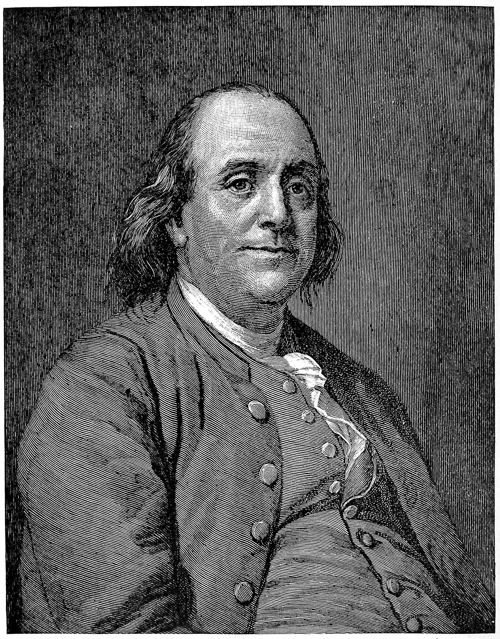
Benjamin Franklin's activity and resource
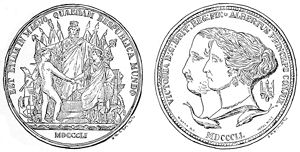
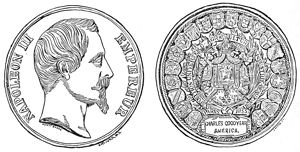
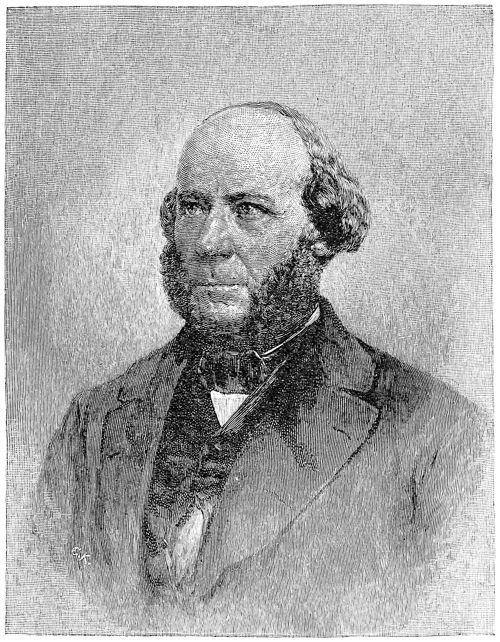
in the field of invention really partook of the intellectual
breadth of the man of whom Turgot
wrote:
"Eripuit cœlo fulmen, sceptrumque tyrannis."
"He snatched the thunderbolt from heaven,
And the sceptre from the hands of tyrants."
And of which bit of verse Franklin once dryly
remarked, that as to the thunder, he left it where
he found it, and that more than a million of his
countrymen co-operated with him in snatching
the sceptre. Those persons who knew Franklin,
the inventor, only as the genius to whom we owe
the lightning-rod, will be amazed at the range of
his activity. For half a century his mind seems
to have been on the alert concerning the why
and wherefore of every phenomenon for which
the explanation was not apparent. Nothing in
nature failed to interest him. Had he lived in
an era of patents he might have rivalled Edison
in the number of his patentable devices, and had
he chosen to make money from such devices, his
gains would certainly have been fabulous. As
a matter of fact, Franklin never applied for a
patent, though frequently
urged to do so, and he made
no money by his inventions.
One of the most popular of
these, the Franklin stove,
which device, after a half-century
of disuse, is now
again popular, he made a
present to his early friend, Robert Grace, an iron
founder, who made a business of it. The Governor
of Pennsylvania offered to give Franklin a
monopoly of the sale of these stoves for a number
of years. "But I declined it," writes the
inventor, "from a principle which has ever
weighed with me on such occasions, viz.: That
as we enjoy great advantages from the inventions
of others, we should be glad of an opportunity
to serve others by any invention of ours;
and this we should do freely and generously.
An ironmonger in London, however, assuming a
good deal of my pamphlet (describing the principle
and working of the stove), and working it
up into his own, and making some small change
in the machine, which rather hurt its operation,
got a patent for it there, and made, as I
was told, a little fortune by it."
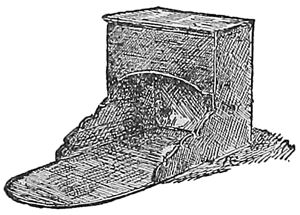 The Franklin Stove.
The complete list of inventions, devices, and
improvements of which Franklin was the originator,
or a leading spirit and contributor, is so
long a one that a dozen pages would not suffice
for it. I give here a brief summary, as compiled
by Parton in his excellent "Life of Franklin."
"It is incredible," Franklin once wrote, "the
quantity of good that may be done in a country
by a single man who will make a business of it and
not suffer himself to be diverted from that purpose
by different avocations, studies, or amusements."
As a commentary upon this sentiment,
here is a catalogue of the achievements of Benjamin
Franklin that may fairly come under the
title of inventions:
He established and inspired the Junto, the
most useful and pleasant American club of which
we have knowledge.
He founded the Philadelphia Library, parent
of a thousand libraries, and which marked the
beginning of an intellectual movement of endless
good to the whole country.
He first turned to great account the engine of
advertising, an indispensable element in modern
business.
He published "Poor Richard," a record of
homely wisdom in such shape that hundreds
of thousands of readers were made better and
stronger by it.
He created the post-office system of America,
and was the first champion of a reformed spelling.
He invented the Franklin stove, which economized
fuel, and suggested valuable improvements
in ventilation and the building of chimneys.
He robbed thunder of its terrors and lightning
of some of its power to destroy.
He founded the American Philosophical Society,
the first organization in America of the
friends of science.
He suggested the use of mineral manures, introduced
the basket willow, promoted the early
culture of silk, and pointed out the advisability
of white clothing in hot weather.
He measured the temperature of the Gulf
Stream, and discovered that northeast storms
may begin in the southwest.
He pointed out the advantage of building
ships in water-tight compartments, taking the
hint from the Chinese, and first urged the use of
oil as a means of quieting dangerous seas.
Besides these great achievements, accomplished
largely as recreation from his life work
as economist and statesman, Benjamin Franklin
helped the whole race of inventors by a remark
that has been of incalculable value and comfort
to theorists and dreamers the world over. When
someone spoke rather contemptuously in Franklin's
presence of Montgolfier's balloon experiments,
and asked of what use they were, the
great American replied in words now historic:
"Of what use is a new-born babe?"
"This self-taught American," said Lord Jeffrey,
in the Edinburgh Review of July, 1806, "is
the most rational, perhaps, of all philosophers.
He never loses sight of common sense in any of
his speculations. No individual, perhaps, ever
possessed a greater understanding, or was so
seldom obstructed in the use of it by indolence,
enthusiasm, or authority. Dr. Franklin received
no regular education; and he spent the greater
part of his life in a society where there was no
relish and no encouragement for literature. On
an ordinary mind, these circumstances would
have produced their usual effects, of repressing
all sorts of intellectual ambition or activity, and
perpetuating a generation of incurious mechanics;
but to an understanding like Franklin's, we
cannot help considering them as peculiarly propitious,
and imagine that we can trace back to
them distinctly almost all the peculiarities of his
intellectual character."
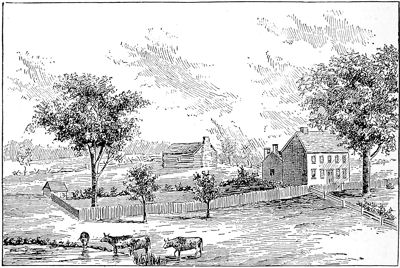
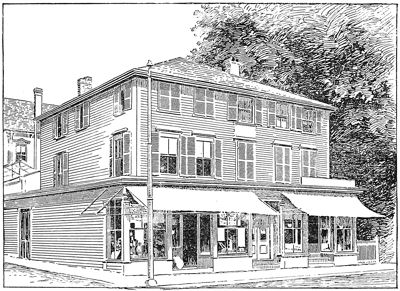
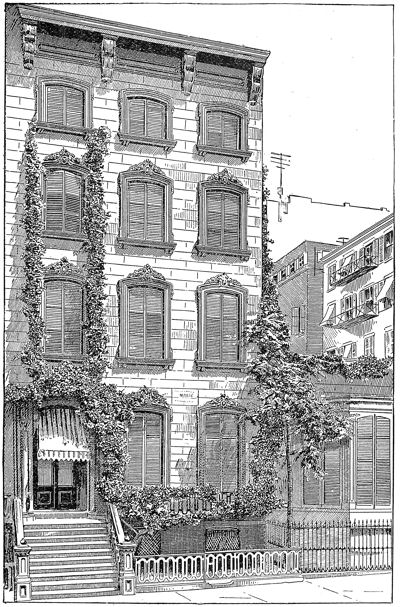
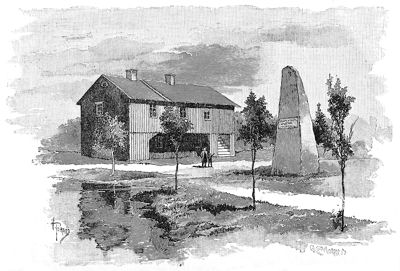
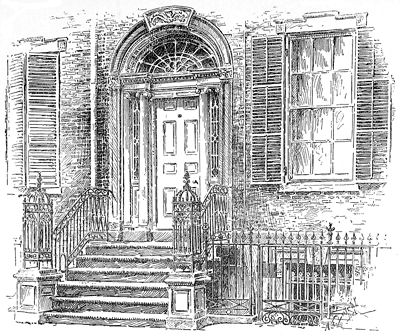
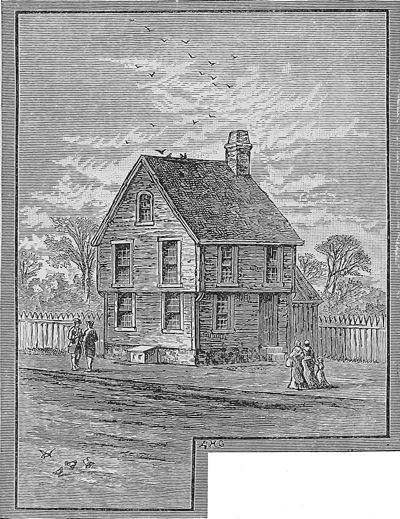 Franklin's Birthplace, Boston.
The main outlines of Franklin's life and career
are so familiar to everyone, that I may as
well pass at once to the story of his work as an
inventor. We all know, or ought to know, that
Benjamin, the fifteenth child of Josiah Franklin,
the Boston soap-boiler, was born in that town
on the 17th of January, 1706, and established himself
as a printer in Philadelphia in 1728. That
he prospered and founded the Gazette a few
years later, and became Postmaster of Philadelphia
in 1737; that after valuable services to
the Colonies as their agent in England, he
was appointed United States Minister at the
Court of France upon the Declaration of Independence;
and that in 1782 he had the supreme
satisfaction of signing at Paris the treaty of
peace with England by which the independence
of the Colonies was assured. That he died full
of honors at Philadelphia in April, 1790, and that
Congress, as a testimony of the gratitude of the
Thirteen States and of their sorrow for his loss,
appointed a general mourning throughout the
States for a period of two months.
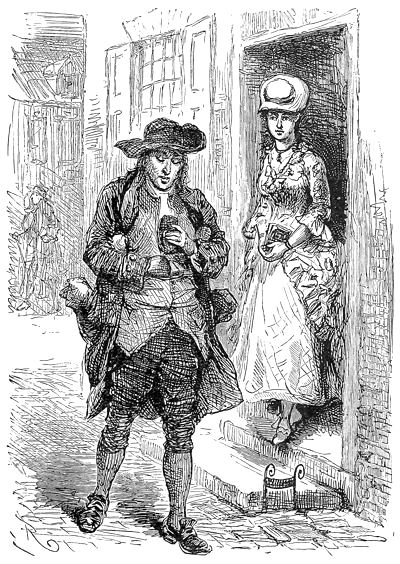 Franklin Entering Philadelphia.
The great invention or discovery which entitles
Benjamin Franklin to
rank at the head of
American inventors was, of course, the identification
of lightning with electricity, and his suggestion
of metallic conductors so arranged as
to render the discharge from the clouds a harmless
one. In order to appreciate the originality
and value of this discovery, it is necessary to review
briefly what the world knew of the subject
at that day.
For a hundred years before Franklin's time,
electricity had been studied in Europe without
much distinct progress resulting. A thousand
experiments had been performed and described.
Gunpowder had been exploded by the spark
from a lady's finger, and children had been insulated
by hanging them from the ceiling by
silk cords. A tolerable machine had been devised
for exciting electricity, though most experimenters
still used a glass tube. Several
volumes of electrical observations and experiments
had appeared, and yet what had been
done was little more than a repetition on a
larger scale, and with better means, of the original
experiment of rubbing a piece of amber
on the sleeve of the philosopher's coat. Experimenters
in 1745 could produce a more powerful
spark and play a greater variety of tricks with
it than Dr. Gilbert, the English experimenter of
1600, but that was about all the advantage they
had over him.
So-called experts had attempted, with more or
less satisfaction to themselves, to answer the
question addressed by the mad Lear to poor
Tom: "Let me talk with this philosopher.
What is the cause of thunder?" Pliny thought
he had explained it when he called it an
earthquake in the air. Dr. Lister announced
that lightning was caused by the sudden ignition
of immense quantities of fine floating
sulphur. Jonathan Edwards, in his diary of
1722, records the popular impression of the
day upon this subject: "Lightning," he says,
"seem to be an almost infinitely fine combustible
matter, that floats in the air, that takes
fire by sudden and mighty fermentation, that is
some way promoted by the cool and moisture,
and perhaps attraction of the clouds. By this
sudden agitation, this fine floating matter is
driven forth with a mighty force one way or
other, whichever way it is directed, by the circumstances
and temperature of the circumjacent
air; for cold and heat, density and rarity,
moisture and dryness, have almost an infinitely
strong influence upon the fine particles of matter.
This fluid matter thus projected, still fermenting
to the same degree, divides the air as
it goes, and every moment receives a new impulse
by the continued fermentation; and as its
motion received its direction, at first, from the
different temperature of the air on different
sides, so its direction is changed, according to the
temperature of the air it meets with, which
renders the path of the lightning so crooked."
Even this explanation was a daring bit of speculation
in Jonathan Edwards, for thunder and
lightning were then commonly regarded as the
physical expression of God's wrath against the
insects He had created.
Mr. Peter Collinson, the London agent of the
library that Franklin had founded in Philadelphia
in 1732, was accustomed to send over with
the annual parcel of books any work or curious
object that chanced to be in vogue in London at
the time. In 1746 he sent one of the new electrical
tubes with a paper of directions for using it.
The tubes then commonly used were two feet
and a half long, and as thick as a man could conveniently
grasp. They were rubbed with a piece
of cloth or buckskin, and held in contact with
the object to be charged. Franklin had already
seen one of these tubes in Boston, and had been
astonished by its properties. No sooner, therefore,
was it unpacked at the Library, than he repeated
the experiments he had seen in Boston,
as well as those described by Collinson. The
subject completely fascinated him. He gave
himself up to it. Procuring other tubes, he distributed
them among his friends and set them
all rubbing. "I never," he writes in 1747, "was
before engaged in any study that so totally
engrossed my attention and my time as this has
done; for what with making experiments when
I can be alone, and repeating to my friends and
acquaintances, who, from the novelty of the
thing, come continually in crowds to see them; I
have during some months past had little leisure
for anything else."
Franklin claimed no credit for what he
achieved in electricity. During the winter of
1746-7 he and his friends experimented frequently,
and observed electrical attraction and repulsion
with care. That electricity was not created,
but only collected by friction, was one of their
first conjectures, the correctness of which they
soon demonstrated by a number of experiments.
Before having heard of the Leyden jar coated
with tin-foil, these Philadelphia experimenters
substituted granulated lead for the water employed
by Professor Maschenbroeck. They
fired spirits and lighted candles with the electric
spark. They performed rare tricks with a spider
made of burnt cork. Philip Syng mounted one
of the tubes upon a crank and employed a cannon-ball
as a prime conductor, thus obtaining the same
result without much tedious rubbing of the tube.
The summer of 1747 was devoted to preparing
the province for defence. But during the following
winter the Philadelphians resumed their
experiments. The wondrous Leyden jar was the
object of Franklin's constant observation. His
method of work is well shown in his own account
of an experiment during this winter. The
jar used was Maschenbroeck's original device of
a bottle of water with a wire running through
the cork.
"Purposing," writes Franklin, "to analyse the
electrified bottle, in order to find wherein its
strength lay, we placed it on glass, and drew out
the cork and wire, which for that purpose had
been loosely put in. Then, taking the bottle in
one hand, and bringing a finger of the other near
its mouth, a strong spark came from the water,
and the shock was as violent as if the wire had
remained in it, which showed that the force did
not lie in the wire. Then, to find if it resided in
the water, being crowded into and condensed in
it, as confined by the glass, which had been our
former opinion, we electrified the bottle again,
and placing it on glass, drew out the wire and
cork as before; then, taking up the bottle, we
decanted all its water into an empty bottle,
which likewise stood on glass; and taking up
that other bottle, we expected, if the force resided
in the water, to find a shock from it. But
there was none. We judged then that it must
either be lost in decanting or remain in the first
bottle. The latter we found to be true; for
that bottle on trial gave the shock, though filled
up as it stood with fresh unelectrified water
from a tea-pot. To find, then, whether glass had
this property merely as glass, or whether the
form contributed anything to it, we took a pane
of sash glass, and laying it on the hand, placed
a plate of lead on its upper surface; then electrified
that plate, and bringing a finger to it,
there was a spark and shock. We then took
two plates of lead of equal dimensions, but less
than the glass by two inches every way, and
electrified the glass between them, by electrifying
the uppermost lead; then separated the
glass from the lead, in doing which, what little
fire might be in the lead was taken out, and the
glass being touched in the electrified parts with
a finger, afforded only very small pricking
sparks, but a great number of them might be
taken from different places. Then dexterously
placing it again between the leaden plates, and
completing a circle between the two surfaces, a
violent shock ensued; which demonstrated the
power to reside in glass as glass, and that the
non-electrics in contact served only, like the armature
of a loadstone, to unite the force of the
several parts, and bring them at once to any point
desired; it being the property of a non-electric,
that the whole body instantly receives or gives
what electrical fire is given to, or taken from,
any one of its parts.
"Upon this we made what we called an electrical
battery, consisting of eleven panes of large
sash glass, armed with thin leaden plates, pasted
on each side, placed vertically, and supported at
two inches' distance on silk cords, with thick
hooks of leaden wire, one from each side, standing
upright, distant from each other, and convenient
communications of wire and chain, from
the giving side of one pane to the receiving side
of the other; that so the whole might be charged
together with the same labor as one single
pane."
In 1748 Franklin, being then forty-two years
old, and in the enjoyment of an ample income
from his business as printer and publisher, sold
out to his foreman, David Hall, and was free
to devote himself wholly to his beloved experiments.
He had built himself a home in a retired
spot on the outskirts of Philadelphia, and with
an income which in our days would be equivalent
to $15,000 or $20,000 a year, he was considered
a fairly rich man. Having thus settled his
business affairs in a manner which proved that
he knew perfectly well what money was worth,
he took up his electrical studies again and extended
them from the machine to the part
played in nature by electricity. The patience
with which he observed the electrical phenomena
of the heavens, the acuteness displayed by him
in drawing plausible inferences from his observations,
and the rapidity with which he arrived
at all that we now know of thunder and lightning,
still excite the astonishment of all who
read the narratives he has left us of his proceedings.
During the whole winter of 1748-49 and
the summer following, he was feeling his way
to his final conclusions on the subject. Early
in 1749 he drew up a series of fifty-six observations,
entitled "Observations and Suppositions
towards forming a new Hypothesis for explaining
the several Phenomena of Thundergusts."
Nearly all that he afterward demonstrated on
this subject is anticipated in this truly remarkable
paper, which was soon followed by the most
famous of all his electrical writings, that entitled
"Opinions and Conjectures concerning
the Properties and Effects of the Electrical
Matter, and the Means of preserving Buildings,
Ships, etc., from Lightning; arising from Experiments
and Observations made at Philadelphia,
1749."
Franklin sets forth in this masterly paper the
similarity of electricity and lightning, and the
property of points to draw off electricity. It is
this treatise which contains the two suggestions
that gave to the name of Franklin its first celebrity.
Both suggestions are contained in one
brief passage, which follows the description of a
splendid experiment, in which a miniature lightning-rod
had conducted harmlessly away the
electricity of an artificial thunder-storm.
"If these things are so," continues the philosopher,
after stating the results of his experiment,
"may not the knowledge of this power of points
be of use to mankind in preserving houses,
churches, ships, etc., from the stroke of lightning,
by directing us to fix on the highest part
of those edifices upright rods of iron, made
sharp as a needle and gilt to prevent rusting, and
from the foot of those rods, a wire down the outside
of the building into the ground, or down
round one of the shrouds of a ship, and down
her side till it reaches the water? Would not
these pointed rods probably draw the electrical
fire silently out of a cloud before it came nigh
enough to strike, and thereby secure us from
that most sudden and terrible mischief?"
The second of these immortal suggestions was
one that immediately arrested the attention of
European electricians when the paper was published.
It was in these words:
"To determine the question, whether the
clouds that contain lightning are electrified or
not, I would propose an experiment to be tried
where it may be done conveniently. On the top
of some high tower or steeple, place a kind of
sentry-box, big enough to contain a man and an
electric stand. From the middle of the stand let
an iron rod rise and pass, bending out of the
door, and then upright twenty or thirty feet,
pointed very sharp at the end. If the electrical
stand be kept clean and dry, a man standing on
it, when such clouds are passing low, might be
electrified and afford sparks, the rod drawing
fire to him from a cloud. If any danger to the
man should be apprehended (though I think
there would be none), let him stand on the floor
of his box, and now and then bring near to the
rod the loop of a wire that has one end fastened
to the leads, he holding it by a wax handle; so
the sparks, if the rod is electrified, will strike
from the rod to the wire and not affect him."
A friend once asked Franklin how he came to
hit upon such an idea. His reply was to quote
an extract from the minutes he kept of the experiments
he made. This extract, dated November
7, 1749, was as follows: "Electrical fluid
agrees with lightning in these particulars: 1.
Giving light. 2. Color of the light. 3. Crooked
direction. 4. Swift motion. 5. Being conducted
by metals. 6. Crack or noise in exploding. 7.
Subsisting in water or ice. 8. Rending bodies
it passes through. 9. Destroying animals. 10.
Melting metals. 11. Firing inflammable substances.
12. Sulphurous smell. The electric
fluid is attracted by points. We do not know
whether this property is in lightning. But since
they agree in all the particulars wherein we can
already compare them, is it not probable they
agree likewise in this? Let the experiment be
made."
In this discovery, therefore, there was nothing
of chance; it was a legitimate deduction from
patiently accumulated facts.
It was not until the spring of 1752 that Franklin
thought of making his suggested experiment
with a kite. The country around Philadelphia
presents no high hills, and he was not aware till
later that the roof of any dwelling-house would
have answered as well as the peak of Teneriffe.
There were no steeples in Philadelphia at that
day. The vestry of Christ Church talked about
erecting a steeple, but it was not begun until
1753. On the 15th of June, 1752, Franklin decided
to fly that immortal kite. Wishing to
avoid the ridicule of a failure, he took no one
with him except his son, who, by the way, was
not the small boy shown in countless pictures
of the incident, but a stalwart young man of
twenty-two. The kite had been made of a large
silk handkerchief, and fitted out with a piece of
sharpened iron wire. Part of the string was of
hemp, and the part to be held in the hand was of
silk. At the end of the hempen string was tied
a key, and in a convenient shed was a Leyden jar
in which to collect some of the electricity from
the clouds. When the first thunder-laden clouds
reached the kite, there were no signs of electricity
from Franklin's key, but just as he had
begun to doubt the success of the experiment,
he saw the fibres of the hempen string begin to
rise. Approaching his hand to the key, he got
an electric spark, and was then able to charge the
Leyden jar and get a stronger shock. Then the
happy philosopher drew in his wet kite and
went home to write his modest account of one of
the most notable experiments made by man.
Franklin's fame as the first to suggest the
identity of lightning and electricity would have
been safe, however, even without the famous
kite-flying achievement. A month before that
June thunderstorm his suggestions had been put
into practice in Europe with complete success.
Mr. Peter Collinson, to whom Franklin addressed
from time to time long letters about his
experiments and conjectures, had caused them
to be read at the meetings of the Royal Society,
of which he (Collinson) was a member. That
learned body, however, did not deem them
worthy of publication among its transactions,
and a letter of Franklin's containing the substance
of his conjectures respecting lightning
was laughed at. The only news that reached
Philadelphia concerning these letters was that
Watson and other English experimenters did not
agree with Franklin. It was only in May, 1751,
that a pamphlet was finally published in London,
entitled "New Experiments and Observations in
Electricity, made at Philadelphia, in America."
A copy having been presented to the Royal Society,
Watson was requested to make an abstract
of its contents, which he did, giving generous
praise to the author.
Before the year came to a close Franklin was
famous. There was something in the drawing
down, for mere experiment, of the dread electricity
of heaven that appealed not less powerfully
to the imagination of the ignorant than to the
understanding of the learned. And the marvel
was the greater that the bold idea should have
come from so remote a place as Philadelphia.
By a unanimous vote the Royal Society elected
Franklin a member, and the next year bestowed
upon him the Copley medal. Yale College and
then Harvard bestowed upon him the honorary
degree of Master of Arts.
 The Franklin Penny.
As might have been expected, there was no
lack of opposition to the new doctrine of lightning-rods.
Every new movement of radical character
is denounced more or less fiercely. The last
years of Newton's life were perplexed by the
charge that his theory of gravitation tended to
"materialize" religion. Insuring houses against
fire was opposed as an interference with the prerogatives
of deity. The establishment of the
Royal Society was opposed upon the ground
that the study of natural philosophy, grounded,
as it was, upon experimental evidence, tended to
weaken the force of evidence not so founded;
and this objection was deemed of sufficient
weight to call for serious answer. Franklin's
daring proposal to neutralize the "artillery of
heaven," of course could not escape, and the impiety
of lightning-rods was widely discussed,
often with acrimony. Mr. Kinnersley, one of
Franklin's friends, who lectured for several years
upon electricity, when advertising the outline of
his subject always announced his intention to
show that the erection of lightning-rods was
"not chargeable with presumption nor inconsistent
with any of the principles either of natural
or revealed religion." Quincy relates in
his "History of Harvard College," that in
November, 1755, a shock of earthquake having
been felt in New England, a Boston clergyman
preached a sermon on the subject, in
which he contended that the lightning-rods, by
accumulating the electricity in the earth, had
caused the earthquake. Professor Winthrop,
of Harvard, thought it worth while to defend
Franklin. "In 1770," Mr. Quincy adds, "another
Boston clergyman opposed the use of the rods
on the ground that, as the lightning was one of
the means of punishing the sins of mankind, and
of warning them from the commission of sin, it
was impious to prevent its full execution." And
to this attack also Professor Winthrop replied.
Apparently Franklin himself thought it wise to
conciliate the opposition of some so-called religious
people of the day, for an account of the
lightning-rod which appears in Poor Richard's
Almanac for 1753, written probably by Franklin,
begins as follows: "It has pleased God in his
Goodness to Mankind, at length to discover to
them the means of securing their Habitations
and other Buildings from Mischief by Thunder
and Lightning."
Franklin bore his honors with the most remarkable
modesty. It was in June that he flew
his first kite, but not until October that he sent
to Mr. Collinson an account of the experiment,
and even then he described the manner of making
and flying the kite and omitted all reference to
his own success with it. The identity of lightning
with electricity having been established by M.
Dalibard, he deemed it unnecessary to forward
the account of an experiment which, however
brilliant, he thought superfluous. Accordingly,
we have no narrative by Franklin of the flying
of the kite. We owe our knowledge of what
occurred on that memorable afternoon to persons
who heard Franklin tell the story. Franklin
prefaces his description of his kite with these
words: "As frequent mention is made in public
papers from Europe of the success of the Philadelphia
experiment for drawing the electric fire
from clouds by means of pointed rods of iron
erected on high buildings, it may be agreeable
to the curious to be informed that the same
experiment has succeeded in Philadelphia,
though made in a different and more easy manner,
which is as follows." And then we have
the description of the kite, the letter ending
without reference to what he himself had done
with it.
Yet he was far from hiding the pleasure his
fame brought him. "The Tatler," he wrote, in
1753, to a friend, "tells us of a girl who was observed
to grow suddenly proud, and none could
guess the reason, till it came to be known that
she had got on a pair of new silk garters. Lest
you should be puzzled to guess the cause, when
you observe anything of the kind in me, I think I
will not hide my new garters under my petticoats,
but take the freedom to show them to you
in a paragraph of our friend Collinson's last
letter, viz.—But I ought to mortify, and not indulge,
this vanity; I will not transcribe the paragraph—yet
I cannot forbear." Then he quotes
the paragraph, which mentions the honors done
him by the King of France and the Royal Society.
For twenty years Franklin continued to work at
electricity, devoting most of his leisure to his beloved
study. The great practical value of the
lightning-rod, at one time in the early part of this
century somewhat exaggerated, as a perfect protection
against harm by lightning, just as electricity
was at one time heralded as a panacea for all
bodily ailments, has of late years been questioned,
but the consensus of scientific opinion still attributes
much merit to the device, and the extent of
Franklin's services to science in the matter cannot
be called into doubt. Others have claimed
his discoveries. The Abbé Nolet, of France, has
been credited as being the first to note the similarity
between electricity and lightning; and M.
Romas, of Nerac, France, is said to have used a
kite with a copper wire wound around the
string, to attract electricity from clouds, some
time before Franklin made his experiment. But
posterity has ignored these claimants, and Franklin
had the happiness of escaping bitter contentions
with rivals. In fact, there could hardly
have been a quarrel with a man who claimed
nothing, who mentioned with honor everybody's
achievements but his own, and who recorded
his most brilliant observations in the plural, as
though he were but one of a band of investigating
Philadelphians.
Passing now, to Franklin's connection with the
use of oil to still dangerous waves, I had occasion
recently to note that Lieutenant W.H.
Beehler, of the United States Navy, in writing
upon the matter, quotes Franklin's explanation
of why oil works so beneficently as the accepted
theory. Franklin was greatly interested, when
at sea, in studying the matter. Any phenomenon
that puzzled him was fit subject for investigation.
Let us see how he went about the inquiry.
"In 1757," he wrote, "being at sea in a
fleet of ninety-six sail bound against Louisburg,
I observed the wakes of two of the ships to be
remarkably smooth, while all the others were
ruffled by the wind which blew fresh. Being
puzzled with the differing appearance, I at last
pointed it out to our captain and asked him the
meaning of it. 'The cooks,' says he, 'have, I
suppose, been just emptying their greasy water
through the scuppers, which has greased the
sides of those ships a little;' and this answer he
gave me with an air of some little contempt, as
to a person ignorant of what everybody else
knew. In my own mind I at first slighted his
solution, though I was not able to think of another;
but recollecting what I had formerly
read in Pliny, I resolved to make some experiment
of the effect of oil on water, when I should
have opportunity. Afterwards, being again
at sea in 1762, I first observed the wonderful
quietness of oil on agitated water, in the swinging
glass lamp I made to hang up in the cabin,
as described in my printed papers. This I was
continually looking at and considering, as an appearance
to me inexplicable. An old sea captain,
then a passenger with me, thought little of
it, supposing it an effect of the same kind with
that of oil put on water to smooth it, which he
said was a practice of the Bermudians when they
would strike fish, which they could not see if
the surface of the water was ruffled by the wind.
The same gentleman told me he had heard it
was a practice with the fishermen of Lisbon,
when about to return into the river (if they saw
before them too great a surf upon the bar, which
they apprehended might fill their boats in passing)
to empty a bottle or two of oil into the sea,
which would suppress the breakers, and allow
them to pass safely. A confirmation of this I
have not since had an opportunity of obtaining;
but discoursing of it with another person, who
had often been in the Mediterranean, I was informed
that the divers there, who, when under
water in their business, need light, which the
curling of the surface interrupts by the refractions
of so many little waves, let a small quantity
of oil now and then out of their mouths, which
rising to the surface smooths it, and permits the
light to come down to them. All these informations
I at times resolved in my mind, and
wondered to find no mention of them in our
books of experimental philosophy.
"At length being at Clapham where there is,
on the common, a large pond, which I observed
one day to be very rough with the wind, I
fetched out a cruet of oil and dropped a little of
it on the water. I saw it spread itself with surprising
swiftness upon the surface; but the effect
of smoothing the waves was not produced; for
I had applied it first on the leeward side of the
pond, where the waves were largest, and the
wind drove my oil back upon the shore. I then
went to the windward side, where they began
to form; and there the oil, though not more
than a teaspoonful, produced an instant calm
over a space several yards square, which spread
amazingly, and extended itself gradually, till it
reached the lee side, making all that quarter of
the pond, perhaps half an acre, as smooth as a
looking glass.
"A gentleman from Rhode Island told me it
had been remarked that the harbor of Newport
was ever smooth while any whaling vessels were
in it; which, probably arose from hence, that
the blubber, which they sometimes bring loose
in the hold, or the leakage of their barrels,
might, afford some oil to mix with that water,
which, from time to time, they pump out to keep
their vessel free, and that some oil might spread
over the surface of the water in the harbor and
prevent the forming of any waves."
Thus Franklin collected his facts, taking them
far and near, and from anybody and everybody.
By dint of observation and reflection he finally
solved the problem, arriving at the conclusion
that "the wind blowing over water thus covered
with a film of oil, cannot easily catch upon it, so
as to raise the first wrinkles, but slides over it,
and leaves it smooth as it finds it."
Another remarkable instance of Franklin's passion
for investigation is afforded in the following
interesting letter to Sir John Pringle: "When
we were travelling together in Holland, you remarked
that the canal boat in one of the stages
went slower than usual, and inquired of the boatman
what might be the reason; who answered
that it had been a dry season, and the water in
the canal was low. On being asked if it was so
low that the boat touched the muddy bottom,
he said no, not so low as that, but so low as to
make it harder for the horse to draw the boat.
We neither of us at first could conceive that, if
there was water enough for the boat to swim
clear of the bottom, its being deeper would make
any difference. But as the man affirmed it seriously
as a thing well known among them, and
as the punctuality required in their stages was
likely to make such difference, if any there were,
more readily observed by them than by other
watermen who did not pass so regularly and constantly
backwards and forwards in the same
track, I began to apprehend there might be
something in it, and attempted to account for it
from this consideration, that the boat in proceeding
along the canal must, in every boat's length
of her course, move out of her way a body of
water equal in bulk to the room her bottom took
up in the water; that the water so moved must
pass on each side of her, and under her bottom, to
get behind her; that if the passage under her
bottom was straitened by the shallows, more of
the water must pass by her sides, and with a
swifter motion, which would retard her, as moving
the contrary way; or that, the water becoming
lower behind the boat than before, she was
pressed back by the weight of its difference in
height, and her motion retarded by having that
weight constantly to overcome. But, as it is often
lost time to attempt accounting for uncertain
facts, I determined to make an experiment of
this, when I should have convenient time and
opportunity.
"After our return to England, as often as I
happened to be on the Thames, I enquired of our
watermen whether they were sensible of any
difference in rowing over shallow or deep water.
I found them all agreeing in the fact that there
was a very great difference, but they differed
widely in expressing the quantity of the difference;
some supposing it was equal to a mile in
six, others to a mile in three. As I did not recollect
to have met with any mention of this
matter in our philosophical books, and conceiving
that, if the difference should be really great,
it might be an object of consideration in the
many projects now on foot for digging new
navigable canals in this island, I lately put my
design of making the experiment in execution,
in the following manner.
"I provided a trough of planed boards fourteen
feet long, six inches wide, and six inches deep in
the clear, filled with water within half an inch of
the edge, to represent a canal, I had a loose
board of nearly the same length and breadth,
that being put into the water, might be sunk to
any depth, and fixed by little wedges where I
would choose to have it stay, in order to make
different depths of water, leaving the surface at
the same height with regard to the sides of the
trough. I had a little boat in form of a lighter
or boat of burden, six inches long, two inches
and a quarter wide, and one inch and a quarter
deep. When swimming it drew one inch of
water. To give motion to the boat, I fixed one
end of a long silk thread to its bow, just even
with the water's edge, the other end passed over
a well-made brass pulley, of about an inch in
diameter, turning freely upon a small axis; and
a shilling was the weight. Then placing the
boat at one end of the trough, the weight would
draw it through the water to the other. Not
having a watch that shows seconds, in order to
measure the time taken up by the boat in passing
from end to end of the trough, I counted as fast
as I could count to ten repeatedly, keeping an
account of the number of tens on my fingers.
And, as much as possible to correct any little inequalities
in my counting, I repeated the experiment
a number of times at each depth of water,
that I might take the medium."
The experiment proved the truth of the
boatmen's assertions. Franklin found that five
horses would be required to draw a boat in a
canal affording little more than enough water to
float it, which four horses could draw in a canal
of the proper depth.
No circumstance, remarks Mr. Parton, was
too trifling to engage him upon a series of experiments.
At dinner, one day, a bottle of Madeira
was opened which had been bottled in Virginia
many months before. Into the first glass poured
from it fell three drowned flies. "Having heard
it remarked that drowned flies were capable of
being revived by the rays of the sun, I proposed
making the experiment upon these; they were
therefore exposed to the sun upon a sieve which
had been employed to strain them out of the
wine. In less than three hours two of them began
by degrees to recover life. They commenced
by some convulsive motions of the
thighs, and at length they raised themselves
upon their legs, wiped their eyes with their forefeet,
beat and brushed their wings with their
hind feet, and soon after began to fly, finding
themselves in Old England without knowing
how they came thither. The third continued
lifeless till sunset, when, losing all hopes of him,
he was thrown away." And upon this he remarks:
"I wish it were possible, from this instance,
to invent a method of embalming drowned
persons in such a manner that they may be recalled
to life at any period, however distant; for
having a very ardent desire to see and observe
the state of America a hundred years hence, I
should prefer to any ordinary death being immersed
in a cask of Madeira wine, with a few
friends, till that time, to be then recalled to life
by the solar warmth of my dear country."
Among the studies in natural philosophy of
which but little is known to the general public
may be mentioned Franklin's experiments
with heat at a time when a thermometer was a
scientific curiosity. The manner in which he
proved that black cloth was not so good a covering
for the body in hot weather as white,
shows the simplicity of his methods and his
faculty for making small means subserve great
ends: "I took a number of little square pieces
of broadcloth from a tailor's pattern-card, of
various colors. There were black, deep blue,
lighter blue, green, purple, red, yellow, white,
and other colors or shades of colors. I laid
them all out upon the snow in a bright sunshiny
morning. In a few hours the black, being
warmed most by the sun, was so low as to be below
the stroke of the sun's rays; the dark blue
almost as low, the lighter blue not quite so much
as the dark, the other colors less as they were
lighter, and the quite white remained on the
surface of the snow, not having entered it at all.
What signifies philosophy that does not apply to
some use? May we not learn from hence that
black clothes are not so fit to wear in a hot,
sunny climate or season as white ones?" That
all summer hats, particularly for soldiers, should
be white, and that garden walls intended for
fruit should be black, were suggestions put forth
as a result of this experiment.
Dr. Small assigns to Franklin the credit of
having discovered that repeated respiration imparts
to air a poisonous quality similar to that
which extinguishes candles and destroys life
in mines and wells. "The doctor," he records,
"breathed gently through a tube into a deep
glass mug, so as to impregnate all the air in
the mug with this quality. He then put a
lighted bougie (candle) into the mug, and upon
touching the air therein the flame was instantly
extinguished; by frequently repeating
this operation, the bougie gradually preserved
its light longer in the mug, so as in a
short time to retain it to the bottom of it, the
air having totally lost the bad quality it had
contracted from the breath blown into it." Upon
being consulted with regard to the better ventilation
of the House of Commons, he advised that
openings should be made near the ceiling, communicating
with flues running parallel with the
chimneys and close enough to them to be kept
warm by their heat. These flues, he recommended,
should begin in the cellar, where the
air was cool, and the flues being warmed by the
hot air of the chimneys, would cause an upward
current of air strong enough to expel the
vitiated air in the upper part of the house.
Franklin's letters at this time are full of the
importance of ventilation. Unquestionably, he
was among the first who called attention to
the folly of excluding fresh air from hospitals
and sick-rooms, particularly those of fever patients.
As Mr. Parton expresses it, he cleared
the pure air of heaven from calumnious imputation
and threw open the windows of mankind.
Some inventions of Franklin's have not met
with the approval of posterity. For instance, he
seems to have had no more success with a reformed
spelling of his own devising than laborers
in the same field who came after him. He used
to say that they alone spelt well who spelt ill,
since the so-called bad speller used the letters
according to their real value. The illiterate
girl who wrote of her bo was more correct, he
thought, than the young lady who would blush
to omit a superfluous vowel. What was the use
of the final letter in muff, and why take the
trouble to write tough when tuf would do as
well? Had he lived to see Dr. Webster's
Dictionary, the lexicographer would have found
in him an ardent champion. His reformed alphabet
and spelling is an interesting curiosity,
but hardly more. Some letters of our alphabet
he omitted, only to add new ones. He also
changed their order, making o the first letter and
m the last. In this connection it may be well to
say that Franklin was perhaps the first and foremost
American champion of the movement,
now so powerful, looking to the displacement of
Latin and Greek as the foundations of education.
At the very close of his life, in 1789, he issued
his famous protest against the study of dead languages.
He is reported to have said one evening,
when talking about this matter: "When
the custom of wearing broad cuffs with buttons
first began, there was a reason for it; the cuffs
might be brought down over the hands and thus
guard them from wet and cold. But gloves came
into use, and the broad cuffs were unnecessary;
yet the custom was still retained. So likewise
with cocked hats. The wide brim, when let
down, afforded a protection from the rain and
the sun. Umbrellas were introduced, yet fashion
prevailed to keep cocked hats in vogue,
although they were rather cumbersome than
useful. Thus with the Latin language. When
nearly all the books of Europe were written
in that language, the study of it was essential in
every system of education; but it is now scarcely
needed, except as an accomplishment, since it
has everywhere given place, as a vehicle of
thought and knowledge, to some one of the
modern tongues."
With all his love of the practical, Franklin was
not deficient in a rather delicate wit. I have already
had occasion to quote at the beginning of
this paper his disclaimer of the honors conferred
upon him by Turgot's famous Latin line. Instances
of this dry humor may be found all
through Sparks's exhaustive biography. I remember
one in particular. The merchants of
Philadelphia, being at one time desirous to establish
an assembly for dancing, they drew up
some rules, among which was one "that no mechanic
or mechanic's wife or daughter should be
admitted on any terms." This rule being submitted
to Franklin, he remarked that "it excluded
God Almighty, for he was the greatest mechanic
in the universe."
Benjamin Franklin's services to the cause of
invention by no means ended with his own inventions.
One of his greatest services was the
part he took in the foundation of the American
Philosophical Society, whose object was to bring
into correspondence with a central association
in Philadelphia all scientists, philosophers, and
inventors on this continent and in Europe.
Franklin's share in the foundation of this society,
which has proved of such vast use, seems
to have been largely overlooked by his biographers.
Mr. Parton, having mentioned that Franklin
founded the society in accordance with his
proposal of 1743, adds: "The society was formed
and continued in existence for some years.
Nevertheless, its success was neither great nor
permanent, for at that day the circle of men capable
of taking much interest in science was too
limited for the proper support of such an organization."
The recent historian of the society,
Dr. Robert M. Patterson, agrees, however, with
Sparks in tracing the origin of the Philosophical
Society, which grew into prominence about
1767, back to Franklin's proposal of 1743. After
describing the Junto, or Leather Apron Society,
formed among Franklin's acquaintance, a sort of
debating club of eleven young men, Sparks says:
"Forty years after its establishment it became
the basis of the American Philosophical Society,
of which Franklin was the first president, and
the published transactions of which have contributed
to the advancement of science and the
diffusion of valuable knowledge in the United
States." In his first proposal Franklin gave a
list of the subjects that were to engage the attention
of these New World philosophers. It included
investigations in botany; in medicine; in
mineralogy and mining; in chemistry; in mechanics;
in arts, trades, and manufactures; in
geography and topography; in agriculture; and,
lest something should have been forgotten, he
adds that the association should "give its attention
to all philosophical experiments that let
light into the nature of things, tend to increase
the power of man over matter and multiply the
conveniences or pleasures of life." The duties
of the secretary of the society were laid down
and were arduous, including much foreign correspondence,
in addition to the correcting, abstracting,
and methodizing of such papers as required
it. This office Franklin took upon himself.
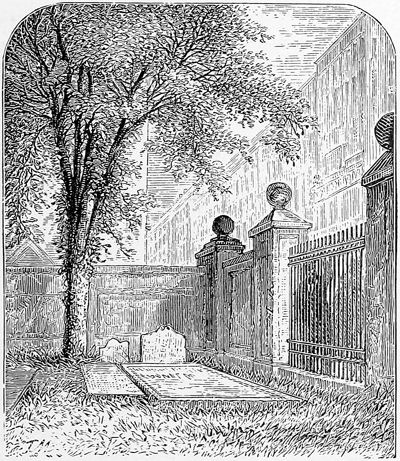 Franklin's Grave.
While he lived the proceedings of the society
scarcely ever failed of a useful end. Unlike so
many original and inventive geniuses, his eminent
common sense was as marked as his originality.
In the language of his most recent biographer,
John Bach McMaster, "whatever
he has said on domestic economy or thrift is
sound and striking. No other writer has left so
many just and original observations on success
in life. No other writer has pointed out so
clearly the way to obtain the greatest amount of
comfort out of life. What Solomon did for the
spiritual man, that did Franklin for the earthly
man. The book of Proverbs is a collection of
receipts for laying up treasure in heaven. 'Poor
Richard' is a collection of receipts for laying up
treasure on earth."