The preceding chapters have dealt, for the most part,
with aspects of school organization which are external to
the classroom and to the operations of instruction. The
external organization is set up, however, for the sole purpose
of making class work possible. We shall progress,
therefore, in our statement of educational problems and
principles by turning to the consideration in detail of the
organization of the groups to which instruction is given.
The connection of this problem with the one discussed
in the last chapter is not difficult to trace. Where a community
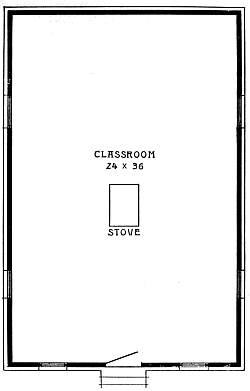
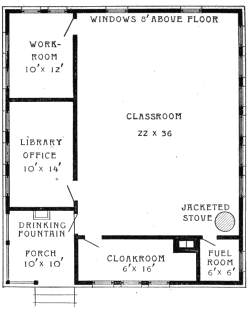
is small and has few children, a one-room building
will serve to house the school. Economy dictates the employment
of a single teacher. This one teacher must divide
his or her time as best possible in giving instruction to
pupils some of whom are very young and others of whom
are more mature. On the other hand, where the community is
large or where the school is consolidated, a many-room building
is required, and the lines of division between groups are
drawn in a fashion quite impossible in the one-room school.
Some of the simplest motives back of the grouping of
pupils into classes are financial. Instruction can be administered
economically to a number of pupils when it would be
prohibitively expensive to provide a teacher for each learner.
Indeed, the demand for large classes in city schools becomes
so urgent that it is often necessary to point out the danger
of carrying economy so far that it will defeat the purposes
of instruction.
On the other hand, it can be shown that even where the
motive of economy is not pressing, there are valid educational
grounds for grouping pupils into classes. Pupils help
each other through their natural social relations. The wholesome
rivalry and mutual suggestiveness provided by the
class furnish a much better atmosphere for teaching than
does the isolation of individual instruction.
Somewhere between the huge class dictated by economy
and the small class diminishing to a single individual is
the ideal group in point of size for successful teaching.
There are other characteristics than size, however, to be
considered in making up proper groups. In order to discover
some of these characteristics, it will be well to consider
certain concrete types of grouping exhibited in schools.
The type of grouping in the one-room, one-teacher school
is in many respects the freest which can be found. The
teacher can organize the school with no conflicts in program,
because the whole program consists in distributing
his own time. The classes can be of any size that the
teacher’s judgment determines. The reasons for the grouping
are purely and simply those which appeal to the teacher.
Under such circumstances what happens? The teacher
naturally puts in one group the pupils who are for the first
time taking up school work. In other groups he puts those
pupils who have approximately the same attainments in
each subject. In the classes beyond the first many complications
arise. There are some pupils who read well but
seem to be deficient in knowledge of number. Other pupils
with a taste for arithmetic are very forward in that branch
and do only indifferently well in reading and spelling. It
is not uncommon in the one-room school for the teacher
to regard these differences in ability in particular subjects
as adequate reasons for distributing the pupils differently in
different subjects. It comes about in the course of time
that one and the same pupil will be in the third reading
class, in the fourth geography class, and in the fifth or sixth
class in arithmetic, while another pupil who has attained to
the fifth reader will be lingering behind in the third class
in arithmetic.
We find ourselves led by the discussion of groupings to
a consideration of different levels of difficulty in subjects
of instruction and to the rate of progress of each individual
in each subject. The teacher in the one-room school has
no difficulty in seeing the wisdom of holding together those
pupils who have a common grade of knowledge in
geography. In like fashion the class in arithmetic must be
as homogeneous as possible. There is, however, no recognized
demand that a certain section of geography be coupled
in the education of any child with any particular section
of arithmetic. Pupils are grouped in the one-room school
with reference to each subject considered by itself.
When schools grow to the size where pupils are put into
different rooms, as in an eight-room building, a problem
arises which was never faced in the one-room school. It is
the problem of carrying a group of pupils through all the
subjects at the same rate. Thus, when the pupils in an
ordinary city school have been grouped together in arithmetic,
there are obvious advantages from an administrative
point of view in keeping them together in reading and in
geography. In ordinary practice the graded school assumes
that it is possible to find means of keeping the group
together for long periods in all subjects.
This assumption leads to the necessity of asking a kind
of question which did not confront the teacher in the one-room
school. The kind of question which comes up in the
graded school can be illustrated as follows: When a pupil
is old enough and intellectually mature enough to study the
products and industries of North America in his geography,
what phase of arithmetic will be appropriate to hold his
attention and stimulate his thinking? When a pupil is old
enough to read the history of his own city, what other reading
material will insure real effort on his part?
The one-room school escapes these questions for the
most part because it is at liberty to allow the pupil to take
a different pace in each subject. The one-room school is a
place where the subjects of instruction taken in their totality,
or the curriculum, as the whole series of subjects may be
called, is usually not recognized as important. Each subject
has a sequence of its own, but the curriculum as a whole is
not thought out. In the graded school the curriculum is one
of the matters of major importance. The graded school not
only grades pupils; it grades subject-matter of instruction.
The importance of this contrast cannot be overemphasized.
Many of the problems of the modern school arise at this point.
Let us consider certain cases which will make clear the
importance of the contrast. The following extract from
the report of the state superintendent of schools in Maine
sets forth a definite view on the matters under discussion:
More Careful System. The number of pupils in ungraded
schools is shown to be 29,089, a decrease of 1986 from the figures
shown for the previous year. It is clear that the work of the
schools is becoming more carefully systematized. This fact is further
attested by the reduction in the number of schools not using
a course of study. In 1904 there were 2323 schools that were
reported as following no definite outline of studies. In 1913 this
number had dropped to 827 and, as indicated by this report, has
now been further reduced to 670. This change, already increasing
to no small extent the efficiency of the schools, suggests a promise
of the greater advantages that would follow the adoption of a
course that would in essentials be uniform for the state. While
an absolute uniformity that would prevent individual initiative and
wise experimentation would retard progress and is not to be desired,
there is much to be said in favor of an agreement on established
and essential points for all parts of the state school system.34
On the other hand, practical efforts are being made
in many quarters to overcome the rigidity of the graded
system by devising methods of taking the individual out
of the group whenever the course of study proves to be
inapplicable to his particular needs. In Fond du Lac, Wisconsin,
the elementary schools have their programs for the
various grades so arranged that language comes for every
grade at exactly the same hour in the day; in like fashion,
all arithmetic classes are held at the same time, and so with
geography and the other subjects. Through this arrangement
it is possible for a child who is backward in a single
subject to withdraw from the group with which he spends
most of the day and to go for the period to another class
where he receives a different type of instruction in the
subject in which he is behind.
At Gary the schools are so organized that certain teachers
in certain rooms teach a particular subject; the general
freedom of organization secured in this way is utilized to
shift pupils from room to room, thus breaking up the grading
system. The possibilities of this arrangement are described
in the following quotation:
If a boy is weak in some particular subject, it is possible to
give him double work in that subject. Let us say a 4A boy is
weak in arithmetic. It is possible for a time for him to omit some
of his special activities and take arithmetic with the 4B class also,
thus permitting double time in arithmetic. If he is weak in all of
his regular studies it is easy to drop him out of his special activities
for a time and permit him to do double work in the regular studies.
The special activities are of such a sort that he can return to his
classes there without difficulty.35
Another type of experiment is seen in the so-called ungraded
class. In many large schools a room is set apart
under an especially skillful teacher where pupils who are
for any reason out of joint with the curriculum may receive
personal attention. Many of these ungraded rooms are so
conducted that bright pupils, through a little personal help,
are prepared to skip a grade and thus advance more rapidly
than the ordinary pupil. Backward children, especially those
who are backward in only a single subject, are helped enough
to restore them to their classes. Where it is found that
pupils are subnormal and permanently unable to keep in line
with others of like age, the ungraded class may become a
special class. The teacher is then given authority to take
all liberty with the subject-matter of instruction and fit it to
the needs of the pupils. Sometimes in such special classes
reading is practically abandoned and time is devoted to
various forms of handwork.
The foregoing paragraphs have, it is to be hoped, made
clear the fact that the grouping of pupils and the organization
of the curriculum are closely interrelated problems. The
same lesson can be taught by a study of the actual operations
of certain school systems which are organized under
the graded system.
Fig. 11 shows certain records of failures in the elementary
schools of Cleveland for one half of the year 1914.
A failure on the part of a child in any school can have no
other meaning than this: the child was, at the time of his
failure, in the wrong group for his intellectual advantage.
There is no effort in such a remark to place the blame for
the child’s failure. Perhaps the child who fails is indolent.
Perhaps the work is too difficult for him. Whatever the reason,
failure means that the pupil and the system of grading
are out of joint with each other. Hence, when we find pupils
failing, we know that the grading system is not working
perfectly.
In the figure the diagram at the left shows the percentage
of nonpromotions in each grade. About 17 per cent
failed in the first grade, about 12 per cent in the second,
and so on. It may be well to comment briefly on the high
percentage in the first grade. This is due to the fact that
some pupils enter school when they are immature. Many
pupils lose a great many days of schooling in the first years
through contagious diseases, which, as shown by school statistics,
are contracted more commonly during the first years
than later. The family does not take care of attendance as
carefully in the first year as later. The first year supplies
the test which in many cases brings evidence of mental deficiency.
These and other reasons explain the high percentage
of nonpromotions in the first year. The reduced percentage
in the second year is explained by the fact that a part of
the task of adjusting pupils to the graded system and to the
curriculum has been accomplished in the first grade.
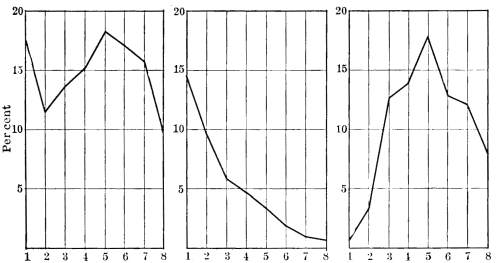
Fig. 11. Record of nonpromotions and failures in Cleveland, 1914
The record given in the diagram for the third, fourth,
and fifth grades is an impressive exhibition of increasing
incoördination between the pupils and the work of the
school. So striking is the difficulty in these later grades
that we are led to ask for an explanation. This is supplied
in part by the diagram in the middle of the figure and by
the one at the right. These present the records of failures
in two of the most important school subjects.
A record of constantly diminishing failures in reading
is exhibited in the middle diagram. This shows that the
teachers judge that the pupils improve steadily in reading.
There is a satisfactory response to the methods of teaching
reading and to the demands of the upper grades. Those
pupils who have difficulty in reading in the lower grades are
held back or are helped to master the art. The evident fact
is that improvement in reading is, according to the record,
continuous and satisfactory.
The diagram at the right shows the record in arithmetic.
Here is the cause of many of the nonpromotions shown in
the diagram at the left. Failures mount up in the middle
grades at a rate which shows with manifest clearness that
something is radically wrong.
One may venture several remarks in the presence of such
records. It does not seem likely that the pupils are stupid,
since it is shown that they can read. It is to be noted that
they do not have any option about taking arithmetic, nor
do they determine what arithmetic they shall study. They
are evidently not getting a section of arithmetic in each
of the grades which suitably parallels the reading which is
administered to them.
The conditions shown in the figure are paralleled in many
school systems. The result is that school officers, seeing the
difficulty of doing justice to the pupils, have made radical
changes in the grading system in order to meet individual
needs. Two extracts from reports by superintendents will
show the extent to which school systems will go.
A study of the performances of the failures in Boise has convinced
the entire force that the repeater is generally a quitter, and
does about as poor work in his second attempt as in his first trial
at the work of a given grade. The stamp of disapproval has been
placed upon him. He starts on his second attempt with a grievance
against the teacher and the entire institution. The parents as
well as the child feel injured, so that the teacher must combat both
the antagonism of the home and the hostility of the pupil, who has
been trained for failure and not for success, and who becomes
either morbidly sensitive or brazenly indifferent. What the laggard
would probably do as a repeater is therefore quite definitely known.
If he were permitted to advance, he could hardly do worse and he
might do better. It is less expensive and more human to promote
him than it is to degrade him. This view of the situation is
generally accepted in Boise. The standard for promoting the dull
pupil is entirely individual. He is not compelled to do all the work
of his present grade before he is permitted to pass to the next. He
is even allowed to pass on without manifesting enough ability to
justify the hope that he may be able to do the work of the advanced
grade. The question is reduced to the one consideration:
Would he do better if advanced than he would as a repeater?36
Ten years ago no pupil could enter the Newton High School,
no matter what his age or educational need, who had not completed
satisfactorily all the work of the grammar schools; and
a considerable portion—probably one-third to one-half—of all
Newton children were then leaving school at fourteen to sixteen
years of age with only part of an elementary school education.
To-day any boy or girl who needs secondary school instruction—and
most boys and girls of high school age, fourteen or fifteen, do
need such instruction—may enter some department of the Newton
high schools, whether grammar school work has been completed
or not; and nearly all—probably from eighty to ninety per
cent—of our children are now getting secondary training before
leaving school.37
There are other and more fundamental remedies for some
of the evils of the graded system. The curriculum can be
readjusted. Where any considerable number of pupils fail
in a particular subject, it is highly probable that the material
of instruction or the method of presentation or both ought
to be modified. In some cases pupils ought to be taken
out of the regular grades and treated as special cases. The
city of Cincinnati was a pioneer in recognizing the need of
special curricula for special types of pupils. The whole country
has in recent years come to recognize the importance of
taking children who are mentally backward or slow out of
the grades. Less commonly there is a recognition of the
importance of specially arranged courses for the bright
pupils.
In the city of St. Louis the curriculum of each grade is
administered in units of ten weeks for each section. At the
end of each ten weeks a readjustment is possible so that
the bright pupils may go forward and the slow pupils may
proceed more deliberately. There are at the end of each
period of ten weeks a number of promotions which carry
individual pupils forward two quarters. The curriculum is
so arranged that a rapidly promoted pupil does not omit
any essential part of the subjects, while the slow pupil has
ample opportunity for drill and review.
The grading of the material used in instruction in particular
subjects has also been recognized as a problem of
the first importance. One of the most thoroughly studied
subjects is spelling. Ayres38 took the thousand words which
several investigations had shown to be the most commonly
used in ordinary life and tried them out on the pupils of
eighty-four cities. As a result of those trials he is able to
state that a certain list of words will be spelled with a given
percentage of error by pupils of the third grade and with a
less percentage of error by pupils of the fourth, fifth, and
higher grades. Thus the material of instruction in spelling
is graded, not by arbitrarily selecting what the teacher thinks
will be appropriate, but by trying out the actual ability of
pupils in eighty-four cities.
Thus far the problem of grouping has been discussed
from the point of view of the elementary school. The problems
of the high school are different in detail, but no less
impressive. In the first place, the failures in high-school
subjects show the same lack of systematic ordering of the
curriculum that was observed in the elementary records cited
above. For example, from the survey of the Denver high
schools we may borrow a series of percentages showing the
failures in various subjects in the five high schools.
TABLE VI. PERCENTAGES OF FAILURES IN THE CHIEF
SUBJECTS OF INSTRUCTION IN THE FIVE HIGH SCHOOLS
OF DENVER IN JUNE, 191539
|
East
High
School |
North
High
School |
South
High
School |
West
High
School |
Manual
High
School |
| English I |
23 |
15 |
11 |
9 |
31 |
| English II |
14 |
16 |
10 |
11 |
23 |
| English III |
16 |
3 |
2 |
15 |
20 |
| English IV |
3 |
1 |
2 |
8 |
13 |
| |
|
|
|
|
|
| Mathematics I |
23 |
24 |
26 |
28 |
50 |
| Mathematics II |
17 |
21 |
28 |
20 |
19 |
| Commercial arithmetic |
46 |
16 |
33 |
— |
— |
| |
|
|
|
|
|
| Elementary science |
13 |
9 |
14 |
21 |
7 |
| Botany |
21 |
14 |
14 |
14 |
24 |
| Physics |
10 |
15 |
18 |
17 |
34 |
| Chemistry |
0 |
4 |
14 |
6 |
20 |
| Physiography |
11 |
15 |
12 |
— |
— |
| |
|
|
|
|
|
| History |
|
|
|
|
|
| Ancient |
12 |
17 |
11 |
10 |
15 |
| English |
12 |
17 |
7 |
5 |
— |
| Medieval and modern |
12 |
9 |
8 |
8 |
13 |
| American |
— |
7 |
— |
— |
— |
| |
|
|
|
|
|
| Latin I |
22 |
16 |
10 |
29 |
40 |
| Latin II |
14 |
20 |
14 |
11 |
18 |
| |
|
|
|
|
|
| German I |
20 |
15 |
24 |
5 |
19 |
| German II |
19 |
2 |
3 |
0 |
0 |
Table VI is worthy of careful study. Let us compare
English I and II, which are required of all students, with
Mathematics I and II, which are also required. In almost
every case the percentage of failures in mathematics is
greater. This goes to show either that the grading in mathematics
is more exacting or that the students are less well
qualified to carry the courses. The exception to the rule
that mathematics shows more failures than English, which
appears in the second year of the Manual High School,
suggests that possibly the students in that school see the
importance of mathematics as a professional course. The
difficulty with this explanation is the enormous mortality in
that school in the first-year course in mathematics. Perhaps
the pupils who are likely to fail are dropped during
the first year.
While the failures in mathematics are uniformly higher
than in English, the policy of the different schools is strikingly
different. In the East High School the two subjects
are about alike, while in the West High School the failures
in mathematics are relatively very high.
Such contrasts become more impressive if we draw the
records in Latin into consideration. In the West High
School, Latin in the first year is like mathematics, while
in the South High School it is like English. Elementary
science also shows wide divergences in practice.
A number of startling facts appear if the table is made a
subject of careful study. What these facts mean is not difficult
to set forth. The subjects now included in the curriculum
of the high school are only imperfectly adjusted to the
abilities of the students. The community has a right to
question instruction which results in failure on the part of
one student out of four. It certainly must be aroused at the
lack of coördination between schools within a single system
which show differences as marked as those exhibited in
Table VI.
Other problems in the grading of high-school students
and the subject-matter in which they are given instruction
grow out of the laxity which has crept into the administration
of the elective system. Thus, if we consider certain
subjects which are open to students of different classes,
such as the first course in Spanish or French or the course
in ancient history, we find that senior students are allowed
to enter the same class as freshmen because the organization
of separate divisions would be too expensive. The
result is either a reduction of the requirement in class work
to the level of the more immature student or undue effort
to bring the lower student to a reasonable understanding of
the subject.
The problems which have been pointed out will perhaps
be seen most vividly if some types of promotion are cited
which are likely to interfere with instruction.
Sometimes the school allows a pupil to move up a grade
or class, although it is known that he has not done the
work below, because the parents of the child have influence
and it does not seem safe to antagonize them.
Sometimes the pressure of numbers in the lower grades or
classes is so great that the teacher sends a pupil on in order
to make room for the younger pupils, even when it is evident
that the pupil will not be able to carry the higher work.
Sometimes the teacher in a given grade is anxious to
unload the backward or disorderly and therefore incompetent
pupil on someone else, and since the open road is into the
next higher grade, the child is sent on.
Promotion is sometimes controlled by the calendar. Because
the date for closing the schools has arrived, and
the long vacation is at hand, pupils are declared to have
completed the work whether they have or not.
Sometimes it is more or less explicitly argued that the
backward pupil is larger than the other children of like
intellectual attainments and he should therefore be sent to
the upper-grade room where the seats are larger.
When such reasons for promotion are deliberately set
down in black and white, they are evidently not legitimate
reasons. Many a pupil has, however, been dealt with on
exactly such grounds.
The indefensible reasons given above for advancing pupils
ought to make anyone who expects to become a teacher the
more ready to turn to the careful study of the problem. It is
undoubtedly a social and financial necessity that pupils be
grouped in classes. It is equally necessary for purposes of
administration that the groups have some kind of permanency
and some degree of internal uniformity. It is certainly
legitimate that the individual’s needs be asserted to
the extent of freeing him from absolute subordination to
the interests of the group.
Such a statement of the case would seem to dictate a
double type of instruction which will recognize more than
does the present rigid class system the need of individual
freedom and the value of class solidarity.
Many experiments have been tried in the effort to solve
this problem. The Batavia system, so called, puts two
teachers into a room, one to supervise individual work and
one to teach groups. There are various systems of individual
promotion which advance a pupil whenever he is ready.
Recently Principal Allen40 of the high school of Springfield,
Illinois, has developed a system of supervised study
in which the students put themselves through certain
prepared exercises and in this part of their work receive
individual help and are allowed to progress at their own
individual rate. Later the class meets for recitation as a
group. The recitation group is made to depend for its
composition on the rate at which students complete the
individual exercises. The class is accordingly readjusted
frequently, and in order to provide time for individual
work the length of its meetings is somewhat less than
the conventional high-school period.
The instructional plan thus arranged requires certain
readjustments of the program and certain divisions of labor
among the teachers which differ from the ordinary. But,
above all, it calls for the separation of those aspects of
the subjects of instruction which are suitable for individual
work from those aspects which are suited to class exercises.
We are constantly brought back by our discussions of
the organization of classes to a consideration of the curriculum.
The materials of instruction are capable of advantageous
and economical use only when they are adapted to
pupils. Our next problem, therefore, is to consider some
of the general principles which underlie the organization of
the general curriculum and of particular subjects.
EXERCISES AND READINGS
What are some of the limitations in the training of a child who
gets his education from a private tutor rather than as a member of
a class? Show that the most satisfactory size for a class depends
in large measure on the subject of instruction. In certain subjects,
such as typewriting and bookkeeping, instruction often becomes
almost purely individual instruction. Observe such a class and
describe the method of instruction.
If terminology is employed in a strict way, a “course” refers
to a series of lessons in a single subject, a “curriculum” to a
coherent group of courses. What devices are adopted in high
schools to compel students to think of curricula rather than courses?
What are the advantages and what are the evils of the elective
system?
What is the highest percentage of failures which ought to be
tolerated in a class? What conditions affect your answer to the
foregoing question? Is a “stiff” course the best course? What
class in high school has the “stiffest” requirements?
Dealing with the illegitimate methods of promotion enumerated
in the closing paragraphs of the chapter, describe some thoroughly
practical method of handling each situation without making the
mistake indicated.
Holmes, W. H. School Organization and the Individual Child. The
Davis Press, Worcester, Massachusetts. Contains a list of references
on the subject.