complete list of books and articles dealing more or less directly with
the subjects discussed in this book would be too extended for use here.
For the past ten or twelve years many of the medical and biological
journals have contained articles in almost every issue, discussing these
subjects in some of their phases. I have selected only a few of the more
important of them, and these only the English ones, confining myself
mostly to those that I have personally consulted, and giving brief
annotations. Many of these will be found to include very full
bibliographies of the particular subject treated.
In order to avoid repetition, references are given under one head only
although many might properly be included in other sections as well.
PARASITES AND PARASITISM
Braun, Max. Animal Parasites of Man. Translated by Pauline Falcke
and edited by L.W. Sambon and F.V. Theobald. Third edition, 1906. A
chapter on the general subject of parasitism and a description of
parasites of all classes. Bibliography.
Leuckart, R. The Parasites of Man and the Diseases Induced by Them.
Eng. transl., London, 1886.
Neuman, Theo. Entoparasites and Hygiene. Trans. Vassar Bros.
Institute, VII, 1895. A general discussion of parasitism;
life-history of some common parasites that infest man.
Neumann, L.G. Treatise on the Parasites and Parasitic Diseases of
the Domesticated Animals. Eng. transl. by Fleming, 1892.
Ransom, B.H. How Parasites Are Transmitted. Year Book U.S. Dept.
Agric., 1905, pp. 139–166 (pub. 1906). Discusses the ways in which
parasites of all classes are transmitted.
Sambon, L. The Part Played by Metazoan Parasites in Tropical
Pathology. Jour. Trop. Med. & Hyg., Vol. XI, Jan. 15, 1908. A
comprehensive discussion of this subject.
Shipley, A.E., and Fearnsides, E.G. Effects of Metazoan Parasites
on Their Hosts. Jour. Econom. Biology, Vol. I, 1906, pp. 41–62.
Discusses injury due to mere presence of parasite in host; to the
migration of the parasite; loss to host by feeding of parasites;
injury by certain toxins.
Stiles, C.W. Diseases Caused by Animal Parasites. Osler's Mod.
Med., Vol. I, 1907, p. 525. General discussion; Trematodes;
Cestodes; Roundworms; Acariasis; Parasitic Insects; Myiasis.
Van Beneden, P.J. Animal Parasites and Messmates. 1889. Contains
much that is interesting.
Ward, Henry B. Influence of Parasitism on the Host. Proc. Amer.
Assn. for Advancement of Science, Vol. 56, 1907. A comprehensive
statement of this subject. List of literature.
PROTOZOA
Calkins, G.N. The Protozoa. Osler's Mod. Med., Vol. I, 1907, p.
353. General notes on the Protozoa; classification; reproduction;
life-cycle of various forms. Regards Protozoa as subkingdom and the
four great divisions as phyla.
Calkins, G.N. Protozoölogy. N.Y., 1909. Chapters on parasitism,
pathogenic Protozoa, etc.
Clarke, J.J. Protozoa and Disease. London, 1903, Pt. I. Discusses
the various protozoa that cause disease, and refers frequently to
those that are transferred from host to host by insects.
Clarke, J.J. Protozoa and Disease. London, 1908. Part II,
comprising sections on the causation of smallpox, syphilis and
cancer. Notes on parasitic Protozoa, tropical diseases, ticks,
piroplasmosis, etc.
Daniels, C.W. Persistence of the Tropical Diseases of Man Due to
Protozoa. Jour. Trop. Med. & Hyg., 12, Aug. 2, 1909, pp. 232–234.
Same in Lancet, II, 1909, p. 460. Good summary of present
knowledge of the subject.
Minchin, E.A. Protozoa. In Albutt and Rolleston's System of
Medicine, II, 1907, pp. 9–122. A comprehensive chapter on
Protozoa. Many parasitic forms are figured and described.
Bibliography.
Minchin, E.A. The Sporozoa. In Lankester's Treatise on Zoöl., Pt.
I, pp. 150–360, 1903. Best account of this group, list of Sporozoan
hosts. Bibliography.
BACTERIA
Flexner, Simon. Relation of Bacteria and Sporozoa to Disease.
Science, N.S., Vol. 27, No. 682, pp. 133–136. On these pages
discusses relation of bacteria and Protozoa to human diseases.
Jordan, Edwin O. General Bacteriology. Philad., 1898. A good
general treatment of the subject.
Levy, Ernst, and Klemperer, Felix. Elements of Clinical
Bacteriology for Physicians and Students (transl. by A.A. Eschner),
Philad., 1909. Morphology and biology of bacteria; infection;
immunity; specific diseases of bacterial origin, etc.
Muir, Robt., and Ritchie, Jas. Manual of Bacteriology. N.Y., 1903.
Contains chapter on the relation of bacteria to diseases and
discussion of several bacterial diseases.
Sternberg, G.M. A Manual of Bacteriology. N.Y., 1893. Part III is
devoted to pathogenic bacteria.
INSECTS AND DISEASE
Herms, W.B. Medical Entomology, Its Scope and Methods. Jour. of
Eco. Ento., Vol. 2, No. 4, 1909, pp. 265–268.
Howard, L.O. Insects as Carriers and Spreaders of Disease. Year
Book U.S. Dept. Agric., 1901, pp. 177–192. Good review of the
subject.
Howard, L.O. How Insects Affect Health in Rural Districts. U.S.
Dept. Agric., Farmers' Bulletin, No. 155, 1902. Discussion of city
and county conditions; protection from typhoid, malaria and yellow
fever.
Howard, L.O. Economic Loss to the People of U.S. Through Insects
That Cause Disease. Bull. 78, U.S. Dept. Agric. Bur. of Ent.,
1909. A comprehensive discussion and summary of the subject.
Discusses mosquitoes, flies, the Panama Canal, epidemic diseases
and the progress of nations.
Kellogg, V.L. Insects and Disease, Chap. XVIII, in American
Insects, pp. 615–654, 1905. Discusses Mosquitoes and malaria;
yellow fever and filariasis.
King, H.H. Report on Economic Entomology of Khartoum, in Third
Rept. of Wellcome Research Lab., 1908. Discusses insects injurious
to man: mosquitoes, blood-sucking insects other than mosquitoes,
etc.
Mason, C.F. The Spread of Diseases by Insects, with Suggestions
Regarding Prophylaxis. International Clinics, Vol. II, 1904, pp.
1–21. A brief summary of the subject.
McCrae, John. Recent Progress in Tropical Medicine. International
Clinics, Vol. II, 1904, pp. 22–36. Discusses several diseases,
some of which are transmitted by insects.
Nuttall, G.H.F. On the Rôle of the Insects Arachnids and Myriapods
as Carriers in the Spread of Bacterial and Parasitic Diseases of
Man and Animals. A critical and historical study. Johns Hopkins
Hospital Reports, Vol. 8, 1899, pp. 1–154. A review of all the
literature up to this date. Important article.
Nuttall, G.H.F. Insects as Carriers of Disease. Recent advances in
our knowledge of the part played by blood-sucking arthropods
(exclusive of mosquitoes and ticks) in the transmission of
infectious diseases. Bericht über den XIV. Intern. Kongress für
Hygiene und Dermogrophic. Berlin, 1907, pp. 195–206. Discusses
protozoan and bacterial diseases.
Stiles, C.W. Insects as Disseminators of Disease. Virginia Medical
Semi-monthly, Vol. 6, No. 3, May 10, 1901, pp. 53–58. Good
statement of subject with list of recent workers.
Wherry, W.B. Insects and Infection. Cal. State Jour. of Med.,
Nov., 1907. Discusses the rôle of insects, ticks, etc., in the
transmission of infectious diseases.
Symposium on Yellow Fever and Other Insect-borne Diseases.
Science, N.S., Vol. 23, Nos. 584–585, 1906. The Protozoan
Life-cycle, G.N. Calkins. Filariasis and Trypanosome Diseases, H.B.
Ward. The Practical Results of Reed's Findings on Yellow Fever
Transmission, J.H. White. Difficulties of Recognition and
Prevention of Yellow Fever, Q. Kohnke. The Practical Side of
Mosquito Extermination, H.C. Weeks. Without Mosquitoes There Can Be
No Yellow Fever, Jas. Carroll. Estivo-autumnal Fever, Cause,
Diagnosis, Treatment and Destruction of Mosquitoes Which Spread the
Disease, H.A. Veazie.
MOSQUITOES—SYSTEMATIC AND GENERAL
Balfour, Andrew, and Staff. Second Report of the Wellcome Research
Laboratories at the Gordon Memorial College, Khartoum, 1906.
Includes reports on work on mosquitoes and other noxious insects.
Boyce, Sir Robert W. Mosquitoes or Man? The Conquest of the
Tropical World. N.Y., 1909. Reviews medical and sanitary work in
the tropics and discusses the relation of insects to various
tropical diseases.
Busch, August. Report on a Trip for the Purpose of Studying the
Mosquito Fauna of Panama. Smith. Miscell. Coll., Vol. 5, Pt. I,
1908, p. 49. Work that is being done in Panama to control the
mosquitoes. Annotated list of species.
Felt, E.P. Mosquitoes or Culicidæ of New York State. In N.Y. State
Museum Bull. 79, Entomology 22, 1904. Discusses distribution,
migration and life-history of various species of mosquitoes and
mosquito diseases. Bibliography.
Giles, Geo. M. A Handbook of Gnats or Mosquitoes, Giving the
Anatomy and Life-History of the Culicidæ. London, 1902. Whole
subject treated very fully.
Grubbs, S.B. Vessels as Carriers of Mosquitoes. Pub. Health and
Mar. Hospt. Ser. Bull. II, Mar. 3, 1903. Believes that mosquitoes
may come aboard when the vessel is lying at anchor one-half mile
from shore, and that under favorable conditions they may come
aboard when the vessel is fifteen miles from shore.
Howard, L.O. Mosquitoes. Osler's Mod. Med., Vol. I, p. 370, 1907.
General notes on classification and habits particularly in relation
to diseases.
Howard, L.O. Notes on Mosquitoes of the United States. U.S. Dept.
Agric., 1900. Div. of Ento. Bull. No. 25, N.S. Account of the
structure; biology; remarks on remedies.
Howard, L.O. Concerning the Geographic Distribution of the Yellow
Fever Mosquito. Public Health Rept., Pub. Health and Mar. Hospt.
Ser., Nov. 13, 1903. The same revised to Sept. 10, 1905.
Howard, L.O. Mosquitoes: How They Live; How They Carry Disease;
How They Are Classified; How They May Be Destroyed. N.Y., 1901. One
of the best popular books on mosquitoes.
McCracken, I. Anopheles in California, with a Description of a
New Species. Entomological News, Vol. 15, Jan., 1904. Records of
three species, their breeding-places, habits, etc.
Mitchell, Evelyn G. Mosquito Life. N.Y., 1907. A good popular
account of the mosquitoes and their relation to disease. The
appendix treats of mosquitoes and their possible relation to
leprosy.
Smith, J.B. Mosquitoes Occurring Within the State of New Jersey.
Report of the New Jersey State Agric. Exper. Station upon the
mosquitoes occurring within the State. Trenton, N.J., 1904. Habits,
development, relation to disease, checks and remedies; systematic.
Smith, J.B. The General Economic Importance of Mosquitoes. Popular
Science Monthly, 70, 1907, pp. 325–329. Mosquitoes affect not only
the health and comfort of the people, but hinder development of
agriculture and thus affect land values.
Smith, J.B. The New Jersey Salt-marsh and Its Improvement. New
Jersey Agricultural Experiment Station Bulletin, 207, 1907. Shows
that the increased value of the land drained in the antimosquito
crusade more than pays for the cost of the drainage.
Theobald, F.V. Monograph of Culicidæ of the World. Four Vols. and
one Vol. of plates. London, 1901 to 1907. Vol. I contains 96 pages
on structure, life-history, habits, etc. Vol. II contains a
bibliography. Vol. Ill contains a list of species that carry
disease.
Theobald, F.V. Mosquitoes or Culicidæ. In Albutt and Rolleston's
System of Medicine, II, 1907, pp. 122–168. Structure,
life-history, habits, distribution and classification of
mosquitoes. Bibliography.
MOSQUITO ANATOMY
Berkeley, Wm. M. Laboratory Work with Mosquitoes. N.Y., 1902.
Chapters on development, anatomy, dissection, malarial parasites,
filarial disease, yellow fever.
Dimmock, Geo. Anatomy of the Mouth-parts and Suctorial Apparatus of
Culex. Psyche, 3, pp. 231–241, Sept., 1881. Good.
Imms, A.D. On the Larval and Pupal Stages of Anopheles
maculipennis. Journal Hygiene, Vol. 7, No. 2, April, 1907.
Morphology.
Imms, A.D. On the Larval and Pupal Stages of Anopheles
maculipennis. Parasitology, Vol. I, No. 2, June, 1908.
Continuation of article in Jour. Hyg., Vol. 7, No. 2. Continues
discussion of morphology.
Nuttall, Geo. F., Corbett, Louis, and Strangeways-Pig, T. Studies
in Relation to Malaria. Pt. I, The Geographical Distribution of
Anopheles in Relation to the Former Distribution of Ague in
England. Jour. Hyg., Vol. I, No. 1, Jan., 1901.
Nuttall, Geo. F., and Shipley, Arthur E. Studies in Relation to
Malaria. Pt. II, Structure and Biology of Anopheles, Jour Hyg.,
Vol. I, No. 1, Jan., 1901: The Egg and Larva; Bibliography. Pt. II,
cont, Vol. I, No. 2, April, 1901: The Pupa. Pt. II, cont., Vol. I,
No. 4, Oct., 1901: Adult External Anatomy. Pt. II, cont., Vol. 2,
No. 1, Jan., 1902: Ætiology of Adult. Pt. II, cont., Vol. Ill, No.
2, April, 1903: Anatomy of Adult.
Thompson, Millett T. Alimentary Canal of the Mosquito. Proc. Bost.
Soc. Nat. Hist., Vol. 32, No. 6, 1905, pp. 145–202. Good summary
of recent investigations.
Wesche, W. The Mouth-parts of Nemocera and Their Relation to the
Other Families of Diptera. Royal Microscopic Soc. Jour., 1904,
pp. 28–47. Discussion with illustrations of the mouth-parts of
various Diptera.
MOSQUITOES—LIFE-HISTORY AND HABITS
Ayers, E.A. The Secrets of the Mosquito. A guide to the
extermination of the prolific pest. World's Work, 1907, Vol. 14,
pp. 8902–8910. Notes on life-history and methods of control.
Jordan, E.O., and Hefferan, Mary. Observations on the Bionomics of
Anopheles. Jour. Infec. Diseases, II, 1905, pp. 56–69.
Occurrence, breeding-places, habits, etc.
Morgan, H.A., and Dupree, J.W. Development and Hibernation of
Mosquitoes. Bull. 40, N.S., Div. of Ento., pp. 88–92, 1903.
Results of observation on five genera of mosquitoes in the vicinity
of Baton Rouge, La.
Ross, E.H. The Influence of Certain Biological Factors on the
Question of the Migration of Mosquitoes. Jour. Trop. Med. & Hyg.,
12, 1909, pp. 256–258, Sept. 1. Only fecundated females feed on
blood, and must be fertilized after each batch of eggs. This
determines largely the time and place of breeding.
Smith, J.B. Concerning Migration of Mosquitoes. Science, 18, Dec.
11, 1903, pp. 761–764. Observations on the migrations of
mosquitoes, particularly C. sollicitans.
MOSQUITO FIGHTING
Celli, Angelo. The Campaign Against Malaria in Italy. Transl. by
J.J. Eyre. Jour. Trop. Med. & Hyg., XI, Apr. 1, 1908, pp.
101–108. Includes a good discussion of the effectiveness of
destroying the mosquitoes in controlling malaria.
Felt, E.P. Mosquito Control. In Report of the N.Y. State
Entomologist for 1905, pp. 109–116. Notes on importance and
methods of control of various species.
Goldberger, Jos. Prevention and Destruction of Mosquitoes. Public
Health Reports, Pub. Health and Mar. Hospt. Ser., July 17, 1908.
Life-histories and methods of fighting larvæ, pupæ and adults.
Le Prince, J.A. Mosquito Destruction in the Tropics. Jour. Amer.
Med. Assn., LI, p. 26, Dec. 26, 1908. Occurrence and habits of
Anopheles, methods of destruction. Results of anti-malarial work
on the isthmus. Discussion by various doctors.
Quayle, H.J. Mosquito Control Work in California. Bull. No. 178,
Calif. Agric. Ex. Sta., pp. 1–55, 1906. Habits and life-history of
California species, with an account of experiments to control the
salt-marsh species.
Rosenan, M.J. Disinfection Against Mosquitoes with Formaldehyde and
Sulphur Dioxid. Hyg. Lab. Pub. Health and Mar. Hospt. Ser., Bull.
6, 1901.
Ross, Ronald. Mosquito Brigades and How to Organize Them. New York,
1902.
Ross, Ronald. Logical Basis of the Sanitary Policy of Mosquito
Reduction. Science, N.S., Vol. 22, No. 750, Dec. 1, 1905, pp.
689–699. Important article dealing with the methods of control.
Smith, J.B. Salt-marsh Mosquitoes. New Jersey Agric. Exper. Stn.
Special Bulletin T, 1902. Breeding-places and methods of control
of this species.
Smith, J.B. Mosquitocides. Bull. 40, New Series U.S. Dept. Agric.,
Div. of Ento., pp. 96–108, 1903. Results of experiments with a
number of substances, several of which were found to be effective
and some cheap enough to permit of their use to a limited extent.
Smith, J.B. The New Jersey Salt-marsh and Its Improvement. Bull.
No. 207, Nov. 14, 1907, New Jersey Agric. Exper. Stn. Results of
draining the marshes to get rid of mosquitoes.
Smith, J.B. The House Mosquito: a City, Town and Village Problem.
N.J. Agric. Ex. Stn. Bull. 216, 1908. Work done on salt-marshes
since 1904 practically eliminated the migratory species, so that
C. pipens, the house mosquito, is now the problem. Life-history
and methods of combating.
Underwood, W.L. Mosquitoes and Suggestions for Their Extermination.
Pop. Sci. Mo., Vol. 63, 1903, pp. 453–466. Life-history, habits
and methods of control.
Underwood, W.L. The Mosquito Nuisance and How to Deal with It.
Boston, 1903.
First Antimosquito Convention, 1903. Pub., Brooklyn, 1904. Contains
articles on what railroads, government and laws should do toward
mosquito extermination; mosquito work in Havana; how state
appropriations should be used, etc.
National Mosquito Extermination Society. Bulletin No. 1, 1904.
Object of Society; brief sketches of Ross, Reed, and others.
Reprints of a few articles on mosquito extermination.
American Mosquito Extermination Society. Year Book for 1904–05.
N.Y., 1906. Containing reports of meetings and discussions of
various problems. Several interesting papers, among them "Criminal
Indictment of the Mosquito," F.W. Moss. "Mosquito Work at Panama
Canal," W.C. Sorgas. "Diversities Among New York Mosquitoes," E.P.
Felt. "Mosquito Extermination in New Jersey," J.B. Smith. "The
Mosquito Question," Quitman Kohnke.
Antimalarial Work in the Panama Canal Zone. Editorial in Jour.
Trop. Med. & Hyg., XI, Aug. 15, 1908, p. 251. Notes on the success
of the measures adopted there.
MOSQUITOES AND DISEASE
Doty, A.H. The Mosquito, Its Relation to Disease and Its
Extermination. New York State Journal of Medicine, May, 1908.
Finlay, Chas. Mosquitoes Considered as Transmitters of Yellow Fever
and Malaria. Med. Record, May 27, 1899, pp. 737–739. Review of
his theory in regard to mosquitoes and disease and the probable
necessary changes in view of recent discoveries.
Howard, L.O. Mosquitoes as Transmitters of Disease. Review of
Reviews, XXIV, 1901, pp. 192–195. A review of the work of various
investigators.
Smith, J.B. Sanitary Aspect of the Mosquito Question. Medical
News, Mar. 7, 1903. Note on mosquitoes and their relation to
disease.
Taylor, J.B. Observations on the Mosquitoes of Havana, Cuba.
Reprint from La Revista de Medicina, June, 1903, p. 27.
MALARIA
Banks, C.S. Experiments in Malarial Transmission by Means of
Myzomyia ludlowii. Phil. Jour. Sci., B. 2, 1907, pp. 513–535.
Breeding-places of mosquitoes, life-histories of the species;
mosquitoes and malaria.
Craig, C.F. Malarial Fevers. Osler's Mod. Med., Vol. I, p. 392,
1907. Historical; distribution; malarial parasites; classification;
development; malarial mosquitoes; pathology; treatment, etc.
Craig, C.F. Studies in the Morphology of Malarial Plasmodia after
the Administration of Quinine and in Intracorpuscular Conjugation.
Jour. Infec. Diseases, VII, No. 2, 1910. See also same, IV, 1907,
pp. 108–140. Gives the evidence upon which he bases his theory of
the meaning of intracorpuscular conjunction.
Craig, C.F. The Malarial Fevers, Hemoglobinuric Fever and the Blood
Protozoa of Man. N.Y., 1909. A thorough consideration of the
subject of malaria and good discussion of the other subjects noted
in title. Bibliography.
Deaderick, W.H. Malaria. Philad., 1909. The chapter on ætiology
treats of the transmission by mosquitoes.
Harris, S. Prevention of Malaria. Jour. Amer. Med. Assn., 53,
Oct. 9, 1909, pp. 1162–67. Effects of malaria, transmission by
mosquitoes, etc. In the discussion of the paper J.H. White
summarizes the fight against yellow fever in New Orleans.
Herrick, G.W. Relation of Malaria to Agriculture and Other
Industries of the South. Economic losses occasioned by malaria;
malaria responsible for more sickness among the white population
than any other disease; relation to mosquitoes. Pop. Sci. Mo.,
Vol. 62, Apr., 1903, pp. 521–525.
Jones, Ross, Ellett. Malaria. London, 1907. Small book,
introduction by Ross. Malaria in Greece and Italy; shows how this
disease contributed to the downfall of great nations.
Mannaberg, Julius. Malaria. In Nothnagel's Encyclopedia of
Practical Med., Amer. Ed., 1905, pp. 17–494. A very comprehensive
discussion of the disease and the relation of mosquitoes to the
malarial parasite.
Manson, Patrick. The Mosquito and the Malaria Parasite. Brit. Med.
Jour., Vol. II for 1898, pp. 849–853. History of the parasite in
the human and insect host; observations of Ross and others and
their meaning.
Manson, Patrick. Experimental Demonstration of the
Mosquito-malarial Theory. Brit. Med. Jour., Vol. 2 for 1900, pp.
949–951, also Lancet, II, 1900, pp. 923–925. Infected mosquitoes
sent from Rome allowed to bite men in England who had not been in
malarial regions. Malarial fever followed.
Manson, Patrick. Malarial Fever. Appendix to Vol. IX of T.C.
Albutt's System of Med., 1900. Relation of the malarial parasite
to the disease and to mosquitoes.
Robertson, E.W. Renaming of Malaria—Anophelesis. Va. Medical
Semi-monthly, Sept. 10, 1909. Considers malaria a misnomer and
gives reasons for suggesting new name.
Ross, Ronald. On Some Peculiar Pigmented Cells Found in Two
Mosquitoes Fed on Malarial Blood. Brit. Med. Jour., 1897, Dec.
18, p. 1786. Records in his experiments in feeding mosquitoes on
blood of malarial patients. Records finding the parasites in some
of them. Important article.
Ross, Ronald. Pigmented Cells in Mosquitoes. Brit. Med. Jour.,
1898, Feb. 26, p. 550. Further notes on them.
Ross, Ronald. The Mosquito Theory of Malaria. Report dated
Calcutta, Feb. 16, 1899. Reprinted in Pop. Sci. Monthly, Vol. 56,
Nov., 1899, pp. 42–46. Tells of his investigations in India and
their results.
Ross, Ronald. The Relationship of Malaria and the Mosquito.
Lancet, II, 1900, July 7, p. 4880. Observation on the
transmission of malaria.
Ross, Ronald. Malaria Fever, Its Cause, Prevention and Treatment.
London, 1902. Chapters on malaria, mosquitoes, prevention and
treatment.
Ross, Ronald. Parasites of Mosquitoes. Jour. of Hyg., VI, No. 2,
Apr., 1906. Brief review of several of his earlier papers on this
subject with additional notes.
Simpson, W.J.R. Recent Discoveries Which Have Rendered Antimalarial
Sanitation More Precise and Less Costly. Brit. Med. Jour., 1907,
II, pp. 1044–46. Discussion of the various factors in mosquito
control.
Stephens, J.W.W., and Christophers, S.R. The Practical Study of
Malaria and Other Blood Parasites. London, 1908. Chapters on
mosquitoes, flies and ticks and their relation to diseases.
Sternberg, G.M. The Malarial Parasite and Other Pathogenic
Protozoa. Pop. Sci. Mo., Vol. 50, 1897, pp. 628–641. Account of
the discovery of the malarial parasite and more recent studies on
it.
Sternberg, G.M. Malaria. Smith. Rept., 1900, pp. 645–656. Review
of the experimental evidence in support of the mosquito-malaria
theory.
Malarial Fever. Jour. Trop. Med. & Hyg., II, Mar. 16, 1908, pp.
96–98. A list of literature mostly for the years 1906 and 1907.
YELLOW FEVER
Adams, S.H. Yellow Fever, a Problem Solved. The battle of New
Orleans against the mosquito. McClure's Magazine, Vol. 27, June,
1906, p. 178. An interesting popular article.
Carroll, James. Yellow Fever. Osler's Mod. Med., Vol. II, 1907,
p. 736. History, ætiology, treatment. A good review of the work of
the Yellow Fever Com. and the results of their work.
Carroll, James. The Transmission of Yellow Fever. Amer. Med.
Assn., 40, 1905, pp. 1429–33. Shows the relation of the mosquito
to the disease.
Carroll, James. Yellow Fever. Lessons to be learned from the
present outbreak of yellow fever. Jour. of Amer. Med. Assn., Vol.
45, 1905, pp. 1079–81. Among other things recommends that
mosquitoes be kept from patients.
Chaille, S.E. The Stegomyia and Fomites. Amer. Med. Assn., 40,
1903, pp. 1433–40. Concludes that the mosquito is the only proven
disseminator of yellow fever. Extended discussion by various
physicians.
Dastre, A. The Fight Against Yellow Fever. Smith. Rept., 1905,
pp. 339–350. History of the yellow fever epidemics, its
geographical distribution, and the work that is being done to
control it.
Doty, A.H. On the Mode of Transmission of the Infectious Agent in
Yellow Fever and Its Bearing upon the Quarantine Regulations. Med.
Record, Oct. 26, 1901, pp. 649–653. Review of older theories in
regard to the spread of yellow fever. Believes that the quarantines
are now unnecessary.
Finley, Chas. The Mosquito Theory of the Transmission of Yellow
Fever and Its New Development. Med. Record, Jan. 19, 1901. Refers
to his early observations on the subject, giving extracts from some
of his earlier papers to show that he had long held the mosquito
responsible for the dissemination of yellow fever.
Goldberger, Jos. Yellow Fever, Ætiology, Symptoms and Diagnosis.
Yellow Fever Inst. Bull. 16, Pub. Health and Mar. Hospt. Ser.,
1907. Includes discussion of the relation of mosquitoes to the
disease.
Guiteras, John. Experimental Yellow Fever at the Inoculation
Station of the Sanitary Department of Havana. Amer. Med., Vol.
II, No. 21, 1901, pp. 809–817. Experiments show that all types of
the yellow fever from mild to severe may be produced by the bite of
the mosquito.
McFarland, Joseph. Life and Work of James Carroll. Memoir read at
the fifth annual meeting of the Soc. of Tropical Med., 1908. Early
life of Carroll and his work with the Yellow Fever Com.
Parker, H.B., Beyer, G.E., and Pothier, O.L. Rept. of Working Party
No. 1, Yellow Fever Institute. Bull. 13, Pub. Health and Mar.
Hospt. Ser., 1903. As a result of their studies they believe that
the disease is caused by a protozoan parasite which they name and
describe. Discuss the relation of mosquitoes to the disease.
Reed, Walter; Carroll, James; and Agramonte, A. Experimental Yellow
Fever. Amer. Med., July 6, 1901, pp. 15–23. Records of certain
experiments and their results.
Reed, Walter; Carroll, James; and Agramonte, C.A. The Ætiology of
Yellow Fever. A preliminary note presented at the Amer. Pub. Health
Assn. Philad. Med. Jour., Oct. 27, 1900, pp. 790–796. Also an
additional note in Jour. Amer. Med. Assn., 36, pp. 431–440, 1901.
Records of their experiments and a summing up of the data in regard
to yellow fever and the mosquito.
Reed, Walter, and Carroll, James. The Prevention of Yellow Fever.
Med. Record, Oct. 26, 1901, pp. 441–449. History of the disease,
especially in U.S., results of the work of Yellow Fever Com.
description, life-history and habits of the mosquito, its relation
to yellow fever, methods of control. Important paper.
Reed, Walter. Recent Researches Concerning the Ætiology,
Propagation and Prevention of Yellow Fever by U.S. Army Com. Jour.
Hyg., 2, 1902, pp. 101–119. Review of work of the Yellow Fever
Com. and the importance of the results. Bibliography.
Rosenan, M.J., Parker, H.B., Francis, E., and Beyer, G.E. Rept. of
Working Party No. 2, Yellow Fever Institute. Experimental studies
in yellow fever and malaria at Vera Cruz, Mex. U.S. Pub. Health
and Mar. Hospt. Ser., May, 1904. Includes experiments and
observations on mosquitoes.
Rosenan, M.J., and Goldberger, Jos. Report of Working Party No. 3,
Yellow Fever Institute. Yellow Fever Inst. Bull. 15, Pub. Health
and Mar. Hospt. Ser., 1906. Unsuccessful attempts to grow the
yellow fever parasite. Negative results in the experimental study
of the hereditary transmission of the yellow fever in the mosquito.
Appendix A gives a translation of Marchoux and Simonds' report in
which they report positive results in their experiments along the
same line.
Sternberg, G.M. Transmission of Yellow Fever by Mosquitoes. Smith.
Rept., 1900, pp. 657–673. Review of the early theories in regard
to yellow fever and the work and findings of the yellow fever
commission.
White, J.H. Yellow Fever and the Mosquito. Jour. Amer. Med.
Assn., LI, No. 26, Dec. 26, 1908. Considers both S. calopus and
C. pungens. Results of early mistakes. Necessity of destroying
mosquito. Methods of destroying mosquito. Habits of mosquito.
Abstract of the Report of the French Yellow Fever Com. at Rio de
Janeiro, 1903. Pub. Health Report, Pub. Health and Mar. Hospt.
Ser., Vol. 19, Pt. I, p. 1019. A summary of their findings and
conclusions to the date of report.
de Ybarra, A.M.F. Yellow Fever Again in Cuba. Jour. Trop. Med. &
Hyg., XI, Mar. 2, 1908, pp. 73–78. Cites a number of cases of
yellow fever within the last few years and uses them as evidence
to show that the disease may be transmitted in other ways than by
the mosquito. A strong summing up of the arguments against the
mosquito theory. Reprint of editorial in Tex. Med. Jour., Oct.,
1907, also follows this article.
The Extinction of Yellow Fever at Rio de Janeiro. Lancet, II,
1909, p. 404. A review of a French publication giving the results
of the work from 1903 to present time. In 1903 before work was
begun there were 584 deaths from yellow fever. In 1908 only 4, and
none so far in 1909. Success accredited to mosquito work and
general sanitation.
A Pioneer in Research on Yellow Fever. Editorial in Brit. Med.
Jour., May 30, 1908, p. 1306. Refers to the work of L.D.
Beauperthuy, who, in 1853, set forth the theory that yellow fever
was transmitted by mosquitoes.
DENGUE
Ashburn, P.M., and Craig, C.F. Experimental Investigations
Regarding the Ætiology of Dengue Fever. Jour. Infec. Diseases,
Vol. V, 1907, pp. 440–475. Conclude that the disease is spread only
by mosquitoes.
Coleman, Thomas D. Dengue. Osler's Mod. Med., Vol. II, 1907, p.
489. Ætiology, pathology, etc.; possibility of Culex fatigans
disseminating the disease.
Graham, H. "The Dengue"; a Study of Its Pathology and Mode of
Propagation. Jour. of Trop. Med. & Hyg., July 1, 1903, p. 209.
Experiments which seem to show that dengue is transmitted by Culex
fatigans.
Leichtenstern, O. Dengue. In Nothnagel's Encyclopedia of Practical
Med., Amer. Ed., 1905, pp. 720–743. Consideration of the disease
and its transmission.
Ross, E.H. The Prevention of Dengue Fever. Amer. Trop. Med. &
Parasit., Vol. II, No. 3, July 1, 1908, pp. 193–195. A successful
campaign against the mosquitoes in Port Said in 1906 stopped the
outbreaks of malaria and dengue.
Dengue and Sand-flies. Jour. Trop. Med. & Hyg., 12, 1909, pp.
172–173. A note on these pages refers to the work of Dr. R. Doerr,
who suspects that dengue may be carried by sand-flies,
Phlobotomus, as well as by mosquitoes.
FILARIAL DISEASES AND ELEPHANTIASIS
Christophers, S.R. What Is Really Known of the Cause of
Elephantiasis. Ind. Med. Gaz., Nov., 1907, p. 404. Questions
Manson's theory in regard to the disease being caused by filaria.
Manson, Patrick. Tropical Diseases. London, 1908, pp. 594–648. A
most comprehensive chapter on filariasis and elephantiasis.
Phalen, J.M., and Nichols, H.J. Filariasis and Elephantiasis in
Southern Luzon. Phil. Jour. Sci., Sept., 1908. Culex
microannulatus regarded as the carrier of the filaria.
Prout, W.T. On the Rôle of Filaria in the Production of Disease.
Jour. Trop. Med. & Hyg., Apr. 1, 1908, p. 109. Discussion of same
in same journal, June 1, 1908.
White, Duncan. Filarial Periodicity and Its Association with
Eosinophilia. Jour. Trop. Med. & Hyg., 12, July 15, 1909, pp.
175–183. Among other things he discusses the relation of mosquitoes
to filarial diseases.
LEPROSY
Brinckerhoff, W.R. A Note upon the Possibility of the Mosquito
Acting in the Transmission of Leprosy. Pub. Health and Mar. Hospt.
Ser. (general publications), 1908. Suggests the possibilities of
such transmission, but concludes that the probabilities are against
it.
Goodhue, E.S. The Bacillus Lepræ in the Gnat and Bedbug. Ind.
Med. Gaz., Vol. XLI, Aug., 1906, p. 342. Has found this bacillus
in mosquitoes and bedbugs, but believes the latter is more
concerned in transmitting the disease.
Goodhue, E.S. Mosquitoes and Their Relation to Leprosy in Hawaii.
Amer. Med., N.S., 2, 1907, p. 593. Suggests that mosquitoes may
carry the disease, also warns against danger from flies and
bedbugs.
Hutchinson, J. Mosquitoes and Leprosy. Brit. Med. Jour., Dec. 22,
1906, Vol. II, p. 1841. Evidence against the insect theory of
transmission of leprosy.
Mugliston, T.C. On a Possible Mode of Communication of Leprosy.
Jour. Trop. Med., Vol. VIII, July 15, 1905, p. 209. Suggests that
the itch-mite may be the carrier of leprosy. Studies on 77 lepers
led him to this conclusion.
Smyth, W.R. Leprosy. Brit. Med. Jour., Dec. 8, 1906, Vol. II, p.
1670. Believes that bedbugs or some similar wingless parasite
conveys the disease.
PLAGUE
Brannerman, W.B. Spread of Plague in India. Jour. of Hyg., Vol.
6, No. 2, Apr., 1906, pp. 179–211. A digest of experiments made in
India. Discusses various ways in which the disease may be spread.
Review of the evidence that insects may be concerned. Bibliography.
Calvert, W.J. Plague. Osler's Mod. Med., Vol. II, 1907, p. 760.
History; bacteriology; pathology; plague among animals;
transmission, etc.
Ham, B. Burnett. Report on Plague in Queensland, 1900–1907. P. 153
discusses the rat-flea theory of dissemination of bubonic plague,
summing up the evidence of various observers, including the Indian
Advisory Com. and others. Considers the evidence conclusive that
P. cheopis and possibly C. fasciatus transmit plague. Other
pages discuss various rat fleas and their relation to plague in
rats.
Hankin, E.H. On the Epidemiology of Plague. Jour. Hyg., 5, 1905,
pp. 48–83. A comprehensive discussion of the disease and its
spread, several pages devoted to rats and fleas; evidence for and
against the theory that rats and fleas are the principal carriers
of the disease.
Herzog, Max. The Plague, Bacteriology, Morbid Anatomy &
Histopathology, Including the Consideration of Insects as Plague
Carriers. Biological Laboratory Bureau of Govt. Laboratories,
Manila, Oct., 1904. Reviews the evidence regarding the possibility
of fleas carrying plague; describes a new rat flea (Pulex
philippinensis); records experiments with fleas and cites a case
of bubonic plague in a child in which the infection was possibly
carried by Pediculi.
McCoy, G.W. Plague Bacilli in Ectoparasites of Squirrels. Pub.
Health Reports, Pub. Health and Mar. Hospt. Ser., Vol. XXIV, No.
16, Apr. 16, 1909. Experiments with fleas and lice from infected
squirrels demonstrating presence of plague bacilli.
McCoy, G.W. The Susceptibility of Gophers, Field-mice and
Ground-squirrels to Plague Infection. Jour. of Infec. Diseases,
Vol. 6, 1909, No. 3, pp. 283–288. Gophers highly resistant,
field-mice moderately susceptible and ground-squirrels very
susceptible to plague.
Mitzmain, M.B. Insect Transmission of Bubonic Plague: a Study of
the San Francisco Epidemic. Ento. News, 19, No. 8, 1908, pp.
353–359. Fleas obtained in examination of 1,800 rats. Attempt to
locate source of rat and flea introduction.
Morton, F.M. Eradicating Plague from San Francisco. Report of the
Citizens' Health Com. and an account of its work. San Francisco,
1909. Discusses the epidemics, methods of transmission, methods of
fighting, etc.
Rucker, W.C. Plague Among Ground-squirrels in Contra Costa Co.,
Cal. Pub. Health Reports, Pub. Health and Mar. Hospt. Ser., Aug.
27, 1909. Reports of human cases supposed to be connected with
plague among ground-squirrels. Plague among squirrels; habits,
methods of fighting, etc.
Rucker, W.C. Fighting an Unseen Foe. Sunset Mag., XXII, No. 2,
Feb., 1909. Story of the fight against plague in San Francisco.
Shipley, A.E. Rats and Their Animal Parasites. Jour. Eco.
Biology, Vol. III, No. 3, Oct. 28, 1908. List of species of ecto-
and endoparasites.
Simpson, W.J. A Treatise on Plague. Cambridge Univ. Press, London,
1906. Deals with historical, epidemiological, clinical, therapeutic
and preventive aspect of the disease.
Thompson, J.A. The Mode of Spread and Prevention of Plague in
Australia. Lancet, Oct. 19, 1907, p. 1104. Rat fleas the
essential factor in transmitting plague, and preventive methods
should be directed against the rats.
Thompson, J.A. On the Epidemiology of Plague. Jour. Hyg., Vol.
VI, No. 5, Oct., 1906. Methods of infection, spread, relation of
rats to the disease and a review of the rat-flea theory.
Bibliography.
Verjbitski, D.T. The Part Played by Insects in the Epidemiology of
Plague. Jour. Hyg., 8, 1908, No. 2, pp. 162–208. Record of
extensive experiments with fleas. Fleas communicated plague for
three days, bedbugs for five days. Interrelation of fleas, rats,
dogs, cats, and man. An important article translated from Russian.
Wherry, W.B. Further Notes on the Rat Leprosy and on the Fate of
the Human and Rat Leper Bacillus in Flies. Jour. Infec. Diseases,
Vol. 5, No. 5, 1908. Discussion and references, experiments with
flies, summary, etc. More than 1,115 lepra-like bacilli were
counted in a single fly-speck.
Wherry, W.B. Plague Among the Ground-squirrels of California.
Jour. Infec. Diseases, Vol. 5, No. 5, 1908, pp. 485–533. How the
plague was first discovered among rats, records of cases and a
discussion of the possible relation of this to human plague cases.
Eradicating Plague in San Francisco; Report of the Citizens' Health
Committee, 1909. An account of the recent outbreaks and the methods
of fighting them.
Report of the Indian Plague Commission, Vol. V, pp. 75–77, 1901. In
these pages the Commission considers the question of the
transference of plague by suctorial insects. It considers Simonds'
claims and others and believes that "suctorial insects do not come
under consideration with the spread of plague."
Reports on Plague Investigations in India Issued by the Advisory
Committee Appointed by the Sec. of State for India, the Royal
Society and the Lister Institute. The reports include the reports
of the Working Commission appointed by the Advisory Committee and
reports on various contributory investigations. They are published
in the Jour. of Hygiene as "Extra Plague Numbers." All these
reports deal very largely with the relation of the rat and flea to
plague, and are commonly referred to as "Reports of Indian Plague
Commission." The first number, Vol. VI, Sept., 1906, contains
articles on "Experiments upon the Transmission of Plague by Fleas."
"Note on the Species of Fleas Found on Rats, Mus rattus and Mus
decumanus in Different Parts of the World." "The Physiological
Anatomy of the Mouth-parts and Alimentary Canal of the Indian Rat
Flea, Pulex cheopis," and other papers on the relation of rats to
plague. The second number, Vol. VII, July, 1907, contains articles
on "On the Significance of the Locality of the Primary Bubo in
Animals Infected with Plague in Nature," "Further Observations on
the Transmission of Plague by Fleas with Special Reference to the
Fate of Plague Bacillus in the Body of the Rat Flea,"
"Experimental Production of Plague Epidemics Among Animals,"
"Experiments in Plague Houses in Bombay," "On the External Anatomy
of the Indian Rat Flea and Its Differentiation from Some Other
Common Fleas," "A Note on Man as a Host of the Indian Rat Flea,"
and others on the relation of rats to plague. The third number,
Vol. VII, Dec., 1907, contains articles on "Digest of Recent
Observations on the Epidemiology of Plague" (Bibliography),
"Epidemiological Observations in Bombay City," "Epidemiological
Observations in the Villages of Wadhala, Parel, Worli in the
Neighborhood of Bombay Village," "General Considerations Regarding
the Spread of Infection, Infectivity of Houses, etc., in Bombay
City and Island," "Epidemiological Observations in the villages of
Dhand and Kasel (Punjab)." The fourth number, Vol. VIII, May, 1908,
contains articles on "The Part Played by Insects in the
Epidemiology of Plague" (see also ref. under D.T. Verjbitski),
"Observations on the Bionomics of Fleas with Special Reference to
P. cheopis," "The Mechanism by Means of Which the Flea Cleans
Itself of Plague Bacilli," "On the Seasonal Prevalence of Plague in
India."
See also under Fleas.
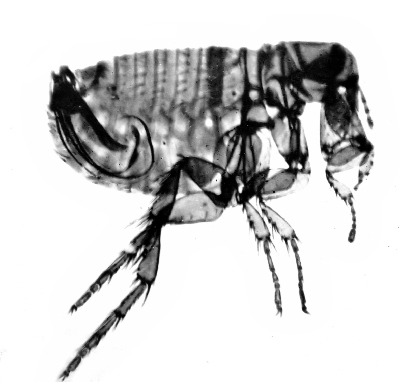
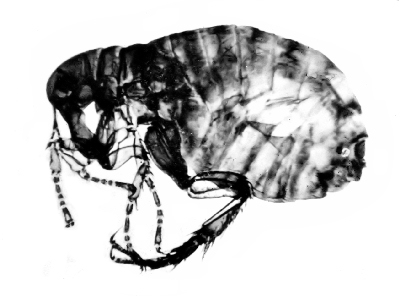
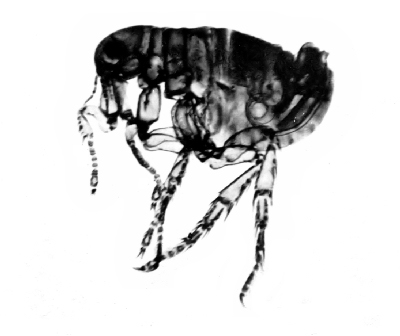
FLEAS
Baker, C.F. Fleas and Disease. Science, N.S., Vol. 22, No. 559,
Sept. 15, 1905, p. 340. Discusses the possibility of fleas
transmitting leprosy.
Doane, R.W. Notes on Fleas, Collected on Rat and Human Hosts in San
Francisco and Elsewhere. Can. Ento., 40, 1908, pp. 303–304. Shows
that Ceratophyllus fasciatus and Pulex irritans are common on
both man and rats.
Fox, Carroll. The Flea in Its Relation to Plague, with a Synopsis
of the Rat Fleas. The Military Surgeon, 24, June, 1909, pp.
528–537. Review of the work of the Indian Plague Commission and
others. Key for identification of rat fleas.
Galli-Valerio. The Part Played by Fleas of Rats and Mice in the
Transmission of Bubonic Plague. Jour. Trop. Med., Feb., 1902.
Attacks the theory that plague can be conveyed from rats to men by
fleas because rat fleas do not bite men.
McCoy, G.W. Siphonaptera Observed in the Plague Campaign in
California with a Note upon Host Transference. Pub. Health Report,
Pub. Health and Mar. Hospt. Ser., Vol. XXIV, No. 29, July 16,
1909. Lists of species from various hosts. Report on experiments in
transferring rat fleas to squirrels and squirrel fleas to rats.
McCoy, G.W., and Mitzmain, M.B. An Experimental Investigation of
the Biting of Man by Fleas Taken from Rats and Squirrels. Public
Health Report, XXIV, No. 8, Feb. 19, 1909, pp. 189–194. Rat and
squirrel fleas will bite man.
Mitzmain, M.B. Insect Transmission of Bubonic Plague. A Study of
the San Francisco Epidemic. Entomological News, Oct., 1908.
Source and distribution of species of fleas and brief notes on work
of Indian Plague Commission.
Mitzmain, M.B. How a Hungry Flea Feeds. Entomological News, Dec.,
1908.
Mitzmain, M.B. Some New Facts on the Bionomics of the California
Rodent Fleas. Annals Ento. Soc. Amer., III, pp. 61–82, 1910.
Shipley, A.E. Rats and Their Animal Parasites. Jour. of Economic
Biology, Vol. 3, No. 3, Oct. 28, 1908. List of species ecto- and
endoparasites.
See also reports of Advisory Commission under Plague.
TYPHOID FEVER
Anderson, J.F. The Differentiation of Outbreaks of Typhoid Fever
Due to Water, Milk, Flies and Contact. Amer. Jour. Pub. Health,
19, pp. 251–259. Discusses flies and typhoid.
McCrae, Thomas. Typhoid Fever. Osler's Mod. Med., Vol. II, p.
70, 1907. A full discussion of this disease.
Reed, Walter; Vaughan, V.C., and Shakespeare, E.O. Abstract of
Report on the Origin and Spread of Typhoid Fever in the U.S.
Military Camps During the Spanish War of 1898. Washington, Govt.
Printing Office, 1900. Shows among other things that "flies
undoubtedly served as carriers of infection."
Roseman, M.J., Lumsden, L.L., and Kastle, J.H. Report on Origin and
Prevalence of Typhoid Fever in D.C. Including reports by Stiles,
Goldberger and Stimson. Bull. 35 of Hygienic Laboratory of U.S.
Public Health and Mar. Hospt. Ser., 1907. (Second report in Bull.
44, 1907, includes nothing about insects.)
Veeder, M.A. Typhoid Fever from Sources Other Than Water Supply.
Med. Record, 62, pp. 121–124, July 26, 1902. Cites several
instances where flies might act as the carriers of the disease.
Whipple, Geo. C. Typhoid Fever, Its Causation, Transmission and
Prevention. N.Y., 1908. Considers that house-flies and probably
fruit-flies carry typhoid bacilli.
HOUSE-FLIES; ANATOMY, LIFE-HISTORY, HABITS
Felt, E.P. Observations on the House-fly. Jour. Eco. Ento., III,
No. 1, Feb., 1910, pp. 24–26. Shows that it does not breed freely
in darkness.
Griffith, A. The Life-history of House-flies. Public Health
(London), 21, No. 3, 1908, pp. 122–127. Study of life-history.
Flies require water frequently, eggs hatch in twenty-four hours,
larval stage four days. Each female may lay four batches of eggs.
Destroy manure and rubbish.
Hamer, W.H. The Breeding of Flies Summarized. Am. Med., 3, 1908,
p. 431. Habits of flies and experiments to show that they may carry
the germs of various diseases.
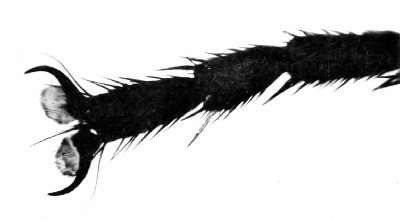
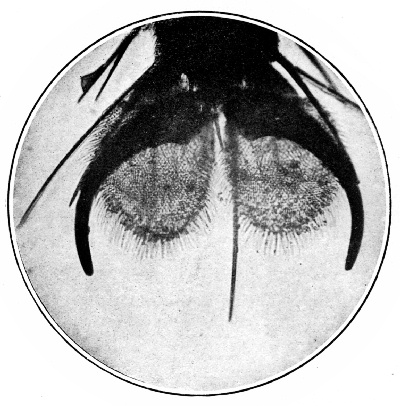
Hepworth, John. On the Structure of the Foot of the Fly. Quar.
Jour. Micro. Sci., II, 1859, pp. 158–563. One plate showing feet
of different flies. A review of the older theories of how a fly was
able to walk on smooth surfaces.
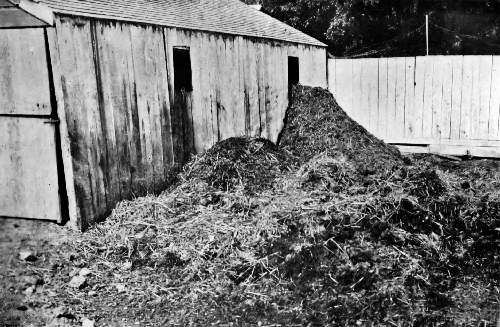
Herms, W.B. The Essentials of House-fly Control. Bull. of Berkeley
Board of Health, Berkeley, Cal., 1909. Recommends removing manure
as soon as possible and keeping it in tight bins until removed. No
very satisfactory insecticides have been found for use in treating
manure piles.
Herms, W.B. The Berkeley House-fly Campaign. Cal. Jour. of
Technology, Vol. XIV, No. 2, 1909. Discusses the methods that have
been used in fighting the fly in Berkeley, Cal. Removing manure
regularly or keeping it in closed bins recommended.
Hewitt, C.G. A Preliminary Account of the Life-history of the
Common House-fly. Mem. and Proc. Manchester Lit. Phil. Soc.,
1906, Vol. 51, pp. 1–4.
Hewitt, C.G. On the Bionomics of Certain Calyptrate Mucidæ and
Their Economic Significance with Especial Reference to Flies
Inhabiting Houses. Jour. Econ. Biol., 1907, Vol. II, pp. 79–88.
Character and importance of group and notes on many species.
Hewitt, C.G. Structure, Development and Bionomics of the House-fly,
Muca domestica. Part I, Quar. Jour. Micro. Sci., 1907, p. 395,
on anatomy, external and internal, and bibliography. Part II, same;
1908, p. 495. Breeding-habits, development and anatomy of larvæ,
bibliography. Part III, same; 1909, pp. 347–414. The bionomics,
allies, parasites, and the relations to human disease. The best
article on the house-fly.
Howard, L.O. Further Notes on the House-fly. Bull. 10, U.S. Dept.,
Agric. Div. of Ento., p. 63, 1898. Experiments to kill larvæ in
manure.
Howard, L.O. House-flies. U.S. Dept. of Agric., Bureau of Ento.,
Circular No. 71, revised ed., 1906. Methods of control of
house-fly and related species.
Howard, L.O., and Marlatt, C.L. Bull. 4, U.S. Dept. Agric., Div.
of Ento., pp. 43–47, 1896. General account with methods of
controlling.
Jepson, F.P. The Breeding of the Common House-fly During the Winter
Months. Jour. Econ. Biol., 4, 1909, pp. 78–82. Records of certain
experiments which show that the flies will breed in winter under
favorable conditions.
Newstead, R. Preliminary Report on the Habits, Life-cycle and
Breeding-places of the Common House-fly as Observed in the City of
Liverpool, with Suggestions as to the Best Means of Checking Its
Increase. Liverpool, Oct. 3, 1907.
Newstead, R. On the Habits, Life-cycle and Breeding-places of the
Common House-fly. Ann. Trap. Med. Para., Vol. I, No. 4, Feb. 29,
1908, pp. 507–520. Final report on this subject. Sums up notes on
life-history, habits, breeding-places, etc. Important article.
Packard, A.S. On the Transformation of the Common House-fly with
Notes on Allied Forms. Proc. Boston Soc. Nat. Hist., Vol. XVI,
1874, pp. 136–140. Life-history and anatomy.
Wilcox, E.V. Fighting the House-fly. Country Life in America,
May, 1908. Methods of controlling this pest.
HOUSE-FLIES AND TYPHOID
Austen, E.E. The House-fly and Certain Allied Species as
Disseminators of Enteric Fever Among the Troops in the Field.
Jour. Roy. Army Med. Corps, June, 1904. Suggests that it may
carry enteric fever and other diseases; method of control.
Felt, E.P. The Typhoid or House-fly and Disease. In 24th Rept. of
State Ento. in N.Y. State Museum Bull., No. 455, 1909. A general
discussion with complete bibliography.
Firth, R.H., and Horrocks, W.H. An Inquiry Into the Influence of
Soil, Fabrics, and Flies in the Dissemination of Enteric Infection.
Brit. Med. Jour., Vol. II, 1902, pp. 936–942. House-flies carry
enteric bacilli. They may pass through digestive tract and remain
virulent.
Hamilton, Alice. The Fly as a Carrier of Typhoid. Jour. Amer. Med.
Assn., 40, 1903, pp. 576–83. A study of a typhoid outbreak in
Chicago gives good evidence that the flies were important factors
in the spread of the disease.
Hewitt, C.G. The Biology of House-flies in Relation to Public
Health. Royal Inst. Pub. Health Jour., Oct., 1908.
Howard, L.O. A contribution to the Study of the Insect Fauna of
Human Excrement. Proc. Wash. Acad. Sci., 2, 1900, pp. 541–600.
Special reference to the house-fly and typhoid fever.
Howard, L.O. Flies and Typhoid. Pop. Sci. Mo., Jan., 1901, pp.
249–256. A popular account of several species of flies that may be
concerned in carrying typhoid.
Klein, E. Flies as Carriers of B. typhus. Brit. Med. Jour.,
Oct. 17, 1908, pp. 1150–51. In cultures made from flies he found
great numbers of B. coli communis and B. typhosus, showing that
flies may carry these germs.
Martin, A. Flies in Relation to Typhoid and Summer Diarrhea.
Public Health, 15, 1903, pp. 652–653. Believes that the house-fly
is largely responsible for these diseases.
Reed, Walter. War Dept. An. Rept., 1899, pp. 627–633. Flies the
cause of a typhoid outbreak in army in 1899.
HOUSE-FLY AND VARIOUS DISEASES
Buchanan, R.A., Glasg, F.F., and M.B. The Carriage of Infection by
Flies. Lancet, 173, 1907, pp. 216–218. Flies carry various germs
on their feet and distribute them where they walk. Must protect
food from contamination.
Brewster, E.T. The Fly. The Disease of the House. McClure's
Magazine, XXXIII; No. 5, Sept., 1909, pp. 564–568. Proposes to
make use of tropisms for ridding the houses of flies.
Castellani, Aldo. Experimental Investigation on Frambœsia
tropica (Yaws). Jour. of Hyg., Vol. VII, 1907, pp. 558–599. On
pages 566–568 he discusses the part played by insects in
transmitting the disease. Gives detail of experiments conducted and
concludes that under certain conditions yaws may be conveyed by
flies and possibly other insects.
Cobb, J.O. Is the Common House-fly a Factor in the Spread of
Tuberculosis? Amer. Med., 9, 1905, pp. 475–477. Believes that the
bacilli may enter the system through the digestive tract and that
flies carry them to our food.
Dickenson, G.K. The House-fly and Its Connection with Disease
Dissemination. Med. Record, 71, 1907, pp. 134–139. Summary;
bibliography.
Esten, W.M., and Mason, C.J. Sources of Bacteria in Milk. Starr's
Agric. Ex. Stn., Conn. Bull., 51, 1908. Shows how flies may carry
bacteria to milk. Table showing number of bacteria on flies from
various sources.
Felt, E.P. The Economic Status of the House-fly. Jour. Eco.
Ento., Vol. 2, No. 1, Feb., 1909, pp. 39–45. A summary of the
charges, possibilities, proofs, etc. Discussion.
Gudger, E.W. Early Note on Flies as Transmitters of Disease.
Science, N.S. Vol. 31, Jan. 7, 1910, pp. 31–32.
Hamer, W.H. Nuisance from Flies. London County Council Rept. No.
1,138, pp. 1–10, and No. 1,207, pp. 1–6, 1908. Observations on
various flies and their relation to diseases.
Hayward, E.H. The Fly as a Carrier of Tuberculosis Infection. N.Y.
Med. Jour., 80, 1904, pp. 643–644. Tubercular bacilli pass through
the digestive tract of flies and remain virulent.
Howard, L.O. The Carriage of Disease by Flies. Bull. 30, N.S.,
pp. 39–45, U.S. Dept. Agric, Div. of Ento., 1901. Discussion of
flies as carriers of disease.
Howard, L.O. House-flies. U.S. Dept. of Agric., Bureau of Ento.,
Cir. No. 71, revised ed., Sept. 21, 1906. Notes on the various
species visiting houses; habits; methods of control; regulations
for controlling flies in cities.
Hutchinson, Woods. The Story of the Fly That Does Not Wipe Its
Feet. Sat. Evening Post, March 7, 1908.
Jackson, Daniel D. Conveyance of Disease by Flies Summarized.
Bost. Med. & Surg. Jour., 1908, p. 451. Disease and flies prevail
at same time; records over 1,000,000 bacteria to each fly caught on
swill-barrels.
Jackson, Daniel B. Pollution of New York Harbor as a Menace to
Health by the Dissemination of Intestinal Diseases Through the
Agency of the Common House-fly. Account of experiments and
deductions. Pamphlet issued July, 1908, by Merchants' Assn. of New
York.
Leidy, Joseph. Flies as a Means of Communicating Contagious
Diseases. Proc. Acad. Nat. Sci. Phil., 23, 1871, p. 297. Believes
that flies may carry disease; refers to flies in connection with
gangrene and wounds.
Lord, F.T. Flies and Tuberculosis. Bost. Med. & Surg. Jour.,
1904, pp. 651–654. Fly-specks may contain virulent tubercular
bacilli for at least fifteen days.
Mays, Thos. J. The Fly and Tuberculosis. N.Y. Med. Jour. & Phila.
Med. Jour., 82, 1905, pp. 437–438. Believes that J.O. Cobb's data
as given in Amer. Med. Jour. is not at all conclusive.
Nash, J.C.T. A Note on the Bacterial Contamination of Milk as
Illustrating the Connection Between Flies and Epidemic Diarrhea.
Lancet, II, 1908, pp. 1668–69. Experiments show that milk left
exposed to flies soon contains many more germs than that protected
from them.
Nash, J.C.T. The Ætiology of Summer Diarrhea. Lancet, 164, 1903,
p. 330. Believes house-fly carries this disease because the two
appear and disappear together.
Robertson, A. Flies as Carriers of Contagion in Yaws. Jour. Trop.
Med. & Hyg., 11, 1908, No. 14, p. 213. As a result of examinations
the author concludes that the house-fly is capable of carrying the
virus of yaws.
Sandilands, J.E. Epidemic Diarrhea and the Bacterial Control of
Food. Jour. Hyg., 6, 1906, pp. 77–92. Believes that house-flies
convey these diseases from the excrement of infected infants.
Sibthorpe, E.H. Cholera and Flies. Brit. Med. Jour., Sept., 1896,
p. 700. Flies considered scavengers, think they thus help abate the
disease.
Smith, T. The House-fly as an Agent in Dissemination of Infectious
Diseases. Amer. Jour. Pub. Hyg., Aug., 1908, pp. 312–317. Points
out that flies on account of their habits, are dangerous sources of
contamination.
Smith, Theobald. The House-fly at the Bar. Merchants' Assn., New
York, 1909, pp. 1–48. Letters from various authorities giving their
opinion; quotations from various authors. Bibliography.
Veeder, M.A. Flies as Spreaders of Sickness in Camps. Med.
Record, 54, 1898, pp. 429–430. Flies feed on typhoid excreta and
pass to food. Cultures made from fly tracks and excreta show many
bacteria present.
Veeder, M.A. The Relative Importance of Flies and Water Supply in
Spreading Disease. Med. Record, 55, 1899, pp. 10–12. Reasons for
believing that flies spread disease in many instances. Burial of
infected typhoid material no protection but a menace.
Dangers from Flies. E.P.W. Nature, Vol. 29, pp. 482–483. Review
of an article by Dr. B. Grassi in regard to flies and various
diseases. Opthalmia is discussed. Flies may ingest and pass
unharmed eggs of various human parasites including tapeworm.
HUMAN MYIASIS
Allen, Chas. H. Demonstration of Locomotion in the Larvæ of the
Œstridæ. Proc. Amer. Assn. Adv. Set., Vol. 24, 1875, pp.
230–236. Larvæ taken from flesh of child, one had moved thirty-six
inches and one six inches.
French, G.H. A Parasite the Supposed Cause of Some Cases of
Epilepsy. Canad. Ento., 32, 1900, pp. 263–264. Larvæ of
Gastrophilus or Dermatobia in the alimentary canal supposed to
have caused spasms in young boy.
Gilbert, N.C. Infection of Man by Dipterous Larvæ with Report of
Four Cases. Archives of Internal Med., Oct., 1908. Historical;
various kinds sometimes found in man; good summary of subject.
Bibliography.
Harrison, J.H.H. A Case of Myiasis. Jour. Trop. Med. & Hyg., XI,
Oct. 15, 1908, p. 305. Over 300 larvæ of Lucilia macellaria
removed from face of negro woman.
Humbert, Fred. Lucilia macellaria Infesting Man. Proc. U.S. Nat.
Museum, 6, 1883, pp. 103–104. Records several cases in which the
screw-worm infested patients.
Jenyus, Leonard. Trans. Ento. Soc., London, Vol. II, 1839, pp.
152–159. Notice of a case in which the larvæ of a dipterous insect,
supposed to be Anthomyia canicularis, Meig., were expelled in
large quantities from the human intestines.
Kane, E.R. A Grub Supposed to Have Traveled in the Human Body.
Insect Life, II, 1890, pp. 238–239. Larva of bot-fly taken from
face of boy. It had been traveling under the skin for about five
months.
McCampbell, E.F., and Cooper, H.J. Myiasis intestinalis Due to
Infection with Three Species of Dipterous Larvæ. Jour. Amer. Med.
Assn., 53, Oct. 9, 1909, pp. 1160–62. General notes on this
subject and a report on a case in which larvæ of three different
species of flies were obtained from one patient.
Meinert, Fr. Lucilia nobilis Parasitic on Man. Insect Life, II,
1892, pp. 36–37. Two larvæ from the ear of a man proved to be the
above species.
Murtfeledt, M.E. Hominivorous Habits of the Screw-worm in St.
Louis. Insect Life, IV, 1891, p. 200. Many larvæ of this species
removed from the nasal passages of a patient.
Nelson, J.B. Insects in the Human Ear. Insect Life, VI, 1893, p.
56. Two cases in which blow-fly larvæ are reported as coming from
the human ear.
Riley, W.A. A Case of Pseudoparasitism by Dipterous Larvæ. Canad.
Ento., 38, 1906, p. 413. Several larvæ, species undetermined,
removed from back of patient.
Say, Thomas. On a South American Species of Œstrus Which
Inhabits the Human Body. Tr. Phil. Acad. Nat. Sci., Vol. 2, 1822,
pp. 353–360. Extended notes on various dipterous larvæ infesting
man.
Snow, F.H. Hominivorous Habits of Lucilia macellaria "The
Screw-worm." Psyche, 4, 1883, pp. 27–30. Cites observations made
by himself and others.
Williston, S.W. The Screw-worm Fly Compsomyia macellaria.
Psyche, 4, 1883, pp. 112–114. Notes on this species with a
translation of a Spanish article by Anibalzaga in which instances
of this fly infesting human beings are recorded.
Yount, C.E., and Sudler, M.T. Human Myiasis from the Screw-worm
Fly. Jour. Amer. Med. Assn., Vol. 49, No. 23, 1907, p. 1912.
Several cases giving reference to literature, symptomatology,
diagnosis.
STOMOXYS AND OTHER FLIES
Austen, E.E. Blood-sucking and Other Flies Known or Likely to Be
Concerned in the Spread of Disease. In Albutt's and Rolleston's
System of Med., 2, 1907, pp. 169–186. A descriptive list of these
flies. Bibliography.
Austen, E.E. Illustrations of African Blood-sucking Flies Other
Than Mosquitoes and Tsetse-flies. London, 1909.
Newstead, R. On the Life-history of Stomoxys calcitrans. Jour.
Econom. Biology, Vol. I, 1906, pp. 157–166. Describes habits and
life-history of larvæ and adults. Important article.
Stephens, J.W.W., and Newstead, R. The Anatomy of the Proboscis of
Biting Flies. Part II, Stomoxys. Ann. of Trop. Med. & Parasit.,
Vol. I, No. 2, June 15, 1907, pp. 171–182. Good anatomical paper.
Part I (Glossina) was published in mem. XVIII, 1906, Liverpool
School Trop. Med.
Tullock, F. Internal Anatomy of Stomoxys. Proc. Roy. Soc.,
London, 77, Series B, 1906, pp. 523–531. Descriptions and drawings
comparing with Glossina.
TSETSE-FLIES
Austen, E.E. A Monograph of the Tsetse-flies. Published by order of
the Trustees of the British Museum, 1903.
Manson, P. Tsetse-flies. In Trop. Diseases, p. 174. Description
of genus; table of species; distribution; reproduction, habits.
Minchin, E.A. Report of Anatomy of the Tsetse-fly (Glossina
palpalis). Proc. Roy. Soc., London, 76, Series B, 1905, pp.
531–547. Good account of internal anatomy of this fly, important
because of its relation to trypanosomiasis.
Minchin, E.A. The Breeding-habits of the Tsetse-fly. Nature, Oct.
25, 1906, p. 636.
Minchin, E.A., Gray, A.C.H., and Tullock, F.M.G. (Sleeping Sickness
Com.) Glossina palpalis in Its Relation to Trypanosoma
gambiense and Other Trypanosomes (Preliminary Report). Proc. Roy.
Soc., Vol. 78, 1906, pp. 242–258. Report on certain experiments in
feeding these flies on infected animals and in allowing supposedly
infected flies to feed on various animals.
Novy, F.G. The Trypanosomes of Tsetse-flies. Jour. Infec. Dis.,
III, 1906, pp. 394–411. Notes on the various species.
TRYPANOSOMES AND TRYPANOSOMIASIS
Bruce, David. Trypanosomiasis. Osler's Mod. Med., Vol. I, 1907,
p. 460. A discussion of Trypanosoma lewisi, evansi, brucei,
gambiensi, and the diseases caused by them.
Dutton, J.E., Todd, J.L., and Harrington, J.W.B. Trypanosome
Transmission Experiments. Am. Trop. Med. & Parasit., Vol. I, No.
2, June 15, 1907, pp. 201–229. Sections on attempts to transmit
trypanosomes by tsetse-flies; by other blood-sucking Arthropods,
etc., conclude that trypanosomes may be mechanically transmitted by
the bite of blood-sucking Arthropods.
Hooker, W.A. Descriptions of Certain Trypanosomes, and Review of
the Present Knowledge of the Rôle of Ticks in the Dissemination of
Disease. Jour. Econ. Ento., Vol. I, No. 1, 1908, pp. 65–76. Good
review, tables and literature.
Minchin, E.A. Investigations on the Development of Trypanosomes in
Tsetse-flies and Other Diptera. Quart. Jour. Micro. Sci., 1908,
pp. 159–260.
Musgrove, W.E., and Clegg, M.T. Trypanosomes and Trypanosomiasis,
with Special Reference to Surra in the Philippine Islands.
Biological Lab., Bull. No. 5, Manila, 1903. Discuss flies, fleas,
mosquitoes, lice and ticks as possible disseminators of the
disease.
Novy, T.G., McNeal, M.J., and Torry, H.M. The Trypanosomes of
Mosquitoes and Other Insects. Jour. Infec. Diseases, IV, 1907,
pp. 223–276. These parasites are often found in mosquitoes and
other insects. Bibliography.
Nuttall, G.H.F. The Transmission of Trypanosoma lewisi by Fleas
and Lice. Parasitology, Vol. I, No. 4, Dec., 1908, pp. 296–301.
This rat trypanosome is transmitted by fleas and lice.
Old, J.E.S. Contribution to the Study of Trypanosomiasis and to the
Geographical Distribution of Some of the Blood-sucking Insects,
etc. Jour. Trop. Med. & Hyg., 12, Jan. 15, 1909, pp. 15–22. Notes
on blood-sucking Diptera and ticks.
Rogers, Leonard. The Transmission of the Trypanosoma evansi by
House-flies and Other Experiments Pointing to the Probable Identity
of Surra of India and Nagana or Tsetse-fly Disease of Africa.
Proc. Roy. Soc., Vol. LXVIII, 1901, pp. 163–170.
Thimm, C.A. Bibliography of Trypanosomiasis; embracing original
papers published prior to April 1909, and references to works and
papers on tsetse-flies. London, 1909.
Todd, J.L. A Note on Recent Trypanosome Transmission Experiments.
Jour. Trop. Med. & Hyg., 12, Sept., 1909, p. 260. Show that they
develop in G. palpalis when taken from their mammal host at the
proper stage of development.
Woodcock, H.M. The Hæmoflagellates: a Review of Present Knowledge
Relating to the Trypanosomes and Allied Forms. Quar. Jour. Micro.
Sci., Vol. 50, 1906, pp. 151–331. Characteristics; mode of
infection; effects on host; biological considerations; life-cycle,
etc. Spirochaetæ; bibliography. Important article.
Trypanosomiasis and Sleeping Sickness. Jour. Trop. Med. & Hyg.,
II, pp. 146–147, 162, 179–180, 196. List of recent literature.
SLEEPING SICKNESS
Bagshawe, A.G. Recent Advances in Our Knowledge of Sleeping
Sickness. Lancet, II, 1909, pp. 1193–97. A summing up of the
important discoveries of the preceding year.
Hearsey, H. Sleeping Sickness. Jour. Trop. Met. & Hyg., 12, Sept.
1, 1909, pp. 263–264. Report on work accomplished particularly in
relation to the distribution of Glossina and other biting flies.
Jarvis, C. Sleeping Sickness. Internat. Clinics, Vol. II, 1904,
pp. 37–44. Shows the relation of the tsetse-fly to this disease.
Lankester, E.R. The Sleeping Sickness. Quar. Review, July, 1904,
p. 113. Discovery and early history; the fly, the parasite; other
related parasites. Relation of parasites to their hosts.
Minchin, E.A. The Ætiology of Sleeping Sickness. Nature, Nov. 15,
1906, pp. 56–59.
Wollaston, A.F.R. Amid the Snow Peaks of the Equator: a
Naturalist's Explorations Around Ruwenzori, with an Account of the
Terrible Scourge of Sleeping Sickness. Nat. Geo. Mag., XX, No.
3, Mar., 1909. Abstracted from "From Ruwenzori to the Congo" by
above author.
Reports of the Sleeping Sickness Com. of the Royal Society, I to
IX, 1903 to 1908. Studies and experiments with the trypanosomes and
flies concerned in this disease. Later articles by this commission
are to be found in the Pro. Royal Soc., Series B, LXXXI and
LXXXII.
Sleeping Sickness Bureau Bulletins, 1 to 14, 1908–1910. Records of
studies and experiments with trypanosomes and tsetse-flies, etc.
Transmission of Sleeping Sickness. Editorial in Jour. Amer. Med.
Assn., 53, Oct. 2, 1909, pp. 1104–05. Reviews recent experiments
and studies.
ROCKY MOUNTAIN FEVER AND TICKS
Anderson, J.F. Spotted Fever (Tick Fever) of the Rocky Mountains.
Hyg. Lab. Pub. Health and Mar. Hospt. Ser., Bull. 14, 1903.
Distribution, ætiology, etc. Believes that ticks are responsible
for the transmission of the disease.
Cooley, R.A. Preliminary Report on the Wood-tick. Bull. 75, Mont.
Ex. Stn., 1908. Sums up Ricketts' finding; notes on life-history
in laboratory and field.
King, W.W. Experimental Transmission of Rocky Mountain Fever by
Means of the Tick. Preliminary note. Pub. Health and Mar. Hospt.
Ser., 21, July 27, 1906, pp. 863–864. Conveyed this fever from one
guinea-pig to another by means of the tick.
Ricketts, H.T. The Transmission of Rocky Mountain Fever by the Bite
of the Wood-tick (Dermacentor occidentalis). Jour. Amer. Med.
Assn., Vol. 47, Aug., 1906, p. 358. Guinea-pig successfully
inoculated by means of tick.
Ricketts, H.T. The Rôle of the Wood-tick (Dermacentor
occidentalis) in Rocky Mountain Spotted Fever. Jour. Amer. Med.
Assn., Vol. 49, July 6, 1907, pp. 24–27. Notes on experiments
conducted and studies made. Takes position that these experiments
connect the tick with the transmission of the fever.
Robinson, A.A. Rocky Mountain Spotted Fever. Med. Rec., Nov. 28,
1908. Occurrence and distribution of the disease; review of the
various theories in regard to its transmission. P.E. Jones of Salt
Lake believes it is transmitted by mosquitoes.
Stiles, C.W. A Zoölogical Investigation Into the Cause,
Transmission and Source of Rocky Mountain Spotted Fever. Hyg. Lab.
Pub. Health and Mar. Hospt. Ser., Bull. 20, 1905. Does not find
the parasite that had been recorded by others, and finds no
evidence to indicate that the ticks transmit the disease.
Wilson, L.B., and Channing, W.M. Studies in Pyroplasmosis hominis
(Spotted Fever or Tick Fever of the Rocky Mountains). Jour. Infec.
Diseases, 1, 1904, pp. 31–57. Evidence that the disease is
transmitted solely by means of the ticks.
TICKS AND VARIOUS DISEASES
Banks, Nathan. Tick-borne Diseases and Their Origin. Jour. Eco.
Ento., Vol. I, No. 3, 1908, pp. 213–215. Shows how ticks may
become important disease-carriers by changing their hosts as the
normal host is exterminated, or for other reasons.
Banks, Nathan. A Revision of the Ixodoidea or Ticks of the United
States. Tech. Series No. 15, Bull. of Bureau of Ento., U.S. Dept.
Agric., 1908. Structure, life-history, classification, catalogue,
bibliography.
Barber, C.A. The Tick Pest in the Tropics. Nature, 52, 1895, pp.
197–200. Direct and indirect effects of ticks on their hosts.
Christy, C. Ornithodoros moubata and Tick Fever in Man. Brit.
Med. Jour., Vol. II, 1903, p. 652. Relation of the tick to
Filaria perstans.
Dutton, J.E., and Todd, J.L. The Nature of Human Tick Fever in the
Eastern Part of the Congo Free State with Notes on the Distribution
and Bionomics of the Tick. Liverpool School of Tropical Medicine.
Memoir, 17, Nov., 1905, pp. 1–18.
Hooker, W.A. A Review of the Present Knowledge of the Rôle of Ticks
in the Transmission of Disease. Jour. Eco. Ento., Vol. I, No. 1,
1908, p. 65. Review of the subject; table showing zoölogical
position of parasites transmitted by ticks. Table showing
zoölogical position of ticks.
Hooker, W.A. Life-history, Habits and Methods of Study of the
Ixodoidea. Jour. Eco. Ento., Vol. 1, No. 1, 1908, p. 34. Notes on
several species, especially M. annulatus. Host relationship;
adaptations as factors in host relationship; mating; geographical
distribution; methods of breeding, etc.
Hooker, W.A. Some Host Relations of Ticks. Jour. Eco. Ento., Vol.
2, No. 3, 1909, p. 251. Notes on ticks found on various hosts.
Hunter, W.D., and Hooker, W.A. Information Concerning the North
American Fever Tick with Notes on Other Species. Bull. 72, Bureau
of Ento., 1907. Life-history, host relation, etc., of fever tick;
classification and notes on other species; bibliography divided
into sections.
Lounsbury, C.P. Habits and Peculiarities of Some South African
Ticks. Rept. of the Brit. Assn. for the Advancement of Sci., 1905
(South Africa), pp. 282–291.
McCrae, Thomas. Relapsing Fever. Osler's Mod. Med., Vol. II, p.
245, 1907. Ætiology, symptoms, treatment, etc. (Apparently
communicated by blood-sucking insects.)
Newstead, R. On the Pathogenic Ticks Concerned in the Distribution
of Diseases in Man. Brit. Med. Jour., II, 1905, pp. 1695–97.
Classification and habits, particularly of Ornithodoros moubata.
Nuttall, G.H.F. The Ixodoidea or Ticks. Jour. of Roy. Inst. of
Pub. Health, 1908. List of disease-bearing ticks. Position of
ticks, classification. Biology. Preventive measures.
Nuttall, G.H.F. Piroplasmosis. Jour. Roy. Inst. of Pub. Health,
1908. What piroplasma are; diseases produced by them. Biology.
Nuttall, Geo. F., and co-workers. Canine Piroplasmosis, Parts I
to VI. Jour. Hyg., Vol. 4, No. 2, Apr., 1904, to Vol. 7, No. 2,
Apr., 1907. A thorough discussion of the disease, the parasite
which causes it and the ticks which convey it.
Pocock, R.I. Ticks. In Albutt and Rolleston's System of Med., II,
1907, pp. 187–203. Classification; description of the best-known
pathogenic species. Extended bibliography.
Skinner, B. Preliminary Note on Ticks Infecting the Rats Suffering
from the Plague. Brit. Med. Jour., Vol. II, 1907, p. 457. Records
taking tick on a plague-sick rat and finding bacilli similar to
plague bacilli in connection with it.
Smith, T., and Kilborne, F.L. Texas Fever. U.S. Dept. Agric.
Bureau of Animal Industry, Bull. No. 1, 1893. Records of the
experiments showing disease to be transmitted by ticks.
Wellman, F.C. Preliminary Note on Some Bodies Found in
Ticks—Ornithodoros moubata—Fed on Blood Containing Embryos of
Filaria. Brit. Med. Jour., July 20, 1907, p. 142. Believes that
F. perstans is conveyed from man to tick and from tick to man.
KALA-AZAR AND BEDBUGS
Girault, A.A. The Indian Bedbug and Kala-azar Disease. Sci.,
N.S., Vol. XXV, 1907, p. 1004. Indian bedbug is C. rotundatus
Sig. Its distribution. Summary of Dr. Patton's paper on
"Preliminary Report on the Development of the Leishman-Donovan Body
in the Bedbug."
Patton, W.S. The Development of the Leishman-Donovan Parasite in
Cimex rotundatus. Scientific Mem. of Gov. of India, Nos. 27 and
31, 1907. Traces the development of this parasite; believes that
the bedbug is concerned in transmitting this disease.
See also Manson's Tropical Diseases, pp. 178–190.
TEXT OR REFERENCE BOOKS IN WHICH THE RELATION OF INSECTS TO VARIOUS
DISEASES IS DISCUSSED
Abbott, A.C. Hygiene of Transmissible Diseases. Phil., 1899.
Causes, modes of dissemination, prevention, treatment of infectious
and contagious diseases.
Allbutt, T.C., and Rolleston, H.D. A System of Medicine. London,
1907. Vol. II, Pt. II, contains sections on tropical diseases;
animal parasites and the diseases they carry and zoölogical
articles dealing with Protozoa, mosquitoes, flies and ticks. All
articles have bibliographies, some of them quite extensive.
Balfour, Andrew. Review of Recent Advances in Tropical Medicine.
Supplement to Third Rept. Wellcome Research Lab., London, 1908.
Notes, extracts and references in regard to important articles
during the preceding few months.
Daniels, C.W. Studies in Laboratory Work, 2d ed., London, 1907. A
good discussion of animal parasites in the blood and blood-plasma;
development of malarial parasites in mosquitoes; flies, fleas,
lice, bedbugs, ticks, etc.
Jackson, C.W. Tropical Medicine. Phil., 1907. Discusses diseases
due to bacteria and the parasites and uncertain causes. Splendid
recent summary of the various ways in which the different diseases
are disseminated.
Langfeld, Millard. Introduction to Infectious and Parasitic
Diseases, Including Their Causes and Manner of Transmission. Phil.,
1907. Chapters on infection, animal parasites, avenues of exit and
portals of entry of infectious agents and parasites into the body.
Manson, Patrick. Lectures on Tropical Diseases. London, 1905.
Delivered at Cooper Medical College, 1905. Discusses several of
these diseases. Last chapter on problems in tropical medicine.
Manson, Patrick. Tropical Diseases. London, 1907, Diseases of the
tropics discussed in a very comprehensive manner. Considerable
attention given to the part played by insects in the transmission
of many of the diseases.
Metchnikoff, E. Immunity in Infectious Diseases. (Trans. from the
French by F.G. Binnie.) Cambridge, 1905. Splendid discussion of
various kinds of immunity. Insects referred to occasionally.
Osler's Modern Medicine. Vol. I, 1907, Pt. VI, Diseases Caused by
Protozoa. Part VII, Diseases Caused by Animal Parasites. Vol. II,
1907, Infectious Diseases. Vol. III, Infectious Diseases (cont.).
One of the best and most modern text-books; the volumes noted above
contain many references to the relation of insects to the
particular diseases under discussion.
Park, W.H. Pathogenic Micro-organisms, Including Bacteria and
Protozoa. N.Y., 1908. These organisms comprehensively treated.
Ricketts, H.T. Infection, Immunity and Serum Therapy. Chicago,
1906. Chapters on parasitism, infection, contagion, immunity,
various diseases, etc.
Scheube, B. The Diseases of Warm Countries: a Handbook for Medical
Men. Trans. from Ger. by Pauline Falcke, London, 1903. Sections on
general infectious diseases, diseases caused by animal parasites,
etc. Good bibliography of each disease treated.
Simpson, W.J.R. The Principles of Hygiene as Applied to Tropical
and Subtropical Climates. London, 1908. Occasional references to
flies and mosquitoes as carriers of disease. Chapter XV deals with
malaria and other diseases caused by mosquitoes.
Wilson, J.C. Modern Clinical Medicine; Infectious Diseases. New
York and London, 1905. Chapters on yellow fever, malarial diseases
and plague; contains references to the relation of insects to these
diseases.
MISCELLANEOUS ARTICLES
Balfour, Andrew. Further Observations on Fowl Spirochætosis. Jour.
Trop. Med. & Hyg., 12, Oct. 1, 1909, pp. 285–289. Ticks and lice
may carry this disease.
Chittenden, F.H. Harvest-mites or "Chiggers." Circular 77, U.S.
Dept. Agric. Bur. Ento., 1906, pp. 1–16. Descriptions of these
pests and their habits. Remedies.
Doty, A.H. The Means by Which Infectious Diseases Are Transmitted.
Amer. Jour. of Med. Sci., 138, July, 1909, pp. 30–39. Flies and
mosquitoes as disseminators of disease briefly discussed.
Duncan, F.M. Industrial Entomology: the Economic Importance of a
Study of Insect Life. Jour. Roy. Soc. Arts, May 22, 1908, pp.
688–696. A very interesting review of the subject of insects and
disease.
Flexner, Simon. Science, N.S., Vol. 27, No. 682, Jan. 24, 1908,
pp. 133–136. On these pages the author discusses relation of
bacteria and Protozoa to human diseases.
Goldberger, Jos., and Shamberg, J.F. Epidemic of an Utricaroid
dermatitis Due to a Small Mite (Pediculoides ventricosus) in the
Straw of Mattresses. Pub. Health Rept., Pub. Health and Mar.
Hospt. Ser., July 9, 1909, Vol. XXIV, No. 28. Experiments showed
that a certain skin disease occurring during summer was due to this
mite.
Gorgas, W.C. The Part Sanitation Is Playing in the Construction of
the Panama Canal. Jour. Amer. Med. Assn., 53, Aug. 21, 1909, pp.
597–599. Shows the changes that have been brought about by modern
sanitation and the destroying of the mosquitoes' breeding-places.
Howard, L.O. Hydrocyanic-acid Gas Against Household Insects.
Circular 46, U.S. Dept. Agric., Div. of Ento., 1902. Directions
for handling this dangerous gas.
King, A.F.G. Insects and Disease; Mosquitoes and Malaria. Pop.
Sci. Mo., XXIII, 1883, pp. 644–658. Extended article in which the
author sums up the observations which led him to believe that
malaria and other diseases were transmitted by the mosquito. One of
the earliest articles on this subject; refers to an article in New
Orleans Med. & Surg. Jour., Vol. IV, 1848, pp. 563–601, by Josiah
Nott, who maintained that yellow fever was carried by mosquitoes.
Manson, Patrick. Recent Advances in Science and Their Bearing on
Medicine and Surgery. Jour. Trop. Med. & Hyg., XI, pp. 337–338,
Sept. 16, 1908. Discussion of parasites and disease and their
methods of dissemination.
Newstead, R., Dutton, J.E., and Todd, J.L. Insects and Other
Arthropoda Collected in the Congo Free State. Ann. Trop. Med. &
Parasit., Vol. 1, No. 1, Feb. 1, 1907, pp. 3–100. An interesting
paper giving notes on many insects that cause or carry disease.
Nuttall, G.H.F. Spirochætosis in Man and Animals. Jour. of Roy.
Inst. of Pub. Health, 1908. Why Spirochætes should be regarded as
Protozoa. Classification; list of blood-inhabiting forms; relapsing
fevers; transmission by ticks and other Arthropods.
O'Connell, M.D. The Oversea Transport of Insect-borne Disease.
Jour. Trop. Med. & Hyg., XI, 43, Feb. 1, 1908. Refers to article
in same journal (Jan. 15) and points out that malaria is very
likely to be transmitted by mosquitoes in this way.
Osborn, Herbert. Insects Affecting Domestic Animals. U.S. Dept. of
Agric., Div. of Ento., Bull. No. 5, N.S., 1896. Discusses the
various insect pests of man and domestic animals Host lists.
Bibliography.
Rickets, H.T., and Wilder, R.M. The Typhus Fever of Mexico. Jour.
Amer. Med. Assn., LIV, No. 6, Feb. 5, 1910, p. 463. Believes this
disease is transmitted by insects, probably lice.
Ritchie, James. A Review of Current Theories Regarding Immunity.
Jour. Hyg., 2, 1902, pp. 215–285, and pp. 452–464. Discussion of
various theories. Bibliography.
Shipley, A.E. On the Relation of Certain Cestode and Nematoda
Parasites to Bacterial Disease. Jour. of Eco. Biol., 4, 1909, pp.
61–71. Shows that these parasites may often cause serious diseases
by opening the way for malignant germs.
Ward, H.B. Spirochetes and Their Relationship to Other Organisms.
Amer. Nat., 42, 1908, No. 498, pp. 374–387. Still undecided as to
whether they belong with bacteria or Protozoa, probably the latter.
Ward, H.B. The Relation of Animals to Disease. Science, N.S., 22,
1905, pp. 193–203. An interesting, comprehensive review of the
subject.
Ward, Henry B. Relation of Animals to Disease. Transactions of
Amer. Micro. Soc., Vol. 27, 1907, pp. 5–20. The various ways in
which animals may produce or carry disease.
The Oversea Transport of Insect-borne Diseases. Editorial in
Jour. Trop. Med. & Hyg., XI, Jan. 15, 1908, pp. 22–23. Points out
the danger of yellow fever, plague and other diseases being borne
overseas by infected insects.
The Society for the Destruction of Vermin. Editorial in Jour.
Trop. Med. & Hyg., XI, Apr. 15, 1908, p. 124. Tells of
organization of such society and its purposes.
 An artificial lake, nearly dry and partly filled with
rubbish, has become a breeding-ground for dangerous mosquitoes.
An artificial lake, nearly dry and partly filled with
rubbish, has become a breeding-ground for dangerous mosquitoes.