INDIAN LEGENDS OF MINNESOTA — COMPILED BY
 (cover)
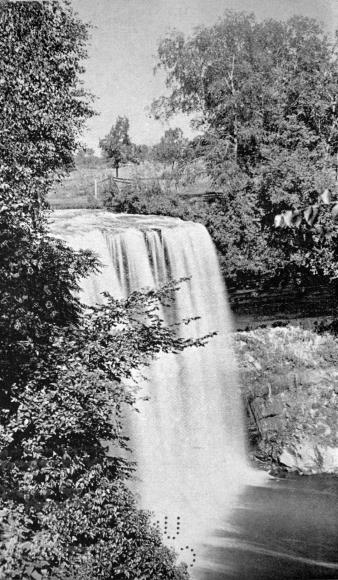 MINNEHAHA. (Frontispiece.)
Whole book · 23 sections
(cover)
MINNEHAHA. (Frontispiece.)
| "Then a darker, drearier vision |
| Passed before me vague and cloudlike; |
| I beheld our nation scattered, |
| All forgetful of my council, |
| Weakened, warring with each other: |
| Saw the remnant of our people |
| Sweeping westward, wild and woful, |
| Like the cloud rack of a tempest, |
| Like the withered leaves of Autumn!" |
TO
AND
UNDER WHOSE INSPIRATION AND THROUGH WHOSE
ASSISTANCE THIS UNDERTAKING HAS BEEN
MADE POSSIBLE, THIS VOLUME IS
RESPECTFULLY DEDICATED.
| page | |
| The Lone War-Path. Elaine Goodale Eastman, | 9 |
| Fond Hearts of the Forest, | 22 |
| Anpetusapa, | 32 |
| Winona, | 48 |
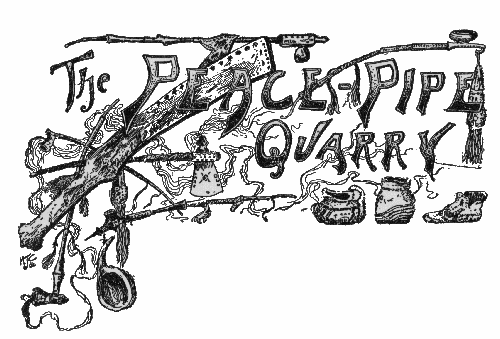
| The Peace-Pipe Quarry. Adelaide George Bennett, | 77 |
| The Song of Hiawatha. Henry W. Longfellow, | 86 |
| Hiawatha's Wooing. Henry W. Longfellow, | 91 |
| The River-Lake. E. L. Fales, | 95 |
| Song of a Nadowessee Chief. Sir E. L. Bulwer, | 97 |
| "Mahnusatia." Fannie L. Stone, | 99 |
| The Descending Star. Ida Sexton Searls, | 126 |
| The Trailing Arbutus. Adelaide George Bennett, | 132 |
| Nopa. Ida Sexton Searls, | 136 |
| The Sea-Gull, | 139 |
| Sweet Water, | 162 |
| Death of Winona. H. L. Gordon, | 171 |
| The Legend of the Moccasin Flower. Ida Sexton Searls, | 175 |
| Notes, | 179 |
In presenting to the public this volume the compiler wishes to disown any attempt at a complete collection of Indian legends; both her knowledge of archæology, and the time allowed for the completion of the work are inadequate to such an achievement. She has attempted to gather the more noticeable legends already in verse in order to stimulate interest in the scenery and romance of her State. From its name—Minnesota—to its floral emblem—the moccasin flower—the State everywhere bears the impress of former occupation. About every lake, forest, and valley clings the aroma of romance in the form of name or legend of the vanished Red Man.
The indistinct memory of his loves, wars, and adventures is growing rapidly fainter, until even the story-teller himself is confused as to the relation between event and locality. It has therefore seemed wise to link indissolubly scene and incident, that the poetry of those who have here lived and loved may not be completely displaced by the prosaic commerce of the white man.
The compiler wishes also to express her thanks to the writers who have allowed their works to reappear in this volume: To Rev. E. D. Neill, D.D., for much valuable counsel, and to Houghton, Mifflin & Co., for permission to make extracts from Hiawatha.
ELAINE GOODALE EASTMAN.
[A] I. e., who slew thy father.
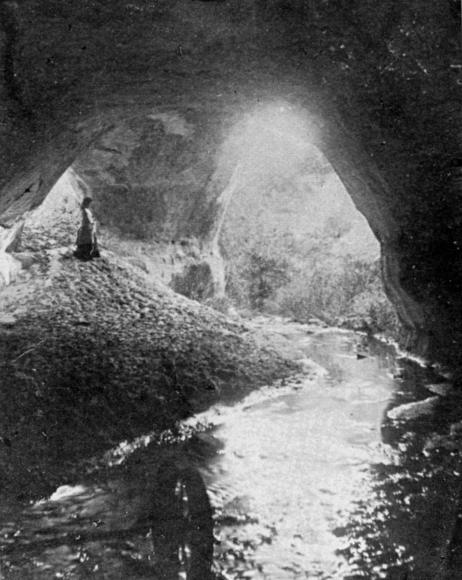 FOUNTAIN CAVE.
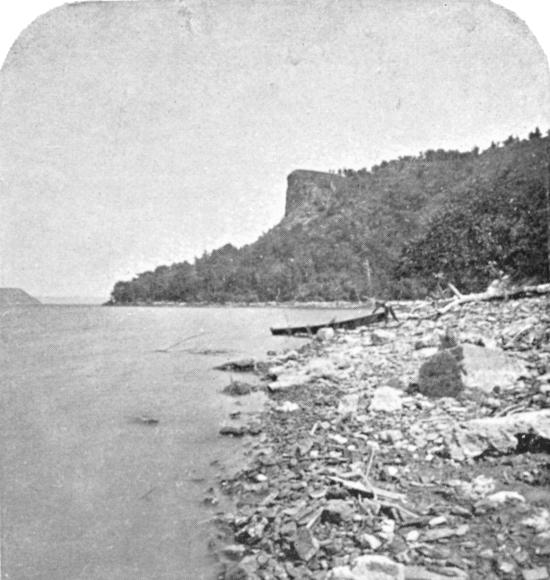 MAIDEN ROCK, LAKE PEPIN.

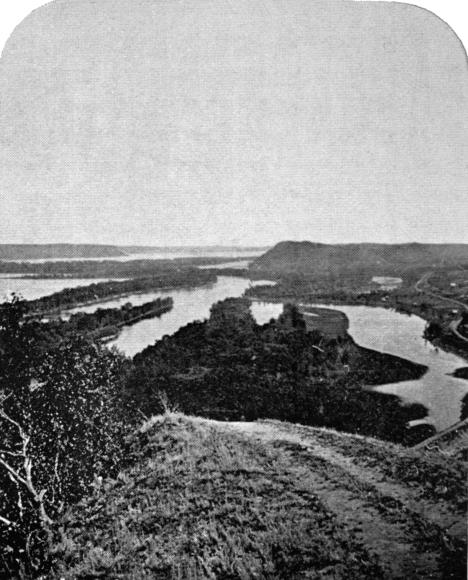 "WHERE THROUGH A LAKE THE MISSISSIPPI FLOWS."
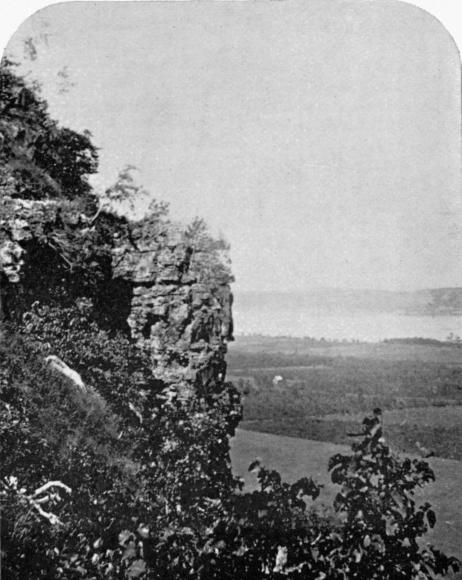 "THE GIANT CLIFFS OF RED-WING SPREADING BACK."
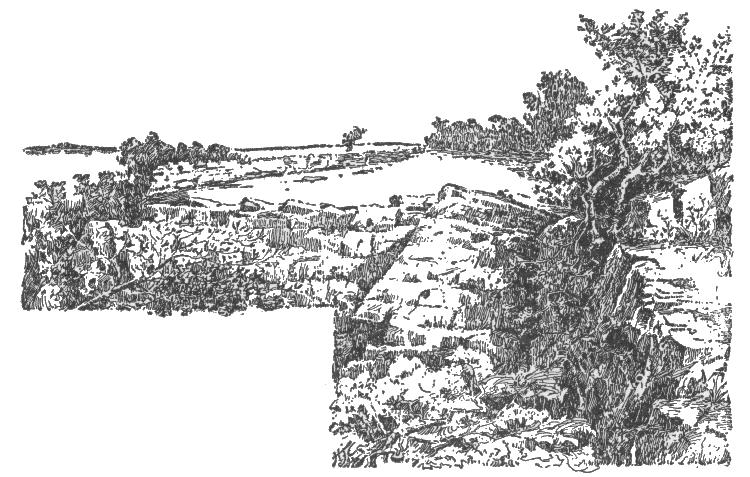
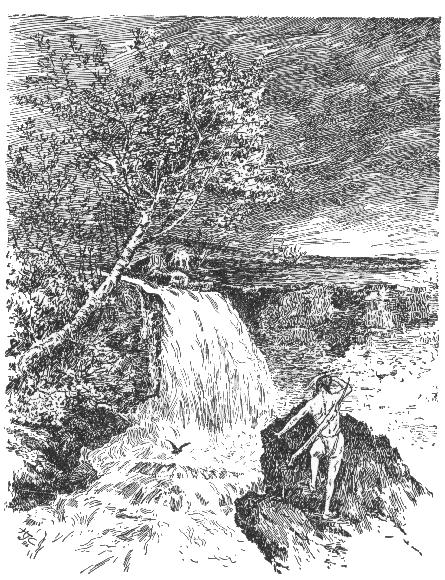 Falls of Winnewissa.
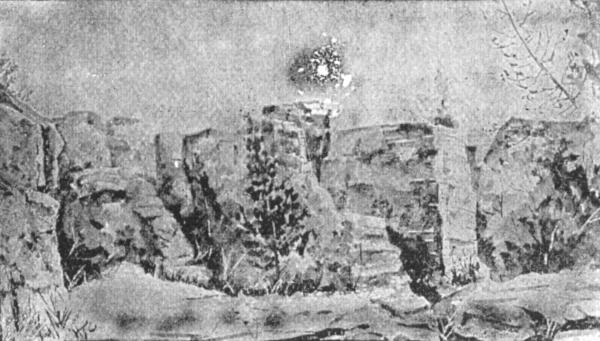
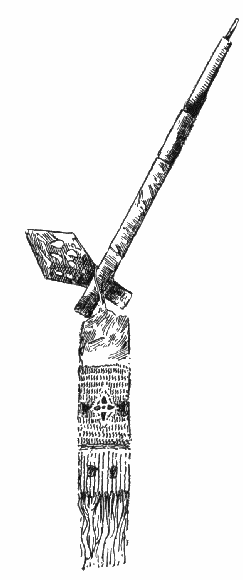
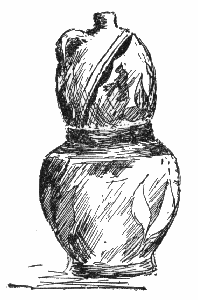
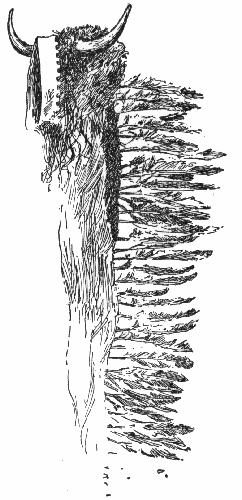
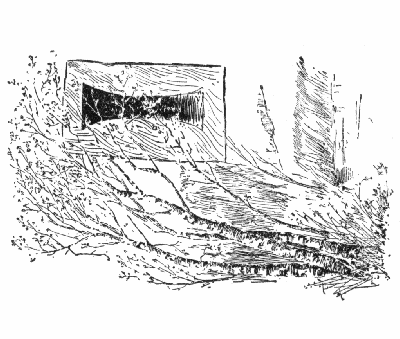
HENRY W. LONGFELLOW.
E. L. FALES.
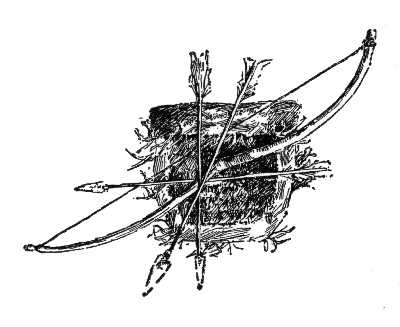
SIR. E. L. BULWER.
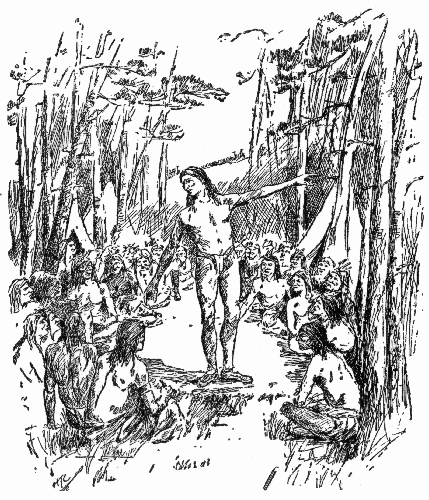
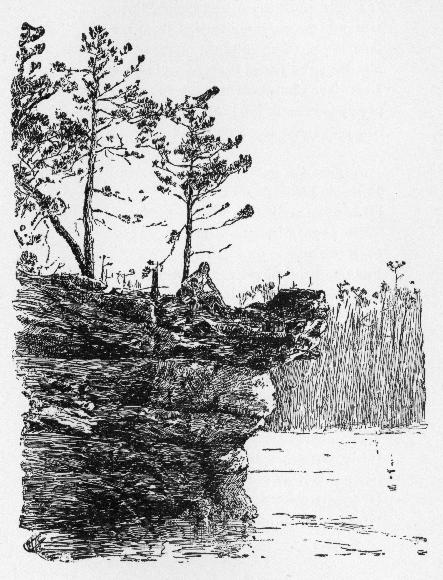
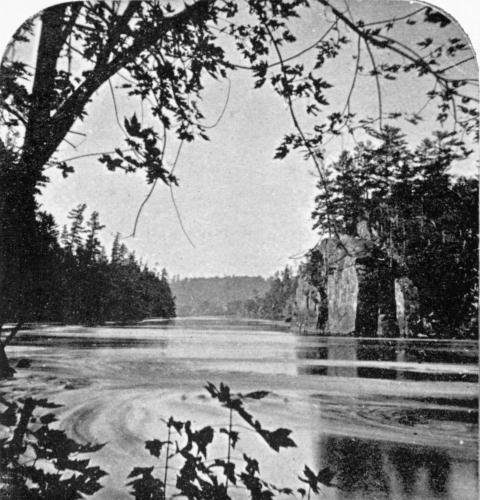 THE RIVER LAKE.
MRS. FANNIE L. STONE.
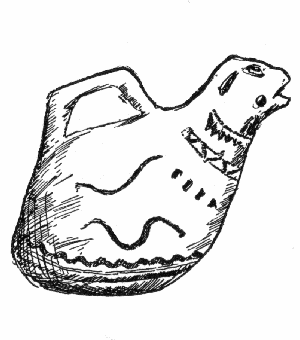
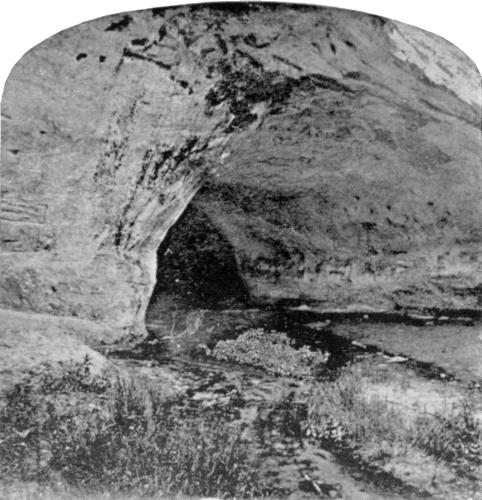 CARVER'S CAVE.
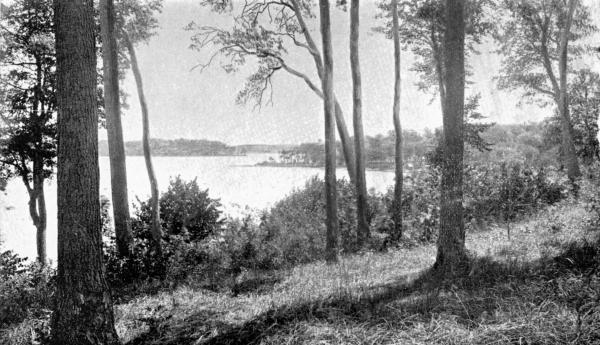 "THESE WORDS SHE SPAKE AND ALIGHTED SOON ON THE WATERS'
LIMPID BREAST."
"THESE WORDS SHE SPAKE AND ALIGHTED SOON ON THE WATERS'
LIMPID BREAST."
IDA SEXTON SEARLS.
ADELAIDE GEORGE BENNET.
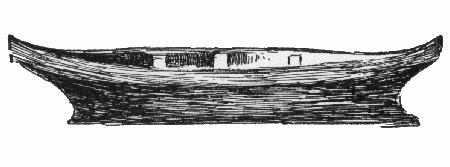
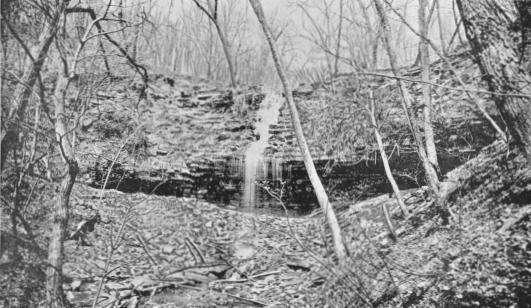 SHADOW FALLS.
IDA SEXTON SEARLS.
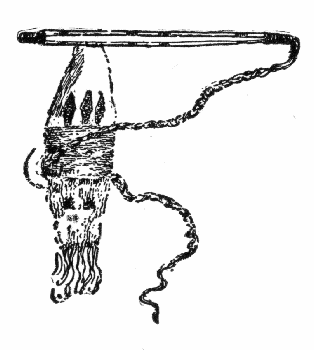
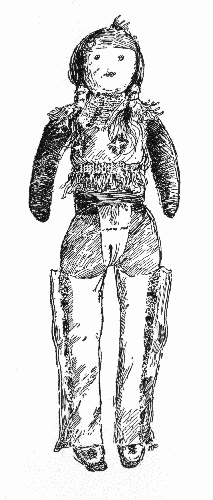
[The numerals refer to Notes to The Sea-Gull, in Appendix.]
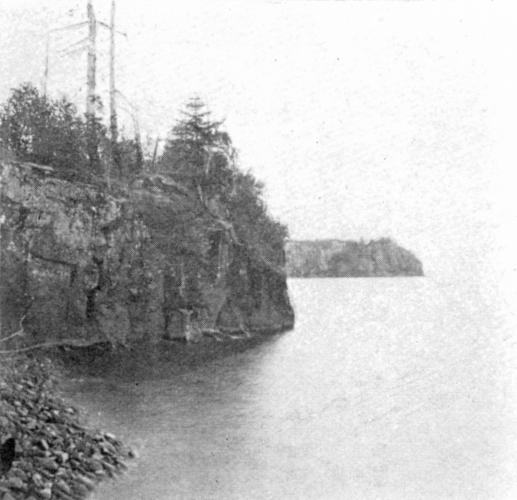 WELCOME ISLAND, THUNDER BAY.
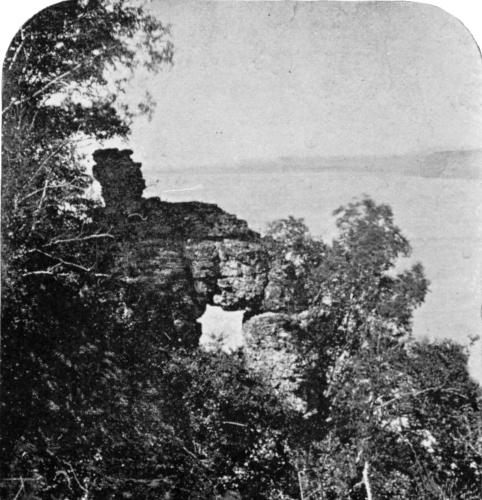 ROCK GATEWAY, LAKE PEPIN.
IDA SEXTON SEARLS.
THE END.
[1] The name given by the Dakotas to the first-born, if a female.
[2] Tipi, skin tent.
[3] An edible root found on the prairies.
[4] The Crow Indians, hereditary foes of the Dakotas, call themselves Absaraka, which means crow in their language.
[5] Each Indian guest at a banquet carries with him his own wooden bowl and spoon.
[6] Many Indians believe in the transmigration of souls, and some of them profess to remember previous states of existence.
[7] A renowned chief, formerly living on Lake Pepin.
[8] A supernatural monster inhabiting the larger rivers and lakes, and hereditary foe of the Thunder Bird.
[9] The Falls of St. Anthony.
[10] The name given to a first-born, if a male. Upon becoming a warrior or performing some feat of arms, the youth is permitted to select another name.
[11] Hereditary foe of the Dakotas.
[12] The Dakotas formerly disposed of their dead by fastening them to the branches of trees or to rude platforms. This is still practiced to some extent.
[13] The Indians paint and adorn a body before sepulture.
[14] "On the mountains of the prairie." (Mt. Catlin, etc.) Located near the boundary between Minnesota and Dakota, near the head waters of the Mississippi.
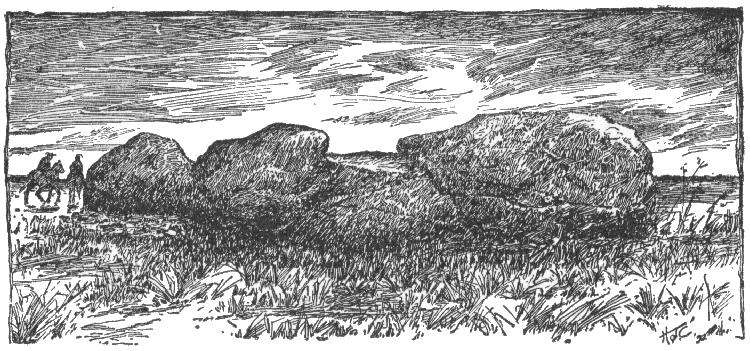
[15] This quarry, located near the hills or mountains, was very famous among the Indians, who by common consent had made the adjacent territory neutral ground. Here they came and provided themselves with pipes, very necessary to the Indian's happiness. To apply the stone to any other use than that of pipe-making would have been sacrilege in the native's mind. From similarity in color, they even fancied it to have been made, at the great deluge, from the flesh of the perishing Indian.
[16] In Northern Pennsylvania, on the Susquehanna River, the scene of a terrible massacre by the Indians and Tories in 1778. Campbell wrote Gertrude of Wyoming on the incidents of that July 5th.
[17] A section of Alabama, taking its name from the chief defeated by De Soto in 1540.
"The Falls of Minnehaha." (The Scenery about Fort Snelling, etc.)
This legend is related by Kah-ge-ga-gah-bawh, chief of the Ojibway Nation, or Chippewas, in his "Traditional History of the Ojibway Nation" purporting to be the first volume of Indian history written by an Indian. In common with his forest brethren, he "was brought up in the woods." Twenty months passed in a school in Illinois constituted the sum-total of his schooling. But he had learned the traditions of his people, as was customary, from the lips of the chief, his father.
Through the stilted language of this somewhat unlettered Indian we catch faint glimpses of the poetic beauty with which the tradition glowed when actually related at the wigwam door. An attempt has been made to retain and crystallize this poetic beauty in the preceding metrical version of the Indian legend.
A new version of the beautiful and popular legend of the first spring flower, making the visitant to the old man's lodge a maiden, and identifying the blossom as the trailing arbutus, was told by Hon. C. L. Belknap of Michigan before the Folk-Lore Society in Washington, Dec., 1891.
[18] Kay-óshk is the Ojibway name for the sea-gull.
[19] Gitchee—great,—Gúmee—sea or lake,—Lake Superior also often called Ochipwè Gitchee Gúmee, Great Lake (or sea) of the Ojibways.
[20] Né-mè-Shómis—my grandfather. "In the days of my grandfather" is the Ojibway's preface to all his traditions and legends.
[21] Waub—white—O-jeeg—fisher (a furred animal). White Fisher was the name of a noted Ojibway chief who lived on the south shore of Lake Superior many years ago. Schoolcraft married one of his descendants.
[22] Ma-kwa or mush-kwa—the bear.
[23] The Te-ke-nâh-gun is a board upon one side of which a sort of basket is fastened or woven with thongs of skin or strips of cloth. In this the babe is placed and the mother carries it on her back. In the wigwam the tekenâgun is often suspended by a cord to the lodge-poles and the mother swings her babe in it.
[24] Wabóse (or Wabos)—the rabbit. Penáy, the pheasant. At certain seasons the pheasant drums with his wings.
[25] Kaug, the porcupine. Kenéw, the war-eagle.
[26] Ka-be-bon-ik-ka is the god of storms, thunder, lightning, etc. His home is on Thunder-Cap at Thunder-Bay, Lake Superior. By his magic the giant that lies on the mountain was turned to stone. He always sends warnings before he finally sends the severe cold of winter, in order to give all creatures time to prepare for it.
[27] Kewâydin, or Kewâytin, is the North wind or Northwest wind.
[28] Algónkin is the general name applied to all tribes that speak the Ojibway language or dialects of it.
[29] This is the favorite "love-broth" of the Ojibway squaws. The warrior who drinks it immediately falls desperately in love with the woman who gives it to him. Various tricks are devised to conceal the nature of the "medicine" and to induce the warrior to drink it; but when it is mixed with a liberal quantity of "fire-water" it is considered irresistible.
Translation: Woe-is-me! Woe-is-me!
Great Spirit, behold me!
Look, Father; have pity upon me!
Woe-is-me! Woe-is-me!
[31] Snow-storms from the Northwest.
[32] The Ojibways, like the Dakotas, call the Via Lactea (Milky Way) the Pathway of the Spirits.
[33] Shinge-bis, the diver, is the only water-fowl that remains about Lake Superior all winter.
[34] Waub-ésè—the white swan.
[35] Pé-boân, Winter, is represented as an old man with long white hair and beard.
[36] Según is Spring (or Summer). This beautiful allegory has been "done into verse" by Longfellow in Hiawatha. Longfellow evidently took his version from Schoolcraft. I took mine originally from the lips of Pah-go-nay-gie-shiek—"Hole-in-the-day,"—(the elder), in his day head-chief of the Ojibways. I afterward submitted it to Gitche Shabâsh-Konk, head-chief of the Misse-sah-ga-é-gun—(Mille Lac's band of Ojibways), who pronounced it correct.
"Hole-in-the-day," although sanctioned by years of unchallenged use, is a bad translation of Pah-go-nay-gie-shiek, which means a clear spot in the sky.
He was a very intelligent man; had been in Washington several times on business connected with his people, and was always shrewd enough to look out for himself in all his treaties and transactions with the Government. He stood six feet two inches in his moccasins, was well-proportioned, and had a remarkably fine face. He had a nickname—Que-we-zánc (Little Boy)—by which he was familiarly called by his people.
The Pillagers—Nah-kánd-tway-we-nin-ni-wak—who live about Leech Lake (Kah-sah-gah-squah-g-me-cock) were opposed to Pa-go-nay-gie-shiek, but he compelled them through fear to recognize him as Head-Chief. At the time of the "Sioux outbreak" in 1862 "Hole-in-the-day" for a time apparently meditated an alliance with the Po-áh-nuck (Dakotas) and war upon the whites. The Pillagers and some other bands urged him strongly to this course, and his supremacy as head-chief was threatened unless he complied. Messengers from the Dakotas were undoubtedly received by him, and he, for a time at least, led the Dakotas to believe that their hereditary enemies, the Ojibways, would bury the hatchet and join them in a war of extermination against the whites. "Hole-in-the-day," with a band of his warriors, appeared opposite Fort Ripley (situated on the west bank of the Mississippi River between Little Falls and Crow Wing), and assumed a threatening attitude toward the fort, then garrisoned by volunteer troops. The soldiers were drawn up on the right bank and "Hole-in-the-day" and his warriors on the left. A little speech-making settled the matter for the time being and very soon thereafter a new treaty was made with "Hole-in-the-day" and his head men, by which their friendship and allegiance were secured to the whites. It was claimed by the Pillagers that "Hole-in-the-day" seized the occasion to profit personally in his negotiations with the agents of the Government.
In 1867 "Hole-in-the-day" took "another wife." He married Helen McCarty, a white woman, in Washington, D. C., and took her to his home at Gull Lake (Ka-ga-ya-skúnc-cock) literally, plenty of little gulls.
She bore him a son who is known as Joseph H. Woodbury, and now (1891) resides in the city of Minneapolis. His marriage with a white woman increased the hatred of the Pillagers, and they shot him from ambush and killed him near Ninge-tá-we-de-guá-yonk—Crow Wing—on the 27th day of June, 1868.
At the time of his death, "Hole-in-the-day" was only thirty-seven years old, but had been recognized as Head-Chief for a long time. He could speak some English, and was far above the average of white men in native shrewdness and intelligence. He was thoroughly posted in the traditions and legends of his people.
The Ojibways have for many years been cursed by contact with the worst elements of the whites, and seem to have adopted the vices rather than the virtues of civilization. I once spoke of this to "Hole-in-the-day." His reply was terse and truthful—"Mádgè tche-mó-ko-mon, mádgè a-nische-nábé: menógé tche-mó-ko-mon, menó a-nischè-nábè.—Bad white men, bad Indians: good white men, good Indians."
[37] Nah—look, see. Nashké—behold.
[38] Kee-zis—the sun,—the father of life. Waubúnong—or Waub-ó-nong—is the White Land or Land of Light,—the Sunrise, the East.
[39] The Bridge of Stars spans the vast sea of the skies, and the sun and moon walk over on it.
[40] The Miscodeed is a small white flower with a pink border. It is the earliest blooming wild flower on the shores of Lake Superior, and belongs to the crocus family.
[41] The Ne-be-naw-baigs, are Water-spirits; they dwell in caverns in the depths of the lake, and in some respects resemble the Unktéhee of the Dakotas.
[42] Ogema, Chief,—Oge-má-kwá—female Chief. Among the Algónkin tribes women are sometimes made chiefs. Net-nó-kwa, who adopted Tanner as her son, was Oge-mâ-kwá of a band of Ottawas. See John Tanner's Narrative, p. 36.
[43] The "Bridge of Souls" leads from the earth over dark and stormy waters to the spirit-land. The "Dark River" seems to have been a part of the superstitions of all nations.
[44] The Jossakeeds of the Ojibways are soothsayers who are able, by the aid of spirits, to read the past as well as the future.
Mr. Gordon has taken for his theme the love of the beautiful maiden Winona for Du Luth the explorer. He leaves her to continue his travels, and she, driven to desperation at the thought of marriage with Tauedoka, whom she loathes, takes her life.
[45] The Dakota name for the Mississippi.
[46] Wild geese.
[47] Lake Pepin: by Hennepin called the Lake of Tears.—Called by the Dakotas Pem-uee-chah-mday—Lake of the Mountain.
[48] The rock from which Winona leaped was formerly perpendicular to the water's edge and she leaped into the lake. The rock to-day is crumbled and the waters have receded to some distance from the rock. Winona's spirit is said to still haunt the lake.
Original variations in spelling, grammar, punctuation, diacritical marks, and hyphenation have been retained, except for the following changes:
Page 5: CONTENTS: Changed some titles slightly to match the poem titles.
Page 48: relf-reliant changed to self-reliant
(Fearless and relf-reliant, she could go)
Page 91: Period changed to comma after warriors
(Ah, no more such noble warriors.
Could be found on earth as they were!)
Page 130: Illustration caption changed from LIMPED to LIMPID
("... AND ALIGHTED SOON ON THE WATERS' LIMPED BREAST.")
Page 149: whie changed to white
(Like the whie down of Waubésè)
Page 171: No footnote reference for pahin, so footnote anchor removed.
(There the fleet hunters followed the deer, and the thorny pahin
for the women.)
Pages 179-184: Notes renumbered sequentially.
Page 182: "Hold-in-the-day" changed to "Hole-in-the-day"
("Sioux outbreak" in 1862 "Hold-in-the-day" for a time)
Page 184: WINONA changed to DEATH OF WINONA to match poem title.