The story literature of India is in a large measure the outcome of the
moral revolution of the peninsula connected with the name of Gautama
Buddha. As the influence of his life and doctrines grew, a tendency
arose to connect all the popular stories of India round the great
teacher. This could be easily effected owing to the wide spread of the
belief in metempsychosis. All that was told of the sages of the past
could be interpreted of the Buddha by representing them as
pre-incarnations of him. Even with Fables, or beast-tales, this could
be done, for the Hindoos were Darwinists long before Darwin, and
regarded beasts as cousins of men and stages of development in the
progress of the soul through the ages. Thus, by identifying the Buddha
with the heroes of all folk-tales and the chief characters in the
beast-drolls, the Buddhists were enabled to incorporate the whole of
the story-store of Hindostan in their sacred books, and enlist on
their side the tale-telling instincts of men.
In making Buddha the centre figure of the popular literature of India,
his followers also invented the Frame as a method of literary art. The
idea of connecting a number of disconnected stories familiar to us
from The Arabian Nights, Boccaccio's Decamerone, Chaucer's
Canterbury Tales, or even Pickwick, is directly traceable to the
plan of making Buddha the central figure of India folk-literature.
Curiously enough, the earliest instance of this in Buddhist literature
was intended to be a Decameron, ten tales of Buddha's previous births,
told of each of the ten Perfections. Asvagosha, the earlier Boccaccio,
died when he had completed thirty-four of the Birth-Tales. But other
collections were made, and at last a corpus of the Jatakas, or
Birth-Tales of the Buddha, was carried over to Ceylon, possibly as
early as the first introduction of Buddhism, 241 b.c. There they have
remained till the present day, and have at last been made accessible
in a complete edition in the original Pali by Prof. Fausböll.
These Jatakas, as we now have them, are enshrined in a commentary on
the gathas, or moral verses, written in Ceylon by one of
Buddhaghosa's school in the fifth century a.d. They invariably begin
with a "Story of the Present," an incident in Buddha's life which
calls up to him a "Story of the Past," a folk-tale in which he had
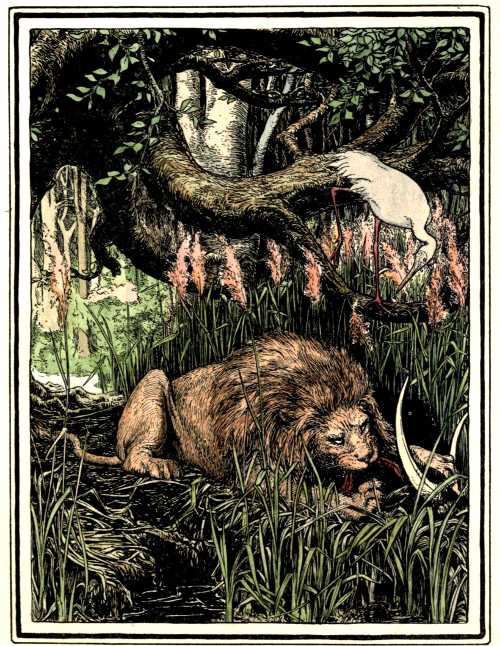
played a part during one of his former incarnations. Thus the fable of
the Lion and the Crane, which opens the present collection, is
introduced by a "Story of the Present" in the following words:—
"A service have we done thee" [the opening words of the gatha or
moral verse]. "This the Master told while living at Jetavana
concerning Devadatta's treachery. Not only now, O Bhickkus, but in a
former existence was Devadatta ungrateful. And having said this he
told a tale." Then follows the tale as given above (pp. 1, 2), and the
commentary concludes: "The Master, having given the lesson, summed up
the Jataka thus: 'At that time, the Lion was Devadatta, and the Crane
was I myself.'" Similarly, with each story of the past the Buddha
identifies himself, or is mentioned as identical with, the virtuous
hero of the folk-tale. These Jatakas are 550 in number, and have been
reckoned to include some 2000 tales. Some of these had been translated
by Mr. Rhys-Davids (Buddhist Birth Stories, I., Trübner's Oriental
Library, 1880), Prof. Fausböll (Five Jatakas, Copenhagen), and Dr.
R. Morris (Folk-Lore Journal, vols. ii.-v.). A few exist sculptured
on the earliest Buddhist Stupas. Thus several of the circular figure
designs on the reliefs from Amaravati, now on the grand staircase of
the British Museum, represent Jatakas, or previous births of the
Buddha.
Some of the Jatakas bear a remarkable resemblance to some of the most
familiar Fables of Æsop. So close is the resemblance, indeed, that it
is impossible not to surmise an historical relation between the two.
What this relation is I have discussed at considerable length in the
"History of the Æsopic Fable," which forms the introductory volume to
my edition of Caxton's Esope (London, D. Nutt, "Bibliothèque de
Carabas," 1889). In this place I can only roughly summarise my
results. I conjecture that a collection of fables existed in India
before Buddha and independently of the Jatakas, and connected with the
name of Kasyapa, who was afterwards made by the Buddhists into the
latest of the twenty-seven pre-incarnations of the Buddha. This
collection of the Fables of Kasyapa was brought to Europe with a
deputation from the Cingalese King Chandra Muka Siwa (obiit 52 a.d.)
to the Emperor Claudius about 50 a.d., and was done into Greek as the
Λὁγοι Λυβικοἱ of "Kybises." These were utilised by Babrius
(from whom the Greek Æsop is derived) and Avian, and so came into the
European Æsop. I have discussed all those that are to be found in the
Jatakas in the "History" before mentioned, i. pp. 54-72 (see Notes i.
xv. xx.). In these Notes henceforth I refer to this "History" as my
Æsop.
There were probably other Buddhist collections of a similar nature to
the Jatakas with a framework. When the Hindu reaction against Buddhism
came, the Brahmins adapted these, with the omission of Buddha as the
central figure. There is scarcely any doubt that the so-called Fables
of Bidpai were thus derived from Buddhistic sources. In its Indian
form this is now extant as a Panchatantra or Pentateuch, five books
of tales connected by a Frame. This collection is of special interest
to us in the present connection, as it has come to Europe in various
forms and shapes. I have edited Sir Thomas North's English version of
an Italian adaptation of a Spanish translation of a Latin version of a
Hebrew translation of an Arabic adaptation of the Pehlevi version of
the Indian original (Fables of Bidpai, London, D. Nutt,
"Bibliothèque de Carabas," 1888). In this I give a genealogical table
of the various versions, from which I calculate that the tales have
been translated into thirty-eight languages in 112 different versions,
twenty different ones in English alone. Their influence on European
folk-tales has been very great: it is probable that nearly one-tenth
of these can be traced to the Bidpai literature. (See Notes v. ix. x.
xiii. xv.)
Other collections of a similar character, arranged in a frame, and
derived ultimately from Buddhistic sources, also reached Europe and
formed popular reading in the Middle Ages. Among these may be
mentioned The Tales of Sindibad, known to Europe as The Seven Sages
of Rome: from this we get the Gellert story (cf. Celtic Fairy
Tales), though it also occurs in the Bidpai. Another popular
collection was that associated with the life of St. Buddha, who has
been canonised as St. Josaphat: Barlaam and Josaphat tells of his
conversion and much else besides, including the tale of the Three
Caskets, used by Shakespeare in the Merchant of Venice.
Some of the Indian tales reached Europe at the time of the Crusades,
either orally or in collections no longer extant. The earliest
selection of these was the Disciplina Clericalis of Petrus Alphonsi,
a Spanish Jew converted about 1106: his tales were to be used as
seasoning for sermons, and strong seasoning they must have proved.
Another Spanish collection of considerably later date was entitled El
Conde Lucanor (Eng. trans. by W. York): this contains the fable of
The Man, his Son, and their Ass, which they ride or carry as the
popular voice decides. But the most famous collection of this kind
was that known as Gesta Romanorum, much of which was certainly derived
from Oriental and ultimately Indian sources, and so might more
appropriately be termed Gesta Indorum.
All these collections, which reached Europe in the twelfth and
thirteenth centuries, became very popular, and were used by monks and
friars to enliven their sermons as Exempla. Prof. Crane has given a
full account of this very curious phenomenon in his erudite edition of
the Exempla of Jacques de Vitry (Folk Lore Society, 1890). The
Indian stories were also used by the Italian Novellieri, much of
Boccaccio and his school being derived from this source. As these
again gave material for the Elizabethan Drama, chiefly in W. Painter's
Palace of Pleasure, a collection of translated Novelle which I
have edited (Lond., 3 vols. 1890), it is not surprising that we can at
times trace portions of Shakespeare back to India. It should also be
mentioned that one-half of La Fontaine's Fables (Bks. vii.-xii.) are
derived from Indian sources. (See Note on No. v.)
In India itself the collection of stories in frames went on and still
goes on. Besides those already mentioned there are the stories of
Vikram and the Vampire (Vetala), translated among others by the late
Sir Richard Burton, and the seventy stories of a parrot (Suka
Saptati). The whole of this literature was summed up by Somadeva, c.
1200 a.d. in a huge compilation entitled Katha Sarit Sagara ("Ocean
of the Stream of Stories"). Of this work, written in very florid
style, Mr. Tawney has produced a translation in two volumes in the
Bibliotheca Indica. Unfortunately, there is a Divorce Court
atmosphere about the whole book, and my selections from it have been
accordingly restricted. (Notes, No. xi.)
So much for a short sketch of Indian folk-tales so far as they have
been reduced to writing in the native literature.[2] The Jatakas are
probably the oldest collection of such tales in literature, and the
greater part of the rest are demonstrably more than a thousand years
old. It is certain that much (perhaps one-fifth) of the popular
literature of modern Europe is derived from those portions of this
large bulk which came west with the Crusades through the medium of
Arabs and Jews. In his elaborate Einleitung to the Pantschatantra,
the Indian version of the Fables of Bidpai, Prof. Benfey contended
with enormous erudition that the majority of folk-tale incidents were
to be found in the Bidpai literature. His introduction consisted of
over 200 monographs on the spread of Indian tales to Europe. He wrote
in 1859, before the great outburst of folk-tale collection in Europe,
and he had not thus adequate materials to go about in determining the
extent of Indian influence on the popular mind of Europe. But he made
it clear that for beast-tales and for drolls, the majority of those
current in the mouths of occidental people were derived from Eastern
and mainly Indian sources. He was not successful, in my opinion, in
tracing the serious fairy tale to India. Few of the tales in the
Indian literary collections could be dignified by the name of fairy
tales, and it was clear that if these were to be traced to India, an
examination of the contemporary folk-tales of the peninsula would have
to be attempted.
The collection of current Indian folk-tales has been the work of the
last quarter of a century, a work, even after what has been achieved,
still in its initial stages. The credit of having begun the process is
due to Miss Frere, who, while her father was Governor of the Bombay
Presidency, took down from the lips of her ayah, Anna de Souza, one
of a Lingaet family from Goa who had been Christian for three
generations, the tales she afterwards published with Mr. Murray in
1868, under the title, "Old Deccan Days, or, Indian Fairy Legends
current in Southern India, collected from oral tradition by M. Frere,
with an introduction and notes by Sir Bartle Frere." Her example was
followed by Miss Stokes in her Indian Fairy Tales (London, Ellis &
White, 1880), who took down her tales from two ayahs and a
Khitmatgar, all of them Bengalese—the ayahs Hindus, and the man a
Mohammedan. Mr. Ralston introduced the volume with some remarks which
dealt too much with sun-myths for present-day taste. Another
collection from Bengal was that of Lal Behari Day, a Hindu gentleman,
in his Folk-Tales of Bengal (London, Macmillan, 1883). The Panjab
and the Kashmir then had their turn: Mrs. Steel collected, and Captain
(now Major) Temple edited and annotated, their Wideawake Stories
(London, Trübner, 1884), stories capitally told and admirably
annotated. Captain Temple increased the value of this collection by a
remarkable analysis of all the incidents contained in the two hundred
Indian folk-tales collected up to this date. It is not too much to say
that this analysis marks an onward step in the scientific study of the
folk-tale: there is such a thing, derided as it may be. I have
throughout the Notes been able to draw attention to Indian parallels
by a simple reference to Major Temple's Analysis.
Major Temple has not alone himself collected: he has been the cause
that many others have collected. In the pages of the Indian
Antiquary, edited by him, there have appeared from time to time
folk-tales collected from all parts of India. Some of these have been
issued separately. Sets of tales from Southern India, collected by the
Pandit Natesa Sastri, have been issued under the title Folk-Lore of
Southern India, three fascicules of which have been recently
re-issued by Mrs. Kingscote under the title, Tales of the Sun (W. H.
Allen, 1891): it would have been well if the identity of the two works
had been clearly explained. The largest addition to our knowledge of
the Indian folk-tale that has been made since Wideawake Stories is
that contained in Mr. Knowles' Folk-Tales of Kashmir (Trübner's
Oriental Library, 1887), sixty-three stories, some of great length.
These, with Mr. Campbell's Santal Tales (1892); Ramaswami Raju's
Indian Fables (London, Sonnenschein, n.d.); M. Thornhill, Indian
Fairy Tales (London, 1889); and E. J. Robinson, Tales of S. India
(1885), together with those contained in books of travel like
Thornton's Bannu or Smeaton's Karens of Burmah bring up the list
of printed Indian folk-tales to over 350—a respectable total indeed,
but a mere drop in the ocean of the stream of stories that must exist
in such a huge population as that of India: the Central Provinces in
particular are practically unexplored. There are doubtless many
collections still unpublished. Col. Lewin has large numbers, besides
the few published in his Lushai Grammar; and Mr. M. L. Dames has a
number of Baluchi tales which I have been privileged to use.
Altogether, India now ranks among the best represented countries for
printed folk-tales, coming only after Russia (1500), Germany (1200),
Italy and France (1000 each.)[3] Counting the ancient with the modern,
India has probably some 600 to 700 folk-tales printed and translated
in accessible form. There should be enough material to determine the
vexed question of the relations between the European and the Indian
collections.
This question has taken a new departure with the researches of M.
Emanuel Cosquin in his Contes populaires de Lorraine (Paris, 1886,
2e tirage, 1890), undoubtedly the most important contribution to the
scientific study of the folk-tale since the Grimms. M. Cosquin gives
in the annotations to the eighty-four tales which he has collected in
Lorraine a mass of information as to the various forms which the tales
take in other countries of Europe and in the East. In my opinion, the
work he has done for the European folk-tale is even more valuable than
the conclusions he draws from it as to the relations with India. He
has taken up the work which Wilhelm Grimm dropped in 1859, and shown
from the huge accumulations of folk-tales that have appeared during
the last thirty years that there is a common fund of folk-tales which
every country of Europe without exception possesses, though this does
not of course preclude them from possessing others that are not shared
by the rest. M. Cosquin further contends that the whole of these have
come from the East, ultimately from India, not by literary
transmission, as Benfey contended, but by oral transmission. He has
certainly shown that very many of the most striking incidents common
to European folk-tales are also to be found in Eastern mährchen.
What, however, he has failed to show is that some of these may not
have been carried out to the Eastern world by Europeans. Borrowing
tales is a mutual process, and when Indian meets European, European
meets Indian; which borrowed from which, is a question which we have
very few criteria to decide. It should be added that Mr W. A. Clouston
has in England collected with exemplary industry a large number of
parallels between Indian and European folk-tale incidents in his
Popular Tales and Fictions (Edinburgh, 2 vols., 1887) and Book of
Noodles (London, 1888). Mr Clouston has not openly expressed his
conviction that all folk-tales are Indian in origin: he prefers to
convince us non vi sed sæpe cadendo. He has certainly made out a
good case for tracing all European drolls, or comic folk-tales, from
the East.
With the fairy tale strictly so called—i.e., the serious folk-tale
of romantic adventure—I am more doubtful. It is mainly a modern
product in India as in Europe, so far as literary evidence goes. The
vast bulk of the Jatakas does not contain a single example worthy the
name, nor does the Bidpai literature. Some of Somadeva's tales,
however, approach the nature of fairy tales, but there are several
Celtic tales which can be traced to an earlier date than his (1200
a.d.) and are equally near to fairy tales. Yet it is dangerous to
trust to mere non-appearance in literature as proof of non-existence
among the folk. To take our own tales here in England, there is not a
single instance of a reference to Jack and the Beanstalk for the
last three hundred years, yet it is undoubtedly a true folk-tale. And
it is indeed remarkable how many of the formulæ of fairy tales have
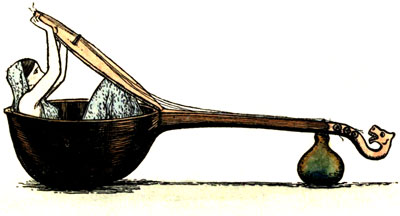
been found of recent years in India. Thus, the Magic Fiddle, found
among the Santals by Mr. Campbell in two variants (see Notes on vi.),
contains the germ idea of the wide-spread story represented in Great
Britain by the ballad of Binnorie (see English Fairy Tales, No.
ix.). Similarly, Mr. Knowles' collection has added considerably to the
number of Indian variants of European "formulæ" beyond those noted by
M. Cosquin.
It is still more striking as regards incidents. In a paper read
before the Folk-Lore Congress of 1891, and reprinted in the
Transactions, pp. 76 seq., I have drawn up a list of some 630
incidents found in common among European folk-tales (including
drolls). Of these, I reckon that about 250 have been already found
among Indian folk-tales, and the number is increased by each new
collection that is made or printed. The moral of this is, that India
belongs to a group of peoples who have a common store of stories;
India belongs to Europe for purposes of comparative folk-tales.
Can we go further and say that India is the source of all the
incidents that are held in common by European children? I think we may
answer "Yes" as regards droll incidents, the travels of many of which
we can trace, and we have the curious result that European children
owe their earliest laughter to Hindu wags. As regards the serious
incidents further inquiry is needed. Thus, we find the incident of an
"external soul" (Life Index, Captain Temple very appropriately named
it) in Asbjornsen's Norse Tales and in Miss Frere's Old Deccan
Days (see Notes on Punchkin). Yet the latter is a very suspicious
source, since Miss Frere derived her tales from a Christian ayah
whose family had been in Portuguese Goa for a hundred years. May they
not have got the story of the giant with his soul outside his body
from some European sailor touching at Goa? This is to a certain extent
negatived by the fact of the frequent occurrence of the incident in
Indian folk-tales (Captain Temple gave a large number of instances in
Wideawake Stories, pp. 404-5). On the other hand, Mr. Frazer in his
Golden Bough has shown the wide spread of the idea among all savage
or semi-savage tribes. (See Note on No. iv.)
In this particular case we may be doubtful; but in others, again—as
the incident of the rat's tail up nose (see Notes on The Charmed
Ring)—there can be little doubt of the Indian origin. And generally,
so far as the incidents are marvellous and of true fairy-tale
character, the presumption is in favour of India, because of the
vitality of animism or metempsychosis in India throughout all historic
time. No Hindu would doubt the fact of animals speaking or of men
transformed into plants and animals. The European may once have had
these beliefs, and may still hold them implicitly as "survivals"; but
in the "survival" stage they cannot afford material for artistic
creation, and the fact that the higher minds of Europe for the last
thousand years have discountenanced these beliefs has not been
entirely without influence. Of one thing there is practical certainty:
the fairy tales that are common to the Indo-European world were
invented once for all in a certain locality, and thence spread to all
the countries in culture contact with the original source. The mere
fact that contiguous countries have more similarities in their story
store than distant ones is sufficient to prove this: indeed, the fact
that any single country has spread throughout it a definite set of
folk-tales as distinctive as its flora and fauna, is sufficient to
prove it. It is equally certain that not all folk-tales have come from
one source, for each country has tales peculiar to itself. The
question is as to the source of the tales that are common to all
European children, and increasing evidence seems to show that this
common nucleus is derived from India and India alone. The Hindus have
been more successful than others, because of two facts: they have had
the appropriate "atmosphere" of metempsychosis, and they have also had
spread among the people sufficient literary training and mental grip
to invent plots. The Hindu tales have ousted the native European,
which undoubtedly existed independently; indeed, many still survive,
especially in Celtic lands. Exactly in the same way, Perrault's tales
have ousted the older English folk-tales, and it is with the utmost
difficulty that one can get true English fairy tales because Red
Riding Hood, Cinderella, Blue Beard, Puss in Boots and the
rest, have survived in the struggle for existence among English
folk-tales. So far as Europe has a common store of fairy tales, it
owes this to India.
I do not wish to be misunderstood. I do not hold with Benfey that all
European folk-tales are derived from the Bidpai literature and similar
literary products, nor with M. Cosquin that they are all derived from
India. The latter scholar has proved that there is a nucleus of
stories in every European land which is common to all. I calculate
that this includes from 30 to 50 per cent. of the whole, and it is
this common stock of Europe that I regard as coming from India mainly
at the time of the Crusades, and chiefly by oral transmission. It
includes all the beast tales and most of the drolls, but evidence is
still lacking about the more serious fairy tales, though it is
increasing with every fresh collection of folk-tales in India, the
great importance of which is obvious from the above considerations.
In the following Notes I give, as on the two previous occasions, the
source whence I derived the tale, then parallels, and finally
remarks. For Indian parallels I have been able to refer to Major
Temple's remarkable Analysis of Indian Folk-tale incidents at the end
of Wideawake Stories (pp. 386-436), for European ones to my
alphabetical List of Incidents, with bibliographical references, in
Transactions of Folk-Lore Congress, 1892, pp. 87-98. My remarks
have been mainly devoted to tracing the relation between the Indian
and the European tales, with the object of showing that the latter
have been derived from the former. I have, however, to some extent
handicapped myself, as I have avoided giving again the Indian versions
of stories already given in English Fairy Tales or Celtic Fairy
Tales.
Source.—V. Fausböll, Five Jātakas, Copenhagen, 1861, pp. 35-8,
text and translation of the Jāvasakuna Jātaka. I have ventured
to English Prof. Fausböll's version, which was only intended as a
"crib" to the Pali. For the omitted Introduction, see supra.
Parallels.—I have given a rather full collection of parallels,
running to about a hundred numbers, in my Æsop, pp. 232-4. The chief
of these are: (1) for the East, the Midrashic version ("Lion and
Egyptian Partridge"), in the great Rabbinic commentary on Genesis
(Bereshith-rabba, c. 64); (2) in classical antiquity, Phædrus, i. 8
("Wolf and Crane"), and Babrius, 94 ("Wolf and Heron"), and the Greek
proverb Suidas, ii. 248 ("Out of the Wolf's Mouth"); (3) in the Middle
Ages, the so-called Greek Æsop, ed. Halm, 276 b, really prose
versions of Babrius and "Romulus," or prose of Phædrus, i. 8, also the
Romulus of Ademar (fl. 1030), 64; it occurs also on the Bayeux
Tapestry, in Marie de France, 7, and in Benedict of Oxford's Mishle
Shualim (Heb.), 8; (4) Stainhöwel took it from the "Romulus" into his
German Æsop (1480), whence all the modern European Æsops are derived.
Remarks.—I have selected The Wolf and the Crane as my typical
example in my "History of the Æsopic Fable," and can only give here a
rough summary of the results I there arrived at concerning the fable,
merely premising that these results are at present no more than
hypotheses. The similarity of the Jataka form with that familiar to
us, and derived by us in the last resort from Phædrus, is so striking
that few will deny some historical relation between them. I conjecture
that the Fable originated in India, and came West by two different
routes. First, it came by oral tradition to Egypt, as one of the
Libyan Fables which the ancients themselves distinguished from the
Æsopic Fables. It was, however, included by Demetrius Phalereus, tyrant
of Athens, and founder of the Alexandrian library c. 300 b.c., in his
Assemblies of Æsopic Fables, which I have shown to be the source of
Phædrus' Fables c. 30 a.d. Besides this, it came from Ceylon in the
Fables of Kybises—i.e., Kasyapa the Buddha—c. 50 a.d., was adapted
into Hebrew, and used for political purposes, by Rabbi Joshua ben
Chananyah in a harangue to the Jews c. 120 a.d., begging them to be
patient while within the jaws of Rome. The Hebrew form uses the lion,
not the wolf, as the ingrate, which enables us to decide on the Indian
provenance of the Midrashic version. It may be remarked that the use
of the lion in this and other Jatakas is indirectly a testimony to
their great age, as the lion has become rarer and rarer in India
during historic times, and is now confined to the Gir forest of
Kathiáwar, where only a dozen specimens exist, and are strictly
preserved.
The verses at the end are the earliest parts of the Jataka, being in
more archaic Pali than the rest: the story is told by the commentator
(c. 400 a.d.) to illustrate them. It is probable that they were
brought over on the first introduction of Buddhism into Ceylon, c. 241
b.c. This would give them an age of over two thousand years, nearly
three hundred years earlier than Phædrus, from whom comes our Wolf
and Crane.
Source.—Miss Stokes, Indian Fairy Tales, No. xxii. pp. 153-63,
told by Múniyá, one of the ayahs. I have left it unaltered, except
that I have replaced "God" by "Khuda," the word originally used (see
Notes l. c., p. 237).
Parallels.—The tabu, as to a particular direction, occurs in other
Indian stories as well as in European folk-tales (see notes on Stokes,
p. 286). The grateful animals theme occurs in "The Soothsayer's Son"
(infra, No. x.), and frequently in Indian folk-tales (see Temple's
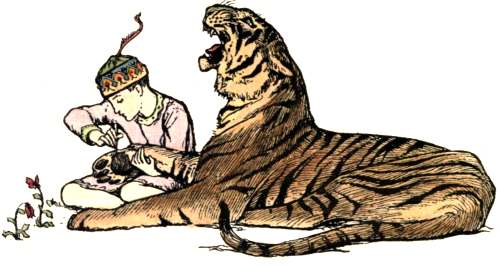
Analysis, III. i. 5-7; Wideawake Stories, pp. 412-3). The thorn in
the tiger's foot is especially common (Temple, l. c., 6, 9), and
recalls the story of Androclus, which occurs in the derivates of
Phædrus, and may thus be Indian in origin (see Benfey,
Panschatantra, i. 211, and the parallels given in my Æsop, Ro.
iii. I. p. 243). The theme is, however, equally frequent in European
folk-tales: see my List of Incidents, Proc. Folk-Lore Congress, p.
91, s.v. "Grateful Animals" and "Gifts by Grateful Animals."
Similarly, the "Bride Wager" incident at the end is common to a large
number of Indian and European folk-tales (Temple, Analysis, p. 430; my
List, l. c. sub voce). The tasks are also equally common (cf.
"Battle of the Birds" in Celtic Fairy Tales), though the exact forms
as given in "Princess Labam" are not known in Europe.
Remarks.—We have here a concrete instance of the relation of Indian
and European fairy-tales. The human mind may be the same everywhere,
but it is not likely to hit upon the sequence of incidents, Direction
tabu—Grateful Animals—Bride-wager—Tasks, by accident, or
independently: Europe must have borrowed from India, or India from
Europe. As this must have occurred within historic times, indeed
within the last thousand years, when even European peasants are not
likely to have invented, even if they believed, in the incident of
the grateful animals, the probability is in favour of borrowing from
India, possibly through the intermediation of Arabs at the time of
the Crusades. It is only a probability, but we cannot in any case
reach more than probability in this matter, just at present.
Source.—Steel-Temple, Wideawake Stories, pp. 69-72, originally
published in Indian Antiquary, xii. 175. The droll is common
throughout the Panjab.
Parallels.—The similarity of the concluding episode with the finish
of the "Three Little Pigs" (Eng. Fairy Tales, No. xiv.) In my notes
on that droll I have pointed out that the pigs were once goats or kids
with "hair on their chinny chin chin." This brings the tale a stage
nearer to the Lambikin.
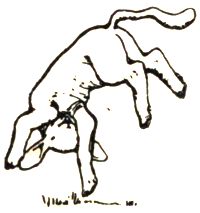
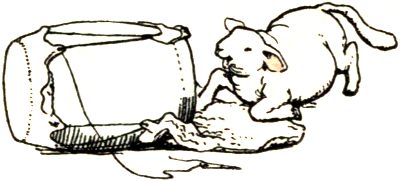
Remarks.—The similarity of Pig No. 3 rolling down hill in the churn
and the Lambikin in the Drumikin can scarcely be accidental, though,
it must be confessed, the tale has undergone considerable modification
before it reached England.
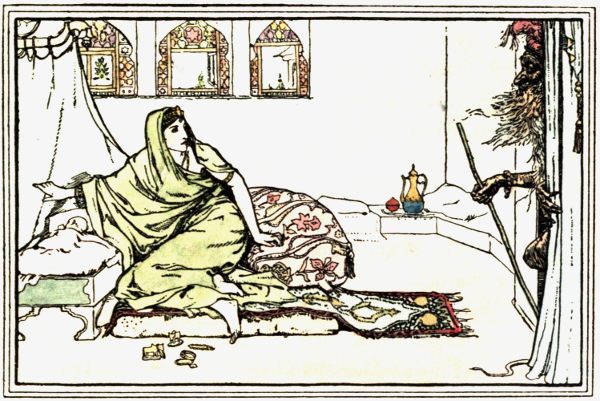
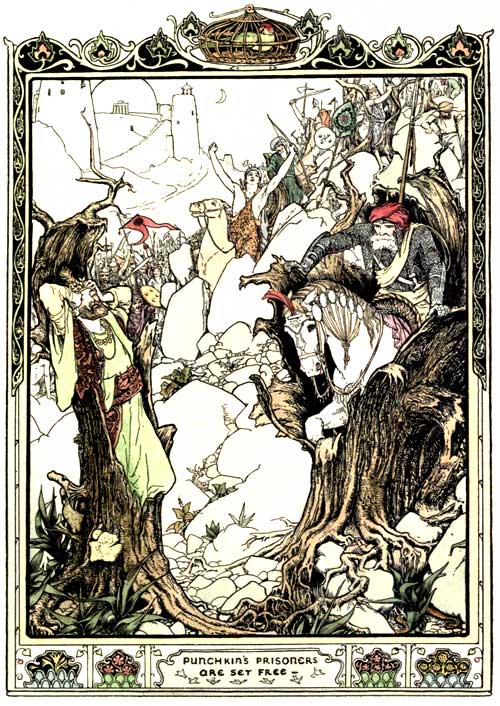
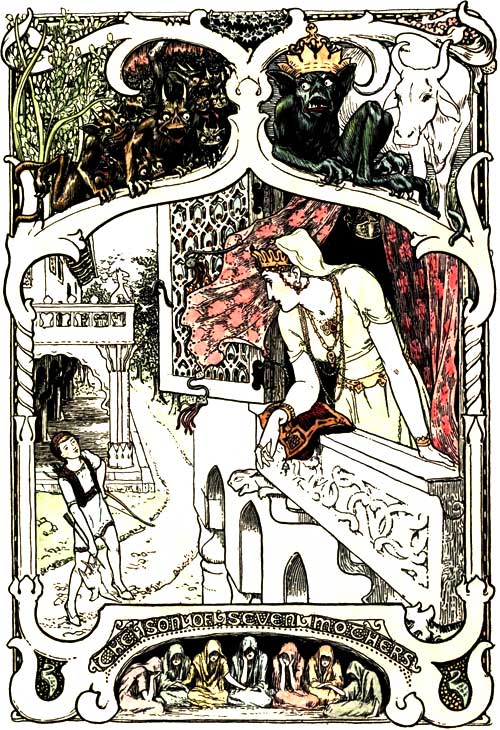
Source.—Miss Frere, Old Deccan Days, pp. 1-16, from her ayah,
Anna de Souza, of a Lingaet family settled and Christianised at Goa
for three generations. I should perhaps add that a Prudhan is a Prime
Minister, or Vizier; Punts are the same, and Sirdars, nobles.
Parallels.—The son of seven mothers is a characteristic Indian
conception, for which see Notes on "The Son of Seven Queens" in this
collection, No. xvi. The mother transformed, envious stepmother, ring
recognition, are all incidents common to East and West;
bibliographical references for parallels may be found under these
titles in my List of Incidents. The external soul of the ogre has been
studied by Mr. E. Clodd in Folk-Lore Journal, vol. ii., "The
Philosophy of Punchkin," and still more elaborately in the section,
"The External Soul in Folk-tales," in Mr. Frazer's Golden Bough, ii.
pp. 296-326. See also Major Temple's Analysis, II. iii., Wideawake
Stories, pp. 404-5, who there gives the Indian parallels.
Remarks.—Both Mr. Clodd and Mr. Frazer regard the essence of the
tale to consist in the conception of an external soul or "life-index,"
and they both trace in this a "survival" of savage philosophy, which
they consider occurs among all men at a certain stage of culture. But
the most cursory examination of the sets of tales containing these
incidents in Mr. Frazer's analyses shows that many, indeed the
majority, of these tales cannot be independent of one another; for
they contain not alone the incident of an external materialised soul,
but the further point that this is contained in something else, which
is enclosed in another thing, which is again surrounded by a wrapper.
This Chinese ball arrangement is found in the Deccan ("Punchkin"); in
Bengal (Day, Folk-Tales of Bengal); in Russia (Ralston, p. 103
seq., "Koschkei the Deathless," also in Mr. Lang's Red Fairy
Book); in Servia (Mijatovics, Servian Folk-Lore, p. 172); in South
Slavonia (Wratislaw, p. 225); in Rome (Miss Busk, p. 164); in Albania
(Dozon, p. 132 seq.); in Transylvania (Haltrich, No. 34); in
Schleswig-Holstein (Müllenhoff, p. 404); in Norway (Asbjörnsen, No.
36, ap. Dasent, Pop. Tales, p. 55, "The Giant who had no Heart in
his Body"); and finally, in the Hebrides (Campbell, Pop. Tales, p.
10, cf. Celtic Fairy Tales, No. xvii., "Sea Maiden"). Here we have
the track of this remarkable idea of an external soul enclosed in a
succession of wrappings, which we can trace from Hindostan to the
Hebrides.
It is difficult to imagine that we have not here the actual migration
of the tale from East to West. In Bengal we have the soul "in a
necklace, in a box, in the heart of a boal fish, in a tank"; in
Albania "it is in a pigeon, in a hare, in the silver tusk of a wild
boar"; in Rome it is "in a stone, in the head of a bird, in the head
of a leveret, in the middle head of a seven-headed hydra"; in Russia
"it is in an egg, in a duck, in a hare, in a casket, in an oak"; in
Servia it is "in a board, in the heart of a fox, in a mountain"; in
Transylvania "it is in a light, in an egg, in a duck, in a pond, in a
mountain"; in Norway it is "in an egg, in a duck, in a well, in a
church, on an island, in a lake"; in the Hebrides it is "in an egg, in
the belly of a duck, in the belly of a wether, under a flagstone on
the threshold." It is impossible to imagine the human mind
independently imagining such bizarre convolutions. They were borrowed
from one nation to the other, and till we have reason shown to the
contrary, the original lender was a Hindu. I should add that the mere
conception of an external soul occurs in the oldest Egyptian tale of
"The Two Brothers," but the wrappings are absent.
Source.—Pantschatantra, V. ix., tr. Benfey, ii. 345-6.
Parallels.—Benfey, in § 209 of his Einleitung, gives
bibliographical references to most of those which are given at length
in Prof. M. Müller's brilliant essay on "The Migration of Fables"
(Selected Essays, i. 500-76), which is entirely devoted to the
travels of the fable from India to La Fontaine. See also Mr.
Clouston, Pop. Tales, ii. 432 seq. I have translated the Hebrew
version in my essay, "Jewish Influence on the Diffusion of
Folk-Tales," pp. 6-7. Our proverb, "Do not count your chickens before
they are hatched," is ultimately to be derived from India.
Remarks.—The stories of Alnaschar, the Barber's fifth brother in
the Arabian Nights, and of La Perette, who counted her chickens
before they were hatched, in La Fontaine, are demonstrably derived
from the same Indian original from which our story was obtained. The
travels of the "Fables of Bidpai" from India to Europe are well known
and distinctly traceable. I have given a rough summary of the chief
critical results in the introduction to my edition of the earliest
English version of the Fables of Bidpai, by Sir Thomas North, of
Plutarch fame (London, D. Nutt, "Bibliothèque de Carabas," 1888),
where I have given an elaborate genealogical table of the
multitudinous versions. La Fontaine's version, which has rendered the
fable so familiar to us all, comes from Bonaventure des Periers,
Contes et Nouvelles, who got it from the Dialogus Creaturarum of
Nicholaus Pergamenus, who derived it from the Sermones of Jacques de
Vitry (see Prof. Crane's edition, No. li.), who probably derived it
from the Directorium Humanæ Vitæ of John of Capua, a converted Jew,
who translated it from the Hebrew version of the Arabic Kalilah wa
Dimnah, which was itself derived from the old Syriac version of a
Pehlevi translation of the original Indian work, probably called after
Karataka and Damanaka, the names of two jackals who figure in the
earlier stories of the book. Prof. Rhys-Davids informs me that these
names are more akin to Pali than to Sanskrit, which makes it still
more probable that the whole literature is ultimately to be derived
from a Buddhist source.
The theme of La Perette is of interest as showing the literary
transmission of tales from Orient to Occident. It also shows the
possibility of an influence of literary on oral tradition, as is shown
by our proverb, and by the fact, which Benfey mentions, that La
Fontaine's story has had influence on two of Grimm's tales, Nos. 164,
168.
Source.—A. Campbell, Santal Folk-Tales, 1892, pp. 52-6, with some
verbal alterations. A Bonga is the presiding spirit of a certain kind
of rice land; Doms and Hadis are low-caste aborigines, whose touch is
considered polluting. The Santals are a forest tribe, who live in the
Santal Parganas, 140 miles N.W. of Calcutta (Sir W. W. Hunter, The
Indian Empire, 57-60).
Parallels.—Another version occurs in Campbell, p. 106 seq., which
shows that the story is popular among the Santals. It is obvious,
however, that neither version contains the real finish of the story,
which must have contained the denunciation of the magic fiddle of the
murderous sisters. This would bring it under the formula of The
Singing Bone, which M. Monseur has recently been studying with a
remarkable collection of European variants in the Bulletin of the
Wallon Folk-Lore Society of Liège (cf. Eng. Fairy Tales, No. ix.).
There is a singing bone in Steel-Temple's Wideawake Stories, pp. 127
seq. ("Little Anklebone").
Remarks.—Here we have another theme of the common store of European
folk-tales found in India. Unfortunately, the form in which it occurs
is mutilated, and we cannot draw any definite conclusion from it.
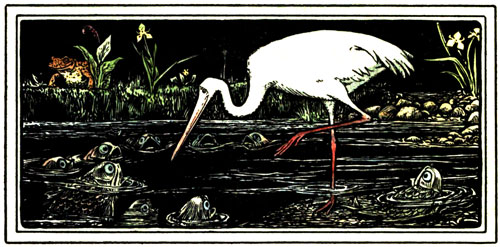
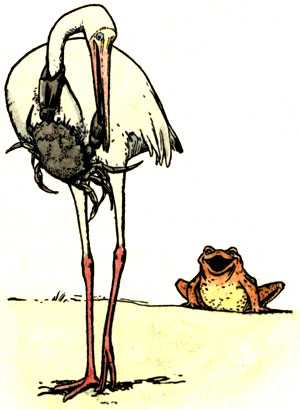
Source.—The Baka-Jātaka, Fausböll, No. 38, tr. Rhys-Davids, pp.
315-21. The Buddha this time is the Genius of the Tree.
Parallels.—This Jātaka got into the Bidpai literature, and
occurs in all its multitudinous offshoots (see Benfey, Einleitung,
§ 60) among others in the earliest English translation by North (my
edition, pp. 118-22), where the crane becomes "a great Paragone of
India (of those that liue a hundredth yeares and neuer mue their
feathers)." The crab, on hearing the ill news "called to Parliament
all the Fishes of the Lake," and before all are devoured destroys the
Paragon, as in the Jataka, and returned to the remaining fishes, who
"all with one consent gave hir many a thanke."
Remarks.—An interesting point, to which I have drawn attention in
my Introduction to North's Bidpai, is the probability that the
illustrations of the tales as well as the tales themselves, were
translated, so to speak, from one country to another. We can trace
them in Latin, Hebrew, and Arabic MSS., and a few are extant on
Buddhist Stupas. Under these circumstances, it may be of interest to
compare with Mr. Batten's conception of the Crane and the Crab
(supra, p. 50) that of the German artist who illustrated the first
edition of the Latin Bidpai, probably following the traditional
representations of the MS., which itself could probably trace back to
India.
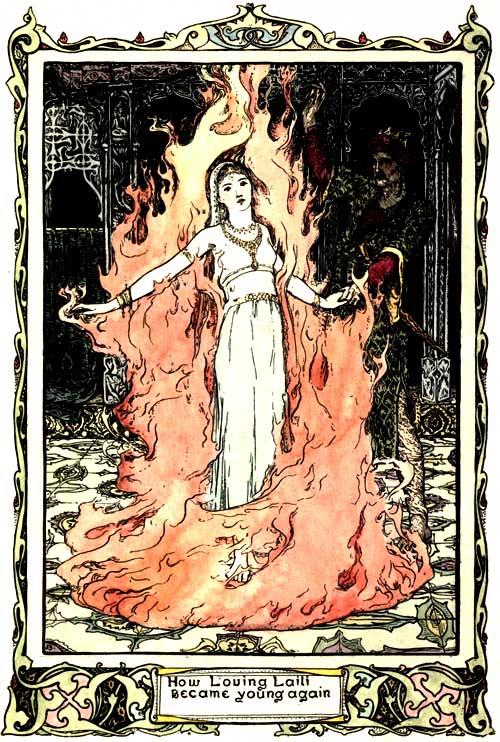
Source.—Miss Stokes, Indian Fairy Tales, pp. 73-84. Majnun and
Laili are conventional names for lovers, the Romeo and Juliet of
Hindostan.
Parallels.—Living in animals' bellies occurs elsewhere in Miss
Stokes' book, pp. 66, 124; also in Miss Frere's, 188. The restoration
of beauty by fire occurs as a frequent theme (Temple, Analysis, III.
vi. f. p. 418). Readers will be reminded of the dénouement of Mr.
Rider Haggard's She. Resuscitation from ashes has been used very
effectively by Mr. Lang in his delightful Prince Prigio.
Remarks.—The white skin and blue eyes of Prince Majnun deserve
attention. They are possibly a relic of the days of Aryan conquest,
when the fair-skinned, fair-haired Aryan conquered the swarthier
aboriginals. The name for caste in Sanskrit is varna, "colour"; and
one Hindu cannot insult another more effectually than by calling him a
black man. Cf. Stokes, pp. 238-9, who suggests that the red hair is
something solar, and derived from myths of the solar hero.
Source.—Steel-Temple, Wideawake Stories, pp. 116-20; first
published in Indian Antiquary, xii. p. 170 seq.
Parallels.—No less than 94 parallels are given by Prof. K. Krohn in
his elaborate discussion of this fable in his dissertation, Mann und
Fuchs, (Helsingfors, 1891), pp. 38-60; to which may be added three
Indian variants, omitted by him, but mentioned by Capt. Temple, l.
c., p. 324, in the Bhâgavata Purâna, the Gul Bakâolî and Ind.
Ant. xii. 177; and a couple more in my Æsop, p. 253: add Smeaton,
Karens, p. 126.
Remarks.—Prof. Krohn comes to the conclusion that the majority of
the oral forms of the tale come from literary versions (p. 47),
whereas the Reynard form has only had influence on a single variant.
He reduces the century of variants to three type forms. The first
occurs in two Egyptian versions collected in the present day, as well
as in Petrus Alphonsi in the twelfth century, and the Fabulæ
Extravagantes of the thirteenth or fourteenth: here the ingrate
animal is a crocodile, which asks to be carried away from a river
about to dry up, and there is only one judge. The second is that
current in India and represented by the story in the present
collection: here the judges are three. The third is that current among
Western Europeans, which has spread to S. Africa and N. and S.
America: also three judges. Prof. K. Krohn counts the first the
original form, owing to the single judge and the naturalness of the
opening, by which the critical situation is brought about. The further
question arises, whether this form, though found in Egypt now, is
indigenous there, and if so, how it got to the East. Prof. Krohn
grants the possibility of the Egyptian form having been invented in
India and carried to Egypt, and he allows that the European forms have
been influenced by the Indian. The "Egyptian" form is found in Burmah
(Smeaton, l. c., p. 128), as well as the Indian, a fact of which
Prof. K. Krohn was unaware though it turns his whole argument. The
evidence we have of other folk-tales of the beast-epic emanating from
India improves the chances of this also coming from that source. One
thing at least is certain: all these hundred variants come ultimately
from one source. The incident "Inside again" of the Arabian Nights
(the Djinn and the bottle) and European tales is also a secondary
derivate.
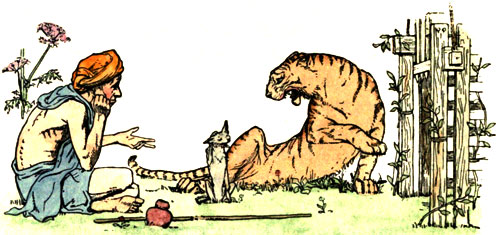
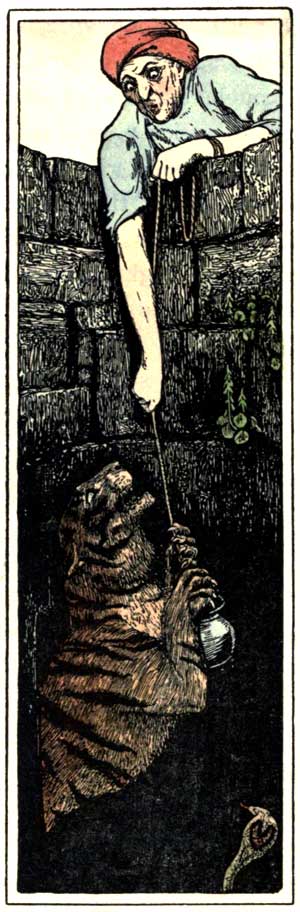
Source.—Mrs. Kingscote, Tales of the Sun (p. 11 seq.), from
Pandit Natesa Sastri's Folk-Lore of Southern India, pt. ii.,
originally from Ind. Antiquary. I have considerably condensed and
modified the somewhat Babu English of the original.
Parallels.—See Benfey, Pantschatantra, § 71, i. pp. 193-222, who
quotes the Karma Jātaka as the ultimate source: it also occurs in
the Saccankira Jātaka (Fausböll, No. 73), trans. Rev. R. Morris,
Folk-Lore Jour. iii. 348 seq. The story of the ingratitude of man
compared with the gratitude of beasts came early to the West, where it
occurs in the Gesta Romanorum, c. 119. It was possibly from an early
form of this collection that Richard Cœur de Lion got the story,
and used it to rebuke the ingratitude of the English nobles on his
return in 1195. Matthew Paris tells the story, sub anno (it is an
addition of his to Ralph Disset), Hist. Major, ed. Luard, ii. 413-6,
how a lion and a serpent and a Venetian named Vitalis were saved from
a pit by a woodman, Vitalis promising him half his fortune, fifty
talents. The lion brings his benefactor a leveret, the serpent "gemmam
pretiosam," probably "the precious jewel in his head" to which
Shakespeare alludes (As You Like It, ii. I., cf. Benfey, l. c.,
p. 214, n.), but Vitalis refuses to have anything to do with him,
and altogether repudiates the fifty talents. "Hæc referebat Rex
Richardus munificus, ingratos redarguendo."
Remarks.—Apart from the interest of its wide travels, and its
appearance in the standard mediæval History of England by Matthew
Paris, the modern story shows the remarkable persistence of folk-tales
in the popular mind. Here we have collected from the Hindu peasant of
to-day a tale which was probably told before Buddha, over two thousand
years ago, and certainly included among the Jatakas before the
Christian era. The same thing has occurred with The Tiger, Brahman,
and Jackal (No. ix. supra).
Source.—Somadeva, Katha-Sarit-Sagara, trans. Tawney (Calcutta,
1880), i. pp. 272-4. I have slightly toned down the inflated style of
the original.
Parallels —Benfey has collected and discussed a number in Orient
and Occident, i. 371 seq.; see also Tawney, ad loc. The most
remarkable of the parallels is that afforded by the Grimms' "Doctor
Allwissend" (No. 98), which extends even to such a minute point as his
exclamation, "Ach, ich armer Krebs," whereupon a crab is discovered
under a dish. The usual form of discovery of the thieves is for the
Dr. Knowall to have so many days given him to discover the thieves,
and at the end of the first day he calls out, "There's one of them,"
meaning the days, just as one of the thieves peeps through at him.
Hence the title and the plot of C. Lever's One of Them.
Source.—Knowles, Folk-Tales of Kashmir, pp. 20-8.
Parallels.—The incident of the Aiding Animals is frequent in
folk-tales: see bibliographical references, sub voce, in my List of
Incidents, Trans. Folk-Lore Congress, p. 88; also Knowles, 21,
n.; and Temple, Wideawake Stories, pp. 401, 412. The Magic Ring
is also "common form" in folk-tales; cf. Köhler ap. Marie de
France, Lais, ed. Warncke, p. lxxxiv. And the whole story is to be
found very widely spread from India (Wideawake Stories, pp. 196-206)
to England (Eng. Fairy Tales, No. xvii, "Jack and his Golden
Snuff-box," cf. Notes, ibid.), the most familiar form of it being
"Aladdin and the Wonderful Lamp."
Remarks.—M. Cosquin has pointed out (Contes de Lorraine, p. xi.
seq.) that the incident of the rat's-tail-up-nose to recover the
ring from the stomach of an ogress, is found among Arabs, Albanians,
Bretons, and Russians. It is impossible to imagine that
incident—occurring in the same series of incidents—to have been
invented more than once, and if that part of the story has been
borrowed from India, there is no reason why the whole of it should not
have arisen in India, and have been spread to the West. The English
variant was derived from an English Gipsy, and suggests the
possibility that for this particular story the medium of transmission
has been the Gipsies. This contains the incident of the loss of the
ring by the faithful animal, which again could not have been
independently invented.
Source.—The Kacchapa Jātaka, Fausböll, No. 215; also in his
Five Jātakas, pp. 16, 41, tr. Rhys-Davids, pp. viii-x.
Parallels.—It occurs also in the Bidpai literature, in nearly all
its multitudinous offshoots. See Benfey, Einleitung, §84; also my
Bidpai, E, 4 a; and North's text, pp. 170-5, where it is the
taunts of the other birds that cause the catastrophe: "O here is a
brave sight, looke, here is a goodly ieast, what bugge haue we here,"
said some. "See, see, she hangeth by the throte, and therefor she
speaketh not," saide others; "and the beast flieth not like a beast;"
so she opened her mouth and "pashte hir all to pieces."
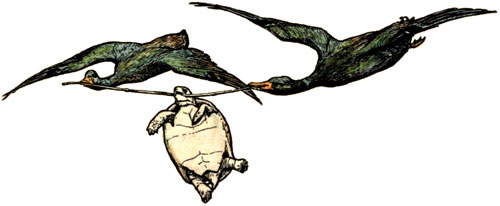
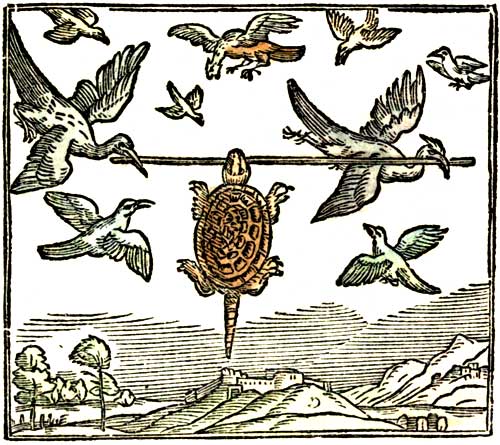
Remarks.—I have reproduced in my edition the original illustration
of the first English Bidpai, itself derived from the Italian block. A
replica of it here may serve to show that it could be used equally
well to illustrate the Pali original as its English
great-great-great-great-great-great grand-child.
Source.—Knowles, Folk-Tales of Kashmir, pp. 32-41. I have reduced
the pieces of advice to three, and curtailed somewhat.
Parallels.—See Celtic Fairy Tales, No. xxii., "Tale of Ivan,"
from the old Cornish, now extinct, and notes ibid. Mr. Clouston
points out (Pop. Tales, ii. 319) that it occurs in Buddhist
literature, in "Buddaghoshas Parables," as "The Story of Kulla
Pauthaka."
Remarks.—It is indeed curious to find the story better told in
Cornwall than in the land of its birth, but there can be little doubt
that the Buddhist version is the earliest and original form of the
story. The piece of advice was originally a charm, in which a youth
was to say to himself, "Why are you busy? Why are you busy?" He does
so when thieves are about, and so saves the king's treasures, of which
he gets an appropriate share. It would perhaps be as well if many of
us should say to ourselves "Ghatesa, ghatesa, kim kárana?"
Source.—Pantschatantra, III. v., tr. Benfey, ii. 244-7.
Parallels given in my Æsop, Ro. ii. 10, p. 40. The chief points
about them are—(1) though the tale does not exist in either Phædrus
or Babrius, it occurs in prose derivates from the Latin by Ademar, 65,
and "Romulus," ii. 10, and from Greek, in Gabrias, 45, and the prose
Æsop, ed. Halm, 96; Gitlbauer has restored the Babrian form in his
edition of Babrius, No. 160. (2) The fable occurs among folk-tales,
Grimm, 105; Woycicki, Poln. Mähr. 105; Gering, Islensk. Ævent. 59,
possibly derived from La Fontaine, x. 12.
Remarks.—Benfey has proved most ingeniously and conclusively
(Einl. i. 359) that the Indian fable is the source of both Latin and
Greek fables. I may borrow from my Æsop, p. 93, parallel abstracts
of the three versions, putting Benfey's results in a graphic form,
series of bars indicating the passages where the classical fables have
failed to preserve the original.
Bidpai.
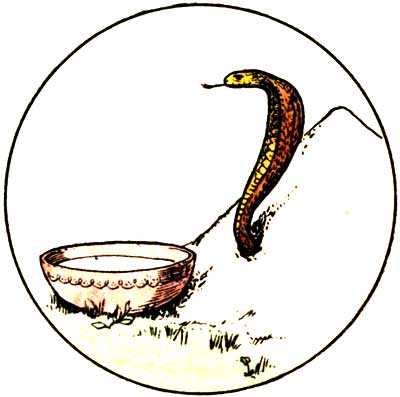
A Brahmin once observed a snake in his field, and thinking
it the tutelary spirit of the field, he offered it a
libation of milk in a bowl. Next day he finds a piece of
gold in the bowl, and he receives this each day after
offering the libation. One day he had to go elsewhere, and
he sent his son with the libation. The son sees the gold,
and thinking the serpent's hole full of treasure determines
to slay the snake. He strikes at its head with a cudgel, and
the enraged serpent stings him to death. The Brahmin mourns
his son's death, but next morning as usual brings the
libation of milk (in the hope of getting the gold as
before). The serpent appears after a long delay at the mouth
of its lair, and declares their friendship at an end, as it
could not forget the blow of the Brahmin's son, nor the
Brahmin his son's death from the bite of the snake.
Pants. III. v. (Benf. 244-7). |
|
|
Phædrine.
——A good man had become friendly with the snake, who came
into his house and brought luck with it, so that the man
became rich through it.——One day he struck the serpent,
which disappeared, and with it the man's riches. The good
man tries to make it up, but the serpent declares their
friendship at an end, as it could not forget the blow.——
Phæd. Dressl. VII. 28 (Rom. II. xi.)
Babrian.
A serpent stung a farmer's son to death. The father pursued
the serpent with an axe, and struck off part of its tail.
Afterwards fearing its vengeance he brought food and honey
to its lair, and begged reconciliation. The serpent,
however, declares friendship impossible, as it could not
forget the blow——nor the farmer his son's death from the
bite of the snake.
Æsop, Halm 96b (Babrius-Gitlb. 160). |
In the Indian fable every step of the action is thoroughly justified,
whereas the Latin form does not explain why the snake was friendly in
the first instance, or why the good man was enraged afterwards; and
the Greek form starts abruptly, without explaining why the serpent had
killed the farmer's son. Make a composite of the Phædrine and Babrian
forms, and you get the Indian one, which is thus shown to be the
original of both.
Source.—Steel-Temple, Wideawake Stories, pp. 98-110, originally
published in Ind. Antiq. x. 147 seq.
Parallels.—A long variant follows in Ind. Antiq., l. c. M.
Cosquin refers to several Oriental variants, l. c. p. xxx. n. For
the direction tabu, see Note on Princess Labam, supra, No. ii. The
"letter to kill bearer" and "letter substituted" are frequent in both
European (see my List s. v.) and Indian Folk-Tales (Temple,
Analysis, II. iv. b, 6, p. 410). The idea of a son of seven mothers
could only arise in a polygamous country. It occurs in "Punchkin,"
supra, No. iv.; Day, Folk-Tales of Bengal, 117 seq.; Ind.
Antiq. i. 170 (Temple, l. c., 398).
Remarks.—M. Cosquin (Contes de Lorraine, p. xxx.) points out how,
in a Sicilian story, Gonzenbach (Sizil. Mähr. No. 80), the seven
co-queens are transformed into seven step-daughters of the envious
witch who causes their eyes to be taken out. It is thus probable,
though M. Cosquin does not point this out, that the "envious
step-mother" of folk-tales (see my List, s. v.) was originally an
envious co-wife. But there can be little doubt of what M. Cosquin
does point out—viz., that the Sicilian story is derived from the
Indian one.
Source.—Rājovāda Jātaka, Fausböll, No. 151, tr.
Rhys-Davids, pp. xxii.-vi.
Remarks.—This is one of the earliest of moral allegories in
existence. The moralising tone of the Jatakas must be conspicuous to
all reading them. Why, they can moralise even the Tar Baby (see
infra, Note on "Demon with the Matted Hair," No. xxv.).
Source.—Kingscote, Tales of the Sun. I have changed the Indian
mercantile numerals into those of English "back-slang," which make a
very good parallel.
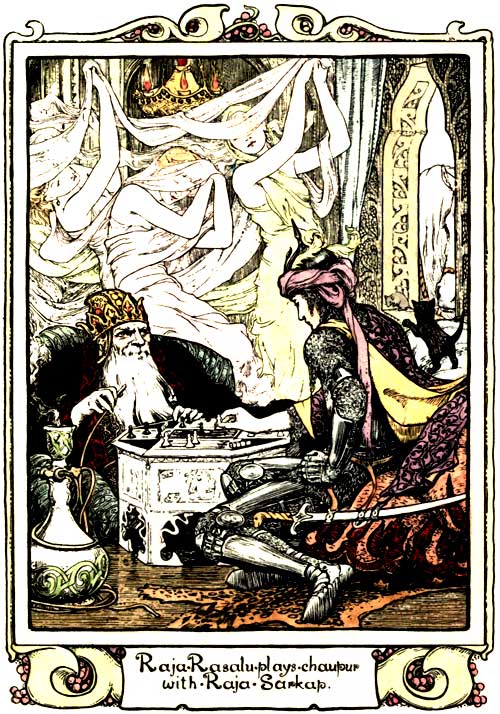
Source.—Steel-Temple, Wideawake Stories, pp. 247-80, omitting
"How Raja Rasalu was Born," "How Raja Rasalu's Friends Forsook Him,"
"How Raja Rasalu Killed the Giants," and "How Raja Rasalu became a
Jogi." A further version in Temple, Legends of Panjab, vol. i.
Chaupur, I should explain, is a game played by two players with
eight men, each on a board in the shape of a cross, four men to each
cross covered with squares. The moves of the men are decided by the
throws of a long form of dice. The object of the game is to see which
of the players can first move all his men into the black centre square
of the cross (Temple, l. c., p. 344, and Legends of Panjab, i.
243-5). It is sometimes said to be the origin of chess.
Parallels.—Rev. C. Swynnerton, "Four Legends about Raja Rasalu," in
Folk-Lore Journal, p. 158 seq., also in separate book much
enlarged, The Adventures of Raja Rasalu, Calcutta, 1884. Curiously
enough, the real interest of the story comes after the end of our part
of it, for Kokilan, when she grows up, is married to Raja Rasalu, and
behaves as sometimes youthful wives behave to elderly husbands. He
gives her her lover's heart to eat, à la Decameron, and she dashes
herself over the rocks. For the parallels of this part of the legend
see my edition of Painter's Palace of Pleasure, tom. i. Tale 39, or,
better, the Programm of H. Patzig, Zur Geschichte der Herzmäre
(Berlin, 1891). Gambling for life occurs in Celtic and other
folk-tales; cf. my List of Incidents, s. v. "Gambling for Magic
Objects."
Remarks.—Raja Rasalu is possibly a historic personage, according to
Capt. Temple, Calcutta Review, 1884, p. 397, flourishing in the
eighth or ninth century. There is a place called Sirikap ka-kila in
the neighbourhood of Sialkot, the traditional seat of Rasalu on the
Indus, not far from Atlock.
Herr Patzig is strongly for the Eastern origin of the romance, and
finds its earliest appearance in the West in the Anglo-Norman
troubadour, Thomas' Lai Guirun, where it becomes part of the Tristan
cycle. There is, so far as I know, no proof of the earliest part of
the Rasalu legend (our part) coming to Europe, except the existence
of the gambling incidents of the same kind in Celtic and other
folk-tales.
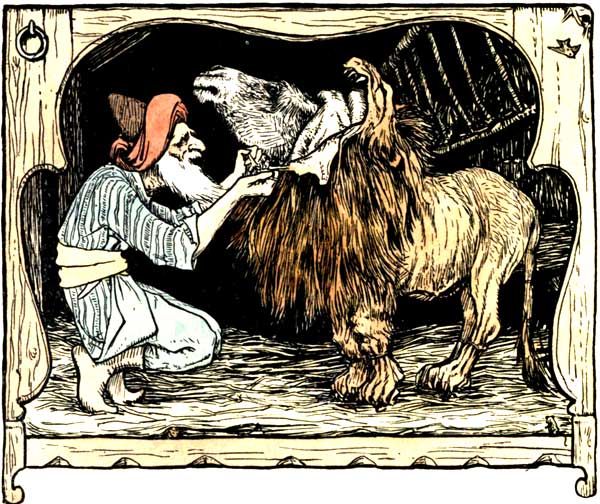
Source.—The Sīha Camma Jātaka, Fausböll, No. 189, trans.
Rhys-Davids, pp. v. vi.
Parallels.—It also occurs in Somadeva, Katha Sarit Sagara, ed.
Tawney, ii. 65, and n. For Æsopic parallels cf. my Æsop, Av. iv.
It is in Babrius, ed. Gitlbaur, 218 (from Greek prose Æsop, ed. Halm,
No. 323), and Avian, ed. Ellis, 5, whence it came into the modern
Æsop.
Remarks.—Avian wrote towards the end of the third century, and put
into Latin mainly those portions of Babrius which are unparalleled by
Phædrus. Consequently, as I have shown, he has a much larger
proportion of Eastern elements than Phædrus. There can be little doubt
that the Ass in the Lion's Skin is from India. As Prof. Rhys-Davids
remarks, the Indian form gives a plausible motive for the masquerade
which is wanting in the ordinary Æsopic version.
Source.—Steel-Temple, Wideawake Stories, pp. 215-8.
Parallels enumerated in my Æsop, Av. xvii. See also Jacques de
Vitry, Exempla, ed. Crane, No. 196 (see notes, p. 212), and Bozon,
Contes moralisés, No. 112. It occurs in Avian, ed. Ellis, No. 22.
Mr. Kipling has a very similar tale in his Life's Handicap.
Remarks.—Here we have collected in modern India what one cannot
help thinking is the Indian original of a fable of Avian. The
preceding number showed one of his fables existing among the Jatakas,
probably before the Christian era. This makes it likely that we shall
find an earlier Indian original of the fable of the Avaricious and
Envious, perhaps among the Jatakas still untranslated.
Source.—Miss Stokes' Indian Fairy Tales, No. 20, pp. 119-137.
Parallels to heroes and heroines in European fairy tales, with stars
on their foreheads, are given with some copiousness in Stokes, l.
c., pp. 242-3. This is an essentially Indian trait; almost all Hindus
have some tribal or caste mark on their bodies or faces. The choice of
the hero disguised as a menial is also common property of Indian and
European fairy tales: see Stokes, l. c., p. 231, and my List of
Incidents (s. v. "Menial Disguise.")
Source.—Kindly communicated by Mr. M. L. Dames from his unpublished
collection of Baluchi tales.
Remarks.—Unholy fakirs are rather rare. See Temple, Analysis, I.
ii. a, p. 394.
Source.—Knowles, Folk-Tales of Kashmir, pp. 484-90.
Parallels.—The latter part is the formula of the Clever Lass who
guesses riddles. She has been bibliographised by Prof. Child, Eng.
and Scotch Ballads, i. 485; see also Benfey, Kl. Schr. ii. 156
seq. The sex test at the end is different from any of those
enumerated by Prof. Köhler on Gonzenbach, Sezil. Mähr. ii. 216.
Remarks.—Here we have a further example of a whole formula, or
series of incidents, common to most European collections, found in
India, and in a quarter, too, where European influence is little
likely to penetrate. Prof. Benfey, in an elaborate dissertation ("Die
Kluge Dirne," in Ausland, 1859, Nos. 20-25, now reprinted in Kl.
Schr. ii. 156 seq.), has shown the wide spread of the theme both in
early Indian literature (though probably there derived from the folk)
and in modern European folk literature.
Source.—The Pancāvudha-Jātaka, Fausböll, No. 55, kindly
translated for this book by Mr. W. H. D. Rouse, of Christ's College,
Cambridge. There is a brief abstract of the Jataka in Prof. Estlin
Carpenter's sermon, Three Ways of Salvation, 1884, p. 27, where my
attention was first called to this Jataka.
Parallels.—Most readers of these Notes will remember the central
episode of Mr. J. C. Harris' Uncle Remus, in which Brer Fox, annoyed
at Brer Rabbit's depredations, fits up "a contrapshun, what he calls a
Tar Baby." Brer Rabbit, coming along that way, passes the time of day
with Tar Baby, and, annoyed at its obstinate silence, hits it with
right fist and with left, with left fist and with right, which
successively stick to the "contrapshun," till at last he butts with
his head, and that sticks too, whereupon Brer Fox, who all this time
had "lain low," saunters out, and complains of Brer Rabbit that he is
too stuck up. In the sequel Brer Rabbit begs Brer Fox that he may
"drown me as deep ez you please, skin me, scratch out my eyeballs,
t'ar out my years by the roots, en cut off my legs, but do don't fling
me in dat brier patch;" which, of course, Brer Fox does, only to be
informed by the cunning Brer Rabbit that he had been "bred en bawn in
a brier patch." The story is a favourite one with the negroes: it
occurs in Col. Jones' Negro Myths of the Georgia Coast (Uncle Remus
is from S. Carolina), also among those of Brazil (Romero, Contos do
Brazil), and in the West Indian Islands (Mr. Lang, "At the Sign of
the Ship," Longman's Magazine, Feb. 1889). We can trace it to
Africa, where it occurs in Cape Colony (South African Folk-Lore
Journal, vol. i.).
Remarks.—The five-fold attack on the Demon and the Tar Baby is so
preposterously ludicrous that it cannot have been independently
invented, and we must therefore assume that they are causally
connected, and the existence of the variant in South Africa clinches
the matter, and gives us a landing-stage between India and America.
There can be little doubt that the Jataka of Prince Five Weapons came
to Africa, possibly by Buddhist missionaries, spread among the
negroes, and then took ship in the holds of slavers for the New World,
where it is to be found in fuller form than any yet discovered in the
home of its birth. I say Buddhist missionaries, because there is a
certain amount of evidence that the negroes have Buddhistic symbols
among them, and we can only explain the identification of Brer Rabbit
with Prince Five Weapons, and so with Buddha himself, by supposing the
change to have originated among Buddhists, where it would be quite
natural. For one of the most celebrated metempsychoses of Buddha is
that detailed in the Sasa Jātaka (Fausböll, No. 316, tr. R.
Morris, Folk-Lore Journal, ii. 336), in which the Buddha, as a hare,
performs a sublime piece of self-sacrifice, and as a reward is
translated to the moon, where he can be seen to this day as "the hare
in the moon." Every Buddhist is reminded of the virtue of
self-sacrifice whenever the moon is full, and it is easy to understand
how the Buddha became identified as the Hare or Rabbit. A striking
confirmation of this, in connection with our immediate subject, is
offered by Mr. Harris' sequel volume, Nights with Uncle Remus. Here
there is a whole chapter (xxx.) on "Brer Rabbit and his famous Foot,"
and it is well known how the worship of Buddha's foot developed in
later Buddhism. No wonder Brer Rabbit is so 'cute: he is nothing less
than an incarnation of Buddha. Among the Karens of Burmah, where
Buddhist influence is still active, the Hare holds exactly the same
place in their folk-lore as Brer Rabbit among the negroes. The sixth
chapter of Mr. Smeaton's book on them is devoted to "Fireside
Stories," and is entirely taken up with adventures of the Hare, all of
which can be parallelled from Uncle Remus.
Curiously enough, the negro form of the five-fold attack—"fighting
with five fists," Mr. Barr would call it—is probably nearer to the
original legend than that preserved in the Jataka, though 2000 years
older. For we may be sure that the thunderbolt of Knowledge did not
exist in the original, but was introduced by some Buddhist Mr. Barlow,
who, like Alice's Duchess, ended all his tales with: "And the moral of
that is——" For no well-bred demon would have been taken in by so
simple a "sell" as that indulged in by Prince Five-Weapons in our
Jataka, and it is probable, therefore, that Uncle Remus preserves a
reminiscence of the original Indian reading of the tale. On the other
hand, it is probable that Carlyle's Indian god with the fire in his
belly was derived from Prince Five-Weapons.
The negro variant has also suggested to Mr. Batten an explanation of
the whole story which is extremely plausible, though it introduces a
method of folk-lore exegesis which has been overdriven to death. The
Sasa Jātaka identifies the Brer Rabbit Buddha with the hare in
the moon. It is well known that Easterns explain an eclipse of the
moon as due to its being swallowed up by a Dragon or Demon. May not,
asks Mr. Batten, the Pancavudha Jātaka be an idealised account of
an eclipse of the moon? This suggestion receives strong confirmation
from the Demon's reference to Rahu, who does, in Indian myth swallow
the moon at times of eclipse. The Jataka accordingly contains the
Buddhist explanation why the moon—i.e. the hare in the moon, i.e.
Buddha—is not altogether swallowed up by the Demon of Eclipse, the
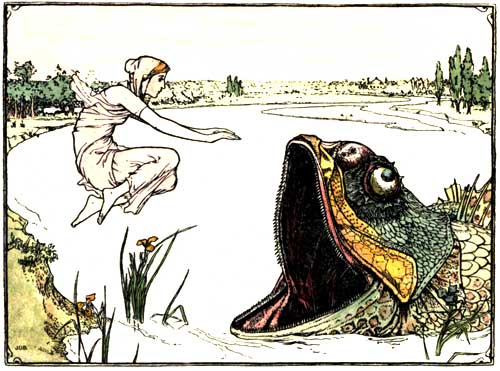
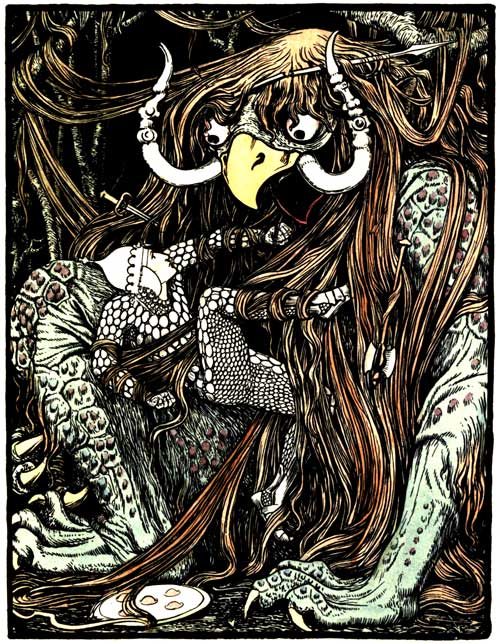
Demon with the Matted Hair. Mr. Batten adds that in imagining what
kind of Demon the Eclipse Demon was, the Jataka writer was probably
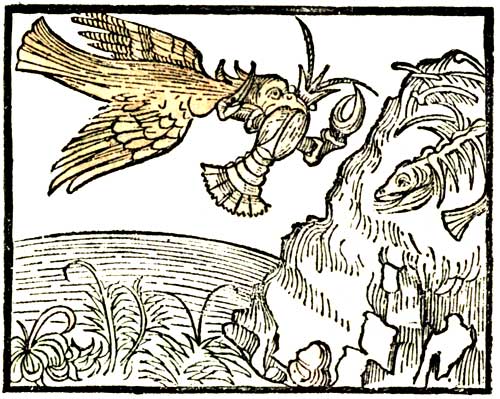
aided by recollections of some giant octopus, who has saucer eyes and
a kind of hawk's beak, knobs on its "tusks," and a very variegated
belly (gasteropod). It is obviously unfair of Mr. Batten both to
illustrate and also to explain so well the Tar Baby Jataka—taking the
scientific bread, so to speak, out of a poor folk-lorist's mouth—but
his explanations seem to me so convincing that I cannot avoid
including them in these Notes.
I am, however, not so much concerned with the original explanation of
the Jataka as to trace its travels across the continents of Asia,
Africa, and America. I think I have done this satisfactorily, and will
have thereby largely strengthened the case for less extensive travels
of other tales. I have sufficient confidence of the method employed to
venture on that most hazardous of employments, scientific prophecy. I
venture to predict that the Tar Baby story will be found in Madagascar
in a form nearer the Indian than Uncle Remus, and I will go further,
and say that it will not be found in the grand Helsingfors
collection of folk-tales, though this includes 12,000, of which 1000
are beast-tales.
Source.—Knowles, Folk-Tales of Kashmir, pp. 211-25, with some
slight omissions. Gulizar is Persian for rosy-cheeked.
Parallels.—Stokes, Indian Fairy Tales, No. 27. "Panwpatti Rani,"
pp. 208-15, is the same story. Another version in the collection
Baital Pachisi, No. 1.
Remarks.—The themes of love by mirror, and the faithful friend, are
common European, though the calm attempt at poisoning is perhaps
characteristically Indian, and reads like a page from Mr. Kipling.
Source.—Miss Frere, Old Deccan Days, No. 10, pp. 153-5.
Remarks.—Miss Frere observes that she has not altered the
traditional mode of the Moon's conveyance of dinner to her mother the
Star, though it must, she fears, impair the value of the story as a
moral lesson in the eyes of all instructors of youth.
Source.—Knowles. Folk-Tales of Kashmir, pp. 241-2.
Parallels.—A Gaelic parallel was given by Campbell in Trans.
Ethnol. Soc., ii. p. 336; an Anglo-Latin one from the Middle Ages by
T. Wright in Latin Stories (Percy Soc.), No. 26; and for these and
points of anthropological interest in the Celtic variant see Mr.
Gomme's article in Folk-Lore, i. pp. 197-206, "A Highland Folk-Tale
and its Origin in Custom."
Remarks.—Mr. Gomme is of opinion that the tale arose from certain
rhyming formulæ occurring in the Gaelic and Latin tales as written on
a mallet left by the old man in the box opened after his death. The
rhymes are to the effect that a father who gives up his wealth to his
children in his own lifetime deserves to be put to death with the
mallet. Mr. Gomme gives evidence that it was an archaic custom to put
oldsters to death after they had become helpless. He also points out
that it was customary for estates to be divided and surrendered during
the owners' lifetime, and generally he connects a good deal of
primitive custom with our story. I have already pointed out in
Folk-Lore, p. 403, that the existence of the tale in Kashmir without
any reference to the mallet makes it impossible for the rhymes on the
mallet to be the source of the story. As a matter of fact, it is a
very embarrassing addition to it, since the rhyme tells against the
parent, and the story is intended to tell against the ungrateful
children. The existence of the tale in India renders it likely enough
that it is not indigenous to the British Isles, but an Oriental
importation. It is obvious, therefore, that it cannot be used as
anthropological evidence of the existence of the primitive customs to
be found in it. The whole incident, indeed, is a striking example of
the dangers of the anthropological method of dealing with folk-tales
before some attempt is made to settle the questions of origin and
diffusion.
Source.—The Lola Jātaka, Fausböll, No. 274, kindly translated
and slightly abridged for this book by Mr. W. H. D. Rouse.
Remarks.—We began with an animal Jataka, and may appropriately
finish with one which shows how effectively the writers of the Jatakas
could represent animal folk, and how terribly moral they invariably
were in their tales. I should perhaps add that the Bodhisat is not
precisely the Buddha himself but a character which is on its way to
becoming perfectly enlightened, and so may be called a future Buddha.
 Indian Fairy Tales