Dawson, Yukon Territory,
Thursday, September 10, 1903.
}
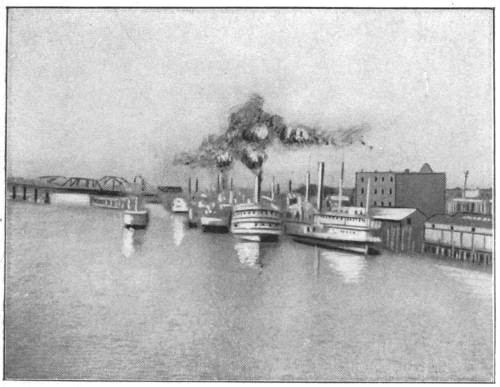
We came in on Tuesday afternoon, the steamer “White Horse” having had an
unusually good run. As we descended the river the stream grew larger,
wider, with more water, and when we passed the White River the blue
water there changed to a muddy white, discolored by the turgid, whitish
tide of that stream. It must flow somewhere through beds of the white
volcanic ash, that for so many miles marks the banks of the Yukon with
its threadlike white line a foot or two below the surface soil.
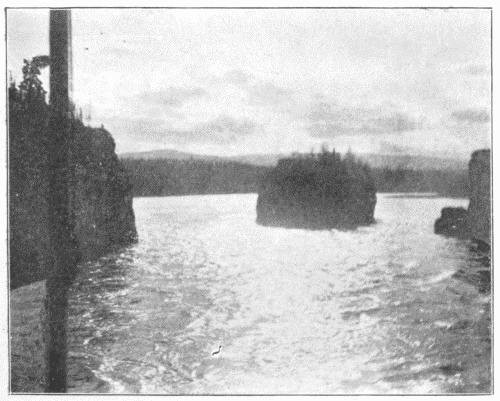
As we passed the swift water of Klondike shoals and rounded in toward
the landing, our own hoarse whistle was replied to by several steamers
lying at the various wharfboats. We were ahead of time;—our arrival was
an event.
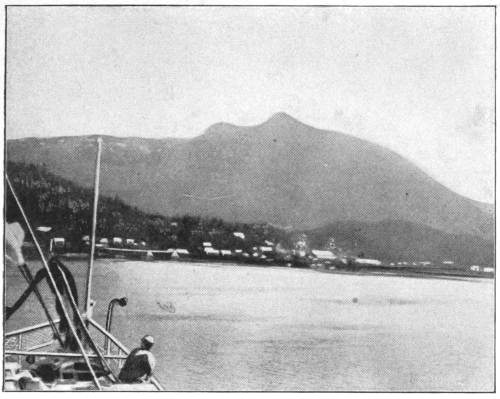
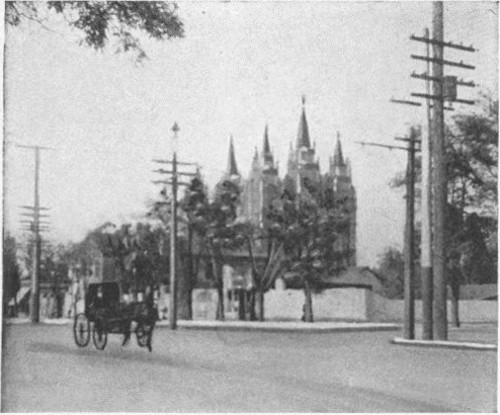
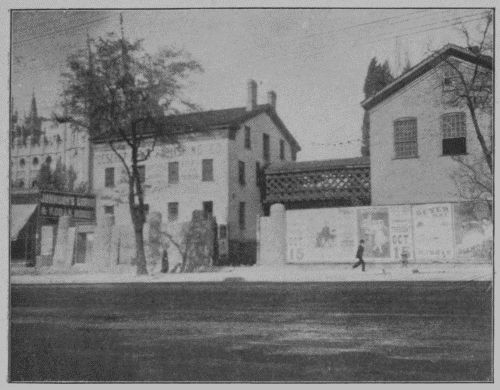
The town lies well, upon a wide bottom, and now begins to climb the back
hill to a secondary flat. It is laid off with wide streets, the chief of
which are graveled and fairly kept. There are a few brick buildings, but
most are of wood, here and there an old-time (six years old) log
building appearing among the more modern ones built of sawed lumber—for
logs are now too precious and too costly to squander.
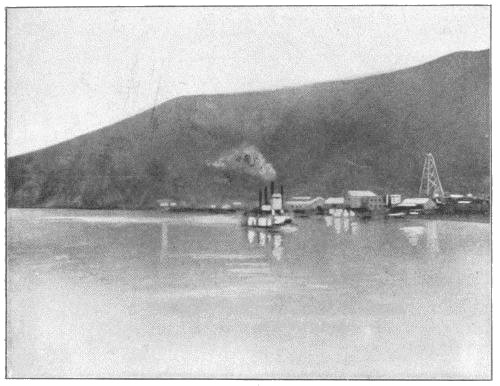
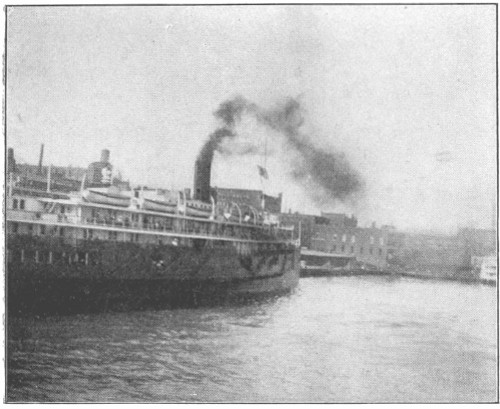
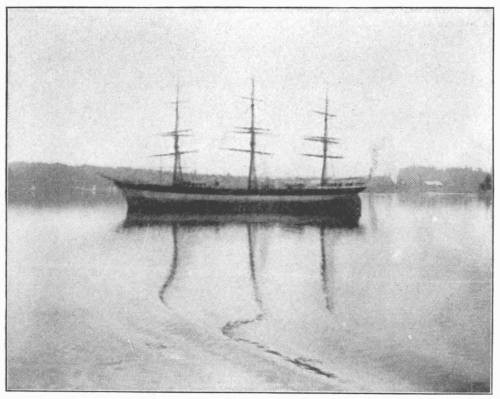
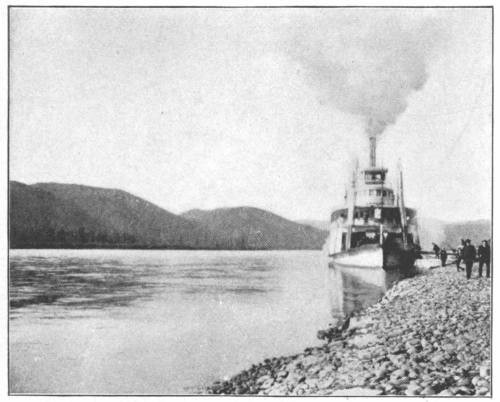
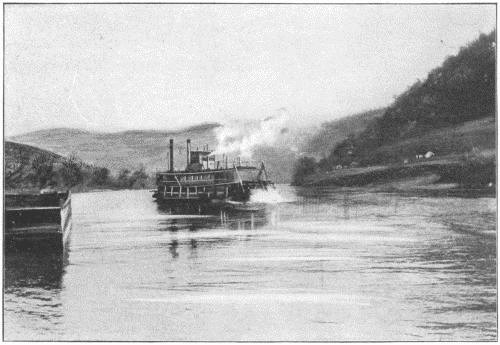
THE “SARAH” ARRIVING AT DAWSON, 1,600 MILES UP FROM ST.
MICHAELS.
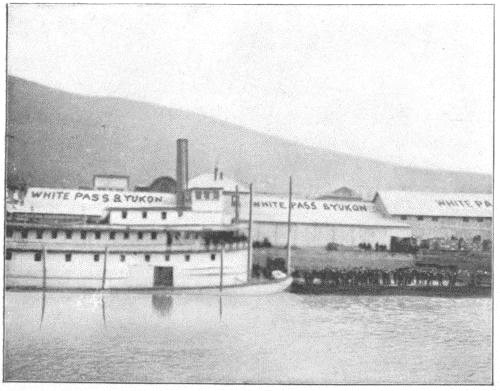
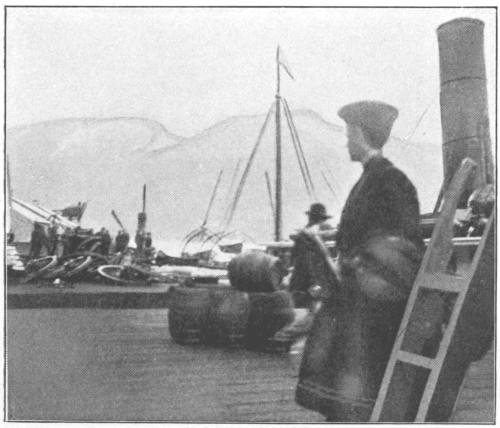
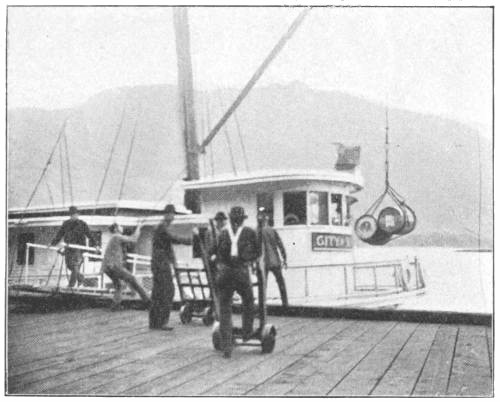
THE LEVEE, DAWSON. OUR STEAMER.
The town has telephones and electric lights, which latter must pay
finely when you realize that for nearly seven months darkness prevails
over day. There are two morning daily, and one evening daily newspapers,
with all Associated Press telegraphic news. I send you a copy of one of
them. Two banks handle the gold, buying the miners’ “dust” and doing a
thriving business.
There are half a dozen quite handsome churches, two hospitals,
government buildings, the “Governor’s Palace,” and a number of
residences that would do credit to any town. There are two large
sawmills near the mouth of the Klondike River, which is crossed by two
fine bridges, one iron and one wood. Of foundries and machine shops
there are many. The stores and shops are many of them pretentious and
filled with the most expensive high-class goods and wares—for, in the
first place, the gold miner is lavish, extravagant, and will only have
the very best, while it costs as much freight to bring in a cheap
commodity as an expensive one. You can buy as handsome things here as in
San Francisco or New York, if you don’t mind the price. The daily
newspapers are sold by newsboys on the streets at 25 cents a copy. Fine
steaks and roasts, mutton and veal, are thirty-five to sixty-five cents
per pound. Chickens, $2.00 to $3.00 each. A glass of beer, twenty-five
cents.
Some elegant drags and victorias, with fine horses, as well as many
superb draft horses, are seen on the streets. It only pays to have the
best horses; a scrub costs as much to bring in and to keep as a good
one, and hay is $60.00 to $150.00 per ton, and oats are sold by the
pound, sometimes $1.00 per pound. Cows’ milk is an expensive luxury at
the restaurants, and various canned goods form the staple of life.
Many large steamboats ply on the Yukon, and those running down to St.
Michael, 1,800 miles below, are of the finest Mississippi type, and are
run by Mississippi captains and pilots. We shall go down on one of
these, the “Sarah,” belonging to the “Northern Commercial Company,” one
of the two great American trading companies. Also large towboats push
huge freight barges up and down the river.
Several six-horse stage lines run many times a day to the various mining
camps up and adjacent to the Klondike Valley, which is itself now
settled and worked for one hundred and fifty miles from Dawson. Probably
thirty to thirty-five thousand people are at work in these various
diggings, and trade and spend in Dawson. Hence Dawson takes on
metropolitan airs, and considers herself the new metropolis of the far
north and Yukon Valley.
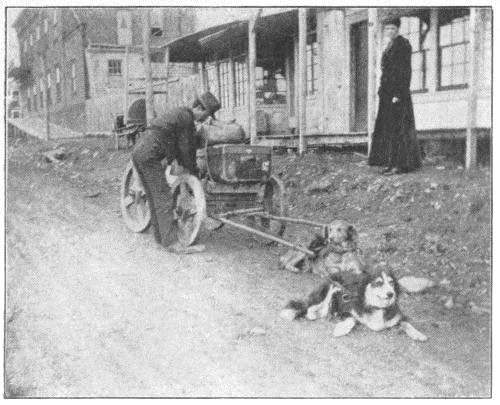
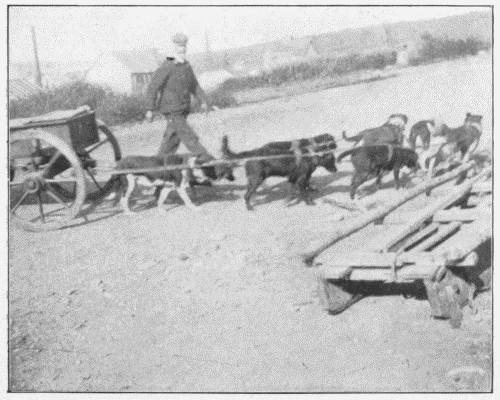
Two things strike the eye on first walking about the town. The multitude
of big, long-haired, wolflike-looking dogs, loafing about, and the
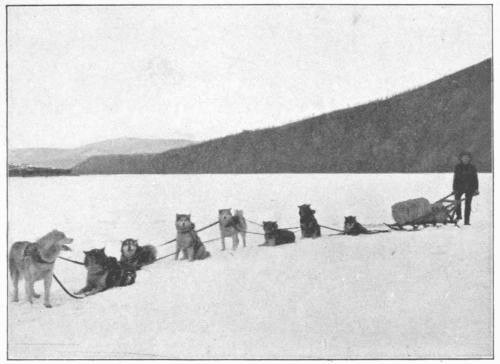
smallness of the neat dwelling-houses. The dogs play in the summer and
work untiringly through the long seven months of winter—a “dog’s life”
then means a volume. Small houses are easier to warm than big ones,
when fuel is scarce and wood $16, $20 and $50 per cord, and soft spruce
wood at that!
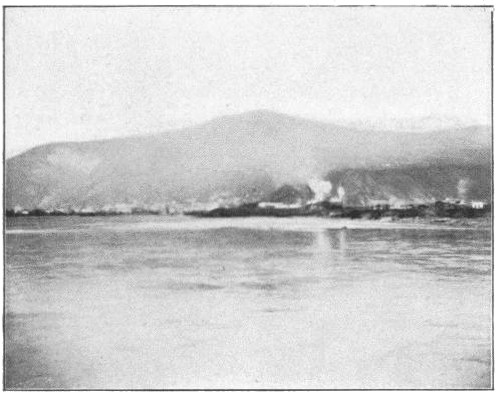
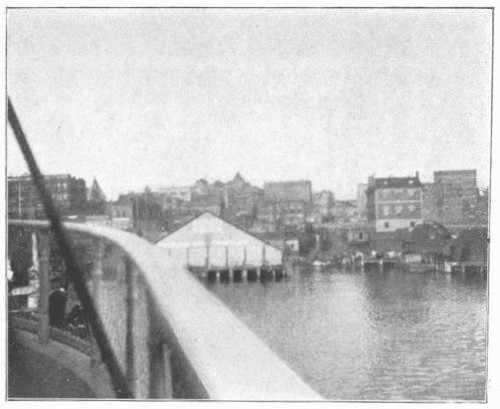
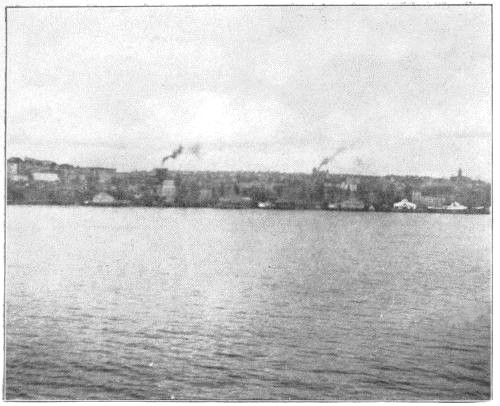
DAWSON CITY, THE YUKON—LOOKING DOWN.
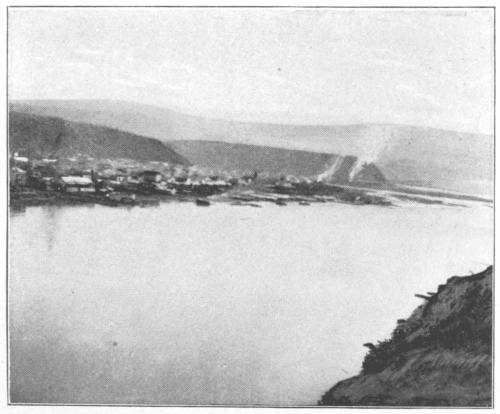
DAWSON AND MOUTH OF KLONDIKE RIVER, LOOKING UP.
But Dawson has an air of prosperity about it. The men and women are well
dressed, and have strong, keen faces. Many of them “mushed” across
Chilkoot Pass in 1897, and have made their piles. And they are ready to
stampede to any new gold field that may be discovered.
It is said that there are 6,000 people here, stayers, and then there is
a fluctuating horde of comers and goers, tenderfeet many of them. This
year eleven millions of dust has come into Dawson from the neighboring
diggings, and since 1897, they say, near a hundred millions have been
found! Many men and even women have made their millions and “gone out.”
Others have spent as much, and are starting in anew, and the multitude
all expect to have their piles within a year or two. A curious
aggregation of people are here come together, and from all parts! There
are very many whom you must not question as to their past. German
officers driven from their Fatherland, busted English bloods, many of
these in the Northwest Mounted Police, and titled ne’er-do-wells
depending upon the quarterly remittances from London, and Americans who
had rather not meet other fellow countrymen;—mortals who have failed to
get on in other parts of this earth, and who have come to hide for
awhile in these vast, solitary regions, strike it rich if possible and
get another start. And many of them do this very thing, hit upon new
fortunes, and sometimes, steadied by former adversity, lead new,
honorable careers; but most of the black sheep, if luck is kindly to
them, only plunge the deeper and more recklessly into vice and
dissipation. The town is full of splendid bar-rooms and gilded
gambling-hells. Two hundred thousand a night has been lost and won in
some of them.
I drove past a large, fine-looking man, but possessed of a weak,
dissipated mouth, on Eldorado Creek yesterday. His claim has been one of
the fabulously rich, a million or more out of a patch of gravel 1,000
feet by 250, and he has now drunk and gambled most of it away, divorced
a nice wife “in the States outside,” then married a notorious belle of
nether Dawson, and will soon again be back to pick and pan and dogs.
Another claim of like size on Bonanza Creek was pointed out to me where
two brothers have taken out over a million and a quarter since 1897, and
have been ruined by their luck. They have recklessly squandered every
nugget of their sudden riches in drunkenness and with cards and wine and
women to a degree that would put the ancient Californian days of ’49 in
the shade. On the other hand, there are such men as Lippy, who have made
their millions, saved and invested them wisely, and are regarded as
veritable pillars in their communities. Lippy has just given the
splendid Y. M. C. A. building to Seattle.
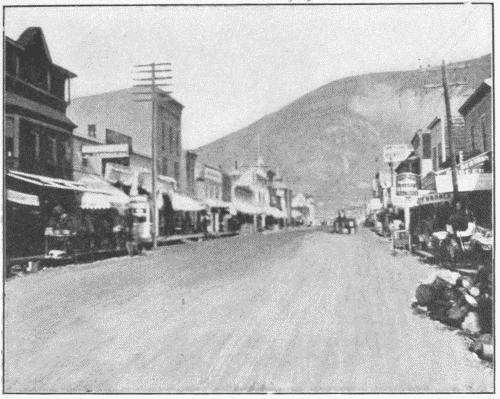
SECOND AVENUE, DAWSON.
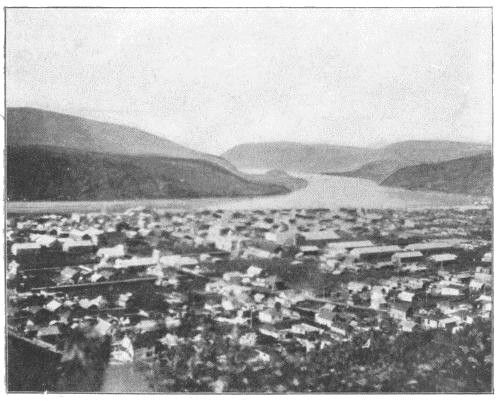
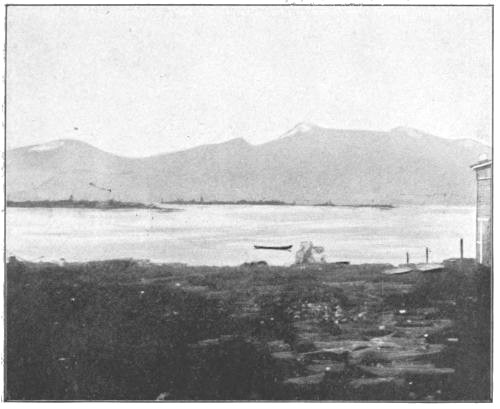
DAWSON—VIEW DOWN THE YUKON.
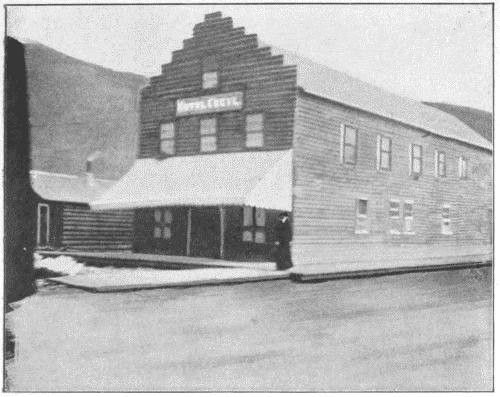
THE CECIL—THE FIRST HOTEL IN DAWSON.
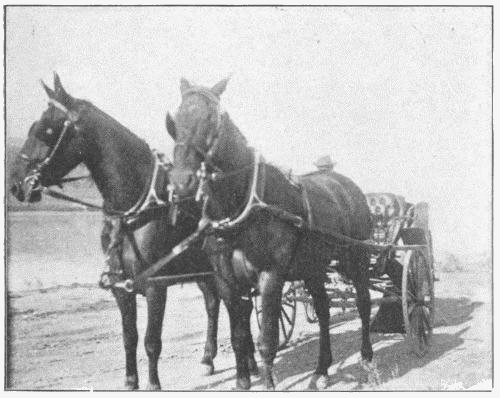
A PRIVATE CARRIAGE, DAWSON.
There is now much substantial wealth in Dawson and the Klondike. Most of
the large operations are in the hands of Americans, especially of the
American companies who have bought up the claims after the individual
miner, who just worked it superficially and dug out the cream, has sold
the skim milk. And even the major part of the original “stakers” seem to
have been Americans. There are many good people in Dawson among these.
Then, too, there is the body of Canadian officials who govern the
territory of Yukon—political henchmen of Laurier and the Liberal party,
many of them French Canadians. The governor himself and the chief of
these officials live here, and their families form the inner circle of
select society. Very anti-American they are said to be, and they do not
mix much with the Americans who, of equal or superior social standing at
home, here devote themselves to business and gold getting and let
Canadian society and politics altogether alone. But while the alert
American has been the first to stake, occupy and extract the wealth of
the Klondike, and while by his energy and tireless perseverance he has
made the Yukon Territory the greatest placer mining region of the world,
yet this acquirement of vast wealth by Americans has not really been
pleasing to the Canadians, nor to the government of Ottawa. So these
governing gentlemen in Ottawa have put their heads together to discover
how they, too, might profit, and especially profit, by the energy of the
venturesome American. How themselves secure the chestnuts after he had,
at peril of life and fortune, securely pulled the same out of the
fire—in this case, frightful frost and ice! And they hit upon this
plan: They resolved themselves into little groups, and the government
then began granting extensive and exclusive blanket concessions to these
groups. Just now a great row is on over some of these private concession
grants. One man, Treadgold by name, turns up and discovers himself to be
possessed of an exclusive blanket grant to all the water rights of the
Klondike Valley and its affluent creeks, as well as the exclusive right
to hold and work all gold-bearing land not already occupied, and also to
hold and have every claim already staked, or worked, which for any
reason may lapse to the crown either for non-payment of taxes or any
other reason, thus shutting out the individual miner from ever staking a
new claim within this region should he discover the gold, and from
taking up any lapsed claim, and from re-titling his own claim, should he
be careless and neglect to pay his annual taxes by the appointed day!
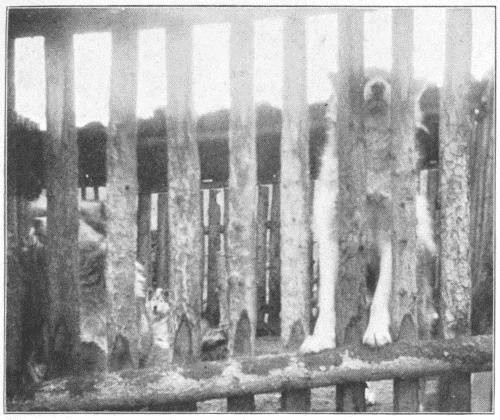
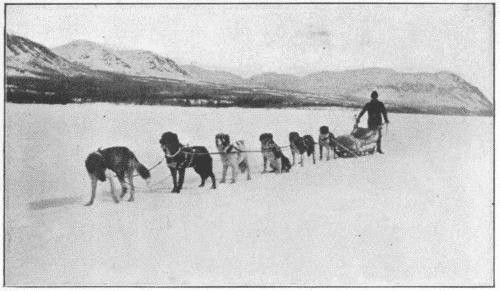
DOG CORRAL—THE FASTEST TEAM IN DAWSON.
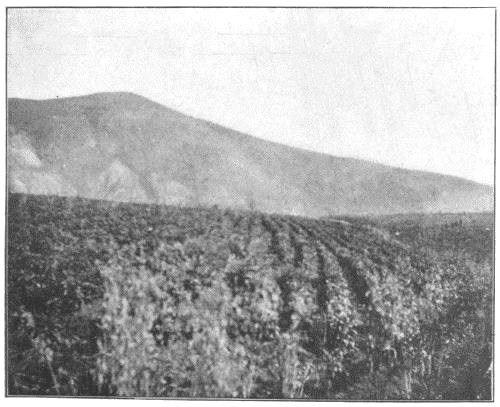
A POTATO PATCH AT DAWSON.
Another man, named Boyle, also appears with a similar concession
covering the famous Bonanza and Eldorado Creeks, where land is valued by
the inch, and millions beyond count have in these few years been dug
out. Such flagrant and audacious jobbery as the creation and granting of
these blanket concessions in the quiet of Ottawa, presents to the world,
has probably never before been witnessed, unless it be among the inner
circle of the entourage of the Russian Czar. These steals have been
so bold and unabashed that this entire mining region has risen as a unit
in angry protest. While the miner has been prospecting, discovering,
freezing, digging in these Arctic solitudes, the snug, smug politician
of Ottawa has fixed up a job to swipe the whole find should the
innocent, ignorant prospector happen to make one. So vigorous has been
the protest against these daring abuses of a government clique, that
this summer what is called a “Dominion Royal Commission”has been sent
here to investigate the situation. The papers are full of the matter.
The citizens have met in mass-meeting and unanimously joined in the
protest against the concessions, calling for their revocation, and
Judge—“Justice”—Britton, the head of the commission, is bitterly
denounced as a partisan here simply on a whitewashing trip to exculpate
Laurier and his friends. And the result of what has unquestionably been
crooked jobbery at Ottawa is said to be that hundreds of prospectors and
miners are moving out of the Yukon and into Alaska, where they say
“there is fair play,”and a man may have what he finds. What I here tell
you is the current talk in Dawson—quite unanimous talk—and I should
like to have heard the other side, if there is one.
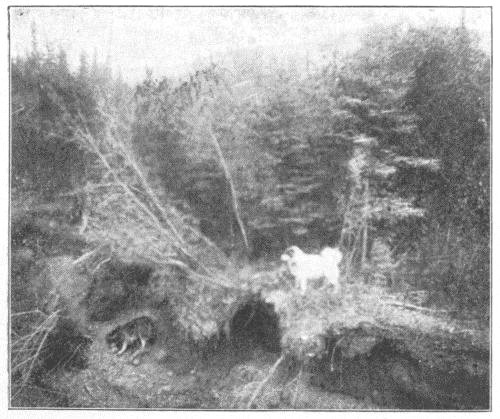
To-day H—— and I have been across the river to visit a characteristic
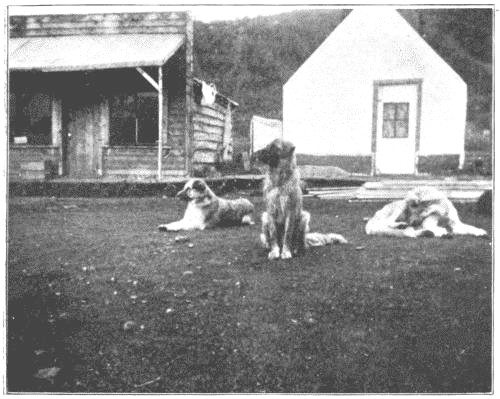
establishment of these far northern lands—a summer “dog ranch”—a place
where, during the summer months, the teams of “Huskies” and “Malamutes”
may be boarded and cared for till the working-time of winter comes
again. Here are some seventy-five dogs in large kennels of rough timber,
each team of six dogs having its own private kennel, with a large
central yard inside the tiers of pens, into which the whole pack are
turned once a day for exercise. We hoped to find the proprietor at home
and induce him to give his pets a scamper in the central yard, but he
was away. The only visitors besides ourselves were two strange dogs
which stood outside, running up and down the line and arousing the
entire seventy-five to one great chorus of barks and howls. Some of the
groups of dogs were superb. And two teams of Huskies—the true
Esquimaux—must have been worth their weight in gold—six
dogs—$1,000.00 at the very least. We tried to get some kodak shots, but
a cloudy sky and pine log bars made the result doubtful.
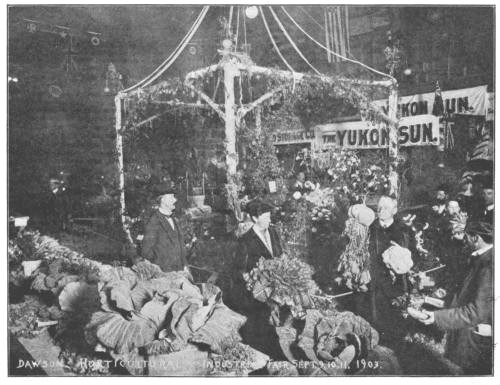
FIRST AGRICULTURAL FAIR HELD AT DAWSON—SEPTEMBER, 1903.
We have just returned from an evening at the first annual show of the
Dawson or Yukon “Horticultural Society.” The name itself is a surprise;
the display of vegetables particularly and flowers astonished me. The
biggest beets I have ever seen, the meaty substance all clear, solid,
firm and juicy. Potatoes, Early Rose and other varieties, some new kinds
raised from seed in three years—large, a pound or more in size. And
such cabbage, cauliflower and lettuce as you never saw before! Many
kinds, full-headed and able to compete with any produced anywhere. All
these raised in the open air on the rich, black bottom and bench land
of the Yukon. Squashes and also tomatoes, but these latter, some of
them, not fully ripened. Also a display of fine strawberries just now
ripe. We bought strawberries in the markets of Cristiania and Stockholm
upon the 12th and 13th of September, last year, and now we find a
superior ripe fruit here at just about the same degree of north
latitude. The wild currants, blueberries and raspberries with which
these northern latitudes abound are notorious. And the show of oats,
rye, barley, wheat and timothy and native grasses, as well as of red and
white clover, was notable, proving beyond a doubt that this Yukon region
is capable of raising varied and nutritious crops necessary for man’s
food and for the support of stock, horses and cattle. Already a good
many thrifty mortals, instead of losing themselves in the hunt for gold,
are quietly going into the raising of vegetables and hay and grain, and
get fabulous prices for what grows spontaneously almost in a night. And
the show of flowers grown in the open air would have delighted you. All
of these products of the soil have been grown in sixty or seventy days
from the planting of the seed, the almost perpetual sunlight of the
summer season forcing plant life to most astonishing growth.
September 11th.
Day before yesterday I took the six-horse stage up Bonanza Creek of the
Klondike and rode some thirteen miles over the fine government road to
“Discovery” claim, where a Cleveland (O.) company is using a dredge and
paying the Indian “Skookum Jim,” whose house we saw at Caribou, a
royalty that this year will place $90,000.00 to his credit, I am told.
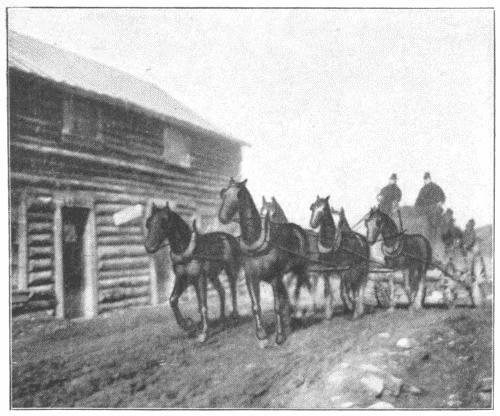
DAILY STAGE ON BONANZA.
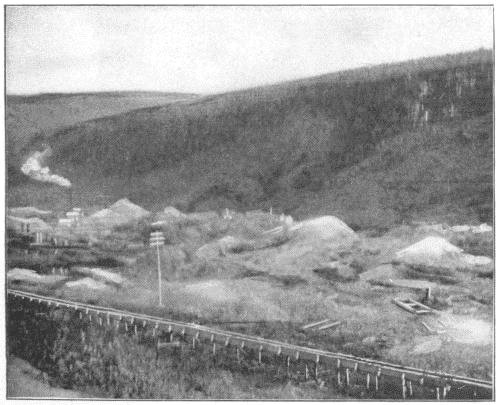
DISCOVERY CLAIM ON BONANZA OF THE KLONDIKE.
The Klondike is a large stream, about like Elk River of West Virginia,
rising two hundred miles eastward in the Rockies, where the summer’s
melting snow gives it a large flow of water. The valley is broad—a mile
or more. The hills are rolling and rounded, black soil, broad flats of
small firs and birches. Bonanza Creek, on which Skookum Jim and “Dawson
Charlie” and the white man, discovered the first gold in 1897, has
proved the richest placer mining patch of ground the world has ever
known. For a length of some twenty miles it is occupied by the several
claim-holders, who are working both in the creek bed and also ancient
river beds high up on the rolling hill slopes, a thing never known
before. Here the claims are larger than at Atlin, being 1,000 feet wide
and 250 feet up and down the creek. The claim where a discovery is made
is called “Discovery Claim,” and the others are named “No. 1 above” and
“No. 1 below,” “No. 2 above” and “No. 2 below,” etc., and so entered of
record. I had seen the dredge being built on Gold Run at Atlin. I wished
to see one working here. I found a young American named Elmer in charge,
and he showed me everything. Then he insisted that I dine with him, and
took me up to his snug cottage, where I was cordially greeted by his
American wife, and taken to the mess tent, where a Japanese cook set
a good dinner before us. Then Mrs. Elmer said that if I would like she
would be delighted to drive me still further up Bonanza, and up the
equally famous Eldorado Fork, and show me the more noted claims. Her
horse was a good one, and for nearly three hours we spanked along. At
“16 Eldorado below” I saw the yawning gravel pit from which $1,200,000
has already been taken out by the lucky owner. From “28 Eldorado above”
I saw where the pay gravel yielded another enormous sum. And all along
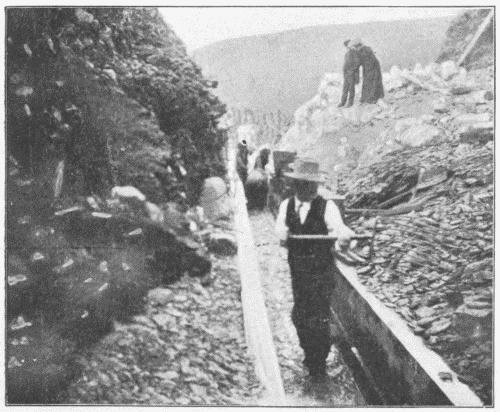
men were still digging, dumping, sluicing and getting gold. At “18
Bonanza above,” yet another particularly rich strike was shown me, and
at “28 Bonanza above,” working in the mud and gravel, were men already
enormously rich, who in 1897 owned nothing but their outfit. And up
along the hillsides, too, near the tops, were other gashes in the gravel
soil where gold in equally fabulous sums has been taken out and is still
being got, for all these rich sands are yet far from being worked out or
exhausted. The first mad rush is over. Men do not now merely pick out
the big nuggets, but are putting in improved machinery and saving the
finer dust. Along the roadside we also saw many men digging and
“rocking” for gold, who have leased a few square yards or an acre or two
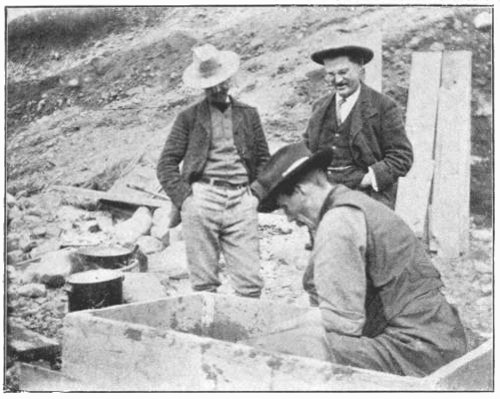
on a royalty and who are said to be “working a lay.” After our drive, I
caught the returning stage and came home in the long twilight.
To-day I have staged again twenty miles on to the famous Hunker Creek,
and then been driven further and home again by Mr. Orr, the owner of the
stage line, behind a team of swift bays, over another fine government
highway. I have looked at more machinery, steam shovels, hoist and
labor-saving apparatus, and seen more millions already made and in the
making. The present and potential wealth of this country almost
stupifies one, and dollars fall into the insignificance of dimes. The
traffic on these fine roads is also surprising. Substantial log “road
houses,” or inns, every mile or so, and frequently at even shorter
intervals, very many foot-farers traveling from place to place. Young
men with strong, resolute faces; bicycle riders trundling a pack
strapped to their handle-bars, and many six and eight span teams of big
mules and big horses hauling immense loads—sometimes two great
broad-tired wagons chained together in a train. Ten or twelve four and
six horse stages leave Dawson every day, and as many come in, carrying
passengers and mails to and from the many mining camps. In my stage
to-day behind me sat two Mormons, a man and a woman, who had never met
before, from Utah, and a woman from South Africa, the wife of an
expatriated Boer; a Swede who was getting rich and a French Canadian. My
host at dinner was from Montreal, a black-eyed, bulldog-jawed “habitan,”
whose heart warmed to me when I told him that my great grandmother, too,
was French from Quebec, and who thereupon walked me out to the barn
to see his eleven Malamute pups, and afterward insisted that I take a
free drink at his bar. I took a kodak of him with “mes enfants,” and
promised to send him a copy of the same.
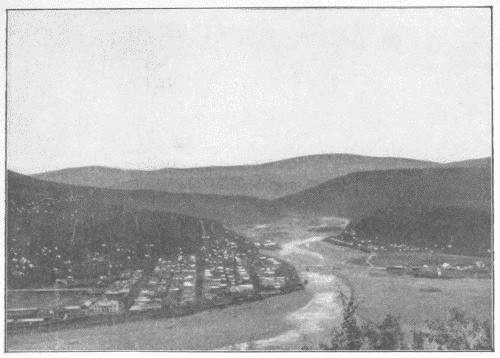
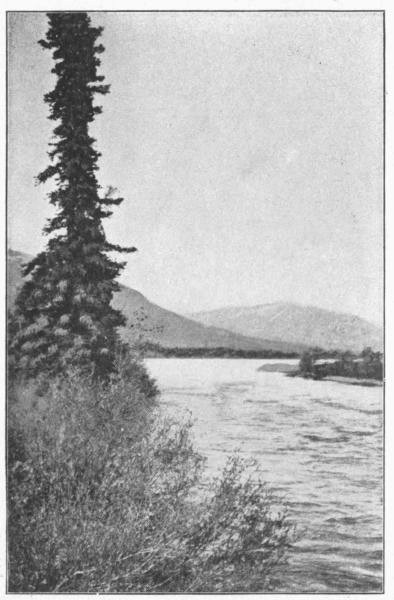
LOOKING UP THE KLONDIKE RIVER.
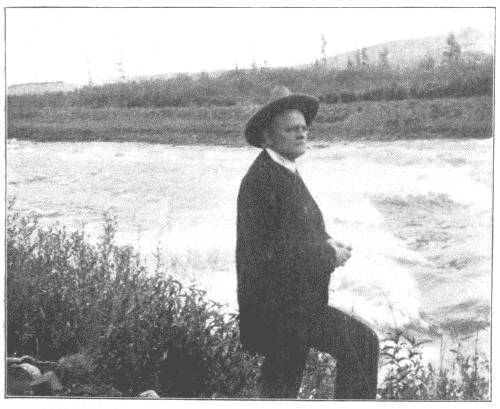
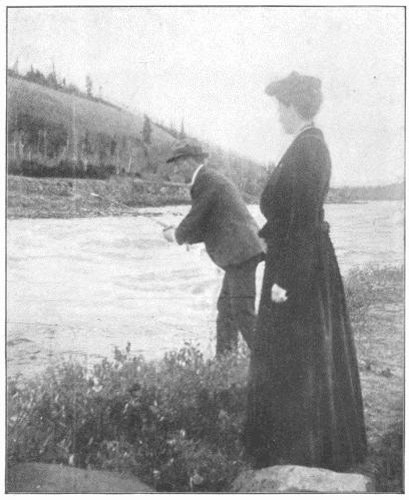
THE AUTHOR AT WHITE HORSE RAPIDS.
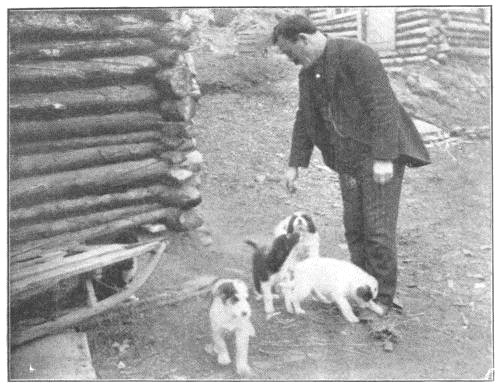
“MES ENFANTS” MALAMUTE PUPS.
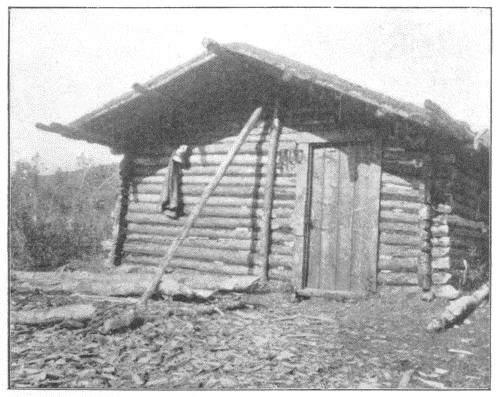
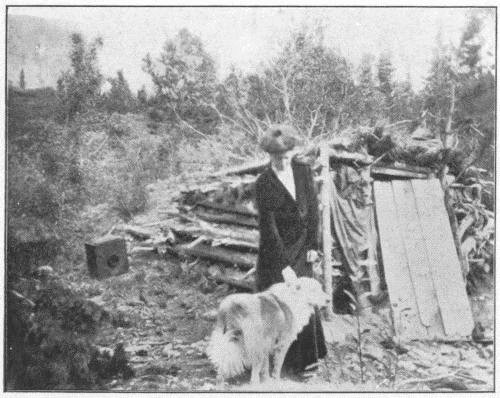
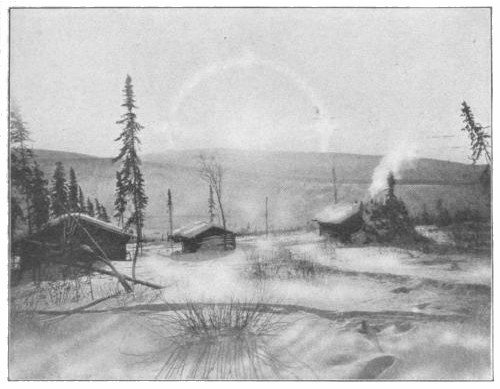
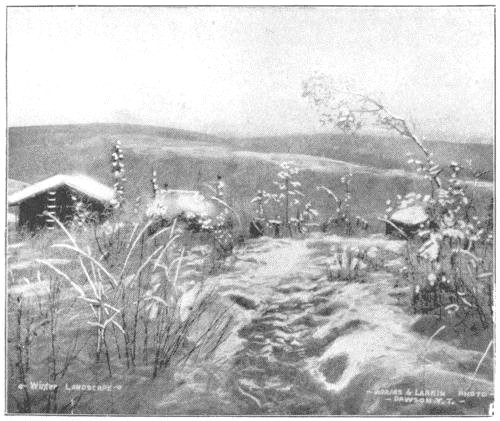
A KLONDIKE CABIN.
To-night I ventured out to try again the restaurant of our first
adventure. Sitting at a little table, I was soon joined by three
bright-looking men—one a “barrister,” one a mining engineer, one a
reporter. Result (1), an interview; (2), a pass to the fair; (3), my
dinner paid for, a 50-cent Havana cigar thrust upon me, and (4) myself
carried off to the said fair by two of its directors, and again shown
its fine display of fruits and grains and flowers and all its special
attractions by the management itself. In fact, the Dawsonite can not do
too much for the stranger sojourning in his midst.
Mercury 26 to 28 degrees every morning.
Before arriving in Dawson a big, rugged, government official had said to
me, “Go to the hotel —— and give my love to Mrs. ——. She has a red
head and a rich heart. She has cheered more stricken men than any woman
in the Yukon. She mushed through with her husband with the first
‘sourdoughs’ over the ice passes in ’97. She was a streak of sunshine
amidst the perils and heartaches of that terrible human treck. She runs
the only hotel worth going to in Dawson. You will be lucky to get into
it. Give her our love, the love of all of us. Tell her you’re our
friends, and maybe she will take you in.” So we were curious about this
woman who had dared so much, who had done so much, who was yet mistress
of the hearts of the rough, strong men of the Yukon. We went to her
hotel. We asked to see her. We were shown into a cosy, well-furnished
parlor. We might just as well have been in a home in Kanawha or New
York. We heard some orders given in a firm, low-pitched voice, a quick
step, Mrs. —— was before us. An agreeable presence, dignity, reserve,
force. Tall, very tall, but so well poised and proportioned you didn’t
notice it. A head broad browed and finely set on neck and shoulders.
Yes, the hair was red, Venetian red with a glimmer of sunshine in it. I
delivered the message straight. She received it coolly. “The house was
full, but she would have place for us before night. A party would leave
on the 4 P. M. stage for Dominion Creek. We should have his room. Dinner
would be served at seven.” The chamber was given us in due time. Plainly
furnished, but comfortable. The hotel is an immense log house, chinked
with moss and plaster, and paper lined, and all the partitions between
the rooms are also paper. But we are learning to talk in low voices,
and, between a little French and German and Danish, H. and I manage to
keep our secrets to ourselves, although of the private affairs of all
the other guests we shall soon be apprised.
The dining-room is large, the whole width of the house, in the center a
huge furnace stove from which radiate many large, hot pipes, where in
the long winter night-time is kept up a furious fire, and a cord of wood
is burned each day—and wood at $25 to $50 per cord! The guests sit at
many little tables. The linen is spotless. The china good English ware.
The fare is delicious. The cook is paid $300 per month, the maids $125,
with board thrown in. Delicate bacon from Chicago. Fresh eggs from Iowa.
Chickens from Oregon—no live chickens in Dawson. The first mushers
brought in a few, but the hawks and owls, the foxes and minks and other
varments devoured many of them, and the surviving ones, after waiting
around a week or two for the sun to set, went cackling crazy for lack of
sleep, and died of shattered nerves. Caribou steak and tenderloin of
moose we have at every meal. And to-day wild duck and currant jelly. The
ducks abound along the river, the currants grow wild all over the
mountain slopes. And such celery and lettuce and radishes and cabbage!
Potatoes, big and mealy, and turnips, and carrots, delicate and crisp,
all grown in the local gardens round about. Cabbage here sells at a
dollar a head and lettuce at almost as much. But you never ate the like.
White and hard as celery, so quickly do they grow in the nightless days!
Nowhere in all the world can you live so well as in Dawson, live if only
you have the “stuff.” Live if you can pay. We follow the habit of the
land and pay up in full after each meal. It is dangerous to trust the
stranger for his board. It is well for us we hold fast to this custom,
else we might not be able to leave the town—a regulation of the
government of the city—no man may leave with bills unpaid. So long as
he owes even a single dollar, he must remain! And the N. W. M. P. watch
the boats, the river and the mountain passes and enforce this law.
Our hostess takes good care of her guests. Very many young men working
for the larger commercial companies board here, all, who are allowed,
come for transient meals. And those who are homesick and down in spirit
come just for the sake of neighborship to the tall, well-gowned woman
whose invariable tact and sympathy, and often motherly tenderness, has
given new heart to many a lonely “chechaqua” (tenderfoot), so far away
from home!
In this dining-room, too, one sees a type not so often now met in our
own great country, but inherent to English methods. The permanent Chief
Clerk. The man whose career is to be forever a book-keeper or a clerk,
whose highest ambition is to be a book-keeper or a clerk just all his
life, and who will be trusted with the highest subordinate positions,
but will never be made a partner, however much he may merit it. London
is filled with such. The offices of the great British Commercial
companies are full of such the world round. Men who know their business
and attend to it faithfully, and whose lives are a round of precise
routine. Such men sit at tables all about us. In London every morning
the Times or Daily Telegraph is laid at their plates. Here the Yukon
Sun or Dawson Times is laid before them just the same, and they
gravely read the news of the world, while they sip their tea and munch
their cold toast, just as though they were “at home.” And they walk in
and out with the same stoop-shouldered shuffle gait one sees along the
Strand or Bishopsgate Street within, or Mansionhouse Square.
Our hostess greets each guest as he enters, and walks about among them
and says a cheery word to every one. One, on her left, has just now been
reading to her from a letter which tells of his mother in England, and,
I surmise, hints of a waiting sweetheart; and another, an Australian,
who is just going away on a prospecting trip far up the Stuart River, is
telling her what to write home for him in case he shall never come back.
The two other chief objects of interest in this dining-room, besides
Mrs. ——, are—her small boy of six, who is being greatly praised this
morning by all the company—he has just licked the big boy across the
street, who for a week or two has tried to bully him, on account of
which feat his mother is immensely proud—and a wonderful grey and white
cat that sits up and begs just like a prairie dog or a gopher. When a
kitten, pussy must have gone out and played with some of the millions of
gophers that inhabit every hillside, and learned from them how to
properly sit up. She visits each guest every morning and sits up and
folds her paws across her breast and mews so plaintively that no hand
can forbear giving her a tidbit.
“We were among the first. We came up from San Francisco in a waterlogged
schooner through the wash of ice and winter gales to Dyea, and then
mushed over Chilkoot Pass on snowshoes with the dogs. I shouldered my
pack like the men. And John—John would have backed out or died of
weariness, if I hadn’t told him that if he quit, I should come on in
just all the same. Yes! I carried my gun—I didn’t have to use it but
once or twice. Yes! We’ve done very well in Dawson, very well in the
Klondike, very well!” And a big diamond glinted as though to reenforce
the remark. She spoke rapidly, though easily, in crisp, curt sentences,
and you felt she had indeed “mushed” in, that frightful winter, over
those perilous snow and ice passes, just sure enough! As I looked into
her wide-open, brown eyes, I felt that I beheld there that spirit which
I have everywhere noted in the keen faces of the men and women of the
Yukon, the yet living spirit of the great West, of the West of half a
century ago; of Virginia and New England two hundred years ago; the
spirit which drove Drake and Frobisher and Captain Cook and their daring
mariners out from the little islands of our motherland to possess and
dominate the earth’s mysterious and unchartered seas; the spirit which
still makes the name American stand for energy and power and
accomplishment in all the world; the spirit, shall I say, which gives
the future of the earth to the yet virile Anglo-Saxon race.