O say, can you see by the dawn’s early light,
What so proudly we hailed at the twilight’s last gleaming?
Whose broad stripes and bright stars through the perilous fight,
O’er the ramparts we watched, were so gallantly streaming!
And the rocket’s red glare,
The bombs bursting in air,
Gave proof through the night that our flag was still there;
O say, does that star-spangled banner yet wave
O’er the land of the free and the home of the brave?
On that shore, dimly seen through the mists of the deep,
Where the foe’s haughty host in dread silence reposes,
What is that which the breeze, o’er the towering steep,
As it fitfully blows now conceals, now discloses?
Now it catches the gleam
Of the morning’s first beam,
In full glory reflected now shines on the stream;
’Tis the star-spangled banner! Oh, long may it wave
O’er the land of the free and the home of the brave!
And where is that band who so vauntingly swore
That the havoc of war and the battle’s confusion
A home and a country should leave us no more?
Their blood has washed out their foul footsteps’ pollution.
No refuge could save
The hireling and slave
From the terror of flight or the gloom of the grave;
And the star-spangled banner in triumph doth wave
O’er the land of the free and the home of the brave!
Oh, thus be it ever when freemen shall stand
Between their loved homes and the war’s desolation!
Blessed with victory and peace, may the heaven-rescued land
Praise the Power that hath made and preserved us a nation.
Then conquer we must,
When our cause it is just,
And this be our motto—“In God is our trust:”
And the star-spangled banner in triumph shall wave
O’er the land of the free and the home of the brave!
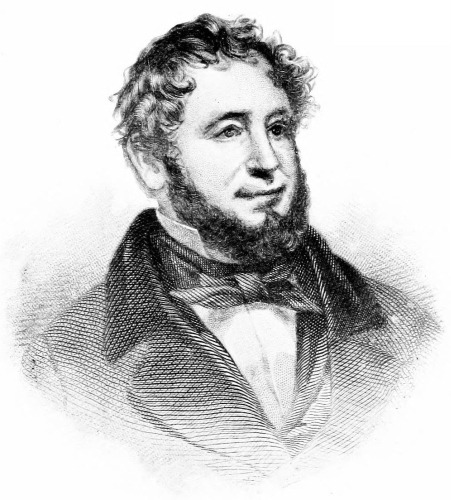
—Francis Scott Key.
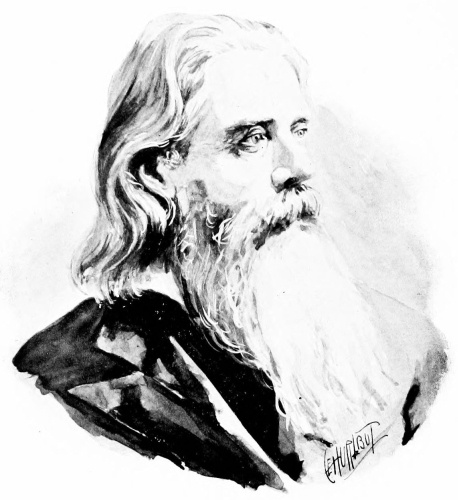
No song could have had a more inspiring source of creation than did
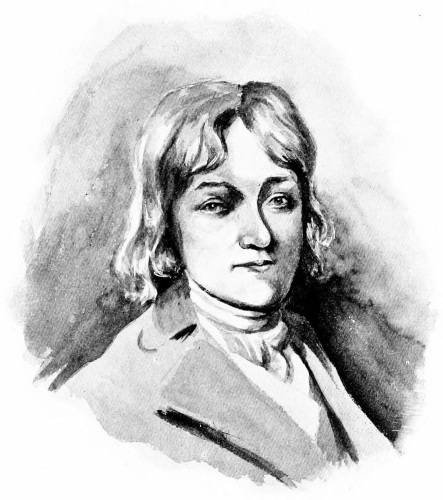
this. Its author, Mr. Francis Scott Key, was a young lawyer who left
Baltimore in September, 1814, while the war of 1812 was yet going on,
and under a flag of truce visited the British fleet for the purpose of
obtaining the release of a friend of his, a certain Doctor Beanes, who
had been captured at Marlborough. After his arrival at the fleet he was
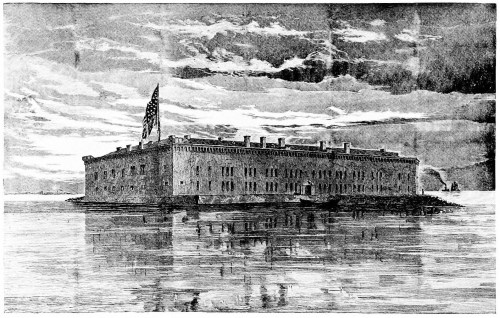
compelled to remain with it during the bombardment of Fort McHenry, as
the officers were afraid to permit him to land lest he should disclose
the purposes of the British. Mr. Key remained on deck all night,
watching every shell from the moment it was fired until it fell, and
listening with breathless interest to hear if an explosion followed. The
firing suddenly ceased before day, but from the position of the ship he
could not discover whether the fort had surrendered or the attack had
been abandoned. He paced the deck for the remainder of the night in
painful suspense, watching with intense anxiety for the return of day,
and looking every few minutes at his watch to see how long he must wait
for it; and as soon as it dawned, and before it was light enough to see
objects at a distance, his glass was turned to the fort, uncertain
whether he should see there the Stars and Stripes or the flag of the
enemy. At length the light came, and he saw that “our flag was still
there;” and as the day advanced he discovered from the movement of the
boats between the shore and the fleet that the English troops had been
defeated, and that many wounded men were being carried to the ships. At
length Mr. Key was informed that the attack on Baltimore had failed, and
he with his friend was permitted to return home, while the hostile
fleet sailed away, leaving the Star-Spangled Banner still waving from
Fort McHenry.
During the intense anxiety of waiting for dawn, Mr. Key had conceived
the idea of the song and had written some lines, or brief notes that
would aid him in calling them to mind, upon the back of a letter which
he happened to have in his pocket. He finished the poem in the boat on
his way to the shore, and finally corrected it, leaving it as it now
stands, at the hotel, on the night he reached Baltimore, and immediately
after he arrived. The next morning he took it to Judge Nicholson, the
chief justice of Maryland, to ask him what he thought of it; and he was
so pleased with it that he immediately sent it to the printer, Benjamin
Edes, and directed copies to be struck off in handbill form. In less
than an hour after it was placed in the hands of the printer it was all
over the town, and hailed with enthusiasm, and at once took its place in
the national songs. The first newspaper that printed it was the
American, of Baltimore.
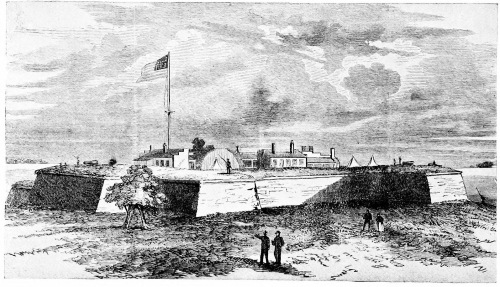
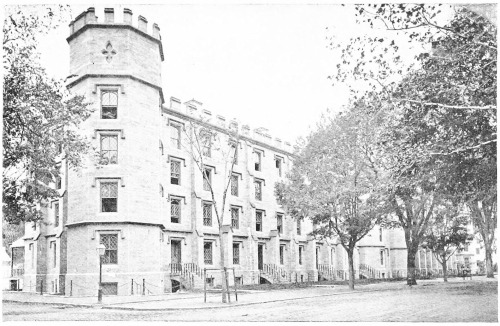
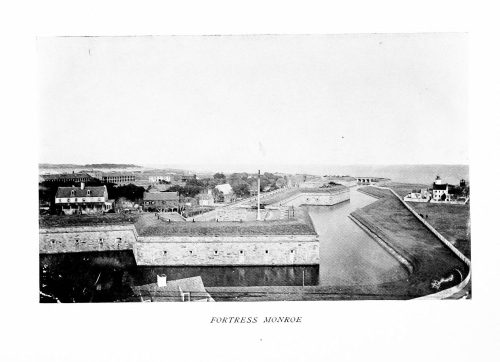
FORT McHENRY
The tune, which has helped so much to make it famous, also had an
interesting selection. Two brothers, Charles and Ferdinand Durang, were
actors at the Holliday Street Theater in Baltimore, but were also
soldiers. A copy of Francis Key’s poem came to them in camp; it was read
aloud to a company of the soldiers, among whom were the Durang
brothers. All were inspired by the pathetic eloquence of the song and
Ferdinand Durang at once put his wits to work to find a tune for it.
Hunting up a volume of flute music which was in one of the tents, he
impatiently whistled snatches of tune after tune, just as they caught
his quick eye. One, called Anacreon in Heaven, struck his fancy and
riveted his attention. Note after note fell from his puckered lips
until, with a leap and shout, he exclaimed, “Boys, I’ve hit it!” And
fitting the tune to the words, there rang out for the first time the
song of The Star-Spangled Banner. How the men shouted and clapped; for
there never was a wedding of poetry to music made under more inspiring
influences! Getting a brief furlough, the Durang brothers sang it in
public soon after. It was caught up in the camps, and sung around the
bivouac fires, and whistled in the streets, and when peace was declared,
and the soldiers went back to their homes, they carried this song in
their hearts as the most precious souvenir of the war of 1812.
The song bears evidence of the special incident to which it owes its
creation, and is not suited to all times and occasions on that account.
To supply this want, additional stanzas have, from time to time, been
written. Perhaps the most notable of all these is the following stanza,
which was written by Oliver Wendell Holmes, at the request of a lady,
during our civil war, there being no verse alluding to treasonable
attempts against the flag. It was originally printed in the Boston
Evening Transcript.
“When our land is illumined with liberty’s smile,
If a foe from within strike a blow at her glory,
Down, down with the traitor who dares to defile
The flag of her stars and the page of her story!
By the millions unchained
Who their birthright have gained
We will keep her bright blazon forever unstained;
And the star-spangled banner in triumph shall wave
While the land of the free is the home of the brave.”
The air selected under such interesting circumstances as we have
described—Anacreon in Heaven,—is that of an old English song. In the
second half of the eighteenth century a jovial society, called the
“Anacreontic,” held its festive and musical meetings at the “Crown and
Anchor” in the Strand. It is now the “Whittington Club;” but in the last
century it was frequented by Doctor Johnson, Boswell, Sir Joshua
Reynolds and others. One Ralph Tomlinson, Esq., was at that time
president of the Anacreontic Society, and wrote the words of the song
adopted by the club, and John Stafford Smith set them to music, it is
claimed to an old French air. The song was published by the composer,
and was sold at his house, 7 Warwick Street, Spring Garden, London,
between the years 1770-75. Thus the source of the music so long
identified with this inspiring song is swallowed up in the mystery of
the name of Smith.
The flag of Fort McHenry, which inspired the song, still exists in a
fair state of preservation. It is at this time thirty-two feet long and
of twenty-nine feet hoist. In its original dimensions it was probably
forty feet long; the shells of the enemy, and the work of curiosity
hunters, have combined to decrease its length. Its great width is due to
its having fifteen instead of thirteen stripes, each nearly two feet
wide. It has, or rather had, fifteen five-pointed stars, each two feet
from point to point, and arranged in five indented parallel lines, three
stars in each horizontal line. The Union rests in the ninth, which is a
red stripe, instead of the eighth, a white stripe, as in our present
flag. There can be no doubt as to the authenticity of this flag. It was
preserved by Colonel Armstead, and bears upon its stripes, in his
autograph, his name and the date of the bombardment. It has always
remained in his family and in 1861 his widow bequeathed it to their
youngest daughter, Mrs. William Stuart Appleton, who, some time after
the bombardment, was born in Fort McHenry under its folds. She was named
Georgians Armstead for her father, and the precious flag was hoisted on
its staff in honor of her birth. Mrs. Appleton died in New York, July
25, 1878, and bequeathed the flag to her son, Mr. Eben Appleton, of
Yonkers, New York, who now holds it.
The Star-Spangled Banner has come out of the Spanish War baptized with
imperishable glory. Throughout the war it has been above all others, in
camp or on the battlefield, the song that has aroused the highest
enthusiasm. During the bombardment of Manila the band on a British
cruiser, lying near the American fleet, played The Star-Spangled
Banner, thus showing in an unmistakable way their sympathy with the
American cause. In the trenches before Santiago it was sung again and
again by our soldiers and helped, more than anything else, to inspire
them to deeds of heroic valor. Once when the army moved forward in the
charge, the man who played the E-flat horn in the band left his place
and rushed forward with the soldiers in the attacking column. Of course
the band’s place is in the rear. But this man, unmindful of everything,
broke away and went far up the hill with the charge, carrying his horn
over his shoulder, slung with a strap. For a time he went along
unobserved, until one of the officers happened to see him. And he said
to him, “What are you doing here? You can’t do anything; you can’t
fight; you haven’t any gun or sword. This is no place for you. Get down
behind that rock.” The soldier fell back for a minute, half dazed, and
feeling the pull of the strap on his shoulder cried out in agony: “I
can’t do anything, I can’t fight.” And so he got down behind the rock.
But almost instantly he raised his horn and began to play The
Star-Spangled Banner. They heard him down in the valley, and
immediately the band took it up, and in the midst of those inspiring
strains the army charged to victory.
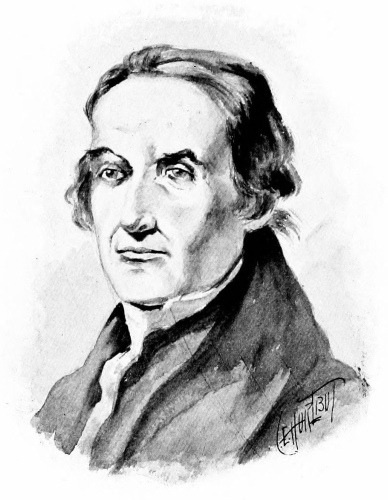
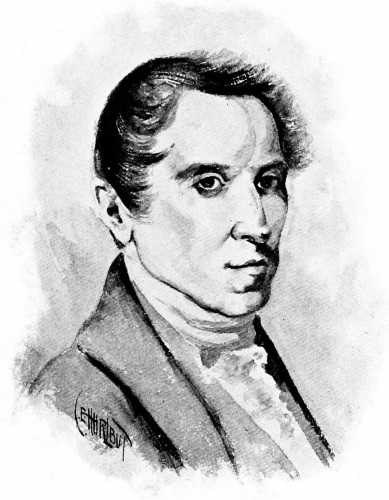
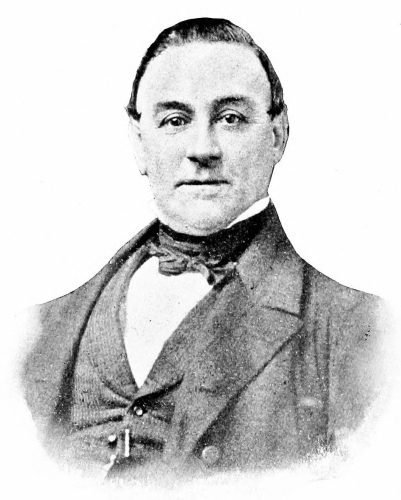
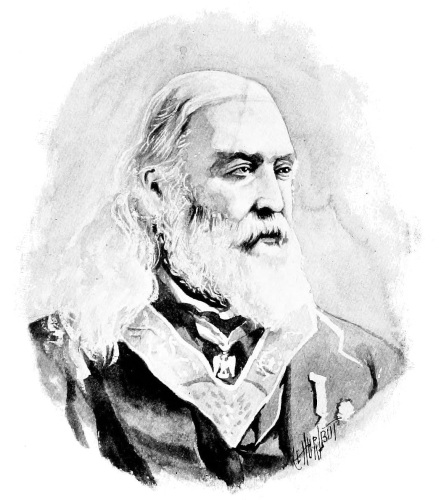
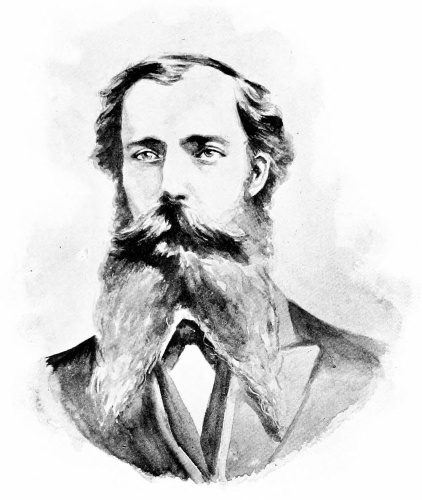
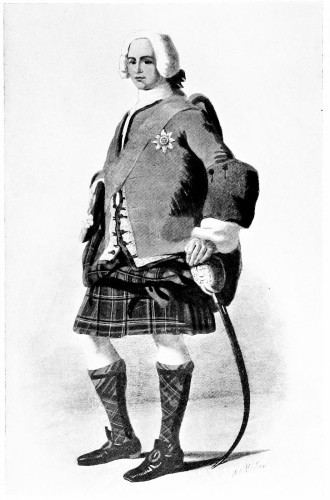
JOSEPH HOPKINSON