When the boll weevil first appears in a territory, the first efforts at
breaking away from all cotton usually consist in going largely into
another single crop system of farming rather than the production of a
variety of crops. The evils of the new system are usually as great as
those of the all cotton system. Many farmers rush into the truck business.
Of course, truck crops should be grown on every farm in the weevil
territory, and, in some particular localities, they may constitute the
main reliance for cash, but it seems that the truck business is a gamble
for the average cotton farmer. Trucking has lured many a farmer to
financial ruin.
The crop rotation for the average cotton farmer should include oats, corn,
some cotton, and at least one leguminous crop. Along with this should go
the growing of hogs, mules, horses and cattle instead of having to buy
them from other sections of the country.
It is not possible for the farmer in the boll weevil territory to entirely
supplant cotton as a money crop, but this crop should be supplemented with
the growing of home supplies, as well as other crops which will produce
cash returns.
Cotton is one of the greatest cash crops, and while it should be the main
money crop in the boll weevil territory north of latitude 32, it should
not be the only cash crop grown. The safest plan either within or without
the boll weevil territory is to follow a system of diversified farming.
The cotton farmers, especially those in the boll weevil territory, cannot
afford to depend entirely on cotton as a cash crop. A system of rotation
suitable for cotton belt farmers should include some of the following
staple crops:
Oats are probably the surest and best paying small grain crop that can
be grown over practically the entire cotton belt. The same soil that will
produce one bale of cotton per acre will grow 60 bushels of oats. At the
average price that has prevailed for oats during the past five years, the
60 bushels will sell for $36 to $40, and the straw, when baled, will often
pay the larger part of the expense of growing the grain.
The bale of cotton per acre land will produce about $30 worth of oats,
at least one and a half tons of lespedeza hay, and five bushels of
lespedeza seed. The lespedeza hay will sell for about $12 per ton and the
lespedeza seed for about $3 per bushel. The total is $63 per acre. We are
personally acquainted with a farmer who has averaged $65 per acre for
eight years.
Thirty dollars worth of oats and twenty bushels of soy beans at $1.50
per bushel, and one and a half tons of soy bean hay at $8 per ton, means
$72 per acre. These are very conservative figures. At the Mississippi
Delta Experiment Station in 1912 the land produced ninety bushels of oats
to the acre, twenty-two and a half bushels of soy beans, “after losing a
good percentage of the beans by shattering,” and 5,200 pounds of soy bean
hay. The average yield of cotton on the same land was about 500 pounds of
lint per acre.
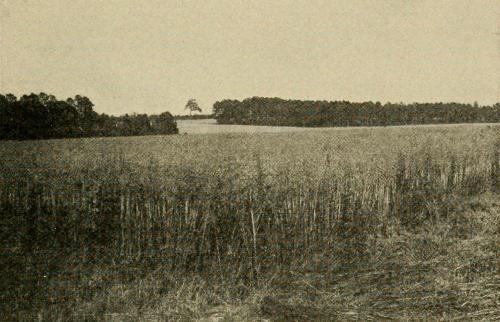
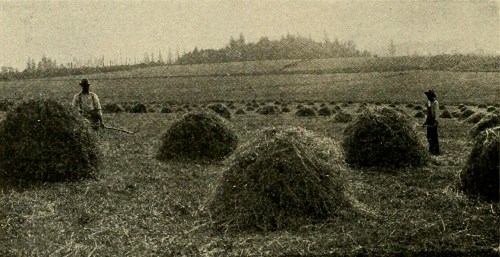
Oats in a three-year rotation with cotton and corn
Oats and vetch sown together furnish more and better grazing and better
hay than either when sown separately. There is no better hay than oats and
vetch cut in the dough stage. Few hays will sell for a better price on the
market. The oat and vetch hay provides a much more satisfactory ration for
horses and mules than corn or leguminous hay.
Oats may be followed by cowpeas. When the cowpeas are planted in rows on
good land, well fertilized and cultivated, the yield is usually from ten
to twenty bushels of peas and one and a half tons of hay. The peas usually
sell for about $2 per bushel and the hay for about $12 per ton.
Ninety bushels of oats and sixty-seven bushels of peanuts were produced
on the same land at the Mississippi Delta Experiment Station in one year.
At the present prices for peanuts and peanut hay, it is a very profitable
crop to grow after oats when properly handled.
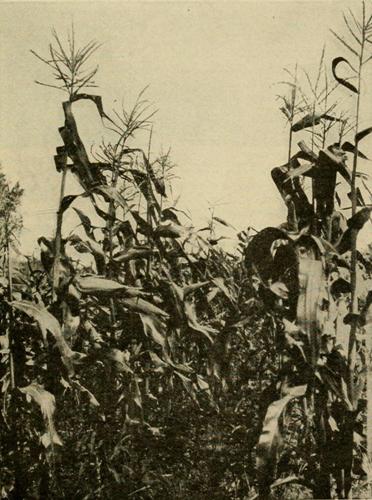
When corn is planted on fertile soil thoroughly prepared, properly
fertilized and cultivated, the yield is usually about fifty bushels per
acre. The average price per bushel is about 80 cents. Peas planted in corn
at the last working will usually average about eight bushels of peas and a
ton or more of valuable hay. The peavine hay can be harvested by live
stock.
The growing of live stock will help to create extensive home markets for
roughage and leguminous crops, keep the money at home that is usually sent
to the north and west for pork products, mules, horses, hay, beef, and so
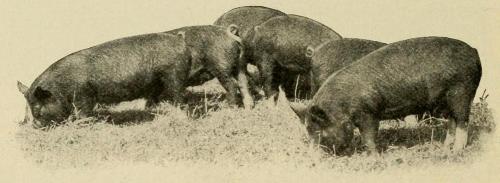
on, and at the same time add greatly to the fertility of the soil. Pork
can be produced in the cotton belt more easily than any other live stock.
It would not be wise for the average cotton farmer to devote his farm
exclusively to hog raising, yet it will certainly pay him to produce
enough pork for home use and some to sell to supplement the money formerly
obtained for cotton.
Chickens, turkeys, ducks and other poultry sell for good prices and every
cotton farmer in the weevil territory should raise some poultry for sale.
The Labor Problem
Plenty of good labor is an absolute necessity in growing cotton under boll
weevil conditions. The tendency of newly infested districts is to neglect
the laborer at the time when he needs support and encouragement. Thousands
of families have moved out of a single county in one season to other
cotton sections, while if they had been given a little encouragement to
grow corn, grain, cowpeas, hogs, vegetables in his own garden, etc., he
would have remained in the community where he is much needed.
The farmers, planters, merchants and bankers must unite and see to it that
the laborers have the actual necessities of life. He should be encouraged
to grow his home supplies, a little cotton, a few chickens and his own
pork. This method would put farming on a basis which will eliminate and do
away with the necessity of sending to the north and west for bacon, lard,
mules, corn, hay and other supplies. By working together and keeping our
laborers satisfied we will keep them in the community where they are
needed to till the soil and help build up our farms.
The Debt Problem
When traveling in weevil territory, we meet farmers almost daily who are
anxious to sell their farms at from one-third to one-fifth of their real
value. The farmers tell us that they are in debt and will never be able to
pay out. They say that the boll weevil has come to destroy their
cotton—their sole cash crop.
Now these farmers are mistaken on two counts. First, cotton is not the
only surplus money crop; second, the boll weevil does not prevent the
growing of profitable crops of cotton in normal seasons. The cotton money
is now used to pay for corn, bacon, lard, mules and hay. When the tenants
and farmers all live at home and practice the most rigid economy, the
cotton money will soon pay all debts.
Life on the farm is robbed of practically all of its pleasures as long as
we pay fifty per cent credit profits and the creditor constantly knocks at
the door. The only people who really suffer in periods of hard times are
the men who are in debt; men who owe money and are often compelled to
sacrifice their property to meet the imperative demands of their
creditors. The farmer who is out of debt when the boll weevil comes and
has an abundance of high class food supplies on his farm is not materially
affected. Many of the cotton farmers who are in debt when the boll weevil
comes lose their homes.
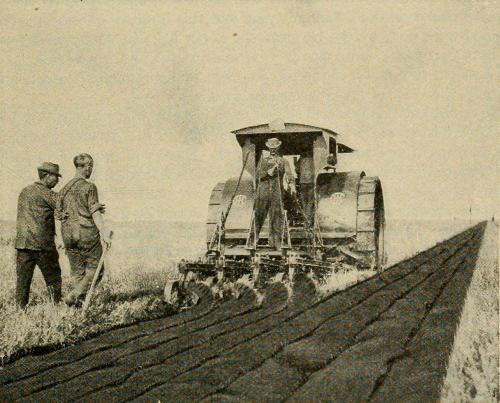
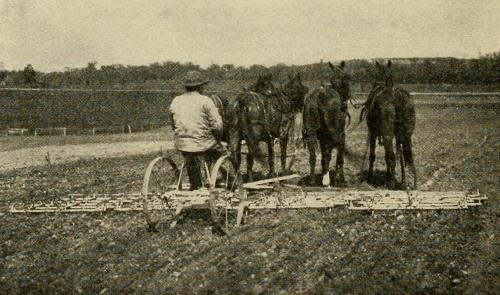
Labor Saving Implements
The following is an extract from an address delivered at Greenville,
Miss., in the boll weevil territory, by Dr. S. A. Knapp, a man who did
more for real genuine progress in the South than any other one man has
ever done. “The farmer who uses modern machinery in planting and
cultivating his crop will succeed, and the one who does not will make a
failure. The old way of making a crop by hand by the use of the hoe and
plow must soon be a thing of the past. We must come to use the modern
implements and the sooner we let the negro understand that he must work
his crop in this way, the better off we shall be.”
Boll weevils attacking growing cotton boll
By B. L. Moss
Editor Progressive Farmer, Birmingham, Alabama.
A man’s personal attitude and convictions play a large part in his
successes and failures in all walks of life, and nowhere is the truth more
apparent than in a farmer’s attitude toward the boll weevil problem.
Before the coming of the weevil, it is looked upon by nine farmers out of
ten as a remote danger, doubtful in time of arrival and greatly
exaggerated in its possibilities for damage. No preparations for it are
made, the farm mortgage is left hanging like a cloud over the family
homestead, and the old methods so long in vogue are left unchanged.
Then the crash comes! The obsolete methods of the past are worthless
against the weevil; the cotton crop is swept away, interest on the
mortgage is unpaid, and its foreclosure is certain. This picture is the
rule and not the exception.
Such a situation calls forth the real qualities of the man. Many a farmer,
for the first few years of the weevil invasion, has proven a quitter. He
has failed because he did not think he could succeed. Usually he has been
the identical man who failed to believe in and prepare for the coming of
the weevil.
The exceptional man has believed in and prepared for the weevil’s coming,
and he has succeeded. Incidentally, his success has shown out as a beacon
light to his doubting neighbors and has ultimately pointed the way for
them.
Five years’ experience tells me that you can raise cotton profitably in
the presence of the boll weevil. The HOW of the matter is given by others
in this booklet, but you, YOU, must take it up with the spirit of FIGHT.
Believe that you can, swear that you will, and success is yours.
Lespedeza a great hay crop for the lower South
By H. Guy Hathorn, Planter, Woodville, Miss.
For many years the one crop system has been the bane of the cotton belt.
When land was virgin, cheap and plentiful, the evil was not so apparent,
and the necessity for a saner system was not so pressing. A depleted soil,
unreliable labor and various other factors caused certain individuals to
see the error of their way, and induced them to adopt a diversified system
and the use of labor-saving implements. It was necessary for the great
majority to receive a paralyzing shock before they would make any material
change; that shock came in the shape of the boll weevil. As certain
alternative medicines create great debility and languor of the body before
the curative power can become operative, so has all business in any way
connected with the growing of cotton suffered depression as a preliminary
to the greater financial vigor and strength that comes after a few years’
experience with stock raising and diversification as the rule, and with
cotton occupying a secondary place in the farm operation.