Brightly and joyfully did the sun arise after the storm, like a prisoner
released from dungeon and chains, again to look upon the faces of those
he loved; and all nature put on a holiday garb to greet him. Every tree
and bush was sparkling, as if with rapture. If a magician of superhuman
power had waved his wand over the earth, it could not have been more
changed. Long icicles were suspended from the fences and the overhanging
roofs, and even the sheds looked brilliant and beautiful in their icy
covering; but the trees! what words can describe them? The pines
bristled themselves up like stiff warriors arrayed in steel, their armor
making a clanking sound when the cold winds whistled by; and the
sycamores, with their little dependent balls, looked like Christmas
trees hung with bon-bons and confectionery for good children. Every
stray leaf that had resisted the storms of winter, every seed-vessel
upon the shrubs, shone with beauty; the ground was one glittering sheet,
like a mirror; the sky was of a deep blue, washed from all impurities,
and the sun smiled down upon the beautiful earth, like a crowned king
upon his bride, decked with sparkling diamonds. It was one of nature's
gala-days, in which she appears to invite all her children to be happy;
one of those scenes which forbid us to call winter a dreary time, and
which outshine in brilliancy all the verdure of the tropics.
At any time we enjoy the clear sky after a sullen rain, or a driving,
impetuous storm, and young people especially feel the truth and beauty
of Solomon's expression, "Truly the light is sweet, and a pleasant thing
it is for the eyes to behold the sun;" but when, in addition, such a
spectacle as this is presented to those long pent up within city walls,
how does the heart swell with rapture! No introduction at court, no
coronation, no theatrical exhibition, can for a moment compare with it
in splendor; nature has shows more beautiful by far than any that man
can produce, and all she asks for in exchange is the seeing eye and the
feeling heart. Truly, the best gifts of heaven to man are free and
universal, bestowed without money and without price, and maybe enjoyed
by the penniless as well as by the millionaire, if the spirit be only
opened to the impressions of happiness they were intended to convey—the
Good God is daily blessing and feasting his creatures with impartial
liberality. What exclamations of delight were heard in The Grange when
the fairy scene was first beheld! Every room in the house was visited,
to see which presented the finest prospect, and soon, with feet well
provided with gum-elastics, and with old-fashioned socks, still better
preservatives from falling, all sallied forth to enjoy the spectacle
more fully. The clear sky and the keen air raised their spirits, and an
occasional slip and tumble was only an additional provocative to
laughter; youth and health, and merry hearts, that had never yet tasted
of sorrow, made life appear to them, not a desert, not a valley of
tears, as it is felt by many to be, but a paradise of sweets, a joyful
festival.
To combine duty and pleasure, Mrs. Wyndham proposed that they should
bend their steps to the humble home of Mrs. Norton, the poor widow for
whom their fingers had been so busily plying the preceding day.
Accordingly, laden with bundles, and with a basket of comforts which
would prove very acceptable to a sick person, they walked towards her
little cottage. The boys, after a private consultation, declared that
they did not intend to allow the girls to do all the charitable, and
that they wished to invest some of their surplus Christmas cash in a
pair of large warm blankets, for the widow's benefit. Their aunt
heartily approved of the suggestion, and all agreed that a far better
interest would accrue from a capital so laid up, than from shares taken
in the confectioner's or the toymaker's stock; and the walk was
considerably prolonged by a visit to the country store, where the
desired purchases were made. Joy lighted up the sick woman's eyes when
she saw this unexpected provision for her wants, and witnessed the
kindly interest of the young people of The Grange: she thanked them with
few words, but with overflowing eyes and heart. She was an interesting
woman, kind and motherly, and looked as if she had seen better days: her
little black-eyed children also were well trained, with manners much
superior to their station. One little girl of about twelve attracted
Mrs. Wyndham's particular notice; she appeared to have installed herself
into the office of chief nurse, and the younger children seemed to look
to her for help and advice: when not engaged in waiting upon them or the
sick mother, she seated herself near the window, busily occupied with a
piece of needlework. She was a very pretty child, of fair complexion and
deep blue eyes, with the beseeching look that you sometimes see in the
young face, when trouble and hard treatment have too early visited the
little heart—like an untimely frost, nipping the tender blossoms of
spring. Sad indeed it is to see that look in childhood, when, under the
sheltering wings of parents and friends, the body and mind should expand
together in an atmosphere of love and gentleness—such is the great
Creator's will. Mrs. Wyndham observed to her mother,
"That oldest child of yours does not resemble you and the other
children."
The sick woman smiled: "No, ma'am, she is an adopted child, although I
love Margaret as much as any of my other children."
"Indeed! with so many little ones, could you take another?"
"Yes, ma'am, she was thrown into our keeping by Providence, at a time
when we wanted nothing; my husband was then living, and in excellent
business as a saddler, and we enjoyed every comfort. Times are now sadly
changed, but Margaret shall share our last crust; but indeed she is our
main stay—I should be obliged to give up entirely, and perhaps to go to
the Almshouse, if it were not for her help."
"I am glad to see that she makes herself so useful; is she any relation
to you?"
"None at all. I will tell you her story, if you will hear it, some time
when we are alone: it is rather a long one."
The young people left Mrs. Wyndham still conversing with Mrs. Norton,
and returned homeward. After tea, various games amused the fleeting
hours, and among them "Proverbs" was played as follows: While one is
absent from the circle, all fix upon some well-known old saw or proverb;
the absentee then returns and asks a question of every individual, to
which an answer must be returned, embracing some one word of the
sentence, care being taken not to emphasize it. The first proverb was
this: "When the cat's away, the mice will play." Cornelia had been out
of the room.
"Cousin Mary, didn't you enjoy the clear-up to-day?"
"Yes, when it clears after a storm, one always does."
"Charlie, are you tired from your long walk this morning?"
"O no, the day was so fine, the walk so pleasant, and the company
so agreeable, that I did not feel the fatigue."
"Ellen, didn't you pity poor Mrs. Norton?"
"Yes, and I pitied her cats, they looked so thin."
"Cats! I thought she had only one. Cats? Hum! Tom, don't you hope we'll
have a story to-night?"
"Yes, I enjoy it vastly, and will take care not to be away when it's
told."
"Gertrude, don't you think the mice will play to-night?"
"Yes—but from whom did you take the idea? Who let that cat out of the
bag?"
"Ellen, to be sure, with her plural number for Mrs. Norton's cat, which
does not look starved at all—so go into the hall, Miss Ellen, while we
think of a proverb."
"Let's have 'It is more blessed to give than to receive,'" said Amy, "I
thought of that to-day at Mrs. Norton's."
"Very well, that will do. Come in, Ellen; Cornelia will bring in the
first two words, as they are small."
"Cornelia, have you finished your crochet purse?"
"It is almost done."
"Amy, are you not almost roasted in that hot corner of the chimney?"
"It would be more pleasant further from the fire."
"George, you are so fond of skating, don't you hope to enjoy the sport
to-morrow?"
"Yes indeed—I think we'll have a blessed cold night, and then we'll
have skating."
"John, how many miles did you walk to-day?"
"Two," said John.
"That's not fair! That's not fair!" cried some of the younger children.
However, it was agreed that playing upon words, where the sound was the
same, was quite allowable.
"Tom, do you like to ask questions?"
"Yes, I like to give a question to be answered."
"Aunt Lucy, what shall be our story to-night?"
"That is more easy to ask than to answer."
"Charlie, are you fond of mince-pie?"
"Yes, and of cherry pie too."
"Alice, are you not almost tired of this game?"
"Yes, I'd receive pleasure from a change."
"Let me see—George's blessed, and John's two—blessed too—Oh, I
know, 'It is more blessed to give than to receive.' Now let's play
'Twenty Questions.'"
"How is that played? It is quite a new game to me."
"It used to be a favorite game in distinguished circles in England;
Canning, the celebrated minister, was very fond of it; and it really
requires some knowledge and skill in the lawyer-like craft of
cross-examination, to play it well—so have your wits about you, young
people, for the more ready you are, the better you'll like it. One
person thinks of a thing, and by a skillful questioning on the part of
one, two, or the whole party, as you prefer it, your thought can always
be found out. Twenty questions and three guesses are allowed. If
Cornelia will think of something, I'll discover what it is, to show you
how it is played."
"I have a thought," said Cornelia, "but you never can find it out."
"We'll see: does it belong to the animal, vegetable, mineral, or
spiritual kingdoms?"
"The animal."
"Is it biped or quadruped, fish, flesh, fowl, or insect?"
"Biped."
"Man, monkey, or bird?"
"Bird."
"Wild or tame?"
"Tame."
"Is it the species you think of, or one individual of it?"
"One particular individual."
"Is it used for the table?"
"The species is—but I doubt that this individual was ever used for
food."
"Did this bird live in ancient or modern times—before or after the
Christian era?"
"Very ancient; before the Christian era."
"Does this ancient bird belong to the goose, duck, chicken, peacock, or
turkey tribe?"
"Turkey."
"Was it very thin?"
"Very, indeed—to a proverb."
"Job's turkey?"
"You've guessed it, and with ten questions too. Now you can think,
Ellen, and the rest of us will question you, in turn."
"I have a thought," said Ellen.
"Treasure it then," said Charlie Bolton; "thoughts are very rare things
with me. Animal, vegetable, mineral, or spiritual?"
"Vegetable."
"In its natural or prepared state?"
"Natural."
"Is it the whole, or only a part of the plant?"
"A part."
"Is it a part of a tree, a shrub, a vine, or is it of the grass kind?"
"A vine."
"Is it the root, stem, leaf, flower, or fruit?"
"Fruit."
"Is it used for food?"
"The species is—this one was not."
"Is this fruit pulpy like the grape, or mealy like the bean?"
"Mealy like the bean."
"Is it a bean?"
"Yes—that's one guess."
"Was this bean an ancient or modern one?"
"Very ancient."
"I know!" cried Amy; "it was the bean Jack the Giant Killer planted,
which grew up to the moon in one night, and fastened itself round one of
the horns."
"You are right—eight questions and two guesses; that's pretty well.
Now, Amy, 'tis your turn to think."
"I have a thought."
"Animal, vegetable, or mineral?"
"Animal."
"Quadruped or biped, fish, snake, or insect?"
"None of these; it is the production of a biped."
"In its natural or prepared state?"
"Natural—but a slight alteration was made in its shape at the time to
which I refer."
"What time is it—before or after the Christian era?"
"After."
"Before or after the year 1500?"
"Very much about that time."
"Had it any thing to do with Columbus?"
"Yes; at least Columbus had something to do with it."
"Was it Columbus' egg?"
"The very thing. And now, shall we not vary the scene by having a
story?"
"Agreed, we are all ready to listen; but who shall tell the tale?"
"It is Alice's turn; and do give us a ghost story, for once, a nice
frightful one that will make our teeth chatter and our hair stand on
end—do, Alice!"
"I'm afraid you'll be disappointed, but I'll tell you some sort of a
tale, and hope that you will make allowances for a young beginner. I'm
no Scheherezade."
"No what?" said Amy.
"Is it possible you have not read the Arabian Nights? Scheherezade was
the princess who saved her life by telling such interesting stories; the
tyrant of a Sultan intended to put her to death in the morning, but she
left off in such an important part of her tale, that his curiosity led
him to spare her head till she had finished the narrative. Of course she
took good care to tell what the sailors call 'long yarns,' and the
Sultan found out he could not live without her to divert him."
The Conde de Alcantra was a Spanish nobleman, universally esteemed by
those who knew him, as a man of high honor and moral worth. In person he
was tall, dark, and commanding, in manner grave and dignified. The
grandee of Spain is never one with whom you feel inclined to take a
liberty, but the noble Conde was uncommonly reserved and serious, even
sad, in the expression of his countenance. He was a widower, with two
lovely children, daughters, of the ages of sixteen and eighteen. Clara,
the elder, a very handsome girl, strikingly resembled her father in
appearance, save that a bright, hopeful, energetic spirit was displayed
in her face and in almost every motion. Magdalena, the younger, and the
cherished darling of both father and sister, scarcely looked as if she
belonged to the same family: she inherited from her mother the
transparent, delicate complexion, azure eyes, and fair, clustering
curls, sometimes seen in Spain and Italy, and always so highly prized
from their rarity. Gentleness, and an up-looking for love and
protection, were the characteristics both of her face and mind; and
doubtless her timidity and dependence upon others was much fostered by
the loving cares and constant vigilance of her father.
Their ordinary residence was in Madrid, where the Conde was much engaged
in affairs of state; his strict integrity, political wisdom, and
fidelity in the discharge of duty, caused business of the highest moment
to be committed to him by his sovereign. But, as is only too frequently
the case, public cares engrossed him to the detriment of his private
concerns, and some little entanglements in money matters made him
resolve to look more closely into his account books, and see where the
difficulty lay. It was certainly surprising, that the hereditary estates
which brought in so large an income till within fifteen years, had so
unaccountably decreased in value, and that the castellan, or mayordomo,
who managed them, was continually complaining of the difficulty he found
in raising from the peasantry the comparatively small sums he yearly
transmitted to his master. But so it was: and although the Conde carried
his confidence in his dependents, and his easiness of disposition, to
such an extent as almost to become a fault, yet as he examined the
accounts of some years' standing, a strong suspicion arose in his mind
that somehow he had been most egregiously cheated, and that while he
had so skilfully managed the finances of the country as almost to double
her revenues, he himself had been as completely managed by a cunning
knave. Being a kind and a just man, he was anxious not to run the risk
of wronging a faithful servant, who was always profuse in expressions of
attachment to the family, and he determined to keep his suspicions
within his own breast, until he had given the matter a personal
investigation.
Great was the astonishment and delight of Clara and her sister when he
announced to them his intention of paying a visit to the castle of
Alcantra. It was there that Magdalena first saw the light, and it was
there that her mother closed her eyes upon the world, leaving her
husband almost distracted; he immediately removed with his little
children from the scene of this great affliction. It was soon after this
sad event that the old and faithful mayordomo died; he had long been
intrusted with the entire control of the estate, and was greatly beloved
by his fellow-servants and by the peasantry. The Conde gave orders that
the sub-steward, who had lately come into his service, and who was
acquainted with the duties of the office, should take his vacant place;
his feelings were at that time too much engrossed with his recent loss
to institute the proper inquiries into his character and capabilities,
and from that time it was that, from some cause, either from misfortune,
negligence, or corruption, the entanglement of his affairs was to be
dated. The Conde had never before been willing to revisit the castle;
and his daughters, with the ardent curiosity of youth, longed to behold
the place in which a long line of their ancestors had lived, and eagerly
availed themselves of his invitation to accompany him. Their
imaginations were fired by all they had heard of the old chateau; and
the ruinous condition into which it had fallen of late years, only added
fuel to the flame. Clara remembered, or fancied that she remembered, a
vast dark building, with huge towers and buttresses; she often tried to
picture to her mind the home of her infancy, and to describe it to
Magdalena, but these vague remembrances were all that she could recall.
Don Alonzo informed his daughters that the journey was to be commenced
on the morrow, without much preparation, or any thing like an
ostentatious style of travelling; they themselves would set out in the
old family coach, accompanied by his secretary, Señor Roberto, and would
be followed by another carriage containing their maid, Fernando, his
valet, and Anselmo, a trusty servant. He intended to take with them a
supply of comforts indispensable to persons of their condition, as it
was probable that the castle might be destitute of them, having so long
been without the presence of its master; and this was the more needful,
as the castellan had received no intimation of the proposed visit. On
the following morning they set out: the castle of Alcantra was situated
in the north of Spain, among the wildest mountains, and as they
travelled onward, scenery of the most diversified kind passed before
their eyes. It was the time of the vintage; and the noble peasants of
Castile, in their picturesque costume, came homeward laden with the rich
purple grapes, singing the romantic lays of love and chivalry, which
have passed down from one generation to another. The ballads of the Cid,
and the laments of the Moors, formed the chief burden of their song.
Every now and then they could distinguish some well-known passage in
"Admiral Guarinos," "Baviaca," or "Don Roderick," or that sad-chorus,
which sounds like a Moorish sigh,
At sunset, they would see the peasants seated at the doors of their
cottages, cheerfully feasting upon bread and fruit, varied by the light
wine of the country, preserved in goat-skins, as it is in the East: one
leg of the skin forms the mouth of the bottle; and they noticed, what is
generally reported by travellers, that even in this time of rejoicing,
intoxication was nowhere to be witnessed. Many were the groups they met
dancing upon the grass by the light of the moon; and a pleasant thing it
was to see the white-haired grandsire looking on, and occasionally
joining the merry band of his descendants in innocent sport and
festivity, keeping a young heart under the weight of years. Clara and
Magdalena were particularly struck by the native grace displayed by the
youths and maidens in the bolero, a dance originally introduced by the
Moors: with castanets in their hands, accompanying their steps with
unpremeditated music, they would alternately advance and retreat, fly
and pursue, until, exhausted by the exercise, they would rest upon the
rustic bench or the green bank, and while away the hours with song and
guitar. What noble-looking men are the peasants of Spain! Every one of
them, from the dignity of his deportment, might well pass for a hidalgo
in disguise; and the feeling of self-respect is so common, that it has
passed into a proverb among the people that they are "as good gentlemen
as the king, only not so rich." Proud and independent, and jealous of
any encroachment upon their rights, they are yet scrupulously polite to
others, and pay marked attention to strangers. While in Italy the
foreigner will meet with imposition at every step, the Spaniard disdains
to take advantage of his ignorance, and the significant reply, "Señor, I
am a Spaniard," is sufficient answer to any suspicion of meanness or
duplicity. Their tall, manly forms, wrapped in the ample cloak which the
Spaniard wears with unequalled grace, their oval faces, dark
complexions, and flashing eyes, make them most interesting features in
the landscape. Probably in no country does man, in the humbler walks of
life, appear so universally clothed with the majesty suitable to his
rank as lord of the creation, as he does in Spain. As they travelled
through Castile, the scene was occasionally varied by meeting a band of
strolling Gitanas, or Gipsies, whose swarthy hue, slender forms, and
wild appearance, clearly pointed out their foreign origin; of course,
they were anxious to tell the fortunes of the beautiful Señoritas, and
on one occasion their father consented to gratify their curiosity. But
he repented of his compliance, when he heard the woman predict to the
timid and somewhat superstitious Magdalena, a speedy and imminent danger
as about to befall her, and he noticed with concern the changing color
with which she heard these hints of peril: but Clara, whose fearless and
joyful spirit could not be daunted by such prophecies, soon laughed the
roses back again into her sister's cheeks, and made the wrinkled hag
retreat, full of rage at her incredulity. They also met some of those
immense flocks of sheep, which form such an important item in the
national wealth of Spain, and which are led southward early in the
autumn, to enjoy the rich pasture grounds of Estremadura and Andalusia.
As they proceeded towards the north, the country became more rugged and
mountainous, and changes in the costume of the peasantry showed that
they had passed into another province: the black velvet cap of the
Castilian, ever worn so as to display to advantage his noble, lofty
forehead, was replaced by one of woollen material, of a brilliant red,
long, and hanging down behind. The scenery every moment became more
grand and sublime, and the young girls, who had spent their lives
chiefly in Madrid, were full of delight and admiration. "How can people
live in the city," they exclaimed, "when such a free and happy life is
before them? How can they prefer brick and stone to the everlasting
hills, the soft green turf, and the majestic forests? Here, you can
really behold the sky, with its beautiful fleecy clouds, ever changing
in shape and hue, and you can see the starry universe spread out before
you; there, you can perhaps catch a glimpse of a few stars, and a small
piece of a cloud, but the rest is hidden by dead walls. In the city, our
time is taken up, and our hearts are frozen, by ceremonious visits,
stately dinners, and the rules of etiquette; here, in the country, a
real, true life could be spent, free from insincerity and busy idleness.
Dear father, will you not give up your offices at court, and live
henceforth at Alcantra?" Their father smiled at their enthusiasm, and
felt himself almost rejuvenated, as he listened to their raptures,
flowing fresh from young and ardent hearts; but told them that they had
not yet seen their ancestral castle, and that perhaps their expectations
might be grievously disappointed; he would wait until they had spent
some time there, before he gave them his answer.
As they approached the termination of their journey, the country became
yet wilder, and the villages were more thinly scattered; while here and
there a wooden cross appeared upon the roadside, with some simple
inscription, calculated to inspire terror in proportion to its very
simplicity. "Here they killed Iago," or "Here the robbers killed Señor
Jose Blanco." They noticed, on their last day of travel, when they had
entered into the territory of the Conde, that the roadside crosses
became more frequent, and the cottages of the peasantry assumed a look
of poverty they certainly did not bear in former times, when the lords
of the manor resided upon their estate, and were able to see to the
welfare of the people. When they entered the little inn of the village
of Alcantra, about four miles from the castle, the garrulous old
landlord greeted the Conde most warmly.
"And a good thing it is for the country that your Excellencia has
returned once more to his estates. Now we may hope to have a little
peace; now the peasants will not be ground down to the dust, as they
have been; now some villanous upstarts I know of, will not dare to ride
over them rough-shod, and to treat them as if they were beasts of the
field. Viva! viva! The illustrious Conde has returned!"
The Count was much affected by the representations of this man, whom he
knew to be an honest and worthy fellow, and was full of regret for what
he now felt to be criminal negligence on his own part; and promised him
that full investigations should take place, and that perfect justice
should be done. The innkeeper asked him if his servants were well armed;
"For," said he, "the nearness of the castle is no protection to you from
robbery. Many travellers have left this inn, in high health and spirits,
and with trunks laden with merchandise, but have never arrived at their
destinations. The road is, as you well know, rough and precipitous,
over-hung by huge rocks and dark forests, and the banditti have taken up
their quarters somewhere in this neighborhood, though where it is none
can discover. Many murders have been committed here, and many a poor
fellow lies buried in unconsecrated ground, Heaven have mercy on their
souls! but the murderers have never yet been caught. It is not thought
that the band can be a large one, but they are very daring; it is now
more safe than usual, for an atrocious murder occurred a few miles from
this place within the last week, and a company of soldiers is expected
here every moment; they will stay a week, and will try to capture them,
but unless the Saints defend us, and all the Martyrs, Heaven only knows
what will become of us all."
Don Alonzo assured him that he feared nothing, as including the coachmen
they were six well-armed men, upon every one of whom he could entirely
depend. "And," said he, smiling, "if matters come to a bad pass, I could
count upon my daughter here, my brave Clara, as my seventh soldier; I
have taught her to fire a pistol without shrieking, and to hit the mark,
too, and with her protection Magdalena and I need fear nothing."
After this conversation, it is not wonderful that all were on the qui
vive as they ascended the mountain road leading to the castle of
Alcantra. Magdalena started at every sound, and even Clara, fearless as
she was, felt relieved when she saw the lofty turrets and extensive
battlements she had dimly remembered, spreading out before her, their
dark outline relieved against the blue sky. If the approach was romantic
and alarming, it was a good preparation to their minds for the castle
itself; it was built in the times of feudal power and intestine wars,
and its massive walls had well performed their part in the defence of
its inmates during many sieges. And yet, strong as it was, and built, as
it appeared, for eternity, a portion of this noble structure was going
to decay; one wing had been very much battered in the last siege it had
sustained, and the cannon-balls had done the work of centuries; but the
main building looked very imposing, as if able to resist the lapse of
ages, and appeared, from its elevation, to frown down upon intruders,
and to scorn the very idea of danger. It was exactly such a place as was
calculated to fire the imaginations and to win the hearts of young
girls, brought up in a gay metropolis, from the very contrast to all
they had ever seen before; there was a romance about its very gloom
that was attractive to them. Associated as it was with much historic
interest, and with many family traditions, they had ardently longed to
behold it, and now that they saw it rise, in its dark grandeur, before
them, they acknowledged that their expectations were more than realized.
There were no signs of life to be seen about the castle, and it was long
before the loud, imperious knocking at the gate-way brought any one to
open it; and then a man appeared, whose hesitating manner and vacant
countenance plainly showed that he had never been gifted with a large
share of mother-wit. With some difficulty he was made to understand that
the party had a right to admittance, and the carriages entered within
the courtyard. The rest of the household was by this time aware of an
unusual arrival, and came forward to receive them; but it was very
evident that their visit was not only unexpected, but undesired,
although the castellan and his wife strove very hard to throw into their
hard, dark countenances, an expression of welcome. Señor Don Juan
Baptista—so was the castellan called—was a man of most repellant
countenance; his eye had a sinister, cunning look, and there was
something in his large, shaggy, overhanging brow, that was really
appalling; it was to be supposed that he had now put on his most amiable
expression, but unless his face greatly belied him, fierce, ungoverned
passions were accustomed to rule his being. His wife, Francisca, had one
of those countenances that appear to dare you to find them out: hard,
silent, and sullen, she looked as if the rack itself could not force her
to speak unless she willed it; and her face reminded you constantly of a
wooden mask, which not even the strongest emotions could make
transparent, and allow you to catch a glimpse of the soul behind. Both
were loud in their expressions of regret that their dear lord and the
sweet, beautiful señoritas had not let them know, beforehand, of their
visit, that they might have had things more fit for their reception; the
castle was rather disarranged, and not anticipating this honor, they had
allowed most of the servants to depart, to enjoy a holiday for a few
weeks—their household was at present very small. Don Alonzo cut short
their apologies by telling them that he had attendants with him
sufficient to supply the wants of himself and his daughters, although it
was certainly unfortunate that it should have occurred just at this
juncture; and entering the castle, he tenderly embraced Clara and
Magdalena, welcoming them to their ancestral home. The girls almost
shuddered, as they gazed upon the the huge hall, with its lofty carved
ceiling, and its dark oak panelling. In ancient times, when it was
crowded by armed retainers, or echoed to the joyful chorus of the feast
and the minstrel's song, it must have been admirably suited to its
purpose; but now it looked solitary and desolate, like a fit abode for
the owl and the raven. At one end, a wide, substantial stone staircase
led to the upper regions of the castle, branching off above in many
directions; a long oak-table, capable of accommodating more than a
hundred guests, extended for some distance along the hall, but it was
scarcely noticed in the vast apartment. A large chimney, surrounded by
stone settles, and richly ornamented with curious antique carving,
formed a prominent feature in it; the tapestry on the wall, from which
hunters and grim warriors appeared to look down upon our little party
with surprise and displeasure, hung loosely, in many places was
completely tattered, and waved in the wind as the keen air of the
mountains whistled through, making Clara and Magdalena shiver with cold.
Don Alonzo looked round with concern; "It is indeed many years since I
have been here," said he, "and things look considerably altered; but
now, my daughters, let me advise you, with the aid of your
waiting-woman, to make yourselves as comfortable as possible in your own
rooms, and meanwhile Señor Baptista will be kind enough to have a large
fire built in the hall, for it will really prove very acceptable."
Francisca showed them to their rooms: large, magnificent chambers,
fitted up with massive furniture of the richest description; but the
tapestry was faded and worn, and every thing showed neglect and
desertion. Francisca, after escorting them to these apartments, told
them that she would send Maria, the housemaid, to make up fires, bring
water, and provide every thing else that they wished, but the girl was
always out of the way when she was wanted, and was really not worth the
salt she ate. Maria speedily appeared, however: a pale young girl of
dejected aspect, with black hair drawn off from a forehead of marble
whiteness, and large, sad eyes cast upon the ground. Her appearance
greatly interested the kind feelings of Clara and Magdalena; she looked
sorrowful and reserved, as if her heart had been chilled, and her spirit
broken by harsh treatment; and the girls, who were very much of her own
age, felt an instinctive pity, and resolved to win her confidence. They
learned by their questions that she was an orphan, and had been brought
up in the castle. She had never known any other home, and had no
relations in the world, so it was not wonderful that she appeared
unhappy.
As their maid appeared to be quite unwell from the journey, they
dispensed with any further services from her for the day, and descended
to the hall. Its aspect was considerably changed by a large, sparkling
fire which blazed upon the hearth; and, after supper, Don Alonzo and his
daughters drew around it, with a feeling of comfort they had not
experienced since they had entered the castle. As the Conde wished to
discover the character of the castellan as much as possible from
personal observation, he ordered him to be sent for, and invited him to
a seat with them by the fire; and they were soon engaged in interesting
conversation. Señor Baptista was undoubtedly a person of quick
intelligence, and endowed with the gift of imparting a vivid, dramatic
interest to any narrative: he told several ancient legends connected
with the castle, in such a manner as to enchain the attention of his
hearers. One story excited the deepest interest in Magdalena: we will
call it
Several centuries ago, as my lord the Conde and the noble Señoritas very
well know, this castle was in the possession of an older branch of the
Alcantra family, long since extinct; and at that time the lord of the
manor was a certain Don Pedro, a dark, stern man, whose portrait, clad
in armor, the señoritas may see on the morrow in the old
picture-gallery. Don Pedro was a man of unflinching bravery, and
indomitable will; his word was law. His vassals obeyed his very looks,
and flew to execute his behests. Accustomed from infancy to command, he
became absolute and tyrannical; his gentle wife was all submission, and
his fair daughter Inez was educated in the practice of the strictest
obedience, so as scarcely to know that she had a mind of her own, when
her father was nigh. Is it wonderful that when the unnatural constraint
was removed by his absence, her innate gayety of disposition broke out
with all the impulsiveness of youth, and her young affections clung to
the nearest object? Such an object was found in Bernardo, a handsome
and noble young man, an orphan, and distant relative, who had been
reared in the castle: he had been the playmate of Inez in childhood; her
comforter, companion, and teacher in girlhood; and now, as she advanced
to woman's estate, they made the discovery that their hearts were knit
together by a love which had grown with their growth and strengthened
with their strength, till it had become a part of their very souls. But
how dare to reveal their affection? Bernardo, although of noble lineage,
and in himself every thing that the fondest father could desire for his
daughter, had his fortune yet to win by his good sword; and Inez was
heiress to broad lands, and might well aspire to a princely alliance.
But love scorns all such distinctions: humble thoughts of herself, and
proud thoughts of her Bernardo, filled the heart of Inez, and as she
plighted her troth to him, she vowed she would wed none but him, and
would patiently wait until the time should come when her betrothed could
claim her as his own. Bernardo went to the wars, and greatly
distinguished himself against the Moors: Ferdinand conferred upon him
various marks of favor, and the noble and lovely Queen Isabel girded on
the sword presented by the king with her own jewelled fingers.
And now, with a heart beating high with hope, and with the prospect of
great advancement before him, the young man returned to visit the home
of his childhood: it was his purpose, with the sweetness of a few weeks'
holiday, to repay himself for all the toils, dangers, and privations of
a year. But when he arrived, how changed was the whole aspect of the
castle! Inez was in disgrace, and was ordered by her tyrannical father
to be shut up in her room, and to be fed with the bread of affliction
and the water of humiliation. Bernardo was deeply distressed: he at
length succeeded, through the pity of the servants, in obtaining an
interview, and the poor girl, weeping upon his breast, where she had so
often been comforted before, told him the sad tale of her trials.
Soon after he had left, a noble Marquis, of great wealth, had made
overtures for her hand, which Don Pedro, without consulting her, had at
once accepted, and promised that within a year the bridal feast should
be celebrated. When he informed his daughter of her fate, she besought
him with tears not to send her from her home; but his only reply was
that the matter was determined, and that all she had to do was to submit
and to prepare for the wedding. Dreading as she did her father's wrath,
she dreaded yet more this hateful, compulsory marriage, and kneeling
down at his feet, with streaming eyes, she prayed him in the humblest
manner to spare his only child; she could never survive the union—it
would break her heart—she was young, and wished still to remain for
some years under the paternal roof. But tears and entreaties were
unavailing. Don Pedro commanded her, in the most peremptory manner, to
obey. Rising, with a dignity and composure of manner he had never seen
in her before, for she had ever appeared in his presence only a timid
and frightened child, she professed her readiness to make his will her
law in every other point; she would serve him like a slave, die for him;
she would never marry against his wishes, but would ever strive to
approve herself a dutiful daughter. But in this point she must imitate
his own firmness, and prove herself his child; a vow was upon her soul
that she must not break, and she could not, she would not, marry the
Marquis de Oviedo. As she stood there, so young and so determined, with
all the pride of her race and all the dignity of womanhood rising up to
aid the true love which beat in her heart, even her father was struck
with admiration, and for a moment hesitated. But vindictive passion
triumphed over better feelings, and he ordered her to be placed in her
chamber, under strict confinement. Once a month, since then, had he
visited her apartment, to ask her if she were now ready to yield her
submission; and, upon her reply that she would rather die than wed the
Marquis de Oviedo, with an angry scowl he would leave her room. Poor
Inez looked thin and care-worn, but was greatly comforted by seeing her
betrothed; and they agreed that it was better, whatever the consequences
might be, to inform her father of their engagement, and to endeavor to
mollify his heart. As Bernardo had returned from the wars with such
distinction, he had some slight hope that the crime of loving Don
Pedro's daughter might possibly be forgiven.
They were still engaged in these discussions, when the door opened, and
Don Pedro appeared; his face was wild with passion, black with rage. He
roughly snatched Doña Inez from the arms of her lover, to whom she clung
with all the energy of despair, as the shipwrecked mariner holds fast to
the mast or beam which is his only hope of safety, or even to the anchor
which will surely sink him to the lowest depths. Turning to his
followers, who were trained to obey his every command without a
question, he ordered them to convey Don Bernardo to the deepest dungeon
of the castle, and to chain him to the wall; and then to bring the key
to him. Doña Inez, in a phrensy of terror, knelt at his feet, and begged
that all his anger might be visited upon her; but spurning her from him,
he told her that she should feel enough of it yet, and need pray for no
more—he had a punishment still in store for her, and in due time she
should realize what it was to defy his power. He left her in a swoon,
and did not see her again until after ten days, when he entered her
apartment, and grimly smiling, commanded her to accompany him, as he
wished to conduct her to her lover; adding, with a peculiar look, that
if it were her wish, as he was all devotion to her slightest whim, he
would never henceforth separate them. Scarcely knowing what to think,
but dreading the worst from the ironical tone of mock gallantry with
which he spoke, she followed him with faltering steps, a vague terror
dimming her eyes and chilling her heart. He led her through many winding
passages, opening heavy iron gates, until they at length reached the
deep dungeons which are found beneath this castle. There, in a damp
cell, heavily chained to the wall, she beheld, by the light of the torch
Don Pedro carried, her own Bernardo! But, oh, how changed! how
emaciated! He seemed to be asleep. Her father told her to awake him; she
took his hand, but started back—that icy touch had told her all—he was
dead, starved to death by her own father!
That moment reason forsook the agonized mind of Doña Inez; the vaults
were filled with her shrieks, and so awful was the spectacle of her
despair, that even her father was terrified. He tried to soothe her, but
it was too late; he carried her back again to her room, a raving maniac.
A brain fever ensued, of the most violent description; and happily for
the distracted girl, in a few days she was released by death from all
her sufferings. And now it was that, in the consequences of his own
actions, Don Pedro found his punishment; as he witnessed the agony of
his afflicted daughter, as he heard her ravings, as he saw her toss her
white arms and pitifully cry out for Bernardo, or tear her long, black,
dishevelled tresses, horror and despair filled his heart. His
conscience, so long torpid, at length awoke, and remorse preyed upon his
soul like a vulture. And when he beheld that form, lately so lovely and
blooming, stretched out, pale and motionless, upon the bed of death,
anguish seized upon him to such a degree that, rushing into his own
chamber, he put a period to his miserable existence.
Queen Isabella, when she heard the particulars of these tragical events,
ordered the lovers to be interred within one tomb; the señoritas may see
it in the old chapel, in the north-east corner—their effigies are on
the top, carved in marble, with clasped hands, with this inscription:
Amor morte, or Love in death. The old branch being now extinct, having,
as it were, burnt itself out with its fiery passions, the estates passed
into the hands of your honorable ancestry; may it remain in the family
for a thousand years!
But my tale is not yet done—would that it were! There would be more
peace in this castle if this were the case! For people do say that Don
Pedro cannot rest, even in purgatory. I am not one at all given to
credulity, and it takes something to startle me; but I must own that I
would never willingly be found in the old parts of the castle after
nightfall. I myself have seen strange lights and startling forms, and
have heard noises for which I could not account, groans, and shrieks,
and the clanking of chains. None of the peasants in the neighborhood
will venture here after night; and the servants can scarcely be induced
to stay in, what they call, the haunted castle. The story runs, that
about midnight Don Pedro begins his peregrinations, clad in armor, as he
is represented in his portrait; in one hand he bears a flaming torch; in
the other a large bunch of keys, and a chain which trails upon the
ground. He has been seen bearing in his arms a female form, clad in
white, with long black hair streaming to the wind, tossing her arms in
wild despair, and uttering piteous cries. It is thought that his
punishment consists in nightly visits to the cell in which Bernardo
died, and nightly endurance of the sight of his daughter's anguish; some
also say that the skeleton of his victim is presented to his eyes,
beaming with light, and that every ray eats into his soul like a canker.
I do not answer for all these tales, but this is the universal belief. I
merely relate to your favors the common talk of the peasantry, ever
given to superstition.
"I dimly remember hearing some such story in my childhood, from the old
castellan, from whom, I suppose, you have received the legend," said the
Conde; "but old Don Pedro never walked in my day, and if he does now,
his conscience must have become more tender with the lapse of years.
Cheer up, Magdalena, light of my eyes! You look quite pale from this
horrible tale. I'll answer for it that Don Pedro will not appear to you;
if he does, I'll settle his uneasy spirit for him. Surely, you do not
believe in ghosts? You are not so weak?"
"No, dear father; I know that it cannot be; and yet I own to feeling
some nervousness on the subject. Much as I long to live here, if I
thought there were any truth in such a spectral appearance, I would beg
you to leave to-morrow."
"That would be a sad loss to this castle, señorita," said Baptista,
furtively glancing at her pallid face from under his shaggy eyebrows.
"We must hope that Don Pedro may not walk to-night."
"Another romantic tale is told about a daughter of our house," said Don
Alonzo, wishing to draw off Magdalena'a thoughts from the subject which
filled them. "If you feel inclined to hear it, I will relate it."
"Nothing would be more pleasant," said the girls, who delighted in these
traditions.
About a hundred and fifty years ago, when our branch had been
long-established at Alcantra, there flourished here a certain Don
Alphonso, who also had a beautiful daughter, Isabel by name. Her
portrait hangs in the gallery, and is remarkable for a sweet bravery of
look, and for a merry, piquant glance of her black eye, which I greatly
admired when a young man, and of which I have been often reminded when I
looked at my Clara. I think, my daughters, that you will agree with me
in seeing a strong resemblance in person, as I also do in character; you
can judge of that as my story proceeds. And by the way, Clara mia,
tradition gives the room you occupy to the Lady Isabel; it has ever
since been called Doña Isabel's chamber; so, when lying upon her bed
to-night, you can dream of your fair predecessor. Her father, also, was
rather fond of having his own way, and in this the daughter fully
sympathized with him; it is said to be a characteristic of our race, so
we had better call this obstinacy a noble firmness, and thereby save our
self-love. Don Alphonso, however, was not quite such a bloody-minded
tyrant as Don Pedro: how could he be, as he was one of our ancestors?
The matter is clearly impossible. And I wish you to notice, my
daughters, how, with the lapse of years, the race of fathers improves:
beginning with a murderous Don Pedro, a self-willed Don Alphonso then
walks upon the stage; and lastly, as a perfect specimen of a dutiful,
obsequious papa, behold me, ladies—at your feet!
I have told you that Isabel had a mind of her own; she showed it very
plainly by falling in love in a most unorthodox, unfilial, enthusiastic
sort of way—with whom? You will be so shocked, my daughters, that I
almost dread to tell you. If she had waited, like a dutiful child, till
her father had told her she might love, it would have been another
thing! But this headstrong girl seemed to think she had as good a right
to be happy in her own way as a peasant! True, the man of her choice was
not a reprobate: he was not even a low-born, unmannerly churl: Don
Fernando de Velasquez stood foremost among the young cavaliers of Spain,
in gallantry and in that nobility of mind which, should ever accompany
gentle birth. But yet it was in that very gentle birth that all the
offence lay, for Fernando's ancestors had long been at enmity with the
house of Alcantra, and this ancient feud had been embittered by years.
But, sometimes, there appears to be a fate in the affairs of men,
especially when a woman, and a pretty woman, is in question: so it
happened that Don Fernando was, one day, riding at some distance from
his home, when his good fortune enabled him to rescue a lady, whose
horse, frightened by some object in the road, reared and plunged in a
most alarming manner. It was Doña Isabel, who had out-ridden her
attendants, and who now felt that she owed her life to this very
handsome, polite, and noble-looking cavalier. Could he do less than
soothe her fluttered nerves, guide her horse, and make himself as
agreeable as possible? Could she do less than feel ardently grateful,
and manifest it in every look and accent? Very improper it was,
certainly, as I said before, for a daughter to think of a young man
until her parents' permission is given; but I have heard of one or two
other instances in which this occurred; and before either made the
discovery who the agreeable companion was, when, of course, if they were
dutiful, antagonism and animosity would have filled their bosoms, they
were both unmistakably, undeniably, desperately in love!
Is it wonderful that Don Fernando escorted her to the gate of the
castle? Or that proud Don Alphonso did not invite him in,
notwithstanding his daughter's imploring looks, even after he had heard
from her lips of her deliverance? Are my daughters very much astonished
that little perfumed notes, exquisitely written, doubtless with little
kissing doves stamped in the corners, and signed 'Yours till death,'
passed between the two castles? There was a prodigious waste of
sentiment on the occasion, quite enough to set up twenty pairs of
well-behaved, proper, respectable lovers. It came to such a pass that
Fernando declared, and I believe the fellow was in earnest, that
existence would be intolerable to him unless he could meet his Isabel;
and the lady, although feeling some qualms of conscience about the
matter, agreed to see him daily, when the evening star rose in the sky.
So, while her poor old father—good easy man! thought that his daughter
was in her chamber, or piously engaged in the oratory saying her Ave
Marias and Pater Nosters, and singing a vesper hymn to the Virgin,
the naughty girl had gone by a secret passage underground to a wood at
some distance, where she met her betrothed.
This passage is said to begin in one of the chambers of the castle, and
winding along in the wall, to proceed downward towards the dungeons
underground, and then to pass away to the wood already mentioned. It was
originally intended, no doubt, as a means of escape, or of communication
with the outer world, in case of a siege; but, at that time, it had
almost passed into oblivion. After the events I am relating, the outlet
into the wood was stopped up, and where the passage is to be found no
one knows: so that if Clara wishes to imitate the conduct of her
beautiful kinswoman, and to arrange clandestine meetings, she will have
to spoil the romance of the proceeding by quietly walking through the
open gate.
But at length, some prying eyes found out these nocturnal interviews,
and great was the rage of Don Alphonso. The lovers were seized, brought
back in tribulation to the castle, and imprisoned, one in her chamber,
the other in a dungeon. But love finds many devices: whether it was a
golden key that opened her door, or whether it was her eloquent tongue
and pleading looks, I know not, but certain it is that in the dead of
night, when all but two in the castle were sunk in profound slumber, a
fair lady softly stepped into her father's apartment, drew a large bunch
of keys from under his pillow, and proceeding down to the dungeons by
the secret passage, set Don Fernando at liberty! Soon did they breathe
the sweet, fresh air of freedom: soon did they find their way to the
territory of the Count de Velasquez, and to the chapel where an obedient
priest spoke over their kneeling forms those words which can never be
unsaid, by which Holy Mother Church sanctions the union of loving
hearts.
And the father? He stormed considerably—we fathers generally do in such
cases. But, upon mature consideration, he concluded that amiability was,
under the circumstances, the best policy: and being in reality a
kind-hearted man, he forgave the young couple, and invited them to
dinner! And thus ended the ancient feud between the houses of Alcantra
and Velasquez!
After the termination of the tale, Señor Baptista retired, and the Conde
and his daughters remained chatting by the fire for some time; at length
the wasting embers, and the increasing chilliness of the air, warned
them that it was time to seek repose. With a reverence unhappily too
much wanting in our land of youthful independence, Clara and Magdalena
knelt before their father, and as he imprinted the warm kiss upon their
brows, and uttered the heart-felt "God bless you, my daughters!" their
feelings, both of piety and of filial love, feelings, how closely
united! were certainly freshened.
Taking their little night-lamps, they proceeded up the staircase, but
soon parted, as their rooms were situated in different galleries. From
the dim light, and the many branching corridors, Magdalena mistook her
way, and was just convinced of her mistake, when a sudden puff of wind
put out her lamp. Feeble glimmering as it gave, it yet would have
enabled her to find her way, and she was just on the point of calling
out for aid, when she perceived a light approach from an adjacent
gallery. She thought it must be a servant, but upon stepping where she
could command a better view of it, what was her horror to see a form
advance like that described in the story of the castellan! It appeared
to be a tall man, clad in complete armor, with visor down: in one hand
he bore a torch, which seemed to emit a supernatural light and in the
other, a bunch of keys, and a long chain, dragging upon the ground. She
distinctly heard the clanking sound of the chain, and the ringing noise
of his footstep upon the stone, ere she distinguished the figure, so
exactly similar to that of the spectre of Alcantra, the vengeful Don
Pedro which was so vividly impressed upon her imagination. She did not
shriek, she did not faint; but quickly bounding along the corridor, she
flew like lightning down the broad staircase, and found herself in the
hall. She had hoped to find her father still there, but it was dark and
deserted, and looked so vast and so gloomy, by the cold light of the
moon, which streamed in at the furthest windows, that she felt a cold
chill creep over her. At this moment the clock struck twelve: as she
counted the strokes, which seemed to her excited fancy as if they would
never cease tolling, she thought she heard the ringing footsteps
approach: in an agony of terror, she rushed through the darkness, which
was indeed to her a darkness which could be felt, a palpable thing,
towards the chimney place, hoping to find enough of flame to light her
lamp; but in vain. The air felt to her so thick and heavy, as if her
lungs could scarcely breathe it: she listened for the sound of a step,
but heard only the beating of her own heart. At length she summoned
courage to retrace her steps, to find either her own room or her
sister's, for the silence and solitude of that vast hall were too
oppressive to be endured. Softly and slowly she crept up the staircase,
when suddenly she felt her wrist clasped by a cold iron hand: she gave
one piercing shriek, and fell senseless to the ground.
When she came to herself, she was lying upon her bed, in the same
clothes she wore the preceding day, and the bright sun was streaming in
at the windows. She arose, with a sense of pain and confusion, as if
some dreadful thing had happened, which she could not recall to her
mind; but suddenly the whole scene of the preceding night flashed upon
her. She thought, it is impossible: certainly it was a painful dream,
caused by the exciting conversation of last evening, and by my
impressions of the castle. But all the minute circumstances crowded so
vividly into her mind, that she thought it could not be that a mere
vision of the night should produce so powerful an effect. But what
convinced her of the reality of these occurrences, was the fact that she
had not undressed for the night: casting her eyes down upon her person,
as she thought this, they fell upon her hand; and there she distinctly
saw the marks left upon her delicate skin by that iron grip to which she
had been subjected! As she saw this, all the crawling horror and choking
fear of the preceding evening came back thick upon her, and a feeling of
faintness which she could scarcely resist: but just then her eye fell
upon the crucifix, and with a sensation of self-reproach that she had so
long forgotten the supports and comforts of religion, she knelt down,
and fervently besought aid from on high. And never, under any
circumstances, is such a prayer in vain: her mind, so fearfully tried,
resumed its self-command, and calmness and peace stole back again into
her heart. She opened her window: it was a lovely day, and the mountain
air, so bracing and reviving, so deadly to sickly fears and nervous
sentimentalities, had an inspiring effect upon her; she laved herself in
the cold spring water, arranged her dress, and sought her sister's room.
When there, she felt her tremors return, as she related to her the
events of the night; but Clara's brave and joyous spirit was not of the
kind to yield, even for a moment, to supernatural terrors. With her arm
around her sister, as if to shield her from all harm, she told her that
the first thing to do was to remove all Magdalena's effects to her
chamber, as she did not think she could trust her out of her sight for
one moment, after such an adventure.
"But, surely, it must have been your excited imagination!"
"How then do you account for my finding myself on top of my bed, and
dressed? And how do you make out these purple marks?"
"True; but it's very certain a ghost could not have carried you in his
arms to your room—it makes me laugh, the very idea! You are not very
heavy, but rather too substantial for a ghost, I should think! And he
must have been a very smart hobgoblin to know so well which was your
room—that seems to me as if he must be an acquaintance of our very
earthly-looking castellan. And just as if a ghost could make such a mark
upon your wrist! Bah! what a clumsy contrivance! I've read of these
amiable spirits burning their marks into your flesh, but the blue
spots! they are made by good strong muscles. Was your spook polite
enough to bring your lamp, as well as yourself, into your room?"
"I never thought of that! I am sure not, for I always put it on the
dressing-table; come and see!"
They looked, and no lamp was there; they examined the staircase, and
there was a large grease spot, but no lamp.
"See, sister! here is a corroboration of my tale!"
"Oh, I don't doubt a word of it; and I don't doubt the ghost put the
lamp into the pantry this morning, nicely trimmed. There is villany
here, Magdalena; I believe that rascal of a Baptista—I must call him
so, he has such a hang-dog look—wants to drive us away, for reasons of
his own: I can never forgive him for frightening my poor darling so.
We'll see if the ghost assail you, or pay you any polite attentions,
while you are with me! I've never been so lucky as to see any of the
creatures, and should like to try a few experiments upon them: I never
even meet snakes in the woods, or any of those things that frighten
others. So, Señor Hobgoblin, come and welcome!"
By this time Clara had completely chased away her sister's lowness of
spirits, and they descended to the breakfast-room, pleasantly talking
together. The castellan was in the hall, and Clara did not fail to
notice that he fixed his eye searchingly upon Magdalena as they passed,
and did not take it off while he asked, with an obsequious air, if the
señoritas had passed a comfortable night in the cheerless old castle?
"An uncommonly refreshing one, owing to the hospitable cares of yourself
and Francisca," said Clara, answering for both; "my sister had something
like the nightmare, but otherwise we were very comfortable."
When they were alone, they told their father the events of the night,
and it was his first impulse at once to charge the castellan with
villany, and to dismiss him from his post; but Clara persuaded him to
wait yet some days, until the whole matter was well cleared up, before
he took any action.
"But, Magdalena! I cannot have my little girl's cheek blanched, and her
mind filled with ghostly terrors!" "Don't be afraid for me, dear
father," said his daughter, smiling; "Clara's bravery has quite
reanimated mine, and she has laughed me out of the belief of its being a
spirit at all; I now wonder I could ever have thought so." "All very
well, my beloved; but there is a great difference between breakfast
time, when the sun is shining brightly into the room, and midnight, with
dark corridors and a feebly burning lamp—especially when it goes out."
"True, father," said Clara, laughing; "but I intend to provide for quite
an illumination to-night, and do not expect to let poor Magdalena stir
from my sight all day."
That day passed off without any incidents, and was very agreeably spent
in an examination of the ancient castle, with its many relics of by-gone
times, its collection of portraits, its spacious rooms, winding
galleries, and magazine of armory and weapons. From the battlements they
enjoyed a view of the country beneath them, unsurpassed in extent and
grandeur: it spread out before their eyes a beautiful panorama,
comprising hill and dale, forest and cultivated land; the little
whitewashed cottage, with its ascending smoke, and the flocks of sheep
scattered about, gave a lively interest to the scene, and endeared it to
their hearts: man ever loves to see tokens of the nearness of brother
man. Magdalena clasped her father's hand: "O, may we not always live
here?" "But what about that ghost?" "O, I forgot; but if Clara lays the
uneasy spirit of Don Pedro, then will you not remove here?" "I think I
will, my daughters, if you both desire it. I dreaded to come here, but
find that time has so mellowed and softened my grief, that I can now
feel pleasure in revisiting the spots made sacred to me by your dear
mother's presence. And I also feel as if I had neglected my duty,
through too great an abandonment to grief; here, in my ancestral
possessions, it certainly lies. The peasants, I fear, have greatly
suffered from my absence, and now they scarcely know me; and I am almost
a stranger to the neighboring gentry. If we remove here, will you, my
daughters, aid me in making this castle the scene of hospitality and
kindness, and will you extend your care to the neglected poor and
ignorant, who are scattered through these valleys?" The girls answered
with joy in the affirmative, and already began laying plans for visiting
the sick, reading to the old, and teaching the young.
That night Magdalena's fair head was encircled by Clara's arm, and their
hands clasped together; the younger sister soon fell asleep, after some
light confidential chat, such as sisters only can have, there being in
that connection the sensation of perfect safety, of the fellow-feeling
of youth, and of that entire understanding of every thought and
allusion, resulting from intimate intercourse from birth. But Clara was
wakeful; she thought over the strange events of the preceding night, and
the more she reflected, the more convinced she was of some plan on the
part of the castellan, for she connected together his looks, his tale,
and the sequel of Magdalena's ghost, as the merry girl would call the
spectral appearance. While engaged in these thoughts, the clock struck
twelve: "the witching hour!" she thought; "I wonder if the illustrious
Don Pedro is walking now!" Just then her sharp ear detected a little
clinking noise on the opposite side of her large, dark chamber; she was
all attention, but not a motion did she make to disturb her sleeping
sister; her arm still encircled her lovingly, her hand clasped
Magdalena's. Gazing into the darkness, there suddenly appeared in the
room a luminous skeleton, frightful enough, truly, to weak nerves; but
Clara was gifted with a calm and fearless spirit, mens sana in corpore
sano; and her unspoken thought was—"Ah, phosphorus! pretty well done
that, for the country! it is really worthy of one of our Madrid
conjurers!" Watching intently to see if any other show was forthcoming,
the skeleton as suddenly disappeared as it had come, and she heard
various sepulchral groans and sighs, with a running commentary of the
rattling of chains and jingling of keys. At last this pleasing
interlude, as she termed it, ceased altogether, and in a few moments she
again distinguished that clinking sound, and all was silence in her
chamber. "Well!" thought Clara, "the show is certainly over for the
night, I might as well go to sleep. Very kind, certainly, to provide for
our entertainment! But I am glad Magdalena did not wake."
The following day Clara told her adventure in such a mirthful manner to
her father and sister, that it was impossible to avoid seeing it in a
ludicrous light. However, arrangements were made to stop any further
display of theatricals, if they should be attempted the ensuing night;
and Clara spent some time in her own room, examining the wall opposite
her bed. The result was, that upon raising the tapestry, and carefully
striking every panel, she observed that one gave a hollow sound: she
tried to slide it up, she tried to slide it down, she tried to slide it
sideways, but it was unavailing. Determined not to give it up, she felt
in every part, and at last, after spending several hours in the search,
her perseverance was rewarded; it suddenly flew open! she had at last
touched the hidden spring, and here, in her own room, as she had
suspected, was Doña Isabel's secret passage! Greatly was she tempted to
explore the dark and narrow way, and to descend the stairs she saw
through the gloom; but prudence prevailed, and she comforted herself
with the thought that she had made discoveries enough for one day.
Another awaited her, however: she had scarcely closed the panel and
replaced the tapestry, when there was a knock at the door; it was Maria
bringing in wood and water. Poor Maria appeared to be the general drudge
of the house, and her slender, delicate frame was borne down with labor.
Clara's bright and cheerful kindness had quite gained the young girl's
heart, unused as she was to aught but harshness and reprimand. Her soul
expanded, and her silent lips were opened under the genial influence—it
was like the sun shining upon the little flower, shut up against the
chilling dews of night, but spontaneously opening under his joyful
beams. She told her her history: she was the only grandchild of the
former castellan, the faithful servant of the house, so beloved by Don
Alonzo: at his death she was a little child, and had ever spent her life
in the service of his successor. When very young, she had met with
kindness from the other servants; but they were soon dismissed, and for
years there had been none in the castle but those she now saw—the
castellan and his wife, the half-witted Sebastiano, and herself. But she
said that occasionally Señor Baptista had company—and she shuddered as
she said it—ferocious-looking men, armed to the teeth, and generally
wearing masks. She always kept out of the way when they were about; but
one thing she knew, that they did not enter nor depart by the gate of
the castle, and that Señor Baptista must have some other way of
admitting them. "Do you think they can be the banditti they talk of?"
"I do not doubt it, and I have so longed to get away from this wicked
place, that I often lie awake at night thinking about it. They would
kill me if they thought I had betrayed them;—will you protect me?"
"[**missing words**] my poor Maria: and so you are the old castellan's
grandchild! I remember hearing my father say that he yearly transmitted
to Baptista a handsome annuity for this poor orphan: of course you never
got any portion of it?" "Not a single quarto: but now I must go, I
should be missed; á Dios, señorita querida!"
Clara lost not a moment in seeking her father, and in communicating to
him her important intelligence. Cool action was indispensably necessary:
for the first and the last time in their lives, there was a secret
between the sisters. After dinner, Don Alonzo expressed a wish to ride,
to see if any changes had taken place in the neighborhood, and his
daughters declining to accompany him, as had been agreed between them,
he invited his secretary, with the castellan and his wife, to accompany
him—an honor which they gladly accepted. Soon after their departure,
Clara sent a note Don Alonzo had written, by the hands of their trusty
Anselmo, to the village of Alcantra, requiring the immediate attendance
of the band of soldiers stationed there; and before the return of the
carriage, they were admitted by Maria, and conducted to a room adjoining
Clara's, the weak-minded Sebastiano being easily kept out of the way.
At night, a change of apartments took place: Clara and Magdalena slept,
or rather waked, in their father's room, and he quietly awaited in
theirs the progress of events. At twelve o'clock, he heard the slight
sound described by his daughter, as proceeding from the opening of the
panel. He waited a few moments, to allow the intruders to enter, and
then, beholding forms arrayed in flames and white winding-sheets before
him, he raised the pistol he held in his hand, pulled the trigger, and
the foremost fell groaning to the ground. Instantly the soldiers and
servants stationed in the adjoining chamber rushed into the room with
lights, and before the rest of the villains could recover from their
surprise, they were all captured. Upon raising the wounded man, they
beheld, gnashing his teeth with fury, Señor Baptista himself, the leader
of the band! ten men were they in all, and as they subsequently
discovered, this comprised the whole of the banditti. Entirely under the
control of the artful Baptista, their object was not to injure, but to
alarm the Conde's family, hoping thus to drive them away from a place
filled with supernatural horror; whereas any harm done to them would
have infallibly brought down upon their heads the vengeance of
government.
Francisca, also, was secured, and the whole band was sent off to the
nearest prison, to await their trial. The attempt was made to work upon
the woman's fears of Francisca, to induce her to make confession, and to
implicate her companions. Iron can be fashioned into any shape upon the
anvil, but a will like hers no fire is hot enough to melt, no hammer
hard enough to break or subdue. They promised her pardon, if she would
open her lips; but her scornful smile showed that she would remain true
to her own code of honor, be the consequences what they might. Abundant
evidence proved the guilt of all concerned: the men suffered the penalty
of offended justice, and Francisca was condemned to perpetual
imprisonment, but managed to escape, and was never heard of more.
On the morning following the capture, the secret passage was thoroughly
explored, and a discovery made, involving many important results. A
number of the dungeons were found piled up with merchandise of various
descriptions, and whole chests of gold and silver were there deposited:
information was immediately transmitted to government, but the king
himself wrote a letter to Don Alonzo, thanking him for his many faithful
and unrequited services, and begging his acceptance of the treasure
found within his walls, much of which was no doubt his own. The Conde
gratefully accepted this evidence of his sovereign's favor, and took
great pains to discover the relatives of those who had been murdered by
the banditti, restoring to them fourfold. The treasure that remained was
more than sufficient to disencumber his estates, and to restore them to
the flourishing condition of olden times. He endowed hospitals,
churches, and schools with the residue; and the peasants of all that
region will long have cause to bless Doña Clara's bravery and Don
Alonzo's munificence.
It is almost needless to add that Maria, in whom every day developed new
graces under the quickening influence of kindness, was well provided for
by the Conde; and upon her marriage with his secretary, Señor Roberto,
he presented her with a handsome dowry. The old castle of Alcantra,
delivered from its spectre, was soon converted by masons, carpenters,
and upholsterers, into a most comfortable abode; and the hospitality of
its noble master, and the charms of his fair daughters, attracted to it
all that was worthy, intelligent, and lovely in the adjacent country.
"Is that all?" said Amy, who had been listening with glistening eyes.
"All? I hope so indeed; for do you know, my dears," said Mrs. Wyndham,
"that it is past eleven o'clock? Hasten away now to your nests, and take
care not to dream of the spectre of Alcantra."


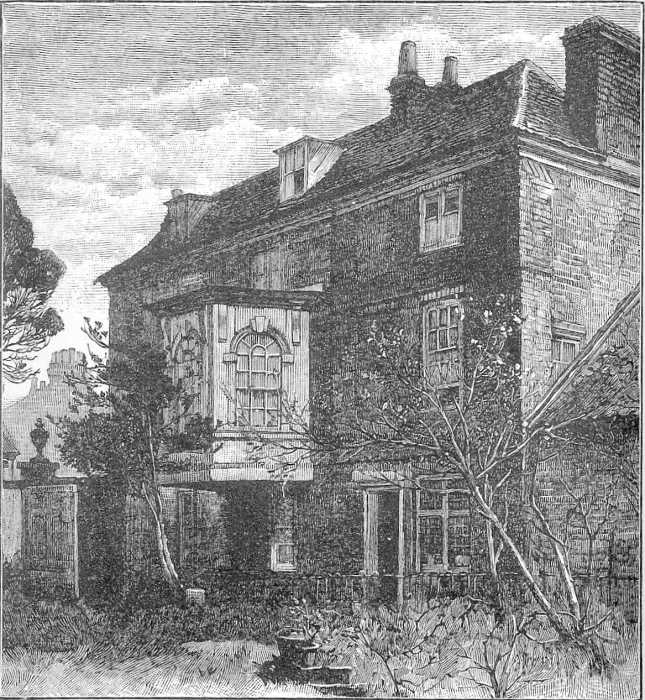
 man family wife.