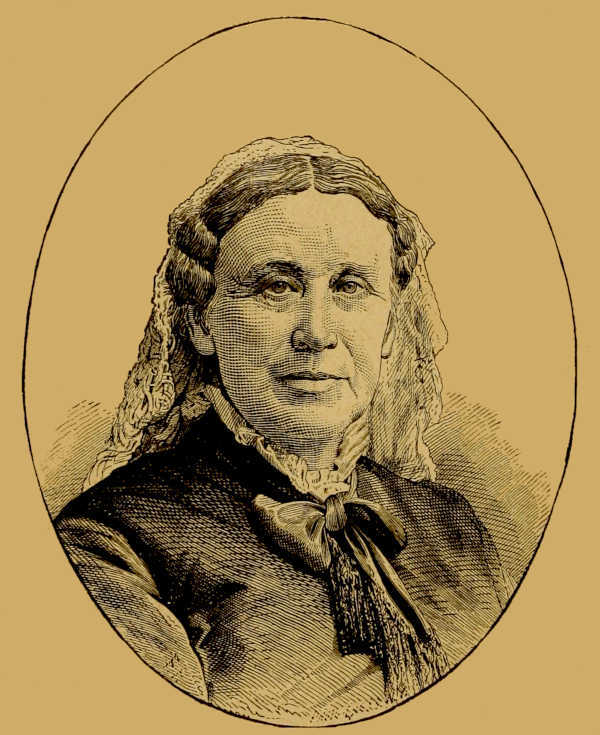
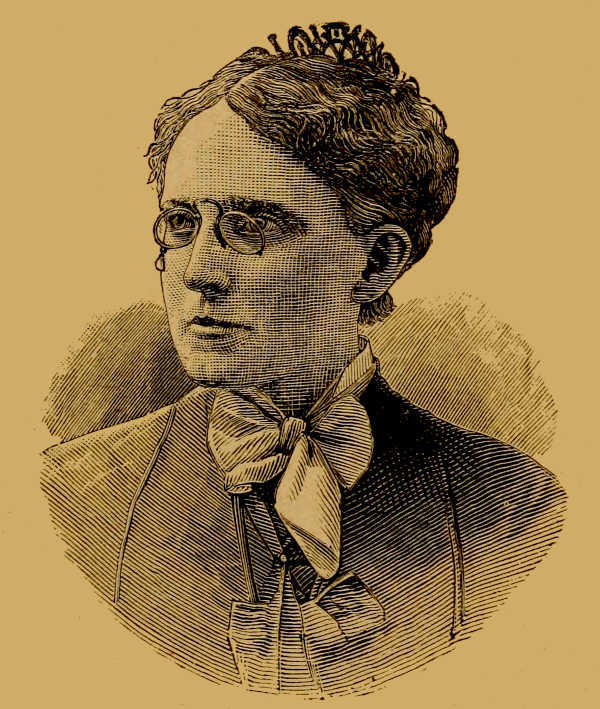
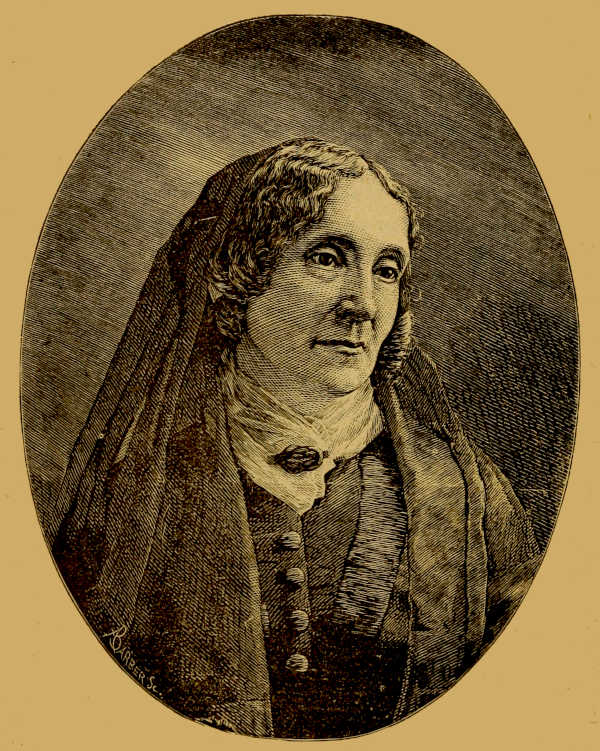
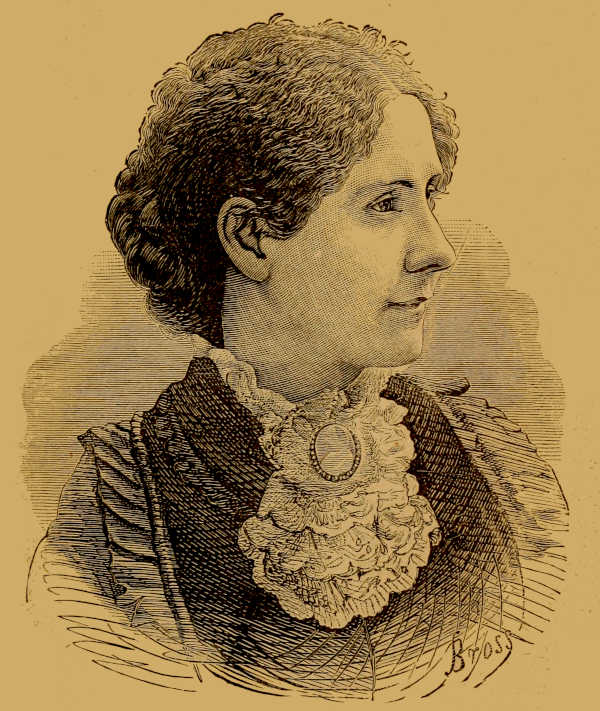
First President Woman’s National Christian Temperance
Union.
A Complete Official History of the Wonderful Uprising of the Christian
Women of the United States against the Liquor Traffic, which
culminated in the Gospel Temperance Movement.
BY MRS. ANNIE WITTENMYER.
AUTHOR OF “WOMAN’S WORK FOR JESUS,” “A JEWELED
MINISTRY,” ETC.
INTRODUCTION
BY MISS FRANCES E. WILLARD.
PUBLISHED BY
JAMES H. EARLE,
178 WASHINGTON STREET,
BOSTON, MASS.
Entered according to Act of Congress, in the year 1882, by
MRS. ANNIE WITTENMYER,
In the Office of the Librarian of Congress, at Washington, D. C.
BOSTON
W. F. BROWN AND COMPANY, PRINTERS
218 FRANKLIN STREET
TO
THE CHRISTIAN WOMEN,
Who counted not their lives dear unto themselves, but followed
the Master into the Saloons, and Gambling Dens, and
homes of sin, and sorrow, and went joyfully
to prison for Christ’s sake,
AND TO
THE WOMAN’S NATIONAL CHRISTIAN TEMPERANCE UNION,
THIS VOLUME
IS RESPECTFULLY DEDICATED BY
THE AUTHOR.
PREFACE.
This book is a carefully-prepared official history, of the
wonderful movement known as the Woman’s Temperance
Crusade.
There has been no effort at literary excellence; yet many
of the thrilling experiences narrated in these pages in simple
words, will live in song and story as long as God and Truth
are honored among the children of men.
The women who walked with God in the fiery furnace of
the Crusade have been allowed as far as possible to tell of
their work in their own words, and they should be accorded
a gracious hearing.
In this record there are glimpses of home life, “like apples
of gold in pictures of silver,” for these women are true home-makers;
there are scenes in churches where the awful solemnity
is broken only by the sobs of strong men, as women
with lofty, heaven-born heroism, go out as God’s chosen leaders
in this holy war; there are scenes in the streets, where
bands of pure, true women, surrounded by a howling mob,
kneel in the snow, and with the light of the excellent glory
on their faces, pray as did their Master for just such another
blaspheming, mocking mob: “Father, forgive them, they
know not what they do,” and then out of the jaws of death,
out of the mouth of hell, guided by an invisible hand, sheltered
by unseen wings, pass through the jeering, filth-reeking,
angry crowd, unharmed.
There are many things in this book that will tax the credulity
of the reader, but the statements it contains are well-authenticated,
and must be accepted as facts. Nothing, perhaps,
could be more incredible than the accounts, oft-repeated, of the
base and cowardly indignities heaped upon American women,
in their own land, by foreigners, who were protected in their
outrages by the stars and stripes, for which many of these
women had given their husbands, sons and brothers.
The liquor traffic of this country is mainly in the hands of
a low class of foreigners, and they are responsible for all the
mobs, and nearly all the insults offered to the Christian
women engaged in the Crusade.
These pages have been prayerfully written, and the facts
they contain are earnestly commended to all who love God,
and Truth, and Justice.
Ours is a famous country for protection. There is
the tariff to protect industry, while the patent laws are
a safeguard to invention. There are the land grants
for railroads, subsidies for steamship companies, charters
for corporations. In many of the States we have
societies for the prevention of cruelty to animals, and
in nearly all, laws for the protection of game. Busy
with all these gentle, wise, and patriotic measures,
there is one place our brothers have forgotten adequately
to protect, and that is—Home. The Women’s
Temperance Crusade, embalmed in the pages that
follow, was a protest against this forgetfulness and this
neglect. It was the wild cry of the defenceless and
despairing, whose echo rose to Heaven and still resounds
in every ear that is not deaf. At the height
of that wonderful uprising, a sweet-voiced Quaker
woman led her band to the chief saloon in an Ohio
village. “What business have you to come here?”
roared the affrighted dealer. Going to the bar she
laid her Bible down and said: “Thee knows I had five
sons and twenty grandsons, and thee knows that many
of them learned to drink right in this place, and one
went forth from here maddened with wine and blew
his brains out with a pistol ball; and can’t thee let his
mother lay her Bible on the counter whence her boy
took up the glass, and read thee what God says: ‘Woe
unto him that puts the bottle to his neighbor’s lips?’”
The saloon-keeper had but to point to the wall
behind him, where hung his “License to sell,” bearing
the names of prominent citizens of the village, and
emblazoned with the escutcheon of the Commonwealth.
They all met in that little scene—Gospel and Law,
man’s failure, woman’s grief; while the reason why,
and the place in which they met, gave ample answer
to the question heard so often: What did the Crusade
mean?
There is another question quite as often asked:
What did the Crusade do? One of its leaders made
this reply to the Temperance Sojourner, who writes
these lines: “Well, let me answer from my own experience.
Until it swept over our place, though I had
lived there twenty years, I knew so little about this
drinking business that I couldn’t have pointed out a
saloon in the whole town. I thought the queer-looking
places with blinds and screens were barber-shops.
Since then I have found out that they are shops where
men get shaved—not of their beards, but of their
honor. Since then, too, I took my little four-year-old
boy to market with me one morning, and feeling his
clasp of my hand tighten, I looked down and saw his
head turned backward apprehensively. ‘Why, Willie,
what’s the matter?’ I exclaimed. There were volumes
of meaning in the reproachful roll of his solemn
blue eyes as he whispered: ‘Didn’t mamma know that
her little boy was a-passin’ a saloon?’ Surely it was
the crowning achievement of the Crusade that it opened
the eyes of millions of women and children in this land
to the existence and the dangers of the rum-shop. In
consequence of this the public finger points to-day with
imperious gesture at the saloon, and woman’s voice
in tones of irresistible persuasion cries, ‘Look there!’”
What did the Crusade do? Take another illustration.
In front of a saloon that had refused them entrance,
knelt a crusading group. Their leader was also
the most prominent Methodist lady of the community.
Her head was crowned with the glory of gray hairs;
her hands were clasped, her sweet and gentle voice
was lifted up in prayer. Around her knelt the flower
of all the churches of that city—Congregationalists,
Baptists, Presbyterians—many of whom had never
worked outside their own denominations until now.
At the close, an Episcopal lady offered the Lord’s
prayer, in which joined Unitarians, Swedenborgians,
and Universalists; and when they had finished, a dear
old lady in the dove-colored garb of the Friends’ Society
was moved to pray, while all the time below them
on the curbstone’s edge knelt Bridget with her beads
and her Ave Marie.
“Going out on the street” signified a good deal
when one comes to think about it. First of all, it
meant stepping outside the denominational fence,
which, properly enough, surrounds one’s home. The
Crusaders felt that “unity of the Spirit” was the one
essential, nor feared to join hands with any who had
the Bible and the temperance pledge for the two articles
in their “Confession of Faith”—who rallied to
the tune of “Rock of Ages cleft for me,” or had for
their watchword: “Not willing that any should perish.”
Best of all, “going out on the street” brought
women face to face with the world’s misery and sin.
And here I may be pardoned a bit of personal reminiscence.
Never can I forget the day I met the great
unwashed, untaught, ungospelled multitude for the first
time. Need I say it was the Crusade that opened
before me, as before ten thousand other women, this
wide, “effectual door?” It was in Pittsburgh, the
summer after the Crusade. Greatly had I wished to
have a part in it, but this one experience was my first
and last of “going out with a band.” A young
teacher from the public schools, whose custom it
was to give an hour twice each week to crusading,
walked arm-in-arm with me. Two school-ma’ms
together, we fell into the procession behind the experienced
campaigners. On Market street we entered
a saloon the proprietor of which, pointing to several
men who were fighting in the next room, begged us
to leave, and we did so at once, amid the curses of the
bacchanalian group. Forming in line on the curbstone’s
edge in front of this saloon, we knelt, while an
old lady, to whose son that place had proved the gate
of death, offered a prayer full of tenderness and faith,
asking God to open the eyes of those who, just behind
that screen, were selling liquid fire and breathing curses
on his name. We rose, and what a scene was there!
The sidewalk was lined by men with faces written all
over and interlined with the record of their sin and
shame. Soiled with “the slime from the muddy banks
of time,” tattered, dishevelled, there was not a sneering
look or a rude word or action from any one of
them. Most of them had their hats off; many looked
sorrowful; some were in tears; and standing there in
the roar and tumult of that dingy street, with that
strange crowd looking into our faces—with a heart
stirred as never until now by human sin and shame, I
joined in the sweet gospel song:
“Jesus the water of life will give
Freely, freely, freely!”
Just such an epoch as that was in my life, has the
Crusade proved to a mighty army of women all over
this land. Does anybody think that, having learned
the blessedness of carrying Christ’s gospel to those
who never come to church to hear the messages we
are all commanded to “Go, tell,” we shall ever lay
down this work? Not until the genie of the Arabian
Nights crowds himself back into the fabulous kettle
whence he escaped by expanding his pinions in nebulous
bars—not until then! To-day and every day
they go forth on their beautiful errands—the “Protestant
nuns” who a few years ago were among the
“anxious and aimless” of our crowded population, or
who belonged to trades and professions overfull—and
with them go the women fresh from the sacred home-hearth
and cradle-side, wearing the halo of these loving
ministries. If you would find them, go not alone to
the costly churches which now welcome their voices,
while to those who are “at ease in Zion” they gently
speak of the great, whitened harvest. But go to
blacksmith shop and billiard hall, to public reading-room
and depot waiting-room, to the North End in
Boston, Water street, New York, the Bailey coffee-houses
of Philadelphia, the Friendly Inns of Cleveland,
the Woman’s Temperance Room of Cincinnati,
and Lower Farwell Hall, Chicago, and you will find
the glad tidings declared by the new “apostolic succession,”
dating from the Pentecost of the Crusade.
There is another question often asked, to which this
thought of woman’s temperance work conducts us, viz.:
What is the Crusade doing now?
Those who ask it with supercilious glance furnish an
added illustration of the immense power of the human
mind to resist knowledge.
“John Brown’s body lies a-mouldering in the grave,
But his soul is marching on.”
Just so with the Crusade. It has come and it has
gone—that whirlwind of the Lord—but it has set forces
in motion which each day become more potent, and
will sweep on until the rum power in America is overthrown.
There was but one Pentecost; doubtless history
will record but one Crusade.
A phenomenon no less remarkable, though certainly
much less remarked, has succeeded that wonderful
uprising—indeed, is aptly termed its sober, second
thought. This is the phenomenon of organization. The
women who went forth by an impulse sudden, irresistible,
divine, to pray in the saloons, became convinced,
as weeks and months passed by, theirs was to be no
easily-won victory. The enemy was rich beyond their
power to comprehend. He had upon his side the
majesty of law, the trickery of politics, and the leagued
strength of that almost invincible pair—Appetite,
Avarice. He was persistent, too, as Fate. He had
determined to fight it out on that line to the last dollar
of his enormous treasure-house, and the last ounce of
his power. But these women of the Crusade believed in
God, and in themselves as among his appointed instruments
for the destruction of the rum power. They loved
Christ’s cause; they loved the native land that had been
so mindful of them; they loved their sweet and sacred
homes. And so it came about that, though they had
gone forth only as skirmishers, they soon fell into line
of battle; though they had innocently hoped to overcome
the enemy by a sudden assault, they buckled on the
armor for the long campaign. The Women’s Praying
Bands, earnest, impetuous, inspired, became the
Women’s Temperance Unions, firm, patient, persevering.
The Praying Bands were without leadership save
that which inevitably results from the survival of the
fittest; the Women’s Unions are regularly officered.
The first wrought their grand pioneer work in sublime
indifference to prescribed forms of procedure; “So say
we, all of us,” being the spirit of “motions” often
“made, seconded and carried” by the Chair, while the
assembled women nodded their earnest acquiescence;
the second are possessed of good strong “Constitutions”
(with By-Laws annexed), and follow their
“Order of Business” with a dutiful regard to parliamentary
usage. The Praying Bands, looking for
immediate deliverance, pressed their numbers into
incessant service; the Women’s Unions, aware that
the battle is to be a long one, ask their members only
for such help as can be given consistently with other
duties. Enthusiasm—“a God in us”—enabled the
Praying Bands to accomplish prodigies; patient purpose,
with the same faith that inspired the Crusade, is
conducting the Unions to victory—distant, but sure.
To-day twenty-three States are organized, with
thousands of local auxiliaries, and all confederated in
a National Union.
It is safe to say that never did any form of philanthropic
work afford scope for so great diversity of talent
and of method as this branch of the temperance reform
“of the women, by the women.” In the days of the Crusade
a dear old grandmother said: “I’m of no use
except to go along and cry,” and in the same spirit a
negro servant said to the lady for whom she worked:
“I be’ant good for much, but I kin hold the ole ombereller
over you;” and even the family dog sometimes
walked with stately step beside his mistress as she lead
her “Band.” So, in these blessed days that have succeeded,
and which have brought such inspiration to our
lives that “I’m glad I’m alive!” is a frequent exclamation,
there is a place that seems “just made on purpose”
for every honest heart and helpful hand. Some
feel a special call to the gospel work, and others to
the execution of the law; some give their time to
organizing Unions, others to canvassing for subscribers
to our paper; some raise money, others raise the
tone of public sentiment; some work among the children,
others labor for the men who drink and sell, and all
are warmly welcomed and find abundant “elbow-room.”
It was the great Iconoclast, that wonderful Crusade!
It broke down sectarian barriers; it taught women
their power to transact business, to mould public opinion
by public utterance, to influence the decisions of
voters, and opened the eyes of scores and hundreds
to the need of the Republic for the suffrages of women,
and made them willing to take up for their homes and
country’s sake the burdens of that citizenship they
would never have sought for their own.
But best of all, it revealed to the mothers and
daughters in our Israel their opportunity and duty to
employ the growing leisure which our advancing
civilization and multiplied mechanical contrivances
afford them, in building up Christ’s empire on the
earth. It is a very plain, practical matter to help
organize the kingdom of heaven in a human breast.
It is a business enterprise based on an eminently
practical treatise known as the New Testament. Replace
the brandy flask in the pocket of a drinking
man by the Bible—get him to read with sincere wish
to understand the words that are spirit and life, and
you have set in motion the forces of a new dispensation
in his heart. You have built him up within
instead of propping him from without. To give him a
loaf of bread, if hungry, would be a good thing, but to
put him on track of getting one for himself by feeding
him with heavenly bread, is better. To put a broken
arm in a sling is a kind act, but if one could by an
electric touch make that arm whole, that were the
supreme benefaction, and analogous to that is the loving
“gospel work” by which we help to enthrone conscience
and enshrine Christ in a man’s soul. The
process is plain and simple as the Rule of Three.
The geometric formula that “all the angles of a triangle
equal two right angles” is not more demonstrable upon
the blackboard than this rule is demonstrable in a life,
namely: Prayer will cause a man to cease from sinning,
as sin will cause a man to cease from prayer. The
whole problem of “how to do it” was wrought out
over and over again by the women of the Crusade.
They proved anew to the great church militant that its
solution involves, and ever must, the individualism of
Christ’s own way of working; that “the masses” are
to be lifted up one by one, and not otherwise. It is a
question of contact. It is “elbow heathen” the Crusaders
reached, just because they found them at their
elbows. They acted on the principle that the man and
woman in the next alley to us are a part of our parish
in the geographical nature of things. Some people
spend a lifetime chasing after “the masses,” and are in
such hot pursuit they cannot stop to capture the unit
of the mass—and that’s the nearest and the neediest
man. The masses elude us; the next door neighbor
couldn’t if he would, and wouldn’t if he could. The
masses are a glittering generality; the man, poor,
needy, wicked, sad, is a most unglittering fact. It is
the way an army is recruited—one by one; it is the
way commerce marches across a continent and captures
it for civilization—one by one; it is the way Christ’s
church adds to its members, and heaven to its souls—one
by one. And first, best, and most sacred of the
lessons taught by the Crusade, was this lesson of individual
work for Christ, which must be learned by every
disciple before Christ comes as King in government,
in society and individual life.
Travelling through Ohio two years ago, and resting
for a night in some dear temperance woman’s
home, how many times I said: “Now talk to me of the
Crusade,” and how significantly uniform was the reply:
“O, that was something only to be felt and lived; to
be wept and prayed over—it wasn’t to be told.”
But as you, dear sisters of Ohio, Indiana, and other
States both east and west, were helped to do a work
so wonderful, even so, as I believe, has our dear President
of the National Union, which grew out of the
Crusade, been helped to be its faithful Chronicler.
We, who can but claim to be eleventh-hour laborers
at best, may never see the passion flower that
burst into such splendid bloom before your eyes,
but evermore we shall be grateful to her whose patient
hands gathered up its scattered petals and preserved
them for the herbarium of our memory. Nay,
not for ours alone. Posterity will listen to the story
and place its heroines in the Pantheon of undying
fame. And yet how well I know you have not wrought
for this; nor is it a regret to you that, as in this History
our friend has written, so in later times the record
shall embalm your deeds, but not your names. One
human life and work signifies little to the world. But
O, if we have tried to bless the lives about us, whether
in the sweet evangelism of our homes or in the grand
philanthropies by which society becomes the foster-parent
of thousands who are worse than motherless,
we shall not have lived in vain. Wherever in the
nobler future of the land we love, there are safe and
happy homes, they will be safer and more happy
because we have lived and toiled. Wherever little
children grow to maturity with less to lure them into
sin, and tempted manhood finds more helpful hands
outstretched to save, there we shall still be blessing,
there we shall still be blessed, though our names may
be forgotten. O, “may we join the choir invisible,”
whose voices, sounding onward through the ages, shall
speak to sad humanity of Him who yesterday, to-day,
forever, abides the same!
“In the cross of Christ I glory,
Towering o’er the wreck of time;
All that’s bright in human story
Radiates from its form divine!”
FRANCES E. WILLARD.
Chicago,
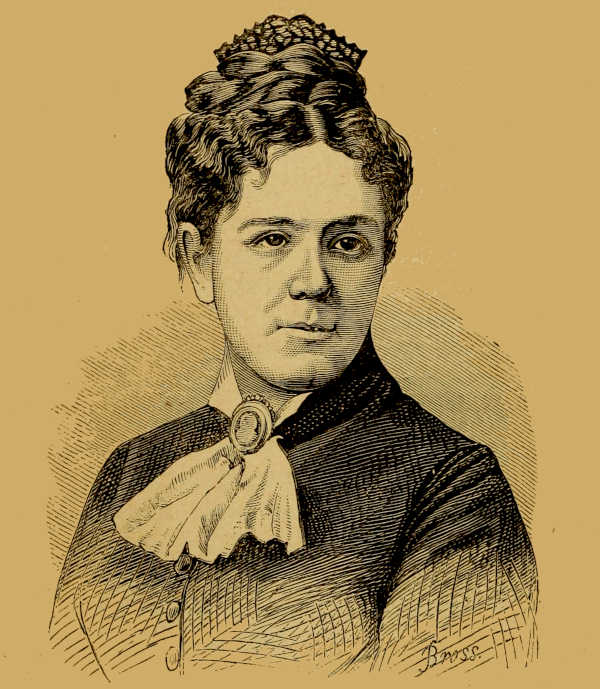
MISS FRANCES E. WILLARD,
First Corresponding Secretary Woman’s National
Christian Temperance Union.
Elected President in 1879.
CHAPTER I. — THE OUTLOOK AT THE BEGINNING OF THE CRUSADE.
HISTORY
OF THE
WOMEN’S TEMPERANCE CRUSADE.
We are a nation of God’s own right-hand planting.
The Lord has given us a goodly heritage—a land literally
flowing with milk and honey. It is estimated
that our grain fields are broad and rich enough to
supply the people of all nations with bread. We have
mineral wealth in rich abundance; and cotton, and flax,
and wool, and silks and furs with which to clothe ourselves
in royal apparel. Our scheme of government is
wise, and just, and humane—the best that was ever
vouchsafed to any people. And God has been with
us in his providence in a marked and wonderful manner;
so that all our enemies have been subdued before us
by the breath of his power. At his word steam has lent
her wings, and the lightnings their voice, and heaven
spread the wires of her whispering gallery, like a network,
over the continent, to help on the cause of liberty
and human progress.
Under these favorable circumstances, we might have
been the strongest and richest nation in the world had
not our rulers in their unwisdom encouraged the
liquor traffic, and adopted a scheme of raising public
revenue in connection therewith which has been destructive
to our moral, industrial, and financial interests.
To avoid imposing a direct tax for the support of
the government, Congress in 1794 recognized and
taxed the liquor traffic as a branch of commerce.
State legislatures soon followed the same unwise and
suicidal course. From that time on, protected and
encouraged by the government, which shared in its
spoils, the traffic in intoxicating drinks increased rapidly.
In 1873, the beginning of the crusade, according
to the estimate of Dr. Young, Chief of the Bureau of
Statistics, our annual drink bill reached the enormous
sum of $600,000,000! This was an annual tax of
over $15 per capita for every man, woman, and child
in the country. If the government had levied a direct
tax to secure the amount she realized from this business,
the cost to the people per capita would have
been less than $1.80 instead of $15. And then the
government would have saved the immense sum
expended annually in sustaining a standing army of
revenue officers, detectives, and gaugers required in
connection with the liquor business.
This enormous tax, which reached all grades of society,
fell heaviest on the laboring classes—upon those
who could not afford to pay it; and poverty and ruin
came to millions. The whole land was filled with beggary
and crime, and a bitter wail of want and woe
without surcease went up to God. Millions who ought
to have been producers and bread-winners, became
consumers, tramps and criminals. Men, mad with
strong drink, reeled through the streets; women,
grown old before their time, toiled in their comfortless
homes in dumb despair, and little half-starved children
hid away in fear from their brutal fathers. It was with
us as it was with the Egyptians—there was one dead
in almost every house.
But the liquor-dealers were so intrenched behind
law, so sheltered in politics, so guarded and sustained
by the government, that they were an oligarchy that
could dictate to statesmen, and control legislatures, and
defy public sentiment. Restrictive laws in most of the
states were weak and inoperative, and the demand for
“free rum” and a “free Sabbath” was fierce and loud,
and many of the old barriers against drunkenness and
lewdness and crime were being broken down. The government
of our large cities was largely in the hands of
liquor-dealers or the creatures of their choice, and the
police force under their control; many of the courts
were overawed or corrupted; Justice was perverted,
and Right and Truth trampled under foot. There was
no redress anywhere for those who had been wronged
and ruined by the liquor traffic; for the liquor oligarchy,
which was largely made up of foreigners, had the
government by the throat, and compelled her “to drink
of the wine of the wrath of her fornication.”
Spies were in the secret chambers of the government;
men high in places of trust guarded the liquor
interests; enormous frauds were planned and carried
forward year after year; men who ought to have been
in the penitentiary were lobbying their schemes for
plunder through legislative bodies; the air of the
national council chamber was reeking with alcohol and
tobacco. There seemed no hope for us or our country.
Congress was so much under the influence of the
rum power that they refused even to look into the
matter when “a commission of inquiry” was asked for
by hundreds of thousands of the best people in the land,
lest they should give offence to the liquor oligarchy.
Party managers were careful to lay down their platforms
so that liquor-dealers could stand securely on
every plank, no matter how many honest, worthy citizens
were crowded off.
The nation was living on her own vitals. For every
thousand dollars received from the liquor oligarchy,
the government sacrificed one of her own citizens.
Sixty millions of dollars received—sixty thousand men
sacrificed annually on this putrid altar of sin.
This was asserted over and over again till the whole
land rang with it, but the government was too much
under the control of liquor-dealers, who counselled
silence and secrecy, to investigate the charge. Legislatures
cowering before the liquor power spent their
time making laws for the protection of the beasts of
the field, and the birds of the air, and the fishes of the
sea, while thousands of men and women who were “of
more value than many sparrows” were going down to
death. Men were fined for allowing Canada thistles
to grow on their land, but saloons were allowed to
scatter the thistle-down of profanity, lewdness, theft,
robbery and murder broadcast. And any attempt to
stop the ruinous work was branded by liquor-dealers
as a gross usurpation of authority.
So the people were intimidated, and the drink curse
fitted down into every fold of society, and rested like
a heavy, crushing weight on every heart and home.
The darkness was intense. None but the angels of
God, whose wings of light parted the clouds of gloom
as they came down on errands of mercy—none but the
white-robed saints, who went with weary feet bearing
the lamp of truth into the habitations of cruelty, into
the saloons, and brothels and jails—knew, or guessed
half of the sin and sorrow curtained away behind the
black folds of the liquor traffic.
The slaves of appetite were not the only ones who
writhed beneath the iron heel of rum, and felt its hellish,
fiery breath. The innocent suffered with the
guilty. This black, fathomless gulf of death swept
right alongside of Christian homes, and children trained
in the lessons of truth with loving care, consecrated
at family altars and in the church, were swept away
from purity, home, mother and heaven, and cursing
God, went down, down with the mighty throng into the
dark abyss of a drunkard’s grave and a drunkard’s hell.
The church, in the presence of these evils she was
commissioned to overthrow, was criminally silent and
inactive, and many of the watchmen on the walls of
Zion were dumb, and gave no warning voice when they
saw the approach of the enemy.
Temperance was not popular. Many who were
abstainers said: “It is folly to war against the drink
system; men will sell as long as men will drink, and
no power can stop men from drinking.” Temperance
societies that had labored heroically for nearly a half
century were holding their own against fearful odds—fighting
the battle single-handed.
The women were hopeless. Oh, the agony, the
tears, the sleepless nights, the heart-breaking anguish
that wives and mothers suffered during those long,
bitter years of sorrow and silence, when few seemed
to care that the demon had come into their houses and
was doing his bloody work. When their hearts were
breaking, if they cried out in their agony or ventured
a protest in the saloon or court, the liquor oligarchy
howled them down with the “mad dog cry” of “Strong-minded,”
“Unwomanly,” “Go home, old woman, and
mend your husband’s breeches,” “Go home and darn
your stockings;” and the world joined in the laugh
of scorn, and the church made no defence of the
wronged and broken-hearted. And so the money that
ought to have come to them to buy new clothing, went
into the tills of the liquor-dealers, and they stayed at
home till the home was gone, and mended garments
till there were no garments to mend. No pen can
portray the utter hopelessness of the women into whose
homes the drink curse had come. The men who had
sworn at the altar to protect and honor them had become
demons from whom they fled in fear; the white-souled
children they had nurtured with tenderest care,
and cradled with prayer and Christian song, had become
loathsome sots, too low and brutish for companionship.
They had been robbed of all—property, social
position, brothers, husbands, sons, love and hope.
Nor were their more fortunate sisters free from care.
The gulf of ruin was near each door, and an undefined
dread, an awful foreboding, was in the heart of every
thoughtful wife and mother lest all she loved should
be swallowed up in its black depths.
Countless unspoken prayers went up to God. Women
weeping and praying through the long night-watches
appealed their cause, lost in so many of the
courts of earth, to the Supreme Court of Heaven.
Suddenly the world was startled by a flash of
heavenly light. Hands of faith had touched the hem
of power, and a mighty spiritual swirl came down upon
the people. Christian women, many of whom had
never spoken or prayed in their own churches, under
this Pentecostal baptism went into the streets and
saloons preaching the gospel of Christ, and the people
gathered by thousands to listen to the truths that fell
from their lips.
The air seemed surcharged with spiritual forces.
The angel of the Lord that John the Revelator saw
was before the altar, “and there was given him much
incense, that he should offer it with the prayers of all
saints upon the altar which was before the throne.
And the smoke of the incense which came with the
prayers of all saints ascended up before God out of
the angel’s hand.
“And the angel took the censer and filled it with fire
of the altar, and cast it into the earth, and there were
voices and thunderings and lightnings and an earthquake.”
The whole nation was stirred. Never before had
men so trembled under the power of prayer, or stood
in such awe of the fierce lightnings of God’s wrath.
Never before had society been so shaken by a moral
earthquake.
The women who kept step with God in his grand
onward marching were calm and serene. To them
the thunder and lightning was but the roll and rumble
of God’s artillery turned against their enemies, and the
earthquake the tread of their Captain and his mighty
hosts. Inspired by a heaven-born heroism, they went
into the saloons, and facing the liquor-dealers in the
midst of their deadly work, entreated them in God’s
name to give up their business and seek pardon and
salvation in Christ.
Delicately nurtured women, who had not felt the
awful evil in their own homes, and who had passed by
on the other side and hardly ventured to look toward
the dens where their neighbors’ children were being
murdered by the slow tortures that kill soul and body,
marched boldly into the saloons and on into the back
rooms where the awful secrets of sin and debauchery
are hid away, and preached to the spirits in prison
there. Men who walked among the tombs heard
through them the voice of the Master and were delivered.
Public attention was directed to the liquor traffic as
never before. A calcium light had been turned upon
it, and the mass of the people were horrified at what
they saw and heard.
Liquor-dealers writhed under this close scrutiny—under
this blaze of light—like serpents in the fire,
spitting forth their venom and stinging themselves in
their fury. But when Mrs. Thompson and the seventy
women who followed her went out of the Presbyterian
Church at Hillsboro’, Ohio, singing,
“Give to the winds your fears;
Hope and be undismayed:
God hears thy sighs and counts thy tears:
God will lift up thy head—”
they heralded a new dispensation in the temperance
work—a union of the moral forces of earth with the
invincible forces of heaven, and victory was assured.
The Crusade, then, was God’s method of arousing
public sentiment and consolidating the moral forces of
the land, and women His chosen instruments for this
important and unusual work.
CHAPTER II. — HILLSBORO’, OHIO. — BAPTIZED IN WHISKEY. — VICTORY AT WASHINGTON C. H. — WILMINGTON, OHIO. — RESOLUTION OF THANKS. — NEW VIENNA, OHIO. — KENTON, OHIO. — GALLIPOLIS, OHIO. — GREENFIELD, OHIO. — RESULTS. — FRANKLIN, OHIO. — MORROW, OHIO. — OXFORD, OHIO. — McARTHUR, OHIO. — GEORGETOWN, OHIO. — WHO ARE THESE WOMEN? — LOGAN, OHIO. — McCONNELSVILLE, OHIO. — MARYSVILLE, OHIO. — FINDLEY, OHIO. — JAMESTOWN, OHIO. — MOUNT VERNON, OHIO. — WARREN, OHIO. — STEUBENVILLE, OHIO. — YOUNGSTOWN, OHIO. — ALLIANCE, OHIO. — INCIDENTS. — INCIDENTS. — NEW PHILADELPHIA, OHIO.
OHIO.
THE BEGINNING OF THE CRUSADE.
I am indebted to Mrs. Dean K. Fenner for this able report; I have added but
little to it.
On the evening of the 23d December, 1873, there
might have been seen in the streets of Hillsboro’, Ohio,
persons singly or in groups wending their way to
Music Hall, where a lecture on temperance was to be
delivered by Dr. Dio Lewis, of Boston, Massachusetts.
Some account of the town and people of Hillsboro’
is necessary in this connection. It is a small place,
containing something more than 3,000 people, and
situated in a beautiful part of southern Ohio. Owing
to the educational advantages of the place—there being
two colleges for young ladies there and a large public
school—the inhabitants are rather better educated than
is usually the case in small towns, and its society is
indeed noted in that part of the country for its quietude,
culture, and refinement.
But Hillsboro’ was by no means exempt from the
prevailing scourge of intemperance. The early settlers
of Hillsboro’ were mostly from Virginia, and
brought with them the old-fashioned ideas of hospitality.
No sideboard was considered properly furnished
unless the usual supply of decanters and
glasses was there. The habit of drinking was almost
the rule. For many years previous to the crusade the
professional men, and especially of the bar, were nearly
all habitual drinkers, and many of them very dissipated.
Of course the influence of their example was felt
everywhere about them, and extended to the next
generation. When a few earnest temperance men,
among whom was Governor Allen Trimble, initiated a
total abstinence movement in or about the year 1830,
the pulpit took up arms against them, and a condemnatory
sermon was preached in one of the churches.
Thus it was that although from time to time men,
good and true, banded themselves together in efforts
to break up this dreadful state of things and reform
society, all endeavors seemed to fail of any permanent
effect. Outside appearances were indeed better. The
farmers could get their harvests in without a keg of
whiskey, and the family grocers no longer sold it with
their tea and sugar. But in many homes the light of
hope was gone out. Mothers were heart-broken and
wives worse than widowed. Sighs and tears were
continually poured out from sorrowing souls, who saw
no hand stretched out for their deliverance.
The plan laid down by Dr. Lewis challenged attention
by its novelty at least. He believed and argued
that the work of temperance reform might be successfully
carried on by women if they would set about it in
the right manner—going to the saloon-keeper in a
spirit of Christian love, and persuading him for the
sake of humanity and his own eternal welfare to quit
the hateful, soul-destroying business. The doctor
spoke with enthusiasm; and, seeing him so full of
faith, the hearts of the women seized the hope—a
forlorn one, ’tis true, but still a hope—and when Dr.
Lewis asked if they were willing to undertake the
task, scores of women rose to their feet, and there was
no lack of good men who pledged themselves to
encourage and sustain the women in their work.
A meeting for the further development of the plan
was agreed upon, to be held in the Presbyterian
Church at ten o’clock next morning, Wednesday,
December 24th, and at the time appointed there was
gathered a solemn assembly. A strange work was to
be done, and by unaccustomed hands.
On bended knee, and with uplifted hearts, they
invoked the blessing and guidance of Him “who knoweth
the end from the beginning,” and then proceeded
to the business of the hour.
Rev. W. J. McSurely, pastor of the Presbyterian
Church, was called to the chair. A committee was
appointed to prepare an appeal which was to be presented
to the liquor-sellers; also a druggist’s pledge
and a dealer’s pledge.
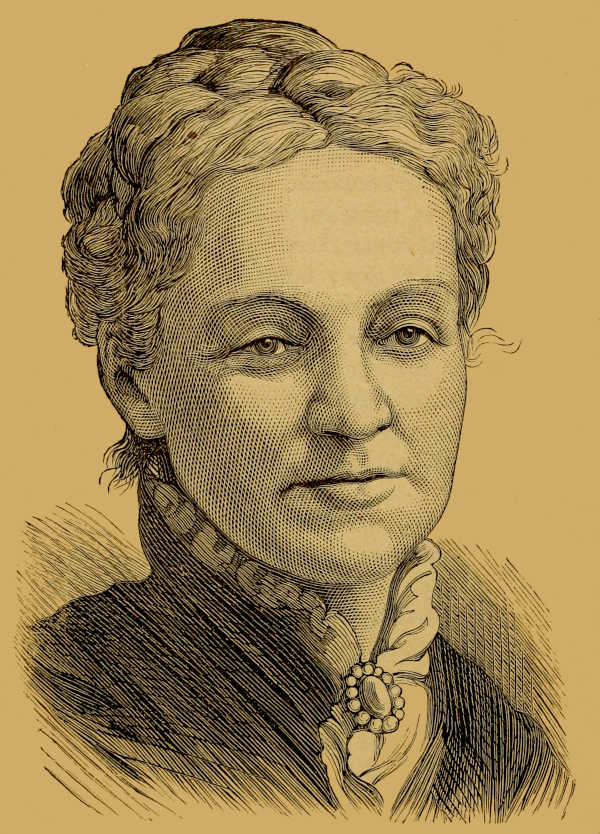
MRS. ELIZA J. THOMPSON,
Leader of the First Crusade Band.
Officers were then elected: Mrs. Eliza J. Thompson,
President; Mrs. Sally McDowell, Vice-President; Mrs.
Mary B. Fenner, Secretary.
Mrs. Thompson is the daughter of ex-Governor
Trimble, of Ohio. She is a lady of culture, about sixty
years of age, of modest and pleasant appearance and
very agreeable manners. She speaks with great simplicity,
in a conversational style, and with a quaintness
that is peculiarly attractive. Whenever she addresses
an audience she is sure of an attentive hearing.
Her recital of
“THE FIRST CRUSADE”
is somewhat on this wise: “On the 22d of last December
Dr. Dio Lewis lectured before our lyceum. It was
a literary lecture, and the subject was ‘Our Girls.’ I
wasn’t there. My boy came home and said, ‘Ma,
they’ve got you into business;’ and went on to tell
that Dio Lewis had incidentally related the successful
effort of his mother, by prayer and persuasion, to close
the saloon in a town where he lived when a boy, and
that he had exhorted the women of Hillsboro’ to do
the same, and fifty had risen up to signify their willingness,
and that they looked to me to help them to carry
out their promise. As I’m talking to you here familiarly,
I’ll go on to say that my husband, who had
retired, and was in an adjoining room, raised up on his
elbow and called out, ‘Oh! that’s all tomfoolery!’ I
remember I answered something like this: ‘Well,
husband, the men have been in the tomfoolery business
a long time; perhaps the Lord is going to call us
into partnership with them.’ I said no more. The
next morning my brother-in-law, Colonel ——, came
in and told me about the meeting, and said, ‘Now, you
must be sure to go to the women’s meeting at the
church this morning; they look to see you there.’
Our folks talked it all over, and my husband said,
‘Well, we all know where your mother’ll take this case
for counsel,’ and then he pointed to the Bible and left
the room.
“I went into the corner of my room, and knelt down
and opened my Bible to see what God would say to
me. Just at that moment there was a tap on the door
and my daughter entered. She was in tears; she held
her Bible in her hand, open to the 146th Psalm. She
said, ‘Ma, I just opened to this, and I think it is for
you,’ and then she went away, and I sat down and
read
THIS WONDERFUL MESSAGE FROM GOD.
“‘Put not your trust in princes, nor in the son of
man, in whom there is no help. Happy is he that
hath the God of Jacob for his help, whose hope is in
the Lord his God; which keepeth truth forever; which
executeth judgment for the oppressed; the Lord
looseth the prisoners; the Lord openeth the eyes of
the blind; the Lord raiseth them that are bowed down;
the Lord loveth the righteous; the Lord relieveth the
fatherless and the widow—but the way of the wicked he
turneth upside down. The Lord shall reign forever,
even thy God, O Zion, unto all generations. Praise ye
the Lord!’
“I knew that was for me, and I got up, put on my
shoes, and started. I went to the church, in this town
where I was born. I sat down quietly in the back part
of the audience-room, by the stove. A hundred ladies
were assembled. I heard my name—heard the whisper
pass through the company, ‘Here she is!’ ‘She’s
come!’ and before I could get to the pulpit, they had
put me ‘in office’—I was their leader.
“Many of our citizens were there, and our ministers
also. They stayed a few minutes, and then rose and
went out, saying, ‘This is your work—we leave it with
the women and the Lord.’ When they had gone, I
just opened the big pulpit Bible and read that 146th
Psalm, and told them the circumstance of my selecting
it. The women sobbed so I could hardly go on.
When I had finished, I felt inspired to call on a dear
Presbyterian lady to pray. She did so without the
least hesitation, though it was the first audible prayer
in her life. I can’t tell you anything about that prayer,
only that the words were like fire.
“When she had prayed, I said—and it all came to
me just at the moment—
‘NOW, LADIES, LET US FILE OUT, TWO BY TWO,
the smallest first, and let us sing as we go,
“Give to the winds thy fears.”’
“We went first to John ——’s saloon. Now, John
was a German, and his sister had lived in my family
thirteen years, and she was very mild and gentle, and
I hoped it might prove a family trait, but I found out
it wasn’t. He fumed about dreadfully and said, ‘It’s
awful; it’s a sin and a shame to pray in a saloon!’ But
we prayed right on just the same.”
That the choice was dictated by God we must believe,
for in all the trials and discouragements which
have beset us, and they have been many, her trust in
God has never failed. She had tested his faithfulness
through many years of heavy and sore trouble, and
had proved that his promises are “Yea and amen, to
them that believe.” And no other woman could have
kept up such a spirit of courage and hopefulness in
the little band of devoted women, who have met week
after week, all these years, to pray for God’s blessing
on the work.
After the election of officers, came the plan for work.
It was decided to go to the drug stores first, so that
the saloonists might not plead their example as an excuse
for themselves.
Mrs. J. M. Boyd was chosen to present the appeal
on that visit. All the druggists signed the pledge
except Mr. Dunn, of whom more hereafter.
Next day the ladies held another meeting, but decided
not to make any visitations, it being Christmas-day,
and the hotel-keepers more than usually busy and
not likely to listen very attentively to our proposition.
On the 26th, the hotels and saloons were visited;
Mrs. Thompson presenting the appeal. And it was on
this morning, and at the saloon of Robert Ward, that
there came a break in the established routine. “Bob”
was a social, jolly sort of fellow, and his saloon was a
favorite resort, and there were many women in the
company that morning whose hearts were aching in
consequence of his wrong-doing. Mrs. Thompson
presented the appeal, another lady read a selection in
the Bible, and then Mrs. Thompson began to talk to
him; and she did it with her heart all stirred up by the
memory of the wrongs the man had done to many
whose weakness he had taken advantage of, dragging
them down to disgrace and ruin. Ward was evidently
touched. He confessed that it was a “bad business,”
said if he could only “afford to quit it he would,” and
then tears began to flow from his eyes. Many of the
ladies were weeping, and at length, as if by inspiration,
Mrs. Thompson kneeled on the floor of the saloon, all
kneeling with her, even the saloonist, and prayed,
pleading with indescribable pathos and earnestness for
the conversion and salvation of this and all saloon-keepers.
When the amen was sobbed rather than
spoken, Mrs. Washington Doggett’s sweet voice began,
“There is a fountain,” etc., in which all joined;
the effect was most solemn, and when the hymn was
finished the ladies went quietly away, and that was the
first saloon prayer-meeting.
This is a fair specimen of the saloon visiting as
carried on in Hillsboro’ for more than three months.
Then the doors were locked and the prayer-meetings
were held on the pavements; extreme care was taken
not to obstruct the passage-way.
Mr. W. H. H. Dunn, the druggist, who refused to
sign the druggist’s pledge, and who was known to be
selling whiskey for drinking, and to minors, too, in disobedience
of the law, became very much incensed at
the continuous effort on the part of the women to persuade
him to sign the pledge, and I may say here that
not the women alone plead with him; a petition signed
by a large number of the leading men of the place
was presented to him by two of the oldest and most
respected citizens, without the least effect. Let it be
said as some excuse for him that he had bad advisers,
and that large sums of money were sent him by the
Whiskey Ring, that he might be able to fight the Crusaders
in the courts.
The first thing done was the issuing of a “pronunciamento,”
forbidding the women to sing and pray on
his store steps, or on the sidewalk in front of his store.
This was printed on slips of paper, and copies scattered
over the town, and about the front of the drug
store in question. This was early in the morning of
the 31st January, 1874, and when the hour came for the
usual prayer-meeting, there was a great questioning
as to what was to be done; finally, some of the gentlemen
said the ladies should go on the street as usual,
and that by the time they had gone the round of the
saloons, a place would be ready in front of Mr. Dunn’s.
Accordingly, in an hour or two, there was erected
in front of the drug store a covered structure, made
of boards and canvas, enclosed on three sides, and
open on the side next the store. The ladies soon took
possession and held a prayer-meeting.
Mr. Dunn could not stand that, so he applied to
Judge Safford, then presiding at court in Hillsboro’, for
an injunction against this “tabernacle.” The injunction
was granted, and a notice served on Mr. Sayler,
a very active temperance man, after he had gone to
bed. It was Saturday night, and in order that he
might obey the law and still keep the Sabbath, he
dressed himself, procured some help, and had everything
removed by twelve o’clock. An appeal was made
at once by the temperance people for dissolution of the
injunction; the case was heard by Judge Steele, at the
February term of court, and the injunction dissolved
on the finding of a legal flaw in the application of the
plaintiff. But Mr. Dunn was not to be quieted. He
now brought a suit for “trespass” against the Crusaders,
and asked $10,000 damages.
This suit was heard before Judge Gray, at the May
term of court, 1875. Able counsel was employed on
both sides. The question was felt to be a vital one,
and the court-room was crowded to overflowing for
seventeen days. The examination of witnesses occupied
thirteen or fourteen days, though not nearly all
of the two hundred were called to the stand.
One incident of this trial must be told. It happened
during Judge Safford’s speech, one of Mr. Dunn’s
counsel. There was in the court-room a dear old lady,
Mrs. Margaret Foreaker, a genuine mother in Israel,
who, full of faith, prayed much during the trial, and
while Judge Safford was speaking, prayed especially
that he might be “confounded.” He had been going
along swimmingly, and entirely to the satisfaction of
his friends, when suddenly he seemed to lose the
thread of his argument, dropped his eye-glasses two or
three times, could not find his references, made quotations
not bearing on the points he was trying to establish,
and his embarrassment was so obvious that Mrs.
F. said afterward she did not know but she had
“prayed too hard.” The judge did not recover himself,
and one of Dunn’s friends went over to the hotel
and reported the case as “lost,” that Judge Safford
had ruined it.
The jury were compelled by the ruling of the court
to bring a verdict against the defendants, and laid the
costs on them, with $5 damages. Counsel for the defence
made a bill of exceptions to the rulings of Judge
Gray, and the case was carried to the Supreme Court
of the State. It is still pending, but will probably be
dismissed, as Mr. W. H. H. Dunn is now a bankrupt.
Mr. Sayler owns the store, and Mr. Dunn’s assignee
will not defend the suit in Supreme Court.
The “street work” was not resumed after the Dunn
suits began. It was thought best not to defy the law
even in appearance until the decision of the courts
should be known. But there was plenty to do. The
new constitution was about to be presented to the
people of Ohio, and “License” or “No License” was
the great question. The women girded themselves for
the strife. Into the school districts and smaller towns
they went in little parties, held meetings, organized
leagues, circulated petitions, and kept on praying.
The license clause was defeated.
A few miles north of Hillsboro’ is the little village
of L——. It is quite a pleasant little place; the people
are intelligent; there are two churches, good
schools, and a few stores, etc. But there was one
drawback to the peace of the community, and that was
the drinking-saloon attached to the hotel. The proprietor
was one of the oldest citizens, and when the
Crusade began it was hoped that he would at once
come over on the temperance side. But as he did not,
there was a meeting called in the little white church to
consider what should be done. The meeting was large,
and after a prayer, a visiting committee of ladies went
down to Mr. ——’s saloon. He met them at the door,
and very kindly invited them into the parlor with his
amiable wife and daughter. There they talked the
matter over, but he refused to sign the pledge. The
next day they called again, and he was very angry and
locked the door; but on the third day, seeing that the
whole community was roused, he grew calm, and said,
“Ladies, I will not sign your pledge; but I will promise
you in the presence of God that I will never sell
another drop of liquor in this town after the 20th of
this month, and if I violate my word you may have
every cent I am worth. I will walk out and you may
walk in.” He kept his word for a while, but the temptation
to put a few more dimes in his pocket was too
strong, and he secretly bought another barrel of whiskey.
Just at this time several of the leading temperance
women were sick and could not visit him, but
“God met him.” The quiet village was alarmed by
the cry of “fire!” It was the hotel. It caught from a
segar thrown into a sawdust spittoon in the saloon.
While it was burning, a lady said, “O, dear! our town
is built so compactly, it will all burn.” “Never thee
fear,” said a good Quaker sister, “not a building will
burn but that one. Don’t thee see? not a leaf is moving;
the flames go straight up, and the sparks fall
back on the house.” She was right. The hotel, store,
saloon, and all belonging to it were entirely burned,
while not another house caught fire. Unappalled by
this judgment, Mr. —— built a room on the same lot
in which to sell whiskey, but became paralyzed, and in
a short time died a miserable death. There is no
whiskey now sold in L——.
I want to relate one or two little incidents that show
the hardening effect of liquor-selling on the dealer.
There was a saloon-keeper brought from Greenfield
to H—— to be tried under the Adair law. The poor
mother who brought the suit had besought him not to
sell to her son—“her only son.” He replied roughly
that he would sell to him “as long as he had a dime.”
Another mother, an old lady, made the same request,
“lest,” she said, “he may some day fill a drunkard’s
grave.” “Madam,” he replied, “your son has as good
a right to fill a drunkard’s grave as any other mother’s
son.” And in one of the Hillsboro’ saloons a lady saw
her nephew. “O, Mr. B——,” said she, “don’t sell
whiskey to that boy: if he has one drink he will want
another, and he may die a drunkard.” “Madam, I will
sell to him if it sends his soul to hell,” was the awful
reply. The last man is a peculiarly hard, stony sort
of man; his lips look as if chiselled out of flint, a man
to be afraid of. One morning, when the visiting band
reached his door, they found him in a very bad humor.
He locked his door and seated himself on the horse-block
in front in a perfect rage, clenched his fist,
swore furiously, and ordered us to go home. Some
gentlemen, on the opposite side of the street, afterwards
said that they were watching the scene, ready
to rush over and defend the ladies from an attack, and
they were sure it would come; but one of the ladies,
a sweet-souled woman, gentle and placid, kneeled just
at his feet, and poured out such a tender, earnest
prayer for him, that he quieted down entirely, and
when she rose and offered him her hand in token of
kind feeling, he could not refuse to take it.
But it was not always stormy; sometimes it was
summer-sunshine, as witness: One bright Saturday
afternoon, while we were singing the sweet songs of
Zion and offering prayer, an old gentleman, a stranger
to us all, stood at a little distance from our band, and
while listening to us was led by the Spirit to give his
heart to God. He went to his home bearing the glad
tidings to his friends. He told it in church the following
Sabbath, and a revival began then which resulted
in many conversions.
As I go over these facts of a time so full of interest,
I recall the figure of a venerable, dignified old gentleman,
full of vigor and enthusiasm, though the frosts of
seventy-five winters had whitened his head; this was
General Jos. J. McDowell, the husband of our vice-president.
His interest kept pace with the work, he
was at nearly all the meetings, and had ever a word
of counsel or encouragement for the women. But
there was one thing lacking. He was not a professing
Christian, and his many friends grew sad when they
saw that he was drawing so near the close of life without
the only hope that can lighten the pathway to the
tomb. The time came, however, for the Spirit to do
its work. The ladies had been holding a series of
religious meetings in their consecrated league room,
morning after morning, for two months (January and
February, 1876). The presence of the One Mighty
to save and strong to deliver was gloriously manifesting
himself, and on one of these mornings General
McDowell came in and took his seat. Mrs. Thompson,
who was leading the meeting on that occasion,
after a very touching hymn had been sung, Scripture
read, and prayer offered, proposed spending a short
time in testimony. One and another had spoken, when
Mrs. T—— said, in a kind, familiar way, “General
McDowell, we are most happy to have you with us
this morning, and as you have so often encouraged
our hearts in our temperance work, we should love to
hear you speak.”
He arose slowly, and in a very solemn manner said,
“I do not feel worthy to speak on sacred subjects
before you good women.” After some hesitation he
resumed, “I have been a great sinner; for many years,
especially during the war, I had almost come to the
conclusion that there was no such thing as religion,
but seeing the spirit of divine love displayed by the
crusading ladies of our town, as they have knelt on
snow even, in front of the barred doors of these worse
than murderers, to pray for their souls; and as in the
churches I have watched the tears stream down their
cheeks as they have prayed the divine blessing upon
them and their families, I have felt my heart soften.
Now I feel that I can say I love the Saviour.” The
scene that followed can be better imagined than
described, as that devoted wife, who had prayed for
her noble husband for more than fifty years, received
him a new creature in Christ Jesus. All were baptized
afresh by the Holy Spirit, and we grasped with
firmer hold the hand of our Almighty Friend who had
bidden us walk upon the untried waves, December
23d, 1873.
Since the departure of this dear friend of the Crusade
to the “Home of the Soul,” for which home he was
rapidly matured, wonderful developments of divine
mercy have been displayed in our highly-favored town,
Hillsboro’. Last spring a gracious revival resulted
from the “union services” of the Quaker Evangelists,
Nathan and Esther Frame. Scores of young men
were converted during these meetings who had been
the objects of our earnest and special prayers. Many
a mother’s heart was made glad, and the churches all
received their dead raised to life again.
Thus God prepared our community for the glorious
dawn of the Murphy movement, and wonderfully
qualified by reformation based upon conversion, our
Congressman elect, Hon. Henry Dickey, for its inauguration.
The first Murphy meeting was held on the
evening of May 15th, 1877, and the first men to sign
the pledge were some of our prominent citizens in
every profession; but pre-eminently the lawyers, men
of talent and influence, but whose habit of intemperance
had long been a source of grief and anxiety to
their friends. Three hundred signed the pledge upon
the first evening; within two weeks over two thousand
names were upon the roll; some of the most energetic
workers in the movement were men who were foremost
in opposing the Crusade, unsparing and bitter in
their invectives against all concerned. That which
fills us with astonishment and devout thanksgiving is
the desire evinced by these men, that old scores be
wiped out, and Christian women come to the front and
help in the cause by their presence and sympathy.
Among the many interesting incidents of work reported
at the Woman’s Temperance Camp-Meeting
at Ocean Grove was the following, related by Mrs.
E. J. Thompson, of Hillsboro’:
“During the Crusade, a saloon-keeper consented to
close his business. There was a great deal of enthusiasm
and interest, and we women decided to compensate
the man for his whiskey and make a bonfire of it
in the street. A great crowd gathered about the
saloon, and the barrels of whiskey were rolled out to
the public square where we were to have our bonfire.
Myself and two other little women, who had been
chosen to knock in the heads, and had come to the
place with axes concealed under our shawls, went to
our work with a will.
“I didn’t know I was so strong, but I lifted that axe
like a woodman and brought it down with such force
that the first blow stove in the head of a barrel and
splashed the whiskey in every direction. I was literally
baptized with the noxious stuff. The intention
was to set it on fire, and we had brought matches for
that purpose, but it would not burn! It was a villanous
compound of some sort, but we had set out to
have a fire, and were determined by some means or
other to make it burn, so we sent for some coal oil and
poured it on and we soon had a blaze. The man who
could sell such liquors would not be likely to keep the
pledge. He is selling liquors again.”
Most of the facts in the following history of the
work at Washington C. H. have been gleaned from
the official report of the secretary, Mrs. M. V. Ustick.
It will be seen that the Crusade began in this town
only two days later than at Hillsboro’. And Washington
C. H. was the first place where the Crusade was
made prominent and successful.
On Friday morning, Dec. 26th, 1873, after an hour
of prayer in the M. E. Church, forty-four women filed
slowly and solemnly down the aisle, and started forth
upon their strange mission with fear and trembling,
while the male portion of the audience remained at the
church to pray for the success of this new undertaking;
the tolling of the church-bell keeping time to the
solemn march of the women, as they wended their
way to the first drug store on the list. (The number
of places within the city limits where intoxicating
drinks were sold was fourteen—eleven saloons and
three drug stores.) Here, as in every place, they
entered singing, every woman taking up the sacred
strain as she crossed the threshold. This was followed
by the reading of the appeal and prayer; then earnest
pleading to desist from their soul-destroying traffic
and sign the dealer’s pledge.
Thus, all the day long, they went from place to place,
without stopping even for dinner or lunch, till five
o’clock, meeting with no marked success; but invariably
courtesy was extended to them; not even their
reiterated promise, “We will call again,” seeming to
offend.
No woman who has ever entered one of these dens
of iniquity on such an errand needs to be told of the
heart-sickness that almost overcame them as they, for
the first time, saw behind those painted windows or
green blinds, or entered the little stifling “back room,”
or found their way down winding steps into the damp,
dark cellars, and realized that into such places those
they loved best were being landed, through the allurements
of the brilliantly lighted drug store, the fascinating
billiard-table, or the enticing beer-gardens, with
their syren attractions. A crowded house at night,
to hear the report of the day’s work, betrayed the
rapidly increasing interest in this mission.
On the 27th the contest really began, and, at the
first place, the doors were found locked. With hearts
full of compassion, the women knelt in the snow upon
the pavement, to plead for the divine influence upon
the heart of the liquor-dealer, and there held their first
street prayer-meeting.
At night the weary but zealous workers reported
at a mass-meeting of the various rebuffs, and the success
in having two druggists sign the pledge not to
sell, except upon the written prescription of a physician.
The Sabbath was devoted to union mass-meeting,
with direct reference to the work in hand; and on
Monday the number of ladies had increased to near
one hundred. That day, December 29th, is one long
to be remembered in Washington, as the day upon
which occurred the first surrender ever made by a
liquor-dealer, of his stock of liquors of every kind and
variety, to the women, in answer to their prayers and
entreaties, and by them poured into the street. Nearly
a thousand men, women, and children witnessed the
mingling of beer, ale, wine, and whiskey, as they filled
the gutters and were drank up by the earth, while the
bells were ringing, men and boys shouting, and women
singing and praying to God who had given the victory.
But on the fourth day, “stock sale-day,” the campaign
had reached its height, the town being filled with visitors
from all parts of the county and adjoining villages.
Another public surrender, and another pouring into
the street of a larger stock of liquors than on the previous
day, and more intense excitement and enthusiasm.
Mass-meetings were held nightly, with new victories
reported constantly, until on Friday, January 2d, one
week from the beginning of the work, at the public
meeting held in the evening, the secretary’s report announced
the unconditional surrender of every liquor-dealer,
some having shipped their liquors back to wholesale
dealers, others having poured them into the gutters,
and the druggists as all having signed the pledge.
Thus a campaign of prayer and song, had, in eight
days, closed eleven saloons, and pledged three drug
stores to sell only on prescription. At first men had
wondered, scoffed, and laughed, then criticised, respected
and yielded.
Morning prayer and evening mass-meetings continued
daily, and the personal pledge was circulated
till over one thousand signatures were obtained. Physicians
were called upon to sign a pledge not to prescribe
ardent spirits when any other substitute could
be found, and in no case without a personal examination
of the patient.
Early in the third week the discouraging intelligence
came that a new man had taken out license to sell
liquor in one of the deserted saloons, and that he was
backed by a whiskey house in Cincinnati, to the
amount of $5,000, to break down this movement. On
Wednesday, the 14th, the whiskey was unloaded at his
room. About forty women were on the ground and
followed the liquor in, and remained holding an uninterrupted
prayer-meeting all day and until eleven
o’clock at night. The next day, bitterly cold, was
spent in the same place and manner, without fire or
chairs, two hours of that time the women being locked
in, while the proprietor was off attending a trial. On
the following day, the coldest of all the winter of 1874,
the women were locked out, and stood on the street
holding religious services all day long.
Next morning a tabernacle was built in the street,
just in front of the house, and was occupied for the
double purpose of watching and prayer through the
day; but before night the sheriff closed the saloon,
and the proprietor surrendered; thus ended the third
week.
A short time after, on a dying bed, this four days’
liquor-dealer sent for some of these women, telling
them their songs and prayers had never ceased to ring
in his ears, and urging them to pray again in his behalf;
so he passed away.
Early in the work Mrs. George Carpenter, Mrs. A. C. Hirst, Mrs. A. E. Pine
and Mrs. Ogle, who were appointed to draw up an appeal, presented the following
APPEAL.
Knowing, as you do, the fearful effects of intoxicating drinks, we, the women
of Washington, after earnest prayer and deliberation, have decided to appeal to
you to desist from this ruinous traffic, that our husbands, brothers, and especially
our sons, be no longer exposed to this terrible temptation, and that we may no
longer see them led into those paths which go down to sin, and bring both body
and soul to destruction. We appeal to the better instincts of your own hearts, in
the name of desolated homes, blasted hopes, ruined lives, widowed hearts, for
the honor of our community, for our happiness; for our good name, as a town;
in the name of the God who will judge you, as well as ourselves; for the sake
of your own souls, which are to be saved or lost, we beg, we implore you, to
cleanse yourselves from this heinous sin, and place yourselves in the ranks of
those who are striving to elevate and ennoble themselves and their fellow-men;
and to this we ask you to pledge yourselves.
This appeal was adopted, and was afterwards extensively used in other parts of
the State, and in other States.
A property-holders’ pledge was also circulated—pledging men not to rent, or
lease property, to be used as saloons, nor to allow any dealings of the liquor
traffic to be carried on upon any premises belonging to them. This pledge was
generally signed by holders of real estate.
During this week came a plea for help from Hillsborough. In answer to that
call, on Monday, January 12th, a committee, consisting of Profs. Morehouse and
Dean, and Mrs. M. G. Carpenter, Mrs. Judge McLean, Mrs. Judge Priddy, and
Miss Annie Ustick, went to Hillsborough, spent the evening in attendance upon a
mass-meeting there, and next forenoon in prayer and conference with the workers,
returning in time to attend the mass-meeting at home, bringing with them encouraging
words.
By this time the new method of fighting whiskey began to attract the attention
of the press and people in surrounding places; and meetings were announced
to be held in every village and school district in the county. Committees of
ladies and gentlemen were sent out to assist in these meetings. Committees
were also sent, by request, into all adjoining counties, the meetings being constantly
kept up at home, and all the while gaining in interest.
About this time came word from Columbus, that the Adair Liquor Law was
in great danger of being repealed; consequently the following communication
was sent to every known Temperance organization throughout the State, by the
Washington League:
“To the Secretary of Women’s Temperance League, at ——:
“Dear Sister—By order of the entire body of our Temperance League, we
send you an urgent request that you immediately appoint a committee of not less
than six, of the most earnest and effective workers, who shall be ready at an
hour’s notice, to respond to the call embodied in the following resolution:
“‘Resolved, That the secretary of this meeting be requested to correspond with
the ladies in all places where the Temperance movement is now, or may be progressing,
asking the same to appoint a delegation to appear at Columbus, when
called, if any action of the legislature, threatening the safety of the Adair Liquor
Law, may be contemplated.’
“Please notify us of your decision in the matter, forwarding us one name to
whom we may telegraph if necessary.”—[Signed by the secretary.]
Responses poured in from all Leagues addressed—the word “Ready.” But
the law remained undisturbed that winter.
The names of the following women, chosen by God and men to inaugurate this
great work and carry it forward to success, appeared in the columns of the
Fayette County Herald at the time:
Mrs. George Carpenter; Miss Annie Ustick; Mrs. A. C. Hirst; Mrs. A. E.
Pine; Mrs. B. Ogle; Mrs. P. E. Morehouse; Miss M. A. Love; Mrs. Wm.
Stevens; Mrs. O. Grubbs; Mrs. J. Van Deman; Mrs. E. Milliken; Mrs. A.
Blakemore; Mrs. Wm. Smith; Mrs. P. T. Light; Mrs. H. L. Hadley; Mrs.
F. Nitterhouse; Mrs. D. McLean; Mrs. Allen Hegler; Mrs. T. N. Ustick;
Miss A. E. Robinson; Miss Julia Wood; Miss Anna Cherry; Mrs. S. Lydy;
Miss Brightie Ogle; Miss Flora Ogle; Mrs. Barnett; Mrs. Farmer; Mrs. Geo.
Dahl; Mrs. M. Gardner; Miss Kate Foster; Mrs. Col. Maynard; Mrs. Dr.
Dennis; Mrs. Dr. Coffman; Miss Belle Stuckey; Mrs. H. P. Cherry; Mrs. J. B.
Priddy; Mrs. M. Blackmore; Mrs. A. E. Silcott; Miss L. Milliken; Miss
Emma Wilcox; Mrs. H. P. Ustick; Miss Ida Dean; Mrs. J. Hopkins; Mrs. C.
L. Getz; Mrs. T. Gardner; Mrs. Wm. Gordon; Miss A. Kephart.
But there still remained the beer hall of Charlie
Beck, about half a mile out. Carriages were furnished
the ladies, free of charge, from the temperance livery-stable
of Collins & Bitzer, and in these the band made
daily visits to Beck’s.
At this time the Cincinnati Commercial sent a reporter
to view the land, from whose graphic pen we quote
the following:
“I reached Washington at noon of January 20th,
and seeking Mr. Beck’s beer garden, found him in a
state of terrible nervousness, as the ladies had spent
the forenoon in front of this place. He evidently
regarded me as a spy, but was much mollified when
assured that I was only a journalist, and made voluminous
complaint in ‘high Dutch’ and ‘low English.’
“‘I got no vitnesses. Dem vimens dey set up a shob
on me. But you don’t bin a ’bitual drunkard, eh?
No, you don’t look like him. Vell, coom in, coom in.
Vat you vant, beer or vine? I dells you, dem vimens
is shust awful. By shinks, dey build a house right in
the shreet, and stay mit a man all day a singin’ and
oder foolishness. But dey don’t get in here once agin
already.’
“In obedience to this invitation, I had entered by
the side door—the front was locked and barred—to
find four customers indulging in liquor, beer and pigs’
feet.
“Mr. Beck kept open house nearly all that night;
the sounds of revelry were plainly heard in town, and
in the morning several drunken men came into town,
one of whom tumbled down into a livery-stable, and
went to sleep on a manure pile, from which he was
carried to the lock-up. Matters were evidently coming
to a crisis, and I went out early; but the ladies reached
there in force just before me. I met Mr. Beck hurrying
into town to consult his lawyer, or, as he phrased it,
‘to see mein gounsel ven I no got a right to my own
broberty.’
“The main body of the ladies soon arrived, and took
up a position with right centre on the doorstep, the
wings extending each way beyond the corners of the
house, and a rearward column along the walk to the
gate. In ludicrous contrast the routed revellers, who
had been scared out of the saloon, stood in a little
knot fifty feet away, still gnawing at the pigs’ feet
they had held on to in their hurried flight, while I
took a convenient seat on the fence. The ladies then
sang—
‘Oh, do not be discouraged, for Jesus is your friend;
He will give you grace to conquer, and keep you to the end.’
“As the twenty or more clear, sweet voices mingled
in the enlivening chorus—
‘I’m glad I’m in this army,’ etc.—
the effect was inspiring. I felt all the enthusiasm of
the occasion, while pigs’ feet party, if they did not feel
guilty, certainly looked so.
“The singing was followed by a prayer from Mrs.
Mills Gardner. She prayed for the blessing of God
on the temperance cause generally, and in this place
particularly; then for Mr. Beck, his family and friends,
his house, and all that loved him, and closed with an
eloquent plea for guidance in the difficult and delicate
task they had undertaken. In one respect the prayer
was unsurpassed; it was eminently fitting to the place
and the occasion. As the concluding sentences were
being uttered, Mr. Beck and his ‘gounsel’ arrived.
The ladies paid no attention to either, but broke forth
in loud strains,
‘Must Jesus bear the cross alone?
No, there’s a cross for me,’
when the lawyer borrowed some of my paper, whispering
at the same time, ‘I must take down their names.
Guess I shall have to prosecute some of them before
we stop this thing.’
“I should need the pen of an Irving and pencil of
a Darley to give any adequate idea of the scene. On
one side, a score of elegant ladies, singing with all the
earnestness of impassioned natures; a few yards away
a knot of disturbed revellers, uncertain whether to
stand or fly; half way between, the nervous Beck,
bobbing around like a case of fiddle-strings with a
hundred pounds of lager beer fat hung on them; and
on the fence by the ladies, a cold-blooded lawyer and
excited reporter scribbling away as if their lives depended
on it. It was painful from its very intensity.
“The song ended, the presiding lady called upon
Mrs. Wendels, and again arose the voice of prayer—so
clear, so sweet, so full of pleading tenderness, that
it seemed she would, by strength of womanly love,
compel the very heavens to open and send down in
answer a spark of divine grace that would turn the
saloon-keeper from his purpose. The sky, which had
been overcast all the morning, began to clear, the
occasional drops of rain ceased to fall, and a gentle
south wind made the air soft and balmy. It almost
seemed that nature joined in the prayer.
“Again the ladies sang—
‘Are there no foes for me to face,’
with the camp-meeting chorus,
‘Oh, how I love Jesus,
Because he first loved me.’
“As the song concluded, the lawyer suddenly stepped
forward, and said:
“‘Now, ladies, I have a word to say before this performance
goes any further. Mr. Beck has employed
me as his attorney. He cannot speak good English,
and I speak for him here. He is engaged in a legitimate
business, and you are trespassers on his property
and rights. If this thing is carried any further, you will
be called to account in the court, and I can assure you
the court will sustain the man. He has talked with
you all he desires to. He does not want to put you
out forcibly; that would be unmanly, and he does not
wish to act rudely. But he tells you to go. As his
attorney, I now warn you to desist from any further
annoyance.’
“Again the ladies sang—
‘My soul, be on thy guard,
Ten thousand foes arise.’
And Miss Annie Ustick followed with a fervent prayer
for the lawyer and his client; but they had fled the
scene, leaving the house locked up. After consultation,
the ladies decided to leave Mr. Beck’s premises
and take a position on the adjoining lot. They sent
for the ‘tabernacle,’ a rude frame building they had
used in front of Slater’s saloon. This they erected on
the adjoining lot, put up immense lights to illuminate
the entrance to the beer garden, and kept up a guard
from early morning till midnight.
“For two weeks religious services were held in the
tabernacle day and night, and the women were constantly
on duty; at the end of which time an injunction
was granted Mr. Beck and the tabernacle was taken
down.
“Temperance was still the pulpit theme on the Sabbath,
and on Monday morning, February 9th, all the
business houses were closed from 8 to 9 to attend
the business men’s prayer-meeting. Large delegations
were present from adjoining villages at that early
hour. At the meeting there came a messenger from
this man stating that he would give up his business,
which announcement was received with cheers. It
was then decided that all who were not enjoined from
so doing should march out to Mr. Beck’s beer garden,
where the proprietor met them at the gate, and after a
brief consultation with a committee appointed for that
purpose, he publicly announced: ‘You comes so many,
I quits. I will never sell any more beer or whiskey.’
Again the crowd gave vent to their feelings in cheers.
Messengers were despatched to the women who remained
praying in the church, to join them. All the
bells commenced ringing, and the procession, numbering
two hundred strong, started out to Sullivan’s beer
house, now the only remaining saloon in the township.
Marching up Court street, the numbers increased, and
amid the most profound silence the men and women pursued
their journey. About half way there the man in
question was met and interviewed. He asked two days
to consider, which were granted. The procession then
returned, the bells all the time ringing out their chimes
upon the crisp morning air. Meetings, morning and
evening, continued with unabated interest, and at each
came to us the cry from other points, ‘Come and
help us.’
“On Wednesday morning, February 11th, at mass-meeting
in the Presbyterian Church, Mr. Sullivan came
in and publicly pledged himself to ‘quit forever the
liquor business.’ A general rejoicing and thanksgiving
followed this surrender of the ‘last man.’
“Thus, through most of the winter of 1874 no alcoholic
drinks were publicly sold as a beverage in the
county.
“The summer was given up to the defeat of the
license clause in the new constitution which was to
come before the people on the 18th of August.
“Mass temperance picnics were a prominent feature
of the season, and the untiring zeal of the workers was
crowned with success on election day.
“During the two intervening years weekly temperance
league-meetings have been kept up by the faithful
few, while frequent union mass-meetings have been
held, thus keeping the subject always before the people.
“To-day the disgraceful and humiliating fact exists
that there are more places where liquors are sold than
before the Crusade. Does any one ask the result of
all this labor, and if the movement was a failure? We
answer to the first question of results: The idea that
women are to take an active part in the great conflict
between religion and the rum power, was evolved by
this very Crusade. None saw quicker than the women
themselves the weak and strong points of the movement,
and these praying bands have become thoroughly
organized Women’s Christian Temperance Unions;
and reform clubs, reading-rooms, coffee-houses, and
friendly inns are the outgrowth of these ‘unions.’
Other countries have felt the impulse, and the best
women of Europe and Canada are being organized into
‘leagues’ and ‘unions.’
“Was this movement, then, a failure? No! No!
The long list of reformed lives; the restored happiness
and prosperity of once desolated homes; the still
longer list of our noble young men, who were arrested
in their first downward steps in the path of intemperance
and ruin, and whose upright and useful lives will
be standing monuments of good for years to come.
Who dares to compute such results? The improved
public sentiment, banishing the wine cup from the
social circle, from the sideboards and cellars of respectable
homes—the awakening and uniting of all
Christian hearts in one grand work for God and
humanity. All these are the outgrowth of a reformation
which has since belted the world—the most far-seeing
being utterly unable to grasp its results.
“An incident recently under the observation of the
writer is in point. During the winter of 1876 a grand
banquet was given the Ohio General Assembly, judiciary,
and military officers by some of the prominent
citizens of our capital city. No labor or expense was
spared in ministering to the comfort or pleasure of the
guests, yet no wine was to be found in all that banquet
hall. One of the hosts of the evening remarked that
‘before the “Women’s Crusade” the giving of such an
entertainment without wine would have been impossible.’
“A failure? No! Eternity alone will unfold the
glorious success of that work. To have banished
liquor from the land, as at first the movement seemed
to promise, would have been a miracle, and God does
not now work in such manner; and the work we feel
he meant to do in this Crusade was to rouse up his
people to a sense of their duty; to awaken his church,
which seemed to be strangely indifferent and asleep to
this terrible evil. Thus He crowned the movement
with success; and while His followers believe and trust
Him, the good work will go on to completion, for
“‘Right is right, as God is God,
And right the day will win;
To doubt would be disloyalty,
To falter would be sin.’”
We are indebted to Rhoda Worthington and Mary
Hadley for the following history of the work in Wilmington:
In pursuance to the call of the pastors of the different
churches of Wilmington, a large and earnest assemblage
of citizens gathered at the M. E. Church, on
Saturday evening, January 3d, to devise some plan of
procedure, by which all lovers of the race might be
brought to work in harmony for the suppression of
the sale of intoxicating drinks within the limits of the
corporation of Wilmington.
The meeting was called to order by the Rev. William
Runyan, pastor of the M. E. Church. After the
singing of the hymn, “All hail the power of Jesus’
name,” the audience were led in prayer by the Rev. S.
H. Bingman, pastor of the Christian Church. The
meeting was then addressed in a stirring and thrilling
appeal in behalf of the movement, by the Rev. A. C.
Hirst, of Washington C. H., Ohio. Mr. Hirst, in the
course of his remarks, set forth the main features of
the plan pursued by the people of Washington, but
thought that, if the people of Wilmington would take
hold of the matter with the one object in view, viz., to
suppress the liquor traffic in our midst, some plan
suited to the local requirements of the case would
develop itself. At the close of Mr. Hirst’s address,
remarks on the duties of the hour were made by W.
E. Prichard and others. A temporary organization
was then effected. Mr. William H. Cole, superintendent
of public schools, was called to the chair, and J.
H. Grove was nominated as secretary.
A committee of five, consisting of Messrs. Hildebrant,
Zeigler, Albright, Gaskill, and Outcalt, was appointed
to secure the names of such men as were
willing to pledge themselves to support the ladies in
efforts to suppress the sale of intoxicating drinks
within the limits of Wilmington.
On the suggestion of Mrs. Mary N. Hadley, a minister
in the Society of Friends, it was moved, that all
women interested in the cause of temperance be requested
to meet in the Friends’ Church, Sunday, January
4th, at four o’clock P. M., and that all men willing
to aid the ladies in this movement be requested to meet
in the Baptist Church, at the same hour, for prayer
and consultation.
At the women’s meeting at four o’clock, Sabbath
evening, there was a good attendance. Rhoda C.
Worthington was called to act as president of the meeting.
She came forward and said, “As the children of
Israel did not see the Red Sea open before they came
to it, nor the prophets see the waters of Jordan roll
back until the soles of their feet touched the brim of the
water, so it seems we must go forward in this work,
trusting that a way will be made for us.” Rachel MacGregor
and Lizzie C. Runyan were then called on to
act as secretaries. Huldah C. Estes was elected
leader, and Sarah S. Walker secretary of the field of
labor, who was to make the report of our proceedings
to the public mass-meetings at night.
At 10 A. M., sixty-three ladies, some of them the
tearful wives of dissipated husbands, solemnly marched
forth amid the peals of all the church-bells of the town,
to visit the places where liquors were sold in Wilmington,
and pray for and with the dealers, and implore
them to desist from this work of destruction. Most
of the men of the congregation remained, and engaged
in prayer and supplication to God, that the
great mission of the mothers, wives, and sisters of
Wilmington might be successful.
One young man told his mother that he placed himself
on a corner to see the fun as the women passed
along, “but,” said he, “they all came weeping, and I
wept, too.”
In the congregation, as we passed out, aged men
bowed their heads, tears were seen to drop to the
floor; none seemed to notice, or scarcely know, that
others were weeping. The first place we entered was
Brown Bro.’s drug store. A hymn was sung, three
prayers were offered, and the pledge presented and
signed, the druggist shedding tears while he signed.
“Glory, hallelujah, our God is marching on,” was sung,
and we passed out.
We made many visits before we obtained all the
signatures of the dealers, continuing eight days in the
work, our numbers increasing to more than one hundred
women.
We then had four drug stores and nine saloons.
During all the preliminary meetings, a number of
persons who manifested a deep interest in all proceedings—men
and women, too—were persons whose
faces had not often been seen inside of church walls.
But they tarried, not seeming to tire at the most
lengthy exercises. There was a greater unanimity
on the part of the different societies than had ever
before been observable in any movement looking
to the good of the general community. The feeling
as the women filed out of the church, two by two, was
of the intensest kind. It was no common errand on
which they started, and their appearance on the streets
awed to silence those whose hearts beat no responsive
thrill.
From drug store to drug store, and from dram shop
to dram shop, these brave women went during four
hours and a half, daily, pleading, singing, and praying,
in behalf of those who were engaged in the unholy
traffic of rum-selling.
The meetings were continued in the church until the
return of the women at half-past three in the afternoon,
when, after a short time spent in consultation
and devotional exercises, the meeting closed. At
night the church was packed in every part. Extra
seats had been procured, and the aisles and vestibule
were filled to such an extent that egress was an impossibility.
After a season spent in devotional exercises,
the report of the work done by the women during the
day was read by Sarah S. Walker, and was listened to
with breathless attention.
The remainder of the evening was occupied in the
transaction of business, speaking, singing, and prayer,
and securing signatures to the total abstinence pledge.
Some of these meetings were the most remarkable
ever held in Wilmington, and their influence cannot be
computed or gainsaid.
On other days the same procession of earnest, devoted
women filed out of the church amid the ringing
of bells, and the supplication and prayers of their
fathers, husbands, and brothers, through snow and
sleet; and when the procession returned to the church
there was awaiting them a large meeting of men, to
give them a prayerful reception.
The rain, sleet, and snow in an unusual degree kept
on falling, but the meeting at the Friends’ meeting-house
showed the indomitable purpose of the good
people who were engaged in this work. At one of the
many meetings the following appeal, having been prepared
by the women engaged in the work of visitation,
was read and adopted:
“Sisters—Feeling greatly encouraged at the results
of yesterday’s work, and thanking God our Father,
who giveth us the victory through Christ, our crucified
but risen and glorified Redeemer, and feeling that,
from the character of the men engaged in the liquor
traffic, the amount of capital and financial interest employed
in the same, and the silent yet powerful influence
of many members of our community in backing
up these men in their unholy calling, that we may have
a long siege—therefore, let us call upon all our Christian
brothers and sisters in the country surrounding
Wilmington, to at once earnestly identify themselves
with this great Christian temperance movement, by organizing,
and placing themselves in communication
with us, and thus be ready to help us in carrying forward
the work.”
The Crusaders, as they went out on their mission of
love, were urged forward by the prayers and tears of
the active Christian community, and aided by the moral
sentiment of very many who made no pretensions of
religion. The unity of effort, fixedness of purpose,
and hearty support given to the work procured entire
success.
As the women were engaged all day in their work,
arrangements were made for them to have lunch every
day during this protracted effort.
Superintendent William Cole and Sheriff Hackny
took the lead in this matter. It was announced each
night, at the mass-meeting, where lunch would be
given, and who would pay for it. A correspondent
says: The saloon-keepers weakened in their efforts
to stem the tide of public opinion. Several were ready
to sell out and quit the business, but the women were
not willing to buy. J. R. Hawley, a colored saloon-keeper,
announced in the meeting that he was resolved
to quit.
The ringing of all the bells in the town announced
to the people that the lines were broken, and victory
was only a question of time. The women were vigilant,
and regardless of the weather, went bravely on
with the work.
Half-way promises were made, but they desired a
complete surrender. Thomas Young, a colored man,
who had a saloon in Clarktown (a part of Wilmington,
over the railroad), signed the pledge, amid the ringing
of bells, and singing of songs of praise, that the outposts
were surrendering.
It was resolved at this meeting, “That the business
men be requested to close their houses between the
hours of nine o’clock A. M., and three o’clock P. M., of
the following day.” This was generally done, and the
meeting held in the Friends’ meeting-house was largely
attended during the day. The procession was larger
than ever, and their influence correspondingly increased.
Whenever they found a saloon closed against
them, praying and singing was carried on in the street.
From Main to South, and up and down South street,
the procession moved as the ladies thought best for
the accomplishment of the good work in which they
were engaged. Mr. J. J. Stagg, of the Gates House,
generously entertained the women in the procession;
that day one hundred and thirty took dinner there.
That day the last place we visited before dinner was the
court-house, court being in session. We spent some
time in religious service there, but some of the members
of the bar made it convenient to be absent.
One day before that, just after we had taken lunch,
we came out and stopped on the court-house steps,
and Lizzie C. Runyan led in prayer. We afterward
heard that a liquor case was just then being tried, that
the court became demoralized for a time until we went
away, and the lawyer who lost his suit accused his
opponent of making an arrangement with us to go
there; but we knew nothing of what was going on, and
acted only under the impression of the moment, many
of us not knowing we were going there until the one
leading stopped.
At night the meeting was densely packed. At this
meeting a plan of work was arranged for Saturday,
somewhat different from the previous days; we divided
into as many companies as there were saloons, having
a few who could sing and some who would pray in
each company.
Saturday’s meeting was held in the Baptist Church,
and the procession, large and formidable in appearance,
started out, and a regular detail went to each of
the saloons to watch and pray. It was arranged that
every fifteen minutes the church-bell would be rung,
and each company would then pass on to the next
saloon; that day our enemy became exasperated. Before
they were rid of one company another would be
seen coming. We soon became too earnest to hear the
bell, but went on from place to place. When any one
of the unfortunate fellows was discovered on the
street, a delegation of earnest, devoted women would
surround him, and escape seemed hopeless. Never
before had our town witnessed such a scene. Men
dry for drinks, who had come in expecting no trouble,
wandered disconsolately about the streets, and went
home at night-fall in a different condition from what
had been their habit on previous Saturdays, and the
bowls of egg-nog already mixed up for their use were
still standing unmolested. They would see a company
of us at one place and think these were the Crusaders,
and they would go on hurriedly to another shop, perhaps
enter the door before they perceived women
were there, too; then some would very unconcernedly
ask for a half-dozen apples or something else, and
pass out. Through the vigilance of the women but
little liquor was sold during the day, and at night
all of the saloons were temporarily closed, and the
chances were much against any open purchase of
liquor. The week had been one of intense excitement
and active work, and such an up-building of public
sentiment as had never been manifested here before.
Union service was held at the Friends’ Church on
Sabbath morning and evening. At the morning hour
Rev. James Kendall preached one of his characteristic
sermons, which was listened to attentively by as large
an audience as could be packed into the house. The
evening service was very good, made up of singing,
praying, and general speaking.
Monday meetings were held at the M. E. Church.
The attendance was prompt and the procession moved
early, and took possession of the saloons. Men who
had been brave all the week before, gave in and surrendered.
Thomas Norton, Fred. Hineman, George
Lauber, Henry Getz, Washington Champ, and Patrick
Egan, gave up the business, and while they did not all
sign the pledge, they all promised to quit. Norton
and Hineman emptied their saloons.
As an episode of the day’s work, the capture of the
Xenia ale-wagon and the frightened driver will long
be remembered. He entered town and was replenishing
saloons, while the attention of all were taken up
by the pouring out of a half-barrel of gin, given up for
that purpose.
G. Thomas Young had signed the pledge, and his
liquors were poured into the gutter from the court-house
pavement; some poor fellows drank from the
gutter, taking it up with their hands; one ran up and
caught some in his hat and drank it, although his hat
was not a new one. The crowd dispersed: some went
home, but most of the temperance women and men
went to the M. E. Church.
When it was announced that the ale-wagon was in
town and M. N. Hadley was beside it, it was soon
overtaken by a vast crowd. A colored boy caught hold
of the horses; the wagon was soon surrounded by the
women; earnest prayer was offered, and just as we had
a pledge written, to present to him, to sign, not to
enter our place again on such an errand by day or by
night, the city marshal told the boy to quit his hold of
the bridle, and the driver lay whip to the horses and
fled. We telegraphed to Salina, and they were ready
to receive him by the time he arrived there.
The meeting that night was a joyful one, and the
work was reported in a much more forward condition
than any one could have expected. Thursday found
all ready for work, and there being a suspicion that
the saloon of Conners had been open during the night,
a delegation met early and was ready to take possession,
as soon as it was opened for business. The
meeting was held in the Baptist Church, and the procession
came out promptly. During the day Edward
Conners and Alice Bourke signed the pledge, thus
closing all the drinking-saloons or places in the town.
The men engaged in the work not feeling entirely
satisfied with the fulfilment of some of the pledges,
kept a watch.
All the saloon-keepers signed the pledge except
Norton and Getz, and they both closed under the
promise not to sell again. Norton finally sold out at
auction, and poured out his beer and turned himself
into the street.
Many individuals who worked without ceasing during
this effort we would gladly mention by name, but
not having room for all, we do not desire to discriminate.
The work encouraged all good citizens, and a
brotherly feeling has been wonderfully developed
among the different churches.
It was estimated from freight books, that during the
six months beginning with July 1st, and ending December
31st, 1873, that the sum of twenty-five thousand
dollars was spent in this place for liquors.
The above will give our readers some idea of the
immense injury which our town has suffered from the
sale of intoxicating liquors; over one hundred and forty
dollars a day.
After the closing up of the saloons, the people on
the streets were universally sober, and in marked contrast
to former times. We are informed by one whose
duty it is to extinguish the street-lamps, that there is a
wonderful change in the order on the streets since
the closing of the saloons. Previously, disorder and
drunkenness was the rule night after night, but now
he will go around the town without any sign of disturbance.
The Lebanon Star says, “In Wilmington, Clinton
county, there were, a week ago, we are told, twelve
saloons. On last Monday night there was but one
remaining. The women did it. No suits were brought;
but as we understand it, they just talked and sung and
prayed, and the hearts of the liquor-sellers (many of
them have hearts) gave way, and they quit the business.
As the walls of Jericho fell at the sound of rams’ horns,
so will the liquor traffic vanish in the presence of a
healthy public sentiment properly manifested.”
The following resolution was unanimously adopted
by the women, at the last meeting held by them at the
close of their arduous labors in putting down the
liquor traffic in our town. It is a resolution which
fully explains itself, and we give it without further
comment:
Resolved, That we return our sincere thanks to our
Heavenly Father for putting kindness into the hearts
of the pastors, and so many of the brethren of all
denominations amongst us, together with our friend,
M. Rombach, and those who claim alliance with no
church organization, to so cordially co-operate with,
and encourage us in the performance of the duties of
the last few days by their prayers and sympathy; also,
kind attention in the bountiful provision for the sustenance
of our bodies, and care for our comfort and
convenience by improving street-crossings, etc. And
again we will thank him for the silent breathing of
“God speed the work,” which we felt was with many
of our citizens and neighbors who had no opportunity
to manifest their interest and co-operation therein, and
in humility we desire to thank and praise his holy
name for causing the saloon-keepers with whom we
have labored, to treat us with such profound respect and
gentility. And last, but not least, we most devoutly
thank him that he has enabled us to work thus lovingly
together, until the language of our hearts is, “Truly
is it the Lord’s doing, and marvellous in our eyes.”
On behalf of the women of Wilmington and vicinity.
R. C. Worthington, President.
There were many women who attended our league-meetings
regularly, who never went on the street as
Crusaders. When we would start out they would go
home, or remain at the prayer-meeting.
These were led by ministers: W. E. Prichard, S. H.
Bingham, Wm. Runyan, and Friends.
A relief committee was appointed, consisting of
both men and women, which did much to relieve the
poor of our town. The children of the public schools
were invited to come out.
We taught them the following pledge:
A pledge we make, no Wine to take,
Or Brandy red, to turn the head;
Or Whiskey hot, to make the sot;
Or fiery Rum, that ruins home;
Nor will we sin, by drinking Gin;
Hard Cider, too, will never do;
Or brewers’ Beer, the heart to cheer.
To quench our thirst, we’ll always bring
Cold Water, from the well, or spring.
Also, from Tobacco’s use we plead excuse;
The filth and scent thus we prevent,
That does accrue from Snuff and Chew;
And Smoke, we abhor, from Pipe or Cigar.
To this Pledge we live, for the joy it will give
To Fathers and Mothers, our neighbors, and others.
Wilmington, Clinton county, Ohio.
Some of the saloons were open, but claimed to be
selling cider only. One had protested that he did not
sell whiskey, and tried hard to convince us of the fact.
His door opened into an alley. The children stopped
before his front window, and began repeating the
pledge; he raised the window, put his head out, and
said, in an impatient voice, and with an Irish brogue,
“What are ye all a doing here?” The children all
turned their sober little faces toward him, repeating
on. What he heard was just the line,
“Or Whiskey hot, to make the sot;”
when down went the window. It was very amusing,
but none laughed at the time.
One place we visited was a livery-stable, where
many had been seen drinking and drunk. The
keeper was greatly incensed to think we had stopped
on his pavement—talked rather roughly; said, “If we
came there just once more, he would sell out, and
set up in the liquor business, and would show us he
could sell if he wanted too.” This was all the rough
language we had spoken to us, except by one druggist,
who was so thrown off his dignity to think we
dared go to him; he asked us to sign a pledge that
we would not steal anymore, then he would sign ours;
many of them answered him they would, but he did
not present any: but we found afterward that John
Deck, the livery-man, perhaps would have been elected
our marshal had it not been for the way he talked to
us. How glad we were then that we suffered, that the
right man might be elected; some men said they expected
to have voted for him, but would not because
he talked so roughly to us.
Mary N. Hadley, a minister in the Society of Friends,
may be said to have been one of our most indefatigable
private, as well as public, laborers at home and
abroad; while we have many whose faith and untiring
zeal and energy are worthy of a record, although
their share of the work was done in so quiet a way,
that eternity alone will recognize it all, and give it its
due reward of honor and praise.
Lizzie C. Runyan, wife of the minister of the M. E.
Church, was, after she fully entered the work, most
gifted in prayer and public speaking.
Some time after we had quit all visiting of the
dealers, either by committees or otherwise, on the day
of the spring election we met in the M. E. Church,
and continued most of the day in the capacity of a
prayer-meeting. The mayor, marshal and councilmen
we desired were elected, and served their time out
faithfully.
In the beginning we felt ourselves, as it were, thrust
into the work by our Allwise Father, for we were
allowed no time to consult as to qualifications, or convenience,
or scarcely of how to proceed until we found
ourselves in the work. Truly can we say: “This is the
Lord’s doing, and it is marvellous in our eyes.” One
of the most striking features of it to us, and one
which plainly shows the hand of Deity, is, that it is not
those who have suffered most directly, or are most likely
to suffer thus, from the evils of strong drink, who are
first to enter the field. As God sent his own Son to
give his life a ransom for his fallen children, even now
he calleth those who profess to be his followers to exercise
in their measure (though too small to bear comparison)
the same spirit of unselfish love. “Greater
love hath no man than this, that a man lay down his
life for his friends.” While we look upon the incomplete
condition of our work in this place, we are not
discouraged; we can say, hitherto the Lord hath helped
us, and in his own time he will again visibly move
onward.
Wilmington was the third town to enter the Crusade,
and the first to cry Victory! and we felt the reaction
as deep and sore as any.
The Crusade fire which came down like an electric
cloud upon Hillsboro’ and Washington Court-House,
Ohio, spread rapidly from town to town.
New Vienna, a small railroad village, was one
among the first to become conspicuous, because of the
wickedness of one of its liquor-dealers, and the persistent
faith of the women engaged in the work.
The last saloon to surrender was the “Dead Fall,”
kept by John Calvin Van Pelt. The building was a
miserable one-story frame structure near the railroad
depot, and Van Pelt had the reputation of being “the
wickedest man in Ohio.” In appearance he looked
like a prize-fighter, and in behavior he acted like one
possessed of devils.
The very first visit of the ladies enraged Van Pelt
beyond anything they had ever seen. In his fury, he
threatened that if they came to his saloon again, he
would “hang, draw, and quarter them every one.”
And he looked bloodthirsty enough to undertake any
murderous deed.
But, fortunately, these women were imbued with a
heroism that comes from above, and had a faith that
would not shrink in the presence of bodily peril. And
the next day about fifty of them marched down to the
“Dead Fall,” as though no threat had ever been made
against them.
Van Pelt had made special preparations for them.
In one of his show-windows an axe besmeared with
blood was placed; in the other an unusually fine display
of whiskey-bottles; over the door jugs and bottles
were hung, and a black flag conspicuously surmounted
all; while within doors, Van Pelt could be
seen walking the floor and flourishing a club at invisible
foes. Now this was all very consistent—whiskey,
a rowdy to serve it; the black flag and the axe, the
symbols of the trade.
The sight of the flag and the axe, nor even the
hostile demonstrations of Van Pelt, deterred the women;
they moved right on without halting, or a quiver
of fear, under the black flag of piracy and death, into
the very presence of the man with the axe and club.
Van Pelt stood back in amazement, and the women
began to sing and pray. A great crowd had gathered
in the street about the saloon, but, notwithstanding
their presence, while the ladies were at prayer, and
one of them was earnestly praying for him that he
might be baptized with the Holy Ghost, with a horrid
oath he said, “I’ll baptize you!” and commenced
dashing buckets of dirty water over them.
The crowd of men were enraged and threatened him,
but the ladies plead that he might not be punished.
But some of the fathers and husbands of the women
who had been drenched with beer and dirty water
had him arrested, and for a week he had time for reflection
in the quiet of the jail. He came forth, however,
more bitter and furious than ever.
He had the audacity to go to the Friends’ Church,
where the ladies were holding a meeting, and try to
engage them in a public controversy.
“Why did the Lord put the stimulant in the corn
and grape if it was not for the use of man?” he
shouted, furiously. His question betrayed his ignorance,
and they might have answered him that the Lord
did not put it there, but that it came only with decay
and rottenness, but instead, they sang:
“My soul be on thy guard,
Ten thousand foes arise,
And host of sins are pressing hard
To draw thee from the skies;”
and prayed for him especially.
On the 26th of January, when the ladies visited the
saloon, he met them at the door, and told them they
might come in and hold a prayer-meeting on condition
that he would be allowed to make every other prayer.
The women were amazed, but consented, and the
prayer-meeting began. A lady was the first to pray,
and she was followed by a long, blasphemous harangue
by Van Pelt.
“He asked the Lord to have mercy on the women,
whom he classed with the brutes, and to teach them
wisdom and understanding. Woman, he said, first
caused man to sin, and there was great need of prayer
in their behalf. He said the Lord opened the first
distillery, and made the first wine, and that he was following
the example of the Lord, and other like words
of blasphemy.” The women, although filled with
amazement, prayed on, until Van Pelt had made three
long blasphemous prayers. They looked to see him
struck dumb by the divine power, but God is merciful
and long-suffering, and one week from that day he
surrendered.
He had given some intimation that he would surrender
at two o’clock. Boys ran through the streets
ringing hand-bells, and crying at the top of their voices,
“Everybody meet at Van Pelt’s saloon at two o’clock,
and hear his decision.”
There was a general gathering of the people, who
closed up their stores and shops and rushed to the
saloon. When the ladies arrived, Van Pelt presented
himself, and with a good deal of feeling said, “I do
not yield to law or force, but to the women, who have
labored in love.”
Then ordering the men to stand back, he rolled out
his stock of liquors, and taking the axe besmeared
with blood, with which he had tried to terrify the
women, he knocked in the head of every cask, and
sent the contents gurgling down the gutter.
Then drawing himself up to his full height, he said,
most solemnly, “Ladies, I now promise you to never
sell or drink another drop of whiskey as long as I
live, and also promise to work with you in the cause
with as much zeal as I have worked against you.”
He also remarked that he hoped the women of the
United States would never cease until every drop of
whiskey was emptied upon the ground, as his was.
Just then the train from Cincinnati arrived. The
crowd set up a deafening cheer. A photographist
caught the scene, and preserved it to posterity. The
women gathered around Van Pelt, shaking his hands,
and congratulating him, and the glad news spread
through the town, creating great excitement.
The doxology was sung, and all the bells of the
town were rung in honor of the occasion. That
evening Van Pelt spoke at a mass-meeting and confessed
his wickedness, and denounced the business.
He referred to his saloon as a low doggery, saying,
“Yes, I’ll call it a low doggery, for no man can keep a
high one.” He had often taken the last ten cents
from a man for whiskey when he knew that the money
had been earned by his wife or child. Every man who
sells whiskey does this. Little faces thus robbed had
often appealed to his heart with greater force than
any words of man. He was now determined to quit
this business forever, and throw his strength on the
other side of the question.
Thus New Vienna was cleared of grog-shops.
The Crusade work began early in January. The
town was canvassed, and a large number of personal
pledges obtained, and by the 2d February ten saloons
had surrendered, and two were closed by law.
General Robinson, during the work, made a most
eloquent and impressive address, showing up the
whiskey-ring in a way that made them instantly quail.
This town was settled by the French, in 1790, and
from that day on whiskey flowed freely.
Early in January, the women commenced Crusade
work, and by March 2d, three saloon-keepers had
yielded. Mr. Crowley allowed them to take down his
sign and empty his whiskey into the gutter. Three
hundred habitual drunkards signed the pledge. All
sects and parties united in the great reform; and at
the annual election a majority in favor of a prohibitory
ordinance was secured, and five out of six of the seats
in the council, and all the school board, and most of
the minor offices were filled by temperance men.
The result was, that sixteen saloons closed, and the
police-officers reported crime lessened nine-tenths.
The secretary gives the following statement of work:
Our league began the work January 12th, 1874,
and continued until the latter part of March.
For nearly three months we visited saloons almost
every day. At the end of that time there was but one
saloonist who had not made some concessions to us;
and, except by the drug stores, and this one saloon,
there was no liquor sold in our town.
Few of these, however, had signed the pledge, but
from outside pressure abandoned it for the time being.
How we in our weak human nature love to see the
results of our work for Jesus!
To-day, three years and a half after, we find four of
the fifteen places where liquor was sold have kept
their pledges; a number of moderate drinkers reformed
have stood fast. But the greatest and grandest result
is that of the change of public sentiment. Four years
ago a temperance lecturer, of no mean ability, could
scarcely find a respectable sized audience to listen to
him; but at any time since the Woman’s Crusade the
simple announcement of a temperance mass-meeting
would insure a crowded hall. Our League in all these
years has still prayed that in some way God would
carry on the work. One earnest petition was that
God would raise up some one in our midst who would
be a “sharp arrow,” and last May, God answered our
prayer, and Senator Dickey came over from the ranks
of King Alcohol, and from under the power of sin, into
the temperance army and into the fold of Christ.
This man inaugurated the Murphy movement in
Greenfield, which we feel to be the outgrowth of the
Woman’s Crusade. Many who have always scoffed
at the Crusade now refer to it with the deepest
respect, and acknowledge it to have been a fore-runner
of this great thing which we know is
also of the Lord. I want to add that our ladies
were always kindly treated by the saloonists; we
have no thrilling experiences to tell or hair-breadth
escapes to relate; also that the gentlemen “held
the rope” always.
When we met at the church to start to work, they
met with us, and while we went to the saloons they
prayed, or rather had all-day prayer-meetings, often
expressing their sympathy by ringing the bell.
Then, too, we had messenger boys, who would carry
little notes from the league to the church, reporting
various stages of the work to our brothers at the
church. At the close of the day we returned to the
church to sing, perhaps, “One more day’s work for
Jesus,” before we went to our homes.
Clinton, the worst man engaged in the business,
whose place was named “The Den of Iniquity,” said,
after his surrender, “I thought I had sand enough in
my craw to stand anything; but the prayers of these
women did stir me up; they were enough to sink a
wooden man.” Thirteen saloons in all were closed.
There were six saloons in this village, when the
Crusade commenced, January 21st. Webber, a German
saloon-keeper, sent for a brass band to drown the
voices of the praying women, but prayer and tears
silenced the band, and they fled from the field, and
Webber himself signed the dealer’s pledge and gave
up the business.
Five thousand dollars were raised to keep saloons
out of the town, and a library and social hall established,
and eighteen hundred dollars raised to purchase
books, and to pay the rent of the hall. The rent of
the hall was prepaid for twenty years.
The ladies of Morrow commenced the street work,
January 26th, to encounter seventeen drinking-places,
fourteen of which were regular saloons.
They labored unceasingly till all but two insignificant
doggeries were closed; these held out persistently.
A correspondent of a Cincinnati paper gives the
following account of the town, which had been blasted
by rum:
“Population, eleven hundred; drinking-places,
fifteen; increase of population in ten years, two
hundred persons; increase of municipal taxation, one
hundred and thirty per cent.; decline in business
reported at twenty-five per cent.; manufactures
nothing, and no increase in the value of property;
eighteen vacant dwelling-houses, and numbers of the
best citizens removed. Such are the facts given me
by the ‘old and reliable.’ Verily it was time for the
law or the gospel to do something. The place has a
beautiful and romantic site. They have three railroads,
and expect connection soon with a trunk line
to the East. On one side is the river, and on the
other the beautiful hill, with hundreds of sites for
palatial residences. In the neighborhood is good
fishing and hunting, and all around is scenery unsurpassed
in the State of Ohio. Apparently this is just
the place for a favorite summer resort.
“Twenty-five years ago Morrow had aspirations.
There were, and are, unsurpassed facilities for manufacturing—still
unimproved. Three large hotels at
that time were filled most of the summer with families
and visitors from Cincinnati. The society was good;
church, school, and lyceum were thoroughly organized;
and besides the manufacturing interests which were
being established, the place expected to become a city
of elegant retired country-seats. Somehow the
saloons got the start, the manufacturers took the
alarm, the expected good families did not come, and
many that were here moved away. If the place has
improved in twenty years, that fact is not apparent to
the naked eye. Still there are many good families in
Morrow. They have borne the demoralization and
tyranny of the whiskey power until it has become a
question of life and death with them; and they have
entered on this struggle in the spirit in which patriots
fight for their homes, feeling that unless they conquer,
they must emigrate. It is not a question of philanthropy
alone, and other people’s good, here, as in
some places: they must conquer or die.”
Wilmington, a neighboring town, had been cleared
of the traffic, and Mrs. Runyan, the wife of a Methodist
minister, and Mrs. Hadley, a Quakeress, went over
from that place to Morrow to aid their sisters in the
Crusade. There was great enthusiasm; over fifty
ladies rallied around them, and the work commenced
in earnest.
There were many hard cases among the saloon-keepers.
Looskins threatened to shoot the first
woman that crossed his threshold.
A notice was posted up conspicuously in Opes’ and
Goepper’s saloon, “No singing and praying women
allowed here.” Martin Fath brought out his sewing
machine and ran it violently during their stay. Some
of the saloons locked their doors.
Henry Scheide, who was a young man of some
culture, and kept the most respectable saloon in the
place, proved to be one of the hardest cases.
A Cincinnati reporter gives us the following sample
of Scheide’s rambling talk:
“We’ll worry ’em some, though I’m the only one
that lets the ladies in. It don’t bother me much; they
only sing and pray, and slay about half an hour. I’ll
open every time they come, shutting doors on nobody.
There’s no rowdies come into this place. Those
ladies don’t understand it: they have a foolish prejudice
about this business. Now I can run this establishment
just as nice as a dry goods store, and I
do.... O, if they’d stay all day, I’d soon stop that.
This is my business, and I won’t let anybody interfere
with it. There’s a State law against selling by the
drink, but nobody pays any attention to it. We run
that risk. No man but a low sneak, who has a spite
against you, will drink in your house, and then go and
make complaint against you. The council won’t
make any order here. They’re men of too much
sense. I tell you a town must have a decent saloon,
or it won’t prosper. All the farmers nearly in the
country, when they go to sell their grain or buy goods,
are going where they can get a dram. They will
have their beer or ale. Stop the sale here, and two-thirds
of our travel leaves us. Maybe, though, if no
town had saloons, it might make it even; but the
others will have them.
“Women get along in all these towns because they
have no opposition. Mayor and officers and lawyers
are all with them, because it was a new thing. But
here we’ve got some rights. Our lawyers are with us.
It’s politics that’s really at the bottom of this thing.
It’s been tried here.”
I glean the following facts from the writings of
T. A. H. Brown, in “Fifty Years’ History of the Temperance
Cause.”
On the 17th of February, Henry Scheide went
before Judge Gilmore, of Eaton, with the following
petition:
“The said Henry Scheide, plaintiff, prays that each
and every one of the said defendants, individually,
jointly, and collectively, be restrained, prohibited, and
enjoined from molesting, disturbing, or hindering the
said Henry Scheide in the prosecuting and conducting
his said business, upon any pretence or pretext whatever,
and invading, or meeting in or about his
premises, to obstruct his said business; and also prays
judgment against all of said defendants for the sum
of one thousand dollars, and prays for all other proper
relief in the premises.”
The said defendants were—
Mrs. E. R. Grim,
Frank Forshnell,
Geo. W. Davis,
John Hanford,
Oscar T. Hanford,
B. F. Wilson,
H. J. Coffeen,
Josiah Fairchild,
Porter Corson,
Jas. H. Jeffery,
W. P. Hanford,
J. T. Welch,
and one hundred and four other ladies and gentlemen,
among whom were Dio Lewis and Van Pelt.
The trial came off at Lebanon, the 28th of February.
It was a great day in Lebanon. The whole town of
Morrow came over. A public dinner was given by
the Lebanon ladies to their persecuted sisters. Forty
of the defendants marched to the court-house in
solemn procession. Every inch of space in the
building was packed full.
After noticing the first two points at length, the
judge decides on the third point of the case as follows:
Judge Smith presiding. “But there is another ground,
which, in my judgment, effectually disposes of this
motion. That is third, viz.: That the allegations of
the petition are not true. He alleges that he kept a
house where he conducted business according to law.
From the nature of the case, the character of this
business in this respect is directly in issue, and from
the proof it is perfectly clear to my mind that instead
of this it was a place where intoxicating liquors were
habitually sold, in violation of the laws of the State,
and where gambling was constantly being carried on.
“Such a place as this our statute expressly declares
to be a public nuisance, and which being shown in a
proper case would have to be ordered by the court to
be shut up. Now, the doctrine is perfectly well
settled that a nuisance, either public or private, may
be abated even by force, so no breach of the peace is
committed. Surely, then, the means used here, with
the view of abating this nuisance, were not unlawful or
in derogation of the rights of the plaintiff; for, as the
keeper of such an establishment, the maintainer of a
public nuisance, and a gambling-house, he can have
no standing in a court of equity, when he asks to be
protected in his unlawful and criminal business. The
injunction will be dissolved at plaintiff’s costs.”
Thus the women triumphed in the only injunction
case of the Crusade that was decided on its merits.
There was great rejoicing at Morrow. A correspondent,
writing from there under the inspiration of the
good news, gives the following graphic description of
the scene:
“As I write, the band is playing and marching
through our streets, followed by an immense throng
of men, women, and children, shouting and rejoicing.
Every church-bell, school-bell, etc., in town is ringing,
and two or three locomotives are creating a terrible
noise, whistling and ringing their bells. In fact, the
entire town is wild with excitement. Hundreds of
country people, hearing the noise of the bells and
general tumult, are flocking to town from all quarters,
many thinking the village was in flames. An immense
meeting is now in progress at the Presbyterian
Church, in addition to the immense throng upon our
streets. Speeches are being made, and cheer upon
cheer is rending the air. Morrow never had such an
awakening, everybody being happy except the lawyers
who defended Scheide, and four or five saloon
patrons.”
It was too much for Scheide. He shut up his establishment,
and left the town; and thus ends the history
of the “only respectable saloon in Morrow.”
The women were out every day, in constantly increasing
numbers. Enthusiastic mass-meetings were
held every night. Almost every man, woman, and
child in the vicinity, not engaged in the liquor business,
signed the total abstinence pledge. One after another
the saloon-keepers gathered their traps about
them and silently stole away, until the number was
reduced to three or four.
One of these was Max Goepper, a brother of the
wealthy Cincinnati brewer, who kept a low place close
by the depot. To this the women devoted their attention,
and passengers on the Little Miami trains might
see them at almost any hour, from six in the morning
until ten at night, kneeling on the steps before the
door with their piteous faces upturned, and pleading
with the Almighty to have mercy upon that saloon-keeper,
and change his heart. Just within the door
stood Goepper, with a cigar in his mouth and a
sardonic grin on his face, winking at the train men, or
at some old customer whom he saw in the crowd. In
the window hung a caricature of a dead man being
carried off on a bier, and underneath the inscription,
“This man was prayed to death.” It was a sight that
brought tears to the eyes of many a traveller, at the
same time that it provoked a smile.
At last, on a morning early in March, the ladies
came as usual, and found only the empty shell of the
old shanty. Goepper and his effects had disappeared.
The bells were rung loud and long, and the patient
and persistent workers wept for joy. It was one of
the most signal victories of the campaign.
Oxford, with a population of 1,800, had twelve saloons.
The women commenced Crusade work January 31st,
1874, and by the 27th of March every saloon was
closed but one.
One noble woman, Mrs. Sheard, over seventy years
of age, put out her washing before daylight on that
morning, so that with home work all done, she might
be able to go with the Crusade band into the streets;
other ladies were equally energetic and determined.
Wertz and Barraclough, after closing their saloon,
sold out their fixtures at auction.
The wealthier citizens purchased them, and presented
them to the ladies as mementos. Glasses
brought as high as $1.50, and other things in proportion.
March 31st, the last saloon-keeper, Mr. Taylor,
signed the pledge. Thus in just two months of prayer
and effort every saloon in the town was closed. A
jubilee festival was held, to which the saloon-keepers
and their families were invited.
During the Crusade, out of a population of 1,800,
1,200 signed the pledge.
McArthur is the county-seat of Vinton county; has
a population of 800. At the commencement of the
Crusade five saloons were in full blast; four of them
were closed in one week.
One of the worst places was a gambling and faro-bank.
A correspondent gives us the following graphic
account of the closing of this den:
Fifty women singing and praying in a faro-bank is
calculated to cause quite an interest in almost any
place, and especially in our usually unaccustomed-to-excitement
village. The rooms were crowded to overflowing
by curious and interested spectators. The
proprietor had boasted that the ‘praying band’ had
not enough ‘religion’ and too little ‘faith’ to visit him,
and even threatened violence should such an action be
attempted. After the conclusion of the evening services
at the churches, the ladies formed in line of
march, accompanied by the marshal and one or two
others, in case their services were needed in an
emergency, and the attack was made. They were
received without opposition. Crowds followed, the
rooms were filled, and a large number remained below
on the sidewalk. Singing and prayer were held for
about an hour, when the band took their leave, thanking
the proprietor for his courtesy, and he in turn
requesting them to return; but this they had not the
opportunity of doing. The next day he closed his
establishment, sold his tables and chairs, and decamped,
saying that being prayed out of town was a
new experience to him, and that he had best leave.
This is an old aristocratic town; like Hillsboro’,
many of the early settlers were from Virginia or
Kentucky, and had the same ideas of hospitality.
My earliest recollections of Georgetown are of its
splendid monthly balls, and the fashion and gayety of
the people who attended them, coming many of them
from long distances.
The inhabitants suffered terribly from the drink
ravages, and yet drinking was deemed respectable.
The Crusade commenced late in January, and on
February 28th the last saloon closed.
We give the following incidents of the Crusade from
a correspondent:
“One man, on being approached by the ladies, had
nerved himself for the shock with the electrifying fluid
of his own establishment. By his side sat a glass half
full, ready to be swallowed as soon as the burning
effects of the first had cooled. When asked if he
would quit selling liquor, his response was, suggested,
no doubt, by the inward burning: ‘No! not till h—l
freezes over.’ Since then the wicked of this community,
before whom the lake of fire has been a dreadful
reality, have had great occasion to rejoice.
“At the second place visited, the proprietor, fearing
the prayers of the ladies would annihilate his stock,
had it rolled out on the sidewalk and labelled ‘Cincinnati.’
He told them, in answer to inquiry respecting
the cessation of his business, that they might
report him closed. This, however, was only a dodge
to evade the pressure of this movement. He afterwards
closed, however, and allowed his liquors to be
emptied in the street.
“The proprietor of another saloon wept during the
first visit of the ladies; said he was a Christian man;
could not quit the business at present, as he had
bought property, and his word was out to pay for it;
said also that he could not let his wife and children
suffer for food and clothing. He gave a written
pledge, however, that he would never sell another
drop of intoxicating liquor after the present was gone.
“Judging from the professions of the next man, we
would classify him with an ancient order of people.
‘He is not as other people; he prays twice a day; was
foreordained from all eternity to sell liquor; considers
it no more harm than to sell calico.’ A few days
afterwards, we thought his Calvinism knocked end-ways,
as he solemnly pledged the temperance people
he would never sell again. But nickels were too
tempting. The next day he was discovered selling.
Had this not been a ruse to secure the intercessions of
the ladies before the court in his behalf, his return to
his foul business would have verified the old proverb.
He persists that there was a mistake in his promise;
that it embraced a condition. We are happy to record
he has since closed up unconditionally.
“At another place, the proprietor said as he was a law-abiding
citizen, and sold only according to law, that he
would lose every drop of blood in his body before he
would give up the business. This was severe on the
ladies. Until then they had not perceived they were
warring against legitimate business. But the next
day, on learning that some one had indicted all of these
law-abiding men before the grand jury, their conscientious
scruples vanished. At this place, too, temperance
triumphed and no blood was shed.”
In all adjacent towns, the wildest rumors are afloat
as to who the praying women are. Some say they are
strangers sent here to do this work. Those not in
sympathy with us say they are from the lower strata
of society, and that among them are women of questionable
character. Let the liquor-dealers of Georgetown
be asked, and, if men of veracity, they will say
they are the women of Georgetown, and the very best
of its female inhabitants. They are the wives and
daughters of the ministers, bankers, judges, lawyers,
merchants and mechanics of this place.
The following was reported by Mrs. John Walker:
“Logan, the county-seat of Hocking, with two thousand
inhabitants, contained, before the Crusade, eighteen
saloons, most of them doing a profitable business.
Much of the wealth of the town was in the hands of
prominent liquor-sellers, and men in other business
quailed before them. Our lawyers and office-holders,
with scarcely an exception, were in their interests. But
God had a chosen few who caught the inspiration of
the Crusade.
“It is a remarkable fact that several towns took up
the work simultaneously, and, with but little knowledge
of what the others were doing, worked substantially in
the same manner, as we found in comparing notes
afterwards.
“We were, as we supposed, the fifth town in point
of succession, but found that other towns had commenced
at the same time. We felt the magnitude of
our work, for many of these liquor-dealers were our
neighbors and friends—some of them the magnates of
our town.
“And I speak what I know of our women, when I
repel the accusation since made against the Crusade,
that one element in its work was a spirit of persecution.
So far as our work was concerned, all bitterness was
laid aside. We felt called to work for the Master, and
with as much of his spirit as possible. Our meetings
were solemn; our processions well ordered; our work
determined and telling; for God seemed to come so
near to us that we touched his guiding hand. No
woman among us, who entered into the spirit of it,
doubts for a moment the Almighty guidance. I can
never describe my own feelings as the leader of it. I
seemed under a mighty inspiration, so calm, so peaceful,
so fearless, so trustful, and with remarkably clear
views of God’s truth, so that I would select passages
for public reading without hesitation. I received
threatening letters. My husband was advised to compel
me to stay at home, as I would ruin his business
(banking, which was never harmed).
“Country people flocked into our town and were
amazed; there was so much power in the work—power
from on high. It was a spiritual phenomenon, unexplainable,
even to ourselves. ‘How our hearts burned
as we talked of Him by the way!’
“Our Master walked with us. In three weeks, we
had the four drug stores under pledge, and all the
saloons closed except one. That one was upheld
by wholesale dealers in cities, and by the Catholic
priest at home. We labored with the priest, but he
steadily told us that he interfered with no man’s
business.
“Our Lutheran minister also upheld his people
who sold liquor. Now for the results:
“Although some of these liquor-sellers gave us their
hand before the crowd, and with tears promised they
would never sell liquor again, after a few months they
returned to it again, and as much liquor was sold as
before. There is a kind of brotherhood among them,
and they fear and influence each other.
“But was the Crusade a failure, as some have said?
By no means. We gave the liquor business a blow in
this town, from which it never has and never will recover.
Some of our Germans in that business I think had
no idea until then how disreputable it was in the eyes
of Americans. They feel it now.
“It is neither respectable to sell nor drink whiskey in
this town now, although much of it is done; for so long
as there is money in the business, it will be continued.
“Public opinion has taken an immense stride. One
of these wealthy liquor-dealers has recently died, leaving
orders that no liquor should ever again be sold at
his place of business, and a nice hardware-store now
fills its place. Another young man has left the business,
and opened a furniture store. Several others are
now shut for want of custom.
“It was a fearful reaction which followed the Crusade—the
mighty wave threw up the mire and filth in
the community. This element festered, and in sheer
bravado many of them have tried to show these women
that they will sell and drink in spite of them. But our
‘boys in blue’ are coming to the rescue. Each temperance
revival seems to be an outcome of the preceding
one.”
We add the following from D. Little:
“But two of the twenty liquor hells in our town, that
surrendered, possessed any interest to those who do
not believe in the efficacy of prayer.
“Mr. Barnhardt, the day of his surrender, knelt with
the ladies, and tearfully promised them that he would
never sell any more spirituous liquors; that he was
convinced that it was a great sin to do so. He hoped
they would be as successful at all the other saloons as
they were at his. He has been, ever since his surrender,
one of our best temperance men.
“Mr. Rohler’s surrender was the same as Mr. Barnhardt’s.
Upon his surrender, the ladies sang ‘Praise
God,’ etc.
“One of the most remarkable cases of God’s answering
prayer is told by our good sister F. Her husband
is a kind-hearted man, a good mechanic, and,
until he commenced drinking, was one of our most
thrifty mechanics. He ran through with all the accumulation
of years, and but for the hand-work of his wife,
his family would have suffered for bread.
“Mrs. F. felt that there was no safety for her husband
without God would take from him his appetite
for whiskey. She believed that God would do it, if
she asked him. She prayed that God would take from
him the desire for whiskey. At this time he had not
taken any stimulant for a week. He would walk the
floor of his shop in the greatest distress, and in going
to and from his meals, he went through the alleys,
in order to avoid the saloons, knowing, as he says, he
could not resist the temptation.
“After about a week of such suffering, his desire for
whiskey was taken away, and he says he has no more
taste for it now than when he was a child. He is
happy, cheerful, industrious, and says he will never
drink any more.”
Mrs. Eva R. Sprague writes of the work at this
point:
We organized February 14th, 1874, under the name
of McConnelsville Women’s Temperance League;
officers: president, vice-president, treasurer, and secretary.
The usual constitution, by-laws, and pledges were
adopted, and one hundred and thirty signatures
obtained.
We owed largely our success, under God, to our
venerable president, Mother Paxton, who, although
bending under the weight of years (she was at the
time seventy-seven), was, nevertheless, prompt in attendance
at each of our meetings, and in the street work,
no matter how inclement the weather.
As a result of our efforts, with the blessing of God,
every saloon in our town was closed. (There are now
six saloons in the place against which we are battling.)
Some of the persons who were then dealing out death
to their fellow-creatures are now efficient members of
Christ’s visible church. So manifest was the presence
of the Holy Spirit in our meetings and work, that denominational
lines seemed to have melted away, and a
heavenly union “like to that above” prevailed.
A blessed revival of religion and an ingathering of
members to the churches followed, as a matter of course.
Our meetings were kept up for several months, and
were seasons of great soul-enjoyment to those who
attended, and the savor of their influence will, we
hope, never be lost upon the members of the League,
and the Christians of McConnelsville.
On Wednesday evening, February 14th, 1874, an
interesting mass-meeting was held in Union Hall;
every available foot of room was packed. This meeting
was the means of developing much temperance
feeling, which rapidly grew; and on Thursday, Friday,
and Saturday, devotional meetings were held at the
Congregational Church.
Monday afternoon, thirty or forty ladies formed into
line, and marched to the saloons. At the places where
the saloons were closed against them, the devotional
exercises were gone through with, on the pavement,
in front of the saloon. Monday afternoon, Mother
Stewart, of Springfield, paid us a visit. In the evening,
she made a two hours’ address, at the Methodist
Church, and was listened to by a crowded house. A
subscription was started for the purpose of prosecuting
all violations of the liquor laws. About six thousand
dollars were subscribed. On the whole, the
people were terribly in earnest.
While a committee of ladies was visiting the saloons,
with the view of having an understanding with the
keepers, concerning their continuing to sell liquor, a
few young men, with more impudence than brains,
entered the saloon and called for drinks.
At one of the evening meetings in the hall, the
cry of fire was raised; the audience became much
alarmed, and made a rush for the door. It was soon
discovered that a barn had been set on fire near the
depot. It was supposed to have been set on fire for
the purpose of breaking up the meeting. The same
ruse was employed a second time during the meetings.
The druggists signed a pledge which they prepared
for themselves. On a Saturday, a beautiful day, the
ladies were out in full force; one hundred and
seventy-two in all. Large numbers of persons were
in from the country as silent spectators of the solemn
scene. Many stout-hearted men were melted to
tears, and all expressed themselves as singularly
affected.
Not a word was spoken in derision of the movement,
nor was there a smile to be seen on the countenance
of any one. It was a wonderful work.
The last week in February, 1874, was the memorable
week in the history of Marysville. It will be
remembered as the week when every saloon in the
place was closed.
Photographs, cabinet-size, of the ladies’ prayer-meeting
in front of the “City Beer Saloon,” were
taken, and became objects of historic interest.
Monday evening, March the 2d, our citizens, to the
number of about three hundred, met at Mr. Peter
Baugh’s residence, and took supper with him. Peter
was among the first to yield to the wishes of the ladies.
He sacrificed all his liquors, by spilling them out on
the ground; then tore out his saloon-fixtures, cleaned
up his room, and spread a table capable of seating
eighty persons at a time.
It was a pleasant evening, in the way of genuine
enjoyment. After supper, addresses were made by
Mr. Stephenson, Mayor Kennedy, Rev. Mr. March,
Dr. Hamilton, Mr. Piper, and Mrs. Woods. All rejoiced
together that deliverance had come to those
who were in bondage.
The supper given at Mr. Raugh’s proved a success.
The sum given so cheerfully and liberally amounted
to five hundred dollars. The kindly feeling which
prevailed convinced all that it is better to be ruled by
love than by law.
Reported by order of the committee. E. J. March.
Sarah A. Strothers, writing of the work in this
place, says:
“In the month of February (about the 27th) the
great wave of the temperance revival, now known as
“The Crusade,” reached Findley, Hancock county,
Ohio. A meeting was called to be held in the Presbyterian
Church, where the wonderful events that had,
and were transpiring, at Hillsboro’, and Washington
Court-House, were talked over, until the people were
enthused to such a degree, that, for the time being,
all other things seemed void of interest.
The great incubus of intemperance that was crushing
us socially, and as a nation, was about to be overthrown,
by the great lever of faith—Faith in God. It
was claimed that at this day He would hear and answer
the supplications of His children, as He did in other
years, when He brought them out of the land of bondage.
The people assembled every day for two weeks.
The church was crowded. All were anxious that the
women should go out as their sisters were going in
other places.
On the morning of the 14th of March, the work of
organization commenced. A president and two vice-presidents,
and other officers were chosen. One of
the ministers present suggested that consecration was
necessary before we could work effectively. All
seemed to feel that this was indeed needed, and for
two weeks longer we met daily in the church for
prayer.
The interest increased. Crowds came from our
county, and from towns and cities of the country adjacent
to these meetings. The baptism of power
came upon us. We then sent committees to the
saloons, to ask the dealers to cease their work of
death; and to say that if they did not abandon the
traffic, prayer-meetings would be held in their places
of business. There were thirty-two retail and one
wholesale liquor store, in our village of four thousand
inhabitants. Although evidently much disturbed, not
one of them would promise to give up the traffic,
claiming that there was too much money in it; that
the government was kept up by the revenue derived
from the traffic in intoxicants. To be told this by a
foreigner was enough to make every American blush
for his country.
When the committees returned, the church was
filled with women bowed in prayer; and, as one expressed
it, the very atmosphere seemed to be filled with
the Spirit. They had been blessed as were the disciples
of old, with a pentecostal baptism.
All denominational lines were gone, and they
were as the Saviour prayed that his followers might
be, one in Him. The leader of the band went to the
front of the church to make the report. She said:
“My sisters—We have met with a defeat equal to
that of the army of the Potomac at Bull Run. Let
us once more bow before God, and ask for direction
and strength for the contest that is evidently before
us.” We then signed the pledge to work until the
victory was won, or till death should release us.
At the evening meeting, held in the court-house,
many of the dealers were present, and so learned that
on the morrow we would move upon their works,
armed with the weapons of Christian warfare—Love
and Faith, backed by the power of Almighty God.
At eight o’clock in the morning the church was filled
with persons anxious to take part in the work, or to
see what was going to be done. After devotional
exercises, the men present pledged themselves to aid
by their prayers, their means, and influence, until the
work was accomplished. The leader now requested
all who were willing, and felt moved by the Spirit to
go out, to rise. Two hundred and twenty signified
their willingness to go. We then had a few minutes’
silent prayer, after which we formed a procession.
The leader then said: “My sisters, we are going forth
in the strength, in the spirit of our Master, to follow
Him in trying to save men, and it may be going even
to death. Let us all feel that, following Christ, all will
be well. Let us leave all in His hands—life, friends,
reputation—all that is dear to us, in His hands.”
Persons were stationed in the Protestant churches to
ring the bells as soon as the M. E. Church bell would
ring. As we walked two and two out of the church
five bells commenced ringing. The streets were
crowded with men and boys, all excited over the
strange scene. It was, indeed, like a great funeral
procession.
The first place we visited the proprietors had closed
the doors and fled. We sang “All hail the power of
Jesus’ name,” and offered two prayers. A man, in
giving his experience afterwards, said that that prayer
and hymn were the means of his conversion.
The third place we visited was kept by a wounded
soldier. He had once known the Saviour. As we
sang he wept, and knelt when we prayed. All the
time we were out those who remained at the church
were praying. At the close of each prayer, the bell
would be rung, thus notifying us that they were holding
us up by their faith.
The next place we visited was a billiard saloon. As
we filed into the room the players were startled; they
were not looking for us. One woman exclaimed:
“Merciful heaven, this is the gilded hell that is destroying
my sons!” The owner said: “We never sell
anything that will intoxicate.” Another mother present
answered: “I don’t see how that can be; my boys
come in here sober, and I have to help them home—they
are too drunk to take care of themselves.” He
was now becoming angry, and a sister, standing with
her hand on the billiard-table, said: “Let us pray.”
She prayed that his little son might never have the
temptations to evil that he was offering to her children;
that the father might become a Christian ere his boy
would know anything of his life. The pledge was
then presented. He said he would not sign it till the
Day of Judgment. He, however, came to the church
in the morning, and not only signed the pledge but
asked us to pour his liquor into the street. Oh! the
crowds that came to witness the funeral of the vicious
compound. We had a very joyous time; God was
with us in great power. Several of the dealers gave
up the business, and the five bells were rung, and
great rejoicing was heard all over the town. At one
saloon a sister was asked to lead in prayer; she was
a shouting Methodist, and she rejoiced with a loud
voice, to the astonishment of the beer vender.
At one place we were in the habit of singing “Come
to Jesus,” and “Rock of ages.” An old German was
much disturbed by this. “What did des Rock of ages
mean?” he said. “He dakes mine shleep all de night.
I durns over, I hear Rock of ages, and den I hears
Come to Jesus, all de time; vat does it mean?”
A man, a German, was in his place one day; a boy,
whose mother was a Crusader, was standing by the
stove. He did not observe the boy, but said to the
man, “Come now, haf a glass of peer, dem vemens
will not drouble me any more already. I dalked so
cross dey will not comes agin.” The beer was poured
out, but just as the man was raising it to his mouth,
“Rock of ages” sounded through the air, sung by a
hundred voices. “Quick, shut the door! mine Got,
dis dem vemens agin.”
Most of the places we visited we held our meeting
inside, but the wholesale dealers would not suffer us
to come inside. One or two would go in to talk with
the proprietors. When the door was opened one
morning, five or six slipped in and commenced praying.
Oh! what a meeting we had—one good short
inside meeting, and a large one outside. We then
commenced picketing saloons; some rich scenes transpired
in this work. After we had enough evidence
accumulated (we had the McConnelsville ordinance)
we concluded to try the law. We had an old German
arrested and tried; he was sentenced to fine and imprisonment.
The Germans banded together, and took
him out of the prison, and there seemed no help but
to submit to a lawless mob.”
What a confession! A few German dealers defy
public sentiment and override the decrees of the court.
And American men, who outnumber them ten to one,
submit to this lawlessness and insult, and allow the
triumph of vice over virtue; mob over the law.
Reported by Mattie B. Long.
In the early part of February, 1874, the citizens of
Jamestown, Ohio, met at Christian Church of that
place; the object of the meeting being to organize a
band to go in the streets, into saloons, or wherever a
war might be waged against the liquor traffic. After
prayer by one of the ministers present, and some
remarks upon the necessity of the work now about to
be engaged in, a league was promptly organized, with
Mrs. Mattie B. Long as president, Mrs. Elizabeth
Davis vice-president, and Mrs. H. R. Brown secretary.
A spirit of enthusiasm pervaded all classes. The
pastors of the three churches entered heartily into the
work, and were, as well as other Christian men, very
valuable allies in the warfare. While the women went
forth weeping, trembling, praying, these men remained
in the church praying for their success in the work
until they returned and reported.
A band of about fifty ladies went forth, visiting first
the only drug store in the village, where they were
kindly received. The president asked permission to
have prayer, when an earnest, eloquent petition was
offered by Mrs. Mary Perryman, the first prayer,
perhaps, that had ever ascended to heaven from a
place where ardent spirits were sold as a beverage in
this town. This drug store and two saloons were the
only places in the village where liquors were sold.
These places were visited daily for a week or more
before either of the proprietors agreed to desist; one
saloon-keeper finally yielded. Then the druggist, and
then the other saloonist “unconditionally surrendered,”
and gave permission for his premises to be searched.
All his liquors were given to mother earth to drink.
So that in the space of three weeks our village was
for the time freed from the curse.
The experience of all engaged in the work was
that, while laboring for the good of others, their own
souls had been greatly blessed.
Mount Vernon, with a population of 6,000, had
thirty-one saloons.
The Crusade work commenced the 16th of February;
in the short space of twelve days of prayer
and persuasion, twenty-three saloons closed their
doors, and the saloonists agreed never to enter into
the business again. The Catholic priest expressed
his sympathy with the movement, and organized a
society in his own communion.
Mrs. E. A. Wright wrote, April 2d, 1874: “Our
success up to the present time has far exceeded the
expectations of the most sanguine; out of twenty-two
places where intoxicating drinks were publicly sold,
only six remain, and those doing but little. A great
change has been wrought in the outside element. If
a popular vote had been taken the first day of the
Crusade, whether we should retire from the streets, or
continue with our prayers, we would have been obliged
to disperse; to-day, thank God, so great is the change
that nine-tenths of the people bid us God speed in our
work, and would regard it as a public calamity, should
we cease our efforts. Men who hitherto had been
enslaved have, like true men, come up and with
trembling hands signed the pledge, that they might
be free, while their tear-dimmed eyes spoke the gratitude
that welled up from their hearts.
Surely God is with us: he will not fail us, but his
work, like a mighty wave, will continue to increase
in volume and power until its boundaries shall only be
determined where the love of mother, wife and sister
cease to exist; where such love dwells, there shall the
standard of temperance be uplifted; not only uplifted,
but sustained. We may not live to see the glorious
consummation of this work, but I believe in God’s
own time this evil shall cease to be in our midst.
A very stringent ordinance passed by the city
council has awakened terrible fears in the minds of
those who still continue the traffic, ordinances covering
so much ground, that they will be obliged to surrender,
if not from principle, from loss of profit. The council
stand nine to one (a saloonist) in favor of temperance.
Let us educate our daughters to fill up the ranks
when we fall, looking always to God for support, going
forth in His fear, with His love in our hearts, to do
battle against this awful enemy of mankind, being
determined that not until the last rum-hole is closed,
will we rest.”
On the 21st of February, Mr. McFeely, who kept
the finest restaurant and billiard hall in southern Ohio,
made a full surrender. After rejoicing over this great
victory, the women proceeded through the rain to the
Commercial Hotel, where they found the white flag,
the symbol of surrender, hanging out. After holy
praise to God, Mr. McFeely and the proprietor of the
Bergen House (which had surrendered a few days
before) invited them to dinner, while the owner of one
of the livery-stables sent hacks and omnibuses to
convey them to their homes. This generous courtesy
of those who had given up their business at the
solicitation of the women was a token of the kindly
feeling existing between the parties. After Mr.
McFeely gave up the traffic, he had an elegant motto
put up in his dining-hall, inscribed with the sentiment:
“God bless our noble women.” A reporter shortly
afterwards visited him, and gives the following interesting
account of the interview:
“With some curiosity as to what the late liquor-sellers
thought of the movement and its effects, I went
to a billiard-room which, when I was here before, was
the most popular drinking-place in town, being
crowded every night with young men who rank high
in Mount Vernon society. The proprietor, an Irishman,
with the physique of a trained prize-fighter, had
told me that ‘the thing would never work in Mount
Vernon,’ and that ‘they’ (meaning the ladies) ‘had
better not try it on.’ I now found him in a much
more tranquil state of mind, as he stood dispensing
lemonade and soda to old topers, who have now to be
content with such mild substitutes for the old-fashioned
toddies and punches. ‘How do you feel after your
surrender?’ I asked. ‘Never better—never so well—in
my life,’ was the prompt reply. ‘I don’t know
anything about getting religion, but a fellow who has
just been converted must feel something like I have
felt for the last week. I actually enjoy going to
church. Somehow or other everything looks brighter.
The best day’s work I ever did was hanging out the
white flag on my saloon.’ ‘But you will go into the
old business again when this excitement dies out?’
‘Not if I know myself. I wouldn’t be able to hold
my head up if I did; I couldn’t look a lady straight in
the face. No, sir, I don’t know what’s come over me,
but whiskey-selling don’t appear to me now as it used
to. Besides, everybody seems to look on me so
different now. The very men that used to drink at
my bar think more of me; and as to the ladies—why,
sir, some of the best ladies in this town have been
in my dining-room with their husbands to dinner since
I closed out.’ I could hardly realize that I was talking
to the man who a few days ago had, with angry tone
and defiant eye, wished the ladies to ‘try it on,’ and
who over this same counter tried to induce me to take
something in the way of cold-weather alcoholic drinks.”
A Woman’s Temperance organization was effected
in Warren, February 28th, 1874.
We are indebted to a writer in the Morning, for the
following facts connected with the work there:
At the beginning of the work, the following pledge
was circulated:
“We, the women of Warren, pledge ourselves to
use every effort in our power, (giving our presence,
time, prayers and influence,) towards the suppression
and total overthrow of the liquor traffic in our midst,
and that we will never cease to labor and pray until
the work is accomplished.”
This pledge was afterwards circulated throughout
the city, and signed by 500 women.
Pledges for different classes of persons were prepared
and extensively circulated. Our druggists were
induced to sign the “Iron-Clad,” especially drawn for
them. Prayer-meetings were held twice a day.
March 10th, 1874.—A mass-meeting was held at the
Disciples’ Church, conducted by Mr. and Mrs. Bolton,
of Cleveland. The greatest enthusiasm prevailed at
this meeting. After the church was filled, the crowd
outside was so great, that an overflow meeting was
held at the court-house. The speakers addressed
both audiences. A citizens’ pledge was circulated and
signed by hundreds. The influence of that meeting
pervaded every portion of our city. Even the enemy
could no longer be restrained, but came out boldly
the next day in the form of two men mounted on a
cask of beer, drawn by horses through our streets,
drinking and dealing out liquor to all. The next day
at the prayer-meetings all felt that now was the time
to begin our warfare on intemperance, and that the
enemy must be met on his own ground. So the first
band of women, numbering 170, armed with God’s
own peculiar weapons, singing and prayer, went out
from the Disciples’ Church on Wednesday afternoon,
March 11th, 1874. We visited several saloons. At
some places we were admitted, at others not. We
went forth in bands day by day for weeks, into these
places of sin and degradation, carrying the love of
Jesus in our hearts, praying and urging those men to
give up their unlawful business. Prayer-meetings
were held daily the first six months; the next six, three
times a week; the last year, and at the present time,
once a week, on Thursday afternoons. Open air
meetings have been held Sunday afternoons, whenever
the weather would permit. On the 4th of April,
1874, a very large mass-meeting was held; the audience
was addressed by four of our District Judges,
Messrs. Freese, Conant, Canfield, and Glidden. April
6th, Election day, was a day of great interest; the
McConnelsville Ordinance was voted upon, a prayer-meeting
was held from seven o’clock in the morning
until six in the evening, the ladies going to the polls
in all the wards, and using their influence for the
Ordinance in every possible way. It was carried by
a small majority.
July 4th.—A temperance celebration was held and
largely attended. July 14th.—A county convention
was held in Warren, to inaugurate plans for canvassing
the county in the interests of anti-License,
preparatory to the election on the 18th of August.
December 18th, 1874, the temperance women of
Trumbull county met at Warren and organized a
County League. This League meets quarterly and is
in good working order, the interest growing deeper
and broader until nearly every township in the county
has organized a League. January 28th, 1875, a Soup
House was established under the supervision of the
ladies. April 5th, 1875, the young ladies of Warren
organized a “Young Ladies’ Temperance League.”
A Constitution and By-laws were drawn up and signed
by eighty-five members. Through their efforts a Free
Reading-Room has been established in a good location,
attractive and comfortably furnished. It has a
library of 200 volumes, magazines, periodicals, and a
large number of daily and weekly papers. We feel
that by these means many have been drawn away
from saloons and other bad places. May 6th, 1875,
the League made application to the editors of the
Western Reserve Chronicle for a space in their paper
to be devoted to the interests of temperance, and to
be edited by the League. The request was kindly
granted, and a column has been filled from week to
week with temperance matter.
September 25th, 1875, a Boys’ and Girls’ Temperance
Society was organized, consisting of 175 members.
The question would so often come up, “Am I doing
all I can to save the boys, my own, my neighbors’ sons,
those who in the years to come will be our glory, or
our shame?”
When the Crusade commenced in Steubenville there
were one hundred and twenty-five saloons and liquor
stores. Twenty-five of these were closed by the Crusade.
An ordinance, which became effective April,
1874, growing out of the Crusade, closed forty more.
The friends of temperance and good order were
hopeful, and the prospects were bright. But in the
midst of their work there was a “Personal Liberty”
club formed, the object being to obtain the drink in
defiance of law. This action gave the saloon-keepers
new courage, and some of the saloons were reopened,
and the traffic was carried on in defiance of law. This
cry of “Personal Liberty,” has bewildered many.
There is no such thing as personal liberty except
among savages.
The reader will find this subject fully discussed in
another chapter of this book.
We are indebted to Mary G. Moore for the following
statement of work:
In the winter of 1873 and ’74 strange reports
reached us, from central and southern Ohio, of how
women, moved by a horror of the liquor trade, were
organizing themselves into companies, and seeking the
men engaged in liquor-selling at their places of business,
and by prayer and entreaty trying to persuade
them to quit it.
The first newspaper reports were read with a
mixture of astonishment and incredulity. It could not
be true. But they were soon verified. Then came
speculations as to what kind of persons these women
were. Fanatics surely, or women driven to desperation
by drunkards. But no; the word came that they
were generally persons of moderation and refinement,
who were actuated by a single noble purpose to do
something to stop drinking. Then the results were
noted, and the progress of the work was watched with
hourly increasing interest.
Pretty soon the question commenced to be whispered
as it came eastward: What if it should come here?
As if it were not here already, and all the time; the
iniquity and wretchedness on the one hand, and sympathy
and Christian zeal on the other, the latter only
waiting to be kindled into a flame by a spark from that
consecrated fire that lighted at first the Woman’s Crusade.
Finally, one said to another, “Let us meet and
pray;” and early in March, a Woman’s Temperance
Prayer-Meeting was started, which has never been
discontinued to the present. It was at first held in the
Methodist Episcopal Church, but for the sake of convenience,
it was soon removed to the First Baptist
Church. This was held daily in the morning hours, and
daily increased in numbers, until hundreds came.
Gradually it assumed the character of a conference
meeting in connection with the more solemn service
of prayer. Scores came to pray and hear the discussions,
and commit themselves personally to temperance,
who declared they never could and never would go into
the streets to work. But many of these, in the after
days, might be seen kneeling on the sidewalks in the
immediate presence of the public; this only illustrates
how we change our mind.
A Woman’s League was at once organized, with a
membership of over four hundred, and by its influence,
a League of the men was formed to co-operate with the
former. A common inference from this action was that
the women might pray, and the men would vote. The
Woman’s League was based on the one condition, of
taking a simple abstinence pledge from all intoxicants
as a beverage.
The first public work, was the canvass of the town
with the property-holders’ pledge. This was largely
successful at the time, and it holds yet, the majority
who signed it. The most flagrant violators of it, are,
in some instances, conspicuous members of society here,
and in other cities, holding property here. When a
pledge was circulated among druggists and physicians,
this carried to a considerable extent also; but what
was said of the other pledge, may be repeated of this.
Prominent practitioners and dealers set the example
of breaking over. Finally, after a fortnight of meetings,
it was resolved to attack the enemy on his own
ground. The forces were mustered, and, be it said to
the credit of woman, very few desertions were recorded.
A very small number made excuse “their husbands
would not let them,” but as a rule the husbands and
fathers and brothers, the men, nobly seconded the
women. The meetings were presided over and the
Crusade led by Mrs. Ashley, the wife of the Baptist
minister, then of our city, a woman eminently qualified
by nature and education for such an undertaking, for
she had not only the courage and culture, but the
Christian zeal that would prosecute such a work with
steady enthusiasm after the effervescence of popular
excitement had disappeared.
Day after day, and week after week, the women, in
numbers ranging from fifty up into the hundreds, convened
at the Baptist Church, where, after an hour spent
in prayer and conference, they would form into companies
of twenty, or thirty each, and taking different
wards or streets, go from door to door of the saloons,
and, where admittance was granted, by religious services
and personal entreaty try to effect a change.
Where they were not permitted to enter, services were
held on the outside. This was quite common at first,
but very few persisted in closing their doors to the end.
And here the Crusaders counted a gain, for many had
declared with blasphemous oaths that no meddlesome
women should get into their establishments, who finally,
with civility if not courtesy, invited them to enter.
Places never before trodden by women, whose walls
had echoed nothing but the language of bar-rooms for
years, now resounded to the music of Gospel hymns,
and Scripture lessons, and fervent prayers. Who
shall say this was seed, that, though seemingly unproductive
at the time, in the majority of cases may not
yet bear fruit? And so the Crusade went on for about
six weeks, and thirty-five saloons were closed—not
particularly eventful from first to last. There was at
once an absence of boisterous enthusiasm, and riotous
opposition. Many of those who yielded, did it without
ringing of bells and firing of guns, and those who held
out, never countenanced the mob. Of course, the
thirty-five that succumbed, were only a drop in the bucket
to the number who kept on in the work. In a population
of about twelve thousand, we had nearly four
hundred saloons, and we probably have pretty nearly
that number yet; but as one—not a pronounced temperance
man by any means—remarked the other day,
there is not the money in them that there used to be.
So, in estimating the Crusade, we should consider
it as formative, and developing in its results, rather
than defined and immediate, although whiskey neither
surrendered of itself, nor was vanquished by legislation,
yet drinking in saloons is much less popular and
general than it used to be. Somehow, they say, since
1874, it has constantly been growing unfashionable.
As for the men who closed out the business then, it is
believed the major part have kept their promise. One
of the men is on our police force, three are respectable
temperance grocers, and others are doing honest labor
in our mills and factories. Indeed, there are only two
or three cases of returning to the business.
But, as the labor of the Crusade seemed about accomplished,
or, at any rate, as if no more good could
be done by visiting saloons, the ladies cast about them
for something else: And here I might set down what
we, in Youngstown, have ever regarded as one of the
first and most beneficial fruits of the Crusade, namely,
what it did for the women themselves. It quickened
their energies; strengthened their courage; in short,
educated them, and at the same time opened up a
field and showed them the harvest.
We had long known the need of a free reading-room,
and the ladies felt it pressing more and more,
as the boys and young men, and many middle-aged
men pledged themselves away from those haunts of
amusement and temptation, which have cursed our
town pre-eminently, in the last dozen years.
They resolved to open one, and run it for the benefit
of those who would forego the dram shop for the
daily newspapers, and fresh magazines, a bright fire,
pictures, flowers, a standard cyclopedia for reference,
etc. But in 1874, places were scarce, and rents high;
so, after much discussion, they concluded to build.
This, for us, by the way, in a manufacturing town
where iron is the staple, pushed sorely by the hard
times, was no little undertaking. And then the burden
was borne by a handful. The League, by no means
as a body, indorsed the enterprise of a reading-room.
Most of the members said, Wait; the times are too
hard; money is scarce; wait, wait. But they did not
wait.
A liberal gentleman offered them the ground-rent
free for ten years of a most eligible location, upon
which they immediately commenced the erection of a
building, worth, at the lowest estimate, twenty-five hundred
dollars. This is a two-story house, with a commodious
room on the ground for a reading-room, and
a business room adjoining; above, a large temperance
hall, occupied by the Good Templars and other societies;
and two other rooms adjoining, suitable for
offices. This building in due time was finished, furnished,
and dedicated, and has been run at an annual
expense of about four hundred dollars.
So far it meets the demands made upon it, and
seems to answer the purpose of its design. It was intended
to be self-supporting, and will eventually be
put on that basis.
Since its organization, our Temperance League has
been the almoner generally, for the different charities
of our town, and very liberally has it contributed in
this way, its own resources. Establishing local prayer-meetings,
visiting the poor and the sick, looking after
those who do not attend church, and the children
not in school, and not attending any Sabbath-school,
is the work the League has been prosecuting all
along.
A Juvenile Templars’ society was organized, and
carried on for more than a year; but during an epidemic
of the scarlet fever, it was discontinued, and has
not been called since.
The Reformed Men’s movement was inaugurated
here last winter by the Woman’s League, and was
directed largely by their labor and zeal.
Thousands signed the pledge and tried to reform,
and though many have broken it, many, very many
more, are keeping it, and are better a thousand times
for it. And so the work goes on, as the world goes
on, little by little, not always bright, not always on the
crest of the wave, but always advancing.
We heard reports of warfare waged by women
against their common foe. The weapons of their warfare
were not carnal, but spiritual. There was no
sound of cannons’ roar, or crash of musketry. No
glittering swords or bayonets were gleaming in the
sun that shone upon the rank and file of soldiery.
The sounds that came to us as we passed through
towns, where the enemy’s forts were being stormed,
were those of sweet voices singing sacred songs, and
breathing fervent prayers.
That new strange army’s only sword was the
“sword of the Spirit,” and its only shield the “shield
of Faith.” Its book of tactics was the Bible, and its
General the Prince of Peace. Wonderful to every
one, was the baptism of spiritual power that descended
upon the Christian women in those days. And we
lifted up our hearts in earnest consecration, and received
the power and the commission for the work
allotted us.
Alliance and Mount Union, distinct incorporations, yet
one in situation (the latter being a college town in which
no intoxicants were sold), united their temperance
forces. And on the third of March was inaugurated
among us the new Crusade, so different in every way
from the Crusade of the olden times. Then Crusaders
carried red crosses on their breasts, insignia of
their purpose to possess the burial-place of Christ.
The Crusaders of the nineteenth century, equally
loyal to the cross, labored not to find the place of the
sepulchre; but realized that Christ had risen, and
labored to lift up fallen ones for cleansing in the precious
blood that was shed for all our sins.
A brother called our first meeting, but a sister
presided; and in it one hundred and twenty-six women
“volunteered for the holy war.” An organization
was at once effected; the list of names increasing
daily, until it numbered about five hundred,
in a population of seven or eight thousand,
with thirty-two places where liquor was sold in our
borders.
Many of us had never engaged in any public work.
Some had never even breathed a vocal prayer at their
own family altars.
Realizing fully that only from Jehovah sufficient
strength could come, we remembered the command of
the Master to earlier disciples: “Tarry ye in the city
of Jerusalem, until ye be endued with power from on
high.” And we tarried long at the foot of the cross.
Ten days we “waited on the Lord” to renew our
strength. Earnestly we consecrated ourselves to the
work of turning back the tides of iniquity that were
sweeping our loved ones from our hearts and homes.
When the command came to us, Go out and meet the
foe, we obeyed, silently marching two and two, in
solemn procession, praying silently as we went that
grace might be bestowed sufficient for that time of
special need, and our mission of mercy be crowned
with rich results.
While we went out upon the streets, our husbands
and brothers remained in the hall to pray for our success,
and at the close of every prayer the college-bell
was tolled, and we knew another petition was registered
in the courts of heaven in behalf of the cause
we loved.
The pastors of nearly all our churches gave us
sympathy and co-operation. Many of the business
houses were closed during the morning prayer-meetings
for a time.
We held mass-meetings nearly every evening for
three months, which were very largely attended, and
great enthusiasm prevailed. On Sabbath evenings,
many of the churches held no regular service, but
united in the temperance meetings, for several weeks.
When we visited saloons, some dealers received us
very kindly, and others locked their doors against us,
and then we held services on the sidewalks, kneeling
on the cold stones, amid storms of rain, or snow, and
later beneath a burning sun. Those meetings on the
sidewalks were attended by crowds of rough men
who would not enter the hallowed precincts of a
church.
They came to mock at first, but often their jeers
were merged into weeping, and they stood with uncovered
heads, to hear us read from God’s own word, and
their hearts were touched and tendered. Thus we
were carrying the gospel to the masses, who would not
come to hear it in the house of God. We cannot
attempt, in the brief space allotted us, to give minute
details of our three months’ campaign. Neither can
we speak personally of the brave women who wrought
so nobly. Some who faithfully performed the most
arduous duties of the band held no offices. All cannot
be spoken of. Therefore, knowing that consecrated
women want the Lord to have all the glory of our successes,
we mention not a name.
The press was favorable to our work; all our
papers reporting it fairly, and advertising our meetings
free of charge. Three local papers gave space for
Temperance Departments, that were edited by members
of our league. One paragraph so clearly shows
the animus of all our editors that we quote it verbatim,
from the “Alliance Local”—“It was a scene to
make angels weep. Amid the blinding fury of a fierce
March storm, out in the bitter cold, their fragile forms
shivering and swaying before the biting blast, one hundred
and fifteen of the noblest and most highly accomplished
ladies of our city, kneeling with tearful eyes
and pleading tones, before the door of a drinking-saloon,
beseeching the saloonist to cease the disreputable
business.
“In contrast, there stands the proprietor barring their
entrance to his comfortable room. With scornful sneers
he listens to their touching plea, and with obdurate
shake of the head refuses their earnest prayer. The
cold and storm are too severe for him to stand and
listen to their arguments, and the door is rudely closed
in their faces, and they left, kneeling upon the icy
pavement, to plead in loving words that God might
soften his hardened heart.
“The voice of prayer ceases, and the sweet tones of
a woman’s voice, singing ‘Nearer my God to Thee,’
rises upon the air, and swelled by the united voices
of the entire company, is carried away upon the wintry
blast. And then those loving hearts, not discouraged
by their ungracious reception, retraced their steps,
singing beautiful hymns, with hearts full of prayer
to the God who has commissioned them to go forth in
this labor of love. This scene was witnessed in our
streets on Thursday last, and wrung tears from the
eyes of men who were never known to weep.” The
owner of the opera house gave us the use of a large
room in that building for our head-quarters, for one
year, free of rent, which was thankfully accepted and
the room formally dedicated to temperance.
As time passed on many methods were tested. At
first after the prayer-meetings (which always preceded
street service), we would form one large band (sometimes
numbering over two hundred), and visit saloons
en masse. Again several different bands were formed,
and various saloons visited simultaneously.
Sometimes committees of ladies, in pairs or trios,
visited saloons for personal conversation with dealers.
After a few visitations some of the saloonists surrendered,
hanging out a white flag, with “Unconditional
Surrender” printed on it. Then we would go
in a band and sing “Praise God, from whom all blessings
flow,” at the closed saloon. Sometimes the men
would come to our mass-meetings, and sign the pledge
prepared for dealers, and thus publicly thank the ladies
for having come to them and shown them the exceeding
sinfulness of Sin.
These successes greatly comforted us, and we took
fresh courage and went bravely forward, though often
much wearied and worn. One day several saloonists
told us that, if a majority of our citizens were opposed
to their traffic, and would make it known, they would
cease to sell the odious liquors. Acting on their
suggestion, we wrote a petition—a kindly, earnest
“Appeal to Saloonists”—setting forth some of the evil
effects of their business in our community, and asking
them, on behalf of our common good, to cease to sell
intoxicants. We then appointed committees of women,
who spent days in visiting families and shops, and a
very large number of signatures were obtained, covering
two-thirds of the voters of our city, besides women
and minors.
One evening we invited all the dealers to come to
our head-quarters. Many of them came, and we reminded
them of their promises, and presented our
petitions. They examined the names, and seemed
much agitated, but, with utter disregard for their
word of honor, declined to fulfil their promises.
Then we knew how false were those with whom we
had to do. Prayers and pleadings having failed to
accomplish our object with them, we felt that they
were below the reach of moral suasion, and must have
some legal suasion.
As the voices of so large a majority of our citizens
had been disregarded, in the petitions, we felt that it
was time for the majority to assert their authority
over the obdurate few, through the majesty of the law.
The gentlemen formed a separate organization, and
subscribed funds for prosecutions. Crusaders were
provided with blank books, one for every dealer, with
his name upon it. Armed with those books and pencils,
we went by twos, and taking chairs from some
convenient friend, we would sit near saloons, and note
down the violations of State, or municipal laws, which
we witnessed. Sometimes the sale of liquor to minors,
again the sale to a man already intoxicated, etc.; and
thus, by hours of wearisome watching, much evidence
was gathered.
An “officer of the day” would be stationed at head-quarters—keeping
the record of picket work and
assigning places. The pickets would go out quite
early in the morning, and continue sometimes until ten
o’clock P. M., or even later; one set of pickets remaining
on duty from one to three hours, then being
relieved by reserve guards. Valid testimony was
obtained and placed in the hands of proper authorities,
and the temperance brothers conducted the prosecutions.
They met many failures and some successes. One
man convicted under the State law was kept in court
during the trial, and while the judge was preparing to
read the sentence, he escaped from his guards, and
left the county. After some weeks he returned and
was rearrested, and sentenced to thirty days’ imprisonment
on bread and water, and as large a fine as the
law allowed.
Some of our workers had intemperate husbands;
these prosecuted saloonists under the Adair law, and
some of them obtained judgment against them, and
received damages. Thus the liquor business became
unprofitable, and public sentiment was being rapidly
raised to a temperance standard. The McConnelsville
ordinance was passed by our city council, but
prosecutions were not conducted under its provisions
so successfully here as they were in some other
places.
The Constitutional Convention of our State had
offered to the people a new constitution, with a license
clause, and they were allowed to vote “License, or
No License,” according to their own convictions of
right. The temperance people called conventions,
sent an organizer into the field, and the entire State
was organized against license: not, of course, including
all the people, but some citizens of each county.
In our county anti-license meetings were held in
almost every church and school-house, and speakers
were found not only among the brothers, but also
among the sisters, who for the first time in their lives
dared to lift up their voices in the congregations
of the people, in earnest, eloquent appeals to those
who represent us at the polls, not to legalize, by
their sacred right of franchise, the curse we were
laboring so earnestly to drive from our beloved State.
Much previously unknown and undeveloped talent
was thus brought into active service, and the defeat
of the License Constitution in Ohio, by a large
majority, was one of the grand results of the Woman’s
Crusade.
During the vigorous work of that campaign, we
also continued our meetings at head-quarters, and
saloon visitation, a part of the time. We held many
open air meetings, in groves, on the public square,
and on the platform at the Union depot.
Later a juvenile temple was formed, which held
weekly meetings, and soon had two hundred members.
Another was organized in Mount Union, and the two
held occasional union meetings, and public concerts
and literary entertainments, and the hearts of many
parents were reached through their children, that
had remained indifferent to all the wonderful experiences
of the Crusade.
To recapitulate: When we ceased to visit saloons,
seventeen men and women, who had been selling
liquor when we commenced our work, were engaged
in more honorable employments.
A very large number of persons had taken the total
abstinence pledge. A Temperance Reading-Room was
established in Alliance. Many of our workers have
never ceased to labor for the Temperance Reform,
though in different ways from those of the Crusade
days. Women’s Christian Temperance Unions are
now in existence both in Alliance and Mount Union.
The Crusade is not ended! but is going on with steadily
increasing power, and our forces are being increased
continually by enlisting the help of the Sabbath schools
everywhere. This “tidal wave” of Temperance will
go on, broadening and deepening, until it will sweep
the Rum Power from his throne, and we will be in
very deed a free people, enfranchised from King
Alcohol.
A number of conversions occurred at our meetings,
and the workers learned to trust in God, as they had
never done before. As Moses stood between the
erring Hebrews and their God, and on Mount Sinai
the presence of Jehovah well-nigh overwhelmed him,
so we stood interceding for the fallen, and, at times,
the glory of God shown to us was all that we could
bear. The promise that “no evil should befall us”
was verified. A saloonist threatened to place gunpowder
under the floor, and cause an explosion beneath
us, but we visited him, and no harm came to us.
Another turned a fierce dog upon us, but the dog
hung his head and ran away. A dealer’s wife stood
close by a kneeling Crusader, and held a hatchet over
her head, but the uplifted arm fell harmless by her
side. Guns were loaded and flourished at the windows
near us menacingly, and many desperate threats were
made. But the Lord of hosts was with us. “In the
Lord Jehovah is everlasting strength: we will trust in
him forever.”
The summing up of the results of the Crusade cannot
be perfected until the records in the “Book of
Life” are read. Many of them are like the tender
seed we plant in spring-time—we see them not as
they germinate under the soil, yet they spring up, and
bring forth fruit in their season. We sowed precious
seeds of truth “beside all waters,” and we note not
the silent germination going forward in the souls of
those who received them, but we shall find the perfect
fruitage in the glorious Harvest Home of the Hereafter.
We append some incidents of our work, that we
trust will be of interest to all our readers.
The Lord truly makes the “wrath of man to praise
him.” This was manifested to us on many occasions,
one of which was the following:
One cold wintry day we were assembled for prayer
and conference, when word came to us that a saloonist
had prepared a “Crusader in effigy,” and placed it
at his door. We formed a band, and marched to the
place. The novelty of the affair brought a crowd of
listeners to hear our hymns and prayers; and as we
knelt around that hideous image, intended as a reproach
to us, we seemed very near to our blessed
Redeemer, who was mocked and persecuted, and
crucified, for us, and who said to his disciples:
“Blessed are ye when men shall revile you, and persecute
you, and shall say all manner of evil against
you falsely for my name’s sake. Rejoice, and be
exceeding glad, for great is your reward in heaven.”
Those services were blessed to our own souls, and
those of our hearers.
Afterwards the saloonist apologized for his conduct,
saying the image was placed there in his absence.
We told him it did us no harm, but was overruled to
our good.
An extremely wicked dealer was so convicted, as to
tremble mightily, on the occasion of our first visit to
him, yet would not relent. Afterwards, when intoxicated,
he accosted the ladies with such a volley of
profanity, that a policeman arrested him. He was
kept in the lock-up all night, and in the morning, when
the ladies were expected to appear in police court
against him, they went and plead for his release.
Giving him good for evil, so deepened his convictions,
that he came to our evening meeting and surrendered
his business.
One evening, a small band of women were singing
and praying in front of a saloon, the door of which was
closed. Inside a few desperate men were trying to
drown the sounds of prayer by singing a parody on
“Mother, dear mother, come home!” and by dancing,
and drunken revelry. A Quakeress felt moved by
the Spirit to effect an entrance all alone. She opened
the door partly, when some one within suddenly closed
and locked it, catching the front width of her plain
full dress skirt and holding it fast in the door. The lady
was thus held in a stiff and uncomfortable position
until a customer from the street, whose rap was evidently
recognized inside, caused the door to be opened;
the Quakeress entered and the door was closed; the
dealer raised his hands to thrust her out, but she took
his arms in her hands and knelt quickly before him,
and breathed an earnest prayer. A policeman followed
her into the saloon and ordered the men to be
quiet. The revelry ceased, and silence reigned
among the rowdies. When her mission of love was
completed she went forth filled with peace, and those
men were responsible before God for one more offer
of mercy; for when the Holy Spirit indites a prayer,
he also convicts the hearts of those for whom the
prayer is heard, and then as free agents they receive
or reject the Holy Spirit.
Soon after our active Crusade work commenced,
the Whiskey Ring was roused to action, and they sent
out great showy posters announcing an anti-Temperance
Meeting. And those opposed to the “Woman’s
Whiskey War” were invited from all the surrounding
country. On the afternoon of their meeting we
gathered in a church for social prayer. Some of our
temperance men sent us word that it would not be
prudent for us to patrol the saloons that day, as a riot
was expected if our band was on the street.
We took not “council with flesh and blood,” but
asked direction of the Lord of hosts, and from Him
our marching orders came. It was a long procession,
and a very solemn one, that wended its way from the
church to a point near the depot that afternoon. Three
saloons were adjacent to each other, and we held our
services on the street in front of those. While we
were kneeling on the sidewalk—in two rows on the
edge of it—leaving three feet between us for passers-by,
a train of cars came rushing in, bringing a large
delegation from neighboring towns. They took up
the line of march, headed by the Mozart Brass Band,
which accompanied them. The band struck up a
lively tune as the procession started to pass between
the rows of kneeling women.
Many of them were so drunk they staggered against
us as they walked; but our voices went on, and the
music ceased, and the tune melted into silence unfinished;
and a great stillness came over that crowd of
men who were scoffers at first; and the white dove of
PEACE descended upon the women who had thus
humbled themselves to kneel at the feet of a mocking
rabble; and the living presence of the Master filled
our souls with joy unutterable.
The Whiskey mass-meeting resulted only in the
passage of some resolutions, denouncing the “present
mode of female warfare,” and declaring that they did
not approve of intemperance! Two of these we quote:
“Resolved, That we condemn drunkenness, despise
drunkards, and pity those who, for want of more moral
power, try to fortify themselves against the violation
of the laws of Temperance ordained by nature.
“Resolved, That we are willing to support the laws
for the diminution and prevention of intemperance as
far as in our power; to advocate a more appropriate
punishment, and the correction of inebriates, and to
use our influence to regulate the sale of liquors by an
effective license law.”
The vice-president of the meeting and many of the
audience were liquor-dealers, and such resolutions as
these were passed by those who sell what produces
inebriety, and it is their philanthropic (?) design to
punish men for the effects produced by liquors, the
price of which clothe their wives and children! Thankful
we are, that Justice is with God, and will be dispensed
to us all in the eternal ages!
One gloomy April day, as we sat in council, a message
came to us that a wholesale dealer from Cleveland
was in town for the purpose of selling liquors
to the dealers here. He was a very portly, pompous
millionaire, we heard, and was boasting that the Crusaders
in his city were afraid of him, and dared not
molest his place of business. Desiring to prevent
him from supplying liquor to be sold in our town, we
went in a band down Main street. He saw us coming,
and sought refuge in a clothing store. We followed,
and before he could escape, he was literally surrounded
by kneeling women; a prayer was offered and
a hymn was sung. He then crowded past us into the
street; we followed in procession; he went into a
hotel, but as we were about to enter, he did not wait
to transact any business there, but felt an immediate
call to visit a neighboring saloon: so did we.
He evidently hoped to enter alone and lock us out,
but when the door opened wide enough to admit his
corpulent figure, it was wide enough for two small
Crusaders to find entrance, which they did so very
close behind him, that when the door was quickly
locked, it was astonishing to him that his fair followers
were also there; he turned a woful face towards the
back door, but lo! they were coming! the Crusade
band! The front door was thrown open and in came
another division of the band, and they knelt, and the
persecuted nabob was again in the centre of a lively
prayer-meeting, which continued until he forced a
passage to the street; we followed in solemn order,
singing a hymn. We kept close behind him, going
up Main street until he found a buggy standing idle,
with a driver, and he was driven rapidly away, while
we went quietly on to head-quarters as though we had
no other intent. We considered and felt certain the
warm reception we had given him would remind him
of pressing business at home, that he must reach by
the next north-bound train. Near train time a Crusade
band was at the station. Soon after our arrival,
a guest of a hotel near by, came to us and said, “The
man you are Crusading is hidden in an upper room
at the hotel; I heard his plans, they are going to take
him out the back way to the train.”
After a time we saw a frightened-looking individual
of great avoirdupois, accompanied by a very small Jew
for protection, coming up the railroad track from the
rear, having taken a long walk down back alleys, to
avoid the public thoroughfares. They entered the back
door of the car, puffing with exhaustion; and just as
our hero drew a breath of relief, thinking how shrewdly
he had evaded his pursuers, he noticed some Crusaders
entering at the front door of the coach; he
turned to flee, but others came in at the back door,
and in despair he sank into a seat. The aisle was immediately
filled compactly with women. The terrified
man threw up a window seeking egress, but it would
not do, his body was too large to pass through the
aperture, and besides—— What greeted his bewildered
vision? An immense crowd of men and
women—Whiskey Ring, saloonists, and temperance
workers—all had come to the prayer-meeting. Crusaders
to right of him! Crusaders to left of him!
Crusaders everywhere! And close at his side a
solemn voice was uttering an earnest prayer.
We exhorted him to cease his sinful trade in Rum,
and we sung Crusade hymns, the conductor detaining
the train for our services. The passengers in
the car wept much, and cried aloud, “God bless the
women!” We finally made our adieux to the dealer,
telling him we were his friends, and inviting him to
return and we would give him another meeting! A
telegram was sent to Crusade head-quarters at Cleveland,
asking the band of ladies there to meet him at
the train and escort him home, which they did, following
him singing Crusade songs.
The whole transaction here was conducted with the
utmost solemnity, and the prayers were full of spiritual
power. The ludicrous aspect of the proceeding never
occurred to us until it was all over.
There was a large billiard hall in the opera house,
just across the hall from our head-quarters. We
found that liquors were sold there, in a quiet way.
We visited the proprietor in a band and he was
very courteous, though unyielding. One night two
women “on picket duty” stood by his door. He
grew very angry and roughly pushed them out into
the hall. Next day the leader of the band was
warned, that it would be unsafe to go there, he seemed
so wickedly disposed. After praying about it, the
band leader felt especially impressed to visit him that
very day; the band went, the leader rapped at his
door and asked timidly, to be allowed to hold a prayer-meeting
there. He gave a reluctant permission, and
after a hymn had been sung he said to the leader,
“Will you read a portion of Scripture that I will select
for you?” She gave an affirmative reply, and he
found the sixth chapter of Matthew and asked her to
read the first eight verses. She did so, silently
praying all the time, that Christ would lead her to act
wisely.
Having read it she proceeded to speak from it:
saying, “We do not think we are ‘doing alms’ when
we carry the gospel to our sinful brothers for whom
Christ died, neither do we expect to gain any glory
for having knelt in saloons and on the unclean streets
in prayer; on the contrary, it is the greatest cross that
we have ever carried, to thus humble ourselves before
the people. Yet, we are made willing to do so for
your sakes, and the sake of the fathers and sons you
are poisoning with alcohol!” She then gave a brief
exhortation to the unsaved to come to Jesus. Thrilling
prayers were offered and hymns sung, and it
seemed to the worshippers that the Shekinah itself
hovered over them.
The proprietor was much affected. Several men
who had ceased playing billiards at our entrance, gave
eager attention, and many eyes were red with weeping,
when the little band departed.
Some weeks later the leader of that band was
speaking to a congregation in the African Church.
At the close of her remarks, a white man arose and
asked permission to speak. “Once,” he said, “I was
a liquor-dealer, but I saw the error of my way, and
changed my business, but I never was converted,
until the day you visited the Opera House billiard
hall, and you read the sixth chapter of Matthew and
spoke from it—then and there I was converted. I will
never doubt my conversion,” etc., and he has ever
since continued a faithful member of a Christian
church. Reported by M. E. G.
Rev. William Hunter, at that time Editor of the
Pittsburgh Christian Advocate, residing at Alliance, and
working in the Crusade meetings here, composed the
following beautiful hymn, which we used very often in
our temperance meetings. He has since been called
“up higher,” to sing the songs of the redeemed.
“BATTLE-HYMN OF THE WOMEN CRUSADERS.”
The light of truth is breaking,
On the mountain top it gleams,
Let it flash along the valleys,
Let it glitter on our streams,
Till all our land awakens
In its flush of golden beams,
Our God is marching on.
Chorus—Glory, Glory, Hallelujah!
Glory, Glory, Hallelujah!
Glory, Glory, Hallelujah!
Our God is marching on.
With purpose strong and steady,
In the great Jehovah’s name,
We rise to save our kindred
From a life of woe and shame,
And the jubilee of freedom
To the slaves of sin proclaim.
Our God is marching on.
Chorus—Glory, Glory, Hallelujah! etc.
From morning’s early watches
Till the setting of the sun,
We will never flag nor falter
In the work we have begun,
Till the forts have all surrendered,
And the victory is won.
Our God is marching on.
Chorus—Glory, Glory, Hallelujah! etc.
We wield no carnal weapon,
And we hurl no fiery dart,
But with words of love and reason
We are sure to win the heart,
And persuade the poor transgressor
To prefer the better part.
Our God is marching on.
Chorus—Glory, Glory, Hallelujah! etc.
When dawns the day of terror,
And the awful trumpet’s sound
Shall waken up the sleepers
From beneath the quaking ground,
May no blood of fallen brothers
On our startled souls be found.
Our God is marching on.
Chorus—Glory, Glory, Hallelujah! etc.
Our strength is in Jehovah,
And our cause is in His care,
With Almighty arms to help us
We have strength to do and dare.
While confiding in the promise
That the Lord will answer prayer.
Our God is marching on.
Chorus—Glory, Glory, Hallelujah! etc.
The following poem was composed by Mrs. M. B.
Reese, at that time President of the Alliance League,
and sung in our mass-meetings, to the tune, “Tenting
on the old camp-ground:”
Two ladies were sent to interview the priest, hoping
to gain his gracious permission for the women of the
Catholic Church to work in the saloon visitation. He
received them courteously in his private parlor. But
on learning the object of their visit, his denunciations
were bitter. The ladies felt the exceeding uncomfortableness
of their position and politely offered to withdraw
their request, also their presence. In an excited
manner he commanded them to be seated while he
proceeded to explain that Christ’s commission was
given to the Apostle, through whom it was delegated
to the Pope, thence to the Priesthood; and sneeringly
added, “Where did you get your commission to go on
the streets and teach men the gospel? Tell me,
woman, I demand it; where did you get your commission?”
Remembering that she must not “deny
the faith that was in her,” with coolness, she replied,
simply, “I get my commission from my Bible.” Striking
his clenched hand on the sacred word, he vehemently
demanded, “Where?” Without hesitation, the
Holy Spirit helped her to the words, “Christ says,
‘Lovest thou me? feed my sheep.’ St. Peter’s words,
‘The Rock of the Holy Church.’” Their utterance
fed his anger. He reiterated, almost fiercely, “Woman,
dare you place yourself on a level with St. Peter?”
Accompanied by sneering denunciations of the work,
again he demanded, “Where in the Bible do you find
a commission to women to teach the gospel upon the
street?” Again the Spirit’s quickening power enabled
her to reply, with calmness, “On the resurrection
morn, Christ told Mary to ‘Go tell my disciples, to go
quickly;’ in her haste she probably ran through the
streets, proclaiming as she went the risen Saviour.”
He made no reply. His manner softened; with a half-apology
for his excited words, he courteously permitted
the ladies to depart.
Nearly two months of the siege had elapsed. The
light of earnest and patient labor shining within the
haunts of vice, revealed the strong, deep shadows.
The women, no longer invigorated by the keen, biting
March winds, felt the pressure of household care, as
well as the lassitude of spring-tide. The ranks were
perceptibly thinned. The work of picketing the saloons
grew wearisome and discouragingly monotonous.
An energy born of consecration alone nerved
the faithful to carry on the desperate struggle. In the
proceedings of the city council, an ordinance to restrain
and prohibit ale, beer, and porter-houses, or
shops, or habitual resorts for tippling, had passed its
second reading. The time for the third and final
reading drew near. The saloon-keepers hopefully
reviewed our depleted bands, and carefully tithed each
ounce of popular sentiment, knowing their interests
hung in the legal scales of the city council. They did
not recognize a Gideonite band that made them daily
visitations. Each member, humbled with the publicity
of street parade, felt she had laid her face in the gutter
that her brother might walk erect in sobriety and
virtuous manhood. If the voices were fewer that sung
“Nearer my God, to Thee,” the strains rose higher; if
lips faltered as they plead for strength, the prayer was
deeper as it went from burdened hearts to the ear of
the Great Eternal.
At this issue, through the long afternoon, two ladies
kept picket-guard at a notorious saloon in an obscure
part of the city. In their conversation, the question
arose in this immediate crisis: What can be done to
quicken the flagging interest? A serious question.
As they left the post of duty, they took it with them
to their homes. One of them took it to her closet,
and in earnest prayer besought the Lord to wisely
direct, else a worthy cause and worthy efforts must
suffer defeat.
As she rose from her knees, a full conception of a
Temperance Convention flashed upon her mind. The
plan was laid before the presiding officer, and heartily
approved. Committees were speedily at work to
effect its consummation.
The following Tuesday evening was the time for
the final reading of the ordinance. That day was
chosen for the convention. Announcements were
freely but quietly made. The noon trains brought delegations
from Pittsburgh, Cleveland, Salem, Ravenna,
and towns of the vicinity, where leagues had been
formed. Mount Union College sent a delegation of
faculty and entire body of students. Alliance Hall
was filled to overflowing. With addresses full of devotion
to the work, and encouragement to the workers,
and music that stirred all hearts to renewed energy,
the meeting was one of wonderful enthusiasm. At
the close of the afternoon service two hundred and
twenty-five Crusaders filed out of the hall, down Main
street. The saloon-keepers, suddenly surprised and
awed into submission by the number, offered no resistance,
and an impressive street service was held.
During the evening session the enthusiasm was at its
height, when a messenger brought the glad tidings that
the hotly contested ordinance had passed. The old
college-bell rang out gleefully; the men almost lost
decorum in sounding cheer; but the “Women of the
Whiskey War,” with uplifted faces, sang with hearty
earnestness, “Praise God, from whom all blessings
flow.” Reported by A. M. B.
The Secretary of the League, Callie A. Everett,
gives the following interesting account of the closing
of the saloons in this town early in the Crusade:
“Mr. Schmidt, a German,” proposed many times
that the ladies buy him out; this, however, was against
our principles, and we urged him to “dare to do right,”
and trust to our temperance people to give him a fair
start in something else; finally, prayers and entreaties
prevailed, and he carried out his liquor, and showed
the women how to open the barrels. As it streamed
over the ground, the expression of feeling in different
individuals was noticeable. Some wept, others laughed,
the men cheered, anvils were fired, and all the bells in
our city pealed forth the glad news.
The women surrounded and overwhelmed him with
thanks, and he, with tears flowing rapidly, assured
them “he was glad, too.” His saloon-tables, glasses,
etc., were at once offered at auction.
The cheering news spread like wildfire, and a large
crowd assembled to bid-off the various articles. One
tumbler was sold three times to the same man, bringing
in all seventeen dollars. At this rate he was soon
recompensed, and has started, a number one, butcher
shop.
John Myers likewise poured out, or allowed the
ladies to empty, twelve barrels of wine and whiskey
into our streets, and as he was better off financially
than Schmidt, did not need so much assistance; however,
the women bought his tables, etc., and by their
presence urged the men to buy. He has started a
saddler shop.
The demonstrations on this occasion were similar to
the one mentioned before.
Mr. John Furney asked that no public demonstration
be made over his surrender, and the ladies obtained
his name quietly, only evidencing their triumph
by the irrepressible joy beaming from their countenances.
Mr. Furney has started a “Temperance Restaurant”
in connection with his grocery, and on the
4th of April, 1874, fifty ladies ordered him to prepare
dinner for them.
These cases of surrender were from the very ones
that at first opposed us in every way. At Schmidt’s,
particularly, they danced and sung, jeered and drank
over the women’s heads.
Mrs. Sarah K. Bolton gives the following graphic
account of the Temperance Crusade and its results in
Cleveland, written for the Morning:
The noble work of the women of southern Ohio had
touched every Christian heart in Cleveland. On the
10th of March, 1874, a meeting was called under the
auspices of the Women’s Christian Association, and
600 of the best and truest of the city came together to
ask their God what they should do, for the destroying
of this evil of intemperance, and the up-building of
His kingdom. They were women, for the most part,
who had been active in the churches, and in all benevolent
work.
An organization was effected, and Miss Sarah Fitch,
President of the W. C. A., a woman whose executive
ability and consecration had gained for her the confidence
of the people, was chosen President of the Temperance
League.
Immediately pledge-books were obtained, with property-owners’,
citizens’, and dealers’ pledges.
The city was districted, and women of influence, over
one hundred in number, volunteered to canvass the city
for signatures. In a short time over 5,000 women
were enrolled members of the League, each one signing
a pledge neither to use intoxicants, nor offer them
as a beverage, and to discountenance their use in
every possible way, and about 10,000 names to all the
other pledges. The question was constantly asked:
“Will the women of a wealthy, conservative city go upon
the streets as a praying band?” Liquor-dealers said:
“Let the women come quietly by committees, and we
will receive them, but coming in a body to pray with
us, brands our business as disreputable.” The time
came when the Master seemed to call for a more complete
consecration, for a higher power brought to bear
upon the liquor traffic. When, in a large prayer-meeting,
volunteers for Crusade work were called for,
twenty-two brave women, several of them the wives
of clergymen, said: “Here am I. Send me! The
Lord’s will be done.” They proceeded directly to the
most fashionable saloon of the city and were permitted
to enter. “There is a fountain filled with blood” was
sung, the first hymn that was to inaugurate a Christian
warfare against 1,200 centres of evil. The Bible was
read and prayer offered. Men bowed their heads
abashed and were silent, and women, consecrated
anew by their trust in God, and a revelation of the sin
they were called upon to meet, went back to the
church in the midst of a surging crowd, strong to do
the unknown work before them. The next day
saloons were visited, and again the eager crowds
gathered, some listening tearfully to the hymns, some
jeering and scoffing. On the third day the liquor
interest seemed to have awakened to a full consciousness
of the situation. The beer element began to feel
that its liberties were being fettered. Drinkers,
dealers, and roughs, gathered in large numbers, in the
streets, to wait for the praying women. Beer and
whiskey had done their maddening work with the
brain, and made them ready for riot.
In the central part of the city, forty women, pressed
upon by a jeering crowd, went forward in their work
of prayer. In the western part, a smaller number,
refused entrance at a saloon, knelt and prayed upon
the sidewalk. A mob, headed by an organization of
brewers, rushed upon the kneeling women, kicking
one badly in the side, another in the back, and striking
others with their fists.
A Mr. Doolittle, attempting to defend them, was
brutally beaten, (has been obliged to keep his bed for
nearly two years,) and would have been killed at once
had he not been hurried away by the police, some of
whom even were badly injured. The praying band
were locked in a store away from the infuriated mob,
who, by the arrival of more officers, were dispersed,
cursing and yelling as they went.
The next day, taking their lives in their hands, a
large company of women went out, and similar scenes
were enacted.
In the meantime public meetings had been called
in the churches, and such throngs gathered that they
could not find standing room.
The clergy as one man came to the front to defend
the Christian women, who had done nothing save walk
quietly upon the streets and pray for men who were
making the city and the land one vast ruin and desolation.
True it called attention to the groans of drunkards’
wives and the cries of drunkards’ children, and
marked as the direct cause, the liquor-dealers, but for
this the traffic, (not the praying women,) were at fault.
All good citizens rose up in indignation and horror
that their wives and mothers were at the mercy of a
liquor mob. Business men left their stores, ministers
their studies, and a thousand manly men went out to
defend the women.
The mayor was visited by a committee of citizens.
A proclamation was immediately issued, which, while it
did not permit the women to hold meetings on the
sidewalk, left them free to call upon all the saloons,
with none to molest or make them afraid. The
military companies were ordered to be in readiness
resting on their arms; the police force was increased,
and the liquor interest soon made to feel that the city
was not under their control. The mob never again
tried its power.
For over three months, with scarcely a day’s exception,
the praying bands went from saloon to saloon,
holding a prayer-meeting where the proprietor was
willing, giving temperance tracts and cards to the
crowds that gathered to hear the singing and the
prayers, having warehouses often thrown open to
them for services when the saloons on the street refused
to admit them; sometimes entering a vacant
lot, and surrounded perchance by a hardened crowd,
with none to protect them but their God (the police
having been withdrawn), they preached the gospel of
the Son of God, crucified for sinners.
One man, a German, very angry at their visits in
his street, and rude in his treatment of them, held a
mock prayer-meeting in his shop, had his leg broken
by his horse next day and died soon after.
At a Jew’s saloon, a picture of Christ, crowned with
thorns and draped with black, was held up on a pole
before the crowd, who were drinking beer and
blaspheming.
On the same street, from one of the worst saloons,
where cock-fighting was carried on, three fierce dogs
were set upon Mrs. Charles Wheeler, who was that day
leading the band. Without ceasing her prayer she
gently laid her hands upon their heads, and as though
taught of a higher power than their master’s, they
crouched at her feet and were quiet. This saloon has
since become a friendly inn, most inviting and beneficial.
Often several bands visited different parts of the
city during the same day. Again, as many as 500
women, two by two, quietly and silently, making a
procession of over one-fourth of a mile in length, followed
by scores in carriages, went to the larger wholesale
liquor-houses, club-houses, hotels, etc. Often
they were bidden to enter. “Tell me the old, old
story,” “Almost persuaded,” “I am trusting, Lord, in
Thee,” were sung, and prayers uttered, whose tenderness
and earnestness brought tears to eyes unused to
weeping.
Often a saloon-keeper with his heart not wholly
seared by his occupation, wept like a child. Many
gave up the business, some rich, some poor, and never
resumed it.
Those were wonderful days, when a city was baptized
by continuous prayer; when women, forgetting
the ease and luxury of their homes, went down to
these places of desolation to save those for whom
Christ died. Men took off their hats as the procession
went by. Little children gathered close to the singers,
and, catching the words, sang them months after in
their dingy hovels. Haggard women bent their heads
as they murmured with unutterable sadness, “You’ve
come too late to save my boy or my husband.” Men
dying in attics sent for the praying bands to come and
tell them about the Saviour. Men who had lost all
hope because of the appetite that mastered them,
heard the glad tidings of salvation from women’s lips,
and stretching forth their hands were lifted upon the
Everlasting Rock.
During these three months of Crusade work, three
distilleries, eight breweries, thirty-one drug stores,
thirty-five hotels, forty wholesale dealers, and 1,100
saloons were visited, many of them again and again.
Four hundred and fifty of these places often admitted
the bands for services. There were seventy outdoor
meetings in warehouses, etc. Mass-meetings on the
Sabbath, conducted by women, were held in wigwams
in different wards, as well as churches, and always
crowded.
Meantime the prominent men of the city, believing
that the laws of Ohio forbidding the sale of liquors to
be drank on the premises should be enforced, as also
the Adair law, which makes a man responsible for the
harm which the liquor that he sells causes, acting on
the plan of the government in ferreting out crime,
employed detectives, and soon had 900 indictments
against liquor-dealers; and cases for wronged women
and children, under the Adair law, covering $150,000.
The Liquor-Dealers’ and Brewers’ Association report,
1874, 5,969 prosecutions; and in the year 1875,
4,207 prosecutions.
Opposite sections of Cleveland, where different
praying bands labored, show varied and blessed results
of the work. The lower part of the city, by the river
dock, where saloons were thick, and sin flaunted itself,
was assigned to Mrs. John Coon, a woman of wonderful
faith in God, and great strength of character, and
her band of twenty or thirty devoted workers. At
first they were refused admittance at all, or nearly all
the saloons, but one dealer, touched by her kind spirit,
relented and sent for her and her band to return. He
was the son of a clergyman, finely educated; had held
a good position in the army, and been successful in
business till he began travelling for a wholesale grocery
and liquor house combined. He soon went into the
liquor trade for himself; and the descent was rapid to
the keeper of a low saloon and a debauchee. Some
days after, at the earnest request of his wife, he signed
the pledge, and gave up his business. Among those
present in the saloon, drinking and playing cards, was
a friendless and prematurely white-haired man, to
whom the saloon-keeper had given shelter. Southern
born, a Colonel in the Confederate army, a gentleman
in manner, a member of the press in honorable standing
for years, becoming addicted to drink, then gambling,
he left his wife and little girl, and wandered
from city to city, sinking lower and lower, a profane,
broken down inebriate. His wife had spent long years
in searching for him, one year using $700 of her own
earnings to find him; but at last had given him up as
dead. The hymn sung by the praying band touched
his heart. He asked for one sung years before by his
mother, and joined in the singing. At last he signed
the pledge, and was taken to the home of a generous
citizen. Here, some days after, wrestling with God
one whole night in prayer, he found peace in believing.
Some weeks later a letter was written to the wife.
She fainted when she read it. She hurried to meet
him; and at this house, in the presence of a hundred
guests, the worn wedding-ring was once more placed
upon her finger, and the marriage service, touching
and beautiful, again repeated. Mrs. Coon led the
exercises, different members of the band praying, and
singing the Crusade hymns. None who witnessed it
will ever forget this affecting scene. The closed saloon
was at once transformed into a clean boarding-house
called the River Street Friendly Inn. This being too
small for the crowds who gathered at the meetings, an
adjoining warehouse, three stories high, 25 by 100 feet
long, was rented, the lower story made into a dining-room,
the second into a reading-room and chapel, and
the third into sleeping-apartments, with seven neatly
furnished beds. The chapel walls are decorated with
such mottoes as “Peace on earth, good will to men;”
“The Spirit and the Bride say, Come;” “Jesus is my
only Refuge.” Each day, after calling at the saloons,
a meeting was held here by the band, who often repaired
to the river docks across the street, and there,
where as many as a thousand persons, sailors and
others, frequently gathered, these godly women offered
the bread of life, the only sure safeguard against intemperance.
From the captains of the boats, the praying
women received the kindest attention. A platform
was built for them and seats provided.
Following these afternoon meetings, a meeting for
inquirers was held at the Inn. Scores of men would
repair thither, more sometimes than could be conversed
with before the evening meeting, at eight
o’clock, held in the chapel. How many found Christ
will never be known till the judgment day reveals it.
Very few, as far as is known, have fallen.
A weekly prayer-meeting was at once started, with
social entertainment for other evenings. Both these
prayer-meetings are still conducted by Mrs. Coon and
her band: Mrs. Hall, Smith, Noble, Hanna, Brayton,
Preston, Johnson, Butts, White, Saunders, Burridge,
Mittleberger, Chittenden, and others. No time was
wasted. Testimony is borne successively, by from
eighty to one hundred men recently converted, of the
power of God to keep them from falling.
River street is a changed locality. The saloons have
less custom, and the presence of the praying women
is heartily welcomed.
Another locality, St. Clair street and its surroundings,
was assigned to Mrs. Charles Wheeler, a woman
loved by all; the friend and advocate of the poor, and
well fitted for this field. After much hard work and
many mass-meetings sustained by her, Mrs. Stephens,
Porter, Detchon, Greene, Reese, Gilbert, Couis, and
others, the saloon above mentioned was opened as a
Friendly Inn, under the control of Mrs. George
Worthington and Mrs. Wheeler, now President of the
League, a devoted woman whose wealth has been
generously given for the cause. Through this inn,
families have been reunited, and lost ones returned to
their parents and their God.
Among the 550 families visited the past year about
this inn, were a father and mother who had strayed
from the fold. The father had become intemperate.
The only son was taken ill. The temperance women
were unremitting in their care, but nothing could save
him. Their hands brought flowers for his burial, their
own carriages were sent, and the only hope of his
parents was laid tenderly away. This kindness won
the father back to rectitude, and he and his wife are
rejoicing again in the comforts of Christianity. Besides
the Sunday meeting, a most interesting Bible reading
is sustained weekly by Miss Andrews, recently our
missionary to China; and a social gathering every
Saturday evening.
Broadway and its adjacent streets, a part of the
city where thickly settled saloons have borne bitter
fruit, was given to Mrs. W. P. Cooke, a woman of
piety and ability. Day after day she, with Mrs. Hill,
Brigham, Morehouse, Tagg, Bowler, Johnson, Mudge,
and others, did heroic and blessed work. A Friendly
Inn resulted from these labors, under the directions of
Mrs. Rev. Duncan, then President of the League.
Mrs. Cooke being ill from overwork, to Mrs. Duncan’s
executive ability, judgment, and spirituality, the Crusade,
as well as the Friendly Inn, is greatly indebted.
This Inn, made from two stores, each 44 feet long by
20 feet broad, has the same general features as the
others. Mrs. Duncan having removed to another
city, the control came into the hands of Miss Jennie
Duty, under whom it has been signally blest.
A young lady of culture and indefatigable as a
Christian worker, she has given her whole time and
strength to the work since the Crusade began. She
is superintendent at the Inn of a Sunday-school, numbering
200 scholars, and is instructor of the Teachers’
Bible Class, held every Monday evening, made up
largely of the reformed men. A Sunday meeting,
not excelled in interest by any in the city, is conducted
by her, Mrs. Partridge, Ford, Cogswell, Williams, Taylor,
Dutcher, and others, who have given devoted
service to the cause. A free supper is given to hundreds
every Sabbath evening. The rooms are crowded
at the meetings. There has been one continuous revival
for over two years.
The past winter there have been over one hundred
conversions. A young woman, among others, came
to the meetings, desiring a different life. She was ill
and afraid to die. After a few weeks all was changed.
The aged mother watched by the bedside of the
daughter she loved, now happy beyond expression.
Perhaps no little room was ever more filled with the
presence of the Saviour. After death, the women
who had told her how to find her Lord, laid her away,
prayed at her open grave, and went back to their work
of leading others up higher.
In the eastern part of the city, the 16th and 17th
wards, where the temperance element is strongest,
the bands did efficient work. On the 17th of August,
1874, when the State, after an intense struggle with
the freely spent money and influence of the liquor
power, reiterated her vote of twenty years before, of
“No license,” the praying bands, in a booth trimmed
with flowers and evergreens, furnished a dinner to the
voters. A morning prayer-meeting, started at the
beginning of the Crusade, has never been discontinued
for a single day. A union temperance prayer-meeting
is held every Sunday afternoon, which is
union indeed and full of spirit. At both of these,
many have been converted. A temperance reading-room
is sustained, mass-meetings still held, and the
cause kept bright in the hearts of the people. The
band-leaders have been Mrs. Ford—a noble, Christian
woman, who stepped from out a quiet, domestic life to
be one of the most efficient—Mrs. Bucher, who did
valuable work till her health failed, Mrs. Sloan, Colby,
Bolton, and others, all devoted workers, who have had
the satisfaction of seeing their work bear precious
fruit already. In the western part of the city, where
the Crusaders first received violence, trusting in God,
they went forward fearlessly to duty. Hundreds of
saloons were visited, some wayward ones converted,
and public sentiment wonderfully elevated. The
leaders in this work, that had the seal of martyrdom,
were Mrs. Breckenridge, a brave, true, earnest woman,
Mrs. J. C. Delamater, Sheldon, Chapman, Ingham,
Lee, McKinney, Stork, A. H. Delamater, Janes, Jones,
Redington, Story, Mrs. Cheney, and others.
A Friendly Inn has recently been started here.
Beautiful mottoes adorn the walls, and everything
invites to temperance and virtue. At its head is Mrs.
W. A. Ingham, to whose energy, courage, and devotion
the Crusade owes much of its effectiveness. She
had charge of all the praying bands, laid out the
part of each, and with the skill of an able officer,
carried through a vigorous warfare against a mighty
enemy.
In still another portion of the city, the 18th ward, formerly
Newburgh, efficient work was done under the able
leadership of Mrs. Rev. Curtiss, Foote, Palmer, Slade,
and others, before the Crusade work was undertaken
elsewhere in the city. A centre for the manufacture
of iron and steel, the saloon-keepers knew well where
to build to tempt the workingmen. With great energy
and persistence, the good women have held temperance
meetings every Sabbath afternoon, in the summers
in the open air, have speakers from abroad often,
and have now a renovated saloon, “a home,” of their
own. It is sustained by monthly contributions, none
over one dollar, some as small as ten cents. They
have nicely furnished eating and sleeping rooms, with
an apartment above which will seat over a hundred
persons. Their social gatherings, intended to offer
an attraction other than saloons to young men, are so
largely patronized that they have been obliged to repair
to a large hall, where five cents admission is
charged, and the least they have taken at the door is
$9.45, usually three times that amount. The pledge
is offered at all these meetings. They are now visiting
those who drink or have drunkenness in their
families. “I wish I could say,” writes their earnest
and efficient secretary, Mrs. Foote, “to every feeble,
half-dead League, no matter how small the town, how
few the workers, start a home, a little central place,
from which in every direction temperance sentiment
shall radiate. It will prove to the League what a home
is to the family.” Its chief workers are Mrs. Palmer,
Bes, Slade, Morgan, Fish, Brown, Morton, Gladding,
Way, and others.
Other band-leaders and efficient workers in other
parts of the city deserve especial and honorable mention.
Mrs. Joseph Perkins, Adams, Strong, Sheppard,
Lockwood, Whitney, Thomas, Starkweather, Stewart,
Morgan, Hanna, Rose, Burge, Bradley, Southworth,
Williamson, Witt, Canfield, Stone, Sachell, Herr,
Pope, Wright, Nyce, Castle, Benton, Hicky, Porter,
Ely, Talbott, Hart, Stebbins, Dutcher, Doty, Warren,
Excell, Prather, Dissette, Mason, Edwards, Hinsdale,
Stevens, Galbraith, Ingersoll, Massey, Francisco, and
many others. When hundreds have given time and
strength and life itself for the cause, it is impossible to
write them all on paper.
God keeps the record and a grand record it is.
Another result of the temperance movement has
been the formation of the Young Ladies’ Temperance
League, numbering hundreds of the best young women
of the city, pledged to discourage the use of wine, beer,
and distilled liquors, and not to furnish them for social
entertainment. Its president, Miss Flora Stone, only
sister of the wife of John Hay, loves the work, and
gives herself unreservedly to it. The moral weight
of such an association cannot be overestimated. Temperance
work soon led them to see that there was more
of sorrow in the world than they had ever supposed.
Their hearts turned toward those of their own sex
less favored than themselves. A desirable house was
rented, made attractive, and matron employed. Their
object is to furnish temporary relief to poor, friendless
girls, and help them in some way to provide for their
own support. Since its opening, 124 young women
have been received, and retained, on an average, eleven
days each; 270 have been assisted to employment.
Homes for several young girls have been found, where
they can have an education. Sewing is furnished to
those needing it, and the garments sold.
A temperance fete was held by the League, from
which $1,000 was realized. Similar gatherings keep
the work before the people, and popularize the cause.
Prominent in this League have been Mrs. Lovis, Ingersoll,
Fuller, Younglove, Prentiss, Hall, Andrews,
and many others. Much work is done among the
children.
A new generation trained in the belief that the use
of intoxicants is a sin, will change most effectually the
habits of society. Temperance literature, showing the
effects of whiskey or beer as beverages, and the total
disuse of them as medicines by many of the best physicians,
showing the duty of the church on this question,
is being extensively circulated. Cities, countries,
States, and counties are being thoroughly organized;
and the women of Cleveland uniting with them, abating
none of their interest, still holding over twenty
gospel temperance meetings weekly, are working and
praying and waiting for the Master to give the victory
over evil.
The temperance movements of the ladies of Millersburg
was inaugurated by meetings at private houses,
from time to time. During the month of January, 1874,
mass-meetings were held, pledges were presented, by
committees appointed to visit every house and place
of business in the town.
Prayer-meetings were held daily, alternately at the
different churches, for two or three weeks, preceding
the commencement of the street work. On the 19th
of February, 1874, the first regular visiting of the
saloons was begun. At that time ten saloons, and
three drug stores, comprised the number of places
demanding attention.
At first we were allowed to enter all of these places.
In addition to singing and prayers, personal appeals
were made to the proprietors, and selections of Scripture
read in their hearing. The proprietors of the
three drug stores signed the pledge; after the first
visit, regular visits were made, almost daily, until the
middle of April, by which time all the saloons but four
were closed.
These were all kept by Germans. A strong effort
was made to elect municipal officers, at the spring
election, who would enact the McConnelsville ordinance.
In this, we were unsuccessful.
Mrs. J. T. Ohe, in the Morning, says: The wave of
temperance agitation did not reach the staid city of
Zanesville till most of the neighboring towns and the
country communities had been thoroughly aroused.
Early in March, 1874, the first meetings, called in
Second Street M. E. Chapel, enlisted the deep sympathy
of the women of the city; and here, as in so
many cases elsewhere, those the most shrinking, unknown
to public effort of any kind, became the most
efficient and inspiring leaders. The first organized
effort was toward the enactment of a municipal law
to restrain and prohibit a certain low class of tippling
shops. Petitions were circulated through every ward—many
of the first women of society going from shop
to shop, urging signatures, and obtaining them, too,
where men would have utterly failed.
The petition was more than eighty feet long, and
contained nearly 5,000 names. The city council,
strongly influenced by this demonstration of sentiment,
passed the law. During the six months it was
well enforced, the drinking shops decreased in number
from 118 to 50. Many of those retaining licenses
reported greatly diminished sales, and “a gratifying
scarcity of victims of the police courts was another
feature of the change.” On the 4th of July, 1874, notwithstanding
it was a general holiday, and in this
manufacturing community, not one case of drunkenness
on the streets was noticed, nor any arrests. If only
the men of the place had stood firmly to their work, as
conservators of the public good, these benefits would
have been permanent. But some reaction took place,
and a fort so strongly intrenched was not to be dislodged
by one year’s siege. At the very outset of this
movement, the Liquor-Dealers’ Association, under the
lead of a notorious wholesale dealer, put forth a most
offensive and insulting manifesto, threatening to ostracise
all citizens whose wives were identified, etc., etc.,
the sole effect of which was to rouse the men to support
the women gallantly.
But little “Crusading” on the public streets was
done; the members of the League preferring to go
quietly, in twos or threes, to interview the dealers, and
with very few exceptions, they met courteous treatment,
and felt assured that their visits would bear good
fruit.
One of the most estimable women of our city, as the
leader of a band of six or seven, was arrested, (under
the ordinance against obstructing the streets,) by complaint
of a woman who had for years kept open a
drinking-place, the terror of the neighborhood. Under
the protecting ægis of the Dealers’ Association, she
appeared in court to annihilate the offending Crusaders.
But here, as in so many other cases, the
cause visibly triumphed, and the irate madam departed
breathing threatenings. The whole scene in the court
was “one for a painting.”
Mrs. H. G. O. Carey, writing June 6th, 1876, says:
“I believe no city of its size in the State, accomplished
a more thorough closing of the saloons than did Zanesville.
For seven months no one could get a glass of
beer in the city, except by stealth; and in real fear of
prosecution, our dealers became very cautious. The
internal revenue office showed that sales were reduced
during all that time, until the repeal of the ordinance,
forty to forty-seven per cent. The improvement
in morals was most apparent: a public sentiment was
created which made it possible to punish the guilty.
Our work was almost entirely done by small parties on
the alert everywhere, supported by constant prayer
and faith in God. League prayer-meetings have never
been omitted to this day, and I believe no man either
drinks, or sells liquor of any kind without compunctions
of conscience to which formerly he was a stranger.”
It was in this town that a young lady, connected with
one of the bands visiting the saloons, said, when reproved
for doing so: “Where my brother goes to drink,
I certainly ought to be allowed to go to pray.”
We have gathered the following facts from the
Painesville papers published at the time:
Pursuant to a call for a “Temperance Mass-Meeting,”
the large audience-room of the Congregational
Church was filled to overflowing.
The audience numbered over one thousand of our
best people, and showed by the deep interest manifested
that the “tidal wave” had indeed reached this
place.
Rev. T. R. Peters offered prayer, and was followed
by able speakers.
At the ladies’ meeting, on Tuesday morning, there
was a very large attendance. After singing and prayers,
addresses were made by several ministers of
Painesville.
The ladies enlisted for the war, and are still engaged
in active service.
One evening, at eight o’clock, they formed into three
large bands, at the church, and went by three different
routes to three of the largest saloons.
The first, led by Mrs. Hitchcock, was received, and
held a good meeting among the crowd of billiard
players.
The second, led by Mrs. Curtis, not gaining admission,
held a meeting on the sidewalk.
The third entered Stacy’s and commenced services.
During prayer the doors were locked and the keys removed;
a hot fire was built, and pepper thrown liberally
on the stove, the fumes of which made the place
almost intolerable.
But the songs and prayers were exultant, triumphant,
and the appeals to the bartender very feeling and
earnest.
Their songs were heard a square away. Friends
came and released them, after having one of the best
meetings they ever held.
They had a list of twenty-eight saloons furnished
them. Four of these they found had quit the business
in consequence of fines imposed by the court. Everywhere
they met with a courteous reception. They
were evidently expected: some had waited more than
a week for them, some had expected a larger band,
but liked this better. No doubt they did. Most of
the saloons were as clean as soap and water could
make them, and often not a thing could be seen at the
bar more contraband than a box of segars. In fact,
if we may believe the word of the dealers, there did
not seem to be a place in Painesville where whiskey
or rum could be bought to be drunk on the premises.
Everything is claimed to be done strictly according
to law.
Nearly every one wished himself out of the business,
and would be glad to sell out at a fair valuation;
but very naturally, none were ready yet to sacrifice
their property for the public welfare.
At McFarland & Hazen’s saloon, they were kindly
received. Spectators were excluded, and they proceeded
to hold a prayer-meeting. At the close of the
exercises the pledge was presented to Mr. McFarland,
which he refused to sign; but said he would be willing
to close if any one would take their lease off their
hands, but they were paying much more than the
rooms would rent for, for other business.
They next visited Mr. Hennessey’s saloon. He
said he would be glad to leave a business of which he
is ashamed, as soon as he could find another business
opening.
At Mr. Rochat’s bakery, the meeting was a very
affecting one. He and his wife seemed almost persuaded.
He also had a bar, and said he had been
trained to the business, and knowing no other, could
not sign, and thus throw himself out of employment,
and people would not buy the lunch without the beer.
But on their next visit, after prayers and singing,
and while they were deeply affected, Mr. Rochat and
his wife yielded so far as to pledge themselves to sell
no liquor for the space of one month, and never to do
so if he could support his family by his legitimate business,
and gave them permission to pour the liquor he
had on hand into the street. There was deep feeling
over the occurrence, and all felt that God had heard
and answered prayer. Seven or eight ladies laid hold
of the cask, carried it up-stairs to the pavement, and
amid much rejoicing and enthusiasm poured the liquor
into the street.
Messrs. Warner, Garfield & Jewell, of the Cowles
House and Brewery, said their capital was invested in
the business, and no business man would expect them
to sacrifice this without compensation. They would
be glad to sell out the brewery, and stop both the
manufacture and sale of liquors. When they entered
this business, it was considered as respectable as any
other, but public sentiment had changed, and now it
was difficult to find a purchaser. If our public-spirited
men would make a stock company, and convert the
brewery into a tannery, for which it was well suited,
they would sell for $5,000 less than its appraised value,
and also take stock in the new business.
Mrs. Sullivant, who opened a saloon near the depot,
admitted that it was a bad business—a lazy business,
but said her husband might as well have his liquor
at home where she could watch him, as elsewhere and
keep her going after him. She refused them admittance,
so they held a prayer-meeting in the yard. Mr.
Babbitt, of the bakery, said he could not think of signing
our dealer’s pledge, as one barrel of beer was worth
more to him in his business than ten barrels of flour
made up into bakery products, and so refused to admit
them, but they held their prayer-meeting on the sidewalk
in front of his bakery.
The dealers near the depot claimed that their patronage
came mostly from the road, that they spent
more money in Painesville than they took from it, and
they would not be controlled by the people of the
place.
At the close of an interesting meeting Mr. Dayton
pledged himself never to sell another drop of intoxicating
drink. The women were hopeful, as the following
will show: “Our hopes for the future are
great. It is not with us, as I have heard it said, ‘A
noble impulse sheltered behind a because,’ but an earnest
resolve, born of much thought and prayer and
self-consecration.”
This reminds us of an incident that occurred in
Columbus.
John had stayed at home to take care of baby, while
Mary was praying in the saloons, and when she came
back John says, “Well, Mary, the baby has cried all
the time you were gone; I don’t know but it’s all
right, but home isn’t what it used to be when you
stayed at home.” “Well, John,” Mary answered, “it is
better that baby should cry for me now than that I
should cry for baby twenty years hence.”
It has been emphatically true of women, that feeling
little responsibility beyond home, their prayers have
not gone out largely for others. We must all be
better patriots, as well as Christians and philanthropists.
The Crusade terminated here after four days only
of street work, and nothing of special interest, other
than the one great cause for which the ladies labored,
transpired.
There were five saloons, three drug stores, two
hotels, and one billiard-room where drink was sold.
The druggists signed on the first presentation. The
saloonists had determined to resist their prayers and
pleadings, and were under the leadership of one of
their number, a man of influence in the German
church, who kept the most respectable place in town; a
place where the young men congregated, and where
many of the older ones found it pleasant to linger.
He was the only one who refused the ladies admittance,
compelling them to sing and pray upon the
pavement before his door. He was the man whom
they expected would be the last to yield. A man
of iron will, they expected to besiege him daily, perhaps
for weeks; they looked for insult and abuse,
yet he was the first to sign a petition presented by a
score of our citizens, (some of them in the habit of
visiting his saloon,) asking him to discontinue the
traffic. When he signed, all the rest were ready to
sign also.
One saloonist has opened a grocery, another has
bought a stock of boots and shoes, a third is looking
for a farm, in the meantime has left his old quarters
entirely, one (a woman) keeps a restaurant, and he
whom they feared most of all, confines himself exclusively
to his grocery trade. The conquest was easy
and complete.
There were several unconditional surrenders in
Bellevue, none of which present any features of striking
interest. West received the committee pleasantly,
and acknowledged that he did not approve of the business.
Two days afterward, when the ladies called on
him in a body, he told them he would quit in a day or
two, and sign the pledge, but was not prepared to do
so at that time.
The next day he sent word to the association that
he was prepared to surrender his liquor and sign the
pledge, which he did. Four kegs of wine and one of
beer were thrown into the street; his whiskey was
sent back. He and his wife attended several of the
mass-meetings, and took a share in the league fund.
He afterwards found the Saviour, and commenced a
better life. He looks like a new man.
Mr. Ailer also received the committee when they
called in a body in much the same way as did West,
and the next day sent word that he wished a conversation
with Mrs. Goodson and Mrs. Sawseer. He felt
willing to close out, but did not feel able to throw away
his liquors: said he would send back all he could if
the society would pay him for the rest.
After considerable persuasion he agreed to sign the
pledge the next day, which he did, throwing away nine
gallons of blackberry wine, twenty-nine gallons of
cherry wine, three of gin, seven of whiskey, and two
barrels of ale.
Seth Cook was a young man, just married, and all
he had was invested in a billiard-room and tables. He
told the committee, at first, that he was bitterly sick of
the business, and was willing to sign the pledge and
throw away his liquors, if he knew what disposition to
make of the rooms. He allowed the ladies to come
whenever they chose, and was respectful.
After two calls he sent word that he had concluded
to throw away his liquors, which he did.
The account of the work at Bucyrus is, in its detail
of events, almost verbally copied from the weekly narrative
in the Bucyrus Journal. The editor of this
paper was, in sentiment, opposed to the Crusade, but
he defended the ladies in their heroic sacrifices. Anticipating
that hereafter the Crusade would form a
most important era in our social history, he was careful
to publish in his paper, from week to week, a most accurate,
impartial, and detailed history of the movement,
giving everything of importance concerning it.
Bucyrus, a town of four thousand inhabitants, is situated
in the northern part of Ohio, on the Pittsburgh,
Fort Wayne and Chicago Railroad. It is the county-seat
of Crawford, a county which obtained a national
notoriety by the treasonable actions and sentiments of
a portion of its citizens, during the late war of the rebellion.
This place was the scene of more ruffianly
disorder, and the ladies suffered more abuse at the
hands of the saloon-keepers and their friends, during
the Crusade, than in any other town in the State. Bucyrus
contained at the time of the Crusade eight churches—four
English and four German. The Presbyterian,
Lutheran, Methodist Episcopal, Baptist, and German
Methodist Churches, and a few of the members of the
German Reformed Church, joined in the work of this
great reform movement, and the bond of union between
them was never so strong as when, in a combined
effort, the members of these churches united
against their strongest enemy—the liquor traffic. The
German Lutheran, German Catholic, and most of the
members of the German Reformed Churches, sympathized
with the saloon-keepers, and aided and encouraged
them by their counsel and influence. When the
Crusade was first inaugurated, the town contained
twenty saloons, one brewery, and one wholesale liquor
establishment and sample-room. Before the street work
was discontinued by the ladies, the wholesale
establishment and four of the saloons had quit the
business.
On Monday evening, March 2d, 1874, a public meeting
was held at Rowse’s Hall, for the purpose of considering
the advisability of inaugurating the Crusade at
Bucyrus. The hall was crowded, and great enthusiasm
prevailed. A committee, composed of two from each
church in the place, was appointed to prepare a plan
by which to conduct the temperance movement in
Bucyrus, and this committee reported at a second
meeting, which was held in the Presbyterian Church,
March 9th. The report made contained the following
resolution, which was adopted with great applause:
“Resolved, Inasmuch as the efforts of the women
have proven the most efficient means, under God, of
closing the saloons in many places where they are
organized and at work, we therefore pledge to the
ladies of our town our sympathy and hearty co-operation
at any time they deem it proper to inaugurate the
movement here.”
Saturday, March 7th, the saloon-keepers and their
friends held a meeting, at which they resolved to lock
their doors when the women came around, and, at the
approaching spring elections, to vote for no man who
favored this temperance reform. The conversation of
this meeting was mostly in German; many were excluded
from it, and the proceedings were kept as
secret as possible. March 9th, they held another
meeting, and resolved to issue a printed card, pledging
themselves, hereafter, to conform strictly to the law,
and they drew up a pledge to this effect, which all the
saloon-keepers, twenty in number, signed.
Tuesday morning, March 10th, a committee, composed
of two ladies from each church, was appointed
to organize the ladies, and every afternoon during the
week they assembled for prayer. March 14th, the
druggists were visited, and asked to sign the druggists’
pledge. Two of them consented, the third refused.
The saloon-keepers were also visited, and asked to
quit, but without success. Every evening, union temperance
meetings were held at the different churches,
and numbers signed the pledge.
Tuesday morning, March 17th, an immense crowd
gathered at the M. E. Church, and upon the streets
were many scattered groups of restless citizens, who,
by their constant uneasiness, would have betrayed to
a stranger that something unusual was transpiring,
even if it had not been well known that the women
were about to appear. Promptly at ten o’clock the
church-bell began to toll, and forth from the church
came one hundred ladies, among whom were those,
who, for their unaffected piety, for their exemplary
lives, and by the position and character of their husbands,
were the very first women of the community.
By special invitation of the proprietors, the ladies first
visited the saloon of Everett & Ricketts, who were at
that time making arrangements to close their business,
as the lease of the room they were occupying had
been refused them for another year. The ladies were
refused entrance to several of the saloons, but were
treated politely by the saloon-keepers. While they
were holding their exercises in front of Jahn’s, some
of the German women who were looking on made
some very objectionable remarks in German. While
the second prayer was being offered in front of Bieber’s,
a young man, under the influence of liquor, spoke
loudly and said, “Pray, God d—n you, pray! Jesus
Christ! why don’t you pray louder?” But when he
saw the marshal approaching, he stopped his oaths.
Some of the saloon-keepers were visibly moved when
the friends and companions of their youth, knelt before
them and offered fervent prayers for their wives and
children.
The second day, Wednesday, March 18th, the ladies
continued their good work, and the crowds around the
saloons were quiet and orderly until late in the afternoon,
when they were in front of Mollenkopf’s. The
proprietor of this saloon had a musical clock, which
was wound up and started as the ladies approached,
and a large crowd of men and boys assembled in the
saloon and commenced to sing, and the prayers of the
ladies were drowned by these indecent noises; but one
of the ladies beautifully reported:
“We felt in our hearts that our prayers reached His
ear to whom they were addressed, and it seemed as if
the sound of those noble, manly voices in so bad a
cause, only made us the more anxious to labor for their
conversion, and to pray that some day they might be
heard in prayer and praise.”
This sort of a reception only strengthened the ladies
to more earnest devotions. Soon a good woman
offered a prayer in German, and instantly all noise
within ceased, showing that the hearts of those men
were not utterly hardened, and that they had tender
memories of woman’s dear voice raised in the tones
of fatherland to the Father of all, and every noble
woman outside felt encouraged. Even the unseemly
riot and song thus proved a blessing, for it was followed
by such a strange stillness, that the calm seemed holy,
and the prayers glowed with increased fervor, and
every heart beat in unison; and at the next saloon the
exercises were so unusually fervent that one of the
ladies afterwards reported:
“It seemed as if each of us sensibly realized that
God was supporting us, and sending His Holy Spirit
to comfort and sustain us.”
The exercises under such influences impressed the
careless bystanders with a solemnity exceeding anything
previously experienced. During the time the
ladies were on the streets, a prayer-meeting was in
constant progress at the church.
March 19th and 20th, the ladies continued their
exercises at the different saloons without any disturbance,
and were either kindly treated by such of the
saloon-keepers as admitted them, or ignored by the
majority, who closed their saloons when the women
approached.
Saturday evening, March 21st, while a band was
holding religious exercises in front of Donnenwirth’s,
the proceedings in the saloon were very boisterous.
Two women were inside, and several men, and their
actions were such as to demonstrate the effects of the
saloon business in a style not calculated to elevate it
in public estimation.
Monday, March 23d, the weather was cold and raw.
In the morning the women, in bands of four, visited
various places and people and labored in the work of
the great reform without any street exercises. In the
afternoon they were out in three bands. Tuesday
morning a German saloon-keeper and baker named
Pfleiderer admitted the ladies to his parlor and then
stood at the door, and, representing to the ladies that
he had been injured in his business, by reports that
had been circulated about his having struck and kicked
one of them, refused to let them out until it had been
proved that the report was without foundation.
On the morning of March 25th, William Shaw, a
candidate for street commissioner for the third term,
in order to gain the good will of the saloons, placed
himself in front of a praying band at Hesche’s and
commenced a loud and blasphemous harangue and
prayer in which vulgar allusions and oaths were mingled,
to the horror of every respectable person. The
scene was awful, and involuntarily excited in the minds
of many an expectation that such a bold, bad, blasphemous
man would be struck dead for his startling
defiance of the living God, whom he was violently
professing to worship. But the insulted women continued
their exercises and even prolonged them. Upon
moving to another saloon Shaw followed them, and
proceeded again with his violent indecency. In the
afternoon he followed the ladies, and at every saloon
where they held exercises, excepting two where the
proprietors refused to let him speak, the indecent and
disgraceful actions of the morning were continued, but
it seemed as if the ladies only became more fervent
under such brutal treatment. At Mollenkopf’s this
man repeated his ribald, blasphemous, brutal harangue,
while citizens stood horrified all around the square,
realizing for the first time how degrading, how injurious
to society, and how dangerous to the best interests of
the nation must be a traffic, which had to resort to such
unparalleled brutality in a vain endeavor to stop a
band of devout and earnest women from praying and
singing. Close at hand and supporting Shaw, were
many of the saloon-keepers, and on the outskirts of
the crowd was a body of men and boys, many inflamed
by liquor, cheering, yelling and hallooing when some
remark unusually brutal, profane or outrageous, fell
from the lips of this saloon orator, who seemed to think
he was doing a noble act, in bullying and abusing praying
women—the teachers of his children in the Sunday-school,
and the mothers of their companions. At
Peters & Lauderbach’s the scenes enacted were even
more disgraceful than before. Not only did Shaw
repeat his harangue, but, as a most painful variation, a
woman appeared with two children and some beer,
and tauntingly gave it to the children to drink in the
presence of the women who were laboring that those
children might be preserved from the terrible effects
of the liquor traffic. (The husband of that woman and
the father of those two children committed suicide
several months afterward while in a fit of despondency
caused by excessive drinking.) She also brought beer
and gave it to Shaw, and then threw the dregs over
the band of ladies before her. The saloon-keepers and
their friends dared any one to attempt to arrest Shaw,
and the mayor of the town, all the time declaring that
these violent proceedings must be stopped, never once
realized that it was his duty to order Shaw to desist
under penalty of being arrested if he did not. Passing
from these violent and disorderly scenes the band proceeded
to Thomas Fuhrman’s, where they had always
been kindly treated, and, as usual, he admitted them
and then locked the door, and, as one of the ladies reported,
“enabled them to feel that they were once more
alone with their God, and to implore Him for strength
to endure the terrible ordeal to which they were being
subjected.” Other bands had been visiting other
saloons, and when they met at the church there was
an impressive sight not soon nor easy to be forgotten.
Half the women were in tears at the brutal treatment
they had experienced, but a more resolute band of
heroines, a body of women more resolved to hold
together and continue to the end, it is safe to say were
never before assembled in Bucyrus. One could realize
the effect of persecution on the martyrs of old, and
could plainly see how, as well as understand why, the
blood of the martyrs is the seed of the church, as he
looked upon and studied those resolute women and
heard them speak; yet not a word of anger, not an
unkind, not an unchristian thought. It was as if each
now, for the first time, realized the extent of the depravity
of the saloon business, and was more than ever
convinced that, before her God, it was her duty to
labor on to the end.
These are not the speculations or opinions of the
writer, but the actual facts openly presented, and
affording material for wonder and astonishment as well
as for the most earnest thought.
In the evening the usual immense temperance mass-meeting
was held. The saloonists also held a meeting
for consultation. On the morning of the 26th, three
large bands of women appeared on the streets, and
during their exercises the disgraceful scenes of the
day before were repeated. At noon a warrant was
issued for Shaw’s arrest, and instructions were given
that it should be executed in case he did not behave
himself. Shaw, upon being notified that the mayor
had issued the warrant with these instructions, decided
that it was time for him to quit; and in the afternoon,
when the ladies continued their exercises, the crowds
who witnessed them were quiet and orderly. In the
evening the town council held a special meeting, and
passed a resolution which closed as follows: “We are
impelled to instruct our executive officer, the mayor,
to appoint such additional police force, as, in conjunction
with the marshal, may be necessary, mildly but
persistently, to prevent any person or persons being for
any length of time around, about, in, or in front of any
place of business or private house, within the limits of
the incorporated village of Bucyrus, Ohio, without consent
of the owner or occupant of the same, for the
purpose of singing, praying, or making speeches, or in
any way annoying the prosecution of any branch of
business, or disturbing the quiet of any citizen, or impeding
or interrupting the means of passage upon the
sidewalks or streets.” The next day the resolution
and a proclamation by the mayor to the same effect
was published and circulated throughout the town.
The women appeared on the streets as usual and issued
the following:
WOMEN’S PROCLAMATION.
“Why do the heathen rage, and the people imagine
a vain thing? The kings of the earth set themselves,
and the rulers take counsel together, against the Lord,
and against his anointed, saying, Let us break their
bands asunder, and cast away their cords from us.
He that sitteth in the heavens shall laugh; the Lord
shall have them in derision.” Psalms, chap, ii., v. 1
to 4.
“And they called them, and commanded them not
to speak at all nor teach in the name of Jesus. But
Peter and John answered and said unto them, Whether
it be right in the sight of God to hearken unto you
more than unto God, judge ye.” Acts, chap. iv., v.
18 and 19.
“We ought to obey God rather than men.” Acts,
chap. v., v. 29.
TO THE PUBLIC.
“In the Temperance movement we have undertaken,
we have had no purpose to violate the laws of
the State, or interfere with the rights of any citizen.
We have malice in our hearts toward none, but charity
for all. We believe we have the right to persuade
men from strong drink, and to plead with the liquor-seller
to cease from his traffic. Believing, too, that
God has called us to the high duty of saving our
fellow-men, we will not cease to pray and labor to this
end. It is our solemn purpose, with love in our hearts
to God and man, to go right forward in the work we
have undertaken, and if the hand of violence be laid
upon us, we make our humble and confident appeal to
the God whom we serve, and the laws of the State,
whose faithful citizens we are.
“Executive Committee.
“In behalf of the ladies engaged in the Temperance
movement, Bucyrus, Ohio, March 27th, 1874.”
The mayor, at first, experienced some difficulty in
obtaining men to serve as a special police, and the
ladies were pleased to learn of strong remarks made
by those, who, when offered the position, declined to
aid the mayor in his dirty work. When the mayor
announced that the police were not wanted to molest
the ladies but to protect them, he found no trouble in
securing men.
Saturday, March 28th, the women were out in full
force, and also on Monday, Tuesday and Wednesday
of the next week, although at times the weather was
very cold and disagreeable, the authorities making no
attempt to enforce their resolution. Wednesday
evening a band of ladies surprised several saloons,
and caused no little consternation by walking in and
holding an evening service. At one saloon a number
of young men and boys were found drinking and
gambling. Thursday, April 2d, the ladies were encouraged
by the surrender of J. R. Miller. In the
afternoon he hung out the white flag, and the ladies
marched up in full force and held a final meeting in
front of his establishment. The church-bells were
rung, and many steam-whistles united to create a jollification.
That afternoon they were treated with great
discourtesy at the saloon of Peters & Lauderbach’s,
one of the proprietors laying his hands on one of the
ladies, and, in the admirably chosen words of the
council resolution, “mildly and persistently” trying to
make her leave.
Monday, April 6th, was election day. The ladies
remained at the church all day holding a prayer-meeting,
and praying most earnestly for the success of the
temperance ticket, and the defeat of the ticket supported
by the saloon-keepers and their friends.
It is in order to remark here, that all the outrages
hitherto committed by the saloonists were in defiance
of the authorities. The disgraceful scenes of March
25th and 26th were permitted by the mayor, because
he supposed he was powerless to stop them. But
when Shaw was defeated at the Democratic primaries
for the nomination of Street Commissioner, because he
had acted in such an outrageous manner; and a strong
citizens’ movement had been organized, and a citizens’
ticket nominated, the candidates for the council being
men who would close the saloons under the law commonly
called the “McConnelsville Ordinance” (now
repealed) if they were elected, the authorities who
were seeking a re-election became alarmed, and they
would permit no further outrages because they “feared
the people.” The election, however, resulted in the
defeat of the temperance ticket, and the mayor and
council, having been re-elected, had nothing to fear,
and they permitted their friends, the saloonists, to
conduct themselves as they pleased. When the result
of the election was known, the whole of the north end
of town, where most of the saloons are situated, became
one blaze of excitement, and a perfect saturnalia
of drunkenness appeared to prevail until midnight.
Tuesday, April 7th, the women appeared on the
streets, and commenced their exercises. The saloon-keepers
had hired a travelling brass band of Hessians,
and when the ladies prayed, the band struck up, but
the ladies continued their devotions until the melodious
Hessians were well-nigh exhausted. They then
followed the weakest band of women from saloon to
saloon, constantly becoming more and more fagged
out, while the ladies gained more and more strength.
At Lindser’s, some miscreant was about to throw a
hatchet at the ladies, but his arm was caught by Mr.
Lindser, and he was dragged inside. In the afternoon
the saloon-keepers rigged up a platform on a wagon,
hitched four horses to it, and having put the Hessian
band and representatives from all the saloons (except
Fuhrman’s and Steinberg’s) upon the platform, they
drove out to the brewery, and were treated by the
proprietors to all the beer they could drink. In about
two hours they appeared on the square, and announced
they were having a jollification over their victory at
the election. While they were at the brewery, the
women left the church in three large bands, and commenced
their exercises. A dense crowd gathered
around the little band of heroines who were singing
and praying in front of Rettig’s. On the doorstep of
this saloon was a young man, his face flushed with
liquor, the slobber oozing from his mouth, and a bottle
of whiskey in his hand, from which he occasionally
took a sup, and he all the time talking blackguard
slang in German, which the ladies could not understand,
and jabbering in broken English, to the astonishment
and disgust of over five hundred people. Seated
on the steps, in a maudlin, blear-eyed condition of
drunkenness, was another young man, and every few
minutes they would drink from the bottle. Here was
a young man who stood brandishing a bottle of whiskey,
blaspheming and drinking, the very picture of
drunken daring, and offering stimulus to the other
young man, who was too far gone to stand up, and not
far enough to keel over in a drunken stupor. Near
him pure and earnest women knelt and prayed, or
gazed in horror on the hitherto unrevealed depths of
depravity yawning before them; near by were men
talking about this frenzied brute having as much right
to curse, blackguard, and drink as the ladies had to
cry and sing and pray; while on the outskirts stood a
dense crowd, receiving the full force of the practical
temperance lecture presented to them; while the
young man stood brandishing his bottle, striking the
thick end violently on the house, blowing a dog-whistle,
blear-eyed, besotted, staggering and contending for
the right of such as he to degrade himself. This
young man followed the ladies around and repeated
his disgraceful actions at several saloons. When the
ladies were in front of Mader’s, the wagon-load of
saloonists appeared, and stopped nearby; the Hessian
band, by this time nearly exhausted, played as long as
they could. Then Shaw, who was on the wagon, commenced
a loud and violent harangue, and a disgraceful
scene of confusion ensued that should be seen only
to be realized. A wagon-load of men far the worse
off for liquor, some too drunk to stand, others compelled
to hold lest they should fall, helping to cause
all this confusion, because a few weak women dared
publicly to pray Heaven that the evils of the saloon business
might be stopped. Witnessing these disgraceful
scenes at a safe distance, stood prominent
citizens, who, by their votes the day before, had helped
create this infernal spectacle, and who, by their sullen
silence, approved it—men, any one of whom could,
by a word, have stopped it, and who let it continue.
The ladies proceeded to Peters & Lauderbach’s, only
to experience the same treatment, and in addition,
some of them were drenched with foul water, and the
disgraceful scenes were continued until they retired to
the church, having finished the rounds as laid out by
their committee.
Wednesday, April 8th, the Pilgrims appeared, and
so did the Hessian band, but the latter were forbidden
by the mayor from annoying the ladies, and the day
passed quietly. Every saloon was visited, and the
crowds who witnessed the exercises kept the best of
order. Thus the tardy order of Wednesday demonstrated
who was responsible for the disgraceful disorder
of Tuesday—not the women, who continued
their exercises as usual, but they who sought to interrupt
them, and the guardians of our peace, who permitted
peace and good order to be sacrificed at the
expense of their oaths of office and the good name of
the town. Thursday, the Hessian band, in some instances,
was inside the saloons when the ladies approached,
and they played lustily during their presence
outside, but there was no excitement, no crowd, and
no event of special note. In the afternoon the ladies
entered the store of George Ritz, who endeavored
violently to eject them, and in closing the door he
injured one of them so that she could not move her
arm. Several days afterwards the doctor discovered
that her shoulder-blade had been broken. She was a
very frail young lady, the youngest daughter of the
Baptist minister, Rev. L. G. Leonard, D. D., and the
accident was very much regretted by Ritz.
About this time the ladies adopted the picket system,
which consisted in two or more ladies remaining
in front of a saloon, and taking the names of all who
entered. The pickets were on duty two hours at a
time. This system was carried on for several days,
during which time the bands of ladies continued to
carry on the work with more or less activity. At
several of the saloons these pickets were furnished
with chairs. Some of the ladies on picket duty were
insulted and subjected to mean remarks made to them
by coarse and vulgar men.
When the Crusade was inaugurated in Bucyrus,
petty politicians proclaimed that the ladies had been
sent out by certain men in order to create an excitement
by which the spring elections could be carried,
and they sneeringly declared that as soon as the election
was over the ladies would discontinue their work.
But when the women continued their exercises before
the saloons day after day, the saloon-keepers became
alarmed, for their business had fallen off fully one-half,
and they demanded of the authorities that the Crusade
should be stopped. The town council and the mayor,
having been elected by the saloon-keepers and their
friends, were their willing tools, and on April 17th, an
ordinance was passed by which the Crusade could be
stopped. This ordinance was to take effect May 2d.
The ladies did not appear disturbed at the prospect
before them, but continued their work. Union meetings
were held at the different churches, addresses
being delivered by prominent workers from all parts
of the State. Tuesday evening, April 28th, the Ladies’
Executive Committee met the town council, and explained
to the members of that body that while they
could not discontinue their street exercises, it was
from no want of respect for the council, who represented
the constituted authority of the town, but
because they considered themselves conscientiously
bound to continue, from a sense of duty to a higher
authority than the town council. The council,
through the mayor, gave the ladies to understand that
the ordinance would be enforced and they would be
arrested. One of the members of the council read to
the ladies from Romans, 13th chapter, verses 1 and 2:
“Let every soul be subject unto the higher powers.
For there is no power but of God: the powers that be
are ordained of God. Whosoever, therefore, resisteth
the power, resisteth the ordinance of God: and they
that resist shall receive to themselves damnation.”
One of the ladies turned immediately to the second
chapter of Romans, and read the third verse: “And
thinkest thou this, O man, that judgest them which do
such things, and doest the same, that thou shalt escape
the judgment of God?” And also verse 21: “Thou
therefore which teachest another, teachest not thou thyself?
Thou that preachest a man should not steal, dost
thou steal?” Meanwhile the Christian women were
fervently in earnest, relying on their own conscientious
sense of their duty to their God, while the council
were shamefully determined to cast their whole power
in favor of drunkenness, crime, systematic violations
of law, full poor-houses, crowded jails, and overflowing
penitentiaries, and to crush out temperance, virtue,
happy homes, and the Christian women who adorn
them. The women were informed by the Hon. Judge
Scott, who was a member of the Supreme Court of
Ohio for fifteen years, that the ordinance was unconstitutional,
and they were advised to pay no attention
to it. During the three weeks which intervened between
April 9th and May 2d, the ladies were permitted
to continue their exercises; very little attention was
paid to them by the proprietors of the saloons, and but
few or no spectators attended them. This profound
calm continued until Friday night, May 1st, and the
ordinance was to take effect the next day.
Saturday, May 2d, the town was filled with an
unusually large crowd; the ladies, having previously
determined, that, as they seldom appeared on the
streets Saturdays, they would not go out on the 2d
day of May. Sunday evening an unusually large
temperance mass-meeting was held at the Lutheran
Church. Monday morning the weather was inclement
and very damp, and the ladies did not appear. In the
afternoon four bands, of about twenty each, left the
M. E. Church and proceeded to the saloons of Messrs.
Ritz, Mollenkopf, Hesche, and the Alcorn House, at
the western side of the public square. At the three
latter places the exercises were held, and no attention
was paid to the women. At Ritz’s saloon a large
crowd collected, and the ladies were well-nigh surrounded,
but there was no special force or disturbance
used by the extra police, who were active in keeping
order, in requesting the women to move on, and in
taking the names of such as refused, and they succeeded
in getting all their names. The appearance
of these four bands on the square at the same time
and the sound of their voices in singing was unusually
fine. Passing from the square the four bands proceeded
to Fulton’s drug store, to Mader’s, and to
Peters & Lauderbach’s. At Fulton’s the clerk came
out and commenced to speak roughly, and to push the
women, when one of the special police immediately
caused him to desist, and not create confusion. Some
earnest urging and rather rough handling was experienced
from some of the other specials, but nothing
serious, and the exercises proceeded. At Peters &
Lauderbach’s there was considerable confusion and
some roughness, but after a short time the ladies held
their ground and the exercises proceeded. At this
place, while one of the ladies was kneeling with her
companions, one of the specials, three several times,
lifted her up and carried her to the railroad (several
rods from her companions); each time she rebuked
him in the most earnest terms, and each time returned
immediately to the band. Finally, her censures
and rebukes were so earnest that the fellow got
ashamed of himself, and retired from his post, vowing
he would make no further attempts to oppose the
ladies. Thus the noble women went on with their
good work, and in the evening returned to the church.
It was a matter of general surprise that no arrests
were made, but it finally “leaked out” that no provision
had been made by the council for trying the
ladies; and in case they demanded a trial by jury, to
which they would be entitled, the authorities would be
powerless, for no provision had been made for forming
a jury. The mayor, therefore, instructed the
special police, to keep the women “moving” but make
no arrests.
The next morning, Tuesday, May 5th, commonly
called “Black Tuesday,” by the Crusaders of Bucyrus,
the pilgrims appeared. A band of them approached
Ritz’s saloon. Immediately a scene took place that no
power or words can adequately describe. A swarm
of specials almost instantly appeared, and when the
noble women prepared to stop, they were seized, and
pushed, and pulled, and hustled, and driven, and
dragged in a most outrageous and brutal manner, until
they were finally gotten to the pavement in front of
Morgan’s barber-shop. Here they stood bravely at
bay, and told the specials that if they intended making
any arrests they would offer no resistance, but they, the
specials, had no right to interfere with them or touch
them in any other manner—that Morgan had not ordered
them away, and they had a right to remain. The
unfortunate specials, each one, with a few exceptions,
armed with a regular hickory bludgeon—a sign far
more of his cowardice than of his authority—realized
their want of power, and the brave ladies proceeded
with their exercises. These being concluded, they
passed on to the adjacent saloon of Mollenkopf’s.
Here the same scenes of outrageous violence were re-enacted
with increased brutality: the women were
pushed, and pulled, and hustled, and dragged, and savagely
assaulted, and openly abused, with vituperations
and oaths by wretches who were not worthy to dust
the shoes of these women. They experienced, literally,
every indignity but a square blow. Such cowardly
blows as could be secretly given, seizures and
violent pushes, amounting in effect to blows, were
given continually, but the brave band held its ground,
by retiring from the pavement to the curb in front, and
then stood at bay and defied the cowards, who, if they
had any manhood whatever, would have suffered themselves
blows and kicks without number rather than thus
to have outraged their manhood by such treatment of
women. One miserable wretch, who has not done an
honest day’s work for years, approached two ladies,
and standing opposite to them, after they had brought
the specials to bay, and defied them, cursed and blasphemed
in vindication of his manhood, and said to
them; “You are a d—d pretty set of Christians, you
are! you’re a d—d set of hypocrites; that is what you
are!” Such detestable conduct from a miserable coward,
sworn to preserve order, was exceedingly abominable.
While these scenes were being enacted, another
band of ladies was being treated in the same outrageous
manner in front of Donnenwrith’s saloon. Citizens
who expostulated with the ruffians were seized and
hurried from the crowd. A stranger by the name of
Furguson, a gentleman from Delaware, Ohio, who
committed the heinous enormity of saving a lady from
falling down a cellar, into which she was being pushed
by one of the mayor’s pets, was taken before that illustrious
magistrate and fined five dollars. Another brave
policeman captured a youth of sixteen, and the only
reason was, the bully wished to arrest some one, and
young Howenstein was delicate, quiet, and easy to
take. Still another arrest was made by a special, and
when he appeared with his prisoner before the mayor,
the only charge he brought against his man was, “that
it was Bill Trimble, who was a good temperance man.”
A young man was struck down with a billy, and the
blows six times repeated on the nape of the neck, as
each time he attempted to rise. This act was wanton,
without any provocation whatever. During that morning,
at every saloon they visited, these atrocious outrages
were perpetrated by this band of ruffians, acting
as a special police, who were, with a few exceptions,
the “scum” and the “off-scouring” of the community.
Women were thrown down, were dragged and wrenched
by brute force from posts and rails to which they clung;
were seized by ruffians who were intoxicated, and carried
several rods from their companions. The police
would join hands, and the brutal crowd behind them
would push, and the power exerted by this solid force
of men was sufficient to fairly sweep everything before
them, and they thus succeeded in making the women
“move on.” All the time these helpless ladies were
demanding to be arrested if they had done wrong, but
protesting against such violent treatment, but of no
avail: at every saloon the same odious acts and detestable
proceedings were enacted, until the whole town
trembled on the verge of a bloody riot. A more
atrocious, abominable, iniquitous series of outrages
were never offered to ladies; and these the wives,
daughters, and mothers of the best men of the community!
suffering such infamous treatment because
they dared to publicly sing and pray against the evils
of the liquor traffic.
At noon, citizens appeared before S. S. Caldwell,
justice of the peace, and entered complaints against
several of the specials, and warrants were issued for
their arrest, on charges of assault and battery. In the
afternoon a test trial was held before the same officer,
and one of the specials was bound over to appear before
the grand jury. The editor of the Journal
earnestly and indignantly remonstrated with the mayor,
against the acts committed by his specials, and finally
obtained from that officer the following declaration,
which he immediately printed and circulated: “My instructions
to the special police are, to use no violence
either to the women, or to the men; and, if any such
violence has been used, I shall instruct the police immediately
to desist from it.” In consequence of these
instructions and the effect produced by the arrest of
several specials, the ardor of the willing police was
cooled, and the afternoon passed without any further
disturbance, except in front of Shaw’s. This man,
who is a sensible, orderly citizen, when sober, was inflamed
with liquor; he had just opened a new saloon,
and was most indecent in his treatment of the ladies.
He told them in plain terms, in a violent harangue,
that they were no better that the vilest women of the
street, whereupon, Mr. Furney, a livery-stable-keeper,
of Mansfield, who had a wife and daughter among the
Crusaders of that place, caused him immediately to
“take it back,” which Shaw did. Excepting this indecent
insult, the afternoon passed without any serious
disturbance.
Wednesday, May 6th, large crowds followed the
women, but the best of order prevailed, and they were
permitted to continue their exercises free from insult
or injury, save at the saloon of Peters & Lauderbach.
The wives of these men had prepared for the ladies,
and in some cases literally drenched them with water.
Some of the citizens, indignant at such treatment,
could hardly be restrained from sacking the house;
but prominent men interfered, better counsels prevailed,
and the excitement subsided. Thursday, Van
Amburgh’s show exhibited in Bucyrus, and the ladies
did not appear on the streets. In the evening the
council passed two ordinances to amend and correct
the deficiencies of the former ordinance, which two
were to take effect on the 18th day of May, and until
that day the ladies continued their work, no further
obstacles being placed in their way by the authorities.
The women desired to test the ordinance by a trial,
and having retained Judge Scott to defend them, they
discontinued their work in front of the saloons for a
few days, because the judge could not devote his time
to their case until court, which was then in session,
adjourned. During the next ten days they held religious
exercises in front of business establishments, in
different quarters of the town, permission having been
obtained of the owners. The ladies presented a very
fine Bible to Mr. Harvey E. Morgan, a colored barber,
for kindly permitting them to remain in front of his
shop, and continue their exercises on Tuesday, May
5th, after they had been swept from the pavement in
front of Ritz’s, by the overpowering force of the
brutal police. Having granted them permission to
hold a prayer-meeting on his pavement, he was seriously
injured in his business by twenty-five of his
customers removing their shaving-mugs from his
shop.
The street work was all but discontinued, and many
of the ladies had virtually abandoned the work as
hopeless; but they desired to place the responsibility
where it belonged—with the town council; and on
Monday, June 1st, they renewed their exercises in
front of the saloons, having, since May 18th, held exercises
at the most public places of the town, and all
around the saloons, without creating any disturbance
whatever, and, therefore, demonstrated that street-praying
and singing, in and of itself, did not cause any
disturbance. In the evening they visited Lindser’s,
who was evidently completely taken by surprise, and
exclaimed, somewhat roughly, in effect, if not in words,
“See here! Get out of this! I thought this thing was
played out. I won’t have you here.” The ladies
moved to the edge of the sidewalk, and finished their
exercises, and proceeded to Jahn’s, Rettig’s, and then
to Shaw’s, who commenced with his usual ruffian indecency,
and a large and disorderly crowd commenced
to assemble. A scene of intense excitement and
confusion immediately took place. The ladies were
violently interrupted. The indecent crowd, whose
faces had become familiar to them, began to jostle and
jam and swear and riot in the old style. Shaw ordered
the ladies away, and, as they did not go, he proceeded
to take their names. The ladies continued
their exercises, subject to these interruptions, and
retired to the church.
Shaw complained to the mayor, and the following
indictment was preferred against Mrs. Trimble, one
of the ladies:
AFFIDAVIT.
The State of Ohio, Crawford County, ss. Incorporated Village of Bucyrus.
Before me, James M. Van Voorhis, Mayor of said incorporated
village of Bucyrus aforesaid, personally appeared William R. Shaw,
who being duly sworn, according to law, deposeth and says, that
on the first day of June, in the year of our Lord one thousand
eight hundred and seventy-four, at and within the incorporated
village of Bucyrus, aforesaid, one Kate Trimble, then and there
being, upon one of the streets of said incorporated village, did then
and there, unlawfully and wilfully disturb the peace and quiet of
said village, and the citizens thereof, by then and there unlawfully
and wilfully hallooing, vociferating and singing upon the said street
of said village, in violation of section three of an ordinance of said
incorporated village, entitled: an ordinance to preserve good order
within the limits of Bucyrus, and prevent annoyance to business,
disorderly conduct, noise and disturbance within said village,
passed April 17th, 1874.
W. R. SHAW.
Sworn to before me, and subscribed in my presence by William
R. Shaw, this 1st day of June, 1874.
J. M. VAN VOORHIS. [Seal.]
Mrs. Trimble appeared before the mayor, and by
her counsel demanded a trial by jury. The case was
adjourned until Wednesday afternoon, in order that
the necessary arrangements might be made, and then
readjourned until Thursday morning. The mayor,
after considerable hesitation and parleying, consented
to hold the trial in the court-room, in order that all
who desired might attend. Thursday morning the
jury was formed, and the trial began. It extended
through three days, and was a perfect farce, committed
in the name of justice. Throughout the trial the corrupt
mayor, by his partial decisions and the most
unjust rulings, aided his friends, the saloon-keepers,
to the full extent of his power. The jury was packed,
and everything else had been arranged for the conviction
of Mrs. Trimble. Friday afternoon Judge Scott
delivered a very long and able speech in behalf of the
ladies. Saturday afternoon the jury rendered a verdict
of guilty, and Mrs. Trimble was fined $15 and
costs, amounting to $100 more; (this was paid by the
Men’s League.)
The counsel for the ladies filed a bill of exceptions
to several of the rulings of the mayor, and upon being
carried to the Supreme Court, the decisions were
reversed, and a new trial granted. Owing to the
crowded condition of the docket of the Supreme Court
of Ohio, this case was not reached until several months
afterwards, and a new trial was not pressed, but the
case was dropped. After the verdict was rendered,
Mrs. Trimble refused to pay the fine, and refused to
take security, which was offered by several, preferring
to go to jail. She was advised to do this by a number
of the ladies, but their counsel protested against such
a course, and the security was accepted by her, and
she was discharged. A number of the ladies were in
favor of continuing the work, and suffering the penalty,
but they were advised by prominent temperance men
that it would be useless, and the street work was discontinued.
The ladies still continue their union temperance
prayer-meetings, and are waiting and praying
for the time when every knee shall bow to, and every
tongue proclaim the glory of their great Leader—Emanuel.
Although but three years have passed since the
ladies of Bucyrus were so shamefully treated for praying
that the saloons might be closed, three of those
saloon-keepers have passed to another world. One
died from old age; another was thrown from his wagon
and sustained injuries which caused his death a few
days afterwards; the third, while under the influence
of liquor, committed suicide by shooting himself
through the brain and heart. Shaw, who abused the
ladies so terribly, signed the pledge during the Murphy
movement, and has since that time been a new
man.
Our ladies have discontinued their “street” work,
but their prayers have never ceased to ascend to the
God who preserved his chosen people for forty years
in the wilderness, until he finally permitted them to
enter the land of promise. The liquor-dealers are
more powerful, more corrupt, and more defiant than
ever before; but the “soul” of the Crusade is “marching
on,” and it will continue to march on, until every
saloon and brewery and distillery in the nation has
been closed, and America is free from the terrible
curse of intoxicating liquors.
In connection with the disgraceful scenes which the
impartial historian has been forced to record in the
history of the work at Bucyrus, I desire to call attention
to the subject of European emigration and the liquor
traffic, discussed in another chapter.
The liquor traffic is mainly in the hands of a degraded
criminal class of foreigners—a class who,
although clothed with the rights and privileges of
citizenship, are enemies, open and defiant, to American
institutions and usages, and noted for lawlessness. As
a class, they are criminals and criminal-makers.
The following facts were furnished by the Society,
through Mrs. S. C. Ely:
The great temperance wave that swept over Ohio
reached Elyria, on the evening of March 5th, 1874.
An enthusiastic mass-meeting was held, and an appointment
for a meeting of the women of the place
was made for the next morning at the Presbyterian
Church. The large edifice was well filled, and an
attentive audience was addressed by a lady from
Cleveland, and other speakers.
The women of our staid little town were moved as
never before. They had hitherto obeyed most faithfully
the apostolic injunction to “keep silence in the
churches;” but the flood-gates were about to give
way. Lips were unsealed on that occasion; voices
were consecrated to the cause of truth that still ring
out in its defence with no uncertain sound.
Among those present were many who had borne
the heavy yoke imposed by intemperance, and touching
were their appeals for help against their mighty
foe.
All the strong woman-heart responded in the solemn
affirmative to the question, “Shall we organize a
Woman’s Temperance League in Elyria?” To many
the answer contained the martyr’s heroic decision, so
repugnant seemed the warfare; but the unwillingness
to meet the solemn duty of the hour was still more
awful.
An organization was effected, and seventy names
secured. Encouraged by able and devoted Christian
pastors, the movement was baptized in prayer, and
has ever since held on by the same strong arm for
its support.
At the opening of the Crusade there were sixteen
saloons, one brewery, and four drug stores where
liquor could be purchased, in Elyria. The first visit
was made to the druggists, and after a few days the
names of the four were enrolled on a stringent druggists’
temperance pledge.
On March 9th the first saloon was visited. A procession,
consisting of seventy-five ladies, passed slowly
along our principal streets, two by two, producing a
solemn spectacle, watched by many with uncovered
heads and tearful eyes. It was decided to visit first the
largest and strongest fortress of the enemy, and as the
long company filed into the bar-room the interest became
intense. All was quiet at our approach, and even
solemnly did the landlord and his wife receive us.
After permission to hold religious services, which was
always gained before proceeding in our exercises, the
whole band broke forth into the hymn, “Nearer, my
God, to Thee.”
The contrasting scenes served to give a fresh meaning
to the words, throwing them into bold relief, and
thus aptly expressing the old conflict between good
and evil. Prayers, earnest and full of inspiration, followed;
and argument and entreaty were used. Then
began the pleas so constantly put forward afterwards:
debt, the necessity of continuance in the business for
the support of the family, overtures to sell out at fabulous
prices—till it began to seem that the Crusade
might be turned into a vast relief agency for the benefit
of bankrupt saloonists.
That March afternoon witnessed the same long file
wending its way down the principal street, filling another
saloon with sacred influences, and raising the look
of wonder and awe in faces unused to praise. At last
the bolted doors of two saloons in close proximity demanded
the necessity for services upon the steps. A
crowd gathered eagerly around the band, hymns were
sung, and in that bleak March air, prayers went up for
the inmates of those saloons. Pledges were afterwards
circulated among the crowd, and many names
secured. Earnest appeals were made to all, and a
solemn influence was felt, as if Heaven were very near.
One more saloon visited, and the first day of the Crusade
was over.
The opposing forces were now fairly met, and their
strength vaguely measured.
From this time on, for six weeks, two daily prayer-meetings
were held, from which committees went forth
to plead, with prayer, song, and argument, with the
men who dealt out these destructive drinks.
Evening visitations were often conducted. Quietly
but suddenly a band of women would stand in the
midst of drunken revelry; the coarse, brutal jeer
only stimulated the women to greater effort, and made
them feel the full force of the giant evil they were combating;
and deeper grew the power and solemnity of
their appeal to God, that He would exorcise this fearful
demon, and restore order and beauty to His creation.
Many touching remarks were made among the bystanders
at the saloons. Said one man: “Men have
worked forty years to accomplish what women, aided
by the Spirit of God, have done in one month.” Another:
“Oh! that they had begun this movement ten
years ago—before I was bankrupt in body and soul,”
And often from fevered lips a murmured “God bless
you!” gave a fresh impulse to effort.
After three weeks of constant labor, the first surrender
was effected. Solemnly was the name written
to the dealers’ pledge, followed by prayers within and
ringing of bells without, while “Praise God from whom
all blessings flow,” broke forth spontaneously as the
beer was poured into the gutter. Another dealer, at
the same time, signed the pledge for three months, but
soon after sent word he would sign it for life. The
full force of the Crusade, one hundred and twenty-five
ladies, met him and received his final pledge. In the
general enthusiasm, amid a great throng, the barrels
were rolled into the gutter, while “Glory, Hallelujah!”
filled the air. Following this, an aged lady, whose life
has been an intellectual, and a spiritual benediction to
this people from their earliest days, offered prayer.
Being small of stature, a pulpit was quickly improvised
from a beer barrel, and never did priestly altar
serve a grander purpose. Her spiritual face and form
lifted above the crowd, with outstretched arms, as if
accepting the opportunity as the crowning gift of a
long and useful life, she gave utterance to one of
those inspired petitions that have their birth in a moment
of spiritual exaltation. The troubled sea before
her seemed to feel a divine influence, and to hear the
voice saying: “Peace! be still!”
Yet other victories were gained, until eight saloons
had closed their doors.
In the meantime, no stone was left unturned in the
great struggle. Campaigns, flank movements, military
stratagems and surprises, worthy of the brain of a Von
Moltke, were planned and executed. The Catholic
priest and the two German pastors were visited and
appealed to for their influence in their different
churches. They were all interested in the success
of the cause, but were not quite sure of the means
used, nor of the propriety of removing a temptation,
which, in the mind of one of them, had a divine origin.
German citizens were visited, and a commingling of
nationalities took place never before known, and
though much antagonism was created, each learned
to view the situation from the other’s standpoint more
clearly than ever before, and to make allowance for
difference of opinion.
To the question of an intelligent German saloonist,
“Why should the women of America feel more on this
subject than the women of Germany?” the answer
was made, “In your country men and women alike are
under one central power—one emperor controls you
both. Here you are all emperors, while our part in
this great government is simple obedience. Now there
is one right we women must be allowed, and that is, to
see to it as far as we can, that you carry a clear brain
and a true heart along with this power.”
The McConnelsville ordinance prohibiting the sale
of ale, beer and wine by the glass, was passed March
28th, creating much irritation, for though not directly
the work of the Crusade, it was charged to it, and the
saloonists intrenched themselves behind what legal
rights they had left, more strongly than ever, and for a
time, visiting saloons seemed powerless for good.
At this period our membership amounted to 209;
114 calls had been made, and 519 signatures to the
pledge had been secured.
April 29th marks a golden day in our calendar, for
that evening, Temperance Hall, an old saloon which
had been fitted up attractively with pictures, papers,
magazines and a musical instrument, was dedicated
as a home for those we had rescued, and a rallying
point for ourselves, the crystallization of our work.
Here, for two months, a meeting for prayer and business
was held every afternoon, and from them, bands
were sent forth to visit. A committee for each week
provided for the evening’s entertainment of music,
readings, etc., and during the summer the hall was
liberally patronized. A prayer-meeting was also sustained
here during the entire year on Saturday eve.
Saloon hours were observed, and many a young man
was brought under religious influences, and signed the
pledge and dates the new life from those days.
The McConnelsville ordinance being manifestly disregarded
and disorder prevailing, these earnest workers
felt they could not give up the ground they had so
courageously fought for, and began the arduous and
unpleasant duties of “picketing.” This proving very
exasperating to many in our community, all objectionable
features were removed, and a “visitation” was
substituted by which bands would ask admittance to
the saloons, and, if allowed, would remain many hours
in conversation with the saloonist and his friends,
urging the great duty of the hour. Many times, it is
true, he would retaliate, and ladies found themselves
prisoners, but always employed the time to the best
advantage. Persecution also showed itself at Temperance
Hall; stones were thrown into the room
through the windows, and angry crowds collected at
the doors.
On June 2d, the Lorain County Temperance Society
was organized at a lively meeting held in Elyria of
representatives of nearly all the towns in the county,
and continues a vigorous organization. Reports
showed that twenty-one out of the thirty-nine saloons
in the county had been closed. At this time a county
visitation was provided for, Elyria being assigned six
towns to visit before the August election for the new
State constitution, with a license clause to be added
or rejected. Thirty meetings were held in the different
towns and school districts, addressed mostly by women,
though often carrying ballast in the form of minister
or lawyer, (more often one who combined all the professions,)
to satisfy the shrewd farmers, incredulous of
the mental capacity of women to expound the weightier
points of the law.
Visitation from house to house was kept up for
many weeks previous to the election, and in the house
and by the wayside, much temperance seed was sown.
The result, so well known, strengthened the hearts of
the laborers.
The Elyria Republican, one of the best weekly
papers in northern Ohio, and a sterling advocate for
the temperance cause, was started in October, 1874,
and grew out of the Woman’s Crusade. The order
from the Lake Shore Railroad Company prohibiting
their employés entering a saloon, was the result of the
temperance agitation of northern Ohio.
During the ensuing winter of 1874-75, the spirit
of work being upon us, but laws unobserved, and
public sentiment unfavorable to direct temperance
effort, a Relief Committee for the poor of our place
was added to our League. The town was districted
and thoroughly visited. The sum of $358.11 was
raised, besides numerous articles of comfort contributed
and distributed among our poor, with the exception
of $63.47 sent to the relief of Kansas sufferers.
A large and commodious room was secured in
place of the old one, and occupied April 1st, 1875,
and Temperance Hall still continues to be an important
institution in our midst. A Tuesday afternoon
prayer and business meeting is always held there, and
so much of importance requires attention on these
occasions, that three hours are often spent by the
faithful ones, who never fail to attend.
The Temperance Lyceum, composed of sixty-seven
young people, often attracting many more to their
lively debates and entertainments, on Tuesday evening
of each week, is the most hopeful feature of the winter
of 1875-76. A jail visitation has also been added
to our work during the past winter, from which reports
have been of deep interest.
And now, as we cast our eyes over the years, we
miss the beloved faces of many who started with us in
this work. The patriarch whose constant presence
and prayers at our meetings were a ceaseless benediction;
the voice, sweetest of all in its pleading tones
for the right, now caught up into the angel choir; the
aged mothers in Israel who led in feeble strains our
earthly petitions, now strong in the life above, and,
with the door scarce closed between us, the man of
God, who strengthened us by every good word and
work—“All folded their pale hands so meekly,”
“Spake with us on earth no more.”
And our work—what shall we say of that? To the
superficial view the result is humiliatingly meagre.
Broken promises lie scattered along the past, thick as
dead leaves in autumn; friends grown cold and faithless,
enemies defiant and triumphant.
But to the vision opened by faith a fairer view is revealed.
In that unseen realm, where every true
prayer here, sparkles with its own divine radiance, and
every struggle for God and humanity is wrought into
beauteous form and color; there may we see, undimmed
by the mists of earth, the glorious fabric we
have helped to weave.
Let us then be up and doing, and by all the experience
of the past two years—richest of our lives—and
by the memory of our cherished dead, renew our vows
and clasp hands again for the work, as long as a
brother man lies in the sepulchre of drunken degradation,
and we have power from God to work.
I am indebted to Miss Helen Walker for the
following facts: The temperance wave touched our
place on the evening of February 4th, when in a little
company of Christians, a letter from McArthur was
read, speaking of the work there, and urging the
women of Athens to attempt a similar one here.
A prayer-meeting was appointed for eight o’clock
the following morning, to which came a number of
earnest women, and a few men ready to encourage
them. Women came who knew what it was to see
loved ones cast away strength, and talents, and all
fear of God, and lie down in a drunkard’s grave; and
women came, who in secret, with tears, had been crying:
“How long, O Lord?”
Since the commencement of this work, an aged
mother in Israel has often remarked: “No one knows
how the evil of intemperance has burdened my heart
during the past winter. Though not suffering from it
in my own family, yet to see so many young men
yielding to its influence made one tremble for the future
of our country. Oh! how many nights I have
besought God to stay this evil. There were times
when I could pray for nothing else.”
No doubt other Christians in our land had this subject
pressed home to their hearts in the same way,
and the foundations of this wide-spread temperance
revival lies in such prayers.
Well, the women who met on that morning of
February 5th, 1874, organized their meeting, chose
President, Vice-President, and Secretary, drew up
pledges, and talked of the work before them. But
beyond all that they cried to the Lord their God, and
set themselves to walk carefully before Him, and seek
His guidance. Other prayer-meetings followed until
the day fixed upon for going forth to the saloons.
Ah! then there was sinking of heart, and shrinking
and trembling.
On the morning of the 10th of February they signified,
by rising to their feet, their willingness to go
forth. How weak they felt, yet how courageous, and
what a strange courage is that which accompanied
trembling limbs and tear-bedimmed eyes. Then was
illustrated Paul’s paradox, “When I am weak, then am
I strong.” But with some the shrinking so prevailed
over faith, that they went not up to the battle in the
beginning. With slow steps and prayerful hearts
they left the church, after joining in the solemn hymn:
“A charge to keep I have,
A God to glorify.”
They walked under a heavy burden that morning, but
trusting in the Lord, they went forth feeling in their
souls, that “He had sounded forth the trumpet which
should never call retreat.”
Three saloons were visited, but no signatures obtained,
but an unseen Leader strengthened their
hearts. One of the number said, “When I first opened
my lips to pray, my heart grew light, and never before
did I experience such a sacred nearness to God.”
In the afternoon the band increased in numbers,
and they visited five places, still no signatures. The
following day, February 11th, five saloons in the edge
of town were visited, and one signature obtained on
the dealers’ pledge; at the end of the week three
druggists and two dealers had signed the pledges
presented to them; a third dealer had given his
promise not to sell, and a fourth had closed his saloon.
These two names were afterwards placed upon the
pledge.
During the next week prayer-meetings were held
in four different saloons, which also had been visited
the previous week. Two saloons closed this week,
one saloonist putting his name on the pledge. On
Friday, February 27th, one dealer signed the dealers’
pledge, and the personal pledge for one year. The
following Monday, March 2d, still another dealer
signed. No name was obtained from this time until
three weeks had elapsed, but on the afternoon of
March 25th the last druggist signed the pledge, and
our work seemed drawing to a close. But much yet
remained to be done to give permanence to what had
been already accomplished, and to crown the work
with complete success.
But still they keep praying for those who had
agreed not to sell or drink intoxicating liquors. They
were often remembered in prayer by name, that God
would keep them faithful to their pledges.
One day when the workers were gathered in a
place which seemed strange and unfamiliar, one of our
number spoke In these words: “Ever since I engaged
in this work I have seemed to see before me my
Saviour hanging on the cross. I see Him with His
bowed head, suffering, dying for me, and I want you
all, with me, to think of this when our work seems
heavy to us, and the way grows weary. He has done
so much for us, let us do somewhat for Him.” After
that sweet appeal their hearts burned within them,
and did they not draw nearer to the dear cross? At
other times, when the flesh was weary, and faith
drooped, how a few words from the Bible would cheer
them! “I will lift up mine eyes to the hills, from
whence cometh my help. My help cometh from the
Lord, who made heaven and earth. The Lord shall
preserve thy going out, and thy coming in, from this
time forth even forever more.”
Time would fail to recall the many incidents and
memories connected with this work. We have been
more than repaid for all our weariness and anxiety, by
our sweet Christian communion with each other, and
with Jesus, and by seeing this cause, which is of the
Lord, prospering, and we pray that he will still carry it
on to a sure completion.
Laura Ballard adds the following:
The Crusade work in our town was characterized
by great earnestness and spirituality; and those of us
who were engaged in it will never cease to thank the
Lord for the part we were permitted to take in it.
The sin of intemperance is very far from being done
away with in our town; but when some sneeringly tell
us, “the woman’s work did no good, things are worse
than before,” we can only say, we don’t understand
just how, and why it is; but we know that, that work
was of the Lord, and we were called to it, and the
Lord never makes mistakes.
A temperance prayer-meeting has been kept up
ever since that time, and is now well attended. We
meet during the warm weather at eight A. M., on Friday
morning. It is cheering to see twelve or fourteen
mothers and housekeepers lay aside their morning
work for an hour of earnest pleading with the Lord
for a blessing on those who never pray for themselves.
The gospel wave of temperance had cleared many
of the villages of Ohio of rum, before the larger
towns engaged in the movement. The work in the
cities was undertaken with many misgivings. The
saloons were so numerous, and the foreign population
so large, and because of appetite, or interest so identified
with the liquor business, that many worthy
Christian people advised against saloon visitation. A
mob and bloodshed might be the result.
But in Columbus, Ohio, the women met daily to
counsel with each other, and to pray. And on the 3d
of March, while at prayer, in the First Presbyterian
Church, the baptism of the Holy Spirit came down
upon them, and fifty women, consecrated to God and
His work, rose from their knees and marched forth
from the church to the saloons. Not, however, till
they set the great bell, hanging in the steeple, to
ringing.
The tolling of the bell attracted the attention of the
people, and the news that the women had begun a
Crusade against rum, spread like a flash, and in a few
moments vast crowds of people were following them.
After visiting the principal hotels and saloons, they
returned to the church, and a rousing prayer-meeting
followed. Many who had not been accustomed to
hear the gospel, were there to listen to the songs and
prayers.
The next day the number of Crusaders had increased
to three hundred, and there was great enthusiasm
among the better class of people. As the women
slowly filed out of the Presbyterian Church, many of
the church-bells were rung. Thousands of people
lined the streets, and many a “God bless you” followed
them. But the German beer-dealers were very angry,
and were determined to break the matter up, or turn
it to ridicule, if possible.
One saloon-keeper had provided a brass band, and
when the ladies appeared before his saloon, the band
struck up, “Shoo, fly, don’t bother me,” and many of
the drunken roughs joined, with inharmonious voices.
But the ladies, not the least disconcerted, sang one of
their sweet gospel songs; and many a tear was
brushed away from manly cheeks, as amid the jargon
they lifted their gentle voices to God in supplication
for these wretched lost ones, who gloried in their
shame. The band, however, changed to “Home,
sweet home,” and they were followed by laughter and
jeers, as they moved away.
The saloon-keepers rallied their forces. Their
wretched victims, crawled out of their dens, to join in
the hooting and howling with which they greeted the
purest and best women of the city, and mock prayer-meetings
were held, after which beer was freely dispensed,
without pay. It was evident that Satan’s kingdom
was stirred, and a strong stand would be made
against the Crusaders.
Passing through Columbus, about this time, I caught
a little of the spirit of the movement, and heard many
interesting facts.
A Boston gentleman, who boarded the train at
Columbus, but who looked back wistfully as we moved
out of the city, told me that he went there prejudiced
against the whole movement. He could not reconcile
it with his ideas of social propriety, or womanly delicacy.
But curiosity led him to their meetings, and he had
followed them, day after day, through the streets, till
all his prejudices were gone. It had given him a new
view of Christianity, as an aggressive power against
sin. He never had been so impressed with gospel
truth in all his life, as in these meetings held in the
streets and saloons. The solemnity of the judgment
day rested down upon the masses of the people:
others acted as if possessed with devils.
It was an awfully solemn sight, to see arrayed on
the one side, the best and truest Christian women of
the city, with earnest, solemn faces bending in prayer,
and appealing in gentle, eloquent words to God, in
behalf of those who reviled them, and who were ruining
their homes and their city; while, on the other
side, men of avarice leered at them from behind their
counters, and the bleared and bloated victims of rum,
with the leprosy of sin written all over their faces,
mocked at the truths which alone could save them
from a drunkard’s grave and a drunkard’s hell.
“With all my prejudices against women speaking
and praying,” said he, “it didn’t take me long to determine
which side I would take. I have stayed a week
here, since getting through with business, to enjoy the
Crusade, and marvel at the wonderful works of God.
Thank God for the Crusade!” he added, reverently.
A German, who had listened with unconcealed interest,
now broke in upon the conversation.
“You b’lieves in dem Crusaders? I dinks dem
vimins has besser be at home mit der chil’ren. I has
von goot frien’ in Columbus, and dese vimins spile
hees pisness entirely already. Mine frien’ is von nice
man, has much riches already, and von fine house and
carriage, and everyding so nice. But dese vimins
come so much singin’ and brayin’, and so much foolishness,
that he loses much money already, and dey
most set him crazy mit der brayin’.”
“What business is your friend in?” I inquired.
“He keeps von nice lager peer saloon.”
“How is it that he loses money? The women don’t
take it.”
“He give away so much peer already to get the
peoples to come dere and drink, so that the vimins will
be ’fraid, and go way purty soon.”
“The women don’t want him to give away his
beer.”
“Well, dey rob him; dey trive the people from der
schop.”
“How many horses and drays were sold, and how
many women and children did he rob, that he might
buy a carriage?”
He took the hint immediately, and spoke up with
some spirit—
“Dat is dere pisness. He dakes gare of hees own
wife and chil’ren.”
“And these women are taking care of their business
and their families, by breaking up his trade.”
“Dis is von strange countre—I never vonce see
vimins do zat in Schermany. Zis is no free countre
any more. Good-day, madame, I goes into de schmoking-car.”
It was very evident that the mass of ladies and gentlemen
near us were in sympathy with the Crusaders,
from the undisguised pleasure they took in the hasty
withdrawal of the knight of the beer mug. I saw his
face no more.
On the 20th of March two or three hundred of the
women of Columbus, marched in a procession to the
State Capitol, and held a meeting in the rotunda.
The members of both houses left their seats, and
stood reverently, with uncovered heads, during this
meeting. The women were preparing for a struggle
that they foresaw would come, and they went to their
work boldly. A bill was introduced in the legislature
to protect the sale of ale and beer.
The women met it with counter-petitions, and mass-meetings.
Delegations came from all the neighboring
towns, and the capitol building was crowded during
every session with the friends and enemies of temperance.
It was a hand-to-hand fight with the rum power,
and the women gained the victory.
On the 18th of April they had the satisfaction, after
the midnight hour, of seeing the legislature adjourn
without doing anything in the interest of rum.
Columbus contains a large foreign element, and the
work was, therefore, the more difficult and dangerous:
the men hooted, blasphemed, and even spit upon the
kneeling women. While the women were at prayer,
before a saloon, one day, a German shouldered a keg
of beer, and marched through the prayer-circle, and
the men and boys set up an unearthly shouting and
screaming. But good results followed: several saloons
closed out business, and liquors of all kinds were banished
from the Union Depot; many men reformed, and
many citizens signed the pledge, among them James
G. Bull, mayor of the city. At a State dinner, soon
after, where every luxury was provided, wine was banished;
such was the advance made in public sentiment.
A State dinner without wine would not have
been thought possible before the Crusade. And so
the women work on, looking for the time when complete
victory shall crown their efforts.
The work began about the 10th of March, 1874.
The following officers were chosen: President,
Mother Webster; Vice-Presidents, Mrs. Elcock, Mrs.
Hines, Mrs. Kennedy, Mrs. Sevinford, Mrs. Richey;
Secretary, Mrs. M. J. McFadden; Executive Committee,
Mrs. M. M. Minger, Mrs. M. Harnly.
The Spirit of the Lord seemed to move upon the
hearts of the women. A meeting was called to be
held at the M. E. Church. I doubt whether any one
had any definite plan in view.
Mrs. Dr. Hines (one of the faithful workers), in
relating her experience of those days, says: “I heard
of the meeting, felt quite undecided about going; but
I felt a restlessness, and could not be satisfied to stay
at home. I took my seat in the back part of the
church, thinking I would not say a word. Very soon
some one called out, ‘There is Mrs. Hines: let us
hear what she thinks of this movement;’ and then,
without a moment’s hesitation, I said, ‘I thought the
work would be a success, that God was about to answer
the prayers of those crushed women and children,
who had felt the power of the demon drink so
long, through those that should have been their protectors;
and from that day to this the work of the
Crusade has been dear to my heart.’ Another says:
“As for myself, I remember well when I first heard
the work talked off. I thought if it ever came here, I
would do all that I could, quietly, so that it would not
be noticed; but firmly determined in my own mind
that I never would go into a saloon to pray, nor go
out upon the streets, under any circumstances, or
appear in public, but would be a silent worker. But
nothing could make me believe that the Crusade was
not the direct power of God upon the hearts of His
children. The work was inaugurated at that first
meeting I spoke of, and almost before I had time
to think, I was addressing an audience of hundreds.
God gave me power, and for a year, with others, I
went to different places in the country helping to defeat
license. Ohio gained this victory through the
Crusade.
“Although of a very delicate constitution, I, with my
sisters, went through mud and slush, standing or
kneeling in the snow, going to meetings night after
night, visiting saloons in the daytime, and through it
all, and all the opposition, God preserved us by His
mighty power, and to His name be all the glory. After
a while the number thinned, until but the faithful few
remained. Our prayer-meetings have been kept up
until the commencement of the reformed men’s movement
this spring.
“Our aged President, Mother Webster, was always
a power in the Crusade, faithful to the last.
“During the first week of the work in Van Wert,
one saloon-keeper, a German, who had always been
accustomed to drink beer, refused the ladies admittance,
while his wife made sport, and laughed mockingly
at the ladies. But one morning, when the band
stopped at his door, he admitted them, and told the
ladies he had sold his last drop. Then there was
such a joyful hand-shaking, and a prayer-meeting of
thanksgiving.
“Another German, who was poor and had a family
of interesting children, was very much opposed to the
ladies’ visits. For some time they were refused admittance,
and prayers were offered in German and
English. About a week afterward, he disposed of his
liquors, put out his white flag, and started to meet the
ladies, telling them he had sold his last drop of liquor.
It was a sacrifice, for he was dependent upon his daily
labor for the support of his family.” We are indebted
to Mrs. M. Harnly and Mrs. Elcock for the above
facts.
The contest, with various successes, continued until
the 6th of March, when a decided victory was gained
at the municipal election. The ladies worked and
prayed, and many of the temperance men were energetic
and persistent. The issue was squarely made,
“whiskey or no whiskey.” The temperance candidates
won a decided victory. When the result of the election
became known, the bells rang out a joyous peal,
and the new mayor-elect, Mr. T. S. Gilliland, rolled out
a barrel of apples that were in his office as a temperance
treat. A prohibitory ordinance was passed, and
the saloons were closed.
MRS. SARAH KNOWLES BOLTON,
First Assistant Corresponding Secretary Woman’s
National Christian Temperance Union.
There was much prayerful interest in Cincinnati.
Many of the best women of the church, bending low
at the dear Christ’s feet, were asking: “What wilt thou
have me to do?”
The difficulties in the way seemed more formidable
for saloon work there than at any point in the State, or
perhaps in the country. But these consecrated women
were ready to follow the Master wherever He led.
Cincinnati was a great manufacturing centre. The
annual trade in spirituous and malt liquors amounted
to over $33,000,000, and there was immense capital
invested in massive buildings and machinery.
One-third of the population of the city were Germans,
accustomed to beer-drinking, which tended to
make the traffic respectable.
Any interference with the trade was regarded as an
attack upon their personal liberties. Many of them
were ignorant bigots or infidels, who were ready, on any
pretext, to cry out against the Bible and Puritanism,
and many of them belonged to the criminal classes, as
the police records will show.
To meet this class in the saloons and beer-gardens,
when the city council was made up largely of men interested
in the traffic, and the mayor of the city was
ready to do the bidding of the liquor oligarchy, was a
fearful risk. But Christ led the way and gave the
courage.
The first saloon visited was a fashionable resort,
called the “Custom House,” next door to the Merchants’
Exchange. The house was well patronized by
first-class drinkers.
The time chosen was the lunch hour, when many of
this class were lingering over their cups.
The women, unheralded, were in the saloon before
any of them had time to escape. In a moment an immense
crowd was surging about the door, and escape
was impossible. A prayer-meeting was held, which
lasted about half an hour.
The proprietor, affecting indifference, invited them
to “come again,” an invitation which they accepted;
but when they visited that saloon again it was like “a
banquet hall deserted:” the merchants and fashionable
drinkers were careful not to be caught there again.
The trade began to be interfered with, which aroused
bitter opposition, and the saloons were closed against
them.
The Esplanade, a large, paved square in the heart
of the business part of the city, and the market-places,
became praying-stations, and many a season of prayer
was held on the curbstones opposite saloons.
A lady in one of the bands had a large Newfoundland
dog, that always accompanied her.
He seemed to know their business. He would walk
before them with stately mien, till he came to a saloon,
and then stop and turn around, as much as to say:
“Here is work for you.” He would walk back and
forth before the saloon while they sang; but as soon as
they knelt to pray he would go and set himself down
on his haunches beside the woman who lead in prayer,
no matter if she were a stranger, and reverently maintain
his position till the prayer was ended. Then he
would start briskly off to look for another saloon.
It is said that he showed a decided preference for
only one prayer at each saloon. Perhaps he knew that
there were nearly three thousand in that great city, and
feared that they would not make the rounds, unless he
hurried them.
A German saloon-keeper tried to set his dog on one
of the bands, (not this one,) but the poor brute had
more sense, and politeness, and humanity, than his
master, and wouldn’t even bark, but hung his head in
shame.
One day the crowd about the Esplanade was very
large and threatening. Every foot of space was occupied,
and all the streets approaching it were filled.
But the ladies had advertised a meeting there, and
they went forth, in the name of Christ, to face the howling
mob.
They marched right on, two and two, as though no
crowd menaced them. Many temperance men, and
order-loving citizens, were there mingling with the
crowd, determined to prevent, if possible, a riot. Mrs.
Leavitt led the band. The crowd parted as they
approached. A scissors-grinder had been hired by
the rum party, for twenty-five dollars, to push his cart
through the crowd, ringing his bells. He undertook
the job, but his cart was broken into a thousand pieces,
and he was arrested and marched off to jail, and subsequently
fined fifty dollars. So his enterprise did
not pay. Mrs. Leavitt gave the following graphic
account of the beginning of the Crusade, at one
of the mass-meetings held in connection with the
annual meeting of the National Union at Newark,
which was reported by Miss M. E. Winslow for The
Morning, from which we copy:
“People at the East have little idea of what the
Crusade really was. One of our local papers described
its opening in these terms: ‘Hell on earth! The
devil woke up! The women on their knees!’ I
always knew that liquor was an awful thing, but I felt
no responsibility about it, and when I first heard of the
Crusading in Hillsboro’ and Washington Court-House,
I felt in my heart, though I did not say so, that it was
a prostitution of prayer. But there came to that city
of 3,000 saloons, (open twenty-four hours of every day,
and seven days of every week, with an average of
15,000 men pouring out death by the glass all the time,)
a call for the women to meet and consider the subject
in a certain church. I went to my room and asked
the Lord what I should do. It was a short prayer, for
in ten minutes I was at the corner with my hat on, on
my way.
“The church was fuller than I had ever known it,
women, old and young, rich and poor, praying and
sobbing; and such prayers I had never heard. In an
hour or two about eighty of us started—I hardly know
how we did it—for one of the most fashionable saloons.
The wealth represented by those eighty women being
over $3,000,000. We walked two by two; some men
blessed us as we passed, and some cursed. We went
into the ‘sample-room,’ and asked permission for a
moment of prayer, which was granted. You can
imagine the praying we did, as we agonized that Jesus
Christ would come and convert that rum-seller. Eight
thousand people had gathered outside in a few
moments. I had never opened my mouth to pray in
public before, but God opened it now. We were there
thirty or forty minutes, and then went out, where men
pointed a finger of scorn at us, and every one thought
we would be crushed. But we never felt so near
heaven as we did then. We walked homeward, singing,
‘There is a Fountain filled with blood.’ Every
day after that we met at nine o’clock, and went out in
bands every hour, visiting different saloons, hundreds
following us.
“One day I led a band of eighty, or a hundred to the
Esplanade. The authorities had said this must be put
down, and the mayor had privately given orders to
the police to ‘be scarce where the women were.’
We did not know that; and after visiting fourteen
saloons, we marched towards the Esplanade, where we
found a dense mass of several thousand men awaiting
us. I heard a man say, ‘Jack, a woman’s foot shan’t
touch the Esplanade to-day!’ And I said, ‘Lord,
give us the Esplanade.’ One great brutal-looking
fellow stood in my way, debauched and degraded, yet
with a look which told there was a heart somewhere.
I took it for granted this was Jack. Bless God for
woman’s intuition. I walked right up to him and said,
‘Jack!’ He started as if he wondered how I knew
his name. ‘Jack, we are a band of broken-hearted
mothers and wives, weeping and praying because you
are all going to hell as fast as you can go. We want
to pray here, right by this fountain, and I want you to
make way for us and keep the men still till we get
through our service.’
“First he looked like thunder; then he looked foolish;
then I smiled sweetly at him (always smile at a
man if you want him to do what he don’t want to),
and he said, with a fearful oath, ‘I’ll do it. Make
way for the Crusaders!’ and as he forced his great,
brawny shoulders through the crowd, many voices
shouted,
‘GOD BLESS THE CRUSADERS!’
I never asked the Lord for a policeman again. I’d
rather have Jack. At last we stood close to that
central fountain, which is the glory of Cincinnati, and
sang, ‘Jesus the water of life will give,’ and I think
there must have been joy among the angels of God
at the chorus that rung through the square. Then
we sang ‘Rock of Ages,’ and then I talked to the
crowd. I forgot all about the liquor-saloons, and
thought only of Jesus Christ upon the cross, I then
called upon all who wanted to be saved and have us
pray for them to kneel down, and 2,000 men, mostly
reeking with the fumes of rum and tobacco, knelt
there on the pavement seeking Christ, with tears and
sobs.
“The next day our church was so full that we were
obliged to have some place to hold an overflow meeting,
and we telegraphed to Rev. Mr. Beecher (nephew
of Henry Ward Beecher), that we must have his
church in ten minutes. ‘Ten minutes, do you say?
You shall have it in five,’ was the answer, and in ten
minutes it was packed to overflowing; and afterward
we held two daily meetings.”
One of the regular meeting-places of the praying bands
of Cincinnati was a large, open market-house.
Thousands gathered there daily. The place and all
the avenues leading to it were usually well filled.
But one day, as the band of women approached, they
found an unusually vile and belligerent crowd. Butchers
fresh from their stalls, with their sleeves rolled
up, and their bloody aprons on, and their butcher
knives in their hands; villanous-looking men with
ugly pistols protruding from their pockets; and women
debased by strong drink, uttering curses, were all
huddled together, while just across the street a cannon
had been placed so as to sweep the market-house if
fired.
Altogether, the circumstances were anything but
encouraging. But the women marched right on to
their usual meeting-place in the centre of the open
space and began to sing:
“There is a fountain filled with blood,
Drawn from Immanuel’s veins,
And sinners plunged beneath that flood
Lose all their guilty stains.”
The crowd was somewhat hushed into respectful
silence by the singing. Mrs. Leavitt, who led the
band that day, made the opening prayer. As they
knelt on the paving stones she found herself facing the
cannon, with a possibility of its being fired.
The crowd, that seemed to expect such an event,
surged to either side so as to be well out of the way.
But her consecration to God covered all that, and she
remembers saying to herself: “If God wants to take
me, as He did Elijah, to heaven in a chariot of fire, I
would just as soon go that way as any other.” And
she thought no more about the cannon or the vile
men with knives and pistols, but prayed straight up to
God for the perishing multitudes about her. And
there came down upon the people such mighty awakening
power, that the most desperate and unbelieving
bowed their heads, and tears streamed down many a
sin-scarred face.
And when the meeting was over, and they invited
the people to come with them to the house of God,
many followed them to the church, and hundreds remained
to pray.
The placing of the cannon was a trick to frighten
the women, but it did not succeed; and as they took
no notice of it, the experiment was never repeated.
The falling off in the liquor traffic in Cincinnati was
very great; the trade in the leading houses in that
business losing tens of thousands of dollars.
During the first six months of the Crusade, in the
United States Revenue District in which Cincinnati is
situated, the falling off In the revenue on liquor alone
was about $3,000,000. And such was the interest,
that one day the Merchants’ Exchange suspended, at
least for a time, their business, to follow a few women
who modestly and quietly sang and prayed on the
Esplanade, or before the large saloons near by.
At first, the manufacturers and dealers laughed at
the attempt of the women to call public attention to
the traffic. But when they saw that this was effectually
done, and that they were losing by thousands, they
were wild with rage.
I overheard a conversation between two Cincinnati
liquor-dealers at the time.
They were seated just behind me in a railroad car,
so I could but choose to hear; and the curses they
heaped upon Christian women were loud and deep;
almost every word was emphasized with an oath.
“We must do something to stop this horrid thing,
or we are ruined,” said one.
“The press has played the mischief with us,” exclaimed
the other, “by publishing their movements.
We must buy up the press. If they don’t stop writing
about it, we must withdraw all our advertisements.
Let this be a united thing with us, and they will soon
have to look after their own bread and butter. These
women have cut down my sales more than $20,000
this spring.”
“The mayor and city council ought to do something
before the city is ruined. They are a pack of fools
to let a few praying women ruin our business in this
way.”
And then they talked and planned earnestly. The
press was to be dealt with, the mayor brought to issue
a proclamation against the women, forbidding their
singing and praying on the streets, etc.
The mayor and city council were quite willing to
serve the rum cause, as results show.
The ladies soon after were informed that they could
no longer hold meetings in the streets, but must confine
themselves to the public squares and market-places,
unless a saloon-keeper chose to open his doors
to them.
They obeyed orders, and went on with their work
in the places designated. But one day, while one of
the bands was quietly walking up the street, they were
met and surrounded by a mob of the vilest men and
women in the city. They were, no doubt, sent out by
the dealers to intimidate the women, and received their
reward in strong drink on their return.
The mayor also, accompanied by his private secretary,
came to them and earnestly appealed to the ladies
to quit their work and go home.
“I’ll not be responsible for your safety unless you
do. For God’s sake, ladies, desist.”
The ladies in turn appealed to him to disperse the
mob. They were quiet, unoffending citizens, walking
the streets, which was their right; and as for their
lives, they relied on God, not on him. All the while
this parley was going on, the vile drunken mob was
hooting and howling.
No attempt was made to disperse them. But the
mayor was exceedingly annoyed with the violence and
obscenity of a German woman near him, and turning
upon her he commanded silence. “Shame! shame!
such indecency.” But the words were scarcely out of
his mouth till she began cursing him, and the mob
uttering a horrid yell rushed toward him. He raised
his hand, waving them back; but they came on like a
herd of wild cattle, pushing each other forward, whirling
him like a top from the sidewalk into the gutter.
His secretary ran like a frightened deer, and the
mayor, as soon as he could gather up himself and find
his hat, followed suit. They remembered Lot’s wife,
and never looked behind them. Some of the women
of the band had been knocked down; but they soon
fell into line, and now that the mob was behind them,
marched down into the heart of the city, singing,
“Nearer, my God, to Thee,
Nearer to Thee,
Even though it be a cross,
That raiseth me.”
The insults offered to the ladies aroused a feeling
of indignation, and an address was prepared, and a
committee of gentlemen appointed to present it to the
mayor. The reading of the paper brought on a discussion,
in which the mayor said it would take all the
police force within twenty-four square miles of the city
to protect the ladies.
Dr. Payne—“Do we understand you to say that
you are powerless in the hands of a mob?”
Mayor Johnson—“It would appear so from the
practical experience of yesterday afternoon.”
Dr. Payne—“Then, sir, it is high time that the pulpit
began to thunder, and that all good men should arise,
and see that men are elected who will enforce the
law.”
The committee then entered upon a defence of
the rights of women to go upon the streets as they
had been doing, notwithstanding the riotous crowds
which surrounded them, and the disorders consequent
thereon, which point the mayor met by saying, that he
believed with Lincoln, that the blow should be aimed
at the cause.
Dr. Payne—“Yes, but the cause is the liquor traffic,
not these women.”
Dr. Taylor—“We only claim their rights, and if
women cannot be protected by law, the result will be
that neither can we, and the blow that strikes them,
strikes us. If they be prosecuted for praying, so may
I. The same mob spirit that attacked women yesterday,
may attack citizens. If we cannot obtain protection,
by addressing you, where shall we go?”
In the course of the conversation, the mayor said,
that the whole Board of Police Commissioners were
opposed to the women.
Immediately following this interview the mayor
issued a proclamation, addressed: To the ladies composing
the Temperance League; forbidding them to hold
meetings on the streets, basing this action on an old
sidewalk ordinance that had been a dead letter for
years.
I quote again from Mrs. Leavitt’s speech.
“By this time there was such a falling off in the
liquor trade that the mayor and common council,
twenty-three of whose members were in the liquor
trade, said the Crusade must be stopped; so they
raked up an old sidewalk ordinance which said that no
group of more than three should occupy the sidewalk
at any one place and time. But we knew nothing of
it, and we went to a saloon where we were denied
admittance, so we knelt outside. The pavement was
eighteen feet wide, of which we occupied about thirty
inches. I was leader that day, and gave out, ‘Rock
of Ages, cleft for me,’ when a policeman laid his hand
on my shoulder, and said, ‘Mrs. Leavitt, you are under
arrest!’ ‘All right,’ said I. ‘Let me hide myself in
Thee.’ And then we prayed for that policeman, and
for the others, and for the crowd. We tried the
patience of that policeman a little, for our service
lasted sixty minutes. Some shouted, some cried, but
all were happy; and then we rose and walked in an
orderly manner, two by two, about two miles, to the
station-house. As soon as we got there we kneeled
down and prayed again, and then they asked our
names, nativity, and ages. They took mine first, and
while they were taking the others, I thought may be
the Lord had something for me to do there; so I went
round to the cells and talked with the inmates. In
one I found a boy of eighteen, who said, ‘I wouldn’t
have my mother know I am here for all the world. I
came in under an assumed name. Did you?’ So I
visited every cell, and pointed every prisoner to
Christ. I tried to guess a conundrum (I never
guessed one in my life), and I will give it to you.
‘How is it that every one I spoke to was put in for
drunkenness, and we forty-three women were brought
there for trying to put it down?’ We expected to be
sent to the work-house for thirty days; so presently
the husband of one of our number came in, and asked
in the most touching tones, ‘What shall I do with the
baby?’ ‘Go home and feed him,’ said his wife, ‘I
wouldn’t be got off for twenty babies.’ Then the
mayor came in. You have heard of the man who
drew the elephant in a lottery, and then didn’t
know what to do with it. The mayor looked just
like that man. At last, when we had stayed two
hours, the common council excused us till Monday
on parole. So we marched back to the church, and
gave our report, and it seemed as though the roof
would come off with the ring of the doxology that followed.
“On Monday morning we went to the police court,
and while they were trying the prisoners for drunkenness,
we who were arrested for trying to stop them from
drinking went round, preached Christ, and got twenty
signatures to our pledge. When our turn came they
did not know what to do with us. We had put on all
our best things, and though I say it, were FORTY-THREE
OF THE PRETTIEST-LOOKING WOMEN YOU EVER SAW, and
all just as happy as could be. Six of us were ministers’
wives, three wives of rich bankers, and all the
rest of wealthy citizens. At last they told us we had
been naughty, but they would forgive us this time
if we wouldn’t do so any more. We went back to the
church, and a few of us went out crusading.
“But we didn’t want to break the law, and just at
this time the Crusade began to change its form from
active crusading into steady, organized work; so we
only went out in parties of three or four, and we have
been doing this ever since.”
The city officers and the police force were in the interests
of the liquor traffic, and the arrest of the ladies
was a part of a well-concerted plan to break down the
temperance work.
We must not omit to give the names of the forty-three
women arrested and thrust into the common jail:
Mrs. Rev. S. K. Leavitt, Mrs. Rev. W. I. Fee, Mrs.
Rev. C. H. Taylor, Mrs. D. H. Baldwin, Mrs. Charles
Folger, Sarah Shipley, Mary Whitaker, Mrs. May A.
French, Mrs. Olive Roseboom, Mrs. Lottie Oldrieve,
Mrs. Lizzie R. Harvey, Mrs. A. F. Whiteman, Miss
Ellen King, Mrs. S. E. Massey, Miss Kate M. Warden,
Miss Helen Russell, Miss Susan Sutton, Miss
Annie Nunn, Mrs. J. R. Squire, Mrs. Mary J. Montford,
Mrs. Ellen Hewson, Mrs. Whitredge, Mrs. Rev.
C. H. Payne, Mrs. Rev. A. McHugh, Mrs. Dr. Carter,
Mrs. S. J. H. Elstner, Mary White, Mrs. Kate Traugh,
Mrs. Maria Stevens, Mrs. A. V. Crum, Mrs. H. Robinson,
Miss Lottie Nunn, Mrs. Lucy M. McKenzie,
Mrs. May Francis, Miss May Talbot, Miss Jennie
Forbes, Miss Mary Scott, Mrs. E. B. Dalton, Miss
Eliza Hughes, Mrs. Frederick Hanbold, Mrs. Mary
Warner, Mrs. E. H. Mance, Mrs. Wealthy Fisk.
Dr. Fowler, of Chicago, who happened to be in the
city at the time, and went with them to the jail, at a
mass-meeting said: “Although I do not belong to this
city, I say as an old heathen said, ‘Whatever concerns
mankind, concerns me.’ Not only the immortal forty-three,
but every woman in the land went down into
the streets yesterday, and was scoffed and jeered at
by those who stood in the saloon doors. You are not
alone. All the good people of the land say, ‘You are
fighting our battle,’ and from 10,000 pulpits are going
up prayers for those who have made one bright page
on the records of the police courts. The day may
come when you can sell that page for money, enough
to buy all the saloons in the city.” (Applause.)
Stirring, eloquent speeches were also made by Dr.
C. H. Payne, Mr. Rowland, Rev. S. K. Leavitt; and
Mrs. Leavitt followed with a solemn, earnest appeal,
that brought nearly all the men and women in the
house to their feet.
There was a meeting of citizens of the first ward,
and a protest was prepared and sent to the mayor
and city council—a protest, strongly condemning their
action and calling upon them to maintain law and
order.
Nearly all the pulpits of Cincinnati thundered
against the liquor traffic, a strong public sentiment
was created, and the women have gone steadily on
with their work from that day to this. A large number
of meetings are sustained in various parts of
the city, and at Walnut Hills; tens of thousands have
signed the pledge, and it is no longer respectable to
sell or drink intoxicating liquors in Cincinnati.
A large hall has been secured for head-quarters,
where meetings are held daily, and their influence is
felt throughout the entire city.
One morning, during the Crusade, a drunkard’s wife
called on Mrs. Leavitt. She carried a babe in her
arms only six weeks old, and was pale and weak from
sickness and fasting, and this was her pitiful story:
“My husband is drinking himself to death; he is lost
to all humane feeling; our rent is unpaid, and we are
liable to be put out into the street, and there is no
food in the house for me and the children. He has a
good trade, but his earnings all go into the saloon on
the corner near us; he is becoming more and more
brutal and abusive. We seem to be on the verge of
ruin. How can I, feeble as I am, with a babe in my
arms, earn bread for myself and children?”
“Why not have your husband converted?” questioned
Mrs. Leavitt, as the drunkard’s wife finished
her sad story.
“Oh, there is no hope of such a thing. He cares
for nothing but rum.”
“I’ll come and see him this afternoon.”
“He’ll insult you.”
“No matter; my Saviour was insulted, and the servant
is not above his Lord.”
That very afternoon Mrs. Leavitt called at the little
tenement house. The husband was at work at his
trade in a little back room, and one of the children
was sent to tell him that a lady wished to see him.
The child, however, soon returned with the message:
“My pa says he won’t see any one.”
“You go back and tell your pa,” said Mrs. Leavitt,
in her energetic way, “that a lady wishes to see him
on very important business, and she must see him, if
she has to stay till after supper.”
She knew there was nothing in the house to eat.
A moment afterward a poor, bloated, besotted wreck
of a man stood before her.
“What do you want?” he demanded, as he came
shuffling into the room.
“Please be seated and look at this paper,” she
answered, pointing to a vacant chair at the other end
of the table at which she was sitting, and handing a
printed pledge to him.
He read it slowly, and then, throwing it down upon
the table, broke out violently:
“Do you think I’m a fool? I’ll drink when I please,
and let it alone when I please. I’m not going to sign
away my personal liberty.”
“Do you think you can stop drinking?”
“Yes: I could if I wanted to.”
“I think you’re a slave to the rum-shop down on
the corner.”
“No!”
“Then you love the saloon-keeper’s daughter better
than you do your own little girl.”
“No, I don’t, either.”
“When I came by the saloon-keeper’s house I saw
his little girl coming down the steps, and she had on
white shoes, and a white dress, and a blue sash. Your
money helped to buy them. I come here, and your
little girl, more beautiful than she, has on a faded,
ragged dress, and her feet are bare.”
“That’s so, madam.”
“And you love the saloon-keeper’s wife better than
you love your own wife.”
“Never; no, never!”
“When I came by the saloon-keeper’s house, I saw
his wife come out with the little girl, and she was
dressed in silks and laces, and a carriage awaited her.
Your money helped to buy the silks and laces, and
the horses and the carriage. I come here, and I find
your wife in a faded calico gown, doing her own work:
if she goes anywhere, she must walk.”
“You speak the truth, madam.”
“You love the saloon-keeper better than you love
yourself. You say you can keep from drinking if you
choose; but you helped the saloon-keeper to build
himself a fine brick house, and you live in this poor,
tumble-down old house yourself.”
“I never saw it in that light before.” Then, holding
out his hand that shook like an aspen leaf, he continued:
“You speak the truth, madam—I am a slave.
Do you see that hand? I have a piece of work to finish,
and I must have a mug of beer to steady my nerves,
or I cannot do it; but to-morrow, if you’ll call, I’ll sign
the pledge.”
“That’s a temptation of the devil; I did not ask you
to sign the pledge. You are a slave, and cannot keep
it. But I do want to tell you this: There is One who
can break your chains and set you free.”
“I want to be free.”
“Well, Christ can set you free, if you’ll submit to
Him, and let Him break the chains of sin and appetite
that binds you.”
“It’s been many a long year since I prayed.”
“No matter; the sooner you begin the better for
you.”
He threw himself at once on his knees, and while
Mrs. Leavitt prayed she heard him sobbing out the cry
of his soul to God.
The wife followed Mrs. Leavitt in an earnest prayer.
The words were simple and broken with sobs, but
somehow they went straight up from her crushed heart
to God, and the poor man began to cry in earnest for
mercy.
“O God! break these chains that are burning into
my soul! Pity me, and pity my wife and children, and
break the chains that are dragging me down to hell.
O God! be merciful to me, a sinner.” And thus out
of the depths he cried to God, and He heard him and
had compassion upon him, and broke every chain and
lifted every burden; and he arose a free, redeemed
man.
When he arose from his knees he said: “Now I will
sign the pledge, and keep it.” And he did. A family
altar was built, the comforts of life were soon secured—for
he had a good trade—and two weeks after this
scene, his two little girls came into the Sunday-school,
with white shoes, and white dresses, and blue sashes on,
as a token that his money no longer went into the
saloon-keeper’s till.
But the lesson that should impress us most is, that
this disciple, helped of God, devoted less than two
hours to this service of redeeming a family for time
and for eternity. Go, thou, and do likewise! The
Master is waiting for you in many a desolate home.
Go, speak in His name, and He will be with you, and
help you.
The heading of The Reform, an illustrated tract
paper, is composed of three pictures. The first represents
a drunkard staggering home to his family.
In his hand he holds a bottle; his wife, with her babe
in her arms and her little boy clinging to her dress, is
shrinking from him. Terror and fear are depicted
upon the countenances of the three.
The second picture represents the same man, standing
at a table, a woman holding out a pen to him with
one hand, and with the other a paper upon which are
seen the words, “Temperance Pledge.”
In the third picture we see the same man, well
clothed, walking erect, with a cane in his hand, and
leading a little boy up a flight of steps to a nice house,
in the door of which stands the wife, with beaming
smile upon her face, and hardly able to hold the baby,
who is overjoyed at seeing the father.
A bundle of these papers was sent to one of the
ladies in Cincinnati, who distributed them in the
market, at the hospital and jail.
Two months afterwards she was stopped on the
street by a German woman, who told her the following
story:
“You shoost stop von minute vile I tells you vot is
in mine heart. You come von day to mine stall in de
market, you give mine old man a paper, and you gives
me a paper.
“Ven I goes to mine home, mine children dey cries
for dere dinner. I says, ‘You shoost keep still, and I
vill give you von paper a vomans give me in de
market.’ So dey spreads a paper on de floor, und
dey kicks up dere heels, und dey looks hard at de
pictures. Vile I gets mine dinner, dey visper. Mine
leetle boy he says: ‘Dat is pap mid the bottle! dat
leetle boy vot hides hind his mudder’s dress is me, ven
I’m skeered at pappy, und de baby is Helwig, cause
dat is shoost de vay he hides hind mudder’s ear when
pappy’s drunk.’ Den dey say, ‘Mudder, vat dat
voman do mit de table?’ I says, ‘De temperance
voman vants de man to sign de pledge, and says he
drinks no more beer or whiskey, den his wife and children
be no more feared of him.’
“Dey looks hard at de picter, den dey vispers and
dey say, ‘Mudder, will pappy look nice like de udder
picter, would he sign de pledge?’
“And I says, ‘Yes, childrens, your fadder would
look shoost like dat if he goes no more to saloons.’
“Mine old man den he comes in to his dinner. He
loves his children ven he is sober. My children dey
see he no drunk, so dey runs to him mid de papers,
and dey say, ‘Pappy, that is you mid de bottle, and
dot voman is mudder, and de baby wot hides hind his
mudder’s ear is Helwig. Pappy, vont you go to de
temperance voman’s mit de table, and sign de pledge,
and den you will look shoost like dat nice man mit de
cane, and Helwig he will look shoost like dis baby vot
tries to jump out of his mudder’s arms and is so glad
to see his pappy?’ Mine old man he gets so mad,
and he says, ‘I eat no dinner, I hates de temperance, I
hates de temperance,’ and my children dey cry, dey be
so scared. My old man he slams de door, and he
goes off. He comes home to supper and he say de
first ting, ‘I hates de temperance, I hates de temperance,’
and he no speak to de children, and dey be so
skeered.
“After supper mine old man he makes de children
go to ped, and he smokes, and he scolds, and he gets
so mad he no goes to de saloon, like he always does
all his life mid me.
“Ven it vas bed-time mine old man he lay down his
pipe and he says: ‘Old woman, I’s no been good to
you; I gets drunk no more; I goes no more to
saloons; mine heart is sick mit what mine children say.
I loves mine wife, I loves mine children ven I gets no
drunk.’ Den I put mine apron to mine eyes, and I
cries, and mine old man he cries. Den we stand by
de childer’s bed, and mine old man he kiss me, and he
kiss de children, and he says, ‘Mine heart is so sick
all de day mit vat de children says to me.’
“I tells you I loves dat leetle paper, mine heart is so
glad dat you gives it to me. I folds it up shust so
nice and I puts it mit a handkerchief round, and I puts
it in mine under-drawer in mine bureau mit mine children’s
tings what died.”
The women worked and prayed faithfully for five
weeks. During the first two weeks, two saloons
closed, one dealer disposing of his liquors, the other
giving them up to the ladies to be emptied into the
street. They were poured into the gutter amid great
rejoicings, and the singing of the doxology.
While one of the women was pleading with Carroll,
a saloon-keeper, she referred to the fact that her boys
were becoming drunkards. “Oh!” said he, “I do not
think I ever sold your boys any.” “But,” said the
noble woman, with tearful emphasis, “you sell to somebody’s
boys.”
One Saturday evening, as the ladies approached one
of the most prominent saloons, the proprietor came
out and informed them that they could not hold services
in front of his house; that he would spill his last
drop of blood before they should do it. He had his
back yard and saloon full of help. The ladies immediately
commenced their exercises, and he called
his rabble out to hoot; a pail of cold water was splashed
into the face of the one who was praying. She never
broke a sentence, but said: “O Lord, we are now
baptized for the work.” The effect was good, it was
a most complete victory. All became quiet, and the
saloon-keeper accompanied them to the church, and oh,
such earnest prayers as were offered in the church for
that man. Mass-meetings were held every Wednesday
evening, and the pressure of public sentiment
became so great, that the saloon-keepers closed for an
indefinite time.
In 1873, the ever-memorable time, in the history of
the women Crusaders of Ohio, we in Cedarville were
aroused to work by the call from our Father in heaven.
It seemed as though a few of the sisters here, were
called out for the work, even before the sisters in Hillsboro’.
We had our first meeting announced, and a
speaker engaged, and had of ourselves determined to
organize for work. But by a providence of God we
were kept back to let the sisters at Hillsboro’ and
Washington Court-House commence first.
January 2d, our first meeting was held, and we were
fully equipped for visiting the saloons. We did not
need to wait, and hold our prayer-meetings in the
church; the Lord had prepared us before, in our
homes, so we went at once to the saloons to hold
prayer-meetings; we felt the Lord had made such a
distinct call for us to go, that we had no fears: we
knew that He would lead us. Our mouths were filled
with song and prayer; our sympathies were awakened
to such a degree, it seemed nothing on earth could
have stopped us from going on in the path the Lord
had laid out for us. Thanks be to the Lord for the
faith He gave us.
We felt that we must do something; that if we did
not, our homes would be made desolate, our hearts
would be broken, our sons would all perish. The
words, “What wilt thou have me do?” were spoken so
plainly that we felt we must do something to help the
wretched souls out of their bondage. My husband
being a zealous temperance man, was easily aroused
to action; he sent for a lecturer, Dr. Watt: he came,
and spoke earnestly for the cause; the next day we
made our first visit to the saloons, through the snow
and bitter cold, but we were not cold; we went early
and late until all our saloons were closed.
We had three saloons and two drug stores—one of
the drug stores was as bad as any of the saloons, and
we thought worse, for there our best young men went
to drink, when they would not have been seen at a
saloon. One of the druggists signed the pledge, but
one would not, notwithstanding we prayed and plead
earnestly with him. He had a suit pending in the Supreme
Court at that time, and he was very much embittered
against us. A lady of our town had sued
him for selling liquor to her husband, and had gained
it in the county court; but he had appealed it to a
higher court, so we did not expect him to give up
very soon, but we made him a special object of prayer;
he was not an ignorant foreigner, but a native of this
place, and had been taught better things, and knew
the power of prayer, and knew too, that we were
praying earnestly for him, that his wicked business
might be stopped. We think he wanted to be clear of
the whiskey, but he didn’t want to lose a dollar, so he
sold it all in a lump; and for a short time we were
clear of the traffic.
But as the whiskey men found their cause was in
great danger, they put forward a man and sustained
him. We made a powerful effort to stop him, got out
a petition and tried to get all we could to sign it, but
some we had depended on as being firm friends of
temperance, failed us, said there was no use trying:
if the people couldn’t get whiskey here they would go
to “Xenia” to get it.
Notwithstanding all our efforts, the saloon was
opened, and in a short time another one. Then we
were in great trouble, but concluded we had better hold
prayer-meetings again at the saloons. Some thought
the time was past for that, but a few of us felt we must
pray for their removal, and it was not long until one of
these men took fits: he was taken sick about four o’clock
in the afternoon, and died at two o’clock that night.
In our meeting that day we had prayed especially for
him. As we watched these saloons every evening from
dusk of evening until about ten o’clock, (that being the
time when most of the drinking was done,) and prayed
they might be removed, it did seem as though the
Lord answered our prayer in a marvellous manner.
Nor was this all: just about that time the other saloonist
had some sort of a strange spell which was pronounced
fits; he took them just when the women were praying
for him, he got frightened, closed his saloon, and went
into the grocery business. He thought that would save
him, but he still has fits. In answer to our prayers both
saloons were closed.
We still have our prayer-meetings; they have been
kept up regularly ever since the Crusade. We still
have one saloon, but there is not one-third the quantity
of whiskey sold now. Many have reformed; it has
become unpopular to be seen going to a saloon, and
none will go, except those who care nothing for their
reputation.
We see great results from our temperance work
here, but still we expect to work on, while there is a
saloon in operation.
We have a temperance fund; some have subscribed
as much as $500: I think over twenty have subscribed
that much. There is about $38,000 in the bank; ten
per cent. of that money can be drawn to defray any
expense the association may have in law suits, etc.;
the men have a business committee to look up cases
for prosecution, and to watch the saloons to see whether
they sell according to law. Thus it will be noticed we
have public sentiment in our favor.
I am indebted to Mrs. R. O. Stewart for the facts in
this account.
I am indebted to Mrs. J. M. Eells for the following
account of the work in Marietta: It has been my
privilege to be engaged in the cause of temperance
for many years, but never have I seen the power of
God so manifested as in the Crusade, and the recent
reform movement. Previous to the work here in
Marietta, many groaned under the heavy burden of
the sin of intemperance. Feeling that something must
be done, and that prayer would avail, yet we did not
lay hold on the means of grace as we should have done
until stimulated by the persevering efforts of our sisters
in Washington and Hillsboro’.
Thanks be to our Heavenly Father for the great
good that has been accomplished by our feeble efforts.
When our work commenced, if I am rightly informed,
the number of saloons amounted to about sixty in this
place and vicinity—kept mostly by Germans. Our
sympathy embraced all classes of drinking men; but
our efforts were more closely drawn to the saloonist
for a time.
With prayers, tears, songs, and entreaties we went
from the house of God to the doors of the saloons, and
we trust to the hearts of the saloonists, though few
surrendered, until affliction laid them low: six have
gone to their final account.
There is one remarkable incident connected with
our work. A young man, of upright character in society,
was engaged in dealing out to others that which
he would not drink himself, though from childhood he
had been employed in a saloon. During all this time
he was never known to touch a drop of intoxicating
drinks. The ladies labored with him, endeavoring to
show the inconsistency of such a course, pressing the
question: “Are you doing by others as you would that
others should do to you?”
The answer would invariably be: “This is my way
of getting a living. People will drink. I might as well
sell it as any one else. I know what I am about. I
read my Bible—attend church with a hope of heaven.”
We left, saying we feared he was deceiving himself.
He kept on and on until, in the stillness of night,
his house was wrapt in flames. We thought he had
lost his all, but a few days later we were invited to call
at his new establishment, fitted up in fascinating style,
to allure the weak. At this crisis he was attacked with
a disease which, in a few days, numbered him with the
dead. In his ravings he was heard to cry, “I cannot,
I will not die.”
Our encouragement in laboring with drinking men
has been great, especially when we hear them in our
gospel meetings testifying to the goodness of God in
reclaiming them from a life of sin, and taking away their
appetite for strong drink.
Through the efforts of the ladies, and the recent
Reform movement, many, very many families have been
made happy and provided for well, by the reclaiming
of a father, husband, son, and brother. Yes! we have
seen the tattered, reeling, profane man clothed and in
his right mind; also the weeping mother and half-starved
children with their tears wiped away, and fed
and clothed; and the rough, defiant saloonist bathed
in tears.
Something like two thousand signed the pledge
during these movements.
Words of cheer often come to us in these late days,
from one and another who were blest during the Crusade.
One man said he wished the ladies had thought
of the poor drunkard long before; it would have saved
him ten years of wretchedness. He never met with
anything that went to his heart as their appeals did.
We are encouraged more, by seeing in our walks,
places where a bar had been kept changed to a neatly furnished
sitting-room. We like to enter and converse
with the occupants. They always invite us to call
again, saying, “Doesn’t this room look better than when
the bar was in it?”
Our work is still going on, under the influence of the
Good Templars, gospel meetings, and the Woman’s
Christian Temperance Union. The work has gone on
here very much as in other places.
We still hold it to be God’s work, and pray that He
will bless all efforts put forth by His people for the
overthrow of the monster vice, Intemperance.
This city, beautiful for situation, is the pride of
southern Ohio, and contains a population of about ten
thousand inhabitants. At the commencement of the
Crusade there were one hundred and twenty places
where liquor was sold—one saloon to eighty-three
inhabitants.
Dr. Dio Lewis assisted in organizing the movement
in this city. Temperance soon became the all-absorbing
topic of conversation among all classes. The
women organized under the leadership of Mrs. Colonel
Lowe. The women of wealth and culture came at
once to the front, to take their share of the burden of
the work. Denominational lines were broken down,
and women accustomed to psalm-singing joined heartily
in gospel songs.
One of the worst saloons in the place was the
“Shades of Death,” kept by a young man named
Phillips, who kept a liquor shop and gambling den
of the worst character, although he had been well
brought up.
A special correspondent of the Cincinnati Gazette
gives us the following graphic account of the work at
this saloon:
“Xenia, Ohio, February 13th.
“At the close of my letter yesterday the women
held the ‘Shades of Death’ in close investment. It
was agreed by the ladies to adjourn for dinner, and so
I announced; but there was no adjournment. The
determined women could not find it in their hearts to
leave, and they did not until near five o’clock. Such
as found it necessary to go home to their families did
so, but were early back to the place of prayer.
“This saloon is a brick house on the corner of
Whiteman and Second streets, having one door on
each. Under the back room there is a deep cellar,
where much of the gambling is carried on, quite out
of sight. At first the women held their station on the
two sidewalks, but at length discovered a third door
in the rear, through which some of those caught in
the saloon had already made good their escape. This
outlet was quickly occupied by the women, and so the
place was surrounded. The keeper, Phillips, was not
prepared for this, and came to the door and remonstrated
vigorously; but the response came in spiritual
song:
“‘A charge to keep I have.’
“In vain Stephen assured the women that their
praying would do no good. They only sang the more
fervently,
“‘To patient faith the prize is sure.’
“A fiddle was played inside, and some dancing
attempted, but this did not last long. Through a
broken window the services outside were distinctly
heard inside. The proprietor sent for a glazier, and
had the missing glass replaced. The faces of bloated
white and colored men appeared at the windows side
by side.
“The representatives of six wholesale liquor-houses
were here yesterday, offering the saloonists all the
liquors they can make use of, while the campaign lasts,
free of charge.
“One of these gentlemen was in the ‘Shades of
Death’ when it was invested. About two o’clock he
came to the front door to tell the women that they
were helpless, and could do nothing; that they did not
know where their own sons and husbands might be at
that moment. His own wife had no idea he went to
such places. An estimable woman of God began to
pray for him, and, as he retreated through the door,
they followed him in. Phillips came out about three
o’clock, accompanied by his brother, to draw the crowd
away. A part followed him across the street, but the
siege was not lifted.”
“Xenia, Ohio, February 19th, 1874.
“Just as I sealed my letter, I heard a great shout in
the street, and soon after all the church-bells in the
city commenced ringing. At the same time there
arose a prolonged cheering from the Grangers’ Convention,
just across the street from the hotel, and it
was evident that something unusual had happened.
Going on the street for the news, I saw crowds of
people thronging towards Whiteman street, and heard
on every hand in joyful accent, ‘The “Shades of
Death” has unconditionally surrendered.’ The good
news, as the temperance people considered it, proved
true, and I found Whiteman street thronged with people.
At a little before three o’clock, as it appeared
from the general account, Mr. Steve Phillips, proprietor
of the ‘Shades of Death,’ invited the ladies to enter,
and announced that he gave up everything to them,
and would never sell anything intoxicating in Xenia
again. Then the ladies, joined by the spectators, sang,
“‘Praise God, from whom all blessings flow,’
while the liquors were rolled into the street. A half-barrel
of blackberry brandy, the same of highwines, a
few kegs of beer, and some bottles of ale and whiskey,
were soon emptied into the street, amid the shouts of
an enthusiastic multitude. The leading lady then
announced that if Mr. Phillips went into any other
business in Xenia, they should feel it a duty to support
him. A despatch was sent to the Grangers,
eliciting three cheers, and all the bells were set ringing
in honor of the first great victory. When I arrived,
the liquor had mostly collected in one depression in
the street, and such a stench went up—‘a rank offence,
that smelt to heaven’—as made me think it a very
fortunate thing for somebody’s insides that the liquor
had been poured out. Of the women around, some
were crying, some laughing, a few alternately singing
and returning thanks. One elderly lady in the edge
of the crowd was almost in hysterics, but still shouting
in a hoarse whisper such as one often hears at camp-meeting:
‘Bless the Lord! O-o-o, bless the Lord!’
She had the appearance of a lady in good circumstances,
and a citizen informed me that she is ordinarily
one of the quietest, most placid of women.
One of her sons died of intemperance, and another is
much addicted to liquor. On every side nothing was
witnessed but smiles, laughter, tears, prayers, hand-shaking,
and congratulations.”
Phillips opened a meat-market at his old stand, and
was most liberally patronized.
The good work went on. At the close of the second
week, twenty-five out of the forty-seven saloons were
closed, some permanently, others during the war.
The street prayer-meetings were kept up without
intermission for over a month, when the ladies decided
to try the picket work, which proved quite effectual.
But at the municipal election, the whiskey party was
triumphant; not because there was a lack of temperance
sentiment, but for lack of unity, and earnest
effort on the part of moral and temperance men.
The liquor element became defiant and insulting.
While Mrs. Monroe’s band was at Hollencamp’s brewery,
a man came out with a mug of beer in his hands,
and stopping a woman in the midst of her prayer,
offered her a drink; holding out the foaming beer, he
told her it was Jesus.
One day, while the ladies were holding services,
Bloom, Altschul, and other liquor-dealers, with their degraded
customers, surrounded them, and the interruptions
became so boisterous and threatening, that Mayor
Keever and Marshal Riley interfered for the protection
of the ladies.
Notwithstanding all these discouragements, the
ladies continued their work, and will continue till a complete
victory is won.
“Waynesville is a quiet village in Warren county, of
strong Quaker proclivities. It is situated on a gentle
slope which descends to the little Miami river. Across
the stream is the little village of Corwin, named after
the illustrious governor and statesman of Ohio. Together
these two towns boast that they have a population
of twelve or fifteen hundred. The groups of
white houses form a very quiet, pretty picture.”
The women of this quiet little village commenced
public work January 17th, and maintained one of the
most protracted and determined campaigns of the
Crusade. There were three saloons in the two towns:
two in Waynesville, and one in Corwin.
The first real work of the Crusade was the circulation
of a petition, which was largely signed, and sent
to the town council, asking them to prohibit the sale
of ale and beer. The desired ordinance was passed.
In the meantime the ladies held prayer-meetings, and
prepared for street work, if that should be necessary.
A report having obtained that the women intended to
commence crusading on Saturday, Timothy Liddy
printed and circulated the following notice, which I
give verbatim et literatim.
“Notice.—As it has come to my hearing that there
is a rumor in circulation that some of the ladies in and
about Waynesville, O., are about to visit my grocery
on Saturday, the 17th inst., for the purpose of holding
a prayer-meeting, I advise all the ladies concerned in
the movement to keep clear of my grocery, and keep
within the bounds of the law, as my grocery is not a
place of worship.
“TIMOTHY LIDDY.
“Waynesville, O., Jan. 16th, 1874.”
The women accepted it as a challenge, and marched
at once to Mr. Liddy’s saloon for a prayer-meeting.
Mr. Liddy was very obstinate, and his wife maintained
a threatening attitude.
“I’ll scald yez! I’ll scald yez!” she cried. But the
women had enlisted for the war, and were not deterred
by her threats. The other saloon in Waynesville was
kept by William F. Raper; the saloons were on
diagonally opposite corners, which was a great convenience
to the ladies, as with their large band they
could keep up a continual prayer-meeting in both
saloons. Mr. Liddy declared that “These wimmen
are worse than haythens.” Both saloon-keepers closed
their doors against the women, and on the 7th of February,
with the ground covered four inches deep with
snow and the snow still falling, they sang and prayed
again and again in front of Raper’s saloon, and some
of them afterwards declared that it was a most delightful
meeting.
As the weather continued inclement, a few of the
ladies took shelter in covered carriages drawn up in
front of the saloons for their use, while on picket duty;
a vacant room on the third corner was fitted up for the
use of the band, so the siege went on with a degree
of comfort. Books were kept in which the name of
every man entering either saloon was registered; the
result was a large falling off in the patronage.
The house occupied by Liddy was finally bought over
his head, and he was forced to close, and Raper soon
afterwards surrendered. He wrote Miss Esther Pugh
the following letter:
“Miss Pugh:—I have thought the matter over, and
have come to the conclusion to let the ladies empty
the ale.
“William F. Raper.”
There was great rejoicing, and immense enthusiasm,
and in response to the letter, the ladies marched
through a pouring rain to the saloon. Mr. Raper very
graciously assisted the women in rolling out his liquors
on the pavement. But the enthusiasm of the women
was so great, that they didn’t wait for assistance, but
seized the kegs of ale in the cellar, and by almost
superhuman effort carried them up the steep cellar-stairs
into the street; and their contents were soon
poured upon the ground.
The whole force was now concentrated upon Tom
Franey’s saloon, at Corwin. Tom was noted for his
politeness. The ladies who came to pray in his saloon
were treated with great consideration, and when the
prayer-meeting was over, and he had shaken hands all
around, an omnibus was at the door to carry the ladies
back to Waynesville. The ladies were not turned
from their purpose by his blandishments, but continued
their work till it began seriously to interfere with his
business. His saloon was the only one now in the
centre of a large district, dotted over with villages.
But the country people ceased to come with their
jugs and bottles, and the polite Franey became ungracious,
and went so far as to threaten to sue the
Society for damaging his business. After securing
legal advice, he changed his mind, and closed his doors
against the Crusaders; but they sang and prayed
beside his door until he, too, surrendered unconditionally.
The officers of the League which did such valiant
work were: President, Esther Pugh; Vice-Presidents,
Mrs. Devitt, Mrs. Rebecca Randall, Mrs. Levi Cook,
Mrs. Kate Allen; Secretary, Miss Annie Fisher.
Among the workers were, Miss Phebe Bailey, Mrs. John
Fetter, Miss Addie Keys, Miss Eliza Bunting, Mrs.
Israel Wright, Rachel Hopkins, Mrs. Dr. Way, Eliza
Nedry, Jane Jones, and others. It was the habit of
these ladies, when visiting a saloon, to fall at once upon
their knees, and remain kneeling most of the time
during their stay. The company was made up of all
denominations, members of the Society of Friends pre-dominating,
Orthodox and Hicksites commingling, and
all sang together gospel songs. Their meetings were
characterized by deep religious feeling, and were intensely
solemn. The siege, that resulted in closing all
the saloons in these two villages, was protracted forty-nine
days.
We are indebted to Mrs. E. J. Oxley for the facts
in this report.
The Christian Women’s Temperance Union of New
Concord, Ohio, was organized March 18th, 1874, at a
meeting held in the Presbyterian Church. Prior to
this time, a few of the Christian women of the village
had met several times in the capacity of a temperance
prayer-meeting.
A temperance mass-meeting was held in the Reformed
Presbyterian Church, on the evening of the 27th.
Two of the ministers were staunch temperance men who
had nobly battled against intemperance for many years.
These men, hand in hand, and shoulder to shoulder,
did much to assist the women, who pledged themselves
to labor for life against intemperance, and
adopted as their watchword, “eternal vigilance and
perseverance.”
These meetings were well attended, partly because
the people were becoming excited on the temperance
question, and partly because it was the “Woman’s
movement.”
The novelty of women holding public meetings,
perhaps, drew out some who would not otherwise have
attended a temperance meeting.
In the latter part of May, committees were appointed
to canvass the town with copies of the pledge, in order
to obtain all the signatures that could be secured, and
leave all without an excuse. The canvassers met
with unexpected success. In a short time our pledge-book
contained 277 signatures to the citizens’ pledge,
and 60 to the “Band of Promise” pledge.
A “Band of Promise” was organized May 5th, 1874.
Its pledge prohibited the use of intoxicating liquors of
any kind as a beverage, the use of tobacco in any
form, and also stipulated that the subscribers would
refrain from the use of profane language.
Some of the parents who were quite willing to have
their children become members of the Band of Promise,
objected to their signing the pledge, because they said
they could not keep it, but it was not long before the
children were allowed to sign it. This Band proved a
great benefit, not only to the children themselves, who
were receiving a course of thorough temperance
training, but also to their parents, many of whom
could not have been induced to attend any of the other
temperance meetings, but were eager to attend the
children’s mass-meetings, to hear their own dear little
boys and girls sing or speak their particular pieces:
proving that this is the great field for temperance
workers: the field where the seed now sown will, at
some not far distant day, yield “an hundred-fold.”
The entertainments by the Band of Promise were by
far the most Interesting temperance meetings held in
the place; their music was sweeter and more attractive
than any other, and their performances were more
highly appreciated than the most eloquent speakers who
could be brought forward, simply because the people
were generally interested in children. They are the
hope of both church and state.
Although there was no saloon in our village, there
was one just a little out of town, in one of the best
places for that business that could well be found—outside
of the corporation, out of view from town, and accessible
by four different ways. This was kept by
Wm. Wylie, who claimed to be selling according to
law, and could not be gotten rid of until the summer
of 1875, when at last he grew tired of the frequent
visits of the “preachers and temperance women,” and
closed out.
Prayer-meetings and temperance visitors had made
his trade dull, so he concluded to give up the business
and try to earn an honest living by the “sweat of his
brow.”
The last visit, and perhaps the one productive of
most good, was made about the last of July, 1875, when
a procession of fourteen or fifteen women, accompanied
by five men, three of them ministers—Revs. M’Arthur,
M’Clurkin, and Murch—marched out one afternoon.
On arriving there they found the house closed, as if
there was no one at home; but they soon had evidence
that the family were there, and proceeded to hold a
prayer-meeting in front of the saloon. After a while
Mr. Wylie came out, and they had an opportunity of
talking with both him and his partner. He threatened
prosecution, and did come to town to try to get law.
Soon after this he quit selling liquor, and has since
signed the pledge.
The only street or outdoor work this League ever
had to do was on the 23d of May, 1874. This was
Saturday, the day of an “animal and circus show.”
It was also a communion season with the people of
the Reformed Presbyterian congregation.
Early in the morning some of the League received
information that a man from a neighboring village
had brought a wagon-load of liquors, and was
prepared to sell near the show grounds. He had
selected a very good place for his business, a short distance
out of the corporation, by the roadside, and was
doubtlessly anticipating a fine day’s work; but before
he had time to make many sales the temperance women
were on the grounds, too, to watch, and to see, at least,
that he did not sell to any of their friends, or any others,
if they could prevent.
This little band of eight or ten women, led by Mrs.
Murch, first vice-president, and accompanied by perhaps
half a dozen of the good old temperance men, as a kind
of escort, at first tried to persuade Mr. Davis to go
away, but they could neither induce him to sign the
pledge, sell out to them, nor accept any proposition
which they could make. He seemed invincible, determined
to sell, “according to law,” as he said. Soon a
large crowd of men, women, and children had gathered
to see what this little handful of temperance women
would or could do with a man who seemed to defy
both them and “their law.”
Other women continued to come, until by afternoon
the few who had gone out in the morning were pretty
strongly reinforced, and as the day wore on Mr. Davis
learned that temperance women and those restrained
by their presence, were not very good customers.
But not until late in the afternoon did he show any
signs of retreat. The law protecting persons holding
religious services being found, was read to him by Mrs.
Murch; he being within the limits prescribed by that
ordinance, as the Reformed Presbyterian people were
holding religious services in their church. Soon after
the law was read to him, he began very reluctantly to
pack up his kegs, boxes, and other saloon arrangements,
and turned his face homeward, followed by a
large and promiscuous crowd, some of whom followed
him entirely out of town.
The shades of evening fell upon a quiet and peaceful
village, and many hearts rejoiced that there had
not been one intoxicated man in town that day.
This day’s labors strengthened the temperance
women, and brought them into favor with some who
had before thought they were transcending woman’s
proper sphere. During the summer of 1874 frequent
public mass-meetings were held, at which the question
of “License or No license” was freely discussed, there
being one article in the new Constitution which was to
be submitted to the vote of the people of Ohio on the
18th of August. Union temperance prayer-meetings
were held almost every week in some one of the
four churches, through this summer, fall and winter.
These meetings were called union meetings, because
the different pastors had been invited to conduct them,
and a general invitation was extended. These soon
became very interesting, large numbers attending.
On the 18th of August, an all-day prayer-meeting was
held, the object of which was to plead that God would
guide the voters throughout the State, to cast their
ballots in favor of “No license.” Their prayers were
heard—the decision was, No License.
A most interesting entertainment by the Band of
Promise was given October 26th, in College Hall,
about sixty girls and boys taking part. In this meeting
there were some from almost every family in town.
This entertainment consisted of music, temperance
songs, declamations and select essays. They were
highly appreciated, some of which would have done
credit to much older boys and girls. The children
were not only benefited, but highly delighted, so much
so that in a few weeks there were many anxious “little
folks,” inquiring of the committee of arrangements,
who had drilled the class, when there would be another
children’s mass-meeting.
This was the first of these “Temperance Exhibitions,”
but not the last. They were held as often as
once in three months, and sometimes oftener.
In January and February, 1875, petitions to Congress
and the Legislature, asking for temperance legislation,
and also petitions to the Centennial Commission,
asking that no brewery or distillery be allowed on the
Centennial grounds, and that the gates be closed on
the Sabbath, were circulated with unexpected success.
Again, in January, 1877, petitions to Congress and
the Legislature, asking for prohibitory laws, were again
circulated with still better success, this time securing,
in the village and country neighborhoods around, 868
signatures to one petition, and 800 to the other. The
winter before, only about 300 names were obtained.
The W. C. T. U. still hold weekly prayer-meetings,
but with much depleted numbers. Instead of forty
and more members, as at first, there are but ten or
twelve of the Crusade members, and a few others.
Many do not think it is necessary to keep up a temperance
organization when there is no public work to do.
An organization was formed in Ravenna, March
12th, 1874. It was called the Woman’s Temperance
League, Mrs. M. A. Woodbridge, President, Mrs. R.
B. Witter, Secretary. The features of the work were
similar to those throughout the State. Daily prayer-meetings
were held, from which bands of women went
forth in the name of the Lord to visit saloons, a portion
of the League remaining in supplication at the church
until their return, much good resulting therefrom.
These meetings were held continuously for many
weeks, with frequent mass-meetings in the evening.
After the close of the Crusade, the meetings were
held regularly, with more or less frequency, as circumstances
required, until early last year, when the League
was suspended, and the commencement of the present
year a Woman’s Christian Temperance Union was
formed, auxiliary to the State Union. Most excellent
temperance work has been done in the town and
county, for which we give God the glory.
“For weeks before we took any forward step in the
temperance work in our own place, our hearts had
been fired by reading of what had been done in other
places. Hillsboro’ and Washington Court-House
seemed the scenes of miracles. Other towns and
villages fell into line. But we halted. Could we do
anything?”
At last an informal meeting was held on February
23d. It was resolved to circulate two petitions, one to
our State Legislature, asking that “no change be
made in the famous Adair Liquor Law,” and one to
the Constitutional Convention, praying that our legislative
bodies have the right reserved to them of enacting
prohibitory laws with regard to the sale and
manufacture of all alcoholic liquors. Twelve hundred
and twenty-five signatures were obtained to the first
of these petitions, and twelve hundred and fifty-five to
the second.
A large and enthusiastic mass-meeting was held on
Sabbath, P. M., and on Monday, March 2d, a business
meeting. Most of the places of business were closed,
and the largest audience-room in the place was packed
almost to suffocation. One hundred and eighty-five
women pledged themselves to co-operate in the
“Women’s Temperance Movement,” until the sale of
intoxicating liquors, as a beverage, was abolished.
One hundred and sixty men pledged themselves to
sustain the women in their work. It was decided to
hold a daily prayer-meeting “during the war.”
“March 6th, Mother Stewart was with us. The
following note of the day is in the words of our Secretary
at that time:
“Although the day was exceedingly inclement, we
decided the trial-moment had come, and we marched
upon the street with Mother Stewart at our front.
We went with trembling, but God’s grace, which never
faileth in the hour of need, strengthened us by the
way, and as we knelt upon the muddy pavement, we
felt God’s Spirit overshadowing and leading us. Four
saloons were visited, but the doors were barred against
our entrance. We prayed that the Spirit which can
work, and no man hinder, might enter there.
“At a mass-meeting on the evening of March 9th, we
were cheered by our first unconditional surrender. A
stock guarantee fund of forty thousand ($40,000) dollars,
afterwards increased to fifty thousand, was also raised
at this time. The object of this fund was, so it was
stated, was to prosecute liquor-dealers, and it could
only be used for prosecutions, and for defending the
women in prosecutions, should any arise; and great as
has been our need of funds at different times, not a
cent of it has ever passed into our hands.
“As the days and weeks passed by we received other
promises from liquor-dealers to stop selling. Six
ceased entirely, though some of them have since resumed
the traffic. New ones have started up within
the past two years, so that we are often met with the
taunting question, ‘What good did your Crusade do?
The town is worse off than it was before.’ But looking
back, we can see good that has been accomplished.
Daily the bands visited the saloons, and the voice of
prayer and praise was heard from such unaccustomed
places, for a brief while each day, though often the
sounds of cursing and revelry mingled with the
prayers. One such scene the writer remembers distinctly.
It was Saturday afternoon, and the village
was thronged with people from the surrounding country,
full of curiosity to see the ‘praying women.’
One of the bands entered a saloon on the busiest part
of Main street. Coarse, rough men, others quiet,
observant, and boys eager and interested, thronged
the pavement. The rear part of the saloon was full
of men, one degree coarser than those without, smoking,
drinking, swearing, scoffing. As the band entered,
one of our sweet Crusade hymns rose on the air.
We were told to ‘be brief. They were very busy,
and wanted no interruption.’ A few verses of Scripture
were read, and a sister led in prayer, and such a
prayer. The wife of the proprietor told her to stop,
but she prayed on; finally, she shook her, but the
prayer flowed calmly and earnestly on, as if the air
carried no sound but her own voice to the listening
ear above. A German sister immediately followed,
and while she prayed the door was locked. Whatever
may have been the intention, the door was opened
while we sang at the close of her prayer, and we
passed out. Committees of two or three were also
sent at times to talk with saloon-keepers.
“We had at this time two hundred and sixty-two
women pledged to the work.
“Early in April, pickets were stationed at the principal
saloons. This work was kept up more or less
closely until the Crusade work ceased.
“April 6th, being our local election day, and the
saloons closed by law, was devoted to an all-day
prayer-meeting. We began at six o’clock in the
morning, and during the hours of the day, earnest
prayers went up, that the cause of right and temperance
might triumph, and the Lord show His power in
controlling the affairs of men. The liquor interest
made a desperate fight, but the victory was essentially
ours, though much of the good we hoped from it was
lost by the mismanagement of men.
“Nothing daunted the ladies prepared and presented
to the council a petition, signed by three hundred and
sixty-five men and four hundred and sixty-one women,
praying that a prohibitory ordinance be added to our
municipal code, but though there was a majority of
the voters, the council was divided against itself, and
our petition was lost.
“May 20th, the chairman of the executive committee
of the guarantee fund requested that the ‘ladies
should retire from the streets.’ After considerable
discussion, it was decided to do so for a time. We
never resumed the work in that form.
“July 9th, officers were elected, and constitution
adopted for permanent organization. Weekly prayer-meetings
have been held ever since.
“The county has been thoroughly canvassed twice;
once against the license clause of the new constitution,
and once in the endeavor to thoroughly organize it.
“After the formation of the Woman’s National Union,
we changed our name of League, to Women’s Christian
Temperance Union, of Marion, Ohio.
“We feel that we have done, and can do, oh, so little;
but we can pray, and ‘prayer moves the arm that
moves the world.’”
This little village, of only four hundred inhabitants,
had four saloons. For years and years they had been
doing their deadly work, paralyzing business and
wasting the resources and ruining the homes of the
people.
The women of this staid old town had never thought
it possible to change this order of things. But as soon
as the success of Crusaders elsewhere became known,
they rallied to the work with such zeal and earnestness
that in a very short time the whole town was ablaze
with temperance enthusiasm, and every saloon was closed.
Felicity, a quiet little village, a few miles back from
the Ohio river, and thirty miles by road from Cincinnati,
had one saloon.
The women had watched the desolating work of
that saloon, and encouraged by the example of their
sisters in other places, they determined, if possible, to
close it.
A meeting was called, and the women met and consecrated
themselves for any part of the work God
might demand of them.
But while they yet prayed, He answered; and when,
a few days later, the band visited the saloon, they found
that terror had taken hold of the dealer, and that he
had shipped his liquors back to Cincinnati, and the
room was being cleaned and put in order for other
purposes.
Lebanon was noted for its morality.
The town contained about four thousand inhabitants,
and had nine churches, and only three saloons.
It had been, from the very beginning of its existence,
a temperance town, and a prohibitory ordinance
had been passed years before by the town council.
These men, in defiance of law, were selling liquors;
but the municipal authorities did not put a stop to the
traffic.
A great deal of enthusiasm had been created by the
trial of the ladies of Morrow, which took place in this
town. Many of the citizens of Morrow had accompanied
the ladies to the court, and the Lebanon ladies
provided dinner for them, and rejoiced with them when
Scheide was defeated. But the ladies were slow to
begin the Crusade work.
They believed that the men, who had the law on their
side, ought to shut up all three of the saloons without
their help. And perhaps the men thought so, too, but
it was not easy to get evidence.
Rev. E. B. Burrows, a young Congregational minister,
went to Cincinnati, secretly, and employed a detective.
The detective, after lounging about the saloons for a
few days, had proof enough to sustain a prosecution,
and Brady and Glady were arrested. Brady owned two
saloons. The liquor-dealers rallied the roughs and
drunkards to bully the court and carry through the
case after the usual style. But the temperance element
was aroused, and the building was crowded with
the best and wealthiest citizens of the town. The two
men were convicted, fined, and sent to prison.
Immediately they began to negotiate for a compromise—“If
the fines and imprisonment were remitted,
and the prisoners allowed to go free, they would
leave the town.”
And so a compromise was made, and two of the
saloons closed their doors.
The other saloon-keeper, Nate Wood, was arrested,
tried, fined, and imprisoned. He paid his fine, served
out his time in jail, and went back to his business as
though nothing had happened. But he now confined
himself to legal sales. Under the law of the State,
liquor must not be sold to be drunk on the premises.
He filled little bottles for his customers, and they could
pass out to a vacant lot or some convenient corner and
take their drinks.
The women organized and visited his saloon, and
entreated him to stop. At last, after much boasting
that he had plenty of money and could stand the siege,
he closed his saloon and left the town.
There were only four saloons in Granville. One
of the dealers being a Jew, would not, on “account of
his religion,” allow the ladies to come into his saloon
to pray. But he spread carpeting on the sidewalk,
and brought out chairs for their accommodation, and
they held their prayer-meetings daily in front of his
saloon.
One hotel-keeper closed his doors against them, but
standing by the closed door they sang: “Behold a
stranger at the door.” A lady who was present said:
“It seemed as though the words had been prepared
for the occasion, and O’Kane had written the music
for just such a time and place: it can never sound to
me again as it did that day.”
There was a woman who kept a saloon and grocery
just outside of the corporation limits. Just before
leaving the church to visit her saloon, the women were
told that she was a rough and dangerous character,
that she had whipped her husband and driven him
away, and that the parish priest, for she was a Roman
Catholic, could do nothing with her. But trusting in
God, the women went forth to visit her. They found
her son in charge of the store; she was in the back
yard very angry. The ladies went out to her, but she
told them she had no time to talk with them.
When they next visited her saloon, the liquors had
all been sent away; and she was willing to talk to the
ladies in a respectful manner.
The Crusaders then visited the brewery. Mrs.
Thomas Adams gives the following graphic account
of that visit: “Two ferocious dogs were kept by the
brewer, which he let loose upon us, but the dogs
would not harm us. The man paced to and fro like
an enraged lion in his cage, and raved like a mad
man.”
In a short time all the saloons were closed.
The Crusade, which commenced January 29th, closed
out all the saloons in two weeks, and $50,000 was subscribed
as a guarantee fund to keep it clear. A correspondent
wrote: “The last spike was driven in the
coffin of King Alcohol to-day.”
The work commenced in February, and the little
village of 600 was soon cleared of the traffic.
The Crusade was successful in this place, and when
the last saloon closed, all the bells in town were rung.
The overjoyed people, who were in their homes at
the time, ran bareheaded into the streets, to join the
praying band; the children of the public schools were
dismissed, which added to the enthusiasm. The only
keg of beer found in the saloon was rolled out, and
the bung knocked in, and its contents poured into the
gutter. The enthusiasm was so great, that many embraced
each other and wept for joy.
All the saloons in this little village were closed by
the Crusade.
On the 18th February, 1874, the Christian women
of Troy came together with one accord to pray for the
removal of the curse of intemperance. They numbered
fifty-three. Their number increased from day to-day, as
continued meetings were held. A wonderful degree
of the Holy Spirit was manifest.
On the 22d, a Temperance League was formed by
the simple election of a President (Mrs. J. B. Riley),
and Secretary (Mrs. E. B. Meeks), and the adoption
of the solemn agreement to “Make common cause
against the common enemy, Intemperance.” To this
pledge were signed 737 names. That pledge has been
kept until the present date, September 20th, 1877.
Daily meetings were held for two years; since that
they are semi-weekly. Many have been reformed. To
God be the glory forever.
I am indebted to Mrs. Fanny W. Leiter, State
Secretary, for the following facts:
The deep interest on the subject of Temperance
which had been aroused in the hearts of our citizens
by the spirit which was abroad in the land, found relief
in action about the 25th of February, when a petition
was circulated, receiving 600 signatures, and presented
to the mayor, praying for a better enforcement of our
Sunday laws.
Immediately following this, a few of our earnest
women assembled at the residence of one of their
number, and, as a result of this gathering, on Sunday,
March 1st, notices were read in all the churches, calling
for a meeting of the women, to be held in the
basement of the Methodist Church on the following
afternoon. Before the meeting was called to order
every chair was occupied and standing room was in
demand. The faces of that audience would have been
a study for an artist. Deep earnestness was the prevailing
expression, varied by every shade of emotion,
such as curiosity, doubt, fear, credulity, enthusiasm,
hopefulness. Young faces took on an unusual gravity;
older ones were lighted by new and strong feeling;
even women, bowed by three-score years and
ten, seemed filled with youthful ardor, and added dignity
and animation to the scene.
The petty distinction of wealth and social standing
was forgotten, as swayed by one common impulse,
all minds were busy with the question: “What can
we do to destroy this common evil of intemperance?”
Mrs. McVay stated the reasons that seemed to
demand such a gathering of the women of our city.
After the appointment of a temporary chairman,
many short and telling speeches were made by women
who, perhaps, had never before expressed their minds
to an audience, and, as a forward step, a committee
of seven ladies was directed to call upon the mayor,
and see what he could do to aid us. This committee
met on Tuesday, and after prayer, proceeded to visit
his honor, the mayor. His signature was obtained to
a paper promising to do all in his power to enforce
the laws bearing upon the sale and use of intoxicating
liquors.
The meeting of April 5th was held in the Methodist
Church, filling the audience-room.
After some preliminary discussion the “Women’s
Christian Temperance League,” of Mansfield, was
organized with the following officers:
President, Mrs. J. H. Reed; Secretary, Mrs. Fannie
Leiter; Corresponding Secretary, Miss M. Brinkerhoff;
Treasurer, Mrs. G. W. Geddes.
A Vice-President from each of the twelve churches
in the city, was also appointed.
A strong personal pledge was passed around, and
signed by nearly every one present. Letters were
read from several of the ministers of the city, expressing
sympathy with the movement, and bidding us
“God speed.”
Restrictive pledges, signed by most of the physicians
and druggists, were handed in, unsolicited.
Women held morning prayer-meetings, which were
largely attended by business men who had agreed to
close their places of business during one hour in the
forenoon.
The men agreed to raise a fund, if possible, amounting
to $100,000, to be assessed, not to exceed more
than one per cent. This was a very substantial proof
of the interest the men took in the work of reform,
and the women were very thankful for the means to
carry on the work. Prayer-meetings were held both
forenoon and afternoon, and largely attended by men
as well as women. Committees appointed to visit
saloons, by twos, performed their work faithfully.
One of them, the smallest one too, said she had “seen
the giants” and was not affrighted. All seemed of
one mind that the time had come to visit saloons in
bands, and pray for saloon-keepers face to face. The
President expressed her willingness to do so if enough
were agreed as touching this one thing. After some
talk and a few moments spent in silent prayer, the
question was put, and over one hundred rose to their
feet, though with manifest trembling.
The ladies who went to Ashland returned and made
a favorable report of the street work being done there.
The desire to undertake a similar work here was acted
upon. All of the advisory committee approved, and
on taking a vote of the League, all rose to their feet.
Feeling had intensified and conviction deepened until
many who, at the outset of the work, shuddered at the
thought, were willing to take the course so strongly
pointed out to them by Providence. The weather was
very inclement, and physical as well as moral courage
was in demand. A feeling of great solemnity prevailed
as the procession, headed by the president and
secretary, moved out upon the street. The band was
formidable in point of numbers, nearly five hundred,
many who were not members of the League, joining
in, to express their approbation of the movement.
All the saloons on each side of Main, down to Fourth
street, were visited.
The first three compelled us to hold our services
upon the pavement, all kneeling during the prayers.
The proprietor of a fourth was willing to admit the
ladies, but the room, an underground apartment, was
already so packed with men and boys, who had congregated
for the purpose of witnessing, and thwarting
the effort, that it was impossible for more than twelve
or fifteen to gain access; and the uproar of the multitude
proclaiming for their idol, seemed to defeat, for a
little time, our purpose. Finally, one of the band,
pressed in spirit, stepped upon a chair,—in the very
presence of that rebellious crowd. They were hushed
in a moment to profound stillness, as she poured forth
her soul in behalf of the perishing people.
The ladies, as many as could get in, were admitted
in several other places, and treated with respect.
The convictions that followed the experiences of
this day proved the turning-point with many women,
who, previous to this, were undecided as to their duty
in this matter.
March 13th.—The ladies went in two columns and
visited all the drinking establishments from Fourth
street to the railroad. Exercises were conducted
mostly on the pavement, large crowds of people
standing around; some listened reverently and others
talking angrily; the angry tones were mostly in a foreign
tongue. Some declared that if this thing was to
go on long, they would go back to Faderland, where
they could drink their lager in peace, with no vimmen
to “molest or make them afraid.”
March 14th.—We divided our forces into smaller
bands—organizing six, with the more active ones as
leaders. Three bands met together in the morning,
spent an hour in prayer, and then an hour or two in
singing, praying, and talking temperance, either in
saloons, or on the pavement, or gutter in front of
them. This programme was repeated with little variation
in the afternoon. They were warned against concentration,
and threatened with the contents of beer
barrels; nevertheless they continued to concentrate, and
“bearded the lion in his den” so long as seemed unto
them good.
The McConnelsville Ordinance, somewhat modified,
was passed March 17th, to the great joy of many
friends of temperance and the sorrow of others, who
believed that prayer was the only weapon to be used
in this warfare, and that the rum-sellers themselves
were quite as open to its influence as the executors of
the law. Election day, April 5th, was observed by
the members of the League as a day of fasting and
prayer. There was undivided joy over the result of
the election, which gave a majority, considered in favor
of temperance, and left the council as before—three
against and five for the ordinance.
April 1st, the day when the ordinance should have
gone into force, saw every saloon closed, at least in
appearance, and silence reigned in our streets for
the space of half a month, save an occasional meeting
in one of the wholesale liquor-houses. Several saloonists
had agreed, previous to this, to quit the business—two
of them women. Eighteen less licenses for
selling liquors were taken out on May 1st, 1874, than
on May 1st, 1873. Official returns showed a great
decrease In the amount of liquors of all kinds sold in
the month of February, March and April, of 1874.
A property-holders’ pledge was circulated and generally
signed. Druggists’ and physicians’ pledges were
pressed earnestly and signed, with but a very few exceptions,
by the men of influence. A petition against
license received nearly 1,000 signatures. Personal
pledges were made by many, the turning-point to a
better life. Our all-day sessions of the League, the
four mass-meetings a week at the Opera House, the
Sunday afternoon prayer and conference meetings,
were all attended and participated in by a very large
number of the better class of our citizens.
In a word, a strong tide of temperance sentiment
prevailed, which, taken at the flood, by those who
should, for the sake of humanity, have ruled our city
in the fear of God, would have led on to the entire
overthrow of the liquor traffic and its consequent evils.
This fortunate end was not reached.
Nevertheless, in the language of one of our beloved
co-workers, Mrs. Wilson, “God honors the smallest
particle of faith in Him.” We hesitate not to claim
the undeniable good wrought in our midst as answers
vouchsafed to the many believing prayers offered by
earnest and untiring workers in the cause of temperance.
We heard more than one ex-saloonist say that
he was glad he had quit a business which did harm
to himself and customers. Our hearts were gladdened
every Sabbath by seeing those seated among us,
clothed and in their right minds, who, one year before,
were estranged from church, family and friends by that
destroyer of all the better faculties of the soul—intemperance.
Many of our faithful and devout sisters
gave it as their experience at the close of the year,
that it had been the richest and noblest of their lives.
“Good measure, pressed down and running over,”
was given them by the rewarder of the faithful.
The daily meetings of the League, the visiting of
saloons in bands, or as committees, the circulation of
the various pledges and petitions, the distributing
of tracts, the visiting of those sick, and in prison, and
a large amount of private temperance work, took a
great deal of time and strength. This work was
done, mostly, by women whose domestic cares had,
heretofore, occupied their time and thoughts. It was
a work added to the more important, and done in place
of the less important duties of wives, mothers and
sisters, but it was done promptly and cheerfully, and
not one of them all died from the overwork or exposure.
We have yet to learn that any member of the house-holds
represented, were materially injured by the reduced
fare of their tables, or the depleted state of
their wardrobes. Still, after so long a time as eight
weeks, the fact was recognized that the Crusaders
were not blessed as the wandering Israelites, “whose
garments waxed not old upon them, whose shoes
waxed not old upon their feet, and whose bread
dropped from heaven!” Working-time was at first
reduced one-half; then three meetings a week were
held, and this continued until the 1st of August. The
work upon the street changed its form several times,
to suit the change in the impressions of the workers,
as to the better mode of conducting such services.
The last direct appeals to the saloonists, were made on
the 27th of May—nearly three months from the beginning
of the work. The dealers in liquors, both wholesale
and retail, who, at first, were at least polite, and
often apologetic, in their talks with the ladies, offering
to quit the business if any other employment could be
found, or to sell out at half or one-fourth the value,
again revived their courage, under the failure to enforce
the ordinance, and evident cooling off of some
advocates of the movement, and closed their doors
and ears to all appeals. Outdoor meetings were held
in various parts of the city, in the daytime conducted
by the women, and on Friday evening in the Park,
mostly addressed by our ministers and lawyers, who
were not yet afraid to speak their minds on the subject
of temperance. Meetings of this kind were kept up
as long as the weather permitted. Then prayer-meetings
in private houses were undertaken, under
the auspices of the League, which have been fruitful
of much good.
Mrs. Leiter, an active member of the League, was
chosen as Secretary of the State Temperance organization.
A convention, held in the interest of the
cause, made up of delegates from the several townships
of Richland county, convened in the Opera House,
June 13th, 1874. A permanent county organization was
effected, with Mrs. McVay, President; Mrs. Patterson,
Secretary; Mrs. Mercer, Treasurer, and one Vice-President
from each township.
This was the beginning of a good work for this
county; men and women going miles into the country
to talk temperance up, and license down. The majority
against license was largely increased by the vote
of Richland county. A temperance picnic, held on the
4th of July, and addressed by “Mother Stewart,” was
a success in every way. On July 25th the trial of Wm.
Etz, for breaking the Ale and Beer Ordinance, was
begun, and occupied the attention of the people for
five days, being held in the court-room. The temperance
women attended, both as witnesses and spectators,
and were compelled to hear more unkind remarks, and
to receive more discourteous treatment, than during
the entire campaign, up to that time. The water
showered on them, from a down-town saloon, was (to
speak in a figure) but a drop to the buckets full dashed
at their devoted heads by these vigorous defenders of
the beer-keg. To have their own favorite weapons, the
words of holy writ, arrayed against them by their enemies,
was both a surprise and a grief. The verdict
rendered in the case was a death-blow to any hope of
the ordinance being of use under the existing administration.
Nothing was really lost but much gained
by the trial; among other things a better knowledge
of the foes of our cause, who stand as well behind the
bar of justice, as the bar of the saloon.
At the beginning of the second quarter a constitution
and by-laws were adopted. Previous to this a
simple pledge served to bind us together. At this
time, also, a reporter was appointed, who gave to the
public, in a series of articles, such work of the League
as seemed of general interest.
Several temperance meetings were held on Sunday
afternoon, especially for children; but this important
branch did not receive the attention it merited until
after the close of the first year. In the latter part of
August the League meetings were reduced to one
each week, and these have since been held regularly
upon Wednesday afternoon. At least one general
temperance meeting was held each month during the
year.
During the winter a permanent place of organization
came into effect. Committees were appointed
to canvass the city for members, presenting at the
same time two petitions for signatures—one to be
sent to the Ohio Legislature, praying against the
repeal of the Adair law; the other a memorial to
Congress, asking for restrictive laws in the manufacture
of alcoholic drinks in the District of Columbia,
and the Territories.
Three assessments were collected in part, on the
$30,000 of stock actually taken by the temperance
men of Mansfield, for the use of the League. At the
time of permanent organization the stockholders were
released from further assessment.
However much the work fell short of the desired
end during the months usually denominated the existence
of the Crusade proper—whatever weakness
was manifested in plan or performance, we are sure
of one thing: it was done in the fear of God and for
love of humanity.
The great mistake committed by some, was in considering
the Crusade ended when the street work
ceased. That was a striking feature of the work, but
a feature only, not the soul or body, as the following
months have demonstrated.
Of the enthusiastic 500 who went forth upon that
eventful day in March, 1874, the majority are not with
us in active work at this time, having either from
necessity returned to imperative home interests—though
their hearts are still in the work; or, with the
ebbing tide of popular sentiment, drifted to the open
sea of indifference, but continuing in readiness to help
swell the next oncoming wave.
A score and more of earnest laborers have continued
faithful, through some opposition and many discouragements,
during the past three years, guarding
with a jealous care, the true interests of this great
reform; and to-day ask no greater reward, than the
consciousness that they have been following the path
of duty.
This beautiful town is situated on the Ohio river,
and contains about 3,500 inhabitants.
The place became prominent during anti-slavery
times, because of its “underground railway.”
If a fugitive slave once set foot on the streets of
that town, he was safe, no matter if his pursuers were
at his heels. Somehow or other he was spirited away,
and though every house was searched with a lighted
candle, he could not be found.
My first recollections of Ripley were in this connection.
I lived in Maysville, Ky., a neighboring town,
which was an important slave market, and often whole
families would escape from their masters and find a
refuge there; and though so hotly pursued that they
were in sight when they entered the town, nothing
more would be heard of them.
But while fighting human slavery so heroically and
successfully, that all southern Kentucky was in a
measure stripped of her slaves, the other slavery—the
worse slavery of the drink habit, was carried on
without restraint in their midst.
But early in the Crusade movement, the women
rallied to this work, and carried it on heroically.
The Crusade began in Ripley, February 5th, and in
nine days seventeen saloons were closed. Some of
the German dealers were so frightened and disgusted,
that they returned to the “Faderland.” The German
minister who tried to rally them for the conflict, was
soon prayed out of town.
A correspondent writing from there while the contest
was going on, gives the following graphic account
of one day’s work:
“Saturday we went to Sprenger’s with an advance
guard; for we had heard most bitter threats that he
had made. Imagine our delight when he met us in
the most cordial way, and, after singing and prayer,
gave us his name to the dealers’ pledge. Mr. Hauser,
the German druggist, who first declined to sign the
pledge, sent for the ladies and gave his name most
willingly. Mr. Scholter promised, by his country, his
God, and his wife, never to sell another drop of intoxicating
liquor, and we know he has kept it in the face
of strong entreaty to the contrary. Mr. Reinert received
the ladies the first day, but the second closed
his door. Down on their knees the ladies fell upon
the pavement, in snow and sleet, with a most pitiless
wind blowing. Men stood with uncovered heads, and
the crowd wept. A commander of our navy, who
has faced death and danger, said he could not endure
this sight, and tears coursed over his face. Close
against the pane a mother bowed in prayer, and a
moment later the door was opened, and Mr. Reinert
said, ‘Ladies, I will quit the business; send a committee
of your business men to me.’ They went, and
he arranged to dispose of his stock.”
Rev. Granville Moody, a Methodist minister, who
had been a colonel in the Union army during the war—a
man of wonderful courage and possessing great wit
and power, was stationed there at the time, and backed
up the work by his influence. His wife, a talented
leader, was prominent and efficient in the work.
The ladies entered every open door.
The steamer Wildwood, which plied daily between
Maysville and Cincinnati, received a share of their attention,
because of the bar on board.
One day, as she came in from Maysville, a large
crowd of Crusaders were awaiting. When she blew
her whistle they responded with sacred song: “Shall
we gather at the river.”
Captain Powers, a born gentleman, received the
ladies politely, and conducted them on board the boat,
where they held a prayer-meeting. Captain Powers
signed the personal pledge, as did many others, and
“the barkeeper promised not to sell to citizens of
Ripley.”
All the meetings in this town were remarkable for
spiritual power, and the prayerful efforts of the women
in their work were crowned with a good degree of
success.
This town, with a population of nine thousand, had,
at the beginning of the Crusade, sixty-five saloons.
After visiting the saloons for some time, in bands, the
ladies changed their tactics, on the 31st of March, and
placed pickets at nearly all the saloons in the city. At
some they were admitted, at others locked out. Several
of the saloons closed on account of the pickets,
and the proprietors went to the country.
The city marshal, at several places where the guards
were denied admittance, opened the doors, and told
the ladies to enter and stay as long as they pleased.
The traffic dropped off wonderfully. Christian Mueller,
the principal brewer, said that if the Crusade continued
thirty days longer he would be compelled to
shut down.
The second saloon surrender took place April 7th.
It was kept by D. Bartell, and was one of the worst
saloons in the city. The proprietor signed the pledge,
and the ladies emptied the stock of liquors in his cellar,
into the gutter.
Wagner & Brickner, proprietors of the distillery,
were driven almost to desperation. They were compelled
to redeem from the bonded warehouse $5,000
worth of whiskey per week until the 1st of May, and
their sales were too slim to aid them in the task.
A public meeting was called, April 8th, in the city
hall, to take measures to get the mayor, to issue a
proclamation forbidding the women the right to carry
on the Crusade any longer. The meeting was a failure;
only about one hundred and fifty saloon-keepers
and bummers congregated, while the temperance mass-meeting
at National Hall was overcrowded.
The ladies, besides going to the saloons in bands,
resorted to the picket system, and smaller bands remained
at the saloons, from eight A. M. till ten P. M., the
pickets being changed every hour.
This proved, during the Crusade, to be the most
effectual way to break down the traffic. None but men
lost to shame will go into a saloon in the presence of
Christian women, and over their remonstrances and
prayers, to drink.
Mrs. I. S. Gardner, April 6th, 1874, wrote the following
in regard to the work:
The first surrender of special consequence was that
of J—— J——. Mr. J—— is of Irish descent, and has
been used to liquor-selling all his life. He was one
among the first that was visited, and while he treated
the band with respect, he was very loud in his denunciations
against this interference in his business. His
place was considered one of the worst, as a general
resort, for those not only long addicted to drink, but
also for those just commencing. The ladies had reason
to suppose it would take a long siege to convince him
of the wrong, much less induce him to quit the business.
On Monday the first visit was made. On Wednesday
he began, under the influence of Mother Stewart’s
talking, to show signs of weakening. He had prepared
himself for a vigorous biblical controversy, having
his Bible in hand and passages selected which seemed
to him to support his position. But she speedily
knocked the props from under him, and left him without
the support he had counted on. At the morning
meeting on Thursday he made his appearance, and announced
his readiness to surrender, and at the suggestion
of those in whom he had confidence, made it complete
by signing the pledge not only to cease selling, but
also to abstain from drinking. The scene was impressive.
Every heart that sympathized in the movement
was full, and the ladies of the League, and others, filed
by where he was standing, and taking him by the hand
bid him “God speed.” Since then he has made some
very telling speeches, and given evidence of a contrite
heart.
The other case is that of Mr. T. L. M——. Even
before any visits were made to him, it had been reported
that powder and lead would be used in case
of interference with his trade, and a band went there
with considerable doubt, but with brave hearts. For
about a week, visits were made under various conditions;
sometimes noisy demonstrations were made,
as well as rudeness offered, and again a better show
of respect. There were many interesting incidents
connected with this case, which would take too much
time and space to relate. Finally, one afternoon, he
hung out a white flag, and it was supposed to be a
token of surrender, but on being visited by a band, he
refused to sign the pledge, nor would he let the ladies
stand near the door. On the next day a similar scene
was enacted. At his request a committee of gentlemen
visited him, and settled the matter, so that, on
Wednesday evening of the week following the first
visit, he made his appearance at a mass-meeting and
signed the pledge. On the following Sabbath he
attended church for the first time, it is said, in five
years. It is believed by every one that he will remain
true to his pledge. Mr. M. was a wholesale and retail
dealer.
Mr. R—— is the only one who holds out, under, it
is believed, the support of dealers in Cleveland and
Cincinnati, but the women are as determined as the
dealers, and have the advantage, in being at no expense.
The dealers may as well succumb, as the
women say they have started out on this Crusade for
life, if necessary, to stop the traffic, and will instruct
their daughters to keep it up. The only work performed
here is picketing Mr. R——’s establishment,
which is done more to redeem the hard drinkers, who
are about the only ones that visit the place, than with
the expectation of closing it up. This latter is merely
a matter of time.
Mrs. I. S. Gardner,
President Ladies’ League, Bellefontaine, Ohio.
I glean the following from the Cincinnati Gazette:
April 4th.—“Roades declares that only law can prevail
against him. Monday’s election will be an exciting
one. Ladies are calling on voters and urging them to
do their duty on Monday.”
April 9th.—“The election passed off quietly, although
some of the offices were hotly contested.
Mayor Walker was re-elected. The women are untiring
in their work against whiskey. Judge West
addressed a large audience on Tuesday evening, and
Judge Cole will speak to-night.”
“The women of this town have settled down to
solid, earnest, persistent work.”
The following facts are gleaned from the Springfield
Republic, the special correspondence of the Cincinnati
Gazette, and from Mother Stewart’s statement:
“The first mass-meeting mentioned occurred January
23d, 1872. Allen Hall was well filled, on Monday
evening, on the occasion of an address on the liquor
traffic, by Mrs. E. D. Stewart. The speaker gave an
interesting and able address.” Springfield Republic.
The editor of this paper, Mr. C. M. Nichols, a
member of the Congregational Church, was a staunch
friend of temperance, and in every way, before and
during the Crusade, gave aid to the cause.
Several suits, brought by the wives of drunkards to
recover damages, under the Adair law, from liquor-dealers,
added to the general interest.
Mother Stewart hearing accidentally that a woman
had such a suit pending in court, in company with
Mrs. John Foos, went to the court-room, and the
attorney for the plaintiff induced her to make the
opening plea to the jury.
The case was won, and the wife was awarded one
hundred dollars damages.
In October, 1873, another case was brought to her
notice. A woman in deep distress, with streaming
eyes, told her a sad story of suffering and want. Her
husband was a drunkard.
This woman belonged to a worthy family, was the
sister of a distinguished minister in the South, who at
that time was president of a college; she had always
been accustomed to plenty, till robbed of all by the
liquor-dealers. Knowing Mother Stewart’s connection
with the case above mentioned, she appealed to her.
To fight this matter through the courts was not a
pleasant task, and she was about to turn away from
the woman; the lines of wretchedness on that sad,
tearful face, arrested her. “No, I dare not do that;
she will haunt me in my dying hour,” was the thought
that brought her to a decision. So she not only
accompanied her to the law office of Mower & Rawlins,
and secured the aid of one of the firm, but she
stirred up the ladies of Springfield in behalf of this
woman, so cruelly wronged and robbed by liquor-dealers.
The trial was fixed for the 16th of October, and
many ladies were in the court-room, but the defence
secured a postponement till the 21st. The papers
took up the matter, general interest was excited, and,
when the day of trial came, the court-room was
crowded with the best men and women of the city.
The excitement was intense. Mother Stewart made
a plea, and charged the jury. The suit was gained,
and $300 awarded to the wronged wife as damages.
In the meantime a petition to the city council was
circulated, and the names of six hundred ladies and
sixty men were secured, asking the council to enforce
the laws for the suppression of intemperance. This
petition was presented by the ladies, and Mother
Stewart and Mrs. J. A. S. Guy addressed the council
in its behalf. The committee, to whom this petition
was referred by the council, made the following report,
which shows that they were “men of words, if not of
deeds:”
“We also give it as our deliberate judgment, that
the matters to which this petition refers is one of such
transcendent importance as to demand of this council
the exhausting of every means within its power to
divest it of its capacity for making misery and crime
within our midst.
“The universal sense of the Christian world condemns
drunkenness as a crime.... And if
this be so on recognized principles, measures are
demanded to prevent it and punish it.
“The temperance movement throughout the land
has suffered more from the indiscretion of its friends
than from the open opposition of its enemies.
“We are therefore not in favor of recommending
council to grant what is asked for by the petitioners.”
The city council formally adopted the following:
“Resolved, That the indulgence in intoxicating drinks,
whereby neglect and want are brought home to the
family, is a crime against nature, and it is expedient to
exercise any authority, or impose any punishment,
necessary to prevent it.
“Resolved, That it is an apparent and acknowledged
fact that there is an indulgence in intoxicating drinks
in this city, which deprive families of peace, comfort,
and a proper support, and there are those who take,
in exchange for their drinks, the money known to be
needed for family support, contrary to law.”
These bombastic resolutions did not frighten the
rum-sellers. They went on with their illegal sales
without fear. They had learned long before, that
these official utterances were to quiet the public conscience,
and shield law-makers from well-deserved
contempt.
The Bible in the pulpit of one of the Methodist
churches was stolen and sold for drink in a saloon.
In the meantime, Mrs. Guy, after a night of watching
and prayer, wrote a resolution, and presented it to the
City Benevolent Association.
The result was, a committee was appointed to confer
with the ministers, and secure their co-operation in
holding mass-meetings. The ministers were called
upon in their weekly meeting, and a union mass-meeting
arranged for in the Lutheran Church. This
first meeting took place December 2d, 1873. The
second mass-meeting occurred December 17th, and
was addressed by Revs. J. W. Spring and Allen, Mr.
Jackson, and Mother Stewart. Every seat in the body
of the Central M. E. Church was filled, and the aisles
were seated, and every foot of standing room taken.
The speeches were strong and spirited, and there
was a great deal of enthusiasm.
When Mr. Nichols was called on to speak, he asked
that the audience might be addressed by Mother
Stewart instead. When she came forward, carrying a
glass tumbler full of liquor, and told where and how
she got it, the interest was intense. It was against
the law to sell liquors on the Sabbath day; but everybody
knew, and the city authorities knew well, that this
law was being broken every week. On Sunday
morning, December 16th, she had disguised herself
with an old circular cloak and sun-bonnet, and gone
into a saloon through the back door. She found a
number of young men and old buying liquors. Approaching
the counter, she asked for a drink. And
when asked what she would have, she said, “Sherry
wine.”
The barkeeper poured it out; she questioned him
before the men as to what it was, etc., and then laying
a ten-cent piece on the counter she took the glass and
rushed from the room with all possible speed.
She appealed to the men as to whether they would
prosecute this case, and several hands went up.
Weekly meetings were decided upon, and the next
mass-meeting was held December 24th, in the Presbyterian
Church.
On January 7th, 1874, a Woman’s League was
formed, with the following officers:
Mother Stewart, President; Vice-Presidents, 1st
ward, Mrs. Wm. Barnett; 2d ward, Mrs. Dr. Tee-garden;
3d ward, Mrs. Thomas I. Finch; 4th ward,
Mrs. John Foos; 5th ward, Mrs. James Kinney; Secretary,
Mrs. J. A. S. Guy; Treasurer, Mrs. James
Cathcart.
Springfield was a large town, larger than any of the
towns where the Crusade had been made successful,
and there was a general feeling that the plan of saloon
visiting, introduced elsewhere, could not be carried
out in cities.
But the women, who were following the pillar and
the cloud, on Tuesday, January 11th, commenced street
work. The first day there were only thirty or forty
ladies in the band, but the second day the number
was doubled. The first visit was to the Lagonda
House Saloon. Admission being refused, the ladies
held their services before the door, Mrs. Cosler making
the first prayer, and Mother Stewart addressing
the crowds of people gathered to see the strange
sight. The next day they were in the street again.
They were admitted at the Lagonda House, but the
crowd was locked out. The prayer-meeting was
held in the billiard-room.
At the next saloon they were not admitted, and
when Mother Stewart attempted to talk to the crowd, the
saloon-keeper came out and shrieked, “Get away: get
away, every one of you; I don’t want any trespassers
on my premises; you shan’t stand on my steps!”
But the people cried, “Go on! go on!” and a policeman
took the irate saloonist in charge and restored
order.
That evening Dio Lewis spoke in Springfield. The
Opera House was packed, and the meeting, which was
addressed by Van Pelt, Dio Lewis, and Mother
Stewart, ended in a blaze of enthusiasm.
The next morning, at nine o’clock, the Central
Methodist Church was crowded with ladies. Dio
Lewis and Van Pelt were present, and a still larger
number of ladies were enlisted for the work. Not
long afterwards Mrs. James Kinney was chosen as
leader of the band. Hundreds of women engaged in
the work, and labored hard and long. Among the
prominent workers were Mrs. Kinney, Guy, Foos,
Cathcart, Banes, and many other noble women whose
names cannot be mentioned, but whose record is on
high.
Mother Stewart was called out much into the general
work, and did efficient service during the canvass
against the “License Clause,” in the new Constitution,
which was defeated by the efforts of the women of the
Crusade, and the zeal they inspired among temperance
men.
The State was thoroughly canvassed, and the victory
won.
A State Temperance Convention was held in Springfield,
February 24th. About one thousand delegates
were present. Dio Lewis acted as temporary chairman
and organized the meeting.
Mrs. H. C. McCabe, of Delaware, was elected permanent
president, a position she was well calculated to
fill, and which she has held ever since.
There was great enthusiasm in the convention, and
many of the heroic workers, who met each other for
the first time in this, the first State convention of women,
have, in the years that have followed, worked
and planned for the extension of the cause like sisters,
with loving trust and confidence.
April 3d, a county organization was formed in Clarke
county.
The convention was held at Springfield, in Black’s
Opera House. Four hundred and fifty women marched
from head-quarters in procession to the hall. Mother
Stewart was elected President; Vice-Presidents, Mrs.
Bennett and Mrs. Cathcart for the city, and one for
each township outside of the city; Secretary, Mrs. J.
A. S. Guy; Treasurer, Capt. Penny Stewart.
This is said to have been the first county organization
in the State.
On April 6th the spring election for municipal officers
took place. The claims of temperance had been
pressed, and the ballot-box, it had been urged, was the
most effectual way to curtail the power of alcohol. The
election was one of the most exciting the city had ever
known. On Saturday evening previous, large mass-meetings
of workingmen were addressed by Mrs. M.
W. Banes and Mother Stewart; and on election day
an all-day prayer-meeting was held.
The temperance ticket was carried by a fine majority.
The plan of work soon after changed, the picket system
being resorted to. The guards were relieved
every two hours. But as there were, at the beginning
of the Crusade, about one hundred and thirty saloons
scattered over a town of fifteen thousand inhabitants,
to station such an army over the town demanded a
heavy force and great sacrifices. The traffic fell off
wonderfully. Some saloons were closed, a better public
sentiment prevailed, and a more faithful execution of
the laws against beer and tippling houses was secured.
The men in this town stood gallantly by the women
in their work. Special mention should be made of the
faithful labors of C. M. Nichols, editor of the Springfield
Republic—a fearless advocate of temperance and
anti-license; Dr. Cloakey, of the U. P. Church, who
was always ready to help the women with prayer or
counsel, or a speech, and who brought forth treasures,
new and old, from his rich storehouse of scripture
knowledge, with marvellous aptness and effect. Though
very aged and feeble, he seemed as enthusiastic as in
the prime and fire of youth. He has two sons in the
ministry; both follow in his footsteps, and are ardent
temperance workers. Rev. J. W. Spring, of the Methodist
Church, was an earnest, capable worker, and a
competent adviser; and Rev. M. W. Hamma, of the
Evangelical Lutheran Church, a most enthusiastic
worker and eloquent speaker. Many of the laymen
did effective service, and contributed largely to the
success of the women’s work in Springfield.
These pages are not devoted to the workers, but to
the work; and yet, when the names of heroic workers
are known, they are recorded.
It seems eminently proper in this connection to
refer to the services, abroad, of Mother Stewart, which
resulted in great good, and, with the co-operation of
Mrs. Parker, the organization of a “British Woman’s
Temperance Union.”
She was met and welcomed at Liverpool; and at
almost every town she visited in England, Ireland and
Scotland, grand receptions were given her, at which the
dignitaries of the towns presided and made speeches.
The greatest enthusiasm prevailed, and large audiences
greeted her everywhere. In London an audience rose
to their feet and waved their handkerchiefs and cheered
enthusiastically when she was introduced as “A Crusader.”
Perhaps the most magnificent reception given her
was in Glasgow, Scotland, in the Queen’s room, which
had been most elegantly draped with white flounced
lace curtains and American flags, and flags of various
nationalities, looped up with roses and ivy; while the
rarest exotics ladened the air with perfume. Six
hundred of Glasgow’s most prominent and respected
citizens were there, as a select company, to give
addresses of welcome, and partake with her the sumptuous
feast provided. Mrs. Margarete E. Parker was
very active in securing for her a favorable hearing.
Every American woman has reason to be proud and
thankful, for the marked attention shown to one of her
countrywomen, but especially the women who worked
in the Crusade; as the respect and attention shown to
Mother Stewart was very largely due to her connection
with that wonderful movement, which at the time
won a world-wide fame, and which future generations
will commend, and embalm in song and story, as the
Woman’s Crusade.
This town contains about 3,000 inhabitants, and is
situated at the intersection of the Baltimore and Ohio,
and Pittsburgh, Chicago and St. Louis railroads.
At the beginning of the Crusade there were in this
little town fifty saloons, or one for every sixty of its
inhabitants.
The writer of these pages has occasion to remember
the miserable tumble-down old building where unfortunate
passengers were forced to wait to make connection,
and the whiskey saloon, called a “Restaurant,”
near by. One night detained at this place till midnight,
the drunkenness and revelry and profanity were
positively alarming.
The yelling, hooting, wrangling and fighting were
kept up with little intermission till the midnight train,
that bore us away, came in. The fumes of tobacco
and whiskey as that crowd of men gathered at the
depot were almost stifling.
Fifty or sixty men, in all stages of intoxication, reeled
out from their midnight orgies to see the train come
in and block the passage-ways.
But early in March the Crusade began. At first
there was a strong feeling against the movement.
Men were afraid their business would be injured.
Some went so far as to forbid their wives having anything
to do with it. But it was not long till all this
opposition broke down, except on the part of dealers.
The women went to the church, and there consecrated
themselves to God, and marched out right past
their homes, right past their husbands’ stores, and
banks, and offices; and as the solemn procession filed
into the saloons, singing gospel songs, irate husbands,
melted to tears, all anger, all opposition gone, stood
reverently, with uncovered heads. It was not long till
the railroad saloons were closed by the companies,
and those horrid dens of iniquity broken up.
A correspondent gives the following:
“Yesterday was the Ides of March in whiskey in
Newark. It is as assuredly inaugurated there as the
rebellion when the first red-hot ball leaped from
Sumter’s wall, and upon its panoply is already written,
‘Mene, tekel upharsin.’ The Fort Sumter of the
whiskey war was the first prayer proclaimed from
woman’s lips at Washington Court-House for the
Great Father above, who presides over our destinies,
to assist them to abolish that which has enervated the
mightiest minds, and brought ruin and desolation to
many a happy and prosperous family. Never shall
I forget the touching and imposing spectacle that burst
upon my view as I beheld, walking calmly, solemnly,
and deliberately, over two hundred ladies, representing
our best society, enshrined with silence and beautified
by tears. The streets were crowded by thousands
as they moved, and many a head was uncovered as
the ladies passed, as if they had a special power from
God.
“Soon they stopped before one of our saloons, and
the ladies were received there, as at other places, with
politeness and consideration. Failing to get the signature
of the proprietor to a petition, they knelt in fervent
prayer, and, with eyes raised to heaven, asked the
God of love to help them. There was in the attitude
of those women, with eyes raised to heaven, something
far more powerful and touching than speech; for even
if God had turned a deaf ear to their earnest entreaties,
yet in that attitude they would have been dignified.
Men stood there, not in ridicule, that probably never
heard a fervent prayer, with uncovered heads and
tearful eyes, as if impressed that the angels of heaven
were hovering above them. On several occasions, as
our ladies took some of our saloonists by the hands,
tears could be seen streaming down the cheeks of both
men and women, and as eyes met eyes, they dropped
in reverence, as if to conceal their thoughts. Even a
laugh at such a time seemed to jar discordantly on
such enchanting silence, for they seemed, in that
touching immobility, as if in communion with God.
Laugh, as I have, ye that may read my letter, at its
magic power; but when one reflects that it is our
mothers, our sisters, our wives, that are praying, weeping,
beseeching, and asking in the name of humanity,
in the name of God, to overcome an evil that has
ruined millions of the human race, and filled our jails
and prisons, unless one be destitute of feeling, they
cannot look upon such scenes unmoved. As the
ladies passed a house yesterday, the husband stormed,
and the wife laughed; but no sooner had that multitude
of solemn women commenced to sing,
“‘Nearer, my God, to Thee,’
than the husband burst into tears, and, throwing his
arms around his wife, he said, ‘My dear wife, I cannot
resist that song. I am now convinced that it is the
power of God that moves that column. Go and join
them, and may God bless you.’ Bulwer says, ‘The
pen is mightier than the sword.’ I declare that prayer
uttered from woman’s lips is mightier than the law. I
hope that moderation and consistency may ever
accompany these movements, and nothing transpire to
mar their dignity or true nobility. The epoch that
crowned this movement will never be forgotten. It is
just in its infancy; it will not only sweep over the
republic, but knock at all the doors of Europe for
admission, and women will at last, by this movement,
have an epitaph written upon that which is less perishable
than marble—upon the hearts of untold millions—by
the touching pencil of gratitude. Our women, as
I close, are again on the march. They have divided
into squads, and their songs and prayers constantly
fall upon the ear, thence to be borne aloft upon the
invisible chords, and rehearsed to the courts of God
by the heavenly harpists.”
The enthusiasm became so great that the church
was crowded every morning long before the hour for
meeting had arrived. Business houses were closed,
and a solemn silence pervaded the streets.
A friend of mine visiting Newark during the Crusade,
reached there on the nine o’clock train. The
streets were empty, the doors of the business houses
nearly all closed.
She hastened to the church, which she found
crowded to its utmost capacity. Pushing through the
group about the door, she obtained a view of the
audience. A deep solemnity pervaded the place. The
very air seemed surcharged with spiritual influences.
Many were weeping.
She kept her position by the door till the band arose
to move out on the street. A passage-way was
cleared by a motion of a hand, and the ladies marched
out two and two, like a funeral procession. She fell
into the procession, and went with them to the saloons,
and saw what she had never seen before, a hand-to-hand
fight with the powers of darkness, led on by
Christian women. The struggle was too intense to
last long; but victory turned on Israel’s side, and
many saloons were closed.
Visiting the town the following autumn, it seemed
transformed.
No saloons about the depot; no drunken men reeling
through the streets; but a degree of thrift and
good order was visible on every side.
The week before there had been a county fair, and
liquor had flowed freely there, and many of the weak
had fallen into the snare.
But the town authorities, if they were not diligent in
punishing the men who had sold to minors, and drunkards,
contrary to law, were very prompt in arresting
the victims, and thrusting them into the jail.
In company with other ladies, I visited the jail. It
was a cold, frosty morning.
The massive iron door closed behind us with a
heavy clank, and was locked. But there was still another
wall of iron lattice-work between us and the
prisoners, which was opened, and we were ushered
into the presence of the inmates, and the iron gate
locked behind us. The atmosphere was stifling.
Groups of men and boys were sitting on the stone
floor, for there were no chairs. They arose when we
entered. It was a pitiful sight. Most of them were
ragged and filthy and unkept. There was no chance
for personal cleanliness, and little for fresh air. No
books, papers, or anything to encourage thoughts
of a better life, or give comfort. With a hearty
“Good-morning, brother,” we shook hands with each.
We told them that we were the friends of Jesus, and
came in His name to tell them that He loved them,
and wanted to be their Friend in this the time of their
need. As we talked, many were moved to tears.
We sang “Rock of Ages, cleft for me,” and knelt on
the cold, hard, stone floor to pray. Some knelt, others
crouched down on the floor, and hid their faces in
their ragged sleeves, and sobbed aloud as we told
God all about their need of Him as a Friend and
Helper.
“What can you sing?” inquired one of the ladies.
“Shall we gather at the river?” several responded,
and most of them joined in the singing. They had
learned it in the Sunday-school. Looking around,
we saw curious iron cages across the entire end of the
room, and eyes glaring at us like the eyes of animals,
and fingers thrust through the iron lattice like claws.
Human beings thrust into these dark cells, with stone
walls on seven sides of the room, and only the iron
grating on one side for light, and heat, and air. And
for what crime? Drunkenness. Every man and boy
in that jail, and there were about fifteen, was there for
drunkenness, but one. He was there for forgery, and
he too confessed that he drank freely. Going to one
after another of these cages, unfit for animals, and
pressing my face against the iron bars, I could see
that the rooms were about seven by four or five feet.
More than half of the prisoners were under age.
Where were the saloon-keepers who sold them liquor
in violation of law? Why were they not behind these
bars instead of these boys? Perhaps at that hour
they were hob-nobbing with some politician as to how
they would carry the next election, and break down
the Crusade and all law. I could only thrust two of
my fingers through the grating in an attempt to shake
hands, as I said, “Good-morning, brother.”
Immediately the fingers were clasped by the hand
of the inmate, and the sad eyes lighted up with a look
of welcome.
“You are very young to be here,” I said to one, a
mere boy, who held on to my finger tips, while his eyes
filled with tears. “Have you a mother?”
“No. She died when I was a baby.”
Oh, what a story of neglect and heart hunger and
temptation that little sentence told.
“Have you a father?”
“No. Leastwise I dun no’ if he’s alive. He never
paid no attention to me. He never cared for nothing
but whiskey.”
“I hope you don’t drink.”
“I take a spree sometimes. I took too much at the
fair, that’s the reason I am caged.”
I talked to him kindly and lovingly; the tears ran
down my face, till the iron bars were wet, while he
sobbed as though his heart would break, and the dear
women about me were all in tears, and many of the
men were weeping, when we knelt there to pray in
his behalf, that the All-pitiful Father would look on
this orphan boy with compassion, and pleaded for His
mercy upon them all.
When we bade him farewell he sobbed out, “I’ll
never drink any more.”
Oh, that God would hasten the time when liquor-dealers
will be put behind iron bars for selling intoxicating
liquors, instead of boys for drinking them.
The facts that make up this report are gleaned
mainly from a Temperance extra published daily, furnished
me by the Society.
The Crusade wave reached this place March 9th,
and found the Christian women ready to obey the
Master’s word, “Go ye also into my vineyard and
labor.” They too had, with feelings of grief and
terror, seen the ominous cloud of intemperance
settling down over the fair cities and happy homes of
our land, and had called aloud upon the Lord for deliverance,
and he had heard them.
In response to notices given in the different
churches of the city, a large meeting of the women
was held in the Presbyterian Church, at three o’clock
P. M., March 9th, 1874. After singing and prayer, they
organized with the following officers: President, Mrs.
G. W. Hitt; Vice-President, Mrs. M. G. Williams;
Secretary, Mrs. T. D. Crow; Treasurer, Mrs. James
Anderson. They felt that the time for work had
come, and from mansion and cottage alike, they went
forth, with faith and courage, strong to accomplish
the work assigned them in that part of the Lord’s
heritage, and in His name to “rescue the perishing.”
Their hearts were aflame with the love of Jesus,
and they were yearning for the opportunity to “tell
to sinners round, what a dear Saviour they had
found.” And for more than three months they labored
daily, from four and five o’clock in the morning
until nine o’clock at night.
Thursday, March 12th, was the first day that saw
the Crusaders upon the streets of Urbana. A day
long to be remembered by those who went forth,
the willing instruments in the hands of the Lord, for
the accomplishment of His work; and there were not
wanting those who, in fear and trembling, bid them
“God speed.”
The ladies met, that morning, in the First M. E.
Church. Mrs. Jennings read the Scriptures; and after
singing that grand old hymn, “All hail the power of
Jesus’ name,” Mrs. Patrick prayed a short, earnest
prayer. After the singing of another hymn, Mrs. Hitt
gave the word to go forth. It was a solemn moment;
and as they followed Mrs. Kimber and Mrs. Shyrigh,
ladies who led them that day, their hearts were lifted
up to God for guidance and wisdom.
Out into the bitter blasts of a strong east wind they
went, their hearts warm with the love of the sinner’s
Friend. Old women, with bent forms and silvery hair,
walked with feeble steps. Young women, radiant
with beauty, purified by Christian faith and love,
moved along with light and eager step.
The first place visited was the Weaver House
saloon. The saloon-keeper had been warned of their
approach, so the ladies found themselves barred out.
But they went on with their singing and prayers;
kneeling down upon the cold hard stones of the pavement,
determined to do their duty, notwithstanding
the winter blasts and hard hearts of the men. As the
sweet notes of “I need Thee every hour,” floated out
upon the wintry winds, a crowd began to gather to
witness this strange sight; men who believed their
work was God-given, gathered close around, trying to
shield them from the wind.
The next place visited was Henry Fulwiler’s beer
saloon, on South Main street. This place was also
closed against them. From his warm quarters this
man heard all the loving, tender petitions, that went
up to God for him, but was unmoved. Miss Saddie
Thompson, Miss Belle Stayman, and Miss Emma Long
stood in the doorway and sang, “Jesus, Lover of my
soul;” after which Mrs. Jennings read the sixth chapter
of Ephesians, and Mrs. Hitt prayed. A crowd
had followed them, which grew larger every moment,
until the streets were filled; and from every window,
and from the house-tops, the people gazed upon this
earnest band of godly women, praying for the souls
of men who had never prayed for themselves. While
they were praying, three men, who were in the saloon,
raised their glasses of poison and drank confusion to
the souls of the ladies. No violence was offered them
by the crowd.
From this place the Crusaders proceeded to Samuel
Wheritt’s saloon. This place was closed, also. A
man named Joe Pence came along, and made a disturbance,
and demanded that the pavement be cleared.
He was so disrespectful towards the ladies that he was
marched off to the calaboose. The ladies, to avoid
any more trouble on this account, divided into two
lines, one close up to the house, the other on the curbstone,
and so continued their meeting. This was the
last place visited that day. The ladies returned to the
church, where a large company was waiting for them,
and received their account of their work with joy.
The ladies concluded to divide up into several small
bands, and follow each other. Band No. 1 was led by
Mrs. J. M. Boul; No. 2 by Mrs. Dr. Goddard; No. 3
by Mrs. West; No. 4 by Mrs. J. G. Hedges. These
bands numbered about thirty each, and were led by
elderly ladies, and each numbering among its members
some of the younger ladies to lead in the singing.
The bands left the church about twenty minutes apart,
and followed each other, so that about the time one
band was leaving a saloon another would be in sight.
And so they kept the enemy within his stronghold, in
rather bad humor, it is feared.
A laughable incident occurred one day, at Owen
Coughlin’s. This man has a saloon and a bakery adjoining.
He did not understand their management of
forces, and one day he watched the first and second
bands come and depart, and looked upon the arrival
of the third band. In the meantime, band number four
had come up and joined its head on to the rear of number
three. As the third moved off, Coughlin came to
his door, and, looking up and down and seeing no more
advancing, thought he would now have a respite, and
stepped out, with an air of relief, upon the pavement.
But when the head of column four reached his door, it
halted and began a hymn. A look of mingled astonishment
and despair came over his countenance, as he
turned and entered his door again. We should think
he would conclude that baking was his best chance for
a living.
The saloon of Mrs. Breslin was visited, and when
the band entered they beheld the whole family standing
in the background, dumb with amazement and terror.
Mrs. B. informed the ladies that if there was any
legitimate business by which she could earn a living for
herself and twelve children, she would quit liquor-selling.
She stated that she had worked out; but, one day,
upon coming home, she found that the children had set
fire to the house. So she began business in her own
house.
After the work had been in progress some two
weeks, Mrs. Hitt called for volunteers to go on picket duty
at the doors of the saloons. Women, young and
old, willingly offered themselves for this very trying
duty. Promptly each day these soldiers of the cross
took up their positions, and held them in spite of wind
and weather. Groups of citizens would gather round
the pickets when they were on duty. Men brought
chairs and seated the ladies who were shut out of the
saloons. Robes were provided to throw over them
while they quietly noted down the names of those who
had the hardihood to enter in their presence. One
night, when it was extremely disagreeable, and the
picket outside of Murphy’s had remained to a late
hour, that gallant Irishman could not stand against
such devotion any longer, and coming out said: “Now,
ladies, if you will go home, I will lock-up, and will not
open again to-night.” And so, believing him sincere,
the guard departed.
Mass-meetings were held every week, which were
well attended, and full of interest; and such an enthusiasm
was aroused in the cause of temperance as
never was known in the history of Urbana. As evidence
of interest awakened, an ordinance, prohibiting
ale, beer, and porter-houses, was passed by the city
council, and a public sentiment was aroused which sustained
the enforcement of the ordinance in several
notable instances.
When the warm weather came, it was thought best
to have the bands go out in the morning at five o’clock,
and in the evening at seven, remaining out for one
hour each time, and visiting as many saloons as possible
in that time.
The ladies of the League addressed political meetings
all over the country, which doubtless contributed
largely to the defeat of the license clause in the county.
There were twenty-seven liquor-dealers in Urbana
when the Crusade began. At the time for renewing
their license only five presented themselves. Some
who promised to quit selling are faithful to their
promises.
Dayton is a beautiful, well-built town, in central
Ohio. Its streets and avenues are broad and well-paved.
It has handsome residences, fine churches,
substantial public buildings, and massive business
houses. But many of its palaces are red with the
blood of murdered innocence, and many of its massive
edifices have been built with the price of souls. For
liquor-making and liquor-selling has been no inconsiderable
part of the business of the place. At the beginning
of the Crusade there were not only the usual
array of saloons, and gambling-dens, and brothels,
where liquors were sold and drank, but there were
massive breweries, and great wholesale houses, that by
their influence and money sustained the traffic; and
the business was largely in the hands of a rough class
of foreigners, mainly Germans. This class, in the
towns already reached by the Crusade, had been insulting
and riotous.
Against all this array of evil—this wickedness in
high places—a few women were praying and crying to
God. Encouraged by the success of the Crusade work
at Hillsboro’ and Washington Court-House, and other
towns, they set themselves to walk carefully before
the Lord, and to know His will.
Dayton had a population of about forty thousand.
At the beginning of the Crusade there were in this
town over five hundred saloons, or one to every sixty
of its inhabitants; or, divided into families of five each,
one saloon to every twelve families.
Large and enthusiastic mass-meetings were held; but
it required more than ordinary courage to go out into
the saloons, and face liquor-dealers in their own dens,
and meet the class that congregated in these places,
many of them speaking a strange tongue. But there
were not wanting women in Dayton, pure, consecrated,
Christian women, who were ready to take their lives in
their hands, and go forth in God’s name, and speak
and pray in the saloons, and on the streets.
A permanent organization was effected February
20th, and a private canvass of the saloons made by
small companies of ladies, but no results followed.
Mass-meetings were held daily; two hundred women
were enlisted for active aggressive work, and on the
morning of the 6th of March, two companies, led by
Mrs. Thomas and Mrs. Weakley, filed slowly and
solemnly out of the church, to visit the saloons. The
rain was falling steadily, but the women were sheltered
under water-proofs and umbrellas. The saloon doors
were closed against them.
T. A. H. Brown, correspondent of the Cincinnati
Gazette, in “Fifty Years’ History of the Temperance
Cause,” gives the following:
“Saloon after saloon was visited, services generally
being held before the doors; and at last one man, who
had a light stock of liquors, offered to surrender if
they would pay him first cost. The vile compounds
were then emptied into the gutter, amid much rejoicing.
In the afternoon the two bands exchanged territory,
so that the same saloons received two visits.
“The excitement now began to increase. The
bands increased in numbers, and more favorable
weather brought out great crowds of people to witness
the strange spectacle of women actually praying
on the streets. The rabble began to grow turbulent
and threatening; saloon-keepers saw the matter was
putting on a serious aspect, and fought every inch of
ground by the most unscrupulous means. It soon
came to be known that the visit of the ladies to a
saloon meant free beer and whiskey at that place, and
there ‘the boys’ rallied in force like vultures over a
dead carcass. The result was, more drunken men on
the streets than had been seen since the 4th of July;
and as if this round about warfare was not sufficient,
direct insults were heaped upon the ladies. The voice
of prayer and song were drowned by those of ribaldry
and blasphemy. Bits of bologna and crackers were
thrown at the kneeling women, who bore these indignities
meekly, with no word of reproof. One of the
worst elements in the noisy mobs was women, mostly
of foreign nationalities, who joined their screaming to
the shouting and swearing of their male relatives.
“The result of this unseemly mocking and jeering
was to inflame the public mind, and bring thousands
out to the evening mass-meetings, where the reports
of the day’s proceedings were read, and commented
upon.
“Under such dire persecutions, the band steadily
increased in size, and grew more determined.”
Another correspondent says:
“The women form for action near the curbstone,
and are speedily encompassed by the crowd, who
watch with varying manifestations and emotions.
Lines of men file into the bars to quench real or
affected thirst, and the clink of foaming glasses chimes
in with the soft, pathetic notes of the worshipping
women. But the plaintive voice of prayer, when the
women on bended knees supplicate the mercy of God,
produces an instant and indescribable hush even in
the bar-rooms; and as the eloquent pleadings ascend,
the influence quickly strikes the nearest rank of spectators,
and penetrates to the outermost rim of the
ragged semicircle formed about them. There are
moments, when the women weep and pray, that their
influence is thrillingly impressive, and men even, who
do not approve of the saloon devotions, are unconsciously
but irresistibly affected. Excepting among
the depraved, there is not the remotest suggestion of
levity in the scene. It is touchingly solemn.”
Becker, one of the saloon-keepers, admitted the
ladies; but insisted that none should pray in his
saloon unless they were without sin.
On the 6th of April, the municipal election was held,
and by the help of the dealers, and bummers, Butz, the
whiskey candidate, was elected over Houk, the temperance
candidate; and a majority of councilmen elected
were in favor of whiskey. This was taken by the
saloon-keepers as a verdict for free whiskey.
Undeterred by the results of the election, the women
met at Grace M. E. Church, determined to go on with
their work. But they were met with the following
proclamation from the Board of Police Commissioners:
Whereas, It has become apparent to this board, that
the visits of the recently organized bands of ladies to
the various saloons in the city, and the occupation by
them of the sidewalks and streets for religious exercises,
have, on several occasions, attracted large crowds
of riotous and disorderly persons, who assembled in
the vicinity in such numbers as seriously to threaten
the peace and good order of the city, and materially
to obstruct the free and proper use of both the sidewalks
and the streets; and,
Whereas, It is, by the laws of this State, unlawful for
any person or persons, by agent or otherwise,
1. To sell, in any quantity, intoxicating liquors (except
wine manufactured of the pure juice of the grape,
cultivated in this State, beer, ale, or cider), to be drank
in or upon the premises where sold, or in or upon any
adjoining premises connected therewith;
2. To sell any intoxicating liquors whatever, without
exception, to minors, unless upon the written order of
their parents, guardians, or family physician;
3. To sell intoxicating liquors, of any kind whatever,
to persons intoxicated, or in the habit of getting intoxicated;
and,
Whereas, All places where liquors are sold in violation
of these laws are declared public nuisances, and
upon conviction of the keeper thereof, are required to
be shut up and abated as such; therefore,
Be it known, that orders have been issued to the
police force of this city to prevent the use and occupation
of the streets and sidewalks as aforesaid, and to
give special and careful attention to the enforcement
of the said laws, and make prompt arrest of any and
all persons violating the same.
By order of the Police Board.
Wm. H. Sigman, Mayor and ex-officio President Police Board.
After consultation it was decided best not to go into
saloons in large bands, and thereafter saloon visiting
was carried on by bands of three or four. Wherever
they were admitted, they conversed with the proprietors
and their guests. The saloon-keepers were generally
averse to these visits, and insisted that the election had
settled the question, and the people had indorsed their
business at the polls. But the ladies were not deterred,
but pushed their work in every possible direction.
Women’s meetings were held daily for prayer and consultation,
followed by mass-meetings at night. Enthusiastic
meetings for children were held, and the better
class of people were thoroughly aroused. The men
began to bestir themselves, and a guarantee fund was
raised for the enforcement of the law.
And so the women go on with their work against
fearful odds, assured that victory in due time will
crown their efforts.
The work at Piqua commenced early in the Crusade,
and was carried on with great enthusiasm and determination.
As the women knelt in front of saloons on
the sidewalk, the mighty power of the Spirit was displayed.
Mrs. Stephenson was chosen as the leader. The
ladies held a meeting, and by ten o’clock of the same
day they were out on the streets. They seemed to be
urged on by an invisible power to the work for which
they had consecrated themselves.
The first day three of the druggists signed the
pledge. There was much to contend with in Piqua; a
large German population; heavy wholesale liquor-houses,
and wealthy men who rented their property to
liquor-dealers. The opposition was violent, the crowds
in the saloons disorderly; men mocked, while women
prayed. But insult and opposition tended to increase
their zeal, and greatly augmented their numbers.
Their way of conducting these visitations was to go
to the door of a saloon, and ask if they could come in.
If they were answered in the affirmative, they went in
and held a prayer-meeting. If they were refused admittance,
they held their meeting on the sidewalk in
front of the saloon. The ladies found that, although
the saloons were closed against them, their prayers
could penetrate the doors. Many saloon-keepers gave
up the business, others became violent and insulting,
and offered indignities to the ladies. In one saloon a
mock prayer-meeting was held and the Lord’s Supper
celebrated with beer and crackers by saloon-keepers
and their drunken customers.
It may be proper in this connection to state, that the
men who were engaged in this mock service have
nearly all died violent and awful deaths.
The ladies were arrested, and held to trial for praying
on the streets. But their trial was postponed, and
the better class of citizens, who were now thoroughly
aroused, petitioned the council for a prohibitory ordinance,
and before the day of trial came on a prohibitory
ordinance was passed, which effectually broke down
the opposition.
The ladies, very much encouraged, went on with the
battle, and still continued the contest in a more permanent
and quiet form of organization.
In justice to a few faithful workers, Circleville deserves
mention.
I am indebted to Lizzie W. Scovile, Secretary, for
the following facts:
We have nothing thrilling to relate, and cannot
point to such marked results as some are able to do.
The Crusade was entered upon very reluctantly, in
this place. Daily meetings for prayer had been held
in the church nearly two weeks previously, but on the
18th day of March, 1874, the Spirit descended in
power, and the women went forth to visit the saloons.
All through the summer the work was prosecuted in
various forms, visiting saloons in bands, picket work,
daily prayer-meetings at our League Room, open air
meetings, etc. Several saloons were closed, but, with
only two or three exceptions, were again reopened.
We can point with certainty to but one conversion,
and that was of one of our ladies, who, though not a
Christian, went with the band to help sing, and was
converted in one of the saloons during one of our first
visits.
When the street work was first entered upon, our
numbers were so large it was thought best to form
two bands—one under the leadership of Mrs. S. H.
McMullin, wife of the minister of the First Presbyterian
Church, and the other under Mrs. Dr. Ray, a good
old mother in the Episcopal Church.
A Presbyterian gentleman, noticing that a number
of ladies of his denomination had been assigned to
Mrs. Ray’s band, said to her, “You will have to furnish
our ladies with prayer books.”
Many went out, thinking they could do nothing but
uphold the hands of others, but the spirit of prayer
descended, and prayer books were not needed: the
dumb spake.
Numbers of these ladies had never prayed in public,
until they offered prayer in saloons, or upon the
street. Now, at the end of three and a half years,
although the numbers have fallen off, there still remains
enough of the faithful to sustain the prayer-meetings,
generally two each week, and prosecute
other branches of work. As to results, we can point
to the brotherly love which has grown out of this
union work: the churches of different denominations
are united, as never before, and woman’s prayer-meetings
and missionary societies have received fresh
inspiration from the Crusade.
The work commenced in this town on the 19th of
February, but the Crusaders met with an obstinate
resistance, especially from the German dealers. One
of them, Hendel, told the ladies, “he would not quit
selling whiskey till hell froze over.” Other saloon-keepers
deluged their sidewalks with water, and they
were soon a glare of ice, but women living near tore
up their carpets and brought them for the use of the
Christian workers, and the songs and prayer and work
went on in spite of all opposition.
Delaware, the Athens of Ohio, only a few miles
from Columbus, has a population of about six thousand
inhabitants. The moral sentiment of the town was
opposed to the liquor traffic, and yet at the beginning
of the Crusade twenty-three saloons went on with
their deadly work, day and night.
Dio Lewis was invited to lecture for the Chi Phi
Society of Wesleyan University. A large audience
assembled to hear him, and at the close of the lecture,
he pressed upon them the importance of the temperance
cause, and pledged the women to the Crusade
work. The women held a meeting at William Street
Methodist Episcopal Church the next day, and a permanent
organization was effected, with Mrs. A. S.
Clason as President, and Mrs. Bishop Thompson as
Secretary. All classes came forward to engage in the
work. The pledge was freely circulated. Nearly a
hundred young men of the Wesleyan University refusing
to sign the pledge, great excitement and indignation
followed. The young ladies of the town were
so aroused, in view of this, that they formed a league,
pledging themselves not to associate with any young
man who had not signed the pledge. The young men,
who had not counted on this, were speedily brought
to terms, and most of them signed the pledge.
The saloon-keepers tried to compromise with the
women, offering to sell nothing but beer, if the women
would withdraw from the work. This the women refused
to do, and the good work went on. Saloon
after saloon surrendered, and the women were in a
fair way to close all the saloons by prayer, when the
men came forward on election day, and elected the
entire temperance ticket. The greatest enthusiasm
prevailed. All the bells of the town were rung,
cannons were fired, and a praise meeting held in
the Opera House, which was crowded to its utmost
capacity.
The next day the women were on the street, as
usual, determined to continue their work until every
saloon was closed.
This town is the home of Mrs. H. C. McCabe, the
able and efficient President of the State Union.
Portsmouth is a beautiful town on the Ohio river,
near the mouth of the Scioto. It was one of the first
points of settlement in the State, and from the day the
first shanty was built, whiskey had flowed freely, without
a protest, until the Woman’s Crusade.
Men came with their jugs and bottles weekly from
the rich valley of the Scioto, and from the farming
districts up and down the Ohio river, to get them filled
with intoxicating liquors. And it was not uncommon
for them to drive out of town too drunk to manage
their horses.
Distilleries were built, and the products of the
immense corn-fields of the valley of the Scioto, one of
the richest valleys in the world, instead of being turned
into bread, were sent to the distillery, and turned into
the waters of death; and while the people grew poor,
and the town began to put on a dilapidated appearance,
the distillers and the liquor-dealers grew rich, built
themselves fine houses, and became the nabobs of the
town.
The people had groaned under the heavy burdens
of the liquor traffic—crime and pauperism; and women
with tears and prayers had cried unto God for deliverance,
but all in vain. Despair had settled down on
almost every true heart.
The tidings of the Crusade inspired them with fresh
hope, and the women, after meetings for prayer and
consecration, went out from the church into the saloons.
They met with great opposition on the part of saloon-keepers
and their customers, and the business men of
the city refrained from taking any active part in the
temperance work, for fear of losing trade and influence
with the liquor party. The ladies, however, went on
with unabated zeal in their work until the 6th of April,
when the whiskey candidates were elected by an
average majority of only forty-five, which the temperance
men might have overcome if they had sustained
the women in the work. Weaver, a colored barber at
the Bazaar Hotel, was elected as a member of the
Board of Education, the colored folks all voting for the
whiskey candidates.
The ladies, undeterred by the liquor vote, were out
on the street the next day, in larger numbers than ever.
John Price, a saloon-keeper, whom they had visited,
and prayed with frequently, but who claimed to sell
only according to law, was soon after indicted for
illegal selling, and tried before Hon. Judge Harper,
and fined seventy-five dollars, put under bond for one
thousand dollars, and sent to jail for thirty days. The
severe penalty inflicted on Price by Judge Harper put
a check upon the illegal traffic.
A correspondent of the Cincinnati Gazette, ten days
after the election, gives the following report of the
work there:
“The interest in the work here has greatly increased
since the city election. The determination on the part
of the temperance people to put down the traffic in
our city is stronger to-day than it has been since the
work began. The street work commenced Monday,
March 16th. Since then the Ladies’ League have
held over ninety street prayer-meetings each week, or
nearly four hundred and fifty since the work began.
Our success has not been as great as we had hoped
for. The first surrender here was that of Mr. Redenger,
who kept the most respectable saloon in the city.
At that time we had fifty-two licensed saloons, nine
wholesale liquor stores, and eight drug stores, which
were in the habit of selling liquors without asking any
questions. This gave us sixty-nine places where
liquor was sold. Since then nine saloons have been
closed, and all the druggists have signed the druggists’
pledge. The steamer ‘Granite State,’ one of our
regular packets, has removed its bar; all our physicians
but one have signed the physicians’ pledge; and one
wholesale dealer the personal pledge. Hundreds of
our citizens have signed the personal pledge. In
addition to the above, our liquor men admit that their
sales have fallen off from one-half to two-thirds. This
work the ladies feel has been done in answer to the
prayers of God’s people. The street work still goes
on, with increasing strength and numbers. All day
prayer-meetings are still held every day (Sundays
excepted); mass-meetings every night, except Wednesdays
and Saturdays; mass-meeting also on Sunday
at three o’clock. From the above you will see that
the war is not over in our city.”
Passing through the town since the Crusade, I could
but notice the great change that had come over the
place, and the improved moral atmosphere everywhere,
although the distilleries and the saloons were still
doing business. Just after the Crusade, there was a
great flood in the Scioto and Ohio rivers, which
destroyed nearly all the corn, and much other grain
and property. The feeling was so intense against the
distilleries on account of the scarcity of grain, and
the high cost of bread-stuffs, that one wealthy distiller
promised not to use up their grain in that way, a
promise which, if reports are true, was not kept.
The women continued faithful through all the discouragements
and successes, and are still at work.
A REMARKABLE SCENE.
Mrs. R. R. Wallace wrote from Stryker, Ohio, April
18th, to the Western Advocate:
“The ladies of our village have organized themselves
into a ‘Woman’s Temperance League.’ We have not
as yet visited the saloons, but are laboring in a different
way. We meet as a band every Tuesday and
Friday afternoon for prayer and speaking, and once a
week prepare an entertainment or general mass-meeting
for all interested in temperance. We held our first
meeting on Friday evening, April 17th, and a more
impressive scene was never witnessed in Stryker.
The room was crowded to its utmost capacity. Several
of our most prominent saloon-keepers were
present. Our meeting was opened by singing and
prayer; then a short address by Mrs. Lindsley, President
of the League. We were next entertained by
some very able and appropriate remarks by Colonel
E. D. Bradley. While he was speaking, the husband
of our president, who is a confirmed drunkard, came
staggering toward the platform. With shame, mortification,
and deepest anguish depicted on her countenance,
the wife sprang to intercept him, not knowing
what he would do. He pushed by her and reached
the rostrum. Just as he passed her, she slipped the
protruding bottle from his pocket, and placed it on the
table at her side. In the meanwhile, the drunken,
half-insensible husband returned to the audience and
sat down. All was still as death; rising to her feet,
and holding the bottle up to view, the half-frenzied
wife exclaimed: ‘Here is the cause of my sorrow!
Here are the tears—yea, the very life-blood of a
drunkard’s wife. Look at it, rum-seller: Here is the
poison dealt out by you to the once loved husband of
my youth; but now (pointing to her husband) behold
the remains—nothing but the remains—of what was
once a noble and honored man. Love, truth, and even
manhood itself has fled. Now behold him! And here
(pointing to the bottle) is the cause.’ She stopped for
a moment, and nothing was heard but the sobs of the
audience; then turning her pale, anguish-stricken face
toward heaven, she exclaimed, ‘How long, O Lord, shall
intemperance reign—blighting our dearest earthly hopes
and draining our very life’s blood!’ Then, turning to
the audience, ‘Can you wonder why I raise my voice
against this terrible evil? Sisters, will you help me?’
Cries of ‘Yes, yes!’ came from almost every lady in
the house. She sat down pale and exhausted. The
meeting concluded, but impressions were made that
can never be erased. Sisters, take courage! the Lord
is on our side, and right must prevail.”
Chillicothe is one of the oldest towns in the State.
It was settled while the Indians still had possession of
the territory. Like Hillsboro’ and Georgetown the
early settlers were largely Kentuckians and Virginians,
and the same idea of hospitality obtained. From
the first settlement up to the present, whiskey has
abounded.
Forty years ago, there was a large number of distilleries
in the county. But public sentiment had gradually
improved, and drinking became more and more
disreputable, until the Crusade put its stigma upon it.
Situated in the valley of the Scioto, this town will
remain an important station between the corn-fields
and the distilleries, till the traffic is overthrown.
Chillicothe has the honor of being the birth-place of
Mrs. President Hayes, who sympathized with the Crusade
movement, and has since done signal service by
banishing liquors from the Presidential mansion.
Saturday, April 5th, the Ross County Temperance
Alliance met in Chillicothe, and although the ground
was covered with snow, and the morning cold and raw,
there was a large attendance of men and women. In
the afternoon four bands of women, of about forty in
each band, went on the streets, while the fifth band
remained in the church for prayer. They drew large
crowds upon the streets to witness their visits, but
for a while the voice of prayer and praise sounded
out upon the comparatively still streets. The bystanders,
although curious, were respectful, and only
inside the saloons from which the women were excluded
was there anything like opposition. At some places
there was whistling, singing and dancing, while the
women were singing and praying.
The women of this town, finding that Sabbath was
the best day for the sale of beer and whiskey, continued
their Crusade work on Sundays as on other days.
At the municipal election, the whiskey power was
successful. But the ladies continued their work with
increased zeal, regardless of the defeat at the polls;
petitions and pledges were circulated, and finally a
Women’s Temperance Union organized, with a view to
a long and determined siege.
The following towns had a part In the Crusade, and
were more or less successful: London; Logan’s Gap;
Pomeroy; Middleport; Lancaster; South Charleston;
Sydney; Loveland; Middletown; Higginsport; Milford;
Nelsonville; Frankfort; Upper Sandusky; New
Lexington; Cadiz; Toledo; Berea; Darrtown; Woodstock;
Somerville; Hamilton; Walnut Hills; Plymouth;
Norwalk; Galion; Dennison; West Jefferson;
Harmony Village; Yellow Springs; West Milton;
Hanover; College Corner; Mechanicsburg; Mount
Carmel; Fort Ancient; Mount Sterling; Sunbury;
Osborn; Alpha; Ironton; and Sandusky.
I am indebted to Mrs. Prof. Harrison for the following
facts:
On the 20th of January, 1874, a number of earnest,
devoted women first made their appearance on our
public square, to prosecute the glorious work of the
Crusade. It is true, faithful men had been engaged in
the cause forty or fifty years previous to this; and a
noble work they had done, both for temperance and
religion. We would honor the names of the workers
in such a blessed cause.
During this time various societies had sprung into
existence. First, there was the Total Abstinence
Society; then the Washingtonians; next the Good
Templars, and so on.
But all this time women, for the most part, remained
in the background, hoping and praying at home, and
in their closets, for the success of the efforts of their
faithful husbands and brothers.
But previous to the opening of the Crusade, things
grew very dark and discouraging to some of the wives
and mothers in Shelbyville; and, hearing of the success
of their sisters in Ohio, they resolved to ascertain
whether Indiana liquor men had yielding consciences
like those of Ohio. So, after careful and prayerful
consideration, a mothers’ meeting was called, to determine
what had best be done. No one but those
who were present at that meeting could conceive how
wonderfully they were encouraged to go to work, trusting
in the Lord for success. It seemed as if they had
an inspiration from Heaven for their great undertaking.
At a meeting of the Good Templars, held the next
evening, some of the gentlemen present suggested
that a committee of ladies be appointed to visit an individual
who was talking of opening a new saloon,
never dreaming that out of this the Women’s Crusade
would commence in Indiana. Volunteers were called
for, and ten Christian ladies offered their services. The
next morning all met at the house of a devoted sister;
and there, in solemn, fervent prayer, invoked Divine aid.
From this fact it will be seen that they did not go
out under improper excitement, or without calm and
deliberate consideration. The rain was pouring down
freely, but this did not deter them: in fact, they thought it
was a suitable time for cold water workers. Accordingly,
a speaker for the occasion was appointed, and the roll
called, and all fell into line to visit the individual referred
to. They met with good success. The man’s
heart was touched to tenderness. They were then assured
that God was in the work; and a proposition was
made to visit another place where liquor was sold in
great quantities. At once the proposition was acceded
to. And, if there be such a place as Pandemonium on
earth, that certainly was the place. More than a dozen
men were drinking at the bar, as we entered. Two or
three were past walking, and they lay on a table,
dead-drunk. With those more sober, religious conversation
was held, and we trust that the faithful words
spoken that morning produced good that eternity alone
will reveal.
The ladies now resolved to visit every saloon in the
place, which was accordingly done. That night, we
believe, but few families offered prayer who did not remember
the ladies on their mission of love and mercy.
All Christians were in sympathy with this wonderful
work of God, and encouraged true Christian women
to labor for the suppression of the gigantic evil of intemperance.
Soon they had a host of co-workers—about
two hundred were added to the number. They
were encouraged by numbers of noble Christian men,
coming forward with their money and influence to assist
in the work of reformation. The ladies continued
earnestly laboring in the cause.
The first saloon which surrendered was converted
into a union chapel, and about seventy-five ladies
marched, in line, from one of the churches to the new
place of worship.
Language would fail if I should attempt to describe
the scene. Suffice it to say, a low, wretched, sin-cursed
saloon was turned into a temple of prayer and praise;
and a sweet little girl living there wished those ladies
would sing and pray all the time—it was so much
pleasanter than cursing and quarrelling.
But I must refer to one earnest minister who spoke
on that occasion: I mean a lady minister. Crowds of
hard-drinking men were her audience in the room,
and on the sidewalk were other crowds witnessing the
scene, all listening to her eloquent appeals. This
sister said she had a talented brother, whom to know
was but to love, and yet, notwithstanding his noble
and generous nature, he fell a victim to the vice of
intemperance; and she was certain, if he could only
come out of his grave, he would most faithfully warn
every one, of the terrible evil, and most earnestly
beseech all to sign the pledge, never, never to touch
intoxicating drink. But this could not be permitted;
and she felt it her imperative duty to do all in her
power to promote the blessed work of temperance
amongst those around her as neighbors and friends.
She then poured forth a stream of eloquent Christian
words, such as few had ever heard before. Surely
the Spirit of God was in that wonderfully changed
place at that solemn hour. The work went on with
varied success for several months, and a number of
inebriates were reformed, who have stood firm to this
day, and the friends of the cause were strengthened in
the faith.
We ought to add that the saloon which was closed
was used for prayer-meetings and a reading-room,
until it passed into other hands, when the temperance
society moved to one of the churches, where the meetings
have been held ever since. Several meetings
have been held in different parts of the county, at
which excellent addresses have been delivered and
powerful appeals made, and an amount of good done
which we have not space to relate. A great many
meetings have also been held in our city, which have
been addressed by Governor Cumback, Mr. Baxter,
and other distinguished speakers from abroad, as well
as several at home. Among the home speakers we
would refer to the late Judge Wright, a man who was
well skilled in argument, had a fluent speech, and,
moreover, was never ashamed to avow his sentiments.
If all lawyers and men of talent had the independence
and moral heroism that he had, in a very short time
the death-blow would be given to intemperance, and
our glorious country, nay, the whole world, would
be forever free from its terrible and demoralizing
influence.
The society is now working under the Womens’
Christian Temperance Union, of Indiana, praying for
the suppression of intemperance, visiting drunkards’
families, circulating pledges, and canvassing for signatures
to petitions to send to legislative bodies. Over
one thousand names have been sent last winter and
this, praying that something may be done effectually
for the destruction of this great national evil. Many
persons that frowned and spoke unpleasantly a year
or two ago, when asked this year, would sign gladly,
and express the wish that the dreadful business was
stopped at once and forever. And now we hail with
joy the district convention in our midst, attended by
such talented Christian women to assist us. And we
fervently hope during the coming year that many
more Christian ladies will join our society, and unite
their influence with ours for the entire removal of the
greatest evil that now curses our land. We are aware
that there are some persons who are opposed to this
work, especially as carried on by the women; but if
the Saviour, our great Exemplar, could approve of
women working, and even commend them for their
efforts to do good, we feel perfectly safe in going forward
in His name. He that is for us is more than all
that can be against us. To Him be all the glory.
I gather from newspapers published at the time, the
following additional facts:
Shelbyville contained one large distillery of “Corn
Whiskey,” a brewery of poor ale, five doggeries,
licensed under the Baxter law, five drug stores, three
unlicensed liquor shops, and three or four houses of
ill-fame, a total of public places of drunkenness of
nineteen or twenty. The principal liquor family in
town bears the name of Deprez. They came from
Cincinnati about twenty years ago, and have grown
rich selling liquor. Three of the principal licensed
doggeries are run by two brothers and a sister of this
family. The old stock were German Presbyterians in
faith. “Gus” (as he is familiarly called) keeps the
original establishment opposite the I. C. & L. Railroad
depot. George had a substantial brick concern
on the public square, and their sister, and her husband,
Silas Metzer, are located on a principal street, adjoining
the Baptist Church.
Robertson & Nickum had a wholesale liquor house
and dram shop beside. Robertson was the county
treasurer lately, and belongs to a reputable family.
Gid. Keck is the remaining licensed keeper. Captain
Maze and O’Conner had the principal unlicensed rum
depots.
The ladies made daily visits to these places. The
first of these visits was made by about a dozen elderly
and middle-aged ladies.
At Metzer’s they were met with insulting language
and impertinence. George Deprez denied them admittance.
Robertson, of the firm of Robertson &
Nickum, treated them very rudely and contemptuously.
No more visits were made for four days. During
that time, however, the ladies were getting organized,
and when they again went out they were led by Mrs.
Elliott, and were about fifty strong. They again
visited George Deprez; this time they were very
kindly received and were invited in, and held a prayer-meeting,
but could get no one to sign the pledge.
The saloon of Maze was visited. They were admitted
and found about a dozen men in the saloon.
They were a motley crew. One or two bore lingering
traces of former intelligent manhood. Others were
the sad pitiable wrecks of alcoholic poison. Not one had
reached middle life. They held their prayer-meeting,
and before they left every man was in tears, and the
proprietor gave a conditional promise to surrender.
The second visit to this place Captain Maze signed the
pledge and gave up the business. He went into
another business, and his place became the head-quarters
for the Crusaders.
They organized under the following pledge:
“We, the undersigned ladies of Shelbyville and
vicinity, do hereby organize ourselves into a league,
to be called the Women’s Temperance Union, for the
purpose of suppressing the liquor traffic, and we
solemnly pledge ourselves to use all just and honorable
means in our power to accomplish this object.”
Among the hundred names signed to this paper are
those of Mrs. Elliott, wife of the President of the First
National Bank, Mrs. Judge Wright, Mrs. Rev. G. P.
Jenkins, Mrs. Dr. Green, Mrs. Professor Harrison,
Mrs. Dr. Robins, Mrs. Dr. Parrish, Mrs. Dr. Clayton,
Mrs. Thompson, Mrs. Hattie Robbins, Mrs. Sprague,
Mrs. Lide Shaw, Mrs. Cumback, Mrs. Geo. H. Dunn,
Mrs. Jeffras, and others.
Mrs. Dr. Seymour furnishes the following interesting
facts of the work in Jeffersonville:
At ten o’clock A. M., February 12th, 1874, about one
hundred of the ladies of Jeffersonville met in Wall
Street Sunday-school room, for the purpose of organizing
a Women’s Temperance Union. After a statement
of the object of the meeting, and a free discussion,
an organization was effected. The following
pledge was signed by a large number of the ladies
present:
“We pledge ourselves to be at every meeting, if
possible, and assist in this work of mercy. We also
pledge ourselves to pray three times, daily, for this
special work.”
At the afternoon session of the same day the following
resolutions were presented and adopted:
“Whereas, We believe that a crisis has been reached,
in which true popular sentiment demands the cessation
of the liquor traffic; and, whereas, We have at heart
the real interest of the seller, as well as the buyer of
alcohol, therefore
“Resolved, 1. That we, the women of Jeffersonville,
organize ourselves into a Women’s Temperance
Union.
“2. That our object shall be, by moral suasion, to induce
liquor-dealers to abandon their business, for their
own welfare, and that of humanity; that, in our efforts,
we will maintain an humble dependence upon Divine
influence, knowing that without that we can do nothing.
“3. That, uniting our prayers, we will never cease
pleading until our object is attained.
“4. That we invite the active co-operation of every
true woman in the city, whether a Christian or not;
and that we ask the prayers and moral support of all
good men.”
It was resolved that the officers of this Women’s
Temperance Union be constituted an Executive Committee,
who shall have the direction of the movements
in which we are engaged, seven of whom shall constitute
a quorum.
Notwithstanding a blinding storm of rain, which continued
all the afternoon, a large number of ladies assembled
in Johnson’s Hall the next day, February 13th,
to perfect further the work of the organization. A
greater part of the time was spent in fervent prayer,
for the presence and guidance of the Holy Spirit in
the difficult work we had undertaken, and the comforting
assurance was given to many hearts that the Lord
of Hosts was with us.
It was resolved to hold a secret session on the following
day at Wall Street Church, to which none but members
of the Union should be admitted. By this time,
one hundred and fourteen ladies had signified their intention
to engage in the active work of the Union, by
signing the pledge before referred to.
As agreed, the Union met on the afternoon of February
14th. After a short season of solemn prayer, in
which every soul was stilled, as in the visible presence
of God, the officer presiding said: “During the silent
watches of the night, while engaged in prayer, the conviction
had come to her, that we ought to begin active
work at once.” Several others said they had been
similarly impressed. The president then read Matt.
x. 32, 33—“Whosoever, therefore, shall confess me
before men, him will I confess, also, before my Father
which is in heaven; but whosoever shall deny me
before men, him will I also deny before my Father
which is in heaven”—immediately following it with
the request that every lady who was willing to go to the
saloons to hold meetings, and go at once, would rise
to their feet. Over sixty responded. We were soon
formed in line, and silently and solemnly we went forth,
with trembling but trustful hearts.
By the time we reached our first point of attack,
Stauss’ saloon, the alarm had spread, every door and
window was bolted and barred, and a rabble waiting
in front to receive us. In response to our knock, the
barkeeper appeared, trembling and as white as a ghost,
and said Mr. Stauss had gone over the Falls, and he
could admit no one in his absence. Here we held
our first street prayer-meeting, amid the angry taunts
of the crowd assembled to intimidate us.
From here we passed on to Font’s, one of the largest
saloons, and the only one in the city kept by a native
American. Here we were received with a show of
politeness, and invited in; but, as the event proved,
only with the purpose of heaping upon us every indignity
they dared offer. The sale of liquors never
ceased for a moment; rude, half-drunken men crowded
about us, with oaths and songs, attempting to drown
the voice of prayer and praise.
By the time we reached Klispie’s, the fashionable
drinking-place of the town, we were surrounded by an
angry mob. Here we were invited to enter, which we
did, and began our prayer-meeting. We could not
kneel, for the crowd pressed so closely upon us; our
voices were drowned in the terrible din; barrels of
beer were broken open, and their contents distributed;
glasses, when emptied, were thrown up in the air, and
came down upon the counter or floor with a deafening
crash; the barkeeper sprang upon the counter, and
led in a ribald song, in which his companions joined
him; men beat upon the doors and empty beer barrels,
and yelled with rage; they glared upon us with
eyes full of deadly hate, but they dared not touch a
hair of our heads, or a thread of our garments, for
God was around and about us as a wall of fire: we felt
as safe and secure as we ever did sitting about our
own quiet firesides—a new and wonderful sense of our
Father’s protecting care over us, came to us as we worshipped
amid that pandemonium; and as we passed
out, unharmed, feelings akin to those experienced by
the Hebrew children, as they emerged from the fiery
furnace, stirred our breasts.
We returned to the church, to bow in humble gratitude
before Him who had been our Guide.
Such was the history of the first day’s work among
the saloons. Days, and weeks, and even months passed,
in which these scenes were repeated, though rarely
were the powers of darkness so rampant as on this
first day.
On Monday morning, February 16th, we visited a
number of the saloons again. We were not expected,
and held our meetings without any disturbance. In
the afternoon we held a praise and prayer-meeting,
while a mob of five thousand people, who had gathered
from our neighboring city, Louisville, raged with
disappointment without. The street about the church
was so crowded that our policemen were obliged to
clear a way for those who wished to enter or leave the
meeting. Hour after hour they waited for the Crusaders
to appear, until the darkness of coming night
drove them home.
The heart experiences of those days can never be
told. We walked with God. His presence made it
light all about us; we knew the blessedness of being
reviled and persecuted for Christ’s sake; the most
timid among us grew strong and brave enough to
bear any cross, and we all felt it was sweet not only to
work, but to suffer for His sake.
As the result of the first month’s work, all the
druggists of the city signed the druggists’ pledge; all
the physicians but two signed pledges to use liquor in
their practice in cases of emergency only.
Total abstinence pledges had been generally signed.
There was such an awakening upon the subject
of temperance as was never known before. The
liquor traffic was reduced at least sixty per cent.
Ninety-one street and saloon meetings had been held.
Though no saloon had been closed, most cheering
moral results had been attained, and the workers felt
that their labor had not been in vain.
Efforts were made by the saloon-keepers to bring
the law to bear upon us, to prevent our holding street
meetings. With this in view, Judge Bicknell, of the
Circuit Court, published a card, stating, among other
things, that “Mob law enforced by women is no better
than mob law enforced by men. Also, no crowd has
a right to assemble in a man’s place of lawful business
to interrupt that business by praying, or anything else.
Further, that violation of natural or social rights, if
encouraged, generally end in riot and bloodshed.”
On Saturday, March 28th, the only American saloon-keeper
in the town signed the pledge and closed his
saloon.
In September, we held a Martha Washington tea
party, which brought $325 into our treasury. A large
part of this was expended in securing temperance
speakers from abroad to assist us at our mass-meetings,
which were inaugurated at the beginning of our
work, and held semi-weekly for a year and a half.
On June 9th, the Secretary of the Union made the
following record:
Since February 12th, the Ladies’ Temperance
Union of Jeffersonville has held 152 street prayer-meetings,
beside a large amount of committee work
done, visiting saloons, offering pledges, conversing
with saloon-keepers, trying to persuade them to give
up their unholy business, and in many instances praying
with and for them.
When the Union commenced its work, there were
forty-two places in the city where liquor was sold.
One saloon has closed, and several others been compelled
to cease selling. We have circulated pledges
in every ward in the city, and in most of the wards
have secured the names of a majority of the voters
against signing permits for license. We feel that for
three months, at least, we have tried earnestly to work
for the advancement of the cause of Christ, and to
hasten the coming of His kingdom. We feel that we
have received rich supplies of grace day by day, as we
have gone forth to work in this vineyard, and humbly
trust our works may prove a blessing to our city, and
to the cause for which we are laboring.
A week or two later, one of the leading lawyers of
the city stated publicly that there were eight times as
many cases in the city court in the same length of
time in 1873 as in 1874. He attributed this fact to
the womans’ movement; it spoke for itself; he had
had but two fees in a month.
We continued our saloon work at intervals during
the winter, generally visiting them in committees of
three or more.
Temperance literature was secured and distributed
broadcast. Much was accomplished by individual
effort. Our last visit to the saloons was made March
5th, 1875, after which date our Union ceased to exist
as an active organization. A large part of our members
have since identified themselves with the Ribbon
Club, or other similar organizations, and are engaged
in temperance work in some way.
Last Saturday there was a meeting called for the
purpose of reorganizing our Union.
A VOICE FROM THE PRISON HOUSE.
Jeffersonville, Indiana.
Mrs. Wittenmeyer:—Your astonishment will doubtless
be great at receiving this letter, when I tell you
it is from a convict. Your excellent paper (The
Christian Woman) has reached me by the hands of
Mrs. B. F. Osborn, who sometimes visits this prison
as a missionary. Your paper has been a bright light
in a dark cell, by pointing me to the Lamb of God, that
taketh away the sins of the world. I have nothing
stirring to communicate—stern realities pertaining to
the welfare of the soul demand my utmost attention. To
take one glance at the 537 uniformed convicts, filing into
the dining-room in long, sad lines, and to know that this
mass of thieves, murderers, and adepts in all kinds of
villany, owe their condition remotely or immediately
to the thousand-toothed demon called the worm of the
still, is a temperance lecture more eloquent than ever
thrilled an audience of Gough, Malloy, or Benson.
And I am one of them. Oh, how it makes my heart
ache to realize this awful fact. Never can I wrap
myself in the shroud of oblivion. As I look back upon
my past life, it seems to be a cesspool of iniquity; a
trackless desert, inhabited only by the spirits of past
opportunities; an ocean of the soul, wrapt in all the
horrors of Stygian darkness; and swept incessantly
with the dread simooms of remorse.
I am but a youth, comparatively speaking; but my
life has been a life of dissipation. I have seen and
felt enough of intemperance to make me regard it
with detestation.
This confinement has been a God’s blessing to me.
Liberty is sweet, friends are dear, but if I knew that I
had to live my past life over, I would rather remain
here the remainder of my days. Please remember me
kindly in your prayers. Now, may God bless you,
and your labor, above all I can ask or think, is the
humble and sincere prayer of
A. S. J.
I am indebted to Mrs. C. S. Jones for the following
facts:
About the first week in March, 1874, we organized
our first Crusade band. We met at the M. E. Church
several days, before we ventured out on the street.
We were few in number; only twenty-two at first, but
our number increased. There was a mighty work before
us, for our town was of whiskey-birth; as the first
erection was a whiskey-barrel, then a house, then a
saloon.
When we organized, there were five places where
intoxicating drinks could be had in our little village,
and three up the railroad at the next station. Some
said, “You will never see the day when there will not
be a saloon in Chestertown,” but we all did. In connection
with the band, we held two meetings a week,
in which we obtained signers to the pledge.
We conducted our meetings in the way that the M.
E. Church does its love-feasts. We did not send off
for help, but went at it ourselves, and by the aid of the
great Helper we succeeded in closing six saloons, two
drug stores, and one place where they sold in connection
with their groceries. This was completed in
six weeks. So Chestertown led the van in Porter
county.
There were some amusing circumstances connected
with our work, which, perhaps, will be interesting to
some of our readers. When we first met, some said,
we had better wait until they get through at Valparaiso,
and get them to come and help us; but the Spirit
said work, and we could not wait, not knowing how
long we should have to wait. And as they appointed
me as their leader, I thought, perhaps, it would be best
to visit Valparaiso, and learn their method of work.
So I started, and leaving the depot, walked up-town,
and there were the faithful Christian temperance
women at the door of a saloon, praying and singing,
with hearts full of love for their fellow-creatures. A
hearty welcome was given, and for two days we
worked together.
Returning home with still stronger convictions, we
went to work in earnest, but some said, “Remember, I
have no faith,” and others, “I will join if you will not
go out on the street;” consequently, we had to move
slowly at first, until their courage arose. As I told
them we were not going in the street until we got
ready, we did not, but after meeting a few times, they
were all ready, and we started, and, as in other cases,
the very dogs were ready to help, for as one of the
number owned a nice, white dog, it took the lead,
and as we walked the street, it advanced of its own
accord, and cleared the way. It was amusing to see
it, and as we desired solemnity, it required no little
effort to suppress laughter. Thus we passed down
Main street, and back to the church, everybody running
to see us.
Each day we met, we tried to take the saloonists by
surprise, and often did. We had articles of agreement
drawn for the different dealers in the traffic, and
finally presented them, and they were duly signed,
although it took much persuading to get it done. In
one instance, the owner of the property that was
rented for a saloon, threatened to take hold of the
keeper for the rent, but the Lord softened his heart,
and he relented; he said he would put his beer in the
cellar, and drink it himself, and when that was gone
he would get more; if he could not get it in America,
he would send across the ocean.
But this man’s family were all, except one, stricken
down by disease, and lay near death, himself dying, so
he did not live to drink the beer. I hope the Lord
had mercy on his soul, for his wife told me (as I visited
her in their affliction), that he thought he should not
live, and that he read his Bible constantly, as long as
he could, and he requested Mr. Jones to visit him,
which he did, reading the consoling promises to him,
and conversing with him; he stated that his trust was
in Jesus.
After we had closed all the saloons, some proposed
to have this poison delivered at their cellars by means
of a beer-wagon driven by one of the distillers of
Valparaiso. This way of evading the law they thought
would match us. Luckily, we espied the first arrival.
We were at the church. Those who had made their
previous purchase were not at home, and as their wives
belonged to the temperance band, they were forbidden
to leave it, and they were defeated. At other places
they left the beer if they were enough in advance of
the band.
However, we did not get discouraged. We resolved
that the first one that saw the beer-wagon was to ring
the church-bell, and no matter what we were doing,
or at what hour, we were to run to the rescue. One
morning ring, ring, ring; louder and louder pealed
forth the call from the old bell. True to our resolution,
we all ran. The old, gray-haired grandmother,
the maid, and the children (for we were drilling our
daughters). We met and followed the beer-wagon,
now up one street, then down an alley; lifting up our
banner in the name of the Lord, and He helped us to
triumph.
The driver had started very early, even before
breakfast, and we gave him no peace; he had to retreat,
and go back to Valparaiso. A gentleman coming
from Valparaiso said that he saw him, and tried to
get him to come back, and take a load of carpenters
with him: his reply was, “I would not go back to
Chestertown for a thousand dollars.”
This is what became of the travelling saloon, but
the driver fell into the hands of the Lord; for death
followed close at his heels.
A German kept liquor in the house where he kept
the post-office, and he said that he never would give
up to these “vimmens.” But we found the quickest
way to get a German to yield was to get at his money.
He had violated the law, the officials arrested him, and
they told him if he would sign the women’s paper, and
not sell any more, and give them his license, they
would pardon him; so rather than lose his money, he
said: “Send dem vimmens, and I will sign der
bapers.” They brought him to my house, and he was
glad to sign our papers, and give us his liquor license,
which we keep as a proof of the work we had done.
It was common for saloon-keepers to make threats,
but we often found that they were the greatest cowards,
and they were the most easily overcome when
approached in the right way. One at Porter said that
he would shoot us, and his wife said she would scald
us, but two of us went to the saloon, and he gave us
his license and signed our papers without any trouble.
Thus we closed our work at home and vicinity. Then
the Macedonian cry came from Lake, Miller, Hobert,
and other stations, “Come over and help us.” As we
felt it to be our duty, we said we would come. As Lake
was first in order, we sent them an appointment, a
band-meeting in the day, and mass-meeting at night.
The day arrived; four of us went up in the morning,
organized the band the best we could. In the evening
there were about twenty members of our society
left the train, and were met by the best of the citizens,
and escorted to tea, after which we repaired to the
school-house for mass-meeting. We opened our
meeting, as usual, with reading of the Scripture and
devotions, and singing by our temperance glee club.
During the speaking the opposite party made quite a
noise, and finally it was almost a mob. Some became
frightened, but we kept them quiet as possible. We
offered them a chance to defend their cause, but they
did not seem to be disposed to do so.
When they found that they could not break up our
meeting, some left the house and joined the rabble
out-doors, firing guns, and groaning to make us think
some one was hurt, and thus cause us to leave. But
we had met to hold a temperance meeting, and we
did. When we were ready we circulated the pledge,
and obtained about thirty names, several of whom
were drunkards. Several signed because they saw
the effects of liquor, and were ashamed of their party,
and I am happy to say, that in returning to the cars none
were hurt, although the roughs escorted them to the
train with tin cans,—anything that would make a noise.
But one of their own company met them at the depot,
drew his coat, and ordered them to let the temperance
folks alone, throw down their clubs, and behave themselves
as they ought to. This ended our first day and
night’s work at Lake Station. However, our Crusade
band did not all go; several stayed until the next day,
to assist in getting into working order the newly organized
band.
According to appointment we met, and started out
to visit the drinking-saloons. First, we obtained the
signature of the keeper of the hotel. While our
committee were in, the rest stood on the sidewalk
singing; a train arrived, and the train hands seeing
them there, left the train, secured clubs, and marched
toward the band, swinging and flourishing them, but,
as the women sang on and stood firm, they slackened
their pace, dropped their clubs, and returned to the
railroad again. One more victory achieved, with renewed
strength we proceeded to the next place, it
being a saloon. The wife met us at the door. We
told her we wished to see her husband. She said he
was sick. We mistrusted what ailed him, and said we
would come in. She opened the door, and we went
in. He seemed frightened; he finally said he would
re-ship his liquor and quit.
He always got sick when the Crusade came around.
As this station had so hard a name, the temperance
people had sent for an officer from Crown Point to
guard us; and he, having arrived, went with us to the
next saloon. It being the hardest place in town,
some advised us not to go, as they considered it not
safe, but we went, our guard at our side. The saloon-keeper
was not at home; his wife was up-stairs, and
talked to us out of the window. In the adjoining lot
there was an old house filled with men, but no harm
was done us. We did not succeed at this place in
closing all the saloons, as we could not stay, and the
band at this town met with things that they thought
they could not overcome; yet there was a good work
done, and many saved. We held other mass-meetings
at this place, but were not disturbed.
Our next point was Hobart. We organized a band
in the Methodist Episcopal Church, held a mass-meeting
at night, had an interesting meeting, and obtained
about thirty more names to the pledge, and left the
work to them. There is one thing that should not
be overlooked, and that is: the first year not one
of our company died, but five of our opposers were
suddenly stricken down. Different ones sent me word,
on their dying beds, that they were wrong, and the temperance
folks were right. I felt to say, “The Lord
called, but ye would not hearken.” There were about
five hundred signed our temperance pledge.
Caroline E. Haworth furnishes the following facts:
The tidal wave which struck Thorntown, the 16th
of March, 1874, was preceded by the Holy Spirit, or
perhaps the Awakening Angel, who visited some three
or four of our number.
Never shall I forget one night about midnight, when
I was aroused from my slumber, as if some one was
shaking my pillow, and I heard a voice, an audible
voice, saying: “What hast thou done for me? I have
died for thee,” and a mighty trembling seized my
whole being, for I knew it was the voice of the Lord.
The words were repeated; I became alarmed; upon
being asked what was the matter, I repeated what I
had heard, and said I did not know but the Lord was
going to send me away as a missionary or something,
I did not know what; I could not sleep, I was in such
terrible agony: I tried to say, “Lord, Thy will be done,
not mine,” but my rebellious heart would not surrender.
The next night the whole scene was re-enacted,
then I partially surrendered, telling the Lord, I would
do what I could, for I felt I could endure it no longer,
and he knew me altogether, and would not require
more of me than I was able to perform.
The next night Mrs. Henderson, in a meeting, related
a similar experience, and said she had promised
the Lord she would go to a drug store, which was
selling intoxicating liquors, and offer up prayer, and
if there was a sister in the house who would go with
her, she would please rise: four arose to their feet.
Night came and six Christian mothers might have
been seen wending their way down the street to the
drug store. A hymn was first sung, then all knelt
down by the door. Mrs. Henderson led in prayer,
then Mrs. Hines. After singing another appropriate
verse, Mrs. Milhouse, of precious memory, with pale,
earnest, upturned face, in a solemn, truthful manner,
pleaded that God would hear and answer His
children.
On leaving the place the proprietor said he wished
it distinctly understood, that we were “not to come
again on these steps; you profess to be sent here by
the Spirit of God, but I think your God is in h—l.”
At that the hissing crowd rushed around him, while
these timid women walked quietly away, nothing
daunted, believing it was better to obey God rather
than man. The next night the little band numbered
twenty, and repaired to the place and knelt just off
of the pavement down in the snow, and there supplicated
a throne of grace. The third night the praying
band had increased to about fifty, the crowd still increasing
in proportion.
Not only the town people, but for miles around in
the country, the people came to see and hear.
A daily prayer-meeting was held in one of the
churches, for over one year; then a prayer-meeting
was held every Thursday afternoon. Mass-meetings
were held, public speakers engaged, remonstrances
and pledges circulated, and the work kept on increasing
and steadily advancing.
A Woman’s Christian Temperance Union was organized,
with Mrs. Milhouse as President.
One of the leading spirits in this Crusade, a great
sufferer from intemperance, one on whom the Spirit
of God rested, was “Grandma Boyd.” She was instant
in season and out of season, and being a natural
orator, could fight the enemy hand-to-hand, and face
to face; then, as she often expressed herself, mounting
her light horse (which was her prayer charger), she
would go direct to the great white Throne, and there
with strong faith, take hold of the horns of the altar.
At such times she seemed almost to bring heaven
and earth together.
Miss Mary D. Naylor furnishes the following brief
sketch of the temperance work done in Crawfordsville:
In the winter of 1874, when the ‘Woman’s Crusade’
began in Ohio, and spread over the State like a
wave of the sea, the women of Indiana watched and
waited for the results with intense interest. And, with
‘bated breath,’ said one to another, “What if this ‘tidal
wave’ rolls over into Indiana! Are we ready for it?
And have we not as much reason for this work as our
sisters of Ohio? Have we not saloons in our midst,
and is not the liquor traffic bringing ruin and desolation
to many homes? And is not this the ‘call of
God’ to the women of our land to put away this evil
from us?”
A mass-meeting of the temperance people of the
city of Crawfordsville was called to meet in Centre
Presbyterian Church, at three o’clock P. M., March 11th,
1874. This “call” was largely responded to, by the
ministers of the various churches, and the leading men
and women of the city.
The meeting was called to order, and opened by
singing the hymn, “All hail the power of Jesus’ name,”
followed by a fervent prayer for God’s blessing upon
the work, by Rev. R. F. Caldwell—and then the beautiful
song, “Shining Shore,” was sung. Rev. John
Safford, pastor of the church, assured us of his hearty
co-operation in the work; and gave as a motto, “Push
things,” as one worthy to be accepted as our battle-cry
in this great and glorious work of exterminating the
liquor traffic, never forgetting that in God is our
strength and help.
A Woman’s Christian Temperance Union was
organized that day, with the following officers elect:
Mrs. Joseph Milligan, President; Mrs. Maria L. Naylor,
Vice-President, 1st Ward; Mrs. Wm. Enoch, Vice-President,
2d Ward; Mrs. Dr. Purviance, Vice-President,
3d Ward; Mrs. J. P. Campbell, Treasurer; Miss
Mary D. Naylor, Secretary.
This official force, with the many earnest Christian
men and women ready for work, met often in the
various churches (which were freely opened to them),
for prayer and counsel, as to the best methods for
furthering our cause. It was not deemed best to
“Crusade” on the streets; but to avail ourselves of the
Baxter law, (local option,) and prosecute the cases in
our courts. Whenever petitions were presented for
license, to file a remonstrance, and with proper witnesses
to testify as to the “moral character,” etc., of
the applicant; with our temperance men and women
present in the court-room, an unprecedented influence
was thus brought to bear, and one case after another
defeated. In fact not one of the many applicants
received license.
Much good was done in this way—not only by shutting
up the saloons, and preventing the opening of
new ones, but also by the building up of a public
sentiment on the subject of temperance, and a stirring
up of the temperance element, and bringing to a decided
opinion many who heretofore were conservative,
and had felt no individual responsibility in the matter.
Good Templar Lodges have been revived and increased
by the labors of the Woman’s Christian Temperance
Union, both in our city and throughout the
county. Some saloon visiting was done; but not to
any great extent. We worked in any and all ways, to
overcome the enemy. We have been permitted to see
men taken from the gutter, become sober, Christian
men, “clothed and in their right mind,” who attribute
their conversion to the efforts of the Christian temperance
workers.
Eternity alone can reveal all the results. The “Crusade”
is not dead, the work still goes on. That the
“little leaven” will finally “leaven the whole lump,” is
my unwavering faith.
Truly, “God moves in a mysterious way, His wonders
to perform.”
The officers of the Union furnish the following facts:
We have been called the Sevastopol of intemperance
in comparison with other places in the State. Whether
we deserved this name or not, it is a fact that intemperance
prevailed to an alarming extent; and while its
ravages were all around us, few seemed to realize the
danger.
Some of our ladies had been reading of the Crusade
work in other places, and were awakened to the subject,
but were hesitating as to the expediency of inaugurating
the work here, where we had such a mixed
population, when the ministers, at their monthly
meeting, drew up resolutions, calling upon the
Christian women to take active steps in the matter.
This decided them, even the doubting ones feeling
they could not hold back, without being allied to the
enemy.
Our first meeting was held March 14th, 1874, twelve
churches being represented. After organizing, and
electing officers, our first aggressive work was to enlist
the various county officials, members of the bar, etc.,
by presenting a petition for their signatures, asking
their sympathy and indorsement of the movement,
and their co-operation in the enforcement of the existing
temperance laws.
This petition was largely signed by the members of
the bar, and it may also be a matter of surprise to
know that our county commissioners were the first to
put their names to the paper. But it is a fact, and
stands out in strange contrast to the course they afterwards
pursued. It clearly shows the wonderfully
potent effect that mere personal interest, and political
pressure, has upon our officials, to warp their better
judgment, and turn them from their honest convictions.
As our work progressed, it seemed to shape itself
more into a determination for the enforcement of the
liquor law, and the toning up and educating of public
sentiment, rather than saloon visitation and street-praying,
as in many other places.
In accord with this fact, morning prayer-meetings
were established, public mass-meetings were held, and
a total abstinence and a voters’ pledge were circulated
for signatures. In canvassing, our ladies had some
racy as well as trying experiences. Some of our
German women seemed to understand just enough of
English to say, “No temperance! no temperance!”
and I am sorry to say they were not the only ones, for
some of our own people, yea, some of our church
members, said the same thing, “No temperance!”
In the lower part of the city, as two of our ladies
were out with pledges, they came near being mobbed.
At first they were followed by one saloon-keeper only,
who insisted on their buying him out. Soon he was
joined by one and another of his companions, hooting
and yelling as they went along. The ladies, becoming
alarmed for their safety, rushed to the nearest friendly
house for shelter, and there remained until the crowd
dispersed.
In many places in the State, temperance workers
found a vast amount of fraud practised, in the way the
liquor petitions were gotten up. Names of persons
long since dead, and of others living out of the ward,
as well as of those who had never authorized such use
of their signatures, were all found attached to these
petitions. Thinking these irregularities might also
exist here, our Union employed counsel to investigate
the matter. On the assembling of the county commissioners
on the first of June, a large number of ladies,
attended by their legal advisers, appeared before
them. One of our number offered a fervent prayer.
Our President, Mrs. A. L. Crosby, addressed them,
setting forth these irregularities, and asked that a
thorough investigation might be made before granting
any permits.
The following Friday was set for the hearing of the
case, and in the meantime quite an excitement was
stirred up. On Friday the commissioners found their
own room too small, and adjourned to the one usually
occupied by the Circuit Court, which was soon filled
to overflowing.
After the morning session, as the ladies were leaving,
they were met by an excited mob; and here I
quote, as authority, from the Evening Herald of that
date, as perhaps the description is more graphic than
I can give:
“After rendering this decision, the commissioners
adjourned till the afternoon. At half-past one, the
audience, which had by this time increased to a great
number, then left the court-room, and a great portion
of them, mostly saloon-keepers and their patrons,
stationed themselves along the aisles from the court-house
to the sidewalk, through which it was supposed
the ladies would have to pass.
“Judge Robinson was the first one to run the gauntlet,
and his appearance was greeted with hisses and
scoffs, some of the participants going so far as to push
him rudely from one side to the other. Then the
ladies prepared to make their exit; the buzz and
clamor of the mob in the yard could be plainly heard.
As they descended the stairs led by Rev. Mr. Webb,
of Ingle Street Church, they saw the men, and desiring
to escape them, they turned to make their exit
through the side door opening to Main street.
“It was here that August Brauns, a man who, by
some peculiar and unaccountable line of circumstances,
has been awarded the responsible position of Deputy
County Auditor, showed himself. He saw the movement
the ladies were about to make, and hurriedly
running to the door, cried out: ‘Here they go around
this way.’ With a yell the mob started around in
front.
“The ladies faltered, and dared not venture out into
that yelling, hissing, scoffing mob, when suddenly our
gallant sheriff, Add. Plafflin, sprang to the front, and
cried out that he would see that those ladies were not
hurt. Drawing his billy, he rushed into the street,
and cried out, ‘Stand back or somebody will get hurt.’
The mob stopped, not a man moved. Held by the
power of one man’s bravery this select assembly of
transplanted American citizens, who a few moments
ago had, with unparalleled bravery, bristled about a
feeble gray-haired old man, and who an instant before
were prepared to assault the ladies, stood speechless.
“In an instant the deputies had rallied to their chief;
and under the protection of the corps, the ladies
walked down Main street and dispersed to their
homes.”
In the afternoon most of the ladies returned, and
during the rest of the trial, which lasted several days,
the number increased. At first we imagined we
should have a fair and impartial hearing; everything
was evidently in our favor. In one petition we found
names omitted, but still numbered; names repeated
several times. Thirteen swore positively, that they
never authorized such use of their signatures, and
when asked to do so had refused. Still, in the face
of all this, these very petitions were granted. In fact
it was a kind of a wholesale business, for as many as
seventy permits were granted in one day.
It was remarked to the president of the board of
commissioners, that he would be met on this question
at the polls, and it is pleasant to know that he was met
there at the late fall elections and defeated.
One of the inspired said, “When the wicked beareth
rule, the people mourn.” We find this as true to-day
as it has been in all ages past.
Through the summer our weekly prayer-meetings
were kept up. The subject of youth’s temperance
societies was often under discussion, but deferred from
time to time. In December, 1874, we circulated two
petitions, one issued by the State Temperance Alliance;
the other by the Ladies’ Temperance Union, of Indiana.
Both of these petitions received a good number
of signatures, and were presented to our Legislature,
by Mrs. ex-Governor Wallace, of Indianapolis.
We also circulated a memorial to Congress, asking
for restrictive legislation in the District of Columbia,
and the Territories.
This in brief is a summary of our first year’s work.
The question has often been asked, What does all this
effort and self-sacrifice amount to? That more prayer,
more faith, and more zeal could have produced greater
results, cannot be denied; still our efforts have not
been in vain. Of this we are certain, though we may
be unable to measure ultimate consequences. Some
tempted souls have been led to form better resolutions,
and our own children even, may have had their
feet turned unto the right path by our efforts and
examples.
The agitation and consequent discussion of this
subject has awakened the public mind to the enormity
of this evil, and many who were indifferent before, are
earnest workers now. I am told that on last New
Year’s day, most of our ladies, who were accustomed
previously to entertain with wines, banished it
entirely from their boards.
After our defeat before the county commissioners,
as heretofore described, and the repeal of the Baxter
law by the Legislature the following winter, the enemy
felt that the temperance cause was entirely vanquished,
and that they had the field. Many of our own number
left us, and those who had never joined us seemed
to feel a pleasure that they had never been mixed up
with anything so unpopular. We saw there was no
redress in human laws, and so appealed our case
directly to the high court above, feeling assured the
great Judge would not turn a deaf ear to our pleadings,
but that in His own time, and His own way,
would surely grant our petition. And so a temperance
prayer-meeting was established, or rather continued;
and for over two years this little band of
sisters, often not more than enough to claim the promise,
have met together and pleaded their cause.
In the meantime, several petitions and memorials
were circulated and sent to the Central Society, at
Indianapolis, to be presented to the Legislature, or to
be forwarded on to Washington. It is an old saying
that “the darkest hour is just before day,” and so it
proved with us, for scarcely a glimmer of light shed its
ray out over the midnight darkness.
In May of this year our President, Mrs. M. A. Ross,
attended the annual meeting of the W. C. T. U. of
Indiana, held in Richmond, and there met Mr. Bontacue,
one of the leaders of the red ribbon movement.
She came home enthused with the subject, and soon
after presented the cause in her own church prayer-meeting,
getting a response from one brother, that he
could stand by her in case Mr. Bontacue should come.
And so this faithful band of sisters came together, and
prayed over the matter; and with not a few misgivings
as to final results, directed the message to him to
come.
He arrived the 19th of June, and at first the meetings
were small, and for nearly a week very few converts
were made to the cause. They felt discouraged,
and talked over ways and means for success, and
finally appointed a meeting for men only, in the Criminal
Court room. When the meeting began very
few were present, but soon the singing in such an
unusual place attracted attention, and one after another
dropped in, till there was a tolerably good
audience.
That night a young man, well known in the city, belonging
to a family of wealth and culture, went forward,
signed the pledge, donned the red ribbon, and
made a little speech. It acted like an electric shock in
the community. People flocked thither to see what
was going on. Soon they were compelled to adjourn
to a larger hall. Other young men joined, making
initiatory speeches, and hundreds were unable to get
into the hall, and were compelled to go away.
All this time the temperance women stood back,
directing affairs, but were not publicly known as being
more than other observers. Mr. Bontacue remained
some days longer, organizing the Red, White, and Blue
Ribbon Clubs, and then left for other fields of labor.
Under the able leadership of the Presidents of the
different clubs, the work is still going on. In the city
and county, at this date, September 18th, 1877, there
are about four thousand members. And so our hearts
rejoice in the Lord, for He has done more for us than
we could ask, or even think.
We can hardly believe our own eyes, as we see these
men “clothed and in their right mind,” standing before
large audiences, pleading with church members, as well
as with drinking men, to come and join them. We
hope the work is just begun, and that it will go on till
all shall be gathered, not only under the temperance
banner, but also into the fold of Christ.
M. A. Ross gives the following interesting incident:
“We had a large distillery here, running in full force,
when our work began, and one of our sisters made it
a special point in her prayer, to ask that its wheels
might be stopped, its doors closed, its grain given to
feed the poor, and its men find better employment. In
a few weeks it was closed, and has never made another
gallon of whiskey since. It went into the hands of the
government, and was several times offered for sale,
finding no purchaser. It was sold a few weeks ago to
a party who are fitting it up as a flour mill; and now,
verily, its grain will go to feed the poor.”
I am indebted to Mary E. Sullivan, Secretary of the
Union at this place, for the following facts:
The untold anguish of years found utterance at last
on the morning of March 5th, 1874. Rev. W. W.
Snyder prepared the way for the Quakeress, Mrs.
Hunt and her husband, and others, for the Crusade in
Madison. And as if we were to meet with the direst
opposition from the very outset, the liquor-men, this
same evening, met and formed an organization to
resist the women.
Mrs. Hunt, after her husband’s address, rose calmly
and spoke to the masses crowded into the pews, aisles,
and gallery of Old Wesley Chapel. The enthusiasm
was intense. On the morning of March 7th, a business
meeting came together at Trinity Church. W.
M. Monroe gave a stirring address; proffered his aid
to do anything—work that was too menial for anybody
else, to enable him to make amends for wrongs
committed years ago, when he kept a hotel before he
was God’s servant. Local option prevailed in Indiana,
and J. W. Levick urged “action.” Accordingly, after
prayer by Mrs. Hunt, the ladies filed out, and moved
in a body to the court-house, to visit the commissioners
who were then in session. And now, for the
first time, the voice of a woman was heard in prayer
in that building, and amid the most intense interest
and profound attention, she prayed for the court-house
officials.
We continued our visits to the commissioners, and
committees canvassed the city, urging those who had
signed the petitions of saloonists to withdraw their
names. On March 9th, the room was crowded to its
utmost capacity, and we can do no better than copy
from the Madison Courier: “Gathered about the three
commissioners, and the opposing attorneys, who were
seated at the table, was an audience, which, for motley
and variegated appearance, challenges the experience
of the oldest inhabitant. Side by side, sat or stood,
the low, shambling debauchee, and the lady of aristocratic
mien and person. Brewers and saloon-keepers
with burly bodies and flushed faces, contrasted
strangely with the pale-faced, proper-looking parsons,
and their adherents. The ‘odor of sanctity,’ and the
fumes of tobacco, seemed strangely intermingled, and
there was incongruity in everything. Upon the opening
of the case, attention was riveted upon the opposing
attorneys, John W. Levick, for the temperance
cause; and Judge J. R. Cravens, for Donahue.”
Judge Cravens was counsel representing Mr.
Charles A. Korbly, who, throughout the Crusade,
stood like an adamantine wall against the ladies. On
the morning of March 10th, after consulting the
county attorney, A. D. Vanosdol, the commissioners
refused the license to sell intoxicating liquor to Mr.
Donahue. McLaughlin and Gaumer withdrew their
applications.
We continued our work quietly and steadily, and a
great number of signers to temperance and other
pledges were obtained during our canvass of the city.
And all the time, the spirit of earnest prayer and deep
devotion prevailed, and women tremblingly waited.
We knew that it was our duty to visit the saloons, and
at our daily meetings, morning and night, as we came
down the aisles of the various churches, each would
scan another’s face, and anxiously inquire, “Shall we
go?” and the answer would come, “We are not yet
prepared.” We agreed to spend one night in prayer.
Many wrestled all night with God, and light came in
the morning.
On the morning of March 13th, Mrs. Indiana Stiver
rose in Christian Chapel and said: “Some of the
sisters feel moved to begin the work at the saloons.
For more than forty years I have tried to bear the cross,
and have never felt its weight more heavily than I do
this morning, but I also feel that I will be strengthened
by the Lord for the work before us. I feel like Queen
Esther—‘I will go in unto the king, and if I perish, I
perish, for we are sold, I and my people, to be slain
and to perish.’ As many of the sisters as feel moved
to go to the saloons, follow me. Let us go into the
vestibule and select the place where we will commence.
We need a few of those who can sing to go with us.
If any of the gentlemen have any advice to give, let
them give it now. Let others stay here and pray.”
Prayer was offered, and the hymn, “Guide me, O thou
great Jehovah,” sung, when the praying band assembled
in the vestibule.
The reporter of the Daily Courier, M. E. Garber,
Jr., politely advised us to go to the saloon of Tom
Mullen, saying he knew Mullen would treat us well,
and walked on before us into the saloon. This band,
at first small, but afterwards increased to a hundred
or more, consisted in part of
Mrs. Sarah Thomas,
” Indiana Stiver,
” Sarah J. Hughes,
” Malvina Quigley,
” Kate V. Williams,
” Jewel,
” D. G. Stewart.
Arriving at Mullen’s, our band filed in, evidently to
the consternation of the proprietor. The evils of intemperance
were of course depicted, and permission
asked to pray; but Mullen said he preferred we
would not do so. And so, thanking him for his
courtesy to us, we withdrew; and in all our after visits
to him, he invariably treated us politely.
We moved on to Johnson Conaway’s, at the door
of which stood the barkeeper, who refused admittance.
Our entreaties proving of no effect, we kneeled on the
pavement and prayed, the barkeeper in the meantime
having opened the door and locked himself in. We
then passed on to the saloon kept by Nadler, on Main
street, whose door we found locked. Nadler was
very rude, talking roughly, saying, “It’s no use to talk
to me. If you want to do me any good, give me some
money;” and walking off, locked the door behind.
During our prayer a window opened above, and an
old German woman cried out in mingled glee and
wonder, “Oh, see ’em pray! Oh, they are praying!”
The ladies now returned to Christian Chapel.
The next morning our band left the German M. E.
Church, and called at Frook’s saloon, the proprietor
of which treated us well; but several men, with disgusting
bravado, stepped to the bar and drank in
derision of the women. We next moved on to the
Western Hotel, kept by Henry Neisse, followed by an
immense crowd. His barkeeper informed us that the
proprietor was not yet up, but his instructions were to
admit no one, and we prayed on the pavement.
Drinks were here taken during prayer. Such was our
uniform treatment at Neisse’s. Indeed, so often were
we told that he was still in bed, that the house acquired
the name of “Sleepy Hollow.”
Broadway Hotel, kept by George Smith, was our
next destination, and the scene was terrible. Our
band huddled together, and jeering faces closed
around us, and a group at the bar continued drinking
and clinking glasses, and the women of the house, in
an adjoining room, tittering and laughing—altogether
making a perfect Babel of confusion.
The Crusaders were followed up street by several
hundred people, and they halted at George Glass’, at
which place we were greeted with a scene which we
are sure had been studied and practised for us. Glass
had been known to boast how he would treat us, and
the curiosity of the mob was intense, and was amply
satisfied in a scene which beggars description, and
disgraces the city.
Our leader, Mrs. Stiver, having nearly swooned on
the way, had dropped into the house of a friend, and
we marched on, led by Mrs. J. F. Hutchinson. The
door was locked, and we had no escape from the
surging circle that hemmed us in. Again we copy
from the Madison Courier, adding name: “Those in
the rear shoved and jostled to get forward, so the
circle narrowed and decreased till there was imminent
danger of the kneeling women being crushed under
foot. Rough words were bandied about; loud Amens
issued from the bar-room; then snatches of derisive
song; and amid and above all the din, the orchestra
pealed out, rattling and drumming like a steam brass
band. But a motherly old lady (Mrs. Susan Buchanan)
prayed on, with her hands outstretched, notwithstanding
the hideous noise within, as sweetly and calmly as
by the bedside of a little child. The praying woman’s
action and utterance alike expressed her faith: ‘The
Lord will hear us, though the crowd will not.’
Presently Glass elbowed his way through to the doors
and threw them open. He spoke pleasantly to the
ladies, inviting them in, but the scene within was
enough to deter them. A house full of burly men,
drinking, and smoking, and acting as boisterously as
they well could. In the ladies went, and the rush after
them was so great that life was imperilled. They were
greeted by the proprietor himself in a kindly manner.
He expressed his regret that they had called Saturday,
as this was a busy day, and he could not give
them the attention they deserved.”
Glass called out, “Come in, ladies, and take a drink,
and hear the music. I paid so much for that organ.
I keep a respectable house.” Mrs. Hutchinson replied,
“If you keep a respectable house, you will stop
that noise.” Upon which Mr. Glass, somewhat pacified,
ordered, “Bill, stop the organ,” which was done.
Beer all this time was flowing gratuitously. But we
must add, to the praise of One who protected each hair of
our heads, that this man’s hand was stayed, and the mob
grew comparatively quiet, and Mr. Glass himself conducted
himself much more gentlemanly during the
rest of our visit, and invited us to call again. Before
we were out of the door, however, a boisterous song
was raised by those inside.
The effect of this visit was varied. The monster
Alcohol grew so hideous in its deformity to one man,
that he renounced drink, and became a temperance
man.
During our frequent visits to Mr. Glass we were
never able to make any impression for good on him.
At one time, in response to the entreaties of Mrs. Stiver,
he replied, “It’s no use. You can do me no good.”
She answered, “Well, Mr. Glass, if we cannot, we will
pray that God may.” To which he said, in response,
“I take no stock in God.” Mrs. Electa Wilson frequently
accompanied us in our visits here and elsewhere,
and was very efficient in praying and exhorting the
crowds. One morning Mrs. Joseph Todd for the first
time accompanied us. Mr. Glass asked, in a very
impudent manner, “What can I do? I can’t shovel
coal.” And she replied, in a beseeching tone, “You
had better shovel coal than ruin our sons.” She had
known the effects of this inhuman traffic. He immediately
proceeded to have her summoned before
Mayor John Marsh, upon charge of “provocation.”
Mr. Glass’s counsel refused to make any argument,
and after a few scathing remarks from Mr. A. D.
Vanosdol, the counsel of Mrs. Todd, the case was dismissed,
when our band, who had accompanied her in
a body, broke out in a song of thanks.
Mr. Glass afterwards made a cowardly “assault
with intent to kill,” upon Mr. Levick, who seemed destined
to bear the brunt of the war, and was slowly
recovering from an accident in which he narrowly
escaped losing his limb, and was then walking around
on crutches.
Mrs. Horning locked the doors against us, as did
Mr. Effinger. Mr. John Kraut admitted us once,
but never afterwards. The house kept by Kraut
bears the reputation of being of the class called fine,
with marble counters and tall mirrors; and manufactured
drunkards by the hundreds. Mr. David
Humphreys always received us politely, and always
treated us well and gentlemanly, but we were never
able to make any change in him. C. Kraut refused us
admittance. Johnson Conaway did also, and we were
never able to see his face. Mrs. Kinne was a reluctant
host, but treated us well. At one time the liquor
element felt dissatisfied with the reports of the Crusade,
as published in the Courier, thinking it favored
us, and proffered to pay a reporter themselves, if his
productions would be published. On our part we felt
that we were ridiculed, and on the same day sent a
committee to request Mr. Garber, Jr., to discontinue
his visits with us. His reply was, “That is what we
get for carrying water on both shoulders.”
Henry Pfeiffer’s doors closed, as also did Lohman’s.
Mrs. Patrick Devany treated us well. Fred Winnefield
always refused us admittance, and we kneeled
on the pavement. On April 4th we called on Fred
Glass, Mrs. Stiver entering and inquiring for the proprietor.
Mr. Glass started up from the rear of the
saloon, exclaiming, “What’s here—more praying? I
want no praying.” Mrs. Stiver answered, “But see
here, Mr. Glass—” Mr. Glass, abruptly, “I want no
conversation at all.” So we grouped together on the
pavement, and Mrs. Stiver delivered an impassioned
address, but we are compelled to add that, as far as
we know, we were never able to produce any good
effect on Mr. Glass. Mrs. Scheible treated us rudely.
Leonard Klein tried how rudely he could talk to us.
We were sometimes led by Mrs. Hutchinson, and
sometimes by Mrs. Stiver. Great confusion was
created on one occasion by Mrs. Thomas, an old lady
eighty years of age, and loved by everybody, familiarly
spoken of as “Aunt Sally,” stepping into the doorway,
and kneeling down to pray. Klein hurriedly ran forward,
and rudely drove her up and off. Aunt Sally
was so much overcome she could not control her
voice, and said, “Oh, excuse me, Mr. Klein, I am old
and did not know I was doing any harm!” Mr.
Klein frequently told us we were doing more harm
than the saloons.
And now we come to trying days indeed, but we
were upheld by the power of God. Mrs. Hunt, who
some time before this had left the city, was again with
us, and Mrs. Stiver avowed her own willingness to sit
at her feet and learn of her, and so under her leadership
we concluded to visit Walnut street, along which
almost every other house was a saloon. We had
looked forward anxiously to this time; had heard
threats of harshness. Cheeks blanched with fear and
voices trembled with unshed tears. But into this
stronghold of the enemy we marched, and called first
at Mr. Schwab’s, who treated us well, and acknowledged
he was ashamed of his business. His wife was
glad to see us, and received us into her own sitting-room,
thanking us with genuine earnestness. Winters
refused to sell while the ladies were present, and a
young German, being twice refused, ran behind the
counter, drew the cork from the bottle, and was proceeding
to help himself, when Winters snatched the
bottle from him, and made him leave. Winters firmly
avowed his intention to sell, however. John Greiner’s
ale-wagon stopped here while we were inside, and
men began drinking, and one of them took a bottle
to the door, and drank from it ostentatiously. By
this time drays, buggies, and wagons stood at the
saloon doors, while swarms of human beings gazed
upon the solemn procession of sisters, who pushed
their way through the rough crowd, and commenced
singing at Kimmel’s, who refused to sell drinks in our
presence. A lady at the doorway passed through a
severe ordeal in barring out the crowd.
Jacob Schuler’s saloon was found filled with men
drinking noisily, and there was a perfect jam before
and around the door as we approached, and we found
Schuler himself intrenched in an arm-chair, haranguing
the crowd, crying, “Clear off my pavement.”
When Mrs. Hunt said: “Brother, we were calling on
the rest and would not slight thee,” Schuler, pacified,
replied, “I am obliged to you for coming.”
Our visit here was amusing in the extreme. Schuler,
swearing unconsciously all the time, told of his bravery
and exploits in the army, said he came to this country
in “1885”—became very angry at any noise inside,
swearing, “I can stop that, by ——,” set down quietly,
while we prayed, but began again as soon as we arose.
Amid yells and cries, and great confusion, we started
for Mat. Baus’, where quite a controversy occurred between
Baus and his wife. Baus’ wife interrupted his
words, and took up his argument, and Baus seemed
hugely amused.
After singing and prayer, we discontinued our
visits for the day, but renewed the skirmish the next
morning, and called on S. Pfau, who was inclined to
shut us out because we passed him yesterday. He
talked kindly to us, and expressed a hope that we might
succeed.
Not being admitted at Barar’s, Mrs. Hunt made a
stirring appeal, after which, and singing and prayer,
we closed the Crusade for the day.
At another time, led by Mrs. Stiver, we again went
out Walnut street, and finding Solcher’s door closed,
we stepped off three paces, and held our usual exercises.
Soon a rude crowd gathered.
At Mrs. Woodchopper’s a motley crowd of children
by the hundred, women by the score, and men innumerable,
all mixed in a confused mass, gathered. A
dray with empty beer barrels, the Walnut street hose,
country wagons, dogs, etc., completed the company.
Mrs. Dr. Little stepped forward, and, in her own kind
way, turning to a crowd of children, delivered them an
appropriate address. Mrs. Newel also spoke very
effectively to some part of the crowd; and amid the
confusion and boisterousness Mr. J. W. Levick, that indefatigable
temperance worker, jumped into the spring-wagon
of Mr. Auger, while Mr. A. held the horse,
made an appropriate speech, tending to quiet the
people, referring to his own German origin. Several
men, in a rough, though not rude manner, interrupted
him, asking him questions, to each of which he politely
listened and replied. He then jumped to the ground
and came near the ladies. During his address he was
treated with more courtesy than we had any reason to
expect, and one German followed him down-town, desiring
to sign the pledge.
And now, having given a brief account of some of
our visits to the saloons, which our readers must take
as an example of our work in that direction, we will
pass on to other matters.
On April 30th, 1874, Hon. Wm. Baxter came to
Madison and spoke on the subject of Temperance, two
evenings in succession. The Crusaders held a mass-meeting
in Wesley Chapel, on the evening of May 6th.
The church was well filled, our President, Mrs. Stiver,
in the chair. After singing by the choir Mrs. Susan
Buchanan led in prayer, after which Miss Emma Vail
read a portion of God’s word. Mrs. M. E. Sullivan
made a thrilling address.
Mrs. Hutchinson read an essay, and Mrs. Johnson
and Miss Mary Page sang solos. Miss Jennie David
recited an original poem and when she demanded,
“Was it all the fault of the suicide?” the effect was indescribable.
Miss David was an indefatigable worker,
and willingly did anything our band desired. Mrs.
Tibbetts concluded the exercises.
Again, on the evening of June 10th, we held another
mass-meeting at the court-house, Mrs. Stiver in the
chair. Mrs. Sullivan made the opening address, followed
by an essay by Mrs. Anna Dougherty, who in turn was
followed by an address by Mrs. Electa Wilson, who
from the depths of an earnest soul poured forth thrilling
words, which coming from the heart went to the
heart. Mrs. Wilson was listened to with rapt attention.
Mrs. Gilpin concluded by reading an essay.
In the meantime committees had circulated pledges
and procured 2,500 signers to the total abstinence
pledge. Our feet were blistered from the scorching
streets, while we worked faithfully on, defeating the
license of George Glass and others. In this place
we must make especial mention of Mrs. Thomas
Clark, Mrs. Elizabeth Crane Black, Mrs. Harry Colgate,
Mrs. Berryhill, Mrs. James Lewis, Miss Mary
McFetridge.
We also held mass and street meetings in various
parts of the city and county. We gratefully remember
Mr. Nat Williams, who at one time when we held a
meeting on his wharf boat, kindly arranged seats and
lights, and exerted himself to make us as comfortable
as possible. On the arrival of the Louisville and Cincinnati
mail packet, the commander, Captain Chas.
David, cordially received us on board, followed by an
immense crowd. Miss Jennie, daughter of Captain
David, again recited an original poem to an attentive
audience; and when she feelingly referred to the claim
of the saloonists that theirs was a respectable business,
and demanded authoritatively,
“If so,
Remove all bolts and bars, and let us see
What gin-shops are, what drunkards do,”
the effect was thrilling in the extreme.
At another time we held service on board the Cincinnati
packet, commanded by Captain Sam. Hildreth,
who received us cordially. After singing and prayer
by Mrs. L. J. Hughes, Mrs. Stiver spoke for some
thirty minutes, when after some other devotions we
retired, escorted to the shore by Captain Hildreth.
Captain Hildreth afterwards attended one of our meetings,
was so much impressed that he resolved he would
“taste not the unclean thing,” and let us hope that he
adheres to his resolution.
A stranger meeting one of our number afterwards
informed her that through our efforts, on board the
Buel that day, he had ceased the use of intoxicants;
and yet we must record the bitter with the sweet and
say that the whiskey fraternity gave the United States
Mail Company warning that if that performance was
repeated, they would ship no more produce with them.
And now, after all these long weary months of suffering
and waiting, we have nothing to recall. Led by
Jehovah’s hand we did what we could, and we leave
the results to him. Though the good done seemed
comparatively slight, yet we worked on, and to-day
we recognize the recent reform movement in Madison,
as the child of the Crusade, and as God’s answer to
our prayers. We believe that by some agency God
will answer our prayers and that Mene, mene, tekel,
upharsin, is written over every bar-room in the United
States as plainly as when the finger of God placed it
over Belshazzar’s feast.
We desire to say that we have been warmly seconded
by most of the ministers in the city—W. W. Snyder,
J. F. Hutchinson, B. F. Cavin, I. H. Hardin, Henry
Keigwise and J. H. Barth. And we would especially
mention the Rev. Dr. Little and Rev. David Stiver,
who have firmly stood by us through all opposition and
given their wives their warmest approval. We look
forward to the coming day, when our victory shall be
complete.
I am indebted to Mrs. Dr. R. T. Brown, President
of the Woman’s State Temperance Union, for the
following facts:
When the Temperance Crusade was spreading over
the West like wildfire, in February, 1874, the Friends
held a temperance meeting in their church.
The Rev. Mr. Bayliss preached a sermon on Temperance
at Roberts’ Park M. E. Church, and President
O. A. Burges, in a sermon at Bethlehem Christian
Church, made strong appeals to the women, spoke of
the many saloons in the city, and told them to go out
on the streets to work, and he would stand by them
and give his assistance at all times, which promise he
faithfully fulfilled. Soon after this, a call was made
for the women to come to Roberts’ Park Church, to
organize a temperance union. The attendance was
large, and the meeting enthusiastic. A central union
was organized, and soon after each ward in the city
organized an auxiliary union. There was a general
awakening in the hearts of the women. Well do I
remember how large bodies of women met first in
church for prayer, then walked in a long procession
through the streets to the auditor’s office, and copied
the petitions filed for permits to sell liquor, then again
met in church for prayer, before going to the Commissioners’
court to expose fraud. They asked leave
to open the sessions of the Commissioners’ court with
prayer, which was granted, and there they sat from
day to-day with dozens of beer-bloated, brazen-faced
men, gazing at them.
One morning there were five temperance women in
the Commissioners’ court, and an old colored man
came in and gave the women five pamphlets, some in
prose, some in doggerel verse, containing low, vulgar
abuse of the Crusaders. The women hid them, and
said nothing. When the women first met from the
different churches, they were strangers, but they were
soon acquainted and became lasting friends. They
held many mass-meetings; they called the ministers
into each other’s pulpits to make temperance addresses;
in short, the Crusade work brought about a
Christian union that nothing else ever had done. Prof.
R. T. Brown said it looked like the Millennium had
come. The Crusade has been a great blessing to the
women of Indiana. It has developed latent powers
and faculties which have astonished none more than
themselves. They have circulated petitions extensively,
and presented, in person, at two successive
Legislatures, the names of more than forty thousand
citizens, praying relief from the burden of liquor legislation.
Besides this, there has been a growth in the
social and Christian virtues that other means had
failed to produce.
The women kept liquor from being sold on the
Exposition Grounds one year, and the next the managers
allowed it to come in, and fifty of the leading
temperance women pledged themselves not to attend
the fair, and published the following card:
TO THE LADY READERS OF THE INDIANA FARMER:
Dear Sisters:—Knowing our sex as we do, and its
womanly instincts, keenly alive to all moral questions
of conscience and duty, we appeal to you.
Last year the State Board of Agriculture inserted a
clause in its leases prohibiting the sale of intoxicating
liquors at the Exposition, and thereby failed to rent
the usual number of stands, losing, as is claimed,
several thousand dollars, while there was probably no
compensating increase in attendance on that account.
Consequently, the prohibiting clause is omitted this
year, and the sale of intoxicants will be allowed, unless
the applicants fail to procure a license from the Marion
County Board of Commissioners, which is altogether
improbable.
Thus, as is usually the case, moral sentiment has
again been compelled to retire before appetite and
avarice, which give to the liquor traffic all its vitality.
It is also reported that large sums of money
($50,000 in one case) have been paid to the Centennial
management at Philadelphia, for the privilege of selling
intoxicants next year, where our nation, by “an
exposition of its material, commercial, intellectual and
political prosperity, resultant from an hundred years
of self(?) government,” will celebrate the one hundredth
anniversary of that day when the “Old State House”
bell proclaimed “liberty throughout the land
and to all the inhabitants thereof.”
It is a sad commentary, that wherever our brothers,
sons, fathers and husbands are expected to gather,
there the rum-seller invariably plants himself, plies
successfully his vocation and spreads his snares.
He does not thus intrude upon gatherings of women
alone, for he finds no appetite to meet his avarice.
Now where, and by whom, shall a standard be
raised against this burning disgrace?
By whom, but the women and the churches? Where,
so appropriately as at our own Indiana Exposition and
State and County Fairs?
Are the women of the State of no consideration to
its commercial interests?
Who wear its dry goods and jewels? Who change
annually its fashions, replacing the old with the new,
while the old is still tasteful and comparatively unworn?
For whom do its young men dress well? By
whose tasteful housekeeping is the demand created
for beautiful carpets, handsome furniture and table
appointments, pictures and other home ornaments?
To gratify whose taste are thousands of men employed
in building elegant homes?
Who demands sewing machines, improved coal
stoves and other conveniences?
For whose eye is three-fourths of the display of our
markets, on business streets and at the Exposition?
Verily, women have a power for weal or woe, commercially
as well as morally, and can by combination
make themselves felt.
Will you not, therefore, Sisters and Christian people,
unite with us in setting our faces like flint against
the Indiana Exposition and State Fair, while the management
tolerates the sale of intoxicants?
If these gatherings are for the vicious and immoral,
let us abandon the field to them; if for the virtuous
and moral, let such insist upon a recognition of their
moral sentiments; but if they are solely business
enterprises, which must pay at all hazards, let us
know it, and withhold our patronage as we would
from a beer garden or saloon.
Mrs. Z. G. Wallace,
” J. H. Bayliss,
” J. A. Ross,
” R. B. Duncan, Sr.,
Miss Auretta Hoyt,
Mrs. H. M. Brown,
” Judge Test,
” M. M. Finch,
” T. H. Sharpe,
” F. M. Farquhar,
Jane Trueblood,
Mrs. Dr. J. R Siddall,
” John Gotschall,
Mrs. Lucia S. Holliday,
” Ovid Butler, Sr.,
” D. B. Harvey,
” Ingraham Fletcher,
” M. M. B. Goodwin,
” Dr. F. G. Carey,
” John S. Newman,
” F. C. Holliday,
” H. Parrott,
” Elijah Fletcher,
Miss Annie Butler,
Mrs. Wm. H. Page,
” R. T. Brown,
and many others.
The consequence was that the Exposition was a
failure, leaving the board largely in debt. Since then
liquors have been excluded by the board from the
fair grounds.
MRS. MARY T. BURT,
Corresponding Secretary Woman’s National Christian
Temperance Union.
Richmond is a beautiful town, containing about
15,000 inhabitants. Of the thirty-one registered saloons,
only one was doing a legal business under the
Baxter law. The town was of Quaker proclivities,
and the Crusade was inaugurated by a few Quaker
ladies; but the women of other denominations rallied
around them, and the town was soon in a blaze of
temperance enthusiasm.
Among the places visited was the “Continental,”
kept by one McCoy, which was the finest saloon in
the city. McCoy could not stand the prayers and
appeals of the women, but unconditionally surrendered.
A thousand dollars was raised, and loaned to him to
begin another business; and the “Continental Saloon”
became the “Continental Market.”
August Woeste unconditionally surrendered, and
his liquors were poured into the gutter; a public entertainment
was given for his benefit. Thomas Lichtenfels
treated the ladies with the greatest indignity;
he had a license under the Baxter law, and claimed
that he was doing a legitimate business. The ladies
continued their visits till one afternoon, six or eight
ladies who had entered were locked in, and were
prisoners from four till nine o’clock P. M. The very
worst men in the city were in the saloon at the time,
drinking and carousing, singing, and blaspheming in
mockery. Beer flowed freely, and the tobacco-smoke
was stifling, and the attempts to frighten the ladies
were of the most threatening character. The noise
and the confusion was so great, that no religious exercises
were attempted, but the women sat in silent
prayer, while the drunken rowdies offered every insult
but actual violence.
The Baxter law required that all saloons should close
at nine o’clock. When that hour arrived Lichtenfels
released the ladies, and, closing his saloon, said: “This
is the last time I will open my saloon—this is too much
for me.” For a week the saloon was closed, when,
notwithstanding his promise, he reopened again.
The Police Board of the city had it in their power to
close all of the saloons of the city, but the one that
was licensed; but, instead of hunting up evidence to
stop the illegal business, they hunted up a city ordinance
preventing the obstruction of the sidewalk, hoping
in that way to stop the Crusade. But the ladies,
getting a hint of it, changed their tactics, and went out
in small companies.
Enthusiastic mass-meetings were held—young men’s
meetings, young ladies’ meetings, and daily prayer-meetings—and
a public sentiment was aroused that
would have closed every rum-shop in the town if they
had not been sustained by official influence.
Richmond is the home of Mr. Baxter, originator of
the Baxter law.
The women continue their work, adopting various
methods, and are waiting and praying for the victory.
The Crusade was carried on in the following towns
of Indiana, with more or less success: Fort Wayne,
New Albany, Dunkirk, Portland, Muncy, Frankfort,
Columbus, Buffton, Kokoma, South Bend, Valparaiso,
Lawrenceburgh, Union City, Terre Haute, Greenfield,
Bedford, Lafayette, Logansport, Warsaw, Wabash,
Franklin.
CHAPTER V. — CHICAGO, ILLINOIS. — ORIGIN OF CHICAGO DAILY TEMPERANCE PRAYER-MEETING. — JACKSONVILLE, ILLINOIS. — ROCKFORD, ILLINOIS. — BLOOMINGTON, ILLINOIS. — MOLINE, ILLINOIS. — MISCELLANEOUS.
ILLINOIS.
Early in March, 1874, it was announced that the
city council had determined to repeal the law requiring
saloon-keepers to close their doors on the Sabbath
day. Petitions against the repeal of the law were extensively
circulated, and the moral sentiment of the
city thoroughly aroused.
A meeting was called for the next Monday afternoon,
March 16th, at Clark Street M. E. Church. The
house was packed to its utmost capacity, the front seats
in the gallery being filled with saloon-keepers. Many
ministers were on the platform. Mrs. Wirts called the
meeting to order, and Mrs. Rev. Moses Smith was
elected chairman. There was deep interest. One
present says: “The intensity of feeling was something
to be felt, but can never be described.” During the
devotional exercises every Christian heart realized
that the Holy Spirit was present.
The first business of the meeting was the appointment
of a committee of fifty to present the petition to
the common council. Mrs. Rev. Moses Smith and
fifty others were designated to visit the council chamber.
Mrs. Smith gives the following particulars of this
visit:
“About seven o’clock, when the streets were comparatively
quiet, we formed in procession and marched
silently to the council chamber. On reaching the hall,
the door was found locked, and guarded by a drunken
janitor, armed with a revolver and dirk. Rev. Arthur
Mitchell, D. D., and Rev. Arthur Edwards, D. D., who
had greatly aided in the afternoon meeting, came to our
aid, and succeeded in getting the door unlocked, and
with their own hands lighted the gas. As many of the
ladies as could be seated passed in to await the coming
of the council, while the others returned to the
church.
“At eight o’clock the council came to order, and the
clerk announced the first business on the docket to be
the final vote on the repeal of the Sunday law. Then
ensued a struggle: the more reckless were determined
to repeal the law before the ladies’ petitions could be
presented; others, even of the rum party, with an eye
to future elections, favored making the listening to the
petition the first business in order. After a long discussion,
the motion prevailed to listen to the petition.
“In the meantime a mob had gathered around the
building, pressing through the long corridors even into
the council chamber. There was hooting and yelling,
and throwing of bricks, and threats from some of the
more desperate.”
After the presentation of the petition, Mrs. Moses
Smith was permitted to address the council. She said:
“Gentlemen of the Common Council: We came not here
to address you. We desire not to take one moment
of your time. We come with a petition bearing the
names of 16,000 women, and we feel that we represent
the women of the city, and that we represent the cause
of righteousness and of God; and we feel, too, that we
are the power behind the throne, which may be felt at
another election, though it was not at the last. We
only entreat you in the name of our Father in heaven,
and as you have the personal responsibility before you,
not to open the saloons to our young men and to our
children on God’s day.”
Mrs. Smith was escorted from the building by Dr.
Mitchell, preceded by an armed policeman.
She says: “The moment I stepped out of the room
an infuriated yell went up that fairly shook the building.”
Saloon-keepers had offered free rum to all who would
join the mob. Although several thousand of the most
desperate men in the city were gathered in that surging,
hissing crowd, the ladies passed through and
returned to the church without any serious injury.
Regardless of the petition, the law was repealed, but
the mob had done more for the cause of temperance
than the granting of the petition could have done.
We give the following detailed account from the
Chicago Times, of March 17th:
“It was well the ladies proceeded at an early hour to
the council chamber, though this precaution entailed
upon them nearly three hours’ wait. As soon as they
had been admitted, the rabble began to gather on the
outside, blocking up all the avenues of approach.
Adams street was crowded by, perhaps, the most ruffianly
crowd ever gathered in the city—a crowd in
duty bound to insult everybody bearing the semblance
of a lady. It had been gathered from the saloons and
slums of the city to give the bummer aldermen a
moral support. The leaders had sent out the command:
‘Rally your forces; we must counteract the
influence of the women.’ Accordingly, every saloon
had stood treat to all the dead-beats who would ordinarily
be ordered out of the place, on condition that
they would make ‘Rome howl!’ about the city hall.
The move was a complete success, and a more unmannerly
and disgraceful mob never outraged propriety
and threatened the peace of the city. As soon
as the council chamber was filled, the corridors were
crowded with a filth-reeking crowd. The doors were
slammed in their faces, and then a howl of indignation
arose, that made the old rookery shake from its foundations
to the skylights. As often as a vote resulted
in favor of the bummers, the news was conveyed to
the mob, and the most unearthly yells would be sent
up, reverberating through the council chamber to the
stopping of all business.
“The air within was stifling, and frequently ladies
would beg escorts from Captain Buckley to seek the
open air. Such requests were always granted, but it
was almost as much as their lives were worth for the
ladies to work their way through the mob. As soon
as the doors opened to pass them, the crowd in the
corridors, getting sight of a bonnet, would break out
in cheers, yells, hoots, groans, and cat-calls. This sort
of thing was kept up until the lady reached the street,
and there the cries would be taken up by the rabble
outside, and the lady would generally be accompanied
by a mob of several thousand, a block or two, all yelling
like demons possessed. A number of ladies
fainted during the ordeal. These diversions were of
frequent occurrence, and the shouting and yelling
were interminable during the whole time that the
ladies were in the council chamber. But the closing
scene was the most disgraceful of all.
“It was the most outrageous proceeding ever witnessed
in a civilized community. It must now be
counted among the other delusions dispelled in this
age, that men, no matter in what position in life, entertain
a natural regard for the fair sex. The mob on
last evening completely refuted this flattering unction.
Savages would have shown more respect to captive
Amazons. When the vote on the whiskey ordinance
was declared carried, the ladies rose to depart. A
posse of police then proceeded to break a way
through the crowd. Having succeeded in this difficult
task, the ladies filed out of the hall between two rows
of officers. On either side stood a glaring mob—a
shouting, a groaning, a hooting, a demoniac mob.
The most obscene phrases were bandied about; the
foulest epithets were applied. Women passing along
the corridors through this lane of filth, hid their faces
in their hands; dropped their veils; shrank within
themselves; hurried forward on the run; stopped
sometimes as if ready to sink, but gathering renewed
strength, started forward again, pressed by the ladies
behind them, all eager to reach the open air.
“But when the open air was gained, the situation in
nowise improved. Egress was had by the door in the
rear leading to the alley next to the Grand Pacific.
Thousands were crammed into this space—a howling
menagerie. The police cleared the sidewalk, but the
crowd lined the verge, and poured a volley of blasphemy
and obscenity at the procession of ladies.
When La Salle street was reached, other thousands
were awaiting their approach, and these howled even
louder than those who greeted them in the alley.
The noise was positively hideous, and this hooting,
yelling, blasphemous mob, of five thousand roughs,
the very offscourings of the saloons, flanked and followed
them clear to the door of the church. Jostling
them on the way; spitting tobacco juice on their
dresses; pulling at their chignons; in some cases
tripping them up; knocking off the hats of their escorts,—brothers,
husbands, or sons,—giving the latter
kicks, cuffs, and digs in the ribs; and all the while the
hooting, yelling, howling continued, and not infrequently
members of the procession would sink to the
ground, swooning from very fright.
“It was a terrible ordeal these ladies were compelled
to pass. It is safe to say that never before, in this
country, did an equally respectable body of ladies receive
such brutal treatment. The rage of the mob
following the cart of Marie Antoinette to the guillotine
was not more demoniac, and probably far more courteous.
For much of this, that low-bred demagogue—Hesing’s
henchman—Jack Rehm, superintendent of
police, is responsible. The ladies called on him for
protection, and he refused it; the mob ruled in the
very head-quarters of the police. This bummer, with
the star of the chief, was in league with the rabble; he
was a party to the plot to congregate all the scum of
the city hall; no pretence at order made on the outside;
the police, as they say in Paris, ‘fraternized’
with the mob; they knew which side the powers that
be were on.”
So far from intimidating the women of Chicago, it
made them a thousand times more determined.
Perhaps many of them were not aware, up to that
time, of the hideousness of the rum power, and the
degradation and vileness of its votaries. Their eyes
are opened. They see they have a giant to fight, and
yet it is not for them to fight; this wonderful movement
is all of God, in answer to prayer. Millions of
prayers are going up to God, and a wonderful spiritual
influence in answer to these prayers is being poured
out upon the people of all lands. The temperance
question is on the crest of this wonderful tidal wave.
The Chicago Tribune and Northwestern Christian
Advocate give substantially the same account, and
unite to deplore and condemn the affair as a disgraceful
outrage on decency and propriety.
After the visit to the mayor, rejection of petition,
mob procession, etc., the temperance women of
Chicago did not lose heart. They maintained a daily
prayer-meeting in the lecture-room of Clark Street M. E.
Church, at which numbers of drinking men signed the
pledge, and sought “the Lord behind the pledge,” as
one of them expressed it. During the frightful heat
of that summer, the attendance fell off sometimes.
Mrs. O. B. Wilson, the President, a plethoric lady, in
feeble health, and past the prime of life, would ride
miles in the street cars, from her home on one of the
south side avenues, to the place of meeting in the
Y. M. C. A. building, meeting there but one other lady,
and she from a distance equally great on the north
side of the city. At last, for a few weeks, the meeting
was relinquished. When Miss Frances E. Willard,
who had just entered the temperance work, and been
made President of the Chicago Union, returned from
old Orchard Beach, with the fresh enthusiasm and faith
stimulated by that meeting, she, with Mrs. Louise S.
Rounds, her special friend and coadjutor, proposed the
re-establishment of the daily gospel meeting. They
laid their plans before the ladies at the regular meeting,
and advocated giving more publicity to the effort,
and especially the effort to secure attendance of the
drinking, swearing, “elbow heathen” of the streets.
They proposed circulating a little hand-bill of invitation,
putting out a sign with “Everybody welcome!
Come and sign the pledge!” and also placing notices
in the daily papers. The debate was long and animated.
Some of the ladies said, “You’ve seen how
difficult, almost impossible it is to sustain any sort of a
meeting. A failure will be disastrous, and we cannot
hope to succeed.” Others said to Miss Willard, who
gave all her time to the office, “You’ll have to conduct
the meeting all alone; and though profitable to you,
it will not fulfil what you are aiming at, for if nobody
comes, you surely cannot reach the masses.” But
at last, by a small majority, the proposition carried.
Miss Willard, in the simplicity of her heart, went to
Miss Cushing, Librarian of the Y. M. C. A., and
obtained her promise that if the prediction came true,
and she found herself absolutely without any one to
kneel beside her in prayer, Miss Cushing might be
called upon to help her “keep up the meeting.”
But this exigency never arose. The first day seven
were present, the majority of them drinking men.
Rapidly the numbers increased, until the office, which,
by packing, would hold forty, was crowded, and the
doorway and hall. Then the Y. M. C. A. gave the
use of lower Farwell Hall (where their noon meeting
is held) and the attendance grew until two, three, and
four hundred would convene at three P. M. daily.
Humanly speaking, the elements of success were:
Dauntless determination; thorough advertising of
meeting and persistently keeping it before the public—large
placards of welcome, hand-bills circulated on
the streets, notices of the press; accounts of the occurrences
at the meeting, as well as mere announcement;
having it accessible—in heart of city, down-stairs, level
of street, good lively music and excellent instrumental
accompaniment; regularly-appointed leaders (the week
beforehand, so they could prepare), going into reading-room
of Y. M. C. A., and daily inviting the loungers
there, with utmost kindness, to attend.
Mrs. L. S. Rounds, Corresponding Secretary, gives
the following account of the work during the last
year:
“Since the 1st of October, 1876, I have had charge of
the work. We have a membership of about seventy-five.
Our daily temperance prayer-meeting is the feature of
our work. Held in the very centre of the city, we have
had, since the above date, an average daily attendance
through the winter of two hundred and fifty, and during
these past summer weeks an average attendance
daily of eighty-five to one hundred.
“These meetings are held from three to four each
day, Sundays excepted—always led by some lady,
excepting a few weeks during the winter, when the
meetings were led by Brother Sawyer, Mr. Moody’s
co-laborer.
“The influence going out from these meetings is felt
in all the surrounding States, and letters come to us
nearly every day from persons who have been helped
by them. At the close of each meeting the pledge is
presented.
“Besides this daily meeting, we have weekly meetings
under our auspices, at the following points:
“Bethel Home, where a meeting has been sustained
about three years. There a mighty work has been
done: thousands passing through the Home have been
in our meetings, possibly, only once—others several
times, and the seed thus sown has fallen upon many a
poor, weary heart. The Superintendent of the Home
says that about twenty thousand persons pass through
the Home yearly. The larger portion of these come
into our meetings. They are poor wanderers, going
up and down in the world, seeking work, rest, and
homes. The most of them are drinking men. It is
one of the most promising points of our work, and
thousands of these poor outcasts have signed the
pledge here and begun a better life.
“Burr Mission is also a grand field for labor—a hard
one, but all the more blessed, because of the joy it
gives of seeing the cross of Christ win its way in the
worst of places. Earnest Christian women have stood
firm at their post here, and God has blessed them wonderfully.
Hundreds have signed the pledge. Much
house to house visiting is being done here, with blessed
results.
“Twenty-fifth street and Portland avenue is another
point where we have planted our temperance work.
Here we have much help from Christian men and
women living in the neighborhood.
“At 221 West Madison street we have another point
of work. This meeting has only been in progress
a few months, and yet the interest is remarkable, and
much good is being done. Many Christians attend
this meeting, held every Monday night.
“And last, but by no means least, we have a new
point of work in the extreme south part of the city, in
the midst of a drinking class of people, called—
“Our Forty-seventh Street Work. A gospel temperance
meeting was started here about six weeks ago, a
hall secured, and meetings held twice every week.
The entire neighborhood seems aroused. Some opposition
was met with at first, but the whiskey men are
finding out that we have come to stay. A noble
Christian man, under the direction of our Union, has
charge of the work, and we send speakers and watch
its interests. At every meeting large numbers sign
the pledge. The work here promises grand things.
SUMMARY OF WORK.
“The Chicago Union holds, every week, twelve gospel
temperance meetings. At all of these, the pledge is
presented, and the Saviour offered as the Physician
for sin-sick souls. At all of these meetings an opportunity
is given for any one to present requests for
prayers either for himself or for friends, and also to
give testimony as to what the Lord is doing for him.
“No reformed man is allowed to take part in our
meetings who ignores Christ’s power to save, or
scorns His help, no matter how good a temperance
man he may be. We never run in debt. It is an
understood rule that we shall never go beyond the
means in hand. Clinging to this, we found ourselves
one day with only forty-five cents in the treasury, but
all bills were paid, and before others came in the Lord
supplied our needs.
“Not one dime from our treasury goes to relief work.
In a great city like this, constantly running the risk of
being imposed on by untruthful and indolent people,
we saw the wisdom of adopting this rule, and have
adhered to it strictly. We find that those we help the
least, materially, do the best for themselves, and this is
a fact worthy of consideration. Much of the so-called
charity of the world is but adding fuel to the fire
which is burning out our social life. Every man
ought to be taught that he must depend upon God
and himself.
“Our temperance women cannot learn the lesson too
soon, that there is no end to the long procession who
care more for the bread that perisheth, than for that
of eternal life.
“Our objective point is the uplifting of public sentiment.
Pulling drunkards out of the gutter is good
work, but to keep them from getting in is better.
Our hope is in the children. To this end the juvenile
work interests us much. In nearly all the evangelical
Sunday-schools of the city, we have introduced a
review lesson on Temperance, prepared by Miss Kimball,
the chairman of that department. It has proved
very acceptable; and Sunday-schools out in the towns
and villages in the State have sent to us for it.
“God give us the children for Christ and temperance,
is our cry; and we hear Him say, ‘According to your
faith be it done unto you.’
“To-day, at the close of this hot August month, with
the fall and winter work close upon us, our Chicago
Union stands bravely at the front, where, thank God,
she has always stood.
“To recapitulate:
“We hold twelve gospel temperance meetings every
week, counting in our six daily meetings, the attendance
of which yesterday was 120, averaging daily
from 80 to 100! Our regular business meeting every
week. During the past eleven months (first three of
which is in the last report), between 1,500 and 1,600
have signed the pledge; and we feel safe in saying
that there have been from three to five hundred conversions.
May God continue to bless the temperance
cause, and to Him be all the glory.”
After an all-day prayer-meeting, the women were
invited to meet and organize, which they did on March
16th, 1874, enrolling at the first meeting 200 names,
as workers. They caused to be placed on record, the
following solemn statement: “We now buckled on
the armor, and go forward; there is no retreat, no
failure; we do not expect to lay down our armor
until life’s work is done. Our motto is, Jehovah nisi:
the Lord my banner; and with this unfurled, floating
in the air—which is wafted from the heavens above us—we
go forth to conquer for Him who gave His life
for us.”
A pledge was drawn up, and circulated among the
druggists, to which most of them signed their names.
Committees were appointed to visit the owners of the
buildings where saloons were kept, hoping, as nearly
all were church members, they would be convinced of
the wrong they were doing. Total abstinence pledges
were circulated throughout the city, and over two
thousand names were enrolled on the pledge-books.
One day, a member of the Union, seeing a man
come out of a saloon, said, with a kind look, “My
friend, you do not frequent the saloon at such a time
as this?” He answered, “I have done so.” After
some conversation, they separated; he went home and
related the circumstance to his wife, and expressed a
willingness to sign the pledge. The wife found out
the name of the lady, visited her and urged her to
present the pledge to her husband, which she did.
The man wrote his name to the pledge, declaring
solemnly that he would never break it; and has kept
it faithfully, and taken a stand on the Lord’s side, and
united with one of the churches.
A man came into the meeting one day, who seemed
very much affected and interested. He said he lived
eight miles from the town, was in the habit of drinking,
and had been for thirty years; as he was coming into
town, his wife wished him to attend the meeting where
they prayed for those who wanted to be free from the
bondage of drink, so instead of going to the saloon, he
went to the prayer-meeting.
Not long afterwards, while the women were praying
before a saloon, a wagon stopped, and the occupants
desired to see some of the women; it was the man
just mentioned, with his family. They all wanted to sign
the pledge; the shadow had been lifted, they had now
a happy home, the man had reformed.
Mrs. L. H. Washington, who was the President of
the Union at that time, says:
“We met daily, asking our Father to lead us, and
use us against the evil, which threatened all that was
precious In life. We did this, however, in the beginning,
without any expectation of going into the saloons.
For myself, I had an abhorrence of drinking-places,
from which happily my father, brothers and husband,
had kept aloof.”
After two weeks of dally meetings, we began to visit
the saloons.
Our band, which commenced with five, soon numbered
seventy-five. We were almost invariably treated
with respect, not that the saloonists were glad of our
company, but they knew that their only hope of maintaining
their position and business was in appearing
as much like gentlemen as they knew how.
There were some exceptions to courteous treatment,
generally from those under the influence of liquor.
One saloon-keeper, who was much intoxicated, seized
a gun, and aimed it at the women, but it was wrested
from him, by his patrons. When sober he always
invited us in, (we did not enter without permission,)
and frequently followed to other saloons with apparent
interest. Another saloon-keeper, also intoxicated, said:
“What do you bring your Jesus here for? take Him
to the church, and crucify Him there. You are working
for money, any way.”
We immediately acknowledged that we had received
nearly a thousand dollars to open a pleasant free reading-room,
where all were invited, and we wanted all
who worked for money to take good care of it, and
make their homes pleasant, and their wives and children
happy, and we urged all to come and partake of
the “water of life freely, without money, and without
price.”
One of the most deeply solemn prayer-meetings I
ever attended, was held in a saloon, by appointment,
and with the consent of the proprietor. Intelligence
and wealth, ignorance and poverty, were represented
in the band. Anguished hearts were laid bare; wrongs
and solicitudes which had been carefully covered over
for years, awakened ready sympathy, and all clasped
hands against a common foe.
Saloon patronage was greatly reduced; many unaccustomed
to attend church, on invitation came, and
some were gathered into the fold.
It was almost the universal opinion, that with the
burning eye of public sentiment turned upon the liquor
traffic, it must go down. The saloonists were evidently
trembling, not so much at the power of God whom
they did not fear, as at the power of the earthly counsel,
from whom they bought silence and favor, by paying
$500 per annum. So insecure did they feel, and so low
had their patronage been reduced, that they did not
replenish their stock.
One liquor agent, who, when he visited the city,
usually sold from $1,500 to $2,500 worth of liquors to
the drug stores and saloons, stated, that he could not
sell one dollar’s worth. We afterwards learned that
he came into our daily meeting to see what the women
were doing, to so interfere with his business.
I was riding in the cars one night. We reached the
city of Peoria about midnight. This city is noted for its
whiskey making, and a man entered, and engaged in
conversation with a passenger, from which I learned,
they were both engaged in the liquor business.
“Times are dull, dull,” was the salutation that passed
between them. A pocket flask was produced, and the
quality of its contents tested with evident relish.
“Doesn’t it beat the devil? You can’t sell whiskey
in these days.” (I thought myself, that the devil was
badly beaten.)
“Where have you been this round?”
Several places were indicated.
“Did you stop at Jacksonville?”
“Yes, but they’ve got a Crusade and a revival, too,
and there’s no use to try to sell there.”
“Things look rather dark.”
“I think they do: Why, there are 30,000 barrels of
whiskey in the bonded warehouses of Peoria, to-day,
and no sale to speak of. B——’s distillery must shut
down, if times don’t brighten. Why if this thing keeps
on three months longer, every whiskey man in the
country will be busted.”
Alas! that the adversary of souls should have so
many allies, and one so powerful in the love of money.
In our city, many who commended crusading, and
were loud in their praises, and hoped the women would
not give up, when the time came for voting, failed to
back their praises with their votes. “Temperance
work,” they said, “was a Christian work, a work of
moral suasion, and since men would drink, it was best
and safest to make them pay for it.” And so they
bargained for the evil, which their wives prayed to
prevent, and hindered the good work.
We were cast down, but not altogether discouraged.
We wept, it is true, but had not our Master
wept over Jerusalem? Jerusalem was destroyed, but
His blessed cause lives, and the light then overshadowed,
is brightening the uttermost parts of the
earth.
I learn from the records that on April 9th the following
petition was prepared:
“To the Honorable, the Mayor and City Council of the
City of Jacksonville:
“The undersigned, residents of Jacksonville, respectfully
ask that no license to retail intoxicating
drinks shall be granted by the city of Jacksonville.
To you who have full power to grant or deny our
prayer we appeal as mothers, wives, daughters, sisters,
to aid in preventing a traffic that causes evil, and only
evil, and by which our sex and young children are the
greatest sufferers.”
This petition was circulated, and the names of 1,650
women annexed, and presented to the council at their
first meeting by a committee appointed by the Union.
This petition was placed, by vote of said council, in
the hands of the chairman of the committee on
ordinances, where it slept, with naught to disturb its
repose, until its resurrection by the Union a year
afterwards. It is now nicely rolled up and occupies a
place with the records kept by the Secretary of the
temperance society.
And yet, with all these discouragements, the Secretary,
Mrs. E. J. Bancroft, records the purpose of the
society in the following tender words:
“Let us, members of the Union, keep heart to
heart, having charity among ourselves as to ways and
means of doing good. Work and wait, looking to Him
who gave the cause into our hands—the burden into
our hearts.”
I am indebted to Mrs. S. M. I. Henry, Corresponding
Secretary, for the following facts:
The city of Rockford, Illinois, on the Rock river, has
had rather a remarkable history. About twenty years
ago its numerous Christian counsellors set themselves
to frame a municipal law for the liquor traffic, which,
while it licensed, should at the same time prohibit; and
the government was run on this double-faced principle
for a series of years, during which manufactories multiplied,
homes were built after the most luxurious style,
churches were erected until they stood one for every
thousand of her population, schools were perfected,
and her youth grew up and entered business, and
reared houses of their own; when it suddenly appeared
to the women that their proud and beautiful
city had a saloon for every church, and more than
matched the church in point of influence.
Under the terrible pressure of facts, the women
came together, on the 27th of March, 1874, and organized
a Woman’s Temperance Union, having but the
one object, of saving the men of our city from the
curse of rum. The wife of the mayor, Mrs. Gilbert
Woodruff, was made the President of this organization,
with a Vice-President from every church in the
city. Mrs. S. M. I. Henry was elected Secretary, and
Mrs. H. W. Carpenter, Treasurer.
Thoroughly organized, the Union began its work—holding
public meetings, canvassing the city with
pledges and petitions, studying the laws of the State
and city, looking up the city records for facts to be
used in public and private; and, greater than any of
these, imploring the God of heaven daily for relief
from the death-grip of this enemy. The pledges
were signed by a good proportion of the temperance
people, and a few drinkers.
The petition to the council, not to grant licenses, was
signed by 2,325 women, 1,357 men, over age, and was
presented to the council by twenty-one ladies—and
was not granted. We worked on one year, without
any apparent result—passed the anniversary, and began
the second year with nothing but faith. By very
great efforts, we raised the means to secure the services
of Francis Murphy, who came to Rockford, about
the 10th of April, 1875. The people thronged to hear
him, and thus became interested in the idea and fact
of reformation for the drunkard. Some hard drinkers
signed the pledge at his meetings, who have stood true
until now.
Just before Mr. Murphy came, the business men who
were in sympathy with our work organized an alliance,
which is still in good, substantial working order, and is
a power in our city.
In July, 750 of our Union opened rooms for temperance
gospel work, and Mrs. Henry, the Corresponding
Secretary, was placed in charge, in which
position she still remains. These rooms have become
one of the institutions of the city, and have been
the scene of many thrilling incidents in the work of
individual reform. A pledge-book is kept on the
table, and about four hundred names have been enrolled,
of those who, in the midst of a downward
course, have resolved to reform, and sought the temperance
rooms and called for the pledge, unsolicited
by us. Of this number more than ninety per cent.
stand true.
On the 15th of October, 1875, a Reform Club was
organized in the rooms, beginning with seven members,
all men rescued, by the grace of God, through
the gospel temperance work, from the lowest depths.
This club now numbers over one hundred men of like
experience, many of whom have been converted, and
are humbly following Christ.
At the beginning of the second year of our Union,
Mrs. John Backus was elected President, Mrs. Woodruff
being first Vice-President; and Mrs. Starr, Recording
Secretary; Mrs. S. B. Wilkins, Treasurer; the
Corresponding Secretary, Mrs. Henry, being retained.
These officers were re-elected at our last annual meeting.
At that meeting, the Corresponding Secretary in
making her report referred to the strange fact, that
not one of our members had been called away by
death, and that no one had ever seceded from us.
But to-day, six months after, we cannot say this: two
of our dearest fellow-workers have gone up to represent
us in the court of the King.
Mrs. Mary A. Phelps, and Mrs. Gilbert Woodruff,
our first Vice-President. No one reading these two
names, in this connection, can know what it means to
us. They were beloved and honored among us, and
we are left stricken, yet following on.
Our work is peculiarly gospel work. During the
years, our weekly gospel meetings for the men, our
monthly meetings for the young people, weekly Thursday
afternoon meetings of the Union, and weekly club
meetings on Friday evening for men only, are all carried
on, nothing being allowed to interfere. During
the summer, afternoon meetings are held in the public
park, every Saturday, at three o’clock, conducted by
the women; and occasionally some good pastor of a
city church visits us of a Sabbath evening, with his
people, to hold a gospel temperance meeting.
We have done a great deal of saloon visiting, not
crusading, and tract work, with good results. A great
deal of relief work comes to us every winter. Last
winter the charity of the churches was distributed
through our agency, and we had thirty-five families on
our list, whose comfort was the daily care of our
Union all winter. Cause of this want—drink. Result
of the gospel temperance relief work—reformation,
and conversion in several instances.
Out of the W. T. Union of our city have grown
several organizations, all working in harmony with us,
and each other, viz.: the Rockford Temperance Alliance,
the Rockford Reform Club, Spafford Lodge, I.
O. G. T., and the Temple of Honor.
We were sure, at first, that our call was of God, but
to-day, looking back over three and a half years of
constant work in this cause, we know it.
We praise Him for the past, and trust Him for the
future.
Mrs. A. E. Sanford, of Bloomington, gives the following
account of work there:
The two months of prayer and conference preceding
the work of saloon visiting, was a season of earnest
praying and patient hard work. Saloons were visited
every day, their keepers and occupants conversed with,
urged to sign the pledge, become Christians, and give
up the miserable business of selling and drinking
liquors. Several gave up the business, many signed
the pledge, and much good resulted from the loving
labors of God’s loyal women.
April 20th, 1874, was a memorable day in the history
of Bloomington. The city council, in answer to the
importunate entreaties of the women to make prohibition
regulations, had promised to leave the decision to
the popular vote. At an early hour the ladies convened
at the First M. E. Church, and after spending
one hour in agonizing prayer, went out in companies
to the different wards, to influence, if possible, the
voters. Quiet, timid women, with calm, resolute courage,
in many of whose faces shone the peace and trust
born of abiding faith in God, took their places with
hearts full of prayer, and hands full of prohibition
tickets, and in the drizzling, cold rain, fought for the
cause they loved.
Ministers, Christian men and women, and the Faculty
of Wesleyan University, all worked together tirelessly,
for they thought much depended on that day’s work.
Many a voter, who had little faith in the “no license
plan,” was induced to try the experiment; many a
poor inebriate, seeing in prohibition his only hope of
reform, and many a man, who cared little for the result,
was induced to vote the prohibition ticket.
At the church the women gathered all day and
prayed; lunch was served also there; reliefs sent to
those who had worked at the polls till strength gave
way. Not a word of disrespect or roughness was
given to the ladies, though they mingled with rough
men, accompanying them to the polls to see the
proper tickets deposited.
When the polls closed, men and women, interested
in prohibition, gathered at the church to await “returns.”
As the news came in, shouts of praise, and
songs of rejoicing mingled together; and when the
victory was declared, the grand long-metre doxology
sung with quivering lips and streaming eyes, attested
how deep had been the interest, and how profound
was the thanksgiving.
But alas! how short-lived was our triumph. The
council, disappointed in the result, “dilly-dallied”
about carrying the popular vote into execution, until
in June they passed the mockery of a prohibition
ordinance, making the sale of less than one gallon
illegal. But even this mockery accomplished good.
Young men and boys were less frequently found in
saloons; drunken men were seen less frequently upon
the streets; and a visible improvement was manifest
until fall, when even that ordinance was repealed, and
“license” became the rule. Those were dark days
for the friends of temperance.
Since 1876, nearly half the saloons which had existence
here have been closed. The Washingtonian
Club has grown out of the prayers and efforts of the
Union. Every week a few sign the pledge; and
steadily, though slowly, the temperance sentiment is
gaining ground and winning sympathy.
The ladies of the Union meet weekly, not in the
large numbers which characterized the Crusade days,
but a few are always there, “stretching their hands to
God,” and believing that the right must triumph in
God’s good time; and so we are not discouraged, but
hoping.
I am indebted to Mrs. M. E. Stewart for the facts
connected with the heroic work of the women of this
town:
Long before the great tidal wave of temperance had
rolled over Ohio, Indiana, and other States, there were
anxious hearts in Moline. There were sleepless nights,
and agonizing prayers, and many times was the question
repeated mentally, “What, oh, what can be done
to stay the terrible curse of intemperance?” But
when the glad news of what was being done in our
sister States flashed across the wires, we thanked God,
and took courage, hoping that a spark from the spreading
fire might alight in our own city. At length our
desires were realized, and on the 20th day of April,
1874, at three o’clock P. M., about twenty women met
for prayer and discussion, and, before separating,
organized, and appointed committees for various
duties, drafting Constitution and By-laws, and drawing
up petitions.
The meeting was earnest and spirited, and the great
burden of heart seemed to be that the city council,
manufacturers and business men, should take a decided
stand on the side of temperance, by not licensing the
sale of spirituous liquors, and by giving employment
to men of steady habits only, and by discountenancing
intemperance in every form.
Our next meeting was held on the 24th of April.
Forty ladies were present. The “Woman’s Total
Abstinence League,” as the Society was called, had for
its President Mrs. M. M. Hubbard, a woman of large
motherly heart, one on whose brow were lines of
thought and care, and whose hair was being silvered
with age, and one whose heart was imbued with the
work. Vice-Presidents, Mrs. M. A. Gordan and Mrs.
M. A. Stephens. Secretary and Treasurer, Mrs. M.
E. Stewart.
After that meeting, no time was lost, but active and
persistent labor was ours. The city was divided into
districts, and thoroughly canvassed with a petition to
the city council in favor of “no license, and prohibition.”
From house to house, from shop to shop, and from
manufactory to manufactory did the earnest, anxious
canvassers go, earnestly pleading with all to sign the
petition “for no license.” Day after day they walked
through drenching rain, snow, sleet, wind and storm,
so that it might be completed before the election of
new city officers.
The roll contained 2,100 names and measured sixty-nine
feet; and after a meeting of solemn, earnest
prayers, a committee was appointed to carry it to the
council room. It was presented to the mayor, who
listened attentively, and responded by saying, that
“both he and the council were in sympathy with our
petition, and would do all they could to grant the
favor.”
The hearts of the old council had been touched, and
to quiet conscience, they had repealed the license law,
and left a clean page for the new officials.
The first vote taken on the matter was a tie, requiring
the mayor’s signature or vote to decide, which he
refused to give, fearing he might offend either party,
and thus the question was left undecided, and for two
months there was no license. Meanwhile we did all
in our power to prevent action in favor of license. We
held meetings for prayer, sent articles on temperance
to the newspapers, plead with the manufacturers and
capitalists, to employ only men of strict temperance
principles; plead, too, before “our wise ones, that the
policy of no license was, and always would be, the
wisest political economy—a financial gain to the commonwealth.”
Although there was no license, the liquor-selling and
drinking went on, and law was being violated, and
work—hard work—and prayer was our daily motto.
The mayor and council were frequently visited,
always after earnest prayer. Saloon-keepers were
visited and appealed to in the kindest and most tender
terms to give up their occupation, and engage in some
business that might command the patronage of all.
The druggists were visited with the pledge, which was
signed by each of them, but alas! we only too well
knew, that some of them did so as a mere pretence,
never intending to keep their promise.
The churches were also most thoroughly canvassed
with the pledge, and, although many responded eagerly,
yet our hearts were saddened to know that quite a
number of God’s professed followers did not fully
comprehend the spirit of the great apostle, when he
said, “If meat make my brother to offend, I will eat no
flesh while the world stand.”
Drunkards’ families were visited, and a kind and
helping hand extended to the poor inebriate.
Many little incidents occurred during such visits,
which were worthy of note, but I shall only mention
two, giving them in the canvasser’s own words:
“In the northern part of our city are a number of
poor, unfinished and unpainted houses, nothing of interest
surrounding them. One cold, dark, dreary day,
I called at the door of one of them: my rap was
answered by a gruff voice from within, that seemed to
come from some hollow cave. The door opened, and
I stood face to face, in the presence of a man upon
whose brow was stamped God’s bitter curse, ‘No
drunkard shall enter the kingdom of heaven.’ I followed
him, and found that I had entered a place of
wretchedness and suffering. No fire, no furniture,
except a broken table, one or two chairs, an old stove,
and a bed of rags on the floor. Three poor children
greeted me with kind and somewhat cheerful faces, a
welcome indeed, in such a place of want and destitution.
“I told them I had come to get their father to sign
the pledge, and hoped to bring joy and comfort to
them. After hearing the pledge read, he wrote his
name, exclaiming as he did so, ‘No man has more
need to sign your paper, woman, than I,’ wishing, at
the same time, ‘that intemperance could be done
away with;’ then, sinking upon the floor, he exclaimed,
‘Father, have mercy, what has drink done for me!
taken my children, my wife, my property.’
“The oldest child, a girl of fourteen, coming and
throwing her arms around my neck, inquired if I had
‘come to save her father from a drunkard’s grave.’
‘Would he come home once more sober?’ ‘Once more
bring joy and comfort to his home?’ Two interesting
children, a girl of eight and a boy of ten, came and
took me by the hand and with trembling voices, asked
if I had ‘come to save their father.’ I inquired for
their mother. ‘She was dead four years since. She
used to pray with us, for this good time coming, when
father would be kind and have a pleasant home.’ She
inquired if I ‘was the good angel, God had sent.’ The
father hearing the sad, tearful voices of his children,
came and took me by the hand, and asked me to pray
with him. In that dark and dreary room, believing
God would hear and answer prayer, I asked them
to repeat with me the Lord’s prayer, ‘Our Father,
which art in heaven.’
“Visiting still further among the poor, I called upon
a family in more comfortable circumstances. Poverty
and wretchedness had not yet stamped their blight so
plainly upon their home. Still sorrow and sadness had
found their way, and were gnawing at the hearts of its
occupants. An aged mother, a young wife, a beautiful
babe; must the finger of scorn be pointed towards
them, a drunkard’s family? I told them my mission.
I had come to get their names to our petition. In
bitter anguish they told me of sorrow and suffering.
How they had waited his coming in trembling and in
fear: how they had gone out in the darkness of the
night, mother and daughter, wandering among the
haunts of vice to find no comfort.
“He, upon whom they once leaned for support, was
too intoxicated to know them. In bitter anguish they
had returned to their home, so cold and desolate, to
await his coming. The young wife asked if anything
could be done to save her husband from a drunkard’s
grave. Inquiring if they ever prayed for him, or those
who sold him drink, I received the answer, ‘Prayer!
What good would prayer do?’ I entreated her to
pray for him, and for her enemies; told her prayer
would prevail before God; to pray for the time when this
terrible monster intemperance would be done away;
for her son God had given her, that he might not
follow in the footsteps of his father. Assuring her all
our labors were backed by faith and prayer; that we
would continue our prayers with hers, the prayers of
the drunkards’ wives and children, until they reached
to heaven. She threw herself at my feet, exclaiming,
‘Let me come, then, Lord, and consecrate myself to
Thee.’”
Our meetings were always characterized by a deep
devotional spirit, great zeal and earnestness in the
work. Social positions, if they differed, were for the
time levelled, and denominational differences forgotten.
Our League grew, and soon numbered ninety-three,
but only a part were willing for active service, so that
the labor devolved upon the few.
The ministers joined with us heart and hand, and
in sermons, hymns and prayers, held aloft the temperance
banner. By their enthusiasm they incited the
people to action, and temperance meetings became the
order of the day.
Mass-meetings were held alternately in each church.
A Union Temperance Prayer-meeting was organized,
and sustained for a year. A part of the League had
pledged themselves to be always there, if possible.
And those who held on were amply repaid, for their
own hearts were warmed and cheered, and often the
blessed prayer-room seemed a very Bethel. After
much prayer the saloons were visited.
On June 2d, after earnest prayers, discussion, and
great shrinking from so unpleasant a duty, the picket
work began; a few only volunteering to assist in the
labor. That great excitement was created by this
arrangement will be seen by the following, taken from
our city paper, the Moline Review:
“A Street Riot.—Every friend of good order in
Moline must feel disgusted with the riotous crowd
that assembled at the corner of Main and Atkinson
streets on Wednesday evening, and, in defiance of
law, blockaded the streets and disturbed the peace for
hours. There was no occasion for this public disturbance;
there is no excuse for it; and the good name
of the city requires that a repetition shall not be permitted
to occur.
“But in this connection some explanation of what
drew the crowd together is required. It appears that
the Ladies’ Temperance League deputed two of their
number to obtain and record the names of all persons
who enter Shroeder’s saloon, which is located on the
corner of the streets already named. Early in the
morning the ladies began the duty assigned them, and
remained at their post until noon without any notable
occurrence. In the afternoon kegs of beer were placed
in the middle of the street, and freely drank by a
small crowd of men. This continued until six o’clock
in the evening, the crowd constantly swelling in numbers.
By eight o’clock the crowd had grown from a
score to hundreds. A wagon was placed in the middle
of the street and beer flowed freely. The crowd
was ordered by the mayor in person to disperse, but
it refused to do so. By nine o’clock from 300 to 500
men, women, and children had congregated. Shouts,
jeers, speeches, and profanity were indulged in. Challenges
were boldly shouted for the friends of temperance
to defend their views by arguments; common
decency was outraged, religion mocked, and the name
of the Deity loudly proclaimed as authority for drinking.
This state of affairs continued without hindrance
until eleven o’clock, when the crowd, out of sheer
exhaustion, dispersed.”
It was on the evening of the general prayer-meeting
when the above scene occurred; and, during the hour
of prayer, could be heard, far from the place, the
shouts and yells of the enraged bacchanalians. Earnest
prayers went up to our Father for the poor,
wretched votaries of alcohol.
After that evening the pickets never remained on
duty later than six o’clock in the evening, as we did
not deem it wise. Notwithstanding remarks and
severe criticisms, the pickets proved faithful, and with
pencil and paper took notes as the hours went by.
Many little incidents, both ludicrous and amusing,
occurred whilst we were on picket duty.
One very hot afternoon, when two were at their
post, a man came driving up like Jehu, and when
near, drove clear around us, staring all the while, as
if he had never before seen two women. He then
turned, crossed over to the saloon, went in, and no
doubt quenched his thirst. He then came out, jumped
in his buggy, and came back, stopping just in front of
us, when he took out a pencil and paper and began to
write, as we supposed at first, but we subsequently
learned that he was drawing our likenesses, and afterwards
they were hung up in the saloon on exhibition,
and when we passed by, we could hear remarks
about the correctness of the drawings. The man
himself, his manner, etc., during the whole scene, was
exceedingly ludicrous, and yet he never spoke a word;
we, meanwhile, retaining our dignity, and apparently
indifferent to it all, and yet really peeping out from
under our sun-hats, we could see the whole, and were
greatly amused.
Out of the picket work grew many rumors, incorrect
ideas, and many unjust and unkind remarks. But
during the whole time we were too busily engaged
to notice, or give a second thought to anything of the
kind. Our hearts were in the work; we had counted
the cost; were willing to make great sacrifices, and
knew well before we began, that we should be misunderstood
and misrepresented; but we had also
learned from the words of the blessed Master, that
“The servant is not above his Lord.”
There was one thing, however, for which we were
not prepared. We were not ready for the unjust remarks
and criticisms of those who professed not only
strong temperance principles, but also Christianity.
However, the picket work proved effectual, and the
business of one particular saloon wasted away like the
dew before the summer sun.
This saloon had been notorious for decoying our
American young men within its gilded net, and because
we were anxious to save our boys, we placed
our heaviest guns near by.
Men not lost to shame, would turn away when they
saw the pickets, and young men would come to us,
and ask us for the pledge, saying, they were disgusted
with the drink habit, and weary of their thraldom, and
desired to lead better lives.
It also proved a grand discipline to ourselves, for
some of us, who so greatly deplored the sin and misery
of strong drink, knew but little of its heinousness or
extent, until we learned it upon picket duty.
The work was begun for two reasons: one, that we
might obtain evidence of violation of law; and the
other, that our presence might deter our American
youth from entering and forming the habit of strong
drink.
But a deep and lasting impression was made upon
ourselves. Our souls were sickened and saddened,
and our determination deepened and strengthened,
never to abandon the cause, until our old and young
men should be saved from the soul and body destroying
influence of alcoholic stimulants.
During the picket term, we also made arrangements
for a temperance convention and celebration, which
convened on the 4th of July, and with the help of
our Davenport and Rock Island sisters, proved quite
a success.
There was also a petition presented to the county
guardians. Though able and earnest, and signed by
the leading ladies of Rock Island county, the petition
was refused, and license granted.
The appeal was signed and presented by the
following ladies:
Mrs. M. M. Hubbard, President; Mrs. M. E.
Stewart, Secretary; Mrs. J. W. Spencer, President;
Mrs. M. B. Hays, Mrs. M. R. McCalister, Mrs. T. J.
Robinson, Mrs. T. F. Abbot, Mrs. C. C. Starr, Mrs.
Margaret E. Ells, and Mrs. Helen Moffit.
In the midst of our arduous labors we did not forget
that justice is justice, and that those men whose
“business was licensed by law, and protected by law,
should be of all men the most willing to be judged by
law;” and so, accordingly, in the month of May a
legal committee was appointed to “take notes of evidence
of all violations of law which came under their
notice, or to their knowledge.” An attorney was also
retained, and the work assumed a definite form.
Of course such proceedings called forth a variety
of remarks, such as, “Oh! don’t use the law in your
work,” and “What do these women know?” “They
cannot prove anything.” “Of course, law is made for
the lawless, and law must be enforced if men steal
our money, or murder our citizens; but this is different;
and really it will agitate matters too much, if
you prosecute men for violations of the liquor law.”
But we believed our Father, a God of justice as well
as an answerer of prayer, and most wonderfully did
He open the way for us, as the sequel will show.
Our testimony often came from sources both surprising
and unexpected; and through the dust and
heat we toiled on, “occasionally gaining a word of
cheer, but never failing to hear of our mistakes.”
Early in July a modified and somewhat restricted
license law went into force. Under the old law there
was an unlimited flow of rum, brandy and whiskey;
but this ordinance permitted only the sale of wine
and beer. Under the old law the saloons were
nominally required to close at eleven o’clock at
night, but in fact ran on undisturbed by watch or
police—rolling balls and clinking glasses—until
twelve, one and two.
By the new law they were required to close at ten
o’clock, and no games of any kind were permitted to
be played in the saloons. Under the old license there
was paint on the windows, and screens at the doors;
by the new ordinance, “he, the saloon-keeper, shall
keep the windows in his said bar, or place of business,
free of paint or any other matter, whereby free view
of the inside of his said bar, or place of business,
through said windows, would or might be obstructed
from the outside thereof; that persons of ordinary
stature, standing on such ground, can easily see the
interior of such bar or place of business, or anywhere
therein; whereby any obstruction would be made to
a clear view of the interior of said bar or place of
business, from the outside thereof.”
If this was not all we could have desired, yet we
felt it was a step in the right direction.
The mayor also told us that instead of twenty saloons,
there should be licensed but eight or ten. But after
the number was complete, one unfortunate evening,
when the mayor could not be there, the license faction
of the council increased the number to fifteen, which
so annoyed the opposing party that one left in disgust.
The mayor’s ordinance, however, produced an effect,
one which the saloon-keepers did not greatly enjoy;
many being deterred from entering, for fear of being
seen from the outside by the passer-by; and billiard
playing being prohibited, much of the former charm
was broken.
And thus we felt that God had answered prayer.
About this time, Dr. William Ross (since then deceased),
an enthusiastic lecturer, came to our city, and
by his earnestness incited the people to financial
action and united effort to suppress all illegal traffic
in ardent spirits. The people responded nobly, the
result being the subscription of over $200,000, to be
assessed at the discretion of a board of managers.
The board was composed of some of our best men,
who, for a time, stood firmly by their pledges.
If any one inquired what was to be gained by our
lawsuits, even if we did win, we answered, “Much,
every way:” but as one definite result, we knew that
minors and inebriates who were connected with our
cases could not now find so easy access to the intoxicating
bowl, and we also knew, that some unconscious
parents were suddenly brought to a knowledge of
where their minor sons spent much of their leisure
and money.
The picket work continued, and the days sped on.
Many weary, oh, so weary days were ours; but One
was ever with us, to comfort and sustain. The summer
months passed rapidly by, for our hearts and
hands were filled, and we scarce took note of time.
September came, and we sent our witnesses of the
violation of the law to the grand jury of Rock Island
county.
Having thoroughly proved, in the meantime, that
“the municipal courts would grant small, if any, justice
in cases brought to their notice by women,” we had
had overwhelming evidence of the violations of the
city law.
Three cases were brought before the city court, but
each one lost. With sadness we recall the ungentlemanly
conduct of the opposing lawyer, in his questioning
one of the witnesses, a most excellent Christian
woman, who now rests from all her labors, where her
heart is not saddened, or her ear pained, by the coarse
ribaldry of bacchanalian revelry.
During the trials of the cases, the same lawyer
would leave the court-room and still further excite his
stimulated brain. And our experience proved, that
when the city employed its police, they were not very
much troubled at violations of the new ordinance, and
our only hope must be under the State law.
The pickets took evidence of the violation of the
State law; and a book, containing a list of names of
witnesses of the violation of said law, was sent to the
foreman of the grand jury, who refused to lay the
cases before the jury. The State’s attorney then sent
word to the President of the League that she or other
members of the society must present the cases
themselves. Accordingly, the President and legal
committee attended court, and presented our cases,
during which time, other members met for prayer and
supplication to the God of justice, that we all might
be constantly led by the Spirit.
Some of the members of the grand jury were liquor-dealers
and drinkers, yet such was the character of the
testimony laid before them, that they were compelled
to bring in twenty-two indictments against the liquor-sellers
of Moline.
The cases were not reached until near the close of
the term of the Circuit Court, when five cases were
tried. We were not allowed to retain a temperance
man on the jury, or one who believed the selling of
liquor to be a moral wrong.
We watched the empanelling of the jury with great
anxiety. How our hearts sank within us as we saw
one after another, the friends of temperance, dismissed
from the jury! Yet we rejoiced to know that there
were staunch temperance men in the county.
Three men were summoned, two of whom were
drunk, and one idiotic. The opposing counsel fought
for hours to retain such upon the jury; but through
the earnest appeals of the women, and honest efforts
of our attorneys, who were noble and staunch men,
they were dismissed, and their places filled by liquor-men
who were not so fully under its influence. And
before such a jury, men whose moral perceptions were
blunted, and whose hearts were calloused, were our
cases tried. But Jehovah remembered his people.
Three of the five rum-sellers were convicted, sentenced
to fine and imprisonment; one confessed, and
one was acquitted.
Several members of the League attended the trials,
and were soundly berated by the opposing attorneys
for neglecting, so they said, homes and family. So, to
take that weapon out of their hands, some of the
ladies took their children, knitting, etc., with them,
thus losing no time, and yet seeing with their own
eyes, and hearing with their own ears, the injustice
and wickedness of men whose hearts seemed calloused
to all that was good, pure and noble. Many lessons
were also learned, not to be forgotten.
Some of our witnesses were taken to saloons and
treated by opposing lawyers, being followed to the
doors by two of our ladies, who took cognizance of
the painful fact.
The testimonies of some of the witnesses were very
touching, that of one heart-broken wife and mother
bringing tears to the eyes of many.
One case was tried and gained at the next term of
court; sentence, fine and imprisonment. The next
on the docket was that of a saloon-keeper who had
just lost his wife, and, being left with a large family,
his case was postponed until the next court, but,
through the sympathies of our women in his behalf,
was ultimately dropped.
The trying of our cases revealed many things relative
to the liquor traffic which before were unknown
to us, and thus our experience was enlarged, and lasting
impressions made upon our hearts, and we said,
“We will never give up the ship,” but will labor on to
raise the fallen.
Time flew on apace, and as the picket and legal
work had frightened many of our members, the League
was greatly diminished in numbers, and the hard
labor was all performed by a few, who were most
wonderfully sustained by a loving Father, through
faith and prayer.
Death entered our circle, and one whom we dearly
loved passed over to her rest. Sickness and removals
at last compelled us to suspend for a time, and ten
long months passed by before we resumed our meetings.
In the meantime, another mayor came into
authority, and the screens were again placed at the
doors, and paint upon the windows of the saloons; the
billiard tables were returned; all law, both city and
State, violated, and yet no one to interfere.
But we, a little band of women, still meet to plead
with God in prayer for a better day. And we believe
it will come, for Jehovah, the God of Israel, is ever on
the side of right!
Our little band has been made auxiliary to the State
and National Union, and our name changed to
“Woman’s Christian Temperance Union.”
We are watching, waiting, praying
For a brighter day to dawn,
When our watchword shall be Freedom!
Freedom, of Jehovah born.
When our loved and proud republic—
Land for which our fathers died—
Soil made sacred by the struggle
They encountered side by side:
When this land, o’er which our banner,
Symbol of the free and brave,
Floats aloft in all its glory,
Shall no longer know a slave!
Oh, thou mighty God of nations,
We would stretch our hands to thee;
Hear our prayer for deliverance;
Come, oh, come, and set us free!
The Crusade work was carried on with more or less
success, in addition to the towns already named, in
Springfield, Galesburg, Dickson, Joliet, Pontiac, Matamora,
Oswego, Farmer City, Yorkville, and Sparta. The
good work has gone on in Illinois. There are now
fifty-four Woman’s Temperance Unions in the State,
nine temperance reading-rooms, two friendly inns, and
a large number of children gathered into juvenile
organizations.
CHAPTER VI. — WHEELING, WEST VIRGINIA. — CAPTAIN JACK AND TEMPERANCE. — DISTRICT OF COLUMBIA.
WEST VIRGINIA.
During the Crusade in Ohio a deep interest was
felt among the Christian and temperance people of
West Virginia for the success of the work.
Indeed, the sympathy and excitement was so great
that the liquor-dealers were alarmed lest the tidal wave
that was so rapidly overthrowing the traffic in Ohio
should overwhelm them.
I visited the State at that time, and aided in the
work. Mass-meetings were being held, the women
were deeply stirred, and Temperance was the theme
of conversation in every circle.
In Wheeling, especially, the enthusiasm of temperance
people was very great.
A wealthy gentleman, Mr. Hornbrooke, rented the
Opera House, the largest public hall in the place, and
offered it, free of charge, to the ladies, as long as they
wished to use it. All classes attended these temperance
meetings, which were held twice a day. Dealers,
drinkers, and manufacturers were conspicuous in
almost every gathering, and those who spoke had the
privilege of speaking face to face with the men they
desired to reach.
“There are no less than eight of our heaviest liquor-dealers
in the audience,” whispered one of the prominent
ladies to me, just before the meeting commenced.
“Notice that young man, standing by the pillar,
with his hat in his hand. He is the son of one of our
heaviest distillers; he is anxious that his father should
get out of the business; he says it is becoming so disreputable
that he is ashamed to be known as the son
of a distiller,” was the passing comment of another
lady.
There was great freedom of speech in these gatherings.
One evening I was speaking to an immense audience
in the Opera House, about the awful harvest of
crime and pauperism, the liquor traffic yielded annually,
when I was startled by a man in the audience calling
out:
“If you don’t stop that kind of talk you will ruin my
business.”
I promptly replied: “If you are in the liquor business,
I hope I will.”
“No, I’m not in the liquor business; but I keep the
jail—and the success of the jail business depends
mainly on that.”
The effect was electrical—the audience saw the
point in a moment, and cheered enthusiastically.
During the Crusade in Wheeling, among the saloon-keepers
visited was one Laramie, who kept in connection
with his saloon, a variety theatre.
As soon as it was known that the women were going
to visit the saloons, Laramie invited them to begin
their work at his saloon, and assured them that they
should be treated with respect, and that he would see
that they were not harmed.
They accepted his invitation, and a large company
of ladies marched from the church to his saloon. A
great crowd followed them. The saloon door was
closed against them, for the dance was still going on,
and they could not admit respectable women to such
a dance.
While the ladies stood outside, and the wild, devilish
revelry went on, they could plainly hear the dancing
men and women, who were nude, at the pauses in
the mad whirl, slapping each other, and the rude, vulgar
crowd of men and boys cheering the indecent
performances.
The ladies looked at each other in utter horror
and amazement, for a moment, and then all knelt on
the pavement, and one of the number led in earnest
prayer.
After the prayer they sang, “Nearer, my God, to
Thee.” While they were singing, the dance closed,
the saloon door opened, and Mr. Laramie appeared
to conduct them into the theatre. The stifling
fumes of tobacco and whiskey that met them as they entered
made them feel that they were near the brink of hell.
They were taken at once on to the stage, where the
wild, hurdy-gurdy dancers had so recently been, and
facing the same vile audience, began their meeting.
There was a great deal of noise and disorder at first,
but as the meeting progressed, the attention of the
most degraded was gained, and silence and respect
were secured.
On the third day of the meetings in this theatre, Mr.
Laramie, who began to feel that they were interfering
with his business, said: “Now, ladies, I have heard
your side, and treated you with respect. I want you
to stay and hear my side.” As they could but choose
to hear, they lifted their hearts in prayer that the Holy
Spirit might take hold on his heart.
He came forward with a document in his hand,
which he read. It was full of the most abusive and
insulting statements. He advised the ladies to go
home and attend to their own business. The vulgar
crowd cheered him lustily. But the women were unmoved,
for they felt that their business just then was
to close up that den of vice, and rescue the souls he
was dragging down to death.
The power of God took hold of the man, and he
trembled so he could hardly finish reading the paper.
The moment his part of the performance was over, one
of the ladies went to him, and taking him by the hand,
said: “My brother, I have one request to make of
you—I want you before you sleep to-night to take that
paper and get down on your knees and ask God to
forgive you for that false, insulting statement. You’ve
got to meet that paper in the judgment, if you do not
meet it here. You know you are in a bad business,
and that you’re ruining souls. I beg you, my brother,
to give up this warfare against God and humanity.”
The man was so deeply moved that the tears streamed
over his face, and he promised her that he would
seriously consider the matter.
This theatre became a regular meeting-place, and
daily these pure, true women, some of them of high
social position and influence, preached the gospel of
the Son of God to the lost besotted men, who congregated
there, and won many of them as trophies of the
cross.
When these meetings had been going on for some
time, Miss Boyd and Miss Humphryville called on Mr.
Laramie to have a quiet personal talk. He invited
them down into the dining-room, and talked very freely
with them. He confessed that he was in a mean business,
but he was in it because of the money he could
make.
“The Lord can take the money out of it, my brother.
Besides, there are things of more value than gold.
Think of the value of an immortal soul; for the little
money you get, you are ruining scores and hundreds
of souls. Think of the young women you are degrading.
How would you like your daughters to be led
into such a life? Remember, these girls are daughters
of fathers and mothers who loved them in the days of
their purity as much as you do yours.”
“I don’t want my children to come to such a life—I
don’t allow them to come to this place at all.”
He was deeply moved, and promised again to consider
the matter, and urged them to visit his wife.
The ladies asked the privilege of talking with the
girls, and they were shown into their apartment.
Only two of the girls were in, and the ladies sitting
down beside them engaged in personal conversation
with each. They were beautiful, and behaved themselves
well in presence of these visitors.
The ears of the Christian women tingled, as they
listened to the story of folly and sin that had shadowed
these two young lives.
One of the girls had been induced to run away from
home when she was little more than a child.
“Do your friends know where you are?”
“No; and I wouldn’t have my Christian mother
know where I am, and what I am doing, for the
world.”
She revealed some of the horrors of the life she
was living, the mock marriages at each theatre, the
mating of the men and women of the troupe, the
marrying and unmarrying at pleasure.
The women were horrified and amazed that such
things could be done in a land of Bibles and churches.
Say not, gentle reader, that Wheeling was a Gomorrah,
and this place an exception. Every large city
almost in the land has its low dens where just such vile
men and women, amid the fumes of liquor and tobacco,
corrupt the youth of the land by their vile performances.
And in some of these dens the girls are as
much prisoners as though they were in a penitentiary.
Once in these dens they can never get away.
A friend of mine went into one of the low dance-houses
of New York city. She managed to speak
with one of the young girls:
“Why do you lead this awful life?”
“I can’t help it, I can’t get away from it.”
“Oh, yes, you can. There is the door. Can’t you
walk right out?”
“No. Do you see that man beside the door? It’s
his business to see to it that none of the girls slip
away.”
“But couldn’t you get out at some back door or
window?”
“Every door and window is barred. There is no
hope for us but in death.”
These prison dens, and the whole vile system of
amusements connected with them, find their chief
stimulant in alcoholic drinks, and could not exist without
them.
But to return. The ladies went down to Laramie’s
one day, to find the house closed up. The burning eye
of the public had been turned upon the place, and
villains who moved in respectable society didn’t like
to be seen going there; the patronage fell off, and
Laramie was financially ruined. God had taken the
money out of it in answer to the women’s prayers.
From Wheeling Laramie went to Cincinnati and
opened the same kind of a house, but the women’s
prayers followed him, and the Crusade was raging in
Cincinnati, and in a very short time he became a
bankrupt and closed.
From Cincinnati he went to Cleveland, attended the
temperance meetings led by women, signed the pledge,
and resolved to lead a new life.
In course of time, he returned to Wheeling, joined
the reformed club, and made a public confession of
his wrong-doing, and begged to be forgiven. He
said the prayers of the Christian women offered in his
theatre had followed him, and been constantly ringing
in his soul, and he desired to lead a better life. He
offered his large hall, over his temperance restaurant,
free of charge to the ladies, for their meetings, and he
has remained steadfast to his purpose to lead a better
life.
A saloon-keeper of Wheeling, named Savegaut, invited
the ladies to hold a meeting in his saloon. The
band, in their rounds among the saloons, entered his
place. They were graciously received, and chairs were
brought for their accommodation. The crowd of
drinking men maintained quiet during the religious
services. The ladies sang, prayed, and talked kindly
to the men, telling them of the power of Christ to
save, and the joys of a Christian life. When they
were about to leave the saloon, Savegaut said:
“Now, ladies, I’ve listened to you; you must listen
to me—you can’t leave here till I’m through.”
The roughs, who had been previously instructed, immediately
crowded in between them and the door, so
that escape would have been impossible, if an attempt
had been made; but no attempt was made. They all sat
serene and self-possessed amid the disgraceful scenes
that followed. Savegaut mounted the counter, where
he was accustomed to deal out drink, and heaped upon
the ladies such a tirade of abuse as none but those who
have the poison of asps under their tongues could find
language to express:
One lady who was present says:
“He literally exploded, and it was as if a putrid
carrion had bursted and poured out a mass of corruption.”
Immediately there was a row—fights, knock-downs,
wounds and bruises, and one broken nose, and one
broken finger. The police rushed in and cleared the
way with their clubs, and delivered the ladies. They
were unharmed and unterrified, and a peace that passeth
understanding filled their hearts.
Such treatment of respectable women, by any other
man than a liquor-dealer, would have been visited by
an indignant public with sudden vengeance, and the
man would have been glad to have escaped with his
life. But liquor-dealers seem to have the privilege to
commit all kinds of enormities without reproof.
That man was not even censured, but has gone on
from that day to this, by the authority of the city, in
his business of criminal-making.
Oh, chivalry, where art thou?
One of the wards of Wheeling was free from
saloons, and the women were determined to keep it
clean. In the midst of their fancied security, however,
they learned that application had been made for license,
and the applicant had received such positive assurance
from the city council that license would be granted,
that he had rented a building at heavy cost, and was
preparing to open a saloon.
The council was to meet in two days. There was
no time to be lost. The women got out a remonstrance
at once, and, the men of the ward assisting
them, every family was visited, and the name of every
man and woman solicited. And out of a population
of 3,000 over 2,200 signed the remonstrance.
When the council met it was presented, and in the
presence of such strong, decided action the council
did not dare to grant the license they had promised.
So the saloon man was left with a heavy rent to pay,
without hope of returns.
The battle goes on with varying success.
The women were somewhat diverted from their own
legitimate work, however, by an attempt, on the part
of the temperance men, to organize. They wanted the
women to aid them in this. But, as it usually is in
such cases, the men assumed the management, and
took most of the offices, and nothing was done. So
the women were left to gather up their wasted energies,
and form their own plans and manage their own
work, if the work was to go on.
I am indebted to Mrs. J. McK. Riley, for the following
incident, connected with the work in Wheeling,
West Virginia, in the spring of 1877:
“There was a large meeting in the Opera House.
Francis Murphy had spoken and left for the train.
How could the crowd be held and the cause advanced?
“A prayer was breathed to God for help. Just then
there was a stir—a parting of the crowd, and a stalwart
man in Indian costume came forward, and, with a
wild Indian war-whoop, that made the blood fairly curdle
in one’s veins, signed the pledge. Facing the audience,
and holding up the pen, he challenged ‘Buffalo
Bill’ to do the same.
“‘Come on and sign, Bill: you know you ought to—you
know you drink more whiskey than is good for
you—you and all your company ought to come forward
and sign this pledge.
“‘I don’t sign it because I drink—I never drank a
drop in my life. My mother died when I was only a
little child, and she said to me just before she died,
‘Little Jack, I want you to promise me that you will
never drink a drop of intoxicating drinks,’ and I promised
her, and I have kept sacred the promise I made to
my mother.’”
Then turning to the audience he made a thrilling
address, full of original thought. The audience was
electrified. Mrs. Riley talked with him, urged him at
once to abandon the stage, and give himself to Christ
and his work. He was almost persuaded, but he
pleaded previous engagements. He said that he was
to pilot a company through the wilds of the Rocky
Mountains this summer, and then he would throw
himself into the temperance cause.
I am indebted to Anna L. Davidson, Secretary of
one of the local societies, for the following facts:
January, 1874, two ladies, themselves sufferers by
reason of intemperance, requested the President of
the Woman’s Christian Association to hold meetings
in the interest of temperance. She deeming it advisable
to make it more general, called the women of the
various churches to meet for prayer in the chapel of
the Y. M. C. A., on the first day of the week of prayer,
January, 1874. This room being too small, the meeting
was removed to Wesley Chapel, where, from day
to-day, for two weeks, large and intensely interesting
temperance meetings were held, under the auspices
of the Woman’s Christian Association. Many special
subjects of prayer were presented; a deep feeling pervaded
every meeting; the influence of the Holy Spirit
was manifest. On Sabbath afternoon a public meeting
was held in Lincoln Hall, Dio Lewis addressing a large
audience. As now, the Christian mind of Washington
seemed thoroughly roused on the temperance question,
a representative meeting of ministers and members
of the various churches was held in the parlors of the
Y. M. C. A. to organize for temperance work. A
resolution was adopted requesting the ministers of
Washington and Georgetown to appoint, each, three
active women to represent the different churches, forming
a general committee, to conduct meetings and
attend to the business of a temperance union. This
was carried out. A meeting was also called in the Congregational
Church to interest the masses and perfect
a general temperance organization. This was largely
attended, and after much discussion among the brethren
the following plan was proposed:
That the field be divided into five districts (embracing
Georgetown), in each of which a daily morning
prayer-meeting should be conducted by the women.
A daily Union meeting in the afternoon, conducted in
Central district by various ministers in rotation. A
weekly meeting in Central district, representing the
whole, at which reports from the different districts
should be presented and other business of the Union
attended to. This plan was afterward perfected, and
successfully carried out for many months. Great enthusiasm
prevailed. The Union meetings were largely
attended and very interesting. Many ministers entered
into the work and took part in the exercises. Numerous
requests for prayer were sent to the women’s meetings
held every morning in the five districts.
Very successful mass-meetings, presided over and
conducted by women, were held in various churches,
which were crowded to their utmost capacity.
Saloons were visited, in a quiet, unobtrusive manner,
with some success. I mention one marked case of
rescue from one of these dens of iniquity. Two of our
women entering a saloon were shown into a back room
by the keeper “to hold a meeting,” he said. They
were appalled by the sight of a young man stretched
upon a table dead-drunk; they fell upon their knees
and poured out heartfelt prayers for all under that
roof. Rising from their devotions they found the room
filled with men from the bar-room, the keeper standing
among them. They had entered so silently that the
ladies were not aware of their presence. All seemed
deeply impressed. Coming front they perceived an
old and very respectable gentleman under the influence
of liquor, a younger man trying in vain to persuade
him home. They joined their entreaties; he
finally consented to go if they would accompany him;
they hesitated but a moment, then each giving him an
arm conveyed him to a sorrowful wife, who met them
at the door. They retired, with the promise of calling
next day. They did so; found him sick. On a subsequent
visit he saw them, expressed his gratitude and
signed the pledge, which he kept. Two others went
into a saloon kept by a woman; she was extremely
abusive, ordered them out, would listen to nothing
they had to say. On leaving, one remarked: “We cannot
reach you, but God can.” “God cannot shut me
up,” was her reply. A few weeks afterwards, she was
thrown from her carriage near her own premises and
instantly killed. One of the ladies in passing that door
found it closed, with crape on; an unfinished building,
that she was rearing as the fruit of her gains and to
enlarge her means of doing mischief, was also hung
with mourning. A token of God’s visitation.
Committees, also, waited upon grocers and druggists
to reason with and persuade them to desist from the
unholy traffic.
In May a large public meeting was held in Lincoln
Hall, addressed very effectively by Thane Miller. As
summer approached, the meetings became smaller—“the
love of many waxed cold.” Some of the ministers,
who at first took active part, withdrew their influence.
The odium which always attaches to any extraordinary
effort for the salvation of men (especially
woman’s effort) operated upon many, even Christian
minds, and produced a great falling off in numbers.
The Union meeting was relinquished; finally the faithful
few reorganized, and gathered weekly for prayer,
with the deep conviction, that the race is not to the
swift nor the battle to the strong; the word expressly
declaring that God hath chosen the weak things to
confound the things that are mighty, and things that
are not to bring to nought things that are. Prayer,
earnest, persevering prayer, ascended week after week
for special cases presented, and for the outpouring of
the Holy Spirit on this city, in the salvation of the intemperate
and in the overthrow of the rum traffic. We
were favored, in many instances, by hearing of marked
answers to prayer in special cases. Of the general
effect, I cite one or two remarkable instances:
During the week of prayer, January, 1875, a minister,
who had been opposed to the woman’s movement,
spoke to a crowded audience in Lincoln Hall on the
effect of prayer, and said two young men of former
intemperate habits called upon him to converse on the
subject of their soul’s salvation. They had thrown away
the cup and were deeply impressed by hearing that a
few women met weekly to pray for the intemperate.
Also, during the progress of the daily meetings, a
liquor-dealer called on a friend, and said he intended
giving up the sale of liquor. “Why,” said the other,
“doesn’t it pay?” “Oh, yes, it pays well enough, but
how can I continue to sell when 300 women are on
their knees every day praying against the traffic!”
What a responsibility this one fact throws upon those
who weary in the work, as well as upon the whole
Church!
During the sweeping revival in this city, commencing
in February, 1875, and continuing several months,
scores and hundreds of drinking men, many of the
most abandoned, were brought to the feet of Jesus,
clothed and in their right mind. Some of these had
been special subjects of prayer. The almost universal
testimony of these was, that the appetite for strong
drink had been removed. In one of the large churches,
a minister stated, that he believed God was now
answering the prayers that had been ascending for
two years from the circle of godly women, and remarked,
alluding to the experience of reformed men,
as mentioned, that he had often attended their meetings,
and heard repeatedly the fervent petition that
the appetite might be removed.
Though prayer has been the foundation and top-stone
of our work, we have not been otherwise idle.
The license law of the district makes it necessary that
the applicant for license to open a saloon shall have
the consent or signature of the majority of the property-holders
and residents on each side of the square in
which the saloon is located. By consent of authorities,
we obtained, in the summer of 1874, the applications
for license, with names of signers attached. These
were all copied. Circulars were printed, calling upon
these signers, in the name of God and humanity, not
to lend their names and influence to such a destructive
business. With directory in hand, four thousand of
these circulars found their way, by mail, to as many
citizens. Among the patrons of the saloon-keeper we
found the names of many church members, deacons,
elders, vestrymen, class-leaders, and one parson.
A number of answers were received, some insolent,
but mostly denials of ever having perpetrated so foul
an act; many protesting that forgery had been committed.
The same course was pursued the next year.
Protests, or remonstrances were carried over the city
to obtain signatures, but few were found willing to put
their names in opposition to the liquor interest. Some
were afraid of having their premises fired; others feared
loss in business, etc.
Repeated efforts have been made upon police commissioners,
calling their attention to the frauds practised,
and to the loose manner of proceeding in
granting licenses without the legal requirement
having been met. A committee was appointed to
meet similar committees of the various temperance
organizations, to investigate more closely the license
system. In the spring of 1876 a public meeting was
held, in which many facts we had brought to light were
presented; one very noted was this: Of thirteen
licenses examined, after thoroughly canvassing the
districts represented, only one was found to have been
legally obtained. Other facts equally strong were
brought to prove that rum influence in the district
dominates the law.
In the latter part of General Grant’s term of office,
1877, our President, Mrs. Linville, and Vice-President,
Mrs. Dr. Noble, with Mrs. Dr. Newman, called on
President Grant, with reference to a bill which had
passed both houses of Congress, and which we considered
detrimental to the interests of temperance in
the District. They requested that he would interpose
the veto power, and thus prevent its becoming a
law. They were politely and cordially received. The
bill was vetoed.
The same ladies, with Mrs. General Birney added,
called at the White House soon after the inauguration
of President Hayes, and, in an interview with Mrs.
Hayes, represented the views of the Woman’s Christian
Temperance Union on the subject of the use of
wine at State dinners, respectfully requesting her influence
in abolishing it. We all know how nobly and
successfully she accomplished it.
A committee also waited upon Vice-President
Wheeler, with regard to the sale of liquors in the
Capitol. It is a notable fact that a Congressional
temperance society of forty years standing has not yet
succeeded in ridding the national legislative halls of
this accursed traffic.
An effort was made upon churches and ministers,
with regard to the use of alcoholic wines in the administration
of the Lord’s Supper. But little has as
yet been accomplished in that direction.
An interesting feature in our work has been, and
continues to be, the work-house and jail visitation.
This committee is composed of godly, self-sacrificing
women, whose one object is to seek and to save the
lost. Upon close inquiry, it has been found that nine-tenths
of those confined in the jail, found their way
there through the influence of strong drink.
The Washington correspondent of the Hartford
Times has furnished that paper with some interesting
facts, in regard to these paupers, which we give:
“One of the first men he met there had been at one
time Attorney-General of Virginia. In his office a
number of now distinguished lawyers were students,
and they owe much to his advice. His father had
been Attorney-General of the United States and left
his son wealth. But he drank, and sacrificed distinction,
fortune, and everything to his love for drink.
Another distinguished pauper was an ex-Judge of the
Supreme Court of California, and had been esteemed
one of the most eloquent men of his time. He came
to Washington expecting to get an office, was disappointed,
took to drink, and drank himself out of
pocket, mind, and friends, and into the poor-house.
In his company the correspondent found a once
wealthy newspaper editor and proprietor of New
York—a man of great ability and political influence.
This man also sunk all he possessed in whiskey, and
has been for three years in the almshouse. Sometimes
his friends take him out, but, says the correspondent,
‘he drinks so much that he lies about the streets
and is returned by the police.’ A fourth pauper had
been only a few years ago a political power, special
agent of the Post Office Department, and owner of
much property in Washington and Arkansas. At one
time he was a United States detective, but while
drunk he ‘gave away’ the details of a case that would
have resulted in the capture of two or three hundred
thousand dollars in counterfeit money, presses, plates,
etc. For this he was retired. When sober he was
capable of doing remarkable work. In fact, fortune
and fame were his if he had not allowed the taste for
liquor to grow on him. In another branch of the
institution the correspondent found an ex-Attorney-General
of North Carolina. He made many friends,
drank much whiskey, neglected his business and
everything else, and drifted to the poor-house. Says
the correspondent: ‘The principal reason for his being
put where he now is, is that he stole a friend’s vest
and sold it for whiskey.’ To such depths of degradation
will whiskey bring the strongest and ablest of us.
A man who was Stephen A. Douglas’ intimate friend,
and who used to speak from the same platforms with
him, is also a Washington pauper. When fortune
smiled on him he used liquor as a relish, and when
her smiles turned to frowns, he took it as an antidote
for sorrow. It brought him temporary relief and permanent
ruin. Coming into the almshouse in the
‘Black Maria,’ as the correspondent left it, was an old,
white-haired man, ‘who was at one time one of the
leading men of the Michigan bar. He is the man
who backed Zach Chandler, and made him, politically
speaking, what he is to-day.’ And this man of great
legal ability, political influence sufficient to make and un-make
men, and much wealth, is now a pauper. Why?
Because he allowed whiskey to obtain the mastery
over him, as did all the others herein referred to.”
In the work-house, a still larger proportion, if not all,
are addicted to this vice. The latter place has been
removed to the county; but a marked change was
visible in their appearance and deportment. The jail
is now the object of special attention, and the women
visiting are truly welcome, not only to the prisoners,
but the keepers express their approbation and afford
every facility for the instruction of inmates. The success
attendant upon the faithful labors of our women
is truly wonderful. Many cases of undoubted conversion
and reformation have taken place; some that
had fallen into a snare through strong drink and were
unjustly incarcerated, have been restored to liberty,
to society, and to the church; here we would observe
that in the Young Men’s Christian Association we find
ready helpers in restoring the lost. These same
women do not let go the restored ones, but follow
them up, and strive to find employment for them.
Many from that prison will bless God to all eternity
for the Woman’s Christian Temperance Union.
Another branch of our work which has occupied
considerable time and attention has been the establishment
and operation of the temperance lunch-rooms.
The Holly Tree, at the time of its opening,
was the only place of the kind in Washington,
and was exactly fitted to meet a great want in this
community. Life in Washington is more superficial
than elsewhere. Men and women, separated from
home and friends, a floating population, found here a
rest and quiet not to be met elsewhere. No smell of
rum, or fumes of tobacco, pervaded the air; no unsightly
spittoon offended the eye; cleanliness, comfort,
woman’s influence, gave refinement and elevation to
the character of the place. Nor is this all. We could
give you instances of entire reformation in the life of
those brought under its kindly, genial influence.
The popularity of this lunch-room (its patrons
numbering hundreds) has led to the establishment
of others, free from the temptation of the cup. Temperance
dining-rooms at cheap rates, and dairy-rooms
where cheap, wholesome lunch can be procured at all
hours, are springing up in every part of the city, so
that we almost feel as if our work in that direction
was accomplished, and that we shall soon be at liberty
to give our whole attention elsewhere.
We have been striving this past year to enlarge our
borders by forming auxiliaries, and have clearly seen
the hand of the Lord in directing our way, have
acknowledged His agency in removing obstructions
and overcoming opposition. Churches that were
closed upon us have been opened, ministers in opposition
have not only yielded, but rendered assistance,
and in those places where the greatest obstacles
obtained, great favor is shown. We have gone out
of the city into neighboring villages, held successful
and interesting mass-meetings. Ministers have yielded
their churches for Sabbath evening service, as we
could reach a larger portion of the people on that
evening. We go through the audiences to privately
warn, and entreat to sign the pledge; some who publicly
asked for prayers have since been converted.
We can say of our work, as Mr. Wesley did of his,
“The best of all is, God is with us.”
I add the following from the report of the Secretary
of one of the societies, Miss R. E. Hartwell:
“We have been granted interviews by various
officials of the United States and municipal government,
in regard to framing new laws, and the more
vigorous execution of those already existing. In every
instance our petitions and statements have been courteously
received, and we believe that in the new plans
which are being developed at police head-quarters God
is honoring the many prayers we have offered in this
direction.
“And who shall determine how much the recent revival
of religion in this, as well as in other cities, is
owing to the prayers of earnest, faithful, loving women,
who are so continually besieging the Throne of Grace
for the descent of the Spirit of God and the overthrow
and subjection of that monster—appetite for
strong drink.
“More than two hundred letters have been written
to various persons on the temperance question; and
in almost every instance where information has been
solicited the replies have been satisfactory. I would
refer to those addressed to committees of Congress,
the Police Board, Board of Health, and others, and
thank them for their uniform kindness and courtesy.
“The use of fermented wine at the Lord’s Supper
has deeply engaged our attention; and last autumn
we addressed an appeal to Christian ministers, urging
them to discard it, as several cases have come to our
knowledge, where the recently reformed have been
tempted at the very altar to which they had gone for
strength to battle against the foe, and have fallen,
in some instances never again to regain their lost
manhood.”
I gather the facts of work in this city from statements
by Mrs. J. S. Collins and Mrs. W. M. Gormly.
After meeting in Alliance Hall several times, for
consultation and prayer, a mass-meeting was held in
the Third Presbyterian Church, February 26th, 1874.
On the 2d of March an organization was effected,
and Mrs. J. S. Collins elected President, and other
officers chosen.
The next meeting was held in the United Presbyterian
Church. The large edifice was densely packed.
The principal address was made by John B. Gough.
In closing, he wished the women of Pittsburgh God speed
in their efforts to overthrow the liquor traffic.
Soon after, one hundred women, headed by the officers,
marched, two and two, to the office of the Mayor
of Pittsburgh, to ask him to enforce the Sunday closing
law. After a brief interview, and prayer, the mayor
promised, in the most solemn manner, to see to it that
all saloons should be closed on the Sabbath.
They then waited on the Mayor of Allegheny, to make
the same request, which was acceded to. For two or
three Sabbaths there was a marked improvement, no
places being visibly open for the sale of liquors. But
very soon it was apparent that the mayor did not care
to enforce the law, even when cases were reported to
him.
During all this time much discussion had taken place
as to methods of work, and, on the 8th of April, 1874,
the street work began. Mrs. Gormly says:
All along the route the crowd increased, until we
reached the Scotch Hill House, corner Fourth avenue
and Ross street, kept by John McFadden. Permission
was asked to hold services inside, which was
gruffly refused. The Crusade was opened on the
pavement by singing ‘All hail the power of Jesus’
name,’ the band kneeling. Mrs. Youngson offered a
fervent appeal to the throne of grace. Amid all these
exercises a howling mob, with oaths and blasphemous
curses, were calling for beer and whiskey. The proprietor
and a boy were taxed to their utmost capacity
to supply the demand. It now became necessary to
send for aid. The acting mayor sent a detail of police.
The scene here beggared description. Beer wagons
drove up and were soon filled by the rabble, as were
all the trees and tree-boxes adjacent, and high carnival
was held in the devil’s cause.
The next place visited was the wholesale house of
Dillinger & Stevenson, on First avenue. Here the
ladies were admitted, and knelt and prayed between
rows of l liquor barrels. The proprietors were urged
to sign the pledge, which they refused. We then
withdrew.
On Wood street, on passing a liquor house, the
crowd had attained large proportions. We were
treated with taunts and jeers until we arrived at our
rooms. After lunch and devotional exercises, the line
of march was again resumed. The first place visited
was the Monongahela House. Mr. Crossan courteously
received us, and tendered us the use of one
of his parlors, in which we held our exercises—a large
and orderly gathering being present, many signing
the pledge. The acting mayor gave a detail of police,
which accompanied us.
We next visited the La Belle House, directly opposite
the Monongahela House. Here the crowd was
immense. Mr. Bailey, the proprietor, had sent an
invitation to us to visit his house, and had made ample
preparation, so far as his room permitted. Mr.
Bailey and the police did everything in their power,
under the circumstances, to keep order. Although
demonstrative, the crowd was not insulting. “We’ll
wait till Jesus calls” was sung, the proprietor joining
heartily with us.
Our next visit was at the Alden House, on Wood
street, where we were cordially welcomed by the proprietor.
The crowd was most respectful, evidently
being of a better class. They all joined us in singing
“We praise Thee, O God.” While we knelt in
prayer, being led by Mrs. Youngson, a canary bird,
hanging in a cage near a window, commenced to sing,
and at every pathetic appeal, he sent forth his beautiful
notes, making the event particularly impressive.
April the 9th we visited the Lion Hotel, where we
were admitted, and courtesy extended, the proprietor
closing up the bar, suffering no liquor to be sold during
our stay. As we were leaving this place Chief-of-Police
Irwin presented an appearance, and announced
that we were no longer to continue in our Crusade, as
it was the orders from the police committee. We
returned to our rooms for consultation.
It soon became known that no order had been
issued by the mayor. We obtained legal advice from
the United States District Attorney, David Reed. He
informed us we could not be arrested unless a proclamation
was issued by the mayor. The sick-chamber
of the mayor was invaded by prominent wholesale
liquor men, and the coveted proclamation was obtained,
forbidding us, under penalty of arrest, to hold
services on the streets in the future. Wishing to test
which was in power in the city of Pittsburgh—God or
the devil—we continued our Crusade in the afternoon,
visiting the wholesale houses of Anderson & Gamble,
Mr. Hamberger, and Littell & Mechling. The members
of the last-named firm became greatly enraged at
our appearance, Mr. Mechling skipping over rows of
barrels, calling lustily for the police to save them, in
their legalized traffic, from the women, while Mr. Littell,
in an outrageous manner, stood heaping vile epithets
on us, and as one of our number was engaged
in prayer on his behalf, his hands were over her face
as if ready to tear her to pieces. His excited and
angry talk had attracted a very large crowd, and his
insulting words had aroused the indignation of the
bystanders, and a riot was imminent.
The Crusade was continued for several weeks,
without any interference from the authorities, the
ladies enduring every indignity; dogs were set on us,
but, to the credit of the noble animals, they refused to
attack us; barrels of liquor were rolled toward us;
beer wagons were driven against us; and we were
drenched by the hose of hydrants, turned upon us.
May 21st, while holding services at a wholesale
liquor house, Lieutenant Hager, with two officers,
appeared on the scene, requesting an onward move.
The request was not heeded. A loud command rang
out: “Policemen, keep the pavement clear.” At this
time some high words took place between Lieutenant
Hager and Mr. Andrew Brice, who said, “Before I
would do such dirty work, I would tramp my uniform
in the gutter.” The lieutenant replied: “If you don’t
keep quiet I will arrest you and every person on the
pavement.” Approaching us he said: “I shall have
to obey my orders and arrest you all.” The president
replied: “We will not go until we see the proper
warrant.”
After asking the ladies if they refused to consider
themselves under arrest, Hager helped himself to a
pledge, and on the back of it proceeded to write the
names as far as he could succeed in getting them.
Armed with this list he proceeded to the mayor’s
office, and warrants were filled out for our arrest,
which were immediately executed. The procession
then proceeded to the mayor’s office. In the meantime
the acting mayor and clerk were actively engaged
in filling up information against the band for disorderly
conduct, the members thereof freely giving their
names.
During the interim, religious exercises were held,
and tracts and pledges were distributed to the spectators,
reporters, acting mayor and his clerk. Upon the
arrival of the complainants and our counsel—for whom
we had a tedious wait—the case was opened, the burthen
of the liquor men’s complaint being interruption
of business. The evidence being of a sickly nature,
we were discharged with a reprimand.
The mayor said that he was a friend of the ladies as
long as they obeyed the law, but if they did wrong, he
would be compelled to enforce the law to the letter.
Accordingly, he dismissed the case, bidding us “go and
sin no more.” The magistrate had scarcely concluded,
when we commenced singing, “Praise God, from whom
all blessings flow,” and continued to sing until the
spectators were cleared from outside the bar. Thus
ended the first arrest.
On the following day the Crusade was resumed.
While holding services at Hostetter & Smith’s Stomach
Bitter house, one of the mayor’s police, Lieutenant
Gordon, stepped up and asked for the names of the
members of the band. They declined to accommodate
him, but by some means he obtained the name of Mr.
Watt Black, who always accompanied his mother, and
proceeded at once to the mayor’s office to obtain a
warrant for the arrest of Mr. Black and the Crusading
Band.
While holding services at the La Belle House, on
Smithfield street, Detective Wilmot presented a warrant.
After the arrest, the band, headed by the detective
and other officers, marched up Smithfield street,
singing as they proceeded, and, to our surprise, as
well as the hundreds of spectators who were following
us, we were led to the lock-up in Diamond alley. As
soon as those under arrest filed in, the doors were
closed and a strong guard placed to keep them from
being forced open. To make it as uncomfortable as
possible, the windows were tightly closed, and remained
so until one of the band, being overcome, fainted, when
they were compelled to open them.
As the deputy mayor was somewhat tardy in presenting
himself, religious services were conducted for
some time. On being notified, our counsel, W. K.
Jennings, Esq., promptly appeared. Immediately after,
the acting mayor took his seat and commenced the
hearing. The information only contained the names
of three of our number, viz.: Watt Black, Esq., his
mother and Mrs. Vanhorn. The officer, in testifying,
stated that those three obstructed the sidewalk, by
singing and praying. On cross-examination he stated
there were whiskey-barrels obstructing the sidewalk,
which he neither ordered to move on, nor arrested.
After arguments by counsel, the mayor’s decision was
a fine of one hundred dollars on Mr. Black; Mrs.
Black and Mrs. Vanhorn, twenty-five dollars each—which
was greeted with hisses. Mrs. Black arose and
indignantly protested against paying one cent of the
fines, saying they would go to the work-house or jail.
The mayor here stated that the ladies must be treated
as other prisoners, and if they wished to take an appeal,
the fines must be paid. At this juncture, W. D.
Moore, Esq., believed to be in the employ of the liquor
league, stepped forward and gave his check for the
amount of the fines, which was strongly protested
against by the defendants. The mayor having received
the money, we were discharged, and withdrew from
the lock-up singing, “Am I a Soldier of the Cross.”
Saturday, May 23d, we met in our room at 2 P. M.,
engaged in devotional exercises, invoking the aid of
the Master. We then took up the line of march, visiting
the establishment of Dillinger & Stevenson, on
First avenue. We were interrupted by the police—they
leaving to procure warrants for our arrest. We
proceeded to the store of Weiler & Brother, on the
same avenue, near Smithfield street. On commencing
our exercises a scene most disgraceful ensued. As
soon as the voice of prayer was heard, a German copper
shop immediately opposite brought their stills and
kettles to the front, and all hands commenced pounding
and making a deafening noise. The friends of
alcohol everywhere seemed to be about us, yelling at
the top of their voices; and to complete the effort of
the hour, ten policemen, who were detailed to arrest
us, made their appearance, and informed us we were
under arrest. The warrant being presented, we surrendered
and accompanied the officers to the lock-up,
an immense crowd accompanying us. As we entered,
the iron gate was thrown open that the culprits might
pass into their cells. Paul and Silas like, we prayed,
and sang praises to God. No doubt, like the keepers
of old, they trembled, but did not spring in to ask what
they must do to be saved. This created a great stir
among the people. Had they known that we were
locked behind the bars with the vagrants, the building
would have been torn to pieces in a very short time.
The case being opened, the usual questioning and
cross-questioning was gone through with, and was concluded
by the mayor imposing a fine of thirty dollars
upon each; but subsequently finding he was not likely
to get rid of us, he reduced it to ten dollars. A gentleman
stepped forward and filled a check for three
hundred and thirty dollars, and we were immediately
discharged.
Acting Mayor McMasters said: “T am very happy to
announce to the ladies and the public here assembled,
that I received this morning a writ of certiorari directing
that the record in the case disposed of Thursday
last should be transmitted to the Court of Common
Pleas. The questions of law involved will thus be explicitly
laid down by a tribunal whose purity and integrity
has never been called in question. The citizens,
and the ladies in particular, and I will, I am confident,
abide the decision of that tribunal. In view of an early
hearing, I have decided to defer further action in the
cases now under consideration, until the court shall
have rendered a decision in the case pending before
it. I have instructed the clerk to hand back the
money deposited for the appearance of the ladies.”
No sooner had we emerged from the lock-up than
a tremendous burst of applause arose from the vast
multitude. The mayor, police, and our accusers were
greeted with groans and hisses. As we moved away
to the Alliance rooms, the crowd increased at every
step, the men who were standing along the curbstones
respectfully raising their hats. Before we reached our
head-quarters they were densely packed by an excited
crowd, expecting to hear addresses of approbation.
The halls and stairways were crowded, as were the
streets also, so as to make egress or ingress almost
impossible. As soon as order could be had, Hon. B.
C. Christy was called upon, who arose and made a few
congratulatory remarks, complimenting us on the
patience and fortitude with which we had undergone
our trials. He believed that we were actuated by
motives true and pure as heaven.
We then adjourned to Duquesne Way, on the
Allegheny river, in front of Rhodes’ brewery, making
use of one of his wagons from which to denounce their
infamous traffic. Several enthusiastic addresses were
made. It being late on Saturday evening, we then
adjourned.
On Sabbath, several sermons were preached, denouncing
the evil, and encouraging us in the work.
Thursday, May 27th, we met at our rooms, which
were densely crowded. After devotional exercises,
we formed in line and proceeded to the court-house;
and because of the publicity the papers had given the
case, the streets were filled with an immense throng.
When we arrived at the court-house, the yard and
building were so packed that the officers had great
difficulty in opening up a passage for us to enter.
Promptly at ten A. M., Judges Sterritt, Stowe, and
Collier entered and took their seats on the bench.
After proclamation by the crier, the case was opened.
The attorneys stated their pleas to the judges, who,
upon consultation, delivered their opinions as follows:
Judge Stowe stated, “Singing and praying upon the
public streets is not disorderly conduct.” Further, the
learned judge informed Mr. Coyle, the acting mayor’s
counsel, that his argument partook of shallowness of
pretext more than anything else. Concurred in by
the other judges. Judge Stowe gave the following decision:
“The decision of the acting mayor should be
set aside; restitution awarded; fines and costs returned;
the city pay the costs;” and we were discharged from
custody much to the chagrin of the acting mayor, who
was present, his countenance indicating great discomfiture.
As we emerged from the court-house, it
was plain to be seen on which side the sympathy was.
Cheer after cheer greeted us. We took up our line
of march for the Smithfield Street M. E. Church. On
our entering, the large auditorium was immediately
packed. Order being restored, we engaged in singing,
prayer, and thanksgiving to Almighty God for deliverance.
The following are the names of the thirty-three
arrested and imprisoned: Mrs. J. S. Collins, Mr. A.
Watt Black, Miss McClung, Mrs. Van Horn, Mrs.
Sarah Moffett, Mrs. S. C. Matchett, Mrs. W. W.
Morris, Mrs. Alice Gillchrist, Mrs. Macken, Miss E. B.
Carmichael, Mrs. Johnston, Mrs. M. Gray, Mrs. ——,
Mrs. J. I. Logan, Mrs. Grace Hopeful, Mrs. M. E.
Tutell, Mrs. A. W. Black, Mrs. A. Hill, Miss A. A.
Starr, Miss Pearl Starr, Miss Lee A. Starr, Mrs.
Youngson, Mrs. M. B. Reese, of Alliance, O., Mrs.
John Foster, Mrs. Mary Caldwell, Mrs. Samuel Allinder,
Mrs. W. M. Gormly, Miss E. Beeson, Mrs.
D. N. Courtney, Mrs. Jane Nelson, Mrs. Martha
Woods, Miss E. J. Foster, Miss Bessie Black.
The Crusade continued. “Many devices were resorted
to by the liquor-dealers to drive us away. For
instance, the scattering of cayenne pepper, burning
brimstone in the vault under the pavement. This ruse
they soon abandoned, as we caused it to recoil on
them by covering the grating, thereby turning the
fumes into their houses.”
I have recently learned that Blackmore was Mayor
of Pittsburgh during the Crusade, and Samuel McMasters
acting mayor, Blackmore being an invalid.
McMasters did as he pleased, and it is generally
believed that the liquor-sellers paid him (McMasters)
to prosecute the ladies, and bring them into disgrace,
if possible, and thus stop the Crusade.
The true character of McMasters, the acting mayor,
who caused their arrest, and by whom they were tried
and convicted, has recently been brought to light, he
being convicted and sentenced to seven years in the penitentiary,
for the double crime of adultery and abortion,
which resulted in the death of mother and child. The
victim, a young girl, accompanied McMasters to the
Centennial, and he effected her ruin; and to conceal
the black crime, he committed another, even
blacker.
So this official ruffian stands out before the public
in his true light. Others who were active in opposing
the Crusade have fallen into disgrace, or have been
forced to fly to escape justice.
The howling mob that struck terror to the hearts of
the people of Pittsburgh during the riot of July, 1877,
and made its streets red with human blood, was composed
largely of the very same class of drunkards,
tramps, and hoodlums that gathered at the call of the
saloon-keepers to insult and howl down respectable
Christian women, who dared publicly to protest against
the liquor traffic by song and prayer.
If the whole moral influence of the city had been
brought to bear at that time on the liquor traffic, and
the saloons had been closed and the business overthrown,
the riot of 1877 would not have been possible.
But the people sustained the rum power rather than
the Crusade. And adown the very same streets, where
the bands of women had marched, in the spirit of love,
and with the songs of Zion on their lips, to win men
from sin by prayers and tears, an angry, howling
mob, with oaths and torches, with knives and pistols,
surged and yelled, and rioted, with hellish hate and
murderous intent. The city had “sown to the wind,”
and she “reaped the whirlwind.”
We all know now, as we never could have known
without the bitter, costly lesson of the riot of 1877,
how much the women of this land risked in the Crusade,
and how wondrously God shielded every one of
them, as, going forth in His name, they walked through
these very same mobs, unharmed.
The Allegheny City Temperance Society, known as
“Mrs. Swift’s Band,” was organized as a branch of the
Women’s Christian Temperance Union, of Allegheny
county, Pennsylvania, March 25th, 1874. The preparation
for the great work differed in nowise from
that of similar organizations in other places. Daily
prayer-meetings were held, and faint hearts grew
courageous, and weak hands strong to undertake
what so appalled sensitive natures. On the morning
of April 4th, 1874, after an unusually solemn prayer-meeting,
the band started from Rev. Dr. Swift’s
church, to make the first visit to saloons. The succeeding
three months this method of working was
faithfully adhered to, and one hundred and sixteen
saloons were visited; forty of this number received
two visits each, and a few even three. In addition to
the saloons, some of the mills and work-shops, as well
as a large number of families, were visited. In the
case of families, the ladies went in committees of two
or three. Many persons signed the pledge, and while
some have not had strength to keep it, we rejoice that
others, whose first serious impressions were received
from the saloon and curbstone exercises of the “praying
women,” are now leading sober and useful lives.
The churches opened their doors for our prayer-meetings,
and two each day were sustained. A general
meeting in the morning, and in the afternoon for
ladies only. We were greatly encouraged by the interest
manifested by the clergymen of the city. Their
prayers, their words of counsel and of sympathy,
nerved the shrinking women to go on with a work
so fraught with disheartening and revolting details.
Carrying the meetings from church to church was attended
with many disadvantages, and several of our
earnest supporters conceived the idea of providing us
with a “local habitation and a name.” A very elegant
building had been erected in a fashionable quarter for
the purpose of establishing a “drinking palace.” Before
its completion, the owner became involved, and it
was offered for sale. It was purchased by the Reformed
Presbyterians for a Theological Seminary.
They did not require the whole building, and rented
for our use a large, handsome room. This very
building, which was designed to destroy men, body
and soul, was occupied by those whose every effort
was to “establish, strengthen, and save them.” Our
friends furnished the room with great comfort and
taste, and on Monday evening, July 6th, 1874, Crusade
Hall was formally dedicated to the service of God and
the temperance cause.
Many friends now suggested to us the propriety of
becoming an independent organization, as Allegheny
City and Pittsburgh are distinct municipalities. Considering
the matter from every point of view, we decided
that our best interests would be subserved by
severing our connection with the Central Union of
Pittsburgh, which was done, July 25th, 1874. As the
summer advanced, our numbers rapidly diminished,
leaving us too weak to pursue the work as heretofore.
Our prayer-meetings were reduced to one afternoon
and one evening meeting weekly.
But the disastrous flood by which our city was
visited, in July, 1874, loudly called for help from willing
hands. Immediately, our temperance band offered
its services to the relief committee, and the quiet
room, where the gentle voices of women had ascended
in prayer and praise, grew vocal with the hum of sewing machines,
and Crusade Hall became one of the
most important relief head-quarters. Immense quantities
of material were converted into substantial
clothing, and distributed with the utmost system and
despatch. Numbers of families were visited, receiving
not only material aid, but the priceless boon of a sympathy
which thought it no toil to brave the horrors of
the desolated district and see the victims of the disaster
in the ruins of their once peaceful homes. The
grand object we had in view was not lost sight of in
these trying days. We had access to many homes
where intemperance was no stranger, and where hearts
were softened by great suffering seed was sown which
we can hope has borne fruit.
After the necessity of this work had passed but little
was done, beyond the sustaining of the two prayer-meetings.
As our members returned in the autumn, we again
began to consider what we should do. It was thought
that no further good could be accomplished by crusading
in bands, yet we did not wish the enemy to congratulate
itself that we were discouraged or wearied.
So it was decided to visit the saloons in committees of
twos and threes. The ladies were courteously received,
and their arguments listened to with civility,
but apparently little impression was made.
Again we seemed to pause, and a second time our
work was sent to us. For some time our Friday evening
meetings had been disturbed by a number of boys
of the lowest class. Whence they came no one could
tell. Whether curiosity, or a deliberate design to disturb
the Crusaders, brought them, we could not conjecture.
The disagreeable fact of their presence was
all we knew about them. No one felt like assuming
the responsibility of dismissing them, and a few earnest
hearts resolved to make a special effort in their behalf.
One evening each week during the winter and
spring was devoted to their instruction. No encouraging
results were apparent, but the pleasing reflection
is ours, that a great desire to do them good actuated
the ladies, who endured their rudeness with unwavering
faith and courage. The endeavor to improve the
boys suggested similar work for the girls of the same
class. A most flourishing industrial school was established,
and sustained throughout two winters. Cottage
prayer-meetings formed an important feature of our
work. It was the desire to hold the meetings, if possible,
in homes which had felt the horrors of intemperance.
This was not always practicable, but localities
were chosen where the degraded of both sexes
congregated, and where religious instruction was not
given. Very soon an interest was manifested in
the simple services, and many have anxiously inquired
the “way of life.”
We still have unabated interest in the work, and
would gladly be more actively engaged. Our Tuesday
afternoon meeting has never been interrupted,
but we now feel ourselves “a feeble folk,” and can do
little else than pray. The most perfect harmony has
characterized our band, and the only change of officers
we have made has been occasioned by the removal
from the city of one lady, and the enforced absence,
by serious illness, of another.
I am indebted to Mrs. Mussina for the following
facts: “Before our Crusade commenced, there
were thirty liquor-saloons within a stone’s throw of
the court-house.
“One of our first meetings was held in a large hotel.
The house was full, and the street was full—there was
a multitude all around us. We bowed before the
Lord and offered up a petition in behalf of the proprietor.
“The people said: ‘We thought those women were
going to find fault with us, but they have come to do
us good.’ From that time we felt an earnest desire
to visit all the liquor-dealers.
“The father of the landlord of one of the largest
hotels sent us word to go and hold meetings in that
house, and his son would be saved. Our street meetings
were owned and blessed of God in the salvation
of many. We have often been thanked by
strangers, for holding these meetings.
“We had a number of mass-meetings; and the
liquor-dealers had one. Many of the temperance
people thought we ought to have attended it in a
body; but we only sent a delegation and the rest of
us remained in the church, and prayed to a covenant-keeping
God to confound our enemies.”
Mrs. Dr. Kemble, who was appointed to visit Harrisburg
to help save the Local Option law, furnishes
the following incident of her escape the night before
she started:
“Wishing to arise early, I told the young lady (who
was staying with me) that we would leave the blinds
up, that we might see the daylight at an early hour.
About midnight we heard a crash which awoke us
both, and upon looking up, we discovered that the
window had been broken in; and upon further search
we found that a brickbat had been thrown through
the window, and lay between us on the bed; but by
the blessing of God neither of us were hurt. This did
not deter us in the least. We prayed and worked
with more determination than ever.”
The most signal manifestation of God’s hand in the
work, is the swift judgment that has overtaken almost
every one who opposed them, as will be shown from
the following facts sent me by E. L. Nice, who writes:
“The first meeting was called February, 1874.
The ladies organized twenty-five strong, and commenced
the saloon visiting and picket work soon after.
A coffee-house also was opened, in a concert saloon
room, situated in the midst of the liquor-selling business.
This room had been previously occupied as a
saloon; but the keeper had skipped away without
paying his rent, and thus we got it; but kept it only a
short time, because the man of whom we rented (then
the mayor of the city) grew afraid of the liquor men,
when he saw our coffee-house hurt their ‘lunch-rooms,’
and would let us have it no longer. This man has
since gone into disgrace as a dishonest bankrupt, even
losing his friends among the liquor men, who suffered
from his failure.
“The man who was the most insulting to us has
since shot himself while in jail, during a fit of delirium
tremens, and died a miserable death. Two others
have found a home in the insane asylum.
“Many have been sold out by the sheriff, and reduced
to poverty. One who did all he could slyly, to
discourage and injure us, now goes about a cripple,
almost helpless with paralysis, and his family is reduced
to abject poverty.
“Our District Attorney, G. C. Hinman, who boldly
advocated the repeal of the Local Option law, and
denounced the work of the Crusade, left here last
year in disgrace; ran away just in time to escape the
penitentiary.
“The man who was counsel for the liquor men has
been twice at death’s door, and in fearful agony in the
belief that he was lost. The first time, he turned to
the Lord, and commenced a new life, but was brought
back to his habit of sin, by his physician insisting upon
strengthening him by alcoholic stimulants. So Satan
still holds him, and he is still the drunkard-maker’s
friend.
“On the other hand, those who aided us in the
work have been generally prospered.”
We are furnished the following facts and incidents
by Mrs. Olmstead:
March 2d, 1874, about two hundred of us went to
the Herdic House; we held our meeting in the long
hall, and were followed by a large crowd who pressed
in at the door to hear.
The next day we visited the Hepburn House. An
immense crowd was around. We feared a riot, but
God was there, and it became to them a solemn place.
The proprietor, who had threatened many things if
we came, wept like a child.
We next went to the Crawford House, and then to
the Henry House.
We afterwards divided into four bands, and visited
Fricker’s, Gerlach’s, United States, and the American.
On March 7th, 1874, five saloons were visited, and
the proprietors were much affected.
About a week after, seven of us were at Fricker’s
saloon, from half-past two until half-past six. This
place seemed to me like the very door of hell.
The sights and sounds there have laid the burden
of this war upon me more heavily than ever.
One poor, half-drunken man was very insulting to
us—a plan of others to drive us away.
We were relieved by others, who stayed until late in
the evening.
One saloon-keeper we visited was as furious as an
angry caged lion. We had a pleasant talk with him
and his wife, and left feeling that God’s will had been
done.
One of the saloons, where a most powerful meeting
was held, was kept by a Frenchman, an unbeliever.
He was very polite to us, and he soon gave up his
business and went away, saying he should never sell
liquor again.
Some of the ladies visited George Koch’s saloon,
March 7th.
There Mrs. C. prayed that her husband, who was
old and a drunkard, might not be allowed to take
another drink at that place. It was a powerful meeting,
though small, and that prayer was one to be remembered;
that husband never drankAGAIN, anywhere,
and soon became a Christian.
We had some remarkable instances of bad men
being reclaimed and converted at that time, who are
now in the church, and working in the temperance
cause.
One blessed feature of our Crusade was, that we
never stopped to ask or think to what denomination
we belonged.
The court-house pavement became a Bethel to us,
where Christ seems a little nearer than in His temple
made with hands.
At the commencement of our Crusade, one good
Presbyterian pastor, who was with us heart and hand,
expressed his sorrow that the women of his church
were wholly unprepared for such public work, and
said the Baptist and Methodist sisters would have it
all to do. In about three weeks from that time he
might have heard ladies of his own flock praying on
the street, and exhorting the crowds on the pavement
in front of the court-house. So wondrously had God
poured out His Spirit upon them, and prepared them
for His work.
The society reports the following:
When the thrilling news came to us, that Christian
women were carrying the gospel into the haunts of
intemperance, and thus meeting the enemy face to face,
our hearts were stirred in sympathy with the effort.
Those unacquainted with mining regions may not
know that in such communities intemperance gains a
strong foothold, because of the influences brought to
bear in early childhood as well as in mature life upon
those who comprise the majority of its population. To
contend with life-long prejudices requires courage.
Having within the limits of our village some thirty
places where liquor could be obtained, it seemed a
grave question whether we should begin the warfare.
The conviction deepened in some hearts that “now” was
the time to work; and in the month of June, 1874, the
first meeting was called by Rev. C. G. Lowell, and a
ladies’ prayer-meeting appointed.
At the first of these meetings a Ladies’ Temperance
Union was organized. General meeting was held
alternately in the several churches. We did not visit
the saloons, but all our dealers were invited to sign the
pledge. In every instance we were refused, they giving
us frankly their reasons, viz.: that their money was
in the business, and they preferred to run the risks of
prosecutions for breaking the law, rather than leave
off selling. After counting the cost of their displeasure,
and the weight of public opinion, we decided to complain
to the authorities in the name of the Commonwealth,
of all who were guilty of violating the Local
Option law. This step brought us much unpleasant
work, such as we would gladly have avoided, those
engaged in the traffic giving us the full benefit of all
the influence afforded them in points of law, to retard
our progress. Those who frequented these places for
drink were in danger of being used as witnesses, therefore
we gained their displeasure. We continued to
complain for nearly two years at each term of court,
sometimes successfully, and sometimes failing to secure
truthful witnesses. Some complaints were made after
the repeal of the Local Option law. At the second
application of our dealers for license, we remonstrated,
being opposed in this by Christian men, who were
certain we should be defeated. The number of applicants
were ten, three of which were refused. At this
point we did not see fit to make further resistance.
Many of the dealers, during the time spent by us in
opposing the traffic, abandoned its pursuit, leaving at
present less than one-third as many places for drink
as we had three years ago.
I am indebted to Mrs. Annie C. Wetmore, Treasurer
of the State Union, for the following facts:
“The Woman’s Christian Temperance Union at this
place was organized in December, 1874, this being several
months before the State organization was effected.
The membership was large. The temperance women
were impressed with the feeling that the time had
come for action, but as none were ready to visit the
saloons, as the women of Ohio and other States were
doing, they hardly knew what to do, but concluded to
do all in their power to build up a better public sentiment.
“They applied to the editors of the two weekly
papers, and obtained a part of a column in each paper,
and appointed editors to fill this space with original
notes, or selections on temperance. They held their
Union meetings weekly, and mass-meetings as often as
possible. Temperance papers were subscribed for and
placed in the reading-room. Remonstrances were
circulated against the repeal of local option, and February,
1874, the first prosecution under the Local Option
law was made by the women. The liquor men were
aroused, but the women carried the suit and convicted
one man, and the community received its first temperance
lesson; and as success always commands respect,
those who had ridiculed the idea of woman’s work in
this way, began to respect them, and tremble before
the power that was in their hands.
“It was decided in April to appoint committees to go
to the different towns in the county and organize
unions, and as a result five towns were visited, and
unions formed, and in May a county convention was
called, and a county organization formed, which has
continued to this day.
“In May, 1875, after the repeal of the Local Option
law, the women circulated resolutions against the giving
of license to such persons as had violated the
Local Option law.
“The Union purchased and circulated a great number
of temperance tracts in the county; and an effort was
made, by the appointment of a committee for each
Sunday-school, to introduce temperance work among
the children, which was attended with some degree of
success.
“In March, 1876, a juvenile temperance society was
organized, which was called the Centennial Temperance
Society. Each member was provided with a
badge of red, white, and blue ribbon; each ribbon
representing a pledge. The meetings have been kept
up regularly.
“There being no town pump where a thirsty man,
free of expense, could relieve his thirst, the W. C. T.
U. had a well dug, and a pump set up at the corner
of the principal street, so that thirst can now be slaked
‘without money and without price.’
“On New Year’s days, 1876 and 1877, the Union
opened a Holly Tree Inn, where they received visitors,
inviting all to come and partake freely. In the evening
speeches were made and many signed the pledge.
“During the years 1876 and 1877 a number of
prosecutions were made by the Union with various
degrees of success.
“The liquor party have been made to feel that law is
not to be trampled under foot with impunity, and that
the license law should be enforced as other laws.
“September, 1876, a committee of two were appointed
to visit the county superintendent of public schools
during the annual teachers’ institute, and obtain a few
minutes during one of the sessions to talk on temperance.
The time was cheerfully granted, and the
teachers were generally enlisted. We asked them to
make the subject a specialty at least once a month, and
supplied them with tracts and catechisms on alcohol.
Most of them have been faithful to their duty in this
respect.”
An incident not reported by Mrs. Wetmore, which
occurred during the prosecutions of dealers in court,
will show the animus of the liquor-dealers in Warren.
One of the ladies very active in the work wore a
velvet cloak. A lady from a neighboring town being
there on a visit, went to the court-house to attend the
trial. She, too, had on a very costly velvet cloak; the
velvet had cost $25 a yard. Both these ladies, while
in the court-room, or when they were leaving, had
vitriol thrown on their cloaks which utterly ruined them.
The purpose, of course, was to ruin the cloak of the
active temperance woman, but when the agent of the
liquor-dealers’ revenge saw two cloaks so near alike
he made sure work by destroying both.
The first meeting in this city was called through
the public press on February 27th, 1874. The place
of meeting was the Fiftieth Baptist Church, a small
frame mission chapel in the northern part of the city.
The little chapel was well filled with grave, earnest
women, and every heart was stirred during the first
prayer. “What wilt thou have me do?” was pressed
upon every conscience. The object of the meeting
was explained, and stirring appeals were made.
One lady said on a corner near this chapel was a
drinking-saloon of the worst character, and asked if
anything could be done. Another lady, who lived next
door to the saloon, said she would throw open her
house at once for a prayer-meeting, that this place
might be closed. The leader then proposed that those
who felt willing should follow her to the lady’s house,
and hold a prayer-meeting. About half of the women
followed her, while the others remained in the church
to pray. As the band marched down the street they
were followed by a great crowd. As the house would
not hold half the people that gathered, the leader
stood on the doorstep, and addressed the multitude.
There was not the least disturbance, but all listened
with breathless attention to her earnest and touching
appeals.
When they started from the chapel, the cry was
raised by the crowd outside: “The Crusaders are
coming!” The rum-seller on the corner hastened to
close his windows and bar his door.
March 1st, 1874 (Sunday), mass-meetings were held
afternoon and evening in Wood’s Museum, which was
crowded to its utmost capacity, and hundreds went
away unable to gain admittance. The proprietor had
received several notices that there would be a mob,
and that the museum would be burned down if he
attempted to hold such a meeting. But he was a
staunch temperance man, and determined that the
meeting should come off at any hazard. There was
no mob and no disturbance.
March 2d, a business meeting was held, and a
Woman’s Union Temperance Praying Band organized,
and the usual officers elected.
Meetings were held in various churches, the pledge
circulated, and hundreds came forward to sign their
names to the pledge.
On Monday, March 9th, the liquor-dealers becoming
alarmed, held a secret meeting to consider what
they could do to check the temperance work. What
they decided on was never known.
On the 9th of April a general meeting was called,
and held in one of the rooms in the Horticultural Hall.
There was a large attendance. The officers reported
that 112 meetings had been held; 24,870 names enrolled
on the pledge-books, of whom 1,613 had been
drunkards, 61 barkeepers, and a number saloon-keepers.
Also, that 38 church members, who owned
property which was rented for saloons, had been
visited, and pledged not to rent their houses for such
a purpose in the future.
During the month of April ninety-four meetings
were held. Several being held on the same night, it
was necessary for the president and other members
of the band to drive from church to church, and speak
several times each evening. At these meetings many
requests for prayer were sent in: some of them were
from drunkards’ wives and brought tears to many
eyes.
A temporary home was established for reformed
men who were homeless and without work. It was
soon filled, and a larger building was secured, which
was afterward turned over to the ladies in Frankford,
it being in that part of the city, and another started at
the corner of Seventeenth and Francis streets; also an
Old Woman’s Home in West Philadelphia was opened
by one of the managers.
During the summer, meetings were held in a tent.
At one of these meetings a report came that a man
was dying on a vacant lot adjoining. He was taken
charge of, nourishment given him, and he soon revived.
He said he was a castaway, his friends had disowned him,
and drunkenness had brought him to destitution, and
almost to death. He was induced to sign the pledge,
was converted, and afterwards became a worker in the
cause, and, in course of time, he was restored to his
friends, clothed and in his right mind.
Mrs. Eleanor Crew, the Secretary of the band, who
was earnest and capable, and most abundant in good
works, giving her life freely for the salvation of others,
fell at her post, September 4th, 1875, it is believed
from mental strain and overwork, but the beautiful
example of a life devoted to Christianity and temperance
is still an inspiration to many.
In the meantime, another organization had been
formed, and efficient work was done for God and humanity
by other earnest workers. This society held mass-meetings,
and did other important work. But the President
of the National Union induced the two bodies to
unite, and a meeting was held for that purpose, January
26th, 1875, in Dr. McCook’s church. The meeting
was enthusiastic, and the reorganization effected.
Many of the members feeling unprepared for the
work, a meeting was appointed for prayer and consecration.
At the very first meeting a poor man presented
himself and desired to sign the pledge. They
were quite unprepared for this, had no pledges ready,
but they soon learned that the most effectual way to
consecrate one’s self is to go to work. The man and
his family were in a wretched condition, and temporary
relief was necessary. He was soon afterwards converted,
and became a church member. His former
employer, hearing of his reformation, sent for him and
gave him employment, and a year afterwards he was
known to be faithful and doing well.
Cottage prayer-meetings were held, which resulted
in great good. The ladies would secure the use of a
house for meetings, and throw the doors and windows
open, and commence singing. A large crowd was soon
attracted, who would stand for an hour to listen to the
gospel as it was proclaimed from the doorstep by one
or more of the ladies. On such occasions an invitation
was always extended to all who wished, to come
inside to a prayer-meeting, which was accepted by
many. The doors and windows were then closed, and
the crowd, with tracts in their hands, which had been
freely distributed, slowly dispersed, but usually the
room was filled with those who remained for prayer,
and many were saved.
Public meetings were held, some saloons visited,
much temperance literature distributed, and a home
opened for inebriate women, especially for those who
felt themselves to be slaves of the drink habit, but
because of their social position and the stigma attending,
would not enter public reformatory institutions.
Many have found shelter there, and some have given
evidence that these labors have not been in vain.
This has since been detached from the work, and is
under separate management.
Two of the members fitted up in good style a comfortable
lodging-house, where men, reformed through
the efforts of the society, and others, at a low price,
could have a tidy, cheerful home. This house accommodates
about fifty, and has a reading-room, and is
cheerful, well-lighted, and warm, the price ranging from
twenty to thirty cents per night, or one dollar, or one
dollar and a half per week. Not a profane or obscene
word is allowed, and those who have never made a
profession of Christianity feel the influence that is
quietly and steadily exerted. This work is also under
outside management, but contributes to the success of
the society.
March, 1877, daily meetings were established, which
have been largely attended. These meetings, though
led by ladies, are open to all, and are attended by men
of all classes, often more than three-fourths of the
audience being men.
Quietly and reverently they wait before God, and
the influence of the Spirit is so manifestly present that
all hearts are solemnized.
The hall is well filled daily, and over six hundred
have been brought to a saving knowledge of Christ in
the forgiveness of their sins. Some of these were
gentlemen who came out of curiosity; others were
prodigal sons, far away from home and God. Gamblers,
barkeepers, infidels, drunkards, criminals fresh from
the jail, and homeless tramps, have here found salvation.
Some even of the most degraded, are educated
men, who have had the advantages of a college course;
others are business or professional men, who have
come down from the highest circles of society to
poverty and rags, through drink.
It is touching to see these men, scarred and marred
by sin, sitting with reverent faces, listening, for the first
time in years, to the sweet story of Jesus and his love,
or rising to ask prayers for themselves, with streaming
eyes. Oh, the sad stories the searching spirit wrings
out of these penitent hearts! “For with the heart
man believeth unto righteousness, and with the mouth
confession is made unto salvation.”
Some of these men were in utter despair, and were
arrested when about to commit suicide; others had
not prayed since they left their mother’s knee, and had
not been in a church for ten, fifteen, or twenty years.
But Jesus is mighty to save, and all his salvation
may know, and he has revealed himself as the Saviour
of sinners; and such mighty saving power I have never
seen before. Gamblers have thrown away their cards,
and pressing the Bible to their hearts, have said, with
tears, “I take this book, instead of my pack of cards,
for a companion and guide.”
Families, broken up and scattered, have been reunited,
and gathered about an altar of prayer; the
ragged have been clothed, the hungry fed, the unbelieving
convinced, and the broken-hearted comforted.
Letters bearing the glad tidings across seas and continents,
of prodigals saved, have winged their way to
distant friends, and hundreds of homes have been
made glad because of these afternoon meetings.
One young man who arose to ask prayers, said, “I
am the son of praying parents. I had every advantage
that wealth and social position could give me. I was
educated at Yale College, but was expelled before I
graduated. I shall never forget the humiliation of
that morning when I was dismissed and sent home on
account of drunkenness. I tried for a time to do
better, and was sent away to medical college, where in
due time I graduated in medicine—and drunkenness.
While attending college, I would write home for money
to buy books, and then spend it for rum. After I got
my diploma I went home, but it was not long till I
was brought, at a late hour of the night, from the
saloon to my father’s door, helplessly drunk. When
my condition became known to the members of the
family, there was sorrow and weeping all over the
house. The next day my father talked very seriously
to me as to the consequences of the drink habit, if I
continued in such a course. I promised to amend, but
in a short time was brought home again dead-drunk.
“My father turned me out of doors, for I had broken
my mother’s heart. But one of my brothers came
after me very soon, to say:
“‘Come home, Harry, you have broken our mother’s
heart; come home and see her die.’
“I followed him, going like a criminal. My dying
mother was surrounded by her family and friends, but
she reached out her hands to me and said, ‘Oh, Harry,
you have broken my heart, but if you will promise me
that you will never drink another drop as long as you
live, I will die happy.’
“I dropped on my knees at her bedside, and promised
her that I would never touch the accursed stuff
again. I thought then that I never would, and as I
followed her to the grave and heard the earth fall
upon her coffin, I swore in my heart that I would keep
my vow. I went to a distant western town and entered
upon the practice of medicine. I was prospered
in every way. I soon had a large and lucrative practice
and moved in the best of society. I bought a
house and was fitting up a home for a lovely woman
who had promised to become my wife. During a
New Year’s holiday-time I visited my old home, and
on New Year’s day started out to call upon my friends.
The third house I entered the lady offered me wine.
I refused, but she insisted, and once the glass in my
hand I drank it off and rushed from the house to the
nearest saloon. That night I was carried to a hotel
dead-drunk. My descent was rapid. I soon lost all
my money and friends, and was wandering over the
country a miserable, drunken tramp. I begged a
ticket to cross the Delaware river to reach this city,
and have begged my bread here from door to door. I
have been called a tramp to my face since I have been
in your city. But if God can save a tramp, I want
Him to SAVE me.” When he sat down there was not
a dry eye in the house.
Immediately another young man arose, and said, “I
was a class-mate of that young man’s in Yale. I well
remember the day he was expelled. I had not met
him in all these years till at these meetings. I, too,
since leaving college, have become a drunkard; but I
have been saved by God’s mighty power in these meetings,
and the appetite for rum has been taken away, and
what God has done for me, He can do for you, Harry.”
There was united prayer for that young man, and
he was saved that very day. Or, as he puts it, “The
ladies held on to me till I found Christ, and had the
appetite for rum and tobacco taken away.”
There are scores of cases equally interesting.
One day two young men came into the meeting,
and took seats near the door. They were very
irreverent, and inclined to be disorderly. The lesson
that day was on the forgiveness of sin and the witness
of the Spirit; and those testifying spoke with great
clearness of the cleansing power of the blood, and the
witness of the Spirit to their acceptance. The meeting
was very solemn, many were moved to tears; all sat
in awe before the Lord, but these two young men. I
led the meeting that day, and, as I was about to close,
I spoke of the two young men who had been indifferent
and irreverent, as eternity-bound, walking, may be, on
the brink of destruction, and yet unsaved and unconcerned.
We knelt to pray, and while I prayed, those
two young men came up before me, and with earnest
pleadings I asked God to save their souls—in some
way or other to reach them—if He could not win them
by His love, to reach and save them by His judgments—any
way, only save their souls alive. The
next day I was sent for by a young man in the inquiry
room, after the meeting. The tears were running
over his face. Grasping my hand, he said, “Oh, do
pray for me that no judgments may come upon me. I
am one of the young men who behaved badly in the
meeting yesterday.” “Where is the other man?”
“When you prayed I felt awful bad; it was just like a
knife going to my heart. As soon as the meeting
closed we left. My friend said, ‘Let’s get out of here.’
When we reached the street I told him I was afraid
some judgment would come upon us. He laughed,
and said he wasn’t afraid of the judgments of God.
We walked on together up to Broad street, where he
fell with a stroke of paralysis, and was carried off to
St. Mary’s hospital. We are both Catholics. I did
not think God was with you. But when I saw that
man fall so soon after your prayer, I knew it was a
judgment. I did not sleep any last night, and to-day
as I walked the streets I could not help crying. A
lady met me on the street, and seeing me weeping,
she said, ‘Young man, you seem to be in great trouble;
what is the matter?’ I undertook to tell her,
but I broke down utterly. She invited me to her
house; there I met her husband, and when I told my
story he seemed much moved. He told me he was a
saloon-keeper; that he kept a saloon in Camden, N.
J., but he was going to give up the business and open
a feed store, and that he would give me work and
allow me to go to these meetings.”
I bowed with the young man, and prayed earnestly
that God would be merciful and save him. The next
day he was gloriously saved. He immediately went
to the hospital, to look after his friend. He found that
he had recovered consciousness soon after reaching
the hospital. The lessons of the day pressed upon
his heart and conscience; especially those awful words,
“I’m not afraid of the judgment of God.” He felt
sure he would die, and he set himself to gain what he
had heard spoken of in the meeting—a knowledge of
sins forgiven, the witness of the Spirit. And the Lord
revealed Himself to that man right there in the
Catholic hospital, so that when the friend came to him
he found him rejoicing in a knowledge of his sins forgiven
and his acceptance with God. They took sweet
counsel together, and the dying man sent this message
back to the meeting:
“Tell that lady who prayed for me that her prayers
are answered, and I am saved. She will find me in
heaven when she comes, for I am saved by the judgment
of God.” A few hours after this he died. Only
a few weeks passed till the other young man was sent
to the Blockley Alms House Hospital, with dropsy.
But he was joyously happy—ready for anything.
Ten doctors one day gathered about his bed for consultation:
the decision was that they could do nothing
for him. With a triumphant smile he looked up at
them and said:
“It’s all right, doctors; I am ready to die.”
The doctor who attended his case afterwards came
and knelt by his cot, and wept and prayed.
A young man lying in the next cot to his was very
irreverent. Charles wanted to read the Bible to him,
for he preaches the gospel to all, but he said: “No, I
don’t want to hear it; I’ve got a novel—I like that
better.” But after a while Charles induced him to
read, as an act of kindness. The truth took hold of
his heart, and one night he got up out of his bed and
knelt beside the cot of Charles, and was saved. The
novel-reading young man has since died in the full
triumphs of faith. Charles D. still lingers to preach
Christ in the ward, and his influence is blessed. A
priest visited him one day.
“Have you confessed?” he inquired. “Yes.” “Who
to?” “The Lord Jesus Christ; and I have been forgiven,
and I am ready to depart and be with my Lord.”
The priest insisted on leaving a rosary, which the
sick young man, having no need of such helps in
prayer, gave to one of the ladies of the meeting who
visited him very often.
Who can doubt that God in answer to prayer took the
best, and perhaps the only way, to save these two souls!
It is better that a man should be dealt with in judgment
than that he should lose his soul.
The meetings still go on with power, and the general
work with increasing interest.
In 1875 a State Union was formed, the convention
meeting in Philadelphia. One hundred ladies went
from that meeting to Harrisburg, to protest against
the repeal of the Local Option law, which was threatened.
A mass-meeting was held in the State House
in the evening, the legislative hall being well filled, and
most of the members of the Senate and House being
present. The meeting, which was addressed by prominent
ladies and gentlemen of the State, was enthusiastic.
The next day about two hundred marched in a
body to the Capitol, and held a meeting, and had an
interview with the committee having the matter in
charge, and then called upon the Governor to urge
him, if the law was repealed, to veto it.
It fell to the lot of the writer of these pages to head
that procession and make the speech to the Governor.
If the question pending had not been so grave, the
scene would have been ludicrous. Governor Hartranft,
although he had won honor as an officer in the
recent civil war, was as pale as a ghost, and stood bracing
himself against the mantel-piece, with his lips firmly
set, as though he was afraid to open his mouth lest he
should betray his party.
The appeal was made in the presence of a hundred
or more people, and despite his efforts at self-command
he was deeply moved.
He responded very respectfully, but his guarded
words foreshadowed his future action, and we knew
he would follow the dictates of his party, whatever that
might be. But it was a privilege to be able, fearlessly
and plainly, to tell him a few facts, and let him know in
just so many words, “that no matter what party went
up, or went down, the women of the commonwealth
intended that the rum power should go down, and
would bend all their energies to that end.”
A praying band was organized in this town at the
beginning of the Crusade. Petitions and pledges have
been circulated, and prayer and mass-meetings held.
The saloon-keepers have been visited and urged to
sign the pledge. The children have been gathered
together and taught, and a society organized. The
jails have been regularly visited.
Mrs. Post and Mrs. Sayer are among the active
workers who have pushed the cause in this town and
in the county.
The ladies of this town organized early in 1874;
mass-meetings were held, saloons visited, and pledges
circulated.
Under the Local Option law, which had carried in
this place, it was unlawful to sell liquors. And as the
saloon-keepers did not yield to tears and prayers, the
ladies brought the law to bear upon them with good
success.
The devotion of the women was shown in their self-denial
in matters of dress, that they might have money
to carry on the temperance work.
The women of Troy organized for work in May,
1874. I had the privilege of visiting the drinking-houses
with some of these earnest workers. We went
to the hotel. The bar-room was filled with a crowd
of rough men. The fumes of tobacco and whiskey
were stifling. The landlord turned pale when he saw
us, but withstood all our entreaties, although he had
been trained in a Christian home and had a praying
mother.
We appealed to him to stop the business for the
sake of his own boy. He had a beautiful little boy.
Though deeply moved, he would not allow us to pray
in his house. As we were leaving, I said: “My brother,
the Lord will answer the prayers of your mother. He
is now trying to win you by love; if you reject Him,
He may bring you to the truth by His judgments. He
may take the boy you love so much. Don’t wait for
the judgments of God.” The words seemed to be
prophetic: in a month from that time the boy was dead,
and he was brought to see so clearly that God was
dealing with him that he closed out the bar. One of
the drug stores was really an open saloon, the worst
in the town. The work went on for a while with
enthusiasm. But some of these methods, especially
the prosecution of saloon-keepers, displeased the ministers,
and they drew up a paper asking them to desist,
and confine themselves to prayer-meetings, etc. The
result was an entire abandonment of the work, at a
time when it promised the largest success.
The women organized in this town in the spring
of 1874. Prayer and mass-meetings were held; a
Juvenile Union formed; the saloons visited again and
again, and a friendly inn and lunch-room founded,
mainly through the efforts of Miss N. M. Wells.
Good results have followed.
The work there and throughout the State is increasing
in interest and enthusiasm.
Nearly all the towns of Pennsylvania have carried
on the temperance work with more or less success.
A good work has also been done in Great Bend,
the home of Mrs. F. D. B. Chase, President of the
State Union; also in Sharon, Chester, New Milford,
Towanda, Canton, Tunkahannock, Carbondale, Kingston,
Wellsburg, Norristown, Rochester, Meadville, New
Castle, Honesdale, and Milton.
CHAPTER VIII. — FREDONIA, NEW YORK. — AUBURN, NEW YORK. — PLATTSBURG, NEW YORK. — ALBANY, NEW YORK. — SYRACUSE, NEW YORK. — ROCHESTER, NEW YORK. — OSWEGO, NEW YORK. — HORNELLSVILLE, NEW YORK — UTICA, NEW YORK. — ROME, NEW YORK. — NEW YORK CITY. — BROOKLYN, NEW YORK. — BINGHAMPTON, NEW YORK. — POUGHKEEPSIE, NEW YORK. — GENEVA, NEW YORK. — PEEKSKILL, NEW YORK.
NEW YORK.
The work in New York, which began in the beautiful
village of Fredonia, has extended to every part of
that great State. Every city, and almost every hamlet,
has been reached by this Temperance Gospel.
Women’s Temperance Unions have been organized
in almost every town, and the best and truest women
of the State have banded together in God’s name, to
overthrow the liquor traffic.
It will be noticed, by reference to the date, that the
work at Fredonia commenced several days before it
began at Hillsboro’.
I do not know why that town was not made conspicuous
as the place where the Crusade commenced,
unless it was because no saloons were closed, and the
ladies fell back, after a short campaign, upon other
plans.
Mrs. L. B. Greene gives the following interesting
account of the work:
Dr. Dio Lewis lectured in our village, Saturday
evening, December 13th, 1873, in the regular lyceum
course, and remaining in the place over the Sabbath,
was invited to speak in the Baptist Church, Sunday
evening. A union service was held, and the large
building packed to overflowing. He chose as his subject—“The
duty and responsibility of Christian women
in the cause of Temperance.” In illustrating his views
upon the subject, he related the proceedings of the
women in the village of Clarksville, in this State, forty
years ago, when he was a boy—how, aroused by some
specially grievous result of the liquor traffic, eighty-four
women banded themselves together, and, after conference
and prayer, marched to the saloons, where, with
more prayers and singing, they appealed to the liquor-dealers
to pledge themselves to give up the sale of
intoxicating beverages. The object sought was attained,
and for thirty-nine years no liquor has been
sold there as a beverage.
This plan, he stated, had been partially or wholly
successful in other places.
A remarkable interest was manifested throughout
the audience, and at the close of the lecture an organization,
to consider a similar work in our place, was
effected by the election of Dr. Lewis, Chairman; John
Hamilton and L. A. Barmore, Secretaries. The Secretaries,
together with Dr. E. M. Pettit and Prof. H. R.
Sanford, were appointed by the meeting to name fifty
or more ladies as a visiting committee for work similar
to that performed by the women of Clarksville.
This committee was enlarged to more than two hundred,
who met on the following morning, December
15th, 1873, and entered upon their work of visiting all
the hotels, drug stores, and saloons. As the result of the
first day’s work one druggist gave his assent to the
pledge. The other dealers listened respectfully, and we
were encouraged to think would yield to our petitions.
Each succeeding day brought intelligence of a like
movement—first in Jamestown, near us; then in Hillsboro’,
Ohio, followed by place after place. So we
were encouraged and strengthened to believe that the
Spirit of the Lord was moving in the land, stirring up
women who had hitherto rested quietly, or unquietly,
in their homes, submitting to what seemed an ineradicable
evil, to rouse themselves and take up the
cross of the “Temperance Crusade.”
I need not detail the events of the first weeks of our
effort, with their alternations of hope and doubtings;
suffice it to say, the saloons were not closed when,
and as we prayed they might be. There was another
lesson in store for us, as to our Heavenly Father’s
ways of answering prayer.
We ceased our saloon visiting, but had formed a
permanent “Woman’s Christian Temperance Union”
for continued work in the cause, as circumstances and
opportunities should permit.
Our principal efforts have been as follows: An aid
society was formed to help the needy of our village,
nearly all of whom are the victims of intemperance.
A reading-room in the interests of temperance and
morality was established; a large amount of temperance
tracts and papers were circulated.
Many petitions to Congress and the State Legislature,
in the interests of the cause, have been circulated.
Young people and children’s unions, auxiliary to our
own, have been formed. Days of fasting and prayer
have been observed.
In the spring election of 1874 there was a gain for
temperance (a stirring little appeal to the voters had
been scattered through the streets).
Before the election of 1875 a committee of ladies
was appointed to see each voter, urging principle in
the matter, and we were rewarded by a large no
license majority. During the years 1875-76 there
were no licensed places in the town for the sale of
liquor as a beverage, but several club-rooms, in evasion
of the law, were formed, where almost any one
could obtain drink. These we entered legal prosecution
against to no purpose.
During all these years our Union has held its weekly
prayer-meetings, and has tried to keep the public alive
to the subject, by bringing before them frequently the
best talent in the lecture field.
Though there have been occasional instances of
conversion and reformation all along, it has seemed as
though results had not been commensurate with our
efforts. In our last excise election, 1877, the village
again voted for license, and when many of us were
feeling almost discouraged, groping in the dark, God
made his face to shine in the darkness, and we felt
that the prayers of so many years were answered.
Following the series of meetings, after the week of
prayer in the Baptist Church, came a gospel temperance
worker, the Rev. Mr. Bocock. He found the
field ripe for the harvest. Hundreds signed the abstinence
pledge.
Meetings continued for weeks, in our largest public
hall, under other workers, until over 1,500 names were
enrolled on the Murphy pledge. Among these were
not only intemperate men, but many of our leading
citizens, who before had opposed or stood aloof from
all work for the cause. We hope to see these faithfully
heading the ranks in the temperance reform.
Our Union still lives, and, we trust, may continue an
influence for good in our midst.
A little company of sisters, after consulting their
pastors, called a prayer-meeting, Monday, March 9th.
On account of a severe storm only six persons were
present at the appointed hour, yet out of that small
prayer-meeting grew the “Woman’s Christian Temperance
Union of Auburn.” At its organization we
were so fortunate as to secure for our President, Mrs.
Mary T. Burt, then a resident of Auburn—now the
publisher of Our Union, in Brooklyn.
March 13th, we gave a call for a meeting, asking
“all women, friendly to the cause of temperance, to
be present on that occasion, with a view of devising
some method of securing, through our city authorities,
the rigid enforcement of existing laws, restricting the
sale of intoxicating liquors in this city.” To the
above appeal were appended 500 names of the
women of Auburn. This meeting was followed by
other crowded mass-meetings.
Committees waited upon the mayor and board of
excise, begging them to grant fewer licenses.
In June of the same year, one of the board of excise
said that the Woman’s Temperance Union of
Auburn had been the means of closing, during the
year, from forty to fifty saloons. Also, if the organization
had not made their petition to the board, they
would, undoubtedly, have gone on and licensed all
applicants, as former excise boards had done.
Soon after our annual meeting, March 18th, 1875,
our Union decided to furnish hot coffee to firemen on
duty. A committee was appointed to confer with the
Chief Engineer of the Fire Department in reference
to the work. A courteous reply was received from
that officer, in which he stated it to be his opinion “that
the proposed effort would not only advance the cause
of temperance, but elevate the standing of the fire
department.” The firemen have proved true friends
of our organization; and though there have been
many obstacles to overcome, we have great reason
to feel that much good has been done in this direction.
Besides our regular Monday afternoon prayer-meetings,
and gospel temperance meetings, we have meetings
for the children, and a Band of Hope connected
with the Union numbers 230.
Mrs. Cyrenus Wheeler, Pres’t.
Charlotte T. L. Smith, Rec. Sec’y.
Fanny D. Hall reports:
The Plattsburg Woman’s Christian Temperance
Union was established March 14th, 1874. The attendance
was large at first. At present our numbers are
small, but the few have been constant workers. The
influence emanating from the Union has had, and is
having a decided effect upon public opinion, changing
the aspects of the temperance cause.
We feel that time only is needed for the community
to show the power of prayerful, earnest Christian
work. A union prayer-meeting, under the auspices
of this society, was formed, in which the churches
joined.
Sabbath and Wednesday afternoon prayer-meetings
have been regularly maintained by the ladies. In the
autumn of 1875 a converted saloon-keeper offered
his bar-room one evening in the week, for a prayer-meeting,
under the care of the Union, which has been
continued to the present time.
Our juvenile association, “The Plattsburg Temperance
Guards,” was organized in October, 1874. It
has enrolled some 800 boys as members. A meeting
of the guards is held every three months in the court-house,
in which the exercises are varied by music and
speeches, followed by refreshments.
It has been the custom of ladies to attend all
the meetings of the excise board. To this we attribute
influences most favorable to the work. The
saloons have been quietly visited by members of the
Union, for individual appeals.
Before the election of excise commissioners, the
ladies, with the aid of the ladies of the Good Templars,
canvassed the entire town, giving opportunity
for earnest Christian temperance work.
A legal committee of the Union has also been able
to bring cases of violation of law before our juries,
and although much that we could wish has not been
accomplished, still good has been done in this field.
Our stronghold of hope is prayer, but we feel and
know the Lord has been with us in all these departments
of temperance work.
We have sustained, since 1874, a temperance
column in the Plattsburg Republican, which has been
freely accorded to us.
I am indebted to Mrs. Nye for the following facts:
Our first temperance prayer-meeting was held
weekly, in 1873, in a private parlor, three present.
We soon adjourned to a church prayer-room, but our
numbers were small. In August, 1873, a society was
organized, known as the “Woman’s Temperance
Union of Albany.” Our prayer-meetings were held
twice every week.
In January, 1874, we were invited to hold meetings
in the City Mission rooms, No. 40 State street, at
which time two of our number became responsible for
a daily meeting. The faithful few were greatly encouraged
by the goodly number that gathered daily, and
from among those we most desired to reach. During
three months, about two hundred names were enrolled
on our pledge. Among these were a large number
of conversions, including some from the very lowest
depths of intemperance, who to-day are first and foremost
in the cause of temperance.
Five or six ladies prayed earnestly that the work
might be enlarged, and we be fitted for the work. A
door of entrance came, and a place formerly occupied
as a machine shop, located in the rear of the theatre,
on William street, was secured. There was not one
cent in the treasury. The day came when money
must be paid; and that morning, after asking at the
family altar that God would supply our need, when
about to leave the house of a dear sister, a note was
placed in our hands, written that morning by one of
His chosen ones, a Swedish lady, who had been spending
a few days in the city, enclosing the desired amount,
saying, “Please accept of my mite, with prayers for
your success.” From that time, with the want has
also come the supply, even to the furnishing of our
rooms with everything to make them both comfortable
and attractive.
The first of May we rented the entire building for
lodging and eating purposes; and though we had
nothing with which to furnish, in one month it had the
appearance of a pleasant, comfortable home; and here
a large number have been cared for when they most
needed help and Christian sympathy. Since the first
of May, one hundred have received food and lodging,
and have thus been brought under the power of the
gospel.
A midday meeting has been opened recently, and is
increasing in interest and numbers. This is sustained
mostly by reformed men. Many young men who were
this time last year spending their time and money
in drinking-saloons and drunken brawls, are now
“clothed and in their right minds,” and spend nearly
every night in our meetings, saying it is the best place
they ever knew.
Testimonies like the following are often heard: “I
bless God for this mission. I have been tempted
beyond what I was able to bear, and had I not come
in and stayed all day in this room, I do not know where
I should have been to-day. I thank God for putting
it into the hearts of these Christian women to open
these rooms for a refuge for such as I. And these
meetings have been a great blessing to me.”
Another says: “I have been one of the most wicked
young men in Albany, and my friends thought I could
not be saved. And I thought so too. But through
the efforts of this mission, I am a saved man.”
Saloons have not been left unvisited; and those who
were once dealing out the accursed draught, thank
God, to-day have found a better way. Our room for
meetings has been enlarged three times. Recently a
glorious temperance revival has prevailed, reaching all
classes, which has stirred the community, and encouraged
all Christian hearts.
Mrs. Allen Butler, President of the State Union,
furnishes the following facts:
When reports of the wonderful work for temperance
being done at the West reached our city, the inquiry
began to be made. If there was not something of the
kind needed here. After due deliberation a Woman’s
Temperance Union was formed in March, 1874. The
city was districted, and canvassed with petitions and
pledges. The city authorities, board of excise, ministers,
physicians, druggists, grocers, and landlords were visited,
petitioned, and entreated, and as many as possible
pledged, not to participate in, or countenance the
traffic in intoxicating liquors in any way. An immense
amount of work was done in a few months, with but
little apparent success. The prayer-meetings were
continued during the summer, and in the early autumn.
Prayer-meetings were established in desolate parts of
the city, and food distributed. A suitable building was
secured, and a Friendly Inn opened in sight of thirty
saloons, to counteract influences. It was opened on
the 8th of July, 1875, with pleasant company, attractive
music, and sacred song; things so in contrast with the
neighborhood, that every passer-by was attracted, and
led to inquire what was going on. The opening was
auspicious, and for three months the place was thronged
to its utmost capacity every evening, to join in the
gospel temperance meetings, and hear the wonderful
experiences there related. From the first day, new
trophies were won.
More recently the reformed men’s movement has
swept over our city, and 2,500 have signed the pledge;
and 1,300 have united with the Reform Club, and 200
have been added to the Young Men’s Temperance
Union, which was already strong.
A cold water army was organized in 1875, and the
work is still well sustained.
Mrs. S. J. Vosburgh gives the following account of
the work in Rochester:
The Women’s Temperance Crusade in Rochester
began about the middle of March, 1874, by the appointment
of a committee of four ladies, who were to
confer with the pastors of all the city churches and
secure their co-operation in the work. This committee
did their work so well, and the public mind was so
fully prepared for the movement, that in a few days a
Woman’s Temperance Union was formed, which soon
increased to 500 members, representing nearly every
church in the city.
Two very large mass-meetings were held, and many
smaller meetings in various places. Temperance sermons
were preached in nearly all the churches, and
the entire city, with all the region round about, became
aroused upon the subject. The liquor-sellers were
very uneasy, and a few at this time gave up the business
voluntarily. On the first Monday in May there
was an enthusiastic morning meeting held at the Central
Presbyterian Church, and about 200 ladies went
in procession from that place to the court-house, where
the excise board were to meet for the granting of
licenses.
These morning meetings continued for two weeks
or more, the time being given mostly to prayer. The
numbers increased, so that the commissioners adjourned
to the city hall, as the council chamber, in which they
first assembled, was quite too small. At these meetings
remonstrances against the granting of licenses were
read every morning, and the same were published by
the Daily Press; causing many to see the evils of the
traffic who had hitherto thought but little about it.
The liquor-sellers and manufacturers, with some of
their sympathizers, had also formed a Union entitled
“The Society for the Protection of Personal and Religious
Liberty.” The word religious was, however,
soon dropped, as being inappropriate. This society
was very active, held frequent meetings, and, it was
said, had raised $10,000 to carry on their work.
During the second week of the month of May, after
the ladies had marched in procession, as usual, to the
court-house, preceded by a few of the pastors and other
temperance men, a large number of the liquor-sellers,
led by some of the officers of their society, appeared
before the Excise Commissioners, with a petition, signed,
as they claimed, by 6,000 citizens and voters, asking
that licenses for the sale of liquors be granted as
usual. It was ascertained, upon examination, that this
immense petition was made up largely of forged signatures,
among which were not only the names of some
of our best temperance men, but some dignitaries from
abroad were added to swell the list; among these we
remember was the wife of the Mormon prophet,
Brigham Young, and some who for many years had
been in the spirit world.
When this unlooked-for examination revealed the
fraud, the better class of their number seemed a little
ashamed, as might have been expected.
Political influence was mightiest on their side,
however, and licenses were soon granted just as
freely as before, though action had been stayed for
weeks.
There is at present a growing public sentiment
against the liquor traffic, and the better class of our
citizens, especially the Christian men and women, are
arraying themselves on the side of temperance. The
women, too, are thinking and acting more intelligently
and effectively for this cause than in the past.
There are now in our city two large and well-conducted
lunch houses, each under the direction of a
board of managers, composed of temperance ladies,
besides a number of smaller establishments of the same
class owned and controlled by individuals.
A Reform Club was organized about a year since,
and more recently a Temperance Aid Society of ladies,
whose work is especially to further the interest of the
Reform Club, and to visit the families of intemperate
men.
A Christian Temperance Union, composed of
Christian men and women, has also been organized
recently, and these are already doing a good work.
These are all the outgrowth of the Crusade.
I have received the following facts from officers of
the society:
We organized March, 1874, with about thirty members.
Held our meetings in the different churches,
one month in each, wishing them to be thorough union,
feeling that we must have a united sisterhood to face
the dark shadow which seemed to be coming nearer
and nearer, throwing its shade either directly or indirectly
into almost every home.
About this time we canvassed the city with the
pledge, with good results.
Our work was persistent and earnest with the
saloon-keepers, city authorities, and wherever God
seemed to show an open door.
Committees were appointed to inspect the applications
made for license, and it was found that a majority
of them were granted illegally, and having found who
the men were who signed these applications, and were
willing thus to encourage the traffic, our work was
then with them, to try, if it were possible, to persuade
them never to sign another application. And great
was the surprise and shame of many who found that
what they had done in secret had been brought to the
light, and many promises were given that the like
should not be repeated.
We organized a Woman’s Temperance Prayer-Meeting
on Water street, led by women, yet calling
in the aid of Christian men.
The fact that a few Christian women were meeting
twice a week for prayer, had its effect upon the
community.
We endeavored to look after the poor suffering
ones all around, keeping our eye on the one object—Christ
and His work; feeling that it was just that
which brought Him down to us, to raise the fallen.
Some of the crosses were very heavy, the greatest,
perhaps, of all our life-work, February 1st, 1875.
“Four, ladies only, were present at our meeting;
very earnest prayers were offered for direction and
help, and especially that some influence might be
brought to bear upon the hearts of Christian people,
to awaken them to duty, with regard to temperance
work. We were not wholly discouraged, for we felt
that with God on our side, one was a majority.”
Before our next meeting, two reformed men, Frost
and McKelvey, had come to our city ready to work;
they hardly knew why they came, for no one had
asked them, and they had been told not to come, as
they could do nothing here. But some of us felt that
we knew how it came about, and as the work seemed
to take shape, Christian men said, this is the result of
the prayers of the faithful few.
On and on went the work, until over two thousand
signed the pledge, while our own numbers were
greatly increased. A Reform Club was organized,
with a reformed lawyer as president.
One of the saloon-keepers put up a long sign, black
letters on white cloth, that could be read two blocks
off: 20,000 men wanted to drink 20,000 glasses of lager
beer! It was too much for us to endure, and a committee
of two ladies was appointed to visit him; we
prepared a paper for him to read, and went in the
strength of the Master, gave him the paper, and while
he read we prayed, silently, yet earnestly. At first, he
seemed quite indignant, closed the paper and passed
it back; I did not take it (wished him to keep it). God
seemed to shut our mouths. While he talked, the
perspiration covered his face and neck, he wiping until
his handkerchief was thoroughly drenched. When he
had said all he had to say, he dropped into a chair behind
him; then our lips were unsealed; he was melted,
promised to take down his sign, and leave the business
as soon as his lease was out. He is now a member
of the Reform Club.
We came from that saloon, saying to ourselves and
each other, “O ye of little faith.”
You can imagine the feelings of the heart of his
faithful wife, as she rose in the weekly prayer-meeting
of her own church, after the happy event in which all
rejoiced: said she, “My husband has signed the pledge,
and I want you all to pray for him; nay,” said she, “I
demand it.” Do you wonder at her earnestness?
May 20th, a committee of our ladies, in connection
with a committee of gentlemen, began to cast about
for rooms to accommodate this wonderful work. It
was soon done. On Washington’s birthday, February
22d, we met in our new reading-room.
We dedicated those rooms not only to temperance,
but to Christ and His work, for it is all one.
Our Woman’s Christian Temperance Union now
numbers about one hundred and fifty; and our motto
is, “More earnest work for the Master.”
One of the first fruits of the reform movement was
the conversion of a young man, son of a prominent
clergyman of the State, and former pastor of one of
the churches of this city. This young man, the child
of many prayers and much solicitude, had, in spite of
all, led a very intemperate and wayward life, setting
at nought his father’s counsels, and treating with scorn
his mother’s prayers. His own confession is, that
during the temperance work he attended one of the
Sunday services, and, for the first time in his life, went
with the settled determination to be benefited, the
Spirit of God met him, and for days he struggled with
the adversary. Finally, at a public meeting, where
hundreds were gathered, and among them many of his
boon companions, he, in response to a call for short
speeches, said, “My friends, the devil has beaten me
long enough, and now I am determined to beat him,
not only on the whiskey question, but, God helping me,
I mean to beat him on sin of all kinds, and from this
time forth to live not only a temperate but a Christian
life.” This was a great surprise to his many friends,
and for the avowal, light soon broke into his soul, and
he became a joyful believer. The wires carried the
happy news to his parents, the mails carried the particulars;
but the old father and mother wanted to see
their son, in whom the Lord had wrought this mighty
work. He visited them, carrying the temperance
spark with him.
At his suggestion a temperance meeting was called.
Speakers failed him, but he was not discouraged.
With the local help he had, he went on with the work,
speaking himself with the eloquence the love of God
and the perishing inspired him; and in less than two
months from the time he became a converted temperance
man, he had organized a reform club of over six
hundred members. When he returned home, he left,
as its president, a man who had been a confirmed
drunkard for over thirty years. Among the members
was nearly every drunkard in the town.
Behold how great things the Lord hath done!
Mrs. Ransom Sheldon gives the following account
of the work in this town:
Hornellsville, a railroad town on the Erie Railway,
with a population of between eight and nine thousand,
with its five churches, none of them blessed with a
large membership, with but few pronounced and outspoken
Christian people, was cursed with eighty-six
saloons and places where they sold liquor. Prominent
wealthy business men were none of them temperance
men. Young men starting in life had few correct
examples of living placed before them. Society was
gay, and the wine cup flowed freely, when the Woman’s
Crusade movement found its way to Hornellsville.
By obtaining a few names, a meeting was called. Our
business men were so afraid to be identified, that we
failed in our first selection of chairman, which was the
President of our village. Our clergy, to their honor
be it spoken, stood out pronounced temperance men.
The women were organized for work, the town canvassed
for pledges, and all-day meeting was held, in
which the reports were brought in with rejoicing and
cheering. Three thousand women, fifteen hundred
voters, and four hundred minors signed the pledge as
the result of this effort.
The Woman’s Temperance Prayer-Meeting was organized
and well sustained; public opinion in favor of
temperance was created; and much good was accomplished.
Different lecturers were employed, and
various means adopted to sustain the interest.
When our efforts seemed not to avail, we had recourse
to law, and six hundred dollars in fines was
saved to the county by prosecuting violations of law.
This plan was followed for one year, a man being hired
whose business it was to work up cases, present them
at court, and follow them through.
Last winter we were blessed with a special outpouring
of the Holy Spirit, and our woman’s meeting felt its
influence, and we were moved to pray especially that a
man adapted to temperance work might be sent to us.
Our railroad men, who went to Salamanca, returned
with accounts of the wonderful good John R. Clark
was accomplishing In Salamanca, Bradford, and other
places. Mr. Clark came to Hornellsville for a four
days’ meeting. The ladies secured the Opera House.
The weather was most unfavorable. A large audience,
however, gathered. When the opportunity was
given to sign the pledge, a great rush was immediately
made.
The morning prayer-meetings were continued, and
many who signed the pledge at night came into the
meeting in the morning, and were converted. It was
a glorious time. The whole community were never
before so stirred. Young men, old men, all classes
and conditions felt its influence. Temperance principles
were advocated by men who had always advocated
and practised intemperance. Some saloons
were closed, and the liquor business was much crippled.
Temperance lecturers came to the front from
among our lawyers and editors, and outside towns
were visited and canvassed for pledges. The greatest
evidence of good accomplished was manifest in the
late strike on the Erie Railroad, when for nearly a
week our town was under martial law, and a drunken
man was not to be seen, and law and good order
prevailed to a degree not before realized.
The temperance work in Hornellsville has accomplished
great results in saving our community from
many evils, and has blessed many homes. There still
remaineth, however, much land to be possessed. One
blessed result of this effort has been the saving of
Hon. Horace Bemis, an eminent lawyer, who has given
his fine talents as a lecturer to the cause, and western
New York and northern Pennsylvania have felt his
influence as an inspiration.
Mrs. D. E. Stevens furnishes the following facts:
The Crusade work in the city of Utica, unobtrusively
as it has been done, was the origin of our present
organization and success in the temperance cause.
Mrs. M. M. Northrop, upon whom this fell most
heavily, was probably the first to do real Crusade
work, a woman known for her good deeds among the
poor. She says when the news first reached her of
the Ohio Crusade, a strange feeling came over her,
that caused her to betake herself to prayer—to very
earnest prayer. The subject was so constantly before
her mind that she was compelled to speak to all whom
she met on the subject of temperance. Finding no
sympathy, she felt alone in the work, and could only
cry mightily to God for help, who seemed to hold her
responsible for this great service in her own city.
After a little, she found a good Christian sister, in
whose heart there was a response for this work (Mrs.
T—— by name). Together, she and Mrs. T——
visited saloon after saloon, urging the saloon-keepers
to leave off the terrible traffic; singing in each place
as they went.
In one instance they met, as keeper of a saloon, a
woman of ill-fame, upon whom the singing had a powerful
effect. She wept and kept hold of Mrs. Northrop’s
hands, as though she could not let her go, following
her to the door with streaming eyes.
In another, God had preceded them, and the saloon-keeper
owned his dislike for the business; and told
them of the daughters of church members who came
there to drink (it being a little out of the city), and
then went near by to a house of ill-fame. They
sought them there, but could not find them. This
saloon-keeper promised and did give up his business,
and became, not long after, a member of a Christian
church.
The spirit of indifference that pervaded the hearts
of Christians on this subject seemed terrible to Mrs.
Northrop; as she walked the streets, the burden
grew so heavy upon her she groaned aloud. Meeting
a Christian sister one day, a lady of wide influence,
the lady accosted her with, “Well, Mrs. Northrop,
how does the temperance work go on?” “Poorly,
Mrs. B——, very poorly. Were all who profess an
interest in temperance consecrated workers, the work
would go on, and if some one does not take up this
cause and help to carry it forward, I believe this burden
will crush me.” Mrs. B—— looked up in her face,
apparently astonished. Said she, “Well, perhaps the
burden has got to come over on to me.” And it did.
Through this woman the door was opened to a grand
temperance rally in this city. Ready hearts were
found, who met weekly at the cross, until the Spirit
of the Lord fell upon them likewise. To us the work
seems but just begun, although we have some 2,000
signers to the pledge, and over 500 members to the
club who wear the blue ribbon.
We look to God, believing that his power alone can
accomplish this work. We are but the willing instruments
in his hands, to serve or to sit still at his bidding.
One of our most faithful workers in the Crusade,
Mrs. M. A. Patterson, whose age is sixty-two years, is
a woman who has suffered greatly from the terrible
curse of intemperance. Her husband, once in the
habit of drinking, is now a reformed and Christian
man. Her two sons, drunkards, one supposed to be
hopelessly lost, are both of them now members of our
Reform Club, and thus far faithful to their vows.
Suffering so greatly herself, Mrs. Patterson was
exercised in an unusual manner, not only for her own
sons and husband, but for the sons and husbands of
other mothers and wives. “O,” said she, “how I
have prayed, and wrestled with God in prayer; night
after night I have walked the floor, weeping and praying,
watching for the unsteady footsteps of my boys.
Yes, and sometimes I have spent whole nights on my
knees, till the morning shone in upon me, praying that
God would send some one, or raise up some person
or persons who would help to do away with this terrible
curse. How I have prayed and wrestled for our
city! I have gone from saloon to saloon, trying to
persuade them to stop selling this accursed stuff. And
then again I have shrunk back and thought, I am like
Jonah fleeing away from the work God had called me
to do, so I went on again, trying to do my best.
“At one time I went to a saloon, where they had
drawn in my boys, where they were dealing out death
to them, and I found the saloon-keeper’s wife standing
behind the bar dealing out liquor, and I said to
her: ‘Can you, a mother, deal out death and hell to
my boys, and the sons of other mothers? Would you
like it to have me deal out poison to your sons?
What would you think of me, or any other mother, to
do that to yours? and yet you are doing it to mine.’
“Said the saloon-woman: ‘Do not talk thus to me.
Do not talk to me.’
“‘Shall not I, a mother, whose heart is wrung with
anguish, speak to you? I tell you God will yet speak
to you, in thunder tones, if you do not desist. I have
not come to blame, nor to reproach, but to pray you
to give up selling this accursed rum.’”
And then, with hands clasped to heaven, she
prayed: “How long, O God, how long, shall we
mothers pray and weep and lament for our sons?
How long shall our hearts be wrung with bitter
anguish? How long shall this terrible curse be forced
upon us, and we lie powerless before this foe?”
And thus she poured forth her woe in prayer. She
was driven from the saloon by the woman behind the
bar.
She has been so worn with her griefs, that I had
supposed her to be nearly eighty years of age. Her
voice sounds like a song of prayer. She would gladly
go from saloon to saloon, to-day, on her knees, she
says, if in this wise she could do away with this abominable
evil that is cursing our city. Her zeal is in nowise
slackened by the salvation of her husband and
sons, and her “Glory to God in the highest” is like a
Te Deum.
I am indebted to Mrs. R. M. Bingham for the following
report:
The reports of the wonderful revival of the temperance
work in the West, a little more than three years
ago, inspired the friends of the cause in this place to
hope that something might be done in our city.
About forty ladies responded to the first call for
workers.
A daily meeting for prayer and counsel was inaugurated.
These meetings have been characterized by
earnest and prayerful enthusiasm, prompted by a genuine
dependence on God, and faith in His promises.
The efforts made to stay the tide of intemperance, or
to interpose any obstacle to its progress, revealed the
great power of the foe with which we had to cope, and
the strength of its intrenchments. It could count
among its allies Christian men not a few, and its supporters
were to be found in the temples of law and justice.
So potent was its influence that all branches of
trade and business were more or less bound by its fetters.
In our helplessness we cried to God, and our
hearts went out in greater love for the guilty as well
as the suffering ones.
Frequent mass-meetings were held in the churches
and other public places.
The city was canvassed, and over a thousand women
gave their names, pledging themselves to do what they
could to promote the cause of temperance, and we
think the moral power cannot be estimated, of this
large number of women, each acting conscientiously in
her own family and sphere of influence. A committee
of ladies was appointed to ask the gentlemen of the
Board of Excise to grant no licenses; and if we did
fail to see our hearts’ desire accomplished, we are glad
those prayers and tearful appeals stand as our protest
against the monster evil.
Much faithful labor has been done in circulating the
pledge, and many have been induced to sign it, and
have been rescued from a drunkard’s disgrace and a
drunkard’s grave.
One only we will mention—Joseph Higgins, the
blacksmith: a most wonderful example of the power
of God, in removing all appetite for intoxicants, after
their use for many years. He is doing much for the
salvation of others. We can but exclaim, “What hath
God wrought!”
In 1876, the temperance ladies made a centennial
offering to the city, of four drinking-fountains, valued
at $450.
Children’s meetings have been held, and a large
number have signed the pledge.
We see indications of the improvement, and strengthening
of the temperance sentiment of the city. We
believe the so-called “respectability” of liquor-selling
has diminished—that fewer persons offer wine on New
Year’s day, and other special occasions, than formerly.
A number of suffering wives of drunkards have recovered
damages from the liquor-seller under the civil
damage act. And not the least of the good results of
our work is the increase of Christian fellowship in the
different churches of our city.
The hearts of the workers have been united, and we
have not thought of denominational differences in our
work of love. And, although but a small part of what
we had hoped has been accomplished, we do not feel
discouraged or inclined to cease our efforts in this
great work. “In God we trust,” and with Him for us,
who can be against us?
I am indebted to Mrs. Helen E. Brown, for the
following able report of the work in this city:
From the first blast of the trumpet borne to our
ears across the Alleghenies, calling the daughters of
Zion to the holy war, there were found hearts in New
York city thrilling with sympathy, and eager to enter
the work. How it was to be done, what shape it
would take in the metropolis, could not at first be seen;
but devoted Christian women gave themselves to the
Lord with a solemn consecration, promising to do
whatever he should direct. He would surely make the
way plain, and though they could see but one step at
a time, that one step they decided to take just as soon
as it was made visible. The first thing naturally was
to assemble for prayer.
In the month of March, 1874, one of our sisters was
on her way to a prayer-meeting, and waited at the
corner of the street for a car. The corner store was
a liquor-saloon, and as she stood there, she thought
of the many, many similar places in the city where the
deadly poison was dealt out to her fellow-creatures,
and her heart went up in prayer that God would seal
up these fountains of iniquity. Just then the proprietor
of the store appeared, and seeing the woman’s
thoughtful attitude, he said to her, “Are you one of
the temperance crusaders?” He had evidently been
reading the exciting reports with which the daily papers
were filled. The question seemed to her of the Lord,
and she instantly replied, “I am.” “Won’t you come
in, then? you’re welcome,” said he. The sister, feeling
that it was not wise to make the visit alone, replied,
“I am on an errand now to another part of the city;
when I return, I will call.” She went to the meeting,
which was one of a series of holiness meetings then in
progress in the Seventeenth Street M. E. Church,
Rev. Mr. Boole’s, and there related the circumstance,
and begged that some one would give herself to the
Lord for this service, and accompany her on this visit.
Two ladies volunteered, and they went out, followed
by the earnest prayers of the assembly. The Lord
went with them. They were greatly blessed in their
visit, and there is reason to believe that great good in
several ways followed. Thus the work was inaugurated
in the city.
A praying band was at once formed in that church,
and, simultaneously, in different sections of the city,
and saloon work was undertaken in earnest. This was
done quietly, the sisters going in twos and threes,
always presenting the gospel message, praying and
singing whenever permission could be obtained, and
leaving tracts, papers and printed invitations to prayer-meetings.
Many hundreds of saloons were thus visited,
and incidents of the most interesting character occurred.
Saloons were shut up, and rum-sellers converted, who
stand now in the church of Christ, monuments of his
saving power.
The Woman’s Christian Temperance Union was
organized in April. It was brought about by the
clerical committee formed by the National Temperance
Society to consider the general subject, and was
intended to bring together the working element of
all the churches. There was not, however, a very
prompt response to this call. One and another began
to make excuse, and the result was that we had at no
time more than thirty active members, and as we began
operations at the very close of the working season,
our numbers were soon greatly reduced. A daily
prayer-meeting was sustained, however, through the
entire season, and was always as a well in the valley
of Baca. The Lord never failed to refresh our souls,
and our love for one another, our faith in God, and our
devotion to the cause steadily increased.
At the first a committee was appointed to visit the
clergymen of the city, and ascertain to what extent we
might expect their co-operation. Here unexpected
disappointment met us. We found every denomination
more or less apathetic, the ministry indifferent or faithless,
and in the membership a deplorable lack of principle.
It was a sad revelation, but it taught us this lesson,
that temperance work was needed in the church as
well as out of it. How should it be done? To the
Lord we went in our trouble.
A series of Sunday evening meetings was commenced
in the churches, wherever admission could be
obtained. There were some noble champions of the
cause, who were always ready to open their doors, and
to aid us to their utmost ability. They encouraged
and counselled. It was thought best from the first
that the women should plead their own cause, and
with the Lord’s help they were enabled to do it.
Though unaccustomed to service of this kind, it was
undertaken in obedience to the Divine call, and the
effort was greatly blessed.
Another committee was appointed to visit the Excise
Board. This interview gave us a still clearer
insight into the vastness of the work upon which we
had entered. We were advised to a double course
of duty: on the one side to exert ourselves to create
a public opinion in favor of temperance; and on the
other, to take immediate measures to prosecute the
liquor-dealers for violation of the license and Sabbath
laws. But, after prayerful consideration, we decided
to waive the legal work and go forward on the gospel
principles of “love, persuasion and prayer.” We
hoped much from our public meetings, believing that
our Christian brothers would be aroused to participate
in the work, and to do that which was beyond
our reach. But our surest hope was in the power of
prayer. “Ask, believe, receive,” was our motto.
Like the stripling David of old, we went forth in the
name of the Lord of hosts to meet the giant.
When the city churches were closed for the summer,
and the congregations were dispersed, we asked the
Lord what he would have us do; and the way was
opened in a remarkable manner, for work among
inebriates. This was prosecuted with untiring ardor,
by the few workers left behind in the city. The
prisons, hospitals, and charitable institutions of the
city, which were mainly filled with the victims of the
cup, were visited, and the gospel of God’s free grace
presented. Industrial and mission schools too were
instructed often, and thoroughly in the truths of temperance
and salvation. Much faithful effort was put
forth, and with good results. Souls were saved; but,
perhaps, better than all the workers were themselves
enriched with an experience which proved invaluable
in their after labors.
During the summer of 1874, our first gospel temperance
meeting was established, in one of the most
desperately wicked localities of the city; and from its
beginning, we had the most wonderful manifestations
of God’s power to save. We were surrounded by
dance-houses of the worst description, and wedged
in between two of the vilest dens of the city. We
followed prayer with work; and public meetings were
held, statedly, on Sunday evening, with weekly visitations
in this godless section of the city. It was with
fear and trembling, but with earnest prayer and simple
trust, we entered these wretched bucket-shops, where
men and women were crowded together in every stage
of beastly intoxication.
On one occasion, three of us went together to a
corner shop of the most notorious character. About
twenty women were huddled together in one corner;
vile, disfigured, clad in filthy rags, and presenting an
appearance to melt the hardest heart. To think that
woman could fall so low—so low! Could such as
these be saved? But they were silent and respectful,
with the exception of one brawler, who was soon
shamed by the bar-tender’s reproachful thrust: “If the
like of these ladies come to see yez, ye can, at least,
hear what they have to say to yez.” “There’s worse
than we here,” they said; after a few words had been
spoken to one and another, and opening a door they
pointed the way into a small, dark, inner room, the
air stifling and fetid with liquor. One poor drunken
wretch stood in the centre of this apartment, and on
the floor and settees around it were twelve others,
sleeping the heavy sleep of a drunkard. We were
almost overcome by the appalling sight; but in a
moment, as if it were the rally of our faith, we raised
the beautiful hymn
“God loved the world of sinners lost
And ruined by the fall;
Salvation full at highest cost,
He offers free to all.
Oh, ’twas love, ’twas wondrous love,
The love of God to me;
It brought my Saviour from above,
To die on Calvary.”
We had not sung two lines before every head, one
after another, had come up with a wondering expression;
then the big tears began to fall, and by the time
we had finished the strain, the sobs and groans were
pitiful to hear. Then we prayed for that uttermost
salvation of Jesus, that His mighty love might rescue
some of these poor fallen ones from the jaws of hell.
As we went outside they followed us with staggering
steps, and one poor marred, wretched woman drew
near, and asked, with trembling lips, “Won’t you sing
‘Whiter than snow?’” Those words, seemingly so
incongruous in that dark place, never seemed so
precious, as we sang them with our hearts resting on
the promise, “Though your sins be as scarlet, they
shall be white as snow.”
Several girls followed us that day to homes of safety,
which we were able to provide for them in institutions
and refuges in the city. One of them, at least, was
saved. We heard her afterwards give her simple, triumphant
testimony to the power of Jesus, to which
she added: “Oh, how I wish I had a voice to reach from
here to Water street, that I might tell every poor girl
there that Jesus can save her, too, and wash her whiter
than snow in His precious blood.”
In the fall the campaign opened vigorously. Gospel
meetings in the churches and in the slums, in the
city and the towns outside, were diligently held. Interest
seemed rising, and efforts were put forth in
various parts of the city to put down the traffic and
lift up the drunkard by the power of the gospel. The
daily prayer-meeting was still sustained, and at our
first annual meeting we had only to recount the
mercies of the Lord.
The second summer was a marked one in the history
of our work in Water street. The vile rum-shop
on one side of the Mission House had been closed in
answer to prayer, and so effectually that the owner of
the property could never re-let it. He determined to
pull down the old building, and replace it with a substantial
warehouse. In the meantime, the chapel was
rendered untenantable, but the meetings must not be
relinquished. They sought and obtained permission
to hold them, for the time being, in the dance-house on
the other side; and there for four months held the fort
in Jesus’ name, and by His grace, with courage and
success.
In one of the meetings a young woman of modest
appearance, and neatly attired, rose and said: “I have
come here to-night to ask the privilege of signing your
temperance pledge, and to tell you how much good
you have done me. I was living not far from here, in
one of the worst houses, and the first night you opened
I was passing by, and came in, as I had many a time
before, for a drink. I found the bar closed, and this
dance-hall lighted for a meeting. The singing sounded
so sweet I slipped in and sat down on a back seat.
The words you spoke made me cry. When you asked
those who wanted to be saved to stand up for prayer,
I longed to get up, but I couldn’t. But I made up my
mind then that I would lead a better life, and that I
never, never would go back to that wicked home again.
But I had no place to go to, and what could I do? I
walked the streets for hours, and at last asked a policeman
to send me to the station-house, and he did.
There, in my cell, I kneeled down and cried to the
Lord, and gave Him my heart. The next day I went
out to find a place for honest labor, and the Lord sent
me to a good Christian woman, and I am living with
her now. I mean, with God’s help, to serve Him all
the rest of my days.”
On that same memorable first evening a young man
staggered into the rum-shop for a drink, was persuaded
to enter the meeting, where he took a draught
of the water of life and was saved. His father and
brother, both addicted to intemperance, subsequently
came to the meetings, and were converted. All three
are now standing on the rock Christ, and are laboring
earnestly in a temperance revival in another city. Incidents
like these, showing the wonders of God’s
mighty love, could be greatly multiplied.
The next year’s labor of the Union presented some
new features. It was during this year that the hippodrome
was opened for the evangelistic work of Moody
and Sankey in New York. Prior to their coming we
had sent forward a request that one day in each week
might be devoted to temperance. The request was
favorably considered, and Friday was set apart as
temperance day. The members of the Union were
diligent in their co-operation in this gospel work, some
of them devoting their entire time to it. They worked
in the inquiry rooms, visited from house to house, and
did their part to sustain the woman’s meetings, which
were thronged and of thrilling power.
During this year also very successful outside labor
was accomplished, members of the Union going out to
other towns, and holding a series of private and public
meetings, through one or two days; organizing the
work and stimulating their sisters. These occasions
were attended with a rich blessing from on high.
The juvenile work also occupied the attention of
some of our most earnest workers. This has been well
begun, especially among the class of children gathered
into the industrial and mission schools of the city.
Our hope is in the children, and, as far as we have
gone, we find there is no more effectual method of
reaching the homes of the drinking classes than
through the little ones.
In the fall of 1875 a coffee-house was projected,
and engrossed the Union during the following year.
It did not, however, prove a success as a business
enterprise. It drained our financial resources, failed
to reach the class for whom it was designed, consumed
in secular interests the time and energies of the
workers, and thus unavoidably diverted them, in a
great measure, from the spiritual work to which they
had been devoted. The struggle was continued
through a period of fifteen months, and then was
given up.
The gospel meetings held at the coffee-house, however,
accomplished much good. Many souls were
hopefully reclaimed from the depths of intemperance,
by the grace of God, some of whom have labored
publicly and diligently in the service of God.
As we look around from our present standpoint,
we are assured that the Lord has set his seal of approval
upon the labors and influence of the Woman’s
Christian Temperance Union. We see the increased
attention given to this subject, the rising of public sentiment,
the efforts, though spasmodic and almost farcical,
to put down the traffic, the more positive espousal of the
cause by ministers and churches, the establishment of
gospel temperance meetings on every hand, in the
openness of the people to the truth, and the increased
demand for Christian temperance laborers. All this
we recognize as answer to prayer, and a pleasant foretaste
of what the Lord is ready to do for us.
“It is useless for the women to do anything here:
New York is a walled city,” said a liquor-dealer to
one of our visitors, in the early days of the Crusade.
And, indeed, we have proved it so; its walls are thick
and high, and to all human force impregnable. First in
the intrenchments are the drunkards, men and women,
standing shoulder to shoulder, not very erect and firm,
it is true, but, supported and filled in by the moderate
drinkers next behind them, every one is a brick well
laid. Then come the domestic and social users and
offerers of beer and wine, next the traffickers, then the
property-holders with their wealth and greed, and
last, but not least, since they afford strength, finish,
and adornment to the defences, stands the Church in
its cold indifference. What a strong wall is this! No
wonder our opponents feel secure behind it; no wonder
human sight discerns no way to overthrow it.
But the Lord of hosts is with us; the Lord strong
and mighty, and, even in New York, we are not disheartened.
The multitude on the side of wrong is
immense, but chased by the army of God’s resurrected
ones, must and will flee. The weapons of our warfare
are not carnal but spiritual, and, for that very reason,
will be invincible.
I am indebted to Mrs. Mary C. Johnson, President
of the Brooklyn Union, for the following facts:
In the month of January, 1874, Mrs. Caroline E.
Ladd, who was chosen to lead a Union Bible Class,
which met weekly in the Friends’ Church, was so
strongly convinced that the time had now come for the
inauguration of a woman’s temperance prayer movement
in this city, that she said she could not consent
again to conduct the exercises of the class unless a
half-hour should be spent in prayer to God for the
success of the temperance cause, now given by Divine
commission to Christian women. Her wishes were
acceded to, and as far as is known, this was the beginning
of the Prayer movement in this city.
About this time an invitation was given in the Bible
class, by Mrs. Mary A. Wilder, to an afternoon prayer-meeting.
Most of the members accepted. There
came a bestowal of power in answer to prayer in
larger measure than they had ever realized. At times
the Spirit’s manifestations seemed almost to break
their hearts, and found vent in tears; again they were
exultant with the glad tidings of deliverance.
Miss Hamilton was deeply impressed with this passage
of Scripture; “Ye shall not need to fight.”
On the 30th of January, an all-day prayer-meeting
was held in the “church on the heights,” by the ladies’
union prayer-meeting, which was brought into existence
by a mother in Israel, Mrs. S. A. Merrill, who
became one of the most faithful supporters of the
work, and who was beloved by all who knew her.
The meeting was one of spiritual power. The chrism
of the Spirit fell upon many, who afterwards became
workers. The voice said: “Cry,” and souls replied:
“What shall I cry?” It was like children stretching
out their hands for a blessing, not knowing what they
wanted.
During the month of February, 1874, renewed activities
began in an old temperance society, of which
a number of the ladies were members. In one of
these meetings, held March 13th, as time was being
consumed in passing resolutions, etc., Mrs. Ladd arose
and expressed the wish of most of the ladies present,
to organize a union for the purpose of prayer. Nearly
all the ladies retired to an upper room. A glorious
prayer-meeting followed. The presence of the Spirit
was manifested. The two hours spent together proved
to be a pentecostal season, and faith claimed the
promise, when Miss Hamilton voluntarily read from 2
Chron. xx. 15, 16, 17: “Be not afraid, or dismayed by
reason of this great multitude; for the battle is not
yours, but God’s.... Ye need not to fight in
this battle; set yourselves, stand ye still, and see the
salvation of the Lord with you. Fear not, nor be
dismayed; to-morrow go ye out against them, for the
Lord will be with you.”
The next day Mrs. Mary C. Johnson and Mrs. Conkling
called upon the officers of the Y. M. C. A., who
placed their handsome rooms at the disposal of the
ladies, and they have held their daily meetings there,
through all these months and years. On Monday, March
16th, 1874, the first meeting of the Christian Temperance
Union was held; hundreds of earnest men and women
attended, and Mrs. Mary C. Johnson, who was chosen
the leader, presented the seven “Fear Nots” of Isaiah,
41, 43, 44, which became the watchword of the society.
From this little beginning, smaller, indeed, than a
mustard seed, has sprung a goodly tree, under whose
shadow many weary and tempted ones have found
rest. At the daily meetings requests for prayer were
presented; some of them coming by letter long distances;
and as the work has gone on, this prayer-circle
has extended to the uttermost parts of the
world. Requests coming even from Australia, where
the influence of this meeting has been felt, and led to
the formation of two temperance prayer-meetings.
Perhaps the most touching request for prayer received
was from a mother, beseeching prayer for nine
sons, all intemperate.
During the first week of the meeting, the following
remarkable message, telegraphed to the New York
Chamber of Commerce, was read by a gentleman
present:
“Cincinnati, 12.25 P. M.
“Provisions stronger—unchanged. The women
Crusaders are singing and praying so loudly and
earnestly in the saloon next to the Chamber of Commerce,
that business is quite demoralized at this hour.”
This despatch created great enthusiasm. In response
to a call for workers, large numbers volunteered
to go forth to the druggists, licensed grocers,
and saloon-keepers. A prominent saloon-keeper sent
an invitation for the ladies to visit him, and hold a
Sabbath evening prayer-meeting at his saloon. The
invitation was accepted, and twelve ladies were appointed
to attend the meeting. Promptly at seven
o’clock the ladies were at Mr. Myers’ saloon. Fully
three thousand men gathered into the saloon, and
about the doors, and in the street, to see and hear the
ladies, whose zeal and courage had prompted them to
such singular service in the cause of temperance. The
gathering was composed almost exclusively of young
men. Mrs. Chace, who had a singularly rich and
attractive voice, sung,
“There is a gate that stands ajar.”
Prayers and hymns followed, and the Word was read
to an attentive audience; and yet there were those in
that motley throng who came to jest. A spirit of
solemnity pervaded the meeting; numbers signed the
pledge; and God graciously set his seal of approval
upon the effort. Thirteen conversions resulted, and
the liquor-dealer in a few days voluntarily placed the
keys of his saloon in the hands of the ladies, and it was
afterwards opened as a temperance restaurant.
Sabbath evening saloon meetings followed, and from
this time the call of God to the Union to visit the
saloons, was gladly acknowledged; and it has indeed
been the one secret of the deeply spiritual character
of the work, and of the harvest of souls which has
resulted.
During the first month, the number of young men
attending the three o’clock meeting became so large
that Mrs. F. E. Thomas and Miss Annie J. Ludlow
were led to invite them to a meeting for personal
conversation and prayer. This led to a second daily
prayer-meeting, from five to six o’clock, which is still
continued. The room was filled nightly with the
same changing class, from the jails and saloons, the
gutter and the homes of wealth, all bitten by this
serpent of sin, intemperance; and not a few have been
led to look at the crucified One and live.
During the year 1875, 1,325 arose for prayers.
Among the number of thrilling histories, but one can
be given: A man under the influence of liquor found
his way into the room, and slept until evening on one
of the settees. At the opening of the meeting, he left
the room, but reappeared at the close, and in a voice
husky with emotion, said, “I have not gone; something
has held me. I have been behind the door, and
have heard all that has been said. Oh, if there is any
hope, pray for me.” A few gathered around him in
prayer. His sad story was this: The son and grandson
of a clergyman, a graduate of a theological seminary,
he had given up his studies because of failing
health, entered business, taken the first social glass,
which in time resulted in his becoming a helpless
victim, and a living sorrow to his wife and four little
ones. The pledge was offered, and with trembling
hand he signed it for three months only, and left us.
At the expiration of that time the pledge was returned,
and on it these words, “By God’s help I have kept this
pledge, and now renew it for all eternity. I have also
found Christ as my Saviour.”
The jails were visited; meetings held on shipboard,
in private houses, Naval Chapel, Naval Hospital,
the Inebriate Asylum, the Penitentiary, and Sabbath
meetings at Fort Hamilton. Miss Beatty also held
a meeting at her residence, and Mrs. Chace, for young
men; and the wife of a city alderman was led by a
remarkable providence into a blessed work among a
reckless class of young men.
The President of the Union, accompanied by a lady
of each of the denominations, visited and addressed the
New York East Conference, Ministerial Union, and
the Baptist Union of Ministers. She also, accompanied
by Mrs. Alderman Richardson, visited the Roman
Catholic Bishop Laughlin, who gave them respectful
hearing, and made special inquiries as to the number
of children they found in the saloons. They were
cordially received by all, and earnest, favorable responses
given.
When the Brooklyn Union was organized, only a
few churches could be found, whose doors were open
to Christian women who came in the interests of gospel
temperance, but now the majority of Protestant
churches are open to them. The temperance sentiment
among church-going people has been greatly
increased, and as an outgrowth of the Union, a Temperance
Brotherhood has been formed, which has done
a glorious work on the legal line. A flourishing juvenile
society has been organized, and well sustained.
A restaurant and friendly inn was opened in the first
saloon that surrendered, and has formed an important
part of the work.
For the means to carry forward their great work,
they have looked to Him in whose hands is the silver
and the gold, and during these years they have received
and expended $7,739.24.
The receipts and disbursements of the temperance
restaurants one year was $13,021.69, and 5,000 free
meals and lodgings given.
A Reform Club has been organized, and those who
remained in Brooklyn gathered into churches, but many
of the men, especially the sailors and officers of vessels,
have gone to other lands. Most encouraging letters
have been received from the Pacific coast, from Yokohama,
Japan, and other distant points.
The untiring and successful labors in the legal work
of Captain Oliver Cotter, a converted saloon-keeper,
who gave up his business, and has been laboring for
the Master, has resulted in great good. He was one
of their first trophies, and has greatly helped on the
work. When the Union was organized, March, 1874,
there were 3,110 saloons in this city, and their doors
were open on the Sabbath day, bidding defiance to the
Sunday closing law as well as to the sacred day. An
official statement, published after three months of prayer
and labor, showed that 180 of these had been closed—twenty-one
being closed through their direct influence
in three weeks. At the expiration of three
years, one-half of the saloons were closed, and there
was no open selling on the Sabbath day. The arrests
for drunkenness in 1875 were 6,810 less than during
the year 1874.
It is a matter of special thanksgiving to God that
every saloon, without exception, in which the ladies
held saloon prayer-meetings, is closed, and the buildings
devoted to other purposes. Many property-holders now
refuse to rent their buildings for such uses. A liquor-dealer
recently said: “The trade will never revive until
these crazy women cease their persecutions.”
The work cannot be put into numerical figures. An
army of voices has joined in the great song of redemption;
broken homes have been restored; the morning
of joy has come to many a night-weeping mother;
women have had their dead raised; and the laborers
themselves have seen higher and deeper into the
wonders of a wonder-working God. Friends are
numerous; pastors and churches are now allies; public
sentiment gaining; saloons and institutions open for
work; the enemy trembling; and above all, the hand
of God is visible in the battle.
The death-angel has come to one of our most gifted
and earnest workers, Mrs. Hannah E. Chace. One who
sat beside her in her last hours writes, “she hoped till
the very last that she might be allowed to work again
for the Master. Her soul was filled with love: ‘I
love you all—everybody;’ she said. After a season of
prayer, in which we had earnestly plead with God to
prolong her life, she looked earnestly into my face,
saying: ‘What does He say?’ I answered, ‘Forever
with the Lord.’ With a sweet smile she responded:
‘Thy will be done.’ In giving directions for her funeral,
she asked that ‘Forever with the Lord’ might be sung.”
The officers and earnest workers of this Union were:
Mrs. Mary C. Johnson; Mrs. Caroline E. Ladd; Mrs.
Mary E. Hartt; Miss Albina Hamilton; Mrs. J. Bowman;
Mrs. S. A. Merrill; Mrs. L. D. Oakley; Mrs.
R. L. Wycoff; Mrs. E. Squires; Mrs. H. B. Spellman;
Mrs. K. E. Cleveland; Mrs. Bayless; Mrs. E. L. Conklin;
Mrs. Wilder; Mrs. Watson; Mrs. Field; Mrs.
Thomas; Miss Ludlow; Mrs. Duncklee; Mrs. Allen;
Mrs. Blakely; Mrs. Annie S. Hawkes (author of “I
need Thee every hour”); Miss Lizzie Green; Mrs.
Marinor; Mrs. Harmon; Mrs. Stout; Mrs. Philip Phillips;
Mrs. Holman; Mrs. Crocker; Mrs. Tremaine;
Mrs. Reynolds; Mrs. Goodrich; Mrs. Richardson; Mrs.
Thorn; Mrs. Acker; Mrs. Dr. Bond; Mrs. Swanson;
Mrs. Bartlett; Mrs. Alford; Mrs. Griffing; Mrs. Higley;
Mrs. Tate; Mrs. Hemmenway; Mrs. Hutchins;
Mrs. Ressique; Mrs. Dickinson; Mrs. Trask; Mrs.
Langford Palmer; Mrs. Tilney; Miss M. E. Winslow;
Miss Meacham; Miss Meserole; Miss Greenwood;
Miss Slack; Mrs. Eyer; Mrs. C. F. Ketchum; Mrs.
H. B. Jackson; Mrs. T. W. Ladd.
In the year 1876, Mrs. Mary C. Johnson, the efficient
and talented President of the Brooklyn Union, visited
Great Britain and Ireland, and spent six months in successful
work in drawing-room and public meetings.
Her efforts to help forward the cause of gospel temperance
were richly blest. She addressed during her
absence 121 audiences, and conducted forty-one prayer-meetings.
Her work was chiefly among the upper
classes, and her drawing-room and lawn meetings were
attended largely by the nobility. Mrs. Johnson, who
is a cultured Christian lady, was received everywhere
with great attention, and the American women have
reason to be proud of her record abroad, and the
National Union that one of her officers so ably represented
her in the higher circles of Great Britain.
By special request of the writer of these pages, Captain
Oliver Cotter has written out the following history
of his conversion, and his legal work:
CAPTAIN OLIVER COTTER’S CONVERSION AND WORK.
On Thursday afternoon, April 12th, 1874, Mrs. A.
Wilder and Mrs. Richardson, of the Ladies’ Union,
first called on me, and found me in my saloon, behind
the bar. The barkeeper and several gentlemen were
present. I was in the act of drinking liquor with the
gentlemen present. These two agents of Christ inquired
for the proprietor. I responded. They said:
“My brother, we have called on you to inquire and to
talk to you about your soul’s salvation, and about this
business you are in.”
I immediately quit my company, and invited them
into the reading-room attached to the saloon, and entered
into conversation relative to my business. It
was then a novel and rare thing to hear and see two
such fine, respectable, highly-cultured ladies, strangers
then to me, take such a deep interest in me, and particularly
in my soul’s salvation, that word my brother
still coming from their lips every time they addressed
me. For over an hour they remained in that reading-room,
and before leaving both of them knelt in prayer.
I felt then, for the first time, that I was a sinner, and
needed God’s forgiveness, and that I was in a bad business,
and that for seven years I had been making drunkards
by law, and was blind to the sin and iniquity I was
every day heaping on my soul: for I was running
five different saloons, four in Brooklyn, and one in New
York; was the Secretary of King’s County (Brooklyn)
Liquor-Dealers’ Society—2,500 strong, with $10,000
in our treasury, to work for the devil. Was
chairman of the executive committee, and stood high
among my friends in the trade. For six years I worked
faithfully for Satan, as the secretary. On Friday, the
13th, two other ladies called on me, same saloon, 358
Fulton street, Brooklyn, and again pleaded with me by
exhortation and in prayer. Same, on 14th, Saturday.
It was then I broke down, and gave my consent for a
saloon prayer-meeting, next evening, Sunday, April
15th, 1874, which commenced in the reading-room
of the saloon, seven and a half P. M., and ended at
eleven o’clock, nine of my customers and myself being
present. Ten Christian women marched in, two by
two, as the disciples of old went out, and commenced
the services with the hymn, “Nearer, my God, to Thee.”
We all signed the pledge, relying on God to help us
keep it. The whole of us were soundly converted,
and all of us are to-day living evidence of God’s
goodness. Not one of us has fallen, but have grown
in grace. So you see that each Christian woman had
a trophy: ten came, and ten were converted, the liquor-dealer
and his customers. All are working for the
Master. It was a powerful meeting; the Holy Spirit
was there in great power. The saloon was closed,
never again to be opened. Not sold out; no, no.
That would be compromising with God. I never could
do that. I destroyed all the liquors I had, and counted
my redemption good pay for the loss of the filthy stuff.
And I now thank God for a Union of Christian women
in Brooklyn, through whose instrumentality I was
saved and cleansed in the blood of the Lamb—clothed,
and in my right mind.
Persecutions then awaited me from all sides—friends
and foes. The devil commenced; the society, of which
I was an honored officer for six years, commenced;
the wholesale and retail liquor-dealers commenced;
my house, that cost me $9,000, I lost; large amounts
were offered, my house to be given me back, if I would
resume the business again, but I would not give in;
my brother turned against me, and said I ought to go
to the poor-house. My time won’t here permit me to
go into detail of what I suffered. God’s grace was
sufficient to keep me through it all. I put my hand to
the plough—He kept me from looking back. Glory
be to His holy name!
Being left almost penniless, and not willing to take
anything from any one, only what I could earn by the
sweat of my brow, I set out for New York city, relying
on God and trusting Him. I found an humble
situation in a mercantile house. When asked for my
reference I told the merchant (who I found afterwards
was a Christian man) that he must take me just as I
was, gave my history, etc.; he took me by the hand
and engaged me. I was six months in his employ,
when I was called through him and others who are
now with me, all members of the same church (Dr.
Budington’s), into the legal work, the history of which
would fill several volumes. At this time I cannot go
into a full detail of the work which God has done
through me, in Brooklyn and elsewhere. Suffice it
for me to say, when I commenced the work here, in
1874, we had 3,110 saloons, now we have less than
1,500, still getting less; the Woman’s Christian Temperance
Union has helped also.
I have been in the States of Connecticut, New
York, New Jersey, Pennsylvania, Maryland, District
of Columbia; also in over 150 cities, and villages, and
towns in New York, Connecticut, and New Jersey;
and have inaugurated the legal work and addressed
meetings, besides a large amount of correspondence—all
this in the past three years.
I was President of a Reform Club for two years;
have organized Reform Clubs on the gospel plan in
other places, all of which has been for the honor and
glory of God. I never had a day’s sickness; never
was better in my life, spiritually and temporally. The
Lord provides and gives me more than I ask for. My
faith is in my Redeemer; His grace has kept me. I
rely not on man, but on God’s precious promises. I
believe them all; I trust God for everything. The
legal work and the gospel work go together. God has
blessed me abundantly in the work; and I know he
has called me into this kind of work. I would have
been murdered long since if the work had been of
myself; therefore, I know it is His work. How sweet the
knowledge I have derived from the many hair-breadth
escapes I have had from the cursed liquor traffic,
and the enemy of Christ and His work, who oftentimes
assailed me. Divine Providence protected me; therefore,
I always go out in His name, and for Him, and
Him only, so that He should get all the honor and
glory.
I gather the following facts from the report of Mrs.
H. Morris, Secretary:
Our Woman’s Christian Temperance Union was
organized in the spring of 1874. The first meetings
for prayer and consultation were fully attended, and
with it praise went up to God for His blessing on the
Temperance Crusade. We felt that God was present
by His Spirit, inditing our prayers and efforts. Our
inquiry was, “Lord, what wilt Thou have us to do?”
A special day of fasting and prayer was observed.
Our sisters met together in one place; and every hour
had its separate leader through the day. A large
number present pledged themselves before God to a
life-work in the temperance cause. This spirit has
animated our Union ever since.
The first year of our work the drug stores, saloons,
and other places were visited, and urgent appeals
were made, to induce the occupants to desist from
selling intoxicating liquors as a beverage. The druggists
uniformly denied that they sold the article except
for mechanical and medicinal purposes, and were
all ready to sign the pledge.
A committee from our Union have visited the Board
of Excise several times, and presented a petition from
1,300 of our citizens to grant no licenses. All the
inducements that could be presented to them in the
most solemn manner, drawn from three worlds, seemed
to have but little weight upon them.
Our Union has met for prayer many times, feeling
that no earthly arm could save us, and that God’s
strength must be extended. He alone could save. And
in answer to our prayers, Mr. Robinson came, held
meetings, and labored personally, with great success.
Some five thousand pledges were taken, and the good
work has been going on ever since. Mass-meetings
have been held two and three times a week.
At the request of some of the reformed men, a
religious evening meeting has been kept up by our
Union. They feel and know that Jesus can alone save
them from everlasting ruin, and they are trying to lead
Christian lives, and are doing all they can to bring
their associates to temperance and to Christ. So that
this work is a religious one—a gospel revival. Souls,
that were fast sinking into the drunkard’s grave, are
now redeemed, and a new song put into their mouths,
even praise to their Redeemer. Towns all around us
are participating In this great movement, and are sending
to Binghampton for speakers.
A juvenile temperance society, a young men’s temperance
union, and a young ladies’ blue ribbon society
are among the outgrowths of the Woman’s Christian
Temperance Union. The blessed Lord has indeed
heard our prayers. We need more faith, more earnest
workers, and more of the blessing of God, for the warfare
against intemperance in this place. But we rejoice
and bless God that He has so wonderfully visited us in
mercy and love, and that He has shown to those who
profess not His name that this is His work, and He is
mighty to save.
We glean the following facts from a report sent by
Maria A. Wiley;
In response to the invitation given through the daily
papers, a large audience assembled at Temperance
Hall on Tuesday evening, April 7th, 1874. Mrs.
Deyo, of Dutchess county, addressed the meeting,
stating the object of the movement, which was to help
the rum-seller out of his evil business. There were
ministers and representatives from all the denominations
present, and favorable to the movement, and the Lord
was evidently with us in this beginning of our action.
A letter was read from Messrs. Brown & Doty,
druggists, stating they were willing to pledge themselves
to sell no liquor except on physicians’ prescriptions,
and for medicinal purposes.
An invitation was given to the women present, who
were willing to begin this movement, to signify it by
rising. Seventy-five arose; and notice was given
that a woman’s prayer-meeting would be held in the
chapel of the Congregational Church at three o’clock,
on the following day. Sixty-five women were present at
the meeting next day. The meeting was one of deep
solemnity and heart-searching. We consecrated ourselves
to the work in response to a question proposed
by our leader, “Are we ready for anything?”
Another large meeting was held in the evening.
The Lord poured out his Spirit. Large mass-meetings
continued to be held in the churches each evening.
Encouraging reports were made. Committees were
appointed to visit property-holders, drug stores,
groceries, and hotels, asking them not to rent their
property as saloons, or sell intoxicating drinks. A
petition to the Board of Excise was also circulated,
that the license be hereafter withheld from the one
hundred saloons, that were such a curse to the city.
Notice was sent us of the voluntary surrender of some
of the liquor-dealers. The first from George M.
Frazier, 61 Main street, wherein he states, in a letter
which was read at one of our public meetings, that in
five years he had been ruined by selling rum, and
intended to discontinue the business. He also inserted
the following notice in the daily papers:
“Anticipating the Ladies’ Crusade, the undersigned
surrenders without a call. Hereafter the Mansion
House, 61 Main street, will be conducted on the
temperance plan. We offer first-class accommodations
to both custom and transient boarders. Meals
furnished at any time.
“G. M. Frazier.”
An impressive incident occurred about this time.
William St. John, proprietor of the Exchange Hotel,
sent in a letter, which was read at our fifth mass-meeting,
April 11th, wherein he announced he had
given up selling liquor, and would never, never enter
the business again; that he believed it to be wrong,
and was doing much evil. He was taken sick soon
after, and died the 17th of April.
The Catholic priest sent us a letter of encouragement,
saying his heart and prayers were with the
movement; he was willing to be present at a meeting,
on neutral grounds.
The committee of fifty ladies, who had been canvassing
the city with petitions to be presented to the
Board of Excise, completed their work by April 29th.
The total number of signatures of citizens and real
estate owners was 3,966; of property-holders alone,
867. A large number of signers to the total abstinence
pledge was obtained at the same time; 149 signed it
in the White House shoe factory.
Some who had rented their buildings for liquor-selling
agreed not to rent them for that purpose again.
Appeals to mayor and common council were presented
by a committee of ladies, asking for the enforcement
of the laws prohibiting the sale of liquors on
Sunday, and to minors. But this was discouraging
work, for we found the Excise Board had no regard
for our petitions, for they granted 130 licenses in June,
that year. Some had delayed applying for license
until they knew the result of the appeals to the Excise
Board, and the limits of the power of that body. Statements
had been made to the Excise Board and common
council of the violation of the excise law; but they
were in some instances evaded, and in others treated
with an indifference which left the impression that the
laws would not be enforced; but we had pledged ourselves
for life to the work, and no one felt inclined to
give it up.
We visited the poor drunkards’ families, and from
there we went to the saloons that had the legal right
to make them such.
In most places the ladies were treated respectfully.
They went in companies of two or three, and generally
called on the family first, or on the proprietor at
his home,—in some cases, only one called,—and by
gentle, friendly remonstrances, many promises were
made of reformation. Some promised to leave the
business if other occupation could be furnished them.
We were rewarded for a time by seeing some saloons
closed on Sundays. A few voluntarily abandoned
the business, and others were persuaded, and now,
after three years, have not broken their promise. But
very few had the moral principle to abandon a business
which was sanctioned and encouraged by the
law, and our only alternative was to work on diligently
in the line of moral suasion, trusting in the Lord.
Forty-three saloons were visited during the summer
and fall, but all in a quiet way. The temperance
pledge was circulated in Sunday-schools, factories, and
on Bible and tract districts, and hundreds of names
obtained.
Several ministers, one of them the Roman Catholic
priest, and other gentlemen of influence, met with the
executive board again on May 9th, to give counsel as
to the most effective measures to carry out our purpose.
The petitions had been presented by a committee
of twelve ladies, on May 4th, 5th, and 6th. They were
politely received, but no encouragement given of their
aid in the temperance work.
Two Friendly Inns were established. Some of the
most forlorn and ragged boys who were cared for, and
for whom we found employment, walk our streets to-day
well clothed, and industrious members of society.
Seven Sunday-school temperance societies were
organized in the spring and summer of 1875, auxiliary
to the Woman’s Temperance Society. A juvenile
temperance union was organized, November, 1876;
number of children on roll-book, 160, though we have
had as many as 200 at one meeting. On the 30th of
August we treated the children to a picnic. We went
to a beautiful grove, just south of the city, and spent
the day very pleasantly, many of the parents of the
little ones accompanying them.
The Society reports the following:
The Geneva Woman’s Christian Temperance Union
was organized April 22d, 1874, with twenty-six members.
Of the original number twenty remain; present number,
fifty-two. Became auxiliary to the State Union,
September 30th, 1875.
Our work for the three years has not been Western
Crusade work, but trying to create public opinion in
favor of temperance; using our influence against
license and for prohibition, distributing temperance
tracts and papers, holding mass-meetings, and inviting
temperance lecturers, as our means allowed; sustaining
without fail one weekly prayer-meeting, and
for a time two—both still continue; occasionally distributing
temperance literature in saloons and hotels;
laboring with individuals and families of drunkards.
All this time working and praying with no apparent
success, “hoping against hope,” but with never failing
faith in our faithful God, believing firmly that He would
yet answer our prayers, and make our work apparent.
At last the answer came. The reform movement with
us was the culmination of all these years of work and
prayers.
As God caused the “Western Crusade” to be the
great lever to “open the door which no man can
shut,” and thereby inaugurating the great temperance
movement not only all over our own land, but throughout
Christendom, so I believe this reform work is
but another door opened to still greater work, setting
forever at rest the question, Can drunkards be reformed?
and also, Will temperance principles finally
triumph? involving in it, as it does, the same glorious
principles of the gospel and temperance combined.
About six months since a Reform Club was organized,
numbering now about 200, many of whom have
come from the lowest depths. A few have been converted,
but we are looking and laboring for the salvation
of them all. Over 2,000 have signed the pledge
during that time, many of them youths and children.
We have two beautiful club-rooms, furnished nicely;
have quite a library already, and papers and innocent
games. These are a continued resort for many who
would otherwise visit saloons. Already the damage
to saloons is estimated to be a hundred dollars per
night. One saloon-keeper remarked, “he did not
know whether it was the blue ribbon or hard times,
but something affected his business.”
Our work is now almost exclusively through this
channel, assisting families, and contributing in many
ways to their welfare. We gave them and their families
a dinner on the 4th of July, a scene which had
never been witnessed in this place before. Truly it
was a dinner on the gospel plan: over six hundred
men, women and children were fed, and many more
than twelve baskets full sent out the next day.
So we are working and praying, and hoping to see
the day when there will be no liquor sold in our beautiful
village.
A. M. Stewart furnishes the following facts:
The Woman’s Christian Temperance Union of
Peekskill was organized on the 19th of January, 1875,
with about fifteen members.
Although the attendance has never been large, the
prayer-meetings have been characterized by great
earnestness and fervor of spirit.
It has been utterly impossible to arouse the villagers
to a sense of their danger, though we had three
wholesale liquor establishments in the place, and forty
or fifty saloons where the young men congregated,
and spent night after night in drinking, gambling, etc.
There has been considerable quiet saloon visiting
by wives and mothers, who have had the sting of the
serpent in their own families, but no organized systematic
crusading in that direction.
Public sentiment is becoming more awake to the
importance of saving the boys and young men of the
community from the grasp of the destroyer.
We have made complaints against several saloons,
by watching the persons who visited them, and sending
their names to the district attorney of the county,
who was, of course, obliged to subpœna them as witnesses
against the places, and bring them “before a
jury for trial.” Some would swear falsely, of course,
but there is honor even among thieves and drunkards,
and some would testify to the truth. In that way we
have brought the village into a great commotion, and
have succeeded, we hope, in arousing fathers and
mothers to watch their boys. Great consternation
was manifested by parents when they found that their
sons were in the habit of frequenting the low places,
and joining the drunken revelries, so we feel that good
has been done by this effort. Quite recently, by the
help of a noble woman, who is driven to severe measures
by home sorrow, another of these dark dens has
been complained of, and the proprietor brought to
justice; she appearing to testify in the court-room,
after he had sworn falsely. This place is closed.
Others are being watched, and the dealers will be
brought to justice before long.
We have now about fifty or sixty members of our
organization, but only few that have time or inclination
for outside work; but when we remember how feeble
we were in the beginning, and how coldly Christians,
generally, have looked upon our efforts, we feel like
thanking God and taking courage.
Mrs. Allen Butler, President of the State Union,
gives the following summary of work accomplished in
these three years:
Nearly all the cities and large towns, and very
many of the smaller ones, have active Woman’s Temperance
Unions. Three counties, Herkimer, Ontario,
and Onondaga, are thoroughly organized, having a
Woman’s Temperance Union in nearly, if not all, the
villages and hamlets. Many of the towns are being
swept thoroughly by the tidal wave that is rolling over
the land. Some of the villages are driving the entire
traffic, with its attendant evils—licentiousness and
crime—from their midst. Some of the dealers are
taking the pledge, and giving their stock of liquors to
be consumed by the midnight fire kindled for the
purpose; while the ringing of bells, and shouts of
praise to God, attest the joy of the people.
Petitions have been circulated, and thousands of
signatures obtained and sent to Congress and the
State Legislature, imploring their interposition in behalf
of our suffering people.
New Unions are being formed, Friendly Inns established,
and Juvenile Societies organized. Reform Clubs
and Bands of Christian Brotherhood have been formed
in some places, and are doing a good work in securing
the enforcement of the laws against selling intoxicating
liquors without license, and at such times, and to such
persons, as are forbidden. Many places have been
closed entirely, especially in the cities of New York
and Brooklyn, where both men and women have
labored untiringly since the commencement of the
Crusade, with wonderful results; more regular saloon
visiting having been done there than in any other part
of the State; yet some of this has been done in most
of the cities, and in many of the villages. There are
towns in our State that have had “no license” for
years. One has had none for thirty years, another for
seventeen years.
Different bodies have been visited with very encouraging
results, especially medical societies, some of
which have pledged themselves as a whole not to use
alcoholic liquors in their practice at all, having found
substitutes that are safe and entirely sufficient.
The press and the pulpit are giving their aid as
never before. The children of the Sabbath and public
schools are being reached; and, altogether, the work
is most successful and promising.
CHAPTER IX. — VERMONT. — ST. ALBANS, VERMONT. — NEW HAMPSHIRE. — CONCORD, NEW HAMPSHIRE. — PORTSMOUTH, NEW HAMPSHIRE. — RHODE ISLAND.
VERMONT, NEW HAMPSHIRE, AND RHODE ISLAND.
As this State had a strong prohibitory law, there was
not the demand for temperance work as there was in
most of the other States.
There were no open saloons to visit, and the jails
were comparatively empty, and the moral atmosphere
healthy.
I have travelled extensively over Vermont, but have
never seen an open saloon, or a drunken man, or a
squalid home.
In the spring of 1875 I visited Montpelier, the capital
of the State. At that time the jail was empty,
there was no almshouse, and I could hear of but one
poor family who needed aid.
A few years ago, the county of which St. Johnsbury
is the county-seat had twenty-three distilleries. Now
there is not a distillery or a saloon in the county.
Mr. Hepworth Dixon, an English gentleman of
repute, who travelled and lectured extensively in this
country in 1874, and who was not an abstainer, paid a
beautiful tribute to the Vermont prohibitory law, after
visiting St. Johnsbury and other parts of the State:
“Not a public house exists in all St. Johnsbury, nor
can a mug of beer or a glass of wine be purchased
openly by a guest to whom wine and beer are portions
of his daily food. No citizen is allowed to vend intoxicating
drinks on any pretext, or to any person. In
the village we have two guest houses for the entertainment
of such as come and go our way. We avoid
such words as tavern and hotel, as too much savoring
of the past old times, when every man might drink
himself into a mad-house, and his children into a jail.
“Our tavern is a house. No bar, no dram shop, no
saloon defiles the place, nor is there, I am told, a single
gambling-hell or house of ill-repute.
“Intoxicating drinks are classed with poisons, such
as laudanum and arsenic; but as poisons may be
needed in a civilized country, under a scientific system
of medicine, laudanum and arsenic are permitted to
be sold in every civilized State. Such is here the case
with brandy, beer and wine. A public officer is
appointed by public vote. The town lays in its stock
of brandy, beer and wine, which is carefully registered
in books, and kept under lock and key. These poisons
are doled out at the discretion of this officer in small
quantities, very much as deadly night-shade and nux
vomica are doled out by a London druggist.
“In going through Fairbanks’ Scale Manufactory, I
noticed the several classes of artisans. Five hundred
men are toiling in the various rooms.
“The work is mostly hard; in some departments,
very hard. The heat is very great. From seven
o’clock till twelve, from one o’clock till six—ten hours
each day—these men are at their posts. Yet the men
engaged in these manufactories are said to drink no
beer, or whiskey, or gin. Drinking and smoking are
not allowed on the premises. I am told that these five
hundred workmen really never taste a drop of either
beer or gin. Their drink is water, their delight is tea.
Yet every one assures me they work well, enjoy good
health, and live as long as persons of their class
employed on farms. As year and year goes by, more
persons come to see the benefits of our rule. Said
Colonel Fairbanks: ‘The men who formerly drank
most are now the staunchest friends of reform. The
men who used to dress in rags are now growing rich.
Many of them live in their own houses. They attend
their churches, and their children go to school.’”
Mrs. J. M. Haven, President of the W. C. T. Union
of Vermont, gives the following facts in connection
with their work:
When the mighty wave of the Women’s Temperance
Crusade came sweeping over our land, our band
of six hundred organized temperance women heard
more emphatically than ever before the Master’s call
to the women of America—yea, his trumpet call so
loud and shrill that many who had been comparatively
deaf to His earlier calls were aroused.
When the Women’s Convention was called in
Cleveland, in November, 1874, which resulted in the
formation of a National Union, Vermont responded,
and a full delegation from that State was present.
A State organization was effected February 17th,
1875.
We are working slowly, but I believe surely. We
are a wonder unto many, it being so unusual here for
women to get up anything that looks like thinking and
acting for themselves. We met the greatest opposition
from our own sex.
Several juvenile societies have been organized.
The Reform Club movement, which is accredited to
the women, is doing a great work for inebriates and
their families.
We were aroused to feel the importance of throwing
our influence more positively on the side of temperance,
because of the violation and disregard of the
prohibitory law, which a wise Legislature had given our
State.
Though there is still a disposition to evade the law,
there is not one-eighth of the amount of liquor used
there was twelve months ago; indeed, some say, the
reduction covers twice that time.
There is a hue and cry that “prohibition does not
prohibit.” But I am sure it does in a good degree:
the sale is not openly and freely made.
I know some who have been obliged to abandon the
traffic. One man in Rutland, who had quite a capital
in liquors, has gone out of the business entirely, and
goes to church every Sabbath. His partner has also
given up selling lager beer. I have heard that he
says the women killed him.
Numberless dodges have been resorted to by those
who are determined to sell.
One man had a tin can fitted to his body, in which
he could carry a quantity of liquor, supplying his customers
(by a tube carried in his pocket, connecting
with the can) as he chanced to meet them.
Great secrecy is practised and brains are racked to
the utmost, to devise ingenious methods of concealment.
A sink is an indispensable piece of furniture in
every saleroom, where the bottle, jug, or pitcher can
be emptied at a wink from some interested devotee,
from without or within; maybe by the prosecuting
officer himself. Mind you, the vile stuff is not lost
after all—a pipe conveys it into an underground cistern
or tank, and it is dug out again in due time, just as
pure and palatable as ever.
At the last session of our Legislature a nuisance law
was granted in addition, but our people are unable to
determine whether dens foul with everything that
would be perfectly revolting to any clean heart or
hand, can truthfully be pronounced a nuisance. It
would be decided in a moment by any sane man if
money were not involved.
But I think Vermont will come out all right, on the
Lord’s side, which of course will be on the side of
prohibition and total abstinence.
In the year 1873 the ladies of St. Albans, Vermont,
formed an association called “The St. Albans Woman’s
Association for the Promotion of Temperance.”
They appointed a committee to ascertain the number,
locality, and ownership of all places where intoxicating
liquors were sold—to converse with the
owners, and urge them not to let their premises for
such purposes; also to ascertain the number of families
suffering from the use of intoxicants.
There were one hundred and sixty signed, as being
in sympathy with the movement.
Three hundred ladies signed a pledge, neither to use,
buy, nor sell intoxicating liquor, and that they would
do all in their power to banish its use from their land.
A company of fifty ladies called upon the proprietor
of the “Welden House,” a first-class and beautiful
hotel. They spent some time in the house, conversing
with him. They then proceeded to one of the worst
saloons, and stayed until the keeper promised to shut
up his saloon, which he did immediately, and went into
another business, which he followed about a year; but
it proved more laborious and less lucrative than rum-selling.
His wife complained that she could not now keep a
piano, or indulge in other luxuries. So he opened
another saloon, which brought him once more into
prosperity.
But at the present writing his prosperity is past.
The man has deserted his family, and his debts and
dishonesty have made him worthy of the prison.
After this the ladies divided into small parties, and
visited various other places, conversing earnestly with
rum-sellers, and with drinkers.
A better moral sentiment prevails, the law is being
enforced, and the friends of temperance hold the fort.
The laws of this State are favorable to temperance,
but many whose duty it is to enforce the law are in
sympathy with the law-breakers, as in other States, and
in defiance of public sentiment intoxicating liquors are
secretly and sometimes publicly sold.
There has, however, recently been a great change
in public sentiment, and thousands of drinking men
have been gathered into Reformed Clubs.
The following interesting report of the long continued
work of the women of Concord, New Hampshire,
is from the Corresponding Secretary, Alma Jane Herbert:
The Concord, New Hampshire, Temperance Society
for many years held its annual meeting, presenting
some popular speakers on the afternoon of Fast Day,
in the old North Church.
On one occasion not far from 1840, if not prior to
that date, the ladies were invited to repair, at the close
of the service, to the “Brick school-house” near by.
The room was closely packed, and then and there they
organized a Woman’s Temperance Society. I have
consulted the lady then chosen secretary, who perfectly
remembers the fact, but nothing of the phase of the
work that came before them, nor how long the organization
was maintained.
On the 4th of July, 1837, all the Sunday-schools
united in a celebration and collation. For thirty years
the use of wines and liquors at parties, calls and on
the dinner table was almost unknown, so thoroughly
was the early work done. There were always a few
exceptions, and the number is not largely increased
at the present time.
Our Women’s Temperance Union was organized
February 24th, 1873. So far as I personally know,
very little of what the Western women call Crusade
work was done in New Hampshire. But I can report
only from Concord.
The great tidal wave awoke new interest in the
cause, at a time when all seemed dark and discouraging.
Owing to the differing circumstances our most
earnest women felt such methods to be less hopeful
here, and also less hopeful in the larger towns, where
liquor-dealers are unknown and trouble is more likely
to gather than in the smaller villages.
We organized in February, 1873; and in March a
committee of five or six ladies were sent to visit the
apothecaries from whose soda fountain respectable
young men too often take a step beyond and downward.
All declined to sign a temperance pledge, or
a pledge to cease selling, though one did for a little
time. All were courteous, as were the liquor-dealers,
to whom at the next meeting of the committee was sent
with the same result, though they did not visit some
low “bush dens.”
They left with proprietors a printed order the mayor
had granted them directing all illegal places of sale to
be closed.
Meanwhile the city government had been petitioned
to enforce the law, and consult and advise with us
upon the subject; and, in course of time, one of the
members found leisure to attend and speak. As the
signatures of very many citizens, who favored such
enforcement, were secured, various conferences with
the citizens were held.
Several complaints were entered and warrants
taken out, and the committee of ladies patiently endured
the martyrdom of the police court, surrounded
by a crowd of vile men, set on by liquor-dealers to
create disorder and make rude comments. In September
two dealers were reported as under $200
bonds for the next term of court, when a court ruling
and the difficulty of procuring proper witnesses closed
this avenue. However, much prayer and varied
efforts had charged the whole atmosphere with germs
of life-thought. And as the most thrifty plants sometimes
grow outside the cultured garden bed, we accept
our noble Reformed Club, numbering between two
and three thousand, as the wave sheaf-offering of the
coming harvest, since J. O. Osgood, of Maine, first
came to Concord, accredited to our Woman’s League.
We have a Juvenile Temple of Honor, numbering
several hundred.
Between two and three hundred names are attached
to our pledge; honorary members, lifted above giving
and doing it is to be supposed, since the earnest-working
members scarcely count thirty.
The Woman’s Temperance League, of Portsmouth,
N. H., was organized February 3d, 1875. During
the early winter of that year, Mr. B. F. Thorndike
conceived a plan for arousing an interest among the
citizens in behalf of temperance. His idea was to
hold a protracted temperance meeting, to continue
eight successive evenings, and employ the best
speakers that could be obtained. He submitted his
plan to several well known friends of the cause, who
all admitted that if such a series of meetings could be
held, much good might result therefrom; but one and
all declared it an impossibility to raise sufficient funds
to sustain such an unheard-of scheme.
But Mr. Thorndike determined that the meetings
should be held, and unaided and alone, he has the
honor of being the first to inaugurate such gatherings.
In addition to employing the best temperance orators
that could be obtained, he secured the services of Mr.
S. B. Spinning, the celebrated Rhode Island vocalist,
to sing. Mr. Thorndike also arranged for two afternoon
meetings: one to be a children’s meeting, the
other a meeting for the ladies of the city, with a view
to organize a society for practical temperance work.
All the meetings were largely attended, and such an
interest awakened in behalf of temperance, that its
influence will be felt for many years to come.
Thursday afternoon, January 28th, 1875, was the
time set apart for the meeting of the ladies. Mrs. B.
F. Thorndike entered heartily into the work; and, on
that Thursday afternoon, the Temple was well filled
with ladies and gentlemen, including several clergymen.
The meeting was addressed by Rev. Messrs.
Goss and Hebbard, and Mrs. White, of Concord.
February 3d, a society was formed, called the
Woman’s Temperance League of Portsmouth.
From that humble beginning, the League has
grown to be a very efficient and influential body of
workers. They have been foremost in every effort
that has been made to ameliorate the condition of
suffering humanity.
The League had the wise forethought to see that,
if they would successfully carry forward any good
work, the society must be placed on a correct financial
basis; and, to this end, their laws stipulate that each
member shall pay a certain sum weekly.
One of the first acts of the League was to divide the
city into districts, and send committees to visit every
house, for signatures to the total abstinence pledge.
In this mission they were very successful. They also
united with the Seaman’s Aid Society in establishing
a Seaman’s Home, which includes reading-room,
restaurant, and lodging-room. The Home has been
of great practical benefit to seamen, and to many
others, by furnishing meals at a low rate; and many
laborers on the wharves and in the vicinity have taken
coffee, when heretofore they had indulged in intoxicating
drinks.
The League soon became interested in the reform
movement, which was accomplishing such wonders in
other places.
With a view to interesting the citizens of Portsmouth
in this great undertaking, the League invited
the Dover (N. H.) Reform Club to visit this city and
hold a meeting. About three hundred, mostly reformed
men, came. They were met at the depot by
a band of music, escorted around the city, furnished
with a collation, and proceeded to the largest hall in
the city, where an enthusiastic meeting was held, the
reformed men of Dover relating their thrilling experiences
with the drink demon. At that meeting
many names were added to the pledge. The League
paid all the bills, even the chartering of the train.
So persistent and earnest in their work were the
ladies of the League, that ere long they were instrumental
in forming a Temperance Reform Club in
Portsmouth, which soon gathered in a large number
of the intemperate of both sexes, and at the expiration
of a year the roll of the club numbered over
2,500 names, about one-fourth of the whole population.
Portsmouth being a seaport city, quite a number
of men are engaged in deep sea-fishing; and to
awaken an interest among this class of persons, and
to create a generous rivalry, the League advertised to
present a large temperance flag to the fishing crew
of not less than eight men, who first came forward in
a body and signed the pledge. At a large and enthusiastic
public meeting of the club, two crews presented
themselves at the same time, and amid cheers
and rejoicings, signed their names to the total abstinence
pledge. One flag was presented the same
evening, the other at a meeting one week after. Mrs.
B. F. Thorndike, President of the League, presented
them with well-timed and earnest remarks, with the
request that at every port visited, the temperance flag
should wave at mast-head. So highly did the fishermen
prize the gifts, that each crew, at a subsequent
meeting, presented the League with choice tokens of
their esteem.
Very great service was rendered by the League in
fitting up and decorating a hall for the Reform Club
head-quarters; and in presenting the club with a
library of more than 200 volumes of the choicest
temperance literature; also, aid has been given to the
families of destitute reformed men; clothing, provisions,
and fuel having been judiciously distributed;
and in this benevolent work they find much to claim
their attention.
The Woman’s Temperance League is composed of
ladies belonging to all religious denominations, and
although their name is not “Union,” yet they live in
union and harmony together, letting their works bear
evidence of their Christian unity.
Early in March, 1874, a few Christian women of
Providence, whose hearts had been deeply moved by
reading the accounts of the great uprising of their
sisters in the West against the rum traffic, called a
meeting, inviting all ladies interested in the cause of
temperance to come together and prayerfully consider
their duty in regard to the work to which God had so
clearly called the women of this land. A large number
of ladies from the various churches in the city
were present. A most profound solemnity prevailed
throughout the meeting. Many fervent prayers were
offered. The presence and power of the Holy Spirit
was manifest, and all felt that God was calling to action.
A meeting was appointed for the following day, and
from this the interest increased, and large meetings
were held daily for several weeks. Requests for
prayer were sent in by wives, mothers, and children
for their intemperate husbands, sons, and brothers.
Never before had we so keenly felt that our help must
come from the Almighty arm.
The traffic was legalized in our State to a fearful
extent. Its emissaries were plying their vocation on
every corner of our streets. In no way could we
turn to avoid the sickening spectacle of misery and
woe that followed in their train. The community
were indifferent, or hardened to it. Ministers, discouraged,
had left it to politicians, and a general apathy
prevailed. Intemperance was fearfully increasing, dragging
down to certain destruction many of our noble
men. What were we to do? In the language of
Jehoshaphat, we cried, “O, our God, wilt Thou not
judge them? for we have no might against this great
company that cometh against us. Neither know we
what to do, but our eyes are upon Thee.” Prostrate
before the throne, we besought Him, with strong crying
and tears, to interpose in our behalf. Intemperate
men came to our meetings, asked for our prayers, and
signed the pledge. Rum-sellers were made especial
subjects for prayer. This was known to them, and
they looked for our appearance on the streets. But
the Crusade, as conducted by our sisters in the West,
was not deemed advisable in so large a city as ours.
A few ladies, however, went forth in a quiet, unobtrusive
way, without attracting attention on the streets,
and visited a large number of saloons, distributing
tracts, exhorting and remonstrating with rum-sellers,
and their customers, sometimes praying with them.
We were generally respectfully received, and attentively
listened to. One lady, nearly eighty years of
age, went alone into every saloon in Pawtucket, a
town of twelve thousand inhabitants, that licensed a
very large number of places for the sale of liquors.
A man recently arrested for selling liquor without a
license was visited by one of our ladies while he was
awaiting his trial in prison, when he told her he was
one of the rum-sellers visited by the ladies in his
saloon, and the face of that aged lady, and the words
she uttered, had come up before him ever since, and
that he often had resolved to give up the business, but
he knew not what else to do; he repeated her exhortation,
and said he should never take up the business
again. One of our ladies who said she would do anything
for the cause but visit saloons, hesitated no longer
when appealed to by an almost broken-hearted mother
(the widow of a Congregationalist clergyman), who
had just learned that her son, her sole dependence,
was drinking in saloons. “Go,” she said, “I beg
of you, and ask them not to sell liquor to my boy.
Something must be done: I cannot bear it.” God gave
the message, and her appeals in behalf of suffering
wives and mothers brought tears to eyes unused to
weeping and some promised that they would not sell
liquor to young men without first remonstrating with
them. One rum-seller said that on no account would
he let his boys drink what he was selling to other
men’s boys. Prayer-meetings were also held in the
police court-room, and the poor victims of rum awaiting
their trial in the station, and the roughs who were
loitering about, were invited in and brought under
gospel influence. The pledge was circulated among
them, and some signatures obtained; but the good
done by these and the saloon visiting, eternity alone
shall reveal. Though we are not without evidence
that some from that time have walked in newness of
life. Near the commencement of our work, we districted
the city, appointing committees in each district
to carry the pledge to every house, asking that intoxicating
beverages be discarded for culinary and
social purposes, A good many signatures were obtained.
A property-holders’, physicians’, and druggists’
pledge were also circulated.
It was suggested by our friends that it would be well
for us to memorialize our Legislature, which was then in
session, asking for a restriction to be put upon the sale
of intoxicating liquors in our State, as a means of promoting
the cause for which we prayed. We learned
that they were to adjourn the next day. There was
but little time for action. We went out from our
meeting, and during the evening secured the names
of five hundred women to our petition.
After a short service of prayer, in the morning,
about fifty ladies slowly and silently marched, two by
two, to the State House. The importance of our mission,
and the uncertainty of success, overwhelmed us
with sadness. The burden of that hour we shall never
forget. It seemed like a funeral march to the graves
of thousands of rum’s victims, while the wailing cry of
suffering wives and more than orphaned children were
ringing in our ears. We were a band of retiring
women, unaccustomed to publicity, and we timidly
shrunk from the seeming boldness of the step we were
taking; but believing that we were in the path of duty
we went on, sustained by a power not our own, and
presented our request. We were kindly received by
the honorable gentlemen, and a hearing granted us.
A mass-meeting of women was held, the 13th of
April, and a City Women’s Temperance Union was
organized. Expecting that our petition for prohibitory
law would be considered at the May session of the
Legislature, we secured the names of ten thousand
women of the State, and, at a day appointed for a hearing,
twenty-three ladies of Providence went to Newport,
carrying the names, and listened with prayerful
attention to the discussion. It was long and fierce.
The rum power had rallied all their forces to defeat
the bill. They had left no stone unturned to win their
cause. It was kept along, day after day, and, as a last
resort, they moved to carry it over to the January session,
which would effectually kill it. The vote was
taken on the movement, and announced a tie. Immediately
all eyes were anxiously fixed upon the President
of the Senate, whose vote should decide the question.
Rum’s advocates looked triumphant, for they felt quite
sure the vote would be in their favor. We committed
our cause to Him “who doeth all things well,” and
calmly watched and waited. ’Twas but a moment. Of
that moment, and God’s purposes in it, you will better
understand, as we have, by the following quotation from
a speech recently delivered by the then President of the
Senate, now his Excellency, Governor Vanzant, of
Rhode Island, before a temperance convention held
in this State. He says—I quote his words:
“I sat in your Senate chamber, as its temporary presiding
officer, when the so-called prohibitory law was
before it for its action. The question was upon the
postponement of the law until the January session.
The clerk of the Senate handed the roll to me, for
which I was utterly unprepared, and announced a tie
vote. The whole thing then rested marvellously,
magically, and wondrously on me. By education and
association, I was conservative—I doubted the influence
of the so-called sumptuary legislation, because I
had been brought up in that school. But, my friends,
in one moment—for it came upon me in a moment—it
came upon me just as the face of nature is revealed to
the gazing eyes of a looker-on, in the darkness of the
night, when the sky is black, and there is a flash of
lightning exceedingly luminous, and he sees new dangers
that he was before unaware of. My mind moved
with inconceivable rapidity, and a train of thoughts,
something like this, passed before me, like a weird
panorama: I looked back to the days of my youth,
and I saw those who started out with life full of bloom
and happiness fallen at my side, the victims of this
great Moloch. I saw society disorganized, deranged.
I saw men who honestly and with Christian faithfulness
lifted their hearts and aspirations to God, and they
were dragged down into the mud, and slime, and filth
of corruption and degradation by this same power. I
saw the fairest happiness of woman soiled and ruined.
I saw little children degraded and ignorant. And I
read in the faces of the little band of earnest women,
who so intently watched and waited my action, the
hope of a triumph of right over wrong. I made up
my mind to cast my vote against the postponement of
that law. I did so, and have never regretted it. By
that vote, ladies and gentlemen, I stand or fall. This,”
he said, “is the first opportunity I have had to stand
before an audience of temperance men and women,
and thank them for what they have done for me.”
In January, 1875, the Women’s State Temperance
Union was organized and made auxiliary to the National
Union.
In the spring the rum power was again dominant.
And the prohibitory law was repealed, and a license
law enacted in its stead. This was discouraging to us,
and some were ready to abandon the field to the
enemy. But a few, who believed that God had called
them to the work, kept the ball moving. Quietly and
silently they went about visiting the intemperate in
their homes and in prisons, circulating temperance literature,
and in many ways endeavoring to cultivate
temperance sentiment among the people. The number
who rallied to the work in the fall, after the summer
vacation, was very small. Many felt that they
had spent their strength for nought, and surely had no
might against so great an enemy. Scarcely enough
came together at the weekly prayer-meeting to claim
the promise, that “where two or three are gathered
in my name, there am I in the midst of them.”
The propriety of disbanding was discussed. A
meeting was called to consider it. Only three or four
felt interest enough to come. A great burden was
laid upon us; and, although the enemy had the field,
we resolved not to retreat.
We kept on praying, until God appeared for us.
After about three months persistent effort, Dr. Reynolds
consented to give us two days from his time in
Massachusetts. The day previous to his coming was
observed as a day of prayer for God’s blessing on his
work. Meetings were held all day. A large hall was
filled with the earnest workers of the city, and the
meeting was one of great power and interest.
The right chord had been struck. Men who had
been reformed took hold of the work in earnest, and
carried it on with wonderful success. The largest hall
in the city was soon too small to hold the crowd that
came to the meetings. Large numbers signed the
pledge, including many talented and influential men,
some of whom had long been slaves to intemperance.
The old Providence club was resuscitated, and rallied to
the work, going over the State telling the story of their
redemption.
There are now twenty-seven Reform Clubs in the
State, with an aggregate membership of 8,500. More
than 23,000 adults have signed the pledge, besides a
large number of children. The work has overflowed
into adjoining States, and nearly 6,000 pledges have
been taken in border towns by our workers.
The whole State seems to be aroused, and the prospect
is encouraging beyond precedent. The fear that
some of our ladies entertained, that we made a mistake
in appealing to law, is entirely dispelled, since it
is so clear that, though our prohibitory law was repealed,
God was fitting a noble man to honor Him and
His cause in the highest office of the State.
Our Union is efficiently organized, and the women
of the State seem to be waking up to more earnest
work. Though we can write thus encouragingly, still
there are hard battles to be fought before the right
shall triumph. The harvest is great, and the laborers
few; yet when we look back to the commencement of
the so-called woman’s movement, we can but exclaim:
“Behold what great things our God hath wrought!”
I am indebted to Mrs. S. Clough, Corresponding
Secretary of the State Union, for the above facts.
CHAPTER X. — WORCESTER, MASSACHUSETTS. — THE INTERVIEW. — THE MEMORIAL. — RESPONSE OF THE MAYOR. — MAINE. — BANGOR, MAINE. — AUGUSTA, MAINE. — STROUDWATER, MAINE. — PORTLAND, MAINE. — OLD ORCHARD BEACH.
MASSACHUSETTS.
I am indebted to Mrs. L. B. Barrett, Corresponding
Secretary of the State Union, for the following report
of the work in Massachusetts:
The temperance reform of the present decade, undertaken
by the women of the West, quickly awakened a
kindred spirit in the minds of the women in the East;
manifesting itself in the winter of 1873 and 1874, in
frequent meetings for consultation and prayer. As the
result of which, twelve organizations were effected in
March and April of the latter year, Worcester taking the
lead, followed immediately by South and East Boston.
In the month of May, Mrs. M. A. Livermore, of Massachusetts,
just returned from her lecturing tour in the
West, on the invitation of Rev. J. T. Beckley, of the First
Baptist Church in Boston, addressed the ladies of the
city. Her thrilling description of the wonderful scenes
of which she had been an eye-witness resulted in the appointment
of a temperance prayer-meeting in Warren
Avenue Baptist Church, followed by daily prayer-meetings
for weeks, and continued by weekly meetings during
the summer months. In the early fall so much interest
was manifested that it was deemed advisable to call a
meeting for concerted action. Such a meeting was
called at Worcester in October, being the first Woman’s
Temperance Convention held in Massachusetts. Mrs.
Susan A. Gifford presided. The unanimous opinion
of the ladies convened was that a State Union should
be formed. Accordingly a call was issued urging the
women of Massachusetts, who were known to be foremost
in all great moral reforms, to be mindful of the
wonderful temperance movement already begun in the
land, and to help lift up the standard against the enemy.
Three hundred delegates responded, representing fifty-four
towns. Thus was formed, out of the twelve existing
organizations of the State, the Woman’s Christian
Temperance Union of Massachusetts, with Mrs. S. A.
Gifford as President.
The first year of work will be remembered as a year
of preparation. The women of Massachusetts were
anxious for the safety of their homes and their loved
ones, yet so strong was the force of habit and education
that they shrunk from the publicity this work involved.
It was a time of prayer and consecration. The ruling
desire was to know the Divine will. The question was
ever in thought as to the methods which should be employed
to make the State organization successful and
permanent. In looking back over achieved results, we
can see that these seasons of prayer and conference
were not in vain.
The State Union has followed the general plan submitted
by the committee at its first annual meeting.
An agent was put into the field for the purpose of
organizing Unions in every town and village where
Christian women could be gathered for that purpose.
Vice-Presidents were appointed in every county to
have the charge of the work of their counties, to interest
the community by means of public lectures,
mass-meetings and conventions, and to report at the
quarterly meetings of the board. This board of officers,
consisting of our present President, Mrs. M. A. Livermore,
together with the Secretary, Treasurer and an
executive committee of seven ladies, form a working
force for active service whenever requested.
Through this systematic effort the report of the year
ending October, 1876, was as follows: Eighty Local
Unions, with a membership of more than eight thousand;
thirty-one Juvenile Unions, with eight thousand
members; seventy Reform Clubs, composed entirely
of men who were previously moderate or immoderate
drinkers, having an aggregate membership of more
than thirty thousand. Eleven county conventions were
held during the year, and over $19,000 were raised
and expended.
Most of the Unions held weekly prayer-meetings of
their own, and many sustained three and four gospel
meetings weekly.
We have had an increase of forty-three Unions this
year, making our present number one hundred and
twenty-three. We have held twenty-three county conventions,
opened several friendly inns and coffee rooms,
the largest one in Boston having forty lodgers. Gospel
temperance meetings have been successfully maintained
in connection with Reform Clubs in two-thirds of our
Unions, and very many conversions have been reported.
The Local Union of Boston makes a specialty of these
gospel prayer-meetings, holding nine a week.
In this report of our work a few points are worthy
of special mention. Before the Centennial celebration
of the battle of Bunker Hill, a committee of ladies visited
the Mayor of Boston and requested that the liquor-saloons
should be closed, which request was granted,
and the day was noticeably free from the disgrace of
drunkenness. A hearing was granted the W. C. T.
U. of Boston before the Legislature during the session
of 1877. The visit of President Hayes to Boston and
the “interview with Mayor Prince,” requesting him not
to provide wine at the city banquet, is known throughout
the nation. We deem it one of our most successful
attacks upon the enemy. It would take too much
space to enter into the details of our work, abundant
as they are in interest. Perhaps a recital of the manner
in which the work was carried on in one town will
serve to illustrate the spirit of zeal in our State. One
woman, after attending a county convention and becoming
deeply interested, returned to her home, gathered
Christian women about her, organized a Union,
drew the inebriates into a Reform Club, and the young
lads into a Boys’ Union. She also formed a Juvenile
Union. All these different Unions held weekly prayer-meetings.
Finding the Reform Club subjected to
strong temptations through the saloons, she, with others,
circulated a petition for the appointment of a special
policeman to enforce the law. Nearly one thousand
signatures were obtained. It was presented to the
town authorities, and by persistent effort the request
was granted, and in the space of six months all liquor-saloons
were closed in the town.
The most noticeable feature of our work, however,
and the most promising for the future, is its deep religious
character. If, as in the past, we rest upon Divine
support, the future will be rewarded with success.
Mrs. S. A. Gifford, Vice-President of the National
Woman’s Christian Temperance Union of Massachusetts,
adds the following items of the work in
Worcester:
“I called a woman’s meeting at Friends’ Meeting-house,
February 27th, 1874. It was attended by about
three hundred women. This was the first meeting
called in Massachusetts after the news of the great
work in the West had reached us. It was a most
blessed meeting. The hearts of the women were
touched as never before. Another meeting was held
on the 2d of March, which resulted in the organization
of a society of which Mrs. Gifford was elected President.
Since that time a Young Woman’s Union has
been formed, which numbers about one hundred members,
and a Reform Club, numbering fourteen hundred;
also a large Juvenile Union.” Mrs. Gifford is still
the President, and is pushing the work.
PROTEST AGAINST WINE-DRINKING AT PUBLIC
DINNERS.
The visit of President Hayes to Boston offered an
opportunity to the city of Boston to honor him by a
public banquet, arranged by Mayor Prince as the chief
executive of the city. Knowing the prevailing custom
of furnishing intoxicating liquors on such occasions, a
committee of the Woman’s Christian Temperance
Union, consisting of Mrs. Livermore, Mrs. Barrett,
Mrs. McCoy, and Mrs. Richards, waited upon the
mayor on Friday, June 22d, to ask him that no liquor
be furnished at the public expense. The following
extract, from the Boston Journal, contains the memorial
presented, and the conversation which followed
between Mayor Prince and Mrs. Mary A. Livermore,
President of the Union. It will be noticed that the
memorial made no reference to prohibition, and that
the digression which led to a discussion of that question
was made by the mayor, who seemed unwilling
to discuss the custom of social drinking, but finally
avowed himself a moderate drinker, and defended the
habit.
Mrs. Livermore began the interview by saying:
We come, Mr. Prince, as the delegation from the
Woman’s Christian Temperance Union of this State,
an organization composed of 12,000 women of the
State, largely representing the religious sentiment of
the community; and at a meeting of the executive committee
of this Temperance Union, which has been held
this week, we were chosen a committee charged to
present to you the following memorial, which I was
instructed to read as it has been printed.
Mayor Prince—Thank you. I shall be happy to
hear you.
To his Honor the Mayor of Boston:
Dear Sir—At a meeting of the executive committee of the
Woman’s Christian Temperance Union of Massachusetts, we, the
undersigned, were chosen a committee to wait upon you with the
following petition:
In behalf of the Christian women of the city and of the State,
we ask you, respectfully but earnestly, to direct that no intoxicating
liquors shall be furnished at the expense of the city when
the banquet is given by the city of Boston in honor of the President
of the United States.
The painful assumption that there is need of this petition is
based upon the fact that upon similar occasions in the past, liquors
have been thus furnished. We believe the time has come for a
change in this custom. All over the land there has been, during
the past few years, a great revival and increased growth of sentiment
in favor of total abstinence. The work of reclaiming the
drunkard has been entered upon by men and women in whom a
holy ambition for the uplifting of humanity has been the inspiring
incentive, and the blessing of Him “who came to seek and save
that which was lost” has crowned their efforts with grand success.
But the satisfaction which has attended these efforts to rescue
the perishing has been marred by the consciousness that others
were steadily drifting down into the same degradation. Much as
we may desire it, it is impossible to stop the intemperate use of
liquor by the masses while moderate drinking is fashionable in the
best society. There will be whiskey-drinking in the slums of the
city so long as there is wine-drinking in its palatial residences.
The pernicious social drinking customs of the day, which are
ruinous to so many of the sons of the Commonwealth, are not
wholly the outcome of the appetites and habits of their victims—the
fashions of the best society are largely responsible for them.
An occasion of this kind affords an opportunity for exerting an
influence for good or evil, such as is rarely offered. This banquet
is to be given by the city of Boston in honor of the chief magistrate
of the nation. Can he be honored by the observance of
custom which is closely linked with debauchery and disgrace, and
which has led so many of our best citizens into shame and dishonor?
How can we urge total abstinence upon the masses, to whom it is
the only safeguard, if the city of Boston gives respectability to
social drinking customs by sanctioning them on this august occasion?
Allow us, clear sir, respectfully to remind you that the authority
given you to provide for the entertainment of distinguished visitors
to our city, carries with it great responsibility. The drinking
customs of society will be strengthened or weakened, as you refuse
or grant them your official sanction on this occasion, and the virtue
of our homes—the greatest interest of any city—will be helped or
hindered by your decision in this matter.
In presenting this memorial, we are certain that we utter the
Christian sentiment of the city—the wishes of those who have
labored most heartily to rid society of the curse of intemperance.
We give voice to the desire of tens of thousands of the women of
Massachusetts—wives and mothers—who launch their sons with
trembling anxiety upon the temptations of the great city, and who
faint with fear as they trust their daughters to the young husbands
they have chosen, knowing how drinking habits can blight the
most promising future.
And because the usual custom of furnishing liquors on great
public occasions shocks the moral sense, not only of a majority of
the women of the Commonwealth, but of a large proportion of its
men, we pray you to take such action that this banquet may be
undefiled by a social custom which is the relic of an age of sensuality,
when the civilization was ruder and less noble in its moral
tone than that of our time.
So shall the city of Boston establish a distinguished precedent
for all similar occasions everywhere, and the chief magistrate of
our nation be truly honored, by an observance of that righteousness
which exalteth a people.
Mrs. Mary A. Livermore,
” Ellen M. Richards,
Mrs. L. B. Barrett,
” E. McCoy.
Committee of the Woman’s Christian Temperance Union of
Massachusetts.
Boston, June 22d, 1877.
I merely would say at this moment in response, that
whilst I agree with you ladies and those you represent
in respect to the horrors of intemperance, and I do
not believe there are any words in the English language
sufficiently adequate to describe those horrors, I
differ entirely with you and those you represent with
reference to what you say in respect to total abstinence.
In the first place it is the part of wisdom to
regulate what you cannot eradicate. We have tried
two prohibitory laws and found they have not succeeded
in accomplishing their objects, and I may say
in this connection that I myself thirty years ago, or
nearly thirty years ago, was in the Legislature when the
Maine liquor law first came up, and voted for it for
the purpose of trying it, and it proved an utter failure.
I can understand how enthusiasts expect to make
angels of men and women, when we are told we are
somewhat lower than the angels, in their earnestness
to effect good objects, and want very much indeed to
prevent the people from drinking any intoxicating
beverage. The motive is honorable to them, but in
my humble judgment, and I say it respectfully, it shows
utter ignorance of human nature and the laws that
rule human conduct. We shall never have an era of
total abstinence, in my judgment.
Mrs. Livermore.—We admit what you say in reference
to the prohibitory liquor law.
Mayor Prince.—It is not true that the great people
of this Commonwealth, as urged here, are in favor of
prohibitory legislation, as shown by the issue at the
polls; and these prohibitory people seem to be
“growing smaller by degrees and beautifully less.”
Mrs. Livermore.—We are not advocating a prohibitory
liquor law in this memorial.
Mayor Prince.—But you say total abstinence.
Mrs. Livermore.—The inability to enforce the prohibitory
liquor law arose from the absence of public
sentiment behind it to compel its enforcement.
Mayor Prince.—I differ from you there.
Mrs. Livermore.—Is not a law always enforced
when there is a public sentiment behind it?
Mayor Prince.—Yes.
Mrs. Livermore.—Then the reason this was not enforced
is because there was not the necessary public
sentiment behind it.
Mayor Prince.—You cannot create that public sentiment.
Mrs. Livermore.—That is what we are trying to do.
Mayor Prince.—And your motives are honorable
and trustworthy. I have been thinking for thirty years
how to manage this question.
Mrs. Livermore.—We have been thinking of it also
for thirty years, as we are not young women.
Mayor Prince.—I understand that. If you can satisfy
me that the great desideratum can be accomplished
you will find me on your side, as I think there is no
language adequate to express the horrors of intemperance.
You cannot accomplish your object because
it is not right it should be accomplished. I believe in
temperance in all things. I believe wine was made to
be enjoyed by man, and the fact that he abuses this
thing is no argument against its use.
Mrs. Richards.—Is it not moderation you mean?
Mayor Prince.—Yes. Most of our people do use,
and moderately use, wine. Take all the wealthier
classes of Boston, they use wine; are they drunkards?
Mrs. Livermore.—No, sir. But I think they are
responsible for any actual drunkenness.
Mayor Prince.—Hasn’t there been a great change
come over the community in regard to drinking?
Formerly, a party could be seen tipsy and not lose the
esteem of his acquaintances, but now if a man is seen
drunk his character is ruined.
Mrs. Livermore.—The fact that there has been this
change is an argument for a greater change. While
we are working among the lower classes throughout
the State in our reform clubs, we are perpetually met
by the objection from both men and women, “Why
should we give up our whiskey any more than those
persons of the higher society should give up their
wine?”
Mayor Prince.—That is no argument.
Mrs. Livermore.—But they are on a lower plane,
and we are accustomed to copy the manners and customs
of those above us. I believe the time will come
when it is possible for those who wish to drink wine
to say, “We take our stand on the basis of Christianity,
which demands of us that for the sake of others
we should forego the pleasures and delights which are
innocent to us in themselves, but which are so injurious
to others.”
Mayor Prince.—In my judgment, the Prohibitionists
have set back the temperance movement by their
action.
Mrs. Livermore.—We are in favor of total abstinence,
and are not discussing prohibition.
Mayor Prince.—That is bringing metaphysics into
this, which I did not expect. To go back to the point
from which we diverged, in respect to the President’s
entertainment: the city of Boston desires that every
honor should be paid to the President because he is
our President.
Mrs. Livermore.—We share that feeling.
Mayor Prince.—And I am determined that nothing
shall be left undone which can contribute to that result.
Now, to give the President a dinner without giving
him what is usual—
Mrs. Livermore.—He never drinks wine; he has
never taken a drop of it in his life.
Mayor Prince.—That may or may not be.
Mrs. Livermore.—That is the statement of his wife.
Mayor Prince.—He is to be permitted to do just as
he pleases, but there are other gentlemen who will be
with him, members of his cabinet and others, and they
ought to receive what they have a right to expect to
receive, and it is customary on such occasions to give
wine, and I propose to give it, and I think it my duty
to give it. I represent the citizens, and my personal
character is sunk in my official position, and whatever
my constituents expect me to do on that occasion I
shall do—whatever is fit and proper to be done. I
may say in this connection, that if I were to give a
dinner in my own house I should give wine.
Mrs. Livermore.—That is a different affair, and we
could not interfere; but it is because you are acting
in an official capacity, and because the city has made
you responsible.
Mayor Prince.—Don’t you agree with me in this
proposition, that I ought to do what the citizens
expect?
Mrs. Livermore.—Whom do you mean by citizens—men
and women?
Mayor Prince.—I mean the people who live in the
city of Boston; that is my notion.
Mrs. Livermore.—If you should do what the people
in Boston, the men and women, require you to do,
you would not give wine.
Mayor Prince.—You make that assertion. What is
the evidence that the people of Boston don’t wish me
to give wine? Satisfy me upon that point and then I
may take a different view of it.
Mrs. Livermore.—That is our opinion.
Mayor Prince.—What is it based on?
Mrs. Livermore.—We have attended the meetings
that have been held during the winter.
Mayor Prince.—The fact is, that wine is generally
used in the city of Boston.
Mrs. Livermore.—By a small proportion of the
citizens.
Mayor Prince.—I beg your pardon. I think I am
conversant with the habits of the people of Boston; I
have lived here nearly sixty years of my life.
Mrs. Livermore.—But the majority have not the
means to purchase wine.
Mayor Prince.—You ladies are enthusiasts. I am
glad to say it, because all orders are benefited by
the enthusiasts. You would not accomplish anything
if you did not go into it with zeal and spirit, and if you
don’t get all you propose to get, such enthusiasm will
enable you to get half a loaf if you cannot get a whole
loaf. You have done a great deal of good, and will
do more, but you will never accomplish total abstinence,
never in the world; I don’t think you ought to.
I give you my opinion. I have five children, and have
wine on my table every day of my life.
Mrs. Livermore.—I hope you will never rue it.
Mayor Prince.—But none of my children will drink
it. I think, however, if I told them they could not
drink it they would try to drink it.
Mrs. Livermore.—When six hundred of the market
people last year sat down to dinner, to the surprise of
everybody they abjured all intoxicating liquor, wine
and everything else, and it was strictly a total abstinence
festival.
Mayor Prince.—I am invited to a great many entertainments
and dinners, and am almost tired out by
attending them, yet I have never seen one without
wine.
Mrs. Livermore.—When the boot and shoe men
were here three weeks ago they went down the harbor,
and wine was furnished freely all through the
entertainment, and there are little stories circulating
in reference to excessive drinking on that occasion.
Mayor Prince (emphatically).—I take this occasion
to brand that statement as wholly untrue. I was
present, I caused the entertainment to be given, and
when the bills were sent in for the wine I was perfectly
astonished to see what a small amount of wine was
drunk; and I take the occasion to say, that there was
not a man on board that boat that was in any way
affected by the wine he had taken; and if any citizen
or any voter doubts it he can call at the auditor’s
office and see the bills for the wine. People say these
sort of things in the excitement of partisan feeling I
suppose. Whilst, as I said before, I have great regard
and respect for these parties who are endeavoring to
reform the world, although I have very little faith they
will accomplish all they expect to accomplish, yet until
I am satisfied that the citizens of Boston do not want
me to give wine I shall give it. Satisfy me of that and
I shall be very glad not to give it, as I want to save
all the money I can. Thanking you, ladies, for calling,
and trusting I have not said anything in the excitement
of the moment which can be construed as
discourteous, I wish you good-morning.
Mrs. Livermore.—We have nothing to complain of
on the score of discourtesy, but are sorry you cannot
see the matter in the light in which we view it. We
stand on a moral platform.
Mayor Prince.—That is the platform to stand on.
Good-morning, ladies.
Ladies.—Good-morning.
The facts connected with this appeal were extensively
published. The press and the people were
generally in sympathy with the committee of ladies,
and the course of the mayor, and some of his utterances,
were severely criticized. The city council, a
short time afterward, crystallized the aroused moral
sentiment of the city into law, forbidding the expenditure
of public revenue in wines and liquors for dinners
and entertainments. So a substantial victory was
won.
I am indebted to Mrs. C. V. Crossman and Miss
Mary Crosby for the following facts:
The Woman’s Temperance Crusade, of Bangor,
has seen the same heart-breaking needs, the same
appalling dangers, and the same impotence of human
strength alone for the deliverance of our people, that
have moved our sisters in other cities of the land.
We have known no strength but the love of God, but
we have faith to believe that He will at length deliver
from the curse of alcoholic drink.
The early messages that came of the wonderful
work that was being done in the West, thrilled deeply
the hearts that had suffered.
In March, 1874, a little band of women and several
clergymen of the city, and other sympathizing friends,
met in a public prayer-meeting for strength and consecration.
Successive meetings followed, the citizens
joined in observing a day of public fasting and prayer;
and in three weeks after the first call, an organization
was effected, and a definite work was undertaken.
The ladies divided into small companies; each band
had their streets to visit, and thus the city was thoroughly
canvassed.
March 26th, a committee waited on the city council
with the petition asking that the prohibitory law might
be enforced.
This law, which has stood upon our statute books
for a score of years, has at no period been absolutely
successful in preventing the sale of alcoholic drinks as
a beverage in all the communities over which its
authority extends, but is, like the laws which prohibit
swindling, burglary, and assault, broken.
They were received by the council with every token
of respect, and listened to with attention and deference.
Mrs. Benj. Plummer made the opening address,
which was responded to by the mayor, who assured
them that the matter should receive the most careful
attention of that body. He then invited the ladies to
speak freely. Several responded in eloquent words
that will long be remembered.
Notwithstanding their kindly reception by the city
council, however, their answer was delayed until April
14th, and when received, the expectations of the petitioners
were greatly disappointed.
Having petitioned the council, and canvassed the city,
saloon visiting was commenced April 25th. Earnest
and persuasive words were used, but not one of all the
number visited was induced to give up his dreadful
and unlawful traffic. Almost any body of women
would have shrank from prosecuting further this Crusade
against intemperance. But not so with these
women; failing with the vender, and with the city government,
to accomplish what they had undertaken,
they commenced their work with the victims—those
whose strength of mind had been destroyed by the too
free use of ardent spirits, and who were in their own
strength unable to cast off the shackles that bound
them.
And what more fitting place to begin than the police
station and jail? With words of encouragement and
sympathy, they carried hot coffee and food. No man
was found inside the prison walls so low or degraded,
but that he received a friendly shake of the hand, a
“God help you.”
This work was carried on at intervals for several
years.
Often through the heat of summer, and the cold of
winter, one or more of these women might be seen
going on their mission of mercy to the jail.
So great were the temptations around them to lead
them from their good resolutions, that the ladies determined
to open a room for their accommodation and
safety. And the “Bangor Reform Club Reading-Room,”
the first of its kind established in the world,
was opened. Its first motto was, “Malice toward none,
charity for all.” And this is still the motto of many
of the Reform Clubs of the State of Maine.
The fitting up and the running expenses of this
room for the first year were paid by the Crusaders.
This reading-room is an honor and a blessing to the
city.
One of the ladies says: “Here, during the winter
afternoons, the Crusaders meet to make and repair garments
to protect the unfortunates from the bitter cold.
Every Sunday evening we hold a prayer and promise
meeting in these rooms; men come that you could
not induce to enter a church, but it is not long before
they are ready to join the church.” Thus the meeting
becomes a stepping-stone to the church.
“We find that men who have been rescued from
intemperance and its kindred vices are not satisfied
with their own redemption, but from the gratitude of
their hearts become laborers in the vineyards, cast
their nets, and become fishers of men.”
This is the secret of the success of the Reform
Clubs in Maine.
Dr. Henry A. Reynolds was induced to sign the
pledge at one of our public Crusade meetings. “Dare
to do right,” was his motto. And the first work he
did after signing the pledge was to persuade others
to do the same.
Men who have signed the pledge, when the old
appetite for liquor is aroused, flee to this room and
divert their minds from the desire for drink by reading
and receiving good advice and encouragement from
men and women who are always to be found there
ready to help those who would, in all probability, fall
in with bad associates, and eventually break their
pledge.
The Reform Club numbers four hundred and fifty,
two hundred of whom are members of the Catholic
society. Many of the members are away in different
States, but are true to their pledge.
Our members have gone out to other towns—Hampden,
Newport, Oldtown, Ellsworth, and elsewhere—in
some cases organizing societies, and giving
aid and encouragement to societies already formed.
It is not out of place here to mention the encouragement
and support which we now have, in the greatly
increased vigor and efficiency in the enforcement of
the prohibitory law. This is done under the administration
of the “Sheriff enforcement” act, so-called—an
amendment to the law of a few years’ standing, which
makes it the duty of the sheriff to seize liquors, upon
complaint.
The vigorous enforcement of the prohibitory law
we may justly claim as one of the results of our movement,
though brought about by no direct efforts of our
own. The towns in the upper Penobscot valley have
greatly felt the benefit of the legal as well as the
moral movement.
We have met with difficulties and failures, but in the
retrospect they are as nothing to the successes, and
we can but thank God and take courage.
From a small spark a large fire has been kindled,
and may it burn until there is not one drop of intoxicating
liquor to be bought in our State; and not until
then shall we give up the battle.
I am indebted to Mrs. C. C. Hunt, Corresponding
Secretary of the Woman’s Christian Temperance Union
for the State, for the following report:
Our organization was quietly effected, and every
duty has been by its members as quietly discharged;
and, after the lapse of one year and three-quarters in
this conflict with rum, we feel that the work has but
just commenced.
We organized, through the appeal of Mrs. Sergeant,
President of the State Union, January 25th, 1876.
About this time a Reformed Club was organized. A
soliciting committee, of ladies of different denominations,
was appointed, to secure funds to meet the
necessities of the work. A sufficient amount for furnishing
a club-room, with an excellent library, a large
number of magazines, and files of the latest papers,
was secured.
Out of this fund we also expended a considerable
amount in relieving the sick of families made destitute
by the great curse.
A committee was appointed to call upon the saloon-keepers,
and urge them to abandon their traffic.
In this respect no success was achieved, and knowing
that the open doors were in direct violation of the
laws of the State, and desiring that the arm of the law
might be stretched forth, the ladies were not slow to
sign warrants against liquor-dealers.
And, much to our satisfaction, in the month of
August, 1876, seven of them were sent to the county
jail. And still more was our rejoicing, when last winter
the Legislature rendered the penalty for liquor-selling
so severe that at the present time it is almost
entirely abandoned.
Our city marshal has rendered us great service, in
searching out and bringing to justice these offenders.
We look forward to the coming winter, when the petition
of Neal Dow will, if received by the Legislature,
declare the liquor traffic to be a felony, and to be
subject to the same laws.
We recognize the power of prayer, to which we
attribute the real success which has come to us; we
stand on the solid rock, with our sisters throughout the
United States.
Committees, consisting of four or five ladies, hold
religious exercises, distribute temperance and religious
tracts.
At the beginning we did not fancy that the paths
were all flowery, and that the strongholds would crumble
at our approach; or that every woman in the city
would consider it her highest glory to join us in this
labor. Yet a goodly number have come up in the
spirit of the Master, and rendered much service in the
cause, so much needed at their hands.
Our determination is firm to adhere with perseverance
to the work we have undertaken; and, above all,
to look to Him who has promised to direct the steps
of those who put their trust in Him.
Mrs. L. M. N. Stevens furnishes the following facts:
In regard to crusading in Maine, we being protected
by a law, which, if we demanded its enforcement,
would be sufficient, hardly felt the need of appealing
to the rum-seller in the same way as though he was
licensed or upheld by public favor or opinion. In our
State the man who sells liquor is, and has been for
years, considered a criminal.
He does not do it thoughtlessly or ignorantly, hence
the hope of converting him was very much less than in
other places.
Still there are a few instances in our State, where
sellers have been made to see themselves, as good
people see them, and have left the miserable business;
but these cases are few, compared with those who have
persisted in their evil course against prosecutions, fines,
and imprisonments, until finally they have been driven
to yield to the law.
It may not be uninteresting to tell what I have done
in this line. In our quiet village, two and a half miles
from Portland, there has been a rum hotel for thirty
years—for the last fifteen years kept by the same man.
Three years ago, when we women began to have
our first public meetings here, I saw with pain that those
people who had never been much troubled with this
hotel, did not regard it as a nuisance.
The proprietor was a good-natured fellow, called
kind by some.
How should they be brought to look upon this man
as I did? I said in a public meeting, referring to the
place and the man, perhaps he is a good man, perhaps
he is thoughtlessly doing this terrible thing. Suppose
we visit him, and talk with him? Who will volunteer?
One of our first ladies agreed to go with me. We went.
He listened to us, promised to very soon give it up,
came to our meetings occasionally, once arose and
asked for the prayers of Christian people to help him,
etc. We left nothing undone. He was daily visited
by influential men and women, who talked and prayed
with him, and if he sold at all at that time (and he
probably did) it was done very slyly.
Soon his wife, a woman of his own kind, sickened,
and died after a week’s delirious sickness, during which
she constantly begged for mercy, saying the officers
were coming to search, begging of her husband to sell
no more rum, etc., etc.
Then we thought the work was done, but were still
vigilant, day after day, not bringing him where we
wanted to see him.
We soon saw signs indicative of his base hypocrisy,
and although he sells more slyly than ever, still the
place is here and he is in it.
You may ask why has not the law closed it before
this?
During the last two years, he has paid about $2,500
in fines, been once imprisoned and is now in bankruptcy,
and no doubt will be indicted before the grand
jury, which will effectually wind him up. Now here is
the point: I do not feel that one visit or one prayer was
lost that was made at that place.
We carried the public along with us; those who
never believed we could prevail on him to do better,
were more indignant than ever; those who did believe
in him at all were interested and at last disgusted and
as indignant as their radical neighbors. The officers
of the law felt that they were supported as never
before, and worked better and more effectually.
Our Woman’s Christian Temperance Union of this
place was the first in the State, and has done a wonderful
work. We hold weekly public temperance meetings
throughout the year, save the month of August.
The influence that goes out from us I know is powerful.
Ministers, lawyers, and physicians do not refuse
to come and help us from Portland, whenever invited,
and we have been favored with many friends from
abroad. Much has been done in our State, but much
remains to be done. Many are indifferent, enjoying
the dear blessings which prohibition brings, without
realizing it. It is our mission we feel, to make them
realize it, as well as to lift up the fallen, of which we
have many even in our State.
On the road which goes through this place from
Buxton to Portland, a distance of nineteen miles, there
were, thirty years ago, sixteen tippling shops; now there
is but one, and this the one I have written about.
No stranger can get a drop there, or any one, unless
known to be true to the rum cause, and then it is
secreted sometimes in deep holes in the cellar, sometimes
near the hog-pen, etc., etc.
It is curious how they evade the law so long.
No change has brought this about, save the “Maine
law.”
It is impossible to buy a glass of liquor. And in our
cities they have to sell so secretly, and under such
trying circumstances, that their very faces speak, “The
way of the transgressor is hard.” I thank God, that
this is so. My courage was never better than to-day,
and I intend always to go on in this work for the
Master.
I am indebted to Mrs. George E. Taylor for the
following statement of work:
What with the conventional restraint of the women
of New England, and the work so zealously accomplished
in the interest of prohibition here, time had to
be taken to consider by what means we should be
marshalled into any line of appeal and action. Two
or three upon whom flashed the revelation of the
divine purpose, which supported the women of the
West in their novel protest and venture, waited upon
God, and proved, in quiet personal efforts, that in
answer to prayer the lowest and most unfortunate
might be redeemed; and they speedily dedicated
themselves to a more public declaration and service in
the line of mission work; and none of it, we believe,
has come to the ground. The most impregnable and
insolent haunt of vice was broken up, and the leader
and head of the house at last saved, and the whole
thing buried out of sight.
Greater freedom of evangelistic effort was soon accorded
here, as elsewhere, to woman, in the sudden
revolution of public opinion, and these visited the jail,
and one came to lead a social Sunday service there
on alternate weeks for a year, and most interesting
were the results. At that time the prisoners had no
work, and this service was followed up by their weekly
visitations, and many were brought to the knowledge
of the truth as it is in Jesus. Some are living respectable
lives among us; others are meekly serving out
their term at the State prison; while one, whose mind
opened wonderfully to the truth, and was strangely
ennobled by it, not seeming to belong to his old self
and his kindred, has been translated to the kingdom,
the sceptre of which is a right sceptre, and its throne
forever and ever.
Waiting and watching our opportunity, the time
came for a call to the ladies of this city to what proves
to be an independent local work. With an organization
of five hundred members, and its various projects
supported by every church here, the “Woman’s
Temperance Society” of Portland, on the 4th of July
of the Centennial year, initiated its coffee-house
work, serving for the day the multitudes who flocked
from the country to the celebration, and realized its
first favor and encouragement to a permanent work.
Though a very much lectured people on the subject
of temperance, it has not been from a woman’s standpoint;
and they believed that our fastidious, and of
course intelligent community, would bear a little more
of the right sort, and some very superior lectures
added to our fund and character as an organization.
On the 1st of January, 1877, we opened a coffee-house.
We have sought from the beginning to make
an impression upon refined as well as other circles
here, and prevent for another generation any revival
of the social drinking customs of polite life, to protect
our own young men, clerks, etc., from the temptation
of “tonic beer” and stronger drinks served slyly, or in
other fashion, at our eating-houses, as well as to recover
those who had fallen into this vice. The prosperity
of that coffee-house it would take time to record.
Its pecuniary exhibit is wonderful, for in these nine
months, what with favor of one sort and another, the
generous service of the ladies, and donations, we have
in the bank about fifteen hundred dollars, with which
to open, as we contemplate, a Friendly Inn.
The work has been embellished with a Flower
Mission, under the care of young ladies, who make up,
with special interest, bouquets; now with the most
carefully selected fragrant flowers for the blind; and
then the brilliant and beautiful for the hospitals,
asylums, jail, etc., along with the street distribution of
loose flowers to children and others who rarely see or
handle any.
We have also here a Diet Mission, with head-quarters
at the coffee-house, served by ladies devoted to it, who
prepare, at their own homes, nourishing food and
delicacies for the sick, answering the call of physicians,
clergymen, or other responsible parties in behalf of the
sick and unfortunate.
This society also supports a mission at the city
station-house, employing a woman to look for those of
her own sex who are committed there through fault
of drunkenness, or vice of other sort, or accident.
The story of this whole work of the Woman’s
Temperance Society of Portland would fill many
chapters of a book. There are most interesting incidents
connected with every branch of it; and to a good
many the coffee-house has been a place of decision and
reform; the poor and distressed, and the helpless
victim of his own weakness and folly, have been comforted
by it; and with its elegant appointments it
appeals to the patronage of everybody, and has carried
us leagues ahead in the controversy of this principle
of total abstinence, and laid the foundation, we believe,
of a good work for a generation.
The first temperance camp-meeting, as far as is
known, ever held in the world, was on this beautiful
camp-ground. The workers of the Woman’s Temperance
Union have been there, and helped to make
that first meeting, and all subsequent ones, successful.
The Governor of the State, accompanied by other
State dignitaries, is always present to speak at the
opening meeting. Neal Dow, the sturdy temperance
champion, who has done more than perhaps any other
man to make the liquor traffic unlawful and disreputable,
attends these meetings, and his temperance
trumpet gives no uncertain sound. All classes are
represented, from the highest officials of the State to
the lowest drunkards of Portland, a seaport town,
where, even against law, liquors can be smuggled in
and sold secretly. The reformed men of the State
come to these gatherings in crowds, and take a prominent
part in the services.
The facts in regard to the work in Michigan are
gathered from their Centennial volume.
The book is very voluminous, and contains a complete
record of the work, and is beautifully gotten
up on uniform paper, and embellished with pictures.
This volume, which was prepared for the Centennial,
and is to go into the State Historical Society, has been
kindly sent that I may gather the most important facts
connected with the history of their work for this book.
Michigan had a prohibitory law, but public sentiment
was not sufficiently aroused to enforce it, and the
liquor-dealers of the State pursued their traffic, in defiance
of the law, openly. The Woman’s Temperance
Crusade, and the more recent labors of Dr. Reynolds
and his coadjutors, have entirely changed the aspect
of affairs; the entire liquor business seems to have
been effectually broken down.
After holding prayer-meetings for some time, and
canvassing the city for signatures to the pledge, a
mass-meeting was held in the Opera House, March
9th, 1874. This proved one of the largest and most
enthusiastic meetings ever held in the city. The immense
building was insufficient to contain the crowd,
and the Presbyterian Church, which was opened for an
overflow meeting, was filled in a few moments. These
meetings were addressed by the leading men and
women of the city. Work was at once entered upon;
after some discussion the ladies commenced their
visits to the saloons, under the leadership of Mrs.
Daniel Benedict, Mrs. William Benson, and Mrs. Norman
Geddes. Two hundred women in solemn procession
filed slowly out of the house of God into the
streets, and into the saloons. All business for the
time was suspended. Women crowded to the windows;
men gathered in masses in the street, all gazing
silently as the band proceeded on their mission. The
saloon-keepers, who did not expect them, looked on
with confusion and alarm; the hotels and some of the
saloons were visited, the proprietors receiving them
with respect and deference, and at all these places
religious services were held.
Public sentiment in favor of temperance seemed to
be rapidly increasing, and words of encouragement
came to them from the surrounding country, and delegations
were sent out to the neighboring villages to
organize the work. Many women, who for years had
in silence borne the curse of strong drink in their
own homes, were led to hope for better days, and
came timidly forward to urge them on.
On the 17th March, the band visited Towl’s saloon.
Mrs. L. R. Damon and T. P. Thompson, the leaders,
were admitted, and the door immediately locked. The
band which remained on the street became alarmed
for their safety, thinking they were forcibly detained.
Great excitement prevailed throughout the city; business
was suspended, and an excited multitude gathered
about the saloon, filling all the adjacent streets. The
women inside, unaware of the excitement in the city,
continued their prayers and pleadings with the proprietor
until eleven o’clock at night. As the band still
remained at the saloon, the proprietor wanted to
know what he had done, and what the women wanted
of him: immediately the band sang, “Dare to do right,
dare to be true.” Again he came to the door, and
exclaimed, “I’m tired of this! yes, I’m tired of this!”
Immediately the ladies responded in song, “There is
rest for the weary.” At last he could endure it no
longer, and fled from the place. A few days afterwards
the saloon was closed.
The next morning, Tuesday, March 18th, pickets
were stationed at every place where it was known
that intoxicating liquors were sold. This was very
destructive to the business of the saloon-keepers, as
under the public sentiment then existing, but few had
the hardihood to frequent these places. The success
of the work began to be most cheering. North Main
street, almost entirely abandoned to liquor shops, and
at night ablaze with the light of its saloons, was now
in darkness. Other parts of the city showed like
results. On the 20th March, the doors of nearly
every saloon in the city apparently were closed, and
the open sale of intoxicating liquors had nearly
ceased; some of the dealers had signed the pledge.
The annual city election occurring the 6th of April,
an all-day prayer-meeting was held in the Presbyterian
Church, and a mass-meeting held in the evening
at the same place. Every saloon was picketed.
The result was a quiet, orderly election. Women, who
had learned to look on election days with dread and
terror, reported to us with gratitude, that their husbands
had returned to their homes sober, for the first
time in many years.
The picket system was discontinued, and vigilance
committees appointed to gather up evidence with
a view of prosecuting the violators of law. The
State law was prohibitory, but a city ordinance provided
for license. A petition was presented to the
city council requesting them to make the sale of
intoxicating liquors in violation of law a forfeiture of
their license, but the council declined to act in the
matter, and all efforts were of no avail.
On the 2d of June a band of ladies visiting a saloon
on north Main street had scarcely entered, when the
wife of the saloon-keeper angrily ordered them to
depart, and before they could leave the place, hastily
locked them in. Here the ladies were detained, thirteen
of them, from five o’clock in the afternoon until
eleven o’clock at night. At a signal from the woman
a motley and excited crowd of saloon and barkeepers,
and their associates and companions, besieged the
building, filling all the street, and keeping away all
who would approach to assist or even to communicate
with the imprisoned ladies, and there they remained,
surging about with oaths, and jeering and threatening
demonstrations lest the ladies should escape. Within
the rear room of the saloon, and separated from the
band only by a half partition, was another crowd of barkeepers,
a German Catholic priest, an alderman and
others, half-inebriated, singing, drinking, and shouting
with boisterous profanity, influencing and inciting the
proprietor and his infuriated wife against the band,
and filling all the room where the ladies were with
suffocating clouds of smoke. And so the band was
kept most of the time in darkness, all communication
with their friends cut off, no ventilation of the foul
atmosphere permitted, while resort was had to every
means, short of personal violence, to harass, annoy,
and intimidate these imprisoned women, until by the
interposition of the mayor they were released.
This was the answer of the saloon-keepers to the
prayerful, tearful appeals of the best Christian women
of the city in behalf of temperance.
Early in the progress of the movement it became
evident that many of the saloon-keepers could not
be reached by moral suasion, and that law must be
resorted to for the suppression of the traffic. A large
number of suits were commenced, the business men
of the city backing up the movement by a subscription
of $3,000. Delegations of ladies from the Union
attended nearly all these public trials. The anti-temperance
people became very bitter and vindictive,
and openly manifested their hostility. Several of the
ladies attending these trials had their dresses cut and
despoiled by persons in the crowd, and one gentleman,
a Mr. Brown, who assisted in the suits, was murderously
assaulted with a knife in the hands of a
woman.
The ladies finding it impossible to secure the services
of officers who would perform their duty under
the law for the suppression of the traffic, finally abandoned
this branch of the work.
There were three hundred and two members of the
band, and two hundred and thirteen meetings were
held during the first year, and $693.43 expended
in the work.
The number of licensed saloons in the city when the
Union first sent out its praying bands was fifty-two; in
less than ten days from that time all these were virtually
closed, and remained so for more than six
weeks. The result was, that our jails soon became
empty for the first time in the history of our county,
with one exception only, which occurred in the early
settlement of the State. The average jail and criminal
expenses of the county previous to the temperance
movement was $1,000 per month, but during the time
the saloons were closed these expenses were only $50 per
month—a saving per month of $950.
The women now saw the importance of organized
and persistent work, and prepared for a long conflict.
A reading-room was opened, a juvenile society was
organized, and by systematic work the business is
gradually being overthrown.
More recently a reform movement, under the leadership
of Dr. Reynolds, has drawn tens of thousands
of drinking men away from the saloons. This has
crippled the saloon-keepers hopelessly. Many of the
leading men of the State and politicians have signed
the pledge, and now give their moral support to the
Woman’s Temperance Union and the Reform Club;
so victory is assured. One of the Vice-Presidents of
the National Union, Mrs. Jane M. Geddes, is one of
the prominent and efficient workers of the society.
On the 24th March, 1874, the first public meeting
was called; about sixty women were present. On the
following Sunday, a union service was held in the
Opera Hall, which was tendered free of charge. The
hall was crowded, and the meeting enthusiastic. The
town was canvassed with a view of securing the co-operation
of business men for the immediate suppression
of the traffic. Seven hundred dollars were subscribed
to aid the women to carry out legal measures.
The saloons were visited, but the proprietors refused to
sign the dealers’ pledge. In reference to the opinion
which the dealers themselves held in regard to their
occupation, but one dealer was found in the length
and breadth of the city who said he considered his
calling honorable.
The Rev. David Crosby, of the first Baptist Church,
by his own personal efforts, raised and placed in the
hands of the Union $1,200.
The work was continued by mass-meetings, saloon
visiting, personal appeals, and tract distribution, until
May 5th, 1874, when the legal work was commenced.
The women attended the trials, which were held before
Justice Green. The stairway leading to the court
was dark, the room illy ventilated, and furnished with
wooden benches. Yet not one case out of the twenty-eight
was tried between May 5th, and September
24th, that the women were not present. Undismayed
and unflinchingly they sat in the court-room with its
repulsive surroundings, in the summer afternoons,
with the sun beating in at uncurtained windows,
though the thought of cool parlors at home tempted
them. The following summary will show the general
line of work and the results up to September 24th,
1874:
Summons issued, forty-four; trials had, twenty-eight;
withdrawn, by pledge to quit, three; convictions,
twenty-three; acquittals, two; disagreement of the
jury, three; no trial on account of justice being sick,
four; suits on docket for trial, twenty-three. Results:
convictions of men, twenty; convictions of women,
three; saloons closed up to date, six; saloons remaining
in the city, twenty-eight; fines imposed, $750;
fines paid, $175; cost imposed, including attorneys’
fees, $419.63; costs collected, $109.48.
The legal work aroused a spirit of anger. It was
reported that one saloon-keeper said that there was
nothing to fear as long as the women remained in
the church to pray. Under the heavy blows of the
Woman’s Union the saloons in Lansing decreased in
six months from forty-one to twenty-eight, and the
traffic remained crippled, until the State Legislature
repealed a prohibitory law, and enacted a tax law;
under this fostering care of the State authorities, the
hope and business of liquor-dealers revived.
But the women are not discouraged or defeated. A
Reform Club and a Young People’s Society have been
organized, and a reading-room established; and by
systematic and persistent work, they are pushing the
battle and expect the victory.
In the month of February, 1874, Rev. J. H. McCarty,
D. D., pastor of the first M. E. Church, issued
a call for a union temperance meeting, to be held in
the Methodist Church. Responsive to this call, the
pastors of nearly all of the orthodox churches came
together, with their working members.
There was a very enthusiastic meeting, and for
several days such meetings were held. Finally, the
ladies were encouraged to organize and begin Crusade
work. The pastors promised their hearty support
and encouragement. The ladies organized a society
known as “The Ladies’ Temperance Union,” of Jackson.
The ladies visited some saloons, but without any
perceptible results. The saloon-keepers knew that
they had the support of the majority of the business
men of the place, and so were coolly defiant.
A large and enthusiastic meeting was held, March
12th, in the Opera House, and the clergy committed
themselves unreservedly to the work. The exercises
consisted of speeches and songs, and Mrs. L. E. Allen,
President of the Union, read the following original
poem, in which is embodied the experience of a lady
living in Jackson:
“Pale were the lips which uttered this story, not long ago,
And the eyes were dim with a sorrow which cometh from human woe;
And the words came low and broken from the torn and bleeding heart,
Where years on years had rankled the pain of a poisoned dart.
“’Twas a fearful night in the winter, the winter of sixty-four,
When round my lowly dwelling the wild winds beat and tore;
The rain which in daylight had fallen had turned to a frozen sleet,
And lay like a sheet of silver adown the desolate street.
’Twas long and long after midnight, I waited and waited alone—
None, none but my God to be near me, and list to my desolate moan.
My light shone out in the darkness, my fire was burning bright,
For my husband, my erring husband, was out in the fearful night.
“And colder I grew in my terror—I had waited so long, so long
(For my heart to the wreck of my idol still hopefully, tenderly clung).
Then I thought I heard his footsteps come staggering on through the gloom,
And they sent a chill to my heartstrings like the threat of a terrible doom.
And nearer they came, and nearer, and paused by the outer door,
And I heard a voice and footstep I had never heard before.
I opened the door affrighted, and saw but a stranger face,
Where the flush of the fatal wine cup had crimsoned and left its trace.
“‘Come, hasten!’ he said, ‘good woman, your husband is dead with drink,
And the man who sold him the poison has a heart as black as ink,
And he swears he will turn him helpless out into the storm to lie,
When he knows that out in the tempest alone he would perish and die.
Perhaps if you went to his rescue, and whispered a word in his ear,
He might waken from out his stupor and hearken the message to hear.
You never need fear to trust me, for I am my own worst foe;
But I hated to see him lying all dead and cold in the snow.’
“So I wrapped my garments about me, to shield me as best I might,
And went, with a drunken stranger, out into the pitiless night—
Down through the streets of the city, down to the haunts beneath,
Where the soul is chained to a monster that clingeth and clingeth till death.
“Oh! the sight that darkened my vision, may you never witness, I pray,
For there lay the one I had promised to honor, and love, and obey.
He opened his eyes in wonder as he heard the unwonted sound
Of my voice in that den of terror, and dizzily looked around.
“Then the little of manhood in him came out in a flush on his face;
And, upheld by myself and the stranger, he staggering left the place.
Fiercely the storm king assailed us, and pierced us through like a knife;
But we thought not of storm or tempest, for we fought for a human life.
“Home where the lamplight waited, home to a living death
(For life in the soul is not cherished by giving or taking of breath),
And I sat in my helpless sorrow and pleaded and prayed to die,
For death were a hundred-fold sweeter than the living agony.
“So many a night have I sought him, ’twixt midnight and break of day,
And out of that place of torment have led him reeling away.
Oh! those fearful walks in the darkness, I can never, no, never, forget;
And the glimmer of starlight splendor sends a shudder over me yet.
“Then he went to his country’s rescue, himself but a tyrant’s slave—
And the wreck of his noble manhood now sleeps in a nameless grave.
While my heart was crushed and bleeding, my cry was, day by day:
‘How long shall the wicked triumph? how long shall Thy people pray?’
“So the plaintive story ended, so the pale lips paused to say:
‘Say to the women of Jackson there is need for them to pray.’
Ah! need, for the cry is ringing from city, and hamlet, and plain,
While we feel the silent pleadings of the millions that are slain.
Need! for the fight grows fiercer, and madly the red wine flows;
And the record is growing longer—the record of human woes.
“How long, O Lord, shall Thy children sit idle, and fearful, and dumb,
While thousands are falling around us, all ruined and wrecked by rum.
Let the bondage of self be broken, and set all Thy people free,
Till the world shall be rid of this evil, and brought to a knowledge of Thee.”
The Hurd House saloon was among the first visited.
The clerk received them politely, but the crowd on the
street were disposed to be abusive. A saloon-keeper
made a mock prayer, which was so vulgar that he was
afterwards arrested for the offence. A total abstinence
pledge was circulated, but very few of the prominent
business men, or church members would sign it. So
low was the temperance sentiment that nearly all of the
drug stores sold liquor by the glass, to whoever wanted
it, regardless of law or order.
The law which required the saloons to be closed on
Sunday was openly defied and scoffed at. The ladies
sent a petition to the common council, requesting the
enforcement of the Sunday law; but it was laid upon
the table, no attention whatever being paid to it.
A vigilance committee was appointed, and a number
of saloon-keepers were arrested for breaking the Sunday
law. They were tried before the courts, and,
although abundant and reliable proof was produced,
yet judge and jury conspired to render a verdict of
acquittal.
Outdoor meetings were held during the spring and
summer, under the supervision of Mrs. Mary T. Lathrop
and Mrs. A. H. Brown, both of them indefatigable
workers in the temperance cause.
The daily meetings were continued for about three
months, after which they were held weekly. These
continued for a while; but the churches were so indifferent,
and public sentiment so opposed, that after a
while the meetings were abandoned entirely.
But of late there is a new interest being awakened
on the temperance question, and may God speed the
day when this nation shall put this great enemy of intemperance
under her feet, and shall stand before the
world purified and saved.
A Woman’s Prohibition Society was organized in
this town in 1872. The circumstance leading to this
action was the wrongs and sufferings of a woman of
intelligence and culture, whose husband was a victim
of the drink habit. The existence of this society was
maintained up to the Crusade. The heroic little band,
with fresh hope and courage, renewed their work. One
public house turned out its bar, one wholesale grocery
gave up the liquor trade, a few small retail saloons
were shut up; sixteen out of eighteen signed the druggists’
pledge.
Many who professed Christianity withheld their aid
and sympathy: none were quicker to see this than the
saloon-keepers, and taking advantage of this indecision,
the liquor ring sent out its messengers, with the threat
that business and political patronage would be withheld
from all who had anything to do with the temperance
cause. Covert threats were also sent out, warning
persons of danger to their property; and men of wealth
and influence, some of them pillars in the church and
society, sold their principles, allowed their convictions
to be silenced, and even went so far as to desire their
wives to discontinue their open connection with the
Woman’s Temperance Union. There were honorable
exceptions, however—men who stood by their principles.
Noble and influential women of the city, who had
formerly been active in the Woman’s Prohibition
Society, stood aloof, having no faith in the present
movement.
In all these discouragements, the earnest women
engaged in the work only saw the valley of humiliation
through which they must pass before they ascend to
the mount of victory.
Mrs. M. L. Bois is the President, and Mrs. E. S.
Eggleston, Corresponding Secretary.
After several preliminary meetings for prayer and
conference, a mass-meeting was held, April 16th, 1874,
at the M. E. Church. Twelve ladies passed through
the audience and secured 177 names as workers, which
was soon augmented to 200.
The men said they were ashamed to have the women
do the work, and formed a committee for the purpose
of doing the work themselves. The women waited
patiently, then sent a committee to inquire as to their
success. They told the ladies to keep quiet, that they
were doing all they could, but it took time to accomplish
such a great work. What the men really did
was to give the liquor-dealers thirty days time to quit
the business, or in other words, to give them that much
time to perfect their arrangements to sell secretly.
Not a single saloon was closed, and now they tell the
women tauntingly, that they did not intend to close the
saloons, but took this means to prevent the women
from working. But amid all these discouragements,
the women are pushing their work, trusting in God for
the victory.
Mrs. Dr. Geo. Ferguson, Secretary.
The work began in this town in March, 1874; the
first visit to the saloons was by a committee of six ladies;
soon afterwards they went in a body. One of their visits
was to a first-class hotel, where they asked the privilege
of prayer; the landlord objected, said he would
have no noise or excitement in his house, as his wife
was very sick, but all the time he was making a great
noise himself. “Very well,” said the leader, “we will
have a season of silent prayer,” to which he replied,
“Pray away, that’s your privilege,” and turning, walked
to the other side of the room; at a wave from the
leader’s hand, they all knelt on the office floor; the
rustle of their dresses attracted his attention; he turned
and came to them like an enraged tiger. A lady (her
husband at that time was drinking terribly), whose
countenance was indicative of a broken heart, was
kneeling in front of the others. The enraged proprietor
caught this pale, trembling, heart-broken Christian
lady, and hurled her with violence against the rest,
saying: “Get out! I won’t have it: get out, get out.”
Rising as quietly as possible the ladies passed out, the
proprietor busying himself pushing and scolding those
in the rear. The ladies were sad, but not disappointed.
The next day double the number convened for action.
Not many months passed till that beautiful house lay a
mass of charred ruins. The next day the leader of the
band, the marshal of the village by her side, visited the
Spring House; after singing and prayer, the mother-in-law
of the bartender, who stood beside the proprietor,
opened her mouth, and the Lord filled it with a stream of
eloquence most touching, most pathetic. Fifteen minutes
after they left the room the proprietor closed out his
bar, saying, while the tears ran down his face, “No one
need ever tell me again there is no power in prayer.”
The whole community seemed aroused, by seeing the
procession of ladies; others could not bear to look at
them; men who did not consider themselves temperance
men declared they could think of nothing else night
or day; ministers who had lacked interest became
radical. At length it was thought wise to petition the
village board: accordingly a committee of eight ladies
presented a petition. Their prayer was granted, and
the marshal instructed to order the bars closed the next
morning. From that time until the change in the law,
liquor was not sold openly and defiantly. During the
first week of the license, or tax law, there were more
drunkards on the streets than in the six months previous.
Mrs. Ira Turney, President.
Mrs. J. E. Sweezey, Secretary.
The following incident led to the commencement
of the work in this place. A lady died in Ohio, who
had formerly lived in New Boston, and whose son
was still living there, on the ancestral farm, but he
had learned to love the fatal cup, and his career had
given his mother much sorrow. She was in the Crusade
of Ohio, and it was her purpose to go to New
Boston and inaugurate a Crusade to save her son.
But God called her home, and her husband brought
her body to be buried there, and told the story. A
deep interest was aroused, and the Christian women
felt called to take up this work that the mother had
laid down.
There were, at that time, two saloons and one tavern
in successful operation in the village. Two of them
did more business on the Sabbath than on any other
day of the week; gambling was constantly practised
in all; and the minister, as he passed to his church,
could count more men and boys about the tavern
doors than he could in the church. The women commenced
by ascertaining how many in the village and
vicinity were willing to give their aid and influence.
All professed themselves more than willing. A committee
was appointed to visit the saloon-keepers, and
talk kindly with them, and urge them to give up a
business that was ruining themselves as well as their
unhappy victims. Two agreed to close their doors if
all would; the third, a German, who kept a den that
for vileness could hardly be surpassed, was determined
to sell in spite of them.
It was ascertained that less than $75 would purchase
all the liquors in the place and close out the
saloons, but the temperance men objected to it, and
the women abandoned that project. Mass-meetings
and saloon visiting continued, and such enthusiasm
was aroused, that two of the saloonists moved away,
leaving only the defiant, law-breaking German in the
business. He was backed up by a man of considerable
influence, who received from the government a large
salary, as a sort of pseudo revenue officer. The ladies
went en masse to the saloon of this German. He received
them with considerable trepidation, and would have
run away, but for the loungers in the bar-room, who
detained him; but his wife, an ignorant and depraved
woman, soon appeared on the scene, and commenced
like Saul of Tarsus to breathe out threatenings and
slaughter. When this man’s courage would falter,
under the earnest appeals of wives and mothers, the
bar-room loungers would jeer and offer insult, to break
the force of their words. They found there not only
opposition, but an atmosphere of corruption and vice,
and real danger, but they did not falter. On visiting
the place again, they found two gray-headed old men,
both of whom had held the highest office in the gift
of their fellow-townsmen, one of them the pseudo
revenue officer before mentioned. They were just in
the act of drinking at the bar as they entered. No
words can do justice to the scene. They knew that
the women were on the alert for evidence to convict
the liquor-seller, and they might be used to convict
the man they were laboring so hard to sustain. They
tried to hide themselves behind each other, or behind
the stove, or anything that promised to protect them
from view, the little band of determined women being
between them and the door.
Having secured sufficient evidence they determined
to prosecute the German dealer. They called upon the
temperance men to subscribe each a small amount, but
with one accord they all began to make excuse, except
two; the merchant pleaded that he had no shutters to
his store front; the doctor thought it would hurt his
practice; the politician feared loss of votes; the farmer
dreaded a girdled orchard, and it was only after long
marching and much pleading that $10 was secured to
fee an able lawyer, who undertook this case for that.
The day of trial arrived. They went in force to an
adjoining town, where the case was to be tried before
an honorable temperance justice of the peace.
Their witnesses nearly all disappointed them; some,
they had reason to believe, perjured themselves. The
jury retired at nine P. M. One, two, three hours passed
away, and no verdict. But just as the hands of the
clock in the county school-house, where the trial took
place on this Saturday night, pointed five minutes to
twelve, the jury appeared and announced, amid the
most solemn stillness, the verdict, “Guilty.” The
justice, with an eye on the clock, pronounced the
sentence—a fine, or imprisonment till the fine was
paid. With happy hearts they started for their homes,
feeling that victory was about to crown their efforts.
But the authorities did not enforce the collection of
the fine, and the drinking, gambling, and Sunday
desecration continued. Again they arrested him for
keeping his saloon open on the Sabbath. He was
tried before a resident justice, a professing Christian.
The man pleaded guilty, and was fined only five dollars.
He was delighted, and exultingly paid his fine. Again
they arrested him for allowing minors to gamble in his
house. He was tried before another justice, a man
who had said he would sacrifice five hundred dollars,
and move away, if that very house was not closed.
The dealer pleaded guilty, and was fined three dollars.
The man laughingly declared he could well afford that,
as the previous Sunday he had made from his gaming
table thirty dollars.
The women were now thoroughly convinced that
the men who had so loudly talked temperance could
not be depended upon. The town board had promised
to stand by the ladies in their efforts to suppress
the illegal traffic; but in the first case the fine was not
collected, and in the other two they were too small to
be felt, although imposed for grave offences. The next
Sabbath the passers-by, on their way to church, were
pained, as usual, by the open doors, sounds of dice,
card-playing, and swearing, as though it were all perfectly
legitimate. As the traffic was sustained by the
officers of the law, the ladies deemed it unwise to continue
the legal work.
During all this time the vile spirit of rum manifested
itself in lawlessness and deeds of violence. One of
the workers was the wife of a merchant, who was
moving his building from one lot to another. The
whiskey party gathered near the place; rum flowed as
free as water, and a fight occurred that beggars description.
Infuriated with the vile stuff, they seized
sticks and clubs, and struck friend and foe alike.
Women and children rushed to the rescue, and then
fled in terror from the scene. One mother, who recognized
her son among the combatants, was with difficulty
restrained from going to his rescue. His young
wife, regardless of the fast-falling blows, rushed to his
aid, and the poor, beaten wretch, unworthy of so much
womanly sympathy, was finally saved from what might
have been a fearful death. The merchant received
friendly warning that his building was in danger of
being fired. On the night of the 3d of July, the
whiskey party placed three anvils within eight feet of
the glass front of this man’s store, and loaded them
with gunpowder, and fired them, knowing at the time
that the husband was absent, and that the wife, with
her three little children, one an infant, was in the house
alone. The yell of disappointed rage that broke from
them as the smoke cleared away, and they found that
not one of the large lights was broken, made night
hideous. About an hour later, one man, more noisy
than discreet, shouted, in drunken tones, “Let’s fire
the blind man’s store!” The object of their fiendish
malice was totally blind, and had been brought up
amongst them from childhood, and was every way
worthy of their respect, his only fault being earnest
devotion to the cause of temperance. Failing to otherwise
injure his building, they defaced it by writing,
during the night, offensive epithets in large letters.
On one occasion they bought a keg of beer, and built a
bonfire in front of his house, and with orgies that would
have graced pandemonium, drank it to the dregs.
A large stone was thrown through the window of a
sleeping-room in the house of another member of the
Union with such force as to break the plastering on
the opposite side of the room, and greatly endanger
the sleepers. Two of these disturbers of the peace
reaped their reward within a short time. Leaving the
tavern intoxicated one dark night, one journeyed
north, the other south, on the railroad track. One fell
through the bridge into the dark river below, and his
body lay there a week before it was known what had
become of him. The other was found the next morning
in a culvert, a mangled corpse, by his own daughter,
who had been sent by the anxious wife and mother,
after a night of sleepless anxiety, to search for him.
And still the wives and mothers weep, and watch,
and pray, for still the fearful work of ruin goes on.
The ladies attribute their failure to the cowardice and
instability of the temperance men, who have made
their village a reproach and a by-word in the land.
On March 30th, 1874, a citizens’ temperance convention
was held at Bower’s Hall, presided over by Dr.
M. B. Beers. At this meeting Rev. A. March, Presbyterian,
suggested that the ladies should assist in
forwarding the cause of temperance. They needed no
second invitation. A meeting was held the next
morning, and the town districted and canvassed for
names to the several pledges.
April 2d, 1874, a lawsuit against a saloonist for
unlawful sale of liquors was instituted by the village
board. The ladies attended the trial. Defendant was
convicted and fined $25. When the decision was
announced, the ladies sang “Glory Hallelujah,” and
the criminal joined in the chorus. The saloons, hotels,
drug stores, and all places where liquors were sold,
were visited. The front doors of the saloons were
locked, dealers absent, business seemed to be closed.
The man, who was tried and fined $25, afterwards gave
up the business and signed the pledge.
April 14th, 1874, out of a population of fifteen hundred,
eight hundred had enrolled their names on the
pledge. The five saloons in active operation at the
beginning of the Crusade were all closed; hard cider
banished from the restaurants, and the druggists
pledged to sell only for mechanical and medicinal purposes.
The women thanked God and took courage.
Liquors were reshipped or sold by the sheriff. Only
one of all the saloonists visited talked defiantly and
insultingly. He was promptly arrested and dragged
before Justice A. J. Southard, there to answer for his
misdemeanor. All his courage forsook him, and under
the pretence of seeking a witness in the hall, he left
the court-room, dashed down the steps, and away,
and was lost to the court and the town. The next
day two of the ladies, Mrs. Smith and Mrs. Showman,
took the train in which he was making good
his escape. In great terror, he thought of jumping
from the cars, but was restrained by a friend. He is
now honestly laboring in an adjoining town for a
livelihood.
The effect, however, of the tax law was to revive the
hopes of the liquor party, and make it more difficult to
resist the tide of evil. But these noble women are holding
the fort, and hopefully persevering in their labors
for universal sobriety.
Hattie E. S. Cole,
Chairman of Committee on History of Woman’s Temperance Crusade.
A society was organized at this place, April, 1874.
Saloon visitations followed. At first every door was
closed against the women, and meetings were held on
the sidewalks. No indignities were offered to the
ladies except at the hotel of Mr. Johnson, but he was
arrested and taken to prison. After this, the saloon
doors were opened, and we held meetings in the
saloons for ten days, when all the saloon-keepers
agreed to close. The ladies were bound to believe
these promises, but every art that wicked men could
devise was resorted to, to carry on the traffic secretly.
When interrogated in regard to the reports, they
would invariably deny that they were selling. A committee
was appointed to obtain evidence, and at the
session of the grand jury, June, 1874, over one hundred
witnesses were sworn, and testified to having drank at
the saloons after the promise was given to the ladies to
quit selling. Every saloon-keeper in the village was
indicted. They were required to give bail, and there
it ended. A number of suits for violation of the law
were held before a justice of the peace, E. B. Gregory.
All were lost by the disagreement of the jury, except
one. The board of supervisors withheld the fees of
Squire Gregory, because he was a temperance man.
All hopes of accomplishing anything in this direction
were cut off. The ladies, though defeated in human
courts, were as determined as ever. Tracts were
written and printed, and distributed throughout the
town and county. Temperance prayer-meetings and
mass-meetings were held, a children’s organization
was formed, and petitions and pledges circulated, and
still they work on and pray on, and victory is crowning
their efforts.
Mrs. R. V. Huntington, Mrs. H. G. W. Fry, Mrs. S. T. Lyon.
The ladies began in this town, February 19th, 1874,
by sending a postal card to each of the saloon proprietors,
urging them in the name of law and order to
cease their illegal traffic, assuring them that if they did
not do so, more decided measures would be taken.
The town was canvassed for workers, and on Wednesday
morning, March 4th, a consecration meeting was
held at the Presbyterian Church. From the church they
marched to Cook’s saloon, and finding the door closed,
they held their prayer-meeting in the street, singing
as their battle-song, “We’re listed in the holy war,
battling for the Lord;” and, “I’m glad I’m in this
army.” From thence the band proceeded to H. S.
Strong’s saloon. Above the door was a black placard
bearing the words, “Closed for Prayers.” The ladies
were admitted, and treated with deference. All the
saloons were visited. At the close of the week there
were two less saloons. Another man returned his
stock of liquors, and engaged in other business. The
proprietor of the City Hotel, being notified by the
owner of the building to cease the sale of liquors,
stated that he had decided to keep a temperance
house. A German saloon-keeper was visited: he was
very uncivil and abusive, and went on with the sale of
liquor in their presence. The ladies entered complaint
before Justice Babbit, and by his own admission
he was convicted as a common seller, and fined fifty
dollars and costs. Other suits followed, seven of
them damage suits for large amounts. In the meantime
the Crusade band continued to visit saloons, and
hold religious exercises, and by the fourth week the
saloons were virtually closed. A petition was presented
to the common council for a prohibitory law,
but the council dallied, deferring action from week to
week; a committee of ladies waited upon them with a
petition, signed by two hundred of the best citizens,
urging prompt action, but when action was taken, it
was adverse. This gave great encouragement to the
liquor-dealers. Strong, who had temporarily abandoned
the business, rented a building, and flaunted
from an upper window the American flag dishonored
by the black token of defiance. The ladies visited
him, but as he expressed a determination to go on
with his business, they purchased some of his liquors,
and held him to trial before Judge Babbit, but being
defeated they carried it up to the Circuit Court.
Strong paid his fine without trial. In a short time
twelve other dealers reopened their saloons. They
were so cautious in the beginning, that it was difficult
to obtain evidence; but in a short time the ladies
commenced suit against all in the business; some were
gained, others lost, or the jury disagreed.
Through all the discouraging circumstances they
still maintain their work, and pray and wait for
victory.
M. T. McMartin, Secretary, prepared the report
from which I have gleaned this.
A meeting was held in the Presbyterian Church, the
15th March. At this meeting it was affirmed that
there were one hundred men ready to sustain the
cause, but when their zeal was put to a test it was
found there was scarcely one who was true. The
ladies organized and visited the saloons; some of the
saloon-keepers were moved to tears, and expressed a
regret that they were in the business. One dealer,
when they asked the privilege of praying in his saloon,
said: “If there is any of you without sin, let her
pray.” The ladies, feeling that they were in the right,
did not hesitate to offer prayer. One prominent wholesale
dealer said, that if there were thirty business men
in the city who desired that he should close his saloon,
he would comply; others made the same promise;
the thirty men, however, could not be found. The ladies
then petitioned the common council: their petition was
laid on the table. Undismayed the ladies then went
out into the saloons, and forbade the sale of liquor
after the 1st of May, which so intimidated the dealers,
that no liquor was sold publicly for several weeks.
During the time, agents from liquor-houses visited the
city, but were unable to sell a single barrel for three
months. One of these agents offered a prominent
lawyer $1,000 if he would desert the cause of the
ladies, and come out in favor of the saloonists, which,
be it said to his honor, he steadily refused to do.
While liquors were not sold publicly, the ladies were
confident that it was sold with closed doors. They
decided to employ a detective; Mr. Willlngton C.
Page offered his home as head-quarters of this official,
and when suits were brought against the saloonists,
such an excitement was created, that Mr. Page was
obliged almost to risk his life in behalf of the detective.
The detective proved to be a failure, which
greatly discouraged the ladies in their active work;
yet their prayer-meetings and efforts are kept up, and
the subject is kept before the people. Three of the
saloon-keepers have gone to try the realities of
another world; two have sold out, and two have
abandoned the business.
During the excitement caused by the Crusade in
Ohio, the women of Hudson became interested in the
temperance movement, and some time in February,
1874, formed a society known as “The Ladies’ Temperance
Union.”
The object of this society was to develop a better
public sentiment, and by directing attention to the
great evils of intemperance to promote the cause of
temperance.
About one hundred ladies joined the Union, and
worked ardently.
The pastors of the different churches gave their
support, and did all in their power to help on the good
cause. It was soon discovered, however, that there
was an element of conservatism manifesting itself, and
many of the workers were influenced by it, and fell
away. But there was a faithful few, who, believing
that this work was not of man, but of God, worked
right on.
The town was canvassed for signers to the pledge.
They met with much opposition; but about seven
hundred signers were secured.
On election day the ladies visited the saloon-keepers,
and urged them to close their saloons. Some of
them did as the ladies requested; but when they refused,
pickets were left on watch, so that if any did
drink they would have to do so in the presence of the
ladies. At one place they were ordered by the proprietor
to leave, who gave them just three minutes in
which to do so. But one little woman, with a good stock
of moral courage, refused to leave, maintaining that it
was a place of public resort, and that if her husband
and brothers could come and stay there, so could she,
and she would do so.
Several saloons closed; but one place where they
promised to close, but did not, the ladies went on
picket duty. The proprietor sent out for a lot of
rowdies, and offered segars free to all who would
smoke. They smoked until the people outside thought
the place was on fire. The ladies were asked to leave,
but declined to do so unless the saloon was closed.
Finally, when the men could stand it no longer, the
saloon was closed.
The ladies entered suit against a saloon-keeper for
selling to a young man contrary to the prohibition law,
and won the suit; the saloon-keeper having to pay
the fine and costs.
The ladies did not do much saloon visiting, but have
quietly worked on in whatever way they felt that the
Lord called them.
Nearly all owners of real estate signed a pledge
not to rent their property to be used for the purpose
of selling intoxicating liquors. One saloon-keeper,
on going to pay his rent, and renew his lease, to his
disgust, found that his landlord had signed the
woman’s pledge, and could not let him have it. A
lawsuit ensued, but the saloon-keeper was ejected,
and the room thoroughly cleaned and repainted, and
the first use made of it was for a strawberry festival
given by the ladies of the Union.
There is a better temperance sentiment here than
when the Union was organized. The temperance
workers are watching and praying for a day when the
friends of temperance can praise the Lord who giveth
the victory to those who trust in His almighty power.
March 18th, 1874, the ladies organized a Woman’s
Temperance Union, with their membership numbering
thirty-seven, which was subsequently increased to over
one hundred. After some preliminary work, they
began to visit the saloons, but the proprietors all refused
to sign the pledge. These visits to the saloons
continued till March 28th, when three of the principal
dealers signed the dealers’ pledge. There was great
joy and thanksgiving over this. The next day being
Sabbath, a praise meeting was held. In the midst of
the praise meeting, a gentleman arose and said that
he had been informed, that in violation of their
pledges, in less than ten minutes after they left, the
dealers were selling. One of them was present, and
was appealed to. He personally denied it, and said that
he would rather beg than sell intoxicating drink; but
afterwards they proved this man guilty of selling in
violation of his pledge.
The dealers were prosecuted, but the work was
greatly hindered by unfaithful officers. The women
are looking to God, and with strong cries and tears
are pleading for the overthrow of this traffic.
Mrs. E. G. Day.
A young lady in this city who had consecrated herself
to the Foreign Missionary work, and was very
much beloved for the purity of her life and her Christian
zeal, coming out of the church one night, just before
she left for heathen lands, a man addicted to
drink accosted her and gave her ten dollars. She with
others commenced praying for his conversion, and
shortly afterwards he went to the pastor of one of the
churches, and with deep emotion asked, “What shall I
do to be saved?” He was saved, and the church was
stirred with interest for others. Still no one thought
of organizing for the work, until the proprietor of the
City Hotel sent an invitation for a prayer-meeting to
be held in his sitting-room. This was regarded as a
very peculiar request coming from him; the house was
considered the lowest place in town—a whiskey den.
His wife was a Roman Catholic. A lady volunteered
to go and see if he was in earnest; she found that the
invitation was given in good faith, and that the wife
concurred; an appointment was made for the next
morning, but when the ladies went to hold the meeting,
none but ladies were there, and the proprietor
could not be persuaded to enter the room. Out of
this movement grew the Crusade.
A meeting was called, a society organized, and the
ladies held a series of mass-meetings in the Presbyterian
Church for about a week; but on Saturday
night following these gospel mass-meetings, the church
was fired by the hand of an incendiary. The people
were astonished and indignant; they decided at once
to commence the Crusade. Their first visit was to the
saloon where they had held the prayer-meeting, but
they were not admitted. They went from saloon to
saloon day after day, until whiskey-selling and whiskey-drinking
were exceedingly unpopular in Flint.
Mrs. C. Morrison bought the stock of liquors of one
man who was willing to sell out, breaking the first
bottle herself. As the liquors were emptied into the
gutter, a poor, bloated wretch, scooping the dirty stuff
in his hands, drank it, utterly regardless of the filth it
had passed through. Some one told Mrs. Morrison
she had “paid too much for that liquor.” Looking
him earnestly in the face, she replied, with great composure,
“I know that, sir; I should have been cheated
if I had only paid twenty-five cents.”
One dealer turned his saloon into a temperance
restaurant, but was still greatly influenced by the
liquor-dealers. Prosecutions were commenced, but
efforts in that direction were found to be useless.
The ladies are praying and waiting, hopefully, patiently,
for the coming victory.
Mrs. E. Clark, Secretary.
The women of this town, aided and encouraged by
the pastors of the several churches, organized April
1st, 1874. A canvass of the town was made for
pledges. A petition, largely signed by the citizens,
asking for a prohibitory ordinance, was presented to
the city council by a committee of eighteen ladies. It
was graciously received, but never acted upon.
April 23d, the ladies commenced saloon visitations.
Their first visit was to Daniel Mitchell’s, who refused
admittance, but conducted them to his hotel; so their
first meeting was held in the Allen House. Other
saloons were visited during the day. On the 25th,
they went from the prayer-meeting with the purpose
to visit every saloon. At the Metropolitan saloon,
Mr. Mitchell himself rudely helped each lady out of his
saloon, but they continued in prayer on the pavement,
unconscious of the jeering, mocking crowd gathered
about them. To the eye of faith, to-day, as in Joshua’s
time, giants become as grasshoppers. At the second
saloon, they were reluctantly admitted, and allowed to
hold their services without violence.
At one hotel, McDaniels, the proprietor, ordered
the ladies from his waiting-room into the parlor, and
did not hesitate to push them over some who were
already kneeling in prayer. At a drug store where
liquor was sold in all quantities, the ladies were refused
the privilege of prayer. Of course the devil was very
much insulted, and raged and foamed, because his
business was interfered with; but the grace of God
was sufficient for His workers. That evening Mr.
Brown, the proprietor of the best hotel in the town,
sent in a notice, to be read in the church, that he had
closed his bar. The large audience arose and sang,
with the Spirit,
“All hail the power of Jesus’ name.”
On Monday evening, April 27th, every bar was closed,
and with joyful hearts the workers gave to their God
all the glory; for the same power that stopped the
mouths of lions closed these gates of death. But in
the midst of victory and thanksgiving, one of our
leaders and counsellors suddenly became fearful, and
full of sympathy for the rum-sellers. He feared a mistake
had been made on the part of the women in not
waiting for the rum-sellers to become converted. So
he began to prophesy that the work would not last,
which comforted and encouraged the enemy, and
brought sorrow and trouble to the friends of temperance.
But only one saloon continues to sell, and they
are laboring and praying for its overthrow, and they
expect that saloon will be closed, if not through the
mercies, by the judgments, of God.
Mrs. Henrietta Taylor, President. Mrs. Phebe Earl, Secretary.
The work began in this town in the spring of 1874.
An organization was effected April 24th of the same
year. Mass-meetings were held in several churches
alternately; liquor-dealers were visited, and urged to
abandon their disreputable business, but with no
results. Finally the prosecution of liquor-dealers
under the prohibitory law was determined upon.
Ninety-eight temperance men came forward and
pledged their influence in the movement. A committee
of gentlemen was appointed to assist the ladies
in securing information to convict the law-breakers.
The prosecuting committee worked with great zeal,
but were constantly embarrassed, and often thwarted,
their persons and property being in danger from the
cowardly and malicious attacks from the rum-seller and
the band of ruffians and robbers who stood ready to
do his bidding. As vigilant and zealous as were these
prosecutors, they were more than matched by the
whiskey-sellers. A rumor was started that the taxes
of the county would be largely increased by these
trials, with a view of alarming tax-payers. The following
figures from the official records will show how
baseless this assertion was. The fines and collections
secured through the Crusade were $803.85; while the
costs to the county were only $148.02; leaving a balance,
$655.83. Thus it will be seen that the experiment
of enforcing the prohibitory law was not a failure.
No less than five of those who were selling,
when the work began, had been effectually closed up,
while the others were forced to transfer their business
to prevent action that would take them to the county
jail.
The passage of the tax law, which was equivalent to
the repeal of the prohibitory law, again gave the rum-sellers
hope, and once more the front doors were
thrown open, and the work of death carried on publicly.
But the women are earnest and hopeful, and
are longing and waiting for the time when a great
people in their wrath shall decree the overthrow of
rum.
Mrs. Sarah M. Farr, Secretary.
The ladies of this place went into the Crusade work
with heart and hope, being well backed up by the
men, who promised to furnish money for prosecutions,
and to protect them from insult.
One instance is worthy of notice. It was town-meeting
day, and three ladies were sent to the hotel
to try to get signatures to the pledge, and to persuade
those who came in not to drink. Their presence very
much incensed the proprietor, who sent out for segars
and offered them free to all who would smoke with him.
A number of half-drunken, low fellows, complied with
his request, and soon the room was dense with smoke,
but the ladies paid no attention to it. Cayenne pepper
was then put upon the stove, and, finally, asafœtida.
The men coughed and sneezed, and had to
rush out in self-defence, but strange to say, not one
lady either coughed or sneezed the whole five hours
they were confined in the room.
They have succeeded in elevating public sentiment,
and know that they have effected permanent good in
their town.
The work of the Crusade was carried forward with
more or less success in the following towns: Tecumseh,
Rockford, Rollin, Clinton, Ann Arbor, Hillsdale,
Olivet, Mason, White Pigeon, Whitehall, Big Rapids,
and Hart.
During the year 1877 Dr. Reynolds labored in
Michigan. The work began at Adrian, the home of
Mrs. Geddes, Vice-President of the National Union,
who aided greatly in securing its success. Tens of
thousands of men of all classes signed the pledge and
donned the red ribbon. Reform Clubs were organized
in nearly every town, and such was the enthusiasm
that followed, and so thoroughly aroused were
the masses of the people, that the Legislature of the
State passed a concurrent resolution, by a unanimous
vote, thanking Dr. Reynolds for the services he had
rendered the State, in emptying the jails and almshouses,
and in lessening crime and disorder. Many
of the men who fought against the Crusade, and helped
to sustain the liquor-dealers, are now pledged temperance
men.
Mrs. J. M. Geddes reports nearly two hundred Reform
Clubs, with a constituency of a hundred thousand;
public sentiment strongly on the side of temperance;
pulpit and press favorable; churches and ministers co-operating;
unfermented wine almost universally in
use; temperance societies in a flourishing condition;
and reading-rooms connected with most of the Reform
Clubs.
Mrs. S. J. Steele, Vice-President of the National
Union, says:
By the persistent aid of the women of our societies
in some localities, the voters have been able to elect
non-license boards, and there is a growing sentiment
throughout the State in favor of such legislation. The
cause has been presented before the State S. S. Convention,
Congregational Association and State Christian
Assembly at Geneva Lake. The tone of the press is
improving, and churches are more pronounced in their
advocacy of active temperance work. Five temperance
reading-rooms are connected with as many
Unions, and at Racine a self-supporting lunch-room is
added; and a boys’ reading-room, which is well patronized
by the class for whom it is designed.
I am indebted to Mrs. C. B. Woodward, and the
Ripon papers, for the following facts:
Ripon is a bright little city of about four thousand
inhabitants. Being the seat of Ripon College, many
cultured families had settled here to avail themselves
of the unsurpassed educational facilities afforded by
this institution, which, in addition to the usual endowments,
has an observatory, a fine telescope, and an astronomical
clock. Like other Western cities, there is a
large German element. In common with other towns,
the blight of the liquor traffic is found here.
Feeling the bitterness of this curse, Christian women
had watched the progress of the Ohio Crusade with
mingled emotions of fear and hope, and while it gathered
volume and strength, felt that they could never
engage in a work so unwomanly. Yet conscience
whispered, “If God makes that work your duty, you
will not refuse.”
The ladies responded to a call for a meeting, and
preliminary steps were taken for the formation of a
society. Other meetings resulted in the organization
of the Ripon Woman’s Temperance League, Mrs. E.
H. Merrill, of Ripon College, being President. At one
of the first meetings an invitation from a saloonist was
received, for the ladies to hold a meeting in his saloon.
Volunteers were called for. All honor to those who
first stepped into the then untried waters, namely,
Mesdames Harris, Strong, Wirt, Sherman, Jones, Cunningham,
and Miss McAssey and Miss Chittenden.
They went out, as they go who offer sacrifice, and
those who remained knelt in solemn awe and implored
God to protect and bless these their sisters. The
meeting was successful, for surely the presence of the
Lord was with us.
Invitations from other saloons were responded to,
and the praying band increased in numbers, until it
counted forty, seventy-five, and one hundred. Mrs.
Wirt, Mrs. Merrill, and Mrs. Smith were appointed
leaders. A room on the street was provided, from
which, after an hour of prayer, the band would issue,
two and two, receiving the salutations of the brethren
who had assembled to pray during their absence, and
await their return, bringing with them a multitude that
always followed. Then an hour or more would be spent
in singing, prayer, and appeal, mostly by the women,
who soon found that upon them God had laid this work.
Often, the very women who had declared that they
could not go to the saloons would be seen marching
with the band, and kneeling in a saloon. Women who
had never even tried to speak or pray outside of their
own homes were moving rough men to tears with
words of tender eloquence. Every afternoon the city
was thronged by eager, wondering crowds; and many
wept as the consecrated ones passed by, with calm
purpose and measured tread.
A report for a Milwaukie paper says, March 30th:
“Ripon seems likely to vindicate a claim to be the
leader in the temperance war in Wisconsin, being the
theatre of the first organized effort in this State to
quell intemperance by what is known as ‘the woman’s
movement.’ Besides the eagerness everywhere apparent
to read the latest published accounts, private
letters are received from all quarters, asking for information
on all points.
“It is but justice to the ladies to say, that no woman
has violated any propriety, on account of which she
need, on mature reflection, to be ashamed. The
saloons, during the meetings, have been crowded with
rough and unfortunate men, but the ladies have uniformly
commanded their attention, the larger part of
the meetings being given to little temperance addresses.
During these appeals the attention has been
absolute, the stillness profound, and eyes that rarely
weep have been filled with tears.
“A band of ladies kneeling on the street, praying
Heaven that the venders of liquor would quit their
business, while not more than a hundred feet from
them, on the other side of the street, a crowd of
excited men are ‘devising ways of baffling the traffic
at the polls,’ is a sight, the like of which few have
seen.
“To see these same women enter an underground
room, filled with men of low desires and aspirations,
and with song, prayer, and pleading, in a few minutes
reduce them to the state of teachable children, standing
waiting for orders, with their hats under their
arms, is a lesson well worth the learning. These
things are seen here, and a hundred others, that no
one can tell with the force they carry to the eye. To
some, these things wear the aspect of sublimity; to
others, of fanaticism and bigotry. This gentleness
and persuasiveness of appeal has re-enacted a scene
memorable of old: ‘The poor have the gospel
preached to them.’ This one result has probably paid
for all the cost thus far. The most persuasive and
gentle preaching has reached the rudest ears, and if
some are not reformed, it is safe to say that others
will be better men for the rest of their lives.”
But some have been reformed, and some converted.
“Another patent result is the effect on public sentiment.
Men are taking sides in a way to suggest the
force of the old Washingtonian revival; and many
that were before half-and-half on the subject, now
chivalrously and openly declare for the cause of the
ladies. And this avowed sentiment is now focussed
on the saloons and their incorrigible supporters, in
such a way as to deal most stinging rebuke. It is
known that the sample gentlemen are deeply troubled,
some of them ashamed, and would doubtless quit the
business, if they did not hope this storm would soon
blow over.”
Many young men, and old ones too, feared to enter
a saloon, lest two or three ladies might call and find
them there; and one evening a rumor that the ladies
were going to make the rounds, was sufficient to
empty every saloon in the city.
“Mrs. Cook and Mrs. Graham expressed ‘a firm
determination to trust in God and go forward, even if
arrested,’ as was then threatened and expected.
Gentlemen were in full sympathy, ‘and in a few minutes
pledged $1,080, and any further amount that
might be needed to protect and defend the sisters.’
“An enormous mass-meeting was held, which, perhaps,
was the most extraordinary ever held in this
section of the State. Addressed by Mrs. Tracy, Mrs.
Haire, Mrs. Woodward, and Mrs. Cook. President
Merriman, of Ripon College, dealt out facts and arguments,
right and left, with a closing appeal to voters,
which will not soon be forgotten.”
A petition to the liquor-dealers, signed by nearly
six hundred names, was presented to them, but in
vain. Pledges for business men were signed by many.
An intemperate man, “who must stop or die,” signed
this pledge and was saved. Personal pledges were
circulated, and young ladies fell into line with their
pledges. As the city election drew near, the excitement
increased. Being shut out of the saloons, on
the plea “that the ladies were ruining the business,”
the Crusaders knelt on the pavement, using great care
about obstructing the way.
One day a German, with consternation depicted on
his pale face, and with drooping figure, muttered, while
a lady was praying before his saloon: “What sall I
do? If dese vomans keeps comin’ here I must go
away!” A druggist, who sold liquor covertly, was
literally prayed out of the city, and retreated in confusion,
selling his stock, for “those Amazons had
ruined his trade, by making him so conspicuous.”
The meetings increased in interest and solemnity every
day, while the streets were thronged with people and
teams. The liquor traffic decreased seventy-five per
cent. The mayor sympathized with the work, and
insured order by the presence of a strong police force,
while the band was out, although some of the saloonists
encouraged men to disturb the meetings, and gave
liquor to such as wished, without charge. One day,
finding that a saloonist was encouraging men to jostle
and incommode those who were kneeling, two ladies
stepped into the doorway, at his side. “Sir, will you
be kind enough to close your door?” He continued
to open it, to let men in and out, by thrusting his hand
behind the ladies. “Sir, shall we pass right in?”
“No! No! Mein house is mein castle. You go not
in. You go not too far!”
“Then please keep your door shut.” He carefully
obeyed. At another time a respectable (?) man urged
his horse upon the band as they were marching.
The animal broke the carriage in his frantic opposition
to the oaths and lash of his master. It was said,
“an angel” restrained the horse. And his owner
declared that “those women would not scare ——!”
Not a breath came quicker, not a foot faltered, or
missed step, but on swept the consecrated ones, with
placid brows, and gentle mien; and quietly the voice
of singing and prayer was heard before a saloon
underneath the hotel owned and occupied by this
man’s son.
On election day, April 7th, the Crusaders spent the
hours of voting, in prayer at their room; and in quietly
visiting voters and circulating tickets. Two of them
called on an old man, sick, poor, and intemperate.
They solicited his vote for temperance; a saloonist
and satellite enters; one lady retires, and the new
visitors speak in honeyed words to their victim; while
engaged in convincing “Josh” of the importance of
voting for his liberty and his cigar, a carriage appears
at the door, and the ladies invite “Josh” to ride. The
combat becomes warmer and warmer; soon another
vehicle appears; this has no lady-driver. “Josh” must
decide; “Josh” reflects; thinks of the life the saloon
men have led him, and agrees to vote the temperance
ticket. The lady and “Josh” ride; they arrive at the
polls; the poor man is too weak to ascend the stairs;
but the ballot-box can go down-stairs to “Josh,” which
it does, and he deposits a temperance ticket; his last
work. The Crusaders cared for his comfort a few
weeks, then followed him to his burial.
A large importation of voters defeated the temperance
ticket, and whiskey was jubilant.
The new council was visited, and addressed by
Mesdames Smith, Wirt, Jones, Harris, and Haire, petitioning
that body to use its power to lessen the liquor
traffic in the city. Their pleading was in vain; inasmuch
as the majority of the city fathers favored the use
and abuse of intoxicants. Neither could the Crusaders
hope for protection as heretofore.
But undismayed the ladies continued the meetings
before the saloons, although greeted with bells, gongs,
etc., by the now exultant saloon men. Threats of
arrests and of riots were frequent. An alderman said
to one, “I don’t like to have you go where we can’t
protect you.” “Sir, I call upon you as a city officer
to protect me: I shall infringe no law.” He advocated
license.
The point long mooted of placing a watch on saloons
was tested, three ladies volunteering to sit in one for
fifteen minutes, which they did. The proprietor led
them out one by one, taking the greatest care to do
so in the most gentle manner.
Patrols, consisting of ten ladies in each, of seven
bands, were organized for street work. Many amusing
incidents enlivened the work, which was continued
as long as the heat of the summer permitted. Many
men lost their morning bitters through vigilance of the
early morning watch. Many baskets were carried,
ostensibly for shavings or groceries, long before shop
or grocery was open. Men who were out often apologized
for being on the street so early, and saloonists
were kept in a state of agony, at the loss of their
morning trade, and watched the lady patrol from
every corner. At one saloon a large dog was ordered
to guard a piece of meat that was laid on the walk.
When the two ladies walked close by him, he wagged
his tail in recognition of the hand that caressed him at
a saloon meeting; but he bit the next passer-by.
Eggs were dropped from upper windows, but failed
to hit. Dirty water and sprinklers were got ready, but
failed in execution. Threats of pitfalls and broken
limbs were heard, but no one was injured.
Early in the work pledges of $10 were solicited
from ladies, and about $700 was obtained, with which
a room was rented and furnished for a free reading-room.
Papers and good popular reading were provided,
and the library of the Young Men’s Christian
Association was loaned to the room.
A gospel temperance meeting was instituted in the
reading-room, in the winter of 1875, and with few interruptions
has been continued with increased interest
until the present time. An open meeting is held under
the leadership of Mrs. Woodward, with Mrs. Sherman,
singer. Young Christians who like to “sing for
Jesus,” kindly assist in vocal and instrumental music,
winning the attention and presence of many Sabbath
loungers.
During the last year, a record of requests for
prayer, with their answers, has been kept. God has
honored this record by answering seventy-five per
cent. of the requests written there. On one occasion
three men requested the leader to record their conversion,
in answer to petitions placed there. Mention
might be made of men reclaimed and converted, of
saloons obliterated, and of noisy demonstrations
silenced; but it is enough to say, that earnest Christians
utter the prayer of faith, taking God’s promises
just as they are given: and they find them “yea and
amen.”
A Band of Hope was organized in the spring of
1875, which soon numbered about 200 members, and
is a pleasant and profitable meeting for the children.
The Crusade is still moving on, though constantly
changing in mode of work and action. The principle
is active, and, like the woman’s “leaven,” will permeate
the whole mass of human thought. The reading-rooms,
the social organizations, the gospel meetings,
and bands of hope, are all necessary branches
of one noble work.
Men and women of to-day can never stand where
they did three years ago. Public sentiment has been
and still is fast deepening and widening—each day
receiving new additions of light and power. The
growing and alarming necessity of cleansing the fountain,
of legislating on the great sin and curse of the
times, is now freely acknowledged.
“The evidences of the Crusade cannot be obliterated.”
Its full results can never be estimated in
earthly numbers, or sketched with mortal pen, but
must be left to eternity to disclose.
Mrs. M. J. Hackett, Vice-President State Woman’s
Christian Temperance Union, reports:
Local Option prevails in Minnesota. The tone of
public sentiment and of the press is favorable to temperance.
The Sons of Temperance and Good Templars have
organizations in all towns of any considerable size.
Reform Clubs have been organized during the past
five months in all the large towns, and there are a few
Juvenile Temples.
The Woman’s Christian Temperance Unions in the
State number 271; $1,009.35 have been raised by
the local Unions; two temperance reading-rooms have
been established, and three petitions circulated. In
the Sunday-school 17,000 children have been pledged.
The main work of the year 1877 has been done
through Mr. Thomas N. Doutney, brought here by
the Women’s Unions. Never before has there been
such activity in the cause.
In towns settled by Americans there is usually a
public sentiment in favor of temperance, and in larger
towns, since Mr. Doutney’s work began, the prevailing
feeling inclines toward Prohibition. The Sunday-School
Temperance League now numbers 17,000,
having obtained 7,000 pledges the past year.
Mrs. J. H. Stevens, Vice-President, reports:
Seventy-five auxiliary Unions. The total membership
is 2,000.
Seven thousand four hundred and seventy-one have
signed the pledge since 1876; thirty juvenile organizations
have been formed, with over 3,000 members.
Over $2,000 have been raised by the Unions; $247
paid to the State, $38 to the National Society. There
are twenty Temperance Reading-Rooms, one Friendly
Inn or Coffee-House.
Mrs. M. J. Aldrich has been employed as State
Organizer. The Reform Clubs are multiplying.
These are doing a grand work—searching saloons
and emptying whiskey-barrels. They know just where
to find and how to deal with whiskey.
Petitions have been prepared and circulated widely.
Frequent conventions and mass-meetings have been
held; public conventions by reformed men; temperance
sermons by the clergy; weekly temperance
prayer-meetings—all these efforts have been made
not without success.
The Conferences of the M. E. Church have been
visited, also of the United Brethren, the Presbytery,
the Congregational State Association, the State S. S.
Assembly, the State Medical Society, and the State
Agricultural Society, all with success and encouragement,
save the last-named.
As a rule, unfermented wine is used in the churches
for communion purposes. The Good Templars are
actively engaged in the work.
Taken all in all, the cause of temperance in Iowa
has gained twenty-five per cent. since 1876.
The Secretary reports:
A correct record of the results of the Crusade in
Iowa must include its influence upon the legislation of
the State.
The law is nominally prohibitory, but beer and wine
of home manufacture are exempted from this prohibition.
Municipal corporations are, however, allowed to
regulate or prohibit the sale of these liquors. In those
sections of the State where the women have been
most earnest and persistent, there the law has been the
most clearly prohibitory, and its execution the most
thorough. In some instances women in large numbers
have gone to the courts during the process of suits
brought under the liquor law. They have sat quiet
listeners, while men who were sworn to defend the
constitution and laws of the State of Iowa have, with
oily tongue and plausible speech, “justified the wicked
for a reward.” But judge and jury, by the presence
of Christian women, have been reminded that they
were responsible to the Higher Law, and that a day
of final reckoning wilt come, in that court from which
no appeals are taken.
In one instance the women had been instrumental
in the prosecution of a druggist who was known to
sell to minors. They attended the trial in large numbers.
In order to put them to inconvenience, and to
obtain a trial before a justice more favorable to the
liquor party, the druggist took a change of venue to a
justice of the peace who held his court in a little farm-house
some four miles from the county-seat.
Thither, through rain and mud, the women went.
During the progress of the trial, one witness, hardly
more than a boy, denied ever having taken a drink at
the place in question. A comrade who had drank
with him, and was astounded at his wilful perjury,
sprang to his feet, and with livid face and trembling
lips exclaimed: “Oh, Charley, how can you lie so?”
The scene in that little room, that was supposed to
be a court of justice, was mockery. Faces paled and
hearts stood still, as the terrible lengths to which this
iniquity will carry its allies appeared. But the scene
changed in a moment: conscience was silenced—appetite
and avarice regained the reins.
“The wicked flee when no man pursueth.”
In one little town, where a Woman’s Christian Temperance
Union had been organized, and in much fear
and trembling had held one meeting, the whiskey men
had nominated an unprincipled man for mayor. Hearing
of the women’s prayer-meeting, they withdrew the
nomination, saying, “We never can elect that man if
the women are going to work.”
I am indebted to Mrs. J. H. Stevens for the following
report of work:
As we met for our monthly missionary meeting the
first week in January, 1874, a lady presented a paper
containing an account of a wonderful temperance
work just commenced by the women in Hillsboro’,
Ohio, remarking that she did not know as it would be
appropriate for the occasion; to which the president
replied, “It may aid us to do missionary work at home,
perhaps as much needed as in heathen lands;” and
her heart leaped for joy, as in memory she went back
thirty years to a little hamlet among the Green mountains
of Vermont, where she went out to solicit aid to
clothe some poor children for the Sunday-school.
Everywhere she met this response: “D., and G., and A.
ought to be made to clothe them, for they take all the
earnings of their fathers for rum.” In reply she said,
“Let us tell them to their faces what we say behind
their backs: it may do more good.”
We wrote a petition, obtained the names of nearly
every woman in the place, then carried it to the
dealers, and with favorable results.
Some twenty-five years later, she tried to do the
same work in Manchester, Iowa, her new home; here
her heart was pained at the havoc whiskey was making
in society, especially among the young. She wrote
petitions to the dealers entreating them to give up
their deadly work; she asked aid in circulating them,
but the ladies all said, “It will do no good,” and for want
of faith the petitions had lain by for five years; yet she
still trusted that God would, in his own time and way,
open the way for effectual work to save the poor
inebriates who were thronging our streets.
And, now, most welcome was the intelligence that
women in Ohio had dared to declare war with the
monster intemperance. We read it with deep interest,
and decided to present it next day at our Ladies’
Aid Society; we did so, and after consultation we
agreed to meet in the parlors of the M. E. Church, to
prepare for action. After organizing, one of our first
resolutions was, that we would work as Providence
opened the way, seven days in the week, and fifty-two
weeks in the year, against this demon.
We prepared a petition to the dealers, praying
them to desist from their terrible work. A committee
was appointed to canvass the town for signatures, but
just here we were met by this difficulty: can we ask
the dealers to give up their lucrative business, for
which they have paid their money into the public
treasury, when we are sharing the benefit of their ill-gotten
gains? We wrote a second petition to the city
council, imploring them to receive no more license
money into the public treasury, thereby making us
responsible for the crimes we had aided them to commit.
We obtained one hundred and thirty names to
this petition, and went en masse, about fifty, to the
council, then in session, and presented it. They were
surprised, but treated us courteously, referred our
petition to a committee, and there it rested.
A committee of eight ladies was appointed about
the 1st February, 1874, to carry the first petition, containing
a long list of names, to the dealers, some ten
or twelve in number, some of whom gave us hope of
success and all treated us kindly.
From this time we held daily and weekly prayer-meetings,
and mass-meetings often, the clergy and
most of the Christian men co-operating with us,
which aroused an opposing element, and frequently the
battle waxed warm; for while we petitioned, prayed,
sung, and published in the press, we also prosecuted
many for violating the law.
Toward the last of April, 1874, encouraged by the
success of others, we decided to go en masse to the
saloons, petition, sing and pray, which we did frequently,
until about the middle of May, when nearly
all of the dealers, who had not unconditionally surrendered,
said if the suits pending could be withdrawn,
or favorably settled, they would quit the business.
Amicable arrangements were made, and the
women sung the doxology over their conquests.
But we soon learned that our foe was not to be conquered
so easily; avarice, appetite and law united to
give their power to this dragon. The liquor interests
outvoted us.
The council agreed to resuscitate the beast with
deadly wound, and it was not long before it seemed
invigorated afresh to plot and execute more hellish
deeds than ever. This called for faith and patience on
the part of the workers; some faltered, but a faithful few
toiled on, believing that if we could not remove the difficulties,
perchance we might undermine their defences;
if we could not close the saloons or save the drunkard,
we might save the children and youth. Our hearts and
hands have often been strengthened and encouraged, as
we have welcomed trophies from the ranks of the enemy.
We have now a flourishing Band of Hope, a lodge
of Good Templars, and last but not least, a Reform
Club, numbering more than one hundred and sixty;
for all these things we thank the Lord. But we have
learned by past experience that it is not safe to stop to
rejoice over victories, while the enemy is still in the
field, lest while we wait, they work, and by-and-by we
have no victories to rejoice over.
May we each and all so fully share the Divine
anointing, that, through our instrumentality, many may
yet be saved, and the enemy be forced from his last
hiding-place, the protection of law.
I am indebted to Mrs. S. B. Rider for the following
facts:
When the Crusade movement reached us, a mass-meeting
was called, and a committee of six ladies appointed
as leaders to canvass the town, which was
under whiskey rule. The town had about 1,600 inhabitants,
with five saloons in good running order.
The question of a petition for an ordinance of prohibition
was warmly discussed. Public opinion was
for license, as far as could be discerned by human eye,
and having had some experience a year or two previous
in trying to get a petition before the council, we
thought to wait on the mayor and other members of
the council, asking them if they would support such a
measure. They finally assured us that if we could get
a majority of legal voters within the city limits, to sign
a petition, asking that the license ordinance be repealed,
a prohibition ordinance should be granted.
Resting on the honor (?) of the honorable board,
our committee thoroughly and carefully canvassed the
city, and much to our surprise, and greatly to our joy,
we found, on comparing the list of the number of
voters enrolled, that we had a large majority, and
these names, in nearly every case, had been cheerfully
given to the petition.
We carried with us a pledge, which we also presented
with the petition, receiving many signatures.
We visited the saloon-keepers, presenting both petition
and pledges, which were refused. We asked them if
they could be induced to give up the business. Some
of them promised to consider the question, others told
us to go home and get dinner for our husbands.
When the time arrived for presenting the petition
to the mayor and council, a party of forty ladies
marched double-file to the council chamber, followed
and supported by a number of our best citizens, as
well as by many others. We were courteously received
by this honorable body, and Mrs. I. K. Terry
addressed them, presenting the petition signed by the
voters. Much to their chagrin the council found, after
investigating every name, a large majority in favor of
prohibition. “Sold,” was plainly depicted on every
face, for they had pinned the committee down to the
small point of legal voters inside the city limits, not
thinking we would succeed. However, they promised
to grant the petitions, voting on it while we were
present, and then the ladies retired.
A few months must yet pass before the licenses
already granted would expire. So we prayed, worked,
and hoped on, only to be insulted by three of the
licenses being granted the 1st of August.
When we inquired what it meant, the mayor said
he could never get a quorum when they wanted (?) to
discuss the subject. Albeit, the recorder, who was
the only one who stood by his word, wrote the ordinance,
signed it, but the mayor always had something
else on hand when it was presented. An indignation
meeting was held, and the board were loudly denounced,
even by members of their own party, for all
the voters knew of the promise given to the ladies.
Our vigilance committee was on the alert during
the summer, and one of our druggists was indicted for
selling liquors to minors, but we failed to do anything
with him.
Hoping to secure a temperance council in the spring
of 1875, our ladies met in caucus with the gentlemen,
nominating such men as we thought would work for
the welfare of the community.
On election day five brave women held a prayer-meeting
in a room above the ballot-room, then adjourned
to the street to work for their ticket, which
they did faithfully all day, others joining them. But
at night the license party had a majority of one, and
that was afterwards confessed to be illegal. But our
temperance men did not take interest enough to contest
the election, so it went by default, and so until
last spring (1877) we were under whiskey rule.
I must not forget to tell you of an amusing incident
that occurred on that election day. The leaders of the
license party were making every effort, buying votes
in every imaginable way, while I must say, to the disgrace
of the temperance men, the women worked
alone. A wealthy, drinking, license man, not knowing
the ladies were at the polls, undertook to support by
his arm, a poor, bruised, and degraded Irishman to
the polls, walking slowly and confidingly by his side,
until within a few steps of the window where they cast
ballots, when, to his dismay, he discovered the ladies
in groups, with hands full of tickets, handing them out
to the voters. He stared in amazement, and all at
once comprehending the situation of affairs, he dropped
the poor man’s arm, and suddenly disappeared around
a corner, leaving the Irishman bewildered on the walk,
with not a friend to explain, and with a mind too much
muddled by drink to carry his ticket to the box. Suffice
it to say, neither were seen at the polls that day.
Quiet reigned about the polls all day, and we were
treated with the utmost respect.
Last March the license party divided, and so we
have a temperance board now.
Early in January, 1876, the ladies secured the services
of Brother Murphy. About five hundred signed
the pledge; a Reform Club was organized; and, on
January 5th, a Woman’s Christian Temperance Union,
with forty-four members.
We secured a building that had formerly been a
saloon, adjoining another one; and what had once
been the house of midnight revelry was now a house
of prayer; and over the same counter coffee and lunch
were given by temperance women, the ladies taking
turns in keeping the room open evenings.
We remained there until the saloon-keeper’s license
had run out, and he could not renew, as we had a no license
board. Then we secured a more eligible place,
on the public square.
There was a man led to sign the pledge through the
instrumentality of our Union, who would not go to
hear Mr. Murphy. A few of us went to his house,
held a little prayer-meeting, after which he and his
family signed the pledge, and he has kept it; and now
the home that was once so desolate has many comforts.
We secured the passage of an ordinance removing
screens from saloon doors and windows; and when
that was done the billiard saloon left, that had been
selling sweet cider.
Our Reform Club is a healthy one, the Woman’s
Christian Temperance Union and Juvenile Society acting
in concert. We have now one thousand names to
the pledge. Although this year we have a license
board (secured by illegal votes), yet we hold our
ground.
We have one hundred and twelve volumes in the
library.
We have raised in money, since organization, near
$250. We hope we have sown seed that in after years
may spring up and bear an hundred-fold. Reported
by the society.
I am indebted to M. E. Gaston for the following
report of work:
The Woman’s Christian Temperance Union was
organized April 17th, 1874. The attendance was
good, and much interest was manifested for several
months.
We did not crusade any, but called on persons to
desist from renting buildings for saloons, and persuaded
venders to quit the business.
We canvassed the town with the pledge, and secured
many names. There were ten saloons in full blast.
The prayers offered by our Christian men and women
were fervent, but still the traffic was carried on in defiance
of the temperance sentiment.
Our society thought prayers and works combined
might mitigate the evils surrounding us.
By this time the enthusiasm of the majority had died
out, and a small number of praying women resolved
to enforce the liquor law of our State.
At one drug store the liquor was emptied in the
street. Two others we prosecuted, but found it impossible
to find witnesses or lawyers to crown our efforts
with success.
The temperance sentiment was gaining ground, and
the city council ordered a vote to be taken, and by a
small majority it was decided not to license saloons.
One saloon-keeper moved outside the city limits, and
the balance quit the business. But Satan always finds
workers: beer clubs were formed to evade the law.
We employed counsel to close the beer traffic.
At the expiration of the first year, another vote was
taken, and a large majority again decided against
license. Our town of three thousand inhabitants had
gained a reputation for sobriety and morality over any
other county-seat in eastern Iowa.
In the meantime, a new city council, after three
months of power, ordered another vote to be taken,
and a majority decided to raise the city revenue by
licensing the soul-destroying evil to curse us again.
We all felt this to be unjust, but what could we do?
Three saloons were opened.
We have raised $800 for the prosecution of our
work. We have had a reading-room open for one
year, hoping to save the young men from the evil
associations of the saloon, and create a higher standard
of morals in our vicinity.
Our organization still exists, with about twelve earnest,
praying women, who, with the eye of faith, still
look to God and hope for good results. God’s promises
are sure.
I am indebted to Mrs. M. B. Young for the following
facts:
In the month of October, 1873, the women of
Clinton were moved in spirit to organize a temperance
society, with Mrs. J. E. Foster as President, and named
it the Woman’s Aid Society for the suppression of
intemperance.
Our city was cursed by the illegitimate sale of intoxicating
drinks, and the women thought they could—better
than the men, who had their business interests—pursue
these saloon-keepers with the lash of the law.
We met weekly, and prayed much, as well as discussed
matters connected with the work we had taken in
hand. During this year, and in 1874, we brought
charges against several saloon-keepers, and got judgment
against them. We also held mass-meetings to
stir the people, and create a temperance sentiment.
We attended court while poor, distressed wives were
trying to get damages out of saloon-keepers for selling
whiskey contrary to law to their drunken husbands,
and in nearly every case the saloon-keepers were
punished.
About this time we had a committee wait upon the
judge, expressing desires that the full extent of the
law should be meted out to offenders. The same
committee waited upon the district attorney, urging
upon him the necessity of seeing that the papers were
promptly served upon these criminals. Of course
all this had the effect of enraging saloon-keepers and
their sympathizers, who threatened desperate things.
And indeed about this time our President, Mrs. J. E.
Foster, who is a lawyer, and was engaged in several
of the prosecutions, had her home burned down in the
night, and she, with her husband and children, escaped
only with their lives. It was supposed to have been
the work of an incendiary.
We circulated a petition, which was largely signed
by our citizens, asking our city council to repeal the
license on beer and wines; and although our petition
was not answered, still it got a respectable hearing,
and they doubled the license. This was a questionable
improvement, but it showed that sentiment was
rising, and they must consider it.
In 1875, our meetings were not so well attended,
and our society relaxed effort, a good many of the
members getting discouraged at not making more
manifest progress; but a few held on, and in the fall
of that year they concluded to send for Mr. Murphy.
The ladies rallied, canvassed the city, carried bills to
every house, urging people to come out and hear this
temperance apostle. The result was, the largest hall
was filled to overflowing, and hundreds could not get
in. He gave three lectures, and a wonderful awakening
followed. After paying all expenses, we had a
fund left, with which we opened a reading-room, on
the 1st of January, 1876. We received donations of
books, pictures, and some furniture, as well as journals
and papers from citizens. During winter, we kept it
open all day and evening; in the summer, evenings only.
In February of this year (1876) we adopted the constitution
of the Woman’s Christian Temperance Union,
and also its name, since which time we have been
auxiliary to the State Union.
Our system of raising money was by districting the
city, and appointing collectors to solicit monthly subscriptions
for the support of the reading-room. This,
with an occasional public meeting for its benefit, has
been sufficient for all purposes.
Mrs. Foster found it necessary, on account of having
to be much out of town, to resign her position, and
Mrs. Brindell took her place.
We keep a pledge-book in the reading-room, in
which over 600 names have been signed. Some have
broken and renewed their pledge, but very many have
been reclaimed, who prove steadfast.
We have not done much saloon visiting, but we
have distributed tracts through the saloons, as well as
through the city. We also got our Iowa temperance
law printed, and distributed it, to enlighten the people
as to what power they already possessed to hold in
check the saloon-keeper in his heartless work of
selling drink to minors and drunkards.
The ministers have greatly encouraged us, by frequently
preaching temperance from the pulpit, especially
before elections. Religious service is held every
Sabbath in the reading-room. Since we opened the
reading-room, January, 1876, until August, 1877, we
have received in money $658.91.
We still meet once a week for prayer and consultation,
and once a month for business. With all our
labor, saloons still thrive, and men go down to drunkards’
graves, while “moderate drinkers” hurry in to
fill the gaps. We intend to labor on, and as the years
roll by, the temperance public shall learn more and
more how to utilize this power, and every hand, as
well as every heart, shall help to turn the current of
sentiment in favor of total abstinence. But until then
we must watch and wait, labor and pray.
Mrs. Mary M. Clardy, Vice-President, W. N. C. T.,
reports:
The law of the State is for license, and the press is
anti-temperance. The attitude of the political parties
is also opposed to prohibition and temperance legislation.
The churches and clergy seem lukewarm, in their
advocacy of active work, though during the past few
weeks, owing to the presentation of the interests of
the Woman’s Christian Temperance Union before
several religious bodies, the outlook is more hopeful.
In Missouri, as in all Southern States, public sentiment
is strongly against the public work of women, and this
is an embarrassing feature in the effort to establish
Unions throughout the State. During a recent Sunday-School
Convention, one gentleman having a large
supervision of Sunday-school interests, laid down the
law of the land, that a woman might be allowed to
teach an infant class in the Sunday-school, but must
not speak or pray in public.
Still, temperance women are not utterly cast down,
but promise hard work for God and temperance.
Two friendly inns at St. Louis, not under the care
of the Woman’s Christian Temperance Union, are
well sustained, and prayer-meetings are kept up at
these places with good attendance and results. Thus
far, individual effort, alone, has thrown its tiny pebble
at the giant, Intemperance, but organization is sure to
be the outcome.
MRS. MARY C. JOHNSON,
First Recording Secretary Woman’s National Christian
Temperance Union.
The Crusade in Carthage was a success. The rage
of the saloon-keepers, and the results, moral and
political, all indicated it.
For more than ten weeks the good women of that
little city, led by Mrs. H. R. Miller, wife of the Methodist
pastor, carried the battle to the enemy’s gate.
Almost every evening they held meetings at the
saloons, singing, praying, reading the Scriptures, sometimes
addressing the crowds themselves and sometimes
securing the services of ministers to preach.
They suffered nameless and almost innumerable
indignities. At their first appearance they were
assaulted with tin horns blown in their faces, which
horns were bought and paid for by the mayor of the city
for that purpose. A saloon-keeper caused fiddling and
dancing by roughs, while the women sang and prayed
before his saloon. Another with a force-pump and
hose threw water by the barrel on them, while they
sang and prayed in the street before his establishment.
The women protected each other as well as they
could, some standing over the praying woman, and
taking the water while she prayed. The storm was
braved heroically, and they, undismayed, retired.
They were also assaulted with stones, good and bad
eggs, but still they persevered, and success attended
their work. As they could not be suppressed with
violence, the mayor and council undertook the work
by law. They enacted an ordinance forbidding them to
pray on the sidewalks, and requiring them to go ten
feet from the sidewalk into the street. They obeyed;
sang and kneeled in the mud in the street. But the
indignation of the citizens at the action of the council
caused them to meet together the next morning and
repeal the ordinance.
Three weeks more passed, and such was the success
of the work of the women that the council met
and passed an ordinance forbidding singing, praying
and preaching on the street, on any week-day or night,
without consent of the mayor, under penalty of from
twenty to one hundred dollars fine for each offence.
This the women regarded as an act striking down
their dearest liberties, and they raised the standard of
revolt. The same evening of the passage of the ordinance,
fourteen ladies, accompanied by Revs. Miller,
of the M. E. Church, and Pendleton, of the Baptist
Church, moved to a saloon and sang, after which Mrs.
Miller and Mrs. Dr. Wilson prayed. They were
then arrested and marched to the police judge’s office,
whither they went, singing:
“All hail the power of Jesus’ name.”
Their names were taken, and all released to appear
next morning for trial. They proceeded to the street,
moved in front of a saloon, commenced singing again,
and were immediately arrested. The ladies were
then tried, but released on a technicality, which also
bore on the case of the ministers, but was overruled.
The indignation of the masses was aroused at the base
treatment of the women, and the authorities dared not
fine them in consequence, as they declared their intention
to go to jail rather than pay a fine. They continued
to sing and pray on the street. The council
repealed the ordinance, and the good work went on.
It was thought that the county, on a direct issue, could
be carried for temperance. A powerful temperance
sentiment was created by the work of these women.
CHAPTER XIII. — THE REIGN OF TERROR INAUGURATED. — STATEMENT OF REV. O. GIBSON, OF SAN FRANCISCO. — AFFIDAVIT OF OFFICER KRAUTH. — OREGON. — THE LOGICAL CONCLUSION. — MURDER IN A SALOON. — THE ORDINANCE AGAIN. — NEW JERSEY. — NEWARK, NEW JERSEY. — ROSEVILLE, NEW JERSEY. — LAMBERTVILLE, NEW JERSEY. — RAHWAY, NEW JERSEY. — JERSEY CITY, NEW JERSEY. — MOUNT HOLLY, NEW JERSEY. — NEW BRUNSWICK, NEW JERSEY. — HACKETTSTOWN, NEW JERSEY. — MARYLAND. — THE TRYST OF MARYLAND. — CONNECTICUT. — NEW MILFORD, CONNECTICUT. — EASTFORD, CONNECTICUT. — PLAINVILLE, CONNECTICUT. — NEW HAVEN, CONNECTICUT. — STAFFORD, CONNECTICUT. — BRIDGEPORT, CONNECTICUT. — HARTFORD, CONNECTICUT. — DELAWARE.
CALIFORNIA
The friends of temperance in this State, after a long
and earnest conflict, secured the passage of a Local
Option law by a decided majority.
This law provided that on the call of a certain number
of voters a special election should be held and a vote of
the town be taken, for, or against license. At several
points signal victories had been gained; the temperance
women of the State giving active aid and sympathy
to the cause. Sallie Hart, a young lady of San
Francisco, of unusual ability and irreproachable character,
was very active and efficient at the temperance
meetings and at the polls. Her life was threatened,
and she was warned to desist or suffer the consequences.
But she was too heroic to quail before the
enemies of her country and her race, and in the conflict
that followed she came near losing her life. The
very same class that has for years committed outrages
on the Chinese would have torn her to pieces if it had
not been for the courage and untiring efforts of the
police, and a brave band of temperance men and order-loving
citizens.
The first great victory was at Oakland. This city
is one of the most beautiful places in California. It is
situated just across the bay from San Francisco, and is
embowered in flowers, and shaded with live oaks.
These beautiful trees are always fresh and green. It
had become a city of elegant residences, but the beer-trade
was ruining it, property was depreciating, and
the property-owners were almost unanimous in the
desire to banish the drinking-saloons.
Oakland was the third city of the State. After
doing all they could do preparatory for the contest,
the women went to the polls and worked all day.
Their methods were novel and taking. They had a
large tent, where a free lunch was spread. Tea,
coffee, and everything that was elegant and inviting
were provided. Barrels of ice-water were at hand, so
that no man should have an excuse to go to the drinking-saloon
to quench his thirst.
Bushels of bouquets were in readiness, and ballots
“Against License” in hand, and all who would accept
the ballot got a bouquet and a pleasant “Thank you.”
The liquor men were confident that they would have
a large majority, but the ladies turned the tide, and a
victory for temperance was gained.
A grand mass-meeting was held in their tent in the
evening, and the temperance people and the property-owners
of Oakland were jubilant. The Saturday following,
the ladies went in force to Brooklyn, a neighboring
town, and aided in gaining another victory.
The work went on gloriously throughout the State.
Dr. Jewell, of Howard Street M. E. Church, San
Francisco, preached a stirring sermon from the text:
“Rise up, ye women that are at ease, hear my voice,
ye careless daughters; give ear to my speech.” Isa.
xxxii. 9; with a view to arouse the women for work
in that city.
On the 2d of July, 1874, an election, under the provisions
of the Local Option law, was held in the proverbially
quiet town of Alameda, California.
I gather the following facts from well-authenticated
accounts:
“During the day of the election, the place was invaded
by an army of men from San Francisco, organized
in the interests of liquor, who, by mob-violence,
took possession of the streets and avenues to the
polls, and committed the most outrageous insults to
American citizenship, both to men and women, that
have ever yet been known in all the history of the
State.
“From the course pursued by the organized liquor
interest in San Francisco, under whose auspices the
outrages at Alameda seem to have been committed, it
is evident that the liquor interests of our whole country
have combined to resist all law, social, moral, and
civil, whenever and wherever such law interferes with
their degrading business.
“The facts of the Alameda outrages ought to be
made known to every citizen of the State and the
country. They show, as nothing else has ever shown,
the animus and purpose of the ‘whiskey interest.’
Sensible, sober people, want to know the truth.”
The Evening Post dared to publish the facts. It has
exposed the falsehoods so widely circulated, and has
denounced the outrage and the perpetrators in leading
editorials of great force and merit.
The scene as described in the Chronicle and Post next day.
“Not far from the middle of the day, the train from
San Francisco arrived and deposited upon the street
one hundred and fifty members of the San Francisco
German Saloon-Keepers’ Society, headed by the United
States Fourth Artillery Band. Instantly it was seen
that there was trouble ahead. The delegation was
composed mostly of young and irresponsible men.
“They at once formed in line, and being joined by
as many more already in the street, they started for
the polling-place to the music of the band. When the
procession dispersed, a large throng at once crowded
on the corner near the polling-place. ‘Down with Sallie
Hart!’ they shouted, and at the same time pressed in
around her. Fortunately several powerful gentlemen
happened to be near her, or she would inevitably have
been crushed in the excited mass.
“‘Go home, you little red-head!’ ‘Get out of this,
and go home!’ was the cry. The crowd pressed, and
swore, and hooted, and yelled, and shrieked. ‘Down
with her!’ ‘Drive her off the street!’ ‘Give her a
kiss; that’s what she wants!’ ‘Don’t let her speak!’
In vain did the poor girl cry, ‘For shame, gentlemen!’
In vain did her few friends surge, and squeeze, and try
to force an opening for retreat. In vain did the police
shout and brandish their clubs. The crowd only
hooted and howled their insults all the more. Finally,
a narrow passage was made, and through it the girl
was half-dragged into an adjoining store.”
Thence, after a few moments, she was escorted by
a strong cordon of police and temperance men to the
ladies’ tent. The crowd caught sight of her as she
left the store, and at once surged and pressed around,
their yells and gestures increasing each moment in
violence. Slowly the young lady and her escorts
made their way to the tent, unable to resent or stop
the torrent of vile epithets which assailed them. Once
inside, Sallie sat down almost exhausted, but the
crowd were not satisfied. They yelled fiercely, “Take
Sallie Hart home or we’ll tear down the tent!” “She
shan’t stay here!” “Say, you old Gibson; take her
home, do you mind, or we’ll kill her.” With these
remarks, the vast throng shook their fists and swore
they wouldn’t quit the spot until Sallie Hart and every
other woman had promised that they would not again
show their faces. The temperance men, headed by
Dr. W. R. Gibbons, Dr. Densmore, Mr. Gibson, Mr.
Hurlburt, and others, at once took measures to protect
the tent and the ladies in it from violence. A
strong force of police was instantly summoned, who
drew a rope around the entrance and endeavored to
keep the excited crowd outside.
One old lady of at least sixty years, with silver-gray
hair, splendid black eyes, and a commanding figure,
ventured out in the belief that her age and appearance
would command an outward show of respect. She
took a bundle of No License tickets and a small
bouquet, and got as far as the street, near the polling-place.
The hooting crowd made for her and she was
surrounded in a twinkling. “Go home, old woman,”
they shouted; “go home and mend your husband’s
breeches!” Then followed a series of yells and
groans and cat-calls, interspersed with cries of “Sour
kraut,” “Limberger,” and “Go it, old granny!”
Whenever the old lady would open her lips to
speak, she would be instantly set upon, and her voice
completely drowned. But she held out bravely.
Mounting a piazza, her great black eyes flashing with
the rage of a pythoness, she hurled defiance at the
jeering crowd and tried to shame it into decency.
One man filled his cheeks with tobacco-smoke and
blew it into her face. Another spat on her dress; a
third trod on her feet, and all pushed and jostled her
in a most unmanly way. Finally, when some one in
the crowd hurled an atrociously obscene epithet at
her, the old lady burst into tears and shrank away in
disgust.
About half-past two o’clock a litter was rigged
behind a building, a five-gallon demijohn placed on it,
and alongside the demijohn was laid an effigy of
Sallie Hart, dressed in black. In the mouth of the
demijohn was stuck a stick, from which flew a black
flag. The litter was lifted to the shoulders of a crowd
of men with evergreens in their hats. An immense
procession was formed, and preceded by the band
playing the “Dead March in Saul,” it marched back
and forth in front of the temperance tent, amid the
hooting and jeering of the multitude. An effort was
made at this time to drown the din by singing the
Hallelujah chorus, but the effort was a lamentable
failure. The funeral procession marched to a pile of
sand near the tent, where, amid the waving of hats
and hoarse cheers of the throng, the “body” of Miss
Hart was prepared for interment. The litter was
lowered to the ground, a hole dug, and then, strict
silence being enjoined, Louis Kehlmeyer intoned a
burlesque of the Catholic burial “service.”
The Evening Post, on the day after election, contained
the following:
The brutal outrages perpetrated by German whiskey
men, who went over to Alameda yesterday, and
insulted, mobbed, and drove off ladies who had as
much right there as themselves, will arouse a feeling
of indignation in the heart of every right-thinking
American citizen. California has always been noted
for her chivalry to women, and every Californian’s face
must burn that such an outrage has been perpetrated
in a California town. Things have come to a pretty
pass when a lot of vile brutes who have no respect
for womanhood themselves, can publicly insult ladies
in the grossest manner; compel them, under threats
of violence, to get out of their way, and openly burlesque
the most solemn ceremony of a Christian
church.
Our laws, and the American sentiment, which is
deeper than all laws, guarantee to every woman who
conducts herself in an orderly and decent manner, immunity
from insult and outrage. To the American
mind there is in womanhood a sacred right and essential
privilege, recognized even by the lowest and most
brutal, which gives to every woman exemption from
insult and outrage. This sentiment the brutal wretches
who insulted and drove off the ladies at Alameda,
yesterday, appeared to have defied with deliberate intention.
How far the general association of liquor-dealers
may have been responsible for it we do not
know; but the German Liquor-Dealers’ Association,
which went to Alameda in a body, and their fellows
on the ground seem to have deliberately made up
their minds to drive off the ladies by whatever stretch
of brutality was necessary. One of the Germans had
a double-barrelled gun, with which he marched in the
procession, and several of them had pistols. One lady
said that a man in the crowd spit upon her, and another
that she had liquor thrown in her face. Another
lady was seated in a buggy when the whiskey men
marched past her with the black flag, which they placed
over the grave that held Sallie Hart’s effigy; and one
of them shook the flag in her face and said, “Death to
temperance!”
Judge J. Russell said he had been in California, and
had travelled a good deal in it, having roamed over the
coast in early days, from this city to the mouth of the
Columbia river, and visited many of the mining camps.
He had never seen so rough a crowd as was present
at Alameda. Mr. N. A. Hillyer said the obscenity
was frightful.
“I took an old lady by force from the crowd, and put
her into the barber’s shop for protection. I saw men
poke sticks under the old lady’s dress and raise her
clothes as she stood on a tea-box before the mob. I
also saw the mob bury Sallie Hart in effigy, and the
black flag rising above the grave. I heard profanity
and obscenity from the mob. I have been in all kinds
of society, in Catholic and Protestant lands, but I never
heard anything like the profanity used on that occasion.
A pistol was drawn on me for remonstrating
against license.”
At the Alameda election, from morning till night, the
air was filled with profanity, obscenity, and the most
outrageous insults to pure American womanhood—not
by citizens of Alameda, but by the representatives
of the “German Liquor-Dealers’ Association,” of San
Francisco.
From twelve o’clock to three P. M. I remained in
front of the temperance tent, aiding the friends in
efforts to defend the women in the tent from being
overrun and outraged by the howling mob which surrounded
and threatened them. At three o’clock I
passed, quietly and alone, to the office to send a telegram.
On coming out of the office, I was at once surrounded
by a large crowd, who seemed to be waiting
to take the cars. My presence was the signal for
howls, curses, and threats, such as: “Gibson, the old
rooster, send him home.” “Go home, d—n you.”
“You don’t vote right.” “We don’t want you here.”
“We Germans be the most intelligence peoples.”
“You Yankees be d—d fanatics,” and so on. I did
not undertake to discuss the question with such a
crowd. But they pressed upon me—one man from
behind kicked me, another struck me, and then an
effort was made to push me down. At last, the police
succeeded in opening the crowd, and I passed out.
The crowd followed, howling, for the distance of one
whole block; then the police succeeded in getting me
into a store, and I passed through and escaped out of
their hands.
On returning to San Francisco, per four o’clock boat
from Oakland, attended by five other persons, some of
whom had only been to Oakland on business, a party
of the Alameda rioters followed us in the streets of
this city, up as far as the post-office, with jeers and
cat-calls, making such a demonstration as to call many
people to the shop doors to see what was going on.
Mr. J. N. Webster, in the Post, of July 9th, says:
Mr. John Gunn, one of our best and most respected
citizens, had his coat torn off his back because he
dared to advocate the right.
Sallie Hart remained on the field, doing all the good
she could, until there were certain signs that they intended
to kill her, when she was taken away.
William F. Kellett, in the Post, of July 12th, tells us:
At Alameda, on last Thursday, scenes were enacted
which are absolutely unparalleled in the history of our
elections, and with which the opinions of the parties
therein had nothing whatever to do. Yet in some of
the papers not a single word of censure has been
uttered, while some have actually justified them. That
murder was not committed was because the threatened
did not dare to lift a hand, while other things were
done which would almost have justified the death of
the offender on the spot, and which I cannot name,
however remotely.
I told the reporter about the crowd hooting and
yelling, and trying to get into the ladies’ tent, and
endeavoring to create a disturbance all the time, and
trying to pick quarrels with the people and police. I
told him that the rope around the tent was cut seven
times, and gave him other information of a similar
character. From the time the San Francisco crowd
arrived, there was one continuous scene of disgraceful
riot, until they left, late in the afternoon. I believe
there were two trains of cars, with eight cars each, all
filled with people, who came from San Francisco and
Oakland; and we had but fifteen officers to try and
preserve order. It was impossible to arrest anybody,
owing to the crowd, and all that we could do was to
prevent fighting. I have read the report of the occurrences
at Alameda on the day of the local option
election, as published in the Post, and it is substantially
correct.
F. K. Krauth, Jr.
Subscribed and sworn to before me, this 13th day
of July, 1874.
Samuel S. Murfey, Notary Public.
These outrages passed unpunished, and the whole
liquor force rallied against the Local Option law. They
were not willing that majorities should rule, but determined
to force drink, against the express will of the
people, upon them, and compel the protesting legal
voters and tax-payers to submit to a depreciation of
the value of their property, and support the paupers
and criminals, the result of their traffic.
They therefore carried a case to the courts, and
obtained a decision, that the Local Option law was unconstitutional.
A wide-spread opinion prevailed at the
time that the court was corrupted; but there was no
redress. Nothing was left but to work, and pray, and
wait, till the public sentiment was strong enough to
master the rowdyism of society, and hurl from power
the officials that truckle to the base demands of the
liquor oligarchy.
I gather the following thrilling facts from a published
account by Mrs. F. F. Victor:
A meeting was called at the Baptist Church, Tuesday,
March 10th, to consider the methods used in the
Crusade movement. From this time on, meetings
were held daily, morning, noon, and night. The subject
of temperance was discussed from every possible
standpoint, and, after much thoughtfulness and prayer,
the ladies decided to visit the saloons. The gentlemen
organized a society to assist the ladies.
On the 17th of March, a printed appeal was sent to
the liquor-dealers, copies of which, in large type, were
posted around the city. The ministers of the town,
Revs. Medbury, Baptist, Atkinson and Izer, Methodist,
and Eaton, Congregationalist, by frequent and stirring
addresses, and in every possible way, assisted the
ladies.
The first visit to saloons was made in small companies,
two and two, going quietly. In most of the
places they were politely treated, Mr. Moffett being
the exception. Two elderly ladies, mothers in Israel,
called at his door to leave the dealers’ pledge, when
the brutalizing influence of the liquor business upon
those who sell was conspicuously exhibited. When
they entered, Mr. Moffett, on the alert, without giving
them time to announce their errand, seized them each
rudely by an arm, and thrust them into the street,
exclaiming, “Get out of this. I keep a respectable
house, and don’t want any d—d wh—s here.”
Long and earnest prayers had given these women
a preparation which Mr. Moffett had not calculated on.
Mrs. Reed, one of the two thus insulted, turned and
looked up over the door to ascertain what sort of a
place, kept by what sort of a man, this might be, and
the name struck her with horror.
“Walter Moffett!” she exclaimed. “Can this be
Walter Moffett? Why, Walter Moffett, I used to
know you; and I prayed with your wife for your
safety, when you were at sea years ago!”
“I don’t want any of your d—d prayers; I want
you to get out of this, and stay out. That’s all I want
of you. I don’t keep a wh—e house.”
If any suppose it does not require an utter consecration
to prepare pure-minded ladies to encounter
such base and ruffianly assaults as these, they are in
error; for the most patient and persistent laborers in
this field are meek and quiet Christian women, who have
seldom or never spoken aloud in their own churches;
humble women who have never essayed to lead in
anything, not even the fashions.
After this quiet canvass, the ladies visited the
saloons in force. Often the saloons were closed
against them, and they were compelled to hold their
services on the street. This only brought them the
larger audiences. Often, too, they were assailed by
abusive language, and even roughly handled. This,
too, opened the eyes of many to the brutalizing effects
of drink, and led them to declare, that if that was what
whiskey brought men to, they would never drink
another drop.
At the Oregon Exchange very often, when a visit
from the ladies was anticipated, some ridiculous or
scandalous performance was gotten up, to divert them
from their purpose; such as a man fantastically
dressed, a la negro minstrels, dancing, drinking from a
bottle, etc. One of the worst places visited was kept
by two women. With these the ladies felt they must
succeed. On their second visit, as the ladies approached,
one of the women flew in a rage to close
the door; the other woman objected, and they were
admitted. One of them was penitent, and listened
tearfully to their words, and promised to lead a different
life.
At one German saloon the proprietor rushed out
when he saw the ladies coming, and swinging his arms
and shaking his fists in the most excited manner, exclaimed:
“Vot you vant here? You shust go vay!
Get off mine sidevalk! Vat you come here so mooch,
braying and singing, and making my license so pig?
You shust go vay! I vill not haf it! Vat you vant?
You make a church of mine house! Ruin mine pizness!
No, no, you can do dat; you moost come here
no more. You shust come here vonce more, you vill
see vat I vill do mit you! My Piple says you moost
not bray on de street corners, but you moost bray at
home. You go home to bray.”
The band commenced singing a hymn, and the irate
German retreated into his saloon. As they were
passing on, he gazed after them as if horror-stricken:
“Vell if dere is not a burty young girl mit dose
vimmen! Vot a shame!” Probably, he thought, a
hurdy-gurdy house a better place for a “burty young
girl” than “mit dose vimmen.”
At the more respectable houses they were treated
with civility, and were allowed to hold services in the
saloons and the billiard rooms, and no drinks were
sold during their stay. But from the beginning of
the Crusade, the opposition of the liquor-dealers, both
wholesale and retail, was steady and united. Secret
meetings were held from time to time to consider the
most effectual means of combating the growing temperance
sentiment. The loss of money and the loss
of reputation was the burden of their complaint.
What transpired in these secret sessions can only be
judged by the plans they adopted publicly. It seemed
to fall to Mr. Moffett’s share to try the effect of fire,
water, and noise, in “abating the nuisance of prayer
and singing.” On one occasion, when the ladies
visited the Web Foot saloon, Mr. Moffett made such
demonstrations as drew about them a great crowd of
people and obstructed travel. This was just what he
desired, as it gave him an excuse for calling in the
police, who were ordered to disperse the crowd,
meaning the women. One of the officers, acting on
the instructions given him, began not only to order
away the women, but laid violent hands on them, and,
without respect to the gray hairs of some, pushed them
rudely about, bruising the shoulder of one lady against
the post of the awning.
As they were compelled to yield to force, without a
word of remonstrance they started back toward the
church. But one lady put her arm through the
officer’s arm, and told him with much firmness, that
if she went, he should go too! to which he was constrained
to submit. The occasion was improved to
the edification of that officer, who was met at the
church and confronted, not with Crusaders only, but
a goodly number of indignant friends.
The next day they were out as usual, and were
arrested before the Web Foot saloon, and taken to
the city jail, where they spent a couple of hours in
prayer and song, to their own refreshment, and the
delight of the other prisoners. Counsel was not lacking
who volunteered to defend them. A special session
of the court was called, Messrs. C. W. Parish
and H. Y. Thompson appearing for the accused.
After a hearing of the complaint, Judge Denny decided
that there was no ordinance under which they
could be held, saying, in substance, that had there
been such an ordinance it would have been illegal, as
the Constitution of the State of Oregon and of the
United States permitted every person to worship God
according to the dictates of his own conscience.
The arrest of the ladies created, of course, a strong
feeling of indignation in the community among their
friends, and rejoicing among their enemies.
On the afternoon of the 16th of April, 1874, the
Crusaders, sixteen in number, paid another visit to
the Web Foot saloon. But no sooner had they appeared
in front of his place, and asked permission
to pray and sing there, than Mr. Moffett blew his
policeman’s whistle, and by means of gongs, drums,
hand-organs, etc., collected a large crowd which soon
entirely surrounded them; in this situation they maintained
their calmness and endeavored to carry on
their devotional exercises. The noise of gongs and
drums, tin cans and hand-organs, together with the
murmurings and shoutings of the mob, was so great
that they were not heard even by themselves. But
still they sang and knelt in prayer, keeping a serene
and joyous trust in God.
The scene which was then and there enacted rivalled
pandemonium. Many of the friends of the ladies
anxious for their safety hurried to the place, augmenting
the crowd already collected, thereby increasing
the apparent danger. A large proportion of those
present were street idlers, some of them roughs and
blackguards; but even the roughest, if not intoxicated,
felt the course Mr. Moffett was taking to be uncalled-for
and outrageous, and were disposed to fight in behalf
of the women.
The ladies, on their part, could not be heard, even
in remonstrance. To escape from the crowd would
have been nearly impossible, if they had made the
effort. But they did not make the effort. Their faith
in the protection of God, and His very presence with
them, never wavered. Although they could not communicate
with each other, because of the roar and
clamor of the mob, each one of them felt so firmly
impressed with the sense of security in Divine assistance,
that not one of them betrayed or felt any fear.
Pistols and knives were drawn, furniture thrown
about, and windows broken. One lady was struck by
a tumbler thrown out of the saloon, and another had
a pistol held at her head by Mr. Moffett himself.
This strange scene was prolonged from half-past
two o’clock in the afternoon until six in the evening—until
the gong-beaters, drummers, and organ-grinders
had become exhausted, and the mob was weary of its
own riotousness. When the way was cleared, the
ladies took their leave, having endured for three and
a half hours such things as would commonly have
driven them mad with fright, or caused them to faint
or go into convulsions. If there are those who do not
believe in Divine interposition in certain cases, here is
a problem for them to solve.
More than one man that day was convinced of his
sins; and quite a number of drinking men declared
themselves converted to temperance, simply by witnessing
the depths of degradation to which the habit
of selling liquor could bring a man.
The wife of an Irish drayman said to a friend of the
Crusaders, “My husband is a drinking man, and many
is the dollar he has spent at Moffett’s, but he says he
will never buy another glass at that place.”
Among the children whom Mr. Moffett was trying
to press into his service was a little son of one of the
Crusaders. Being told to beat a drum, he took the
sticks and threw them among the crowd. On being
threatened with punishment if he did not recover
them, he ran in among the crowd as if to look for the
lost sticks, but instead made his way to his mother,
who was kneeling in prayer, and remained by her side
until she left the place.
It may be asked, what were the police doing all this
time?
On the previous occasion Judge Denny had dismissed
the complaint, so it seemed of little use to
arrest the ladies, and they allowed Mr. Moffett to conduct
his riot in his own fashion.
On the following morning they visited the saloons,
and in due time appeared before Mr. Moffett’s; immediately
a crowd was attracted to the spot in expectation
that the scenes of the day before would be
repeated. But they were disappointed. Mrs. Moffett
was there with one of her children, and no disturbance
was raised. She appealed to the ladies to leave her
husband to his own ways; but was met by an eloquent
counter-appeal by one of the band, whose father had
perished by drink, and whose son, though carefully
reared, was on the road to ruin from the same cause.
At half-past eleven, Chief-of-Police Lappens appeared,
bearing a warrant, which, upon being shown
to the ladies, they obeyed by accompanying him to the
jail. An immense crowd followed to the very entrance
of the building, to which the Crusaders gave
no heed, but entered, singing,
“All hail the power of Jesus’ name.”
At one o’clock P. M., the court convened. The
usual dock was filled with ladies as well as half the
usual audience-room outside the bar. The charges
against them were made by Mr. Moffett, for “wilfully
and unlawfully conducting themselves in a disorderly
and violent manner, by making a loud noise, and
creating a disturbance whereby the peace and quiet
of the said city was disturbed.” Mr. Cronin was
Mr. Moffett’s counsel, and Messrs. Parish, Northrop,
and Shoup defended the ladies. This, as will be
seen, was a charge made by Mr. Moffett himself, who
had prepared for and conducted the riot himself, while
the ladies stood as silent witnesses of the scene. Mr.
Cronin opened the case. Mr. Gibbs responded. He
said processions had marched through the town, blockading
the streets; the gospel had been preached to
listening crowds at the street corners; Chinamen had
come out on the public thoroughfares, beating gongs,
exploding fire-crackers, and making hideous noises;
and for all this there never had been an arrest. It
would be shown that if the peace and quiet of the city
were disturbed, that they did not do it; that they
broke nobody’s window, harmed no man, woman, or
child, and that they were not responsible for the beating
of gongs, or the sounding of trumpets, and the
hooting and howling of disorderly men.
Moffett was the first witness. I can only give a
part of his testimony. Being cross-examined, he said:
“There was a great crowd, probably a thousand
persons, two or three fights took place, and a man was
stabbed. At the time the disturbance was going on,
the women sung very loud.”
“But did you see the defendants do anything?”
“They would not move when I asked them.”
“What were you doing?”
“Trying to keep the peace.” (Laughter.)
“Did you have a pistol to keep the peace with?”
“No, sir.”
“Now I ask you if you did not have a pistol in your
hand at the time this occurrence took place?”
“Yes.”
“Then when you stated a while ago that you did
not have a pistol, you did not state what was true?”
“I did not have it to keep the peace with, but for
protection; they were stealing my property.”
This is a sample of Moffett’s testimony.
Allen Griffith testified for the defence, to having seen
Moffett’s barkeeper, Good, throw water, by means of a
hose, on the sidewalk, at the saloon, while the ladies
were present; also saw Good in a row—saw him close
to the ladies.
Mr. Shoup.—What was he doing at that time?
Witness.—One of the times when he was particularly
near to them he was holding a gong within a
few inches of a lady’s ear, and beating it very loudly.
I saw him lift her veil at one time.
C. H. Williams spoke of having been attracted to
Moffett’s saloon, April 16th, by the noise of gongs and
drum-beating.
Mr. Cronin (Moffett’s attorney).—Was your wife
among the ladies that day?
Witness.—She was not; I only wish she had been.
Mr. Cronin asked Thomas A. Royal, of the Portland
Academy, another witness, if he had counselled the
women not to go to Moffett’s saloon.
He answered: “I have not, but I have asked my wife
to go.”
This, though a small part of the testimony, will show
the drift of the trial, which lasted four days. The testimony
was clear as to the pure moral character and
good behavior of the women; the speeches for the defence
of the women were able. The case was one of
the clearest that ever went before an American jury.
Judge Denny briefly charged the jury, reminding
them that all they were called upon to decide, from the
evidence, was, whether the defendants were guilty, as
charged in the complaint, of wilfully and unlawfully
making a loud noise, whereby the peace and quiet of
the city was disturbed. They were also advised that
it would be their duty to give the prisoners the benefit
of any reasonable doubt. The jury was out several
hours, but returned with a verdict of “guilty,” but recommended
to the merciful consideration of the court.
Upon the request of Mr. Parrish, the judge consented
to stay sentence till the next morning, to give defendants
time to file a motion to arrest judgment. The
motion to arrest judgment being overruled, the ladies
presented the following protest:
“Your Honor: We do protest against any sentence
being passed upon us, for the following reasons:
“1. That the verdict was contrary to the testimony,
and to the charge of your honor, in that the testimony
clearly shows, by numerous witnesses, that we
were quiet and orderly in the midst of disorder and
confusion. To such an extent did some of us preserve
quiet, that we did not so much as open our mouths,
either in song or in prayer, as your honor will observe
by referring to the testimony.
“2. We, as temperance women, do earnestly protest
against being sentenced on the finding of a jury composed
in part of liquor-dealers, who, according to the
words of their oath, had already prejudged us.
“If we may be allowed to mention the work in
which we are engaged, we should like to do so. The
crime being supposed to be in the intent, we would remind
your honor that the husbands and fathers of the
land are being stricken down on every side by this vile
traffic against which we wage war, and that the sons
of the land are so beset by temptation that very many
of them fall early into a drunkard’s grave, and many
more who live on, but live to disappoint the fond hopes
which are centred in them, and which, but for this fell
destroyer, they might fulfil. These evils, your honor,
are not in far-off lands, but at our own doors, as that
wife can testify, who a few months since went to a
prominent saloon in this city and plead with the proprietor
to sell her husband no more liquor, as her life
was in danger whenever that husband came home
under its influence, and she was coldly told: ‘O, well,
if I do not sell him liquor some one else will.’ Of
that other wife whose twenty years’ experience has deprived
her of everything the heart holds dear, ‘but
her trust in God,’ whose husband can go and keep the
books at this same saloon, and Saturday night take his
pay in this cursed fire-water, and go to his home to
make it such a hell upon earth that the children must
be sent from the house and the wife remain in terror
of her life. Such instances are not rare; and it is in
behalf of these suffering sisters that we act. We have
not power to amend the laws; but since the day when
woman was first at the sepulchre, it has been her conceded
right to pray, and this right we claim as inalienably
ours.
“The jury have kindly recommended us to mercy;
we ask no mercy—we demand JUSTICE.”
The judge, with evident embarrassment, replied that
the jury had been fairly and “impartially selected in
accordance with law.” He also took occasion to advise
the ladies not to attempt to overcome the evil
they were warring against by such means as they had
been using, but to go to the “fountain head.”
The penalty was five dollars fine each, or one day’s
imprisonment. The ladies refused to pay the fine or
allow the gentlemen present to pay it for them, electing
to go to prison. They were shown to their common
apartment in the jail, and gave up their only weapon,
their Bibles. There was an indignation meeting in
one of the churches that night, and between eight and
nine o’clock, fearing the people, an officer came to the
jail and rudely ordered them to leave. The ladies
hesitated about going out into the darkness alone,
expressing a preference to remain, to which he replied,
“I’m boss here; you leave.” Thus thrust out, they
made their way to the church. The first intimation
the audience had of the release of the ladies was their
presence in the church. Such enthusiastic cheering
took place as had never been heard within those walls.
When the tumult had subsided, some of the ladies
made short addresses, in which they recounted the
circumstances of their dismissal and their hesitating
flight.
The Crusade work continued without any abatement
of zeal. The liquor-dealers held meetings to devise
means to protect their rights. Their doors were
closed, and the women met with universal coldness
and hardness. Mr. Moffett persisted in his open
insults, treating the ladies with great personal indignity.
At last forbearance gave way, and Mr. Moffett was
arraigned for insulting conduct toward Mrs. H. B.
Stitzel. The case was tried before Justice Ryan, with
a jury of liquor-men. Mr. Moffett was discharged.
Another complaint was entered by Mrs. Alice Fain,
for assault, by making her ill by burning some
poisonous substance in her face. In both these cases
Mr. Moffett was defended by E. A. Cronin, who
seemed to be inspired by the spirit of his employer,
and grossly insulted the ladies by telling them, in his
speech, that he believed they were as base and corrupt
in heart “as any woman in this town, no matter what her
calling or character.” The jury in this case, which was
tried before Justice Crich, consisted of four liquor-men
and two Germans. Moffett was again discharged.
An enthusiastic meeting of ladies was held, and able
speeches were made, and published. The better class
of citizens, and the Congregational Church, in council,
gave the Crusaders their formal indorsement. In
the meantime the usual work of visiting the saloons
went on; petitions were circulated; and public sentiment
thoroughly aroused.
On the 18th June, the mayor approved an ordinance,
which had been secured mainly through their influence,
raising the license from $50 to $100 per quarter, and
requiring $1,000 bonds to keep orderly houses, with
some other restrictions. This aroused the liquor-men
to still greater opposition. One gentleman, whose
wife was connected with the Crusade, was notified to
take his wife off the street or suffer the loss of his
business, through the enmity of the liquor association.
“Very well,” he replied, “it took a higher power than
I to place her on the street, and it will require a higher
power to remove her. If you want to ruin my business,
you can try it. I will certainly fight yours as long
as I live.”
But they had many kind words, and much to
encourage them in their difficult work. Mrs. A. C.
Gibbs arose in a ladies’ meeting one day, and told the
Crusaders, for their encouragement, that during a visit
to Puget Sound, from which she had just returned, she
had learned, to her surprise, that the temperance
movement had produced the best effects over there.
In a conversation between the captain of a Sound
steamer, and other gentlemen, it was asserted that the
liquor traffic had fallen off one-third; that he knew it
by the less amount he carried on his boat. Also, that
whereas all the men on his vessel used to take their
grog, none of them did so now; and that a drinking-stand,
kept on one of the wharves for the express convenience
of this class of men, which used to make a
profit of twenty-seven dollars a day, dwindled in its
receipts to three dollars, and finally closed. Such a
fact was certainly encouraging, as a result of four
months of labor, no matter how arduous.
On the Saturday evening immediately preceding the
city election, at nine o’clock, a certain lady was reciting
to the audience at the church an incident that came
under her notice four years previous, of a woman’s
shooting a man in a Portland saloon because he failed
to vote as he was instructed, after having been furnished
free drinks for a month at her place.
Almost at that very moment, a murder was being
perpetrated in a place of similar character, but under
somewhat different circumstances. In this case the
woman had only given the murderer drugged liquor
enough to make him either stupid or crazy. Unfortunately
it had the latter effect, and to save herself from
his pistol she had called on the police, and officer
Schoppe entering at the moment when the deadly instrument
was raised, was instantly shot fatally, and
fell.
Here was a pointed example, if such were wanting,
of the criminality of the saloon business. It might be
made use of to influence the election on Monday. But
it was not; because it happened late Saturday evening,
and on Sunday, at one o’clock, the man was buried
out of sight!
When the new councilmen came in they found the
ordinance increasing liquor licenses signed by the
mayor, and ready to go into effect with the commencement
of the quarter beginning July 1st. An effort
was immediately made to get an ordinance passed
reducing licenses to their former rates; but this was
prevented by the mayor, two of the old councilmen and
one of the new.
Then followed a petition from fifty-six liquor-sellers
and eighty-seven others, to have licenses reduced to
fifty dollars per quarter, and such pressure brought to
bear upon the council that the mayor notified the
temperance people that unless they sent in a counter-petition,
the council might not be able to withstand
it.
Accordingly a counter-petition was circulated, and one
hundred and thirty names obtained, of the heaviest tax-payers
in the city, who were not liquor-dealers. Both
petitions went before the council. That same evening
an ordinance was passed and approved by the mayor,
reducing licenses to fifty dollars! It contained, it is
true, some provision for bonds being given; but how
soon may we look to see even that repealed?
What is this power of whiskey that makes men disregard
everything else?
An attempt was made to pass a law against singing
and praying in the street, but it was not successful. The
council did, however, ordain that no drinking-houses
should be kept by women. I add the names of the
noble women of Portland, who consecrated themselves
to this work, and pursued it so successfully, notwithstanding
the apathy of the masses, the corruption of
the courts, and the ruffianism of the saloon-keepers:
Mrs. M. A. Mitchell; Mrs. Helen Sparrow; Mrs. J.
H. Reid; Mrs. Jane Pierpont; Mrs. J. S. Briggs; Mrs.
Josephine Ritter; Mrs. A. R. Medbury; Mrs. Catherine
Sparks; Mrs. Mary C. Holman; Mrs. M. Quackenbush;
Mrs. G. Shindler; Mrs. Maggie Wilson; Mrs.
Charlotte Jean; Mrs. S. D. Francis; Mrs. H. V.
Stitzel; Mrs. Rachel Clark; Mrs. L. F. Turner; Mrs.
M. E. Sutherland; Mrs. E. C. Hall; Mrs. E. Watkins;
Mrs. W. B. Fain; Mrs. E. O. Corson; Mrs. N. S.
Swafford; Mrs. Dr. Atkinson; Mrs. G. W. Izer; Mrs.
J. Smith; Mrs. T. F. Royal; Mrs. Lucy Patton; Mrs.
J. F. Jones; Mrs. W. P. Jones; Mrs. E. Richards; Mrs.
Kimberline; Mrs. Lillie; Mrs. J. R. Robb; Mrs. M. M.
Smith; Mrs. Emma Morgan; Mrs. Murray; Mrs. Connell;
Mrs. J. A. Robb; Mrs. L. L. Bond; Mrs. Lizzie
Fletcher; Mrs. J. F. DeVore; Mrs. O. B. Gibson;
Mrs. Dr. Sawtelle; Mrs. Wm. Roberts; Mrs. Benj.
Thomas; Mrs. L. Blackstone; Mrs. A. Allen; Mrs. F.
Pierce; Mrs. J. Stitzel; Mrs. A. Hurgren; Mrs. G.
W. Traver; Mrs. Morris; Miss J. Pumphrey; Miss L.
A. Mitchell; Miss Mary DeVore; Miss Orra Sparks;
Miss Sarah Sparks; Miss Olive Padget; Miss Mary
Harrington; Miss Mell Cranston; Miss Marion Francis;
Miss Ida Francis; Miss Helena Holman; Miss Mary
Test; Miss Eliza Richards; Miss Edith Sutherland.
The work in this State began in the city of Newark,
April 16th, 1874.
Newark was the largest town in the State, and a
stronghold of the liquor traffic. But the fire kindled
there has spread from town to town, till the whole
State rings with the watchword of the Woman’s Temperance
Union—“New Jersey for Christ and Temperance.”
The call that brought the ladies together was anonymous;
but though thus unexpectedly called to face
the responsibility of the temperance work in a great,
wicked city, they were too loyal to God and the cause
to hesitate.
They prepared themselves for the work by a special
and entire consecration, and waited before God for an
open door, and the voice of command.
The work came to them in a most unexpected manner.
At the close of one of their meetings, a forlorn,
miserable-looking sort of a man came dragging his
feet along just within the door, and tumbled into the
chair that was near, being then somewhat under the
influence of liquor. After sitting a few moments, he
arose with some difficulty to his feet, and commenced
speaking quite indistinctly, as if rather talking to
himself. The first words that could be understood
were, “I am a poor, miserable, lost, wretched and
drunken engineer, and I am drunk now; do you
think that I can be saved?” He then went on to tell
of his dreadful life, how for over twenty years he had
been drinking, ruining himself and family till he had
become a worthless vagabond, and was lost and
ruined both soul and body forever. While standing in
a half-bent attitude describing himself and his wretched
condition, in most piteous tones, the heart of every
individual who had remained there was melted in
sympathy. He said he did not know why he came
into that room, or how he came there, but that a
conviction of his guilt and ruin came over him the
moment that he entered it, and while thus speaking,
he commenced to sob and weep aloud, saying: “Will
you pray for me?” Trembling and excited he got on
his knees, and in the agony of despair he prayed that
God would save him. Those who were there to pray
were bowed low in the dust, as never before, conscious
of the power and presence of the Holy Spirit,
all remaining on their knees in prayer, till he yielded
his heart to Jesus in penitence and tears, when he, a
saved and sober man, testified to the riches of Divine
grace which could reach and rescue even a great
sinner like himself. And on that morning of the
8th of May, 1874, he left the hall, which he entered in
such darkness and misery, with the light and peace in
his soul which Jesus only can give. To His dear
name be all the glory!
This small band, who continued to wait on the
Lord, were enabled on that May morning to erect a
signal of praise over this first marked and wonderful
display of the marvellous power of God to save, and
His readiness to hear and to grant an immediate
answer to prayer.
Some of the very worst-looking men would most
strangely find their way into that meeting without
knowing how or why they came. Almost as soon as
they entered and heard the voice of prayer, they
would rise and ask to be prayed for as poor lost sinners,
and continue in prayer till they found the
Saviour. Others were invited or led in, even when
intoxicated, and were eventually saved.
As the work progressed, evening meetings, cottage-meetings,
and Tuesday afternoon services were established
in different places at the houses of inebriates
and reformed men, which were well attended, and
were successful and blessed in their results.
The number of workers was small, and the difficulties
great, but God was with them.
I take the following from a report of the work:
On the second Sunday in January, 1875, Mr. John
Garrabrant (who had been an instrument in God’s
hand of great assistance to us) invited Mr. William
Souter (who was called the drunken tailor) to come
to our meeting. He came, forlorn and helpless as if
about giving up; he thought and felt himself, that
there was no use in trying. He was induced to get
on his knees with us, and was told to sign himself to
Jesus. The Holy Spirit then and there commenced
the work in his heart, and from that moment he began
a new life, and broke off entirely from his evil habits,
and became a changed man, giving his heart to the
Saviour. Oh, what a glorious day for him! Our
rejoicing for a good while over him was with trembling;
but oh, how we have blessed God for such a
triumph of grace, ever since! A new beacon of hope
and light was erected, and what an encouragement it
was for perseverance in earnest and united prayer for
that class of men! New ones found their way into
these meetings, which awakened a greater degree of
interest and earnestness in the work.
Among the first of these special cases was the
coming in of a man, rather small, but with such a
black and wicked sort of expression of countenance
as one would instinctively shrink from. He seemed
in every way strangely repulsive, but my eyes were
riveted to him as he took a low seat just back of the
door, holding his head down as if to hide himself in
his soiled and shabby garments. He came invited by
the Bible reader, who met him in the morning. He
was cold, and as he said thought he could get warm
in there, but thought of nothing more.
Very soon, as I watched him, he became very uneasy,
moved about until he arose to his feet and began
talking of his miserable life, and of the terribly wicked
and abandoned condition that he was in. He said
that he had been drinking, and was drunk when he
came in there; but said he, I will never drink again,
no, never; while I live I’ll never touch another drop.
Is there any mercy for such a vile wretch as I am?
And then dropping to his knees he began to pray for
himself, and cry to God for mercy. He was truly and
deeply convicted of his guilt as a sinner, and sought
earnestly to know the way to a better course of life,
and to give his heart to Jesus. Prayer was offered for
him, and the meeting closed; but as he still remained
I was unusually impressed to speak to him. But as I
approached him, he was so forlorn and disagreeable
from being steeped with rum and tobacco, that the
first thing I asked him was, if he would give up his
tobacco as well as strong drink. Laying my hand on
his shoulder, I said, “Will you, my poor brother, give
up everything and make a full surrender of yourself
to Jesus, and become pure and clean, and not offensive
and repugnant as you are now?”
“I will give up the drink, but can’t say I will tobacco,
for I don’t think I could.”
I urged the point; he demurred, but finally said he
would try.
“No use in trying: you must do it; say you will,” I
still urged.
“But it would not do for me to give up all at once
when I have been chewing two papers every day, and
often a good deal more, besides smoking: it would
make me sick to break right off.”
“Not if Jesus helps you,” I said, “and He will. In
your own strength you can never do it; in either case
in His strength you can. Now promise me you will.”
“If I promise you,” he said, “I shall do it, for bad
as I am I never tell a lie.”
“Then promise me, quickly,” I still urged; and
never shall I forget the look he gave me, as for a
moment he bowed his head, and then, as he raised it
in trembling earnestness,
“Give me your hand,” said he, seizing it as with a
grasp of desperation. “Now I promise you, God
helping me, that never from this time will I touch
tobacco or drink again. Now I have promised, I shall
keep it.”
Earnest prayer was offered, and from that moment
our brother, William N. Clark, became a sober, renewed,
and changed man.
What human power could have annihilated in an
instant the appetite and all desire for strong drink or
tobacco in any form, where it had been almost a life-long
habit, indulged in without restraint day and night,
obtained at any and every sacrifice? Who can doubt
that a will like his was at that time brought into and
held in subjection by the will and strength of Omnipotence?
He was enabled to surrender himself, soul and
body, into the hands of Jesus, and he left the hall,
never more to touch, taste, or handle those two
accursed things. His former appetite and love for
both from that moment was so turned into hatred of
the sin and its evil results, that his voice was raised in
denunciation wherever he went. His whole life, since
that hour, has been given in efforts to bring others
from the degradation and wretchedness of sin, and to
win them to Jesus.
So many young men were now interested that it
was deemed advisable to organize a reform club, to
bind them more strongly together. Such an organization,
in connection with the Woman’s Temperance
Union, was completed on the 4th of March, 1875.
This club has now over 600 members.
A Sunday-school was commenced, and is still in
progress.
The 4th of July occurring on Sunday, in 1875,
there were rumors of preparations already in progress
to celebrate it as on any secular day, in parades, processions,
martial music, and other public demonstrations.
Some of the ladies of the Union resolved, after
taking it to God in prayer with great earnestness and
humility, to take a bold stand, and go as a committee
to the City Hall, and petition the mayor to interpose in
behalf of a God-fearing people, and sustain the honor
of His law, “Remember the Sabbath day to keep it
holy.” It was said by many, “It will do no good at
all; matters have gone too far.” But it did do good.
The suggestion was very kindly received, and Mr.
Perry’s decided and prompt action not only entirely
suppressed the threatened fearful desecration, but gave
us one of the most peaceful and quiet Sabbaths that
we have had in this city for many years.
On the 8th of September, 1875, at the regular meetings
of our Union, we set apart a little season, just at
the hour of twelve, for united prayer to God. And
this noon-day concert of private prayer has been
observed by our Union since that day, when, by the
uplifting of the right-hand, as requested, to signalize
the sacred compact, it was thus ratified by every
member present.
Surely God, the Almighty God himself, has allied
Himself to this cause, not only in the treasure of His
grace, but in the treasury of His means also, to carry
it on with; for it is a marvel how we have been supplied
and carried through such heavy expenses as
came upon us from time to time, and are able to-day
to say joyfully, that we owe no man anything. Not
unto us be any of the glory.
An humble service, if the calling to it is of God, is a
high, a holy calling. In the death of Judge Stanboro,
December 5th, 1875, we lost one of our firmest
friends. He was enabled, at the age of seventy-two,
to give up entirely the use of tobacco in every form,
although it had been a habit freely indulged in for
sixty years. He kept quiet on the subject till he could
say, after the experience of months, that he was a
happier and better man without it.
One of the reformed brothers who had received his
special care and attention, and who had never seen a
Christian die, watched with him till the hour of his
departure, and caught these his last words, as they
fell from his lips: “Oh, those blessed women—God
bless them!” “Oh, precious Jesus!” and immediately
expired.
In the winter of 1876, a Juvenile Society and Bands
of Hope were started, and have been well sustained.
Several branches also have been formed auxiliary to
the Union.
Mrs. Bundage adds the following incidents:
G—— A——, a young man having all the advantages
necessary to place him in an honorable position,
his friends giving him a liberal education, was a student
of law. But rum, that great curse, laid him low many
times, and finally he became a confirmed drunkard.
One day a minister of this city brought him into our
temperance meeting, suffering with delirium tremens.
His blood-shot eye, bloated, purple face, trembling
limbs, quivering body, and look of despair, showed that
rum had almost finished its work. The hardest heart
was moved to pity.
One of the sisters of the Union seated herself by his
side and talked with him. At last he said, “My God,
cannot you do something for me?” The sweat stood
in great drops on his brow. She told him just there
to ask Jesus to help him, and He would; how He
could cure his disease, and cleanse from all sin. As
he became more quiet, he told of his wicked life; how
his mother could not keep him any longer, as she kept
boarders, and he would do anything to get a drink.
Whenever she gave him a new suit of clothes, he
would go to New York, exchange them for an old
suit, and go home intoxicated. A young lady gave
him a glass at a party, and urged him to drink. Till
then he had never drank.
Christian friends surrounded him, and pointed him
to the Lamb of God. In pity, love, and faith, they
bore him to the mercy-seat. They prayed for him as
one prays for his own soul. The Mighty to Save
heard, and cast out the demon rum, and he was saved
from that hour.
Kind friends watched with him that night, and he
was restored to his widowed mother, whom he had
often found at the midnight hour kneeling at his bedside,
pleading with a covenant-keeping God for her
only son. He has since shown, by his walk and conversation,
that the work is genuine.
Mr. H. had a wife and six children. Like many
drunkards, he was often very abusive, and would take
the little pittance his wife earned and spend it for rum,
leaving the children crying for bread and shivering
with cold.
At one time he sent a man to tell his wife he was
arrested, and she must get some money some way so
he would not have to go to prison. She did so, and
he spent it for rum with his accomplice. At times he
was very wretched and in despair, and made attempts
to hang himself, and was prevented only by the untiring
care and watchfulness of his devoted wife. One
night, coming home, he made up his mind, as they
would not let him hang himself, he would cut his wife’s
throat first, then the children’s, and lastly his own.
Before going to bed he slipped a razor in his coat-sleeve.
His wife saw him do it, and stealthily left the
house with her young infant, walking half a mile in
the cold wintry night, through the snow and sleet, with
only a thin shawl wrapped round herself and babe, to
the house of her father-in-law, where she stayed all
night. The father-in-law asked her why she did not
leave him; if she would do so he would take care of
her and the children, and send her husband to an asylum.
She answered: “I cannot leave him; he is my
husband, and your son, the father of my children.”
He said to her: “I fear you will all be murdered
some day by his hand.”
When the husband found all was still, he arose to
accomplish the murderous task he had contemplated.
He saw the children sleeping quietly together, and
searched for the mother. Not finding her he concluded
it was not best to kill the children, as she was
gone. He says it makes him shudder now when he
thinks what might have happened if the enemy had put
it into his mind to kill the children first. When his
wife came home in the morning he asked her why she
did not stay home. She looked up, with tears streaming
down her cheeks, and replied: “Father, I have no
home any more.” This touched his heart.
When one of his children lay a corpse he borrowed
money to bury it, and stopped at a rum-shop to get a
drink, and stayed until the money was all gone; and
his child was buried by charity.
The Woman’s Christian Temperance Union heard
of this man, and one of their number visited his house
every week for eighteen months, leaving tracts with the
family. After a while he looked for the tracts and the
visits. Suitable clothes were promised him if he would
go to church. He was deeply convicted of sin, and
sought the Saviour, whom he found able to save, even
to the uttermost. He has since stood firm and unwavering.
For six months he was chaplain of the first
Reform Club of Newark, which office he filled very
acceptably. He has been called to several places in
this State and in New York, to tell of his wonderful
deliverance from the appetite and curse of rum.
September 8th, 1877, he buried another child; but
what a contrast in the man’s family and home!—the
home now pleasant and neatly furnished, the family
happy even in their sorrow, and the body of the little
one lying in a neat coffin with a wreath of flowers
marked “baby;” the man loved and respected—a kind
Christian husband and father.
Surely gospel temperance pays well, even in this life.
We might speak of our gospel temperance work in
the jail: how the prisoners sought and found the Saviour,
the Lord giving us a trophy the first meeting;
of our bands of hope and young ladies’ league; cottage
prayer-meetings, saloon visiting, etc. But time
will not permit, and the half we do not know here. A
true record of it is kept on high. It is a blessed work.
Unto Him be all the praise and glory forever.
The society in Roseville is an outgrowth of the
Woman’s Crusade work. As the news came to us of
the Temperance Crusade in the West, a woman of
the Roseville Church heard God calling her to join this
army. Then the cry went up to Him, “Lord, what
wilt Thou have me to do?” The Lord answered,
“What thy hands find to do, do with all thy might.”
The next Sunday, by the direction of the Holy Spirit,
temperance tracts were distributed among my Mission
Sunday-school class, with a prayer to heaven that
they might send conviction to some hearts in those
seven families which this class represented. The next
week these homes were visited. Upon entering one
house, the mother remarked, “I am so glad you have
come, for my husband wants to see you; he read the
tract you sent on Sunday, and has been very thoughtful
since then; says he would like to be a better man.”
“Why,” said she, “he used to own two nice houses, and
we all had plenty; but now we are living in these
rented rooms. He has no work, and I do not know
what is to become of us, for we are using up the last
of our hard earnings. He will go with holes in his
shoes, and just any way, and spend his last cent for
rum; but he is such a good man when he is sober.”
Just then the husband, Mr. Jones, entered the room.
He was a fine-looking man, but the mark of the beast
was on his brow.
The conversation then commenced about his pretty
children, and my desire to know more of them and
their parents; he smiled sadly as he remarked, “They
have a good mother, but I am not the father I ought
to be.” Then we talked of the follies of a drunkard’s
life, all of which he knew only too well; but how to
break away from the habit that had chained him down
with a death-like grip was the problem he could not
solve.
He listened with joy to the “good news” of redemption
through Jesus’ blood. How Jesus came to
seek and save the lost; then he told me of a dear
minister brother in heaven: how his last prayer on
earth was for him (his wayward brother); then of a
praying mother who had gone home to glory; then
of an aged praying father and a gentle loving sister
whose constant prayers were for him. “Yes,” he said,
“I seem to be wading through prayer, knee-deep, to
hell.” God was working upon his heart. There was
a hushed feeling in all that room. We felt God’s
presence there, and when the invitation was given to
kneel in prayer, there seemed to be a responsive echo
in each heart; even the little two-year-old girl, knelt
in a frightened sort of way, by her father’s side, and as
the petition went up before the Throne, one could
imagine the angels tuning their harps a little higher.
Yes, there was rejoicing among the white-robed
throng over one poor sinner, who had turned from his
evil ways, and was learning the new song, “To Him
who loved us, and washed us from our sins in His own
blood.”
We then walked together to our pastor’s study, and
there he promised, with God’s help, never to touch intoxicating
drinks, but to serve the Lord all the remainder
of his life. Two years have rolled away since
that memorable 3d day of September, and he is one
of our most consistent Christian men, a good citizen,
and an earnest temperance worker. Many poor, rum-blinded
souls have been brought to the feet of Jesus
through his faithful efforts, and in his home you will
find peace and plenty.
Mr. Jones’ conversion was soon noised about.
Women told their neighbors of the wonderful change
that had come over him, and many a sad-hearted wife
wished that somebody would talk to her husband;
and somebody did carry the wonderful news, “That
Jesus is mighty to save,” until ten men had become
converted.
They and their wives were banded together into
what is now called the “Gospel Total Abstinence
Society.” Socials were held at their homes once a week,
until they became so large we were forced to hold the
meetings in the Mission Chapel. Two years have
elapsed since this society was organized and in God’s
hands. It is founded on “The Rock of Ages,” and
has been greatly prospered. We now number about
three hundred and fifty members. Fifty-four have
been converted to Christ.
Among our prominent workers are three ex-beer-saloon-keepers;
also one who was confined at the prison
for drunkenness, while we were holding our usual
prayer-meeting at that place. He was a miserable,
bloated German, who came, after his release, to the
meetings, as he lived in close proximity to our work.
The kind, tender words of the women, and a tract
called the “Bird-Charmer,” set him to thinking. How
he entreated us, in our little Friday evening meeting,
to pray for him; and we surrounded him after the
meeting and never gave him up until we saw him
standing with us on the “Rock of Ages.”
One year has elapsed since his conversion, and instead
of the once wretched home, he is living in quite
a large house, all neatly furnished, and his family of
eight children are all walking in the narrow way.
Through his effort two men, who had been very hard
drinkers, were converted. They were won by his consistent
life at the work-bench. Now they all sing together
all day long, in that Catholic hat shop, the
Moody and Sankey hymns. These three men are consistent
members of our Roseville church.
Our organization is situated in the upper part of
Newark. It is supported entirely by the Roseville
Presbyterian Church, and is one of the revolving
wheels in the church machinery for saving souls. It
has filled a great many otherwise empty pews.
The above facts are reported by Mrs. F. T. Wiggins.
The women arose en masse in this town, and with a
petition, signed by a large majority of the citizens of
the place, went to the council chamber and urged
that the saloons be at once closed. The demand
was so well backed up by influential names on
the petition, and the presence of prominent citizens,
that it was acceded to at once, and rum was banished.
Many of the young men reformed, and some of
them were saved and brought into the church.
But the dealers who had been driven out established
themselves on the Pennsylvania side of the river, and
as there was a connecting bridge, the point was accessible
and convenient, and they went on with their
deadly work. The people of the little village protested,
and held mass indignation meetings; but the
intruders, lost to shame, defied public sentiment.
At the next election for city officers there was a hard
contest, but the temperance people held their own, and
kept rum out. They still watch and pray, and hold
the fort.
A good work was accomplished in Rahway. Sixty-five
women signed the “iron-clad pledge,” which solemnly
bound them not to use alcohol in any way, not
even as a medicine, and not to patronize any hotel or
grocery where it was sold.
The result of this action was that some of the grocers
disposed of their liquor at once, and invited the
patronage of temperance people.
Six meetings are held weekly, the ministers attending
in a body the Thursday evening meetings, to which
they have been specially invited.
In the outskirts of the city, at Bloodgood Mills, a
branch Union was started, and a reading-room established,
with good results. There is also a temperance
work among the colored people.
Many have, through the labors of the faithful workers,
thus been brought to Christ.
The Reform Club numbers seventy-seven, most of
whom are “steadfast, immovable, abounding in the
work of the Lord.”
I glean the following facts from the annual report:
Meetings are held in Jersey City, Bergen, Hudson
City, and Greenville, all within the city limits.
The grocers have all been visited, and urged to give
up the sale of liquors. One man, who is a member
of church, was found, who sold liquor by the bottle, in
his grocery. When remonstrated with he insisted that
he was doing right, and refused to give up that part
of his business. One grocer gave up the sale of
liquors, and the ladies now have a temperance grocery,
which they feel in honor bound to sustain.
Mass-meetings are held every Sabbath afternoon,
beside evening meetings during the week.
Appeals have been made, both personally and in
writing, to the judges of the court, by whom licenses
are issued. By this means one man who applied for
license to open a beer saloon was prevented.
There is a growing interest, and an improved public
sentiment in this place.
The work, which began in this town through the influence
of one woman, lacks neither earnestness nor
perseverance.
Meetings are held regularly, and from the converts
a Reform Club has been started.
The saloons are all closed, but the ladies continue
their meetings, and are vigilant lest the enemy should
obtain entrance.
At the seminary in that town, ninety young ladies
and gentlemen were induced to sign the pledge.
Trenton, Elizabeth, Burlington, Beverly, Washington,
Millstone, Madison, Cedarville, Long Branch and
a score of other towns are holding the fort against
fearful odds, and some of them are gaining substantial
victories.
Mrs. M. C. Noble, who has travelled much over the
State, and has with Mrs. M. R. Denman, the President
of the State Union, been abundant in labors, adds the
following:
Early in the fall of 1876, there was a vigorous
campaign opened against intemperance in the lower
part of the State of New Jersey, and prosecuted
through the counties of Atlantic, Salem, Cumberland
and Monmouth, with great success, arousing
Christian people of all denominations to active labor.
God blessed the labor of His servants most wonderfully,
and we feel confident that in answer to fervent
prayers and persistent effort to rescue the perishing
and lift up the fallen this great awakening over our
State has come. To God be all the glory.
To show the spirit of this work let me give one or
two instances. It was wonderful to see the hearts of
Christians so stirred up to work in all ways, and by all
means, “so that some might be saved.” One afternoon
there came into Temperance Hall at Trenton,
during the great revival there early in the winter of
1877, a poor out-cast, a woman, who in consequence
of evil ways had been imprisoned, but who now was
drawn to the hall by some unknown influence. She
came again and again, and finally signed the pledge
and said she kept it. I can never forget a scene which
occurred at the close of one of our meetings. A pure-spirited
girl, one of Trenton’s fairest daughters, whose
heart was full of the constraining love of Christ, approached
this woman and in low tones began to talk
with her in regard to her soul’s salvation. After a
few moments we saw the two, one pure as the blood
of Christ alone can make, and the other covered with
sin and shame, move to a remote corner of the room,
and bowing together so their faces nearly touched, we
saw the one earnestly pleading with God for His
pardon for this poor erring sister. Oh, what a sight!
Angels must have stopped in their flight to witness a
scene like this. We passed noiselessly away and left
them alone with God and the angels.
Another: There was a man who had been a hard
drinker most of his life, and was bringing his aged
mother to her grave in sorrow. All efforts to save
him had failed, and it seemed to all who knew him that
he must fill a drunkard’s grave. A Christian lady
anxious to work for the blessed Master, and to save
this man if possible, thought of this plan. She would
write him a letter praying that God would touch his
heart. She did so, addressing him as “brother,” and
signing herself his friend. She invited him to the
Temperance Hall that night. The word “brother”
arrested his attention. He said, “Is it possible that
there is one who cares enough for me to call me
‘brother,’ and that one, a lady? I will go to the hall.”
He did so, signed the pledge and became an earnest
worker in the cause of temperance.
Others of similar character were brought into our
meetings and were saved; broken down family altars
were rebuilt, and many new ones set up, we trust
never to be abandoned.
It was blessed to bow with these saved men at their
altars of prayer, where in many cases children had fled
from their drunken fathers in terror. Now they would
sit upon their knee while God’s word was read, and all
bow together in humble prayer.
Through the influence of these gospel temperance
meetings many saloons have been closed; cider mills
abandoned; and thousands of precious souls have
been saved, thereby turning aside the streams of
death which bear down to ruin so many of our fellow-beings.
God very signally owned and blessed the work at
Elizabeth City, N. J., and though not so many signed
the pledge as in other places, yet the work was carried
into the churches, and pastors and people united in the
great work of saving souls, and all felt when the meeting
closed that some had been brought to the saving
knowledge of Christ.
Years ago, when a war-cry rang out in the land,
thousands of womanly hearts thrilled responsive to
the call for sympathy, for aid, and prayer. And when,
not long after, another battle-cry pealed out in thunder-tones,
when the voice of the Crusade, as the voice of
many waters, came surging from the West, our hearts
answered to the call, and everywhere throughout “our
Maryland,” woman’s lips caught up the battle-cry,
“For God, and home, and native land!”
Fired by the enthusiasm of the noble women of
Ohio, touched by the spirit of sacrifice which nerved
them to deeds of heroism unsurpassed by any on historic
page, we, of Maryland, saw, as never before, our
responsibility as Christians, realized that “we were
our brothers’ keepers,” and, listening to the Spirit’s
call, resolved to do whatever (God blessing our efforts)
we might towards helping “the bound-in chains” to
be free!
Never before had we seemed to hear as in our very
midst, all round about us, the wail from breaking
hearts, women weeping over the degradation of their
first-born, their poor misguided Absaloms. We saw
our own darlings in our sheltered homes, shielded,
loved, and blest, and, as never before, felt that it was
required of us to seek out in their wretchedness the
drunkard’s children—little children who scarcely knew
what childhood was, looking out upon life with scared
and wondering faces, crouching to earth, or hiding
away at footsteps on a stair—uncertain, stumbling
footsteps, heralds of night hours of vigil, of abuse
and desolation.
Women suffering a living death, in degradation,
poverty and woe, struggling, toiling far into the night,
to earn their children bread; these seemed to look to
us with pitiful, tear-stained faces, for help, for sympathy,
for prayer.
Thus moved by the example of our sisters of the
West, awakened by the voice of the Holy Spirit, we
began to ask, “What is our duty? What can we do?
Shall we stand idly looking on, while souls die that we
might help to save? Shall we dream away our lives,
fold our arms in peace, and give thanks that none of
our beloved ones are in that army marching down to
death?” The answer came back, “No! a thousand
times no, no!”
“What, then, should we do?” Wait for protection
from our lawgivers, help that might never come!
Nay, to the mighty Lawgiver, the Judge of all the
earth, we resolved to carry our cause; to the mighty
in battle we would fly for deliverance; taking courage
when we remembered that “Greater is He who is for
us, than all they who are against us.”
Day after day we met for solemn consecration, for
prayer, seeking wisdom from on high, that, led by the
Holy Spirit, we might put into active form our yearning
pity for the victims of intemperance, their sorrowing
families, and desolated homes.
In the spring of 1874, a band of Christian women
under the direction of Mrs. Francis A. Crook, and
Mrs. Dr. J. Carey Thomas, of Baltimore, associated
themselves together under the name of “The Woman’s
Christian Temperance Union.”
During the spring and winter, prayer-meetings were
held two and three days in the week in the different
churches of the city; for in this work Christian women
of all denominations met and worked, wept, and
prayed together “one in Christ.”
Cottage meetings were held in the suburbs of the
city, in private houses, and even in houses of shame;
dens of infamy where our pure women went, as the disciples
of old, two and two, in little companies, quietly,
lovingly, earnestly bearing the Master’s message of
salvation, binding the “whosoevers and the whatsoevers”
into a staff to bear up and on the poor sinning,
sad, despairing souls, that heard them with new
hope. God wonderfully blessed these efforts. Souls
were reclaimed, and more than one lifted up by
Christian women’s loving hands. These, their fallen
sisters, were led to Him who saveth to the uttermost
whosoever will come.
Responding to a call issued by the President of the
Baltimore Union, the women of the city and State
met in convention, November 9th and 10th, 1875, in
this city, to plan for the future extension of the work.
The result of this gathering was the organization
of “The Woman’s Christian Temperance Union,” of
Maryland, auxiliary to “The Woman’s National Christian
Temperance Union.”
The following officers were elected, and at each
succeeding annual convention, unanimously re-elected:
President, Mrs. Frances A. Crook, Baltimore; Vice-Presidents,
Mrs. Simon Parkhurst, Baltimore county;
Mrs. Dr. James Carey Thomas, Baltimore, Congressional
District; Mrs. L. H. Cochren, Frederick county;
Recording Secretary, Mrs. E. B. Murdock, Baltimore;
Corresponding Secretary, Mrs. Georgia Hulse McLeod,
Baltimore; Treasurer, Mrs. Alice Brooks, Baltimore.
Through the years of 1875-76, the Union has
pressed forward, overcoming many obstacles, but
quietly and persistently commanding attention and
respect, creating a still increasing sentiment in favor
of temperance.
We can chronicle no grand victory, rejoice over no
signal success, but we are glad to know that from
meetings held week after week, month after month,
often through great discouragement, good has resulted.
In public halls, in churches, in private houses, in cities,
towns, and villages, seed has been sown which God
has blessed. Some souls have been saved, some
fallen ones reclaimed, a few bars and rum shops
closed. Into every open door of opportunity our
sisters have gone with their sweet message of love.
Among the seamen—the old weather-beaten tars, the
young just starting out on first voyages—on the deck
of a man-of-war they have sung, and talked, and prayed.
The memory of a meeting thus held, one Sabbath
afternoon, will, by some, be long remembered. The
first to sign the pledge, and place his name upon the
prayer-roll, was an English boy, whose heart some
spoken word of mother-love had touched.
That was his last Sabbath upon earth. A fall from
the yard-arm resulted in almost instant death. Held
high in esteem by officers and mates, he was buried
with naval honors. Tributes of respect, fragrant
flowers, were heaped upon his coffin. A record of
these tokens of friendship the boy had won, and a lock
of soft brown hair were sent to his mother far away,
and are all that is left now to comfort her.
His life voyage was early ended, and we believe his
ship is safe in port, where the storms never come.
Temperance literature, papers, tracts, books, and
leaflets were frequently distributed. Articles bearing
on the interests of the cause were, from time to time,
inserted in local journals. Letters were written to
those who could be reached in no other way.
From our city pulpits each year were read appeals
from the Woman’s Christian Temperance Union,
urging their sisters to banish from Christmas and
New Year’s festivals, and social gatherings, wines and
other intoxicating drinks. These appeals were not
altogether vain. Every Christmas tide the song of
the Angel of Peace sounds louder and clearer.
Christmas is a joy to some homes, where its gladness
had been long unknown, and fewer hearts are saddened
by long, weary watches, at that joyous time, for
reeling forms, tottering steps, blaspheming tones.
Auxiliary Unions have been formed in Baltimore
and Howard counties. In a village in the last-named
county, by the earnest, persevering efforts of one true
Christian woman, the sale of liquor has been abandoned
by the shopkeepers, to whom it had always
been a profitable investment.
In Glencoe, Baltimore county, a juvenile auxiliary
has been formed, which promises to be a valuable
acquisition.
Pledges have been taken to some extent, but in this
form of our work we meet with much opposition.
Several hundred signatures have been obtained to
petitions ready for the approaching session of our
State Legislature.
Delegates were appointed to the National and
International Conventions. The latter was attended
by the President, Vice-President, and Corresponding
Secretary of the State, and by the Treasurer of the
Baltimore Woman’s Christian Temperance Union.
A public meeting, with appropriate farewell services,
was held in honor of Mrs. Margaret Parker,
President of the Woman’s International Temperance
Union, and addressed by her on the eve of her departure
for Scotland.
In April and May daily meetings for reformed men
were presided over by members of the Baltimore
Union during the Temperance Revival Meetings,
under the direction of Colonel Hoy, and some of the
men then rescued from ruin have been encouraged
and assisted in their every effort towards a maintenance
for themselves and families, to whom they had
been almost lost.
This is Maryland’s brief record, far more brief than
we could wish, but “We have done what we could.”
Still hoping, praying, working, watching for the
brighter day we know must come, when four thousand
liquor-saloons shall no longer be a blot on the beauty
of our city, when not one shall be found in our State
from its eastern to its western shores, and when we
shall rejoice in the fulfilment of the promise: “The
way of the wicked He turneth upside down.”
We have still much to regret, much which grieves
and saddens us, but we have much for which to give
thanks.
We are still an undivided band. The Angel of
Death has spared our ranks; the Angel of the Covenant
has led, blessed, and strengthened us. We reconsecrate
ourselves to the work, looking forward,
not backward; up, not down.
Only the smallest of the polished stones have we to
bring, far outshone by sister States, yet may we find in
the glad by-and-by, that in the hand of the great
Master-Builder, we have found a place, and aided in
the completion of the whole, the perfect mosaic formed
of millions of gems, trophies won for the Master by
those who love His name, and watch for His salvation.
IN THE TWILIGHT.
At the hour when God’s Beloved
Sought the lonely mountain side,
Breathing out His supplications
In the calm, still eventide,
Let us bow in every home,
Praying, in faith, “Thy kingdom come!”
Thus spake one who loved the Saviour,
Weeping over sin and woe;
Hearts and lips a hundred answered,
“Thou say’st well, it shall be so.”
To Him who hears, we’ll always say
That prayer at dying of the day.
So, each twilight, they are praying,
Matron, maiden, wife, and child;
Father, in great mercy, hear us,
Stay this torrent fierce and wild;
Like a flood ’twill overwhelm,
If Thou dost not take the helm.
Stay the torrent in Thine clasping
Hands, that seek the cup to drain;
Show them Death is in it lurking,
Bring them to the light again—
Bring the wanderers home once more,
The Lord our Shepherd, we implore!
Stay the torrent, whisper now
To each ruler in the land,
Man, where is thy brother?—where?
God will ask him at thy hand!
Rouse each conscience! oh, awake
Souls that sleep, their peace to make!
Send a voice unto the dreamers,
Sleeping upon beds of down,
Bought with tears of wives and mothers—
With the price of many a home;
Loud be it as a trumpet’s tone,
Prepare to meet thy Judge—alone!
Let Thy kingdom come, our Father;
Save the souls so far from Thee;
Cleanse the earth from this pollution;
Set the bound-in spirit free.
Thy kingdom come! Thy kingdom come!
Hear our prayer in heaven Thy home.
Courage! ye wives, who toil and keep
Watch with night, so sad and lone,
Courage! ’tis very dark and drear;
But with morning, light shall come.
Kind hearts grieve with you to-day,
And for you God’s children pray.
Mothers, they who were your pride
Almost break your hearts to-night.
They have wandered far from home,
Far from you, from God, from right.
But comfort you; God sees and hears;
His hand shall wipe away your tears.
Little children, sad and weary,
Knowing less of joy than tears,
Do you think, amid the shadows,
No one heeds your griefs and fears?
God your Father, little ones,
Loves you, and His kingdom comes!
Christians, pray for rescue, pleading
As if hours were moments left—
Pray as you would pray in dying,
That from earth this curse be swept.
Pray in the twilight—yea, alway—
Lips, heart, and soul, oh, Christians, pray!
Reported by Mrs. Georgia Hulse McLeod, Corresponding
Secretary.
I gather the following facts from reports and letters
sent me by Mrs. M. A. Stone, the efficient President
of this local organization, and of the State organization,
and Vice-President of the Woman’s National
Christian Temperance Union:
The ladies of this place, hearing rumors of the
strange work in the West, began to question in their
minds whether something ought not to be done here.
We had men here who were selling without license,
keeping their houses open on the Sabbath, and selling
to minors, contrary to the law regulating liquor traffic.
Finally, two of the ladies, after consulting the leading
men of the place, decided to call a meeting.
The meeting was held in the Congregational chapel,
March 17th, 1874. Other meetings followed, and a
petition was prepared and circulated for signatures,
requesting the liquor-dealers to give up their business.
Over a thousand signatures were obtained. A committee
of ladies presented the petition to every saloon-keeper,
urging them to give up their vile traffic; but
in vain. The petition and signatures were published,
and the ministers of the town invited to preach sermons
on the subject, the following Sabbath, which some
of them did.
The subject was agitated so thoroughly that the
liquor-dealers, knowing they were defying the law,
called a town-meeting, and asked the town to give
them license. The ladies held a prayer-meeting, in
a chapel close by the place where they were voting,
and with prayers and tears besought God not to permit
them to have license. None who were there can
ever forget that meeting. While they were still praying
and crying to God, a kind brother came, and, opening
the door gently, said, “We have a majority of sixty-nine
votes against license,” and closing the door left
us to ourselves. A thrill of joy ran through every
heart. It would be quite impossible to describe the
scene—some cried for joy, some thanked God for answered
prayer, and all realized, as never before, that
God was on their side. The ladies continued their
meeting with great enthusiasm.
The liquor-dealers stopped selling for a time, and
then called another town-meeting; and the ladies called
another special meeting at the same time and place as
before. Their meeting resulted in no license again—the
ladies meeting in joy and thanksgiving to God,
who had again given them the victory.
Some time elapsed before the liquor-dealers rallied
for another conflict. This time they applied to the
County Commissioners for license. The ladies sent a
committee to the County Commissioners, to protest
against it, on the ground that they were not fit persons
to be intrusted with license, as they had, for more than
a year, been selling contrary to law. Petitions from
citizens were also sent in, and the liquor-dealers were
again defeated.
For some time they kept quiet; but as they continued
to sell, the men decided to prosecute them, and
in due time they were all convicted but one, who
claimed that he had not violated his promise to the
ladies, and had only sold for medicine (he kept a drug
store). The suit against him was withdrawn, the rest
paid their fines. Finding themselves thwarted on
every side, they appealed to the Legislature, and by
the cunning devices of scheming politicians secured
the Local Option law, which was made so strong in their
favor that the County Commissioners had no longer
power to use their own discretion in granting license
to those who might apply, when the petitioner had
complied with the terms provided by law. At the next
election the town voted license. But the women continued
to work, and in 1876 the town again voted no
license.
A young people’s meeting was organized: D. W.
Ives, President; A. S. Beecher, Secretary. The society
increased in numbers rapidly, and there are now more
than two hundred members. A Colored People’s
Temperance Union was formed, which soon numbered
over eighty members; and, last and best, a Temperance
Band of Hope, with sixty-two members, twenty-four
of whom have signed the triple pledge, to use
no tobacco, no intoxicating drinks, and no profane
language. A citizens’ club sprung up spontaneously,
as it were, without any action on the part of the ladies,
and many who were considered almost past reformation
joined it. They were assisted by the citizens in
procuring a reading-room. Books, papers and pictures
were furnished, and $150, to aid in the work.
In 1877, the town voted license again; but public
sentiment is improving. All the societies are in active
operation, and they are looking forward to the time
when God shall give the victory.
In the autumn of 1873, a mother was walking with
her four children along one of the pleasant roads of
Eastford. Much engaged and interested in their conversation,
she failed to notice an object by the roadside,
of which she would have gladly spared them the
sight. Suddenly the boy clutched her dress with one
hand, and pointing with the other to the prostrate
figure, exclaimed, “Oh, mother, is he dead?” Looking
in the direction he pointed, she saw a man, well
dressed, about thirty years of age, lying flat upon the
ground in the uneasy sleep of intoxication. His hat
had fallen from his head, and the hot sun beat mercilessly
upon his dusty face. “The man is not dead,
but drunk,” she said, in answer to his question. The
boy drew nearer to his mother, and in a low voice
said, “But he will die, won’t he?” “Yes, some time;
and after death is the judgment,” she added.
They wended their way homeward. The beauty of
the scene was destroyed by the sight they had witnessed.
A new feeling of responsibility was awakened
by that afternoon walk. What could be done to protect
the young, and rescue the old, from the ravages
of intemperance? was the question constantly recurring
to her mind.
During the following winter, the idea of a Woman’s
Temperance Union came to her mind; and feeling
sure of the beneficial results of such an organization,
she did not rest until one was formed, in May, 1874.
The first meeting was held in a private parlor. About
forty ladies were present; and after a season of earnest
prayer, they banded themselves together, under the
name of the “Woman’s Temperance Union of Eastford.”
The usual officers were chosen, and a committee
appointed to canvass the town, and particularly to
visit every woman, and get her co-operation and her
name signed to the pledge. This committee performed
their work faithfully; and at a meeting held in the
vestry, June 17th, made their report, that none were
left unvisited; they had met a cordial welcome at
nearly every house, and had obtained one hundred and
eighty-two names. It was voted to continue to circulate
this pledge; also to organize a Band of Hope.
This was done July 17th.
A public meeting was held in the Congregational
Church, August 3d, which was crowded. The exercises
were conducted entirely by women and children,
and consisted of original addresses by the ladies, and
singing and recitations by the “Band of Hope.” After
the exercises were concluded, a pledge was presented
to the gentlemen for their signatures, and received a
majority of the names of those present.
Temperance tracts and almanacs were bought and
distributed in the families; subscriptions were made
to various temperance papers, both for children and
adults; every means was taken to interest the public
in temperance.
It was thought best to make an appeal to the men
upon the importance of voting no license. This was
done at a public meeting, held October 4th. At
this meeting it was manifest that there had been a
great change in public feeling upon the temperance
question. The landlord of the village hotel had been
visited, but he was protected by both town and government
license, and for a time he remained unmoved.
But temperance sentiment increased, and he was
forced out, and the hotel became a temperance house.
At the next election, the town again voted license,
and the hotel passed into the possession of a rum-seller.
But it is no longer respectable in Eastford to sell rum,
and, after the lapse of three years, there has been but
two or three violations of the pledge.
The same officers still continue in the Union. The
prayer-meeting is held monthly, and we are waiting
God’s time, feeling sure that the day will come when
right shall be might in the strength of the Lord.
I am indebted to Mrs. G. A. Moody for the following
facts:
During the summer and fall of 1874, after the ever-memorable
Crusade of our Western sisters, the Master
seemed to be calling upon the Christian women of our
State, saying, “Go, work in my vineyard.”
Meetings for prayer sprang up in various sections,
almost simultaneously.
In Plainville, a small town of only fifteen hundred
inhabitants, the minds of some of the sisters were
thoroughly exercised in this matter. Some eighteen
or twenty earnest Christian women held a meeting,
and much interest was manifested.
Meetings were continued for several weeks, without
any organization or much new effort. Earnest prayer
was constantly offered: “Lord, what wilt Thou have us
to do?”
Immediately after the formation of our State Union,
in March of 1875, we organized at Plainville as a
Woman’s Christian Temperance Union, auxiliary to
the State and National Unions.
About this time our first work was given us.
The husband of one of our dear sisters owned a
hotel, and rented it. This house seemed given to us
to pray and labor for, that it might be redeemed from
the curse of liquor-selling, and made pure.
It was built for a liquor-saloon or hotel, and for
thirty years or more a constant stream of death and
destruction had issued therefrom.
It seemed much to expect, but we knew that with
our God all things were possible, and only being instruments
in His hand victory was sure.
We had felt at first that we could never visit saloons,
as our dear sisters in New York and the West had
done, but we were led into this saloon almost unconsciously.
We conversed earnestly with the proprietor
and his wife; with the young men we found there;
labored with the owner, and looked to our great Captain
for success. It was but a little while that we were
called to wait: gloriously did the way open.
One of our Christian men, in a good business,
bought out the hotel, and having completely renovated
it from cellar to attic, opened a temperance hotel and
boarding-house, which is constantly a source of comfort
and pride to our town.
The first Sabbath after the house was thus opened a
meeting for praise and thanksgiving was held in it, by
the Women’s Christian Temperance Union; and when
we saw the place which had been occupied by the bar
used as a platform—saw some three or four young men
who had drank at that bar enroll their names, and heard
the songs of praise, the prayers and testimonies for
Christ in those rooms where the bacchanalian song had
so long resounded, we could only say, “Behold what
God hath wrought.”
In giving in his testimony at that time, the new proprietor
said he felt something almost like a hand upon
his shoulder, touching him, and a voice telling him to
buy the building.
We had none of us said anything to him about it,
and did not know that he had any thought of such a
thing, until we heard that he was bargaining for the
property.
Since that we have many times visited saloons, sometimes
to converse with the proprietors, sometimes to
help a wife to rescue her dear husband.
God has also given us souls rescued from the power
of rum—washed and made clean in Jesus’ blood. And
just as I write, our hearts are rejoicing over a new
work: the formation of a Temperance Corps (or Reform
Club), by Mr. Warren.
It was one of the most earnest temperance meetings
ever held in our town. Many who were never before
pledged came forward—some, hard-drinking men.
Seven such Unions have been formed in Hartford
county.
In Bristol the dear sisters visited the saloons and
conversed with the keepers. One of them was soon
taken sick. He spoke of their visit, on his sick-bed,
and said he should never keep a saloon again; but he
was not spared to test his good resolution. They continue
to visit saloons, as they feel they are led.
In Southington the women have held two prayer-meetings
in one of their saloons.
I was privileged to be present at one of these meetings.
Soon after it commenced the men came in from
other saloons, until fifty or sixty men and boys were
standing listening with earnest attention to the words of
Scripture, songs, and prayers. Exhortations and personal
appeals followed. The tears trickled from many
eyes, and we expect results from that meeting.
And so the work goes on. It has been said by some
that the Crusade was over, but in “the land of steady
habits” we feel it has but just begun.
We, perhaps, move rather slowly, but now that we
are started we intend to hold on in this work till every
rum-shop is closed, every drunkard saved, and all our
children are safe in the fold. In Plainville we have a
Children’s Temperance Union, numbering seventy
members. We have also presented a neat little
pledge to each teacher in our Sabbath-school; these
are triple pledges, including tobacco and profanity, as
well as intoxicating drinks. For we feel, that while we
labor to reform men, it is very necessary that we keep
our children from forming these dreadful habits. And
so we labor on as the dear Lord leads, one hand lifted
to the throne, the other linked in with the thousands
of Christian sisters, forming a band that encircles the
world.
And we shall never cease, while life shall last, to
labor for Christ and humanity.
A meeting was called, July, 1874, by Mrs. Rebecca
A. Morrill. Only four ladies responded to that call.
Other meetings were held in the Centre Congregational
Church, and in the First M. E. Church. Of one of
these meetings a lady says: “As I stepped into the
church, eight were bowed in prayer in a room where a
thousand people could have been seated. Only eight
souls responded to the call for prayer for the success
of the temperance cause, and I said, ‘Here am I, Lord:
send me.’” But the meetings continued, and the work
went on, and these women baptized by the Holy
Spirit went out into the lanes and alleys of the city,
into the homes of the drunken and the sinful, to tell
the old, old story of Jesus and his love.
After some months spent in labor, a society was
organized, and saloon visiting undertaken. While
some of the women remained in the rooms to pray,
others would go out into the saloons to invite men to
the prayer-room. Each Saturday evening especially,
this work was pressed with zeal. They were generally
treated with respect, but sometimes forbidden to sing,
and asked not to remain long. In other places singing
and prayer were allowed, and men stood with uncovered
heads, and a profound stillness was observed
during the religious exercise.
Most of the dealers admitted that they were doing
wrong, and the drinkers that they were on the downward
course, especially if they have become confirmed
drunkards. There is, however, a large class of young
men who see no danger. Sometimes they found fifty
or sixty men in the saloons under thirty years of age.
Many followed these women from the saloon to the
prayer-room, and were saved by the power of grace,
and are now in the church of Christ.
At Fair Haven, a beautiful suburban village, a wonderful
work of grace was wrought. Very many too
poor to ride in the street cars would walk two or three
miles in the cold December and January evenings to
be present at the place of prayer. Scores of these
were converted, and a Union was formed at Fair
Haven.
A glorious work was commenced among the children,
and hundreds of children and youth were enrolled
on their pledge-books. Neighborhood meetings were
held, hundreds of families visited, and the interest of
the people kept up by frequent mass-meetings. The
membership now numbers about ninety.
An earnest, persistent temperance work has been
carried on in this town; Revs. J. H. James and N. D.
Parsons taking the lead in the outdoor work. Prior
to the election of 1875, women circulated the following
appeal to voters: “We, your sisters, wives and mothers,
earnestly pray you, our brothers, husbands and sons,
and legal protectors, to defend our hearts and homes
from the desolation of rum, by voting no license.” This
petition was widely circulated in the village, and only
three women out of 333 refused to sign it. The
majority for license the year before had been 100, but
the effect of this petition and their influence was to
secure a no license majority of 124.
During the month of August, 1875, while an outdoor
public mass-meeting was being held, a party of
roughs and drunkards, who had been attending a horse-race
near a bush tavern, came to the meeting-place
and stoned the speakers, Revs. J. H. James and N. D.
Parsons. But they went forward with the work, for the
people of Stafford were aroused that such an indignity
and outrage should be perpetrated in their midst.
One dealer in Stafford was a man of a great deal of
influence. He persisted in following the business, notwithstanding
the vote, and he had such influence over
his customers, and used his money so freely, that it was
difficult to get evidence; but the women prayed, and
the men labored, and in due time he was in the clutches
of the law, and the State fine was $300, and the United
States fine $700, which ruined him financially and
socially.
A Woman’s Temperance Union was organized February
26th, 1875, only a few taking an interest; the
society beginning with fifteen members; but the few
continued in prayer and work till the fall of 1876,
when they secured the services of Dr. Reynolds.
During his stay a Reform Club of forty members was
organized. A room was opened for the Reform Club,
in which the ladies also held their meetings. In connection
with this a reading-room was opened, and a Sabbath-school
organized for the reformed men and their children.
Saturday evening prayer-meetings and Sabbath
afternoon meetings have been held regularly and
largely attended. Many of the men have been brought
to feel their need of a higher power to help them resist
temptations. The ladies have visited the saloons to
some extent; some are visited every week. One man
so visited gave up the business, and sent in a request
for prayer. Men are brought from the saloons to the
meeting; one man who had in this way been induced
to attend the prayer-meetings afterwards got drunk,
and was sent to jail, where he had time to think on the
kind words of instruction given, and to give his heart to
Christ. When released from jail, he went to the rooms,
signed the pledge, and gave testimony of the power
of God to save to the uttermost. He says that before
his conversion, he had taken an oath on the Bible to
stop drinking, and yet such was the power of appetite
over him, that he would be drunk before night, but
now the appetite has been taken away from him, and
he hates the smell of drink. One man, sixty years old,
who had been a saloon-keeper, and for many years a
drunkard, was strangely drawn to their rooms, and was
led to give up drink and tobacco in every form, and to
consecrate himself to Christ. And still the good work
goes on, and the interest is increasing.
During the winter of 1875-76, a few of the Christian
women of Hartford, Connecticut, feeling distressed
in regard to the extent of the use of intoxicating
liquors in their city, felt it their imperative duty as
followers of Him who came to rescue man from
degradation and sin, to do all in their power to arrest
the progress of this terrible evil.
Accordingly, an association was formed in January,
1876.
In the summer two places were opened by the
Union for the free gift of cold water to the passer-by.
So that the old excuse of men for drinking beer, or
something stronger, because they could not find a
place where they could get a good drink of ice-water
in the city, might be removed.
In one of these rooms a young woman was employed,
for a small compensation, to dispense the
water, and temperance papers and tracts were also
given to all who would receive them.
As the summer passed away and the colder days
came, coffee was substituted for ice-water, and the
small sum of five cents was charged for a cup of
coffee with a roll; the ladies feeling that even the
poor would have more self-respect if they paid for
what they received. This little room was so well
patronized, that the ladies were urged to add to their
bill of fare, so that a cheap dinner might be furnished
to people of small means. Soup and baked beans
were added, and many poor laboring men were thus
aided. A pledge-book was kept in the room, and
temperance papers were placed upon the tables. On
Monday evening of each week a temperance praise
and prayer-meeting was held in the coffee-room,
which, during the past winter, was very fully attended;
sometimes there being sixty or seventy present.
A small melodeon was hired, and the music drew in
many from the street. A large number signed the
pledge after these meetings, and some cases of
wonderful reformation have occurred. Most of those
who promise to give up the use of liquors do it with
the determination to lead a life of prayer and trust
in God.
A small library of temperance books and stories is
in one corner of the room, and young men and boys
are invited in, evenings, to read; but as they have no
room except the eating-room, they have not been able
to carry out this part of the work as successfully as
they hope to do at some future time.
Early in the work of the Union a committee was
appointed to visit the jail, and the startling fact was
ascertained that more than three-fourths of the prisoners,
including male and female, were brought there through
the influence of alcoholic drinks. The ladies were
allowed to converse with the female prisoners, and
good books and papers were left with them to read.
Another coffee-room, with lodgings connected, was
opened in February, 1877, under the care of an earnest
Christian man, who was to watch over and guard
such reformed men as were permitted to board there.
Owing to the low state of the treasury, only a small
building could be hired, which accommodated but six
or eight lodgers.
But want of means obliged the Temperance Union
to give up this “Friendly Inn” in July last, much to
their regret, for they felt it to be a centre of great
good. The part of the city where it was located was
filled with drinking-saloons. A temperance prayer-meeting
was held in the room every Friday eve, and
the crowds who gathered in the room and about the
door showed their interest in it. These meetings
have been continued since the coffee-room was closed.
Many have signed the pledge, and some hope they
have commenced a Christian life through the influence
of the meetings. Wall-pockets, with tracts and papers,
have been placed by the Temperance Union in many
of the fire-engine houses in the city, and also in the
State hospital.
Slowly, but it is hoped surely, the little work goes
on; clouds often gather over the pathway of those
who are leading as well as those who are being led, but
the humble work done in the name of the Master is
laid with earnest prayer at His feet.
The ladies of the following towns have engaged in
the work with more or less success, often battling
against fearful discouragements:
East Hampton, Essex, Bethany, Deep River, Willimantic,
Jewett City, West Haven, Danbury, and South
Norwalk.
A good work has been done in Delaware during
the last three years. Immense mass-meetings have
been held in Wilmington from time to time, and petitions
to the Legislature been extensively circulated.
On Tuesday, February 16th, 1875, the Woman’s Temperance
Union of Wilmington, joined by temperance
women from other parts of the State, paid a visit to the
State Legislature. It was my privilege to accompany
the delegation and aid in the services. A special
train was chartered, and two or three hundred went
down from Wilmington, and the number was augmented
at every station on the route. The excitement
in Dover was intense; as notice of this visit had
been given, people from towns and neighborhoods
within a circle of twenty miles crowded into Dover.
The citizens of the town met and welcomed the
Woman’s Temperance Union, and provided entertainment.
At three o’clock, by previous arrangement, they
proceeded in a body to the State House. The building
was already filled to its utmost capacity, but the
sergeant-at-arms cleared the way for the visitors. The
members of both houses were in waiting, and received
their lady visitors in a cordial and gentlemanly manner.
As soon as the speaker called the house to order, Mrs.
Stevens stepped in front and knelt in prayer. It was
a solemn moment. Every head was bowed, and every
heart throbbed under the searching power of the
Divine Spirit, and many eyes were wet with tears, while
she prayed to Almighty God for the deliverance of her
State from the thraldom of the liquor traffic. The
prayer was followed by the singing of two verses of
“Nearer, my God, to Thee.”
Mrs. Smith and Mrs. Israel, of Wilmington, and the
writer of these pages, were privileged to address the
Legislature.
A mass-meeting was held in the evening, which was
attended by nearly every member of both houses.
One senator said, grasping my hand, “The effect of
this will not be lost. There were some of us who could
join your Crusade song in the beginning, but there
are others who have been won to-day.”
“I MADE HIM WHAT HE WAS.”
About this time a saloon-keeper in Dover, Delaware,
who patronized his own bar very liberally, stepped
into a back room where men were at work about a
pump in a well. The covering had been removed,
and he approached to look down, but being very
drunk, pitched in, head foremost. He had become so
much of a bloat by the use of strong drink, that it was
impossible to extricate him in time to save his life.
There was great excitement in the town. Men and
women who had never been inside of his saloon before,
were the first to rush to the rescue, and to offer
sympathy to the bereaved family. As he was being
dragged from the well, and stretched out dead upon
the saloon floor, a wholesale liquor-dealer from Philadelphia
stepped in. After the first shock at thus finding
one of his good customers dead, he turned to a
prominent lady, a Crusader, and said, pointing to the
wrecked victim, “I made that man what he was. I
lent him his first dollar, and set him up with his first
stock of liquors, and he’s now worth $10,000 or
$15,000.”
Looking him full in the face, she responded:
“You made that man what he was—a drunkard, a
bloat, a stench in the nostrils of society, and sent him
headlong into eternity, and to a drunkard’s hell.
What is $15,000 weighed against a lost soul, a wasted
life, a wife a widow, and children orphans?”
He turned deadly pale, and without a word left the
house.
What is all the business and all the revenue to the
millions whose homes are despoiled, whose children
are beggared, and whose loved ones are sent headlong
to a drunkard’s grave and a drunkard’s hell?
Let us put ourselves in the place of that mother, whose
son is pursued day and night by this demon, till the
hairs of his head become serpents, and live coals burn
into his flesh to the very bone, and, fighting devils, he
leaps out into eternity, and then ask, Are my hands
clean? Do I love my neighbor as myself? Am I
doing all I can to stay the tide that is bearing so many
down, and may yet bear me down?
During the spring and summer of 1877, immense
daily mass-meetings were held in Wilmington, in the
Opera House, and in a large tent. The meetings
were crowded, and 15,000 signed the pledge. Taken
as a whole, there has been a great advance in Delaware
within the last few years.
CHAPTER XIV. — POLITICAL CORRUPTION. — SABBATH DESECRATION. — PERSONAL LIBERTY.
THE OUTLOOK AFTER THE CRUSADE.
The Crusade was an assault on the liquor traffic all
along the lines, by heroic, determined women, whose
motto was, “Victory or death!”
Victory after victory was achieved, until the liquor
oligarchy was driven from the open field into its strong
defences. And then the women organized under the
name of the Woman’s National Christian Temperance
Union, and began a siege—a well-planned, determined
siege, that has gone on with untiring zeal and energy
for the last three years, and will go on till the last
redoubt of the enemy is captured.
One by one the strongholds of the foe have been
weakened; one by one the towers of strength are
being taken down, till only one unbroken line of defence
is left—governmental protection. The press, that
mighty engine of power, that with its thousands of
bands and wheels moves the millions to thought and
action, has been mainly won to this cause. More than
800 newspapers have already agreed to give a column
weekly to the temperance cause, at the request
of the besieging party. And the press may yet reach
John Bowring’s high ideal:
“But mightiest of the mighty means
On which the arm of progress leans,
Man’s noblest mission to advance,
His woes assuage, his weal enhance,
His rights enforce, his wrongs redress,
Mightiest of mighty is the press.”
The Pulpit has turned its heavy guns against the
enemy. Thousands of ministers, who before the
Crusade were silent and indifferent, are now champions
of the cause.
The Church has been greatly purified, and Christian
unity has been promoted, and the moral forces consolidated.
Fermented wine has been banished from thousands
of churches, because the women in the temperance
work, many of them polished pillars in the church of
Christ, could not conscientiously partake of the alcoholic
cup, or invite the men redeemed through their
efforts to do so.
The Sunday-Schools are being reached. Temperance
lessons have been secured in many of them, and
through this means and regularly organized societies,
tens of thousands of children are being trained to
temperance principles.
The Public Schools have been visited, and many of
the colleges of learning, and the work has been
greatly advanced. This will be felt at the polls, and
in our legislative hall a few years hence.
Medical Bodies have been visited, and their co-operation
secured. The International Medical Congress,
which met in Philadelphia in 1876, the most influential
body of medical men ever convened, numbering four
hundred and eighty delegates, many of them the ablest
writers and scientists in the profession, was visited by
a delegation of ladies, and an official letter presented.
Other communications had been received, and had
been laid on the table. But the letter from the
Woman’s Christian Temperance Union was not only
graciously received and referred to a committee, but
carried all the other communications with it for a
respectful hearing and response.
The reading of the letter before the committee was
followed by a round of applause, and the whole subject
was carefully and scientifically considered. And
I have heard nothing stronger on the temperance
platform in opposition to the use of alcohol, than in
that discussion. And the verdict against its use was
unanimous, with the exception of one vote given by a
man who receives special honors from the beer congress
because of his advocacy of the use of beer.
And this action was afterwards approved by the congress
unanimously.
The following is the letter and reply:
To the Chairman and Members of the
International Medical Congress:
Honored Sirs:—I take the liberty, as a representative
of the Woman’s National Christian Temperance
Union of the United States, to call your attention to
the relation of the medical use of alcohol to the prevalence
of that fearful scourge, intemperance.
The distinguished Dr. Mussey said, many years
ago: “So long as alcohol retains a place among sick
patients, so long there will be drunkards.”
Dr. Rush wrote strongly against its use as early as
1790. And at one time the College of Physicians at
Philadelphia memorialized Congress in favor of restraining
the use of distilled liquors, because, as they
claimed, they were “destructive of life, health, and the
faculties of the mind.”
“A Medical Declaration,” published in London, December,
1872, asserts that “It is believed that the inconsiderate
prescription of alcoholic liquids by medical
men for their patients has given rise in many instances
to the formation of intemperate habits.” This manifesto
was signed by over two hundred and fifty of the
leading medical men of the United Kingdom. When
the nature and effects of alcohol were little known, it
was thought to be invaluable as a medicine. But in
the light of recent scientific investigations, its claims
have been challenged and its value denied.
We are aware that the question of the medical use
of alcohol has not been fully decided, and that there is
a difference of opinion among the ablest medical
writers. But we notice that as the discussion and
investigation goes on, and new facts are brought out,
its value as a remedial agent is depreciated.
A great many claims have been brought forward in
its favor, but one by one they have gone down under
the severe scrutiny of scientific research, until only a
few points are left in doubt. In view of this, and the
startling fact that tens of thousands die annually from
its baneful effects, we earnestly urge you to give the
subject a careful examination.
You have made the study of the physical nature of
man your life-work, and you are the trusted advisers of
the people in all matters pertaining to the treatment
of diseases, and the preservation of life and health.
You are therefore in a position to instruct and warn
the masses in regard to its indiscriminate use, either
as a medicine or a beverage.
We feel sure that, true to your professional honor,
and the grave responsibilities of your distinguished
position, you will search out and give us the facts,
whatever they may be.
If you should appoint a standing committee from
your own number, of practical scientific men, who
would give time and thought to this question, it would
be very gratifying to the one hundred thousand women
I represent, and most acceptable to the general public.
I am, with high considerations of respect,
Your obedient servant, Annie Wittenmyer,
President Woman’s National Christian Temperance Union, 1020 Arch street, Philadelphia.
September 6th 1876.
International Medical Congress, Philadelphia, September 9th, 1876.
Dear Madam:—I am instructed by the Section on
Medicine, International Medical Congress of 1876, to
transmit to you, as the action of the Section, the following
conclusions adopted by it with regard to the
use of alcohol in medicine, the same being in reply to
the communication sent by the Woman’s National
Christian Temperance Union:
1. Alcohol is not shown to have a definite food
value by any of the usual methods of chemical or
physiological investigation.
2. Its use as a medicine is chiefly that of a cardiac
stimulant, and often admits of substitution.
3. As a medicine, it is not well fitted for self-prescription
by the laity, and the medical profession is
not accountable for such administration, or for the
enormous evils resulting therefrom.
4. The purity of alcoholic liquids is in general not
so well assured as that of articles used for medicine
should be. The various mixtures, when used as a
medicine, should have definite and known composition,
and should not be interchanged promiscuously.
Very respectfully,
Your obedient servant,
J. Ewing Mears, M. D.,
Secretary of the Section of Medicine.
Annie Wittenmyer, President of the Woman’s
National Christian Temperance Union.
The medicine-chest has been a stronghold of the
liquor traffic, but this action rules it out of its long-cherished
place.
The medical associations in very many of the States
have been visited, and urged to discontinue the use of
alcoholic stimulants, and have pledged themselves to
do so.
The respectability of the drink traffic has been destroyed.
No man who has any regard for his personal
reputation would go into the business, or care to be
seen coming out of a saloon.
And to stigmatize a business is to ruin it.
The State and National Legislatures have been appealed
to, without any apparent result, further than to
keep the enemy at bay, and secure a sharper rendering
of the laws already on the statute books.
Where prohibitory laws existed, they have been
strengthened. The granting of licenses in some of
the States has been prevented, and in most of the
States the laws are better enforced.
Liquors have been banished from the Presidential
Mansion, and from the National Capitol building, and
all over the land are less common at receptions and
state dinners.
Ladies have had a gracious hearing before many of
the State Legislatures, and before the United States
Senate Finance Committee.
Hope has revived in the heart of many a weary
wife and night-weeping mother.
The great Reform movement among drinking men,
under the able leadership of Murphy and Reynolds,
was made possible and successful, under the enthusiasm
of this new dispensation of Gospel Temperance.
And God has honored faith and prayer, as a remedial
agent for the salvation of men from sin and appetite,
throughout the land, as never before. But the richest
blessings have come to the women themselves. In
the complete consecration, the utter abnegation of self,
needed for the work, they have reached a higher plane
of religious experience. They have gained “a faith
that will not shrink when pressed by every foe”—a
moral heroism that can stand serene in the presence
of ridicule, and contumely, and mocking.
Church doors have opened before them; the pulpit
has welcomed them; the dumb have spoken with new
tongues; and woman, rising to her grand possibility
in the church, stands, to-day, centuries in advance of
the position she occupied before the Crusade.
And say what men will about the Crusade, it was
the tidal wave that lifted the temperance question to a
gospel plane; it was the Pentecostal baptism that sent
the women of all denominations out to plead the cause
of God and humanity, with tongues of fire; it was
woman’s answer to the “prayer-test” of mocking
scientists; it was the staggering blow that sent the
rum power reeling towards its fall. And, under another
name, it is honeycombing the entire drink system; undermining
its heaviest fortifications; planting its magazines
of power in every city and village; and the time
will come when some hand of faith will touch the battery
of heaven, and this iniquitous business will go
down, socially, politically, and legally, to trouble the
nation no more.
But there will be many a hard-fought battle before
the victory is won.
I cannot close this volume without calling attention
to the relation of the foreign emigration to the liquor
traffic, and to crime and pauperism.
Some of the best people in our land are foreigners,
honored and trusted by all. So I want it clearly understood
that no reference is made to that class of law-abiding
Americanized citizens who came from across
the seas to find a home with us, and who respect our
institutions and obey our laws.
But we may not conceal the fact that more than two-thirds
of the entire liquor business is in the hands of
a low class of foreigners, although the entire foreign
population of the country constitutes less than one-sixth.
A band of men connected with one of the Reform
Clubs of Philadelphia, investigating this matter, made
a thorough canvass of this city in the beginning of 1876,
our Centennial year.
Many curious facts were brought to light by this
private, quiet canvass, bearing on the criminality of
the business and the persons engaged in it.
They ascertained that there were, licensed and unlicensed,
8,034 places where intoxicating liquors were
sold.
The nationality of those engaged in the business in
this city at that time was as follows:
Of this number there were 3,782 which were
directly or indirectly connected with houses of ill-fame.
Of the 8,034 liquor-sellers, as nearly as could
be ascertained, more than two-thirds had been inmates
of prisons and station-houses.
Of the 4,805 inmates received into the House of
Correction, Philadelphia, during the year 1875, according
to official report, 2,234, nearly one-half, were foreign
born, and 75 out of every 100 were drunkards.
Of the 12,462 adults received into the almshouses
of Pennsylvania, in 1875, more than one-half, 6,847,
were foreign born, and 5,422 were Irish and German;
77 unknown. We are slowly learning the fact that
we are building jails and almshouses that ought to have
been built in Germany and Ireland, and that America
is rapidly becoming a sewer for the moral filth of
Europe.
The liquor traffic of New York city is mainly in the
hands of foreigners, and an undue proportion of arrests
are recorded.
There were, as I learn by an official statement from
the warden, 38,036 imprisoned in the Tombs, New
York, during the year ending 1876; of this number
nearly two-thirds, 23,842, were foreign born, 14,194,
native born.
The work-house at Blackwell’s Island, New York,
received, during 1876, 22,845 prisoners, of whom
11,250 were men and 11,595 were women. Of these
prisoners the commissioners say: “Drunkenness was
the immediate cause of the incarceration of three-quarters
of the former and seven-eighths of the latter—the predisposing
cause in the cases of all the rest.” This is
official, emphatic testimony as to the effects of strong
drink as a cause of crime.
All the mobs that insulted the women engaged in
the Crusade were made up largely of a criminal class
of foreigners who were dealers or drinkers.
The Alameda, California, outrage, which has no
parallel in the history of civilized nations, was perpetrated
by members of the “San Francisco German
Saloon-Keepers’ Society.” One gentleman said, “It
was simply hell let loose. It was a constant series of
howlings, cursing and threats. I never witnessed such
a scene of riot and confusion. The mob actually took
possession of the town, and kept it all day, howling,
yelling, and cursing, and evidently bent on inaugurating
a reign of terrorism to keep temperance people away
from the polls.”
The sight of a lady was the signal for an outburst
of obscenity and insult, and one lady, Sallie Hart, came
near losing her life, because she had asserted her temperance
principles. The mob were like a pack of
hyenas; if they had succeeded in getting her into
their clutches, they would have torn her limb from
limb.
The San Francisco Post says: “What makes this
outrage the more unendurable is, that all or nearly all
of these women insulters and women mobbers seem
to have been foreigners, who, welcomed here to equal
privileges and the right to vote, presume to insult and
mob American women, who choose in a peaceable and
orderly manner to exert their influence in the settlement
of a public question.”
It makes every drop of patriotic blood in my veins
boil to know that such things as are recorded in this
book can be done under the flag, for which my great-grandfather
fought in the Revolutionary war, and for
which my grandfather fought in the war of 1812, and
for which three of my brothers fought in the recent
civil war, and for which I have risked life many times.
I am for peace, but not when it means submission
to the wrong—not when it means insult to the flag and
the principles it symbolizes—not when it means the
triumph of the mob element of society over honest
worth, and the insult of virtuous American women.
Then I am for war—war to the knife, and the knife to
the hilt. Let the sword of justice come down like a
surgeon’s knife, and cut away all this putrid mass that
is eating like a canker into the heart of the nation.
I pass to notice briefly the corrupting influence of
this class on our political life.
They have come to be a marketable commodity in
politics.
They make terms with party leaders, and always in
the direction of their own interests, without regard to
the welfare of the country. And as so large a number
of them are engaged in the liquor business, and control
the votes of their customers, they have become the
most dangerous merchandise in which we deal—a very
powder-magazine under the bulwarks of the nation.
The Liquor Men’s Advocate, exhorting its whiskey
cohorts to act unitedly under the leadership of the
bartenders, says:
“The good old German way of spending the Sabbath
don’t suit their (the temperance men’s) sublime taste.
Five hundred million dollars passed through the hands
of dealers in liquors during the past year (1873).
This shows a powerful element, which, if united, might
bid good-bye to the fanatical prohibition laws. Every
saloon averages eighty regular customers, and these
eighty customers have eighty votes, and, if properly
managed, every bartender might influence these eighty
votes to a given point, decided by bartenders en
masse.”
The bartenders, then, are to decide the great moral
and political questions of this country by marching up
an army of habitual drunkards to the polls.
This is not only the plan, but the practice. For
proof of the truth of this, go to the polls on any general
election day and see a hundred and fifty thousand men
reel up to the polls and deposit their bleared, muddled
ballots as the rum power dictates. Notice that the
polling places are in or near saloons, and the moral
atmosphere about them impregnated with tobacco,
beer and whiskey.
To rescue this mighty power, the ballot, from the
hands of men who have given up their manhood, and
have lost self-control, and are degraded and crazed by
drink, is the first duty of the government.
Let the privileges of the ballot be at once taken
from all who can be shown on evidence to be habitual
drunkards, until there is proof of thorough reformation.
This will strip the liquor-dealers of their mightiest
weapon in politics, and take out of our party contests
the most combustible and dangerous element.
And what reasonable person can object to this? No
man whose brain is muddled by drink, who has brought
himself down to the brute level, ought to be clothed
with the power to decide the destiny of a great nation.
If he is not capable of governing himself, he should
not be intrusted with the duty of governing a great
Republic like ours, where every man is a ruler.
And just here is the hiding of the liquor-dealers’
power. Unmask this battery, and concentrate a mighty
force that will capture it, and you take the enemy’s
heaviest guns, and its main political and social stronghold.
The proper observance of the Sabbath day is our
“dead-line” as a nation. And yet this very class of
dealers and drinkers are aiming their heaviest blows
at the American Sabbath.
In 1874, when this class came into power in Chicago,
their first act was to repeal the Sunday law closing the
saloons and beer-gardens on the Sabbath day, just as
they have done in the other large cities where they
have obtained power.
But this case was the more conspicuous because of
the gross indignities offered to Christian women by
the filth-reeking, villanous mob gathered from the
saloons to insult them. It is this element that is
laying violent hands upon the Bible, to hurl it from
the place accorded it by the pilgrim fathers:
The Bible that came over in the Mayflower; the
Bible whose teachings form the ground-work of English
common law; the Bible which was read in our
first Congress, and before which every officer of the
government from that day to this has stood in awe,
and sworn fidelity to the Constitution and to duty.
George Washington, Daniel Webster, Judge Storrer,
and other distinguished statesmen pronounce the
public school, without the Bible, an absurdity and an
outrage.
President Hayes, on one occasion, made use of
the following strong language in regard to the
Bible:
“To drive the Bible out of the school-house is a
stigma and an insult. What is the witness-stand, the
jury-room, or the judicial bench worth without the
sanction of the Bible operating on the public? Degrade
the book as unfit for our children to read in
school, and its authority over the conscience is gone.
This destroys the very foundations so carefully laid—the
organic law. A single generation thus trained
will be enough to accomplish that result.”
These are brave, strong words in the presence of
an aggressive foe. And we will do well to remember
that the Bible is our magna charta of Liberty; our
Public Schools the chief corner-stone of the Republic;
and the sanctity of the Sabbath our strongest social
bulwark. And that taking the Bible out of our public
schools this generation, means bonfires of Bibles next
generation; and the overthrow of our Public School
system, the overthrow of the Republic a few years
later, and the desecration of the Sabbath, the subversion
of social virtue and good order, and the degradation
of woman. In the presence of these facts is it not
time for us to arouse ourselves, and take a firm stand for
our American Institutions, while we are strong enough
to cope with the power that threatens them? If those
who come here to share the blessings of a republic
founded on Christian principles, do not like our institutions,
they are not obliged to stay. We can better
afford to part with them than we can with our Sabbaths,
our Bibles, and our Public Schools.
As a defence, this class has raised the cry of personal
liberty.
There is no such thing as personal liberty except
among savages. In all civilized countries the dress,
food, habits of life, and the business of the people are
more or less the subjects of legislation.
People are restrained by law from appearing on the
public streets, at watering-places, and in public assemblies
without suitable clothing to cover themselves
with.
Men may not wear women’s clothing, and women
may not appear in men’s apparel. Some regard to
common decency must be observed in public at least.
In times of pestilence many things are ruled out of
the market. Men may not sell diseased or decayed
food. Even the fish and the birds are protected
against the ravages of men at certain seasons.
When a well or fountain is deemed unfit for use,
the people are forbidden to drink of it, and a guard
placed to secure obedience.
A druggist may not sell poisonous drugs, such as
laudanum or opium, at his discretion.
In most of the States gambling is forbidden, and
although a man may own the house in which the business
is carried on, and the parties visiting the house
may make no complaint, yet the officers of the law
may step in, and the presence of the men and the appliances
are sufficient proof of guilt, and they are
taken to jail. The lottery business is forbidden in
some States. Obscene books, and pictures, and
papers may not be exhibited or sold. Places of low
resort may not outrage common decency, unless it is
done secretly and unlawfully, as is often the case.
Prize-fighters may not beat and bruise each other. A
man may not burn his own house, or barn, or beat
his horse. He cannot have the small-pox just when
and where he pleases; he may be taken from his own
house forcibly and put in a pest-house, or he may be
detained in quarantine against his will. A grocer
was tried and fined in Philadelphia, not long ago, for
keeping Limburger cheese, because the people who
lived next door were annoyed thereby; he was therefore
forced by law to discontinue that business. A
man owning a lot in a city may prefer to build a
frame-house, but the town authorities step in and stop
the work, and he is forced to build of brick or stone.
He may not open a slaughter-house, or establish a
powder-magazine where he pleases. He may not
mint his own money, although he may have any
quantity of silver or gold. He may not charge excessive
interest. He is taxed; is subject to military
duty, and hedged about from the cradle to the grave
by-laws. The common good demands it, and there
is no safety for life or property without restrictive
legislation.
With equal justice and propriety, the government
(State and national) has the same right to interfere
with the liquor traffic. Every principle involved in
all these restrictive laws underlies the demand for
the abatement of liquor-saloons, and breweries, and
distilleries.
The Brewers’ Congress, in their effort to go down to
the bed-rock—the basal principles of our Constitution—and
rivet beer upon us, raised this cry of personal
liberty.
The people should not be deceived by it. There is
no such thing as personal liberty outside of savagism,
and the demand is not for personal liberty, but for a
state of lawlessness.
And now, in conclusion, giving God the glory for
our past successes, and for the wonderful preservation
of those who walked with the Master in the furnace
of the Crusade, let us work, and pray, and wait with
faith for the victory that will surely come.
“For though women’s hands are weak to fight,
Their voices are strong to pray;
And with fingers of faith they open the gates
To a brighter, better day.”
NEW CASTLE, PENNSYLVANIA. — BUFFALO, N. Y. — XENIA.
SUPPLEMENT.
The Women’s Temperance League of New Castle,
Pa., was formed April 8th, 1874. As our county was
favored with the Local Option Law, our work differed
from that in many other places. Instead of visiting
saloons kept open by license, our only street work
consisted in visiting the distilleries and stores of such
of our druggists as would not sign our “Druggist’s
Pledge.” Here we held prayer-meetings upon only
four different occasions. This work was not begun,
however, until the last of June, after having made a
thorough canvass with our pledges.
In May, “Mother Stewart” visited us, and insisted
upon the formation of a “Band of Hope.” Feeling
that if we could get the boys right, the men would be
right, we undertook the work. This society has proved
a marked success, comprising at present 900 members,
while our league numbers 800. The meetings of the
band and of the league have been continued with little
interruption and with great profit, until the present
time, 1877.
In the winter of 1877-1878, we earnestly co-operated
with the reformed men in their work, though
separate meetings are still held by the ladies and
children.
Margaret L. Aiken, ex-Sec.
I am indebted to Mrs. L. M. Kenyon for the following
facts:
When the tidal wave of the Crusade reached Buffalo
the people said, “What are we to do with this strange
movement?” But God’s call was heard by his own
children, and at His command who said, “Let there be
light, and there was light,” the women went out into
the highways and the hedges, bearing the glad tidings
of salvation.
The women of Fredonia had preceded us in the
work, and their fire kindled our enthusiasm. A meeting
was held at the First Presbyterian Church to consider
the question, as to whether we should unite in
the work of the Crusade and try to save our city.
There had been formerly a ladies’ temperance
society, but it had lain dormant for years. It was
thought this might again be revived, and form a starting
point for a new movement, but the president of
that society did not feel that she could unite in the
Crusade, and so an independent meeting was the
result. God was with the women who engaged in the
work, in a wonderful manner, from the very beginning.
They went out into every part of the city two by two.
In some sections churches were opened for their meetings.
The saloons were visited, and the women sang
and prayed, and read the Scriptures, and the power
of God fell upon the people, and law-breakers and
men hardened in transgression were seen to weep.
No regular plan of attack was made in the beginning,
but the women went as the Holy Spirit directed.
In course of time a Woman’s Temperance Union was
organized, auxiliary to the State Union, which has
brought about a great change in public sentiment,
although the opposition at times was very violent and
often discouraging. But, sustained by an Almighty
hand, they continued to push the work.
A committee of three ladies was appointed to visit
the Board of Excise, and ask them to withhold license.
That body answered they had done all they could, so
the argument did not prevail. The mayor of the city
fixed a time when the ladies should meet the Excise
Commission, but when the hour arrived he was absent.
The interview was unsatisfactory, as there was a division
of sentiment and a lack of courage. A long
petition was then presented to the city council, signed
by over three hundred of our prominent business men,
several hundred prominent women, and men of various
occupations to the number of three thousand. But all
their efforts were of no avail. Though disappointed
and discouraged, they were not utterly cast down, but
felt that God was with them, and still prayed and
worked on. There were not wanting those who
opposed the Crusade movement, and advised the
women to stay at their homes, and hinted that those
who visited saloons were crazy or fanatical. Yet the
work of saloon visiting went on.
One incident in connection with this work was very
touching: A saloon-keeper had a lovely daughter.
She had heard of their visits to her father’s saloon,
and upon the day she died, most eloquently did she
plead with him to sell no more intoxicating liquor;
never again to open his doors to sell, after they had
carried her out to Forest Lawn. The father’s heart
was touched, and he could not resist the pleadings of
his dying child. He promised he would close, and he
did not again open his saloon, but soon found respectable
business.
In one saloon there were about thirty men drinking
and playing cards, and women were there in a state
of intoxication. Permission to pray was asked, and
granted; and the proprietor said, “Boys, take off
your hats, while these ladies conduct their service!”
And the audience was very attentive; sorrow seemed
depicted upon their bloated faces, and their thoughts
were no doubt lifted up for a time, at least.
In one saloon a woman was very angry, and used insulting
and indecent language. Said we were spoiling
her man’s business, and we had better stay at home, and
just mind our own business; while the husband treated
us kindly, and seemed ashamed of his wife’s conduct,
and asked us to come again. Since then the man has
failed in his saloon business.
The ladies held Gospel Temperance Meetings in
the Friendly Inn of the Y. M. C. A. weekly, and one
in Canterbury Varieties Theatre weekly. These meetings
were productive of good. We had encouragement
in our work from a man who was the owner
of several saloons, and the proprietor of the Varieties
Theatre. He gave us the use of the theatre, fire, light,
and attention of the men attending to these things,
and the thanks of the women are to-day given Mr.
Humphreys for this favor. He opened his doors for
the temperance women to hold meetings, and good
impressions were made upon the minds of hundreds.
Several public meetings were held, but the work has
not been a decided success.
No large contributions of money have ever been
received. The little given has been distributed with
care in aiding the families of drunkards.
Election days have been days of prayer and fasting
with them. “At one election, we believe,” says the
writer, “one candidate was defeated because of our
prayers.” He was a saloon-keeper. In the morning
one of the women of our city said to him, “You will
not be elected.” “Why not?” said the man. “Because
the women of the praying band are in their
rooms praying for your defeat.” “I’ll take the risk
upon it, and you’ll see.” All day long we prayed and
fasted; our room was full. In the afternoon a gentleman
came in and said, “Keep on praying: there is confusion
at the polls. Men are carrying their votes in
their hands—have not yet voted: they are confused.”
“Praise God, from whom all blessings flow” was then
sung. Our meeting did not close till six o’clock. The
saloon-keeper was not elected. During the day a
third man had been put in and was elected. The
saloon-keeper “cursed those women and their
prayers.”
We have had assistance from the Good Templars of
our city. They have extended courtesy toward us, especially
making it pleasant for the gathering of our State
Union. They have always encouraged us in our
work. A committee of ladies visited the Roman
Catholic bishop for the purpose of getting the ladies
of that church to co-operate in the putting down of the
traffic in Buffalo. He advised us to call upon them
ourselves, as he did not control the ladies of his
churches—in fact they did not take part in such
organizations; but he most cordially received the committee,
and said he would do all in his power to aid
the people here to put down this curse of the church
and State.
Voices cried unto us, saying: “When will deliverance
come?” The reply was, “Wait patiently upon
the Lord.”
Ministers were visited, and requested to use unfermented
wine at the Lord’s Supper. To this several
responded favorably; others said: If a person is not
so changed as to take his desire for strong drink away,
he would fall just as quickly out of the church as in it.
Sunday-schools were visited, and the children in
these and day schools pledged.
A Gospel Temperance meeting found many ready
to listen. Said one man, “I have drank liquor for
forty years: forty years of hell have I had. Why ask
me to reform? I can’t!” Mothers said, “Pray for
my son! Oh, save him, Lord! by the help of these
women.”
A man who was a noted gambler, jig-dancer, negro
minstrel and drunkard, gave himself up to the service
of the Master, and went about imploring men to
reform. His own old mother, a depraved woman, he
was instrumental in saving.
The villages near us contributed their share of true
Crusade fire, and in some cases the liquor-dealers were
prosecuted, and injunctions put upon this accursed
traffic. Angola, Eden, North Collins, Tonawanda,
Buffalo, amid every discouragement, struck for a
release from the license law, and, in a few cases, hotel
and saloon-keepers did not renew their licenses.
No effort was made to establish Friendly Inns, but
in the ward meetings men signed the pledge, especially
at the Friendly Inn of the Y. M. C. A.
The wealthy women of the city were not generally
enlisted, yet by the power of God many a young man
was saved and many homes made happy. The Crusade
fire is still burning, and only needs to be fanned
to kindle a blaze of temperance enthusiasm.
During the second week of the Crusade, Friday
was set apart as a day of fasting and prayer, services
being held at the Presbyterian Church during the
entire day. While this meeting was going forward,
the ladies were on duty, and at nine o’clock the “Hole
in the Wall,” in the rear of the Ewing House, kept by
Manus O’Donnell, capitulated unconditionally, and in a
few minutes, more than sixty gallons of bad whiskey
went to wash the sin-defiled alley of Whiteman;
O’Donnell himself, amid the cheers of a thousand
spectators, and the band of praying women, knocking
out the bungs to give it flow.
It was a complete and unconditional surrender of a
man of all his earthly possessions, acknowledging his
wrong and throwing himself upon the public for support
in some other calling. Still in the rear of this
saloon was the “Den of Iniquity,” from out of which,
while yet the rejoicing proceeded, Warwick, the colored
proprietor, was seen emerging with a little dirty white
rag on a broomstick, bearing it aloft as a token of his
surrender. Cheer after cheer went up; the ladies
filed into his den, and brought forth his bottles and
kegs of whiskey, and emptied their contents into the
gutter. The proprietor of another saloon consented
to close. His wife was temporarily absent; she
was a woman who had a very vile tongue, and when
she returned she was very indignant that the saloon
should be closed, and immediately reopened it. The
ladies renewed their visits, and while they were praying
before the saloon, and she was indulging in a
blasphemous tirade, one of the women was led to pray
that the Lord would still her tongue. The prayer was
answered. She was afterward struck dumb, and
remained so for two years, when she died.
Mrs. M. C. Bristow adds the following: Mass-meetings
were held every evening; union meetings in
which all our ministers took part; also a morning
meeting which was largely attended not only by our
temperance women and ministers, but by many of our
principal business men. A mass-meeting was held
Sabbath afternoon by the women. All these meetings
were well attended until the month of April, at which
time our city election took place. We had looked forward
to this event with much interest: the parties,
instead of being as heretofore Republicans and Democrats,
were Temperance and Anti-Temperance. For
mayor, the most important office to be filled, the friends
of temperance nominated one of the best men in the
city—Captain McDowell; not only an earnest Christian
temperance man, but a man whom everybody respected.
The other candidate was not only opposed
to the new temperance movement, but one who habitually
used intoxicating liquors. To our sorrow and disappointment
Captain McDowell was defeated, and we
were obliged to accept for our highest city officer one
whom we had every reason to believe would do all in
his power to oppose the progress of the temperance
movement.
The women were out upon the streets that day
in full force, and at one of our saloons a most
shameful affair occurred. A middle-aged, highly
respectable woman, a member of one of our bands,
having become weary from long standing and frequent
kneeling, seated herself upon the steps of the saloon
of John Glassinger, a German, to rest for a few moments.
She was immediately ordered by the proprietor
to leave the premises, and failing to obey as
quickly as he thought she ought to, he kicked her off
the steps by main force, and afterwards gave her
blows, which confined her to her bed and house for
several weeks.
The saloon-keeper was arrested, but being a man
of means, gave bail, and when his case finally came up
before the grand jury, they being entirely in sympathy
with him, failed to find an indictment. And so for four
years he has been permitted to pursue his unholy
traffic, without let or hindrance. Times without number
he has been arrested for selling to minors, and
otherwise violating the letter of his license, but the
judgment of our court has always been lenient in his
case.
We read in the word “that, though joined hand in
hand, the wicked shall not go unpunished.” And just
now it really seems in the case of this man, who has so
long openly defied the laws of God and man, the words
of Holy Writ are about to be verified. A few weeks
since, in opening a beer barrel, the bung flew out and
hit him in the eye, entirely destroying the sight of
that eye. The other out of sympathy is also seriously
affected, and there is every reason to believe he will
eventually lose the sight of both eyes. His first exclamation
after the accident was: “Now dem vimins
will say, ‘dis is a judgment from God for my selling
liquor.’”
The day after the election it was a serious question
with our earnest Christian women whether they
should go out upon the streets or not, but after
due deliberation they decided to do so. We met as
usual at eight o’clock in the morning for prayer, formed
ourselves into bands, and separated, each going to our
appointed field of duty. We were very sorrowful on
that ever to be remembered morning: a deep solemnity
and unwonted fervor was apparent in every prayer
that was offered. In the language of the Psalmist,
we were led to exclaim in our extremity, “Vain is the
help of man; unto Thee, O Lord! we lift our waiting
eyes.”
Shortly after our city election an opposing band was
organized, composed entirely of Germans. Of all the
saloon-keepers in the town, only five were Americans—two
white, and three black.
This German “Mocking band” was organized for
the purpose of disturbing and, if possible, breaking up
the temperance bands. When we came upon the
street and commenced our labors, they came also and
commenced theirs; in derision they sang and prayed,
and once in our presence took communion, in their
mocking, profane way, using beer for wine. But these
proceedings were kept up for only a brief period. Seeing
that we were undaunted, and could not be driven
from the field by this kind of persecution, they desisted,
leaving us to go on with our services undisturbed.
The full bands were out daily for nine weeks, including
picket work; but it was not in the nature of things
that our labors on the street should continue. Some
had already been obliged to abandon the work on
account of failing health, others had young families
requiring their time and attention, and thus from
various causes one and another dropped out of our
ranks.
During the month of July, the heat became so intense
that it was deemed unsafe to go out in the day
time, and meetings were held in the early part of the
morning and evening.
Mrs. M. A. Wilson adds: “About this time a committee
of liquor men visited our business firms to
ascertain who were in sympathy with this Crusade
movement, as they fully intended to withdraw their
patronage from all who were.
“The number of workers at this time was reduced
to about twenty-five. We held Gospel Temperance
Meetings in various places on Saturday evenings, also
on Sabbath afternoons. During the active work a
Woman’s Temperance League was organized, with
three hundred and twelve members, which has since
been merged into the Woman’s Christian Temperance
Union.
“The Sabbath four o’clock prayer-meetings have
been held regularly since the Crusade. A meeting is
also held Sabbath at three P. M. in the jail, where we
have reason to believe very much good has been
accomplished.”
Among those who took part in the prayer-meetings
and the work were Mrs. Lowe; Mrs. Allen; Mrs.
Monroe; Mrs. Moore; Mrs. Barr; Mrs. Hartwell;
Mrs. Bedell; Mrs. Turnbull; Mrs. Marley; Mrs.
Wilson; Mrs. Drees; Mrs. Bristol; Mrs. Wilson;
Mrs. Luce; Mrs. Farber; Mrs. Finley; Mrs. Meredith;
Mrs. Shearer; Mrs. Watt; Mrs. Day; Mrs.
Good; Mrs. Williams; Mrs. Merrick; Mrs. Connable;
Mrs. Ralston; Mrs. Shipley; Mrs. Conwell; Mrs.
Hutchinson; Mrs. Ormsby; Mrs. Barlow; Mrs. Trotter;
Mrs. McMillan; Mrs. Jacoby; Mrs. McPherson;
Miss Williams; Miss Keaggy; Miss Allen; Miss
Lauman; Miss Allison.
There were scores of others, whose names we were
not able to secure.
CHAPTER XV. — WORK AMONG THE CHILDREN. — TEMPERANCE LITERATURE. — FRIENDLY INNS. — THE PRESS. — YOUNG WOMEN’S WORK. — PRISON VISITATION. — GOSPEL TEMPERANCE MEETINGS. — PROHIBITORY LEGISLATION. — FOOTNOTES
A GENERAL REVIEW.
Organized Temperance Work is of recent date,
and may justly be claimed, as one of the fruits of the
Christian civilization of the Nineteenth century.
The first society was formed in Moroe, Saratoga
county, N. Y., in the beginning of the nineteenth
century, by two earnest men—a Christian minister and
a Christian physician.
From this little beginning, a blessed tidal wave of
influence has swept around the world, and Temperance
organizations may now be found in every civilized and
semi-civilized country on the globe.
One of the most singular facts in the history of this
reform is, that more than fifty years of earnest effort was
put forth by men, before women began to take very much
actual interest in the work. The Good Templars were
the first to open their doors, and invite, and secure
their co-operation. But it was not till that mighty
Spiritual cyclone that we call “the Crusade” swept
over the land, that any large number of women came
aggressively into the work.
With the power of this Pentecostal baptism upon
them, and the heroism of a divine faith to sustain
them, they were almost irresistible.
Timid women, unused to missionary work, went out
as flaming heralds of the Cross, carrying the gospel
of the Son of God into the saloons, and down into the
slums of vice. And these ministrations were attended
with wonderful power and success. Whole towns
were cleared of the liquor traffic in a few days; hundreds
of men who had been in the trade for years,
closed their saloons, and renounced the business forever;
thousands signed the pledge; many who were
going down rapidly to ruin, reformed, and became
champions of the cause; women unschooled in oratory,
spoke with tongues of fire, moving the masses by their
burning words of eloquence, and stirring society to its
very depths.
As to what the result might have been, had the
women continued on these lines of work, we dare
not speculate. But this we do know, that just in proportion
as they have had power with God, they have
had power with men; and just to the extent that
they have wandered away from the Divine source of
strength, and “put their trust in princes and in the
son of man, in whom there is no help,” to just that
extent they have failed to secure unity and success.
The brilliant dash of the Crusade, that so discomfited
the enemy all along the lines, was followed by
organization.
The new society, which was called the Woman’s
National Christian Temperance Union, was organized
in Cleveland, Ohio, in November, 1874, by representatives
from most of the Northern and some of the
Southern States.
The growth of the society was unprecedentedly
large. Branch unions were formed in all the large
towns and cities, and in many of the villages of the
land.
Soon the work extended beyond our own lines,
and a Canadian Woman’s Temperance Union, and a
British Woman’s Temperance Association were effected,
which have extended the work to India, Africa
and the Islands of the sea, so that wherever the English
language is spoken, the names of these societies
are a household word.
In the early years of the work, there was entire
unity in the plans of these societies, which was one of
the marks of its Divine origin. They all worked after
the pattern shown them on the mount of faith.
Another evidence that the pattern was of Heavenly
origin, is the fact that it was complete in outline, and
that they were enabled to take such a wide view of
the field, and grasp with such masterly hands, the
instrumentalities to be used.
In the very beginning, the importance of pledging
and training the young was emphasized. This work
has been pushed with great zeal and energy, till it has
extended far beyond their own lines.
The society has, perhaps, fewer children directly
under its training, but they are more carefully taught.
Regular training schools with every facility for
scientific teaching, have taken the place of oral lessons
and pledge signing, so common in the beginning
when the children gathered by hundreds. And they
have pushed the work beyond their own lines, out into
the Sabbath schools, and into the Public schools and
colleges.
A wonderful impulse was given to this thorough,
systematic training, by the publication of Dr. Richardson’s
Lesson Book, and Julia Colman’s Alcohol and
Hygiene, by the National Temperance Publishing Society
of New York. So that in reviewing the past,
it is safe to say that the general work has been greatly
advanced.
As an important auxiliary in efforts to reach all
classes, especially those who do not attend religious
and Temperance meetings, the distribution of Temperance
literature has been most helpful. The work
from the very first has been pushed with zeal and
persistence, and has gone steadily on, till the volume
of literature produced and circulated gratuitously, is
enormous. Instructive tracts and Temperance hand-bills
are being distributed by millions.
Many of them are of high order, and contain the
most reliable scientific information. These tracts may
be found at railroad stations, post-offices, and work-shops,
and at other points where men congregate;
and, like the leaven the woman hid in the meal, is
rapidly leavening the whole lump.
The need of a safe place of resort for the thousands,
who during the Crusade were led by Divine
power to abandon their cups, was deeply felt, and
many of the Unions undertook to meet the demand.
They were well patronized by the classes for whom
they were intended, and by others who felt an interest
in such generous enterprises. But owing to the labor
involved, and the responsibility incurred, many societies,
after a few years, turned the work over to private
parties, who assumed all risk, and gradually these
Friendly Inns became Temperance Restaurants, and
Hotels for the accommodation of the general public,
and a more respectable class of customers. There
are but few of these institutions now, directly under
the control of the society which inaugurated the work
in this country so grandly.
The change in the attitude of the Press has been
most favorable.
Before the Crusade, it was difficult to secure entrance
for Temperance literature, into the secular newspapers
of the country, and little was found in the
religious journals. But the Crusade movement was
so unusual and exciting, and the people were so
anxious to secure the latest information, that correspondents
were kept in the field, that the latest news
might be furnished.
That the Press has maintained a more independent
attitude towards the liquor traffic since the Crusade
than ever before, cannot be denied. The friends of
Temperance have a fair field; the newspapers of
the country are as accessible to them as to the friends
of the trade, and their contributions more often appear.
Large numbers of papers have conceded a column
weekly to the local unions, and they are edited by
members of the society, while the regular Temperance
papers have been much better sustained.
On the other hand, liquor-dealers have established
their own organs, and the pen-fight, all along the lines,
waxes fiercer and hotter as the years go by.
The religious press is outspoken, and may be relied
on in the coming contest, as a mighty power. The
secular press, though divided, will grandly reinforce
the work, as the question of the total prohibition of
the liquor traffic comes more and more to the front.
The organization of Young Women’s Unions has
not been general. But large numbers have come
into the work as co-laborers with their older sisters,
and a more decided temperance sentiment has obtained
among them.
The sick, and those in prison, have been visited;
and many in jails, for crimes committed under the influence
of drink, have signed the pledge, and been
redeemed inside prison walls.
During the early days of the Crusade, while the
breath of a Divine inspiration was upon them, the
women inaugurated Gospel Temperance Meetings.
Their watch-fires, kindled in almost every village,
glinted with light the darkest caverns of sin and
degradation; and thousands, lost in the mazes of
drunkenness, guided by their beacon fires, found their
way to the cross of Christ, and to a new and redeemed
life.
In no work has God’s power been more clearly
displayed than in these meetings held by the women
in the early years of their work.
These meetings had so much of Christ’s gospel in
them, and were so effectual in saving the ungospeled
masses, that the name of Gospel Temperance Meetings
was given them—a name that has become a household
word among all Temperance workers in all lands.
The rude halls and mission chapels, where the
workers held their meetings, seemed favored places
of Heaven, where God let down His ladder, for the
swift feet of the angels of mercy and forgiveness.
Thousands were redeemed, not only from drunkenness,
but from all their vile and sinful habits.
If we could turn over the pages of the Book of Life,
we would find opposite many a name unknown to
fame, the words of Jesus, in letters of living light, “Inasmuch
as ye have done it unto one of the least of
these, ye have done it unto Me.”
During the first three or four years of the work,
these meetings for the reformation and salvation of
the drinking classes, were most earnest and successful.
During one year special reports showed that
over fifteen thousand had been saved through these
Gospel Temperance Meetings.
The Woman’s Temperance Union was born of
prayer, and must be sustained by prayer. When we
substitute any other agency for prayer we will be
shorn of our strength, and fall apart. Nothing but
the Divine grace that comes in answer to much prayer
can cement, in strong, enduring bonds, human hearts
for such work as this.
As they gather about the cross to pray, they are
drawn nearer to the Master, and nearer to each other.
The reflex influence upon the workers themselves, has
been a most blessed result.
But as the years have gone by, the character of the
work has somewhat changed. Gospel Temperance
Meetings are still held, and drinking men brought in
and saved; but the meetings are not so frequent, and
are not so largely attended by crowds from the slums.
Bible Readings, and Consecration meetings, have
become more frequent, and the workers themselves
are seeking teaching. At the seventh annual meeting
of the Woman’s Christian Temperance Union,
held at Washington, D. C., October, 1881, there were
present 216 delegates, representing twenty-seven
States, besides the District of Columbia and the Territory
of Dakota.
The Treasurer’s exhibit showed $2,557.69 received
and disbursed; and the Corresponding Secretary’s
report showed a vast amount of work accomplished.
But, as large as the work may appear, we may not
conceal from ourselves the fact that we have only
touched the rim of the womanhood of this country, as
yet. Millions of women are idle and indifferent, and
thousands are under the power of the habit, or in the
liquor business.
Unity of plans by which these masses could be
reached, would greatly advance the Temperance cause.
One of the great needs of the country, and of this
cause, is good, sober, intelligent mothers, who, with
strong hands, would mould society in its beginnings.
If we would have good government in the country,
we must have good government in the homes where
government begins.
Women are the governors of the race for the first
and best half of human life. They are the character
builders for the future generations, and we shall have
won a great victory for the cause when we may count
the mothers of the land on the side of the Temperance
host, and their home teaching backs up legal enactments.
We can no longer admit of compromise measures
in dealing with the liquor traffic. The whole iniquitous
business is wrong; a sin against God, a cruel
crime against society, that no amount of revenue can
condone. To admit that crime legalized is no longer
crime, is absurd. The moral code is written not only
in the Book of God, but on human hearts. Every
fibre of soul and body is under laws that, violated,
must meet the penalty, no matter how men legislate.
And there is not one sentence in the whole moral
code that does not fall upon the liquor traffic and
traffickers in heavy condemnation. We must adjudge
this crime as we would other crimes.
There is no ground to justify compromises. As
well might we advocate a law making it optional with
the people whether crime such as theft, or murder, or
arson, should be committed under protection of law.
There is not a principle involved in English common
law that is not violated by the emissaries of the
liquor traffic. Human comfort and happiness, the
safety of life and property, and the perpetuity of government,
are involved.
As Temperance sentiment has increased, the demand
for Prohibitory legislation has become more and
more imperative, and the most radical measures are
brought forward.
Prohibition by constitutional amendment has become
the rallying cry in nearly every State. The
people propose to take the matter into their own
hands, and divest it of all political complications, and
settle it on its own merits, by an exercise of their constitutional
rights.
This seems the easiest, quickest, and most permanent
plan that has ever been brought forward, and is
in perfect harmony with our American institutions.
A decision by a majority of the legal voters of the
State, in favor of putting Prohibition down in the bed-rock
of State law, would carry the necessary public
sentiment for the enforcement of the law.
The example of President and Mrs. Hayes in banishing
liquor from the White House during one Presidential
term, was most praiseworthy. And the beautiful
tribute of the Woman’s Temperance Union, was
a suitable recognition of the heroic stand for Truth and
Temperance, made by Mrs. Lucy W. Hayes. And the
fact that during President Hayes’ term of office the
unused wine glasses gathered dust in the cellar, while
the Bible was in constant use in the parlor, will stand
out as a gem in history, long after the liquor traffic of
the Republic is overthrown, and Prohibition written on
the door-post of the White House, and over the portals
of the Capitol buildings.
“The crisis presses on us,
Face to face, with us it stands,
With lips of solemn question,
Like the Sphynx of Egypt’s sands;
To-day we fashion destiny—
The web of fate we spin,
To-day forever choose we,
Or holiness or sin.
By the future that’s before us—
By all the lights that cast
Their dim and flickering beams across
The darkness of the past,
And by the blessed thoughts of Him
Who for our ransom died;
Oh, my country! oh, my brothers!
Choose ye the righteous side.”
[1] When the praying band went out for saloon visitation, the brothers remained
in the College building in prayer-meeting, and at the close of every prayer, the
College-bell was tolled.
Transcriber note
Spelling and punctuation errors have been corrected.