We have seen in the previous chapters what the immediate effects of the
prepuce may lead to; we have followed its local effects in childhood to
youth, thence into what it does in our prime, and we have seen how, when
we are on the down grade, owing to the increase of years, then, like the
minute-men of Concord, wakened up by Paul Revere’s classic ride,
hanging on to the rear of the retreating and disheartened British, it
harasses, worries, and downs a man here and there, striking down the man
as if it had some undying, irremediable spite, which nothing but his
misery and death could alleviate. Some authorities will argue that all
that is required is cleanliness; that all men need do is to be like a
true American, with the old Continental watchword of “eternal
vigilance is the price of liberty” in continued active practice. A
bowlful of some antiseptic wash and a small sponge should always be at
hand, and he should be as industrious as if haltered in a tread-mill; he
should make this a part of his toilet, and his daily and hourly care.
This will, we are told, lessen his chances of becoming a victim to the
many ills that lie in wait for him, all on account of the glory, honor,
and comfort of wearing a prepuce, which is a perfectly physiological
appendage.
From these visible and apparently easily understood conditions and
results we are now to enter a broad field, wherein the prepuce seems to
exercise a malign influence in the most distant and apparently
unconnected manner;
where, like some of the evil genii or sprites in the Arabian tales, it
can reach from afar the object of its malignity, striking him down
unawares in the most unaccountable manner; making him a victim to all
manner of ills, sufferings, and tribulations; unfitting him for marriage
or the cares of business; making him miserable and an object of
continual scolding and punishment in childhood, through its worriments
and nocturnal enuresis; later on, beginning to affect him with all kinds
of physical distortions and ailments, nocturnal pollutions, and other
conditions calculated to weaken him physically, mentally, and morally;
to land him, perchance, in the jail, or even in a lunatic asylum.
Man’s whole life is subject to the capricious dispensations and
whims of this Job’s-comforts-dispensing enemy of man.
As strange as it may seem, this field of knowledge, this field of misery
and suffering, disease and distortion, of physical and mental obliquity,
presided over by this preputial Afrit of malignant disposition, was an
unknown, undiscovered, and therefore unexplored region for some
thousands of years, and it remained for an American to discover and
describe this vast territorial acquisition, and to annex it to the
domain of medicine, which, through its skill, could modify the influence
of the evil genius that there presided and spare humanity much of the
ills to which it had been subjected.
In this regard, Louis A. Sayre was to medicine what Columbus was to
geography. Neither Strabo nor Herodotus had anything to say regarding
what existed beyond the pillars of Hercules, and neither Hippocrates nor
Galen had anything in regard to this preputial Merlin, which in their
day, even, had its existence. Neither did Tissot nor Bienville, the two
pioneers in the field of our knowledge regarding onanism and
nymphomania,
dream of the existence of this one cause of the diseases to which they
gave so much time and study. It is only some twenty years since Louis A.
Sayre read his paper, entitled “Partial Paralysis from Reflex
Irritation Caused by Congenital Phimosis and Adherent Prepuce,”
before the American Medical Association. This was the starting-point
from whence the profession entered into what had previously been a
veritable “Darkest Africa.”
When we read that only some fifty years before the times of Columbus
Christian Europe had no lunatic asylum,—not that there was a lack of
lunatics or that the existence of lunacy was entirely ignored, but that
the then state of medicine and the general intelligence was not
emancipated from the idea of demoniacs,—and we are told that the
lunatics were in many instances hung, quartered and burned, hooted and
chased about the streets, or chained in gloomy dungeons; until, as
related by Lecky, a Spanish monk named Juan Gilaberto Joffe, filled with
compassion at the sight of the maniacs who were hooted by crowds through
the streets of Valencia, founded an asylum in that city. His movement in
this direction called the attention of the Church and people to this
class in a practical light, and from Spain a more enlightened idea in
regard to this class swept onward throughout Europe. As observed, it
seems strange to us of the present day that such ignorance in these
matters should, or could, have so long existed. It seems impossible for
us to conceive how these conditions of incoherent action and of mental
derangements could have existed and their causes have not been fully
appreciated; and yet we were not above, some twenty years ago only,
subjecting children to punishment and scoldings for being addicted to
nocturnal enuresis, or of accusing
cases of nocturnal and involuntary emissions as being due to
masturbation. The child was allowed then to grow up paralytic, or with a
deformed limb, or continually punished to correct what was imagined to
be a condition of willful carelessness, irritability, or willful moral
perversion. Perversion, stupidity, and irritability of the mind or
temper were not known to depend, in many instances, on preputial
irritation; children were, accordingly, worried and punished for
something over which they had no earthly control or the least volition.
Humanity cannot, at present, sufficiently appreciate what Louis A. Sayre
has done in its behalf. It is here that we realize the hidden wisdom of
the Mosaic law and the truth of the assertion of the late Dr. Edward
Clarke, that, “The instructors, the houses and schools of our
country’s daughters, would profit by reading the old Levitical
law. The race has not yet outgrown the physiology of Moses.”
These irritations from the preputial irritability are not always so slow
moving as to span over either months or years in their fell work.
Instances of their sudden action have been sufficiently recorded as to
warrant them as being classed as causative agents in acute affections
that instantly threaten life. In the London Lancet of May 16, 1846,
there is a record of a very peculiar case reported to the London Medical
Society by Dr. Golding Bird: “The case was that of a child seven
or eight weeks old only, an out-patient of Guy’s Hospital. The
child had become almost lifeless immediately after nursing, and to all
appearances looked as if under the influence of some narcotic. It had
not, however, had anything of the kind given to it, nor had it sustained
a fall, nor was the head so large as to lead to suspicion of congenital
hydrocephalus. On inquiring if the child passed water, the answer led to
an examination of the
prepuce, which was found to be elongated, and had an aperture only of
the size of a pin-hole, like a puncture in the intestines. The urine was
dribbling out; it was evident that the child had never completely
emptied its bladder. Mr. Hilton slit up the prepuce, and all the
symptoms were immediately relieved and soon entirely removed.” Dr.
Bird referred to a case which he had related to the Society some years
before, which was reported in the Lancet at the time, of a child who
fell a victim to a malformation of this kind, and after death the
bladder and ureter were found like those of a man who had long suffered
from stricture. Mr. Hilton has seen many cases similar to the one
mentioned by Dr. Bird. The greatest benefit resulted from slitting up
the prepuce. In this case the benefit was very remarkable, a partial
paralysis of the left side, under which the little patient labored,
being quite removed in twenty-four hours.
In this case the difficulty was evidently both the result of mechanical
pressure and reflex irritation. A somewhat similar case as to its
results is given by Dr. Sayre, to whom the case was reported by Dr. A.
R. Mott, Jr., of Randall’s Island, in January of 1880: “John
English, aged 46, native of England, widower, clerk; admitted to
workhouse hospital. Patient had been at work for a week as a prisoner;
on the 23d of December was noticed to be restless and uneasy, and
finally, in the evening, he fell from his bunk in a fit. During the next
forty-eight hours he had several convulsions, and during the intervals
lay in a semi-comatose condition, showing no consciousness except to
stir a limb when pinched. Pulse, 120; temperature, 101-1/2°;
respiration, 18. Swallowed nothing, and passed fæces in bed. Continued
in this condition until December 25th
(temperature having fallen to 100°), when a string was discovered
passed twice around the penis behind corona and tied, the long prepuce
serving to conceal it from observation. While not sufficiently tight to
occlude the urethral canal, still a firm, indurated band remained after
the string was cut, and did not disappear for four or five days.
“Within one hour after the removal of the string the man sat up
and asked for milk, and from this time remained perfectly well (was
under observation for three months). He declared that he remembered
nothing that had taken place during the past three days; had never had
fits, denied venereal diseases, was moderately addicted to drink, but
had led a ‘virtuous life since the death of his wife, two years
before.’”
The following case in the practice of Dr. F. J. Wirthington, of
Livermore, Pa., was also reported to Dr. Sayre: “When the child
was born, he was considered the biggest and finest boy that had been
born in the community for a long time, until, when he was about two and
a-half years old, and being sick, a doctor was called in, who told them
that their child was paralyzed, the paralysis being in his lower
extremities, and who treated him with the usual nerve-tonic and with
electricity. Notwithstanding all this, the boy went steadily down, and
the paralysis continued until he was seen by Dr. Wirthington. The child
was then unable to walk; on examination, the prepuce was found to be
adherent almost all the way around the glans penis. Behind the corona
was a solid cake of sebaceous matter. The case was promptly operated
upon, and, although the previous attendant had not found any cause to
account for the paralysis, a rapid recovery took place, the boy being
able to walk even before the complete cicatrization of the wound, and
was soon the picture of health.”
Dr. T. F. Leech, of Attica, Fountain County, Ind., reports a case of a
fourteen-month-old child, who had been the terror of all that part of
the town for over six months, as he cried constantly. Except when asleep
or nursed by his mother, he would lie perfectly still and squall, not
showing any disposition to sit up; nor did he like to be raised up. He
was very nervous, and would have times when his limbs would be rigid.
This state of things grew worse, until the child was accidentally seen
by Dr. Leech, who, on examination, found a contracted and adherent
prepuce, the child being at the time in a high fever and suffering great
nervous excitement. An operation by slitting and breaking up the
adhesion afforded immediate relief; the spinal irritation, partial
paralysis of the lower extremities, spasms during urination, and all
trouble disappeared as if by magic.
Prof. J. H. Pooley, of Columbus, Ohio, reported the case of a fine,
healthy boy who, up to three months before being seen professionally,
had always been well and in perfect health. His condition was found by
Professor Pooley to be one of localized chorea, manifesting itself in
constant convulsive movements of the head. They were nodding or
antero-posterior movements, alternating with lateral or shaking and
twisting motions; these movements had become almost constant during the
waking hours of the child. There was no distortion of the features nor
any choreic movements of the extremities; indeed, the whole affection
consisted in the nodding and shaking movements of the head referred to.
These were almost incessant, sometimes slow and almost rhythmical, then
for a minute or two rapid and irregular, seeming to fatigue the little
fellow, and accompanied by a fretful, whimpering cry. The child had been
subjected to a variety of treatment, but without any benefit or
effect of any kind. Upon the most careful examination of the patient
and his history, Professor Pooley could not discover anything that
seemed to throw any light upon the case, except a condition of
well-marked phimosis. Acting upon this, the Professor immediately
circumcised the child, and from the very day of the operation the
spasmodic action began to diminish, and in two weeks he was entirely
well, without any other treatment of any kind.
Dr. W. R. McMahon, of Huntington, Indiana, has reported three cases of
epilepsy in children caused by congenital phimosis that were entirely
relieved by an operation without any subsequent return of the
difficulty. One of the cases was in a boy ten years old, with very firm
preputial adhesions and a high grade of inflammation of the parts.
Dr. J. D. Griffith, of Kansas City, Mo., operated on a case of phimosis
on a child nearly three years of age, who was afflicted with repeated
attacks of convulsions and paralysis of the hips and lower extremities;
the little fellow had as many as fifteen convulsions in a day; the
patient was greatly troubled with painful urination and priapism. On
examination at the operation, a firmly adherent prepuce and a large roll
of caseous matter was found just back of the corona. A complete recovery
followed the removal of these conditions.
The above cases are taken from the paper read before the Section of
Diseases of Children at the International Medical Congress of 1887, by
Dr. Sayre. It contains a number of additional cases of an analogous
character to the above, reported to him by physicians in different parts
of the country. They show the variety, extent, and far-reaching
character of the diseases induced by any preputial irritation. Dr. G. L.
Magruder,
of Washington, D. C., in the same paper, has a record of twenty-five
cases of various nervous disturbances which he had entirely relieved by
circumcision or dilatation, without any medication whatever. Dr.
Magruder, in concluding his report, in which he quotes the authority of
Brown-Séquard, Charcot, and Leyden, as having noticed serious
nervous disturbances resulting from reflex irritation due to affections
of the genito-urinary organs, observes as follows:—
“From the foregoing, I think that we are justified in the
conclusion that phimosis and adherent prepuce give rise to varied
troubles of more or less gravity, manifesting themselves either in the
muscular, osseous, or nervous systems; and that the removal of these
abnormal conditions of the penis frequently affords marked relief, and,
at times, perfect and permanent cure.”
In the discussion that followed the reading of Dr. Sayre’s paper,
Dr. De Forest Willard, of Philadelphia, remarked that he had operated by
simply stripping back the prepuce and that he did not circumcise, but
that he looked upon the subsequent cleanliness of the parts as the
greatest safeguard, not only as against reflex irritation, but also
against masturbation. Retained filth and smegma are far more likely to
call a boy’s attention to his penis by their unrecognized
irritative effects than washing can possibly do. His practice is in
accordance with the belief that young children can be relieved by the
simpler methods, such as dilatation; but he also observes that when a
child has reached eight or ten years of age, and has never been able to
expose the glans, contraction is almost certain to be present, and
circumcision must be performed. In adults there is rarely any escape
when the prepuce is tight.
Dr. I. N. Love, of St. Louis, said: “It has been my
judgment and my practice for many years, in these reflex irritations, to pursue
the radical course of circumcision. I believe thoroughly in the Mosaic
law, not only from a moral but also from a sanitary stand-point. All
genital irritation should be thoroughly removed. It is all very well to
instruct the mother or the nurse to keep the parts within the prepuce
clean, but they can not or will not do it. Complete and proper removal
of the covering to the glans takes away all the cause of disturbance.
Dr. Sayre takes a more pronounced position on this subject than the
majority of those who have discussed his paper. An improper performance
of a surgical procedure is no argument against the operation, but rather
against the operator. For the reasons I have given, I am in favor of the
radical application of the Mosaic rite of circumcision.”
Dr. J. Lewis Smith, the president of the Section, believed in the evil
results of the reflex irritation due to abnormality of the prepuce. In
many instances the causative relation of the preputial disease to the
symptoms which it produces is not so apparent as it may be in others,
but after correct treatment of the prepuce they disappear. There was one
result of phimosis which, he observed, neither Professor Sayre nor those
who contributed to his paper noticed. The expulsive efforts accompanying
urination sometimes cause prolapsus of the rectum, and frequently
produce inguinal hernia. In a lecture before the Harveian Society
(British Medical Journal, February 28, 1880), Edmund Owen, Surgeon to
St. Mary’s Hospital and to the Hospital for Sick Children, says:
“Perhaps the commonest cause of hernia in childhood is a small
preputial or urethral orifice, and next to that I would put the
smegma-hiding or adherent prepuce.” Arthur Kemp
(London Lancet, July 27, 1878), Senior House-Surgeon to the
Children’s Hospital, says: “Phimosis is a common occurrence,
and numerous ill effects can undoubtedly be attributed to it;” and
he alludes to the observation of Mr. Bryant, as published in his book on
the “Surgical Diseases of Children”: “In fifty
consecutive cases of congenital phimosis, thirty-one had hernia, five
had double inguinal hernia, and many had umbilical hernia besides. In no
one was the hernia congenital, its earliest occurrence being at three
weeks. Circumcision was performed in these cases, and all were much
benefited.”[103]
During the session of the Ninth International Congress, where the above
paper was read and remarks made, which appear in the third volume of its
“Transactions,” another paper was also presented by Dr.
Saint-Germain, of Paris. The Doctor fully recognized the dangers from a
narrow or adherent prepuce, but did not think that more than one case in
three hundred really required circumcision; he believed in dilatation,
as employed by Nelaton, with the exception that, whereas Nelaton employs
three branches to his dilator, Saint-Germain preferred only a two-branch
dilator.
Dr. Lewis, the president of the Section, related a number of cases where
the use of uncleanly instruments had resulted disastrously. But, for
that matter, the same objection can be offered against dilatation, as a
filthy instrument is as liable to infect the patient as a knife. There
is no earthly excuse why a knife that has been used on a case of
diphtheritic croup should be used some hours afterward to circumcise a
child. As to the operation of dilatation practiced by Dr. Holgate, it
can really be said to answer the immediate demands, but how far its
utility is efficient as to permanent results
Dr. Holgate has not given the profession any information.[104]
One of the most interesting and instructive papers that it was ever the
fortune of the writer to listen to, touching on the subject of reflex
nervous diseases or neuroses due to preputial adhesions, was one
prepared by Dr. M. F. Price, of Colton, California, and read at the
semi-annual meeting of the Southern California Medical Society, at its
Pasadena meeting in December, 1889. In the course of the paper he gives
a considerable number of examples, of which some extracts are herewith
given: One case was a boy aged seven, who for two years had had frequent
attacks of palpitation of the heart; when seen by Dr. Price the little
heart was laboring hard, beating at a furious rate (far beyond
counting), with a loud blowing or splashing sound, and the pulse at the
wrist a mere flutter. The breath was inspired in a series of jerks, the
face flushed and somewhat swollen. The chest-wall was visibly moved at
every thump of the heart. The doctor attended the child for a month
without the little patient making any appreciable improvement. Some time
during this period of observation the father happened to mention that
the boy sometimes complained of his penis hurting him at the time of an
erection. This led the doctor to examine the parts, when he found a long
prepuce, with a mucous membrane adherent to the glans, about a line
beyond the corona, the whole circumference of the organ. With the use of
cocaine and a blunt instrument the adhesions were removed, with an
immediate amelioration of all the reflex symptoms. The very next
paroxysm was lighter and less exhausting; the improvement was
continuous. The child soon went to school and had no further trouble;
but, in the doctor’s opinion, the two years’
hard struggle have not been without its evil results on the
constitution and organism of the child.
The next case was born November 2, 1888; a large, healthy boy at birth.
By June of the following year the child was afflicted with what the
mother called “jerky spells;” up to this time the boy seemed
listless, did not care to sit up, and seemed from some cause to be in
more or less pain, with his eyes turned to the left. The parents dreaded
that the child, their only one, would turn out idiotic. The spasmodic
spells alluded to were of a tetanic nature, the body being thrown
backward; his head and eyes continued to be turned to the left, and
nothing could attract the child’s attention. The boy cried night
and day, but he was in good flesh, had all the teeth he should have,
bowels were regular, and the appetite good. Whatever the doctor did in
the medical way seemed to be of no avail. One day, however, he thought
of examining the prepuce, thinking, perhaps, that it might be contracted
and that the convulsive movements might be reflexes from the parts. On
examination the prepuce was found elongated and distended, with a very
minute opening; this was dilated with difficulty, when the inner fold
was found adhering almost the whole extent of the glans; the dilatation
and breaking down of these adhesions was slowly persevered in, until
sufficient dilatation was obtained and the glans was freed. From the
very first operation the convulsions commenced to diminish, both in
force and frequency, and a constant and rapid improvement of the child
took place. Six months afterward the boy was perfectly normal, stood by
himself, played with play-things, and was an interested member of the
family circle.
Case No. 3 was a repetition of Case No. 2, except
that, with the experience of the latter case, the doctor wasted no time
with medication, but proceeded at once to examine the prepuce, which was
found to be very long, and with a pin-hole opening. The dilatation of
this and the breaking up of the adhesions gave immediate relief. During
the course of the paper he quoted the case related by
Brown-Séquard, and recorded in the New York Medical Record,
vol. xxxiv, p. 314, where he “related a very interesting case that
presented all the rational signs of advanced cerebral disease, a case
that he considered quite hopeless, that was relieved by an operation for
phimosis and the treatment of an inflammatory condition of the glans
penis.” To use Brown-Séquard’s own words, “So
rapid was the recovery that within six weeks from the day of the
operation he presented himself at my office perfectly well in every
respect.”
In the early part of this book, in speaking of female circumcision, it
was mentioned that when the medical part of the volume should be reached
some medical reasons for its necessity would be given. Dr. Price, in his
paper, gives some information on this subject, which is of the greatest
interest. In the course of the paper he says as follows: “Nor do I
think these reflex neuroses from adherent prepuce wholly confined to the
male sex. The preputium-clitoridis may be adherent and produce in the
female similar reflexes. During the session of the American Medical
Association, held in Chicago in 1874, I think, I attended one afternoon
a clinical lecture by Dr. Sayre. A little girl, fourteen years of age,
but about the size of a seven-year-old child, was brought in, who had
never walked nor spoken, but with quite an intelligent countenance, who
was in constant motion, and who presented very many nervous
symptoms. Dr. Sayre examined her, and found the prepuce adherent the
whole extent of the clitoris. He gave it as his opinion that here was
the primary and sole cause of the symptoms, and that appropriate
treatment shortly after birth would have prevented all the serious
consequences so painfully apparent, and which was then too late to
remedy.
“I once had occasion to pass a catheter into the bladder of a lady
who presented an innumerable train of nervous symptoms, often bordering
on insanity, but was unable to do so without exposing the parts.
Although the meatus could be distinctly felt, the catheter would not
enter. On exposure to view, an opening was seen in the clitoris, which
was firmly bound down by preputial adhesions near the extremity of the
organ. Entering the catheter at this point, it readily passed through
the clitoris, then down through a passage under the mucous membrane to
the natural site of the meatus, on into the urethra, and through into
the bladder. In the light of recent experience, my opinion now is, that
here was the cause of all the nervous symptoms in this case.”
The relative disposition in regard to the irritability of the external
sexual organs as existing in the female, when contrasted with the male,
is, for some reason, not sufficiently considered or understood. The idea
of masturbation or of irritation from the genitals ending in reflex
neuroses is always, as a rule, associated with the male, and that it has
not been more associated with the female has deprived her of the same
benefit that the prosecution of the study in this regard has been to the
male sex. Masturbation among the feeble-minded, which is so common,
must, of necessity, have for its determining cause a foundation of
morbid irritability of the sexual
organs. This is well known to be so among the males, whose hands seem
instinctively to be drawn to those parts. Dr. C. F. Taylor, of New York,
in an article on the “Effect of Imperfect Hygiene of the Sexual
Function,” published in the American Journal of Obstetrics for
January, 1882, gives us an account of his investigations in this regard,
with the following results: “In an asylum for the feeble-minded of
both sexes, it was found that the habit was about equal in the two
sexes, there being only this difference: that the females began to
masturbate one or two years earlier than the males, and that the habit,
once established, was found to be more persistent than in the males. It
was, further, ascertained that the habit came naturally, without the aid
of precept or example to either sex.”
It may well be a question as to whether the feeble-mindedness be not a
reflex condition from this excessive morbid irritability of the sexual
organs. There is not much doubt but that, if one of the cases reported
by Dr. Price had not been circumcised, the expressionless, listless
infant would have grown, in time, into a masturbating, feeble-minded,
idiotic creature, as many others, so situated, have done before it. Now,
would it have been logical to have laid the morbid irritability of its
generative organs to its feeble-mindedness, when its feeble-mindedness
was fully demonstrated to have been wholly dependent on the sexual
irritation? From these premises we might take another step forward, and
ask whether, under a proper hygienic prophylaxis,—which would involve a
thorough inspection of the genitals of all children reported to be
either physically or mentally deficient,—such a course would not
greatly diminish the number of paralytics, feeble-minded, and generally
deficient of both sexes? If the results in
private practice are any criterion, it is safe to assert that a strict
adherence to the Mosaic law for the males and to some of the African
customs for the females would most assuredly relieve all these cases
that might come under the caption of results of reflex neuroses. Twenty
years ago this subject was, to the body of the profession, a terra
incognita in regard to the male, and, as the female is similarly
subject to the same morbid influence, it is to be hoped that in the
present decade she will receive the same attention which the profession
is now beginning to pay to the male sex.[105]
In the foregoing parts of this chapter, examples of reflex neuroses have
been given to show the different effects that genital irritation will
produce. The cases given were chosen for the diversity of variety of
symptoms, and as cases representing the affection, without any other
complication. Many more could have been added, but they are unnecessary.
In the writer’s practice there has been a number of cases in the
adult that have exemplified that this form of ailment is by no means
restricted to children, as has been shown in the case reported by Dr.
Mott to Dr. Sayre, in regard to the middle-aged man with a string about
his penis. One of these cases was that of a young man, six feet in
stature, broad-shouldered, and well built. He applied for relief for a
dyspepsia that affected his stomach and also his heart. The man had an
apparently feeble and irritable heart; cold, clammy skin; disturbed
digestion, and uneasy sleep; was constipated and flatulent. No treatment
seemed to make any impression upon his case. At last he began to
emaciate and look haggard. His mind was also becoming visibly weaker,
was attacked by dizziness, and on several occasions he fell in a fit.
With this condition he at last began to have frequent
nocturnal emissions. On account of the latter his genital organs were
examined, and the penis was found smaller than the average, with a long
and narrow prepuce. The glans could easily be uncovered, but the
tightness of the prepuce and its unyielding qualities made paraphimosis
a possibility; so that the young man, having once or twice had
considerable difficulty in returning the prepuce to its place, never
attempted its retraction again. There were no adhesions, but the inner
fold of the prepuce had been thickened by balanitis. Seeing the need of
circumcision for the local benefit, the operation was suggested with a
view of relieving the pressure on the glans, which was looked upon as
the probable cause, in his broken-down condition, of the advent of the
nocturnal emissions. He gladly submitted, and, to the surprise of both
physician and patient, all his troubles disappeared, and he at once
became a changed man. So impressed was he with the result, that, on his
return to his home, he examined his younger brother, and, finding him
with a like long, narrow prepuce, he immediately brought him in and had
him circumcised, as a prophylactic against his being subjected to the
risk of lost health as he himself had suffered.
Another case, a man of forty-five, also a farmer, was afflicted with
dyspepsia, palpitation of the heart, general debility, constipation,
constant headache, etc. He could not cut up an armful of wood without
bringing on palpitations and gaseous eructations, or being upset for the
day; and after having connection with his wife he generally had a
terrific headache, lasting for two or three days;[106]
he could stand no protracted mental effort, even such as is required to
make an addition of a long line of figures, or the least business worry,
without the supervening
headache. All treatment against these conditions was useless; the colon
was kept empty, the diet was changed; pepsin and bismuth, tonics,
frictions, Turkish baths, and all hygienic observances and moral
treatment were all of no avail. One day, on consulting the writer, he
complained of a pruritus at the head of the penis. On examination it was
found that he had a narrow, long prepuce, a congenitally-contracted
meatus, and was then suffering with a slight balanitis. He was very
careful to keep the parts clean, but, he informed me, that in spite of
all precautions, these attacks would come on. The mucous covering of the
inner fold of the prepuce and glans was so irritable that connection
often brought it about. The glans was small and elongated, with the
meatus red, and with lips œdematous and congested. To free him
from this tormenter, circumcision was advised. The party could not,
however, remain away from home for the time required for the operation;
so that a compromise operation was performed,—one that would not
keep him from business, and, at the same time, relieve the contracting
pressure on the glans. This was by Clouquet’s operation and
bandaging back the prepuce over the penis, back of the corona,—an
operation that, in my hands, has often filled all the desired purpose.
The meatus was also incised. After the operation all of his troubles
disappeared, as they had done in the preceding case, and he was soon a
hearty and well man, able to chop wood, attend to business, and, in case
of need, do family duty for a Turkish harem without recurrence of his
old tormenting, dyspeptic palpitation or sick-headache.
The writer has resorted to circumcision in many cases to improve the
temper and disposition of children, with the best of results, and in one
case, in association with another physician, performed the operation on
a
lunatic, whose lunacy ran to women and girls, with whom he would fall
desperately in love, without any encouragement or provocation, or even
acquaintance; finally reaching spells of such incoherence of action and
speech that confinement would be required. The peculiarity of his
hallucinations called attention to the genital organs. This man had
never masturbated, and was, when well, a compactly-built, active, and
intelligent man. By occupation he was a contractor, and a man of more
than usual executive ability besides. On examination it was found that
he was a subject of congenital phimosis, never having been able to
uncover the glans. He had been in the habit of washing out the preputial
cavity by the aid of a flat-nozzled syringe. The prepuce was long, but
not thick; nevertheless, it was inelastic and very firm. The examination
seemed to have a good mental effect upon the man, as it made him quite
rational for the moment. He entered into the idea that this condition
had some connection with his derangement very intelligently, even
suggesting many symptoms and attacks that he had suffered from childhood
up as probably gradual-stepping processes through which his present
condition had been reached. He cheerfully submitted to a thorough
circumcision, which had the effect of ameliorating his condition. He was
subsequently sent to an asylum, where, after a short time, he was
discharged well. Some years afterward, conscious of feeling a return of
the mental derangement, he voluntarily applied for admission to the same
institution and remained until better.
This case is very instructive. The patient readily connected his mental
trouble, by a retrospective view through a series of
gradually-increasing troubles, that originated in the preputial
condition, to the phimosed
condition of that appendage, and he was certain that this prepuce had
been at the bottom of all the physical and mental trouble he had
experienced. The reflex nervous train of affections had undoubtedly
produced some localized lesion in the brain-structure. The natural
sound, healthy organism of that organ, and the bright, active nature of
his mind, however, prevented a total wreckage of the mental faculties.
It is safe to assume that, had he had the ordinary listless, unresisting
mind, disposed to brood, and easily cast down, he would, from the first
derangement, have become a hopeless and demented lunatic. The
circumcision could not undo all the mischief that had been accomplished,
some of which had certainly left a permanent taint, but the mildness of
his future attacks and the better exercise of his volition were the
undoubted results of the operation.
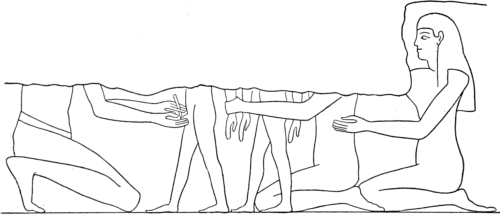
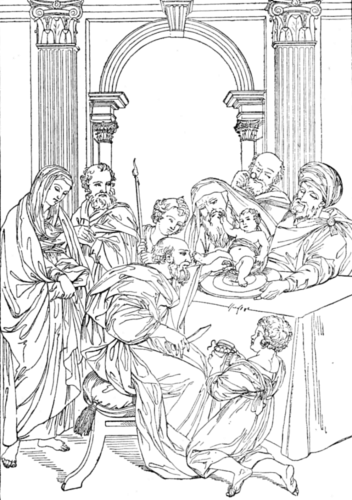
[275]

 Hebraic Circumcision