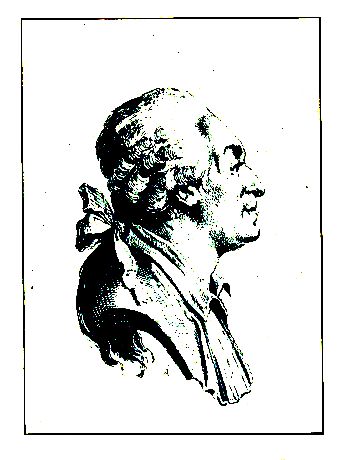
1741-1789
The chief historical events are the decline of the French
monarchy, the French revolution, the rise of Prussia,
the expansion of England, and the American Declaration
of Independence. In the history of thought we remark
the introduction of the historical or comparative method,
which seeks to co-ordinate facts and to trace events to
their causes. Science steadily grows in influence, and
freethought wins many triumphs; this is the age of
Voltaire, Rousseau, and the Encyclopædists, of David
Hume, of the French economists and Adam Smith.
Linnæus is remembered as a man of great industry,
enterprise, and sagacity, who was inspired from boyhood
by a passion for natural history and spent a long life in
advancing it. He was early recognised as a leader in
more than one branch of the study.
L'Obel, Morison, and Ray had laboured to found a
natural system of flowering plants, and it was they who
laid the foundation upon which all their successors have
built. The work did not, however, go steadily forward
on the original plan. When Linnæus entered upon the
scene the prevalent systems were only moderately
natural, and far from convenient in practice. To place
the undescribed species which poured in from North
America and other distant countries was a difficult task,
with which the universities and botanic gardens of
Europe could but imperfectly cope. Linnæus, who had
the instincts of a man of business, saw that botany was
falling into confusion, and that the only remedy was a
quick and easy method, which could be mastered in a
few days and applied with certainty. No such method,
he well knew, could take into account all the intricate
affinities of plants, but to devise a perfect method
required the labours of generations of botanists; meanwhile
a temporary expedient, full of faults it might be,
would remove a pressing evil. Flowering plants had
been arranged by the divisions of the ovary, or by the
petals and sepals, with no very satisfactory results; it
occurred to Linnæus to try the number of the stamens
and styles. Any such method was bound to present
many anomalies, associating plants which are only
distantly related, and separating plants which are
closely related; but some of the worst anomalies were
avoided and some well-established families (Crucifers,
Composites, Labiates) retained at the expense of symmetry.
Not even the pressing need of simple definitions,
which was allowed to spoil so natural a group as
the Umbellifers,[11] could induce Linnæus to place Ranunculus
and Potentilla in the same class.
Linnæus gained currency for his system by connecting
it with the newly accepted doctrine of sexes in plants.
That doctrine was not conceived nor demonstrated by
him (see p. 48), and it had, as we now see, no further
connection with classification by stamens and styles
than that it explained the almost universal occurrence
of such parts in flowering plants. But Linnæus had
persuaded himself that he had done more to establish
the existence of sexes in plants than anybody else, and
that the physiological importance of stamens and styles
was a proof of their systematic value. Neither of these
beliefs can stand inquiry, but both were extremely influential
on contemporary opinion. The so-called Sexual
System achieved an immense success everywhere but in
France and Germany. Botanists of small experience
were now able to say whether the plants which seemed
to be new were really undescribed or not; if undescribed,
what was their appropriate place in the system. The
congestion of systematic botany was relieved.
The great naturalist appealed to posterity by publishing
the sketch of a natural system of flowering plants,
which he accompanied by judicious expositions of the
philosophy of classification. He had the permanent
reform of systematic botany really at heart; he did not
believe that his own Sexual System could be final; and
he was glad to help in setting up a better one. To this
end he united groups of genera into families which he
did not pretend to define, being often guided only by an
obscure sense of natural bonds of union. Bernard de
Jussieu, one of the most patient and observant of systematists,
devoted his life to the same task, and profited
by the example of Linnæus. He published nothing, but
found expression for his views in the arrangement of a
botanic garden at Versailles. His ideas were afterwards
developed by his nephew, A. L. de Jussieu, in
the Genera Plantarum (1789).
Affinity became at length the avowed basis of every
botanical system. No convenience in practice, no
agreement or difference in habit, was knowingly permitted
to override this mysterious property. What
then is affinity? What are natural groups of animals
and plants, and how do they arise? Until the year
1859 no one could tell. The terse maxims of Linnæus
helped to guide naturalists into the right road, but a
single fact shows how inadequate they were. Linnæus
emphatically and repeatedly declared his belief in the
constancy of species. But if species were really constant,
affinity between species must have been no more
than a delusive metaphor; the resemblances between
distinct species could not, on that supposition, be the
effect of inheritance.
Linnæus' imperfect appreciation of the fundamental
difference between a natural classification of living
things and such classifications as man makes for his
own practical ends is further revealed by his admission
of a third kingdom of nature.[12] Not only animals and
plants, but rocks and minerals as well, had, he thought,
their genera and species. The genus and species thereby
become mere logical terms, independent of inheritance
and of life itself.
Linnæus had a passionate love of order and clearness,
enforced by an inexhaustible power of work. Hence he
was able to serve his own generation with great effect,
to methodise the labours of naturalists, to devise useful
expedients for lightening their toil (such as his strict
binomial nomenclature),[13] and to apply scientific knowledge
to the practical purposes of life. But the complexity
of nature is not to be suddenly and forcibly
reduced to order, and much of Linnæus' work had to
be done over again in a different spirit. Cuvier furnishes
a somewhat parallel case. Cuvier too was an
indomitable worker. His power of organisation moved
the wonder of Napoleon, and there has been no greater
master of clear thought and clear expression. But, like
Linnæus, Cuvier overlooked much that was already
obscurely felt and clumsily worded by brooding philosophers,
germs of thought which were destined to
become all-powerful in the course of a generation or
two. It must not be supposed that the labours of
Linnæus and Cuvier were bestowed in vain. All that
was really valuable in their writings has been saved,
and biology will never forget how much it owes to their
life-long exertions.
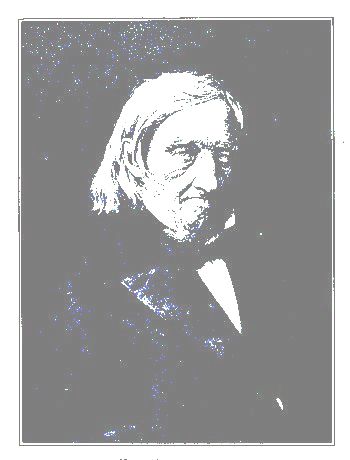
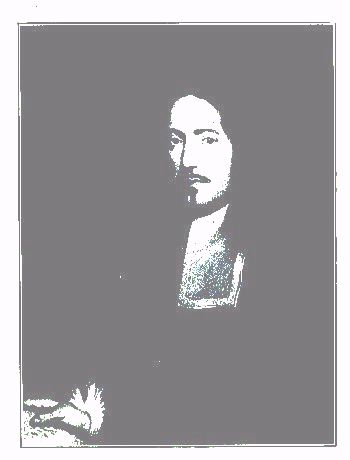
Carl von Linnécute; (Carolus Linnæus).
From an engraving (1779) after the portrait by Roslin.
Réaumur was born to wealth, and made timely use
of his leisure to study the sciences and win for himself
a place among natural philosophers. His inclinations
directed him first towards mathematics, physics, and, a
little later, towards the practical arts. He took a
leading part in a magnificent description of French
industries, which had been undertaken by the Académie
des Sciences. Not content with describing the processes
in use, he perpetually laboured to improve them.
The manufacture of steel, tin-plate, and porcelain, the
hanging of carriages and the fitting of axles, the improvement
of the thermometer, glass hives, and the
hatching of fowls' eggs by artificial heat are among
the many objects to which his attention was directed.
Natural History gradually took a more and more
prominent place in his studies, and a great History of
Insects engaged the last years of his busy life.
Réaumur was neither an anatomist nor a systematist,
at least he gained no distinction in either of these
branches of biology. No biological laboratory had
been dreamt of in his day; he lacked the manipulative
skill of Swammerdam or Lyonet; he was no draughtsman,
and had to engage artists to draw for him. One
qualification of the first importance, however, he
possessed in a high degree, the scientific mind. As he
watched the acts of an insect, questions at once
sagacious and practical suggested themselves in
abundance, and these questions he set himself to
answer in the best possible way—viz., by observation
and experiment. In close attention to the activities of
living things his ingenuity and patience found a boundless
sphere of exercise. Moreover all that he had seen
he could relate in a simple but picturesque manner,
using the language familiar to the best French society
in the generation next after Madame de Sévigné.
Diffuse but clear, amusing but never frivolous, he won
and kept the attention of a multitude of readers, the
best of whom were incited to adopt his methods or to
pursue inquiries which he had indicated. His greatest
successes were won in observing and interpreting the
natural contrivances of insects, the means by which
they get their food and provide for their safety; their
transformations, instincts, and societies. Kirby and
Spence, which is still one of the best popular accounts
of insects in English, is largely based upon Réaumur;
so are other well-known treatises, in which the debt is
less frankly acknowledged. Réaumur greatly enlarged
the knowledge of all kinds of insects except the beetles
and Orthoptera, which he did not live to describe, and
to this day his Histoire des Insectes is a work of fundamental
importance, with which every investigator of
life-histories is bound to make himself acquainted.
No abstract of Réaumur's Histoire des Insectes is
possible, but we may at least give one example of his
mode of treatment. Let us select his account of the
proboscis of a moth, the first full account that was ever
given. He tells us that all moths have not an effective
proboscis, though he does not explain how some of
them can dispense with what seems so necessary an
organ; this omission has been made good by later
entomologists. The proboscis, he goes on, springs
from the head, just between the compound eyes. When
at rest, it takes up very little room, for it is spirally
rolled, like a watch spring; in some cases it makes as
few as one and a half or two turns, in others as many
as eight or ten; the base is often concealed by a pair of
hairy palps, which serve as feelers. Careful study of a
moth as she flits from flower to flower shows that she
alights on the plant, unrolls her proboscis, passes it into
the corolla, withdraws it, perhaps coils it for an instant,
and then plunges it again into the tube. When this
manœuvre has been repeated several times, the moth
flies off to another flower.
Some moths have a tape-like proboscis; in others it
is cylindrical. It can be made to protrude by gentle
pressure on the head, or be unrolled by a pin passed
into the centre of the spire; it is composed of innumerable
joints, and tapers from the base to the tip. When
forcibly unrolled, it often splits lengthwise into halves.
At the time of escape from the chrysalis the halves are
always free, and they require careful adjustment in
order that a continuous sucking-tube may be obtained.
A newly emerged moth may be seen to roll and unroll
its proboscis repeatedly, until at last the halves cohere
in the proper position. Sometimes they begin to dry
before the operation is completed, the half-tubes get
curled, and then the unfortunate moth becomes
incapable of feeding at all. Each half is a demi-canal,
whose meeting edges interlock by minute hooks. The
mechanism reminds Réaumur of that which connects
the barbs of a feather; in both cases the hooks can be
adjusted rapidly and completely by stroking from base
to tip, and in both a water-tight junction is obtained.
Besides the central canal, along which fluids are sucked
up, there are lateral canals (tracheæ) filled with air.
Réaumur was careful to correct his anatomical
studies by close observation of the live insect. He
reared an angle-shades moth, which he kept several
days without food. When he saw it repeatedly extending
its proboscis, he put near it a piece of sugar. The
moth at once began to suck, and became so absorbed
in satisfying its hunger that it allowed Réaumur to
carry it on a sheet of paper to a window and to examine
it closely with a lens. The proboscis was sometimes
extended for several minutes at a time, and then rolled
up for an instant; its tip was either employed in exploring
the surface or closely applied to the sugar. By
means of the lens a slender column of liquid was seen
to pass along the central canal towards the head. Now
and then, however, a limpid fluid was seen to pass
down the proboscis; this was the saliva which was
used to moisten the sugar, and then sucked up again.
In the year 1744 a young Genevese, Abraham
Trembley, tutor in the family of Bentinck, who was
then English resident at the Hague, rose into sudden
fame by a solid and well-timed contribution to natural
history. Trembley and his pupils used to fish for
aquatic insects in the ponds belonging to the residence,
and in the summer of 1740 he happened to collect some
water-weeds, which he put into a glass vessel and set
in a window. When the floating objects had come to
rest, a small green stalk, barely visible to the naked
eye, was found attached to one of the plants. From
one end of the stalk filaments or tentacles were seen to
project, and these moved slowly about. When the
vessel was shaken the stalk and tentacles contracted,
but soon extended themselves again. Was this object
a plant or an animal? Its shape and colour were those
of a plant, and sensitive plants were known which
drooped when touched or shaken. Further observation
showed that it could move from place to place, which
favoured the animal interpretation. Trembley determined
to cut the stalk in two; if the halves lived when
separated the fact would favour the plant-theory. The
halves at first gave no signs of life beyond occasional
contraction and expansion, but after eight days small
prominences were seen on the cut end of the basal
half. Next day the prominences had lengthened; on
the eleventh day they seemed to be growing into
tentacles. Before long eight fully formed tentacles
were visible, and Trembley had two complete specimens
in place of one; both were able to move about.
After four years of observation a handsome quarto
volume was published, which told the history of "The
freshwater Polyp," a name suggested by Réaumur;
the Latin name of Hydra was given by Linnæus.
Hydra had been discovered and slightly described forty
years before by Leeuwenhoek, who had seen two young
polyps branching from one parent and spontaneously
becoming free. Trembley made out all that a simple
lens, guided by a skilful hand and a keen eye, could
discover. Thirteen plates were admirably engraved by
another amateur, Pierre Lyonet, who was in all respects
a fit companion for Trembley. It was proved that
Hydra preyed upon living animals, especially upon the
Daphnia or water-flea. When it was well nourished it
branched spontaneously again and again, forming a
compound mass made up of scores or even hundreds
of polyps, all connected with a single base. The power
of locomotion and the power of devouring prey were
held to settle the animal nature of Hydra, a decision to
which zoologists have ever since adhered. Lyonet
went on to try the effect of division upon some common
freshwater worms, and found that each part grew into
a complete worm. Artificial division is not indispensable;
in the worm called Nais division takes place
spontaneously at certain seasons, one segment dividing
repeatedly, so as to form the segments of a complete
new individual. The process may be repeated until a
chain of worms is produced, which at length breaks
up.[14]
A nail was thus driven in a sure place. The conception
of an animal was enlarged, for it was shown that
an animal may branch and multiply in a way hitherto
supposed to be peculiar to plants. The old connecting
links between animals and plants (zoophytes, sponges,
etc.) had never been really investigated; no one knew
what sort of organisms formed or inhabited their plant-like
skeletons. But Hydra, thanks to Trembley's
description, furnished a clear example of an animal
which possessed some of the attributes of a plant.
Forms more ambiguous than Hydra, such as Volvox
and Euglæna, were ultimately to make the distinction
between animal and plant very uncertain and shadowy.
It was Hydra that gave the first clue to the structure of
the zoophytes, and dispelled the false notion that corals
are plants, bearing flowers, fruits, and seeds.
Baer[15] has remarked that Trembley's discovery
appreciably modified the teaching of physiology by
showing that an animal without head, nerves, sense-organs,
muscles, or blood may perceive, feed, grow, and
move about.
At the time when Trembley was demonstrating the
asexual propagation of Hydra, Bonnet (supra, p. 45)
was demonstrating the asexual propagation of aphids.
Both naturalists were natives of Geneva, and both, as
well as their associate Lyonet, were in a sense pupils
of Réaumur, who not only set them an admirable
example, but directed their attention to promising
researches and discussed with them the conclusions
which might be drawn. Réaumur's experience had
seemed to confirm Leeuwenhoek's statement (supra,
p. 34) that aphids produce young alive, even though
no males are to be found among them; but unlucky
accidents defeated his intention to confirm it by experiment,
and when Bonnet asked him to suggest a piece
of work Réaumur gave him the aphid problem.[16]
Bonnet filled a flower-pot with moist earth, introduced
a food-plant together with a single new-born
aphid, and covered all up with a bell-jar. In twelve
days the aphid produced its first young one; in a month
ninety-five had been born from the same unfertilised
parent. As many as five generations were obtained
without the intervention of a male, each successive
parent having been isolated from the moment of its
birth. It was, however, discovered, apparently by
Lyonet, that though viviparous reproduction without
males went on regularly so long as food was plentiful,
males appeared towards the end of summer, and
fertilised the eggs which were destined to outlast the
winter.
The aphids added a new and peculiar example to the
known cases of asexual propagation (plants and Hydra).
Much discussion followed, but the physiology of that
age (and the same is true of the physiology of our own
age) was unable to reveal the full significance of the
observed facts. Insects have since furnished many
instances of unfertilised eggs which yield offspring.
One such instance was already recorded, though neither
Leeuwenhoek, Réaumur, nor Bonnet knew of it. In
the year 1701 Albrecht of Hildesheim placed a pupa
in a glass vessel and forgot it. A moth hatched out
and laid eggs, from which a number of caterpillars
issued.
Lyonet, whom we have more than once had occasion
to mention, afterwards became celebrated as the author
of one of the most laborious and beautiful of insect-monographs.
The structure of the larva of the goat-moth
was depicted by him in eighteen quarto plates,
crowded with detail.
About the middle of the eighteenth century we remark
the introduction of a new, or almost new, method of
investigation, which was destined to achieve great
results. Hitherto many men had been sanguine enough
to believe that they could think out or decide by argument
hard questions respecting the origin of what they
saw about them. It was easier, but not really more
promising, to resort to ancient books which contained
the speculations of past generations of thinkers. Now
at last men set themselves to study what is, and by the
help of historical facts to discover how it came to be.
The new method was first applied to the institutions
of human society, but was in the end extended to the
earth, life on the earth, and a multitude of other important
subjects.
Most writers call this method historical, because
history is the chief means by which it seeks to trace
causes. Others call it genetic, because it goes back,
whenever it can, to origins. It might also be called
comparative, because it compares, not only things which
are widely separated in time, but also things which are
separated in space, things which differ in form or tendency
because they have a common origin, and things
which differ in origin because they have a common form
or tendency. Whether the institutions, arts, and usages
of mankind, or the species of plants and animals, are in
question, the study of history, together with the comparative
study of what now exists, results in increased
attention to development, and this again brings to light
the continuity of all natural agents and processes—continuity
in time and continuity among co-existences.
Since the new method has succeeded in tracing the
causes of many phenomena which once seemed to obey
no law, it has done much to strengthen the belief in
universal causation.
Down to the middle of the eighteenth century the
book of Genesis had been almost unanimously accepted
in Europe as the only source of information concerning
the origin of the world, of man, of languages, of arts
and sciences. The whole duration of the world was
restricted to so brief a space that slow development
was impossible, and it was assumed that early history
of every kind must be miraculous.[17]
Montesquieu (Esprit des Lois, 1748) was the first to
exhibit on an impressive scale the power of the historical
method. Natural development, determined by
unalterable conditions, was with him the key to the
right understanding of the past. It is well known that
here and there a great thinker had before Montesquieu
framed something like the same conception. The
Politics of Aristotle[18] and Vico's study of the historical
evolution of the Roman law (1725) are memorable
anticipations. By 1748, the date of the Esprit des Lois,
or 1749, the date of Buffon's first volumes, which come
next before us, Newton's Principia had made students
of physics and astronomy practically familiar with the
notion of universal causation.
Buffon's place in the history of science is that of one
who accomplished great things in spite of weaknesses
peculiarly alien to the scientific spirit. It was mainly
he who, by strenuous exertions and largely at his own
cost, transformed the gardens from which the king's
physicians used to procure their drugs into what we
now know as the Jardin des Plantes. By the untiring
labours of fifty years he produced a Natural History in
thirty-six volumes crowded with plates. Having won
for himself a place side by side with Montesquieu and
Gibbon, he employed it to direct attention to the larger
questions of biology and geology. He was a pronounced
freethinker, who promulgated bold views with
a dexterity which saved him from condemnation by the
theological tribunals. When his opinions were declared
to be contrary to the teaching of the Church, he printed
a conciliatory explanation, but never cancelled the
passages objected to, which continued to appear in a
succession of editions. His deficiencies, we must admit,
were serious. He was a poor observer (partly because
of short sight), and had no memory for small details.
His enemies were able to taunt him with absurd mistakes,
such as that cows shed their horns. He alienated the
two foremost naturalists of the eighteenth century,
Linnæus and Réaumur, by ignorant and scornful
criticisms. His strong propensity to speculation, insufficiently
checked by care to verify, might have
brought him under the sarcastic remark of Fontenelle,
that ignorance is less apparent when it fails to explain
what is, than when it undertakes to explain what is not.
Buffon's fame is not seriously impaired by the fact
that his great work is no longer read except by those
who study the course of scientific thought. Few
productions of the human intellect retain their value
after a hundred years, and scientific treatises become
obsolete sooner than others. It is consoling to
recollect that, if their energy is quickly dissipated, it is
at least converted into light.
In a history of biology Buffon is naturally a more
important figure than Montesquieu. Buffon had imbibed
evolutionary views from the Protogæa of Leibnitz,
which in turn made use of certain hypotheses of
Descartes.[19] The Histoire Naturelle inclines to some
theory of evolution, especially in the later volumes. At
first Buffon teaches that species are fixed and wholly
independent of one another; some years later he is ready
to believe that all quadrupeds may be derived from some
forty original forms, while in a third and subsequent
passage he puts the question whether all vertebrates
may not have had a common ancestor. He does not
shrink from saying that one general plan of structure
pervades the whole animal kingdom—a belief that he
could never have adequately supported by facts; Baer
long afterwards (1828) searched in vain for evidence on
this very point, while Darwin in 1859 admitted that his
arguments and facts only proved common descent for
each separate phylum of the animal kingdom;[20] he
inferred from analogy that probably all the organic
beings which have ever lived on this earth have
descended from some one primordial form.[21] Elsewhere
Buffon makes bold to declare that Nature in her youthful
vigour threw off a number of experimental forms of life,
some of which were approved and adopted, while others
were allowed to survive in order to give mankind a wider
conception of her projects. There is generally some
gleam of truth in Buffon's most fantastic speculations, but
we often wish that he could have attended to the warning
of Bossuet: "Le plus grand dérèglement de l'esprit est
de croire les choses parce qu'on veut qu'elles soient."
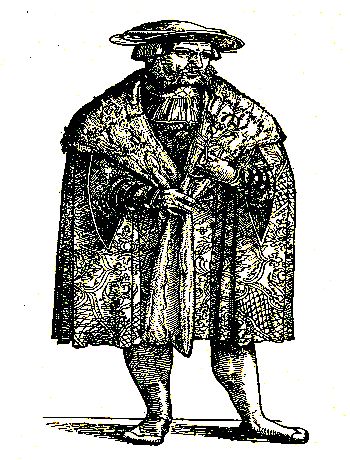
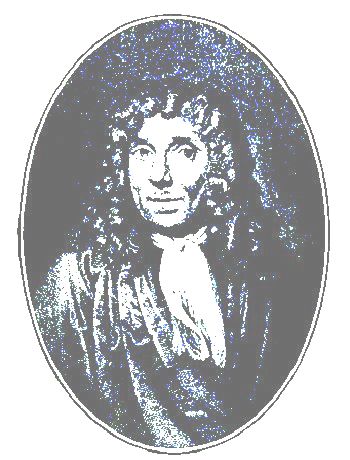
Georges Louis Leclerc, Comte de Buffon.
Against all his shortcomings we must set the fact
that Buffon strove to interpret the present by the
past, the past by the present, geology by astronomy,
geographical distribution by the physical history of the
continents. One of his maxims expresses the fundamental
thought of Lyell's Principles of Geology: "Pour
juger de ce qui est arrivé, et même de ce qui arrivera,
nous n'avons qu'à examiner ce qui arrive."
Hard-and-fast distinctions are the marks of imperfect
theory. Early philosophers distinguished hot and cold,
wet and dry, light and dark, male and female, as things
different in kind. In later times organic and inorganic,
animal and vegetable, the activities of matter and the
activities of mind, have been sharply separated. But as
knowledge increases these distinctions melt away; it is
perceived that the extreme cases are either now connected
by insensible gradations, or else spring historically from
a common root. Hutton, Lyell, and their successors
have made it clear that the history of the earth calls for
no agents and no assumptions beyond those that are
involved in changes now going on; the present is heir
by unbroken descent to the past. Continuity has been
established between all forms of energy. Even the
chemical elements, once the emblems of independence,
give indications that they too had a common origin.
The nebular hypothesis, which has been steadily rendered
more probable by the scientific discoveries of two centuries,
traces all that can be perceived by the senses to
a homogeneous vapour, and lays the burden of proof on
those who believe that continuity has its limits. Every
history, whether of planetary systems, or of the earth's
crust, or of human civilisations, religions, and arts, is
recognised as a continuous development with progressive
differentiation.
A history of biology would be incomplete which
took no notice of every-day observations of the commonest
forms of life. Some of the best are due to the
curiosity of men with whom natural history was no
more than an occasional recreation. William Turner
(a preacher, who became Dean of Wells), Charles
Butler (a schoolmaster), Caius and Lister (physicians),
Claude Perrault (a physician and architect), Méry and
Poupart (surgeons), Frisch (a schoolmaster and philologue),
Lyonet (an interpreter and confidential secretary),
Roesel (a miniature painter), Henry Baker (a bookseller,
who gained a competence by instructing deaf mutes),
Leroy (ranger to the King of France), Stephen Hales,
Gilbert White and William Kirby (country parsons),
and William Spence (a drysalter) were all amateurs in
natural history. To this list we might add Willughby,
Ray, Leeuwenhoek, Réaumur, De Geer, Buffon, the
Hubers, and George Montagu, who were either so
fortunate in their worldly circumstances or so devoted
to science as to make it their chief, or even their sole
pursuit, though they did not look to it for bread. A
large proportion of the naturalists whose names have
been quoted occupied themselves with the habits and
instincts of animals, and biology has been notably
enriched by their observations. To Englishmen the
most familiar name is that of Gilbert White, in whom
were combined thirst for knowledge, exactness in
description, and a feeling for the poetry of nature.
White used his influence to encourage what may be
called live natural history, which, as he understood it,
"abounds in anecdote[22] and circumstance." He bids
his correspondents to "learn as much as possible the
manners of animals; they are worth a ream of descriptions."
His example has done more than his
exhortations. He focusses a keen eye upon any new
or little-known animal, such as the noctule, the harvest-mouse,
or the mole-cricket; detects natural contrivances
little, if at all, noticed before, such as the protective
resemblance of the stone-curlew's young; dwells upon
the practical applications of natural history, such as the
action of earthworms in promoting the fertility of soils;
and combines facts which a dull man would be careful
to put into separate pigeon-holes, such as the different
ways in which a squirrel, a field-mouse, and a nuthatch
extract the kernels of hazel-nuts.
The many amateurs of the eighteenth century naturally
demanded books written to suit them, and
illustrated books with coloured plates, coming out in
parts, found a ready sale. Some were devoted to
insects, others to microscopic objects. In accordance
with prevalent belief, the writers made a point of
tracing the hand of Providence in the minutest organisms;
many popular treatises were altogether devoted
to natural theology. Some few of these natural history
miscellanies contained original work, which has not yet
lost its interest. The best is Roesel's Insecten-belustigungen
(four vols. 4to., 1746-61), memorable among
other things for containing the original description of
Amœba. For English readers Henry Baker wrote The
Microscope Made Easy (1743) and Employment for the
Microscope (1753).
The period with which we are now concerned (1741-1789)
initiated the profitable discussion of the mental
powers of animals. We are unable for lack of space
to follow the investigation from period to period, and
must condense into one short section whatever its
history suggests.
In the year 1660 Aristotelians were still discoursing
about the vegetative and sensitive souls which bridged
the gulf between inanimate matter and the thinking
man. Descartes had tried to prove that the bodies
of men and animals are machines actuated by springs
like watches. Man, however, according to Descartes,
possesses a soul wholly different in its properties from
his body, and apparently incapable of being acted upon
by it. Man only can think; animals are capable only
of physical sensations, and have no consciousness.
Into speculations like these we shall not venture, being-
content, like Locke, "to sit down in quiet ignorance
of those things which upon examination are proved to
be beyond the reach of our capacities." We shall
merely note here and there facts ascertained by observation
or experiment, and plain inferences drawn from
such facts.
Swammerdam and Réaumur, besides many naturalists
of less eminence, recorded a host of observations on the
activities of insects. They contributed little to the
discussion except new facts, for habit led them to ascribe
without reflection every contrivance to the hand of
Providence or else to Nature. Some of their facts, however,
made a deep impression, none more than the exact
agreement of the cells of the honeycomb with the form
which calculation showed to be most advantageous.[23]
The coincidence has lost some of its interest since the
discovery that the theoretically best form of cell is hardly
ever realised.[24] Réaumur,[25] in describing the process by
which a certain leaf-eating caterpillar makes a case for
itself out of the epidermis of an elm-leaf, showed that
the caterpillar is not devoid of that kind of intelligence
which adapts measures to circumstances. He cut off
the margin where the upper epidermis of the leaf passes
into the lower one, a margin which the insect had
intended to convert into one side of its case; the caterpillar
sewed up the gap. He cut off a projection which
was meant to form part of the triangular end of the
case; the caterpillar altered its plan, and made that the
head-end which was originally intended to lodge the
tail. This observation anticipates a better-known
example taken from the economy of the hive-bee by
Pierre Huber, which is mentioned below.
Buffon[26] heard with impatience all expressions of
admiration for the works of insects. His poor eyesight
and his repugnance to minutiæ disinclined him to pay
much attention to creatures so small, and he had set
himself up as the rival of Réaumur in physics and
natural history. To pour contempt upon insects gratified
both feelings at once. Bees, he said, show no
intelligence at all; their actions are purely automatic,
and their much-vaunted architecture is merely the result
of working in a crowd. The cells of the honeycomb are
hexagonal, not by reason of forethought or contrivance,
but because of mutual pressure; soaked peas in a confined
space form hexagonal surfaces wherever they touch.
The elder Huber seems to have denied to bees every
trace of intelligence, but his son Pierre found it hard
to go so far.[27] He remarked that the storage-cells
of a honeycomb are not always exactly alike; they may
be lengthened, cut down, or curved, when requisite.
Cells which had been rudely trimmed with a knife were
repaired with such dexterity and concert as to suggest
that even the hive-bee has "le droit de penser." Bees
would under compulsion build upwards or sideways,
instead of downwards, as they like to do. Finding that
they sought to extend their combs in the direction of
the nearest support, he covered the support with a sheet
of glass, on which they could get no footing. They
swerved at once from the straight line, and prolonged
their comb towards the nearest uncovered surface,
though this obliged them to distort their cells. He was
driven to the conclusion that bees possess "a little dose
of judgment or reason." In our own time, when all
conscious adaptation of means to ends is believed to
be worthy of the name of reason, it requires no great
courage to ask why we deny such an attribute to all the
lower animals.
In spite of examples like this, the favourite expression
"blind instinct" helped to strengthen the conviction
that the mental processes of animals are unsearchable.
It is impossible to deny that the epithet blind is appropriate
in many cases. A bird will sit an addled egg all
summer, or vainly but repeatedly attempt to make its
tunnel in the insufficient breadth of a mud wall (Geositta).
Of course such instances do not show that all
the acts of the lower animals are devoid of intelligence.
Hume in 1739 and again in 1748 appealed to everyday
observation of dogs, birds, and other animals of
high grade. The facts seemed to him to show that
animals as well as men are endowed with reason and
able to draw inferences; he did not, however, credit
them with the power of framing general statements,
holding that experience operates on them, as on children
and the generality of mankind, by "custom" alone. It
is notorious that the dog and other higher animals learn
by experience; Hume tells, for instance, how an old
greyhound will leave the more fatiguing part of the
chase to younger dogs, and place himself so as to meet
the hare in her doubles. On the other hand (though
Hume does not say so) man himself possesses non-educable
instincts. In short, Hume sees no ground for
drawing a line between the mental powers of man and
those of the higher animals, though he attributes to
man a power of demonstrative reasoning to which
animals do not attain. In this he substantially agrees
with Aristotle,[28] who maintained that in animals the
germs of the psychical qualities of the man are evident,
though, as in the child, they are undeveloped. Hume's
teaching also accords with modern views; comparative
anatomy, for instance, "is easily able to show that,
physically, man is but the last term of a long series of
forms, which lead by slow gradations from the highest
mammal to the almost formless speck of living protoplasm,
which lies on the shadowy boundary between
animal and vegetable life."[29]
The detailed proofs which Hume was not enough of
a naturalist to furnish were at length stated with admirable
clearness and force by Leroy, whose Letters on
Animals form the most important contribution made
to the discussion during our period. Georges Leroy
(1723-1789) was lieutenant des chasses under the last
French kings, and had charge of the parks at Versailles
and Marly. He wrote therefore with knowledge about
the wolf, fox, deer, rabbit, and dog. His pages are
enlivened by many touches of nature, interesting to
readers who perhaps care little about psychology.
Leroy attributes to the wolf observation, comparison,
judgment. The wolf must mark the height of the fold
which encloses a flock, and judge whether he can clear
it with a sheep in his mouth. Wolf and she-wolf co-operate
artfully in the running-down of prey. Sometimes
the she-wolf will draw off the sheep-dog in pursuit,
thus putting the flock at the mercy of her mate. Or one
of the two will chase the quarry till it is out of breath,
when the other can take up the running on advantageous
terms. An old fox shows knowledge of the properties
of traps, and will rather make a new outlet or suffer
long famine than encounter them. But when he finds
a rabbit already caught, he realises that the trap has
lost its power to hurt. Sheep-dogs can be educated to
mind things which do not interest wild dogs, or dogs of
other breeds; when, for instance, the flock is driven
past a patch of wheat, the dog in charge will take care
that the sheep do not damage the crop. A trained
sporting-dog learns at length to trust his own judgment,
even in opposition to that of his master, and sportsmen
know that they must direct young dogs, but leave old
ones to act for themselves.
From the middle of the eighteenth century to the
present day naturalists and psychologists have been
labouring to distinguish instinct from intelligence. It
is not hard to define well-marked examples of each, and
to show that a typical instinct is congenital (not the
result of a process of education or self-education),
adaptive (conducive to the welfare of the organism),
co-ordinated by nerve-centres (thus excluding the
superficially similar behaviour of the lowest animals and
all plants), actuating the whole organism (thus excluding
most, if not all, reflex acts in the higher animals, as
well as the wonderful adjustments effected by bone-corpuscles
and other parts of organisms), and common
to all the members of a species or other group (thus
excluding individual aptitudes).[30] In the same way it
is easy to point out clear differences between a bird and
a tree. But just as a definition which shall separate
every animal from every plant has hitherto been sought
in vain, so it has hitherto been impossible to frame a
definition which while including all instincts shall admit
no case of reflex action or intelligence. The most
ambiguous cases of all are perhaps to be found in
insects, where, as will shortly be explained, our information
is ill-fitted to support precise distinctions.
Many naturalists entertain some form of what may
be called the use-and-disuse or inherited-memory theory,
supposing that the aptitudes of the offspring are
influenced by the activities of the parent. Some cling
to the belief that habits can be fixed and transmitted,
and we must admit that the fixation and transmission
of habits might explain a great deal. But all the
evidence goes to prove that habits are not inherited at
all, and that we must look elsewhere for the origin of
instincts. Let naturalists who think differently try to
account for the instincts of working bees or ants, which
receive their psychical not less than their physical
endowment from a long succession of ancestors, none
of which worked for their living. Or let them try to
explain the instances of spiders, insects, etc., which
after egg-laying practise instinctive arts for the defence
of their brood, standing over the eggs, carrying them
about, blocking the entrance of the burrow, etc. May
we not say that it is impossible for the acts of a parent
to influence the congenital instincts of offspring which
have already lost connection with the mother? But
surely a theory of instinct breaks down which fails to
account for the expedients by which the worker-bee,
the worker-ant, and the spider provide for the safety
of the unhatched brood or for the welfare of the
community.
Darwin's Origin of Species threw a new light upon
instinct by showing that natural selection can operate
on the subtlest modifications. It can discriminate
shades of hardiness to climate, shades of intellectual
acuteness, or shades of courage. It can intensify
qualities which appear only in adults past bearing or
in individuals congenitally incapable of propagation.
Human selection, though a blunt tool in comparison
with natural selection, can originate a bold and hardy
race of dogs, or showy double flowers incapable of producing
seed. In the second case fertile single flowers
continue the race, as in the garden Stock. Darwin
pointed out that the barren double flowers of the Stock
answer to the workers of social bees and ants, the
fertile single flowers to the functional males and females.
Every modification that works to the advantage or disadvantage
of the race, whether we classify it as physical,
intellectual, or moral, gives scope for the operation of
natural selection.
The comparative psychology of small invertebrates,
such as insects, is impeded by our imperfect knowledge
of their nervous physiology. Introspection is here
impossible; experimental physiology and pathology,
which have done so much for the psychology of the
higher vertebrates, almost impossible; analogy is a
treacherous guide where the structures involved differ
conspicuously. We have little to guide us in the
psychology of insects except their behaviour, and that
is often capable of a variety of interpretations. The
only course is to adopt Pasteur's watchword, "Travaillons!"—the
difficulties will diminish with time and
labour.
Common observation taught men in very early times
that green plants draw nourishment from the soil, and
that sunlight is necessary to their health. In the age
of Galileo a Belgian physician and chemist, Van
Helmont, endeavoured to pursue the subject by experiment.
He planted the stem of a live willow in furnace-dried
earth, which was enclosed in an earthen vessel.
Rain-water or distilled water was supplied when necessary,
and dust excluded by a perforated lid. The loss
of weight due to the falling-off of leaves was neglected.
In the course of five years the tree was found to have
increased to more than thirty times its original weight;
Van Helmont concluded that this increase was due to
water only. Malpighi (1671), being guided mainly by
his microscopic studies of the anatomy of the stem and
leaf, taught that moisture absorbed by the roots ascends
by the wood, becoming (apparently at the same time)
aerated by the large, air-conducting vessels; that it
enters the leaves, and is there elaborated by evaporation,
the action of the sun's rays, and a process of
fermentation; lastly, that the elaborated sap passes
from the leaves in all directions towards the growing
parts. It will be seen that this explanation, though
incomplete, makes a fair approximation to the beliefs
now held; for more than a hundred years after
Malpighi's day less instructed opinions were commonly
held. Hales (1727) recognised that green plants are
largely nourished at the expense of the atmosphere;
he dwelt also on the action of the leaves in drawing
water from the soil, and in discharging superfluous
moisture by evaporation.
Joseph Priestley, who had been proving that air is
necessary both to combustion and respiration, made an
experiment in 1771 to discover whether plants affected
air in the same way that animals do. He put a sprig of
mint into a vessel filled with air in which a candle had
burned out, and after ten days found that a candle would
now burn perfectly well in the same air. Air kept without
a plant, in a glass vessel immersed in water, did not
regain its power of supporting combustion. Balm,
groundsel, and spinach were found to answer just as
well as mint. Air vitiated by the respiration of mice
was restored by green plants as readily as air which
had been vitiated by combustion.
Priestley did not remark that the glass vessels
employed in his experiments had been set in a window,
and inattention to this point caused some of his
attempts to repeat the experiment to fail. He was
further perplexed by using vessels which had become
coated with a film of "green matter," probably
Euglæna. Such vessels restored vitiated air, though
no leaves were present, and when placed in the sun,
gave off considerable quantities of a gas, Priestley's
"dephlogisticated air" (oxygen). Hardly any oxygen
was given off when the green matter was screened by
brown paper. Water impregnated with carbonic acid
was found to favour the production of the green matter.
To us, who have been taught at school something about
the properties of green plant-tissues, it seems obvious
that Priestley ought to have ascertained by microscopic
examination whether his "green matter" was not a
living plant. But he had always avoided the use of
the microscope, his eyes being weak, and after some
imperfect attempts in this way he made up his mind
that the green matter was neither animal nor vegetable,
but a thing sui generis. Neglecting his most instructive
experiments, and not waiting till he could devise new
ones, or even disentangle his thoughts, he sent to the
press a confused explanation, which seemed to teach
that vitiated air may be restored by sunlight alone.
A Dutch physician, named John Ingenhousz, who was
then living in England, read Priestley's narrative and
began to investigate on his own account. Without
detailing his numerous experiments, we may give his
own clear summary (condensed). "I observed," Ingenhousz
says, "that plants have a faculty to correct bad
air in a few hours; that this wonderful operation is due
to the light of the sun; that it is more or less brisk
according to the brightness of the light; that only the
green parts of the plant can effect the change; that
leaves pour out the greatest quantity of oxygen from
their under surfaces; that the sun by itself has no
power to change the composition of air." It will be
seen that Priestley started the inquiry, devised and
executed the most necessary experiments, and got
excellent results. Then he lost his way, and bewildered
by conflicting observations, which he was too
impatient to reconcile, published a barren and misleading
conclusion. Nothing was left for him but to
acknowledge that Ingenhousz had cleared up all his
perplexities.
Nicholas Theodore de Saussure, son of the Alpine
explorer, showed in 1804 that when carbon is separated
from the carbonic acid of the air by green plants, the
elements of water are also assimilated, a result which
owes its importance to the fact that starch is a combination
of carbon with the elements of water. Saussure
also proved that salts derived from the soil are essential
ingredients of plant-food, and that green plants are
unable to fix the free nitrogen of the air; all the nitrogen
which they require is obtained from the ground.
We are unable to follow the history further. Though
the main facts were established as early as the beginning
of the nineteenth century, experimental results of
scientific and practical interest have never ceased to
accumulate down to the present time.
Speculations concerning the nature of the flower
roused at one time an interest far beyond that felt in
most botanical questions. The literary eminence of
Goethe, who took a leading part in the discussion,
heightened the excitement, and to this day often
prompts the inquiry: What does modern science think
of the Metamorphoses of Plants?
Let us first briefly notice some anticipations of
Goethe's famous essay. In the last years of the sixteenth
century Cesalpini, taking a hint from Aristotle,
tried to establish a relation between certain parts of the
flower and the component layers of the stem. Linnæus
worked out the same notion more elaborately, and with
a confidence which sought little aid from evidence. His
wonderful theory of Prolepsis (Anticipation) need not be
described, far less discussed, here. He also borrowed
and adapted an analogy which had been thrown out by
Swammerdam. The bark of a tree, which according to
the theory of Prolepsis gives rise to the calyx of the
flower, he compared to the skin of a caterpillar, the
expansion of the calyx to the casting of the skin, and
the act of flowering to the metamorphosis by which the
caterpillar is converted into a moth or butterfly. More
rational than the speculations just cited, and more
suggestive to the morphologists of the future, are his
words: "Principium florum et foliorum idem est"
(Flower and leaf have a common origin)—which was
not, however, a very novel remark in the eighteenth
century. Long before Linnæus early botanists had
remarked the resemblance of sepals, petals, and seed-leaves
to foliage-leaves; Cesalpini has a common name
for all (folium).
At the very time when Linnæus was occupied with
his fanciful analogies, a young student of medicine
named Caspar Friedrich Wolff, who was destined to
become a biologist of great note, published a thesis
which he called Theoria Generationis (Halle, 1759).
This thesis marks an epoch in the history of animal
embryology, but what concerns us here is that Wolff
examined the growing shoot, and there studied the
development of leaf and flower. He found that in early
stages foliage-leaves and floral-leaves may be much
alike, and thought that he could trace both to a soft or
even fluid substance, which is afterwards converted into
a mass of cells. It seemed to him possible to resolve
the flowering shoot into stem and leaves only. Wolff's
thesis, or at least that part of it which dealt with the
plant, was little read and soon forgotten; his studies
of the development of animals were carried further and
became famous.
Goethe in 1790 revived Wolff's theory of the flower,
without suspicion that he had been anticipated. It is
only our ignorance, he said, when the fact came to his
knowledge, that ever deludes us into believing that we
have put forth an original view. As soon as he realised
the true state of the case, he spared no pains to do
Wolff full justice.
The aim of Goethe's Metamorphoses of Plants was to
determine the Idea or theoretical conception of the plant,
and also to trace the modifications which the Idea
undergoes in nature. These two inquiries constituted
what he called the Morphology of the plant, a useful,
nay, indispensable term, which is still in daily use. He
thought that he could discover in the endless variety of
the organs of the flowering plant one structure repeated
again and again, which gradually attained, as by the
steps of a ladder, what he called the crowning purpose
of nature—viz., the sexual propagation of the race.
This fundamental structure was the leaf. The proposition
that all the parts of the flower are modifications of
the leaf he defended by three main arguments—viz.,
(1) the structural similarity of seed-leaves, foliage-leaves,
bracts, and floral organs; (2) the existence of
transitions between leaves of different kinds; and
(3) the occasional retrogression, as he called it, of
specially modified parts to a more primitive condition.
These lines of argument were illustrated by many well-chosen
examples, the result of long and patient observation.
Goethe did not, however, fortify his position by
the likeness of developing floral organs to developing
foliage-leaves, which had been Wolff's starting-point.
He arrived independently at Wolff's opinion that the
conversion of foliage-leaves into floral organs is due to
diminished nutrition.
Linnæus's exposition of the nature of the flower had
been read attentively by Goethe, who must have
remarked that the conversion of organs to new uses was
there described as a metamorphosis. That word had
been, long before the time of Linnæus, appropriated to
a particular kind of change—viz., an apparently sudden
change occurring in the life-history of one and the same
animal. It was therefore unlucky that Goethe should
have been led by the example of Linnæus to employ the
word in the general sense of adaptation to new purposes.
He did not, however, expressly compare flower-production
with the transformation of an insect, as Linnæus
had done.
The reception of Goethe's Metamorphosen der Pflanzen
was at first cold, but the doctrine which it enforced
gradually won the attention of botanists, and by 1830
he was able to show that it had been accepted by many
good judges.
Then came the discoveries of Hofmeister, followed by
Darwin's Origin of Species. Naturalists soon ceased
to put the old questions, and the old answers did not
satisfy them. Wolff and Goethe had generalised the
flowering plant until it became a series of leaf-bearing
nodes alternating with internodes, but no such abstract
conception could throw light upon the common ancestor
of all the flowering plants, nor upon the stages by which
the flowering plant has been evolved, and it was these
which were now sought. Hofmeister brought to light
a fundamental identity of structure in the reproductive
organs of the flowering plants and the higher cryptogams.
There has since been no doubt in what group of plants
we must seek the ancestor of the flowering plant. It
must have been a cryptogam, not far removed from the
ferns, and furnished with sporophylls—i.e., leaf-like
scales, on which probably two kinds of sporangia, lodging
male and female spores respectively, were borne. The
careful investigation of the fossil plants of the coal
measures has brought us still nearer to the actual progenitor.
Oliver and Scott[31] have pointed out that the carboniferous
Lyginodendron, though showing unmistakable
affinity with the ferns, bore true seeds, as a pine or
a cycad does. Many other plants of the coal measures
are known to have combined characteristics of ferns
with those of cycads, while some of them, like Lyginodendron,
crossed the frontier, and became, though not
yet flowering plants, at least seed-bearers.
The discovery of a fossil plant which makes so near
an approach to the cryptogamic ancestor of all the
flowering plants may remind us how little likely it was
that the ideal plant of Wolff and Goethe, consisting of
leaves, stem, and other vegetative organs, but without
true reproductive organs, should fully represent the type
from which the flowering plants sprang. No plant so
complex as a fern could maintain itself indefinitely
without provision for the fertilisation of the ovum; the
only known asexual plants are of low grade, and, it
may be, insufficiently understood.
What substratum of plain truth underlies the doctrine
of the metamorphoses of plants? Botanists would
agree that all sporophylls, however modified, are homologous
or answerable parts. Carpels and stamens are
no doubt modified sporophylls. Petals are sometimes,
perhaps always, modified stamens, and therefore modified
sporophylls also. We must not call a sporophyll a leaf,
for it contains a sporangium of independent origin, and
the sporangium is the more essential of the two. The
common origin of foliage-leaf, bract, perianth-leaf,
sporophyll (apart from the sporangium), and seed-leaf
is unshaken. We may picture to ourselves a plant
clothed with nearly similar leaves, some of which either
bear sporangia or else lodge sporangia in their axils.
Part of such a primitive flowering plant might retain
its vegetative function and become a leafy shoot, while
another part, bearing crowded sporophylls, might yield
male, female, or mixed cones. From an ancestor thus
organised any flowering plant might be derived. But
the chief wonder of the theory of Metamorphoses—viz.,
the derivation of stamen and pistil from mere foliage-leaves—disappears.
Anther and ovule take their real
origin from the sporangium, whose supporting leaf is
only an accessory.
The chief steps by which the morphology of the
flowering plant has been attained are these:—Cesalpini
(1583), followed by several other early botanists, recognized
the fundamental identity of foliage-leaf, perianth-leaf,
and seed-leaf. Linnæus (1759) added stamen and
carpel to the list, identifications of greater interest, but
only partially defensible. Wolff (1759) justified by
similarity of development the recognition of floral organs
as leaves. Goethe (1790) traced structural similarity,
transitions, and retrogression in leaves of diverse
function. Hofmeister (1849-57) showed a relationship
between the flowering plant and the higher cryptogams.
Oliver and Scott (1904), inheriting the results of
Williamson's work, discovered a carboniferous seed-bearing
plant, one of a large group intermediate between
ferns and cycads. It is now possible to explain the
resemblance of the various leaf-like appendages of the
flowering plant by derivation either from the leaves or
the sporophylls (the latter not being wholly leaves) of
some extinct cryptogam, which was either a fern or a
near ally of the ferns.
The fathers of botany neglected everything else in
order to concentrate their attention upon the flowering
plants, from which very nearly all useful vegetable products
were derived. The lack of adequate microscopes
rendered it almost impossible to investigate the structure
and life-history of ferns, mosses, fungi, and algæ until
the nineteenth century. As late as the time of Linnæus
it was possible to maintain that they developed spontaneously,
though the great naturalist himself called
them Cryptogamia, thereby expressing his conviction
that they reproduce their kind like other plants, but in
a way so far not understood. Gaertner, a contemporary
of Linnæus, pointed out one important respect
in which the spores of cryptogams differ from the seeds
of flowering plants, viz. that they contain no embryo.
Ferns.—Even before the age of Linnæus it was known
that little ferns spring up around the old ones, and that
a fine dust can be shaken from the brown patches on
the back of ripe fern-leaves. The dust was reputed to
be the seed of the fern, and in an age which believed in
magic the invisibility of fern-seed made it easy to suppose
that the possessor of fern-seed would become invisible
also. When the microscope began to be applied to
minute natural objects, the brown patches of the fern-leaf
were closely examined. William Cole of Bristol
(1669), Malpighi, Grew, Swammerdam, Leeuwenhoek,
and others, found the stalked capsules (sporangia), their
elastic ring and the minute bodies (spores) lodged within
them; it seemed obvious to call the capsules ovaries and
the spores seeds. Some time in the latter part of the
seventeenth century Robert Morison, professor of botany
at Oxford, who died in 1683, sowed spores of the
harts-tongue fern, and next year got an abundant crop
of prothalli, which he took to be the cotyledons. A little
later, when it had been proved that flowering plants
possess male and female organs, diligent search was
made for the stamens and pistils of ferns and mosses,
which of course could not be found, though identifications,
sometimes based upon a real analogy, were continually
announced. Late in the eighteenth century one
John Lindsay, a surgeon in Jamaica, who was blest with
leisure and a good microscope, repeated the experiment
of Morison, which seems to have been almost forgotten.
Having remarked that after the rains young ferns sprang
up in shady places where the earth had been disturbed.
it occurred to him to mix the fine brown dust from the
back of a fern-leaf with mould, sow the mixture in a
flower-pot, and watch daily to see what might come up.
About the twelfth day small green protrusions were
observed, which enlarged, sent down roots, and formed
bilobed scales, out of which young ferns ultimately grew.
In 1789 Sir Joseph Banks, who was reputed to be the
best English botanist of the day, asked Lindsay's help
in sending West Indian ferns to Europe. Lindsay
replied that it would be easier to send the seed, and
that the seed would grow if properly planted. This was
new to Banks, who demanded further information.
Lindsay then prepared a short illustrated paper, which
Banks communicated to the newly formed Linnean
Society. It will be seen that Lindsay was able to add
nothing of much importance to what Morison had
ascertained a century before. The spores were still
identified with seeds, the prothallus was still a cotyledon,
and for years to come botanists continued to
seek anthers on fern-leaves. At this point we suspend
for a time the history of the discovery (see below, p. 108).
Mosses.—Linnæus observed that the large moorland
hair-moss (Polytrichum) is of two forms, only one of
which bears capsules, and further that in dry weather
the capsules emit masses of fine dust. No further
progress was made until 1782, when Hedwig, in a
memoir of real merit, described the antheridium and
archegonium of the moss, and traced the capsule to
the archegonium. Interpreting the organs of the moss
by those of the flowering plant, he called the antheridia
anthers, the capsule was a seed-vessel, the spores were
seeds, and the green filament emitted by the germinating
spore a cotyledon. Such misinterpretations were
then inevitable.
Fungi.—Micheli in 1729 found the spores of several
fungi, germinated them, and figured the product. The
figures show the much-branched filament (mycelium)
which burrows in the soil and constitutes the vegetative
part of the fungus, and also here and there a pileus
(mushroom, toadstool, &c.), which is the fructification
springing out of the mycelium. His account comprises
the best part of what is known down to the present
time of the reproduction of that group of fungi to which
the mushroom belongs.
Algæ.—Some early observers (Réaumur among the
rest) studied the enlarged and fleshy branches of brown
seaweeds, and discovered the seed-like spores.
This scanty knowledge of the life-history of cryptogams
sufficed until the nineteenth century, when the
study was resumed with better microscopes and in a
far more connected way, with results of the highest
interest and importance (see below, p. 108).