THE Mediterranean Sea was the heart of the Old World; the important
lands of the early history of civilization were grouped about its richly
indented shores, generally decreasing in respect of culture as they
receded from it. The northeastern part of the Mediterranean, because of
its many islands, having an even greater proportionate coast-line, was
the centre of the countries ennobled by Hellenic civilization.
Separating and uniting at once, like all the waters of the earth, the
Ægean Sea formed the boundary between the two chief races of Greek
intellectual life—the Dorians and the Ionians; while it was, at the
same time, the favoring medium of exchange for the productions of their
genius. European Greece, with its predominating Doric population, and
the almost exclusively Ionic coasts of Asia Minor, equally looked upon
this sea as their own, traversing it with thousands of ships, and
gaining more from the trackless waters before them than from the
interior lands of the immense continents whose seaboard alone they were
content to occupy. In Asia the Greeks were restricted to the countries
upon its uttermost western border; in European Greece the development
was chiefly directed towards the eastern coast, paying even less
attention to their own shores on the Adriatic than to the early
colonized ports of Magna-Græcia and Sicily. The Archipelago itself
provided convenient strongholds and outposts in every direction. The
numerous harbors and anchoring-places of its many islands offered
protection against the notorious treachery of the Ægean main—a
protection imperatively necessary for the primitive seafarers of
antiquity. But, as in the history of all civilization, the currents of
Greek intellectual and artistic progress moved distinctly from east to
west. The European (Doric) culture was in itself less calculated to
influence Asia than the Asiatic (Ionic) to affect the younger continent.
It was, as decided by nature, upon European soil, upon Attica—the most
advanced promontory of European Greece—that the two branches of the
Greek race united, and bore in Athens that double fruit at which we
marvel. The Dorians, displaced, in some measure, by the rapid growth of
Ionic Asia and Europe, turned still farther westward, and settled upon
the shores of Sicily and the Gulf of Tarention, where imposing monuments
still attest the extent of their power.
The legends of the wanderings of Hellenic tribes, and especially of the
so-called Doric migration, were based upon the busy currents of
intercourse between Asia and Europe, over seas and straits, and between
the European continent and the Morea, the Island of Pelops. The
relations and the quarrels of Hellenic and semi-barbaric peoples upon
each side of the Ægean are illustrated by the tales of the Argonauts and
their voyage, and of the Trojan War, both of which bear the stamp of a
certain piratical rivalry. The fatal lack of unity, resulting from the
separate development of neighboring districts, could not be more
distinctly characterized than by the fact that the Greek races, although
they felt themselves divided from other nations—from barbarians—by
an impassable gulf, and were aware of their own absolute intellectual
superiority, yet lacked any comprehensive designation for themselves:
the name Greeks, or Hellenes, is of comparatively recent origin.
The Homeric epics prove that the intellectual development of the people
to whom the immortal poet belonged stood, at least as early as the ninth
century B.C., at a height to which nations of such primitive
civilization as the Egyptians and Chaldæans had never attained.
Phenomenal as the appearance of those poems may have been, they still
could not have stood so high above their time—which they evidently
represent with a certain transfiguration—that contemporaries were not
able to comprehend and enjoy them. The creative arts stood, at this
epoch, in strange contrast to so great an intellectual height; they were
far surpassed by the advance of poetry. Though certain textile and
ceramic manufactures (the making of wooden and bronze utensils, woven
stuffs, and pottery) must have been practised to some extent in Greece
proper, the better artistic productions are continually referred to as
imported from the civilized countries of Asia. Larger objects, and
notably buildings, were either exceedingly primitive, or, in the lack of
trained native ability, were erected and ornamented in foreign styles.
The Homeric epics know nothing of a columnar temple, nothing of artistic
images of the gods, nothing even of dwellings corresponding to the
importance of their princely heroes. Even at a much later time a
Spartan, accustomed to erect his own house with saw and axe alone, might
be astonished at the squarely hewn beams of a ceiling, which he
previously had seen formed only of round trunks, like those imitated
upon the Lycian block-house tombs.
It is of this exceeding simplicity that we must picture to ourselves the
palaces of the kings, one of which is so attractively described by the
singer of the Odyssey, in the account of the royal dwelling at Ithaca.
The entire establishment must have been similar to a grange—a wall
enclosing a number of buildings with the court before them. The rustic
parallel is clearly brought to mind by the description of this
farm-yard, where the compost-heap, surrounded by swine and geese, was
the bed of the old watch-dog, who, in Homer’s truly idyllic account,
alone recognizes his master, and, dying, wags his tail in greeting. From
this yard a gate led to an inner court, comparable to the peristyle of
later buildings, but without the ornament of columns, and in all
respects extremely primitive. Goats and beeves were driven in here
without further ado to be slaughtered. This adjoined upon one side the
chambers of the men, upon the other those of the women, so separated
that the tumultuous massacre of the suitors in the principal hall did
not disturb the slumber of Penelope, and only reached the ears of the
maids like distant moaning. Upon the third side, probably opposite the
entrance, was the hall of the men, a ceiled space, which must have been
of considerable extent, as the hundred and eight unwelcome guests could
here unite in the banquet and other amusements. Its ceiling, like that
of the armory and that of the royal sleeping-chamber, was supported by
upright beams of wood. We may imagine these similar to the shafts in the
Palace of Oinomaos at Elis, one of which, bound together with iron
hoops, was preserved as a relic in the time of Pausanias. The ceiling
beams of the hall were smoked and blackened by open fires and
torch-lights as in rustic dwellings. Of the walls there is no mention,
though the supposition is not improbable that the bright metal sheathing
of the palaces of Menelaos and Alkinoös existed here also. It would be
explained by the Phœnician overlaying of wood-work with beaten
bronze, or, to speak more correctly, with copper. The space could not
have been without openings for light and air. These are not directly
mentioned by the poet, but may be assumed, from the analogies offered by
other civilized nations of early antiquity, to have existed in the wall,
immediately under the ceiling. Here the interstices between the immense
horizontal beams, which rested upon the walls, were left open, and the
motive of the subsequent Doric metope resulted of itself. That the
timbers overhead were not sheathed with boards is evident from a Homeric
simile: Athene rose to the ceiling, and there sat, “like unto the
resting swallow;” that is to say, upon the cross-beams of the open
triangle formed by the roof-framing. Further evidence is offered by the
account of the hanging of Epicaste upon a ceiling beam, which must have
been exposed from all sides.
The tholos of the palace at Ithaca was an isolated circular structure,
before the court, and may perhaps be identified with the high thalamos
to which Telemachos descended. In this also lay gold and metal in
heaps; while shrines containing garments, and amphoras filled with oil
and wine, etc., stood around. Its double door, of careful workmanship,
agrees with the character of a treasury. If this identification of the
tholos and thalamos be accepted, no doubt can remain that we have here
to deal with a space similar to many yet remaining in Greece, generally
known under the name of treasure-houses. Examples exist at Orchomenos,
near Pharsalos, Amyclæ, Menidi, and in Mykenæ.
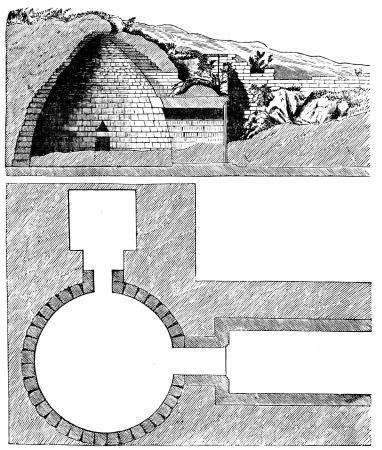
Fig. 121.—Plan and Section of the Tholos of Atreus.
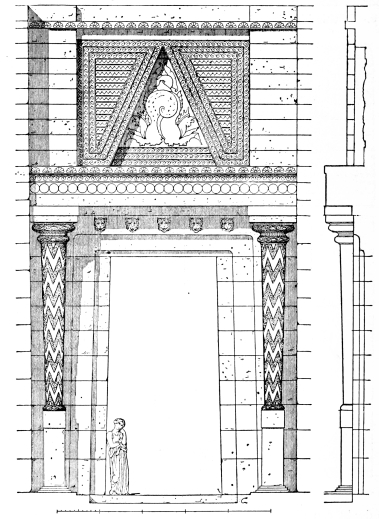
Fig. 122.—Restoration of the Tholos of Atreus. Portal.
(Clarke.)
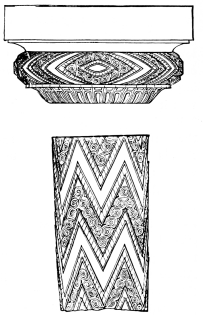 Fig. 123.—Fragments of an Engaged Column from the Tholos
of Atreus.
Fig. 123.—Fragments of an Engaged Column from the Tholos
of Atreus.
One of the five in Mykenæ, known as the Treasury, or the Tholos, of
Atreus, remains in an admirable state of preservation, especially as
regards the interior. This consists of a space of circular plan, 15 m.
in diameter, and of the same height, formed like a pointed vault.
(Fig. 121.) Its walls begin to curve from the floor, which is of
stamped clay pisé. Upon this the first circular course of masonry
immediately reposes. The walls then rise, in parabolic outline, to a
pointed apex. They are not constructed upon the principle of a
vault—that is to say, with wedge-shaped stones, and with the direction
of joints to a common centre—but are laid in horizontal beds, each
course so projecting over the one beneath it that, by this diminution of
the concentric circles, they finally unite at the summit. They were
smoothly cut upon the jointing surfaces, while the face was not
chiselled until after the completion of the masonry. The blocks were
rectangular, and the joints, which consequently increased radially in
plan, were filled with the same pisé used for the floor; the interstice
between the wall door and the rock-cut inner chamber upon one side being
also cemented with this substance. An entrance-passage, the dromos, led
from the valley to the tholos in a gently inclined ascent. It was
bordered by walls of cut stone, but nowhere ceiled. Its floor, 6.20 m.
broad and 36 m. long, was paved with pisé. Thisentrance-passage was
terminated without by a terraced retaining-wall, and within by an
elaborate portal façade. The recent investigations of Stamatakis and
Thiersch have given sufficient information concerning the composition
and details of this front to permit a restoration of its chief masses.
(Fig. 122.) The lower part was constructed of long stones, carefully
cut and jointed. The stepped jambs of the opening, peculiar to all
antique doors, were probably cut after the blocks were in position. Upon
either side were decorative engaged columns, which are so entirely
similar to the one represented upon the Gate of the Lions at Mykenæ that
it is possible completely to understand their nature by that general
guide; by the help of fragments which still exist, and others drawn in
former publications, though now lost; by traces upon the wall, and
especially by the sockets cut for the swallowtail clampings of the bases
and capitals. The shaft, instead of being diminished, increases as it
ascends, as does also the column upon the relief over the Gate of the
Lions. Its base, from this analogy, and from the narrow space left for
it by the clampings, seems to have consisted of a simple tore. The
abacus and parts of the mouldings beneath it still exist; the coronation
was formed by two roundlets, separated by a scotia, the lower being
considerably smaller in height and diameter than the upper. (Fig.
123.) Without the lower member, there is a certain similarity of the
capital to a Doric echinos, which is increased by the proportions of the
boldly projecting abacus; but the whole is so similar to an Asiatic
(Ionic) base that it was not natural to believe it a capital, and the
fragment published by Donaldson has hitherto been believed to be the
foot of the shaft. The columns were entirely covered with an
ornamentation in relief of zigzag lines alternating with the well-known
spiral wave; they stood upon rectangular pedestals, of which the triply
stepped plinths have been preserved. The existence of bronze ornaments
upon the lintel of the door is evident from the traces of nails; five
lion-heads can be distinctly recognized. An epistyle extended from
capital to capital across the entire front of the portal; it projected
far beyond the lintel, upon which it partly reposed. Above this
entablature was a surface, like an attica, which masked the triangle
formed by the relieving blocks over the lintel. The upper walls were not
originally visible, having been reveted by thin slabs of stone, secured
in position by dowels. Fragments from Mykenæ deposited in the British
Museum, in the Munich Antiquarium, and in Athens appertained to this
upper façade; they all show spiral ornaments between horizontal grooves,
and are similar to many other decorations of the same age. The borders
of the casing over the relieving triangle and its extreme upper corner
were patterned in like manner, as is plain from the mitre-joint of some
of the slabs, and from a small fragment exactly fitting the upper angle
of the opening. The entire triangle was probably closed by some light
stone carving, since it could have had no function as a passage for
light. The door, as may be seen from traces of pivots upon the sill and
lintel, had two wings, which, from their bolt-holes, appear to have been
so large that, when closed, they considerably overlapped. Upon the
exterior jambs a broad strip of metal was affixed, still to be traced by
two vertical rows of nail-holes, in which fragments of bronze
occasionally remain. This work leads to the supposition that the wings
of the door were themselves overlayed with metal, and, with the
characteristic forms of the decoration upon the monument, points to the
peculiarities of Asiatic art. It is natural to attribute this to the
influence of Phœnicia; indeed, the effect of the civilization of that
country upon early Greece can hardly be overestimated. A broad,
horizontal strip of metal sheathing existed also upon the exterior, and
small fragments of it are repeatedly met with in the rubbish filling the
tholos; similar vestiges are found in a second monument of the kind near
by. This overlaying of walls with sheet copper was by no means uncommon
in ancient Greece. The subterranean bronze chamber of Danae may be
explained as a tomb sheathed with metal. In mythical ages, in the
sanctuary at Delphi, as well as in later times, in the Chalkioicos of
Athene at Sparta, this wall-treatment appears employed for temples, even
as Homer described it in palaces at Sparta and the Island of the
Phæacians. The Tholos of Atreus was itself subterranean; the exterior of
the conical mass of masonry was covered with a hill of earth. In
consideration of the almost perfect preservation of the interior, it is
evident that some remains of a strictly architectural exterior would
have been recognizable, had it existed. A tumulus covered and protected
the structure; though its earth is now, for the greater part, washed
away, to it must still be ascribed the good condition in which the
kernel has remained.
The recently discovered grave at Menidi, in Attica (Lolling), is a
parallel construction. As regards beauty of execution and richness of
ornament, it is far inferior to the Tholos of Atreus; it is also much
smaller, having an average diameter of 8.35 m. and 9 m. original height.
Its only peculiarity is that the relieving blocks over the lintel,
instead of projecting one over the other so as to form a triangle, are
so placed as to leave four voids between as many horizontal beams, in a
manner similar to the arrangement for relieving the ceiling of the
principal chamber of the great pyramid of Gizeh.
The Tholos of Atreus offers a welcome commentary upon the thesauros of
the royal palace at Ithaca, but only in respect to its construction. The
purpose of the circular buildings still existing in Greece seems to have
been entirely different from that of the treasure-house described in the
Odyssey. It is true that eminent authorities deny this difference—and
the analogies of the round Homeric building, of the treasure-vaults at
Mykenæ mentioned by Pausanias, and of the treasury of Minyas in
Orchomenos, lend their arguments some weight, and, at least, a greater
probability than the suppositions that the structures of tholos form
were intended for spring-houses (Forchhammer) or places of worship
(Pyl). But there are reasons against all these assumptions. The
treasure-houses of the Pelopidæ must have been upon the acropolis,
inside the fortification walls, not at various distances outside their
limits, as is the case with those of Mykenæ. Still less could such
vaults for hoarded valuables have been as distant from the city as was
the Tholos of Baphio from the ancient Amyclæ, which stood entirely
isolated in the midst of an open plain, without the possibility of
communication with any royal residence. The tumuli of earth above the
crypts would have but ill suited them to form a part of the palace
building; while for a cell which was only to receive precious goods—for
a magazine of deposit—the rich overlaying of the interior walls with
sheet metal, and especially the elaborate carving of the portal front,
seem out of place. These peculiarities, not to mention some of less
importance, point to another purpose, for which they are, one and all,
fitted—namely, the destination of the structures as tombs. Their
position, before the acropolis and without the city walls; the covering
of the chamber with earth in a tumulus form; the impossibility of their
having had any communication with other buildings; the elaborate
decoration of the entrance, and the princely wealth of metals in the
interior—all support, with the striking analogies beyond the Ægean,
this conception of the tholos buildings advocated by Welcker and Mure.
It is possible that it is to these structures that Pausanias refers as
the treasure-houses of the Atridæ; but Pausanias, like us, knew Mykenæ
only by its ruins. That patron of all ciceroni upon classic ground
was not exacting for proofs of their legends. The hypothesis of Pyl may
in so far be correct that the tholos itself did not serve as the place
of sepulchre, which was provided by the small side chamber, but was a
chapel for the funeral worship naturally to be assumed in connection
with an heroic dynasty.
It is not possible to assign these tombs to individuals, like those of
the early Persian monarchs, or even to dynasties: the questionable
identification of the graves discovered in the agora of the acropolis,
ventured by Schliemann, would here be inadmissible. It is reasonably
certain, however, that the best-preserved tholos, that known by the name
of Atreus, is about contemporaneous with the Gate of the Lions, and
dates from the most flourishing period of the heroic age—before the
downfall of the Atridæ upon the return of Agamemnon.
A small chamber, only of sufficient size to receive the cinerary urn, in
the centre of an upheaval of earth, was sufficient for the graves of the
heroes who fell before Troy. Several of these tumuli exist. The larger
of them, those of Hector and of Achilles, had a considerable elevation,
and, standing upon a low promontory, were visible far at sea. They were
without architectural features or decoration, mere cones of earth and
stones; terminated, as Homer relates concerning those of Ilos, Sarpedon,
and Elpenor, by a monument like a column, which must have resembled the
piers upon Lydian tumuli. It is questionable whether the trees which
grew in later times upon the mounds of Protesilaos before Troy, and of
Alcmæon in Arcadia, were originally and intentionally there placed, and
are to be deemed characteristic of such works. Those planted upon the
tumulus of Augustus in Rome may certainly be referred to his individual
desire. From the account given by Pausanias of the tumulus of Æpytos at
Pheneos, in Arcadia; from foundations remaining upon the island of Syme,
and from later ruins at Kyrene—not to mention a well-preserved tumulus
of very considerable dimensions, reveted with stone, which, from its
situation in Algerian territory, might perhaps be ascribed to the
Carthaginians, or even to the Romans—from all these examples, it is
evident that such mounds, like the tumuli of Lydia and Etruria, were,
for the greater part, elevated upon cylindrical foundations. But
whether the interior were chambered or solid, whether the cone of earth
rose directly from the earth or from a drum substructure, the tumulus
appears to have been, in primitive times, the most customary form of
monumental tomb for persons of high rank.
The common man was probably buried in pits, as at the present day, the
grave being marked by an upright stone, with or without some slight
ornament. Schliemann’s discoveries in the agora of Mykenæ show that,
under certain circumstances, this procedure was adopted even for
princes. The kingly importance of these sepulchres is assured by their
position, and by the immense quantity of gold and valuables found within
them. The decorative style of these objects dates them conclusively to
the heroic age; but the assignment of the different graves to Agamemnon
and his associates is a mere hypothesis.
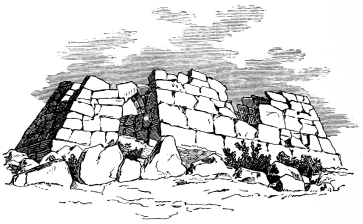
Fig. 124.—Pyramid of Kenchreæ.
A pyramidal form was only in isolated instances substituted for the
tumulus. Of a pyramid, described by Pausanias as existing between Argos
and Epidauros, there now remains a mass of masonry measuring 12 m. in
the line of the diagonal. A second, near Kenchreæ, between Argos and
Tegea, is better preserved. (Fig. 124.) Its plan is oblong, 14.5 m.
long and nearly 12 m. broad; the two chambers of the interior are at
present unroofed. The structure appears to have served as a common
place of sepulchre for the fallen, and, at the same time, as a memorial
of victory. This destination is also evident in two further pyramidal
remains, in Laconia and near Lessa, which are described by Curtius and
by Ross. The Greeks adopted both Asiatic and Egyptian forms for their
funeral monuments; but in the construction of both tumulus and pyramid
they introduced comparatively large chambers, early striving for ends
foreign to those despotic lands:—a wise economy of material and labor
and a gain of space.
Mausoleums and sepulchres are always among the first traces of
civilization, and the most ancient examples of architectural art. In
Greece, however, there are contemporaneous remains significant of other
purposes. Chief among these are the fortifications of towns, although in
general these works enclosed only the acropolis, which contained the
residences of the rulers and the sanctuaries of the people. The true age
of these defences can by no means be surely determined. Not all
Cyclopean masonry is to be attributed to the earliest ages of Hellenic
antiquity, for this manner of polygonal jointing remained in use long
after a time when cut and squared stones were generally employed. On the
other hand, immense rectangular blocks, laid in horizontal courses,
frequently occur in city walls which are known to be of the greatest
antiquity and even to have been totally ruined in the historical period,
such monoliths being regularly used upon corners, the jambs of gates,
etc., where especial strength and independent firmness were called for.
When the surface of Cyclopean walls is perfectly smooth and exactly
jointed, these may confidently be regarded as not of primitive
antiquity; the erection of such masonry is a subtlety of greater
difficulty than that of square blocks and horizontal beds. But walls
built of enormous boulders, unhewn, and roughly piled up without
calculation, the larger interstices being filled with smaller stones,
are of extreme age. Such masonry appeared to later generations to be the
work of giants, of Cyclops, and hence a name which might more fittingly
be changed to Pelasgic than to Poseidonic, as suggested by Gladstone.
The walls of Tiryns (Fig. 125) are of such gigantic blocks—bulwarks
mentioned by Homer and Hesiod, and admired in their ruins by Pausanias.
They are built upon a ridge of rock, which is over 190 m. long, only 70
m. broad, and elevated 10 m. above the surrounding plain. The masonry is
from 7 to 15 m. thick; of its original height, estimated as 18 m., there
remains from 10 to 12 m. The enormous stones vary from 2 to 3 m. in
length and 0.9 to 12. m. in thickness. In its greatest breadth the wall
is provided with galleries, roofed by projecting stones laid in
horizontal beds and cut to the outline of a pointed arch. Such spaces
are provided with loopholes upon the exterior, and, without doubt,
served as magazines and casemates. Within these fortifications must have
stood the royal residence, famed in the legends of Heracles and
Eurystheus; of it no recognizable traces remain.
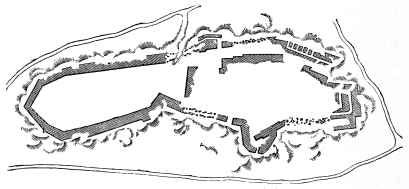
Fig. 125.—Plan of the Acropolis of Tiryns.
The walls of Mykenæ are not of equally gigantic masonry, but are fully
as old, and are especially interesting because of the city having been a
complete ruin in the earliest historical times. Besides casemate
galleries in the walls, there are in Mykenæ a number of highly important
gateways and portals; those of the fortifications at Tiryns were
entirely destroyed, an inclined plane leading to the eastern side of the
acropolis is there alone to be recognized as an approach.
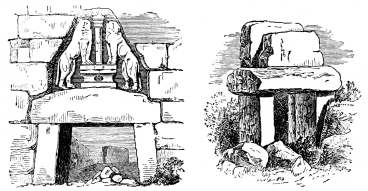
Fig. 126.—Gate of the Lions at Mykenæ.
Fig. 127.—Smaller Gate of Mykenæ.
The doors were naturally of greater technical perfection than the long
line of bulwarks; having been created for both admittance and defence,
they required a certain constructive calculation, and permitted the
employment of more exterior ornament. The simplest possible form of a
gateway is the combination of three stones—the two jambs and the
lintel—observable in two examples at Mykenæ. (Figs. 126 and 127.)
Such a construction had the disadvantage that the upright blocks could
not be joined to the wall, and that the lintel, which necessarily lay
clear for a considerable length, could not immediately receive the
massive continuation of the masonry above it. Notwithstanding the
convergence of the jambs upon the great gate of Mykenæ, the beam has a
length of 4.6 m., with a span of 3.05 m.; the bottom of the door being
3.2 m. wide, and its height 3.25 m. A relieving gable was consequently
constructed, similar to that common in Egypt during the age of the
Pyramids, and to that described in the consideration of the Tholos of
Atreus. A triangular opening remained above the lintel, by which the
efficacy of the wall as a fortification was considerably impaired. The
orifice was closed by one or two slabs, which did not press heavily upon
the lintel; but they could not have been sufficient to escape fracture
by heavy missiles, or to resist the blows of a battering-ram. The attack
was therefore diverted from this vulnerable point by moral means. The
panel received a certain consecration by some protecting sacred symbol
being carved upon it—such, for instance, as a Gorgon’s head—a recourse
which was effective in times when the slightest desecration of a divine
emblem was deemed more impious than the bloodiest deed of human
violence. Such a carving has been preserved over the gateway of Mykenæ,
which has received its name from the lions represented upon it. As a
work of sculpture, it will be considered below. The column between the
animals has, however, a bearing upon the architectural forms of the
epoch. It is the same shaft, diminishing from summit to base, which has
been noticed upon the portal front of the Tholos of Atreus. A second
gate of Mykenæ resembled the Gate of ºthe Lions, but was smaller and
simpler. (Fig. 127.)
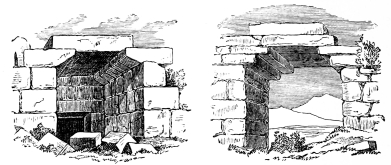
Fig. 128.—Portal upon Samos.
Fig. 129.—Gate of Phigalia.
The form of three blocks appears to have been soon changed, the wall
itself serving in place of an especial jamb. The span of the lintel was
decreased by two or four boldly projecting blocks as brackets. Examples
of this development are offered by portals of Samos and Phigalia.
(Figs. 128 and 129.) But in the same measure as the danger from the
great span of the lintel was diminished, that of the brackets being
pressed downward and disjointed was increased. A third manner of
covering the opening, by stones leaned against each other at an angle,
was a still further advance. (Fig. 130.) When the side thrust could be
well borne—and for this the walls were always sufficient—such a gable
could support any pressure that could possibly be imposed, while
allowing a great breadth of passage. Finally, a triangular construction
could be obtained by a gradual projection of horizontal stones, laid as
they had been in so many instances for the relief of a lintel beneath
them. This construction occurs in two varieties, differing in
appearance, though not in principle: the projection of the horizontal
courses of stone either began directly from the ground (Fig. 130), as
has been noticed in the Tholos of Atreus (Fig. 122), or commenced at
some height, the jambs being carried up vertically. (Fig. 132.) In
both these varieties the line of the gable frequently appears concavely
curved, as in the parabolic walls of the tholos, and the outline of a
pointed arch was thus obtained. (Figs. 133 and 134.) In spite of their
early familiarity with the abstract principle of the arch, as shown in
Fig. 130, the Greeks refused to adopt the true arch, with its
wedge-shaped stones, even in late historical ages, when they assuredly
were acquainted with its construction. An illustration of their feeling
in this respect is given by the aqueduct adjoining the Tower of the
Winds in Athens, where the semicircles are cut from monoliths.
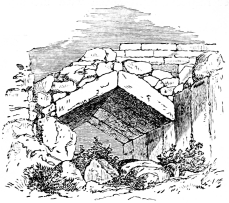 Fig. 130.—Portal upon Delos.
The influence of the gateways upon the masonry is evident from the more
frequent adoption of the rectangular blocks, which had at first only
been employed to give the portals an independent strength, both for the
ramparts and for the out-works and protecting towers which these
openings necessitated. Such a fortification, erected for the defence of
a gate, still stands in Tiryns—the city to which succeeding ages
ascribed the invention of tower-building (Pliny, Hist. Nat. vii. 56);
it reaches a height of 13 m. Thetower which defended the gate of Mykenæ
was even larger. Homer mentions such structures at Troy, Thebes, and
Calydon, and is also familiar with casemates and battlements. The latter
are shown by paintings upon archaic vases to have been of the normal
rectangular shape.
Schliemann’s excavations in Mykenæ have proved that in this city the
agora was situated just within the principal gate. Some of the stone
benches encircling the agora were found in almost perfect preservation;
they were constructed of slabs standing erect in concentric rows to
receive the horizontal seats. They lend a new confirmation of Homer’s
truthful characterization of locality, illustrating a passage which
occurs in the description of the shield of Achilles, which describes
the judgment scene upon the marketplace:
“On polish’d chairs, in solemn circle, sat
The rev’rend elders.”
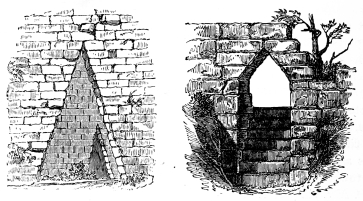
Fig. 131.—Gate of Missolonghi.
Fig. 132.—Gate of Messene.
Though the remains of these prehistoric ages show in some degree the
form of an ancient Greek acropolis, with its royal dwelling of courts
and halls, and the sepulchral monuments before its gates, they are yet
insufficient to complete even the main outlines of the picture by giving
any understanding of the temple—that structure destined to become the
ideal of Hellenic architecture. While the life and customs contemporary
with the Homeric poems are, in other respects, represented with
incomparable truth and distinctness, the epics are entirely silent upon
this subject. It appears that the temples were neither of great size nor
of artistic importance; among the ruins of Tiryns and Mykenæ there are
no vestiges of columns or entablatures. The symbolical images of the
deities were placed upon cliffs, in caverns, among the branches of
sacred trees, or in the hollows of their trunks, and simple altars were
erected before them. Frequently the worship of a deity was merely
connected with a grove, or with some other locality fitted by nature for
this purpose, and was there performed without an image or other dead
symbol. It was thus with the most primitive god of Greek mythology, Zeus
of Dodona. When a building was provided at all, it was, in the heroic
ages, restricted to the cella, a ceiled chapel of oblong plan, which
stood in the centre of a consecrated area, the temenos. This original
form—the whole of the primitive shrine—is recognizable even in the
developed peripteros, as the kernel within the outstanding columns. It
does not appear strange that we should be acquainted with so few of
these chapels when it is considered that hardly greater traces remain of
the entire architecture of the Teutonic races during the first seven
Christian centuries. It is natural, in the development of civilization,
that sanctuaries exemplifying different phases of advancement should
seldom stand next to each other; after the destruction of the old, the
new arises in its place, upon its consecrated site. Examples of such
original cellas are not, however, entirely wanting. Several remains
published by Dodwell and Stackelberg are to be explained as chapels. A
structure upon Delos, designated by Thiersch as a tomb, is quite
comparable to a columnless temple cella. There is less probability that
the ruins upon Mount Ocha and near the village Stoura, upon Eubœa,
were temples. They are chambers sheltered from above by slabs of stone,
inclined like a gable. (Fig. 135.)
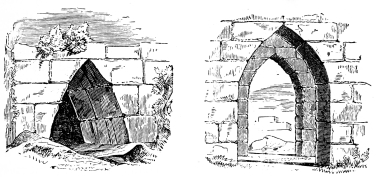
Fig. 133.—Gate of Thoricos.
Fig. 134.—Gate of Ephesos.
This method of roofing could not have been generally practised in early
times, when simple and natural constructions utilized the materials at
hand best adapted to the purpose. The builders, among the bald mountains
of Eubœa, were forced to such a manner of covering their chamber by
lack of wood. The south of the island produces no trees which could
provide the timber for roof-beams; while, on the other hand, open
quarries in the neighborhood furnished a kind of slate-stone which is
easily split into large slabs like joists and boards. So clumsy a
ceiling construction as that upon Mount Ocha was not natural in
countries of dense forests, such as was the original home of the
Dorians. In other parts of Hellas than the rocky and sterile islands of
the Ægean, the chapels must have been roofed with wood. The most obvious
considerations make it evident that ceiling and roof of the primitive
cella were originally of wood. In the later marble architecture of
Greece this assumption is confirmed by numerous reminiscences of
timbered construction, sufficient even to explain the methods and form
of the original carpentry.
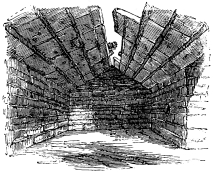 Fig. 135.—Interior of a Structure upon Mount Ocha,
Eubœa.
Fig. 135.—Interior of a Structure upon Mount Ocha,
Eubœa.
A pitched and gabled roof seems to have been generally employed for
these early structures. The horizontal ceiling might be sufficient for
the changeless blue sky of Egypt, but could not suffice in Greece,
where, in certain seasons, heavy rains were frequent, and even
hail-storms not unknown. Still no land upon the Mediterranean was
familiar with the great steepness of roof made necessary by the enduring
snow and ice of the North. In colder climates the pitch of the covering
was not only greatly increased, but all horizontal projections were
avoided, and the upper surfaces of smaller members and mouldings
inclined. The rafters required ceiling beams beneath them; because of
the necessary support and jointing, they could not be placed directly
upon the stone walls, and it was further desirable to support the summit
of the triangle by a king-post. The ceiling thus provided stood in such
relation to the roof that a beam tied together each pair of rafters, and
was, consequently, so laid across the oblong enclosure that the ends
reposed upon the side walls. Upon these horizontal timbers planks were
placed which concealed the inclined roof. By this an independent
ceiling was created; and, as the boarding was laid upon the beams and
not fastened to their lower side, this gave rise to the formation of
lacunæ or long coffers. The ends both of the horizontal ceiling beams
and of the roof rafters were visible upon the exterior: the latter,
forming the eaves, projected beyond the wall, to further the shedding of
water and to protect the sides of the building. As the upper surface of
the roof had been so closed as to be water-tight, it is natural that
this sheathing should have been carried around upon all sides of the
projecting rafter ends. It was otherwise with the spaces between the
beams, which, being protected by the eaves, were not covered and masked
by boards. The artistic instinct of the Greek would not permit him thus
to conceal constructive forms when this was not rendered necessary by
practical considerations. They received, on the contrary, an especial
emphasis, that they might express their peculiar function with full
force. Moreover, the closing of the aperture between the ends of the
beams would have required the provision of other openings for light, as
there were no windows in the walls of masonry.
This manner of roof and ceiling construction was generally employed in
European Greece, being customary for palaces and dwellings as well as
for the primitive temples. Open interstices between the horizontal beams
existed in the hall of the royal dwelling at Ithaca. There can be no
further doubt as to the development and original function of the metopes
of the Doric entablature when it is considered that the Greeks, as late
as the time of Euripides (Iphig. in Taur. 113), were familiar with the
idea that it was possible to enter a primitive structure through these
openings between the ends of the beams. The masking of the metopes would
thus have been not only purposeless, but even detrimental; it was
reasonable, however, to sheathe the ends of the beams themselves by
small boards, which should at once protect and ornament them. The hewn
extremities of such great timbers were rough and ugly; without covering,
they would have been exposed to rapid decay. The simple decoration of
three narrow strips of wood affixed to the ends of the beams was so
customary in primitive carpentry that it became a typical motive in the
later architecture of Greece. The chamfering of sharp edges of boards
has been practised by the wood-workers of all nations. When two corners
thus treated are placed together, there results a prismatic groove,
which distinctly marks the edges of the separate pieces. Thus originated
the primitive form of the triglyph, as the most natural and practical
decoration of the rough-hewn ends of the ceiling beams by sheathing. The
upper edges of the three strips were hidden against a plate beneath the
rafters; the lower were covered by a continuous board, which united the
various members of the frieze, and concealed any inexact jointing
between the beams and the top of the wall. By placing the chamfered
boards upright, an æsthetic advantage was obtained: a vertical line was
repeated just before the conclusion of the entablature by the cornice,
being thus emphasized in the midst of horizontal members. Other
ornamental details were added, based, likewise, upon motives of the
original wooden construction. The continuous strip affixed to the lower
edges of the triglyphs was securely and visibly fastened. This was
effected by several thick trunnels, so driven in from below that the
heads were left protruding. Under the end of each beam the strip was
doubled, to give additional strength where the wood was most weakened by
perforation. The ends of the rafters were also sheathed, and brought
into harmony with the frieze. The inclined eaves were covered with
boards, and as these did not stand erect, like those before the ceiling
beams, but hung from the lower sides of the rafters, there was
particular need for an increased and distinctly secure attachment. The
sheathing was consequently pinned by more numerous trunnels; and as
every triglyph had been provided with a second strip, here a second
board was placed under the end of each rafter. The projecting heads of
these nails were called guttæ by the later Romans, but this cannot
convince us that the peculiar form was intended as an ornamental
petrifaction of hanging rain-drops: such a glorification of bad weather
would have been foreign to the Greeks, accustomed to the clearest skies;
and, for so primitive a construction, this explanation appears
far-fetched. The imitation of rain-drops could nowhere have been more
out of place than upon the inclined lower side of the eaves; drops
might, perhaps, hang from the front edge of the cornice, but never upon
its under slope, which rain could not even wet. The construction of an
original work of carpentry thus provided the motives of the Doric
entablature—naïvely expressing the advance from the roughest practical
necessity to high architectural perfection. In the apertures between the
beam-ends, or metopes, and in the open triangle of the gable, were
placed votive offerings, which there found a secure and sheltered stand,
heightening the exterior importance of the work. In small chapels this
interference with the openings for light could have been of no
disadvantage. The gable was closed by a boarding, which hid from view
the rough inner construction of the roof. This veil, the tympanon, was
placed behind the triangle formed by the outer cross-beam and rafters,
as the ceiling had been laid above the other horizontal timbers. The low
gable thus naturally developed upon the front; and in later times, when
the votive offerings had been exchanged for sculptured figures, formed a
most characteristic and imposing feature.
The effect was heightened by the partly protective, partly decorative,
painting of all the wooden surfaces. Red and blue appear originally to
have been the chief colors; the former, in a dark shade, being used for
the sheathing of the tympanon, the latter for the triglyphs and other
members. Upon the bands were figured ornaments, most of which had
developed from Asiatic prototypes; they consisted of the meander,
anthemions, and the woven ribbons, etc., observable upon Assyrian
sculptures and upon the archaic bronzes and vases of Greece and Central
Italy. The extended polychromatic treatment of the marble temple is
doubtless a reminiscence of this painted wood. Without such traditions,
it would have developed differently: upon a structure of stone it would
have been less restricted to the frieze and cornice.
The entablature had thus far advanced without connection with that most
noble work of architecture—the Doric column. The shaft and entablature
of the style were not created in connection or simultaneously; the forms
of triglyph and mutule are not a growth from the columnar root, but
rather prove the Doric frieze and cornice to have been the primitive
Hellenic expression of roof and ceiling, which preceded the column, even
as the plainest constructive necessities precede ornament. The peculiar
wooden character of the entablature could exercise no important
influence upon the shaft. If the existence, in heroic times, of the
peripteros, the temple with outstanding columns, be denied—and of such
structures there is not a vestige—it cannot be supposed that columns
existed at all. Interior supports of wood are, indeed, mentioned by
Homer, and engaged shafts formed part of the façade of the Tholos of
Atreus, and were represented upon the relief over the Gate of the Lions
in Mykenæ; but between these and the Doric column there is a distance
only to be explained by the assumption that Asiatic influence was
paramount, if not exclusive, in the architecture of the heroic ages of
Greece. Though it is possible that rudiments of the Doric echinos may be
recognized in the upper tore and scotia of the engaged columns of
Mykenæ, it is yet evident that the turned-work of these members resulted
from a wooden prototype, and that the overladen decoration of the shaft,
in its style, is due to familiarity with a sheeting of beaten
metal—i.e., to Phœnician artistic traditions. That the forms of
the entablature were not created for the peripteros appears from the
circumstance that the metopes lose their value as windows by the change
of plan, and leave the cella without openings for light and air when
surrounded by columns. With the appearance of the peripteral temple, the
Doric entablature, which upon the oblong chapel had been the natural
expression upon the exterior of roof and ceiling construction, became a
functionless ornament, needing, as will be seen, many changes to bring
it into harmony with the outstanding colonnade.
The development of the Doric column is not perfectly clear; it is more
than probable that it was not wholly autochthonic and primitive Greek,
like the entablature of the style. Its principal part, the shaft, was
certainly imported. No prominent architectural feature can be deemed
newly invented that has been in common usage in a neighboring and
accessible country for centuries. The Doric shaft, with its
characteristic diminution and channellings, was known in Egypt more than
a thousand years before its introduction into Greece, as proved by the
monuments of Beni-Hassan. Commercial intercourse had existed between the
two countries for centuries, and it cannot be assumed that the Greeks
had not seen Egyptian works of architecture; they could not have arrived
at precisely the same results by independent invention. It would rather
be difficult to conceive how the receptive Greeks could have refused all
instruction from the neighboring people, so far in advance of them for
centuries after the Trojan war. Eight-sided drums have been found at
Bolymnos, and an octangular shaft at Trœzen; but these isolated
instances offer no proof that the development of the channelled shaft
from the square pier was effected in Greece in the same manner as had
been done fifteen centuries or more previously in Egypt.
The genius of the Greeks, however, always showed its independence when
the artistic perception of the neighboring nations had been at fault or
defective. It was impossible for them to rest content with the
termination of the so-called Proto-Doric columns of Beni-Hassan. A
simple plinth upon the upper end of the shaft was insufficient; it left
without mediation the contrast between the forcible upright line of the
channels and the long level of the epistyle. Some interposition was
necessary between the vertical and the horizontal members, and a
moulding of inclined outline was best fitted to fulfil this natural
requirement, which almost appears to be an æsthetic law. The abacus
plinth was retained as the transition from the circular drums of the
shaft to the broader oblong of the lintel. The oblique and projecting
member between the two, the echinos, was a link connecting the plans, as
well as the directions, of column and entablature. The perfectly
straight outline of an inverted cone was rarely employed in Greece for
the echinos; a stele of Artemis Brauronia upon the Athenian acropolis,
shown by inscriptions to be of great age, is an isolated instance. This
rigid line was early exchanged for a curve, which, in its advancing
stages of refinement, became one of the most characteristic features of
Doric architecture. The moulding seems, at times, to have been
ornamented with painted leaves, which, in the Ionic echinos beneath the
roll, was changed, in the manner peculiar to that order, from the
colored indication to carving. It is not certain whether this floral
decoration was generally adopted, or existed only in the isolated
instance by which it is known—the so-called Temple of Theseus. Upon the
translation of the wooden construction to a stone entablature, which
resulted in a narrow intercolumniation, the base was given up, and the
upper step of the stylobate was regarded as a common plinth.
It appears that the employment of columns connected with temples
commenced, in Greece, in the manner observed upon the rock-cut tomb
façades of Egypt and Lycia, and the chapels of Mesopotamia and
Phœnicia: two columns were placed within the open front, between the
projecting side walls; that is to say, the temple was in antis.
The next step was the removal of these side walls, or parastadæ, columns
taking their place in the corners before them, and the prostyle temple
was thus obtained. These changes rendered several important alterations
necessary. They caused a new wall to be erected before the interior of
the cella, the naos, the colonnade of the front thus acquiring the
nature of a portico, the pronaos. The jambs of the door in this wall
were so inclined as to diminish the span of the lintel, the frame
receiving upon its upper corners the stepped ears, or parotides,
customary in Western Asia. A new member of the entablature was needed to
replace the omitted wall and provide a bearing for the ceiling
cross-beams—namely, the epistyle. It is possible that this member,
distinctly separated, existed before the change, but it certainly was
not necessary. The division of the cella into naos and pronaos finally
altered the position of the front ceiling-beams; in the naos they lay,
as before, resting upon the side walls, but in the pronaos they were
placed lengthwise—from the columns to the newly erected division wall.
Besides improving the construction of the portico ceiling, this greatly
added to the beauty of the front entablature: epistyle and ceiling-beams
would otherwise have lain upon each other, in the same direction, but
from this change resulted the frieze of triglyphs and metopes upon the
front, as upon the sides. The gain was not effected without a difficulty
arising in the frieze above the end of the side wall and the corner
column, the outer ceiling-beam of the pronaos thus lying in its length
upon the epistyle without the formation of a metope. And here the
constructive truth was first sacrificed in favor of the exterior
appearance: a cube, standing above the corner column, took the place of
the outer beam, and the continuous alternation of triglyphs and metopes
was carried out.
Having so far deviated from logical construction, the desire for an
harmonious treatment of the exterior led to other and greater changes.
The dead-wall of the rear had had no part in the development of the
frieze, and appeared intolerably bare. This deficiency could hardly be
overcome otherwise than by a repetition of a portico upon the back,
creating the epinaos, and carrying the entablature of triglyphs and
metopes around the entire building, thus perfecting the amphiprostyle
temple.
The more these alterations were made in favor of the exterior
appearance, the more was the original structure dismembered. The extreme
boundary of possible concessions was attained, and, at the next step,
the entablature, translated into stone, separated itself entirely from
the construction and became an applied ornament. In one stride the
ultimate type of the Hellenic temple was determined, by carrying
outstanding columns entirely around the cella,—the building became a
peripteros.
It is probable that these extensive alterations took place almost
simultaneously, and were adopted at once for the most prominent shrines,
while the preceding varieties—the temple in antis and the prostyle and
amphiprostyle temples—though their entablatures were also executed in
stone, were only employed in subordinate positions. With the heightened
importance of the decorative exterior the monumental significance of the
temple rose above the mere necessities of a chamber for the sacred
image. The structure acquired equal solidity in every part exposed to
view. It was built of a homogeneous material. The timbering of roof and
ceiling was hidden by the stone symbols placed before the ends of the
rafters and beams; the entablature was allowed an independent freedom of
development and proportion. The heaviness of the material made it
necessary to diminish the voids and increase the solids of the supports
as much as was feasible. The stone shafts were allowed a greater
diameter and placed more nearly together than when, as was the case in
Etruria at a much later period, their burden had been of timber. The
stone cornice, which was not as high as the epistyle, could not span the
same clear width, and called for a second support over the
intercolumniations,—a further triglyph. This was the more acceptable,
as the appearance of the frieze was improved by its adoption; the
breadth of triglyph and metope became nearly equal and better
proportioned, their alternating rhythm more pleasing. The metopes,
having upon the peripteros no importance as windows, were closed by
thin slabs, which added to the unity and imposing force of the edifice.
It is surprising how faithfully the traditional forms were still
retained, even to the smallest details, while they yet received a truly
artistic conventionalization and those proportions which make the Doric
temple the grandest and most perfect monument of architectural history.
It is probable that the completed peripteros existed as early as the
seventh century B.C. The first steps of advance were rapidly made, and
may, perhaps, be referred to the ages immediately preceding. It would
indeed be interesting to know when, where, and by whom the incomparable
design was perfected which gave to the world its proudest edifice; but
it must suffice to understand the intentions of which the Doric temple
was the final result.
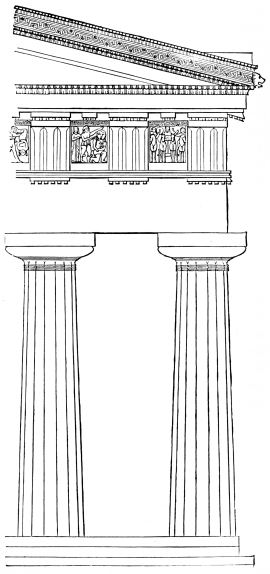 Fig. 136.—Corner Elevation of the Middle Temple
of the
Acropolis of Selinous. Restoration.
Semper has suggested that a canopy-like roof, supported by columns, was
placed above and around the small temple cella to increase its extent,
and, at the same time, to express its power and sacredness by that
oldest symbol of terrestrial and celestial authority. This attractive
assumption does not interfere with the theory of the previous
development of the temple in antis and the prostylos, or with the
historical considerations based upon the appearance of an imperfect
peripteros centuries before in Egypt. The cella and outstanding columns
rose from a stepped foundation, the crepidoma, the kernel of which, the
stereobate, was formed of massive walls, or, when possible, of the
native rock. The blocks were too high for human steps, and are not to be
conceived as stairs. Such an ascent entirely surrounding the temple
would have been purposeless, and contrary to the isolating character of
the crepidoma. They formed a base, such as is displayed in an
exaggerated manner by the Mesopotamian sanctuaries, where, however, the
chapels elevated upon the gigantic terraces were small in proportion to
the substructure. In buildings of greater dimensions, the few and
massive steps serving as the base of the Greek temple were increased,
not in number, but in size. They were thus always proportional and
fitted to their function as a foundation. Accessible stairs from all
sides would have given a pyramidal effect to the lower part of the
composition; while, at the foot of the upright supports, the horizontal
line should rather be emphatically pronounced. Smaller intermediate
blocks were provided for the ascent to the temple, thus made possible
only upon the front. The upper step, the stylobate, was, as has been
said, the common plinth, the columns being without base-moulding, and,
consequently, without individual functions or isolated independence. The
comparatively narrow intercolumniations were the better passages from
this absence of projections at the foot of the columns. The powerful
shafts were doubly modified by the diminution and by the entasis. The
first refinement found its model in the natural contraction of all
ascending bodies; a greater strength is needed below because of the
increasing weight. To this must be added an optical motive: every
diminution modifies the perspective effect, increasing the apparent
height or distance of bodies thus bordered by lines slightly converging,
though apparently parallel. The entasis was entirely decided by such
optical considerations. It overcame a deception, resulting from the
diminution, which makes a straight-lined cone of very steep sides appear
of slightly concave outline. The shafts usually had twenty, in a few
instances sixteen, channels, of nearly elliptical profile, separated by
sharp arrises. As may be seen in unfinished temples, these grooves were
not executed until the last stone of the building was in place, that the
chipping of the delicate edges by the imposition of the drums or blocks
next to them, and by other accidents during the process of building,
might be avoided. It was only upon the capital that the channels were
cut in advance, as a guide. To avoid the chipping of this stone, it was
necessary to prevent its sharp lower edges from resting directly upon
the top of the drum beneath it. To this end a diminutive step, a
scamillus of smaller diameter, was turned upon the bottom of the capital
block, or the same effect was attained by slightly slanting off and
increasing the right angle of its lower edge. It was contrary to the
artistic feeling of the Greek architect for constructive truth to mask
even this slight necessity by priming and painting. It was, rather, made
more distinct by increased size and a characteristic profile, in some
instances even by a repetition of the incision. The upper end of the
shaft was thus distinctly separated, notwithstanding the continuous
channellings, and was related to the capital as the mediating neck of
the column, the hypotrachelion. The echinos began its projection with
several annulets, which still more definitely marked the junction of the
capital with the shaft. It would be difficult to decide whether these
mouldings were reminiscences of the binding-ribbons upon the necking of
Egyptian floral columns. They were not placed beneath the echinos, but
upon it, and consequently follow the curved profile, enlarging
concentrically with its projection. The Doric capital, among all
capitals that we know, attains the highest æsthetic perfection by its
fulfilment of the requirements of a transitional member: by the
proportion of its projection, and especially by its expressive and
characteristic curve, which rises from a firm and almost straight line
to the decided turn beneath the abacus. The outline is more elastic
than a simple oblique angle, more vigorous and capable of resistance
than the concave curve. The echinos provides the requisite projection;
the abacus upon it forms the second transition from the circular plan of
the shaft to the rectangle of the entablature. In the Doric style this
upper half is about the same height as the echinos beneath it, while in
the capitals of other orders the curved members of circular plan have
been developed at the expense of this plinth, which is dwarfed to a thin
plate.
It was first noticed by Cockerell in 1829 that the axes of the columns
surrounding the cella are not vertical, but lean inward. This
peculiarity was chiefly adopted to counteract an optical deception,
resulting, like the deviation which led to the entasis, from the
diminution of the shafts, making these, when perfectly upright, appear
inclined away from the neighboring wall and from each other. The
deception is particularly felt upon the corner shafts; these were
corrected to lean in the direction of the diagonal, and decided the
inclination of the columns of the front and side. The absolute deviation
from the vertical is very slight, about 1-150th of the height, and by no
means makes the inner sides of the diminished columns parallel to the
wall. The inclination was effected by the irregular cutting of the first
block, which was lower within than without, being so formed that the
surface of its base was not circular, but slightly elliptical. All the
succeeding drums had perfectly round beds, and consequently slanted in
the manner decided by the first. The contact of these stones of the
shaft was restricted to a narrow rim upon the exterior of their plan. In
their centre they were steadied by an encased dowel of wood, the form of
which is known from the remains of the Parthenon; this served as a pivot
for the grinding of one block upon the other.
The stone beams of the epistyle lay from axis to axis of the columns. In
buildings of great dimensions several slabs were laid side by side as
lintels, each having the entire height of this member, which, as forming
the conjunction of the columns, may be conceived as a representative of
the wall. The outer surface of the epistyle block was carved upon its
upper edge with the tainia and trunnels, described as securing the
triglyphs of the original timbered entablature. The forms of these
details show the great reverence with which the primitive wooden
prototypes were imitated, while, at the same time, they were fitted to
be cut in stone in a far more artistic manner than were the direct
copies of carpentry observed in Lycia. The slits of the triglyph
terminated at first in elliptical lines, which became, in the decline of
the style, straight and horizontal. The triglyphs themselves were so
distributed that one was placed over each column and one over the centre
of each intercolumniation. An exception was made at the corner, where
the triglyph could not be placed in the axis of the shaft, being needed
for the support of the angle. It would be contrary to the open and
non-sustaining character of the metope for this to be assigned to a
position so constructively important. Vitruvius, regardless of this
consideration, recommends that the corner triglyph be placed in the axis
of the column beneath it, like all the others; but only one debased
instance is known where this occurs—the so-called Temple of Demeter at
Pœstum. The disturbance of symmetry which resulted to the frieze by
the removal of the corner triglyph from the axis was counterbalanced by
the metopes being made slightly larger, and especially by the outer
intercolumniations being greatly diminished in width. This last step was
also desirable from other considerations, notably because the dark
background of the cella caused the openings between the inner shafts to
appear narrower than the free and light space between those of the
exterior.
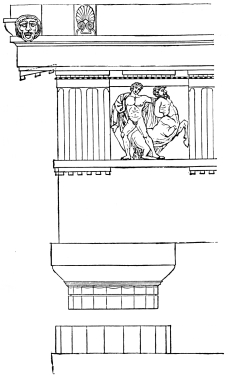 Fig. 137.—Entablature of the Parthenon.
All these changes were primarily caused by the Doric entablature not
having been created for the peripteros; it was necessary thus to fit it
for decorative employment.
The metopes were originally open interstices between the beams;
intertrabies, as they might be called, with reference to the
intercolumniations; having, upon the peripteros, been closed within and
without by light slabs, the votive offerings, formerly placed in the
apertures, were now superseded by sculptures in relief upon these
stones, which gave to the entire entablature—or, when the carving was
restricted, to that of the fronts—an imposing decoration. A continuous
band, like that beneath the triglyphs, terminated the frieze; but the
individuality of triglyph and metope was even here maintained, the
superposed member being broken around them, as a separate coronation for
each.
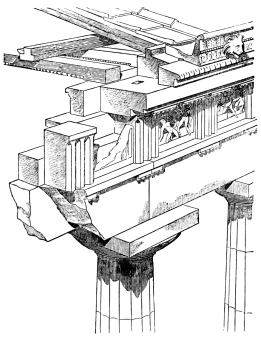 Fig. 138.—Scheme of the Doric Entablature.
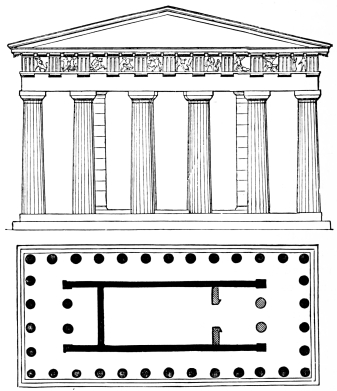
Fig. 139.—Plan and Elevation of the so-called Temple of
Theseus, Athens.
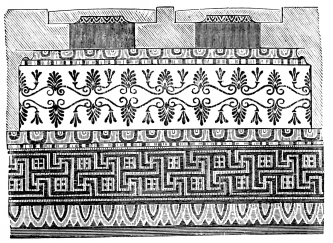
Fig. 140.—Painting upon the Pteroma of the Temple of
Theseus.
The cornice showed reminiscences of the projecting eaves by its corona
being cut with a downward slant, such as would never have been invented
for the treatment of stone. That this inclination was not precisely the
same as the pitch of the roof rafters cannot be adduced as an argument
against its fundamental idea; in the marble structure there was nothing
to call for so exact a resemblance. The decoration of the lower surface
of the corona shows the original motive of its wooden construction as
distinctly expressed as was the formation of the triglyph in the frieze.
The position of the ends of the rafters, beneath the sheathing, is
marked by boards, each being pinned upon it with eighteen wooden pegs.
From the duplication of the triglyphs in the stone building there
resulted an equal number of mutules, and these were still further
multiplied by being placed over each metope—this latter increase having
been at first attempted with members of half the normal width, as at
Fig. 136. The whole composition was thus the more richly divided the
higher the building ascended; upon one column rested two triglyphs and
four mutules. It is further remarkable that, to make the decoration
harmonious upon all sides of the edifice, these mutules were also
introduced upon the front and rear entablatures; this repetition, with
the inclination of the corona upon the fronts, naturally without a
gutter, must be regarded as a further concession, made, contrary to the
genetic signification of members, in favor of the monumental appearance
of the entire exterior. The corona is bordered by the so-called Doric
cyma, or beak-moulding, distantly resembling the scotia of Egypt and
Mesopotamia. The concluding gutter is of a beautifully curved outline.
When it occurs upon the sides of the building, where it is frequently
restricted to the corners, it is provided with lions’ heads, which,
arranged over the columns as gargoyles, throw from their open jaws the
rain-water of the roof beyond the steps of the crepidoma. An isolated
instance—the Heraion of Olympia, which seems never to have been
provided with a stone entablature—shows that the timbered roof and
ceiling were placed at times with a wooden epistyle directly upon the
stone columns of a peripteros. The covering of the roof was formed, in
the best period, by flat marble tiles, the joints of which were covered
by smaller curved blocks, running from ridge to eaves, and terminated
over the cornice by antefixes. The apex and corners of the gable were
provided with acroteria, standing upon special bases. They are
reminiscences of an ancient usage of Western Asia: those of the corners
found their origin in the ornaments of primitive altars and sarcophagi,
known in Biblical accounts as horns. They were sometimes supplanted by
votive offerings suited to the position, such as tripods, or by griffins
and other symbolical figures. The pointed acroterium of the apex was
usually the whole of the two half-anthemions represented upon those of
the corners; in larger monuments it was often replaced by statues, just
as extended compositions of figures were created for the tympanon
beneath, as a substitute for the dedicated objects which appear to have
originally filled the gable.
The polychromy of the Doric temple was one of the most important
features of its external appearance. It is probable that the greater
part of its marble surface, possibly the whole, was colored. Our
Northern conceptions can with difficulty comprehend the full value of
this treatment in the general composition; in our gray landscape, a
building thus painted might appear harsh and variegated. The color of
the lower supporting members was restricted to a light tint, the
so-called baphe, which had first been applied to the stucco priming
necessary for the coarse and porous stone of older temples, and was
afterwards transferred from this to the marble of later monuments. It
stained the surface with a light golden-brown tint, moderating the harsh
chalky white of lime stucco, or of marble, and investing the newly
erected building with the patina by which age always modulates the color
of stone. This baphe was employed for the marble temple on account of
the traditional painting of the stucco priming, because of the too
dazzling white natural to the freshly hewn material, and, finally, in
order to harmonize the columns and stylobate with the intensely rich
colors of the entablature. Dark and positive pigments were restricted to
the frieze and cornice, having, without doubt, been first employed to
preserve the original wooden material. The beams and slat-work, like the
triglyphs with their regulas and the mutules, were designated by blue;
the trunnels were red or gilded. That which had at first been open was
treated as a dark-red background; the metopes and tympanon thus clearly
outlining the reliefs and groups of statues which ornamented them. The
continuous members were treated with particular richness; the narrower
strips were painted with the meander and other woven forms; the gutter
with anthemions; while the Doric cyma was decorated with leaves of
various colors, so artistically conventionalized as but little to
resemble nature. The inner side of the entablature was still more richly
colored. (Fig. 140.)
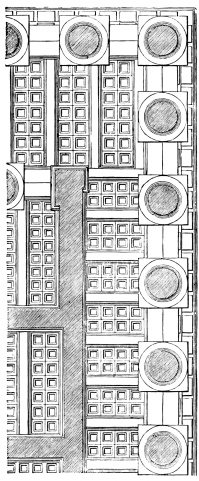 Fig. 141.—Coffered Pteroma Ceiling of the Southern
Temple upon the Eastern Plateau of Selinous. Restoration.
Fig. 141.—Coffered Pteroma Ceiling of the Southern
Temple upon the Eastern Plateau of Selinous. Restoration.
One of the most wonderful refinements of Greek architecture was the
attention paid to optical deceptions, and the correction of these by the
curvature of all straight and horizontal lines. It has been mentioned
that the peripteral columns did not stand mathematically upright, all
the axes being inclined inwards; the discovery of this fact was followed
by a publication, made by the architect Hoffer in 1838, which maintained
that no perfectly level line existed upon the entire temple, the
horizontals being curved slightly upwards. Hoffer’s assertions were
verified by the micrometrical studies made by Penrose, in 1846, upon the
Parthenon, the so-called Theseion, the Propylæa, Erechtheion, and the
Temple of Olympian Zeus in Athens, and afterwards upon the temples of
Nemea and Segesta. His measurements make evident a curvature of 0.069 m.
in 30.876 m. upon the front of the Parthenon, and of 0.108 m. in 69.525
m. upon its sides. Though so very slight a deviation is not readily
apparent, there are no mathematically rectangular forms upon the entire
building; the corner metopes are, for instance, trapezoidal. Whether
these curves, the existence of which is not to be denied, were really
intentional, was questioned by Boetticher, but it has been proved beyond
a doubt by the further investigations of Ziller. The motive for the
adoption of refinements, so extraordinarily delicate and difficult of
execution, was the same desire to correct displeasing optical deceptions
which prompted the entasis of the columns and the inclination of their
axes from the vertical. The apparent deviation of the lines, sagging
from the horizontal, was most disagreeably apparent upon the front
entablature—the base of the gable triangle, which, when straight,
invariably appears concave, while a corona, in reality curved upwards,
presents itself to the eye as perfectly level. By a deviation from the
absolutely horizontal, the appearance of greater correctness was
attained.
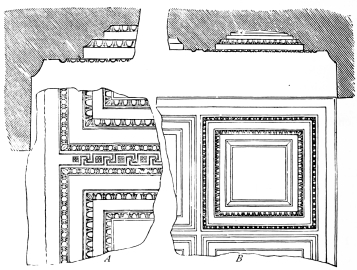
Fig. 142.—Fragments of Coffered Ceilings from the
Parthenon.
A. From the Side Pteroma. B. From the Epinaos.
The peripteral columns of the Doric style worthily express the peculiar
character of the Dorians by their simple dignity. By them a passage was
formed around the cella, the pteroma, the ceiling of which was most
richly decorated with cofferings. (Fig. 141.) So short a span was here
required of the horizontal beams that it was possible to translate them
into stone simultaneously with the outer entablature; this seems to have
been universal in the larger peripteral temples, that of Zeus in
Olympia possibly being an exception. The ceiling did not remain in its
original position, resting upon the epistyle, but, with the increased
dimensions of the stone frieze, was considerably elevated. The spaces
between the lintels were closed by slabs of stone which retained the
form of the original wooden cofferings, being hollowed by stepped
lacunæ, diminishing in size. A transitional moulding was placed in each
angle formed by a vertical and horizontal surface. Upon the coffered
ceilings of Attic monuments (Fig. 142) this member is the Lesbian
cyma, supplemented by an astragal, these signs of an Ionic influence
being further noticeable in other parts of these buildings. The wall of
the cella, though surrounded by the pteroma, still bears traces of the
entablature, which, as shown above, preceded the outstanding columns;
the triglyphs and metopes are repeated, or in their place is a frieze of
sculptured reliefs, in which the isolated carvings of the metope become
continuous and connected. At times there remain beneath the latter the
tænia, regulas, and trunnels—only to be explained and justified as the
reminiscences of portions of an originally well-founded decoration which
had, in part, been gradually supplanted.
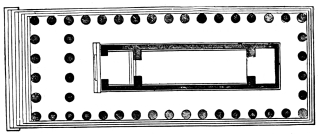
Fig. 143.—Plan of the Middle Temple upon the Acropolis
of Selinous.
The cella itself, within the pteroma, appears in plan either without
columns, as a temple in antis, as a prostylos, or as an amphiprostylos,
thus supporting the assumption that these were the original forms of its
development. The cella was often greatly increased in length; this made
its transverse division desirable, and there resulted the front portico,
or pronaos, the principal hall of the temple, or naos, and the space
partitioned off at the rear, called, analogically, the epinaos. An
especial chamber of the building was at times isolated to serve as a
treasury; this was known as the opisthodomos. (Fig. 143.) The pronaos,
whether with or without columns, was closed, if at all, only by a light
bronze grating; from it a wide portal, occupying almost the entire
division wall, opened into the naos. Its upper part was fixed, but
entrance was afforded through its lower part by folding wings. The
grooves worn by the doors are still visible upon the Parthenon floor.
The interior was disproportionately narrow, a result of the peripteral
enclosure and of the limitations imposed by the gable, which would have
become too high and heavy if the front had been greatly widened in favor
of the interior breadth; moreover, the horizontal ceiling was
unfavorable to width, which was limited to the natural span of the
beams.
The possibility of admitting much light had been given up with the
change in the position of the entablature and metopes. Notwithstanding
the size of the door, sufficient daylight could not enter through this;
it was itself in the shadow of the pteroma, and generally, also, of a
pronaos. But little illumination was required for the small chapel when
this served solely as a receptacle for the sacred image. A dim and
mystical twilight was easily obtained by the use of one or more
perpetually burning lamps, which could only have been favorable to the
artistically unpretentious interior. It was otherwise with the larger
and more important temples, opened for festive assemblages. Their
interiors were divided by architectural members, and contained manifold
works of art and objects of value—a varied richness, which called for
an increased splendor of light, possible only by artificial
illumination.[G]
In the desire to increase the available space of the temple interior,
the enclosing walls were advanced more closely to the columns of the
peripteros, thus decreasing the width of the pteroma; while the hall was
divided by two rows of inner shafts into three aisles, the outer two of
which, considerably narrower than the middle, were partitioned into two
stories by the introduction of galleries, accessible by staircases at
either side of the chief portal.
We now turn from this general consideration of the Doric style to a
review of the principal monuments remaining, dividing them, as well as
possible, into groups representative of certain ages and periods of
development. The oldest peripteral temples known are not situated in
Greece proper, but in the early colonies upon the coasts of Magna Græcia
and Sicily. They are distinguishable from later buildings by a naïve
freedom of form and the lack of any strictly systematical
development—any canonical type. The carving of details is as careful as
the coarse and porous limestone permits. The columns stand so far apart
that the low and heavy proportion of the whole is not altered by the
comparatively high stylobate. The great distance of the shafts from the
wall reduces the naos to a corridor-like narrowness, the more noticeable
as the whole temple plan is very long. (Fig. 143.) The columns
themselves are low, never having a height greater than five lower
diameters. The monolithic shaft is much diminished, and has an excessive
entasis; it is provided with twenty, or in rare instances sixteen,
channels of segmental outline. The incisions beneath the capital block,
bordering the hypotrachelion, are generally multiplied, often being
three in number. The necking upon the columns of Sicilian temples is not
merely the straight commencement of the channellings, but often forms,
under the rings, a slight scotia—the apophyge—which weakly detaches
the echinos from the shaft by interrupting its organic connection. The
echinos has too great a projection; its outline is soft, and the small
rings are placed too high. The entire capital appears powerless and
flat: on this account the thickness of the entablature has not been
increased; the outer and inner surfaces of the epistyle do not project
beyond the upper diameter of the shaft. The members of the entablature
are exceedingly high and heavy, as are the details, down to the trunnels
and cyma. The frieze alone is low, and the metopes consequently small,
being framed by massive triglyphs, the chamferings of which have
circular or lanceolate endings. The mutules above the triglyphs have the
same great breadth; in one instance there remains above the metope only
space for half a mutule. (Fig. 136.) The polychromy is, in general,
sombre—yellow-brown and black, with little red, being the colors
chiefly employed; the patterns of the ornaments are distinctly of
Oriental origin.
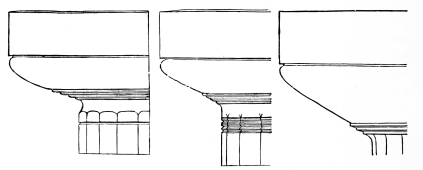
Fig. 144.—Northern Temple upon the Acropolis of
Selinous.
Fig. 145.—Middle Temple upon the Acropolis of Selinous.
Fig. 146.—Temple of Assos.
The most prominent monuments of this class are at Selinous, upon the
western extremity of Sicily. That city was founded in 628 B.C.: its
acropolis appears to have been early occupied by temples; at least the
northernmost of these buildings, with the widest intercolumniations, of
two and two thirds lower diameter, and the most spacious pteroma, dates
from the commencement of the sixth century B.C. The middle temple of the
acropolis appears scarcely fifty years younger; it is celebrated for the
primitive reliefs of its metopes, which will be considered in the
section upon Greek sculpture. A corner of the building is given above,
Fig. 136; its capital is Fig. 145. A third example of this earliest
period of development—which is designated by Semper as the laxly
archaic style—is known under the name Tavola dei Palladini, and stands
among the ruins of the Elian colony, Metapontion, a city founded as
early as 768 B.C., but entirely rebuilt in 586 B.C., after its
destruction by the original inhabitants of Lower Italy. The fifteen
columns at present upright probably date from the sixth century B.C. The
intercolumniations are wide, the shafts excessively diminished, and the
curve of the echinos too pronounced. It is difficult to decide whether
to this class may belong the remains of the temple at Cadacchio upon
Corfu (Corkyra), and of that built of lava at Assos, in the Troad.
(Fig. 146.) The former has been greatly disfigured by a late
restoration, and it is not at present possible to determine the date of
the latter, known only by insufficient publications.
The next advances of temple architecture consist in placing the higher
columns more nearly together and in heightening and narrowing the
triglyphs. The elegance of proportion and detail was thus considerably
increased. Ionic elements were first introduced in this period, greatly
to the advantage of the style, which is designated as the archaic. An
example is the middle temple upon the eastern plateau of Selinous, where
the columns are cut with Ionic flutes. It is also important in the
history of sculpture from the remains of metopes carved with scenes of
the gigantomachia. (Fig. 147.) Of similar character is the great
uncompleted Temple of Zeus upon the same plateau, 110 m. long and 50 m.
broad, with three aisles and galleries in the interior (Fig. 148); and
also the so-called Chiesa di Sansone at Metapontion, of which small
temple there are only few and scattered remains. A third Doric temple of
this site, discovered during the last few months, is as yet inedited. It
is uncertain whether the Temple of Artemis upon the island of Syracuse
(Ortygia) should be reckoned with this group.
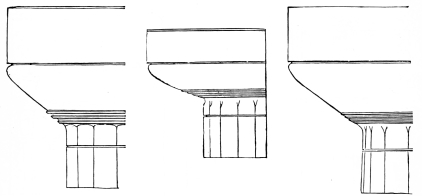
Fig. 147.—Middle Temple upon the Eastern Plateau of
Selinous.
Fig. 148.—Temple of Zeus upon the Eastern Plateau of
Selinous.
Fig. 149.—So-called Temple of Heracles, Acragas.
One example of the epoch exists in Greece proper—the Temple of Corinth.
Its columns were once heavily primed with stucco, and are now so
weathered that it is impossible to draw any definite conclusions from
them. The outline of the capital is primitive, though not in the degree
formerly supposed, when this ruin was thought to be the oldest monument
of the Doric style. The two last-mentioned remains and the Temple of
Athene upon the island Ortygia have the heaviest and lowest proportions,
the lower diameter of the columns comparing to the height as 1 to 4.27
(Athene), 1 to 4.29 (Artemis), and 1 to 4.32 (Corinth).
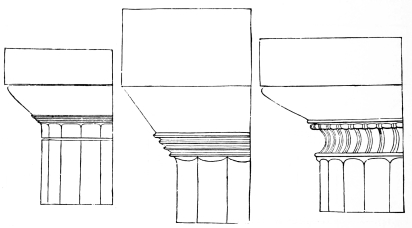
Fig. 150.—So-called Temple of Theseus, Athens.
Fig. 151.—Porticus of Philip, Delos.
Fig. 152.—So-called Temple of Demeter, Pæstum.
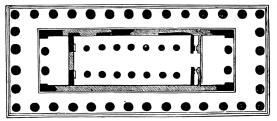
Fig. 153.—Plan of the Great Temple of Pœstum.
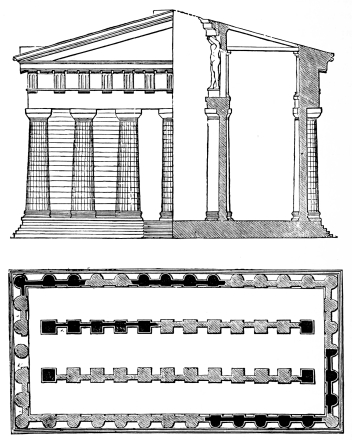
Fig. 154.—Plan, Section, and Elevation of the Temple of
Olympian Zeus at Acragas.
The Temple of Zeus at Selinous was the first of a number of colossal
structures, in which the architectural ability of the Greeks, by that
time thoroughly schooled, sought also to develop itself in enormous
size. The hexastyle front was increased to the octastyle, thus
permitting wider dimensions of the cella, which still, however, did not
attain the greatest possible extent, the architect being unwilling to
reduce the breadth of the pteroma. The columns became even shorter and
thicker; they were less diminished and had a more delicately adjusted
entasis; the intercolumniations were increased. The separation of the
capital from the shaft by an apophyge was abandoned; the entasis was
made steeper and of a more vigorous outline. The disproportionately high
and weak triglyphs are especially characteristic of this stage of
development; with the exception of these, the entablature still
remained low and heavy. Marble came more and more into use as a
building-stone; the execution of details in stucco was rarer. The new
material did not limit the use of color, which, in place of the former
tones, became brighter—red, blue, and yellow prevailing. The most
imposing, because the best-preserved, of these colossal works is the
magnificent Temple of Pœstum, with its two stories of inner columns
partly intact. (Fig. 153.) The triglyphs have not as yet disappeared
from the walls of the cella, but otherwise the construction shows no
primitive traits, being fully fitted for its execution in stone.
Resembling this in many points is the Temple of Acragas, or Agrigentum,
termed that of Heracles. (Fig. 149.) The great Temple of Zeus of the
same city was of the most gigantic dimensions ever attempted in the
sacred architecture of the Greeks. It was also, unfortunately, even
greater than was really practicable for a trabeated construction in such
a building-material, and consequently became a monstrosity. The temple
was heptastyle, that is, had seven columns upon the front, which
rendered impossible the normal entrance in the middle. It differed still
more decidedly from other Greek temples in that the cella was not
surrounded by an open pteroma, the outstanding columns being supplanted
by a wall decorated with engaged shafts. It would be difficult to decide
whether this peculiar pseudo-peripteros owed its conformation to the
building-stone at disposal, only to be quarried in blocks too short for
the lintels of the pteroma, or whether other considerations led to this
abnormal negation of the fundamental principles of columnar
architecture, which here has no relation to the better-founded practices
of Roman builders in the application of engaged shafts. The
transformation of the pteroma made an entire change in the general
disposition of plan; but too little of the building now remains above
ground to render its arrangement certain. If door-openings be assumed at
both sides of the middle column, as in the illustration, this would have
been possible only upon the west, the middle column of the east—the
customary entrance-front—being proved by the remains to have been
engaged. It is not probable that windows existed in the wall between the
columns; the supposition is more natural that some of the side metopes
were unclosed, and provided the pteroma with sufficient daylight. This
would have been no innovation, but rather, in this case, where it was
impossible to execute the open peripteros, a return to the original
method of illumination through the interstices between the beams upon
the top of the cella wall. The before-mentioned Temple of Athene upon
the island of Ortygia is another Sicilian example belonging to this
archaic period of gigantic dimensions.
The two colossal monuments of Athens, built during the second half of
the sixth century, are more important, although the older Parthenon upon
the acropolis, if, indeed, ever completed, could not have stood longer
than half a century, and the Doric temple of Olympian Zeus was
discontinued before its construction had far advanced. A comparison of a
fragment of the earlier building with the entablature of the present
Parthenon shows how disproportionately high were the triglyphs and how
heavy and broad the tænia and regulas of the archaic period. (Fig.
155.)
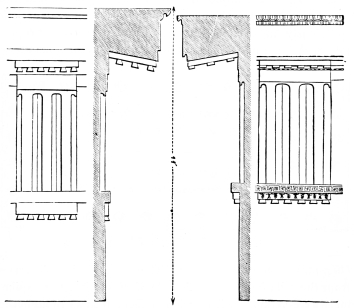
Fig. 155.—Entablatures of the Older and Present
Parthenon.
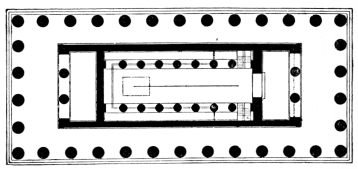
Fig. 156.—Plan of the Temple of Zeus at Olympia.
The exercise of the designer’s individual ability in these works, and
the hieratic retention of every constructive and æsthetic gain thus
obtained, prepared for the fullest perfection of the Doric style. The
advance was effected by a slight attenuation of the too massive columns,
a further reduction of the height of the entablature, and an increase in
the projection of the smaller decorative members. The temples built
during, or shortly after, the time of the Persian wars show the gradual
introduction of these changes. Among the Sicilian remains of this period
are the uncompleted Temple of Segesta, the so-called Temple of Concordia
at Acragas, and the six peripteral temples upon the acropolis and
eastern plateau of Selinous not previously mentioned. Among those of
Greece proper, the Temple of Athene upon Ægina and the Temple of Zeus at
Olympia (Fig. 156) are most prominent. The frieze of triglyphs was
omitted from the cella walls of the Temple of Ægina, but the regulas and
trunnels were retained with curious effect: it is as though the designer
were only slowly and with difficulty led to give up, one by one, the
traditions of a primitive wooden construction. The date of the building
of the Olympian temple is uncertain, but the name of its architect,
Libon, of Elis, has been handed down, with one exception the earliest
connected with Greek architecture. The recent excavations have entirely
exposed the overthrown ruins. They show that the forms of the edifice
are more primitive than would have been expected from the age in which
Pheidias completed the celebrated chryselephantine statue of the temple
deity. It is possible that the advance of the building was slow, or that
there were long interruptions of the work before its final completion.
An especially important result of the investigations is the evidence
that an enclosed ædicula for the statue of Zeus, hitherto advocated by
restorers because of the supposed opening in the roof and ceiling for
light, did not exist, the interior having been divided into three aisles
like the great Temple of Pæstum. The proportions of the peripteros were
of great vigor and beauty. It was built of poros, with the exception of
the metope reliefs upon the fronts of the cella, and the carved gutter
and roof tiles, which were of marble. This so-called poros, a stone
almost exclusively employed for the earlier buildings of the Greeks, is
a rough shell conglomerate, usually brought to a surface by a heavy
priming of stucco. The floor of the pteroma of the great temple at
Olympia was of a pebble cement, the small inner staircases of wood.
While the architecture of the Peloponnesos still retained traces of the
archaic style, the highest perfection of Doric forms was attained in
Attica, reaching its fulfilment at a time, after the Persian wars, when
the political supremacy of Athens was far greater than that ever enjoyed
by any state of the world so restricted in territory. The deserved
sovereignty of Athens over Greece, its naval power, imposing even to the
Orientals of Western Asia and Egypt, and, finally, the necessity and
opportunity of rebuilding the Attic capital after its destruction by the
Persians, before the decisive battle of Salamis, caused a monumental
rebirth of the noble city, which not only became the classic model in
those ages throughout the extent of Greece and its colonies upon distant
shores, but the highest ideal of architecture to the present day and for
the entire future of the human race. Attica was fitted to cultivate
equally the artistic peculiarities of the two branches of the Hellenic
stock, its Ionic population being intermingled, in a marked degree, with
Doric elements. It had attained the highest development of civilization,
and was the home of the most famed artists. By the taxes levied upon the
eastern mainland and the islands of the Archipelago, Athens had almost
unlimited means at its disposal. To this nature added the incomparable
marble building-material, quarried almost before the gates of the city,
which indeed possessed all the conditions requisite for the first
monumental capital of Greece and of the civilized world. Familiarity
with the Ionic style did not permit that heaviness and clumsiness of
architectural members observable upon the contemporaneous temples of the
Peloponnesos. The columns of the Temple of Ægina had been allowed a
height as great as 5.3 times their lower diameter. In the Doric
buildings of Athens this was still further increased, the so-called
Temple of Theseus having the proportion of 5.62 to 1, the Parthenon as
5.47 to 1. The diminution and entasis of the shaft were reduced to just
relations; the delicate curve of the latter, as demanded by the optical
deception it was to correct, was greatest below the half height of the
column. The channellings no longer remained segmental arcs, but received
an independently designed, elliptical profile. The echinos became
steeper, rising in an almost straight line to the firm and sharp turn
beneath the abacus. The triglyphs, returning slightly to former
proportions, became broader than those of the preceding period; smaller
members were diminished in height, but were made more projecting. The
colors of the entablature became still more intense; blue and red
predominated; green was also employed, and gilding appeared upon the
trunnels and in the beautifully composed surface patterns. Ionic
elements, almost entirely disused during the latter ages, reappeared in
very general employment, especially in the deep cofferings of the
pteroma ceiling and upon the capitals of the pilasters.
The typical monuments of this Attic Doric style are the so-called
Theseion, and the Parthenon and Propylæa of the Athenian acropolis. The
first of these buildings (Fig. 139) was certainly not sacred to
Theseus; its dedication is not surely known. It preceded the highest
perfection, still betraying some slight archaic influences. The
triglyphs are too high, the smaller members, notably the regulas and
trunnels, too heavy. Ionic elements are freely introduced. Besides the
coffering of the pteroma ceiling and the before-mentioned pilaster
capitals, there was an Ionic zophoros, or continuous frieze of figures,
bordered above and below by leaved cyma-mouldings and astragals, in
place of the Doric entablature usually employed, at least in part, upon
the walls of the cella. The ornamental painting was extended to the
capitals of the pteroma columns (Fig. 150), which bore a series of
leaves, and to the walls, the interior of the naos having been prepared
for the reception of pigments. The perfect preservation of the building
is owing to its early transformation into a Christian church.
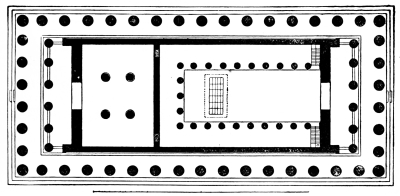
Fig. 157.—Plan of the Parthenon.
The Parthenon far surpassed the Theseion in artistic perfection; it was,
indeed, worthy the superintendence of a Pheidias. Its architect,
Ictinos, conceived his work to stand so high above contemporary
buildings that he celebrated it in an especial monograph, mentioned by
Vitruvius, though, unfortunately, not consulted by him. The dimensions
of the octastyle temple were imposing; the edge of the stylobate
measured about 30 by 68 m.; elevated upon the steep acropolis, it could
be seen from a great distance. Though its site was not limited, the
economy of space was carried to an extreme. The intercolumniations are
narrow, especially those of the front; the pteroma was thus reduced in
breadth to less than one and one half times the lower diameter of the
columns. (Fig. 157.) The pronaos and epinaos had no side walls, the
cella being amphiprostyle, enclosed by high grilles. The depth of these
vestibules was less than one quarter of their breadth. The remaining
interior was partitioned into two chambers of unequal size: the naos and
the opisthodomos, the latter of which served as a treasury. The naos was
divided by ranges of columns into three chief aisles, and the gallery
over the sides was carried across the nave, next to the rear wall. The
world-renowned chryselephantine statue of Athene, 12 m. high, stood
before the transverse columns, between which and the partition there was
allowed a passage, nearly equal in breadth to the side aisles. The
stairs to the gallery may, from the analogies of the great temples of
Olympia and Pæstum, be assumed to have existed at either side of the
entrance.
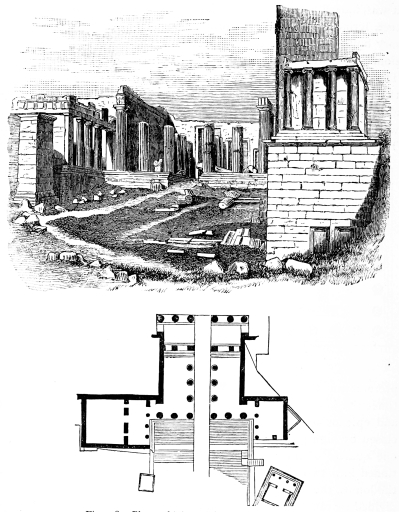
Fig. 158.—Plan and View of the Propylæa, Athens.
The Propylæa of the Athenian acropolis, by which the architect Mnesicles
made his name immortal, were not less perfect than the Parthenon. Work
upon them was begun shortly before the completion of the latter
building, in 438 B.C., and occupied five years. Ionic members had
frequently been employed upon Doric structures, but the Propylæa offer
the first instance of a combination of the styles in almost equal
proportions: the interior of these gates was entirely Ionic, the
exterior entirely Doric. (Figs. 120 and 158.) Six Ionic columns bore
the famed marble ceiling of great span, while two Doric porticos formed
the fronts. The stone-cutting of all the monuments upon the Athenian
acropolis was incomparably exact and beautiful, as was the harmony of
their proportions and forms.
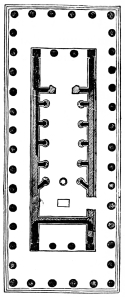 Fig. 159.—Plan of the Temple of Apollo at Bassæ.
The Temple of Phigalia, or Bassæ, in Arcadia, though stated to have been
built by the architect of the Parthenon, shows that the perfection of
the monuments last considered was possible only upon Attic ground. The
sanctuary of Arcadia was dedicated to Apollo Epicourios in gratitude for
the deliverance of the district from the plague of 431 B.C. Its plan
(Fig. 159) was excessively long, having fifteen side columns, with a
hexastyle front. The elevation offers a remarkable combination of
archaic traditional forms and of exaggerated novelties. Though the three
incisions of the capital necking are peculiarly primitive, the echinos
has become even steeper than it was upon the Parthenon. Ionic sculptured
ornaments begin to appear upon the entablature. The inward inclination
of the axes of the columns and the curvature of the horizontals have
been neglected in Bassæ, as if the architect had not considered it worth
while to display such refinements to the uncultivated Arcadians. In the
interior of the temple Ionic columns are engaged upon short transverse
walls, which project from the sides. These are so remarkably archaic in
form (Fig. 165) that it is difficult to explain how Athenian
architects, who must have been familiar with the interior columns of the
Propylæa and those of the Erechtheion, then in course of construction,
could have prepared the designs. An extremely ancient and undeveloped
Corinthian capital (Fig. 176) has been found among the ruins of Bassæ;
it will be referred to below. Many of the anomalies of the temple would
be explained by the assumption that the building occupied the site of a
former chapel, the entrance to which had naturally been upon the east,
and that the lack of available ground prevented the retention of the
original and usual orientation, making the peripteros, as the
enlargement of a former fane, open the inner chamber of the naos upon
one of the long sides.
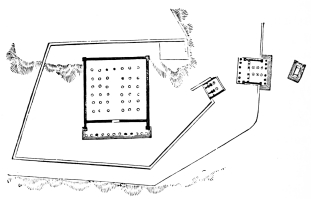
Fig. 160.—Plan of the Temenos of Eleusis.
Other Attic remains, some of which date from the end of the fifth
century, also show traces of the deterioration of the art. Chief among
these are the Propylæa of Eleusis and the house of assemblage for those
initiated in the Eleusinian mysteries, known as the Telesterion, a
square hypostyle hall, fronted by a portico of twelve columns,
apparently without a gable. (Fig. 160.) It is not known how soon after
the Persian wars the temples of Rhamnous and Sunion were rebuilt; they
may have slightly preceded the age of decline. The increasing love of
magnificence and luxury felt among the Greeks was not satisfied with the
simple majesty of the Doric style; the Ionic was more and more
frequently substituted in preference. The latter had been employed for
the Propylæa of the Athenian acropolis, and had appeared independently
in smaller temples, and, finally, in the national shrine of Attica, the
Erechtheion. The Doric became restricted to porticos and peristyles,
and, in double-storied interiors, to the lower order, for which
important constructional functions it was fitted by the great solidity
of the column. But the desire to simplify the execution of Doric
members, and reduce the expense which must have been attendant upon the
delicate refinements of curvatures, introduced dry and hard geometrical
forms, and the æsthetic value of the style was, for the greater part,
lost. An example of this debasement is offered by the portico of Philip
upon Delos, where the echinos projects in an absolutely straight line.
(Fig. 151.) In the colonies, upon the other hand, even as late as the
Roman period, the style was archaistically treated, with a provincial
lack of good taste, illustrated by the weak echinos and apophyge of the
capital of the so-called Temple of Demeter at Pæstum. (Fig. 152.)
An entirely different manner of building had early appeared by the side
of the Doric style, which cannot be accounted of quite equal birth with
that eldest male offspring of Hellenic civilization, but, to carry out
the simile, should rather be considered as a step-sister. The
development of the peripteral plan, the echinos coronation of the
channelled shafts, and the entablature of triglyphs, metopes, and
mutules, appear autochthonic and purely Greek; while the Ionic style,
though adopting the plan and general disposition of the former, was, in
its most characteristic details, an importation from Asia. It is not
meant by this that the perfected style was not characteristically
Hellenic. The Greeks accepted none of the products of their neighbors
without a change—a transformation of disposition and detail by their
peculiar genius. But the fundamental motives, the elements of the style,
in as far as these are not identified with the Doric, had been taken
from neighboring Eastern lands of primitive civilization: from the
coasts of Asia Minor and Syria.
The Ionic column betrays this relationship in both base and capital. The
former consists fundamentally of a tore elevated upon a drum, usually
hollowed by a scotia. This tore was employed as a footing for the
columns of Nineveh, and is familiar through one example and through
representations upon reliefs. From thence it was transplanted to Persia,
where, in the middle of the sixth century B.C., it appears with the
horizontal channelling found upon the more primitive Ionic monuments.
(Fig. 79.) The concave profile of the under plinth is new and
Hellenic. The delicate perception of the Greek designer recognized the
advantage of this scotia over the clumsy heaviness which had resulted
from the tore being placed immediately upon the ground or upon a
rectangular slab, and the lower member was made to harmonize with the
channelled moulding above it by the emphasis of horizontal lines. It is
uncertain whether the slender proportions of the Ionic shaft, so marked
in comparison with the strength of the Doric style, is to be attributed
to Oriental influences. It agreed as well with the light Ionic
entablature and ceiling as did the powerful Doric column with the great
weight imposed upon it; and it may be regarded as one of the principles
of architectural construction that the strength of the support has ever
been originally determined by the weight of the ceiling and
superstructure: the column has been adapted to the entablature, not the
height of epistyle, frieze and cornice to the diameter of the shaft.
With this consideration agreed the desire to attain great elegance and
lightness of proportion, peculiar to the Ionic race. The Ionic column,
thus made of greater proportional height, had diminution and entasis
like the Doric. It differed remarkably in the fluting. A vertical
grooving cannot be traced upon the columns of Assyria; upon those of
Persia it is similar to the Doric channels, with sharp arrises. The
development of the flute itself may perhaps be deemed peculiarly Greek.
As painted ornaments were gradually given up, they were replaced by
architectural carvings; such sculptured decorations were harmoniously
introduced upon the shaft, and the channels were deepened to a
semicircular profile. This rendered a change of the arrises necessary,
for if the ends of the arcs were to have abutted, as upon the Doric
column, the deep flute, with its extremely sharp edge, could only have
been executed upon a plane. Upon a convexly curved surface, like that of
the cylindrical drums, it would have been impossible to cut semicircular
grooves immediately adjoining, as their outlines would have intersected.
The sharp arrises were therefore relinquished, and a broad vertical
band, the surface of the original cylinder, was left in its place, the
play of light and shade which enlivened the body of the shaft being
increased by these flutings, but the evidence of the derivation of the
channelled column from the polygonal pier was entirely sacrificed, the
cylindrical form being characterized as original by the remaining
fillets. The carving of the shaft was rendered more difficult from the
slight projections left at the top and bottom as transitional members to
the base and to the capital. This horizontal fillet was a further gain
to the outline of the column, concave and convex surfaces thus
alternating from floor to ceiling. The flutings were terminated above
and below, before reaching this transverse member, by a semicircle,
which agreed with their sectional outline.
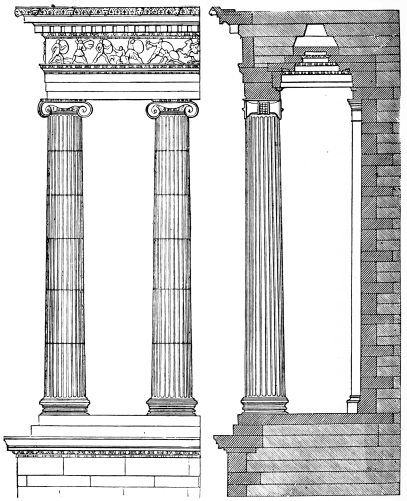
Fig. 161.—Ionic Order from the Peripteros of the
Mausoleum of Halicarnassos.
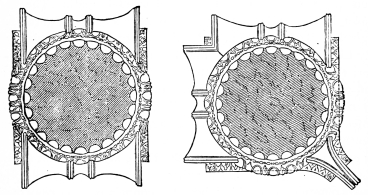
Fig. 162.—Plan of the Normal Ionic Capital.
Fig. 163.—Plan of the Corner Ionic Capital.
The capital consisted, in part, of an echinos, similar to that of the
Doric style, the leaves, which, at least in one instance, had been
painted upon it, being here carved, and an astragal taking the place of
the necking rings. This echinos is almost entirely covered by a spiral
roll, which gives to the style its most striking characteristic. With
the discovery of the helix upon the capitals of Assyrian reliefs, all
the labored explanations of the significance and derivation of this
member have fallen to the ground. It is impossible to believe, with
Vitruvius, that the Ionic column was considered as the representative of
the fair sex: that the locks of hair were indicated by the spiral line
of the capital, the folds of the wide garments and draperies by the
flutes and fillets, and the sandals by the base. Nor are the theories
more satisfactory which seek for such natural motives as spiral shells
or twisted ram’s horns, assumed to have been primitive ornaments of the
sanctuaries. And it is still worse to regard the peculiar form of the
capital as decided by the conception of an elastic cushion, which,
displaced by the weight of the entablature, curls again at either side
of the echinos. The Ionic helix was a form of capital imported from the
East, where it had been used by barbaric designers as a mere ornament
upon upright legs of furniture (Fig. 81), or upon Persian columns
(Fig. 80)—a form developed by the Greeks into an architectural member
of the first importance. The Assyrians, by doubling the volutes, had
formed with this motive a capital not particularly well adapted to the
functions of a transitional member between vertical support and
horizontal burden. The Hellenic architect perceived that a more decided
projection was necessary, and therefore placed an echinos beneath the
volute, leaving the roll as the medium between the circular shaft and
oblong entablature, which, in the Doric style, had been formed by the
abacus. The horizontal lines of the abacus, thus supplanted, were
represented upon the Ionic column only by a narrow moulding, curved to
the profile of a cyma and sculptured with a leaved ornament. In the
Greek capital the spirals became an elegantly curved roll, of greater
length than breadth, with tightly curled ends, which were bound
together, upon either side of the echinos, by a band. The capital thus
shows its true profile, the helices upon front and back, and upon the
subordinate sides rolls of their thickness. (Fig. 161.) This
difference between face and side resulted in one great difficulty upon
the corners, which, like the irregularity of the division of the Doric
frieze of triglyphs and metopes in the same place, proves that the Ionic
style also did not originate upon the peripteral plan, but was adapted
to it from a temple in antis. It was natural that the more ornamental
side of the column should face the entrance front, and thus the capitals
upon the longer sides of the building were forced to show their rolls,
the partie honteuse, unless the corner capital assumed an unnatural
deformation to present the helices upon two adjoining, instead of two
opposite, faces. (Figs. 162 and 163.) The corner capital thus became a
miserable hybrid, which, because of the impossibility of its execution
in a natural manner, from the intersection of the outer volutes when
these proceeded in a straight line parallel to the epistyle, lost not
only all constructive significance and harmony with those next to it,
but also its individual beauty. There was no other expedient than to
bend the faces of the corner volutes outward in the line of the
diagonal—a malformation visible at every standpoint. A further
difficulty was presented by the corners of the spirals over the echinos,
which required to be masked by floral decorations. Upon the narrow
abacus moulding rested the entablature, remarkable for the Oriental
character of the details, and notably for reminiscences of primitive
wooden construction, which are almost as evident in the Ionic as in the
Doric style. The epistyle, formed in the latter by a single plane block,
was here triply stepped to agree with the multiplied beams required by
the nature of Oriental timber—generally provided by the various species
of palms. According to the description of Vitruvius, the motive was also
employed for the wooden epistyle beams of Etruscan temples. Each face
projected slightly beyond the one beneath it, as previously customary in
Asia, and shown by the ruins of the palace of Darius (Fig. 84) and the
rock-cut façade of that monarch’s tomb (Fig. 83). The epistyle is
terminated by a Lesbian cyma and an astragal, the latter being, in some
instances, repeated upon every light step from beam to beam beneath. The
frieze, known in this style as the zophoros, the bearer of figures, is
an original Hellenic creation, the Oriental entablature consisting of
only two members as representative of only two constructive features:
the epistyle that connected the columns, and the ceiling and roof,
which, in the rainless countries of the East, appear as one and the same
member. In Greece the inclined roof was separated fundamentally from the
horizontal ceiling, and the entablature consequently expressed a triple
character. The naïve and truthful manner of this expression, peculiar to
the Doric style, was not followed by the Ionic. The second member of the
entablature, the frieze, should represent the ceiling, but the symbols
of that constructive feature, the dentils, were crowded up among the
details of the cornice, while the zophoros itself, perhaps as a result
of the relief sculpture employed upon the Doric metopes, became a
continuous decoration of carving. The dentils, as significant of the
ends of the small ceiling-beams, were in their proper place, touching
the epistyle, upon the monuments of Persia (Fig. 83), and also upon
the tombs of Lycia (Figs. 110 and 111), so closely allied to the
Mesopotamian tradition; they were there of far greater size than in the
Greek Ionic, where their position and diminutive dimensions reduced them
to a mere ornament. The members of the cornice stand in no such relation
to the interior construction of beams and rafters as did the mutules and
trunnels of the Doric temples. The curved gutter, however, is ornamented
with lion’s-heads and anthemions, which seem in both styles to have
been derived from western Asia. The stone beams of the pteroma ceiling
rest directly upon the epistyle, and are consequently as far below their
exterior representatives, the cornice dentils, as, in the Doric, they
were above the triglyphs. Between them are the rich cofferings, not with
small lacunæ, calculated to produce an effect mainly by color, but in
broad surfaces, frequently stepped, with carved cyma-mouldings in the
angles. (Fig. 164.) The plan of the cella differed but slightly from
that of Doric temples. The doors are usually provided with parotides,
the doubly-spiral brackets which have remained a popular ornament
beneath the coronations of door and window openings until the present
day.
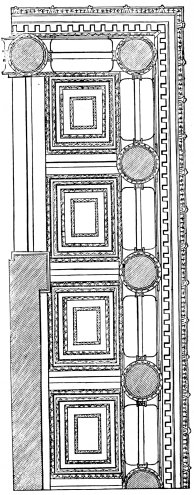 Fig. 164.—Ceiling from the Peripteros of the Mausoleum
of Halicarnassos. Restoration.
Fig. 164.—Ceiling from the Peripteros of the Mausoleum
of Halicarnassos. Restoration.
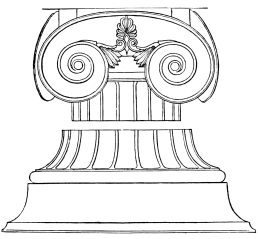 Fig. 165.—Base and Capital from Bassæ.
The historical development of the Ionic temple is not illustrated by as
many examples as was that of the Doric style, and, indeed, there was no
such marked and regular advance as that observable in the temples of
Selinous, Olympia, and Athens. A great number of Ionic monuments stand
in a district not as yet thoroughly examined: the southern coasts of
Asia Minor. Towards the border of Lycia traces of an archaic or
proto-Ionic style have been observed, more closely allied to Eastern
motives than were the developed temples of Greece. The capitals of
Lycian tombs (Fig. 110) have no echinos, by the addition of which so
great an advance was subsequently made; the formation of the rolls upon
the sides was also primitive, they being at times perfectly straight, at
times disproportionately curved. The difficult transition from the end
of the shaft to the volutes was evaded, and masked by anthemions or
other ornaments. The only example of such an imperfect formation in
European Greece existed in the interior of the Temple of Apollo at Bassæ
(Fig. 159); the date of its erection, however, shows this example not
to have been archaic, but rather archaistic,—that is to say,
intentionally and affectedly imitated from primitive peculiarities of
form. (Fig. 165.) The columns, engaged to transverse walls, have bases
of excessive projection, the thin and feeble tore being out of
proportion to the high member beneath it. The lower end of the shaft
itself forms a second projection, which greatly exceeds the usual
congé and fillet of the bottom drum. The shallow flutings are
continued up to the very top of the shaft, there being concluded by an
almost straight line. The capital itself is most strikingly archaistic,
presenting the helices upon each of its three exposed faces; it is an
applied decoration which has given up all semblance of constructive
unity or function, leaving the prismatic kernel, without an abacus
moulding, to project above the curves and support the imposed
entablature. The narrow space remaining between the two large spirals of
each side is almost entirely filled by a decoration of anthemions, and
the introduction of an echinos is thus rendered unnecessary. The
sculptured zophoros of the interior entablature, now one of the chief
treasures of the British Museum, betrays in its figures the greatest
freedom from convention, in marked contrast to the affectedly antique
character of the architectural forms.
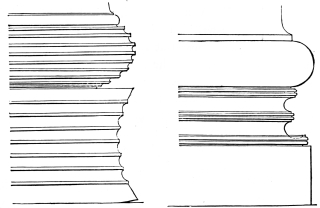
Fig. 166.—From the Heraion upon Samos.
Fig. 167.—From the Temple of Apollo Didymæos, Miletos.
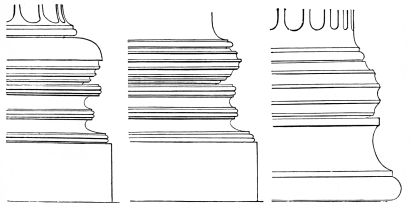
Fig. 168.—From the Temple of Athene at Priene.
Fig. 169.—From the Propylæa of Cnidos.
Fig. 170.—From the Temple of Wingless Victory, Athens.
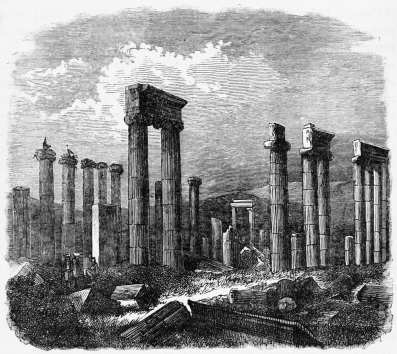
Fig. 171.—Temple Ruin at Aphrodisias.
The northern coast of Asia Minor, as far as it is at present known,
offers few Ionic remains of the archaic period. The original Temple of
Artemis, at Ephesos, according to Pliny the most ancient peripteros of
the style, has been totally obliterated by frequent reconstructions and
the famed conflagration of Herostratos. A second fane of national
importance, the Temple of Hera, at Samos, is at present known only by
one unfluted column, 1.6 m. in lower diameter, and by horizontally
fluted tores and plinths. These two buildings were of such interest that
their architects saw fit to celebrate their constructive peculiarities
in monographs, as had been done for the Doric Parthenon. The writings of
Chersiphron and of the Cretan Metagenes upon the Artemision at Ephesos,
and of Theodoros, the son of the Samian Illecles, upon the Heraion of
that island, are mentioned as late as the time of the Roman emperors.
These peripteral temples, built about the middle of the sixth century
B.C., were of very considerable dimensions, but were far surpassed in
size by a third national shrine of the Ionians, the Temple of Apollo
Didymæos, rebuilt by Paionios of Ephesos and Daphnis of Miletos almost a
century later than the former monuments, 470 B.C., upon the site of an
ancient structure destroyed by the Persians. The temple was a dipteros
decastylos, that is, had a double row of outstanding columns around the
cella, with ten upon the front; it measured 91 m. in length and 49 m. in
breadth. The columns were proportionately tall, 19 m. in height, which
equals nine and a half lower diameters, and were placed closely
together, the intercolumniations being only one and a half diameters
wide. The scotia of the base was divided by a projecting moulding and
elevated upon a square plinth; the tore had no horizontal flutings.
(Fig. 167.) The capital had a straight connection between the spirals,
and the epistyle was stepped but twice. The interior of the temple was
provided with pilasters, the capitals of which are of an Oriental
character, richly decorated with floral motives. A Corinthian capital
also occurs upon the building (Fig. 177), which will be referred to
below. The enormous temple of which there are fragmentary remains at
Sardis, supposed to be that of Cybele, appears to have been erected
during this period, and resembles the shrine of Apollo Didymæos at
Miletos. The Temple of Athene Polias at Priene, the work of the
architect Pythios, who celebrated its completion in a monograph, dates
from the middle of the fourth century B.C., as it was dedicated by
Alexander the Great. It was a hexastyle peripteros, of normal
dimensions, 35 m. long and 19 m. broad. The plans of Ionic temples
differed in proportion from those of the Doric style, their length
being less than twice their width. The base of the temple at Priene
(Fig. 168) is peculiar, in that the horizontal flutings of the tore,
entirely lacking in the Didymaion, were restricted to its lower half;
this can hardly be taken to prove that the building was never completed,
but is rather explained by the consideration that no escape was possible
for the rain-water which dripped into the upper grooves. The connection
between the spirals of the capital face is curved downward; the
ornaments of the entablature are more florid, and the gutter is almost
overladen with floral motives. The tetrastyle Ionic Propylæa of the same
place appear to be of more recent date; the capitals of the inner
pilasters are decorated similarly to those within the Didymaion. Another
structure of this kind at Cnidos is of more beautiful detail, the base
(Fig. 169) being particularly graceful in outline and proportions; the
increased curve of its tore obviated the trouble of water standing in
the horizontal flutings. There are but few remains of the temples of
Artemis Leucophryne at Magnesia, and of Dionysos at Teos, built towards
the end of the fourth century B.C., and celebrated in monographs by the
architect Hermogenes. The first of these was, according to Strabo, the
third largest fane of Asia Minor, measuring 64 m. in length and 29 m. in
breadth. The influence of Attic architecture is evident in the bases and
in the rich decoration of the capital rolls. The building is thought to
be the first example of a pseudodipteros, that is, of a peripteros
having a pteroma equal to the breadth of that upon a temple with two
ranges of outstanding columns, a dipteros. Resembling this, though
smaller, was the hexastyle peripteros of Teos, at first intended to have
been of the Doric style, the plan being altered to Ionic after all the
material had been provided. Traces of decline in the art prove the
octastyle peripteros of Apollo at Claros, near Colophon, and the temple
at Pessinus, in Galatia, to have been more recent. The Temple of
Panhellenic Zeus and the Sanctuary of Aphrodite at Aphrodisias (Fig.
171) are referred to the beginning of the Christian era. The excessive
attenuation of the columns of the latter, which have a height equal to
ten lower diameters, the extension of the floral ornaments even to the
channels of the shaft and the connection of the capital spirals, the
so-called egg-and-dart moulding in the cyma, the diminutive dentils and
the introduction of consoles above them, all betray the tasteless
magnificence of the Roman imperial period.
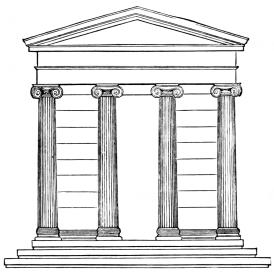
Fig. 172.—Temple upon the Ilissos.
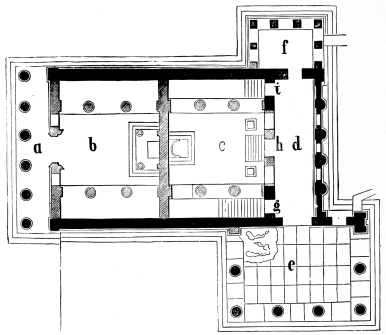
Fig. 173.—Plan of the Erechtheion. (Boetticher.)
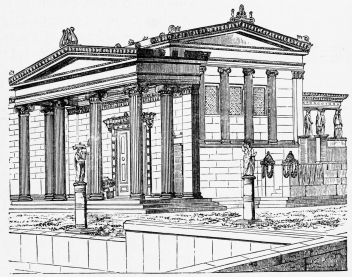
Fig. 174.—Northwestern View of the Erechtheion.
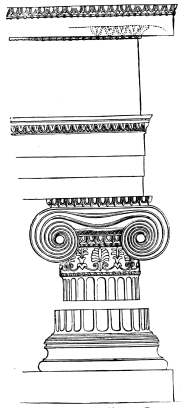 Fig. 175.—From the Eastern Pronaos of the Erechtheion.
The Ionic style in Attica developed in a peculiar manner, being there
superior, both as regards breadth of form and beauty of detail, to the
works of Asia Minor. The Doric had been perfected in Athens, and the
most noble Ionic monument, the Erechtheion, stood beside the Parthenon;
the Athenian acropolis presented the noblest examples in both methods of
building, standing unrivalled at the head of the Hellenic world in
architectural, as in political and intellectual respects. Characteristic
of the Attic Ionic are the so-called Attic base and the entablature
without dentils. The former consists of a second tore beneath the
concave plinth of the usual base; by this addition its symmetry was
increased, and a rhythmical profile of great beauty was gained: two
convex and two concave members of harmonious proportion alternating
from the upper slip to the commencement of the fluting. The Attic
architect evidently did not accept the significance of the dentils as
representatives of the ceiling-joists, and preferred to cut a decided
drip upon the lower surface of the corona, which had so marked a slant
in the more familiar Doric cornice. In the place of the dentils, a
transition was provided by a cyma and astragal, which mouldings received
in Athens their typical perfection. The few Ionic ruins of European
Greece do not illustrate the historical development of the Attic Ionic
style. The interior columns of the Temple of Apollo at Bassæ (Figs.
159 and 165) cannot be considered in this connection; their archaistic
details by no means express the influence of Athens, notwithstanding
that the work is attributed to the architect Ictinos. The peculiarities
of Attic Ionic architecture are well exemplified by the small
amphiprostyle temple upon the Ilissos, near Athens, which, though now
entirely destroyed, was in existence up to the end of the last century,
and was measured and drawn by Stuart and Revett. (Fig. 172.) The lower
tore of the base is here small and weak, as if a hesitating attempt to
improve the usual outline. The shaft was short, perhaps from the
influence of the Doric examples; the epistyle, from the same
consideration, was without the characteristic steps. Similar to this is
another tetrastyle amphiprostylos, the Temple of Wingless Victory before
the Propylæa of the acropolis, which, as if to compensate for the loss
of the temple upon the Ilissos, was rebuilt in 1835, with overthrown
fragments rescued from a Turkish bastion, and has become one of the
chief ornaments of the ascent. (Fig. 158.) The entire crepidoma is so
small—8 m. long and 5.5 broad—that the cella, after the deduction of
the front and rear porticos, is even broader than it is deep. The
architectural details are of exceeding delicacy and perfection (Fig.
170); the sculptures of the zophoros and of the balustrade will be
considered in the following section. The inner columns of the Athenian
Propylæa show the lower tore fully developed, and the base-mouldings
isolated by a plinth of slightly concave profile, elsewhere adopted
only at Eleusis, in imitation of this building. The highest perfection
of the Ionic style was, as before said, attained in the second national
sanctuary of the Athenians—the world-renowned Temple of Athene Polias
upon the acropolis, the Erechtheion. The construction of the edifice
seems to have been undertaken immediately after the burning of the
ancient building by the Persians, in 480 B.C., but, in consequence of
the miseries of the Peloponnesian war, its completion was delayed until
eighty years after that date. It was a combination of several shrines
which, necessarily constructed upon different levels, rendered a perfect
symmetry of plan impossible. Other double temples, like those of Leto
and Asclepios, and of Aphrodite and Ares at Mantinea, or of Apollo
Carneios and of Hypnos at Sikyon, were not, upon the exterior,
distinguishable from the common type, as, with an equal division of the
cella, entrances could be allowed upon either front. In the Erechtheion
this simple arrangement was not practicable, because of the complicated
nature of the combined sanctuaries and the irregularity of the ground;
yet this did not prove a disadvantage: to the architectural perfection
of the monument was thus added a charm of picturesque composition
usually foreign to the temple buildings of Greek antiquity. The plan
given (Fig. 173) is according to Boetticher’s restoration, but the
mooted question of the interior division of the building is still far
from being decided. Upon the principal eastern front was a hexastyle
portico, a, through which entrance was given to the naos of Athene
Polias, b, occupying nearly one half of the cella. Access to the other
division was obtained through the tetrastyle hall, c, upon the
northwestern corner, opening directly into the narrow sanctuary of
Pandrosos, d, from which four portals led to as many chambers: the
first, g, to the Chapel of Boutes; the second, h, by means of a
short staircase, to the Crypt of Poseidon, e; from the third, i, was
a descent to a corridor leading to a space under the Naos of Athene
Polias; while the last, opposite the hall, led to the Porch of the
Caryatides, f. This complicated disposition was, as has been said,
dependent upon the peculiar natural position of the ancient national
shrines: the tomb of Cecrops and the memorials of the contest between
Poseidon and Athene for the possession of Athens,—the impression of the
trident with which Poseidon smote the cliff, leaving a spring of salt
water, and the olive-tree which, at the command of Athene, sprang from
the same rock. Of the interior of the building there are almost no
vestiges; but the form of the exterior is, in the main, clear. (Fig.
174.) The capitals upon the columns of the eastern portico (Fig. 175),
and upon the pilasters of the western wall, which was pierced by
windows, are of almost excessive magnificence. The outlines of the
spirals are doubled, the side-rolls are grooved, and ornamented with
astragals; there is a band carved with a woven ornament above the
egg-and-dart moulding of the echinos, and an entirely new feature has
been added to the capital—a broad and rich necking of carved
anthemions. The effect of this band was particularly favorable because
the decoration upon it could be repeated beneath the capitals of the
pilasters, and a greater harmony of the corresponding members thus
secured. The columns of the northwestern porch are larger and even
richer in detail, especially the bases, the upper tore being ornamented
with a woven motive in place of the customary horizontal grooving. The
entablature, from which the dentils are missing, is of the utmost
elegance of proportion, the carving of its cyma-mouldings being the most
delicate work of architectural carving known. The reliefs upon the
zophoros were not cut from its substance, but were merely attached to
its plane surface; few fragments have, consequently, been preserved. One
of the most beautiful features of the building is the Porch of the
Caryatides in the southwestern corner (F). In place of columns, the
figures of virgins support the horizontal marble ceiling, which is of no
great weight. The model for these was doubtless taken from the
basket-bearing maidens of the Panathenaic procession, the Canephoræ. The
origin of the term caryatides is not known. Both geographical and
historical proofs are wanting to make probable the account given by
Vitruvius,—that the motive for these figures was derived from the women
of the Peloponnesian town Carya, who were condemned to slavery for
treachery during the Persian war. From the baskets of the Canephoræ has
been developed a capital member, like an echinos, decorated with the
egg-and-dart moulding and an astragal, and provided with an abacus. The
frieze is lacking from the entablature, in recognition of the fact that
roof and ceiling are here one and the same member. The dentils appear in
the cornice, it being possible for them to take their true position upon
the epistyle. The faultless beauty of the decorative carving is
particularly evident upon the casings of the portals.
Monuments of the Ionic style, not numerous in Attica, are rare in the
Peloponnesos, and exceptional farther west, where the Doric element of
the population predominated. When Ionic ruins are found in the latter
districts, they generally betray the influence of the Attic school,
which is perceptible even in the Ionic order of Rome. It is not strange
that, after the acquaintance of the Romans with Hellenic lands, this
method of building should, in their universal eclecticism, have been
frequently adopted. It will be seen in the following section how Italy,
the heir of the decaying civilization of the East, reduced the forms of
Ionic architecture to a facile and commonplace scheme.
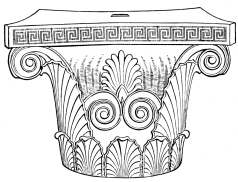
Fig. 176.—From Bassæ.
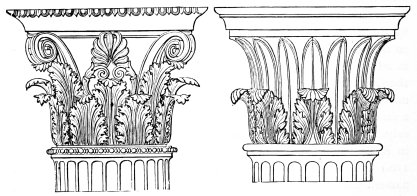
Fig. 177.—From the Temple of Apollo, near Miletos.
Fig. 178.—From the Tower of the Winds, Athens.
During the age of Pericles a foreign growth, the Corinthian capital, had
been engrafted upon the Ionic style, which changed the character of the
whole, the more decidedly because introduced upon the most prominent
feature. This “Corinthian” innovation affected the capital alone, and
cannot be considered as an order, still less as a style, when compared
to the Doric and Ionic. It was a mere variety of the latter, which, in
all other respects than the capital, remained unaltered. The new form is
mentioned as an innovation of Callimachos, a sculptor celebrated for the
magnificent golden lamp and funnel made by him for the Erechtheion. The
name of that artificer may have given authority to the first
introduction of the Corinthian capital into Greek lands; but the
detailed account of Vitruvius in regard to its origin can hardly be
deemed more than a fable. He relates that a loving nurse had placed a
basket of toys, covered with a tile, upon the grave of a Corinthian
girl, and that in the spring-time an acanthos-plant, upon which it
stood, sent forth shoots covering the basket and curling beneath the
tile, thus providing a model directly imitated by Callimachos. The calyx
capitals of Egypt had long been known to the Greeks. In transferring
this floral motive across the Mediterranean, the decorative foliage of
papyrus and lotus had been given up, those unknown plants not being
adapted to Hellenic conventionalization. National art ever seeks the
subjects for floral ornament from the growths of its native soil. It was
on this account that oak-leaves, thistles, grape-leaves, and ivy were
employed in Gothic architecture; and, in a similar manner, the Greek
could make no more fortunate choice than the Hellenic thistle, the
acanthos, the forms of which even surpass in beauty the serrated outline
of the grape-leaf. The Corinthian capital suited well the prevalent
tendency to attenuate the shaft, and, at the same time, it furthered an
harmonious agreement between the capitals of columns and of pilasters.
Its forms presented a better solution of the problem of the capital, and
were more perfect in an abstract, if not in an artistic, point of view
than any of the preceding varieties. The two functions of the
transitional member—the projection, the oblique line between the
vertical and the horizontal, and the change from a circular to a
rectangular plan—had, in the Doric and Ionic capitals, been effected by
two separate bodies; in the Corinthian they were accomplished by one
alone. The kernel gave the projection, considerably steeper, according
to its height, than the Doric or Ionic echinos. The oblique line, convex
in the former style, is here slightly concave, although still
sufficiently vigorous in character to bear the light entablature. The
surrounding floral decoration effects the transition from the circle to
the rectangle; the upper leaves project towards the corners of the thin
abacus, under which they curl, giving to the capital, at some little
distance below its plinth, a section nearly square. A canonical form of
the Corinthian capital did not exist in progressive Hellenic art. This
does not appear until the order was reduced to a system by the
thought-saving and practical Romans. The completed type, so familiar in
the monuments of Italy, and used for centuries since in all parts of the
world, does not occur in Greece, the creation of the Corinthian order,
as such, being emphatically a work of the Romans. The Corinthian capital
was, in Hellenic architecture, merely a fanciful and ever-varied
decoration of foliage around a concave calyx. The before-mentioned
example from the Temple of Apollo in Bassæ shows how imperfect the
arrangement was at first. (Fig. 176.) The single row of leaves at its
base does not sufficiently ornament the kernel; the spirals upon the
four corners and the anthemions between them leave too much of its
surface uncovered. The thin abacus is neither provided with a profile
moulding, nor at all carved; upon its edge is painted a Doric meander;
its sides are curved in plan, advancing above the corner spirals so that
these might project farther from the calyx. A decided advance is shown
by the capital of an engaged column employed within the Temple of Apollo
Didymaios at Miletos (Fig. 177), which appears to be of more recent
date. A double wreath of acanthos-leaves surrounds the calyx, those
upon the corners being made sufficiently tall to support the spirals;
between them are anthemions. Fragments brought from the ruins of Knidos
to the British Museum are of similar form. These remains all resemble,
in a more or less marked degree, the ultimate typical development of the
Corinthian capital. Others, and among them some of a later period, lack
important constituent parts. A second variety, discovered in the
Didymaion, had only one wreath of leaves, and no connection with the
square abacus by corner spirals. The capitals of the so-called Tower of
the Winds in Athens (Fig. 178) resemble them. Behind the
acanthos-leaves rises a simple row of lanceolate reeds, which follows
the outline of the calyx. The Choragic Monument of Lysicrates, built
more than a century previous, in 334 B.C., presents a beautiful instance
of a fanciful Corinthian capital. Between the shaft and the calyx there
is a preparatory necking of small leaves, similar to those which existed
upon the example within the temple at Bassæ. Above the low acanthos
wreath rises a rich garland of foliage and flowers, with a central
anthemion rising to the top of the abacus. The heavy corner volutes
cannot compensate for the excessive contraction of the calyx, which
takes away from the unity and force of the main transitional curve.
The Corinthian capital appears to have attained the form under which it
is now known in the middle of the second century B.C. The Temple of
Olympian Zeus in Athens received its peripteros of Corinthian columns
under Antiochos Epiphanes, 176-164 B.C.; though its crepidoma, probably
intended for an edifice of the Doric style, had been prepared as early
as the time of Peisistratos. The architectural direction of the building
had been intrusted to a Roman, Cossutius, and it was, in fact, destined
to provide material for Rome itself, as, soon after its completion, the
columns were carried away by Sulla and employed in the restoration of
the temple upon the Roman Capitol, shortly before destroyed by fire. The
capitals thus removed appear to have been regarded as models, and to
have exercised a great influence upon the development of the Corinthian
order, as cultivated, almost exclusively, by the Romans. The calyx
decorated with acanthos foliage corresponded to the taste of the
imperial epoch for architectural magnificence, and its employment was
not embarrassed by the difficulties upon the corners of peripteral
temples which have been discussed in the consideration of the Doric
frieze and the Ionic capital. The floral decoration soon extended to the
entablature, increasing the number and dimensions of its minor members.
The most striking result was the transformation of the dentils into the
richly carved consoles of doubly spiral profile, which were imitated
from the parotides of the Ionic portal coronation, but were placed
horizontally instead of vertically. The use of both dentils and consoles
is a barbaric duplication, characteristic of the tasteless architectural
magnificence of the Roman decline. The so-called Corinthian base is no
real characteristic of the order, being only a combination of Ionic and
Attic forms, with a double scotia between the two tores.
Hellenic architecture has thus far been considered exclusively in its
relations to sacred edifices, because the art of building, among nations
whose civilization has been influenced by religious conceptions, is
always best exemplified by temples. But it was natural that Doric and
Ionic forms should be employed, though in a less conventional manner,
for all the buildings of Greece, being richly elaborated in monumental
works, and more or less simplified and adapted in structures intended
for private or public usefulness, as economy and civic destination alike
forced restrictions upon the disposition and decoration of the design.
The sacred nature of monumental tombs allied them most nearly to the
temples. The conical tumulus had preceded the Hellenic peripteros, and
when that helpless form was entirely given up, after the perfection of
the columnar temple, the cinerary urn remained as a leading motive,
which excluded the lengthened plan of the peripteral temple and rather
tended to increase the height of the monument—otherwise a subordinate
dimension. Graves of less importance were marked by columns, upright
blocks of stone with an ornamental cap, or by steles, the angular
termination of which often betrayed the influence of the temple gable,
while the shaft retained the nature of the pier. More prominent
sepulchres consisted of ranges of columns upon a cube, which, containing
a sarcophagus, took the place of the cylinder beneath the conical
tumulus. As the columns had, in general, only a decorative importance,
it was not necessary to construct a cella in connection with them. This
was only added when a chapel was required for funeral worship, or when,
as in mausoleums of great dimensions, inner walls were needed to provide
a bearing for the ceiling beams. The termination of these structures was
characteristic. The sacred gable was generally avoided, in just
appreciation of its significance, and the form of the tumulus was
retained, so far as the rectangular plan would permit, a pyramidal
superstructure taking the place of the cone.
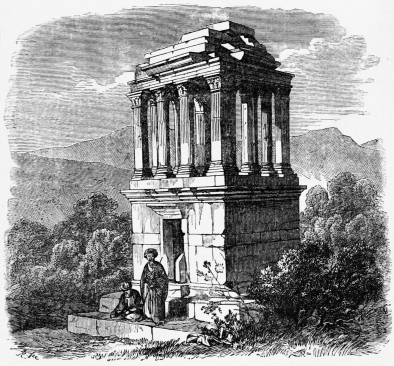
Fig. 179.—Tomb at Mylassa.
That this pyramid was constructed in steps is evident from a small tomb
without a cella at Mylassa (Fig. 179), and from that magnificent
monument, the Mausoleum of Halicarnassos, one of the wonders of the
antique world. (Fig. 180.) The latter was erected by Artemisia, the
widow and successor of King Mausolos, who called to her assistance the
most celebrated architects of the time, Satyros and Pythios; as well as
the greatest sculptors, Scopas, Bryaxis, Leochares, and Timotheos. It is
known by the extensive English excavations of 1856 and 1857. Although
the opinions of prominent authorities differ greatly as to its design,
it is yet certain that upon the massive oblong foundation, 30 m. long,
24 m. broad, and over 15 m. high, which contained the small sepulchral
chamber, there stood a cella surrounded by thirty-six Ionic columns, and
terminated by a stepped pyramid, the truncated apex of which bore a
colossal marble quadriga, with the statues of the queen and of a female
charioteer, the whole attaining a height of 42 m. The works of
sculpture—the figures which stood in the intercolumniations and the
reliefs upon the wall of the cella, and perhaps also upon the
substructure—will be considered in the next section. It is possible
that the destination of the edifice was not that usually attributed to
it, Urlichs having argued that it was a heroön, and a memorial of
victory.
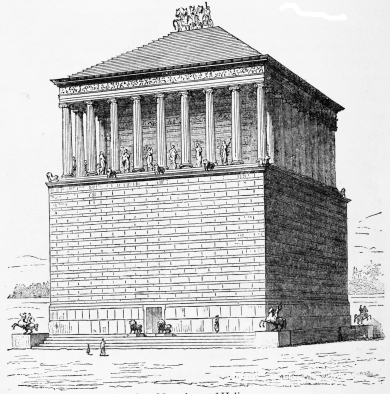
Fig. 180.—Mausoleum of Halicarnassos.
The Monument of the Nereides at Xanthos (Fig. 181) resembled the
Mausoleum in many respects. It was a peristyle of sixteen Ionic columns
elevated upon a massive foundation. Statues stood in its
intercolumniations, while the zophoros and substructure were carved with
reliefs. A gabled roof seems, however, to have indicated the sacred
character of the edifice. The cella and the surrounding columns of this
class of buildings were united in various manners, a remarkable example
of a pseudo-peripteros being offered by the so-called Tomb of Theron in
Acragas in Sicily. In other instances three stories resulted from a
duplication of the foundations beneath the peripteros, as in the alleged
Tomb of Mikipsas at Constantina, the ancient Cirta in Numidia. This
multiplication was particularly frequent in the Roman period. The tomb
of this nature at Saint-Remi, in Southern France, the ancient Glanum,
built during the reign of Augustus, is one of the most beautiful ruins
known.
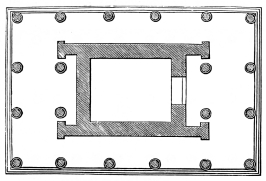
Fig. 181.—Monument of the Nereides at Xanthos.
Among the choragic monuments of Greece, the most interesting is that
erected by Lysicrates in commemoration of the victory gained by a chorus
of boys of the Phyle Acamantis led by him. It served as a pedestal for
the prize bestowed, a tripod, and was a pseudo-monopteros of small
dimensions and beautiful details. Engaged columns with Corinthian
capitals supported a monolithic ceiling, the floral termination of which
originally served as a base for the tripod. The so-called Tower of the
Winds was a clepsydra, built by Andronicos Kyrrhestes, and was also
furnished outside with dials and a weathercock. It is especially
interesting on account of the peculiar forms of its Corinthian capitals.
(Fig. 178.)
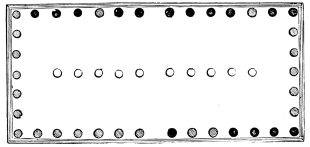
Fig. 182.—Stoa Diple at Thoricos.
The most extensive employment of columns in civic architecture was in
the porticos, the stoas, which surrounded the market-places and extended
through many streets, being connected with baths, gymnasions,
palaestras, stadia, and hippodromes, and even appearing as independent
buildings. The market-place, the agora, was, in ancient cities, commonly
of an irregular form; when possible it was surrounded by colonnades. In
more recent settlements care was taken to provide a rectangular space
for the purpose, in which double porticos of considerable extent were
built for shelter in bad weather. In view of the effeminacy of the
Ionians, it is easy to credit the account that this race first provided
the chief places in towns with the protection of stoas, introducing this
custom in Greece, where it soon became general. Extended colonnades were
frequently connected with them, traversing the principal streets. The
independent stoas, which were arranged in the greatest variety of
combinations, are of particular interest. The Stoa Poikile (the
many-colored), upon the market-place of Athens, was built by Peisianax,
the brother-in-law of Cimon, this latter causing the walls to be
decorated by Polygnotos and his assistants—upon one wing with scenes
from the battle of Marathon, upon the other from that of Oinoe, while
the long background of the principal hall was similarly treated. Upon
the market-places the porticos were often increased in width by a second
row of columns, and in later times a dividing-wall was frequently placed
between these ranges as a spina. According to Pausanias, this was the
case with the so-called Kerkyraion Hall of Elis. The form of a stoa
diple, or double colonnade, was more customary; in it the central wall
was replaced by a third range of columns, as the case appears to have
been at Thoricos (Fig. 182), where the entrance was provided in the
middle of the longer sides by wider intercolumniations. The enlargement
was carried still farther by making the colonnade of three aisles, with
two inner ranges of columns, as in the Stoa of the Hellanodikæ: covered
spaces of great breadth, open upon all sides, and admirably adapted to
their purpose, were thus provided. It is natural to assume that the
great grain market of the Piraios was such an extended stoa, as was
likewise the so-called Basilica of Pæstum, a structure of three aisles,
lacking exterior enclosure. The latter building is assuredly misnamed,
the nature of a basilica being dependent upon outer walls. The prototype
of the Roman and Christian basilicas is rather to be sought in the law
courts of the Archon Basileus in Athens, a combination of enclosed halls
and chambers, which, by their future development, received an historical
and practical importance exceeding that of any other work of Hellenic
architecture, not excepting the temples, which became useless with the
extinction of Hellenic religious conceptions. The columns of stoas were
multiplied above, as well as beside, one another, analogous to the
galleries over the side aisles of the larger temples. This appears to
have been the case upon the so-called Persian Hall at Sparta, where,
instead of upper shafts, there were piers decorated with the statues of
Persians, comparable to the corresponding architectural members of the
Incantada at Thessalonica, though the figures of gods and heroes were,
in the latter instance, attached to the supports in three-quarter
relief, while the statues at Sparta appear to have been in the full
round. It is evident from the Roman basilicas, to be considered in
another section, that the employment of galleries was general in the
enclosed stoas of Greece.
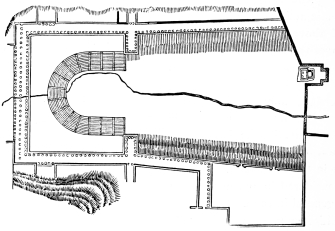
Fig. 183.—Stadion at Messene.
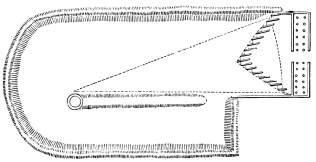
Fig. 184.—Hippodrome at Olympia.
Chief among the public buildings of Hellas, after the agoras and stoas,
were the arrangements for the festive games. These were divided into two
classes: bodily exercises and scenic representations. The former were
the more important, forming a prominent part in the education of every
Greek citizen. Palaistras and gymnasia were provided for the
manœuvres, stadia and hippodromes for the public contests and races.
In primitive times the palaistras had no architectural character; a
meadow and a sandy reach, generally upon the bank of a brook and shaded
by trees, sufficed as a training-ground. The private palaistras seem
never to have exceeded this simplicity; but the great importance of
drill for the military power of the State early demanded the erection of
suitable structures, and there resulted the gymnasion, a combination of
covered chambers and halls with open courts, which provided separate and
fitting spaces for the different gymnastic exercises and for the baths,
as well as for the higher intellectual entertainments of the
philosophers, rhetoricians, and poets. These structures were probably
varied in character until the most suitable arrangement was decided by
experience. It seems early to have become customary to surround a
rectangular space by colonnades, to which were added extensive wings,
semicircular exedras, and the like, for scientific and æsthetic
instruction. Upon one side were grouped a number of chambers known as
the Ephebeion, Apodyterion, Elaiothesion, Conisterion, Corykeion,
Laconicon, Lutron, etc., serving the youths as places of assemblage,
rooms for dressing and anointing, hot and cold baths, etc. Opposite to
them extended the stadion, while, within the enclosure, promenades
between groups of trees and beds of flowers alternated with grounds for
shorter races, quoit-throwing, wrestling, and other contests. Some
examples, like those of Ephesos, Hierapolis, and Alexandria, still
display in their ruins the chief features of this arrangement, though
more or less influenced by the customs of imperial Rome, where the baths
had been in great measure separated from the gymnasia. The spirit of
emulation was excited by the publicity of these institutions, and
increased by the periodical festive competitions to a height far
exceeding our modern conceptions. A wreath of laurel or olive leaves, a
small quantity of oil, a tripod, or other similar rewards of victory,
such as were given as prizes in the games of Olympia, Delphi, Nemea,
Corinth, and Athens, conferred almost divine honor, even the years being
known by the name of the temporary hero of Olympia. The five chief
divisions of the gymnastic exercises, the pentathlon—running, jumping,
wrestling, boxing, and the throwing of the discos—were practised in the
stadion, a space from 180 m. to 300 m. long, usually chosen close to the
side of a hill, which, more or less prepared by terracing and grading,
provided seats for spectators. If a narrow valley were near at hand, as
in the case of the Athenian stadion of the suburb Agrae, the opposite
slopes were thus occupied. The seats near the goal were naturally the
more desirable, and it was here that the architectural features were
concentrated, terraces being carried in a semicircle around this centre.
Examples are not wanting, as in Aphrodisias in Asia Minor, where both
ends were thus terminated, and the space for spectators carried around
the entire race-course, thus pointing the way to a building of this
form, the amphitheatre, which was to become the delight of the Roman
world. The stadion of Messene (Fig. 183) shows how natural
inclinations were followed and utilized, though at the expense of a
symmetrical disposition; yet this example dates from the later
extravagant period of Greek history, and is far removed from the
patriarchal simplicity of primitive times. The stadion did not suffice
for the races of horses and chariots which had been favorites with the
Greeks since the Trojan war. In such early ages, any goal chosen in the
plain was sufficient, like the oak-trunk mentioned by Homer; but it
could not have been long before the need was manifest of a sloping stand
for the spectators and an enclosure for the contestants, and thus the
hippodrome, the race-course, was developed similarly to the smaller
stadion. The most celebrated, and perhaps the oldest, hippodrome of
Greece, that of Olympia, is described by Pausanias. The right side, the
longer, consisted of an artificial embankment of earth, while the slope
of a hill was employed for the left; at the entrance was a colonnade
devoted to the preparations of the charioteers. The starting-point, the
aphesis, had, according to the expression of Pausanias, a form like the
prow of a vessel—that is, advanced in a pointed form—to facilitate the
start. The plan here given, Fig. 184, is altered from Visconti’s
restoration by these gates being opened towards the first turning-point,
the taraxippos, or terror of the horses.
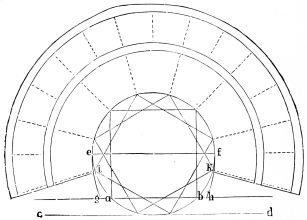
Fig. 185.—Scheme of the Greek Theatre, according to
Vitruvius.
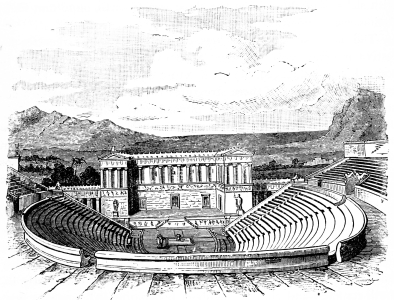
Fig. 186.—Restored View of the Theatre of Segesta.
The theatres, as enclosures for musical and scenic representations,
offered greater scope for architectural development. When possible, the
auditorium was in a situation where a natural semicircular inclination
served instead of the immense foundations which would otherwise have
been necessary for the elevated seats; the stage and surrounding
buildings were, however, free-standing works of architecture. The
arrangement of the Greek theatre is described by Vitruvius: three
squares were inscribed in a circle, thus forming a twelve-pointed star
(Fig. 185); one of the sides, a b, served as the line of the front
foundation of the stage. This platform, the logeion, was closed at the
rear by a wall, treated like a façade, and forming a background, the
skene; its position being decided by the tangent c d, parallel to the
front side. The remainder of the circle, the orchestra, was reserved for
the evolutions of the chorus and for the stand of the musicians, the
thymele; it was not until the development of the Roman theatre that
spectators were admitted to this enclosure. Its extent was slightly
increased by drawing the outline from the diameter, e f, to the stage
with a doubled radius. Around seven twelfths of the original circle was
constructed the concentrical auditorium of ascending seats, divided by a
platform at half-height, the diazoma, into two parts, and accessible by
radial passages. The statement of Vitruvius, who, as usual, substitutes
a thought-saving canon for the living individuality of Hellenic art, is
not borne out by the numerous remains of Greek theatres. The orchestra
and auditorium exceed the semicircle in every instance where local
conformations have not rendered this impossible; but they either do
this by elongating the arc with tangents, as in the theatres of Segesta
(Fig. 186), Syracuse, Tyndaris, and Tauromenion, or by continuing the
circumference of the original circle without deviation, as in those of
Athens, Epidauros, Megalopolis, Delos, Melos, Cnidos, Laodikeia, Side,
Myra, Telmissos, Patara, Aizanis, etc. Among all known Greek theatres
only two, those at Mantinea and Alabanda, are situated in the plain and
entirely built of masonry; the others, contrary to Roman custom, utilize
natural inclinations, as before explained. The seats were either cut in
the native rock, or were walled and reveted with slabs of marble; when
the slope was of earth, important foundations were undertaken.
The arrangements of odeions, or partially covered theatres for festive
musical representations, appear to have preceded, and in some degree
influenced, the architecture of the theatres. The oldest known example
of these structures is the Skias in Sparta, a circular building provided
with a pitched roof, which was probably built in accordance with forms
customary in Asia Minor, as a Samian architect (Theodoros, the son of
Telecles) was called from Samos to superintend its erection. The odeion
upon the Ilissos near Athens appears to have been of similar
disposition, and, like the former, constructed chiefly of wood.
The private dwellings of Greece stood in no relation to the monumental
public buildings. That we are acquainted with no Greek house is a proof
that these were of the same subordinate importance as was the family in
the Hellenic state. The house was nothing more than the scene of the
family labors, and turned modestly inward, confined and simple chambers
being grouped around a central court. The life of the Greeks was, for
the most part, spent away from home, upon the market-places and in the
gymnasia and stoas; it was only at meal-times and for repose that he
sought the retirement of his house. This was completely separated from
the outer world, the dwelling-chambers having no windows upon the street
and the façade being unimportant. The rooms, with the exception,
perhaps, of the dining-hall, were but little developed, being generally
lighted through the door alone. Their windowless walls presented no
opportunity for architectural treatment, this being restricted to the
court, a space of considerable size, surrounded by a colonnade. For
centuries there was nothing to lead to any increase of this simple
dwelling, or to the development of a palace architecture; in the ages of
the heroes and tyrants the constructive ability was insufficient, and
later republican equality was inimical to all individual ostentation. It
was not until royal power had, in the Macedonian epoch, taken the place
of democracy that private architecture made a decided advance,—less,
however, in monumental importance than in luxury and display. The
chambers were multiplied by a repetition of the courts, the rooms still
remaining small; while a refined extravagance, borrowing its decoration
from the sister arts, took the place of architectural invention.
Notwithstanding the Greek terms applied to various forms of rooms by
Vitruvius, they appear to have been comparatively restricted in size.
The so-called Corinthian hall, covered with a barrel-vault, is
specifically a Roman creation; the Egyptian hall, with a clerestory over
the central aisle, may have been built in remembrance of Alexandrian
models, while that of Kyzicos is illustrative of methods customary in
Asia Minor, and especially in Pergamon. The three chief cities of the
Diadochi must have presented imposing monuments of private and palatial
architecture: Alexandria, the Egyptian residence of the Ptolemies, had
been founded by Alexander himself, and in great part designed by his
architect, Deinocrates; Antioch, upon the Orontes in Syria, was built by
Seleucos Nicator, with the aid of the architect Xenaios, and rapid
increase soon quadrupled its original extent; Pergamon had been restored
and enlarged by Eumenes. The wonderful works of that time show
architecture to have lost all earnestness and truthfulness through the
extravagant demands created by the luxurious courts of the Ptolemies,
Seleucidæ, and Attalidæ; their sham theatrical pomp was surpassed only
by the Oriental costliness and splendor of the materials. The monuments
were expressive of the weakness and superficiality into which the
Eastern Hellenic world had fallen, and for which the forms of Greek art
were employed only as a transparent varnish. Alexander the Great had
himself led the way to this profusion of monumental and private
buildings. It was he, for instance, who had caused Deinocrates to erect
a pyramidal pyre for the burning of the body of his favorite
Hephaisteion, which was a marvel of tastelessness and extravagance: the
square substructure of brick masonry, with sides one stadion long, each
ornamented with two hundred and forty golden prows of vessels and nine
hundred and sixty statues, bore a second terrace decorated with golden
wreathed torches; the third and fourth stages were reveted with reliefs
of gold representing hunting scenes and the battles of the centaurs; the
fifth with golden lions and bulls, upon which followed Macedonian arms
and trophies taken from the barbarians. The whole was terminated by
golden figures of sirens, the hollow bodies of which accommodated the
singers of the funeral chant. A similar piece of display was the
magnificent wagon for the funeral procession of Alexander. Other works
were the gigantic tent for the Dionysian procession of Ptolemy II.,
Philadelphos, with its supports formed like palms and thyrses, with its
cupola-shaped roof, secret grottoes, etc.; and the Thalamegos, or
colossal Nile bark, a floating palace built by Ptolemy IV., Philopator,
with its Temple of Aphrodite and many halls, one of which had
chryselephantine Corinthian columns, and was decorated by a frieze of
reliefs executed in ivory and affixed to a golden ground. A
dining-saloon was built in the Egyptian manner, as a hypostyle, and the
hall of Dionysos was provided with an apse formed like a grotto. At the
same time, wonders of technical and mechanical skill divided attention
with these works of barbarous luxury. As early as the time of Hiero II.
of Syracuse, Archimedes and Archias built a monstrous ship, intended for
the transportation of grain, which is said to have comprised an entire
city, with a gymnasion, a public park, towers, reception-rooms,
dining-halls, etc. It had three decks, and was propelled by twenty rows
of oarsmen. Even this was surpassed by Ptolemy IV., who built a vessel
with forty rows of oars. In short, gigantic dimensions and tasteless
magnificence, favored by the insane competition among the followers of
Alexander, extinguished true art, the more rapidly as works of these
later ages were not executed with the solidity which preserved Roman
architecture from similar decline, even though it accepted many unsound
artistic influences from these Hellenic and barbarian despots.
The sculpture deserves even more unlimited admiration than the
architecture of Greece. Hellenic building shows monumental ideals such
as the creative power of no other people has attained; yet the problems
which presented themselves for solution were of a limited nature. In
sculpture, on the other hand, a height was reached which the artists of
all later times have scarcely been able to comprehend, far less to
equal. For centuries cultivated nations have drawn from this
inexhaustible fountain, in unconditional admiration,—learning from
Greek statues, and acknowledging their matchless perfection. Although it
may justly be concluded that a direct reconstruction of the
architectural remains, as a whole, were it possible, is not to be
recommended, still no one can hesitate to regard the best examples of
Hellenic sculpture as a model worthy of direct emulation, the
controlling influence of which upon the present age is only to be
desired. And though the Gothic cathedral may appear to some a higher
artistic conception than the Doric peripteros, no one would give
preference to the sculptures of the ancient Orientals, of the Mediæval
Christians, or even of the great masters of the Renaissance, over the
marble treasures gathered in any of the larger collections of antiques.
As, among all the works of antiquity, it is to Hellenic sculpture that
the undisputed palm of precedence is given, it is befitting that
particular attention should be devoted to it—that it should be treated
as the central point, the focus, of the history of ancient art. This is
made possible by the accounts of classic authors handed down concerning
it, and by the multitudinous remains preserved and accessible in the
museums of all great cities; it is rendered easy by the circumstance
that the attention and industry of the archæological explorer and of the
student of art have been directed to no other field of antique life with
equal zeal and with equally important results. The history of the
development of Hellenic sculpture thus lies, in its main features, more
clearly before us than does that of any other ancient art. Although
different views still exist in regard to many particulars, the arguments
advanced in their support only serve for greater general enlightenment.
The lively discussion which the question of the beginnings of Greek
sculpture has called forth may be considered as terminated, since the
Egyptian origin, advocated by Thiersch, Ross, Feurbach, Julius Braun,
Stahr, and others, has been refuted, or at least reduced to the
secondary and later influence assumed by Friedrichs. Indeed, the oldest
Grecian sculptures, when compared with those of Egypt, display a
complete contrast, and prove that such a connection, if it existed at
all, was by no means intimate. Egyptian art worked upon purely
mechanical principles, according to a typical network of lines.
Sculpture was drawn into the province of architecture, and slavishly
subordinated to it; carved figures became little else than architectural
members through uniformity, symmetrical regularity, and multiplicity of
repetition. Piers masked by the form of Osiris were thus substituted for
columns, and long rows of sphinxes or colossal statues were set, like
the obelisks, to decorate the avenues leading to the temples. The fixed
standard after which the heads of such figures were patterned—more like
the capitals of columns than imitations of life—and the members,
without action, and constructed according to an established height or
breadth, like the shafts of pillars, and similarly regulated in
proportions by their diameter—took away all independence as works of
sculpture, and caused the statues rather to appear as parts of an
architectural composition. The ordinary Egyptian stone-cutter knew of
only two positions, well established by custom; he renounced
fundamentally the countless different appearances of life, and, with
this, all representation of action and of individuality. Primitive Greek
sculpture, on the contrary, arose from a sound naturalism, which
directed the eye of the artist to real and peculiar appearances from the
outset, often neglecting the proportions of the whole in the desire
characteristically to express important details. The first Hellenic
figures are wanting in that which was so prominent in the Egyptian: a
correct, or at least a schooled, outline and modelling; while the
pleasing imitation of life in detail, utterly foreign to Egyptian
sculptures, is most forcibly presented. This naturalistic tendency
prevented Hellenic sculpture from degenerating into an Egyptian
formalism; the Greek artist did not blindly attach himself to a hieratic
model, but studied organic life, thus keeping his works free from that
ossified conventionalism common to all Eastern civilization. The very
first carvings of Greece had a power of development which was wanting in
all the other nations of that period.
To these differences of artistic principle must be added differences in
characteristic forms, dependent partly upon race and partly upon the
different conceptions of the two nations—differences so marked as to
enable us to distinguish their works without hesitation. The Egyptian
head differs decidedly from the Greek head in the high position of the
ear, the long, narrow, and somewhat obliquely placed eyes, the wide flat
nose, and the thick lips. (Fig. 28.) The Egyptian figure is slim, the
primitive Greek almost stunted; in the former the shoulders are high and
broad, in the latter sloping and narrow; there the hips are small, here
large. The garments of Egyptian works are either elastic, without
natural folds, clinging so closely to the body as often to be
recognizable only at the borders, or are heavily pressed together in
broad and angular masses. The scanty clothing introduced into ancient
Hellenic sculptures shows throughout a close observation of nature; and
the drapery is pleasing even in unsuccessful imitations, because it
betrays the loving care of the artist. In the oldest productions of
Greece we perceive a slumbering genius and capacity for development
which were wholly lacking in the trained handiwork of Egyptian art,—as
the faulty free-hand drawing of an intelligent boy, who tries to show
what he has seen, awakens greater interest and hope than do the labored
copies and tracings of an illiterate mechanic.
When compared with these weighty reasons against the dependence of
primitive Grecian sculpture upon that of Egypt, the arguments adduced in
favor of the supposition seem insufficient. Chief among these is the
opinion of several ancient writers who vaguely imply that the oldest
sculpture of the Greeks was related to that of the Egyptians, and
derived from it as a later production. But it is well known that
Pausanias and Diodoros were not exacting as to proofs of their opinions
in regard to the history of art. In this instance, they were deluded by
the same outward resemblance which has been so deceptive in modern
times,—a similarity dependent upon that stiffness of archaic statues
common to every primitive art, and to the attenuation and union of the
extremities, which resulted from the economy of material and labor
natural to both countries. But though, in the beginning of Greek
sculpture, certain difficulties of execution were avoided in the same
manner as in Egypt, and the material of the carved figures, whether
wood or stone, was meted out as scantily as possible, it does not follow
that they were directly dependent upon the Egyptian works which were
influenced by like considerations.
It is otherwise with the relations between Western Asiatic art and the
early sculpture of Greece. The preceding section has made it evident
that the most prominent characteristics of the Ionic style were
developed from this root, and the influence of Asiatic motives was as
marked in regard to the sculpture as to the architecture of Hellas. The
fully perfected flower, however, but little betrays an Oriental
derivation in either province. The art of Asia Minor and of Syria had
taken an essentially different starting-point from that of Egypt—one
more nearly allied to the Greek point of view. Instead of formulating
the human figure by a fixed canon after the manner of the Egyptians, it
looked to nature itself, with a decided realistic tendency. But in its
later development, as already shown, Mesopotamian art went as much too
far beyond reality as that of Egypt had remained behind it; and the
self-sufficiency of the Eastern despotisms resulted in that utter
standstill which checked the life of art in Assyria, Persia, and
Phœnicia. The acquired forms, as upon the Nile, stiffened into
conventional types, with the difference that those of Egypt took more
the character of a written chronicle, those of Mesopotamia and its
dependencies more that of ornament. Hellenic genius could only remain
upon such a low level during its immaturity; there are, therefore,
almost no traces of direct Asiatic influence evident in the sculptures
of Greece after the most primitive period, although in this it is
unmistakable. We may call this period of development the heroic age, and
understand by it the epoch from the earliest times to the first
Olympiad, 776 B.C. Even the native legends concerning the beginning of
Greek art point towards the East. The mythical founders of monumental
buildings, the Cyclops, to whom were ascribed the oldest stone
sculptures, like those upon the Lions’ Gate of Mykenæ, came from Lycia.
The Dactylæ appear in groups upon the mountains of Phrygia and Crete
often bearing names characteristic of their significance as cunning
artisans—Kelmis, Damnameneus, and Acmon (hammer, tongs, and anvil);
while the Telchinæ—Chryson, Argyron, and Chalkon (workers in gold,
silver, and copper)—inhabited Rhodes. The personification of various
metal-workers in these mythical guilds is unequivocal, and the
attributed locality of their dwellings has a corresponding meaning,
pointing to the coasts of Western Asia, where the process of overlaying
wooden carvings with beaten metal was predominant, as in Phœnicia and
the intermediate island of Cyprus. This empaistic work, of plates shaped
upon a model by hammer and punch, presupposes the carving of the model
itself, without which the creation of the sphyrelaton was obviously
impossible. The gold overlaying of Solomon’s Temple was formed upon
reliefs carved in cedar-wood, and was, perhaps, beaten over them: before
the discovery of bronze-casting, we may conclude this also to have been
the case with works of statuary in the round. The art of sculpture in
wood seems to have been native among the early Greeks; carved idols,
xoana, soon appearing as substitutes for those stones and trunks of
trees (Paus. vii. 22), which, provided at times with the attributes of
trident, caduceus, lance, or sceptre, were at first worshipped as divine
symbols. These were frequently so old that no account could be given of
their origin, and they were consequently said to have fallen from the
skies. It is difficult adequately to conceive the rudeness of these most
ancient xoana. The arms were not at all separated from the body, and
were indicated only in as far as was necessary to attach to them
characteristic attributes, like the garment and spindle in one hand, and
the lance in the other, of the Trojan Athene described by Homer. The
sacred figure was frequently quite covered with real doll-like clothing,
as is the Virgin or the Bambino in many modern places of pilgrimage
provided by the Roman Catholic Church. The difficulty of representing
the hair of these puppets appears, from the later treatment of the heads
in marble, as seen in the Apollo of Tenea, to have been evaded by the
use of a woolly covering like a wig. The want of definition in the faces
is evident from the statement that some xoana had closed eyes. This is
not to be explained by the pious legends of antiquity that the image had
refused to look upon some deed of sacrilege,—such, for instance, as the
rape of Cassandra,—but by the fact that the eye was indicated only by a
horizontal painted line. It was from such rude figures that Daidalos
advanced. It was not only said that he was the inventor of various
instruments for wood-working, such as the axe, saw, auger, and plummet;
but certain improvements in the shaping of the statues were also
ascribed to him, such as the opening—that is to say, the formation—of
the eye, and the separating of feet, as if in the act of stepping. The
progress cannot, in fact, have been great. The traditional account that
the images had to be bound after the freeing of their legs, to prevent
their running away, must not lead us to imagine an ideal perfection, or,
indeed, any striking resemblance to life. The classical authorities who
knew the works attributed to Daidalos say, indeed, that they were
“wonderful to look upon,” and that “the master would have made himself
ridiculous by such works in our day.” The personality of Daidalos is
hardly better assured than that of the mythical workers in metal, the
Dactylæ and Telchinæ; the name itself, signifying the cunning workman,
is nothing else than a personification of artistic skill, a collective
term for all primitive skill and activity in wood-carving. As this had
developed from handiwork, the legend calls the father of Daidalos,
Palamaon, the contriver, or Eupalamos, the skilful artisan. The travels
which Daidalos is said to have made from Athens to Crete, Sicily,
Thebes, Pisa, Egypt, etc., merely result from the appearance of
so-called Daidalian works in those places. In the time of Homer, the
ninth century B.C., these images were already regarded as of great age;
so that the period of the beginning of Greek sculpture must be at least
as remote as the tenth century B.C. The one statue directly mentioned in
the Iliad, the sitting Athene at Troy, upon whose knees the Trojan women
laid a garment, appeared to the author of the Homeric epics to be a work
in the manner of Daidalos. If another passage (Iliad, i. 14) may be
understood as referring to an image of Apollo, this must, like the
Athene, have been at least partially covered with real clothing. Such
figures were also overlaid with metal; it is not to be doubted that the
gold and silver dogs, and the youthful torch-bearers of gold, in the
Palace of Alkinoos were carved models of wood covered with beaten plate.
The empaistic process, native to Phœnician countries, was early imitated
in heroic Greece. Though the island of the Phæacians was idealized by
the fancy of the poet, he yet cannot be supposed to have invented new
technical processes in an account which was to be generally
intelligible. It seems, however, that sculptural art had no great range
during the heroic ages; perhaps the works overlaid with beaten metal,
which were known to Homer, may have been the results of an accidental
and superficial knowledge gained by intercourse with the Oriental
peoples inhabiting the coasts of Western Asia.
Fig. 187.—Cover of Dodwell’s Vase, in Munich. Full
size.
The manufacture of furniture and smaller decorative objects was probably
more important. Homer was acquainted with the use of the lathe; while
relief-carving in wood, and inlaying of metal, ivory, and amber, were
early practised. The latter process can also be referred to Phœnician
influence, in consideration both of the materials employed and of
historical analogy. Even kings busied themselves with such handiwork, as
the building of his nuptial couch by Odysseus proves; and royal ladies,
such as Penelope, Andromache, and Helen, embroidered and wove elaborate
textures. Professional workmen are also mentioned: Icmalios was the
maker of Penelope’s seat; and some productions of this nature, like the
chest of Kypselos, were as late as the beginning of the historical ages
of Greece. Sculptured utensils of metal, vessels, tripods, and weapons,
are particularly and distinctly described in the Homeric epics. The jars
and vases described as “embossed with flowers” may be imagined as
decorated with wreaths, like those found in Assyria and on Cyprus, and
as similar to the early Italian bronzes. Cups with knobs (Iliad, xi.
633) were discovered in the excavations at Nineveh; conventionalized
animals, serpents and birds (Iliad, xi. 17 and 634; Odyssey, xi. 610,
and xix. 227), are to be found upon many primitive vases, and may be
supposed to have existed as handles to vessels as well as upon clasps,
sword-belts, and armor. References to the Asiatic derivation of the
bronze-works known in prehistoric Greece are given by Homer, who
mentions craters from Sidon and a Cyprian coat of mail. The shields were
especially rich, being formed by several thin plates of metal secured
one over the other; every disk was of greater circumference than that
above it, only a narrow concentric rim of each thus remaining visible.
The inner circle alone upon the comparatively simple shield of Agamemnon
(Iliad, xi. 32) was ornamented with sculpture, in this case a
Gorgoneion, the outer edges being provided with ten knobs of tin; upon
the handle was a three-headed dragon. The shield of Achilles (Iliad,
xviii. 468) was wonderfully elaborate, and, as the work of Hephaistos,
probably exceeded by far the ordinary ornamentation of heroic arms; but
it does not, on this account, give less reliable information concerning
the general form and nature of prehistoric armor. Five layers of metal
were superimposed,—two of bronze, two of tin, perhaps alternating, that
in the centre being of gold; four rings were thus formed around the
inner circle, each covered with rich sculptural decoration. Symbols of
earth, sea, and sky, with the sun, moon, and stars, were within the
golden disk. Upon one side of the first concentric band was shown a city
in time of peace, with a wedding procession and a court of justice; upon
the other a besieged city, with a sally of the defenders and a general
engagement. Upon the second ring were the four seasons, indicated by
ploughing, harvesting, the vintage, and by a herd of peacefully grazing
cattle attacked by lions. A harvest dance of youths and maidens, before
whom was a singer with a harp, decorated the third ring; while the
fourth and outermost, probably narrower than the others, was ornamented
by waves representing the sea, which, according to the conception of the
ancients, surrounded the circular land of the earth. The figures were
cut from thin sheets of different metals, and were riveted to the
ground; it is uncertain whether these were first beaten to a relief, or
were left flat, giving the effect of a silhouette. The metals were
naturally chosen of colors different from that of the band to which they
were affixed, and the treatment, in principle, thus somewhat approached
the art of painting. The ground and the vineyards, in the pictures of
the seasons, were of gold, yet “the grapes shone blackish;” the poles
appear to have been of silver, the trenches of iron, and the hedges of
tin, while upon the dancers “hung golden daggers upon silver straps.”
Such empaistic work must have been more closely related to surfaces of
inlaid metal upon wooden forms than to the statuesque Phœnician
sphyrelaton. Homer’s account of the shield of Achilles should be
considered not from a technical, but from an artistic, point of view.
The vivid description is, of course, due altogether to poetical license;
but we may well believe that subjects like the harvest dances, festive
processions, warlike scenes, symbols of the seasons, etc., may have been
attempted upon utensils and weapons, though in a more simple and
decorative manner, their object not being an artistic setting-forth of
details, but an intelligible indication of the whole. With what limited
means this is possible is proved by Egyptian coilanaglyphics, Assyrian
reliefs, and the paintings upon Greek vases of the most primitive style.
(Fig. 187.) The artist of the heroic age cut his figures from thin
sheets of metal, just as children snip paper, and set them together upon
the background, filling up the intervening spaces as best he might with
ornaments and names. Direct Oriental models were hardly needed for this;
but it is probable that, as in the sphyrelaton, the influence of Asia
Minor was felt: the conventional character of the types painted upon the
oldest Greek vases bears distinct evidence of a Phœnician impulse.
There was little that was artistic in the details of such early
decorations, but all the more in the conception as a whole: the manner
of expression was weak, but the thought was admirable. Figures appear
upon Assyrian sculptures, so similar to those described by the poet
that by their help one might almost reconstruct the Homeric shield; in
Mesopotamia, however, the representations lacked unity in the
fundamental conception, they were not well grouped in the given space,
and appear, as Brunn says, like a chronicle written in figures when
compared with such a poem as the artistic compositions, made up,
perhaps, of the same elements, described by Homer. The pseudo-Hesiodic
shield of Heracles resembled that of Achilles, the chief difference in
outward form being that the three inner of the five circular layers were
bordered upon the outer edges by narrow rings of steel. The middle plate
was decorated with the head of Phoibos, encircled by twelve serpents
like a Gorgon. The next band displayed a warlike scene and one of peace:
the combat of the Lapithæ and Centaurs in one half, and Apollo among the
Muses in the other. The third had a like contrast between a besieged and
a peaceful city, similar in composition to those upon the shield of
Achilles; while the fourth was also a representation of the seasons,
chiefly distinguished from those of Homer by the substitution of a
hare-hunt as the symbol of winter. The reliefs upon the four narrow
steel rings must have differed in action from the larger groups; in the
latter the radial lines of the upright figures prevailed, in the former
a contrary movement was predominant. On the innermost steel ring boars
and lions moved concentrically around the shield; upon the next
following was an arm of the sea, over which flew Perseus, pursued by the
Gorgons. The third was a chariot-race at full speed; and upon the outer
rim were conventionalized waves, with fishes and swans, forming an
ornamental band similar to the border of the Homeric shield.
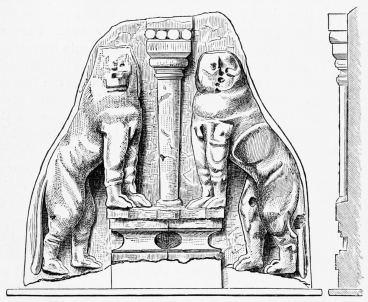
Fig. 188.—Relief from the Gate of the Lions at Mykenæ.
Our knowledge of the sculptural activity of Greece in the heroic ages
has, up to the most recent times, been derived almost entirely from the
poets, whose idealized descriptions are supported, in regard to form,
only by the analogy of Assyrian reliefs and the paintings upon archaic
vases. Works of a primitive period have, indeed, not been entirely
wanting; but it being impossible to date them, they lend no aid to an
historical consideration. The derivation and age of only two are
assured, and the characteristic forms of one of these—the Niobe upon
Mt. Sipylos, near Magnesia, mentioned in the Iliad, xxiv. 613—are
entirely obliterated. It is so rudely executed, or so weather-beaten,
that even in antiquity it appeared to Pausanias, even when seen from the
immediate vicinity, as but a shapeless rock, in which the human figure
was scarcely to be recognized, while, at a distance, it resembled a
woman bowed down with grief and weeping. The account has been verified
in recent times by the discovery of a rock-cut relief of three times the
size of life, so disintegrated that satisfactory drawings of its human
forms could not be made. This renders the other pre-Homeric monument,
the most ancient known sculpture of Greece and of Europe, all the more
important—namely, the relief over the gate of Mykenæ, called by the
poet that of the Lions—the chief portal of the fortress of the Atridæ,
the witness of the departure of Agamemnon for the Trojan war, and of the
downfall of his house on his return. (Figs. 188 and 126.) The
structure has been already described from an architectural point of
view. The relief upon the slab which closes the triangle above the
lintel represents two lions standing upright upon either side of a
column; their heads, turned outward, were separate pieces, fastened with
dowels to the background, and have disappeared. The designation of these
animals need not be deemed erroneous because they have no manes.
Pausanias speaks of them as lions (though this in itself may not be of
great weight), and in the Phœnician examples of beaten metal-work, as
in the archaic paintings upon Greek vases, the indication of hair is
always wanting. The Asiatic influence which, in architectural respects,
had made itself felt upon the Tholos of Atreus, must be acknowledged
here also; thus alone is it possible to account for a peculiar modelling
of the forms, entirely foreign to sculpture in stone. The resemblance of
these lions to the animal figures of Assyria is readily recognizable; it
is the same resemblance as that which the art industry of the Syrian
coasts showed to that of Mesopotamia. The Phœnician tradespeople,
themselves skilled in many novel technical processes, formed the medium
between the cultured countries upon the Tigris and the Ægean Sea. The
Lycian Cyclops had also borrowed from these neighbors, and to them was
traditionally attributed this wonderful stone carving at Mykenæ, a work
which, from all appearance, was an isolated attempt. Such sculptures
could not become national and native so long as the requirements of the
heroic Greeks were satisfied with the mere decoration of useful objects.
The impulse towards monumental art seems first to have been awakened
with the introduction of the columnar temple. Schliemann’s excavations
upon the Acropolis of Mykenæ in 1876 have brought to light some few
works of sculpture which deserve to be considered. Prominent among them
are the memorial stones, two of which are shown in Fig. 189. They are
remarkable for a naïve primitiveness of conception and the desire to
display the subject chosen as distinctly as possible. A vigorous action
and a certain observation of nature are not lacking, though the forms
are incorrect, both in general effect and in detail. The similarity of
these works to Asiatic sculptures is marked; but no trace of Egyptian
influence is to be recognized in the attenuated figures. The same
derivation is evident in the spiral ornaments, which closely resemble
those upon the façade of the Tholos of Atreus, and upon Phœnician and
Cyprian remains. All the reliefs imply models of beaten metal, and lend
further support to the hypothesis which connects the heroic age of
Greece with the civilization of Western Asia, through the medium of
Phœnician traders.
Fig. 189.—Steles from the Acropolis of Mykenæ.
The golden masks found in the graves are not less interesting, whether
the assignment of these to the Homeric worthies—Agamemnon, Eurymedon,
etc.—be accepted or not. (Fig. 190.) It is at least certain that they
are memorials of the heroic age, and the great quantities of gold found
in the sepulchres make it probable that they appertained to a royal
race, and were buried at a time when the prosperity of Mykenæ was great
and its power extensive. The masks, like the grave-stones, are formed
with the helpless realism peculiar to the art of Western Asia, and
entirely foreign to that of Egypt. It is easy to believe that they were
imported directly from Phœnicia. This must certainly have been the
case with the beautifully executed ornaments of gold—disks, diadems,
stars, etc.—the beaten workmanship of which is of a perfection only
possible to trained and practised manufacturers. The spirals and other
linear designs are executed with exceeding accuracy, by peculiar
instruments. Their motives are taken from the animal and vegetable
world, from cuttle-fishes, butterflies, and various forms of leaves and
flowers. It is certain that the perforated cylinders, cut, like gems, in
intaglio, with scenes of war and hunting, were introduced directly from
Asia; they are strikingly similar to the rolling seals of carnelian and
agate found in Mesopotamia. A small model of a temple is peculiarly
Phœnician, like that repeated upon Paphian coins.
 Fig. 190.—Golden Mask from Mykenæ.
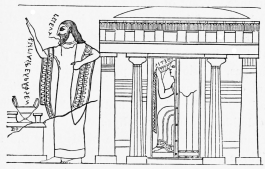
Fig. 191.—From the Vase of Clitias and Ergotimos.
During the first two historical centuries, after the commencement of
reckoning time by Olympiads, the direction of activity in art appears to
have changed but little. Sculpture, represented by guilds, or families,
of handicraftsmen in Athens, Argos, and Sikyon, remained little else
than decoration, though, at least in the selection of subjects, it
opened for itself new fields. In the heroic ages the scenes were limited
to the most immediate realities; but, after the Homeric epics had become
the property of the nation, the picturesque treasures of many legends
became available. Arctinos of Miletos, in the middle of the eighth
century, and, somewhat later, Lesches of Lesbos, continuing the Iliad,
sang of the downfall of Troy. Stasimos of Cyprus chose preceding events
as his theme; while the myths of the Seven against Thebes, of the
Titanomachia, and of the exploits of Heracles and Theseus found similar
epic illustration. These poems not only provided the subjects for
sculpture, but described them with plastic vividness. This is shown by
the two chief works of this period,—the Chest of Kypselos and the
Throne of Apollo at Amyclæ. The first was an oblong shrine of
cedar-wood, which Kypselos, tyrant of Corinth, consecrated in the
Heraion of Olympia, in memory of his preservation as a child, when,
hidden in a fruit-box, he had escaped from the persecution of the
Bacchiadæ. This chest, either upon three sides—the fourth standing
against the wall—or upon the long front side alone, was ornamented with
carvings, in five bands, one over the other, probably of unequal height.
The reliefs, partly inlaid with ivory and gold, must have been of a
workmanship similar to that customary in the heroic ages. The uncommonly
rich and varied representations, almost exclusively mythological and
heroic, were taken from the before-mentioned cyclic poems (Pausanias, v.
17 to 19). The figures appear to have somewhat resembled in style those
upon the Vase of Clitias and Ergotimos in Florence (Fig. 191), which,
on account of its banded arrangement and the similarity of its mythical
subject, deserves, rather than the cover of Dodwell’s vase given above
(Fig. 187), to be compared to the Chest of Kypselos. The Throne of
Apollo at Amyclæ, near Sparta, has been connected with the name of one
of the oldest artists known, Bathycles of Magnesia, who lived half a
century later than the maker of the Chest of Kypselos. This throne also
has been minutely described by Pausanias (iii. 18 to 19). In regard to
its sculptured decoration, his account of its construction is
unintelligible; it is only clear that the framework was colossal, and
that the ancient doll-like image stood within it, without any seat. Not
less than forty-one scenes, besides the larger compositions upon the
pedestal of the statue, covered the outer and inner sides of the throne
with carvings in low-relief, similar in style to those of the Chest of
Kypselos. Upon the legs in full, or at least in three-quarter, relief
were figures of the Graces, the Hours, Tritons, etc.; upon the back
were portraits of the master and of his Magnesian assistants, besides
sphinxes, panthers, and lions.
These works were still chiefly of a decorative character. Monumental
sculpture had not yet freed itself from the trammels of inadequately
developed technical processes. So long as the artisan had no choice
other than the sphyrelaton and the xoanon, a material foundation was
wanting for the development of an independently artistic sculpture. Even
when isolated works of a higher order were attempted, as in the colossal
Zeus, of beaten gold-plate over a wooden form, dedicated in Olympia by
Kypselos or his son Periander, they can be considered, like the other
sphyrelata of this and of the heroic age, only as figures of great
material value but of little artistic importance. Want of skill in
execution favored that clinging to old honored types of devotional
figures inherent in the nature of all religions. These influences stood
in such close, interchangeable relations that it is impossible to say
whether, in the province of sculptured images, the slowness of progress
should be placed more to the account of religious prejudices and the
difficulties thrown in the way of all change by hieratic institutions,
or of the technical limitations of doll-like xoana and sphyrelata.
New mechanical acquirements were needed for the furtherance of the art.
Three great discoveries, or, to speak more correctly, the extended
application of known processes, date from the beginning of the sixth
century B.C.: the casting of bronze, the sculpture of marble, and
chryselephantine work (the inlaying of gold and ivory upon a wooden
kernel). Each of these had its gradual development, at least the first
and the last being furthered by auxiliary inventions. It was
indispensable for the casting of bronze that modelling in clay should
have attained a certain perfection. The name of the Sikyonian potter
Boutades is connected with the introduction of this branch of art; it
appears to have been in the middle of the seventh century B.C. that he
ornamented the acroteria and antefixes of the temple roof, first with
low-relief (prostypon) and then with high-relief (ectypon). He also left
a portrait panel in terra-cotta, shown in the Nymphaion of Corinth until
the destruction of that city as the first work of its kind. In
connection with it was told the pleasing anecdote that the daughter of
Boutades, in taking leave of her lover, sketched his shadow upon the
wall with charcoal, the father afterwards filling out the outline with
clay and burning the relief thus produced. Neither of these accounts are
of great direct value, but that a potter could achieve a lasting
reputation as an artist may perhaps show that modelling in clay had
already made essential progress, and thus prepared the way for
brass-founding, which requires an original and mould of this more
plastic material. The discovery of soldering was also not without
significance; it formed, in metal work, a connecting link between the
riveting of the sphyrelaton and casting, even indispensable to larger
statues of the latter process, which, at least in the beginning, were
executed in pieces. Soldering seems first to have been employed upon
iron. Glaucos of Chios attained great results by this means, and
attracted general attention to it in the seventh century B.C. His iron
crater-stand, dedicated at Delphi by Alyattes, was an elaborate work,
ornamented upon the legs and clasps with sculptured animals and plants.
The way was thus prepared for monumental bronze-founding, which was not,
indeed, discovered by the Samians Rhoicos and Theodoros, the sons of
Phileas and Telecles, to whom it was attributed by antiquity,—for, as
has been seen, it was practised by the Phœnicians,—but was by them
first introduced into Greek art. The dates assigned to their epoch vary
from the beginning of the seventh to the middle of the sixth century
B.C.; but it is the more reasonable to place them, with Brunn, at the
close of this period, without supposing that there were two masters by
the name of Theodoros, a father and a son. The innovation probably began
with the solid casting of smaller works, but whether Rhoicos and
Theodoros were limited to this is at least doubtful. Economy of material
and the lessening of weight in figures of great dimensions must soon
have led to hollow casting upon a fire-proof kernel; it is possible that
it was this very progress that made the two artists celebrated as
discoverers. The development of their technical improvements seems at
first to have impaired the artistic aspects of the works; Pausanias says
of a female statue by Rhoicos, probably in the Temple of Artemis at
Ephesos, that it was even more archaic and rude than a figure of Athene
in Amphissa which was there held to be Trojan. That the two Samians also
practised in beaten metal work is clear from the colossal silver
mixing-vessel, containing six hundred amphoras (about 200,000 litres),
executed by Theodoros and dedicated at Delphi by Crœsus, from a
golden vine with grapes of mounted jewels, and a golden plane-tree in
the possession of the Persian kings; the latter works remind us of
examples of similar workmanship in the Assyrian palaces, the existence
of which has been proved by the fragments of palms in gold-plate, lately
found by Place upon a portal in the palace of Sargon, at Corsabad. If
Theodoros worked thus extensively in the precious metals, it is not
surprising that he produced such small toreutic objects as those
indicated by the legend of the ring of Polycrates, ascribed to him, and
the fabulous portrait statue of a man, with a quadriga in his hand which
a fly might have covered with its wings.
A still more brilliant future was open to the second innovation, that of
sculpture in marble. Chios was the birthplace of Hellenic marble
statuary, as Samos had been of bronze-casting. Coarse stone had been
employed from the earliest times, in isolated instances like the relief
over the Gate of the Lions at Mykenæ, for figures and for small images;
and the introduction of marble statuary was older than bronze-founding,
for Melas, ancestor of a long race of sculptors in Chios, lived about
the middle of the seventh century B.C. Of Melas himself and his son
Mickiades little except the names are known; an artist of the third
generation, Achermos, could venture to represent a winged Victory, yet
even he was surpassed by his sons Boupalos and Athenis. It is evident,
from several notices, that marble sculpture flourished greatly under
these latter, who, living about 540 B.C., had become very particular in
the choice of material—using only the fine-grained and translucent
Parian lychnites. No one venturing to dispute their precedence, they
could place upon their sculptures, exhibited in Delos, the
self-conscious inscription: “Chios is celebrated, not alone for its
vineyards, but for the works of the sons of Achermos.” Numerous works by
them are mentioned by ancient visitors, being collected in later times
by princely dilettanti. Augustus employed such sculptures upon the
exterior of many of his buildings, notably in the gable of the Palatine
temple of Apollo; he had an especial and, as it appears, a not
ill-founded liking for them, and these works could not have been a
disfigurement, even to the universal magnificence of imperial Rome. An
explanation of this marked advance at so early a date is given by this
very fancy of Augustus: the works thus architecturally utilized could
not have been devotional images of the deities; they must have been
decorative sculptures. The former class, from reasons already touched
upon, were hindered in artistic progress; the latter being beyond the
jurisdiction of hieratic institutions, developed untrammelled. It was
only in ornamental figures that the assiduous and talented sculptors of
early times found free scope, and it was fortunate that the demand for
these architectural and decorative works must naturally have been
greater than for the more rare devotional images, which were piously
transferred from the older sanctuaries to the new buildings which took
their place. The gable groups of Ægina show how unequally art advanced
in these different and distinct fields.
During the time of Boupalos and Athenis, art began to flourish in other
places than Chios. First in Sikyon, with the two Cretans Dipoinos and
Skyllis, who may have been even older than the last Chian masters. They
were called, it seems, to Sikyon, and there chiefly employed their
energies in founding a school, changing at times the site of their
labors to Argos, Cleonæ, and Ambrakia. Like the masters of Chios, they
chiefly employed the marble of Paros, and it appears, from the accounts
of a group representing Apollo, Artemis, Athene, and Heracles, that they
too sought their fame less in devotional images for the interior of
temples than in monumental compositions for architectural ornament.
Although these Cretan sculptors, according to the testimony of Pliny,
acquired great celebrity in marble working, they are more important as
the founders of the third among the statuesque arts above
mentioned—that process of gold and ivory overlaying which culminated in
the greatest masterpieces of Pheidias. It seems to have originated from
the native xoana of early times, by transferring the inlaid decoration
observed upon the furniture of the heroic ages to sculpture in the
round. It developed in plainly distinguishable stages. Dipoinos and
Skyllis still only in part covered the carved core of wood, and
restricted this overlaying to ivory. This is illustrated by the accounts
of a group of the mounted Dioscuri, with their mistresses Hilasia and
Phœbe, and their sons Anaxis and Mnasinos, in the Temple of the Isius
at Argos, which was cut out of common wood and ebony, the former being
covered with ivory. Statues were made by Hegylos and his son Theocles,
scholars of Dipoinos and Skyllis, for the treasure-house of the
Epidamnians in Olympia, which represented Heracles with the Nymphs of
the Hesperides, and Atlas bearing the heavenly globe; Pausanias
describes this work as cut from cedar-wood, and the serpent and the tree
with the golden apples of the Hesperides must certainly have required
the inlaying of gold, if not of ivory. The author particularly mentions
the employment of gold upon another group: the struggle of Heracles with
Acheloos for Deianeira, the work of Donycleidas and Dontas of
Lacedæmonia, also scholars of the Cretan masters. The perfection of the
chryselephantine process seems early to have been obtained, the wood,
before in great part visible, was by the latter artists used only as a
kernel, being completely covered with ivory and gold. This was, at
least, the case with the Themis of Donycleidas in the Temple of Hera at
Olympia. That Pausanias considers these statues extremely archaic must
be understood as a relative judgment; it is to be borne in mind that
works by which a new process is introduced are always of a primitive and
imperfect appearance, if not artistically backward. A sphyrelaton of
beaten copper-plates riveted together was still possible to this school,
for a figure of Athene Chalkioicos at Sparta was the work of Clearchos
of Rhegion, a member of this guild. The sphyrelaton was, indeed, nearly
related to chryselephantine work which was virtually a combination of
the sphyrelaton with the ancient xoanon. The Æginetan Smilis, of this
group of scholars, was celebrated as the first great artist of his
island. His connection with the Cretans is more certain than with the
later sculptors of Ægina; if he should prove to be older than the native
Sikyonian masters, as has recently been asserted, this would add another
site to the primitive schools of Greek art.
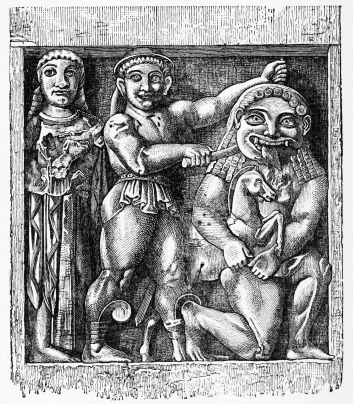
Fig. 192.—Metope Relief from the Middle Temple of the
Acropolis of Selinous.
The history of sculpture, drawn from the remarks of ancient writers,
would bear only upon the development of these technical processes, and
would give but little information concerning the style of this period,
if it were not possible to compare their accounts with several ancient
monuments which by great good-fortune have been preserved to our own
time. But it is necessary here not to overlook one point which is
frequently lost sight of altogether—namely, the local differences
betrayed by works of one or the same epoch. Examples of archaic stone
sculpture are presented by European Greece, by the Hellenic colonies of
the East in Asia Minor, and by those of the West in Sicily, which show
the two latter provinces to have followed a somewhat different course of
artistic development, and even the works of the Peloponnesos early to
have betrayed considerable variations, in conception and in principle,
from those of the more northern tracts of the Continent. Among the
provincial monuments, the first to be noted, because the oldest known,
are the metope reliefs upon the middle temple of the Acropolis of
Selinous in Sicily. The city was founded about 628 B.C., and, though
this temple may not have been the first built in the new colony, it must
be considered as dating at least from the first half of the sixth
century. Among numerous fragments of the metope sculptures two tablets
have been preserved almost uninjured which are of the greatest value
from the plainness with which they express both the artistic advance and
the imperfections of this early age. It would be a mistake, however, to
see in them representatives of the sculptural style of Greece proper,
for they betray in many respects the peculiar influences of Sicilian
Doric. In as far as the artistic understanding of the works permitted,
they evince a fresh and sound naturalism, and a careful observation of
the living model. But this did not extend beyond the more independent
members; while arms and legs, hands and feet, are relatively excellent,
the body and head are disagreeably heavy, rude, and ill-proportioned.
This contrast is particularly noticeable in that of the two reliefs
which represent Heracles carrying upon his bow the two Kercopes. The
more successful modelling of the details of the limbs shows it to have
been the work of an abler artist than the other (Fig. 192), where
Perseus, in the presence of Athene, cuts off the head of Medusa. The
deity, with naïve helplessness, turns her right foot sideways, though
otherwise facing entirely towards the front; the insufficient depth
rendered it impossible otherwise to give the foot its full length, and
the artist was perhaps withheld from a more correct form by an
unconscious dependence upon the more familiar style of low relief. The
left leg of the Medusa appears, on account of the confining frame, too
short by half, and the little Pegasos stands upon long, kangaroo-like
hinder legs, in order that the body may come within reach of the arm of
Medusa. Yet the weakness of the transition from the front view of the
upper body to the profile of the legs is less striking than in the
Egyptian and Assyrian sculptures, and both Perseus and Heracles are
wholly free from that typical petrifaction which characterized the art
of the Nile and of the Tigris. In spite of the first impression made by
the monstrous and disproportioned figures, these works have, with all
their imperfections, the peculiar charm of earnest effort, which is the
guarantee of ultimate success.
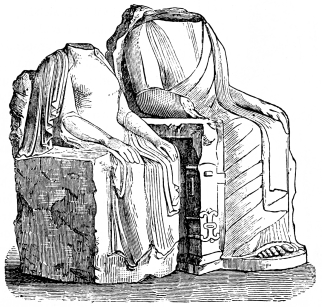
Fig. 193.—Statues from Miletos. British Museum.
The most ancient Hellenic sculptures of Asia Minor do not show the same
self-reliance and direct study of nature. There the influence of
Mesopotamia, Phœnicia, Cyprus, and even of Egypt was so strongly felt
that art could not remain wholly free from canonical tendencies, and did
not develop simply and directly from natural models. The sitting
colossal statues which flanked the sacred way from the port of Panormos
to the Temple of Apollo Didymaios near Miletos, and, according to the
characters of the inscriptions, date from about 540 B.C., show the
naturalistic elements of Greek work in the treatment of the bodies, and
especially in the garments, with their scanty but correct folds; though
it is not to be denied that the arrangement in rows like the avenues of
sphinxes, and the enthroned, Memnon-like position of the priests and
priestesses betray reminiscences of Egyptian conceptions,—while the
fulness of the bodies and the technical details of the seats are more
similar to the traditional forms of Assyria and Phœnicia. The Asiatic
influence is still more evident in the epistyle and metope reliefs of
the remarkable Doric temple at Assos, now in the Louvre; though the
rudeness of their forms may be in part owing to the loss of the stucco
coating with which the coarse and excessively hard stone was doubtless
overlayed and in which many of the finer details may have been executed.
A similarity to the beaten work of metal plate peculiar to Phœnicia
is easily recognizable, and reliefs analogous in style, and even in
subject, to the sculptures of Assos are offered by the Etruscan
bronze-work of a chariot found in Perugia, now in the Munich Glyptothek.
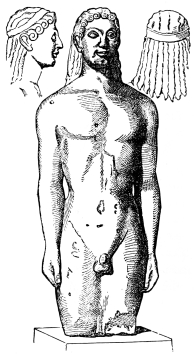 Fig. 194.—Apollo of Thera.
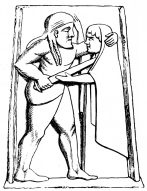 Fig. 195.—Archaic Relief from Sparta.
A number of sculptures found in various parts of European Greece are
wholly different from these provincial works. Chief among them are
entirely nude youthful figures standing in a stiff position, the arms
hanging close to the body, and the legs separated—the left being
generally a little advanced; the head, with receding brow, is slightly
inclined, and looks directly forward; the eyes are large and protruding;
the smiling mouth drawn outward at the corners; while the wig-like hair
falls low over the shoulders. They are commonly designated as statues of
Apollo, although the want of all attributes, such as were so universally
employed by primitive art for the figures of deities, and which were so
necessary for their characterization, makes this more than uncertain.
Moreover, according to Plutarch, a Delian statue of Apollo, the work of
Tectaios and Angelion, teachers of the Æginetan Callon, and consequently
of this period, showed the god with outstretched hands; a position which
was typical in early antiquity, and seems long to have been retained, as
in the Milesian Apollo of Canachos, and the small bronze figure in the
Louvre. The supposition appears plausible that these figures are those
of victors in the national games of Greece; such votive offerings are
known to have been carved of wood in the earliest times, but, after 560
B.C., they appear to have been of stone, like that of Arrhachion in
Phigalia, described by Pausanias (viii. 40). The Apollo of Thera, now in
Athens (Fig. 194), is one of the more ancient of these works; the soft
and yet not voluptuous forms of the body, the beauty of outline, united
with an evident uncertainty, do not denote a later phase of artistic
development than the hard sharpness and strict conventionalism of the
greater number of archaic statues. The beginning of this discipline is
shown by the Apollo of Tenea, now at Munich, in which there is but
little grace and artistic beauty, but all the more an earnest striving
after close correctness of modelling, which is more successfully
attained in the limbs than in the trunk. Of this epoch, and similar in
style, though approaching more nearly to the Apollo of Thera, are the
marble statues of Orchomenos, preserved only to the knees, and the
torsos of Megara and Naxos, now in Athens. The more ancient sculptures
found in Greece proper are less antique in style than the sculptures and
reliefs already mentioned, with the exception of some marble steles from
Sparta, the most important of which represents upon the one side the
meeting of Orestes and Iphigenia, upon the other the murder of
Clytaimnestra (Fig. 195). The rude, short figures are somewhat similar
to those in the metopes of the middle temple upon the Acropolis of
Selinous. This excessive heaviness and awkwardness appears almost
entirely overcome in the stele of Aristion, found in northern Attica,
and now in Athens. The low relief (Fig. 196), designated as the work
of Aristocles, represents a man armed as a hoplite, and is similar, in
many important respects, to the Apollo of Tenea, though a decided
advance beyond that work. The Attic relief of a woman mounting a
chariot, notwithstanding a primitive harshness of form, shows, in the
graceful drapery, the inclination of the head and the position of the
arms, as well as in the greater certainty of the drawing, qualities
which cannot be ascribed exclusively to the superior perception of the
inhabitants of Attica, but must be due, at least in part, to a later and
more advanced stage of development. With these works may be compared the
so-called Leucothea relief in the Villa Albani, which does not, indeed,
equal them in composition, but is superior in grace of bearing and
beauty of detail. Another sculpture represents the bringing of a child
to a female figure seated upon a throne, perhaps the dead mother, and is
similar in subject to the celebrated reliefs of the Monument of the
Harpies at Xanthos, now in the British Museum, where the Harpies bear
children or souls to the deities of the lower world. The former, by
greater fulness and softness, as also by less clearness and
understanding in the general treatment, seems to precede the latter in
point of time, dating from the period between the Milesian colossal
figures and the Attic reliefs described, that is to say, from 520 to 500
B.C.
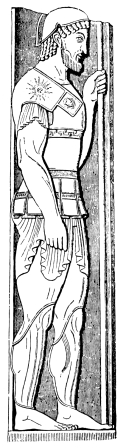 Fig. 196.—Stele of Aristion, by Aristocles.
The older metopes of Selinous, the statues of Miletos, the reliefs of
Assos, and even the so-called figures of Apollo from Thera, Naxos,
Orchomenos, and Tenea, betray great looseness and uncertainty of form;
like the productions of every period of experiment, they give no
evidence of systematical and accepted principles—the canonical
establishment of a certain degree of perfection. In the subsequent
period there was, in various cities, an earnest endeavor to make an end
to this want of training by thorough and academic discipline. These
efforts could not, in Greece, result in that typical lifelessness, that
faulty execution and mannerism, universal in Egypt and the despotic
lands of the East, which operated against all direct study of nature;
but, by the combination of individual observations and improvements,
they increased and purified the artistic appreciation, no longer
restricting it to details, to the partial, but directing it to the
complete. Athens was most active in this advance, as is evident from
several ancient works closely related to that of the woman mounting the
chariot. The progress is illustrated by the statue of Athene found upon
the northern side of the Athenian Acropolis. A strict treatment of
details, like the aigis, the folds of the garments, the hair, etc., is
united to a considerable understanding of the forms of the body and the
functions of the limbs, which are sharply and perhaps a little hardly
modelled; while the work has in great measure freed itself from the
exactions of conventional symmetry, so markedly exemplified by the
sitting statues of Miletos and the Apollo of Tenea. The figure of Hermes
bearing a calf, found in Athens, is a somewhat similar work; its head
and hair are hard even to ugliness, but decided ability is shown in the
formation of the back and hams, and in the truth to nature of the calf,
held by the legs and pressed close to the neck. The progress is not less
plain in the bronze statuette of Apollo in the Louvre, nearly one meter
high, with the Greek inscription “to Athene from the tithes;” provided,
indeed, that the period of its origin is certain, and the work does not
belong to the extensive group of archaistic imitations.
The reliefs from the beginning of the fifth century are similar in
character. That upon a marble fountain-drum from Corinth represents the
meeting of Heracles and Hebe; it still preserves the silhouette-like
outline, the small parallel folds and general ornamental style of the
drapery, and the stepping of both feet flatly upon the soles; while the
unschooled endeavor and evident embarrassment of the artist does not
give an unpleasing expression of awkwardness to the figures, which have
a certain dignity and grace, especially remarkable in the garments and
in the action of the extremities. Here is attained at last that strict
and completed style which has cast off all loose uncertainty, and has
adopted a conventional form for accessories in order to secure the
harmonious execution of the whole. This is also noticeable upon a relief
discovered in Thasos, now in the Louvre, which, when compared with the
before-mentioned Corinthian relief, and with the monument of the
Harpies, displays the influence of the neighboring coasts of northern
Asia Minor, together with a certain picturesqueness of conception
peculiar to northern Greece. A beautiful stele, found in Orchomenos, the
work of Alxenor, an artist from Naxos, instead of giving to the portrait
figure the stiff position of parade, formerly universal, represents it
with crossed legs, lazily leaning upon a gnarled stick. The archaic
meagreness is, however, still to be seen in the form of the hand, and in
the folds of the cloak (Fig. 197). The stele from the Borgia
collection, at present in Naples, resembles it in general style. All the
merits and defects of the period are to be seen also in a number of
terra-cotta reliefs from Melos, not to mention some small figures in
clay and bronze, for the most part superficially executed, the
clumsiness of which may be ascribed to the maker’s individual want of
ability.
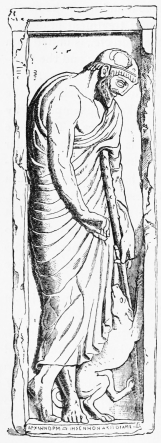 Fig. 197.—Stele by Alxenor, found in Orchomenos.
The growth of art in Asia Minor, Sicily, and Lower Italy, in so far as
these lands were Hellenic, does not appear to have kept equal pace with
that of Greece proper; yet the intercourse, during the last decades of
the sixth century, was so active that they could not remain far behind.
The most remarkable examples of the sculptures of this class, perhaps of
a little later date than the Attic works described, are the metope
reliefs from the Middle Temple of the Eastern Plateau at Selinous,
representing the gigantomachia, as preserved in scanty fragments.
Although the crudeness of outline and modelling in the bodies of the
fallen giants in many respects recalls the older metopes of the
corresponding temple of the acropolis, the draperies of the goddesses,
on the other hand, show a skill exceeding in truth and beauty many of
the archaic works of Greece itself. The one remaining head of a giant,
wounded and outstretched in death (Fig. 198), shows, in spite of the
antique hardness in the form of the face and treatment of the hair, an
expression which could have resulted only from the intelligent study of
nature. A relief from Aricia, now in Palma, upon the island of Mallorca,
representing the murder of Ægisthos by Orestes, is known only through
insufficient representations; it shows weakness in composition and
inequality in rendering, the garments being sensibly inferior to the
treatment of the nude.
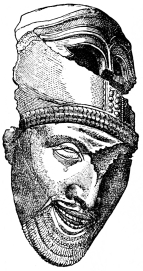 Fig. 198.—Head from a Metope of the Middle Temple upon
the Eastern Plateau of Selinous.
Fig. 198.—Head from a Metope of the Middle Temple upon
the Eastern Plateau of Selinous.
Before mentioning by name those artists who carried art beyond this
stage of development, another class of monuments, numerically very
important, should be considered. It is well known that in all ages
antiquity has had a certain charm, either as appearing strange and
interesting in comparison with existing circumstances, or from religious
associations. When a devotional figure, with which many legends have
become associated, as is the case to-day with the altar-pieces of our
churches, was particularly reverenced on account of its antiquity, there
was a desire to preserve its primitive type, even from recognized
improvements. Hence arose an imitation of the original work, called
archaistic in contradistinction from the archaic, or really old.
This imitative style became fashionable in later times; while an amateur
with the means of the Emperor Augustus was able to acquire an original
Boupalos or Athenis, other lovers of the antique were obliged to content
themselves with copies, or with works conventionalized after the manner
of the early masters. These products are not always to be distinguished
from the truly archaic, as is also the case with some modern imitations;
but usually some conventional, technical, or circumstantial oversight or
anachronism furnishes an easy criterion. There can be no doubt, for
example, concerning the age of a work of sculpture in which a Roman
Corinthian temple stands in the background, as upon a well-known relief
representing Victory filling a cup for Apollo Kitharoidos, who is
followed by Artemis and Leto. In other cases the head, hands, or
feet,—the expression or gesture,—or the step, which in ancient works
characteristically rests upon both soles,—betray a much later period
than the hard or regular folds of the drapery, as is the case with the
Artemis at Naples. (Fig. 199.) Sometimes the accessories are of a
later style, as in the ten scenes from the Gigantomachia upon the border
of the garment of Athene in Dresden; or, finally, the drapery upon one
figure of a group is strictly antique, while that of the others is free,
as upon a tripod of the same museum,—not to mention other less
important inconsistencies.
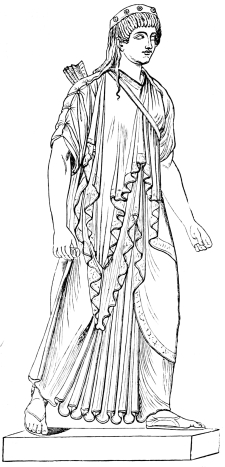 Fig. 199.—Archaistic Artemis from Pompeii.
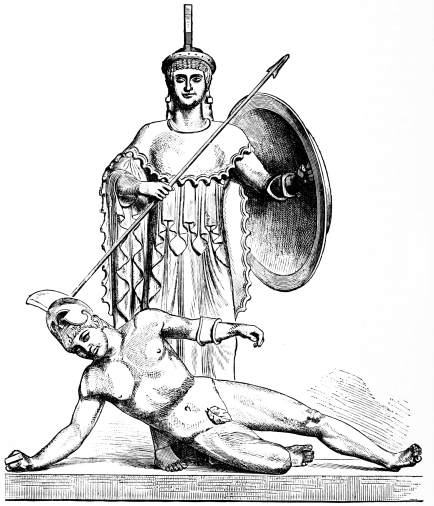
Fig. 200.—Central Figures of the Western Gable, Temple
of Athene upon Ægina.
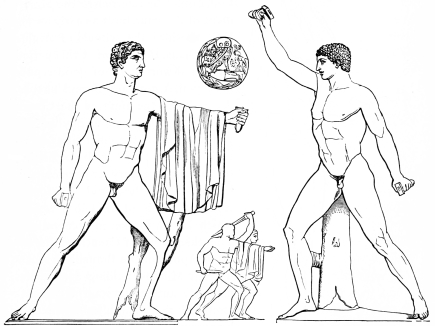
Fig. 201.—Harmodios and Aristogeiton. (Copies in
Naples.)
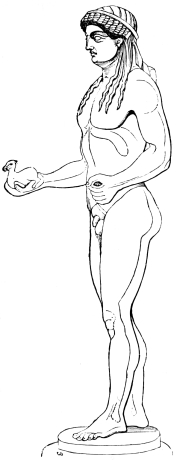 Fig. 202.—Apollo after Canachos. (British Museum.)
An established conventionalism,—that contentment with the mere
handiwork of acquired forms which existed for centuries in the lands of
the Nile and Tigris,—was not possible in the early art of progressive
Greece. Upon the foundation of the artistic ability already attained at
this period, various local schools and individual sculptors rose to a
higher level, and effected an advance, partly by opening new channels
for the artistic industry of all Hellas, partly by pursuing paths which
remained peculiar to themselves. Athens and Ægina are especially
prominent in this activity; but, notwithstanding many scholarly
researches, the history of art is not able to distinguish with certainty
between the works of the two cities, an Attic example analogous to the
chief work of the island being wanting for instructive comparison. The
chief difference between the two may have been that the former school
had a less strict and trained execution than the latter, with more grace
of form and nobility of bearing. Callon and Onatas were prominent
artists of Ægina, the latter seeming to have been the more celebrated.
On account of the hardness of their work, both were considered inferior
to Calamis. Onatas is particularly interesting from our knowledge of two
of his chief sculptures—extensive dedicatory offerings to Olympia and
Delphi, one of which represented the Greeks before Troy, casting lots to
determine upon an opponent for Hector, and the other the combat over the
fallen King of the Tapygians, Opis. The subjects of these works,
especially the latter, and the peculiarity emphasized by Pausanias that
the heroes before Troy were represented armed only with helmet, spear,
and shield, probably to give scope for the display of the artist’s skill
in the treatment of the nude, remind us of the two well-preserved groups
from the gables of the Temple of Athene at Ægina, which, in point of
style, must have been closely allied to those of Onatas. These priceless
marbles were discovered in 1811, and the next year, by a chain of
fortunate circumstances, came into the possession of Louis I., then
Crown-prince of Bavaria. Ten of the remaining statues belong to the
western gable, and five to the eastern; the greater part of the former
group is thus preserved, and, as the scenes in both gables are almost
entirely alike, their general arrangement may be restored with
reasonable certainty. That over the chief front represents the struggle
for a fallen hero, probably Oicles in the contest of Heracles and the
Æginetan Telamon with Laomedon of Troy. In the rear tympanon the scene
is the recovery of the body of Achilles or of Patroclos. Subjects so
closely allied could lead to no great difference of composition, at most
to such slight variations as the characterization of Heracles in the
first group or of Paris in the second, if this latter be considered an
episode in which that hero took part. In both gables the fallen warrior
lay at the feet of the protecting Athene (Fig. 200), while on each
side, symmetrically disposed, a combatant of either party endeavors to
seize the body and drag it forth from the fray. Above these stooping
figures warriors threaten each other with lances; but it is not certain
whether there were two or four of these actively engaged. The latter
number has been recently assumed from numerous fragmentary remains,
which, if appertaining to the group at all, it is impossible otherwise
to locate; the refutation of this theory of Lange, which has been
attempted by Julius, does not terminate the vexed question. These
warriors were followed, according to Brunn’s arrangement, by two
kneeling lance-bearers, perhaps protecting the two archers in similar
position with their shields. One of the archers is shown by a leathern
cuirass and the so-called Phrygian cap to be an Oriental, perhaps Paris.
With the exception of Heracles in the eastern gable, who is
characterized by his lion’s skin, none of the other combatants are
personally distinguishable. The corners of the triangle are filled by
two fallen warriors. The whole group is thus composed with strict
reference to symmetrical correspondence, and to the conditions imposed
by the gable; all attempt to attain relative action and realism is
abandoned, and the impression of a pantomime is inevitable. The outlines
of the bodies, their position and action, are correct even to the
minutest details, and show a certainty of form and a technical
perfection, which, in the absence of all support for the bodies, or for
the extreme thinness of the shields, is truly astonishing. The figures
of the eastern gable appear particularly perfect, and are apparently the
works of later sculptors, less limited, in point of style and artistic
ability, than the master, or masters, of the western group. If in the
latter, as before remarked, it is natural to think of Onatas, the former
is correspondingly attributable to Calliteles, the son, scholar, and
assistant of Onatas, who worked in great measure like his father, but
also under the progressive influence of a younger generation. In
remarkable contrast to the excellent and, in formal characterization,
almost faultless, anatomical treatment of the bodies, two things appear
particularly important as indicating the limits of the artistic ability
of the time—namely, all the heads and the two statues of the deity
Athene. The former are without ideal beauty or expression, for which the
sculptor evidently felt himself incapable. He therefore carved the
features according to a certain formula, and the apparent smile,
resulting from the mouth being drawn outward and the corners of the
eyelids extended, is to be regarded as a meaningless reminiscence of the
older style. The eyes are too protruding and the chin too pointed and
small, defects of the earlier practice, not as yet entirely overcome.
The Athene shows how obstinately the devotional images were denied the
advances made in other sculptures, so that the traditional and hallowed
type might be preserved, as much as possible, from change. While for the
other statues the artist had before his eyes the living combatants of
the palaistra, his model for this was the sacred image standing within
the temple. The evident contrast between the stiff bearing and archaic
garments of the Athene and the rest of the group is thus more naturally
explained than by the view that, in the artist’s conception, the goddess
did not need any real action, that a slight lifting of the shield, as a
divine “thus far and no farther,” was sufficient to show her
supernatural power and to protect the fallen. The awkward turn of the
feet, which was owing less to the limitations of space than to the
reminiscence of an antique devotional image, might the more safely be
ventured, because it could not be seen at all from below. That the
sculptor, however, in his loving devotion to his work, took small
advantage of this last consideration, is clear from the fact that the
bodies are as carefully finished upon the back as upon the front,
although one half of this labor could never have been appreciated from
the first installation of the figures until their discovery among the
overthrown ruins and their reception in the Munich Glyptothek. The
effect of the whole was essentially heightened by the bronze
accessories, such as lances, belts with swords, bows, arrows, a
Gorgoneion and serpents upon the aigis of Athene, etc.; and even more by
the intense red, blue, and other colors upon the helmets and waving
crests, shields, and borders of the garments, sandals, and leather-work,
as well as by the tinting of the hair, eyes, and lips—all which
painting was probably in strict harmony with the neighboring
architectural members, which were doubtless treated with similar
pigments. Of other statues of archaic stamp only one has proved to be
contemporaneous with, and of the same school as, the gable sculptures of
Ægina—namely, the so-called Strangford youth in the British Museum. The
work is more closely allied to the statues of the western than to those
of the later eastern gable of the temple; but, notwithstanding a marked
similarity in the treatment of the torso, the formation of the features
differs so distinctly that the figure can hardly be ascribed to the same
master. When Pausanias says of Onatas that, although belonging to Ægina,
he still does not rank him below any contemporaneous sculptor of Attica,
this summary praise speaks less directly for the individuality of Onatas
than for the decided relative position of the two schools. It shows that
in general the style of Ægina was esteemed inferior. It may be concluded
that there were at least three Athenian sculptors of this time who
surpassed the artists of the gable groups of the temple upon Ægina,
namely, Hegias (Hegesias), Critios, and Nesiotes, not to mention the
somewhat older Endoios, Antenor, and Amphicrates. Literary notices of
their works do not convey any valuable information; but Friedrichs has
discovered in the sculptures of the Museum of Naples which hitherto had
passed under the name of the Gladiators, copies from one of the best
works of Critios and Nesiotes. (Fig. 201.) They represent Harmodios
and Aristogeiton, the assassins of the tyrant Hipparchos,—a group
recognized by an Attic tetradrachm, by the relief ornamenting a marble
seat at Athens, and by a weaker reproduction now in the Giardino Boboli
at Florence. As copies of this kind do not allow definite conclusions
concerning the style of celebrated monuments, we must regard in them
only the general composition. They suffice, however, to show that the
figures, which are of a free and bold action, cannot be referred to the
Monument of Antenor, built as early as 509 B.C. Besides the schools of
Ægina and Athens, there were at this period sculptural workshops of good
repute in Sikyon, Argos, Corinth, and Thebes. As early as the time of
the Cretan Daidalidæ Dipoinos and Skyllis, Sikyon was one of the chief
cities of artistic industry; and at the beginning of the fifth century
two celebrated brothers, Canachos and Aristocles, stood at the head of a
local school which lasted for seven generations. The chief work of
Canachos, the colossal Apollo of the Branchidæ sanctuary in Miletos,
holding a movable, probably automatic, stag in the outstretched right
hand, is known only by representations upon coins, and by a bronze
statuette in the British Museum (Fig. 202); the latter shows that the
master was but little removed from the archaic hardness of earlier
times, though endeavoring to attain greater power and nobility of form,
particularly in the head and features. Another colossal Apollo by
Canachos in Thebes differed from the figure in Miletos in being made of
wood. The chryselephantine Aphrodite in Sikyon, represented with the
polos upon the head and with poppy flower and apples in the hands, must
have been particularly archaic in conception. Two other works, more
removed from hieratic influences and limitations, were probably of a
less restricted style; namely, the Muse with the Syrinx, executed with
two others by the master’s brother, Aristocles, and the Young Racers.
The school of Argos is celebrated by one great name, immediately
connected with the highest development of art, Ageladas, the
contemporary of the masters of Ægina, Athens, and Sikyon previously
mentioned. From the silence of ancient authors in regard to this
master’s style, little information can be given concerning it; it is
only known that the Muse with the Barbiton, his many figures of Zeus and
Heracles, various statues of victors, quadrigas, and groups of votive
offerings in Delphi, were of bronze. Ageladas was the teacher of three
of the greatest sculptors of Greece—Myron, Polycleitos, and Pheidias;
and he must, if on this account alone, be ranked above his
contemporaries. The history of art would receive but little furtherance
by a detailed consideration of the other Argive sculptors, Aristomedon,
Glaucos, and Dionysios; of the Corinthians, Diyllos, Amyclaios, and
Chionis; of the Thebans, Aristomedos, Socrates, and others; of Callon of
Elis; or of the Spartan Gitiades. Prominent as these must have been,
they appear rather to have demonstrated the vigor of their schools, and
the influence of those of Ægina and Athens, than by individual gifts to
have raised themselves above the academic art of their time. As masters
of personal importance, in whom the progress made by their own genius
far exceeded their early training, may be mentioned three younger
sculptors: Calamis, probably of Athens; Pythagoras of Rhegion, in Magna
Græcia; and Myron of Eleutheræ, on the borders of Bœotia. Calamis
worked chiefly in devotional figures, and in these could not entirely
throw off the hieratic limitations in regard to position and treatment
of details. He was accounted somewhat less hard in style than Canachos
or Callon, but inferior to Myron in truthfulness to nature. This master
seems to have made little advance in the modelling of the body as a
whole, though Lucian praises the rhythmical position of the feet and the
beauty of the joints of his Sosandra; but in the representation of the
head he succeeded in making decided progress when compared with the
artists of the gable groups of Ægina. In this respect his Alcmene must
have been highly important; but chief among the works of Calamis was the
Sosandra, probably an Aphrodite, which became proverbial on account of
its grace and beauty. Lucian, when comparing the most distinguished
examples among all the works of art to illustrate perfect beauty, did
this with the significant words, “Calamis may ornament our ideal with
chaste modesty, and its smile may be honorable and unconscious as that
of Sosandra.” In view of this judgment, it is plain that the stiff, ugly
heads of the Æginetan marbles are not to be imputed to the works of
Calamis; that the graceful and beautiful formation of the features was
one of the chief improvements effected by him. The limitations of his
art are indicated by another notice. Pliny relates that Calamis was
unsurpassed in his representations of horses; but Praxiteles removed a
charioteer from one of the older quadrigas, and created another in its
place, “that the men of Calamis might not appear inferior to his
animals.” His charioteer must consequently have contrasted unfavorably
with the horses and disturbed the harmony of the whole; this need by no
means be considered as contradictory to the accounts of the beauty of
his devotional images, for the charming grace which distinguished the
quiet figures of deities and heroes was to be exchanged in the
charioteer for an athletic life, corresponding, in position and action,
to the exciting situation, and such representations evidently were
beyond the powers of the otherwise able master. Examples authentically
referable to Calamis do not exist, though the statue of Apollo upon the
Omphalos, found in Athens, shows at once the archaic limitations and the
advancing mastery which may be ascribed to this period of Greek
sculpture; while the so-called Vesta, now in the possession of Torlonia,
may have preserved reminiscences of the Sosandra. Both these works are
evidently the products of artists who did not conceive the gods as
merely graceful and pleasing, but as strict and serious beings. Statues
of Apollo by Calamis are known to have been brought from the Kerameicos
in Athens, and from a city upon the shores of the Pontos, to the Roman
capitol; but this can hardly be adduced as an argument in favor of the
authenticity of the figure upon the Omphalos.
To those very points in which Calamis failed, the two other artists
named devoted themselves with signal success. The works of Pythagoras of
Rhegion, who limited himself to bronze as a material, while Calamis
worked in marble, gold, and ivory, betray no connection with those of
the latter in regard to subjects, for the greater number were statues of
victors and representations of heroes in somewhat genre-like conception.
Of the former, Pausanias and Pliny praise the Enthymos as one of the
most excellent among the forest of images dedicated at Olympia; of the
latter, the limping Philoctetes was celebrated by many epigrams, as
causing the observer to himself feel the pain of the wounded foot. To
attain such an expression, it is not sufficient to characterize the
suffering in the affected limb alone, but the pain must be evident in
the entire body, in bearing as well as in step; in the continued tension
of all the muscles, and in the one-sided strain upon the sound leg. The
Philoctetes illustrates an otherwise incomprehensible account of the
master’s ability. Diogenes of Laerte says that Pythagoras, of all
sculptors, first regarded rhythm and symmetry. This unity of motion or
rhythm, with the equipoise or symmetry which alone lends a feeling of
security and harmonious perfection to the different members of figures
under excitement, is that which made the work so effective. The same
principles must have distinguished the statues of victors, which were
apparently intended rather as examples of the various modes of combat,
or the preparations therefor, than as individual portraits. The chief
merit of this master appears, according to this, to have consisted in
the organic truthfulness to nature of his figures, and this is by no
means contradicted by the rather trivial judgment of Pliny that
Pythagoras was the first to indicate sinews and veins, and to more
carefully model the hair; for increased anatomical correctness came
naturally with the organic action and realism of these works.
 Fig. 203.—Marble Copy of the Discos-thrower by Myron.
(In the Palazzo Massimi alle Colonne in Rome.)
In this expression of the movement by every part of the body exercised,
Pythagoras was still surpassed by Myron. A founder of metal, like the
former, he acquired his fame chiefly as a maker of the statues of
victors, although, with acknowledged versatility, he executed numerous
images of deities and heroes. Two of the first were highly
celebrated—the Runner Ladas and the Discos-thrower; both of them
belonging to that class of works which illustrated the nature of the
game itself. For Ladas was shown at the moment when, after overstrained
effort, he had reached the goal, and there, as victor, had fallen dead:
according to the expression of an epigram upon the work, it was as if
the last breath from the empty lungs were passing his lips. For such a
creation even the most perfect position of running, and indication of
relative action in trunk and arms, were not sufficient; the great point
lay in the panting breast and the open mouth and nostrils: the last
effort of the lungs must have been wonderfully shown. Another epigram
speaks of the “breather,” not of the runner, Ladas. That this
marvellous representation of concentrated action was not to the
disadvantage of the outer members is shown by the other victor before
mentioned, the discos-thrower, the fame of which is demonstrated not
only by the praise of Lucian, but by the numerous copies made during
antiquity. Many of the latter have been preserved, marbles of the size
of the original, and bronze statuettes, giving evidence of the
fascinating action in the swing of the discos; the athletic body of the
youth bending forward to gain greater impetus; the toes of one foot
clinging to the ground, those of the other slid along its surface; and
everything prepared for the fling which is instantly to follow. And yet
the best-preserved copy, that in the Palazzo Massimi (Fig. 203), must
certainly be in every respect inferior to the original. A mythological
genre-group by Myron appears from existing copies to have been equally
effective: it illustrated the legend of the flute, invented and cast
away with a curse by Athene, and found by the unfortunate Marsyas.
Statues in the Lateran and British Museum show the Satyr starting back
in surprise, the momentary action of desire and fear being seized and
expressed with as consummate mastery as were the athletic movements of
the runner and the discos-thrower. It was this same spirit of life that
caused Myron’s cow to be so celebrated in antiquity that no less than
thirty-six epigrams have been handed down concerning it. Petronius, in
praising this master, says that, in representing animals, Myron seemed
to enclose the very breath of life in the bronze; and when Pliny says
that he multiplied nature, he can have no other meaning than that the
artist attained so life-like an effect that his works appeared rather to
have grown than to have been an artistic creation.
 Fig. 204.—Statuette of the Athene
Parthenos, Athens.
Fig. 205.—Fragment in the British Museum, imitated from
the Shield of the Athene Parthenos.
The schools of Ægina, Athens, Sikyon, Argos, Rhegion, and the other
cities where art had chiefly centred, flourished during the Persian
wars—that greatest period of Greece, from 490 to 450 B.C., when Myron,
the scholar of Ageladas, was still young. The unequalled grandeur of
this age, which resulted in the splendid culmination of all Hellenic
life, must have furthered art, all the more as the devastation of the
war, and the subsequent enrichment of the victors, offered full
opportunity and means for monumental activity. What influence this had
upon architectural industry has been described in a foregoing section,
and it may be easily understood that sculpture went hand-in-hand with
this; the larger temples needed their images of the gods, their gable
groups, metope reliefs, and friezes, as also their complement of
sculptural votive offerings, prompted by the gratitude of the victors.
Athens, more than any other place in Greece, found occasion and means
for these works, having been laid waste in 480 and 479 B.C. by Xerxes
and Mardonios as no other large city of Greece had been. By means of the
taxes levied upon the confederated states after the siege of Mycale,
its possessions were greater than those of all the other Hellenic
republics together. Athens therefore saw the most perfect flower of
Grecian architecture come forth from the ashes of the Persian
catastrophe, and by its side appeared the grandest creations of
sculpture. Yet neither of these arose like magic from the wasted ground;
it was necessary that the nation should first take breath, should
recover from the almost supernatural exertions made during the war, and
provide for defence and shelter by the building of fortifications and
dwellings. It was not until after this that they could devote themselves
to great monumental undertakings, the perfect completion of which
required more than one generation, and sculptured ornamentation was thus
still further postponed. The older masters hitherto considered had
little or no part in the chief works of this period. The mind of
Themistocles was so practical, and so much directed towards
fortifications, that he could have little thought for occupying the
artists with monumental sculpture. His successor, Kimon, son of
Miltiades, began to build anew the places of worship, but did not go so
far as to institute sculptural ornament, at least in its chief
constituent, statuary. This first ripened to perfection in the reign of
Pericles, and a favorable fate ordained that, just at this time, when it
was needed as never before, a genius appeared under whose guidance the
most complete development was attained. This greatest of sculptors was
Pheidias, the son of Charmides, an Athenian by birth. When a boy of ten
years, he had seen his countrymen, under Miltiades, go forth to
Marathon, and, as a youth, had shared in the rejoicing over the glorious
victory of Salamis. At that time, having probably left the school of
Hegias, his first teacher, he turned towards Ageladas the Argive, who
may have come to Athens in order that, in the rebuilding of the city, he
might employ his art in works which have remained unknown to us. When
Pericles entered upon his much celebrated presidency (444 B.C.),
Pheidias, already advanced in years, enjoyed a fame so great throughout
all Greece that, as soon as Pericles had installed him at the head of
the entire monumental work of Athens, artists of distinguished rank
placed themselves, without envy, under his lead. With only the scanty
and scattered literary notices that we possess, it is impossible, from
the works of this master, to illustrate his life before the time of
Pericles, these being not only imperfectly known, but connected with but
few chronological facts. Chief among his productions is to be mentioned
a group in bronze consecrated at Delphi by the Athenians under Kimon,
from a tithe of the booty taken at Marathon. It represented Miltiades
between Athene and Apollo, surrounded by the ancestral heroes of the ten
Attic Phylæ. In artistic respects nothing more is known of this than of
the statue of a youth crowning himself with the victor’s band in
Olympia; of a wounded Amazon, a work prepared for a competition in which
Pheidias was surpassed by Polycleitos; of a marble Hermes in Thebes; or
of three draped statues of Aphrodite, one of which, that in Elis, was
chryselephantine, the other two having been of marble. The artist
employed his powers mostly in a higher province—in figures of Athene
and of Zeus. Six of the former are more or less known; the most
celebrated was the bronze Athene of Lemnos upon the Acropolis of Athens,
so called because dedicated by Attic colonists from that place, and
distinguished by the name of “the beautiful;” a second was the colossal
statue, likewise of bronze, standing between the Erechtheion and the
Propylæa, whose helmet-crest and lance-point gleamed above the roof of
the Parthenon, twenty metres high, and was visible at sea as far as the
promontory of Sunion. The shield standing upon the ground—and perhaps a
later creation—was ornamented by Mys, after a design by Parrhasios,
with an embossed centauromachia. Not to speak of the Athene Areia at
Platæa, a colossal wooden figure with garments of gold, the nude parts
being of marble, we come finally to the incomparable chryselephantine
figure in the Parthenon at Athens, in which the type of Athene was
forever firmly established. Some few accounts—a marble statuette
lately found in Athens (Fig. 204), a miserably careless imitation; and
also a poor copy in marble of the shield, discovered soon after, in the
British Museum (Fig. 205)—render it possible to understand the
composition in its chief outlines. Standing erect, the head slightly
inclined forward, clothed with the sleeveless chiton and the ægis, the
helmet decorated with the sphinx, she supported her left arm upon the
shield, at the same time holding the lance, which leaned against her
shoulder and bore the serpent of Erichthonios, coiling upward; the right
arm, outstretched, carried a figure of Victory, two metres in height,
which, turned towards the goddess, offered her a wreath of gold. The
base of the statue, and even the rims of the thick-soled sandals, were
ornamented with reliefs. The golden shield showed, within, the
gigantomachia, and, without, the battle of the Amazons, concerning
which we have further information from the discovery above mentioned.
The fatal portrait of the artist himself may be plainly recognized in
the strongly individualized features of a bald-headed man with the
battle-axe in his uplifted hands, prominent because of his almost entire
nakedness among the completely equipped youths. This portrait caused the
merciless persecution of the sculptor and his patrons; after the charge
of embezzling the gold upon the garments of the Athene had been proved
groundless by the removal and weighing of the metal, this figure gave
opportunity for complaint of sacrilege, and the artist was forced to
pass the remainder of his life in a prison. The Athene Parthenos was
surpassed by the colossal statue of the Panhellenic Zeus in Olympia,
likewise chryselephantine, which exhibited the highest triumph of
Pheidias. The god, with a green enamelled olive-wreath crowning his
golden locks, and in garments brightly bordered with gold, was seated
upon a magnificent throne, the legs of which were ornamented with
figures of Victory in two rows, and the arms with sphinxes, while the
back was terminated with groups of Horæ and Charites, the steps,
cross-bars, sheathing-boards, etc., of the support being decorated with
many other sculptures in the round and in relief. In his right hand,
turning towards him, was a Victory, and in his left a sceptre, tipped
with the eagle, formed from a combination of many metals. This figure
was majestic, with an expression mild, yet so powerful that a gesture
would seem sufficient to make earth and heaven tremble. The artist had
made this double expression his aim, guided in his creation by the lines
of Homer where he portrays the God of gods nodding in assent to Thetis,
who begs for the glorification of her son Achilles:
“He said, and nodded with his shadowy brows,
Wav’d on th’ immortal head th’ ambrosial locks,
And all Olympos trembled at his nod.”
Fig. 206.—Coins of Elis. One third enlarged.
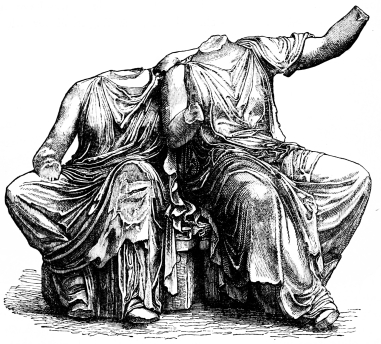
Fig. 207.—From the Eastern Gable of the Parthenon.
Demeter and Persephone.
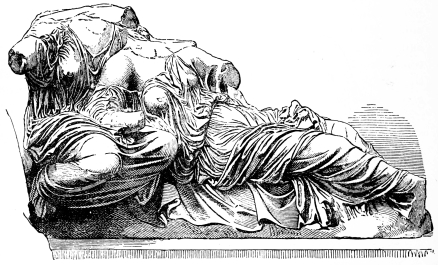
Fig. 208.—From the Eastern Gable of the Parthenon.
Aphrodite and Peitho.
That Pheidias attained his ideal was unanimously attested by his own
time, and by the later world so long as it had opportunity to see this
wonderful production. Even divinity itself must have approved, since,
according to the beautiful legend, as the master, at the perfecting of
his work, prayed for a sign of favor from heaven, a stroke of lightning
entered the temple and fell upon the floor in a spot which was marked
in later times as sacred. A feeling pervaded all antiquity that the
Olympian Zeus of Pheidias was the grandest and most divine of all works
of art, which not to have seen was a misfortune to be lamented, and the
sight of which lifted from the soul its cares and sorrows. Instead,
therefore, of dwelling upon the praises given by the ancients to the
details, we should seek rather to understand the principal traits which
justified this opinion, and which were characteristic of the master. The
archaic constraint prevalent in works of Ageladas and Calamis had been
overcome; but the combination of all previous results, and a nearly
absolute correctness of form, united to an ideal beauty quite beyond any
real experience, could not have been the chief causes of this
admiration. These were, indeed, important, especially in view of the
enormous difficulties presented by the chryselephantine process—in the
working of gold-plate; in the preparation, shaving, and uniting of the
ivory, so unpliant to the chisel, and, finally, in securing it to the
wooden form. But the essential and characteristic merit lay in the
bodily incarnation of a grand and truly godlike ideal, employing the
human form only as a word through which the elevated thought found
expression. The artist had set before himself the most exalted
aim—namely, to present to the eyes of the world the highest conception
of divinity as seen in Athene, the goddess of the mind, and in Zeus, the
king of gods. Hence the large number of Athenes executed by Pheidias,
and the Aphrodite Urania, the great “heavenly” goddess, the feminine
principle of the universe; hence, also, the fewer representations of
masculine or heroic forms, or of subordinate deities, in which this
master might be excelled—as by Polycleitos in his Amazon—because they
did not accord with his nature, or contain within themselves that ideal
greatness which he wished to unfold. Although the two chryselephantine
colossal statues, notwithstanding the perishable nature of their
construction, were comparatively long preserved—being in existence at
the end of the fourth century A.D.—still, there are no copies which
show more than their general composition. The marble statuette of Athene
(Fig. 204) has already been mentioned; in regard to the Olympian Zeus,
a copy upon a coin of Hadrian, which shows the usual carelessness and
weakness (Fig. 206), has in later times been justly preferred to the
mask of Zeus from Otricoli, formerly considered a copy after Pheidias.
Though the classical notices frequently give the only information
concerning the masterpieces of Pheidias, numerous original remains from
his workshop still exist. We cannot adduce as examples the glorious
metopes and frieze of the so-called Theseion in Athens, perfect as
appear these representations of the deeds of Heracles and Theseus upon
the former, and of the battle of the Centaurs and Titans upon the
latter; for as it is not known when this temple was dedicated, it cannot
be shown that its ornaments were executed in the period which came under
the artistic direction of Pheidias. Nor can we attribute to this school
the sculptures of the Erechtheion, which were not completed until
408—the beautiful caryatides of the portico, or the remnants of relief
from the frieze, preserved, unfortunately, only in scanty fragments.
These figures, indeed, instead of being carved from the blocks of the
frieze itself, were formed piecewise of Pentilic marble, and fastened
upon a dark ground of Eleusinian stone, probably for the effect of
color. As little may we cite the better-preserved reliefs upon the
frieze and balustrade of the small temple of Wingless Victory before the
Propylæa, which, from their great likeness to the sculptures upon the
mausoleum of Halicarnassus, seem rather to belong to the following
period. Overbeck thinks it probable that the frieze has reference to the
battle at Platæa; and the balustrade, according to Kekule, may have
something to do with the return of Alkibiades. In judging the Pheidian
school, the Parthenon offers, however, abundant material in the three
kinds of sculpture—round statues, high and low relief; although the
unhappy bombardment of Athens by the Venetians in 1687, when the
bursting of a bomb in the beautiful temple, then used as a
powder-magazine, and the succeeding explosion, destroyed more than half
the work. The last two centuries also have not passed without leaving
their mark; so that Lord Elgin’s robbery may, after all, have proved an
advantage, the greater part of the sculptures having been protected and
rendered accessible, since the beginning of this century, in the halls
of the British Museum. It is particularly unfortunate that the gable
groups have suffered most; for the perfection of these chief works must
have appeared of the greatest importance to the artist, and these
colossal statues would have given the best exposition of his ability.
Before the catastrophe above mentioned, however, these were badly
injured in consequence of the Temple of Athene Parthenos having been
transformed into the Church of Maria Parthenos, and later into a mosque,
the destruction appearing also to have been aided by the wilful malice
of Christian and Moslem fanatics. They were still further reduced after
the explosion by the unsuccessful attempt of the Venetians to carry off
as trophy a marble chariot and horses. The few notes of Pausanias upon
the subjects of the gable groups, the drawings of a French artist,
Carrey (taken not long before the bombardment), and the remains
preserved in the British Museum are sufficient to convey a conception of
the general composition. The eastern gable represented the birth of
Athene; not the unfortunate, artificial scene where the goddess springs,
ready equipped, from the head of Zeus, as frequently shown in pictures
upon vases and bronze mirrors, but the moment after, when she appears
before the deities of Olympos. The entire central part of the group
including the highest deities, the chief feature of the composition, is
lost; the rest is in greater part preserved. As the scene was in
Olympos, Helios and Selene, with their quadrigas, were fittingly chosen
as the limits of the composition; the former rising from the sea, in the
left angle of the gable, the latter sinking in the right; night
disappearing before the dawn. The adjoining statues, though much
mutilated, have been preserved. Next to Helios was Dionysos, resting
upon his tiger’s skin; with two sitting female figures, Demeter and
Persephone (Fig. 207), to whom hastens Iris, announcing the birth of
Athene. Upon the other side, next to Selene, lay Aphrodite in the lap of
Peitho (Fig. 208); and then Hestia, to whom Hermes, as the other
messenger, brings the glad tidings: these latter sculptures were almost
entirely destroyed in the time of Carrey. Nike—Victory—remaining only
as a torso, appears to have followed with Ares, advancing towards the
middle of the gable bringing greetings to the newly born goddess. All
the rest was destroyed before 1680 A.D., and the principal figures of
the composition are consequently unknown; but it is probable that
between the Victory and Athene stood Hephaistos, recoiling after having
delivered the blow upon the head of Zeus. Athene stood beside her
father, but it is not certain whether the latter was exactly in the
centre of the gable, or whether the two figures were equally removed
from it. If this last were the case, which is perhaps probable, the
division of the space would require still another deity upon the right
side. The remaining gods of Olympos, Poseidon, Artemis, and Apollo, were
probably arranged in this order between Zeus and Iris. The group of the
western gable represented the contest of Athene and Poseidon for the
Attic land. The composition is reasonably certain, though the middle
figures have here also disappeared. The two chief deities, standing at
either side of the olive-tree in the centre, turn towards their
chariots, that of Athene being driven by Victory, that of Poseidon by
Amphitrite; horses were harnessed to both, that of Poseidon not having
been drawn by dolphins or hippocamps, as formerly supposed. The
consciousness of victory was expressed by the bearing of Athene and of
her steeds, while the bowed head of Poseidon acknowledged his defeat:
the exclusion of the salt waves of the sea from the blooming meadows and
groves watered by the Kephissos. The angles of the gable beyond the
chariots were occupied by the retinue of the contestants, and by local
deities; the accurate determination of these is impossible, though upon
the side of Athene may have been grouped the representatives of the
Athenian continent, and upon that of Poseidon those of the sea and the
islands; while the figure of Kephissos is supposed to have filled the
extreme corner at the left, and Ilissos with Callirrhoe that of the
right. The scene was laid in Attica; and, as the earthly locality was to
be clearly characterized and populated, it was advisable not to
introduce again all the Olympian deities of the eastern gable. It is
probable that during antiquity the landscape seen from this chief front
of the Acropolis was famous for many local myths no longer familiar to
the scholar, in ignorance of which an adequate explanation is
impossible. The compositions alone give evidence of the grandeur and
elevation of the master who produced and arranged them, in a
truthfulness to nature at once ornamental and unconstrained. The
remains, with great simplicity and breadth of detail, show a force and
majesty which raise them above all known works of sculpture. In their
loving and perfect modelling of the nude and of the drapery, in their
freedom from affectation of motive or of rendering, and in their utter
lack of any striving after meretricious effects, they appear rather the
creations of magic than the labored carvings of men.
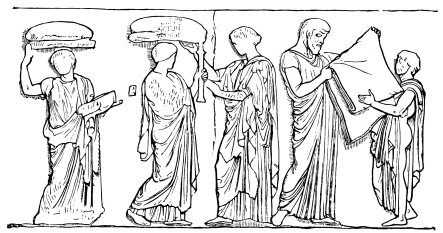
Fig. 209.—Fragment from the Frieze of the Parthenon
Cella.
The glorious and celebrated frieze, or, to speak more correctly,
zophoros, surrounded the entire cella. It is preserved in nearly four
fifths of its entire length, the chief part of the remains being in the
British Museum. It is evident that but little, if any, of this extensive
decorative work could have been executed by the hand of Pheidias
himself; but the grand design may be assumed to have been his, and the
carving was certainly done under his supervision. The scene represented
is the festive Pan-Athenaic processions, an imposing consecration of
elaborate gifts to the guardian deity, and probably also a division of
prizes to the victors in the various hippic, gymnastic, and musical
games. The movement of the train commences upon the southwestern corner
of the cella, and advances thence to the east, the entrance side of the
temple. It is thus naturally divided into two parts, one of which
occupies the western and northern, the other the southern side of the
cella; these are united above the pronaos, where the double procession
is shown as having arrived at the temenos before the temple; a priest
and priestess, with the persons directly employed in the sacrifice, are
preparing themselves for the sacred act—the former by laying aside his
upper garment, which he gives to the youth standing beside him, the
latter by taking a folding-seat from a female servant. (Fig. 209.)
Between this central group and the remainder of the divided procession
several deities, turned from the former figures, are watching the
approach of the train. At the left sits Zeus, enthroned, beside the
veiled Hera; these are followed by the Winged Victory, Ares clasping his
right knee with both hands, Demeter with the torch, and Dionysos, who
rests his right arm carelessly upon the shoulder of Hermes. Upon the
right, next to the high priest, was naturally the place of Athene, and
upon her left hand are still traces of the fallen Ægis; beside her was
Hephaistos, leaning upon his knotted stick; then, looking towards him,
Apollo, and further Peitho, Aphrodite, and Eros, the latter carrying a
shade for the sun. The gods sit comfortably as spectators who feel
themselves to be invisible. The first figures of the train, the leaders,
have already attained their destination, and stand quietly conversing,
supported upon their wands. In the succeeding women and virgins, who
bear vases, cups, cooling-vessels, braziers for incense, and baskets—a
wonderful train of perfectly beautiful forms—the advance decreases in
movement as they approach the centre. Upon the two long sides follow
herds of animals for sacrifice; the cows, proceeding quietly, scarcely
need guidance, while the bulls are more or less restless, reminding one,
in their forcible and momentary action, of the life-like works of Myron.
After them follows the music of the procession—players upon the flute
and lyre and the festive chorus; then begins the long line of chariots
and of horses with their riders, which fill the greater part of the
zophoros upon the longer sides and all of that over the epinaos. The
beauty and truth in the action of these figures are unsurpassed; the
most manifold variation of position is combined with perfect adaptation
to the peculiar style of low-relief, and the wisest reference to the
fitting of the composition within the space defined by the architectural
lines. While upon the eastern front the procession had arrived at its
destination, on the western the scene was still at the place of
assemblage and marshalling. Here the horses are bridled and arranged in
ranks; but the groups of men and youths stand in disorder, some hastily
arming themselves, others binding their sandals or adjusting their
mantles. Every action and gesture is simple and full of meaning; they
never mar the unity of the whole nor interfere with the neighboring
figures. The nude forms and the drapery are most carefully and equally
executed throughout; the accessories are forcibly, though less
elaborately, indicated. When the ceremonial reliefs of Assyria or Persia
are compared with the frieze of the Parthenon, it becomes strikingly
evident that the magnificence of personal accoutrements and inanimate
objects which was so painfully and minutely detailed by the Asiatic
sculptor, and elevated even above his schematic representations of
deities and human beings, was as nothing to the Greek artist in
comparison with the intellectual and physical beauty to which the great
Hellenic race gave their chief interest.
The third group of Parthenon sculptures, the ornaments of the metopes,
must least have harmonized with the nature of Pheidias. The
architectural framework must have become a hindrance and a fetter, and
the problem how to fill ninety-two square tablets of exactly the same
size with similar representations must indeed have appeared a thankless
task. These reliefs are in greater part lost, or so mutilated as to be
unintelligible; but as far as can be judged by the scanty remains, the
subject of the metopes upon the eastern side was the gigantomachia, that
of both long sides principally the Centauromachia, while that of the
western side was either the battle of the Amazons or of the Persians. In
contrast to the low-relief of the frieze, these, originally colored,
were—on account of the conditions of light—worked in such high-relief
as even, in some parts, to be freed from the ground. The variation of
subjects bearing so strong a resemblance is wonderful, especially in the
struggling Centaurs and Greeks, where but little scope in the victory of
one or the other combatant was possible: these are interrupted by the
rape of virgins and other scenes not surely to be determined. Naturally,
this desperate task would not have been completed without some few
artistic inequalities, repetitions, and far-fetched modifications,
especially as much of the execution must necessarily have been submitted
to inferior sculptors; but some of the metope reliefs appear, in point
of composition within the given space, and in grand, characteristic
drawing, scarcely less admirable than the frieze of the cella. From all
these works the spirit of the school of Pheidias is manifest in its
imposing majesty and ideal simplicity; at times, also, traces of the
forcible action of Myron may be observed.
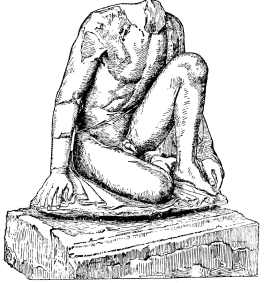 Fig. 210.—From the Eastern Gable of the Great Temple of
Zeus, Olympia.
Fig. 210.—From the Eastern Gable of the Great Temple of
Zeus, Olympia.
These extensive productions of the school and workshop of Pheidias
cannot be directly attributed to any of the known scholars and
assistants of the master, many of whom attained individual celebrity. In
the first rank of these should be mentioned Agoracritos of Paros, the
favorite pupil of Pheidias, whose works were so perfect that the
ancients were frequently in doubt to which of these sculptors they
should be ascribed; it is possible, however, that this doubt may have
arisen from the predominant impression left upon some of the statues by
the guidance and assistance of the master. The chief creations of
Agoracritos were two Athenes, a Zeus, and notably the colossal figure of
Nemesis at Rhamnous, supposed to have developed from the unsuccessful
Aphrodite prepared for the competition with Alcamenes. Another scholar
and assistant of Pheidias was Colotes of Paros, a sculptor who appears
to have restricted himself to the chryselephantine process, and who is
especially noted for the part taken by him in the execution of the great
Olympian Zeus. Other works in gold and ivory by Colotes were the Athene
upon the Acropolis of Elis, an Asclepios erected in the vicinity, and
the sacred table in the great Temple of Zeus, for the division of prizes
after the Olympic games, the sides of which were ornamented with
reliefs.
 Fig. 211.—From the Western Gable of the Great Temple of
Zeus, Olympia.
Fig. 211.—From the Western Gable of the Great Temple of
Zeus, Olympia.
 Fig. 212.—Head of Apollo, from the Western Gable of the
Great Temple of Zeus, Olympia.
Fig. 212.—Head of Apollo, from the Western Gable of the
Great Temple of Zeus, Olympia.
Alcamenes of Athens, or Lemnos, and Paionios of Mende have hitherto been
considered as chief among the scholars of Pheidias; but the recent
excavations at Olympia have done much to refute this opinion, unless, as
is very possible, Pausanias makes a mistake (v. 10) in assigning to
Alcamenes the sculptures in the front gable of the Temple of Zeus,
instead of the acroteria above them, which alone is mentioned in an
inscription as his work. No one can detect in the discovered fragments
of these gable sculptures, more numerous than those of the Parthenon,
the slightest dependence upon the art of Pheidias, which they appear to
precede in point of development. The group of the eastern front,
ascribed by Pausanias to Paionios, represented the instant before the
chariot race of Oinomaos and Pelops (Fig. 210); that of the western
the struggle of the Lapithæ and Centaurs at the wedding of Peirithoos.
(Figs. 211 and 212.) The character of these works seems rather to
connect them with the school of Calamis than with that of Pheidias, this
being especially the case with the metopes. (Fig. 213.) The question
will hardly be decided until authenticated sculptures by Calamis, or
remains of the gable groups of the temple at Delphi, which were the
production of his scholars Praxias and Androsthenes of Athens, have
become known to science. In the meantime, it is impossible to disprove
the hypothesis of Brunn, who sees in those of Olympia examples of an art
peculiar to Northern Greece, remarkable for its picturesque realism and
lack of artistic and ideal conventionalization. It is only certain that
these groups are far inferior to those of the Parthenon, and, indeed, to
those produced by any workshop of Athens after the time of Pheidias.
Even if the questionable account of Pausanias prove to be true, it is
certain that a judgment of the artistic style of Alcamenes and Paionios
cannot be formed upon these decorative sculptures alone. Works of the
stage of development shown by the western gable of Olympia could not
have ranked with the bronze Pentathlos of the former artist, which was
known in antiquity by the predicate “exemplary;” nor could an Aphrodite
of Alcamenes have been preferred to a statue by Agoracritos, which had
been retouched by Pheidias himself. The extensive employment of
Alcamenes in Athens among the greatest successors of Pheidias and Myron
would have been impossible had not his works been far higher in every
respect than those attributed to him among the recent discoveries in
Olympia, in view of which it is inconceivable how Pausanias could speak
of Alcamenes and Pheidias almost as equals. The same argument applies to
Paionios, of whose works a fortunate illustration has been provided by
one of the most important discoveries made in the Altis, the Victory
(Fig. 214), authenticated by an inscription upon the high triangular
pedestal. This figure does indeed recall the spirit and methods of the
Pheidian sculpture, and differs greatly from the remains of the eastern
gable, as may readily be seen by comparison of Figs. 210 and 214. This
contrast is only to be explained by a gigantic and almost inconceivable
progress, or by the assumption that they were the works of different
artists and periods.
Fig. 213.—Metope from the Cella of the Great Temple of
Olympia. Atlas, Heracles, and the Nymph of the Hesperides.
 Fig. 214.—Victory of Paionios, from Olympia.
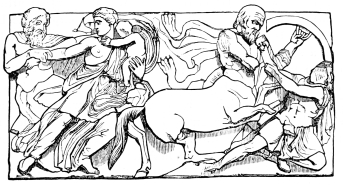
Fig. 215.—From the Frieze of the Temple of Phigalia.
If the Attic artists of this age be likened to planets revolving about
the Pheidian sun, there were not wanting stars of the second magnitude,
belonging to other systems and moving in other circles. Especially
prominent among these latter was the direct and indirect school of
Myron, an artist so pronounced in his wonderful naturalism that his
style could not be extinguished even by the dominating idealism of
Pheidias. Lykios, son of Myron, appears, from two celebrated works, to
have followed closely in the footsteps of his father. These were the
statues upon the Acropolis of Athens representing two boys, one of whom
bore a basin for holy-water, while the other blew the coals in a censer
into a lively glow. The latter reminds one of Myron’s Breathing Ladas;
in this, as in the Runner, the quickened breath was the essential thing,
and was not confined alone to the swollen cheeks, but must have been
evident in the breast and body. The figure bearing the font was a
zealous choir-boy, panting under a too heavy burden; and this also
recalls the Ladas. Still another statue, the Pancratiast Autolicos,
claimed by Urlich for Lykios, seems to have resembled the Discos-thrower
of Myron. That Lykios did not confine himself to such genre-like
specialties is shown by groups like the Argonauts, and by the votive
offering of the citizens of Apollonia at Olympia, a truly grand
composition representing Zeus deciding the result of the strife between
Memnon and Achilles, according to the Æthiopis of Arctinos. In
connection with Lykios may be mentioned Styppax of Cyprus, whose
masterpiece, the Splanchnoptes—the entrail-roaster, a man fanning a
fire—recalls in turn the choir-boy blowing the coals. Similar to the
Dying Ladas, though less directly connected than these last examples,
was the mortally wounded warrior of Cresilas, in which, according to
classical accounts, the last moments of life could be measured; his
wounded Amazon also appears to have been more in the style of Myron and
Pythagoras than of Pheidias. No works by the immediate followers of
Myron now remain, nor any attested copy; still there can be little
hesitation in ascribing to this school an important achievement, not
perhaps belonging to it so fully as do the architectural sculptures of
the Parthenon to the workshop of Pheidias, yet having more in common
with the school of Myron than with that of any previous master. This is
the frieze of the Temple of Apollo at Phigalia—now in the British
Museum—the architectural position of which has already been defined.
The temple is said to have been built under the direction of an Athenian
architect; it is probable, therefore, that Attic sculptors were employed
for its ornamentation, especially as the sculptures betray no trace of
the Argive influence which prevailed elsewhere in the Peloponnesos, and
which will be further treated below. Though the subjects were Attic, as
battles of Amazons and Centaurs, they cannot be likened to the school of
Pheidias, for, instead of the passionless grandeur and ideal simplicity
which characterized the sculptures of the Parthenon, there is in them a
vehemence and excitement known at this period only in the works
influenced by Myron. It is not strange that this excessively passionate
action should sometimes be wanting in beauty; the power of execution at
command in the remote city among the Arcadian mountains was not of the
first rank, and the guidance of a master, like him who directed the
sculptural work of the Parthenon, was wanting.
Two artists of this period were entirely independent, proceeding in
degenerate directions; first, Callimachos, noted as an artisan in
metal-work, who executed the rich and elegant lamp of the Erechtheion,
and was said to have originated the Corinthian capital; but who, as a
sculptor, carried a refined delicacy and formal perfection even to an
extreme. This won for him the cognomen of Catatexitechnos—the
unreasonably careful. Callimachos did not, like Apelles, know when to
withdraw his hand from his work, which agrees with Pliny’s judgment
concerning him, that, by over-exactness in execution, all grace was
lost. A still more questionable tendency is shown by Demetrios of
Alopeke, in Attica, the first realist. Pre-eminently a sculptor of
portraits, he affected striking characteristics at the expense of
beauty, and made it his specialty to represent the likenesses of
decrepit men and women. A priestess sixty-four years old, and an aged
Corinthian field-officer, Pelichos—“a bald-head with a pot-belly,
tangled and flying beard, and veins projecting roundly under the
withered skin,” according to the description of Lucian—must have been
so far from ideal and refreshing beauty that it would seem rather to
have been the aim of the artist to illustrate age as its destroyer.
Thus, in comparison with Pheidias and Myron, Demetrios resembled
Thersites among the heroes of Troy.
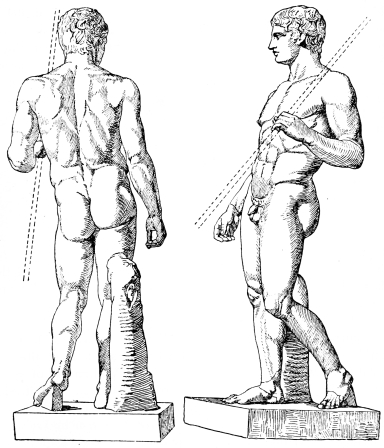
Fig. 216.—Copy of the Doryphoros in the Museum of
Naples.
Argos deserves the second place as the site of the artistic industry of
this period, which had then been greatly advanced by Polycleitos of
Sikyon, a fourth scholar of Ageladas, and somewhat younger contemporary
of Pheidias, but in a direction different from that of the Attic school.
Myron had characterized intense and momentary animal life, Pheidias
that of absolutely ideal and divine being. Polycleitos chose as his aim
the artistic representation of the highest human beauty—a positive type
of bodily perfection. The Doryphoros, known in antiquity as the
masterpiece of the latter, and celebrated as a canon, was a youth in a
quiet position, bearing a lance; it was considered the embodiment of
perfect form, the master himself having written a treatise upon the
proportions of the human figure in illustration of this statue. It is
not improbable that Polycleitos, in this work, desired to set a pattern
before his numerous scholars; that he was himself too dependent upon
this academical tendency may be judged from the slightly disparaging
words of Pliny that “his works were almost as if taken from one model.”
According to the intention of the artist and to the general conviction
of his time, the Doryphoros represented absolute perfection of the human
body; and this left the master but little scope for the varying of his
model, if he would not prove untrue to that beauty which Cicero has
praised so highly in all his works. The so-called Apoxyomenos—an
athlete scraping himself with a strigil—similar in subject to the
statue of Lysippos (Fig. 229), was also a figure placed in the quiet
attitude of parade, if not, like the Doryphoros, with an academic
purpose. A third work, the so-called Diadoumenos, a boy binding his head
with a fillet—sometimes considered as a companion piece to the
Doryphoros—appears to have shown a more youthful and less athletic
development of form. It is not strange that archaeologists have taken
great pains to identify, among the numberless works of Roman sculptors,
imitations of these two canonical figures, the existence of which was
naturally assumed from the great celebrity of the Greek originals. The
scholars Friederichs, Schwabe, Michaelis, Helbig, Kekule, and Benndorf
have accordingly discovered six repetitions of the Doryphoros, preserved
in Cassel, Naples, Florence, the Vatican, and the Villa Medici; while
several other statues in Dresden, the Louvre, the Vatican, and the Villa
Albani have been recognized as variations differing more or less from
this type (Fig. 216). In like manner, copies of the Diadoumenos have
been found in Madrid, in two marbles of the British Museum, in a bronze
statuette of the National Library of Paris, and in a relief of the
Vatican: all of which are allied in point of conception and artistic
character. Still it is inexplicable how these thick-set and muscular
forms could be spoken of by Pliny as viriliter puer and as molliter
juvenis, or by Lucian as graceful dancers; though it is possible that,
in these academical studies, the canonical perfection of form decided by
Polycleitos was not so well embodied as in the bronze Idolino of the
Florentine Museum. The question is far from settled, and it should not
be forgotten that eminent authorities doubt this origin, Conze imputing
them rather to the school of Cresilas, while Petersen even maintains the
type to have been a Roman invention.
An Amazon in a quiet pose gave Polycleitos an opportunity for portraying
a female form of muscular development, yet of typical beauty. It is not
difficult to believe that this statue was adjudged even superior to the
similar productions of Pheidias, Cresilas, and Phradmon, which could
hardly have been the case if the subject treated had been a deity or a
figure of momentary action. (Fig. 217.) The artist could even better
follow his academic aim in the two Canephoræ—basket-bearers—whose
quiet pose and want of inner expression were so well suited to display
an outward, formal beauty and correctness of modelling. But the
Astragalizontes—the boy throwing dice of knuckle-bones—which,
according to Pliny, was the most perfect work of art in Greece, should
not be imagined in an excited, striking situation, or as a street scene
conceived with a truthfulness to nature characteristic of Murillo, but
as representing the consummation of boyish beauty.
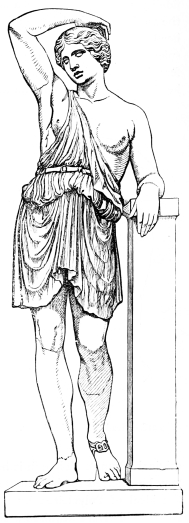 Fig. 217.—Amazon, after Polycleitos.
When Quintilian says that Polycleitos elevated the human figure above
what is seen in nature, and yet, contrary to Pheidias in his statues of
the deities, had not attained to the majesty of the gods, this signifies
that he had not so fully represented the divine nature. His devotional
images are few and without especial fame, with exception of the colossal
chryselephantine Hera in the temple between Argos and Mykenæ. The
goddess, seated upon a throne, was draped in garments of gold, with
only the head and arms bare; the sceptre in her right hand was crowned
with the cuckoo, symbol of conjugal fidelity, and in her left was a
pomegranate; at her side stood Hebe, the work of Naukydes, the master’s
best assistant. As the Pheidian head of Zeus has been recognized in the
mask of Otricoli, so the splendid colossal mask of the Ludovisi Juno
(Fig. 219) has been referred to an original by Polycleitos. But it is
probable that the head of Hera, in the museum at Naples (Fig. 218)
came nearer to this original (Brunn). Though it be asserted that all the
heads of Zeus may be referred to the complete and established type of
Pheidias, the ideal of Polycleitos, by no means divine, renders it
doubtful whether his Hera acquired a similar position among the
succeeding representations of that goddess.
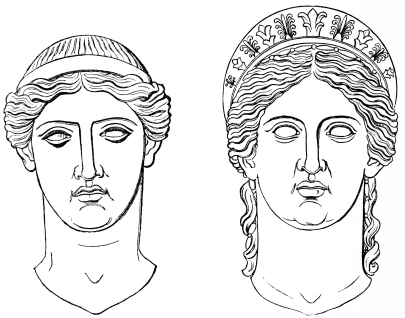
Fig. 218.—Head of Hera, in Naples.
Fig. 219.—So-called Juno Ludovisi, in Rome.
The effort after perfection of form sufficed to make the master of Argos
a pre-eminent teacher; yet none of his many direct scholars, with the
exception perhaps of the before-mentioned Naukydes, acquired such fame
as the associates of Pheidias, perhaps on account of this very schooling
and discipline, the rigid constraint of a canon fettering the wings of
artistic individuality. We are not able to judge how far this tendency
was furthered during the short period of Theban ascendency by the
somewhat later branch of the Theban school, although, among many others,
the Theban artists Hypatodoros and Aristogeiton were of considerable
importance. The groups consecrated at Delphi about 380 B.C. were of
particular interest; they represented the advance of the Seven against
Thebes, and the successful repetition of the invasion by the sons of
those warriors. It was not until Lysippos, an indirect scholar of
Polycleitos, in his desire to represent men as they should be, had
raised himself entirely above the canon of his master, who aimed to show
them as they are, that another artist of the first rank appeared.
Examples from the workshop of Polycleitos still exist, though
unfortunately scarcely recognizable in the mutilated fragments of
sculpture from the Temple of Hera, discovered by Rangabe and Bursian in
1854—works which were doubtless executed under the direct guidance of
the Argive master, as those of the Parthenon were under that of
Pheidias.
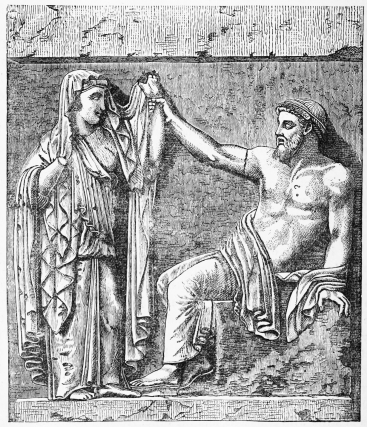
Fig. 220.—Metope of the Southern Temple upon the Eastern
Plateau of Selinous.
The influence of Attica and Argos not only prevailed in Greece proper,
but made itself felt even in the most remote colonies. The Zeus upon one
of the metopes of the southern temple on the eastern plateau of Selinous
(Fig. 220) may have been developed from the figures of Zeus by
Ageladas, and suggests the sculptures of the Olympian temple which was
completed about the same time. This metope represents Zeus fascinated by
Hera upon Mount Ida (Il. xiv. 300), and the artist, in his figure of the
god, has surpassed his former efforts, but the Hera is harder and more
antique. The other well-preserved metopes of this temple—one of which
shows a Heracles in strife with Amazons, and the other Actaion lacerated
by dogs—though not without provincial weakness, have an unmistakable
affinity to those of the Theseion. These were nearly contemporaneous,
but an entire generation later there appeared at Messene, in the most
remote part of the Peloponnesos, the sculptor Damophon, an artist
decidedly of the Pheidian style, on account of which he was called to
restore the Olympian statue, already warped and disjointed. Although a
sculptor of ability, it would seem that he did not entirely withstand
the current of a new direction in art; besides the statues in the
Pheidian circle of divinities, others were ascribed to him, of a nature
similar to those cultivated by preference during the succeeding period
of Attic sculpture. The progressive force inherent in the people and in
the art of Greece did not rest until the highest point had everywhere
been reached. This impulse afterwards led to excess and decadence,
permitting no lasting enjoyment of the previous gains. The art of
Polycleitos prevailed somewhat longer in the Peloponnesos, the Dorians
being by nature conservative, but in Attica the new elements early
obtained a sway which could not but essentially change the character of
all Hellenic sculpture. The frieze upon the Temple of the Wingless
Victory in Athens, and the somewhat coarser one within the naos of
Phigalea, began already to give evidence of an inclination towards the
pathetic and passionate; the sculptures also upon the balustrade of the
Athenian temple, executed probably about 390 to 380 B.C., appear to be
the unmistakable forerunners of a new style. The Athenian Kephisodotos
the elder stood, so to speak, upon the threshold of this transformation.
His position in the history of art is assured by the fortunate discovery
of a copy of his Eirene with Ploutos, now in the Glyptothek at Munich
(Fig. 221). This work combined the tendencies of the new Attic style
with those of Pheidias. Though the noble simplicity and grandeur, the
earnestness and strictness, of the earlier period still remained, there
had already dawned an expression of deeper feeling, and of a more
spiritual life.
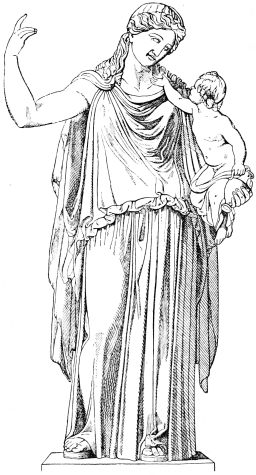 Fig. 221.—Eirene and Ploutos, after Kephisodotos.
The representation, as Friederichs says, of the deep interchange of
affection between mother and child, as shown in the Eirene of
Kephisodotos, united with much of the hardness of the older works,
culminated in two masters—the Parian Scopas and the Athenian
Praxiteles, the latter possibly the son of Kephisodotos. Their
productions were so nearly related that, even in antiquity, it was
doubtful whether a work of celebrity should be ascribed to one or to the
other. The chief creations of both were statues of the deities, both
worked in marble, choosing this material not by chance, but from the
nature of their subjects. With the exception of such colossal figures,
of a highly monumental character, as the chryselephantine statues of
Zeus and Athene Parthenos by Pheidias, and the Hera by Polycleitos, the
delicate beauty of soft and transparent stone was best fitted for the
images of deities enshrined within the temple; bronze, on the contrary,
is peculiarly suited to statues of victors and athletes intended for
outdoor exposure. It was on this account that it had been so largely
employed by Myron and Polycleitos.
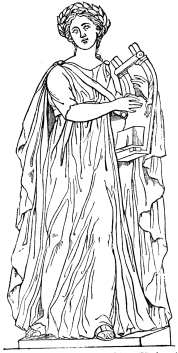 Fig. 222.—Apollo Kitharoidos. (Vatican.)
The Raging Bacchante, designated by epigrams and descriptions as the
most celebrated work of Scopas, was one of the first masterpieces of
antiquity. The head was thrown back in an ecstasy of passion, the hair
loosened, and the long garment fluttering in the wind; thus did the
Mainad appear rushing to the heights of Kithairon, holding in her hands
the kid rent in her fury. If the rhetor Kallistratos was, as he says,
speechless at sight of the countenance, admiring particularly the
expression of a soul stung into madness, we can well believe that
passion itself was embodied in this work. The excitement was more
moderate in the Apollo of the Temple of Nemesis at Rhamnous, brought by
Augustus to the Palatine, playing the lyre and singing with lyric
inspiration. It is not improbable that the motive of the Apollo in the
Vatican, with the long flowing garments (Fig. 222), may be referred to
this original. The entire bearing more closely resembles that of the
figures of the children of Niobe. We can hardly think without enthusiasm
of the Bithynian Achilles group, placed in later times in the Temple of
Neptune, near the Circus Flaminius in Rome, which, according to Pliny,
would have made the master celebrated even though he had created nothing
else during his lifetime. It represented Achilles upon the island of
Leuke after his death, and his reception among the deities, and
displayed, besides Thetis and Poseidon, numerous fantastic creatures of
the sea. Some idea of these last may be gained from a magnificent frieze
found in the vicinity of the Temple of Neptune, and now in the
Glyptothek at Munich. But it cannot belong to this group, and, in its
main features, has no close relations with it.
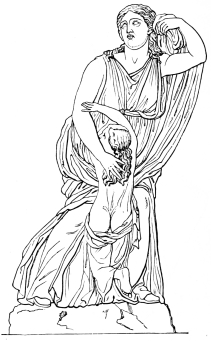 Fig. 223.—Central Figure of the Niobids. (Florence.)
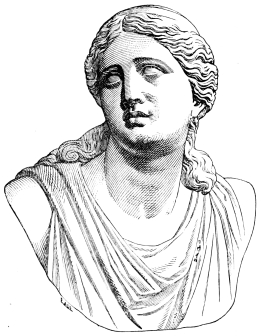 Fig. 224.—Head of Niobe.
Delicate beauty and warmth of feeling must be ascribed to the works of
Scopas, otherwise Pliny could not have placed the Aphrodite found in the
Temple of Mars, near the Circus Flaminius, above that of Praxiteles. Nor
can we imagine the groups at Megara—Eros, Himeros, and Pothos (Love,
Yearning, and Desire)—described by Pausanias; or Aphrodite, with her
priestly lover Phaethon; or Pothos, in Samothrace, to have been without
these traits. The group of Leto with the nurse Ortygia carrying the
children, Apollo and Artemis, as the personification of a mother’s joy
and pride, must have been full of deep meaning. It is evident, from the
long list of his works, that his power was many-sided: his peculiar
style is best exemplified in a grand composition, the group of the
Niobids, though Pliny is in doubt whether it should be ascribed to
Scopas or to Praxiteles. The original of this no longer exists, and even
the very unequally executed pieces—to be found chiefly in the Uffizi at
Florence, and in various repetitions in different museums—are not
complete; still even thus they betray the greatness and individuality of
this wonderful work. Niobe, wife of King Amphion of Thebes, and mother
of fourteen children, in a boastful spirit, inherited from her father
Tantalos, compared herself with Leto, who had only two, and ordered
sacrifices to be made to herself rather than to that goddess. For this
she was terribly chastised by Apollo and Artemis, her children being all
slain before her eyes by the avenging arrows of the two deities. She
herself, trying in vain to protect her youngest daughter, pressing
against her, makes an attempt to draw her mantle over her head to hide
the expression of despairing woe which, according to the legend, in a
few moments turned her to stone. The figure, in its royal nobility and
motherly despair, yet so free from contortion, has wonderful effect.
(Figs. 223 and 224.) The children, already wounded and hurrying
towards her, show pain, fear, and need of help in different degrees, but
with that dignity and fine control which render it a tragedy in the
highest sense. The various struggles of feeling in the beautiful young
faces; the excited wrestling with an invisible, unconquerable,
relentless power, in every gesture, and in every motion of the swaying
garments; the plaintive character of the lines throughout the whole
composition, entirely opposed to the vertical tendency of the
statuesque, and especially of the architectural art; the wavy flow which
distinguishes it from the group at Ægina, and even from the quiet action
of the figures in the gables of the Parthenon—are all so peculiar to
this pathetic school, and so characteristic of its productions, that the
Niobe will ever be considered the greatest example of its style.
In a study of the artistic character of Scopas, we must content
ourselves, for the most part, with a few copies, and some not very full
accounts. Still, original remains from his hand are not altogether
wanting. We have seen that he was engaged in the sculptural
ornamentation upon the eastern side of the Mausoleum of Halicarnassos;
while upon the south and north sides his younger associates were
employed—Timotheos, Bryaxis, and Leochares, the latter known to us by a
copy in the Vatican of his Ganymede Carried Away by the Eagle of Zeus.
But the greater part of the recognizable reliefs upon the frieze, the
most important group of which represents the so often recurring battle
of the Amazons, notwithstanding the wonderful beauty and pathos of the
action, peculiar to the sculptured art of this period, is the work of
artisans, and certainly not by the hand of a master of the first rank.
(Fig. 225.) Among the numerous fragments of the statues found in the
English excavations of 1856, which, from analogy with the mausoleums of
the Roman emperors, may have stood between the columns, one at least, a
well-preserved torso, probably of Zeus, found upon the eastern side, has
been ascribed to Scopas. The others are, unfortunately, too much
mutilated to allow of any reliable judgment, as the varying views of
different authorities testify. At all events, these decorative works
cannot be ranked with the more celebrated examples of this master.
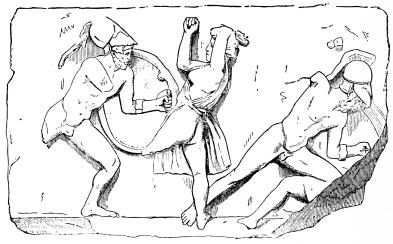
Fig. 225.—Fragment of the Frieze from the Mausoleum of
Halicarnassos.
An acquaintance with the art of Scopas is extended by the study of his
younger and still more important contemporary Praxiteles. The
masterpieces of this artist are similar in character, and betray all the
preference of the former for the ideal beauty of youth. Not less than
five statues of Aphrodite by Praxiteles are known to have existed,
among which the famous statue at Cnidos was regarded as one of the
wonders of the world, and was ranked with the Olympian Zeus. It was so
highly prized among lovers of art that King Nicomedes of Bithynia, for
instance, in vain offered to the people of Cnidos the entire amount of
their State debt in exchange for it. The brow, the moist glowing eyes,
and soft smile of the slightly parted lips are described as wonderful;
the whole figure being so executed as to cause the marble to be
forgotten and the goddess of love to appear a reality. Coins of Cnidos
show the figure to have been entirely nude, the left hand holding her
drapery, partly lying upon a vase, and the right shielding herself in
modesty. The best in this style among the numerous remaining statues
were the Braschi Aphrodite, now in the Glyptothek at Munich, and that of
the Vatican, which is, however, inferior in execution, and is,
unfortunately, disfigured in the lower part by hard, modern drapery.
Next to that of Cnidos in nobility and beauty must have been a draped
Aphrodite from Cos, provided the people of that place had any
understanding of art; for, when the choice between the two was offered
them by the artist, they gave the preference to this. Of the three
others, less known, the Thespian was placed next to the statue of
Phryne, as contrasting divine with human beauty. To Praxiteles were
ascribed, also, at least two representations of Eros—blooming,
youthful figures, of which the most celebrated seems to have been the
Thespian or Bœotian one, which was installed between the Phryne and
the Aphrodite. Epigrams and accounts describing the god as wounding not
with the arrow, but the eye, appear to relate to this figure; for the
second statue from Parion, in Mysia, according to the coins, showed the
god unarmed, and with head uplifted.
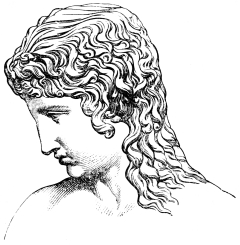 Fig. 226.—Head of Eros. (Vatican.)
A tender and almost effeminate character was exhibited in these
beautiful figures of youth, similar to which were the Sauroctonos—the
lizard-killer—the best copy of which is in the Louvre; the dreamily
reposing Satyr, of which there are copies in various museums; and the
smiling, sentimental Dionysos with the doeskin, leaning upon the
thyrsos. Great depth of suffering and sorrow is the fundamental feature
of two groups, one representing the rape of Proserpine, the other her
delivery by Demeter to the lower world, to which she returned after
every harvest, as a symbol of the following fruitless season.
This last was as pathetic an illustration of a sorely tested mother as
could be found in any other work of Praxiteles. The mild Demeter was not
less frequently presented by this master than was Aphrodite.
That greatest of all modern discoveries, the Hermes with the infant
Dionysos, found in the Heraion at Olympia (Figs. 227 and 228), has
proved the error of imputing to all the works of Praxiteles a delicate
gracefulness verging upon weakness, which had arisen from the study of
the only examples hitherto known—the copies of the Sauroctonos, the
Satyr, and the Aphrodite. The manly force of this statue, in character
midway between the conceptions of Pheidias and Lysippos, is, indeed, so
surprising that some scholars have even been inclined to assume a second
sculptor by the name of Praxiteles, there being no reason to doubt the
direct testimony of Pausanias as to the authorship of this work. The
beauty of this torso exceeds that of all other antique statues known;
the expression of the head conveys that intense sympathy between the
loving protector and the child which must have characterized the work of
Kephisodotos referred to above. It is possible that the Hermes was the
product of an earlier period of the sculptor’s development, more closely
related to the tendency and ideals of Pheidian art. When it is
considered that this torso is the only surely authenticated original
production of any great master of Greek sculpture—for it is by no means
certain that the gable groups of the Parthenon are by the hand of
Pheidias himself—there is no need for further discussion of the
fundamental importance of this most fortunate discovery.
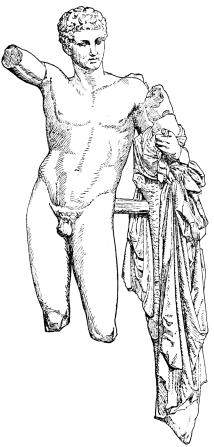 Fig. 227.—Hermes with the Infant Dionysos.
(From the
Heraion at Olympia.)
Notwithstanding the astonishing many-sided genius and productivity of
Praxiteles, nearly all the Olympian deities appearing in the half
hundred of his works, it must still be acknowledged that, besides his
pathetic tendency, he particularly affected that province in which the
figures of maidens or youths gave opportunity for the development of the
greatest charms. His works portray a sensual loveliness distinguished
alike from that hard and abstract beauty, that outward perfection of
form sought and attained by Polycleitos, and from that elevated, godlike
being ideally embodied by Pheidias in his Zeus and his Athene. Neither
entirely human, as with Polycleitos, nor divine, as with Pheidias, this
emotional loveliness seemed created for the world of gods, but little
raised above the sight and experience of men; and this type appears to
have been as well established by Praxiteles as that of the higher
deities by Pheidias. Its examples are the Aphrodite and Eros, the
youthful Dionysos with his train, the Demeter, and the Eleusinian
circle.
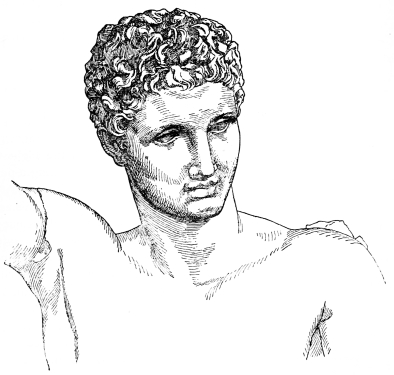
Fig. 228.—Head of the Hermes of Praxiteles.
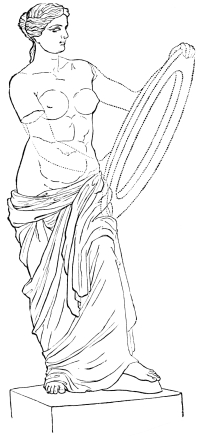 Fig. 229.—Venus of Melos. (Louvre.)
However important the school of these two masters of pathos may have
been, but few among the numerous names that have been preserved became
prominent. The chief exceptions are the above-mentioned assistants of
Scopas upon the mausoleum, and the two sons of Praxiteles, Kephisodotos
the younger, and Timarchos. Two of the greatest works of statuary,
however, may be ascribed to their most vigorous scholars—the Venus of
Melos in the Louvre (Fig. 229) and the so-called Ilioneus in the
Glyptothek at Munich. If the doubtful inscription of the artist upon the
former be credited, which, in characters of the first century B.C.,
designated it as the production of |Ale|xandros, son of Menides of
Antioch upon the Meander, but which, together with the corresponding
part of the plinth, has disappeared, we should possess in this work an
inexplicable anachronism, a creation of the highest rank in art produced
during a period of decided decadence. As, however, through this loss,
this assumption cannot be verified, science must proceed to judge it by
its style alone. Its grandeur and dignity, in contrast to the immodest
coquetry of later works; the fulness of the flesh in this body of
ever-blooming youth, in comparison with their attenuated grace; the mild
softness of the surface beside the cold polish of the other figures of
Aphrodite—would place this statue between the period of highest
perfection at the time of Praxiteles, and that of the Roman
reproductions. The reference of the Venus of Melos to the school of
Praxiteles has found a justification not to be undervalued in the
discovery of the Hermes at Olympia, this figure of manly youth forming
as complete a pendant to the maidenly Venus as could be imagined. In
artistic character this is far more nearly related to the Hermes than
is any other statue of Aphrodite, not excepting the undoubted Roman
reproduction of that of Cnidos. At any rate, it is clearly an Hellenic
original, not belonging to the period of later Hellenistic art.
Unfortunately, no explanation of this statue hitherto advanced has been
entirely satisfactory. The two arms are wanting, and the fallen drapery
covering the lower limbs has hidden from us the only accessory
evidence—namely, the object upon which the lifted left leg is
supported; so that even the name of Venus is not to be applied with the
usual certainty. The Roman types of Victory, also half nude, with the
same garments and position, and with the shield upon which the conquest
is inscribed, suggest an Aphrodite-Victory analogous to the Attic
Athene-Victory. The restorations all present points of difficulty; among
them may be mentioned that commonly received, where the goddess
contemplates herself in the shield of Ares, supported by the analogy of
a statue mentioned by Pausanias (ii. 5), an interpretation equally
applicable to the Venus of Capua, now in Naples; that also of Wiesler,
with the lance in the uplifted left hand; and the combination of the
goddess in a group with Ares by Quatremère de Quincy.
It is even less easy to find a reliable explanation of the beautiful
torso in the Glyptothek at Munich, formerly held, falsely, to be
Ilioneus among the Niobids, and even believed to be an original. As the
Venus of Melos is an illustration of ripened womanly beauty, the
entirely nude, cowering figure, without head or arms, represents the
perfection of youth; and the position suggests a subject equal in
pathetic import to that of the children of Niobe.
As the works of Scopas and Praxiteles frequently found their way to the
islands of the Ægean Sea, and as the former, at least, had certainly
dwelt for some time in Asia Minor, the influence of these two masters
appears to have extended eastward, and their style to have had decided
sway even longer there than in Greece proper. The farthest outlying
examples are presented by the fragmentary statues of the Nereids from
the Monument of Xanthos, to which they have given the name.
At that period, even in Athens, some highly esteemed artists not only
partially followed their own ways, but in these surpassed the former
masters, and pursued aims which did not become generally prevalent until
the middle of the fourth century, and then in quite other localities.
These were Silanion of Athens and Euphranor of the Isthmos. The first
devoted himself chiefly to portraits and representations of victors, and
was so especially successful in the former as to make them a real
embodiment of personal character; as, for instance, the portrait of the
passionate sculptor Apollodoros was made to appear a personification of
sudden rage. Silanion distinguished himself from Praxiteles in the
subjects of his art, in which he had much in common with Lysippos.
Euphranor was also, perhaps in a still greater degree, a painter, and,
in the coarser power of his creations, was opposed to the delicate style
of Praxiteles, showing more affinity with Lysippos, so far, at least, as
we can judge of his sculptures by the accounts of his paintings.
Similar to the transitional position between Pheidias and Scopas, held
by the elder Kephisodotos, was the position taken by these two sculptors
between the art of Scopas and Praxiteles and that of Lysippos, for whom
the studies and innovations in the canons of human proportions prepared
the way. Though self-taught, for as a youth he had been a hand-worker in
brass, and from this had raised himself to the position of an artist, he
was still not without connection with the schools, since he took as his
model the Doryphoros of Polycleitos, the academic pattern mentioned
above, and also worked in bronze, the material most favored by
Polycleitos and the artists of the Peloponnesos. He cannot, however, be
called a direct scholar of Polycleitos, whose canon he corrected and
even replaced by a new one, better adapted to the artistic aims of the
younger masters. The model of Polycleitos was the human body, but
Lysippos felt that he must set his ideal of humanity higher than in the
average of real examples, because he considered these, in comparison
with the perfect figure, to be degenerate and dwarfed. Although he
worked with reference to this view, still he developed his types from
the real appearances of nature; and when asked by the painter Eupompos
of Sikyon for advice as to the best teacher, he pointed to an assemblage
of people. He wished to represent man, however, not as he is, but as he
should be, and employed only those features which did not fall below
the average determined by Polycleitos. His ideal type of the human body
became more slender and larger, the size being especially apparent
because the head and extremities, which take their proportions from the
whole, were made smaller.
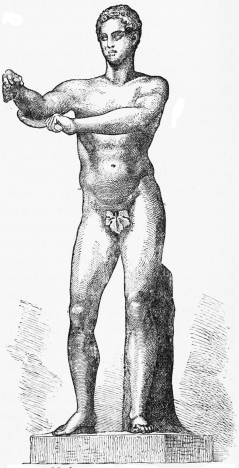 Fig. 230.—Marble Copy of the Apoxyomenos of
Lysippos.
(In the Vatican.)
Lysippos, however, followed the footsteps of Polycleitos in considering
the establishment of a canon as the greatest essential in art, and
exercised his powers chiefly in the province of humanity. His
Apoxyomenos—the athlete scraping himself with the strigil, a marble
copy of which is in the Vatican—is the most celebrated among his
statues of athletes and victors. (Fig. 230.) In this he seems to have
set forth his new confession of faith, in opposition to that of
Polycleitos. This aim must have had the most important influence upon
portrait-sculpture, the chief field of his activity. It is clear from
the accounts of some likenesses of persons long dead, or even legendary,
that he fully expressed the character in the features, as in the
Apollodoros of Silanion, and did not aim at that over-scrupulous
reproduction of details and attention to circumstantial matters which
endeavor to attain a likeness by sharp observation of external things,
unessential to the whole. This inferior style of portraiture was
pursued by Lysistratos, the brother of Lysippos, who formed his figures
after plaster casts from nature. Although earlier portraits might have
informed the sculptor in regard to the true features of some historical
personages, certainly this could not have been the case with Æsop, or
the Seven Wise Men, for whose individuality and intellectual tendencies
he was obliged to create a characteristic type. In the portrait which he
most frequently executed, that of Alexander the Great, it was of
especial importance to illuminate the ugly and faulty formation of the
monarch’s face by the expression of his powerful character, and to
execute it so appropriately that even the likeness was increased by such
depth of appreciation. The artist thus produced portraits of the
conqueror which differed as much, and as favorably, from the realistic
and chance appearance of the king as the historic illustration of a
great personage does from the knowledge of that individual in every-day
life. Alexander, accordingly, would be represented in sculpture by no
one except Lysippos, as he would be painted by none but Apelles. Even
that best-preserved portrait of Alexander, the bust in the Capitol, does
not suffice to make clear the whole conception of Lysippos. How grand
such monumental portraitures really were may be gathered from the
account of the group at Dium—afterwards transferred to the Portico of
Octavia in Rome—illustrating a scene from the battle upon the Granicos,
where twenty-five warriors on horseback and nine on foot were grouped
about the king, to which many of the enemy may doubtless be added.
The work next in importance after this was the representation of
Heracles by this master. Not in the elevation of the ideal above the
human, but rather in the emphasizing of this latter quality, did the
Heracles of Lysippos stand in distinct opposition alike to the merely
human model of Polycleitos, to the superhuman and godlike beings of
Pheidias, and especially to the divinely charming beauty of the
Aphrodite and the Eros, as seen in the best creations of Scopas and
Praxiteles. The Heracles of Lysippos, the embodiment of strength
developed beyond human possibility, appeared colossal, whether the
absolute dimensions were really great—like the statue from Tarention
which represented him resting upon a basket after the labor of cleansing
the Augean stables—or whether in miniature, suitable for a table
ornament—like the celebrated Epitrapezios, showing the hero as a
drinker. Copies, in part, still remain of the Labors of Heracles,
executed in twelve groups for Alyzia, in Acarnania. They show the same
type that is reproduced in the affected, overstrained statue of the
later Athenian artist Glycon—the so-called Farnese Hercules in Naples.
(Fig. 231.)
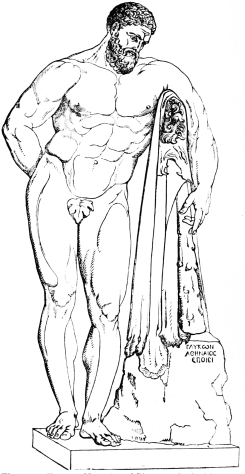 Fig. 231.—Farnese Hercules of Glycon. (In the Museum of
Naples.)
Fig. 231.—Farnese Hercules of Glycon. (In the Museum of
Naples.)
Besides these prominent groups by Lysippos, evidences of his creative
energy, the figures of the deities appear to have been few in number.
That examples from the circle of young and beautiful divinities, which
formed the principal field for the art of Praxiteles, should be almost
entirely wanting, was to be expected, he who had perfected the type of
Heracles naturally preferring a powerful figure. Four statues of Zeus
are mentioned. Though the colossal size of these seems to have been a
prominent feature—the Zeus of Tarention measuring eighteen metres in
height—still they should not be considered as executed after a
conventional pattern, and consequently offering nothing worthy of
remark. In view of all that is known of Lysippos, it seems not
improbable that the Zeus of Otricoli (Fig. 232), formerly referred to
the Pheidian type, may be more nearly related to its modification by
Lysippos. The Helios upon the quadriga in Rhodes, besides its human
beauty, may possibly have been of great importance in type and
conception; but this is not assured by the fact that Nero prized it
highly, and ordered it to be gilded. If it be added that Lysippos worked
more industriously and rapidly than any other known sculptor—provided
the account be true that the number of his productions amounted to
fifteen hundred—it cannot be supposed that the time required for new
conception and careful execution would be given to them all.
 Fig. 232.—Zeus of Otricoli. (Vatican.)
The school of Lysippos was not wanting in names of renown. His most
gifted son, Euthycrates, appears to have equalled his father in groups
of portrait statues, like the Gathering of Riders and a Hunt of
Alexander in Thespia; while another son, Boidas, awakens our interest
from the circumstance that the celebrated Praying Boy, in the museum at
Berlin, may possibly be referred to him. Chares of Lindos produced the
greatest known work of Greek sculpture in regard to size—namely, the
colossal statue of the sun at Rhodes, over thirty metres high. Pliny
describes it as already fallen and in ruins, therefore his words give us
no information as to the conception and style; and the current account
of its having stood so high above the entrance to the harbor that
vessels sailed between the legs is a fabulous reminiscence of the figure
projected at Mount Athos by Deinocrates. Among the scholars of Lysippos,
Eutychides seems to have been the most independent; the goddess
Anticheia, a copy of which is in the Vatican, was distinguished by
excellence in the motive, ease of position, and effective drapery; but,
in its genre-like treatment, it excluded all thought of religious art,
to which a certain strictness and dignity should pertain. This goddess
was seated with dignity, like a city itself, while another
personification—the river-god—appeared “more flowing than water.” This
marked significance in both cannot be ascribed to a happy chance, but
must be regarded as evidence of that highly developed characterization
by which the great Sikyonian master endeavored to conceive the whole
being and to embody it in his portraits and representative figures.
Among the nameless works from the school of Lysippos, creations are to
be found of the highest merit. The originator of the Barberini Faun, now
in the Glyptothek at Munich, whoever he may have been, should be ranked
among the greatest masters of all times.
 Fig. 233.—Boreas.
 Fig. 234.—Notos. From the Tower of the Winds, Athens.
With Lysippos the development of art in its principal directions was
terminated. As Overbeck says, “the summit lies behind us; we descend,
and our way downwards may still lead through charming landscapes; but
the pure, clear ether soon ceases to surround us, and, before the
far-reaching glance, rises from the mist of centuries the flat and
endless desert, in the sands of which the stream of Grecian art is
quenched.” Alexander himself was the patron of the last of the seven
great masters of sculpture; with him ended the fresh directness of
Hellenic creations, as well as the greatness of Greece itself. He and
his successors built temples afterwards to be furnished, as before, with
statues of the deities and outwardly ornamented with sculptures; but
they took their models from those earlier works which, elevated to a
typical and canonical importance, were not to be surpassed, and employed
themselves simply in reproducing. They followed more willingly the easy
path open to them because, in the Alexandrian period, scepticism, empty
formalism, and chilling indifference had already laid the ravaging axe
to the Hellenic religion. With the spread of Hellenic power into the
heart of Asia, its art, like its polity, lost its individuality,
becoming expansive instead of intense, in decorative subjection to
the requirements of elegance and use. Losing its former independent
nobility, sculpture soon fell from the height which it had occupied for
a century and a half. Athens, Sikyon, and Argos, hitherto central points
of development, where art had brought forth its richest fruits as a
model for the entire Hellenic world, now became provincial cities of
the Macedonian kingdom, and lost their glory—some for a long period,
and others forever. Following the example of Lysippos, artists preferred
wandering from court to court of Alexander’s successors; and in
Alexandria, Antioch, Seleucia, in Nicomedia, Pergamon, Ambrakia, mostly
new and elegant cities of royal residence, occupation could not have
been wanting, though the quantity of work may have tended to hasten the
decline. How extensive and extravagant were the artistic requirements of
the Diadochi, how excessive the incense of flattery offered them, is
shown in the description of the luxurious works of the Ptolemies and of
the Seleucidæ, and by the three hundred statues erected to Demetrius
Phalereus in Athens alone. These last may have been somewhat better than
the representation of the winds upon the clepsydra and vane of
Andronicos Kyrrhestios (Figs. 233 and 234), but even they must be
classed as mere artisan-work. Much was done in portrait-statuary after
the time of Alexander, who turned art in this direction; and the
successive dynasties also encouraged it, as may easily be imagined. This
is evident from the statues still preserved, from the Ptolemaic cameos,
and especially the coins of the Diadochi. The heads of these kings have
never been equalled, for fine and lifelike characterization and
modelling, in all the portrait coins and medallions which have been
struck down to the present time. (Fig. 235.)
Though a great deal was produced in the period of the Diadochi, and, in
the line of portraiture, much that was good, still there must have been
truth in the saying of Pliny that “after the 121st Olympiad (290 B.C.)
art ceased, and revived again only in the 156th (150 B.C.).” It ceased,
namely, in so far as it was made subservient to courts and decoration;
but upon the soil of Greece itself, and among the people, it grew, and
strove after higher aims. The production continued, but its artisan-like
elaboration did not make good the lost artistic originality. Men of
vigorous talent followed in the paths of Praxiteles and Lysippos,
producing works which are the ornaments of our antique collections; but
the character of reproductions, clinging to their creations, robs them
of the name of artist in the full sense of the word. The scanty notices
of Pliny are, in general, correct; but he omits to mention some
exceptions which represent a further development of sculpture, not quite
unimportant, though questionable in principle.
Antiochos I. of Syria. 281 to 262.
Philip V. of Macedon. 220 to 178.
Perseus of Macedon. 178 to 168.
Fig. 235.—Coins of the Diadochi.
Fig. 236.—The So-called Dying Gladiator. School of
Pergamon.
In two places, at the royal court of Pergamon and in the republic of
Rhodes, productive art rose again to a certain independence and
originality. Pliny himself, in another place, says that “several artists
illustrated the battles of Attalos and Eumenes against the Gauls;
namely, Isigonos, Phycomachos, Stratonicos, and Antigonos.” The great
victory over these barbarians was fought in 229 B.C. by Attalos, with
which Eumenes, by a misunderstanding easily to be explained, appears to
have been connected. Attalos erected in his capital a grand monument to
his victory, and, not contenting himself with this, consecrated another
upon the Acropolis at Athens, perhaps in part a copy of that in
Pergamon. Remnants of both monuments still exist which give a
comparatively good knowledge of the artistic peculiarities of this
school. The investigations upon this site, now approaching completion,
have unearthed hundreds of fragments in high-relief, part of a
gigantomachia originally forming the decoration of an altar. The altar
was surrounded by Ionic colonnades, the high stereobate of which was
ornamented with sculptures in high-relief, the whole being elevated upon
a gigantic terrace, 38 m. long, and 34 m. broad. The frieze,
representing the gigantomachia, stands midway between the works of
Lysippos and the Laocoon, and forms the most extensive and important
monument of sculpture remaining from the time of the Diadochi; it is in
many respects a parallel to that of the Mausoleum of Halicarnassos which
represents the decorative work of the school of Scopas and Praxiteles.
These works have now found their way to Berlin, but a critical account
of them will be possible only when they shall have been made generally
accessible by an official publication. The statue of the so-called Dying
Gladiator of the Capitol belonged to the group in Pergamon already known
(Fig. 236); as did the two figures in the Villa Ludovisi, representing
a Gaul who, to escape the shame of slavery, has stabbed his wife, who
sinks beside him, and is about to thrust the sword into his own neck.
In the so-called Dying Gladiator, the rough hair growing low upon the
neck, the strongly marked indentation between the brow and the
projecting Northern nose, the beard shorn to the upper lip, the heavy
cheek-bones, the fleshy and somewhat clumsily formed body, the hard and
calloused skin upon the hands and feet, the twisted neckband, and the
curved battle-horn have long since shown the meaning of this statue. In
the group in the Ludovisi Villa, the same marble, a like and peculiar
treatment of the forms, with the same type of head, leave no doubt that
this also belonged to a large group representing a victory over the
Gauls. From its style, it cannot be considered as a Roman monument,
particularly as some notices of the Athenian Votive Offering of Attalos
clearly identify it.
The most striking novelty in these monuments, and also in the school of
art at Pergamon, is the characteristic following-out of ethnographical
differences. Previously, when artists would distinguish barbarians, they
were content to make the nationality clear by costume and accessories;
but this could not suffice for Lysippos, who had carried individual
characterization to such a height in his portrait-statues, and who
probably, in his group of the battle upon the Granicos, illustrated the
peculiarities of the Persian race. In groups of portrait-statues it was
necessary to treat the action with absolute truthfulness, thus leading
the way to historic art. This is perfected in the monument in question,
the ideal battle scene being based upon real details; it was not merely
a strife among men, but Greeks and Celts stood opposed, each nation with
its marked features and peculiarities, the barbarians distinguished not
outwardly alone, but by their natural wildness.
This is evident from a number of figures of the Athenian votive offering
of Attalos, still preserved; our knowledge of their connection with the
Dying Gladiator and the school of Pergamon is due to Brunn. According to
Pausanias, this votive offering consisted of figures half the size of
life, in four groups, showing the gigantomachia, the combat of the
Amazons, the battle of Marathon, and the victory of Attalos. Figures
exist from them all; from the first, a giant, dead and outstretched, is
in the museum at Naples, as also one of the second, a fallen Amazon;
from the third, a dead body clad in breeches, and two nude Persians
kneeling, are in Naples, the Vatican, and in the possession of Signor
Castellani. From the fourth, a kneeling figure, at Paris, and one
kneeling and one falling backward, at Venice, are unmistakable Gauls;
while a sitting figure, wounded, also at Venice, and a youthful one,
dead, at Naples, are probably also of that race. Judging from these
remains, the composition must have included numerous figures, as the
five existing Gauls—perhaps also several more—bespeak a corresponding
number at Pergamon, and forty is the lowest that can be reckoned for the
whole. Their position was probably upon the steps of the monument, which
possibly bore the statue of the founder. It must have stood near the
wall of the Acropolis, since it has been said that a figure from the
gigantomachia was thrown by a storm into the theatre which stood at the
foot of this fortress. That only the conquered are found among the
pieces preserved seems to be an evidence that these remnants are from
the original rather than from any copy, because, aside from the
improbability that so extensive a work would have been copied in later
times, the effect of the storm suggests the thought that the erect
statues of the victors would have been less likely to last through so
many centuries than the lying and cowering figures, not so easily
injured on account of their closer connection with the base.
Notwithstanding their relation in style to the Capitoline statue and to
the group in the Ludovisi Villa, these are distinctly inferior and
harder. Brunn is probably right in his supposition that they are the
work of scholars, and a contemporaneous reproduction from the studio of
that master, who himself executed the monument at Pergamon, the figures
of which ranked in merit with the Dying Gladiator. Many deficiencies may
be accounted for by its reduction to half life-size; its repetition at
this scale, for the Athenian votive offering, appearing to have
satisfied the king.
The work most nearly related to this, also in marble, and perfectly
similar in conception, is a figure of the Marsyas group, the celebrated
Knife-sharpener in the Uffizi at Florence. This is also a representative
of barbarism, probably a Scythian, the others having been Gauls; but,
artistically, this makes no difference. No originals remain of the other
figures in the group, of which the barbarian, cowering upon the ground
and sharpening the knife for the flaying of Marsyas, probably formed no
very important part. Another aim, the careful anatomical treatment of
the body, is ostentatiously displayed in the copies of this work now in
Berlin and Florence. The group suggests another locality, and forms a
connecting medium between those two most important centres of art in
that period, Pergamon and Rhodes.
Among the few republics of the time, the island of Rhodes was able to
rival the brilliant courts of kings, in regard to artistic treasures, by
its wealth of commerce and its political neutrality—the latter being
rendered possible, as nowhere else, by its situation and importance.
That the influence of Lysippos prevailed there is clear from the fact
that, after this master had sent thither his Phoibos upon the quadriga,
the Rhodian Chares went to learn of him, and afterwards executed for his
native city the above-mentioned colossus. This was followed in the same
place by a hundred other colossal figures, which were probably related,
in point of style, to the works of Lysippos. The statement of Pliny that
each, singly, would have sufficed to make the place of its exposition
famous is hardly intelligible. Numerous names of artists, mostly of
Rhodes, found partly in inscriptions upon the bases, and partly
mentioned by Pliny, might here be mentioned.
The multiplied productions of colossal works, however, would not suffice
to give a very favorable idea of the state of art in Rhodes, were it not
for the preservation of two examples, prominent among many, which were
famous even in antiquity. These were the group of the Laocoon, in the
Vatican, and the so-called Farnese Bull, in Naples. The first (Fig.
237), which Pliny, with extravagant praise, calls the work of three
Rhodians, Agesandros, Athanodoros, and Polydoros, was found in 1506—not
in one piece, as he describes it, but in six—among the ruins of the
house of Titus, in whose palace Pliny says it was placed. It represents
the priest Laocoon, who sinned at the altar through love, and whom
Apollo chastised by means of two serpents. This expiation became tragic,
from its having taken place at the moment when Laocoon had resolved to
save his native city, Troy; and also from the suffering of the children,
innocent, though born in sin. The serpents have encircled the three
figures; the youngest is falling from the deadly sting; the father,
sinking upon the altar after a desperate defence, is no longer able to
protect himself; while the elder son, not yet threatened with instant
death, but hopelessly entangled in the coils of the serpent, turns upon
his father a look of despairing horror.
Fig. 237.—Group of Laocoon and his Sons, by Agesandros,
Athanodoros, and Polydoros.
(Vatican.)
This grand work, though from Pliny down to later times esteemed beyond
its real merit, still makes evident to us peculiarities in the art of
Rhodes which, in many respects, render it of independent value. We find
in it a choice of subject new in sculpture, the technical and artistic
difficulties of which appear almost insurmountable, so that it could
only be treated by ability well trained and long experienced. It gave
opportunity to surpass all existing productions in its display of
artistic technical superiority. When the body of the Laocoon is compared
with the type of Heracles, it cannot be doubted that the canon of
Lysippos was followed; but the forms, which with him were developed from
the living model, in this, as in the Marsyas of Pergamon, are taken from
anatomical studies, and are wanting in fulness of life: the overdetailed
muscles are too studied, distinct, and separated; they are marble, and
not flesh. The composition would, in real life, be impracticable; the
action is visibly so ordered that it never could be possible, and is
throughout developed with an aim towards the greatest effect. But this
effect is by no means merely formal, limited to the restless and
disquieting play of the lines of the limbs and trunks, and of the coils
of the serpents. It is in the highest degree pathetic. Thus this element
of the school of Praxiteles existed in this work, both the leading
characteristics of that master being here displayed with an excessive
ostentation. The pathos confronts us too exclusively, not modified by
any ethic principle. The work does not, therefore, have the tragic power
which lies in the descriptions of Sophocles, because, in the group, only
the effect is to be seen; we have no hint as to the cause. The pathetic
blends far more with the pathological event than with the ethical. The
mastery of rendering, the composition, the effect—everything is
wonderful; but it all lies in the realm of display: our admiration is
given to the artist rather than to the work. It cannot be denied that
this effective treatment was the dominant feature in the art of Rhodes;
but it set technical mastery in the foreground, to the neglect of
absolute and intrinsic merit.
Fig. 238.—The Farnese Bull of Apollonios and Tauriscos.
(In Naples.)
This applies equally to the second great work, the so-called Farnese
Bull (Fig. 238), the creation of two artists from Tralles, Apollonios
and Tauriscos, who may have worked in Rhodes, as, according to Pliny,
the group was to be seen there before it was brought to Rome under
Augustus. This large group was found in the Baths of Caracalla soon
after the discovery of the Laocoon, and was transported to Naples, where
it now stands in the Museo Nazionale. The scene is probably taken from
the Antiope, a tragedy of Euripides, and an understanding of the story
is necessary to its comprehension. Antiope was the daughter of King
Nycteus of Thebes; he being angry with her because of the love of Zeus,
and incredulous as to the cause of her pregnancy, she fled to Mount
Kithairon, where she bore the twins Zethos and Amphion. Having given
these to the care of a shepherd, she was received by King Epopeus of
Sikyon; but Lycos, the brother and successor of Nycteus, carried on the
hateful persecution, even to the extent of making war against her
protector. Sikyon was destroyed, and Antiope returned as a slave to
Thebes, where the ill-treatment of Dirke, wife of Lycos, obliged her to
fly once more to the mountains. There, at a festival of Bacchus, she was
found again by her persecutor, and, for her flight, was given the
terrible punishment of being dragged to death by a bull. Zethos and
Amphion were ready to execute the command when a recognition took place,
and a just vengeance brought the fate intended for Antiope upon the head
of Dirke. This moment forms the imposing scene of the group. The raging
bull is only with difficulty held by the avenging sons; Dirke, a most
beautiful woman, praying in vain for grace, clasps the knee of one while
the other is ready to throw around her the noose by which she is to be
dragged over the rough ground of Kithairon. The passion of the avenging
sons, and the fear of Dirke, make the work highly pathetic and
impressive; but it is not so really tragic as the Laocoon, because the
motive of the evidently brutal deed, though not entirely neglected, as
in the former, is still not entirely comprehensible. Antiope, the
heroine of the tragedy, is indeed present. But she is not brought into
the action, and stands, in fact, behind the principal characters. She is
therefore hardly more than a lay figure, expressing nothing. It might
perhaps have been better to omit Antiope altogether, and to leave the
action without any motive at all. The figure has, however, an interest
of its own, being in an excellent state of preservation, while the
others have suffered by restoration and by retouching. The composition,
with its numerous figures, admirably executed, has a picturesque effect
which is somewhat new in the history of Greek sculpture. This is
enhanced by the accessories of the story, the rocky ground, and many
local details symbolical of the occasion. Besides a fine large dog,
really belonging to the group, there are a chaplet and a basket, a
disproportionately small boy ornamented with a wreath, and, still more
inferior in size, two lions seizing a bull and a horse. There are also
two boars coming out from a grotto, a lioness, a stag, a hind, a ram, an
eagle with a snake, and a falcon over a dead bird; even turtles,
snakes, and snails are represented. The mastery over the technical and
artistic difficulties in this work is scarcely less admirable than in
the Laocoon, and it gives the same impression of a successful piece of
bravura, astonishing and quite fascinating for its novelty, boldness,
and versatile power. The age, indeed, satiated with the best products of
various schools, demanded the stimulus of an excessive appeal to
superficial sources of interest. The group of the Marsyas is attributed
to artists of Pergamon, and the Wrestlers in the Uffizi at Florence
(Fig. 239) may, with greater certainty, be ascribed to those of
Rhodes.
Fig. 239.—The Wrestlers. (In the Uffizi, Florence.)
 Fig. 240.—Apollo Belvedere. (In the Vatican.)
Before we pass to the last active period of Hellenic art, one other
work, preserved from this age, the Apollo Belvedere of the Vatican
(Fig. 240), still claims our consideration. Though without the name of
the artist, or of the place of its origin, and not, perhaps, to be
classed directly with the greatest productions of Pergamon and Rhodes,
it is yet not unworthy to rank by their side. It is, like the Laocoon,
one of the best-known statues among the existing treasures of
antiquity, and scarcely needs a minute description. The splendid
triumphant head looking into the distance, the slender figure, as fine
in modelling as it is noble, the pleasing grace of the light step,
assure for it an admiration, the more universal as these beauties—the
combined result of the schools of Lysippos and of Praxiteles—are just
those which are the most generally recognized. It is not an original
work, in the full sense of the word, but an early Roman copy from the
bronze, and seems to bear a closer relation to it than does the lately
discovered head which is now in the museum at Basle. This latter has
lost the characteristic features of the bronze style, and from the
greater freedom of its treatment may be called a translation into
marble, in distinction from the copy in the Vatican. Another
reproduction of this work recently made known by Stephani, a bronze
statuette in the Strogonoff collection, at St. Petersburg, has given an
additional explanation of the action in which the god was represented.
In the marble the left hand was wanting, and in the restoration this was
supplied with a bow; but in the Strogonoff Apollo remains are still to
be seen of the ægis, held in the hand, with which the deity drove back
the Greeks, as described by Homer, Il. xv. 306. If the far-shooter be
thus changed into the ægis-bearer, the shaking of the ægis symbolizing
the storm, a plain reference may be found to the original motive of the
work. When the Gauls threatened Delphi in 279 B.C., the defence of the
Greeks was effectively assisted by a terrible storm, which threw the
barbarians into a fearful panic, and which was regarded by the Greeks as
caused by the personal intervention of Apollo, Athene, and Artemis. This
might well have had an effect upon art similar to that of the victory of
Attalos over the Gauls in Asia Minor. The Ætolians, indeed, proposed to
erect at Delphi a votive offering, with figures of field-officers and of
the three gods, while a statue of Apollo was erected in Patrae from a
similar reason. In view of this, Overbeck has ventured to combine the
Apollo Belvedere, the Artemis of Versailles (Fig. 241), and the
striding Athene of the Capitoline Museum into one group, to which ideal
union the unsimilarity of the workmanship, and even of the scale of the
three statues, is not so much opposed—since these are all copies that
have come down to us from different times—as is the movement of the
Apollo, the middle figure, towards the right. This difficulty might be
met by changing the positions, so that Athene should stand at the right
and Artemis at the left, whereby the action of the figures might be
from, rather than towards, each other, Artemis being turned decidedly
more towards the front. If, however, this work originated in consequence
of the victory in 279 B.C., it shows that a generation before the time
of Attalos, at least in Greece proper, although attention had already
been devoted to momentary action, art nevertheless still stood upon an
ideal height, and could still delineate gods worthy of admiration.
Fig. 241.—Artemis of Versailles.
These artistic efforts do not, on the whole, refute the opinion of Pliny
that art ceased from the 121st to the 156th Olympiad—that is, from 300
to 150 B.C. The chief localities of its activity, Pergamon and Rhodes,
may be considered only as asylums found by the higher sculpture after it
had lost all foothold in its native home. But when he says it took a new
flight at the close of that period, we must acknowledge that the result
was not of that kind which could charm us as it did the Roman narrator.
As Brunn remarks, the date of Pliny agrees with that period when
Hellenic art attained a decided mastery in Rome. Scarcely any evidences
of the monumental art of Greece were to be recognized in Rome before the
conquest of Syracuse in 212 B.C. After this time the Roman triumphs
brought forth, one after another, an almost oppressive number of
productions, so that the art of the Greek colonies, and of Greece
itself, overflowed Rome in a broad stream. Not to mention the plundering
of Capua, Tarention, and numerous Grecian cities in Lower Italy, we have
an example in the triumphs of Quintius Flaminius, the conqueror of
Kynoskephalæ, 197 B.C., when the transportation of the statues lasted
an entire day. The booty taken from Western Greece by M. Fulvius
Nobilior, in 189 B.C., also contained not less than five hundred and
fifteen statues. These extensive plunderings were at least equalled by
the triumphs of L. Cornelius Scipio, the victor over Antiochos; of
Æmilius Paulus, conqueror of Perseus; of Metellus Macedonicus, and of
the destroyer of Corinth, Mummius, who has become proverbial for his
barbarous robberies. It was not strange that at last a living art
followed the triumphal chariot of Roman victories. Metellus employed
many Grecian artists in the erection and ornamentation of his new
buildings in Rome.
The scene of artistic industry thus became changed, and Rome, a foreign
city, became the central point—first of possession, and afterwards of
artistic activity. It might therefore be questioned whether what follows
were not better suited to the chapter upon Rome; but it must be
considered that the Romans were, from our present point of view, only
wealthy collectors and patrons of art, and that the artists employed
were still Grecian, and of the Hellenic school. This was not altered by
their working in Rome, or even by their learning from the numberless
productions accumulated there.
Roman grandeur was long contented with artistic booty for the
ornamenting of its forums, temples, and public buildings; the immense
wealth of the empire and proconsulate giving opportunity for procuring
celebrated works by force, by purchase, or as honorary gifts. This
brought forth dilettanteism, which led to the study of art, and to a
zeal for collecting which made every new acquisition an additional
incentive to covetousness. Study choked that impulse which, in a
degenerate way, had endeavored to outdo what had been done by masters of
the best period, and, accounting their method to be exclusively good,
turned art back by a sort of reaction upon those earlier paths. The
passion for collecting was not limited to the works ready at hand, but
would have restorations and imitations by contemporary artists, made in
the spirit of the originals. It could not have been otherwise than that
art, after having exhausted the originals, and attained its aims in all
directions, should react upon itself; but doubtless the circumstances of
Rome had an essential influence upon the manner in which this took
place, and greatly furthered this renaissance—to use a somewhat
unsuitable term which, in its restricted sense, has been adopted for the
far more original awakening of art at the close of the Middle Ages.
Fig. 242.—Borghese Gladiator of Agasias. (In the
Louvre.)
In the desire to enliven the different phases of artistic development,
it was natural not to return to first principles, but rather to take
those creations which lay near at hand, and try to find in them the way
to improvement. The period under consideration, up to the commencement
of the empire, offers examples of every stage of development, the dates
of which can only here and there be given; but it seems that the way for
an Hellenic renaissance was, during this period, partially opened.
Agasias of Ephesos appears as successor to the master of the Laocoon and
of the Farnese Bull. The celebrated Borghese Gladiator in the Louvre,
which represents a warrior in fictitious battle with a horseman, may be
referred to the school of Rhodes. (Fig. 242.) As the statue did not
belong to a group, but was independent, we see in it nothing but a show
figure, in which the artist only sought for a position where he might
outdo all that had gone before, and give opportunity to parade his
technical mastery and his anatomical knowledge. That the work should be
placed in this time, and not in the best period of the Rhodian school,
is plain from the later character of the writing in the artist’s
inscription, from the inferior understanding of the mutual relations of
the muscles, and particularly from the insignificance of the idea, and
the entire lack of the pathetic, all which elements lent to the works of
Rhodes an especial value.
As examples from Rhodes and Pergamon not only lay near at hand for the
artists of Asia Minor, but were germane to their civilization, so the
numerous Attic masters of this period looked to the time of perfection
in Attica and Sikyon. The tenets of the school of Lysippos still held
sway there, and what splendid fruit it bore, even at this time,
notwithstanding the retrogression from its earlier overvalued merit, is
shown by the much admired torso, now in the Vatican Belvedere, by
Apollonios, son of Nestor of Athens. (Fig. 243.) This must certainly
have been a sitting Heracles, a motive repeatedly treated by Lysippos,
though no restoration of it has yet been decidedly successful. The most
probable is the latest by Petersen, which represents him as playing the
kithara. The somewhat later statue by Glycon of Athens, the Heracles,
who stands leaning upon his club (Fig. 231), though approaching
somewhat in conception to a work of Lysippos, is far inferior. With this
may be mentioned a still poorer repetition, the Heracles of the Pitti
Palace in Florence, through a false inscription ascribed to Lysippos.
 Fig. 243.—Belvedere Torso, by Apollonios. (In the
Vatican.)
Fig. 243.—Belvedere Torso, by Apollonios. (In the
Vatican.)
Besides Apollonios, who was distinguished also by his youthful satyr and
an Apollo, which are too little known for a more minute description, the
school of Scopas and Praxiteles was followed by the son of Apollodoros
of Athens, Cleomenes, the sculptor of the Venus de’ Medici. When
compared with the divine figure of the Venus of Melos, though pleasing,
it appears degenerate. The godlike beauty which we impute to the Cnidian
Aphrodite, and find in the Venus of Melos, is lost by the continual
emphasis of sensuous effects, notwithstanding all the mastery and
delicate feeling for beauty. With the exception of the Braschi Venus at
Munich and the Venus of the Capitol, which are more nearly related to
that of Cnidos, nearly all the nude figures of Venus in the various
museums belong to the same circle and stage of development, even when
they betray later work. The masters by no means appear to have been mere
copyists; but the works of Praxiteles were altered, to suit the taste of
the times, by artists in whom individuality was not quite extinct.
The school of Pheidias, with its high ideal, of which the age in
question had little understanding, could never have become popular in
the same degree. Rome possessed but few works of this master which could
have served as examples, and those not the most important. Still,
reminiscences of the best Attic style were not wanting, especially in
those figures of the gods the type of which had been established by
Pheidias, as in the statues of Zeus and Athene. The chryselephantine
Zeus, by Polycles and Dionysios, in Metellus’s Temple of Jupiter, as
also the Capitoline of the same material by Apollonios, may justly be
referred to the Olympian original; the former at least with the more
certainty, when it is considered that the sons of Polycles—Timocles and
Timarchides—copied the sculptures upon a shield of the Parthenos for an
Athene, designed for Elateia in Phokis. It is possible—and this may,
perhaps, be still further established by Brunn, who has pointed out this
connection—that the Pallas in the Villa Ludovisi, by Antiochos of
Athens, which has been estimated below its worth, may be a reproduction
of the Parthenos, modified and perhaps formed from memory. The treatment
of the garments, and the whole position of this otherwise ill-executed
figure, remind us of the chryselephantine works, and possess something
of the dignity and nobility of the better period.
 Fig. 244.—Group by Menelaos. (In the Villa Ludovisi.)
At a time when Cicero could say that in his opinion “the works of
Polycleitos were perfectly beautiful” the master from Argos must have
come into fashion. The artistic representative of this stage of
appreciative development was Pasiteles, who worked in the time of
Pompey, and whose important school has left traces of this influence in
examples that have been preserved. The pathetic tendency was not
entirely to be avoided, and, though not so evident in the academic male
figure of the Villa Albani, which bears the name of Stephanos, the
scholar of Pasiteles, is yet undeniable in the groups of Orestes and
Electra in Naples, and of Orestes and Pylades in the Louvre. This trait
is still more marked in a work of Menelaos, the scholar of Stephanos,
the beautiful and celebrated group in the Villa Ludovisi (Fig. 244),
designated by Winckelmann and Welcker as Electra and Orestes; by Jahn,
as Merope and Cresphontes; by Kekulé, as Deianeira and Hyllos; and by
Schulze and Burckhardt, as Penelope and Telemachos. Though the artist
has here made concessions to more recent influences, they did not give
the work an eclectic character, as asserted by Kekulé, but rather
displayed a somewhat archaistic conception, and the short proportions of
Polycleitos, long since abandoned for the canon of Lysippos. On the
other hand, the remark of Kekulé appears just, that the characters do
not seem conceived and modelled after nature, but rather as seen
through the medium of the tragedy of Euripides.
When the reproductions had run through the entire circle of styles from
the best period of art, the archaic was at last brought forward. It is
known that Augustus ornamented his buildings, particularly the gable of
the Palatine Temple of Apollo, with sculptures of the masters from
Chios, Boupalos and Athenis, and that he also carried away from Tegea
the Athene of the old Attic Endoios. Archaic art, always possessing a
charm for devotional images which was doubled in a time of such satiety,
came thus into fashion. A large number of archaistic works appeared,
imitated after the antique, as has already been mentioned. They not
seldom betray the influence of single figures from larger compositions
in relief, as in the instance of the Amphora of the Athenian Sosibios in
the Louvre.
 Fig. 245.—Capitoline Centaur of Aristeas and Papias.
(Capitoline Museum.)
Fig. 245.—Capitoline Centaur of Aristeas and Papias.
(Capitoline Museum.)
The more or less free reproductiveness of this period, which we have to
thank for a large proportion of the contents of our museums, naturally
came to a conclusion in that unbridled mixture of style which combined
in the same relief not only the various aims of different schools, but
their well-known motives, as is the case with the relief of the Salpion
upon the font of Gaeta. There was very little originality, and that was
limited to genre, particularly to the idyllic, as in the play of Cupids,
the best of which might be referred to old models. It is not known
whether this was the case with the lioness of Arkesilaos, in the
possession of Varro, which, according to Pliny’s description, bound by
Cupids, was drinking from a horn, with mittens upon the paws to render
them harmless. Models for this may be sought in the paintings of
Alexandria. It is certain that the centaurs, bound and worried by
Cupids, the best examples of which are preserved in the Louvre, the
Vatican, the Doria Palace, and the Capitoline Museum, with that of
Aristeas and Papias from Aphrodisias, are imitations of bronze
originals. (Fig. 245.)
Hellenic architecture and sculpture, from their unsurpassed perfection,
require a more comprehensive treatment than that accorded to those arts
in any other ancient nation. This is especially the case with sculpture,
because, in Greece, the demands of its nature were more completely
fulfilled by the Greeks than has ever happened, at any time, with any
other people; while Grecian architecture, notwithstanding its wonderful
monumental perfection, did not deal with all the possibilities of the
art. Both, however, demand our attention in a greater degree than does
Hellenic painting. Architecture has left great masses of ruins, and
sculpture numerous collections of antique treasures; but of Grecian
painting there are no remains; its history is accordingly a history
rather of artists than of art. If this necessitates for painting a more
limited treatment, we must not therefore conclude that its development
was, in reality, inferior to that of its sister arts, since, in fact, it
fully equalled that of architecture and sculpture. This has often been
unjustly doubted, but it would be fully evident were nothing more known
than the almost measureless fame of the first masters.
The course of development of Grecian painting is by no means so obvious
as that of sculpture: we have no sure date of its beginning, but it is
at least equally remote. Conze shows painting to have been even the most
primitive, it having existed among the aborigines in the decoration of
pottery and terra-cotta. The notes of Pliny upon the matter (xxxv. 15)
appear to be hardly more than a supplementary reconstruction of a
conjectured state of development, garnished vaguely with the names of
ancient artists. The first stages, the employment of a simple tone in
the filling of outline figures with a color of brick-dust, called
monochromatic painting, had long since been mastered by the neighboring
peoples—the Mesopotamians, Phœnicians, and Egyptians, who were
acquainted also with the use of bright colors. This work must early have
been known to the Greeks through imported articles—Homer mentioning
vessels and fabrics—even though they could not apply it to the
productions of their own land. Monochromatic painting upon pottery,
familiar to the primitive Ionians, seems to have originated upon the
Syro-Phœnician coasts. A faint reminiscence of the ancient, widely
extended employment of color may be found in Pliny, who designates an
Egyptian, bearing the Greek name of Philocles, as the discoverer of
linear painting. Works of this kind, however, were purely decorative,
like the older Greek vase-paintings (Figs. 187 and 191), and of great
similarity; it seems unnecessary to offer conjectures as to the source
whence this impulse came. Of still less significance are the names of
artists which have been fabulously attached to the various inventions,
such as Cleanthes, Aridikes, and Ecphantos, of Corinth; Telephanes and
Craton, of Sikyon; and Saurias, of Samos. Unless, from the fact that
several are mentioned as dwelling in Corinth and Sikyon, it may be
concluded that decorative painting probably flourished in those cities
before the sixtieth Olympiad (530 B.C.). What Pliny says of Eumaros of
Athens does not justify the supposition of any considerable progress,
although, in figures, he distinguished between male and female,
expressed in some slight degree age and characteristic peculiarities,
and, at least, made an end to that crudeness which found satisfaction in
writing names over forms otherwise precisely alike. Greater progress was
made by his successor, Kimon of Cleonæ—500 to 480 B.C.—who improved
the former sack-like garments (Fig. 191) by folds, and gave a more
detailed drawing to the nude, placing the eye in a profile head also in
profile, instead of making it look towards the front, as in the figure
mentioned above. With him began truthfulness to nature, and correctness
of drawing, at a time when sculpture in Ægina, Athens, Sikyon, and Argos
was preparing for that highest perfection attained afterwards by
Pheidias.
After the Persian war, through two generations, the progress of painting
was proportionate to its former backwardness, until it attained a
height little short of that reached by sculpture. The first master
worthy of mention—and likewise one of the greatest artists we
know—demands particular attention, from having been the founder of
painting as an art. Polygnotos of Thasos (475 to 455 B.C.), the son of
Aglaophon, who also is mentioned as a painter, executed the greater
number of his works in Athens, where he was much respected by Kimon. Of
the pictures in the Stoa Poikile, painted under his direction, at least
the Conquest of Troy, and the Council of Princes sitting in judgment
upon the sacrilege committed by Ajax against Cassandra, were by his
hand. The Battle of the Amazons was by Micon, the Battle of Marathon by
Panainos and Micon; the fourth, perhaps the latest, was the Battle
between the Athenians and Lacedæmonians near Oinoe: the artist is not
known. Polygnotos worked, together with Micon, upon other Athenian
frescos, scenes from the lives of heroes in the Temple of Theseus. In
the Temple of the Dioscuri he painted the Rape of the Daughters of
Leukippos, next to which was the Return of the Argonauts, by Micon. In
the Pinacotheca of the Propylæa was a series of representations, among
which Brunn has recognized as companion pieces Diomedes Robbing
Philoctetes of his Bow, and Odysseus Seizing the Palladion; the Murder
of Ægisthos by Orestes, and the Sacrifice of Polyxena; Odysseus
Appearing before Nausicaa and her Companions, and Achilles among the
Daughters of Lycomedes. Of the other works by this master may be
mentioned those at Thespeia and Plataia; that in the Temple of Athene at
the latter place represented Odysseus attacking the suitors. The best of
all the creations of Polygnotos, the paintings in the Lesche of the
Cnidians at Delphi, illustrating the conquest of Ilion and the nether
world, are so minutely described by Pausanias (x. 25-31) that they
furnish the most important material for an understanding of his art.
We should hardly be able justly to estimate this master were it not for
the descriptions of Pausanias; for the other classic authors, with some
exceptions in Aristotle, deal only with secondary matters. In regard to
his coloring, Cicero, in his “Four Colors,” says nothing, speaking only
of his drawing, while Quintilian merely wonders how, in his time, there
could still be admirers of such primitive painting. It was merely a
coloring without light and shade, a simple treatment by local tones of
surfaces within outlines. That these tones were not unbroken, as upon
the Nile and Tigris, but finely graded and everywhere characteristic, we
learn from the special mention of the doves, of the shaded coloring of
the fish in the Acheron, of the blackish-blue color of the
corpse-devouring Eurynomos, and of the gray of the shipwrecked Ajax. The
red cheeks of Cassandra, admired by Lucian, give evidence of several
colors within the same outline. But though Cicero praises the drawing,
the little which is intelligible in Pliny’s account of the master tends
the other way. Still, it must be acknowledged that more is implied by
the motive of the Olympian Jupiter, by the encomium upon Cassandra’s
eyebrows by Lucian, and by the exaggerated expression of an epigram—“in
the lids of Polyxena lay the whole Trojan war”—than the petty
peculiarities with which Pliny invests the painter would lead us to
expect. Ælian praises the strict carefulness and fineness of the outline
drawing, the expression, and the garments. But the most remarkable
testimony concerning this master is that of Aristotle, who describes his
figures as surpassing nature; while artists like Dionysios contented
themselves with equalling it, and others, like Pauson, were content to
remain below it. Elsewhere he calls him the painter of ethics—that
is, of character—in a grand style which the works of Zeuxis failed to
attain. Combining this judgment with that of Ælian, who ascribes
grandeur to Polygnotos, we may conclude that this artist drew in a broad
and ideal style. That to this were united an epic clearness and
liveliness of treatment, not only in the single figures and groups, but
in the entire composition, is fully evident from the description which
Pausanias gives of the paintings in the Lesche. In short, correctness,
richness, and grandeur of composition must be accounted the chief merits
of Polygnotos—merits to which none of his successors attained, though
they may have far surpassed him in execution, as painters in a more
restricted sense. Less painter than artist, he pursued, in his wall
decorations, a thoroughly monumental direction, which after his time,
through change of aim, was neglected.
The most celebrated companions of Polygnotos, but, as Ælian remarks, not
equalling him in greatness, were Micon of Athens, whose name has already
been mentioned, and Panainos, a cousin of Pheidias, who, besides the
battle of Marathon in the Poikile, executed the paintings upon the
throne of the Pheidian Zeus in Olympia. Dionysios of Colophon and Pauson
have already been spoken of. The first seems to have carried out the
strict carefulness of his model, Polygnotos, to a degree which was
naturally unfavorable alike to grace and to greatness of style. Pauson,
though accounted an artist by Aristotle, may be compared to Buffalmacco,
scorned and derided, among the companions of Giotto; not fitted for
productions of a grand style, he did not attempt them, and his nude
paintings, without ethical significance, were harmful to young
observers.
Among the other distinguished masters of this time, Calliphon appears
most nearly to have followed in the footsteps of Polygnotos; but his
brother Aristophon, who brought painting upon panels into general use,
pursued technical methods opposed to this school. The style of
Polygnotos was also abandoned by the Samian Agatharchos, a
self-instructed decorator and scene-painter who, in an essay upon
scenographic painting, established principles upon which, after his
time, this art was further developed. In scene-painting the
indispensable aim after illusory appearances must have led to the
observation and imitation of the effect of more or less light—that is
to say, of paler or deeper shades in the local color—and thus have
brought painting to a point of development not hitherto attained by any
nation of antiquity.
The important advance indicated by Agatharchos in scenography was made
in the painting of figures by Apollodoros of Athens. The accounts of him
are few, and in part incomprehensible; but Plutarch says plainly that he
discovered the mixing of colors and the variation of shade upon them,
and Pliny calls him the first master of illusion. Strictly speaking, he
was not the sole author of the innovation, since Agatharchos went before
him; and if he received the cognomen of skiagraphos—painter in light
and shade—it must be understood that the word skiagraphia was used to
signify scenography. But he was, at all events, the first to apply these
principles to figure-painting, developing a treatment quite different
from that employed in the architectural painting so extensively in use
for the stage. The important result of this innovation may well be
imagined, and it is not strange that the ground thus gained should have
been promptly occupied by other masters of the art, who rapidly brought
painting to a perfection almost equal to that of sculpture.
These were Zeuxis of Heraclea, in Lower Italy, and Parrhasios of
Ephesos. The teachers of the former are not of importance; the impulse
through which Zeuxis became one of the most brilliant geniuses of Greece
not having been given by these, but rather by Apollodoros, who is not
mentioned among them. His fame was at its height during the
Peloponnesian war, and in the following ten years; so that we can easily
understand why Zeuxis did not establish himself in Athens, where
Polygnotos and Apollodoros had raised painting to an art, but, after
many wanderings, found an asylum in Ephesos. His works, in contrast to
the wall-paintings of Polygnotos, were chiefly upon panels, as,
according to Pliny, we may suppose those of Apollodoros to have been.
Among those of Zeuxis, the Olympos was exceptional in regard to subject;
of the deities, Zeus is particularly celebrated. The only other
representations of the deities we find are the Rose-crowned Eros, and
Apollo Chastising Marsyas. Neither Pan, nor Heracles Strangling the
Serpents in his Infancy, can be reckoned in this category. The Trojan
legends appear in three of his more celebrated pictures—Helen in
Crotona, the Weeping Menelaos Bringing his Brother the Offering for the
Dead, and Penelope, “in whom propriety itself is embodied.” If we may
connect with the Odyssey, the Storm at Sea, in which Boreas and Triton
are mentioned, it will form a fourth. In his athletes he seems to have
intended to establish a canon for painting, as Polycleitos had done for
sculpture. Two others, the Family of Centaurs, and the Boy bearing
Grapes, are genre pictures.
It is not by chance that we have the fullest accounts of Zeuxis; his aim
not being so high as that of Polygnotos, he took his motives from other
fields more favorable to the new methods. Historic painting, the
foundation of that higher kind of monumental art which gives grand
representations of character, was forsaken; as Aristotle expresses it,
the works of Zeuxis were wanting in ethic significance. Excessive
striving after illusion, after the semblance of reality, brings forward
outward and momentary appearances, supplanting the inwardly essential
and lasting. Penelope seems to speak, and yet we know not in what
situation she is delineated; the weeping of Menelaos certainly does not
give his character; and as little does the merry play of the Centaurs
with their young, go charmingly described by Lucian, represent the
mythological nature of these monsters. Still less can we rank the Helen
of Zeuxis, in conception, upon a level with the female figures in the
Conquest of Troy by Polygnotos, since we know that Zeuxis chose as
models the loveliest virgins of Crotona; that is to say, sought after
perfect outward female beauty in truthfulness to nature, but not after
that breadth and grandeur expressed in the brow of Cassandra, or which
spoke in the glance of Polyxena.
If, at times, Zeuxis took a higher flight, he still differed from the
epic character of Polygnotos in his tendency to dramatic effect, which,
according to its nature, is transient. This is shown, for example, by
the celebrated play of countenance in the Family of Centaurs, the
weeping of Menelaos, the horror of Alcmene and Amphitryon at sight of
the serpents encircling the young Heracles, and by the actors as well as
spectators in the chastisement of Marsyas: these are all scenes which,
with slight modification, might be shown in dramatic action upon the
stage. With Zeuxis, contrary to Polygnotos, the subject was of less
importance than the manner of presenting it, the what less than the
how; in short, the composition, in which the picturesque sufficed, was
subordinate to the painting. The master himself was displeased when the
novelty of the subject, in his family of Centaurs, caused the technical
finish to be overlooked. The expression of Pliny was therefore a just
one, that Zeuxis had given great glory to the brush. The judgment of
Quintilian that Zeuxis originated the correct application of light and
shade is not to be disputed, in so far as this refers to the consequent
achievement of expression. The degree of perfection he attained in
illusive effects, by chiaroscuro, reflections, and the like, is
illustrated by the anecdote of the boy with grapes, so deceptive that
the birds flew towards them; at the same time, the limitation is shown,
as the artist himself acknowledged, in that the illusion had not
succeeded in making the boy capable of frightening the birds. It was
because of the painter’s power in this realism that his contemporaries
regarded him with almost boundless admiration. His fame was exceeded
only by his vanity. In later years he presented his pictures as gifts,
because it was impossible to recompense them with money; he appeared at
Olympia clothed with a garment upon which his name was embroidered in
golden letters. The history of Greek sculpture has no parallel to such
conceits.
Zeuxis himself, notwithstanding his pride, was forced to acknowledge
that he was excelled by his contemporary Parrhasios of Ephesos, who, in
regard to style, was akin to him in many respects. In subject the works
of Parrhasios may be divided like those of Zeuxis. The deities were
seldom chosen; his Dionysios with Arete was not one of his most
celebrated productions, and his Hermes was really a portrait of the
artist himself. Among the heroes represented were Prometheus, Heracles,
Meleager, Perseus, and Theseus. The greater part of his productions
refer to the Trojan epics, as the Assumed Madness of Odysseus, the
Healing of Telephos, the Strife of Ajax with Odysseus for the Armor of
Achilles, Philoctetes upon Lemnos, and Æneas. The others are the Demos
of Athens, and portraits like the comedian Philiscos, the Archigallos, a
ship-captain, a Thracian nurse with a child; and, finally, pictures like
the priest with a temple-boy, two boys, two heavily armed warriors, and
lewd genre paintings, closing with the celebrated “curtain” of the
master. In many respects these betray a relationship to Zeuxis, and yet
much that is independent. There are numerous characteristic heads
illustrative of temperament, and other psychological subjects, among the
fore-most of which should be named the Demos, who, according to Pliny,
was shown as changeable, angry, unjust, inconstant; also as exorable,
kind, compassionate, boastful, sublime, low, undisciplined, and fickle.
This would be so impossible in a single head, without making it a
chaotic, incomprehensible caricature, that the author has no hesitation
in describing the painting as a group, in each figure of which one of
the characteristics named was expressed. That representing the assumed
madness of Odysseus must have had great psychological meaning, as also
the Prometheus, Philoctetes upon Lemnos, and the Telephos. Parrhasios
had by these works placed himself above Zeuxis through more correct and
careful drawing, and a marked technical progress in the art. Pliny says
that, according to the judgment of artists, Parrhasios had reached the
highest perfection in the representation of figures; that previously
painters had succeeded in giving only to the outlines of the figure a
truthful appearance and action, but that the edges of color should be so
rounded that one might be led to imagine the continuation of the body
upon the other side, suggesting what could not be seen. This may be
conceived to mean that, by attention to chiaroscuro and reflections, the
illusive effect was increased from that of a relief to that of a figure
in the round, whereby figures first appeared to free themselves from the
background; that, for instance, he made clear to the observer the
distinction between a globe, only one side of which is seen, and a
hemisphere affixed to a plane. The illusion consequently became more
perfect, the capacity for motion being thus brought into the
“outstepping” figures. The grapes of Zeuxis did not need this power of
action to tempt the birds as did the boy in order to frighten them. The
curtain of Parrhasios possessed this capacity for movement, with the
freeing of the objects from the background, and could therefore deceive
even Zeuxis himself, who thought it possible really to withdraw it from
the panel.
If his proud rival Zeuxis bowed before this skill, it cannot be thought
strange that such a result should have moved Parrhasios to outdo his
competitor in arrogance also. Among other follies, he proclaimed himself
a descendant of Apollo; as King of Art he was crowned with a diadem and
golden wreath, and donned the purple mantle of royalty. By adopting the
cognomen of Habrodiaitos, or high-liver, he brought upon himself the
nickname of Rhabdodiaitos, or brush-man. Parrhasios also was surpassed
by a younger contemporary, though, as it appears, only in a single
instance. Timanthes of Kythnos won the victory in a competition—the
Strife of Ajax and Odysseus for the Armor of Achilles. Pliny gives
preference to the latter, because his compositions were so arranged that
more might be perceived in them than at first sight appeared. There was
withal a deeper motive than Zeuxis and Parrhasios had shown; this was
evident in the sacrifice of Iphigeneia, in which every degree of
suffering was presented: Calchas being sad, Odysseus painfully moved,
Ajax crying aloud, Menelaos in an ecstasy of grief; but, as the
expression of anguish could not be carried beyond that of the latter,
the father, Agamemnon, was shown hiding his face. The murder of
Palamedes, perhaps, gave scope for the same depth of motive. A small
genre picture was conceived in a more jesting tone, representing a
sleeping Cyclops, and a satyr measuring the length of the giant’s thumb
with a thyrsos, thus adding a living scale of comparative dimensions.
The hero of Timanthes and the athlete of Zeuxis were equally celebrated
among Grecian paintings as ideals of manly form.
It would seem that Timanthes passed the latter part of his life in
Sikyon. The art of painting found a home in Ephesos during the
Peloponnesian war, but did not connect itself with any school, and
returned to Greece after the close of that disastrous conflict. Athens
could not at once recover the commanding position it had held under
Polygnotos and Apollodoros; but artistic activity, with its increasing
requirements, was concentrated in Sikyon and Thebes, where flourishing
academies were established with different aims.
Eupompos appeared about this time in the former city, as the founder of
an important school, but, with the exception of a few superficial
notices, we know nothing of him. His pupil, Pamphilos of Amphipolis or
Nicopolis, flourishing from 390 to 360 B.C., was at the head of this
school. His works are little known, having been described only by Pliny,
so scantily and unintelligibly that one may be taken for a family
picture, another as the appearance of Leucothea to Odysseus after the
shipwreck near the island of the Phæacians, and a third possibly as the
victory of the Athenians at Phlious. Pliny is more to the point when he
relates that Pamphilos considered education in science, particularly in
mathematics and geometry, indispensable to artistic work. As he thought
drawing an essential part of cultivation, he exerted himself, with good
result, to have it taught in the higher schools. He believed that from
this alone could proceed a rational conception of art grounded upon
science, in which the mutual relations of teacher and scholar should be
considered; and that Sikyon was the place best adapted to this purpose.
At a somewhat earlier period Polycleitos had established a canon for
sculpture by his system of proportions. Pamphilos, following in the
footsteps of Eupompos, now took the same position in respect to Greek
painting, with, perhaps, even greater success. He was pre-eminently a
teacher, and, as such, appears to have striven after correctness in
composition, drawing, and painting, to the disadvantage, it may be, of
freedom in artistic development. But this aim, which won for the school
of Sikyon the name of Chrestographia (correct drawing), operating upon
the pupil from the beginning to the close of his scholarship, must have
been serviceable both in laying a foundation and in purifying and
restraining. It certainly was for the advantage of Apelles to have
finished his studies in this school, which must indeed have had a
salutary influence upon the general development of Grecian painting. The
element of degeneracy in the tone of Zeuxis and Parrhasios was long held
in restraint among their followers by the academic authority of Sikyon.
Pamphilos turned his attention chiefly towards correctness of execution
in details, and, following Polycleitos, towards the human figure. His
pupil Melanthios was a master of composition; this, however, in
accordance with the whole character of the school, seems to have
consisted less in the choice of scenic situation and action than in a
formal distribution and balance of the grouping.
Pausias, a fellow-pupil of Melanthios, distinguished himself from this
somewhat doctrinal art by greater freedom of creation. The subjects of
his works show this by their individuality, as, for instance, the Boy,
painted in a day, the Girl Binding a Wreath, Methe Drinking from a
Glass, and a flower piece, which, from the descriptions, appears to have
resembled our still-life pictures. His Sacrifice of a Bull displayed a
new mastery; the animal, foreshortened from the front, as Pliny remarks,
showed his entire length. Pausias was the first to win fame in encaustic
painting, although its technical processes had for some time been known.
Of this it is only certain that the colors, mixed with wax, were melted
by a rod of metal, and thus affixed to the ground. This process, because
of the more brilliant, transparent, and deeper hue given by the wax, was
as far superior to the former distemper as our own more convenient
oil-painting is to every other method. That such peculiarities of
subject and treatment did not lead the master to renounce the artistic
earnestness of the school of Sikyon is shown in the direction imparted
to his pupils. The works of the most celebrated among these, Nicophanes,
were extremely labored; but, from the predominant brown, hard in color.
Aristolaos, the son of Pausias, was rigid and academical.
During this period a second school of painting, not less prominent,
flourished in Thebes, and, after the hastily acquired importance of this
city had as rapidly declined, was transferred to Athens. At its head was
Nicomachos—360 B.C.—son and pupil of the otherwise unknown artist,
Aristiæos. Eight of his pictures are mentioned; but, though he was
accounted one of the greatest masters, we have little information in
regard to the painter himself. As contrasted with the quiet, stately
works of the Sikyonians, we may conclude, from the subjects, that there
was greater excitement and action in those of Nicomachos, among which
are mentioned the Rape of Proserpine, Victory Ascending with a Quadriga,
and Bacchantins Surprised by Satyrs. His unsurpassed rapidity in
painting was praiseworthy only because united to great talents, with an
unusual and masterly sureness of hand. The character of his pupil
Aristides is more intelligible, and more important. If ever there was a
painter whose subjects alone sufficed to give an idea of his chief aim,
it was Aristides. One of his most celebrated works was the Conquest of a
City: a wounded mother, lying upon the ground, sees her infant creeping
towards her breast, and visibly betrays the fear that, when the milk
fails, the child will take the blood. Another, a woman who, “for love of
her brother, gives herself up to death.” A third, according to Pliny
most highly prized, represented a sick man. In these, and in one more,
perhaps also to be ascribed to Aristides, the Heracles Suffering from
the Poisoned Garment of Deianeira, a fundamental tone of great pathos is
unmistakable. In the praying man, whose voice one almost seemed to hear,
and in the old man teaching a boy to play upon the harp, the predominant
expression of feeling was unmistakable. The latter reminds us of that
beautiful Pompeian wall-painting of the Centaur Cheiron instructing the
boy Achilles. Pliny distinctly says that Aristides aimed at the
pathetic, by which is meant the expression of tender as well as painful
and passionate emotions. In this master, therefore, may be recognized
one whose aims were similar to those of Scopas and Praxiteles.
Euphranor, a pupil of Aristides—360 to 330 B.C.—was a remarkable
phenomenon in the domain of art. Few, either in sculpture or in
painting, have been so many-sided, and yet, though standing in the first
rank, the insufficient accounts of his pictures that have come down to
us prevent our forming any positive judgment about them. A certain
indication, however, lies in the remark of the artist himself, that the
Theseus of Parrhasios looked as if fed upon roses; his own, on the
contrary, as though nourished by the flesh of oxen. This comparison must
have included two points, color and drawing; the likeness to roses would
have been inapt if Parrhasios had not failed in depth of flesh-tint; on
the other hand, besides the healthy color, the strong nourishment
suggested by the Theseus of Euphranor proved an energetic development of
muscles. It was probably a somewhat massive figure, characteristic of
Euphranor, and, with certain limitations, reminding us of the Heracles
of Lysippos. It may be understood, from the noble expression of the
Theseus, how Euphranor brought his heroes to a typical perfection. In a
similar sense he had raised his Poseidon to such power that there
remained no further means at his command for surpassing it in his
conception of Zeus. The remark of Euphranor expressed not only the
difference, and his own superiority to Parrhasios, but suggested a
certain relationship in subject and aim, both masters having painted the
Theseus, and the Assumed Madness of Odysseus.
The Isthmian Euphranor had changed the scene of his labors, and, at the
same time, the centre of the entire school, to Athens, which continued
to be the artistic metropolis for his scholars and successors. Among the
latter, Nikias is especially celebrated—340 to 300 B.C. He devoted his
attention chiefly to feminine beauty, somewhat influenced, perhaps, by
his older contemporary Praxiteles, in connection with whom he is
mentioned. His taste was for extensive compositions, surprising for
their novelty of conception, and, like Parrhasios, he endeavored to give
roundness to his figures. The lack in the Theban-Attic school of that
individuality which existed in the Sikyonian was completely overcome by
Euphranor, and gave place to a more universal aim. He and Nikias were
artists whose tone came less from their school than from their own
personal convictions. They early learned to understand technical and
artistic acquisitions of all kinds, and to carry them forward
independently. We may conceive them as holding the same loose relations
towards their teachers which existed between the Sikyonian master
Pamphilos and their contemporary Apelles.
Apelles was destined to bear away the palm from all his predecessors and
successors. Although three cities—Colophon, Ephesos, and Cos—claimed
the honor of calling him their own, it is reasonably certain that the
first was the place of his birth, the second that where his labors
commenced, and the third may not improbably have been that of his death.
The Ephesian Euphoros is named as his first teacher, but his fame dates
from the time when he left the academy of Pamphilos for that of Sikyon.
Perhaps the fact that Pamphilos was a Macedonian by birth may have paved
the way for Apelles to the royal court at Pella, whence he appears to
have returned to Ephesos among the followers of Alexander the Great. He
seems never to have founded a permanent school; at least, we gather from
classical notices that he worked transiently at Athens, Corinth, Rhodes,
and even in Alexandria. We learn also that he outlived, by a
considerable time, his great patron Alexander. His works are to be
divided into three groups—paintings of gods and heroes, allegories, and
portraits; these were also sometimes combined. At the head of the first
group stands the Aphrodite Anadyomene, one of the most celebrated
pictures of antiquity. It was transferred to Augustus for the remission
of one hundred talents of taxes; by him carried to Rome and placed in
Cæsar’s Temple of Venus, where it became so much injured—thus obtaining
the sobriquet Monocmenon, one-legged—that Nero had it taken away and
replaced by a copy. She was represented as the “sea-born,” nude, and
pressing with her hands her dripping hair. Far from being an ideal
figure, it was rather patterned after the celebrated courtesans of the
time, two of whom are named—Pancaste, or Pancaspe, the paramour of
Alexander, who afterwards presented her to the artist himself; and
Cratine, or Phryne, mistress of Apelles, who may have been the more
direct model for the Venus, as, at the festival of Poseidon at Eleusis,
she bathed, naked, in the sea before the eyes of the assemblage. A
second Aphrodite, in which Apelles hoped to surpass the first, remained
unfinished at his death. Of these representations the first was
certainly without any devotional or even ethic character; but the
Artemis, in the Sacrifice of the Virgins, was something more than a
genre piece with a mythological motive; and his heroes, who, according
to Pliny, challenged nature itself, were more than mere stately
portraits.
The Heracles may be regarded as a study. Charis and Tyche were
allegories, the latter having been represented sitting “because
happiness does not stand fast.” The most celebrated of them all,
Calumny, is minutely described by Lucian. It portrayed a man, whose
inclination to credit evil reports was characterized by large ears,
sitting between two women, Ignorance and Mistrust, and receiving
Calumny, a magnificent woman excited with passion, preceded by Envy; she
drags in a youth by the hair, who vainly, with hands uplifted, calls the
gods to witness. Behind the train advances Repentance, a mourning female
figure in black, looking back with pain and shame upon the tardy
appearance of Truth. Similar in character is the picture of the chained
war demon, belonging partly to the group of portraits. A third allegory,
of little intrinsic worth, is set forth with great artistic
ability—Bronte, Astrape, and Keraunobolia—thunder, with the flash and
stroke of lightning.
Among the portraits, allegorical in nature, was the famous picture in
which Alexander, with lightning in his right hand, was represented as
Jupiter. The monarch himself was so well pleased with this that he said
there were two Alexanders—one the unconquered son of Philip, the other
the inimitable creation of Apelles. But little is known of the king’s
portraits, whether equestrian, in triumphal chariots, or surrounded by
deities and allegorical figures; nor of those of Philip and his
generals, of the tragic actor Gorgosthenes of Habron, nor of that of the
artist himself.
If Apelles be scrutinized more closely in order to make clear the chief
characteristics by which he won such brilliant renown, it will be found
that it was not in composition. In this, as in treatment of perspective,
he gave precedence to his fellow-pupils Melanthios and Asclepiodoros.
That he was aware of this weakness, and avoided occasion for manifesting
it, is shown by the fact that most of his paintings contained few
figures. When more appeared, instead of being picturesquely grouped and
treated, they were ranged in rows, almost like reliefs, better suited to
the allegorical subjects so prevalent with Apelles, and so common in his
time, than to mythological and historical representations. Though
allegory may, in great measure, be unfavorable to true art, because, as
Winckelmann says, it forces the painter “to tint his brush with reason,”
still that of Apelles has lately been too much depreciated. The Calumny
has been pronounced an error of fancy, rough symbolism, and an
inharmonious assemblage of persons and personifications. But these were
the legitimate materials of the artist, and he succeeded, at least, in
the representation of character and in truthfulness of drawing. The
lightning group was something more than a piece of technical bravura.
Who would prize the picture less because thunder and lightning were
represented instead of Zeus, a deity who would have been attempted by no
painter of antiquity, or, indeed, of later times? Though his motive may
have been purely intellectual, the painter remained the same, whether he
portrayed a Cassandra or a Diabole—whether he more or less displayed
his astounding mastery. Apelles will be more rightly judged if he be
treated as a painter rather than an artist; as such we recognize in him
a technical and many-sided perfection. Different accounts speak of him
as rapid and sure in drawing, his lines being not only correct, but in
the highest degree characteristic. The maxim of Apelles “No day without
a line”—that is, without exercise in drawing—has become a proverb, if
not quite in its original sense. Through this incessant practice his
hand acquired such sureness that it followed the will implicitly, and
made possible even the hair-splitting execution related in an anecdote
which has been unjustly discredited by critics. Apelles entered one day
the workshop of Protogenes, in the absence of the latter, and made known
his visit by drawing a line upon a tablet at hand with such swing and
surety, such purity and smoothness, that the Rhodian master, upon his
return, recognized the hand of Apelles. In order to show himself equal,
Protogenes split the line by a second one in a different color, but
acknowledged himself defeated when Apelles divided this through its
entire length by a third. An evidence of the sharpness and certainty of
his characterization with simple lines is given in the story of a
servant who had injured him, and whom Apelles, though he had seen him
only once, so sketched with charcoal upon the wall that the likeness was
recognized by King Ptolemy after the first strokes. It will readily be
understood that such capacity must have fitted the artist especially for
portraiture; and his portraits attained such striking likeness and
truthfulness that a physiognomist assumed to be able, by them, to
discern not only the exact age of the subject, but even the time of his
future death. No further testimony is needed than the Anadyomene to
prove that his works were perfect in correctness and expression as well
as in beauty.
The employment of color had fully kept pace with this matchless drawing,
though Apelles seems to have been limited to painting in distemper,
without the use of encaustic. The softened glazings are particularly
mentioned, which made the unbroken light all the more brilliant. In the
portrait of Alexander, the hand, outstretched with the lightning,
appeared to stand quite out from the panel, a result perhaps equally
owing to masterly foreshortening in the drawing. The beauty of his color
was noted, and especially its vigor; the fame of the Aphrodite cannot be
understood without the former, nor that of the Alexander and the
Lightning without the latter. This many-sided, technical perfectness,
unattained before Apelles, and in which Pliny says that he excelled all
other painters together, may have had its germ in the school of
Pamphilos, as the Sikyonians devoted especial attention to artistic
execution. To these eminent qualities, however, were added the intrinsic
merits of the master himself, upon which he laid the greatest stress,
and which he ascribed to that charm understood by the Greeks in the word
charis. That this was chiefly to be found in the just measure of
completeness was explained by Apelles when he declared himself to have
been surpassed by Protogenes in all but the knowledge of the right
moment to lay aside the brush, without which this charm, through
overmuch care, is lost.
By this technical mastery, clearness of characterization and grace,
Apelles so delighted all who saw his works that, according to the
numerous anecdotes that illustrate his position, he was the most popular
artist of all antiquity. In face of such authority, it would be unjust
to see in him, as some have done, the beginnings of the decline of art.
Though his artistic efforts may not have equalled those of Polygnotos,
because he could more easily satisfy the ethical demands of his time,
still it must be acknowledged that, as a painter, he surpassed him as
far as, in sculpture, Praxiteles surpassed Calamis and the other
predecessors of Pheidias. But in Pheidias a high ideal was united to an
absolute perfection of execution which, in painting, Polygnotos was far
from having attained. “In the history of painting,” says Brunn, “each of
these two fields has its separate point of greatest elevation; the fame,
therefore, which, in sculpture, undoubtedly raised Pheidias above all
others, appeared, in painting, divided between Polygnotos and Apelles.”
Protogenes of Caunos, or rather, with reference to his work, of Rhodes,
was a rival of Apelles. He seems to have been self-taught, or, at least,
to have been the pupil of an entirely obscure master. The admiration of
Apelles for Protogenes was so great that he expressed a desire to buy up
his works and publish them as his own; but numerous anecdotes show that
Apelles was in the way of bestowing his flattery upon every great and
celebrated man. Protogenes is said to have painted over his Ialysos four
times, the better to secure it from destruction, so that, on the peeling
of the outer layer of pigment, the surface below might present the same
color. But this can only be a foolish legend, invented to illustrate his
extreme care. Similar tales of a later time reported him to have worked
upon the Ialysos seven or eleven years, and to have fed upon nothing but
lupines, for fear that luxury might blunt the acuteness of his senses.
Perhaps this means that the painter’s genius was not recognized until
late in life, up to which time he had lived in great poverty. Of his
picture in the Propylæa at Athens, representing Paralos and
Hammonias—personifications of Athenian ships—there is an equally idle
story that he did not paint the ships themselves because, until his
fifteenth year, he had earned his bread as a ship-painter.
In Protogenes we may conceive a perfection such as only the most
unwearied care could attain. This perfection was neither in the ideas
nor in the composition; for the subjects of his pictures, known to us as
heroic or historical portraits, or, at most, as groups of few persons
without action, were in themselves far less important than those of
Apelles. But the illusive effect must have been complete if, as
Petronius says, one could not look even at the sketches without a
feeling of awe on account of their truthfulness to nature. This
carefulness extended even to the smallest accessories, like the wonder
of the partridge at the reclining satyr, and the foam on the mouth of
the dog in the Ialysos; an effect which, it is said, was at last
accomplished by the pressure—not the throwing—of a sponge. Yet the
wearisomeness of this perfection was not to be denied, and here, in the
eyes of Apelles, lay the weakness of this master.
The relations of Apelles with another rival, the Egyptian Antiphilos,
were not so friendly. The great celebrity of this painter rested upon a
peculiarity directly contrary to that of Protogenes, designated by
Quintilian as facility; that is, a freshness and genial security of
conception and treatment in everything which his brush touched. His
range of subjects exceeded that of Protogenes, or even of Apelles; for
he painted with equal excellence pictures of the deities, mythological
scenes, portraits, genre pieces, such as the Wool-comber and the Boy
Blowing the Fire; and even caricatures, such as that of Gryllos, with a
face reminding one of the significance of his own name—the Porker;
whence it comes that all caricatures were, in antiquity, called Grylli.
That he was fond of startling effects of light is evident from the Boy
Blowing the Fire, the glow of which was reflected upon his face; also
from his renowned satyr Aposcopeuon—the Gazer—whose glance the
shielding hand seemed at once to intensify and to conceal.
Aetion, according to Brunn, also belongs to the group of artists
contemporary with Apelles. His importance can be measured only by the
esteem of antiquity, and by the minute descriptions of one of his
pictures. This represented the marriage of Alexander and Roxana; the
latter, sitting modestly upon a couch, is served by Cupids, who take the
veil from her head and loosen her sandals. The king, accompanied by
Hephaistion as attendant, with torches, is led towards the bride by an
Eros; two more, panting under the weight of the shaft, bear the lance of
the conqueror, while others carry by the handles a shield; and one
Cupid, who has crept into a coat of mail, seems, from his hiding-place,
to lie in wait for those about to pass. It is not strange that this
composition, so charming in the description of Lucian, should have led
modern painters to attempt to reproduce it; as in the frescos of Raphael
in the Borghese Gallery, and those of Razzi in the Farnesina.
Among other masters of the time of Alexander were the Athenian
Asclepiodoros, of whom we know little more than that Apelles gave him
the preference in composition; and Theon of Samos, whose works
degenerated into an attempt to secure a theatrical rather than a natural
effect. Besides tragic scenes, like the murder of his mother by Orestes,
and the blinding of the singer Thamyris, this is shown in the heavily
armed warrior called by Quintilian his masterpiece—a man in the
violence of attack with a drawn sword. To increase the theatrical
effect, this picture was exhibited by the artist accompanied with the
flourish of trumpets. If we here bear in mind the so-called Borghese
warrior of Agasias—that sculptural cousin of the Hoplite—we cannot
mistake the spirit of a time which, after the inner significance had
perished, clung entirely to the external, and, renouncing truthfulness
in composition, which here would have demanded a group, was satisfied
with a theatrical sham. The farthest remove from the conceptions of
Polygnotos had now been reached.
Hellenism, by which is meant the civilization of the period after
Alexander, when the Grecian kingdom had become cosmopolitan, satisfied
its artistic requirements by a repetition of what the previous centuries
had produced. The attempt was made, in sculpture and in painting, to
combine results already won, generally in a shallow eclecticism. Of the
numerous painters in that decorative period few names have been handed
down. The most was accomplished by the masters of Sikyon where the
tradition of the energetic school of Pamphilos was not yet lost.
Protogenes in Rhodes, and Antiphilos in Egypt, also had some followers
who were not quite without fame. Timomachos of Byzantion, at least, was
equal to his great predecessors of the time of Alexander. His Medea was
purchased by Cæsar for eighty talents, and his other works are not less
praised; among them one, perhaps historical, showing two men in
conversation, and the Gorgo, may be connected with an event related by
Herodotos (v. 51). If, as we are told, there was a Medea represented
before the murder of her children, in a struggle between hatred of her
husband and motherly love—a subject treated in a Pompeian wall-painting
in the museum at Naples; an Ajax, after his fury, meditating suicide;
and an Iphigeneia in Tauris, perhaps recognizing her brother, we may
conclude that Timomachos had returned to the pathetic element, and that
he united with it, so far as possible, the technical perfection of the
Alexandrian period. It is possible that the painter stood in the same
artistic relation to the sculptors Pasiteles, Stephanos, and Menelaos
as did Theon to Agasias.
After Parrhasios, side by side with the grander style had developed a
species of cabinet-painting which seems to have been devoted especially
to obscene subjects (Pornographia). Already in the time of Alexander,
pictures of a small size were much in favor; besides the Egyptian
Antiphilos already mentioned as celebrated in this direction, Callicles
and Calates worked in it exclusively, and Peiræicos had great fame as a
painter of this kind. His subjects were not of a lewd nature, but were
taken from the lower ranks of life, such as booths of barbers and
cobblers, donkeys, eatables, etc.; by which one is reminded of the genre
pieces and still-life paintings of the Netherlands. Pornographia was
thus changed to Rhopographia, painting of small wares. In later times
the term employed for obscene painting seems to have been
Rhyparographia.
This trivial painting naturally continued to be prevalent in the periods
of the Diadochi and the Romans, since art, when reduced to mere
decoration, cultivated by preference graceful and lively subjects. It
was extended even to the floors, for which mosaic had been used as early
as the time of the royal court of Pergamon. If the decoration of walls
is based upon tapestry, as Semper has made evident, this is especially
the case with colored floors. The effect of mosaic, in which form
painting now took possession of the pavement, differed little from that
of weaving and embroidery. Sosos was considered as the oldest and most
celebrated master of this process, perhaps because he first carried it
beyond simple patterns. He represented, in the so-called “unswept hall”
at Pergamon, remnants of food, fruit-rinds, etc., as if scattered upon
the floor; also a dove drinking from a shell. The celebrity of these
works makes it natural that several repetitions of the dove should have
been found. It seems, however, that the practice of this art was not in
extensive use before the time of the Roman empire, when it spread over
all the floors, as painting did over all the walls. The mosaics in the
Temple of Zeus at Olympia, which are composed of rough pebbles, may,
however, be even more ancient than the works of Sosos in Pergamon.
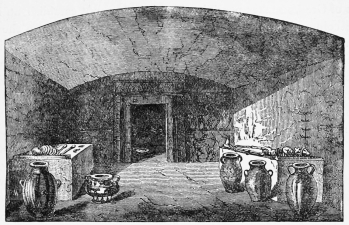
Fig. 246.—The Campana Tomb at Veii.