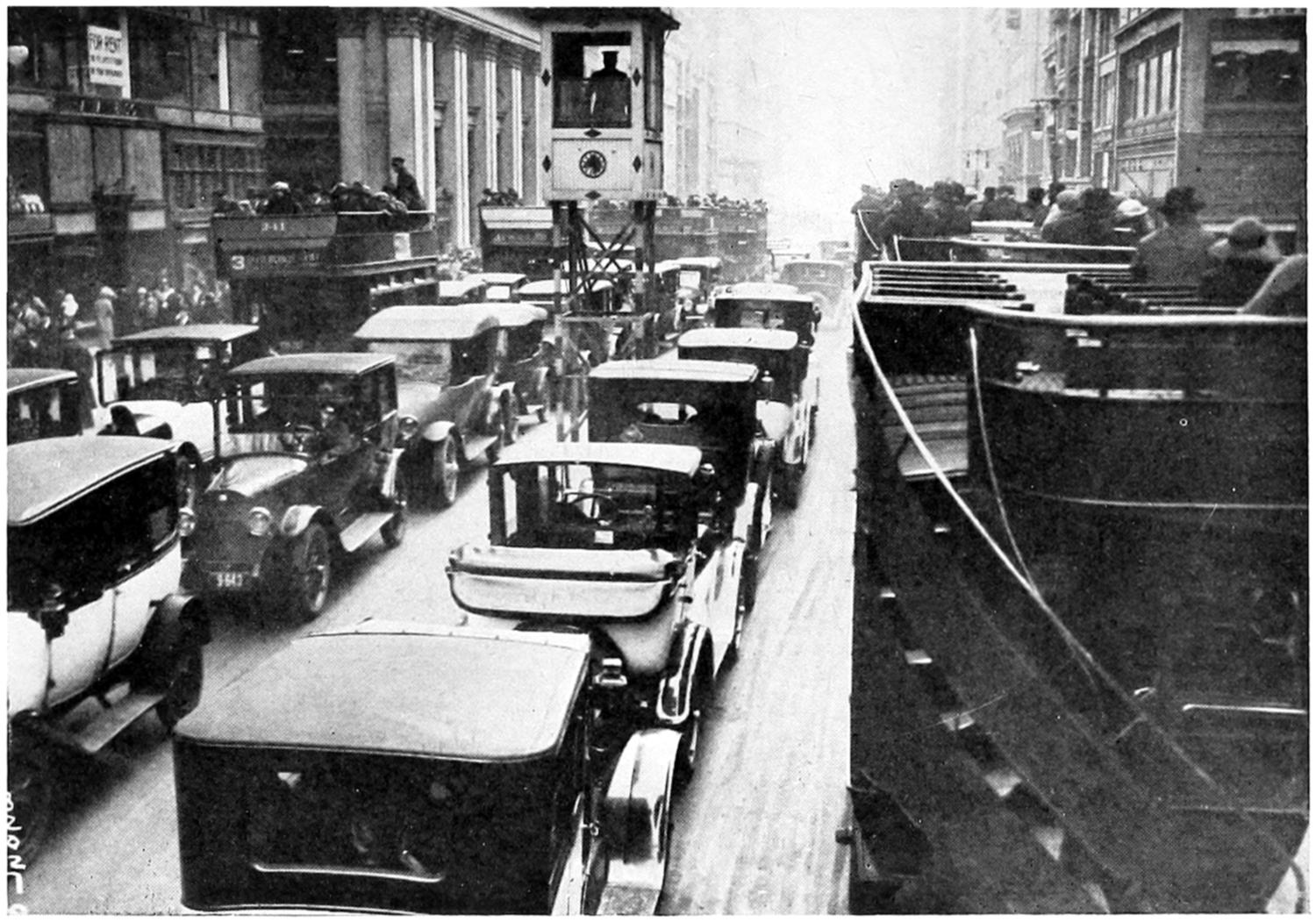
A Great Engineering Project Along the Hudson between Cornwall and West Point, N. Y.
HIGHWAYS
AND HIGHWAY TRANSPORTATION
BY GEORGE R. CHATBURN, A.M., C.E. Professor of Applied Mechanics and Machine Design
Lecturer on Highway Engineering
The University of Nebraska
NEW YORK
THOMAS Y. CROWELL COMPANY
PUBLISHERS
Copyright 1923, by
THOMAS Y. CROWELL COMPANY
Printed in the United States of America
PREFACE
The following pages on Highways and Highway Transportation
do not pretend to be an exhaustive treatise on the
subject, but rather a glimpse of the vast development of the
humble road and its office as an agency for transportation.
Possibly the grandeur of the mountains is best appreciated
by one who lives among them, who climbs their acclivitous
heights, who daily experiences their power and majesty,
and measures their magnitude by grim muscular exertion.
But, even so, it would be foolish to contend that he who
gets his information from the seat of a Pullman car receives
no benefit from the hasty glimpse, or, that his imagination
is not quickened and cultured by the experience. In writing
this book, then, I have had constantly in mind the
myriads of people who have not the time, and possibly not
the facilities, to search the pages of the literature of the
past for the origin and development, or to work out their
present importance, of our amplification of roads and of
road uses. It is felt that many of these people laudably
desire a conversational knowledge of the origin, evolution
and present status of highway transportation, even though
it be glimpsed by a very rapid passage through a very large
subject.
The primary objects have therefore been, to sketch briefly
and simply the development of the transportation systems
of the United States, to indicate their importance and
mutual relations, to present some practical methods used
in the operation of highway transport and to make occasional
suggestions for the betterment of the road as a usable
machine for the benefit and pleasure of mankind.
Any observations made or conclusions drawn are purely
personal. I entered into and have carried on the work
entirely unbiased. I am not financially or otherwise, except
academically, interested in any firm or company whose
business has to do with transportation either directly as a
carrier, or indirectly as a manufacturer of the instruments
or accessories to transportation, nor does any of my living
come from societies or foundations organized as propagandists
for any particular forms of transportation, or
transportation materials or equipment. I have no admiration
for the man who hopes to see the steam and electric
railways put out of business or even caused to run at a loss
by the automobile, motor express or motor bus. Neither
have I any plaudits for the man who would arrest the
growth of the new forms of transportation by drastic legal
enactments and excessive taxation in order to preserve the
old. I believe there is room and need in the United States
for all forms of transportation, and that each can thrive
in its respective field just as do wheat and corn but
none will thrive if they attempt to occupy the same field
at the same time.
The text is naturally divided into two parts—the development
of highways and their use. The first part treats
of the relation of transportation to civilization generally,
explaining briefly how the two have grown together like
children at school, how each has helped the other, and how
the meter of one is the measure of the other.
Leaving the old world there is sketched all too briefly
the development in the United States of transportation
facilities from the coastal and natural waterways, from
the pack and trail, used by the aborigine and early settlers,
through the treks of the pioneers, the periods of canal
digging, the toll road competition, and the railway frenzy,
to the advent of the modern road with the coming of the
bicycle and automobile and their wonderful accelerative
impulse.
The effects of State and Federal aid upon the road conditions
of the country are fully treated as is also the planning
of highway systems.
Automotive transportation for business and pleasure including
rural motor express and bus lines, and their effect
on production and marketing are described and discussed.
In the chapters on highway accidents and highway aids
to traffic, attention is called to many types of accidents,
including railway crossing accidents, with suggestions for
their mitigation. Here also are given the most recent
practical rules for the regulation of traffic in both city and
country.
A chapter is devoted to the esthetics of the highway, a
subject just coming to the attention of road men who have
heretofore been mostly concerned with distances, grades,
widths and surfaces, which, by the way, are frequently
mentioned in the text. As in all building construction the
first appeal was made to material things and their relation
to the pocket-book, while the last and most enduring appeal
is spiritualistic and is made to the pleasures of the imagination.
The same idea of making the road a means of catering
to the preservative and pleasure instincts of man is considered
in the final chapter on aids and attractions to traffic
and travel. Safety and warning devices are discussed as
such, while comforts and conveniences are means for luring
the average citizen to the highway, to the camps and parks,
for the broadening effect upon his character, the health of
his body, and the enlightenment of his soul.
Thus we close a most hurried journey from the very
beginning of roads to their modern far superior yet very
imperfect attainments. The main thought throughout has
been the road as a usable agency in the economic and entertaining
phases of life. Each equally important to the
wealth, health, and happiness of our people. The mind
easily travels ahead to a time when separate roads will be
devoted to the two great ends of business and pleasure.
Then the flight of fancy passes on to still another period of
time and sees the highways made inoperative and superfluous,
overgrown by weeds and grass, for the argosies of
business and pleasure have taken to the air.
Stages of Civilization: Direct Appropriation; Pastoral; Agricultural — Manorial and Feudal Systems;
Handicraft — Merchant Guilds, Effect upon Trade, Domestic System, Government Control, Agriculture;
Industrial — Building of Canals, Smelting Iron, Invention of Steam Engine, Railways Developed. Some Historical Roads and
their Influence: Early Highways — Asiatic, Greek, Roman, Pre-Historic American.
CHAPTER II
Transportation Development in the United States: Early Trails and Roads
First Settlements near Coast. Birch Bark Canoe, Meagerness of Roads. Settlement follows Waterways.
Portages. Lines of Travel — Through Alleghanies, from the North, Boone’s Trace or the Wilderness Road, Calk’s Diary.
Explorations — Marquette, Lewis and Clark, Fur Companies. Western Trails — Oregon, Salt Lake, Later California,
Santa Fé, Gila and Spanish. Turnpike Roads, Wagon Road Neglect, National Participation — Cumberland Road. Early Inns.
Coastal, Inlets, Rivers, Creeks. Canals — Europe, New York, Pennsylvania, Ohio, Other States;
Passenger Traffic on; Prosperity and Desuetude. Ship Canals: Sault Ste. Marie, Cape Cod, Panama — Inducements for,
Early Schemes, Routes — Tehauntepec, Nicaragua, Others; French Participation — DeLesseps’ Grant, Company Organized;
Other Promotion Schemes; Indignation in the United States against Foreign Building
Canal; DeLesseps begins Work; Clayton-Bulwer Treaty; Hay and Pauncefote Treaty; Commission Reports Favorably on Nicaraguan
Route; French Company Bankrupt; Colombian Congress Refuses to Sell to the United States Control of the Canal Strip;
Panamanian Revolution — Roosevelt’s Part in Revolution; United States Secures Control of Canal Strip, Colombia Protests;
Construction of Canal Begun; Description of Canal, Canal Traffic. River Transportation: Small Boats, Pole Boats, Large Boats,
Rafts. Steamboat: Construction, Mississippi River Traffic, New Orleans Levee, Mississippi Steamboats and Steamboating;
Steamboat Fares. Government Attitude toward River Improvement. John Fitch Granted a Right in New Jersey; Calhoun’s
Activities, Monroe’s Attitude. National Aid for Internal Improvements.
Origin and Early Development. Optimism of Promoters. Early Locomotives. First Chartered
Railroad — Charleston and Hamburg, First Passenger Car on Baltimore and Ohio, New York Central, Camden and Amboy, New
England Roads, West of Alleghanies, in the South. Rapid Growth in Railway Mileage. Call for Government Aid. Land Grants.
Pacific Roads — Congressional Discussion, Compromise Bills, Construction of Pacific Roads, Crédit Mobilier. Era of
Railway Consolidation — Typical Consolidations, Methods of Consolidating. Mechanical Development: Rails, Freight Cars,
Locomotives, Gauge, Telegraph, Signals. The Evolution of the Sleeping Car. Street Car Service. Electric Traction — Origin,
Development.
Neglect and Desuetude of Wagon Roads, 1830-1890. Laying out and Working Roads, Statutory Width of
Roads. Influence of Bicycle for Better Roads: Origin of Bicycle, Development, Ordinary, Safety, Cycling Boom, Organization
of Wheel Clubs, Propaganda for Good Roads, Prevalence of Poor Roads, Comments by Writers.
Good Roads Associations; League of American Wheelmen, National Highway
Commission, Col. Pope’s Propaganda, Bills Introduced in Congress. Office of Public Roads Inquiry: Duties and Limitations,
Cooperation with Good Roads Organizations, National Good Roads Association — Good Roads Trains, Object Lesson Roads,
Policy Discontinued, Duties and Scope of Office of Public Roads Widened and Name Changed — Educational Work, Research,
Administration of Federal Aid. Rural Free Delivery of Mail: Origin, Development, Advantages. State Aid: Origin — New
Jersey, Salient Features, Difficulties of Getting it Enacted; Massachusetts; Other States; State Bonds for State Aid.
Federal Aid; Enactment of Law, Provisions, Appropriation, Administration, Additional Appropriations.
CHAPTER VI
Interrelation between Highway and Other Kinds of Transportation
Classification of Transportation. Railroads have not always Acted Honorably. Quantity Production and
Division of Labor Applied to Railway Transportation, to Motor Transport. Automobiles Cutting into Railway Earnings, Babson’s
Prediction. Effect of Motor Competition on Interurban Trolley Lines, on Street Car Lines, Taxicabs and Jitneys, Buses,
Trackless Trolleys. Guaranteeing Earnings of Street Car Companies, Legitimate Fields of Transportation Agencies. Length of
Haul for Economic Trucking. Reduction of Rates and Expenses. Carving out New Fields. Still Room for all Kinds of
Transportation.
Defined, Radical Changes to be Expected. Business Passenger Traffic: Jitney and Taxicab, Motor
Bus — Qualifications, Fares, Competition with Street Cars, Cross-country Service, Carriers of School Children, Transfer
between Depots. Pleasure Passenger Traffic: An Influence in the Purchase of Automobiles, Pleasurable Effect of Automobile
Riding, Recreational and Pathological Benefits of Motoring, Cost of Motoring. Freight Traffic: Cost
and Time Factors, Motor Trucks and Congested Districts, Time Devoted to
Loading and Unloading, Depots, Warehouses, Devices, Removable Bodies, Sectional Containers, Store to Door Delivery, Mass
Loading. Devices Connected with the Truck. Devices Separate, Special Types of Bodies. Traffic between Towns: Economic
Distance, Licenses and Insurance, State Regulation without Competition, Development of State Regulation. Motor Bus Traffic:
Buses, Rates, Future of Motor Bus and Other Types of Transportation. To and from the Farm: Importance of Farm Trucking,
Arguments in Favor of, Cost of Trucking, Diversified Farming, Intensive Farming, Live Stock. Trucking, Benefits to the Farmer,
Economy of Farm Trucking, Parcel Post Service and the Farm, Rural Express, Milk Trucks, Convenience to the Farmer, Purchasing
a Truck. Terminal Facilities: Advantages. Social Aspect of Motor Transportation: Effect on Merchandising, Housing,
Unification of Society, Standard of Living, Size of Farms, Salesmen, Hotels, City and Country Stores. Consolidated Rural
Schools: The Public School and Patriotism, Peace, Changing Concepts of Public Schools. Rural Mail Delivery. Automobile and
Health: As a Form of Exercise, Effect on Styles; Medical Science; Sanitary Effects — Mosquitoes, Flies. The Automobile
and Crime: Bootlegging, Robbery, Vandalism. Types of Automobile Transportation.
Object of a Road. Road Classification: Agricultural. Recreational, Commercial, Military. Problem of the
Road Planner: Economy, Accommodation, Utilizing Existing Roads. Essentials to be Considered: Ruling Points, Branch Lines and
Detours, Alternate Routes, Existing Highways and City Streets, Vested Rights, Widening Roads and Streets, Railroads, Trolley
Lines, etc., Bridges, Culverts, Drainage, etc., Ruling Grades, Esthetics. Motor Transport Efficiency Outline, Highway System
Unit: Arguments in Favor of National System — Eliminates Sectional Differences, Gives Continuous Roads, Military Roads,
Benefits of Example. State Systems — Benefits. Procedure of Laying out a Road System: Commission, Determining Factors,
Maps, Tentative System, Reconnaisance Survey — What Shown, How Taken,
Instruments; Hearings — Object; Final Location — Considerations, Traffic Census Advisable. Financial Considerations:
First Cost, Upkeep, Traffic Census: Affects Location, Type of Road, Grades, Width, Foundations. Making a Traffic Census:
Variation of Traffic — Number of Counting Days, Hours Each Day, Weights, Observer’s Cards, Both Way Count, Weather,
Stations — Location of. Classification of Traffic: Object, Maximum Loads, Effect of Heavy Loads, Influence Units of
Traffic — British, French, Other Countries, Maryland, Massachusetts, Borough of Brooklyn; Suggested Form of Traffic
Sheet — New Jersey. Destructive Factors: Density of Traffic, Weight of Vehicles, Impact, Speed, Wrinkling, Sprung and
Unsprung Weight, Tires, Pleasure Cars and Light Traffic to be Considered. Other Methods of Estimating the Amount of Traffic:
Area Served, Tonnage Arising. Distribution of Traffic over Township Roads. Selection of a Suitable Type of Road. Taxpayers
Allowed to Assist in Selection, Engineers to Suggest. Ideal Road: Qualities of — Low First Cost, Durability — Materials
and Design, Resistance to Traction and Tractive Force — Horse, Truck, Speed, Temperature, Roughness, Width of Tire,
Diameter of Wheel, Table of Resistances; Resistance Due to Grade — Formulas, Coefficient, Available Engine Effort;
Slipperiness — Type of Pavement, Climatic Conditions; Sanitariness — Definition, Effect of Type of Road; Noisiness;
Acceptability. Some Types of Roads and their Qualities: Earth, Sand-clay, Gravel, Macadam, Bituminous Macadam, Bituminous
Concrete, Brick, Concrete, Creosoted Wood Block, Asphalt Block, Sheet Asphalt, Other Types. Comparison of Roads — Specimen
Tables.
CHAPTER IX
Effect of Ease and Cost of Transportation on Production and Marketing
Production Defined, Productive Activities — Change of Form, Change of Place, Change of Time. Nature
and Labor. Capital — Stored up Labor. Marketing — Wholesaling and Retailing. Grain Exchanges; Defined, Object,
Commission Merchant, Dealing in Futures — Hedging. Cooperative Marketing: Advantages. Local Grain Merchant — Financing
Movement of Crops. Elements Entering into the Cost of Marketing. Transportation from
Farm to Local Market. Cost of Production, Effect of Good Roads upon, Intensive Farming, Fruit Farming, Long Haul
Transportation. Stock Marketing: Changing Character of Stock Raising, Distance of Economic Hauling by Team and by Truck,
Effect of Truck Hauling on Number of Hogs Marketed. Seasonal Effect. Stock Merchant — Local, Shrinkage, Dairying.
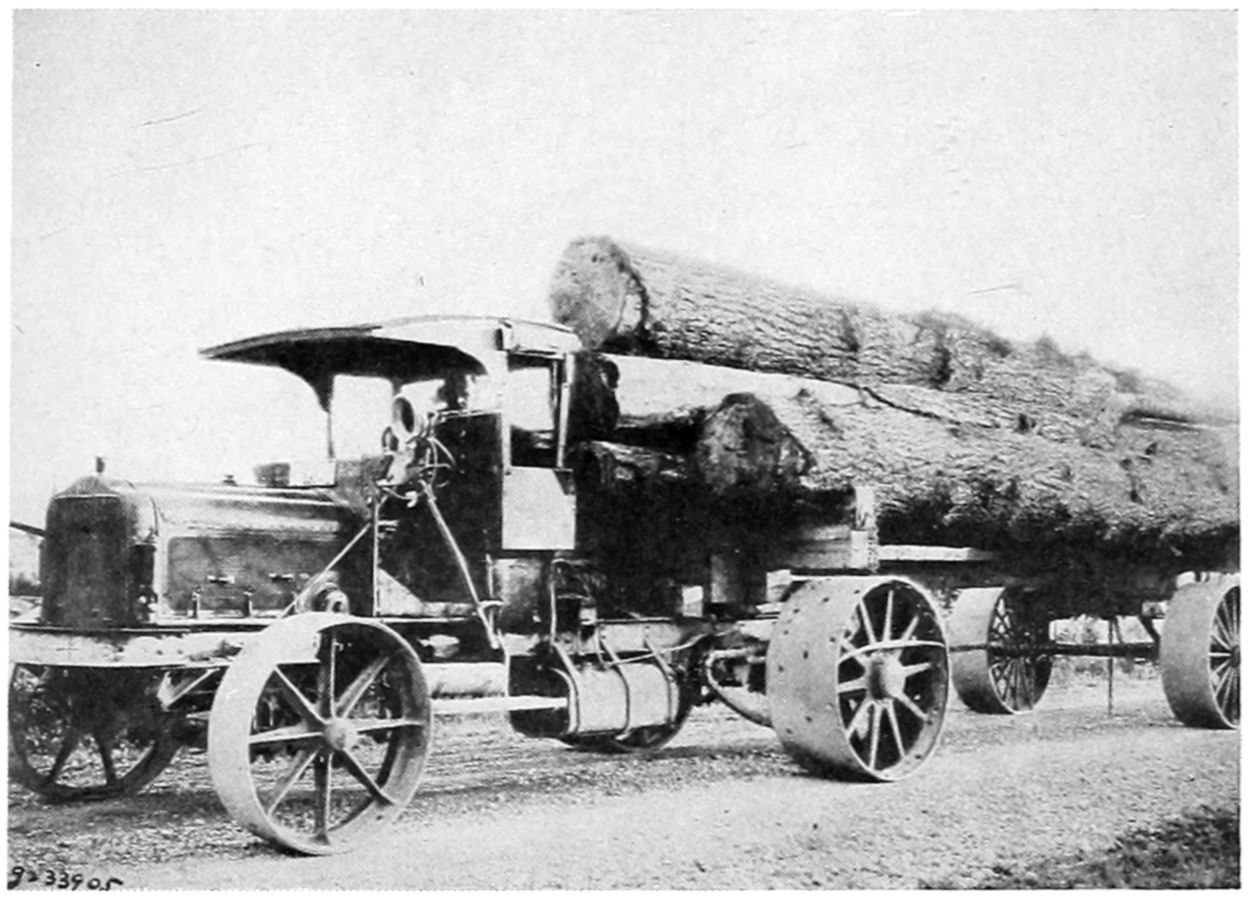
Poultry. Forestry: Logging and Lumbering, Forest Management, Use of Truck and Trailer, At Saw Mill, Log Loader, in Lumber
Yards, Mining. Factory Products. From Factory to Retailer. Terminal Charges Eliminated. Construction.
CHAPTER X
Financing Highways and Highway Transportation Lines
Origin and Reasons for Road Work. Working out Road Tax Abolished. Private Financing, Public Financing.
Taxation: Tax Defined, Classified. Direct Taxes — Levied Uniformly. Indirect Taxes: Defined, Classes of, Special Taxes,
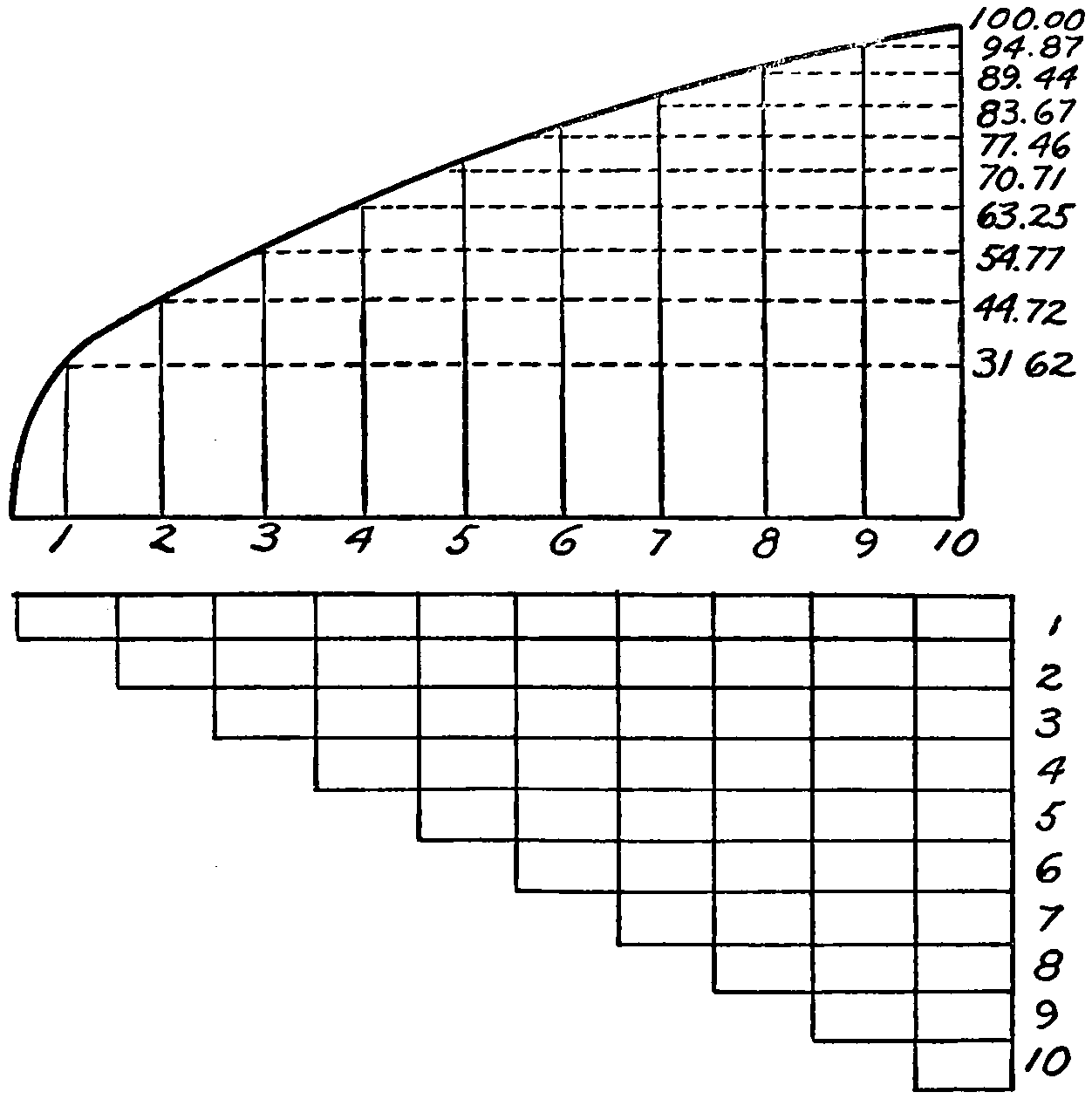
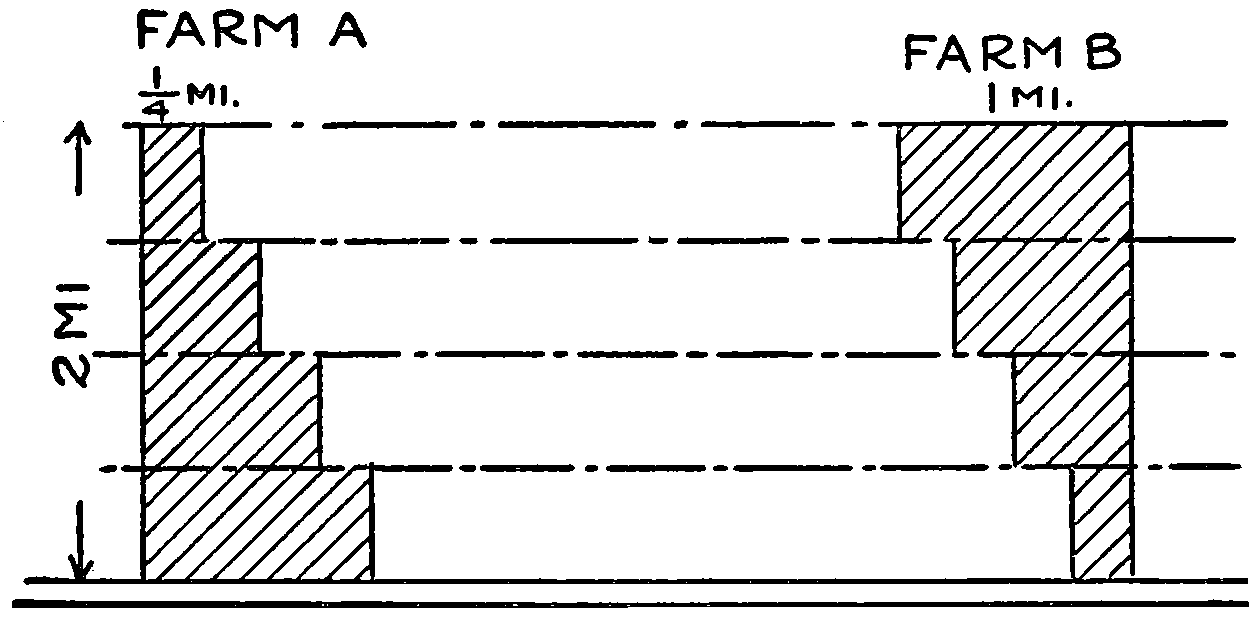
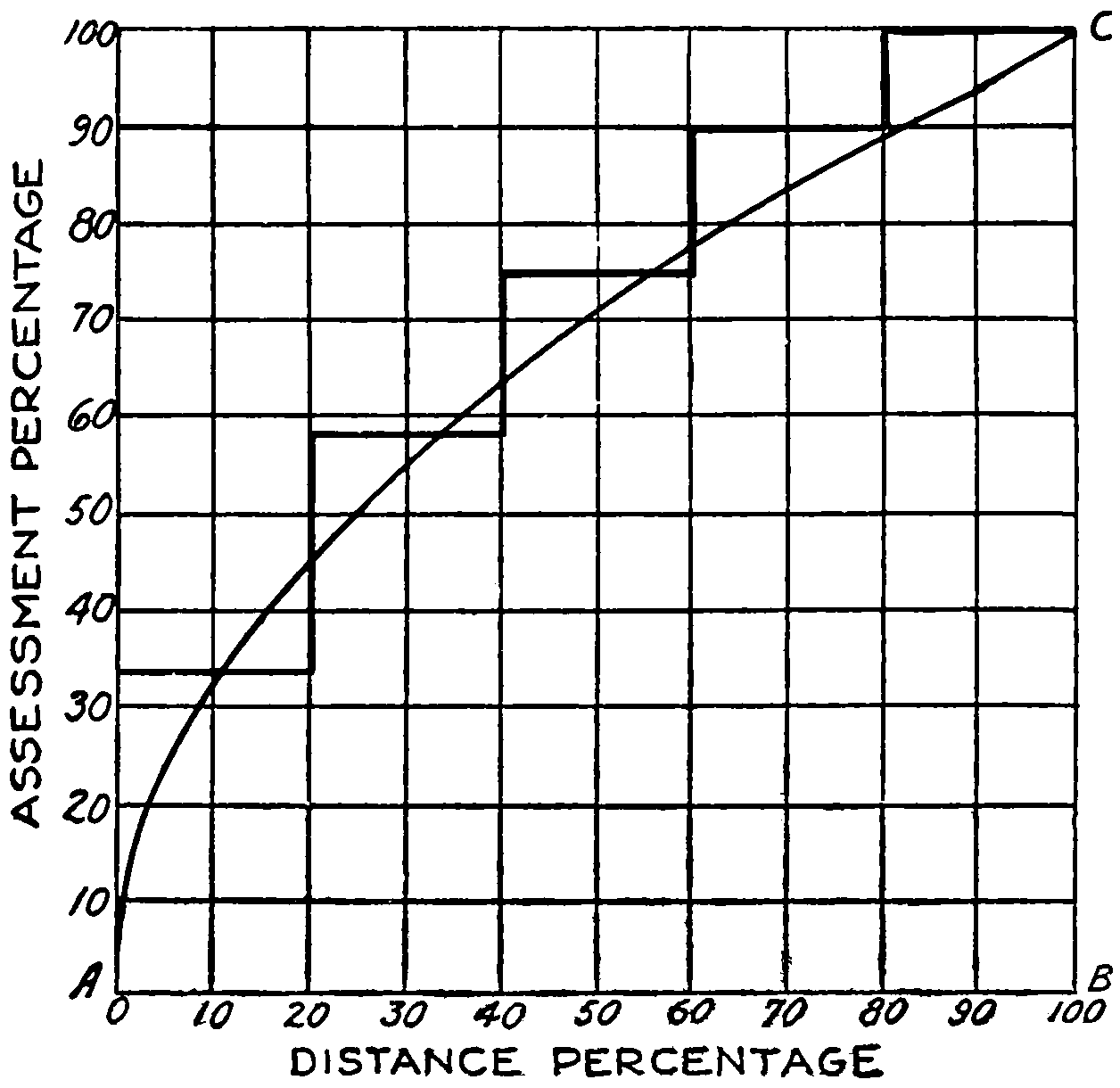
How Levied, Benefits Decrease with Distance, Petitioning Influence — Curve of, Concrete Illustration. Zone Weights: How
Determined, Plots and Tables. Frontage: Defined, Calculation, Illustrative Example. Unequal Zones and Irregular
Lots — Concrete Illustration. Another Method of Apportioning Assessments. Rule for Assessment. Miscellaneous Sources of
Revenue: Public Service Corporations, Bus and Truck Lines, Municipal Sale of Water, Gas, Electricity, Ice, Coal. Public
Ownership of Transportation and other Necessary Utilities. Bonds: Sinking Fund, Serial, Annuity, Comparison of Costs. Term
of Bonds. Stocks and Bonds. National and State Aid. Present Status of Federal Aid. Matching Federal Aid Dollars. Financing
Highway Transportation: Individual, Partnership, Corporation. Public Ownership — When Advisable.
Accidents Result of Disorder, Codes to Prevent, Automobile Accidents Lead in Number. Causes: The
Driver — Mentally or Physically Unfit, Ignorant, Indifferent, Reckless; Driving and Operating: Recklessness, Speeding,
Around Sharp Turns, Passing Cars. Horns. Stopping Cars on Grades, in Streets,
etc., Backing. Other Forms of Carelessness. The Car: Skidding, Brakes, Flexibility, Steering and Turning Ability, Lights,
Unlighted Vehicles, Speedometer. Bad Roads: Slipperiness — High Crowns, Embankments and Guard Rails,
Super-elevation — Rule for, Clear Vision, Curves, Bridges and Culverts. Railway Crossing Accidents: Prevalency,
Elimination of Crossings — Cost, Automobile Drivers Careless — Observations, Methods of Mitigation; Bridge
Clearance. Pedestrians — Jay-walkers, Obstacles that Obscure Vision, Pedestrians on Country Roads, Slow Going Vehicles,
Bicycles. Road and Traffic Regulations: Development of, Council of National Defense Code, Education Necessary.
Indispensable Elements of Architecture — Stability, Utility, Beauty. Esthetic Sense — Applied
to Roads, to Landscape Gardening. Styles — Natural and Formal. Application to Roads. Varieties of Road and Street
Trees — List; Shrubs — List; Climbers — List. Semi-formal Style. Telephone and other Poles, the Ideal Section,
Legislation Necessary. Local Conditions Determine Planting.
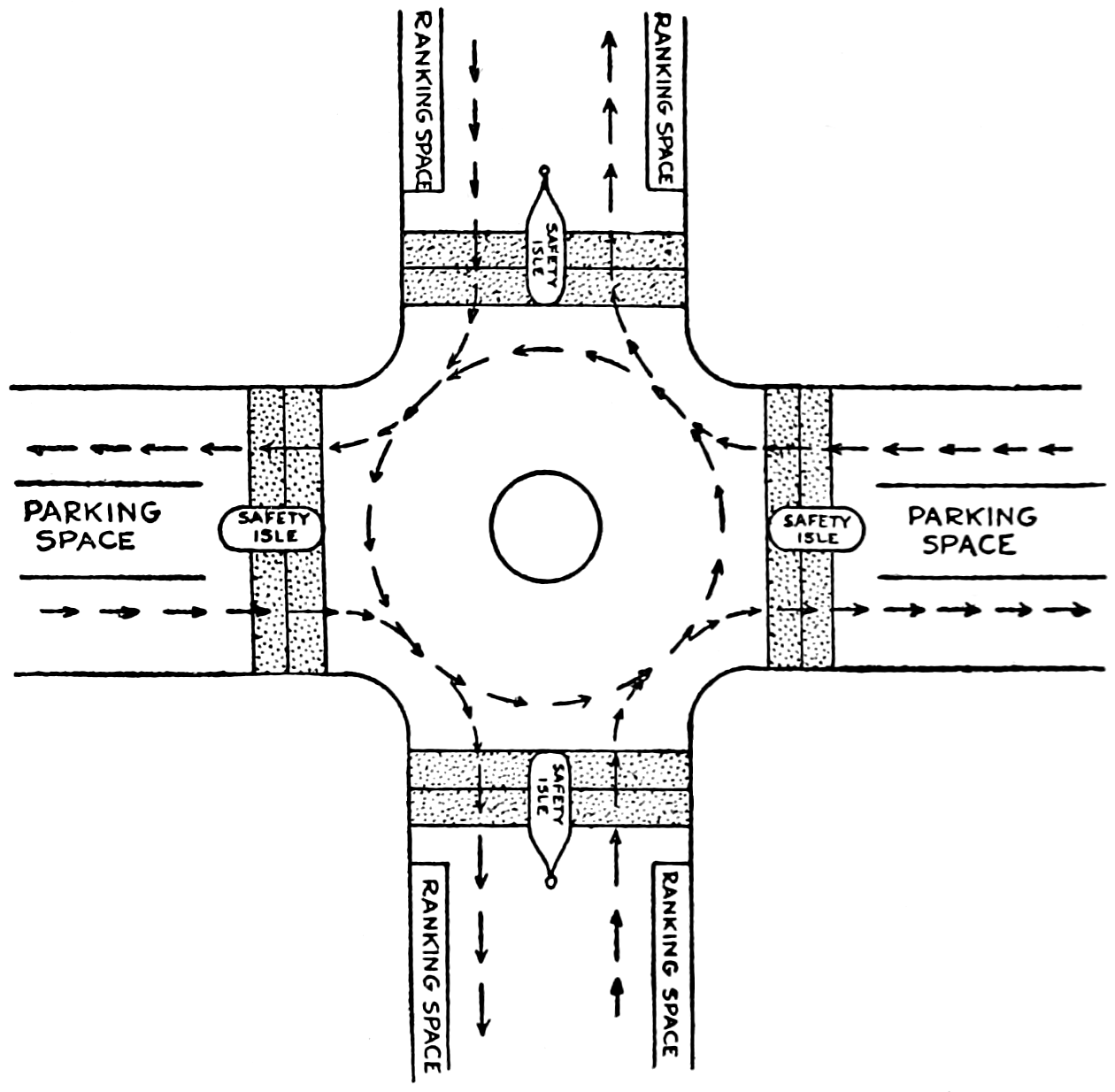
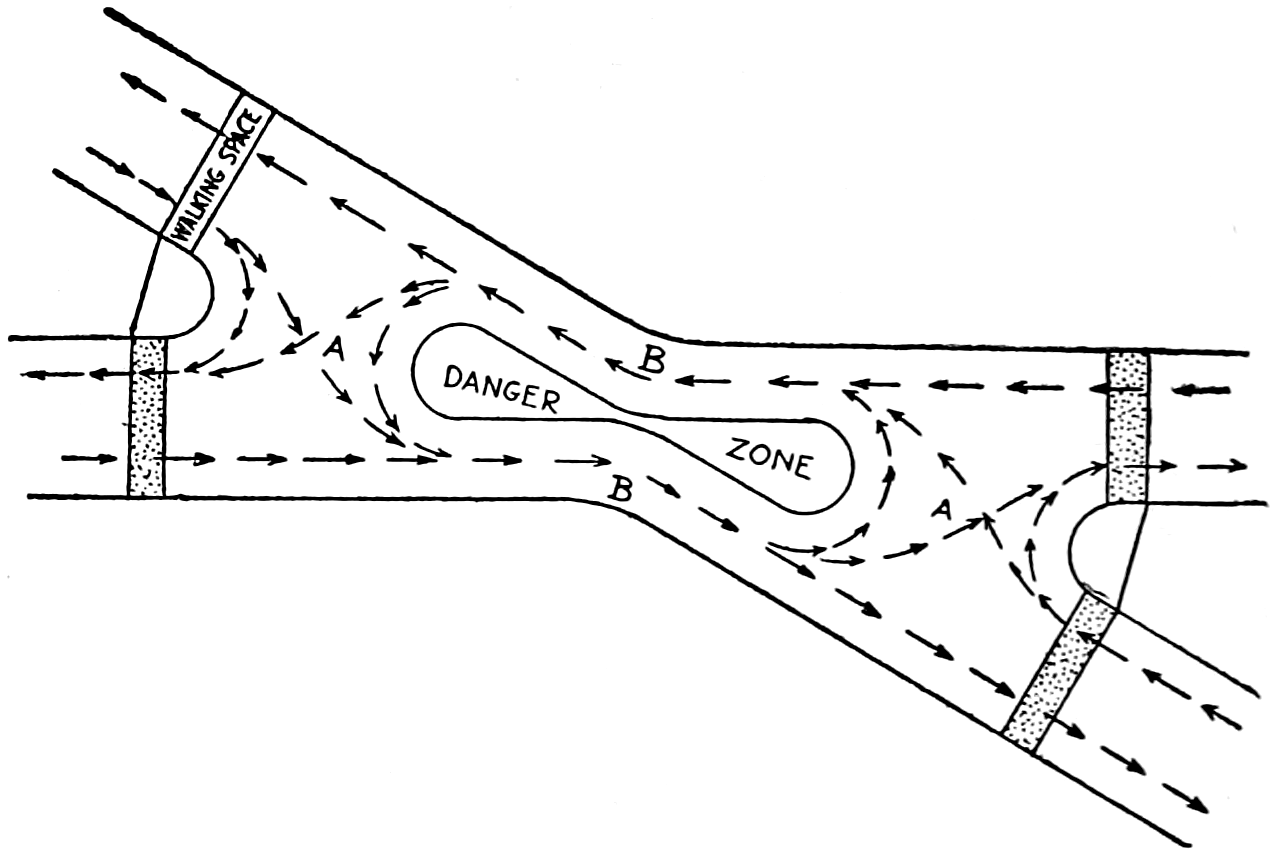
Pleasure Riding — Extent, Advantages to a Community to Have Tourists Pass through, Ranking and
Parking, Parking Spaces a Convenience to Motorists — Space for and Angle of Parking, Location of Parking Spaces, One Way
and Rotary Traffic, Opera House Traffic, Public Garages — Several Story Garages. Terminal Stations — Omaha,
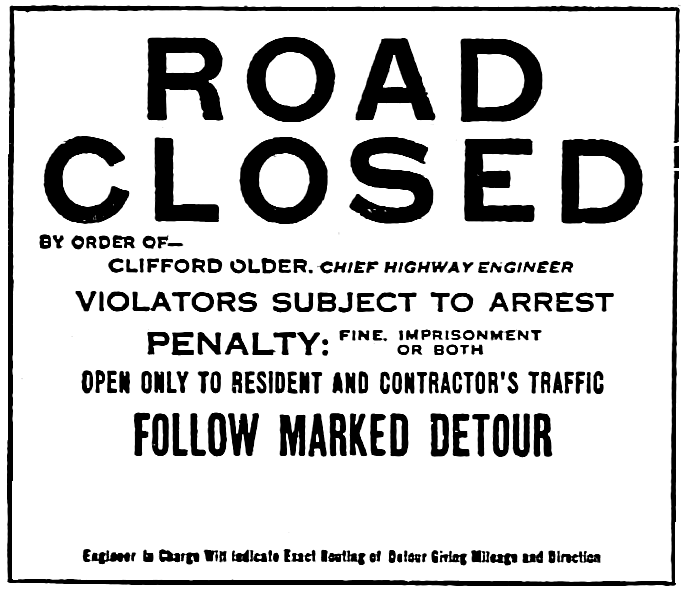
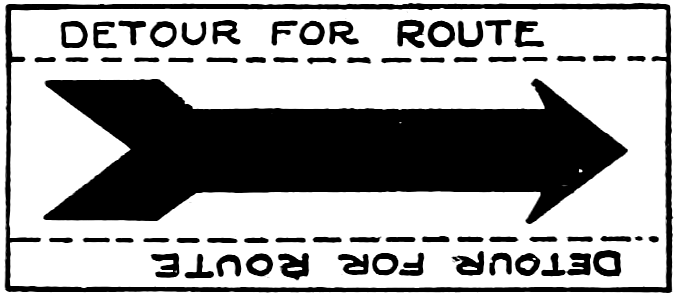
Poughkeepsie, Elsewhere. Gas, Air and Water Stations, Named and Numbered Roads; Marks, Signs and Guides — Distance and
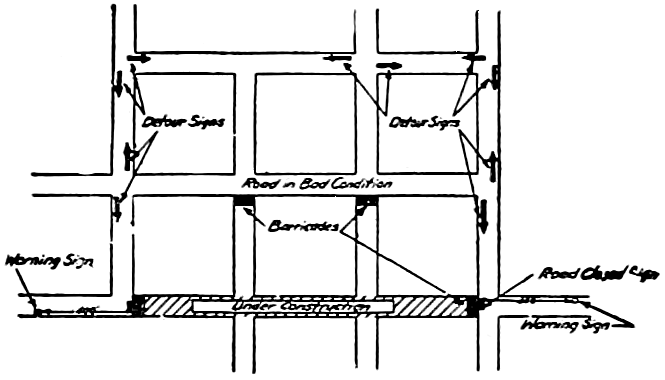
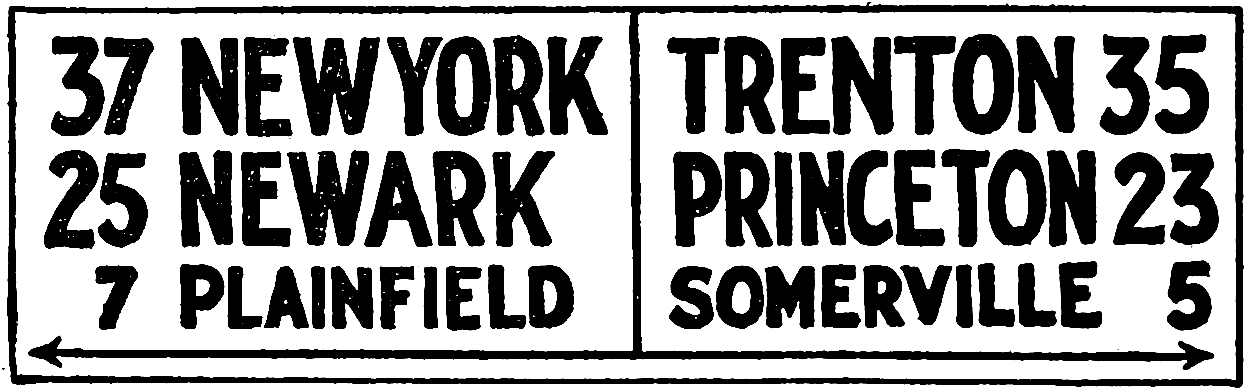
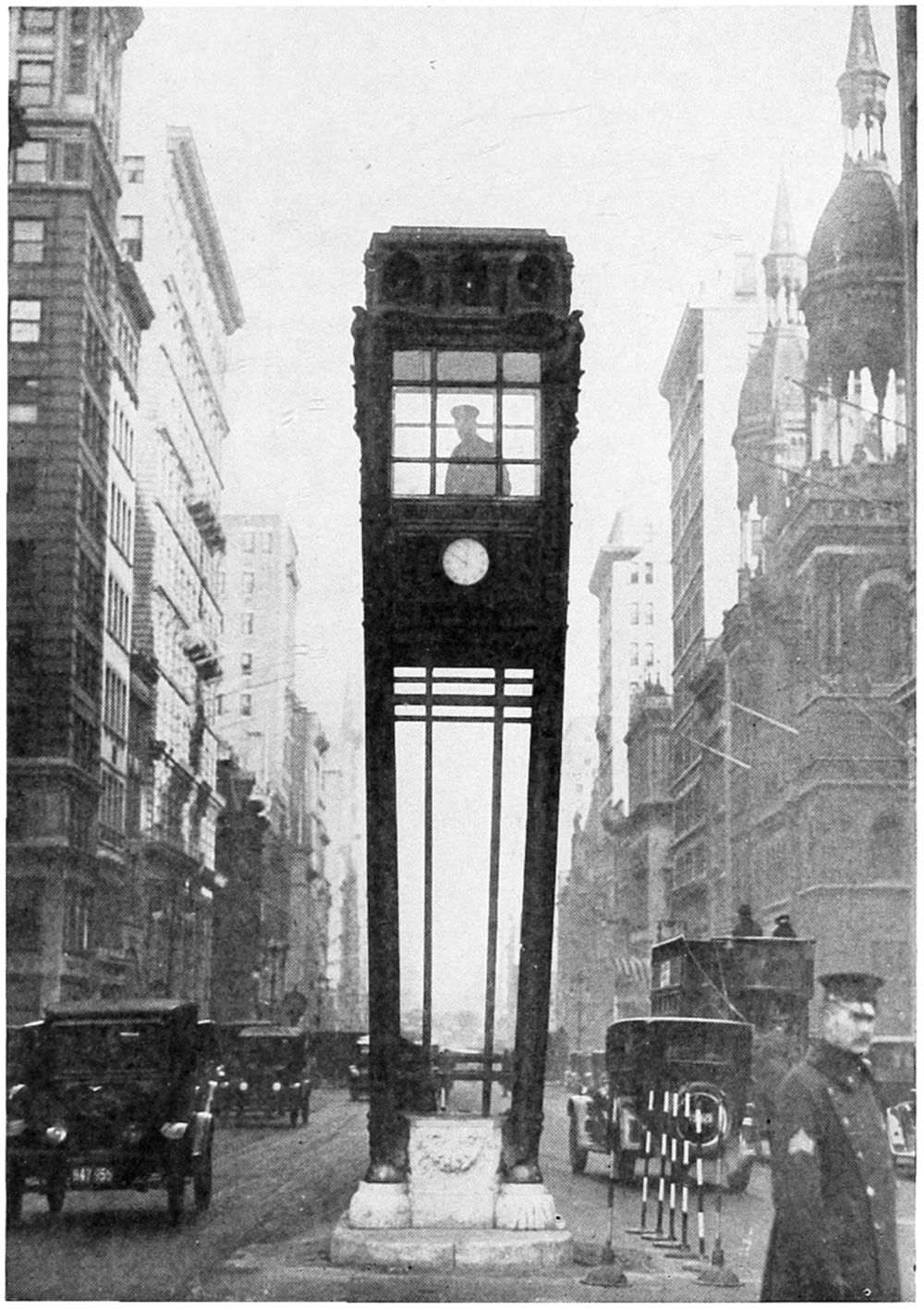
Direction Signs, Letters and Colors, Warning Signs, Map Signs, Detour Signs, Location of Detour Markers, Dummy Cop,
Semaphores, Signal Lights and Colors, Road and Street Lighting, City Traffic Lighting, Traffic Officer, Semaphore and
Towers. Touring: Prevalency and Pleasures of, Camping — Grounds, Caravans, and Equipment. Camp Sites, Hotels, Parks,
Information Bureaus and Agencies.
Map of the North-Eastern Portion of the United States
36
Showing the Location of Well-known Portages. There Were Other Portages Wherever Two Water Courses
Came Near to Each Other. (See Farrand: “American Nation,” Vol. I, and Thwaites, Ib. Vol. VII.)
Showing Main Highways and Waterways in the United States about 1830. When the Railroads Entered the Industrial Arena, the Country Was Being Covered With a Net Work of Highways. (Based on Tanner’s Map of 1825 and Turner in “American Nation,” Vol. XIV.)
1. Showing the Growth in the Size of Locomotives During the Past Twenty Years. The Smaller Locomotive is an
American Type Class Engine of 1900. The Larger is a Mountain Type Engine. Both are Used on the C. B.
& Q. R. R. Photographed at Lincoln, Nebr., Sept., 1922.
2. One of the New Gearless Electric Locomotives Built by the General Electric Company for the C. M. &
St. Paul R. R.
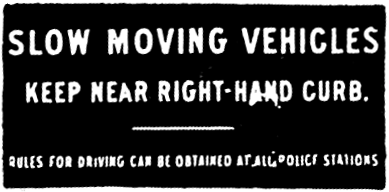
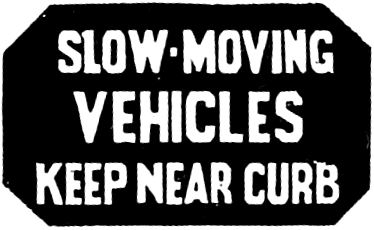
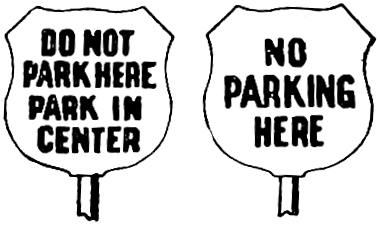
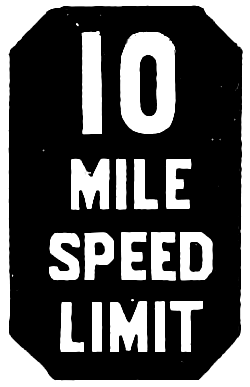
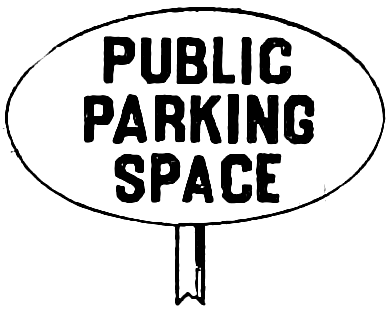
“In November, 1903, one hundred blue and white enameled signs, directing slow-moving vehicles
to keep near the right-hand curb, were put in use in New York. These were probably the first traffic regulation
signs ever used.” (From Eno’s “The Science of Highway Traffic Regulation.”)
CHAPTER I TRANSPORTATION A MEASURE OF CIVILIZATION — Stages in Civilization. — Stage of Direct Appropriation. — The Pastoral Stage. — The Agricultural Stage. — The Manorial and Feudal Systems. — The Handicraft Stage. — Craft-guilds. — Effect upon Trade. — The Domestic System. — Governmental Control. — Agriculture. — The Industrial Stage. — Railways Developed. — Some Historic Roads and Their Influence. — Early Highways. — Roman Roads. — Pre-historic American Roads. — Conclusion. — SELECTED REFERENCES — FOOTNOTES
HIGHWAYS AND HIGHWAY
TRANSPORTATION
As the several peoples inhabiting the earth have progressed
from barbarism through the different stages of
civilization, the transportation occasioned by their wants
and desires has kept a close pace. By a study of the transportation—travel,
movement of goods and commodities—and
the means and facilities for its accomplishment, the
relative civilization of any people, their rank and position
may be accurately surveyed, graduated, and estimated.
The highways of a nation, whether they be of the land or
sea, or both, are most vital elements in its progress and
could almost as well as transportation be considered the
measuring rod of civilization.
—Sociologists differ as to what
constitute the several stages of civilization. One might
trace the development of man through literature, another
through art, another through government; others consider
his economic activities the more fundamental factors.
The most widely used economic classification,
according to Ely,[1] is based upon the increasing power of
man over nature and consists of (1) Direct Appropriation,
(2) The Pastoral Stage, (3) The Agricultural Stage,
(4) The Handicraft Stage, and (5) The Industrial Stage.
These stages are well illustrated in English history. The
stage of direct appropriation corresponding to the prehistoric
period and up to 54 B.C., when the Romans overran
the island of Britain; the Pastoral stage from this
time to the invasion by William the Conqueror, 1066; the
Agricultural up to about the discovery of America, when
a great impetus was given to travel and discovery; the
stage of Handicraft, from 1500 to the invention of the
steam engine and its application to manufacture at the beginning
of the eighteenth century; the Industrial stage, to
the present time. While these stages necessarily overlap
each other considerably, it will be seen that as one declines
the next is ushered in with some radical change in government
or in economic or industrial condition. The present day—immediately
following as it does the Great World War,
out of which have issued many scientific discoveries and inventions,
notably those advancing the theory and practice of
air navigation, with many potential possibilities in new
lines of transportation; and the setting forth of an idea
which is capable of leading to a better understanding or
even a confederation of nations and altering all forms of
national government—may be the beginning of a new stage
of civilization.
—This stage covers the
whole course of prehistoric man from the time the first ape
stood erect some 500,000 years ago[2] through the stone,
bronze, and iron ages to the age of literature and art.
During these long years civilization traveled far, for the
least cultured savages observed have advanced not only
away beyond the highest of the lower animals but also
beyond the lowest intellectual estate of which human beings
may be supposed capable of subsisting. And from the
lowest to the highest of these tribes are shown traits varying
as greatly in degree as from one stage in the above
classification to another. The Indians at the time of the
discovery of America and the three centuries following,
and many of the tribes of Africa during the explorations of
Livingstone and Stanley, were and still are in this stage
and hence have been subjected to scientific study and investigation.
Their governments while variable are of the
primitive types. Ordinarily a chief autocratically rules because
of hereditary influence. Little is manufactured,
planting is scarcely known; by hunting, fishing, and collecting
nature’s products of wild seeds and roots is a subsistence
obtained often with long, arduous, and dangerous
labor. Efficiency, as we understand that term to-day, is
very low, and the number of persons that a given area
can support is few. No one can predict but what to-morrow
he may have to go hungry or suffer cold from the
inclemency of the weather, for his store of food is nil or
small, his shelter rudimentary and clothing scanty. Note
the hardships of the party of Henry M. Stanley during
his expedition across the African wilderness in quest of
Emin Pasha.[3] Notwithstanding Stanley’s men were
possessed of firearms and edged tools and carried some provisions
with them, and were traversing a country teeming
with vegetable and animal life, many times they were on
the verge of starvation. The number of the natives in these
wildernesses are no doubt kept low because of the extreme
difficulties of procuring the necessities of life.
The barbarian requires less, of course, than the civilized
man; he is satisfied with mere subsistence. He is improvident
and relies upon picking up his needs from day to day
as a robin picks worms from the grass. Cannibalism often
exists, for the sacredness of human life has not yet been
established, although magic and crude religious rites are
seldom missing. While private personal property is recognized
and retained by personal prowess, the ownership
of land is absent. Coöperation of the crudest sort only is
found; division of labor consists largely in having the
females perform the work of planting, cultivating, carrying
burdens—when these are attempted at all—cooking and
caring for the children in the crudest fashion, leaving to the
men the work of hunting, fishing, and fighting. Each tribe
is self-sufficient and consists of a chief with a few followers
bound together loosely for the purposes of protection from
other tribes. Exchange, barter, and trade is at its lowest
ebb; consequently transportation is practically unnecessary,
and roadways except mere trails do not exist.
—In the process of evolution certain
animals undoubtedly were domesticated and used for food.
Whether or not this domestication preceded or followed
primitive agriculture or “hoe culture,” is not important,
as the pastoral stage of culture evidently lies between the
hunting and the farming stages. The written history of
mankind indicates that this stage largely prevailed among
the earlier Hebrew, Greek, and Teutonic races. A private
ownership in cattle and herds was recognized, but the
necessity of moving about with the flocks precluded fixed
habitations, although large areas were claimed and held or
endeavored to be held from trespass thereon by neighboring
tribes. A given area would thus support a much larger
number of people than in the preceding stage. A small
amount of trading or bartering was carried on and consequently
some transportation was required, but road
building as such was little known. Rivers and coast waters
for canoes and dugouts were no doubt early taken advantage
of by the aborigines of bordering territories. But
since there is so little division of labor, so little of barter
and exchange, commerce was not developed much during
this stage.
—The growing and storage of
crops, increased by the use of animal power, greatly
changed the economic and social conditions of man. It made
possible and profitable the living in fixed habitations, even
in communities, and this brought out the needs of rules of
government. But even yet each family provided without
the assistance of others for practically all its own needs.
In planting, reaping, threshing, grinding the meal and
cooking, the family became the unit. No great division of
labor was yet evident, consequently exchange, barter, and
transportation still remained low. Ownership of land was
necessary if a family was to cultivate the same land year
after year. This meant definite rules and laws and consequently
the development of governments. Ownership of
herds and land brought wealth and a certain distinction in
the community. Slavery, which had no doubt existed to
some extent in the pastoral stage, here, because it greatly
increased wealth, grew immensely. Large families likewise
meant more workmen and greater wealth, distinction, and
leisure, hence polygamy and polyandry often existed. As
the evolution continued there was a trend toward handicraft
and the division of labor; the products of one place
began to be exchanged for the products of other places.
This necessitated some forms of transportation, meager
though they might be, and trails between communities.
—In England and
on the continent during the later years of this stage there
were developed the manorial or feudal forms of government.
The people lived largely in villages each controlled
by a lord or earl (eorl) and to whom in return for his protection,
the use of land, and other favors, they were bound
to return to him service in the cultivation of his land and
in waging war when called upon to do so. The lords in
turn held their allegiance to the king. Some handicraftsmen
were among the retainers but they were so few that
they did not form an important part of the village, neither
was there a great deal of travel or transportation. The
manor instead of the family was the unit, and it was almost
self-sufficient. The land was allotted in small tracts and
tilled in the manner designated by the lord. Each person
raised barley, oats, peas, and lentils sufficient for his own
needs. Variation in crops was little practiced. Much land
at distances from the manor was still devoted to herds and
flocks.
However, toward the later part of this stage, the feudal
system began to break down. There were more free-holders
and free-tenants, living upon the land they cultivated according
to their own ideas. Wheat, rye, flax, and root crops
were assuming greater importance. This variety in farming
and the larger fields cultivated by the individual
naturally increased the products to be sold or exchanged
and hence increased transportation. People who had devoted
only so much of their time to spinning and weaving
as was necessary to supply their own family needs, were
beginning to do more, selling the excess and purchasing
from others things not grown or manufactured by themselves.
Thus were developed towns as centers of trade;
money as a medium of exchange assumed greater importance;
and a division of labor brought into being and increased
the social standing of trades and professions. Thus
was ushered in the Handicraft Stage of civilization.
—In England this stage lasted
through approximately five centuries, from 1200 to 1700.
The merging of one period into another came about so
gradually that a definite date can hardly be designated,
and the time is so long that undoubtedly many changes
occurred in the economic activities as well as in the government
and literature of the people.
While it is probable that merchants, middlemen who
bought from one person and sold to another, had thrived
throughout the earlier civilizations of Asia, Africa, and
Europe, and even extended their trade to Britain, merchandising
held a comparatively minor position in England
until the twelfth century, when merchants became very
prominent, so much so that combinations or guilds were
formed by them in all the large towns for the purpose of
protecting and controlling the conduct of business and, to
some extent, of maintaining a monopolistic control of the
trade in their particular businesses. A guild was an
association or fraternity of persons engaged in the same
line of business. It differed from a trade-union in that the
guild was an association of masters and employees, whereas
the trade-union is an association of employees only.
Many of the merchant guilds grew wealthy and strong;
they obtained Royal Charters from the Crown either by
direct payment or by an arrangement to pay a special tax,
or secured recognition in the borough charters. By authority
of these they were endowed with certain privileges
such as: (a) limiting the number of their own members
and the number who could participate in any line of merchandising;
(b) entering into secret price agreements and
trade arrangements; (c) controlling the import and export
of wares; (d) the establishing of a court which had absolute
jurisdiction over its members and others not members
engaged in the same line of business. This court “could
settle trade disputes, discipline its apprentices with the
whip if necessary, could imprison its journeymen who
struck work, and could fine its master members who acted
against its rules. And, finally, the members of the company
were forbidden to appeal to any other court unless
their own court failed to obtain justice for them.”[4] Moreover,
the meeting together for social enjoyment, feasting,
and worship; the helping one another in sickness and
poverty; and uniting together for the pursuit of some common
cause, naturally brought about very close and fraternal
relations.
—Craftsmen of like occupations joined together
in guilds also and they, too, became not only
numerous but very influential. They regulated their own
internal affairs and specified how many apprentices might
be entered, and under what circumstances a man might
become a journeyman or master craftsman. Numerous
other guilds, social and religious, were extant throughout
Europe.
—The merchant guilds and the craft-guilds
materially affected the production and trade of the
community and country. The merchants of Phoenicia and
later of Greece and Rome are said to have visited the
British Isles to secure tin and copper. The great merchant
guilds outfitted adventures to the ends of the then known
world to secure the goods—whether they were silks, spices,
furs or grain—in which they dealt. They were instrumental
in the passage of laws encouraging and securing
commerce. They themselves regulated the quality of goods
dealt in. For example the Goldsmiths’ Guild of London
required that all silver and gold-plate and jewelry manufactured
within three miles of London should be brought
to the guild hall for inspection. If it did not come up to
the specified standard it was ordered remelted; if it did it
received the “Hall Mark” that anyone purchasing it might
be assured of its quality. It is said the guilds were so
punctilious in the matter of quality that “Made in England”
goods received in the markets of the world a standing
of the highest rank; a reputation that never entirely
disappeared, and as a consequence English uprightness of
character became proverbial.
—All this made necessary the
building of ships and harbors, and the improvement of internal
highways of trade, and these in turn stimulated
manufacture which as yet was carried on by hand. The
family instead of the town or guild became the unit; apprentices
were entered and kept, usually, as members of
the family and worked along side the sons and daughters
of the master. As these grew to manhood their pay, beginning
with mere keep, was gradually increased with their
work and responsibility until at the end of seven years they
were fitted to go forth as journeymen and later themselves
became masters. The work was done at or near the
master’s home. The raw material was usually received
from a middleman, to whom was returned the finished product;
the middleman disposed of it to the merchant who in
turn sold it to the consumer.
This corresponds rather closely to what is called the
“sweat shop” method of the present time. Goods in a
raw or a semi-raw state are received by the workman from
the “manufacturer” and carried home; the workman performs,
with the help of his family, certain specified operations
and upon the return of the goods is paid for his work.
Or in agriculture, to the contract method, whereby specified
products such as sugar beets, sweet-corn, peas, beans,
tomatoes, fruits, and other products for manufacture, canning,
preserving, or pickling in a factory, are raised by the
farmer and sold to the manufacturer at a previously
agreed-upon contract price. Under the guild plan the
manufacturer or importer sold usually to the ultimate consumer.
So the economic system was gradually growing
more complex, and the interdependence of man upon man
more pronounced.
The older agricultural procedure had not entirely disappeared.
Most families cultivated land, and raised more
or less stock and poultry, but performed the work of manufacturing
as a side line, as at present in the Middle West
farmers make grain and stock raising their main industry
with dairying, vegetable gardening, poultry, and eggs as
mere adjuncts, although these latter often bring in about
as much money as the former. Defoe[5] describes these
methods (1724-1726) as follows:
[The land] was divided into small inclosures from two acres
to six or seven each, seldom more; every three or four pieces of
land had a house belonging to them ... hardly an house standing
out of a speaking distance from another.... We could see
at every house a tenter, and on almost every tenter a piece of
cloth or kersie or shaloon.... At every considerable house was
a manufactury.... Every clothier keeps one horse, at least, to
carry his manufactures to the market, and everyone generally
keeps a cow or two or more for his family. By this means the
small pieces of inclosed land about each house are occupied, for
they scarce sow corn enough to feed their poultry.... The
houses are full of lusty fellows, some at the dye-vat, some at the
looms, others dressing the cloths, the women or children carding
or spinning, being all employed, from the youngest to the oldest.
—The numerous guilds reached
their zenith during the fifteenth and sixteenth centuries
and then gradually diminished in importance. Some of
them, however, still remain active in London. During the
recent World War several were engaged in welfare work.
Guilds in France were destroyed or lapsed into desuetude
during the revolution, 1791-1815. Those of Spain and
Portugal likewise during the revolutionary years of
1833-40; of Austria and Germany in 1859-60 and of Italy
in 1864. Guilds, as known in Europe, never found a substantial
lodging in the United States.
The functions of the guilds were gradually taken over
by the government, which seemed later to be a better and
more satisfactory medium to control labor, trade, and commerce.
Laws were enacted in England to regulate the
entering of apprentices, to force able bodied men to serve
as agricultural laborers in case of need, and to work the
roads annually. Justices of the Peace were given authority
to settle disputes and regulate wages. Foreign trade was
by laws and Royal Grants encouraged; likewise immigration
of artisans to introduce new industries, the establishment
of foreign colonies and the development of banking
and insurance. Almshouses were built and poor laws enacted
to care for the old and indigent. The public roads
were still very poor but a beginning was made for their
betterment. Macaulay, in writing of the State of England
in 1685,[6] has considerable to say regarding the condition
of the highways. Speaking of the lack of homogeneity
among the people he says:
There was not then the intercourse which now exists between
the two classes. [The Londoner and the rustic Englishman.]
Only very great men were in the habit of dividing the year between
town and country. Few esquires came to the capital thrice
in their lives. [And again], The chief cause which made the
fusion of the different elements of society so imperfect was the
extreme difficulty found in passing from place to place. Of all
inventions, the alphabet and the printing press alone excepted,
those inventions which abridge distance have done most for the
civilization of our species. Every improvement of the means of
locomotion benefits mankind morally and intellectually as well
as materially, and not only facilitates the interchange of the
various productions of nature and art, but tends to remove
national and provincial antipathies, and to bind together all the
branches of the great human family.
[Further on], It was by the highways that both travellers and
goods generally passed from place to place; and those highways
appear to have been far worse than might have been expected
from the degree of wealth and civilization which the nation had
even then attained.
The degree of civilization attained was no doubt due to
other things than the public roads. Sea transportation
brought to England the products of the world. Coast transportation
was well developed and river and canal transportation
had well begun. Macaulay states that
One chief cause of the badness of the roads seems to have been
the defective state of the law. Every parish was bound to repair
the highways which passed through it. The peasantry were
forced to give their gratuitous labor six days in the year....
That a route connecting two great towns, which have a large and
thriving trade with each other, should be maintained at the cost
of the rural population scattered between them, is obviously
unjust.
This sounds like modern arguments against paving rural
roads and charging the cost to the abutting property, and
is evidently one good reason for state and national aid.
However, transportation and travel continued to improve.
On the main roads “waggons” were employed to
transport goods and stage coaches for people, while pack
animals and riding horses were used on less frequented
trails and roads. Four and six horses were necessary to
pull a carriage or a coach “because with a smaller number
there was great danger of sticking fast in the mire.” A
diligence ran between London and Oxford in two days, but
in 1669 it was announced that the “Flying Coach would
perform the whole journey between sunrise and sunset.”
The heads of the university after solemn deliberation gave
consent and the experiment proved successful. The rival
university at Cambridge, not to be outdone, set up a diligence
to run from Cambridge to London in one day. Soon
flying coaches were carrying passengers to other points.
Posts were established for the change of horses and longer
distances essayed. This mode of traveling was extolled by
contemporaneous writers “as far superior to any similar
vehicles ever known in the world.” It is not to be thought
that these advances in rapid transportation were without
objectors. According to Macaulay,
It was vehemently argued that this mode of conveyance would
be fatal to the breed of horses and to the noble art of horsemanship;
that the Thames, which had long been an important
nursery of seamen, would cease to be the chief thoroughfare from
London up to Windsor and down to Gravesend; that saddlers and
spurriers would be ruined by hundreds; that numerous inns, at
which mounted travelers had been in the habit of stopping, would
be deserted, and would no longer pay any rent; that the new
carriages were too hot in summer and too cold in winter; that
the passengers were grievously annoyed by invalids and crying
children; that the coach sometimes reached the inn so late that it
was impossible to get supper, and sometimes started so early that
it was impossible to get breakfast.
Objections of this character have been made against
every innovation and advancement in travel and transportation
to the present day when the air-plane is beginning
to attract notice as an economic vehicle. Laws were then
demanded and passed, as they are now, to regulate power
and speed, accommodations and rates, and multifarious
other things which might affect the privileges or profits of
those interested in older methods, as well as laws for the
protection and safety of the general public.
—It might be thought that the agriculture
of the preceding stage of development might wane. But
not so; with the division of labor and improved transportation
and marketing facilities agriculture received a great
impetus. Larger tracts were farmed by the individual.
Growing crops and stock became more of a business and
from the lords of the manor was evolved the landed aristocracy
of the country. To be sure, there were holders who
cultivated their own soil, but much was held upon leaseholds
for short or long periods. Many still lived in the
villages where “commons” were laid out for the pasturage
of the few cows each family needed for its own milk.
Farms were divided by hedges into fields or closes, the
amount of land depending upon the rent. The “Book of
Surveying,” by Fitzherbert, 1539, gives reasons for such
closes and explains the manner of laying them out so that
they shall be most convenient and together. The following
is a specimen of his style:
Now every husband hath sixe severall closes whereof iii. be for
corne, the fourthe for his leyse, the fyfthe for his commen pastures,
and the sixte for his haye; and in wynter time there is
but one occupied with corne, and then hath the husbande other
fyue to occupy tyll lent come, and then he that hath his falowe
felde, his ley felde, and his pasture felde al sommer, and when
he hath mowen his medowe then he hath his medowe grounde,
soo that if he hath any weyke catel that wold be amended, or
dyvers maner of catel, he may put them in any close he wyll,
the which is a great advantage; and if all should lye commen,
then wolde the edyche of the corne feldes and the aftermath of
all the medowes be eaten in X or XII dayes. And the rych men
that hath moche catel wold have the advantage, and the poore
man can have no helpe nor relefe in wynter when he hath most
nede; ... and if any of his thre closes that he hath for his
corne be worn or ware bare, then he may breke and plowe up
his close that he had for his layse, or the close that he had for
his commen pasture, or bothe, and sowe them with corne and let
the other lye for a time, and so shall he have always reist
grounds, the which will bear moche corne, with lytel donge; and
also he shall have a great profyte of the wod in the hedges when
it is growen; and not only these profytes and advantages aforesaid
but he shall save moche more than al these, for by reason
of these closes he shall save meate drinke, and wages of a shepherde,
the wages of the heerdmen, and the wages of the swineherde,
the which may fortune to be as chargeable as all his holle
rent; and also his corne shall be better saved from eatings or
destroying with catel.
Later the system of crop rotation came into vogue resulting
in great improvement in the fertility of the soil.
In the same author’s “Book of Husbandry,” 1534, are
described farm tools and their uses. There are explanations
to show where a “horse plow” is better and where
an “oxen plow.” It indicates that beans, peas, wheat,
barley, and oats are common crops, and that some vegetables
and root-crops were coming into use. Wheat was
probably sowed after plowing up a pasture or “fallowe”
field, for he observes,
the greater clottes (clods) the better wheate, for the clottes
kepe the wheate warm all wynter; and at march they will melte
and breake and fae in many small peces, the which is a new
donynge and refreshynge of the corne.
The industries and arts of transportation continued to
develop: ocean craft, especially, became more numerous
and more efficient. Learning and art grew in harmony as
the intercourse of the peoples of the country and of the
world increased.
—This stage of economical civilization,
while brought about gradually through many
years as factories and special work shops came into existence,
was nevertheless greatly accelerated by the inventions
of the eighteenth and nineteenth centuries. The
invention of the canal lock (it is a disputed question
whether in Holland or in Italy) in the fourteenth
century had made practicable the building of many
canals throughout Europe, one of the largest across
France connecting the Bay of Biscay with the Mediterranean
Sea. However, the building of important commercial
canals began in England with the Bridgewater
Canal from Worsley to Manchester, completed in 1767.
Green[7] tells us that the main roads which lasted fairly
well through the middle ages had broken down under the
increased production of the eighteenth century. That
the new lines of trades lay along “mere country lanes”;
that much of the woolen trade had to be carried on long
trains of pack animals at a large cost; that transportation
“in the case of heavier goods such as coal distribution
was almost impracticable save along the greater
rivers.” In fact coal was ordinarily referred to as “sea
coal” because it was brought to most ports by water
routes. The Duke of Bridgewater and a young engineer
of the name of Brindley solved the problem of transportation
for the time being by beginning the great network
of canals which later covered England to the extent of
more than 3000 miles. Too great praise cannot be given to
the engineers and constructors of these canals. Brindley
considered canals not as adjuncts of rivers and bays, on
the contrary “rivers were only meant,” he said, “to feed
canals.” He carried this canal by means of an aqueduct
over the river to Manchester, thus bringing the coal to a
new thriving manufacturing city. Green further says
(Paragraph 1528)
To English trade the canal opened up the richest of all markets,
the market of England itself. Every part of the country was
practically thrown open to the manufacturer; and the impulse
which was given by this facility of carriage was at once felt in
a vast development of production. But such a development
would have been impossible had not the discovery of this new
mode of distribution been accompanied by the discovery of a new
productive force. In the coal which lay beneath her soil England
possessed a store of force which had hitherto remained almost
useless.
Not the least were the new methods of smelting iron
with coal instead of wood, which changed the whole
aspect of the iron trade and which made Great Britain
for many years the workshop of the world. Lead, copper,
and tin were also mined and smelted by the use of coal.
The great advance of the “industrial revolution” did
not come until Watt’s improvements upon the steam
engines of Newcomen, Cawley, and Savery, which were
themselves improvements over earlier inventions of Papin,
della Porta, and Worcester, made practicable the transfer
of energy stored up in coal to the movement of
machinery. He changed the steam engine from a clumsy,
wasteful, inefficient machine into a workable apparatus
little differing from the reciprocating steam engines of the
present. Up until the successful operation of the turbine
engine, the principal advances upon Watt’s engine were
mere details, though often of great importance. For instance
the boilers for the generation of steam were improved;
the enlarged application of the principle of expansion,
developing better cut-off mechanisms and governors,
to more economical construction due to better
facilities and better knowledge of materials and their
properties; and to the application of the steam engine in
locomotives to propel transportation cars.
Watt’s claims and specifications for patents from 1769
to 1784 cover such inventions as:
1. Methods of keeping the cylinder or steam vessel hot
by covering it with wood or other slow heat-conducting
materials, by surrounding it with steam or other heated
bodies, and by suffering no water or other substance
colder than steam to touch it.
2. By condensing the steam in vessels entirely distinct
from the cylinder, called condensers, which are to be kept
cool.
3. By drawing out of the condenser all uncondensed
vapors or gases by means of an air pump.
4. The use of the expansion force of steam directly
against the cylinder.
5. The double-acting engine and the conversion of the
reciprocating motion into a circular motion.[8]
6. Throttle valve with governor and gear for operating
the same, parallel motion for opening and closing the
valves, and indicator.
These inventions not only made it possible to replace
hand-labor often with machines, but made it possible to
construct machines much more rapidly and to make them
in every way more convenient.
Improvement in the arts of spinning and weaving
caused the textile establishments and population of north
England to go forward by leaps and bounds.
Previous to the invention of the “fly shuttle” in 1733
by John Kay of Bury, the weaver had to throw the shuttle
through the warp by hand. Weaving became much more
rapid; also by having several shuttles with different-colored
yarn stripes and checks could be woven into the
cloth. Since weaving had been made quicker and easier
there came a demand for more yarn. Three separate inventions
satisfied this, viz., James Hargreaves of Blackburn
invented his “jenny” about 1767, by which eight threads
could be spun at once. At the same time Richard Arkwright,
a barber of Preston, invented and developed the
throstle spinning frame (1769-1775). Samuel Crompton,
about 1775, invented his spinning “mule,” which seemed
to combine the good principles of the others. Power was
applied to spinning about 1785 and then it was weaving
that needed accelerating. To Cartwright in 1784 is
ascribed the honor of inventing the power loom. Other
inventions for both spinning and weaving have made almost
automatic the running of thousands of spindles and
hundreds of looms in a single factory.
—With power manufacturing and
increased production due to the adoption of improved
factory systems came still greater demand for transportation.
Tramways had already been laid in 1676 for
transporting coal from the mines to the sea. The rails
were first made of scantling laid in the wheel ruts, then
of straight rails of oak on which “one horse would draw
from four or five chaldrons of coal.” Later (1765) cast-iron
trammels 5 feet long by 4 inches wide were nailed to
the wooden rails. These trammels collected dust, therefore
in 1789 Jessop laid down at Loughborough cast-iron
edge-rails and put a flanged wheel on the waggon.
The rails were also placed on chairs and sleepers (ties),
the first instance of this method. The distance apart of
the rails was 4 feet 81⁄2 inches, what is now known as
“standard gauge.” The success of these coal roads suggested
tramways for freight and for passenger transportation
between the larger towns. The canals had become
congested with much traffic; it is said that notwithstanding
there were three between Liverpool and Manchester
the merchandise passing “did not average more than
1200 tons daily.” The average rate of carriage was 18s.
($4.37) per ton, and the average time of transit on the 50
miles of canal was thirty-six hours. The conveyance of
passengers by the improved coach roads, was, for then,
quite rapid but rather expensive.
Some experimental locomotives had been made and
used in the mining regions. Their success led to the building
of others. The Stockton and Darlington Railway
opened in September, 1825, by a train of thirty-four
vehicles, making a gross load of 90 tons, drawn by one
engine driven by George Stephenson, with a signal man
on horseback in advance. The train made at times as
high as 15 miles per hour. The rail used weighed 28
pounds per yard. This road was intended entirely for
freight but the demand of the people to ride was so pressing
that a passenger coach to carry six inside and fifteen
to twenty outside was put on to make the round trip in
two hours at a fare of one shilling.
When the bill passed for the Liverpool and Manchester
Railway in 1826 Stephenson was appointed engineer in
charge at a salary of $5000 per year. This road made a
great impression on the national mind, no little enhanced
by the competition of locomotives at its completion in
1829, resulting in the victory of Stephenson’s engine the
“Rocket.” It made the then astonishing speed of 35
miles per hour and proved conclusively the practicability
of railway locomotion.
To follow the progress of industry during the nineteenth
and twentieth centuries would require volumes.
More has probably been accomplished, not without evils
at times, than in the whole preceding history of the
world. And as no small part of these accomplishments
are the means and amount of travel and traffic and associated
developments and organization made necessary by
the vast industries which now supply the world’s wants,
once more it may be asserted that the civilization of the
world can be measured by its transportation.
—In the
brief survey of the stages through which ordinarily a
civilization passes note has frequently been made that as
the world progresses so does the necessary transportation
increase and improve in character. It is not contended
that civilization follows the improvement of transportation,
although that is no doubt sometimes the case, but
that the state of transportation follows up and down with
the state of civilization. Very likely the same could be
truthfully said of other elements of civilization such as
literature, art, religion, and government. Or even if
there be applied Guizot’s three tests of a civilized people:
“First, they review their pledges and honor; second, they
reverence and pursue the beautiful in painting, architecture,
and literature; third, they exhibit sympathy in reform
toward the poor, the weak and the unfortunate,”
it will be found that those nations most progressed in
traffic and travel will rank highest in these tests.
—To return to some of the important
earlier highways. All evidence seems to indicate that
civilization had its origin in western Asia. Early history
speaks of the civilization and culture of Arabia and Egypt,
of Assyria and Persia. Coeval with these civilizations were
trade and commerce. Great caravans of camels traversed
the sandy highway with their accompanying merchants
carrying many products of many lands—frankincense and
myrrh from Arabia; cloths and carpets from Babylon and
Sardis; shawls from Cashmere; leather from Cordavan and
Morocco; tin, copper, gold, and silver utensils from Phœnicia;
pearls from the Far East; and grain and other agricultural
products nourished and grown by the beneficence of the
great mother Nile. The extensive civilizations of these
countries are handed down stingily by cuneiform inscriptions
on clay tablets scattered here and there among the
ruins of their ancient towns and villages, or inscribed upon
granite mountain sides as historical memoranda for future
generations. Even Holy Writ says little about roads and
highways, but that they were known is evident from the
few references made. Those things which are commonplace
often receive least attention by writers. In Isaiah, 35:8,
may be read: “And a highway shall be there, and a way,
and it shall be called the way of holyness ... the wayfaring
men, though fools, shall not err therein.” And
again, Isa. 40:3-4, “The voice of him that cryeth in the
wilderness, prepare ye the way of the Lord, make straight
in the desert a highway for our God. Every valley shall
be exalted, and every mountain and hill shall be made low:
and the crooked shall be made straight and the rough
places plain.” These would certainly indicate that in
Isaiah’s time there were both travelers and roads marked
and graded. Isaiah in other places shows that he, if not
himself a road builder, is familiar with that process: Isa.
57:14, “And shall say, cast ye up, cast ye up, prepare the way
take up the stumbling block out of the way of my people.”
Isa. 62:10, “Prepare ye the way of the people; cast up,
cast up the highway; gather out the stones; lift up a standard
for the people.” Also Jeremiah likens the path of the
wicked to an ungraded road. Jeremiah 18:15, “Because
my people have forgotten me, they have burned incense
to vanity, they have caused them to stumble in their
ways from the ancient paths, to walk in paths, in a way
not cast up.”
The trade along the eastern coast of the Mediterranean
and across Palestine and the great Arabian deserts to
Persia, to Babylonia, and possibly to India was evidently
of importance to the fluctuating destinies of Egypt and
Assyria, and later of Greece, Rome, and Turkey; so much
so, that many wars were waged for the control of the great
highway over which it passed. Palestine became a territory
of importance. It is said Jerusalem has suffered some
three score sieges, most of them because she dominated this
highway, being at or near the confluence of its forks reaching
east into the deserts, north toward the straits over
which a crossing could be made into Europe, and southward
to Egypt. Egypt and Assyria fought for its control; Greece
and Rome in turn came into possession of it; Turkey and
the Mohammedans for centuries monopolized it; and the
recent great World War was no doubt accentuated by the
cupidity of Germany to control a long line of transportation
through Austria-Hungary, Bulgaria, Turkey, Mesopotamia
to Persia, Baluchistan and India.[9]
Alexander the Great overran the East, besieged Tyre,
and converted an island into an isthmus in order to secure
and hold control of the highway and the rich bounty imagined
to be at its farther end. “Babylon is a ruin, a
stately and solitary group of palms marks where Memphis
stood, jackals slake their thirst in the waters of the sacred
lake by the hall of a thousand columns at Thebes, but the
road that formed the nexus between these vanished civilizations
remains after the winds of four millenniums have
sighed themselves to silence over the graves of its forgotten
architects and engineers.”[10]
But the Greater Greece, built up by the personality and
sword of Alexander the Great, fell, largely, because of the
lack of roads. The very name of Alexander was sufficient
to subdue city after city, but as soon as his personal influence
was at an end the cities fell apart. Here was a
wonderful opportunity. With magnificent natural-made
waterways, with innumerable safe harbors what a chance
for commerce, for trade with the entire world. The islands
of the Aegean Sea were stepping stones to Asia Minor;
Macedonia furnished an open route for the Bosphorus and
Dardanelles; Thrace led to those fertile lands surrounding
the Black Sea and extending away to the Caspian and joining
once more with empire already conquered. On the
west there was close at hand the islands of, and land
bordering, the Adriatic, the great Italian boot, and Sicily
where new civilizations were ready to rise and take on
Greek culture for the mere offering. It would seem as
though Greece ought to have become the fostering mother
of world colonization, but the different parts of Greece
proper, where the real mental ability lay, were separated
by lack of roads from each other. Athens was potentially
nearer to the Black Sea than to Sparta; Corinth was nearer
Sicily than to Macedonia. The many Grecian tribes were
distinct, having different laws, customs and manners.
Intercourse, which could have been brought about had there
been interconnecting roads, was necessary to weld the
people into a homogeneous mass. Sparta and Athens, less
than an hour apart by modern air-plane, because of the
mountains, roadless and almost pathless between them,
barriers which they failed to surmount, developed different
forms of civilization, different thought, habits, and tastes.
To Athens the world owes an everlasting debt for masterpieces
in poetry, oratory, architecture, and sculpture.
“There was no Spartan sculpture, no Laconian painter,
no Lacedaemonian poet.” The lack of intercommunication
caused differences in language, in customs, in ideals,
and in manners, making of Greece a heterogeneous conglomeration
of tribes where internecine strife was ever
present, and no strong centralized government could exist.
Lucky for the best of the Greek civilization that it would
be carried to the ends of the world by the roads of a young
giant which was arising in the west.
—The roads in Rome bore such a prominent
part in the civilization that they could not be entirely
overlooked by contemporaneous writers. The roads are
often described as military roads because they were
primarily planned to transport soldiers quickly and easily
to any desirable part of the empire. But no doubt the
greatness of Rome was due more to the traffic in goods and
people brought to and taken away from her precincts by
these roads than to military prowess. Her roads were
the arteries and veins through which the life blood of the
nation pulsated; were the sensory and motive nerves which
fetched and carried intelligence, which prompted action.
She received and she disseminated. She was the hub of
the universe, her roads the spokes radiating to and holding
together the limits of her vast domain.
How many roads Rome built it is difficult to state, for
they were found in all parts of the empire. Some, as those
in Italy, were very carefully and substantially built; others
less so, grading down to mere trails in the hintermost districts.
The Via Egnatia, which was one of the important
provincial roads, is said by Strabo to have been regularly
laid out and marked by milestones from Dyrrhacium,
(Durazzo) on the coast of the Adriatic across from the
heel of Italy’s boot through Thessalonica (Saloniki) and
Philippi to Cypselus on the Hebnis and later to the
Hellespont, for Cicero speaks of “that military way of
ours which connects us with the Hellespont.” This road
became historic as the scene of the conflict between the
friends and enemies of the decaying Roman republic.
Brutus and Cassius on the one hand here in 42 B.C., met the
forces of Antony and Octavius. There tradition states
the ghost of the dead Caesar met Brutus, and as a matter
of fact, the “liberators” were cut to pieces in two engagements.
Brutus and Cassius, believing the cause of the
republic lost, both committed suicide, and the Roman world
was soon thereafter in the hands of two masters—Antony
in the East and Octavius in the West. Three centuries
later this road became the leading highway to Byzantium
(Constantinople), the great city founded by Constantine,
impregnable in its rocky seclusion, dominating the waterway
to the Black Sea and the rich agricultural land
beyond.
Some twenty of these roads, more if their branches be
counted, concentrated at the Eternal City and passed
through her several gates. Rome could sit on her seven
hills and by means of these roads rule the world. Among
the most important of these were the Via Appia, Via
Flaminia and Via Aemilia, Via Aurelia, Via Ostiensis, and
Via Latina. One peculiarity of these Roman roads was
their straightness, passing almost in a direct line between
determining points. Another, to which is due their
durability, was their massiveness. Their general construction
may be described as follows: The line of direction having
been laid out trenches were made along each side
defining the width, which was from 13 to 17 feet. The
loose earth between was excavated to secure a firm foundation
and the road was then filled or graded up to the required
height with good material, sometimes as high as
20 feet. The pavement usually consisted of a layer of
small stones; then a layer of broken stones cemented with
lime mortar; then a layer of broken fragments of brick
and pottery incorporated with clay and lime; and finally
a mixture of gravel and lime or a floor of hard flat stones
cut into rectangular slabs or irregular polygons fitted
nicely together. The whole was frequently 4 feet thick.
Along the road milestones were erected, some of them
quite elaborate with carved names and dates. Near the
arch of Septimus Severus in the Roman Forum still remains
a portion of the “Golden Milestone,” a gilded pillar
erected by Augustus, on which were carved the names of
roads and lengths similar to a modern guide post. Some
of these roads were used hundreds of years until they fell
into neglect after Rome had been invaded by the northern
barbarians. From a statement of Procopinus, the Appian
Way, construction begun 312 B.C., was in good condition
800 years later, and he describes it as broad enough for two
carriages to pass each other. It was made of stones brought
from some distant quarry and so fitted to each other (over
some 2 feet of gravel) that they seemed to be thus formed
by nature, rather than cemented by art. He adds that notwithstanding
the traffic of so many ages the stones were not
displaced, nor had they lost their original smoothness.
The papal government excavated, repaired, and reopened
that road as far as Albano and it is still being used as a
highway.
MAP OF ITALY
Showing some of the twenty or more roads that radiated from Rome
The Flaminian Way extended from Rome to Ariminum
and thence was carried under the name Via Aemilia
through Parma, and Placentia across to Spain. While not
so much traffic passed over it, because the West was
sparsely settled, as over the Appian Way, it nevertheless
was a worthy rival. The Aurelian Way followed up the
coast through Etruria and furnished another highway to
Spain and Gaul. The Ostien highway connected Rome
with a splendid harbor at the mouth of the Tiber. But the
Appian Way was rightly the most famous of all; it was the
earliest made, it was perhaps the longest paved road, and
it carried the greatest amount of traffic. The road was
built by Appius Claudius Caecus—then a Roman Censor,
afterwards a Consul, from whom it takes its name—to
Capua, a distance of 142 miles. Later it was extended
across the Apennine Mountains through Beneventum,
Venusia, and Tarentum, to Brundisium, a port on the
Adriatic Sea, in the heel of the boot, a total distance of
350 miles. The improvements of Appius were begun in
the year 312 B.C., and carried out at least as far as Capua.
Livy speaks of a road over part of this way some thirty-five
years earlier. A portion outside the walls was paved
with lava (silex) in 189 B.C., and during the reign of
Trajan (A.D. 98-117) the Via Appia was paved from
Capua to Brundisium (Niebuhr). From Brundisium
(Brindis) traffic could be carried by ship to Dyrrhacium
and thence over the Via Egnatio to Macedonia and the
Bosphorus; or along the coast to the Grecian towns, to the
cities of the Far East and to Egypt. Many are the references
to the noted highway in literature; Milton, in “Paradise
Regained,” book four, bids us to watch flocking to
the city, enriched with spoils, proconsuls, embassies,
legions, in “various habits on the Appian road.”
“What a cosmopolitan throng must have graced that
highway in the first century,” says Dr. Carroll.[11] “Thick-lipped
Ethiopians with rings in noses and ears, swarthy-browed
turbaned Mesopotamians, haughty Parthians,
burnoosed Arabs still worshiping their polygods, hook-nosed
Hebrews, carven with the humility of the despised
rich, Greek Pedagogues and Rhetors and Tutors, togaed
senators, white-clad vestals with modest faces, and painted
harlots with amber hair. Lictors clearing the way with
rods for some purple clad dignitary of Nero’s court and
carrying the fasces and the ax; street merchants and
hawkers of small wares, slaves scantily clad, stark bemuscled
gladiators, Cives and Peregrini, citizens and
strangers, displaying, in varying degree, arrogance and
curiosity; long yellow-haired Germans, their faces smeared
with ocher and their yellow hair with oil; kilted soldiers
with long spears and short broad swords; beggars (the
lazzaroni of that bygone age), pathetically sullen or
volubly mendicant in the sunshine lecticae; couches
carried by bearers containing pampered nobles or high-born
ladies; the cisium and the rhoda meritoria; the carriage
and the hack of that time crossing each other’s path
in the narrow road; children naked and joyous; merchants
on caparisoned asses; the swinging columns of the legionaries;
brown, straight-featured Egyptians. For part
of the distance a canal runs parallel and travelers have
their choice to take the pavement or to ride in state on
painted barges dragged by mules; on the pavement a
Pontifex in his robes of office and Augurs exchanging
cynical smiles; the rattle of chariot wheels and some haggard-eyed
noble, redolent from the warm and scented bath,
with flower-crowned brow, drives in furious guise along
the Appian Way, while barbarian and Scythian, bond and
free, yield the way before him.”
MAP OF ROMAN ROADS IN ENGLAND
(After Jackman: “Development of Transportation in
Modern England.”)
Davis[12] tells us that the Roman road system after it had
become a network over Italy began to spread over the whole
Empire. That admirable highways were built by peaceful
legionaries for commercial purposes—and that even to-day
in North Africa and in the wilds of Asia Minor where
travelers seldom penetrate may be found the Roman road
with its hard stones laid on a solid foundation. He further
states that as a consequence of these roads commerce
expanded by leaps and bounds. A great trade passing
down the Red Sea sprang up with India, reaching to the
coast of Ceylon, returning with pearls, rare tapestries, and
spices. Another set penetrated Arabia for much-desired
incense, or unto the heart of Africa for ivory. Also with
such merchandising there came a money system with banks,
checks and bonds rivaling those of the present day. The
bridges are an important part of any road. Those across
the Tiber in Rome were regarded as sacred. They were
cared for by a special body of Priests called pontifaces
(bridge-makers). The name Pontifex Maximus was borne
by the High Priest and became a designation for the emperor;
it is now applied to the Pope as the highest authority
in the papal or pontifical state.
—When America was discovered
it was sparsely settled with tribes of semi-civilized
peoples. The ordinary aborigine was in the hunting
and fishing stage, just beginning to cultivate crops.
True, tribes claimed regions and attempted by force to keep
other tribes from trespassing thereon. They had no
literature save perhaps a few rough diagrams or drawings.
There was no trade or commerce and consequently no roads
except mere trails. Their methods of transportation consisted
in walking or in paddling canoes. In the making and
operating of canoes and of weapons of warfare and of the
chase they were most advanced.
In many parts of the country there had been a civilization,
but so long ago no very authentic knowledge of its
character can be predicated upon the mounds, utensils, and
other evidence now remaining. The Mound Builders and
the Cliff Dwellers are as yet to us unknown peoples.
In Mexico, Central America,[13] and Peru a much higher
civilization prevailed. Especially in Peru where a very
high state of agriculture was in vogue. There is even evidence
of a considerable degree of Art and Literature.[14]
Many of the remains remind one of early Egyptian and
Persian temples and roads, but perhaps no more lucid description
of the ancient Peruvian roads and transportation
exists than that given in Prescott’s justly celebrated classic,
“The Conquest of Peru.” Slightly abridged it reads thus:
Those who may distrust the accounts of Peruvian industry will
find their doubts removed on a visit to the country. The traveler
still meets, especially in the central regions of the tableland, with
memorials of the past, remains of temples, palaces, fortresses,
terraced mountains, great military roads, aqueducts, and other
public works, which, whatever degree of science they may display
in their execution, astonish him by their number, the massive
character of the materials, and the grandeur of the design.
Among them, perhaps the most remarkable are the great roads,
the broken remains of which are still in sufficient preservation to
attest their former magnificence. There were many of these
roads, traversing different parts of the kingdom: but the most
considerable were the two which extended from Quito to Cuzco,
and, again diverging from the capital, continued in a southerly
direction toward Chili.
One of these roads passed over the great plateau, and the
other along the lowlands on the borders of the ocean. The former
was much the more difficult achievement, from the character
of the country. It was conducted over pathless sierras buried in
snow; galleries were cut for leagues through the living rock;
rivers were crossed by means of bridges that swung suspended in
the air; precipices were scaled by stairways hewn out of the
native bed; ravines of hideous depths were filled up with solid
masonry; in short, all the difficulties that beset a wild and mountainous
region, and which might appall the most courageous
engineer of modern times, were encountered and successfully
overcome. The length of the road, of which scattered fragments
only remain, is variously estimated at from fifteen hundred to
two thousand miles; and stone pillars, in the manner of European
milestones, were erected at stated intervals of somewhat more
than a league, all along the route. Its breadth scarcely exceeded
twenty feet. It was built of heavy flags of freestone, and, in
some parts at least, covered with a bituminous cement, which
time has made harder than the stone itself. In some places where
the ravines had been filled up with masonry, the mountain torrents,
wearing on it for ages, have gradually eaten away through the
base, and left the superincumbent mass—such is the cohesion of
the materials—still spanning the valley like an arch.
Over some of the boldest streams it was necessary to construct
suspension bridges, as they are termed, made of the tough
fibers of the maguey, or of the osier of the country, which has
an extraordinary degree of tenacity and strength. These osiers
were woven into cables of the thickness of a man’s body. The
huge ropes, then stretched across the water, were conducted
through rings or holes cut in immense buttresses of stone raised
on the opposite banks of the river and then secured to heavy
pieces of timber. Several of these enormous cables bound together
formed a bridge which, covered with planks, well secured
and defended by a railing of the same osier materials on the
sides, afforded a safe passage for the traveler. The length of
this aerial bridge, sometimes exceeding two hundred feet, caused
it, confined as it was only at the extremities, to dip with an
alarming inclination towards the center, while the motion given
to it by the passenger occasioned an oscillation still more
frightful, as his eye wandered over the dark abyss of waters that
foamed and tumbled many fathoms beneath. Yet these light and
fragile fabrics were crossed without fear by the Peruvians, and
are still retained by the Spaniards over those streams which,
from the depth or impetuosity of the current, would seem impracticable
for the usual modes of conveyance. The wider and
more tranquil waters were crossed on balsas—a kind of raft still
much used by the natives—to which sails were attached, furnishing
the only instance of this higher kind of navigation among
the American Indians.
The other great road of the Incas lay through the level country
between the Andes and the ocean. It was constructed in a different
manner, as demanded by the nature of the ground, which
was for the most part low, and much of it sandy. The causeway
was raised on a high embankment of earth, and defended on
either side by a parapet or wall of clay; and trees and odoriferous
shrubs were planted along the margin, regaling the senses of the
traveler with their perfumes, and refreshing him by their shades,
so grateful under the burning sky of the tropics. In the strips
of sandy waste which occasionally intervened, where the light
and volatile soil was incapable of sustaining a road, huge piles,
many of them to be seen at this day, were driven into the ground
to indicate the route to the traveler.
All along these highways, caravansaries, or tambos, as they
were called, were erected, at the distance of ten or twelve miles
from each other, for the accommodation, more particularly of the
Inca and his suite and those who journeyed on the public business.
There were few other travelers in Peru. Some of these
buildings were on an extensive scale, consisting of a fortress,
barracks, and other military works, surrounded by a parapet of
stone and covering a large tract of ground. These were evidently
destined for the accommodation of the imperial armies when on
their march across the country. The care of the great roads
was committed to the districts through which they passed, and
under the Incas a large number of hands was constantly employed
to keep them in repair. This was the more easily done
in the country where the mode of traveling was altogether on
foot; though the roads are said to be so nicely constructed that
a carriage might have rolled over them as securely as on any of
the great roads of Europe. Still in a region where the elements
of fire and water are both actively at work in the business of
destruction, they must, without constant supervision, have
gradually gone to decay. Such has been their fate under the
Spanish conquerors, who took no care to enforce the admirable
system for their preservation adopted by the Incas. Yet the
broken portions that still survive here and there, like the fragments
of the great Roman roads scattered over Europe, bear
evidence to their primitive grandeur, and have drawn forth the
eulogium from a discriminating traveler, usually not too profuse
in his panegyric, that “the roads of the Incas were among
the most useful and stupendous works ever executed by man.”
The system of communication through their dominions was
still further improved by the Peruvian sovereigns by the introduction
of posts, in the same manner as was done by the Aztecs.
The Peruvian posts, however, established on all the great routes
that conducted to the capital, were on a much more extended
plan than those in Mexico. All along these routes, small buildings
were erected, at the distance of less than five miles asunder,
in each of which a number of runners, or chasquis, as they were
called, were stationed to carry forward the dispatches of government.
These dispatches were either verbal, or conveyed by
means of quipus, and sometimes accompanied by a thread of the
crimson fringe worn round the temples of the Inca, which was
regarded with the same implicit deference as the signet-ring of an
Oriental despot.
The chasquis were dressed in a peculiar livery, intimating
their profession. They were all trained to the employment and
selected for their speed and fidelity. As the distance each courier
had to perform was small, and as he had ample time to refresh
himself at the stations, they ran over the ground with great
swiftness, and messages were carried through the whole extent
of the long routes, at the rate of one hundred and fifty miles a
day. The office of the chasquis was not limited to carrying dispatches.
They frequently brought various articles for the use
of the court and in this way fish from the distant ocean, fruits,
game, and different commodities from the hot regions on the
coast, were taken to the capital in good condition, and served
fresh at the royal table. It is remarkable that this important
institution should have been known to both the Mexicans and the
Peruvians without any correspondence with one another and that
it should have been found among two barbarian nations of the
New World long before it was introduced among the civilized
nations of Europe.
By these wise contrivances of the Incas, the most distant parts
of the long extended empire of Peru were brought into intimate
relations with each other. The while the capitals of Christendom,
but a few hundred miles apart, remained as far asunder as if
seas had rolled between them, the great capitals Cuzco and Quito
were placed by the high roads of the Incas in immediate correspondence.
Intelligence from the numerous provinces was transmitted
on the wings of the wind to the Peruvian metropolis, the
great focus to which all the lines of communication converged.
Not an insurrectionary movement could occur, not an invasion on
the remotest frontier, before the tidings were conveyed to the
capital and the imperial armies were on their march across the
magnificent roads of the country to suppress it. So admirable
was the machinery contrived by the American despots for maintaining
tranquillity throughout their dominions! It may remind
us of the similar institutions of ancient Rome, when, under the
Caesars, she was mistress of half the world.
Hiram Bingham, Director of the Geographic Society-Yale
Peruvian Expedition[15] gives an interesting description
of the tracing out of two of these old roads. Evidently
the trail was mostly used by foot passengers, or
possibly llamas, for there were frequently steep grades
and flights of steps and open ravines which had more than
likely been crossed by the osier suspension bridges. No
doubt much commerce beside fertilizer from the great
nitrate beds was carried on over these roads.
—If the story, very briefly given, of these
old roads does not verify the thesis that transportation is
a measure of civilization, a view might be taken of the
tribes and peoples now living in the various parts of the
earth. If the character of the transportation of the tribes
of Africa and of Asia, of the Arctic and Antarctic regions,
the least civilized now known, be compared with that of
those nations considered most civilized, the same general
conclusion would be drawn. Compare the railways, canals,
highways, cars, automobiles, ships, and aircraft of the
present-day United States with the pack animals and ox-carts
of many less favored nations and the further evidence
of amount of traffic and travel per person, will be unnecessary
to establish the relative states of civilization. It
is not necessary even to go beyond the confines of the great
American Republic. Writers who traveled through it in the
’forties, ’fifties and ’sixties are wont to call attention to the
uncouthness of the inhabitants, to the lack of the refinements
of speech and manners characterizing those who
dwelt in the more populous communities. But the honesty,
integrity, generosity, willingness, and ability of the American
pioneers to dare and to do, were unquestioned. It is a
pity that many of the best traits of humanity disappear
when people are crowded into cities, when their wants and
desires are increased, when the refinements of civilization
have replaced the ruggedness of pioneer life. Then, as
now, upon the action of a bare majority, which in a republic
is called “the will of the people,” often hung the
political, social and financial destiny of the nation. A
slight change would have changed the course of civilizing
evolution; who knows whether for good or ill. As the
trivium and quadrivium were the roads, believed by the
ancients to lead to a liberal education, so the government
and the civilization of this now great nation has rested consecutively
in its upward progress, upon the slender path of
the aborigine, swelled to the well defined trail of the pack-train,
broadened into the cart and wagon road, cast up
into a turnpike; and upon the rippling trace of the light
canoe, the dugout, the keel-boat, the pole-boat, the flat-boat,
the canal-boat and the steam-boat; all to be supplanted
by the thunder of the locomotive. What in the
process of evolution will follow it? The automobile, the
truck, the flying machine? Time alone can tell.
Davis, William Stearns, “The Influence of Wealth on Imperial
Rome,” pp. 85-105. The Macmillan Company, New York.
Ely, Richard T., “Outlines of Economics,” The Macmillan Co.,
New York. Chapter III.
Encyclopaedia Britannica. Articles on the “Steam Engine,”
“Yarn,” “Weaving,” and “Railway.”
Green, John Richard, “History of the English People,” Book
IX, Chapter III.
Havell, H. L., “Republican Rome,” p. 112, Harrap & Co., London,
1914.
Heitland, W. E., “The Roman Republic,” University Press,
Cambridge.
Livy, Titus, “History of Rome,” Translated by William A.
M’Devitte, Book IX, Chap. 29; XXII, 15; XXIV, 8; George
Bell & Sons, London, 1890.
Macaulay, Thomas Babington, “The History of England,” Vol.
I, Chapter III.
Mommsen, Professor Theodor, “The History of the Roman Republic,”
Abridgment by Bryans and Hendy, pp. 95, 97, 98,
108, 175, 219, 251, 318, 319, 320. Charles Scribner’s Sons,
New York, 1893.
Morley, S. T., “Excavations at Quirigua, Guatemala,” The National
Geographic Magazine, March, 1913.
Account of explorations made in Peru by a joint expedition
of Yale University and The National Geographic Society in
The National Geographic Magazine, April, 1913, February,
1915, and May, 1916.
Niebuhr, B. G., “Lectures on Ancient History,” Vol. III, p. 156;
“Lectures on the History of Rome,” Vol. III, p. 229. Taylor,
Walton & Maberly, London, 1852.
Osborn, Henry F., “Men of the Old Stone Age.” C. Scribner’s
Sons, New York, 1915.
Prescott, William H., “Conquest of Peru,” 2 Vol., Vol. I, pp.
62-67, J. B. Lippincott & Co., Philadelphia, 1869.
Sands, W. F., “Mysterious Temples of the Jungle,” in The National
Geographic Magazine, March, 1913.
Selfridge, H. Gordon, “The Romance of Commerce,” John Lane,
London.
Stanley, Henry M., “In Darkest Africa” (two volumes). C.
Scribner’s Sons, New York.
[1] “Outlines of Economics,” by Richard T. Ely. The Macmillan
Co., N. Y.
[2] See “The Man of the Stone Age,” by H. F. Osborne.
[3] “In Darkest Africa” (two volumes), by Henry M. Stanley.
Charles Scribner’s Sons, New York.
[4] “The Romance of Commerce,” by H. Gordon Selfridge. John
Lane, London.
[5] Quoted by Ely in “Outlines of Economics.” Macmillan, New
York.
[6] “The History of England,” by Thomas Babington Macaulay,
Chapter III.
[7] “History of the English People,” by John Richard Green,
Paragraph 1527.
[8] It is well to note that Watt in his application for a patent on
steam engines granted in 1769 also laid claim for a rotary engine.
The rotary engine has been lately developed into the steam turbine.
[9] “Germany and Austria-Hungary were increasingly convinced that
in the further disintegration of the old Turkish Empire they must
be recognized in an exceptional way and must be allowed ... to
acquire an undisputed influence from the Adriatic to the Black Sea
and the Persian Gulf.”—Albert Shaw in the introduction to Simonds’
“History of the World War.” Also see map Vol. II, p. 346.
[10] From the report of a lecture at Shreveport, La., 1905, by B. H.
Carroll, Professor of History, Baylor University, Waco, Texas.
[11] Lecture delivered at Shreveport, La., by B. H. Carroll, Ph.D.,
Professor of History, Baylor University, Waco, Texas, later U. S.
Consul at Naples.
[12] “The Influence of Wealth in Imperial Rome,” by William
Stearns Davis, The Macmillan Company, N. Y., pp. 95-105.
[13] See “Mysterious Temples of the Jungle,” by W. F. Sands, and
“Excavations at Quirigua, Guatemala” by S. T. Morley. The
National Geographic Magazine, March, 1913.
[14] See several excellent articles with illustrations on the explorations
made in Peru by a joint expedition of Yale University and The
National Geographic Society in The National Geographic Magazine,
April, 1913, February, 1915, and May, 1916.
CHAPTER II TRANSPORTATION DEVELOPMENT IN THE UNITED STATES; EARLY TRAILS AND ROADS — The Birch Bark Canoe. — Meagerness of Early Roads. — Settlement Follows Waterways; Portages. — Lines of Travel. — Trails from the North. — Boone’s Trace, or The Wilderness Road. — Calk’s Diary. — Marquette’s Explorations. — The Lewis and Clark Expedition. — Transcontinental Trails. — Origin of the Oregon Trail. — The Final Trail. — Salt Lake Trail. — Later California Trail. — Santa Fé Trail. — Gila and Spanish Trails. — Era of Turnpiking. — Turnpike Roads. — Wagon Road Desuetude. — National Participation. — Extension of the Cumberland Highway. — SELECTED REFERENCES — FOOTNOTES
The early settlements of this country were made upon
the shores, naturally, because the settlers were brought by
ships from Europe and supplies of various sorts were
from time to time renewed by ships. The settlers were not
skilled in the art of living on the country as were the
natives and when supply vessels failed to put in their
appearance there was real hardship in and sometimes
entire extermination of the colonists. The penetration of
settlement to the interior was slow and even to times
within the memory of men now living much of the interior
was an unknown wilderness.
—Travel from place to place was
at first insignificant and what little there was was carried
on by walking, horseback riding, or by boat. Settlement,
which had begun on the ocean or at the head of ocean
navigation on inlets or rivers, was eventually pushed farther
inland. The rivers and other waterways being at hand
were utilized; the birch-bark canoe, the dugout, and the
plank boat, furnished the principal vehicles of transportation.
The Indians were very expert in the manufacture
and operation of light birch-bark canoes. Longfellow in
“Hiawatha” gives a poetical description of this:
With his knife the tree he girdled;
Just beneath its lowest branches,
Just above the roots he cut it,
Till the sap came oozing outward;
Down the trunk from top to bottom,
Sheer he cleft the bark asunder,
With a wooden wedge he raised it
Stripped it from the trunk unbroken.
Then he explains how the framework is made of cedar:
Like two bows he framed and shaped them,
Like two bended bows together.
After which they were tied together and the bark fastened
to the frame by fibrous roots of the larch, then Hiawatha
Took the resin of the fir tree
Smeared therewith each seam and fissure,
Made each crevice safe from water.
The aborigine paddled this frail bark so skillfully that the
noise of rowing was scarcely audible or the waves visible.
And when he came to the headwaters of the stream he was
able to raise the light craft above his head and follow the
dim trail across the lower lying hills to the stream beyond
the water-shed leading in the opposite direction.
The white man, profiting by the Red Man’s experience
learned to build these boats, as well as heavier ones of logs
and timber for transporting goods, and utilized the same
trails to push his civilization farther into the unknown.
—In the “History of
Travel”[16] Mr. Dunbar quotes from a document in the New
York Historical Society’s collection, written by Benjamin
Fletcher, Governor of His Majesty’s Province of New York,
and dated 1694, which shows the lack of roadways or even
passable trails in northern New York: “It is impossible
to march with any party of men to Canada by Land, either
in winter or summer, but they must passe a Considerable
Part of ye way over ye Lake, ye land on each side being extream
steep and Rocky mountains or els a meer cumbered
with underwood, where men can not goe upright, but must
creep throu Bushes for whole days’ marches, and impossible
for horses to goe at any time of ye year.”
The same author quotes from a letter by Deputy Governor
Hinkley of Plymouth Colony, about 1680, asking the
English Government for favors because this Colony was
“the first that broke the ice, and underwent ye brunt, at
our own charge, for the enlargement of his Majestie’s
dominions in this heretofore most howling wilderness,
amidst wild Indians and wild beasts.”
In Massachusetts,[17] on the other hand, it is stated that
while communication was usually by water one writer
boasts that “the wild and uncouth woods were filled with
frequented ways and the large rivers were overlaid with
bridges, passable both for horse and foot.” But notwithstanding
this it was probably not before the beginning of
the sixteenth century that any very serious attempts were
made even to widen the trails so that wagon traffic was
possible. In 1754[18] four days were needed to go from
Boston to New York by stage, and three days more to go to
Philadelphia. Twelve years later it required the “Flying
Machine” two days to make the trip between New York
and Philadelphia.
—The opening
up for settlement of new territory necessitated means
of communication. That near waterways was most easily
reached and most easily kept within reach of older settlements
and was, therefore, naturally first taken up and
occupied. To penetrate farther the interior made it necessary
to cross from one water system to another. As
necessity arose the trails were widened into roads and often
at these portages were established forts and villages for
protection against the natives and to facilitate trade.
Villages grew into towns and towns into cities. Portages
became known and were talked about just as railroad lines
were later.[19] To go from the region near New York the
Hudson River was available to the watershed near Lake
George, where there was a 15-mile portage guarded by
Forts Edward on the Hudson and William Henry on Lake
George. After traversing Lake George there was another
portage to Lake Champlain guarded by Fort Ticonderoga.
These names are often mentioned in the histories of the
French and Indian and of the Revolutionary wars.
MAP OF THE NORTH-EASTERN PORTION OF THE UNITED STATES SHOWING
PORTAGES
Showing the Location of Well-known Portages. There
Were Other Portages Wherever Two Water Courses
Came Near to Each Other. (See Farrand: “American
Nation,” Vol. I, and Thwaites, Ib. Vol. VII.)
The Oneida portage, leading from the Mohawk, a tributary
of the Hudson, to Wood Creek thence by the Oswego
River furnished a way to Ontario and the other Great
Lakes. A portage around Niagara Falls is now supplanted
by the Welland Canal.
—To reach the Ohio Valley travelers
might go by way of the north along the routes just mentioned
to the Great Lakes, thence to the interior of Ohio, or they
could leave the Mohawk and portage across to the upper
waters of the Allegheny. The Indians gave trouble along
these lines, so a more southerly route was often taken.
Some of these, commencing on the north, were: Up the
Susquehanna to its headwaters, portage to one or the
other of tributaries which flow into the Allegheny near
Kittanning; leave the Susquehanna and go up the Juniata
and portage over to the Conemaugh, thence to the Allegheny—a
course partly occupied now by the Pennsylvania
railroad; or, by way of the Potomac, and Wills Creek, then
across the Youghiogheny, and Monongahela. Several other
trails crossed the Alleghanies. A trail through southern
Pennsylvania called occasionally Nemacolin’s Path afterward
formed the line of Braddock’s Road, hastily constructed
for military purposes during the French and
Indian War, and over which Braddock’s unfortunate expedition
traveled. Still farther south there was a well-known
trail often followed by the Cherokee Indians, by trappers,
hunters, traders, and missionaries desirous of reaching the
lands beyond the mountains. Skirting the north end of the
Blue Ridge range the traveler followed up the Shenandoah
to near the present town of Staunton, thence across the
ridges to the headwaters of the James, thence to upper
tributaries of the New River, then by crossing a few more
ridges to the Holston River, thence into the bountiful
hunting grounds of Tennessee. The Cherokee Indians were
jealous of this territory and as far as possible kept it
closed to the settler. Therefore the country beyond the
Alleghanies was not well known to the Virginia colonists,
even up to 1800. True, records of Dougherty, a trader,
who had visited the Indian tribes in this region as early as
1690 were known, and another (Adair) in 1730, and still
others after 1740. Glowing reports were brought back by
the few traders, hunters, trappers, and occasional talkative
Indians, who had visited those regions of magnificent
rivers, vast woods, and extended prairies. The wild beasts
with which this fertile country abounded were likened to
the leaves on the trees, they were so abundant. Even the
great Ohio River was but a tributary of a larger river of
which they had no definite information. The trip, in the
language of the Indian, from the headwaters of the Holston
(Hogo higee) to the Wabash (Ohio) required for its performance
“two paddles, two warriors, three moons.”[20]
These glowing descriptions only whetted the adventurous
appetite and soon such hardy pioneers as Daniel Boone and
his comrades sought this territory where they could live
near to nature and be freed from high taxes. There was
also a well-worn trail from Philadelphia, east of the
Cherokee (Shenandoah) through Virginia to the Yadkin,
from which travelers could diverge at various points and
reach the Cherokee trail or go on through Cumberland
Gap farther to the west.
—Traders from Virginia who
reached far out in Tennessee and Kentucky found competition
from those who came down by one of the several routes
from the Great Lakes or up from the lower Mississippi. A
route left Lake Erie at what is now Cleveland, passed up
the Cuyahoga, portaged across to a tributary of the Ohio,
then into Kentucky; another left the Lake at Sandusky,
followed the Miami, crossed to the Scioto, thence down to
the Ohio, across Kentucky to Cumberland Gap, sometimes
called the Scioto trail and farther south the Warrior’s
Trail.
As western territory settled, trails and roads became
more numerous. Readers desiring further detailed information
are referred to Hurlbert, Thwaites, Dunbar, and
Farrand.[21] A few other routes, however, should be mentioned
on account of the importance they assumed in the
settlement of the nation.
—This road is
said to be the first road built into the wilderness for the
purpose of encouraging settlement and development. In
the late years of the nineteenth century it was no uncommon
thing for a railroad to precede settlement, but at the
beginning of the eighteenth century roads were, in
America, made largely for military purposes or where
demanded by the traffic of earlier settlement.
Daniel Boone, the noted hunter and explorer, had
several times left his home in North Carolina to hunt and
travel in the wilds of Kentucky. He brought back to the
eastern side of the mountains glowing descriptions. These
excited the cupidity of a friend, a judge and prominent
citizen of North Carolina, James[22] Henderson. Henderson
employed Boone to confer with the Cherokee Indians who
claimed this territory for the sale of their rights. Boone
sought out the Indians and by means now unknown got
them to agree to sell. The fact that they were persuaded
to dispose of their great hunting grounds shows what influence
Boone had among them. It has been intimated that
the chiefs realized the futility of further fighting the white
settler or that the Cherokees felt they had no real right to
this land as it had been rather held as neutral territory
among several tribes. However, as soon as they had given
their pledge Boone is said to have gone immediately to
Henderson, who repaired at once to Fort Watauga on a
branch of the Holston in North Carolina, where he met
1200 natives in council and completed the deal in the name
of the Transylvania Company. The main opposition came
from an eloquent and powerful chief named Dragging
Canoe,[23] who was able to disrupt proceedings the first day.
After his speech the council broke up in confusion. The
next day, however, the Indians again went into council and
the treaty was ratified. Estimates of the price paid range
from “ten wagon loads of cheap goods and whiskey,” to
“the equivalent of ten thousand pounds sterling.”[24]
As soon as the deal was consummated Boone, employed
by Henderson, began the marking and cutting out of a road
from Watauga, North Carolina, to Boonesborough, Kentucky.
The party numbered about forty men, consisting
of colored men to care for the camp duties and the necessary
pack animals and a body of woodsmen with axes.
Boone went ahead and blazed the way by chopping notches
in the sides of trees along the way, the axmen following
cleared away the underbrush and felled and removed such
trees as stood in the way. However, as it was easier to detour
than to chop, usually only small trees were cut. It
was not intended that this should be a wagon road, as
wagons had but just made their appearance in this region.
However, it was to be an easily followed way for future
settlers. In Boone’s Autobiography, dictated to John
Filson, the matter of the road is referred to thus:
After the conclusion of which (a campaign against the
Shawanese Indians which Boone commanded by order of Governor
Dunmore), the militia was discharged from each garrison,
and I, being relieved from my post, was solicited by a number
of North Carolina gentlemen, that were about purchasing the
lands lying on the north side of Kentucky River, from the
Cherokee Indians, to attend their treaty at Wataga, in March,
1755, to negotiate with them, and mention the boundaries of the
purchase. This I accepted; and, at the request of the same
gentlemen, undertook to mark out a road in the best passage
from the settlement through the wilderness to Kentucky, with
such assistance as I thought necessary to employ for such an
important undertaking.
I soon began this work, having collected a number of enterprising
men, well armed. We proceeded with all possible expedition
until we came within fifteen miles of where Boonesborough
now stands, and where we were fired upon by a party
of Indians, that killed two, and wounded two of our number;
yet, although surprised and taken at a disadvantage, we stood
our ground. This was the 20th of March, 1775. Three days
after, we were fired upon again, and had two men killed and
three wounded. Afterwards we proceeded on to Kentucky River
without opposition; and on the 1st of April began to erect the
fort of Boonesborough at a salt lick, about sixty yards from the
river on the south side.
A letter from Captain Boone to Colonel Henderson is
quoted by Peck in his life of Boone, relating to this same
enterprise, which shows the dangerous nature of the work
and that even Boone seemed somewhat worried over the
matter:
Dear Colonel: After my compliments to you, I shall acquaint
you with our misfortune. On March the 25th a party of Indians
fired on my company about half an hour before day, and killed
Mr. Twitty and his negro, and wounded Mr. Walker very deeply
but I hope he will recover.
On March the 28th, as we were hunting for provisions, we
found Samuel Tate’s son, who gave us an account that the
Indians fired on their camp on the 27th day. My brother and I
went down and found two men killed and scalped, Thomas McDowell
and Jeremiah McPeters. I have sent a man down to all
the lower companies in order to gather them all to the mouth of
Otter Creek. My advice to you, sir, is to come or send as soon
as possible. Your company is desired greatly, for the people
are very uneasy, but are willing to stay and venture their lives
with you; and now is the time to flusterate their (the Indians)
intentions, and keep the country whilst we are in it. If we give
way to them now, it will ever be the case. This day we start
from the battle-ground for the mouth of Otter Creek, where we
will immediately erect a fort, which will be done before you can
come or send; then we can send ten men to meet you if you send
for them.
I am sir, your most obedient, Daniel Boone.
N. B.—We stood on the ground and guarded our baggage till
day, and lost nothing. We have about fifteen miles to Cantuck
at Otter Creek.
The road began “at the settlements,” which were probably
in what are now Sullivan and Hawkins counties.
Tennessee, but mostly along the Watauga River, then
thought to be a part of Virginia. The road was a continuation
of the Cherokee trail through the mountains. This
trail served the great migration following the Revolutionary
War in Tennessee and Kentucky. From the settlements
there is a westerly course to the Holston River at
Long Island near the site of old Long Island Fort constructed
by Colonel Bird to winter his army during the
French and Indian War in 1758. At this place he received
some reinforcements and then continued in a generally
westward direction through country he was more or less
familiar with to the Clinch River, then across the ridge to
the Powell River, and finally to Cumberland Gap, through
which he entered the land of “Kentucke.” Here he
arrived at the Warrior’s Trail leading northward, so
called because Kentucky had been a sort of neutral hunting
grounds of the Indians from the North, the Miamis,
Shawnees, Wyandots, and others and of the Cherokees,
Creeks, Catawbas, and others, from the South. Nevertheless
the Indians from the South habitually crossed
over and fought those from the North and vice versa,
hence a large and much frequented trail.
MAP SHOWING MAIN HIGHWAYS AND WATERWAYS IN UNITED STATES ABOUT 1830
When the Railroads Entered the
Industrial Arena, the Country Was Being Covered With
a Net Work of Highways. (Based on Tanner’s Map
of 1825 and Turner in “American Nation,” Vol. XIV.)
Boone appropriated this native route for a distance of
about 50 miles to near the present town of Manchester in
Clay County. Here he found a “street” made by the
buffalo, which were wont to travel through the cane-brakes
about five or six abreast, thus with their thousands of hoofs
breaking and hardening a way wide enough for a team
and wagon. Turning west he followed the bisons’ street
to Rock Castle River, then turned northward again to the
Kentucky River and the site of Boonesborough. A fort
was here erected by placing stout log cabins with heavy
stockades between about a rectangular space some 150 x 260
feet. A pair of strong wooden gates furnished ingress and
egress. Several times was this fort attacked by Indians, the
last time in 1778, by nearly 500 warriors, but always, because
of the block houses at the corners with their loop-holes
and the heavy barricades, also with loop holes, they
were able to withstand the attacks and finally repulse the
Indians.
The first legislature of the Transylvania Republic, as
Henderson’s scheme came to be known, was held here.
Boone was a member, as was Harrod from Harrodstown,
and other early settlers of Kentucky.
There is no doubt but that this highway and blockhouse
fort were of great assistance in settling and developing the
country of Kentucke.
—One of the first parties to make use of
Boone’s Trace was that of Henderson in response to
Boone’s letter heretofore quoted. A naïve diary kept by
one of its members, William Calk, is still in existence. It
has been made available by the publications of the Filson
Club. Speed[25]
and Dunbar[26] quote it extensively.
Theodore (afterward President) Roosevelt[27] says “the
writer’s mind was evidently as vigorous as his language
was terse and untrammeled.” While spelling, capitalization,
and punctuation may not conform to the best modern
style it must be remembered that in those early days there
were no public schools. A few private schools were taught
by more or less shiftless school teachers, but the man who
could read and write at all was fortunate. Boone’s schooling,
of a very meager nature, closed when he and some of
his schoolmates exchanged the teacher’s whisky bottle for
a similar one doped with tartar emetic. The sick teacher
made a “rough house” with Boone and his companions but
was finally knocked down and the school dismissed.
To return to William Calk’s diary. It is a sort of log
or running account of the trip and events from day to
day as they impressed him, from its beginning March 13,
1775, in Prince William County, Virginia, till he arrives at
Boonesborough. It is certainly a very good commentary
on the early travel conditions. A few of the entries are:
1775, Mon. 13th—I set out from prince wm. to travel to Caintuck
on tursday Night our company all got together at Mr.
Priges on rapadon which was Abraham hanks phipip Drake
Eanock Smith Robert Whitledge and myself thiar Abrahms Dogs
leg got broke by Drakes Dog.
Wednesday, 15th—We started early from priges made a good
days travel and lodge this night at Mr. Cars on North fork James
River.
So he continues with his daily items. It may be interesting
to note that
Wedns 22nd—We start early and git to foart Chissel whear
we git some good loaf bread and good whiskey.
On “fryday 24th” they turned out of the main wagon
road in order to go to “Danil Smiths” on the Clinch
River, where they arrived Saturday evening and very hard
traveling they found it through the mountains. Those
who have had experience with pack animals in the timber
will relish this incident which occurred soon after the few
days’ sojourn at Smith’s.
Thusd 30th—We set out again and went down to Elk gardin
and there suplid our Selves With Seed Corn and irish tators
then we went on a little way I turned my hors to drive before
me and he got scard ran away threw Down the Saddle Bags
and broke three of our powder goards and Abrams beast Burst
open a walet of corn and lost a good Deal and made a turrable
flustration amongst the Reast of the Horses Drakes mair run
against a sapling and nocht it down we cacht them all again and
went on and loged at John Duncans.
They “suplyed” themselves with bacon and meal at
“Dunkan’s.” This was their last chance to get provisions
other than the game afforded by the country. They found
this a “verey Bad hilley way.” Were mired in the mud,
fell in the water and got their loads wet. Since they turned
off to go to Smith’s they had been traveling unbroken or
dim trails; on “mond 3rd” after traveling the woods without
any track they “git into hendersons Road,” that is the
trail which Boone had recently blazed for the Transylvania
Company. On “Tuesday 4th” they overtook “Col. henderson
and his company Bound for Caintuck,” at Capt.
Martin’s where “they were Broiling and Eating Beef without
Bread.” They now formed a company of about “40
men and some neagros.”
Saturday 8th—We all pack up and started crost Cumberland
gap about one oclock this Day. Met a good many peopel turned
back for fear of the indians but our Company goes on Still with
good courage.
News of the depredations of the Indians frightened
many and caused them to turn back. The Henderson party
were able to pursuade some of these to remain. On the
9th they met “another Companey going Back they tell such
News abram and Drake is afraid to go aney farther there
we camp this night.”
However, after many hardships, swollen streams over
which they must sometimes swim their horses, “obliged to
toat” the packs over themselves, they arrived at their
destination. Once “Abrams mair Ran into the River with
her load and swam over” he followed her and “got on her
and made her swim back again.” He mentions occasionally
Killing game: one “Eavening two Deer,” another day a
“beef,” and again “2 bofelos.” The writer was evidently
disgusted with the uncleanly and unsanitary Drake, whose
dog is mentioned in the first entry, for he notes that “Mr.
Drake Bakes Bread without washing his hands,” which
evidently was unusual in even these frontier times.
After arriving at “Boones foart” they drew “for chois
of lots;” some as will always happen were dissatisfied.
This small company, however, must have decided to accept
the verdict of chance for Calk writes:
Wednesday 26th—We Begin Building us a house and a plaise
of Defense to Keep the indians off this day we begin to live without
bread.
Satterday 29th—We git our house Kivered with Bark and
move our things into it at Night and Bigin houseKeeping
Eanock Smith Robert Whitledge and myself.
Thus ends this interesting journal kept under difficult
conditions when ordinary men would have considered it
useless labor to make such a record. There is no doubt but
that Boone’s Wilderness Road and Boone’s Fort were both
very instrumental in the settlement of Kentucky and Tennessee.
The territory of Kentucky was separated from
Virginia in 1786 and admitted to the union as a state in
1790, when it had a population, by U. S. Census, of 73,077.
—Religious devotion and zeal
has done much for the settlement of North America: the
Puritans in New England, the Quakers in Pennsylvania,
the Catholics in Maryland and Canada, and very much
later the Mormons in Utah are familiar examples. A
French Jesuit missionary, Jacques Marquette, who with
another, Claude Bablon, had founded (1668) a settlement
at St. Mary’s on the falls between Lakes Superior and
Huron, said to be the first French settlement within the
present boundaries of the United States, had made friends
with the Illinois Indians and learned their language. He
also collected the remains of the Huron tribes at St. Ignace
and established a mission there (1671). Marquette had
heard from the Indians many tales of the Great river to the
west, and decided to explore the region along its borders,
despite their assertion of great dangers, that its warriors
never spared the stranger, and that monsters would devour
both men and canoes. Traveling with his company
up the Fox River from Green Bay he crossed the portage,
which still retains the name “Portage,” to the headwaters
of the Wisconsin. With the explorer Joliet and five subordinates
as companions, he boldly embarked upon the
Wisconsin and floated down its course, knowing not where
it would lead nor what dangers might be in store. After
seven days of solitary travel they floated with inexpressible
joy on the broad bosom of the Mississippi, June 17, 1673.
They continued their lonely voyage along its placid waters
until they reached the mouth of the Moingona, where were
seen evidences of habitation. Fourteen miles in the interior
was a native village. They said they were received
most friendly with a calumet, invited into their dwellings,
and feasted. They explained their religious doctrines and
were sent away with the gift of a calumet or peace pipe
embellished with the heads and necks of various colored
bright and beautiful birds.
They sailed along their solitary way and were soon rewarded
by hearing the rush of the swifter, more turbulent,
muddy waters of the Missouri, which seemed from thereon
to enhance the speed of the current. They went on past
the mouths of the Ohio and the Arkansas, where they found
savages who spoke a new tongue and were armed with guns,
proof that they had trafficked with the Spaniards from the
Gulf of Mexico, or with the English from Virginia. These
exhibiting hostility which was only allayed by the peace
pipe, they retreated and sailed back up the river. When
Marquette reached the Illinois he entered and ascended that
river where he beheld the magnificent fertility and coloring
inuring to the late summer and early autumn of the
extensive plains and vast wooded tracts of Illinois. An easy
portage brought him to the Chicago River, a short stream
whose waters are now reversed and flow into the Illinois.
Some authorities claim Marquette to have been the first
white man to set foot upon the site of Chicago (1673).
Others[28] state that the French Jesuit Nicholas Perrot and
his party of fur traders pitched their tent on its prairies
the latter part of 1669.
To Marquette, however, belongs the honor of discovering
two very important routes to the Mississippi Valley; the
one by way of the Fox and Wisconsin Rivers, and the other
by way of the Illinois. Unfortunately the hardships of
this journey undermined his health and the next year
(1674) a half hour after he had retired for devotion to a
small altar of stones on the banks of a little stream now
called by his name, he was found dead. Thus judged by
the extent and value of the territory traversed, passed
away, at the early age of thirty-one, one of our country’s
greatest explorers.
—Another exploring
expedition sought a path to extend the commerce of
the United States in the far Oregon country. The great
Rocky Mountain ranges precluded direct approach. The
idea had evidently fastened itself upon Thomas Jefferson,
even before he became president, that the Missouri River
might be made the highway across the continent, and that
trade and commerce thus engendered would inure to the
benefit of the country. Also being a highly educated man,
he was deeply interested in extending the geographical and
biological knowledge of this vast region even though no
remuneration to the nation might come therefrom. Furthermore,
it is possible, he desired to secure the territories
beyond the Rockies as a part of the country, but he was
too shrewd to make plain statements to that effect. His
shrewdness and the business sagacity of Livingston,
minister to France, coupled with the financial straits of
Napoleon resulted in obtaining an extensive portion of the
country without which the United States could not have
developed into a strong well-bound nation reaching from
coast to coast. Whether Mr. Jefferson would have attempted
to take this country by force matters not now.
The fact that the Lewis and Clark military expedition was
ready to start almost as soon as the purchase was made,
lends suspicion to that idea. The nomination of Monroe to
be Minister to France, the man whom Jefferson expected
to conduct the Louisiana negotiations, and who arrived in
France just in time to see them completed by Livingston,
was made January 11, 1803; while the message proposing
the expedition was submitted January 18; the treaty of
cession for the purchase was signed May 2; and during
that same month the expedition which had previously organized
left its winter quarters about a day’s journey from
St. Louis, and proceeded up the Missouri River. The expedition
consisted of forty-five persons in three boats, one
a flat boat decked over at the ends and two pirogues[29]
together with a number of horses which were to be driven
along the bank for the use of the hunters. The personnel
consisted of the two officers, Captain Meriwether Lewis and
Lieutenant (by courtesy Captain) William Clark, both of
whom were from families already distinguished in border
service; twenty-seven men who expected to make the entire
journey; seven soldiers and nine voyageurs who were to go
only to the Mandan villages of the Missouri, where the
party would winter. Of the twenty-seven permanent members
one was a half-breed hunter who would also act as
interpreter, two were French voyageurs, and one a negro
servant of Clark. All, except the black slave, were enlisted
in the army that discipline might be secured. Their progress
was necessarily slow and a full account of it reads like
a romance. They of course had to live off the country as
they proceeded. There was no roadway along the river,
often the brush was thick and the grass high; the river
with its turbulent waters, snags, and sand bars made navigation
difficult; flies and mosquitoes, those pests of bottom
and marshy land, were abundant. They had some trouble
with the Sioux Indians, but Captains Lewis and Clark were
evidently able to cope with them successfully. They
reached a point near the present site of Bismarck, N.D.,
that summer. This region was occupied by the Mandan
Indians, who lived in villages of rather permanent
character. Among these they found some who had traveled
far toward the headwaters of the Missouri. One woman,
known as the Bird Woman, was especially helpful to them.
She had been captured some time previously from a mountain
tribe and according to Indian custom married to one
of their own number, a half breed. During the stay at
winter quarters, in addition to writing up their journals
and records very carefully, they cultivated the acquaintance
of this woman. She, with her half breed husband
and small child, accompanied the expedition when it began
its onward journey in the spring of 1805. There was
real need for them not only to act as guides and interpreters,
but to replace those who had been sent back down
the river with reports of the progress and observations of
the expedition up to this time. Part of the duties of the
expedition, as heretofore intimated, was to note the
character and productivity of the land, as well as the nature
and number of Indians found and general information concerning
them and their mode of living.
When the falls of the Missouri were reached there seemed
to be an impasse. But from logs and other timbers found
there they constructed a crude wagon on which their supplies
and equipment were transported to the river above.
They had brought with them the iron framework of a
smaller boat than those used heretofore with the idea of
covering it with stretched skins. They found difficulty,
however, in getting it watertight. They attempted to get
pitch by heating pine tree trunks but were again unsuccessful.
They resorted finally to a combination of powdered
charcoal, beeswax, and buffalo tallow—practically
natural products of the land. The boat floated nicely and
they were greatly encouraged but when it was taken from
the water the mixture dropped off and the seams opened
up. Lewis finally gave up the attempt and buried the
framework and built canoes according to the Indian
fashion. In passing up they came to forks in the river and
were often at a loss which to take. By conference with the
Indian woman and reports of scouts sent ahead they were
usually fortunate in choosing the right course. Being explorers
of a new country they assigned names to the rivers
as they discovered them. At three forks, they called the
rivers, Gallatin, Madison, and Jefferson, names which they
still retain. Three branches of the Jefferson were Philosophy,
Philanthropy, and Wisdom; these names have not
remained—probably they were too fanciful—the Philanthropy
is now the odoriferous Stinking Water.
They followed up the Jefferson until it became too
shallow and precipitous to navigate longer. Lewis started
out overland into the interior hoping to find an Indian
habitation and someone who would guide him to waters
flowing Pacificward. Game, which had been very abundant
practically all the way, was here scarce and the company
were often hungry, and very likely despondent.
After arduous and weary wandering Lewis came across
an old Indian woman and some girls. They were afraid
of him and bowed their heads for execution. Instead he
gave them trinkets and face paint. The men of the tribe
having come up he with difficulty persuaded them to go
with him to the river where the “Bird Woman” who had
come with them from the Mandan village was recognized
as the sister of the chief of the band with which Lewis had
fortunately come in contact.
Their food up to this time, which was mostly meat, was
easily supplied from the numerous herds of buffalo, elk,
deer, and antelope; from flocks of wild fowl, and prairie
chickens; and from several varieties of fish found in the
waters. “On the return voyage, when Clark was descending
the Yellowstone River, a vast herd of buffalo, swimming
and wading, plowed its way across the stream where it
was a mile wide, in a column so thick that explorers had
to draw up on shore and wait for an hour, until it passed
by, before continuing their journey.”[30] They frequently
found hungry wolves, grizzly bears, and rattlesnakes
which gave them more or less trouble, but they complained
mostly of the mosquitoes.
But now having left the open country they found game
very scarce. The Indians occasionally brought them a Rocky
Mountain sheep but they themselves claim never to have
seen one alive. After a short exploration in the region of
the headwaters of the Jefferson they decided to continue
toward the west. So purchasing ponies from the Indians
and cacheing most of their goods went on until the rivers
were again passable for boats, where making new canoes
they again took to the waters and voyaged to the mouth of
the Columbia. Hunger harassed them, while rapids and
whirlpools made their downward travel very disagreeable.
The Indians on the lower reaches were generally friendly
but their food consisted largely of dog meat, which at first
was nauseating; however, after awhile they became reconciled
to the Indians’ favorite dish.
The party wintered on the coast at a post they named
Fort Clatsch. The damp winds here were cold and raw
and to persons used to active outdoor life the winter’s enforced
idleness cloyed, and they were glad when spring
came and they could turn back. The streams toward the
mountains are very swift so much of the return journey to
the place where they had left their horses with the Nez
Percé Indians had to be made on foot. Upon again securing
their horses they separated at the top of the divide,
Lewis returning by way of the Missouri and Clark going
by way of the Yellowstone. Clark for a portion of the
way subdivided his party in order that the maximum territory
might be explored. They met again at the confluence
of the Missouri and Yellowstone and concluded their expedition
at St. Louis, September 23, 1806. Thus ended a
marvelous journey of three and a third years through a
wilderness beset with many dangers, inhabited by savage
tribes, venomous reptiles, and ferocious beasts; but a
wilderness on the whole extremely friendly, abounding in
succulent vegetation and edible game, and endowed with a
healthful and invigorating climate. During all this time,
notwithstanding hardships and exposures, one man only
had died, one had deserted and not more than two Indians
had been killed.[31] To Lewis and Clark for their ability
to handle men, for their courage, and fidelity should be
given much praise.
Upon the report of this expedition being made public
very many hunters, trappers and fur traders came to the
lands beyond the Missouri. These in turn were followed by
bona-fide settlers. Soon this country was furnishing supplies
for those farther east, the great rivers Missouri, Mississippi,
and Ohio being busy routes of internal commerce.
As a result of Lewis and Clark’s labors the United States
was able to lay claim to the Oregon country some years
later. The door was opened for the development of a vast
empire with versatile resources far beyond the fabled riches
of the far east.
—Following the purchase of the
Louisiana territory there was, of course, an extension of
settlement to the prairies beyond the Missouri. The State
of Missouri was early occupied and became a state in 1821,
but it was many years later before other portions of the
Louisiana Purchase were sufficiently settled to become territories.[32]
The settlement of these lands, together with
the opening up of Oregon and later California with
its great gold rush, created a demand for transcontinental
roads. The mountain ranges were searched for
passes, possibly not so much for the purposes of settlement
as means for going to and coming from fur trading posts
which large companies established throughout the whole
Rocky Mountain region. St. Louis became the greatest
fur center in the world, a position which she probably holds
still.[33] Provost, leader of a detachment of the Rocky
Mountain Fur Company (Wm. H. Ashley, of Virginia,
founder), found the South Pass by way of the Sweetwater
branch of the North Fork of the Platte River, 1823. This
pass held preëminence as a crossing through the Rockies
to the great interior basin and to the Pacific coast. Already
has been mentioned the crossing of Lewis and Clark
in the North. Bridger discovered the pass in Southern
Wyoming bearing his name, about 1824. This defile though
wide enough for an army to pass through seems narrow because
of its lateral walls of red granite and metamorphic
sandstone extending almost perpendicularly from 1000 to
25,000 feet. The overland mail route prior to the building
of the Union Pacific Railroad was through this pass.
Jedediah Smith, who succeeded Ashley as head of the
Rocky Mountain Fur Company, explored practically all
the region from Great Salt Lake to the Pacific, and from
San Diego to the upper Columbia River in Canada. To
him is the world indebted for its first knowledge of much
of the vast region west of Salt Lake as by other active
members of this company was revealed the sources of the
Platte, the Yellowstone, the Green and the Snake Rivers,
and possible routes through the almost impassable mountains
drained by them. New England was especially interested
in the Oregon country and through men from there
the Humboldt River route was discovered.
During this same period there were being opened up
trade and trade routes with the Spanish possessions farther
south. In 1822 a wagon train was taken from Missouri
to Santa Fé by a man named Beckwith to trade for horses
and mules, and trap along the way. For years St. Louis
was headquarters for many overland traders to these
regions, taking to them cloths and other manufactured
goods and bringing back furs, silver, mules, and horses.
TRANSCONTINENTAL TRAILS IN THE UNITED STATES
The Oregon Trail, the Santa Fé Trail, the Spanish
Trail and the Gila Route, had become quite well known by
the early ’thirties and after the discovery of gold in
California in ’forty-nine carried many people and much
traffic across the continent.
—At Bellevue the Nebraska
State Historical Society erected, June 23, 1910, a monument
a part of the inscription on which reads:
Commemorative of the Astorian Expedition organized June 23,
1810, by John Jacob Astor’s American Fur Company. This Expedition
discovered the Oregon Trail which spread knowledge of the
Nebraska country leading to its occupancy by white people.
John Jacob Astor’s purpose in organizing the Pacific Fur
Company, a subsidiary of the American Fur Company, was
to establish himself and American control in the already
disputed Oregon country.[34] As a result two expeditions
were fitted out to go to and establish trading posts in
Oregon with a central control or main post at Astoria.
One of these expeditions went by water around Cape Horn
to “carry out the people, stores, ammunition and merchandise,
requisite for establishing a fortified trading post at
the mouth of the Columbia River.” The other “conducted
by Mr. Hunt, was to proceed up the Missouri, and across
the Rocky Mountains, to the same point: exploring a line
of communication across the continent, and noting the
place where interior trading posts might be established.”[35]
The overland expedition, consisting of about sixty men
with four boats left their winter quarters in Missouri and
proceeded up the river in the spring of 1811. They deviated
somewhat from Lewis and Clark’s route by leaving
the Missouri River at the mouth of the Grand River, near
where the Pacific extension of the Chicago, Milwaukee, and
St. Paul railroad crosses. They seem to have gone across
the country north of the Black Hills into Wyoming to the
Wind River and Wind Mountains south of the Yellowstone
Park, using present-day terms for locations; thence a short
distance to the head waters of the Snake River, a part of
the Lewis and Clark route, which with some deviations they
followed to the Columbia. At the mouth of the Columbia
they met the sea party, and on July 28, 1812, a party of six
men started back with dispatches. They wintered near
Scott’s Bluff, Nebraska, having crossed the mountains substantially
along the line afterwards known as the Oregon
Trail. In the spring of 1813 they continued down the
Platte to the Missouri. This trip proved the possibility of
a direct route avoiding the long roundabout journey by
way of the headwaters of the Missouri River. The evolution
of the Oregon Trail has been summarized by Albert
Watkins, Historian of the Nebraska State Historical
Society, in Collections, Vol. XVI, p. 26, as follows:[36]
The Missouri Fur Company sent an expedition of 150 men to
the upper waters of the Missouri in 1809. The powerful and
ferocious Black Feet Indians, who were the providence of the
Oregon Trail, discouraged the attempts of these men to gain permanent
foothold there. Part of them retreated and another part,
headed by the intrepid Henry, crossed the mountain divide in the
fall of 1810 and established Fort Henry on Henry’s Fork of the
Snake River. This was the beginning of the southern movement.
In 1821 Pilcher, who succeeded Lisa as head of the Missouri Fur
Company, made another attempt at a foothold in the Black Feet
country, but was forced back. Ashley, leader of the Rocky
Mountain Fur Company, organized in 1822, was also beaten back
in 1823. By this time Henry was discouraged about holding on
to the upper Missouri and turned his attention to permanent exploitation
of the Green River valley. In that year Provost
made the important discovery of South Pass. In 1824, Ashley
conducted an expedition to the lower fields along the regular trail
except that he went to Council Bluff and from there west up the
Platte Valley. In 1830, his great lieutenants, Smith, Jackson
and Sublette, went west with a train of fourteen wagons—the
first to go to the mountains over the cut-off; that is, up the Little
Blue valley to its head, across to the Platte, following the river
to the mountains. In 1832 Bonneville also went over the cut-off
and took a wagon train over the South Pass, the first wagons to
cross the mountains. In 1832 Nathaniel Wyeth went over the
cut-off to Oregon, but did not take wagons over the mountainous
part of the course. In 1836 Marcus Whitman, one of the intrepid
winners and founders of Oregon, went almost through to
the Columbia with a wagon, thus demonstrating and illustrating
the practicability of a transcontinental road for all purposes.
The Oregon Trail was now clearly outlined. It was thoroughly
established in 1842 by the aggressive Oregon emigration.
—The Trail as finally adopted and used
by emigrants and freighters to Oregon in the “forties”
started from Independence and Westport (outfitting stations
near the present metropolis of Kansas City, Missouri)
then followed in a general way the Kansas, Big Blue, and
Little Blue Rivers to near the Platte, crossing over to the
latter river a short distance west of the present city of
Kearney. The trail here proceeded up the South bank to
the forks, and from there up the North Fork to the Sweetwater
which it followed through South Pass. Thence it
bore southwestward, westward, and northwestward to the
Snake River which was followed to a point about west of
Boise where a cutoff was made through the Blue Mountains
arriving at the Columbia River about the mouth of the
Umatilla, thence down the Columbia to the Pacific Ocean.
—Many variations of the above described
trail were in use. Travelers up the Missouri River
disembarked at St. Joseph, Nebraska City, Plattsmouth and
especially at Council Bluffs. The great Mormon trek was
made from the last-named place. They reached the
Platte River west of Omaha and followed it on the north
bank, paralleling the Oregon Trail from Fort Kearney to
Fort Laramie, where they crossed over and joined with the
Oregon Trail through South Pass then leaving that trail
turned south and west to Great Salt Lake.
—A continuation of the Salt
Lake route north of Great Salt Lake and along the Humboldt
River, across the desert to near Lake Tahoe, where
there was a crossing through the Sierra Nevada Mountains,
the Truckee Pass, thence to the Gold Diggings or across
California by way of the American and Sacramento Rivers,
was a trail very popular to California gold miners and was
afterwards used by the overland stage, and known as the
Later California Trail.
—This road passed westward and a
little south to the Arkansas River, which it followed to
Bent’s Fort (Colorado), thence up Timpas Creek and over
the Raton Pass to Las Vegas (New Mexico). Then westward
through Apache Cañon to Santa Fé. This trail was
too rough for wagon traffic, so later a route which crossed
over south from the Arkansas to the Cimarron and meeting
the old trail at Las Vegas was used.
—Two routes were possible
from Santa Fé. One southwestward by way of the Rio
Grande and Gila Rivers into southern California. The
other took a northwesterly direction up the Chama River,
down the Dolores Valley, and across to the Grand River
near the present site of Moab, Utah. Then west to the
Sevier, up which it followed until it crossed over to the
Virgin River; up this for a short distance then turned
directly south-west across the Mohave desert toward Los
Angeles. This last route received the name of Spanish
Trail.
Many of these trails were difficult on account of scarcity
of water in the deserts. Descriptions of early travel over
them are replete with hardships, sickness, and deaths.
Some of the graves were marked with wooden, stone, or
iron markers with names roughly chiseled, but more received
no marking whatsoever. Many travelers and
settlers were killed by the Indians; the tribes apparently
becoming more hostile as the number of whites increased
until their own numbers became so decimated they could
no longer command sufficient warriors to warrant further
attacks. It would seem as though no advance in civilization
is unaccompanied by its toll of human lives.
—The need of better transportation
facilities was “borne in” on the people of the eastern part
of the country long before the west had been developed.
The Indian trail, a single path,—for they always traveled
in single file—gave way to the “tote path” over which each
year the settler’s surplus crops were transported to market
on pack animals. Even if they owned wheeled vehicles the
roads were generally so bad they could not be used. However,
wheeled vehicles were not many prior to 1800. When
Braddock wished to transport his army to western Pennsylvania
he called upon the colonies for wagons, but Maryland
and Virginia furnished only twenty-five. He appealed to
Franklin, who by his influence was able to secure 154
wheeled vehicles[37] from Pennsylvania, probably the best
supplied with wagons of all the colonies.
It was the custom for communities to join together after
crops were gathered to start a caravan of packers to
market.[38] A master driver with one or two assistants could
manage a pack-train of a dozen or so horses. “Hides and
peltries, ginseng, and bear’s grease” are mentioned as
articles to be bartered for salt, iron, nails, pewter plates
and dishes, and cloth and articles of clothing, although the
latter were usually made at home. The horses traveled in
single file each fitted with a natural crotch of wood for a
tree. Hobbles and bells were provided that the horses
could be turned loose to graze at night. Sometimes packs
had to be taken off to be carried over streams or through
narrow defiles. Naturally, methods of transportation had
much influence on the character of the crops raised.
Stock—cows, sheep, and pigs—could be driven to market
by the raiser or sold to a drover who acted as a middleman.
Farm products were concentrated by being fed to stock or
manufactured into something requiring less space. Settlers
complained that it required two bushels of grain to get one
to market. Whisky and brandy were easily made, served
to concentrate the grain and surplus fruit and always had
a ready sale. When the government placed an excise tax
on it the opposition was so great as to produce an insurrection
in Pennsylvania (1794). Had there been good transportation
facilities probably there never would have been
a “Whisky Rebellion.” Sixteen gallons (two kegs) of
whisky worth $1.00 per gallon east of the Alleghanies was
a horse load; whereas the same animal would only pack
about two bushels of grain worth, perhaps, 80 cents.
That packing was a business of considerable importance
is shown by a statement in “The History and Topography
of Dauphin (and) Cumberland Counties (Pa.)” quoted
by Dunbar: “Sixty or seventy years ago five hundred pack
horses had been at one time in Carlisle, going thence to
Shippenburg, Fort London and further westward.” This
was written in 1848.
Naturally so much traffic induced men to make packing
a means of livelihood. They became so numerous and
strong that when wagons began to take over the business
of freighting they considered it an infringement upon their
vested rights. But as goods could be transported more
easily and cheaply by wagon the old had to make way for
the new. Wagon roads and at first two-wheeled then four-wheeled
vehicles began to appear. This created a demand
for better roads. At first that consisted in merely widening
the packtrain trails. But about the beginning of the
nineteenth century, Tresaguet in France, and Macadam
and Telford, in Great Britain, were building broken-stone
roads which greatly changed and augmented the internal
commerce and the industry of those countries. The most
populous and wealthy of the colonies likewise began to
consider the road question. A few military roads, such as
Braddock’s, had been constructed; there was a road along
the coast of Massachusetts, and some roads and bridges in
the interior, there were roads connecting the larger cities
as from Boston to New York and from New York to
Philadelphia. The cities in order to retain and extend
their trade needed highways of commerce.
—The construction of turnpike roads
many of which were stoned was encouraged by a number
of the states, especially by Pennsylvania. The Lancaster
turnpike from Philadelphia to Lancaster was “stoned” in
1792 by throwing on it stones of all sizes. These were
afterwards removed and stones “passing a 2-inch ring”
substituted. This is said to have been the first scientifically
built hard surfaced road in America. In 1800 Pennsylvania
fostered the construction of a system of turnpikes
(toll roads), by granting franchises and subscribing stock,
which was eventually to cover the state and control the western
market. By 1828 there had been 3110 miles of chartered
turnpike in Pennsylvania costing over $8,000,000. These
thousands of miles of fine turnpike roads including many
good bridges placed Pennsylvania in the lead for internal
improvements. But other states were similarly employed.
New York and New England by 1811 had chartered 317
turnpikes.[39] Virginia appropriated funds “to be used
exclusively for river improvements, canals and public highways,”
in 1816. South Carolina voted a million dollars,
in 1818, to be raised in four annual levies for similar
purposes.
During these years the states were opening public roads
but the only good roads were those built by the turnpike
companies, which erected gates and collected tolls every
few miles. This resulted in a higher cost of transportation
than was liked by the public who clamored for free roads
and canals. They were wanted by both the producer and
the merchant. The turnpikes were opposed to anything
which would tend to reduce their control of transportation.
—The introduction of the
steam railway with its quicker, better, and cheaper form
of transportation put out of existence the freighting and
coaching business of the turnpikes, in fact of all wagon
roads. Roads which had had a thriving trade found their
toll boxes scarcely held enough to maintain the gate keeper.
As there was no adequate system of maintenance, although
many of them had been macadamized, they gradually fell
into a state of disrepair. Freighters and coachers
gravitated westward or took shorter runs as feeders to the
railroads. Turnpikes, built as private or semi-private
enterprises, were gradually being taken over by the public
and maintained by local road overseers. The old practice
of calling on the freeholders to work out their road tax
annually was in vogue and is still in use in places. By it
no road was ever kept at a high state of efficiency. Even
the National highway, the Cumberland Road, which had
been constructed to Vandalia, Illinois, and surfaced with
stone to Columbus, Ohio, at an expense to the nation of
nearly seven millions of dollars, had lost its ardent supporters.
Jackson’s theory that national money should only
be spent for roads in territories, and the states’ right idea
that each state should be the unit of government and look
after all its own internal affairs, seemed to prevail. As a
result wagon road building further than to make a mere
way for crop marketing at odd seasons of the year stood
still until bicycle enthusiasts began an agitation for better
roads about 1890. However, a real awakening to the advantages
of good roads came only after the advent of the
automobile about 1900.
—The Revolutionary War had
shown the need of roadways for quick intercourse between
the seaboard and the trans-Alleghany regions. The efforts
of the different states, still retaining their colonial jealousies,
to secure the control of the trade of these regions emphasized
the need of a unifying influence which would
bring harmony. The debate proceeded in a desultory fashion
for a number of years. Strict constitutionalists did
not believe the national government has the authority to
construct roads at all. States’ rights men argued that road
construction is the province of the states and the National
Government has jurisdiction only in the territories. On
March 29, 1806, President Thomas Jefferson approved a
bill to survey and construct a road from a point on the
Potomac near Cumberland to the Ohio River near Steubenville
popularly known as the Cumberland or National road,
and appropriated therefor $30,000. This was in the minds
of friends of government control to be the beginning; there
was increasing need of travel and traffic facilities from the
Hudson to the Great Lakes, from the Delaware to the Ohio;
from Virginia and the Carolinas to Kentucky and Tennessee,
to say nothing of north and south routes, which unfortunately
did not mature in time to prevent the great
Civil War a half-century later.
Alfred Gallatin and Henry Clay sponsored the Cumberland
Road. The former in compliance with the wish of
Congress (1808) drew up a scheme for a national system
of internal improvements by roads and canals at an annual
expense of $2,000,000 for ten years. But its opponents
were able to stay it off and the war of 1812 coming on
caused financial troubles and the entire scheme was indefinitely
postponed.
The first appropriation for the Cumberland Road had
been made, not from the general funds of the government,
but from the proceeds of the sales of land, a fiction, of
course, for the benefit of the strict constitutionalists.
Gradually, however, Congress came to accept the doctrine
of “implied powers.” Madison in his last message invited
the attention of Congress “to the expediency of exercising
their existing powers and, where necessary, of resorting to
the prescribed mode of enlarging them, in order to effectuate
a comprehensive system of roads and canals, such as
will have the effect of drawing more closely together every
part of the country, by promoting intercourse and improvements
and by increasing the share of every part of the
common stock of national prosperity.”[40]
Up to this time there had been completed only 23 miles
of the road. In 1816, $300,000 was appropriated for its
completion; two years later $260,000 was voted; but a
proposal to appropriate $600,000 for internal improvements
failed in 1817, as did also a bill providing for the extension
of the Cumberland Road. But as a result of the
labor of Henry Clay, Albert Gallatin, Thomas Jefferson,
President James Madison, and other friends of cheap and
rapid transit, by 1820 the total of Congressional appropriations
for the Cumberland Road amounted to more than
$1,500,000; in 1844 the thirty-fourth appropriation made
a total of nearly $7,000,000.[41]
The growth of the road was
slow: the first contract was let in 1811 for 10 miles; contracts
for short sections were let from year to year and the
road by 1817 had crawled, following approximately the
Nemacolin Path, with the Potomac through the Cumberland
gateway over the Alleghany range by way of Negro
Mountain at an elevation of 2325 feet, down to the
Youghiogheny, past the scene of Braddock’s defeat and the
cairn which marks his resting place, through the Laurel
Hill Range over to Brownsville within reach of Pittsburgh,
thence westward slightly north through Washington
(Pennsylvania), to Wheeling (West Virginia) on the Ohio
River.
Thus had the old Indian trail developed into a route for
Washington and his band to Fort Necessity; into Braddock’s
road to Great Meadows; into a pack train trail
trampled by thousands of caravan hoofs; and, finally, into
a finished paved highway cleared to 66 feet in width, having
no grade above 5 per cent which Washington and
Jefferson and Madison had visions would be the means of
binding together with the strong bands of commerce the
cis- and trans-Alleghanian countries.
—The road immediately
proved its worth. The mail coaches were placed
upon it; great freight lines were established having their
own stage houses and depots in towns along its way; inns
and hotels thrived; apparently the “pulse of the nation
beat to the steady throb of trade along its highway.”[42] Like
the Appian Way it became noted the world over. The
National, Good Intent, June Bug, and Pioneer stage coach
lines were common names as are the Pennsylvania, New
York Central, Burlington, and Union Pacific railroad lines
of to-day. The coming to town of these coaches, which had
developed from the plain square box, through the oval type
to the finished Concord painted in brilliant colors, perhaps
bearing the name of some prominent personage, drawn by
four and six horses, with the proud and arrogant driver
often better known than the eminent patrons whose names
now grace the pages of history, was an important event in
the work of the day. Hardly had the stage stopped before
the hostlers were busy changing the horses, taking the tired
animals to rub-down, rest, and feed, bringing on fresh
high-stepping spirited ones, champing their bits, apparently
very anxious for a galloping start toward the
next post; the passengers were alighting to stretch their
legs, rest and refresh themselves at nearby food “emporiums”
or select an inn from among the claims of
numerous barkers; agents were transferring and recording
baggage, mail, and express; and the curiosity loungers constituted
most of the remaining populace. The stage driver,
Westover, made a record of forty-five minutes for the 20
miles between Uniontown and Brownsville, while “Red”
Bunting’s drive of 131 miles, with the declaration of war
against Mexico, in twelve hours remains, like Paul Revere’s
ride, a part of the nation’s history.
The amount of traffic over the National road was tremendous.
The annual traffic was probably not less than 3000
wagons.[43] One firm in Wheeling is said to have, during the
first five years of its existence, done a business of over 5000
wagons carrying 2 tons each.[44] A view of the road must
have been interesting, for the Conestoga wagons with their
sway-backed canvas covers were said to have been “visible
all day long,[45] at every point, making the highway look
more like a leading avenue of a great city than a road
through rural districts.... I have staid over night with
William Cheets on Nigger (Negro) Mountain when there
were about thirty six-horse teams in a wagon yard, a hundred
Kentucky mules in an adjoining lot, a thousand hogs
in their enclosures, and as many fat cattle in adjoining
fields. The music made by this large number of hogs eating
corn on a frosty night I shall never forget. After supper
and attention to the teams, the waggoners would gather in
the bar-room and listen to the music on the violin furnished
by one of their fellows, have a Virginia hoe-down, sing
songs, tell anecdotes, and hear the experience of drivers
and drovers from all points of the road, and, when it was
over, unroll their beds, lay them down on the floor before
the bar room fire side by side, and sleep with their feet near
the blaze as soundly as under a parental roof.”
Ah! where is the poet whose facile pen will engrave upon
the tablets of literature the tales of these men as has Longfellow
the “Tales of a Wayside Inn” in Sudbury Town so
alike, where:
... from the parlor of the inn
A pleasant murmur smote the ear,
Like water rushing through a weir;
Oft interrupted by the din
Of laughter and of loud applause;
And, in each intervening pause,
The music of a violin.
The success of the Cumberland Road to the Ohio created
demands for its extension. In conformity to this demand
$10,000 was appropriated in 1820 to lay out a road from
Wheeling to the Mississippi River near St. Louis. This
continuation was for a road 80 feet wide and in spite of
much congressional objection and occasional presidential
vetoes, the road was pushed on; the last appropriation
being made for a portion west of the Ohio, May 25, 1838.
The exact total of all appropriations amounted to $6,824,919.33.
The road proper reached southern Illinois.
Courtesy of Prof. P. K. Slaymaker
WAY BILL USED ON SLAYMAKER STAGE LINE FROM
LANCASTER TO PHILADELPHIA, 1815
States wanted appropriations for other roads, but these
were pretty generally vetoed. One important case was the
veto, 1830, by Jackson of the bill authorizing a subscription
by the United States for stock in the Maysville, Washington,
Paris, and Lexington Road Company. The company
was incorporated in Kentucky to build a road from
the Cumberland Road at Tanesville, Ohio, to Florence,
Alabama, on the Tennessee River, which had been surveyed
by U. S. engineers in 1827. Maysville, through which the
road was to pass, was on the south side of the Ohio River,
and did considerable trade in Kentucky and Tennessee.
A census was taken of the existing road, admitted to be
in bad condition, showing an average daily traffic of 351
persons, 33 carriages and 51 wagons. The $150,000 to be
subscribed by the government was not to be paid until an
equal amount had been subscribed in equal parts by the
State of Kentucky and private individuals. Other bills of
a similar character were before Congress, one for a road
from Buffalo to New Orleans having been laid on the table,
and opponents of the bill insisted any road anywhere could
be as well regarded to be a national road as could be the
Maysville road. The Washington Turnpike Company bill
of a similar tenor was vetoed.[46] Jackson evidently doubted
the constitutional right of the government to enter into
internal projects of this character. In his message to Congress
he had conceded that “every member of the Union, in
peace and in war, will be benefited by the improvement of
inland navigation and the construction of highways in the
several states,” he noted the opposition to methods heretofore
adopted as unconstitutional and inexpedient. He
therefore proposed an amendment to the constitution, to be
submitted if it could not otherwise be done, whereby the
surplus revenue might be appropriated to the several states
in proportion to their representation in Congress for the
purpose of internal improvements. State sovereignty was
always to be maintained.
In 1838 when the road had reached Southern Illinois a
new element entered the industrial world. The railroads
were proving their ability to compete most successfully
with other forms of transportation. The building of
national highways ceased; canal and river transportation
were practically put out of business with the entrance of
this new leviathan.
Adams, Henry, “Life of Albert Gallatin,” Edited by Henry
Adams, Vol. I, pp. 78, 79, 305, 309, 370, 395. J. B. Lippincott
& Co., Philadelphia.
Boone, Daniel, “Autobiography,” dictated to John Filson, 1784,
is given also as an appendix to Hartley’s “Life of Daniel
Boone.”
Calk, William, “Diary of” in Filson Club publications.
Doddridge, Joseph, “Notes on the Settlement of Indian Wars.”
Chaps. I, XIII, XVIII, XXIV; First publication, 1824,
Third—Rittenour & Linsey, Pittsburgh, 1912.
Dunbar, Seymour, “A History of Travel in America,” 4 volumes,
1915, Bobbs-Merrill Co., Indianapolis.
Early, Alice Morse, “Stage Coach and Tavern Days.”
Channing, Edward, “The Jefferson System,” Vol. XII, The
American Nation Series, Harper & Brothers, New York.
Farrand, L., “Bases of American History,” Vol. II of the
American Nation Series, Harper & Brothers, New York.
Hartley, Cecil B., “Life of Daniel Boone,” 1865, Porter &
Coates, Philadelphia.
Howard, George E., “Preliminaries of the Revolution,” Vol.
VIII of the American Nation Series, Harper & Brothers,
New York.
Howe, Henry, “History of the West.”
Hurlbert, A. B., “Historic Highways of America,” 16 volumes,
1902-05, A. H. Clark Company, Cleveland, O.
Hurlbert, A. B., “The Paths of Inland Commerce,” Chronicles
of America Series, Vol. 21, New Haven, 1920.
Irving, Washington, “Astoria,” Irving’s Works, Vol. I, G. P.
Putnam’s Sons, New York.
Longfellow, Henry W., “Poetical Works,” Houghton Mifflin
Co., Boston.
McMaster, John Bach, “History of the United States,” Vol.
V, Chap. XLIV, D. Appleton & Company, New York.
Monette, John W., “History of the Valley of the Mississippi,”
Vol. II, Chap. II, pp. 52-58, Harper & Brothers, New
York, 1846.
“Register of Debates in Congress,” Vol. VI, pp. 433-435, 806,
and 820. Published by order of Congress, 13 Vol. Washington,
1825-37.
Richardson, James D., “Messages and Papers of the Presidents.”
8 volumes, Government Print, Washington.
Roosevelt, Theodore, “Winning of the West,” Vols. I, II and
IV. G. P. Putnam’s Sons, New York, 1889.
Speed, Thomas, “The Wilderness Road,” No. 2 of the Filson
Club publications, Louisville, 1886.
Turner, Frederick J., “Rise of the New West,” Vol. XIV of
the American Nation Series, Harper & Brothers, New York.
Tyler, L. G., “England in America,” Vol. IV of the American
Nation Series, Harper & Brothers, New York.
U. S. Census review of “Agencies of Transportation,” 1880.
Watkins, Albert, “The Oregon Trail,” Nebraska State Historical
Society Collections, Vol. XVI, p. 26 et seq.
[21] “Historic Highways of America,” by A. B. Hurlbert, 16 volumes,
1902-05, A. H. Clark Company, Cleveland. A series of annotated reprints
of some of the best contemporary volumes of travel in America,
compiled by Reuben Gold Thwaites, 1904-07, 32 volumes, A. H.
Clark Co., Cleveland.
“A History of Travel in America,” by Seymour Dunbar, 4
volumes, 1915, Bobbs-Merrill Company, Indianapolis, Ind.
“Basis of American History,” Chapter II, “Routes of Travel,”
Vol. II of the American Nation Series, by Livingston Farrand, 1907,
Harper & Brothers, New York. There is good bibliography in this
volume.
[22] Cecil B. Hartley in his “Life of Daniel Boone,” gives the name
of the head of this company as Colonel Richard Henderson.
[23] “The Winning of the West,” Vol. II, by Theodore Roosevelt.
[24] Dunbar’s “History of Travel,” Vol. I. Roosevelt’s “Winning
of the West,” Vol. II.
[29] A pirogue proper is a canoe dug out of a single log. These may
have been and probably were keel boats built of timber and the
name pirogue extended to them colloquially.
[30] “The Winning of the West,” Vol. VI, by Theodore Roosevelt.
[31] Cf. “Winning of the West,” Vol. VI, p. 259; and “The
American Nation,” Vol. XII, p. 94.
CHAPTER III WATER WAYS AND CANALS — Canals. — Canal Prosperity and Desuetude. — Ship Canals. — The Panama Canal. — French Participation. — River Transportation. — The Government’s Attitude Toward River Improvement. — SELECTED REFERENCES — FOOTNOTES
From the earliest exploration and settlement periods
rivers and coast inlets have been used for transportation.
As has been pointed out, the Indian, before the coming of
the white man, made good use of his canoe. Boats and
barges propelled by oars, poles, or snubbed along by ropes
attached to trees on the banks were in early use. Along the
coast and the larger rivers sails were made use of. Upon
the ocean there was a large development in wooden sailing
vessels. The great number of American ships and the inroads
made by American merchants upon English trade
had much to do with bringing on the war of 1812.
—Canals had shown their usefulness in England
and other European countries, for transporting the internal
commerce cheaply and efficiently; it was but natural,
therefore, that they should be considered in the United
States. The first canal was in Orange County, New York,
and was used for transporting stone as early as 1750.
Numerous short canals were constructed in Pennsylvania,
New York, and Massachusetts prior to 1810, but the peak
of canal building came after this date. The first lock used
in the United States was part of a canal extending from the
Schuylkill River to the Susquehanna in Pennsylvania.
New York, seeing the trade of the Northwest Territory
going to Philadelphia on account of the turnpikes which
had crossed the Alleghanies through state and private
means, was anxious to do something to get control. An
agitation for a canal joining the Hudson River with Lake
Erie or Lake Ontario consummated in a commission, 1810,
headed by Gouverneur Morris, to investigate the question of
building one or both of the canals which seemed feasible,
namely (1) from Albany up the Mohawk and westward to
Lake Erie near Buffalo; (2) from Albany to Lake Champlain,
thence an opening to the St. Lawrence, which had
already been surveyed. In 1812 a second commission was
formed which included with Morris, such men as De Witt
Clinton, Robert Fulton, and Robert R. Livingston. An endeavor
was made to secure Congressional aid. The war
coming on no action was taken, but the demands for the
canal continued. To the energy and political ability of
DeWitt Clinton is attributed the final success of the enterprise.
When he was elected governor in 1816 he made this
the paramount effort of his administration. He stirred
public interest by addresses and presented a convincing
memorial to the legislature. He argued that “As a bond
of union between the Atlantic and western states it may
prevent the dismemberment of the American empire. As
an organ of communication between the Hudson, the
Mississippi, the St. Lawrence, the Great Lakes of the north
and west, and their tributary rivers, it will create the
greatest inland trade ever witnessed. The most fertile and
extensive regions of America will avail themselves of its
facilities for a market. All their surplus productions,”
he prophesied, “whether of the soil, the forest, the mines,
or the water, their fabrics of art and their supplies of
foreign commodities, will concentrate in the city of New
York, for transportation abroad or consumption at home.
Agriculture, manufactures, commerce, trade, navigation
and the arts,” he continued, “will receive a corresponding
encouragement. That city will in the course of time
become the granary of the world, the emporium of commerce,
the seat of manufactures, the focus of great moneyed
operations, and the concentrating point of vast, disposable
and accumulating capitals, which will stimulate, enliven,
extend, and reward the exertions of human labor and ingenuity,
in all their processes and exhibitions. And before
the revolution of a century, the whole island of Manhattan,
covered with habitations and replenished with a dense
population will constitute one vast city.”[47]
As bombastic as this may seem his predictions have been
more than realized and the realization began with the completion
of the canal to Buffalo in 1825. There grew up
along its way the great cities of Buffalo, Rochester, Albany,
and scores of smaller ones. The products of the entire west
did seem to flow through it, for the tolls are said to have
been a half million dollars per year immediately upon its
completion and over a million by 1830.[48]
This the largest canal project in the United States is
still in use. As first constructed, it was 40 feet wide at the
top, 4 feet deep, and was navigable for 76-ton boats. It
was later enlarged to a general width of 70 feet and depth
of 7 feet, navigable for boats of 240 tons burden. Some of
the locks had been replaced by power lifts; the transfers
are more quickly made.
The increase of New York’s prestige of course diminished
that of Philadelphia. Pittsburgh was, too, growing up at
the head of Ohio River navigation and in the coal and iron
regions of Pennsylvania.
While numerous canals had been constructed by private
enterprises an extensive system of canals was begun under
an act of 1825, to connect Philadelphia with Pittsburgh as
well as other objective points. Jealousies sprang up over
the state, as usually do with any improvement. Always
one part thinks the other is getting more than its just share.
But notwithstanding, nearly a thousand miles of canals
have been constructed in Pennsylvania, some of which
washed out and were never replaced, some were abandoned
and some are still in operation. In Ohio two canals were
built by the state from Lake Erie to the Ohio River, over
400 miles in all. One of these extended from Toledo
through Defiance, St. Mary’s, and Dayton to Cincinnati;
the other from Cleveland through Akron, New Philadelphia,
Coshocton, Newark, Columbus, Chillicothe, to
Portsmouth. Branch lines were run down the Muskingum
to Marietta, down the Hocking to Athens, and from Junction
westward to Antwerp to connect with the Indiana
canal system. Making a total for Ohio about 1000[49] miles.
In Indiana the Wabash & Erie Canal, begun about 1834,
was constructed through Fort Wayne, LaFayette, Terre
Haute to Evansville, in 1853, on its way to the Ohio River.
By this time the railroads had paralleled its course and its
trade had practically ceased.
One of the earliest projects, said to have had the backing
of President Washington, culminated, eventually, in the
Chesapeake & Ohio canal extending from Georgetown,
the upper limit of tidewater on the Potomac, to Cumberland.
After numerous efforts and years of talking, representatives
of Maryland, Virginia, District of Columbia,
and Pennsylvania met in a convention in the city of
Washington and passed resolutions stating that “Whereas
the connection of Atlantic and Western waters by a canal
leading from the city of National Government to the River
Ohio ... is one of the highest importance to the states
... Resolved that it is expedient to substitute for the
present defective navigation of the Potomac River, above
tidewater, a navigable canal from Cumberland to the
eastern base of the Alleghany and to extend such canal as
soon thereafter as practicable to the highest constant
steamboat navigation of the Monongahela or Ohio River.”
Jealousies between the states delayed matters somewhat,
but in 1825 the proponents obtained governmental participation.
Delays occurred for various causes, but in 1828
Congress authorized the U. S. treasurer to subscribe for
$1,300,000 worth of stock and went further and guaranteed
subscriptions made by the towns of Washington, Georgetown,
and Alexandria to the amount of $1,500,000. The
United States had then once more endorsed the policy of
spending national money for internal improvements, and
had become a partner in a canal proposition. Building
proceeded slowly. Many difficulties were encountered.
Opponents fought it in the legislatures of Maryland,
Pennsylvania, and Virginia, as well as in Congress. In
two years the money was gone and the canal not completed.
Maryland extended further aid, and then still more
aid by the help of which the canal was completed to
Cumberland in 1850. In 1870 efforts were made to have
the Government carry the canal on to the Ohio River, but
the plan was never consummated. This canal is still in
use, the bulk of its traffic being coal brought down to
Washington.
Canals were constructed in many other states, but they
need not here be followed in detail. Illinois was connecting
Chicago with the Mississippi River; Massachusetts
built artificial ways about falls and rapids; New Jersey
connected the Hudson with the Delaware; and numerous
other schemes were carried out.
—Until the greater advantages
of railway travel and traffic lessened the usefulness
of the canals, they did a thriving business. As has
already been noted with regard to the Erie canal so was it
with the others.[50] In the whole United States there was a
“grand total of 4,468 miles[51] of canals, costing approximately
$214,141,802.” Not all these were remunerative.
To the end of 1872 the New York Canals had only averaged
a profit of 3.2 per cent, while the Erie Canal proper paid
but 4 per cent on its cost.[52] The speed at which the barges
traveled was about 2 miles per hour; this was reduced on
account of time lost by regular stops, passing through locks,
and accidents, to 1.7 miles per hour on the average. Rates
for freight were about 0.3 cent per ton per mile. The railroads
later hauled through freight at 0.7 cent per ton per
mile. Both these rates were, no doubt too small, for
proper maintenance and remuneration.
Passenger traffic, notwithstanding the slow speed,
amounted to a considerable volume. Packets were in use,
that for workmanship, finish and convenience vied with the
Pullman cars which later supplanted them. They were
decorated in bright colors—green, yellow, brown, red,
white, blue—with windows and panels done in contrasting
and harmonizing shades and tints. On the interior in
addition to compartments for the crew which were
separated from those for the passengers, were usually a
large general assembly room ordinarily occupied by the
men for lounging, writing letters, playing games, and protection
from stormy weather. There was a special cabin
for the women, also lavatories and conveniences for men
and women. In addition there were kitchen, lockers, and
cupboards. Three times daily the assembly saloon was
transformed into a dining room by re-arranging and setting
the tables which constituted a regular part of the
room’s furniture with others of a temporary nature, carried
stored away on the boat, into one long table lengthwise
of the room. The captain and his two assistants—the mule
driver and steersman not on duty at the time—performed
this service and waited upon tables. At night both the saloon
and ladies’ cabin were converted into dormitories by
attaching shelves about 6 feet long and 31⁄2 feet wide to
hooks in the wall, the outer edges being held up by wooden
supports extending from the floor. In each berth was
placed a “mattress,” that is a tick having some straw in it
and a pillow of similar make.
The passenger usually furnished his own sheets if they
were wanted, although some of the later boats were supplied
with sheets and coverlets. The berths were three
high along the wall and had curtains suspended in front
of them. The passengers selected their berths in the order
in which they had secured passage, late comers being
obliged to sleep on the tables or on the floor. Sometimes
the whole floor was thus covered. Travelers complained
bitterly of the mosquitoes. Crude as this may seem at the
present time, these packets were no doubt the forerunners
of the present Pullman palace car. The outside decks and
the roof of the car were utilized for promenading, lounging
and sight-seeing. They were often enlivened by music
and dancing.
Greeley[53] speaks of the “‘cent and a half a mile, mile
and a half an hour,’ line boats.” The expression he puts
in quotations as though it were common or a slogan.
Charges on the Wabash and Erie Canal in Indiana were for
the 221 miles from Cincinnati to Fort Wayne, $6.75; 138
miles from LaFayette to Fort Wayne, $3.75; 104 miles
from Fort Wayne to Toledo, $3.25.[54] An average of about
three cents per mile.
The canals were unable to compete with the railroads
when time became an element. Passengers would not be
content to travel 36 miles per day along a tortuous canal
when they could travel a much more direct route at nearly
36 miles per hour. The swifter speed of freight traffic
accelerated business; the merchant’s capital could be
turned over more frequently; his net profits were consequently
greater. Is there any wonder, therefore, that the
business of the canal continually decreased while that of
the railroad as continually increased. Many canals were
actually abandoned, others allowed to depreciate from want
of proper maintenance, and now only occasional barges are
run to transport heavy non-perishable freight such as grain,
iron-ore, and coal. And of these commodities, because of
better terminal facilities and the time element, the railroads
soon were carrying much more than the canals.
—Reports show the tonnage of the Erie
Canal to have continually decreased from 2,031,735 tons
in 1911 to 667,374 tons in 1918. The total tonnage of all
the New York state canals shows a like decrease from
3,097,068 tons in 1911 to 1,159,270 tons in 1918. Notwithstanding
such records there are those who firmly believe
canal transportation will again take an upward trend with
better terminal facilities and possibly electric propulsion.
There is one class of canals that seems to have held its own,
that is ship canals. The great canal and locks at Sault
Ste. Marie transfer a vast lake traffic annually from one
level to another between Lakes Superior and Huron. Vast
quantities of iron-ore are brought in mammoth vessels by
this route from docks near the Mesaba mines for the great
iron mills at Gary, at Cleveland, at Pittsburgh, and other
points. Similar vessels loaded with wheat, oats, and flax
from the Northwest grain fields are unloaded at Buffalo for
transportation to the seaboard. Agitation has been going
on for some time to enlarge the Welland Canal and its
locks between Lakes Erie and Ontario, thus giving seagoing
vessels the opportunity of coming up by way of the St.
Lawrence River and traversing the entire Great Lake
system. The ambition of cities is here again manifest;
Chicago would like such transportation, but it would not
be beneficial to New York.
A ship canal across Cape Cod saves 70 miles and
considerable time and makes the trip much less dangerous
from New York to Boston. Ship canals within the islands
along the Atlantic and Gulf coasts have been proposed to
make safe coast commerce. There is also talk of a ship
canal from Chicago to the Gulf of Mexico by way of the
Illinois and Mississippi Rivers; and still another from Lake
Erie to Pittsburgh.
—All present-day readers are
familiar with the greatest of all ship canals, the Panama
Canal, constructed by the Government at a cost of approximately
$400,000,000, and open to the ships of the world.
It will be remembered that a canal across the isthmus had
been dreamed of practically ever since Balboa passed over
and for the first time a white man saw the Pacific from the
west coast of America. With the opening of the Oregon
territory there was increased interest in such a canal.
With the discovery of gold in California much traffic went
by way of Panama being freighted across and transshipped
on the other side. Soon a railroad was established for that
purpose. Other crossings, too, were much in mind. In
1846 a treaty of amity and commerce was entered into with
New Granada, afterwards the United States of Colombia,
which gave the United States a right of way across the
Isthmus by any available method. In return the United
States agreed to guarantee the neutrality of the Isthmus.
Great Britain had likewise long been interested in a canal
scheme and courted Nicaragua. Also because of English
settlements at Belize or British Honduras they claimed
rights which had been confirmed by the treaty of Versailles
in 1773. Another route, across the isthmus of Tehauntepec,
had also assumed importance. In 1848 a company of
American citizens was formed for and began at once to
construct a railway across the isthmus of Panama. Another
contracted with the Nicaraguan government for a
canal there. A treaty was made with Nicaragua whereby
a concession was granted the company for the waterway,
the United States guaranteeing the neutrality of the way
as had been done with New Grenada. But the British
government claimed control of the eastern terminus, therefore
a treaty had to be negotiated with her. As a result
the Clayton-Bulwer Treaty was signed and ratified in 1850,
whereby the United States and Great Britain agreed to
join in promoting a canal by the Nicaraguan route promising
that neither “would obtain or maintain for itself any
exclusive control over the ship-canal,” nor, and here was
the joker, “assume or exercise any dominion ... over any
part of Central America.” Neither was to acquire nor have
any rights the other did not have and they both guarantee
the neutrality of the canal. This, apparently, was a violation
of the Monroe Doctrine in so far as it did allow a
European nation a foothold upon this continent, and it
was contrary to the Washingtonian policy of avoiding “entangling
alliances.” However, it was considered at the
time to be a victory for American diplomacy. But Great
Britain retained her hold on Belize and some islands along
the coast, and finally it was made known that before the
signing of the treaty Sir Henry Bulwer had left with Clayton
a memorandum to the effect that British renunciation in
Central America should not apply to “Belize” or any of
its “dependencies.” Greytown, a British trading post,
had been established as a “free” city at the eastern terminus
of the Nicaraguan route through British influence
and support.
In 1851 Greytown levied tribute upon the steamers of the
transit company. One of these refused to pay and was
fired upon by a British man-of-war, the fiction of Greytown
being a “free city” apparently went glimmering.
The situation was critical and for some time looked as
though a war might result. Meanwhile the Accessory
Transit Company continued in a state of trouble with the
Greytown government. So bad was it that the United
States vessel Cyane was called upon to protect the buildings
of the Canal Company from destruction. Conditions
remained strained, feelings ran high, until in 1854 one of
the officers of a company steamer killed an individual and
in a riot which followed the mob attacked the United States
consul. Lieutenant Hollins, commanding officer of the
Cyane, demanded reparation, and as this was not forthcoming
he bombarded and destroyed the town. This accentuated
the trouble between the United States and Great
Britain but did not particularly enhance the building of
the Nicaraguan canal.
About this time Great Britain became involved in the
Crimean War while in the United States the slavery
question divided the country. Some hot-headed southerners
wished forcibly to annex Nicaragua and filibusters
actually joined in some of the “revolutions” which are
almost always in progress in Central American States with
the idea of extending slave territory.[55] Through one of
these a man by the name of Walker had made himself head
of Nicaragua and for two years remained a dictator. His
rule was marked by severity and a series of acts that won
him the enmity of the Central American States and also
that of the Accessory Transit Company, whose charter and
steamers he confiscated. He had secured the presidency
and opened the state to slavery; he had also been able to
get recognition at Washington. But another revolution
broke out and he was driven out in 1857.
The action of Walker had destroyed American influence
in Central America. In the United States opinion was
divided. Slavery enthusiasts openly advocated control of
any transit route across the isthmus and that “no power
on earth should be suffered to impede.”[56] This and
numerous other troubles which followed, off and on intermittently,
delayed and prevented canal construction.
—After the opening of the Suez
Canal in 1869 by the French an organization of French
scientists made a careful study of the various routes across
the Isthmus and decided the one at Panama to be the most
feasible. As a result, in 1875, De Lesseps, the engineer of
the Suez Canal, began a careful survey of that route and
in 1878, Lucien Bonaparte Wyse, of the French Navy, secured
from the United States of Colombia (which had
succeeded New Granada) a concession giving a company
to be organized by him exclusive right to construct a canal
and railroad across the Isthmus of Panama. Neutrality
was to be maintained and troops transported only by permission
of Colombia. In return for this privilege and certain
grants of land Colombia was to receive 5 per cent of
the gross tolls collected. The concession was for ninety-nine
years and the canal was to be opened within eighteen
years. While it was claimed this concession did not conflict
with the treaty of 1846 between New Granada and
the United States, nevertheless it provided that the latter
might share in its advantages. The concession was transferred
to De Lesseps, who arranged for an International
Congress of Geographical Sciences, which assembled in
Paris, May 15, 1879. The United States was one of the
twenty-five nations there represented. Fourteen projects
involving seven different routes were discussed and included
all that were considered feasible.
Without going into detailed description some of these
routes may be mentioned. The Tehauntepec route was
148 miles long and required 120 locks, would take about
twelve days to pass a vessel through, and was in the region
of earthquakes. The Nicaraguan Route was favored by
many—it was 180 miles long, needed 17 locks, but it required
an actual construction of only 60 miles as existing
rivers and lakes could be utilized. A route from the
Chiriqui Gulf to the Gulf Dulce, another from the Gulf
of Darien by way of the Atrato and Napipi Rivers, and
another into the San Miguel Bay, were discarded for
various reasons. The choice centered upon the route from
Colon to Panama by way of the Culebra pass and the
Chagres River. This route, the shortest of all, was only 45
miles in length, but there were several disadvantages. The
Chagres River must be diverted by a large dam or carried
for miles in an aqueduct.
A company (Compagnie Universelle du Canal Interoceanique)
was organized and popular subscriptions invited.
It was claimed that further than granting the
charter the French Government had nothing to do with
the canal. Stock could be owned by people of all nations,
but the United States did not take kindly to the measure,
although no formal action to prevent the construction of
the canal was taken. Several promotion schemes were advanced
by private individuals to head off the French and
Congress was petitioned for aid. Captain Eads, who by
jetties had deepened the mouth of the Mississippi River,
and an engineer of note, suggested a ship railway across
the isthmus of Tehauntepec. A “Marine Canal Company
of Nicaragua” wanted Congress to guarantee its capital
stock; another Nicaraguan company had Ex-President
Grant as a sponsor.[57] The surveys made by the United
States of the Panama and of the Atrato-Napipi routes in
1875, were printed by order of Congress. In 1880 the
House asked the president for the report of surveys made
in 1872 and submitted in 1875 which had not yet become
public; this report recommended the Nicaraguan route.
From time to time indignation was manifested in the
United States against allowing a foreign country to gain a
foothold even though by a neutral company on the American
continent. The Monroe Doctrine was brought out; the
Clayton-Bulwer treaty was presented; the reports of Congressional
Commissions were referred to as arguments
against the De Lesseps Canal. Various other complications
entered, one of which was a possible conflict of authority if
in case of a revolution on the Isthmus it were necessary to
send troops by the United States to maintain the neutrality
of the railroad and by France troops to maintain the
neutrality of the canal.
Sweeping aside these questions De Lesseps made preparation
to construct the canal, and landed a force of seventy
engineers, superintendents and workmen on the Isthmus
of Panama in 1881. De Lesseps planned a tide-water
canal which would require a cut of 285 feet in the Culebra
pass. Difficulties encountered from slides in this cut and
other reasons made it advisable afterwards to change the
plans. De Lesseps purchased much machinery in Europe
and America at large expense; bought the Panama railroad
for $17,000,000, because the line of the Canal crossed it
frequently and it could be utilized for transporting materials,
and began the operation of opening up the cut at
various points along its course. The engineers estimated
the cost at 843,000,000 francs; this, De Lesseps cut to
600,000,000 francs, and set the opening ceremonies for
1888.
During the Garfield administration Secretary of State
Blaine held out for a strong American policy and informed
Colombia, which was charged with making arrangements
whereby certain European powers might assume joint
guarantee over the canal, that “any movement in the sense
of supplementing the guarantee contained (in the treaty
of 1846) would necessarily be regarded by this government
as an uncalled for intrusion into a field where the local
and general interest of the United States of America
should be considered before those of any other power save
those of Colombia alone.”[58] England claimed to be a new
world power equally interested with the United States in
maintaining the neutrality of the canal. Blaine proposed
amending the Clayton-Bulwer treaty so that the United
States could fortify the canal, also to annul that part extending
it to any other practical routes so that the United
States might be free to build a canal at Panama or elsewhere
as it chose. Garfield’s death and Blaine’s retirement
from the cabinet ended for the time being policies regarding
South and Central Americas that would either have
brought the United States in trouble with England or secured
to her complete control of the canal and also, perhaps,
much of South American trade. A treaty with
Nicaragua allowing the construction of a canal wholly
under American control, the United States guaranteeing
the integrity of the territory of Nicaragua, which was undoubtedly
a violation of the Clayton-Bulwer treaty, and
prepared by Frelinghuysen, Secretary of State under
Arthur, for the purpose of testing that treaty, was withdrawn
by President Cleveland who was inaugurated before
its confirmation.
There was a growing feeling that the De Lesseps company
would never finish the canal. The company had
spent $10,000,000 more than the estimate of 600,000,000
francs ($120,000,000), and had not paid the $17,000,000
promised for the Panama railway. In fact it was bankrupt.
While a large amount of excavation had been done,
it was small compared with what was necessary. A magnificent
plant with much costly machinery was going to
decay.
The Spanish-American war brought forcibly to the attention
of the public the need of an interoceanic canal.
In 1900 a treaty negotiated by John Hay and Sir Julian
Pauncefote embodying some modifications of the Clayton-Bulwer
treaty had been so amended in the Senate that
Great Britain would not accept it. A new treaty made in
view of the Senate amendments and the British objections
was submitted a few months after Roosevelt became
President. It abrogated parts of the Clayton-Bulwer
Treaty and gave to the United States full ownership and
control of the proposed canal. Colonel Roosevelt had
strongly advocated this while governor of New York before
his accession to the presidency.[59]
Two commissions in the past had reported favorably on
the Nicaraguan route. A third commission with Admiral
John G. Walker as chairman was appointed and authorized
in 1899 to expend a million dollars, if necessary, to make a
thorough investigation of the several routes. In 1901 the
committee reported that the “Commission is of the opinion
that the most practicable and feasible route for an Isthmian
Canal, to be under the control, management, and ownership
of the United States is that known as the Nicaraguan
route.”[60] The Commission placed the estimated cost of
the Nicaraguan Canal at $189,864,062; of completing the
Panama Canal at $144,233,358; and that to this latter sum
should be added the cost of acquiring the rights of the
French company. The company asked $109,141,500, but
the Commission estimated its worth at $40,000,000. The
company considered this unfair but finally offered to
negotiate with the United States and sell on the best terms
possible. The Commission made a supplementary report
recommending the Panama route and purchase of the
French company’s work and rights at $40,000,000. An
act was signed by the president, June 28, 1902, which had
passed Congress, not without opposition, authorizing the
president to acquire control of the rights and property of
the Panama Canal Company, to acquire perpetual control
of a strip of land not less than 6 miles in width, across the
Isthmus, to proceed as soon as these rights were acquired
to construct a canal through “The Isthmian Canal Commission”
created by the act; but should he be unable to get
satisfactory title to the property of the French company
and the control of territory from Colombia, then the president
was authorized to negotiate with Nicaragua and
build a canal along the Nicaraguan route.
Attorney General Knox reported that the French company
could give a clear title; a convention was entered into
by which the United States upon the payment of
$10,000,000 in cash and an annual rental of $250,000 per
year was to receive the necessary control and strip of land.
The Senate ratified this March 17, 1903. When it went
to the Colombian congress, however, it was rejected by
unanimous vote. President Roosevelt declared Colombia
wanted to wait until they could forfeit the title of the
French company then sell to the United States for $40,000,000.[61]
This view may and possibly was erroneous.
There was again a demand that the Nicaraguan route be
chosen. But on November 3, 1903, the Panamanians, instigated
by the French company, whose entire concession
and undertaking would revert to Colombia in less than a
year,[62] seeing their interests being sacrificed by the cupidity
of Colombia, consummated a revolution. Many were of the
opinion that the president of the United States was
particeps criminis. In a letter to a friend[63]
dated October
10, 1903, he says, “I cast aside the proposition at this time
to foment the secession of Panama. Whatever other governments
can do, the United States can not go into the
securing, by such underhand means, the cession. Privately,
I freely say to you that I should be delighted if Panama
were an independent state, or if it made itself so at this
moment; but for me to say so publicly would amount to an
instigation of a revolt, and therefore I cannot say it.”
Many years later when chaffingly accused of being a
wicked conspirator, Mr. Roosevelt is quoted as having said:
“What was the use? The other fellows in Paris and New
York had taken all the risk and were doing all the work.
Instead of trying to run a parallel conspiracy, I had only
to sit still and profit by their plot—if it succeeded.”[64]
The revolution was bloodless except for the accidental
killing of a Chinaman and a dog. Colombia, however, as
soon as possible sent troops to Colon. The following day
the U. S. Ship Nashville landed fifty marines. The next
day the Colombian troops left, said by some to have been
bribed. A Panamanian government was formed; on
November 6th, the American consul was ordered from
Washington to recognize it; a week later their minister
was formally received by President Roosevelt. On
January 4, 1904, the president presented for ratification a
treaty. The Senate ratified it February 23, 1904. Thus
rapidly did things move. By this agreement the United
States secured from the Republic of Panama a zone of
land 10 miles wide for the canal with full power over it.
In return the United States guaranteed the independence
of the Panama republic, and agreed to pay $10,000,000
upon exchange of ratifications and the sum, beginning
nine years thereafter, of $250,000 per annum.
The Colombians protested and sent their former
president General Reyes to Washington to persuade the
Government to abrogate its compact with Panama. The
counsel for Colombia is quoted as saying that “Reyes was
authorized to accept $8,000,000 for all the desired concessions
and he would have taken $5,000,000, but Hay and
Roosevelt were so foolish they wouldn’t accept.”[65] Be that as
it may, the effort was several times made to get for Colombia
a gratuity much greater than Reyes would have accepted,
and in 1921 Congress appropriated for that purpose $25,000,000,
thus, in a way, acknowledging that Colombia was
wronged and that the United States had been profited
thereby.
A commission was formed to undertake the construction
of the canal. This was changed two or three times during
the construction. The immensity of the work necessary to
make a tidewater canal, and the fact that its completion
would be materially delayed, caused the abandonment of
that plan. Three sets of locks were provided—at Gatun,
Pedro Miguel, and Miraflores. A great dam was built
across the lower end of the Chagres, entirely blocking the
flow of that river and creating a large artificial lake 165
square miles in area whose maximum height is 85 feet
above sea water. This lake serves for storage water necessary
to manipulate the canal and locks; any surplus flows
through a spillway into the Pacific Ocean. Great breakwaters
were constructed to make smooth harbors at Colon
and Panama and prevent silting. The canal is at sea level
to Gatun, 8 miles, then three steps lead it to Gatun Lake;
it continues on that level for 32 miles; then down one step
at Pedro Miguel to Miraflores Lake, 55 feet above sea level;
thence through the Miraflores locks to sea level again and
then out to deep water in the Pacific, 11 miles. The locks
are 1000 feet long and large enough in every way to accommodate
the largest ships afloat. These great locks with
their mammoth gates, tunnels for filling, and mechanical
means of operation are one of the seven wonders of the
modern world. The cost was about $400,000,000 to date of
opening. Since that time considerable sums have been
spent in fortifications, improvements, and maintenance—several
large slides having occurred in the Culebra Cut.
The “total amount expended or advanced to disbursing
officers for purchase, construction, fortification, etc., to
June 30, 1919, $452,075,376.”[66] The tolls amount to about
$7,000,000 annually.
The principal arguments in favor of the United States
building the inter-oceanic canal were its utility as a measure
of preparedness for and strategy in case of war. By
furnishing quick passage between the east and west coasts
the navy necessary for the protection of these coasts could
be reduced one half. With the canal entirely in the control
of the Government no foreign nation could take advantage
of it to our detriment. Notwithstanding the need of the
canal for war purposes, the benefits to be derived by the
commerce of peace will doubtless be manifold more
valuable. It furnishes cheap transportation between the
west and east coasts, and shortens materially the distance
from the Atlantic seaboard to western South America as
well as to the islands of the Pacific Ocean. During the
year 1920, “2814 ships representing 11,236,119 tons of
cargo, passed through the waterway” being a considerable
increase over any preceding year.[67] Of these 45.5 per cent
were registered United States vessels, more than any other
one nation. Fuel-oil, nitrates, steel and iron hold leading
places in the line of commodities carried.
—As has already been stated
streams and rivers were early adopted as a means for
transportation. Birch-bark and dug-out canoes, flat-boats
and keel-boats, with and without sails, and rafts were extensively
used. For small boats paddles and oars furnished
the means of navigation, while several pairs of oars were
utilized on the larger boats. In shallow water poling was
much in vogue. Two men by pushing poles against the
bottom of the stream from opposite sides of a small boat
could easily propel it. On still larger boats and rafts the
men as they pushed walked toward the stern as far as
possible while the craft moved through the water under
them. A third man held it with his pole until the first
two regained a position near the front for another push.
By this arduous and crude means boats were propelled up
shallow but often swift currents. On the larger rivers
sails were employed. Going downstream offered little
difficulty except to keep clear of sand bars and snags.
Sails, oars, and poles were sometimes relied upon to assist
the current in making speed. Large rafts of logs and
lumber made by tying timbers together with wooden pins
were floated down the rivers and broken up and sold when
they reached their destination. Furs, hides, bacon, cured
hams, or jerked-meat might form a cargo, stored during
transit, in a small cabin erected at the center of the raft,
which might occupy from 400 to 600 square feet.
The construction of a practicable steamboat in 1807 by
Robert Fulton[68] and another by John Stevens, the same
year, revolutionized both river and sea navigation. While
many attempts had been made to utilize the steam engine
for propelling boats, and some of them mechanically successful,
Fulton’s was the first boat built and adapted for
the conveyance of freight and passengers on a scale commercially
successful. Fulton had had the confidence and
backing of R. R. Livingston and the firm of Fulton &
Livingston was formed. This firm secured a monopoly for
operating steam vessels in the waters of the state of New
York. The first boat, the Clermont, named after Livingston’s
estate on the Hudson River, was 130 feet long, 18
feet beam, and 7 feet deep, with a burden of 160 tons. The
Boulton & Watt engine had been brought from England
the year previous by Fulton and the boat built for it. The
vessel made a successful trial trip to Albany, August 7 to
9, and returned the following two days; her running speed
had only averaged about 5 miles an hour, but she had
demonstrated the practicability of steam navigation on inland
waters. Following close after this event, Stevens,
who had been experimenting for years and, it is claimed,
had launched a screw propeller vessel driven by steam as
early as 1804, perfected his vessel, but because of Fulton
& Livingston’s monopoly took it to the Delaware River at
Philadelphia. The trip around by sea demonstrated the
feasibility of steam navigation on the ocean. Very shortly
thereafter Fulton & Livingston had placed a fleet of their
vessels on the Hudson River and Long Island Sound, and
had begun to build them at Pittsburgh while John Stevens
& Sons had their vessels on the Delaware and Connecticut
Rivers. Soon all navigable waters were covered with steam
propelled vessels.
Prior to the introduction of the steamboat Mississippi
River traffic had been, as has been stated, carried on by flat
boats, rafts, and perhaps some twenty barges[69] of a better
quality. These latter had been making one round trip a
year requiring sixty days down and ninety days back from
Louisville to New Orleans. This time, by 1822, had been
reduced to seven days down and sixteen days up. By 1830
all the navigable tributaries of the Mississippi were
traversed by steamboats and the produce of a western
empire teeming through the portals was rapidly making
New Orleans a great city. The value of these commodities
were given as approximating $26,000,000 annually.[70] In
1860 a writer said: “upward of two hundred millions of
dollars worth of merchandise are annually brought to this
market.”[71] New Orleans was an extremely busy place with
all the picturesqueness of pioneer cities generally. Ranking
twelfth of the cities of the United States in 1790, it had
steadily climbed up to third place in 1840,[72] when the
northern cities through the influence of the railroads and
the decline of river traffic began to outstrip it. The levee,
an embankment along the river, several feet higher than
the city, was bordered by a long line of warehouses on the
land side and by quays extending into the river on the
other side. Miles of ships, boats, and barges were anchored
along the levee as automobiles are now parked along a
street, heads in. A contemporaneous writer describes it
thus:
The New Orleans levee is one continuous landing-place, or
quay, 4 miles in extent, and of an average width of 100 feet. It
is 15 feet above low water mark, and 6 feet above the level of the
city, to which it is graduated by an easy descent. During the
business season, from November to July, the river front of the
levee is crowded with vessels, of all sizes and from all quarters
of the world, with hundreds of large and splendid steamboats,
barges, flat-boats, etc. The levee presents a most busy and
animated prospect. Here are seen piles of cotton bales, vast
numbers of barrels of pork, flour and liquors of various kinds,
bales of foreign and domestic manufactures, hogsheads of sugar,
crates of ware, etc., draymen with their carts, buyers, sellers,
laborers, etc. Valuable products from the head waters of the
Missouri, 3000 miles distant, center here. The Illinois, the Ohio,
the Arkansas and Red Rivers, with the Mississippi, are all
tributaries to this commercial depot.
Under the influence of the river traffic many other cities
were springing into importance. Many of these later became
centers of railroad activity and thus retained or even
bettered their rank. Others gradually wasted away until
they are mere hamlets to-day.
The times seem to have been ripe when Fulton’s Clermont
appeared, for almost immediately the steamboat industry
thrived. During the first ten years 131 steam vessels had
been built and by 1832, 474;[73] in 1836 and 1837, 145 and
158 respectively were launched. Building was for a few
years checked by business depression but soon revived and
in 1846 there were constructed 225 steam vessels. The
Civil War reduced the number; immediately following
business sprang up again and taking into account coasts,
rivers, and lakes has continued brisk ever since.
With the growth in the number of vessels, up until railroads
began to monopolize travel and freight, the accommodations
and speed were continually improved until river
and sound boats were frequently spoken of as “floating
palaces.” Packets were built to accommodate several
hundred passengers, with staterooms, saloons, dining rooms,
bathrooms, barber shops, and other features. The river
steamboat may be said to be a development of the pole-boat
or flat-boat. On account of the shoals they must be broad
and shallow. The paddle wheels on the sides are operated
independently in order to facilitate quick turning. The
weight of engines, boilers, fuel bunkers, freight and
passenger burden, are distributed fairly well over the
entire surface. Some of the best lower Mississippi boats
had a length of hull of 300 feet, a width of 50 feet and
depth of hold of 9 feet. The boat fully loaded drew about
10 feet of water, when light, 4 feet. “Mark twain,” 6 feet,
represented the shallowest water the vessels piloted by
Samuel L. Clemens could navigate; after quitting steam-boating
he adopted that term for a nom-de-plume,
under which his inimitable writings were published.[74] The
main deck overhangs the hull and is about 90 feet wide.
A complete system of ties and braces above the hull gives
it strength and stiffness. Modern boats are electric lighted
and have swinging gangplanks, capstans, and all the recent
power improvements for the rapid handling of freight and
passengers. The staterooms are erected on the saloon deck
with doors opening into the saloon and on a narrow
passageway along the outside. The saloon generally extends
the full length of the house, giving a large well-lighted
room, used as a lounging and dining room. Above
this is another deck on which are officers’ quarters and above
all fully glassed in is the pilot house. The freight capacity
of these boats is given as 1500 tons, and there are 70 staterooms
to accommodate 140 passengers. Deck passage could
be provided for a number more. The cost of a “floating
palace” was in the ’eighties from $100,000 to $120,000.
Extremely handsome, well equipped, and finely decorated
boats ply regularly on the Hudson River and on Long
Island Sound. Some of the vessels of one line are over 400
feet long and 50 feet wide. The decks are about 90 feet
wide and they have over 350 state rooms; many of them are
magnificently equipped.
O’Hanlon’s “Irish Emigrants’ Guide to the United
States,” published in 1851, would indicate that all traveling
in that day was not as comfortable as might be inferred
from the preceding. With regard to steamboats it says:
These have been termed “flying palaces,” and many of them
are fitted up in style of great magnificence. But the comfort
of traveling by them is confined to cabin passengers, state rooms,
accommodating two persons each, in separate berths, are appropriated
for retirement by day and for rest at night; ladies and
gentlemen have separate cabins, but dine at the same table, which
is set out in the “social hall,” and stocked with a variety of
luxuries.... The deck passengers are immediately under the
cabin, and in the hinder part of the boat.
A few berths are fitted up for their reception without bedding.
Provisions must be provided at their own expense, and also a
mode of preparing them. Sometimes numbers are huddled together
on board without having room to move, or stretch themselves
out for rest; the inconvenience of this mode of traveling
can hardly be appreciated without being experienced.
It is also stated that steamboat traveling was dangerous
because of the explosions. It is true there were a number
of boiler explosions. Mark Twain mentions one of the very
worst,[75] the explosion of the Pennsylvania. He also discusses
the subject of racing, which after the Government
rules regarding steam pressure went into effect, he claims
not to have been dangerous. One of the later races, that
between the Robert E. Lee and the Natchez in 1870 was an
event of national interest. The time of the Robert E. Lee
from New Orleans to St. Louis was 3 days 18 hours and
14 minutes from dock to dock. Mark Twain claims the
fastest long-distance running was made by the Eclipse in
1855 when she made the trip from New Orleans to Cairo
at an average speed “a shade under fourteen and three-eighths
miles per hour.”
An idea of the rates charged for passenger fare and for
freight traffic on steam-boats may be obtained from the
following.
In 1816 from New York to Albany the fare was $7, about
4 cents per mile. For way stations between about 5 cents
per mile, but no charge less than $1.[76]
In 1817 from Rhode Island to New York, $10, approximately
5 cents per mile.
—The
individual states had been encouraging turnpikes,
canals, and other interior improvements by subscribing
and underwriting stock in private companies authorized
to build and operate the improvements. Frequently
monopolies were granted to operating companies.[78] States
were jealous of each other and hesitated to appropriate
money for improvements which would inure to the benefit
of another state, and frequently an improvement in one
state was worthless unless joining improvements could be
made in neighboring states. Many men, believing in a large
and unified nation rather than a confederation of several
small nations advocated governmental action. Strict constitutionalists
and states’ rights men objected. President
Madison had vetoed Calhoun’s Bonus Bill for roads and
canals upon the ground that the constitution did not vest
Congress with power to undertake such improvements.[79]
Calhoun had used all the power of his great eloquence based
upon the “common defense and general welfare” clause of
the constitution in favor of such improvements. He considered
it the duty of Congress to “bind the republic together
with a perfect system of roads and canals.” He exclaimed
that the very extent of the country “exposes us to
the greatest of all calamities,—next to the loss of liberty,—and
even to that in its consequences—disunion. We are
great, and rapidly—I was about to say fearfully growing.
This is our pride and our danger; our weakness and our
strength. We are under the most imperious obligation to
counteract every tendency to disunion.... Whatever impedes
the intercourse of the extremes with this, the center
of the Republic, weakens the Union.”[80]
Monroe’s first message indicated that he followed
Madison in the belief that Congress was not empowered by
the constitution to establish internal improvements; and
later he vetoed a measure to authorize the president to erect
toll houses along the Cumberland Road, appoint toll
gatherers and otherwise regulate its use, on the ground that
it exceeded the power of congress. He favored internal
improvements but thought a constitutional amendment
necessary.[81]
The next year, however, some bills for internal improvements
got through among them the first act for the improvement
of harbors. In 1802, under the influence of
Gallatin, Randolph and Jefferson, 5 per cent of the Ohio
lands sold were appropriated for the building of roads.[82]
In 1809 was passed the first act for river improvement.[83]
These were the beginnings of National aid for internal
improvements in the United States. The “implied powers”
adherents seem to have been in the ascendency for a report
of the treasurer shows that up to 1830 the United States
had appropriated for internal improvements—Cumberland
Road, $2,443,420.20; subscriptions to canal stock and improvements
of the Mississippi and Ohio Rivers, $1,263,315.65;
for other items such as building of piers, preservation
of ports and piers, making roads and removing river
obstructions, $1,603,694.31. It was pointed out that only
$234,955.92[84] had been expended in the territories where
the question of constitutionality did not arise. Presidents
had nearly always declared in favor of internal improvements
but desired that constitutional provision be made for
the same. Jackson, a strong state sovereignty man, suggested
that the surplus funds of the Government be distributed
among the several states in proportion to their
representation in Congress; and in 1830 vetoed a bill for
subscription to the stock of one canal and pocketed others,
and closed his administration by pocketing a bill for the
improvement of the Wabash River. While Jackson’s
attitude checked federal appropriations, especially for
roads and canals, those for rivers and harbors became almost
a national scandal, and were with other public appropriation
bills frequently referred to as “pork bills.”
A congressional appropriation, whether for rivers and harbors,
a federal building, or an irrigation project, brought
considerable money into a state; it was considered a feather
in the cap of a congressman and enhanced his chances for
reelection. Consequently nearly every congressman introduced
such an act for his district and “log-rolling”
schemes were entered into by many to procure their
passage. River and harbor appropriations continued to increase
until 1882, when they amounted to the vast sum of
$18,743,875 to be applied to some 500 different localities.
President Arthur[85] vetoed the bill, but Congress passed it
over the veto and the “barrel of pork” was divided up as
usual. The publicity given the matter checked appropriations
for a while but they soon climbed higher than ever.
The appropriation for the fiscal year of 1920 was $33,378,364.[86]
Arthur, President Chester A., Veto of river and harbor bill,
Richardson’s “Messages and Papers,” VIII, pp. 120-122.
Barnard, Charles, “Inland Navigation of the United States,”
The Century Magazine, Vol. XXXVIII, pp. 353-372.
Calhoun, John C., “Works of.” Edited by Richard K. Cralle,
6 volumes, 1853-1855. Vol. II, p. 190. D. Appleton &
Company, New York.
Canals.—“Report of the Committee on Roads and Canals (of
the House of Representatives) in reply to memorials
of Chesapeake & Ohio Canal, Baltimore and Ohio Railroad,
and inhabitants of Virginia, Maryland, and Pennsylvania,
asking additional subscriptions by the United States to the
capital stock of the Canal.” Report No. 414, H. of R. 23d
Cong. 1st Sess., pp. 378 et seq.
Dunbar, Seymour, “History of Travel in America,” 4 volumes,
Bobbs-Merrill Company, Indianapolis.
Greeley, Horace, “Recollections of a Busy Life.” J. B. Ford
& Co., New York, 1869.
Hazard, George S., “The Erie Canal. Its National Character.”
Published by order of Board of Trade, Buffalo, N. Y., 1873.
MacDonald, William, “Jacksonian Democracy,” Vol. XV of
the American Nation Series, Chapter VIII, “Internal Improvements.”
Harper & Brothers, New York.
McMaster, John Bach, “History of the United States,” Vol.
V, Chap. XLIV. D. Appleton & Company, New York, 1911.
O’Hanlon, Rev. J., “Irish Emigrant’s Guide of the United
States,” Boston, 1851.
Panama Canal.—Financial Statement to June 30, 1919, The
American Year Book for the year 1919, p. 364, D. Appleton
& Co., New York.
Richardson, James D., “Messages and Papers,” Vol. I, 584,
President Madison’s Veto of Calhoun’s Bonus Bill. Published
by order of Congress, 8 Vols., Washington, 1896-1899.
Roosevelt, President Theodore, “Messages to Congress,” January
4, 1904, Sen. Doc. 58th Sess., No. 53, pp. 5-26.
Smith, Theodore C., “Parties and Slavery,” Vol. XVIII, of the
American Nation Series, Harper & Brothers, New York.
Sparks, Edwin E., “National Development,” Vol. XXIII of the
American Nation Series, Chapters IV and XIII, Harper &
Brothers, New York.
Thayer, Wm. R., “Theodore Roosevelt,” p. 178 et seq. Grosset
& Dunlap, New York.
Thayer, Wm. R., “John Hay,” Vol. II, pp. 339-41. Houghton
Mifflin Company, Boston, 1915.
Turner, Frederick J., “Rise of the New West,” Vol. XIV of
the American Nation Series, Chapter VIII, “Western Trade
and Ideals,” Harper & Brothers, New York.
Twain, Mark (Clemens, S. L.), “Life on the Mississippi,”
Harper & Brothers, New York.
U. S. Census review of “Agencies of Transportation,” 1880.
Warner, I. W., “Immigrant’s Guide and Citizen’s Manual.”
New York, 1848.
[68] For a long list of steamboats built in America, and operated
under their own power prior to Fulton’s Clermont, see “A History
of Travel in America,” by Seymour Dunbar.
[72] Statistical Atlas 1900. 12th Census of the U. S.
[73] Charles Barnard in The Century Magazine, Vol. XXXVIII,
from which also is derived information relative to dimensions and
decorations of steam vessels, pp. 353-372.
[74] See “Life on the Mississippi,” by Mark Twain, p. 117.
[75] “Life on the Mississippi,” by Mark Twain, Chapter XX.
[77] Warner’s “Immigrant’s Guide and Citizen’s Manual.”
[78] March 18, 1786, John Fitch was granted by New Jersey “the
sole and exclusive right of constructing making using and employing
or navigating, all and every species or kind of boats, impelled by
the force of fire or steam” within the limits of that state. Delaware
gave him similar rights in 1787 and New York, likewise, the same
year. In 1798 Fitch’s grant in New York, which was to have run
fourteen years, was canceled and Livingston given a monopoly for
twenty years providing within a year he run a steamboat at four
miles an hour. This he failed to do, but got his grant renewed in
1803, and again extended until the successful operation of the
Clermont in 1807.
CHAPTER IV RAILROADS — Pacific Roads. — Construction of Pacific Roads. — The Crédit Mobilier. — Railroad Consolidation. — Mechanical Development. — The Evolution of the Sleeping Car. — Street Car Service. — Electric Traction. — SELECTED REFERENCES — FOOTNOTES
During the period of the development of the canals there
was growing up along side of them an agency for transportation
that was destined practically to put them out of
business. Engineers in both Europe and America were
straining every energy to apply the steam engine to the
propulsion of wagons along a highway. No one at first
looked upon the railroad as a separate and distinct industry.
For years upon roads over which there was much
hauling of heavy loads planks had been placed in the tracks
to prevent rutting. These planks had developed into
rigidly set timbers or rails either attached to cross timbers
or to stones set in the roadway. A little later iron straps
were fastened to the tops of the rails to lessen wear and
friction. It was found that a horse could haul on these
tramways several times as much as he could on the dirt
roadway. The steam engine had revolutionized industry
and was turning all sorts of machinery with an efficiency
unknown before, why then could it not be applied to propel
vehicles? In England George Stephenson and associates
were proving that it could. But prior to their time many
thinkers of America believed in it. John Fitch, the half
crazy inventor of an early steamboat, had built a model
locomotive. Oliver Evans, who had placed wheels under a
steamboat of his invention (1804) and run it over the
streets of Philadelphia, predicted “The time will come
when people will travel in stages moved by steam engines,
from one city to another, almost as fast as birds fly, fifteen
to twenty miles an hour.” His vision went still further;
he saw what most people think to be absolutely modern
innovations: “A carriage will set out from Washington
in the morning, the passengers will breakfast at Baltimore,
dine at Philadelphia, and sup at New York, the
same day ... and travel by night as well as by day; and
the passengers will sleep in these stages as comfortably as
they do now in steamboats.”[87] Evans antedated Stephenson’s
thought that speed with a locomotive could only be
made on nearly level rails. John Stevens, who is often
spoken of as the father of American railroads, of course,
had similar beliefs, and wrote a pamphlet to impress his
ideas of the importance of railways upon Congress. He
said: “I am anxious and ambitious that my native
country should have the honor of being the first to introduce
an improvement of such immense importance to
society at large, and should feel the utmost reluctance at
being compelled to resort to foreigners in the first instance.”[88]
Had Congress not turned a deaf ear to him it is
quite possible that he might have been before Stephenson
in demonstrating the practicability of the locomotive.[89]
Stevens built a small locomotive and demonstrated it on
a piece of track on his grounds with himself as passenger
in 1820. Several tramways or railroads operated by horse
were established in different parts of the country. One of
them—sponsored by the people of Baltimore, anxious to
retain their trade—was the Baltimore & Ohio Railroad,
which had secured from Maryland, Virginia, and Pennsylvania
charters for its construction in 1827 and 1828. It
was being built with many curves, as it, too, was expected
to have horse propulsion. Many persons thought it should
be made straighter in order to take advantage of the steam
locomotive when the inventors had perfected it sufficiently
to be usable. It was not considered feasible to operate
locomotives on crooked roads. Peter Cooper, justly praised
for many benefits to his country, decided to build a locomotive
to prove it could run on a crooked track. In his own
words: “Under these discouraging circumstances many of
the principal stockholders were about to abandon the work,
and were only prevented from forfeiting their stock by my
persuading them that a locomotive could be so made as to
pass successfully around the short curves then found in the
road.”[90]
Accordingly in 1829 Cooper fitted up a small engine
and boiler on a flat car and with that crude locomotive, the
Tom Thumb, was able to demonstrate that curves could be
“navigated.” Having made some changes in the Tom
Thumb, Cooper, the next year, ran it over the 13 miles from
Baltimore to Ellicott’s Mills in an hour and a quarter, an
average of 6 miles per hour, returning in sixty-one minutes,
including a stop of four minutes. The engine pushed ahead
of it a flat car carrying twenty-four passengers. The
wheels of the engine had been constructed on the “cone
principle” which allowed it to round the curves of 400 feet
radius without trouble.[91] This was the first time a car filled
with passengers had been hauled over a railroad in the
United States by means of steam power.
In England steam engines had been tried out but not
until 1820 was the first commercial road, the Stockton &
Darlington Railroad, 37 miles in length, completed. Prior
to this time the tram roads had been erected for specialized
private transportation (from colliery to canal, for instance)
or as improvements to the public highways. The
Stockton & Darlington was intended to be operated with
horses. And even as late as 1828 the Liverpool & Manchester
Railroad, intended primarily to haul freight and
relieve the congested condition of the canals, was chartered
with a provision that the owners could exact toll of all who
might put vehicles on the road for the transport of goods.
The engineer, George Stephenson, however, was a strong
advocate of steam power and the success of the Rocket,
built by his son Robert, in 1829, as this road was nearing
completion, definitely determined the power to be used.
Roads in America followed the same idea that they were
public highways. In Pennsylvania the state built a railroad
from Philadelphia to Columbia and licensed over
twenty different companies to run their horse-drawn cars
over it.[92] In other states the same idea prevailed and the
right to charge tolls “upon all passengers and property”
transported upon the road was legalized by the charter.
The utility and economy of the railways were so manifest
that organizations were formed rapidly over the whole well
settled portions of the country. Several locomotives were
imported from England. One of these, the John Bull
(locomotives were for a number of years all named like
sleeping cars are now), brought over by Stevens & Son, is
said to have given Baldwin information which enabled him
to build Old Ironsides, the first locomotive to run on
Pennsylvania tracks, and establish a business which afterwards
became one of the largest locomotive works in the
world. Old Ironsides was built by Matthias Baldwin and
his brother-in-law Rufus Tyler for the Philadelphia,
Germantown & Norristown Road. Tyler seems to have
made the drawings. Baldwin was by trade a jeweler but his
mechanical ingenuity had carried him further. He had
added to his business that of constructing tools and calico
printing apparatus and machinery. He had built a steam
engine for his own shop. A museum operator in Philadelphia
desiring to add to the attractions of his place of
amusement wished to put in a miniature locomotive and
railway. He applied to Baldwin, who built the road with
its small locomotive and cars. On April 25, 1831, its installation
was completed and it hauled two four-seated
passenger cars about a circular track, to the great delight
of the patrons, who were anxious for the experience of
riding on the railroad.
The Evolution of the Railway Train
1. The First Railway Coach—1825.
2. Horse Power Locomotive—1829-30.
3. Stourbridge Lion—1829.
4. Stevenson’s Rocket Locomotive—1829.
5. The DeWitt Clinton Locomotive—1831.
(From Brown’s “First Locomotive”—Courtesy of D. Appleton & Company.)
One of the roads that seems to have been prolific in
“first things” was between Charleston and Hamburg,
South Carolina. Chartered in 1827, again in 1828. In
1829-30 it experimented with sailing cars, as did also the
Baltimore & Ohio and with treadmill horse powers. But
the company fortunately employed Horatio Allen, who had
studied the English roads and was strongly inclined to
steam power. He so convincingly presented his ideas that
it was decided to strengthen construction and use such
locomotives. This then, very likely, was the first railroad
in the world to adopt formally the steam locomotive as its
means of propulsion (January 14, 1830). The company
accordingly built its lines substantially and placed upon
them the “first locomotive made in America for regular
and practical use on a railway.”[93] This locomotive known
as the Best Friend of Charleston was built in New York
and shipped to Charleston by sea. After some adjustments
it satisfied the demands of the contract, but distinguished
itself by being the first locomotive to explode. It is said
a negro fireman sat upon or held down the safety valve to
prevent escaping steam from annoying him. The Charleston
Courier’s account closes with the gratifying information
that “none of the persons are dangerously injured except
the negro, who had his thigh broken.” A new locomotive,
the West Point, was secured, upon which several
improvements suggested by experience had been made;
among them the safety valve was placed out of reach of the
fireman, making it fool-proof.
The beginning of the New York Central may be traced
to a charter granted in 1826 to the Mohawk & Hudson
Company, which with five or six other small lines was
joined together into that company. Its first locomotive,
the De Witt Clinton, had a rather interesting initiation.
The engine was constructed by the West Point foundry, the
same concern that had built the Best Friend and the West
Point. A demonstration was announced for August 9,
1831, the road having 17 miles of rails at that time. The
locomotive, a small affair compared with the modern
engines, is still in existence and with its train of that day
was exhibited at the Pageant of Progress, Chicago, July
30, 1921, as the “pioneer American steam passenger train.”
The whole engine was only about 12 feet long with large
wheels, tall smoke stack and a central steam dome. Back
of it were the tender and wood for fuel and two barrels of
water, two passenger coaches modeled after stage coaches,
and following these several small flat cars to which had
been attached temporary benches for seats. The locomotive
and cars were joined together with short sections of strong
chain. When the engine started these jerked so badly the
passengers could not retain their seats; stopping had a
similar effect. On the trip it is said the passengers appropriated
rails from a near fence and made braces to keep
the cars the full length of the chains apart. The wood fuel
produced many sparks which flying backward set fire to
and ruined much of the passengers’ clothing. But according
to a newspaper report[94] the train “passed over the
road from plane to plane, to the delight of a large crowd
assembled to witness the performance. The engine performed
the entire route in less than one hour, including
stoppages, and on a part of the road its speed was at the
rate of 30 miles an hour.”
On May 10, 1893, Engine No. 999, of the New York
Central Railroad, made, traveling alone, a record of 112.5
miles an hour.
The Camden & Amboy road was chartered in 1830 and
was somewhat unique in that New Jersey in return for
$200,000 worth of stock had granted a monopoly of the
right of way between Philadelphia and Newark. Poore
says:[95] “The state became a willing party to the scheme,
under the idea that it could thereby draw the means for
supporting its government from citizens of other States,
thus relieving its own from the burdens of taxation.” He
says, “the state now (1860) derives a revenue of over
$200,000 annually from transit duties and dividends on the
stock presented to it.”
NewEngland started three railway projects about the
same time: Boston & Lowell, chartered in 1830 first used
in 1834, 26.7 miles long; Boston & Providence, chartered
in 1831, first used in 1834, 43.5 miles long; and the Boston
& Worcester, chartered in 1831, first used in 1834, 44.6
miles long.[96] These roads were chartered with the idea of
using horse-drawn vehicles, except the Boston & Worcester,
where steam locomotives were authorized, but it was not
until about 1834 that they were used. Some of these roads,
as did most of those built farther west, followed the
English practice of laying track. One of them, at least,
laid its track upon wooden cross-ties, thus securing the
necessary resiliency for service. It was not many years,
however, before several other roads were established with
regular trips of locomotive drawn cars arranged both for
passenger and freight traffic. The time of passenger
service from Boston to New York had been materially
shortened by connecting the schedules of stage coaches to
Providence with those of steamboats down the Sound.
When the steam railway came into existence the time of the
trip was again shortened, and still again when an all rail
route was opened in 1848, as shown by the following table:
1775
General Washington was 12 days en route.
Early coaches required a week.
1800
Stage coaches required 4 days.
1832
Stage coaches required 41 hours.
1822
Coach to Providence, steamboat to New York, 28 hours.
1835
Coach to Providence, steamboat to New York, 16 hours.
1835
Railway to Providence, steamboat to New York, 15 hours.
1848
All railway, 10 hours.
1922
All railway, 5 hours, 10 minutes.
1922
Air plane, 3 hours.
While the railroads of the East were gradually working
west, the trans-Alleghany states were themselves looking
toward railroad transportation. The first railway in Ohio
was begun in 1835 and had completed 30 miles by 1840. It
extended from Sandusky to Springfield. When it was
chartered, 1832, under the name of the Mad River & Lake
Erie Railway, the intention was to connect Lake Erie
with the Ohio River. A locomotive was purchased and
shipped to Sandusky by canal and lake. It arrived before
any track was laid hence the gauge of the track was
made to fit the locomotive, 4 feet 10 inches. Other roads
in Ohio were laid at that gauge and in time the state
adopted that as a standard.
Michigan in 1832, then a territory, incorporated the
Detroit & St. Joseph Railroad Company. After several
years without doing anything the road was completed to
Ann Arbor in 1840. Later its western terminal became
New Buffalo, from which point there was steamboat communication
with Chicago. This was the germ which has
grown into the Michigan Central.
A railroad was begun from Frankfort, Kentucky, to
Lexington, a few miles from the pioneer settlement at
Boonesborough. By 1840 this road had extended to the
Ohio River near Louisville and was 92 miles in length.
Indiana chartered not less than a half-dozen railways in
1832 and continued with a score or more in the next few
years. The Lawrenceburg & Indianapolis line, chartered
1832, was opened with a Fourth of July celebration, 1834,
and had laid less than 2 miles of track by 1836.[97] The Madison
& Indianapolis road was opened in 1838. The report of
the principal engineer, 1837, states that “the exclusive use
of steam as a motive power” had been adopted, thus saving
“the cost of a horse path” and avoiding “the delay and
confusion arising from the simultaneous use of both steam
and horse power,” as well as elevating the “character of
the road by greater dispatch in the conveyance of
passengers.” He thinks “in the use of the railroads constructed
by the state it will probably be best for the state
to furnish the motive power, leaving the cars for
the conveyance of freight and passengers to be furnished
by individuals or companies, from whom the
state will exact the proper toll for the use of the road, and
for the motive power.” The idea seems everywhere to
have prevailed that a railway was a public highway to be
used by and for the benefit of the public. Only for a very
short time in the history of the country did the theory have
prominence that a railway is private property to the extent
that its owners could do as they pleased with it and the
“public be damned.”
At various points in the South were railways projected
and built. Besides the Charleston & Hamburg, which has
already been mentioned, and which by 1850 had extended
across the state to Hamburg directly across the Savannah
River from Augusta, Georgia, and northward to Columbia
with some branches, should be noted a few others. From
Richmond there was a line westward to the coal fields
(1830-31) and a line which by 1840 connected the Potomac
with Fredericksburg, a distance of 75 miles. It was constructed
in the ordinary manner of wooden rails with strap-iron
plates. In Virginia there were the Petersburg &
Roanoke, about 60 miles long and other lines sufficient to
total in 1840 more than 300 miles. North Carolina also
took up the rail question rather early. The Wilmington &
Raleigh, chartered in 1833, had laid upwards of 160 miles
in 1840. Georgia was building lines in the ’thirties and
’forties from Augusta across the state to link with lines in
Tennessee. The lines of these several Southeastern states
were joined together later and became parts of large
systems. Of the several projects authorized amounting to
more than 1000 miles (1837) only one materialized, namely,
the road from Springfield to Meredosia, and 58 miles had
been completed by 1842. A locomotive was purchased and
according to the Springfield Journal, March 18, “the cars
ran from Jacksonville, 331⁄2 miles, in two hours and eight
minutes including stoppages.” On account of the unsettled
condition of the country and the accidents along the way,—no
doubt the track was poorly constructed,—it did not pay.
The locomotive for a considerable time lay out in the open
where it had jumped the track. A man bought it,
equipped it with wide tired wheels and attempted to
operate it on the wagon roads. This proved unsuccessful
and it was finally abandoned on the prairie.[98] The road
was sold in 1847. Several roads were reaching out for the
Mississippi River and the fertile prairies beyond. The
bustling young city of Chicago began its first railway toward
the west in 1848. The other extremity was set for
Galena on the Mississippi River. Not being financially able
to buy T-rails they purchased some second-hand strap-irons.
Likewise a second-hand locomotive was obtained,
but when it arrived at the water front in Chicago the city
authorities having refused the privilege of laying tracks on
the street the company was at a loss to know how to get it to
the end of their rails. After much discussion permission
to lay a temporary track was given, and the Pioneer finally
reached her destination. The railway proved successful
from the first; later it became part of the Illinois Central
System. The locomotive Pioneer is still retained in the
Field Museum of Chicago.
There is not space to trace the development of the railways
in all the individual states. In all natural growths,
increases at first are slow, then accelerated until a
maximum is reached, followed by a gradual retardation.
So with the railway growth. The number of miles of railroad
constructed up to 1830 was 41; 1835, 918; to 1840,
2797; in small widely scattered locations, but from that
time on to the Civil War the work went on rapidly. By
1860 about 31,000 miles had been constructed and was
going on at the rate of 5000 miles per year. Seven trunk
line roads had passed through the Appalachian Mountain
system; at eight places they and their connections touched
the Ohio River, and the Mississippi at ten.[99] By 1850 there
was railway connection between Boston and the east end of
Lake Erie, and from the west end of Lake Erie to Lake
Michigan with steamboat connection across the two lakes;
before 1860 there was a network of rails between the
Atlantic seaboard and the Mississippi River. Construction
lagged behind in the South. Up to 1856 the building was
approximately as follows:
Northeastern States
4000
miles
Northern Central States
7500
„
South Atlantic States
2750
„
Southern Interior
2150
„
And the very fact that few of these were north and
south roads, that travel and intercourse were east and west,
that the people of the North did not fraternize with the
people of the South, that they grew apart and worshiped
at the shrine of different ideals, furnished at least one
cause for the cruel Civil War. There are still too few north
and south trunk lines of travel and commerce, too little
trade and friendly intercourse to heal the differences engendered
by a century of separation. There lies one of the
hopes of the interchange of summer and winter automobile
visitors.
The building of railroads offered an opening for surplus
capital; the opportunity for fortune and fame was attractive;
but above all the people were crazed with the idea of
improvement; every town wanted to grow bigger and a
railroad was an absolute necessity; scores of companies
were formed with the intention of beginning construction,
then deeding the improvement to some established line to
operate. Many communities subscribed stock, others voted
bonds, others paid for right of way by private subscription
in order to secure a railroad. Mob psychology had
got in its work; the people were frenzied. The result was
often overbuilding, parallel lines, too many roads attempting
to occupy the same territory, with the result that
branch lines often never paid interest on the cost of construction.
On the other hand the gambling instinct was
rampant, many roads were overcapitalized, stock was
voted influential persons without money consideration, and
stock sold to others for more than it was worth.
As there had been for turnpikes, as there had been for
canals, once again there came a popular call for governmental
aid. Land was then plenty and the general belief
was that the prosperity of the country demanded its settlement.
If railways could be induced to go out into the open
prairies and by their selling agencies bring about the occupation
and tillage of these lands, other lands owned by the Government
would soon be in demand. There would be no particular
hardship on anyone, since Government land was
sold to actual settlers for such a small sum, the railroads
would be unable to dispose of their land at a much larger
price. As a matter of fact the land was sold by the railroads
for whatever it would bring; the prices increased as
settlement became more dense. In Iowa railroad land sold
from $5 to $50 per acre during the ’sixties and ’seventies.
The remaining land held by the government was ordinarily
increased in price from $1.25 to $2.50 per acre.
Congress, evidently influenced by the demand for railroads,
and falling back upon the precedent of the National
Highway, heretofore mentioned, granted in 1850 to the
State of Illinois a strip of land about 12 miles wide lengthwise
through the state to be transferred by it to the Illinois
Central Railroad. The act gave six sections per mile on
each side of the track, amounting, as certified to later,
2,595,053 acres. In consideration of this and in lieu of all
other taxes, the company agreed to pay the state an amount
equal to 7 per cent of the gross earnings from freight
and passenger traffic. The company had received from the
sale (principal and advanced interest) of 2,250,633 acres,
up to January 1, 1873, $24,296,596;[100] an average of about
$11 per acre.
Other companies were quick to take advantage of this
precedent. Each had its representative in Congress.
For over twenty years there was scarcely a Congress that
did not make one or two such grants. More than a hundred
such grants[101]
were made between 1850 and 1872,
aggregating 155,000,000 acres.[102] Several roads did not
comply with the conditions of the grants hence the donation
lapsed. Up to June 30, 1880, grants amounted to 155,504,994.59
acres, according to Donaldson, of which there
had been patented to the same date, 35,214,978.25 acres.
—The most gigantic land grants made by
the Government were for the benefit of the trans-continental
or Pacific roads. The idea of a transcontinental
railroad has been traced back practically to the beginning
of railroad building in the United States.[103] During the
’fifties the debates in Congress waxed strong. Should the
states’ sovereignty idea prevail and federal aid be first
granted to the states and dealt out by them to the builders
as had been done with the Illinois Central and numerous
other cases, or should the National Government undertake
the work itself or grant the aid to a company for that purpose?
Where would the road be built: in the North, which
would give an advantage to the abolitionists, or in the
South, with corresponding advantage to slavery partisans?
The two classes were absolutely antagonistic to each other’s
desires. Then there was a middle class, who desired to
prevent separation and war who refused to vote upon
either side for fear it would create trouble with the other.
As a compromise a bill was passed in 1853 to have the
country west of the Mississippi River surveyed to determine
the most feasible region for building the transcontinental
railroad. The report of the survey is contained in eleven
volumes, and was made by the War Department, of which
Jefferson Davis was the Secretary. This cabinet officer
reported in favor of “the route of the 32d parallel” as the
“most practical and economical from the Mississippi River
to the Pacific Ocean.”[104] A line this far south, of course,
was not acceptable to the North. The election and Civil
War coming on changed the status of affairs and on July 4,
1862, President Lincoln signed the bill by which the first
transcontinental road should be constructed by two companies:
the Central Pacific working from the west, and the
Union Pacific working from the Missouri River at Omaha
westward. A grant of land of approximately 35,000,000
acres was made, namely, the odd sections lying contiguous
to the line on either side. This was not quite a return to the
position of the Government when it built out of the funds
from the sale of public lands the National Road westward
from Maryland, through Pennsylvania, Ohio, Indiana, into
Illinois. Then the construction was done under the direction
of the federal Government and the road remained the
property of the Government. Now federal aid was given
to private companies to be operated for their own benefit.
What might have been the result in this country had the
Government taken a firm stand for national ownership is
problematical, but the fact that it has made a success of the
construction and operation of the Panama Canal leads
many to believe that the railroad question would have been
handled as easily if that system had grown up from the
beginning. Opponents of government ownership point to
the roads of continental Europe as being less efficient than
those of England and the United States under private
ownership. And more recently the fiasco of Government
operation under war emergency is considered a strong
argument against public ownership.
In addition to the land granted to the Union Pacific for
the “purpose of aiding in the construction of said railroad
and telegraph line, and to secure the safe and speedy transportation
of the mails, troops, munitions of war, and
public stores thereon, every alternate section of land,
designated by odd numbers, to the amount of five alternate
sections per mile on each side of said road,”[105] the company
was given for “right of way” 200 feet each side of the
track,[106] “including all necessary grounds” for stations,
side-tracks and various other purposes enumerated, also to
take from the public land “adjacent to the line of said
road” (afterwards limited to 10 miles on each side)
“earth, stone, timber, and other materials, for the construction
thereof.” Further help was also granted by the
provisions of the act (Section 5): “That ... the Secretary
of the Treasury shall, upon the certificate in writing
... of the completion and equipment of forty consecutive
miles ... issue ... bonds of the United States of one
thousand dollars each, payable in thirty years after date,
bearing six per centum per annum interest ... to the
amount of sixteen of said bonds per mile.” The act provides
that this loan shall constitute a first mortgage lien
on the property, but the act of 1864 allowed the company
to issue bonds to the same amount and subrogate the
Government bonds to those issued by the company making
the Government claim a second mortgage instead of a first.
The Government gave similar grants and privileges to the
Central Pacific, although it was a purely state corporation
and, at first, was only to build to the east line of California.
Apparently the last vestige of the traditions of Madison
and Monroe, of Jackson and Buchanan had disappeared.
There was danger that other lines would be built. A line
was preparing to go west from Leavenworth, lines were
converging on St. Joseph and Sioux City, any of which
might become rivals of the Union Pacific, so the act provides
that they shall unite with the Pacific not farther west
than the one hundredth meridian of longitude, and if they
do so grants of lands and subsidy bonds will be given to
them.
However, the demand for transcontinental lines was so
great that three other lines were authorized. In 1864 the
Northern Pacific Railroad to connect Lake Superior with
Puget Sound, with a land grant of 58,000,000 acres; in the
Atlantic & Pacific to follow the old 32d parallel route, now
a part of the Southern Pacific, with a grant of 42,000,000
acres; and last, the Atchison, Topeka & Santa Fé received
also a large grant. The total Congressional grants certified
or patented to railroads and military wagon roads from
1850 to 1880 were as follows:
To States
35,214,978.25
acres
To Corporation and Pacific Roads
10,435,048.08
Military Wagon Roads
1,301,040.47
46,951,066.80
Deduct lands forfeited
607,741.76
Grand Total for Railroads and Military Wagon Roads
46,343,325.04
Acres necessary to fill grants providing all roads are constructed
—It would be interesting
to take up in detail the work of constructing these roads,
but space will not permit. Nothing can be said of the intense
interest throughout the United States; of the romance
and adventure of penetrating 1700 miles of wilderness and
desert with hostile Indians ready at any time to attack;
with worse than hostile Indians in the rough-necks,
gamblers, and prostitutes who followed the camps; of the
magnitude of the work employing 2000 graders to go first,
1500 wood choppers and tie-getters spreading their labors
over thousands of miles of Government forests; of the engineers
and their feats of searching out easiest passages; of the
track layers; of the boarding houses; of general camp life;
of the exciting race with the Central Pacific ending in the
union of the two lines and the driving of the golden spike
at Promontory Point on the north shore of Great Salt Lake,
1086 miles westward from Omaha and 689 miles eastward
from Sacramento, on the 10th day of May, 1869; and of the
crowds in Omaha, Chicago, Cincinnati, New Orleans,
Washington, New York, San Francisco, and every other
place of importance in the whole nation, who patiently
waited the sounds of the bells rung in unison with the
sounds of the strokes upon the spike, transmitted instantaneously
through the intervening space by the electric
telegraph.
There is no doubt but that the benefits that have come
from the railways through the increased facilities for transportation
and the corresponding gain to civilization has
amply repaid the Government for all its bounties, notwithstanding
some of them were unnecessary, in fact, a willful
waste and led to an orgy of financial and political corruption
a little later.
—Perhaps the most widely noticed
scandal connected with the railroads was the scheme known
as the Crédit Mobilier. This was made much of by the
Grange and other anti-monopoly movements which reached
their height in the ’seventies. Charges having been made
that many congressmen had been bribed by an organization
known as the Crédit Mobilier, a Congressional investigation
was made,[108] Thomas Durant, vice president, and
other leading stockholders of the Union Pacific Railroad,
secured a controlling interest in the stock of the Pennsylvania
Fiscal Agency in 1864 and had its name changed to
the Crédit Mobilier of America. One of the ostensible
functions of the company was to loan money for railroad
construction. The same men were instrumental in awarding
the contract for the building of the Union Pacific Railroad
to one of their number, Oakes Ames, a member of the
United States House of Representatives, for stipulated
amounts per mile for the different sections ranging from
$42,000 to $96,000, amounting in the aggregate to $47,000,000.
The contract was right away transferred to seven
trustees composed of the same controlling stockholders,
who were to execute it receiving therefor $3000 per year
each, and the profits were to be divided among those stockholders
of the Crédit Mobilier of America who would
comply with certain conditions. The Crédit Mobilier
agreed to furnish the necessary money at 7 per cent per
annum and 21⁄2 per cent commission, not to exceed the
amount provided in the contract to be paid by the Union
Pacific company. These same leading stockholders of the
Union Pacific being also controlling stockholders of the
Crédit Mobilier were thus, because the contract prices were
said to be twice the actual constructing prices, making a
big profit, practically all of which was coming from the
United States treasury. Complaints were being made and
adverse legislation was feared. Stock in Crédit Mobilier
was offered to members of congress at a very low figure on
which it is said they made dividends of 340 per cent. It
amounted to this: The men entrusted with the management
of the road let the contract for its construction to
themselves at a figure double its real cost, and pocketed the
profits, estimated at about $30,000,000. These same men
started the scheme, which afterward became common, of
watering the stock, that is increasing the outstanding stock,
and distributing it as dividends, upon the plea that the
property had increased without any new outlay of money.
It also appears to be a method of earning dividends upon
money never invested.
—It has been shown that at the
beginning railroad building consisted of short stretches
from town to town, or from the end of one water communication
to the beginning of another. It was but reasonable
that these would join for the purpose of through
traffic. The result was also better efficiency as the equipment
could be used to better advantage; the terminal costs
were reduced as there were not so many of them; and, what
may have been a leading cause, the control, and perhaps
prevention, of competition. Unrestricted competition
caused rate wars; rates once down it was difficult to get
them back and frequently bankruptcy occurred. Government
regulations were made prohibiting rate agreements
and pooling. Such apparently hastened consolidation.
One objection to consolidation was the concentration of
vast financial powers in the hands of a few, and since money
had much influence in Washington and in the state capitals,
political power as well. This and combinations of other
industrial concerns were causes which brought about the
enactment of the Sherman Anti-Trust law of July 2, 1890.[109]
This law did not come in time to stop consolidation and it
may be doubtful if it would for the Supreme Court has decided
that combinations are not unlawful unless they
exercise an unreasonable restraint upon trade.[110]
The methods of consolidation are: merger or outright
purchase, in which case the individual lines lose their
separate identity; stock purchase, wherein a controlling
share of the stock of another road is held by the purchasing
line or by a holding company; lease usually for long
periods, a rental being paid periodically for the use of the
line; and, community of interest, that is the establishment
of friendly relations. The consolidations are more often
financial than physical. When two roads physically combine
under one management it is customary to reorganize
and assume the same name. In the consolidations given in
the table below many of the roads are operated separately
and almost independently but are dominated by common
financial interests with common policies or very friendly
relations. Some of the principal consolidations prior to
1912 are:[111]
Total milage of railways in the United States, Dec. 31, 1916
397,014
For a more extended discussion see “National Consolidation of Railroads,” by
George H. Lewis.
—There is not space to follow
in detail the mechanical development of railroads. The
rail, for instance, was at first a mere plank placed in the
cart track to prevent rutting; this evolved into a rail of
timber about 4 x 6 inches held in proper position by cross-ties
not to be considered as sleepers or supports especially.
On top of the rail was later placed a strap iron. Since this
strap iron under the wheel loads curled up, thicker plates
began to be used. Then cast-iron rails some 4 or 5 feet
long from tie to tie, cast deeper at the middle for greater
strength. Then the rolling mills were becoming sufficiently
improved to roll out wrought-iron rails, at first rectangular
plates, then T-rails held up by chairs and finally through a
dozen or more forms to Bessemer, then open-hearth steel
rail shapes as at present used. The fastenings and fish
plates have gone through a stage of evolution. The track
soon assumed a standard form and has retained it with
little variation notwithstanding attempts to use steel and
concrete ties.
The freight cars, at first boxes with wheels on them, have
gradually developed into monsters of steel with draw bars,
automatic brakes and couplings. Passenger cars at first
very variable were developed from stage coaches and
Conestoga wagons hitched together. In Europe they remained
short, like stage coaches with side doors. In the
United States they lengthened out with seats through the
interior and doors and platforms at the ends. Platforms were
eventually housed in with vestibules. Both types have their
advantages and disadvantages. Sleeping cars seem to be a development
of the canal and steamboat sleeping quarters.
Here a single company early obtaining a working, if not a
legal, monopoly of the business of making and operating
sleepers. As a result no improvements of note have
appeared in them for years. For financial efficiency the
monopoly seems to be a good thing; for mechanical progress
it is not.
Locomotives have shown a continual progress. One
reason perhaps is their short lives; new ones must always
be coming along and there is ample opportunity for experimentation.
From the Tom Thumb to the powerful
Mountain Type is a long climb, but as each step was taken
the individual changes were not very noticeable. Like the
hour-hand of a watch only by observing its position at times
quite separated can it be noticed to have traveled.
In fact the entire railway system with its millions of
cars operating on hundreds of roads has grown complex
and yet standardized. To get a common gauge that cars from
one road might pass to another required an act of Congress.
At first companies adopted diverse gauges that their
cars could not go onto another road, but when transcontinental
roads were to be built and through lines of traffic
established President Lincoln was called upon to set a
gauge. He “side-tracked” the matter and threw it onto
Congress, who established the distance 4 feet 81⁄2 inches as
the standard width between rails.
Without the telegraph the present amplification of railroad
business could not have taken place. The early trains
traveled by time schedule. No extra train could be added,
although looking-posts were established at the stations up
which the train men could climb to watch for the smoke
of an approaching train. Now every division point must
have its coterie of dependable dispatchers. Each wire
carries multiple messages. Electric signals and other
safety devices to lessen accidents are universal, while the
bewildering network of tracks in the ordinary city yard
are operated easily from distant towers by interlocking
switches. That railroads have brought about an industrial
and social revolution, that they have increased enormously
the country’s transportation, that they have thus been very
instrumental in bringing the present civilization to its high
and uniform state of attainment, cannot be denied.
1. Showing the Growth in the Size of Locomotives During the Past Twenty Years. The Smaller Locomotive is an
American Type Class Engine of 1900. The Larger is a Mountain Type Engine. Both are Used on the C. B.
& Q. R. R. Photographed at Lincoln, Nebr., Sept., 1922.
2. One of the New Gearless Electric Locomotives Built by the General Electric Company for the C. M. &
St. Paul R. R.
—Mr. Husband has
made a very interesting book of the story of the Pullman
car and its evolution[116] in which he traces with much detail,
step by step, the improvements from 1836, when the first
sleeping car was offered to the traveling public, to the most
modern parlor car now in use. The discomfort and inconvenience
of travelers by rail was so much greater than that
by canal that only the greater speed of the former caused
it to forge ahead of the latter. As the mileage of the
roads increased so also did the comforts of travel. It has
already been noted that sparks set fire to the clothing of
passengers. Soon box-like cars replaced the open carriages
and bogie trucks replaced the rigid wheels, the former
giving much more protection and the latter comfort while
rounding curves. But yet passengers were herded like
cattle on stiff-backed narrow benches in cars with scant
head clearance and width. Clean stone ballast for the
road bed had not yet been thought of and the dust blew in
clouds through the open windows in the summer time, and
a stove vitiated the air in the winter. There were no
screens or vestibules. It is a far cry from the dim flaring
candle to the brilliant white incandescent electric lights.
Passenger cars were rapidly improved until by 1844 they
had taken on something of the appearance of the present
coach.
George M. Pullman, a Chicago contractor, having experienced
the inconveniences of railway travel and also
being acquainted from close association with the Erie
Canal and the sleeping arrangements of the canal boats,
had visions of similar or better rail comforts. In 1858 he
engaged Leonard Seibert, an employee of the Chicago &
Alton Railroad, to remodel two coaches into the first Pullman
sleeping cars. Mr. Pullman’s invention of upper berth
construction whereby it could be closed during the day and
serve as a receptacle for bedding was introduced into these
cars, before which time sleeping car bunks had been
stationary and on one side only. The success of his venture
was such that he established a shop for the manufacture
of the cars and employed technical skill to plan and
make them. He had such organizing ability, however,
that before his death he saw the Pullman Company holding
a practical monopoly of all the sleeping cars in the
country, with through cars scheduled so that change of
Pullman was unnecessary from coast to coast, or if a
change had to be made it was merely a transfer from one
car to a connecting car on another route. A single ticket
will carry a passenger from Portland, Maine, to San
Francisco, by way of Washington, D.C., New Orleans and
Los Angeles with only two changes of cars, namely, at New
York and Washington, a total distance of 4,199 miles.
It may be interesting to note that some 26,000,000
persons are annually accommodated by the 7500 cars operated
by this company.
—Now that more than one half the
population of the United States live in cities makes the
matter of local transportation of at least passing interest.
Railroads were at first tram cars and many of them were
built through the city streets, it was easy, therefore, to
make of them street cars caring for such local traffic as
desired to take advantage of them. They became a popular
means of local transportation in the decade 1850-60. As
the demand became greater the one-horse car gave way to
the two-horse with its longer body and greater capacity.
These not being sufficient steam locomotives were used in
some cities, in others the tracks were elevated above the
surface, the first in New York in 1876, or depressed below
with steam locomotives operating trains of cars rapidly
loaded and unloaded at stopping points about four blocks
apart. In 1879 or 1880 in San Francisco where the hills
were too steep for horses the cable car was designed, whereby
an endless cable operated from a central station ran continuously
in a trench or conduit under the track. A grip
attached to the car could be made to take hold of this cable
and the car was thus drawn along. Notwithstanding they
were expensive to install cable cars were rapidly replacing
horse-drawn cars when electric traction came in and displaced
them.
—There are reports of attempts to obtain
magnetic traction by the use of batteries, but not until
the electric dynamo and motor had become practical working
machines was anything like a successful working
electrically propelled car developed. The ordinary method
is to generate the electricity at a central station, carry it
along the track by means of a wire, from which it is taken
by a trolley or some form of conductor to a motor on the
car completing the circuit through the track and ground.
Such a car was practically demonstrated at the Berlin
Exposition of 1879, by Werner Siemens, with a line 219
yards long.[117] This was the first practical electric railway.
But long before this time in America experiments had been
made with electric traction. Dever exhibited a model at
Springfield, Massachusetts, in 1835.[118] In 1879, the year of
Siemens’ exhibition, another model railway having a
“third rail” to carry the current was exhibited at Stockbridge,
Massachusetts. Edison had a car in operation at
Menlo Park, New Jersey, in 1882, and the following year
a small road carried passengers at an exhibit in Chicago.
Miniature roads were exhibited at Philadelphia, Denver,
Cleveland, New Orleans, and possibly elsewhere. The first
electric railway built and operated for profit in American
streets was at Richmond, Virginia, in 1885 on 21⁄2 miles of
track. During the same year 2 miles between Baltimore
and Hampton were put in operation.[119] By 1890 the
number of cities having trolley cars had increased to forty-nine.[120]
From that time on the change from horse-drawn
cars was very rapid. Trolley lines were even extended
throughout the country districts. At one time it looked as
though they might replace steam cars for passenger traffic,
especially short-haul traffic. There was a complete network
of interurban trolley lines in the Eastern and Central
Western states by 1910.[121] The trolley is also being used
upon hard-surfaced roads without tracks by buses and
trucks. Steam railroads running into New York City
through the tubes use electric locomotives to draw the
trains, thus avoiding the smoke nuisance and the danger
therewith connected. The Milwaukee Railroad is using
electric locomotives on its mountain division in Montana
and Idaho. Electricity is generated by water power; also
the trains going down grade are run against a dynamo and
storage battery thus acting as a brake as well as renewing
the batteries.
Brown, William H., “History of the First Locomotive in
America.” D. Appleton & Co., New York, 1871.
Burch, Edward P., “Electric Traction for Railway Trains,”
Chap. I (Historical). McGraw-Hill Book Co., New York,
1911.
Callender, Guy S., “The Economic History of the United
States,” Chapter VIII, “Transportation,” Ginn & Co.,
New York.
Census, U. S. Eleventh (1890) “Transportation on Land.”
Census Bureau, U. S. Special Report (1902) “Streets and
Electric Railways.”
Davis, John P., “Union Pacific Railway.” S. C. Griggs &
Co., Chicago.
Donaldson, Thomas, “History of the Public Domain,” Published
by order of an act of Congress, 1884.
Dunbar, Seymour, “A History of Travel in America,” 4 volumes.
Bobbs-Merrill Company, Indianapolis.
Ericsson, John, “Life of” by William C. Church, Chap. IV.
Charles Scribner’s Sons, New York.
Husband, Joseph, “The Story of the Pullman Car.” A. C.
McClurg & Company, Chicago, 1917.
Johnson, Emory R., “Elements of Transportation,” 1909. D.
Appleton & Company, New York.
Larrabee, Wm., “The Railroad Question,” Shulte Publishing
Company, Chicago, 1893.
Le Rossignol, J. E., “Monopolies Past and Present.” T. Y.
Crowell Company, New York.
Lewis, George H., “National Consolidation of Railroads.”
Dodd, Mead & Co., New York.
Maps of Interurban Lines, Century Atlas. Century Company,
New York.
Martin, E. W., “History of the Grange Movement, or The
Farmer’s War against Monopoly.” A subscription book
published in 1874. National Publishing Company, Chicago.
Poore, Henry V., “History of Railroads and Canals of the
United States,” Vol. I, p. 377. New York, 1860.
Sanborn, John B., “Congressional Grants of Land in Aid of
Railways.” University of Wisconsin Bulletin, Vol. II, No.
3, Econ. pol. Sci. and Hist. Series.
Selfridge, H. Gordon, “The Romance of Commerce.” John
Lane, London.
Sparks, E. E., “National Development,” Vol. XXIII, The
American Nation Series, Chapter III and IV. Harper &
Brothers, New York.
U. S. Statutes, 1862-1864, Pacific Railway Acts, Investigation
of the Crédit Mobilier.
U. S. Statutes, 41st Congress, 1st Session, Chap. DCXLVII,
Sherman Anti-Trust Law.
U. S. Statutes, Railroad Bills, 1850-1880 House Report 42d
Cong., 3d Session, No. 77.
[87] Quoted from “Niles’ Register” of 1812 by Dunbar.
[89] Stephenson’s first locomotive was put out in 1814. His Rocket
and Ericsson’s Novelty had their famous contest resulting in favor
of the Rocket in 1829.
[90] Brown’s “History of the First Locomotive,” letter from Cooper,
1869.
[91] The coning of wheels is an invention of Jonathan Knight,
Engineer of the Baltimore & Ohio Railroad Company.
[92] Dunbar, “A History of Travel in America,” 932.
[93] Dunbar, “A History of Travel in America,” 960.
[99] T. C. Smith, American Nation, Vol. XVIII, p. 60.
[100] E. W. Martin, “History of the Grange Movement,” 1874, p. 35.
[101] Donaldson, “History of the Public Domain.” University of
Wisconsin Bulletin: “Congressional Grants of Land in Aid of
Railways,” by J. B. Sanborn, Pol. Sci. and History Series, Vol. II,
No. 3.
[102] The “History of the Grange Movement,” a subscription book by
Edward Winslow Martin, published in 1874, but which can hardly
be taken as wholly reliable, says: “The lands granted by the Government
to various railway corporations make up a total area of
198,165,794 acres, or about 300,000 square miles—an area larger than
the State of Texas, which contains 237,504 square miles ... and
the railway subsidies comprise nearly one-tenth of the entire Union.”
[103] Dunbar, “A History of Travel in America,” Chap. LVI, et seq.
Donaldson, “History of the Public Domain.”
[106] By subsequent provision the right of way was cut to two hundred
feet, although the company still holds four hundred feet through
parts of Nebraska.
[107] Thomas Donaldson’s “History of the Public Domain.”
[108] “House Reports,” 42 Cong., 3d Session, No. 77.
[109] U. S. Statutes, 51 Cong., 1 Sess., Chap. DCXLVII.
[110] Digest U. S. Supreme Court Reports, Vol. IV, “Monopoly,”
pp. 4043-4052, The Lawyers Co-operative Publishing Company,
Rochester, N. Y., 1908.
CHAPTER V THE MODERN WAGON ROAD — The Influence of the Bicycle on Roads. — Office of Public Roads Inquiry. — Object-Lesson Roads. — Rural Free Delivery. — State Aid. — Salient Features of the State Aid Law. — Federal Aid. — SELECTED REFERENCES — FOOTNOTES
Gone are the long picturesque lines of emigrant and
freight wagons, with their conestogas, their stage coaches,
their oxen, their mules and horses; gone are the hospitable
inns with their gay and social crowds of happy travelers;
gone are the nightly wagon-formed corrals into which the
freighter was wont to drive his animals to prevent their
stampeding by the wily red-skin; gone are the complacent
but slow-going canal barges so plentiful and popular that
at the cry of “low bridge,” everybody ducked by reflex
action; gone are the floating palaces on the vacillating and
changeable waters of the interior river systems; these
yesteryear implements of transportation have been all but
superseded by more powerful or more speedy instruments.
The canals are very frequently but weed-grown scum-covered
channels through the soil, while many of the wagon roads
are similarly weed-grown or dust-covered lanes on top of
the soil. Perhaps a rejuvenation will come. Already the
public road shows signs of a more vigorous growth than the
world has ever witnessed even in the heyday of road building
under the Roman Caesars.
Public highways began their desuetude (partial at least)
about 1830, at the advent of the steam railway. To be
sure, arrangements were made for the laying out and care
of roads. There were, also, usually poll and property taxes
levied for road and bridge purposes. But generally the
old English custom of allowing such taxes to be worked
out prevailed. In Iowa, for instance,[122] the county court
was given “general supervision over the highways” which
must be 66 feet wide unless otherwise specially directed.
The manner of establishing roads is set forth and the
county judge may if he wishes call in a competent surveyor
and “cause the line of the road to be accurately surveyed
and plainly marked out.” “Where crops have been
sowed or planted before the road is finally established the
opening thereof shall be delayed until the crop is harvested.”
The county supervisor must appoint a deputy
in each township, but the deputy “must regard himself as
an actual laboring hand” and his compensation “shall not
exceed one dollar and fifty cents for each day actually
employed.” It is the duty of the supervisor “to place and
preserve the roads in as good a condition as the funds at
his disposal will permit, and to place guide boards at such
points as he may think expedient or as the court may
direct.” In the Eastern states and in the hilly districts
the method of locating each individual road to follow a
trail or stream or ridge usually prevailed, but in many of
the prairie states roads were located by law on each section
line and in some states on each half-section line as well.
This made every man’s farm adjacent to a road, although
it was certainly a waste of land. In nearly all the prairie
states the legal right of way is now 66 feet,[123] in other states
it is made 491⁄2 and 33 feet. Massachusetts state-aid roads
have a minimum of 50 feet. Texas divided her roads into
three classes with widths of 60, 30 and 20 feet. New
Jersey has some state roads 33 feet wide. On the whole
66 feet seems to be favored. This, if roads are made on
every half-section mile, appropriates almost 5 per cent of
the land, a quantity that by proper selection and location
might be materially reduced. The section line method is
liked by farmers because it leaves the fields rectangular,
a convenient form for efficiency in cultivation.
—Road construction
remained in a lackadaisical state with here and there
a spurt, with now and then an intelligent supervisor who
appreciated the need of better wagon roads, until the coming
of the bicycle. That machine may be considered a
descendant of the old celeripede, which consisted of two
wheels connected by a horizontal bar on which the rider sat
and propelled himself by pushing with his feet alternately
on the ground, through the velocipede, which had the front
wheel pivoted to the framework for easy steering. The
attachment of pedals is credited to a Scotchman, Kirkpatrick
Macmillan, about 1840, who applied them to the rear
wheel. In 1886 Lallement in the United States and
Michaux in France, placed the pedals on the front wheels.
The front wheel was gradually increased in diameter until
in the ’eighties it sometimes measured as much as 60
inches. The rear wheel decreased as the front increased.
The stability of the wheel was not very great; headers
were common, and mounting was difficult. To overcome
these defects of the “ordinary” there was developed,
1885, the “safety,” approximately the present bicycle, in
which the pedals are carried on a separate shaft and the
power transmitted by chain and sprocket to the rear wheel.
With the invention of the Dunlop[124] pneumatic tire, and
consequent overcoming of much of the jolting so objectionable
in more solid tires, the adoption of the bicycle as a
means of pleasure and business locomotion was extremely
rapid. The cycling boom reached its height about 1896
or 1897, by which time a great many large manufactories
of bicycles had been established over the country. A
frenzy seized upon the people and men and women of all
stations were riding wheels; ardent cyclists were found in
every city, village, and hamlet.
As a result of the cycling craze there were organized
numerous “wheel clubs” and finally a national one known
as the League of American Wheelmen, organized about
1887. Its object partly social and partly to popularize
the new sport of cycling, became a few years later almost
wholly a form of propaganda for “better roads.” Newspaper
space was freely utilized; many papers making
special and regular features of “good roads”; pamphlets
were published and distributed broadly, and a magazine
was established.[125]
At first the wheelmen were met by the cry of selfishness,
with the argument that the city folk wanted the
farmers to build good roads for their pleasure; but men
of foresight, men of affairs, saw the benefits accruing to
all kinds of business and added their influence. Mr.
Potter, a lawyer of New York City, who had graduated
in civil engineering at Cornell University before turning
to the law, became interested in the good roads movement,
studied and made himself one of the best posted
men on roads in the United States. When the League of
American Wheelmen decided to start a magazine he was
selected for its editor and manager. Under his direction
the subscription list of Good Roads soon reached more
than 30,000.[126] “The articles strive to show the value of
roads in a commercial sense and by a comparison with other
countries demonstrate how far behind America is in this
respect.” Pictures of good and bad roads were used freely,
thus holding the attention where reading matter alone
would have failed. European roads, the French especially,
were described and played up through newspapers generally.
Scarcely a journal that did not run leaders and
other articles on the benefits of good roads and methods of
building and maintaining the same. Our ordinary roads
were decried on every hand. A lady voices her opinion
thus:[127]
I came to this country with the best prejudices, having enjoyed
the privilege of meeting with some of its noblest representatives
in my fatherland. I admired much the individual independence,
the high standing of women, the gentle sway of the
church, the liberal education of the children, and the unsurpassed
charity that extends even to distant countries. I must confess
that I was struck with the bad roads everywhere, in cities as
well as in the country, and at the same time, amused at the compensation
one gets when one meets with an accident. Why not
spend the money in the improvements of the roads—make these
roads perfect, and then let everybody look out for himself.
In summer the worst road is good; but in winter schools have
to be closed, the children are stopped in their regular pursuits,
learning becomes desultory, and the strong feeling of duty that
has to be developed from the very beginning of life by strict
good habits gets slackened and slighted; and so also the attendance
of the churches—for many people the only comfort in the
struggle for existence—becomes an impossibility. And especially
the painstaking farmer must find it hard to drive his team through
the muddy, clayey road, in bringing the fruits of his labor to the
market. I hear him, with many a suppressed oath on everything
under the sun, dragging his cartload through the mud and standing
pools, and in snowstorms he is sometimes totally lost. All
communication stops.
And so on for a column or more. She inserts by way
of anecdote which shows that two of the greatest Germans
who ever lived did not think the lowly road too insignificant
to discuss:
When Heinrich Heine for the first time met with the royal
poet, Goethe, he was so impressed with the majesty of his
personality that he could speak of nothing less than the plum
trees on the chaussée, between Jena and Weimar.
Also Bill Nye, the humorist, takes a rap at the roads in
this manner.[128]
Our wagon roads throughout the country are generally a disgrace
to civilization and before we undertake to supply Jaeger
underwear and sealskin covered bibles with flexible backs to the
African it might be well to put a few dollars into the relief of
galled and broken down horses that have lost their breath on our
miserable highways.
The country system, as I recall it, was in my boyhood about as
poor and inefficient as it could well be. Each township was
divided up into road districts, and each road district was
presided over by an overseer of highways, whose duty it is to
collect so many days’ work or so many dollars from each taxpayer
in the district. Of course no taxpayer would pay a dollar
when he could come and make mud pies on the road all day and
visit and gossip with the neighbors and save his dollar too.
The result seemed to be that the work was misdirected and
generally an injury to the road. With all our respect to the
farmer, I will state right here that he does not know how to make
roads. An all wise Providence never intended that he should
know. The professional roadbuilder, with the money used by
the ignorant sapheads and self-made road architects, would in a
few years make roads in the United States over which two or
three times the present sized load could be easily drawn, and the
dumb beasts of the Republic would rise up and call us blessed
for doing it.
This bit of doggerel appeared in Good Roads about the
same time:
They May Be Sinking Yet
Old farmer John drove off to town
All on a rainy day.
The glistening highway up and down,
With mire shone all the way.
The gentle weeping raindrops fell
And had fallen all the night;
The bottom of that highway—well;
’Twas literally out of sight.
But John had hitched his sturdy steeds.
His sturdy steeds and true
That often ’mid such urgent needs.
Had boldly struggled through.
And John had sworn a big round oath
With deep and bated breath,
He’d rather brave the deep, forsooth,
Thrice o’er than starve to death.
For visions of the flour bin,
’Twas empty he could see,
And for a week no sugar in
His coffee cup had he.
And so amid the sea of mire.
Those steeds right valiant reel,
While turbid waves creep higher, higher,
Upon the wagon wheel.
Oh! help ye powers that rule the wave,
Wherever ye may be;
Reach down and this poor mortal save
From out the turbid sea.
They sink, now just the horses’ ears
Still struggling through the flood;
Now nothing but John’s hat appears
Above that sea of mud.
The rich black loam of Illinois
Above that outfit met;
And since our roads are bottomless,
They may be sinking yet.
Thus was the propaganda for better roads spread during
the last decade of the nineteenth century. And this is not
all the country owes to the enthusiastic wheelman of that
period. Their efforts had resulted in a stirring of the
whole populace. True, some were opposed to spending
money for highfalutin highways, but many of the best
thinkers of the country caught the true spirit of the wave
and did all they could to continue the good work. In many
states organizations were formed and good roads meetings
called. In Des Moines, August 16, 1892,[129] more than 300
delegates representing boards of trade, boards of supervisors,
county road conventions, 88 counties and 130 cities
met in an enthusiastic convention of two days’ duration
with Judge E. H. Thayer of Clinton as presiding officer.
On the programme were such men as Horace Boies, Governor
of the state, Judge Peter A. Day, Railway Commissioner,
and Charles A. Schaeffer, President of the State
University. The resolutions adopted among other things
recommend that, until further legislation can be had, the
following steps by county associations be taken: “(1) To
set on foot a movement in every township in the respective
counties looking to the consolidation of road districts...;
(2) to impress on boards of supervisors the duty of levying
the county fund tax...; (3) where it is apparent that
the public interests will be best subserved by a larger immediate
expenditure ... to urge ... the propriety of
submitting to the people the voting of a higher levy or the
issuance of bonds ... to agitate in cities and towns the
question of the propriety of expending money beyond their
limits in improving highways leading thereto....”
While this convention was in session a similar one was
meeting in Missouri; in fact practically all the states in the
Union were getting “in the band wagon.”
The League stopped not here, but were interesting the
political men of the country in the issue. They visited the
president of the United States, Benjamin Harrison, at
Washington in July,[130] at which time he turned to Colonel
Charles L. Burdet, head of the League, and said: “One
thing; if wheelmen secure us good roads for which they are
so zealously working, your body deserves a medal in recognition
of its philanthropy.”
The great World’s Fair was coming off at Chicago in
1893, and “good roads boosters” were extremely anxious
that a suitable exhibition be made there. General Roy
Stone framed a bill which was favorably reported by the
Senate Committee July 23, 1892. It was a bill to create a
National Highway Commission and prescribe its duties,
“composed of two Senators and five members of the House
of Representatives, and five citizens appointed by the
president” for the purpose of a general inquiry into the
condition of highways in the United States and means for
their improvement, and especially the best method of
securing a proper exhibit at the World’s Columbian Exhibition
of approved appliances for road making, and of
providing for public instruction in the art during the exhibition.[131]
Colonel Albert A. Pope, of Boston, a zealous road worker,
secured the opinions of hundreds of prominent men, which
he presented to the members of congress. Only a few extracts
can be made here.[132]
A want of understanding and system has resulted in a nearly
useless expenditure of enough labor and money to have furnished
the settled portions of our country with good substantial roads.
—President Benjamin Harrison.
Looking at it from a postal standpoint enlarged free delivery
or anything like universal free delivery will have to be postponed
until there are better facilities of communication through
the rural and sparsely settled districts. The experiments that
we have made in the smaller towns and villages have proved the
practicability of greater extended free delivery, but without good
roads it must necessarily be limited to the small towns.
—John Wanamaker, Postmaster General.
There is no doubt that the diffusion of knowledge in regard to
the good construction of roads will be of immense benefit to all
the people.
—John A. Noble, Secretary of the Interior.
I think the people of the United States are taking more interest
in the improvement of good roads than in any other non-political
matter.
—O. H. Platt, Senator from Connecticut.
I have often thought that the people, speaking of them generally,
have never yet understood the value of good roads. They
are not only matters of convenience, but they are really matters
of great economy in every community. The farmer with one
team of two horses is able to move on a good road more than he
could move with four horses and a wagon of much greater
strength on a poor road. This I have tested personally many
times. Farmers are constantly in need of the use of highways
to transport their property and to move themselves from place
to place. The average farmer is five miles distant from the
nearest railway station and his surplus produce must be moved
that distance year after year. If he were to compute the saving
that he and his neighbors would have by reason of first-class
roadways, they would discover that it would amount to more
than the expense of putting the roads in good condition and
keeping them so. Our road system is miserably deficient.
—William A. Peffer, Senator from Kansas (Populist).
Aside from the benefits that good roads bring to the people
in times of peace I do not know of a great city in this country
that is provided with such highways as would admit of the expeditions
marching of a great army in times of war. Washington
City is a fair example in this regard. The highways leading
to this city through Maryland and Virginia are both narrow
and crooked. There is not a single public outlet or inlet that
can be called a great national highway.
—H. C. Hansbrough, Senator from North Dakota.
In the old Roman days all roads led to Rome, and they were
good roads. They built roads for military and commercial purposes,
and the wisdom of their enterprise was apparent even in
that early day. European nations to-day regard road-making
as one of their economic questions, and it does seem that our
Government in its honest endeavor to benefit the agricultural
classes, should have thought of good roads long ago. We want
and must have splendid highways, owned not by corporations
but by the people. They will be an economical investment, and
an untold comfort to the traveler.
—James H. Kyle, Senator from South Dakota.
The country could spend no money so economically and enlist
no genius so usefully as in making better roads for communications
between one neighborhood and another.
—John W. Daniel, Senator from Virginia.
I esteem good roads throughout the country to be as necessary
as railroads.
—Francis E. Warren, Senator from Wyoming.
The prosperity of our country depends so largely on the prosperity
of our farmers that everything possible should be done to
render life in the rural districts agreeable as well as profitable
and nothing could conduce more to the comfort and happiness of
our people than the improvement of the roads.
—Joseph Wheeler, Representative from Alabama.
That good roads in good condition are always of great value in
a military point of view is plain enough; for any section of
active operations the prompt transportation of material and the
moving of an army would demand it.
—Major General Oliver O. Howard, United States Army.
The importance of good roads has been brought to my attention
most forcibly on many occasions when my wagon trains have
been forced to move at a snail’s pace over almost impassable
roads, and when every hour’s delay might mean untold disaster.
The expenditure of animal force on such occasions was fearful.
In times of peace good roads are no less important; the general
condition of country roads is a very good index of the civilization
and prosperity of the community. It is not difficult to show
by mathematical deduction that money expended in constructing
good roads is economy from a financial standpoint, while from a
social standpoint the benefits are incalculable.
We have splendid railroads traversing the whole country in
every direction and we have in most cities very creditable means
of rapid transit, but the country roads in most parts of the
United States are really deplorable. This condition of affairs is
something like putting a boy at work on Latin and Greek before
he has mastered the alphabet of his own language.
—Brig. Gen. D. K. Stanley, United States Army.
The above are only a small portion of the letters from
which they were extracted, but they serve to show that the
League of American Wheelmen and such men as Colonel
Pope were very active in spreading the gospel of good
roads. The arguments in these and hundreds of other
letters, from men of all classes and professions, of all
political parties from all parts of the nation, cover a very
wide range and the effect has been lasting.
About this time, also, Senator Charles F. Manderson, of
Nebraska, introduced a concurrent resolution in the Senate
to print a lot of consular reports relating to streets and
highways in foreign countries and distribute them in bulletin
form. The edition consisted of 30,000 and served to
show how the United States was lagging behind other
countries in the matter of road building.[133]
—A very few lines of
the Congressional Record serves to introduce the beginning
of a great instrumentality for good roads in America. On
January 26, 1893, Representative Deborow introduced a
resolution in the House of Representatives, “instructing
the committee on agriculture to incorporate in the agricultural
appropriation the sum of $15,000 to be expended for
the purpose of making investigations for a better system
of roads.”[134] On the same day Representative Lewis presented
a similar resolution “instructing the committee on
agriculture to incorporate in the bill making appropriations
for the Agricultural Department a clause authorizing the
Secretary to make inquiry regarding public roads.”[135]
Both resolutions were referred to the committee on agriculture.
As a final result a statute carrying an appropriation
of $10,000 was approved March 3, 1893. Under this statute
the Office of Public Roads Inquiries was instituted, October
3, 1893, with “General Roy Stone, of New York, recognized
as a superior civil engineer, and thoroughly identified with
the popular movement toward the improvement of the highways
in the several states, in charge.”[136]
The Letter of Instructions of the Secretary of Agriculture
to General Stone upon his appointment summarizes
the statute and defines the object and scope of the inquiry
to be made. The last paragraph of the instructions shows
that the old theory of “state sovereignty,” still had a place
in the mind of the Secretary, and it was not for several
years that this office did more than the mere collection of
information relative to roads. The letter follows:[137]
U. S. Department of Agriculture, Office of the Secretary, Washington, D. C., October 3, 1893.
Sir: You have been this day appointed to supervise and carry
out the investigations pursuant to the statute approved March
3, 1893, which has four branches:
(1) To make inquiries in regard to the systems of road management
throughout the United States.
(2) To make investigations in regard to the best method of
road-making.
(3) To prepare didactic publications on this subject, suitable
for distribution.
(4) To assist the agricultural colleges and experiment stations
in disseminating information on this subject.
It will not be profitable to enter upon all of these points at
first. The work under the appropriation will need to be of
gradual growth, conducted at all times economically. Therefore,
it is not expected that there will be any considerable force of
clerical help, and aside from your salary, no considerable expenditure
for the present. It is understood that you have at
your command the data for a compilation of the laws of several
of the states, upon which their road systems are based. It should
be your first duty, therefore, to make such collection complete,
and prepare a bulletin on that subject.
Incidentally, while preparing this bulletin, you should charge
yourself with collecting data relating to the different methods of
road making, which, in the first instance, should be generic in
their character; including—
(1) The best method of constructing a common highway, without
gravel or stone.
(2) Gravel highways.
(3) Macadam and other stone roads.
(4) Data upon which to base suggestions for the transportation
of material within reasonable access, for the proper surfacing
of the roadbed. These data should form the foundation for
the second bulletin, or second series of bulletins.
There are certain restrictions I wish specifically to bring to
your attention. It must be borne in mind that the actual expense
in the construction of these highways is to be borne by the
localities and states in which they lie. Moreover, it is not the
province of this Department to seek to control or influence said
action, except in so far as advice and wise suggestion shall contribute
toward it. This Department is to form no part of any
plan, scheme, or organization, or to be a party to it in any way,
which has for its object the concerted effort to secure and furnish
labor to the unemployed persons or to convicts. These are
matters to be carried on by states, localities, or charities. The
Department is to furnish information, not to direct and formulate
any system of organization, however efficient or desirable it
may be. Any such effort on its part would soon make it subject
to hostile criticism. You will publish this letter in the preface
to your first bulletin.
Yours truly, J. Sterling Morton, Secretary.
Mr. Roy Stone, Special Agent and Civil Engineer in charge of Good Roads Investigations.
The Office followed these instructions pretty closely for
several years. General Stone and his successor General
Dodge encouraged the formation of good roads organizations.
In fact General Stone prior to the institution of the
Office of Road Inquiries was instrumental in organizing at
Chicago in connection with the dedication of the World’s
Fair in 1893, the National League for Good Roads. General
Stone himself attributed to the influence of this
League the organization of the Office of Public Roads and
the great work which it has since accomplished.[138]
Other good roads organizations were springing up. The
Office of Public Road Inquiries encouraged these to the
extent of publishing addresses given at their conventions
as bulletins upon the theory that the information relative
to road improvements throughout the United States was
in line with the object and scope of the Office.
The organization known as the National Good Roads
Association, with W. H. Moore of St. Louis, Missouri, as
president, and R. W. Richardson, of Omaha, Nebraska, as
secretary, seems to have been especially active. Colonel
Moore was a man of impressive manner, suave and affable,
and was able to interest and associate with him many very
influential people. He was a born “good roads booster.”
He always worked with the men in power. Directors Stone
and Dodge not only had prominent places on his convention
programmes, but recommended to the Secretary of
Agriculture that the proceedings be printed as Departmental
Bulletins. This was for a time helpful to the cause
of good roads, for the conventions were addressed by able
and influential men. Director Dodge in his letter of transmittal
of the proceedings of the convention held at St.
Louis, Missouri, April 27 to 29, 1903, to Hon. James
Wilson, Secretary of Agriculture, says:[139]
Among the distinguished speakers who delivered addresses
were Hon. Theodore Roosevelt, President of the United States;
Hon. William J. Bryan, of Nebraska; General Miles, of the
United States Army; Governor Dockery, of Missouri; Governor
Cummins, of Iowa; Hon. A. C. Latimer, United States Senator
from South Carolina; Hon. W. D. Vandiver, member of Congress
from Missouri; Hon. D. R. Frances, president of the
Louisiana Purchase Exposition Committee; Hon. J. H. Brigham,
Assistant Secretary of Agriculture; General Roy Stone, of New
York; and Mr. Samuel Hill, of Washington. Addresses were
also delivered by prominent men engaged in agriculture, railway
transportation, commercial pursuits, and newspaper work.
This organization, like many state good-roads organizations,
had no permanent membership list. Any city that
would “finance” a convention could get one. Invitations
were sent to governors, mayors, county officers, city officers,
commercial clubs urging them to appoint delegates to the
conventions. As a result large conventions were promoted
and held at Chicago, St. Louis, Buffalo, Portland,
and elsewhere, usually in connection with some exposition
or fair.
There being no permanent membership the only way to
finance such undertakings was by popular subscriptions
and donations from social, commercial and political bodies.
Colonel Moore[140] went to New York and talked to the
president of the Illinois Central railroad, Mr. Stuyvesant
Fish, and asked for a special “train of fifteen cars to carry
modern road machinery.” “How much will this project
cost?” asked Mr. Fish. Moore replied, “As near as we
can figure it out, to furnish and operate this train for three
months will cost you $40,000 to $50,000.” President Fish
replied, “That is a large amount to throw in the mud, but
we will consider it.” The train was granted. In the language
of Colonel Moore, the “railroad company shouldered
the burden.” The government through the Office of Public
Roads furnished two expert engineers, other engineers and
necessary employees were hired. This train made the trip
from Chicago to New Orleans. Advance-agents were sent
along the way to secure the coöperation of the various communities.
They were asked to raise a sufficient amount of
money to defray the local expenses. Moore states, “we did
not visit a single city in the South where we laid the matter
before the mayor, the city council, and the supervisors that
they did not promptly respond in the affirmative.” Road
machinery carried on the train was explained by men frequently
sent along for this purpose by the manufacturers
who had donated its use or by engineers and others in
charge. Short sections of road were graded and stoned—“object
lesson roads were built.” Similar trains were run
over the Lake Shore Road, and later over the Southern
Railway. The latter at a cost of about $80,000; the road
equipped the train, fed the men and furnished Pullman
cars for sleeping accommodations. The last such train was
over the Northern Pacific. This particular organization
(there were others) and its work has been thus fully mentioned
to show how thoroughly the propaganda was carried
on which resulted later in the greatest road-building
campaign in the history of the world. The National
Good Roads Association came to grief at the Portland Exposition
in 1905, where strenuous opposition developed to
the financing methods of Mr. Moore and an unsuccessful
effort was made to oust him from the presidency of the
association. James W. Abbott, Pacific Coast Agent for the
Office of Public Roads in a newspaper interview among
other things said:[141]
“We feel that the wild, reckless and impossible things
which Colonel Moore promises to do for communities must
later produce a reaction positively disastrous. He has already
promised that the construction train of the National
Good Roads Association will do an amount of work gratuitously
for communities, which, allowing for unavoidable
delays, climatic and otherwise, would take more than ten
years. The three good roads trains which have heretofore
done object-lesson road work have been under the direct
operation and executive management of Colonel Richardson.
They were wonderfully well-equipped trains, but
they demonstrated that the building of suitable object-lesson
roads efficiently and economically was not and could
not be made a circus proposition.”
In addition to good roads associations, the agitation for
better roads was taken up by governors who devoted a not
inconsiderable portion of their messages to the legislatures
to a discussion of the subject. Even presidents of the
United States paid it attention in their messages to Congress.
With the coming of the automobile the need of
better highways and hard pavements was greatly emphasized.
With lots of money for propaganda, with nearly
everyone becoming a disciple of good roads, is it any wonder
that Congress finally voted for federal aid?
Participation in road conventions and coöperation with
more or less spurious organizations was greatly curtailed
when Logan Walter Page was promoted to the Directorship
of the office. Still, speakers and experts were freely sent
to address meetings for the purpose of educating the
citizenry to the need of better roads, and how they should
go about to obtain them and what such roads will cost.
Speakers were, therefore, supposed to give definite and
specific information on which local committees might act
intelligently. Propaganda for the purpose of influencing
legislation in any state or city was tabooed and bulletins
took on a more scientific nature relating more to quality,
availability, and cost of materials; methods and costs of
construction; and efficiency of types of roads.
Road associations have continued to increase and many
have and are doing praiseworthy work for the cause of
better roads. The Good Roads Year Book, 1914, published
by the American Highway Association, of which Director
Page was president, listed, giving the names of the principal
officers, 1 international, 38 national and 617 state and
county associations.
—The Office of Public Roads inquiry
beginning, as has been shown, very simply, has by
devoted service and extreme economy been able to do a
remarkable amount of good for the public highways of this
country. The men at its head and employed by it deserve
much praise. Their salaries were small, yet they worked
with missionary zeal. They were able to coöperate with
scientific and professional organizations, such as the
American Society for Testing Materials, The American
Society of Civil Engineers, The Bureau of Standards, and
a number of organizations employing reputable high-class
scientific men in research work pertaining to road construction
and road materials. The government’s appropriation
beginning at $10,000 or excluding the Director’s
salary $8000, was increased from time to time until it was
in 1896, $37,660 and in 1911, $135,000. Since the adoption
of the system of Federal Aid, there has naturally been
greatly increased operation. The total appropriations for
the Bureau of Public Roads are now approximately three
quarters of a million dollars.
Chart of the Organization of the U. S. Bureau of Public Roads and Rural Engineering, 1917
The duties and scope of the Office of Public Roads Inquiry
was gradually widened and its name changed to the
Office of Public Roads. In 1915 by reorganization of the
Department of Agriculture it became the Office of Public
Roads and Rural Engineering and took charge of all the
Department’s work which partook in any way of an
engineering nature. In 1916 the Secretary of Agriculture
directed the Office to act for him in the routine administration
of the Federal Roads Act. The work of the Office or
Bureau of Public Roads, as it is now designated, was in
1916, carried on along three general lines:[142] (1) Educational;
(2) Research, and (3) Administration of the
Federal Road Act. By its educational or extension work
the Office was endeavoring to reach the people by means
of lectures, addresses, the publication of bulletins and the
exhibit of models. Emphasizing the economic value of
improved roads and the efficiency of various types. Special
advice and assistance to communities was given by furnishing
engineers and experts to confer with municipal officers
on their particular problems. Actual demonstration by the
construction of object-lesson roads was freely carried on.
The community furnished the material and labor; the
Office sent its engineers and experts to design and superintend
the construction. These “seed miles” resulted in
the construction of many other miles by the community
itself. The Office tried to impress also the need of proper
maintenance from the beginning.
Fully as important as its educational work was the research
or investigational work carried on. The Office was
able to secure the services of several young men of scientific
attainment and the bulletins put out by L. W. Page,
Prévost Hubbard, A. S. Cushman and their successors
have commanded world-wide recognition. Laboratories
were erected to test road materials, and experimental roads
were built to demonstrate the actual use of the same according
to various methods. In this manner careful studies
were made of a vast number of materials, including oils,
asphalts, tars, concrete, brick, crushed stone and gravel.
In connection with practical road men and research committees
of such organizations as the American Society of
Civil Engineers, and the American Society for Testing
Materials many useful standards have been adopted for
road materials and road construction. The effect of traffic
on various types of roads has also been a profitable subject
for study. The organization of the Bureau may be best
shown by the chart.
—A brief mention of this agency
for better roads should not be omitted. Postmaster-General
Wanamaker, in 1890, recommended the extension of
free delivery to villages of less than 10,000 population and
he inaugurated an experimental “village delivery.” After
an existence of about two years this was ordered discontinued.
However, free delivery on a broader basis was
demanded by State Granges of the Patrons of Husbandry
and other farmers. Congress made small appropriations
for rural free delivery, but the Postmaster-General, W. S.
Bissell, declined to make any use of them. When Hon. W.
L. Wilson became Postmaster-General (1895) he agreed
with his predecessor in believing the project impractical,
but if Congress would make the money available he was
willing to try it out. An appropriation of $40,000 was
placed at his disposal.[143]
The first Rural Free Delivery routes were established on
October 1, 1896, at Halltown, Uvilla, and Charlestown,
West Virginia. Others immediately followed. President
McKinley in a message to Congress December 3, 1900, states
that “by the close of the current fiscal year about 4000
routes will have been established, providing for the daily
delivery of mails at the scattered homes of about three and
a half million of rural population.”[144] So successful did
it prove that it soon displaced nearly all the star routes and
was well established in practically all rural districts of the
United States. In 1919 out of a total expenditure by the
Post Office Department of over $362,000,000, a little less
than $51,000,000 was distributed to the rural delivery
service.[145]
The Department having adopted a rule to the effect that
the rural delivery service would only be established along
reasonably good roads, and that a carrier need not go out
unless the roads were in fit condition spurred the inhabitants
up to better attention of the roads for after a
man once got in the habit of receiving his mail daily he
wanted it regularly.
“When a heavy snow blocks the way of the rural carrier
it is customary for the farmers to turn out and break the
roads, and this is done several days earlier than would be
the case ordinarily. In this way communication throughout
neighborhoods and with the outside world is opened up
promptly. In consequence the farmer is able to take advantage
of good markets and the townspeople are not cut
off from the supply of fresh country produce, as often has
happened in severe storms. Also cases of distress in
isolated farm homes are sooner reached and relieved.”[146]
The Department finding the rural delivery popular determined
to make it not only more so but to make it pay
also. So they took precautions to protect the mail in the
farmer’s boxes by regulating the kind of boxes to be used
and promptly prosecuting cases of thievery and molestation
of mail; they established registration by rural carriers
and allowed carriers to receipt for applications for
money orders; carriers were also authorized to receive and
deliver “drop” letters on their routes without passing
them through the terminal post office. A little later when
the parcel post was instituted the popularity of rural delivery
was greatly enhanced. Like many other conveniences
the rural inhabitants cannot now realize how they
could get along without free delivery of the mails. Postmaster-General
Charles Emory Smith in his report of
1900[147] says of the then quite new system:
Rural delivery has now been sufficiently tried to measure its
effects.... It stimulates social and business correspondence,
and so swells the postal receipts. Its introduction is invariably
followed by a large increase in the circulation of the press and of
periodic literature. The farm is thus brought into direct daily
contact with the currents and movements of the business world.
A more accurate knowledge of ruling markets and varying prices
is diffused, and the producer, with his quicker communication and
larger information, is placed on a surer footing. The value of
farms, as has been shown in many cases, is enhanced. Good
roads become indispensable, and their improvement is the
essential condition of the service. The material and measurable
benefits are signal and unmistakable.
But the movement exercises a wider and deeper influence. It
becomes a factor in the social and economic tendencies of
American life. The disposition to leave the farm for the town
is a familiar effect of our past conditions. But this tendency is
checked, and may be materially changed by an advance which
conveys many of the advantages of the town to the farm. Rural
free delivery brings the farm within the daily range of the intellectual
and commercial activities of the world, and the isolation
and monotony which have been the bane of agricultural
life are sensibly mitigated. It proves to be one of the most
effective and powerful of educational agencies. Wherever it is
extended the schools improve and the civil spirit of the community
feels a new pulsation; the standard of intelligence is
raised, enlightened interest in public affairs is quickened, and
better citizenship follows.
With all these results clearly indicated by the experiment as
thus far tried, rural free delivery is plainly here to stay. It
cannot be abandoned where it has been established, and cannot
be maintained without being extended.
The law for federal aid is based upon the clause in the
Constitution giving Congress power “to establish post
offices and post roads.”[148] and the money made available
may only be expended on post roads outside of towns
“having a population of two thousand five hundred or
more, except that portion of any such street or road along
which the houses average more than two hundred feet
apart.”[149] Thus may be seen the very great importance to
better public highways of the “rural free delivery.”
—While the bicyclist and voluntary road
organizations were creating sentiment favorable to improved
highways, the states were not idle. It will not be
possible to follow the progress in each of the states, but
since some form of state aid has been adopted by all of
them the development of that idea will be sketched. By
state aid is meant a plan whereby a part of the expense of
constructing roads is borne by the state and a part by the
locality in which the road lies.
New Jersey,[150] like many of the other Eastern states,
had a few turnpike roads constructed and maintained by
private corporations. These roads were much better than
the public roads on which there were no toll gates. The
public roads were administered under ordinary laws of
overseers of highway districts. Charges of partiality had
led to amendments, then other amendments until the laws
were a maze of intricacies. To eliminate these, the state
board of agriculture in 1887 called a mass meeting of
farmers and others interested in good roads. The result
of the conference, which was well attended, was the appointment
of a committee, consisting of one member for
each of the Congressional districts in the State, to examine
the laws of New Jersey, of other states and of foreign
countries and report methods for bettering the New Jersey
system. After careful consideration they drafted a law
abolishing the overseers and conferring the powers and
duties of caring for the public highways on the township
committee. This was presented to the State Board of
Agriculture and received unanimous approval. But when
it came before the State Legislature, of 1888, for adoption
the opposition of the road overseers succeeded in defeating
it. In 1889 it was again presented and defeated; and met
a similar fate in 1890. But in 1891 with the coöperation
of the governor its passage was secured.
Mr. Clayton Conrow of New Jersey[151] claims the honor
of proposing the first state aid road law in the United
States. He asserts that he learned from actual observation
of the travelers on a section of highway that it was used
not only by “teams of the local township but also from
the adjoining township and the township beyond, and so
on and on they came until a score of townships were represented
on this section of the road.” He therefore concluded
that the county and the state by rights should
assist in building the main traveled roads, and that “every
citizen of the state is entitled to the free use thereof.”
This, he says, was in 1890, just the time the state board of
agriculture was pushing its law to discontinue the overseers.
Conrow says he consulted with Hon. Edward Burrough,
president of the state board of agriculture, and
outlined his plan for a State Aid Road Law. Burrough
was highly pleased, but there was an obstacle in the way,
namely the turnpike corporations. They were creatures
of the law and had rights that should be respected. Mr.
Burrough advocated the adoption of the law having faith
that the people would buy the turnpike roads so that no
citizen would be the loser. Judge William M. Lanning
put the draft of the bill in legal form. It was then submitted
to Governor Abbett for his approval as they did not
care to encounter a veto if a slight change of form would
reconcile him to its provisions. Mr. Conrow claims his
original draft was changed only slightly by the board and
again by the governor, then submitted to the legislature by
a Mr. Davidson of Gloucester county. This is the act that
was passed in 1891.
—The essential
points of the law are set forth in the following extract
being the preamble and parts of the seventh and fourth
sections:
An Act to provide for the more permanent improvement of the
public roads of this State.
Whereas public roads in this State have heretofore been built
and maintained solely at the expense of the respective townships
in which they are located; and
Whereas such roads are for the convenience of the citizens of
the counties in which they are located, and of the entire State
as well as of said townships; and
Whereas the expense of constructing permanently improved
roads may be reasonably imposed in due proportions, upon the
State and upon the counties in which they are located:
Therefore, ...
And be it enacted, That whenever there shall be presented to
the board of chosen freeholders of any county a petition signed
by the owners of at least two-thirds of the lands and real estate
fronting or bordering on any public road ... praying the
board to cause such road ... to be improved under this act, and
setting forth that they are willing that the peculiar benefits conferred
on the lands fronting or bordering on said road ...
shall be assessed thereon, in amount not exceeding ten per
centum of the entire cost of the improvement, it shall be the
duty of the board to cause such improvements to be made:
Provided, that the estimated cost of all improvements ... in
any county in any one year shall not exceed one-half of one per
centum of the ratables of such county for the last preceding
year....
And be it enacted, That one-third of the cost of all roads constructed
... shall be paid for out of the State treasury:
Provided, That the amount so paid shall not in any one year exceed
the sum of seventy-five thousand dollars....
It will be seen that under this law the property owners
pay one-tenth, the State one-third and the county the remaining
562⁄3 per cent. Except for the 10 per cent paid
by the abutting property holders the burden borne by all
citizens of the county is the same.
The friends of the movement demanded its enforcement;
the opponents were equally determined which resulted
in an appeal to the courts and the mandatory features
were sustained. As it was first enacted the total expenditure
was $20,000 and a Commissioner of Agriculture
was to supervise its disbursement. But as there was no
such officer the next legislature, at the suggestion of the
governor, authorized the president of the State Board of
Agriculture to perform these duties; this he did until the
office of the Commissioner of Public Roads was created.
The first money paid out under the act was December 27,
1892, $20,661.85, and this was the first money paid in the
United States for state aid for the construction of roads.
With slight amendments the law remains to the present and
has been emulated by nearly all the states in the Union.
In Massachusetts advocates of better roads attempted
legislation looking toward a system of state highways in
1887 and annually thereafter until 1892.[152] In 1892 the demand
became so great that the legislature enacted a law
providing for a commission of three to inquire into the
entire subject and report to the legislature of 1893, with
suitable appropriation for the purpose. The commission
made a thorough investigation, held public hearings, and
made inquiries among all classes. Their findings were
brought before the legislature and a general road law was
enacted providing for a commission of three competent
persons who should give advice to those having charge of
the public highways; it further contemplated the building
and care for by this commission of a system of state highways
connecting the several municipalities. At first the
counties were supposed to grade the roads and the Commonwealth
to surface them but the law was changed (1894)
so that the Commonwealth through the highway commission
does the entire work of construction and maintenance
then charges back to the counties 25 per cent of the
cost, so that finally the State pays 75 per cent and the
county 25 per cent. In 1913 an amendment was made to
relieve small communities from the payment of the entire
amount thus the State, in reality, pays more than 75 per
cent of the expense.
The state aid principle has been adopted by all states
in the union; many before federal aid came, the remainder
since. Connecticut was third in 1895 and New York fourth
in 1898.
In order to raise money to meet the demands for state
aid roads many of the states bonded themselves for large
amounts. New York voted a bond issue of $50,000,000 in
1906 and another of the same amount in 1912. California
voted bonds of $18,000,000 in 1910 and $15,000,000 in
1916. Illinois voted $60,000,000 in 1920 eventually to be
paid from automobile licenses. Maryland authorized a
bond issue of $5,000,000 for trunkline roads; additional
issues were made in 1910, $1,000,000; in 1912, $3,170,000;
in 1914, $6,600,000; and in 1916, $2,700,000. Missouri
authorized a $60,000,000 bond issue in 1921 and so on for
other states. On January 1, 1914[153] there were outstanding
highway and bridge bonds in the United States to the
amount of $445,147,073; of which $158,590,000 had been
voted by the States and $286,557,073 by counties and townships.
After the war increased interest in road building
became manifest. Between November 1, 1918, and December
31, 1919,[154] state highway bonds amounting to $234,000,000
were voted: Illinois, $60,000,000; Pennsylvania $50,000,000;
Michigan, $50,000,000; Missouri, $60,000,000 and
many other states smaller amounts. There is pending legislation
for nearly $300,000,000 additional bonds, among
which are Minnesota, $75,000,000; Texas, $75,000,000;
West Virginia, $40,000,000; Washington, $30,000,000;
Alabama, $25,000,000. Funds are otherwise raised by
direct taxation, property and special, by appropriations
from the general fund, by automobile licenses, and from
court fines. The grand total for road construction expended
in the United States from 1910 to 1920 is over
$2,500,000,000.
—The real road building age in the United
States was ushered in by the enactment of the law providing
that “the Secretary of Agriculture shall on behalf
of the United States in certain cases aid the States in the
construction and maintenance of rural post roads.” From
the time Representative Brownlow startled the country in
1904 by introducing a bill to appropriate $24,000,000 for
road building, not a session of Congress passed without
several such bills being introduced. Most of these took the
form of creating a commission to administer any fund for
national aid that might be appropriated, and many feared
such large appropriations would result in “pork barrels”
all over the country. In 1915 one such bill passed the
House but did not become a law. However, the leaven continued
to work. The influence of the automobile was making
thousands of new road enthusiasts every day. Many
petitions were being rained upon Congress and scores of
bills introduced for national aid both for specific roads and
of a general nature. During the 63d Congress, forty-nine
bills were introduced, 10 in the Senate and 39 in the House.
A report had been submitted by a joint congressional committee
on January 21, 1915[155] embodying data from foreign
countries showing systems in effect, the mileage and
cost of roads constructed; similar data from the several
states; extracts from state constitutions showing limitations
of state debts; statistics on tonnage transported over rural
roads; statistics on length, character and condition of rural
routes; transportation rates on road materials by rail;
comparative statistics embodying possible factors in apportionment
of Federal aid; statistics of wealth, debt, and
highway expenditures; comparative statistics on the cost
of road construction, historical sketches of national roads,
work of the Office of Public Roads; and a synopsis on congressional
action on Federal aid to road improvement.
The report speaks of the economic importance of good
roads, the constitutionality of Federal aid and gives data
to show the public sentiment in favor of Federal aid. Of
10,000 replies to inquiries received from every state in the
Union, 97 per cent favored Federal aid and 3 per cent
opposed.
On January 6, 1916, Representative Shackleford of
Missouri, chairman of the committee on roads, introduced
the bill which later became a law. The bill ran the usual
course and created a great deal of interest and was freely
debated in both House and Senate. The discussion on it
comprises more than 300 pages of the Congressional
Record[156] and cover practically every reason for and objection
to the betterment of highways and the use thereon
of national money. The bill finally passed the house
January 25, 1916, by a vote of 283 Yeas, 81 Nays and 70
not voting; and the Senate as amended, May 8, 1916, by a
unanimous vote. The bill went to conference, the Senate
agreed to the conference report June 27, and the House
June 28, 1916. President Wilson approved the bill July
11, 1916, and it became Public Law, No. 156, 64th Congress.
The title of the bill as amended is “An Act to provide
that the United States shall aid the States in the Construction
of rural post roads, and for other purposes.” In
brief it authorizes the Secretary of Agriculture to
coöperate with the states through their respective highway
departments in the construction of rural post roads. In
order to keep state sovereignty intact no money apportioned
under the act could be expended in any state until the
legislature of that state shall have assented to the provisions
of the Act. The Secretary of Agriculture and the
State Highway department agree upon the roads to be
constructed therein and the character and method of construction.
By providing that all roads constructed under
the provisions of the act shall be free from tolls of all
kinds Congress avoided the objection raised by President
Monroe in his veto of the National Road bill in 1822. A
most liberal definition of Post Roads is also given in the
bill, namely, “the term ‘rural post road’ shall be construed
to mean any public road over which the United
States mails now are or may hereafter be transported, excluding
every street and road in a place having a population,
as shown by the latest available federal census, of
two thousand five hundred or more, except that portion of
any such street or road along which the houses average
more than two hundred feet apart.”
For the purpose of carrying out the provisions of the
act there was appropriated for the fiscal years ending June
30, 1917, the sum of $5,000,000; 1918, $10,000,000; 1919,
$15,000,000; 1920, $20,000,000; 1921, $25,000,000. After
deducting the amount necessary for administration not exceeding
3 per cent, the remaining amount available was to
be distributed as follows: “One-third in the ratio which
the area of each State bears to the total area of all the
States; one-third in the ratio which the population of each
State bears to the total population of all the States as
shown by the latest available Federal census; one-third in
the ratio which the mileage of rural delivery routes and
star routes in each State bears to the total mileage of rural
delivery routes and star routes in all the states.” The
Secretary of Agriculture is to approve only projects which
are substantial in character. Items of engineering, inspection
and unforeseen contingencies may not exceed 10
per cent of the estimated cost. The share paid by the
Government shall not exceed 50 per cent of the total cost.
The same act appropriated $10,000,000 for the survey,
construction and maintenance of roads and trails within
the national forests when necessary to develop the resources
upon which communities within and adjacent to the
national forests are dependent.
The Secretary of Agriculture issued September 1, 1916,
a set of rules and regulations for carrying out the Federal-Aid
Road Act.[157] These are quite detailed and require a
close supervision by the Office of Public Roads and Rural
Engineering, the Director of which or other officers and
employees designated by him, was officially appointed to
represent the Secretary of Agriculture in its administration.
These rules explain and relate specifically to definitions
of terms; information to be furnished the Secretary;
project statements; surveys, plans, specifications and
estimates; project agreements; contracts; construction
work and labor; records and cost keeping; payments; submission
of documents to the Office of Public Roads.
A State, County or District making application for aid
must present a Project Statement “to enable the Secretary
to ascertain (a) whether the project conforms to the requirements
of the act; (b) whether adequate funds, or
their equivalent, are or will be available by or on behalf
of the State for construction; (c) what purpose the project
will serve and how it correlates with other highway work
of the State; (d) the administrative control of, and responsibility
for, the project; (e) the practicability and
economy of the project from an engineering and construction
standpoint; (f) the adequacy of the plans and provisions
for proper maintenance of roads; and (g) the approximate
amount of Federal aid desired.” Also there
must be submitted for approval forms of contract, with
documents referred to in them, and the contractor’s bond.
Likewise maps of surveys, plans, specifications and
estimates, showing quantity and cost shall have the approval
of the Secretary. The state shall provide the
rights of way and railroad grade crossings shall be avoided
where practicable. A project agreement between the State
Highway Department and the Secretary is executed. It
must also be shown that adequate means either by advertising
or other devices were employed, prior to the beginning
of construction, to insure economical and practical
expenditures, and rules for submitting and tabulating bids
are given. Samples of the materials to be used must be
submitted for approval whenever requested, and all materials,
unless otherwise stipulated, must be tested prior
to use by the standard methods of the Office of Public
Roads. Supervision shall include adequate inspection.
Reports of progress, records and cost accounts must be kept
in approved manner.
Many states in order to take advantage of the Federal
aid within the time stipulated by the Act have, as has been
shown, issued long-time bonds. Others have relied on increased
taxation, and many require abutting property to
pay a special tax for improvements.
The success of the Act was extremely marked. So much
so that the Post Office Appropriation act of February 28,
1919,[158] carried an amendment to the original Federal Aid
Act providing an additional appropriation of $200,000,000
for post roads and $9,000,000 for forest roads. Fifty
million dollars of the post road fund was made immediately
available and $75,000,000 was made available for each of
the fiscal years of 1920 and 1921. Of the forest road fund
$3,000,000 was made available for each of the fiscal years
1919, 1920 and 1921. This bill transferred to the Secretary
of Agriculture all available war material and equipment
suitable for use in the improvement of highways for
distribution to the several states on a value basis the same
as provided in the Federal Aid Act of 1916. Under this
provision trucks, road equipment, and road materials having
when new a value of over $100,000,000 had been distributed
by November 1, 1919.
Anderson, Andrew P., “Highways,” American Year Book, 1918,
pp. 317-321; 1919, pp. 308-311. D. Appleton & Company,
New York.
“Bonds for Highway Improvement,” Office of Public Roads
Bulletin No. 136, U. S. Dept of Agr.
Boston Transcript, Letter by a foreign visitor giving her opinion
of American Roads. Aug. 10, 1892.
Burrough, Edward, “State Aid to Road Building in New
Jersey,” Office of Public Road Inquiry Bulletin No. 9,
1894. Dept. of Agriculture, Washington.
Chatburn, George R., “Highway Engineering,” pp. 125-126,
John Wiley & Sons, New York.
Congressional Record.—Good Roads Resolution introduced in
the Senate by Senator Manderson, Vol. XXIV, pp. 157,
261, 300. Introduced in the House by Representative
Lewis, Vol. XXIV, p. 883.
Conrow, Clayton, “Inside History of the State Aid Law,”
Report of the New Jersey Commissioner of Public Roads,
1900, p. 81.
Department of Agriculture Year Book, 1900, p. 522.
Federal Aid Road Law, History of, Congressional Record, Vol.
LIII, 1916. The Federal Aid road bill, the one that was finally
passed and became the most effective road law the world has
ever known, had a history in Congress that would make a
large volume in itself. The pages of the Congressional Record
where it may be found follow: House Roll 7617—To provide
that the United States shall aid the States in the construction
of rural post roads, and for other purposes—was
introduced by Mr. Dorsey W. Shackleford, of Missouri,
January 6, 1916 and referred to the Committee on Roads,
637.—Reported back (H. Rept. 26), 746.—Debated, 1131,
1165, 1234, 1269, 1285, 1353-1368, 1373-1408, 1451-1480,
1516-1537 (Appendix, 21, 36, 141, 157, 160, 162, 172, 177,
178, 188, 203, 207, 208, 209, 211, 213, 214, 216, 218, 593,
1273, 2247).—Amended and passed house January 25, 1916,
Ayes 283, Noes 81, Present 3, not voting 67, 1536, 1547.—Referred
to Senate Committee on Agriculture and Forestry,
1551.—Motion for change of reference debated, 2049-2057,
2329-2335.—Reference changed to Committee on Post
Offices and Post Roads, 2334, 2335.—Reported with amendments
(S. Rept. 250), 3460, 3881.—Debated, 6425-6433,
6494-6504, 6532-6549, 6565-6585, 6731, 6782-6785, 6840-6849,
6897-6899, 7119-7127, 7225-7228, 7291-7300, 7414,
7451, 7456-7465, 7499-7518, 7560-7571.—Amended and
passed Senate unanimously, May 8, 1916, 7571.—Referred
to House Committee on Roads—Reported back (H. Rept.
732), 8357.—House disagrees to Senate amendments and
asks for a conference, 8749.—Senate insists on its amendments
and agrees to a conference, 8783.—Conference appointed,
8749, 8783.—Conference report (S. Doc. No. 474)
made in Senate, 9964.—Conference report unanimously
agreed to in Senate June 27, 1916, 10086.—Conference report
(No. 856) made in House. 10171.—Conference report
debated in House, 10162-10173 (Appendix, 1316, 1318,
1334, 1340, 1360, 1361, 1647, 1719, 1724, 1793, 1860, 2082).—Conference
report agreed to in House, June 28, 1916, by
a vote of 181 ayes to 53 noes, 10173.—Examined and
signed, 10348, 10371.—Presented to the President, 10446.—Approved
(Public Statutes No. 156, July 11, 1916), 10836.
“Federal Aid Road Act, Regulations for carrying out,” Office
of Public Roads Circular No. 65. U. S. Dept. of Agriculture.
Free Delivery of Mail. Agricultural Year Book, 1917; Postmaster
General’s Reports, 1892-1899; Ex. Doc. 1, Pt. 4,
52d Cong., 2d Sess., p. 11; Ex. Doc. 1, Pt. 4, 53d Cong.,
2d Sess., pp. ix, 55; Ex. Doc. 1, Pt. 1, 54th Cong., 3d Sess.,
pp. 11, 120; H. Doc. 4, 54th Cong., 1st Sess., pp. 8, 116;
H. Doc. 4, 54th Cong., 2d Sess., pp. 25, 129; H. Doc. 4,
55th Cong., 3d Sess., pp. 12, 104; American Year Book,
1919, p. 556. D. Appleton & Company.
Funk and Wagnalls’ Encyclopaedia, Article “Cycling.”
Good Roads Year Book, 1917, “State Highway Department
Legislation,” pp. 37-218.
Good Roads Meetings.—“Iowa Highway Meeting,” Engineering
Record, August 27, 1892; National Highway Association at
Portland, Oregon, The Morning Oregonian, June 22, 1905;
Office of the Public Roads Bulletins, Nos. 15, 17, 19, 21-26.
Greathouse, Charles H., “The Delivery of Rural Mails,” Year
Book, 1917. U. S. Dept. of Agriculture.
“Highway Bonds,” The American Year Book, 1919, 1920. D.
Appleton & Co., New York.
House Document No. 1510, “Federal Aid to Good Roads,” being
Vol. 99 of the House Documents.
Iowa Code of 1851, “Road Laws.”
Office of Public Roads Established, Bulletin No. 1, 1894, Report
of Secretary of Agriculture, 1893, p. 36. U. S. Dept. of
Agriculture.
New York Times, Good Roads Department, Sept. 11, 1892.
Nye, Bill, “On Good Roads,” Good Roads, September, 1892.
Perkins, George A., “State Highways of Massachusetts,” U. S.
Dept. of Agri. Year Book, 1894, p. 505.
Post Roads.—The Constitution of the United States on, Section
8.
Potter, I. B., “The Gospel of Good Roads,” League of American
Wheelmen.
Smith, Charles Emory, “Rural Mail Delivery,” Agricultural
Year Book, 1900, p. 522. U. S. Dept of Agriculture.
[127] Adolphine Hingst, under the heading “Surprised at America. A
European’s Shock on Seeing its Roads and Highways,” Boston
Transcript, August 10, 1892.
[136] Report of the Secretary of Agriculture, 1893, p. 36.
[137] Bulletin No. 1, Office of Road Inquiry, p. 5.
[138] Bulletin No. 26, Office of Public Road Inquiries, p. 46.
[139] Bulletin No. 26, Office of Public Road Inquiries.
[140] Address on the “History and Purposes of the Good Roads Movement,”
by William H. Moore, president National Good Roads
Association, Bulletin No. 26, Office of Public Road Inquiries, p. 10.
[141]The Morning Oregonian (Portland), June 22, 1905.
[150] “State Aid to Road Building in New Jersey,” by Edward
Burrough, Chairman of the New Jersey State Board of Agriculture,
Office of Road Inquiry Bulletin No. 9, 1894.
[151] “Inside History of the State Aid Road Law,” by Clayton Conrow,
President of the New Jersey State Road Improvement Association,
Report of the New Jersey Commissioner of Public Roads,
1900, p. 81.
[152] “State Highways in Massachusetts,” by George A. Perkins,
Chairman Massachusetts State Highway Commission, U. S. Department
of Agriculture Year Book, 1894, p. 505.
[157] Circular No. 65, U. S. Department of Agriculture, Office of Public
Roads.
[158] “American Year Book,” 1920, p. 308. D. Appleton & Company, New
York.
CHAPTER VI INTERRELATION BETWEEN HIGHWAY AND OTHER KINDS OF TRANSPORTATION — Legitimate Fields of Transportation Agencies. — Intra City Traffic. — Length of Haul for Economical Trucking. — Short-Haul Roads Reduce Express Rates. — Avoiding Waste. — Carve Out New Fields of Usefulness. — SELECTED REFERENCES — FOOTNOTES
Transportation has been classified as primary and
secondary. Transportation on the public highway, whether
of raw products to the market or finished products to the
consumer, is denominated primary; transportation by railroads,
canals, and ships as secondary. Practically all
secondary transportation is of products which were first
or last or both subjects of primary transportation.[159] There
should, therefore, be a natural harmonious relation between
them. Suppose the foot should say to the hand, “You are
useless, it is I who support the body”; and the hand
should retort, “Think you’re smart, don’t you? I’ll let
you know it is I who collect and prepare the food which
nourishes it; a log of wood could easily replace you”:
would that make either one of them independent of the
other?
Too true that the great railroad corporations have not
always acted in a manner suitable to the man in the street,
that they have often taken too much toll, that they have
become rich and arrogant, that they have frequently
manipulated the political machinery of government in their
own favor, that they have exploited where they should not,
that they have shown favoritism to prominent shippers,
and that they have often borne down heavily on the laboring
man; but, this country would never have been developed
to its present state of civilization and prosperity
without some powerful and efficacious method of transportation.
The railroads, proving themselves to be more
efficient than either the public highways or the waterways,
without perhaps intending any maliciousness, put them
practically out of business. Now that improved roads and
automobiles and motor trucks are giving the railroads a
race for their life some unthinking persons are gloating
over the fact and shouting “to the victor belongs the
spoils.” The evolutionary law that the “fittest will survive”
does not necessarily mean that what is best for the
world, for government, for society, for business will always
survive. Weeds will often choke out the corn unless
prevented by outside influence. A beautiful elm stands
on the corner. Every spring it sheds an abundance of
seeds; soon these germinate and there springs up throughout
the lawn, flower and vegetable gardens, myriads of
young elm trees. Now elm trees in their proper place are
desirable, are useful, are ornamental and furnish pleasure,
but when they become weeds they should be rooted up that
the lawn, the vegetables, and the flowers may persist.
Here the fittest for society survives only because of artificial
regulation. The railroads, steam and electric, the waterways
and the highways all have spheres of usefulness; let
each perform its function and there need be no incongruity
or discord.
Experience has proved time and again that any machine
has a particular capacity at which it can be most efficiently
operated. A simple stone crusher kept half full is running
at a loss; if crowded and speeded up it will wear
and break unduly. It would be foolish to run continually
a 50 horse-power engine to serve a 2 horse-power motor.
An electric light plant is most economical when operated
at its “capacity.” Horse and wagons, motor trucks, railways,
canals, and ships, are but machines, and the law
holds with all of them that they are most efficient when
operated at their proper capacity.
Another economic truth is that the unit cost of production
is usually lowest when the output is great. Quantity
production is the goal of practically all successful manufacturing
enterprises. Automatic and near-automatic
machines replace the human hand. One person by the aid
of mechanical and electrical devices produces as much in
the same time as could a score or even a hundred without
such help formerly. The chief reason why quantity production
is cheaper than individual production is that it
allows for a division of labor, a separation of the preparing
processes into several operations or occupations. Growing
the grain, transporting it to market, grinding it into
flour, baking it into bread, and selling the bread, indicate
some of the several occupations, that arise in the simple
preparation of “our daily bread.” The meat-packing industry
affords an excellent example of the principle: The
animal is surveyed and “laid off like a map”; and each
workman as the carcass passes him has one operation to
perform. One man sticks the pig, another scalds it, another
pulls the hair from a particular portion of the body,
one cuts the slits for the gambols, another inserts the sticks,
still others hoist the body to the hanger, and so on as it
proceeds along its course scores of persons are each doing
a very limited portion of the work until the entire animal is
prepared and packed for shipment. The workmen are
classified and the highest paid are put to the most delicate
or important parts while for the less delicate and less important
duties the pay is very much lower. But each workman
having only a small variety of work to perform soon
becomes adept and can do a much greater amount than if
he attempted the entire round of labor. The building of
automobiles wherein materials start from different places
and eventually coalesce as they proceed on their journey
through the shops by each workman as they pass adding
one thing or performing one operation until the whole
emerges a complete machine ready to run away under its
own power, is another case in point.
Mr. James J. Hill, when president of the Great Northern,
Northern Pacific and Chicago Burlington & Quincy
railroad companies, applied the principle of quantity production
to railroad transportation. Under his supervision
locomotives and cars increased in size; this necessitated
heavier rails and more substantial track; trains were not
allowed to leave the terminals until a full load had been
accumulated; regular schedules were of course done away
with except for passenger and a few local freight trains.
Other trains were to be run only at the full capacity of the
locomotive. This was not conducive to speed, but the unit
cost of hauling a ton of freight one mile was very materially
reduced. The same crew with comparatively small
increase in costs may operate a train of many cars about
as easily as one of few cars.
The same principle underlies the efforts of motor transport
companies. They are increasing the size of trucks
and loads to decrease cost. They have not used discretion,
however, in this and their heavy trucks have ground to
powder high-cost roadways with the result that public
sentiment is reacting against them and regulatory laws are
being passed by many legislatures.
Increasing the size of the plant, train, or truck will not
bring economies unless it can be run at its capacity load,
consequently when the trade or traffic will not utilize full
loading a smaller plant should be adopted. To run a 12
horse-power gasoline engine to turn a 11⁄4 horse-power
washing machine motor is no more foolish than to run
100-car locomotives to pull 2-car trains, or 7-ton trucks
where the load never exceeds 2 tons, or 7-passenger automobiles
with 1 or 2 passengers. The contention is well
founded that western railroad methods are futile on New
England railroads[160] and that if prosperity is ever to come
to New England roads they must reduce their rates and
rates can only be reduced by making the size and number
of cars commensurate with the character and amount of
traffic. In England where shipping distances are comparatively
short the small van or car and quick deliveries
have been evolved. In well-settled portions of this country,
as in New England, similar practices might well be adopted
that the railways may not be entirely eliminated and the
public forced eventually to resort to more expensive transportation
methods when both direct and indirect costs are
considered over the public highways.
The railroads are also complaining that the automobile
is cutting into their passenger earnings. This is no doubt
true. What else can be expected with approximately
11,000,000 machines now in operation? Thousands of
tourists are daily traversing the country. They find the outing
pleasant and when several occupy one car it is cheaper
than railroad travel. Free camping along the way avoids
hotel bills which have grown inordinately during the past
few years. If these rates continue, simple inns as in the
olden days may grow up and cut into the business of the
high-priced hotels. Lower charges for both railroads and
hotels will mitigate but not entirely eliminate the automobile
competition. The motor car is here to stay and automobile
travel will continue to increase. It is no longer a
theory but a condition which exists, and the railroads and
hotels should adopt the policy of the wily politician,—who
said, “If you can’t lick ’em, jine ’em,”—meet the automobile
half way and make the most of it.
If predictions of those in close touch with the automobile
business be any criterion the railroads will feel the influence
of the motor car more and more. H. F. Blanchard, writing
in Popular Science Monthly, January, 1923, p. 26, claims
that the $150 passenger car is in sight, and that the “saturation
point” which has been a worry for years has not yet
arrived and will not if the lowering of prices keeps pace
with increased production. It is pointed out that the production
of automobiles and trucks is still increasing. The
1922 output (2,577,220 machines) is more than the 1920
output (2,276,000) and these are bought by the public as
fast as made. Mr. Durant, a prominent manufacturer, is
quoted as saying that: “The development of a cheaper
car than we now believe possible is only a question of the
development of the highways. Millions more of automobiles
would be in use in America to-day if the conditions of our
highways permitted. When our automobiles can be built
to run on highways that are on the average as good as our
city streets—and this is bound to come sooner or later—we
shall have lighter, better and far cheaper cars. And
the time is not far distant.”
In Roger W. Babson’s weekly comment dated September
30, 1922, we read:
Railroads have already felt the effects of pleasure automobiles,
but they have not really begun yet to feel the effects of auto
trucking. The trucking of goods within a radii of 50 or 100
miles has only begun and this radius may readily be extended
to cover 200 or 250 miles. Transcontinental systems ... have
nothing to fear from trucks. In fact the trucks may help them.
Other roads [those intermediate in length] can survive and perhaps
profit under this competition. With roads such as [short-line
roads] this is not true. These roads are bound to suffer far
more from the truck than they now think possible.
We shall live to see great highways built by the state exclusively
for truck use. Railroads are destined ultimately to
lose all of their short haul business and hence the roads which
are in comparatively small and compact territories are sure to
suffer. The only hope for some roads ... is to sell certain of
their rights of way to the state in order that the tracks may be
removed and concrete highways laid in their place. Many roads
have parallel lines to-day under their control. The wise railroad
company will develop one of these for itself and will sell
the other at a good price to the state for a concrete truck
highway.
If the steam railroads are feeling the competition of the
motor, the interurban trolley lines and the street-car companies
are harder hit. The interurban lines are most of
them short and depend upon local traffic. Their cars
stopped at any cross-road along the way to pick up passengers
and freight. But the motor transport is going
them one better; it picks up its load at the front gate,
saving the trouble of even a short walk, or in the case of
freight, of loading and unloading and a short haul to the
track.
The case of street-car lines is slightly different. So
many persons are purchasing and daily using automobiles
to go to and from business that the street-car people have
complained bitterly. Many lines are running behind and
one at least, Des Moines, Iowa, entirely stopped operation
(August, 1917). The moment they found their revenues
decreasing they ran to the railway commissions and city
councils with requests for permits to increase rates of fare.
The increase when allowed not only failed to alleviate but
aggravated the trouble. Even old-fashioned persons who
formerly traveled home for luncheon and back afterward
began patronizing cafeterias and clubs. The habit of eating
noon luncheon down town was soon formed. Others
emulated their example, resulting in the loss of hundreds
and even thousands of fares per week. Riding to and from
work in an automobile has a fascination for most men, and
every one in a street car who sees his neighbor whizzing
along by the side vows that he, too, will drive a car as soon
as he can save enough money to make the first payment.
Useless for the street car managers to try to prove to him
that the expenses of a car—gas, oil, tires, repairs and depreciation—are
vastly greater than street car fares; everybody
knows that, but he must be in the style. Farmers, as
the implement dealers have found to their sorrow, will do
without or tinker up old harvesters and plows in order to
enjoy the pleasure of owning an automobile. The
mechanic may change his seven-passenger for a light-four
as wages go down but he still insists on riding his own car.
The merchant while complaining that others should give
up their machines and pay their bills, hangs on to his own
with the grip of death. Women, even, are willing to give
up pretty dresses and wear khaki overalls at least half the
time. It looks as though many will hereafter live a
nomadic life using their cars and garages more than their
one- and two-room apartments. Stop the people from using
motors and force them back to the street cars? Never,
until the hardships of living reach the state of starvation
and nakedness.
In addition to the owners of automobiles there are the
taxicabs, “jitneys,” and buses. If the street car system
is the logical plant it is desired to maintain for the good of
the community then these others are weeds if allowed free
rein. If, when the street-car companies go bankrupt and
quit business, the motor cars could give a better service,
outside of the fact that property had been destroyed without
compensation, no particular damage would be noticeable
to the community as a whole. But the experience of
Des Moines shows that while special efforts were made to
transport every one; buses were brought in from distant
cities and owners of cars most freely picked up the pedestrians,
nevertheless, there was much inconvenience and
discontent. Private cars cannot long be depended on to
carry free the throng; taxicabs are too expensive, insufficient
in number and have no regular schedule; jitneys
are unreliable sporadic cars, and half of them go out of
business on days of bad weather. There is left then the
buses. These may be made of such size and be run with
such regularity as to be really valuable for local transportation
service. No doubt they will survive and always be
a strong competitor of the electric surface street car. Not
being confined to a track they load and unload at the curb
thus eliminating an element of danger from passing
vehicles much feared by timid people. Not having to keep
up a track, trolley lines, or a plant for generating
electricity the expenses are not particularly great per bus,
from $25 to $35 per day will cover them, it is estimated,[161]
which puts the bus on a par in this respect with the small
street car.
There is a legitimate field for these buses in the smaller
cities and on streets in large cities not easily reached by, or
upon which it is desirable not to have street-car tracks.
But they should not be free lances—they should be under
regulations as street cars are under regulations, they should
make scheduled trips, they should be backed by capital or
insurance sufficient to pay indemnities in cases of accident
and upon payment of license fees are entitled to protection
and possibly monopoly in their prescribed territory.
A cheap form of transportation, either electric trolley,
with or without track, or buses, is absolutely necessary.
Buses and individual jitneys cannot, where the business is
heavy, carry passengers as cheaply as the electric street
car, but for a more limited traffic the buses may take their
place, and for still less traffic jitneys can find a useful
occupation. If buses and jitneys are allowed absolute freedom
without restrictions as to schedule or route they will
skim the cream from the street transportation business and
so reduce the revenues of the street cars that they will have
to discontinue operation. A thing so undesirable that the
public will have to subsidize the street cars and guarantee
a certain percentage of earnings or take over their ownership,
run them at a nominal fare and let the taxpayer take
care of the deficit. By these means those persons who ride
their own automobiles, the heavier taxpayers, who are, or
should be, most vitally interested in maintaining cheap
transportation for the unfortunate residue who cannot
possibly afford automobiles, yet whose labor is absolutely
essential to the industrial and commercial prosperity of
the city, will be required to pay a portion of the upkeep
of street-car transportation. If a subsidy be adopted it
would be better that it should not be a direct guaranty of
a fixed percentage of earnings for in that manner there
is no premium on efficiency as our Government found to its
cost in dealing with the railroads during the recent war. It
would be better if some sort of a sliding scale could be
worked out whereby the lines should be relieved of occupational
taxes or license fees in proportion as they lowered
fares, and such that the lower the fares the greater the
percentage of profit they might earn.
The contract or charter might provide that all earnings
above a specified percentage, due allowance having been
made for operation, repairs, and upkeep, on bona fide
capital invested should be turned over to the city as a
license for the use of the streets. For example with a
fare of three cents the city might guarantee a 5 per cent
income, but allow, by reduction of taxes and all payments
to the city an earning of 10 per cent; on a five cent fare
guarantee 3 per cent and allow earnings of 8 per cent; and
so on as shown by the accompanying table the figures of
which are merely illustrative:
With a fare of
The City Guarantees
And allows an earning of
3
cents
4
per cent
10
per cent
4
3
1⁄2
9
5
3
8
6
2
7
7
1
6
8
0
5
To make a workable contract of this sort there would
first have to be an agreement as to the corporation capital
upon which earning percentages are to be based. If this
could be made equal to the real investment it would be
absolutely just to both the public and the corporation.
However, the so-called unearned increment would in some
cases have to be considered. Publicity in accounting,
capitalization, bonded indebtedness and earnings, and the
feeling engendered that the public is in a sense a co-partner
with the corporation would add to more harmonious relations
between the two.
Similar contracts might be arranged between bus lines
and the city, or between bus lines and the state where rural
roads are used, and between railroad and other transportation
corporations and the Federal Government for interstate
lines.
Objection may be raised to this plan on the ground that
it violates usury laws. Nearly every state in the Union
provides by law for a maximum rate of interest. Laws of
this kind have existed almost since the beginning of history
and are so imbedded in the minds of the people that they
believe 6 or 7 per cent is all a public service corporation
should be allowed to make on its investment, when as a
matter of fact all sorts of private businesses are making
profits many times that amount without hindrance by law
or public sentiment. People who risk money in adventures
which are in general for the good of the public should be
allowed returns fully as high as those suggested, even
though they do go beyond the customary 7 percent.
Whatever the right figures are careful accounting and
publicity will have a tendency to establish, and once established
they ought to be as stable and permanent as life insurance
rates and thus encourage the investment of funds
in such enterprises.
—Agreeing,
then, that the present systems of transportation should
not be put out of business by less efficient ones, what seems
to be the most feasible interrelations that will allow all of
them to live and let live?
There seems to be no doubt but what the railroads can
and do transport large quantities long distances quicker,
better, and more efficiently than can be done on the highways.
Highways may be considered as feeders of the railways.
With good roads the zone from which the railway
can profitably draw products for long distance or quantity
transportation is widened, and again widened very materially
when better roads allow the use of motors in place
of horses. This, if no other railway interferes, means a
larger grand total of traffic hauled. Again the character
of the farming along the zone served by a railroad will
depend upon the facilities for marketing as well as soil and
climate. Those products ordinarily called perishable may
be raised if the roads are good so that they may be
marketed quickly and cheap enough to compete with other
localities. Such produce yield a larger net return per
acre than the staple grain products. Intensive farming
is usually necessary in such cases so that a smaller farm
will support a family allowing an increase in rural population,
a thing most highly desirable in this country. The
railroad benefits again, then, because of the increased produce
raised by intensive farming brought about by quick
marketing facilities, and by increased freight and passenger
traffic necessary to supply the greater population.
Furthermore, if roads were good throughout the year
marketing would be spread over the entire period and there
would not at times be a glut with corresponding scarcity
of cars, and other facilities for handling. If cars, warehouses
and elevators were sufficient to care for these
periods there would be an over supply of facilities at other
times and capital would be unnecessarily tied up producing
larger overhead charges. With good roads there would
likewise be less need for large quantities of money at particular
periods of the year as uniform marketing would
allow a smaller capital to be turned oftener. Moreover,
unproductive branch lines would by the increased traffic
brought to them by the improved highways be either made
productive or they could be dispensed with altogether.
The unproductive short-haul traffic would then be cared
for by electric railways, motor trucks or even by horse
wagons.
—Mr. J. C. Thirlwall, of the railway
and tractive engineering department of the General
Electric Company (General Electric Review, Vol. XXIV,
pp. 974-985), discussing the fields of the rail car, trolley
bus and gasoline bus, tabulates the respective costs of these
types on a comparative basis for a variety of conditions.
In general the calculations indicate that:
(a) Where rush hour headways of 3 min. or less are required
with safety cars, rail cars are the most economical and
up to 6 min. headways offer successful competition to the other
types where the road is a going concern.
(b) On longer headways the trolley bus appears to have the
advantage due to the lower fixed charges.
(c) The gasoline bus on account of higher operating expense
does not offer competition to the rail car until minimum headways
of 10 min. are reached on new routes and 20 min. on
existing lines.
(d) The trolley bus is more economical than the gasoline bus
up to headways of 60 min. or longer.
A tabulation of the respective fields is as follows:
Minimum headways, 3 min. or less; rail cars.
Minimum headways, 3 to 6 min.; rail cars or trolley bus.
Minimum headways, 6 to 60 min.; trolley bus.
Minimum headways, 60 min. or more; gasoline bus.
This does not mean that existing lines with headways
of 71⁄2 to 10 minutes should be scrapped and replaced
with the newer forms of transportation. It would not
pay to do this until a headway greater than 15 or 20
minutes has been reached.
—The railroads
would not be alone in the benefits due to better roads.
Truck lines could be established to care for freight and
passenger traffic between farm and station. Here the truck
and railroads would coöperate, there would be no competition,
for each would be performing a function incapable
(or unprofitable) of performance by the other; the net
result would be a benefit to the entire community. But
most transport lines that are being established come into
actual competition with existing railroad lines. Just how
far a motor truck may profitably compete with the railway
depends, of course, on the relative costs of transportation.
Mr. Cabot[162] calculates that twelve miles is the
dividing line between motor truck transport and rail transport.
He figures the cost of delivery and removal from the
railway station at 15 cents per hundred weight, or $3 per
ton at each end for terminal charges and that the cost of
motor truck haul is at least 50 cents per ton mile. A ton
may be hauled, therefore, on truck, 12 miles to balance the
railway terminal expense or charge.
A formula might be worked out this way.
Let
x
=
the number of miles where rail and truck charges just balance;
m
=
motor truck charge per ton-mile;
r
=
rail charge per ton-mile;
t
=
terminal railroad charge-cost of collecting and delivery to the railroad plus the cost of
removal from the railroad.
Thus motor charge for x miles is mx and railroad charge
for same distance is rx + t, equating these,
mx = rx + t.
Solving for the distance traveled,
x =
tm - r.
With Mr. Cabot’s figures this formula gives
x = 6.00.50 - .055 =
60044.5 = 13.5.
Using the cost 25 cents per ton mile made up by actual
averages compiled by the Motor Truck Association of
America and 5.5 cents used by Mr. Cabot as the railroad
cost charge, there results
x = 6.00.25 - .05 =
60020 = 30 miles.
It will be noticed that this formula contemplates no
terminal charge for the motor truck as it is expected to
pick up and deliver the freight at the doors of the consignor
and consignee and that the cost of doing this is absorbed
in the cost per mile. The dividing distance between
profitable rail and freight transportation, x, is seen by the
formula to vary directly with the terminal charge and indirectly
with the difference between motor and rail cost
per mile. To lessen this distance is in the interest of the
railroads and can be accomplished by decreasing the terminal
charges and the cost of transportation per ton-mile.
Express companies have for years accomplished this by
employing the system of free collection and delivery, and
railways in England do likewise. The motor transport
companies will have to decrease their cost per ton-mile in
order to increase the distance that it is profitable for the
shipper to utilize motor trucks. If the difference in cost
per ton-mile could be reduced to twelve cents with terminal
costs at $6 per ton, and doubtless this may be done under
favorable circumstances, the distance would be lengthened
to 50 miles. This is probably the maximum motor truck
haul which can in general profitably compete with rail
transportation. With better roads, larger trucks, trailers,
or, in special cases, with certain classes of goods and commodities,
longer hauls will be profitable.
The distances which it seems profitable to do trucking
are continually being lengthened. Forrest Crissey, writing
in the Saturday Evening Post of December 16, 1922,
relates a case in which household goods were hauled from
Boston to Cleveland at a saving over rail rates and
expenses incurred by delays of $417.50 on the shipment.
His figures summarized are as follows:
Rail—
Crating and Hauling to Station
$ 300.00
Freight
150.00
Hauling and Uncrating at destination
75.00
Hotel Bill of Family of five, two rooms and board, while waiting
525.00
House rental while waiting
67.50
Total
$1117.50
Van company’s charge from home to home
$ 700.00
Calculated saving
$ 417.50
It should be remembered that certain kinds of goods,
such as household, lend themselves readily to truck shipments.
With this class of goods expensive packing and
several handlings are eliminated. Such is true of much
merchandise which can be delivered directly from the
store of the seller to the door of the buyer; to many
varieties of manufactured goods which are sold within
comparatively short distances of the factory. Each case
should be worked out for itself and all the various kinds
of transportation used that prove to be practical and
economical. Where large concerns like packing houses
are supplied with railway tracks right to their doors,
shipping in car load and train load lots is not only more
economical but absolutely necessary where such large
quantities are transported in refrigerator cars. But for
distribution to towns near-by the truck is much more
convenient and economical. It is impossible to say for
so-many-miles it is cheaper to ship by truck, because
each commodity must be considered individually in connection
with the character of the roads, the conditions of
weather and climate, and the time of delivery. While
the case of shipping household goods alluded to above
proved very successful the next one might meet inclement
weather, the truck might have to remain out in
the rain and some of the goods become damaged, as was
the case of one such shipment that came under the
writer’s observation. A single swallow does not make a
summer, but the trend is no doubt toward much longer
truck trips. And as the roads and vehicles become
stabilized and standardized this will be even more evident.
For example, milk collected at stations 50 and
60 miles from the large cities can be hauled in to market
in large tank cars which are built somewhat on the
thermos or vacuum bottle principle, the milk arriving at
its destination cooler and in every way better than if
hauled in small containers. The truck has a large field
open for its especial qualities. Let it confine its operations
to these and rail competition will not injure it.
—The Boston
& Maine Railroad is reducing express rates between Boston
and towns within a radius of 50 miles in an effort to win
back short-haul traffic lost to motor trucks.[163] The average
reduction is given as about 40 per cent on less than carload
lots. The old rail service rate between Lynn and
Boston was $1.50 per ton, 71⁄2 cents per hundred, with a
minimum loading of 20,000 pounds per car, while the truck
service charge is about $3 per ton, yet it is estimated that
80 to 90 per cent of the business was by truck. The reduced
rail rate is 5 cents per hundred, $1 per ton with the
minimum loading eliminated. It remains to be seen
whether people are willing to pay a higher rate to ship by
truck, or whether the trucks will meet the express rates.
The railroads may still lower costs by one or two other
devices: They may use lighter weight cars and locomotives;
they may use gasoline motor cars such as the McKeen used
on several branch line runs by the Union Pacific, or a
motor car now being tried out capable of running on rails
or on the pavements at will. Such a car would take advantage
of the light traction on the rails between stations
but could go through the main streets to pick up its load.
A rail-motor bus following the main features of the street
bus and embodying “the same elements of simplicity in
construction, reliability in performance, flexibility in
operation, light weight, and low first cost,”[164] has been built
and operated at an average of 14 miles to the gallon of
gasoline, a sufficient indication that it can save in operating
expenses. The car weighs 11,000 pounds and has a
maximum speed of 30 miles per hour, and when required
trailers may be used without materially decreasing the
speed.
—Such methods of cheapening and
bettering railroad transportation together with a lowering
of rates generally to a point that the traffic can bear, and
the adoption of managerial methods that will lessen avoidable
wastes, which the railroad unions estimate at one
billion dollars per year,[165] may eventuate in a rehabilitation
and stabilization of the railway industry. The taking over
by motor trucks of short-haul freight and passenger traffic,
even though it cause the discontinuation of unprofitable
branch lines may prove to roads but a pruning which will
be beneficial and inure to the growth of the main trunk
and remaining healthy branches.
William H. Manse, a member of the Congressional
Joint Commission of Agricultural Inquiry,[166] has called
attention to another economic waste. He states that
“city freight houses were established when team hauling
was the only hauling.” These now are the cause of
much congestion because of the delivery there of tremendous
amounts of less-than-carload freight. The loading
and unloading tracks being limited much of the
freight must pass through the depot necessitating double
handling. Again, in the large cities a considerable percentage
of land in the business section, stated to be from
25 to 30 in Chicago, is occupied by the railroads for
tracks, road and station purposes. This land is worth
from $10 to $50 a square foot, and if freight cars stand
upon it intermittently for the receipt and discharge of
l.c.l. freight, it is not earning continuously but, on the
other hand, it is spending every minute in interest, taxes
and maintenance. With demountable containers, which
are described in Chapter VII, and the motor truck, and
with concerted action of the railroads, much of this high-value
land could be given over to other business and
cheaper land farther out purchased for trackage.
Enough has been said to intimate a firm belief that the
railways as purveyors of secondary transportation will
persist. On economic grounds if for no other reason, for
no cheaper method of transportation, except by water, has
been devised; and secondary transportation over canals
and rivers ought, for the good of the country, to be revived.
There is a large class of freight that could with proper
management travel at a slow rate of speed without any
detriment or inconvenience whatsoever to the public.
—It is quite likely
that the newer systems of transportation, by inter-urban
electric railways, by automobile and motor-truck, and by
air-plane and dirigible, will all carve out for themselves
new grooves of usefulness, thus opening up for labor and
capital new fields of endeavor. The telephone did not, as
many believed it would, replace the telegraph; neither, yet,
has “wireless” put “wires” out of use. The telephone,
rural free delivery of mail, and the automobile have already
put new life into agriculture. Farming has rapidly
reached the enchanted plane of professionalism and men
are as proud now of being farmers as they were formerly of
being lawyers or ministers. And of the three instrumentalities
named, the motor car, including the improved roads
it makes necessary, has probably been most influential. In
return the farmers have supplied themselves with motor
vehicles most generously. These will result in the marketing
of increased quantities of food and products that prior
to improved roads and the introduction of the motor car
it was unprofitable to raise because of the cost of transportation,
or the time consumed in transportation, or the condition
in which they reached the consumer. This, then, is
one of the ways in which the motor car may be beneficial
to both producer and consumer, that is to the entire public.
In the more thickly populated districts the dairy interests
practically depend upon the motor truck; milk reaches its
destination in better condition than when hauled by horses
and wagons or when delivered to the railway station,
shipped by train, and hauled again to the distributing
agency. Also in regions near the large cities vegetable
gardeners and orchardists are becoming more and more dependent
upon the motor truck for the rapid transit of
their perishable products to the jobber, retailer, or even
consumer. During the railway congestion in the period of
the war, not only the dairymen, gardeners, and orchardists
that supplied the large eastern cities were saved from ruin
but the consumers themselves were saved from food shortage
and hunger by the motor car.
This condition is not peculiar to the Eastern states, but
applies to the grower of perishable products near every
large market; it also applies to the raiser of live stock.
During the congested period mentioned there was difficulty
to get stock cars in which to ship hogs, sheep, and cattle.
Motor trucks were seized upon and last year there came
to the Omaha stock yards in them more than 200,000 head
of live stock, St. Joseph, Missouri, yards are said to be
receiving 2500 head of live stock per day by motor truck.
Sioux City, St. Paul and other markets report similar
receipts. The record day at Indianapolis is given as 6800
head of live stock delivered to the stock yards in 500 motor
trucks from a radius of 50 miles. Hogs delivered by truck
to the early market at Omaha are said to be in much better
condition than those received by train.
In some sorts of transportation light automobile delivery
wagons will give best service; this is especially true where
the distance between stops is such that considerable time
may be saved by rapid transit. In still other lines a horse
and wagon may be most efficient; this is especially true
where the stops are continuous or nearly continuous along
a street like a milk or ice route, and where a trained team
can be started and stopped by the attendant from the
street by word of mouth.
It seems then that there is room in this country for
various kinds of transportation. The horse and wagon; the
light motor and the heavy motor; the waterways; the
electric railroad and the steam railroad. All should work
together in harmony for the good of the Nation. The little
handwheel that opens and closes the throttle valve is of as
much importance to the big Corliss engine as the large and
more spectacular flywheel; the black iron foundation,
grimy with grease, as the bright highly polished brass band
around the cylinder lagging darting and reflecting beams
of light into the eyes of the beholder. Each has its own
work to perform and if done well is deserving of equal
honor.
Agricultural Inquiry, Report of Joint Commission on, Published
by order of Congress, 1922, Washington, D. C.
Babson, Roger W., “Weekly Comment” of September 30, 1922,
Syndicated.
Banham, W. J. L., “Motor Truck and Railroad Freighting,”
Address delivered at Highway Transport Conference, 1920,
published as a bulletin by the National Automobile Chamber
of Commerce, New York.
Blanchard, Harold F., “Is the Day of the $150 Car in Sight,”
Popular Science Monthly, January, 1923, p. 26.
Brosseau, A. J., “Is Highway Transport an Aid to Railroads?”
Commercial Vehicle, Jan. 15, 1922. Also published in
bulletin form by the National Automobile Chamber of
Commerce.
Cabot, Philip, “Root, Hog or Die: The New Englander and
His Railroads.” Atlantic Monthly, August, 1921, p. 258.
Chatburn, G. R., “Highway Engineering,” p. 5. John Wiley
& Sons, New York.
Crissey, Forrest, “Our New Transportation System,” Saturday
Evening Post, December 16, 1922.
Graham, George M., “Highway Transportation,” Proceedings of
the Eighth Annual Meeting of the United States Chamber
of Commerce. “The Motor Vehicle—Competitor or Ally?”
National Automobile Chamber of Commerce.
Green, G. A., “Motor Bus Transportation,” Society of Automotive
Engineers, Journal, 1920.
Johnson, Emery R., “Elements of Transportation,” D. Appleton
& Company, New York.
MacDonald, Thomas H., “Federal Aid Highways,” Proceedings
of the 8th Annual Meeting of the Chamber of Commerce
of the United States.
Norton, S. V., “The Motor Truck as an Aid to Business,” Part
I. A. W. Shaw Company, Chicago.
Riggs, Henry E., “Report of the Committee on Interrelation of
Highway, Railway, and Waterway Transport,” National
Traffic Association of Chicago, N. A. C. C., 1920.
Thirlwall, J. C., “Fields of the Rail Car, Trolley Bus and
Gasoline Bus,” General Electric Review, Vol. XXIV, pp.
974-985.
White, Windsor T., “Benefits of War Experience,” Proceedings
of the Eighth Annual Meeting of the Chamber of
Commerce of the United States.
[159] Chatburn’s “Highway Engineering,” Wiley & Sons, N. Y.
[160] Cf. “Root, Hog or Die,” by Philip Cabot, Atlantic Monthly,
August, 1921.
[165] W. Jett Lauck, a union-labor economist, in a report laid before
the Railroad Labor Board, specifies the avoidable wastes as follows:
1. Modernizing locomotives.—Gross reparable deficiencies are
pointed out which it is claimed might be avoided by the applications
of improvements such as superheaters, brick arches, mechanical
stokers, feed-water heaters, there would result an annual saving of at
least $272,500,000.
2. Locomotive operation.—The magnitude of the railways’ coal bill
is considered and certain of the larger wastes calculated, and it is
concluded that by use of better methods of coal purchase, coal inspection,
careful receipt, and efficient firing of the locomotives, an
annual saving could be effected of at least $50,000,000.
3. Shop organization improvements.—The sad and almost incredible
inadequacy and out-of-date equipment of the railway shops is reviewed,
and defenseless wastes considered, and it is conservatively
estimated that by a proper shop organization an annual saving
could be effected of at least $17,000,000.
4. Power-plant fuel savings.—The obsolete and wasteful condition
of the power plants in the railway shops is considered, and it is estimated
that in this field the possible saving of fuel would by itself
amount to an annual total of $10,000,000.
5. Water-consumption savings.—The railroads’ expenditure in maintenance
of way and structure is reviewed, necessary wastes noted, and
it is estimated that easily attainable savings in the consumption of
water alone would amount annually to $12,600,000.
6. Service of supply savings.—The expenditure of the railways for
supplies has been inquired into and the avoidable losses surveyed, and
it is estimated that the wastes and abuses amount annually to not
less than $75,000,000.
7. Shop accounting savings.—Attention has been given to the matter
of uniform railroad statistics and the use of efficient methods of cost
accounting. An annual saving would be feasible to the amount of
$10,900,000.
8. Labor turn-over savings.—The industrial losses due to unnecessary
labor turn-over and to inadequate training of personnel
have been reviewed, and it is estimated that the avoidable wastes incident
to labor turn-over alone amount to more than $40,000,000.
9. Loss and damage savings.—Inquiry has been made into the
amount of the annual damage account of the railways and into preventable
causes of such losses, and it is estimated that an annual saving
might be effected to the amount of $90,000,000.
Other alleged losses, he says, would bring the total waste to over
a billion.
[166] Report of the Joint Commission on Agricultural Inquiry.
CHAPTER VII AUTOMOTIVE TRANSPORTATION — Business Passenger Traffic. — Pleasure Passenger Traffic. — Freight Traffic. — Traffic between Towns. — Motor Bus Traffic. — To and from the Farm. — Terminal Facilities. — The Social Aspect of Motor Transportation. — Consolidation of Rural Schools. — Changing Concepts of the Public Schools. — Rural Mail Delivery. — The Automobile and Health. — The Automobile and Crime. — Vandalism. — Conclusion. — Addendum. — SELECTED REFERENCES — Development of the Automobile: — Motor Rail Cars: — FOOTNOTES
Automotive transportation is a matter of such recent
growth that only a few of the elements entering it have as
yet become fixed or standardized—the whole question is
still in the experimental or growing stage. The next few
years will probably see as many, if not as radical, changes
in equipment and operation as have the past few. The law
of evolution seems to include a period of slow growth or
sort of weak feeling-out; then a period of very rapid
growth, developing usually along several lines; and finally
a ripening or fixing period in which standardization is
reached. The automotive industries are now beginning the
third period. Revolutionary changes are not to be expected,
but there will be many minor ones seeking efficiency
or economy. The machinery of transportation, the motor
car and the roadway, are, perhaps, in a later stage of
standardization than are the social and legal phases of the
subject. The relative rights of the people on the street
and driver of the car have yet to be determined. The relation
between automotive transportation and the older
forms of transportation is still in a very formative stage.
Plans and organizations for operating systems of highway
transport and methods of accounting which shall be fair
to owner and patron have in a large measure yet to be
developed.
These things must necessarily be true in a new and
growing industry. Why, encyclopedias published in the
’eighties make no mention whatever of the motor car or
automobile. In fact, the first practical automobiles were
put on the market after 1893, and trucks were not sold as
such until 1903, ten years later. This was about the period
when automobiles were being made over by change of
body into “business wagons.” But so rapidly has the use
of the motor car grown, automobile registrations increasing
from about one million in 1912 to more than eleven
millions in 1922, that, so it is stated, 80 per cent of all cars
manufactured are still in use.
Automotive transportation may be considered to include
all conveyance from one place to another by means of
motor vehicles. A motor vehicle is one which carries within
itself the source of mechanical power which propels it
providing that source be not muscular. This definition
would include the tractor, the road roller, the torpedo, and
the locomotive, which are ordinarily excluded. For the
purposes of this discussion an automobile or motor car may
be considered as a self-propelled vehicle which transports a
burden other than itself as a weight upon its own wheels.
This will exclude the tractor and the locomotive, which
though self-propelled, are intended to draw other vehicles
rather than to carry the load; also the road roller and the
torpedo, which have no burden to transport other than
their own weights. Some definitions would confine a motor
vehicle to one designed to move on common roads or highways.
However, motor cars are now being used on railroad
tracks; they are entitled to and should be allowed the
use of the name. The automobile may have as the source
of power internal-combustion engines using such fuel as
gasoline, kerosene, benzol, and alcohol; it may use steam
generated by these fuels; or an electric storage battery
charged by sources outside the engine may furnish the
propelling force. The load transported will either be
passenger or freight. Passenger traffic may be classified as
business or pleasure. If a vehicle is used mostly for business,
first cost and economy of operation may play a more
important part in the purchase of the car than if used for
pleasure, in which case appearance and luxurious appointments
may be the deciding factor.
The Evolution of the Steam Automobile
1. The Cugnot Steam Carriage—1770.
2. The Trevithick & Vivian Steam Carriage—1801.
3. The Gurney Steam Carriage—1827.
4. The Church Automobile Carriage (Steam)—1833.
5. Gaillardit’s Steam Carriage—1894.
(Courtesy of the Scientific American.)
—All machines that haul
passengers for hire, that are used as a means of performing,
promoting, or extending business relations, while so
used, may be rightly considered business machines and the
traffic business traffic. The physician who finds that he can
quadruple the number of his daily calls; the traveling
salesman who can double the territory covered and do it
much more efficiently; the business or professional man, of
whatever kind, who uses his automobile in going from one
place to another in the performance of his duties; the
farmer who comes to town to get his mail and information
relative to markets or otherwise to assist him with his
farm industry; and the multifold other uses which are for
the advantage of financial or industrial enterprise may constitute
a legitimate business passenger traffic. The transportation,
however, by taxi-cab, jitney or bus is considered
by many persons to be the type that should be classified
under the term business passenger traffic.
Jitney and taxi-cab traffic are of vast importance in the
cities and are of real economic use in furnishing a rapid
means of transit from point to point. The jitney is usually
a privately owned vehicle not especially constructed for
the business, which plies with more or less regularity over
a route that may or may not be set out in the owner’s
license. In early days the price of a ride was a “nickel”
or “jitney” hence the name.
Taxi-cabs are regularly licensed automobiles that carry
passengers for hire, usually making the charge dependent
more or less upon the distance traveled, which is registered
by a taximeter. For example, the charge may be 25 cents
plus 15 cents per mile or fraction thereof. This would
make the charge for distances less than 1 mile, 40 cents;
from 1 mile to 2 miles, 55 cents; from 2 to 3 miles, 70 cents;
and so on. The driver usually turns the taximeter up to
the fixed charge plus 1 mile, if fractions are counted as
full miles, when the passenger enters, and the instrument
adds on as the cab travels. Of course the taximeter may
be made to register every quarter, every fifth, or every
tenth of a mile, or even continuously. A special waiting
charge is made if the cab is held by the passenger. Taxicabs
are variable in form, from “flivvers” to limousines.
Many of the larger cities are supplied with cabs owned in
quantity by substantial companies which put on a line of
cars usually all alike and painted with some striking
feature or color. The larger ones are limousines seating
five or seven passengers in the tonneau and one on the seat
with the driver. Some of these cars are almost luxuriously
fitted with fine cushions and special lighting. They have
speaking tubes or electrical devices to signal the driver.
The drivers for the large companies wear the livery of the
company. Taxis, as may be inferred, have no established
routes, but go wherever the passenger may desire.
The motor-bus is well established both in city and cross-country
traffic. As at first made motor-buses consisted of
special bodies with seats placed upon freight truck chassis.
This did not prove altogether satisfactory because of their
excessive weight, too much of which is “unsprung.” They
also have a high center of gravity, high floors, long turning
radius and rather rigid suspension. A bus, to be efficient,
durable and comfortable, should be especially designed.
There should be lightness and strength; small unsprung
weight; a low center of gravity; a flexible control; special
transmission; wide treads; ample wheel base; short turning
radius; low step entrance and exit; low top clearance;
curb receipt and delivery of passengers; ample brake
capacity; and high lowgear efficiency.[167] Pneumatic tires
on account of their resiliency make the bus much more
comfortable for the passengers by absorbing shocks, and
for the same reason they also increase the life of the car
and make it possible to travel faster. Cushion tires are
next in order of merit and are an effort to combine the
durability of the solid tire with the easy riding qualities
of the pneumatic. Tests made by the U. S. Bureau of
Public Roads show that the cushion or semi-solid tires stand
between the solid and the pneumatic as regards riding
comfort. With many bus operators a combination equipment
is being used—pneumatics are used on the front to
protect the engine and gasoline tank from vibration and
cushion tires on the rear where the hardest wear comes.
It Has an Emergency Door, with Wire Window Guards,
and will Seat 30 Persons.
Buses are made both single and double deck. The latter
are in demand where traffic is large and also where sight-seeing
is an important item, the upper deck being usually
open to the weather.
The fare charged by the bus is either the same or in
many cases a little higher than that by the trolley car, but
the bus has the advantage in that it can travel over streets
where the trolley is not allowed, can usually make better
time, and can load and unload at the curb, thus avoiding
danger from passing vehicles, a matter of no little importance
to timid passengers. The trolley car is able to haul
large numbers at a less expense. In such cases no passenger
transportation is cheaper. But the field for the auto bus is
wide and no doubt it will come more and more into competition
with the street car and steam railroad lines. The
former, whose single and primary business is transporting
passengers, are already complaining bitterly of the inroads
made upon their business by the privately owned automobile
and motor bus. The automobile is the larger factor
because there are more automobiles than buses. Since
about every tenth person owns a machine which can accommodate
from two to seven passengers, one can readily
see the importance of this item to the traction companies.
The result has been a falling off in passenger fares, which
the companies have endeavored to offset by increasing rates,
and this in turn has only accentuated the trouble by driving
more men to automobiles. The only way the street
car can hope to compete with the motor car is by keeping
its rates low and hauling large numbers of passengers.
The handiness of the automobile, going at the instant
wanted, avoiding the usual walk of two or three blocks to
and from a car line at the beginning and the end of the
journey, the consequent saving in time, coupled with the
exhilarating effect of riding rapidly through the open air
furnishes a great handicap which the traction companies
will have difficulty in overcoming. About the only things
the street car has in its favor are cheapness and dependability.
It can no doubt be shown that it is cheaper to
patronize the trolley than to own and operate the average
car. The street car will go in rainy or snowy weather when
motor cars must be laid up. But the average American
does not count cost; he thinks more of his own comfort and
doing as his neighbors do, i.e., being in style. It may become
necessary, as stated in another chapter, for the
public to take over the street-car lines, run them at as low
rates as possible for the accommodation of those who cannot
afford motor cars, since their work is an absolute
necessity to the community, and charge any deficit to the
taxpayers.
There seems to be another feasible and legitimate use
for the motor bus which may help the street car companies
as well. That is extensions by means of buses at the ends
of the car lines or into territory not well served by them.
The bus might collect passengers from an outlying district
and bring them to the car line where the trolley can take
them on to the heart of the city. Thus motor buses will become
feeders rather than competitors of the regularly
established traction lines. The car companies should attempt
to take advantage of this sort of thing, using either
the trackless trolley or gasoline motor, as may be thought
the more suitable for the situation in hand.
Cross-country motor service has proven quite feasible
and scores of buses now leave every large city for the surrounding
smaller towns. The bus seems to negotiate a 50-mile
trip very easily at a speed of approximately 20 miles
per hour including stops. These buses or stages carry from
12 to 20 passengers and are operated by one man; they are
well sprung and equipped with pneumatic tires. For
country traffic seats cross ways of the car are much more
comfortable to the rider than lengthwise seats. Their usefulness
seems to lie in suburban traffic or as feeders to
railroads.
Such buses are also largely used as carriers of children
to and from consolidated schools. The little red school
house, wherein began the educational training of so many
of our great men, of which silver tongues have orated,
whose virtues have been painted in poetry, and praises
commemorated in song, cannot stand against the superior
advantages of the consolidated graded school brought near
to the pupils by the advent of the automobile. Since each
consolidated school with about five teachers replaces eight
to ten ungraded schools, and since it is easier and cheaper
to maintain and heat one consolidated school than eight
ungraded schools, the advantage is economical as well as
educational.
Another place where the motor bus seems extremely well
adapted is in the transfer of travelers from one railroad terminal
to another. Railroads contract with transfer companies
to do this and a coupon, a portion of the traveler’s ticket, is
detached by the bus-man when the transfer is made. To
one who is not used to the city this is a great convenience.
In the city of Chicago, through which many long-distance
tourists pass and through which no or at least few railroads
extend in both directions, hundreds of such transfers
take place daily. Passengers and baggage are thus taken
care of on a through ticket with despatch and little inconvenience.
—Vast and important as may
have become the business passenger motor traffic, purely
pleasure travel by automobile probably exceeds it. Of the
more than ten million motor cars licensed in the United
States perhaps 80 per cent of them were purchased not for
their use in the business of the owner, although that might
have been the final excuse that consummated the deal, but
for the pleasure the purchaser and his family would get
from owning a car. The great car industry which has
sprung up like a mushroom during the past quarter century
may thank the people’s desire for personal pleasure
for its tremendous prosperity. The movie picture industry
is another instance of the same character; likewise the
newest epidemic to attack the people—radio. It is not
claimed that these have no economical uses. But the
business and economical uses have followed rather than
preceded the pleasurable uses. There are many who think
the automobile fad, like the bicycle fad, will eventually
wear out and the whole automobile question settle down to
a purely business basis. Such a thing is not likely to occur,
however. The automobile is a much more perfect pleasure
machine than is the bicycle. The knack of riding a bicycle
has to be learned and requires considerable muscular
exertion. It is not the thing a tired person eagerly turns
to for recreation and rest. Anyone without exertion and
with complete relaxation may ride in an automobile. Soon
there comes a desire to drive the machine; then complete
relaxation while no longer possible is replaced by a mental
effort which drives out all thought of business, all care
and anxiety regarding the ordinary affairs of life. The
mind for the driver’s own safety must be confined to his
effort to manage the machine and make it go where and
as he wants it to go—change of work is often better than
complete relaxation, although the latter has its beneficial
effects in the treatment of diseases.
For these reasons then, if for no other, the use of automobiles
to cater to the pleasure propensities of the people
will continue. There are very few persons who do not enjoy
an automobile ride—they are only the timid who fear
accident. The recreational and pathological benefits to be
derived cannot be overestimated. During the recent war
the Government gave much attention to the entertainment
of the soldiers and endeavored in many, many ways to divert
their minds from the serious side of war. So with
the people generally. They are much better off for pleasurable
diversions and the automobile furnishes these in a
very high degree.
The Evolution of the Gasoline Motor Car
1. Panhard & Levassor Carriage—1895.
2. Duryea Motor Wagon—1895.
3. The Benz Motocycle.
4. Hertel’s Gasoline Carriage—1896.
5. The Olds Horseless Carriage.
6. Winton’s Racing Machine.
(Courtesy of the Scientific American.)
If, then, there be included under the head of pleasure
passenger traffic all not purely business it may with propriety
be estimated that three-fourths of all automobile
travel is for pleasure. Considering ten million automobiles
in use in the United States, that they average 4000 miles
per year and carry two passengers each, there results a
total passenger mileage of
10,000,000 × 4,000 × 2 = 80,000,000,000
80 billion miles. A number beyond ordinary comprehension.
The passenger mileage upon the steam railroads is
roughly speaking about 371⁄2 billion miles, a little less than
half as much as that by automobile. It is evident that all
this travel, even though a large percentage be local, must
affect seriously the earnings of the steam and electric railway
lines. Since 75 per cent may be estimated to be for
pleasure purposes, it will not be possible for the steam and
electric lines ever to regain it. The people who do the
dancing are perfectly willing to pay the piper, and even
though automobile riding cost more than trolley or train
riding the people will continue to have it as a means of
entertainment.[168] Most men who own cars pay the expenses
in lump sums and forget about them. To have the speedometer
register in dollars and cents instead of miles, while
it might be a deterrent on the use of the automobile,
would “take the joy out of life.”
—When it comes to freight traffic cost
and time will be the principal factors to determine the
type of performance. The element of pleasure is here
eliminated and only cold economical features remain.
Already horse trucking is rapidly disappearing as it seems
to be able to compete with the motor only where many
stops are to be made. In large cities motor trucks are
utilized to haul packages to certain districts at considerable
distances from the store, where they are turned over
to small wagons for delivery. Ice and milk are often
distributed in the same manner, thus taking advantage of
long rapid hauls upon fully loaded trucks and less expensive
delivery wagons where many stops are to be made
and smaller loads are to be carried. Even in delivery
service some merchants have by carefully arranging and
timing their routes brought the cost of delivery to below
ten cents per parcel. All purchasers of goods at the store
whether delivered or not should be interested in reducing
this cost because usually in the accounting it is spread
out over the entire turnover and charged to the expense
of doing business. It may be possible that in a few years
horses will be barred from the streets for sanitary reasons;
then it will be necessary to use motors for all sorts of
deliveries, possibly large ones for hauling to the distant
districts and small ones for the house to house delivery
in the district.
In very congested districts motor trucks are at a great
disadvantage because they cannot be used at their most
efficient speed. If the congestion can be eliminated or at
least relieved by such means as one-way traffic, paving
parallel streets, removing buildings which obstruct passage,
widening driveways, elevating railroads and street cars,
supplying overhead crossings, making subways, or by careful
rearrangement and planning of terminal facilities,
warehouses, and other accommodations, the cost of transportation
in the large cities may be materially reduced.
In many such cities public service commissions are studying
these questions and applying remedies which will allow
motor trucks to operate at a greater rate of speed and
much more efficiently.
Accurate observations of motor truck performance in
city trucking business has shown that a large part of the
day is given up to loading and unloading, that the truck
stands still so much of the time that the cost is more
nearly proportional to time than to mileage. Since certain
charges such as interest and insurance go on whether the
truck is idling or not, it is better to keep it moving. To
do this effectively depots, warehouses, and other terminal
facilities are provided to lessen the time of loading and
unloading. It may be wise to hire an extra stevedore or
two to assist with these operations, or mechanical devices
may be installed where the saving will justify it. Usually
there is not only a saving in time when a mechanical
device is used but the amount of expensive manual labor
is decreased.
Among the practical devices used are removable bodies.
The whole body of the truck may be swung by means of
a crane from the chassis to a platform where it is loaded
or unloaded while the truck with another body is proceeding
on its way. Other bodies are so arranged on rollers
that they may be readily rolled from the chassis to the
platform. Railways are also taking advantage of removable
bodies for the shipment of less than car-load lots.
These bodies are made to fit a truck and also of proper
sizes so that several of them may be nested or interlocked
upon a flat car. One of these units or containers may be
left for any length of time for loading then rolled upon the
truck and off it to the steam train. At the other end of
its journey it is rolled from the car to the truck and from
that to the unloading platform with a great saving of
time at each terminal. The New York Central railway
places nine containers of 6000 pounds capacity on one flat
car. These are unloaded by means of a crane in less than
five minutes for each container, or the whole car in approximately
forty minutes. By this means the railroad is able
to take advantage of what has been called store-door delivery.
Instead of the consignor hauling its goods to the
station and unloading them on the platform to be loaded
into cars by stevedores, transported, unloaded into the
warehouse, and the consignee notified to come for them,
the railway leaves a container which when filled is hauled
by truck to the railway yard and in five minutes’ time
placed upon the car, which upon reaching its destination
is placed upon a truck and hauled to the consignee.
Goods shipped in these containers which may be made of
steel and securely locked are considered just as safe from
predacious hands and the weather as in a way car, and
possibly are safer.
The demountable container which is rapidly coming into
general use, and which has for some time been used by the
New York Central Railroad and the interurban railways
of Australia, consists of a large steel box or safe, the doors
of which can be locked. When it is placed upon a
steel flat-car with sides two feet high it cannot possibly be
opened as the doors are on the side of the container. And
it cannot be removed from the car without the use of a
derrick, the top corners of the container being equipped
with hooks for this purpose. The containers have a capacity
of 438 cubic feet and will hold from 6000 to 8000 pounds
of package freight. When the packages are locked and
sealed within the containers they are safe from fire and
rain as well as marauders. One flat-car will accommodate
from 4 to 9 containers, depending upon their size.
In addition to the safety furnished by these containers
they are economical in saving time of transportation. Re-handling
is unnecessary. The transfer of the entire container
from truck to car and from car to truck is very
quickly made. The mileage of the flat cars is thus greatly
increased—with mail cars it is claimed to be doubled.
Expensive packing and crating is avoided and the checking
at each rehandling of parcels is eliminated.
Mass loading or unloading, whether the whole truck
body is swung off by a crane, rolled off, or even if trailers
and semi-trailers are left to be worked upon after the
truck has gone, save little in the way of manual labor.
On the other hand they require the installment at each
end of the route of special arrangements to facilitate
their use.
Another class of devices are those connected with the
truck itself. For example it may have a winch on it to
draw up an inclined plane at its rear such heavy articles
as pianos, safes, and large castings. It may have a crane
with a pulley running along a central beam over it to
facilitate loading and unloading heavy boxes or other
things. A swinging crane is also used with some trucks.
On others, hoists are arranged to tip the body backward
for unloading building and road materials, grain, and so
on. Many of these devices make use of the truck power
for their operation. Pumps with suction hoses empty catch
basins, cess-pools, stopped-up sewers and flooded cellars,
pumping the fluid to a tank body of the truck, whence it
can be hauled away and dumped by elevating the front end
of the tank and opening a gate in its rear. Devices for lifting
and dumping coal truck bodies directly into the bin
save much time over hand shoveling.
Still another class of devices are entirely separate from
the truck and may or may not be connected with the warehouse.
For example a chain conveyor which can be rolled
up to the back of a truck elevates barrels and boxes, sand
and stone, and is operated by a small electric motor the lead
wires of which are plugged into a suitable socket, up to the
floor at the rear of the truck from which place they can be
easily pushed or shoveled to proper position. Elevated bins
are utilized to store road materials from which the materials
run by gravity into the body of a small motor-car
which then goes to the mixer where it is grabbed by a
device that empties the body into the mixer, thus saving
much handling of material.
Many special types of bodies are made for peculiar purposes.
These often facilitate loading and unloading, for
example tank ears for hauling water, milk, gasoline or other
fluids; or trucks fitted with shelves on which are placed
trays containing fruits and so forth. As the motor truck
enters newer fields of usefulness multiple devices will be
developed to lessen the time of loading and unloading. The
financial importance to both the owner and the public of
keeping the truck moving will no doubt lead to the adoption
of these devices providing they are practical and will accomplish
the desired result.
—Wherever the roads are dependable
and passable at all seasons of the year truck and
bus lines have sprung up to ply regularly between the
towns. The length of haul most profitable seems to be that
over which the motor can make the round trip each day and
have sufficient time at terminals for loading and unloading.
Forty to 50 miles for trucks and 60 to 65 miles for buses
seem to be negotiable and double these distances are proving
to be practicable. In many of the states such enterprises
have been declared to be common carriers subject to
the laws governing such carriers, and must secure licenses
to do business from the public service commissions. It is
but reasonable that the public should be safeguarded and
these concerns be required to take out insurance or give
indemnifying bonds to cover loss of goods to shippers by
carelessness or theft or injury to passengers by accident.
On the other hand the licensed motor transport is entitled
to protection against irresponsible truckers. The modern
method of state regulation does not contemplate competition
as an economic factor in the determination of rates and
routes. The old doctrine of “everyone for himself, and the
devil take the hindmost,” is certainly most wasteful. This
is about the way that method worked. A starts a bus line
between two towns. After he has run it a short time and
built up a trade B, seeing his success, decides to put a competing
bus on this same route. Then there is a period
of competition. Rates may be cut and speeds quickened
until each bus is running at a loss. This cannot continue
indefinitely. The result is that either one man goes
out of business or there is a combination of interests by
actual coalescing or by a “gentlemen’s agreement,” so that
there is practical monopoly anyway. The modern method
is to regulate all common carriers as far as rates and routes
are concerned so that each may make a justifiable profit.
This may be tending toward socialism and away from individualism;
it may be a violation of the Darwinian doctrine
of a survival of the fittest. But that is departed from
every day. Our cornfields and gardens would amount to
nothing if the weeds were allowed undisputed sway.
It would seem to be the duty, therefore, of public service
commissions to grant licenses to truck and bus lines, to
establish routes and equitable rates, to require careful and
complete accounting and to make public from time to time
such items as the people may be interested in.
The Railway Commission of the state of Nebraska was,
perhaps, the first public service commission to exercise the
right of regulating highway transport (1918). Colorado,
California, and other states soon followed. In California
the matter came upon a complaint that adequate service
was not given by the railway and the decision was:
“We are of the opinion that the public deserving transportation
of freight and express ... is entitled to a more
expeditious service than that at present being given by the
Southern Pacific and American Railway Express.”
It went on further to state that notwithstanding their
ability to give service the evidence was to the effect that it
was not given, hence motor highway transport was licensed.
The first highway transport freight rates established by
the Railway Commission of Nebraska placed the freight
under four classes, describing 103 items. The rates were:
1st Class 20 c. plus (11⁄2 c. per mile per 100 pounds).
2d Class 85 per cent of the 1st class.
3d Class 70 per cent of the 1st class.
4th Class 60 per cent of the 1st class.
In addition they established rules and regulations, standard
bills of lading, etc. These rates have since been rescinded.
In Colorado two sets of rules were adopted, one for the
prairie and one for the mountain division. For the prairie
division the minimum charge was 25 c. and the mountain
30 c. per 100 pounds. The rates for motor truck hauling
was made, for the prairie division, 30 c. per 100 pounds
for 5 miles and for distances up to 100 miles graduated 5
or 10 c. for each additional 5 miles until they reached $1
per 100 miles. For the mountain division, the rate for 100
pounds carried 5 miles is 36 c., graduated to $1.20 per 100
miles.
—Suburban and interurban motor
bus passenger service is growing rapidly. Buses accommodating
as high as sixty persons are being used on the
haul where the roads are well paved, but twenty to thirty
seems more popular. At present these buses seem to be
well patronized, usually bringing their passengers to the
larger city in time for business or shopping and returning
them home in the afternoon or evening. The rates of fare
for bus travel are about the same as those for steam car
travel, or approximately 4 c. per mile. The rate of travel
depends upon the character of the roadway and the condition
of traffic, being usually routed upon dependable but
less congested roads.
Just what may be the outcome of this traffic is problematical.
Can the buses compete with other forms of transportation
in fares and speed? If so, they will survive;
otherwise they will gradually discontinue. Some writers
seem to think they will not only live but will eventually
kill the older forms of transportation. Although they will
no doubt take over very much of that transportation it
seems highly improbable that all transportation can be
taken care of by motors.
—Farm trucking seems to be
firmly established and very much if not all farm hauling
will eventually be done by automobiles. Very many
farmers now own their own trucks and the number is constantly
being increased. Glowing statements by government
officials, reports of investigational committees, and
propaganda by manufacturers and dealers have worked up
the farmers’ desire for trucks. A congressional joint committee
on agricultural inquiry has recently stated that,
No single development since the railroads were first constructed
has had so marked an economic and sociological effect
upon productive life as the motor vehicle. Previous to its appearance
the economic zone of transportation was sharply defined
by the haulage range of the horse and the cost of such
transportation.
There is the evidence of no less a person than Secretary
of Commerce Herbert Hoover that the farm motor truck
will be of vast importance to the agricultural interests of
the country. Here is his statement:
Fifty per cent of our perishable foodstuffs never reach the consumer
because the farms on which they are raised are too remote
from the market at which they are sold.... Forty to 60
per cent of our potato crop is lost each year by rotting in the
ground owing to poor transportation to market because of inadequate
transportation over long distance.... By motor trucks
the farmer will be able to reach better markets farther away
than now by horse and wagon. He will be able to spend more
time actually producing on his farm and be able to sell food
more cheaply by eliminating the present tremendous waste.
By use of the motor truck the farmer will be able to produce
more and sell at less cost.
Some of the arguments advanced in favor of the farm
truck are:
(a) The motor truck allows the farmer to haul larger
loads, longer distances in less time, thus reducing the actual
cost of haulage.
(b) That he can better take advantage of market fluctuations
and thus be able to sell at high markets.
(c) That a truck on the farm will replace several horses;
that the cost of keeping these horses far exceeds the cost of
keeping a truck.
(d) That the truck may be used to market produce while
the horses are busy in the field.
(e) That the truck will allow land otherwise too far
from market to be farmed with perishable but better paying
crops.
(f) By means of trucks the farmer is often enabled to
put his hogs or other live stock on the early morning market
in less time from the farm and consequently fresher, gaining
the advantage of better prices.
While there may be some question as to the validity of
all these assumptions they are no doubt, in the main,
correct. The United States Department of Agriculture,
Bureau of Crop Estimates, collected data showing that in
1918, the hauling in wagons from farm to shipping point
cost on the average for wheat 30 cents per ton-mile; for
corn, 33 cents; for cotton, 48 cents. For hauling by motor
truck the average costs were: wheat, 15 cents; corn, 15
cents; and cotton, 18 cents. These unit costs were, consequently,
reduced to less than half by the use of the
truck. The same bulletin gives the average length of
wagon haul for these products to be 9 miles, and of motor
truck haul, 11.3 miles; furthermore the average number of
round trips by wagon per day was 1.2 while by truck it
was 3.4.
Whether or not the truck on the farm will release any
horses will depend on what determines the number of horses
kept. To do his hauling does the farmer keep more than
is necessary for farm operations alone? The passenger
automobile, no doubt, did release many driving and riding
horses, but will the truck release many more? The
thoughtful, foresighted farmer usually plans his yearly
work so that he may do his hauling when the horses are
not otherwise busy. This of course limits his farm operation
to products which, like wheat and corn, can be stored
indefinitely. This limits also diversified cropping which
farmers find in the long run to be very much safer than
“putting all eggs in one basket” by raising a single product.
It is seldom that a wheat crop, a corn crop, a beet
crop, a hay crop, an apple crop, and gardening crops all
fail by drought, wet weather, hail, or other untoward events
during the same season. Good roads, trucks or anything
else which will lend assistance to diversified cropping are
without doubt beneficial to the farmer.
Intensive farming of perishable crops can be done only
where the roads allow daily contact with the market. The
truck, because of its more rapid speed, will widen the zone
of such farming very much over the old zone when the
horse-drawn vehicle was in vogue. Because of the risk involved
and the labor necessary the net returns per acre
for this sort of farming are high, allowing small parcels
of land to keep a family. As the distance, or rather time,
the “fourth dimension,” from market increases the less
intensive the farming operations and the less net returns
per acre. The community as a whole is deeply interested
in widening the zone of intensive farming in order that
more people may profitably make a living upon this land.
Persons who are not familiar with stockyard activities
will be surprised on visiting them early in the morning at
any one of the packing-house industries to see the large
number of hogs and other farm animals arriving for the
early market in motor trucks. These animals have been
brought from distances up to 60 miles, but have been on
the way less than three or three and one-half hours. Careful
stockyard figures show that in 1921 more than 6,000,000
cattle and very many more hogs were transported in motor
trucks. These animals upon arrival are very much fresher
and show less shrinkage than those that have been driven
to their home station and loaded into stock cars the day
previous. Other things being equal, the top of the market
is accorded to the fresher animals. Also for short hauls,
say up to 60 miles, the transportation costs are in favor of
the trucks.
The farmer may obtain the benefits of motor transportation
in at least four different ways: (a) He may own
and operate his own truck. This pays when the farm is of
sufficient size to keep the truck reasonably busy. (b) Two
or more neighbors may coöperate in the ownership of a
truck. This is applicable to small and medium-sized farms.
(c) By patronizing truck lines privately owned which haul
products, freight, and express upon a charge basis. (d)
By the trucks of the United States Postal Service.
Whether or not it pays for a farmer to own and operate
a truck depends upon the size of the farm, kind and quantity
of the commodities hauled, distance from market,
character of the roads, and the loading on the back trip.
A small farm could not be expected to furnish sufficient
hauling to keep a truck busy unless intensively farmed and
producing commodities which require frequent marketing.
Even a small farmer, though, might by hauling for
neighbors keep his truck reasonably busy. Or several
neighbors may coöperate in the purchase of the truck and
arrange how it shall be operated. They may even form
an express line and go into the transportation business as
a side issue.
The parcel-post service has been very successful in
handling packages of produce even as large as a case of
eggs. The post-office department allows its carriers to pick
up and deliver packages along the route the same as letter
mail. Privately owned Rural Motor Express vehicles are
also operated successfully which pick up and deliver all
sorts of express packages, farm produce in small quantities,
fruit, butter, eggs, and cream. Trucks which haul
nothing but milk and cream are quite common. The
farmer leaves his full cans of milk or cream at a specified
place, usually a platform at a level with the truck floor,
on the roadway. The driver of the milk truck picks up the
full cans, leaving empties in their place. Or he may pick
up the full on his way to the market, creamery, or railway
station, and leave the empties on his return. Such routes
are both privately owned and coöperatively owned by the
several farmers patronizing them. Often these trucks deliver
the milk and cream to the railway in time to catch
a special milk train into the city.
HAULING BEANS BY MOTOR TRUCK AND TRAILER
Sacramento Valley, Calif.
HAULING SUGAR BEETS TO MARKET IN A MOTOR TRUCK
Since the trucks come directly to the farmer’s gate to
pick up and deliver express or freight, the convenience is
much greater than the service given by either the steam
railway or the interurban trolley. As a result the trucks
will probably be patronized when the railways would not.
The habit of sending eggs, cream, and other perishable products
daily to the market is formed. The daily credit the
farmer receives amounts to a considerable sum by the end
of the month when he collects from the dealer. Many
farmers much more than pay living expenses from the sale
of small items utterly ignored before the days of the motor
express.[169] Even the farmer who owns his own truck could
hardly afford a daily trip of several miles and the time entailed
to market small amounts of cream, eggs, vegetables,
and fruits, but the express man by combining the incoming
and outgoing commodities of many farms can without much
expense to anyone do a very good business for himself at an
economic benefit to his patrons.
If the farmer, or several farmers, desire to purchase a
truck it would be well first carefully to consider the question
with an idea of finding out the character and amount
of trucking at hand and then purchase a machine best
adapted for the purpose. The kind of bodies available
should be studied, remembering that he may wish to haul
grain on one trip, hogs or sheep on another, then cream and
vegetables. He will want, probably, to haul back groceries,
flour, feed, lumber, hardware, implements, fertilizer,
cement, and gravel. In looking ahead he should estimate
the increase in the quantity of hauling that more rapid
transportation, the going to more distant markets, and the
possible raising of different products which may come about
through the owning of a truck, will bring to his farm. In
this connection the reader is referred to the chapters on
“Highway Transport Surveys” and “Effects of the Ease
and Cost of Transportation on Production and Marketing,”
given later.
—Railways have found it advantageous
to spend enormous sums of money upon terminal
facilities. Depots and warehouses, garages and repair
shops will be necessary if truck lines are to prove efficient
and successful. It would be quite feasible and profitable
for all the truck lines leading from a city to have a union
or common terminal station. Portland, Oregon, has such a
station owned by a corporation composed of bus lines
that operate from there to every city of any importance
within a radius of 100 miles. The terminal resembles
a railroad depot with waiting rooms, ticket office, announcer,
and conveniences. Buses load and unload on a
platform at the rear of the building reached by a drive-in
from the street. Patrons remain in the waiting room until
the bus is announced. Two buses are sent out if more than
enough tickets are sold for one. Under the present
schedule 150 departures in 21 different directions are provided
for. This gives the farthest cities two stages per
day while many closer ones are served hourly.
Some of the advantages of a terminal station may be inferred
from the above. Another is that the total number
of clerks and employees may be cut down, for one clerk
can route goods on half a dozen different lines almost as
easily as on one, and there will be no competition between
lines, except by service, if the public service commission
has allowed no duplication of lines and establishes rates.
Much of the freight and express will be brought by the
shipper to the depot, where bills of lading will be made
out and charges paid. To be sure, large shippers may desire
freight to be picked up elsewhere, or small express
trucks may be used for this purpose, but orders for this
can conveniently be phoned to the central office and directions
given from there accordingly. Similarly one garage
and one repair shop may easily look after the cleaning, repairing,
oiling, and fueling of several cars more economically
than could each keep its separate shop or even go to a
commercial shop.
The terminal building may be arranged, if desired, so
that it can be used jointly for a passenger station, a freight
depot and a storage warehouse. If for a passenger station
there would be need for the agent’s office, waiting rooms,
and toilet accommodations for men and women. The
freight depot is a place for the collection of freight and
should be arranged for convenience and rapid loading and
unloading of the trucks. The installation of devices for
this purpose may become advisable as the amount of traffic
increases. Storage room should be provided for those
articles which are to wait some little time for shipment.
A check stand to care for parcels is a convenience to
passengers and furnishes the company some revenue.
—The
change from poor roads and horse-drawn vehicles to good
roads and motorized vehicles has produced in society
changes quite as radical. These changes are not entirely
separate from economic changes and one cannot always
say that this particular thing or that particular thing is
due to the automobile alone because every activity in life
has its effect on every other activity. As the waves upon
a pond circling about the point of shock come into contact
with other waves their effect is enhanced, minimized, or
transformed, and just what part of the resultant may be
due to one agency or to another agency is impossible to
decipher. That each has entered into a combination with
the whole and affected the result there is no doubt. For
example it is claimed that because of the prevalence of
pleasure riding the giving and receiving of dinners and teas
have very greatly diminished. No doubt the high cost of
living has had its effect also. Clothiers and haberdashers
complain that automobile owners finding it impossible to
keep grease spots from their clothing, are now buying an
inferior grade and losing the art of good dressing.
Builders claim that the expense of buying and maintaining
an automobile has prevented many persons from making
needed repairs on houses or even building new ones. As
people live most of their leisure time in the car a very
small apartment will accommodate them for the remaining
time. Fewer books and newspapers are read, it is claimed,
and there is less attention paid to the cultural niceties of
life. People go riding in the evening, so the Sunday evening
church service is not attended.
An editorial in the Nebraska State Journal of August
31, 1921, puts the matter piquantly, at least:
The savage determination with which the American is sticking
to his automobile despite the drop in his income is an occasion
for wonderment and no little irritation with a lot of us.
For the sake of economy we may have to exchange our seven
passenger for a light six or one of the little fours. Beyond this
we need not go. But the farmer, yelling his head off at the
fall in corn prices, what does he mean by sticking to his car?
Your mechanic resisting the inevitable fall in wages, would be
well enough off if only he would give up trying to ride like a
millionaire. These merchants, claiming they aren’t making a living,
don’t give up their cars, you will observe. Why pity them,
then?
Thus does the general assumption that the automobile is a
super-luxury impinge upon the fact that the automobile has become
a prime necessity. You laugh. Well, go inquire what are
the other things the people will sacrifice before yielding up their
speed machines. A sharp automobile manufacturer assured a
gloomy harvester manufacturer the other day that not only would
the men do without harvesters rather than lose their cars, but
the women would yield up their very chewing gum. Yea, more
than that, their pretty clothes. Food is, of course, a superior
necessity, but even that can be reduced and simplified in favor
of gasoline.
As to houses, we like to be conservative, but there is a perfectly
obvious disposition to put house shelter second to automobile
shelter. That is why the house shortage isn’t hurting us as we
expected it to hurt. The people are in automobile camps. Observe
the sudden energy in developing automobile camps. They
are wise. It looks now as if half the population will have deserted
houses and flats for their automobile tent within another
year or two.
In winter time a corner of the garage will do well enough for
a living room during the few minutes at a time we are at home.
If we insist on a separate house, then the tendency is toward a
very small one. What is the sense in maintaining a big house
not to live in? That is the way our minds run now. This will
help the lumber men to understand why building doesn’t pick up
as it should. And that is how we manage to keep the car while
incomes fail. It is done by cutting out such unnecessaries as
houses and furniture and clothes and heavy dinners.
America has been living at a fast gait on its nerves. Isn’t that
which we see now the natural reaction from the nervous overstrain
of fixed habitation and the relaxing ways of the nomad?
The automobile came along in the nick of time to furnish the
transportation, and off we go. The universal gypsy is breaking
out in us. This isn’t more than half moonshine. It is at
least half solid fact, with economic and social consequences which,
whatever they prove to be, will be important.
The above editorial indicates that people are beginning
to notice the social changes being brought about by the
automobile, and more, they are ascribing them to the automobile.
Changes usually come about so gradually that,
like the hands on a watch, the movement can be noticed
only by comparing what is with what was some time previous.
Rapid transportation and rapid communication has extended
Broadway clear across the continent. One writer
by taking an automobile tour found the American world
extends from ocean to ocean, that the hat she purchased in
New York had its duplicate in every millinery window all
the way across to Los Angeles. She further found that
the people between were not all “hicks,” and that farmers
did not go around with alfalfa on their chin and straws in
their mouths as shown in the cartoons of the funny section.
Some farmers play golf on their own pastures. The fact
that the sack containing their clubs is often tied with binding
twine is of no consequence.
The social intercourse which good roads and the rapid
moving automobile makes possible between neighbor and
neighbor and between country and town tends to produce
a more homogeneous people. Each gets the view point of
the other, which reacting modifies his own. Factions are
largely broken up. Tolerance gains sway and more satisfaction
and happiness results.
High wages and profits during and following the war
led the average citizen to purchase some of those luxuries
which before then he was unable to afford. He has had a
taste of a “higher standard” of living. No wonder he objects
to a return to pre-war conditions, no wonder he objects to
giving up his automobile, the thing which has furnished
him with more pleasure than his previous humdrum life
believed possible. No, he will fight to maintain the new
standard and new living conditions. A social revolution
has taken place, and in traveling about the spiral the
world is one step higher.
And while some will for a short time be content to live
in one corner of the garage, as the editorial writer opines,
the natural longing for a home will assert itself. By the
aid of the automobile property will be bought in farther-out
district where lots are cheaper, where taxes are not so
high, where there is more breathing space, and healthful
conditions are more likely to prevail. Men of wealth can
build suburban estates, and men of less means comfortable
homes leaving the downtown apartments and tenements
to those who cannot yet afford motor cars, and many there
be, more’s the pity.
It will be a good thing to have the farms near large
centers of population divided into smaller tracts whereon
by intensive cultivation can be supported many families.
Here there is always a demand for garden products which
by means of a small car, or through the agency of motor
express lines, can be marketed daily. It does not require a
very great deal of land to support a poultry farm from
which there will be a continuous income. By diversifying
crops something will be coming in at all seasons.
Good roads and the automobile not only make it possible
to diversify farming but make the home life in the country
less monotonous. No trouble to go after supper 12 or 15
miles to the town to take part in civic affairs, to attend a
lecture, watch the movies or go to church. No extra horses
need to be kept for these purposes, neither are the farm
horses deprived of their rest. While the swift ride through
bracing air rests the weary farmer after his day’s toil in
the fields and gives new life to his faithful spouse upon
whom the lonesomeness of isolation lies the much more
heavily.
Salesmen have in great numbers provided themselves
with automobiles large enough to carry their samples.
With these they can make many more towns than when
they were compelled to depend upon trains and the small-town
livery stables. The result is either a wider territory
or more frequent calls upon customers.
Hotels, during the summer season, especially, if located
on one of the popular cross country roads, are seldom without
tourist guests. Nina Wilcox Putnam[170] states that from
Washington westward the “wily tourist will always wire
ahead for rooms, and preferably two days ahead. The
truth is that the best places to stop are not nearly large
enough to accommodate the crowd.” Speaking of these
hotels she finds them well equipped, clean, and well cared
for. There is no doubt but that the automobile tourist
traffic has had its effect, too, upon them. Each spring they
clean and spruce up with the idea of securing as much
of this traffic as good service reported by the camaraderie
of travelers all along the way will bring to them.
Mention has been made of the country people going to
the larger cities to market their products and purchase
goods wanted. It is not considered at all unusual for
country and small town people to auto 30 miles to
patronize the large department stores in the city. If a
trade which satisfies both trader and tradee is beneficial
and of economic importance to both then this would seem
to be a good thing. The selling of the goods is beneficial
to the store-keeper because he makes his profit. The trader
has a large variety to select from and having made a
voluntary selection is satisfied, because he or she may secure
exactly what the city cousin gets.
But what is to become of the business of the country
store-keeper? How is he to get along? The best thing he
can do is to put upon his shelves goods of a standard
quality. His rents and overhead are less than those of the
city competitor; he, therefore, can sell at a less profit. This
is so true that the writer has known of city dwellers going
to the country store for these standard articles. Such
interchange while of economical importance is also sociological
in differentiating between city and country merchandising
and in bringing together in a new way the city
and country dwellers.
—The people of the
United States have been justly proud of her public schools.
No one has ever considered them to be perfect, but the
influence exerted upon the minds of the growing children
has been wholesome. The very life of a republic depends
upon an educated citizenry. With thorough education
along right lines there is no reason why the nation should
not live forever. To obtain such an education as is commensurate
with right living and with the upbuilding and
maintenance of our government and civilization requires
that every means at hand should be utilized. The broadening,
informational, and unifying influence of the automobile
should not be underestimated. Edison’s theory
that the movie should supplement the textbook because
visual education is remarkably interesting and effective,
needs more than a passing thought. The instruction which
the young people receive from parents, from associates,
from newspapers, magazines, and miscellaneous books, from
civic organizations of various kinds, and from Sunday
school and church cannot be overestimated. Neither should
be forgotten the vast and important education which comes
through the hard knocks of experience.
An illustration of what the public schools may do for the
preservation of the country can be drawn from the history
of the Great War, the worst and the fiercest the world
has ever seen. During that war the patriotism of the
people shone forth with undiminished luster. The response
to the President by the citizenry of the country,
whether of his own or opposite political faith, by every
honest organization, public or private, by business and professional
men, by Congress and legislatures, was all but
unanimous. This surprising unanimity was, no doubt, due
to the influence of the public schools. The public schools
have always inculcated patriotism and loyalty, and these
lessons were potent as was evident because even before the
draft many young men with Teutonic names took their
places with others whose forebears were of other nationalities
as well as with those of long-standing American
descent. Therein went astray one of the guesses of the
enemy, namely, that our Teutonic citizens with their
children would prove more loyal to the “fatherland” than
to democratic America. The lessons of patriotism the
children brought home from school, the stories of Valley
Forge and Yorktown, of Gettysburg and Appomattox, were
communicated to their parents and penetrated deep, so
that only a moiety of our foreign born element could be
classed with the enemy. Thus have the public schools in
this great melting pot of the world been the conservators
of liberty.
The effect of the public school upon the ideals of peace
is no less than that upon their state of mind during war.
Every day examples are so plentiful they need not here
be mentioned. Suffice it to say that it should be made
possible for all the young people to come under the influence
of the public school learn the American’s Creed,
and be steeped in the symbolism of the flag that stands for
true democracy.
—Schools
have continually had to change with changing society.
During the pioneer period, and that extended through
many years from the first settlements along the coasts, and
the occupation of the great fertile areas of the mid-west
to recent efforts to subdue the semi-desert and desert
regions of the farther west, the schools taught for a few
months only a little reading, writing, and arithmetic. The
farm and home life supplemented this with manual labor
and the attainment of skill in making and repairing necessary
articles and machinery by the boys, and the arts of
home making, weaving, and cooking, by the girls, thereby
completing a well-rounded education for the times. But
with the increase in population there came a division of
labor and specialization. This meant that the simple
school of the pioneers could no longer fit for life, hence
new and additional subjects were added to the curriculums,
until at the present time no one pupil can hope to complete
all the work given by the larger secondary schools. The
changing character of society caused the earliest private
schools to be transformed into semi-private and semi-religious
schools, and these to tax-maintained schools. The
graded schools in the larger communities were found to be
more efficient than the ungraded. In country districts the
advantages of the graded system could only be brought
about by consolidating several small schools thus enlarging
the districts to get sufficient pupils. This made distances
from home so great that walking to and from school was
no longer possible; pupils must be hauled. Considerable
progress was made in such schools with horse-drawn
vehicles, but not until the advent of the motor bus was
attained anything like a practical solution of the problem.
So rapidly has the consolidated school made its way that
now there are more than 12,000 such schools served by
motor buses. Since a six-room consolidated school will replace
about nine small schools the greater efficiency of a
graded school extending through a longer school period
is gained at little if any increased cost. In the years to
come the results of these schools must have a marked beneficial
effect upon the entire country.
—The development of the Rural
Mail Delivery and its relation to the better roads movement
has been touched upon in Chapter V. It will only
be necessary to say here that the psychological effect of a
daily mail upon the inhabitants of the rural districts has
been most remarkable. Through its means these people are
no longer isolated, they know daily what is transpiring in
the world; they are thinking of the great questions of
finance, politics, and what not, at the same time as their
fellows in other parts of the country. The nation is thus
more or less unified, the country dweller looks and thinks
of himself as an integral part of the whole. Rural mail,
telephone, the automobile, modern home conveniences and,
now, radio telephony are rapidly making agriculture one
of the great and desirable professions. The rural home
need no longer be a place where there is nothing but ten
hours’ work and six hours’ chores. The farmer of to-day,
with his daily paper, his market reports, his books and
magazines, his furnace-heated and electric-lighted house,
his automobile ready at hand, is better off, more independent,
and should be more happy and contented than those
who dwell in the murky city.
—“Health is something
more than strength, it is a universally good condition,”
according to Munger. The automobile, by inducing people
to get more into the open air, may be considered to be a
prophylactic, and something that will bring them into that
universally good condition. The forgetting of business, the
obliteration of household cares, the unstringing of high-tensioned
nerves by a swift run like a swallow in its flight
over smooth and undulating roads brings rest with relaxation,
and cure with comfort. Then away from the
mad’ning crowd, away from close poorly ventilated rooms,
away from foul-smelling germ-laden cars, to the roads, to
the hills, to the country with their varied shades of living
carpets, with freshening winds and glad’ning brooks, with
bees, and birds, and flowers into nature’s great laboratory
where are brewed nectars and panaceas for the ills which
infest mankind.
But all cannot have automobiles, pity ’tis, ’tis true, but
all may have the benefit of fresh air and the style for an
open air life set by those who can afford to drive the “red
flyers,” the “quivering arrows,” the “bear cats” or the
“poodle dogs,” have been followed by the less fortunate
hoi polloi. Thus outdoor exercises and amusements have
been popularized.
While motoring may not be the best form of exercise,
may not bring into play as many muscles as walking, horseback
riding, or rowing, say, it must be remembered that
not many can have horses to ride or boats to row and walking
is too slow. Gymnasium exercises or even home gymnastics
are not exciting enough to keep one practicing, so
that the outdoor life of the present day, brought about
largely by the automobile, has had a more wholesome effect
on the people generally than perhaps any other measure.
Styles of clothing have kept close pace, and the garments
now worn by both men and women are both comfortable
and sanitary, allowing freedom of bodily movement. It
is to be hoped that the same influences which induced such
hygienic clothing will continue and that never more may the
autocratic demands of style force people into close-fitting
uncomfortable, unsanitary wearing apparel. For years
hygienists, health reformers, and physicians preached
against tight lacing for women without results until the
automobile came to their assistance. Until very recent
years women’s long skirts have swept clouds of germ-laden
dust into the air from sidewalks to be breathed by all
passers-by. All men know that their present dressing,
while it might be bettered, is so much more comfortable
than formerly that they have much reason for rejoicing.
Formal dressing except for an occasional party has almost
disappeared. In the summer time men may be comfortable
on the streets without coats. But the women, though
more responsive to style changes, now go the men one better
and abandon long sleeves and high collars.
Medical science, always alert to adopt modern improvements,
was one of the first to take advantage of the time-saving
benefits of the automobile. Its universal use by
physicians and surgeons, allowing them to reach the bedside
of sick patients more quickly and allowing them to visit
more patients in the same time, is certainly a pathological
asset of great value. Automobile ambulances called in
emergency cases save the lives of many injured persons by
getting them quickly to the hospitals and under the care of
competent medical and surgical attention.
From a purely sanitary point of view good roads have
been great agencies for health. Clean streets, clean pavements,
and clean roads are much more wholesome than the
mud puddles and quagmires that formerly served as
passageways for man and beast. In order to get better
roadways drainage was resorted to. Ponds and standing
water along the side of the road were done away with,
at the same time obliterating the breeding places of the
myriads of mosquitoes that always abounded in summer
time. Since mosquitoes are carriers, as is well known, of
such diseases as malaria and yellow fever, the consequence
has been a very great reduction, almost elimination, of
these ailments.
Again just as the use of the horse on the highways has
diminished, so has the summer pest of flies grown less.
The favorite breeding place of the housefly is horse dung.
When nearly every house in both city and country had its
stable with a pile of horse manure by the door flies bred
abundantly. The fly has been convicted of being a most
energetic distributor of typhoid and other bowel complaints,
hence the distruction of its breeding places will be
the most effective means for its extermination, and with it
one of the most virile sources of contagion.
Thus, upon analysis, it may be seen that the influence
of the automobile extends throughout the whole domain of
life, changing and modifying nearly all social customs. It
is called into use at the birth of the babe to bring the
physician to the bedside of the prospective mother. It is
the correct equipage at the wedding and starts the bride
and groom upon their honey-moon and, it is to be hoped, a
happy journey through life. And finally, it bears the remains
to their last resting place in the silent city of the
dead.
—But not always have the
changes produced by automobiles been in the interest of
better living. Criminals and those who verge upon
criminality have been quick to employ the superior advantages
of modern means of rapid transit to assist them in
their nefarious work. Automobile theft has taken the place
of horse thievery, and automobiles are used daily as a means
of getting to and getting away from the place of the crime.
Trucks are utilized to haul the loot. Since the adoption of
prohibition laws motor cars have been seized upon by
booze runners as a convenient vehicle for transporting
liquor from one place to another, thus becoming an aid to
“bootlegging.” In several of the states cars used for
illegally transporting intoxicants are confiscated upon
discovery and sold by the state. Drastic laws also deal with
operators and owners.
Highway robbery of trucks hauling goods across country
is reported. In New Jersey two trucks were robbed of
$120,000 worth of merchandise. In other places express
drivers have been held up and relieved of their money.
One of the earliest improvements of the roadways of England
was due to the prevalence of highway robbers—the
brush and trees were ordered to be cut from the highway
in order that their might be fewer lurking places for
robbers.[171]
Here the results of robbery may lead to interesting
possibilities. For instance if the trucks above mentioned
as robbed in New Jersey were owned by the shipper the
$120,000 is a dead loss to him unless he had insurance.
Even if the trucks were owned by a small capitalist he
would probably not be able to recompense the shipper.
Had it been lost on a railway it would have been paid for.
If motor shipping is to continue shipments must be covered
by bonds or insurance. Even then there is a loss to the
public when outlaws seize a loaded truck and drive it into
wilds whence its contents can be disposed of at leisure.
Shall truckers, like the ancient caravans of the deserts
maintain guards with long guns to fight off marauding
Bedouins? The western stages of some years ago furnished
employment as guards to the quickest shots in the world.
Is it the duty of the community to make its highways safe
for transportation or must the shipper take the risk and
employ guards and machine guns?
—Complaints are made that those who drive
or walk to the country are often guilty of vandalism and
disregard for the rights of property. Note this editorial
utterance in the Saturday Evening Post of June 17, 1922:[172]
On Sunday one dare not leave one’s farm or country place
unwatched or unprotected for a moment. The whole countryside
is aswarm with Nature lovers from the near by city. First
come the makers of forbidden beverages, trooping across fields
and lawns, picking the once despised dandelion and anything else
that happens to be loose; then the happy motorists in long procession,
embowering their cars in the spoil of orchards, woodlands,
and wayside shrubberies. If there are no flowers near the
road these free-and-easy visitors will penetrate one’s garden and
break off the blooming branches of the rhododendrons or lilacs
or whatever other bush happens to engage their fancy. With
trowel and spade the woods are looted and sometimes, if it looks
safe, an unwatched garden. Following come shy maidens, in
twos and threes, daintily pulling up the woodland flowers by the
roots—arbutus, azalea, and a hundred little blossoms that wilt
in the hand that picks them; and everywhere are bands of half-grown
hoodlums helping in the spoiling of the countryside.
The bolder spirits are usually those who come in motors.
They can destroy more, steal more, and get away faster than the
man on foot. They meet remonstrance with effrontery and resent
the notion that a hick has any rights of property and privacy
that they are bound to respect. The flowers, the shrubs, the
orchards, and occasionally the unguarded gardens are their prey.
They camp beside the woodland brook or the shaded spring, hack
the trees, trample the flowers, and turn the spot into a garbage
hole with their greasy papers, tin cans, bottles and refuse food.
Then up and away to the snug flat in the big town, throwing
out the wilted flowers as they go.
Spooning in automobiles parked along the roadways is
a subject of regulation in the city of Omaha. An ordinance
makes it a misdemeanor subject to fine.
However, the motor car will not be discarded or outlawed
because unscrupulous persons put it to illegal and immoral
purposes. A net cast into the sea gathers fishes of every
kind, and among the wheat there will always spring up
tares.
—The world cannot now get along without
the motor car. What was a luxury yesterday has become
a necessity to-day. Automotive transportation is carving
out a path for itself. While it perhaps will take much from
the older forms of transportation it can never hope to supplant
them. The final result will come only after the world
has had opportunity through competitive experience to
determine which is most economical in time and money and
which is most desirable and comfortable from a personal or
a sociological standpoint for the various purposes and
various kinds of transportation.
At present it would seem as though the automobile will
be used more largely than ever: I. As a pleasure and business
vehicle driven by its owner for passenger traffic: (a)
for local travel near home; (b) for short runs from town
to town; (c) for more extended tourist traffic, and (d) for
the use of salesmen. II. For pay passenger traffic: (a)
Taxi-cabs in the cities: (b) Motor-bus service in the cities
either in competition or in conjunction with street car service;
(c) motor bus service to suburban and outlying districts;
(d) motor bus service between towns up to 75 or
100 miles, with towns not more than two hours apart, (e)
motor bus service between railway terminals. III. For
freight and express traffic: (a) Haulage of farm products
to market or shipping point in owner’s truck; (b) Haulage
to market of perishable farm products in rapid going
privately or coöperatively owned trucks; (c) Heavy trucking
lines through farm districts; (d) Light express lines
through farm districts; (e) Suburban or radial distribution
of goods from large cities; (f) Short-haul traffic between
towns; (g) Short branch-line or stub-end transportation
to be taken over by trucks either in competition or
conjunction with railways; (h) Trap car and store to door
service by railways; (i) Terminal distribution allowing
cars to be loaded and unloaded at a greater distance from
congested centers; (j) Terminal distribution between different
lines of railway or between railway and waterway
either to relieve congestion or where there is no physical
connection; (k) Longer hauls where there are no rail
facilities; (l) Logging and lumbering formerly done by
horses, oxen, or even light railway, (m) Rural mail service,
and IV. By modified or combination motors: (a) Trackless
trolley; (b) Rail motors.
—Since the above was written President
Harding has issued the annual legislative message to Congress
(December 8, 1922), in which he discusses at some
length the transportation problem in the United States.
Among other things he says:
Manifestly, we have need to begin on plans to coördinate all
transportation facilities. We should more effectively connect
up our rail lines with our carriers by sea. We ought to reap
some benefit from the hundreds of millions expended on inland
waterways, proving our capacity to utilize as well as to expend.
We ought to turn the motor truck into a rail feeder and distributor
instead of a destroying competitor.
It would be folly to ignore that we live in a motor age. The
motor car reflects our standard of living and gauges the speed
of our present-day life. This transportation problem cannot
be waived aside. The demand for lowered costs on farm products
and basic materials cannot be ignored....
Government operation does not afford the cure. It was government
operation which brought to us the very order of things
against which we now rebel, and we are still liquidating the
costs of that supreme folly.
Surely the genius of the railway builders has not become
extinct among the railway managers. New economies, new
efficiencies in coöperation must be found. The fact that labor
takes 50 to 60 per cent of total railway earnings makes limitations
within which to effect economies very difficult but the
demand is no less insistent on that account.
The President then urged merger of railroads, pooling
of equipment and a central agency to aid in their financing
and to suggest economies. This portion of his
message was evidently inspired by the great labor strike
during the summer of 1922, and the subsequent shortage
of cars and inadequacy of transportation facilities.
He argued that there “should be a guaranty against suspended
operation. The public must be spared even the
threat of discontinued service.” He then recommended
an abolition of the Labor Board as not being “so constituted
as best to serve the public interest.” This board
is composed of three members selected by the railways
and three by railway employees, and three by the Government.
According to President Harding “it is inevitable
that the partisan viewpoint is maintained
throughout hearings and in decisions handed down. Only
the public group of three is free to function in unbiased
decisions.” He, therefore, suggested the abolishment of
the partisan membership and that the work of the board
be performed by or in very close contact with the Inter-State
Commerce Commission which already has supreme
authority in rate making to which “wage cost bears an
indissoluble relationship.”
When a president of the United States takes up so
much of his annual message with transportation and the
relationship which the different forms bear to each other,
when he argues for harmony between them and between
them and their employees, there is certainly reason for
study and legislation which will bring about just and
adequate methods of administration, operation and
regulation.
Agricultural Inquiry, Report of Joint Commission on, Part III
deals with Transportation, Washington, D. C., 1922.
Alden, H. W., “Automotive Obligations Toward Highway Development,”
Journal of the Society of Automotive Engineers,
Vol. VIII, pp. 161-162, 426-432.
Automotive Industries.—“Automobile Service Stations,” Vol.
XLVII, pp. 174-175; “Automobiles in Postal Service,” 178-179;
“Cost of Operation of Bus Lines,” 482-483; “Motor
Trucks on the Farm,” 315; “Railroad Officials Recognize
Truck as Transportation Ally,” Vol. XLIII, 1201-1203.
Baker, C. W., “Relative Economy of Truck and Railway,”
Engineering News-Record, Vol. LXXXIII, pp. 52-67.
Bassett, W. R., “Avoiding Industrial Traffic,” Industrial Management,
Vol. XLI, pp. 342-346.
Blanchard, A. H., “Traffic and Transportation,” Canadian Engineer,
Vol. XL, pp. 129-131.
Blum, H., “Transportation of Bulk Freight,” Kali, Halle, Germany.
Bus Transportation.—“Baltimore Service,” Vol. I, p. 484;
“Motor Buses,” 479-80; “Bus and Electric Railways as
Essentials in Transportation,” by G. A. Green, 293-295;
“Battle of the Bus and the Street Car,” by F. H. Warren,
85-88; “New Englanders Hold Meeting to Study Motor Bus
and Trackless Trolley,” 124-129, 191-193; “Railway Men
Discuss the Bus and its Relation to Rail Transportation,”
195-196.
Davis, F. W., “Motor Truck Transportation,” Engineering News-Record,
Vol. LXXXV, pp. 1194-1195.
Donnelly, William T., “Comparison of Cargo Transportation,”
Marine Engineering, Vol. XXV, pp. 899-903.
Engineering.—“Bringing the Food to the Table,” Vol. VI, pp.
387-391.
Electric Railway Journal.—“Report of Committee on Trackless
Trolley Transportation to the American Electric Railway
Association,” Vol. LX, pp. 576-577; “Freight and Motor
Truck Competition,” Vol. LVI, pp. 157-160.
Hiscock, Gardner D., “Horseless Vehicles,” Norman W.
Henley & Co., New York, 1901.
Homans, James E., “Self-Propelled Vehicles,” Theo. Audel
& Company, New York, 1902.
“History of Automobile Carriages,” reprinted from La
Nature by the Scientific American, Vol. LXXII, p. 389,
June 22, 1895.
Many other articles in the Scientific American, some of
which are: “Ponchain’s Electric Carriage,” Vol. LXX,
p. 69; “The Tachocycle,” p. 181; “Gaillardet’s Steam
Carriage,” p. 200; “Simonds’ Steam Wagon,” p. 398;
“Bicycle of 1816,” Vol. LXVII, p. 180; An Account
of an automobile race from Paris to Bordeaux with
descriptions of some of the machines participating,
LXXIII, p. 40; “An English Horseless Carriage of
1827,” p. 214; “Duryea Motor Wagon,” p. 293;
“Petrolium Tricycle,” p. 234; “Kane-Pennington Victoria,”
p. 293; “The Benz Motocycle,” p. 315; “De La
Vergne Motor Drag,” p. 377; “Steam Omnibus in
London, 1833,” p. 404.
Firestone Ship by Truck Bureau, Bulletin No. 6, “Consolidated
Rural Schools and the Motor Truck”; Bulletin No. 7, “The
Motor Truck Terminal.” Akron, Ohio.
Facts and Figures, 1922. “Motor Bus Aids Rural Education,”
National Automobile Chamber of Commerce, New York.
Greenough, M. B., “Motor Trucks and Highway Transportation,”
Engineering and Contracting, Vol. XLIX, pp.
157-158.
Johnson, Emory R., “Elements of Transportation,” D. Appleton
& Co., New York, 1909.
Lacy, V. E., “Inland Waterway Transportation,” Journal of the
Society of Automotive Engineers, Vol. VIII, pp. 59-62.
Lane, F. Van Zant, “Motor Truck Transportation,” D. Van
Nostrand Company, New York, 1922.
Mackall, J. N., “Motor Bus as a Factor in Highway Transport,”
Engineering News-Record, Vol. LXXXIII, p. 234.
Mantell, John J., “Transportation Problems of the Metropolitan
District,” Official Proceedings of the New York
Railroad Club, Vol. XXXI, pp. 6369-6393.
Mechanical Engineering.—Discussion on Motor Truck Transportation,
Inland Waterways, etc., Vol. XLIII, pp. 181-183.
Railway Age.—Vol. LXXI, pp. 841-843, Vol. LXXII, pp.
749-750, 886, 920, 1008-1009, 1069-1070, 1183-1184.
Electric Railway Journal.—Vol. LXIX, pp. 419, 513,
685-686.
Municipal Engineering.—“Text of Colorado Decision Affecting
Commercial Use of Highways.” Vol. LXIII, sup. pp. 17-18.
National Automobile Chamber of Commerce.—Graham, George
H., “The Motor Vehicle—Competitor or Ally,” 1920.
Norton, S. V., “The Motor Truck as an Aid to Transportation,”
A. W. Shaw Company, Chicago.
Power Wagon.—Various articles March, July, October, November,
and December, 1921, and during the year 1922.
Stocks, C. W., “The Bus Transportation Field,” Electric Railway
Journal, N. Y., Vol. LVIII, pp. 517-522.
Spence, Lewis J., “New Era of Railroad Transportation in
America,” Paper before the National Industrial Traffic
League, Railway Age, Vol. LXIX, pp. 1153-1154.
Upham, C. M., “Car Shortage and Its Relation to Highway
Work,” Engineering News-Record, Vol. LXXIX, pp.
1099-1100.
White, W. T., “War Development of Motor Transportation,”
Good Roads, n. s. Vol. XIX, pp. 291-292.
Whiteside, W. J., “Motor Truck Competition,” Electric Railway
Journal, Vol. LIV, pp. 981-982.
Willard, Daniel E., “Railroad Transportation. Fundamentals
for developing a complete and well-articulated national
transportation system,” Mechanical Engineering, Vol.
XLIII, pp. 17-18.
Williams, C. C., “When Ship Freight by Motor Truck and
When by Rail,” Engineering News, Vol. LXXVIII, pp.
315-316, 660-661.
Young, H. E., “Freight Movements by Motor Truck,” Western
Society of Engineers’ Journal, Vol. XXVI, p. 204.
[167] See “The Motor Bus Field as a Market for Trucks,” Automotive
Industries, September 29, 1921.
[168] One method of estimating cost of automobile riding, for a
machine costing originally $1000, which having a life of 30,000 miles
is then worth for scrap $100, may be given thus:
Original cost expressed in cents per mile
(1000-100)10030,000
3.0
Cost of repairs, estimated,
0.5
Gasoline and oil
2.5
Tires
1.5
Garage
-
1.5
Interest
Taxes
Insurance
License
9.0
The cost is about 9 cents per car mile. If an average of two
passengers ride that is 41⁄2 cents per passenger mile. The above is
merely an illustration and cannot be applied generally.
[169] See Bulletin 770, U. S. Dept. of Agriculture, Bureau of Markets,
“Motor Transportation for Rural Districts,” Also Bulletin 931.
[170] “A Jitney Guide to the Santa Fé Trail,” Saturday Evening
Post, June 10, 1922.
[171] The statute of Winchester enacted during the reign of Edward
I, of England, provided “that highways leading from one market
town to another shall be enlarged, where woods, hedges or dykes be, so
that there be neither dyke, tree nor bush, whereby a man may lurk
to do hurt, within two hundred foot on the one side and two hundred
foot on the other side of the way.”
[172] Reprinted by permission from The Saturday Evening Post,
Copyright 1922, by the Curtis Publishing Company, Philadelphia, Pa.
CHAPTER VIII PLANNING HIGHWAY SYSTEMS: SELECTION OF ROAD TYPES — Motor Transport Efficiency Outline. — The Highway System Unit. — State System. — The Procedure of Laying out a Road System. — Financial Considerations. — Traffic Census. — Methods of Taking Traffic Censuses. — Classification of Traffic. — Destructive Factors. — Other Methods of Estimating Amount of Traffic. — The Selection of a Suitable Type of Road. — Materials and Design. — Resistance Due to Grade. — Slipperiness. — Sanitariness. — Noisiness. — Acceptability. — Some Types of Roads and Their Qualities. — Comparison of Roads. — SELECTED REFERENCES — FOOTNOTES
A road is a strip of land set apart or appropriated for
travel, public or private. When a road has been dedicated
to the public or has been used so long that the public has
a legal right of easement therein, it becomes a highway.[173]
The object of a road is to provide a way for transportation.
It goes without saying, therefore, that its situation
should be such that it can perform this function most
efficiently, and a system of highways should perform
the same function for the public in the same manner.
Efficiency here includes the ideas of economy and satisfaction
combined.
In order to make a layout of a system of highways they
should first be classified as to use, for the proper treatment
will depend upon the use to which the roads are to be put.
Anyone attempting a layout will make his own classification
suitable to the inherent conditions pertaining to the
district covered. The classification of Mr. T. H. MacDonald,
Director of the Bureau of Public Roads, U. S.
Department of Agriculture, made for another purpose may
be adopted:[174]
1. Those used chiefly related to agriculture.
2. Those which are recreational in character.
3. Those which are commercial.
4. Those which are military.
Agricultural roads comprise those leading from farm to
town and are used chiefly for marketing, and for social,
educational, and religious activities.
Recreational roads are either local, upon which driving
is done for pleasure, or through, those followed by tourists
in traveling over the country. Either of which may lead to
places of interest within or without the state. The national
park roads and forest highways can be classified under the
head of recreational.
Commercial highways comprise those exclusive of
agricultural, upon which the haul is chiefly of a business
nature such as freight and express and bus traffic.
The War Department of the United States during the
war refused to designate any roads as special Military
Highways, saying a road which would adequately serve
the agricultural; recreational, and commercial interests
would serve the military. However, it might be well to
keep in mind this possible use of the highways. A classification
of roads into National, State, County and Town has
frequently been suggested. Since national roads do not
exist as such in the United States the most densely traveled
routes and those used largely for through traffic are
usually designated state roads, and all others local roads.
Keeping the cost and use of the roads in view the problem
before the road planner is:
(1) To secure the most economical routes in construction
and maintenance and future haulage, taking into
account topography, alignment, grades, and amount of
traffic.
(2) To accommodate the greatest number of people
commensurate with the money available for expenditure.
(3) To utilize existing roads as far as practicable.
The system will ordinarily consist of one or more trunk
lines to be laid down first and several branch lines connecting
with the trunk lines. Some of the essentials to be
considered are:
(1) Ruling points. These ordinarily will be (a) the
main community centers—the large cities and villages, for
to and from these will naturally flow the greatest traffic;
(b) Natural configurations such as mountain passes, low
points in hills, ridges and valleys, rivers and bridge sites;
(c) Parks, scenery, and recreational and amusement
centers; (d) Articulation with the highways of adjoining
jurisdictions, so that they may eventually be united into
one continuous passage.
(2) Branch lines and detours. The question will frequently
arise whether to run a branch line to some locality
or detour the trunk. Much pressure will be brought by
the inhabitants along the way and the deciding power will
needs have firmness and fairness in the highest degree.
(3) Alternate routes. If two roads of equal or almost
equal importance are available a choice must be made between
them.
(4) Existing highways and principal streets of cities
should be utilized as much as practicable. Although sometimes
betterments so great may come through changes
that old routes should be discontinued, in which case the
(5) Vested rights of citizens living along discontinued
routes and damages caused by any improvements made
must be considered.
(6) The widening of existing roads and streets and costs
of the same.
(7) The location of railways, trolley lines, and street
car tracks may influence the layout for grade crossings
should be eliminated, or at least placed where there is clear
vision each way for a considerable distance.
(8) Bridges, culverts, and railroad crossings should,
preferably, be directly along the highway and at right
angles to the obstruction.
(9) Ruling grades, dependent upon the class of road will
also affect the layout.
(10) Esthetics. Perhaps the people of the United States
have been too materialistic and have paid too little attention
to the beauty and interest elements in highway location.
Especially for pleasure riding and recreation should
the esthetic side be considered.
—At this point it
would be well for the road planner to consult an excellent
paper by M. C. Horine and his efficiency chart which is
substantially as follows:[175]
Economic Efficiency
Highway Efficiency
Adaptability of road to carrier
Road capacity
Width of road
Pressure capacity
Impact capacity
Seasonal limitations
Tractive resistance
Grades
Route
Curves and corners
Adaptability of carrier to road
Dimensions
Capacity and weight
Speed
Climbing ability
Accelerating ability
Stopping ability
Turning radius
Tractive effort
Transport Efficiency
Adaptability of carrier to volume and character of load
Total load units to be carried
Range of load units to be hauled
Average load units to be hauled
Density of load
Length of haul
Route
Number and probable duration of stops
Comparative adaptability of motor transport
Horse transport
Highway efficiency
Transport efficiency
Vehicle efficiency
Public health
Railway transportation including trolley express
Transport efficiency
Economy
Haulage cost
Packing cost
Adaptability of carrier to traffic
Legal restrictions on equipment and operation
Possible average running speed
Bridges and ferries
Vehicle Efficiency
Operation
Moving factor
Loading delays
Unloading delays
Waiting for loads
Clerical delays
Loafing
Traffic delays
Load factor
Body capacity
Special deliveries
Return loads
Outside hauling (custom work)
Pickups
Deliveries
Trailers
Maintenance
Active factor
Disability layups
Chassis repairs
Body repairs
Accessory repairs
Tire repairs and replacements
Overhaul and painting
Driver’s disability
Requirement layups
Seasonal fluctuations
Off-peak period
Shut downs
Labor troubles
Economy
Earning factor
Unit miles
Packing cost
Loading cost
Unloading cost
Time in transit
Marketability
Insurance
Interest on value
Shrinkage and breakage
Perishability
Tracing and follow up
Advertising value
Goodwill of trade
Increased radius of trade
Increased business turnover
Cost factor
Operating cost
Fixed charges
Maintenance charges
Running charges
Overhead
Loading devices
Shipping room devices
Office and clerical expenses
Telephone
Labor
Loaders
Watchmen
Clerks
Supervisors
Accountants
Traffic department
Miscellaneous
—Ordinarily the units will
be the same as the political divisions, that is, national,
state, or local. A national system would include the whole
United States and will comprise trunk lines paralleling
each other across the country east and west and north and
south, considering, of course, ruling points, with a few
branch lines of importance. The total number of miles of
such highways should probably never exceed 2 per cent of
the total mileage in the United States, or about 50,000
miles. A national highway committee estimated that this
mileage of roads would serve 87 per cent of the people.
The arguments made in favor of a national system of highways
may be briefly summarized as follows:
(1) Political lines would be obliterated, thus welding
together and unifying all the people. Commercial and
social intercourse would wipe out sectional differences,
hatreds, and enmities. The people of one section would
learn that the people of another section are human beings
as they themselves are, and are actuated by the same instincts
and inspirations.
(2) Economic, commercial, and pleasure routes cut
across state lines and it would be much better to have the
roads continuous and administered by one central control.
They would then be kept in a more uniform condition of
usefulness. The roads radiating from New York City are
mentioned as an example. They pass out of the state of
New York and into the states of Connecticut, Rhode Island,
Massachusetts, New Jersey, Pennsylvania, Delaware, Maryland,
and the District of Columbia. On any one of these
roads it would be difficult to say which state you are in by
observing the license tags on the trucks and automobiles.
A Connecticut traffic census on a road carrying approximately
3000 passenger cars and 500 trucks per day showed
that 47 per cent of the cars in the analysis came from without
the state.
(3) Military. All roads would become military during
war. It is frequently stated that the good roads of France
saved Paris from invasion and probably saved the war to
the allies. The German General Kluck admits that while
he was advancing upon the British and French south of the
Marne, an army of which he had no suspicion had struck
outward from Paris and put his flank in deadly peril.[176]
This army was one that Joffre had concentrated in Paris
under General Maunouri, which had been brought over
two or three good French roads from Paris by motor trucks
and lorries to a point within striking distance of the
German right flank, where he attacked and began the First
Battle of the Marne. In the Second Battle of the Marne,
motor cars performed a very important part in the concentration
of troops which were to make a surprise attack.
In addition the motorized armed cars known as tanks
played an important part.
On this side of the ocean the trunk line roads during the
war supplemented the railways, which were badly congested
at the eastern terminals, by hauling large quantities
of men, materials and munitions. It is said that 16,000
trucks were engaged in this work.
(4) The benefit of example. The federal government
not hampered by local prejudices may construct roads of
the highest type along best possible locations which when
completed will serve as an example for state and local
officers to pattern after. The people having seen such roads
will more willingly vote bonds and taxes for road betterment.
—The benefits to be derived from and the
arguments for a national system of roads apply with equal
force to a state system. In fact it may be better to avoid
the two extremes of one consolidated central control for
the whole country and a very highly dispersed decentralized
local control. The state seems to be a sufficiently
large unit to do good work and sufficiently small to be approachable.
Competition with other states may bring out
developments which under a single central control would
never have been thought of. Notwithstanding the excellent
research work that is being carried on by the Bureau of
Public Roads there is no doubt but that that which is being
done by the several states more nearly solves those special
problems arising on account of climate, topography, soil,
and so on of the particular state.
The state system should cover a greater per cent of the
roads than a national system can hope to do. The effort
seems to be to take over about 10 per cent of the established
roads as state highways. Such roads, if carefully selected
and located, can accommodate from 90 to 95 per cent of
the inhabitants of the state.
The remaining roads would continue under local—county
and town—authorities. A county system might be
laid out and money expended upon its roads about in proportion
to their use.
Again there is a feeling on the part of many that the
first expense of improving a road (that would include
grading, bridging, and paving, even if the latter should be
done some time subsequent to the former) should be borne
by the state and the abutting property, that the maintenance
should be under the direction of the local authorities,
and paid for by local taxation and by a portion of the state
automobile license and gasoline taxes to be returned to the
county for this purpose.
—To fix
the mind definitely suppose it to be a state road system
that is to be laid out. It is generally conceded that the
planning should be done by an unprejudiced commission
headed by an engineer of wide experience, one who is fair
but will show no favoritism. The first question, after deciding
to make a layout and who shall make it, is what
shall be the determining factor of the lay-out. Shall it be
primarily a farm to market system, primarily a commercial
system, or primarily a recreational system? A wise commission
will, no doubt, attempt to embody all these features
in one system, as they should be, for, nowadays, more than
half the population of the country reside in the cities and
villages. They pay taxes and are as much entitled to road
facilities for their particular industries and pleasures as
are the “farm bloc,” and every fair-minded person will
admit this.
Good maps must of course be obtained. Government
contour maps when available will assist materially in selecting
roads that will come within a ruling grade. On these
maps will first be noted the trunk line terminals and other
ruling points. The trunk lines should be as direct as
practicable from one ruling point to the next. An endeavor
should be made to have the roads with the greatest
travel upon them the straightest, so that the total future
haul may be a minimum. The roads having the greatest
travel will usually be those connecting the largest cities of
the state or articulating with roads leading to large cities
of other states. Then will be drawn in branch lines and
detours so that when the plan is complete every county
seat, every village of more than 1000 inhabitants, and every
manufacturing, scenic, and pleasure resort of importance
will have been reached, as well as connections with the main
roads of adjacent states.
This will form a tentative system. Observation upon the
roads themselves will now be necessary. A reconnaissance
survey may be made quite rapidly from an automobile.
Two men are necessary. The engineer will ordinarily drive
while the topographer will be supplied with a clip board
and ruled sheets of paper. The straight line up the center
of the sheet represents the roadway. Small squares on the
sheets represent distances and areas. The scale should be
made according to the work. On a road with few houses
and few topographical features to be recorded 1 inch to the
mile might be sufficient. With more houses, and other
features, 1 inch to the quarter mile might be none too much.
As speedometers (odometers) usually read to a tenth of a
mile cross-section paper with ten smaller divisions equal
to one larger is convenient. The engineer will observe
features and the recorder will record them as the machine
is driven along. The miles may be marked off on the
sheets ahead then very quickly by a series of notations, such
as a for a farm house, a dot with a roof over it
for
a school house, a steeple or cross on top makes a church.
A crossing wagon road , railroad track
, a trolley
line , stream
, and so on. Written explanations
can be made along the margin where necessary.
The reconnaissance survey should cover all routes on the
tentative map together with alternative or competitive
routes and others when found to be worthy of consideration.
The record will show all farm houses within a prescribed
limiting distance of the roadway, factories, stone
quarries, sand and gravel pits, schoolhouses, and churches.
All intersecting roads, railroads, trolleys, mail routes,
creeks, canals, rivers, drainage and irrigation ditches, culverts
and bridges, together with the approximate angle of
crossing the highway. Note should be made whether grade
crossings may be eliminated by underground or overhead
crossings, or by change of route. The character of the
soil whether clay, loam, gumbo, or sand, when it differs
from the general run of soil should be recorded, also hills,
swamps, bad condition generally with brief notes as to how
they may be bettered. Turns in the road itself may be
noted by an angle thus ,
, ,
. Where no
turn is shown, straight away is understood. Other information
and natural or artificial features that may prove
interesting or helpful will suggest themselves for record as
the survey proceeds. Of course the mileage of each route
as measured by the odometer or speedometer from fixed
and known points on the map will be taken. By tabulating
and mapping the information recorded it will be possible
to get at the comparative merits of alternative routes.
A few simple surveying instruments will be useful in
the work of reconnoitering. A steel 100-foot tape, a hand
level and inclinometer, a pedometer, a pocket compass, a
small aneroid barometer in mountainous countries, a
pioneer ax for blazing, and a small spade may be mentioned.
After the reconnaissance, hearings should be held,
usually at county seats, notice of such hearings having been
given ahead of time. At these hearings the maps are shown
and a statement made relative to the procedure. After
which an invitation for suggestions and constructive criticism
and even complaints is given. From these people who
are locally interested in the roads many valuable suggestions
will be received, and if they cannot be followed the
reasons therefor may be stated. The people will thus know
the investigation and the location of the road have been
fairly made and that any suggestions that cannot be settled
offhand will be duly considered before final location.
The final location will usually be arrived at or at least
influenced by the following considerations: Alignment and
distance, population served, grades, amount and character
of haulage, other kinds of transportation available,
character of soil (sand, clay, gumbo, loam), structures,
bridges, railroad grade crossings and their possible avoidance,
discovery of entirely new routes, topography, geological
formation, and other natural features and numerous
local conditions, including availability and freight charges
of road materials. These are not intended to be in the
order of importance, for no two roads may have the same
determining factors. The character of the road surface to
be used in construction may greatly affect the location.
For example it does not pay to use steep grades with hard
smooth pavements. But steeper grades may be used with
earth and gravel roads without material loss in efficiency.
It will seldom be necessary to resort to preliminary or
complete survey to lay out the plan. Sometimes further
viewing of alternative roads may be desirable and many
times compromises will have to be made. A traffic census
on the several routes would be extremely valuable for it
would determine to which class, agricultural, commercial,
or recreational, the road belongs, and also the character of
the traffic and what type of construction is best suited.
Especially where there are alternative roads, as is usually
the case in midwestern states where the roads were established
along the section lines of the U. S. land survey, it is
very difficult to determine which is the important highway
without a traffic census. It must be remembered, however,
in this connection that the improvement of a road will often
draw to it much traffic from an equally short competing
line. It is quite likely that if 10 per cent of all roads, provided
they are properly selected, should be well improved
they would carry 90 per cent of all traffic.
—While little has been said
of financial considerations they are, of course, of prime importance.
The amount of money as a whole that may be
expended is usually limited by the taxes voted or the bonds
issued. The planner must cut the garment according to the
cloth. He must know the approximate unit costs of the
roads that will be constructed as well as the mileage of the
several types. To know this he must estimate the amount
of traffic that will pass over the road, he should know also
about what part of this is local and what part through, in
order that a just division of the cost may be made between
the local and larger units. If all the money of construction
were to be furnished by the national government, say, and
only through traffic were considered, directness and grades
between controlling points would be the determining factors.
But since local traffic cannot be excluded from the
use of such roads it is but just that part of the cost of
building be paid locally, and if so, that modifications in the
lay out be made to accommodate the local conditions.
While the first cost of the road or the road system is of
very great importance and will probably be the greatest
influencing factor for any particular improvement or layout,
the continued cost or cost covering a series of years
approximating the life of the road surface should also have
consideration.
—An important consideration in the
selection of a road alignment, of its grades, its width, and
of the type of its foundations and surfacing, is the amount
and the character of the traffic which will pass over the
roadway after it is built. The best way to get a reasonable
estimate of this is to take a traffic census. This is to be used
as a basis and to it should be added an estimate of the increase
in traffic which the improvement itself will produce
by drawing from parallel and contributing lines, and by
the probable change that the improvement will work in the
character of the farming, the industries and the settlements
along its way.
The alignment will be affected by the quantity of traffic,
for the cost of haulage depends, though not proportionally,
upon the length of haul. No less will the alignment be
affected by the class of traffic. With horse-drawn vehicles
curves of 40-foot radius were perfectly acceptable, but with
the automobile a 200-foot radius is none too great. The new
road systems now being adopted by states quite generally
endeavor to make all curves to have radii greater than 200
feet except in mountainous regions, with a preference of
500 to 800 feet.
The longer radii allow the turns to be made without slowing
up the traffic, providing there is proper superelevation
of the outer edge. The longer the radius, that is, the flatter
the curve, the less superelevation is required, and the less
the tipping sensation experienced by slow-moving vehicles
on the turn. Moreover, on short curves a considerable
widening of the pavement is required in order that the
inner and outer edges, and therefore all traffic lanes, may
have the same degree of curvature. Also, clear vision for
the longer distances necessary for fast-moving traffic is
easier to obtain on flat than on sharp turns.
The minimum grade of a roadway is usually a question
of drainage, but the character and quantity of traffic is a
determining factor in the establishment of steeper grades.
Passenger cars can more easily negotiate grades than can
commercial trucks. The average passenger car shifts to
second gear at about a 7 per cent grade and there is very
little shifting necessary on a long 6 per cent grade, hence
for such cars 6 per cent may be considered a maximum for
the high-speed gears. This same car will have to drop into
low at about 10 per cent. Hence from the standpoint of the
convenience of operating a passenger car there is no justification
in going to great expense to cut a 10, or a 9, or an
8 per cent grade to a 7 per cent grade. For the average
5-ton truck 4 per cent and 8 per cent are the maximum
grades for convenient running in high and intermediate.
There may and possibly are many other reasons for cutting
grades wherever possible. Where time is an element
economy is effected by the possible speeds on grades.
The width of the roadway will likewise be influenced by
the quantity and character of traffic. With slow-going
wagons a width of 8 feet was sufficient for one lane of
traffic, but with the automobile safety demands 10, and
the Good Roads Conference of 1922 voted that no road
should be less than 22.
The best type of foundation and surface is a factor of
quantity and class of traffic, and while as yet all engineers
do not agree, the numerous experiments now being made
may lead to standardization. Just as an example may be
mentioned the change that has taken place in the effect of
vehicles on waterbound macadam. Under horse-drawn,
iron-wheeled wagons and carriages this was considered an
ideal pavement. The horses’ shoes and the iron tires wore
off of the stones a sufficient amount of dust to keep the road
crust well cemented. The rubber tires of the automobile
do not do that; furthermore, what dust is on the road is
picked up and scattered to the winds. The force of the
drive wheels also is sufficient to loosen the stones and roll
them from their bed, causing the roadway to ravel and
disintegrate rapidly.
These arguments might be multiplied indefinitely, but
enough has been given to demonstrate the value to the road
planner and the road designer of a traffic census.
—It is well known
that the traffic on any road is not constant. A count, then,
made on a single day could not be applied for an entire
year. Counting every day for the year would, of course,
give a correct total, but that is impracticable. It is customary,
therefore, to take the count on a limited number
of days and consider their average to be the average for
the year. There seems to be a seasonal variation in traffic
and a weekly variation. The season variation in crops
affects all sorts of commercial enterprises, of which the road
traffic is one. Sunday traffic is largely pleasure traffic, and
is more dense as a rule than week-day traffic, which is
partially pleasure and partially business. In France,
where more regular and scientific censuses have been made
than in any other country, the counting days are divided
uniformly between the seven days of the week and the four
seasons of the year, in order to eliminate, as far as possible,
the periodic variation. The number of counting days per
year is therefore, 28, and these are so arranged that each of
the days of the week figures once in each quarter. The
interval between counting days is, consequently, 13. For
1923, then, the count might be made as follows:
Days of the Week
1st Quarter
2d Quarter
3d Quarter
4th Quarter
Monday
Jan.
1
Apr.
2
July
3
Oct.
2
Sunday
14
15
16
15
Saturday
27
28
29
28
Friday
Feb.
9
May
11
Aug.
11
Nov.
10
Thursday
22
24
24
23
Wednesday
Mar.
7
June
6
Sept.
6
Dec.
6
Tuesday
20
19
19
19
This method distributes the counting days uniformly
over the entire year, but evidently the expense would be
considerable unless it can be done by the regular patrolman.
For the purpose of laying out a system of highways
quicker results might be desired. In Massachusetts,
Connecticut and other states two counts were made about
two or three months apart. If one were taken in July, say,
and another in October and the results averaged it is
thought they might fairly represent the year. Each period
could cover an entire week, thus giving an average of 14
days during those seasons of the year when traffic might
most nearly represent the normal. Blanchard’s method[177]
contemplates taking the census in four periods of three
days each, one in April, May, or June, one in July, one in
August, and one in September or October, as local conditions
may dictate. The days selected should include
Sunday in order to include the heavy automobile traffic
on that day. If further information is desired additional
three-day periods could be taken during the winter season.
Most of the authorities seem to think that the daylight
hours from 5 A.M. to 9 P.M. are sufficient. But in the light
of the tests being conducted by the Illinois Highway Commission
which show alternate convex and concave warping
of pavements from day to night it might be well to take
account of night traffic.
Some of the latest censuses, namely Iowa and Connecticut,
placed scales on the highways and actually
weighed the vehicles. In Connecticut road scales were used
which weighed the individual wheel loads.
The observers are supplied with cards on which is
printed the classified list of vehicles and animals likely to
pass with columns for tallying them during the separate
hours. The in-and-out-of-town vehicles are recorded separately,
and, if actual weights are not taken, whether loaded
or unloaded. Information relative to the weather and
condition of the roads is also noted, and there are blank
spaces for the station, the date, and the signature of the
observer.
The station, or stations, should be so placed that the
road or district will be fairly represented, since it will
not be practicable to get exact data on every portion of a
highway, for every turn-out, branch line, or tributary will
alter results. Each station should be established in some
place where a good view of the road for some little distance
may be had, and where the observers may be reasonably
comfortable. The number of observers will depend upon
the amount of traffic and the detailed information desired.
With considerable traffic it may be necessary to divide up
the work, giving one set of observers the in-traffic and another
the out-traffic, one man to observe passenger automobiles
another trucks and delivery wagons, or one man
to jack up and weigh front wheels and another rear.
System will result in more accurate results, and in less
loss of time for the drivers, and less congestion of traffic.
It is customary to take the census over the entire system
on the same days although that is not absolutely necessary.
—The object of a classification
is to obtain: (a) the maximum loads and average number
of heavy loads per day. (b) The lighter loads, whether
horse drawn or motor driven, iron, solid rubber or
pneumatic tire, trailers, traction engines, animals, harnessed
and unharnessed, and any other load which might
affect the wear of the roadway. (c) Any other interesting
data regarding the traffic, such as, local or through, cars
belonging within or without the state or county, camping
parties, and so on.
Maximum wheel loads are required, primarily, to see if
state regulations regarding them are being complied with.
In the Connecticut census it was found that a majority of
trucks were loaded beyond their rated capacity and many
of them beyond the legal maximum wheel loads.
Again heavy loads stress a pavement near to its elastic
limit every time they pass over it. It is well established
that any structural material when stressed near, to, or
beyond the elastic limit will become fatigued with repeated
stresses. The higher the stress the quicker they will fail
by fatigue. It is not considered good practice to stress a
material, especially a brittle material, repeatedly to a point
half-way to its elastic limit. (The elastic limit is that stress
that may be given to a body without producing a permanent
set; below which it will return to its original shape
upon the removal of the stress.) A walnut may not crack
at the first blow but with a sufficient number of no harder
repeated blows will crack. The higher the stresses the
sooner the crack occurs. So it is important to know how
many loads daily are stressing a pavement near to its elastic
limit. From all the loads it has been the endeavor of road
engineers to work out “importance factors” that will
measure the relative damage done by the several classes.
The Road Board of Great Britain has adopted the British
ton as a unit and calculations are based on the traffic in
tons per yard of width per year or per mile.[178]
The British Road Board Unit Weights are as follows:
Classification of Vehicles
Assumed Average Weight in Tons.
Ordinary cycles
0.09
Motor cycles
.13
Motor cars (including motor cabs and any other motor vehicles)
1.6
Motor vans (covered)
2.5
Motor omnibuses
6.0
Motor lorries (rubber tires)
6.0
Trailers to rubber tired lorries
5.0
Motor lorries (steel tires)
10.0
Trailers to steel tired lorries
5.0
Light tractors
5.0
Trailers to light tractors
5.0
Traction engines
12.0
Trailers to traction engines
8.0
Light vehicles (one horse)
0.4
Light vehicles (two or more horses)
0.6
Heavy vehicles (one horse)
1.25
Heavy vehicles (two or more horses)
2.5
Omnibuses (two or more horses)
3.0
Tram cars (electric, steam or horse, as the case may be)
....
Horses (led or ridden)
0.5
Cattle
0.3
Sheep and pigs
0.1
Hand carts and barrows
....
Horses drawing vehicles (to be calculated from number of vehicles)
0.5
The French unit of traffic is technically known as the
“collar,” a draft animal harnessed to a wagon being
counted as 1.0. The metric ton, 1000 kg., is also sometimes
used. The French, feeling that the dead weight of a
vehicle or animal did not truly measure its effect as to
wear on a road surface, classified the traffic and assigned
importance factors to the several classes. From 1882 to
1903 the classification consisted of: 1st, Trucks and farm
wagons, loaded; 2d, Public vehicles designed for transporting
passengers and their baggage; 3d, Light vehicles,
such as private vehicles, and empty farm wagons; 4th,
Larger animals, such as horses, mounted or not, mules, and
large cattle; 5th, Small beasts, such as sheep, goats, and
pigs. In 1903 motor vehicles were separately listed; they
were divided into five classes: 1st, Metallic-tired automobiles,
“which in general are heavily loaded, have a slow
movement and produce the effect of wearing away the
road surface”; 2d, Elastic tired automobiles licensed to
make a speed of not more than 30 km. per hour; 3d,
Automobiles whose speed was less than 30 km. per hour;
4th, Bicycles or velocipedes propelled by the feet of the
rider; and 5th, Motor cycles, whether having two, three,
or four wheels. The report of the second international
road congress further states that “it is necessary to
attribute to each element of the traffic an importance which
belongs to it from the viewpoint of the destructive effect
exercised on the road crust.” Consequently the numbers
of vehicles or animals in the several classes were modified by
multiplying them by importance factors arbitrarily
assumed.
Importance
Classification factors
An animal harnessed to a loaded vehicle
1
collar
Loaded trucks and farm wagons
1
Public vehicles for transporting passengers
1
Light vehicles, and empty farm wagons
1⁄2
Harnessed horses to light vehicle or empty wagon
1⁄4
Mounted horses or with load on back
1⁄4
Unharnessed horses
1⁄5
Cattle
1⁄5
Small beasts (sheep, pigs, goats)
1⁄30
Automobiles with metallic tires, weight in metric tons times 11⁄4 = No. of collars
Automobiles with elastic tires
Motor cycles
3⁄10
Vehicles licensed to make a speed over 30 km. per hour
3
Vehicles licensed to make a speed of less than 30 km. per hour
1
From this it was possible to reduce all traffic to the unit
“collar,” which was used as a comparative measure of the
use of the several roadways. The tonnage was calculated
by multiplying the numbers by average weights obtained
by weighing a sufficiently large number of the units in each
class.
Consideration was also made of the weight of the useful
load as separate from the weight of the vehicle itself.
Animals not harnessed were considered as a part of the useful
load.
In Italy traffic censuses followed practically the same
classification and methods as in France.
In the United States some of the states have used
coefficients of reduction, or importance factors, while many
others have contented themselves with a count of vehicles
only.
In 1910 Maryland used the following:
1.
Ridden horse and one-horse vehicle
2
2.
Two-horse vehicles
4
3.
Three-horse vehicles
6
4.
Four-horse vehicles
8
5.
More than four-horse vehicles
12
6.
Motor cycles
2
7.
Motor runabouts
10
8.
Four- or five-seat touring cars
20
9.
Six- or seven-seat touring cars
40
10.
Motor trucks or drays
20
The New York State Highway Department took a census
in 1909 in which the following classification and reduction
coefficients were used:
Class of Traffic
Relative Weight
Horse-drawn traffic
Horses with vehicles
1
One-horse vehicle, light
2
One-horse vehicle, heavy
3
Two-horse vehicle, light
3
Two-horse vehicle, heavy
4
Three-horse vehicle, heavy
5
Four-horse vehicle, heavy
6
Motor vehicles
Motor cycles
1
Two-passenger cars
2
Three-passenger cars
3
Four-passenger cars
4
Five-passenger cars
6
Seven-passenger cars
7
Trucks, omnibuses, etc.
10
Miscellaneous
Traction engines
15
Two traction engines
30
Miscellaneous heavy traffic
5 upward
The Massachusetts Highway Commission, 1912 Report,
say, “After all it is not numbers which tell the story, it is
weight, and it is not weight alone, but the vehicle by which
it is transported, whether by horses or by motor.... All
these considerations are probably not so important on many
road surfaces as the actual weight imposed upon the road
per inch width of tire resting upon the road.” There was
used in this census the following weights:
Motors
Tons
Runabouts
1.43
Touring cars
2.23
Trucks
6.25
Horse-drawn vehicles
One-horse, light
.36
One-horse, heavy
1.12
Two or more horses, light
.54
Two or more horses, heavy
2.46
James and Reeves, with the United States Bureau of
Public Roads, recommend the ton-mile basis and give the
following weights:
Tons
One-horse wagon, loaded, 0.88; unloaded
0.28
Two-horse wagon, loaded, 1.57; unloaded
0.47
Four-horse wagon, loaded; 3.88; unloaded
0.54
Pleasure vehicles, one-horse, 0.28; two-horse
0.47
Rubber-tired pleasure vehicle
0.28
Saddle horse
0.50
Motor cycle
0.20
Excessively heavy vehicle
3.94
Motor, runabout, 1.68, touring car
2.00
Motor dray, loaded, 2.43; unloaded
1.23
Draught horses
0.50
In a traffic census taken by the Borough of Brooklyn,
New York, the weights were reduced to traffic units per
minute per foot width of roadway which was called density.
By this rule, “the number of vehicles passing a given point
in eight hours times the traffic unit divided by 8 times 60
times the width of the roadway equals the density.” The
weights and traffic units used were:
Rubber-tired vehicles
Weight in tons
Traffic value
Large automobile trucks, loaded
9
5
Large automobile trucks, empty
4
4
Small automobile trucks, loaded
3
3
Small automobile trucks, empty
1
1⁄2
2
Pleasure automobiles
1
3⁄4
1
Carriages
2
2
Steel-tired vehicles ranged in weight from 1 to 71⁄2
tons and in traffic value from 2 to 10.
A suggested form for a traffic census sheet presented by
a committee appointed to study the question of traffic
censuses to the New Jersey State Association of Roads is
shown on p. 245. This sheet also bears, for the use of the
office, blanks for the tabulation of the traffic by classes:
Kind of Vehicle
No.
Weight
Vehicle-Tons
Motor cycle
.....
0.25
..........
Light-horse, empty
.....
1.25
..........
Light-horse, loaded
.....
2.00
..........
Heavy two-horse, empty
.....
3.20
..........
Heavy two-horse, loaded
.....
6.00
..........
Light pleasure motor car
.....
1.50
..........
Heavy pleasure motor car
.....
2.50
..........
Light motor truck, empty
.....
1.00
..........
Light motor truck, loaded
.....
2.50
..........
Heavy motor truck, empty
.....
5.00
..........
Heavy motor truck, loaded
.....
10.50
..........
Specials:
10 tons
.....
.....
..........
15 tons
.....
.....
..........
Over 15 tons
.....
.....
..........
Total
.....
.....
..........
Tonnage per foot width of pavement
....................
Tonnage per foot width of roadway
....................
SUGGESTED FORM OF TRAFFIC CENSUS SHEET
Traffic Census Sheet County Number........ Station No....... County......
State Highway Department of New Jersey................................ 192...
............................................... Road at..........................................
Exact location................................................................................
Count taken..............from...........to.............from...........to..............
Time Count Was Taken
Motor Cycle
Light Horse
Heavy Horse
Pleasure Motor Cars
Light Motor Trucks
Heavy Motor Trucks
Specials
Street Cars
Hourly Totals
Empty
Loaded
Empty
Loaded
Light
Heavy
Empty
Loaded
Empty
Loaded
10- tons
15- tons
Over 15-ts.
6
a. m.
to
7
a. m.
7
a. m.
to
8
a. m.
8
a. m.
to
9
a. m.
9
a. m.
to
10
a. m.
10
a. m.
to
11
a. m.
12
noon
to
1
p. m.
1
p. m.
to
2
p. m.
.............
3
a. m.
to
4
a. m.
4
a. m.
to
5
a. m.
5
a. m.
to
6
a. m.
Total
Of above motor vehicles.........carried foreign licenses as follows.........
................................... Weather.....................................................
Type of pavement....................... Condition of pavement...................
Width of roadway........ Width of pavement........ Traffic.... Narrow ...
Tires................... Special............... Inspector..................................
Notes............................................ Checked by...............................
—From the above it appears that
there is a general opinion that there should be some common
measure for the destructive effect of vehicles upon
road surfaces. As yet no unanimity of opinion has crystallized.
While density of traffic influences the surface wear
of the road crust—considerably in the case of earth and
gravel, less for macadam and asphalt, and still less for
brick and concrete—the actual weight of the wheel load
seems to have a much greater destructive effect. The impact
due to speed and irregularities of the road surface,
the resiliency of the tires, the proportion of sprung to unsprung
weight, and the shoving forces of the wheels all have
their effects which are usually in some way connected with
either the weight or the speed, or both, of the vehicle. The
many experiments now being carried on by the United
States Bureau of Public Roads, and the several states may
furnish data from which a practical measure will some day
be devised. Mr. Older, Chief Highway Engineer of the
State of Illinois, under whose direction the comprehensive
investigational and endurance tests under way in that state
are being carried on, recently stated to a party of visitors,
of which the author was one, that in his opinion weight,
including impact, is the prime factor in the destruction of
a pavement. Wear is of very minor importance, temperature
and weather is of considerable importance.
Road surfaces must be considered as bodies acted upon
by forces. Some day the stresses produced by these forces
will have been analyzed, then will it be possible to standardize
the importance of the several vehicle loads. At
present it is known that the weight of the load and the
weight of the pavement itself are under some circumstances
sufficient to produce cracks in the pavement and disruption
of the road crust. Bearing tests and bending tests are being
devised to measure the effects of such loads. Road
crusts, earth, gravel, macadam, asphalt, brick, concrete,
are to varying degrees elastic bodies and when loaded they
give, as an elastic band stretches, a spring shortens, or a
bow bends, until the internal stresses reach a limiting point
where the crust is broken or permanently distorted. It is
well known that the effect on an elastic body of a suddenly
applied load is twice as destructive as the same load
gradually applied. And when the action is an impact the
destructive effect may be very great indeed, depending on
the physical properties of the impinging bodies. But however
the load is applied, whenever the internal stresses
reach the limiting strength of the material of which the
road crust is composed it will go to pieces. The sudden application
of the load by fast driving is a sort of impact.
The stresses produced by this impact are now being
studied. Much good is expected to come toward the solution
of the problem of destructive vehicle influence from
these researches.
Another effect of speed is noted on the more or less
viscous materials of which road surfaces are composed.
The pushing of the wheels against the surface causes
wrinkles which continue to grow until the wrinkles become
waves entirely across the pavement. Such waves may also
be produced by expansion and contraction due to changes
in temperature, but are probably always accentuated by
wheel pressure. Side thrust of wheels often produces
longitudinal waves in viscous road crusts.
In the classifications given no one seems to have considered
the proportion of sprung and unsprung weight in
the motor car. There can be no doubt but that the
resiliency of the springs relieves the pavement of very much
of the shock of impact. This is illustrated by an attempt
to drive a nail into a springy board. It can hardly be done
because the springiness of the board uses up, absorbs, the
work of impact. A mechanical statement is, the work of
impact equals the change in kinetic energy, or algebraically
stated
Fs =
Wv22g
when the entire energy has been absorbed. Here F is the
acting force and s the distance through which it acts, Fs,
is the work done by the force F. W is the weight of the
ram or moving body (vehicle, wheel load), v the velocity
of impact and g the acceleration of gravity, a factor that
enters the equation in the expressing of mass in terms of
weight. Solving this equation for F there results,
F = Wv22gs,
which shows that the smaller s is the greater the force of
impact F. When s is made long by means of a spring the
force F becomes smaller. This is illustrated by the old
method of catching a baseball without gloves—the hands
were allowed to go backward so that the work of stopping
the ball was spread over a greater distance, the impact
force thus becoming so small it did not sting the hands.
The effect upon the road, and also the vehicle, is like
that of the hammer which hits a nail on the anvil. The
nail is flattened, pounded to pieces very soon. But if the
nail were not placed upon the solid anvil but upon a slab
of springy steel, it might be pounded all day without doing
it much harm, the spring at all times absorbing the shock.
So with the weight of the vehicle largely sprung the damage
to the roadway is comparatively small. Therefore, it would
seem, as though a fair classification would take into
account the springs of the vehicle.
The pneumatic tire, and the cushion tire and wheel,
each act as springs and shock absorbers in varying degrees.
In some of the censuses, pneumatic or solid tires were noted,
and very many of the earlier noted whether rubber or steel
tires were used.
Just how far all these things should be taken into account
is questionable. Whether or not just as good results
would not come for even a simpler classification is not yet
determined. It might be that only the heavy loads and
their frequency is all that need be considered if the destructive
effect of traffic alone is aimed at.
The great amount of pleasure riding and the tremendous
desire for such riding should be considered in laying out
a system of roads and in the selection of a type of road,
therefore all passenger cars and motor cycles should be
counted and given an influence number.
—The
amount of road traffic may be roughly estimated from the
area served by the highway. Upon a map is outlined the
tributary territory and its area measured by any one of
several means. The area may be divided into small squares
of known size and the number of squares counted; it may
be divided into strips and the length of the strips measured
with a scale and thence the area computed, or a planimeter
may be used. Having found the area the unit tonnage
is estimated from a knowledge of the character of the
crops raised and the industries in the territory from which
the haulage is calculated. The average haul may be determined,
if desired, by finding approximately the center
of gravity of the area and measuring its distance from the
market. If the market place is at the center of a circle surrounding
it and the products are uniformly distributed
over the circle the mean distance is two-thirds the radius
of the circle.
The tonnage, arising from farms, which is transported
over the roads varies with the kind of crop, the fertility of
the soil, the amount of stock fed, or kept for dairying, and
numerous other local conditions. Studies made by various
authorities[179] indicate that the marketable products vary
from 1⁄10 to 1⁄2 ton per acre. If a circular area with
market place at the center is served by six uniformly distributing
radial roads a mathematical analysis will show
that the tonnage upon each one of these roads, one-sixth
that from the whole circle, will be
T = 335.12qr2
where
T
=
total tons per year,
q
=
yield of marketed crops in tons per acre,
r
=
maximum haul-radius of the circle.
Dividing T by the number of working days per year
(usually taken as 300) gives the average daily haul into
the market. The average length of haul may be taken as
2⁄3r. The haul over any zone whose edges are concentric
with the circle is considered to be all that originating in
the area outside the zone plus that originating within the
zone times the mean distance from the inner edge of the
zone. The result of the analysis gives this equation, for
the haul over any zone having an outer radius a, and an
inner radius b,
H = Tr - Ta +
2a2 - ab - b23(a + b) (Ta - Tb),
where Tr, Ta and Tb represent the tonnage originating on the
sectors of radius r, a and b respectively.
For the first mile,
a = 1, b = 0.
H = Tr - 1⁄3Ta.
For the eighth mile,
a = 8, b = 7.
H = Tr - T8 +
23⁄45(T8 - T7)
Theoretical Average Tonnage of Six Uniformly Distributed
Market Roads[180]
Maxi- mum Haul
Aver- age Haul
Uniform Yield per Acre of
One-tenth Ton
One-fourth Ton
One-half Ton
Total Tons per Year
Tons Hauled per day
Total Tons per Year
Tons Hauled per day
Total Tons per Year
Tons Hauled per day
Over 1st Mile
Over 8th Mile
Over 1st Mile
Over 8th Mile
Over 1st Mile
Over 8th Mile
1
0.67
33
0.07
84
0.17
168
0.34
2
1.33
134
0.40
335
1.00
670
2.01
3
2.00
302
0.96
754
2.40
1,508
4.80
4
2.67
536
1.74
1,340
4.36
2,681
8.71
5
3.33
838
2.75
2,094
6.87
4,189
13.74
6
4.00
1206
3.98
3,016
9.95
6,031
19.90
7
4.67
1642
5.43
4,106
13.58
8,211
27.15
8
5.33
2145
7.11
0.85
5,362
17.76
2.13
10,724
35.52
4.25
9
6.00
2714
9.00
2.75
6,786
22.51
6.88
13,572
45.02
13.75
10
6.67
3351
4.13
4.87
8,378
27.82
12.18
16,756
55.63
24.35
11
7.33
4056
13.47
7.22
10,138
33.68
18.05
20,279
67.35
36.10
12
8.00
4826
16.04
9.79
12,064
40.10
24.48
24,128
80.20
48.95
13
8.67
5663
18.83
12.58
14,158
47.08
31.45
28,316
94.15
62.90
14
9.33
6568
21.85
15.59
16,420
54.63
38.98
32,840
109.25
77.95
15
10.00
7540
25.09
18.83
18,850
62.73
47.08
37,700
125.45
94.15
The table shows the theoretical average tonnage on each
of six uniformly distributed radial roads. It is taken
from Bulletin 136, U. S. Department of Agriculture.
Since roads do not run in practice in this manner the results
can only be used for comparison in confirming
estimates.
Mr. E. W. James, of the Bureau of Public Roads, U. S.
Dept. of Agriculture, makes an analysis of the distribution
of traffic over the roads of a township located along the
section lines of the United States land survey. The market
place is taken at the center of the township.[181]
Graphic representation of distribution of traffic on roads located
along section lines.
His analysis assumes the lay of the country makes all roads
equally traversable and that the traffic seeks the nearest
highway thence to the main traveled road east and west
or north and south through the market center. This
analysis shows that 4.8 per cent of the total mileage carry
39.3 per cent of the traffic; that 9.5 per cent of the roads
carry 71 per cent of the traffic. In his opinion this analysis
corroborates the observation of engineers to the effect that
20 per cent of the roads carry 80 per cent of the traffic.
Of course the most important roads, measured in traffic,
are the ones nearest the market, 15-22, 15-16, 16-21, 21-22.
Following these naming only one of the four symmetrical
roads, in the order of importance are 14-23, 14-13, 13-24,
13-x, 14-15, 11-12, 12-x, 12-13, 1-x, 11-14, and 1-12.
Road between Sections
Relative Importance
15
-
22
100
14
-
23
60
14
-
13
25
13
-
24
20
13
-
x
15
14
-
15
13
11
-
12
7
12
-
x
7
12
-
13
2
1
-
x
2
11
-
14
1
1
-
12
1
The same objections to this method hold as to the preceding.
Local conditions always affect the travel on
roads; hills, valleys, soil, drainage, nearness to other cities,
railways, streams, and location of farmhouses, schoolhouses,
churches, and factories, all enter into the estimate. A
reconnaissance and the good judgment of the observer must
supplement any method of formal procedure.
—The highway
plan should, if it has been carefully and scientifically
made specify the type of roadway as well as the location
of the highway. However, when the improvement is to be
paid for by a special tax on the abutting land, it is customary
to allow the taxpayers to have something to say
about the type. Road engineers often object to this as
being unscientific and unsound, on the theory that the
layman is ignorant of the properties and behavior of road
materials and that only an expert can make the proper
selection. The author’s observation is, however, that hard-headed
business men and farmers who have passed through
the experiences of rough knocks are no more likely to make
a mistake in the selection of a road type than is the young
engineer fresh from the halls of college, or the engineer
whose experience has prejudiced him in favor of particular
types of road surfacing. The best and fairest of engineers
cannot agree, then why not give the man who must pay the
fiddler an opportunity to dance?
It will be well, nevertheless, for the engineer to suggest a
type, or types, of roadway with his reasons for its or their
suitability. If he can show that one type is superior to
another the tax-payer will usually follow his advice, and
agree to the type suggested. The final decision must rest
with the road officials. They should know the requirements
of the road, whether, for example, it is to be largely commercial
or used largely for pleasure; whether durability
or noiselessness is a determining factor; or whether a pleasing
appearance and convenience to the inhabitants living
along the way are of greater importance than directness
and low grades. The decision must be made after taking
all things into consideration even to the whims of the
property-holders. The best road for a given location is the
one which at a reasonable cost will give over a long period
of time a service which is most satisfactory to the majority
of its users. What is a reasonable cost and what is satisfactory
service are debatable questions and usually must
be compromised to a greater or less extent.
An ideal road is one that is cheap to construct and maintain,
one that is durable, presents light resistance to traffic
but is not slippery, is comfortable to travel and not annoying
to users or dwellers along its side, and one that is easily
cleaned and is sanitary. No road can contain all these
qualities to the same degree, neither are they all of equal
importance, but each should be given some weight in the
selection.
Perhaps the first and most important item to be considered
is the economic one of cheapness in construction
and maintenance. In making a decision between two types
of pavement the first cost will probably have more weight
than will the ultimate cost. The fact that a higher priced
article will last longer and in the end prove to be a saving
has little charm for the man who has not the ready money
to pay for the article. He will content himself with the
cheaper until he can afford the better. If a community
cannot pay for a certain type of road, no matter how desirable
that may be, that type cannot be used. Types of
roads must be selected which will utilize the materials most
available. It would seem to be unwise for brick to be
shipped from the Middle West to New England, or granite
blocks from New England to the Middle West. Gravel,
being plentiful in many states, is being used, and rightly
so, more than any other road material notwithstanding the
durability of a gravel roadway is less than that of many
other types.
Durability is an important factor from an economical
standpoint, as it enters vitally in the long-run cost of a
pavement. It is also of importance on account of the infernal
nuisance of having a roadway full of pot holes and
rough places, to say nothing of the inconvenience to users
of frequent repairs. Road officers are no more given to regarding
the adage “a stitch in time saves nine,” than are
other people, consequently non-durable roads are usually
more or less out of order.
Durability depends upon the materials used in construction
and their manipulation, proportioning, and other
treatment; the character weight and density of traffic;
system or lack of system in making repairs; the opening up
of pavements for water, gas, and sewer or other purposes;
building operations along the street; cleanliness; the absence
or presence of street-car tracks; climate and possibly
other factors.
—The physical properties of materials—their
tensile, compressive, and shearing strengths,
their elasticity, brittleness, etc.—while important elements
in the durability of pavements, the design of the pavement,
its thickness, the proportioning and mixing of parts, the
laying, as well as the subgrade and its treatment are all
elements that count very much also. No matter how good
a material it can easily be spoiled in the handling. Some
materials like vitrified brick and stone will last indefinitely
on a little-used street while others like asphalt and
creosoted wood block are much better for considerable wear.
The use of definite and often meticulous specifications is
to insure good materials and proper manipulation of the
same, while the plans are carefully prepared ahead, so that
durability and satisfaction may result.
A ROAD OF MIXED ASPHALT AND CONCRETE BEING
TESTED OUT
The effect of character, weight, and density of traffic has
been frequently mentioned and will again be referred to
in what follows. There is no doubt a relationship between
materials and design and the character and amount of
traffic. A cinder road may be perfectly acceptable for a
park drive where the traffic is light, but absolutely worthless
under heavy commercial trucking.
Resistance to traffic varies with different road surfaces.
A smooth hard surface offers a very great deal less resistance
than does a rough or soft surface. To illustrate, a
horse is said to be able to pull directly on the traces one-tenth
his own weight without being overworked. With a
resistance of 100 pounds per ton (earth road in medium
condition) a team of horses weighing 1200 pounds each
could draw over a level road
2 × 120010 × 100 = 2.4 tons. On a
concrete, asphalt or brick pavement having a tractive resistance
of 30 pounds per ton the team could draw
2 × 120010 × 30 = 8 tons. In other words the load that can
be drawn is inversely as the tractive resistance. Here speed
was not considered. It was the natural walking gait of the
horse about three miles per hour. If the speed is greater
the load must be cut down proportionally. With a truck
the direct pull is the effective power of the engine in foot-pounds
per minute divided by distance in feet per minute;
and the load that can be drawn is the direct pull times the
tractive resistance. Thus if a truck may exert h effective
horse power = 33,000h foot-pounds per minute, and the
speed is v miles per hour, the load T, in tons, that may be
hauled on a road having a tractive resistance of t pounds
per ton, is
T =33,000h5280v60 ·
t =
375hvt.
Therefore a truck of 20 effective horse-power will haul over
a road whose tractive resistance is 100 pounds per ton at
a speed of 10 miles per hour a load of
T = 375 × 2010 × 100
= 7.5 tons;
and on a smooth road with a tractive resistance of 30
pounds per ton at the same speed, 25 tons, or the same
load 7.5 tons may be drawn at a speed of 331⁄3 miles per
hour.
It must be remembered that when the speed is increased
the tractive resistance is likewise increased. The air resistance
is in about the ratio of the square of the velocity,
so that 33 miles per hour would be too great in the last
case.
Experiments to determine the tractive resistance due to
the surface vary considerably, for it is impossible to secure
like conditions of surface smoothness and cleanliness, to
say nothing of hardness. The tractive resistance will with
some materials vary with the temperature. That of sheet
asphalt, for example, may be twice as much in summer as
in winter. The tractive resistance may not be directly proportional
to the load although it is customary to express
it in pounds per ton. It is conceivable that a heavy load
because it sinks into the road crust may require a greater
number of pounds to move it than a light load that does not
greatly sink in. This also leads to the effect of width of
tire and diameter of wheel. Many experiments have shown
the tractive force to be less with wide than narrow tires,
due, no doubt, to the unequal sinking into the road crust.
Likewise wheels ought, for the same reason, to show
less resistance for large diameters; in fact some engineers
give it as varying inversely as the diameter of the wheel.
The results of tests, while varying much, show in a general
way, the direct pull necessary to draw a load at slow
speed on the level in well-lubricated wagons to be approximately
as follows:
Lbs. per Ton
μ = coefficient of Resistance
Upon Steel rails
10
1⁄200
Sheet asphalt, good condition
20
1⁄100
Asphaltic macadam or concrete, good condition
20
1⁄100
Concrete, good condition
20
1⁄100
Brick, good condition
20
1⁄100
Broken stone water-bound macadam, good condition
30
3⁄200
Gravel, good condition
30
3⁄200
Sand clay, good condition
60
3⁄100
Earth, best condition
67
1⁄30
Earth, medium condition
100
1⁄20
Earth, poor condition
300
3⁄20
—The resistance due to grade
is just as marked as that due to surface. The work necessary
to draw a load up an inclined plane is the same as that
of drawing on a level along the base of the plane and lifting
it directly up to the height of the plane. A mathematical
analysis[182] based upon this fact leads to the formulas:
For a horse-drawn load,
L = t - gμ + gH.
(1)
For a tractor,
L = Pμ + g - T.
(2)
For an automobile or truck,
L = Pμ + g,
(3)
where
L
=
weight of load drawn, including weight of vehicle (subtract weight of vehicle for net load);
H
=
weight of horse;
T
=
weight of tractor;
P
=
effective tractive force exerted (available engine effort);
μ
=
coefficient of road resistance;
g
=
grade (gradient) = tangent of angle of incline, nearly the same for small angles as the sine
of the angle of incline, that is, the height of the incline divided by its length;
t
=
the direct pull of the horse divided by the weight of the horse;
h
=
horse-power = work of 33,000 ft.-lb. per minute.
v
=
velocity in miles per hour.
Equation (3) indicates that the load, including its own
weight, that a truck or an automobile can draw varies directly
as the horse-power exerted effectively, and inversely
as the velocity. Also it decreases as the coefficient of road
resistance, μ, and the gradient g increases.
The resistance coefficient, μ may include axle or internal
resistance of the vehicle plus road surface resistance plus
air resistance. The axle resistance is nearly a constant, the
road resistance likewise, but the air resistance depends
upon the speed v, varying approximately as the square of
the velocity. W. S. James, in the Journal of the Society
of Automotive Engineers, June, 1921, uses the formula
F = CAV2
where
F
=
the wind force in pounds;
C
=
a constant, varies from .003 to .004;
A
=
frontal area of automobile in square feet approximately 26;
V
=
velocity in miles per hour.
His researches show that the available engine effort P
of equation (3) or horse power h is not quite constant but
varies with the speed. His table follows:
Car Speed m.p.h.
Available Engine Effort Per 1000 lb. of Car Weight, Lbs.
Air Resistance Per 1000 lb. of Car Weight, Lbs.
15
107.3
4.9
16
105.2
6.8
20
107.6
8.8
25
106.0
13.4
30
103.9
19.2
35
101.2
26.0
40
98.0
34.1
45
94.1
43.4
50
86.8
53.8
Returning to Equation (3) which has been plotted in
two different ways on page 260, it may be seen that
the load that can be hauled up a grade decreases with the
per cent of grade very rapidly for the roads having a small
coefficient of resistance and very much less rapidly for
larger resistances. For example, on steel rails, resistance
10 pounds per ton, μ = 1⁄200, a 1 per cent grade reduces the
load to one-third the load that may be hauled on the level, and
a 5 per cent grade reduces it to less than one-tenth of the
same load. With a good asphalt, brick or concrete road,
resistance 20 pounds per ton, μ = 1⁄100, a 1 per cent grade
reduces the load to one-half, while a 5 per cent grade reduces
it to about one-sixth the load that can be drawn on
a level road. While for an earth road in bad condition or
a dry sand road, 300 pounds per ton resistance, μ = 3⁄20,
a five per cent grade only reduces the level grade load by
one-fourth. This shows clearly that the better the road
surface the less the grade must be in order to benefit by it.
The plots on page 260 show the same thing in different
ways, and also that the maximum load that can
be hauled with a given force at a constant speed is greater,
no matter what the grade, on the better types of roads than
on the poorer, but that the very great advantages due to
hard roads come with the better type of roads. Incidentally
this plot shows that the load that may be hauled,
other things being equal, on steel tracks, is very much
greater than that that can be hauled on the best hard surfaced
road with same power, therefore it will never be
possible to haul loads on highways as cheaply as on railways
unless the operating expenses on the highways can
be made materially less than on railways.
Graphical representation of the effect of grade on the load that
can be drawn.
Graphical representation of the effect of road resistance on the
load that may be drawn.
—Road surfaces which become slippery not
only decrease the tractive effort of horses and motors but
are very dangerous also. Non-slipperiness ought then to
be given weight in the selection of the type of roadway.
Observations in London in 1873 by Heywood on slipperiness
of pavements indicated granite-block most slippery,
then asphalt and wood-block. Greene, in 1885, analyzing
a series of observations made in the principal cities of the
United States, gave the order of slipperiness as wood-block,
granite-block, and sheet-asphalt.
Slipperiness increases with grade. A special committee
upon road materials of the American Society of Civil
Engineers[183] recommend the following maximum grades for
various kinds of pavements:
Kinds of Roadway
Maximum Grade Per Cent
Gravel
12
Broken stone
12
Bituminous surface
6
Bituminous macadam
8
Bituminous concrete
8
Sheet asphalt
5
Cement concrete
8
Brick, cement grout filler
6
Brick, bituminous filler
12
Stone-block, cement grout filler
9
Stone-block, bituminous filler
15
Wood-block
4
This would indicate that in the belief of the committee
slipperiness is about in the inverse ratio of the grades.
Those on which the steepest grades are allowed being the
least slippery.
Climatic conditions affect slipperiness. Roads which are
non-slippery in dry weather may be very slippery in wet
weather. Pavements having a small amount of clay or
earth on them are quite slippery when dampened, but after
a hard rain may be much less slippery. Earth roads that
have been thoroughly dragged are much more slippery
immediately after a small shower than after a hard or soaking
rain. Stone blocks and brick are worse after they have
worn turtle-backed. Ice and sleet render all pavements
slippery, but some more than others.
—The sanitariness of a road is the measure
of the effect it has on the health of its users and the
dwellers along its side. A dusty road is ordinarily an unsanitary
one because of the germs of disease carried on the
dust particles and which may be widely spread by the wind.
An earth or gravel road when not dry or dusty is a sanitary
road. A concrete or asphalt pavement when clean is very
sanitary, but because dirt and debris brought upon it soon
becomes ground into dust may become more unsanitary
than an earth road. Mud, when clean, if that expression
may be allowed, is sanitary, but when mixed on the road
with the droppings of animals, sputum and other unclean
things may become very unsanitary.
—Noisiness is a real source of disease,
especially mental disorders. The less noisy types of pavement
are usually laid in front of hospitals.
—The acceptability of a roadway depends
in addition to the things mentioned on its looks, appearance,
esthetics; on the degree of heat and light which it
reflects; upon its springiness and comfortableness to travel
over as well as its easiness upon horses’ feet and rubber
tires.
CROWNING A CALIFORNIA DIRT ROAD WITH TRACTOR
DRAWN GRADER
—Earth
Roads.—The good qualities are: low first cost, not
slippery, noiseless, easy on horses’ feet and on rubber tires,
comfortable when in first-class condition. The poor qualities
are: high tractive resistance, not durable, high cost of
maintenance when traffic becomes dense, requiring constant
attention to be kept in good condition, difficult to clean,
muddy in wet weather, dusty in dry weather, choppy when
dust blows away, rut easily, wear down rapidly under
heavy traffic especially in windy localities, uncomfortable
except when in prime condition. Adaptability: Satisfactory
for light or medium traffic when properly drained and
constantly maintained. It will probably pay to put in
better roads when the traffic amounts to more than 400
vehicle-tons per day.
Sand-clay Roads.—The good and poor qualities are about
the same as for earth roads. In fact they are earth roads
with a selected mixture of sand and clay. They are more
durable, harder and smoother than the ordinary earth
road. They are appropriate for a light or medium traffic
and are especially adaptable for sandy stretches or over
clay or gumbo soils. The cost will depend upon the availability
of materials; the cost of maintenance should be no
more or very little more than earth roads. They should be
good up to 800 vehicle-tons per day.
Gravel Roads.—The good qualities are: moderately hard,
compact, and smooth, not slippery, noiseless, easy on
horses’ feet, and not very hard on tires, not muddy, are
comfortable, and low in first cost. Poor qualities: rut
rather easily and require constant attention to keep them
in first-class condition, dusty in dry weather. Gravel
sometimes becomes loose on top and rolls under fast moving
vehicles, causing skidding. When not thoroughly compacted
gravel roads have high tractive resistance. They
are particularly well adapted to country roads under
medium traffic, especially where gravel may be obtained at
a reasonable cost near at hand. At the present time more
miles of gravel roads than of any other type of surface
are being constructed in the United States. This is because
of their low first cost and general satisfactory character
for medium traffic.
Macadam Roads.—Moderate first cost and when well
compacted smooth but not slippery. They require new
dust continually to keep the stones cemented together.
Under rubber tires the dust is not worn off the stones and
what little there is on the roadway is picked up and spread
to the winds. If covered with tar or asphaltic oil the
stones cement together and form excellent roadways under
medium traffic, where there are no extremely heavy trucks
to cut through the surface. Traffic up to 1200 vehicle-tons
per day is accommodated well by these roads.
Bituminous macadam roads are ordinary macadam roads
impenetrated with bituminous materials. When well made
they are excellent roadways, and unless extremely heavy
trucking comes upon them ought to prove satisfactory for
medium to moderately heavy traffic.
Bituminous Concrete Roads are made of broken stone
mixed with a bituminous cement before laying and rolling.
They, like bituminous macadam, are smooth, non-slippery,
easy riding, have small tractive resistance and the first cost
and cost of maintenance are moderate. Such roads have
proven very satisfactory where the traffic is dense but not
composed of real heavy units. On account of their dustlessness
and general sanitary character as well as for
their durability they are deservedly popular.
Brick Roads.—Vitrified paving brick give a hard durable
surface, reasonably smooth and not slippery. The cost of
maintenance is low and the appearance is good. Brick
roads are expensive as a heavy concrete foundation is
necessary, and they are noisy. They are well adapted for
heavy hauling.
Concrete Roads.—This type of roadway is rapidly forging
to the front. With the exception of gravel it leads in
mileage of hard-surfaced roads. When made of good concrete
sufficiently thick it has proven itself to be durable,
hard, smooth, of small tractive resistance, comfortable, and
not particularly expensive in first cost or maintenance.
With horse-drawn iron-tired vehicles it is doubtful if it
would prove as durable as some other types but for rubber
tired motorized vehicles it seems to be extremely well
adapted. There is no doubt but that this type will continue
to be popular. It has a tendency to crack under the
action of temperature and moisture. It is customary to
fill these cracks with tar, pitch or asphalt, giving an appearance
which some people think not pleasing. The pavement
is rigid and noisy, therefore objectionable for some
localities.
Creosoted Wood Block Roads.—Wood blocks treated
with creosote to preserve them from decay make an excellent
pavement. They are smooth, durable, noiseless and
sanitary, have small tractive resistance and are comfortable
to ride upon. The principal objection is their habit of
“bleeding” in the summer time. The sticky oil tar that
oozes out is very objectionable, as it adheres to shoes and
is tracked into houses. The first cost is considerable, but
maintenance is low for many years after laying. Wood
block roadways seem well adapted for bridge floors, for
stable and shop floors, and for heavy teaming when placed
on a substantial concrete foundation. They seem to last
better for a moderate or semi-heavy use; when left idle
they are more subject to decay.
Asphalt Block Roads have proven satisfactory for both
country and city roads where the traffic is reasonably
heavy. They are laid on both cement concrete and
asphaltic concrete bases. They are smooth, easy riding,
have light tractive resistance, are not very noisy, and are
sanitary. The dark color is rather pleasing.
Sheet Asphalt Roads and Streets, considering their cost,
durability, smoothness, ease of riding, low tractive resistance,
and general acceptability, are among the most
popular roads. What has been said of sheet asphalt will
apply to asphaltic concrete of the Topeka specification and
bitulithic types. The road is better for use. The asphalt
and sand surface has the habit of swelling and cracking
when not used. The proportioning and laying of a sheet
asphalt surface is a particular job and requires a person
of technical knowledge and experience to do it properly.
Sheet-asphalt pavements seem well adapted for city streets
and roads where there is a medium or dense traffic. With a
firm foundation it stands up well under the heaviest traffic.
Its popularity is truly deserved. The pavement under
some conditions of moisture is inclined to be slippery but
when dry is not. Neither is it very noisy.
Miscellaneous.—There are numerous other types of roads
that have their proper uses in many localities. Burned
clay, shell, furnace slag, coal slack, cinders, plank,
corduroy, hay, bagasse, and possibly other materials have
and will continue to be used with more or less success.
The proper places for their use will depend upon local
conditions which every good engineer always takes into
account before deciding upon a type of roadway.
—In order to compare the relative
merits of different types of roads weights are usually given
to the different qualities entering into the roadway that
they may be compared with a predetermined ideal. It
must be remembered that such tables apply only to the
particular road for which they are made out. No two can
be exactly alike.
Here is one adapted from the author’s work on “Highway
Engineering.”[184]
Comparative Table of Several Types of Roadway for Some
Particular Locality
Qualities
Ideal Road for this Particular Location
Best Earth Road
Sand Clay Road
Gravel Road
Mac- adam Road
Brick Road
Con- crete Road
Asphalt Block
Cre- osoted Wood Block
Bitu- minous Con- crete
Sheet Asphalt
Low first cost
20
20
16
16
15
10
12
10
8
14
13
Low cost of maintenance
20
15
15
10
8
9
8
8
10
8
10
Ease of traction
10
1
4
6
8
10
10
9
9
9
10
Non-slipperiness
10
9
9
9
9
8
5
5
5
5
5
Noiselessness
5
5
5
5
4
1
1
2
4
2
2
Healthfulness
10
5
5
6
8
9
9
9
8
9
9
Freedom from dust and mud
10
1
2
3
4
9
9
9
9
9
9
Comfortable to use
10
3
4
5
6
8
8
9
9
9
9
Appearance
5
2
3
3
4
3
4
5
5
5
5
Total
100
61
63
63
66
69
66
66
67
70
72
Tilson gives the following weights for city pavements
having heavy traffic:[185]
Pavement Qualities
Per- cent- age
Gran- ite Block
Wood Block
Brick
Sheet As- phalt
Bitu- lithic
Cheapness
14
8
8
13
14
12
Durability
21
21
16
12
15
15
Easiness of cleaning
15
10
14
15
14
14
Light resistance to traffic
15
13
14
15
11
12
Non-slipperiness
7
7
4
6
5
6
Ease of maintenance
10
10
8
6
6
6
Favorableness to travel
5
2
5
3
4
4
Sanitariness
13
9
13
10
12
12
Total
100
80
82
80
81
81
Less cheapness
72
74
67
67
69
The Forest Service of the U. S. Department of Agriculture
presents the following table:
Pavement Qualities
Per- centage
Granite Block
Sheet Asphalt
Brick
Mac- adam
Wood Block
Cheapness
14
4
6
1⁄2
7
14
4
1⁄2
Durability
20
20
10
12
1⁄2
6
14
Ease of maintenance
10
9
1⁄2
7
1⁄2
8
1⁄2
4
1⁄2
9
1⁄2
Ease of cleaning
14
10
14
12
1⁄2
6
14
Low resistance to traffic
14
8
1⁄2
14
12
1⁄2
8
14
Non-slipperiness
7
5
1⁄2
3
1⁄2
5
1⁄2
6
1⁄2
4
Favorableness to travel
4
2
1⁄2
4
3
3
3
1⁄2
Acceptability
4
2
3
1⁄2
2
1⁄2
2
1⁄2
4
Sanitary qualities
13
9
13
10
1⁄2
4
1⁄2
12
1⁄2
100
71
76
74
1⁄2
55
80
Crosby gives three sets of ideal crusts for country roads:
V for main roads, carrying a fairly heavy mixed traffic,
W, secondary roads carrying moderate traffic, and X on
minor roads with light farm travel almost wholly.[186]
Components
Ideal
Brick
Plain Cement Con- crete
Bitumi- nous Mac- adam
Water- bound Mac- adam
V
W
X
First cost, cheapness
15
15
15
8
10
10
15
Maintenance, cheapness
25
25
20
25
20
20
10
Durability
7
7
7
7
5
5
3
Ease of maintenance
8
10
10
7
8
8
10
Cleanliness
5
5
5
3
3
5
2
Low tractive resistance
10
5
5
5
4
4
4
Non-slipperiness
10
10
10
4
7
5
10
Sanitariness
5
5
5
4
4
5
3
Noiselessness
5
5
5
3
3
5
4
Acceptability
5
5
8
2
3
4
5
Favorableness to travel
5
8
10
3
5
6
8
Total
100
100
100
71
72
77
74
Anderson gives the following economical table to assist
in arriving at a proper type of surfacing:[187]
Method of Making Economical Comparison of Road Surfaces
Item
Possible Types of Surfacing
A
B
C
Estimated life of surface with proper maintenance, years
4
8
12
Original construction cost per mile
$ 8,000
$15,000
$30,000
Annual charges for interest, depreciation and resurfacing
2,364
2,528
3,797
Cost of maintaining surface per mile, average, annual
1,000
750
200
Total cost per mile at end of 12th year, period
40,368
39,336
47,964
Value of road surface per mile at end of 12th year period
....
7,500
12,000
Net outlay per mile of road
40,368
32,836
35,964
The choice of selection here is evidently between B and
C, with the figures so close together that the one with the
least number of uncertainties would probably be adopted
if economy is the determining factor.
Another method of making economical comparisons is
shown in the table and plot following:
Item
1
2
3
4
5
6
7
Earth Road
Gravel Road
Bitumi- nous Macadam and concrete
Portland Cement Concrete
Sheet Asphalt Bitulithic
Brick Stone Block
Wood Block
First cost per mile
$1,000
$5,000
$10,000
$20,000
$30,000
$40,000
$50,000
Annual Interest, 5 per cent
50
250
500
1,000
1,500
2,000
2,500
Annual Maintenance
250
250
500
100
100
50
50
Life of surface, yrs.
0
5
10
20
20
25
25
Cost of resurfacing
$ 0
$2,500
$ 5,000
$15,000
$15,000
$25,000
$35,000
Annual Sinking Fund 31⁄2 per cent
0
466
427
530
530
884
899
Annual Total Cost
300
966
1,427
1,630
2,130
2,934
3,449
Daily Cost, per mile
0.82
2.74
3.90
4.45
5.84
8.03
9.46
Plot showing cost of several
types of roads under varying
traffic density. When
the traffic density of road
No. 1 (Earth and sand clay)
becomes greater than 300 or
400 vehicles per day the
curve would turn up because
the maintenance costs would
be increased. Similarly for
Nos. 2 and 3 for 1600 to
2000 vehicles per day.
“American Civil Engineers’ Pocket-Book,” Sec. 15, Art. 4, John
Wiley & Sons, New York.
“American Highway Engineers’ Handbook,” p. 1360, John Wiley
& Sons, New York.
American Society of Civil Engineers, Proceedings, 1918, p. 2327.
Anderson, Andrew P., “Modern Road Building and Maintenance.”
Hercules Powder Co., Chicago.
Automotive Industries, “The Motor Bus Field as a Market for
Trucks,” Vol. XLV, pp. 627-628, Sept. 29, 1921; “Weight
of Trucks,” May 18, 1922.
Blanchard and Drowne, “Textbook of Highway Engineering,”
Chap. II, John Wiley & Sons, New York.
Bullard, General Robert Lee, “The Motor Truck’s Importance
on the Battle Front of France,” National Automobile
Chamber of Commerce, New York.
Chatburn, George R., “Highway Engineering—Rural Roads
and Pavements,” pp. 22-28; John Wiley & Sons, New York.
Collins, J. A., “Transportation Surveys for Rural Express
Routes,” Good Roads, March 17, 1919.
Cornell Agricultural College Bulletin No. 205; Ithaca, New
York.
Crissey, Forrest, “Our New Transportation System,” Saturday
Evening Post, December 16, 1922, p. 14.
Crosby, W. W., “The Scientific Selection of Pavements,”
Municipal Journal, May 29, 1913.
Dalton, James C., “Highways Must Be Made Self-supporting,”
Automotive Industries, May 25, 1922.
Good Roads.—“Benefits of a National Highway System,” A
committee report of the American Road Builders Association,
Jan. 19, 1919.
Haydock, Winters, “The Pittsburgh Traffic Count,” Proceedings
of the Engineering Society of Western Pennsylvania,
Vol. XXVII, pp. 477-513.
Hirst, A. R., “Laying out Wisconsin Trunk Line Highways,”
Good Roads.
Horine, M. C., “Economics of Motor Transport,” Journal of the
Society of Automotive Engineers, May, 1922.
James, E. W., “Distribution of Traffic on a Rectangular System,”
Engineering Record, Vol. LXXIV, p. 439.
Johnson, A. N., “The Traffic Census,” Public Roads, Dec. 1920,
Appendix; also p. 16.
“Traffic Census and its Use in Deciding Road Width,”
Public Roads, July, 1921, p. 7.
Jadwin, Colonel Edgar, “Relation of the War Department to
Improved Highways.” Bulletin No. 25 of the Texas Engineering
Experiment Station, Agricultural and Mechanical
College of Texas, May 1, 1922, p. 40.
MacDonald, “Classification and Uses of Highways,” Engineering
News-Record, Vol. LXXXIII, pp. 984-985, 635.
Massachusetts Highway Commission Report, 1912.
Simonds, Frank H., “History of the World War,” Vol. I, p.
118, Vol. V, p. 115. Doubleday, Page & Company, New
York.
New Jersey State Highway Commission, Committee Report on
Traffic Census—Engineering News-Record, Vol. LXXXVI,
p. 338.
Taylor, Colonel B., “Similarity of Military and Commercial
Motor Transportation,” National Automobile Chamber of
Commerce, New York.
United States Bureau of Public Roads, “A Study of the California
Highway System,” Public Roads, pp. 124, 136-138,
196-197, 200-209.
United States Census Reports.
United States Department of Agriculture, Bureau of Statistics
Bulletin 49. Bureau of Forestry Bulletin.
[173] Highway is sometimes used in the sense of greater importance
and road in that of less, as in the expression “highways and roads.”
Baker in his “Roads and Pavements” uses roads to indicate unpaved
highways.
[174] See Engineering News Record, Vol. LXXXIII, p. 985.
[175] “Economies of Motor Transport,” by Merrill C. Horine, Engineer
International Motor Company, New York City, in the Journal of the
Society of Automotive Engineers, May, 1922.
[176] See Simonds’ “History of the World War,” Vols. I and V.
[177] “Am. Civ. Eng’s. Pocketbook,” Sec. 15, Art. 4, Wiley &
Sons, N. Y.
[178] Report of Third International Road Congress, 1913.
[179] Bulletin 205, Cornell Agricultural College; Bulletin 136, U. S.
Department of Agriculture; Bulletin 49, Bureau of Statistics, U. S.
Dept. of Agr. Reports of the 1910 U. S. Census.
[180] From Bulletin 136, U. S. Department of Agriculture.
[184] “Highway Engineering—Rural Roads and Pavements,” by
George R. Chatburn, John Wiley & Sons, New York.
[185] “American Highway Engineers’ Handbook,” p. 1360, Wiley &
Sons, New York.
[186] “The Scientific Selection of Pavements,” by W. W. Crosby, in
Municipal Journal, May 29, 1913.
[187] “Modern Road Building and Maintenance,” by Andrew P.
Anderson.
CHAPTER IX EFFECT OF EASE AND COST OF TRANSPORTATION ON PRODUCTION AND MARKETING — Grain Exchanges. — Coöperative Marketing. — Highway Transportation from Farm to Local Market. — Stock Raising. — Shrinkage. — Dairying. — Poultry. — Diversified Farming. — Forestry. — Other Uses of the Truck. — Amos Log Loader. — In the Yards. — Mining. — Factory Products. — Construction. — Other Agencies. — SELECTED REFERENCES — FOOTNOTES
The creation of economic utilities by the application of
the mental and physical powers of man to the materials
of nature is called production. Grass grew abundantly
for thousands of years over the great plains of the Mississippi
valley, but there was no production until it was
utilized by the hand of man for economical purposes.
Just so far as change came to that grass through the
application of labor, physical or mental, or stored up in
capital, there was production. Productive activities may
be classified as those which have to do with: (1) a change
in form, (2) a change in place, (3) a change in the potential
time of use. Productive activities add to the
materials as received other values, namely, form utilities,
place utilities, and time utilities. The farmer through the
processes of sowing, cultivating and harvesting, is instrumental
in changing the elements of nature into grain, of
adding form utility; it is transported over the roads and
railways to elevators, thus is added place utility; it is there
stored until needed thereby the third or time utility is
attached. In the illustration just given wheat stored in the
bin is considered the finished product. But a finished product
of one productive activity may be the raw product of
another. For instance, the wheat is taken from the bin and
ground into flour, the flour transported to the place of storage,
and held as a finished product until it is wanted by another
productive activity in which the flour is the raw product.
The baker takes the raw product, flour, molds and
bakes it into bread, which is held by the merchant for sale.
The wheat thus has passed through the three productive
processes three different times. Other things may have
passed through more before the final consumptive process
occurs.
Production is very commonly thought of as being only
the first one of the three operations, but the changes
brought about by the transporter and the merchant are
productive of economic wealth through the application of
human physical and mental efforts hence are as truly a part
of production as is the first operation.
The factors which enter into production are by some
economists given as nature and labor, by others as land,
labor, and capital. Under nature or land are included all
natural elements, external to man, such as the forces of
cohesion, gravitation, of moving air and water, and also
the stored-up riches of nature. Under labor are placed all
those things or utilities which have been added by the application
of human endeavor, either mental or physical.
Physical strength in and of itself is not sufficient, for the
productive output increases with mental strength. The ox
or the horse is capable of exerting greater physical force
than is man, but without the guiding, directing force of
man’s mind it would produce nothing. Moral qualifications
are also placed under the general heading “labor” as
they affect production. Temperance, dependability, prudence,
frugality, etc., have in them productive elements of
importance the same as the intellectual qualifications of
quick perception, alertness, imagination reason and
judgment.
Capital has been frequently defined as stored-up labor.
It is the finished product of some previous effort, but as
wheat and flour may be considered as intermediate products
between nature and bread, so capital may be looked
upon as an intermediate product between nature and more
labor necessary to produce anew. “Its own origin, its existence,
its subsequent action are nothing but stages in the
continuous working of the true elements, nature and
labor.”[188] Capital—raw materials, tools, machines, buildings,
equipment, means for transportation and selling,
stored products—is absolutely essential to more production,
hence may be considered as an independent factor, although
it may have been the product of previous labor allied to
natural powers.
From what has been said it will be readily seen that
transportation and marketing (selling) are a part of the
process of production. Transportation can be divided into
two classes: primary, transportation upon the public
roads; and secondary, transportation on railroads, canals,
steamboats and steamships. Marketing is likewise divided
into two classes: wholesaling and retailing. The wholesaler
buys goods in quantity from the manufacturer and
sells them to the jobber who in turn sells them to the retailer.
The jobber usually divides the larger purchased
quantities into smaller or job lots in any quantity suitable
to the retailer. The wholesaler and the jobber may be combined
into one individual or firm. The jobber will, usually,
not sell directly to the consumer; he sells only to retailers.
The retailers frequently have a sort of “gentlemen’s”
agreement with the jobber not to buy directly from the
producer. This sort of complicated machinery often involves
more expense than direct trading. After each of the
transactions mentioned there is usually a change of place
and a waiting in store.
—In the grain business there has been
developed a great system of selling through commission
merchants, that is, the selling agents take commissions on
the sales for their remuneration. A limited number of the
commission merchants of a particular city organize themselves
into incorporated bodies for the purpose of providing
themselves with houses and facilities for doing business
and establishing rules for the transaction of the same.
Such organizations with places of doing business are known
as Grain Exchanges or Boards of Trade. The Board of
Trade of Chicago, the most noted grain market in the world,
was established in 1846.
Mr. Vincent of the Omaha Grain Exchange explains the
matter as follows:[189]
Suppose that a group of twenty-five mule breeders in Missouri
came to Omaha to sell several hundred mules, and buyers
assemble from several states. The mule dealers find a vacant
lot in a convenient locality and secure permission to use it temporarily.
It is the mule market, or mule exchange. The buyers
and sellers meet and dicker, each trying to secure the best bargain
he can. Every purchase or sale is an individual transaction—between
one seller and one buyer. The vacant lot or “mule exchange”
has nothing to do in the transaction—it occupies no
place in the trade. It is simply the location where the traders
gather for their own convenience. If the traders hire a clerk
to act for all in settling the trades and collecting the money, it
is simply because the clerk has the knowledge of a technical
nature not possessed by all traders and his employment is a convenience
to all concerned. He represents the individual traders
and not the mule market.
Now translate mules into cars of grain and the “vacant lot”
into a board of trade building erected for the convenience of
traders engaged in a permanent business. The transactions held
on the board of trade are the individual trades between the individual
seller and buyers, just the same as in the mule market.
The board of trade is simply the location where buyers come to
meet sellers (or their agents the commission men.)
Vincent’s theory that the board of trade is the “location
where” is hardly inclusive enough, for only a favored
few who have “purchased seats” or are stockholders of the
incorporation are privileged to buy and sell on the board
of trade, that is, are a part of an organization known as a
board of trade. His own pamphlet states that he is a
“Member of the Omaha Grain Exchange.”
Vincent defines a commission merchant as “the agent
of men (1) who do not have enough grain to sell so they
can afford the time and expense to come with the grain so
as personally to make the sale, and (2) who would be meeting
strangers and who would not know which of the buyers
might want the particular kind or grade he might have for
sale.” He contends that it is not only an economy to the
seller to employ the services of the commission merchant
but that it is necessary to have the selling done by some
one “who knows who the buyers are in the various lines—corn,
oats, barley, and wheat of the different kinds and
qualities,” and who knows “the inspection rules and sees
that the grain is properly graded—in short” one who “does
for his employer, or principal, all those things that he
would do for himself if he were in the central market and
acquainted with the buyers.”
Vincent upholds the custom of dealing in futures, as it
furnishes a sort of insurance to the legitimate dealer in
grain. When the local dealer buys, say, 10,000 bushels of
wheat which by ordinary methods of business may require
from two to four weeks to get to the terminal marketing
point, he at the same time sells on board of trade 10,000
bushels for future delivery, thus “hedging” the purchase.
If wheat goes up he gains on the actual wheat in transit
but loses on his hedge. If wheat goes down he loses on the
10,000 bushels in transit, but gains on his hedge; thus,
either way, the one transaction balances the other so there
is no gain, and no loss, except the cost of the hedge, and
hence no speculation. Hedging is, in short, a sort of insurance
that protects the dealer should the price of grain
fall between the time he purchased it and the time of selling
it at the terminal. The process of hedging when honestly
carried on is a stabilizing operation and according to Vincent
“effects the commercial transfers of grain from farmer
to miller at a less expense than is involved in the marketing
of any other product of human endeavor—at less expense
than would be possible if grain merchants alone
carried all the risk—the speculation.”
—Coöperative marketing associations
and the intermediate dealer, that is a man who
buys directly from the producer and resells to other purchasers,
are said to have two points of superiority over the
commission merchant: (a) The care and solicitude of the
owner replaces the zeal of the agent; (b) by combining the
products of many they are able to handle large quantities
and thus secure better shipping rates, and take advantage
of other benefits of quantity business. The farmer or local
dealer, or coöperative association, ships to the commission
merchant only in carload lots. The freight charge, nowadays,
no matter what the custom may have been in the
past, is the same whether one or a dozen cars are shipped
at a time. There may be some favoritism in the securing
of cars when asked for by the large shipper. The inspection
charges are fixed by law. The commission merchant’s fee
is a percentage of the sale and thoroughly regulated by
custom and the rules of the grain exchange. The commission
merchant being acquainted with buyers can usually
place all grain the day it is received, so the advantage, if
any, of an intermediate dealer are more in name than in
reality.
With the idea of eliminating some of the cost of marketing
coöperative associations have sprung up over the whole
country. While there are many advantages of coöperation,
such as by pooling interests, larger quantities can be
handled in one bulk, thus getting any advantage that might
come in freight rates. Also where large quantities are
collected it is practically always possible to take care of
buyers; or, the agency may know where to find buyers
when an individual would not. The buyer for overseas
exports wants to get his grain in as large lots as possible
to reduce handling charges. The association usually has
facilities to examine and separate the grain or other commodities
into the several grades, and the buyer can rely
on the grade being as stated by the seller. In the case of
some perishable goods, such as fruit, the association advertises
freely, spreading the cost over many raisers, and
creating a desire on the part of consumers for the association’s
named brand of fruit. “Sunkist” lemons and
oranges and “Sun Maid” raisins are household words due
to extensive advertising by their respective coöperative
associations. Coöperative associations purchase from non-members
and profits on these purchases go to the association
and in due time are distributed to its members. The
California Fruit Growers’ Exchange advertises itself as
“A non-profit coöperative organization of 10,500 growers.”
The object of all such associations is two-fold: (1) To decrease
the cost and trouble of marketing, and (2) to increase
the common desire for their products. Both of
which will tend to increase the grower’s profits.
The grain merchant, whether in business as a dealer for
himself, or a coöperative concern must have an elevator,
or place, where the grain may be collected and prepared
for the larger market. Fruit dealers have houses for the
collection and care of the fruit. Since these commodities
are collected a little from one, a little from another, or for
ripening, grading, or other purposes, they must be kept
usually several days before the car is loaded. After it is
loaded there is quite a little time before it reaches its
destination. During this time there is money invested in
these products, that is, capital is required. The local
banker is called upon to help finance the purchases. The
elevator company or fruit company has some capital, he
depends upon borrowing for more. The banks when commodities
are freely moving are frequently severely taxed
to furnish the required money for the movement of crops.
The banks at the terminal markets are also stressed for
they are furnishing money to the buyers there, and the
export commodities are paid for by money from abroad.
So that many financial institutions are intimately interested
in the crop movement capital.
Whenever a local dealer consigns a car load of wheat to
a responsible merchant he can deposit the bill of lading
with his banker and draw upon the merchant for some 90
per cent of the value of the grain, providing the dealer has
hedged so that there is no chance of loss. The banker will
honor the dealer’s checks and hold the credit of the merchant
as collateral.
When grain or other food commodities have been stored
the warehouse receipt is considered the best possible collateral
for bank loans. Mr. Forgan, president of the
National City Bank of Chicago, is quoted as saying:[190] “I
have seen the time more than once when high-class stocks
and bonds, and even government bonds, could not readily
be sold, but I have never seen the time, nor do I ever expect
to see it, when anything that has to be eaten could not be
sold.” The warehouse receipts, therefore, above alluded
to, constitute a collateral which is always available for the
payment of debts. Furthermore, if the grain or provisions
represented by the warehouse receipts are sold for future
delivery, that fact adds a great element of strength to the
loan, because there is a third party obligated to take the
grain at a certain time for a given price.... The sale for
future delivery—the ‘hedge’—is the final link in the chain
that makes such loans the best in the world.”
It has been shown that in the production of grain or
other farm commodities the three elements, change in form,
change in place, and potential change in time enter; while
the factors entering are, nature, labor, and capital. These
all must be present no matter which method of procedure
is followed in the marketing. The cost of marketing must
always be counted in the cost of production. A decrease
in the cost of any element or factor will of course have its
effect on the cost of the whole process. For example, it is
claimed by grain merchants that where there is an opportunity
to hedge there is less risk and consequently the
profits of the middlemen may be less thus decreasing the
cost of production.
To get a concrete example of what part transportation
bears in marketing the following analysis is made:
Elements Entering into the Cost of Marketing
Wheat Grown in Kansas or Nebraska
Farm Expense
Cents per bushel
Loading
0.25
If sacked, add about 5 cents per bushel.
Highway Haulage
A bulletin of the Bureau of Crop Estimates, U. S. Department of Agriculture gives the cost at 30 cents per ton-mile when horses are used and 15 cents per ton-mile by motor-car, the average distance being 9.4 miles, rough average, say
6.00
6.25
Total cost of getting to local market
6.25
Local Elevator
Unloading, storage, cleaning, and mixing, shrinkage. Overhead—interest on investment, taxes,
insurance, office expense, depreciation, repairs, hired help, etc., and profit
3.00
3.00
Total cost up to the commission merchant
9.25
Freight
Terminal and hauling charge
16.00
Inspection and weighing at terminal
.25
Profit of commission merchant
1.25
17.50
Total cost up to the exporter
26.75
Exporter’s cost
Elevation, loading into boat, etc.
1.25
Ocean freight (very variable), say
6.00
Insurance, leakage, etc., in transit
.75
Overhead expenses of exporter
1.00
Profit of exporter
1.25
10.25
Total to Liverpool market
37.00
The above would indicate that if all wheat were shipped
to Liverpool the local price in Nebraska or Kansas should
be about 27 cents per bushel below the New York price and
37 cents below the Liverpool price. As a matter of fact
the Omaha and Kansas City prices are frequently equal to
or exceed the New York prices because there is quite a
large local demand for wheat from the mills of the Middle
West. It is said nearly one-half the Kansas wheat is
milled in that state.
—The
table indicates that the highway transportation
amounts to about 6 cents per bushel. Had the cost been
based on all team hauling it would have been 81⁄2 cents;
on truck hauling, 41⁄4 cents. The grand total cost of production
would be the
Cost of growing;
Cost of transportation;
Cost of marketing.
Taking up only the transportation from the farm to the
local market point, the question arises, what, if any, effect
would a change in it have on the character and amount of
farm production?
Let there be considered a zone around a local market
point; suppose the width of this zone limited the distance
from the market at which wheat can be grown profitably
when the hauling is all done by horses. Since it can, according
to government authority, be hauled at half the cost by
motor truck, other things being equal, the zone of profitable
productions would be widened to twice its former width
with no greater expense to the wheat grower. Or, looking at
it another way, the size of the farm could be somewhat
lessened and the farmer still make the same gross sum on
his crop. This latter would allow a few more people to
live in the same territory as formerly. If again by means
of paved roads the cost was further reduced one-half the
zone could again be doubled; it is then four times its
original width. Also, since a living could be made on
smaller farms the tendency would be to increase the rural
population. But it is not likely that all farmers under increased
advantages would continue to raise wheat. Other
crops, more perishable but more profitable, would venture
forth.
Such perishable crops as vegetables, head lettuce,
tomatoes, cucumbers, cantaloupes, watermelons, etc., require
dependable marketing facilities. They must be harvested
and put on the market at just the right time or they
deteriorate in quality and price very rapidly. Crops that
could be hauled by team only 4 or 5 miles could be hauled
by truck over a hard road easily 20 miles. Near the large
cities truck gardeners by virtue of the truck and the good
roads have been able to go out 15 to 20 miles and secure
land at a very much lower rent, or purchase it on an
amortization scheme at no more annual expense for double
or treble the amount of land than they formerly paid in
rent near the city for the smaller tract. According to
Norton outside the large cities of the East market gardening
extends back 25 to 30 miles. That it is not uncommon
to haul vegetables to market in trucks 40 miles, and that
a New Jersey fruit farmer was accustomed to make a 65-mile
trip daily to market his fruit in New York City.[191]
Likewise small fruit farming. One acre of land highly
cultivated this year, 1922, produced more than $1000
worth of strawberries, which were brought to the railway
station every day on a small truck a distance of 15 miles.
Raspberries and blackberries will give almost as good returns.
Vegetables of all kinds, and cantaloupes and watermelons
in favorable localities, will probably bring larger
returns. Even potatoes sometimes give a gross return of
from $100 to $300 per acre.
It should be remembered that in every case there must
be a keen, avid market and adequate transportation facilities.
The market, since more than half the people of the
United States live in the cities, is likely to be sufficient if
the marketing machinery is ample and properly functioning.
Horse-drawn wagons may answer the purpose in some
places, in others the motor truck, but other crops cannot
be marketed without access to the steam railway. For instance,
could trucks carry cantaloupes from the Imperial
Valley in California to New York City? This requires the
steam railway and refrigerator cars drawn in rapid trains.
The trucks will greatly widen the zone of cantaloupe culture
near the shipping point. The same may be said of
citrus fruits from Florida and California, tomatoes and
watermelons from Texas, plums from Idaho, apples from
Washington, grapes from New York and Michigan, and,
indeed, some product from nearly every state of the Union,
to say nothing of the non-perishable products.
—Marketing facilities and road transportation
is greatly changing the character of stock raising.
Not so very many years ago the great western plains were
covered with large herds of cattle whose owners and caretakers
were known as ranchers. The ranch usually consisted
of the owner’s residence, which he also used as an
office, sleeping and eating quarters for the cowboys, a
corral or two for the horses and possibly cattle during the
round-up and branding season, though this latter was
usually on the open. The cattle ranged and fed upon the
wild grass, the cowboys riding around the bunch daily in
order to keep track of them. The round-up was held in the
late summer while the calves were still running with their
mothers and could be identified. The cattle of several
ranches ran together and at branding periods had to be
cut out—separated. Then the unbranded calves and
mavericks were roped, thrown and branded; the bull calves
were altered and the herd again turned loose upon the
prairies. A little later in the fall they were again rounded-up
and those to be sold selected and cut out. These were
driven to the nearest railway track and shipped to market,
sometimes a train load from one shipping point. During
the winter season and in violent storms there were many
hardships as well as loss of cattle. The cowboys also had
to be on the lookout for “rustlers”—thieves who stole the
cattle outright, branded unbranded mavericks they knew
did not belong to them, or mutilated brands by placing
their own over the rightful one.
Meat from these more or less wild, grass-fed animals was
seldom better than second class, and never brought on the
market the equal of corn-fed cattle. However, they did
furnish a reasonably cheap food and kept down the price
of meat.
Along with better roads and markets came a demand for
other products; land that furnished the open range was
fenced in, and later subdivided into farms upon which were
raised grain, hogs, poultry, and perhaps a few cattle.
Dairying in many places took the place of stock raising.
No longer were the animals driven to market on the hoof.
They were fattened upon grain and hay and carried to
market in wagons and trucks. Hogs replaced cattle. The
turnover is more frequent and they do well on maize, requiring
no hay or straw except perhaps a very little for
bedding. The corn fed to hogs usually brings about twice
as much a bushel as that sold to the dealer.
Since about 12 to 15 miles is the greatest distance hogs
may with profit be hauled to market in horse-drawn wagons
on dirt roads, there grew up at every small railway station
a stock market. The railway company provided stockyards,
a series of pens with a chute for loading. The dealers
bought from the farmers and placed their animals in the
railway pens until a car load was obtained, when they were
sent on to the packing house located in one of the large
cities. Therefore, between the farmer and the packer there
were at least two middlemen, the local dealer and the commission
merchant at the terminal stock yards which are
nominally under a different corporation than the packing
houses.
With the good roads and the motor truck has come much
marketing directly by the farmer at the packing-house
yards. The Firestone Ship by Truck Bureau, a subsidiary
organization of the Firestone Tire and Rubber Company
of Akron, Ohio, made a careful study of the use of the
truck in marketing live stock, and in 1921 issued a bulletin
thereon.[192]
A detailed showing of the marketing of animals
at St. Joseph, Omaha, Cincinnati, and Indianapolis is
given. From that bulletin will be copied some statistics
and other information that may be of interest. Those
wishing the full discussion should write for the bulletin.
Tables are given which “show that at each yard the
driven-in receipts during the years 1918, 1919, and 1920
were very much in excess of those of 1917. Of the total
receipts (the tables give them each month of the four
years) of driven-in hogs at the St. Joseph yards in 1917
approximately 10 per cent were hauled to the yards by
motor truck. While the driven-in hog receipts at the same
yard during 1918 were twice those of 1917, 40 per cent of
this total was driven by truck. In 1920, 60 per cent of
driven-in hog receipts were truck hauled. The St. Joseph
figures clearly indicate that the truck movement commenced
about 1917 and that each of the following years
have witnessed decided increases.
“At Omaha truck-hauled receipts appear to have commenced
earlier than at St. Joseph; for during the years
1917 and 1918 the best estimates placed the truck-hauled
receipts about 90 per cent of the total driven-in receipts,
while the year 1919 amounted to 95 per cent of the total
driven-in receipts. In 1920 virtually all driven-in receipts
were truck-hauled.
“At Cincinnati in the year 1918 more than 90 per cent
of driven-in receipts were truck-hauled while in 1919 at
least 95 per cent of all stock delivered at this yard other
than by freight car came on motor trucks. In 1920 driven-in
receipts which were not truck-hauled were negligible.
“Indianapolis has shown the most conspicuous increase
in truck delivered stock of any yard in the country. During
the last year more than 95 per cent of all driven-in
hogs to this yard were delivered by motor truck. It is
seldom that team equipment is seen at this yard. At both
Cincinnati and Indianapolis on an average day 100 trucks
can be seen coming into the yards, while as many as 300
trucks have been counted at Cincinnati in one day, and
as many as 450 at Indianapolis.”
From tables given in the Bulletin are extracted the following
data for the Omaha and the Indianapolis yards:
Omaha Yard
Year
Driven-in Receipts
Total Receipts
Percentage, Driven-in to Total
1916
46,542
3,116,820
1.47
1917
65,922
2,796,596
2.36
1918
188,417
3,429,533
5.38
1919
179,036
3,179,116
5.64
1920
181,946
2,708,482
6.67
1921
.......
........
....
Indianapolis Yard
Year
Driven-in Receipts
Total Receipts
Percentage, Driven-in to Total
1912
110,624
1,824,260
6.06
1913
90,821
1,994,624
4.04
1914
96,521
2,099,787
4.58
1915
136,441
2,435,319
5.61
1916
173,191
2,576,611
6.74
1917
271,994
2,350,730
7.84
1918
462,313
2,749,976
16.8
1919
709,584
2,936,493
23.7
1920
787,100
2,896,894
27.2
1921
.......
........
.....
A graphical representation shows the continuous increase
of driven-in to the total receipts. The table of percentages
and the graphical representation are not given in the
bulletin. They show very clearly what happened when the
motor truck began to function in 1917. The truck has
made a very much more effective showing at Indianapolis
than at Omaha. No doubt this is because (1) the average
haul at Omaha is longer; Omaha draws from a more
sparsely settled country and from longer distances; (2)
the roads adjacent to Omaha are nearly all, as yet, earth-surfaced.
Only a few hard roads have been built; (3)
many of the farms in the Omaha territory are large and
sell so many animals at a time that they can easily fill one,
two, or three railway cars at a shipment. The percentage of
truck-hauled stock will no doubt continue to increase until
practically all hogs within the economic radius of truck
operation are marketed by motor. When the time comes,
if it ever will, when abattoirs are established at distances
no farther apart than 100 to 150 miles, making the
maximum haul 50 to 75 miles, the percentage of stock
handled by the railroads to these abattoirs will be very
small indeed. The larger packing houses with the advantages
of great quantity production will still be able to
reach out into the more remote districts and secure that
proportion of animals necessary to keep them going which
can not be obtained locally.
Showing the increase of truck-delivered hogs at Indianapolis and
at Omaha.
That there is still an opportunity for increases of motor-hauled
stock a further quotation from the Firestone Bulletin
will show:
“The territory served by trucks in marketing live stock
is principally within a 50-mile radius of the market center.
In the course of investigation the longest haul which came
under observation was 140 miles. The average haul on
the days the investigators were at the markets was about
30 miles. The following table gives some idea of the length
of hauls at the four different yards:
Yard
No. of Trucks Observed
Longest Haul, Miles
Shortest Haul, Miles
Average Haul, Miles
St. Joseph
48
100
9
27
Omaha
62
75
6
28.2
Cincinnati
40
72
3.5
28.9
Indianapolis
40
97
7
32.5
“While the average haul is 28.95 miles, most of the
trucks observed in the course of investigation use solid-tire
equipment. This type of equipment had a tendency to restrict
the mileage.”
The bulletin also is authority for a statement that 91.3
per cent of the hogs within a 50-mile circle about the
Indianapolis yards are carried by trucks, but that only 18.3
per cent at Omaha move that way, and at St. Joseph 10.8
per cent, which indicates to them that there are still great
possibilities for the truck, especially as the truck has not
come into as extended use at many other packing centers
as at the four places treated in the bulletin.
There is no doubt but that pneumatic-tire equipment,
and to a lesser extent, the cushion-tire equipment will extend
the average haul to 50 miles. Hard-surfaced roads
will again extend it 25 to 50 miles, making a haul of 75 to
100 miles not uncommon.
A further effect of the truck and the ease of marketing
which it will bring about is that hogs will be marketed in
smaller quantities but oftener. The farmer instead of
turning off his marketable animals twice a year will send
them in four times a year, possibly monthly. The tendency
will be to stabilize the market over the several seasons. As
yet, the stabilizing, influence of the truck is hardly noticeable.
Average number of driven-in hogs marketed at Indianapolis each
month; years 1917, 1918, 1919, and 1920 being averaged.
Average number of driven-in hogs marketed at Omaha each month;
years 1917, 1918, 1919, and 1920 being averaged.
Diagrams on pages 290 and 291 show the average monthly
number of hogs received at the yards of Indianapolis and
Omaha by truck; the years 1917, 1918, 1919, and 1920 being
averaged. At Indianapolis, where the roads are good
the year around, the receipts from June to December are
much larger than those from December to June, the peaks
occurring in December and June. In Omaha, on the contrary,
the greater number of driven-in hogs came in the
other half of the year the peaks occurring in January and
July. These may be partially accounted for, in the West,
on the theory that January 1st and March 1st are regular
settlement days and farmers arrange to meet their obligations
then by selling off a batch of hogs. They also plan
to reduce the number of their hogs to the minimum during
the months of May, June, and July, so as to have few fat
hogs to carry through the hot weather. In the Eastern
states the farmers seem to work on a different basis. If
the selling of live stock could be spread out uniformly
over the year prices would be more uniform. An analysis
of prices on the Chicago hog market shows that they are
usually highest during the summer months, from April
to August, the months when the fewest numbers are sold.
The advantage which those crops which can be stored without
deterioration, such as grain, cotton, wool, and lumber,
is manifest. The price of meat is less fluctuating than that
of live stock because meat can be kept indefinitely in the
cold storage houses at a very small expense. It is quite
likely that more good roads and a more extensive use of
the truck will tend to a better distribution of live stock
marketed throughout the several seasons of the year.
One of the principal advantages of marketing by truck
is the less liability of losses in transit. Dealers and owners
often crowd too many hogs into a freight car and as a result
some smother. Or, if hogs from different farms are placed
together in a car there may be fighting, which unduly heats
up the hogs with equally dire results. It is reported that
at the Chicago yards in 1918 there were removed from
cars 24,785 dead hogs and in 1919, 28,356. To be sure
many of these cars came from a distance and were, perhaps,
several days on the way. But a fat hog is a delicate animal
and a stream of cold water from a hose on a hot hog will
often kill him instantly. Government figures state that
one out of every 319 hogs shipped died in transit; of cattle
one out of every 998; of sheep one out of every 936. Losses
by motor, because the animals are not crowded so many
together, because they are acquainted and do not fight, because
the distances traveled are usually such that only
three or four hours elapse between the times of loading and
unloading, and because the driver is always at hand to
quell disturbances and to see that there is no undue crowding,
are said to be negligible.
The local buyer at points near packing houses has almost
become extinct. These men formerly bought from the
farmers and held the stock until they had sufficient number
to fill a car. Since they would often have to hold them
several days they had to buy on a wide margin to insure
themselves against loss, from 3⁄4 to 11⁄2 cents a pound.
Even where the farmer does not own a truck he can get the
hogs hauled at a cost of 1⁄2 to 3⁄4 cents a pound, or a saving
of about $15 per truck load. If a return load is to be had,
such as lumber or feeders the saving will be greater. One
difficulty about the return load is the necessity of
thoroughly cleaning the truck body. A shovel, a hose with
a fair pressure of water, and a hard floor upon which to
stand the truck while it is being cleaned are necessary.
Incidentally it may be mentioned that the local stockyards
in the way they are often kept are very unsanitary
and certainly a nuisance as far as bad smells are concerned
as well as a menace to health.
—The argument that there is less shrinkage
in motor-hauled hogs than in rail-hauled may be as a general
rule true, but, according to the Firestone Bulletin, will
not net the farmer much, because buyers base the price
they are willing to pay on the dressed weight and not the
live weight. It is stated that the buyer from long experience
is able to estimate with considerable accuracy the
weight at which a hog will dress, and that he makes his
price offer accordingly. The percentage loss of weight in
dressing is, of course, greater for thin than for fat hogs.
By grading the hogs into classes the buyer is enabled to
discount the price paid enough to take care of the “fill,”
which is said to range from 3 to 5 pounds per hundred
weight. But notwithstanding this the fact that the animals
are fresher and livelier must have some effect on the mind
of the buyer. This may be the reason for the rapid increase
of hogs received by truck at the packing houses, being as
many as 6800 in a single day at Indianapolis.
—The use to which the motor truck has been
put in other industries is fully as important. Many industries
use several hundred trucks in their work.
Creameries have already been mentioned. The very fact
that trucks make regular trips along designated routes is
an invitation to the farmers to do more dairying. If John
Jones can draw from $50 to $75 a month from the creamery
for a few hours’ work each day, Henry Smith living on the
next farm is anxious to do likewise. Many good farmers
find it to their advantage in the long run to allow the
women folks to have all the poultry and creamery money
while the men content themselves with the returns from
grain, livestock, woodlot, and hay land. Thus is created
a division of labor which if carried out to the limit will
interest every member of the rural family in some particular
part of the farm work.
Without going into detail it may be said that from raising
beef on the natural grass of the plains region to the
raising of stock for butter, milk and cheese may seem a far
cry, but with adequate markets and dependable transportation
this is rapidly coming to pass. Dairying has already
reached enormous proportions, and since it is estimated that
dairy products should constitute for the sake of health and
economy about one-fifth the average diet, it can easily be
seen that dairying always will be of great importance.
Over $18,000,000 a year is now received for milk and cream
by Nebraska farmers, and Nebraska is not a leader in this
line. No doubt with better roads and better marketing
facilities that will be doubled or trebled in a few years.
—We have just mentioned the Nebraska income
from milk and cream sold by the farmers. It may be
surprising that the sum received from the humble hen is
nearly twice as much (given by state authorities as $35,000,000
from the fowls and eggs produced each year).
But the only way this can be successful is by quick and
adequate markets. Dressed fowls and eggs are highly perishable
products and must be put into the cold storage
warehouses at the earliest possible moment. The motor
car and the rural express, with their necessary accompaniment
good roads, make this possible and thus increase the
returns to the poultry industry as well as widen the
territory over which it will pay to keep fowls for commercial
purposes.
As an illustration of the efficacy of the motor truck in
the poultry business this quotation from the New York
Times, June 8, 1920, is given:[193]
At 6 o’clock one morning a motor truck was loaded at Lancaster,
Pa., with 18,000 eggs in crates, and 1000 chicks a day old,
and started for New York City, one hundred miles away, says
the writer. At the same time a similar shipment was sent to
the consignee by railroad. It took the truck twelve hours to
reach New York. Four of the little chicks were dead and nine
eggs were broken when the goods were delivered at the door of
the consignee.
The train shipment was four days in reaching Jersey City.
It took another day to send a notice to the consignee that the shipment
had arrived. He was then compelled to send his own truck
to Jersey City for the shipment. When it reached his door
thousands of the eggs had been smashed and half the chicks were
dead.
—Before leaving the farm it might
be well to say that easy marketing makes for diversified
farming. All eggs are not put in one basket, and in case
of a failure or partial failure in one crop the effect is not
felt so much because there are others from which returns
will be received. Often drought will injure a wheat crop
but later rains will “make” the corn crop; or, earth soaked
by winter snows will mature a wheat crop while the corn
may, due to a few days of hot dry weather, be a partial
failure. While chinch bugs may get the wheat, it is possible
to kill potato bugs by spraying. And the year the
potatoes die by blight may be excellent for alfalfa and
timothy. Diversified farming also allows of the rotation
of crops, thus conserving the fertility of the soil. And it
all can be done over a wide range from the market place
because of good roads and easy marketing facilities.
—Realizing that the lumbering methods in
vogue in this country since its earliest settlement are most
wasteful and are destructive of the future usefulness of the
timbered regions the United States Government has set
aside as forest reserves several hundred thousand square
miles. A forest crop is like any other crop. It must grow
from the seed and at maturity be harvested. Those trees
that have reached the point in life where years do not add
materially to the lumber content are marked for cutting.
So that each year brings a harvest. New trees are planted
or allowed to spring up where the old were cut so that there
is a continuity. It is estimated that there yet remains some
550,000,000 acres of forest land unsuited for agriculture.
The older lumbering methods meant that a company
gained control of a tract of timber land, sometimes they
had not purchased it, it was really government owned, and
cut and slashed all the trees that were upon it. No attempt
was made to utilize any of the tree except the bole; the
limbs, containing thousands of cords of good wood, were
left with the slash to become the prey later of fierce fires,
which often got beyond the bounds of the cutting and destroyed
millions of acres of growing timber.[194] At a still
earlier day the trees were cut so that they would fall with
their tops together, then they were burned in order to clear
the land for farming purposes. The only reason settlers did
not go to the great prairie lands of the Middle West where
such wanton destruction was unnecessary, was the lack of
means for rapid transportation, and communication.
Even the loggers and lumbermen were often isolated
from all civilization except their own party or neighboring
parties of like kind, with no roads but the trails of their
own making. The highways of commerce were the streams
and rivers to which the logs were rolled or snaked by oxen,
mules, or horses, and down which they were floated in the
spring when the flow was sufficient to carry them. When
they reached the larger rivers they were often bound into
rafts and floated hundreds of miles to the mills for sawing,
a cheap means of transportation.
As the timber was cut off near the streams it was necessary
to go farther back for logs. Then developed the logging
railways. Usually narrow gauge lines with small
locomotives which brought logs down from the forests to
the streams or to other lines of railway. But as yet
scientific means of lumbering had not been adopted. Not
until the government by making large forest reserves and
by insisting that loggers should clean up and burn the
slashes in such a manner as not to injure standing timber,
and leave the ground in such a condition that new trees of
good varieties would spring up to take the places of those
cut, did there come any real advancement along these lines.
In order that the better methods of lumbering and forest
management could be successfully carried out it became
necessary to supply roads of such a character that transportation
would not be unduly burdensome. If the trees to
be cut were to be selected hither and yon, getting the logs
and wood from the tops would be a much more expensive
process than the mere rolling of boles to the stream and
leaving the slash to decay or burn. The Government,
realizing this, is now expending millions of dollars on the
forest roads making them usable not only by teams but by
trucks and automobiles.
The truck and trailer have rapidly made their way in the
logging and lumbering industries. By the use of the
trailer and the Government-made good roads the truck is
able to haul logs of almost any length down from the logging
grounds. Trucks and tractors are utilized in the
forests, too, for snaking logs and pulling stumps. In
places where the grades are steep or on the interior where
the roads have not yet penetrated causeways have been
built of timber; these usually being cross-ties, and under
trussing across draws, with lengthwise planks for the
wheels to run on and side planks or logs to keep the machine
on the track. Down this causeway by means of a
two-wheeled semi-trailer, immense logs are transported.
As they are sometimes very steep, chains on the wheels
are necessary to prevent slipping and assist in braking.
The average load that a logging truck and trailer will
haul is from 3000 to 5000 feet. Larger loads are hauled
over snow on sleds, but when distance and time are considered
the truck is claimed to be more efficient. F. W.
Fenn states that a lumber camp truck to be efficient “must
have maximum traction, ample clearance, and proper service
and care and be stout enough and strong enough to
stand the severest strains.”[195] He further claims that the
truck is replacing the older means of transportation, dragging
by horses and oxen, skidding down mountain sides,
rafting upon rivers, not because it is cheaper but because
the great stands of timber are gradually decreasing and
the modern method of cutting only properly developed
trees is coming into vogue. “Thus the logging industry has
developed from one of independence to almost total dependence
upon improved transportation facilities, with its
consequent problems and expense.”
The hauling of logs down to the water edge by trucks
upon natural earth roads and upon specially prepared skidways
is said to be cheaper than the narrow-gauge railways
formerly in use in the state of Washington.
One of the types of trailers worked out has four wheels,
44 inches in diameter for the front and 46 for the rear with
a 10-inch tread all around. The trailer is fastened to the
truck by a long pipe coupling. The most satisfactory
trailer, according to Fenn, is the two-wheeled rubber-tired
with wheels 40 to 44 inches in diameter. Roads which
theoretically require steel tires for ironing out ruts
would better be planked or otherwise hard surfaced.
Proper attention and routing will greatly prolong the
life of the truck. A longer smoother road is rather to be
preferred to a short rough one. The depreciation of the
truck is figured on a basis of 100,000 miles as its minimum
life.
—But the use of the truck in
the lumbering industries is not limited to logging. About
the saw mills it is used for getting the logs to the saw and
taking the sawed lumber away. And at yards, all over
the country, for taking the lumber from the railroad tracks
to the storage piles and for delivering it to customers.
Special loading devices save much time. A gantry or other
type of crane will pick up and handle an entire load of
lumber at one time.
—The Amos log loader is described as
an efficient loading machine in which a friction drive takes
power directly from the drive shaft of the motor truck and
by means of a worm gear transmits it to a long winding
shaft, or small diameter drum, which extends the length of
the truck bed, being mounted parallel to it just under the
bed. Loading chains are attached to this drum either at
the ends or middle as the driver wishes. The movement is
regulated by means of a lever just over the truck step. By
a small movement of his foot the driver has control of the
friction drive while his hands are free to operate the engine.
He can raise or lower the log or stop it at any point.
Stopping it if desired so he can leave his position to make
needed adjustments of the log, chains, or skids. The small
diameter of the winding drum insures steady strong pull.
It may also be used for skidding logs into position for loading.
It is claimed the truck driver soon becomes very expert
as he realizes the possibilities of the loading device.
After the logs are loaded the loading chains are used to
bind them to the truck.
—After the logs are sawed the lumber is
stacked up in yards either at the point of sawing or elsewhere.
It must be hauled to the shipment point and from
the cars to the yards. Trucks are applicable for all these
purposes. When it comes to delivering the lumber to the
consumer a wagon known as a dolly is of great assistance
for collecting materials to load on the delivery truck. Most
retail yards now deliver their lumber by truck even to a
distance of 15 or 20 miles. When an order for mixed
grades, sizes, or kinds of materials is received, a light wagon
or cart having a dolly upside down for its floor, the whole
known as a “dolly,” is used in the loading. The dolly has
a roller placed cross-ways of the wagon bed and the lumber
is piled directly upon it, care being taken that some long
pieces are used for the bottom of the load. The dolly is
pushed by hand from place to place in the yard until the
order has been filled with the various pieces desired. The
truck, which may be out during the time the selection is
being made, is backed up to the end of the dolly, the floor
of the truck body passing under the lower boards; then by
turning the cross roller with a crank the whole load is conveyed
to the truck. To facilitate the action another roller
is placed in the floor of the truck near its rear end. Both
rollers may be turned at the same time. The dolly may
have two or four wheels.
A short truck is often arranged for a semi-trailer which
may be loaded in a manner similar to the dolly. With two
or three of these trailers a busy yard will keep the truck
and driver on the road practically all the time at a considerable
saving in expense over waiting time if the lumber
is loaded directly upon the truck.
—The building of railway tracks to mines was
at one time a very expensive part of a railroad’s business.
It required much expert knowledge on the part of the railroad
officials to determine whether or not such a road would
pay. In fact a great many miles of such tracks have been
abandoned and very likely the loss to the railroad has been
equal to that of the mining companies. Motor trucking is
to a large extent doing away with the enormous track building
that formerly went on in the mining communities.
This eliminates the switching charge which seldom paid the
railroad, and possibly the trucking is more convenient and
cheaper to the mining company. Here again the use of
trailers, special bodies, and mechanical loading and unloading
devices will greatly expedite the work. When the
mine has grown so that the quantity of ore or coal taken
out will pay for it a railroad track may be laid without
risk of loss to either railroad or mine.
The hauling of mine products a long distance is not
altogether uncommon. Transporting borax from Death
Valley, California, was formerly done by twenty-mule
teams. It is now much more expeditiously and cheaply
hauled by motor trucks. And the transport of supplies
from point of purchase to interior and isolated mines, or to
depots from which they may be continued by pack horses is
common practice.
—Scarcely a manufacturing industry
but that owns motor trucks, some of them running into the
hundreds. No doubt these trucks have had their effect on
the goods manufactured just as any other machine introduced
into the process might do. In some instances goods
that were marketed through jobbers are being sold directly
to the retailer and sent to them by routings which return
to the same customer every day, every two days, twice or
once a week, or once a month, or in such regular periods
the customer may look forward and depend upon the coming.
Packing houses by delivering meat with truck directly
to the retailer’s butcher block daily have practically driven
out of business the old slaughter houses with their unpleasant
odors and unsanitary conditions.
Special bodies have been devised for the different manufactured
products. A slatted rack accommodates nearly
300 empty barrels; tanks are made to haul milk, gasoline,
or other liquids; cracker factories have racks which will
accommodate cardboard cartons without injury by crushing;
low long-bodied trucks upon which cotton bales may be
placed without much lifting lessens the time and labor of
loading; different-sized drawers on the inside of a body
have been used to take clothing-store goods to customers in
outlying districts; plumbers fit up shops on wheels, claiming
thereby to save time and expense to their patrons by
not having to go back to the shop numerous times in the
course of a job to get tools and supplies; furniture and
automobile trucks have large roomy bodies to carry bulky
but not very heavy goods. Hoists, cranes, tipping bodies,
combination bodies, conveying belts and chains and many
other devices facilitate rapid unloading and loading.
By sending goods from factory to retailer by motor railway
terminal expense is cut out. Just how far it is profitable
to send goods by truck is a question depending on the
relative terminal charges, the hauling rate, and the collecting
charges. The collecting charges at a factory might
or might not be the same for shipments by rail and by
truck. If the railroad switch is such that there is no hauling
from factory to car except that on the floor of the factory
itself, there would be no difference, otherwise there
would be the expense of hauling to the loading tracks.
If the expense of selling is not affected by motor hauling
the only thing to be considered is the actual cost of transportation.
If this be taken to be made up of two items,
namely, terminal costs, and hauling costs, the distributing
charge by railway may be written:
D = T + Rx
where
T
is the railroad terminal cost;
R,
the railroad rate per mile cost per unit-package, barrel, cwt. or ton;
x,
the number of miles hauled.
The distributing charge by truck would be a similar
equation
d = t + rx
where the letters represent the same items referred to the
truck. If D is made equal to d, there results,
t + rx = T + Rx
and,
rx - Rx = T - t
x = T - tr - R.
Railroads do not separate the terminal and hauling
charge for the good and sufficient reason that if this be
done there are a number of other factors of transportation
that could with equal reason be segregated. The
terminal costs, and by that is considered all the expense
except the actual cost of haulage, has been variously computed.
G.M. Jones, Bureau of Foreign and Domestic
Commerce, United States Department of Commerce, estimates
“that the average expense of hauling a ton of freight
240 miles is 74 cents while the cost of handling the same
freight at the terminals is 75 cents.”[196]
A more definite and possibly more accurate statement is
that of the Inter-State Commerce Commission, also quoted
by Lane, p. 53:
The combined average terminal cost at one end is shown to be
10.4 cents per hundred pounds. For two terminal buildings
(origin and destination) this figure doubled results in 20.8 cents
per hundred pounds; and as this figure contains no elements of
overhead costs, or taxes, such costs are arrived at by dividing
the terminal cost by the operating ratio.
The operating ratio of the Trunk Line roads for 1915, 1916
and 1917 is 69.6, and the result of dividing the terminal cost of
20.8 cents by the operating ratio is 30 cents per hundred pounds,
which covers terminal expenses and overhead for less than carload
freight.
An example may be worked out with the assumption that
the railway terminal charge is 30 cents per hundredweight,
the truck terminal charge is 10 cents, the railway haulage
charge is 0.02 cent per hundredweight mile and the truck
haulage charge 0.3 cent per hundredweight mile. Then the
economical length of the haul must not be less than
The length of haul varies directly as the difference in terminal
charges and indirectly as the difference in rates.
The example given should not be applied generally, but
each case must be considered by itself. If there are collecting
and marketing costs, they may be added to the terminal
costs and the sum treated as a terminal charge.
—It will hardly be necessary here to take
up more individual cases. The almost universal use of
trucks in the handling of materials of construction no doubt
has affected the quantity and cost of construction, truly a
productive process. Everyone is familiar with one or
more of the many devices for loading and unloading, for in
this class of haulage these things have reached a very high
state of development.
—It is not the intention here to claim
for the motor car entire credit for the manifold changes in
marketing—buying and selling—which have occurred during
the past two decades. Many other factors have entered
into these changes and the corresponding advancement in
the average standard of living. Transportation of all
kinds, upon the highways, upon the railways, upon the
waters, by telegraph, by telephone, by improvements in the
postal service, and by the general increase in knowledge
through the schools and printed literature, have all been
instrumental in the development. But the automobile
directly and indirectly has stimulated each of these activities
and hence deserves credit with the rest.
Agricultural Inquiry, Report of Joint Commission on Part IV
deals with Marketing, Washington, D. C., 1922.
American Forestry, “Forest Fires,” Dec., 1920, p. 707.
Bohm-Bawerk, “Positive Theory of Capital,” Translated by W.
Smart, Books I-II. Macmillan & Co., London, 1891.
Boyle, James E., “Speculation and the Chicago Board of
Trade,” Macmillan Company, New York; “The Chicago
Board of Trade, What it is and What it Does,” Distributed
by the Chicago Board of Trade.
Collins, J. H., “Motor Transportation for Rural Districts,”
Bulletin 770 of the United States Department of Agriculture.
Cowan, D. R. and Hart, F. C., “Motor Transportation in Rural
Ontario,” Bulletin 227, Ontario Department of Agriculture,
1920.
Dana, Richard T., “Hand Book of Construction Equipment,”
pp. 550-559, 767-772.
Firestone Ship by Truck Bureau, Akron:
Bulletin No. 1, “Ship by Truck among Farmers through
Coöperative Associations”; Bulletin No. 2, “How and Where
to Establish Truck Routes”; Bulletin No. 3, “The Motor
Truck at the Coal Mines”; Bulletin No. 4, “The Farmer
and the Motor Truck”; Bulletin No. 5, “Costs and Their
Relation to Truck Transportation.”
Highway and Highway Transport Education Committee.—“Proceedings
of a Conference on the Economics of Highway
Transport, Held at the University of Maryland, July
27, 1921,” Washington, D. C.
Kentucky, University of, College of Agriculture Circular No.
130, “Marketing Farm Products.” Lexington, Ky., June,
1922.
Lane, F. Van Zant, “Motor Truck Transportation,” D. Van
Nostrand Company, New York.
National Automobile Chamber of Commerce, New York:
“Facts and Figures of the Automobile Industry, 1921.”
“Factors in Food Transportation.”
“A State Endorses the Motor Express.”
By Arthur Capper, “The Midwest Farm Market for Motor
Trucks.”
By F. W. Fenn: “The Field of the Motor Truck in the
Petroleum Industry”; “The Motor Truck as an Aid in
Extracting Raw Materials”; “Motor Truck Operation
at the Mines”; “Motorizing the Factory”; “Organization
and Operation of a Rural Motor Express Line.”
By R. O. Patten, “Merchandising Motor Trucks.”
By R. O. Patten and F. C. Horner, “The Evils of Overloading.”
Norton, S. V., “The Motor Truck as an Aid to Business
Profits,” pp. 155-156, 406-410, 484; A. W. Shaw Co.,
Chicago.
Power Wagon Reference Book.
Tolley, H. R. and Church, L. M., Bulletin 910, “Experiences
of Eastern Farmers with Motor Trucks”; Bulletin 931,
“Corn Belt Farmers’ Experience with Motor Trucks”; and
Bulletin 1201, “Motor Trucks on Eastern Farms,” The
United States Department of Agriculture, Washington.
[188] Bohm-Bawerk, “Positive Theory of Capital,” translated by W.
Smart, p. 96.
[189] “Letters on Grain Marketing Problems,” by C. Vincent, Secretary
of the Farmers’ Grain Company, Author of Nebraska Co-operative
Law, and Member of the Omaha Grain Exchange, pamphlet privately
published, 1921.
[190] “Letters on Grain Marketing,” by C. Vincent.
[191] “The Motor Truck as an Aid to Business Profits,” by S. V.
Norton, A. W. Shaw Co., Chicago.
[192] Bulletin No. 8. “Marketing Livestock by Motor Truck,” issued
by The Firestone Ship by Truck Bureau, Firestone Park, Akron,
Ohio, 45 pages.
[193] From a reprint by the National Automobile Chamber of Commerce.
[194] During the year 1919 there were reported 27,000 forest fires which
burned over 8,500,000 acres.—American Forestry, Dec., 1920, p. 707.
[195] “The Motor Truck as an Aid in the Extraction of Raw Products
at the Source,” by F. W. Fenn, National Automobile Chamber of
Commerce, New York.
[196] Quoted by Lane in “Motor Truck Transportation,” p. 6. Van
Nostrand Co., New York.
CHAPTER X FINANCING HIGHWAYS AND HIGHWAY TRANSPORTATION LINES — Private Financing. — Public Financing. — Direct Taxes. — Indirect Taxes. — Special Taxes. — Zone Weights. — To Calculate the Frontage. — Procedure with Unequal Zones or Irregular Lots. — Second Method of Apportioning Assessments. — Rule for Assessment. — Miscellaneous Sources of Revenue. — Bonds. — Kinds of Bonds. — Total Cost by the Three Kinds of Bonds. — The Term of Bonds. — Stocks and Bonds. — National and State Aid. — Federal Aid. — State Aid. — Present State of Federal Aid. — Matching Federal Aid Dollars. — Financing Highway Transportation. — Individual. — Partnership. — Corporation. — Public Ownership. — SELECTED REFERENCES — FOOTNOTES
Highway financing may be divided for consideration
into two parts, namely: financing the road and financing
the operation of the road. Both are necessary if goods are
to be transported from where they are plentiful, grown,
manufactured, or stored, to where they are needed for sale,
consumption or transshipment. Money is required for both
parts and it must be obtained in some legal manner.
As has been shown roads developed from mere trails
that originally were paths along which by common consent,
force, or otherwise the privilege of passing was gained.
This, when ownership in land was recognized, became an
easement. After the development of civil governments
the right to traverse and transport goods over such roadways,
that is, the easement, was vouchsafed to the inhabitants
and protected by laws. In England the right of way
over another’s land became known as the king’s highway,
as all public property was held and measures taken in the
name of the king. In the United States it is known simply
as a public highway. The highway is in reality the right
of passage, not the beaten track, for in both England and
the United States the laws recognize the privilege the
traveler has when for any reason the road becomes blocked
or obstructed of taking to the fields and making another
track. Equity courts may grant damages for such usage
of private land by the public but no court will attempt to
prevent it; if necessary they will, however, by writ of
mandamus command road officers to repair the established
roads so as to make them passable. In England the law
allowed the traveler to turn into the adjacent field, whether
cultivated or not, whenever the track became worn or
rutted. In order to keep the used way within due bounds
and at the same time maintain it in a passable condition
the freeholders, perhaps at first voluntarily then by force
of laws, worked the roads once or twice a year. By doing
this they saved their lands and crops from being trampled
down. It has also been shown how Edward I took up the
question of improving the highways as a police measure in
order that it might be safe for man and goods to pass along
the road without being attacked from ambush by robbers.
Such robberies have taken place in the development of
every land, and those who have made a profession of it are
variously styled highwaymen, bandits, brigands, and so on.
Even to the present day, as has been shown in a preceding
chapter, highway robbery still exists, although the profession
of highwayman no longer commands the respect of
reputable society as was the case during the time of Robin
Hood, and Claude Duval of England, and of the Robber
Barons of Germany.
Thus the public good demanded that the time of the freeholders
and the money of the government be expended upon
the highways. Of late years in the United States the
“working out” of road or poll taxes has been practically
abolished and the taxes are collected in money which is
expended in road construction and maintenance by persons
regularly delegated for that purpose. With the increased
use and the building of better types of roadways more and
more money is demanded so that the financing of highway
improvements has become a matter of vast importance.
The money must come from either private sources or from
the public. If from the public it results directly from
taxation or is borrowed and the obligations paid off by
taxation.
—A few persons of wealth have built
roads as a benefaction to the public. Perhaps one of the
most ambitious projects of this sort is the DuPont Road,
which is located through the state of Delaware from north
to south. The intention of the DuPont family is to make
this road eventually one of the finest in the world. It has
been very carefully laid out and constructed. Later it is
to be widened and beautified. Some $3,000,000 have already
been expended, and it is contemplated to spend
$1,500,000 more. It might be well if more men of wealth
would commemorate their names by constructing and endowing
roads.
In spaces about wharfs and depots, although on privately
owned ground and privately constructed, the pavement is
often used generally as a highway. Such places are of
course primarily for the convenience of the steamship or
railway companies and they are maintained at their own
expense. However, all such expense forms a part of the
cost of operation and no doubt is charged to the patrons
in the overhead, or it is intended to be a means of advertising
in the hope that it will increase business.
In timbered and rough mountainous countries, roads
have frequently been built and maintained by the companies
interested in lumbering, mining, or other enterprises
therein, and thrown open to the general use of the public.
Here the companies figure that the benefit to be derived by
them more than balances the expense. Furthermore, the
use of them by the public, while a minor consideration as
far as the road itself is concerned, is a means of maintaining
a friendly feeling with the inhabitants.
Turnpike or toll roads, as has already been pointed out,
were very extensively built in the days preceding the advent
of the steam railway. These were built with money
raised by the ordinary methods for financing industrial
enterprises. A good many thousands of miles of such
roads were chartered and constructed by private capital
amounting to millions of dollars before the steel tracks put
them out of business. Only a few now remain in Pennsylvania
and Virginia with now and then scattered short
stretches of roadway, and bridges over larger streams elsewhere,
and ere long they, too, will be taken over by the
states and become a part of the great public highway. As
late as 1915 a private toll road in Tuolumne County, California,
operated by a mining company was purchased by
the state and nation, a portion of it being within the Yosemite
National Park, and made a part of the California state
system. The people will never be content to go back to the
inconvenience of being stopped by a turnpike every 4 or 5
miles to pay a toll amounting in many cases from 1 to 2
cents per ton-mile, when the same amount of money in the
form of licenses and taxes will keep up magnificent systems
of public “free” highways.
—Every civic government has its
methods for the collection of revenue to pay its necessary
expenses. One of the easiest things theoretically to do,
then, is to collect by a tax on the property of the district—state,
county, township—sufficient money to meet expenses,
including the building and maintenance of roads, from
the property holders in proportion to their wealth and turn
it over to the proper officers for expenditure. When roads
were yet simple things, before they had become elaborate
and complicated structures, that might have been done.
Practically, however, even then the working of the roads
was a farce; men sat around, told stories, retailed the
neighborhood gossip and smoked their pipes or whittled
sticks, while the horses hitched to the scraper or plow stood
limp with one hip lower than the other, eyes half shut
lazily swishing at the flies with their long tails. Soon the
necessary hours were passed, their poll or road tax had been
“worked out.” The roadway was left in an almost impassable
condition to be gradually worn smooth during
the intervening six months until it came time again to work
the roads. To most of those old timers the working of the
road was a necessary evil and done only because the law required
it. When occasionally a road supervisor insisted
on a full day’s work for a day’s credit he was a skinflint
and at the next election lost his job.
The tremendous amount of money necessary to construct
present types of roads must, in the long run, be obtained
from the citizens through some medium of taxation. A tax
is a compulsory contribution levied upon persons, property,
business, occupations, privileges, or enjoyment of the
people for the support of government or governmental
functions. When levied upon persons it is usually called a
poll or head tax; when upon property, a property tax;
when upon business it may be a capital tax, sales tax or an
income tax; when upon occupations, an occupation tax;
when upon privileges, a license; and when upon enjoyment,
a pleasure tax. A good many of them may be lumped
together under the name of revenue taxes. Some are collected
personally by a specified officer of the government,
while others are collected indirectly by the sale of stamps
which are attached to the article or transaction taxed.
Taxes may also be classified as direct, indirect and special,
all of which are of great importance to the highway.
—Direct taxes are levied directly upon
property or persons. State laws usually prescribe that
general property taxes shall be levied uniformly over the
assessed values of the district concerned. A poll tax is
levied on all persons of a particular age or class, as all able-bodied
males between the ages of twenty-one and fifty years.
An income tax is levied according to some prescribed rule
on the annual incomes of persons and corporations. An
income tax is really a tax on business, either present or
past.
In either case, whether the levy is on his poll, upon the
assessed valuation of his property, or upon his declared
income, the taxpayer contributes, theoretically at least, in
direct proportion to his ability to pay. The amount of the
tax is definitely ascertained some little time in advance of
payment and is collected directly by an officer of government.
The levying of labor or poll taxes on persons living
within a particular road district easily expanded to the
levying of property taxes to care for the local roads. However,
as the cost of road building and maintenance increased
the fronting or contiguous property could not
stand the entire burden, the zone of taxation was widened
to include larger areas, the township, the county or the
state, depending on the importance of the highway.
—Indirect taxes are those not levied
upon the various persons or the property of the district,
but are placed upon some article of consumption or some
article of manufacture, upon imports and exports, or some
privilege or pleasure. The government does not look to
each individual for its money, but to the seller or manufacturer
or importer of the article taxed, or the licensee,
or the operator of the theater or other pleasure resort.
The amount of the tax is added to the price at which the
article is sold or to the fee charged so that it is at last
borne by the ultimate consumer, in proportion to his consumption
of the article taxed, or the privilege enjoyed.
Federal aid moneys all come from indirect taxes, for the
Constitution forbids the national government to levy direct
taxes.
In Alaska 65 per cent. of the “Alaska Fund,” a fund
derived from all returns from liquor, occupation or trade
licenses obtained outside incorporated towns, must by Congressional
law of 1905-1906; be spent in Alaska for roads,
trails, and bridges.
License fees on motor cars and sales taxes on gasoline
belong to the class of indirect taxes, and are attempts to
charge the user of the road in proportion to the wear and
tear produced by him or his consumption of it. If the
motor car is an express truck, a bus, or a taxicab the tax is
passed on to the patron, and this patron charges it to the
cost of living and attempts to pass it on to his employer
through increased wages or those who do business with him.
It is finally paid for by that visionary personage the ultimate
consumer—everybody.
—Special taxes are those levied upon
property for a particular improvement that is demanded
by public interest. They are not uniform but must be levied
in proportion to the benefits accruing to the property
from the improvement. This class of taxes is very popular
for financing the building of roads and the paving of streets
as well as other public construction. The area adjacent to
the road or pavement for a certain specified distance back,
or possibly, halfway to the next thoroughfare, is assessed
for the improvement and in road work is technically
known as “fronting property.” Each piece of fronting
property is required to pay toward the whole cost of improvement
an amount proportional to the benefits derived
from the improvement.
These benefits evidently decrease as the distance from
the improvement increases. They may not always vary
in the same ratio, but appraisers will usually follow some
definite rule and deviate from it only in extreme cases and
as local conditions demand. That they should not decrease
directly as the distance but in some geometrical ratio,
most engineers agree. Law courts have frequently upheld
assessments made upon some such basis.
For the purpose of initiating an improvement by petition
it is customary to adopt a fixed scale for the measure of the
benefits, based upon distance, that will probably be derived
from the improvement. Some legislative bodies have
enacted definite rules for evaluating “influence” in petitioning.
Generally the rule is based upon some mathematical
variation. For example that the assessed value or
influence of property of uniform width extending back
from the roadway shall vary as the square root of the maximum
distance back. In the figure on page 313, a lot of one-unit
area fronting the street is given a value of 31.62. This
is from the mathematical formula
y2 = 1000x
where y represents the assessed value or influence in petitioning,
and x, the distance back, considering the value of
y = 100 for x = 10.
To draw the curve mark off on a straight line ten equal
distances; at the mid-point of these distances or units erect
perpendiculars. From the formula calculate values for y
as shown in the table; lay these off on the verticals and
plot the curve through their extremities. To clarify this
some, suppose that upon the center of the first space, there
being one unit area or lot here, there is stacked up the
value of the assessed benefits 32 (31.62) silver dollars. On
the next space, since there are two lots extending back
from the street, the stack would contain 45 (44.72) silver
dollars—continue this for each space and for the number of
lots extending back. A curved line passing through the
tops of the stacks representing the assessed values will be
the influence curve plotted.
x
y2
y
1
1,000
31.62
2
2,000
44.72
3
3,000
54.77
4
4,000
63.25
5
5,000
70.71
6
6,000
77.46
7
7,000
83.67
8
8,000
89.44
9
9,000
94.87
10
10,000
100.00
Assessment curve.
For the purpose of initiating an improvement the unit
in which the prospective benefits are to be measured is
usually adopted by the governing or assessing authorities.
Dollars will not do because the cost will not be known
until after the improvement has been finished. In the
case of roads and streets the unit quite generally used is the
“front-foot.” The number of front-feet in any paving
district will be the same as the number of abutting feet
along the street to be improved. A different definition for
“front-foot” is given on page 318. The petitioning power
or influence of the several properties constituting the whole
frontage is proportional to the number of front-feet assigned
to each property, and these are assigned according
to the adopted rule which is supposed more or less closely
to measure the benefits to be derived from the improvement.
When it comes to paying for the improvement the total
cost up to the time of payment, including all charges
against the district of whatsoever character, is divided by
the number of front-feet giving the cost per front-foot,
from which may readily be determined the cost to be assessed
to each property according to the number of front-feet
assigned to it.
To illustrate this more concretely, consider a road one
mile long. Its abutting length is 2 miles, one on each side,
or 10,560 feet. The total number of units of influence in
the whole assessed area, and the number of units of assessed
benefits, is 10,560 front-feet. The number of these
units assigned or assessed to a particular plot of land is
technically called its “frontage.” Since all land for a
specified distance from the roadway must share in the benefits
and in the cost, therefore, a piece of property may have
frontage even though it does not touch the street or roadway
to be improved.
In order to facilitate computation, more or less arbitrary
variations are made from the theoretical curve of assessment
thought to be ideal. Each infinitesimal portion of
land bears a different assessment value according to its
position in relation to the improvement. It would be impracticable
to divide the land into an infinite number of
strips of infinitesimal width and calculate the assessment
for each. This could be done by mathematical analysis if
all the boundary lines were straight lines and mathematical
curves, but the work would be even then too laborious to
pay. It is customary to divide the assessed territory along
each side of the roadway into zones with edges parallel to
the road, and to each zone is given a weight or proportional
part of all the assessed value. The weights are obtained
from the mathematical curve and are given values corresponding
approximately with theoretical calculations.
—To determine the proper zone weights
the influence curve is plotted as in figure on page 319. The
base line, AB, is divided into as many parts as it is desired
to have zones; from the mid-point of each part a perpendicular
to the base line is erected to meet the curve, shown
in the table, as mid-ordinates. These are each multiplied
by 100 and divided by the longest, in the case of five zones,
94.85, to get them into percentages of the whole. These
are now adjusted to near numbers for easy multiplication.
For example, to multiply by 331⁄3 add two ciphers and
divide by 3; to multiply by 25 add two ciphers and divide
by 4; and so on.
Five-zone Table
Zone
Mid- ordinate
Per- centage
Weight
Adjusted Weight
Sum
1
31.62
33.3
33.3
33
1⁄3
33
1⁄3
2
54.77
57.7
24.4
25
58
1⁄3
3
70.71
74.6
18.9
16
2⁄3
75
4
83.67
88.5
13.9
15
90
5
94.87
100.0
11.5
10
100
To get weights for six zones take the mid-ordinates at
81⁄3, 25, 412⁄3, 581⁄3, 75, and 912⁄3, as follows:
Zone
Mid- ordinate
Per- centage
Weight
Adjusted Weight
Sum
Another Adjusted Weight
Sum
1
28.86
31
31
30
30
33
1⁄3
33
1⁄2
2
50.00
52
21
20
50
20
53
1⁄3
3
64.45
67
15
15
65
16
2⁄3
70
4
76.70
80
13
12
1⁄2
77
1⁄2
10
80
5
87.02
91
11
12
1⁄2
90
10
90
6
95.73
100
9
10
100
10
100
—As has already been
stated, in some states in order to initiate a road improvement
to be paid for by special assessment a petition for
the same signed by the owners of a majority of the frontage
is necessary. To determine the frontage for this petition
general rules are laid down by proper authority or
laws enacted, stating the necessary procedure and the
weights allowed for calculating frontage based upon distance
from the roadway to be improved. In one state the
land up to a distance of 2 miles back on each side of the
roadway may be formed into an improvement district which
constitutes the fronting territory or frontage. The frontage
on each side of the roadway is divided into four zones equal
in width. The first zone, the one nearest the road, has a
weight of 50, or it may be said to contain 50 per cent. of
the total frontage; the second zone has a weight of 25, or
contains 25 per cent. of the frontage; the third, 15 per
cent.; and the fourth, 10 per cent. Along a mile of the
road there are, of course, two miles or 10,560 front-feet
frontage. This 10,560 front-feet is not considered to be
uniformly distributed over the entire 4 square miles (assuming
the district 2 miles each side the road) of assessed
territory abutting the mile of roadway. Nor to be decreased
according to the mathematical laws stated above.
But the distribution is by arbitrary rule laid down by legislative
authority. In this particular case, assuming a
straight roadway and equal zones, the first one will contain
50 per cent. of 10,560 = 5280 front feet. Since the actual
area of the zone is 1 square mile = 640 acres, there are
5280 ÷ 640 = 81⁄4 front-feet per acre in this zone. The table
will show similar results for each of the four zones:
Zone
Weight
Front feet per mile
Front-feet for varying acreages
1 acre
10 acres
20 acres
40 acres
80 acres
160 acres
1
50
5280
8.250
82.50
165.0
330
660
1320
2
25
2640
4.125
41.25
82.5
165
330
660
3
15
1584
2.475
24.75
49.5
99
198
396
4
10
1056
1.650
16.50
33.0
66
132
264
As an illustration, suppose two taxpayers have farms of
exactly the same size, 800 acres each, but placed differently
in regard to the road, see figure below. Their influences
or petitioning power may be calculated in front-feet
from the preceding table thus:
Assessment Influence
Two farms of the same shape but situated differently with regard
to the improved highway have different “petitioning influences”
and are assessed differently for improvements. Farm A is in contact
with the road for 5280 ft., and has an influence or assessment
value of 4158 front-feet. Farm B is in contact 1320 ft. and has an
assessment value of 2442 front-feet.
Zone
Weight
Farm A
Farm B
Acres
Influence Front-Feet
Acres
Influence Front-Feet
1
50
320
2640
80
660
2
25
240
990
160
660
3
15
160
396
240
594
4
10
80
132
320
528
Total
800
4158
800
2442
Contact Feet
5280
1320
—Where
the zones are not equal in area or the property lines
do not intersect the roadway at right angles or the lots are
irregular in shape, the method of procedure is not quite so
simple, although the principle is the same. While it is customary
to make the zones of uniform width this is not absolutely
necessary. Likewise the ratio of weights vary with
different states and cities. One city uses 331⁄3, 20, 162⁄3,
10, 10, 10 for the weights in its six zones; another uses
331⁄3, 25, 162⁄3, 15 and 10. Neither of these, as shown in
the tables on pages 315 and 316 varies materially from the
theoretical ratio.
Using the latter of these ratios a small district has been
worked out as shown in the figure and table on page 320.
Incidentally this also shows a good method of recording
lot assessments during the process of computations. The
work is readily checked. The sum of the lot areas must
equal the sum of the zone areas and that of the whole district.
The sums of the weighted areas for the same divisions
must balance. The sums of front-feet likewise. Also
cross and vertical summations may be made to check.
—A
second method based upon a different definition has something
in its favor. If the front-foot is defined as a lot 1
foot wide measured in the direction of the street extending
directly back through all the zones to the limit of the
assessed area it will have a weighed area of W1z1 + W2z2 +
W3z3 ... and so on, where W1 represents the weight of
the zone, whose width is z1, and W2 the weight of the zone,
width z2, etc. If z1 = z2 = z3 ... etc., as is usually the
case the weighted area of 1 front-foot is (W1 + W2 + W3
... ) z = Wz = 100z, since W is always = 100. The total
number of front-feet in the district, or in any lot, will be the
number of weighted feet in the district or in the lot, divided
by 100z. In the district represented on p. 320, the
number of front-feet is the total frontage, 1,936,000 divided
by 4000 = 484; and for each lot the amount shown in
the table. The results obtained by the two methods are
directly proportional, so that either may be used for making
assessments. In fact they are proportional to the weighted
areas, so that the weighted areas may be used instead of
the front-feet if desired.
—To get the assessment for any
particular lot divide the total cost of the improvement by
the total number of front-feet in the district and multiply
the quotient by the number of front-feet in the lot.
ZONE
WT.
ZONES
LOT 1
LOT 2
LOT 3
LOT 4
LOT 5
LOT 6
LOT 7
AREA
WTD. AREA
AREA
WTD. AREA
AREA
WTD. AREA
AREA
WTD. AREA
AREA
WTD. AREA
AREA
WTD. AREA
AREA
WTD. AREA
AREA
WTD. AREA
1
39
1⁄3
22,800
760,000
4800
160,000
3600
120,000
2400
80,000
3000
100,000
3000
100,000
6000
200,000
2
25
20,400
510,000
2400
60,000
3600
90,000
2400
60,000
3000
75,000
3000
75,000
6000
150,000
3
16
2⁄3
18,000
300,000
300
5,000
3300
55,000
2400
40,000
3000
50,000
3000
50,000
3000
50,000
3000
50,000
4
15
15,600
234,000
1200
18,000
2400
36,000
3000
45,000
3000
45,000
6000
90,000
5
10
13,200
132,000
1200
12,000
3000
30,000
3000
30,000
6000
60,000
Total
90,000
1,936,000
7500
225,000
11700
283,000
10800
228,000
15000
300,000
15000
300,000
15000
400,000
15000
200,000
Front Feet 1st Method600
69.73
87.71
70.66
92.97
92.97
123.97
61.99
Front Feet 2nd Method484
56.25
70.75
57.00
75.00
75.00
100.00
50.00
First Method
Front-Feet = 600 Weighted Area
per front Foot
= 1,936,000600
= 32262⁄3 Lot frontage
= Weighted area
of Lot ÷ 32262⁄3
Second Method
Front Feet = 1,936,0004000
= 484 Frontage of each lot
= weighted area of
lot ÷ 4000
It should be remembered that the assessment of cost must
be in proportion to the benefits to be derived from the improvement.
The assessors will therefore have to use sound
judgment and modify the mathematical results if deemed
wise. As a rule it is best never to deviate, though, unless
there are extraordinary good reasons.
—A few years ago
much was said relative to the right of a city to take a portion
of the earnings of public service corporations as compensation
to the public for the use of its streets. Many
cities granted franchises under such agreements and until
the automobile depleted the earnings of street railways and
the general costs of manufacturing gas and electricity went
up received considerable revenue from these public utility
organizations. While in most cities this went into the general
fund money was usually appropriated from that fund
for street maintenance and improvement, so indirectly, at
least, the roadways profited. In the large cities franchises
for the use of the public streets at, above, or beneath the
surface are sufficiently valuable to warrant good returns
to the public. It seems logical that such money be used for
street improvements. Bus and truck lines fall directly
under this head, and since they are very largely conducive
to the distruction of pavements, it would seem as though
they ought to pay for at least a part of this damage. The
tax might be graduated according to weight as is now in
most states the automobile license tax.
A number of cities are entering the commercial and industrial
enterprises such as the sale of water, gas, electricity,
ice and coal. While usually these are operated on
a low margin so as not to make money there is nevertheless,
here, an opportunity to secure necessary funds for public
improvements. And if the operation of these enterprises is
such that private competitors can make reasonable profits
the people will be the gainer by having more available
funds for worthy objects. It may not be the proper province
of the government to go into gainful enterprises in
competition with its own citizens. In fact, public opinion
in America has been so one-sided on such questions that
wherever private enterprises have been taken over by the
states or the nation they have thereafter been conducted
free or at the bare cost of operation. The turnpike roads
were bought by the states and made part of the free public
road system. Cities like Cleveland and San Francisco have
handled their street railways at the bare cost of operation.
Efforts are being made to make the Panama Canal free to
certain classes of commercial shipping. Government land
reclamation by irrigation and drainage has been made so
that it could be paid for by the settlers in small amounts,
running through long periods of time. But notwithstanding
all this there is an awakening to the possibilities that
may come from the development and operation by government
of resources that were formerly considered fair game
for private exploitation.
Such disputes as the two nation-wide industrial strikes
of 1922, the coal miners and the railway craftsmen, are
rapidly forcing those not directly connected with the
“operators” or the “strikers” to the opinion that government
ownership is the remedy for industrial ailments of
this character. They point to the Post Office Department
as an argument in favor. While it is a fact there has been
no trouble so far with postoffice employees, it does not follow
that the same would be true with the railway, coal mining,
and cotton industries. And if the Government should
begin taking over industrial and commercial enterprises,
where would be the end of such paternalism, and would it
lead to sovietism? It is barely possible that governmental
regulation has already gone too far.
But, nevertheless, from some such sources as have been
mentioned or from a sales tax on gasoline may eventually
come a relief to the burden of taxation which now and
increasingly so in the future must otherwise be borne by
the land.
—It is not always possible to raise by taxes
sufficient money to make public improvements on a pay-as-you-go
basis. It would not be economical to attempt to
pave one-tenth the width of a street each year. One patch
would be worn out before the next is put down. The whole
must be done at the same time in order not to be vastly
wasteful. And, in order to enjoy the improvement while
money is being collected for its payment, the municipality
must resort to borrowing. It is also argued that since
future generations will enjoy the improvement they should
be required to help pay for the same. The indebtedness
represented by the bonds become a lien against the assessed
property in the state, county, township, or district over
which they have been laid. The taxes to pay off the bonds
will be levied uniformly over all property or specially in
proportion to accruing benefits according to conditions prescribed
at the time the improvements were made.
—Bonds are certificates of indebtedness
by means of which the repayment of borrowed money may
be spread over a series of years. They are classified as
Sinking Fund, Annuity and Serial, depending on their
manner of payment.
Sinking fund bonds are paid as a whole at the end of
their term, interest being paid annually, or at some other
fixed regular period, upon their face value. The name
arises because of the custom of establishing a sinking-fund
into which a certain proportion of the debt is to be paid
annually, and this loaned out so that at the end of the
period it will amount to the face of the bonds. Since
there is always time lost between the collection and loaning
of the sinking fund money the interest derived therefrom
will not usually be the same as that of the bonds. For this
reason and from the further fact that sinking funds are
frequently drawn upon for other purposes than that for
which they were created this type of bonds is less economical
than either of the other two types.
The sinking fund which must be raised annually to discharge
a debt of P dollars in n payments, if it can be loaned
at i per cent, is given by the formula:[197]
Sinking fund = i(1 + i)n - 1 . P
To illustrate the use of the formula let the debt be
$10,000, the average rate that can be expected from the
sinking fund 4 per cent, and the time five years. Substituting
in the formula,
S = .04(1 + .04)5 - 1.$10,000
To solve, the denominator is first evaluated:
Log (1 + .04)5
=
5 log 1.04
=
5 × 0.017033
=
0.085165
Taking the antilog,
(1 + .04)5 = 1.21665
and
(1 + .04)5 - 1 = 0.21665
Then
S = 0.4 × $10,0000.21665 = $1846.27.
Annuity tables, which may be seen at nearly any bank or
brokers’ office, or in Bulletin 136, U. S. Department of Agriculture,
give the annuity which will amount to 1 in five
years at 4 per cent as 0.1846271; this multiplied by $10,000
gives $1846.27.
To the nearest cent the following tabular statement
shows the growth of the sinking funds:
Year
Sinking- fund at Beginning of Year
Interest during Year
Annual Payments into Sinking- Fund
Total Sinking- fund at End of Year
1
0.
0.
$1,846.
27
$1,846.
27
2
$1846.
27
$73.
85
1,846.
27
3,766.
39
3
3766.
39
150.
66
1,846.
27
5,763.
32
4
5763.
32
230.
53
1,846.
27
7,840.
12
5
7840.
12
313.
61
1,846.
27
10,000.
00
If this loan, the bonds, bore 5 per cent interest the cost
to the borrower would have been the principal plus the
interest on principal less the interest on the sinking fund:
$10,000 + $2500 - $768.65 = $11,731.35;
or the interest on the loan plus the sinking-fund payments:
$2500 + $9231.25 = $11,731.35
Serial Bonds are such that a fixed amount of the principal
is retired at definite periods of time. Usually the
amount retired is an aliquot part of the whole. The payments
to be made at any particular time is the fixed portion
of the principal plus the interest on the unpaid portion up
to that date. The periods of retirement are usually annual
or semi-annual.
Assuming the principal to be P and that one nth part of
it is paid each year, the formulas are:
Annual payment for the kth year
= P(1n
+ i(1 +
1 - kn)).
Interest for the kth year
= Pi(1 + 1 - kn).
Total amount of interest to the end of the kth year
= Pik(1 +
1 - k2n).
Total amount of interest and principal
paid up to the end of the kth
year
= Pk(1n + i(1 +
1 - k2n)).
The following table shows how a debt of $10,000 bearing
5 per cent interest would be discharged by equal annual
payments in five years:
Year
Principal at Beginning of Year
Interest for Year
Principal Repaid at end of Year
Total Annual Payment
1
$10,000
$500
$2,000
$2,500
2
8,000
400
2,000
2,400
3
6,000
300
2,000
2,300
4
4,000
200
2,000
2,200
5
2,000
100
2,000
2,100
Totals
$1,500
$10,000
$11,500
Annuity Bonds are those wherein a uniform periodic payment
is made to discharge the debt in a given time. The
formula for the necessary payment to discharge a debt of
P, with interest rate i in n years is,
Annual payment = i1 - (1 - i)-n . P.
Results may be taken from books of tables already referred
to or by means of logarithms the formula may be
solved. For example let it be required to discharge a debt
of $10,000 in five equal payments, the rate of interest being
5 per cent.
Solution:
(1 + i)-n = 1.05-5.
Log 1.05 = -0.021189
-5 Log 1.05 = -0.105945 = 9.894055 - 10
Log-1 (9.894055 - 10) = 0.783529
1 - 0.783529 = 0.216471
Log Annual Payment = Log i - Log 0.216471 + Log P
= Log 0.05 - Log 0.216471 + Log 10,000
= (8.698970 - 10) - (9.335398 - 10) + 4.000,000
= 3.363572
Annual Payment = Log-1 3.363571 = $2309.748.
The following table shows the repayment of the loan by
annual payments of $2309.75:
Year
Principal Owing at Beginning of Year
Interest for Year
Principal Repaid at End of Year
Total Payment for Year
1
$10,000.00
$500.00
$1,809.75
$2,309.75
2
8,190.25
409.51
1,900.24
2,309.75
3
6,290.01
314.50
1,995.25
2,309.75
4
4,294.76
214.74
2,095.01
2,309.75
5
2,199.85
109.99
2,199.75
2,309.74
Totals
$1548.74
$10,000.00
$11,548.74
Since it is more convenient to have the bonds in even
hundreds of dollars and the interest in dollars some adjustment
from the theoretical amounts are usually made
but such that the annual payments will be near the theoretical.
Sometimes, too, the bonds are made smaller for
the first few years then gradually increase so that the
natural growth in population and wealth may bear its
proportional burden. One adjustment for the example just
given is shown:
Year
Principal Owing at Beginning of Year
Interest for Year
Principal Repaid at end of Year
Total Payment for Year
1
$10,000
$500
$1,800
$2,300
2
8,200
410
1,900
2,310
3
6,300
315
2,000
2,315
4
4,300
215
2,100
2,315
5
2,000
100
2,000
2,100
Totals
$1,500
$10,000
$11,550
—The total cost
of a loan, as shown by the following table taken from
Bulletin 136, U. S. Department of Agriculture, is generally
greatest under the sinking fund plan and least under the
serial. The serial, too, is the simplest to compute.
Total Cost of a $100,000 Loan for 20 Years
Interest Compounded Annually[198]
Annual Interest on Bonds
Sinking-fund Bond Compounded Annually at
Annuity Bond
Serial Bond
3%
31⁄2%
4%
4
$154,431
$150,722
$147,163
$147,163
$142,000
4
1⁄2
164,431
160,722
157,163
153,752
147,250
5
174,431
170,722
167,163
160,485
152,500
5
1⁄2
184,431
180,722
177,163
167,359
157,750
6
194,431
190,722
187,163
174,369
163,000
The sinking-fund bonds are made out to run the full
period and are paid for from the proceeds of the sinking-fund
at the end of the term. Serial and annuity bonds are
made to mature in proportion to the amounts paid each
year. In the example used the serial system would retire
$2000 worth of bonds each year, while with the annuity
system $1800 would be retired at the end of the first year;
$1900, the next; $2000, the third; $2100 the fourth, and
$2200 the fifth.
Interest coupons, that is, notes for the payment of interest
at stated intervals and providing for interest upon the
interest if not paid at maturity, are usually attached to
the bonds for the entire period that they run, one to be
clipped at each interest pay day.
—Several states and some of the
large cities have issued bonds for road improvements for
long series of years. This has met considerable opposition
on the ground that the bonds should not run longer than
the life of the improvement, otherwise there may be another
series of bonds lapping upon the first, and perhaps
a second and third upon these. The arguments in favor
of the long terms are that some parts, at least, of the improvement
will be permanent, that reconstruction will cost
less than original construction so that lapping will do little
harm, and that money may be obtained at a lower rate on
long-term than on short-term bonds.
It is a quite general practice for the abutting property-holders
to pay for the first pavement by special assessment.
Resurfacing is frequently and general repairs almost universally
paid for by the city as a whole. It would seem,
especially where property-holders pay on the installment
plan, that a term of bond well within the life of the pavement
ought to be adopted. Ten years seems a reasonable
time, fifteen years at the longest. If borrowing is continued
and one loan lapped upon another there comes a time
when the charges for paying off the debt and the interest
will more than equal the amount that can be borrowed.
For instance suppose a man can continue to borrow $1000
per year on five years’ time, $200 to be paid each year.
During the first year he would owe $1000, and at the end
of the year he pays $200 on the principal and the interest.
He borrows another $1000, so during the second year he
is in debt $1800 and must pay at the end of the year $400
principal and $108 interest. The third year he is in debt
$2400 and pays on principal $600 and interest $144. The
fourth year his debt is $2800, and payment on principal
$800 and the interest, $168. The fifth year and every year
following the debt is $3000 and the payment necessary on
principal $1000 and the interest $180. The payments on
the principal amount is equal to exactly the sum he can
borrow. While the amounts used in the illustration are
small the principle is the same for loans upon long-term
bonds.
It would be better for cities and states to progress more
slowly than to have saddled upon them a debt in perpetuity.
There are times, however, when municipalities or other
districts will find it the best policy to borrow money and
issue bonds. Serial and annuity bonds have this advantage
that as the improvement depreciates in value with time the
burden of indebtedness for the improvement becomes less.
But it can scarcely be considered the part of wisdom to
have the bonds run longer than the life of the pavement for
which they were issued. The pay-as-you-go plan is by far
the most economical method of procedure, but it cannot
always be followed. There are times when budgetary appropriations
are insufficient and the people will not stand
for heavy taxation. In one city it had been the custom for
the city by general taxation to pay for paving intersections.
As the intersections amounted to about 30 per cent. of the
total area paved that was thought to be an equitable division,
because the entire city receives some benefit from each
pavement put in. But the applications for paving were
much more each year than the city could pay for from
its ordinary budget. The amount of paving done each year
was limited by the area of intersections that the city was
able to lay. Some districts said, “We will pay for the whole
pavement, intersections and all, rather than go without
or wait over one or two years.” The city council allowed
this to be done, and, soon, even went further and passed
an ordinance taxing the whole cost including the intersections
to the fronting property. This method has been in
use for several years and the city of less than 70,000 inhabitants
has more than 200 miles of pavement, and no
citizen was ever known to protest the scheme. Of course
the public as a whole could have paid for all these intersections
by general taxation just as easily as the private
property-holders could, but if taxes had been raised for
that purpose there would have been many complaints that
the poor were being taxed to pave the streets in front of
the residences of the rich.
In fact, the last idea mentioned is one of the arguments
in favor of large bond issues such as are found in several
of the states like New York, Maryland, Illinois, California,
Missouri and other states, to say nothing of cities and
counties. The argument is that the entire state, county or
city system should be constructed about the same time that
all may have equal benefit of it and that there shall be no
intentional partiality. Nelson P. Lewis states in the American
Highway Engineers’ Handbook in effect that on a 4 per
cent basis the $100,000,000 bonds of the state of New York
will mean an annual tax of $4,890,000 for interest and
sinking-fund charges, to say nothing of the annual maintenance
and renewal expenses, running through two generations.
He claims the same system of roads could have been
built, at no greater annual appropriations, in twenty years’
time and the people would not have been saddled with debt,
and it will require at least half that time to complete the
system with the bonds and the debt.
In Illinois, on the other hand, the debt, some $60,000,000
is to be paid from the automobile licenses, which will be
used for its amortization. In Maine automobile licenses are
also being used to pay bonds, but only $500,000 will be
issued in any one year and the total outstanding cannot by
law exceed $2,000,000.
Maryland uses a short-term-bond—fifteen years—and
provides that any road renewals required before that time
shall be paid for out of general appropriations.
New York city had issued bonds until more than two-thirds
of the total taxation for streets had to go to interest
and amortization so some years ago a change was made to
what they called the pay-as-you-go plan. It took four years
to make the change, so, now, non-revenue-producing improvements
are made without issuing bonds. Revenue-producing
enterprises, such as water supply, transit lines, and
water-front improvements, are still financed by long term,
50-year bonds.
—Railways, interurban trolley lines,
street-car lines, and toll roads have been financed largely
by stock subscriptions. Public roads, being without a revenue-producing
power, cannot be financed in this manner,
except perhaps in exceptional cases where a few persons
are willing to donate their money or are building for private
use but are willing to share the same with the public.
Large bridges may occasionally be built in this manner,
the stockholders exacting toll for passage in order to get
a return on their investment. However, such cases are
negligible in the great national scheme of public highways.
—The history of National and
State Aid in the United States has been treated quite
fully in Chapter V. It will not be necessary to repeat
that here. Suffice to say that with possibly a few exceptions
all the states in the Union now have some form of state
aid—money, engineering advice, testing materials, convict
labor, etc.; also the territories of Alaska, Hawaii, the
Philippine Islands, and Porto Rico, or else the governments
of these divisions directly take charge of the construction
of a part or a whole of the roads. The acceptance of Federal
Aid practically made it necessary for the states to have
highway departments to distribute the Federal Aid money
and the equal amount the state had to put up to match it.
Several of the states like New York and California had
raised by bond issues large sums of money before federal
aid was available and distributed it to counties that would
coöperate in the building of roads to be united into a comprehensive
state system. New Jersey, the first State Aid
state, and Massachusetts, a close follower, had already
“paved the way” as an example for other states to follow.
—The Federal Aid road act, approved July
11, 1916, appropriated “out of any money in the Treasury
not otherwise appropriated, for the fiscal years ending June
30, 1917, the sum of $5,000,000; for the fiscal year ending
June 30, 1918, the sum of $10,000,000; for the fiscal year
ending June 30, 1919, the sum of $15,000,000; for the fiscal
year ending June 30, 1920, the sum of $20,000,000; and
for the fiscal year ending June 30, 1921, the sum of $25,000,000.”
In addition there was appropriated $10,000,000—$1,000,000
per year until 1926—for the survey, construction
and maintenance of roads within or partly within
the national forests in coöperation with the states in which
these forests are located.
The Secretary of Agriculture was by the Act, after
making a deduction of 3 per cent, to cover expenses of
administration, authorized to apportion the remainder
“among the several states in the following manner: One-third
in the ratio which the area of the State bears to the
total area of all the States; one-third in the ratio which the
population of each State bears to the total population of all
States...; one-third in the ratio which the mileage of
rural delivery routes and star routes in each State bears
to the total mileage of rural delivery routes and star
routes in all the States....”
States desiring to avail themselves of the benefits of the
act were required to “submit to the Secretary of Agriculture
project statements setting forth proposed construction
of any rural post road or roads therein.” If approved the
states were further to “furnish to him surveys, plans,
specifications and estimates therefor as he may require.”
Only such projects as were “substantial in character”
might be approved. “Items included for engineering, inspection,
and unforeseen contingencies” may not be greater
than 10 per cent of the total cost of the work. Upon the
final approval by the Secretary of Agriculture of the plans,
specifications and estimates and its certification to the Secretary
of the Treasury the Act provides that there should
be “set aside the share of the United States payable under
this Act on account of such project,” not to “exceed fifty
per centum of the total estimated cost thereof.”
It was not the intention to take away from the states any
right which they might enjoy for the construction work was
to be done in accordance with the laws of the state within
which a project lay but subject to the inspection of the
Secretary of Agriculture. He also has power to pay to
the states the amount of money set aside when a project
has been satisfactorily completed and also to make payments
on the same during the process of construction not
to exceed the United States’ pro rata part of the value of
the work done, and not to exceed $10,000 per mile of road
exclusive of bridges more than 20 feet clear span.
The states snapped up this money greedily and the demand
for more money became so great that in 1919 Congress
appropriated $200,000,000 more, and still later, 1921,
appropriated $75,000,000, and $15,000,000 for national
forest roads. And still later, June 18, 1922, there was authorized
an appropriation of $65,000,000 to be expended
during the fiscal year ending June 30, 1923, and $75,000,000
for the succeeding fiscal year. At the end of five years
after the passage of the Federal Aid road act, there had
been completed under its terms 7469 miles of road and
17,977 miles additional were under construction. Texas
ranked first in the number of miles completed, with 682;
and Illinois had received the greatest amount of federal
aid on projects completed and under construction, with
$11,807,906; while Texas was a close second with $11,393,485.
While the mileage built by Federal and state aid is less
in the more compact densely populated Eastern states, the
cost per mile is much more as much more expensive types of
roads are being built. In the West and South earth roads
largely make up the mileage. It has been objected that
these do not properly come under the wish of Congress
when it provided that the fund should be used only in the
construction of “substantial” roads. Earth road advocates
argue that such features as grading, draining and
straightening roads may be considered permanent, in so far
as the road is ready for any type of surfacing that may be
desired to be laid at a later date. Recognizing the merits
of both contentions The Bureau of Public Roads issued, in
1922, a decision practically as follows:
The question of a more definite policy to be followed in connection
with the approval of earth road Federal Aid projects
which involve grading and drainage only, has for some time been
under consideration, and it has been decided that hereafter such
projects will only be approved on condition that The (State)
Highway Department agree, in so far as it may legally do so,
that within a reasonable time after completion of the improvement
of the project as an earth road, it will place or cause to be
placed thereon, an adequate and substantial type of surfacing.
By adequate and substantial type of surfacing is meant such
type as will carry the prospective traffic with such maintenance
expenses that the total annual charges will represent a reasonable
expenditure for the public service rendered by the highway.
It seems, therefore, that the Government expects to assist
in the financing of roads that appear adequate for the
purposes intended.
—The machinery of paying state money to
finance local roads throughout the counties varies greatly
with the different states. For example half may come from
Federal Aid, half the remainder from State Aid, and half
the remainder from County Aid, leaving only a very small
amount for the local abutting property. In other states a
large part falls on the abutting property. It would seem
as though through main traveled roads should be largely
financed by nation and state while local marketing roads
which will not require such expensive surfacing should be
largely locally financed.
—The Bureau of Public
Roads gives out the information that 11,930 miles of road
have been constructed during the year 1921 by the States in
conjunction with Federal Aid, at a total cost of $231,963,682,
toward which the government allotted $94,057,089.
There were under way during the year 31,228 miles, which
was about one-half the road work carried on in the United
States during the year. It is safe to assume, then, that
through the stimulus of Government Aid, direct and indirect,
more than 20,000 miles were built during 1921, and
that more than 40,000 more miles are under way.
The effects of Federal Aid is just now beginning to be
felt; a few years more will see the United States so well
supplied with good roads that the national appropriations
for Federal Aid may be reduced materially.
It is estimated that the $190,000,000 available for allotment,
$65,000,000 for the year ending 1923, $75,000,000 for
the year 1924, and $50,000,000 remaining from previous
appropriations, will result in the construction of more than
25,000 miles of road, which added to the 46,000 miles that
are expected to result from previous federal appropriations,
makes a total of 71,000 miles, or nearly 40 per cent
of the estimated 180,000 miles of good roads in the System
of Federal Aid roads now being outlined.
The U. S. Bureau of Public Roads gives out the figures
up to December 31, 1921, as follows:
Federal Aid Apportioned, 1917 to 1922 inc.,
$339,875,000
Projects under Construction:
Total Estimated Cost
275,652,104
Federal Aid
117,049,690
Miles
15,834
Projects on which Construction is Completed:
Total Estimated Cost
221,739,710
Federal Aid
95,054,184
Miles
12,907
—The main argument
that brought the Federal Aid law into being was
the need of farm to market roads and the fact that in the
past the expense for building and maintaining roads fell most
heavily upon the farmer. In an excellent report made
by Senator Bankhead (Senate Report 250, 64th Congress,
1st Session) for the Committee on Post Offices and Post
Roads, the statement is made that “it is probably conservative
to say that at least 75 per cent of the money
raised for road purposes” at that time, 1916, “is paid by
the owners of country property.” He gives statistics to
show that the owners of less than one-third of the real
property of the United States were paying more than
three-fourths of the cost of the public roads. This did not
seem to be equitable, since the country people did not have
a monopoly on their use. The burden of building and
caring for the roads should be distributed among all who
were benefited by them. There is no very adequate method
of doing this, but inasmuch as all citizens, both city and
country, share in the raising of national revenues, the result
of federal appropriations would be to tend in some
measure to equalize the cost of roads as between city and
country.
It was not thought wise to make a direct gift of money
from the federal treasury, as that would favor too much
of paternalism, would result in “pork barrel” scandals,
and would stifle local initiative, energy, and self-help. If
the federal government were to enter upon the building
outright of a system of roads, there would be a temptation
for the states and counties to cease building in the hope
the government would eventually get around to them.
Likewise the demand for “pork” would be enormous. The
plan was therefore devised of requiring the state to pay
half the expenses of road building, that is, of matching
dollars, fifty-fifty, with the federal treasury. It was
further decided that federal money should go into road extensions,
leaving repairs and renewals to the states. If
states refuse to perform the necessary maintenance the only
recourse the government has is to withdraw future Federal
aid. The object of the government was to add to the stock
of good roads, and eventually secure the necessary 20 per
cent upon which engineers state, 80 to 90 per cent of the
entire traffic can be adequately accommodated.
Many of the states were devoid of the necessary
machinery to take care of this money and expend it
efficiently in the construction of roads or to maintain them
in good condition afterward; so the Government asked that
highway departments be created, if they did not already
exist, in order that there might be skilled supervision and
efficient organization on the parts of the states as that was
the best insurance that these duties would be thoroughly
performed. Furthermore there would be some centralized
authority at Washington and some at each state capital;
the initiative and the choice of location, types, and materials
for road building would not be left wholly to local
administrations which were more likely to be swerved to
meet the selfish interests of prominent local personages
than is possible in larger political units. The judgment of
Congress is less likely to be biased by local conditions or
by selfish individuals than would that of a township or
county board, or even the State Legislature. On the other
hand from the very beginning of the national federation
states have jealously guarded their rights, giving up very
reluctantly to the Federal Government in any attempts toward
centralization. So “no policy,” states the committee
report, “should be adopted which does not permit the
retention by the States of the fullest measure of control
consistent with the necessary inspection and safeguarding
which is customary with all federal appropriations.”
Hence the states were left the power or not as they saw
fit of availing themselves of the Government Aid money.
Nearly if not all the states in the Union have availed themselves
of Federal Aid. It is claimed by opponents of the
system that this is because if a state does not take its quota
the money will be appropriated to other states while this
state will still have to pay its proportional part to the fund
from which the money comes. This they claim is pernicious
and has caused states to ask aid when voting the taxes to
match the same was extremely burdensome to the people.
In other words the people “are forced into a position where
their only justification is a presumption that they are grabbing
while the grabbing is good.”[199]
It was the intention of the framers of the law that the
contribution from the government would be so substantial
that results of magnitude might be accomplished and still
at the same time not raise taxes higher than the people
could stand. The plan adopted seemed just. First the
road is primarily for the use of the people hence population
should be a factor. A secondary consideration was to
make accessible the best products of the farm and to develop
the land which on account of its remoteness to
markets and the conditions of the highways was not in the
highest or best state of culture. Area then was a second
factor. The third factor was the post roads—rural delivery
and star routes. This last as has been pointed out in a
previous chapter was possibly the peg upon which the garment
could be hung in the closet of constitutionality. However,
it was thought that “the interests of the East are
protected by the factor of population, the interests of the
West should receive consideration through including area
as a factor of apportionment. Finally, the direct interest
of the federal government,” according to the Committee,
“as represented by the great mileage of rural delivery and
star routes for the transportation of mail and parcel post
should have some weight in the granting of federal funds.”
Federal Aid has now been in operation for five years.
Most people think it has demonstrated its worth. But it
must be remembered that five years is a short time for the
stupendous task of transforming an almost impassable
conglomeration of roads into a usable system of comfortable
highways. The soldiers who went to France during the
World War came back enthusiastic converts of good roads.
Foreigners traveling in this country have frequently marveled
at the paucity of good roads. The natives having
grown up here knew no better. The Federal Aid experiment
has been the means of bringing the people to a partial
knowledge of the benefits of better highways. They
will not be content to go backward. In the words of a
committee report to the Legislature of the State of
Nebraska[200]: “The (Federal Aid) System seems to be well
grounded and is nourished and sustained by nation-wide
organizations, that are banded together for the purpose of
maintaining and extending the system, and inasmuch as
they seem to be powerful enough to influence the maintenance
of the system, it will no doubt be maintained until
some organization equally influential makes of the matter
an issue and overturns the system.” The Committee, while
evidently prejudiced against matching dollars with the
Federal Government, admitted the value to the state of the
work done and that “there is no more important internal
improvement in which the state can engage.”
Under a Federal highway act signed November 9, 1921,
$75,000,000 becomes available by Federal Aid for road construction
in the several states for the fiscal year ending
June 30, 1922, and in addition $15,000,000 for roads in
national forests. This new Federal Aid Act is very similar
to the act of 1916. The method of allotment is as before;
the ratio of allotment nearly the same, but a new feature
is that the minimum allotment to any state shall not be
less than one-half of 1 per cent of the total to all states,
which in this case amounts to $365,000. This increases
the apportionment to the four states of Delaware, New
Hampshire, Rhode Island, and Vermont.
The new Act changes the manner in which a state may
use its allotment. Each state must select a connected road
system not exceeding 7 per cent of its road mileage for improvement
with Federal Aid. This system will be divided
into two classes, one to be known as “interstate highways”
the other as “intercounty highways.” The interstate highways
must not exceed three-sevenths of the system selected;
on them not more than 60 per cent of the Federal Aid
Allotment can be spent without the joint approval of the
Secretary of Agriculture and the State Highway Department.
The intercounty highways will receive the remainder
of the allotment.
Some of the Western states where there are large areas
of unappropriated public land due to the desert or mountainous
nature of the country, found it to be impossible to
continue the matching of Government funds. The new act
provides that in states where the unappropriated public
land amounts to more than 5 per cent of the area of the
state, the 50 per cent allotment is increased by an amount
equal to one-half the percentage of unappropriated public
land in the state.
Before any funds can be paid to any state, the state must
appropriate money under the direct control of the Highway
Department to match the Federal apportionment or so
much as it desires to avail itself of. Likewise it must
provide suitable means for the maintenance of Federal
Aid highways.
The allotment to each state of Federal Aid funds available
June 30, 1922, under the act signed November 9, 1921,
authorizing an appropriation of $75,000,000, follows:
State
Allotment
Alabama
$1,553,420
Arizona
1,053,281
Arkansas
1,264,142
California
2,462,098
Colorado
1,341,175
Connecticut
480,897
Delaware
365,625
Florida
886,825
Georgia
1,997,957
Idaho
938,536
Illinois
3,246,281
Indiana
1,958,855
Iowa
2,102,872
Kansas
2,102,281
Kentucky
1,417,178
Louisiana
996,989
Maine
695,160
Maryland
640,629
Massachusetts
1,096,176
Michigan
2,249,532
Minnesota
2,123,597
Mississippi
1,294,906
Missouri
2,448,128
Montana
1,546,885
Nebraska
1,581,189
Nevada
953,436
New Hampshire
365,625
New Jersey
942,870
New Mexico
1,189,823
New York
3,696,447
North Carolina
1,709,333
North Dakota
1,164,714
Ohio
2,823,004
Oklahoma
1,752,339
Oregon
1,182,663
Pennsylvania
3,398,925
Rhode Island
365,625
South Carolina
1,061,237
South Dakota
1,204,060
Tennessee
1,647,692
Texas
4,425,172
Utah
849,417
Vermont
365,625
Virginia
1,456,828
Washington
1,103,709
West Virginia
802,359
Wisconsin
1,894,815
Wyoming
934,617
The question of whether or not it is wise for a state to
match the Federal Aid appropriation for the purpose of
building roads is a debatable one. When people see the
amount of their taxes going up by leaps and bounds they
naturally look for some place for retrenchment. The road
tax being, now, one of the largest in the state is naturally
subject to attack.
In the consideration of the problem two questions stand
out prominently: Do the results so far obtained justify the
expenditure? and can the United States and the States
afford to continue the expenditures?
Reports from the Bureau of Public Highways indicate
that with the aid of the $350,000,000 previously appropriated
by the Government, 17,000 miles of road had been
completed up to May 31, 1922, and in addition nearly
14,500 miles were under construction involving more than
$287,500,000 of Federal Aid. To match this fund the
states have appropriated approximately $380,000,000, making
a total of $667,500,000. The Bureau states the average
cost of roads per mile of all types of construction with
Federal Aid has been $17,120, of which 43 per cent has
been the cost to the government. About one-fifth of the
Federal system, that it is thought will be sufficient to accommodate
80 per cent of the traffic, has been completed.
This seems to be reasonable progress considering the
stupendousness of the task.
The expenses so far are a little more than $6 per person
in six years or approximately $1 per person per year,
counting the population of the United States as 110,000,000.
If any one is anxious to save this expense it can easily
be done by a little economy. Refraining from smoking one
cigar a month, from drinking one ice-cream soda a month,
from going to three picture shows in a year, or by allowing
the automobile to stand in the garage one or two Sundays
per year.
Practically each state in the Union could easily collect
its share of the match money by a one-cent tax per gallon
on gasoline. A score of states have adopted this method
and more will, as by this means the land which is highly
burdened with general and school taxes will be considerably
relieved, and the road tax shifted to the road users. The
man who owns an automobile will not thus have the
ultimate amount which he pays for roads decreased, but
the man who does not own an automobile will be relieved
in so far as the gasoline tax is not passed on in the way of
increased charges. But the gasoline tax will not appear on
the annual tax receipts and therefore is less noticeable.
The answer to the question, “should the states continue
to match the Federal Aid dollar?” in the opinion of the
writer is, “yes, until the Federal system of 180,000 miles of
road is completed.” This ought to be accomplished in about
ten years.
Most of the Mid-west and Western states pay into the
national Federal Aid fund, as duties, revenue taxes, etc.,
less than they receive in the way of Federal Aid. These
states, therefore, are the gainers in the matching process.
Even where there is no financial advantage as in some of
the more populous states, there is a psychological advantage
in the stimulus which this money gives toward the
building of good roads. Good, dependable, 365-days-a-year
roads must come. They are demanded by the 10,000,000
pleasure automobile owners and their 30,000,000 additional
passengers; they are demanded by the more than 2,000,000
commercial vehicle owners and their 50,000,000 patrons;
they are demanded by the man who lounges along in a
smooth-riding silent $10,000 car; and they are demanded
by the driver of the sputtering, rough-riding, ear-splitting
$400 car. Yes, good roads must come, and the Federal
Aid movement begun at the behest and in behalf of the
farm element will continue even if the burdens of building
and maintenance be shifted through the gasoline tax and
the automobile license, from the farm and city real estate
to the owners and users of motor-driven vehicles. With
all these influences working it is not likely legislatures will
refuse to match dollars with the Government.
—There are at least
three methods of financing highway transportation: (1)
Individual; (2) Partnership; and (3) Corporation.
—The individual method may be divided into
two classes: (1) Those that are a part of auxiliary to or
accessory to other business, and (2) those that make up or
compose the business itself.
The highway transport lines that are auxiliary to other
business may be illustrated by the delivery truck of the
grocer, the trucks for hauling to and from the depots of large
department stores, or better the trucks owned by creameries
which perform a sort of express service for the producers
of milk and cream. The Fairmont Creameries, with headquarters
at Omaha, operate more than 140 trucks, many of
which make regular trips over established routes, picking
up at the farmer’s gate full cans of cream and milk and
leaving empty ones. The cost of these services, while
ostensibly borne by the creamery, must of necessity be
accounted for and charged to the expense of doing business
or to the individual sellers of cream. The business is not
run as a trucking or transportation business, but as a
creamery, a department store, or a grocery, and is reckoned
in as part of the annual expense or overhead charges. The
motor to the truck gardener is of as much importance as
any other part of his business. In fact his plant would be
as handicapped without it as would a clock without its
hour hand. The same may be said of practically all enterprises
which depend on transportation upon the highways
as a function of their business.
All such transportation, therefore, is financed in exactly
the same manner as the business itself, in fact it is a part
of it.
In the other class of individual ownership the business is
usually so small that one person, the owner, can look after
the whole of it. He may or may not have any assistants.
However, he finances it as an individual. He either has the
money at the beginning or is able to borrow it. If he borrows
it he gives his note acknowledging the debt and stating
the time or times for payment, rate of interest and any
other stipulations that might have been entered into at the
time of securing the loan. He will probably give a mortgage
on his property, that is a writ showing the debt to be
a lien on the property under which the loaner of the money
may, if it is not paid as stipulated, foreclose and sell the
property for the settlement of the debt. It becomes null
when the note on which it is based has been paid. If, however,
it has been “recorded” in the office of the Register
of Deeds or other place set aside for that purpose, it will
have to be “released” and the release recorded in order
to clear the title to the property.
—An agreement of two or more persons to
combine their property, labor, or skill for the purpose of
transacting any particular business for their joint profit is
called a partnership. The agreement may be oral or
written. The partnership is just as extensive as the business
it is proposed to do, but no more so. Each partner is
entitled to his share of the profits as arranged for in the
agreement but in the absence of any stipulation the law
will presume equal shares. The partners may agree on a
way of dividing the losses, but such agreement will only
hold as against those to whom it is made known and credit
has been given accordingly. The laws usually provide that
articles of partnership may be made known generally to the
public by proper publication and recording in a place
designated for that purpose. Although long neglect of any
articles of agreement will act as a waiver against an
innocent creditor.
In a partnership the action of one partner with some
exceptions, binds the whole partnership, so that rather than
have several members to a partnership it is better to form
a corporation. A partnership may borrow money and
mortgage its property just the same as an individual.
A transport line then could be financed by each partner
putting in a definite proportion of the capital. Two men
might enter into a partnership and one man furnish all
the capital, the other the skill and experience necessary to
operate the business, the profits and losses to be shared in
a manner agreed upon. However, without notice to a
creditor at the time the debt was entered into each partner
could be held for the entire debt if partnership property
would not take care of it.
The advantages to be derived from a partnership are
that larger capital may be obtained and more business done,
the benefit of business skill and experience may be procured,
and the work of management may be sub-divided
among the several partners so that each may become more
proficient, or more efficiently administer his own department.
There will be no particular difference between the
financing of the partnership and the individual ownership,
except perhaps more capital will come in with more
partners. The partnership agreement should, to prevent
misunderstanding, be carefully drawn up in writing and
signed by each partner. It should state the amount and
kind of capital each partner puts into the business, the
relations and duties of the partners, and the manner in
which profits and losses are to be shared.
—A corporation is a legal combination of
two or more persons into an artificial personage for the
purpose of carrying on some lawful business under such
grants as secure to it a legal existence and power to act
even though the individual memberships change.
In this type of proprietorship the individual owners
called stockholders are liable for the debts of the business
only to the extent of their stockholding, in some states to
double the par value of their stock. The stockholders have
a voice in the affairs of the business only to the extent of
their ownership of stock, such ownership being evidenced
by certificates of stock issued in proportion to the number
of shares of stock owned. State laws are voluminous and
restrictions are numerous for the regulation of corporations.
The organization must be made according to law
and then incorporated. It must conduct its work according
to definite requirements, file regular reports, pay
special taxes, and so on. The business is conducted through
a board of directors elected by the stockholders at regular
intervals of time specified in the articles of incorporation.
The board of directors usually elects its own officers and
appoints a manager or managers for the business. The
operation of the business is under the direction of a
manager, who may as a rule appoint his assistants and
employees, unless this latter be designated to under officers.
The manager is under the supervision of the board of
directors, and the directors hold their office at the hands of
the stockholders. So that the real owners have only an
indirect supervision over the affairs of the business. The
corporation is given a name and seal and is empowered to
act as an individual, may borrow money, own property, sue
and be sued. Notwithstanding its somewhat cumbersome
machinery the corporation is a favorite form of organization
possibly because of its limited liability feature, its
close centralized control even though the ownership be
spread over large numbers, and the amount of money
handled be great.
The large transportation companies, the railways, the
steamship lines, electric street cars, canals, trolley lines,
pipe lines, and so on, when held under private ownership,
are all organized in this manner. There are many bus
lines and many truck lines already incorporated, and with
time the number will, no doubt, rapidly increase.
The shares of stock usually have a par value of $100.
These are sold to investors to obtain the working capital.
The amount of stock is limited by the articles of incorporation
and must not exceed by the laws of most states an
amount conducive to good business. The stock may be
either common or preferred. Holders of preferred stock
have some preferment such as drawing a definite fixed
rate of interest while common stock receives no dividends
until the interest on the preferred stock is paid.
Corporations may also raise money by selling bonds.
These are certificates of indebtedness, bearing a fixed rate
of interest, payable at definite fixed periods. Like other
bonds they may be either sinking-fund, serial or annuity.
Bonds differ from stocks in that their owners have no voice
in the affairs of the corporation.
Money may also be borrowed on the notes of the corporation
signed by its officers, when authorized by the
board of directors.
Since the laws of the several states vary so widely and
there are so many of them, it is impossible to give even a
brief synopsis here. Should any highway transport company
wish to incorporate it would be well to seek the advice
of a lawyer and have him draw up the articles of incorporation
and see that the laws of the state are fully complied
with.
—It is not the intention here to go
into a lengthy discussion of the merits and demerits of public
ownership, but merely to mention this as a method of
financing transportation lines.
On the continent of Europe public ownership of railways
and canals has long been the practice. In England there
is private ownership of railways, but the post office department
operates the telegraph lines. In this country the
Government has built and operates several ship canals,
including the great Panama canal. The state of New York
owns and operates the Erie Canal. During the War the
operation of railways was taken under supervision by the
Government, but this has now been turned back to the
several lines. The public regulation, however, of railways
is so strict, that they have so little initiative and freedom
left, so little power to make rates, so little choice as how to
deal with employees, that they might just as well be operated
by the Government. Indeed, it is frequently stated
that there is quite a large minority of the American
citizenship that would like to see the Government take over
all the railways and operate them as it does the Post Office
at the mere cost of operation and maintenance.
On the other hand, a very large number of persons believe
that the best governed nation is the one least governed
and that the ordinary commercial and financial laws of
supply and demand should regulate prices and that private
capital should govern all industries.
There are places, however, where it seems to be the part
of wisdom to establish public ownership. First, where the
amount of money necessary to finance and operate the
enterprise becomes a menace to the rest of the country, or
where it is so large that it becomes a practical monopoly,
then it would seem just for the Government to step in and,
as in the case of the Standard Oil Company, force an unscrambling,
or else take it over and run it as a public industry.
Second, where the work is so large that it is difficult to
get private enterprise to take it over without grants of
privileges that would be exorbitant and, perhaps, scandalous.
The building of the Panama Canal proved too
great a task for a French private company. This does not
say that an American company could not have completed
it, but to get money for a doubtful or uncertain proposition
is not easy. The great Sault Ste. Marie locks under Government
control are very satisfactory, probably more so than
if they were operated by private capital for private profit.
Third, public ownership is advisable where private lines
of transportation fail to accommodate the public.
Numerous applications are being made nowadays by railroads
for the privilege of discontinuing trains on branch
lines. In some cases these have been allowed by railway
commissions, in others refused. But if they are not paying,
the public will not indefinitely force the railways to maintain
them. Then it will be proper for the Government to
take them over, finance and operate them, even at a loss if
necessary, providing the same work can not be done by
private highway transport lines.
Likewise, street-car lines are complaining bitterly at the
inroads of the automobile upon their business. But street-car
lines are necessary to the social and business functions
of a city. It cannot very well get along without them.
The streets are hardly wide enough to accommodate the
passenger and commercial traffic as it is. With the street
cars off that would be doubled with very much increased
congestion and loss of time and a correspondingly greater
number of accidents.
The street cars in every considerable municipality must
be kept going. The Des Moines strike of 1921 proved that
conclusively. It may be necessary for the city governments
to take them over and pay any deficit from public taxation.
But even that will be money well expended.
The same arguments apply to those lines of railroad
whose traffic consists largely of short haul and comparatively
small lots. If they cannot be made to pay it may be
necessary for the public to take them over and keep them
running on their longer hauls even at a loss in order to
prevent the congestion that would ensue to the public roads
should all the traffic be forced to the truck. Also, trucks
and buses are not altogether dependable in spells of bad
weather, and there may be other conditions that would
make the steam train the better and more economical transportion
agent, as it always is where large quantities are to
be transported. It would be better to try to regulate all
transport service that each might be made into a paying
proposition. If it cannot be done by regulation the powerful
long arm of government will have to take charge.
Blanchard, A. H., “Elements of Highway Engineering,” Chapter
II, John Wiley & Sons, New York.
Blanchard, A. H. and Drowne, H. B., “Text-book on Highway
Engineering,” Chap. XXVII, John Wiley & Sons,
New York.
Bradt, S. E., “Financing Permanent Roads,” Proceedings
National Conference on Concrete Road Building, 1914, p. 26,
Chicago.
Chatburn, G. R., “Highway Engineering,” pp. 335 et seq.
John Wiley & Sons, New York.
“Financing and Bonding Highway Work,” Proceedings Am.
Soc. C. E., Vol. XLVIII, four articles by F. S. Green, pp.
511-512; H. S. Sisson, pp. 513-515; E. C. Lunt, pp. 337-339;
and J. N. Cole, 326-330.
Hews, L. T. and Glover, J. W., “Highway Bonds,” Bulletin
136, U. S. Department of Agriculture.
Lewis, Nelson P., “The Planning of the Modern City,” Chap.
XIX; “Financing of Highway Improvements,” American
Highway Engineers’ Handbook, Section 28; John Wiley &
Sons, New York.
Nolen, John, “City Planning,” Chap. XVI, D. Appleton & Co.,
New York.
Robinson, C. M., “City Planning,” Chap. XVII, G. P. Putnam’s
Sons, New York.
Tilson, G. W., “Street Pavements and Paving Materials,” Chap.
VI, John Wiley & Sons, New York.
Van Ornum, “Theory and Practice of Special Assessments,”
Transactions Am. Soc. C. E., Vol. XXXVIII, pp. 336-422.
[197] See Chatburn’s “Highway Engineering,” Wiley & Sons, New
York, p. 335 et seq.
[198] From Bulletin 136, U. S. Department of Agriculture.
[200] Report of a Joint Committee appointed by the Governor and the
1921 Session of the Nebraska Legislature regarding the relative cost
of road construction by the state and by various counties.
CHAPTER XI HIGHWAY ACCIDENTS AND THEIR MITIGATION — The Driver. — Driving and Operating. — Horns. — Stopping Cars on Grades, Streets, etc. — Backing. — Other Forms of Carelessness. — The Car. — Skidding. — The Brake. — Flexibility. — Steering and Turning Ability. — Lights. — Unlighted Vehicles. — Speedometer. — Bad Roads Cause Accidents. — Embankments and Guard Rails. — The danger from sharp turns — Superelevation. — Clear Vision. — Curves. — Bridges and Culverts. — Railway Crossing Accidents. — The Automobile and Crossing Accidents. — Clearance. — Pedestrians. — Jay Walking. — Obstacles that Obscure Vision. — Pedestrians on Country Roads. — Slow-Going Vehicles. — Bicycles. — Road and Traffic Regulations. — SELECTED REFERENCES — FOOTNOTES
It may be true that accidents are commonly the result
of disorder, but as there seems to be no panacea for disorder,
accidents cannot entirely be prevented. The best
thing that can be done at present is to arrange everything
connected with the road so that the chance of accident
will be kept as low as it is possible for imperfect humanity
to keep it.
Transportation accidents have always occurred and probably
always will occur. In the early days of the railway
such papers as Harper’s Weekly ran weekly illustrated
accounts of railway accidents. If it was the intention to
induce the people not to patronize the train service it
utterly failed. To prevent shipping accidents the Government
has spent millions in lighthouses and water-front
protection. Great quantities of money have been spent to
make safe river transportation. Elaborate national and
international codes of rules for navigation have been
adopted. Laws to regulate railways have been passed. The
newest form of transportation, aviation, has already been
a subject for the law makers’ wisdom.
Of all classes of accidents, whatever, as reported by life
and accident insurance companies, that coming under the
heading “Automobile” is by far the largest. The Insurance
Press stated that during the year 1920 the automobile
caused 12,000 fatalities and 1,500,000 non-fatal injuries.
The 1921 statistics show approximately the same
results.[201]
Since it is quite likely that many accidents never get into
the enumeration it may be assumed without fear of successful
contradiction that about one car out of every seven
has an accident causing injury to human beings each year.
The number of accidents in which no human injury
results must be fully as many more.
With ten million automobiles in every conceivable state
of repair, with ten million drivers with every imaginable
diversity of expertness, with many millions of unexpected
conditions constantly turning up it would be, indeed, very
strange if no accidents occurred.
Classification of and remedies for accidents can only be
made in a most general manner. In some of what follows
the mere calling attention to the nature of the accident
will suggest the remedy; in others precautions will be
mentioned.
—No matter how careful a driver may be
there will be accidents, but the greatest number occur
with drivers who may be classified as: (1) Mentally or
physically unfit, (2) Ignorant, (3) Indifferent, (4) Reckless
by nature.
The unfitness may be caused by sickness, acute or
chronic, business worry, overwork, loss of sleep, intoxication,
the undevelopment of youth or the feebleness of old
age. Men of ordinarily good judgment have become
nervous and lost their heads in times of crises. The good
driver must react quickly, his foot must press the brake
pedal, his hand turn the steering wheel almost unconsciously.
His mind works reflexively; the gas, the brake,
the steering are operated and related to each other so
perfectly that the car goes where it should without the
conscious mind giving it any particular attention except
in cases of emergency. With an untrained mind the car
will frequently go where it should not quite as unconsciously
as in the other case it goes where it should. The
driver looks at a bump in the road and thinks, “I must
not hit it,” but he watches it intently and almost as surely
hits it. Instances are not uncommon of men who have
become drowsy while driving and allowed the car to run
into the ditch. Mental and physical alertness have saved
many cars from serious accident. Ignorance of how to
operate a car may not mean ignorance in other things.
Too many persons try to operate a car without knowing
anything whatsoever about it except to put on the gas,
shift gears, and turn the steering wheel to the right or
the left. They frequently lack decision, will power and
imagination, or they go to the opposite extreme forget
to be courteous and hog the whole road. The driver of
a car is like the soldier going into battle, thinks the other
man may be hit but not he. The driver, too often, believes
himself to be immune. He knows there are bound to be
accidents to some but he continues to take chances. Inexperience
is as bad as any other kind of ignorance except
that the tyro imagines continually that he may have an
accident and is always on the watch. He usually, too,
drives slowly until self confidence leads him to a quicker
pace. Many an ignorant driver may, as the tyro mentioned,
be absolutely careful, but not knowing how to
manipulate his machine kills the engine in the most dangerous
places, or otherwise brings about an accident.
The indifferent or “don’t care” personage is one of
the worst offenders. He passes through a string of cars
without paying any attention, taking it for granted that
the other fellow will do the looking out. He runs over
the walk lines without giving thought to the pedestrians
who have as much right there as he. It is said that
women are more likely to be afflicted with indifferency
than men. If this be so, no doubt the scientist could
explain it on the theory that for ages women have been
given first place by the men, they have seldom been
called upon to look out for themselves, but have always
depended upon being cared for especially in times of
danger, hence now they unconsciously expect all cars,
especially those with men drivers, to avoid them. The
indifferent person does not look both ways before crossing
a railroad track. He starts to walk across a street
without noticing whether or not automobiles are coming.
He pays no attention to signs and danger signals along
the way. He takes dangers as nonchalantly as though
driving in the lonely desert. He knows that accidents
do happen and imagines that some day or other he will
“get his” but thinks that day is always a long time in
the future. When spoken to in regard to his careless
driving he laughingly puts it off with, “Oh, I am all right.
Nothing will happen to me.” But, all too frequently
something does happen.
The reckless by nature are not so uncommon as one
might think. There is more or less recklessness in all
mankind. Else why do they enjoy reading of and seeing
deeds of daring? An aeronaut looping-the-loop used to
draw hundreds to a fair. When that became common and
ceased to produce thrills the daring air man leapt from
the plane descending by parachute, or passed from one
plane to another. The papers will fill their columns with
accounts of a daring flight across the ocean, the people
pay for and read these papers because they in a measure
satisfy the natural reckless longing of mankind. Wild
west stuff in the movies receives a large patronage when
everyone knows that the days of uncouth and reckless
cow-boyism are gone forever. Horse races and automobile
races because of the elements of contest and danger cater
to the same wild propensities. When two race horses
come beside each other they champ their bits and throw
their heads in a wild endeavor to be off. The human
animal, too, when another machine tries to pass him, has
the same instinctive inclination to keep it from doing so.
Of course there are all degrees of recklessness and it
certainly is not to be condoned on the theory that it is
an inherited tendency. Might as well say that civilized
man should continue the barbarous customs of head-hunting
and cannibalism. The time has arrived when all such
barbarian actions should absolutely cease. The slogan,
“Wreckless, not Reckless,” should govern. Perhaps two-thirds
of the automobile accidents can be charged either
to carelessness or recklessness on the part of drivers. Can
these propensities be done away with? Only by creating
a sentiment in favor of careful and safe driving. DRIVE
CAREFULLY should not only be posted on the wind
shield of every automobile but in the mind and consciousness
of every driver.
—Mention has already been
made of reckless driving. Speeding might be looked upon
at times as reckless, at other times not, although it at
all times is more or less dangerous, for there is always a
chance that some part of the mechanism might suddenly
go wrong, that another machine may come in from a side
road, or that there may be an unseen bad place in the
road. Reckless and fast driving together are almost sure,
sooner or later, to lead to accident and perhaps loss of
life. The Maryland State Road Commission has its patrolmen
collect and report accident data. During the three
months of May, June and July of 1921, their records
show that 90 per cent of the accidents are due to speeding.
It has been suggested that automobiles ought to be
installed with governors which will limit the vehicle-speed
to twenty-five or thirty miles per hour. This is a very
doubtful expedient for very many accidents occur when
vehicles are traveling at a very much less speed. Even
trucks with governors that limit them to 12 or 15
miles per hour frequently have accidental collisions. Laws
limiting speeds to 8, 12, or 15 miles through villages while
possibly wholesome will not wholly prevent accidents.
In congested cities speeds as high as 25 miles per hour
are at times not only allowable but highly desirable to
relieve the congestion. The driver in such instances must
have his wits about him and drive with utmost care.
The sudden rounding of a sharp corner has caused many
a car to turn turtle; likewise suddenly turning a car from
a rutted track will sometimes cause the driver to lose
control and the car to go into the ditch. If there is snow,
ice, loose earth or mud on the roadway or pavement,
skidding, which may result in a broken wheel or more
disastrously, is quite likely to take place. The remedy,
of course, is to slow up before turning.
Passing or attempting to pass a car on the wrong side,
and driving on the wrong side of the street are sources
of danger. So, also, is every infraction of road customs
and rules such as driving rapidly over crossings and those
portions of the street where the public have a right to
walk, failure to slow down at railway crossings, not
watching the car ahead for hand signals, or not giving
hand signals when turning or stopping the car. How
many drivers run on past a street car when it is stopped
for taking on or discharging passengers. How many
drivers watch the sidewalks, the store fronts, or turn
around to talk to the passengers on the rear seat instead
of watching the street with its many passing vehicles
and pedestrians.
—Every car is supposed to be equipped with a
good horn and it should be used with caution when necessary
but never when unnecessary or so often as to become
a nuisance. Horns should be regulated by law in just
the same manner as lights. The standard horn is one
which honks, not one which whistles or screeches. The
siren is almost universally the property of fire-fighting
motors and many cities reserve its use to the fire departments,
making it a misdemeanor for any one else to use
it. Screeching and whistling horns should be relegated
to the scrap pile. The honking horns are now so well
recognized that every one knows what they mean, and
if they are used properly and not too close to crossings
will not frighten the pedestrian. If honked too close a
pedestrian may become excited and rush back right in
front of the car. Boys, and bicycles should not be allowed
to have honking horns, they should belong exclusively to
the automobile.
—The stopping
of machines on grades without thoroughly braking them
or blocking the wheels, or leaving them without wheels
blocked on ferries may be and has been productive of
accidents. September 3, 1922, the papers reported that
a taxi which had been left on the brink at Niagara Falls
and whose brakes failed to hold, had carried a woman passenger
over the cliff to her death.
Trucks, delivery wagons, ice-wagons, etc., frequently
stop back of the line of parked automobiles in the street
restricting the way and causing all passing vehicles to go
over to the wrong side of the street thus congesting traffic
and furnishing a source of danger. Deliveries should, if
possible, be made at the alley or rear entrance. If that
is impossible space might be reserved at each end of the
block for this purpose. There must also be space reserved
at the ends of blocks for the entry and discharge of street
car and bus passengers. Likewise the space about a fire
hydrant should be kept absolutely clear.
—Mr. L. A. Held, adjuster for the American
Railway Express Company, writing in the Express Messenger
of July, 1922, says:
In those claims presented for damage arising out of accidents
caused by our vehicles backing, settlement in most every case is
necessary as there is not the slightest chance of successfully defending
an action for damages resulting from such an accident.
The handling of an automobile while in reverse calls for the
greatest care and continual vigilance. It is not sufficient to
merely look once before starting to back. On the contrary, the
operator should continually watch the rear of his truck and take
almost extraordinary precautions to see that no harm befalls
any person or property.
Where there is no one to guide him, it becomes quite difficult
to avoid collisions, especially in congested thoroughfares, for
truth to tell, there appears to be an absolute lack of road courtesy
on the part of most automobile drivers. When more than one
man is assigned to a vehicle, the helper should take the position
on the ground where he has an unobstructed view of traffic and
pedestrians approaching from all directions. This by no means
is always done. It can be accounted for by no other reason than
neglect and laziness.
What Mr. Held says regarding express trucks applies
with equal force to all other motor cars.
—Mr. Held also speaks of
claims presented because drivers cut in ahead of street
cars and were caught, demolishing the truck and injuring
the street car and some of its passengers. Also, he continues,
“there are a fair proportion of accidents from
vehicles being turned to and from the car tracks. The
driver should always determine whether the way is clear
before diverting the course of his vehicle.”
There are many other forms of careless or reckless
driving that might be mentioned, such as, driving too
close in heavy traffic, cutting in on traffic—“stealing the
road,” turning in the middle of a city block, attempting
to turn in too small a space, failure to go slowly near a
school house or children’s play ground, failure to be on
the lookout for playing children elsewhere, failure to try
to anticipate what the other fellow is going to do.
—The car itself may be the cause of accidents.
Faulty design may result in the breaking of essential
parts when the car is going at a rapid gait. It must be
said to the credit of modern design and manufacture that
while many parts break, few of those that may cause
the car to turn turtle or otherwise injure the passengers
are found in the number. It is remarkable that they are
so few.
—Failure to use wheel anti-skid chains on a
slippery road or pavement is a fertile source of danger.
Skidding may break a wheel or cause a collision with
another car, or the car itself may slide off an embankment
into the ditch. Sometimes, too, cars skid on loose gravel,
or clods of earth, or even on slightly rough roads where
a sufficient contact between wheel and ground is not
obtained for a good grip.
—Perhaps the most serious danger in the
car mechanism is the brake. Mr. Harold F. Blanchard
writing in Motor (New York), argues that more than half,
probably as much as 90 per cent of all motor accidents may
be eliminated by making the stopping ability of motor
vehicles a maximum instead of 25 to 50 per cent, as is
now the rule. He would have brakes put on all four
wheels and claims thereby the braking power of the
machine can be more than doubled. He further maintains
that the braking power of the ordinary car is extremely
low, due, sometimes to the design of the braking system
and sometimes to the failure of the owner to adjust
the brakes properly. He states that a car equipped with
an efficiently constructed system of brakes on four wheels
may be stopped from a speed of 30 miles per hour in
36 feet, whereas an average car in the hands of the average
motorist will require from 100 to 150 feet. He thinks
the brake should be powerful enough to lock the wheel
through which it acts. This is not possible on many cars,
especially trucks, and it is the reason, he says, why there
are so many truck accidents in spite of their low speed.
He argues that since very few crises arise so abruptly
that the accident takes place before there has been some
opportunity to slow down, and that a majority of accidents
occur during the latter part of the stopping period,
therefore, the substitution of 100 per cent braking power
on four wheels instead of the present 25 per cent, the
decelerating period will be reduced to one-half or one-quarter
its former length, and consequently the number
of “accidents would be reduced to a mere shadow of
their present magnitude.”
Some automotive engineers think it best not to lock the
wheels completely in braking. That the best plan is to
apply the pressure only until incipient locking has been
reached but the wheels are still rolling. The driver has
little control of a skidding car, and certainly would have
none whatever with all four wheels locked. While the
wheels are still moving there is a chance to guide the car
so as to avoid an obstruction even though it can not be
stopped in time. Steering and braking should go together.
On some of the steep mountain roads, which, because
of their length and relative grade with the bottom
of the canyon, appear to be nearly level, it is
impossible to hold the car with the brake alone. It is
customary in such cases to assist the brake with the
engine; unless the driver is very expert at changing gears
the engine should be put in low, or intermediate, depending
on the steepness, at the top of the hill, then with
brakes and clutch the car may be controlled and kept to a
safe speed.
The brakes being under the car are more or less difficult
to get at, they form no part of the ornamental finish, and
as a consequence usually are neglected until they become
so very bad that they scarcely brake the car at all. They
receive the mud and water from the roadway. The joints
and pivots become rusted so that even with good bands
they are only a quarter to a half efficient. It will pay
better than life insurance to keep the brakes in first class
condition.
—While the brakes are most useful in the
prevention of accidents, it frequently happens that a quick
pick-up is also important. In crossing the street ahead
of a car coming at right angles, for instance, there may be
no time to stop, no chance to turn, the only thing that
can be done is to “give her gas” and shoot ahead at full
speed. A flexible engine with ability to change quickly
from fast to slow and from slow to fast velocities will
in the hands of an expert driver prevent many an accident.
—It has been mentioned
several times that steering is a matter of importance in
the prevention of accidents. Designing engineers should,
therefore, take that into account. It was formerly thought
that turning ability is a function of the length of wheel
base, but there are other things to be taken into account
and some late designs with reasonably long wheel bases
are able to turn in half the radius that was required for
some of the older designs with shorter wheel bases.
—The lights whether on your car or another car
are often serious sources of danger. If there is not enough
illumination one is always liable to get off the roadway.
If there is a large amount of illumination improperly controlled
the glare is quite as dangerous to approaching
vehicles. State regulations usually require two white
lights ahead and one red light behind. The two-light
regulation is wise. When one approaches a single lighted
machine he can not tell which of the two lights is out,
or whether or not it is a motorcycle. Many accidents
have been caused on account of this fact by not giving
sufficient clearance to pass the approaching vehicle. When
meeting a one lighted machine the driver should always
slow down and give as much clearance as the road will
allow. Safety first. The red light behind of course saves
many a rear end collision. As to whether it should be
red or white is questionable.
Glaring lights became such a menace to safety that most
of the states have enacted laws requiring all lenses used
to comply with certain requirements, and providing that
they be approved after tests by some competent authority.
By doing away with plain lenses and properly corrugating
the glass, lenses have now been produced which go far
toward removing the glare. With proper lenses and reflectors
the lights may be so regulated that the beam of
light will illuminate the roadway almost completely across
its width and from 200 to 300 feet ahead of the vehicle
and at no place go higher than 56 inches above the
ground. But even with the best lenses and best adjustments
it is impossible to see beyond an extremely bright
light so in passing such a light there is always the chance
of running into an unlighted parked car, or other obstruction,
or a ditch at the side of the road. In passing such
a light the eyes should be kept on the road and shielded,
if possible, from the glare of the other machine. The
precaution of driving slowly under such circumstances
goes without saying.
—Unlighted, horse-drawn vehicles,
bicycles, and animals driven or walking in the street frequently
give the automobile driver palpitation of the
heart. Even if the law does not require it horse-drawn
vehicles ought to bear lights or reflectors which would
give a warning to the coming automobilist. Bright reflecting
surfaces will flash back the rays of light from the automobile
lamps and are much better than no lights at all.
A California freighter who had many pack mules going
along the automobile highway to and from the mountains
continually kept such reflectors on both the head straps
and cruppers of his animals with the result that very
many less were struck by automobiles than before the
reflectors were used. It is only by the reflections from
lenses and bright parts of automobiles parked without
lights, contrary to law, along the streets that saves them
from being run into and smashed, to say nothing of personal
injuries and the probable loss of lives.
—Every automobile should be equipped
with a good speedometer. Speed limits are known to most
drivers and if constantly stared in the face by good clear
speedometer numbers they are not so likely to exceed them
as if they depended entirely upon a sense of velocity,
which is merely relative at the best. A motorist is driving
along a country highway at a speed of 25 miles an hour,
say, when he comes to a village with a sign out, “Speed
Limit, 15 miles.” He slacks to that speed by speedometer
but feels he is only traveling 5 or 10 miles an hour. Railroad
companies found it advantageous to equip their locomotives
with self-registering speedometers in order to reduce
the number of accidents due to speeding. The automobilist
with a speedometer before him has no excuse, at
least, for speeding.
—It is not always the fault
of the driver or the vehicle that there is an accident. The
roads may be at fault, and while careful driving may
decrease the number it can not eliminate all.
Slipperiness is hard to combat. This will vary of course
with the types of road, with grades, and with height of
crowns. But even a pavement, which in dry weather is
perfectly safe, will, when it becomes moist, especially if
there is a small amount of dust or clay on it, be extremely
slippery. Earth roads when they are wet on top and
hard below are very treacherous. All types become slippery
in the winter when there is ice and snow. A thorough
flushing of pavements, which will remove surplus dust and
clay, preferably done at night, is a good remedy for
slipperiness. The use of sand or cinders on turns is sometimes
resorted to where absolute cleanliness can not be
obtained by flushing. Extra precautions by the drivers
over the slippery roads and streets is always a good
thing. The investigations of the Maryland Highway
Commission indicate that about 20 per cent of all the
accidents can be attributed to wet and slippery roads.
In the construction of roads high crowns should be
avoided. On earth roads the crowns should never exceed
one inch per foot and if the road is one that is much used
and carefully maintained so that it is hard, should be
about one-half inch per foot. A crown of one inch to
the foot is equivalent to an 81⁄3 per cent grade down which
vehicles will easily run and off which they will slide in
slippery weather. Vehicles seek the center of the road
when the crown is high both for comfort and safety but
two passing vehicles can not be there at the same time.
On hard pavements a quarter of an inch per foot will
furnish ample drainage, and that is all the crown is for
anyway.
—Too many roadways
are built on narrow embankments and often there are no
guard rails. The embankment should always be wide
enough to accommodate the traffic with an ample factor
of safety. It is not uncommon for vehicles to slide off
embankments with fatal results. The writer has before
him a recent newspaper clipping of one such case
where a bus slipped off the roadway and toppled into
the ditch killing one man and injuring several others;
the busman had no indemnity insurance. Chains on the
wheels of the bus or heavy guard rails might have prevented
the accident.
in roads is so well recognized
that state systems are now specifying a minimum
radius of 200 feet and when practicable laying curves
out very much flatter. The pavement is also being
widened at the turns so as to allow the same turning
radius on the inner as on the outer track in order that
the temptation for vehicles to cross over to the other
track may be lessened.
Pavements should be widened on a curve so that the inner row
of vehicles may pass around on the same curvature as the outer
row.
—The superelevation of the outer side
of a curved roadway can not at one and the same time
be made suitable for all rates of speed. Works on
mechanics give the formula for the elevations of the outer
edge as
e = av2gR
where
e
=
the elevation in feet;
a
=
the width of road in feet;
g
=
acceleration of gravity in ft. per sec. per sec.;
v
=
velocity in ft. per sec.;
R
=
radius in feet.
Or if the velocity, V, is given in miles per hour and the
elevation, E, in inches this reduces to
A DANGEROUS CURVE MADE SAFE BY AN ARTISTIC CONCRETE WALL
The Tennessee State Highway at Lookout Mountain, Built
of Cemented Concrete.
The country pavements are usually superelevated for 12
miles per hour. Even this with the minimum radius gives a
surface so tipped that it is difficult for horse-drawn
wagons to remain on it unless the horses trot around the
curve. Substituting for a velocity of 12 miles per hour,
a width of 20 feet, and a radius of 200 feet there results
E = 11.6 inches.
The following table gives the necessary elevation in inches
that there shall be no side thrust at various speeds, for
a road one foot wide. To get the elevation for any width
multiply by the width.
Table of Superelevation in Inches per Foot of Width
Radius Feet
Speed in Miles per Hour
10
12
15
20
30
40
Inch
Inches
Inches
Inches
Inches
Inches
100
0.81
1.16
1.82
3.23
7.26
12.91
200
.40
.58
.91
1.61
3.63
6.46
300
.27
.38
.61
1.08
2.45
4.30
400
.20
.29
.45
.81
1.81
3.23
500
.16
.23
.36
.64
1.45
2.58
Unless the road is intended for a speedway, 12 miles
per hour would be about the right speed to use. In
rounding a curve of radius 200 feet at a speed of 30 miles
per hour, superelevated as shown in the table for 12 miles
per hour the coefficient of friction would have to be about
one-fourth to prevent skidding. In dry weather this would
practically always be exceeded. A committee of the
National Highway Traffic Association, 1922, recommends
“that on all curves of more than three degrees the pavement
and inner-half of the earth shoulder should be banked.
This superelevation should vary from 0 for a 3-degree
curve to 1 inch per foot of width for curves of 20 degrees or
sharper.”
—Clear vision is another thing that should
be insisted upon as a means for safety. Weeds, brush
and trees are all too frequently allowed to obscure the
sight. With ordinary brakes on smooth roads from 100
to 150 feet is needed to stop a car moving at 30 miles per
hour. With first-class brakes this might be decreased,
but since it usually takes a driver a short period to react
from the time a car heaves in sight or he sees a break in the
pavement or some other obstruction, there should be
allowed 150 feet to stop if the roads are smooth and hard.
In order that there might be a good factor of safety it is
desirable to get at least 250 feet clear vision. This will
require for a 200-ft. radius that the brush, trees and so
on should be cut back about 27 feet from the traveled
way. As the radius becomes larger the distance necessary
to clear back becomes less: 300-ft. radius, clearance, 12
ft.; 400-ft. radius, 7 ft.; 500-ft. radius, 4 ft. In case the
curve is in a cut the bank on the inside at the height of
the eye should be excavated far enough back to give the
necessary clear vision.
At the corners of city streets it will, of course, be
impossible to get a 200-ft. radius. A 12- or 14-ft. radius
may usually be obtained. The rule to turn close to the
curb may then be accomplished with the ordinary automobile
providing it is not going very fast. With a square
angle or a short 2- or 3-ft. radius as it was formerly the
custom to put in, and still is in places, it is practically
impossible to keep from going at least to the middle of
the street thus endangering motors on the other side.
The cut shows the lines of travel.
Diagram to show why curb corners should be cut back.
—Notwithstanding curves are dangerous the
records of the Maryland State Commission, heretofore
referred to, show that the largest number of accidents
occur at places which always have been considered safe,
while the sections that have been regarded as very dangerous
are relatively free from accidents. On the long
straight stretches, with good vision and free from any
elements that might be considered dangerous, have occurred
the greatest number of accidents. The commission
accounts for this on the theory “that even the less careful
motorists drive cautiously in the presence of recognized
dangers, such as steep grades, sharp curves, grade crossings,
etc., while the absence of such dangerous features
gives the driver a sense of security which prompts him
to take a chance and yield to the well nigh universal
passion for speed.”[204]
—Many road accidents can be
attributed to poor and poorly located bridges and culverts.
Wooden bridges and culverts soon decay and become
so weak that a heavy vehicle will break them down.
Often culverts of the best type are not cared for as they
should be or there is no abutment protection with the
result that a freshet will wash under and about them so
that they are real sources of danger. Frequently the
damage is not visible to the driver and the first warning
is when his vehicle goes down.
In order to shorten them and thus lessen the cost,
bridges are often built straight across the stream or draw,
but at a skew to the roadway, thus requiring a sudden turn
to get on to them. Very frequently, too, bridges and
culverts are built too narrow with no guard rails or
markers leading up to them. Notwithstanding the fact
that thorough bridging constitutes a considerable portion
of the expense of road construction, the best plan is to
put in substantial structures, wide as the traveled way,
and straight with it, thus lessening a grave source of
danger.
—The great number of
fatalities at railway crossings has for years been a theme
for much talk, and many suggestions for the elimination of
grade crossings have been made. The public seems to think
that the railways are the ones that oppose the elimination.
As a matter of fact they would welcome elimination if it
could be done at reasonable cost. In 1919 there were
eliminated 399 crossings “but there are still 251,939 crossings
on Class 1 Railroads (revenue of over $1,000,000
annually) alone and the conservatively estimated sum
which would be required to eliminate all remaining crossings
in the entire United States is placed as high as $12,500,000,000,
which cannot be immediately available.”[205] It is
estimated that more than 2000 persons are killed annually
in the United States at these crossings. The Pennsylvania
R.R. Bulletin, February, 1914, states that 430 crossings
were eliminated on that road from 1904 to 1913 at a total
cost of $27,742,433—an average of $64,518 per crossing.
In Illinois the average cost of eliminating ten crossings was
$58,000. In California the average cost is estimated at
$30,000; in Colorado, $40,000; in New York, $48,000; and
in Wisconsin, $25,000, according to the bulletin mentioned.
Even at pre-war prices the average cost for the whole
United States was put at $40,000. Since there are in the
whole country something over 300,000 crossings that will
account for the $12,000,000,000 necessary.
The public must remember that the elimination of
crossings even if the railways could finance such a vast
operation would eventually be charged up to and paid
for by the public. While the railroads have a direct interest
in checking crossing accidents, yet in the first and
last analysis the public itself suffers the pain, the mutilation,
and the passing to the Great Beyond, in addition
to bearing the financial burden.[206]
F. T. Darrow, Asst. Chief. Engr., C. B. & Q. R.R., makes
this calculation[207] for the State of Nebraska.
Population
1,350,000
Miles of railway track
6,516
Number of grade crossings
11,300
Cost of entire removal
$452,000,000
Cost per mile of track
70,000
Cost per person
330
Nearly doubling the cost value of the railroads, at a price
11 times as much as railroad service now costs per annum
per person.
But suppose the cost were put upon the public at the beginning,
the state would have to finance the $452,000,000,
and if it were placed as a charge against the 80,000 miles
of rural highway and the 45,000 miles of city and village
streets, it would amount to $3600 per mile. Similar calculations could
be made for each of the States.
From the above it does not appear probable that either
the railroads or the state or both together, can afford
to pay for the elimination of all grade crossings right
away. It is probable that they will be gradually done
away with, although Mr. Darrow states that at present
two or three crossings are added to the list for each one
subtracted. The railroads realize that it is incumbent
on them to make the crossings as safe as possible but
that they must look to the education of the public as a
means of immediately reducing fatalities. Hence the
“Cross Crossings Cautiously” campaign in 1922. The
bulletin states that the “Safety First” organized effort
had reduced the number of deaths among railway employees
from 4354 in 1907 to 2578 in 1920. A thing well
worth while and a similar campaign against carelessly
crossing crossings may change, at least, the rate of acceleration
of crossing accidents, which have increased in
the past thirty years 345 per cent in fatal and 652 per
cent in injury cases, while the country’s population has
increased in the same time only 68 per cent.
—To the automobile
is attributed much of the increase. And to careless,
indifferent and reckless driving the greater per cent
of it. The railways have made numerous counts which
show the carelessness of the people at railway crossings.
Those given below are typical of them all.
In December, 1913, St. Louis:
Per Cent
Stopped and looked in both directions—pedestrians
1
Kept moving and looked in both directions (of all pedestrians, vehicles, teams and autos)
2
Kept moving and looked in one direction
7
Kept moving and looked straight ahead
91
(on a total of over 30,000 individual movements)
On the Baltimore and Ohio, Southwest, 1914:
Per Cent
Stopped and looked both directions
5
Kept moving and looked in both directions
13
Kept moving and looked in one direction
18
Kept moving and looked straight ahead
69
In California, 1913:
Per Cent
Stopped and looked in both directions
0.2
Kept moving and looked in both directions
35
Kept moving and looked in one direction
7
Kept moving and looked straight ahead
58
The California Railway Commission in 1917 tested
17,000 motor vehicle drivers:
27.8
per cent looked both ways
2.7
per cent looked only one way
65.5
per cent looked neither way before crossing.
A Southern Pacific Railway folder gives these figures for
automobile accidents during the period from January 1
to August 1, 1917, taken from the figures of eighteen
railroads:
Total number of accidents
769
Trains striking autos
426
Autos striking trains
112
Autos running through crossing gates
143
Accidents at protected crossings
766
Accidents at unprotected crossings
3
Accidents at night
168
Accidents during daylight
540
Persons injured
515
Persons killed
99
The fact that practically all these accidents occurred
at protected crossings would seem to indicate that most
people trust the railway to look out for them, and do not
assume any individual responsibility. It is to be noted,
also, that those who did not look either way are in the
majority in every count. Also the number of automobiles
that run into trains is about one-fourth as many as those
that try but fail to get by in front of the train.
Enough has been said to prove this to be an important
item in the vital and financial economies of the nation.
The question then is, what is the remedy? No specific
can be given but relief, partial, may be secured.
(1) Eliminate grade crossings as rapidly as possible.
For this a coöperation between public and railroad by
legislation might be fair. Some States already do this
going “fifty-fifty” on the expense.
(2) By combining public roads, that is vacating some,
changing others by relocation following along the railroad
rather than cross over the track twice as may be necessary
if section lines be followed. Frequently the shortening of
the distance and betterment of grades will pay for the
improvement.
(3) By taking advantage of natural features in the
location of new lines of road and railway, and the relocation
of old, to avoid grade crossings. This has been done
to a considerable extent in the more recent locations.
(4) By proper location and construction details:
(a) Sharp angles in crossing should be avoided. The
crossing should be made as nearly at right angles to the
track as possible. Flat easy curves can usually be made
to lead up to the crossing to accomplish this. Secure an
angle greater than 60° if possible. Catching wheels in the
flangeways or slipping along the track is common when
the angle is sharp. Also a view of the track to the rear
is difficult.
(b) Steep grades near the track should be avoided. In
Kansas and Colorado the rule is for a level grade for
20 feet from the track. It would be better to have this
read “not steeper than a 2 per cent grade downward
from the track for at least 40 feet.” The roadway would
by this slight slope of not more than 2 feet in 100
feet be better drained and therefore would keep in better
condition. Level roads are liable to hold water in the
ruts and depressions softening them and the railway track
as well. A definite rule should not be made, for circumstances
alter cases. The rails are not always level. If
the track is in curve at point of crossing one rail will
be superelevated above the other. If the track is in cut,
or half cut, it may require different treatment than if in
fill. The following sketches will illustrate this.
Steep grades at a crossing should be avoided. The grade of the
highway must conform to the elevation of the rails.
(c) For the same reason the road should have a crown,
the amount depending on the type, earth, sand-clay, and
gravel roads from 1⁄2 to 1 inch per foot of width,
concrete, asphalt, brick and other hard surfaces may have
less.
(d) Clear vision for several hundred feet from the roadway
along the track should be secured if possible. This
may often be done by the removal of brush and weeds
and the trimming of trees. During certain seasons of
the year cornfields may obstruct the view from some little
distance down the road, but if there is a comparatively
level stopping place near the crossing the driver ought
to be able to slow down his machine, to have it under
thorough control, so that it could be stopped quickly
and far enough away from the track for safety, while
he looks both ways along the track. A little coöperation
between railroad and farmer may result in the planting
of low growing crops where the view would be obstructed
by the high growing corn. The farmer might also be
willing to have hedges trimmed low and trees trimmed
high in such localities. In some states the laws provide
for the annual trimming of trees and hedges near railway
crossings.
(e) The railways at the request of the road officers will
usually arrange the rails so that no joint will come upon
the crossing, thus keeping both road and track in better
condition.
Safety turn at a railway crossing.
(f) The building of a right-hand turn along the railway
track at each crossing on to which the motorist seeing that
he could not pass ahead of the train or stop his car could
drive. See the figure above.
(5) Drivers when they see a train approaching should
make it a point to stop at least 100 feet away from the
track. If a flying stop is made right near the track the
engineman will be at a loss whether to apply the air for
the train to stop or take a chance of hitting the vehicle.
Enginemen will appreciate a little courtesy of this kind.
Also it will be much easier to get a start to make the
grade over the crossing if a longer distance is allowed.
(6) Markers indicating the approach to a railroad crossing
placed 300 feet back will serve as a caution warning.
A good many states are providing their highways with
standard markers. In Illinois certain crossings are designated
with a stop sign and it is a misdemeanor to go over
without first coming to a full stop. In another state the
law requires a stop at all crossings and a ditch, or “thank-you-ma’am”
practically enforces the law.
(7) Automatic electrically driven gongs, bells, colored
disks, waving arms, or red lights are expedients in quite
common use.
(8) Crossing gates and watchmen are used where the
traffic is heavy. They are expensive and railroads like
to avoid them wherever possible. On Long Island it is
said light gates were run down by the motorists. Very
heavy gates are said to have proven more efficacious.
(9) Locomotives should be equipped with whistles
and bells sufficiently penetrating to be easily heard
by drivers of moving automobiles. Mr. Byron Clark,
Chief Counsel of the Burlington railway west of the
Missouri River, called the author’s attention to what he
believes to be a fact, namely, that automobilists when
traveling at a rapid gait do not hear the locomotive
whistle which the state law and the railway rules require
to be sounded before each crossing. Since my attention
has been called to this matter I have watched it quite
closely and believe Mr. Clark to be right. Frequently I
hear the engine bell but not the whistle. It might be well
to experiment with whistles and bells of various types. Is
there a difference in the audibility of high-pitched and
low-pitched whistles and bells?
(10) But no matter what mechanical devices there are,
how carefully the enginemen obey the law about whistling,
or how vigorously the watchman swings his signal, lack
of care on the part of the driver will be productive of
accidents. Before they can be avoided or even decreased
materially it will be necessary for the people generally
to come to a full understanding that they owe it to themselves,
to the public and to the nation to be careful. Life
and accident insurance is only a method of spreading the
cost of loss due to death and accident over a larger number.
The economic loss to the people as a whole is just
as great whether there is or is not any insurance. An
accident is always an economic waste. “A careful man
is the best safety device known.”
—The New York State Highway Commission
makes it a rule to secure the following clearance:
When a highway passes under a railroad the crown
elevation is made 13.5 feet below the bottom of the bridge
girder, and the minimum right angle distance between
abutments is taken as 26 feet. The distance from the
base of the rail to the bottom of the girder varies with
the span of the bridge and ranges from 2 ft. 2 in. for a
30-foot span to 2 ft. 41⁄2 in. for a 110-foot span.
Where the highway crosses over the railroad a minimum
clearance of 21.0 feet is required from the top of the
rail to the bottom of the highway bridge girders. The
span or right angle opening will vary with the number
of tracks and the standards of the railways. It is, of
course, well to have a clear opening over the entire used
roadway. The practice in some places, of having piers
or piles in the center of the road, unless there is placed
around these a safety zone or park extending each way
along the street so that traffic may be separated some
little distance before coming to the pier, is not to be commended.
—While it has been said that 90 per
cent of the accidents are due to lack of caution on the
part of the driver, it must not be thought that there is
no contributory negligence.
Pedestrians constantly go across the street without looking
up to right or left. Others look with a leer as much
as to say, “hit me if you dare,” and leisurely proceed.
They will not hurry one bit, thus causing a slow down
of the approaching motor and that in turn of the next,
and the next, producing a congestion in traffic with its
known liabilities. Each party has a right to the street,
but courtesy should be extended on both sides. When
there is no traffic officer, motorists should remember to
give pedestrians time to cross, and pedestrians should
hurry a little so as not to delay motor traffic.
—Another source of danger which can not
be too strongly condemned is the practice of “jay walking.”
The driver of a car along a crowded thoroughfare
is never sure but what some person will pop out from
behind a parked vehicle and start across the street directly
ahead of his machine. By the ordinances of most
cities parking is prohibited near the ends of blocks and
the proper walking spaces. Vision is there clear to the
sidewalks. The motorist is expecting pedestrians and is
on the lookout for them. But in the middle of the block
with parked cars along each side with travel more rapid
than over the walking spaces it is difficult to avoid hitting
the exasperating jay walker.
—Many pedestrians have
received injury or been killed by stepping around the
rear of street cars, trucks, and other obstructions to clear
vision, directly in front of a passing vehicle. So suddenly
does the pedestrian come into the path of the
moving vehicle that the driver can not stop before hitting
him. The remedy is care on the part of the pedestrian.
Look before crossing, is always an excellent slogan.
—When pedestrians walk
along country roads they should habitually take their
left-hand side. Thus they will meet face to face those
machines that are passing along that side of the roadway,
whereas if they walk on the right-hand side the machines
are coming up from their rear and may come near before
sounding the horn. A startled person often jumps in the
wrong direction, thus moving in front of instead of away
from the impending danger.
—Horse-drawn vehicles should
travel on the outer side of the road if possible in order
to allow faster going vehicles to pass them readily. Often
a slow-going truck will take the middle of the roadway
and stubbornly keep it even when asked courteously by
horn to get over. In trying to pass by going partially
off the paved way motors have slipped down due
to the soft earth shoulders, with serious injuries to both
persons and machines. Where traffic is heavy congestion
results from slow-going vehicles not taking the outer side
of the way, with its usual disastrous effects.
—Boys on bicycles become extremely careless
and fool-hardy. They cut in front of rapidly moving
cars and weave from one side of the roadway to the
other. They dart in from behind a parked car or from
a side street. When moving not straight along the wheels
are always likely to slip on wet spots in the pavement
or catch in the flangeway of the street-car tracks.
The bicycle is in itself a very useful machine and, perhaps,
the most economical vehicle built. Its use is to be
encouraged by furnishing special pathways for it to run
upon wherever that is practicable. When used on the
main thoroughfares extreme care is necessary. The motorcycle
is a rapidly going machine and should be treated
in the same category as the automobile.
The matter of lights for non-motorized traffic has been
mentioned. It would be well for all to carry lights or
reflectors. Motor-cycles with side-cars should carry two
lights in front, one for the cycle and the other for the
side-car.
—Very great credit for
the development of traffic regulation in the United States
during the past two decades is due to the persistent and
unselfish efforts of William Phelps Eno,[208] who in the latter
part of the last century began an agitation to reform the
traffic situation in New York City. In December, 1899,[209]
he published an article on “Reform in Our Street Traffic
Most Urgently Needed,” followed by many others, with personal
letters and visits to the city officers, and with the
publication of circulars and pamphlets. At first he was
not received very favorably by city officers who seemed
more interested in “what personal benefit” Eno expected
to get out of it, than to the good that would come to the
public through such regulation. He later received favorable
consideration by Maj. Gen. Francis V. Greene, Police
Commissioner, and by Capt. A. R. Piper, U. S. A. Retired,
who had been placed in charge of traffic. In a letter
dated October 14, 1909, General Greene gives due credit
to Eno, thus,[210]
The plan for street traffic regulation owed its inception to you,
and you have followed it up consistently and persistently to its
present almost perfect development; and in so doing you have
conferred a benefit upon New Yorkers and the dwellers in other
large cities, of very large proportions.
As a result of the combined work of the city officers
and Mr. Eno, a code was compiled which later furnished
the basis for the code adopted by the Highway Transport
Committee of the Council of National Defense, U. S. A.,
May 8, 1919. Most of the larger cities in the United
States, together with Paris and other European cities,
have adopted this or similar codes. A universal standardization
of the National Defense Code is being sought now
by a national organization—The Eno Foundation for
Highway Traffic Regulation, Inc.[211] This code has been
revised once or twice since first adopted by New York.
The Foundation will be glad to receive suggestions for
its betterment from any persons interested.
Campaigns like the “Safety First” and the “Cross
Crossings Cautiously” and other “No Accident” campaigns
have marked effects. If the necessity of care
could be instilled into the mind of every person, if each
could be made to realize that the next accident might be
his, that accidents are not only painful and disagreeable
but always result in the destruction of property, in personal
injury or the loss of life, the sum total of savings
in money and humanity would be tremendous. All the
devices of human ingenuity, all the laws of the sages,
and the education of all agencies will not bring absolute
safety. The human race is too ignorant, too indolent,
too self-complacent, too near, in short, the outskirts of
civilization, and the person who suggests the utmost care,
who would curtail the thrills of chance and danger is a
“joy killer” and a “crèpe hanger.” Perhaps so. Infinite
care might result in “innocuous desuetude.” It is
said that there was introduced into a western legislature
a bill providing that two trains on different tracks approaching
their crossing point “should both stop and
neither proceed until the other had passed.” The other
extreme is fatalism: “on with the dance, let joy be unconfined”;
“eat, drink and be merry.” Is there not a golden
mean?
Accidents, Symposium on Automobile Hazards, by Ralph
Stickle, James L. Roche, Joseph H. Handlon, and William
G. Fitzpatrick. Electric Railway Journal, Vol. LVI, pp.
913-921.
American Railway Association, Bulletin issued as a part of the
“Cross Crossings Cautiously,” campaign, 1922.
Darrow, F. T., Asst. Chief Engr., C. B. & Q. R. R., “Grade
Crossing Elimination,” Nebraska Blue Print, May, 1920.
Lincoln.
Eno, William Phelps, “The Science of Highway Traffic Regulation,”
published by himself and distributed by Brentano’s,
New York.
“Facts and Figures of the Automobile Industry,” 1922, National
Automobile Chamber of Commerce, New York.
Harper’s Weekly, Accounts and pictures of early railway accidents,
years 1840-1860.
Held, L. A., Adjuster for the American Railway Express Company,
Express Messenger, July, 1922.
Williar, Harry D., Jr., “Maryland Road Accident Map.”
Public Roads, September, 1921.
[201]
“Facts and figures of the Automobile Industry,” 1922, published
by the National Automobile Chamber of Commerce, gives the following
table under the heading “Ratio of Accidents to Traffic
Declines”:
[207] Nebraska Blue Print, May, 1920. Published by the Engineering
Society of the University of Nebraska.
[208] Formerly Chairman of the Citizens’ Street Traffic Committee of
New York City, Honorary President of the Highway Traffic Association
of the state of New York, Chairman of the Advisory Committee
for the Highway Transport Committee of the United States
Council of National Defense, Chairman of the Board of Directors
of the Eno Foundation for Highway Traffic Regulation, Inc., etc.
[209] “The Science of Highway Traffic Regulation,” by W. P. Eno.
Distributed by Brentano’s, New York.
[211] Main Office, Saugatuck, Fairfield County, Conn.
CHAPTER XII HIGHWAY ESTHETICS — Trees. — Shrubs. — Climbing Plants. — Semi-Formal Style. — Telephone and Other Poles. — “The Ideal Section.” — Location of Poles. — Legislation. — Local Conditions Determine Planning. — SELECTED REFERENCES — FOOTNOTES
One test for success is the degree of satisfaction produced.
A successful book satisfies the majority of its
readers. A machine is successful when it performs the
duties intended to the satisfaction of its operators. In
business satisfaction brings repeat orders; in art it gives
emotional pleasure, and we return again and again to look
upon it. The ancient writer Vitruvius says the three indispensable
elements of architecture are Firmitas, Utilitas,
Venustas, stability, utility, beauty. That one which in the
long run is most pleasing to the builder and gives the
greatest degree of satisfaction is beauty.
Most people are sensible to the charms of nature and art,
that feeling excited in the mind when observing those
things called beautiful, and to a feeling of revulsion and,
possibly, disgust when brought in contact with the ugly.
The so-called esthetic sense enables us to appreciate and
admire the beautiful in nature and art, to enjoy literature
and music, to delight in wit and humor, and even to recognize
beauty in a mathematical problem.
Can the principles of esthetic construction be applied to
the humble road? Most assuredly, everyone recognizes that
the first two elements, stability and utility, are very essential
qualifications, but the public fails to get the greatest
possible satisfaction from the road because it neglects the
element of beauty. Until the profession of Road Aesthete
has been evolved, therefore, it might be well, in at least a
crude way, to apply to the highway some of the principles
of architecture and landscape gardening. Since the roadway
is of necessity flat it blends in well with landscape
gardening and the characteristics of unity, variety, and fitness
are fundamental. All parts that are above the surface
may receive a true architectural treatment. Bridges
are especially amenable. With the very large bridges there
is present the element of size, vastness, and when properly
proportioned they excite in the mind of man a feeling of
awe akin to appreciation of the sublime in nature and impress
upon him a deep sense of the greatness of human
power. In all bridges the elements of proportion, harmony
and symmetry are applicable. And with the beauty and
grandeur of form comes the heightened effect of embellishment—ornament
and color. Here, however, the skill, experience,
and taste of the artist must come in. Embellishment
may be carried too far. A simple decoration of constructive
parts is usually sufficient. Massive concrete is itself
pleasing, but possibly a rubbing of the surface will
enhance the effect of light and shade and bring into prominence
the lines which the bridge architect desires to emphasize.
The coloring due to the materials used is usually
deemed sufficient, although there may be places where harmony
demands a special treatment.
Much the same principles are involved in landscape gardening.
It might be well if every road engineer also had
a course in the art of landscape gardening, and some have
gone so far as to contend that the need for the services of
an expert landscape architect to assist in the design of highways
is obvious. The artistic qualities of landscape gardening
applicable to the beautification of highways may be
conceived to be unity, variety, and character.
Unity means that in the landscape composition some
leading idea, motive, shall prevail, and that details shall
be subordinate to it. In order that a motive may be most
effective one master mind should have charge of the landscape
work for an entire road; plans should be completely
made and all planting within and along the edges of the
right of way should be absolutely under his supervision.
In only a few instances has road gardening been carried to
this extent. Perhaps this may be due to a lack of art education
on the part of the public, to a sort of inherent feeling
that Nature will take care of her own and cover without
artificial aid all ugly spots, or to a lack of necessary
funds.
Two great styles ordinarily mentioned are the Natural
and the Architectural. They are sometimes spoken of as
the English and the Italian, because they have been respectively
most highly developed in these countries. Another
style called the Picturesque has its adherents for
certain locations.
The natural style attempts to retain naturalness as far
as possible—in extreme cases refusing to prune trees or
clear out trees weakened by decay and blown down by the
wind. Generally the best effects are obtained by not going
that far. Open lawns, curved lines, and grouped trees are
utilized to obtain the appearance of naturalness. Shrubs
and flowering perennials are used to furnish a natural and
pleasing connection between the open lawns and the wooded
portions of the landscape. They may be used in profusion
to hide unnatural and inartistic features, and often will be
low enough to look over and therefore beautiful vistas
need not be eliminated.
The Architectural style seeks to carry the architectural
composition of the buildings into the landscape. The extreme
Italian style is diametrically opposed to the extreme
English. It has been said that they are mutually exclusive.
For best effects that may be true, but the modern tendency
seems to be to recognize that each has its advantage in
special situations. Modern landscape architects are not
adverse to a proper mixture of the two.
The writer is of the opinion that road gardening will be
best as a compromise between the two extreme styles. The
fact that the road must be laid down through a long,
narrow stretch of land, that ditches must be maintained
for drainage, that embankments and cuts must continually
alternate, makes a purely naturalistic treatment impossible.
The geometrical must be in evidence. In country districts
with wide right of ways—in some places they are as much
as 200 feet—the road may be considered as separating two
plots in which there is room for much open grassy space
and group planting along the outer edges. With narrower
roads the trees will necessarily be planted in rows uniformly
spaced, depending upon the width of the street
and species of trees, giving an “avenue” effect. In cities
greater formality is necessary than in the country, but even
there planting the less formal trees will tend to give more
or less naturalness to the whole.
The architects will not agree with me in believing that
satisfactory combinations of the two great styles may be
obtained. They believe that street planting, for example,
should be in (1) parallel rows with the street, (2) the trees
should be uniformly spaced, and (3) the individual trees
should be just as nearly uniform as possible. I will admit
that the main lines of trees should be parallel with the
street but do not admit that irregular groups of shrubbery
and flowers will destroy the artistic effect. That the larger
trees should be uniformly spaced and of the same variety
and size for the same block or street is also admitted.
But, that such trees as the American elm, for instance, because
it is lacking in formality, is not a good street tree,
cannot be admitted. Neither do I believe that an avenue
made up of palms, Lombardy poplars, or dwarfed catalpas,
is any more beautiful, harmonious or restful than a street of
long curving pendulant elms, although geometrical boldness
has not been so thoroughly carried out in the latter case.
Clipped trees, occasionally in fantastic shapes, are sometimes
seen. It scarcely needs to be said, that however appropriate
they may be in an Italian villa, they have no place
along an American highway. But neatly clipped hedges
of privet or mulberry may add materially in outlining the
geometrical arrangement.
It is my opinion that the main trees along a country
highway should be much farther apart than they are
usually planted. Two to three times the spread of a grown
tree of the same variety in that region is none too much.
Or the distance may equal the height plus the spread. If
they are placed on both sides of the roadway they should
be alternated, staggered. This gives the trees each individually
an opportunity of undisturbed growth, and if
they are adapted to the locality and well fed will form large
symmetrical trees. American elms, for the Mid-west states
should be placed not less than 100 feet apart along country
roads. Lombardy poplar closer, say 75 feet; while they
do not spread so very far they do grow high. Another reason,
in addition to that of unrestricted growth, for setting
the trees far apart is that for some distance from a tree,
perhaps because of the spread of its roots or the shade,
crops do not grow well. And as the tree must usually be
planted near the edge of the right of way, the farmer who
owns the adjacent land is being robbed of the fertility of
his soil. The fewer trees that may be set and still give a
good appearance the better. The improved appearance of
the highway and its benefit to the farm fully compensates
for the loss of land, without doubt, when the trees are
spaced wide as has been suggested.
The varieties of trees that should be planted along highways
depends upon the location of the land. Those species
that will thrive on low bottom land may not thrive on the
table and upland. The eucalyptus grows rapidly into a
tall, dignified stately tree in California, but would not live
at all in Minnesota. The paper birch of Michigan and
New York might be out of place entirely in Texas. Only
those trees should be planted that experience shows are
fitted for the region and locality. In Europe it is common
practice to plant apple and other fruit trees along the
highway. Such trees might not thrive under American
vandalism. Mr. C. A. Reed of the United States Department
of Agriculture[212] recommends the planting of nut
trees. Among others he mentions black walnut, hickory,
Japanese walnut, beech, chestnut, filbert or hazel, and
pecan. Of non-nut-bearing trees he thinks the elm the best
all-around tree. He also mentions the sugar maple, the
linden, the apple, and especially a native variety known as
thorn apple, hawthorn or red haw.
There are many other species that grow well. The pin
oak and other varieties of oak may be transplanted; two
or three poplars—a variety of cottonwood known commercially
as Carolina poplar is a rapid growing but short-lived
tree; ashes, locusts, catalpa, sycamore, the pines,
spruces, cedars, and larches, all do well in some localities.
Plums, choke-cherries, and black haws make good screening
thickets and furnish fruit for the birds. The wild
grape and the Virginia creeper will soon completely cover
unsightly fences, rocks, and stumps; the birds also like their
fruits. For low planting practically all the shrubs used in
decorative gardening are available, while the perennial
herbaceous flowering plants become veritable splotches of
color to delight the eye of the discerning wayfarer.
In the language of Oliver Wendell Holmes, “It will not
do to be exclusive in our tastes about trees. There is hardly
one of them which has not peculiar beauties in some fitting
place for it.” Even a blasted and wind-torn tree, or those
trees which have the quality of picturesqueness, such as the
gingko, cut-leaved maple, Kentucky coffee, weeping larch,
or those artificially dwarfed trees, catalpa and mountain
ash, all may be utilized in their appropriate places.
—Apple.—A rather good-looking tree with a beautiful
show of blossoms in the spring. Used extensively as
a road tree in Europe. The native crab-apple and the
thorn-apple (red haw) are both fine for their blossoms.
They do not grow large so can be used in group planting.
Arbor vitae.—A species of cedar used for screens, wind-breaks,
and hedges, and for filling in shrubbery where a
variety of color is desired.
Ash.—There are some half dozen or more varieties found
native in the United States covering a region from the Atlantic
to the Rockies and extending into Oregon and Washington.
Nearly all of them are suitable for road and street
trees. In parks they are good for massing as they stand
close planting.
Aspen.—A species of poplar, rapid growing and often
springs up in the pine forests after the conifers have been
cut off. The color of the leaves makes it desirable in some
plantings. Will grow in close masses.
Balm of Gilead.—A species of poplar (black cottonwood);
a good-looking tree but like other poplars not especially
desirable as a road tree, but in all the Northern
states where quick growth is wanted might be used.
Bamboo.—Native of South Sea Island, Philippines,
southern Asia, other southern countries and a species in
Florida. A rapid growing plant, quite graceful, and can
be utilized for group and massive planting where acclimated.
Beech.—A beautiful tree both in summer and winter.
Best when grown individually. There are fifteen or more
species belonging to the genus (Fagus). The blue beech
or ironwood, a rather small tree, may be used where its
peculiar color is desired.
Birch.—Some twenty-four species are known in the
United States, inhabiting mostly the northern part, extending
into Canada and Alaska. The birches, especially
the paper or white birch, are distinguished by their light-colored
bark. That of the white birch was used by the Indians
for canoes. It is an excellent park tree if it can be
saved from being peeled by the ubiquitous vandal.
Box Elder.—A species of maple found quite generally
from the Atlantic Ocean to the Rocky Mountains. It grows
to a height of approximately fifty feet with a spread about
the same. It casts a dense shade and since it will stand
severe climatic changes is a good tree for the naturally
treeless sections. Has been used much as a street tree,
although not particularly shapely as to trunk.
Buckeye.—The buckeye and horse chestnut are species of
the same genus. To the native species is usually given the
name buckeye. The Ohio buckeye is from 30 to 45 feet in
height and is useful in mass planting and not at its best
in road planting.
PIN OAK STREET TREES
About 15 Years Old on Land that Was Once Considered
to be a part of the “Great American Desert.”
A COTTONWOOD WIND BREAK
Formerly very Common in the Prairie Region.
Camphor.—The Camphor Tree (Cinnamomum camphora)
is quite commonly planted for street trees in the
Southeastern, Southern and the Southwestern states. The
tree is a thrifty grower and is nice and straight. The leaves
and wood have the characteristic aromatic camphor odor,
and from them can be extracted the juice. Another tree
of the same genus C. zeylanicum has also been imported
from Asia and may be found in the same states. From the
roots is obtained cassia bark.
Catalpa.—Was planted extensively a few years ago because
it was thought it would quickly develop timber large
enough for fence posts and ties in a few years. The best
variety is the Catalpa speciosa, which grows under favorable
conditions to a height of 60 feet, with a spread of 30
feet. The leaves are large and of good color, but slow to
appear in the spring and drop at the first frost in the fall.
The flowers are very showy. For this reason, its general
shapely appearance, and its rapid growth, it is a good road
tree. It does not seem to be very long lived, and as a street
tree it is objected to by those having close cropped lawns
because of its bad habit of shedding its long seed pods all
summer.
Cedar.—There are many species of cedars, both red and
white. The arbor vitae has already been mentioned.
Juniperus virginiana is perhaps the best road tree. It
grows from 50 to 80 feet tall with a spread of one-quarter
to one-third its height. It is suitable in nearly every place
where evergreens can be utilized. Its pyramidal shape
makes it well adapted to formal landscape architecture and
hence would make a good road tree for avenue planting.
Citrus Fruit.—Orange, lemon, grapefruit, and citron are
freely planted in Florida and California. Where these
come up to the highway they answer for road trees. The
citrus trees have a beautiful dark green shiny foliage with
a round top, and with their flowers and ripening fruit are
always interesting.
Coffee Tree.—A good lawn or park tree, but a very few
specimens will be sufficient.
Cherry.—The wild cherry, Prunus serotina, also called
black-cherry, grows native over much of the eastern and
central portions of the United States. It is the tree from
which the cherry wood is obtained. It is hardy, grows
to a good height, 40 to 80 feet, with a spread of 20 to 40
feet. It is a good road tree spoken of by one writer as
“charmingly unconventional,” and bears a slightly bitter
pea-sized fruit of which the birds are fond. It is deserving
of larger planting as a road and street tree. The chokecherry
is a much smaller tree, from 5 to 20 feet high and
can be used in massing and screening. The blossoms in
the spring and a little later the fruit of which birds are
extremely fond, make it worthy of attention. The Japanese
flowering cherry and tame cherries are sometimes used
for their blossoms.
Cottonwood.—A species of poplar found native from
Maine to Florida and westward to the Rocky Mountains.
Being so hardy and a rapid growing tree, it was planted
freely by the early settlers in the plains regions of the
Mid-west. A variety known as Carolina poplar grows
especially straight and tall, from 75 to 100 feet, with a
spread of 25 to 30 feet. The cottonwood is not strong and
is liable to be broken in the wind, because of this fact old
trees are usually more or less unsightly. The shedding of
cotton from the pistilate tree is objected to, but this trouble
may be avoided by propagating only from staminate trees
by cuttings. Nevertheless it is a valuable tree where rapid
growth and quick shade is desired.
Chestnut.—The chestnut (Castania vulgarus) and one or
two other species was formerly an important timber tree
in the Eastern states. The tree when not in foliage looks
something like red oak. It grows to a height of 75 to 100
feet, 5 to 12 feet in diameter. In Europe a chestnut is
mentioned 204 feet in circumference. The spread of the
tree is from one-fourth to one-half its height. The nuts
are edible. A bark disease has carried off most of the
Eastern trees, and the larvæ of insects almost universally
infect the nuts. However, it is a rapid grower and might
be worth planting where it is known to thrive.
Cucumber Tree.—A large, handsome tree, symmetrical,
50 to 75 feet in height of the magnolia family, its fruit resembling
cucumbers. It is a native of the Eastern states.
Cypress.—The bald cypress, though a large tree and of
commercial importance, has little value as a road tree because
it grows in swamps, the very worst place for a road.
It might be utilized in the lake of a park.
Dogwood.—A native shrub of several varieties. Its low
growing tendencies, its beautiful flowers and showy fruit
make it a valuable ornamental shrub for parks. A species
Cornus Florida grows into a tree some 25 feet high.
Douglas Spruce or Fir.—Snow[213] states this (Pseudotsuga)
genus “is neither a true pine, spruce, nor fir, but a sort
of bastard hemlock. The name ‘pseudotsuga’ is from
pseudo, or false, and tsuga or hemlock.” These trees are
among the largest known and the wonder of the traveler
through the forests of Oregon and Washington. Along the
lines of these roads it were well, if the pleasure of the
tourist be of import, to retain the most beautiful specimens.
It grows from 175 to sometimes 300 feet in height, and 3 to
5, and sometimes 10 feet in diameter.
Elm.—The American elm (Ulmus americana) is considered
by many to be the best street and road tree in this
country. It has a large rounded top with long graceful
branches. The shade is not very dense and the lack of
foliage near the ground allows the free circulation of air.
It grows into an exceptionally fine individual specimen
and will also group well. The general good appearance of
the tree both in summer and in winter makes it a favorite.
There are some fifteen different species of elm distributed
over the temperate portions of the Northern Hemisphere,
except along the western coast of North America. The wood
being tough and fibrous it withstands damage from the
wind fairly well. Occasionally the long branches become
so heavy they break down, but usually the tree is so well
balanced that it stands up well. The white or American
elm is the favorite for road work. The red or slippery elm
(U. pubescens) is a beautiful tree and would be used more
frequently in road and park work were it not that its
delectable mucilaginous inner-bark makes it the mark of the
road vandal. White elm grows from 90 to 100 feet in
height with a spread of 50 to 75 feet. There is a tree now
being featured by the nurseries called English elm which
has a smooth bark and very shapely appearance. The cork
elm (U. racemosa), grows from 75 to 90 feet in height,
best developed in southern Ontario and Michigan, with a
somewhat rough shaggy bark, is also a good road tree.
Eucalyptus.—This genus includes about 400 species.
They are variously and locally known as gum trees, stringy-barks,
iron-barks, mahoganies, and box, and are natives of
Australia and neighboring islands. They have been widely
planted throughout the world in warm climates. The blue
gum (Eucalyptus globulus) does well at least as far north
as Sacramento, and has practically changed the landscape
of Southern California and Arizona. The tree has an extremely
rapid growth, reaching a height of 200 and sometimes
300 feet. Some of the trees have a shaggy exfoliating
bark while others seem smooth. The leaves of the
young tree in some of the species, very noticeable in the
blue gum, change their form and color as the tree reaches
a certain age. Likewise the color and shape of the leaves
and flowers differ widely with different species. They all
are “evergreen” but the leathery leaves are blue, gray, or
green. The leaves of the blue gum are blue, oval, and
stalkless when the tree is young while the leaves of the older
trees have stems, are dark green, some 10 or 12 inches long,
an inch wide, and sickle shaped. In southern California
they have been known to grow 25 feet in one year. The
various varieties may be used in various ways, some for
wind breaks and massing and some for individual specimens.
Some are brilliant with flowers during a period of
year when other flowers are scarce. Eucalyptus oil extracted
from them is used as a medicine. For dry warm
climates they make an excellent road tree.
Fir.—There are a large number of species and like other
evergreens have their uses in landscape work. They look
much like the spruces. In the West many of them grow
to tremendous sizes.
Gingko.—A picturesque tree, sometimes called the maiden-hair,
has been used about the city of Washington for street
purposes. Gingko biloba is a native of Japan. While beautiful
it would require much care to get it properly started.
Gum Tree.—The name is applied to trees of diverse
species. Sweet gum (Liquidambar styraciflua) grows
from Connecticut to Florida, and westward, intermittently
to Illinois and Texas. Greatest development in the basin
of the Mississippi River. This is a tall, straight tree with
symmetrical top, rather smooth bark with corky ridges. A
good-looking road tree. The star-shaped leaves turn brilliant
scarlet in the fall. The seed pods are a sort of bur
or rounded ball. Black, or sour gum, while the wood is
difficult to work and does not burn easily, ought to be a
fairly successful road tree in some localities. Grows from
45 to 100 feet high.
Hackberry.—In the Western prairie states has proven
itself to be a very good street tree. Grows to a height of
about 50 feet with a spread of 30 feet. The bark is corky
and deep cut, giving it a rough surface. In general appearance
resembles the elm. Deserves more general planting.
Hemlock.—Is found native, in several species, over the
northern part of the United States and southern Canada.
Frequently found with broad-leaved and other needle-leaved
timber. Tsuga canadensis grows from 60 to 80 feet
in height, has short leaves, green above and light beneath,
a straight trunk and beautiful appearance. Western hemlock
is found as high as 6500 feet above sea level.
Hickory.—The several species of this genus are recommended
highly for road purposes in the Eastern half of
the United States. Probably at its best from Michigan to
Missouri. The shagbark (Hicoria ovata) grows to a height
of 75 to 90 feet with a spread of half as much. The bark
is rough and shaggy—hence the name. It bears fine edible
nuts in abundance. It will well repay planting along the
roads. Pignut (H. glabra) a fine tree of about the same
height has a smooth bark and nuts that are rather bitter
and sometimes astringent, but from its fine appearance and
useful wood is worthy of planting. Pecan (H. pecan)
is especially adaptable to the more southern climates,
growing very thriftily in Texas and other Southern states.
Reed says,[214] “it is the noblest nut tree of all American
species. Beautiful trees, sometimes 3 or 4 feet through at
the base and from 100 to 150 feet tall, occur in the alluvial
soils of the Mississippi River and its tributaries and in the
Southwest. In the Southern states it forms a splendid
roadside tree and orchards of it are worth going long
distances to see. Very often enough nuts are gathered
from a half dozen trees on a city lot to pay the taxes and
keep up the insurance on the home.”
Holly.—Occasionally 50 feet in height but more often
much smaller, particularly in the North. Occurs from
Massachusetts to Texas. The foliage is evergreen and the
beautiful red berries remain until spring. Might be utilized
in park plantings.
Koelreuteria.—Koelreuteria paniculata is recommended
for a park tree for middle ground planting, being a small
tree, 15 to 30 feet high, with feathery pinnate leaves and
yellow blossoms.
Larch.—The larches are deciduous, needle-leaved conifers.
A tall, straight, slender tree. If planted at all
should be in groups or masses. The winter aspect is not
particularly inviting.
Laurel.—The laurels, known as magnolia trees, Magnolia
grandiflora found along the Atlantic as far north as Washington,
and Umbellularia californica and Arbutus menziesii
found in California, are ornamental trees of the highest
rank. They make fine individual specimens reaching a
height from 50 to 100 feet and a spread fully half as much.
The dark evergreen foliage and large showy flowers give
them a most beautiful appearance. A magnolia avenue is
certainly worth seeing. Several other varieties of laurel are
recommended for planting as far north as New York.
Lignum vitae.—A low gnarled tree grown in semitropical
regions. Could be used in picturesque landscape work.
Linden.—Variously called basswood, whitewood, linn,
beetree; is found intermittently throughout the eastern half
of the United States. It is, when grown, 60 to 90 feet in
height and has a spread of 30 to 45 feet. It has large,
smooth leaves and in the spring its flowers are very productive
of honey. It is quick growing but said to be long lived.
The American linden (Tilia americana) is perhaps the most
thrifty for a road tree. It can be used individually and
deserves more extensive planting.
Locust.—The name locust seems to have been applied to
three distinct genera of the family Leguminosae. The
black locust (Robinia pseudacia) is a fine appearing tree
but in the Middle West is much subject to attack by
borers. In other regions it does not seem to suffer that
way. It attains a height of 50 to 75 feet, and a spread
half as great. The honey locust, a little larger tree, 75 to
90 feet high, with a spread of 30 to 40 feet, is less subject
to borer attack, and is one of the hardiest trees for Western
Kansas[215] upland planting. The long compound thorns are
sometimes objectionable, but these may be avoided by selecting
only those specimens having no thorns, for the thorns
are frequently absent. As a road tree the honey locust is
worthy of much attention. Another genus of locusts is the
ordinary mesquite (Prosopis juliflora) of the so-called
desert regions. They sometimes grow to 40 or 50 feet in
height, sometimes they are a shrub. They are naturally a
dry country plant and should be used in places where the
moisture is scanty. It is said,[216] “The easily agitated foliage
cools the air to a surprising degree.” The “cool shade of
the mesquite” is a characteristic phrase. A valuable tree
in its own region. The roots furnish wood, the pods are
filled with a sweetish pulp from which the Indians, it is
said, made “bread, cake, and fermented drink.” “A
black dye is obtained from the sap, and a good mucilage
from the gum.”
Maple.—One of the best road trees, by some considered
superior to Elm. The hard maple (Acer saccharum), the
soft maple (Acer saccharinum), are the principal American
species of the genus, comprising very many, which grow
in the Northern Hemisphere. The Norway maple (Acer
platanoides) similar to the hard or sugar maple, has been
imported and is used to a considerable extent. The hard
maple in New York state and the east is a rapid growing
tree; when transplanted to the plains region its growth is
very slow. The Norway maple seems to be more rapid, but
that too, is slow in those regions. Hard maples grow to
70 or 100 or more feet in height with a spread of nearly
the same. When allowed to grow individually and branch
from the ground, they form an oval top nearly as wide as
high. The shade is dense and the numerous branches in
winter and heavy foliage in summer give to the tree a very
fine appearance. The leaves turn yellow and scarlet in the
fall giving to the woods a most fascinatingly gorgeous
aspect. What has been said about the hard maple is true
in a lesser extent of soft maples. In the western part of
the Mississippi Valley the soft maple is a much more rapid
grower. The height attained is not quite so great, 40 to 90
feet. They have when allowed room a fine shape sometimes
suggesting elm. The leaves are silvery white beneath,
which is why they are sometimes called silver maple.
They do not turn so yellow or so red in autumn as the
hard maple. On the whole a road tree that may be recommended.
The red maple has been mentioned under the
name box elder. The Oregon maple (Acer macrophyllum)
about the same size as the soft maple is one of the most
ornamental broad-leaved trees on the Pacific Coast.
Mulberry.—Red and white, named from the color of the
ripe fruit, under good conditions attain a height of 40 to 60
feet, and are quite ornamental. The fruit is sweet, lacking
in acid, but is liked by the birds and by some people. A
Russian shrub variety is used for low hedges and stands
trimming remarkably well.
Oak.—The oaks not only furnish the finest of building
lumber but are practically all good ornamental trees. The
principal reasons they are not used more are the difficulty
of transplanting them and their slow growth. However,
they are well worth the trouble and wait. The oaks, of
which there are some 300 species, are found native in most
of the Northern Hemisphere and in a few places south of
the equator. They are usually classified as white oaks,
red oaks and live oaks. They are quite easily distinguished
by the foliage, bark, and general appearance of the trees,
but not easily, always, by the wood. In all cases the fruit
is an acorn, an oval or oblongly lanceolate smooth nut
having a thin shell and partly enclosed in a scaly woody
cup. A dozen or more species could be described as good
road and park trees, but a few will suffice. White oak
(Quercus alba) is widespread throughout the north central
and eastern United States. It rises to 75 or 100 feet in
height and spreads nearly as much. It is truly a magnificent
tree when grown. The cow oak (Q. michauxii)
grows best in a slightly more southern region, is nearly the
same size. The chestnut oak (Q. prinus) is slightly smaller,
is found along the eastern border, has leaves somewhat
resembling a chestnut, and reaches 75 to 80 feet in height.
Post oak (Q. minor), still smaller, inhabits the Gulf states.
Bur oak (Q. macrocarpa), one of the largest of the oaks,
extends farthest west and northwest of the eastern oaks.
It is recommended for prairie planting. The red oak,
(Q. rubea) best in the Northeastern states, is found native
as far west as Nebraska. It is 90 to 100 feet in height, is
rather more upright than the white oaks, the spread not so
great. The pin oak (Q. palustris) has proven itself well
adapted for transplanting. Since it has a straight upright
trunk and symmetrical body is a good street and road tree,
at least as far west as Nebraska. The live oaks (Q. virginiana),
(Q. agrifolia), (Q. chrysotepis) do well in the
Southern states and in California. They grow from 50 to
80 feet in height and are evergreen. Q. bicolor, and the
scarlet oak, Q. coccinea, are also recommended for landscape
gardening.
Osage Orange.—Used extensively for hedges, hence the
name sometimes given to it, “hedge.” Fruit resembles an
orange. Long thorns. Wood hard, but checks badly in
drying; heart, a beautiful orange, sapwood yellow. Makes
very durable fence posts.
Palm.—Palms come under the division Endogenous, or
those that increase from within. Yuccas, cornstalks, sugar
cane, bamboos are other examples of endogens. There are
1000 or more species of palms. Some of them are very
decorative and in regions where they grow, such as Southern
California and Florida, may be used very effectively
for road and park embellishment. The Washington palm
(Washingtonia filifera) grows to a height of 30 to 60 feet,
with a tuft of fan-shaped leaves at the top. Old leaves die
and hang down the tree like a thatched roof. Sometimes
these are trimmed off, leaving a smooth stem nearly the
same size all the way up. They are very effective in producing
rows or avenues. Cabbage palmetto (Sabal palmetto)
also has a long stem with a tuft of leaves at the top.
The date palm (Phoenix dactylifera) has been grown
quite successfully in Arizona. Several other species are
available.
Pepper.—Snow[217] states that the California pepper tree or
Peruvian mastic (Schinus molle) was introduced into
California from Peru by the early Spanish missions. It is
now a very popular street and road tree. In general appearance
it suggests the drooping foliage of the weeping
willow. It is very irregular and grows to 30 or 50 feet
high with a spread nearly as great. The fine fern-like
foliage and the long sprays of rose tinted berries make it
very ornamental. It gives off a pleasant pungent peppery
odor, and it is claimed to have the property of stopping
dust, something greatly needed during the summer season
in California.
Pine.—Nearly forty species of pine are found in the
United States. They have high ornamental qualities and
are used extensively in nearly every part of the country.
Except on the great plains, one or more species are to be
found. The different species grow from mere dwarfs to
immense trees. For park purposes the white pine (Pinus
strobus), an imported Scotch pine, an imported Norway
pine, and the dwarf mugho have been very popular. (The
sugar pine (P. lambertiana) grows in the high regions of
California, is a fine tree and has cones 16 to 18 inches long).
Plum.—Is used in thickets for screening and for its
flowers and fruit. Pissard’s plum has been largely used for
ornamental planting. The American plum (Prunus americana)
works well in a general composition and is very
thrifty.
Poplar.—The aspen, cottonwood, and balm of Gilead,
have already been mentioned, one more needs attention,
whitewood or tulip tree (Liriodendron tulipifera), found
native in the eastern part of the United States. It is the
tree from which the whitewood of commerce is mostly obtained.
It grows to a height of 90 to 150 feet, and to a
diameter of 6 to 12 feet, with a corresponding wide spread.
It has been cut out until it is not particularly common
any more. On account of the wood being soft, without
knots, and free from season checks, the logs were utilized
by the Indians for “dugout” boats. Hough states some
were large enough to carry twenty or thirty persons. This,
one of the most useful of American deciduous trees, deserves
more liberal planting.
Redwood.—These trees are native to California. There
are two species—the mammoth trees (Sequoia washingtonia)
of which a comparatively few large specimens remain,
and the common redwood (S. sempervirens) which is
now being rapidly cleared off by lumber companies. “Big
or mammoth trees have been measured up to 320 feet in
height and 35 feet in diameter” (Snow). These trees on
account of the thick bark, on the large trees some 2 feet,
resist fires very well. This is shown by ring counting and
investigations on a fallen tree by Professor Dudley.[218] This
tree dated back to 271 years before the Christian Era and
showed that fires had occurred during the years A.D. 245,
1441, 1580, and 1797. The last fire charred a space 30
feet high and 18 feet broad, but full recovery had been
made. The tree grows rapidly. Snow states that trees have
been known to develop a height of 80 feet and a diameter
of 16 inches in thirty years. In the Mariposa grove, at
least partially under U.S. Forest Reserve, the roads wind
about through the great natural avenues formed by these
trees. On account of the great commercial value of redwood
the trees might, in places where they will grow, be
utilized for road planting to encourage their growth by
others, and assist the government in its long-time forest
plans.
Sassafras.—Native to the eastern part of the country is a
good looking tree of small size, rising to a height of 30 to
50 feet with a spread one-third as great. It has the characteristic
sassafras odor, the bark of the roots being used
for medicine. Will mass well. The leaves being some lobed
and some not lobed lend a pleasing variety. Is best in
naturalistic planting.
Spruce.—Perhaps the most important evergreen used in
landscape gardening, sharing that position with the pines.
They seem to enjoy long winters and short summers, hence
are well adapted to the Northern states. As they have a
very trim symmetrical shape they can be utilized exceptionally
well in formal planting. They go well also with
informal planting, lending a splotch of green on an otherwise
gray winter landscape. When planted at uniform
spacing along an avenue they outline it exceedingly well
without very much obstruction to clear vision if they are
not set close together. The black (Picea nigra) and white
(Picea alba) spruces rise from 40 to 100 feet in height with
a compact symmetric conical shape. The black spruce has
the darker foliage. The Colorado blue spruce (P. parryana)
has been much in vogue as an ornamental tree, the
new foliage having a blue tinge. Norway spruce (P. abies)
has been used very largely in ornamental cultivation. The
cones are large, 5 to 7 inches, nearly cylindrical, and the
branches droop in artistic fashion. The Sitka Spruce (P.
sichensis) of the Pacific coast region from Alaska to
Northern California is a large tree of great commercial importance,
and will grow well on low grounds.
Sycamore.—The plane tree or buttonwood (Platanus occidentalis)
is found in the central and eastern portion of
the United States, best in the Ohio and Mississippi River
basins. It attains a height of 90 to 100 feet, and a spread
of half as much. The outer bark peels off, leaving the inner
exposed in white patches. Its straight, upright trunk and
symmetrical form when allowed free growth ought to commend
it for road planting. The fruit are rough balls about
an inch in diameter which dangle in the air like ornaments
on a Christmas tree. The California sycamore (P. racemosa)
is a smaller tree with a poorer quality of wood, but in
general appearance somewhat the same.
Teak.—A tree of great commercial importance in India
and Africa. Has been transplanted to some extent in the
Southern states but not yet sufficiently numerous to be considered
a road tree.
Thorn.—Several members of the Cratægus family are
suitable for landscape planting. Crataegus crus-galli, C.
tomentosa, and C. coccinea, native plants, and the English
hawthorn, C. oxyacantha, are all recommended where small
trees are desired.
Walnut.—Three species of walnut are used for road
trees—black walnut, butternut, and English (Persian) walnut.
The black walnut (Juglans nigra) makes a handsome
tree when allowed to develop individually, from 90 to 125
feet high, and 3 to 8 feet in diameter with a normal spread
about one-half the height of the tree. The edible nuts are
the delight of the small boy and as they are usually gathered
up from the ground after they fall their collection
will not injure the tree. The foliage is not very dense and
it will not take away greatly the fertility of neighboring
ground hence, makes an almost ideal road tree. Since the
World War, according to Reed[219] it has been considered a
favorite as a memorial tree. Its native habitat is the eastern
half of the United States intermittently from the Atlantic
to Nebraska and Texas, but it thrives when transplanted to
the states of Oregon and Washington and is being used extensively
by the State of California as a road tree. The
trees grow well from the nut or they may be transplanted
from a nursery by cutting the tap root one year ahead of
transplanting as is necessary for most nut trees. The butternut
(J. cinerea), sometimes called white walnut, is a
very similar tree, a little smaller and has not quite so extensive
a native range. The nuts are not round like the
black walnut, but lanceolate in shape. On the whole the
black walnut is the better road tree. The English walnut
(J. regia) is a native of Persia, but is grown very largely
in orchards in California where the annual crop of nuts is
more than 20,000,000 pounds. Hardy varieties suitable for
more severe climates are advertised but it is not here
recommended that they be planted where experience has
not shown them to thrive. The tree itself is of fine appearance,
and in the warmer climates makes a good road tree.
White Wood.—A name given to trees of various genera.
See Basswood, Poplar.
Willow.—Willows may be used in decorative planting to
a considerable extent, especially along banks to keep them
from washing and other low places. The black willow
(Salix nigra) grows into an interesting tree with a rough
trunk and long pendulous limbs and narrow lance-shaped
leaves. It resembles in general appearance the pepper trees
of California. It should be used more as a road tree across
low bottoms. It grows only 40 to 50 feet high, but its
spread is fully as much, giving it a rounded, ball-shaped
top. Salix regatis, S. alba, S. vitillina aurea, and S. laurifolia
are all recommended for decorative effects.
Yucca.—Many of the yuccas are merely herbaceous
plants with beautiful flowers, but the Joshua tree (Yucca
arborescens) grows to be 25 to 40 feet in height, and two
feet in diameter; it is so very ungainly that it is picturesque.
—Any nursery catalogue will give a wilderness
of shrubs from which a good selection may be made. But the
discerning road gardener will take advantage of the native
plants and not only preserve them but so arrange them
along the roadside as to give unity and variety to a complete
stretch of road. We notice the large trees because
their size thrust them upon us, but we are likely to overlook
the smaller plants or think of them simply as weeds
to be got rid of. The native wild plants are all too fast
disappearing. Practically the only places where they may
now be found are along the highways and the railways, and
in the farther forests where the cattle have not yet trampled
them out. The road man who has a love for nature in his
heart will take interest in preserving for future generations,
that they may know what this land looked like before
the hand of man changed it for better or for worse, these
narrow strips of natural loveliness. Then let the graceful
wild flowers and the sturdy shrubs be a connecting link between
the sordid interests of man, symbolized by the hard,
hard pavement and the boundless breadth of God’s goodness
exemplified by the abundance in the vast outspread of
fertile fields and the deep and reverent dignity of the
mighty forest.
If nature’s wild flowers and shrubs are selected there will
be no need of artificial fences and pergolas for support or
straw and hay covering in the winter thus losing to the
passerby at least one-half the pleasure that Nature herself
can furnish. Nature is liberal and will furnish artistic
pleasure the year around if given a reasonable opportunity
to do so.
Alder.—The green or mountain alder (Alnus virdis),
3 to 8 feet tall. Also A. incana, a little larger—8 to 20
feet. Adapted to damp soils.
Barberry.—Plant only the Japanese barberry (Berberis
thunbergii) as the common variety has been convicted of
carrying the spores of wheat rust. The barberry has slender
graceful branches with fine bright green foliage. Small
yellow flowers in June with berries turning scarlet and remaining
on bushes all winter. Colors up nicely after frost.
Three to 5 feet high.
Button Bush, Cephalanthus occidentalis.—Hardy native
shrub, 4 to 8 feet high. Globular heads of white flowers
in the spring. Foliage good.
Bush Honeysuckle, Lonicera tartarica.—Four to 10 feet.
Upright somewhat spreading branches; bright green foliage.
Flowers freely in May and June. A good background
for smaller shrubs.
Buck Brush, Ceanothus.—North American species of the
buckthorn family. Yellow or blue flowers in terminal
clusters, small shrub.
Butterfly Bush, Buddleia Variabilis Magnifica.—This is
advertised highly as an ever bloomer, beginning in early
spring and continuing until frost. Hardy except in extreme
Northern states.
Cinque Foil, Potentilla fruticosa.—Three to 4 feet.
Hardy native shrub. Bright yellow flowers.
Cherries, Prunus.—The native plums and cherries are
nearly all so small as to be called shrubs. They are worthy
of planting for ornamental purpose. The sand cherries are
natives of the western sandhill regions; P. besseyi, and P.
pumila are excellent. For massing the common chokecherry
is one of the best small trees known, the flowers are
beautiful and the fruit is excellent food for the birds.
Coral Berry, Indian Currant, Symphoricarpus vulgaris.—Common
native shrub, graceful, and holds through the
winter bright little red berries. Two to 3 feet high.
Dogwood, Cornus, several species.—About thirty species
distributed over the Northern Hemisphere. Chiefly shrubs,
all hardy and ornamental, handsome foliage, stems, flowers,
and fruits. The unfortunate name “dogwood” seems to
have been fastened upon these beautiful plants because a
decoction of the astringent bark was used to wash mangy
dogs.[220] The dogwoods are mostly shrubs, except three or
four species in the Southern states. Some of the smaller
ones were called Kinnikinick[221] by the Indians, applied to
at least the red osier (C. stolonifera) and the silky cornel
(C. amomum). The highly colored red and purple stems
give them a striking appearance in the winter. In the summer
the foliage bright green in some, grayish green in
others, the white flowers and white berries changing to
blue, always prominent even after the foliage has taken on
gorgeous coloring in autumn, makes them stand out prominently
from other bushes in their neighborhood. By all
means let the dog-woods be preserved by planting along not
too dry places in our roadways. The species especially
desirable are, in addition to the two mentioned, C. baileyi,
C. sericea, C. mas, C. sanguinea, and C. horida.
Daphne.—D. mezereum, a low shrub, 1 to 3 feet, with rose-colored
flowers. D. cneorum, a hardy evergreen shrub from
Europe.
Deutzia.—Not quite hardy in the North. There are several
species.
Elder.—The common elder, Sambucus canadensis, is a
rapid-growing plant with ornamental qualities of high
rank. Its pinnately compound leaves, its beautiful little
lacy flowers which combine into broad compound cymes
giving them a very showy appearance, and its fruit—small
berries in the same showy cyme bunches—make it worthy
the notice of road gardeners. The golden elders give bright
color but are probably freaky. In the South the Mexican
elder (S. mexicana) grows into a tree 30 feet high. Likewise
the pale elder (S. glanca) on the Pacific coast; it is
said to grow 50 feet tall in Oregon. The fruit of the elder
is edible; is used for wine and pies.
Exochorda grandiflora.—A shrub bearing white blossoms
in spring.
Evergreens.—A number of the evergreens are dwarf or
so slow growing that they may be very effectively used for
shrubbing. The arbor vitæ has been used in hedges. Pines,
cedars and spruces are commonly used to heighten architectural
effects.
Fringe Tree, Chionanthus virginica.—A shrub or small
tree blossoming profusely about lilac flowering time. Foliage
not particularly good.
Flowering Almond, Amygdalus nana.—A dwarf almond
cultivated for its flowers, imported from Russia. Grows
4 or 5 feet high and in the spring the slender stems are
almost wholly covered with the blossoms.
Flowering Crab.—Nearly every state has the wild crab-apple,
which is hardy and a most beautiful flowering plant
when in bloom. The fruit is usually small and sour, but
the early settlers found it fine for jelly, and the wild tang
is delightful. Crab trees have been domesticated so that
now nursery men claim a double flowering crab, extremely
beautiful with fragrant double flowers of delicate pink. The
tree is of medium height.
Golden Bell, Forsythia viridissima, and F. Fortunei bear
great quantities of yellow flowers in early spring. At their
best in the Eastern states. F. syspensa is a weeping or
semi-prostrate form.
Hercules Club, Aralia spinosa.—Six to 18 feet high. Its
large leaves give it a somewhat tropical effect.
Hydrangia paniculata grandiflora.—The shrub hydrangeas
furnish large showy white flowers in the autumn after
most flowers have gone. Very effective between the greens
of the shrubs and trees and of the grass.
June Berry, Amalanchier canadensis.—Also called service
berry (in the Black Hills, sarvice berry) or shad bush.
A slender tree, 6 to 20 feet, with pretty flowers forming
early before the leaves. Fruit, berries, one-third of an inch
in diameter, edible, extremely well liked by the birds. Two
other species, A. oboralis and A. alnifolia, are equally
useful as ornamental trees. The first and second species
native in Canada and North Central states; the third west
of the mountains from Alaska to Oregon.
Kerria japonica.—Three to 8 feet. A pretty shrub with
slender twigs and yellow flowers.
Lilac.—The common cultivated lilacs, an important gardening
shrub, belongs to the genus Syringa. They may be
used in clumps or in hedges, and require very little care
except to cut them back occasionally and clean out dead
wood. Several fine varieties are now on the market.
Oleaster, Elaeagnus Longipes, E. argentia and E. hortensis.—Sometimes
called wild Olive. Said to have edible
fruits.
Pea-Tree, Caragana frutescens, a low shrub bearing yellow
pea-like flowers in spring. C. arborescens, similar,
larger.
Plums.—A number of wild plums are very suitable for
road planting. In fact they plant themselves if given an
opportunity. Good for massing and screening. Prunus
americana and P. maritima are especially recommended.
Privet.—Hardy shrubby hedge plants. Best adapted for
carefully trimmed low hedges 2 to 3 feet high. Ligustrum
vulgare and L. ovalifolium are both used. For the North
Central states it is recommended that “Amoor River”
privet be used as the “California” privet is not altogether
hardy. May also be used for massing.
Raspberry, Rubus odoratus.—The flowering raspberry
grows from 3 to 5 feet tall and may be used in clumps for
small massing wherever brambles may be desired.
Red Bud, Judas Tree, Cercis canadensis.—A very striking
small tree, from 10 to 30 feet high, in the early spring
when its bright red-purple flowers appear before the leaves.
Very noticeable in the bluffs along the large rivers where it
dots the gray and greening hillsides with splotches of color.
The foliage and bark are also good, so that it is well worthy
of note for roadside planting.
Ribes aureum.—Sometimes called the flowering currant.
A very hardy native, useful for massing. It bears bright
yellow flowers, whose spicy fragrance soon call attention to
it when in bloom. Grows from 4 to 7 feet high and spreads
rapidly by suckers. Other species of currant and gooseberries
are valuable for massing.
Rhododendrons.—In the Eastern states as far north as
Massachusetts these ornamental plants are very popular.
As a road shrub it could hardly be used on account of the
thieving propensities of some people.
Roses.—The hardy flowering roses in massed groups will
give color and interest to the roadside. The sweet-brier and
single prairie rose grow profusely in the Central West.
The ramblers may be used to cover old fences. The difficulty
with most roses is a lack of artistic beauty after they
have ceased flowering. A few have good foliage for massing.
In Oregon and other Coast states the perpetual blooming
roses may be utilized.
Snowball.—There are several species and varieties.
Viburnum opulus and its varieties are probably best. Very
hardy, good foliage, from 4 to 10 feet high, and when in
bloom in the spring a most impressive sight with each
bunch of blossoms looking like a truly big snowball.
Snowberry.—Similar to the Indian currant, but has
white berries. A very hardy native; blooming in the late
summer its berries remain on the bush-like small pearls
until late into the winter. Symphoricarpus racemosus is
the native shrub well worthy of cultivation. Will make its
way wild along the roads if given a chance.
Spice Bush, Calycanthus floridus.—A small shrub bearing
spicy flowers.
Spirea.—The several species are all very artistic shrubs
and worthy of the popularity which they bear. Can be used
as a single bush, in hedges or in masses. The long graceful
bends of the slender stems, reminding one of the streams
of water from a fountain, their beautiful foliage and above
all the foaming flowers in the spring time make them the
horticulturist’s favorite. Spirea van houttei, bridal wreath,
is considered to be the best, although S. prunifolia, and S.
Thunbergii have their admirers. S. anthony waterer bears
crimson flowers.
St. Johnswort.—A number of small shrubs of the family
Hypericum. H. aureum has a height of 3 feet and flourishes
in the Southern and Western states. Wild it prefers
rocky situations and shady spots. Yellow flowers.
Strawberry Tree, Euonymus atropurpureus.—Also called
burning bush. Hardy in the South. Bright ornamental
fruit persists into the winter.
Sumach.—Several species of the family Rhus. They are
native over a wide range and very hardy. The leaves are
pinnately compound and hang down from the top of the
stem something like a palm leaf, giving a suggestion of the
tropics. Of about 120 species of Rhus some sixteen are
found in North America; all but four are shrubs. The
poison sumach, Rhus vernix, should never be allowed to
grow along the roads as touching the plant is said to be far
worse than handling poison ivy. It grows in wet or
swampy ground and the white berries are in drooping clusters.
The ornamental sumach, R. glabra, is the ordinary
common roadway plant, with its upright fruit clusters persisting
late into the winter showing deep red against a
gray or snowy white background. Its foliage is bright and
clean during the summer and turns to rich colors in the
autumn. Many ugly spots can with very little trouble be
covered with this harmless roadside friend.
Sweet Gale, Myrica gale, and sweet fern, M. asplenifolia,
are native small shrubs that can be well used in shrubbery
border.
Syringa.—Sometimes called mock orange. This shrub
grows to about 8 or 12 feet high and on account of its many
white flowers in late spring or early summer is a favorite
garden shrub. In shape and fragrance the flowers resemble
orange blossoms. It may be used in clumps, masses or in
hedges. It is very satisfactory because it seldom fails to
bloom and has good appearance afterward. Old wood
should be cut out. The best species to plant are Philadelphus
coronarius, P. grandiflorus, and P. gordonianus.
Tamarix or Tamarisk.—A shrub of the genus Tamarix,
which has been imported from the Mediterranean regions.
The feathery foliage reminds one of the cypress vine. The
species best adapted to the United States is T. gallica. It
bears pink flowers in late summer. Is good for covering
unsightly banks. May be propagated from cuttings. It
will kill out in extreme winters.
Wegelia, Diervilla florida.—Several varieties. Good
blooming plants and usually hardy. Rather poor foliage.
White Alder, Clethra alnifolia.—Native shrub 3 to 10
feet high.
Willow.—Many of the Salix family are shrubby and
can be used well in low places. As they come into foliage
early in the spring they are often used by the landscape
artist. The shining twigs and leaves lend variety.
Yucca.—The yuccas may be used effectively with formal
plantings, or to lend variety to naturalesque schemes.
—A few climbing plants, perhaps, will
be needed to complete the plan, but they can readily be
found in such plants as:
The Wild Grape.—It will grow 50 feet in a season and
cover the nakedness of an old fence or stump with lovely
foliage and furnish quantities of fruit for bird or human
consumption.
Ampelopsis quinquefolia.—Another rapid grower, also
furnishing beauty and bird food. A. veitchii and A. englemanii
are fine for covering brick and stone work.
Bittersweet.—Another native climber showing beautiful
red berries throughout the winter.
Clematis.—Several varieties, some of them native, perfectly
hardy, such as Clematis virginiana, not only gives its
flowers but extends the pleasure long into the winter with
the “old man’s beard.” C. paniculata is a favorite, flowering
profusely late in the fall.
Honeysuckle, Lonicera.—White, red and yellow are
found. L. sempervirens will be satisfactory for roadside
work.
Trumpet Creeper.—A hardy rapidly growing vine with
large trumpet-shaped red flowers.
Wistaria.—A rapid growing favorite with large spike like
flowers, violently purple.
There are a number of other climbers available. The hop
vine is a good grower, coming up year after year from the
root. The several morning glories, from the old fashioned
white that was the bane of the corn cultivator and the
purple glory our grandmothers loved to the Japanese variety
and the moon flower, are all good in place.
There is not time to go into the wealth of hardy perennial
flowers, and the annuals which seed themselves, nor
the grasses that may be utilized. The author would refer
those who are interested to works on landscape gardening
and horticulture. For a brief discussion of “the principles
governing outdoor art with sundry suggestions for their
application in the commoner problems of gardening,” see
“Landscape Gardening,” by F. A. Waugh, Orange Judd
Company, New York.
—In what precedes much has been
said about beautifying the highway by proper planting.
Perhaps one of the nicest and most ornamental pieces of
road is that with a single row of trees, uniformly set and
of uniform size, down each side; the grass from the roadway
out neatly clipped; and the edge of the roadway
where it joins the ditch a distinct line parallel to the road
center line. This is the geometrical or formal style fully
carried out. Hard maples set, say, 75 feet apart will give
satisfactory results. For long level stretches the Lombardy
poplar will give a pleasing variety to the landscape. Careful
attention to the small details of keeping the road surface
well smoothed, the side lines straight and the grass and
weeds mowed, will add wonderfully to the pleasure of
traveling on any highway. It is not the intention to have
the grass smoothed with a lawn mower—however, with the
horse-drawn and motor driven mowers now available that
would not be impossible, and the road would look all the
better for such clipping—but to have it mowed two or
three times a season to give the grass a chance to overcome
ugly weeds. For this reason the side ditches should be as
wide and shallow as possible in order that they might
grow grass on their bottoms and the mowing be done with
a machine.
—The matter of telephone,
telegraph, electric light, and other poles is one that will
bother. Telephone companies pay no more and not as
much directly for the use of the highway as do trucks, but
upon the theory that telephone communication is necessary
for the transaction of community business and for the
general dissemination of information, and from the further
fact that any charge made for the use of the right of way
would be passed on to the public as a sort of indirect tax,
they are in most states allowed to set their poles along the
roadside. The poles are more or less unsightly and as
far as the beauty of the highway is concerned it would be
better if they could be removed. In cities and villages the
wires are being carried in cables and in many places under
ground.
—The so-called ideal section of
pavement being sponsored by the Lincoln Highway Association,
located about 40 miles south of Chicago, between
Dyer and Schererville, Lake County, Indiana, is to have all
pole lines and other unsightly features removed, that the
natural beauty of the right of way may be enhanced. A
prominent landscape gardener has made extensive studies
of the land and natural features, it being in a wooded
country, and has developed a plan of beautification which
will be worked out along the roadside. The general specifications
of the “Ideal Section” calls for 40 feet of concrete
paving, 10 inches thick and reinforced with steel in
such a manner that it is hoped to prevent cracking. Shoulders
of 5 feet on each side will make the used roadway 50
feet wide. It is to be placed in the middle of a 100-foot
right of way, allowing 25 feet each side for landscape gardening.
The plans for the “Ideal Section” follow the advice
of a highly trained technical committee of road engineers
and road enthusiasts, and while they do not claim
this represents the ultimate in highways, the Association
believes an attempt should be made to crystallize the ideas
of the foremost highway authorities of the country into a
tangible expression of the ideal, even though the expression
must lack perfection.
Of course, it is not possible that all roads in the country
can be made “ideal sections.” Nor even can telephone
poles be banished from the right of way. To do this, no
matter how desirable it might be from an esthetic standpoint,
is impracticable at the present time. It would not
only be a very great hardship to the pole-using companies
but the expense of removal and the cost of new right of
way, or, if they be forced under ground, the cost of conduits,
cables, and installation would become a part of the
capital investment on which dividends must be earned.
Since this would not bring extra business it would be
passed on to the public by increased rates. As “it is a
condition and not a theory that confronts us,” we must
make the best of it and design the roadside treatment with
the poles and wires as a part of it.
—In prairie district where there are
no trees to interfere it is customary to set the poles
either on the fence line or half the length of the cross-arms
into the right of way. In case there are high hedges,
trees or other obstructions, the poles are set near the
side ditch, and trolley poles often on the very edge of the
traveled roadway. On the whole it would seem best in
most places to set the poles just outside of the ditch,
leaving if possible the extreme edge for the planting of
trees and shrubs. Neither poles nor trees should be set
on the middle of the space between the edge of the ditch
and the right-of-way boundary. In either case the limbs
of the trees and the wires will interfere and the wiremen
will hack the trees and leave them unsightly. In
some states an attempt is made to prevent this and other
vandalism by legal enactment, making it unlawful to cut
any trees on the right of way without express permission of
the highway commissioner.
No definite fixed rule can be made for the position of the
poles. It is a problem to make the best of them. Also
having once been set the pole owners may refuse to reset
them, and it might be difficult to get courts to see the
necessity of doing so. Therefore the landscape gardener will
have to make his design with reference to them or, in cooperation
with the pole users, get them changed. In the
design natural condition should be preserved as far as
possible. It might be wanted rightly to preserve large
trees standing near the roadway; this would force poles
to the fence line. When the poles are thus placed on the
right-of-way boundary it may be necessary for the company
to secure an easement from the owner of adjacent property.
The highway officials, no doubt, under such circumstances
would coöperate with the company in securing it.
By considering the poles as a part of the formal or semi-formal
treatment of the roadside, having them arranged
uniformly as to setting, distance, height, and length of
cross-arms, they will not appear very ugly and even may
unite interestingly, at least, with the landscape. Trees
may be trained and pruned so that their branches will be
above the wires, and shrubs may be grown below them.
Anyway, the wires look like business.
—Michigan, California, Maryland, Massachusetts,
New Jersey, New York, Oregon, Pennsylvania,
Washington, and possibly other states have legislation
covering some or all features that have been mentioned for
improving and making attractive the appearance of the
highway. Other states require property owners to mow
the roadside abutting their land each year before weed
seeds ripen, but this is not for the purpose of beautifying
the roadway. The laws of Michigan provide for the planting
and care of trees along state trunk line roads and
national aid roads and allow counties and smaller political
divisions to appropriate funds for this purpose. The injury
or cutting of trees without authority from proper
road officials is made a misdemeanor. Arrangements are
also made for the Agricultural College to furnish trees and
advice for roadside planting.
The laws of Michigan contemplate first a formal application
by the counties for roadside improvement, then the
plans are made by the staff of the Agricultural College.
The necessary trees and shrubs will be obtained from the
Agricultural College, or from local sources; nearby groves
often furnishing all that are necessary, and the owners are
willing to donate them for thinning often betters their own
property. In other cases automobile clubs and other local
organizations pay for them.
—It cannot be
too much emphasized that local conditions must determine
the planning. The soil and topography, the future development
of the roadway for the probable amount of traffic
it is to carry, are all factors that should be considered.
Neither must the planting be so profuse that the roadway
is hemmed in with no lookout. Vision of the interesting
points of view as well as vision along the highway itself
must not be obstructed. Long vistas of fields, of hills and
valleys, of mountain peaks and ranges, of lakes and rivers,
are more interesting usually than all the planting that
could be made on the right of way. Long, straight rows of
trees uniformly spaced, while excellent in some places,
might if continued too far become monotonous. Fit the
planting to the landscape; possibly a clump here a clump
there, or a small grove leading up a draw on land unfit
for farming may be arranged in coöperation with the
owner. Woodland should be purchased and parks prepared
for picnics and outings. Massachusetts has done
much in this way. The Government invites the public to
make use of the National Parks and National Forest Reserves,
but they are too far away from most people to fill
an every-day want, therefore a need of local road beautification
and roadside parks.
“Cover up ugliness and leave beauty,” is a good slogan,
and it must not be thought to be inapplicable upon our
home roads. But season everything with reason. A bold
rock jutting out may be more interesting than the same
rock covered with ivy. Appropriateness and fitness are
fully as essential as beauty alone. So a bold line setting
out clearly the safe boundary of the road may be more
fitting than any attempt to harmonize the road with its
surroundings. Good judgment and a sense of artistic fitness
are the key to road esthetics.
Boehler, C. F., “The Appearance of our Highways,” Good
Roads, Vol. LXII, p. 205; “Selection, Arrangement and
Planting of Roadside Trees,” Engineering and Contracting,
Vo. LVIII, pp. 233-234.
Bryant, Ralph C., “Logging,” John Wiley & Sons, New York.
Dame, L. L. and Brooks, Henry, “Trees of New England,”
Ginn & Company, New York.
Dudley, Wm. R. Report to the U. S. Senate through Senator
O. H. Platt, of the record obtained by counting concentric
rings of a felled sequoia tree, Senate Document 156, Vol. V,
58th Congress.
Fernow, B. E., “The Care of Tree in Lawn, Street and Park,”
Henry Holt & Co., New York.
Going, Maud, “Our Field and Forest Trees.” A. C. McClurg &
Co., Chicago.
Hough, Romeyn B., “Handbook of the Trees of the Northern
U. S. and Canada, East of the Rocky Mountains.” Hough,
Romeyn B., Lowville, N. Y.
Kellogg, R. S., “The Lumber Industry.” Ronald Press Company,
New York.
Lincoln Highway, Ideal Section of, Engineering and Contracting,
Vol. LVI, pp. 537-538.
Muir, John, “Our National Parks.” Houghton Mifflin Co.,
Boston.
Parkhurst, H. E., “Trees, Shrubs and Vines of the Northeastern
United States.” Charles Scribner’s Sons, New York.
Reed, C. A., “Useful Trees for Roadside Planting,” A paper
before the Michigan Good Roads Association, 1921, Good
Roads, Vol. LXI, pp. 173-176.
Rogers, Julia, E., “The Tree Book,” in “New Nature Library,”
Doubleday, Page & Co., New York, 1914.
Sargent, Charles Sprague, “Trees and Shrubs.” Vols. I and
II, 4 Parts to a Volume. Houghton Mifflin Co., Boston.
Snow, C. H., “The Principal Species of Wood,” John Wiley &
Sons, New York.
Solotaroff, William, “Shade Trees in Towns and Cities.”
John Wiley & Sons, New York.
“Trees for City Streets,” Public Works, Vol. LIII, p. 63.
Waugh, F. A., “Landscape Gardening,” Orange Judd Company,
New York.
[212] In a paper presented, 1921, at the meeting of the Michigan State
Good Roads Association.
[213] “The Principal Species of Wood,” by C. H. Snow, Wiley & Sons,
New York.
[214] “Useful Trees for Roadside Planting,” a paper before the Michigan
State Good Roads Association, 1921.
[220] New Nature Library, Vol. III, p. 411, “The Tree Book,” by
Julia E. Rogers. Doubleday, Page & Co., New York, 1914.
[221] This Indian word seems to have been applied to many plants
the leaves or bark of which was used for smoking.
CHAPTER XIII AIDS AND ATTRACTIONS TO TRAFFIC AND TRAVEL — Ranking and Parking. — Parking Spaces a Convenience to Motorists. — One Way and Rotary Traffic. — Taking Care of Opera House Traffic. — Public Garages. — Terminal Stations. — Gas, Air, and Water Stations. — Named and Numbered Roads. — Marks, Signs and Guides. — Distance and Direction Signs. — Uniformity of Signs. — Letters and Colors. — Warning Signs. — Map Signs. — Detour Signs. — Location of Detour Markers. — Speed Signs. — Traffic Guides. — Dummy Cop. — Semaphores. — Signal Lights and Colors. — Road and Street Lighting. — City Traffic. — Touring. — Camping Grounds. — Something More Moderate. — Camp Sites. — Hotels. — Parks. — Information. — SELECTED REFERENCES — FOOTNOTES
It is a well-recognized fact that pleasure riding constitutes
by far the greater part of automobile riding. With
ten million pleasure cars and two million trucks that is
obvious, notwithstanding every pleasure car is used more
or less for business.
Assuming that the pleasure cars average 3000 miles per
year each, a conservative estimate, and that two-thirds of
this is purely for pleasure,[222] and that the average number
of passengers is 21⁄2, there results the almost inconceivable
number of fifty billion passenger miles. If one person did
all that traveling he would have to circle the earth two
million times, or about one circuit every quarter of a
minute. Each of the hundred million people in the United
States, therefore, joy rides annually to the extent of 500
miles, at an expense of about $50, one-fourth of which is
for gasoline and oil. Or, stating it another way the expense
of this pleasure, recreation, outing, release from business
cares, is about $1 per week per person.[223]
This hardly seems to be too much for the returns received,
but if it is it cannot be helped. The automobile is here. It
is here to stay. It is going to be used more and more.
And economy is not the most stimulating element toward
its use. Like the telephone, it is rapidly being emancipated
from the luxury class and is establishing itself among the
necessaries.
This being true, the road must not only be made usable
in an economic sense but must also cater to the comfort
and pleasure of the user. “Make business a pleasure and
pleasure is business.” This means new developments not
only in the road construction, surfacing, maintenance, but
in the many other things that always follow improvements.
The road was made smooth and hard and level because
larger loads at less expense could be hauled; they were
widened and the curves flattened that there might be more
speed, thus cutting down the cost of transportation. All
these things came along as a matter of economy, but at the
same time they brought increased safety and much pleasure
to the traveler. Now the beautification of the highway,
discussed in the last chapter, while primarily for pleasure,
has been found to increase the use of the road and bring
money in new ways to the pockets of many. The beautiful
and the scenic are truly economic assets of great worth.
California will realize many times over from the tourist
traffic alone the cost of her wonderful roads. The famous
Columbia River Highway will return to Oregon again and
again its cost through tourists and other pleasure riders
attracted to it as bees to sweets by the lure of its scenic
vistas. Standing upon the streets of my home city it is an
unusual day if I do not see license tags from a half dozen
states within a few minutes, sometimes ranging from coast
to coast and from the Great Lakes to the Gulf.
Think what it means to a community to have all these
people pass through it. If they have good roads to travel
upon, few hardships and a hospitable treatment along the
way, they are bound to feel kindly toward the community,
speak well of it when they go home. This, unintentionally
perhaps, suggests to others to travel over the same roads,
and some, no doubt, will return for the purpose of taking
up their abode in a community so hospitable and up to
date in its activities. If there are factories that make
articles for sale the traveler having seen their signs and
buildings as he passes by feels a kindly interest in them
ever after. The manufactories, the stores, wholesale and
retail, the farms, and all others will directly or indirectly
benefit from the travel and interchange of social courtesies
brought about by it.
The direct sale of goods and supplies, the sums spent at
garages and hotels constitute a very small part of the benefits
received from those who use the roads, yet it is by no
means negligible, for “many mickles make a muckle.”
It may be sordid to think of the money brought in by these
persons, and taken out in almost equal amounts by our
own travelers, but the money certainly is put into circulation
and flows from those who have more to those who have
less, balancing, as the rains do the rivers, the backward flow
through various channels from those who have less to those
who have more. If the transportation of commodities and
goods from market to market over the country can be
likened to the life blood of the human body, then the passage
of citizens from place to place is like the lymphatic
circulation repairing wastes due to ambition, greed, and
ignorance.
—Frequently the things which
will attract the motorist are those which also prevent accidents,
which cause vehicles to interfere with each other as
little as possible, relieve congestion, which make it easier
for the stranger to find his way, as well as make it more
pleasant and more comfortable for passenger and driver.
All road regulations might be considered under the heading
of conveniences and comforts, for they all tend to make
traveling more safe and pleasant. Of arrangements of
this character the first to be discussed will be ranking and
parking.
Ranking is defined by the “General Traffic Regulations
of the Council of National Defense, U. S. A.” as “standing
vehicles behind one another parallel with the curb,” and
parking as “standing vehicles along side one another at an
angle to curb.”[224]
Notwithstanding these definitions by common usage the
word “parking” is made to include any method whatsoever
of “standing automobiles.” Just as the generic term
“man” includes both “man” and “woman” so the term
“parking” includes both “parking” and “ranking,” and
the verb “park” both “park” and “rank.” Usage makes
this so whether it be scientific or not.
People who come to the city or have business in the city
must have some place to stand their vehicles. The question
of where this shall be is becoming one of great importance,
as the number of vehicles is constantly increasing
and the parking space does not increase correspondingly.
A number of cities are making local regulations limiting the
time of parking in certain localities. Such limitations seem
just, for the reason that near large office buildings, for instance,
all available space is appropriated by cars parked
early in the day which remain there until their owners,
the occupants of the offices, are ready to go home at evening.
Outsiders and others wishing to park near places
where they desire to do business find it impossible to do so.
As a result they either walk back several blocks or make
their purchase where they can find parking space. The
writer has frequently done the latter when he really wanted
to patronize the store near which he could not park. The
stores at such places actually lose considerable trade that
they are entitled to and for which they pay large rent or
other overhead. Such practice may in the long run help
the little store farther out and cause a corresponding decrease
in property and rental prices.
“RANKING”—STANDING VEHICLES BEHIND ONE ANOTHER
PARALLEL TO THE CURB.
1
2
VEHICLES RANKED AT CURB
VEHICLES RANKED IN CENTER
VEHICLES RANKED NEXT TO CAR TRACKS
“PARKING”—STANDING VEHICLES ALONGSIDE ONE ANOTHER
AT AN ANGLE TO THE CURB.
VEHICLES PARKED AT CURB
VEHICLES PARKED AT CENTER
VEHICLES PARKED NEXT TO CAR TRACKS
AFTER END
—The
figures above show several methods for parking. Spaces
in front of fire hydrants and certain building entrances,
at crossings, and street car stops are usually
marked with no-parking signs and the curb painted
a distinctive color. There may be other places where
general parking and unlimited time may be allowed. If
these spaces happen to be paved it would be well to have
the parking stalls marked, as more machines will park when
this is done. Such general parking places may be alongside
public parks, vacant lots, in wide streets, and elsewhere
where parking will not interfere with the flow of
traffic. Special and limited parking spaces, such as those
set aside for buses, cabs, and trucks, or those on which the
parking is limited as to time should be marked by the city
with a standard sign.
Space required for backing out.
The angle of parking depends upon the width of street
and other local conditions. On narrow streets it may have
to be zero degrees, that is, ranking; on others 30°, 45°,
60° or 90°. Since it is best to have machines head in, the
90° angle is difficult unless there is ample turning space.
Likewise in backing out the same difficulty occurs.
The following widths are suggested[225] for parking spaces
if in the middle of the street, and parking is at an angle of:
90°,
the space should be at least
15
feet wide
45°,
15
371⁄2°,
14
30°,
13
When the parking space is next to the curb the widths can
be reduced 1 foot each. For any angle of stalls between 90°
and 45° the parking space width must be greater than 15
feet; for 60° about 16 feet. There are streets where this
could be allowed and more machines accommodated than
at 45°. Ranking spaces should be marked off 9 feet wide.
Some cities have special rules that ranked cars shall stand
6 feet apart to allow any one to get out. The stalls, whether
the parking is to be on one side, both sides, or in the middle,
should be slanted toward the approach of traffic.
Rotary scheme for traffic around a danger zone where streets meet
at right angles.
There is an advantage to parking in the center of the
street in that other vehicles may drive up to the sidewalk
for loading or unloading passengers. It is objected to,
however, on the theory that more space is required for mid-street
parking. Where possible parking spaces should be
paved with hard surfaces, like concrete or brick. Vehicles
parked upon asphalt for a considerable time sink in, and
as there is no ironing out by traffic of these depressions the
pavement soon becomes rough, retains rain and sprinkling
water and rots.
An asphalt strip for driving and a concrete strip for
parking is ideal, for this separates distinctly by color the
two spaces. On fairgrounds and picnic grounds where
many cars are to be taken care of two rows of parked cars
are headed together, then a lane and two more rows, another,
lane, etc. Parking should usually be at 90° to
the lane.
—In the crowded cities
it has been found necessary to confine traffic to one
direction in some of the streets. All streets not wide
enough for two vehicles must of course have one-way
traffic. Streets a little wider may wish to park or rank
cars along one side and have one-way traffic on the other.
With parallel streets near together, wide streets even, may
be used advantageously as one-way streets with two or more
lines of vehicles.
For the convenience of the public clear and distinct signs
should be placed at every entrance to a one-way street.
Of these more will be said further on.
At intersections there are two methods of procedure:
The block and the rotary. The block requires a traffic
officer who stops for a short time the traffic in one direction
to allow the other to pass, then in the other. Even the
short spaces of time between his whistle blasts are productive
of much congestion. To alleviate this condition a
movement about the center of the intersection in one
direction has been devised. On the intersection of streets
where there are small parks, monuments or safety zones
the rotary method is most successful. The movement
around is such as to leave the center of the intersection,
the park or monument, on the left, thus avoiding all left-hand
turns. In establishing one-way streets attempts are
usually made to avoid left-hand turns whenever possible.
The figures on pp. 424 and 426 show sketch plans for
rotary service. When there are street-car tracks or other
local obstructions slight changes may have to be made.
Note only two full passing places for vehicles, A, and
as only a part of the traffic will want to cross congestion
and danger are largely eliminated. There may be
one, two, or more lines of traffic at B; depending on the
width of the street. This scheme, according to Eno, is so
practical that after it was put into use in New York in
1908, it was adopted the same year at Boston, by Paris in
1909, by Buenos Aires in 1910, and now is in use in many
cities throughout the world.
Rotary scheme for traffic around a danger zone where streets meet
at an acute angle. Right angle passing at A. One, two or
more lines of traffic depending on width of street at B.
—Special arrangement
must be made in large cities in front of opera houses
and other places where there are large gatherings.[226]
A
most difficult problem occurs in New York city between
38th and 41st streets, where several large theaters, opera
houses, and halls are located. Mr. Eno suggests that a
numbered check be given to the owner of each vehicle with
a duplicate to the driver on which are printed directions for
lining up to be followed by the driver. As each vehicle
comes along the line the number is flashed on a board continuously.
Or, a roller blackboard could be used and as
each number is rolled out of sight at the top a new number
is written in at the bottom. As there might be several lines,
at least one for each entrance, there would be several
boards and the owner’s ticket would direct which one he is
to watch.
—As it was found necessary to go up
into the air in large cities to accommodate the demands for
room for offices, stores, and other businesses, so now some
cities are preparing to build public garages of the sky-scraper
type for its automobiles. If press items are correct
Chicago is about to make a trial of the sky-scraping garage
near the heart of the retail district for the accommodation
of automobilists who wish to drive to business, leaving the
streets where they now park their cars free for transient
motor cars.
There is nothing particularly new in a sky-scraper
garage. They have been used for private and for hire purposes
for some time. The novelty lies in a municipality
considering itself obligated to furnish parking places for
automobiles. But why not? The public provides, now,
roads for them to travel upon, and parking places upon the
ground level. If extension to this space is made by piling
one parking place on top of another instead of one beside
another, what is the difference? It is presumed that a
nominal fee would be charged and that outside parking
places would be limited in time of occupation by any particular
car.
The distinguishing feature of several-story garages is the
manner in which the cars are taken to the upper floors—whether
by elevator propelled from some outside source
or whether they are driven up inclined planes by their
own power. The press notice regarding the Chicago
scheme indicates the car will be driven up to its stall in
any one of the ten stories, and when ready to go home the
driver will ascend to his car and drive it down the exit
ramp and go on his way. It will be an interesting experiment.
If it succeeds central garages will be built in even
the smaller cities.
The elevator garages are quite common. The car is
driven onto an elevator large enough to handle it and taken
to any story desired, then driven off to its stall. A reverse
operation brings it back down. The elevator will probably
be run by electric power. The present cost of installing a
bus elevator[227] is practically as follows: First cost, $7500;
repairs and depreciation, per annum, $500; cost of
current, $750; interest on investment at 6 per cent, $450;
assuming one operator, salary $1200. Total yearly charge
$2900. These figures are claimed to be very conservative,
as some run as high as $5000. The possibility of a break
of the moving machinery tying up the rolling stock will
make a second elevator imperative, the annual charges
would be, assuming no extra man to be required, $1700;
making altogether an annual charge for elevators of $4600,
and the total cost of the installment, $15,000.
On the other hand it is claimed that when the ramps
are constructed with the building the extra cost is slight,
being little more than that of the floors which would be
necessary to cover their spaces were they not put in.
After being put in they are claimed to be superior because
there are no moving parts to break down, there is
no maintenance expense, no salaried operators, and they
provide quicker service, as several machines may be run
up or down in the same time it would take to transport
one on an elevator.
The ramps are said to take up more space than the
elevators, but the claim is made that by dividing the
garage into two parts and having the floors in one part
come approximately half way between those in the other
part, much shorter ramps may be used, and the space taken
up is not so very much greater than would be required for
elevators. The ramps are made about 16 feet wide, and the
grade approximately 15 per cent.
—For the purpose of accommodating
patrons bus and express terminal stations are being installed.
So far these have been established and financed by
private companies. Where several bus lines or express lines
radiate from a city a union depot may be expected not only
to pay, but greatly to convenience the public. Small hotels
and out-of-the-way places are ordinarily used when there
is no central station. It is difficult to keep these in mind,
and as they use the telephones of the hotels, restaurants,
shops, etc., that they occupy for headquarters it is difficult
for everybody to remember where they are located and find
them when needed. Coöperation between the hotel employees
and the bus lines for the giving of patrons information
relative to schedules, fares, rates, etc., is not always
satisfactory.
The organization of a stock company with bus lines, express
lines, and merchants as stockholders for the purpose
of building and operating a terminal depot may be formed.
It will be necessary that the merchants be brought to see
the financial returns that will come to them from the
passengers which will be brought to the city every forenoon,
allowed time to shop and return home in the afternoon; and
that the number of passengers will be increased if convenient
and accommodating terminal facilities are at hand.
Experience at Omaha shows that a large percentage, 85,
of the passengers carried by the buses are residents along
the routes and not commercial travelers, and are therefore
potential customers. Many of these people when making
their purchases ask that the purchased articles be delivered
to the central depot in time to meet a particular bus. The
purchaser is given a check upon the surrender of which he
receives his package at the depot. Of course the more
central the location of the depot may be the better the accommodation
to the passengers. On the other hand the rent
of the station may and probably will increase as it is
brought nearer to the center of the retail district. Anyway
it should be within walking distance of the principal
retail stores.
The main costs of such a station will be rent, light, heat,
water, taxes, insurance, upkeep, and the personal service of
an agent and janitor. At Omaha seven bus lines and
eighteen merchants entered into an arrangement whereby
the merchants were to guarantee the rent while the bus
operators were to furnish, maintain, and operate the terminal.
The rent was $200 per month. For current expenses
each member pays $2 a month dues and a service
charge of $15 a month in advance for each scheduled in-and-out
daily trip. Thus the Omaha-Weeping Water
line with one in-and-out bus would pay about 50 cents a
day; Omaha-Lincoln line with two buses each way, $1 a
day; and the Omaha-Fremont line with four buses in-and-out
every day, $2. A small additional income is received
from a cigar, candy, and miscellaneous sales concession, it
being 121⁄2 per cent of the gross sales less $7 a week which
the association pays toward the salary of the clerk who acts
as their information and ticket agent. A limited free
checking service is maintained for the accommodation of
passengers and shoppers. A colored porter presides over
a shoe-shine stand and calls the departure of buses and
assists the passengers with their baggage. He also serves as
janitor. Special courtesy to patrons is maintained as a
means of increasing business. The depot has 36x80 feet
space and is divided into a general waiting room and office,
a ladies’ rest-room, a smoking room, and space for baggage.
Here is a joint terminal for a few bus lines running
out of one of the smaller large cities of the country into
an agricultural community with unpaved but excellent
earth roads. The operators feel that even though small it
has proven its worth, as they have a definite business
center where patrons can get information about schedules
and buses and find comfort while waiting. It also makes
for an esprit de corps among the several bus companies
which very frequently loan buses to each other in cases of
emergency. The compensation in such cases is 15 cents
per mile if the borrower furnishes gasoline, oil and driver,
or 22 cents a mile if these are furnished by the owner.
In case one line does any work for another the basis of pay
is cost plus 10 per cent.
It is considered that the bus lines are themselves a convenience
to the public as their schedules and routes are
planned to give service where the railroads do not. For
example, a resident of Wahoo wishing to go to Omaha by
train leaves at 11:15 A.M., there being only one train a day,
arrives at Omaha at 1:15 P.M.; but must wait until the
next day to return, as the only train leaves Omaha at 12:41
P.M.; arriving at Wahoo at 2:31 P.M. The citizen has,
therefore, spent practically two days to make the trip. By
bus he can make the round trip the same day—leave Wahoo
9:10 A.M.; arrive Omaha 11:30
A.M.; leave Omaha 2:00 P.M.
and arrive back home at 4:20 P.M.; or he can have still
more time in the city by leaving at 5:10 and arriving home
at 7:30 P.M.
A number of instances like the above could be cited. On
the contrary one of the bus lines runs between Omaha and
Lincoln, passing through the same towns that are already
well served by several trains per day. The time of making
the trip from Omaha to Lincoln by bus is about one
hour longer than by train. There seems little use for such
a bus line except to pick up passengers between train
stations.
Much more elaborate terminal stations have been established
in other cities, for example Indianapolis, Indiana,
and Portland, Oregon. A Minneapolis terminal to accommodate
100 buses a day has been opened and the company
expects ultimately to spend $100,000 to create an adequate
terminal.
At Poughkeepsie, New York, a city of 40,000 people, the
Chamber of Commerce learning that an ordinance had been
introduced in the Common Council prohibiting the parking
of motor buses on the streets, evolved the idea of a central
waiting room for the convenience of all passengers from
the rural districts, the establishment of a definite bus
schedule and the installation of a checking department.[228]
After a year’s operation the merchants were extremely well
pleased with results. The bus drivers were invited to use
the accommodations provided at the entire expense of the
merchants, of a little less than $1500 a year. Rental is at
the rate of $50 and janitor service $12 a month. The room
is steam heated and made as comfortable and cozy as
possible, so that women and children find it a pleasure to
wait there. From 150 to 300 persons use the bus terminal
daily. The bus drivers have formed an association and
taken over the care of the building, as they believe this one
of the best things ever put forward for the development of
their own business.
As an example of how it works this is given:
A lady in Red Hook desires one of the Poughkeepsie merchants
to send her certain goods, she simply telephones her order to the
Poughkeepsie merchant, who then consults his time table regarding
buses operating in that direction. He next selects the merchandise;
makes up his package and his boy takes it to the motor
bus terminal, where the attendant in charge receipts for the
package. This bundle is then put by the attendant in the proper
bin and the right driver takes it just previous to leaving the station.
The driver delivers the package the same as the parcel
post man would, with promptness and dispatch. No charge is
made by the attendant for taking the package but a charge of
10 to 50 cents is put on the parcel by the bus driver, which he
collects from the recipient of the package, or it is prepaid as the
merchant prefers.
It is said there has been no loss by theft. The drivers
each carry a key to the Bus Terminal Station which is
opened by the first driver to arrive about 6:30 A.M. and
closed by the last to leave about 11:00 o’clock at night.
This is not a freight-trucking depot, only packages being
handled. From the customers which the buses have
brought it is estimated the trade in the first year was over
a half million dollars, a large part of which is partly traceable
to the courtesy and convenience rendered to out-of-town
patrons by the establishment of the depot.
—Another business of
great importance that has followed the increased use of
motor cars is that of the sale of gasoline and oil. Of
course there are the large manufacturing and wholesale
companies; of those it is not the intention here to speak,
but of the retailer who is endeavoring to accommodate the
motoring public.
There is no city of any size now but what is supplied
with one or more filling stations. Much money is being
spent on the stations to make them convenient and attractive
to the motorist. The modern filling station consists
of the necessary storage tanks, usually placed under
ground, for gasoline and oil, and the pumps for measuring
and forcing the “gas” into the tank of the motor, with
other pumps or facilities for care of oil. Then there is the
building containing an office, a storeroom for oil and supplies,
rest and toilet rooms for women, and possibly also
for men. There is usually a marquise extending out over
the place where automobiles stop for filling, to keep off rain
and sun from the pumps and also from driver or passenger
in case he or they desire to get out of the car for any purpose.
Water and air are available at these stations and are
looked after by attendants if desired. There are also pits
where crank cases may be rapidly drained and refilled.
While these accommodations are for the purpose of attracting
trade, the very fact that they do, shows them to be
real conveniences.
Of course, there are also those things which the automobile
dealer calls “service.” That is places where may
be purchased and repaired broken parts, where batteries
may be filled with distilled water, and so on. Usually
water, either fresh or distilled, is free, but in some places
in the “deserts” out West it has to be hauled miles and a
cost charge is made.
—For a number of years
road enthusiasts, automobile clubs, and chambers of commerce
have been selecting and marking main lines of
road across the country or through their particular cities.
Some of these roads such as the Lincoln Highway, the Santa
Fé and the Yellowstone Trails extend across the continent
from coast to coast; or north to south as the Dixie, the
Jefferson, and the Jackson Highway. There are very many
of these volunteer organizations; they attempt to secure
the improvement of highways, ranging in length from
transcontinental routes to short county lines, by bringing
influence to bear on road officials and creating in the minds
of the public generally an interest for better roads. Some
states like Iowa and Nebraska passed laws enabling an
association promoting any route to register it together with
the marker that is to be used, providing penalties for injuring
or defacing any sign board, and making it unlawful
for others to use the name or marker design on any other
road. It is said over a hundred routes were marked in
Iowa, fifty in Illinois, and other states somewhat proportionately.
Opposition has been offered on the theory that it is the
State’s business to mark and maintain signs along roads.
It has been suggested that since the General Government
has selected a system of national roads and since these must
be by law continuous, that they be numbered continuously
by the same number. For example the transcontinental
road farthest north should be numbered 1, the next continental
road, 3, the next, 5, and so on. That the roads
running north and south beginning on the east be
numbered with even numbers. Several of the New England
states have already agreed to a common number or
name for roads running through them. The point is that
when a road has been marked a tourist may travel clear
across the continent on the same number and would not
have to look up a new number or name when he crossed a
state line. Also when once made public a map of the
roads would be good next year or the year after, and the
traveler need not fear its having been changed. It might
be possible that places would be located by certain roads
as they were once by rivers. In the practical work of
drafting, numbers are more easily placed on the map than
are names.
Fig. 2.—“Road Closed” Sign as Furnished
by Department. The Engineer in Charge
Inserts Routing of Detour and Mileage in the
Space Under the Words “Follow Marked
Detour.”
Fig. 1. Standard Warning Sign for Barricades.
Fig. 3.—Standard Detour Sign as Furnished
by Department. The Engineer in Charge
Prints on the Sign the Route Number, Name
of Trail, its Emblem if the Road has a Name
and Emblem, the Next Town and County
Seat or Main City On the Road.
Fig. 4.—Map Showing Position of Barricade
and Detour Signs.
ROAD
CLOSED
BY ORDER OF—
CLIFFORD OLDER, CHIEF HIGHWAY ENGINEER
VIOLATORS SUBJECT TO ARREST
PENALTY: FINE, IMPRISONMENT OR BOTH
OPEN ONLY TO RESIDENT AND CONTRACTOR’S TRAFFIC
FOLLOW MARKED DETOUR
Engineer in Charge Will Indicate Exact Routing of Detour Giving Mileage and Direction
SLOW
BARRICADE — 400FT
DETOUR FOR ROUTE
Warning and Direction Signs Used in the State of Illinois
—Whether or not the Government
will take over the numbering of through roads the
states and volunteer associations will no doubt continue
marking. The marks are very comforting to a person
traveling on an unknown road, and few there are who do
not at sometime travel unknown paths. Not only does it
keep him going along the right way but signs giving
mileage to the next town are always watched for anxiously.
One of the most common and most effective methods of
marking a road is to paint a band of distinguishing color
around the telephone poles along the way. In addition to
the color band a letter or insignia may be used. The Lincoln
Highway uses a red strip at the top and bottom of the
white band and a blue L. The Detroit, Lincoln, Denver
route uses black strips at the top and bottom of the white
band and black monogram made up of the letters D. L. D.
The state of Nebraska erects markers showing the number
of the road in its state system and the number of the mile
on the road. This is partly for the convenience of travelers
and partly to assist in systematic filing of records in the
office. In case it is necessary to make a special report the
patrolman can give the location almost exactly, for
example, “Road 14, mile 32, north quarter, washout,” or
more simply, “14, 32, N Q, washout.” This is very
definite. The state of Wisconsin uses a triangle as an insignia
in which is placed the legend “State Trunk Highway,”
the number of the highway and the abbreviation
Wis.
Several of the states have adopted the method of setting
quite large signs alongside the roadway and forbid the
placing of advertising signs, even though they give
road information, or signs by local volunteer associations.
This would seem to be going a little too far for volunteer
associations have done much for better road construction
in this country as well as to give publicity to the advantages
of traveling over the particular road in which they
are interested. The influences which they have been able
to bring upon local road officers by various means has had
a wonderful effect in keeping in good condition the marked
road and by emulation other roads joining with it. The
most of these associations have contented themselves with
marking a route from one terminal to another. They have
not asked for a special kind of surfacing. They have aided
by advice and perhaps occasionally assisted to put in a
sample mile of good road. For example the Lincoln Highway
is at the present time interesting itself in financing
and constructing an “ideal section” of road in Indiana.
(See Chapter XII, p. 413.) On the whole it is the belief
of the writer that the good done by these associations inures
to the great benefit of the general public and until a
comprehensive plan can be agreed upon by all the states
they should be allowed to continue their work.
—Direction signs are such
as point out the direction which a traveler must take to
keep on a particular route. Distance signs also give information
as to distances from the sign to particular places.
These two classes are often combined. In addition to these
there are warning and detour signs which may also be
direction signs.
Mile posts are not new. It was the custom to plant them
along the old Roman roads. It has already been mentioned
that board markers are frequently placed along the
state numbered highways. It would be better to have well-designed
cut stones or concrete posts set at even miles, and,
perhaps, also at 1⁄2 or 1⁄4 mile points as well. The post
should bear the number or insignia of the highway and
the mile number, measured from some particular terminal.
Wisconsin uses a triangle as an insignia; other states use
an outline map of the state, which is usually not so simple
and requires larger sign boards and hence greater expense,
and is not so symmetrical and neat looking. The abbreviation
of the state name is sufficient. This is to be placed
on the side facing the road. It has been suggested that on
the side toward the approaching traveler may be placed the
name of the next village, town or city in that direction with
the distance in miles. On the other side visible after passing
would appear the name of the last village passed. The
only difficulty with this scheme would be the size of the
post required. To get the name on in readable letters would
require a post 16 to 24 inches square. So large a post
would run the cost up materially.
A hollow circular post with a cap cast on its top could be
made of cement.
Iron signs have been successfully used. The Automobile
Club of Minneapolis used a malleable cast-iron form 30
inches long, 5⁄8 inch thick, and 3 inches wide. The letters
are 2 inches high and the letters and a half-inch border
are raised about 1⁄8 of an inch. The sign is bolted to a 21⁄2
inch galvanized-iron pipe set in concrete. The sign is galvanized,
the background painted white and the raised border
and letters finished in black. The cost was approximately
$7 per sign.
Steel signs with letters spot welded to them are on the
market.
Concrete posts with board signs are common and if occasionally
repainted make a durable comparatively cheap
sign.
One of the chief objections to the advertising signs placed
along some highways is that the information relative to the
highway occupies a very small portion of the space and is
not easily read while the advertisement stands out very
prominently. If the road authorities put the signs up at
public expense they could be much smaller and would
desecrate the landscape correspondingly less.
—It would be well if simple standards
could be adopted for the entire United States, or at
least for each state, and that all signs be set with uniformity.
If placed consistently at the same distance and
height from the roadway the eye of the traveler will naturally
seek them and they will be more easily read. Evans
and Batchelder[229] recommend that double-distance board
signs be 36 inches long by 17 inches deep when they carry
three rows of names and a fourth row for the authority
responsible for the sign. If the fourth row is not on the
sign 15 inches deep will be sufficient. They recommend that
the size of the plain block letters be graduated according
to the importance of the places mentioned. The top line for
the most important places 4-inch letters; the second row,
less important, 3-inch letters, and the third, least important,
2-inch letters. Single direction signs to be 20 inches long
and the same depth. All signs on posts are recommended
to be placed an average height of 6 feet above the roadway,
on houses 9 feet. If the double direction names are placed
below each other the board will not need to be so long.
A New Jersey distance and direction sign.
—The letters should be clear and
distinct; the style known as block letter is good. The colors
should be highly contrasting. Black and white is as good
as any; however, Eno[230] thinks that black with yellow and
red with white are the best combinations; yellow on black
being better than black on yellow. Eno would classify
signs as:
Primary, those for warning and directing moving vehicles,
vivid yellow letters, arrows or graphics, on a black background.
Secondary, those for stationary vehicles, designating public
parking spaces, cabstands, car and bus stops, etc., black on
yellow background.
Tertiary, those for the control of pedestrians, designating
crosswalks, safety zones, etc., red on white background.
—The name indicates their purpose, that
they are intended to warn against danger or to indicate that
extra precautionary measures should be exercised. They
give notice of sharp turns, bad bridges and culverts, railroad
crossings, cross-roads, and so on. Frequently the
word “danger” is printed followed by a descriptive word
indicating the kind of danger; for example, “Danger—sharp
curve,” “Danger—bad bridge,” “Danger—railroad
crossing.” Or there are used such words as “Slow” or
more simply “Slo,” with a graphic or descriptive word following,
as, “Slow—school,” “Slo—drawbridge.”
The International Road Congress suggested a standard
graphical sign, 24 by 16 inches, with white symbols on a
black background. Some American roads use a modification
of these, p. 440.
—There seems to be a tendency toward map
signs and the necessary large boards which they entail. It
is the opinion of the writer that it would be better except
for exceptional places to keep to as small a marker as can
be seen readily. The sizes recommended by the International
Road Congress are plenty large enough and probably
could be decreased without impairing their utility. An
ordinary sign is itself an unsightly thing, and after the
campaigns that have been made against the advertising bill
boards it seems hardly consistent for the state to put up
almost equally unsightly disfigurements of the landscape.
In Maryland the direction signs between towns are 30
inches wide by 20 inches high and display in white letters
on a black background the name of the road, the distance
to and from important points, and all principal connections.
Evidently “the wayfaring men though fools shall
not err therein.” Other states are putting up similar signs.
Illinois is using about the same size boards setting them for
each turn in the road, each entering road, whether or not
it comes in from one or both sides, each school and other
places where special care should be taken. On a map attached
to some of these signs is a point or star indicating
the position of the sign on the road.
CROSS ROADS
TURN TO RIGHT
TURN TO LEFT
DANGEROUS DESCENT
RAILROAD CROSSING
INTERNATIONAL ROAD CONGRESS WARNING SIGNS
WHITE ON BLACK BACKGROUND
GO STRAIGHT AHEAD
TURN TO RIGHT
TURN TO LEFT
STOP SIGN
RAILROAD CROSSING
WARNING SIGNS AS USED ON SOME AMERICAN ROADS
BLACK ON WHITE BACKGROUND
In addition to direction and distance signs Maryland
erects large, 10 feet square, map signs at the limits of each
of the larger towns. Upon this map is delineated the
main routes through the town in white and the secondary
routes in gray, the names of the streets and well-established
landmarks, so that a person can make a decision of the
route he wishes to take and follow it without difficulty.
The color scheme is white letters on black background. They
are oriented to read in the direction of travel so that if the
signboard were pushed over ahead on its back the road
would point in the direction of travel. On the map in red
is a star with the words, “You are now at this point.”
On the top of mountain grades Maryland erects boards
similar in size to the map boards, which state the number
of miles down the mountain, indicate curves and give concise
instructions how to drive down so as to avoid accident
and personal injury. This is to assist inexperienced
drivers and those unacquainted with the region by telling
how to brake their cars by putting them into “high,” “intermediate,”
and “low” at certain places, which, of course,
will be very helpful, and may save an accident.
Where the state roads cross from Maryland into neighboring
states a large sign 15 to 25 feet is erected on which is
displayed the salient features of the state motor vehicle law.
No one, therefore, need be ignorant of the law and thus unpleasantly
encounter the state police. The contract price
of these signs range from $12 for a single face direction
sign to $347.50 for a state-line motor vehicle law sign. They
are kept in repair by the contractor at prices ranging from
$3.50 to $20 each per year.[231]
—Perhaps nothing is more exasperating
to the tourist than to come to a barricade with the word
“Detour,” and then find the detour road practically impassable.
In many states the contractor on a piece of construction
work is obligated to care for detour roads and detour
signs during the time the road is closed. Finding the
obligation not well fulfilled several of the states are taking
over that work in order that it might be done in a manner
to satisfy the traveling public. Wisconsin[232] considers the
proper marking and maintaining of detours more important
than similar work of the regular trunk routes, for well-marked
detours are necessary to keep enthusiasm for good
road construction alive. Minnesota, North Carolina, and
other states have adopted similar plans.
Before a road is closed a detour is selected and marked
and thus automatically becomes a part of the state trunk
line system. A map sign is placed at the ends of long detours
showing the road under construction, the detour, the
location of railways, cities, and prominent natural features.
The traveler thus gets a definite idea of the way he must
go to return to the main highway. Ordinary markers are
placed along the line of detour.
In Connecticut and some other states a half width of the
roadway is paved at a time, allowing the other half to be
used while the first half is under construction. This is
possible where the detour is not too long, or if there is
passing room in the one-half way. Concrete is well adapted
for this sort of construction. The joint down the center is
a benefit rather than a detriment to this type of road surface;
it acts as an expansion joint and allows a certain
amount of flexibility under the warping action of heat, and
furnishes a mid-line mark to keep passenger traffic in
proper lanes.
Yellow on Black.
Yellow on Black.
Yellow on Black.
White on Blue.
An improved form is given below:
Yellow on Black.
Traffic Guides
(From Eno’s “The Science of Highway Traffic Regulation.”)
Widening the roadway before reconstruction has begun
will also furnish room for the passage of vehicles. Of
course under either of these two last methods the passing
vehicles are more or less of a nuisance to the constructor
and if a reasonably direct detour entirely away from the
work under construction can be maintained in satisfactory
condition so much the better. While the traffic must be
inconvenienced to some degree by detours the fact that an
effort is being made by the road authorities to make the
substitute as pleasant as possible will leave a “good taste
in the mouth” of the traveling public which is worth while
whether that traffic is local or from a distance.
—The location or arrangement
of detour markers in reference to the traveled way
has received considerable attention. Of course the first
signs are the barricade warning and at the barricade. In
Illinois the State Department of Highways requires the
barricade warning to be placed about 400 feet from the
barricade. The map signs of Wisconsin, Minnesota, and
North Carolina are used also as barricade signs. Any
driver, not authorized, passing a barricade is by the laws
of some states subject to arrest and fine. Detour arrows
are placed at road intersections in such a manner that
traffic going in either direction may follow the arrow. Illinois
uses a black arrow on a white background. Iowa
has somewhat similar signs except that the color scheme
is a white arrow on a black background. The word “detour”
is printed above and below the arrow and the one
painted out that is not needed after the sign is erected.
In Iowa upon primary (State) roads the district engineer,
and upon county roads the county engineer, is held responsible
for the following:
First.—He shall determine whether or not a detour is needed.
Second.—He shall coöperate with the local officials in choosing
a detour.
Third.—He shall provide for the proper marking of the detour.
Fourth.—He shall provide for the maintenance of the detour
and report such provision in the central office.
—Most cities and towns have speed limits
lower than that allowed in the open country. Some of them
even divide the city into zones and make a different limit
for each zone. On the outer edge of these zones and the
outer edge of the city are often placed signs of warning
such as “Speed Limit, 15 miles per hour.” In one city
was facetiously added “Go slow and see our city, go fast
and see our jail.” On the backs of these signs, the side
seen by the traveler as he leaves, are sometimes painted the
words “You’re Welcome—Come Again.” All of which is
to give the traveler a good impression and thus advertise
the community.
—Before leaving the subject perhaps
something more should be said about traffic guides in the
cities as most of what precedes has been written with a
view to country roads, although many of these signs are
applicable to city streets.
Lines upon the pavement should be used to define crosswalks,
parking spaces, and restricted and reserved zones.
Curbstones may be painted white or yellow to indicate no
parking against them. In parking spaces the stall lines are
painted, as this will keep vehicles close together and more
will be able to park. If they are allowed to drive in
promiscuously there will often be half and three-quarter
spaces which cannot be used. Painted lines should be
about 4 inches wide. If well put on with good paint they
will wear for a considerable period. A painted line down
the center of a roadway, especially on curves, is a great
convenience and safety device for passing vehicles.
Eno tells us that the earliest traffic regulation signs in
New York were worded “Slow moving Vehicles, Keep Near
Curb.” These were followed gradually by many others.
It is not necessary to place on signs the name of the department
authorizing them as, “Police Department,” “Department
of Streets and Alleys,” as these take up room
and make the signs no more impressive. The simpler and
shorter the wording the better. I have been told, I did not
see it, that in Boston instead of having a sign read “One-way
Traffic,” it is made to say, “Vehicles Using This
Street Will Follow in the Direction of the Arrow Only.”
This may be merely a slam at the Bostonese but it illustrates
the point.
Yellow on Black.
Yellow on Black.
Improperly worded signs.
Properly worded
Black on Yellow.
Yellow on Black.
Black on Yellow.
Yellow on Black.
Yellow on Black.
New York City Traffic Guides
“In November, 1903, one hundred blue and white enameled
signs, directing slow-moving vehicles to keep near the
right-hand curb, were put in use in New York. These
were probably the first traffic regulation signs ever
used.”
(From Eno’s “The Science of Highway Traffic Regulation.”)
There are several types of signs in use. Most of them
are made of enameled metal and may be placed on stationary
or portable standards. The stationary standards may
be made of iron pipe set in cement with the sign attached to
its top. The sign should be just above a tall man’s head,
say 6 feet 6 inches from the walk. Portable standards are
frequently used, having an elongated (nearly elliptical)
iron base, sufficiently heavy to hold them upright, and a
pipe extending from a hole in the center vertically about 4
feet high, to bear the sign. These signs are placed on sidewalks
to designate parking and no parking places, safety
zones, etc.
—A post, column, or monument designed
to stand at the intersection of streets in place of a traffic
officer has been called a dummy cop. Mushrooms or cement
bumps are sometimes utilized in the same manner. Bumpers
are used, too, to indicate restricted and safety zones,
isles of safety, etc. A dummy cop at night ought to carry
a lantern or be illuminated from some outside source.
—A traffic officer sometimes uses a Go-Stop
sign so arranged at the top of a standard that by turning
a handle he can present one or the other of these two words
to the traffic. Some of them carry a light at night, and an
umbrella to shade the officer during the day. They are
objected to on the ground that there is no neutral position,
they always say either “Go” or “Stop.” If by a
change in plan they could be designed so as to show neither
word when the officer was not at his post they could act
as dummy cops.
Crow’s-nest, or traffic tower, is a term given to a lookout
or sentry box supported about 7 feet 6 inches above the
street by a strong post. The crow’s-nest has a roof for
shade and shelter and may carry a semaphore above it, and
another lower down to attract the eye of nearby persons.
As used in New York the arms have electrical control, and
at night carry red lights. The semaphore is for the block
system and may be made superfluous when rotary traffic
methods are in vogue. Mr. Eno, who is given credit for
the suggestion of the crow’s-nest, does not believe that they
should be installed at every intersection, as a “continuous
block system wastes too much of the traffic capacity of the
street because between the time the signal is given to stop
and the time the signal is given to go the vehicles (just
ahead of the break) have gone ahead a long distance....
This leaves a large proportion of the street surface unoccupied
by vehicles.”[233] The rotary system is advocated
as one which will distribute the traffic uniformly over the
whole surface of the street, and also equalize the speed of
vehicles to a safe mean. Crow’s-nests may be used where
there are street cars by making them high enough to clear
the top of the cars.
—The railroads in all these
years have not come to a common usage of colors in signaling.
All roads use red for stop, danger. Some use white
and some green to proceed with caution; white and green
are both used for clear, proceed. Here white is the same
as yellow, because lanterns using oil burn with a yellow
light which railroad men call white. Electric signals may
be white in reality.
There now seems to be a demand for standardization and
at a meeting of the American Association of State Highway
Officers (1922, at Raleigh, N. C.) a color scheme was recommended
that may become a standard for both motorists and
railroads. One of the difficulties is that red and danger are
no longer properly associated because of the common use
of the red for tail lights of automobiles, for sandpiles or
other street obstructions, for the tops of semaphores, and
for various other purposes. The story is told that not long
ago a bridge was being repaired and a red light was placed
at one side. The signal was intended as a warning that the
autoist slow down and proceed with caution. The driver of
an approaching car took the lantern to be the tail light of
an automobile. He swung to the left to clear the obstruction
and plunged down an embankment.
It would be better if red should never be used as a precaution
signal but only as a stop signal, but at the present
time that cannot be done because automobiles now carry,
and most states require it by law, a red light behind. The
color once considered a sign of danger has become almost
meaningless. Red lanterns are placed on roads, or at
bridges, or in the street where the road is not impassable
but merely hazardous and the light in reality means proceed
carefully. If colors are to be signals to tell whether
or not to stop on account of danger, to proceed cautiously
or to go ahead without fear, they should be standardized
and their proper use protected.
The code of colors as recommended by the Association of
State Highway Officials is:
Color Green to mean proceed, the way is clear.
Color Yellow to mean that caution shall be exercised.
Color Red to mean stop.
The Association urges abolishment of the red for automobile
tail lights and the substitution of yellow (white).
There are other reasons why this should be done; one of
them, a white light will illuminate the number tag much
better than a red light. In fact Ohio requires a red light
shining out behind and a white light to illuminate the tag.
On the other hand by the different colored lights one can
distinguish whether one is going toward the front or back
of an automobile, a thing of importance, sometimes.
This may be far enough to go at the present time, but
later the standardization of other signal and guide lights
would be well. The red light on street obstructions should
be abolished. Better a bright white light for with good
illumination the danger will often disappear.
—While road and street
lighting are primarily for the purpose of promoting safety,
they, as signs and guides, are here treated under the heading
of comfort and convenience to the user.
Like other things pertaining to roads, lighting has during
the past few years seen wonderful development. Open-arc
lights have all but passed out of use. Even in the field
of incandescent lighting many improvements have and are
still being made. Efforts have been made to cater to the
esthetic sense and create beauty by artistic shapes and
sizes of lamps and by harmonious groupings. Safety, comfort,
and esthetic design cannot always be combined, then
one or the other must give way.
Silhouette vision, that is, where the object appears dark
against a lighter background, requires a much less illumination
intensity than direct or detail vision. In the first case
the object is between the observer and the light while in the
second case the light is reflected from the object to the observer.
Then there are spot lights and flood lights where
the light is thrown directly upon the object and as little
as possible allowed to disperse into surrounding space.
Dean Ferguson[234] has pointed out that safety lighting is
secured by any illumination that will reveal clearly the
presence and nature of a danger, and also that low illumination
intensities used in silhouette effect may serve for safety
at a greatly reduced expense. Much of street lighting is
of the silhouette type, depending on the relative positions
of the observer, the illuminant, and the object to be seen.
As we approach a post or sand pile on the street it appears
first as a black object in silhouette, as we come nearer the
reflected light becomes more intense and the object is seen
in detail. There seems to be a sort of twilight zone between
these two conditions where the visibility is least. The silhouette
vision appears to be best when the intensity of the
reflected light is least, and vice versa for the detail or direct
vision. The indeterminate place between the two where
visibility is least is, of course, where the light behind is
equal in intensity to the reflected light in front. One object
of the illuminating engineer is so to arrange the lights
as to avoid as far as possible points of low visibility. This
he does by the size and spacing of the light units, their
height of suspension and the shape and setting of the reflectors.
These same elements enter into the avoidance of
glare.
In city and street lighting it is nearly always desirable
to illuminate the buildings as well as the road surface, so
that the type of lamp used is entirely different from that
desirable on country roads where only the surface of the
roadway needs to be lighted. Ornamental lights of the
luminous arc and the incandescent types are used. The
former where a large amount of intense light is wanted,
and the latter where smaller units will answer the purpose.
The latest road lighting is, perhaps, that developed for
the “Ideal Section” mentioned heretofore.[235] Here it was
important to concentrate the light on the roadway instead
of diffusing it upward and over the adjoining fields, to
have a flexibility of arrangement that would keep the light
in line with the surface of the roadway, and that the cost
should be reasonable. The scheme developed contemplates
placing the lighting units on adjustable brackets 35 feet
above the surface of the road, spaced 250 feet, staggered.
They can be set for varying grades, for curves, or for the
lighting of a portion of the roadside if thought necessary.
The unit consists of a nest of three reflectors, one within
another, and with an opening in each one side of the lamp.
These collect and reflect the light to the surface as shown
in the figure. The detailed article should be consulted by
those who are further interested.
—Projectors suspended above a traffic
officer illuminates him and his semaphore much as spot
lights are used in theaters and flood lights to illuminate
statuary and buildings. Many of the busy cities are installing
color lenses in the towers (crow’s-nests) to regulate
the traffic. The colors which are used both day and night
are standardized as follows: Red, to indicate “Stop”;
amber, to indicate “Change of traffic”; and green, to indicate
“Go.”
—Stand for a few minutes on any one of the
transcontinental highways and note the tourists who have
their bedding and baggage piled in and tied to the sides
of their cars. Note the brown and healthy faces of the
brown-clad travelers. Dust has no horrors to them; they
expect it; they are prepared for it. Their khaki clothing
cost little when purchased and wears well, and even if
thrown away at the end of the journey has more than paid
its way. The author of “Let me live by the side of the
road and be a friend to man” could certainly enjoy himself
during these mid-summer gypsying days. For one has
the world brought to his own dooryard. Wait and there
will come to you Maine, and California, and Texas, and
Oregon, Michigan, Canada, Mexico. A man drove on my
driveway a few days ago and used my hose to wash Texas
soil from his fenders, and now that yellow dirt is nourishing
a spirea bush in Nebraska.
Come around in the evening just after the supper, not
dinner, utensils have been cleared away, and from these
roadside campers in the course of the summer you may
hear the Vermonter drop the “r” from “qua’teh” and put
it into “idear,” the Georgian with his delightful Southern
drawl, a Minnesotan with high-pitched voice and Scandanavian
accent, or a musically soft Spanish from the Rio
Grande regions. All the world’s make of automobiles may
be inspected, their good and bad features discussed. Outing
outfits of all characters and descriptions from the small
compact bundle scarcely big enough for a flea, to the cumbersome
behemoth mountain of canvas, boxes, and poles.
There is the man who believes Detroit is destined to be the
largest city in the world, and the man who is certain nothing
can compare with Los Angeles. Truly the man who
lives beside the road may have, if he is endowed with gumption,
a joyful time as the perennial reel runs on.
But if such things come to the man who sits in his house
beside the road and watches the race of men go by, what
must be the feelings of the man of gypsying instinct as he
climbs into his car, caring not for time or place, who has
not painstakingly scheduled his route and must perforce
make a certain hotel every night, who is no “speed lizard”
but expects to take in as he journeys along all the scenic
beauties and interesting features along the way. His only
care is to head-about at the proper time to bring him
home again at the end of his vacation.
It is estimated that more than a million persons are following
some such nomadic life each year in the United
States. The term “motor-gypsy,” has been quite definitely
applied by the people to those who tour leisurely and
camp more or less as they go. A part of the people set
aside six months or a year to a long tour, seeking the
north, south, coast or mountain as fancy, heat and cold
dictate, a greater number travel from two to four months,
going one year to the Michigan forests, another to the
lakes of Wisconsin and Minnesota, passing through the
great granaries of the world to the cooling breezes of Colorado,
ambling along the coast to Georgia and Florida, following
the windings of the Mississippi to the old Creole
districts of Louisiana, up the Platte or through the Black
Hills, to trout fishing in Wyoming, or stopping at the
borders for walking trips over the wildernesses in the Yellowstone
and Glacier National parks. The entire expanse
of a most wonderful nation is open to the motor-gypsy.
—So important has this sort of travel
become that it is estimated that about 3000 cities and
towns over the country, beginning in the Middle West and
now spread to both coasts, have public automobile camping
grounds for the traveling visitors. These are provided
and kept up by the cities themselves or by chambers of
commerce or automobile clubs; sometimes by combinations
of these organizations.
The question often arises, “Does it pay?” From a financial
standpoint it probably pays the community as a whole
even if every individual who subscribes does not receive
reimbursement. In the first place the tourist’s impression
of a city is influenced by the treatment he receives. If an
effort is made to furnish him with a safe and comfortable
camping site and with facilities for cooking and cleaning
he returns home with praises for that city. He tells other
tourists that he meets on the way, he tells his neighbors
after he gets home, and other and still other tourists come.
On the contrary if no provision is made for the tourist, if he
is not met with a glad hand he naturally warns others to
keep away or plan to pass through in the daytime, spending
what spare time they have farther on in more hospitable
centers.
Secondly, tourists always spend some money for food and
supplies, for gasoline, tires, accessories, repairs, and with
increasing frequency for hotels. Clothing and dry-goods
stores profit to some extent. Since thousands of dollars
are brought to those towns lying on the main thoroughfares
having good camping facilities, and since this money will
be respent by those receiving it directly, the entire community
in the long run benefits by the touring traffic.
Denver possibly averages 400 to 500 campers per day
during the summer season. Omaha, Kansas City, Lincoln,
Deadwood and all the smaller places to the Rocky
Mountains entertain from 25 to 100 per day. The actual
tourists are many more, for not nearly all camp along the
way. The Omaha Auto Club registered cars in 1921
carrying over 40,000 tourists. Other gateways passed
fully as many, and not nearly all took the trouble to look
up the club office to register. During the winter season
the gypsying traffic turns south and Georgia, Florida,
and on west to California, benefit by it.
A traffic census made simultaneously on eighteen Nebraska
roads, distributed widely over the state, of vehicles
passing in one week (August 20-26, 1922), showed a total
of 88,958 divided as follows:
County
Inter- County
Inter- State
Total
Percentage
Co.
I-C.
I-S.
Automobile
40,598
25,595
13,560
79,753
51
32
17
Light Truck
2,465
886
242
3,593
68
25
7
Heavy Truck
1,547
556
140
2,243
69
25
6
Horse-drawn, passenger
1,303
1,303
Horse-drawn, freight
2,066
2,066
Total
47,979
27,037
13,942
88,958
What is especially interesting in this connection is that
nearly one-sixth of all the automobiles or one automobile in
six, comes from without the state, and one in three from
without the county. Connecticut censuses, Connecticut
being a small state between thickly populated states, shows
a much higher ratio, 47 per cent without the state.
All sorts of cars from the most expensive to the cheapest
are found and they seem to be harmonious when on the
camping ground; the Pierce-Arrow and the Rolls-Royce do
not look disdainfully at the Ford and the Chevrolet, neither
do the latter pretend an importance greater than their due.
Democracy of cars and democracy of people ought to lead
to a better understanding all around. Some very excellent
and well-to-do ladies of a western city went to a hotel in one
of the national parks for luncheon. They were clad in
khaki trousers and blouses which had seen considerable
wear. The dining room was full and they were placed
at a table where some distinguished looking and well-dressed
men were talking stocks and bonds. The ladies in
such garb were nonplused, they were embarrassed to the
limit; but the men, being also gentlemen, gave their names
and became acquainted. So pleasant proved this little dinner
participated in by the khaki-clothed ladies and stylishly
attired men that at its conclusion they shook hands heartily
and bade each other Godspeed for the remaining journey
and hoped that, not like ships that pass each other in the
night, they would again meet to renew an acquaintance so
happily begun. Such is the democracy of touring.
On the contrary an editorial writer in the Saturday
Evening Post, November 18, 1922, expresses incredulity
of the offhand opinion “that travel of any kind must rub
off the sharp edges of provincialism.” He says the
“American tourist in Europe has long been the subject
of ridicule,” and that travel in many cases “appears to
accentuate narrow-mindedness.” It is further argued
that “too much travel means practical disfranchisement
and a total lack of interest in local affairs.” There is
no doubt but that anything, even touring, can be carried
to extremes. The editorial concludes with the statement,
however, that travel “can teach no lesson of more value
than the knowledge that everywhere, whether the climate
be hot or cold, the towns large or small, men of upstanding
character are spending their lives to make those
communities better places in which to live.” It must be
acknowledged that the fact that only about one-half of
the persons eligible to the franchise exercise the right of
voting at the general elections indicates that not enough
interest is taken in affairs of government. Anything
which tends to decrease the interest is, therefore, bad.
But moderate touring in our own country ought to give
a person a wider view, a stronger love of country, and a
deeper sense of the importance and benefits of citizenship
therein.
A majority of the cars are of the type that would cost
less than $1500, because there are more cars of that type in
use. One of the most elaborate caravans seen on the
D. L. D. highway this summer is a Winton six, with a
lengthened frame on which is built a square van-like structure,
with doors and windows and a rear observation platform.
The driver’s seat is completely enclosed. By its side
is a door which gives entrance to the interior of the car.
Its size may be judged from the fact that the wheel base
is 202 inches. In the front part of the car are rattan arm
chairs deeply upholstered for all the members of the party.
There is an ample aisle. In the rear of the car is a kitchenette,
a lavatory, storerooms, cloak rooms and many miscellaneous
conveniences. At night the car is run to a convenient
place by the side of the road or in a special camping
place. The end of the observation platform is let down,
a tent is hooked over the rear hood, and there is room in a
jiffy for cots for three people. Two double beds are made
up in the aisle of the main car, giving plenty of room for
seven.
In the morning it takes but little time to prepare breakfast
in the kitchenette. The car has running water from
a tank holding about thirty gallons. It is lighted by electricity
and has every convenience that one can think of.
This is the fourth car designed by its owner, Dr. E. J.
Fithian of Grove City, Pennsylvania. It cost him a little
less than $10,000. He believes it possible to plan a shorter
car that will serve every purpose for a little more than
$5000. The car makes from 150 to 200 miles a day over
ordinary roads. It weighs 8200 pounds fully loaded with
gas, water, and supplies. It is said to ride as easily as an
ordinary automobile. The passengers sit in their chairs
and watch the scenery glide by very much as from the
window of a Pullman, but with this difference, that they
are free to go and pause at will, and can see interesting
sights, if they desire, off the main lines of travel.
Another caravan built on a Ford car passed through Lincoln
last summer. It carried Mr. and Mrs. C. B. Hays of
Great Falls, Montana, who have lived in it for two years,
winter and summer. Failing health induced Mr. Hays to
take to the simple life, and a stroke of paralysis made it
impossible for Mrs. Hays to walk. Two years’ outdoor life
and roughing it have restored health to both, besides during
that time they have saved much on house rent.
In their caravan, the windows along the sides could
be pushed out like an awning and an oil cloth curtain
dropped down. On one side of the car a long cushion
served as a seat during the day and by adding other cushions
it made a bed at night. A large flat box did duty as
a linen closet while fastened around the sides were numerous
bags or pockets for taking care of articles which at
home are kept in bureau drawers. In one corner was a
small oil stove with a tiny oven upon which was cooked
wholesome meals well relished by the outdoor wanderers.
When dinner was ready, the door of the china cupboard
swung down on its hinges and a table large enough for two
was soon dispensing nourishment for the hungry nomads.
They dine, too, in the restful atmosphere of delightful
music. No, not a phonograph. From the beamed ceiling of
this unique house swings a yellow canary in his gilded
cage. Can you imagine any music more alluring to perfect
joy and rest or more alarming to the dread monster
indigestion?
Even the crumbs are not wasted, for they are relished
by the pug, who likes to sleep curled up on his bed on
top of the fender.
At the side of the car Mr. Hays has apparently solved
the hand signal problem for closed cars. A stuffed glove
attached to a broad arm may be raised partially for a left-hand
turn, fully for a right-hand turn, straight out to
stop, and dropped to the side of the car when not in use. A
white enamel water cooler was an attractive accessory to
the dining room. A wash-board and a small tub told the
story of how wearing apparel was laundered. Mrs. Hays
wants a sewing machine, and although space is very much
limited she says she will find the room.
Is there any wonder that health and youth return with
this sort of “play” housekeeping. “Can you beat it?”
—While there are many
persons of means, the owners of expensive cars, pitching
their tents in shady nooks, enjoying the sociability of glowing
camp fires, and sleeping to the music of gurgling trout
streams, there are also those who drive cheaper cars who
are enjoying the same starry nights, the hum of bees and
the flash of birds, who take the gamy trout to help out
their daily rations, who stop to regale themselves with wild
berries and chokecherries, who relish the chuck-chuck of the
red squirrel, and the flirt of the saucy chipmunk’s tail as
he scurries to a hiding place. Wealth has no monopoly on
the enjoyment of nature, and most any one who is able to
own a car of any kind is able to take a more or less lengthy
gypsying tour.
Mr. Elon Jessup[236] says “Motor camping is the only way
in which many people can afford to travel at all.” He tells
of meeting in Banff, Canada, a farmer, his wife and five
children, who were enjoying the wondrous sights in that
region, and while their car was somewhat rickety, nevertheless
it had drawn them there. The farmer’s explanation
was to the effect that he had wanted for years to take his
family to that country but had never been able to stand
the expense until he got the flivver. Then going did not
cost much more than staying at home.
There will be all sorts of conveyances ranging from the
simple touring car with no modifications whatsoever to the
elaborate caravan described. There are also on the market
all sorts of special accessories. A pantograph luggage-holder
clamps on the running board. Tents that cover the
car at night and extend out sidewise, or endwise, to shelter
cots, beds, or cooking and eating equipment. Beds that attach
to the running board and fold up during the day; beds
that fit on top of the seats. Sets of dishes and cooking utensils
are now made to nest into each other in such a manner
as to take up very little space.
Mr. Jessup in “The Motor Camping Book,” already referred
to, elaborates considerably on equipping the camping
outfit but intimates that it is a matter for individual
judgment. No two persons can agree. This is right, as it
gives flexibility and zest. Summed up there are two fundamentals:
Only necessities should be taken and these should
be selected for compactness. But what are necessities?
blankets to roll up in on the ground? or should a cot or
bed be included? Would a folding table and a chair help
to make one more comfortable. It is a compromise between
what one would like and what one has room for.
Mrs. Nina Wilcox Putnam[237] thinks that for a transcontinental
trip a touring car of medium size with good under
clearance to avoid hitting the high centers in some of the
western roads is best. As she patronized hotels exclusively
no camping equipage was necessary. For clothing for
women she says that east of the Mississippi she and her
husband found it practical to wear just such motor clothes
as one would wear at home, but they should be “dirt-colored.”
West of the Mississippi “khaki for all hands becomes
positively de rigueur.” West of Kansas City, both
men and women wear trousers. She assures ladies they
can “walk into the best hotels through the Far West in
the aforesaid garments without the slightest embarrassment.”
A complete list of the clothing carried by Mr. and
Mrs. Putnam is given in the article above referred to and
those who expect to take the trip might do well to look it up.
Heavy as well as light clothing will be needed when
traveling through the Rocky Mountain region. The nights
and mornings are always cool, but under the direct action
of the sun the valleys often become extremely hot. The
only rule is, carry as little as you can and still be comfortable.
—A gentleman, who with his wife and a
Chevrolet coupé, the rear of which was modified into a
large box about 5 feet square and 2 feet deep, who has
“gypsied” across the United States several times from east
to west and from north to south, says the problem of a
camping ground for an average town is simple. Only a
small tract is needed, and if it is properly looked after he
thinks the tourists will not complain of a modest charge
that will make it self sustaining. The average tourist would
prefer the small charge and clean surroundings.[238] “A block
is enough space, if the affair is in the hands of a competent
caretaker, who will see that cars and tents are properly
placed and guarded. People who tour in ordinary cars
like to be close together. They are not aristocrats. They
are folks. They like to visit around and talk roads, and
examine outfits and discuss their plans. The best camps
are divided into small plots by wooden palings on three
sides. The caretaker shows you your place and it is your
home for 25 cents a day. This money pays the caretaker
and gives you the use of shower baths and lavatory. The
best camps have city gas for cooking, bought through a
slot meter. Some of them have ovens, but gas is better.
The stoves are in a shed, which becomes the club house of
the women. They meet there and cook and wash and complain
about the reckless driving of their husbands, and tell
where their married children live and have a glorious time.
CAMPING GROUND AND CARAVAN
A GIPSYING TOURING CARAVAN
“The men spend their spare hours buying supplies and
talking and smoking, chewing, and pitching horseshoes.
They also have the best time in the world. If the auto
camp is next door to a good garage so much the better. Between
here and the coast the common thing is the private
auto park.”
Camps, in Mr. Harrison’s opinion, should not only be
near a garage, for convenience and information, but also
as near the business center as possible “because the tourists
like to go up town to get a restaurant meal, buy soda
water and postal cards, and take a squint at the movies.”
As the car is usually a part of the tent and usually more or
less cluttered up with baggage the camp site should preferably
be in walking distance of the center of town. Too
many towns have the camp sites away out where more land
is obtainable, and possible natural shade. They should be
near the main lines of travel and as stated the nearer a
garage and grocery store the better.
The time will no doubt come when garage men with business
acumen will establish camping facilities, though the
space be small, in connection with their garages and
charge a small fee the same as they do now for stabling the
car overnight.
Possibly the Denver public camp ground is the most
liberally patronized of any in the United States. El Paso,
Texas, has a small park not more than 200 feet square that
tourists claim to be the best cared for of any in the west.
Olympia, Washington, is praised by tourists for her camping
facilities. Only very recently has the camp idea reached
the eastern coast, but the newspaper accounts indicate that
it is taking hold.
—For those persons who do not care to camp
there are always hotels. During the busy season, however,
those in the larger towns which have gained a reputation
with the traveling public are usually full to overflowing.
Many tourists telegraph ahead, from one to two days, for
accommodations. Rooms can be obtained in all the towns
but not always bath in connection, or even running water.
Throughout the well-settled communities meals and
luncheons may be obtained at most any hour. In the
sparsely settled regions lunches are put up by the hotels
which can be carried in the car for the noonday refreshment,
care being taken to reach the next settlement for
dinner in the evening.
The evening scene in a popular tourist hotel reminds one
of the old wayside inns. There the tourists, usually
spruced up for the evening, with the travelers’ camaraderie,
are talking, smoking, and enjoying each others’ company.
—The great National parks are being used more
each year by automobile tourists. Good hotel and camping
facilities are available. These parks are set aside by the
Government for the preservation of marvelous natural
beauty and grandeur, and the government desires that they
be used to the utmost by the citizenry. Perhaps 100,000
people will visit the Yellowstone National Park this (1922)
season, of which 75 per cent will come by private automobile.
Naturally the larger number come from the nearby
states, but last year practically all states were represented.
Montana sending 2892 and Maine 1. The patronage is
likely to continue and grow. Other National parks and
the United States Forest Reserves will also receive their
share.
Several states are beginning to recognize the need for
play and recreational grounds. New York has built a
magnificent automobile road up the Bronx River Parkway
Drive and through the Adirondacks, and the State Conservation
Commission has built along these highways many
stone fireplaces for the special use of motorists. Colorado
is building an automobile road up Mount Evans, thus heading
off private parties who wished Government permission
to build a toll road. Michigan will develop tourist roads
to attract the summer traveler. The field secretary of the
State Good Roads Association maintains that such roads
will bring an annual revenue to Michigan of $75,000,000 to
$100,000,000 annually through the resort trade. Scarcely
a state but has some attraction to the tourist; it would be
well to make its advantages known to the public that they
might be enjoyed to their fullest extent.
—The last sentence brings us to an important
topic. The tourist at the present time inquires at
the nearest garage or hotel for information relative to
routes and condition of roads, detours, accommodations,
etc. This is well, but all these people do not have at hand
a knowledge of the information sought, so the traveler must
pass on and trust to luck that he may get through. Chambers
of Commerce and automobile clubs have endeavored to
fill the want, and in the Middle West these places are
sought by hundreds of people daily. Some of the large
newspapers have drawn on their advantageous news-gathering
facilities and publish each morning a statement of
road conditions and detours.
The Minneapolis Journal says that when it established its
bureau of travel and resort information, “the new agency
was overwhelmed from the start with eager inquirers for
facts and advice.” Information is the one thing that
a tourist fairly yearns for, even more than for food, gas,
and oil; he knows where to go to satisfy these wants. The
manager of the Journal, Perry S. Williams, who is also
vice-president of the Associated Advertising Clubs of the
World, has in mind a plan for “dotting the whole countryside
with little information bureaus, where the traveler can
learn what’s what and feel easy in relying on what he
learns. Every community under this plan is to have its
own bureau and to make it easily accessible to the wanderer.”
But the state of Wisconsin which has long been among
the foremost in the development of new road ideas, has
beaten them to it, for already the Commission conducts a
department of “Highway Information Service.” A blueprint
map of the state trunk highway system is furnished
weekly to all subscribers. The map shows the type of road
on every mile of the system, the location of all construction
jobs and of all detours and the condition of the detours.
The map is revised weekly. Information up to Tuesday is
mapped and in the hands of subscribers by Thursday, in
time to supply information for week-end motor trips. This
information is sold by the state to hotels, commercial associations,
automobile clubs, garages, and other places where
touring information is sought. The map is 54 by 60 inches
in size and mounted on a frame or bulletin board to be
placed in a conspicuous place. A charge of ten dollars is
made for this service for the season from June 1 to September
15. The charge barely covers the cost of blueprinting.
While it may be the duty of the state to furnish the
roads and do all possible to promote transportation, local
bureaus will be able to supplement the State’s information
in a very acceptable manner.
Bell, H. H., “Improved Lighting System to be Installed on the
Lincoln Highway,” Electrical World, Vol. LXXIX, pp.
731-732.
Blanchard, Harold F., “A Comparison of Ramp and Elevator
Types of Garages,” Bus Transportation, June, 1922.
Brook, Mark, “Highway Signs,” American Highway Engineers’
Handbook, pp. 1390-1394.
Capper, Arthur, “The Midwest Farm Market for Motor
Trucks,” National Automobile Chamber of Commerce, New
York.
Eno, William Phelps, “Science of Highway Traffic,” Published
by himself and distributed by Brentano’s, New York.
Evans, P. and Batchelder, A. G., “Direction and Distance
Signs,” Engineering and Contracting, July 30, 1913.
Ferguson, O. J., “Electric Lighting,” Chap. XXI, McGraw-Hill
Book Company, New York.
Firestone Ship by Truck Bureau, Akron,
Bulletin No. 7, “The Motor Truck Terminal.”
Harrison, J. L., “Color Schemes for Highway Signs,” Engineering
and Contracting, Oct. 13, 1915, p. 280.
Isabella, N. M., “The Wisconsin Idea as Applied to Detours
a Source of Satisfaction to Motorists,” Concrete Highway
Magazine, April, 1922, Chicago.
Jenkins, Alfred, “A Motorized City,” National Automobile
Chamber of Commerce.
Jessup, Elon, “The Motor Camping Book,” G. P. Putnam’s
Sons, New York.
Lewis, Nelson P., “The Planning of the Modern City,” pp.
240-246, John Wiley & Sons.
“Omaha Union Stage Depot,” Bus Transportation, Vol. 1, p. 45.
Putnam, Nina Wilcox, “A Jitney Guide to the Santa Fé Trail,”
Saturday Evening Post, June 10, 1922.
Halvorson, C. A. B., Jr. and Hussey, R. B., “Illumination of
Highways,” Engineering and Contracting, Vol. LVI, pp.
535-536.
Underwood, W. E., “The Trend of Modern Practice in Street
Lighting,” Engineering World, Vol. XVII, pp. 348-351.
Williar, Harry D., Jr., Articles on Road Signs, Public Roads,
August, 1921, and Engineering and Contracting, October
5, 1921.
[222] Senator Arthur Capper in an address delivered before the Highway
Transport Conference, New York, 1920, said: “A recent investigation
showed over 75 per cent of the Middle Western farmers
bought their cars not for pleasure, but for business.” But he did
not say how they use them. He did, in the same address, say, “A
good road, plus a good motor truck, begets almost six motor trucks
in any community and in any locality.” Emulation and rivalry are
great selling agents.
[223] After the above was written there appeared in the New York
Herald this statement: “This country consumed in May (1922), more
than 13,000,000 barrels of gasoline. This is a matter of some 700,000,000
gallons.” The article goes on to calculate that in the use of
this gasoline there was a travel of 10,000,000,000 car miles, and “at
an average of four persons to the car, 1,600,000 individual motor
trips around the world (in distance) in May.” The United States
Bureau of Mines gives the domestic consumption of gasoline in the
United States for 1921 as 4,516,012,979 gallons, an average of only
about 7,000,000 barrels per month.
[224] See also “Science of Highway Traffic,” by William Phelps Eno.
Published by himself and distributed by Brentano’s, New York City.
A very valuable contribution to the literature of road regulation.
[231] The information about Maryland’s signs is taken from articles
by Harry D. Williar, Jr., Assistant Chief Engineer of the Maryland
State Highway Road Commission, in Public Roads, August, 1921, and
Engineering and Contracting, October 5, 1921.
[232] “The ‘Wisconsin Idea,’ as Applied to Detours a Source of Satisfaction
to Motorists,” by N. M. Isabella, Assistant Maintenance
Engineer, in Concrete Highway Magazine, April, 1922.
[233] An article entitled “Prevent the Proposed Permanent Traffic
Towers on Fifth Avenue,” by Wm. P. Eno.
[234] “Electric Lighting,” by O. J. Ferguson; McGraw-Hill Book
Company, New York.
[235] “Improved Lighting System to be Installed on the Lincoln Highway,”
by H. H. Bell, Electrical World, April 15, 1922.
[236] “The Motor Camping Book,” G. P. Putnam’s Sons, New York.
[237] “A Jitney Guide to the Santa Fé Trail,” by Nina Wilcox Putnam,
in Saturday Evening Post, June 10, 1922.
[238] Interview with Frank A. Harrison in Nebraska State Journal,
July 12, 1921.
Astor, John Jacob, exploring expedition organized by, 55
Automobiles, railway passenger earnings affected by, 163; effects of, on street-car lines,
164-166; great use of, for pleasure passenger traffic,
187-189; estimate of cost per mile of riding in, 189n.; changes in society produced by, 203-208; effects
on health, 211-213; and crime, 213-214;
percentage of accidents due to, 351-352; responsibility of the driver for
accidents and their avoidance, 352-355; horns for,
356-357; stopping on grades, backing, etc.,
357-358; miscellaneous causes of accidents, 358 ff.;
ranking and parking of, 420-425; ramp and elevator garages for,
427-429; gas, air, and water stations,
433-434
Automotive transportation, analysis and discussion of, 181-218
Canals, era of, in England, 14-15; in America,
70-75; passenger traffic on, 75-76;
inability of, to compete with railways, and results, 76-77; ship,
77; Sault Ste. Marie, Welland, and Cape Cod, 77; Panama Canal,
77-88
Eno, William Phelps, development of traffic regulation due to efforts of,
378-379; cited on width of parking spaces, 423; cited
on opera house traffic, 426, 427
Eno Foundation for Highway Traffic Regulation, Inc.,
379-380
Erie Canal, building of, 70-72; small profit from, 75
Factory products, transportation of, by motor truck,
301-303
Farms, meaning of the automobile to, 177; motor trucking to and from,
196-201; Rural Mail Delivery one of many modern advantages,
210-211
Federal aid, financing of highways and transportation lines by, 332-334;
present state of, 334-335; plan of local matching of Federal Aid dollars,
335-342
Federal Aid Road Act, passage of, 152-153; provisions of,
153-154; rules and regulations for carrying out,
154-156; marked success of, 156
Highways, important early, 19-22; of ancient Rome,
22-27; classification of, 222; planning systems of,
222 ff.; units of systems, 227-229; principles of
esthetic construction applied to, 382-416. See alsoRoads
Motor-buses, relations between street-car lines and, 165-166;
character of business done by, 184-187; extent of suburban and interurban,
196; terminal stations for, 429-433
Railway crossings, accidents at, 368-370; increase in
accidents due to automobiles, 370-372; means of diminishing fatalities,
372-376
Railways, early development of, in England, 17-18; effects of, on canals,
76-77; account of growth and development of,
99-116; consolidation of, 116-118;
mechanical development of, 119-120; street, 122;
relation between transportation on, and on highways, 159-168
Roads, prehistoric American, 27-31; early, in North America,
35-36; evolution of modern wagon, 126 ff.; influence of
bicycle on, 127-136; building of object-lesson,
142-144; state and Federal aid for,
147-156; good, as agencies for health,
212-213; selection of suitable type,
252-254; types of, and their qualities, 263; comparison
of types of, 266-270; bad, as causes of accidents,
363-364; naming and numbering of,
434-435. See alsoHighways
Street-car service, progress in, 122; effect of motor transportation on,
164; effects of taxicabs, jitneys, and buses, 165-167;
competition between motor-buses and, 185-186
Superelevation of outer side of curved roadway, 364-366
Terminals, waste at railway, 176; transferring between, by motor-bus, 187;
improvement of facilities at, caused by motor transportation, 201-203; for
buses and express service, 429-433
Traffic, one way and rotary, 425-426; taking care of opera house,
426-427; guides for, in cities,
444-445
Traffic census, taking a, for planning of highway, 234-236;
methods of taking, 236-238; classification of traffic in,
239-245
Transcontinental railway lines, land grants to and construction of,
111-115
Transportation, a measure of civilization, 1-32; classified as primary and
secondary, 159; interrelation between highway and other kinds of, 159 ff.;
legitimate fields of agencies of, 168-170; analysis and discussion of
automotive, 181-202; social aspect of motor,
203-208; effect of ease and cost of, on production and marketing,
273-304; financing of lines of,
306-343; financing highway,
343-349
Transylvania Republic, early settlement called, 43
Trucking by motor, effects of, on railway earnings, 163-164;
length of haul for economical, 170-174; reduction of express rates due to
short-haul, 174-175; freight traffic cost under system of,
190-194; traffic between towns,
194-196; general effect of ease and cost of, on production and marketing,
273-304
Turnpikes, era of, in America, 58-60; construction of,
60-61; effects of railways on,
61-62
Archaic, unusual, erroneous and inconsistent spelling,
capitalisation, punctuation and hyphenation have been retained,
except as mentioned below. Accents on non-English words have not been
added or corrected, except as mentioned below. Quoted and possibly
deliberately misspelled words and phrases have been kept unaltered.
Depending on the hard- and software used to read this text, not
all elements may display as intended.
Page 19: “leather from Cordavan”: possibly an error for “leather from
Cordova”.
Page 245, Suggested Form: the row 11 a. m. to 12 noon is not present
in the source document.
Page 280, paragraph starting “When grain or other food
commodities have been stored”: either the final closing quote mark is
erroneous, or the starting quote mark is missing.
Page 387 ff.: the (almost) alphabetical order of description of trees
and shrubs has not been corrected.
Changes made:
Footnotes have been moved to the end of each chapter, illustrations
and tables have been moved out of text paragraphs. Where necessary,
hyperlinks to pages target illustrations, tables, etc. rather than page
numbers.
Some of the larger tables, forms, etc. have been split or otherwise
re-arranged.
The text version of the organisational chart has been created for
this text and is placed in the public domain.
In the source document, the List of Inserts in several cases contains
more detailed descriptions than the captions with the actual
illustrations. Where relevant, these descriptions, as well as text
from the illustrations, have been transcribed in a dotted
box underneath or above the illustrations.
Some obvious minor typographical and punctuation errors have been
corrected silently.
Page xvii: Insert numbers have been added.
Page xx: opening quote marks inserted before In November, 1903, ....
Page 8: “the workmen performs” changed to “the workman performs”.
Page 64: closing quote mark inserted after ... trade along its
highway.
Page 97: “enchanced his chances” changed to “enhanced his chances”.
Page 117-118 (table): minor (cosmetic) adjustments made for
consistency.
Page 134: “O. H. Platte” changed to “O. H. Platt”.
Page 170: “J. C. Thirwall” changed to “J. C. Thirlwall”.
Page 175: closing quote mark inserted after ... and low first cost,

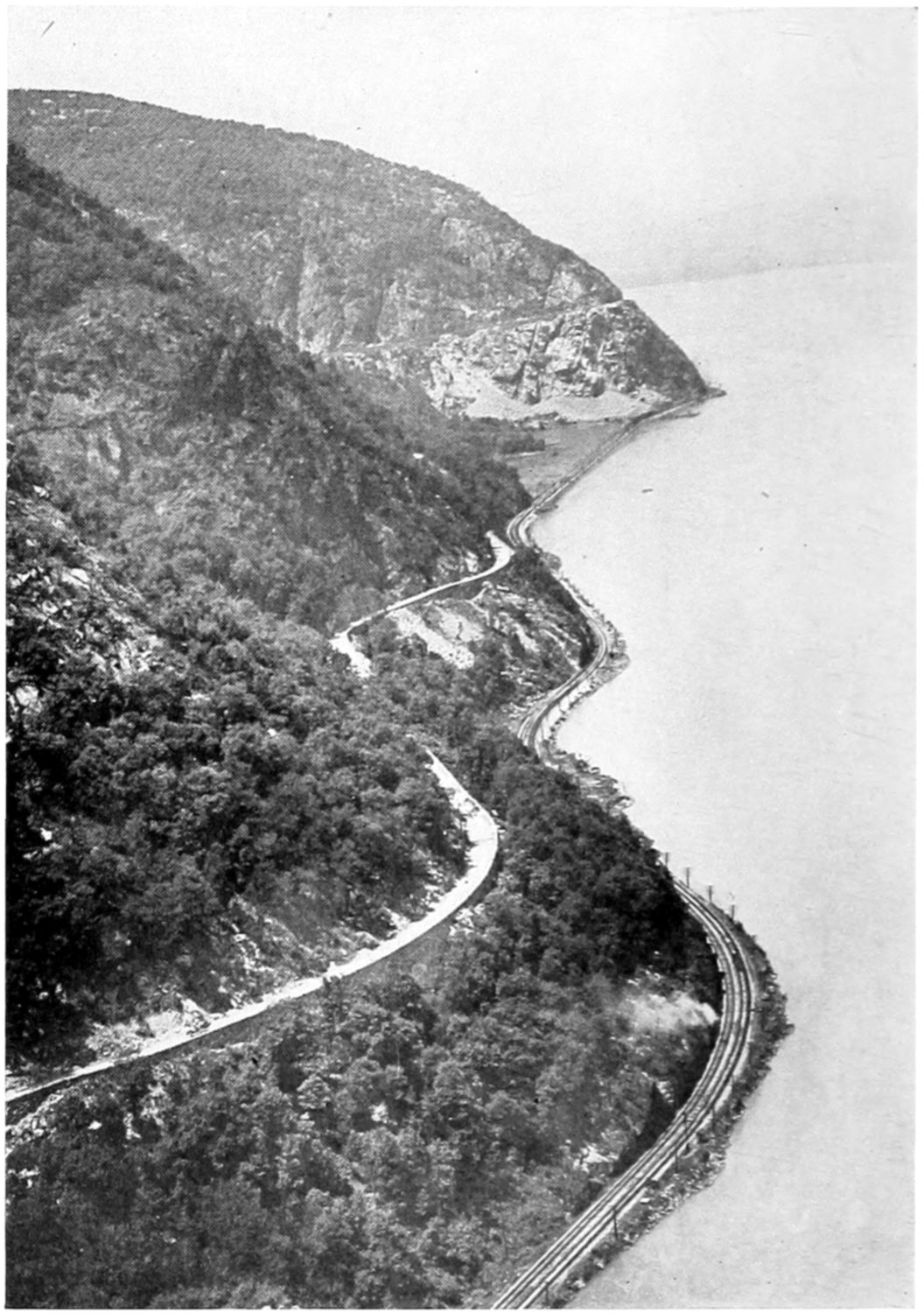
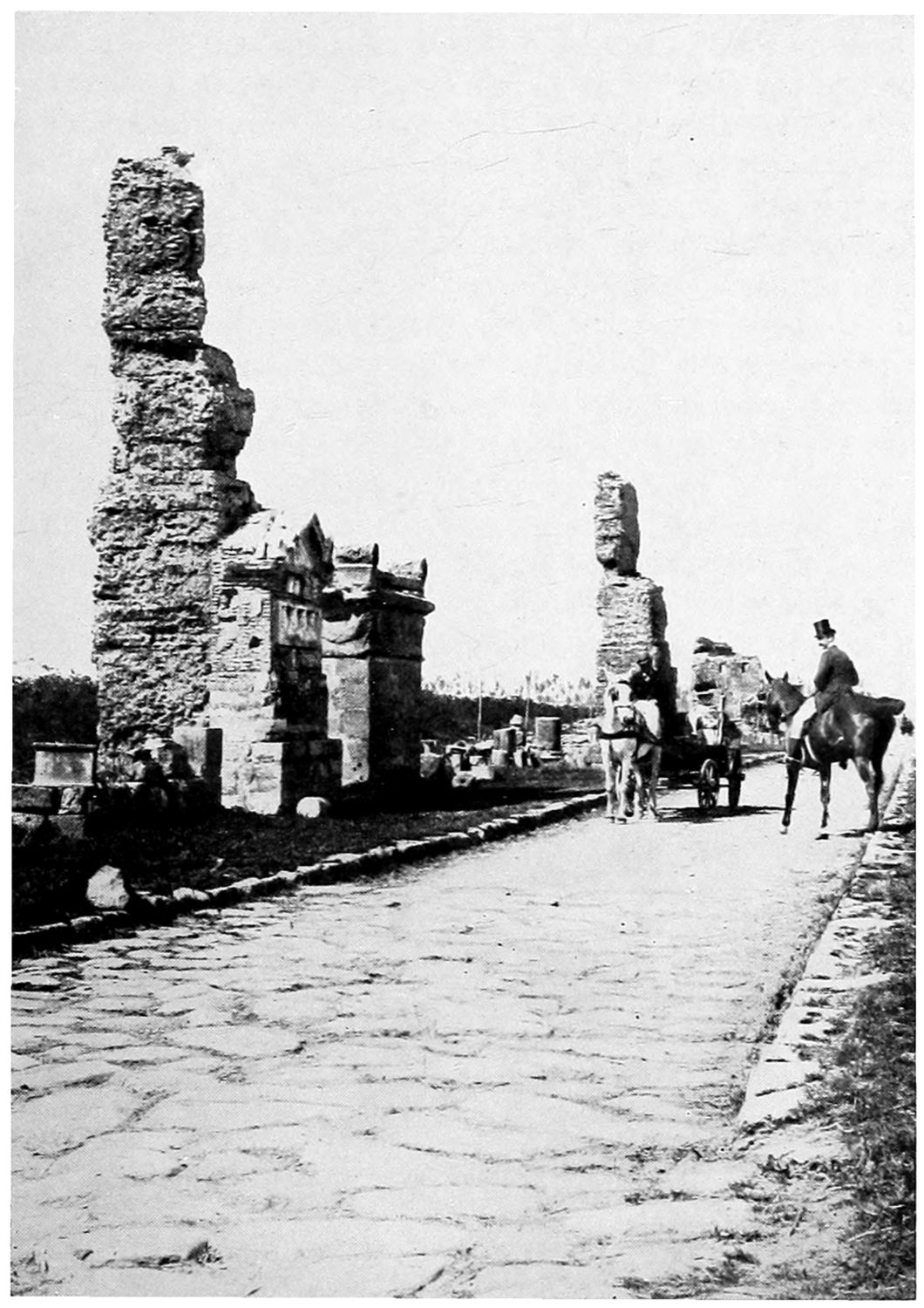
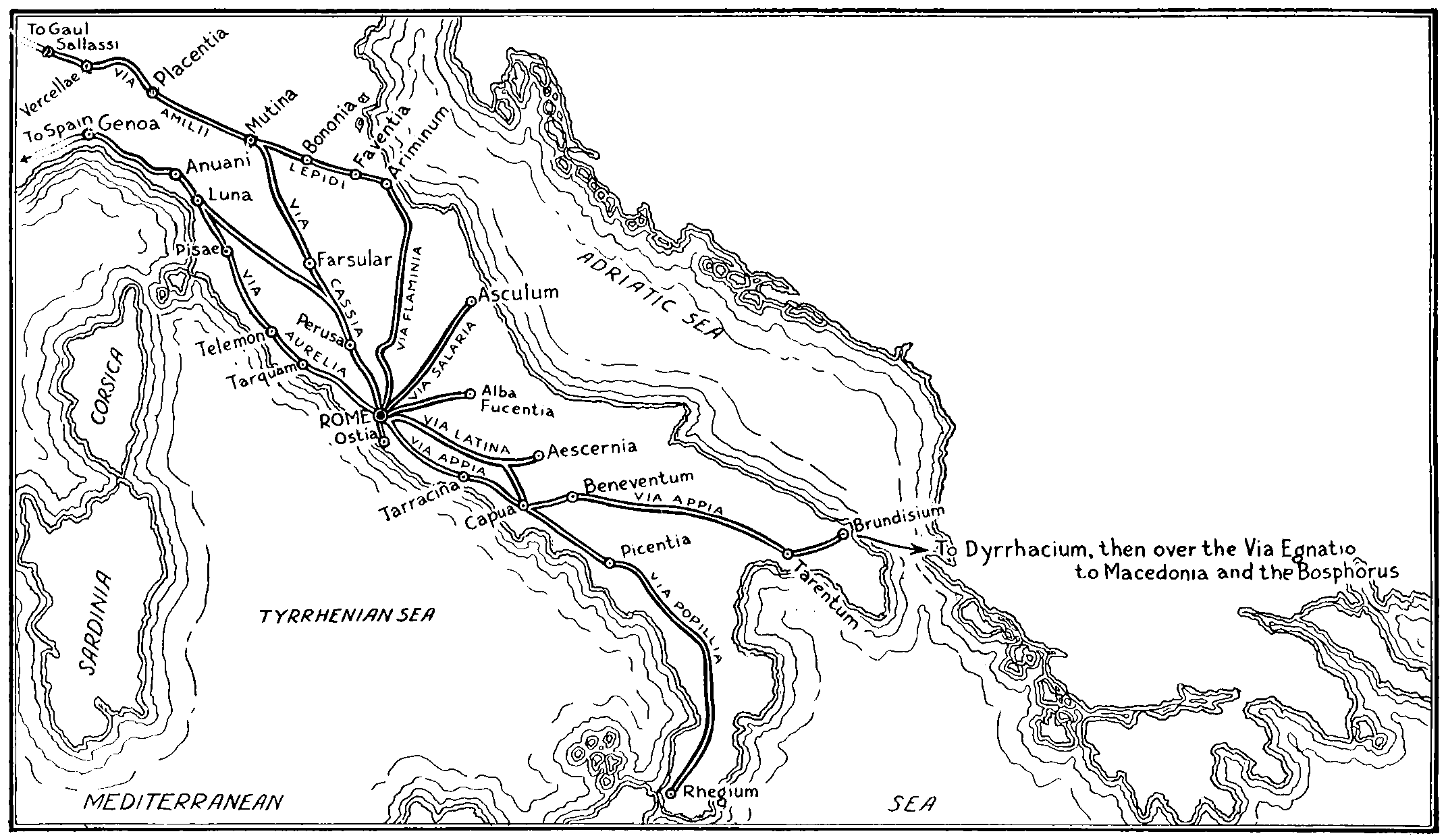
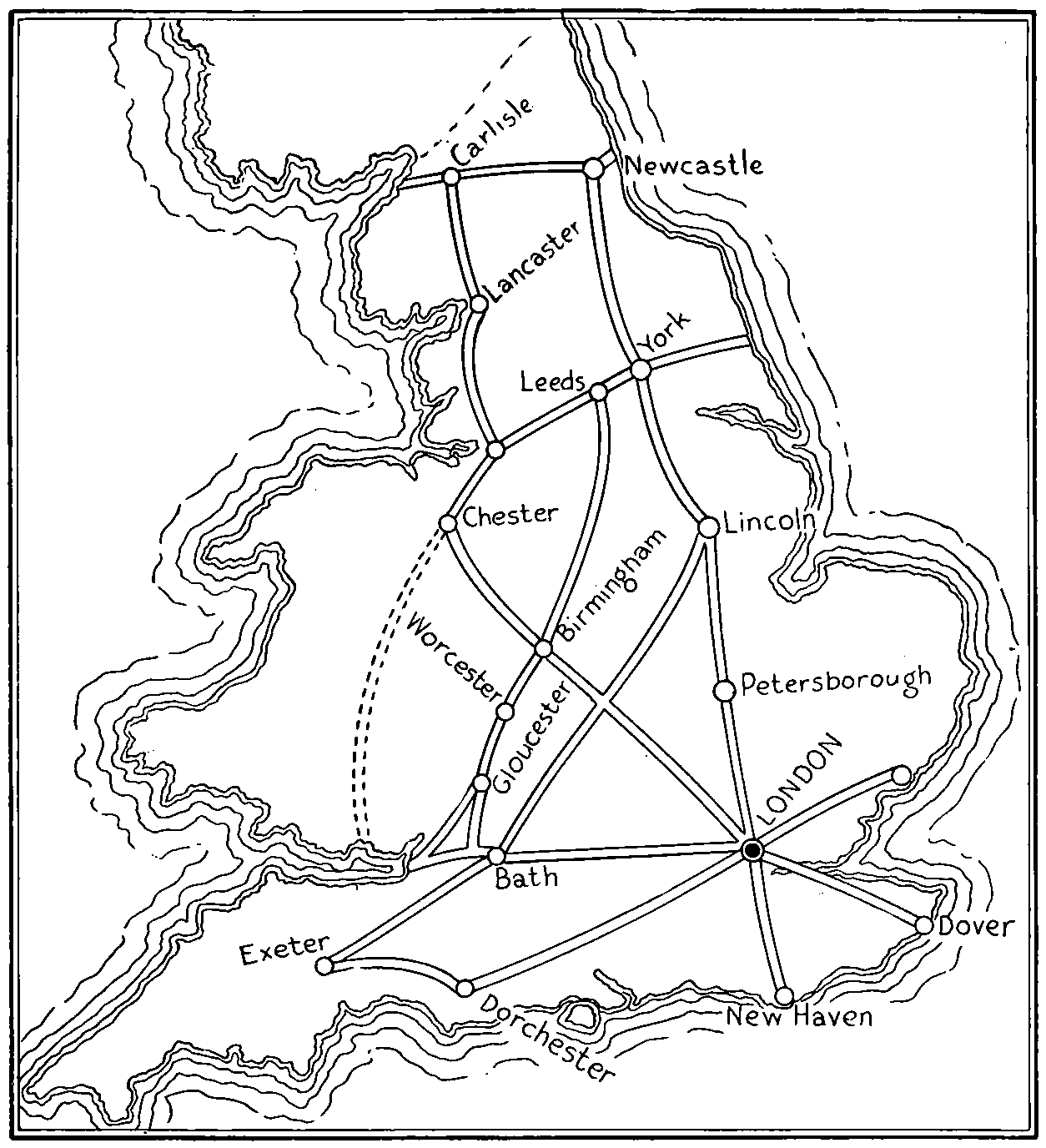
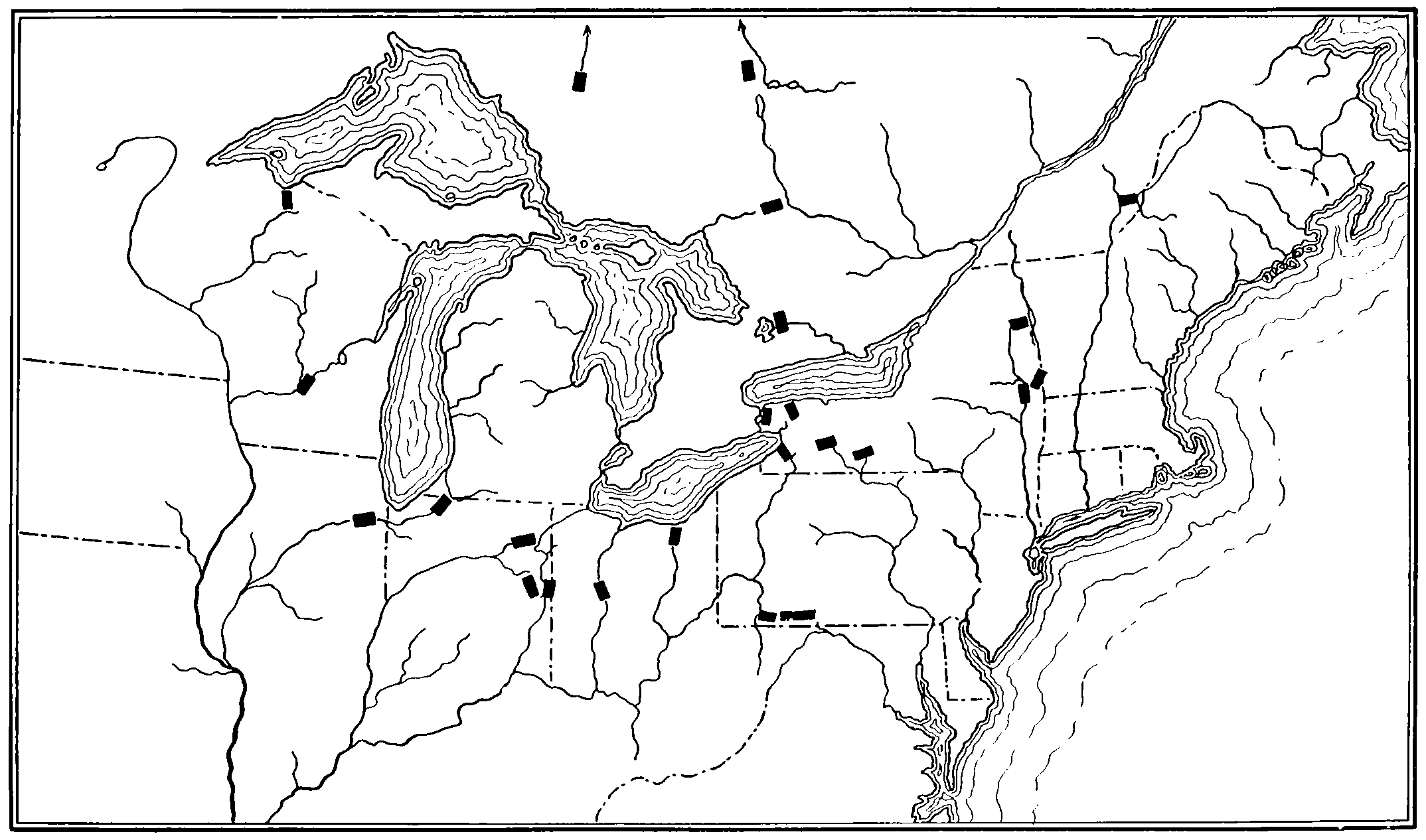
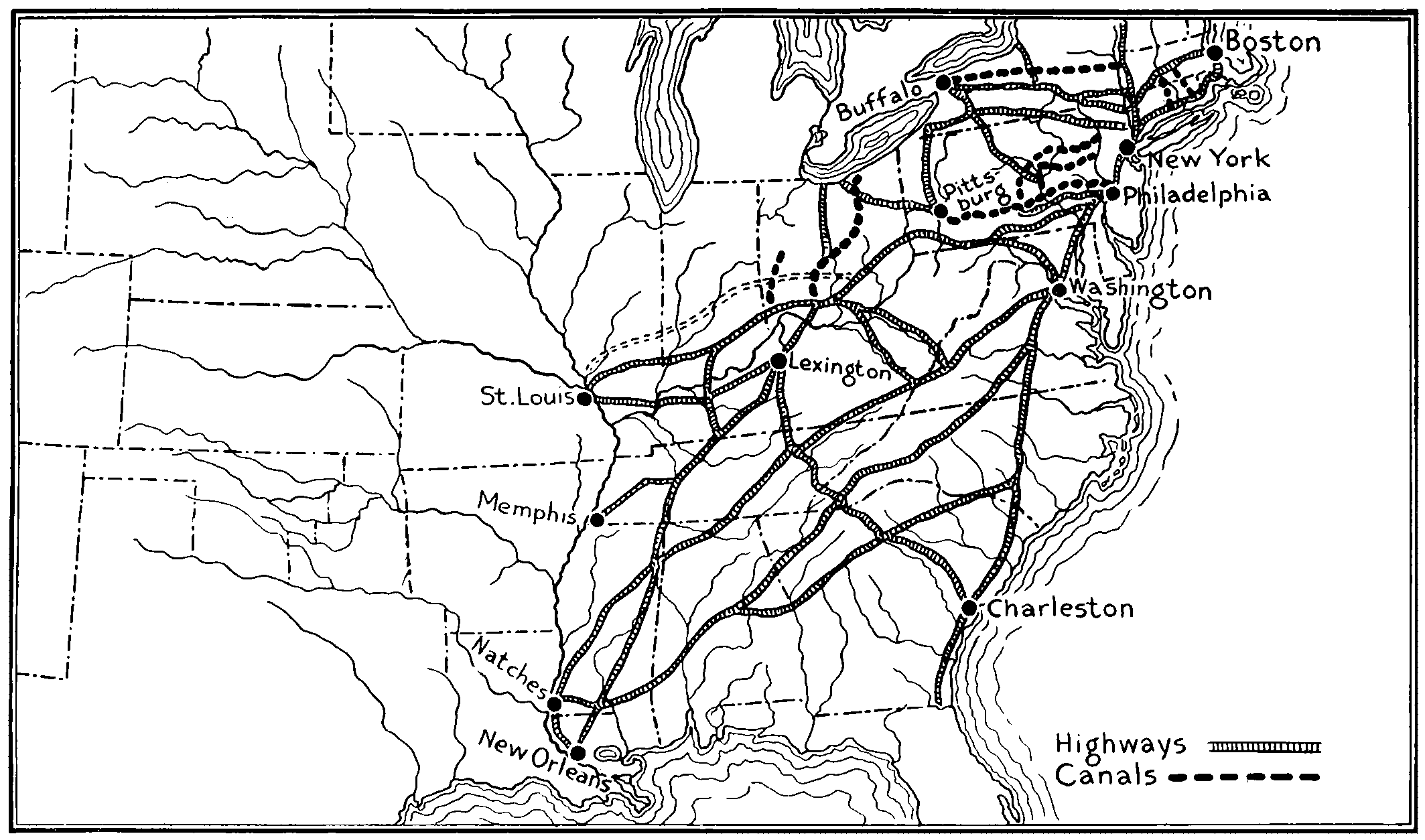
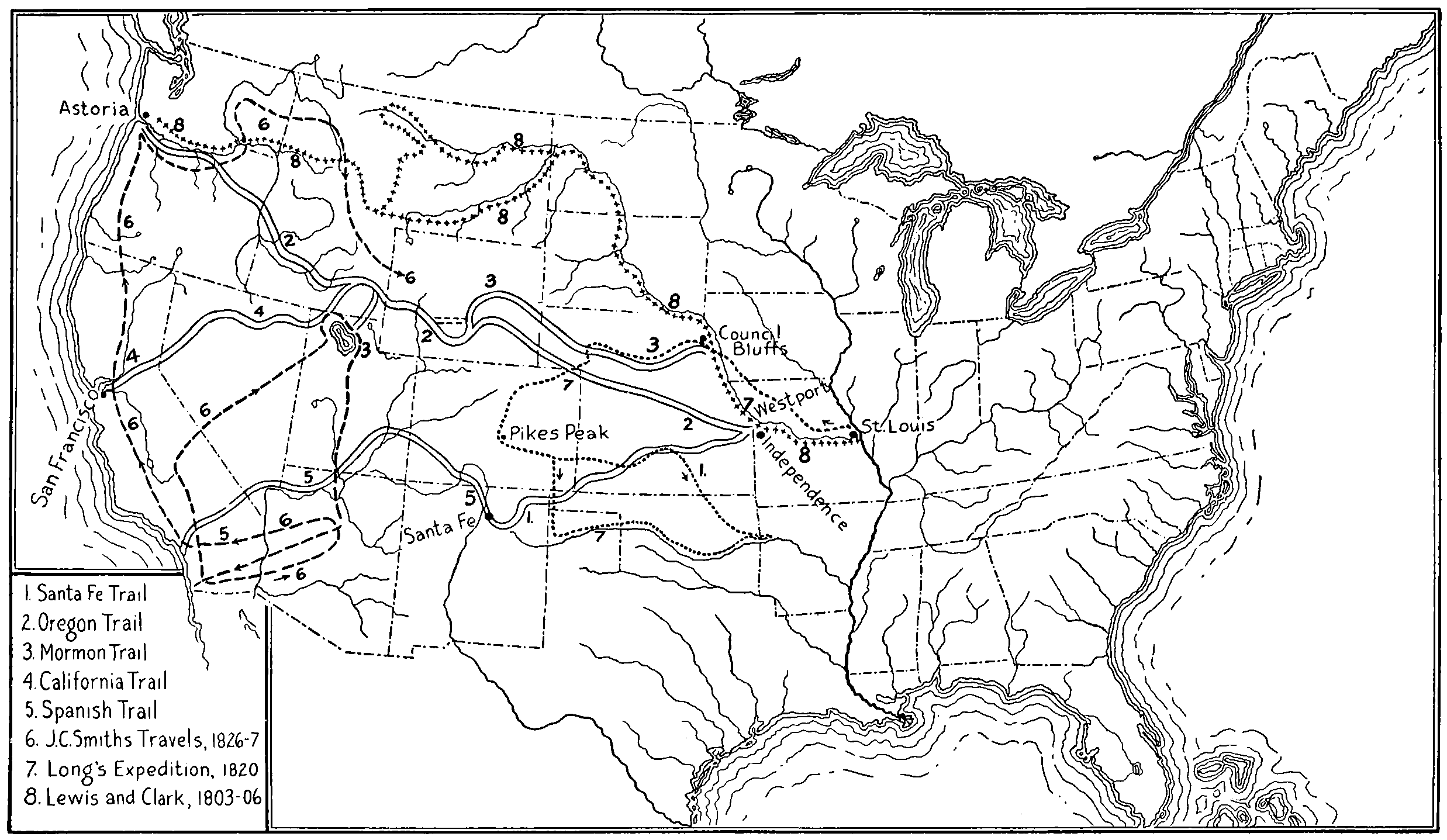
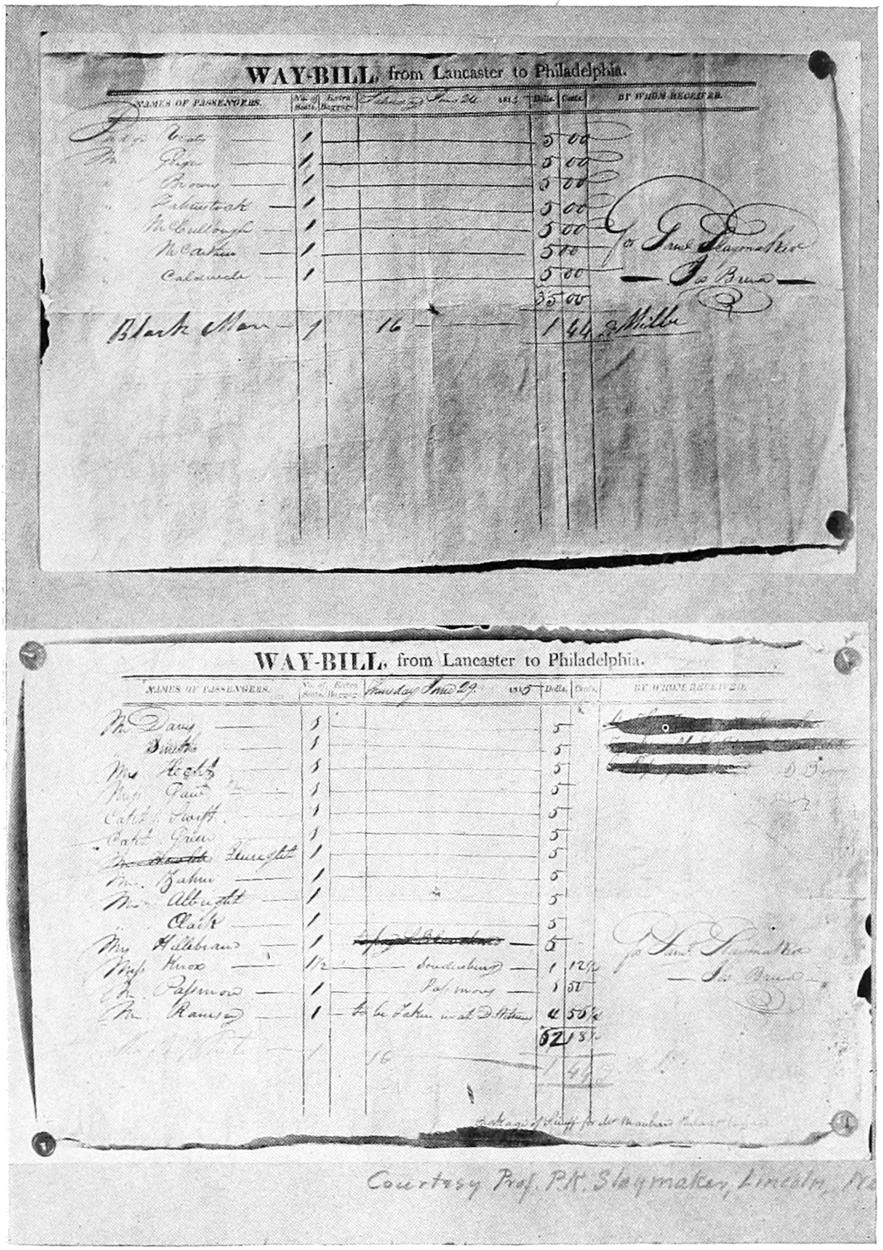
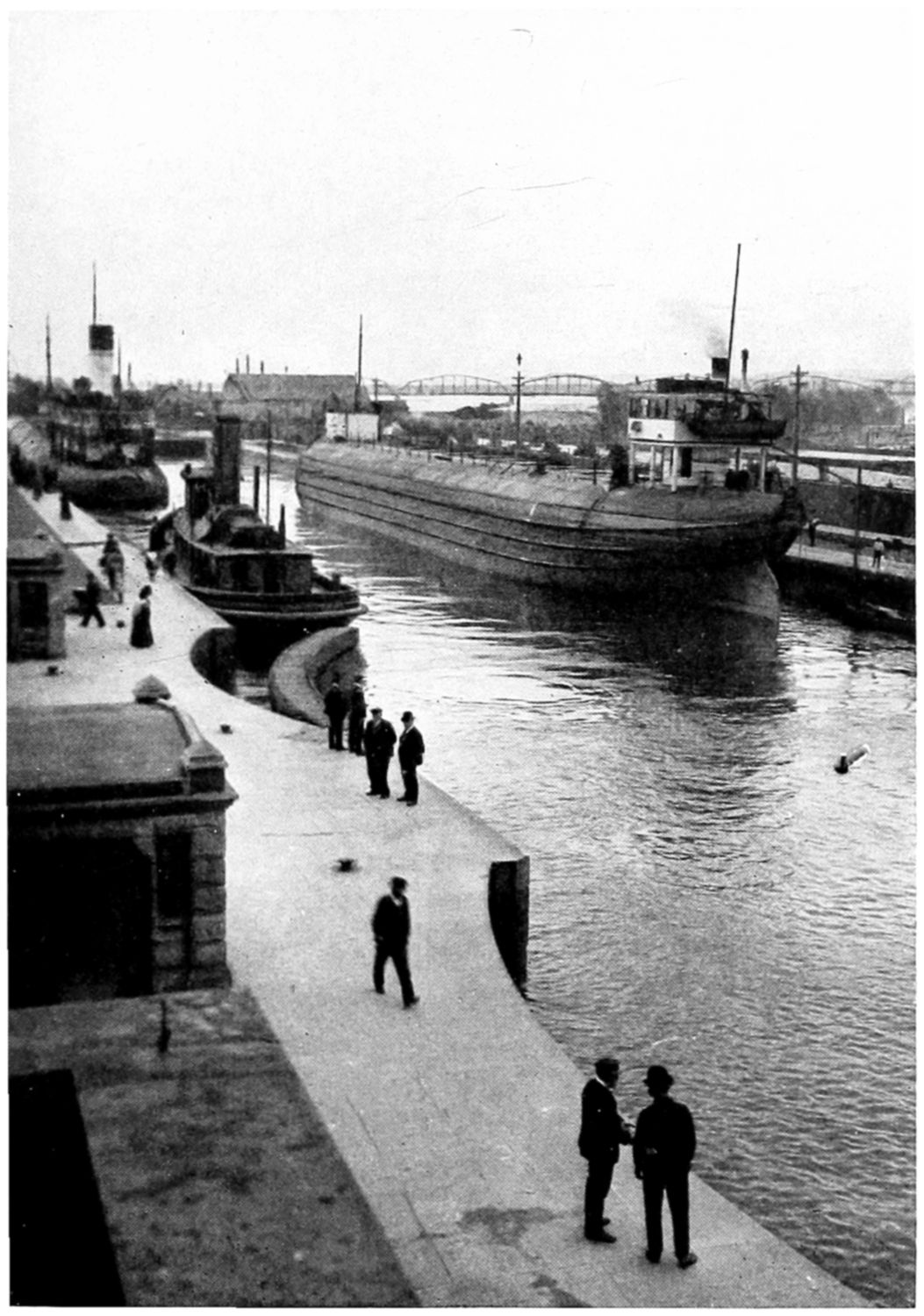
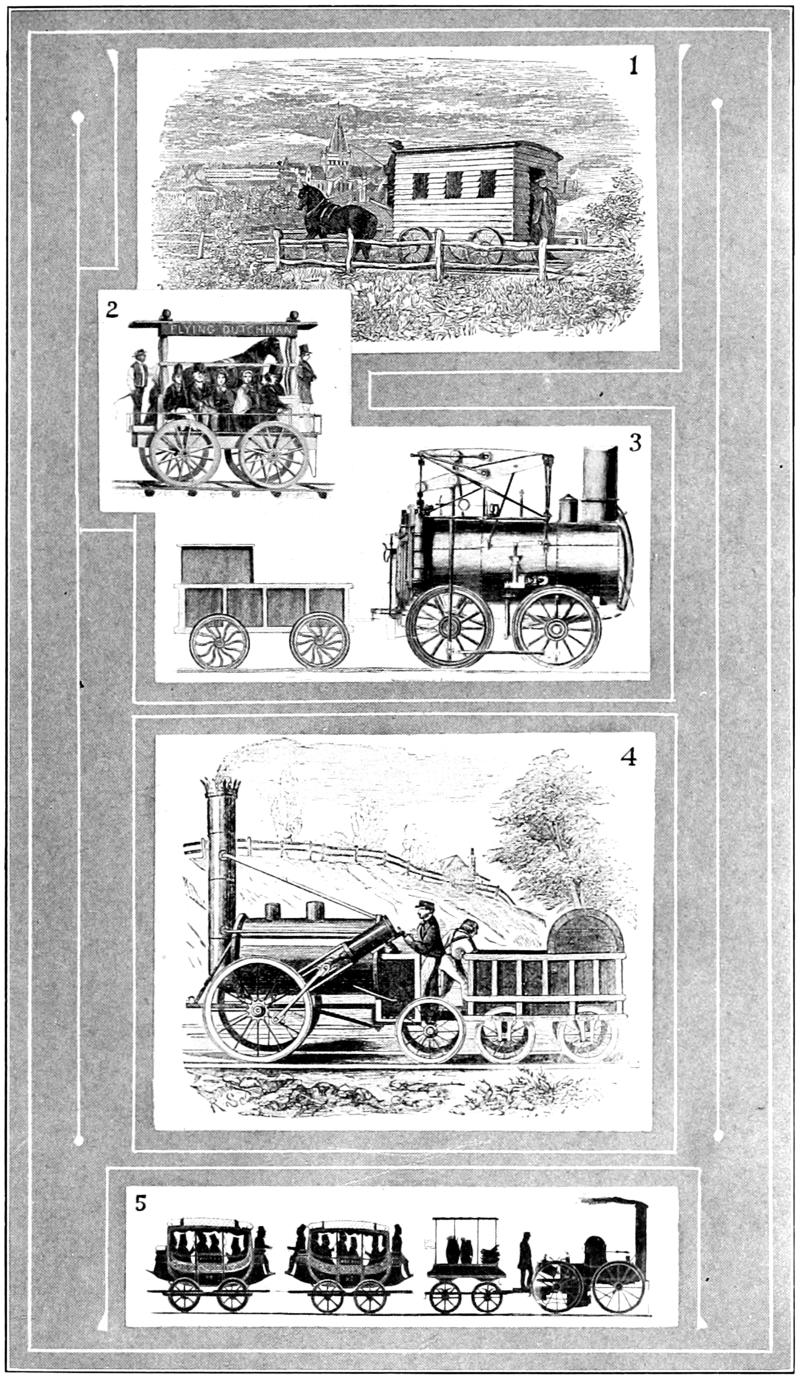
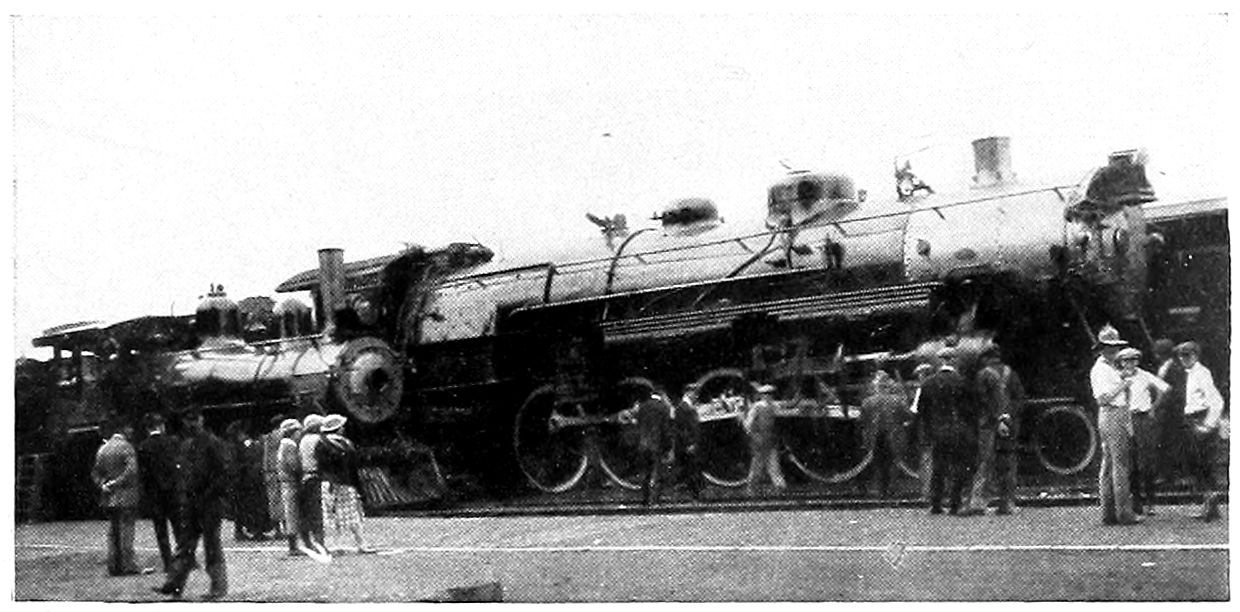
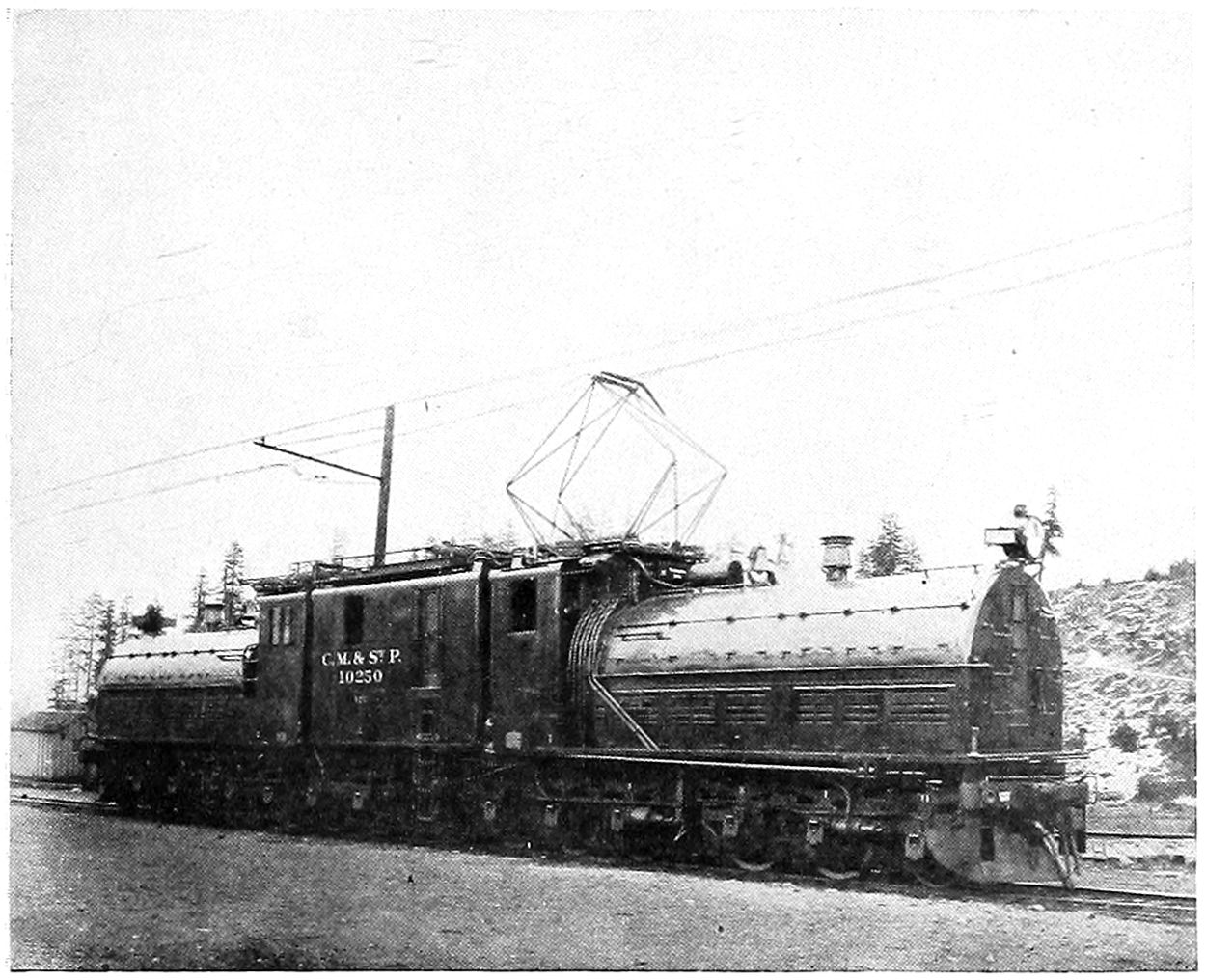
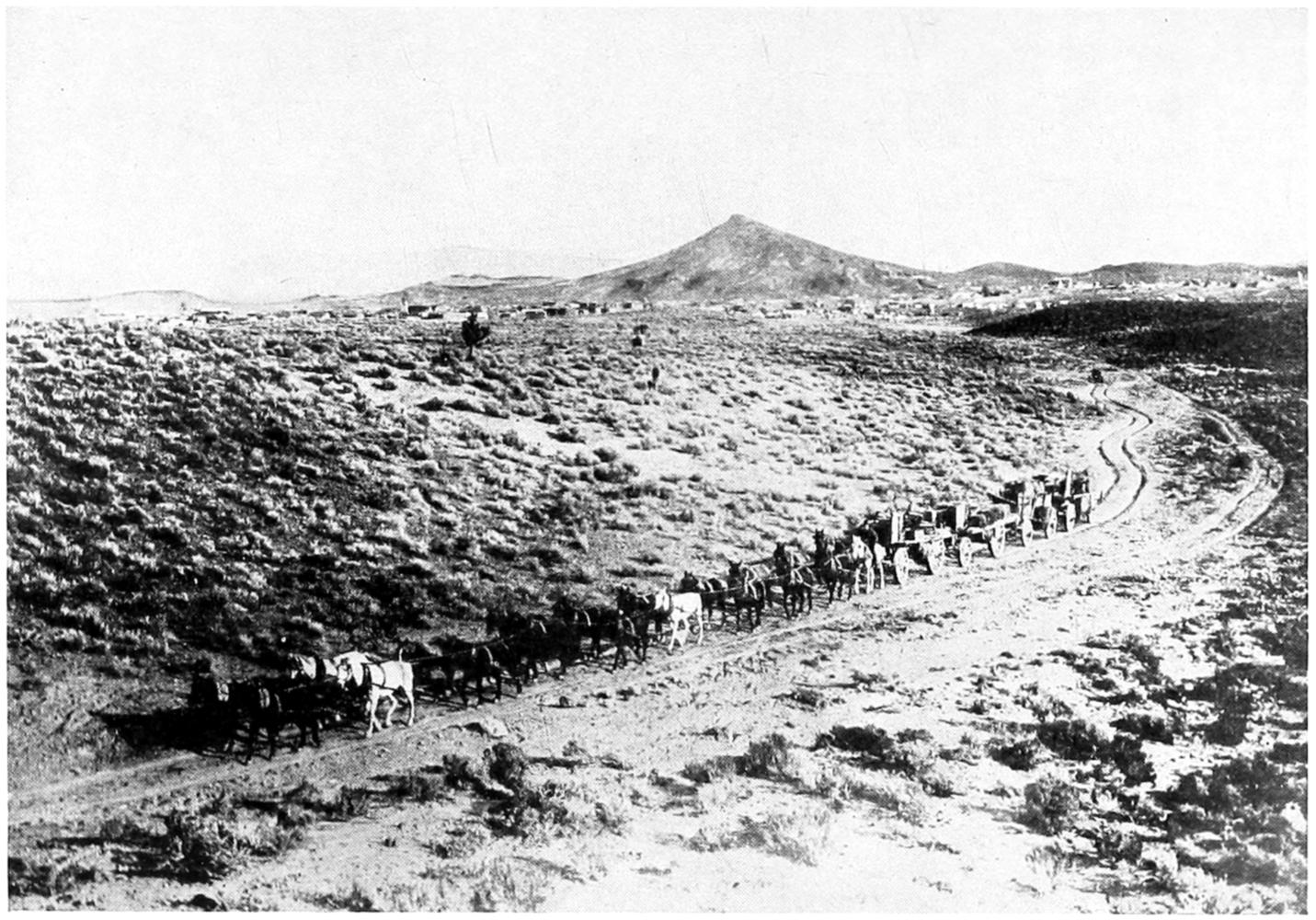
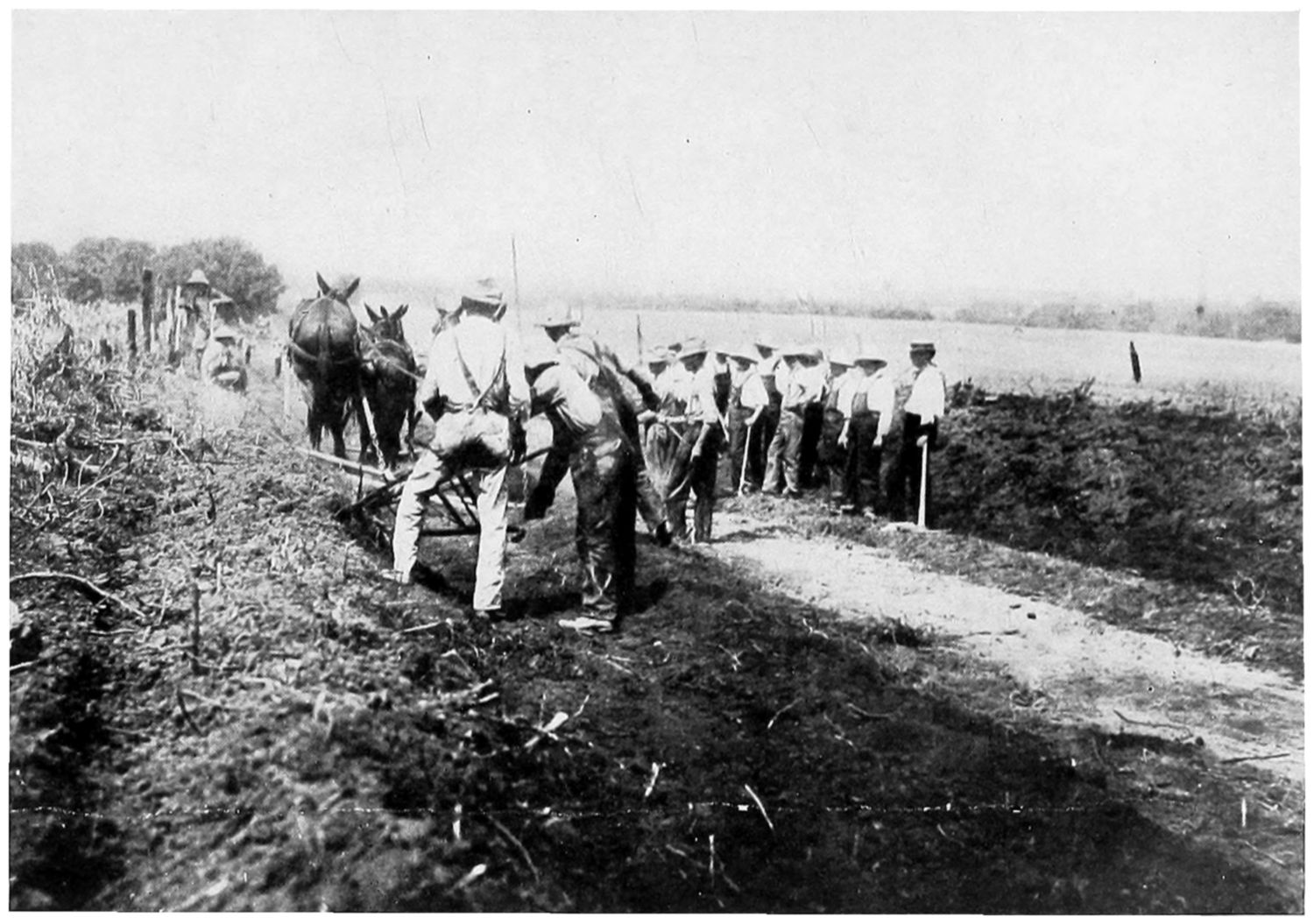
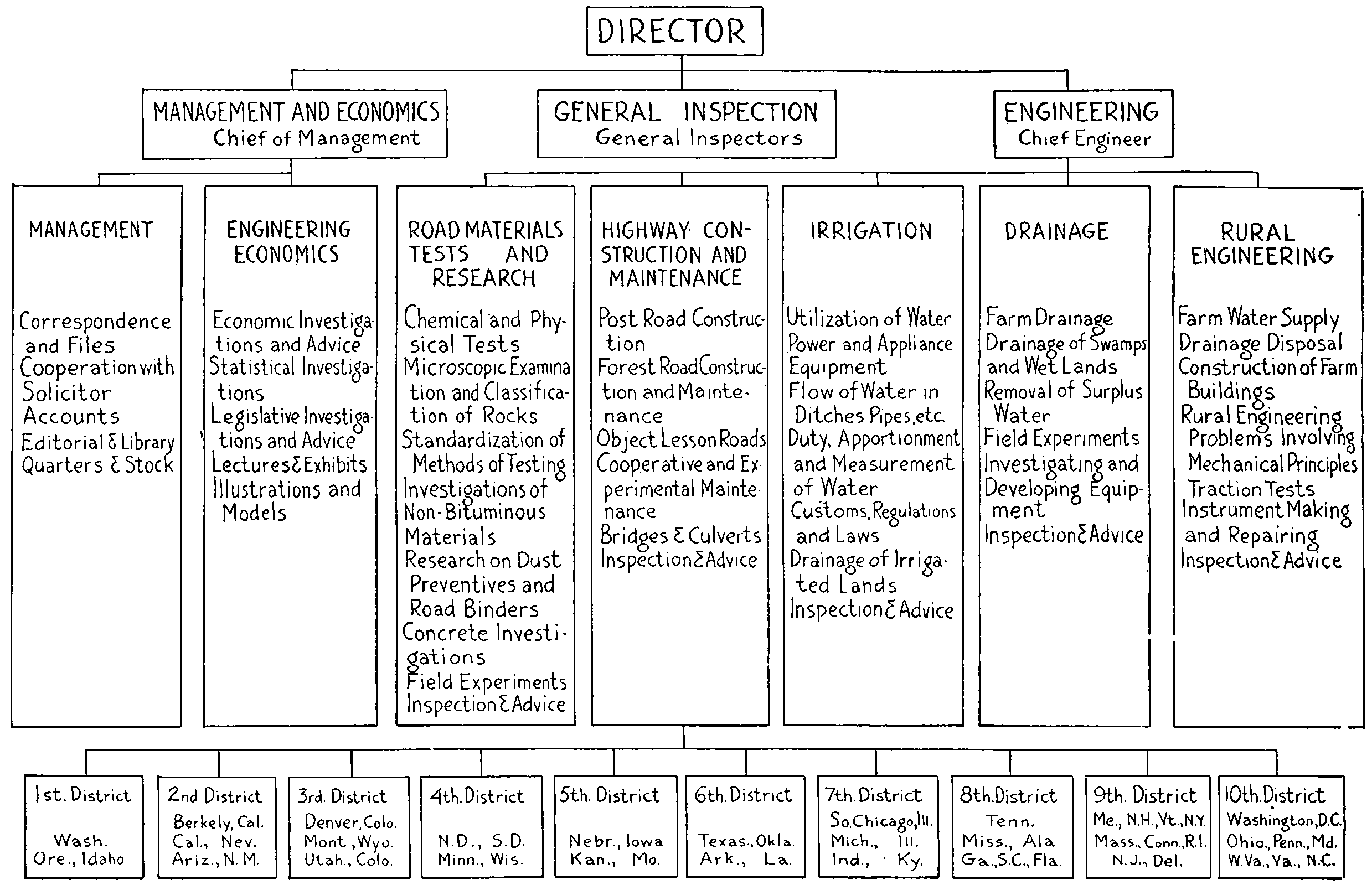
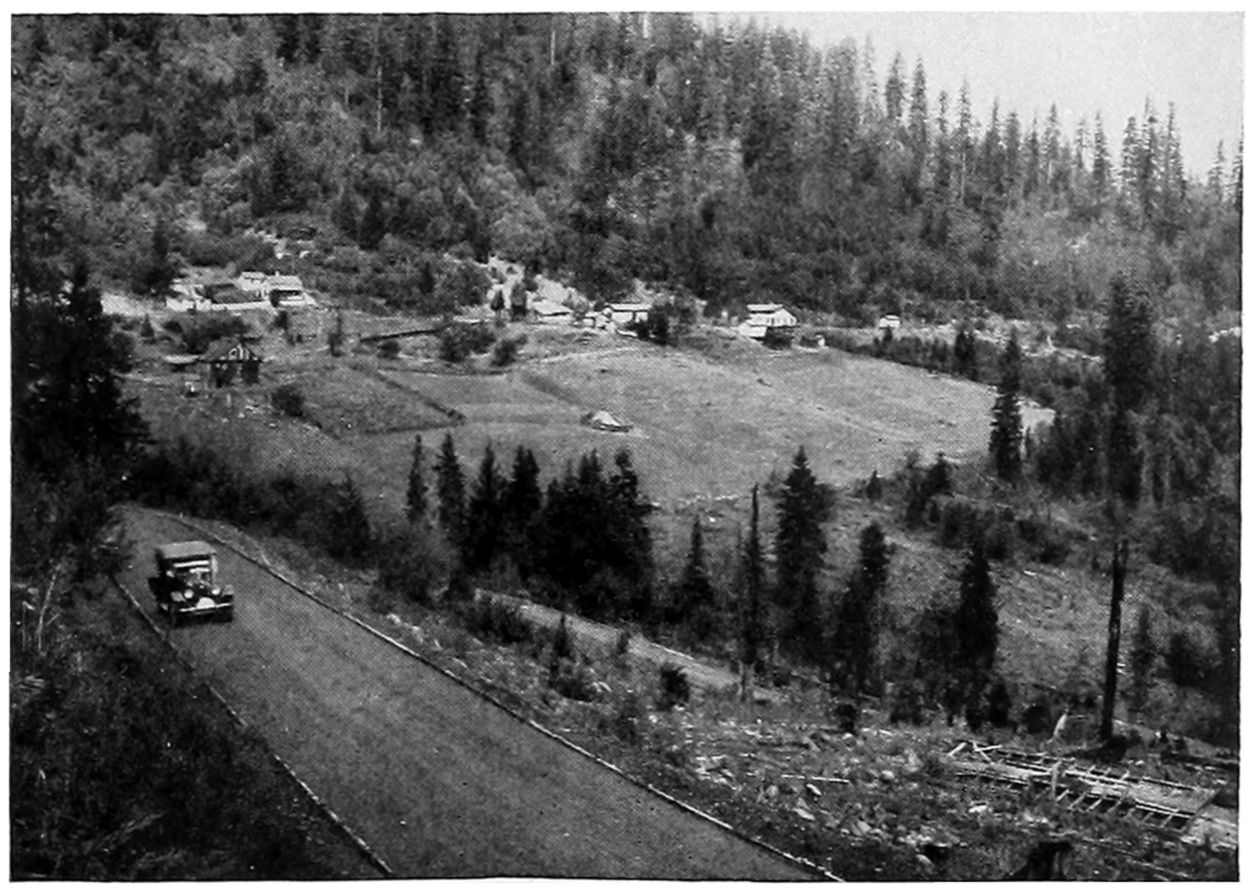
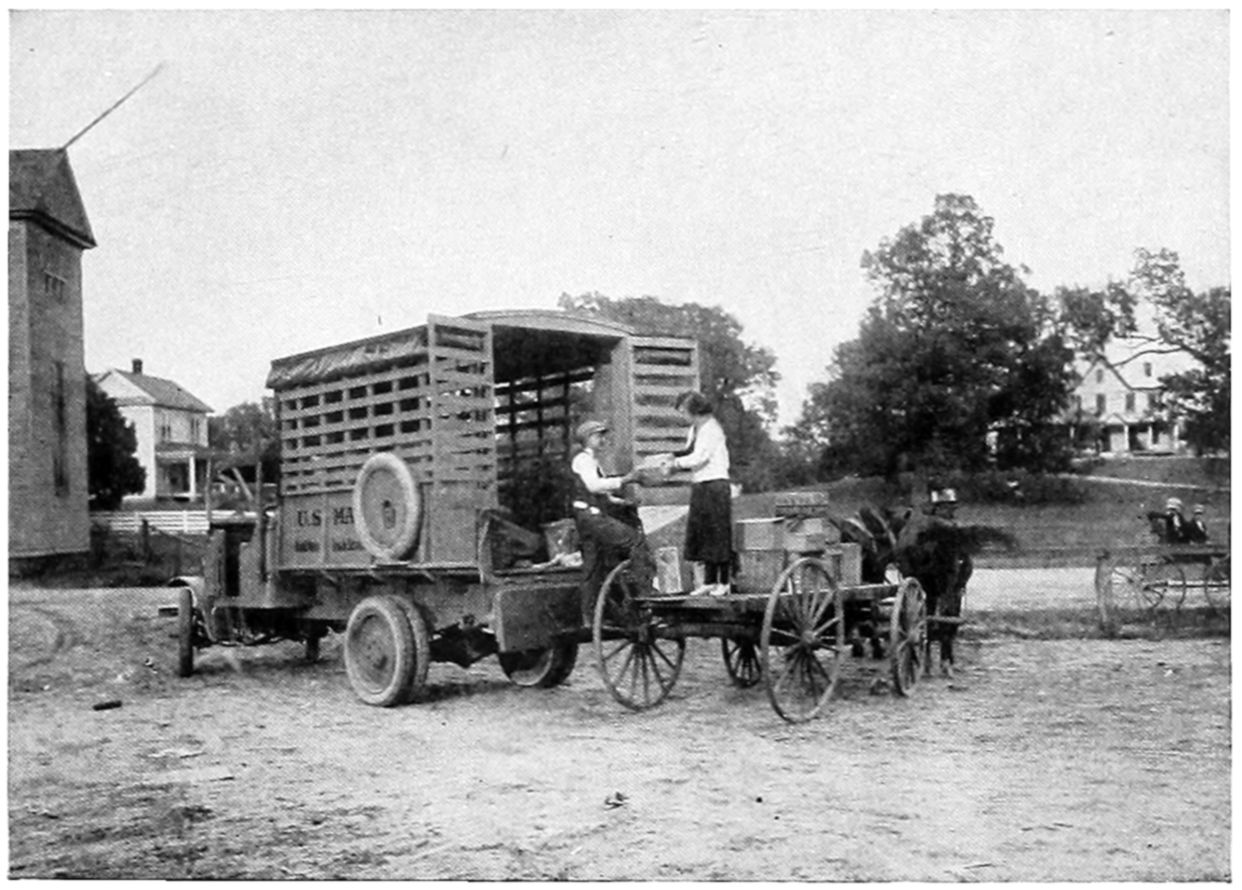
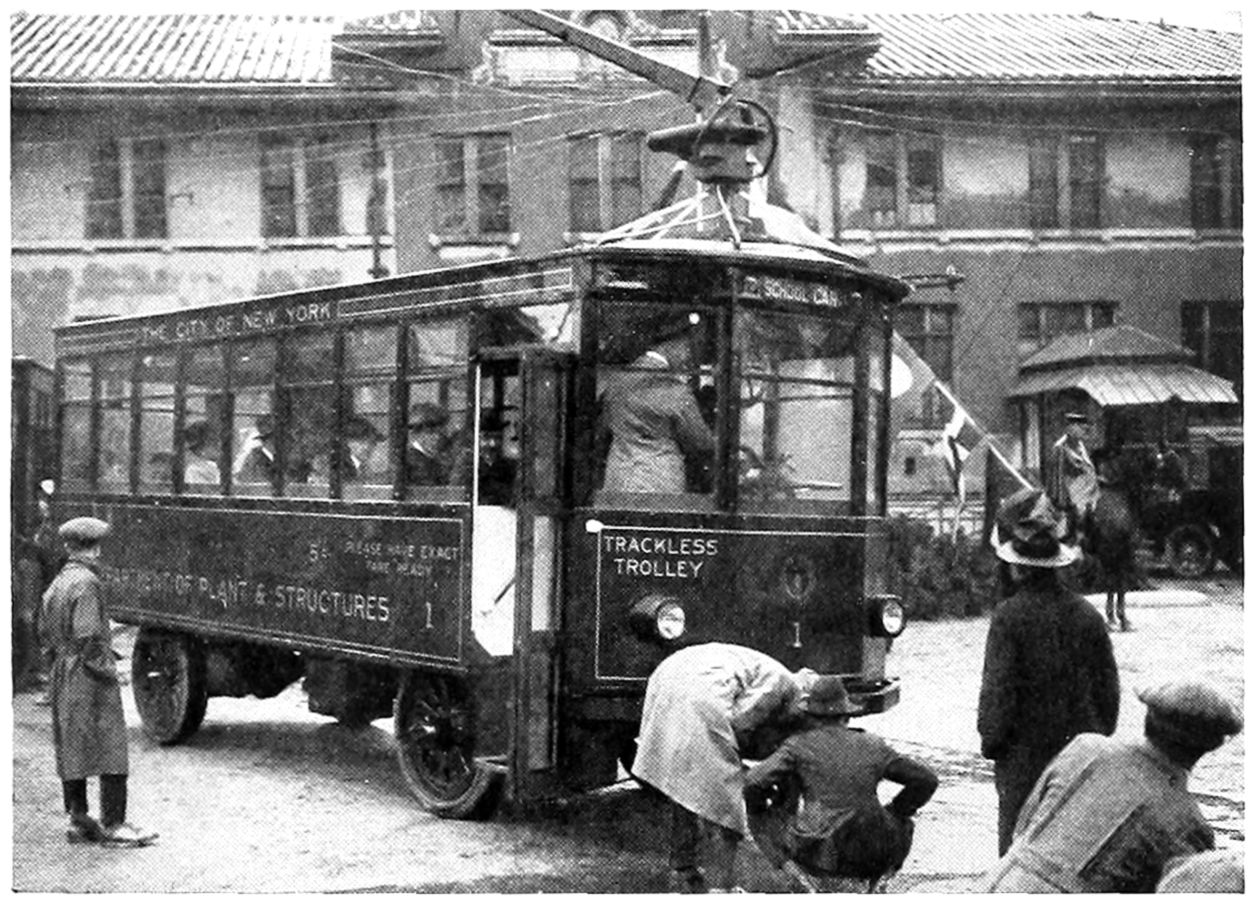
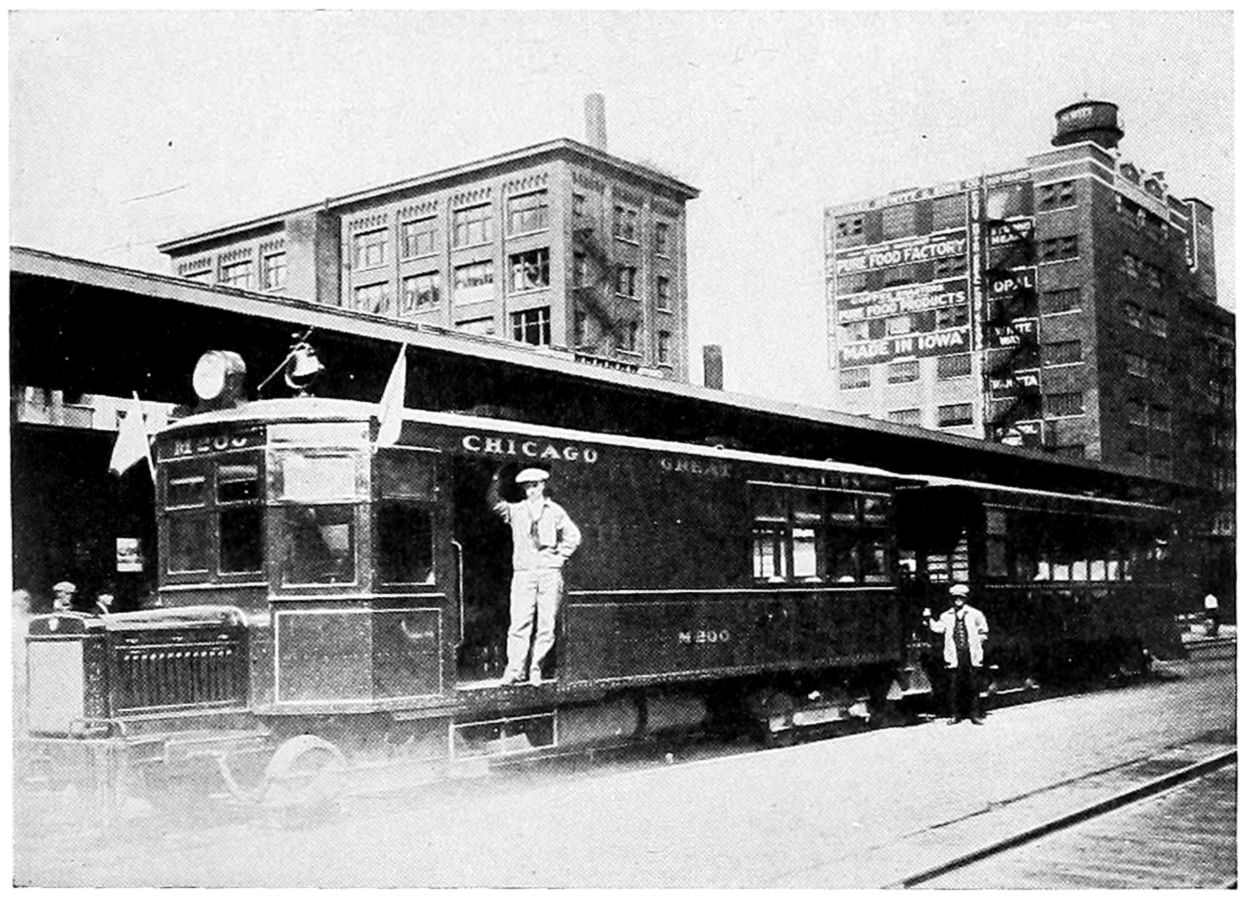
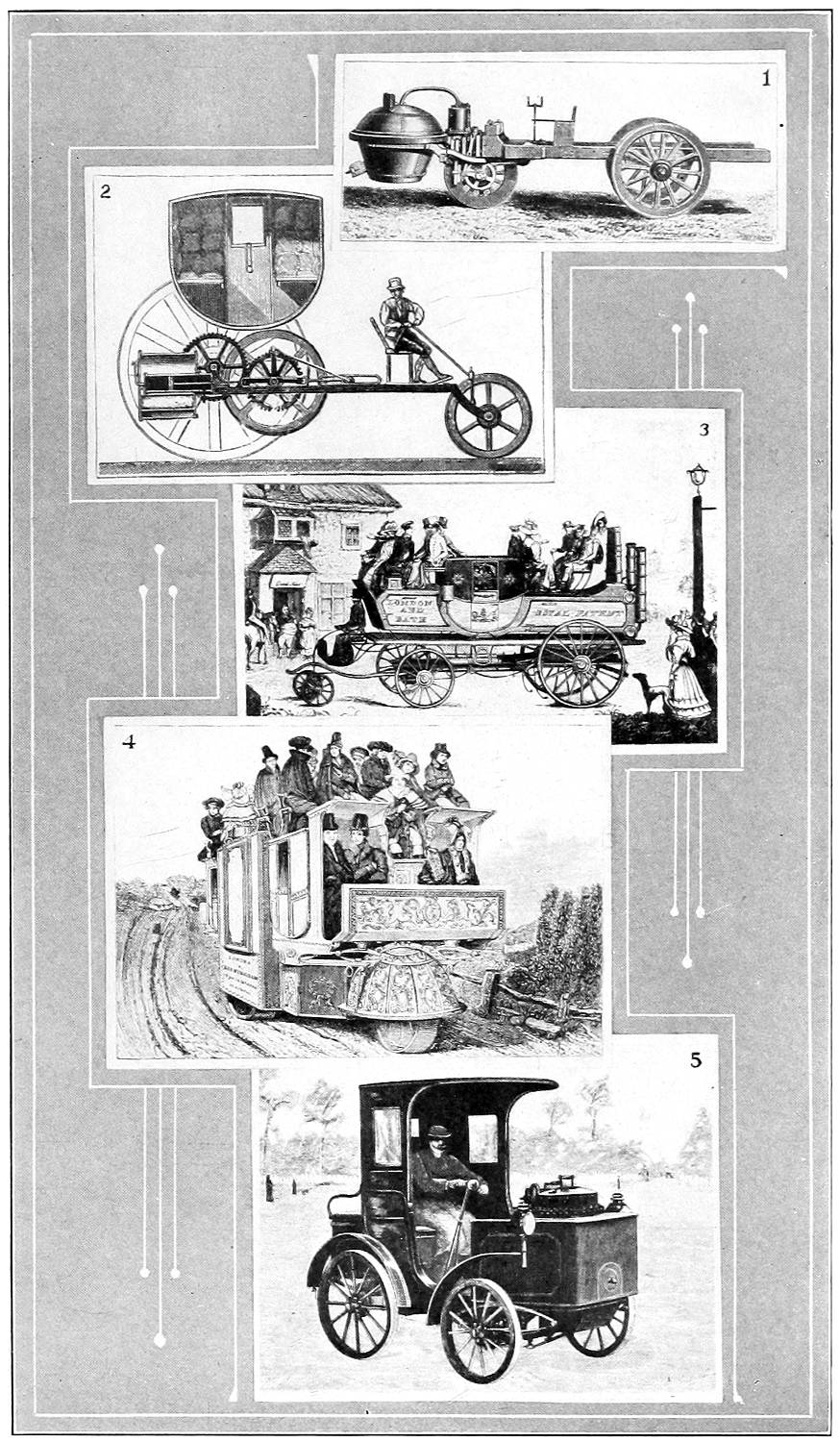
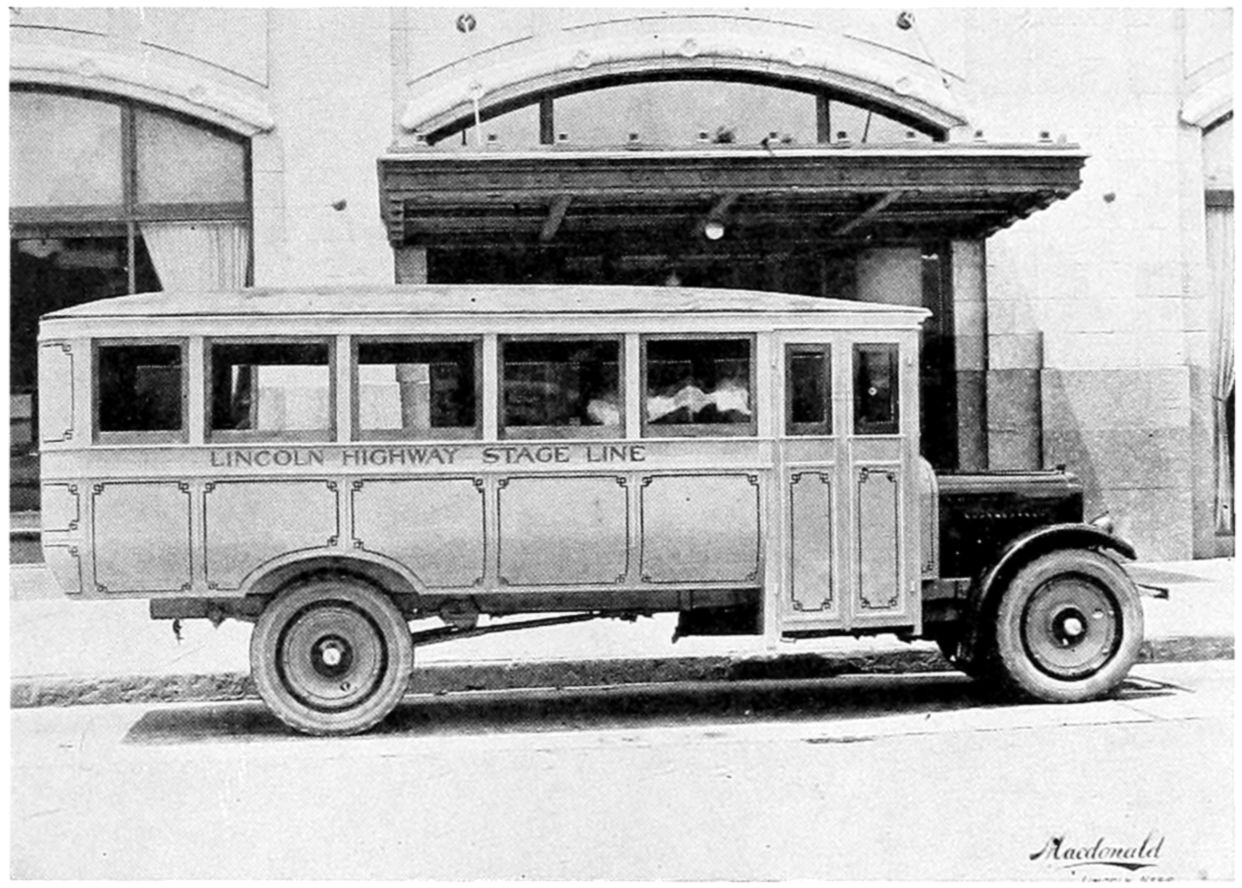
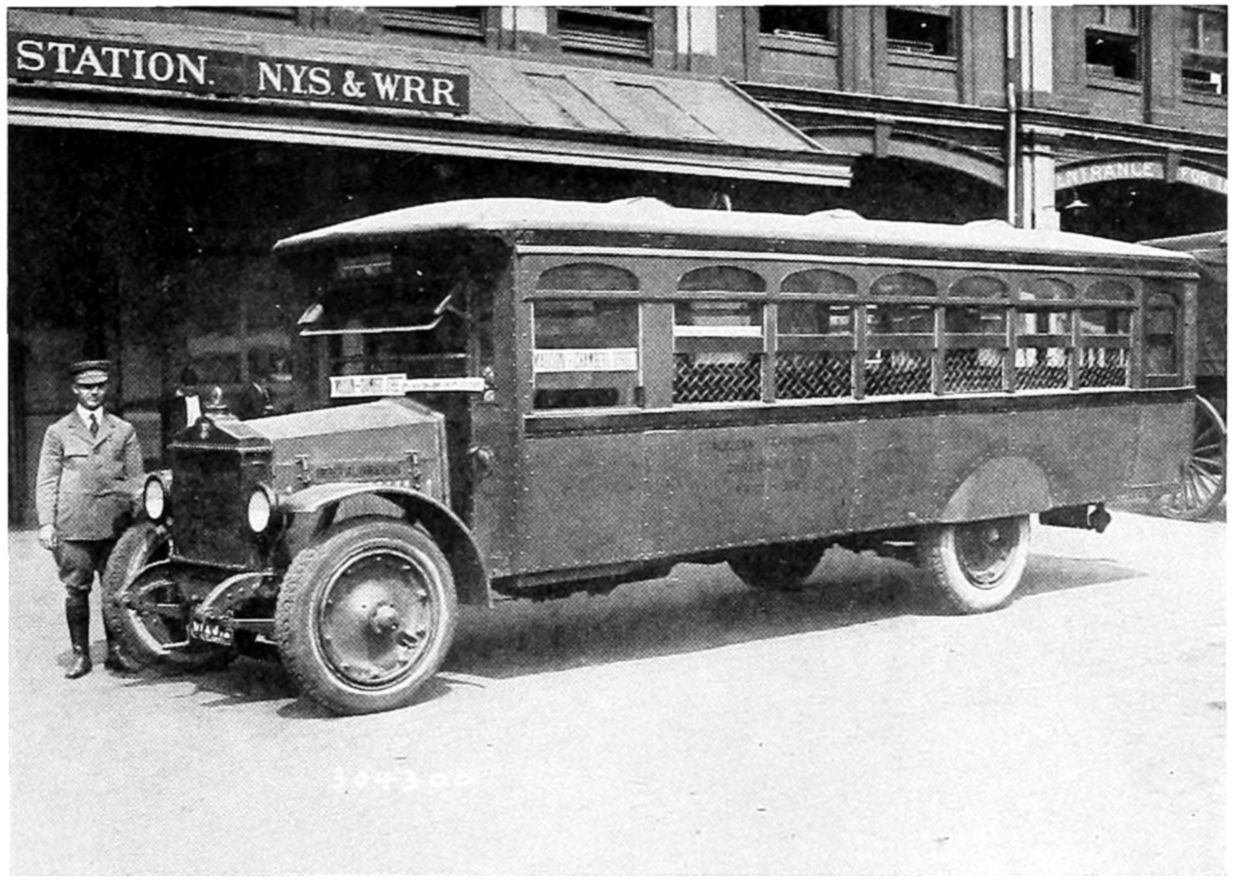
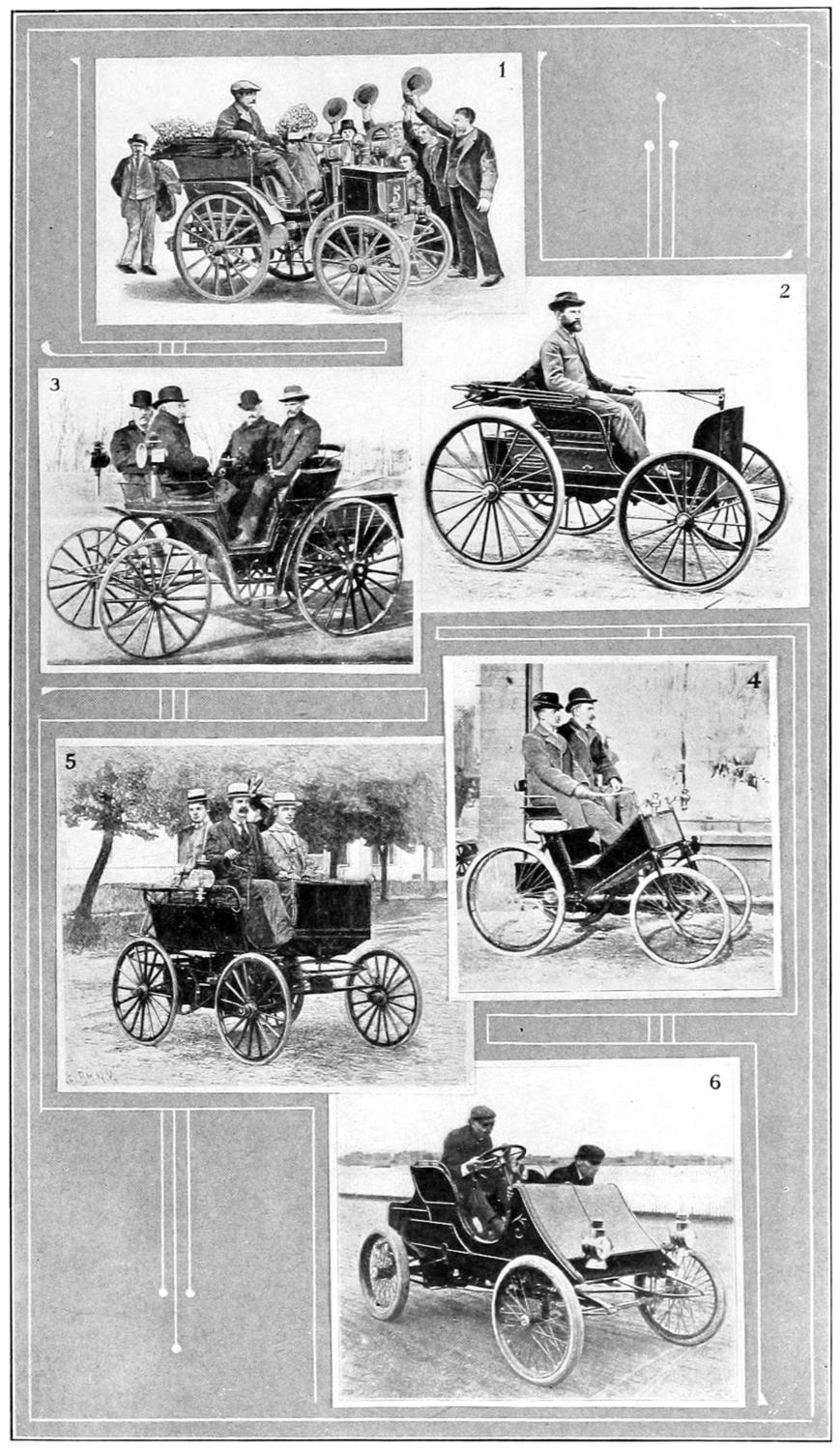
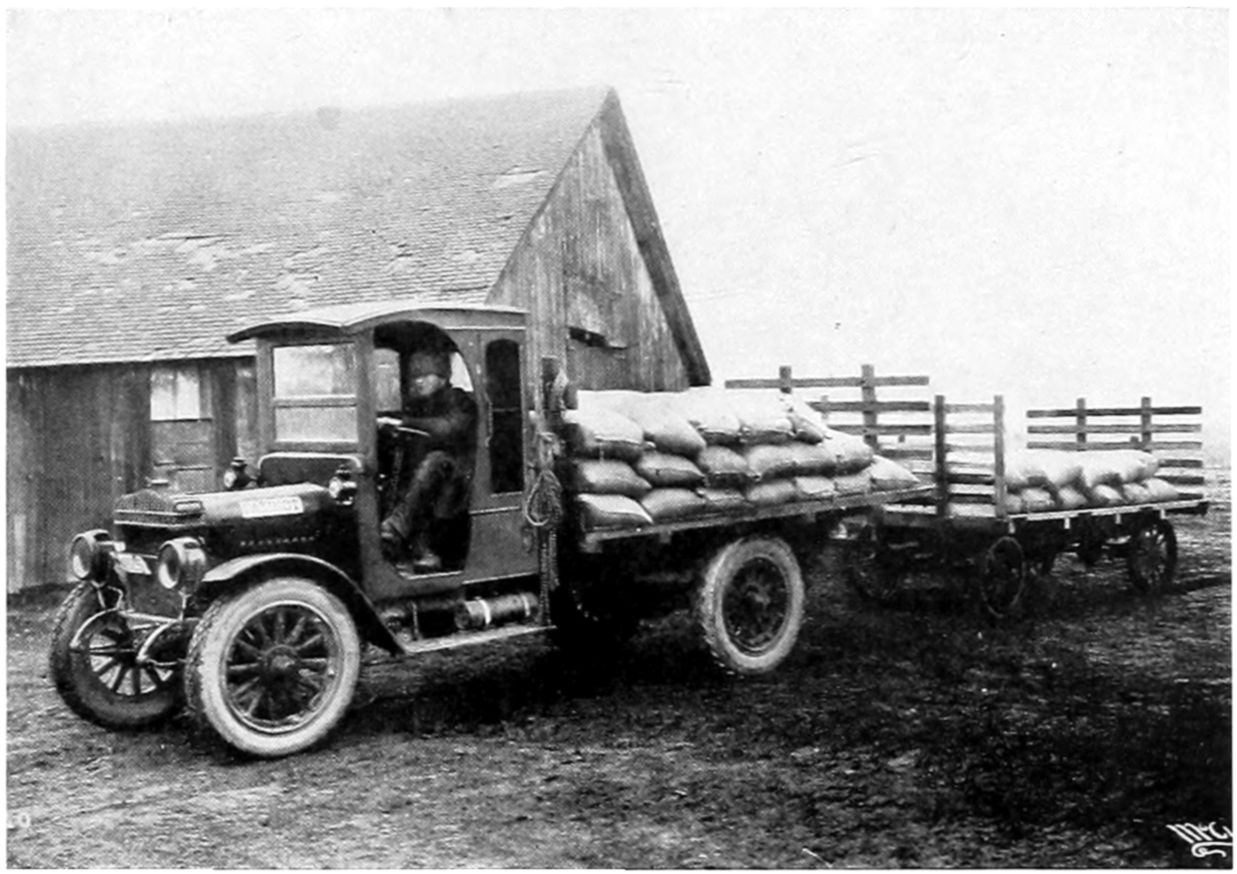
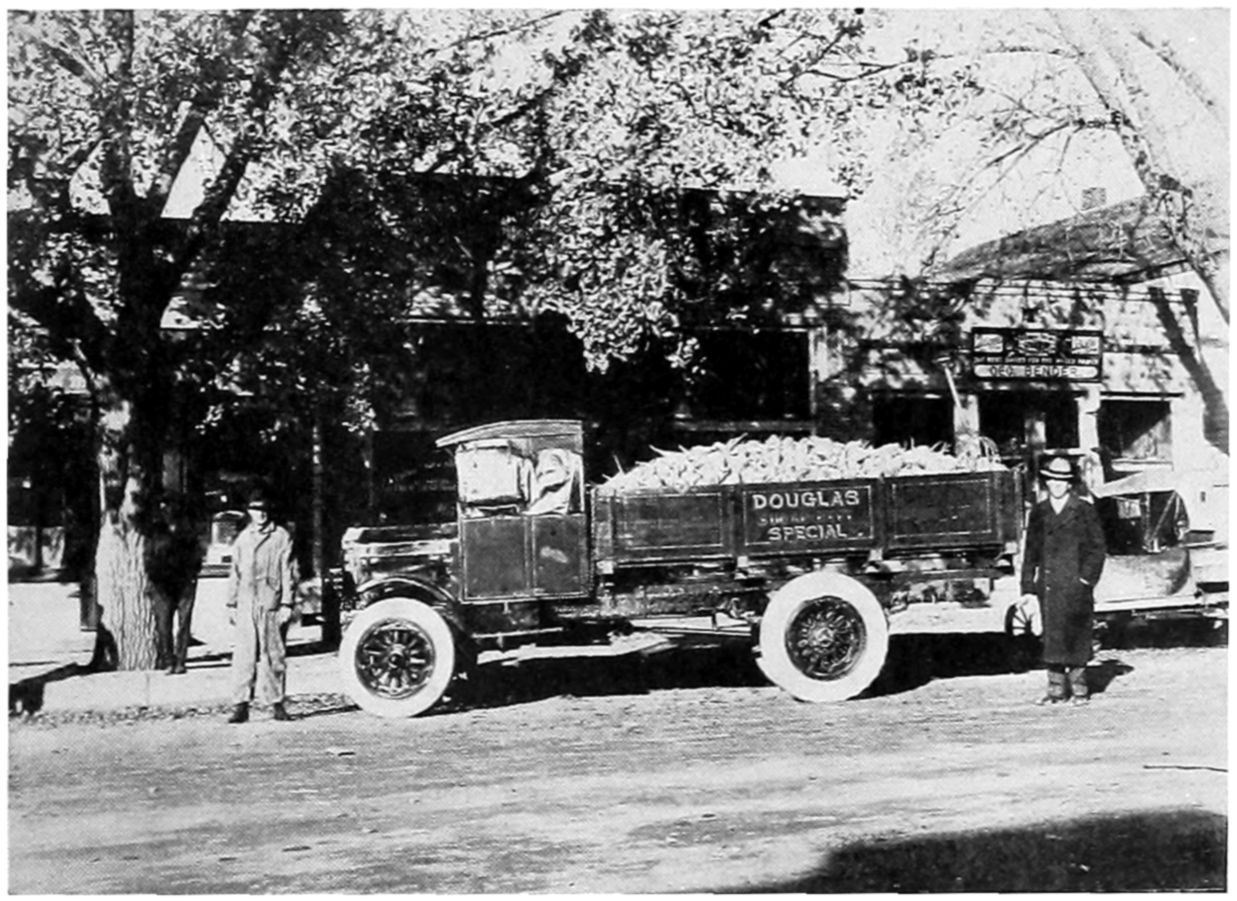
 for a farm house, a dot with a roof over it
 for
a school house, a steeple or cross on top
 makes a church.
A crossing wagon road
 , railroad track
 , a trolley
line
 , stream
 , and so on. Written explanations
can be made along the margin where necessary.
 ,
 ,
 ,
 . Where no
turn is shown, straight away is understood. Other information
and natural or artificial features that may prove
interesting or helpful will suggest themselves for record as
the survey proceeds. Of course the mileage of each route
as measured by the odometer or speedometer from fixed
and known points on the map will be taken. By tabulating
and mapping the information recorded it will be possible
to get at the comparative merits of alternative routes.