Crowns and Coronets; Introduction of Coronets;
Coronets of Princes, Dukes, and Earls;
Bequests of Coronets; Illustrations of Coronets
and Crowns; Collars and Chains; Collars of
Orders; Lancastrian Collars of SS; Yorkist
Collars of Suns and Roses; Tudor Collars of SS;
Other Livery Collars; Waits' Collars; Collars
and Chains of Mayors, Mayoresses, and Sheriffs;
The Revival of Collars; Inordinate Length of
modern Collars.
At the present day it is the habit of divers
ladies of rank to surmount their hair, when
occasion allows, with diamond tiaras of
surpassing splendour. The ladies of olden
time were not free from a similar weakness,
but the diamond mines of South Africa
being then unknown, and other gems too
costly, they encouraged the goldsmiths to
make them beautiful crowns and crestings,
with which they adorned their heads and
headgear. A reference to the accurate
drawings and details published by Stothard
in his Monumental Effigies will show not only
the high artistic excellence of these ornaments,
but also how becoming they were
to the ladies who wore them. They varied
greatly in design, from the simple circlet
of fleurons and trefoils of Queen Eleanor
of Castile (fig. 158) to the sumptuous piece
of jewellery beset with pearls and stones,
which is represented on the alabaster effigy
of Queen Joan at Canterbury (fig. 159)
and reflects so worthily the yet more
splendid crown of her husband, King
Henry IV (fig. 173).
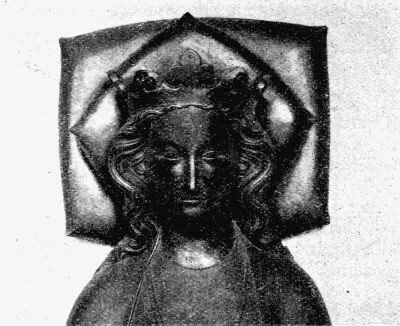
Fig. 158. Crowned effigy of Queen Eleanor at
Westminster.
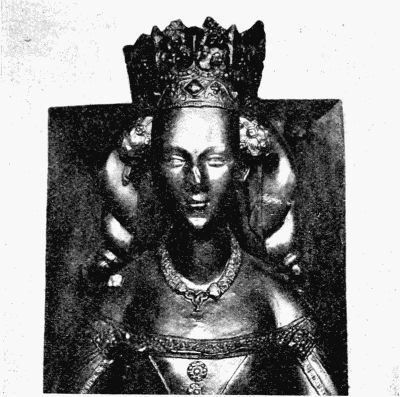
Fig. 159. Crowned effigy of Queen Joan at
Canterbury.
Attention has already been drawn to the
decorative use of crowns in heraldry, and
a reference promised to the coronets of
peers and peeresses.
Coronets, as they are now called, originated
as early as 1343, when Edward duke
of Cornwall and earl of Chester was created
Prince of Wales, and invested by his father
with a circlet (sertum) on his head, a gold
ring on his finger, and a golden verge which
was placed in his hand. The circlet in
question passed into the possession of his
brother, Lionel duke of Clarence, who in
1388 left in his will 'a golden circlet with
which my brother and lord was created
prince' as well as 'that circlet with which
I was created duke.' This latter event
happened in 1362, at the same time that his
brother John of Gaunt was created duke
of Lancaster, when King Edward girded
his son with a sword and put upon his
head a fur cap and over it 'un cercle d'or
et de peres,' a circlet of gold and precious
stones. This investiture with a coronet
was for some time restricted to dukes, but
in 1385 King Richard II bestowed upon
Richard earl of Oxford the new dignity of
marquess of Dublin, and invested him with
a sword and a circlet of gold.
The investing of an earl with a coronet
does not seem to have become customary
before the reign of Edward VI, but earls
had worn coronets in virtue of their rank
for a long time previously. In April 1444,
when Henry Beauchamp earl of Warwick
was created premier earl by Henry VI, the
letters patent of his appointment empower
him 'to wear a golden circlet upon his
head and his heirs male to do the same on
feast days in all places where it is convenient
as well in our presence as of others.' But
the practice can perhaps be carried still
further back, for Selden in his Titles of
Honour (p. 680) quotes a receipt dated
1319 by William of Lavenham, treasurer
of Aymer of Valence earl of Pembroke, of
'a gold crown of the said earl.'
By his will dated 1375 Richard FitzAlan
earl of Arundel leaves to Richard his son
'my best crown (ma melieure coroune)
charging him upon my blessing that he part
not with it during his life, and that after
his death he leave it to his heir in the same
manner to descend perpetually from heir
to heir to the lords of Arundel in remembrance
of me and of my soul.' He also
leaves to his daughter Joan 'my second-best
crown' and to his daughter Alice 'my
third crown,' under similar conditions. The
earl's best crown may be that shown upon
the alabaster effigy at Arundel of his grandson
Thomas earl of Arundel; to whom it was
bequeathed by his father (fig. 163). It has
alternate leaves and pearled spikes, similar
to, but richer and better in design than, the
earls' coronets of to-day. Sir N. H. Nicolas
suggests that earl Richard's second and third
coronets were bequeathed to his daughters
because both were countesses; Joan being
wife to Humphrey Bohun earl of Hereford,
and Alice to Thomas Holand earl of Kent.
There are other bequests of coronets to
ladies: Edmund Mortimer earl of March
and Ulster left in 1380 to his daughter
Philippa, afterwards wife to (1) John
Hastings earl of Pembroke, (2) Richard
earl of Arundel, and (3) John lord St. John,
'a coronal of gold with stones and two
hundred great pearls (un coronal a'or ove
perie et deuz cents grands perles) and also a
circlet with roses, with emeralds and rubies
or Alexandria in the roses (un cercle ove
roses emeraudes et rubies d'alisaundre en les
roses).' Michael de la Pole earl of Suffolk
also left in 1415 to his wife Katherine the
diadem or coronet which had belonged to
her father Hugh earl of Stafford, who died
in 1386.
The swan's head crest of Richard Beauchamp
earl of Warwick (ob. 1439) on his
effigy at Warwick is encircled by a crown of
stalked pearls, not unlike those of an earl's
coronet of the present day (fig. 160).
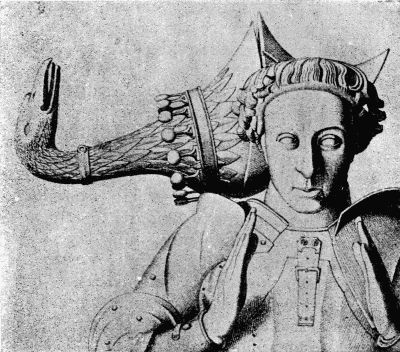
Fig. 160. Helm and crest, and bust, of Richard
Beauchamp, earl of Warwick (ob. 1439,) from his
gilt-latten effigy at Warwick.
Among Stothard's engravings are two of
effigies of quite early date of ladies wearing
crowns or coronets. One, at Scarcliffe in
Derbyshire (fig. 161), cannot be later than
about 1250, and the crown in this case is
composed of some twenty simple leaves set
upright upon the edge of a narrow band.
The other, at Staindrop in Durham, is about
a century later, and represents a widowed
lady, probably Margery, second wife of
John lord Nevill, wearing a crown of curled
leaves with points between (fig. 162). The
next illustration is of special interest since
it represents Thomas earl of Arundel (ob.
1416) wearing presumably the coronet
mentioned above in his grandfather's bequest
(fig. 163); his countess Beatrice has a
slighter coronet of similar character. The
great alabaster tomb, also at Staindrop, or
Ralph earl of Westmorland (ob. 1425) and
his two countesses furnishes the next
example. In this case the earl is in armour,
but both ladies wear delicate coronets,
formed of rows of points with triplets of
pearls and intervening single pearls, rising
from narrow ornamental circlets (fig. 164).
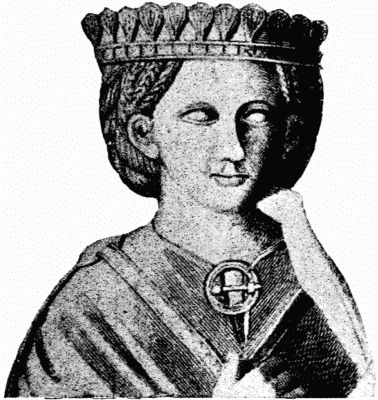
Fig. 161. Effigy of a lady (c. 1250) in Scarcliffe
church, Derbyshire.
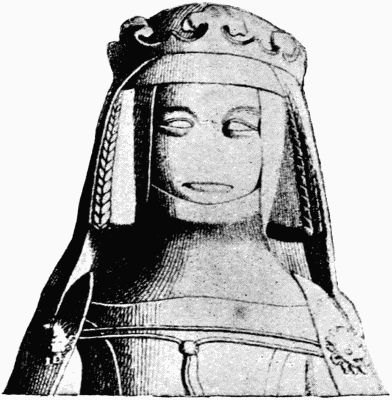
Fig. 162. Effigy of a lady in Staindrop
church, Durham.
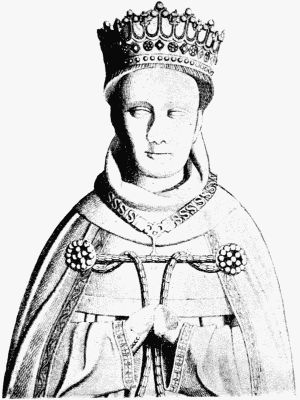
Fig. 163. Thomas earl of Arundel (ob. 1416),
from his alabaster effigy at Arundel.
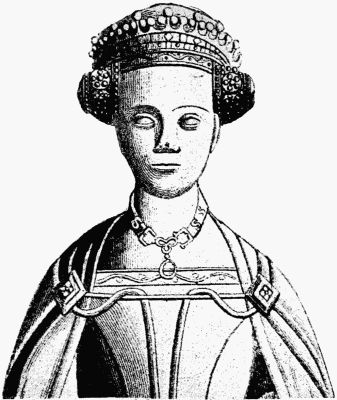
Fig. 164. Joan Beaufort, countess of Westmorland
(ob. 1440), from her alabaster
effigy in Staindrop church, Durham.
The tomb of another earl of Arundel,
William FitzAlan (ob. 1487), and of his
countess Joan, further illustrates the use
of coronets. The earl's coronet is in this
case composed of a continuous row of leaves
with a jewelled band (fig. 165); the countess
wears a similar coronet, but curiously
distorted behind, evidently because it was
thought to be more becoming when so worn
(fig. 166).
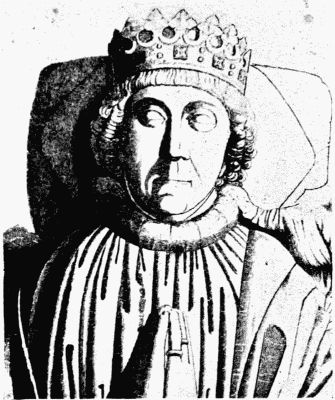
Fig. 165. William FitzAlan, earl of Arundel
(ob. 1487), from his effigy at Arundel.
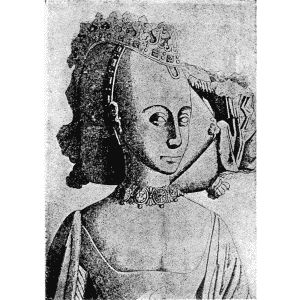
Fig. 166. Joan countess of Arundel, from
her effigy at Arundel.
The monument in St. Peter's church,
in Sheffield, of George earl of Shrewsbury
(ob. 1538) and his two wives represents
him in armour, with the mantle and collar
of the Garter, and a coronet, now broken,
about his head. His wives also have
coronets, which are happily complete, and
are composed of continuous series of twelve
short points tipped with pearls. The earl's
coronet seems to have had similar points,
but with sixteen pearls instead of twelve.
The effigy circa 1500 at Whitchurch
in Salop of that famous warrior, John
Talbot earl of Shrewsbury, who was killed
in 1453, also represents him in the mantle
of the Garter over his armour and a coronet
about his head. This is unfortunately
badly broken, but seems to have resembled
that on the Sheffield figures.
Besides these examples of coronets of
earls and their countesses a few illustrations
of those worn by dukes and duchesses
may be cited.
It has been already noted that the shields
on the monument of Humphrey duke of
Gloucester (ob. 1446) at St. Albans are
surmounted alternately by crested helms
and by caps with coronets. These coronets
have a richly jewelled circlet on which is set,
instead of leaves, a series of what seem to
be cups full of daisies, with small triplets
of pearls between.
Another good coronet is to be seen
on the effigy of Thomas Holand duke of
Exeter (ob. 1447) on the monument
formerly in St. Katharine's hospital by the
Tower, now in the chapel in Regent's
Park. The duke's coronet here is quite
narrow, and composed of some eighteen or
twenty trefoils set close upon a band (fig.
167); but his two duchesses have coronets
of triplets of pearls with intermediate
single pearls, like those of the countesses of
Westmorland at Staindrop (fig. 168).
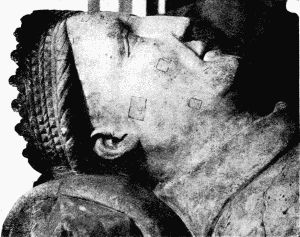
Fig. 167. John Holand duke of Exeter (ob. 1447), from
his effigy at St. Katharine's hospital, Regent's Park.
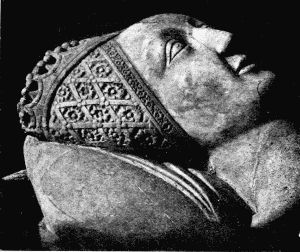
Fig. 168. Head of a duchess of Exeter, from the monument
at St. Katharine's hospital, Regent's Park.
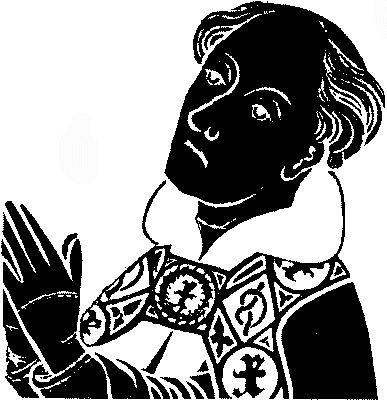
The alabaster effigy at Ewelme of Alice,
widow of William duke of Suffolk (ob.
1450), shows her in a beautiful coronet of
fleurs-de-lis alternating with small clusters
of pearls (fig. 169), and similar coronets once
adorned the effigies at Wingfield in Suffolk
of her son John de la Pole duke of Suffolk
(ob. 1491) and his wife Elizabeth.
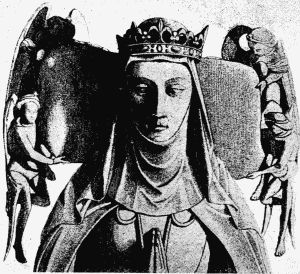
Fig. 169. Alice duchess of Suffolk (ob. 1475), from
her alabaster effigy in Ewelme church, Oxon.
The privilege of wearing coronets was
not extended to viscounts until the reign
of James I, and to barons until 1661.
The official patterns of coronets to which
peers and peeresses are now restricted have,
as may be seen from the examples above
cited, practically no relation to the older
forms, which exhibited the usual delightful
medieval elasticity of design.
The present coronets too are rendered
uglier than ever by the modern rule forbidding
them to be jewelled in any way.
This was not formerly the case. Among
the stuff remaining in the palace of Westminster
in 1553, and delivered to lady
Jane Grey, was 'a coronet for a duke, set
with five roses of diamonds, six small
pointed diamonds, one table emerald, six
great ballases, seven blue sapphires, and
thirty-eight great pearls, with a cap of crimson
velvet and a roll of powdered armyns
about the same'; and a beautifully ornamented
coronet of much earlier date than
the painting is shown in a portrait of John
marquess of Winchester, the defender of
Basing House, who died in 1674.
It is the custom now for ladies of rank
to wear their coronets only at coronations,
and to display them on their note-paper,
their spoons and forks, and on the panels
of their carriages and motor-cars. Such
coronets cannot however be considered
artistic objects, even when depicted apart
from the crimson velvet bonnets which
they encircle, and there is no reason why
ladies should not devise and wear coronet-like
ornaments of their own invention.
A little research will show that crowns
of every form and fashion have always
been freely used in heraldic decoration,
both by themselves and as ensigning
letters or other devices, and so long as
care be taken not to infringe what may be
called official patterns, there are really no
limits to a continuance of the ancient
practice.
The lady Margaret Beaufort, countess
of Richmond and mother of King Henry
VII, has left us a delightful series of
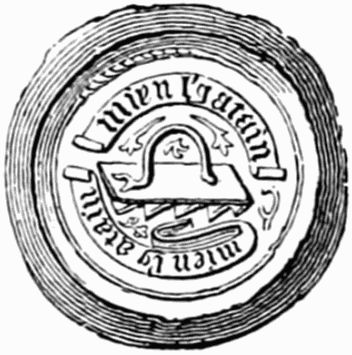
coronets. First, on a seal newly made
for her on the accession of her son, her
shield of arms is ensigned with a coronet
or crown of roses and fleurs-de-lis placed
alternately along the edge of a narrow band
(pl. XXX). Shortly after 1505 the lady
Margaret began to build Christ's College at
Cambridge, and both the gatehouse (fig.
170) and the oriel of the master's lodge
(fig. 171) are rich in heraldic decoration.
In this case both her arms and her
portcullis badge are ensigned with coronets
set with a continuous row of triplets of
pearls.[20] In the lady Margaret's later
foundation of St. John's College, her arms,
etc. again are displayed upon the stately
gatehouse; in this case with a coronet of
roses and fleurs-de-lis over the shield, as in
her seal (fig. 172). Her portcullis badge, on
the other hand, has over it a fine coronet
formed of clusters of roses, which recalls
the circlet of roses set with emeralds and
rubies of Alexandria mentioned earlier in
this chapter. It is quite easy to conjure
up visions of coronets or circlets formed of
lilies or marguerites, or of roses red and
white, or of any other suitable flower or
device, wrought in gold or gilded silver,
and either jewelled or bright with enamel.
And let designers take heart when so
recent and yet so picturesque an object as
the so-called 'naval crown' can be produced,
with its cresting of sterns and square
sails of ships. This was used most effectively
some years ago as one of the decorations
encircling the Nelson Column in
London on Trafalgar Day.
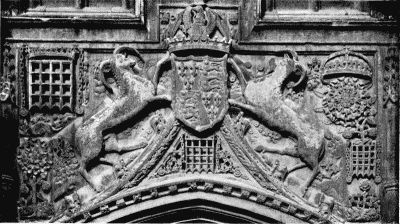
Fig. 170. Armorial ensigns and badges of the lady Margaret Beaufort, from the gatehouse of her
foundation of Christ's College, Cambridge.
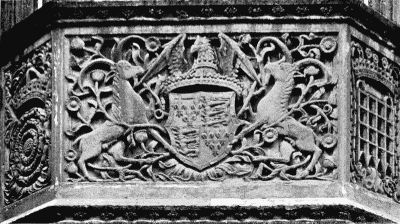
Fig. 171. Arms of the foundress, the lady Margaret Beaufort, with yale supporters,
from the base of an oriel in Christ's College, Cambridge.
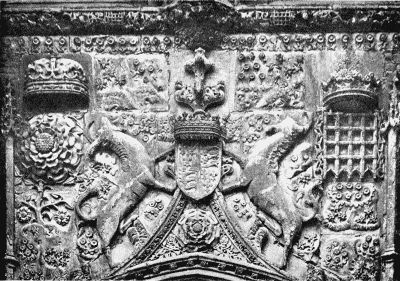
Fig. 172. Armorial panel on the gatehouse of St. John's College, Cambridge.
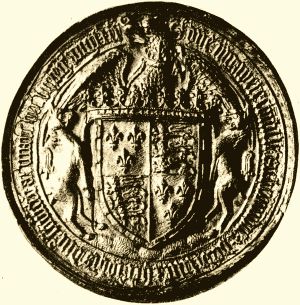
PLATE XXX.—Crowned shield with supporters and badges
of the Lady Margaret Beaufort, 1485.
It may be as well to point out that the
royal crown has been composed, from the
fifteenth century, of crosses alternating with
fleurs-de-lis, and since the coronation of
King Henry IV it has been distinguished
by being arched over cross-wise. The
splendid open crown shown on the effigy
of the king at Canterbury (fig. 173) is
not that wherewith he was crowned, but
another worn with the parliament robes
in which he is represented. Beautiful
examples of crowns of simpler type are
afforded by the effigies of King Henry III
(fig. 174) and King Edward II (fig. 175).
When the lady Elizabeth Wydville became
the queen of Edward IV, she ensigned her
arms with a beautiful crown or coronet of
alternate large crosses and fleurs-de-lis with
smaller fleurs-de-lis between, rising from a
richly jewelled band (pl. XXV), and a rich
example of the crown of King Henry VIII
so treated is to be seen on the great carved
panel with his arms, etc. at New Hall in
Essex (fig. 189). Crosses and fleurs-de-lis
are now used only in the coronets of
those of royal blood.
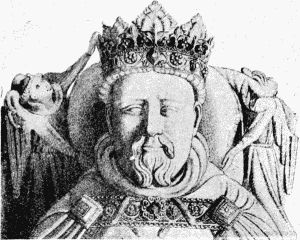
Fig. 173. King Henry IV, from his alabaster effigy in
Canterbury cathedral church.
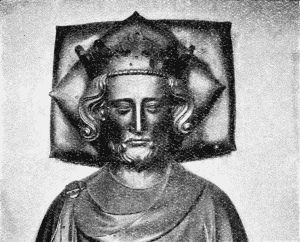
Fig. 174. King Henry III, from his gilt-latten
effigy at Westminster.
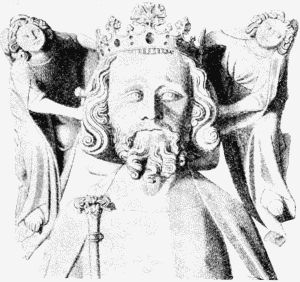
Fig. 175. King Edward II, from his alabaster effigy at
Gloucester.
From ornaments for the head it is easy
to pass to those for the neck.
The wearing about the neck of something
which was considered decorative or
becoming has been customary with the fair
sex in every part of the world and in all
ages of its history, and necklaces of every
form, material, and fashion are as popular
to-day as ever. But less attention is now
paid to the decorative collars that once were
worn not only by women but by men.
It has always been a mark of distinction
or dignity to wear about the neck a chain
or collar of gold, silver, or silver-gilt, either
as an ornament, or a decoration of honour,
or as a badge of partizanship; and the
most noteworthy of these to-day are the
collars of the various orders of Knighthood,
such as the Garter (fig. 177), the Thistle,
and the Bath.
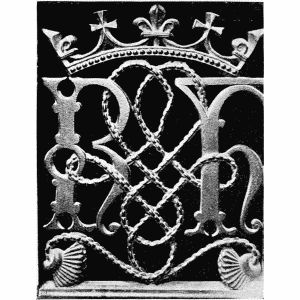
Fig. 176. Crowned initials of King Henry
VII, from his Lady chapel at Westminster.
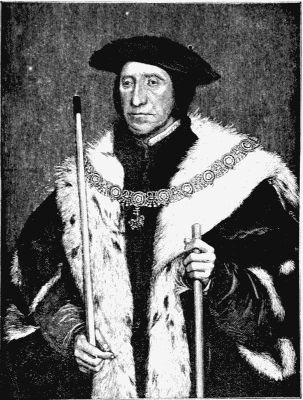
Fig. 177. Thomas Howard third duke of Norfolk
(1473(?)-1554) with the collar of the Order of the
Garter, from the picture by Holbein at Windsor castle.
The history and characteristic features of
these are well known, and representations
of them abound; moreover the wearing of
them is confined to a few privileged persons.
It is therefore hardly necessary to discuss
them further in a work like the present.
The case is however different with
regard to the so-called livery collars, since
these may properly be regarded as models
for the formation and construction of such
similar collars as may freely be worn to-day.
The most notable of such decorations
during the medieval period was the collar
of SS which formed the distinctive cognisance
of the House of Lancaster (figs. 178,
179). It was worn by persons of every
degree, from the King and Queen to the
knight and his esquire, and it was likewise
worn by their wives and even conferred on
civilians.
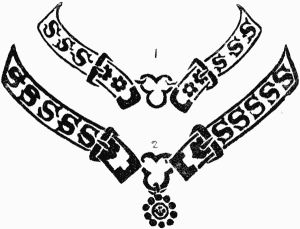
Fig. 178. Collars of SS.
1. From the brass of Lady Camoys, 1419, at Trotton
in Sussex.
2. From the brass of Sir William Calthorpe, 1420,
at Burnham Thorpe in Norfolk.
The collar of SS was apparently invented
by King Henry IV before his accession,
and quite a number of important entries
that throw light upon its history occur in
his household accounts while he was only
Henry of Lancaster earl of Derby.
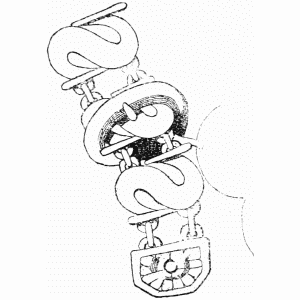
Fig. 179. Collar of SS from the effigy of
William lord Bardolf (ob. 1441) at Dennington
in Suffolk.
In 1390-1 a gold signet was engraved
for him 'cum j plume et j coler,' of which
unhappily no impressions are known. In
1391-2 there was made for him a 'coler'
of gold 'with seventeen letters of S after
the manner of feathers with scrolls and
scriptures in the same with a swan in the
tiret.' This recalls the badge upon one
of Henry's own seals as earl of Derby
(1385) described above (p. 167), an ostrich
plume entwined with a scroll and the
scripture souvereyne (pl. XXIV C), and we
know from other sources of Henry's favour
towards the Bohun swan, which device he
used in right of his first wife, the lady
Mary Bohun. The collar of SS, moreover,
on the effigy of John Gower the poet (ob.
1402) in Southwark cathedral church has a
swan on the pendant of it, and no doubt
represents the collar actually given to him
by Henry of Lancaster in 1393-4. The
initial letter, too, of the charter granted to
the city of Gloucester by Henry as King in
1399, contains a crown encircled by a collar
of SS ending in two lockets between which
is a pendant charged with a swan. The
earl's accounts for 1393-4 mention the
purchase of the silver 'of a collar made
with rolled esses and given to Robert
Waterton because the lord had given the
collar of the same Robert to another
esquire.'
In 1396-7 a charge is entered 'for the
weight of a collar made, together with
esses, of flowers of soveigne vous de
moy[21] hanging and enamelled weighing
eight ounces.'
What these flowers were is uncertain.
Charges for making 'flores domini' occur
in 1390-1 and other years, and in 1391-2
three hundred leaves (?flowers) de souveine
vous de moy of silver-gilt were bought for
one of the earl's robes.
In 1407 Henry of Lancaster as King
ordered payment to be made to Christopher
Tildesley, citizen and goldsmith of
London, of the huge sum of £385 6s. 8d.
'for a collar of gold worked with this word
soveignez and letters of S and X enamelled
and garnished with nine large
pearls, twelve large diamonds, eight balases,
and eight sapphires, together with a great
nouche in manner of a treangle with a
great ruby set in it and garnished with four
large pearls.'[22]
Most of these entries suggest that the
mysterious SS stand for Soveignez, and
possibly at one time this was the case, but
Henry's seal as earl of Derby in 1385
containing the feathers with the scripture
souvereyne must not be overlooked.
There is moreover, on a fragment which
has fortunately survived in a tattered and
burnt mass of fragments of a jewel account
of Henry's reign in the Public Record
Office, the important entry of a payment
to Christopher Tildesley of 'a collar of
gold made for the King with twenty-four
letters of S pounced with soverain, and
four bars, two pendants, and a tiret with a
nouche garnished with a balas and six large
pearls (the balas bought of the said
Christopher for £10 and the price of the
pearls at 40s., being £12) weighing 7 oz.
Troy at 23s. 4d. £8 3s. 4d. Also a black
tissue for the same collar 3s. 4d. and for
the workmanship of it £4.'[23] The King's
word soverayne also occurs many times,
with the Queen's word a temperance, on
the tester over their monument at Canterbury,
which has likewise the shield of arms
for the King, the King and Queen, and the
Queen alone, encircled in each case with a
collar of SS with golden eagles placed upon
the tiret. Gold eagles also form stops between
the repetitions of the word soverayne.
Another example of a collar of SS with
an eagle as a pendant is to be seen on the
monument of Oliver Groos, esquire (ob.
1439), in Sloley church, Norfolk (fig. 180).
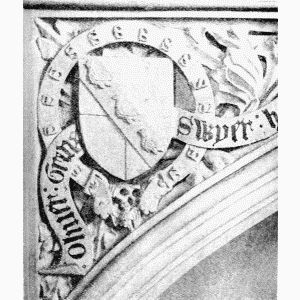
Fig. 180. Spandrel of the tomb of Oliver Groos, Esq. (ob.
1439), in Sloley church, Norfolk, with collar of SS.
Examples of effigies in stone or brass of
men and women wearing the collar of SS
are common throughout the Lancastrian
period. The SS seem in most cases to be
represented as sewn or worked upon a band
of silk, velvet, or other stuff,[24] which usually
ends in buckled lockets, linked by a trefoil-shaped
tiret, from which is hung a small
ring (fig. 181).
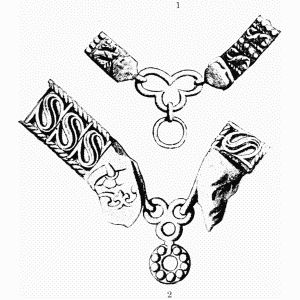
Fig. 181. Collars of SS from (1) the effigy of Queen
Joan at Canterbury, and (2) the effigy of Robert
lord Hungerford at Salisbury.
Several other interesting occurrences of
the collar of SS may be noted. In one of
the windows in the chapter house at Wells
is a shield of the arms of Mortimer, and
next to it a gold star within the horns of a
crescent party blue and silver, encircled
by a collar of SS also half blue and
half white. As there are associated with
these the arms of the King and of Thomas
duke of Clarence (ob. 1421), they probably
commemorate Edmund Mortimer earl of
March, who died in 1425.
In 1449 a receipt given to the steward
of Southampton by the prior of the Shene
Charterhouse, which was founded by King
Henry V, bears a seal with ihs within a
collar of SS; and in St. Mary's church at
Bury St. Edmunds the ceiling over the
tomb of John Baret, an ardent Lancastrian,
who died in 1480, is painted with collars
of SS surrounding his monogram.
There is also in a MS. in the British
Museum,[25] written probably for John lord
Lovel (ob. 1414), a painting of the arms of
Holand quartering Lovel surrounded by a
collar, one half of which is white and the
other half blue, with gold letters of SS,
having for a pendant a gold fetterlock,
party inside of red and black.
On a brass c. 1475 at Muggington
in Derbyshire the Beaufort portcullis
appears as a pendant to the collar of SS.
With the rise to power of the Yorkists
on the accession of Edward IV a rival collar
to that of the Lancastrian livery came into
vogue, composed of blazing suns and York
roses disposed alternately (fig. 182). It
may be seen in various forms on a number
of monumental effigies and brasses, usually
with the couchant white lion of the house
of March as a pendant, but on the accession
of Richard III the lion was replaced by
his silver boar. On the wooden Nevill
effigies at Brancepeth the earl has a collar
of rayed suns with the boar pendant,
while the countess has a collar of alternate
suns and roses. Joan countess of Arundel,
on her effigy at Arundel (fig. 166), shows
another variation by interpolating the
FitzAlan oak leaves between the suns and
the roses.
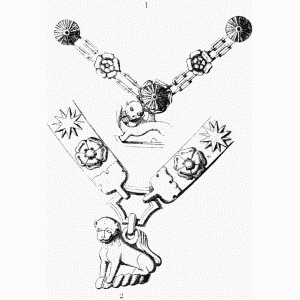
Fig. 182. Collars of suns and roses from (1)
the effigy of a knight of the Erdington family
at Aston, Warwickshire, and (2) from the
effigy of Sir Robert Harcourt, K.G. 1471,
at Stanton Harcourt, Oxon.
After the accession of Henry VII the
collar of SS was again revived, but with
variations and different pendants. The
effigy, for example, at Salisbury of Sir John
Cheyney, K.G. (ob. 1489), has appended to
his SS collar a large portcullis charged
with a rose. A collar of gold weighing
over 7 ounces is recorded to have been
given in 1499 to adorn the image of the
Holy Trinity in Norwich cathedral church,
and is described as containing twenty-five
letters of S, two tirets, two 'purcoles' (portcullises),
and one double R(?) with a red
rose enamelled.[26] A similar collar, but all of
gold, is shown in the portrait of Sir Thomas
More, painted by Holbein in 1527 (fig. 183).
On a brass c. 1510 at Little Bentley in Essex
the collar of SS has a portcullis pendant, and
on the Manners effigy (c. 1513) at Windsor
and the Vernon effigy (1537) at Tong
the pendant to the knight's collar is a large
double rose.
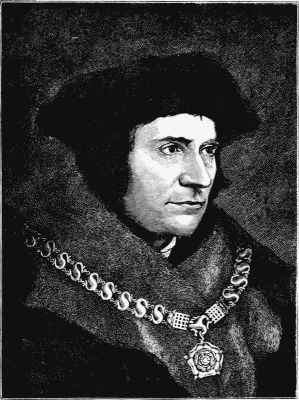
Fig. 183. Sir Thomas More wearing the collar of SS,
from an original portrait painted by Holbein in
1527, belonging to the late Mr. Edward Huth.
The collars on the Salkeld effigies (1501)
at Salkeld in Cumberland are composed of
SS and four-leaved flowers alternately, and
that worn by Sir George Forster (ob. 1526)
on his tomb at Aldermaston in Berkshire is
of SS laid sideways and alternating with
knots, and has a portcullis and rose pendant.
In 1545 Sir John Alen, sheriff in 1518 and
lord mayor in 1525 and 1535, bequeathed
for the use of the lord mayor of London,
and his successors for ever, his collar of
SS, knots, and roses of red and white
enamel; and a cross of gold with precious
stones and pearls was given to be worn
with it in 1558. An effigy of a Lisle c.
1550 at Thruxton in Hants has a similar
collar of SS, knots, and roses, also with a
cross as a pendant. Sir John Alen's collar,
somewhat enlarged, and with a modern
'jewel' as a pendant, is still worn by the
lord mayor of London, and is the only
medieval collar of SS that has survived.
After the reign of King Henry VIII the
wearing of the collar of SS gradually
became restricted to judges and other
officials, and has so survived to the present
day, when it is still worn in England by
the lord chief justice, the kings-of-arms,
heralds, and pursuivants, and by the
serjeants-at-arms.
The lord chief justice's collar, like all
those formerly worn by the judges, is composed
of SS and knots; the others of SS
only.
Beside the livery collars above mentioned,
others have been worn from time to time.
In the exquisitely painted diptych or
Richard II and his avowries, now at Wilton
House, the King has about his neck a collar
formed of golden broom-cods, and the
gorgeous red mantle in which he is habited
is covered all over with similar collars enclosing
his favourite badge, the white hart.
A collar of gold 'de Bromecoddes' with a
sapphire and two pearls occurs in the great
inventory taken on the death of King
Henry V, and a collar formed of SS and
broom-cods was also made for King Henry
VI in July 1426.[27]
On his effigy at Ripon (c. 1390) Sir
Thomas Markenfield displays a collar
formed of park palings, which widen out
in front to enclose a couchant hart (fig. 184).
If this were not a personal collar, it may
have been a livery of Henry of Lancaster
as earl of Derby.
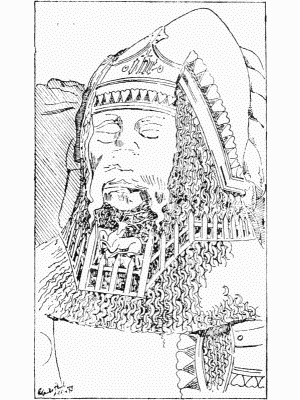
Fig. 184. Head of the effigy in Ripon minster
of Sir Thomas Markenfield with livery collar
of park-palings.
A brass of the same date of a knight,
formerly at Mildenhall, showed him as
wearing a collar apparently once composed
of scrolls with scriptures, joining in front
upon a large crown with a collared dog or
other beast within it.
The brass at Wotton-under-Edge of
Thomas lord Berkeley (ob. 1417) shows
him with a collar sown with mermaids, the
cognisance of his house (fig. 185).
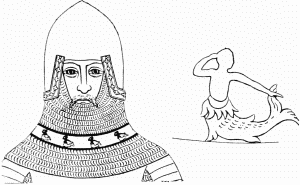
Fig. 185. Thomas lord Berkeley (ob. 1417) with a collar
of mermaids, from his brass at Wotton-under-Edge,
Gloucestershire.
In his will dated 1430 William Stowe
the elder, of Ripon, a retainer in the
household of the earl of Northumberland,
bequeaths his silver livery Anglice cressaunt
and his livery Anglice coller to the
shrine of St. Wilfrid.[28] Possibly the 'cressaunt'
was an object similar to that here
figured (now belonging to the duke of
Northumberland), and the collar like that
formed of p's and crescents enclosing p's
linked together which is engraved upon it
(fig. 186).
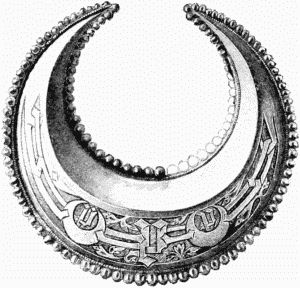
Fig. 186. Silver badge belonging to the
duke of Northumberland.
The earlier collars, as has already been
noted, were composed of devices sewn
upon a band of stuff, but in later examples
a more open treatment is found wherein
the devices are linked together by short
pieces of chain, as in the collar of SS
shown in Sir Thomas More's portrait.
The Yorkist collar of suns and roses on an
effigy at Erdington is so treated, as is the
collar of SS and flowers on the Salkeld
effigies, which may perhaps be a personal
and not a livery collar.
Collars of similar construction, but always
of silver, with pendent scutcheons of the
town arms, were worn by the little bands
of minstrels called waits, formerly in the
employ of most towns of importance (fig.
187).
In London the six waits appointed in 1475
had silver collars of SS with scutcheons of
the city arms. At Exeter the four waits'
collars, dating from about 1500, still exist,
and are formed of roundels with X's and
R's alternately (fig. 187). Two beautiful
waits' collars at Norwich (c. 1550) are composed
of silver castles and gilded leopards
alternately, like those in the appended shield
(fig. 187). The waits' collars at Lynn were
formed of scrolled leaves alternating with
dragons' heads pierced with crosses, like
those in the town arms, which are allusive
of St. Margaret (fig. 187). At York the
collars are formed wholly of little silver
leopards, and at Beverley of eagles and
beavers alternately. The waits' collars at
Bristol date from the reign of Queen Mary,
and are composed of pierced roundels containing
alternately the letters CB. and a rose
dimidiating a pomegranate.
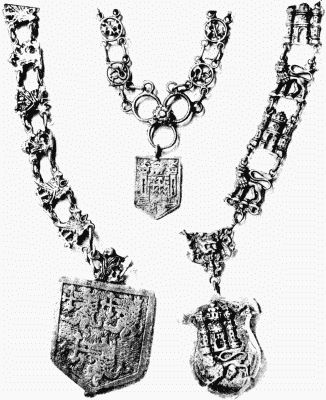
Fig. 187. Waits' Collars of Exeter, King's Lynn, and Norwich.
The wearing of collars, or chains as they
are called, by mayors, mayoresses, and
sheriffs is comparatively modern. It was
formerly the custom for every person of
any dignity to wear a chain, and it was
only when chains began to go out of
fashion that the wearing of them survived
among persons of particular dignity such
as mayors and sheriffs.
The collar of SS worn by the lord mayor
of London is an exceptional example, and
the only other early mayor's chain is that
given to Kingston-on-Hull in 1564 and
remade in 1570. A plain gold chain was
bequeathed to the city of York in 1612,
and 'a fayre chayne of gold double
linked with a medall of massy gold' was
given to the town of Guildford in 1673.
In 1716 a gold chain for the mayor was
given to the city of Norwich, but passed
on for the use of the deputy mayor on a
new chain being given in 1757. Yarmouth
bought itself a chain in 1734, and seven
other towns became possessed of mayors'
chains towards the end of the eighteenth
century. Down to 1850 some fifteen more
mayors' chains came into existence, mostly
of simple type, like the older chains, with
one or more rows of plain or ornate links.
Since 1850 practically every town that can
boast of a corporation has likewise got a
chain for its mayor, and appalling creations
many of them are, with rows of tablet links,
and armorial pendants as large as saucers.
A simple gold chain to be worn by the
sheriffs of Norwich was given in 1739, but
those at Chester, Newcastle, Exeter, and
other places are quite recent. In London
it has been the custom for the friends and
admirers of the sheriffs to present them with
elaborate gold collars on their accession to
office, but these are happily private property
and not official insignia. The same description
applies to them as to the recent mayors'
chains.
Chains for mayoresses have not yet become
general, but they are being multiplied
yearly. The mayoress of Kingston-on-Hull
had an official chain as early as 1604,
but it was sold as being 'useless' in 1835.
The lady mayoress of York has a chain of
plain gold links given in 1670, which is
regularly weighed on its delivery to and return
by the wearer. All other mayoresses'
chains are quite recent, and in most cases
of the same fearsome design as those worn
by their husbands.
The unfortunate mayors, mayoresses,
and sheriffs are practically at the mercy of
ignorant and inartistic tradesmen for the
designing and making of the collars they
are called upon to wear officially, but that
is no reason why people with more enlightened
ideas should not invent, design,
and wear collars or chains that are beautiful
in themselves. The examples already
quoted and the many illustrations of others
that are accessible will show what comely
ornaments the old heraldic collars were,
and many a lady would look well in a
collar to whom a necklace is most unbecoming.
Flowers, letters, and devices of
heraldic import can easily be embroidered
in gold, or struck out of metal and
enamelled, and then be sewn down on
velvet or silk stuff, or linked together by
fine chains.
But let every wearer of a chain or collar
avoid the error of making it too long.
The ancient collars were quite short, and
therefore rested comfortably and easily
upon the shoulders. Official collars have
however grown to so preposterous a length
that they have to be tied with bows of
ribbons upon the shoulders to hinder them
from slipping off the wearer altogether!
The reason of this is curious and instructive.
The old collars were, as aforesaid, of
sensible dimensions, but the introduction
of wigs in the seventeenth century necessitated
the collars being lengthened to be
worn outside them. Wigs had their day
and at last disappeared from general wear,
but the lengthened collars remain, and it
has not occurred to any one in authority
that they might now advantageously be
shortened. So the inconvenience goes on.


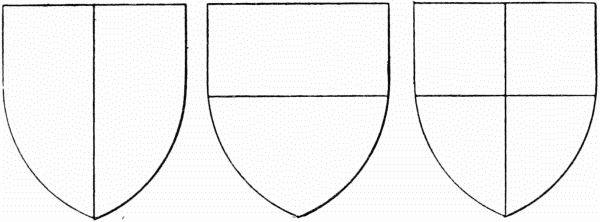
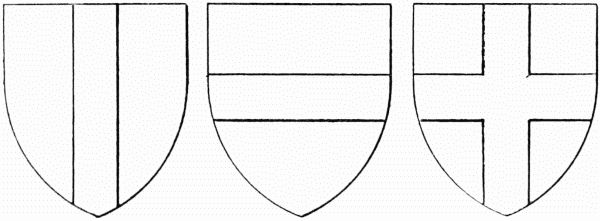
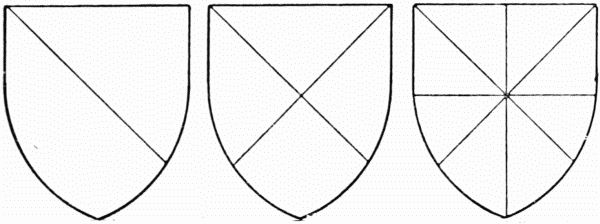
















 than
than
 when extended unduly horizontally.
















 APPOINTMENT