Happy Days carolings of Colorado, etc
Whole book · 65 sections
Happy Days
Colorado, Etc.
By
Sam Brown
Author of
“May-Day Dreams,”
etc.
DENVER, COLORADO
THE REED PUBLISHING COMPANY
Nineteen Hundred and Four
Copyright, 1904
By SAMUEL R. BROWN
PRESS OF
The Reed Publishing Company
DENVER
Dedicated
WITH KINDEST REGARDS, TO
OUR GENTLE, SAD-FACED
TOURIST SUMMER-GUEST
PUBLISHERS’ ANNOUNCEMENT
As in subsequent pages of this little work its author has had so much to say regarding himself and the land of his nativity, we deem it but proper that he and the reader should be made more fully acquainted here at the outset. Permit, therefore, this brief biographical sketch. Born in the sunny valley of the South Platte, near the present site of the Queen City of the Plains (Denver), the author is of course a native of the Centennial State (Colorado).
In the days of his boyhood the wooly bison and the prong-horned antelope still ranged in countless droves upon the Great Plains, and the antlered elk and the mule deer, among the airy table-lands and in the more-sequestered, grassy forest-glades of the Rocky Mountains, were most plentiful indeed. The little red Indian papooses were his earliest childhood playmates, and the “big braves,” Cheyenne Charley, the Arapahoe chief, Black Kettle, and the fat old Ute, Colorow, are still well remembered by him. The long lines of freight and emigrant wagons; the “Overland stage coaches,” the ox and mule teams, the various motley crowds of old-time denizens of those then “first days” of stir and change, of sanguine strife and hardy enterprise, were all familiar objects of his youthful vision.
Being reared thus, amidst wild and savage life, and born a native of a then savage wild-land, his poetic efforts of these later happier days will no doubt prove of especial interest to the people of the middle Great West and the Rocky Mountain region generally.
Contents
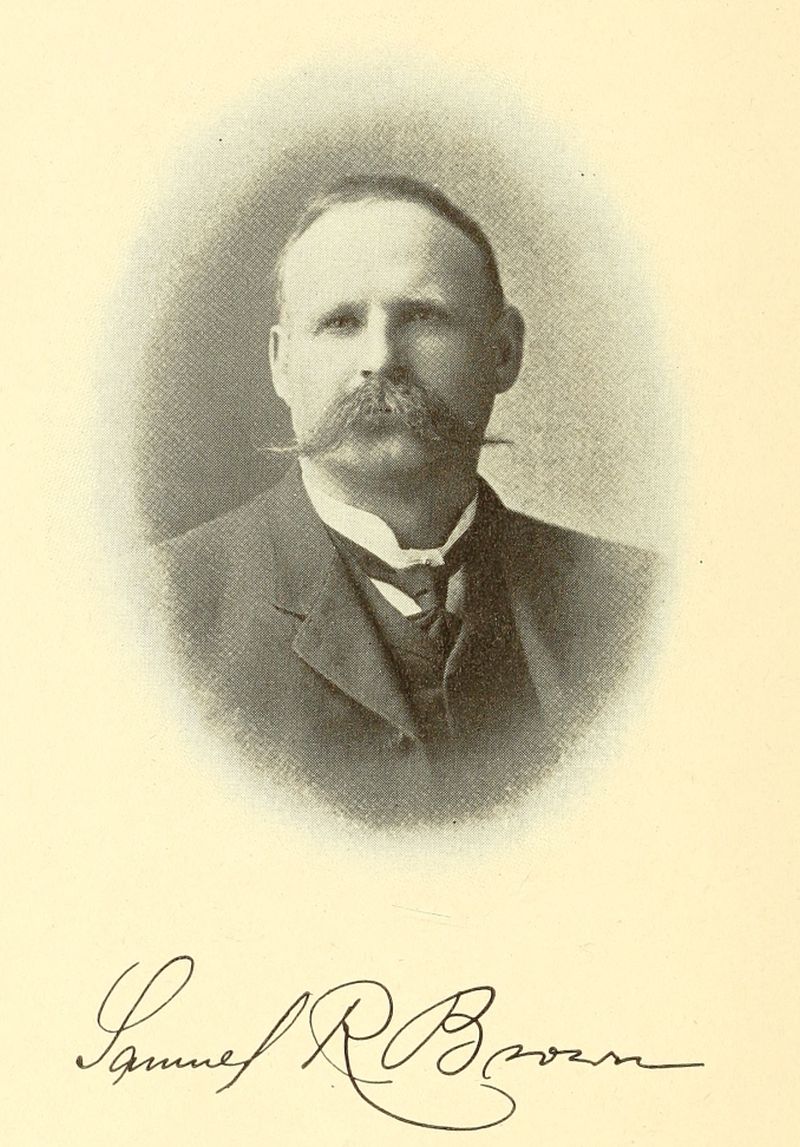
| Portrait and Autograph of the Author | Frontispiece |
| Publishers’ Announcement | 4 |
| Prefatory | 9 |
| POEMS | |
| A Happy Loiterer | 27 |
| Angling in the Platte | 28 |
| Autumnal Sports | 33 |
| At My Little Cabin Home | 42 |
| At Littleton—“In the Good Old Summer Time” | 58 |
| At Englewood on an Afternoon in May | 59 |
| At Manitou | 69 |
| At Denver | 70 |
| A Felicitous Medical Prescription | 75 |
| A Requiem | 86 |
| Be Joyous, Be Gentle, Worthy, Kind | 52 |
| Beautiful Colorado | 57 |
| Colorado Skies | 15 |
| Down Among the Grasses | 18 |
| Differences of Opinion | 82 |
| Felicitous Retroflections | 67 |
| Greetings to Gladness | 13 |
| In the Wild Wild-Woods To-day | 20 |
| I’ll Sing Some Songs for Fame To-night | 21 |
| Introverse Retrospection | 64 |
| In the Forest | 83 |
| King Mammon | 45 |
| Live Merrily | 14 |
| “Lo Que Es El Mundi” | 46 |
| Little Love A-Fishing Went | 68 |
| Maid of Denver, Are You Camping? | 22 |
| Maid of Denver, Take My Arm | 23 |
| My Colorado | 56 |
| My Motor-Cycle Girl and I | 79 |
| My Summer Girl and Me | 84 |
| New Glad Voices | 91 |
| Of Paradise, Etc. | 73 |
| On Immortality | 74 |
| Poet, May I Pail Your Cow? | 24 |
| Pot-Hunting Beside the Platte | 35 |
| Recuperating in Nature’s Sanitarium | 31 |
| Regret | 72 |
| Seeking Our Two Little Brown Boys | 60 |
| Sundry Sweets | 65 |
| Supplementary | 89 |
| To Ye Cheerless Hermit | 30 |
| The Antelope Hunt | 37 |
| To Walter Whitman | 44 |
| To Ye Worthy Sailor Man | 50 |
| Tears | 61 |
| To Our Little Joy-Prince—Cherub Delight | 62 |
| To Our Lady of Woe | 71 |
| To Those Dark Eyes that Haunt Me Still | 77 |
| Wild-Woodland Ramblings | 17 |
| Was Man Made to Mourn? | 25 |
| PROSE SKETCHES | |
| Farewell!—I Am Still Camping | 87 |
| May-Day Beside the Platte | 92 |
| My Native Lakes | 95 |
| Those Are the Rocky Mountains | 98 |
PREFATORY
My dear unexacting, much-forgiving reader—lover of rural-songs and of rural singers: Now, since having spent many happy days in the health-gaining pursuit after the fleet-winged goddess Pleasure, and in camping on the trail of the scarcely less inconstant muse, among Colorado’s grassy, grove-filled valleys, arid plains, and lofty, snow-capped mountains, with the sad-faced “tourist friend” sometimes, and sometimes with some others, for the writer’s camp-fire side companions, and having found life good and Nature joyous, and as “There is more or less poetry about the souls of all men”—(and some women also, perhaps!) it is not strange, therefore, (is it?) that the author of this unpretentious little book has fallen, half-unconsciously, as it were, into hymning joy-notes to Nature and to disconsolate humanity (presumably!) likewise.
Now, trusting, therefore, that a more lengthy retrospection will not be necessary to sufficiently apologize for our unpremeditated literary transgressions, our impromptu sentimental love-ditties, etc., we therefore, with best wishes to all and with malice to none, and with the reader’s kind permission, will accordingly without further delay or comment, proceed to the final rehearsal of our felicitous, although evidently artless, minstrelsy.
HAPPY DAYS CAROLINGS OF COLORADO ETC.
GREETINGS TO GLADNESS
Come, Bliss. Who likes a fretting child?
It is the mirthful spright we love.
On Joy, propitious gods have smiled.
No worthier cherub dwells above.
In laughing eyes we lingering gaze;
There’s beauty in a happy face!
If Gladness lacked in classic mould
Were not his charms yet manifold?
Come, Spirit, then—come, social Cheer.
We crave diversion and delight.
With thy sweet smiles dry Sorrow’s tear;
Bright angels’ visits make our lives more bright.
LIVE MERRILY
Why pensive, mortals? Why still? Why sad?
Cheer up, dear fellows, and be glad.
Live merrily—live while you may,
Gaily, gaily tripping along life’s way,
Waste not—dejectedly brooding—waste not these few brief, fleeting hours,
After death, as after night, dawns the brighter, fairer day.
Be happy, then, be thankful, grateful as the conscious, smiling flowers.
Have hope, have faith, have charity;
Trust to inherit immortality.
At Pleasure’s fount dip deep;
In its pure, ecstatic tide thy troubles steep.
Grave saint—if righteous souls shall joyous live again
Why should we sorrow here? Why vainly foster care and pain?
Nay, nay, most happy presence, acquainted best with joy and love
Are those best fitted, sir, for life—for sacred, hallowed life above.
COLORADO SKIES
Colorado skies! Colorado skies!
Oh, what a depth of color in them lies!
How bright to-day—how azure are Colorado skies!
Colorado skies! Colorado’s lustrous skies!
In those clear wells above,
Where the unimpaired optic never tires to rove,
Behold! two sable eagles—their wheeling flights pursue,
The only fleeting shadows in those arching vaults of blue.
Colorado skies! Colorado’s peerless skies!
Oh, what sweet dreams, what joyous hopes arise,
To all who cast their destinies beneath Colorado’s wondrous skies.
Colorado skies! Colorado’s splendid skies!
At dawn, when swift the curling mists arise;
When crimson-colored flame, the orient horizon o’erspreads,
And shy day-nymphs awake from slumber on their golden beds,
’Tis then that smiling Fortune, lavishly rewards the bold emprise
Of those who wisely early rise beneath Colorado’s matchless skies.
Colorado skies! Colorado’s glorious skies!
No lowering clouds—no lingering mists arise.
How bright to-day—how propitious are Colorado’s skies.
WILD-WOODLAND RAMBLINGS
Down—adown among the green, wild-woodland alleys,
And across the sweet valleys,
Through forests of spruce trees and pine;
With the birds, and the beasts, and the flowers for my allies
I rove—oh I rove, with “The Spirit Divine.”
Down, deep down in the wild rocky canons;
Up, high up on the cool sterile plateau’s above,
Joy, Joy and Hope are still my companions,
For, oh, for, oh, I am charmed and elated wherever I rove.
Down, then—down through the green leafy alleys,
And across the sweet valleys
Deeper, deeper still into forests of aspens and pine;
Thus, thus ’mongst tall, shady groves I am daily making new sallies,
For, oh, for oh, the much-roving spirits of gladness and of song-singing madness are mine.
DOWN AMONG THE GRASSES
Down—adown among the tall green grasses
By the spring-fed pool,
Where the flowers nod and beckon in the wind that passes—
Nod and beckon like sweet little lassies
Like fair little Hellenic lassies, (glancing with their bright eyes)
Like fair little Hellenic lassies, just turned loose from their classical classes
Like glad little Grecian children just a-coming home from school.
And the dragon-flies in their bright cuirasses
And the crickets that chirrup by rule,
And the clouds floating by in great, white, cumulous masses,
And the small, glad voices, and the flowers and the grasses,
And the sky and the clouds mirrored way down in the pool,
Makes one dream of the old song-sacred Parnassus,
And of the nymph-haunted Hippocrene cool.
And we sigh for the poet’s winged-steed Pegasus
Just to soar away up high!
Just to scale those wild aerial passes,
Just to rise above those great, white, cumulous, cloud masses,
And to plunge and tumble down the blue vaults of the sky.
Away up above us—in those splendid cloud-cities!
With their portals of gold and their turrets so fair,
We seem to hear angels a-piping their wonderful ditties,
And we long to be there—oh, we long to be there.
White Wings! White Wings! Come bear us away,
Come bear us away, o’er river, o’er mountain and plain.
Oh, bear us away to that land of tall palms and green sassafrasses,
And then—oh, then, bear us back here to this wild, sweet, pretty valley again.
IN THE WILD WILD-WOODS TO-DAY
Away—far away—in the wild wild-woods to-day!
Underneath the spreading, cool, green boughs sitting,
Nesting birds above us flitting,
Seem to sing—seem to say:
“Mortals sad, be good, be good—be glad—be gay!”
Little hearts full of glee,
Happy as happy can be;
In the wavy bushes seen,
In the tall, tufted tree-tops between,
Singing, singing merrily,
Singing, singing—seem to say:
“Mortals sad, be good, be good—be glad to-day!”
I’LL SING SOME SONGS FOR FAME TO-NIGHT
Respected fellow traveler, ’tho I can carol like a bird
Dame Fame my voice has never heard.
Hear, then, congenial tourist, comrade with delight—
I’ll sing some songs for Fame to-night.
Fame oft has heard the wail of Sadness;
Fame knows the lay of Trouble well,
Then I will sing for her the songs of gladness,
For her, for her, the tale of Joy I’ll tell.
MAID OF DENVER, ARE YOU CAMPING?
He:
“Maid of Denver, are you camping?
In my field your mules are tramping.
Please, Miss, do not think me rude;
’Tis not my intention to intrude.
Just this morn I saw your fire—
Thought I’d step down and inquire.”
She:
“Yes, sir; yes, sir; we are camping;
That’s our tent, there, in the willows.
Pa and Ma are fishing, I suppose:
Too bad, too bad, our team is tramping
In your meadow green and wide.
But, sir, oh, if you will kindly help me chase them out, sir,
My folks, henceforth, no doubt, sir,
Will be good enough to keep them tied.”
He:
“Maid of Denver, let them stay—let them stray;
They won’t hurt my clover—never, nay.
Happy creatures! Watch them race and leap!
Romp and roll, wallow in my herd’s grass—lush and deep!
Off! ye saucy rogues! Away, away! go frisk and play;
(They won’t harm my trifolium incarnatum, no, never—never, nay!)”
MAID OF DENVER, TAKE MY ARM
Maid of Denver, take my arm;
Stroll with me, about my farm.
Trustier guide you’ll never know.
No, no, Maid of Denver, don’t say no!
Come, merry lass, come skip with me across the green;
Climb up steep heights where foot hath never been.
Just back of Frank Mann’s, on the rocks,
Watch Massey’s shepherds tend their flocks.
Or would you rather rove cool hills between?
Exploring, mayhap, many a sylvan scene?
Or nay—no—you wisely choose beneath tall trees,
To just sit here, and sweetly take your ease.
Then, Maid of Denver, here’s my hand!
Share, oh kindly share with me my land.
Fonder “hubby” you will never know,
No, no, my pretty maid, my city maid, I love, I love you so.
“POET, MAY I PAIL YOUR COW?”
She:
“Poet—pastoral poet—
Poet, don’t you know it?
Poet, please, sir, may I now?
Poet, I would dearly love to pail your cow!”
He:
“Maid of Denver, then you may;
I will bait her with some hay.
So, boss—so, there, now!
So,—so—you blamed old cow!
“Just watch her kick-up, like a steer;
Race away in mad career;
But I can catch her; oh, yes, dear—
Snare her with my lariat
Snub her, stretch her out,
Tie her horns and tie her feet,
She may bellow, she may fret.
We shall pail her. Conquer her? Oh dear, yes, you bet!
“Maid of Denver, try her now;
She is humbled—s’drat that cow!
Did she cavort like a steer?
Bellow loudly in your ear?
She did; yes, she did. But shall we pail her?”
She:
“Well, no, nay—not just now, poet, dear.”
WAS MAN MADE TO MOURN?
“Man was made to mourn.”
—Robert Burns.
From Eden barred, abased, forlorn
Man, some mortals say, was made to mourn.
(Some even think his wicked soul should burn!)
Of “sin original,” inoculated at the first,
His “scapegoat” race they hold accursed.
For Adam’s fault they’d make his offspring’s sweat,
For Eve’s one error do hateful penance yet.
Such silly cant—such canters—I could spurn!
Nay, nay, man was not made to mourn.
Joy, joy, presided at our birth;
Heaven sent great gladness upon earth.
Nature triumphed on our natal morn.
Creation thrilled when man was born!
Nay, nay; man was not made to mourn!
Discard that old familiar saw.
It is a rusty relic, dull and worn,
A heathen tool with many a flaw.
Nay, nay, it is a duty to be good;
It is religious to be glad!
O’er wrongs, o’er losses, wherefore brood?
’Tis wicked—sinful—to be sad!
Nay, nay; man was not made to mourn;
From Grief (that vile old sorceress) let us turn,
At Pleasure’s shrine, far holier, happier lessons, we shall learn.
A HAPPY LOITERER
Beneath our blue Colorado skies,
Where tall mountains gladden eyes,
Here I seek the care-free muse
Till life’s burdens all I lose.
Far away from Sorrow’s brood,
How I love serene, sweet Solitude!
What to me is worldling’s strife,
While I lead this placid, unobtrusive life?
Men or crosses, men of rules,
Teach me not in Trouble’s schools.
Wilful truant, I would lie
Listening to the wild-bird’s melody.
In my forest by the stream
Let me worship, let me dream,
Loving Nature and her ways,
I would court her all my days.
ANGLING IN THE PLATTE
On a log beside the Platte,
With my tackle and my basket,
Sitting where I long have sat,
I am fishing! Should you ask it?
Idling,—dreaming time away!
Thinking many happy thoughts to-day.
Fleeting moments never heeding,
While the hungry fishes feeding,
Still I watch and still I wait;
Let the minnows steal my bait!
Mine—mine is the pleasure and repose—
That the never-fretting, catch-forgetting, gladness netting angler only knows.
Tired worker—up! away!
Leave thy labors for a day.
At the river life is sweet;
At the river we shall meet.
Rest and play! Rejoice and be gay!
Recreation has its season.
Put thy cark and care away,
(Death from over-work to-day is clearly out of reason!)
Comrade,—cheerless comrade, break thy bondage and be free;
Nature’s self will welcome thee;
Countless blessings she can give,
Come with nature, then, and live.
Nodding, nodding, napping by the brook,
With no bait upon my hook;
Dreaming dreams of summer sweet.
While the ripples kiss my feet.
While the wind blows through my hair,
Know I not an earthly care.
Oh, the restful, rapturous repose
That the care-dispelling, mirth-compelling, sometimes story-telling, always joyful angler only knows.
On a log beside the Platte,
With my tackle and my basket,
Sitting where I long have sat;—
Am I fishing?—can you—really can you ask it?
TO YE CHEERLESS HERMIT
Arise! thou melancholy recluse—arise! Leave thy cell!
Turn not thy days to night.
Vile beasts and bats in darkness dwell;
For us, God made the light.
For us, the sunshine and the flowers;
For us, the birds, the bees,
The leafy trees, the odorous bowers;
And all our wants, God planned to please.
Come, then, come out into the day!
Look up! Choke down thy silly grief;
Fling all thy cark and care away;
Rejoice! Help Nature sing her psalm of life.
Gloomy scholar, drop that skull!
Ghoulish research there is vain;
Studies such are void and null;
From Pleasure learn the cure of pain!
Be glad! Thy joy may cheer another!
Weep not. (Grief wounds not self alone!)
Heap not thy sorrows on thy brother;
Old Misery’s sighs would e’en make angels groan!
Apostle of Woe, thy faith’s a fable;
Try schemes of sorrow ill.
Joy and Hope are props more stable;
Merry, men may be, and righteous, too, who will.
RECUPERATING IN NATURE’S SANITARIUM
Disconsolate friend, if truly sore-distressed thou art by care and pain,
Plunge, then, with me into the deep, continuous woods.
Health there, and hope, to thee will come again;
Untroubled there we both may well indulge our favorite, loftier moods.
Remote,—afar from dust and din of crowded cities,—
By waters cool, how sweet! how delectable! to spend one’s leisure time!
To listening hills, I there will croon my artless ditties
And shout, aye, loudly shout “heroics!” in Nature’s halls sublime.
Near by yon crystal mountain lake,
Hemmed in by cliff and sylvan wide,
My hunter’s home I there would gladly make;
There happy, as the famed “Tuck friar,” in the forest glade reside.
In other days,—with saddle horse and pack!
(Permit me, please, to trace my earlier rambles back!)
When “whipping for trout” the rippled mountain streams,
Or “prospecting,” perchance, for that yellow dross that gleams
Ever brightly in man’s waking dreams.
Again, with Hope, I scale the lofty, snow-capped peak,
Again, with Joy, I cross vast plateaus wild and bleak,
Once more a thirst for water on hot desert plains,
Or else, half-drowned, I camp out in the rains!
’Mongst pleasing memories thus, learn, oh, learn to live thy summers o’er and o’er;
Again to stand exulting on the storm-lashed shore.
Dear heart! thy Great Creator’s joy is largely thine;
No want he made but gave food to supply.
This is a universal law divine;
The very wish thou hast to gain immortality,
Is strongest proof that “thou shalt not surely die.”
Thus idling, grudge not, yet, to spend some precious hours;
Oh, kindly still sit here with me and muse among the flowers.
Behold! deep in the spacious hollow of yon evening sky
Afar,—almost beyond the reach of mortal’s ken,—
How brightly there His clustering islands lie,
How sweet the hope, there, after death, to live again!
To thee—to me—what is the flight of time?
Count not as lost the fleeting hours we squander here in contemplations thus.
In those star-worlds, whose light-beams bridge o’er space,
Read there God’s covenants sublime:
Eternity! eternity! was made for us!
AUTUMNAL SPORTS
Oh, much I love the spring-time, when the nesting birds are here,
And much I love the summer days also, when brooks are bright and clear.
Greatly, too, I prize the winter season, with its fireside chat and cheer,
But sweeter, fairer far to me, is Autumn’s bracing, splendid weather!
When the spicy, frost-bit, gold-hued forest leaves are falling,
When the fearless, dusky, brownish bob-white quail is calling,
Calling boldly from the stubble-field to his timid scattered coveys in the thickets near,
So right off I get my “shooting-iron,” and my doggie I untether!
And away, away we blithely stroll together,
O’er the russet lawns, and on adown unto the fenlands, to our hearts so dear.
And when arrived there soon,
Some rapid, random shots I take
At the frightened ducks that squawking leave the lake,
And my doggie on the run,
And the direful booming of my gun,
Sets my heart a-beating, beating,
For old Death himself might think that I were cheating, cheating
Him out of half the “sanguine kills” that he himself would joy to make.
POT-HUNTING BESIDE THE PLATTE
Oh, what fun! Oh, what fun!
With my doggie and my gun
Tramping, tramping, strolling in the sun!
“Quack! squack!” Look there! Look!
Just above yon sluggish meadow-brook.
Six fat mallards up and off in flight.
Willie—Willie Greener! What delight!
Willie, watch me knock them left and right.
Crack—crack—sounds my good “repeater.”
Crack—crack—she may be an old shot-eater,
Crack—crack—did I miss the whole blamed bunch?
Oh, no; just “salted down six” for lunch.
Willie—Willie Greener! Talk about your handsome double gun!
But my beloved “pump,” why she just beats the band for fun.
Colorado laws protect (?) the quails!
But we make it warm for snipes and rails.
“Quack! squack!”—crack—“squack”!
Heavens! did I miss that “jack”?
Doggie—doggie—ain’t it funny
We so seldom now can find a bunny?
“Honk—conk—honk”—pop-pop—pop-pop-pop—pop.
Great Scots! Watch those wild geese drop and flop.
My Muse! My Muse! By George, I think that we had better stop
Before George Shields, of “brittle brush sensation,”
Gets our photos (blushing photos!) painted for his Recreation.
THE ANTELOPE HUNT
In the country of Bijou,
Just in sight of mountains capped with snow,
Stalking the “prong-horns” on the plain,
Once each year I go again.
The sun is up. His glorious smile
Illumes each ridge and dim defile.
The scent of sage and desert flowers
Makes dainty, sweet, these morning hours.
Forth leaps my steed; my pulses start.
By zephyrs cool my cheeks are fanned.
Away! Away! and with glad heart
I roam my own, my native prairie land!
Now, whilst broad grass-flats skimming o’er.
What thrilling dreams of days of yore,—
Of bison hunts that are no more;
Of Indians red that vanished, too,
Like much big game “ye old-time hunters” slew.
Save a few prong-horns, fleet and sly,
That still roam o’er these deserts dry,
Those beasts,—those nomads,—all are gone!
Like shifting sands, they hurried on,
As phantoms in a wizard’s glass,
Seen but a moment e’er they pass.
Such memories flash across my mind,
Then fading, leave regrets behind.
But hence, ye dreams! Away! Away!
Time is so brisk, so very fleeting;
High rolls the sun,—supreme his sway;—
Hot, red hot! on my poor head his beams are beating.
But no complaint,—I hunt to-day!
To-day I seek the noble quarry;
Just as of old I come to slay,
(I yearn to bag at least one prong-horn wary!)
But all in vain I scan the plain:
I scower, likewise, the ridges airy.
I halt, glance back, dash on again,
From right to left I keep a turning;
I plunge among the sand-hills burning,
Then in and out, around and over,
But I can find those sly beasts nowhere,—never!
Nay, neither hoof nor horn have I spied;
In all my mad Mazeppa ride;
Tempted by the mirage lake,
Mocking thirst it cannot slake,
Scanning landscapes dim and hazy,
Till my eyeballs nearly burst,
Till I seem a-going crazy
From pangs of heat and thirst,
Down, down to yonder sandy creek I will hie,
I must drink—and drink p-d-q—or surely I shall die.
Evening scents, and odors cool,
Flights of ducks above a pool;
Now, in the bunched sand-grass lying,
From a high hill-top I am spying;
In a neighboring deep ravine,
Stands my hobbled steed unseen;
All around, elsewhere, a cheerless waste,—
But see, there! At last! at last!
Trooping up yon sunny slope,
There! there! behold! My long-sought antelope!
Slowly, surely, toward me feeding,
A monarch buck his subjects leading;
Soon at my feet he will lie bleeding.
On,—on he comes! What a prize!
I can see his very eyes!
Now he stands at gaze,
In a half bewildered daze.
There,—not eighty yards away!
Turns his head the landscape to survey.
Horns a yard long (or perhaps a foot!)
Heavens! what a proud, exalted brute!
How,—how my pulses throb and thrill,
Oh, oh, what a joy it is to kill!
As I glance along the tube of death
I can scarcely draw my breath,
Suppressing the emotions that I feel,
Till my nerves grow firm as steel.
(Nay, nay; I tremble just a trifle.)
Crack! sounds my little 30-30 rifle;
Down he goes,—like a rock!
Marcus Brutus! what a shock!
Just behind the left shoulder,
Struck him a thousand-pounds jolter.
Round me, now, prong-horns, snort and leap;
I could kill a dozen if I chose;
Drop them, almost, in a heap.
But I am not a butcher, God knows;
Yet, nathless I cut his throat,
And above him stand and gloat.
But when the deed is done, the excitement over,
I feel a sense of sorrow ever.
And when up to the gory scene
I lead my gentle, courser, Queen,
(She is a large gray, dapple mare,
With wavy tail and main, and glossy hair.)
Straight, straight up to my game she goes;
Oh, a thing or two she knows!
And I heave it on her back;
But it tumbles “overboard” ker-whack!
Does she snort, and pitch and bolt?
And “swat” me with her heels a jolt?
Oh, no,—just stretches forth her nose;
Just touches my victim with her nose;
Just fondles him with her soft, velvety nose,
Just caresses him as if he were a colt,
Just as if he were a little sleeping colt.
And she shames me with her eyes,
With her big, black, wondering eyes,
Full of reproach and surprise,
Till my heart within me cries,
Deploring these, my loved iniquities.
Till I vow to never kill again,
But, such oath, of course, will be forsworn!
And proud and happy homeward soon I hie;
I’ll be plotting other coups de grace bye and bye.
In the country of Bijou!
Just in sight of mountains capped with snow,
Stalking the prong-horns on the plain
Will we go?—oh, will we go again?
AT MY LITTLE CABIN HOME
At my little cabin home,
In the timber by the Platte;
Have I ever cared to roam?
Go away, quit, forsake my little, cozy, quaint, Colorado home?
No, no; I could not,—could not think of that.
Happy as a monarch I reside,
In the forest by my native river-side.
In the valley of the Platte
I am plucking flowers to-day,
Early wildings of the May.
See! I’ve nearly filled my hat!
Ridge-flowers red, sand-lilies white,
Tufts of snowy-crested plumes;
Currants crowned with golden blooms;
Hawthorne-buds, bursting into light.
Strolling in the grove,
Gathering flowers for my love,
Gathering sweet flowers of the May
Oh, my heart, my heart is glad to-day!
From my little cabin home
By the swiftly-flowing Platte,
Where the trout grow large and fat,
Have I ever cared to roam?
Go away, quit, forsake my little, cozy, quaint, Colorado home?
No, no; I could not,—could not think of that.
Happy as a monarch I reside
In the forest by my native river-side.
TO WALTER WHITMAN
Walter Whitman! Walter Whitman!
Walter, won’t you never quit, man?
Say neighbor, say, throw those hyadons away!
Those small wigglers are not fit, man,
To make good canned sardines, I say.
Walter Whitman! Walter Whitman!
Walter, don’t you ever kind of wish
Just to drop down by the Platte and sit, man,
And laze, and laze, and yank out some big fish?
Walter Whitman! Walter, we have “whoppers” here!
What think you of twenty pounder trout?
Walt, Walt, bring along your spear,
You will call ’em “whales,” no doubt.
Walter Whitman! Walter Whitman!
Walter, ain’t you yet caught it, man?
Hey, neighbor! Hey there! I say.
Walt, Walt, just please step down to our house;
We have “natives,” “rainbows,” venison and grouse,
Come, Walter, come, dine with us to-day.
KING MAMMON
Attended by his glittering train,
King Mammon drives his chariot by,
Prostrate and bleeding, on the plain,
His crushed, yet fawning, subjects lie.
A mighty monarch—oh, ho! ho! is he!
His hand shuts like a hasp.
He dictates to “the Powers that be”;
The nations tremble in his grasp.
For him “the lilies of the field”
Their sweetest, sacred incense yield.
He labors not—why should he toil?
(For him the servile millions moil!)
A tyrant old—ah, ha! ha! he is;
He rules the earth, he rules the seas,
The rolling planets he would chain;
He robs the farmers of their grain;
He cheats the worker of his wage;
He whelms the peasant in his rage;
The merchant’s ruin swells his gain;
Beneath his chariot wheels profane
Ten thousand wights each year are slain.
Kneel, then, ye hosts! Grovel on the plain!
King Mammon is driving by.
Behold! Thugs, cut-throats—in his train!
Hands up! Yield! Deliver! or ye shall die.
“ LO QUE ES EL MUNDI ”
In the Old World, in the New,
Blameless mortals are but few;
Men are scheming—ever dreaming
Of the precious metals gleaming.
Ever bent on money getting,
They are fretting, they are sweating;
Some are sighing, almost crying,
Others cheating, others lying!
Some are fasting, some are pining,
Many over-drinking, over-dining;
Hundreds swearing, groaning, whining,
God forgetting! Joy declining!
Oh, the rabble, babble, scrabble, squabble,
Oh, the heart-ache, hate and strife and trouble,—
All for “filthy lucre,” that most greedy men would gladly gobble.
In the New World, in the Old,
Shameless wights are bought and sold;
Mammon tempts them with his gold;
Hungry “thralls” without positions,
Preachers, paupers, venal politicians,
Half-salaried clerks, quack physicians,
Useless drones with fat commissions;
Soulless sharks grab all below.
Syndicates and trusts, they “knead the dough!”
Honest labor, stands small show,
For Rothschilds & Company whole nations “hoe.”
Bursted banks make hard conditions,
Dampen, somewhat, our ambitions,
Aggravate our evil dispositions.
In the Old World, in the New,
Saintly “grafters” fleece the sinner crew.
Labor’s hard, they know, to shirk,
But the old “skin game,” can’t they work?
“Gospel guides” deign not to moil,
Nor earn their bread by honest toil.
Converted “lambs” they will despoil,
Yet oh, oh, their hands they hate to soil!
Collections large they love to see,
They e’en would pilfer charity!
How dare, how dare they levy tax on you and me!
God’s word it should be free,
So taught the Christ, they killed at Calvary!
Were, oh, were these “chosen few” but fewer!
Honest men then might profit more.
But long as selfish Self serves only Self,
So long as preachers preach for pelf,
The righteous will lag back and not lead,
“The heathen” will despise your creed,
And count “ye saints,” most scurvy knaves indeed.
Wolves! What wolves beset both church and state!
From prelate to chief magistrate,
God’s debater and ye legislator
Each alike to Heavy Purse will cater.
Oh old Money Bags, he knows
How to bribe “hobos”
To vote a “single tax”
That will break poor farmers’ backs
And poor bachelors’ backs—by Halifax!—as well.
Crush out small realty owners,
Exempt large money loaners,
Leave half the values unassessed,
Double the rates on the rest,
Limit the coinage, confiscate the lands,
Collect more revenues and rents
To pay—to pay the Government expense!
Oh, ye vile viper classes!
How ye prey upon the masses!
Burden your brethren, like so many stupid asses!
Tax-eaters and tax-beaters,
Cold voters, heelers, thugs and repeaters,
(Listen, ye doubting Thomases, ye Peters),
Czar Shylocks hath our millions got;
You and I have dearth of dimes, God wot?
Force and fraud, fakir and robber,
Shovel our dollars into their hopper,
For humanity, such care not a copper.
Arise! Arise! Ye long down-trod,
Can Greed, can Wrong arrest the wrath of God?
Have ye no heart, no courage left?
Of reason, too, are you bereft?
Combine, combine ye hosts, with awful power,
Organization will curb oppression in one brief hour.
Beware! Beware! Ye sons of pride;
Watch well “the farmer with the hoe,”
Watch well the tradesman at his side,
They plot—they plan! a tyrant’s overthrow.
Up then! Unite! All honest men unite!
Amass your forces, drill, make ready for the fight.
Fall in line—fill up the ranks of Truth and Right.
March on! March on! In your native love of justice strong
Wage relentless, rebellious war on Greed and Wrong!
What, become anarchists? No, oh, no—thrice no.
Could Christian wish that blood should flow?
No, no; but brave like Him of Nazareth, the frail, the lowly,
Him who yet waged battles great and holy;
Such fearless warriors again shall clear the way.
Truths bravely told turn fraud away
By scorning, scathing cheats—by honest acts—by honest ballots—
Just men yet shall masters be who now are valets!
TO YE WORTHY SAILOR MAN
Sailor-man! Sailor-man!
Sail on—and sing if you can:
“Sail on with a heart full of cheer,
With a confidence strong and sincere.
Fight out life’s daily battles without fretting or fear.
Tho’ your fond hopes may fail,
Never sit down with a tear to wail;
Just trim your sail to meet the ever-shifting gale
Of success and good-fortune; never despair.
Success and good-fortune, ever await those who persistently persevere.”
Sailor-man—tho’ it may seem hard to die,
To pass away and leave no trace behind,
No sign, no token of thy dark or bright career,
No glorious name to dower posterity,
Yet, oh, oh yet, he that doeth good, is honest and kind,
Or he who falls fighting bravely the righteous battle is just as dear,
Is just as worthy and deserving in God’s eyes
As he who wins on earth immortal victories.
To serve thy great Creator faithfully
Should be thy constant solace and delight.
Truth and principle are worth more to thee
Than all the riches of earth’s treasury bright.
Better a life of worthy poverty and honorable defeat,
Than kingdoms won through oppression and deceit.
Sailor-man, sailor-man, the pure at heart alone are glad.
True happiness in bosom vile can never dwell.
The vain-glorious and the criminal both alike are sad.
Bid, then, to pride, vanity and malevolence farewell.
Sailor-man, sailor-man, in thy rectitude serene and strong,
Having done thy “lubber mates” no wrong,
So live on, sailor-man, that when thou shalt die,
To the mystic realms of Death thou shalt go trustingly;
With no guilt at thy heart, and no shame on thy face,
But being worthy, and confident still of His mercy and grace,
So thou shalt stand without fear in the grand, solemn courts Upon High,
Foreseeing that a kind, loving Wisdom beyond the dank grave
Will never let perish one single, pure, precious worthy life that He gave.
Sailor-man, sailor-man
Sail on, it soon will be dawn.
Sail on, without fretting or fear.
The darkness is lifting—no breakers are near!
Sailor-man, sail on, with a heart full of cheer!
BE JOYOUS, BE GENTLE, WORTHY, KIND
Be joyous! Yes, be joyous—be gentle, worthy, kind;
Fling rank, fling titles to the wind;
Put pride, put selfishness behind;
Throw caste, throw prejudice away!
Show mankind more humanity;
You may not live another day.
Why mortals frail? Why vain? Why proud?
Soon lowly ye shall lie, swathed in a shroud.
Alike, the rich, the great, the small,
The grave ere long engulfeth all.
Time’s scythe mows down all human kind;
Time spares no rank. Oh, Death and Time, are blind.
Then, mortals frail, be just, be good;
Treat not thy fellows mean and rude;
Ye who true happiness would know
Must kindness first to others show.
Learn, then, ye mortals who are sad,
Kind acts! Kind acts will make you glad.
Have honor, truth, and principle.
Thy word should be thy bond. Fulfill
Thy promises; nor lie for further favors still.
Cheat not That One who “credit” gives;
They who defraud are worst of thieves!
What chance have they in Heaven to dwell
Who swindle God and man on earth—pray tell?
Of worldly pelf, when thou hast need,
Go work, go work. ’Tis good to delve!
Hard labor counts. Be not afraid.
Great power lies within thy self.
Apply that force. Begin! Why wait?
Self-effort delays not that friends may aid.
Have courage! Yes, be brave.
Cowardice is a self-fettered slave!
Have lofty purposes, ambitious dreams!
He is a clod who never schemes.
Energy, economy, skill, thoroughness,
Par excellence, insures success!
Be useful. Yes, bear thy hard load!
Rebel not ’gainst the will of God.
Work! Work! All honest toil is blessed.
Work faithfully; soon thou shalt rest.
To further some great good intent He placed thee here;
Then murmur not—be of good cheer.
At one, at many failures be not dismayed.
Out of failures fortunes, master-works are made!
Thou cans’t be good, thou cans’t be great!
’Tis not too late; tis not too late,—
Tho’ thy heart were black as night;—tho’
Thy hands were stained with blood,—yet
God’s grace (and penance yet) would make thee white as snow.
A purpose have—firmly fixed, unchangeable! Staid as are Hercules’ rocks.
Thus anchored fast unto Hope’s solid shore
Thou cans’t withstand griefs ruder schocks.
Let, oh let adversity’s mad ocean-billows roar
Round thee. Hate’s spume shall fall as sea-flakes tossed but in jest.
To pleasant dreams thou cans’t lie down, securely, sweetly rest
Disturbed by neither Slander’s viper-tongue nor Mar’s iron crest.
Build,—build thy abode on solid ground,
With massive walls and battlements around.
What tho’ misfortune’s myrmadons come thick and fast!
Abiding Confidence will rout the prowling foe at last.
Complacent be in darkness—complacent be in rain;
The never-quenched sun soon will shine again.
Lo! Is not earth a school? An outer court?
A place wherein rude Intelligence is taught?
Is not the soul immortal? Does not Death but tear away
Life’s soiled habilaments of clay?
If so—have, then, no fear of thy “good valet” Death.
He strips thee but to cleanse, and better clothe.
Have hope, have faith, have charity;
Strive to merit immortality.
At Pleasure’s fount dip deep.
In its pure ecstatic tide thy troubles steep.
Grave saint, if righteous souls shall joyous live again
Why should we sorrow here? Why vainly foster care and pain?
Nay, nay, most happy presence, acquainted best with Joy and Love
Are those best fitted, sir, for life,—for exalted consecrated life above.
Then, mortals blest, why still? Why sad?
Cheer up, dear fellows, and be glad.
Live merrily—live while you may,
Gaily, gaily tripping along life’s way.
Waste not these few, these fleeting, precious hours;
After death, as after night, dawns the brighter, fairer day,
Be happy, then, be thankful, grateful as the flowers.
MY COLORADO
Colorado! Oh, my own beloved Colorado!
Colorado, in the early days of spring;
Colorado, “when the birds are on the wing.”
Colorado, Colorado, ’tis of thee I dearly love to sing!
Colorado, when the brooks are flowing full and free;
Colorado, when “the herds come lowing o’er the lea”;
Colorado! Colorado! Oh, my own beloved Colorado!
Colorado is the place for you, friend, and for me.
Colorado, Colorado in the Autumn’s golden glow;
Colorado, when the hills are capped with snow;
Colorado, when the skies are soft and blue;
Colorado, Colorado,—how I do love you!
Colorado! Oh, my own beloved Colorado!
BEAUTIFUL COLORADO
Colorado! Oh, what a glorious country!
Colorado! Could Nature more beautious be?
Colorado! See! Laughing sky is deep violet blue,
And rolling prairie is emerald hue,
While mountain leaps up from the foot-hill below,
Great billow on billow of lily-white snow.
Oh, look away to the south!
There yawns a canon’s great mouth,—
While out of the hazy distance beyond
Behold Pike’s proud peak, so mighty and grand!
Then lifting her snowy-white head high up in the West,
Like a fond mother o’er offspring asleep on her breast,
Madame Lincoln looks down on many a baby-peak’s crest.
And joyous ever, rippling, murmuring near,
With music most sweet to the ear,
We catch the glad, sparkling beam
Of our Platte River—muse-haunted stream.
AT LITTLETON “IN THE GOOD OLD SUMMER TIME”
At Littleton! At fair, auspicious Littleton!
Upon a slope that tips it to the setting sun
The village stands. Its lanes are spacious, wide,
With purling brooks beside.
Its grounds are ample, and shade trees,
By the cool walks, arch greenly overhead.
The cottages by the thick leaves are almost hid.
On summer days, in wanton play, the breeze
Steals through the boughs, and down the beautious ways
The flowers scent the mellow airs,
And wavily beside the fount, where the clear water smiles,
Chaldea’s willow trails her silky hairs.
In pleasing contrast with yon damask rose,
How sweetly here the lily blows.
Here blissful poppies loll in calm repose,
And saucy sun-flowers coquette with the sun
At Littleton—at fair, auspicious Littleton!
AT ENGLEWOOD ON AN AFTERNOON IN MAY
At Englewood—at cool, shady Englewood!
At Englewood to-day everything seems bright and good.
Here thrifty orchards blossoming lavishly around
Scatter their shell-like petals on the ground.
Here fragrance-exhaling lilacs scent the breeze,
And the wild-birds carol in the trees.
Here are fresh, green gardens,—and between, the flash of tiny rills;
And, beyond—behold—the everlasting hills!
Here crowds of happy people continuously we meet,
On the cars and in the street,
And a social spirit everywhere
Whispers,—“fellow traveler, abandon care”;
“Oh, for one afternoon, at least, be gay!”
“Enjoy sweet idleness, partner, while you may.”
SEEKING OUR TWO LITTLE BROWN BOYS
Tell me, oh, my sweetest dove,
And ye watchful birdlings in the nest above,
Have you not seen our two little Brown boys?
Our two little bad Brown boys?
They have both run away in quest of new toys
And now, now we are seeking—seeking in vain for our boys.
There’s the little boy Joy, and the little boy Love;
They have both toddled off, new pleasures to prove;
They are both much inclined for to rove,
And our rest and our peace of mind thus they destroy,
And now, now we can’t find neither bad boy.
Hah, there—ye rogues! through the thick bushes creeping,
At last, at last, me thinks I see them both peeping.
Come then—come ye dear babes—but whenever again we shall get you,
Run away, never, never more to-day, will we let you.
TEARS
“Needless tears.”—Tennyson.
A-pleasure seeking all my days,
What use have I for churlish tears?
Or sorrow’s dirge? Or Melancholia’s lays?
Joy’s rosy foot-paths I would follow onward yet for years.
Blossoms gay, and butterflies;
Light and life—hope and high emprise!
Rainbow tints allure my eyes!
Spend not, spend not thy hours in weeping;
Soon, soon in the grave we shall be sleeping.
Pensive stranger, banish sadness;
Search the fields in quest of gladness;
Seek in sunshine, seek in shadow,—
Joy is waiting in the meadow.
Kindly faces, tempers sweet,
Loving friends on life’s journey we shall meet.
Tourist, then,—traveler,—grief is madness;
Tarry not with frenzy-chained Sadness.
Hark! hark! In budding forests near
Happy birds are singing clear;
Nature’s heart is full of cheer.
Spend not, spend not thy hours in weeping.
With hope, with joy thy heart, thy care-constrained heart, it should be leaping.
TO OUR LITTLE JOY-PRINCE—CHERUB DELIGHT
Come! thou little rosy urchin; come, I pray thee.
Sorrow’s hand no longer here shall delay thee.
Down among the tall, green grasses swaying,
Where the lambs and lambkins glad are playing,
In meadows warm, where the lassies fair, and the laddies, are a Maying,
In flower-decked fields we likewise should be straying.
By still waters bright,
Where the wild ducks curve in rapid flight,
Basking in the warm sunshine;
Drinking in a joy divine.
In cool gardens, full of flowers,
Sweeter than the famed Hercynian bowers;
Happy here, we should while away life’s fleeting hours.
On soft beds of fragrant ferns and roses,
Where the Love god oft reposes,
By the red-winged black-bird’s nest,
Where some tired mortals so long to lie down and rest,—
Blest companions of the birds and bees,—
Here, shall not we fall asleep beneath the trees?
Puck and Pan, they may come find us if they can.
Or Fairy Mab, with cunning spying,
Discover the lolling rushes, where we are lying.
But that fretful little hunch-back Ogress Woman,—She,
who ever prates of care and pain,—
She our hiding place shall seek in vain.
Come, then, thou little rosy regent Prince of Peace and Pleasure,
In fields and woods to-day, we shall squander many hours of joy and leisure.
INTROVERSE RETROSPECTION
’Mongst life’s sunny highlands I have strayed,
Shunning Mammon’s vale of shade;
And while wandering I’ve been pondering,
And I feel,
As onward toward the tomb I steal,
That all our worldly toys, and troubles, are unreal.
Riches is a doubtful chattel,
Titles merely childish prattle;
Sorrow is illogical, demoniacal dreaming.
Joy and Hope alone are real—death is only but in seeming.
For gladness, then—for better life we ever should be scheming.
Fame holds forth for us a false, illusionary flower.
Build, Folly! Build thy tower!
Canst thou evade the inevitable hour?
Toil, Pharoah, toil! Thy doom
To build a pyramid—thy tomb!
SUNDRY SWEETS
Oh, oh, how I love to plant the tender tree!
What tho’ it bear no fruits for me?
Its shady boughs, its leafy greenery,
Its balmy, budding youthful gladness
Will cheer me when in age and sadness.
“Hah, there!” A nice little girl just sauntered by;
I smiled at her, she smiled at me,
And now we both are smiling, don’t you see?
Whoopla—ha! ha! What a picnic!
A lady just kissed me at the train.
(But it wasn’t meant for me!)
“How strange!” you say, “how very queer?”
(Oh, she mistook me for her hubby dear,)
Who signaled her, and yelled in vain.
Observing tourists thought he’d gone insane.
Yes, I enjoyed it more than he,
That kiss that wasn’t meant for me.
Now that I’ve made my little fortune,
I have lots of fun,—
There’s not a thing I miss.
I am so glad, I am so gay;
If Psyche throw my love away,
If I “fall out” with Chloris
I will, I will be merry still.
A smile, a smile,—
Have I not won a smile,
A smile from charming little Doris?
FELICITOUS RETROFLECTIONS
Tho’ this life may have its many thousand ills
And nameless woes—and the gait or the grind kills—
Yet with all this, “this life it is most jolly”;
What folly to consort, then, with Care and Melancholy!
Petty troubles should not grieve thee,
Of thy happy dreams bereave thee.
Faint of heart—cark was a “quitter” ever.
Undaunted cheer kept bravely on!
Stop not to brood o’er failures—never,—never!
Almost defeated “Trojans” have oft the battle won.
Sharpest thorns among red roses;
Bitter rind sweet fruit encloses,
And a pinching, pestering torment teaches this:—
Vanquished sorrow adds greater zest to bliss!
LITTLE LOVE A-FISHING WENT
On a hot summer day—alack the day!
Little Love a-fishing went.
To the “river cool,” he took his way,
And there met Beauty gay,—by accident.
Of knotted twine, Love made a line,
For a hook a pin he bent;
And this “tackle,” he thought fine,
That never cost him a red cent.
Beside the Platte the gleeful stripling sat,
But when approaching Beauty he espied,
He rose to fly—she snatched his hat;
Then little Love fell down and cried.
Bold Beauty plucked him from the grass
And held him in her tender arms.
His pouting lips she tried to kiss;
This “added much” to his alarms.
Ah, would I were that fisher-lad!
Then Beauty gay, might have her way.
What tears of joy would not I shed,
Would she but snatch “my old white hat!”
Would she come kindly, sweetly, kiss my fears away.
AT MANITOU
At Manitou—at delectable Manitou!
Oh, oh, if I only just had a million or two
I would build a cottage—a cottage at Manitou.
Now in the sunshine, now in the shade,
Smoothly the train slides down the grade.
Plunging into tunnels as black as night,
Out again into the clear sunlight!
Curving around grassy hillsides warm and bright;
High above, a torrent as white as snow,
Dashing and splashing in the gorge below;
Nearing now a ruined fortress old and brown,
A Titian fortress by the demi-gods pulled down.
Passing by gay companies at wayside places,
Maidens and men, and youths’ and children’s faces,—
And oh, oh, everything is bright, everything is new!
In the beautiful village we are swiftly passing through!
Castles and cottages crowning the cliffs;
Castles and cottages nestling away down in the boulder drifts;
Castles and cottages perched on crags and peeping from splintered rifts.
Castles and cottages beneath and above,—
Cosy abodes,—bright as the bowers of love!
Oh, oh, if I only just had a million or two
I surely would build a cottage—a cottage at Manitou.
AT DENVER
At Denver, at sunny Denver town;
At Denver, where the snowy hills look down;
At Denver, where the ladies never frown;
At Denver,—at classic Denver town.
At Denver, at jolly Denver town.
At Denver,—in the autumn of the year,—
At Denver, when the merry crowds assemble, and King Carnival draws near.
At Denver,—at festive Denver town.
At Denver,—-at social Denver town,—
At Denver, there “the portly parson” smiles and winks,
At Denver,—there the naughty boys take their drinks
And the lithesome lassies dance “high jinks,”
At Denver—at gay, athletic, youthful Denver town.
At Denver—if you ever go to Denver town
You will surely see the circus and the clown.
You will hear them sweetly rhyme
Of the pleasures of their clime
And they’ll, pretty tolerably nearly, “show you a jolly good time”
At Denver—if you only go to Denver town.
TO OUR LADY OF WOE
Dolores, dear, cease, kindly cease thy moaning;
Thy cares, thy troubles, are thy own.
None, none, will heed thy hollow groaning—
“Weep, and you weep alone!”
“Laugh! and the world laughs with you!”
Sorrow none would choose to borrow;
These are maxims old and true,
“Clouds to-day—sunshine to-morrow.”
Unhappy priestess,—pray be good!
Why, why all these sighs and tears?
Come, learn of Joy and God’s plenitude!
To Bliss, not Grief, belongs thy blooming years.
REGRET
I know that I must die;
This is my one regret.
I hope, of course, to gain immortality,
That is, in “the sweet bye and bye!”
But, oh, to leave this world of cheer and fret,
This is my regret—my great regret.
Truly I grieve, to pass from earth away,
To realms, perchance, of brighter day.
So glad I am that I have lived and been;
That I have joyed and chafed,—and strived to keep my conscience free from sin.
Oh, if I could, gladly I would, live life’s wondrous dream of pain and pleasure o’er—aye! many times o’er again.
OF PARADISE, ETC.
Of Paradise ’tis sweet to dream,
And life beside the Elysian stream!
In flowery vales ’mong scenes above,
Why loves the fancy so to rove?
Why does man so berate the earth?
Are there no shrines for reverence here?
The Mother World that gave him birth
Has always been man’s sport and sneer.
Is Nature, then, so harsh and cold?
Has she no warmth, no love, no light?
Does she her children cuff and scold?
Are mankind, then, her special spite?
No, no! Earth loves her human brood!
Earth is a mother kind and good.
’Tis man alone—inglorious wretch!
Who would his parents’ name besmirch.
Love, then, the world! Is it not fair?
Could God design a brighter, cosier sphere.
Of clay, of water, wood and air?
Were man but just, what paradise were here!
ON IMMORTALITY
For immortality, all mortals sigh,
Men are not dead, then, when they die?
Fond Hope dispels our mental fears,
Transports the thoughts to happier spheres.
And yet,—’tho we ceased here in rayless night,
Have we not had our share of light?
Of summer sunshine, cloud and showers,
Bright rainbow tints, bright birds and flowers?
O’er dearth of years is it not selfishness to grieve?
How much of unawakened clay,
Has yet not had its glimpse of day,
Has yet not felt the thrill of life?
Anon, anon, when his long race is run,
Will not man gladly rest in his cool tomb?
For other lives we should make room;
Sleep they not best, whose hard life’s work is done?
A FELICITOUS MEDICAL PRESCRIPTION
For human woes, for human ills,
My learned Muse an anodyne distills,—
A priceless panacea for the sad.
Some balm she has, some extracts of herbs she gathers among the hills,
(Take one small teaspoonful if you’re really feeling bad)
Some tinctures rare she stores, of sweet, medicinal water-flowers,—
(Warranted to “kill pain” in two hours!)
Some infusions of lotus leaves, fresh plucked from pools in fancy’s rills
(Oh, what a long-felt want, this “all-curative” fills!)
Just one minim will do you much good;—a gill will make you unusually glad.
(Only known sure specific for poor human wights gone mad.)
Truly there’s nothing better in Earth’s pharmacies!
Try one “free-trial package” every fortnight if you choose.
A “prize gift box” will flush pale cheeks and brighten saddened eyes;
And enough of the wonderful “stuff” just knocks the socks off of the blues.
Sad friend—have hope! have hope!
Don’t fret, don’t fuss, don’t mope;
Just take your dope! Just take your dope!
No good, no good to swear or pine,
(When, Great Scot’s! There’s heaps of virtue in our anti-trouble pills!)
And zounds—look at the price! That surely should suit fine:—
“Doc” pays the bills! “Doc” pays the bills!
TO THOSE DARK EYES THAT HAUNT ME STILL
We met—’twas while passing through the crowded street-car door.
We met—for one brief moment her dark eyes gazed into mine.
Oh, what wonderful, beautiful, bewildering brown, black eyes they were!
Large, languorous—“swimming in the stream!”
Seeming to melt to their own beam.
Great lustrous, magnetic orbs, o’erfilled with glints of passion and with dreams divine!
We met—we gazed—her modest glances fell, then, to meet mine nevermore.
We met—we parted—but, oh! those dark, resplendent, dream-eyes they haunt me still.
Potent influences they hold for good or ill.
Star-lights, that could lead man’s wandering foot-steps safely up the steeps to Paradise,
Or plunge him downward dazzled to the depths of hell!
Beatific lady! I wonder will for me those peerless lenses ever beam again!
And, oh (in modesty) have they not beveiled their fires from mine before?
Descendant of some enchantress, princes, peasant-girl, or queen.
Have not we known each other, long ere this, upon some foreign shore?
In aeons past,—by Time’s wide river drifted far apart,—
Did we not once dwell happy in a better land?
Reincarnated spirits, are not ours, spirits of lovers oft parted, tho’ ever loth to part?
Lady—lady—did not we as old-time sweethearts once walk fondly hand in hand?
MY MOTOR-CYCLE GIRL AND I
My motor-cycle girl and I are a sport-loving pair;
Too speedy for Sorrow, we race away from dull Care;
We startle Deacon Gossip, we shock Madame Trouble,
“Dear, oh, dear, how awful!” they say; “what a very swift couple!”
We are out late at night,—out again next day!
Do we enjoy life? Well, I should say!
“Are we fond of rapid riding?” Oh yes; indeed! But what is the harm,
Since we hurt nobody, and speed has its charm?
Sometimes, we rest in the park, ’neath the leafy shade;
Do we fret and jaw, and chew the straw, when there ain’t no sweet in our lemonade?
Yes; well, yes, then to church we go with a right good will,
“Oh, oh, how can they sit there so serene and still?”
Says Trouble to Gossip, “and smile—and smile—and smile,—
And tremble not, when the minister mentions ——?” Well, well!
Our lives are chaste, and we have no dread,
Of sulphurous caldrons, or ovens red-hot.
We taste no “sour, old apples” that we should not!
In thrifty orchards by the cool wayside, trees are laden with purple plums and crimson cherries.
Yet oh, oh, yet, for “forbidden fruit” we never do fret,
In our basket for lunch we have cake and sugar and cream and fried chicken and rich ripe preserved strawberries.
In the flower-decked meadows, sometimes, we are tempted to stray
But a big notice reads, “Stay out—Keep off the Alfalfa.”
By the sweet green fields, therefore, we fairly fly,
Nay, nay, on the “sacred grass,” we never trespass;
And furthermore, we never get gay, nor sass Farmer Gray,
When we meet him in town, and he offers to sell us some hay!
And do my girl and I love? Well, now, come, come! Can’t you guess?
If we don’t, of course, of course I’m not to blame,
For she is such a fair, fresh young rosebud you know,
And I am—well, she just calls me—just plain “Uncle Sam,”
But I am—of course I’m her beau!
Of a buggy-ride this friend of mine and I are fond,
But the “metalsome steed” is our chief delight.
Adown the road we scurry at a lively rate,
And the slow-going crowd is left behind.
“Caloric individuals,” like we are, they say
“Are liable to get scorched some—some very fine day.”
But my blithe merry lass and I never hear—we are speeding away!
And little, how little, care we for what rude tattlers say?
With consciences clear as lilies are white.
We heed not the slur of Envy and Spite.
Let cripples and criplets stand aside in dismay;
We will be young when they are decrepit and gray.
Let Troubles and Gossip mistrust us and spy;
We will be angels ere such “saints” learn to fly.
DIFFERENCES OF OPINION
Some men may differ from our creed,—
Give our good advice small heed.
Some men may not be our way of thinking.
But if they are honest they surely should be frank,
And not behind one’s back, go winking, blinking!
And say, “behold! a crank—there goes a crank!”
Or else hide in a crowd and yell:
“An infidel! An infidel!
A ski-shod pilgrim, coasting blindly down the road to hell.”
Fellow—churlish fellow, if thou never cans’t be joyous,
Why with constant fretting thus wilfully annoy us?
Does thy sorrow so need company
That thou wouldst meanly pester those who would gladly comfort thee?
How selfish, then—how unkindly such must be
As would wish to force unwilling ones to share with them their self-imposed misery.
IN THE FOREST
In the leafy fastness of the forest, there are sounds of mirth and gladness,
Strange wild symphonies that tell of peace and rest,
Dulcet cadences, unlike, unakin unto the noises heard in marts of human strife and madness,
Vile discords that make existence in life’s crowded hippodromes seem displeasurable, irreligious and unblest.
Deep, deep in the shady sanctuaries of the wildwood
Druid lives of old were happily lived and beautiful I find;
What tho’ Nature’s children sometimes seem harsh and rude!
They never really are ungrateful or unkind.
Deep, deep in the peaceful quiet sylvans, rosebuds fall and fade.
Littering the green-sward o’er whereon I lie,
Yet dreaming still “beneath my bowers, blossom-woven shade”
Blissfully I linger, while the summer days go by.
MY SUMMER GIRL AND ME
Under the green-wood tree
Joyfully,
Rest my summer girl and me.
Fonder, franker pair, hath never been
A-courting here upon the lawn.
Oh, my dear, you look so sweet,
All in lace and satin white,
With that rosebud in your hair,
And those lips that seem to say,
“You may, you may,—nay, nay,—nay, nay,”
“You may kiss me—don’t you dare!”
Under the green-wood tree
Life is full of witchery.
Listen, then, dissembling girl, to me:
Come, come, fair one; no more delay.
Come, come, sweetheart, and marry me?
What, what care we for worldly state?
For mansion proud, or titles great?
My humble cot, beside the Platte,
With thee its mistress, well might seem
Fairy May Queen’s bower, and life an Eden dream.
With hope, with health, enough to eat,
Our cup of joy were full indeed.
For having all that makes Earth dear,
How could, how could we wish for more?
Come, then, my love; no more delay;
Name, name, oh, name our wedding day!
Under the green-wood tree
Soon married we shall be,
My dainty summer girl and me.
A REQUIEM
To-day—alas, to-day, there’s a tear in my eye,
And deep at my heart there’s a pain.
With a sob and a sigh the winds hurry by,
They are singing, singing a sad refrain.
“Nay, nay,” they seem to sing, they seem to say,
“Nay, nay, we shall never meet Mabel again.”
Nay, nay, we shall never meet Mabel again.
Too gentle and fair, for this rude world of jostle and care;
Too kind-hearted and good, for this hard life of trouble and pain,
So the angels, they have taken Mabel away,
But ’tis sweet, it still is sweet to think that some day,
In that “beautiful city Up There,”
Maybe we shall meet our dear little friend Mabel again.
Yet to-day,—oh, to-day, there’s a tear in each eye,
And deep at each heart there’s a pain;
Through the over-cast sky, dark trailing clouds hurry by,
And it looks like rain.
While the winds are singing,—still singing that sad refrain.
“Nay, nay,” they seem to sing, they seem to say:
“Nay, nay, we shall never meet Mabel again.”
FAREWELL!—I AM STILL CAMPING!
My dear tourist friend—farewell! Farewell perhaps forever. Farewell! I am still camping! In the cool shade of the cottonwoods beside the Platte, I am camping. I who erstwhile in careless youth’s hilarious days, a handsome book of verse and prose did write and print, a book that has neither brought me fame nor fortune as yet; nay, nay, and it never will.
Ha, ha, ha! Yes, I am still camping. In delightful tranquility and in the generous shelter of the tall timber close down by the clear blue water’s side, my humble little abode is still standing. Its dingy white-washed walls may yet be seen peeping out pleasingly from among the thick green leaves of the patriarchal trees of the forest.
Yes, yes; I am still camping. Pegasus, my “broncho plug” (my vaunted poet’s steed!), has long since been turned loose to browse on the luxurious sage-brush, and the crisp buffalo-grass of the Great Plains. Genevieve, my docile cow, too, has strayed away, or else she has been stolen, which I know not, neither do I care, as I am in the “stock business” no longer.
To-day, to-day, just as of yore; seated still on the same old log,—silently—silently, still, I am angling in the Platte. Angling still for “suckers” in the eddying tide, but alas! alas! they do not bite. They seem to realize perfectly, clearly, that I have been along this way before. They seem, metaphorically, to say, “No, sir, no; we respectfully decline your book-worm-bait, and your cunningly contrived fly-productions.”
Yea, yea; it is the same old story—“a fisherman’s luck! A fisherman’s luck!” Yet, nevertheless, I am ever hopeful and content to wait. God’s good will will be done, no doubt in his own good time. This is my consolation. “Nor cease I yet to wander where the Muses haunt—clear brook and shady rill.” Green bank and blue, unclouded sky. Quiet grove and breezy hill. Fresh flowers and the songs of birds. These all make musical and brighten still my dreams, and gladden likewise my long-expectant eye.
But farewell, my dear tourist friend—-farewell, perhaps forever! And when back again unto “orient realms” thou shalt soon have returned,—
“Just tell them that you saw me while out West,
Just mention that I’m camping,—they will surely know the rest!”
SUPPLEMENTARY
NEW GLAD VOICES
To-day—to-day—the birds again are singing and rejoicing,
Nature’s great heart, once more, with pleasure thrills;
Mortals—mortals—we to our gladness should be voicing.
Not brooding o’er life’s griefs and ills.
Has not the world had enough of sorrow?
Is not the world yet done with tears?
Joy to-day—if thou wouldst joy to-morrow,
Away with care—away with frets and fears.
MAY-DAY BESIDE THE PLATTE
To-day—to-day! It is sweet May-day again beside the Platte. The cottonwoods are putting forth their green. The wild, red-roses and the white plum-blossoms scent the air. The lark is in the fields; the robin’s cheery voice is heard. The golden flecker and the oriole make music in the woods. The dove’s low cooing woos the murmur of the streams, and the merry blackbirds chant amid the wild, sweet meadow-grass, and starry-eyed asclepia blooms.
The vast, green prairie spreads around. Its boundless lawns are sweet with flowers. The “bonny-bells” and “yellow eyes” have decked the sunny slopes with gold. The round, green hills are gay with dandelions and daisies. The sweet blue-flags, the “yuccas” and the “artemisias” brighten everywhere.
Northward, amid his banks of bloom and graceful curves, the “silver river” glides. Westward, a dozen miles beyond, the stream, and, looming over all in grand relief, appears the old, shining Rocky Mountains, the snowy range towering amid the storm-clouds, and the purple foot-hills, like the Titan forms of old among the shattered fortresses of vanquished gods!
Dreamer, you are in Colorado—you stand upon the banks of the Platte. The great, wild prairie stretches all around us. Its smooth, green lawns are bright with silver brooks and crystal lakes. Hundreds of wild fowl disport upon the water’s blue, unrippled bosom. Long strings of cattle come forth to drink—others graze in droves among the low, round hills near by. How beautiful! how bright! how grassy wild! how fair and sweet!
Dreamer, does not your heart grow glad? This is a land for rest and holiday! You hear the hum of golden bees. You feel the soft flow of the air. The sky is clear and blue and bright. The fields are green and dry and warm. The woods are beryl-hued and full of singing birds. High above you, snowy mountains tower—“Long” and “Lincoln” prop the sky. You behold Pike’s Peak further south—its blue sides terminating in a crown of snow.
My name is Brown—Sam Brown. I was born under the shadow, as it were, of these grand old Rocky Mountains. Thirty years ago, when all this vast region of plains and mountains, extending from the Mississippi River on the east to the shores of the Pacific Ocean on the west, to the Mexican Gulf on the south, and to the British possessions on the north, was an almost unexplored wilderness, filled with wild beasts and hostile Indians, my father and mother crossed the plains in a “prairie schooner,” drawn by a yoke of oxen. They came west early in ’59, with the first rush of those hardy gold seekers whose motto was “Pike’s Peak or Bust!”
Finding mining unprofitable they settled down to farming and stock-raising near the base of the mountains. Here to them four sons were born—of whom I am the eldest, having been born on March 21, 1860. I am a Colorado pioneer—yes, born of a pioneer ancestry—and it is with a sense of pride that I point out to you the fact. I also take a kind of grim pleasure in informing you that my earlier life was spent in the free and easy pursuits of a cowboy, and that my first childhood playmates were the red Indians of whose boundless liberty I used to feel very envious during my school days.
Many incidents which occurred away back in the “sixties,” when we white settlers used to have to fortify ourselves at Denver, to avoid being scalped by the Arapahoes and Cheyennes, are still fresh in my memory.
Denver, which is now a city of nearly 200,000 inhabitants, was in those days but a mere hamlet of several dozen shanties, standing almost entirely on the west bank of Cherry Creek. What a change has taken place about my home within the space of but a few brief years! On the little plateau where Fort Logan stands to-day, I shot my first “prong-horn,” and oftentimes I have played ball with Willie Bates and Jimmy Steck on the grounds now occupied by our State’s capitol and County’s court-house.
All of those dry uplands, where I used to pasture my cows, are now covered in season with wavy fields of wheat, maize and alfalfa—meadows, orchards and blooming garden plats. Where the Indian wigwam smoked but a few brief summers gone by, lordly mansions and pleasant homes are standing to-day. But the humble structure in which I was born has not been torn down yet. It stands on the west bank of the Platte River, near Littleton, and in Denver’s beautiful suburb, Wynetka. My parents, who still live at the old homestead, but now in a large and comfortable farm-house, have preserved the little old log cabin as a relic of bygone days.—Written Jan. 20, 1890.
MY NATIVE LAKES
Of those silent pools, far remote in that wild Western land—the land of my nativity—I am dreaming to-day.
Away out there, where the old, shining Rocky Mountains seem to reach off to the ends of the world, where the great plains stretch away in boundless undulations of wavy greenery, as far as the eye can see—there Colorado’s lakes rest in eternal calm.
In other times—bright boyhood days, now forever flown—mounted on a shaggy broncho, with gun in hand, and followed by a long-legged, one-eyed hound, I have often driven my cattle there to drink. Again, in light canoe, with double-bladed oar, I have glided for hours along the scarcely rippled tide, chasing the diver-ducks and the blue coots so tame, or trying random shots at the mallard-ducks and wary teal that flew nearly out of range, high up overhead. Now and then a lucky shot would bring me down a great white pelican or a blue crane. Yet more often I would kill a brant or a Canadian goose.
Beyond the lake a tiny cascade could be seen, pouring down its silvery flood from the lofty, snow-capped heights above. At the mountain’s foot the foamy tide fell into a little pool, and there, after forming itself into a little brook, it ran off flashing in the sunlight, across green meadows, beside leafy groves, and along flowery banks, until at last it found its way down to the great, blue, laughing lake, where it lost itself in the silent tide.
At the mouth of the stream, and just beside the wood, stood an Indian village—the white tepees of which could be plainly seen, peeping out from among the green glades and leaves of the trees. The red Indian, too, was often in sight, for he loved to loiter along those pleasant shores. Many times have I met him angling patiently along the banks of the small stream. At other times I have watched him for hours chasing the wild herds of the plain. The fallow-deer, the “prong-horn,” the bison and the elk he called his “cattle,” and he claimed them as his own.
His was a happy, careless life—as aimless and as dreamy as my own. Nature supplied his every want. His orchards were the thickets of cherries and wild-plums. His harvests of golden grain were the fields of yellow sun-flowers. His gardens were the untilled fields, and there his vegetables grew. The roots and bulbs he knew supplied his pottage. Honey was stored for him by the wild bees, and the beasts of the field gave him their furry coats to keep him warm. His dusky mate was an easy love, and she always treated him with kindness. His life was one of sportive ease, and I have often envied him his happy lot.
It was an indescribable joy to me in those old days to stroll along the white-pebbled beach of the lake and gather shells. I also loved to roam among the green, round hills near by and gaze out across the calm blue lake, or let my glances wander afar off up those shining straits, channeled out, as they are, like mighty gateways among the cliffs and crags of the ancient hills. Far away they would widen out again into broad lakes, or else they would wander off and lose themselves in narrow straits among the splintered crags and snow-capped peaks of the not distant mountains. Often, as I would sit gazing up into those mystic gulfs and weird canons, stretching far away among the hills, I would fancy in my childish innocence that I could catch glimpses of another world which lay dimly visible in the “far beyond.” I had hopes of being able, some day, to propel my little bull-hide boat into that wonderful realm of the “great unknown.” The long lines of “sand hill” cranes, the sharp phalanx of white geese, the flutter of swans’ wings, circling away across the distant marsh lands, appeared as the flash of angel wings. To me they seemed as the spirits of the blest, circling through celestial skies or hovering above the shores of Paradise.
THOSE ARE THE ROCKY MOUNTAINS
“Those are the Rocky Mountains”—yes, those long, blue lines of cordilleras just above you are the foot-hills, and those tall, white peaks standing afar off beyond, and appearing ethereal and ghost-like in the dim distance, are the ice-clad summits of the “snowy-range.”
“Those are the Rocky Mountains”—yes, and these are the great plains. Oh, what a beautiful, green, wild world this is! How can one live in such a land and not be glad! It is a day of God, and the wild herds of the plain are grazing all around us. They range in droves among the low, round hills near by, or lick “alike” in the deep, basin-like valleys below, where often we catch the shimmer of some fairy lake.
“Those are the Rocky Mountains”—yes, and as we ride along, across the smooth, white plain, with the warm sunlight streaming down from a cloudless heaven upon us—streaming down through an atmosphere as clear as glass—as sparkling and as buoyant as any air upon the earth—as we ride along, gazing out across the great, green world and up at the blue sky, and then upon those stupendous peaks and everlasting snow-clad hills, my spirit thrills with a deep delight, and I feel a something, stranger, that you know not of.
“Those are the Rocky Mountains”—yes, and oh! I was born, as it were, under the very shadow of their snow-covered heads. While yet a baby in my mother’s arms I first gazed out upon those everlasting hills.
While yet a little child I used to draw mountains upon my slate. Rude sketches they were, no doubt, but how could I live and love, and yet not limn that which so much I loved? I knew not then of poet or painter’s art, nor ever dreamed that I myself should rhyme some day, and paint and write and limn with words, and tell men of my childhood’s dreams.
In boyhood days how often have I lain upon the mossy river brim and gazed out, through the vistas of the leafy trees, up at those blue, bright, snow-capped peaks beyond! How often, among the warm, green meadow grass, gay with May-flowers, have I wallowed just below those rocky heights! How often, in those glad young days, have I longed to climb those dizzy cliffs and crags and towers, or to rove among those caves and rifts and dells and canons deep, to prospect there for gold and gems and fruits and blossoms rare! Oh, how I longed to cross over the range, as other boys and bearded men had done! It was there that the Indians located their “Happy Hunting Grounds,” or the “Regions of the Blest.” Over there they said it was that the good Indians went after death. I had also heard men tell of California—“a delightful, warm country,” they said, “where it is always summer, and where fruits and flowers are plentiful and can always be had just for the picking.” They said that a great, wide, blue sea, called the Pacific Ocean, rippled along the coast of that green, warm land, and that the beach of the sea was strewn with many-colored and richly-tinted shells. How I longed to visit that glorious sunset land, just over the range, but in my childish innocence I imagined it must be an almost life-long and herculean task to surmount those stupendous and lofty heights where the snows of centuries lay piled up in great banks and drifts hundreds of feet in depth. I also fancied that I could sometimes see the forms of giant warriors stalking about among those wild crags and cliffs. In my belief they were the guardian watchers of those “Happy Hunting Grounds” of the Indians. I regarded them as sentries stationed along the outposts of that blessed place, whose duty it was to turn back all adventurous travelers whom they might catch attempting to enter that terrestrial paradise of the great, wild West.
One day, while my father, my mother, my brothers and myself were on a plumming and raspberrying excursion, my father made a remark that awoke a new superstition within my soul. My mother was driving our wagon, which was drawn by a yoke of gentle oxen, through the level of a beautiful vale, surrounded by lofty peaks, when my father, looking up, said to me in a mysterious kind of way, “My son, the Genus of the hills is looking down with wonder, for lo, behold, yonder is Madam Progress driving by in her ox-propeller car.” Ever after that I had a superstitious dread of this same Genus of the hills, and it was not until long years afterward, when the dry learning and colorless truths of youth had begun to dispel the flowery fancies, poetical fictions and glorious myths of my childhood, that I dared to explore or venture far into those same Genus-haunted hills.—From May Day Dreams, published 1890.
FINIS.
The price of Happy Days in cloth is $1, prepaid. Copies may be had by addressing The Reed Publishing Company, 1756 Champa Street, Denver, Colo. Remit by express or post-office money order, bank draft or registered letter.
Transcriber’s note
Minor punctuation errors have been changed without notice. Hyphenation has been standardized.
Spelling was retained as in the original except for the following changes:
| Page iv: “Premit, therefore, this” | “Permit, therefore, this” |
| Page ix: “felicitious, although” | “felicitous, although” |
| Page 48: “God’s debator and ye” | “God’s debater and ye” |
| Page 48: “Listern, ye doubting” | “Listen, ye doubting” |
| Page 69: “a cottag Manitou” | “a cottage at Manitou” |
| Page 87: “patriarchial trees of the” | “patriarchal trees of the” |