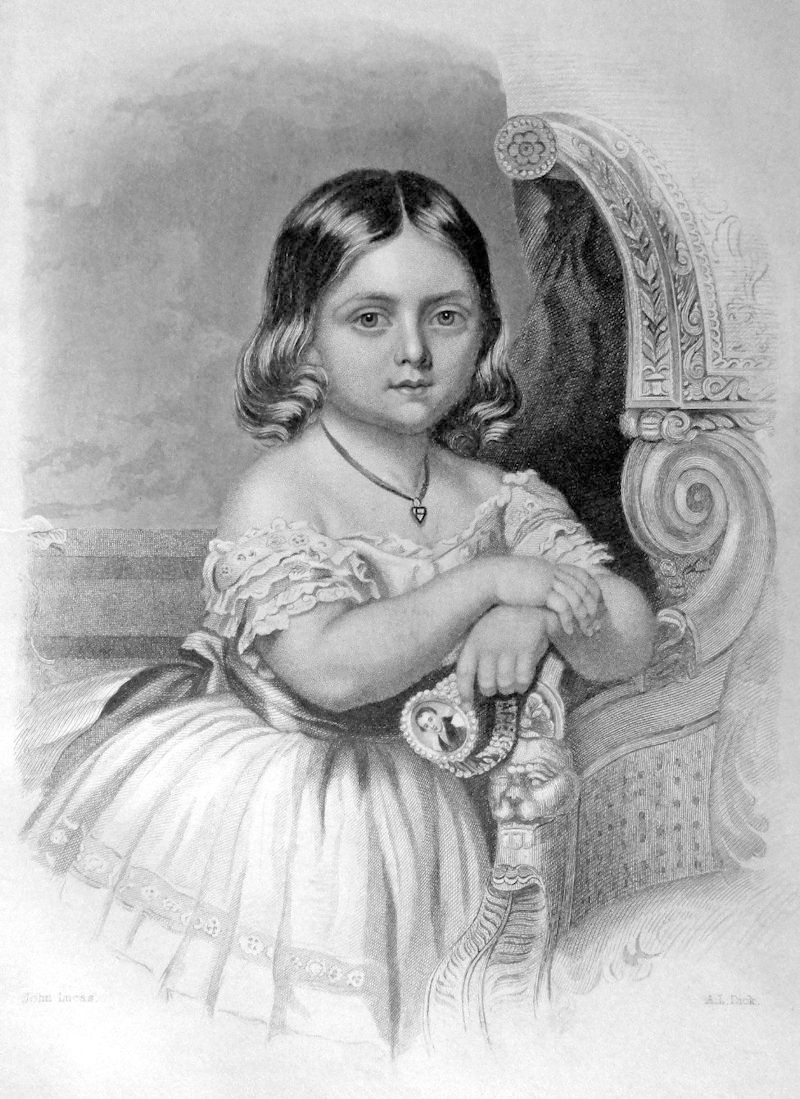
I might have pass’d that lovely cheek,
Nor, perchance, my heart have left me;
But the sensitive blush that came trembling there,
Of my heart it forever bereft me.
Who could blame had I loved that face,
Ere my eyes could twice explore her;
Yet it is for the fairy intelligence there,
And her warm, warm heart I adore her.
Wolfe.
The stories of the respective parties who had
thus so strangely met on that barren and isolated
rock, were soon told. Harry confirmed all of
Jack’s statements as to his own proceedings, and
Rose had little more to say than to add how much
her own affections had led her to risk in his behalf.
In a word, ten minutes made each fully acquainted
with the other’s movements. Then Tier considerately
retired to the boat, under the pretence of
winding it, and seeing every thing ready for a departure,
but as much to allow the lovers the ten or
fifteen minutes of uninterrupted discourse that they
now enjoyed, as for any other reason.
It was a strange scene that now offered on the
rock. By this time the fire was burning not only
brightly, but fiercely, shedding its bright light far
and near. Under its most brilliant rays stood Harry
and Rose, both smiling and happy, delighted in their
meeting, and, for the moment, forgetful of all but
their present felicity. Never, indeed, had Rose
appeared more lovely than under these circumstances.
Her face was radiant with those feelings
which had so recently changed from despair to delight—a
condition that is ever most propitious to
beauty, and charms that always appeared feminine
and soft, now seemed elevated to a bright benignancy
that might best be likened to our fancied
images of angels. The mild, beaming, serene and
intelligent blue eyes, the cheeks flushed with happiness,
the smiles that came so easily, and were so
replete with tenderness, and the rich hair, deranged
by the breeze, and moistened by the air of the sea,
each and all, perhaps, borrowed some additional
lustre from the peculiar light under which they were
exhibited. As for Harry, happiness had thrown all
the disadvantages of exposure, want of dress, and a
face that had not felt the razor for six-and-thirty
hours, into the back-ground. When he left the
wreck, he had cast aside his cap and his light
summer jacket, in order that they might not encumber
him in swimming, but both had been recovered
when he returned with the boat to take off his
friends. In his ordinary sea attire, then, he now stood,
holding Rose’s two hands, in front of the fire, every
garment clean and white as the waters of the ocean
could make them, but all betraying some of the signs
of his recent trials. His fine countenance was full
of the love he bore for the intrepid and devoted
girl who had risked so much in his behalf; and a
painter might have wished to preserve the expressions
of ardent, manly admiration which glowed in
his face, answering to the gentle sympathy and
womanly tenderness it met in that of Rose.
The back-ground of this picture was the wide,
even surface of the coral reef, with its exterior setting
of the dark and gloomy sea. On the side of the
channel, however, appeared the boat, already
winded, with Biddy still on the rock, looking
kindly at the lovers by the fire, while Jack was
holding the painter, beginning to manifest a little
impatience at the delay.
“They’ll stay there an hour, holding each other’s
hands, and looking into each other’s faces,” half
grumbled the little, rotund, assistant-steward, anxious
to be on his way back to the brig, “unless a
body gives ’em a call. Capt. Spike will be in no
very good humor to receive you and me on board
ag’in, if he should find out what sort of a trip we’ve
been making hereaway.”
“Let ’em alone—let ’em alone, Jacky,” answered
the good-natured and kind-hearted Irish woman.
“It’s happy they bees, just now, and it does my
eyes good to look at ’em.”
“Ay, they’re happy enough, now; I only hope it
may last.”
“Last! what should help its lasting? Miss Rose is
so good, and so handsome—and she’s a fortin’, too;
and the mate so nice a young man. Think of the
likes of them, Jack, wanting the blessed gift of
wather, and all within one day and two nights.
Sure, it’s Providence that takes care of, and not we
ourselves! Kings on their thrones isn’t as happy as
them at this moment.”
“Men’s willians!” growled Jack; “and more
fools women for trustin’ ’em.”
“Not sich a nice young man as our mate, Jacky;
no, not he. Now the mate of the ship I came from
Liverpool in, this time ten years agone, he was a
villain. He grudged us our potaties, and our own
bread; and he grudged us every dhrap of swate
wather that went into our mouths. Call him a
villain, if you will, Jack; but niver call the likes of
Mr. Mulford by so hard a name.”
“I wish him well, and nothing else; and for that
very reason must put a stop to his looking so fondly
into that young woman’s face. Time wont stand
still, Biddy, to suit the wishes of lovers; and Stephen
Spike is a man not to be trifled with. Halloo, there,
maty! It’s high time to think of getting under way.”
At this summons both Harry and Rose started,
becoming aware of the precious moments they were
losing. Carrying a large portion of the turtle, the
former moved toward the craft, in which all were
seated in less than three minutes, with the sail loose,
and the boat in motion. For a few moments the
mate was so much occupied with Rose, that he did
not advert to the course, but one of his experience
could not long be misled on such a point, and he
turned suddenly to Tier, who was steering, to
remonstrate.
“How’s this, Jack!” cried Mulford; “you’ve got
the boat’s head the wrong way.”
“Not I, sir. She’s heading for the brig as straight
as she can go. This wind favors us on both legs;
and it’s lucky it does, for ’twill be hard on upon
daylight afore we are alongside of her. You’ll want
half an hour of dark, at the very least, to get a good
start of the Swash, in case she makes sail a’ter you.”
“Straight for the brig!—what have we to do with
the brig? Our course is for Key West, unless it
might be better to run down before the wind to the
Dry Tortugas again, and look for the sloop-of-war.
Duty, and perhaps my own safety, tells me to let
Capt. Mull know what Spike is about with the
Swash; and I shall not hesitate a moment about
doing it, after all that has passed. Give me the
helm, Jack, and let us ware short round on our heel.”
“Never, master maty—never. I must go back
to the brig. Miss Rose, there, knows that my business
is with Stephen Spike, and with him only.”
“And I must return to my aunt, Harry,” put in
Rose, herself. “It would never do for me to desert
my aunt, you know.”
“And I have been taken from that rock, to be given
up to the tender mercies of Spike again?”
This was said rather in surprise, than in a complaining
way; and it at once induced Rose to tell
the young man the whole of their project.
“Never, Harry, never,” she said firmly. “It is
our intention to return to the brig ourselves, and let
you escape in the boat afterwards. Jack Tier is of
opinion this can be done without much risk, if we
use proper caution, and do not lose too much time.
On no account would I consent to place you in the
hands of Spike again—death would be preferable to
that, Harry!”
“And on no account can or will I consent to place
you again in the hands of Spike, Rose,” answered
the young man. “Now that we know his intentions,
such an act would be almost impious.”
“Remember my aunt, dear Harry. What would
be her situation in the morning, when she found
herself deserted by her niece and Biddy—by me,
whom she has nursed and watched from childhood,
and whom she loves so well?”
“I shall not deny your obligations to your aunt,
Rose, and your duty to her under ordinary circumstances.
But these are not ordinary circumstances;
and it would be courting the direst misfortunes, nay,
almost braving Providence, to place yourself in the
hands of that scoundrel again, now that you are
clear of them.”
“Spike’s a willian!” muttered Jack.
“And my desartin’ the missus would be a sin that
no praste would overlook ’asily,” put in Biddy.
“When Miss Rose told me of this v’y’ge that she
meant to make in the boat wid Jack Tier, I asked
to come along, that I might take care of her, and see
that there was plenty of wather; but ill-luck befall
me if I would have t’ought of sich a thing, and the
missus desarted.”
“We can then run alongside of the brig, and put
Biddy and Jack on board of her,” said Mulford, reflecting
a moment on what had just been said,
“when you and I can make the best of our way to
Key West, where the means of sending government
vessels out after the Swash will soon offer. In this
way we can not only get our friends out of the
lion’s jaws, but keep out of them ourselves.”
“Reflect a moment, Harry,” said Rose, in a low
voice, but not without tenderness in its tones; “it
would not do for me to go off alone with you in
this boat.”
“Not when you have confessed your willingness
to go over the wide world with me, Rose—with me,
and with me only?”
“Not even then, Harry. I know you will think
better of this, when your generous nature has time
to reason with your heart, on my account.”
“I can only answer in your own words, Rose—never.
If you return to the Swash, I shall go on
board with you, and throw defiance into the very
teeth of Spike. I know the men do not dislike me,
and, perhaps, assisted by Señor Montefalderon, and
a few friends among the people, I can muster a
force that will prevent my being thrown into
the sea.”
Rose burst into tears, and then succeeded many
minutes, during which Mulford was endeavoring,
with manly tenderness, to soothe her. As soon as
our heroine recovered her self-command, she began
to discuss the matter at issue between them more
coolly. For half an hour every thing was urged
by each that feeling, affection, delicacy, or distrust
of Spike could well urge, and Mulford was slowly
getting the best of the argument, as well he might,
the truth being mostly of his side. Rose was bewildered,
really feeling a strong reluctance to quit
her aunt, even with so justifiable a motive, but principally
shrinking from the appearance of going off
alone in a boat, and almost in the open sea, with
Mulford. Had she loved Harry less, her scruples
might not have been so active, but the consciousness
of the strength of her attachment, as well as
her fixed intention to become his wife the moment
it was in her power to give him her hand with the
decencies of her sex, contributed strangely to prevent
her yielding to the young man’s reasoning.
On the subject of the aunt, the mate made out so
good a case, that it was apparent to all in the boat
Rose would have to abandon that ground of refusal.
Spike had no object to gain by ill-treating Mrs.
Budd; and the probability certainly was that he
would get rid of her as soon as he could, and in the
most easy manner. This was so apparent to all,
that Harry had little difficulty in getting Rose to
assent to its probability. But there remained the
reluctance to go off alone with the mate in a boat.
This part of the subject was more difficult to manage
than the other; and Mulford betrayed as much by
the awkwardness with which he managed it. At
length the discussion was brought to a close by
Jack Tier suddenly saying, —
“Yonder is the brig; and we are heading for her
as straight as if she was the pole, and the keel of
this boat was a compass. I see how it is, Miss
Rose, and a’ter all, I must give in. I suppose some
other opportunity will offer for me to get on board
the brig ag’in, and I’ll trust to that. If you won’t
go off with the mate alone, I suppose you’ll not refuse
to go off in my company.”
“Will you accompany us, Jack? This is more
than I had hoped for! Yes, Harry, if Jack Tier will
be of the party, I will trust my aunt to Biddy, and
go with you to Key West, in order to escape from
Spike.”
This was said so rapidly, and so unexpectedly,
as to take Mulford completely by surprise. Scarce
believing what he heard, the young man was disposed,
at first, to feel hurt, though a moment’s reflection
showed him that he ought to rejoice in the
result, let the cause be what it might.
“More than I had hoped for!” he could not refrain
from repeating a little bitterly; “is Jack Tier, then,
of so much importance, that his company is thought
preferable to mine!”
“Hush, Harry!” said Rose, laying her hand on
Mulford’s arm, by way of strengthening her appeal.
“Do not say that. You are ignorant of circumstances;
at another time you shall know them, but
not now. Let it be enough for the present, that I
promise to accompany you if Jack will be of our
party.”
“Ay, ay, Miss Rose, I will be of the party, seeing
there is no other way of getting the lamb out of the
jaws of the wolf. A’ter all, it may be the wisest
thing I can do, though back to the Swash I must
and will come, powder or no powder, treason or no
treason, at the first opportunity. Yes, my business
is with the Molly, and to the Molly I shall return.
It’s lucky, Miss Rose, since you have made up your
mind to ship for this new cruise, that I bethought me of
telling Biddy to make up a bundle of duds for you.
This carpet-bag has a change or two in it, and all
owing to my forethought. Your woman said ‘Miss
Rose will come back wid us, Jack, and what’s the
use of rumpling the clothes for a few hours’ sail in
the boat;’ but I knew womankind better, and foreseed
that if master mate fell in alongside of you
ag’in, you would not be apt to part company very
soon.”
“I thank you, Jack, for the provision made for my
comfort; though a little money would have added
to it materially. My purse has a little gold in it,
but a very little, and I fear you are not much better
off, Harry. It will be awkward to find ourselves in
Key West penniless.”
“We shall not be quite that. I left the brig absolutely
without a cent, but forseeing that necessity
might make them of use, I borrowed half a dozen
of the doubloons from the bag of Señor Montefalderon,
and, fortunately, they are still in my pocket.
All I am worth in the world is in a bag of half
eagles, rather more than a hundred altogether,
which I left in my chest, in my own state-room,
aboard the brig.”
“You’ll find that in the carpet-bag too, master
mate,” said Jack, coolly.
“Find what, man—not my money, surely?”
“Ay, every piece of it. Spike broke into your
chest this a’ternoon, and made me hold the tools
while he was doing it. He found the bag, and overhauled
it—a hundred and seven half, eleven quarter,
and one full-grown eagle, was the count. When he
had done the job, he put all back ag’in, a’ter giving
me the full-grown eagle for my share of the plunder,
and told me to say nothing of what I had seen. I
did say nothing, but I did a good bit of work, for,
while he was at supper, I confiserated that bag, as
they call it—and you will find it there among Miss
Rose’s clothes, with the full-grown gentleman back
in his nest ag’in.”
“This is being not only honest, Tier,” cried Mulford,
heartily, “but thoughtful. One half that money
shall be yours for this act.”
“I thank ’e, sir; but I’ll not touch a cent of it.
It came hard, I know, Mr. Mulford; for my own
hands have smarted too much with tar, not to know
that the seaman ‘earns his money like the horse.’ ”
“Still it would not be ‘spending it like an ass,’
Jack, to give you a portion of mine. But there will
be other opportunities to talk of this. It is a sign of
returning to the concerns of life, Rose, that money
begins to be of interest to us. How little did we
think of the doubloons, or half eagles, a few hours
since, when on the wreck?”
“It was wather that we t’ought of then,” put in
Biddy. “Goold is good in a market, or in a town,
or to send back to Ireland, to help a body’s aged
fader or mudder in comfort wid; but wather is the
blessed thing on a wrack!”
“The brig is coming quite plainly into view, and
you had better give me the helm, Jack. It is time
to bethink us of the manner of approaching her, and
how we are to proceed when alongside.”
This was so obviously true, that every body felt
disposed to forget all other matters, in order to conduct
the proceedings of the next twenty minutes,
with the necessary prudence and caution. When
Mulford first took the helm, the brig was just
coming clearly into view, though still looking a little
misty and distant. She might then have been half a
league distant, and would not have been visible at
all by that light, but for the circumstance that she
had no back-ground to swallow up her outlines.
Drawn against clouds, above which the rays of the
moon were shed, her tracery was to be discerned,
however, and, minute by minute, it was getting to
be more and more distinct, until it was now so
plainly to be seen as to admonish the mate of the
necessity of preparation in the manner mentioned.
Tier now communicated to the mate his own proposed
manner of proceeding. The brig tended to
the trades, the tides having very little influence on
her, in the bight of the reef where she lay. As the
wind stood at about east south-east, the brig’s stern
pointed to about west north-west, while the boat
was coming down the passage from a direction nearly
north from her, having, as a matter of course, the
wind just free enough to lay her course. Jack’s
plan was to pass the brig to windward, and having
got well on her bow, to brail the sail, and drift down
upon her, expecting to fall in alongside, abreast of
the fore-chains, into which he had intended to help
Biddy, and to ascend himself, when he supposed
that Mulford would again make sail, and carry off
his mistress. To this scheme the mate objected
that it was awkward, and a little lubberly. He substituted
one in its place that differed in seamanship,
and which was altogether better. Instead of passing
to windward, Mulford suggested the expediency of
approaching to leeward, and of coming alongside
under the open bow-port, letting the sheet fly and
brailing the sail, when the boat should be near
enough to carry her to the point of destination
without further assistance from her canvas.
Jack Tier took his officer’s improvement on his
own plan in perfect good part, readily and cheerfully
expressing his willingness to aid the execution of
it all that lay in his power. As the boat sailed unusually
well, there was barely time to explain to
each individual his or her part in the approaching
critical movements, ere the crisis itself drew near;
then each of the party became silent and anxious,
and events were regarded rather than words.
It is scarcely necessary to say that Mulford sailed
a boat well. He held the sheet in his hand, as the
little craft came up under the lee-quarter of the brig,
while Jack stood by the brail. The eyes of the mate
glanced over the hull of the vessel to ascertain, if
possible, who might be stirring; but not a sign of
life could he detect on board her. This very silence
made Mulford more distrustful and anxious, for he
feared a trap was set for him. He expected to see
the head of one of the blacks at least peering over
the bulwarks, but nothing like a man was visible.
It was too late to pause, however, and the sheet
was slowly eased off, Jack hauling on the brail at
the same time; the object being to prevent the sail’s
flapping, and the sound reaching the ears of Spike.
As Mulford used great caution, and had previously
schooled Jack on the subject, this important point
was successfully achieved. Then the mate put his
helm down, and the boat shot up under the brig’s
lee-bow. Jack was ready to lay hold of one of the
bowsprit-shrouds, and presently the boat was
breasted up under the desired port, and secured in
that position. Mulford quitted the stern-sheets, and
cast a look in upon deck. Nothing was to be seen,
though he heard the heavy breathing of the blacks,
both of whom were sound asleep on a sail that they
had spread on the forecastle.
The mate whispered for Biddy to come to the
port. This the Irish woman did at once, having
kissed Rose, and taken her leave of her previously.
Tier also came to the port, through which he passed,
getting on deck with a view to assist Biddy, who
was awkward, almost as a matter of course, to pass
through the same opening. He had just succeeded,
when the whole party was startled, some of them
almost petrified, indeed, by a hail from the quarter-deck
in the well-known, deep tones of Spike.
“For’ard, there?” hailed the captain. Receiving
no answer, he immediately repeated, in a shorter,
quicker call, “Forecastle, there?”
“Sir,” answered Jack Tier, who by this time had
come to his senses.
“Who has the look-out on that forecastle?”
“I have it, sir—I, Jack Tier. You know, sir, I
was to have it from two ’till daylight.”
“Ay, ay, I remember now. How does the brig
ride to her anchor?”
“As steady as a church, sir. She has had no
more sheer the whole watch than if she was moored
head and stern.”
“Does the wind stand as it did?”
“No change, sir. As dead a trade wind as ever
blowed.”
“What hard breathing is that I hear for’ard?”
“ ’Tis the two niggers, sir. They’ve turned in on
deck, and are napping it off at the rate of six
knots. There’s no keepin’ way with a nigger in
snoring.”
“I thought I heard loud whispering, too, but I
suppose it was a sort of half-dream. I’m often in
that way now-a-days. Jack!”
“Sir.”
“Go to the scuttle-butt and get me a pot of fresh
water—my coppers are hot with hard thinking.”
Jack did as ordered, and soon stood beneath the
coach-house deck with Spike, who had come out of
his state-room, heated and uneasy at he knew not
what. The captain drank a full pint of water at a
single draught.
“That’s refreshing,” he said, returning Jack the
tin-pot, “and I feel the cooler for it. How much
does it want of daylight, Jack?”
“Two hours, I think, sir. The order was passed
to me to have all hands called as soon as it was
broad day.”
“Ay, that is right. We must get our anchor and
be off as soon as there is light to do it in. Doubloons
may melt as well as flour, and are best cared for
soon, when cared for at all.”
“I shall see and give the call as soon as it is day.
I hope, Capt. Spike, I can take the liberty of an old
shipmate, however, and say one thing to you, which
is this—look out for the Poughkeepsie, which is very
likely to be on your heels when you least expect her.”
“That’s your way of thinking, is it, Jack? Well,
I thank you, old one, for the hint, but have little fear
of that craft. We’ve tried our legs together, and I
think the brig has the longest.”
As the captain said this, he gaped like a hound,
and went into his state-room. Jack lingered on the
quarter-deck, waiting to hear him fairly in his berth,
when he made a sign to Biddy, who had got as far
aft as the galley, where she was secreted, to pass
down into the cabin as silently as possible. In a
minute or two more, he moved forward, singing in
a low, cracked voice, as was often his practice, and
slowly made his way to the forecastle. Mulford
was just beginning to think the fellow had changed
his mind, and meant to stick by the brig, when the
little, rotund figure of the assistant-steward was
seen passing through the port, and to drop noiselessly
on a thwart. Jack then moved to the bow,
and cast off the painter, the head of the boat slowly
falling off under the pressure of the breeze on that
part of her mast and sail which rose above the hull
of the Swash. Almost at the same moment, the mate
let go the stern-fast, and the boat was free.
It required some care to set the sail without the
canvas flapping. It was done, however, before the
boat fairly took the breeze, when all was safe. In
half a minute the wind struck the sail, and away
the little craft started, passing swiftly ahead of the
brig. Soon as far enough off, Mulford put up his
helm and wore short round, bringing the boat’s head
to the northward, or in its proper direction; after
which they flew along before the wind, which
seemed to be increasing in force, with a velocity
that really appeared to defy pursuit. All this time
the brig lay in its silence and solitude, no one
stirring on board her, and all, in fact, Biddy alone excepted,
profoundly ignorant of what had just been
passing alongside of her. Ten minutes of running
off with a flowing sheet, caused the Swash to look
indistinct and hazy again; in ten minutes more she
was swallowed up, hull, spars, and all, in the gloom
of night.
Mulford and Rose now felt something like that
security, without the sense of which happiness itself
is but an uneasy feeling, rendering the anticipations
of evil the more painful by the magnitude of the
stake. There they sat, now, in the stern-sheets by
themselves, Jack Tier having placed himself near
the bows of the boat, to look out for rocks, as well
as to trim the craft. It was not long before Rose
was leaning on Harry’s shoulder, and ere an hour
was past, she had fallen into a sweet sleep in
that attitude, the young man having carefully covered
her person with a capacious shawl, the same that
had been used on the wreck. As for Jack, he maintained
his post in silence, sitting with his arms
crossed, and the hands thrust into the breast of his
jacket, sailor fashion, a picture of nautical vigilance.
It was some time after Rose had fallen asleep, that
this singular being spoke for the first time.
“Keep her away a bit, maty,” he said, “keep her
away, half a point or so. She’s been travelin’ like
a racer since we left the brig; and yonder’s the first
streak of day.”
“By the time we have been running,” observed
Mulford, “I should think we must be getting near
the northern side of the reef.”
“All of that, sir, depend on it. Here’s a rock
close aboard on us, to which we are coming fast—just
off here, on our weather bow, that looks to me
like the place where you landed after that swim,
and where we had stowed ourselves when Stephen
Spike made us out, and gave chase.”
“It is surprising to me, Jack, that you should have
any fancy to stick by a man of Spike’s character.
He is a precious rascal, as we all can see, now, and
you are rather an honest sort of a fellow.”
“Do you love the young woman there, that’s
lying in your arms, as it might be, and whom you
say you wish to marry?”
“The question is a queer one, but it is easily
answered. More than my life, Jack.”
“Well, how happens it that you succeed, when
the world has so many other young men who might
please her as well as yourself?”
“It may be that no other loves her as well, and
she has had the sagacity to discover it.”
“Quite likely. So it is with me and Stephen
Spike. I fancy a man whom other folk despise and
condemn. Why I stand by him is my own secret;
but stand by him I do and will.”
“This is all very strange, after your conduct on
the island, and your conduct to-night. I shall not
disturb your secret, however, Jack, but leave you to
enjoy it by yourself. Is this the rock of which you
spoke, that we are now passing?”
“The same; and there is the spot in which we
was stowed when they made us out from the brig;
and hereaway, a cable’s length, more or less, the
wreck of that Mexican craft must lie.”
“What is that rising above the water, thereaway,
Jack; more on our weather-beam?”
“I see what you mean, sir; it looks like a spar.
By George! there’s two on ’em; and they do seem
to be the schooner’s masts.”
Sure enough! a second look satisfied Mulford that
two mast-heads were out of water, and that within
a hundred yards of the place the boat was running
past. Standing on a short distance, or far enough to
give himself room, the mate put his helm down, and
tacked the boat. The flapping of the sail, and the
little movement of shifting over the sheet, awoke
Rose, who was immediately apprized of the discovery.
As soon as round, the boat went glancing
up to the spars, and presently was riding by one,
Jack Tier having caught hold of a topmast-shroud,
when Mulford let fly his sheet again, and luffed
short up to the spot. By this time the increasing
light was sufficiently strong to render objects distinct,
when near by, and no doubt remained any
longer in the mind of Mulford about the two mast-heads
being those of the unfortunate Mexican
schooner.
“Well, of all I have ever seen, I’ve never see’d
the like of this afore!” exclaimed Jack. “When we
left this here craft, sir, you’ll remember, she had
almost turned turtle, laying over so far as to bring
her upper coamings under water; now she stands
right side up, as erect as if docked! My navigation
can’t get along with this, Mr. Mulford, and it does
seem like witchcraft.”
“It is certainly a very singular incident, Jack, and
I have been trying to come at its causes.”
“Have you succeeded, Harry?” asked Rose, by
this time wide awake, and wondering like the
others.
“It must have happened in this wise. The wreck
was abandoned by us some little distance out here,
to windward. The schooner’s masts, of course,
pointed to leeward, and when she drifted in here,
they have first touched on a shelving rock, and as
they have been shoved up, little by little, they have
acted as levers to right the hull, until the cargo has
shifted back into its proper berth, which has suddenly
set the vessel up again.”
“Ay, ay, sir,” answered Jack, “all that might
have happened had she been above water, or
any part of her above water; but you’ll remember,
maty, that soon after we left her she went
down.”
“Not entirely. The wreck settled in the water
no faster after we had left it, than it had done before.
It continued to sink, inch by inch, as the air
escaped, and no faster after it had gone entirely out
of sight than before; not as fast, indeed, as the water
became denser the lower it got. The great argument
against my theory, is the fact, that after the
hull got beneath the surface, the wind could not act
on it. This is true in one sense, however, and not
in another. The waves, or the pressure of the
water produced by the wind, might act on the hull
for some time after we ceased to see it. But the
currents have set the craft in here, and the hull
floating always, very little force would cant the
craft. If the rock were shelving and slippery, I see
no great difficulty in the way; and the barrels may
have been so lodged, that a trifle would set them
rolling back again, each one helping to produce a
change that would move another. As for the ballast,
that, I am certain, could not shift, for it was stowed
with great care. As the vessel righted, the air still
in her moved, and as soon as the water permitted,
it escaped by the hatches, when the craft went down,
as a matter of course. This air may have aided
in bringing the hull upright by its movements in
the water.”
This was the only explanation to which the ingenuity
of Mulford could help him, under the circumstances,
and it may have been the right one, or
not. There lay the schooner, however, in some
five or six fathoms of water, with her two top-masts,
and lower mast-heads out of the element, as upright
as if docked! It may all have occurred as the
mate fancied, or the unusual incident may have
been owing to some of the many mysterious causes
which baffle inquiry, when the agents are necessarily
hidden from examination.
“Spike intends to come and look for this wreck,
you tell me, Jack; in the hope of getting at the
doubloons it contains?” said Mulford, when the
boat had lain a minute or two longer, riding by the
mast-head.
“Ay, ay; that’s his notion, sir, and he’ll be in a
great stew, as soon as he turns out, which must be
about this time, and finds me missing; for I was to
pilot him to the spot.”
“He’ll want no pilot now. It will be scarcely
possible to pass any where near this and not see
these spars. But this discovery almost induces me
to change my own plans. What say you, Rose?
We have now reached the northern side of the
reef, when it is time to haul close by the wind, if
we wish to beat up to Key West. There is a moral
certainty, however, that the sloop-of-war is somewhere
in the neighborhood of the Dry Tortugas,
which are much the most easily reached, being to
leeward. We might run down to the light-house
by mid-day, while it is doubtful if we could reach
the town until to-morrow morning. I should like
exceedingly to have five minutes conversation with
the commander of the Poughkeepsie.”
“Ay, to let him know where he will be likely to
fall in with the Molly Swash and her traitor master,
Stephen Spike,” cried Jack Tier. “Never mind,
maty; let ’em come on; both the Molly and her
master have long legs and clean heels. Stephen
Spike will show ’em how to thread the channels of
a reef.”
“It is amazing to me, Jack, that you should stand
by your old captain in feeling, while you are helping
to thwart him, all you can, in his warmest wishes.”
“He’s a willian!” muttered Jack—“a reg’lar willian
is Stephen Spike!”
“If a villain, why do you so evidently wish to
keep him out of the hands of the law? Let him be
captured and punished, as his crimes require.”
“Men’s willians, all round,” still muttered Jack.
“Heark ’e, Mr. Mulford, I have sailed in the brig
longer than you, and know’d her in her comeliest
and best days—when she was young, and blooming,
and lovely to the eye, as the young creature at your
side—and it would go to my heart to have any
thing happen to her. Then, I’ve know’d Stephen a
long time, too, and old shipmates get a feelin’ for
each other, sooner or later. I tell you now, honestly,
Mr. Mulford, Capt. Adam Mull shall never make a
prisoner of Stephen Spike, if I can prevent it.”
The mate laughed at this sally, but Rose appeared
anxious to change the conversation, and she
managed to open a discussion on the subject of the
course it might be best to steer. Mulford had several
excellent reasons to urge for wishing to run
down to the islets, all of which, with a single exception,
he laid before his betrothed. The concealed
reason was one of the strongest of them all, as
usually happens when there is a reason to conceal,
but of that he took care to say nothing. The result
was an acquiescence on the part of Rose, whose
consent was yielded more to the influence of one
particular consideration than to all the rest united.
That one was this: Harry had pointed out to her
the importance to himself of his appearing early to
denounce the character and movements of the brig,
lest, through his former situation in her, his own
conduct might be seriously called in question.
As soon as the matter was determined, Jack was
told to let go his hold, the sheet was drawn aft, and
away sped the boat. No sooner did Mulford cause
the little craft to keep away than it almost flew, as
if conscious it were bound to its proper home, skimming
swiftly over the waves, like a bird returning
eagerly to its nest. An hour later the party breakfasted.
While at this meal, Jack Tier pointed out
to the mate a white speck, in the south-eastern
board, which he took to be the brig coming through
the passage, on her way to the wreck.
“No matter,” returned the mate. “Though we
can see her, she cannot see us. There is that much
advantage in our being small, Rose, if it do prevent
our taking exercise by walking the deck.”
Soon after Mulford made a very distant sail in
the north-western board, which he hoped might turn
out to be the Poughkeepsie. It was but another
speck, but its position was somewhat like that in
which he had expected to meet the sloop-of-war.
The two vessels were so far apart that one could
not be seen from the other, and there was little
hope that the Poughkeepsie would detect Spike at
his toil on the wreck, but the mate fully expected
that the ship would go into the anchorage, among
the islets, in order to ascertain what had become of
the schooner. If she did not go in herself she
would be almost certain to send in a boat.
The party from the brigantine had run down
before the wind more than two hours before the
light-house began to show itself, just rising out of
the waves. This gave them the advantage of a
beacon, Mulford having steered hitherto altogether
by the sun, the direction of the wind, and the trending
of the reef. Now he had his port in sight, it being
his intention to take possession of the dwelling
of the light-house keeper, and to remain in it, until
a favorable opportunity occurred to remove Rose
to Key West. The young man had also another
important project in view, which it will be in season
to mention as it reaches the moment of its fulfilment.
The rate of sailing of the light-house boat, running
before a brisk trade wind, could not be much less than
nine miles in the hour. About eleven o’clock, therefore,
the lively craft shot through one of the narrow
channels of the islets, and entered the haven. In a
few minutes all three of the adventurers were on
the little wharf where the light-house people were
in the habit of landing. Rose proceeded to the
house, while Harry and Jack remained to secure
the boat. For the latter purpose a sort of slip, or
little dock, had been made, and when the boat was
hauled into it, it lay so snug that not only was the
craft secure from injury, but it was actually hid
from the view of all but those who stood directly
above it.
“This is a snug berth for the boat, Jack,” observed
the mate, when he had hauled it into the place mentioned,
“and by unstepping the mast, a passer by
would not suspect such a craft of lying in it. Who
knows what occasion there may be for concealment,
and I’ll e’en do that thing?”
To a casual listener, Harry, in unstepping the
mast, might have seemed influenced merely by a
motiveless impulse; but, in truth, a latent suspicion
of Jack’s intentions instigated him, and as he laid
the mast, sprit and sail on the thwarts, he determined,
in his own mind, to remove them all to some
other place, as soon as an opportunity for doing so
unobserved should occur. He and Jack now followed
Rose to the house.
The islets were found deserted and tenantless.
Not a human being had entered the house since
Rose left it, the evening she had remained so long
ashore, in company with her aunt and the Señor
Montefalderon. This our heroine knew from the
circumstance of finding a slight fastening of the
outer door in the precise situation in which she had
left it with her own hands. At first a feeling of
oppression and awe prevailed with both Harry and
Rose, when they recollected the fate of those who
had so lately been tenants of the place, but this
gradually wore off, and each soon got to be more at
home. As for Jack, he very coolly rummaged the
lockers, as he called the drawers and closets of the
place, and made his preparations for cooking a very
delicious repast, in which callipash and callipee were
to be material ingredients. The necessary condiments
were easily enough found in that place, turtle
being a common dish there, and it was not long before
steams that might have quickened the appetite
of an alderman filled the kitchen. Rose rummaged,
too, and found a clean table-cloth, plates, glasses,
bowls, spoons, and knives; in a word, all that was
necessary to spread a plain but plentiful board.
While all this was doing, Harry took some fishing-tackle,
and proceeded to a favorable spot among
the rocks. In twenty minutes he returned with a
fine mess of that most delicious little fish that goes
by the very unpoetical name of “hog-fish,” from the
circumstance of its giving a grunt not unlike that
of a living porker, when rudely drawn from its proper
element. Nothing was now wanting to not
only a comfortable, but to what was really a most
epicurean meal, and Jack just begged the lovers to
have patience for an hour or so, when he promised
them dishes that even New York could not furnish.
Harry and Rose first retired to pay a little attention
to their dress, and then they joined each other
in a walk. The mate had found some razors, and
was clean shaved. He had also sequestered a
shirt, and made some other little additions to his
attire, that contributed to give him the appearance
of being, that which he really was, a very gentleman-like
looking young sailor. Rose had felt no necessity
for taking liberties with the effects of others,
though a good deal of female attire was found in
the dwelling. As was afterward ascertained, a
family ordinarily dwelt there, but most of it had
gone to Key West, on a visit, at the moment when
the man and boy left in charge had fallen into the
hands of the Mexicans, losing their lives in the manner
mentioned.
While walking together, Harry opened his mind
to Rose, on the subject which lay nearest to his
heart, and which had been at the bottom of this
second visit to the islets of the Dry Tortugas. During
the different visits of Wallace to the brig, the boat’s
crew of the Poughkeepsie had held more or less
discourse with the people of the Swash. This
usually happens on such occasions, and although
Spike had endeavored to prevent it, when his brig
lay in this bay, he had not been entirely successful.
Such discourse is commonly jocular, and sometimes
witty; every speech, coming from which side it
may, ordinarily commencing with “shipmate,”
though the interlocutors never saw each other before
that interview. In one of these visits an allusion
was made to cargo, when “the pretty gal aft”
was mentioned as being a part of the cargo of the
Swash. In answer to this remark, the wit of the
Poughkeepsie had told the brig’s man, “you had
better send her on board us, for we carry a chaplain,
a regular built one, that will be a bishop some day or
other perhaps, and we can get her spliced to one of
our young officers.” This remark had induced the
sailor of the Molly to ask if a sloop-of-war really carried
such a piece of marine luxury as a chaplain,
and the explanation given went to say that the
clergyman in question did not properly belong to
the Poughkeepsie, but was to be put on board a
frigate, as soon as they fell in with one that he
named. Now, all this Mulford overheard, and he
remembered it at a moment when it might be of use.
Situated as he and Rose were, he felt the wisdom
and propriety of their being united, and his present
object was to persuade his companion to be of the
same way of thinking. He doubted not that the
sloop-of-war would come in, ere long, perhaps that
very day, and he believed it would be an easy matter
to induce her chaplain to perform the ceremony.
America is a country in which every facility exists,
with the fewest possible impediments, to getting
married; and, we regret to be compelled to add, to
getting unmarried also. There are no banns, no
licences, no consent of parents even, usually necessary,
and persons who are of the age of discretion,
which, as respects females and matrimony, is a very
tender age indeed, may be married, if they see fit,
almost without form or ceremony. There existed,
therefore, no legal impediment to the course Mulford
desired to take, and his principal, if not his
only difficulty would be with Rose. Over her
scruples he hoped to prevail, and not without reason,
as the case he could and did present, was certainly
one of a character that entitled him to be
heard with great attention.
In the first place, Mrs. Budd had approved of the
connection, and it was understood between them,
that the young people were to be united at the first
port in which a clergyman of their own persuasion
could be found, and previously to reaching home.
This had been the aunt’s own project, for, weak and
silly as she was, the relict had a woman’s sense of
the proprieties. It had occurred to her that it would
be more respectable to make the long journey which
lay before them, escorted by a nephew and a husband,
than escorted by even an accepted lover. It
is true she had never anticipated a marriage in a
light-house, and under the circumstances in which
Rose was now placed, though it might be more
reputable that her niece should quit the islets as the
wife of Harry than as his betrothed. Then Mulford
still apprehended Spike. In that remote part of the
world, almost beyond the confines of society, it was
not easy to foretell what claims he might set up, in
the event of his meeting them there. Armed with
the authority of a husband, Mulford could resist
him, in any such case, with far better prospects of
success than if he should appear only in the character
of a suitor.
Rose listened to these arguments, ardently and
somewhat eloquently put, as a girl of her years and
habits would be apt to listen to a favored lover.
She was much too sincere to deny her own attachment,
which the events of the last few days had increased
almost to intenseness, so apt is our tenderness
to augment in behalf of those for whom we
feel solicitude, and her judgment told her that the
more sober part of Harry’s reasoning was entitled
to consideration. As his wife, her situation would
certainly be much less equivocal and awkward,
than while she bore a different name, and was admitted
to be a single woman, and it might yet be
weeks before the duty she owed her aunt would
allow her to proceed to the north. But, after all,
Harry prevailed more through the influence of his
hold on Rose’s affections, as would have been the
case with almost every other woman, than through
any force of reasoning. He truly loved, and that
made him eloquent when he spoke of love; sympathy
in all he uttered being his great ally. When
summoned to the house, by the call of Jack, who
announced that the turtle-soup was ready, they returned
with the understanding that the chaplain of
the Poughkeepsie should unite them, did the vessel
come in, and would the functionary mentioned consent
to perform the ceremony.
“It would be awkward—nay, it would be distressing,
Harry, to have him refuse,” said the blushing
Rose, as they walked slowly back to the house,
more desirous to prolong their conversation than to
partake of the bountiful provision of Jack Tier. The
latter could not but be acceptable, nevertheless, to
a young man like Mulford, who was in robust
health, and who had fared so badly for the last
eight-and-forty hours. When he sat down to the
table, therefore, which was covered by a snow-white
cloth, with smoking and most savory viands
on it, it will not be surprising if we say it was with
a pleasure that was derived from one of the great
necessities of our nature.
Sancho calls for benediction “on the man who
invented sleep.” It would have been more just to
have asked this boon in behalf of him who invented
eating and turtle-soup. The wearied fall into sleep,
as it might be unwittingly; sometimes against their
will, and often against their interests; while many a
man is hungry without possessing the means of appeasing
his appetite. Still more daily feel hunger
without possessing turtle-soup. Certain persons
impute this delicious compound to the genius of
some London alderman, but we rather think unjustly.
Aldermanick genius is easily excited and
rendered active, no doubt, by strong appeals on
such a theme, but our own experience inclines us
to believe that the tropics usually send their inventions
to the less unfruitful regions of the earth along
with their products. We have little doubt, could
the fact be now ascertained, that it would be found
turtle-soup was originally invented by just some
such worthy as Jack Tier, who in filling his coppers
to tickle the captain’s appetite, had used all the condiments
within his reach; ventured on a sort of
Regent’s punch; and, as the consequence, had
brought forth the dish so often eulogized, and so
well beloved. It is a little extraordinary that in
Paris, the seat of gastronomy, one rarely, if ever,
hears of or sees this dish; while in London it is to
be met in almost as great abundance as in one of
our larger commercial towns. But so it is, and we
cannot say we much envy a cuisine its patés, and
soufflets, and its à la this and à la thats, but which
was never redolent with the odors of turtle-soup.
“Upon my word, Jack, you have made out
famously with your dinner, or supper, which ever
you may please to call it,” cried Mulford gaily, as he
took his seat at table, after having furnished Rose
with a chair. “Nothing appears to be wanting;
but here is good pilot-bread, potatoes even, and
other little niceties, in addition to the turtle and the
fish. These good people of the light seem to have
lived comfortably, at any rate.”
“Why should they not, maty?” answered Jack,
beginning to help himself to soup. “Living on one of these
islets is like living afloat. Every thing is laid in, as
for an outward bound craft; then the reef must
always furnish fish and turtle. I’ve overhauled the
lockers pretty thoroughly, and find a plenty of stores
to last us a month. Tea, sugar, coffee, bread,
pickles, potatoes, onions, and all other knick-knacks.”
“The poor people who own these stores will be
heavy-hearted enough when they come to learn the
reason why we have been put in undisturbed possession
of their property,” said Rose. “We must
contrive some means of repaying them for such
articles as we may use, Harry.”
“That’s easily enough done, Miss Rose. Drop
one of the half eagles in a tea-pot, or a mug, and
they’ll be certain to fall in with it when they come
back. Nothin’ is easier than to pay a body’s debts,
when a body has the will and the means. Now,
the worst enemy of Stephen Spike must own that
his brig never quits port with unsettled bills. Stephen
has his faults, like other mortals; but he has
his good p’ints, too.”
“Still praising Spike, my good Jack?” cried the
mate, a little provoked at this pertinacity in the
deputy-steward, in sticking to his ship and his shipmate.
“I should have thought that you had sailed
with him long enough to have found him out, and
to wish never to put your foot in his cabin again.”
“Why, no, mate, a craft is a craft, and a body
gets to like even the faults of one in which a body
has gone through gales, and squalls, with a whole
skin. I like the Swash, and, for sartain things I like
her captain.”
“Meaning by that it is your intention to get on
board of the one, and to sail with the other, again,
as soon as you can.”
“I do, Mr. Mulford, and make no bones in telling
on’t. You know that I came here without wishing
it.”
“Well, Jack, no one will attempt to control your
movements, but you shall be left your own master.
I feel it to be a duty, however, as one who may I
know more of the law than yourself, as well as
more of Stephen Spike, to tell you that he is engaged
in a treasonable commerce with the enemy,
and that he, and all who voluntarily remain with
him, knowing this fact, may be made to swing for it.”
“Then I’ll swing for it,” returned Jack, sullenly.
“There is a little obstinacy in this, my good fellow,
and you must be reasoned out of it. I am under
infinite obligations to you, Jack, and shall ever
be ready to own them. Without you to sail the
boat, I might have been left to perish on that rock,
for God only knows whether any vessel would have
seen me in passing. Most of those who go through
that passage keep the western side of the reef
aboard, they tell me, on account of there being better
water on that side of the channel, and the
chance of a man’s being seen on a rock, by ships a
league or two off, would be small indeed. Yes,
Jack, I owe my life to you, and am proud to own it.”
“You owe it to Miss Rose, maty, who put me up
to the enterprise, and who shared it with me.”
“To her I owe more than life,” answered Harry,
looking at his beloved as she delighted in being regarded
by him, “but even she, with all her wishes
to serve me, would have been helpless without your
skill in managing a boat. I owe also to your good-nature
the happiness of having Rose with me at
this moment; for without you she would not have
come.”
“I’ll not deny it, maty—take another ladle full of
the soup, Miss Rosy, a quart of it wouldn’t hurt an
infant—I’ll not deny it, Mr. Mulford—I know by
the way you’ve got rid of the first bowl full that you
are ready for another, and there it is—I’ll not deny
it, and all I can say is that you are heartily welcome
to my sarvices.”
“I thank you, Jack; but all this only makes me
more desirous of being of use to you, now, when
it’s in my power. I wish you to stick by me, and
not to return to the Swash. As soon as I get
to New York I shall build or buy a ship, and the
berth of steward in her shall always be open to you.”
“Thank ’e, maty; thank ’e, with all my heart. It’s
something to know that a port is open to leeward,
and, though I cannot now accept your offer, the day
may come when I shall be glad to do so.”
“If you like living ashore better, our house will
always be ready to receive you. I should be glad
to leave as handy a little fellow as yourself behind
me whenever I went to sea. There are a hundred
things in which you might be useful, and fully earn
your biscuit, so as to have no qualms about eating
the bread of idleness.”
“Thank ’e, thank ’e, maty,” cried Jack, dashing a
tear out of his eye with the back of his hand,
“thank ’e, sir, from the bottom of my heart. The
time may come, but not now. My papers is signed
for this v’y’ge. Stephen Spike has a halter round
his neck, as you say yourself, and it’s necessary for
me to be there to look to ’t. We all have our callin’s
and duties, and this is mine. I stick by the Molly
and her captain until both are out of this scrape, or
both are condemned. I know nothing of treason;
but if the law wants another victim, I must take my
chance.”
Mulford was surprised at this steadiness of Jack’s,
in what he thought a very bad cause, and he was
quite as much surprised that Rose did not join him,
in his endeavors to persuade the steward not to be
so fool-hardy, as to endeavor to go back to the brig.
Rose did not, however; sitting silently eating her
dinner the whole time, though she occasionally cast
glances of interest at both the speakers the while.
In this state of things the mate abandoned the attempt,
for the moment, intending to return to the
subject, after having had a private conference with
his betrothed.
Notwithstanding the little drawback just related,
that was a happy as well as a delicious repast. The
mate did full justice to the soup, and afterward to
the fish with the unpoetical name; and Rose ate
more than she had done in the last three days. The
habits of discipline prevented Jack from taking his
seat at table, though pressed by both Rose and Harry
to do so, but he helped himself to the contents of a
bowl, and did full justice to his own art, on one aside.
The little fellow was delighted with the praises that
were bestowed on his dishes; and for the moment,
the sea, its dangers, its tornadoes, wrecks and races,
were all forgotten in the security and pleasures of
so savory a repast.
“Folk ashore don’t know how sailors sometimes
live,” said Jack, holding a large spoon filled with the
soup ready to plunge into a tolerably capacious
mouth.
“Or how they sometimes starve,” answered Rose.
“Remember our own situation, less than forty-eight
hours since!”
“All very true, Miss Rose; yet, you see, turtle-soup
brings us up, a’ter all. Would you choose a
glass of wine, maty?”
“Very much indeed, Jack, after so luscious a soup;
but wishing for it will not bring it here.”
“That remains to be seen, sir. I call this a bottle
of something that looks wery much like a wine.”
“Claret, as I live! Why, where should light-house
keepers get the taste for claret?”
“I’ve thought of that myself, Mr. Mulford, and
have supposed that some of Uncle Sam’s officers
have brought the liquor to this part of the world. I
understand a party on ’em was here surveyin’ all
last winter. It seems they come in the cool weather,
and get their sights and measure their distances,
and go home in the warm weather, and work out
their traverses in the shade, as it might be.”
“This seems likely, Jack; but come, whence it
may, it is welcome, and we will taste it.”
Mulford then drew the cork of this mild and grateful
liquor, and helped his companions and himself.
In this age of moral tours de force, one scarcely dare
say any thing favorable of a liquid that even bears
the name of wine, or extol the shape of a bottle. It
is truly the era of exaggeration. Nothing is treated
in the old-fashioned, natural, common sense way.
Virtue is no longer virtue, unless it get upon stilts;
and, as for sins being confined to “transgression
against the law of God,” audacious would be the
wretch who should presume to limit the sway of
the societies by any dogma so narrow! A man may
be as abstemious as an anchorite and get no credit
for it, unless “he sign the pledge;” or, signing the
pledge, he may get fuddled in corners, and be cited
as a miracle of sobriety. The test of morals is no
longer in the abuse of the gifts of Providence, but in
their use; prayers are deserting the closet for the
corners of streets, and charity (not the giving of
alms) has got to be so earnest in the demonstration
of its nature, as to be pretty certain to “begin at
home,” and to end where it begins. Even the art
of mendacity has been aroused by the great progress
which is making by all around it, and many manifest
the strength of their ambition by telling ten lies where
their fathers would have been satisfied with telling
only one. This art has made an extraordinary progress
within the last quarter of a century, aspiring
to an ascendancy that was formerly conceded only
to truth, until he who gains his daily bread by it
has some such contempt for the sneaking wretch
who does business on the small scale, as the slayer
of his thousands in the field is known to entertain
for him who kills only a single man in the course of
a long life.
At the risk of damaging the reputations of our
hero and heroine, we shall frankly aver the fact that
both Harry and Rose partook of the vin de Bordeaux,
a very respectable bottle of Medoc, by the way,
which had been forgotten by Uncle Sam’s people,
in the course of the preceding winter, agreeably to
Jack Tier’s conjecture. One glass sufficed for Rose,
and, contrary as it may be to all modern theory, she
was somewhat the better for it; while the mate and
Jack Tier quite half emptied the bottle, being none
the worse. There they sat, enjoying the security
and abundance which had succeeded to their late
danger, happy in that security, happy in themselves,
and happy in the prospects of a bright future. It
was just as practicable for them to remain at the
Dry Tortugas, as it was for the family which ordinarily
dwelt at the light. The place was amply
supplied with every thing that would be necessary
for their wants, for months to come, and Harry
caused his betrothed to blush, as he whispered to
her, should the chaplain arrive, he should delight in
passing the honey-moon where they then were.
“I could tend the light,” he added, smiling, “which
would be not only an occupation, but a useful occupation;
you could read all those books from beginning
to end, and Jack could keep us supplied with
fish. By the way, master steward, are you in the
humor for motion, so soon after your hearty meal?”
“Any thing to be useful,” answered Jack, cheerfully.
“Then do me the favor to go up into the lantern
of the light-house, and take a look for the sloop-of-war.
If she’s in sight at all, you’ll find her off here
to the northward; and while you are aloft you may
as well make a sweep of the whole horizon. There
hangs the light-house keeper’s glass, which may help
your eyes, by stepping into the gallery outside of
the lantern.”
Jack willingly complied, taking the glass and
proceeding forthwith to the other building. Mulford
had two objects in view in giving this commission
to the steward. He really wished to ascertain what
was the chance of seeing the Poughkeepsie, in the
neighborhood of the islets, and felt just that indisposition
to move himself, that is apt to come over one
who has recently made a very bountiful meal, while
he also desired to have another private conversation
with Rose.
A good portion of the time that Jack was gone,
and he staid quite an hour in the lantern, our lovers
conversed as lovers are much inclined to converse;
that is to say, of themselves, their feelings, and their
prospects. Mulford told Rose of his hopes and
fears, while he visited at the house of her aunt, previously
to sailing, and the manner in which his
suspicions had been first awakened in reference to
the intentions of Spike—intentions, so far as they
were connected with an admiration of his old commander’s
niece, and possibly in connection also with
the little fortune she was known to possess, but not
in reference to the bold project to which he had, in
fact, resorted. No distrust of the scheme finally put
in practice had ever crossed the mind of the young
mate, until he received the unexpected order, mentioned
in our opening chapter, to prepare the brig
for the reception of Mrs. Budd and her party. Harry
confessed his jealousy of one youth whom he dreaded
far more even than he had ever dreaded Spike, and
whose apparent favor with Rose, and actual favor
with her aunt, had given him many a sleepless
night.
They next conversed of the future, which to them
seemed full of flowers. Various were the projects
started, discussed, and dismissed, between them, the
last almost as soon as proposed. On one thing they
were of a mind, as soon as proposed. Harry was
to have a ship as quick as one could be purchased
by Rose’s means, and the promised bride laughingly
consented to make one voyage to Europe along
with her husband.
“I wonder, dear Rose, my poverty has never
presented any difficulties in the way of our union,”
said Harry, sensibly touched with the free way his
betrothed disposed of her own money in his behalf;
“but neither you nor Mrs. Budd has ever seemed
to think of the difference there is between us in this
respect.”
“What is the trifle I possess, Harry, set in the
balance against your worth? My aunt, as you say,
has thought I might even be the gainer by the exchange.”
“I am sure I feel a thousand times indebted to
Mrs. Budd —”
“Aunt Budd. You must learn to say, ‘my Aunt
Budd,’ Mr. Henry Mulford, if you mean to live in
peace with her unworthy niece.”
“Aunt Budd, then,” returned Harry, laughing, for
the laugh came easily that evening; “Aunt Budd,
if you wish it, Rose. I can have no objection to
call any relative of yours, uncle or aunt.”
“I think we are intimate enough, now, to ask you
a question or two, Harry, touching my aunt,” continued
Rose, looking stealthily over her shoulder, as
if apprehensive of being overheard. “You know
how fond she is of speaking of the sea, and of indulging
in nautical phrases?”
“Any one must have observed that, Rose,” answered
the young man, gazing up at the wall, in
order not to be compelled to look the beautiful creature
before him in the eyes—“Mrs. Budd has very
strong tastes that way.”
“Now tell me, Harry—that is, answer me frankly—I
mean—she is not always right, is she?”
“Why, no; not absolutely so—that is, not absolutely
always so—few persons are always right, you
know.”
Rose remained silent and embarrassed for a moment;
after which she pursued the discourse.
“But aunty does not know as much of the sea
and of ships as she thinks she does?”
“Perhaps not. We all overrate our own acquirements.
I dare say that even I am not as good a
seaman as I fancy myself to be.”
“Even Spike admits that you are what he calls
‘a prime seaman.’ But it is not easy for a woman
to get a correct knowledge of the use of all the
strange, and sometimes uncouth, terms that you
sailors use.”
“Certainly not; and for that reason I would rather
you should never attempt it, Rose. We rough sons
of the ocean would prefer to hear our wives make
divers pretty blunders, rather than to be swaggering
about like so many ‘old salts.’ ”
“Mr. Mulford! Does Aunt Budd swagger like an
old salt?”
“Dearest Rose, I was not thinking of your aunt,
but of you. Of you, as you are, feminine, spirited,
lovely alike in form and character, and of you a
graduate of the ocean, and full of its language and
ideas.”
It was probable Rose was not displeased at this
allusion to herself, for a smile struggled around her
pretty mouth, and she did not look at all angry.
After another short pause, she resumed the discourse.
“My aunt did not very clearly comprehend those
explanations of yours about the time of day, and the
longitude,” she said, “nor am I quite certain that I
did myself.”
“You understood them far better than Mrs. Budd,
Rose. Women are so little accustomed to think on
such subjects at all, that it is not surprising they
sometimes get confused. I do wish, however, that
your aunt could be persuaded to be more cautious
in the presence of strangers, on the subject of terms
she does not understand.”
“I feared it might be so, Harry,” answered Rose,
in a low voice, as if unwilling even he should know
the full extent of her thoughts on this subject; “but
my aunt’s heart is most excellent, though she may
make mistakes occasionally. I owe her a great
deal, if not absolutely my education, certainly my
health and comfort through childhood, and more
prudent, womanly advice than you may suppose,
perhaps, since I have left school. How she became
the dupe of Spike, indeed, is to me unaccountable;
for in all that relates to health, she is, in general,
both acute and skillful.”
“Spike is a man of more art than he appears to
be to superficial observers. On my first acquaintance
with him, I mistook him for a frank, fearless,
but well-meaning sailor, who loved hazardous voyages
and desperate speculation—a sort of innocent
gambler; but I have learned to know better. His
means are pretty much reduced to his brig, and she
is getting old, and can do but little more service.
His projects are plain enough, now. By getting you
into his power, he hoped to compel a marriage, in
which case both your fortune and your aunt’s would
contribute to repair his.”
“He might have killed me, but I never would
have married him,” rejoined Rose, firmly. “Is not
that Jack coming down the steps of the light-house?”
“It is. I find that fellow’s attachment to Spike
very extraordinary, Rose. Can you, in any manner,
account for it?”
Rose at first seemed disposed to reply. Her lips
parted, as if about to speak, and closed again, as
glancing her eyes toward the open door, she seemed
to expect the appearance of the steward’s little,
rotund form on its threshold, which held her tongue-tied.
A brief interval elapsed, however, ere Jack
actually arrived, and Rose, perceiving that Harry
was curiously expecting her answer, said hurriedly—“it
may be hatred, not attachment.”
The next instant Jack Tier entered the room.
He had been gone rather more than an hour, not
returning until just as the sun was about to set in a
flame of fire.
“Well, Jack, what news from the Poughkeepsie?”
demanded the mate. “You have been gone long
enough to make sure of your errand. Is it certain that
we are not to see the man-of-war’s-men to-night?”
“Whatever you see, my advice to you is to keep
close, and to be on your guard,” answered Jack,
evasively.
“I have little fear of any of Uncle Sam’s craft.
A plain story, and an honest heart, will make all
clear to a well-disposed listener. We have not been
accomplices in Spike’s treasons, and cannot be made
to answer for them.”
“Take my advice, maty, and be in no hurry to
hail every vessel you see. Uncle Sam’s fellows
may not always be at hand to help you. Do you
not know that this island will be tabooed to seamen
for some time to come?”
“Why so, Jack? The islet has done no harm,
though others may have performed wicked deeds
near it.”
“Two of the drowned men lie within a hundred
yards of this spot, and sailors never go near new-made
graves, if they can find any other place to
resort to.”
“You deal in enigmas, Jack; and did I not know
that you are very temperate, I might suspect that
the time you have been gone has been passed in
the company of a bottle of brandy.”
“That will explain my meaning,” said Jack,
laconically, pointing as he spoke, seemingly at some
object that was to be seen without.
The door of the house was wide open, for the
admission of air. It faced the haven of the islets,
and just as the mate’s eyes were turned to it, the
end of a flying-jib boom, with the sail down, and fluttering
beneath it, was coming into the view. “The
Poughkeepsie!” exclaimed Mulford, in delight,
seeing all his hopes realized, while Rose blushed to
the eyes. A pause succeeded, during which Mulford
drew aside, keeping his betrothed in the back-ground,
and as much out of sight as possible. The
vessel was shooting swiftly into view, and presently
all there could see it was the Swash.
[To be continued.
———
BY PETER PENCIL.
———
“Nothing venture, nothing win.”
There are comparatively few people, even in
New York, who know, or have the most remote idea
of, the amount of the daily transactions of various
kinds that take place in Wall street. If the truth
could be arrived at, it would appear, I doubt not,
that the operations there, in the course of a year,
exceed, in their aggregate amount, those of all other
cities in the United States combined. This opinion
may startle some, but it will not startle those who are
in the practice of visiting that place, and seeing what
is going forward among the countless capitalists,
brokers, merchants, and others, whose vocation
draws them to that vicinity. Nor can one who is a
visiter merely, form a conjecture approximating to
the truth, concerning the multiplicity and extent of
Wall street affairs, any more than a man who travels
straight through the middle of a state, can form an idea
as to what quantity of corn is growing upon the whole
surface. It would be necessary to penetrate the
hundreds of offices, both great and small, public and
private, and to see all that is done therein, before
one could begin, as the boys say, to estimate the
amount of business transacted in that short street,
and its immediate vicinity, in the course of a
single day.
The stock operations alone would stagger the
credulity even of the initiated, who should keep an
accurate account of the amount changing hands
from day to-day, and sum the whole at the expiration
of the year. Many millions’ worth of this
species of property would be found to have been
bought and sold, making some richer and some
poorer, and leaving some, but, doubtless, very few,
about the same in purse at the end of the year, as
they were at the beginning.
If a person, standing on the steps of the exchange,
were endowed with the faculty of reading the heart
of every man that passed him, what numbers of
agitated bosoms, what hopes, what fears, what emotions
of vexation, sorrow, anger, and despair, would
come under review; particularly after a panic
among the speculators, and a consequent fall of
stock!
There are a few fortunate individuals, who owe
to Wall street all they possess—having speculated
and staked high under the benign influence of Fortune,
while that goddess was in a kindly humor;
but there are hundreds, nay, thousands, who have
seen their wealth melt away there, like snow in a
sunny nook on an April morn. “Make or break—neck
or no joint,” are the mottoes there; for when
a man once gets into the spirit of speculating, as
this species of gambling is mildly termed, he is not
apt to back out till he has made a fortune, or lost
what he possessed—won the horse, or lost the
saddle.
The reader will see, in the course of this essay,
to which of these categories I belong; for I, too,
have been afflicted with the prevailing mania for
stock-jobbing, and have shared in the hopes and
fears, joy and sorrow, which are produced by the
uncertainty of such operations, and the momentous
consequences which often follow in their train. It
is my purpose to give a short sketch of my doings
in that line of business, (now so much in vogue,) for
the amusement of those who never go into Wall
street, and the benefit of such adventurous spirits as
may be disposed to try their fortune at the same
table.
It may not be known to the majority of my readers,
that the prices of stocks, in New York, are very much
influenced by the weather; indeed, I have sometimes
thought that their value, as a marketable commodity,
depended more on the state of the atmosphere
than on their intrinsic worth. I have known
a snow-storm cause a sudden fall of two to five per
cent.; and an April shower, though it lasted but an
hour, more or less, have the same effect to the
extent of one or two per cent. I have myself suffered
in my speculations by a change of weather;
and the only fortunate hit I ever made, I ascribe
entirely to the opportune clearing up of a long
storm.
It is really surprising what effect the weather has
upon the minds of stock-operators. Apparently,
those enterprising fellows are as susceptible to the
influence of the atmosphere, as poets; though in
every thing else, it must be confessed, they are as
different from the genus irritabile vatum, as Horace
calls them, as the orange-water on a lady’s toilet is
from the plain, unperfumed Croton in which she
laves her hands. On a bright, sunny day their
countenances wear a cheerful expression, their
bosoms throb with joyful expectations of an advance
or fall in prices, as may happen to suit their purpose;
and, in a word, they feel richer and better, and are
prepared to renew their operations with increased
spirit. Hence the expression so often seen in the
“Money Articles” of our daily papers, “there was a
better feeling at both boards to-day;” and this
stereotyped phrase has become equivalent to the
announcement that the weather has become exceedingly
fine.
In cloudy weather, on the contrary, particularly
if it rains, their faces are generally augmented longitudinally
to a very considerable extent; and so true
an interpreter is a broker’s face of the state of the
heavens, that one might safely depend on it for information
without looking at the sky. I regard a
speculator’s countenance as far more reliable than
a weathercock, because I have known the latter to
deceive me by pointing westward, when, according
to the weather, it should have stood in the opposite
stormy quarter. But the face of a stock-operator of
New York was never known to play tricks of this
kind, within the far-reaching memory of that most
respectable, and often referred-to individual, the
Oldest Inhabitant. No man ever saw a smile on his
phiz, except when the sun shone.
There are some shrewd men in New York, who
perfectly understand these “skyey influences,” and
regulate their speculative movements accordingly—buying
in a storm, especially if it be a long and
severe one, and selling out whenever the succeeding
clear weather has produced a favorable reaction in
prices. One rich individual, living up town, the
moment he rises in the morning, opens his window
and looks at the vane on a neighboring steeple—the
only part of the church, by the way, he cares a fig
about—and if the wind happen to blow from a rainy
point, he hastens down town, and orders his broker
to dive deep into some of the “fancies.” If, however,
the day be clear, he stays at home, his broker being
already instructed to sell out some previous purchase,
as soon as the weather should warrant.
But the weather, though a most powerful agent
in the fluctuation of prices, is by no means the only
cause of those great and sudden changes in the
marketable value of “securities,” which take money
from one pocket, and put it into another. An apprehension,
well or ill founded, (it is the same thing in
effect,) of an increased demand for money; a paragraph
in a newspaper, announcing, mysteriously,
that some sort of news, concerning nobody knows
what, may be expected in a few days; wars, and
rumors of wars; and reports about different matters,
however trifling and uninteresting to the majority
of the people; all these are sufficient to dash a
broker’s spirits; and produce a panic in the
market.
Stepping into the great room of the exchange
one day, to see the doings at the public board of
brokers, I, like the rest of the crowd that stood
looking on, became interested in their proceedings,
and was soon seized with a desire to try my luck
in speculation. I had previously heard of this man
and that, having realized their thousands in as many
weeks; and as stocks were advancing, and likely,
for aught that appeared, to have an “upward tendency”
for some time to come, I saw no good reason
why I, too, might not increase my little capital in
the same rapid manner. “The prospect before us is
cheering,” said I to myself, “the boundary question,
thanks to the great Daniel, is settled; money is
plentiful, and as cheap as dirt; and, in all human
probability, Harry Clay, or somebody equally worthy,
will be our next president. It follows, therefore, as
a necessary consequence, that good dividend-paying
stocks must advance.”
Now this seemed well reasoned, to say the least,
and the conclusion a just one; but, alas! for human
foresight! the good stocks, in which alone I ventured
at first, like a balking horse, stood still, or if they
moved at all, refused to budge an inch in the right
direction. The bad stocks, those not intrinsically
worth a fig, were those which I should have purchased.
They went up like a rocket; but mine,
from the moment that I bought it, seemed to have
suddenly acquired one of the properties of lead, for
it would go down, in spite of every effort made to
keep it up—and the papers called it heavy. Heavy
enough I found it, heaven knows! But I am anticipating,
and running ahead of my story.
When I entered the exchange, I was the possessor
of fifteen hundred dollars—the savings of many
years of industry; but I was tired of work, and
longed to make a fortune rather by the exercise of
intellect, than by the labor of my hands. It promised
me a fortune in a hundredth part of the time that it
would take me to accumulate one in any other way;
and then it was so fine, I thought, to be considered
a heavy dealer in stocks, and to be regarded as a
great, bold operator, and a capitalist. How could I,
with such lofty ideas in my head, and with such a
consciousness of possessing superior tact and talent,
go back quietly to work! Pah! the very thought of
such a thing sickened me.
I caught the eye of a broker with whom I was
acquainted, and, having beckoned him to me, requested
him to buy ten thousand dollars worth of
Ohio sixes, at the market price, which happened, I
remember, (and I shall never forget it the longest
day I live,) to be one hundred and four. The day
was pleasant, the room light, and well filled with
cheerful spectators; the brokers were in good spirits,
and disposed to go deep in their favorite game, and,
to use a common expression, the steam was up to
the highest point at both boards, and in the street.
Methinks I hear some one ask how so much stock
was paid for by a man worth but fifteen hundred
dollars, all told. Innocent one! I will tell thee. I
borrowed the money, or about ninety per cent. of it
at least, for a few days, and gave the stock itself as
security. How simple! did I hear thee say? Truly
the process was exceedingly simple; natheless I
advise thee not to follow my example.
I considered myself uncommonly lucky in thus
securing what I wanted at so low a price, as I then
regarded it; for the broker assured me, and such
seemed to be the prevailing opinion among the
knowing ones, that the stock I bought would rise
six per cent. at least within two or three months.
I expected, so sanguine is my temperament, to
sell at that advance in less than a fortnight; and
already considered myself as six hundred dollars
richer than I was before. “A nice little sum that,”
thought I, “for a beginning, and will furnish the out-goings
for a month, next summer, at Saratoga, and
the disbursements of a trip to Niagara, returning by
way of Montreal, Quebec, and Lake George.”
There is a proverb about counting the young of
barn-yard fowls, before the tender chickens are
fairly out of their shells; which proverb admonishes
us never to make such a reckoning till the hatching
is completed, lest we should be disappointed as to
the number. Experience has taught me that this
proverb, with some slight verbal alterations, would
apply equally well to the expected profits from
speculation in stocks. One should never count his
gains, nor appropriate them to any specific purpose,
until they be realized.
In a day or two I found, much to my chagrin, that
the stock I had so fortunately purchased, instead of
being on the high road to one hundred and ten,
began to grow tired of advancing, as though it were
leg-weary, and turning suddenly about, took, like a
school-boy coming home, “cross lots” the shortest
possible way back to its old position on the wrong
side of par. I ascribe this sudden change to two
causes; first, I was the owner of some of the stock,
which reason was enough of itself to knock down
that or any other security; as I never in my life
touched any thing of the kind that did not immediately
become “heavy,” and of less value than it
was before. Tom Moore complained most beautifully
of similar ill-luck, and said, in his own inimitable
way,
“I never nursed a dear gazelle,
To glad me with its soft black eye,
But when it came to know me well,
And love me, it was sure to die.”
And I can and do say with more truth, (for Tom
evidently fibbed, or rather made Hinda do so,) and
with equally good rhymes, that
I never bought a single mill
Of stock, in that vile street named Wall,
That rose a peg, or e’en stood still;
Dod rot it!—it was sure to fall.
Secondly, a paragraph appeared in the Herald,
saying something about England and war; and this
circumstance, combined with the fact of my being
a holder, was too much for Ohio sixes, and down
they went. Nothing short of a miracle could have
sustained them under such a pressure. But this
was not all; for, in the incipient stage of the panic
which followed, the wind suddenly veered round to
north-east, and a storm came on to increase the
difficulty. Such a scene as ensued has rarely been
witnessed since Wall street became a theatre for
speculation. Faces became elongated many hundred
feet in the aggregate; eyes opened to their
widest capacity, and seemed to be looking wildly
about for that greatest of bug-bears, the British; and
every speculator’s heart, like Macbeth’s, did
————“Knock at the ribs,
Against the use of nature,”
as though some terrible calamity, involving the annihilation
of every thing in the shape of stocks and
money, were impending.
If some giant from another globe had come upon
the earth, and suddenly knocked the foundation
stones from under that noble structure, the merchants’
exchange, the crash would hardly have been
greater or more alarming than that which took place,
on the day in question, among the stocks. I stood
silently by, and saw my property vanish, as it were,
before my eyes; but I will not attempt to describe
my feelings, for I am sure that I should not be able
to convey an idea of them to the reader’s mind.
Suffice it to say that I was hurt—cut to the very
soul. “Farewell, Niagara, Quebec, and Montreal,”
thought I; “if I can keep out of the almshouse, the
way things are going, I shall be remarkably lucky.”
After consulting with my friend, the broker, who,
to do him justice, it must be confessed, gave me the
best advice that his fears permitted, I concluded to
sell out my stock at ninety-eight, while it was on the
descent, and buy again the moment it should reach
the lowest point, which the broker and I thought
would be about ninety. Then, if our expectations
should be realized, and the stock again reach what
I had before given, namely, one hundred and four,
it is clear that I should, beside recovering my loss,
make eight per cent. profit.
Here was a most glorious opportunity for a speculation—one
of those that occur about twice in a
century. It was a happy thought in me to sell even
at a great loss, with a view of repurchasing on
better terms; and I could not help regarding it as a
singularly bold move—one indicating great genius,
and just such a one as Napoleon himself, under
similar circumstances, might have conceived and
made. I became elated at the prospect, and bade
my friend sell out with all possible expedition. He
did so at ninety-eight, being a loss to me of six
per cent., or six hundred dollars—a pretty fair
clip from the back of my little capital of fifteen
hundred.
I should have been exceedingly annoyed by this
docking of my fortune, had not the certainty which
I felt of making good the deficiency, encouraged
me; and but for the most perfect confidence I entertained
in the success of my next adventure, I should,
in all human probability, have retired from Wall
street with much the same feeling that a fox has
when he sneaks off to his hole, after parting with
his tail in a trap.
But what short-sighted mortals we are, and how
the blindfolded goddess loves to sport with human
calculations!
————Heu, Fortuna, quis est crudelior in nos
Te Deus?—ut semper gaudes illudere rebus
Humanis!
exclaimed Horace; and depend upon it, if stocks
were the subject of traffic in Rome, he had just been
nicked when he wrote that passage. Most courteous
reader, I was doomed to suffer another grievous
disappointment; stocks took a different turn from
what I had expected. The storm cleared away,
and the panic abated. The sun again shone out
bright, and smiles reappeared on the brokers’ faces.
Prices had reached their lowest point, precisely at
the moment that I sold out mine, and instead of
going down to ninety, as they would have done had
I continued to hold, they “rallied,” as the saying is,
and rose to par. I looked and felt blue, and counted
over my money again and again; I ciphered and
calculated for half a morning, in endeavoring to
make my loss less than it was. It was of no use,
however, for the result of my counting and my
ciphering were precisely the same, showing a deficiency
of six hundred dollars and the brokerage.
“O, if I could but get back my stock,” thought I, “I
would hold it till doomsday, before I would again
sell it for a less sum than it cost me.” That was an
idle thought, for the money having been borrowed,
I had not the power to do as I wished.
Well, I found that complaining would do no good,
and it was plain that I could not recover my losses
by sitting down and doing nothing; beside, it was
very unlike a bold operator—a Napoleon of the
exchange—to be disheartened by the first reverse
or two; so I determined, as there was now a strong
probability of an immediate advance of prices, to
get back my Ohio stock at par. I was too late in
deciding by a day, and was obliged to give one per
cent. premium. That trifling difference, however,
I did not regard; for what was one per cent., more
or less, to a man who was sure of making ten of
them?
I now felt certain that I had hit the nail on the
head. “Rem tetigi acu,” said I; and what made me
more confident of success was the fact, that the
newspapers, disagreeing upon almost every other
subject, were agreed upon one point, namely, that,
in consequence of the “better feeling” that prevailed,
stocks would certainly rise. I believed them,
having naturally a strong inclination to credit what
I see in print.
A good feeling unquestionably did exist at the
time I bought, and the prices of stocks were likewise
very good; but, as usual, when the time came
in which I was compelled to sell, a very different
feeling seemed to be rife, and symptoms of another
panic began to make their appearance simultaneously
with the approach of a storm. On the
day I sold out, everything was at sixes and sevens;
the rain came down in floods, the wind blew, and
the whole army of brokers, like a flock of sheep
that had lost their shepherd, were again in the
greatest alarm and confusion. My poor stock, like
the parting spirit of Napoleon, went off in a whirlwind,
at ninety-eight; and I went home that day
mad, and drenched with rain, (having mislaid my
umbrella,) and a loser of three hundred dollars more.
I felt exceedingly bad—I was disgusted.
The prospect of my going to Niagara was now unpromising;
and I prudently resolved to postpone
the visit for another year at least. Such a thing
was not again to be thought of, till, in gambler’s
phrase, I should be on velvet, that is, have some
winnings over and above my capital; but so far
from being on velvet, I was on the sharpest kind of
paving-stones, nay, figuratively speaking, I was on
spikes. I was now reduced to the point of struggling,
not for victory, but for safety; and I was like
a general who, having abandoned all hopes of conquest,
would be too happy to save his own bacon,
and get safe home. My discouragement, however,
was of short duration, and with my reviving spirits,
I resumed the hazardous business.
I made several other operations in what are technically
called the “fancies”—stocks that pay no
dividends, and the value of which is rather imaginary
or fanciful, (whence their name, probably,) than
real. I had enough of good stocks—they had well-nigh
ruined me; and I resolved to try my luck
among those that are good for nothing, except to be
bought and sold. Ill-fortune still pursued me.
What with stormy weather, increased demand for
money, paragraphs containing bad news from Washington,
and flying reports of some diabolical measure
contemplated by England, all my adventures
turned out unfavorably, and I was reduced in
pocket to a very low ebb. My little capital was on
its last legs.
One day, almost in despair, I took up a newspaper,
(it was the Journal of Commerce,) and my
eye alighted on a remark of the editor’s to the effect
that a stock-speculator should be in no hurry either
to buy or sell; but, waiting coolly and patiently for
opportunities, with his feet elevated upon a stove,
he should always buy when stocks are low, and sell
out when they are high. I was struck with amazement
at the wisdom displayed in this advice, and
wondered why so obviously correct a course had
not occurred to me in my deep cogitations upon
this subject. It was perfectly plain—a child might
see it—that if this recommendation were strictly
followed, success would crown my efforts; and I
forthwith determined to commence another career
on this excellent and safe principle. Failure was
impossible. “Buy when they are low,” I repeated,
“and sell when they are high. How wonderful,
yet, at the same time, how simple!” I had all along
been pursuing the wrong track. My practice had
been, whatever my intentions were, to buy when
they were high, and sell when they were low; and
this had been the result of a want of patience, and
of too much precipitancy in my purchases and
sales. I was now in possession of a grand secret,
and that secret was to WAIT, BUY LOW AND SELL HIGH.
Well, I did wait, and that most patiently, for a
fall of stocks—and a fall at length occurred, a
greater one than had been known for a long time,
and prices were depressed below what they had
been in several months. “Now,” thought I, “is the
time to take down my feet from the stove, and walk
into the fancies;” whereupon I went into Wall street,
and borrowed a considerable sum for a fortnight,
pledging the stock as security, according to the
modus operandi well understood in that region.
Every thing promised well; and I felt encouraged,
deeming it next to impossible that fortune should
always fight against me. I bought the stock very
low, comparatively, and went home to replace my
feet upon the stove, and await patiently another rise.
No rise, however, occurred within the fortnight
that I was able to hold my new acquisition. Prices
moved, it is true, but they moved the wrong way
for me; they “advanced backward.” I thought
when I purchased, that they were low enough in
all conscience; but it appears there were lower
depths still to which they were destined to attain.
I did not wait long enough. The principle on which
I had acted was a good one—the fault was in me.
A man falling from the roof of a house, would not
reach the ground more quickly than my stock tumbled
to a point five per cent. below what I had given.
A new element had arisen to produce this sudden,
unlooked for, and extraordinary change. The Texas
question came upon the brokers like a thunderbolt,
knocking every thing into a cocked-hat; and the
upshot was, that I sold my stock at a loss which
swept away the remainder of my capital, and left
me as penniless as a street-beggar.
This was the last of my operations; and thus the
savings of several years disappeared like dew on a
summer’s morning. Nor is that the worst feature
of this unfortunate business; for the excitement of
speculation, the handling of large sums of money,
the high-wrought expectation of realising large
profits in a short time, have totally unfitted me for
the labors by which I accumulated what money I
have lost. How can I go to work again on a mere
salary, two-thirds of which I must spend in support
of my family, the remainder being a petty sum only,
which any lucky broker would make on a clear
morning at a single throw? I am ready to die through
pure vexation; but I’ll not leave the ground yet.
I know a friend who will lend me five hundred
dollars, and by hypothecating the stock I shall buy,
I can borrow of Jack Little five thousand. Yes, I
must have one more chance—one more—and then,
if fortune favors me, as she always does the brave,
(so the Latin grammar declares,) I shall soon be
on my feet again; but if she should continue to frown,
and disappoint my hopes, I will abandon speculation
forever—perhaps.
Salvator Rosa, pinx. A.L. Dick, sc.
JACOB’S DREAM. GEN. XXVIII, 10, 11, 12.
WITH AN ENGRAVING.
The Patriarch slept—and dreaming there appeared,
In the deep watches of the silent night,
A ladder, high from earth to heaven upreared,
Steadfast and firm, to his astonished sight:
And seraph angels thronged that thoroughfare,
Descending from the glorious realms above,
And thence returning, their bright robes to wear
In the pure presence of the God of love.
The Patriarch listened—and his Maker’s voice
Broke with soft music on his raptured ear.
Quelling his fears and bidding him rejoice
In the abundance of a Father’s care.
Wide as the earth shall Israel’s power extend,
Countless as ocean’s sands his issue be,
While all the nations to his rule shall bend,
And in his seed a rich salvation see.
The Patriarch from his wondrous dream awoke,
And knew that the Almighty Lord was there—
And where the Maker to the creature spoke,
Built him an altar sanctified with prayer.
So, when the Lord with tender care imparts
Unnumbered blessings to us, let us raise,
Like Israel’s Patriarch, in believing hearts,
Altars of love and thankfulness and praise.
A PACKAGE FROM MY OLD WRITING-DESK.
———
BY ENNA DUVAL.
———
She can show art rules to astonish her.
How like the nimble winds, which play upon
The tender grass, yet press it not, or fly
Over the crystal face of smoothest streams,
Leaving no curl behind them.
She makes
Motion the god of every excellence,
And what the muses would with study find,
She teaches in her dancing——
To me
It must suffice only to say, ’tis she.
Beaumont & Fletcher.
“Here I am again, dear Miss Enna,” said my
darling, pretty friend, Kate Wilson, to me the other
morning.
I have already introduced Kate to you, dear
reader; and if you had looked into the deep wells
of her beaming, bright eye as often as I have,
and heard the rich, gushing music of her laugh,
you would hail her approach, even though she did
plunge unceremoniously into your sanctum, and
interrupt you in your studies, or your deep divings
into your imagination for something particularly
clever, out of which to form a “readable story” for
“Mr. Graham’s next Monthly.”
I felt a little annoyed, I must admit, on the morning
in question, for I was very earnestly engaged—not
in writing, dear reader; oh, no! I spared you
that one morning—but in looking over an old writing-desk,
that I had not opened for years. It was
one that belonged to my mother; and one part I
had devoted to her treasured gifts, in the other, for
it is a large, capacious, old-fashioned affair, not at
all like the little rosewood, mother-of-pearl inlaid
thing which has usurped its place on my writing-table;
in the other part I have stored gifts, letters,
and remembrances of my school-girl days; and this
part I was exploring as Kate entered. I had just
been sighing over a package, containing letters,
a bracelet of hair, and a faded bunch of flowers—mementoes
of a dear friend, long since laid in the
cold grave, and was almost weeping over remembrances
of the past. To me that is the only sad thing
in growing old. If those we love could only live to
cheer and comfort us, old age would have no terrors.
A single woman feels this particularly; for if a woman
marries, she forms new connections, and looks
forward to a new life, and new interests, in the
future of her children; but “we poor old maids” are
oftentimes very lonely.
Brothers and sisters, and dear friends, will marry;
and however pretty, fascinating, and agreeable a
woman may have been, there comes a time when
the little decided opinions and caprices that were
deemed so pretty and cunning at eighteen, are
pronounced by the saucy new-comers on life’s stage,
“prim, old-maidish whimsicalities;” and even the
fathers and mothers, who had formerly considered
this same dear, single friend, the realization of womanly
perfection when she was the belle of their
young days, they also are often found, coinciding
with their children in these saucy opinions. Now,
members of my dear sisterhood, let me give you a
little advice. True, I am but a new comer amongst
you. I know I have not yet seen fifty summers—I
only own to thirty-five, and scarcely to that, excepting
when in company with those well “booked-up”
on the subject of my age—I have no gray hairs
or wrinkles, and yet I have experience; and my
single-blessedness bids fair to be a happy state.
Seek companions amongst the young. I do not
mean for you to affect juvenile manners. Oh,
heaven forbid! a youthful old-maid is, in truth, ridiculous.
But mingle with the young; sympathize
with them; cultivate their friendship and love; make
your presence a sunshine to them; be to them a
friend, a confidant, and an adviser. Keep your feelings,
your heart, your spirit young—your mind, by
pleasant, but regular study, in a healthful state; in
this way you will secure happiness. Then, to escape
ridicule—ah! that is the hardest task of all—admit
your age; it is the only safe way, believe me.
Walk up to the cannon’s mouth boldly. Show
them you do not care any thing about it, and the
saucy opinions and laughs of these young ones will
be averted; and depend upon it they will flutter
around you, love you, and almost imagine you still
retain the youthful charms and agreeability with
which your cotemporaries so kindly invested you.
I have found this plan successful, and have surrounded
myself with a troop of young things. With
one who is a fanatic, a pretty devotee to the divine
study of sweet sounds, I practice music; and instead
of falling back upon the “music of my day,” I find
beauties in the music of her day. Mozart, Hayden,
and Beethoven, Steibell, Clementi, and Dessek, are
now banished from my music-stand, and only cheer my
solitary hours, to make way for Bellini, Donizetti,
and Auber, Thalberg, Herz, and Litz. With another,
a gentle, little, imaginative creature, whose
transparent cheek, and brilliant eye, warns us she is
not long to dwell with us, I read old poets. But of
all my youthful friends, there is not one among them
who loves me better, or who is more companionable
to me, than dear Kate Wilson. I have known
her from her babyhood. I knew her mother before
Kate was born; true, I was a tiny girl when Kate’s
mother was married. She is a beautiful, rich belle,
“petted, fêted, courted, and caressed;” and yet she
daily comes to her “dear Miss Enna,” as she calls
me, as she did in her little girl days, and cheers
many an hour that would otherwise be lonely. I
find myself forgetting, when with her, as she so
flatteringly does, that I am no longer young; and I
very much fear Kate makes me a little too youthful
in dress; but the darling, bewitching creature, has
such a saucy, decided way with her, that I always
yield to her wishes.
“What are you at?” she asked, as she closed the
door; “looking over an old writing-desk, as I live.
What piles of letters and old things—that is, indeed,
delightful. Stores of love-letters, I’ll wager a bright,
golden guinea. Come, let me help you toss it over,
and tell me the love-history of each discarded one.”
Saucy girl! her mind seems only filled with lovers.
But she would have her way, and the whole day
passed in this occupation. She boldly untied each
package, and resolutely determined I should tell
her the little history appended to each in my memory.
The one I held in my hand when she entered, was
first taken up; and we both shed tears over the sad
story it recalled of friendship, love, and a broken-heart.
It is too sad a tale for me to relate to you
now, dear reader, for I am not in the tearful mood.
Some gloomy, “gray” day, as Kate says, I will again
recall it, and see if you will sympathize with the past
as did dear Kate Wilson. I have digressed so much
already, that I will take up one of the smallest
packages now, and relate to you the history of my
school-girl friend, Lolah Lalande, as she was called
then. Her name is now more famous; but I will
keep that a secret until I arrive at the end of my
story. It was a small packet, containing only a few
French letters, a tress of long, glossy black hair,
and a crayon sketch of a childish figure in Spanish
costume, and in one of the attitudes of a Spanish
national dance. It had a beautiful, girlish face,
clear, dark eyes—long, sweeping hair—arched, delicately
formed brows—and rich, full lips. That face
has turned the head of a monarch, it is said—but I
will not anticipate.
“Tell me this, dear Miss Enna,” said Kate, as she
looked at the contents of the package. “It could
not have been a friendship of long standing—so little
remains of it; therefore you will only have a tiny,
little story for me, and I will not teaze you again until—to-morrow,
or the next gray, rainy day.”
Kate listened with affectionate interest; and I’ll
never forgive you, reader, if you are not as indulgent
as Kate. But I will seek your favor in the
words of Spenser:
“Goe, little worke! thyself present,
As child whose parent is unkent,
To him that is the President
Of Noblenesse and Chivalrie;
And when thou art past jeopardie,
Come tell me what was said of mee,
And I will send more after thee.”
Surely, now, if I say to you such delicate words
as these, which Spenser gave to that “noble and
virtuous gentleman, most worthy of all titles, both
of learning and chivalry, Master Philip Sidney,”
you cannot but listen complacently.
When about twelve or thirteen years of age, I
was placed at the fashionable establishment of
Madame Lalande, to perfect my French pronunciation.
Being a shy child, I drew away from the
different cliques of the school, during my play hours,
and gave myself up to sad recollections of home
and my darling little brothers and sisters. The girls
laughed at me, and called me “a mope,” which
served only to increase my shyness. The Madame
was exceedingly kind to me; but I only saw her in
the evening, when we all assembled in the large
drawing-rooms to dance, promenade, and converse
sociably together under her superintendence. A
few evenings after my arrival, while I was studiously
endeavoring to make my petite figure still
smaller, by hiding behind a harp-case which stood
in a corner of the back drawing-room, to my exquisite
terror, I saw the Madame approach me,
holding by the hand a beautiful child, apparently
about my own age.
“Mademoiselle Duval,” she said, “you must join
in the dancing. You and my niece, Lolah, are about
the same size; you will make good partners for
each other. Lola, ma chère, I depend upon you to
entertain our new pupil.”
The little girl approached me kindly, and taking
my trembling hand, said,
“Will you not dance with me?”
I did not dare to refuse, but accompanied her to
a quadrille, (cotillions, we called them in those days,)
just forming near us, feeling as awkward and shy
as a home-girl might be expected to feel, thrown,
for the first time, in a crowd of nearly a hundred
girls. The first figures of the quadrille I danced
awkwardly enough, giving my little partner good
reason to think I did not know my right hand from
my left; but I soon forgot my mauvaise honte, in
the pleasant chatting of the little Lolah, who told me
of all the little enjoyments she had. Her “chère
tante,” as she called Madame Lalande, had taken
her the night before to an Opera, for the first time
in her life; and, of course, her little head was filled
with recollections of it. She described, with French
volubility, and in a most graphic manner, the story
of the Opera, the different scènas, and the dresses.
I was so new to all such things, that I suppose she
could not have found a more agreeable listener in
the whole school; and we were mutually pleased
with each other. We danced every quadrille together;
and she most patronizingly waltzed with me
in a corner of the drawing-room, until I could summon
sufficient courage to venture in the large circle
in the centre of the rooms. At ten o’clock we bade
good night to each other, she promising, as her
cherry lips kissed affectionately my mouth and
cheeks, that she would persuade chère tante to take
me some night with them to the Opera—a promise
which she kept.
From that night I no longer felt lonely in the
school—Lolah was my companion. Though a year
or so my junior, she was quite as far advanced in
mind; and we were thrown a great deal together in
our studies, and with the easy confidence of childhood,
we became bosom friends. Lolah was a
great favorite in the school. The elder girls courted
her for her influence with the Madame and the
governesses, and the younger ones gathered around
her because she was always merry, kind, and generous.
She was a darling little creature—exceedingly
pretty. She had full, large, dark eyes, an
oval face, with a rich brunette complexion, and
glossy hair, black as night. Her figure was slight,
but perfectly formed; and she was the most graceful
child I ever saw. The little queen of the Viennoise
corps, darling little Fanny Prager, always reminds
me of Lolah. She is not so pretty, but her graceful
movements, her evident superiority over the rest of
the troupe, her commanding little step, her apparent
freedom from vanity, and her cleverness in
forming the different tableaux and groups, bring
Lolah to my mind; and while looking at her, I find
myself loving the child as I used to love Lolah
Lalande in my school days.
With the dancing-master Lolah was an especial
favorite. She early gave evidence of a decided
partiality for dancing; and Madame Lalande availed
herself of every opportunity that offered to improve
the child in her favorite accomplishment. Polkas,
Redowas, and Mazurkas, were not known in those
days; but the dancing-master, in those times, grew
eloquent over Gavottes, Shawl Dances, and the
expressive and graceful Spanish Waltzes. With
delighted earnestness would Lolah go through her
different dances; and Monsieur Neillet would
almost expire with ecstacy. The Monsieur had
been educated in the Parisian school, a pupil
of La Conservatoire, and had even danced in a
ballet before the august Emperor and Empress.
With eager eloquence he would dilate upon Lolah’s
wonderful gift to the Madame, and with great concern
and grief, lament that she could not become a
professional danseuse. Then he would give most
tempting accounts of the immense sums of money
made by the great danseuses of Europe.
“I trust, Monsieur,” the Madame would always
reply, “I trust that my dear Lolah will never be
forced to support herself by such a dangerous and
exposed profession. While I live, she will be always
sure of a home; and I earnestly pray I may have
strength to collect for her before I die, a competency
sufficient to place her above want.”
Lolah was called the niece of Madame Lalande,
and went by her name. She loved the Madame
passionately, who treated her with the greatest indulgence—indulgence
that was never abused by
Lolah, however, for she was an excellent, obedient
child. Soon after my arrival, I noticed mysterious
allusions made by some of the elder girls, when
speaking of Lolah, which led me to question the relationship
which Lolah bore to Madame Lalande.
The curiosity excited in me was at last gratified by
Lolah herself, who, after I had been some months
at the school, told me that Madame Lalande had
owned to her that she was not in truth her niece;
that she was an orphan, whose parents had come
from Ireland, before her birth, to settle in America;
they had been in very humble circumstances. The
mother of Lolah had been employed by Madame
Lalande as a seamstress, and the Madame became
very much interested in her. When Lolah was an
infant, both parents were seized with an epidemic,
and died within a few hours of each other. Madame
Lalande promised them on their deathbeds she
would adopt the infant Lolah, and take care of her
so long as she lived. The Madame intended at
first to bring up the child in a plain manner, and
when old enough, have her taught some trade, by
which she might support herself, and be independent;
but Lolah proved so intelligent and beautiful,
that she resolved to educate her well, and do
her best by her, looking upon her as her own child.
“How can I ever repay ma chère tante for
her kindness!” would the warm-hearted girl exclaim
over and again, her fine, dark eyes dilating
with emotion, and filling with tears, when with
girlish frankness she would allude to the story of
her birth.
When I had been about two years with Madame
Lalande, she resolved, very much against the
wishes of her friends, to remove to Paris. She had
always pined for her home during the ten or twelve
years she had resided in America. She had been
fortunate, and laid up some little money, with
which she fancied she could establish a large school
at “home,” and realize larger profits. Her health
was but indifferent. She was, in fact, suffering from
maladie du pays; and she gave up the fine school
she had been so lucky in establishing in America,
to grasp at an uncertainty in her own beloved Paris.
Her friends reasoned, but in vain; she said the letters
she received from her friends in Paris, assured her
that her circumstances would be infinitely improved
by a removal there. Lolah and I parted with many
tears and promises for the future. The long tress of
her beautiful hair, and the crayon sketch which had
been made of her by her drawing-master, were her
little gifts to me—gifts which I have treasured carefully.
After their arrival in Paris, she wrote to me,
and a few letters passed between us; but only a
few. I never received but two or three from Lolah,
and then the correspondence on her side ceased.
I continued writing for a year or more, but at last
gave it up; and year after year passed without
bringing any information to me of her. I remember
well what sad tears I shed over that little packet,
when I first put it away in my desk; for a year or
more I could not bear to open it, so miserable did
the little drawing and lock of hair make me feel.
Some clever German writer says, “Children live in
a world of imagination and feeling;” thus I at last
soothed my aching heart by imaginings of the future,
and dreaming happy day-visions of a reunion with
my darling Lolah.
A year or two since, my father’s health grew
delicate, and his physicians thought a sea voyage
would prove beneficial. A visit to Europe was recommended,
and I, of course, accompanied him.
We spent some time abroad, traveling over those
parts of the Continent most interesting to him, from
early intellectual pursuits and associations. While
we were at Munich, the Bavarian capital, we heard
that the famous dancer, Lola Montes, was there,
creating a great excitement. The strange stories
we had heard of this remarkable woman, made us
feel desirous to see her; and, accordingly, one evening
we went to the theatre to gratify our curiosity.
I could scarcely refrain from a loud exclamation
when this danseuse appeared upon the stage. She
was dressed in Spanish costume, as she was about
to execute a favorite Spanish dance. A rich costly
veil floated around her head, and her long, glossy
hair hung in heavy, dark braids, looped, and bound
with glittering gems. It was Lolah Lalande.
Love could not be deceived; and tears sprung to
my eyes as I recalled our girlish friendship. Had
she been in any other dress, I might have failed to
trace the resemblance so quickly; but I had so often
seen her in that Spanish costume—it was similar to
the crayon sketch—it was the dress she most
affected at the dancing parties at school, because
the Spanish waltzes were her favorite dances when a
child; and she always danced them dressed in the
beautiful, becoming national costume. How anxiously
I noted every movement, traced every feature—it
was Lolah herself I felt convinced, although
changed. A fierté cold expression overspread her
face, and her brilliant eyes flashed a little disdainfully
at times, as she seemed to command and exact
applause as a right. There was no glittering, set,
stage-smile upon her face, but a cold, haughty recognition
was all that she gave to any mark of approbation
from the audience. Her style of dancing
was different from any I had ever seen on the stage.
I had admired the childish beauty of Carlotta Grisi’s
dancing; the voluptuous Cerito’s; the fascinating,
refined Ellsler’s, and the dignified, intellectual Taglioni’s;
but Montes’—no, Lolah Lalande’s—seemed
to me—it might have been from childish association—more
entrancing than any other, although those
who were with me, and who were, undoubtedly,
good judges, better than I, condemned her style;
but when woman’s heart begins to act, good-by to
her judgment. Lolah had grown tall; and though
still exquisitely graceful, as in childhood, she seemed
remarkably strong and commanding. Other dancers,
I thought, might be compared to a Hebe or a Venus,
but Lolah seemed a Juno and Pallas united; and I
quoted to my clever critic friends the lines with
which I have headed this sketch, —
“She can show art rules to astonish her.
And what the muses would with study find,
She teaches in her dancing.”
I only saw her that night. The next day we left
Munich, and I never saw her again. From a gentleman
I met afterward in Paris, and who had
known Montes from the time of her first appearance
in public, I learned that extreme poverty had driven
her to the stage. She had not been educated for
it as a profession; and the touching account he
gave me of her trials, united with my own knowledge
of Lolah Lalande’s history, convinced me that
Lolah Lalande and Lolah Montes were, as I had
imagined, one and the same person.
Soon after their arrival in Paris, Madame Lalande
discovered that her move had been an injudicious
one. Success did not attend her as she expected;
the château d’Espagne she had created was never
realized; and she found herself, although in her
“home,” the residence of her childhood, among
strangers; old associates were dead, or had formed
new connections. Day by day passed, and the little
capital she had collected in America, and which
was to establish the grand school in Paris for les
jeunes demoiselles of the nobility, gradually melted
away; and she at last resolved to bid an eternal
farewell to Paris, and return, though with mortified
feelings, to the school in America she had with such
blind willfulness given up. But just as she had
come to this conclusion, and Lolah was gladly
making preparations for their return, sickness,
caused by extreme chagrin and disappointment,
attacked chère tante. This sickness was lingering,
and at last, bitter, actual poverty stared them in the
face.
“What am I to do?” exclaimed poor Lolah, one
day, as she turned from the apothecary’s door, to
whom she had just paid her last coin for medicine
for chère tante. Gay equipages dashed past her;
and the busy, bustling crowd moved by, unheeding
the misery of that pale, friendless girl. “God help
me,” she murmured, in a thick, hoarse voice. Sorrow
and want had dried up her tears—the real poor
seldom weep. She turned to seek her wretched
home, which, miserable as it was, she knew not
how long it might remain to them. Faint and exhausted
with hunger and anxiety, she could scarcely
drag her little feet along the pavé. Regardless of
her movements, she stumbled over a stone; a kind
person passing, caught her as she fell, and upon
lifting her eyes to thank him, she recognized Monsieur
Neillet.
“Ah, Mademoiselle Lolah! can this be you?” he
exclaimed. “I have been seeking in vain for Madame
Lalande’s residence ever since I reached
Paris;” and then followed a host of questions and
explanations.
The Monsieur had come over to Paris for new
dances. A rival had appeared in the city, where
he had so long been the favorite teacher; and the
Americans were raving for new figures. His gavottes
and shawl dances were voted obsolete, and out of
date; and he had been dethroned by the children
of his former pupils, to make way for the new
teacher, who came over fresh from Paris with gallopes
and figures of the newest fashion. He could
scarcely realize it until he found his hours unoccupied,
his school-list, that had formerly been filled to
overflowing, without a single name; then, with
laudable courage and energy, he resolved to take
the little independence he had collected, return to
chère Paris—but not as a sober Englishman or
Scotchman would have done, live quietly on it for
the rest of his days—oh, no! he pined for revenge.
What was life to a Frenchman without a triumph?
“Inglorious ease” he scorned. No! he, too, would
learn new dances; he would return to the scene of
his former power, but late discomfiture, and hurl
the presumptuous usurper from his throne. He,
too, would flourish in gallopes and new figures.
The sight of Lolah suffering from poverty and
trouble, touched his warm heart, but gave a new
impulse to his thoughts. Monsieur Neillet was
kind and generous; but, like all Frenchmen, ambitious
and enthusiastic. He aided the poor Madame,
relieved their distresses, and asked but one
return—to bring his pet pupil out upon the stage.
She consented. Poverty and necessity had humbled
Madame Lalande’s pride—and Lolah became a
public danseuse.
Success attended her; and Monsieur Neillet had
the satisfaction of seeing his little Mademoiselle
Lolah ride in the grand carriage, and receive the
intoxicating plaudits he had wished for her, when
in Madame Lalande’s school, in America, she had
executed à ravir his favorite gavottes and Spanish
waltzes.
I never saw Lolah again. I struggled with my
feelings in exercising this self-denial; but I knew
we had both altered, and I felt that I had rather
retain the recollection of our girlish, loving intercourse
undimmed. She was a public danseuse, rich,
courted, and, the world said, free in her morals—I,
a plain, unknown woman, with tastes, associations,
and opinions widely differing from hers. Better to
retain the bright recollection of the past, and the uncertain
knowledge of the present, than to risk coldness,
or even a realization of what I feared—that
Lolah Montes, the woman, was not the innocent,
pure, guileless Lolah Lalande of school memory.
Many may censure, and call this the cold reasoning
of a woman bound down by conventional prejudices;
but how else is a woman to be governed,
if she wishes to secure, not her own happiness,
but the happiness of those around her; and living
in a conventional world, she be not directed and
ruled by this same reasoning, which is called cold
and cramping? The gentle graces of charity and
indulgence to the frailties of others, are beautiful, and
should be peculiar qualities of the feminine character;
but they may be extended too far, and instead
of giving a helping hand to suffering, oppressed
virtue, encourage evil.
“After all,” said my father, one moonlight evening,
as we sat on the deck of the vessel, “Homeward
Bound,” watching the silver flood of light
streaming down upon the billows, and discussing
this same subject, “after all, Enna, she may not be
Lolah Lalande, it may only be a woman’s fancy and
imaginings.”
I did not reply; but the recollection of that lovely
form, rich, dark, soul-subduing eyes, and flowing hair,
with the delicate brow, and full, red, laughing lips,
came before me strangely blended with the cold,
fierté expression of the tall, beautiful danseuse I
looked at in Munich with tearful eyes. . . .
“I’d have seen her,” said Kate, when I concluded;
“I would at least have satisfied myself.”
“So would I, dear Kate,” I replied, “at your age;
but when you are older, you will argue differently.
A recollection of pleasure is better than a reality
of pain.”
Painted by Sir Joshua Reynolds Engraved by H. S. Wagner
THE FIRST LOSS.Engraved Expressly for Graham’s Magazine
WITH AN ENGRAVING.
’Tis her first loss, and tear-drops fall
Upon her cherished friend,
Whose voice once echoed to her call—
Whose wants she loved to tend.
’Tis her first grief. Alas! that life
Full many a care will bring,
With keener pang and sharper strife,
That gentle heart to wring.
History of the Conquest of Peru. With a Preliminary
View of the Civilization of the Incas. By William H.
Prescott. New York: Harper & Brothers. 2 vols. 8vo.
It would be impossible in the narrow limits of our magazine
to do justice to a work of such labor and ability as
this. Mr. Prescott has displayed the same qualities of
mind, and the same energy of character, in his History of
Peru as of Mexico. Nothing relating to the subject in a
printed or manuscript form seems to have escaped his diligent
researches, and the facts of his narrative are thus
placed on a foundation of authorities which cannot be disputed.
Men who investigate with such minute care as
Mr. Prescott are not generally those who can compose
readable histories. They are commonly but compilers of
materials for the use of abler writers. But our countryman
is an artist as well as antiquary. He spares no labor, it is
true, in collecting his materials, and might claim, if he
chose, the highest rank among the disciples of Dr. Dryasdust;
but such would be but a small object for his ambition.
His glory as a historian comes from his power to
collect truth from a mass of perhaps conflicting testimony;
to perceive character so accurately as to see just that point
in the mind of a contemporary chronicler, where his individual
bias casts ominous conjecture on his testimony;
to imbue his mind with the very spirit of the age he has
chosen for his subject; to look at events from the same
position occupied by the actors in them, and thus enable
the reader to pass beyond actions to motives; and, above
all, to represent the period of time he has selected for his
theme in the clearest light, giving to persons and events
their natural prominence, and avoiding all interference
with their just relations.
The reader of Mr. Prescott’s histories is almost made
for the time a contemporary of Ferdinand, Cortez and
Pizarro; a contemporary who sees clearly the passions
and bigotries which warp their moral judgments, and
while uninfluenced himself by the prejudices which blind
them, blends charity with justice in deciding upon their
actions. There is a healthiness in Mr. Prescott’s intellect
which places all objects in “daylight.” They are not discolored
in passing through his mind.
His style of composition, a style so flexible as to yield
readily to all the changes of his narrative, a style which
ever fascinates and never wearies, has drawn forth numberless
panegyrics. We think the style of his present
book even more pleasant than that of his others. There is
hardly a passage, hardly a sentence, of fine writing—of
writing, not for the sake of the thought but of the rhetoric—in
the whole work. This wise abstinence in one who
has such a wide command of the resources of language,
and who could, if he pleased, pile up pages of rhetorical
sublimities to catch the untrained eye, is a great merit,
and is so felt by the reader, when at the end of the book
he notices its unity of effect upon his mind.
The subject of Mr. Prescott’s present history may not
seem, at first, so good as that of the Conquest of Mexico.
It would be difficult to say which work was filled with the
most wonderful events. Both are laden with examples of
courage, constancy, and endurance, which appear beyond
the powers of humanity. Both represent men undaunted
not merely in battle with vastly superior forces, but bearing
up against the yet fiercer assaults of fatigue, pestilence
and famine. In all the hardier qualities of mind and body
the Spaniards who conquered Peru do not yield to the followers
of Cortez, and in avarice, treachery, and cruelty,
in all those qualities which characterize freebooters and
pirates, they fairly exceed all other men. Mr. Prescott
has done them ample justice, and brought out in bold relief
their characters and exploits. His delineations of Pizarro
and his brothers are masterly, and his whole view of the
country before and after the conquest is marked by uncommon
comprehension, and the most extensive erudition.
The preliminary essay, on the civilization of the Incas, is
of very great value. In clearness of exposition it is almost
unmatched. Altogether, the book must add even to Mr.
Prescott’s reputation, in all those qualities of mind and
style for which he is distinguished.
Modern Painters. By a Graduate of Oxford. First American
from the Third London Edition. Revised by the Author.
New York: Wiley & Putnam. 1 vol. 12mo.
It is rare that we see so eloquent and vigorous a production
as this, announcing high principles of art with such
unhesitating confidence, and supporting them with so much
splendor of style and fertility of illustration. The freshness
and animation of the author’s mind are displayed on
every page, lending life to the discussion of the most abstract
questions of taste, and prompting continually the
heartiest bursts of eloquence. The work has caused a
sensation among the artists and amateurs of England, and
has been made the subject of much discussion in the reviews
and magazines. Its general tone is manly and independent,
sliding, often, it must be allowed, into a kind of
dictatorial dogmatism, but still giving evidence of a firm
grasp of the subject, and of a capacity to support all its
positions by argument and illustration. Apart from the
leading object of the book, there are many sentences which
bring out important truths in a strong light, and numerous
passages of beauty and power to stir and elevate the reader’s
mind. Here is a great truth finely expressed: “We
must be cautious not to lose sight of the real use of what
has been left us by antiquity, nor to take that as a model
for perfection which is, in many cases, only a guide to it.
The picture which is looked to for an interpretation of nature
is invaluable, but the picture which is taken as a substitute
for nature, had better be burned; and the young
artist, while he should shrink with horror from the iconoclast
who would tear from him every landmark and light
which has been bequeathed him by the ancients, and leave
him in a liberated childhood, may be equally certain of
being betrayed by those who would give him the power
and knowledge of past time, and then fetter his strength
from all advance, and bend his eyes backward on a beaten
path—who would thrust canvas between him and the sky,
and tradition between him and God.”
We cordially advise our readers to peruse this book.
They may find much in it to which they cannot assent, but
it will be sure to rouse and refresh their minds.
Conversations in Rome. Between an Artist, a Catholic,
and a Critic. By William Ellery Channing. Boston:
Crosby & Nichols. 1 vol. 12mo.
Mr. Channing is a gentleman engaged in the occupation
of acting out himself. The present elegant little volume
is a record of himself as influenced by Italy. Though cast
in the form of conversations, one mind is discernible in all
that is said. The author gives his personal impressions of
all he sees, and judges every thing from the manner it
affects him. From his positive manner of utterance, one
would conclude he saw no distinction between his impressions
of things and the truth of things: a distinction which
his readers will often be compelled to make. Painting,
sculpture, poetry, manners, religion, government, all are
disposed of in short-hand judgments. It is really edifying
to find knots which centuries of philosophers have been
unable to untie, so unceremoniously cut by Mr. Channing.
This decisive way of settling debated questions lends much
raciness to the volume, and many of the observations are
acute and well put: others are sheer presumption and impertinence.
Mr. Channing is really a man possessing
genius, and it is often provoking to see his seeming anxiety
to pass with others as a coxcomb. Both in the present
volume and in his poems there is often displayed a fineness
of faculty, which, under careful training, would give him
a prominent rank among American writers. At present
he is only “recognized” by a clique. Within that magic
circle he passes for little less than a prophet; out of it he
is simply a transcendental target for descendental jests. If
he ever works his way out of his present environment of
egoism, and discerns the path which leads to other minds,
his real merit will be acknowledged. Our readers will
find much in his present volume which will well repay its
perusal.
Life and Religious Opinions and Experiences of Madame
de la Mothe Guyon, together with some Account of the
Personal History and Religious Opinions of Fenelon.
By Thomas C. Upham. New York: Harper & Brothers.
2 vols. 12mo.
Professor Upham has performed a service to literature
as well as theology by his present work. It is an account
of a remarkable woman, carefully following the statements
contained in her own autobiography, and written in a
style of sweet serenity, in which the very spirit of Madame
Guyon seems mirrored. No one can read the book without
having his knowledge of the higher and subtler phenomena
of the mind extended. It exhibits a human soul
in that state of religious exaltation, where every thing is
viewed in its relation to God, and all the evils of life taken
as proofs of God’s love. The delineation is not ideal but
actual. Every step in the upward progress of her soul is
minutely marked, and the whole phenomena of her consciousness
laid open to inspection. The value of the book
is enhanced by the clear revelation of an order of feelings
and thoughts, which are too commonly overlooked in
treatises on metaphysics and theology. Goethe must have
studied the character of Madame Guyon very attentively,
before he ventured upon the delineation of the devotee in
Wilhelm Meister.
The Autobiography of Goethe. Edited by Parke Godwin.
Parts III. and IV. New York: Wiley & Putnam.
The present volume completes this most valuable work,
now for the first time “done” into good English. No
better period for the successful publication of the book
could have been selected. The character and writings of
Goethe are now continually made the subjects of eager
praise or fierce invective, even among classes of readers
whose curiosity rarely extends beyond the last novel.
Much both of the praise and blame squandered upon the
great German is directed against a mere man of straw,
bearing little resemblance to the real object. Few of the
vehement writers and talkers about Goethe have taken
upon themselves the task of reading and investigation.
His autobiography presents the man and his mind as they
appeared to his own consciousness, and certainly constitutes
one of the most remarkable biographies in literature.
It is Goethe’s portrait drawn by himself, and done with
matchless skill. It is worthy of the most profound study.
We should pity the person who could carefully meditate
it without having his knowledge of human nature increased.
That vast mind here discourses of itself with the
simplicity of a child.
Morceaux Choisis des Auteurs Modernes. By F. M. Rowon.
Revised, Corrected and Enlarged by J. L. Jewett. New
York: D. Appleton & Co. 1 vol. 12mo.
Such a volume as this has long been needed in our
schools and academies. Most of the selections from
French authors studied by new beginners, are made from
writers of the old school. But within the last twenty or
thirty years there has occurred a kind of idiomatic revolution
in the language, of which the pieces in the present
work are an exemplification. The volume contains selections
from Balzac, Dumas, Victor Hugo, Jules Janin, Lamartine,
Sue, Guizot, Michelet, Thiers, Thierry, Sismondi,
Tocqueville, Villemain, and other celebrated
French prose writers of the present day, with translations
of difficult phrases at the bottom of each page. It will be
found a most valuable and interesting French reader.
1776, or the War of Independence.
A beautiful volume bearing this title has been laid upon
our table by the publisher, Mr. Walker, of New York.
The work was prepared by Mr. Benson J. Lossing, and
dedicated by him to the youth of our country, “upon
whom will soon devolve the faithful guardianship of our
goodly heritage.” A cursory glance at its contents impresses
us very favorably, as it appears to contain a compendious
and well written account of the original history
of the American colonies, the causes which induced their
determination to separate themselves from a connection
with the British government, and the difficulties and dangers
through which this design was carried into effect, and
a free republic established.
The publisher says he “always believed that a book in
one volume, well written, and embracing a faithful
chronicle of events which accomplished the laying of the
foundation stone of this great republic, would be invaluable
to the present and all future generations.” The belief
was a just one, and the work before us seems well
calculated to suit the purpose for which it was designed.
Its typographical execution is excellent, and its pages are
graced by seventy-eight beautiful illustrations.
Philosophy in Sport Made Science in Earnest. From the
Sixth London Edition. Philadelphia: Lea & Blanchard.
1 vol. 12mo.
This is a little work which greatly pleases us. It is, as
the author terms it, an attempt to illustrate the first principles
of natural philosophy by the aid of the popular toys
and sports of youth, and he has succeeded admirably in
his design. The book may be commended, with great
propriety, to the attention of those who have the training
and culture of the minds of youth, as it conveys a vast
fund of highly important and useful information in a very
attractive and interesting form.
Transcriber’s Notes:
Table of Contents has been added for reader convenience. Archaic spellings and
hyphenation have been retained. Obvious typesetting and punctuation errors have been corrected
without note. Other errors have been corrected as noted below. For
illustrations, some caption text may be missing or incomplete due to condition of
the originals available for preparation of the eBook.
page 117, ladies; but too poor men ==> ladies; but two poor men
page 119, elité, the young, the ==> élite, the young, the
page 134, with the sail lose, ==> with the sail loose,
page 141, to help to soup. ==> to help himself to soup.
page 151, banished my music-stand, ==> banished from my music-stand,
page 154, executed a ràvir his favorite ==> executed à ravir his favorite
[End of Graham’s Magazine, Vol. XXXI, No. 3, September 1847]