Linda’s Crazy Quilt.
This text uses utf-8 (unicode) file encoding. If the apostrophes and quotation marks in this paragraph appear as garbage, you may have an incompatible browser or unavailable fonts. First, make sure that your browser’s “character set” or “file encoding” is set to Unicode (UTF-8). You may also need to change the default font.
Typographical errors have been marked in the text with mouse-hover popups. In general, errors in the main text were corrected, while errors in the advertising and editorial content were noted but left unchanged. Missing or incorrect punctuation was silently corrected.
| Vol. VIII.—No 25. | May 21, 1887. |
|
PHILADELPHIA |
|
|
Advertising (inside front cover) |
Jack Stanwood; or, From Ocean to Ocean International Lesson: The Passage Of The Red Sea Notices of Exchange (inside back cover) Advertising (inside back cover) Testimonials (back cover) |
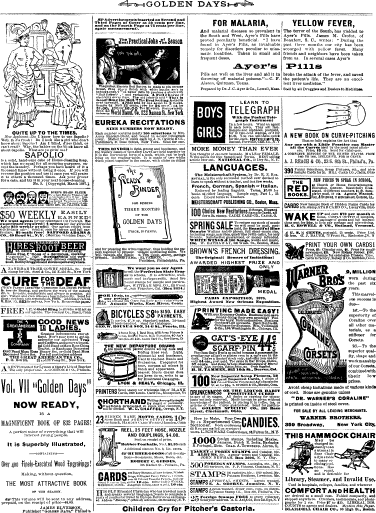
Depending on your browser settings and font choices, one column may come out longer than the other.
|
QUITE UP TO THE TIMES. New Applicant—Do I know how to use Sapolio? Well, that’s fresh! Do I look like a girl who don’t know about Sapolio? Am I blind, d’yer think, or can’t read? Why, the babies on the block know all about Sapolio. What are ye givin’ me? SAPOLIO is a solid, handsome cake of House-cleaning Soap, which has no equal for all scouring purposes, except the laundry. Perhaps you have heard of it a thousand times without using it once. If you will reverse the position and use it once you will praise it to others a thousand times. Ask your grocer for a cake, and try it in your next house-cleaning. No. 3. [Copyright, March 1887.] DYKE’S BEARD ELIXIR
$50 WEEKLY EASILY EARNED! We want agents for our celebrated Oil Portrait. No experience required! 4 orders per day gives the Agent $50 weekly profit! Our agents report from 4 to 30 daily sales! Send at once for terms and full particulars. $2 outfit free! SAFFORD ADAMS & CO., 48 Bond St., N.Y. [Mention “Golden Days.”]
Makes Five Gallons of a delicious, sparkling temperance beverage. Strengthens and purifies the blood. Its purity and delicacy commend it to all. Sold by druggists and storekeepers everywhere. A ZANZIBAR TIGER COWRY SHELL, 8c. Send stamp for list. Steel & Co., 135 E. 23d St., New York CURE FOR THE DEAF Peck’s Patent Improved Cushioned Ear Drums Perfectly Restore the Hearing, and perform the work of the natural drum. Invisible, comfortable and always in position. All conversation and even whispers heard distinctly. Send for illustrated book with testimonials, FREE. Address or call on F. HISCOX, 853 Broadway, New York. Mention this paper. FREE a $2.50 Gold Ring to all who will act as our agents. The Journal Co., Essex, Conn.
THE GREAT AMERICAN TEA CO., AGENTS wanted for Lyman Abbot’s Life of Beecher. The only proper one. A. GORTON & CO., Philada. Vol. VII “Golden Days” NOW READY, IS A MAGNIFICENT BOOK OF 832 PAGES! A perfect mine of everything that will interest young people. It is Superbly Illustrated, —CONTAINING— Over 400 Finely-Executed Wood Engravings! Making, without question, THE MOST ATTRACTIVE BOOK OF THE SEASON.
JAMES ELVERSON, |
The perfect Electric Bell Button is made to pin on your breast, Fine ebony finish with white button sure to induce a push, which never fails to produce a shock with “Hail Columbia,” and variations. A Full Charge of electricity every time. The old joker is told “That is Good! Ring the Bell.” The Best Selling Article ever invented. 4760 sold by one agent in 3 weeks. Sample by Mail 15 cents.; two for 25 cents.; 14 for $1.00. 100 for $6.00. Try $1 worth. Stamps taken. Send all orders to World Manuf. Co. 122 Nassau St. New York EUREKA RECITATIONS NINE NUMBERS NOW READY. Each number contains nearly 100 selections by Mrs. Anna Randall-Diehl, and bound in 4-color lithograph cover. Mailed for 12 cents each by J. S. Ogilvie & Co., Publishers, 31 Rose Street, New York. Send for one. THIS BINDER is light, strong and handsome, and the weekly issues of Golden Days are held together by it in the convenient form of a book, which can be kept lying on the reading-table. It is made of two white wires joined together in the centre, with slides on either end for pressing the wires together, thus holding the papers together by pressure without mutilating them. We will furnish the Binder at Ten Cents apiece, postage prepaid.
Address JAMES ELVERSON,
Tricycles, $7.50 up. Standard makes. 2d-hand Wheels handled. Send for Catalogue. GEO. W. ROUSE & SON, 34 G St., Peoria, Ill.
THE NEW DEPARTURE DRUMS are made with patent double acting rods and folding knee rest.
LYON & HEALY, Chicago, Ill. PRINTERS Send stamp for wholesale list of BLANK Cards, 1000 kinds. Card Co., Montpelier, Vt SHORTHAND Writing thoroughly taught by mail or personally. Situations procured all pupils when competent. Send for circular. W. G. CHAFFEE, Oswego, N.Y. 23 10c HIDDEN NAME MOTTO CARDS, Story Book and AGENT’S OUTFIT with each pack. Hamden Card Works, Hamden, Conn
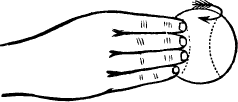
Sent on receipt of price. Rubber Footballs, No. 1, $1.25 each Additional sizes to No. 6, 25c. extra.
ROBERT C. GEDDES, CARDS 100 Fancy Pictures, all new designs, 30 latest Songs, 50 Elegant Fancy Patterns, 1 Album, over 60 Colored Transfer Pictures, with our Grand Premium List all for 10 cts. BIRD CARD WORKS, MERIDEN, CONN. Autograph Album, name in gold, 10 cts. HIGHLY Educated Physician who has traveled much and speaks several languages, wants to complete a party of youths for travel in Europe. References exchanged. Address “Æskulap,” (office of) Advocate, 805 Broadway, N.Y. |
|
Children Cry for Pitcher’s Castoria |
|
 For es heavy Mustache, Whiskers, or hair on bald
heads in 20 to 30 days. Extra Strength. No other remedy 2 or 3 Pkgs.
does the work. We will prove it or forfeit $100.00 Price per Pkg. sealed
and postpaid 25c., 3 for 50 cts., stamps or silver. SMITH MFG. CO.,
PALATINE, ILLS.
For es heavy Mustache, Whiskers, or hair on bald
heads in 20 to 30 days. Extra Strength. No other remedy 2 or 3 Pkgs.
does the work. We will prove it or forfeit $100.00 Price per Pkg. sealed
and postpaid 25c., 3 for 50 cts., stamps or silver. SMITH MFG. CO.,
PALATINE, ILLS.

 This volume will be sent to any address, prepaid, on the
receipt of price—$4.00.
This volume will be sent to any address, prepaid, on the
receipt of price—$4.00.

 We want you as our Agent to sell the Perfection Slate
Eraser in schools. It is attractive, well-made and
indispensable. Send five 2-cent stamps for sample and particulars.
WITTRAM MFG. CO., 525 Front St., San Francisco, Cal. (Box
2414.)
We want you as our Agent to sell the Perfection Slate
Eraser in schools. It is attractive, well-made and
indispensable. Send five 2-cent stamps for sample and particulars.
WITTRAM MFG. CO., 525 Front St., San Francisco, Cal. (Box
2414.) FOR 10 cts. to pay postage &c., we will send this Charm
Pen-Knife and five other samples FREE. Atlantic Works, East River,
Conn.
FOR 10 cts. to pay postage &c., we will send this Charm
Pen-Knife and five other samples FREE. Atlantic Works, East River,
Conn.
 1 Stone Ring, 1 Band Ring, 275 Scrap Pictures & Verses, Book of
Poems, Book Flirtations, 40 Agt’s Samples, All 10c. Austin Card Co., New
Haven, Ct
1 Stone Ring, 1 Band Ring, 275 Scrap Pictures & Verses, Book of
Poems, Book Flirtations, 40 Agt’s Samples, All 10c. Austin Card Co., New
Haven, Ct Light, substantial and handsome. Used in the best Bands and Orchestras.
Unequaled for tone, surpass all others in finish and appearance. If
nearest Music dealer does not keep them, write to us for Illustrated
Catalogue.
Light, substantial and handsome. Used in the best Bands and Orchestras.
Unequaled for tone, surpass all others in finish and appearance. If
nearest Music dealer does not keep them, write to us for Illustrated
Catalogue.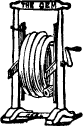 REEL, 25 FEET HOSE, NOZZLE AND COUPLINGS, $4.00.
|
FOR MALARIA, And malarial diseases so prevalent in the South and West, Ayer’s Pills have proved peculiarly beneficial. “I have found in Ayer’s Pills, an invaluable remedy for disorders peculiar to miasmatic localities. Taken in small and frequent doses, |
YELLOW FEVER, The terror of the South, has yielded to Ayer’s Pills. James M. Crofut, of Beaufort, S.C., writes: “During the past three months our city has been scourged with yellow fever. Many friends and neighbors have been taken from us. In several cases Ayer’s |
|
Ayer’s Pills act well on the liver and aid it in throwing off malarial poisons.”—C. F. Alston, Quitman, Texas. Prepared by Dr. J. C. Ayer & Co., Lowell, Mass. |
Pills broke the attack of the fever, and saved the patient’s life. They are an excellent liver medicine.” Sold by all Druggists and Dealers in Medicines. |
|
BOYS In a few hours. Want an agent in each town. They sell fast. Sample and alphabet, postpaid, for 13 two-cent stamps, or 6 for $1.00. You can sell them quick for 25c. each. PORTVILLE MF’G CO. limited, Portville, Catt. Co., N.Y. MORE MONEY THAN EVER You thought of can now be made. MALE or FEMALE. Write quick for free Sample and Terms. BEST selling article ever out. NATIONAL CO., 21 Dey St., N.Y. LANGUAGES. The Meisterschaft System, by Dr. R. S. Rosenthal, is the only successful method ever devised to learn to speak without a teacher, and in a few weeks, French, German, Spanish or Italian. Endorsed by leading linguists. Terms, $5.00 for books of either language. Sample copy, Part I., 25 cents. Liberal terms to Teachers. MEISTERSCHAFT PUBLISHING CO., Boston, Mass. 100 Choice New Recitations 13 Songs, Elegant Sample Cards, all for a 2c. stamp. CADIZ CARD CO., CADIZ, O. SPRING SALE To reduce our stock of music we will send by mail, postpaid, the Beautiful Blue Danube Waltzes and 60 pieces, full sheet-music size, including songs, marches, quadrilles (with calls), for only 20 cents. Satisfaction guaranteed, or money refunded. WHITE WINGS & 100 Songs, words and music, 10c. W. HATHAWAY, 339 Wash. St., Boston, Mass.
BROWN’S FRENCH DRESSING. PRINTING MADE EASY!
The Gem Cat’s Eye is so called because it possesses the peculiar ray of light or glisten seen in a cat’s eye in the dark. I have a limited stock only, and offer you one for only 44 cts., post paid. The same in Ear Drops, choice, 87 cents. Send Stamp for large illustrated catalogue of Mineral Cabinets, Agate Novelties, Indian Relics, etc. Trade Supplied. H. H. TAMMEN, 935 16th St., Denver, Col. 100 New Imported Scrap Pictures, 12 Elegant Imported Cards, 1 Album of 50 Colored Transfer Pictures and Agt’s Samples for ’87. all for 10c. S. STOKES & CO., Meriden, Conn. DRUNKENNESS OR THE LIQUOR HABIT POSITIVELY CURED in any of its stages. All desire or craving for stimulants entirely removed. Medicine can be given without knowledge of the patient, by placing it in coffee, tea, or articles of food. Cures guaranteed. Send for particulars. GOLDEN SPECIFIC CO., 185 Race Street, Cincinnati, Ohio.
How to Make, Your Own 1000 foreign stamps, including Mexico, Jamaica, Dutch E. India, Barbados & Portugal, 25cts. Chas. A. Townsend, Akron, O. PAKET of FOREN STAMPS and Catalog, 10c. ALBUMS, 50c. Agents’ terms and Catalog, 10c. JOHN NEWHAM, Box 3694, N.Y. City. 500 FOREIGN STAMPS, Australia, etc., 10c.; 105 varieties, 10c. F. P. Vincent, Chatham, N.Y. STAMPS 106 varieties, 10c.; 1010 mixed, 20c. Putnam Brothers, Lewiston, Me. STAMPS APPROVAL SHEETS. Agents wanted. E. A. OBORNE. Jamaica, N.Y. STAMPS Agents wanted. 30 per cent. com. on sheets. Keystone Stamp Co., Box 200, Philad’a, Pa. 25 Foreign Stamps FREE to every collector. Send your address. A. E. Ashfield, Box 233, Rye, N.Y. |
390 Funny Selections, Scrap Pictures, etc., and nice Sample Cards for 2c. Hill Card Co., Cadiz, Ohio
THE at Church or Home Entertainments. Elocution. Gesture. Beautifully
Illustrated. 12 different numbers, $1.00. Sample by mail, 10 cts.
Agents Wanted. CARDS New Sample Book of Hidden Name Cards for a 2c. stamp. STAR CARD CO., Laceyville, Ohio
WAKE
UP and earn $70 per month at home. Costly Outfit of samples, a package of goods and
full instructions sent for 10c. to help pay postage and
advertising. 4 U.S. ½ CENTS, postpaid, 25 cents. Price List free. G. J. BAUER, 73 Front St., Rochester, N.Y.
Press, $3; Circular size, $8. Press for small newspaper, $25. New Rotary Jobber, $100. Send 2 stamps for catalogue Presses, Type, cards to factory, Kelsey & Co. Meriden, Conn
“DR. WARNER’S CORALINE” is printed on inside of steel cover.
FOR SALE BY ALL LEADING
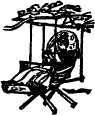
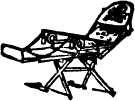
MERCHANTS. THIS HAMMOCK CHAIR
May be changed instantly to an automatic floor Chair adjustable to many reclining positions. Has no equal, and is desirable for
Library, Steamer, and Invalid
Use. are desired at a small cost. Folded compactly, and shipped anywhere. Circulars, testimonials, and photographs for 2 cts. Price $7 to $15. LIBERAL DISCOUNTS to agents and dealers. Mention this Paper. BLAISDELL CHAIR CO., 96 High St., Boston. |
 With our Economy Outfits. Business men save money doing their own
printing! Fun for the boys! Instructions free. Business Outfits $7.50
upwards. Card Outfits $2. Catalogue for 2c stamp. Wm. Volkmann &
Co., 164 Washington St., Chicago, Ill.
With our Economy Outfits. Business men save money doing their own
printing! Fun for the boys! Instructions free. Business Outfits $7.50
upwards. Card Outfits $2. Catalogue for 2c stamp. Wm. Volkmann &
Co., 164 Washington St., Chicago, Ill.


(Entered according to Act of Congress, in the year 1887, by James Elverson, in the Office of the Librarian of Congress, at Washington, D.C.)
| VOL. VIII. | JAMES ELVERSON, Publisher. |
N. W. corner Ninth and Spruce Sts. |
| PHILADELPHIA MAY 21, 1887. | ||
| TERMS |
$3.00 Per Annum, In Advance. |
No. 25. |
BY FANNIE WILLIAMS.
“Oh, dear!” sighed Linda Trafton, turning over the pages of a closely-written, school-girlish letter, which her brother Fred had tossed into her lap, on returning from the post office. “I do wish I could get silk pieces enough to make a crazy quilt. Cousin Dell writes all about hers, and it must be very pretty.”
“Crazy quilt! That’s about all I’ve heard for the last six months! I should think you girls had all gone crazy yourselves!” ejaculated Fred.
“Why, Fred!” was Linda’s only answer to this outburst.
She was a very sweet-tempered little maid, with soft, brown hair and soft, brown eyes, that matched in color as exactly as eyes and hair could match, and gave her a look of being—as indeed she was—too gentle to dispute, or even to argue, with anybody, least of all with Fred, who was fifteen, and three years her elder, and always took a tone of great superiority toward his little sister.
Still, he was a pretty good sort of brother, as brothers go; and, in Linda’s eyes, he was a prodigy of cleverness.
So, whenever they happened to differ in opinion, and Fred expressed himself in this vehement style, she only looked at him in a deprecating way, and murmured:
“Why, Fred!”
“Well, I should like to know,” continued Fred, “what could be more idiotic than the way you spend your time, you girls, fitting those ridiculous, catty-cornered pieces of silk together, and working them all over with bugs and cobwebs and caterpillars, and little boys in Mother Hubbard dresses! You may well call ’em crazy quilts! I don’t believe there was ever anything crazier, unless it was the lunatic who first invented them!”
“Why, Fred!” said Linda, again. “Now, I think they are too pretty for anything!”
“Pretty!” snorted Fred. “They’re made out of the last things that you’d suppose anybody would ever think of putting into a bed-quilt. I can’t get a chance to wear a neck-tie half out before somebody wants it. Kate Graham spoke for my last new one the next day after I bought it. And I hardly dare to put my hat down, where there’s a girl around, for fear she’ll capture my hat-band!”
By this time, Linda was laughing outright.
“Oh, you are so funny, Fred! But you only just ought to see Kate Graham’s crazy quilt. I know you couldn’t help calling it lovely. She has got pieces of ever so many wedding dresses in it; but I don’t know who would give me any. Aunt Mary never will get married, nor Cousin Susie, nor our Bridget, unless Pat hurries up with his courting—and there’s nobody else. Besides, they are all making crazy quilts of their own. I would start one with papa’s old silk handkerchief and his Association badge, if I thought I could ever get pieces enough to finish it; but I don’t see how I could.”
“Bess Hartley told me that she was going to send off somewhere and get a lot of pieces that are put up to sell. You get a whole package of assorted colors for a dollar,” suggested Fred.
“Oh, that would make it cost too much! Mamma would not let me do that,” said Linda, shaking her head. “She says it is well enough to use up odd bits of silk in that way, if one happens to have them; but she doesn’t think it right to spend money in such a manner, instead of using it for better purposes—and I don’t suppose it is.”
“Well, I am sure I don’t know what you are going to do,” was Fred’s consoling observation. “You’d be as crazy as the rest of the girls if you began to piece a quilt; and I don’t know but you will go crazy if you can’t.”
With which conclusion, Fred walked off whistling, and left Linda to read her Cousin Dell’s letter over again, and wish that Patrick O’Brien would propose to Bridget, if he was ever going to, so that she could get married, and have a new silk dress for her wedding.
However, Linda was not the girl to fret and worry after things which were unattainable.
Fred would have his joke, but she was not going to make herself unhappy just because she had not the materials for making silk patchwork, as Dell and the rest of her girl friends were doing. There were plenty of other pleasures and amusements within her reach, and the one that she enjoyed most of all came in her way, as it happened, the very next morning.
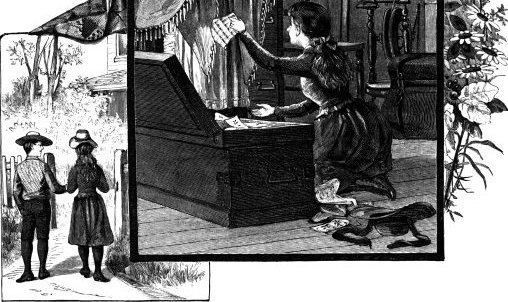
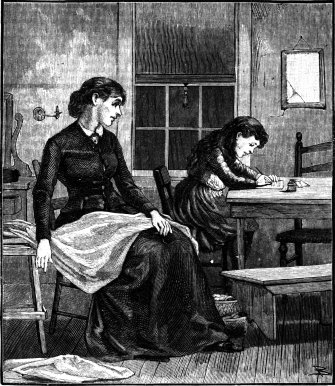
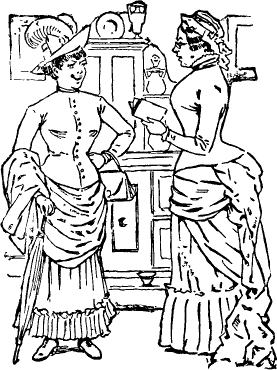
“OH, MRS. BURBANK! WHAT BEAUTIFUL PIECES!” CRIED LINDA. “WHERE DID THEY ALL COME FROM?”
Her father said to her, as he rose from the table after breakfast:
“Linda, would you like a ride, my dear? I am going to drive over to East Berlin, and I will take you along, if you would like to go.”
“If I would like it! Why, papa, you know there isn’t anything that I like so much as a good, long ride with you!” cried Linda, dancing with delight, as she ran off to get ready for the drive.
For it was indeed a “good long” ride to East Berlin—fifteen miles at least—and the day was just as fresh and bright and lovely as a day could be in the fresh and bright and lovely month of May.
The young grass was emerald green along the country roads, the apple trees were all in sheets of bloom, hill-sides were fairly blue with bird-foot violets, and sweet spring flowers were smiling everywhere.
Linda was so full of happiness that she could scarcely keep from singing in concert with the birds that trilled and chirped among the trees on either hand, as the pleasant road led through a piece of woodland.
But the woods came to an end abruptly where the trees had been cut off, and where some men with ox-carts were hauling away the long piles of cord-wood. Then there were fields of plowed ground on each side of the road, and then a long stretch of rocky hills and old pastures, and presently some houses came in sight.
Old, weather-beaten houses they were—a dozen, perhaps, in all. Two or three had once been painted red, and still displayed some dark and dingy traces of that color; but most of them were brown, and some had green moss growing on their broad, sloping roofs—roofs which were two stories high in front, but came down so low at the back that a lively boy might reach them from the ground with very little effort, only the place did not look as if anything so young or so lively as a boy had been seen there for at least twenty years.
Still, it was a pleasant place. There were thickets of lilac and mock-orange bushes around every house, and old-fashioned lilies and roses growing half-wild along the fences.
There were flagged walks leading up to all the doors, with borders of evergreen box, which had once been trim, and still was quaint and pleasing; there were old gardens, where everything was “all run out,” but where the bees and birds appeared to find congenial homes; there were gnarly old apple-trees, with bending, twisted branches that touched the ground and made the most enticing rustic seats.
Withal, there was a calm and stillness brooding on the place that filled one’s fancy with sweet thoughts of olden times and—
“Whoo-oo-oop! Hip, hip, pip, hoo-ray!”
“Good gracious!” cried Mr. Trafton, starting from his pleasant reverie, and clutching at the reins which lay loose upon his knee. “Good gracious! What’s that?”
“It’s a boy!” said Linda, with a quite disgusted accent.
Unquestionably, it was a boy—and a boy of the most aggressively modern type, clad in garments of the very latest cut, from his flannel yachting-shirt to his canvas “base-ball” shoes—a boy with a look as well as a voice, which proclaimed him all alive.
His close-cropped head was bare, and his white straw hat came spinning over the stone wall and into the middle of the road, as if impelled by steam-power, before the boy himself scrambled over, giving vent to another whoop, which would have done credit to a Comanche gone mad.
The whoop and the hat together were enough to startle almost any horse; and, although Mr. Trafton’s fine roadster, “Billy,” was pretty well trained, the combined effect was a little too much for his nerves. He gave a sidelong leap and started to run. His master checked him sharply, and veering from the road, he ran the wheels into a deep rut, and over went the buggy with a crash!
Linda screamed, as she was pitched headlong into a thicket of sweet-fern which grew along the roadside; but the bushes broke her fall, and, beyond the fright and a scratched hand, she received no injury.
Her father was equally fortunate, and, as Billy had recovered from his momentary panic and did not run, the accident appeared, at the first glance, to be nothing serious.
The boy who had caused it came forward, with a look of trepidation upon his countenance, exclaiming:
“I’m awfully sorry, sir; I didn’t mean to frighten your horse. I was down behind the wall and didn’t see you coming, or I wouldn’t have thrown my hat so. I was only scaring a squirrel.”
“He must have been pretty thoroughly scared,” said Mr. Trafton, drily.
However, the boy’s bright face wore an expression of such honest regret that he added, with a good-humored accent:
“Well, well, I was a boy myself once. You must be more careful another time, my lad.”
“That I will, sir.”
And as Mr. Trafton began to raise the overturned buggy, the boy took hold and helped him.
On getting the vehicle righted, they found that one wheel was broken so badly as to need repairs before the journey could be continued, and Mr. Trafton surveyed the damage with grave concern.
The boy gave a low whistle, and murmured:
“Here’s a state of things!”
“I don’t see what I’m going to do,” remarked the gentleman. “There’s nobody in this region who could mend that wheel, I suppose?”
“Oh yes there is!” cried the boy, brightening up. “Doran’s blacksmith shop is only a little ways down the road; you can get the wheel fixed there. I’ll go along and hold up this side of the buggy; and I’ll pay the bill, sir, as I caused the damage.”
Mr. Trafton looked at him approvingly, but answered:
“You need not do that, my boy. The bill won’t amount to much; but the job may take some time—and where can I leave my little girl? I suppose you would not care to wait in the blacksmith shop, Linda?”
Before Linda could reply, the boy said, looking at her frankly, and not at all abashed:
“She can stay with my grandma while you’re having the wheel fixed. Mrs. Deacon Burbank is my grandma; she lives right here, sir,” pointing out the house.
“And where do you live?” asked Mr. Trafton, who took a liking to Mrs. Deacon Burbank’s grandson, for all his annoyance at the trouble which that lively youth had caused him.
“I’m staying with grandma this summer,” said the boy; “but I live in Boston when I’m at home. My name is John Burbank.”
“Well, John, you will have to take Linda to your grandma, for I cannot leave Billy standing here with this broken buggy.”
“All right, sir; I’ll be back in a minute, and help you down to Doran’s.”
So saying, John Burbank led the way, and Linda followed, to the nearest of the brown old houses—a big, broad-roofed domicile, with wide, double doors and narrow windows, and with two great cherry trees in the front yard, looking like two great drifts of snow, they were so thickly covered with white blossoms.
A border of red and yellow tulips, gay daffodils, and “crown imperials,” edged the narrow walk which led from the front gate around to the side door, where they were received by a surprised old lady in gold-bowed spectacles, to whom John presented his companion, with the following concise account of the accident which occasioned her unexpected appearance:
“Grandma, here’s a girl, and her father is out there with his team, and they’ve just had a break-down, and it was all my doing; but I didn’t mean to! I scared the horse, hollering at a squirrel. I’ve got to go and help her father get the buggy down to Doran’s, and she’s going to stay here till it’s fixed, and her name’s Linda. I don’t know what her other name is.”
“Linda Trafton,” supplemented Linda, as the boy paused to catch his breath.
“Johnny,” said the old lady, speaking as severely as a stout old lady with dimples in her cheeks and a twinkle in her eyes could be expected to speak, when addressing her only grandson—“Johnny, I do declare for ’t, you air the worst boy! What under the canopy will you go to cuttin’ up next? Come right in, my dear,” she said to Linda, “and make yourself to home. Johnny, you run along and help the gentleman; and tell Mr. Doran your gran’ther will pay the bill.”
“Oh, I’m going to pay it myself, grandma, with my own pocket-money, if the gentleman will let me; but he says he won’t.”
And Johnny was off before he had done speaking.
“I declare for ’t,” said his grandmother, “that boy is a regular Burbank; jest exactly what the deacon used to be at his age—always into suthin’. I knew the deacon when he wa’n’t any older than Johnny, an’ I remember jest how he used to act. Take off your things, my dear, and make yourself to home.”
She took Linda’s hat and sacque, and carried them into the spare bed-room, where there was a great “four-poster” bedstead, with blue-and-white chintz hangings and a blue-and-white spread; and then she came and sat down by Linda, and asked her a great many questions about the break-down, and about her father and mother and herself, but she was such a nice old lady that Linda did not mind her being a little inquisitive.
In return, she gave Linda quite a complete history of her own family, and told her a number of entertaining stories about Johnny and Johnny’s father, and about the deacon when he was a boy. Finally, she looked at the queer old clock on the kitchen mantle-shelf, and remarked:
“It’s time I was gittin’ my dinner over to cook, and I guess I shall have to leave you to amuse yourself a little while, my dear. You might go out an’ look ’round the garden, if you want; or maybe you’d ruther go up in the garret, an’ look at Johnny’s picture-books an’ things. He likes to stay up there, when it rains so’t he can’t go out.”
“Oh, I should like that, of all things!” cried Linda, delighted. “I do love a real old-fashioned garret, with all sorts of old things in it!”
“Do you now? Well,” said Mrs. Burbank, beaming over the gold-bowed spectacles, “our garret is full of old truck, an’ you can go up there an’ rummage ’round all you’ve a min’ to.”
She opened the door of a narrow staircase, with steep and well-worn stairs, and told Linda that was the way to the back chamber over the kitchen, and when she got up there she would see the garret stairs; and she guessed Linda could find the way up alone. She was pretty hefty herself, and she didn’t travel up and down stairs any more than she could help.
Linda very quickly found her way to the garret, which proved to be indeed a veritable treasury of “old truck;” and her brown eyes opened wide with ecstasy as she caught sight of a real, genuine spinning-wheel, stowed away under the low, sloping roof.
Then she discovered a smaller wheel, with a motto carved around its rim in quaint lettering, which Linda studied over a long time before she made it out—“Eat not the Bread of Idleness.” She learned afterward that this was a flax-wheel, on which Deacon Burbank’s mother used to spin the thread to weave her linen sheets.
Beside the flax-wheel stood a superannuated chest of drawers, with dingy brass handles, which had once, no doubt, been a fine piece of furniture.
Then there were broken-down chairs, with straight, stiff backs; queer, cracked jugs and bottles, and painted teacups with the handles broken off; and funny old spelling-books and school-readers, all inscribed, in beautiful handwriting, on their yellow fly-leaves:
“John Burbank, his book.”
Linda knew that the John Burbank who had learned his lessons from these old books must have been the deacon “when he was a boy,” and not her young friend, Johnny.
There were several old-fashioned wooden chests among the treasures of this delightful garret, and Linda hesitated to open them at first; but finally she called to mind that she had been given permission to “rummage” as much as she pleased.
One chest, painted green, stood near the narrow window, which threw a checkered square of sunshine upon the garret floor, and as Linda raised the cover she gave a little scream of rapture, for it seemed almost as if she had found a broken rainbow, there was such a glitter of gay colors in the sunlight.
“Oh! oh!” she cried, “what lovely, lovely pieces for a crazy quilt!”
For the old chest was nearly filled with scraps of silk and satin of every shape and size, from bits not over an inch wide to the large, three-cornered pieces, of which there seemed to be a great number, left in cutting trimming-folds “on the bias,” as Linda knew, for she had seen many such remnants proudly displayed by those of her girl friends who happened to be in the good graces of Miss Cranshaw, the village dressmaker. But such brocades and stripes, such “plaid” and “watered” and “figured” silks, such brilliant shades of color as she found among the contents of that chest, her eyes had never looked upon before.
“I wonder if these are pieces of Deacon Burbank’s mother’s dresses?” thought Linda, as she turned them over, exclaiming, every other minute, “Oh, how pretty!” or “Oh, what a beauty!” for every new piece that she took up seemed prettier than the last. “Why, she must have had as many as Queen Victoria. Why don’t they wear such colors now? Most of the silk dresses that Miss Cranshaw makes are black, or brown, or sage-green, or some other sober shade; but these are all so bright. Oh, what a lovely blue!”
“It is a handsome piece of silk, ain’t it? That was the dress Miss Polly Newcome wore to the inaugeration ball at Washington, ’most forty years ago. They don’t have no such silks in these days.”
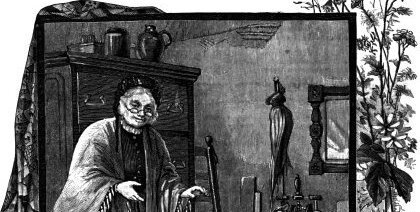
Mrs. Deacon Burbank had mounted the garret stairs with footsteps far from noiseless, being, as she said, a “hefty” old lady; but Linda had been too much absorbed to notice her approach until she spoke.
“Oh, Mrs. Burbank! What beautiful pieces!” cried Linda. “Where did they all come from?”
“Why, they come from all ’round, my dear,” said Mrs. Burbank, sitting down with Linda, beside the green chest. “You see, my girls used to take in dressmakin’, when they was young, and the pieces kinder gathered an’ gathered. The girls used to keep the silk pieces separate, thinkin’ they might do suthin’ with ’em sometime; but they never did. They was always too busy to do much putterin’ work. So the pieces have laid there ever sence the girls left home. They all got married, many a long year ago, my girls. Cecilia went to New York, and Evaline lives down in Pennsylvaney—she’s got to be quite an old woman herself now; and Nancy Jane, she’s layin’ in the cemetery over to East Berlin, with her own little girl buried ’long side of her,” said the old lady, sighing. “But they used to be called the best dressmakers there was anywhere round these parts; folks used to come from as far off as Tolland County to have their nice dresses made by the Burbank girls. Miss Polly Newcome went to Washington the winter that her father was elected to the Senate. She was a great beauty, Miss Polly was, an’ they made everything of her in Washington. But my girls had the makin’ of all her new clothes, ’fore she went. This was a dress she wore to a grand dinner-party that was given to her father, Senator Newcome.”
And the old lady picked out a scrap of marvelous brocade, with silver-white roses on a wine-colored ground, and smoothed it on her knee.
“This was the one she wore to the President’s reception”—selecting a bit of rose-colored satin, striped with sky-blue velvet; “and this,” she continued, smoothing out a long strip of changeable silk in green and ruby tints, “was another dinner dress. Here’s a piece of plaid silk that was made up for Squire Harney’s wife, when she was goin’ to Europe; and here’s a piece of Mrs. Doctor Thorne’s dress, that she had made on purpose to wear to a grand party over in Tolland.”
This last was a good-sized square of bright yellow silk, with polka-dots of mazarine blue.
Linda, looking at the gorgeous fabric with admiring eyes, exclaimed:
“I never saw such pieces in all my life! They would make the loveliest crazy quilt!”
“What kind of a quilt, my dear?”
“A crazy quilt,” said Linda, laughing. “Haven’t you ever seen one, Mrs. Burbank? Fred says the person was crazy who first invented them; but I think they’re just as pretty as they can be. It takes a great many pieces of silk, though, to make a bed-quilt, and some of the girls only make sofa-pillows and such things.”
“Oh, you mean patchwork. The land!” said Mrs. Burbank, “I used to make silk patchwork more than sixty years ago. It was all the style then, but I didn’t s’pose they ever done it now.”
“Oh, yes; it is all the style now,” said Linda, with a smile.
“Do tell! I want to know if you like to piece patchwork?” said the old lady, looking over her spectacles at Linda’s girlish face, with its gentle eyes and frame of soft, brown hair. “I declare for’t, you look just as my Nancy Jane did when she was your age! If you want them pieces, child, you can have ’em; I ain’t got any use for ’em, and don’t s’pose I ever shall have. I’m too old to piece patchwork, myself—my eyesight ain’t what it used to be.”
For a moment Linda was speechless with delight, but finally she found her voice, and cried out:
“Oh, Mrs. Burbank! All those lovely crazy pieces! Do you really mean to give them to me?”
“Of course I do, and I’m real glad to see ye so pleased, my dear. Them silk pieces have laid in that chest years an’ years, doin’ nobody any good; an’ they shan’t lay there no longer, if they can make a little girl so happy.”
And the good old lady looked happy herself as she opened another chest, and, taking out an old pillow-case of home-spun linen, began to fill it with the wondrous “crazy pieces.”
When she had crowded them all in and tied the bag with a piece of twine, she said:
“Now, you can take ’em right along with you, an’ whenever your father happens to come this way ag’in, he can bring me back the piller-case, for it was one of Mother Burbank’s, and I shouldn’t want to lose it. I declare for ’t!” she added, “I forgot all about your father, child, I got so took up with lookin’ over them pieces. He’s got the buggy mended, an’ he’s come back after you, so you must come right down. I want you an’ he should have dinner ’fore you go; it’s all ready.”
And happy Linda went down to the kitchen, where she found her father and Johnny, and Deacon Burbank, who had just come home to dinner.
Mr. Trafton was hungry, and quite willing to take dinner at the deacon’s, instead of waiting till they arrived at East Berlin.
They all became very well acquainted in the course of the meal, and Mr. Trafton promised to bring Linda to see Mrs. Burbank, whenever he came that way.
“And I will bring my crazy quilt and show it to you, when I get it done, Mrs. Burbank,” added Linda.
Whereupon Johnny spoke up, and said:
“If you don’t get on with your crazy quilt any faster than my sister does with hers, you won’t ever get it done!”
And Linda told him that sounded just like Fred!
Johnny carried the pillow-case out to the buggy and tucked it under the seat; and Linda could think of nothing but her crazy pieces all the way to East Berlin.
When she got home and showed them to Fred, he declared they were the jolliest, craziest lot of pieces he had seen yet!
And when Linda’s quilt was commenced, all the girls went wild over it; but she laughingly refused to tell them where her pieces came from.
She made a great mystery of the matter, asserting, in reply to all inquiries, that hers would be a crazy quilt with a history, and nobody should know anything about it until the quilt was finished.
A crazy quilt with a history is no trifling piece of work, and the girls have not yet heard the story.