It was an evening toward the end of August, and the harvest was being
gathered in. The fields on every side were dotted with the tented
sheaves piled up as the custom is in the "catching" weather of the West,
one sheaf reversed on the top of the cluster, so as to form a kind of
roof. The long shadows of the shocks fell across the fields in the
evening light. All the country was beautiful with that rich
restfulness which comes in the autumn, as if the earth had finished its
work. The glories of the sunset gave the sky a hundred delicate tints of
gold and purple.
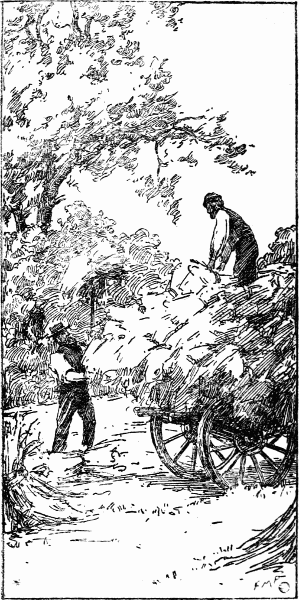
Here and there the women brought the sheaves, whilst the men piled them
on the wagons. Away over the hill country in the east the great harvest
moon was rising.
Jennifer, busy as ever, had got her two little ones settled for the
night, and now was preparing a dainty supper for Sam's return; the
savoury smell of it filled the place.
Then it was that, as to Job of old, one came breathless to the house
with sad tidings. Sam had slipped from the stack and fallen on his head.
"Is—he—dead?" gasped Jennifer.
No, he was not dead; but he had not spoken since his fall, and was quite
unconscious. A messenger had been sent for the doctor, and the men were
bringing Sam home, and would be here in a few minutes.
Up the hill came the group with the injured man in their midst, to all
appearance dead. A great hush fell on the village as they passed slowly
on, men in their shirt sleeves just as they had hurried in from the
harvest field. The women and children stood at the doors with faces full
of sympathy.
They bore him in at the little gate and through the garden and up the
stairs, and laid him on the bed.
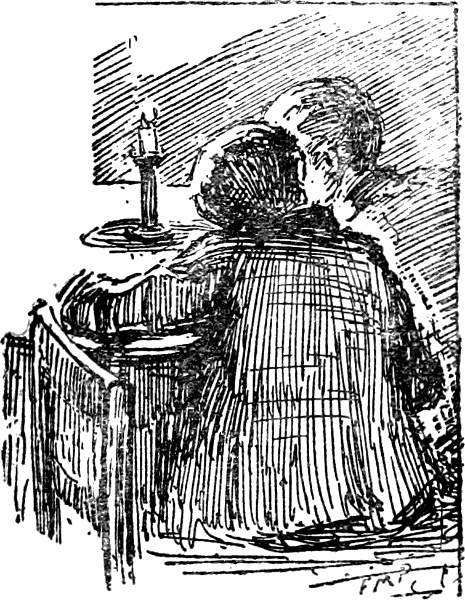
For weeks Sam lay on his bed, whilst day and night Jennifer waited on
him.
The neighbours stopped the doctor to ask about him, and the answer was
ever the same:
"He'll pull through; he'll pull through," and the doctor tightened his
mouth and nodded his head; "but he would have been a dead man long ago
if it had not been for that brave little wife of his."
Fracture of the skull and concussion of the brain, and a host of other
ills, made it a desperate fight with death. But Jennifer fought and
won. Even in his unconsciousness Sam seemed to know the touch of her
hand, and it soothed him; and the tone of her voice, and the moaning
ceased.
But bit by bit their little fortune was swept away. The savings of those
three or four years were quickly spent; the cows had to be sold, and the
meadow given up; the pigs and fowls were parted with.
The garden lay untended. And when, at last, the doctor had done with
Sam, it was only to leave him an imbecile—helpless as a baby, and a
great deal more troublesome—sometimes muttering to himself for hours
together a round of unmeaning words; sometimes just crying all day long,
and then again cross and peevish and perverse as any spoilt child.
The cottage was given up; they could not afford the rent of that.
Another was taken, the cheapest in all the village—one that was too bad
for anybody else.
Half a crown a week and a loaf of bread from the parish was all that
came in to supplement Jennifer's poor earnings of sixpence a day in the
fields.
It was some few years after this had happened that I came to know
Jennifer.
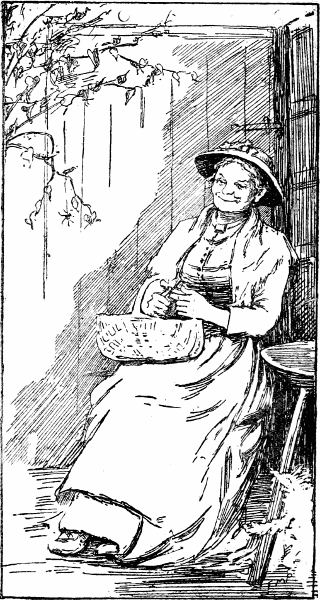
There she sat in the little chapel, her round and ruddy face without a
wrinkle in it, all curves and dimples that were the settled homes of
good humour and thankfulness; a face snugly surrounded by a black
bonnet, set off with a clean white cap. Beside her were her two lads,
their faces as clean and shining as plenty of soap and hard scrubbing
could make them. You met her going home from the service, the short,
round figure wrapped in a thick black shawl, trotting along with her
hymn book in one hand and a big umbrella in the other, short and round
like herself. The happy little lads went bounding before her, the three
of them the very picture of gladness.
Yet it was almost wicked of Jennifer to look so comfortable, when all
the parish knew that there was not a poor body for miles around that had
so much trouble. She certainly had no business to be anything but the
most mournful and melancholy soul that ever went grumbling along the
highroad, if you can measure people's happiness by their circumstances.
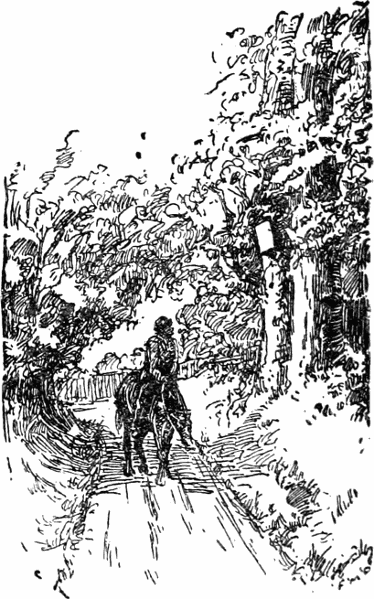
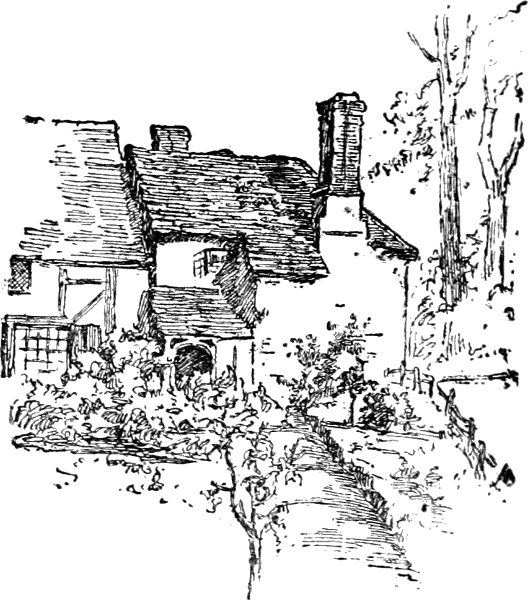
Follow her as she turns down this narrow lane, skilfully picking her
way in the mud. At the end of the lane is her cottage. One half of it
has fallen, the cob-walls have given way, and the thatch hangs over the
ruins. It was a wonder that what was standing did not follow, for there
were cracks in the walls through which the wind whistled, and there were
broken places in the roof through which the rain dripped.
But within was a greater sorrow than any that you could find outside. As
Jennifer opens the door she hurries across the uneven floor to the rough
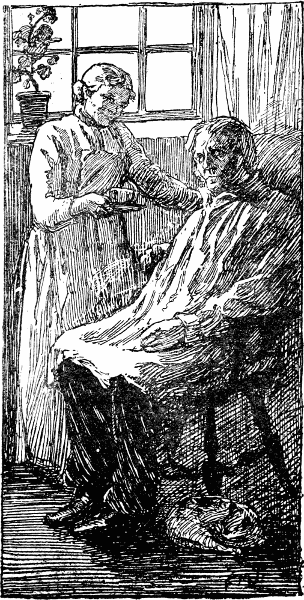
settle by the fire. There is her husband—poor Sam!
As now she comes near and lays her hand upon his shoulder, the dull face
is turned toward her with a smile. He tries to say something, but the
mouth only opens without a word, and the tears fill his eyes. Jennifer
bends and kisses him tenderly. "Poor dear," she says, as she gently
strokes the hands that hold her own. "Poor dear, was he wanting us home
again?"
Presently she slips the hand away so skilfully that her husband does not
seem to know it, and takes off her bonnet and shawl.
The lads meanwhile have set the things for the Sunday dinner. It did not
need much setting. On the rickety table was placed a knife—they had but
one. There were three slices of bread, a thick round off the loaf, and
on each slice a bit of cheese; "Double Gloucester" was, I think, the
local name of it. The one big mug was filled from a large earthen
pitcher.
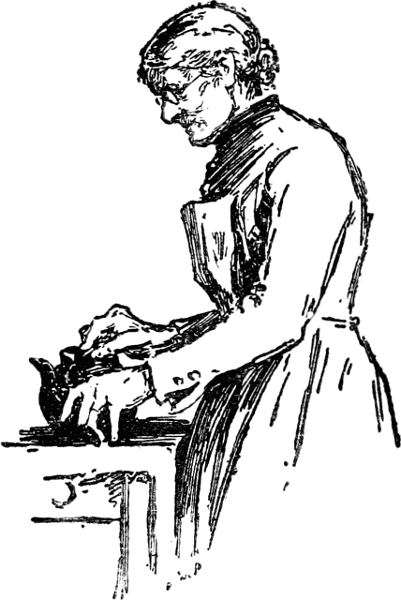
Jennifer herself had set the kettle down by the wood fire, for if she
had a weakness it was her cup of tea. But there was not much promise of
any water boiling in a hurry; the tiny spark was almost lost in the big
fireplace, a hearth opening into the chimney, and so constructed that a
great deal more cold seemed to come down than heat went up.
The little family group stood and bent their heads in devout
thanksgiving to the heavenly Father, and then the hungry lads fell to.
As for Jennifer herself it seemed as if she never got her dinner at all.
All her concern was to try and tempt her husband's appetite with a piece
of bread and butter daintily cut; and there was for him, too, a drop of
milk. Yet even her hypocrisy could not manage to keep up her happy looks
on nothing.
This was Sunday: a day indeed of rest and gladness. Other days she had
to be up and about early to get the little lads their breakfast; and to
make them ready for school; and to set her husband by the fire. Then she
herself was off with the dawn, and sometimes before, to work all day in
the fields. Her rough dress was stained earth colour from head to foot;
a sack was tied round the skirts which were tucked well up out of the
way. A big sun-bonnet protected her more often from the bleak winds and
bitter rains than from the sun. From dawn till dusk she worked for
sixpence a day; and then came home thanking God right heartily for the
three shillings a week. And on that Jennifer managed to feed and clothe
her household, and to pay the rent and to keep up her good looks.
The fact is, Jennifer was as we have said, a philosopher, and had made a
great discovery. It was certainly worthy to be set alongside of the most
famous inventions; and like many of them it had the one great defect—so
few knew how to use it. Jennifer had little, it is true. She was, so to
speak, but a moulting bird, half starved and shivering in the dreariest
and dullest of cages—that is, if you looked at what was. But
Jennifer found another world, in which she had a boundless freedom and
strength, and here she went soaring like an eagle right up into the sun.
It was what wasn't that she made so much of.
You pitied her, and spoke mournfully about her husband, as if he were a
burden and worry. But Jennifer never seemed to hear it, and certainly
could not see it.
"Poor dear," she said, "I can mind the day he asked me to be his wife. I
did jump. And all the maidens in the parish would have liked him. When
they heard about it they all went wondering whatever he could see in a
poor little plain thing like me; but none of them wondered so much as I
did. I never could do enough for him when he was well, and now that I
have got my chance I should be ashamed if I did not make the best of it.
Poor dear, he is as much to me as ever, and more too—husband and child
all in one." And she said it over tenderly to herself, "Poor dear!"
But this was Jennifer's sentiment, and her sentiments were sacred and
kept mostly for home use. It was the philosopher that met you more
commonly. You spoke to her pitifully of her husband's affliction, and
were almost startled at the tone of her cheery voice.
"Yes, 'tis sad. But bless you, think of what might ha' been. If he was
in racks of torments all day long, and me at his side doing nothing else
but poulticing and trying to give him a bit of ease! Or if we was both
like he is—me and he, too, a-setting by the fire and never able to do
anything for each other, whatever should us have done then? Only to
think of it. And there—it might ha' been; of course, it might ha' been.
What a mercy!" And Jennifer lifted up her hands. "What a mercy!"
You complained of the miserable cottage. But Jennifer was ready to point
out its advantages, until the tumble-down place seemed to grow quite
considerate and kindly.
"Well, you see it isn't half so bad as it might be. The cracks don't
let the wind blow in where we do sit to. And the rain don't drip in
where we do sleep to. That would be bad. And it might ha' done; of
course, it might ha' done. What a mercy!" And again Jennifer's hands
were uplifted.
You began to pity her for the children's sake. But a merry laugh cut
that short in a moment.
"Yes, I often think about that," laughed Jennifer, "there might ha'
been fourteen of them. And, bless you, whatever should I ha' done if
there had a-been fourteen!" And Jennifer lifted up her hands and laughed
again, and then slapped them down upon her knees. "Fourteen of them!
Why, where should us all have slept to? And think of the eating all
round, and the clothes and all. Fourteen! And it might ha' been. What
a mercy!"
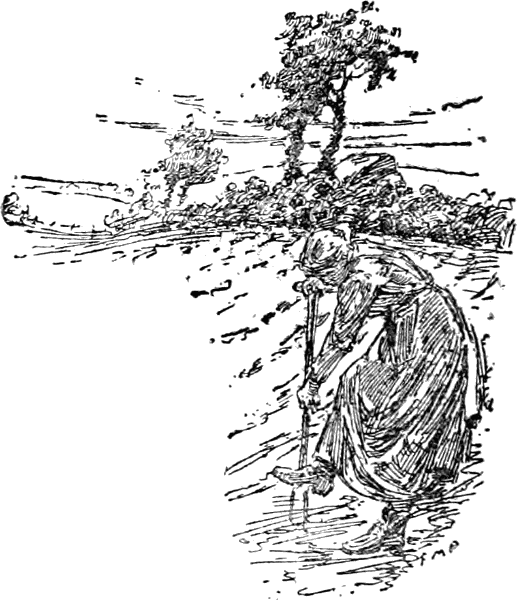
You talked pathetically about her work in the fields—the dreariness of
it and the weariness, bending with hoe from morning to night; or
kneeling at the weeds till all the limbs ached. But Jennifer was more
than a match for you. "Ah, that's it. That's what I always say. To think
that it should be such hard work and all that, and that I should have
the strength for it. Now, if I was one of them sort that is always
ailin' and failin', instead of being so strong as a horse! And I might
ha' been; of course, I might ha' been. What a mercy! Why, there's some
as couldn't walk there and back, for 'tis sometimes three miles there
and three miles back, and there's some as couldn't do it when they got
there, for the weeds be terrible strong sometimes. And there's some as
couldn't bear it, east wind and rain and snow. And I might ha' been
one of them sort. What a mercy!"
This was Jennifer's philosophy.