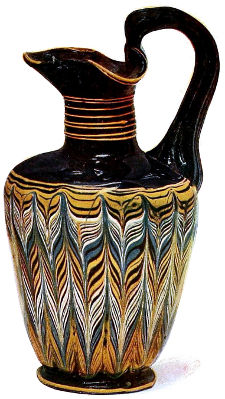
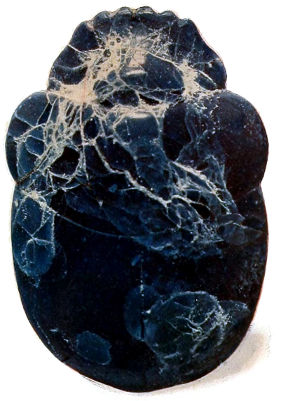
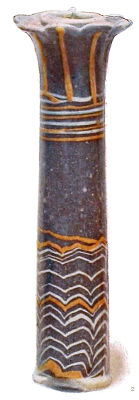
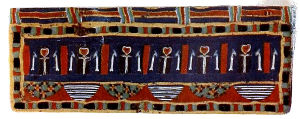
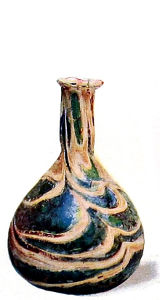
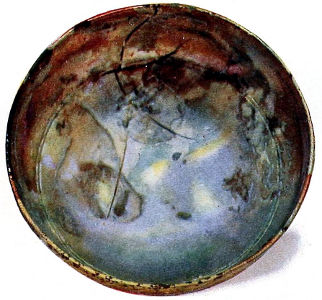
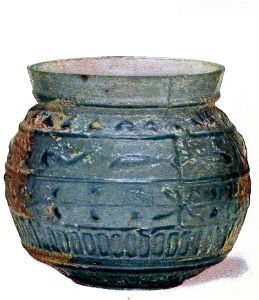
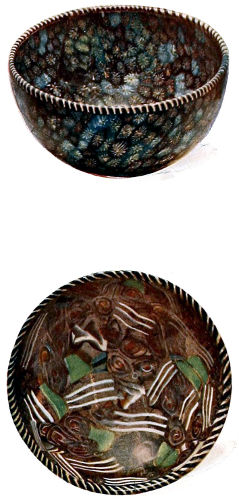
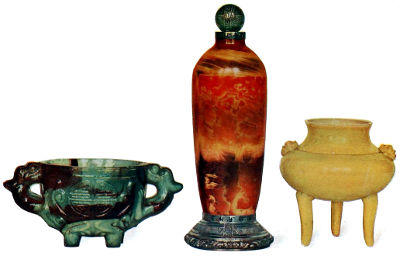
Achmin, glass from, 105, 163
Agricola, De Re Metallica, 260-262
Air-drawn stem, 326-327
Alabaster, imitation of, in glass, by Egyptians, 22
Alabastra, see Unguentaria.
Alchemists and glass in Germany, 288
Alchemy, early mediæval works on, 119-124
Aldrevandini beaker, 179
Alembics of mediæval alchemists, 125
Alembics and aludels of modern Indian glass, 346
Alexandria, importance in history of glass, 44
Alexandria, glass of mediæval time, 149 note
Alkali, source of, 12-13
Almeria, glass made near, 246-247
L’Altare, 174-175
L’Altare versus Murano, 224
L’Altare, glass-workers from, in France, 223-224
Altarist families settled in France, 227
Altarists, difficulties with, in France, 236
Altarists in Netherlands, 240-241
Aludels of mediæval alchemists, 125
Alumina in glass, effect of excess of, 132
Ammonitrum, 78
Amsterdam, glass-houses at, 294
Analyses of glass, 9, 26, 53 note, 151, 335, 353 note
Anglo-Saxon glass, 107-113
Anglo-Saxon glass, where found, 110-111
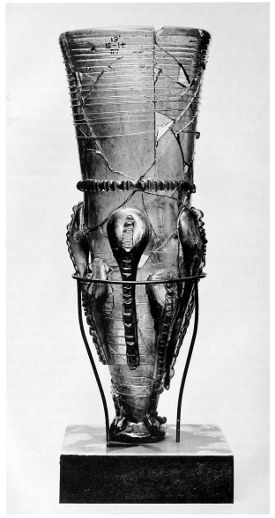
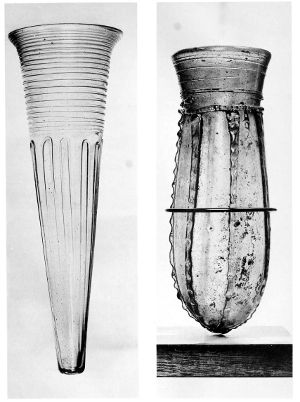
Anglo-Saxon ‘prunted’ beakers, 110-111
Anglo-Saxon drinking-cups, 112-113
Anne Boleyn, glass with her initials, 306
Anthology, Greek, poem on glass-furnace, 80
Antimony as source of yellow in primitive glass, 29
Antwerp, glass made at, 241-242, 262
Antwerp, mediæval glass found near, 252 note
Antwerp, metropolis for glass, 303
‘Arena’ at Padua; lamps in fresco, 158
Aristophanes, possible mention of glass in, 41
Arles, Roman glass from, 81-82
Ascension Day, display of glass at Venice, 216, 261 note
Asiatic influence in Europe, 89-90
Assyrian glass, 39-40
D’Azeglio, Marquis Emanuele, his collection of painted glass, 142-143
Azurro da vetro, 218
Babylonia, turquoise-glass slabs from, 40-41
‘Balance-pan’ lamp-stands, 97 note, 101, 104, 158
Barbaro, Venetian ambassador to the Porte, 171
Barcelona, glass of, 247-249
Barcelona, opaque white glass, 249
Barilla, term explained, 13
Barilla, how prepared, 227
Barilla, Howell’s account of, 312
Barillet, or Baril, French form, 134, 238
Bavaria, Dukes of, introduce Venetians, 270-271
Bead, origin of English word, convenience of term, 184
Beads of early Egyptian Dynasties, 20
Beads from tombs of Mycenæan age, 35
Beads from early Rhodian tombs, 38
Beads in form of satyr masks, 38
Beads from Frankish and Germanic tombs, 109
Beads, guilds at Venice and Murano, 183
Beads, early distribution from Venice, 183, 190
Beads, Venetian, grinding by water-power, 185
Beads, process of manufacture, 185-187
Beads, process of manufacture from hollow cane, 185-186
Beads, process of manufacture from solid rod, 186-187
Beads, stores in London and Amsterdam, 189
Beads made at Nuremberg; at Amsterdam, 292
Beads, Bohemian industry, 292-293
Beads from India, 343
Beads, see also Chevron beads.
Bede on glass-workers brought from Gaul, 113
Bekerschroeven, or ‘Beaker screws,’ 295
Berovieri, his enamelled cup, 194-195
Berthelot, M., on chemistry of Middle Ages, 120-125
Bidoro, Japanese name for glass, 354
Biringuccio on Venetian glass, 215
Blancourt, de, Art of Glass, 316 note, 319
Blowing of glass, 7-8, 14
Blowing of glass, importance of discovery of process, 19
Blowing of glass, probable origin in Western Asia, 42
Blowing of glass, when and where discovered, 44, 59
Blowing of glass, at first supplementary to moulding, 47
Blowing of glass, first described by Theophilus, 128-130
Blowing-iron, how used, 14
Blown glass unknown in Ancient Egypt, 19-20
Blown glass, when first made, 20
Blown glass, early simple forms, 59
Blue colours in Egyptian glass, 26-27
Bohemia, engraved glass of, 286
Bohemian frontier, German glass from, 258-260
Bohemian frontier glass where made, 258-260
Bohemian glass, properties of, 11
Bohemian glass, imitated in Belgium, 242
Bohemian glass, use of term, 258-260
Bohemian glass, exported to East, 287-288
Bohemian glass beads, 292-293
Bohemian glass, pastes for false jewels, 293
Bones, glass from human, 291-292
Bonhomme, de, firm, 242, 287
Bonhomme, de, at Amsterdam, 294
Bonhomme, de, make flint glass, 315
Bracken, ashes used for making glass, 136
Briati, Venetian glass-worker, 212-213
Bristol, glass made at, 334-336
Bristol, enamelling on glass, 335
Bristol, wine-glasses made at, 324 note, 328 note
Bristol, opaque white glass, 334-335
Britain, Roman glass in, 61, 81, 85-87
Brocard, M. P., imitation of Saracenic glass, 152, 353
Broken glass, hawkers of, 82 note, 228
Buckholt Wood, glass furnace at, 304-305
Buckingham, Duke of, his glass-houses, 314, 318
Bushell, Dr., on glass in China, 347 note, 348 note
Byzantine art, term, how used, 89
Byzantine glass in St. Mark’s treasury, 99-102
Byzantine glass from Egypt, 105, 149
Byzantine glass from South-Saxon cemetery, 107
Byzantine glass in illuminated MSS., 102-103
Byzantine glass medallions, 94
Byzantine influence in mediæval Germany, 114
Byzantine mosaic workers, 96
Byzantine stained glass windows, 96-97
Calcedonio of Venetians, 206
Calcedonio used in two senses, 206 note
Calcedonio, preparation of, 218-219
Cameos and intaglios of late Greek glass, 47-48
Canosa, glass from tombs at, 45-46, 68
Carré, Jean, 303-304
Carving of glass unknown in later Middle Ages, 116
Catalonia, glass made in, 247-249
Catalonia, green enamels on glass, 247
Catalonia, relation of enamels to Saracenic, 248
Cemetery glass, 90-95
Cemetery glass, where found, 91
Cemetery glass, how made, 92-93
Cemetery glass, enamelling on, 93-94
Cemetery glass, Jewish symbols, 94
Cemetery glass, stipple process, 93
Chalices, early, of glass, 94-95, 97-98
Chalices, early forms and materials, 97-98
Champlevé enamel in Britain, 86
Chandeliers of Venetian glass, 211-212
Changes of colour in glass, 17
Chardin, Sir John, on Persian glass, 341-342
Charles VI. of France, interest in glass-workers, 137, 230
Charnock on Chiddingfold glass, 302
Chastleton, glass at, 321-322, 331
Chevron beads, how made, 188
Chevron beads, structure described, 188
Chevron beads, still made at Venice, 189
Chevron beads, found at Treviso, 189
Chevron beads, where found, 190-191
Chiddingfold, early glass manufacture, 139, 301-302
China, relations with Roman empire, 347
China, glass in, 347-354
China, glass authorities, 347 note
China, glass, Jesuits make glass, 348-349
Chinese glass, 347-354
Chinese glass, date-marks on, 349
Chinese glass, the Von Brandt collection, 349
Chinese glass, at South Kensington, 349-350
Chinese glass, technical triumphs, 350
Chinese glass, original methods, 350-351
Chinese glass, native stones imitated, 351
Chinese glass, snuff-bottles, 351-352
Chinese glass, snuff-bottles, varieties of technique, 352
Chinese glass, composition, 353
Chinese glass, made in Shantung, 353
Chinese glass, where made, 353
Chinese glass, snuff-bottles, analyses of, 353 note
Chinese glass, relation to contemporary French glass, 354
Chinese motives on Saracenic glass, 155
Chinese porcelain, enamelling on, 170
Christian subjects on engraved Roman glass, 75, 94
Church, Professor, analyses of glass, 335, 353 note
‘Claw’ handles on Roman glass, 62, 83
Cluny Museum, Saracenic glass, 166
Coal, use of, for glass furnace, 309-310
Coal, involves ‘closed pots,’ 310
Cobalt in Venetian glass, 218
Cobalt blue of mediæval window-glass, 133
Cogoli, white pebbles, 215, 317
Coin-like discs of glass in Egypt, 146-147
Colbert and plate-glass, 210, 235
Colchester, Roman glass from, 86
Colours of primitive Egyptian glass, 26-29
Colours of Roman glass, 52-53
Comarmond collection in British Museum, 81
Composition of glass, 8-9, 12-13
Composition, normal type, 9
Compositiones ad Tingenda, quoted, 120-121
Constantinople, influence of, 95-96
Contemporary glass, 356-360
Conterie, a class of Venetian beads, 183
Coppa Nuziale, 194-195
Copper, importance of, in colouring of ancient glass, 26, 35 note
Copper, the red suboxide in Egyptian glass, 27-28
Copper, the red suboxide in Roman glass, 52-53
Coptic glass from Egypt, 105
Coptic churches, lamps from, 106
Coptos, enamelled glass cup from, 163
Corundum or emery used in cutting glass, 74 note
Cosmati mosaics, 140
Crackle or frosted glass of Venice, 203
Crimea, primitive glass from, 37
Cristallo of Venice, 200
Cristallo, how decorated, 201-202
Cristallo, in pictures of Venetians, 202-203
Cristallo, glasses broken at feasts, 203
Cristallo, replaces verre de fougère, 220-221
Cristallo, spread over Western Europe, 220-222
Cristallo, in Low Countries, 241
Cristallo, in Germany, 256-258
Cros, Henri, his pâte de verre, 359-360
Crotchet Friars, glass made at, 308
Cuthbert on glass-workers brought from Mainz, 113
‘Cylinder-process’ described by Theophilus, 128-129
‘Cylinder-process’, used for mirror-glass, 209, 210 note
‘Cylinder-process’, used by Lorrainers, 303
Cyprus, primitive glass from, 36, 37-38
Cyprus, enamelled glass from, 47
Czihak, Von, Schlesische Gläser, 259 note
Damas, verre de, 136
Damas, façon de, 181
Dante on glass mirrors, 138
Decay of glass, 15-17
Decay of glass, apparent capricious action, 15-16
Decay of glass, chemical process involved, 16
Decay of glass, follows internal structure, 16
Decay of glass, iridescence, 16-17
Decay of glass, fissuring or crackle, 17
Denderah, primitive glass of Roman times from, 32
Destruction of timber, outcry against, 309
Diamond-scratched Venetian glass, 209
Diamond ‘scratching’ on glass, 276, 277
Diamond ‘scratching’ in Holland, 295
Diatretum work, how made, 64 note
Diatretum carving, 71-73
Dispersion of light by glass, 320, 332
Dossie, Handmaid to the Arts quoted, 333 note, 335 note, 353 note
Dou, Gerard, engraver on glass, 296
‘Doubled glass’ from tombs at Canosa, 46
‘Doubled glass’, German, 274-276
Dresden Hof-kellerei glasses, 269
Drinking-glasses, English, 322-332
Drinking-glasses, stem or shank, 314, 323, 326-327
Drinking-glasses, form of stem, 315
Drinking-glasses, development of form, 322-323, 325
Drinking-glasses, how made, 323-324
Drinking-glasses, division of English, 324-325
Drinking-glasses, high quality of metal, 325
Drinking-glasses, the foot, 325-326
Drinking-glasses, the bowl, 327-330
Drinking-glasses, engraving on, 328-330
Drinking-glasses, inscriptions on, 329-330
Drinking-glasses, the square plinth foot, 332
Dudley, Bub, and pit-coal, 309
Dutch glass, 294-298
Dutch glass, diamond-scratched, 295-297
Dutch glass, engravings on plaques, 296
Dutch glass, engraved ‘flutes,’ 296
Dutch glass, stip engraving, 297-298
Dutch glass, how done, 298
Dutch glass, prototype of English wine-glass, 298
Dutch influence on English arts, 321
Dutch school, glass in pictures of, 244, 254, 255
Edkins, glass enameller of Bristol, 335
Églomisé, verre, Gothic representative, 140, 142-143
Églomisé, verre, late Venetian, 208
Églomisé, verre, German type, 273-274
Egypt, coin-like discs of glass only found in, 146-147
Egypt, modern, conical lamps, 342
Egypt, modern glass found in, 342-343
Egyptian primitive glass, 19-33
Egyptian primitive glass, earliest examples, 19
Egyptian primitive glass, how made, 22-23, 24-25
Egyptian primitive glass, possible foreign origin, 23-24
Egyptian primitive glass, of XVIIIth Dynasty, 23-24
Egyptian primitive glass, source of materials, 25
Egyptian primitive glass, comparative rarity of, 26
Egyptian primitive glass, colours of, 26-29
Egyptian primitive glass, inlay, how applied, 31-32
Egyptian primitive glass, of Ptolemaic times, 32
Egyptian primitive glass, of Roman times, 32
Egyptian primitive glass, ‘fused mosaic,’ 33
Egyptian blue of ancients, 27, 56
Ehrenfeld, modern glass made at, 356
Enamelled glass from Greek tombs in Cyprus, 47
Enamelled glass of French, 237-238
Enamelled glass of Catalonia, 247-248
Enamelled glass of Germany, 264-273
Enamelling on glass, 65
Enamelling on glass, origin of art, 170
Enamelling on metal in Britain, 86
Enamels on Saracenic glass, 151-153
Enamels on Venetian glass, practical difficulties, 197-198
Enamels on Venetian glass, compared to Saracenic, 198
Enamels on Venetian glass, thinly painted enamels, 198-199
English glass, 139-140, 299-336
English glass, heavy taxes on, 10 note, 334
English glass, mediæval, 139-140
English glass, late development, 299
English glass, momentary pre-eminence, 299
English glass, Elizabethan period, 300-302, 308
English glass, the wine-glass of the collector, 300
English glass, Elizabethan period, what glass made, 302
English glass, the Lorrainers, 303-305
English glass, Venetian glass-makers, 307-308
English glass, early examples, 308-309
English glass, use of coal, 309-310
English glass, patents, 311-314
English glass, flint glass, origin of, 314-319
English glass, rarity of early specimens, 321-322
English glass, drinking-glasses, 322-331
English glass, change towards end of eighteenth century, 332
English glass, facetted glass, 332-333
Engraving on glass, division of technique, 276-277
Ennion, his name found on Syrian glass, 87
Escurial, glazing of windows, 234 note
Etching on glass by acid, 277, 281-282
Evelyn, John, on English glass, 314, 331
Facetted English glass, 332-333
Facetting, how made, 332
Facetting, when first in fashion, 332
Fatimi caliphs, their engraved rock crystal, 145, 146
Fatimi caliphs, glass coin-like discs, 146-147
Favrile glass, 357, 359
Fern ashes, used for making glass, 136
Fiala, word, how used by Dante, 176 note
‘Fiat’ or Jacobite glasses, 330-331
Fichtelgebirge glasses, 267-268
Fillon, Benjamin, on glass in Western France, 84-85
‘Flashing’ or ‘spinning’ to form a disc of glass, 14
Flemish school, glass in pictures of, 244
Flints, early use in English glass, 317
Flint-glass, à l’Anglaise, 242
Flint-glass, beauty of English, 299-300
Flint-glass requires ‘closed pots,’ 310
Flint-glass, when first made, 314-319
Flint-glass, composition, 319
Flint-glass, optical qualities, 320
Flint-glass, materials used, 334
Flügel-gläser, 257
‘Flutes,’ Dutch, diamond-scratched, 296
‘Forest glass,’ see ‘Verre de Fougère.’
Fostat or Old Cairo, fragments of glass from, 173
Frankish glass from the Meuse valley, 107-108
Frankish princes in Syrian coast towns, 176-180
Franko-Saxon glass, 107-108
French glass of Renaissance, 220-239
French glass, advance of cristallo, 220-223
French glass, Altarists, 223-224
French glass, rarity of, 225
French glass, literature, 225
French glass, hawkers of glass, street cries, 228
French glass, claims to nobility, 230-231
French glass, local glass-works, 232-234, 236, 238
French glass, plate-glass, 235
French glass, inscriptions on, 237-238
French glass, enamelled glass, 237-238
French glass, opaque white glass, 239
French mediæval glass vessels, 134-135
Friolaro, meaning of term, 176 note
Frit-ware of early Egyptians, 21
Frontinus, his name found on Gaulish glass, 88
Frosted or crackle glass of Venice, 203
Gallé, Émile, his glass, 358-359
Garzoni on Venetian glass, 215-216
Gaul, Roman glass in, 81-85
Gentilshommes de verre, 230-231
German mediæval glass, 137
German mediæval glass mirrors, 138
German glass, 251-293
German glass, mediæval forms, 251-252
German glass, green glass, 252-255
German glass, Venetian influence, 255-258
German glass, rivalry to Venice, 258
German glass, from Bohemian frontier, 258-260
German glass, glass furnaces, 261, 263
German glass, how made, 263
German glass, enamelling on, 264-273
German glass, origin of enamelling, 264-265
German glass, poorness of enamels, 265
German glass, names of various glasses, 266
German glass, South German glass, 270-273
German glass, painted and gilt glass, 273-275
German glass, cut and engraved glass, 276-288
German glass, cut and engraved, introduced from Italy, 279
German glass, machinery for engraving, 281, 283-284
German glass, engraving, division of work, 281
German glass, ruby glass, 289-294
German glass, opaque white glass, 291
German glass beads, 292-293
Gilding on Saracenic glass, 153
Gilding on Venetian glass, 195
Gilding on German glass, 274-275
Gilt glass of cemeteries, 90-95
Glaze, relation to glass, 2
Glaze, early use of, in Egypt, 20-21
Glaze, applied to stone or fritty base by Egyptians, 21
‘Goblet of Charlemagne,’ 161
‘Goblet of the Eight Priests,’ 161
Gold, ruby glass coloured by, 289-290
Gottefle, nature of vessel so called, 135
Graal, Holy, 98 note
Gréau collection of glass, 51, 53
Greek glass, of Mycenæan age, 33-36
Greek glass, bowls moulded and turned, 45, 47
Greek glass, intaglios and cameos, 47-48
Greeks, glass little appreciated by, 33-34, 44
Greeks, vague use of name for glass, 45
‘Green Glass’ of Rhine and Netherlands, 252-255
‘Green Glass’, colour specially added, 252
Greene, John, orders glass from Venice, 314-315
Greenwood, engraver by stip process, 297
Grisaille painting of Schaper, 272-273
Grüne Gewölbe, Saracenic enamelled glass in, 162
Hæmatinon of Pliny, 53, 79, 94
Hall, near Innsbruck, glass made at, 271
Hampton Court, window and mirror glass, 321
Hardness of glass, 11
Hartshorne, Mr. Albert, Old English Glasses, 324 note
Hartshorne, quoted, 111
Hartshorne, on English drinking-glasses, 324
Hebrew literature, doubtful mention of glass in, 41
Hebron, glass made near, 42, 342
Hebron, glass-works in Middle Ages, 148
‘Hedwig glasses,’ so-called, 114-117
Hedwig, patron saint of Silesia, 115 note
Helbig quoted on term Kyanos, 34-35
Henry VIII., his collection of glass, 306
Heraclius or Eraclius, 121
Heraclius on gilt glass, 92
Heraclius, his treatise on Arts of Romans, 121-122
Heraclius, on carving of glass, 121-122
Heraclius, Pseudo, 121
Heraclius, his glass furnace, 127
Heraclius, on glass of lead, 130-131
Hirshvogel family, 256, 271
Holy Graal, 98 note
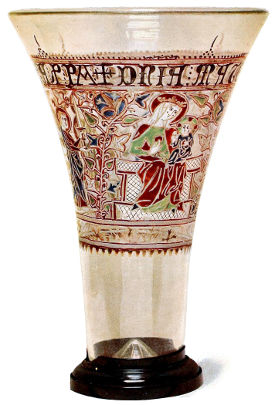
Hope collection, enamelled beaker from, in the British Museum, 163-164, 179-180
Houghton, John, on English glass, 317-319
Howell, James, Epistolæ Ho-Elianæ, 312
Hu, the glass made by, at Pekin, 349
Humpen, cylindrical beaker, 266-268
Hydrofluoric acid, used for etching glass in seventeenth century, 281-282
Hydrofluoric acid, glass etched by, 287-288
Indian glass, 343-347
Indian glass, no early glass known, 343
Indian glass, engraved glass of Mogul times, 343
Indian glass, enamelled glass of Mogul times, 343
Indian glass, contemporary native glass, 344-346
Indian glass, how made, 345
Indian glass, the furnaces, 345
Indian glass, its artistic qualities, 346
Industrial period in history of glass, 18
Inlay of glass, Roman, 53-55
Inlay of glass, Gothic, 140-142
Inlay of glass, on church furniture, 140-141
Inscriptions on Syrian glass, 58
Inscriptions on Roman glass, 58, 87-88
Inscriptions on French glass, 237-238
Inscriptions on English glass, 329-330
Intaglios and cameos of late Greek glass, 47-48
Ireland, glass made in, 336
Iridescence of glass, 16-17
Iron oxides, colours derived from, 17
Jacobite glasses, 329-330
Japan, practically no native glass, 354
Japan, glass from Dolmen tombs, 354 note
Japan, glass in Shoso In treasury, 354-355
Japan, Sassanian influence, 355
Japan, glass from prehistoric tombs, 355
Jasper-glass of Venetians, 207
Jeremiah on the manufacture of soap, 41
Jewish glass-makers in Syria, 118, 148
Jewish pedlars of glass, 82 note
Jewish symbols on cemetery glass, 94
Junius Bassus, the opus sectile in his Basilica, 54-55
Kent, North, Roman glass from, 86
Kent, North, glass from Jutish tombs, 110, 113
Khosrau, Nassiri, travels of, 149 note
Khosroes, bowl of, 104-105
Kinsky family and the Bohemian glass industry, 286
Kouyunjik, glass from, in British Museum, 39-40
Krautstrunk, a German form of beaker, 255, 262
Kreybich, wandering glass-hawker, 286
Kugler, a class of engravers on glass, 284
Kundmann’s glass from bone and tobacco ash, 292
Kunckel, Johann, 288-291
Kur-fürsten Humpen, 267
Kyanos, probably blue glass, 34-35
Lace glass, 40, 46, 205-206
Lace glass, how far made in Germany, 269-270
Lamp, master form in Saracenic glass, 156-157
Lamp, conical cup, the typical form in glass, 157
Lamp, Saracenic, wick, how fixed, 157, 342
Lamps of St. Sophia, 97
Lamps in Venetian pictures, how suspended, 156
Lannoy, Cornelius de, 307
Lapis lazuli, imitation of, in glass, 22, 32, 35, 56
Lapis lazuli, enamel on Saracenic glass, 152
Latticinio or Lattimo, 203-205
Latticinio imitating porcelain, 204-205
Latticinio, festooned, 205
Latticinio, recipe for preparation, 217
Lattimo, see Latticinio.
Lattisuol, see Latticinio.
Lead, amount in flint-glass, 319
Lead-glass made by Jews, 118, 131
Lead-glass, Neri and Merret on, 316-317
Lead-glass, see also Flint-glass.
Lehmann, Caspar, engraver on glass, 279-280
Lennard collection, glass from, 332
Liao, Chinese name for glass, 353 note
Liége, glass made at, 242, 315
Lily of the Valley, on enamelled glasses, 267
Lime, importance in composition of glass, 8-9, 227-228
Literature of glass, essentially French, 226
Liu-li, old Chinese name for glass, 347
Lorraine, charter granted to glass-workers, 230
Lorraine, importance in history of glass, 231-232
Lorraine, tables quarrées of, 234 note, 303
Lorrainers in England, 303-305
Lorrainers driven from Sussex, 304
Lorrainers, their wanderings, 304-305
Lotus decoration on Saracenic glass, 154
‘Luck of Eden Hall,’ 161-162
‘Lustre’ and lustro, 212 note
Lyons, Roman glass from, 82
Magic, early mediæval works on, 119
Magnesia in Pliny means manganese, 77 note
Magnesia in Saracenic glass, 151
Malleable glass, 78-79
Manganese in glass, changes of colour, 17
Manganese purple in primitive glass, 28-29
Manganese in Roman glass, 77
Manganese and Magnese, 218 note
Mansell, Sir Robert, 311
Mansell, Sir Robert, his patents, 305, 311-314
Mansourah, glass made at, 149, 167
Mappæ clavicula, notices on glass, 121
Mariegole, rules of Venetian glass-workers’ guilds, 181-182
Martial on Roman glass, 73-74, 82 note
Mathesius quoted, 253, 262, 264
Mathesius, Sermons for Miners, 262-263
Matricole, rules of glass-workers’ guilds in Venice, 181-182
Mazer-like forms in glass, 252
Mediæval treatises on alchemy, etc., 119-124
Mediæval glass, rarity of, 133-134
Memlook Sultans, art of, 147-148
Merret, Art of Glass quoted, 7
Merret, on properties of glass, 7
Merret, on glass of lead, 316-317
Mesomedes on glass-houses, 80
Milanesi, treatises on preparation of glass, 217
Milch-glas, 291
Millefiori glass of Romans, 49-52
Millefiori glass, Madrepore patterns, 49
Millefiori glass, relation to Egyptian ‘fused-mosaics,’ 49
Millefiori glass, how built up, 50-51
Millefiori glass, peacock patterns, 51
Millefiori glass, agate patterns, 51
Millefiori glass of Venetians, 207
Mirror of Catherine of Arragon, 306
Mirrors of glass from Roman tombs, 55-56
Mirror of glass in Middle Ages, 138-139
Mirror Venetian, 209-211
Mirrors, Venetian, imitated by Germans, 209
Mirrors, Venetian, frames of, 210
Mirrors, Venetian, of ‘steel,’ 210 note
Mirrors, Venetian, exported to East, 211
Mirrors of plate-glass, 210, 235-236
Monza, glass in treasury, 99
Mosaic-workers from Constantinople, 96
Moret collection in British Museum, 85
Moselle district—Roman glass, 83
Mosque lamps or lanterns, 155-156
Mosque lamps suspended from spheres, 156
Mosque lamps from Sultan Hassan mosque, 156, 168
Mosque lamps from Cairo, 167-169
Mosque lamps inscription on, 167-169
Mosque lamps abnormal types, 169-170
Mosque lamps made in Venice for the Turks, 171-172
Moulded glass of Phœnicians and Romans, 56-58
Munich Schatzkammer, glass in, 280
Murano, furnaces stopped in late summer, 182
Murano, the guilds, how organised, 182-183
Murano, description of, 201, 216
Mycenæan age, glass of, 33-37
Mycenæan glass from bee-hive tombs, 35-36
Nailsea glass-works, 336
Natron as a source for soda in glass, 13, 26, 77
Natron Lakes of Lower Egypt, 106
Neri, Antonio, his Arte Vetraria, 219
Neri, various translations of, 289
Neri, upon glass of lead, 316-317
Nesbitt, Mr., catalogues by, 51 note
Netherlands, glass of, 240-244
Netherlandish glass, mediæval forms, 252
Netherlandish school, glass in pictures of, 243, 244, 251-252
Nevers, glass made at, 232-234
New Testament, allusion to glass in, 42 note
Nineveh, glass from, 39-40
Nobility, claims to, by glass-workers, 230-231
Norman versus Lorraine glass, 234 note
Normandy, glass made in, 234-235
Normandy, glass-workers from, in England, 304-305
Nuppen or ‘Prunts,’ 253
Nuremberg mirrors, 138-139
Nuremberg, Venetian glass imitated, 256
Nuremberg, enamelled glass of, 271-272
Ochsenkopf humpen, 268
Onyx glass, Greco-Roman, 68-70
Opus sectile as wall-covering, 54-55
Oriental influence, in Europe, 89-90
Oriental influence, on Germanic jewellery, 107-108
Oriental influence, on Mediæval German glass, 114-117
Orleans, glass made at, 238-239
Orschall’s Sol sine veste, 290
‘Painted’ enamels on Venetian glass, 208
‘Painted’ enamels on German glass, 273-274
Palissy on cheapness of glass, 228
Paraison, term explained, 14
Papyrus of Leiden, 120
Pass-glas, narrow cylinder, 269
Passini, on the Treasury of St. Mark’s, 100 note
Pâte de Verre of Henri Cros, 359-360
Patents and licences to ‘adventurers,’ 311-314
Paternoster Kugel, 292
Paternosters, a kind of bead, 184
Paul the Silentiary quoted, 97
Pax, Gothic, how painted at back, 141-142
Percivall, Thomas, 309, 310, 311
Perle a rosette, see Chevron beads.
Persian glass, 172, 338-342
Persian glass, rarity before seventeenth century, 172
Persian glass, Venetian origin, 338-341
Persian glass, earlier examples, 339
Persian glass, enamelling on, 339
Persian glass, shapes of blown glass, 339-340
Persian glass, engraved glass, 340-341
Persian glass, Chardin quoted, 341-342
Petrie, Dr. Flinders, on manufacture of glass in Egypt, 22-23, 24-25
Phœnician coast towns, early moulded glass, 57-58
Phœnician glass-makers, Pliny on, 76-78
Physical properties of glass, 10-12
Pictures of old masters, glass in, 202-203, 243, 244, 251-252, 254-255
‘Pillar moulding’ on early Roman glass, 63
‘Pillar moulding’ on Byzantine glass from Egypt, 106
Plate-glass, 210
Plate-glass, French invention, 235
Pliny on preparation of glass, 76-79
Pliny on magnes lapis and magnesia, 77
Podgoriza bowl, 95
Pointillé engraving on glass, 297-298
Poitou, Roman glass found in, 84-85
Po-li, Chinese name for glass, 347
Pompeii, glass from, 60, 69-70
Pontil or punto, 14
Porcelain, relation to glass in history, 3
Porcelain, imitated by lattimo glass, 205-206, 239, 249, 290, 291, 334
Portland or Barberini vase, 68-69
Potash used for inland glass, 11, 136
Potash, source of, 13
Potash, glass maintained in Germany, 257-258
Pottery, relation to glass in history, 2-3
Pretender, the, his head on wine-glasses, 330
Primitive glass, 18-42
Primitive glass, restricted use of, 20
Primitive glass, Greek and Egyptian names, 20
Primitive glass, of Egyptians imitates native stones, 21-22
Primitive glass, late survivals, 37-38
Primitive period in history of glass, 18
Procello or ‘spring-tool,’ 15
‘Prunted’ beakers, of Anglo-Saxons and other Germanic tribes, 110-112
‘Prunted’ beakers, how made, 111
‘Prunted’ beakers, found in Illyria, 111
‘Prunts,’ on German glasses, 253
‘Prunts,’ restriction of term, 253 note
‘Prunts,’ practical use of, 253 note
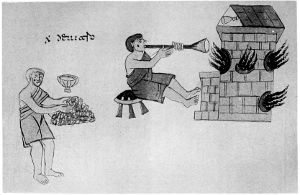
Rabanus, Maurus, glass furnace in MS. of, 124-25
Ravenscroft, his flint-glass, 318
Red colours in Egyptian glass, 27-28
Red opaque glass confined in Egypt to inlays, 28
Reichenau, Byzantine glass on island of, 114
Reichs-adler Humpen, 267
René, King, patron of glass-makers, 135, 229
Retabulum from Westminster Abbey, 141
Reticelli, vetro a, 205-206
Rhages or Rhé, fragments of glass from, 173
Rhodes, primitive glass from, 36, 37-38
Rhodes, glass from, 342
Riaño, Don Juan, on Spanish glass, 246, 247
Rib-twisted stem, 326
Rings (Annuli) of glass, 131
Rock-crystal, glazed by Egyptians, 20
Rock-crystal, carvings in, 70
Rock-crystal, Byzantine school of carving, 103-104, 118
Rock-crystal, carvings from Western Asia, 118
Rock-crystal, engraved by Saracens, 145-146
Rock-crystal, Italian engravers on, 279
Roemer, how built up, 254-255
Roemer, a form exceptional in England, 315
Roemer, in pictures of Dutch school, 244
Roemer-shaped goblets, 254-255
Roemer Vischer, his three daughters, 295
Roman glass, 48-88
Roman glass, the earliest Hellenistic in character, 48
Roman glass, in the main not dependent on Greece, 48-49
Roman glass, Millefiori glass, 49-52
Roman glass, colours of, 52
Roman glass, glass in floor-mosaics, 53 note
Roman glass, wall decoration, 53-54
Roman glass, Opus sectile in glass, 54-55
Roman glass, window-glass, how made, 55
Roman glass, mirrors, 55-56
Roman glass, coloured pastes, Lapis lazuli, 56
Roman glass, moulded glass, 56-58
Roman glass, moulded ‘hollow-ware,’ 57-58
Roman glass, from Britain, blown into moulds, 58
Roman glass, blown into silver casing, 58 note
Roman glass, spread of manufacture, 60-61
Roman glass, in Britain, 61, 81, 86-87
Roman glass, cinerary urns, 61
Roman glass, early spread in Gaul and Spain, 61, 78
Roman glass, relation of shapes to pottery, 63
Roman glass, stringings and threadings, 64
Roman glass, enamelled glass, 65-67, 102
Roman glass, engraved and sculptured, 67-75
Roman glass, engraved and sculptured, from Canosa, 68
Roman glass, engraved and sculptured, onyx or cameo carved, 68-70
Roman glass, engraved and sculptured, ‘Diatretum’ carved, 71-73
Roman glass, engraved and sculptured, late carvings in low relief, 74-75
Roman glass, engraved and sculptured, engraved by wheel, 74-75
Roman glass, method of preparation, 76
Roman glass, Pliny quoted, 76-79
Roman glass, first made near Cumæ, 78
Roman glass, glass-houses, 80
Roman glass, in Gaul, 81-85
Roman glass, abundance in Eastern and North-eastern Gaul, 81
Roman glass, in West German Museums, 83-84
Roman glass, chronological classification, 83-84
Roman glass, in Western Gaul, 84-85
Roman glass, inscriptions on, 87-88
Roquetta, term explained, 13
Rothschild, Lord, carved cup of Roman glass, 73
Ruby-red, perhaps known to Ancients, 52
Ruby-red, in mediæval window-glass, 133
Ruby glass of Kunckel, 289-291
Ruby glass examples of, 291
Rudolph II. patronises carving of rock-crystal, 278-279
Rui or rulli, small window-panes, 182
Ruimer or roemer of Dutch, 295
Sabellico on Venetian glass, 201
Sacro catino of Genoa, 98-99
Saladin brings new influence to Egypt, 171
Salviati, 214, 227 note
Samarkand, glass-makers transported to, 168
Samarkand, description of glass of, 339
Sandrart on engraving of glass, 279-282
‘Sapphirus’ altar of St. David’s, 98 note
Sapphirus, term used for blue glass paste, 131
Sapphirus, see Lapis lazuli.
St. Anastasia, Rome, glass bowl at, 98
St. Gobain, plate-glass of, 210, 235
St. Ildefonso, royal glass-works, 250
St. Mark’s treasury, enamelled Roman glass, 66-67
St. Mark’s treasury, Diatretum glass, 71-73
St. Mark’s treasury, description of glass in, 99-102
St. Sophia, lamps and windows, 96-97
Saracenic art, revolution in twelfth century, 170-171
Saracenic art, influence of Mongol invasion, 171
Saracenic carved glass, earlier than enamelled, 144-146
Saracenic enamelled glass, where made, 149
Saracenic enamelled glass, nature of ‘metal,’ 150-151
Saracenic enamelled glass, composition of, 151
Saracenic enamelled glass, magnesia in, 151
Saracenic enamelled glass, nature of enamels, 151
Saracenic enamelled glass, use of Lapis lazuli, 152
Saracenic enamelled glass, use of gold in decoration, 153
Saracenic enamelled glass, motives of decoration, 154-155
Saracenic enamelled glass, ‘canting badges’ of Sultans, 155
Saracenic enamelled glass, Chinese motives in decoration, 155
Saracenic enamelled glass, signatures of artist, 155
Saracenic enamelled glass, forms of lamps, 157
Saracenic enamelled glass, wick of lamps, how fixed, 157
Saracenic enamelled glass, beakers of lamp-like form, 158-160
Saracenic enamelled glass, construction of base of beakers, 159
Saracenic enamelled glass, famous beakers, 161-164
Saracenic enamelled glass, vessels filled with holy earth, 164-165
Saracenic enamelled glass, long-necked bottles, 165-166
Saracenic enamelled glass, bowls and dishes, 166-167
Saracenic enamelled glass, mosque lamps, 167-169
Saracenic enamelled glass, decline of, 168-169
Saracenic enamelled glass, origin of art, 170
Saracenic enamelled glass, found in China, 348
Sargon, glass engraved with name of, 40
Saroldo family at Nevers, 233
Sassanian glass, 104-105
Sassanian influence in Japan, 355
Scarpaggiato making glass in Bavaria, 271
Schaper, Johann, painter on glass, 272-273
Schmelz glass of the Venetians, 207-208, 218-219
Schmoranz, G., work on Saracenic glass, 150 note
Schuermans, Judge, 222, 241
Schurman, Anna Maria van, 295
Schwanhart family, engravers on glass, 280-283, 288
Schwinger, Hermann, engraver on glass, 283
Shantung, glass made in, 353
Sherbet-jugs of opaque white glass, 342-343
Sidon, Pre-Roman glass, 57, 59, 78
Sidon, inscription on glass from, 87
Sidon, Venetians at, 176
Signatures of makers on Roman and Phœnician glass, 87-88
Signatures, rarely found on glass, 88
Signatures on Saracenic enamelled glass, 155
Silesia, engraved glass of, 285
Silica, amount of, in glass, 9-10
Singer, Mr. J. Webb, his collection of glasses, 324 note, 328
‘Singing glasses,’ 331
Slade collection, catalogue of, 51 note
Slavonic tombs, no glass in, 114 note
Snuff-bottles, Chinese, 351-352
Soap-making, its relation to glass, 41-42
‘Soap of glass’ (manganese), 77
Soda, the normal alkali of glass, 9-10
Soda, or maritime group of glass, 10-11
Soda, source of, 12-13
Soda, in Venetian glass, 214
South-Saxon Cemetery, Byzantine glass from, 107
Southwark, early glass-houses, 302, 312
Spanish glass, 245-250
Spanish glass, green glass of south, 245-246
Spanish glass, literature, 246 note
Spanish glass, Catalonia, 247-249
Spanish glass, Altarists and Muranists, 249-250
Spanish glass, decline in eighteenth century, 250
Spanish Netherlands, glass of, 240-244
‘Spear-butt’ shaped lamps, 97
‘Spear-butt’, in use in Italy, 158
Spechter, cylindrical beaker, 266
Specific gravity of glass, 12
Spessart forest, glass from, 266
Spheres in connection with suspended mosque lamps, 156-172
‘Spinning’ or ‘flashing’ to form a disc of glass, 15
Splashed decoration on Egyptian cosmetic pots, 31
Splashed decoration on Roman glass, 64
Splashed decoration on Venetian glass, 208
Splashed decoration on French Renaissance glass, 238
Splashed decoration on glass made at Bristol, 335-336
Stained glass windows, of St. Sophia, 96
Stained glass, French, composition of, 131
Stained glass how coloured, 132-133
Steinschönau, glass industry, 286, 293
Stimpler, bungling workman, 281, 285
Stip engraving of Dutch, 297-298
Strabo on Roman glass, 60-61, 80
Strabo on glass of Alexandria and Syria, 80
Sulphur in glass, changes of colour, 17
Suppialume process, 187
Susa, glass from, 41 note
Susa, Sassanian or Byzantine glass from, 104
Sussex glass-work, 139-140, 301-302
Switzerland, glass painters of, 263-264
Synesius, treatise on alchemy, 120
Syria, glass early made in, 38-39, 44-45
Syria, importance in history of glass, 122-123
Syria, glass made during Frankish occupation in coast towns, 180-181
Syrian glass of Middle Ages, 118, 148-149
Syrian glass-workers in Gaul and Rome, 82-83
Syrian tombs, glass from, 59-60
Syrian treatises on alchemy, etc., 122-124
Syrian manufacture of glass vessels, 123-124
Syrian glass-furnace described, 124
Tassie, James, his glass paste, 336
Tell-el-Amarna, glass from, 22, 23-25
Theophilus, his Schedula Diversarum Artium, 126-130
Theophilus on gilt glass, 92-93
Theophilus, his glass furnace, 127-128
Theophilus, materials for glass-making, 128
Theophilus, blowing of glass, 128-129
Theophilus, the ‘cylinder process,’ 128-129
Theophilus on enamelling of glass vessels, 130
Theophrastus on the word Kyanos, 35
Tiffany, Messrs., favrile glass, 357, 359
Timur or Tamerlane, his conquest, 168
Timur transplants glass-workers, 338
Tobacco ash, glass from, 292
Treviso, discovery of chevron beads, 189
Trionfi di Tavola, 213
Turkish element in later Saracenic art, 147-148
Tyre, glass-works in Middle Ages, 148-149
Tiryns, glass inlay in alabaster slabs, 34
Ultramarine, source of blue in Saracenic enamels, 152
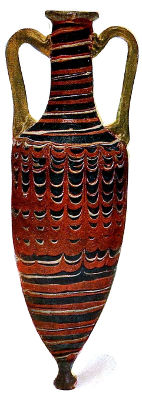
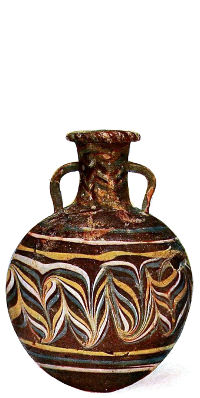
Unguentaria or Phialæ of primitive glass, 22, 23, 29-30, 33, 36-37
Unguentaria, wavy decoration of, 23
Unguentaria, inscriptions on Egyptian, 30-31
Unguentaria from tombs in Southern Italy and Greek islands, 36-37
Unguentaria from Crimean tombs, 37
Uranium, opal glass from, 206 note
Urinalia of glass, 134, 139 note
Varpelev, enamelled glass from tombs at, 66
Veneer of glass used by Romans, 52-54
Venetian glass, 174-219
Venetian glass, made for Turks, 171-172
Venetian glass, sources of information, 176 note
Venetian glass, early mention of, 177
Venetian glass, German pedlars, 177
Venetian glass, manufacture forbidden in Venice, 177
Venetian glass, early manufacture of beads, window-glass, and spectacles, 178
Venetian glass, Germans export glass, 178-184
Venetian glass, competition with crystal-cutters, 178-179, 184
Venetian glass, early commerce with Syrian ports, 179
Venetian glass, early enamelled glass, 179
Venetian glass, little Oriental influence in fifteenth century, 181
Venetian glass, Muranese and Venetian guilds, 183
Venetian glass, manufacture of beads, 185-187
Venetian glass, exported to England and Low Countries, 192
Venetian enamelled glass of fifteenth century, 192-199
Venetian enamelled glass imitates enamels on copper, 193
Venetian enamelled glass, semé gilding, 195
Venetian glass, Cristallo, 200-202
Venetian glass, Cristallo, varieties of, 203-209
Venetian glass, Cristallo plaque engraved in intaglio, 209
Venetian glass, Cristallo mirrors, 209-211
Venetian glass, Cristallo chandeliers, 211-212
Venetian glass, Cristallo, attempts to check decline, 212-213
Venetian glass, Cristallo, cut and engraved, 213
Venetian glass, Cristallo, revival of nineteenth century, 213-214
Venetian glass, Cristallo, special qualities of, 214
Venetian glass, Cristallo, literature of, 214-219
Venetian glass, Cristallo, preparation, 215, 217-219
Venetian glass, Cristallo, early practical treatises, 217
Venetian glass in Western Europe, 220-223
Venetian glass, Cristallo, early importation to Germany, 256
Venetian glass, Cristallo, importation into England, 314-315
Venetian glass-workers, restrictions on emigration, 222-223
Venetian glass-workers, in Netherlands, 240-241
Venetian glass-workers, in England, 307-308
Venetian school, suspended lamps in pictures of, 156
Venetian school, glass in pictures of, 202-203
Verre or voirre, use of the French word, 135-136
Verre de fougère, 221, 234
Verre de fougère, in mediæval times, 113-114
Verre de fougère, in France, 134-135, 136
Verrerie, term explained, 1
Verroterie, term explained, 1, 19
Verzelini, Jacopo, 307-308
Vetro di trina from Nineveh, 40
Vetro di trina from Canosa, 46, 50 note
Vetro di trina of Murano, 205-206
Vienna, Saracenic enamelled glass in cathedral, 164-165
Vienna, Schatzkammer, glass from, in Museum, 280
Waddesdon collection, glass in, 163, 193, 206, 252 note
Walloon Church at Southampton, 304-305
Warmbrunn in Silesia, glass engraving, 285-286
Waterford, glass-houses at, 336
Webb of Stourbridge, his cameo glass, 358
Weights for coins in glass, 146-147
Westminster retabulum, inlay of glass, 141
Willkomm humpen, 266
Windows of French churches, composition and colours, 132-133
Wine, when first bottled, 322
Wine-bottles, early English, 322
Wine-bottles, stamps on, 322
Wine-glasses, see Drinking-glasses.
Winter, Friedrich, Silesian glass engraver, 285
Wolf, engraver by stip process, 297-298
‘Würzburg’ flask in British Museum, enamels on, 153
Yard, a form of drinking-glass, 331
Yellow from antimony in primitive glass, 29
Yellow, source of, in mediæval window-glass, 133
Zozimus, treatise on alchemy, 120
Zunft-becher or guild glasses, 270
Zwischen gläser, 274-275
Printed by T. and A. Constable, Printers to His Majesty
at the Edinburgh University Press