MOUNT OMEI AND CHOU KUNG SHAN
There are vague traditions that Mount Omei was a centre
of primitive nature-worship long before the days of Buddhism.
There is a passage in the Shu Ching from which we learn that
the semi-mythical emperor Yü (about the twenty-third century
B.C.), after the completion of some of the famous drainage and
irrigation works with which his name is associated, offered
sacrifices on (or to) certain hills named Ts'ai and Mêng. It is
a disputed point among the commentators where these hills are.
Mêng is said to be one of the mountains that overlook Ya-chou,
and we shall see in Chapter VIII. that one of those mountains
is still the resort of pilgrims. As to Ts'ai, one commentator
at least has inclined to the opinion that it must be looked
for in the Omei range (see Legge's Chinese Classics, vol. iii.
part i. p. 121). If this identification be correct, we must regard
the brief notice in the Shu Ching as the oldest reference in
extant literature to Mount Omei. The student of Chinese who
wishes to pursue further the vexed question of Mêng and Ts'ai
will find a discussion of it in the 16th chüan of the Ssuch'uan
T'ung Chih. The probability seems to be that both Mêng and
Ts'ai were close to Ya-chou, and that neither of them should
be identified with Omei. Mêng seems to be one of the hills that
lie to the south of the city; Ts'ai may or may not be the somewhat
famous mountain generally known as Chou Kung Shan, or
the Hill of Duke Chou, which is situated a couple of miles to
the east. Chou Kung, who is said to have died in B.C. 1105,
is perhaps chiefly known to Europeans as the legendary inventor
of the famous "south-pointing chariot," but he is regarded by
the Chinese as a pattern of many virtues. His zeal for the
public good was so great that he seems—if we may believe
Mencius—to have anticipated the all-night sittings of the
House of Commons. His merits indeed were of so extraordinary
a nature that, as we know from the Lun Yü, Confucius regarded
it as a sign of his approaching dotage that for a long time he
had ceased to dream of Chou Kung.
Other people besides Confucius were in the habit of dreaming
of this great and good man. The hill near Ya-chou, according
to a story preserved in the official annals of Ssuch'uan, owes its
name to a dream-vision that came to the famous Chinese general,
Chu-ko Liang. This distinguished warrior flourished in the
second and third centuries of our era. He made his name by
his successful campaigns against the Wild Men of the West—the
Man-tzŭ and others—and on one occasion when he was
proceeding at the head of his army to inflict chastisement
upon them he spent a night on the slopes of the Ya-chou Hill
and dreamed that Chou Kung paid him a visit. He regarded
this as of such happy omen for the success of his expedition that
he immediately caused a temple to Chou Kung to be erected on
the auspicious spot. Since that time, the hill—which may or
may not have been already sacred, under the name of Ts'ai,
to the memory of the Emperor Yü—has always been known as
Chou Kung Shan. The fame of the general Chu-ko Liang has
almost rivalled that of Chou Kung himself. This "darling hero
of the Chinese people," as Professor Giles calls him, has had
temples erected in his honour in many towns of Ssuch'uan,
and he is a well-known and popular figure on the Chinese
theatrical stage.
BODHIDARMA
Bodhidarma (逹摩大師) is the original of the Ta Mo so
often found in Ssuch'uanese temples. Catholic missionaries,
struck by the sound of the name and the fact that Ta-Mo is
sometimes found wearing an ornament shaped like a Christian
cross, have clung to the idea that Ta-Mo was no other than the
Apostle St Thomas. (See Croix et Swastika, by Father Gaillard,
pp. 80 seq.) Bodhidarma is regarded as the founder of the Zen
sect in Japan. Japanese children know him well, for he is a
conspicuous object in the toy-shops in the form of the legless
Daruma. (See Lafcadio Hearn's charming essay in A Japanese
Miscellany.)
"GODS" IN BUDDHISM
NIRVANA
On this subject may be consulted the passage on the
"Eel-wrigglers" in the Brahma-gâla Suttanta, translated by
Rhys Davids in the Sacred Books of the Buddhists, vol. ii.
Buddhism refrains from denying, rather than distinctly affirms,
the existence of the Brahmanical gods; but these gods, if existent,
are regarded as neither omnipotent nor immortal. They are
subject to the law of karma just as man himself is subject. The
Arahat is greater than any "god" because released from all
change and illusion, to which the "gods" are still subject.
(See Rhys Davids, Hibbert Lectures, pp. 210 seq., 4th edn.) The
abolition or retention of the Brahmanical deities would really
make little or no difference to the philosophical position of
canonical Buddhism.
NIRVANA
The view of Nirvana set forth in the text is that taught
by Professor Rhys Davids, the veteran scholar to whom all
European students of Buddhism owe so deep a debt of gratitude.
(See his Buddhism, Hibbert Lectures, American Lectures, and
his valuable contributions to the Sacred Books of the East.
With regard to Nirvana, see especially his Questions of King
Milinda, vol. i. pp. 106-108 and vol. ii. pp. 181 seq.) As regards
the tanha or "thirst" for existence, which according to the
Buddhist theory keeps us in the net of illusion and prevents
the attainment of Nirvana, Huxley (Evolution and Ethics)
mentions as a curious fact that a parallel may be found in the
aviditas vitae of Stoicism.
The Japanese views of Nirvana are set forth clearly and
authoritatively in Fujishima's Le Bouddhisme Japonais. "Selon
les écoles du Mahâyâna, ce qui est vide au dedans et au dehors
c'est l'existence composée et visible (samkrita): l'anéantissement
de ce vide n'est donc pas lui-même le vide, mais plutôt la
plénitude." The author goes on to quote from a sutra which
declares that "illusion passes away; reality remains; that is
Nirvana." To an English reader this naturally recalls some of
Shelley's lines in Adonais, too well known to quote. Japanese
Buddhism has, of course, developed somewhat on lines of its
own. The popular Buddhism of Japan is portrayed with rare
insight by Lafcadio Hearn, as in his Gleanings from Buddha-Fields,
pp. 211 seq.
Among recent attempts to escape from the pessimistic conclusion
that, according to strict Buddhism, Arahatship must
lead after all to complete extinction, Schrader's interesting essay
in the Journal of the Pali Text Society, 1904-1905, is worth
consulting. The question is one of deep philosophic interest, but
a discussion of it cannot be attempted in the narrow space
at our disposal here.
THE MAHAYANA
For explanations of the rise of the Mahayana, see (among
many other authorities) Max Mūller's India, p. 87 (1905 edn.)
and his Last Essays (First Series) pp. 260 seq. (Longmans: 1901);
see also p. 376 in R. Sewell's essay on Early Buddhist Symbolism
(J.R.A.S., July, 1886). For the growth of the Mahayana and
kindred schools in China, the works of Beal, Edkins, Eitel and
Watters are among the first that should be consulted. There
is still a great deal that is mysterious in the early history of
Mahayana and allied systems, and it is reasonable to hope that
the discoveries recently made, and still being made almost daily
by Stein and others in Chinese Turkestan and neighbouring
regions, will throw a flood of light on the whole subject, and
perhaps destroy many existing theories regarding the history
of Buddhism during the ten or twelve first centuries of the
Christian era.
ANTIQUITIES OF MOUNT OMEI
As Baber's discovery of the chüan tien or spiral-shaped brick
hall and the bronze elephant which it contains aroused very
natural enthusiasm among persons interested in Far Eastern
antiquities, and is still repeatedly referred to in connection with
Chinese archæology, it is with hesitation that I suggest a doubt
as to whether either the building or the elephant is as old as
Baber—and others after him—have supposed. (See Supplementary
Papers, R.G.S., vol. i. pp. 34-36, and Archibald Little's
Mount Omi and Beyond, pp. 64-5.)
In the 41st chüan of the Ssuch'uan T'ung Chih there are two
passages relating to the Wan-nien Ssŭ, and one of them Baber
apparently overlooked. It was written about 1665 in commemoration
of a restoration of the Wan-nien and Kuang Hsiang
monasteries under the auspices of a Provincial Governor. In it
occur some remarks of which the following is a rough translation.
"From the T'ang to the Sung dynasties the name of the
monastery was Pai Shui P'u Hsien Ssŭ. In the time of Wan
Li of the Ming, its name was changed to Shêng-shou Wan-nien
Ssŭ. As originally built (yüan chien) it contained a tsang ching
ko (i.e. a library) consisting of a revolving (circular?) spiral
structure of brick, strongly built, of exceptionally delicate workmanship,
very lofty and imposing, and of a beauty unsurpassed
in the world." Now the existing tien is a most curious building
of a foreign (probably Indian) type, but to describe it as lofty
and imposing and of delicate and elaborate workmanship would
be to spin a traveller's yarn of the baser sort. How, without
impugning the good faith of the chronicler, can we reconcile such
a glowing description with existing facts?
MOUNT OMEI
When we learn from the local records that the Wan-nien Ssŭ
has been several times destroyed by fire, the obvious supposition
is that the original splendid structure described in my quotation
perished with the rest of the monastic pile. Baber himself points
out that the tusks of the elephant inside the tien are of late date,
the old ones having been "melted off," he was told, "by the
intense heat." It seems natural to suppose that when the rebuilding
of the monastery took place (and it was rebuilt, as we know,
late in the sixteenth or early in the seventeenth century, and again
about 1665) the monks had neither funds nor skill sufficient to
enable them to restore the chüan tien to its pristine magnificence,
and contented themselves with putting up a much smaller and
meaner building, preserving as far as possible the original
peculiarities of design.
This, however, is mere supposition. I now return to our
Chinese authorities, and in the 9th chüan of the Omei-hsien
Chih I find an allusion to the Wan-nien Ssŭ by one Li Hua Nan
(李化楠), an official who apparently flourished in the
seventeenth century. He states most emphatically that the
monastery was restored or rebuilt in both the Sung and the
Ming periods, but had undergone such complete destruction by
fire that nothing was left except a chüan tien belonging to the
period of Wan Li. Wan Li was the reign-title of a Ming
emperor who reigned from 1573 to 1619. That the chüan tien
was carefully and thoroughly restored under Wan Li is admitted
by the authority quoted by Baber himself: the only question
seems to be whether the restoration left enough of the original
building to justify our regarding it as a veritable monument
"fifteen centuries old"—as Baber conjectured—or whether, as
the evidence seems to indicate, the restoration was such that
we have only a small and inferior copy of "a lofty and imposing
building, of a beauty unsurpassed in the world."
No one, so far as I know, has yet drawn attention to the fact
that the spiral building of the Wan-nien Ssŭ is not—or was
not—the only building of its kind on Mount Omei. Among the
few monasteries on the lower slopes of the mountain which I did
not enter is the Hua Yen Ssŭ (not to be confused with the
temple of the Hua Yen Ting mentioned on page 91). It was not
till after I had left the province that I came across a description
of this monastery, which made me much regret that I had not
visited it. I translate the following passage from the Omei-Shan
Chih (quoted in the 41st chüan of the T'ung Chih): "There
is a very ancient and wonderful revolving (circular?) spiral
building (有旋螺殿極奇古), and a tablet of the Shao
Hsing period of the Sung dynasty, on the left side of which are
carved the words '15 li to Omei-hsien' and on the right the
words '70 li to the summit of the mountain.'" The words
used to describe the shape of the "revolving spiral" building
are identical—so far as they go—with those applied to the brick
edifice in the Wan-nien Ssŭ: and the whole passage certainly
implies that, whatever the date of the spiral building in the Hua
Yen Ssŭ might be, it was at any rate prior to the Sung dynasty.
The next visitor to Mount Omei should not fail to examine the
curiosities of the Hua Yen Ssŭ; a close inspection of its spiral
building—if it still exists—and a comparison of it with that of
the Wan-nien Ssŭ might assist us in assigning a date to the
latter, and might perhaps prove that however old the latter may
be it is not without a rival in mere antiquity.
So much for the brick building. What is to be said about
the bronze elephant that Baber so properly admired, and which
he believed to be "the most ancient bronze casting of any great
size in existence"?
Li Hua Nan, the writer who ascribes the chüan tien to the
Wan Li period, goes on to add a piece of information which is
much to our purpose. "There is a P'u Hsien 1 chang 6 ch'ih in
height, with a gilded body, riding a bronze elephant, set up
in the Jên Tsung period of the Sung dynasty." The sentence
is somewhat ambiguous, for the date might refer to the image
of P'u Hsien only and not to the elephant. Baber believed, on
artistic grounds, that the P'u Hsien was of much later date than
the elephant. On the whole, however, it seems probable that
Li Hua Nan referred to both images. The Jên Tsung reign
lasted from 1023 to 1063, so that if we select the middle of the
period we may assign the elephant approximately to the year
1043. This cuts many centuries off the age of the elephant as
reckoned by Baber.
There is no reason for doubting whether so fine a bronze
casting of an animal unknown to China could have been made
as late as the eleventh century. There were still Buddhists in
India at that time, and Chinese pilgrims had not yet given up
the habit of visiting India in search of relics and pei to yeh
(palm-leaf manuscripts). Indian Buddhists, too, frequently came
to Mount Omei. There is, indeed, no necessity for mere guesswork,
for the monastic and provincial records contain ample
evidence that the casting of large bronzes for Buddhist shrines
was, during the Sung period at least, a regular industry in the
city of Ch'êng-tu.
BUDDHA'S TEETH
The numerous miniature "Buddhas" that line the walls of
the present chüan tien have attracted the attention of several
European visitors, and perhaps deserve a few words of comment.
Some are the property of pilgrims who leave them in the holy
building in order that they may acquire sanctity, but the greater
number are evidently antique and seem to be of uniform pattern.
Baber was informed that they were of silver—darkened with age
and the smoke of incense. Mr Archibald Little says they are
of bronze. I made my own enquiries on the matter and was
assured by the monks that they were of iron. Where did they
come from? I conjecture that they are the images that once
adorned a vanished hall of the Wan-nien Ssŭ, known as the
San Ch'ien T'ieh Fo Tien—Pavilion of the Three Thousand Iron
Buddhas. I cannot find any history of this building, but from
a poem by Ku Kuang Hsü, a Ssuch'uan chief justice of the
Ming dynasty, I gather that it was remembered but had disappeared
by his time. It existed in the Sung dynasty, for it
is mentioned by one Fan Ch'êng Ta (范成大) who visited
it during that period. The number of the images is easily
explained as an allusion to the three thousand disciples who are
said to have sat at the feet of P'u Hsien in the days when,
according to the legend, that great Bodhisattva expounded the
Good Law amid the forests of Mount Omei.
"BUDDHA'S TEETH"
The most famous of the supposed teeth of Buddha is, of course,
the celebrated relic preserved in Kandy. The Buddhists of
Ceylon will have none of the story that the original tooth was
ground into powder by a pious Portuguese archbishop of the
sixteenth century, and they firmly believe that the genuine relic
still reposes in Kandy at the Malagawa Vihara. China possesses,
or is supposed to possess, several of the alleged Buddha's teeth,
but they seem to have acquired no more than a local reputation.
One—similar in appearance to that of Mount Omei—is described
by Fortune as being in possession of a monastery at Fu-chou.
A writer in the Fan Ju Tzŭ Chi (范汝梓記), commenting
upon the specimen in the Wan-nien Ssŭ, remarks that it weighs
15 catties, equivalent to about 20 lbs. He says that in the
Ching Yin (淨因寺) in Ch'êng-tu there is one that weighs
3-1/3 lbs., and another in the Chao Chiao Ssŭ (昭覺寺) in the
same city that weighs 9-1/2 lbs. He goes on to describe a far
more remarkable specimen that had the singular property of
producing out of its own substance myriads of other shê li or
Buddhistic relics, some of which flew off into space while others
fell on the floor and knocked against the furniture with a jingling
sound. This surprising tooth appeared by special command
before the emperor, but we are not informed whether the séance
was a successful one. Our historian shows something of a
tendency to indulge in frivolous speculations regarding the
capacity and measurements of the mouth that could accommodate
teeth of such monstrous sizes and singular properties,
and he points out that according to tradition a true Buddha's
tooth is always marked with certain sacred symbols, such as the
dharma chakra or Wheel of the Law.
Marco Polo mentions a great embassy sent by the emperor
of China to Ceylon in 1284 for the purpose of obtaining certain
relics of "our first father Adam," such as his hair and teeth
and a dish from which he ate; and he remarks that the
ambassadors, besides acquiring the dish, which was of "very
beautiful green porphyry," and some of the hair, "also succeeded
in getting two of the grinder teeth, which were passing great and
thick." It need hardly be said that the monarchs of the Yüan
dynasty took a very considerable interest in Buddha, but none
at all in "our first father Adam." That they sent embassies
to Ceylon for Buddhist relics is probably true, for the fact is
mentioned in Chinese Chronicles; but it is impossible to say
whether any of the numerous "teeth of Buddha" that have
appeared in different localities in China formed part of the relics
then brought from Ceylon. (The notes appended to Cordier's
edition of Yule's Marco Polo, vol. ii. chap. xv., should be consulted
by all interested in the subject of the migrations of
Buddhist relics.)
THE K'AI SHAN CH'U TIEN
The name of this monastery shows that it claims to be one
of the original religious foundations of Mount Omei. According
to tradition it was here that P'u Kung, as related in Chapter VI.,
was gathering herbs when he came across "in a misty hollow"
the tracks of the lily-footed deer that led him to the mountain-top.
The monastery is supposed to have been founded in commemoration
of the occurrence.
TA SHÊNG SSŬ OR GREAT VEHICLE MONASTERY
THE HOLY LAMPS
The old name of this monastery was Hua Ch'êng (化成),
and the name was chosen by its founder, "a holy monk from
the foreign countries of the West," who said that the scenery
reminded him of his native country. Tradition says that he
built the original hermitage of the bark of trees; hence the
additional name Mu-p'i by which the foundation was known
for centuries afterwards. One of the stories about this part
of the mountain is that two hungry pilgrims were fed with
fruit here by a wonderful white monkey.
NOTE 10 (p. 102)
"THE GLORY OF BUDDHA"
Several Chinese descriptions of the Fo Kuang will be found
in the chronicles of Mount Omei and of Omei-hsien, notably
those of Ho Shih Hêng (何式恒) and Yüan Tzŭ Jang
(袁子讓). According to the latter, there are more than five
colours. He describes the appearance somewhat as follows.
The central circle is of jade-green; the outermost circle consists
of a layer of pale red, and the successive inner circles
are of green, white, purple, yellow and crimson. Each beholder,
he says, sees his own shadow in the mist of the central circle.
A crude drawing of the "Glory" may be noticed near the
upper left-hand corner of the Chinese plan of Mount Omei,
which is reproduced in this book.
"THE HOLY LAMPS"
Among good Chinese descriptions of this phenomenon may
be mentioned those of Yüan Tzŭ Jang (袁子讓) of the Ming
and Ho Shih Hêng (何式恒) of the present dynasty. Both
writers have been mentioned in the preceding note. The
former wrote a delightful account of his visit to Mount Omei.
It is in a flowing unpedantic style, and it proves that its writer
had a keenly observant eye and a great liking for old-world
legends combined with a power of working them up into a
graceful narrative.
THE HSIEN TSU TIEN, CHUNG FÊNG SSŬ AND TA O SSŬ
The Hsien Tsu Tien represents the earliest of the Mount
Omei monasteries, and is said to have been built by P'u Kung
in the reign of Ming Ti of the Han dynasty after the famous
episode of the lily-footed deer. Probably if the searchlight of
strict historical enquiry were to be turned on the legends and
records of Mount Omei, it would be found that the mountain
knew nothing of Buddhism until the third or fourth centuries
of our era. It is a significant fact that some of the legends
about P'u Kung—the herb-gathering official who followed the
deer and first saw the "Glory"—state or imply that he belonged
to the Chin period, which did not begin till the year 265.
There is more than a likelihood that the historians of such
ancient monasteries as the Hsien Tsu Tien and the Wan-nien
Ssŭ deliberately ante-dated their foundation in order to throw
back the beginnings of Omei's Buddhistic history to the earliest
possible period. It is almost inconceivable that Omei can have
become the resort of Buddhist monks during the very reign of
the emperor who is credited with the first introduction of
Buddhism into China.
According to the monastic chronicles, the earliest name of
the monastery we are considering was P'u Kaung Tien, "The
Pavilion of Universal Glory." The name was subsequently
altered to Kuang Hsiang Ssŭ (光相寺), and so it was known
during the T'ang and Sung periods. In the time of Hung Wu,
first emperor of the Ming, it was rebuilt and roofed with iron.
Associated with it were four small bronze pagodas, some of the
remains of which are still lying on the ground within the
precincts of the present Chin Tien (which was apparently first
built in the reign of Wan Li of the Ming). A thorough
restoration—carried out during a period of three years—took
place in the second half of the fifteenth century. At the end of
the Ming period it was utterly destroyed—presumably by fire.
It was again rebuilt during the reign of K'ang Hsi of the
present dynasty under the auspices of a Provincial Governor
named Chang (see note 6, paragraph 2), and minor restorations
on a smaller scale have taken place more recently.
The Chung Fêng Ssŭ or Half-way Monastery bears the
alternative name of "The Gathering Clouds," an allusion to
the fact that here the upward-bound pilgrim enters into the
region of mist. It dates from the Chin dynasty (about the
third century of our era) and was restored in the Sung and
Ming periods.
THE TA HSIANG LING
The Ta O Ssŭ is an ancient foundation rebuilt in the first
year of K'ang Hsi (1662). It is one of the principal religious
houses on the mountain, and has a finer site than most of its
rivals. An alternative name is Fu Shou An. This name is
due to the fact that the words Fu Shou—"Happiness and
Longevity"—were carved on a neighbouring rock by a celebrated
recluse of the Sung dynasty named Hsi I, known as
the Wizard of Omei.
YA-CHOU-FU
The military importance of this city was very great so
long as the tribal chiefs and Tibetans had not been reduced to
comparative quiescence. The commander-in-chief of the military
forces of the province was permanently stationed at this frontier
city. (Shêng Wu Chi, 11th chüan.)
THE TA HSIANG LING
There is a small unsettled controversy regarding the name of
the Ta Hsiang Ling. It is possible that the mountain owes its
name not to the legend of P'u Hsien's elephant, but to the
famous general Chu-ko Liang (see note 1). Devout Buddhists
are bound to hold that the name means "The Great Elephant,"
and this is the view taken in all Buddhistic accounts of western
Ssuch'uan and in the maps issued by the monks of Mount Omei.
But other authorities—including the official Topography and the
Shêng Wu Chi (5th chüan)—give the central character not as
象 (hsiang, elephant) but as 相 (hsiang, minister of state),
thereby changing the mountain's name into "The Great
Mountain of the Minister." This minister is none other than
Chu-ko Liang, who is said to have crossed the mountain during
his western campaigns. The "Small Elephant Pass" in the
Chien-ch'ang Valley is similarly metamorphosed into "The
Small Mountain of the Minister," and for a like reason. This
latter mountain, however, is also known officially as the Nan
Shan or South Mountain. (寕遠府南山土名小相嶺皆以武候經過得名: Shêng Wu Chi, loc. cit.)
This note will throw a light on a passage that occurs in Mr
Archibald Little's Mount Omi and Beyond (pp. 204-205) and
exonerate Captain Gill from the charge of inaccuracy.
It may be worth mentioning that a neighbouring mountain
bears the officially-recognised name of Shih-tzŭ Shan, or Lion
Hill, but the T'ung Chih explicitly states that this is owing to
its peculiar shape. There is nothing in the contour of the Ta
Hsiang Ling to suggest an elephant.
CH'ING-CH'I-HSIEN
This little town has had a variety of names during its long
and chequered history, and it frequently changed hands. Its
position was for centuries somewhat analogous to that of Berwick-on-Tweed
during the Anglo-Scottish border wars. The T'ung
Chih states that it passed into the hands of the Chinese after
one of the numerous "pacifications of the West," in the 30th
year of Han Wu Ti (111 B.C.), but it was lost to China many
times after that. Its present name and status as a magistracy
date from the eighth year of Yung Chêng (1730). This was an
epoch in which a series of able Chinese emperors were making
determined and, on the whole, successful efforts to reduce the
Wild West to obedience.
THE LIU SHA RIVER
The Liu Sha is also known as the Han Shui or Chinese water.
It is said to rise in the "Fairy's Cave" (hsien jên tung) in the
Fei Yüeh range. Thence it flows to the Shih Chien Shan or Trial-of-the-Sword
Hill and joins the Chien Shui (澗水) and thereafter
enters the Ta Tu. According to the Huan Yü Chi (寰宇記)
an evil miasma arises from this river every winter and spring,
causing fever.
NOTE 17 (p. 122)
THE FEI YÜEH LING AND HUA-LIN-P'ING
LU TING BRIDGE
This great pass has for centuries been regarded by the
Chinese as a very important strategic point in connection with
their western wars. During the eighteenth century, when
strenuous warfare was being carried on against the Chin Ch'uan
chiefs and others, the summit of the pass was permanently held
by a Chinese guard, and the village that lies at the mountain's
western base—Hua-lin-p'ing—was garrisoned by a considerable
body of troops.
THE TA TU RIVER
The Ta Tu (Great Ferry) is said to derive its name from the
fact that it was crossed by the ubiquitous Chu-ko Liang. In
the neighbourhood of Chia-ting it is commonly known as the
T'ung, and above Wa Ssŭ Kou its two branches are always
known as the Great and Small Chin Ch'uan. (Shêng Wu Chi,
5th chüan.)
LU TING BRIDGE
The Ssuch'uan T'ung Chih makes the following remark in
connection with the suspension bridge at Lu Ting. "Formerly
there was no bridge. The waters of the river are swift and
turbulent, and boats and oars cannot be used. Travellers used
to cross by hanging on to a rope stretched across the river—a
dangerous proceeding." (We shall see, when we come to the
Yalung, that rope bridges are still in use.) In the fortieth year
of K'ang Hsi (1701) it was decided with imperial sanction to
construct an iron suspension bridge, not merely for the convenience
of travellers to and from Tibet, but also to facilitate
the military operations which during the reigns of K'ang Hsi,
Yung Chêng and Ch'ien Lung were carried on with great vigour
against the Tibetan tribes. The bridge is accurately described
in the Chih and in the Hsi Tsang Tu K'as as being 31 chang
1 ch'ih in length and 9 ch'ih broad, and as possessing 9 chain-cables
supporting wooden planks, and side-railings of cast-iron.
A chang is 11-3/4 English feet, and a ch'ih about 14-1/10 English
inches. The bridge is similar in construction to those that
span the Mekong, Salwen and other rivers in Yunnan. They
are remarkable examples of Chinese engineering skill, and never
fail to astonish European travellers who behold them for the
first time.
The completion of the Lu Ting bridge seems to have had
a considerable moral effect on the border tribes, for the Chih
contains the names of dozens of t'u ssŭ (tribal chiefs) who
immediately afterwards submitted to Chinese overlordship and
consented to pay tribute. The more remote chiefs came in later,
but most of those in the neighbourhood of the road to Tachienlu
and the Ta Tu River hastened to become vassals of China during
the five first years of the eighteenth century. The vassalage
consisted—and for the most part still consists—merely in the
payment of a small annual tribute. But the chiefs of the Greater
and the Smaller Chin Ch'uan—the country that includes the
valley of the Ta Tu and its branches above Wa Ssŭ Kou—resisted
Chinese encroachments for many years in a most vigorous
and courageous manner, and it was not till the reign of Ch'ien
Lung, towards the end of the century, that the resistance of
the last Chin Ch'uan roitelet was finally quelled—with the
usual accompaniments of slaughter and devastation. Even as
it was, the Chinese owed their ultimate success more to the
assistance rendered them by other tribal chiefs—of whom the
Ming Chêng Ssŭ or King of Chala was the most important—than
to their own military skill. The war is well described—though
from an exclusively Chinese standpoint—in the Shêng Wu Chi
(聖武記).
TACHIENLU
The Chinese characters (see Itinerary) used for the name
Tachienlu are three separate words signifying strike, arrow,
forge. These characters were originally chosen merely to
represent the sound of the Tibetan name Tar-rTse-Mto or
Dartsendo (derived from the names of the streams that meet
there), but Chinese archæologists contrived to forget this and
insisted upon finding an interpretation of the word that would
suit the meaning of the three Chinese characters. Accordingly
they constructed an ingenious legend to the effect that the
famous Chu-ko Liang—always as useful in literary as he used
to be in military emergencies—came to Tachienlu in the third
century of our era, and ordered his lieutenant, Kuo Ta, to forge
arrow-heads there for the imperial army. The actual forge is
said to have been in a cave on a hill at a short distance to
the north-east of the city. The proof of the absolute truth
of this story consists in the incontrovertible fact that the hill
in question is called the Kuo Ta hill to this day, and there
is a cave in it. The story is further embellished by the statement
that when the forge was in use a blue-black ram ran
round the hill and frightened away the barbarians (i jên) so
that the good work could proceed without interruption.
An ancient name of the Tachienlu district is said to have
been Mao Niu Kuo—the Land of Yaks.
THE KING OF CHALA
SINO-TIBETAN TRADE
Chinese accounts of Tachienlu as a trading centre may be
found in the Hsi Tsang T'u K'ao, the Tachienlu T'ing Chih
and the more easily accessible Shêng Wu Chi. In the fifth
volume of the last-named work the town is aptly described as
being (from the commercial point of view) the hub of a wheel—the
centre at which all the spokes meet.
THE KING OF CHALA
Tachienlu is not a correct name for the state as a whole:
it is strictly applicable only to the city. The state may be
described as Chala or as Ming Chêng. Ming Chêng (明正)
corresponds with the Chinese title of the king—Ming Chêng Ssŭ
(明正司)—which was conferred upon an ancestor no less than
five hundred years ago. The meaning of the Chinese words—"bright"
and "correct"—are of no consequence. The word
"Chala" we have already discussed on page 136.
The king's Chinese rank is that of a hsüan wei shih ssŭ
(宣慰使司)—one of the numerous titles invented by the
Chinese for their vassal chiefs. This title carries with it the
Chinese rank 3b. As a hsüan wei shih ssŭ the king of Chala
takes precedence of the chiefs of Litang and Batang, his
neighbours on the west, both of whom are hsüan fu shih ssŭ
(宣撫使司) with Chinese rank 4b. All three take
precedence of the ruler of Muli, who is an an fu shih ssŭ
(安撫使司), with rank 5b. (For an explanation of these
titles and ranks, see Mayers' Chinese Government, 3rd edn.,
pp. 46-47. The Chinese official hierarchy consists of nine
ranks, subdivided into a higher and a lower grade, or a and b.)
Special decorations may be and often are conferred upon an
individual chief, and these may carry with them the "button"
of a superior rank: the button and its privileges, however, are
not hereditary. The rank of the chiefs quâ Chinese officials
does not affect their position quâ rulers of native states. The
"kings" of Litang, Batang and Muli are within their own
borders quite as powerful as the "king" of Chala. The latter,
however, holds his kingship by strict hereditary right, whereas
the "regalities" of Litang and Batang are not necessarily
hereditary, though in practice they may be generally so. The
kingship of Muli is hereditary in one family (see Page 215),
but as the king is also a lama, and therefore a celibate, the
descent can only be collateral.
It must be remembered that there are many other semi-independent
kings and chiefs along the borderland of Burma,
Tibet, Turkestan and Mongolia. Some are the vassals of
China, others the vassals of Tibet, while there are probably
some even to-day who pay no tribute and acknowledge no
suzerain. Few of these chiefs, however, have the importance
and dignity of those mentioned in this note.
The greatest length of the state of Chala, from Rumi-changu
on the north, to Lo Jang and Muli on the south, is 1,050 li (say
350 miles); the greatest breadth, from Lu Ting on the east, to
the Yalung on the west, 400 li (say 133 miles). Under the
king's control are 49 sub-chiefs, including 1 t'u ch'ien hu
(土千戶) and 48 t'u pai hu (土百戶). A t'u ch'ien hu
nominally presides over 1,000 households, a t'u pai hu over 100.
These terms, however, are quite elastic in meaning. The former
takes precedence of the latter, but he does not necessarily control
a wider territory, or a larger population. The population of the
whole state—not including Tachienlu—consists of 6,591 households.
(This is the figure given in the Ssuch'uan T'ung Chih,
the latest edition of which belongs to the nineteenth century.)
The number seems a small one, but a Tibetan household—the
members of which are all farm-hands or herdsmen—is generally
large, though the average family is so small that the population
of Chinese Tibet is probably—apart from Chinese immigration—at
the present time stationary. The annual tribute payable to
China by the king himself amounts to 161 taels 7 candareens—a
sum which, according to our reckoning, amounts to about £25.
His 49 sub-chiefs or headmen pay between them a further
tribute of about 180 taels 9 mace 2 candareens—equivalent to
about £27. The total revenue raised by China out of this
large tract of country is, therefore, only slightly over £50 a
year. But this amount was assessed at a time when the tael
was worth far more than it is worth now, and its purchasing
power in the Tibetan states is in any case considerably greater
than in the east of China; moreover, the money is not, strictly
speaking, a tax, but a mere acknowledgment of China's
suzerainty. Ula (see pp. 136-137) is the real tax paid to China
by the tributary states of the west, and China exacts it in case
of need to the grim uttermost. Over and above the exaction
of ula and the payment of tribute the people are, of course,
obliged to pay taxes to the king himself. The king's powers
in the matter of taxation appear to be unlimited, for the
principle of "no taxation without representation" has not yet
been accepted as a political axiom in the state of Chala. But the
only direct tax consists of a kind of likin, or toll on merchandise
in transit; this is ample to defray the cost of administration,
and the king's private exchequer is apparently chiefly dependent
for its supplies on the revenues of his hereditary property, which
are very considerable. The king of Chala succeeds in doing
what the kings of England used at one time to get into serious
trouble for not doing—he "lives of his own."
THE KING OF CHALA
The position of the t'u ch'ien hu and t'u pai hu is a peculiar
one. Though they are under the jurisdiction of the king, they
may be regarded as possessing a certain amount of independence.
The Ssuch'uan T'ung Chih states that the king became a vassal
of China in the year 1666, but his t'u ch'ien hu did not follow
suit till 1700, while the 48 t'u pai hu all "came in" together
in 1701 (the fortieth year of K'ang Hsi). The Suzerain Power,
however, is careful to differentiate between the great vassals
and the little ones: the king of Chala—like others of his rank—receives,
in return for his homage, sealed "letters of authority"
and a stamped warrant; each t'u pai hu receives only the
warrant. All these formalities are of small practical consequence:
the Chinese insist upon controlling the high-road to
Lhasa, and upon receiving their just dues in the shape of
ula service and tribute, but otherwise the kings and t'u pai
hu of the western border are just as free as they were before
they "tied their heads"—as the Tibetan saying goes—to the
emperor of China. It may be worth while adding that the
king of Chala is expected to prostrate himself before the
imperial throne at Peking once in twelve years. In practice
it appears that he does not do so with great regularity. The
expenses entailed by such a journey—chiefly in connection with
the valuable presents always expected by the Court on such
occasions—must be a very severe tax on his majesty's privy
purse.
The first appearance of a ruler of Chala in Chinese history
may be assigned to the first years of the Ming dynasty, in the
second half of the fourteenth century, when the king showed
his good-will to his mighty neighbour by assisting the imperial
troops in the frontier warfare of those days. In the fifth year
of Yung Lo (1407) he received the title of Ming Chêng Ssŭ,
and in the fifth year of K'ang Hsi (1666) his successor definitely
abjured his allegiance to Tibet and became a vassal of China.
In 1771 the king—whose name was Chia Mu Ts'an—received
official recognition from the emperor for his valuable assistance
against the Chin Ch'uan rebels, and received a Peacock's Feather
and the "button" of the Second Rank. Twenty years later
his successor had a similar honour conferred upon him for like
services, and in the fourteenth year of Chia Ch'ing (1809) the
king went with a retinue to Peking to do homage to the emperor.
Since then the history of the little state has gone through few
vicissitudes; but, now that the relations between China and
Tibet are going through a process of re-adjustment, it is probable
that the new administrative arrangements will tend to the
gradual effacement of the powers and privileges of all the Sino-Tibetan
kings and chiefs, including the ruler of Chala, and the
conversion of their territories into magistracies and prefectures
under the direct control of China. Perhaps this is a fitting
time, while "the old order changeth, yielding place to new,"
to put on record some account of systems of government and
constitutions that no doubt have in the past fulfilled some useful
purposes, but seem destined before long to pass utterly away.
HEIGHTS OF PASSES
With regard to the elevations given in this book it is very
necessary to say that those referring to localities between
Tachienlu and Li-chiang must be regarded as tentative and provisional
only. Future travellers, better equipped with instruments
than I was, will doubtless find much to correct. My readings
were for the most part dependent on aneroids, which are very
untrustworthy at great altitudes. Wherever possible, I have
accepted the results of previous travellers, especially those of
such accomplished surveyors as Major Davies.
POPULATION OF YALUNG WATERSHED
M. Bonin appears to have had the same experience. He
states that in travelling from Chung-tien viâ Muli to Tachienlu—a
journey of about a month's duration—he did not meet a single
Chinese. "All the inhabitants," he says, "belong to the Tibetan
race." (Bulletin de la Soc. de Géog., 1898, p. 393.)
RACE-TYPES OF YALUNG WATERSHED
THE PA-U-RONG T'U PAI HU
These people owe their tall and well-built frames to their
non-Tibetan blood. It is probably the "Man-tzŭ" blood that
tells. "The stature of the Tibetans of Lhasa," says Colonel
Waddell, "is even less than that of the Chinese, and considerably
below the European average; whilst the men from the eastern
province of Kham are quite up to that standard." (Lhasa and
its Mysteries, p. 347.) Kham or Khams includes or included
the greater part of Chinese Tibet.
ATTITUDE OF MULI PEOPLE TOWARDS STRANGERS
M. Bonin states that he had to spend ten days in negotiation
before he was allowed, in 1895, to cross into the Muli country.
He approached it from the Yunnan side. (Bulletin de la Soc. de
Géog., 1898, p. 396.) Major Davies informs me that he also
had difficulty in persuading the people of Muli to allow him to
cross the Yalung in the course of his journey from Mien-ning-hsien.
It was doubtless owing to the friendliness and tact shown by
these travellers and by Mr Amundsen that I met with no
opposition on entering the country.
EXPLORATION OF THE TA LIANG SHAN
It is reported that the country of the Independent Lolos
(the Ta Liang Shan) has at last been traversed by a European.
The successful traveller was a French officer named D'Ollone.
(See Geographical Journal, October, 1907, p. 437.) The account
of his journey should be awaited with interest.
THE PA-U-RONG T'U PAI HU
The t'u pai hu of Pa-U-Rong (Pa-U-Lung according to the
Pekingese sound of the Chinese characters) is to be accounted
one of the most important of all the 49 sub-chiefs of the
king of Chala, if the amount of tribute paid is the test of
importance. His annual tribute is 7 taels, whereas the
single t'u ch'ien hu only pays a little more than 9 taels. The
highest of all the tributes is that of the t'u pai hu of Rumi
Cho-rong, in the northern part of the state. His payment is
12 taels 5 mace. The Pa-U-Rong t'u pai hu nets a modest
revenue by causing travellers and merchants who cross the Yalung
at this point to pay him a small toll.
NAME OF THE YALUNG
M. Bonin calls the Yalung the Rivière Noire, apparently
supposing its Tibetan name to be Nag Ch'u (ནག་ཆུ་) "Black
Water." But I know of no authority for this. The true Tibetan
name appears to he Nya(g)-ch'u (ཉག་ཆུ་). The nya(g) reappears
in the tribal or district name Mi-nya(g) or Miniak
(Menia), མི་ཉག་; and the Chinese "Yalung" is an attempt
to pronounce the Tibetan Nya-Rong (ཉག་རོང་) or "Valley
of the Nya."
THE CHIN SHA CHIANG
MULI—KHON—OFFICIAL TITLES
It may not be generally known that according to the Chinese
authorities there are two rivers bearing the name of Chin Sha
Chiang. One is the Ta (Great), the other the Hsiao (Small)
Chin Sha Chiang, and the "small" one is the Yangtse. In a first
attempt to identify the Ta Chin Sha Chiang—which must
obviously be a very great river—we are apt to be much puzzled;
for we read of it as flowing from western Tibet and also as flowing
through Burma into the "Southern Ocean." But the mystery
is explained when we remember that the great river of southern
Tibet—the Tsangpo or Yaru Tsangpo (literally "Upper River")—used
to be believed not only by Chinese but also by European
geographers to be the main feeder of the Irrawaddy. We now
know that the Tsangpo is no other than the main upper branch
of the Brahmaputra: or rather we assume it from much circumstantial
evidence. No European has yet followed the course of
the Brahmaputra up to the point where it receives the icy waters
of the Tibetan Tsangpo—which hurls itself over the edge of the
Tibetan plateau and creates there a series of waterfalls that must
be among the grandest sights in the world—but we now know,
from the reports of our native surveyors, the approximate position
of the falls.414 The country between Assam and Tibet is unfortunately
inhabited by tribes that are apparently violently hostile to
all strangers. Their own domestic habits are of a somewhat
repellent nature: it is said,415 for instance, that on occasions of the
celebration of marriages it is the genial custom of one of the
tribes to serve up the bridegroom's mother-in-law at the nuptial
banquet.
The Chinese geographers know the Tsangpo by its Tibetan
name (calling it the Ya-lu-tsang-pu-chiang, where chiang is
tautological) but they also call it the Great (Ta) Chin Sha
Chiang; and readers of their topographical works must beware
of confusing this river with the Small (Hsiao) Chin Sha Chiang
of China: though when the adjective is omitted the river referred
to is always the Chinese river, and therefore identical with the
Yangtse.
MULI
I have adopted the spelling "Muli" instead of "Mili" on
the authority of the Ssuch'uan T'ung Chih. The Chinese
characters there given are 木裏, (Mu-li), and though I have
seen others used I think there can be no doubt that the T'ung
Chih is the best authority to follow.
KHON
The name of the third lamasery was given to me as Khon,
but I observe that Mr Amundsen calls it Kang-u, and locates it
half-way between Muli and the Yalung, almost due east. Major
Davies's map, again, places a lamasery named K'u-lu at almost
the same spot. K'u-lu, Khon and Kang-u are probably one and
the same place, and as Major Davies's route seems to have led
him past it the name given by him is probably the correct one.
It seems strange that the residences of the k'an-po should all
be within a comparatively short distance of each other. If the
real object of the periodical movements of the "Court" were
to enable the k'an-po to keep in close touch with all parts of his
territory, it would naturally extend its peregrinations somewhat
further afield.
OFFICIAL TITLES IN MULI
Most of these official titles are well known in connection with
the administrative arrangements of all the great lamaseries of
Tibet; but the authority of the Muli officials is not confined to
the management of lamaseries.
THE KING AND PEOPLE OF MULI
The ruler of Muli holds the rank, vis-à-vis the Chinese
suzerain, of an An Fu Ssŭ (see note 22). In his own territory
he is a gyal-po or king, but he is also a lama, and the succession
must therefore go to a collateral branch of the "royal" family.
In practice, the heir is generally a nephew who has been
inducted into Lamaism at an early age, and has risen high
in the hierarchy. The king of Muli first became tributary
to China in the seventh year of Yung Chêng (1729). He
received from the Chinese Government sealed "letters of
authority" and a stamped warrant similar to those bestowed
on the king of Chala. The greatest length of the territory,
from the frontier of the Litang principality on the north to
the territory of the Ku Po Chu t'u ssŭ on the south, is 900
li (say 300 miles); its greatest breadth is from the frontier
of Chala on the east to that of Chung-tien on the west,
1,300 li (say 430 miles). These distances, as in the case of
Chala, are measured by length of actual paths, and not by
bee-lines. Though the Yalung forms the eastern boundary at
Pa-U-Rong, the Muli territory extends for a distance of some
scores of miles across the Yalung further south. According
to the Ssuch'uan T'ung Chih (published in the first half of
the nineteenth century) the total number of i jên ("barbarians")
under the king's rule comprises 3,283 households. This figure
hardly enables us to assess the present population, which—if we
include the large body of lamas—can hardly be judged to
be less than 25,000. It should be remembered that there
are no towns in Muli, very little trade, and great areas of
mountainous country practically uninhabitable. The king's
annual tribute consists of 120 piculs of buckwheat (16,000
lbs.) estimated in cash value at 74 taels 4 mace and 3 horses,
each valued at 8 taels, or a total of 24 taels for the three.
The total tribute thus amounts (in money-value) to 98 taels
4 mace. These assessments of value were, of course, made
many years ago. Probably re-assessments are made from time
to time, as otherwise the monetary values would bear no
proper ratio to the value of the articles forming the basis of
the tribute. Payment is made at Yen-yüan-hsien, and is
supposed to be applied to the expenses of the local military
establishment. It is the custom of the country that one out
of every three, or two out of every five, male members of a
family enter the priesthood. All the lay population can be
called upon for military service; but it is hardly necessary
to say that the king keeps no standing army, and his people
are only called to arms when serious disputes arise with the
neighbouring Tibetan chiefs. The T'ung Chih goes on to say
that the people of the land of Muli consist of six different
kinds of Barbarians: (1) lamas; (2) Chia-mi or Chieh-mi
(呷迷); (3) Yüeh-ku or Yo-ku (約古); (4) Hsü-mi
(虛迷); (5) Mo-so; (6) Hsi Fan. The lamas, of course, are
not a distinct race; the Mo-so and Hsi Fan are discussed in
Chapter XV. of this book; as for the three others, the remarks
made upon them in the T'ung Chih leave us very much in the
dark. The characteristics of the i jên are dismissed in four
lines. We are told that the Chia-mi and Yüeh-ku are very
like one another, and that the women allow their hair to
hang over their shoulders. The Hsü-mi males cultivate a queue,
and the women do up their hair into a pointed coiffure. They
are docile, and of an amiable disposition. The Mo-so and Hsi
Fan are like each other, and honest and tractable by nature.
Their clothes are made of woven cloth, and their coats button
under the left arm (tso jên; cf. the Confucian Lun Yü, p. 282,
Legge's edn.) The men wear queues and the women do up their
hair. They live by agriculture. They are fond of hunting wild
animals. This is all the T'ung Chih has to tell us about the
people of Muli. The section ends with the laconic remark
that lawsuits are decided by the k'an-po.
THE LANGUAGE-TEST OF RACE
Chinese customs certainly seem to be losing rather than
gaining ground in Muli: the queues worn by some of the men
do not hang down the back but are coiled round the head; and
it is not a mark of respect, as in China, to uncoil the queue.
Moreover the front of the head is not shaved, as in China.
The remarks about the women are true enough: a large proportion
wear their hair loose, so that they look like rather
overgrown and unwieldy school-girls; the rest have more or
less elaborate coiffures, but the female fashions of China in
this respect are totally ignored. I will leave the task of
identifying the Chia-mi, Yüeh-ku and Hsü-mi to some future
investigator with more time and leisure than fell to my lot.
Tibetans, Li-so, Man-tzŭ or Lolos, Kachins and Mo-so are all
doubtless to be found among the people of Muli, and it seems
not improbable that the predominant type is Mo-so.
THE LANGUAGE-TEST OF RACE
The collection of hastily-compiled and doubtless very inaccurate
vocabularies to be found in Appendix A need not be
taken as indicating any belief in the value of such lists of words
from either the philological or the ethnological point of view.
They are given merely for what they are worth, as an infinitesimal
addition to the small stock of general knowledge that we already
possess with regard to the tribes of western China. The old
faith in language as a sure test of race has long been given
up. A page or two of skull measurements would help us more
towards settling the racial problems of western China than the
completest equipment of grammars and dictionaries. Unfortunately
the methods employed by many of the tribes for the disposal
of their dead will seriously hamper the investigations of
the craniologist who, in the hopes of a rich harvest of inexorable
bones, may take his measuring-tape to the graveyards of western
China.
HIGHEST HABITATION ON THE GLOBE
The land of Muli is as wild and mountainous as that of
Chala. It was between Muli and the Yalung that M. Bonin
discovered what he believes to be the highest inhabited station
on the globe, at a height of 16,568 feet, "a hamlet occupied
in the dead of winter by a few yak-herdsmen." The mines of
Tok-ya-long in western Tibet, he says, which have hitherto
been considered the highest habitation in the world are 525 feet
lower, and moreover are not inhabited all the year round.
There are other spots both in Muli and Chala, probably of a
greater height than 16,000 feet, that are inhabited, though the
huts are probably not occupied in winter.
FEMALE CHIEFS
In the Shan States female rulers are apparently not uncommon.
(See Gazetteer of Upper Burma, pt. i. vol. i. p. 262.)
For an interesting note on several Tibetan "queens" (derived
from native and Chinese sources) see Rockhill's Land of the
Lamas, pp. 339-341. Sa-mong is better known as So-mo. A
recent European visitor to this country says that the "queen"
or nü-wang of So-mo is only a myth, "the real monarch being
actually a man, who for some obscure reason calls himself a
Queen." (W. C. Haines Watson, A Journey to Sung-p'an,
in J.R.A.S. (China), vol. xxxvi., 1905.) The Ssuch'uan T'ung
Chih contains references to several female t'u ssŭ. A female
t'u pai hu, with a territorial name of six syllables, is mentioned
as becoming tributary to China in K'ang Hsi 60. She paid
20 taels annually as "horse-money." The Ch'ang Kuan Ssŭ
of Sung Kang is—or may be—a woman. One is mentioned as
receiving honours from China in K'ang Hsi 23. Another female
ch'ang kuan ssŭ in the Chien-ch'ang Valley (Hu-li-ho-tung)
is described as being a tribute-payer to the extent of ten horses
a year.
LI-CHIANG-FU
An old name of Li-chiang was Sui (嶲), and its inhabitants,
in the days of the Early Han dynasty, appear to have been
known as the K'un Ming (昆明). Their fierceness and lawlessness
were instrumental in preventing the Emperor Wu Ti, in the
second century B.C., from establishing a trade route from China
to India through their territory. (See T. W. Kingsmill's Intercourse
of China with Eastern Turkestan, J.R.A.S., January
1882.)
THE REBELLION IN YUNNAN
The best account of the Mohammedan rebellion is to be
found in M. Émile Rocher's La Province Chinoise du Yunnan,
vol. ii. pp. 30-192. The origin of the rebellion is to be traced to
a comparatively trifling dispute among miners, which took place
in 1855 in a mining centre situated between Yunnan-fu and
Tali-fu. The Mohammedan section of miners, who all worked
together, aroused envy and hatred because they had struck richer
veins of metal than the "orthodox" Chinese miners in a neighbouring
locality, and the result was a violent dispute which ended in
blows. The official who was responsible for good order in the
district was seized with panic and fled to Yunnan-fu, where
he submitted reports that were unjustifiably hostile to the
Mohammedans. The latter meanwhile had rendered themselves
masters of the situation, and drove their opponents off the field.
The people of the neighbouring town of Linan avenged this
insult by attacking the Mohammedans in overwhelming force
and expelling them to the forests. This was the beginning of
a series of bloodthirsty combats, which in a short time set the
whole province in a blaze, and caused the loss of millions of
human lives.
So far as race went, the Mohammedans of Yunnan were no
other than ordinary Yunnanese. They were marked off from
their fellow-provincials solely by their religion. This, however,
was sufficient to cause them to be treated almost as foreigners,
for they had little intercourse with orthodox Chinese, and
seem to have intermarried among themselves. Whether the
Mohammedans of Yunnan and other parts of China were—and
are—strict observers of the rules of their religion is a doubtful
point. Rocher says of the Yunnanese Mohammedans that
"they have preserved intact the beliefs of their ancestors, and
they rigorously observe the rules imposed upon them by the
Koran." Other observers, however,—including Mohammedan
natives of India—have scoffed at their co-religionists of Yunnan,
declaring that they know nothing of the tenets of Islam, and
obey none of the rules of their faith except that of abstinence
from pork. I have myself seen Chinese Mohammedan children
undergoing the pains of having page after page of Arabic
drilled into their little heads, though both they and their
teachers admitted that they did not understand the meaning of
a single word. The fact remains, however, that some Chinese
Mohammedans do still occasionally make the pilgrimage to
Mecca; and well-attended Mohammedan mosques may yet be
found in at least half the provinces of China.
Chinese Mohammedans have often proved a thorn in the
flesh of the official classes, not only in Yunnan, but also in
Kansu and elsewhere. Yet it cannot be said that they have
shown much of that fiery religious fanaticism which has sometimes
characterised Islam elsewhere. The great rebellion in
Yunnan did not originate in any religious dispute, and it would
never have developed into a war that lasted nearly twenty years
and laid waste a province, if only a few able and impartial
officials had given their attention to the matter in its early
stages.
Two circumstances helped to prolong the struggle. The first
was the great T'ai P'ing rebellion in eastern China, which
rendered the central Government powerless to deal effectually
with the situation in Yunnan; the second was the military skill
of the Mohammedan leaders, which led to the concentration of
the whole Mohammedan strength in the hands of a few able
men.
OFFICIAL ACCOUNTS OF WESTERN TRIBES
The history of the war cannot be sketched here. It may be
sufficient to say that at one time nearly the whole province was
in the hands of the Mohammedan rebels; even Yunnan-fu itself
capitulated to their victorious arms. Before this took place,
the great Mohammedan leader, Tu Wên-hsiu, had already greatly
distinguished himself in the west of the province. Against the
will of the viceroy, who committed suicide, the officials had in
1856 planned and carried out a massacre of all Mohammedans
found within a radius of 800 li from the capital. The news of
the massacre naturally roused in Tu Wên-hsiu intense feelings
of indignation and hatred against the provincial Government
which had sanctioned an act of such hideous barbarity, and his
natural abilities and high reputation for courage and integrity
soon singled him out for leadership. His first great victory
secured him the city of Tali, which became the Mohammedan
headquarters. In 1867 he was proclaimed Imam or Sultan, and
Tali became the capital of a short-lived Mohammedan state.
It was held till 1873, when Tu Wên-hsiu, faced by hopeless
odds, surrendered it and poisoned himself. Before this time the
genius of General Gordon had put an end to the T'ai P'ing
rebellion, and the imperial Government was in a position to
oppose the Sultan with an overwhelming force. Only one result
was possible. With the capitulation of Tali and the death of
Tu Wên-hsiu the Mohammedans were able to make no further
headway against the imperial troops.
One of the most terrible results of this hideous civil war was
the recrudescence of the deadly disease now too well known to
us all as the plague. After the war the pestilence gradually
spread far beyond the limits of the province, and is still the
annual scourge of south China and India. It is probable, however,
that plague has for many centuries been endemic in the
valleys of western Yunnan. The accounts given of it by such
writers as Rocher and Baber, who witnessed its ravages in
Yunnan long before the fatal year when it was first observed
in Hong Kong (1894), are of great interest. The curious fact
that rats always seemed to be attacked before human beings was
noted by Rocher many years before the disease began to be
studied by medical experts. (See Rocher, op. cit., vol. i. p. 75;
vol. ii. pp. 279-281.)
CHINESE OFFICIAL ACCOUNTS OF WESTERN TRIBES
Several volumes of the official Provincial Annals of Yunnan
are devoted to a most elaborate quasi-ethnological enquiry into
the various tribal communities of that province. Unfortunately,
the conscientious industry of the compilers coupled with their
bland credulity and lack of critical training led them to fill
their pages with a great deal of matter that is useless and
misleading. The numbers and names of the tribes are quite
unnecessarily multiplied, and there is hardly any attempt at
classification or at the tracing of origins. Subdivisions of the
same race are treated as entirely separate, and any similarities
between them are either ignored or merely mentioned as unexplained
facts. Yet it must be admitted that as descriptions of
tribal customs and as store-houses of tradition and folk-lore the
ethnological sections of the Annals are by no means to be
despised. The T'ung Chih of Ssuch'uan is less satisfactory in
this respect than that of Yunnan.
NOTE 41 (p. 284)
THEORY OF INDIAN ORIGIN OF TRIBES
It seems quite clear that the Licchavis—or the great Vaggian
or Vrijian clan-system to which they belonged and from which
the Mauryans sprang—were neither Aryans nor Dravidians. In
all probability they were of Kolarian or Munda race. The
Kolarians seem to have entered India from the north-east—just
as the Aryans afterwards entered it from the north-west—and
extended themselves over vast areas from which they were subsequently
driven by Dravidians and Aryans. They must have
originally come from the countries that lay to the east, which we
now know as Burma, China and Indo-China. They probably
left many of their Kolarian kinsfolk behind them, and it may
have been through keeping up communications with the latter
that they were able to introduce into their old homes something
of the new culture and civilisation that they acquired in their
new homes in India. The Kolarian dialects are known to be
akin to those of certain tribes in Burma, and so far as personal
characteristics are concerned a description of the Kolarian tribes
as they are known to-day in parts of Bengal would be applicable,
word for word, to some of the peoples of Indo-China and
Yunnan. "The Kolarian people," says Mr J. F. Hewitt, who
lived among them, "may generally be described as gregarious,
excitable, turbulent when roused, but generally peaceable and
good-humoured. They are brave and adventurous, witty, and
very fond of amusement, not given to work more than is necessary,
and as a rule very careless of the future." (J.R.A.S., vol. xx.
p. 330.) It must be remembered, however, that the Burmese
people, to whom these words are also applicable, are now believed
by the best authorities to have come from "the Mongolian
countries north of Magadha." (Sir George Scott's Burma, p. 66.)
Many of the tribes of western China—some of the Lolos and
Min-chia, for instance—are often described as possessing a type
of features that is almost European; and Mr Kingsmill seems to
derive from this fact some support of his theory of their Indian
(Aryan) origin. "The distinctive colouring," he says, "closely
approximates to the Aryan type of the Indian peninsula," etc.
(J.R.A.S. (China Branch), vol. xxxv. p. 95.) But the Mauryans
themselves, as we have seen, were not of Aryan origin. The
Licchavis are referred to in Manu as one of the "base-born"
castes for that very reason—in spite of the fact that they
possessed great power and prestige and very wide influence.
It seems very doubtful whether an Aryan emigration from India
to China took place at any time. India always offered full scope
for all Aryan energies; indeed we know that the Aryans by no
means became so universally predominant, even in India, as one
might gather from the early and wide extension of their language
and religion. If there really is an Aryan element among the
tribes of western China it would be curious to speculate on the
possibility of its having come by a non-Indian route.
CHANDRAGUPTA AND ASOKA
Chandragupta's reign probably began in 320 B.C., and his
grandson Asoka ruled from ? 264 to ? 228. The chronology is
not yet absolutely fixed, but I rely with some confidence on the
dates recently selected by J. F. Fleet (J.R.A.S., October 1906,
pp. 984 seq.) who, it may be remarked incidentally, assigns the
death of the Buddha to B.C. 482.
VESÂLI AND THE LICCHAVIS
For further information regarding Vesâli and the Licchavis
see W. W. Rockhill's Life of the Buddha, pp. 62 seq., and 203
(footnote), Dr Rhys Davids' Buddhist India, pp. 40-41, and two
articles by Mr Vincent Smith in the Royal Asiatic Society's
Journal for April 1902 and January 1905. One of Mr Rockhill's
Tibetan authorities connects the Licchavis with the Sakyas or
Çakyas to whom the Buddha himself belonged. "The Çakyas,"
says this authority, were "divided into three parts, whose most
celebrated representatives were Çakya the Great (the Buddha),
Çakya the Licchavi, and Çakya the Mountaineer. Grya Khri
btsan po, the first Tibetan King, belonged to the family of Çakya
the Licchavi. Many other Buddhist sovereigns of India and
elsewhere claimed the same descent." This note is of interest
as showing the wide extent and long duration of Licchavi
influence, and the desire of powerful races and kings to trace a
connection with the family of the Buddha. "Çakya, the
Licchavi" may, of course, have become a member of the clan
by adoption. Caste-rules (even supposing they precluded
adoption) did not hold good among the Licchavis, who were not
Aryans. With respect to the possible connection of the Buddha's
family with the Licchavis, all that can be said for certain is
that the Licchavis were among the earliest and most devoted
supporters of the Buddhist faith, and that Vesâli soon became a
city of great religious importance. Buddhism, indeed, was less
of an Aryan religion than people have been in the habit of
supposing. The Sakyas themselves were almost certainly an
Aryan people; we know that their exclusiveness and intense
pride of birth brought about the destruction of their capital at
the hands of Vidūdabha. But it seems quite clear that Buddhism
progressed most rapidly and won its greatest victories among
people of non-Aryan race, and this not only in foreign lands
but in India itself. Buddhism did not achieve its wonderful
successes in India in the third century B.C. and afterwards by
means of the conversion of Brahmans. It is far truer to say
that Buddhism spread on account of its adoption by northern
non-Aryan tribes which, in spite of Aryan conquests, remained
very powerful both in numbers and in political influence. (See
on this point B. H. Baden-Powell's Notes on the Origin of the
"Lunar" and "Solar" Aryan Tribes, J.R.A.S., April 1899,
pp. 298-299.)
THE SERES
The Seres are mentioned by Virgil, Strabo, Lucan, Pliny and
Pomponius Mela. Lucan seems to have supposed that they
were an African race—neighbours of the Ethiopians. Such
ignorance in Nero's age may be excused when we remember the
wild theories prevalent in mediæval Europe as to the local
habitation of Prester John!
ARCHÆOLOGICAL WORK
Some valuable work—of special interest to the student of
Buddhism—has quite recently been carried out at Pagan by
Mr I. H. Marshall and Dr Sten Konow. (See J.R.A.S., October
1907, pp. 1003 seq.) It is earnestly to be hoped that that
Government will some day see fit to provide for the proper
support of the Archæological Department, which cannot be
expected to carry out good work at Pagan or elsewhere without
funds. Every year's delay will render the work of excavation
more difficult and more costly. It is not pleasing to observe
that the Archæological Departments of India, Burma and Ceylon
are all starved. Only a few weeks after the conclusion of the
recent Franco-Siamese treaty it was announced in the French
press that steps were being taken forthwith to carry out some
expensive archæological and preservative work at the magnificent
ruins of Angkor Wat, which are within the Cambodian territory
acquired by France under the treaty. Is England always to
lag behind France in matters of this kind?
THE BURMESE LABOUR QUESTION
One aspect of the labour question in Burma does not seem
to have attracted the attention it deserves. In spite of Mr
Fielding Hall's optimism, the belief that the apathetic Burman is
being shouldered out of his own country by more hard-working
immigrants, especially natives of India, is a very prevalent one,
not only among European observers, but even among some classes
of the Burmese themselves. At present no Burman dares to
raise a protest against the influx of labourers, who, if they do
not utterly crush him in the course of the struggle for existence,
may at least degrade him from the high level of comfort and
social well-being in which he now lives. The day may come
when the Burman will demand that this alien immigration be
interdicted. If he does so, what will be the attitude of the
Government? Probably anything but sympathetic. The White
races of Australia, British Columbia and California object to the
influx of Chinese and Japanese labourers for reasons practically
identical with those that would actuate the Burman, and if their
attitude is a justifiable one can it be argued that the Burmese
attitude would not be equally so? The Burman would doubtless
be told by the European, whose material interests in Burma
depend on the unrestricted immigration of hard-working aliens,
that his country cannot be allowed to go to waste; that if he,
through his laziness, will not develop it to the utmost, some one
else must be found who will develop it in his stead. But the
Chinese and Japanese might if they were strong enough—and
perhaps some day they will be strong enough—knock at the
gates of Australia, Canada and the United States, and demand
admission on precisely similar grounds. No one will deny that
the scarcity and high price of labour in those countries have
seriously retarded, and are still retarding, nearly every form of
industrial and agricultural development; yet the Yellow races
are excluded on the grounds that they would lower the White
man's standard of living, and that they are in the habit of sending
their earnings out of the country. I do not say the White
man's attitude is unreasonable: but I do not see how, on our
own principles, we could refuse to restrict the immigration of
black aliens into Burma if the Burmese people—on grounds
identical with those that actuate our own conduct in Canada
and elsewhere—demanded that we should do so. Such action
would no doubt be an artificial restriction of natural economic
tendencies, and so might bring its own punishment in the long-run;
but the same remark applies to the policy adopted in our
own colonies.
We have recently become so much accustomed to hear of the
antagonism and rivalry of interests between East and West—as
if all Eastern countries represented one set of immutable
ideals and all Western countries another—that we are apt to
lose ourselves in a mist of generalities. The East has problems
of its own to solve, some of which reproduce in a more restricted
area the racial problems that are beginning at a late hour to
agitate the minds of statesmen in Europe and America. The
European speaks with half-hearted contempt (behind which
lurks a secret dread) of a Yellow Peril: the Burman is disquieted
by a no less threatening Black Peril that is already
within his gates, and his gates still stand open with a dangerous
hospitality.
MILITARY QUALITIES OF ORIENTALS
The British officers who trained and led the recently-disbanded
Chinese Regiment are known to have formed a high
opinion of the personal courage of the Chinese as represented by
the men of that regiment. When it is remembered that the
very existence of the regiment as a unit in the British Army was
an anomaly, and that at Tientsin and Peking the men fought
as mercenaries against their own countrymen, the fact that they
behaved well under fire is all the more noteworthy. It may be
taken for granted that even the Japanese soldier, if ordered to
charge an unruly mob of his own countrymen, would hardly
show the brilliant daring that he displayed before Port Arthur.
When Europe was startled by the news of some of the great
Japanese victories in Manchuria, an English newspaper made
the somewhat hasty suggestion that the Japanese were "scientific
fanatics," and the phrase was caught up and repeated with
approbation by many. Why fanatics? Simply because the
Japanese troops had behaved with such unheard-of heroism that
Europe was unable to reconcile such conduct with its own ideas
of what constituted bravery. What many Englishmen said, in
effect, was this: "The conduct ordinarily shown by British
troops in action is bravery; to go beyond this is fanaticism.
The criterion of true courage is the average conduct of the average
British soldier on the field of battle." The Japanese who with
reckless gallantry gave their lives for emperor and country on
the battle-fields of Liao-tung, and who considered it a disgrace
to return home without a wound, were fanatics. Well, if so, it
is a kind of fanaticism that every European Government would
like to see spread among its own fighting-men when the day of
battle comes.
"THE YELLOW PERIL"
With some people the antipathy to the Oriental amounts to
a positive horror, inexplicable even by themselves in ordinary
language, and very often based on no personal experience. "I
know not," said De Quincey, "what others share in my feelings on
this point; but I have often thought that if I were compelled to
forego England, and to live in China, among Chinese manners
and modes of life and scenery, I should go mad. The causes of
my horror lie deep, and some of them must be common to
others.... In China, over and above what it has in common
with the rest of southern Asia, I am terrified by the modes of
life, by the manners, by the barrier of utter abhorrence placed
between myself and them, by counter-sympathies deeper than
I can analyse. I could sooner live with lunatics, with vermin, with
crocodiles or snakes." When we have made all allowances for
the excited utterances of an opium-dreamer, these words indicate
the existence of intensely strong feelings of racial antipathy, and
there is no reason to regard De Quincey as the only European
who has entertained such feelings. Does our subliminal consciousness
retain dim ancestral memories of mighty struggles
waged æons ago for the survival and supremacy of our own racial
type? And does it harbour a vague prophetic dread of a more
terrific warfare yet to come?
What is perhaps at the root of this horror of Asiatics felt
by some Europeans is an instinctive feeling that the world is
not large enough to contain or afford free play for the energies
of both races; coupled perhaps with an ugly doubt whether, in
spite of all the great material achievements of the West in
recent years, the European type is after all the fittest to survive
in the struggle for existence. Huxley long ago reminded us
that the "survival of the fittest" does not necessarily imply
the survival of the "best" or most highly developed. He points
out, for instance, that if certain conceivable changes were to
come about in atmospheric conditions, the law of the survival
of the fittest might bring about the extinction of all living
things except "lichens, diatoms, and such microscopic organisms
as those which give red snow its colour."416 They would be the
sole survivors of the struggle for existence because they alone
were adapted to the new environment. It may be that at some
future period in the course of the struggle—though long before
we have reached the lichen and diatom stage—certain conditions
may prove hostile to the continued existence of the White races
and favourable to that of the Yellow. Lafcadio Hearn, who in
spite of his "de-occidentalisation" admitted the superiority of
the Western races—without explaining what he meant by
"superiority"—expressed the belief that in the "simple power
of living" they are immensely inferior to those of the East.
"The Occidental," he says, "cannot live except at a cost sufficient
for the maintenance of twenty Oriental lives. In our very
superiority lies the secret of our fatal weakness. Our physical
machinery requires a fuel too costly to pay for the running of it
in a perfectly conceivable future period of race-competition and
pressure of population." He conjectures that some day the
Western peoples may be crushed out of existence, their successors
scarcely regretting their disappearance "anymore than we ourselves
regret the extinction of the dinotherium or the ichthyosaurus."
Why indeed should they? When we consider how seldom the
memory even of our own dead ancestors touches our sympathies
or prompts an affectionate thought it will not seem strange that
in the days to come the victorious Yellow man may regard the
extinct White man with no more emotion than the visitor to a
museum now regards the wire-linked bones of a prehistoric
monster. No creature that is doomed to failure in the struggle
for existence need look to the conquerors for the least sign of
pity or sympathy. The poor dodo has vanished from the scene
of its joys and sorrows for ever, but that is not the reason why
the nightingale's song is sometimes a sad one. No less cheerfully
warbles the thrush because the great auk will flap his
ineffectual wings no more. Even the crocodile refrains from
shedding tears over the fossil remains of the Triassic stagonolepis.
It behoves us to remember that victory in the struggle for
existence is not a victory once and for all. The doom of the
conqueror in this fight is that he must never sheathe his sword.
The prize goes always to him who deserves it, but no rest is
allowed him when the battle is over. New challengers are ever
pressing into the lists, and the challenged must go ever armed
and with lance in rest.
The grim tragedy once enacted periodically at Aricia might
be interpreted, not too fancifully, as a miniature representation
of the more terrible struggle that is for ever in progress throughout
the whole world of animate nature. The guardian of the
Golden Bough—
"The priest who slew the slayer,
And shall himself be slain"—
retained his position and his life only so long as they were not
challenged by one more vigorous or more dexterous than himself.
The great nations of the West have won their material
pre-eminence by overcoming weaker competitors, who in their
turn had once been conquerors. They will keep their prizes
so long as they deserve to keep them, and no longer. Exclusion
laws and trades-unions and cunning appliances wrought by
scientific and intellectual skill may stave off the day of disaster,
but if the White races have no better support than such things
as these, for them the day of doom will assuredly dawn.
Yet a struggle for predominance among great sections of
the human race need not imply actual physical warfare. If the
Yellow races are to be supreme, it will be partly because
the White races have suicidally contributed to their own ruin.
If White men become too intensely careful of the individual life,
and too careless of the welfare of the race; if they allow luxury
to sap their energies and weaken their moral fibre; if they insist
too strongly on "rights" and show too slack a devotion to
"duty"; if they regard the accumulation of wealth as the be-all
and end-all of existence; if selfishness impels their young men
to avoid matrimony, and their young women to shun the duties
of maternity; if they give way to these and other social vices to
which our age bears witness, they cannot reasonably expect
to compete advantageously with people who have no craving
for luxury, and scarcely know what it means; who look not to
wealth as a means for individual aggrandisement; who are at
all times willing to sink personal interests in the larger interests
of family and clan; who are tireless and uncomplaining workers;
among whom parenthood is a religious necessity, and artificial
restrictions of the birth-rate are practically unknown; and whose
women are free from political aspirations and willing to do their
duty at the domestic fireside and in the nursery.
The Yellow Peril, then, is no mere myth: let so much be
granted. Yet the recognition of its existence need not drive
us to utter pessimism, so long as our faults are not irremediable,
and our virtues not reduced to inactivity. The shaping of our
fate lies, to some extent at least, in our own hands, and, after
all, the outlook for the West is not entirely gloomy. The mere
proximity of a peril does not make the brave man falter and
tremble; on the contrary, it braces his nerves, and increases
his alertness. If the East has qualities and virtues that make
for great strength, it is no less clearly lacking in other qualities
and virtues that still find a home in the West. The Yellow
Peril, so far from driving us to a cowardly despair, may and
should have the effect of raising our courage, ennobling our ideals,
up rooting our selfishness and purifying Western society. It may
enable us to see that in some respects our aims have been false
ones, and that our views of the essentials of progress and of
civilisation must be partially modified. The recognition of the
existence of our own diseases may lead to the discovery of
the means of cure. The East has begun in recent years to learn
some valuable lessons from the West; is it not time that we
returned the compliment? If we could but bring ourselves to
do so, perhaps at no very distant period the Yellow Peril
might turn out to be the White Salvation.
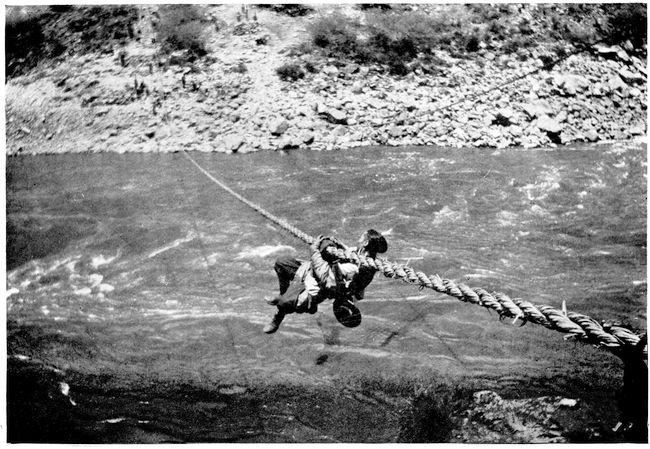
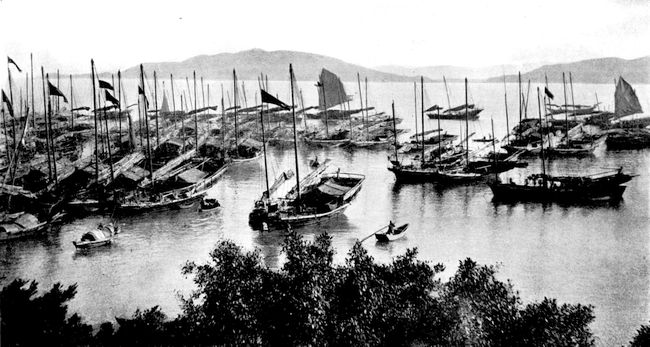
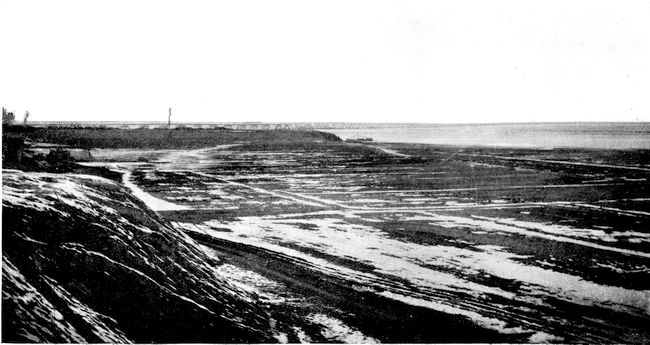
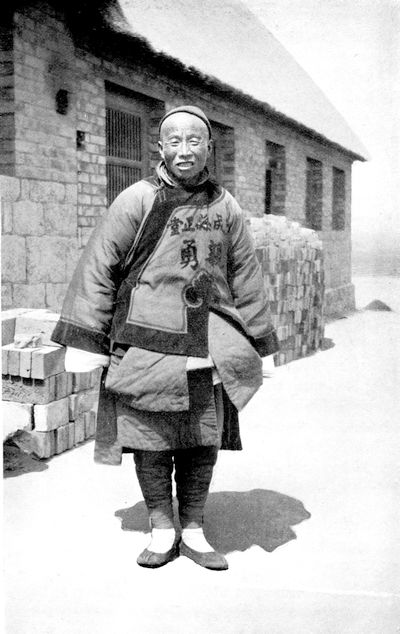
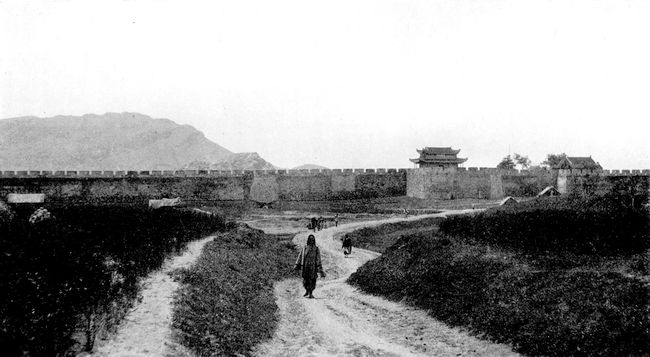
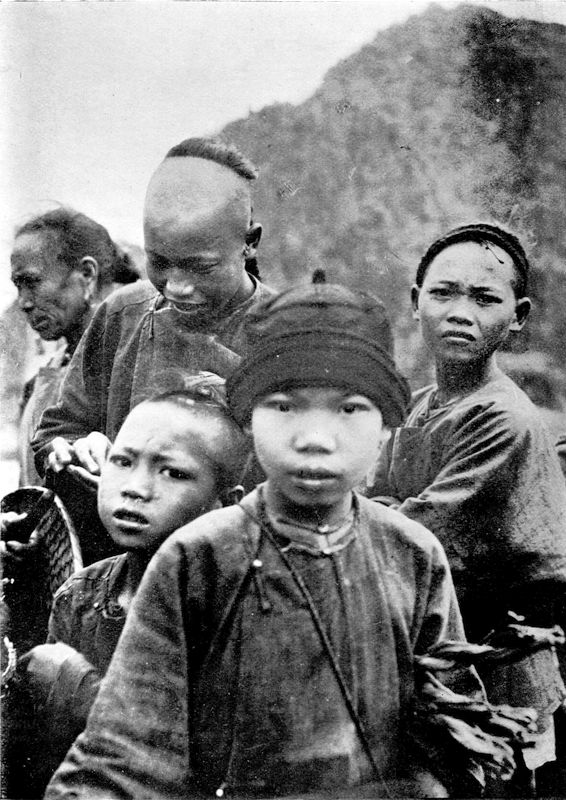
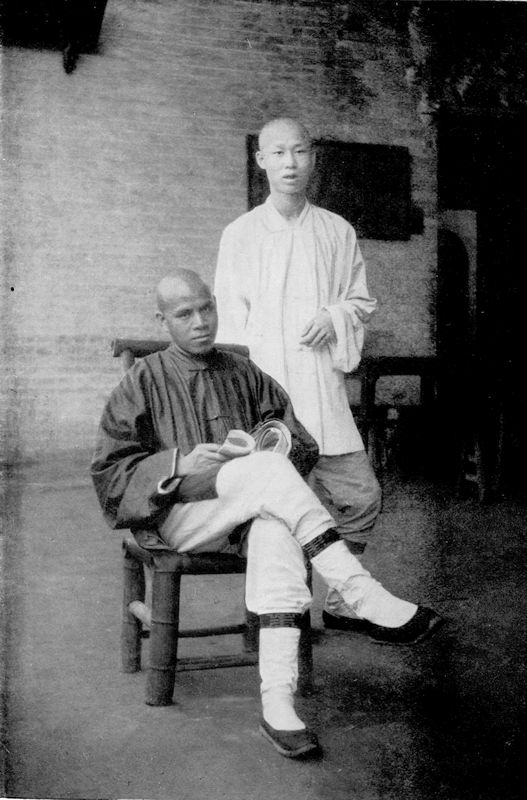

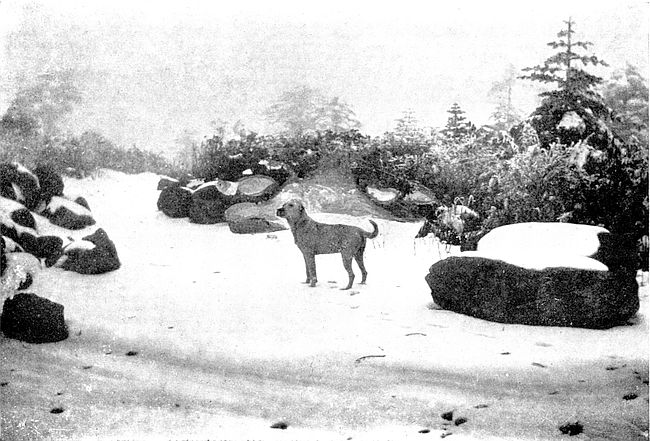

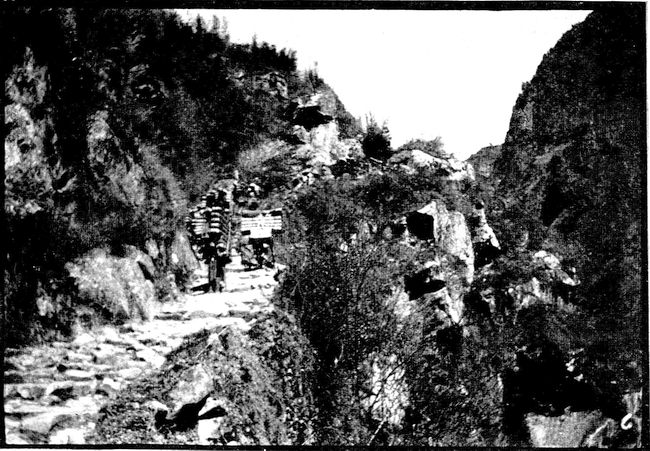
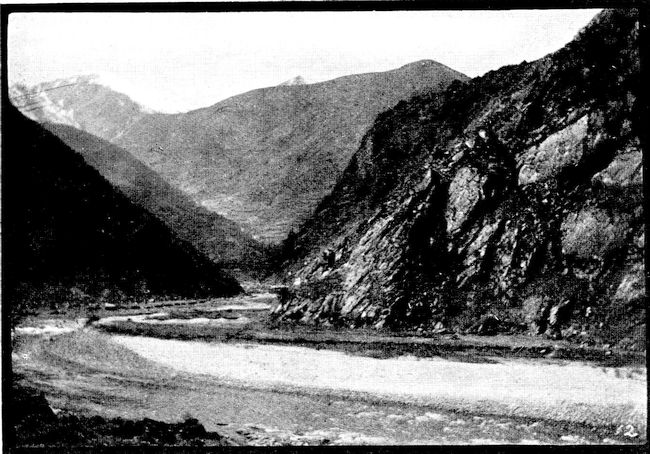
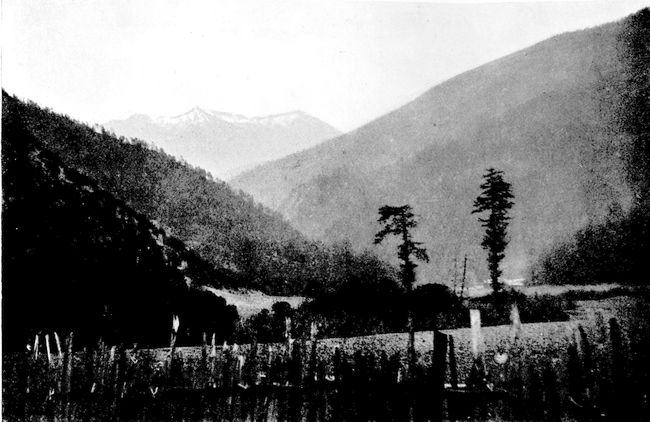
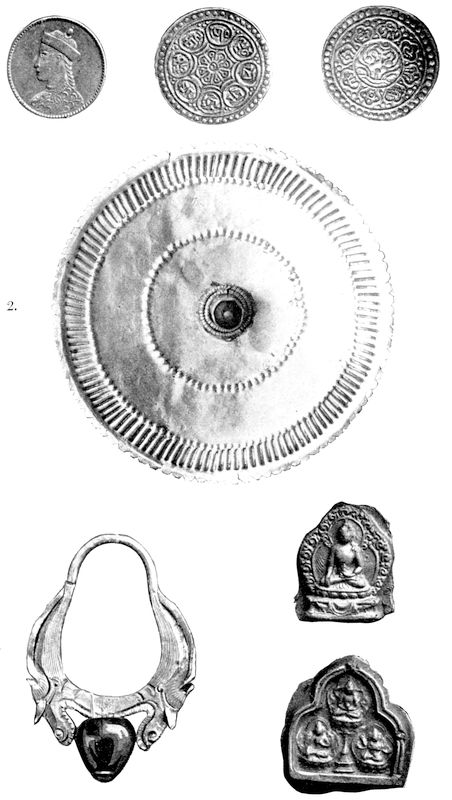
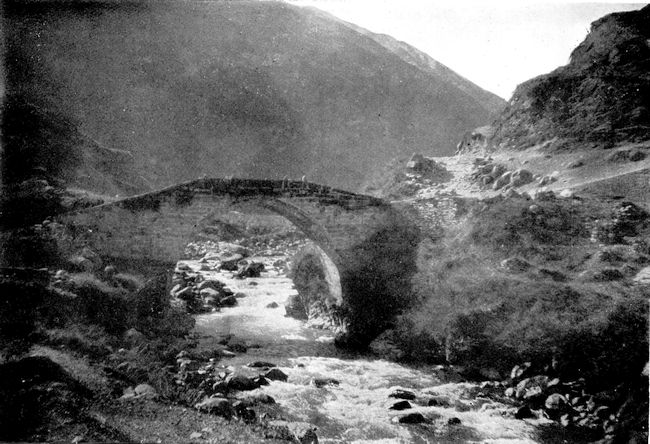

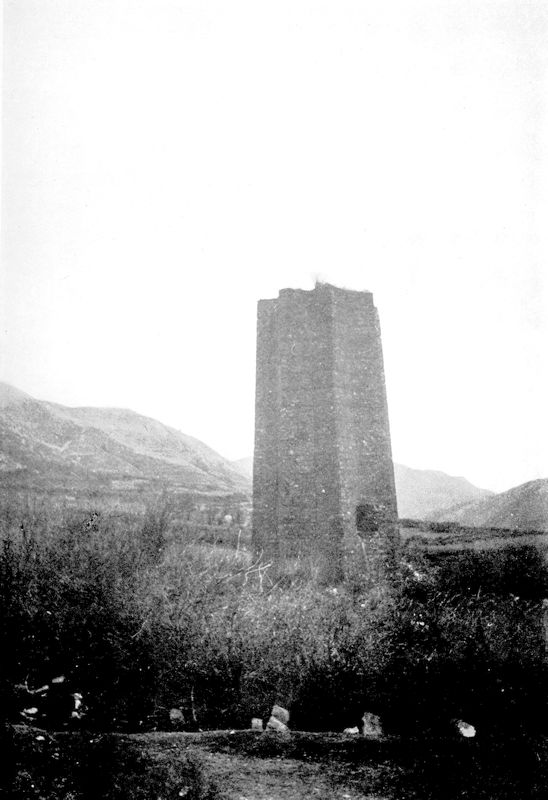
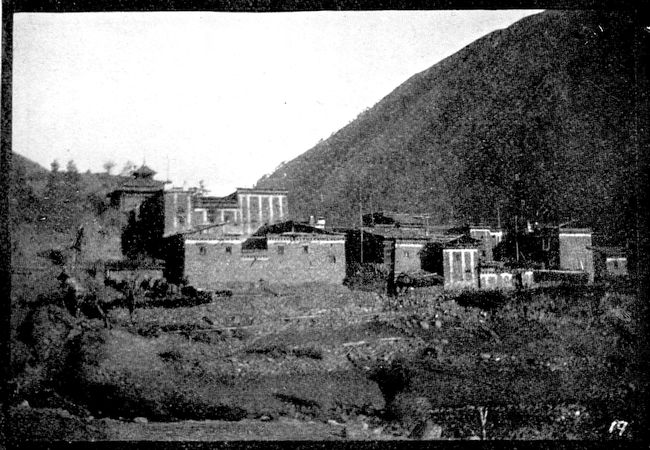
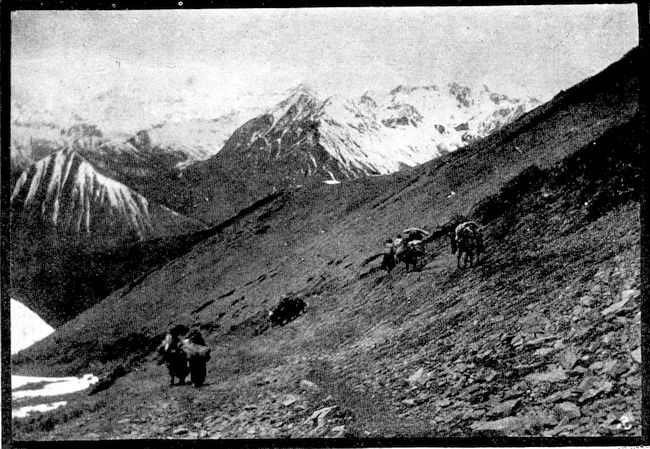
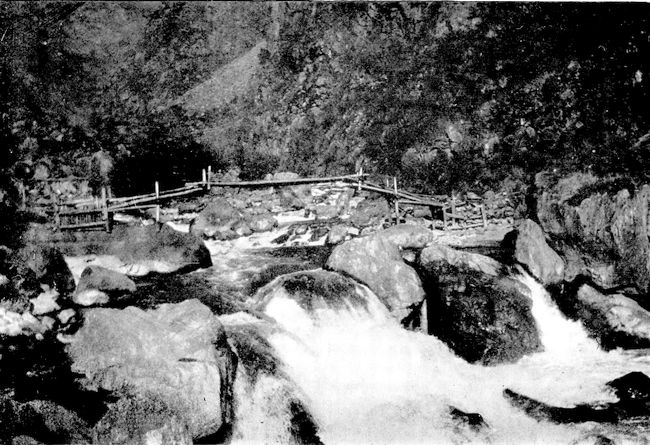
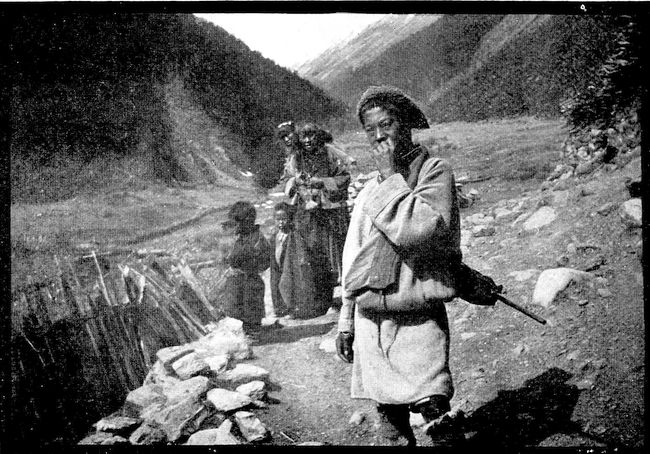
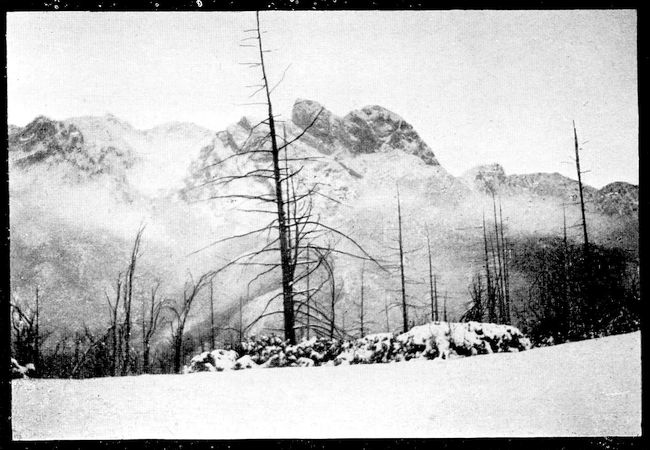
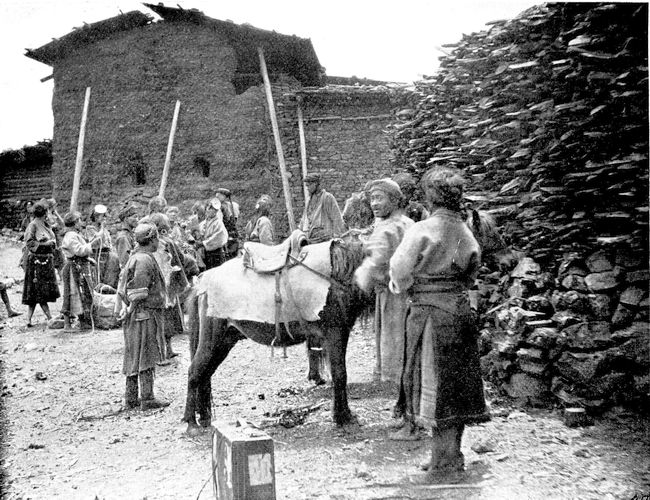
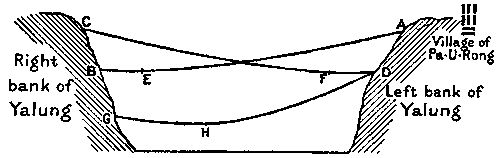
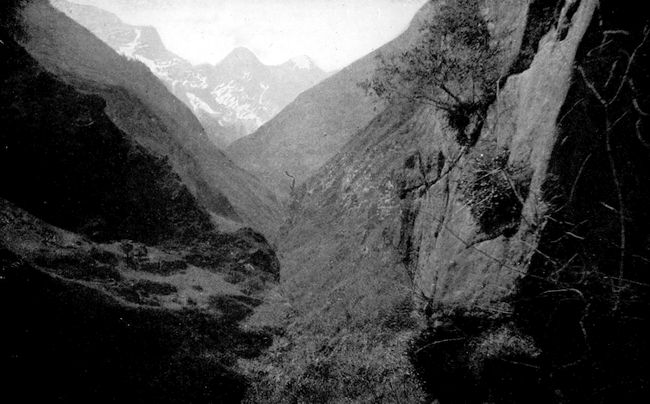
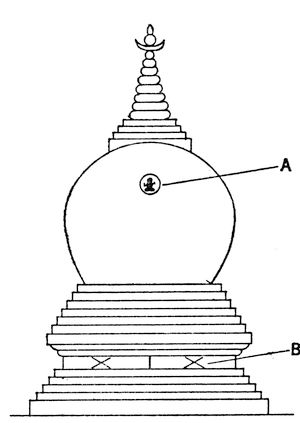
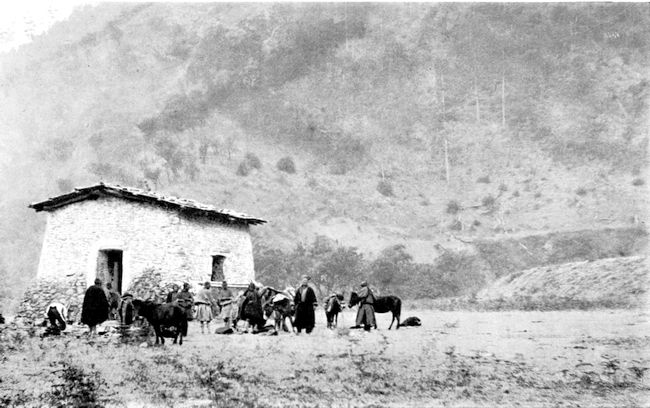
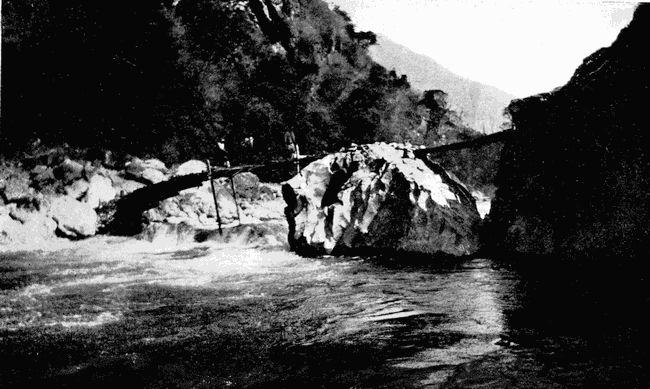
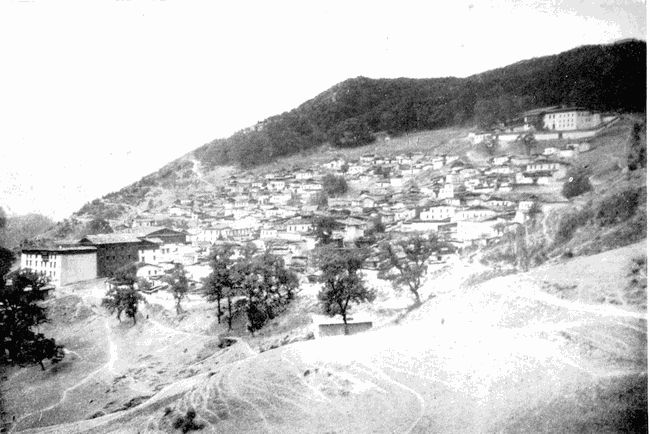
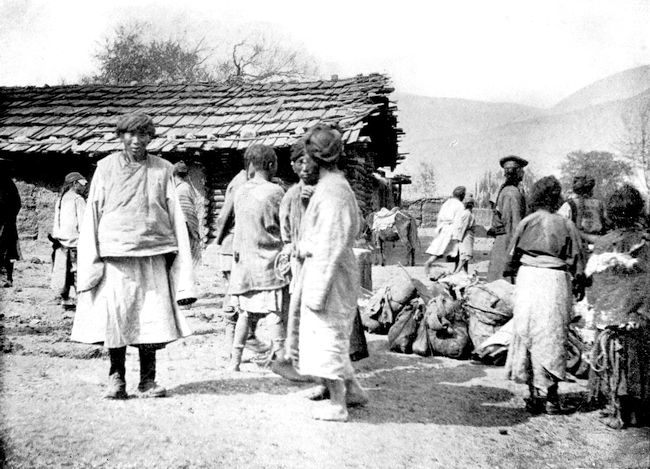
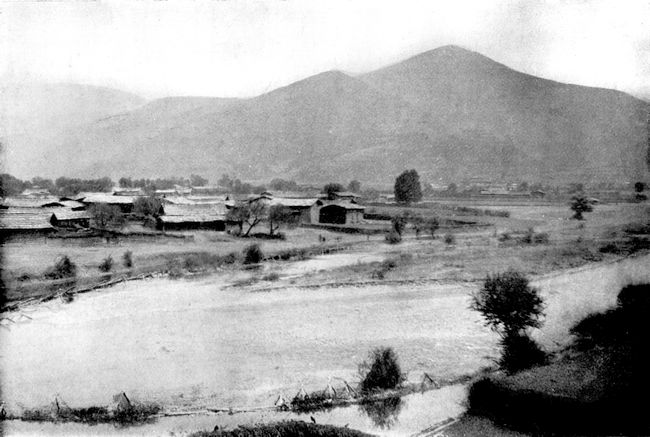
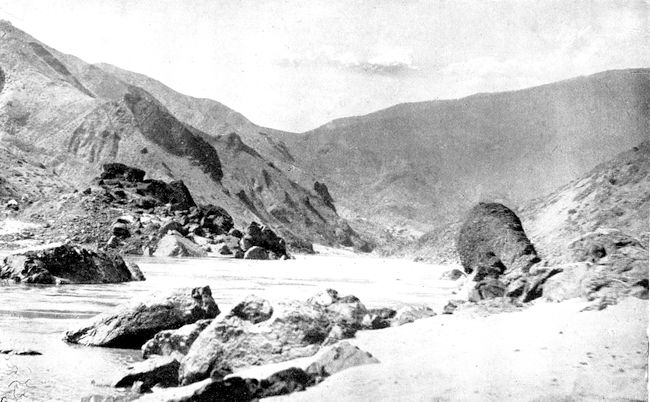
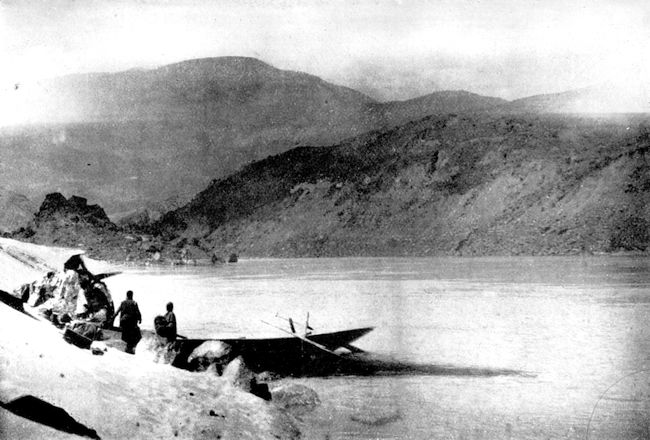
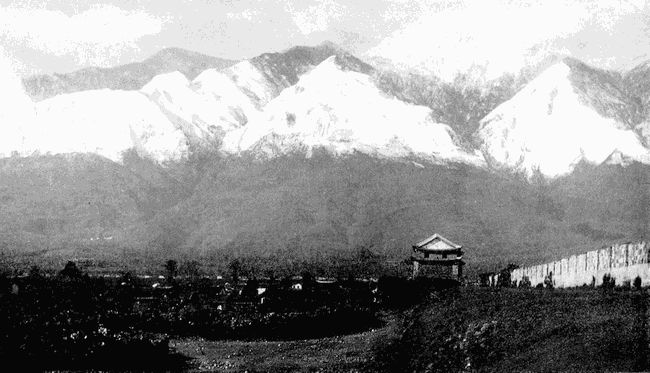
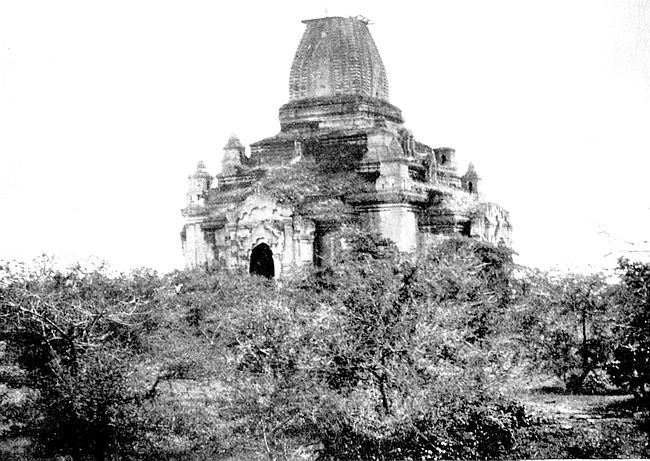
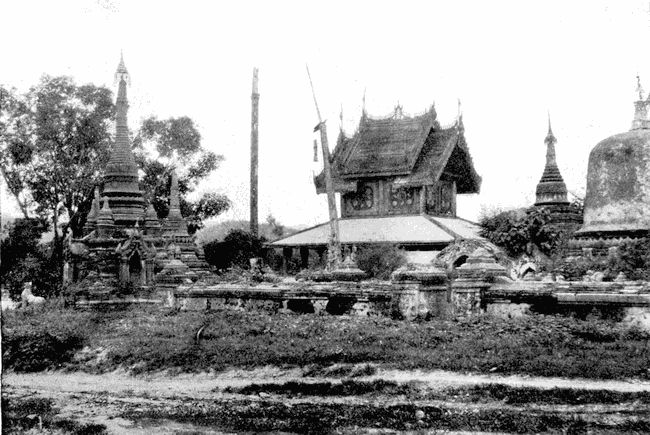
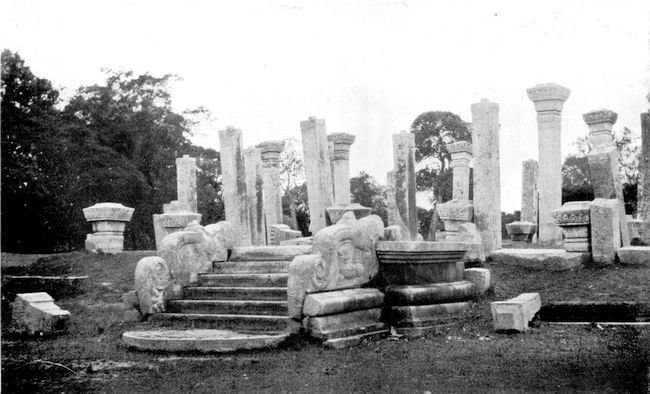
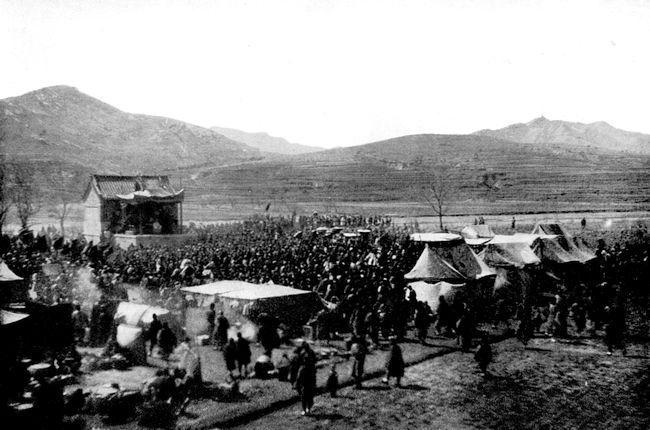
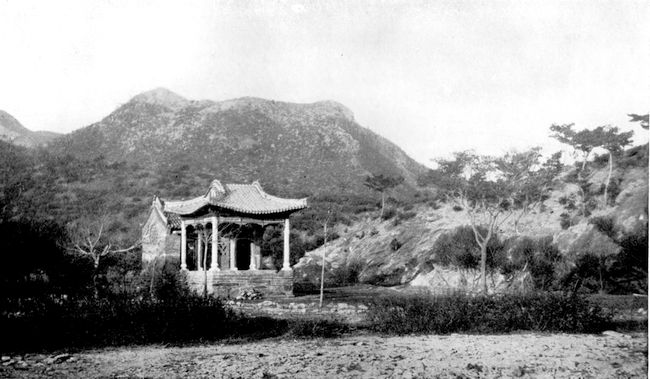
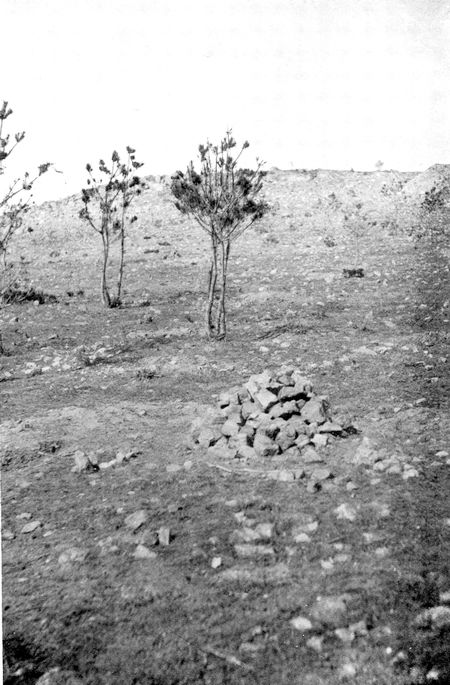

 .
.