Now we were housed at Alverton, which, you
should know, is the Kensington of Penzance, a
suburb of the old town, which has gradually become
absorbed, a place of many villas, where the visitor
generally finds his rest, where gardens meet the eye
at every turn, where fuchsias, geraniums, and myrtles
grow to astonishing sizes.
Our windows looked down upon the sunlit waves
of Mount’s Bay, while through the open casements
came the rich odours of these flowers, but above all
the piercing scent of the clove-carnation. Among
the brave show of blossoms were the peculiar waxy
flowers of the Escallonia shrub, brilliantly red.
From adown the street, sloping toward the shore,
came every morning the high-pitched cry of “Pilchers,
fine fresh pilchers,” for there were fine
catches of pilchards overnight; and at a soothing
distance, a more or less German band generally
murdered current comic operas.
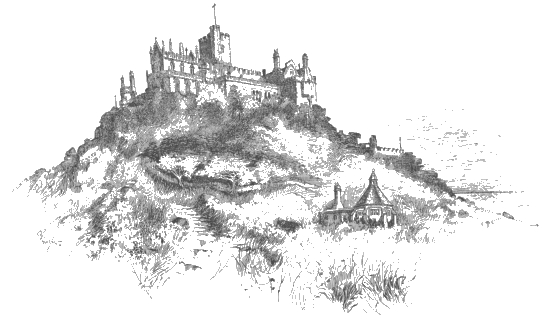
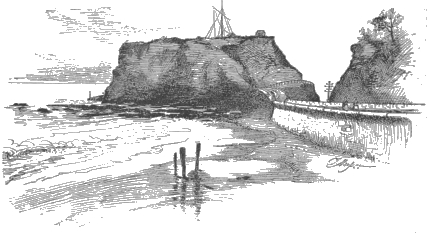
SAINT MICHAEL’S MOUNT.
Pirates there are not at Penzance, and nothing
approaching them, unless we except these German
band-itti; but they are, indeed, or were, when last
I heard them, desperate characters, who would think
nothing of murdering “The Mikado” or “The Gondoliers.”
Indeed, they have done so many times, and
will again, unless some action is taken in the matter.
I shudder to think how many fine and robust comic
operas have been done to death on moonlit nights
upon the esplanade in front of the Queen’s Hotel,
or in the gloomy by-ways of the Morrab Road. I
have seen these bravos standing in a circle round
their helpless victim, and noted the brazen flash of
their deadly weapons, and heard the agonising demi-semi-quavers
of his dying notes as the remorseless
band blew out his bars. Ah! sometimes, when they
little thought their criminal deeds were overheard, I
have listened a while to them making shameful overtures
to their captives, and have presently hurried
away, fingers to ears, to shut out the fearful shrieks
which such deeds have produced. What class of
people is it that supports these hired assassins?
Alas! I know not, but that they are supported is
a solemn fact. So callous are some of these folk
that—I assure you it is so—I have actually seen
them place bribes in the hand of the chief miscreant,
and have observed them loitering by, with heartless
smiles of approval, until the deed was done. What
harmony, what tender chords can exist in a town
where such doings fall flat upon accustomed ears?
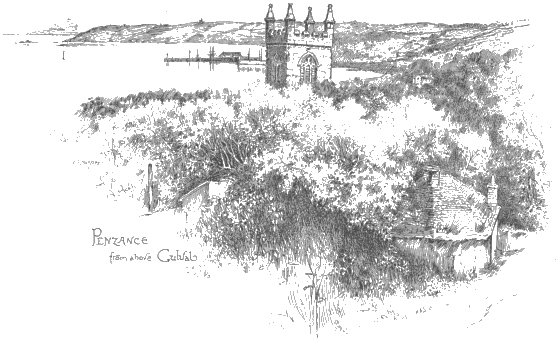
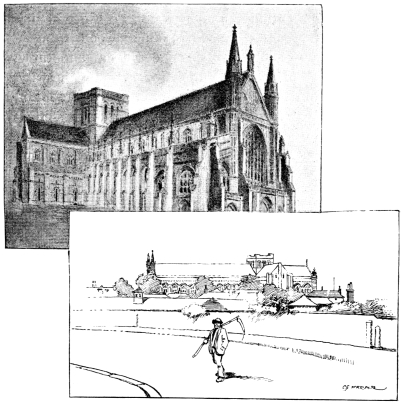
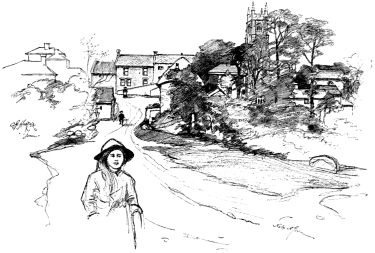
Penzance from above Gulval
And yet the place looks so fresh, so fair, so happy.
It is ten miles from the Land’s End; the wail of the
Cockney concertina is never heard within these
gates; and Plymouth, the nearest large town, is
eighty-one miles away. Penzance knows nothing
of London. Visitors come from the Metropolis to
the shores of Mount’s Bay; but although they are—in
instances—known to his from London town, that
place is the merest geographical expression in Penwith.
We don’t read London papers at Penzance
(unless we are—for our sins—authors, when our
friends kindly post us those copies containing slashing
reviews, obligingly blue-pencilled); we read few
papers of any sort, and those are printed at Plymouth.
Visitors do not get through much reading at Penzance.
They have breakfast, and disappear for the
day, to return only at night, tired and hungry, from
strenuous excursions to all sorts of wild and impossible
places, with names that only a Celt can properly
get his tongue round. A stranger coming into
Penzance upon a mid-day of its season would opine
from the evidence of his eyes that the town had lost
its favour, but nothing would be farther from the
truth. Half the visitors are at Land’s End or the
Logan Rock; some at Saint Ives; many at the
Mount, or Newlyn, or Mousehole; a few have gone
to Truro or the Lizard.
Penzance is a harmony in grey and blue, looking
seaward; in grey and green to the inward glance.
Its chief street, Market-jew Street, climbing up to
the centre of the town, has at its summit the somewhat
gloomy granite building of the Market House—severely
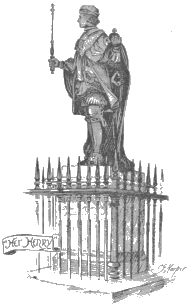
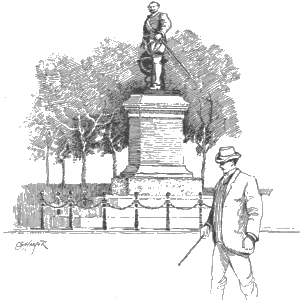
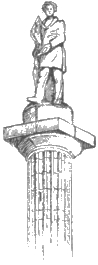
classic—fronted with a statue in white
marble of Sir Humphry Davy, a native of Ludgvan
village near by. Over a doorway of the building you
may see, carved in the granite, the arms of Penzance,
i.e., the Head of Saint John Baptist (I disclaim at
once all responsibility for the apparent Irishry of the
arms of the town being a head), with the legend
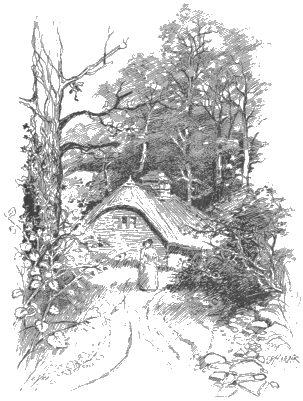
“Pen Sans, 1614.” At the Alverton end of the
town you may still see an old, heavily thatched
cottage, where was born that doughty hero, Edward
Pellew, who afterwards rose through his prowess to
the title of Viscount Exmouth, a title more hardly
earned than some parallel patents of nobility in this
little day.
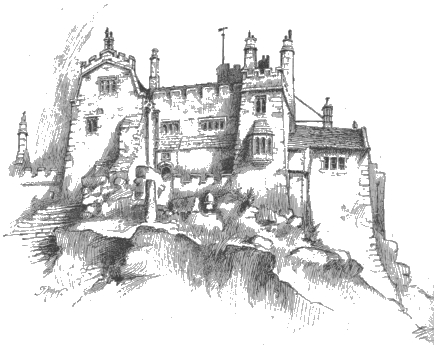
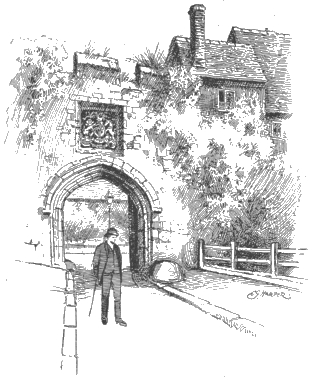
SAINT MICHAEL’S MOUNT: ENTRANCE TO THE CASTLE.
’Tis a languorous air, of Mount’s Bay; thus it
fell that the morning was usually well advanced
before we happened in the street or by the harbour.
Here, on certain week-days, is great bustle, when the
mail steamer is preparing to cast off for the voyage
across to Scilly. The passengers, like the poet’s
“little victims,” laugh and are merry, “all unconscious
of their doom.” For, of a truth, ’tis a rolling
sea, and, as the humorist might say, the sick (!)
transit takes away the gloria mundi.
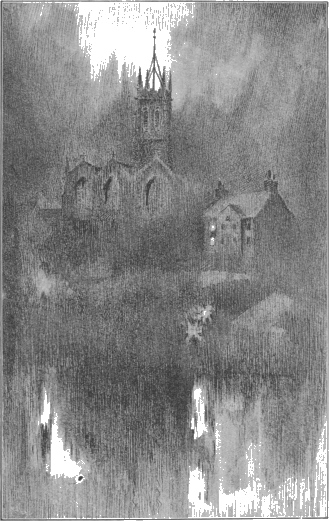
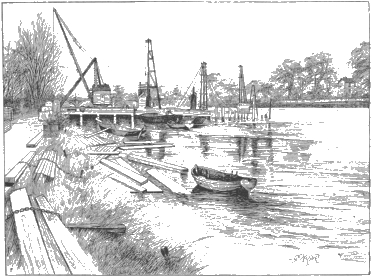
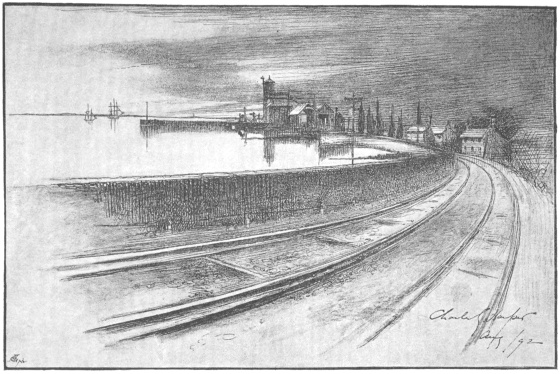
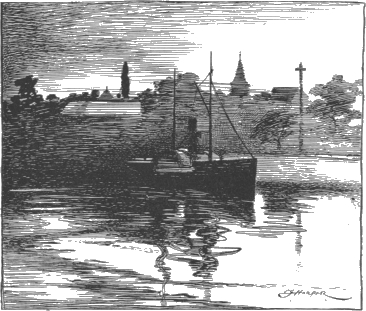
PENZANCE HARBOUR: NIGHT.
But we leave these, and embark upon that little
voyage of three miles to “the Mount,” as you come
to abbreviate Saint Michael’s crags, across the shallow
waters of the tumbling bay.
In less than half an hour our little launch runs
alongside the massive stone walls of the tiny haven,
at the foot of the historic Mount, and we presently
disport ourselves upon its delightful slopes, whose
history, with that of the grey castle above, goes back
to very dim antiquity: a history of sieges, surprises,
and fierce fights among the rocks, and on the sands
below. The Mount is now the property and the
residence of Lord Saint Levan, the present head of
the Saint Aubyns, whose name one constantly meets
throughout Cornwall. The loyal Saint Aubyns have
zealously recorded the Royal visit to the Mount in
1846, when her Majesty landed at the stairs of the
haven; for there has been let into the rugged granite
a brass-plate, inscribed with a “V.R.,” and fashioned
to represent the Royal boot-sole, by which you gather
that the Queen wore most uncommonly square-toed
shoes in those days.
I warn strangers that, before visiting the Mount,
it were well to dismiss from the mind all recollections
of it as done into paint and water-colour, for
artists have all tacitly agreed to exaggerate its height
and steepness. Thus, Turner’s grand painting, and
Clarkson Stanfield’s huge achievement in water-colour,
would be introductions by which a subsequent
acquaintance with the place would only disappoint.
But then, to expect topographical accuracy in these
things (and especially in Turner’s later work) were
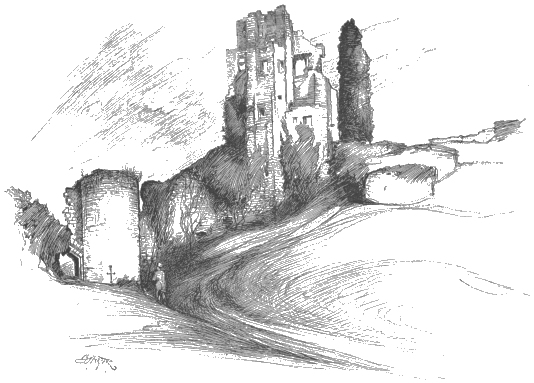
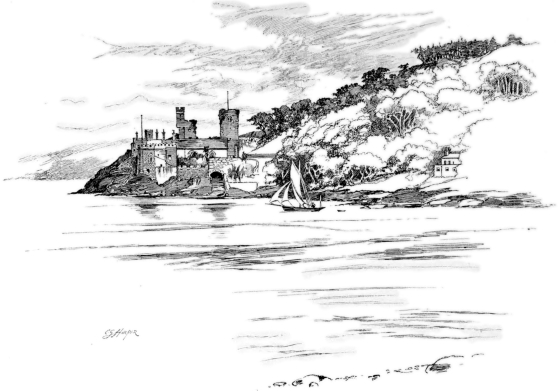
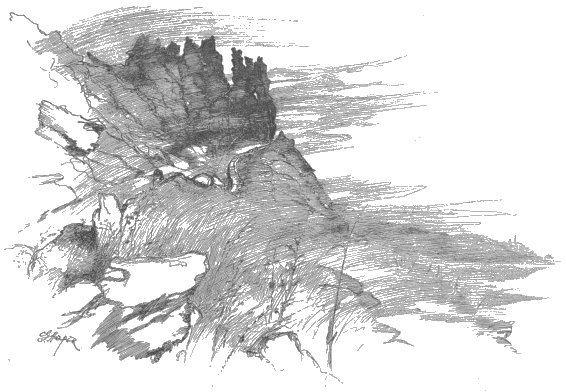
indeed vain. The best point of view for an idea
of the Mount is that half-way up to the left hand,
whence this drawing was taken; for here you
have bulk and composition without the need for
exaggeration.
The castle, crowning the heights, has still much
of interest to show, though modern additions are
everywhere about. Thus, the Chevy Chase Hall,
anciently the refectory of the religious house that
once held sway here, is worthy attention. Its name
is derived from the decorative frieze that runs round
its walls, a representation of old-time hunting scenes.
The Royal Arms above, are, of course, a very modern
addition, and the spears and other weapons seen on
the walls are, for the most part, spoils of the Soudan
campaigns, brought from Egypt by Lord Saint Levan’s
son, who went through those expeditions.
The chapel, too, though now bare enough, is of
Perpendicular date. A horrid oubliette is shown
beneath the stalls, a small chamber, without light
or air or any outlet when the paving-stone above
is lowered to its place in the floor. Some years
since, when this dismal living tomb was accidentally
discovered, the skeleton of a man of extraordinary
stature was found within. Who he had been must
ever remain matter for conjecture—poor wretch, left
here to be forgotten.
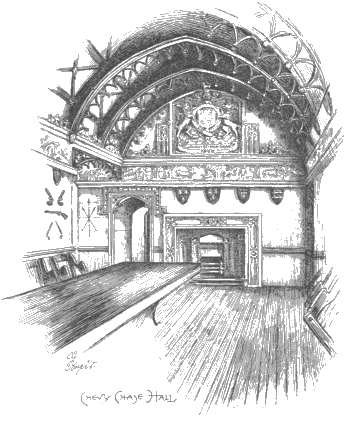
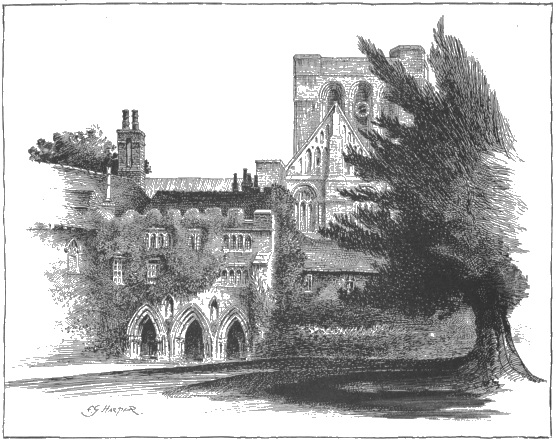
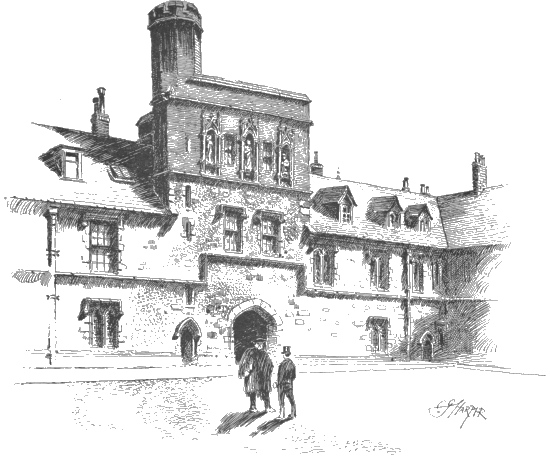
Chevy Chase Hall
It is a darksome climb to the battlements of the
old tower of the castle, so high above the world.
Penzance and Newlyn lie below in the distance, and
their white walls flash upon the grey of granite and
the dull green of the moors beyond. Presently, as
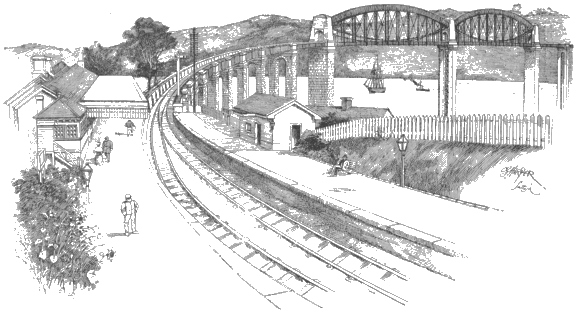
you gaze, comes a trail of smoke from eastward, and
the “down” train glides into the wayside station of
Marazion Road, bringing its complement of holiday-makers,
who will swarm up the Logan Rock, sail to
Lamorna, adventure (if they be hardy pedestrians) to
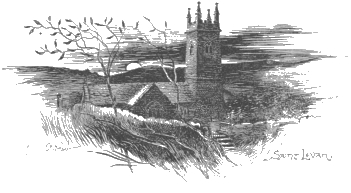
Porthgwarra or Saint Levan (whence Sir John Saint
Aubyn’s jubilee peerage), or Cape Cornwall; but
those spots are innumerable where the tourist loves
to dwell. Above all places he goes to Land’s End,
but never or rarely does he hie him eastward, to
Perranuthno, to Cuddan Point, or to Pengersick.
Civilisation goes ever westward, and, as the tourist
is its peculiar product, ’tis only fitting he should
follow its march.
I recollect another day, when we went to Land’s
End, along ten miles of ofttimes rough and heavy
walking, through Alverton’s lanes, along the short
stretch of dusty road that passes by the wrecked
sea-wall, designed to join those near neighbours of
Penzance and Newlyn, but demolished by the first
storm that rolled in from the south-west.
We sat upon the tumbled blocks of granite, and
captured this view of the town, and then came upon
Newlyn and its decaying school of artists. What
has become of the Newlyn School, so-called, that
ephemeral blossom? Are we to assume that, its
leading exponent having won to academic honours,
its mission is fulfilled?
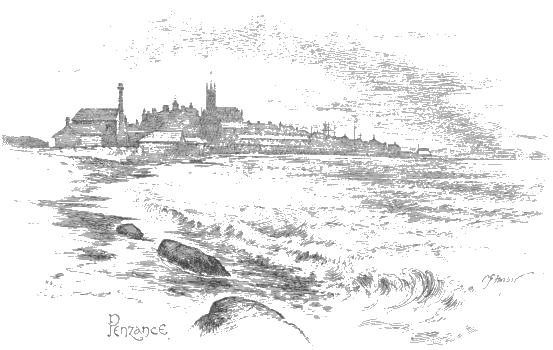
Penzance.
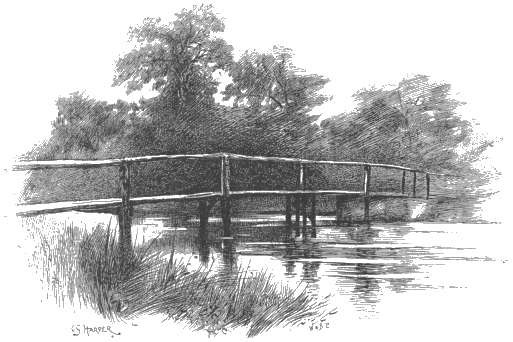
They were only a dilettante set we saw at Newlyn,
painting the ramshackle old bridges and their
loungers. Artists have painted these old bridges over
and over again, have composed groups of bronzed,
blue-jerseyed fishermen leaning over their parapets
and gossiping, and have given, with the convincing
surety of the Newlyn touch, the laughing, tinkling
stream that flows beneath the arches, presently to
lose itself in the shallow waters of the bay. The
amateur photographer, too, is never weary of well
“doing” the place. I prefer the paintings to the
photos, because, although I have a happy liking for
realism and truth, I draw the line at the camera’s
uncompromising rendition of battered tin cans,
broken crockery, fish offal, old boots, and other
unpicturesque and sordid objects that lazy housewives
cast out of window into the water.
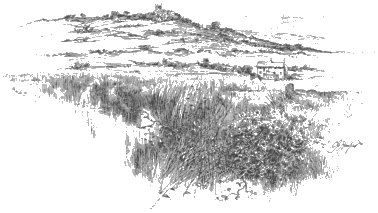
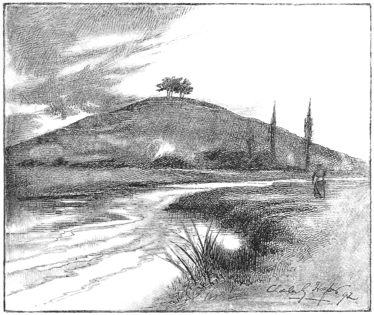
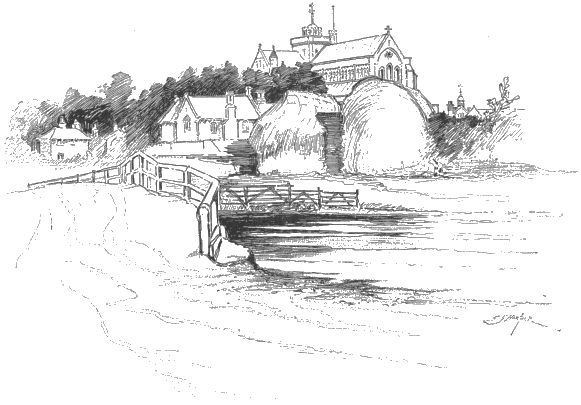
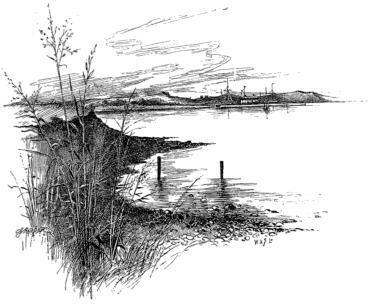
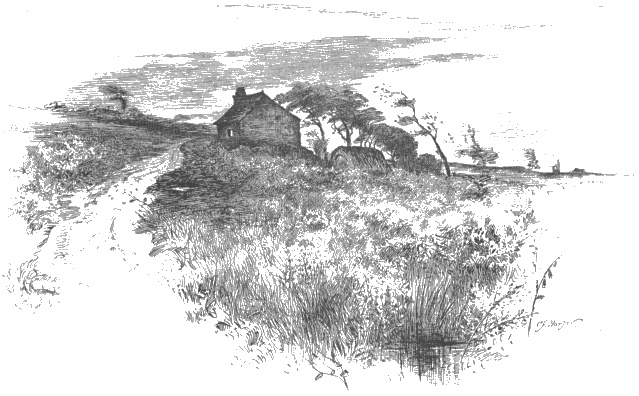
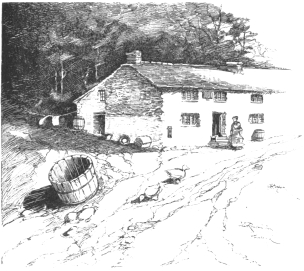
LUDGVAN LEAZE.
Sad, indeed, is the state of the picturesque stream
or romantic glen that borders upon a camp of civilisation,
for abundance of old boots and sardine tins
are the reward of the diligent botanist or natural
historian in these gates; bracken grows not more
profusely than are strewn the shards and potsherds
of the neighbouring town. But no matter how frequent
and plentiful the wreck and refuse in the
matter of bottomless kettles, superannuated umbrellas,
and broken dishes, the Old Boot is the commonest
object of the seashore, highway, by-way, lane, or
ditch—no mountain too high, no valley too deep for
it to be found. The angler lands it with language
and dashed expectations from the trout stream; the
trawler finds it unaccountably in his trawl-net when
he returns from the bay; the ploughman disinters
it from the field; and children dig it up from the
sands: everywhere is the Old Boot. I have communed
with Nature, and rambled amid the wildest
and loneliest of scenes, when my meditations have
been arrested by old boots, and at once the poetry
and romance of the scene have flown away. Truly,
there is nothing like leather.