The wonderful work which has here been imperfectly
described was accomplished under a shadow.
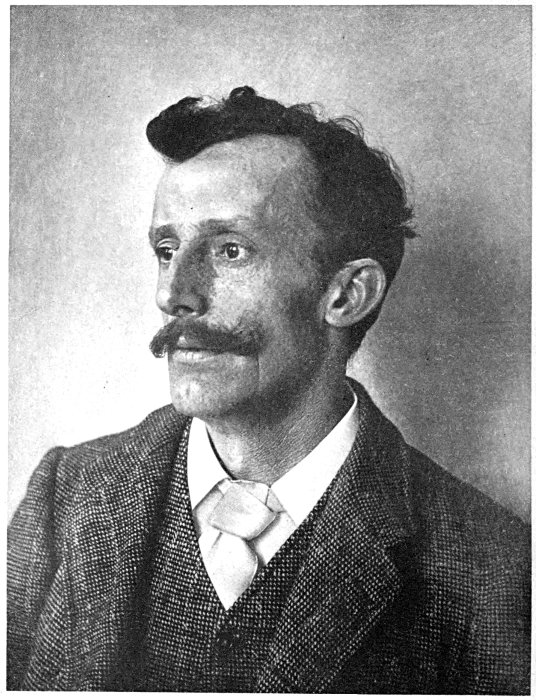
Maitland, who was never really a strong man, was,
even before his marriage, not without warnings that
he was overtaxing his physical resources. When
he delivered his inaugural lecture he was already
conscious that his days might be few. "I see again,"
writes one who was present, "the dim room, the grey
light and the shadowy but inspired fragileness of the
lecturer who was then fighting a very serious illness....
It was no ordinary lecture, rather a sort of sermon,
grave and beautiful with its solemn call to work, even
though that work might lie in humble and obscure
fields. And the impression that was perhaps most
immediately insistent, seeming to underlie each word
and sentence, was that the speaker felt the hours of
his own work to be already numbered and but few."
In 1889, the year after his election to the Downing
Chair, a doctor pronounced over him a sentence from
which there is generally no successful appeal. "I
very much want to see you again," he wrote to a
friend, March 12, 1889, "and I don't know that I
can wait for another year; this I say rather seriously
and only to you; many things are telling me that I
have not got unlimited time at my command and
I have to take things very easily."
Devoted nursing, great care in diet, and a resolute
avoidance of many of the pleasant things of life enabled
the work to proceed as buoyantly as ever. There were
bouts of illness and pain, when the French novelist and
especially the beloved and well-known Balzac had to
be invoked, but there were also periods of revival and
at one time an assurance that the alarming symptoms
had disappeared. But in truth the malady was never
dislodged. "Slowly it is doing for me; but quite
slowly," he wrote to a friend in 1899, "and it may
cheer you to know that I have had ten happy and
busy years under the ban." In the summer and
autumn of that tenth year there was a sudden change
for the worse and it became clear that Maitland could
no longer winter in England. "If I have to sing
a Nunc Dimittis," he wrote to Mr R. L. Poole, "it
will run 'Quia oculi mei viderunt originalem Actum
de Uniformitate primi anni Reg. Eliz.' Few can say
as much.... I think of a voyage to S. America as
S. Africa looks too warm for a man of peace."
From 1898 the Maitlands were compelled to fly
south with the approach of winter. Their regular
resort was Grand Canary but once, in 1904, this was
exchanged for Madeira. Like all other habits idleness
requires cultivation and Maitland had never been
idle. Under a tropical sky and with an exquisite
sense of relief from physical pain he worked his
writing muscles as busily as ever. In the first exile
he translated that part of Otto Gierke's Deutsche
Genossenschaftrecht, which dealt with medieval political
theory, and published it with a brilliant Introduction.
Later he copied manuscripts of the Year Books lent
to him by the wise generosity of the Cambridge
University Library and collated or transcribed photographs
of those manuscripts which it was impossible to
export. The last two winters were divided between
the Year Books and the composition of a biography
of Leslie Stephen, and so far was exile from being
a holiday that the fruit of each winter spent in the
fortunate islands was never less than the substantial
part of the volume. Some letters shall speak of the
impressions and activities of these years.
Hotel Santa Catalina,
Las Palmas,
Gran Canaria.
5 Nov. 1898.
I am beginning Guy Fawkes's day by sitting in
the verandah before breakfast to write letters for a
homeward-bound mail. Certainly it is enjoyable here
and I mean to get good out of a delightful climate.
Also I mean to convert your half promise of a visit
into a whole, and without going beyond the truth I
can say that there is a good deal here that should
please you. At first sight I was repelled by the arid
desolation of the island. I suppose that I ought to
have been prepared for grasslessness, but somehow
or another I was not. But then the wilderness is
broken by patches of wonderful green—the green of
banana fields. Wherever a little water can be induced
to flow in artificial channels there are all manner of
beautiful things to be seen. I have picked a date and
mustered enough Spanish to buy me a pair of shoes
in the "city" of Las Palmas—a dirty city it is with
strange smells; but we are well outside of it. Between
Las Palmas and its port there is a little English colony.
This hotel is so English that they give me my bill in
£ s. d. and my change in British ha'pence which have
seen better days. Indeed now I know where our
coppers go to when they have become too bad for use
at home. Also the "library" of this hotel seems a
sort of hades to which the bad three-voller is sent
after its decease. But the proposition that all the
worst books collect there is (as you must be aware)
not convertible into the proposition that only bad
books come there, and I see a copy of a certain Life
of Henry Fawcett which you may have read. I laze
away my time under verandahs and in gardens—but
am not wholly inactive. Sometimes when it is cool I
walk some miles and explore country that is well worth
exploration. By the time you come I shall be ready
for an ascent of our central range with you—it touches
6000 ft. I think, and by that time we shall be having
cooler weather. Yesterday we were breathless: to-day
is cloudy but would be September in England.
It is breakfast time and the porridge is good.
Sta Brigida,
Monte,
G. Canary.
9 Jan. 1899.
I won't pretend but that I am disappointed by your
decision, the more so because my hopes of your advent
stood higher than Florence's and I had endeavoured to
argue that your half-promise was a valuable security.
However, I know that we are far from England, and
that you are unwilling to leave your household for any
long time. Also the two last boats that have come
here suffered much in the Bay of Biscay and were
very late. So I forgive, though I badly want someone
to walk with. The time has come when I feel that
walks are pleasant and do me good, but that I am
very tired of the contents of my own head. But even
a solitary tramp is better than a day in bed, and I am
really grateful to this magnificent climate and to those
who sent me here. To those who cannot speak
Spanish, and I cannot and never shall, the remoter
parts of this island are not very accessible. I sometimes
find myself beset by a troop of boys who take
a fiendish pleasure in dogging the steps of an Englishman
who obviously is deaf, dumb and mad. Attempts
to reason with them only lead to shouts of Penny! or
Tilling!—I cannot even persuade them that Tilling
is not an English word. Still at times they leave me
in peace and then I can be happy until the next crowd
assembles.
Hotel Sta Brigida,
Monte,
Grand Canary.
23 Jan. 1899.
I fear from your last letter that you may take too
seriously what I said in play. No, there was no
promise, only a certain hope that you might come
here, and Reason (with a capital) tells me that your
decision is wise and that you must not give up to
Canarios what was meant for your home and the
Utilitarians. I am really glad to think that you are
booking them, and at times I envy you. However
I cannot say that I am unhappy in my idleness.
When I despaired of you for a companion, I took to
myself the soundest looking man in a hotel full of
invalids, and gat me up into the hills to accomplish
the expedition that I had reserved for you, and we
succeeded in mastering not indeed the highest, but
the most prominent mountain of the island, if a
mountain may be no more than 6000 feet high. This
raised me in my own conceit and certainly I had a
very enjoyable time. I doubt whether in any of your
good ascents you can have seen so gorgeously coloured
a view as that which I beheld. A great part of the
island lay below me; many of the rocks are bright
orange and crimson and these are diversified by
patches of brilliant green; the whole was framed in
the blue of sky and sea. It was like a raised map
that had been over-coloured.
Casa Peñate,
Monte.
Dec. 4, 1899.
Dated in Timelessness, but with you it may be
some such day as Dec. 4, and I fancy that cent. XIX
may still be persisting. Dated also nominally at
Hotel Quiney in Las Palmas where I preserve address
for service, but de facto in the garden of a messuage
or finca called or known by the name of Bateria in
the pueblo of Sta Brigida—a fort-like structure which
I hold as a monthly tenant—windows on four sides all
with fine views—on ground floor lives major domo,
a hard-worked peasant savouring of the soil—first and
only other floor inhabited by me and mine, including
our one servant, a Germano-Swiss treasure acquired
as we left England—furniture a minimum and no
more would be useful—small boy coatless comes to
clean boots, run errands and the like, Pepé to wit—much
bargaining at house door with women who bring
victuals round and would rather have a chat than
money. Madame's mastery of their jargon surprises
me daily—I can rarely catch a word. One might fall
into vegetarianism here, such is the choice of vegetals.
Lies in the garden on a long chair mostly—has
there written for Encyclop. Brit. article on Hist. Eng.
Law—space assigned 8 only of their big pages:
consequently tight packing of centuries: work of a
bookless imagination—but dates were brought from
England. Qu. whether editor will suffer the few lines
given to J. Austin: they amount to j.a. = o°. Now
turning to translate Gierke's chapt. on "Publicistic
Doctrine of M.A.[25]"—O.G. has given consent—will
make lectures (if I return) and possibly book—but
what to do with "Publicistic"? Am reading Creighton's
Papacy and Gardiner's History—may be well-informed
man some day. Harv. L. Rev. and King's Peace
came pleasantly—Alphabet not yet presented to babes
but reserved for approaching birthday when it will
delight. Meanwhile parents profit by it and are very
grateful.
Influence of climate on epistolary style—a certain
disjointedness. Can live here or rather can be content
to vegetate. A tolerable course for the Lea Francis—some
5 miles long—lies not far away, but must
shoulder her and climb a rocky path to reach it. No
puncture yet. The alarums and the excursions of horrid
war are but little heard here. Interesting talk last
night at hotel with German Consul in Liberia much
travelled in Africa—very unboerish but thinks we are
in for a large affair—all good (says he) for (German)
trade. Much that we buy here made in Germany,—they
spread apace.
Casa Peñate, Monte,
Las Palmas.
5 Jan. 1900.
I have been wasting too many of my hours in bed—and
such hours too—and have consequently written
few letters. Somehow or another I was chilled in the
course of my voyage: I think it was on board the
little Spanish steamer that brought me here from
Teneriffe: and after a few days, during which I improvidently
cycled to Las Palmas and found that I
had to trudge back, I collapsed. However that episode
I hope is over, and certainly we are in luck this year.
For three weeks the weather has been magnificent; no
drop of rain has fallen and day after day the sun has
shone. It is like the best English June and there is
nothing that tells of midwinter except some leafless
poplars and chestnuts. I brought out a minimum
thermometer which has refused to register anything
less than 54°.
I have been devouring too rapidly my small store
of books since I have been cut off from the writing
which I projected. What I have seen of my two MSS
of the Year Books of Edward II tells me that there is
a solid piece of work to be done. One of these MSS
is much fuller than the printed book. I cannot understand
what demand there can have been for that
printed book: it is so very unintelligible—mere
nonsense much of it.
The B.G.B. will have to wait—at least so I think
at present—as I shall give all my working time to the
Y.B.B.—but the volumes of Materialien are very
interesting—especially so much as consists of the
debates in the Reichstag[26]. By far the keenest debate
was about damage done by hares and pheasants: the
sportsmen of the Right were very keen about this
matter.
... You will gather from this scrawl that I am
recumbent in a garden—the fact is so and I won't
deny it.
22 Jan. 1900.
I can well believe that England is a gloomy place
just now. Even here where I see few papers and few
English folk, except the family, this ghastly affair sits
heavily upon me and is always coming between me
and my book: at the moment Gardiners History: from
which my thoughts flit off to England and the Transvaal.
It don't make things better to doubt profoundly
whether we have any business to be at war at all. I
remember telling you at Warboys (what a good day
that was!) that I deeply mistrusted Chamberlain.
Since then I have been thinking worse and worse
of him: I hope that I am in the wrong, but only
hope.
... Then I feel a beast for lazing here in the
sunshine among the Spaniards who heartily enjoy all
our misfortunes. And the worst of it is that lazing is
obviously and visibly doing me good. Really and truly
the temptation comes to me, when the sky is at its
bluest, to resign my professorship, realise my small
fortune and become a Canario for the days that remain.
On the other hand three or four projects occasionally
twitch my sleeve—connected with the Selden Society,
which has behaved more than handsomely by me.
But both sets of motives conspire to keep me lying in
the sun and saying with the Apostles "Lord! it is
good for us to be here."
Well you don't laze. I congratulate you heartily
on coming out at the other end of the Utilitarians.
You would not give me the pleasure of proof sheets—I
regret it, but shall have the whole book soon and
enjoyable it will be. Especially I want to see what
you say of Austin. Since I was here I wrote an article
"Hist. Engl. Law" for the Encyclop. Britan. and risked
about Austin a couple of sentences which are not in
accordance with common repute—and now I feel a
little frightened. I don't want to be unjust, but I
cannot see exactly where the greatness comes in. So
I am curious to know your judgment about this—and
many other things. I should like a long talk with you
in these prehistoric surroundings.
Casa Peñate, Monte,
Les Palmas.
5/2/00.
My opinions about the origin of this wretched war
are not worth stating and are extremely distressing to
one who holds them. It will be enough to tell you
that this summer John Morley seemed to me the one
English statesman who was keeping his head cool, and
I have not read anything that has changed my mind.
I fear that the whole affair will look bad in history.
And the worst of it is that the cold fit will come with
a vengeance.
We have no good news yet. I hope for some this
afternoon. Your letter came by Marseilles—to my
surprise, for we rarely get a mail that way. Our last
tidings are of speeches made by generals and these do
not cheer me. Last night I had a talk with a man who
knew the Transvaal and who fears that our volunteer
marksmen will not hit much until they have had two
months of South African atmosphere: the unaccustomed
eye makes wildly incorrect estimates of
distance.
You speak of dragoons. "My period," a very short
one 1558-63 is full of the "swart-rutter." The English
government's one idea of carrying on a big war, if war
there was to be, was that of hiring German "swart-rutters."
They did much pistolling, and I suppose
that you know, I don't, how big a machine was the
pistol of those days. Well, the War Office temp.
Mary (only there was not one) was open to criticism.
Every ounce of powder that England had was imported
from the Netherlands. This had to go on for a
while under Elizabeth—there are amusing letters from
English agents wherein "bales of cloth," and so on,
have an esoteric meaning.
A starved Canarian hound has attached itself to us—of
the grey-hound type, and sundry small additions
are made to the menagerie as occasion serves. A
parrot died yesterday—had drunk too much water, so
an expert says—was called José—his fellow Juan still
screams. In the neighbouring hotel is another with
atrocious German habits acquired from the head waiter—will
drink himself drunk with beer and swear terribly.
I hear rumours of an additional monkey whose name
is to be Loango.
I play schoolmaster—How they have turned the
Latin grammar inside out!—and I miss my Rule of
Three. In a Spanish Census paper I for once made
myself "doctor iuris": Glasgow allows me to say
"utriusque." I added to the population capable of
reading and writing no less than five names—for our
trilingual Switzer was to be included—and this will
seriously affect Canarian statistics.
But I like this illiterate folk.
Casa Peñate, Monte,
Las Palmas.
18 Feb. 1900.
It is downright wickedly pleasant here. By here
I do not mean in Las Palmas—which stinketh—but
some seven miles out of it and some 1300 feet above
it, in a "finca" that we were lucky enough to hire:
that is something between a farm house and a villa.
The Spaniard of the middle class is a town-loving
animal. He likes to have up country a house to which
he can go for six weeks or so in the year and where he
keeps a major domo (= bailiff) who supplies the town
house with country produce. Such a finca we hired
for £1 a week, and there we live very comfortably and
very cheaply among vines and oranges and so forth.
Life here would have been impossible if my wife had
not acquired the Spanish, or rather the Canario, tongue
with wonderful rapidity. I fancy that some of her
language is strong; but if you want anything here you
must shout.
I am right glad to hear that it is no worse with
you. But just you be careful about cold. I know it
is the worst enemy that I have, and I suspect that you
will find the same. I have often wondered how you
contrived to live in "a thorough draught." The time
comes when one cannot do it, and that time came to
me early. In the sunshine I begin to make some flesh,
the wind no longer whistles through my ribs and I
have not had ache or pain these two months. (Interval
during which the writer gets himself out of the aforesaid
sunshine which to-day has an African quality.) I
wish you could be here, but wonder whether you could
be demoralized; some demoralization would do you
good, but I cannot imagine you as lazy as I am. Still
you might try. And really though I am lazy I have
managed to do some things that I should not have
done at home and hope to have something to offer the
Press when I return. The subject of my meditations
is the damnability of corporations. I rather think that
they must be damned: the Chartered for example.
News as you suppose comes here fitfully. Sometimes
a telegram reaches Las Palmas, and occasionally
it is not contradicted. But in the main we depend
upon newspapers. I feel somewhat of a beast for
being outside all this war trouble, more especially as I
went abroad with a very low opinion of the Government's
South African policy. That opinion I should
like to change but I cannot. Your amateur strategist
must be pretty intolerable. I have met a few people
here who knew something of the Transvaal and they
have none of them been cheerful. The puzzle to me
"after the event" is why more was not known in
Downing Street. I can't help fearing that when all
comes out the whole affair will look very bad....
It will be a very strange book that History of
ours[27]. I am extremely curious to see whether Acton
will be able to maintain a decent amount of harmony
among the chapters. Some chapters that I saw did
not look much like parts of one and the same book
Before I went off I put my chapter into his lordship's
hands. I never was more relieved than when I got
rid of it. His lordship's lordship was considerate to
an invalid and only excepted to a few new words that
I had made, but I daresay he swore—if he ever swears—in
private.... I never knew time run as it runs here.
Soon I shall have to be thinking of my return with the
mixedest feelings. I am going to give Cambridge
a last chance. If it cannot keep me at about 9 stone,
I shall "realise" such patrimony as I have and buy a
finca. Then for the great treatise De Damnabilitate
Universitatis.
Casa Peñate, Monte,
Las Palmas.
12th January, 1901.
It was very good of you to give me a piece of your
New Year's Eve and to tell me much that I wanted to
know. For my part I am practising the art of writing
while lying flat on my back and am flattering myself
that I make some progress, though the management of
a pipe complicates the matter. The result of lying
abed is that I am getting through much too quickly
the small store of books that I brought with me and
am falling back on the resources of the one bookshop
that the island contains. If this sort of thing goes on
I shall be driven to Spanish translations of Zola. I
have just finished Feuillet's La Muerta—but then
I knew the French original. After what you say I
must see whether Erckmann-Chatrian has been done
into Spanish. In a list that I have before me I see
Dickens down for "Dias penosos" and some Wilkie
Collins—but apparently the novel-reading Spaniard
lives for the most part on Frenchmen, especially Zola.
I shall never talk Spanish. I believe that what is or
used to be called a classical education makes many
cowards: the dread of "howlers" keeps me silent
when I ought to plunge regardless of consequences.
I fancy that the comparison that you instituted
between the life of the Roman and the life of the
Spaniard as seen by me in these islands might be
extended to a good many particulars. When, as
happens for about eleven months in the year, you
are not living at your finca, you occasionally pay it
visits with a party of friends—male friends only—whom
you entertain there. You eat a great deal and
drink until you are merry—then late in the evening you
drive back to town twanging a guitar, and, if you can,
you sing inane verses made impromptu. Our landlord
had one of these carouses the day before he handed
over the house to us, and my wife's account of the
state in which the house was when she entered and set
some servants to scrub it is not for publication.... Is
not this rather classical?
Casa Peñate, Monte.
21 Jan. 1901.
Also I wonder what has gone wrong with the
mails—we might be at the other end of the earth, so
slow is news to reach us. A rumour came up yesterday
from the ciudad which makes me reflect that I don't
know for certain whether you have a queen in England
or a king. And I can't go and see how all this is, for
if I leave my bed, I am soon sent back there again by
this blameworthy neuralgia which threatens to become
what Glanvill calls morbus reseantisae. Et sic iaceo
discinctus discalciatus et sine braccis ut patuit militibus
comitatus qui missi fuerunt ad me videndum et qui
michi dederunt diem apud Turrim Lundoniae in
quindena Pasche.
So I make some progress through Spanish novels—or
rather novels that have been translated into Spanish.
At present I am in Resurreccion by the Conde Leon
Tolstoy—which is easy. I find Perez Galdos a little
too hard for my recumbent position, and dictionaries
are bad bed-fellows. I have been indolently making
for subsequent use a sort of Year Book grammar. I
have got a pretty complete être and avoir—and really
I think that the lawyers had a fair command of all the
tenses—I have seen some well sustained subjunctives.
You spoke of Maine. Well, I always talk of him
with reluctance, for on the few occasions on which
I sought to verify his statements of fact I came to the
conclusion that he trusted much to a memory that
played him tricks and rarely looked back at a book
that he had once read: e.g. his story about the position
of the half-blood in the Law of Normandy seems to
me a mere dream that is contradicted by every version
of the custumal.
By the way, when you discoursed of the term
"comparative Jurisprudence," had you noticed that
Austin used it? I was surprised by seeing it in his
book the other day. Burgenses de Cantebrige dederunt
michi libertatem burgi sui honoris causa quia edidi
cartas suas. Gratificatus Sum.
Professor of Law in the University of Harvard.
Downing College, Cambridge.
21 April, 1901.
My best thanks for Future Interests in Personal
Property, which has just come to my hands on my
return from the Canaries. For a few days my interest
in it must be future, but will be vested, indefeasible,
real and not impersonal.
Yours in perpetuity,
(Signed) F. W. Maitland.
5 Leon y Castillo,
Telde,
Gran Canaria.
30 December, 1901.
Here I am lying in the sun which shines as if it
were June and not December. This year our "finca"
is in the midst of a "pueblo." The front of our house
faces a high street which is none too clean—but then
you keep the front of your house so shut up that you
see nothing of the street and at the back all is orange
and coffee and banana and so forth. Telde is the
centre of an important trade in tomatos—the whole
village is employed in the work of packing them for
the English market and sending them off to the
shops in Las Palmas. Really it has become a very
big industry in these last years and if English people
gave up eating tomatos, hundreds of Canarios would
be in a bad way. But there! You don't want to hear
of foreign parts, and if we could meet our talk would
be of Cambridge....
I am told that I have been put back into the Press
Syndicate. I do not refuse and shall be very glad if
in any way I can further the interests of the big
history. The first volume is with me and I enjoy it.
5, Leon y Castillo,
Telde,
Las Palmas,
Gran Canaria.
20 Jan. 1902.
I was glad of your letter. I had been in a poor
way and it cheered me. Now I am doing well and
ride a bit on my cycle along one of the three roads
of the island. I thought that you would like Joh.
Althusius if you could penetrate the shell[28]. I like all
that man's books, and his history of things in general
as seen from the point of view of a student of corporations
is full of good stuff, besides being to all
appearance appallingly learned. I rather fancy that
Hobbes's political feat consisted in giving a new twist
to some well worn theories of the juristic order and
then inventing a psychology which would justify that
twist. I shall be very much interested to hear what
you have to say about the old gentleman. A many
years ago I saw in the Museum a copy of the Leviathan
with a note telling how the wretched old atheist was
buried head downwards or face downwards or something
of the sort in a garden—a nice little legend in
the making!
Have you read De Mirabilibus Pecci? Stevenson
the Anglo-Saxon scholar, who travelled outwards with
me, told me that the first recorded appearance of the
name of the Peak (something like Pecesus) shows that
the great cavern was called after the Devil's hinder
parts. Did Hobbes know that? What a thing it is
to be a philologer!
5, Leon y Castillo,
Telde,
Gran Canaria.
30 Jan. 1902.
Let me wish you a happy new year and then ask
for a line in return. It doesn't follow in law or in fact
that because I have nothing to say that you care to
hear therefore you have nothing to say that I care to
hear. Q.E.D.
Why did you make my life miserable by suggesting
that grammar does not allow me to wish you a happy
new year and does not allow you to send me a letter?
I consulted a professed grammarian who told me
that "me" and "you" are good datives and "to" in
such cases an unnecessary and historically unjustifiable
preposition. Go on like this and you will end where
the Spaniard is, and he loves "to" his parents, etc.
When we still have to contend with relics of a subjunctive
you need not be making more difficulties.
I am led into these exceedingly uninteresting remarks
by the nature of my only pursuit. I had a bad time
on the voyage. Something went wrong with my works
and since I have been here I have not had much
choice between lying almost flat and suffering a good
deal of pain. So I have been copying Year Books
from the manuscripts that I brought from Cambridge
and since the scribes did not finish their words and I
have to supply the endings I have been compelled to
take a serious interest in old French Grammar. However,
things are improving. I had ten minutes on the
cycle yesterday and hope soon to see a little of the
country. We are in a village this year. It is the
centre of the trade in tomatos. Boxes of tomatos with
the Telde mark have been seen even in the Cambridge
market place. As I lie here I am surrounded by
oranges, coffee, bananas, etc., and we have even a
true dragon tree. It is wonderfully beautiful. Florence
and the children are exceedingly happy and I am
beginning to doubt whether I shall get them back
to Cambridge when the Spring comes. You would
think that Florence had never talked anything but
Spanish. Not that I would warrant its Castilian
quality, but at any rate it is rapid and highly effectual.
5, Leon y Castillo,
Telde,
Gran Canaria.
1st February, 1902.
I am sorry indeed that the part of your letter to
which I looked anxiously contained such bad news—and
having said that I think that I won't say more—it
is so useless.
The Spaniard ends his letter with S.S.S.Q.B.S.M.
and I understand this to mean su seguro servidor que
besa sus manos—but he puts it in even when he writes
to the papers and there is no thought of any real
kissing in the case. I send you two little bits of
English for (!) decipherment. They appear day by
day and month by month in the Diario de Las Palmas
and I hope that they are intelligible to its non-English
readers. The said newspaper is one of some half
dozen daily rags published in our "ciudad"—I am
surprised by their number. They seem largely to live
upon ancient English papers—I mean papers which
have taken a week to get here and have then been
lying about in the hotels for another week or more.
Hence queer snips from Tit Bits, etc.
Which makes me think of Acton. (His professed
admiration of Tit Bits has some basis in fact: at least
I once entered a railway carriage and found him deep
in said paper.) What a prodigious catechism he addressed
to you! I should like to have seen your
reply.... Many thanks for news of the History. I hope
that all will go well now: I think that the team looks
strong. I hear that I am to serve on the Press Syndicate:
I doubt I shall do much good there—still I am
quite willing to hear others talk and shall be interested
in all that concerns the big book.
These last weeks I have been doing splendidly and
have got through a spell of copying which would never
have been done had I stayed in England—as you say,
life in Cambridge is an interruption. Buckland is a
good companion and I think that we have taken our
cycles where cycles have not been before—a crowd of
ragged boys pursues—"chiquillos" convinced of our
insanity.
If you have good news to give, give it.
Downing College,
Cambridge.
19 April, 1902.
I returned yesterday from a winter spent in the
Canaries where I am compelled to take refuge. Already
I have read your article about gifts for non-charitable
purposes and have been delighted by it. It puts an
accent on what I think a matter of great historical
importance—namely the extreme liberality of our law
about charitable trusts. It seems to me that our people
slid unconsciously from the enforcement of the rights
of a c.q.t. to the establishment of trusts without a c.q.t.—the
so-called charitable trusts: and I think that continental
law shows that this was a step that would not
and could not be taken by men whose heads were full
of Roman Law. Practically the private man who
creates a charitable trust does something that is very
like the creation of an artificial person, and does it
without asking leave of the State.
I only saw Thayer for a few hours, but I feel his
death as the death of a friend. The loss must be
deeply felt at Harvard.
Downing.
6 July, 1902.
You repay me my letter with usurious interest.
However you are sui juris—or ought I to say tui?—and
I doubt a court of equity would extend to you
the protection which it bestows on improvident young
gentlemen.
No I had nothing to write of Acton. A few
memorable talks on Sunday afternoons were all I had.
To my great regret I did not hear the first of the
Eranus papers.... What the literary Nachlass is like I
cannot tell and am not likely to know. I saw the notes
for an introductory chapter[29] confided to Figgis. They
seemed to me to be quite useless in the hands of anyone
save him who made them. They struck me as
very sad: the notes of a man who could not bring to
the birth the multitude of thoughts that were crowding
in his mind.
Have you seen Sidgwick's small book on philosophy?
I think it in some respects the most Sidgwickian thing
that is in print. I can hear most of it—some of it
from the hearth-rug or at the Eranus.
I think that the K.C.B. came to Stephen just at
the right moment and that he is really pleased by it.
About his condition I don't know the exact truth.
The good thing is that there is little discomfort. He
is writing Ford Lectures for Oxford, but says that he
will not be able to deliver them. Have you seen in
his George Eliot the remark about Edmund Gurney?
"I have always fancied—though without any evidence,
that some touches in Deronda were drawn from one
of her friends, Edmund Gurney a man of remarkable
charm of character and as good-looking as Deronda"
(p. 191). What think you?
20 December, 1902.
Muy Señor mio
Deseo que pase Vd. bien las Pascuas y que
tenga feliz año nuevo
Quedo de Vd. atento y Seguro
Servidor que besa su mano
F. W. Maitland.
From an exercise on the use of the subjunctive.
Beyond this point my Spanish will not carry me.
Compulsory Greek, acting on a fine natural stupidity,
deprived me early of all power of learning languages.
I envy my children who chatter to the servants in
what is good enough Canario, though I doubt it being
Castilian. My voyage was abominable. I am driven
into the second class. I like second class men (not
women): they are often very interesting people who
have seen odd things and been in strange places—but
a cabin close to the screw is bad and sleep was out of
the question. Two lines of F. Myers (have I got
them rightly) got into my head and set themselves
to the accompanying noises:—"doubting if any recompense
hereafter waits to atone the intolerable wrong?"
But this was faithlessness—it is all atoned by a few
hours of this glorious sunshine. Already I am regenerate
and a new man.... Do you know Paul Bourget's
L'Étape? It is not great but it served to kill some
bad hours. And do you know Huysman? He looks
to me like a debauchee who has turned himself into a
ritualistic curate and is very sweet upon his highly
artificial style. I am now tackling Gil Blas in the
classical Spanish translation which some say is better
than the original.
My house of call is Quiney's but I am up country
at a place called Tafira.
Casa Verda,
Tafira.
17 Jan. 1903.
Your letter about Paris is to hand. Well I envy
you. Yours are the joys that I should have liked if I
had my choice—but I must not complain, for I am
having a superlatively good time. I don't exactly
know why it is but the sun makes all the difference to
me—I live here and don't live in England. I am even
beginning to boast of my powers as a hill rider: but if
ever I come here again I shall bring a machine with a
very low gear and a free wheel: that is what you want
if you live half way up a road that rises pretty steadily
for 21 kilometres to 2600 feet. My friend Bennett
who has vast experience recommends a gear of 50 for
such work.
Meanwhile I push on with the Year Books. My
first volume is done in the rough and a good piece is
in print. Being away from books I become intrigued
in small verbal problems. Am now observing the
liberal use of the verb lier. In French you (an
advocate) are said to lier the seisin, or the esplees, or
the like, in this person or that. When translating I
naturally write "lay," and I have a suspicion that the
"to lay" of our legal vocabulary (e.g. to lay these
damages) really descends from lier—que piensa Vd?
That is the sort of triviality that occupies my mind:—however
I am meditating a final say about the personality
of states and corporations. Why not bring over
Salmond to succeed you at Oxford? He is a good
man. Local politics are interesting. I think that
when Gladstone was in power he never was subjected
to such continuous assaults as are directed against the
Alcalde of Las Palmas by the organ of opinion that I
patronize. Drought and flood, mud and dust, smallpox
and measles are all from him, he fills the butchers'
shops with large blue flies. But I should like to hear
the lectures that you make for los Yanquis (N.B. in a
Spanish mouth Americano is apt to mean a Spanish
speaking man—and Yanqui is not uncivilly meant).
Much rain has fallen—but a road recovers from
the most appalling mud in a very few hours.
Casa Verda,
Tafira.
17 Jan. 1903.
The news that we get of you out here is satisfactory
rather than satisfying—I mean that we have
heard little, but it was all to the good. The last
intelligence takes you back to your home and I feel
good reason for hoping that long before now you have
become reasonably comfortable. What I wish you
know.
All here goes well. I am having a supremely good
time—the only pains are those given by my conscience
or by the voice that exists where my conscience should
be—but the remedies for moral twinges are not difficult
to come by in this world of sin—which also is (locally)
a world of corrupting sunshine.
I brought with me this time all the three supplementary
volumes of Dict. Natl. Biog. I stare at them
and wonder how anybody can have the energy to make
such things. Even novels strike me as laborious
productions when the sun is at its best.
We have been having rain: and when it rains here
you find that the roof of your house has been surprised
by the performance. I am now engaged in drying a
boxful of copied Year Book which unfortunately was
left beneath a weak point in the ceiling. Is it "ceiling"
by the way? I don't know, and while I am in the
garden the dictionary is in the house and I don't care
a perrita (primarily little bitch but also a five centimo
piece) how this or any other word spells itself; and all
this I ascribe to the sun.
It will be a good day when I get a postcard signed
L. S.—but don't be in a hurry to send one before the
spirit moves you.
Back at Hobbes again? I hope so. Florence
joins me in hopes—as you can well suppose.
Yours very affectionately,
F. W. Maitland.
Tafira,
Las Palmas.
14 February, 1903.
We have been having bad news of sorts from home
and this has spoilt what would otherwise have been a
pleasant time, for though we have had heavy rain—even
snow on the hill tops—we keep a really working
sun that is up to a sun's business and converts the
most appalling mud into dust in the space of a few
hours. Until just lately I have been wondrous well.
My amusement I have taken in the shape of lessons in
Spanish from the hostess of the village inn. She
prides herself on not talking like the other folk of
Tafira—but asked me whether Perez Galdos wrote Gil
Blas. P. G. is by birth a Canario and mighty proud
they are of him here. Every little town has a street
named after him. To my mind he is a most unequal
storyteller—sometimes very good, at others dull.
Tafira.
14 March, 1903.
... Did I tell you that a while ago I was informed
that I had been elected a bencher of Lincoln's Inn
(with the "usual fees" forgiven). The news made my
hair stand on end—one of the vacant bishoprics would
have been less of a surprise.
Quiney's Hotel,
Las Palmas.
14 Feb. 1903.
Until just this week I have been doing wonderfully
well. Now the messenger of Satan has returned to
buffet me and abate my pride. So the cycle has to
rest; but I am hopeful that the visitation may be
short—it ought to be if the climate has anything to
do with the matter, for after some rainy weeks we are
on the sun again. El Señor Cura "clapped in the
prayer for rain" so very effectually that he had to
protest before all saints that he had not meant quite
so much as all that. Rainmaking is still one of the
chief duties of the priesthood in such a country as
this.
The proposal made by "the minister" and mentioned
by you was rejected by return of post[30]. There
were seven or eight good causes for the refusal—all of
which will at once occur to your l'dship except perhaps
one which I will tell you. My present place has been
made extremely easy to me by the very great kindness
of such colleagues as it has happened to few to have.
Even if I had been a historian and an able-bodied
man I should have thought many times before I
changed my estate.—And what you say of the crowd
at Bury's first lecture—I thought the appointment very
good—confirms my view. The Regius Professor of
Modern History is expected to speak to the world at
large and even if I had anything to say to the W.
at L. I don't think that I should like full houses and
the limelight. So I go back to the Year Books.
Really they are astonishing. I copy and translate for
some hours every day and shall only have scratched
the surface if I live to the age of Methusalem—but if I
last a year or two longer I shall be a "dab" at real
actions. It was a wonderful game as intricate as chess
and not like chess cosmopolitan. Unravelling it is an
amusement not unlike that of turning the insides out
of ancient comedies I guess.
Telde.
14 Feb. 1903.
Muy estimado colega y querido amigo mío
Espero que Vd no ha olvidado lo que ha
aprendido de la lengua castillana cuando estaba en Gran
Canaria el año próximo pasado. Por tanto me esforzaré
escribir una carta en aquel lenguaje aunque no puedo
expresar mis pensamientos sin muchas disparates ridiculosas
que quizas Vd perdonará.
Mientras las primeras semanas de mia estancia en
Tafira hacia buen tiempo y D. Benito del Colegio de
Manuel y yo dabamos algunos largos paseos en nuestras
bicicletas. Despues de su partida en Enero llovía
muchas veces y se ha visto nieve en las cumbres.
Los barrancos fueron llenos de agua y le agua se
introdujó por el tejado de nuestra casa. El fango me
recordaba el viaje que hicimos en Marzo de Galdar
á Telde. No mé gustaba el frio y no estoy tan bién
que estaba hace poco tiempo. Mi antiguo enemigo
me amenaza pero espero que le venceré. De consiguiente
no he ido á Telde; pero espero ir luego, y
si fuere buscaré á Santiago su criado de Vd y le daré
el duro que mi dió para él. La viruela todavia se
enfurece en Telde y en las Palmas tambien.
Todos sus amigos de Vd estan muy bien pero un
señor cuyo nombre no mencionaré estaba fuertemente
ébrio cuando le ví la ultima vez....
Quiero leer el libro de Sen. X aunque no sé si le
podré entender. Es un hombre docto, doctísimo pero
stogioso—esta ultima no puedo deletrear.
Estas pocas palabras son una recompensa muy
ligera por su carta de Vd que me interesó mucho y
por que estoy muy agradecido pero he tornado un
largo tiempo escribiendolas. Si pudiere[31] escribir mas
facilmente le contaría a Vd todos los sucesos que han
acontecido en Gran Canaria. Pero es preciso acabar.
Con muchas memorias
Quedo su afectuoso amigo
F. W. Maitland.
Al muy excelente
Sen. D. G. G. Buckland.
Downing College,
Cambridge.
4 Oct. 1903.
I should like to take this opportunity of asking
you a question which you will be able to answer very
easily. In 1862 our Parliament made it possible for
any seven or more persons associated for any lawful
purpose to form themselves into a corporation. But
this provision was accompanied by a prohibition. For
the future the formation of large partnerships (of more
than 20 persons) was forbidden. In effect the legislature
said that every big association having for its object
the acquisition of gain must be a corporation. Thereby
the formation of "unincorporated joint stock companies"
was stopped. I may say in passing that now-a-days
few Englishmen are aware of the existence of this
prohibitory law because the corporate form has proved
itself to be very much more convenient than the unincorporate.
Now what I should like to know is
whether when in your States the time came for general
corporation laws there was any parallel legislation
against unincorporated companies. I have some of
your American books on Corporations and I gather
from them that the repressive or prohibitory side of
our Companies Act is not represented among you.
But am I right in drawing this inference, and (if so)
should I also be right in supposing that you would
see constitutional objections to such a rule as that of
which I am speaking: i.e. a rule prohibiting the formation
of large partnerships or unincorporated joint-stock
companies? A friend in New York supplied me
with some very interesting trust deeds which in effect
seemed to create companies of this sort. Should I
then be right in supposing that in the U.S.A. the
unincorporate company lived on beside the new trading
corporation?
I am endeavouring to explain in a German journal
how our law (or equity) of trusts enabled us to keep
alive "unincorporate bodies" which elsewhere must
have perished. Of course I must not speak of
America. Still I should like to know in a general
way whether the development of the "unincorporated
company" which we repressed in 1862 was similarly
repressed in the States, and a word or two from you
about this matter would be most thankfully received.
By the way—and here I enter your own particular
close—I observed that those New York deeds were
careful to confine the trust within the limits of the
perpetuity rule. Is it settled American law that this
is necessary? We explain our clubs by saying that
as the whole equitable ownership is vested in the
original members there can be no talk of perpetuity—and
I believe that there are some extremely important
unincorporated companies with transferable shares
(formed before 1862—in particular the London Stock
Exchange) which are built up on this theory: the
theory is that the original shareholders were in equity
absolute masters of the land, buildings, etc. Does
that commend itself to you?
There! you see what comes of writing to me! A
whole catechism! Please think no more of it unless
a very few words would set my feet in the straight
road.
Most of my time is being given to the Year Books.
The first volume is with the binder.
I often look back with great pleasure to the few
hours that you and Mrs Gray spent with us in
Gloucestershire. Would that I could see you again,
but all my journeys have to be to the Canaries.
Downing College,
Cambridge.
15 Nov. 1903.
Your very kind letter of the 4th is exactly what
I wanted. But surely there is nothing "odd" in my
asking you questions which you of living men can
answer best. It would be odd if I went elsewhere.
The brief in Howe v. Morse is extremely interesting.
I think that an English Court would take your
view in such a case, but when it comes to questions
about legacies our judges sometimes say things which
stray from the path of rectitude as drawn by Prof.
Gray.
I have been trying all this summer to finish an
essay designed to explain to Germans the nature of
a trust, and especially the manner in which the trust
enabled us to keep alive all sorts of "bodies" which
were not technically corporate. I am obliged now to
flee to the Canaries leaving this unfinished, for a particularly
fraudulent summer has made me very useless.
Some one ought to explain our trust to the world at
large, for I am inclined to think that the construction
thereof is the greatest feat that men of our race have
performed in the field of jurisprudence. Whether I
shall be able to do this remains to be seen—but it
ought to be done.
Leon y Castillo 5,
Telde,
Gran Canaria.
6 Dec. 1903.
I fear that I must not carry my good wishes beyond
the point of hoping that the improvement that I saw
last time I visited you has gone further and that at
any rate you are easy and free from pain. I have just
had a week in this island. Part of it I spent foolishly
in bed but now I am in a delightful atmosphere and
have been thoroughly enjoying your Hobbes. It is
worthy of you, and you know what I mean when I
say that. I have been all through it once and have
corrected most of the typists errors. A few little
points must stand over until I can command the
whole of the "Works" (I only brought two volumes
with me) but they are not of such a kind as would
prevent the copy going to the printers, and I propose
to send it to them very soon, for they will let me keep
the stuff in type until I am again in England. The
difficulties to which I refer are words occurring in
your quotations from Hobbes—just here and there
your writing beats me, but a few minutes with Molesworth
will settle the matter....
I think I told you that in my estimate you have
written, more rather than less, your due tale of words.
I shall add nothing save some tag which will serve as
a substitute for the missing end of the final paragraph
(said tag I may be able to submit to you) and I shall
omit nothing save trifles unless the publishers insist.
I have been speculating as to what T. H. would
have said had he lived until 1688. If it becomes clear
that your "sovereign" is going to acknowledge the
pope's claims, this of course is no breach of any contract
between ruler and ruled (for there is no such
contract) but is there not an abdication? Putting
theory out of the question, which would the old
gentleman have disliked most, Revolution against
Leviathan, or a Leviathan with the Roman fisherman's
hook in his nose?
Well he was a delightful old person and deserved
the expositor whom he has found.
Leon y Castillo 5,
Telde,
Gran Canaria.
13 December, 1903.
This may—I cannot be sure that it will—be in
time to salute you on Christmas day. Posts are
irregular and nine miles of bad road separate us from
Las Palmas. So, not being able as yet to cycle to
our ciudad, I shall just drop this into the village letter
box and trust that it may reach you some day.
I had the good luck to find the Bay of Biscay
reflecting a really warm sun and very soon I could
hardly believe that so grey a place as Cambridge
existed. I arrived here at the end of a prolonged
drought and the good folk of Telde "clapped on the
prayer for rain": or rather they did much more; they
carried round the town a milagroso Cristo whom they
keep for great occasions. I am not sure that the priest
let him go his rounds until he, the priest, saw that the
clouds were collecting thick over the mountains. Anyhow
the rain came at once, to the great edification
of the faithful. Since then we have celebrated the
Immaculate Conception. It is very queer how events
get turned into persons. The Conception became a
person for the people. I think that the historian of
myths would learn a good deal here. Just lately I
discovered—it was no great discovery—that the pet
name "Concha" is the short for Concepcion, as Lola
is the short for Dolores. My protestant mind has
been a little shocked by a female form of Jesus,
namely "Jesusa."
I am living in hope that Pollock's successor at
Oxford may be Vinogradoff. I wish much that we
had him at Cambridge.
I am curious to hear any news that there may be
concerning the deliberations of the great syndicate.
I suppose that something will be known before I
return to Cambridge—if ever I return. I say "if
ever" for I am always thinking of resignation. Out
here I can do a great deal with photographed manuscripts
and so on, whereas in England I get nothing
done.
You I suppose are deep in "Josephism"—by the
way has anybody endeavoured to transfer that term
from a manner of treating the church to Mr C.'s fiscal
policy? My latest newspaper gives the Duke's oration—how
very good our Chancellor can be!—but no doubt
that is with you a very ancient history[32]. My own impression
when I left England was that the crusade was
failing.
Leon y Castillo 5,
Telde,
Gran Canaria.
14 Feb. 1904.
No, you draw a wrong inference from my silence.
When I am hurt I cry. When I am not crying I am
happy. In this instance I have been very happy
indeed and so busy that I have taken six weeks over
a novel, and am once more developing a corn on my
little finger by copying.... All that you tell me of the
Studies Syndicate is extremely interesting—you may
rely upon my discretion, for as you remark there is
nobody to whom I could babble—even La Manana
which is often hard up for news would I fear give me
nothing for secret intelligence concerning the S.S.
Writing those initials made me think of your
Eranus. I wish that I had heard you. I think that
I might have been able to add an ancient story or
two. I think that I once told you how the "to wit"
placed after the name of a county at the beginning of
a legal record (e.g. Cambridgeshire, to wit, A.B. complains
that C. D. etc.) represents a mere flourish ʃ
dividing the name of the county from the beginning
of the story. This was mistaken for a long S which
was supposed to be the abbreviation of scilicet. The
Spaniards are fond of using mere initials: after a dead
person's name you can put q.d.h.e.g. = que Dios haya
en gloria. The case that amuses me most is that you
can speak of the Host as S.D.M. (his divine majesty—just
like H.R.H.). One day in Las Palmas I had to
spring from my bicycle and kneel in the road because
S.D.M. was coming along. But I have just had my
revenge. I have been mistaken for S.D.M. They
ring a little bell in front of him. I rarely ring my
bicycle bell because I don't think it a civil thing to do
in a land where cycles are very rare. However the
other day I was almost upon the backs of two men, so
I rang. They started round and at the same time
instinctively raised their hats—and instead of S.D.M.
there was only an hereje.
To be sure those letters of Acton's are thrilling.
I saw them out here last year. Mrs Drew wanted
me to edit them. I declined the task, after talking to
Leslie Stephen. Obviously I was not the right man.
I am boundlessly ignorant of contemporary history
and could not in the least tell what would give undeserved
and unnecessary pain. On the other hand
I should think that H. Paul was the right man for
the job.
... I hope that Vol. III is doing well, though I
foresee that I shall be slated in all quarters. Acton
was an adroit flatterer and induced me to put my hand
far into a very nest of hornets.
C/o Leacock & Co.
Funchal,
Madeira.
15 Jan. 1905.
It is good to see your hand and kind of you to
write to me, especially as I fear that writing is not
so easy to you as it once was. I do very earnestly
hope that things go fairly well with you and that you
have not much pain. Yesterday I was thinking a lot
of your courage and my cowardice for I took an off
day—off from the biography I mean—and attained
an altitude of (say) 5250 feet (a cog-wheel railway
saving me 2000 thereof, however) and I was bounding
about up there like a kid of the goats—and very base
I thought myself not to be lecturing. There is not
much left of me avoirdupoisly speaking; but that little
bounds along when it has had a good sunning; and
to-day I have a rubbed heel and a permanent thirst as
in the good old days. Missing a train on said railway
I made the last part of the descent in the special
Madeira fashion on a sledge glissading down over
polished cobble stone pavement—a youth running
behind to hold the thing back by a rope: it gives the
unaccustomed a pretty little squirm at starting. Up
in the hills it is a pleasant world—you pass through
many different zones of vegetation very rapidly—at
one moment all is laurel and heath—you cross a well-marked
line and all is tilling—then you are out among
dead bracken on an open hill-top that might be English.
Get on a sledge and wiss (or is it wiz?) you go down
to the sugar and bananas through bignonia and bougainvillia
which blind you by their ferocity.
Leon y Castillo, 5,
Telde,
Gran Canaria.
15 January, 1906.
I have your second letter, not your first. The first
may be lying in the Hotel at Las Palmas and I must
attempt to get it. This year it is difficult to communicate
with the "ciudad" for there has been a prolonged
drought and the roads—but did you ever try cycling
across a ploughed field? Moreover people here are
lazy and casual and the semi-hispanised English people
who keep the English hotels are perhaps more casual
than the true Jack Spaniards. Well, I must get that
letter, for which I thank in advance, even if it costs
me a day's labour and some strong language. Meanwhile
I will talk of canary birds. The birds are named
after our islands. What our islands are named after,
nobody, so I am told, knows for certain. Whether the
birds are found wild in all the seven islands I don't
know. Certainly there are many in Gran Canaria.
Also there are many in Madeira. The wild canary is,
I believe, always a dusky little chap, brown and green.
The sulphur coloured or canary-coloured canary is, I am
told, a work of art, and I have heard say that he was
made at Norwich: by "made" of course I mean bred
by human selection. The most highly priced canaries
are, I believe, made in Germany. I have known two
guineas asked for a "Hartz Mountain Canary": it
sang pp. like a very sweet musical box. On the other
hand, wild canaries are cheap here, especially if you go
up country and buy of the boys who catch them. My
wife quotes as a fair range of price half a peseta to a
peseta and a half. The peseta ought to be equivalent
to the franc but is much depreciated. So let us say
that a bird can be had for a shilling. My wife adds
that she would be very happy to import birds for your
daughter—and this is not a civil phrase but gospel
truth: she is never happier than when she is acquiring
pets as principal or agent:—so it is, and I can't help it.
I like the song of these dusky birds: it is not nearly
so piercing as that of the Norwich variety. I daresay
that I have told you some untruths in this ornithological
excursus—but at any rate I make no mistake about the
price of wild birds or about my wife's willingness—I
might say eagerness—to transact business.
XI.
One of the principal subjects which engaged
Maitland's mind during these years was the history
of the Corporation. Problems connected with the
growth and definition of the Corporate idea had furnished
the theme of the Ford Lectures and a course
upon the Corporation in English law was delivered
in Cambridge in the Autumn Term of 1899. It was
a subject from which Maitland derived deep and
peculiar delight. It brought into play the full range
of his faculties, for it was at once metaphysical, legal
and historical. It was associated with the enquiries
which he had already been making into municipal
origins, and into the law of the medieval Church, while,
at the same time, it was connected with some living
and familiar developments of modern law, with those
corporate groups which, during the later half of the
nineteenth century "had been multiplying all the world
over at a rate far outstripping the increase of natural
persons." Trades unions and joint-stock companies,
chartered boroughs and medieval universities, village
communities and townships, merchant guilds and crafts,
every form of association known to medieval or modern
life came within his view, as illustrating the way in
which Englishmen attempted "to distinguish and reconcile
the manyness of the members and the oneness
of the body." An enquiry of this kind was something
entirely new in England. Here lawyers had accepted
from the Canonists the view that the Corporation was
a fiction of the law created by the authoritative act of
the State. A mindless thing, "incapable of knowing,
intending, willing, acting, distinct from the living corporators
who are called its members," the Corporation
is and must be the creature of the State. "Into its
nostrils the State must breathe the breath of fictitious
life, for otherwise it would be no animated body but
individualistic dust." Solus princeps fingit quod in
rei veritate non est. Such a theory was, as Maitland
pointed out, likely to play into the hands of the
paternal despot. The Corporation so conceived—and
this is how not only Savigny but Blackstone also conceived
it—was no subject for liberties and franchises
and rights of self-government. It was but "a wheel
in the State machinery." And yet in England, where
the Concession theory of the Corporation was received
without challenge, there had certainly not been less of
autonomy and free grouping in guilds and fellowships
than elsewhere. The secret of this apparent contradiction,
between a theory which made corporateness
the creature of a sovereign authority and a practice
which enabled permanent groups to be freely formed
without such authority, was to be found in a legal
conception peculiar to England, the conception of the
Trust. "Behind the screen of trustees and concealed
from the direct scrutiny of legal theories, all manner
of groups can flourish: Lincoln's Inn, or Lloyds, or
the Stock Exchange, or the Jockey Club, a whole
presbyterian system or even the Church of Rome
with the Pope at its head...." Even a large company,
trading with a joint-stock with vendible shares and
a handsome measure of "limited liability," could be
constructed by means of a trust deed without any
incorporation. Aided by this "loose trust-concept,"
under the shelter of which organic groups of the most
various kinds could live and prosper, English lawyers
were not vitally concerned with the theory of the
Corporation. The law of the Corporation was only
one part, and probably not the most important part, of
the English fellowship-law, but in Germany, where
no such convenient shelter had been provided for
the "unincorporate body," the case was different, and
active discussion had raged round the nature of the
Corporation. The fiction theory invented by Sinibald
Fieschi, who became Pope Innocent IV in 1243, and
developed and expounded by Savigny, had proved
itself inadequate in an age of joint-stock companies
and railway collisions; and in the rising tide of German
nationalism men were prone to question the validity of
a conception derived from the alien jurisprudence of
Rome. A new school of thinkers arose preaching the
theory of the Genossenschaft or Fellowship. They
held that the German Fellowship was neither fictitious
nor State-made, that it was "a living organism, and a
real person with body and members and will of its
own," a group-person with a group-will. The most
important representative of this new school of German
realists was Dr Gierke, whose work Maitland introduced
to the British public after his first winter exile
in Grand Canary.
Maitland had followed with unflagging interest and
steady enthusiasm the great outburst of legal literature
in Germany which preceded the construction of the
German Civil Code. Of the Code itself he wrote that
"it was the most carefully considered statement of a
nation's law that the world has ever seen"; while
he found in the legal debate of the Germanist and
Romanist schools work which sometimes showed "a
delicacy of touch and a subtlety of historical perception,"
of which Englishmen, "having no pressing
need for comparison," could know little. For the
purpose which Maitland had in view, the explanation
of the way in which Englishmen had conceived of
group life in its various embodiments, this subtle and
delicate treatment of the forms of legal thought, this
"ideal morphology" of the Germans, was no less full
of suggestion than the ample historical science with
which it was supported. It provided tests, and suggested
those points of analogy and contrast between
English and German development, which give to
Maitland's treatment of the Corporate and Unincorporate
Body the quality of an original discourse upon
the legal and political theory of Western Europe.
Nor was the interest of the subject merely speculative.
Maitland was a practical lawyer with a genius
for detecting the source of bad law and bad administration
in confused modes of thinking about ultimate
questions. Looking for the moment at the English
law concerning Corporations through the spectacles of
a German realist, he detected as the principal offence
against jurisprudence "a certain half-heartedness in
our treatment of unincorporate groups." We were
unwilling to recognise trades-unions for example as
persons, while we made fairly adequate provision for
their continuous life. The consequence of this half-heartedness
was felt in the domain of public administration
as well as in the domain of private law.
Englishmen had accepted "a bad and foreign theory,
which coupling corporateness with princely privilege
refused to recognise and call forth into vigour the
bodiliness that was immanent in every township."
The Americans had been less pedantic and had permitted
the New England town to develop its inherent
corporateness. We, on the contrary, influenced by the
Concession theory of the Corporation, had shrunk
from declaring the village to be a legal person, the
subject of rights and the object of gifts. The consequences
of this fatal blunder were not measurable
merely in terms of administrative symmetry; but so
measured they were very great. No one knew better
than Maitland the "appalling mess" of English local
government. He had described its broader features
in Justice and Police; he analysed certain underlying
sources of confusion in Township and Borough. In
his Introduction to Gierke's Political Theories of the
Middle Ages he was disposed to ascribe no small part
of this confusion to the timidity "tardily redressed by
the invention of Parish Councils" which had stood
between the English village and legal personality.
Other defects of loose and imperfect thinking upon
the Corporation were pointed out to the readers of the
Law Quarterly Review in the articles entitled the
"Corporation Sole and the Crown as Corporation."
The American State has private rights; it has power
to sue: English law, on the other hand, had never yet
formally admitted that the Corporate realm, besides being
the wielder of public power, might also be the subject
of private rights, the owner of lands and chattels. Our
habit is to speak of the Sovereign as a corporation sole,
and to refuse to recognise him as the head of a complex
and highly organised "corporation aggregate of many."
Such modes of thought, however well they may have
fitted the designs of Tudor despotism, were neither
appropriate to the needs of a free community nor
adjusted to the conditions of modern life. The talk
about "Kings who do not die, who are never under
age, who are ubiquitous, who do no wrong and think
no wrong" had "not been innocuous"; and other
practical inconveniences were involved in the identification
of the Common-wealth with the person of the
Sovereign and in the failure to discriminate between
the natural and official aspects of the Sovereign's personality.
Special legislation, for instance, had been
required to secure private estates for Kings. For these
insular peculiarities there were, of course, assignable
historical reasons, and one of these reasons, which
Maitland was the first to suggest, is certainly very
curious. The idea of treating the King of England as
a corporation sole had occurred to Coke, or some other
lawyer of Coke's day, because the parson had already
been treated as a corporation sole. Why, when and
how the parson came so to be treated furnishes matter
for a very pretty piece of historical investigation. Who
would have imagined that an unfortunate analogy,
striking across the mind of a Tudor lawyer, would
have helped to give to the legal aspect of the English
State a peculiar colour—a colour different from that
which it has received, for instance, in America. Without
a superb knowledge of the Year Books, who could
have fixed the offence upon Richard Broke or upon
one of Richard Broke's contemporaries? And how
many men, having mastered the recondite knowledge
of the Year Books, would have retained a sense of the
large perspectives of history sufficiently strong and
vivid as to apprehend the successive legal and political
forces which gave support to a "juristic abortion"
through three and a half centuries of national life?
Apart from their interest for the professional student
of legal antiquities, Maitland's papers upon Trust and
Corporation possess an enduring value by reason of
the fine touches of legal and historical perception
which are scattered so freely through them. A collection
of acute and brilliant observations might without
difficulty be made from this as from any other portion
of his historical work. "All that we English people
mean by religious liberty has been intimately connected
with the making of Trusts. Persons who can never be
in the wrong are useless in a Court of law. The making
of grand theories has never been our strong point.
The theory which lies upon the surface is sometimes
a borrowed theory which has never penetrated far,
while the really vital principles must be sought for
in out of the way places. A dogma is of no importance
unless and until there is some great desire within it.
Quasi is one of the few Latin words that English
lawyers really love. English history can never be an
elementary subject. We are not logical enough to be
elementary." Such phrases, even if detached from
their context, have a life of their own, but they cannot
be so detached without the loss of the greater part of
their significance. An epigram may be an extraneous
flourish as irrelevant to all substantial purpose as the
ornament of the bad architect. Maitland's wit was
seldom otiose; it was a shining segment in the solid
masonry of argument.
In the summer of 1907 Maitland delivered the
Rede Lecture at Cambridge, choosing for his theme
English Law and the Renaissance. It was his object
to show how, when Humanism was reviving the study
of Roman law, when Roman law was expelling German
law from Germany and winning victories over the relics
of Anglo-Norman custom in Scotland, England succeeded
in preserving her medieval law books despite
their bad Latin and their worse French. The secret
was to be found in an institution peculiar to this
country, in the existence of the Inns of Court.
"Unchartered, unprivileged, unendowed, without remembered
founders, these groups of lawyers formed
themselves, and in course of time evolved a scheme
of legal education; an academic scheme of the
medieval sort, oral and disputatious.... We may well
doubt whether aught else would have saved English
law in the age of the Reception." But the lecture,
though based upon minute enquiries, was not purely
historical. After pointing out that a hundred legislatures
were now building on that foundation of English
law—"the work which was not submerged"—Maitland
surveyed the prospects for the future and pronounced
that the unity of English law was precarious. Queensland
had made her own penal code in 1895; other
colonies might follow in the same way. The Germans,
"by a mighty effort of science and forbearance," had
unified their law upon a national and historical basis.
Might not the British Parliament endeavour to put
out work which would be a model for the British
world? "To make law that is worthy of acceptance
for free communities that are not bound to accept it,
this would be no mean ambition. Nihil aptius, nihil
efficacius ad plures provincias sub uno imperio retinendas
et fovendas. But it is hardly to Parliament that one's
hopes must turn in the first instance." Certain ancient
and honourable societies, proud of a past that is unique
in the history of the world, may become fully conscious
of the heavy weight of responsibility that was assumed
when English law schools saved, but isolated, English
law in the days of the Reception. "In that case the
glory of Bruges, the glory of Bologna, the glory of
Harvard, may yet be theirs." The lecturer paused,
and then surveying the crowded Senate House added,
with an effect which those who heard him cannot forget,
certain words which have not been printed. "But," he
concluded, "I see, Mr Vice-Chancellor, that strangers
are present."
XII. — FOOTNOTES:
With health so broken that even the summers in
England seldom passed without periods of illness and
pain Maitland embarked upon one of the great undertakings
of his life, an edition of the Year Books of
Edward II. "These Year Books are a precious
heritage. They come to us from life. Some day they
will return to life once more at the touch of some great
historian." The spirit in which Maitland approached
the work is indicated by two quotations, the first from
Roger North, the second from Albert Sorel, which are
printed on the title page of each volume. "He
(Sergeant Maynard) had such a relish of the old Year
Books that he carried one in his coach to divert him
in travel, and said he chose it before any comedy."
"C'est toute la tragédie, toute la comédie humaine que
met en scène sous nos yeux l'histoire de nos lois. Ne
craignons pas de le dire et de le montrer." The edition
of these Year Books printed in the reign of Charles II.
from a single inferior manuscript was imperfect and
bad. Maitland determined to show how an edition
should be made, and in his eyes no labour was too
great for such a task. These records were unique,
priceless, imcomparable. "Are they not the earliest
reports, systematic reports, continuous reports, of oral
debate? What has the whole world to put by their
side? In 1500, in 1400, in 1300, English lawyers were
systematically reporting what of interest was said in
Court. Who else in Europe was trying to do the like,
to get down on paper and parchment the shifting argument,
the retort, the quip, the expletive? Can we, for
example, hear what was really said in the momentous
councils of the Church, what was really said in
Constance and Basel, as we can hear what was really
said at Westminster long years before the beginning of
'the conciliar age'?" The Year Books contained
more medieval conversation than had survived in any
other authentic source. The history of law could not
be written without them. "Some day it will seem a
wonderful thing that men once thought that they could
write the history of medieval England without the
Year Books."
The Reports began in 1285, and from 1293 the
stream was fairly continuous. "This surely is a
memorable event. When duly considered it appears
as one of the great events in English History.
To-day men are reporting at Edinburgh and Dublin,
at Boston and San Francisco, at Quebec and Sydney
and Cape Town, at Calcutta and Madras. Their
pedigree is unbroken and indisputable. It goes back
to some nameless lawyers at Westminster to whom
a happy thought had come. What they desired was
not a copy of the chilly record, cut and dried, with
its concrete particulars concealing the point of law:
the record overladen with the uninteresting names of
litigants and oblivious of the interesting names of
sages, of justices, of sergeants. What they desired
was the debate with the life-blood in it, the twists
and turns of advocacy, the quip courteous and the
countercheck quarrelsome. They wanted to remember
what really fell from Bereford, C. J., his proverbs,
his sarcasms: how he emphasised a rule of law by
Noun Dieu or Par Seint Piere! They wanted to
remember how a clever move of Sergeant Herle
drove Sergeant Toudeby into an awkward corner,
or how Sergeant Passeley invented a new variation
on an old defence: and should such a man's name
die if the name of Ruy López is to live?"
Maitland lived to complete three volumes of the
Year Books. The French was printed on one side of
the page, a translation executed in terse and faithful
English on the other. Those who were familiar with
the work of the Literary Director of the Selden Society
had no cause for surprise at the exquisite finish of the
editing. They were prepared for an elaborate apparatus
criticus, for a careful account of the manuscripts,
and for such notes as might be requisite to explain
allusions and to elucidate obscurities. The great
discovery, that the Reports were not official records
but the private note books of law students, was so
entirely in Maitland's happy and characteristic vein,
that, although no one else had earned the title to
make it, it was quite natural that it should be made
by him. But there was one feature in the Introduction
to the first volume which startled even his admirers.
The editor took occasion to settle the grammar and
syntax of the Anglo-French language, its nouns and
its verbs, its declensions and its tenses. His friends
had known him as lawyer, historian, diplomatist,
paleographer, and no exhibition of excellence in any
one of these departments would have afforded them
the slightest sensation of novelty; but they had not
divined in him the philologist and grammarian.
In answer to surprised congratulations, he said,
with the quick sparkle of humour which his friends
knew so well, that he would go down to posterity as
the author of "Maitland's law"; he had discovered
that such few Anglo-French verbs as possessed "an
imperfect on active service" rarely employed their
preterites. The experts in medieval French have
applauded the work, and the editors of the Cambridge
History of English Literature have thought good to
reprint it. In the course of a winter spent under a
blue sky Maitland had made a really important contribution
to medieval philology. And yet, far as he
carried his investigations into the forms, the structure,
and the orthography of the language which he found
in his manuscripts of the fourteenth century, philology
was not the primary object of his quest. He wished to
edit his text as well as it was capable of being edited,
and to provide guidance for those who should take up
the work when he was no longer there to direct it.
The French text of the Year Books was full of
abbreviations which could not be expanded unless the
forms of the language were accurately ascertained.
Maitland therefore applied himself to learn whatever
might be learned about them. The work was
pioneer work, very minute and laborious, but for
Maitland a labour of love. The men who wrote this
forgotten and unexplored language were often clumsy
and careless scribes. Their spelling was full of
vagaries; there was no word so short but that they
would spell it in several ways; through neglect of
the "e" feminine they lost not entirely but very largely
their sense of gender; they would murder the infinitive;
they coined strange terminations out of misunderstood
contractions; but they were using a living tongue to
describe law that was alive; and if in some ways a
fine language degenerated in the current usage of the
English Courts, healthy processes were at work determining
the use of words, processes which it was worth
while to watch with some narrowness, for if thought
fashions language, language in turn reacts upon
thought.
"Let it be that the Latin and French were not
of a very high order, still we see at Westminster a
cluster of men which deserves more attention than
it receives from our unsympathetic, because legally
uneducated, historians. No, the clergy were not the
only learned men in England, the only cultivated men,
the only men of ideas. Vigorous intellectual effort
was to be found outside the monasteries and universities.
These lawyers are worldly men, not men of
the sterile caste; they marry and found families, some
of which become as noble as any in the land; but they
are in their way learned, cultivated men, linguists,
logicians, tenacious disputants, true lovers of the nice
case and the moot point. They are gregarious, clubable
men, grouping themselves in hospices, which
become schools of law, multiplying manuscripts, arguing,
learning and teaching, the great mediators between
life and logic, a reasoning, reasonable element in the
English nation."
Meanwhile health was failing and gaps were being
made in the circle of his most intimate friends. Henry
Sidgwick, the revered master of philosophy, went first,
then Lord Acton, finally, in 1904, Leslie Stephen.
Some words which Maitland spoke of Henry Sidgwick
have already been quoted in this memoir; they are
passionate in the intensity of their affection and regard.
Acton was a friend of less ancient standing, who by
his high character and vast learning had conquered
Maitland's unreserved enthusiasm; the loss of Leslie
Stephen was mourned as that of a near relative. Of
these deaths one was a possible and the other an actual
cause of some deviation from Maitland's appointed
course of legal work. Upon the vacancy in the
Cambridge Chair of Modern History which occurred
in 1902, Maitland was invited by Mr Balfour to succeed
Acton. The appointment would have been applauded
throughout the historical world, but Maitland felt that
his health was too precarious to admit of his undertaking
the labours of a new Chair. Besides, there
were the Year Books; there were the illusive and
fascinating subtleties of the persona ficta. He would
not lightly abandon the law. Nolumus leges Angliæ
mutare, he wrote to a friend, with a slight variation on
the classic words of those English barons who in the
reign of Henry III. resisted the introduction of a
foreign usage. The decision was doubtless wise, but
the continuity of Maitland's legal work was not
destined to remain unbroken. Leslie Stephen had
expressed a wish that, if any appreciation of him were
published, it should be done by Maitland. "He, as I
always feel, understands me." Such a call could not
be neglected, and so the Year Books were laid aside,
or rather the pace was slackened, while Maitland
laboured with loving and scrupulous diligence upon
the Life and Letters of Leslie Stephen.
To those who knew Leslie Stephen best the
biography has seemed to be a true and vivid picture
of the man; yet the work was undertaken with many
misgivings, and gave cause for much anxiety. In the
editing of the Year Books Maitland was exercising
his own familiar craft, and doing what no other living
man could do so well; but the writing of biography
was new ground, and Maitland felt uncertain of his
powers. The task was rendered more difficult by the
depth of Maitland's affection for Stephen, and by his
scrupulous anxiety to write down no epithet or adverb
which would have seemed to Stephen himself to be
excessive. Then there were the thousand and one
little questions of taste and judgment which always
confront the biographer. Should such a passage be
omitted in deference to so and so's feelings? Will
such and such a letter, interesting though it be to an
intimate friend, commend itself to the chance reader?
A man in the full tide of vigour might have shouldered
the labour without a twinge of self-criticism, but
Maitland, who was very ill and full of a most delicate
and sensitive modesty, felt the burden of responsibility.
"He is too big for me for one sort of writing and too
dear for another," he wrote to a friend; and only when
a considerable portion of the book had received the
approval of relatives did he begin to experience a
sensible measure of relief. The steady appreciation of
Miss Caroline Stephen, and some warm words written
by Lady Ritchie, brought him peculiar pleasure.
The Life and Letters of Leslie Stephen appeared
in the autumn of 1906, and reviews were steadily
flowing in when the Downing household began to make
preparations for its annual pilgrimage across the sea.
Maitland, who was greatly relieved at the publication
of his book, and at its friendly reception in the press,
seemed to have recovered something of his old buoyancy.
He pushed on an edition of Sir Thomas Smith's
De Republica Anglorum, which a pupil was undertaking
at his instigation and under his supervision, and renewed
his attack upon the Year Books. For some
years past he had been concerned with the prospect
of finding a trained scholar who would be capable of
carrying on the work when he was no longer there
to direct it. In a foreign university a man of
Maitland's power would have created a school; young
men from all parts of the country would have clustered
round him to learn paleography and law French, and
the elements of social and legal history, and the zeal of
the class would have atoned for any deficiency in numbers.
But the climate of the English University is
not favourable to the production of finished historical
technique. We are an economical race, and since
advanced work does not pay in the Tripos, or in the
careers to which the Tripos serves as a portal, it is
left to the casual patronage of amateurs. Maitland
thoroughly understood the practical limitations under
which an English professor must work. He gave
courses of lectures which were expressly adapted to
the general needs of the undergraduates, and were
attended by all the law students in the University,
but interspersed these general courses with others of
a more special character, designed to interest the real
historical student. Thus, in 1892 and 1894, he held
classes for the study of English Medieval Charters,
and this instruction in paleography and diplomatic was
repeated in 1903, 1904 and 1905. In sixty hours
spent over facsimiles Maitland contended that he could
turn out a man who would be able to read medieval
documents with fluency and exactitude.
But with two exceptions the contributors to the
volumes of the Selden Society were not drawn from
the ranks of Maitland's Cambridge pupils, and the
completion of the fourth volume of the Year Books
was undertaken by a distinguished scholar, who, though
he would be the first to admit that he had learnt much
of his craft from Maitland, was never an academical
pupil in the strict sense of the term.
One Cambridge disciple there was, who, under
Maitland's guidance, attained to rare distinction.
Miss Mary Bateson was writing essays for Maitland
while he was Reader in English Law, and at that
early period impressed him with the thoroughness and
grasp of her knowledge. Under Maitland's direction
Miss Bateson became one of the best medievalists in
England. Her industry rivalled that of her master;
her judgments were sane and level, and in the art of
historical editing she acquired almost all that Maitland
could teach her. Articles and volumes flowed from
her pen, all of them good, but best of all the two
volumes upon Borough customs, published by the
Selden Society in 1904 and 1906, and owing much
"to the counsel and direction of Professor Maitland."
Then very suddenly, in the late autumn of 1906,
Miss Bateson died. Maitland was already preparing
to sail for the Canaries, whither his wife and elder
daughter had preceded him. The loss of Miss Bateson
affected him deeply. He found time to write two
short notices for the Press, speaking of qualities which
had impressed him, "the hunger and thirst for knowledge,
the keen delight in the chase, the good-humoured
willingness to admit that the scent was false, the eager
desire to get on with the work, the cheerful resolution
to go back and begin again, the broad good sense and
the unaffected modesty," and then embarked for Southampton.
Friends who saw him upon the eve of his
departure spoke of him hopefully: for judged by his
own frail standard he seemed to be well. Then came
a telegram announcing his death. On the voyage out
he had developed or contracted pneumonia, and being
alone and ill-cared for, arrived at Las Palmas desperately
ill. His wife flew down from the villa which
she had prepared against his coming, but the malady
had obtained too firm a hold, and he died on December
19, 1906, at Quiney's Hotel. His body lies in the
English cemetery at Las Palmas. At the time of his
death he was fifty-six years of age.
He was not without honour in his own generation.
In that inclement December five invitations travelled
out to Las Palmas,—from the University of Oxford that
he should deliver the Romanes lecture, and from the
United States of America that he should lecture at
the Lowell Institute, at Harvard, and at the Universities
of Columbia and Chicago. Academic honours had
come to him in plenty. Cambridge and Oxford, Glasgow,
Moscow and Cracow gave him their honorary degrees.
He was corresponding member of the Royal Prussian
and of the Royal Bavarian Academies, distinctions
rarely conferred upon English scholars, an honorary
Fellow of his old College, Trinity, an honorary Bencher
of Lincoln's Inn, an original Fellow of the British
Academy. The newly established bronze medal of the
Harvard Law School was awarded to him in the last
days of his life, and on the news of his death movements
were set on foot at each of the great English
Universities to do honour to his memory. At a public
meeting held in the Hall of Trinity College, Cambridge,
on June 1, 1907, and addressed by some of
the most eminent representatives of English learning
it was resolved that "a Frederic William Maitland
Memorial Fund should be established for the promotion
of research and instruction in the history of law
and legal language and institutions, and that this
should be supplemented by a personal memorial to
be placed in the Squire Library of the University[33]."
At Oxford some students of law and history contributed
to form a library of legal and social history
to be called the Maitland Library, and to be connected
with the Corpus Chair of Jurisprudence now held by
Professor Vinogradoff. By the kindness of the
Warden and Fellows of All Souls a room was lent
to the Maitland Library in the front quadrangle of the
College, and there the student may find Maitland's
own copy of Domesday Book, together with many
other volumes which had been in his possession and
which bear the traces of his usage. As a token of his
respect for Maitland's memory, and to further the
skilled editing of a valuable repertory of knowledge,
Mr Seebohm has presented to the Maitland Library
his famous manuscript of the Denbigh Cartulary, one
of the cardinal authorities for the history of Welsh
land-tenures, and an edition of this collection of documents,
executed by the pupils of the Corpus professor,
will be the most appropriate tribute to Maitland's
example in a University in which he might have been,
but was not, an adopted son.
Lord Acton once spoke of "our three Cambridge
historians, Maine, Lightfoot, Maitland," each a pioneer
in his own region of research, and each a name of
significance for universal history. Maitland was not
a Conservative like Maine, or a Churchman like
Lightfoot; he was simply a scientific historian, with
a singularly open and candid mind, and with a detachment
almost unique from the prejudice of sect
or party. In politics he would have ranked himself
as a Liberal Unionist, though his mind was far too
independent to bear the strain of party allegiance and
led him to differ upon some important questions from
the principles upheld by the Unionist government.
Thus he was in favour of what is called "the secular
solution" in education, and tried, but without success,
to think well of the policy which brought about the
South African War. The Protectionist reaction excited
his disapproval, and he joined a Free Trade Committee
in Cambridge: but he rarely spoke of politics, and like
all men of the scientific temperament had small interest
in the party game, and no little diffidence as to his
power of reaching solid conclusions upon questions
which he had not the leisure thoroughly to explore.
But upon matters which affected the interests
of knowledge and education his views were firm and
clear-cut.
His place in the history of English law has been
summarized by Professor Dicey with an authority to
which I can make no pretence. "Maitland's services
to law were at least threefold. He demonstrated in
the first place what many lawyers must have suspected,
that law could contribute at least as much to history as
history could contribute to law. Now that the truth of
this assertion has been proved it seems a commonplace
to insist upon it. But if one looks at the works of
our best historians, even of so great an historian as
Macaulay, who had rare legal capacity, and who had
extensive knowledge from some points of view of
English law, one is astonished to observe how small
a part law was made to play in the development of the
English nation, which had been, above all, a legal-minded
nation. The doctrine that law was an essential
part of history needed not only asserting—we could all
probably have done this—but demonstrating. The
needed demonstration has been made by Maitland,
and will not be forgotten. Maitland's second achievement
is this: law ought to be, but hitherto in England
has not been, a part of the literature of England.
Among Maitland's predecessors two men living in
different ages have done their best to make law a part
of the literature of England. You will forgive me for
commemorating, as in my case is almost a matter of
private duty, the noble effort made by Blackstone to
give law its rightful position in the world of letters.
Blackstone failed, not by any weakness of his own, but
because he left no successors. He did as much as a
man could achieve in Blackstone's time. Maitland
himself, I believe, shared this opinion. The next man
who took in hand a book somewhat similar to that
undertaken by Blackstone was Sir Henry Maine. He
achieved a great measure of success. He stimulated
in a way which it was difficult for anyone to realise
who had not read Maine's Ancient Law when it first
appeared, public interest in law and jurisprudence. He
gave to the English world a new view of the possibilities
of interest possessed by the study of law. But
his success is not complete. He did not show, as did
Maitland, that even the most crabbed details of English
law might be made part of English literature. The
reason why Maine cannot in this matter stand on the
same level with Maitland is that he did not possess the
qualifications for the third and last of Maitland's great
achievements. No one can say that profound learning
was possessed by either Blackstone or Sir Henry
Maine. But Maitland was a learned historian as well
as a learned lawyer. He therefore could and did
demonstrate that extraordinary learning and research
have no connection whatever with dullness and pedantry,
and that learning may be combined with the most
philosophic and the profoundest views of law which
the mind of man can form[34]."
This sketch will have been written in vain if it fails
to suggest that the world lost in Maitland not only a
great and original scholar but also a nature of singular
charm and beauty. The life of severe scholarship may,
and perhaps often does, dry up the fountains of sympathy,
but this was not the case with Maitland. The
current of his affections ran deep and strong, and so
easily was his enthusiasm fired that he would praise
the books of young authors with a delight which seemed
almost unqualified if they happened to contain any real
merit. No one was more entirely free from self-importance
or from any desire to defend, after they
had become untenable, positions which he had once
been inclined to maintain. He possessed a gift which
is far rarer than it is generally supposed to be, and is
often very imperfectly possessed by learned men, an
intense and disinterested passion for truth, a passion
so pure that he would speak with genuine enthusiasm
of such criticisms of his own work as he judged to be
well founded and to constitute a positive addition to
knowledge. His modesty, both in speech and writing,
was so extreme that it might have been put down to
affectation; but it was an integral part of the temper
which made him great in scholarship. He saw the
vast hive of science and the infinite garden of things,
and knew how little the most busy life could add to
the store; and so, living always in the company of
large projects and measuring himself by the highest
standard of that which is obtainable in knowledge, he
viewed his own acquisitions as a small thing—a fragment
of light won from a shoreless ocean of darkness.
His peculiar genius lay in discovery. He thought
for himself, wrote a pure nervous English of his own,
and even in the ordinary converse of life gave the
impression of a being to whom everything was fresh
and alive. His style was very characteristic of his
vivid and elastic mind, ranging as it did from grave
eloquence to colloquial fun, and using only the simplest
vocabulary to produce its effects. Conscious theory
or method of style he neither claimed nor cared to
possess; he wrote as the spirit moved him, finding
with astonishing ease the vestment most appropriate
to his thought, and composing with such fluency that
his manuscript went to press almost free of erasures.
The literary and artistic conventions of the hour did
not appeal to him. He never went to picture galleries;
in later life he seldom read poetry, though as a boy he
had been fond of it; and he would profess to be unable
to distinguish a good sonnet when he saw one. Knowing
the thing which he could do best, and judging that
it was worthy of a life, he stripped himself of all superfluous
tastes and inclinations that his whole time and
strength might be dedicated to the work. Even music
had to give way. And yet, though he laboured under
the spur of a most exacting conscience and with every
discouragement which illness and harrowing physical
pain could oppose, it was with a certain blithe alacrity,
as if work, however protracted and monotonous, was
always a delightful pastime. He would sit in an armchair
with a pipe in his mouth and some ponderous
folio propped against his knees, steadily reading and
smoking far into the night, thinking closely, taking no
note, but apparently retaining everything. For a man
who wrote and taught so much his knowledge was
amazing both in range and accuracy; but his panoply
might have been of gossamer so lightly did he bear it,
and those who saw him a few times only may remember
him chiefly for his irrepressible gift of humour, or for
some external features, the fine steady brown eye, the
rich flexible voice, the pale clear cut face seamed with
innumerable lines, which lit up so quickly in the play of
talk. Mr S. H. Butcher, who was in the same year at
Cambridge and of the same college, has spoken the
mind of those who knew him best. "When they think
of him they recall, in the first instance, the delightful
companion, the friend who had himself the genius of
friendship. They think of his humour, overflowing
from his talk and his speeches into what seems to
many the driest regions of legal or antiquarian learning,
and they recall his modesty, his quiet charm and his
essential courtesy of soul[35]." And there was withal
that high spiritual power of abnegation and of purpose
in which the lover of hard won truth attains to his
beatitude. Res severa est verum gaudium.