The cover image was created by the transcriber and is placed in the public domain.
AMERICAN CRISIS BIOGRAPHIES
Edited by
Ellis Paxson Oberholtzer, Ph. D.
The American Crisis Biographies
Edited by Ellis Paxson Oberholtzer, Ph.D. With the
counsel and advice of Professor John B. McMaster, of
the University of Pennsylvania.
Each 12mo, cloth, with frontispiece portrait. Price
$1.25 net; by mail, $1.37.
These biographies will constitute a complete and comprehensive
history of the great American sectional struggle in the form of readable
and authoritative biography. The editor has enlisted the co-operation
of many competent writers, as will be noted from the list given below.
An interesting feature of the undertaking is that the series is to be impartial,
Southern writers having been assigned to Southern subjects and
Northern writers to Northern subjects, but all will belong to the younger
generation of writers, thus assuring freedom from any suspicion of wartime
prejudice. The Civil War will not be treated as a rebellion, but as
the great event in the history of our nation, which, after forty years, it
is now clearly recognized to have been.
Now ready:
Abraham Lincoln. By Ellis Paxson Oberholtzer.
Thomas H. Benton. By Joseph M. Rogers.
David G. Farragut. By John R. Spears.
William T. Sherman. By Edward Robins.
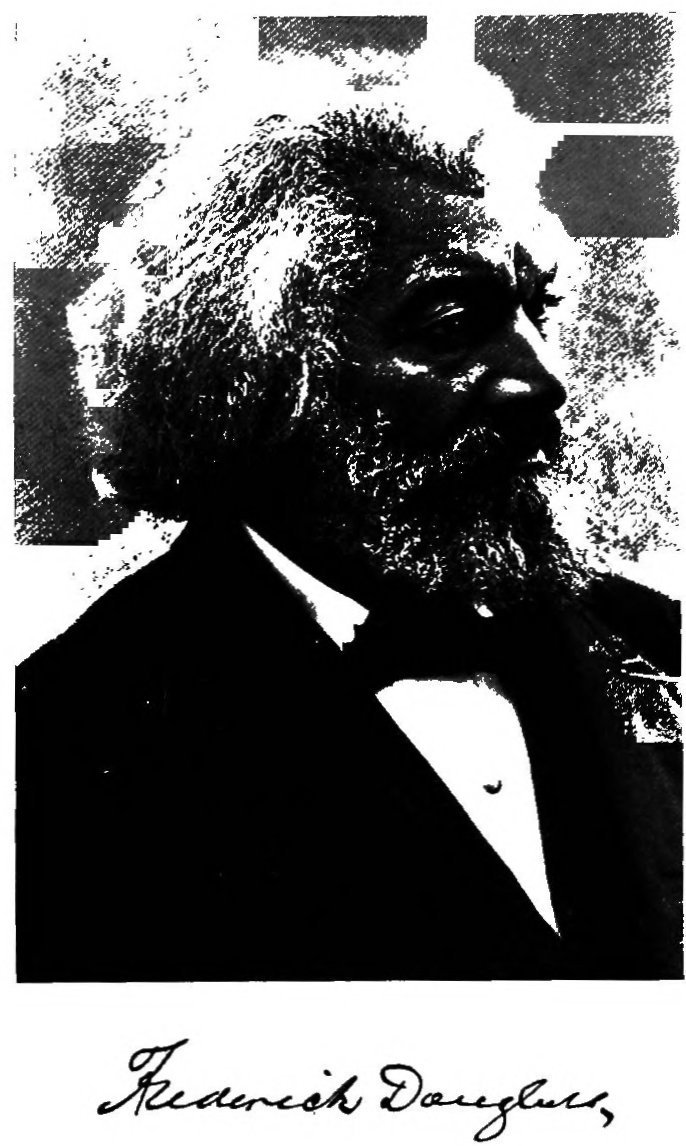
Frederick Douglass. By Booker T. Washington.
Judah P. Benjamin. By Pierce Butler.
Robert E. Lee. By Philip Alexander Bruce.
Jefferson Davis. By Prof. W. E. Dodd.
Alexander H. Stephens. By Louis Pendleton.
John C. Calhoun. By Gaillard Hunt.
In preparation:
Daniel Webster. By Prof. C. H. Van Tyne.
John Quincy Adams. By Brooks Adams.
John Brown. By W. E. Burghardt Dubois.
William Lloyd Garrison. By Lindsay Swift.
Charles Sumner. By Prof. George H. Haynes.
William H. Seward. By Edward Everett Hale, Jr.
Stephen A. Douglas. By Prof. Henry Parker Willis.
Thaddeus Stevens. By Prof. J. A. Woodburn.
Andrew Johnson. By Prof. Walter L. Fleming.
Henry Clay. By Thomas H. Clay.
Ulysses S. Grant. By Prof. Franklin S. Edmonds.
Edwin M. Stanton. By Edwin S. Corwin.
“Stonewall” Jackson. By Henry Alexander White.
Jay Cooke. By Ellis Paxson Oberholtzer.
AMERICAN CRISIS BIOGRAPHIES
by
BOOKER T. WASHINGTON
Author of “Up from Slavery,” “Working with the Hands,” etc.
PHILADELPHIA
GEORGE W. JACOBS & COMPANY
PUBLISHERS
Copyright, 1906, by
George W. Jacobs & Company
Published, February, 1907
PREFACE
5
The chance or destiny which brought to this land
of ours, and placed in the midst of the most progressive
and the most enlightened race that Christian
civilization has produced, some three or four
millions of primitive black people from Africa
and their descendants, has created one of the most
interesting and difficult social problems which any
modern people has had to face. The effort to solve
this problem has put to a crucial test the fundamental
principles of our political life and the
most widely accepted tenets of our Christian faith.
Frederick Douglass’s career falls almost wholly
within the first period of the struggle in which this
problem has involved the people of this country,—the
period of revolution and liberation. That
period is now closed. We are at present in the
period of construction and readjustment. Many of
the animosities engendered by the conflicts and
controversies of half a century ago still survive to
confuse the councils of those who are seeking to
live in the present and the future, rather than in
the past. But changes are rapidly coming about
that will remove, or at least greatly modify, these
lingering animosities. This book will have failed
of its purpose just so far as anything here said shall
serve to revive or keep alive the bitterness of those
6controversies of which it gives the history; it will
have attained its purpose just so far as it aids its
readers to comprehend the motives of, and the men
who entered with such passionate earnestness into,
the struggle of which it gives in part a picture—particularly
the one man, the story of whose life is
here narrated.
In the succeeding chapters, an effort has been
made to present an account of the life of Frederick
Douglass as a slave and as a public man during the
most eventful years of the anti-slavery movement,
the Civil War, the period of reconstruction, and
the after years of comparative freedom from sectional
agitation over the “Negro problem.”
To bring this study within the plan and purposes
of the American Crisis Series of Biographies, such
subjects as “The Genesis of the Anti-Slavery Agitation,”
“The Fugitive Slave Law,” “The Underground
Railway,” “The American Colonization
Society,” “The Conflict in Kansas for Free Soil,”
“The John Brown Raid,” “The Civil War,” “The
Enlistment of Colored Troops,” and “Reconstruction,”
have been given more space than they have
received in earlier biographies.
While it is true that Frederick Douglass would
have been a notable character in any period, it is
also true that in the life of hardly any other man
was there comprehended so great a variety of incidents
of what is perhaps the most memorable
epoch in our history. The mere personal side of
Douglass’s life, though romantic and interesting, is
here treated only in outline.
7S. Laing Williams, of Chicago, Ill., and his wife,
Fannie Barrier Williams, have been of incalculable
service in the preparation of this volume.
Mr. Williams enjoyed a long and intimate acquaintance
with Mr. Douglass, and I have been
privileged to draw heavily upon his fund of information.
He and Mrs. Williams have reviewed
this manuscript since its preparation and have
given it their cordial approval.
In addition to these sources of information, I
wish to make grateful acknowledgment of my indebtedness
to Major Charles R. Douglass for the
use of many printed addresses, and for interesting
data showing his father’s work in the Underground
Railway.
I must also acknowledge my sense of gratitude
for the opportunity afforded in this work of getting
close to the heart and life of this great leader of my
race. No Negro can read and study the life of
Frederick Douglass without deriving from it courage
to look up and forward.
February. Born on a plantation at Tuckahoe, near the town of Easton, Talbot County, on
the eastern shore of Maryland; the exact date not known. His mother, Harriet Bailey, was
the slave of Captain Aaron Anthony, the manager of the estate of Colonel Edward Lloyd.
1825—
Sent to Baltimore to live with Hugh Auld, a relative of his master.
1833—
Returns to Maryland and becomes the slave of Thomas Auld, at St. Michaels, Talbot County;
while here he has an encounter with the Negro slave-breaker, Covey.
1836—
First attempt to run away results in his being sent back to Baltimore where he is
apprenticed by Thomas Auld to William Gardiner of Fells Point, to learn the trade of
ship-calker.
1838—
September 3d. Makes his escape from Baltimore, reaching New York the next day. September
15th, according to the marriage certificate, possibly a day earlier, he marries a free
colored woman, Anna Murray, who on receiving the news of his escape follows him to New
York. They are directed to New Bedford, Mass., by Anti-Slavery friends where Douglass
begins his life as a freeman. He changes his name from Frederick Augustus Washington
Bailey, to Frederick Douglass.
1841—
August 11th. Makes his first speech before an Anti-Slavery convention and becomes a
lecturer in the Anti-Slavery cause.
1842—
Participates in the campaign for equal rights in Rhode Island during the “Dorr Rebellion.”
1843—
Takes part in the campaign of “A Hundred Anti-Slavery Conventions”; his hand broken in a
fight with a mob at Pendleton, Indiana.
12
1845—
Writes, in order to prove that he is what he proclaims himself, a fugitive slave,
Narrative of Frederick Douglass, giving the names of his owners. This book
was published by the Anti-Slavery Society. August 16th, sails for Liverpool, England,
lest the publication of his biography should lead to his capture and reënslavement. He is
received with enthusiasm in England and his freedom is purchased by two members of the
Society of Friends.
1846—
August 7th. Addresses the “World’s Temperance Convention” at Covent Garden Theatre,
London. December 5th, the papers are signed which grant him his freedom.
1847—
April 20th. Reaches America again. December 3d, the first issue of the North
Star, subsequently Frederick Douglass’s Paper, is published, he
having first removed to Rochester, N. Y. Following its establishment came his rupture
with Garrison and the Abolitionist wing of the Anti-Slavery party.
1848—
September. Delivers an address before a colored convention at Cleveland, O., on farming
and industrial education.
1851—
Announces his sympathies with the voting Abolitionists.
1852—
Supports the Free Soil party and is elected a delegate from Rochester to the Free Soil
Convention at Pittsburg, Pa.
1853—
Visits Harriet Beecher Stowe at Andover, Mass., with reference to the forming of an
industrial school for colored youth.
1855—
My Bondage and My Freedom published in New York and Auburn.
1856—
Supports Frémont, the candidate of the Republican party, for President.
1858—
Douglass’s Monthly is established. Its publication is continued until 1864.
1859—
August 20th. Visits John Brown at Chambersburg, Pa. This was his last interview with the
old Anti-Slavery hero before the attack on Harper’s Ferry, three weeks later. At this
interview John Brown made a final effort to induce him to join in the dangerous
enterprise.
13
1859—
November 12th. Sails from Quebec on his second visit to England. This trip is undertaken
because he is in danger of being implicated in the plot to cause an uprising of the
slaves for which John Brown had already been executed.
1860—
Returns to the United States, called home by the death of his daughter, Anna.
1860—
December 3d. Attempts to speak in Tremont Temple, Boston, but the meeting is broken up.
1863—
Publishes in Douglass’s Monthly his address to colored men urging them to
enlist in the Federal Army. He is instrumental in forming the Fifty-fourth and
Fifty-fifth Massachusetts Regiments of colored soldiers. Subsequently he visits President
Lincoln to secure fair treatment of the colored soldiers and is promised, by Secretary
Stanton, a commission as Assistant Adjutant to General Thomas, which, however, he does
not receive.
1866—
February 7th. Interviews President Johnson to urge upon him the wisdom of granting the
suffrage to the freedmen. Issues shortly afterward an address in reply to President
Johnson’s argument against granting the suffrage to Negroes. In September, is elected a
delegate to the “National Loyalists’ Convention” in Philadelphia.
1869—
Becomes editor of the New National Era which he continued to edit until
1872, at a pecuniary loss of about $10,000.
1871—
Visits San Domingo as Secretary to the Commission, consisting of B. F. Wade, Dr. S. G.
Howe and Andrew D. White, to determine the attitude of that country toward annexation to
the United States. He is appointed a member of the upper house of the territorial
legislature of Washington, D. C., but shortly resigns his position in favor of his son,
Lewis. May 30th, he delivers the Decoration Day address at Arlington National Cemetery.
Becomes president of the “Freedmen’s Savings and Trust Company.”
1872—
April. Presides at the National Convention of colored citizens held in New Orleans.
Chosen elector-at-large from the State of New York on the Presidential ticket which
elected General Grant to a second term and is afterward designated to carry the vote of
the electoral college of New York to Washington.
14
1876—
April 14th. Delivers an address at the unveiling of the Lincoln Monument in Lincoln Park,
Washington, D. C.
1877—
Appointed Marshal of the District of Columbia, which office he held until 1881.
1878—
May. Visits St. Michaels and is reconciled to his old master, Thomas Auld.
1879—
September 12th. Reads a paper before the American Social Science Association in which he
opposes the Negro exodus to Kansas.
1881—
May. Appointed Recorder of Deeds in the District of Columbia. June 12th, visits the Lloyd
plantation.
1882—
January. Life and Times of Frederick Douglass published. August 4th, his
first wife dies: she was the mother of five children.
1884—
January 24th. Marries Miss Helen Pitts, of New York.
1889—
Appointed Minister and Consul General to Hayti.
1893—
Commissioner for the Haytian Republic at the World’s Fair at Chicago. Makes an address on
Negro Day at the Fair.
1895—
February 20th. Dies at his home at Cedar Hill, Washington. Buried with honors from the
Metropolitan Church (African Methodist Episcopal); public services being held
subsequently in Rochester. His body finally interred beside those of his wife and
daughter, in Mount Hope Cemetery, Rochester, N. Y.
FREDERICK DOUGLASS
CHAPTER I FREDERICK DOUGLASS, THE SLAVE
15
The life of Frederick Douglass is the history
of American slavery epitomized in a single human
experience. He saw it all, lived it all, and overcame
it all. What he saw and lived and suffered
was not too much to pay, however, for a great
career. “It is something,” as he himself said, “to
couple one’s name with great occasions, and it was
a great thing to me to be permitted to bear some
humble part in this, the greatest that had come
thus far to the American people.”
Tradition says he was of noble lineage, but of
this there is no written record. Frederick Douglass
was born in the little town of Tuckahoe in
Talbot County on the eastern shore of Maryland,
supposedly in the month of February, 1817. The
exact date of his birth was made the subject of
diligent search by him in the days of his manhood
and freedom, but nothing more definite than the
month and year could be established. He gleaned
so much as this, he says, “from certain events,
the date of which I have since learned.”
16In the early life of this child of slave birth, there
were several incidents that seemed to mark him for
a high destiny. The very pretentiousness of the
name he bore, Frederick Augustus Washington
Bailey, was a possible indication of something unusual
and promising in his appearance and demeanor.
Though it is not known who was his
father, it is fortunate that, out of the many uncertainties
of his lowly origin, a reasonably clear
outline of the personality of his mother has come
to light and has been preserved. We cannot know
her name or pedigree. The slave-child saw little
of his slave-mother, but he made a great deal of
this little. His references to her were frequent
in his writings and public addresses, and they all
indicate the pride and love of a heart true to its
primal instincts.
While he was a child, his mother was employed
on a plantation, a distance of twelve miles from
Tuckahoe. Her only opportunity of seeing her son
was by walking the distance after her day’s work,
to return to the field of her labors by dawn of the
next day. To use his own language: “These little
glimpses of my mother obtained under such circumstances
and against such odds, meagre as they were,
are indelibly stamped upon my memory. She was
tall and finely proportioned; of dark and glossy
complexion, with regular features; and among
slaves she was remarkably sedate and dignified.
She was the only slave in Tuckahoe who could
read.” That she was a woman of marked superiority,
and that her child inherited from her much
17that raised him above the other slaves among whom
he lived, can be easily believed. When he had
grown to manhood and while reading Prichard’s
Natural History of Man, he found in the features of
“King Rameses the Great” a strong resemblance
to his mother. There were four other children, one
boy named Perry and three girls. So far as is
known, the brother and sisters showed none of the
marks of superiority that distinguished Frederick
Augustus Washington Bailey.
Whatever training Frederick had up to eight
years of age, he received from his Grandmother
Bailey. It was in her cabin that he was born, and
it was by her that he was cared for and nourished.
He was very fond of this grandmother and has paid
an affectionate tribute to her memory. She was a
woman of strong character and of unusual intelligence.
There were many things that she could do
uncommonly well, such as gardening, and her good
luck in fishing was proverbial. She was also famed
as a fortune-teller and as such was sought far and
wide by all classes of people. Because of her
intelligence and natural gifts, she was allowed
many privileges and a great deal of liberty; in her
old age she was amply provided for by her master,
and saved from hard toil. Judging from his frequent
and fond references to his grandmother,
young Douglass had better care and more attention
than the ordinary slave-child; he probably had
plenty to eat, and was taught good manners.
Whatever it was possible for an impressionable
mind to gain from contact with a strong and vigorous
18nature, the lad received from this unusual
woman.
Until he was seven years of age, young Fred felt
few of the privations of slavery. In these childhood
days, he probably was as happy and carefree
as the white children in the “big house.”
At liberty to come and go and play in the open
sunshine, his early life was typical of the happier
side of Negro life in slavery. What he missed of
a mother’s affection and a father’s care, was partly
made up to him by the indulgent kindness of his
good grandmother.
The owner of Fred and of his mother, grandmother,
sisters, and brother, was Captain Aaron
Anthony. He was the proprietor of several plantations
and about thirty slaves near Tuckahoe. But
Captain Anthony was something more, and this fact
became important in the subsequent history of young
Frederick Bailey; he had the distinction of being
the manager of the vast estate of Colonel Edward
Lloyd, who belonged to one of the foremost families
of Maryland, and who owned between twenty and
thirty plantations with over one thousand slaves.
His home was on a plantation situated about
thirty-five miles southeast of Baltimore and on the
banks of the Wye River, the mansion and its surroundings
being typical of the splendor and power
of the wealthy slave-holder. When young Douglass
first gazed upon all these signs of wealth, he
says: “I became impressed with the baronial
splendors of the Lloyd mansion and the princely
mode of living; the vast army of enslaved men,
19women, and children; the completeness of the government
that made it almost impossible for any of
these slaves to escape; the subordination of my own
master; the great number of mechanics that were
skilled in all the trades, and the tutors from New
England that were hired to teach the Lloyd children.”
Near the mansion stood the plain but commodious
home of Fred’s master, Captain Anthony.
The Anthony family consisted of Mrs. Lucretia
Anthony, the wife; Richard and Fred Anthony,
sons; and an only daughter, Lucretia, who became
the wife of Captain Thomas Auld.
When Fred was between seven and eight years of
age, his grandmother was directed by her master to
take her grandson to the Lloyd plantation. After
the boy arrived at his new home, he was put in
charge of a slave-woman for whom the only name
we know is “Aunt Katy.” This change brought
him the first real hardship of his life. As an early
consequence of it, he lost the care and guidance of
his grandmother, his freedom to play, good food,
and that affection which means so much to a child.
When he came under the care of Aunt Katy, he
began to feel for the first time the sting of unkindness.
He has given a very disagreeable picture of
this foster-mother. She was a woman of a hateful
disposition, and treated the little stranger from
Tuckahoe with extreme harshness. Her special
mode of punishment was to deprive him of food.
Indeed he was forced to go hungry most of the time,
and if he complained, was beaten without mercy.
20He has described his misery on one particular night.
After being sent supperless to bed, his suffering
very soon became more than he could bear, and
when everybody else in the cabin was asleep, he
quietly took some corn and began to parch it before
the open fireplace. While thus trying to appease
his hunger by stealth, and feeling dejected and
homesick, “who but my own dear mother should
come in?” The friendless, hungry, and sorrowing
little boy found himself suddenly caught up in her
strong and protecting arms. “I shall never
forget,” he says, “the indescribable expression
of her countenance when I told her that Aunt Katy
had said that she would starve the life out of me.
There was a deep and tender glance at me, and a
fiery look of indignation for Aunt Katy at the
same moment, and when she took the parched corn
from me and gave me, instead, a large ginger-cake,
she read Aunt Katy a lecture which was never
forgotten. That night, I learned, as never before,
that I was not only a child but somebody’s child.
I was grander on my mother’s knee than a king
upon his throne. But my triumph was short. I
dropped off to sleep and waked in the morning to
find my mother gone, and myself again at the
mercy of the virago in my master’s kitchen.”
There is no record of another meeting between
mother and son. She probably died shortly afterward,
because if she had been within walking
distance, he certainly would have seen her again.
Her memory in his child’s mind was always that
of a real and near personality. When he became
21older, and conscious of his superiority to his fellows,
he was wont to say: “I am proud to attribute
my love of letters, such as I may have, not to my
presumed Anglo-Saxon father, but to my sable, unprotected,
and uncultivated mother.” Thus, after
his mother died, his vivid imagination kept before
him her image, as she appeared to him that last
time he saw her, through all his struggles for a
fuller and freer life for himself and his race.
With the loss of his mother and grandmother,
he came more and more to realize the peculiar relation
in which he and those about him stood to
Colonel Lloyd and Captain Anthony. His active
mind soon grasped the meaning of “master” and
“slave.” While still a lad, longing for a mother’s
care, he began to feel himself within the grasp of
the curious thing that he afterward learned to
know as “slavery.” As he grew older in years
and understanding, he came also to see what manner
of man his master was. He described Captain
Anthony as a “sad man.” At times he was very
gentle, and almost benevolent. But young Douglass
was never able to forget that this same kindly
slave-holder had refused to protect his cousin from
a cruel beating by her overseer. The spectacle he
had witnessed, when this beautiful young slave was
whipped, had made a lasting and painful impression
upon him. Vaguely he began to recognize the
outlines of the institution which at once permitted
and, to a certain degree, made necessary these cruelties.
It was at this point that he began to speculate
on the origin and nature of slavery. Meanwhile
22he became, in the course of his life on the
plantation, the witness of other scenes, quite as harrowing,
and the memory mingled with his reflections,
and embittered them.
During this time an event occurred which gave a
new direction and a new impetus to the thoughts
and purposes slowly taking form within him. This
event was the successful escape of his Aunt Jennie
and another slave. It caused a great commotion on
the plantation. Nothing could happen in a Southern
community that excited so many and such varied
emotions as the escape of a slave from bondage:—terror
and revenge; hope and fear, mingled with
the images of the pursued and the pursuers, with
speculation in regard to the capture of the fugitive,
and with prayers for his success in the minds of the
slaves.
Young Douglass had begun to feel the burden of
slavery and already had a dim consciousness of its
fundamental injustice, but up to this point, he had
known no other world than this immense plantation,
and no other people than these masters, overseers,
and slaves. His horizon was further enlarged
and his imagination quickened by talking with certain
Negroes on the Lloyd plantation, who could
recall the event of their being brought from far-off
Africa in slave-ships. Speaking of his own state of
feeling at this time, he says: “I was already a
fugitive from slavery in spirit and purpose.”
From now on his quick and comprehending mind
saw and suffered things that formerly never affected
him. The hard and sometimes cruel discipline, toil
23from sunrise to sunset, scant food, the stifling of ambitions,—all
these began now to be perceived and felt,
and the impression they left sank into the soul of
this rebellious boy. He saw a slave killed by an
overseer, on no other charge than that of being
“impudent.” “Crimes” of this nature were committed,
as far as he could see, with impunity, and
the memory of them haunted him by day and by
night.
Thus far Douglass had not felt the overseer’s
whip. He was too small for anything except to run
errands and to do light chores. Of course, he had
been cuffed about by Aunt Katy; he says he seldom
got enough to eat and he suffered continually from
cold, since his entire wardrobe consisted of a tow
sack. He was fortunate, however, in having two
friends, who often saved him from the pangs of
hunger, and who now and then gave him a word of
kindness. One was young Daniel Lloyd, of the
“great house,” and the other, Miss Lucretia, his
master’s daughter. This lady seems to have had a
real fondness for the boy, and would often give him
something good to eat and at times caress him in
such a way as to recall to his mind the few blessed
moments he had known with his mother. Young
Lloyd also often protected him from the impositions
of other boys.
To show how far the lad had advanced in his
thinking, it is well to quote his own words on this
point: “I used to contrast my condition with that
of the blackbirds, in whose world and sweet songs,
I fancied them so happy. Their apparent joy only
24deepened the shadows of my sorrow. There are
thoughtful days in the lives of children, at least
there were in mine, when they grapple with all the
primary subjects of knowledge, and reach in a moment
conclusions which no subsequent experience
can shake. I was just as well convinced of the unjust,
unnatural, and murderous character of slavery
when nine years old, as I am now (1881). Without
any appeal to books, to laws, or to authorities
of any kind, I came to regard God as our Father,
and condemned slavery as a crime.”
When Fred became nine years old, the most important
event in his life occurred. His master determined
to send him to Baltimore to live with
Hugh Auld, a brother of Thomas Auld. Baltimore
at this time was little more than a name to young
Douglass. When he reached the residence of Mr.
and Mrs. Auld and felt the difference between the
plantation cabin and this city home, it was to him,
for a time, like living in Paradise. Mrs. Auld is
described as a lady of great kindness of heart, and
of a gentle disposition. She at once took a tender
interest in the little servant from the plantation.
He was much petted and well fed, permitted to wear
boy’s clothes and shoes, and for the first time in his
life, had a good soft bed to sleep in. His only duty
was to take care of and play with Tommy Auld,
which he found both an easy and an agreeable task.
Young Douglass yet knew nothing about reading.
A book was as much of a mystery to him as the
stars at night. When he heard his mistress read
aloud from the Bible, his curiosity was aroused.
25He felt so secure in her kindness that he had the
boldness to ask her to teach him. Following her
natural impulse to do kindness to others and without,
for a moment, thinking of the danger, she at
once consented. He quickly learned the alphabet
and in a short time could spell words of three syllables.
But alas, for his young ambition! When
Mr. Auld discovered what his wife had done, he
was both surprised and pained. He at once stopped
the perilous practice, but it was too late. The precocious
young slave had acquired a taste for book-learning.
He quickly understood that these mysterious
characters called letters were the keys to a
vast empire from which he was separated by an enforced
ignorance. In discussing the matter with his
wife, Mr. Auld said: “If you teach him to read,
he will want to know how to write, and with this
accomplished, he will be running away with himself.”
Mr. Douglass, referring to this conversation
in later years, said: “This was decidedly the first
anti-slavery speech to which I had ever listened.
From that moment, I understood the direct pathway
from slavery to freedom.”
During the subsequent six years that he lived in
Baltimore in the home of Mr. Auld, he was more
closely watched than he had been before this incident,
and his liberty to go and come was considerably
curtailed. He declares that he was not
allowed to be alone, when this could be helped, lest
he would attempt to teach himself. But these were
unwise precautions since they but whetted his appetite
for learning and incited him to many secret
26schemes to elude the vigilance of his master and
mistress. Everything now contributed to his enlightenment
and prepared him for that freedom for
which he thirsted. His occasional contact with
free colored people, his visit to the wharves where
he could watch the vessels going and coming, and
his chance acquaintance with white boys on the
street, all became a part of his education and were
made to serve his plans. He got hold of a blue-back
speller and carried it with him all the time.
He would ask his little white friends in the street
how to spell certain words and the meaning of them.
In this way he soon learned to read. The first and
most important book owned by him was called
the Columbian Orator. He bought it with money
secretly earned by blacking boots on the streets. It
contained selected passages from such great orators
as Lord Chatham, William Pitt, Fox, and Sheridan.
These speeches were steeped in the sentiments of
liberty, and were full of references to the “rights
of man.” They gave to young Douglass a larger
idea of liberty than was included in his mere dream
of freedom for himself, and in addition they increased
his vocabulary of words and phrases. The
reading of this book unfitted him longer for restraint.
He became all ears and all eyes. Everything he saw
and read suggested to him a larger world, lying just
beyond his reach. The meaning of the term “Abolition”
came to him by a chance look at a Baltimore
newspaper.
Slavery and Abolition! The distance between these
two points of existence seemed to have lessened
27greatly, after he had comprehended their meaning.
“When I heard the word ‘Abolition,’ I felt the
matter to be my personal concern. There was hope in
this word.” As he afterward went about the city
on his ordinary errands, or when at the wharf, even
performing tasks that were not set for him to do, he
was like another being. That word “Abolition”
seemed to sing itself into his very soul, and when he
permitted his thoughts to dwell on the possibilities
that it opened to him, he was buoyed up with joyous
expectations. He tried to find out something from
everybody. He learned to write by copying letters
on fences and walls and challenging his white playmates
to find his mistakes; and at night when no
one suspected him of being awake, he copied from
an old copy-book of his young friend Tommy. Before
he had formulated any plans for freedom for
himself, he learned the important trick of writing
“free passes” for runaway slaves.
Notwithstanding his progress in gaining knowledge,
his considerate master and kind mistress, his
loving companion in Tommy, his good home, food
and clothes, he was not happy or contented. None
of these things could stifle his yearning to be free.
He has aptly described his own feelings at this time
in speaking of Mrs. Auld: “Poor lady, she did
not understand my trouble, and I could not tell her.
Nature made us friends, but slavery made us enemies.
She aimed to keep me ignorant, but I resolved to know,
although knowledge only increased my misery. My
feelings were not the result of any marked cruelty
in the treatment I received. It was slavery, not its
28mere incidents, I hated. Their feeding and clothing
me well, could not atone for taking my liberty from
me. The smiles of my master could not remove the
deep sorrow that dwelt in my young bosom. We
were both victims of the same overshadowing evil,—she
as mistress, I as slave. I will not censure her
too harshly.”
But if his hopes and aspirations were excited by
the vast and vague horizon which the thought of
emancipation opened to him, he was, on the other
hand, driven to something like despair when he
considered how distant and inaccessible was this
“land of freedom” of which he dreamed. The
nearer and clearer appeared to him the possibility
of this larger life, the more torturing became the
restraints that kept him from seeking it. It was
when thus pursuing in thought this phantom of a
greater world although at the same time in despair
of ever attaining it, that he found peace for a while
in the consolation of religion. His imagination had
been aroused by the preaching of a white minister,
a Methodist, named Hanson. Feeling himself
wretched and alone, he was in a state of mind, as so
many others have been before and since, to find comfort
in the thought of a kindly and overshadowing
Power, a Protector to whom he might turn, in his
great distress, without reserve and without misgiving.
He surrendered himself completely to this new
faith in God. In his search for more light, he met
a lasting friend and guide in the person of a colored
preacher to whom he fondly refers as “Uncle Lawson.”
This good and pious old man lived very near
29the home of Mr. Auld. Young Douglass said of
him: “He was my spiritual father. I loved him
intensely, and was at his house every chance I could
get.”
Douglass’s master and mistress knew that he had
become religious, and though they were at that time
but lukewarm in their support of the church, they
respected the piety in the young slave and seem to
have encouraged it. But unfortunately the boy’s
interest in religion had increased his desire to read,
in order to become thoroughly acquainted with the
Bible. “I have gathered,” says Mr. Douglass,
“scattered pages of the Bible from the filthy street gutters,
and washed and dried them, that in moments
of leisure I might get a word or two of wisdom from
them.”
Uncle Lawson could read a little and Douglass,
who went frequently with him to prayer meeting,
spent much of his spare time on Sunday helping him
decipher its pages. When his master learned what
he was doing, he threatened to whip him if he went
to Lawson’s again, but he stole away whenever he
could and got his needed instruction in the simple
lessons of faith.
Uncle Lawson was probably the first colored person
that young Douglass had met who appreciated
his longings and powers. He was also the first person
who awakened in him a dim consciousness that
he was destined for a public career. Speaking of
this, Douglass once said: “His words made a deep
impression upon me, and I verily felt that some
such work was before me, though I could not see
30how I could ever engage in its performance.” The
old preacher could go no further than to give utterance
to the familiar exhortations: “Trust in the
Lord, the Lord can make you free”; “Ask in
faith and He will give you what you ask.” The
boy’s great respect for the honesty and piety of
Uncle Lawson lent these words a deep significance,
and he never forgot the lessons that he learned from
this simple-minded man. How important was this
teaching is evidenced by Mr. Douglass’s own testimony: “Thus
assisted and thus cheered on under
the inspiration of the preacher, I worked and prayed
with a light heart, believing that my life was under
the guidance of a wisdom higher than my own. I
always prayed that God would in His great good
mercy and His own good time, deliver me from my
bondage.” After Douglass learned how to write
with tolerable ease, he began to copy from the Bible
and the Methodist hymn-books at night, when he
was supposed to be asleep. He always regarded
this religious experience as the most important part
of his education; it had the effect, not only of enlarging
his mind, but also of restraining his impatience,
and softening a disposition that was growing hard
and bitter with brooding over the disadvantages
suffered by himself and his race. He greatly needed
something that would help him to look beyond his
bondage and encourage him to hope for ultimate
freedom.
While he was undergoing this, to him, novel religious
experience, and while he was gradually being
adjusted to the situation in which he found himself,
31there came one of those dreaded changes in the
fortunes of slave-masters that made the status of the
slave painfully uncertain. His real master, Captain
Anthony, died, and this event, complicated with
some family quarrel, resulted in Douglass being recalled
from Baltimore to the plantation. This was
a depressing incident in his slave-life. It is true
that Mr. and Mrs. Auld were not at this time as
gentle with him as when he first came to the city.
He was under stricter discipline, was constantly
watched, and his liberties were circumscribed in
many ways that were both inconvenient and irritating.
But in spite of all this he was comparatively free
from the usual severities of slavery. He had many
interests and many happy relationships that he was
able to cultivate outside of the Auld household.
He had become something of a leader among the
young colored men of the city. He had taught
many of them their letters. Among the white boys
of his acquaintance he also had a large circle of
friends, who loved him and were loyal to him.
Most important of all was his affection for his religious
teacher, Uncle Lawson. Through these attachments
in the more complex life of the city, and
the opportunities for mental and spiritual growth
which they offered, he was able to throw off to a
great degree the gloom and doubt of his earlier
youth. He had begun to feel that he was actually
preparing himself for that larger life of leadership
in freedom, that had been hinted to him by Uncle
Lawson. But all these happy relations were rudely
severed when he was recalled to the plantation.
32“It did seem,” he said, “that every time the
young tendrils of my affection became attached, they
were rigidly broken off by some unnatural, outside
power, and I was looking away to Heaven for the
rest denied to me on earth.”
CHAPTER II BACK TO PLANTATION LIFE
33
When young Douglass left Baltimore to go back
to the plantation, he was about sixteen years of age;—strong,
healthy, and fully capable of the hard work
of a field hand. But this was not the most difficult
task he now had to face. Conditions that he met
there were to test his character as it had never been
tested before, and the trials he endured during this
period profoundly influenced all his future life.
For the first time in many years, he was to feel the
“pitiless pinchings of hunger.” He says: “So
wretchedly starved were we that we were compelled
to live at the expense of our neighbors, or steal from
our own larder. This was a hard thing to do, but
after much reflection, I reasoned myself into the belief
that there was no other way to do—and after
all there could be no harm in it, considering that
my labor and person were the property of Master
Thomas, and that I was deprived of the necessaries
of life. It was simply appropriating what was my
own, since the health and strength derived from
such food were exerted in his service. To be sure,
this was stealing according to the law and gospel I
had heard from the pulpit, but I had begun to attach
less importance to what dropped from that
quarter, on certain points.”
34Having found a principle upon which he could
justify, against the precepts of morality, the practice
of stealing from his own master, in order to get
enough to eat, it was not difficult to go farther and
discover a warrant based on grounds quite as logical,
for the habit of stealing from others beside his
master, when the same necessity seemed to justify it.
“I am not only a slave of Master Thomas,” he
argued, “but I am also a slave of society at large.
Society at large has bound itself in form and fact to
assist Master Thomas in robbing me of my liberty
and the just reward of my labor; therefore whatever
rights I have against Master Thomas, I have
equally against those confederated with him.” It
is thus that Mr. Douglass, writing years afterward,
construed the argument with which the boy solved
the doubts and questions arising in his mind when
he found himself following the custom, prevalent
among the slaves, of persistent petty stealing.
Whatever one may think of this theory as a justification
for the practice, it is interesting as showing
in Douglass, even as a boy, the tendency to get clear
ideas in regard to his own conduct and the conduct
of those about him, and to make his actions conform
to some fundamental rule. A boy who was disposed
to think thus clearly and to apply the test of elementary
principles to the lives and actions of those
about him, was already a dangerous slave. And so
the summer of 1833 found Douglass more determined
than ever to run away.
Meanwhile he tells us that there were several
incidents which served still further to shape in his
35mind the view of his master and the class his master
represented. About this time there was a religious
revival in the neighborhood of St. Michaels,
where Douglass lived. Master Thomas became
converted and was afterward a devoted member and
class-leader in the Methodist church. Young Douglass
attended the camp-meeting, and, from his position
behind the preacher’s stand, where a space had
been marked off for colored people, watched the
process of conversion in his master with great interest
and close attention.
Another episode tended to add to the perplexity
in the young slave’s mind and still further undermine
his faith in the moral superiority of the master-class,
and in the religion which based its justification
of slavery on the fact of that superiority.
To add further to his confusion, he had read somewhere,
in the Methodist discipline, that “the slave-holder
shall not be eligible to an official station in
the church.” When he saw Mr. Auld making
open confession of his sins, and afterward given
official position in the church, he felt sure that a
great change must necessarily come over his disposition
and character. But his master’s face,
Douglass said, became more stern with increasing
piety, and the discipline he enforced upon his slaves
was even more rigid. This was a severe test of the
religious convictions of the young slave-boy. He
knew that religion had made him better, kinder,
and more appreciative of all that was true and
beautiful. It had also given him comfort during
the period of his servitude. He had looked forward,
36with sincere faith in the power of religion,
to some marked change in Master Thomas. The
resulting experience left him disappointed and confused.
At the request of an earnest and sincerely pious
white man, named Wilson, Douglass had joined in
an attempt to conduct a Sunday-school for young
colored people. During the second meeting of this
innocent company, it was violently broken up by a
mob, chief among whom was his master, Thomas
Auld. The men were armed with sticks and other
missiles and drove away both pupils and teachers,
warning them never to meet again. The only explanation
given for this violent interruption of
what seemed a harmless and worthy occupation,
was the rough remark of one member of the party,
that Douglass wanted to be another Nat Turner.
The fear inspired by his unfortunate slave insurrection
was responsible for much of the hardship
which Negroes in the South, free and slave, were at
this period compelled to endure. The memory of
it hardened the heart of many a master against his
slaves and made him cruel and suspicious where he
would naturally have been kind and confident.
But Thomas Auld seems not to have had even
this excuse for some of his acts which still further
embittered the young slave, already grown critical
and suspicious of all that his master did. It was
not long after his conversion, Douglass says, that
he began to beat the boy’s crippled and unfortunate
cousin, Henny, with unusual barbarity,
finally setting her adrift to care for herself. All
37these incidents crowded quickly upon the young
slave’s mind at a time when he had already begun
to test and measure the actions of his master and
those about him by the principles of universal
right and justice, which his study of the Columbian
Orator had furnished him, and which his reflections
and comparisons were steadily making more clear
and definite. The effect was to render him bold
and rebellious to such an extent that he soon became
a fit subject to be “broken in” by some overseer,
who knew how to handle “impudent” slaves.
A man named Edward Covey, living at Bayside,
at no great distance from the camp-ground where
Thomas Auld was converted, had a wide reputation
for “breaking in unruly niggers.” Covey was a
“poor white” and a farm renter. To this man
Douglass was hired out for a year. In the month of
January, 1834, he started for his new master, with his
little bundle of clothes. From what we have already
seen of this sensitive, thoughtful young slave of seventeen
years, it is not difficult to understand his state
of mind. Up to this time he had had a comparatively
easy life. He had seldom suffered hardships
such as fell to the lot of many slaves whom he knew.
To quote his own words: “I was now about to
sound profounder depths in slave-life. Starvation
made me glad to leave Thomas Auld’s, and the
cruel lash made me dread to go to Covey’s.” Escape,
however, was impossible. The picture of
“the slave-driver,” painted in the lurid colors that
Mr. Douglass’s indignant memories furnished him,
shows the dark side of slavery in the South. During
38the first six weeks he was with Covey, he
was whipped, either with sticks or cowhides, every
week. With his body one continuous ache from his
frequent floggings, he was kept at work in field or
woods from the dawn of day until the darkness of
night. He says: “Mr. Covey succeeded in breaking
me in body, soul, and spirit. The overwork
and the cruel chastisements, of which I was the victim,
combined with the ever growing and soul-devouring
thought, ‘I am a slave—a slave for life, a
slave with no rational ground to hope for freedom,’
had done their worst.”
He confesses that at one time he was strongly
tempted to take his own life and that of Covey.
Finally, his sufferings of body and soul became so
great that further endurance seemed impossible.
While in this condition, he determined upon the
daring step of returning to his master, Thomas
Auld, in order to lay before him the story of abuse.
He felt sure that, if for no other reason than the
protection of property from serious impairment,
his master would interfere in his behalf. He even
expected sympathy and assurances of future protection.
In all this he was grievously disappointed.
Auld not only refused sympathy and protection, but
would not even listen to his complaints, and immediately
sent him back to his dreaded master to face
the added penalty of running away. The poor lone
boy was plunged into the depths of despair. A feeling
that he had been deserted by both God and man
took possession of him.
Covey was lying in wait for him, knowing full
39well that he must return as defenseless as he went
away. As soon as Douglass came near the place
where the white man was hiding, the latter made a
leap at Fred for the purpose of tying him for a
flogging. But Douglass escaped and took to the
woods where he concealed himself for a day and a
night. His condition was desperate. He felt that
he could not endure another whipping, and yet
there seemed to him no alternative. His first impulse
was to pray, but he remembered that Covey
also prayed. Convinced, at length, that there was
no appeal but to his own courage, he resolved to
go back and face whatever must come to him. It
so happened that it was a Sunday morning and,
much to his surprise, he met Covey who was on his
way to church, and who, when he saw the runaway,
greeted him with a pleasant smile. “His religion,”
says Douglass, “prevented him from breaking
the Sabbath, but not from breaking my bones
on any other day in the week.”
On Monday morning, Douglass was up early,
half hoping that he would be permitted to resume
his work without punishment. Covey was astir betimes,
too, and had laid aside his Sunday mildness
of manner. His first business was to carry out his
fixed purpose of whipping the young runaway. In
the meantime Fred had likewise fully decided
upon a course of action. He was ready to submit
to any kind of work, however hard or unreasonable,
but determined to defend himself against an attempt
at another flogging. In the cold passion that took
possession of him, the slave-boy became utterly
40reckless of consequences, reasoning to himself that
the limit of suffering at the hands of this relentless
slave-breaker had already been reached. He was
resolved to fight and did fight. He began his morning
work in peace, obeying promptly every order
from his master, and while he was in the act of going
up to the stable-loft for the purpose of pitching
down some hay, he was caught and thrown by
Covey, in an attempt to get a slip knot about his
legs. Douglass flew at Covey’s throat recklessly,
hurled his antagonist to the ground, and held him
firmly. Blood followed the nails of the infuriated
young slave. He scarcely knew how to account for
his fighting strength, and his dare-devil spirit so
dumbfounded the master, that he gaspingly said:
“Are you going to resist me, you young scoundrel?”
“Yes, sir,” was the quick reply.
Finding himself baffled, Covey called for assistance.
His Cousin Hughes came to aid him, but as
he was attempting to put a noose over the unruly
slave’s foot, Douglass promptly gave him a blow in
the stomach which at once put him out of the combat
and he fled. After Hughes had been disabled,
Covey called on first one and then another of his
slaves, but each refused to assist him. Finding
himself fairly outdone by his angry antagonist,
Covey quit with the discreet remark: “Now, you
young scoundrel, you go to work; I would not have
whipped you half so hard, if you had not resisted.”
Douglass had thus won his first victory and was
never again threatened or flogged by his master.
The effect of this encounter, as far as he himself
41was concerned, was to increase his self-respect, and
to give him more courage for the future. He said
that, “when a slave cannot be flogged, he is more
than half-free.” To the other slaves he became a
hero, and Covey was not anxious to advertise his
complete failure to break in this “unruly nigger.”
It speaks well for the natural dignity and good sense
of young Douglass that he neither boasted of his
triumph, nor did anything rash as a consequence
of it, as might have been expected from a boy of his
age and spirit.
On Christmas Day, 1834, young Douglass’s time
with Covey was out. He then learned that he had
been hired to a William Freeland, who owned a
large plantation near St. Michaels, and by January
1st, was with his new master. Mr. Freeland was a
great improvement upon Covey. He was less direct
in his professions, but more humane in his manner
toward his slaves. He was what was called a “kind
master.” He did not overwork or underfeed his
slaves and he was sparing of the lash. All this was
Paradise to young Douglass, when compared with
the strenuous life he had led with Covey. The effect
of so much kindness was evidenced in the character
of the Freeland slaves. Mr. Douglass describes
them as a superior class of men and women, and he
loved, esteemed, and confided in them, as with real
friends, generous and true.
With these new and better conditions and with
these superior companions in bondage, Douglass
felt a renewal of that old impulse to do something
for his fellow slaves. He naturally first turned
42to the thought of teaching them to read and write.
He found time and spirit again to look at his library,—the
blue-back speller and the Columbian
Orator. He first started a Sunday-school under the
trees, at a safe distance from the “big house,”
gathering together some thirty young people.
They were making fine progress, when, one Sunday,
his former experience was repeated, and they were
rushed upon and scattered. The school was again
started, however, and this time Douglass seems
successfully to have evaded the vigilance of his
master. In addition to the Sunday-school, he devoted
three evenings a week to his fellow slaves.
His leadership among all the Negroes was recognized
and respected by them. This brought with it
his first consciousness of that peculiar power over
men, which in after-life made him so conspicuous a
figure among the heroes of the Abolition struggle.
The whole year at Freeland’s was spent in self-development
and in the mental and spiritual improvement
of his companions in bonds.
At the end of this time he learned that his services
had been hired for another twelve months to
Mr. Freeland. This seemed to promise good for
him in the future. The Bible, the spelling book,
and the Columbian Orator were read and re-read
and, at each new reading, he felt an enlargement
of mind and an increasing thirst for liberty. The
kindness of Mr. Freeland and the pleasant companionship
of the Harris brothers and other slaves,
served only to increase his discontent. He liked
his master and would gladly have remained with him
43as a free man, but he could never overcome his
increasing impatience of the restraints of slavery,
and, with this ambition for liberty, his troubles
began. He made a solemn vow to himself that the
year should not close without witnessing some
earnest effort on his part to escape. This vow
also included the freedom of his slave-companions,
for whom he had conceived a lasting attachment.
He succeeded in winning to his scheme five trusted
confidants. These were John and Henry Harris,
Sandy Jenkins, the footman; Charles Roberts, and
Henry Bailey. Young Douglass impressed them
with the perils of the undertaking. His knowledge
of the difficulties of a successful escape, little
as it actually was, surprised and awed them.
When he had fully determined upon his plans, he
found that it would perhaps require many weeks
to perfect them. His first task was to study the
character, the temperament, and the various personal
qualifications of the men whom he proposed to
make his partners in this dangerous undertaking.
He must learn whether they were proof against the
sin of betrayal under all possible circumstances.
Each man must cultivate an unhesitating faith in
the others. Each must have unlimited courage,
both physical and moral. All must learn the tricks
of self-concealment, and of assumed indifference
and deception. They must understand the various
kinds of perils they were likely to encounter. The
kidnapper, the slave-catcher, the black and white
detectives, and the whole range of restraints that,
like a continuous wall, hemmed in a slave, must be
44considered and understood. If he had hope in his
heart, he must not betray it by so much as a look,
in manner or in speech. Overseers were all eyes
and ears and quick to suspect something was
wrong if a slave seemed unusually thoughtful,
sullen, or happy. They were by no means easily
deceived as to the real intention of a slave planning
to run away. To become an object of suspicion
was merely to insure that the suspected slave
would be the more closely guarded. Young Douglass
fully realized the severity of the penalty that
must follow failure, but he never wavered in his determination
to make a dash for liberty, at any
cost.
Having satisfied himself that his companions
were proof against treachery and were of the right
sort of mettle, he began to study the practical
means of escape. There were no well-marked
routes from slavery to freedom, no highways, byways,
or “underground railways,” known to him at
that time. Such knowledge belonged wholly to the
region north of the boundary line of freedom. He
had heard of slaves escaping, but how they got
away and by what route was always a mystery. He
had heard that there was a region called North, and
that in this far haven, white and black people
alike were free. He had heard of a land called
Canada, but its location on maps and charts was
unknown to him. He had no conception of the
physical size of the world. He had seen Baltimore,
St. Michaels, and the adjoining plantations;
beyond this all was blank. He knew something of
45theology, but nothing of geography. He did not
know that there were states called New York and
Massachusetts. New York City was the northern
limit of his knowledge. He had received vague
hints that the dominion of slavery was without
boundary and that even in New York, there were
slave-catchers and kidnappers. But it was at this
time an unknown land.
In these difficulties, young Douglass looked
steadily North in the direction of the free-states,
seeking some chance guidance. His habit of reasoning
out things that in any way affected his
status as a slave and as a man, has already been
noted. Everything that he saw, or heard, or read
enlarged his knowledge of life and its meaning.
His stay in Baltimore had been a sort of school to
him. Here for the first time, he had seen free
colored people; the coming and going of ships
gave him his first ideas of direction and distance;
the Chesapeake Bay was a thing of wonder;—all of
which awakened in him many thoughts that led
him away from bondage.
While young Douglass was secretly working out
his plans for escape, one of his confidants, Sandy,
the footman, said to him: “I dreamed last night
that I was roused from sleep by strange noises, like
a swarm of angry birds; looking to see what it
was, I saw you, Frederick, in the claws of a large
bird surrounded by a large number of birds of all
colors and sizes. They were all picking at you.
Now I saw that as plain as I see you now, and
honey, watch the Friday night dream; there is
46sump’n in it, sho’s you born, dere is indeed, honey.”
Douglass confessed that the dream related to him
by old Sandy disturbed him for awhile. He felt
sure that his plans were seriously handicapped by
unseen forces of some sort, but he soon regained his
usual courage and overcame his superstitious apprehensions.
The Saturday night before Easter had
been fixed upon as the time for flight. A large
canoe, owned by a Mr. Hamilton, had been seized
and made ready for the confederates. They were
to paddle down the Chesapeake Bay to its head.
Douglass had already written out passes for each
of the fugitives in the following form:—
“This is to certify that I, the undersigned, have
given leave to the bearer, my servant, John,
full liberty to go to Baltimore to spend the Easter
holidays.—W. H.
“Near St. Michaels, Talbot Co., Md.”
On the night before the proposed flight, every
possible detail had been rehearsed and arranged.
The resolution of each party to the conspiracy
was tested and proved firm, except that of Sandy,
who, much to the disgust of Douglass, backed out.
Early Saturday morning, they were all at work in
the usual way. Douglass was the only one who was
troubled with a presentiment of evil. He turned
abruptly to Sandy, who was working near him,
and said: “We are betrayed!” Within a short
while his worst fears were being realized. Looking
toward the “big house,” he easily discerned a
stranger on horseback and an unusual stir. It was
47not long before he was abruptly accused of plotting
to run away, and taken into custody. Thus it
turned out that at the very time he had planned to
be on the road to freedom, he was a prisoner bound
for Easton, to be examined by a magistrate.
His companions, the two Harris brothers, were
likewise accused. Henry, however, was the only
one who did not tamely submit to being arrested
and handcuffed. When a revolver was pointed at
him by the officer, he knocked it from the man’s
hands and dared any one to shoot him. The recalcitrant
slave was soon overpowered, however, and
all were led away.
The excitement caused by Harris’s daring revolt
served one purpose, of which young Douglass’s alertness
enabled him to take advantage. He adroitly
threw his pass, the only incriminating evidence
against them, in the fire, and by some secret sign
advised the others to eat theirs with their bread
on the journey, which they did.
When they were examined, each stoutly disclaimed
all knowledge of plans for running away
and denied that they had any intention of doing so.
Notwithstanding the total lack of evidence against
them, the officers and Douglass’s master were thoroughly
convinced that they were plotting some wickedness.
There was always something so mysterious,
as well as commanding in the manner of young
Douglass, that he was naturally regarded as the
ringleader, when any misconduct of the slaves was
complained of. His fellows in bonds treated him
with a deference never shown toward any but white
48people. As a slave he worked well and did his full
duty, but his masters always regarded him with
suspicion, and something akin to fear.
The examination of the four culprits must have
afforded an interesting scene. Young Douglass,
though a slave in chains, as well as a prisoner at
the bar, had the temerity to assume the rôle of attorney
and to attempt the defense of his comrades,
for whose present predicament he felt himself responsible.
When Thomas Auld insisted that the
evidence in hand, showing the intention to run away,
was strong enough to hang in case of need, Douglass
promptly replied: “The cases are not equal. If
murder were committed, the thing is done, but we
have not run away. Where is the evidence against
us? We were quietly at work.” Douglass was confident
that the only tangible evidence against them
had been skilfully destroyed, and he knew also
that his companions had been slyly but effectively
coached as to what to say and how to act when they
came before the examining magistrate.
So completely had they failed to make young
Douglass and his companions convict themselves,
that very shortly Mr. Freeland came to the jail and
took home his own slaves, leaving Douglass still
in confinement. He was glad to know that his
companions had escaped punishment, but by this
last separation from them he seemed to have reached
the very depths of the desolation which it was the
lot of a slave to experience.
Through the bars of his imprisonment, he could
watch the slave-traders from Georgia, Alabama,
49and Louisiana apparently eager to get hold of him.
He could even hear them pass comments upon his
size, strength, and general appearance, and make
guesses as to his age. For the first time since he left
Covey’s, he felt both hopeless and helpless. If he
should be sold and sent down into the far South, he
well knew that all chances for escape would be cut
off forever.
While in this condition of dejection and hopelessness,
the unexpected happened. His owner,
Thomas Auld, who, in spite of Douglass’s rebelliousness,
always cherished a peculiar fondness for
him, ordered his release from jail, and at once
decided to send him back to Baltimore to live with
Mr. and Mrs. Hugh Auld. In telling Fred what
he intended to do, he said that he wanted him to
learn a trade, and that if he would behave himself
and give him no more trouble, he would emancipate
him when he became twenty-five years old.
The happy assurance that he was not to be punished
and that he was again to have the privileges
of the city, was at first almost too much to be
believed. All of his hopes for ultimate freedom
were revived and his confidence in himself, which
had been severely shaken by his recent failure and
disgrace, was renewed. Under the circumstances,
it seems to have been the only wise and practicable
course his master could pursue. Mr. Freeland
would not again allow him to come upon his plantation;
Covey had failed to break his spirit; and
his reputation as a would-be runaway and a
“smart nigger” made him a desperate asset in the
50slave-market of Talbot County. In sending him to
Baltimore to learn a trade, with a possibility of
ultimate freedom, it was thought that he would be
more serviceable and more tractable. Then, again,
the most threatening aspect of young Douglass’s
attempted flight was the daring plot to use the
Chesapeake Bay. Heretofore the slaves who had
succeeded in making good their escape were compelled
to find a path through deadly swamps and
woods, other avenues being so carefully guarded
that a successful runaway was very rare. Every
effort, therefore, must be made to keep the Douglass
venture a secret; he must be removed as far as
possible from his old plantation-life. If he had had
a different master, nothing could have saved him
from the slave-traders. The good-heartedness of
Thomas Auld was the only thing that preserved our
young hero for that larger life which he was to make
for himself, and help to make for so many others
of his race.
When, through the kindness of Mr. Auld, Douglass
again turned his face toward Baltimore, he
fully realized that the change was fraught with importance
to him. He remembered that it was in
this city he had caught the first suggestion that
there was a life to be lived above the low levels of
a slave. There, in the family of Hugh Auld, he
had learned to wear clothes, had acquired good manners
and the ability to read, and, for the first time,
had felt, in the person of his teacher and benefactor,
Mrs. Sophia Auld, the civilizing and softening
touch of a superior woman’s kindness.
51To his alert and observing mind, Baltimore
again became a real school. It quickened his perception,
and fired his imagination, and was the place,
above all others, short of a free state, where he
most longed to live. Hugh Auld easily succeeded
in getting young Douglass apprenticed to a calker,
in the extensive ship-yards of William Gardiner,
on Fell’s Point. The conditions under which he
had to work were very trying; he did not mind the
severe labor, but he was much disturbed by the intense
prejudice existing among the white boys and
mechanics. During the six months that he worked
with this firm, every one seemed to have license to
make use of and abuse him. He was not a coward,
and would quickly strike back at a man who insulted
or attempted to maltreat him. Finally, however,
he was assaulted by a crowd of ruffians and
frightfully beaten. His face was swollen and he
was covered with blood. In this condition, he reported
himself to Mr. Auld, who was furious when
he beheld the pitiable state of his slave. Mrs.
Auld took pity upon him and kindly dressed his
wounds, and nursed him until they were healed.
In the meantime he was angrily withdrawn from
Mr. Gardiner’s employ, and it was sought to bring
to punishment the perpetrators of the assault. Auld
appeared with Douglass before a magistrate, and
explaining how his slave had been attacked without
provocation, demanded a warrant for the guilty
parties, but both were surprised and chagrined
when the magistrate replied: “I am sorry, sir,
but I cannot move in this matter except upon the
52oath of a white man.” This incident made a deep
impression on Douglass. It gave him a new and
vivid sense of his helplessness and dependence, and
measurably increased his determination to be free
at any cost.
Hugh Auld soon after became foreman in the
ship-yards of Walter Price, of Baltimore. He took
Douglass with him and, under his protection, Fred
finished learning his trade and within one year became
able to command and receive from seven to
nine dollars per week, the largest wages at that
time paid for such labor. All of his earnings, of
course, were turned over to his master. From now
onward he had no trouble in securing work. He
was permitted to find his own employment and
make his own arrangements or contracts for pay.
This was a distinct advancement over his former
condition of servitude, and was his first experience
of self-direction and self-dependence.
He was soon known among the colored people
of the city as a young man of singular power. His
superiority of mind was recognized and, almost
without being conscious of it, he became a leader.
There was at that time an organization of free
colored people, known as the East Baltimore Improvement
Society. Although membership in this
exclusive body was limited to free people, young
Douglass was eagerly admitted. This was the first
organization of any kind, outside of the church, to
which he had ever belonged. It is probable that he
had here his first opportunity to exercise his natural
gift of eloquence.
53But with all these improvements in his conditions
of life, he was not happy. A sense of bondage,
however slight, made him restless and impatient.
“Why should I be a slave?” was the question that
went with him night and day. He has truly said:
“To make a contented slave, you must make him a
thoughtless one.”
Kind treatment, liberty to come and go as he
pleased and to make his own contracts for employment;
mingling with freemen, as if he himself
were free; the high esteem in which he was held
by fellow workmen and employers, and by free
people; and the promise of emancipation at twenty-five
years of age, were no consolation to the heart
that panted to be its own. He had already become
too much of a man to remain a willing slave!
CHAPTER III ESCAPE FROM SLAVERY; LEARNING THE WAYS OF FREEDOM
54
For the second time in his life, Frederick Douglass
now began earnestly to study the possible means
of permanently breaking his fetters. At the end of
every week, when he turned his entire earnings over
to his master, his sense of injustice and indignation
increased. He was scarcely able to conceal his discontent.
His intense longing to be free must have
betrayed itself in his countenance, for very soon he
noticed that he was being closely watched. The fact
that he had at one time made an attempt to run away
caused more or less uneasiness.
Young Douglass soon found that the difficulties of
escape were quite as great in Baltimore as on the
Freeland plantation. The railroads running from
that city to Philadelphia were compelled to enforce
the most stringent regulations with reference to colored
people. Even free Negroes found it difficult
to comply with them. Every one applying for a
railway ticket was required to show his “free
papers” and to be measured and carefully examined
before he could enter the cars. Besides this, he was
not allowed to travel by night. Similar regulations
were enforced by steamboat companies. In addition
to all these difficulties, every road and turnpike was
55picketed with kidnappers on the lookout for fugitive
slaves. Douglass found it much easier to learn the
obstacles than the aids to successful escape. The
former were many and obvious; the latter were few
and difficult to discover. It was impossible to profit
by the experience of those who had run the gauntlet
successfully, and whenever it was learned that some
keen-scented slave had found a pathway to freedom,
the information was carefully concealed from those
in bonds. Every slave preparing to escape his
fetters must act without guide or precedent, and
form his own plan of deliverance.
Douglass was now convinced that he must hereafter
be the arbiter of his own fortunes. He at once
decided that his great need was money. The problem
was how to get the necessary sum. His whole time
and all of his earnings belonged to his master, and
so long as this was the case the funds must still be a
long way off. He finally determined to propose to
his owner, Master Thomas Auld, that he be allowed
to have his own time. In other words, he would
agree to pay him so much a week, and all in excess
of that sum he would keep as his own. This proposition
merely angered Mr. Auld, who accused young
Douglass of scheming to run away, and threatened
him with severe punishment, if he ever mentioned
such a thing again. But Douglass had too much at
stake to give up. He made the same proposition to
Master Hugh Auld and it was accepted. By the
terms of this agreement young Douglass was to be
allowed all of his time, and to make his own contracts
and collect his own wages; while in return for
56these privileges, he was to pay his master three dollars
each week, board and clothe himself, and buy
his own tools.
This was a pretty hard bargain, but it meant his
first step toward freedom, so he entered upon it
cheerfully. From May until August, 1838, he
worked for himself under the above conditions, kept
all his obligations, and was able to save out of his
earnings a neat sum of money. In the month of
August occurred an unfortunate interruption of his
plans. One Saturday night, instead of taking his
wages to his master, he was persuaded to go out of
town to a camp-meeting. He convinced himself
that there could be no objection to this, since he had
the money and purposed turning it in early Monday
morning. Owing to some misunderstanding, however,
he was compelled to remain one day longer
than he had intended. On coming back to the city,
he went directly to his master and made his payment.
Instead of being indifferent to his absence,
Hugh Auld was almost beside himself with rage.
Addressing Douglass, he said: “You rascal, I
have a good mind to give you a sound whipping.
How dare you go out of the city without my leave?
Now, you scoundrel, you have done for yourself;
you shall have your time no longer. The next thing
I shall hear of you, will be your running away.
Bring home your tools at once; I will teach you how
to go off in this way.”
Poor Douglass was for the moment dismayed by
this very serious consequence of an innocent error of
judgment. He had had his own way so long, he
57had begun to feel that his master’s only interest in
him was the regular payment of the three dollars per
week which he had been receiving during the previous
four months. All his hopes for liberty had
been staked on the continuance of this arrangement
for a few months longer. Douglass understood the
man who was now his master. He had lived with
him long enough not to take his threats too seriously.
Mr. Auld would have been indeed shortsighted
if he had not used an occasion of this kind
to impress his slave with the seriousness of taking
such a liberty. Douglass did not, therefore, lose
heart and as a result of this episode, he made two
important resolutions. One was to go out in search
of work and return to the old contract; and the
other was to fix September 3, 1838, as the day of his
flight from slavery.
He soon found good employment in the Butler
ship-yards. Mr. Butler thought much of the young
slave calker and gave him every opportunity to
earn good wages. At the end of the first week, he
presented to his master the whole of his earnings,
amounting to nine dollars, which was accepted with
evident satisfaction. For the moment Master Hugh
seemed entirely to have forgotten the reprehensible
conduct of only a few days before. Having thus
shrewdly helped his master to recover his good temper
and natural kindness, Douglass took special pains
to keep him pleased and unsuspicious. The second
week of his employment, he again turned over the
whole amount of his wages, nine dollars. Mr. Auld
was overjoyed at this earning capacity of Douglass
58and as an evidence of it made him a present of
twenty-five cents. In the last week he worked as a
slave, he gave his master six dollars.
Ever since the first trouble with Auld, he had
been pushing his plans to redeem his pledge to himself
that he would run away on Monday, September
3, 1838. These were anxious days and many small
details had to be mastered. He must carefully avoid
anything in manner or word which could excite the
slightest suspicion. He had to test the fidelity of a
number of free colored people whose aid, in secret
ways, was very essential to him. Who these persons
were, has never been revealed and in fact, it
was not until many years after emancipation that
Mr. Douglass disclosed to the public how he succeeded
in making his daring escape. “Murder itself,”
he says, “was not more severely and surely
punished in the state of Maryland than aiding and
abetting the escape of a slave.”
Young Douglass’s flight had not outward semblance
of dramatic incident or thrilling episode and
yet, as he modestly says, “the courage that could
risk betrayal and the bravery which was ready to
encounter death, if need be, in pursuit of freedom,
were features in the undertaking. My success was
due to address rather than to courage, to good luck
rather than bravery. My means of escape were
provided by the very means which were making
laws to hold and bind me more securely to slavery.”
By the laws of the state of Maryland, every free
colored person was required to have what were
called “free papers” which must be renewed frequently,
59and, of course, a fee was always charged
for renewal. They contained a full and minute
description of the holder, for the purpose of identification.
This device, in some measure, defeated
itself, since more than one man could be found to
answer the general description; hence many slaves
could get away by impersonating the real owners of
these passes, which were returned by mail after the
borrowers had made good their escape. To use
these papers in this manner was hazardous both for
the fugitives and for the lenders. Not every freeman
was willing to put in jeopardy his own liberty
that another might be free. It was, however,
often done and the confidence that it necessitated
was seldom betrayed. Douglass had not many
friends among the free colored people in Baltimore
who resembled him sufficiently to make it safe for
him to use their papers. Fortunately, however, he
had one who owned a “sailor’s protection,” a document
describing the holder and certifying to the
fact that he was a “free American sailor.” This
“protection” did not describe its bearer very
accurately. But, it called for a man very much
darker than himself, and a close examination would
have betrayed him at the start. In the face of all
these conditions young Douglass was relying upon
something beside a dubious written passport. This
something was his desperate courage. He had
learned to act the part of a freeman so well that
no one suspected him of being a slave. He had
early acquired the habit of studying human nature.
As he grew to understand men, he no longer
60dreaded them. No one knew better than he the
kind of human nature that he had to deal with in
this perilous undertaking. He knew the speech,
manner, and behavior that would excite suspicion;
hence he avoided asking for a ticket at the
railway station because this would subject him to
examination. He so managed that just as the train
started he jumped on, his bag being thrown after
him by some one in waiting. He knew that scrutiny
of him in a crowded car en route would be
less exacting than at the station. He had borrowed
a sailor’s shirt, tarpaulin, cap and black cravat,
tied in true sailor fashion, and he acted the part
of an “old salt” so perfectly that he excited no
suspicion. When the conductor came to collect
his fare and inspected his “free papers,” Douglass,
in the most natural manner, said that he had none
but promptly showed his “sailor’s protection,”
which the railway official merely glanced at and
passed on without further question. Twice on the
trip he thought he was detected. Once when his
car stood opposite a south-bound train, Douglass
observed a well-known citizen of Baltimore who
knew him well, sitting where he could see him
distinctly. At another time, while still in Maryland,
he was noticed by a man who had met him
frequently at the ship-yards. In neither of these
cases, however, was he interfered with or molested.
When he got into the free state of Pennsylvania,
he felt more joy than he dared express. He had
by his cool temerity and address passed every sentinel
undetected and no slave, to his knowledge,
61he afterward said, ever got away from bondage on
so narrow a margin of safety.
After reaching Philadelphia, he hurried on to
New York. It took him just twenty-four hours to
make the run from the slave city of Baltimore to
the free city of New York. Measured by his intense
anxiety, the distance and time must have
seemed without end. For fifteen years he had been
patiently planning to get his feet upon free soil and
breathe the air of a free state. No one ever did
more to free himself or to deserve the liberty into
which he was now about to enter. He came to New
York, his pulses throbbing with high hopes. He
soon learned, however, that his stay there was not
safe and that the slave-traders plied their vocation
even in the free-states.
Douglass’s instinct for right action seldom failed
him. Although he was totally ignorant of New
York and its people, and had never heard of a
“Vigilance Committee,” he had managed, in a few
days after his arrival, to put himself under the
protection and guidance of such influential friends
of the Negro race as Lewis and Arthur Tappan,
Thomas Downing, and Theodore Wright, who were
at that time high officials in that extensive Underground
Railway system which had already safely
carried thousands of passengers from bondage to
freedom.
He retained a keen remembrance of his former
experiences in Baltimore and was conscious of a
sense of protection in his Abolition friends; yet at
the age of twenty-one years, in this new environment
62of freedom, he was in many respects as ignorant
as a child. To what was north, or east, or
west of New York, he was entirely oblivious neither
did he know the kind and the condition of the
people among whom he was to live and work out
his destiny. Where to go, what to do, and how to
use his freedom, were questions he could ask, but
could not answer. It was enough, now, just to
know that he was free. What was to be his relationship
to these non-slave-holding people was yet
to be discovered.
It is an evidence of his self-reliance and honor, as
well as his loyalty to his past, that, almost the first
step in his new life, was to send for his promised
wife. She came to New York at once, and they
were wedded by Rev. J. W. C. Pennington, a Presbyterian
minister of that city. The early marriage
of the young man must be regarded as an important
event in his career as a freeman. It was a marriage
for love and, as his wife was a woman of strong
character and determination, she was able actively
to assist her husband while he was seeking to establish
himself in a new country. The act also
made him at once a home-builder and the head of a
family. Though he was poor almost to the very
limit of poverty, without work, without habitation,
and without friends or relationships, having nothing,
in fact, but himself, which included a sound
body and strong will, he went about planning and
doing things as if certain that all must come out as
he wished.
His newly discovered friends decided it was best
63for him not to stay longer in New York, and that
New Bedford, Mass., was a much safer place. There
he could work at his trade without danger of re-capture.
He cheerfully started on his journey,
though he had not enough money to pay his way.
The stage-driver, plying between Newport and New
Bedford, held a part of his baggage as security for
his unpaid passage and when he and his wife arrived
at their destination they had nothing to live
on except faith. In this New England town everything
was strange to Douglass, but he was not long
in finding a friend, a colored man named Nathan
Johnson. The latter, the first important acquaintance
the refugee made among Northern colored people,
had a good home, good standing in the community,
and more than ordinary intelligence. He
very soon discovered that Frederick Douglass was
a man of superior fibre and became his firm friend.
Johnson’s house was well furnished with books
and music, and bore other evidences of good taste
and a cultivated mind. He was in a position to
render just that kind of help which the young fugitive
and his new wife needed at this time. He at
once redeemed the baggage held by the stage-driver,
and gave Douglass needed directions and advice as
to how to get work and to establish himself.
Nathan Johnson had the further distinction of
being the man who gave to the Maryland slave the
name he ever afterward bore. Douglass left the
South as Frederick Augustus Washington Bailey.
His new-found friend had just been reading Scott’s
Lady of the Lake, and persuaded the young man that
64Douglas was a name of poetic and historical significance;
he was sure it would be further glorified
by its new owner. With so auspicious a beginning,
the refugee started out bravely to seek work and
make a living for himself and his wife.
As he moved about in the New England town, he
was much impressed by Northern civilization, and
was greatly surprised to see white people, who
while rich, educated, and powerful, were yet not
slave-holders. Up to this time he had known but
two classes of white people, slave-holders and non-slave-holders.
The non-slave-holding white people
of the South, he knew, were generally ignorant,
despised, and poor; while those who owned slaves
seemed to own everything else worth having. Here
in New England he observed that white people were
high or low according to their character, ability, and
possessions. Life appeared to him larger, wider,
and fuller of possibilities than he had dreamed,
even in his more hopeful days down on the Eastern
Shore. These impressions and the better understanding
of his own condition gave him courage
and made him feel equal to any task or problem.
His first occupation, as a free man, was putting
away some coal for Ephraim Peabody, for which he
was paid two dollars. He cherished this “free
money,” for it was the first he had ever earned that
he could call his own. He cheerfully went from
one job to another, proud as a bank president in the
new dignity which freedom seemed to have conferred
upon him. He accepted any kind of task he could
find to do, such as sawing wood, digging cellars,
65removing rubbish, helping to load cargoes on ships,
scrubbing out ship cabins, and the rough work in a
foundry. The employment was hard and the pay
small, yet it did not seem so to this newly emancipated
slave. The right to dispose of his own labor,
and to have and to hold all that he made was a profound
and unceasing satisfaction to him.
His spare moments were given to studying and
reading everything he could lay hold of. He
saw from the first that his freedom could not be
profitably used and protected without knowledge
and the mental discipline that comes with the effort
to acquire it. He was liked by everybody who employed
him, because he made it a matter of principle
to do all and more than his full duty in every
occupation. He put as much zeal, intelligence, and
cheerful industry into these common tasks as he
later gave to pursuits of a more dignified character.
Young Douglass was cheered and heartened in this
wholesome atmosphere of freedom,—free schools,
free labor, and general fair play, to such a degree
that it was a long time before he began to feel
the presence and trammels of race prejudice as
they existed in New Bedford and elsewhere in the
North in that day. That there was a feeling against
his color he learned when he attempted to follow
his trade as a calker. When he sought to hire himself
to a certain ship-owner at New Bedford, he was
told to go to work, but when he went to the boat
with his tools, the foreman informed him that every
white man would quit if he struck a blow at his
trade. This unexpected dénouement drove Douglass
66back to common labor, at which he could earn less
than one-half of what he could have made as a
calker. He accepted the situation in good spirit,
however, feeling that the worst possible treatment
in freedom was infinitely better than slavery.
He met his next rebuff when he attempted to attend
one of the lectures under the auspices of the
New Bedford Lyceum Association. He was refused
a ticket on the ground that it was against the policy
of the society to admit colored people to the lecture-room.
It was not long, however, before this discrimination
was done away with, since men like
Charles Sumner, Emerson, Horace Mann, and Garrison,
refused to speak before the organization unless
the restriction was removed. The privilege of attending
these meetings and hearing some of the great
anti-slavery leaders was a matter of great import to
Douglass. Indeed, it was the very thing he needed
as a part of his education in preparation for his
life work. He heard for the first time white men
who were taking strong positions on the question of
the abolition of slavery. The existence of an anti-slavery
society and an anti-slavery movement of
ever-widening extent and influence in the nation
impressed him as nothing had done since he came
from the South. The things for which he had
secretly dreamed and yearned and struggled in
Maryland were now becoming great national issues,
with men of might behind them, pushing them on
and seeking to make them the foremost questions
of the day.
Quite as important as the privilege of hearing
67slavery discussed was the chance he obtained of
reading William Lloyd Garrison’s paper, The Liberator.
Garrison’s direct and uncompromising
words came to him like a trumpet call. He began
to cherish each number as second only in importance
to the Bible. Heretofore he had had no one
to help him reason out the philosophy of the question.
What the facts of slavery were he knew by
actual and bitter suffering. The words of no one
could make him feel their injustice and pain more
than his own experiences had made him feel them,
but here, behold, was a mighty man, a prophet in
his moral earnestness—a sort of Isaiah, who with
inspired fervor, predicted the ultimate downfall of
slavery.
The Liberator and Mr. Garrison’s words were as
important to young Douglass and his intellectual
development as was the Columbian Orator, which
had inspired him while a slave in Baltimore. Those
who knew him at once recognized his intelligence.
The colored people of New Bedford were the first
to discover his fluency as a speaker and to give
ear to his original ideas on the question of freedom
for their race. He was often called upon to speak
in meetings held by colored men in the town, and in
colored churches. As far as the masses of the
people were concerned, however, he was still an
obscure Negro laborer. There was no one except,
perhaps, Nathan Johnson, who saw in this patient
and cheerful toiler the promise of a public career.
No men of African descent had up to this time
achieved anything like distinction. A colored man
68might now and then be smart as a freak of nature;
no one was prepared to think of his becoming
great by sheer force of mind and character. But
the power within this young fugitive slave and the
forces without him were fast shaping themselves to
call him forth and hold him up as an example to all
the world.
CHAPTER IV BEGINNING OF HIS PUBLIC CAREER
69
Years had passed and great changes had taken
place since Uncle Lawson, the old colored preacher,
who had been Frederick Douglass’s first spiritual
teacher and comforter, had solemnly told him that
“the Lord had a great work for him to do,” and
that he must prepare to do it. These words were
spoken at a time when the boy was just beginning
to awaken to the vast possibilities of human life,
and, dimly conscious of his own powers, was groping
to find his place in the world. Douglass had
never forgotten this speech. It seemed now that
the prophecy of the old colored man was to be fulfilled.
During the first years at New Bedford, he
had been industriously preparing himself to perform
the task that destiny apparently had assigned
him. He had no teachers to help him in
his studies, or direct him in his reading. He had
no definite notion of what the future had in store
for him, nor of how he was to be used “to perform
the great work,” of which Uncle Lawson had
spoken. The latter believed that his young protégé
was to become a preacher of the Gospel, because
that seemed the only possible future of the slave
upon whom unusual gifts had been bestowed.
But Douglass had reached the conclusion that, if
70any great work had been assigned him, it was in
the direction of securing the freedom of the members
of his race in bonds. He was faithfully preparing
himself to meet the emergency that should
call him into the service of that cause.
In the summer of 1841, the opportunity, long
waited for, came. A great anti-slavery convention
was called by William Lloyd Garrison and his
friends, to meet at Nantucket. We have already
seen how deeply young Douglass was impressed
with Mr. Garrison’s writings in The Liberator, and
it can be easily inferred that the word “anti-slavery”
should have stirred him as no other word
in the language of freedom. For the first time
since he came to New Bedford he determined to
take a holiday for the purpose of going to Nantucket
and becoming as much as possible a part of
the anti-slavery meeting. However ardent others
might be in their interest for the convention, to
him it meant everything worth living for and dying
for to find the white people in a free community
taking hold of the question of abolition as
if their own kith and kin were in chains.
Douglass went to see, listen, and learn. This
was privilege enough for one occasion. When he
was sought out by a citizen of New Bedford, who
had heard of him, and was asked to say a few
words, he was quite startled. So frightened was
he, “it was with much difficulty,” he says, “that I
could stand erect or could command or articulate
two words without hesitation and stammering. I
trembled in every limb. I am not sure that my
71embarrassment was not the most important part of
my speech, if speech it could be called. The audience
sympathized with me and at once, from having
been remarkably silent, it became much excited.”
But his embarrassment soon subsided. Parker
Pillsbury, an eye-witness, says: “When the young
man, Douglass, closed late in the evening, none
seemed to know or care for the lateness of the hour.
The crowded congregation had been wrought up almost
to enchantment as he turned over the terrible
apocalypse of his experience in slavery.”
If Abolition was a great cause in the minds of
those astonished auditors, it became more sincerely
so after the young fugitive from bondage had concluded.
William Lloyd Garrison followed, and of
him Pillsbury says: “I think that Mr. Garrison
never before, nor afterward felt more profoundly
the sacredness of his mission. I surely never saw
him more deeply and divinely inspired. He said
among other things, ‘Have we been listening to a
thing—a piece of property, or a man?’ ‘A man,’
shouted the audience. ‘And should such a man be
held a slave in a republican and Christian land?’
‘No, no. Never, never!’ was the fervent response.
‘Shall such a man be sent back to slavery
from the soil of old Massachusetts?’ Almost the
whole assembly sprang with one accord to their
feet and shouted, ‘No, no!’ long and loud.”
Measured by its effect on the audience and by
its importance to himself and the Abolition cause,
this first speech was one of the greatest Mr. Douglass
ever made. Only three years out of bondage,
72never having been at school, wholly self-taught and
coming direct from hard toil to a platform, he had
been invited to speak before an audience of proud
and cultured New Englanders!
The whole thing seemed so incredible and was so
unexpected that those who heard him never ceased
to wonder how such wisdom and eloquence could
come from a slave. It was by far the most dramatic
and important incident that had occurred in
the anti-slavery fight up to this time.
William Lloyd Garrison was quick to discern
that the cause needed this fugitive slave, more than
any other man or thing, as an argument and an
illustration in the further work of the anti-slavery
society. Others spoke from knowledge and conviction
gained by reading and study; Douglass spoke
from twenty years’ experience of all the phases of
slave-life. His words had the charm born of things
seen, felt, and suffered. His presentation of the
subject was more than argument; it was a transcript
from actual life.
Immediately after the convention, John A. Collins,
then the general agent of the Massachusetts
Anti-Slavery Society, went to Mr. Douglass and
urged him to accept a position as one of his assistants,
publicly to advocate its principles. This unexpected
offer was quite as embarrassing as was the
request for him to speak at the meeting. Acting
upon an impulse of self-mistrust, and a sense of
unfitness, he tried to refuse, but all excuses were
swept aside by Mr. Collins, and finally Douglass
decided to make a trial for three months.
73After recovering from his first timidity, he entered
the fight with enthusiasm. No one was more surprised
than he at his ability to meet the expectations
of the people. In the early part of his work he was
accompanied by George Foster. They traveled and
lectured from the same platform through the eastern
counties of Massachusetts. He was frequently introduced
to the audiences as a “chattel,” a “thing,”
a “piece of property,” and Mr. Collins invariably
called their attention to the fact that the speaker
was a “graduate from an institution whose diploma
was written upon his back.”
A great deal of interest was excited in the meetings
that he was invited to address. Many of those who
came out of curiosity to see and hear a fugitive slave
went away convinced and converted to the anti-slavery
cause. Douglass soon persuaded his friends
and associates to think that he was too much of a
man to be employed as a mere “exhibit.” At first
his eloquence and success with the public both delighted
and alarmed them. There began to arise a
fear that his power as an orator would prove too
great. It seemed well enough for him to tell the
story of his servitude, but when he indulged in logic
and flights of fancy and invective, it was feared that
he would be considered an impostor. If slavery
was such a degrading thing as this man said it was,
the question naturally arose, How, then, did he acquire
his accomplishments? Besides, Douglass did
not give the name of his master, or the state from
which he came.
All this was true enough, and the truth was somewhat
74embarrassing, but the people did not stop to
consider the omission. Douglass was now a resident
of Massachusetts; he was a slave, owned in Maryland.
To state the facts about his identity would be
to invite slave-catchers to New Bedford to reclaim
strayed property. There was nothing for him to do
but to keep the dangerous secret securely locked in
his own bosom and talk down the doubts and suspicions
that were now and then expressed. George
Foster, Mr. Garrison, Mr. Collins, and other friends,
who happened to be on the same platform with him,
were always admonishing him not to appear too intelligent,
too oratorical, or too logical, lest his claim
of having been a slave be discredited. “Give the
facts,” they said, “and we will take care of the philosophy.”
“Let us have the facts only.” “Tell
your story, Frederick; people will not believe you
were ever a slave, if you go on in this way.” “Be
yourself.” “Better have a little plantation dialect
than not.” “It is not best that you should seem so
learned.”
Such were the complaints and warnings that came
to him from those who most admired him, during
the first few months of his career as an orator. The
young man could scarcely curb his impatience, so
great was his moral earnestness. The thoughts
which he uttered flowed so spontaneously and uncontrollably
from his lips, that it seemed to him he
could no more limit himself than he could stop the
force of gravitation. Speaking of this embarrassment
he says: “It was impossible for me to repeat
the same old story month after month and keep up
75my interest in it. I could not follow the injunction
of my friends, for I was now reading and thinking.
New views of the subject were being presented to
my mind: I could not always curb my moral indignation.”
In order to remove all doubts as to whether he
was a slave, he put the facts, including the name of
his master, in the possession of the Anti-Slavery
Society. As soon as Phillips and Garrison knew
the truth, they advised him to go on as before, for
if he gave his name and that of his master, he would
be in danger of re-capture,—even in Massachusetts.
When he showed to Wendell Phillips a manuscript
detailing the facts of his slave-life, he was advised
“to throw it in the fire”; but so straightforward
and earnest and effective was his work, and so
rapid his development as an orator, that he soon
overcame all doubts, and those who had once urged
him to curb his intellectual flights learned to admire
his courage, and to put a higher value on his services
to the cause of Abolition. Whenever there
was serious work to be done, and the best men and
women were needed to combat pro-slavery policies
and measures, he was eagerly sought. His name now
began to be announced with those of the foremost
advocates of freedom.
In the latter part of the year 1841, and in the
early months of 1842, the Abolitionists were called
upon for a show of strength. The appeal came from
Rhode Island. The people of that state were
aroused to a high pitch of interest in an effort to
adopt a new constitution in place of the old colonial
76charter that had been in use since the Revolution.
Making a new constitution was a political
question and every political contest, however local
in concern, afforded occasion for the pro-slavery and
anti-slavery people to clash. In this Rhode Island
contest, interest centred on the proposition to
restrict the right of suffrage to white citizens only.
The pro-slavery sentiment of this, as of other Northern
states, was so strong, that there seemed to be a
great likelihood of the “color line” being fixed in
the supreme law of the commonwealth. To combat
this danger, the anti-slavery societies massed
their forces and went into the little state to dispute
every inch of the ground. Stephen S. Foster, Parker
Pillsbury, Abby Kelley, James Monroe, and Frederick
Douglass were the advance guard. The contest
here was somewhat different from the more or
less peaceful work of holding public meetings in
Massachusetts to create public opinion. Here was
a clean-cut issue in which was involved the right
of free Negroes to be full citizens in a Northern
state. Under the leadership of Thomas W. Dorr,
the pro-slavery forces had to be opposed by strong
arguments and not by mere sentiment. There was
also a decided feeling against “intermeddlers,” as
Douglass and his associates were called. Meetings
were held all over the state, and soon it was plain
to be seen that the anti-slavery people were making
progress in overcoming the “Dorrites.” It was a
picturesque and dramatic campaign, the chief features
of which were the conspicuous parts taken
by Frederick Douglass, the fugitive slave, and
77Abby Kelley. Mr. Douglass says that she “was
perhaps the most successful of any of us. Her
youth and simple Quaker beauty, combined with
her wonderful earnestness, her large knowledge and
great logical powers bore down all opposition to the
end, wherever she spoke, though she was before
pelted with foul eggs, and no less foul words, from
the noisy mobs which attended us.”
Mr. Douglass speaks in generous praise of the
effectiveness of other anti-slavery advocates, who
were associated with him in this campaign. He
himself made a multitude of friends and added
immensely to his prestige as an orator. He was
received by many of the leading citizens of the
state, almost as a brother. Among these new
friends he gratefully mentions the Clarks, Keltons,
Chases, Adamses, Greens, Eldridges, Mitchells, Anthonys,
Goulds, Fairbanks, and many others.
Yet it was not all smooth sailing for the colored
orator. He was frequently dragged from the cars
by mobs, though his associates were always loyal
to him, many of them refusing to go where he could
not. This was especially the case with Wendell
Phillips, James Monroe, and William A. White.
The result of the battle in Rhode Island was a
complete triumph over those who had sought to
abridge the suffrage. The victory was not only
important, as a show of strength of the Abolitionists,
but it prevented the establishment of a dangerous
precedent which might have had its influence
upon other states.
From Rhode Island, Mr. Douglass was called to
78speak in various places. At first he was not always
well received, but in nearly every case, after
he had once appeared, converts were made and
opposition ceased. At one time when he, with
Garrison, Abby Kelley, and Foster, attempted to
speak in Hartford, Conn., the doors of every hall
and church were closed against them, but they
spoke under the open sky, to so much effect that
some of their opponents had the grace to confess
to a sense of shame for such action.
At Grafton, Mass., Douglass was advertised to
speak alone. There was no house, church, or
market-place in which he was permitted to appear.
Not to be outdone, he went up and down
the streets ringing a dinner-bell that he had borrowed,
announcing that “Frederick Douglass,
recently a slave, will lecture on Grafton Common
this evening at seven o’clock.” As a result of this
notice, he spoke to a great concourse of people,
and as usual advanced the cause of Abolition.
In the year 1843, the movement had so far progressed
that a great undertaking was announced.
It was proposed to hold one hundred conventions
under the auspices of the Massachusetts Anti-Slavery
Society in such states as New Hampshire, Vermont,
New York, Ohio, Indiana, and Pennsylvania.
Mr. Douglass was selected as one of the
agents to assist in the work. This was regarded
as an ambitious scheme on the part of Mr. Garrison,
and attracted a great deal of public attention.
Among the speakers associated with Mr.
Douglass in this tour were George Bradburn,
79John A. Collins, James Monroe, Sidney Howard
Gay, and Charles Lennox Remond, the last-named a
colored man of unusual eloquence.
Mr. Douglass felt very proud, as well he might,
of being given so prominent a part in this important
enterprise, and of being associated with men of such
distinction. The wisdom of holding these conventions
was soon made manifest, when it was discovered
how ill-informed were the masses of the people
as to the nature of the issue the Abolitionists were
seeking to force upon the attention of the country.
The crusade received rather a chilly reception in
the Green Mountain State. Along the Erie Canal,
from Albany to Buffalo, it was more than difficult
to excite any interest or to make converts. In
Syracuse, the home of Rev. Samuel J. May, and
where such men as Gerrit Smith, Beriah Green, and
William Goodell lived, Douglass and his friends
could not obtain a hall, church, or market-place to
hold a meeting. Everybody was discouraged and
favored “shaking the dust from off their feet,” and
going to other parts. But Frederick Douglass did
not believe in surrender. He was determined to
speak his word for the gospel of Abolition here,
even if he must do so under the open sky, as in
Connecticut and Massachusetts. In the morning
he began in a grove with five people present. So
powerful was his appeal that in the afternoon he
had an audience of five hundred and in the evening
he was tendered the use of an old building that had
done service as a Congregational church. In this
house the convention was organized and carried on
80for three days. The seeds of Abolition were so well
sown in Syracuse, that thereafter it was always
hospitable ground for anti-slavery advocates. Mr.
Douglass had a more friendly reception in Rochester,
which was to be his future home. Here he found a
goodly number of Abolitionists and his words made
a lasting impression.
The next meeting of importance was in Buffalo.
The outlook for a convention in this western New
York city was so discouraging that Mr. Douglass’s
associates turned on their heels and left him to “do
Buffalo alone.” The place appointed was a dilapidated
old room that had once been used as a post-office.
No one was there at first except a few hack-drivers
who sauntered in from curiosity. But Mr.
Douglass went at them with great earnestness, as if
they could settle all the problems that were overburdening
his heart. Out of this small and unsympathetic
beginning, grew a great convention. Every
day for nearly a week, in the old building, he spoke
to constantly increasing crowds of people who were
worth talking to, until finally a large Baptist church
was thrown open to him. Here the size and character
of the audience were flattering. So great was
the eagerness to hear him that on Sunday evening
he addressed an outdoor meeting of five thousand
people in the park.
At this Buffalo meeting Mr. Douglass called to
his assistance a number of prominent colored
speakers, such as Henry Highland Garnet, Theodore
S. Wright, Amos G. Bearman, Charles M. Ray, and
Charles Lennox Remond, all of powerful speech and
81growing influence, who held a convention of their
own, at which the ex-slave made an eloquent address.
From this city Douglass continued on his way into
Ohio and Indiana. The Ohio meeting, held in
Clinton County, was a notable event. This was the
farthest west Mr. Douglass had been as yet and he
now went into the state of Indiana. This was dangerous
ground, as he soon learned when he attempted
to deliver his message. Here he found a
mob-spirit harder to resist than any he had encountered
in the East. In attempting to speak at
Richmond, Ind., where Henry Clay had been heard
shortly before, he received a shower of “evil-smelling
eggs.” From this place he went to Pendleton,
where he could find no hall or church in which to
speak; but, not to be outdone, he attempted what
he had successfully accomplished at Syracuse, and
at other places. He had a platform erected in the
woods. A large assembly of people came out to
hear the colored orator, but the Hoosiers, in this
part of the state, were determined not to be persuaded.
It was, as one of them rudely expressed it, a case
of “no nigger speaker for us.” As soon as the
meeting began, a mob of fifty or sixty rough-looking
men ordered Douglass to stop. An attempt to disregard
this threatening command, maddened the
rioters. They tore down the platform and violently
assaulted the orator and his associate, Mr. White.
Seeing the danger, Douglass began to fight his way
through the crowd with a club. The sight of a
82weapon in the hands of a Negro angered the mob
still more, and they set upon him with such fury
that he was felled to the ground, being beaten so
fiercely that he was left for dead. Having dispersed
the meeting, the men mounted their horses and rode
away. Mr. Douglass’s right hand was broken, and
he was in a state of unconsciousness for some time.
He was unable to speak for several days, being tenderly
cared for by a Mrs. Neal Hardy, a member
of the Society of Friends, until his wounds were
healed, but he never recovered the full use of his
right hand.
Notwithstanding this rough treatment, Mr. Douglass
would not allow himself to be frightened out of
the state. He continued his work for a long time,
and compelled a respectful and peaceful hearing.
He was no coward and was not afraid of mobs. He
did not stop until, according to the plans determined
upon by the Anti-Slavery Society of Massachusetts,
the one hundred conventions had been held. The
work was accomplished, in spite of indifference,
contemptuous criticism, and sometimes violent and
bloody opposition.
Although it seemed at the time that not much
had been achieved, the seed sown was to bear fruit
when a few years later the South and North were
arrayed against each other in the great struggle for
the preservation of the Union.
CHAPTER V SLAVERY AND ANTI-SLAVERY — Pro-Slavery — Anti-Slavery
83
Frederick Douglass was so much a part of
the Abolition movement from 1838 to the final
overthrow of slavery in the United States, that his
career will be the better understood after a brief review
of the condition of the country as affected by
the evil during those years.
At the time of Douglass’s escape from bondage
in 1838, slavery was the one great and overshadowing
fact in our national life. According to the
census of 1840, the number of slaves in the United
States was about 2,500,000 and the number of
free colored people about 300,000. The value of
slave-property was upward of two billions of dollars.
No other interest in the United States at
that time approximated in the amount of its invested
capital the sum represented in these human
chattels. The labor of these slaves was to a very
considerable extent the basis of American commerce
and credit. Not the South alone, but the entire
nation, was interested directly or indirectly, in
preserving the integrity and maintaining the economic
value of slave-labor. The mining, the manufacturing,
and the great grain interests of the present
time were unknown and scarcely dreamed of in
those early days of the nation’s industries. Cotton
84was “king,” and its dominion affected in some
way, and to some degree, the social, political, and
economic life of the republic.
The results of Whitney’s invention of the cotton
gin were such as to check the current of sentiment
in favor of emancipation, which had found expression
in the sayings of Thomas Jefferson, Madison,
and other Revolutionary leaders. In his great
speech of March 7, 1850, Daniel Webster said: “In
1791 the first parcel of cotton of the growth of the
United States was exported and amounted to 19,200
pounds. It has gone on increasing rapidly until
the whole crop may now, perhaps, in a season of
great product and great prices, amount to $100,000,000.”
According to the estimates of the United
States Census Bureau in its census of 1900, cotton
production increased from 2,000,025 pounds in 1790
to 987,637,200 pounds in 1849, and 2,397,238,140
pounds in 1859. The enormous capital invested in
this industry created a close community of interest
between the planters of the South and the capitalists
of the North; hence the influence of the cotton
trade was felt in both sections.
This enormous interest easily dominated the
politics of the times, North and South. The most
prominent statesmen of the nation, after 1850, were
either openly committed to policies and measures to
protect and extend the power of slavery, or were
silent, since to oppose these policies and measures
meant, in many instances, political extinction. The
trend of all legislation in our national government
at this period was directly opposed to emancipation.
85Meanwhile, the evil flourished and became more and
more a part of the spirit and blood of our national
life. If there were no slavery in the Northern
states, one reason was that slave-labor had proven
unprofitable. In the early days of the institution,
the North was quite as willing to legalize and protect
slavery as the South, and continued to do so as
long as it paid and was practicable. The mere
fact that slavery was profitable where climatic conditions
were congenial to cotton raising, increased
the demand for both slaves and territory. The pressure
for more slaves and more territory for slavery,
was so persistent, that it constantly became easier to
ignore moral and religious precepts, to set aside the
national maxims, and to override the laws that
stood in the way of its extension and power. For
example, the slave-trade was prohibited by national
law, yet so little effort was made to enforce this law,
that importations kept the market well supplied.
The acts of Congress, the messages of our presidents,
the utterances of our cabinet ministers, and
correspondence with the representatives of the
nation at foreign courts, contain abundant evidences
of the constant concern of our government that
nothing should be done to impair the security of
slave-property in the United States. The acts of
Congress by which every addition to our national
domain south of the Ohio River became slave-territory,
clearly show this. When in 1855, a “slaver”
was driven by storm to seek refuge in Bermuda, our
Minister at the Court of St. James was instructed
that, “in the present state of diplomatic relations
86with the government of his British Majesty, the
most immediately pressing of the matters with
which the United States Legation at London is now
charged, is the claim of certain American citizens
against Great Britain, for a number of slaves
wrecked on the island in the Atlantic.” The message
contains a polite hint that “neglect to satisfy
these demands might possibly tend to disturb and
weaken the kind and amicable relations that now so
happily subsist between the two countries.”
By sanction of the national government, slavery
was legalized and protected at the national capital.
The war with Mexico, which resulted in the annexation
of Texas, was followed by the establishment of
slavery in the territory so acquired. It was fostered
and defended as a national institution not only
by numerous acts of the government, but by public
sentiment in the Northern states. It had existed
before the foundation of the Union. It had been
accepted as a fact by the framers of the Constitution.
As such, it had a legitimate claim, it was
urged, to the protection of the government. It was
generally assumed that, on the whole, the Negro
was better off in slavery than as a free man.
Though the Northern people did not favor the extension
of slavery, they were disposed to meet in a
spirit of conciliation every demand for more protection,
more power, and more territory for this traffic.
When opposition, not on grounds of expediency
but of fundamental right, began to manifest itself in
Northern states by the circulation of Abolition
papers, the alarm of slave-owners was expressed in
87no uncertain tones. Some of the governors of slave-states
and their legislatures made urgent demands
that such publications be suppressed. The following
is a sample of some of the resolutions passed by
the legislatures: “Resolved that our sister states
are respectfully requested to enact penal laws prohibiting
the printing, within their respective limits,
of all such publications as may have a tendency
to make our slaves discontented.”
The messages of the governors of two Northern
states, William L. Marcy of New York, and Edward
Everett of Massachusetts, aptly illustrate sentiment
in the North at this time. Governor Marcy said:
“Without the power to pass such laws, the states
would not possess all the necessary means for preserving
their external relations of peace among themselves.”
Governor Everett said: “Whatever by
direct and necessary operation is calculated to excite
an insurrection among slaves, has been held by
highly respectable legal authority an offense against
the peace of this commonwealth, which may be
prosecuted as a misdemeanor at common law.”
In the same year, 1836, the Rhode Island legislature
reported on a bill in conformity with the demands
of the slave-states. The significance of this
action is that it was taken fully two months prior to
the request of the Southern states. Thus it appears
that the idea of the suppression of free speech and
free publication against slavery was first broached
in a Northern state.
President Jackson, in his annual message to Congress,
in 1835 suggested “the propriety of passing
88such laws as will prohibit, under severe penalties,
the circulation in the Southern states, through the
mail, of incendiary publications, intended to instigate
the slaves to insurrection.”
The Postmaster-General, a Northern man, serving
under Jackson, refused to “sanction” or condemn
the acts of certain postmasters in arresting the circulation
of Abolition circulars, characterized as
“incendiary matter.”
The state of public feeling at this time fully justified
the government and its officials in everything
they did to protect slavery, since their action was
sanctioned by a sentiment national in extent and
character. Just how strong was this public opinion
in the North may be further illustrated by the spirit
of mob-violence that forms one of the darkest chapters
in the struggle to make this country, in deed as
well as in name, “the home of the free.” William
Lloyd Garrison and Benjamin Lundy, were repeatedly
assaulted while they were running a paper
in Baltimore in 1827. The gentle and pious young
Quakeress, Prudence Crandall, of Canterbury, Conn.,
was arrested and sent to jail for allowing colored
children to attend her school. Her brother, Dr.
Reuben Crandall, was arrested in the city of Washington,
thrown into prison on August 11, 1833, and
held there for eight months on the charge of circulating
incendiary publications with the intent of
inciting slaves to insurrection. The only evidence
against him was that he had in his trunk some anti-slavery
circulars. He died from the effects of his
imprisonment soon after his release.
89On the 4th day of July, 1834, an anti-slavery
meeting in New York was made the occasion of a
frightful riot. At Worcester, Mass., in 1835, an
anti-slavery speaker, Rev. O. Scott, son of an ex-governor,
was forcibly prevented from delivering a
lecture, and his notes were torn up. On the same
day at Canaan, N. H., an academy was demolished,
for the reason that it was designed for the instruction
of colored youth. At Boston, on October 21, 1835,
a mob of “five thousand gentlemen” attacked the
Boston Female Anti-Slavery Society and dispersed
one of its meetings while its president was at prayers.
At Syracuse, N. Y., in October, 1833, a crowd of
“prominent” citizens broke up a meeting called by
Gerrit Smith to form an anti-slavery society; and
in December, 1836, an anti-slavery meeting at New
Haven, Conn., was dispersed by students of Yale
College. At Alton, Ill., on the 7th day of November,
1837, Rev. Elijah P. Lovejoy was shot and killed
and his printing press destroyed by a mob. At
Cincinnati, O., in 1836, and again in 1840, mobs of
citizens demolished the printing press of the Philanthropist,
owned by James G. Birney, an ex-slave-holder
from Kentucky. Pennsylvania Hall, in
Philadelphia, built for the free discussion of all
questions interesting to the American people, was
burned by a mob in May, 1838, because Abolitionists
had been allowed to hold a meeting there.
But what was perhaps the most heartless of all
instances of violence occurred on the 1st of August,
1842, at Philadelphia. The colored people of that
city had built a fine church and hall in which they
90were holding a temperance celebration on the day
of the anniversary of British emancipation. A mob
was formed which burned the building, demolished
the homes of the participants, and in a most savage
and brutal manner, beat and maltreated its innocent
victims. This riot lasted two days and the city
authorities offered but feeble protection.
Many other incidents of violence directed against
attempts to discuss the slavery question might be recited,
but enough have been mentioned to indicate
public feeling in almost every community in the
non-slave-holding States. All these manifestations
of opposition to anti-slavery agitation and action
were at first and for a long time very generally sanctioned
by the churches, the schools and colleges,
and by the politicians of the free North. All the
forces of conservatism in the country were, as might
have been expected, in favor of preserving the status
quo, and scarcely any cause in the whole history of
our country has ever been so unpopular as this
Abolition movement. It seemed that the slave-holders
might rest perfectly secure in the assurance
that their interests would be well guarded by their
friends in the free-states, assisted by the natural
inertia of the great mass of the Northern people,
who were instinctively opposed to any sudden or
violent change such as the agitation of the Abolitionists
seemed to portend.
The inherent weakness of slavery in this country
appeared when the very laws that were passed to
sustain and support it served merely to arouse the
public to a real comprehension of its evils. Gradually
91it became clear to an ever-increasing number
of citizens that it had no place in a republic. It
was out of harmony with the doctrines and principles
fought for in the Revolutionary War, and it
did violence to the consciences of large numbers of
men and women, North and South, who, uncontrolled
by prejudice, were free to think and act for
themselves. Thousands of Southern people who
felt that slavery was a wrong, emancipated their
slaves; others were moved to treat them with unusual
kindness, and still others held them because
they could not help themselves.
Many influences were at work to arouse and
quicken the moral sense of the public and to make it
conscious of the issues involved in the question.
Such agencies as the missionary movement, in its
effort to “evangelize” the world; the work of the
Bible, tract and educational societies, the religious
awakening of the masses, in response to the
appeals of such eloquent preachers as Beecher,
Rice, and Summerfield; and the new interest in the
former teachings of Hopkins and Edwards:—all
these forces, along with the new enthusiasm for
social and political reform, which found expression
in the work of temperance and peace societies and
the fight against the cruel treatment of the Indians,
especially the Cherokees, aroused the people and
prepared them to take part in the discussion of
public questions, giving them a new sense of the
significance and the responsibility of self-government.
This revived public spirit was aided and
advanced by the growing influence of the modern
92newspaper press, and of journals dealing with a
variety of subjects other than politics. Each
moral and social question came to have an organ to
spread its views. Every one who had a gift for
writing had the opportunity to impress his opinions
upon the public, if he could but get hold of a press
and printing outfit. A noted author of that period
says: “No one can comprehend in their real and
distinctive characteristics, the existing agitations of
America, if he does not take into account the new
power and changed direction of the public press
constituting a new era in human history.”
With these agencies for the education of the
masses, there came into being the lecture platform.
Any man or woman with a talent for fluent speech
and a “cause,” was at liberty to take the rostrum
and attempt to get a hearing. The same writer,
above quoted, says: “The railway car of 1838,
and the electric telegraph ten years after, were
scarcely greater innovations or greater curiosities
than were the voluntary lectures, free public conventions,
and the moral and religious weekly journals
with their correspondence from 1825 to 1830.”
The development of these moral and religious
agencies furnished the masses of the American
people with the means of creating a more active interest
in public affairs. Out of these grew that
broader knowledge and more acute moral sense
which led them to inquire into the sanctions that
seemed to hedge about and protect the institution
of slavery.
It was in such an atmosphere, in which religious
93enthusiasm touched and quickened the sense of responsibility
of the people in social and political
conditions, that the Abolition spirit grew and became
a power in public affairs. The question of
slavery was definitely put before the people as a
political issue in the Missouri Compromise in 1820.
During the debate that followed they heard for the
first time, the doctrine of “immediate and unconditional
emancipation of the slave.” Interest in
this new and radical doctrine was immediate and
wide-spread. To those who owned slaves, and
indeed to the vast majority of the people, North
and South, who accepted slavery as an established
institution with a legitimate claim to protection
from attack, this new doctrine seemed at once revolutionary
and dangerous.
The cry at once went up, “Put down the discussion
and silence the agitation!” It was indeed a
question that could not survive debate. As a matter
of fact, the opposition which Abolition aroused
was the one thing that insured its final triumph.
Men felt instinctively—it was the republican habit
of mind—that there must be something essentially
unsound in a system that could not tolerate open
and free discussion. Hence it was that every attempt
to suppress the agitation defeated its own
purposes. The characters who now began to push
to the front in the ranks of the Abolitionists were
men of stern American fibre. Facts, figures, and
arguments began to pile up which showed that this
country could not long exist “half-slave and half-free.”
The terms “pro-slavery” and “anti-slavery”
94came into the vocabulary of political discussion
during this new conflict. The breach between
the forces represented by these names grew
wider and wider as the strife continued. The
very nature of the issue caused a degree of bitterness
that has never before or since been equaled
in political argument in the United States. There
could be no such thing as compromise. A test of
moral and physical strength was sooner or later
inevitable.
The issues of the contest may be summarized with
advantage.
The powers and privileges the conservative party
sought to maintain and defend were:
The unlimited authority of the master or owner
of slaves.
Abrogation of marriage and the family relation
among slaves.
The power to enforce labor without wages.
Incapacity of the slaves to acquire and hold
property.
Incapacity to enjoy civil, domestic, and political
rights.
Incapacity to make contracts or bargains.
The liability of the slave to be sold like other
chattels, and separated from relatives.
The authorized prosecution of the inter-state
slave-trade.
The power of the master to forbid education, and
to permit religious gatherings at his own discretion.
95The power of the legislatures of slave-states to
prohibit education of slaves by their masters.
The principles for which the Abolitionists contended
were the following:
All men are created equal and are endowed by
their Creator with certain inalienable rights among
which are life, liberty, and the pursuit of happiness.
Slavery, or more properly, the practice of slave-holding,
is a crime against human nature and a sin
against God.
Like all other sins, slavery should be abolished
unconditionally, repented of, and abandoned. It
is always safe to leave off doing wrong and never
safe to continue in wrong-doing.
It is the duty of all men to bear testimony against
wrong-doing, and consequently to bear testimony
against slave-holding.
Immediate and unconditional emancipation, is
preëminently safe and beneficial to all parties
concerned.
No compensation is due to the slave-holder for
emancipating his slaves; and emancipation creates
no necessity for such compensation because it is of
itself a pecuniary benefit, not only to slaves, but
to masters.
There should be no compromise in legislation,
jurisprudence, or the executive action of the government,
any more than in the activities and responsibilities
of private life.
96No wicked enactments can be morally binding.
There are at the present time the highest obligations
resting upon the people of the free-states to
remove slavery, by moral and political action, as
prescribed in the Constitution of the United
States.[1]
1. See William Lloyd Garrison—“The Story of His Life Told
by His Children,” vol. 1, p. 408, et. seq., where the full text
of the Declaration of Sentiments of the Anti-Slavery Convention
of 1833 is given.
Societies were formed on all sides. On the 10th
day of January, 1832, the New England Anti-Slavery
Society was established in Boston. In 1833,
another society was organized in New York City.
A call was issued for a national anti-slavery convention,
to be held in Philadelphia, December 4th,
5th, and 6th, in 1833, for the purpose of forming
a National Anti-Slavery Society. Upward of sixty
delegates came to this meeting from Maine, New
Hampshire, Vermont, Massachusetts, Rhode Island,
Connecticut, New York, New Jersey, Pennsylvania,
and Ohio. This was the beginning of the
national anti-slavery movement. Arthur Tappan,
a well-known merchant of New York City, was
chosen president. Among the delegates in attendance
were such distinguished men as John G.
Whittier, the poet; Beriah Green, William Lloyd
Garrison, Elizur Wright, A. L. Cox, and William
Goodell. After this time anti-slavery societies
were formed in every Northern state, men and
women alike being eligible to membership.
The Quaker element in this anti-slavery movement
97was strong and important. Benjamin Lundy
was the pioneer Abolitionist and no single American
ever did more for emancipation. In an appeal
to the public in 1830, he said: “In a period of ten
years prior to 1830, I have sacrificed several thousand
dollars of my own hard earnings; have traveled
upward of five thousand miles on foot and
more than twenty thousand miles in other ways;
have visited nineteen states of this Union and held
more than two hundred public meetings, and have
performed two voyages to the West Indies, by
which means the liberation of a considerable number
of slaves has been effected.”
The anti-slavery movement was a warfare, but
its weapons were those of peace. Appeal to the
people by public addresses and through the medium
of the press, constituted the only method of fighting.
Agitators in behalf of this cause flooded the
country with facts, figures, and arguments. They
brought the republic back to the principles of liberty
and justice upon which it was founded. They
urged this issue so persistently that no other question
was permitted to equal it in public interest.
They set out with the determination that there
was to be no peace, no ease of conscience, no
further prosperity, no national glory until this
question of slavery was settled and settled right.
As the subject grew in interest and importance, it
attracted to itself some of the brightest minds of
the country; men who afterward became distinguished
as statesmen, poets, authors, orators.
Even men of wealth, whose natural interest would
98have inclined them to aid in preserving existing
conditions, joined the ranks. They gave to the
movement a character for respectability and made
it a power that must be reckoned with. The new
party demanded a new dispensation, and with such
persistency, upon grounds which appealed so directly
to the fundamental political beliefs of the
people, that finally there was not enough inertia in
the nation to oppose its demands.
While these revolutionary forces were gathering
strength, the great mass of the Negro people in
the United States were dumb. In the plantation
states, the black man was a chattel; in the Northern
states, he was a good deal of an outlaw.
He was not permitted to share in the responsibilities
and benefits of citizenship sufficiently to be
able to make his abilities known and his purposes
respected. “A man without force,” to use Mr.
Douglass’s words, “is without the essential dignity
of humanity. Human nature is so constituted that
it cannot honor a helpless man, though it can pity
him, and even this it cannot do long, if signs of
power do not arise; you can put a man so far
beneath the level of his kind that he loses all
just ideals of his natural position.”
CHAPTER VI SEEKS REFUGE IN ENGLAND
99
When Frederick Douglass had concluded his remarkable
tour from Vermont to Indiana in the interest
of the anti-slavery conventions, he was one of
the most popular and widely talked of men on the
American platform. The public everywhere was
eager to learn everything possible about the “runaway
slave” who was winning his place among the
foremost of American orators. Interest in him was
farther enhanced by the publication of his “Narrative,”
in 1845. Its issue was made necessary by
the demand for something definite concerning the
antecedents of this “alleged slave.” His accomplishments
as a speaker and as a reasoner seemed inconsistent
with the representation made by him, that
he had had no schooling, and that he had been a
slave until he was twenty-one years of age. There
was a desire for the exact facts. Yet to give them
was dangerous. His growing popularity was likewise
a peril. The possibility of his capture and return
to slavery increased with his influence as an
orator and agitator.
After this publication, Douglass’s personal friends
and the leaders of the anti-slavery cause became
more and more apprehensive. It would have been
regarded as little less than a calamity to have had
Frederick Douglass, the incomparable orator, the
100man in whom almost for the first time, the silent,
toiling slaves had found a voice, dragged back into
bondage. Under the circumstances it was deemed
expedient for him to go to England. Douglass himself
was less anxious than his associates. He was
willing to continue to run any risk, if thereby he
might serve the cause of emancipation. His objections,
however, were overruled, and he was obliged
to depart. He sailed on the steamer Cambria of the
Cunard Line, Saturday, August 16, 1845, and James
N. Buffum, of Lynn, Mass., accompanied him.
Though an English boat, Douglass was not
allowed cabin accommodations upon it. This
aroused the indignation of a large number of the
passengers, among whom were many anti-slavery
people,—notably the Hutchinson family, the sweet
singers of the Abolition cause. Mr. Douglass by
this time had become so used to such humiliations
that he easily made himself at home in the steerage.
Within a few days, however, he was the most popular
person on the boat. Cabin passengers came into
his dirty quarters to see and talk with him. And
presently all restrictions were removed and he was
welcomed and honored in every part of the great
steamer. A short speech which he delivered en
route aroused the resentment of some who were on the
ship and a group of young men threatened to throw
him overboard. It was only by the interference of
the captain that Mr. Douglass was saved from
violence. On reaching Liverpool Thursday, August
28, 1845, these young men attempted to forestall
any possible influence he might try to exert, by
101the publication of statements derogatory to his
character and standing; but such statements, instead
of having the desired effect, served but to
arouse great interest in him.
In going to Great Britain, Mr. Douglass had no
fixed plan or program. He was merely fleeing to a
land of safety to escape capture and a return into
slavery. He soon found, however, that he was almost
as well-known in England, as he was in New
England. The remarkable story of his life had
been widely read by the British public, especially by
those interested in the anti-slavery cause. They
had just passed through an anti-slavery agitation
which had resulted in emancipation in the West
Indies. Many of the most distinguished men in
public life in Great Britain were Abolitionists, and
they took an active and eager interest in the question.
All attention was now centred upon
America, and the men and women there who were
leaders in the Abolition movement, were well-known.
Douglass found a hospitable public awaiting him.
It was the time of the great political struggle for the
repeal of the Corn Laws and the dissolution of the
union between England and Ireland. Some of the
greatest orators and statesmen in English history
were on the stage of action at this period. The
black leader was stirred and inspired by the debates
in which such men as Cobden, Bright, Disraeli,
Lord Brougham, Sir Robert Peel, Daniel O’Connell
and Lord John Russell took part. He met all of
them personally, was received cordially by them,
and treated with much deference. He dined with
102Bright and O’Connell, and in Belfast was tendered a
breakfast, at which a member of parliament presided.
While in Edinburgh he was entertained by the eminent
philosopher, George Combe. Thomas Clarkson,
who had assisted in inaugurating the anti-slavery
movement in England, and who was at that
time the most distinguished Abolitionist in the
world, was deeply affected by meeting Mr. Douglass,
of whom he had heard much. Taking both of
his hands he feelingly said: “God bless you,
Frederick Douglass; I have given sixty years of my
life to the emancipation of your people, and if I
had sixty more, they should all be given in the same
way.”
Mr. Douglass cherished a peculiar liking for
Daniel O’Connell at that time the incomparable
orator and leader of the Irish people. He had a
genuine and lovable personality and was a powerful
advocate. He had an intense hatred for slavery, as
for all forms of oppression and injustice. He introduced
Mr. Douglass always as the “Black
O’Connell.” His fondness for the “Maryland
slave” made the latter’s tour through Ireland a continuous
ovation. At Cork, a public breakfast was
tendered him and the mayor presided at the first
meeting he addressed. On October 4th, Father
Mathew devoted an evening to him and Mr. Buffum.
The British and Foreign Anti-Slavery Society presented
Douglass with a Bible splendidly bound in
gold. In response to this gracious act, he made the
following acknowledgment:
“I accept thankfully this Bible, and while it shall
103have the best place in my home, I trust also to give
its precepts a place in my heart. Twenty years ago
while lying, not unlike a dog, at the feet of my mistress,
I was roused from the sweet sleep of childhood
to hear the narrative of Job. A few years afterward
found me searching for the Scriptures in the muddy
street gutters to rescue its pages from the filth. A
few years later, I escaped from my chains; gained
partial freedom, and became an advocate for the
emancipation of my race. During this advocacy, a
suspicion obtains that I am not what I profess to be,
to silence which, it is necessary for me to write out
my experiences in slavery and give the names of my
enslavers. This endangers my liberty; persecuted,
hunted and outraged in America, I have come to
England, and behold the change. The chattel becomes
a man. I breathe: I am free! Instead of
culling the Scriptures from the mud, they come to
me dressed in polished gold, as the free and unsolicited
gift of devoted hearts.”
Shortly after this happy occurrence, Douglass,
with his associate, Mr. Buffum, left Ireland. He
had spoken about fifty times to the people in various
parts of the island. Everywhere he had made a deep
impression and intensified the interest in the American
struggle for emancipation.
In carrying the campaign into Scotland, he met
for the first time something in the nature of an opposition
or pro-slavery sentiment. William Lloyd
Garrison had already arrived there. It was during
the great excitement, in consequence of the position
taken by the “Free Church” of Scotland in accepting
104money from slave-holders to be used in spreading
the Gospel. In the cities of Glasgow, Greenock,
Edinburgh, and other places were seen such sensational
placards, as, “Send Back the Money.”
These posters fairly indicated the state of public
feeling upon this subject, which was intensified by
the presence of Frederick Douglass, J. N. Buffum,
William Lloyd Garrison, and George Thompson,
and by their terrible arraignment of slavery. At
one of the great meetings held at Cannon Mills,
Edinburgh, Mr. Douglass was a speaker. It seemed
to be a test of strength between the friends and foes
of the policy of the “Free Church.” Doctors Cunningham
and Candlish, men powerful in influence,
learning, and eloquence, championed the cause of
the “Free Church.” Mr. Douglass’s part in the
meeting, was, as usual, a striking one. His facts
and figures and actual experiences as a slave,
silenced all arguments of a mere academic sort.
In one of his addresses in Scotland, when he was
charged with being in the pay of some rival religious
sect, he said: “I am not here alone: I have
with me the learned, wise and revered heads of the
church. But with or without their sanction, I should
stand just where I do now, maintaining that man-stealing
is incompatible with Christianity; that
slave-holding and true religion are at war with each
other, and that a Free Church should have no fellowship
with a slave church. The Free Church, in
vindicating their fellowship of slave-holders, have
acted on a damning heresy that a man may be a
Christian, whatever may be his practice, so his
105creed is right. It is this heresy that holds in chains
three millions of men, women, and children in the
United States.”
Each of his Scotch addresses was of this uncompromising
and stirring character. It was a matter
of surprise and wonder to his associates to witness
his resourcefulness and readiness to meet all arguments
and to sweep aside all half-truths, uttered in
behalf of slavery. Summing up his work in Scotland,
one who had followed him and studied its effects,
wrote: “He has divided the Free Church
against itself on account of slavery. He has gained
the admiration and esteem of all the friends of the
slave in this country. He has always kept an open
platform, yet none of the rabbis have been found
gallant enough to break lance with him. He completely
exposed their miserable attempts to reconcile
slavery with Christianity.”
While in England and Scotland a man named
Thompson, who formerly lived in St. Michaels, and
who pretended to have known Douglass on the Freeland
and Covey plantations, published a letter that
tended to discredit some of his assertions. The ex-slave
met these charges in a straightforward manner,
which must have left no doubt of his truthfulness.
In his reply to the Thompson letter, he said:
“You have completely tripped up the heels of your
slave-holding friends and laid them flat at my feet.
You have done a piece of anti-slavery work which
no anti-slavery man could do again. If I could see
you now, amid the free hills of Scotland, where the
ancient ‘black Douglas’ once met his foes, I presume
106I might summon sufficient courage to look you in the
face; and were you to attempt to make a slave of me,
it is possible you might find me almost as disagreeable
a subject as was the Douglas to whom I have
just referred.”
The several months spent by the traveler in England
were filled with interesting incidents. His
oratorical triumph was complete, and the attentions
accorded him by many prominent people, unusually
flattering. Indeed, it can be said that he was
positively lionized in London, but he bore it with
becoming dignity and the grace of a man born to
high conditions.
Perhaps special mention should be made of his
address at the World’s Temperance Convention,
held in Covent Garden, August 7, 1846. A large
delegation from the United States was present and
some prominent Americans were on the program.
The meeting was an immense affair and, in point of
interest, the number of delegates, and the countries
represented, genuinely international in character.
Mr. Douglass was asked to address the convention
and his speech was looked forward to with great interest.
He rather anticipated a sensational outcome
of his attempt to make himself heard, because he
was not called upon until the delegates had spoken,
and what they had said furnished him with the
very text that appealed most strongly to his convictions
and feelings. As he rose, the convention was
in a quiver of excitement, for it was the first time
that this much-talked-of fugitive from slavery had
had a chance to stand up in the presence of men and
107women representing all shades of party opinion, and
say the word that concerned the destiny of himself
and his people. He began:
“Mr. Chairman, Ladies and Gentlemen—I am
not a delegate to this convention. Those who
would have been most likely to elect me as a delegate
could not, because they are to-night held in
abject slavery in the United States. Sir, I regret,
that I cannot fully unite with the American delegates
in their patriotic eulogies of America and
American societies. I cannot do so for this good
reason: there are at this moment three millions of
the American population, by slavery and prejudice,
placed entirely beyond the pale of American temperance
societies. The three million slaves are
completely excluded by slavery, and four hundred
thousand free colored people are almost as completely
excluded by an inveterate prejudice against
them on account of their color. [Cries of “Shame!
Shame!”]
“I do not say these things to wound the feelings
of the American delegates; I simply mention them
in their presence and before this audience that, seeing
how you regard this hatred and neglect of the
colored people, they may be inclined, on their return
home, to enlarge the field of their temperance
operations and embrace within the scope of their
influence my long-neglected race. [Great cheering,
and some confusion on the platform.]
“Sir, to give you some idea of the difficulties
and obstacles in the way of the temperance reformation
of the colored population of the United States,
allow me to state a few facts. About the year 1840,
a few intelligent, sober, and benevolent colored
people of Philadelphia, being acquainted with the
alarming ravages of intemperance among a numerous
class of colored people in that city, and finding
108themselves neglected and excluded from white societies,
organized societies among themselves, appointed
committees, sent out agents, built temperance
halls, and were earnestly and successfully
rescuing many from the fangs of intemperance.
“The cause went on nobly, until August 1, 1842,
the day when England gave liberty to one hundred
thousand souls in the West Indies. The colored temperance
societies selected this day to march in procession
through the city, in the hope that such a
demonstration would have the effect of bringing
others into their ranks. They formed their procession,
unfolded their teetotal banners, and proceeded
to the accomplishment of their purpose. It was a
delightful sight. But, sir, they had not proceeded
down two streets before they were brutally assailed
by a ruthless mob; their ranks broken up; their
persons beaten and pelted with stones and brickbats.
One of their churches was burned to the ground,
and their best temperance hall utterly demolished.”
[“Shame! Shame! Shame!” from the audience
and cries of “Sit down” from the Americans on
the platform.]
A tremendous commotion was caused by this
speech. The American delegation was alarmed and
indignant. One member wrote an account of the
event for the New York Evangelist, from which the
following extracts will serve to gauge the feeling:
“They all advocated the same cause, showed a
glorious union of thought and feeling, and the effect
was constantly being raised—the moral scene was
superb and glorious—when Frederick Douglass, the
colored Abolitionist, agitator and ultraist, came to
the platform and so spoke á la mode as to ruin the
influence almost of all that preceded! He lugged
in anti-slavery or Abolition, no doubt prompted to
109it by some of the politic ones who used him to do
what they would not themselves venture to do in
person. He is supposed to have been well paid for
this abomination.
“What a perversion, an abuse, an iniquity
against the law of reciprocal righteousness, to call
thousands together and get them, some certain ones,
to seem conspicuous and devoted for one sole and
grand object, and then all at once, with obliquity,
open an avalanche on them for some imputed evil
or monstrosity, for which, whatever be the wound
or injury inflicted, they were both too fatigued and
hurried with surprise, and too straitened for time,
to be properly prepared. I say it is a streak of
meanness; it is abominable. On this occasion Mr.
Douglass allowed himself to denounce America and
all its temperance societies together as a grinding
community of the enemies of his people; said evil
with no alloy of good concerning the whole of us;
was perfectly indiscriminate in his severities; talked
of the American delegates and to them as if he had
been our schoolmaster, and we his docile and devoted
pupils; and launched his revengeful missiles
at our country without one palliative word, and as
if not a Christian or a true anti-slavery man lived
in the whole United States.
“We all wanted to reply, but it was too late.
The whole theatre seemed taken with the spirit of
the Ephesian uproar; they were furious and boisterous
in the extreme, and Mr. Kirk could hardly
obtain a moment, though many were desirous in his
behalf, to say a few words, as he did, very calmly
and properly, that the cause of temperance was not
at all responsible for slavery, and had no connection
with it.”
At a Peace Convention held in London, Douglass
made an address from which the following excerpt
110is given to show to what an extent he at this time
shared the illusions of the Abolitionists, who, while
preaching the doctrine of non-resistance, were
steadily feeding the passions that made war eventually
inevitable:
“You may think it somewhat singular, that I, a
slave, an American slave, should stand forth at this
time as an advocate of peace between two countries
situated as this and the United States are, when it
is universally believed that the war between them
would result in the emancipation of three millions
of my brethren, who are now held in the most cruel
bonds in that country. I believe this would be the
result; but such is my regard for the principle of
peace; such is my deep, firm conviction that nothing
can be attained for liberty universally by war,
that were I to be asked the question whether I
would have my emancipation by the shedding of
one single drop of blood, my answer would be in
the negative.”
Thus he spoke in 1846, but by the time Lincoln
was nominated for President, and war was actually
impending, Douglass was prepared to welcome it as
a part of the price to be paid for justice, progress,
and freedom.
His ability to discuss any of the live questions of
the day was a matter of genuine surprise to the
English people. At a farewell entertainment, given
to him, March 30, 1847, just before leaving London,
William Howitt, the author, said: “He [Douglass]
has appeared in this country before the most
accomplished audiences, who were surprised, not
111only at his talents, but at his extraordinary information;
and all I can say is, I hope Americans will
continue to send such men as Frederick Douglass,
and slavery will soon be abolished.”
Mr. Douglass had now spent about twenty-three
months in England, Scotland, Ireland, and Wales.
Like every other new experience, this opportunity
for travel in foreign lands was an education, and
those who had watched and heard him most often in
his lecture-tours and in social intercourse, could
easily note his progress in breadth of sympathy and
intellectual grasp. He learned some things in England
that he never could have learned in his own
country. The possibility of a perfect comradeship
between people of differing nationalities, creeds, and
colors was a fact that deeply impressed him. He
learned that the great men of the times, who had the
power to make and unmake international law as
well as to mould and express public opinion, all regarded
slavery as a blight on civilization. He
learned to have a new and stronger faith in the
ability and disposition of the white race to deal
fairly with his race. If he hated slavery more because
of what he had seen, heard, and experienced
in England, he had gained a new strength of heart
and mind to battle for its extinction in America.
It would have been pleasant for him to have remained
abroad and have become a citizen of free
Britain. No colored man had ever been more flattered
and fêted by the public. His friends and admirers
multiplied everywhere. Many of his oversea
friends urged him to surrender his American
112allegiance, but no inducement, however alluring,
could cause him to desert his fellow-men in bonds.
In fact, when it was given out in the United
States that an attempt would be made by his
old masters, the Aulds, to arrest him on his return
and carry him back to a Maryland plantation,
Douglass wrote: “No inducement could be offered,
strong enough to make me quit my hold upon
America as my home. Whether a slave or a freeman,
America is my home, and there I mean to
spend and be spent in the cause of my outraged
fellow countrymen.”
As the time approached for him to leave England,
a deep concern for his safety began to be felt and
expressed by his British friends. As an outcome of
this feeling, a proposition was made by Mrs. Ellen
Richardson, belonging to the Society of Friends,
that a fund be raised to purchase his freedom and
thus remove all possibility of danger of re-enslavement.
The proposition was at once accepted, and
gladly acted upon by Mrs. Richardson and her
sister-in-law, Mrs. Henry Richardson. As the result
of correspondence, the purchase price, £150, was
named and the sum was raised. The following is a
true copy of the legal papers by force of which
Frederick Douglass became free:
“Know all men by these presents, that I, Thomas
Auld, of Talbot County and State of Maryland, for
and in consideration of the sum of one hundred
dollars[2] current money, to me paid by Hugh Auld
113of the city of Baltimore, in the said state, at and
before the sealing and delivery of these presents, the
receipt whereof I, the said Thomas Auld, do hereby
acknowledge, have granted, bargained, and sold,
and by these presents do grant, bargain, and sell
unto the said Hugh Auld, his executors, administrators,
and assigns, one Negro man, by the name
of Frederick Bailey or Douglass, as he calls himself—he
is now about twenty-eight years of age—to
have and to hold the said Negro man for life. And
I, the said Thomas Auld, for myself, my heirs, executors
and administrators, all and singular, the
said Frederick Bailey, alias Douglass, unto the said
Hugh Auld, his executors, and administrators, and
against all and every person or persons whatsoever,
shall and will warrant and forever defend by these
presents. In witness whereof, I set my hand and
seal this thirteenth day of November, eighteen hundred
and forty-six. (1846.)
Thomas Auld.
“Signed, sealed and delivered in presence of
Wrightson Jones, John C. Lear.”
2. The £150 were paid to Hugh Auld who had previously obtained
his $100, which seems to have been a sort of quit claim
deed from his brother Thomas.
“To all whom it may concern: Be it known that
I, Hugh Auld of the city of Baltimore, in Baltimore
County, in the State of Maryland, for divers good
causes and considerations me thereunto moving,
have released from slavery, liberated, manumitted,
and set free, and by these presents do hereby release
from slavery, liberate, manumit, and set free, my
Negro man, named Frederick Bailey, otherwise
called Douglass, being of the age of twenty-eight
years or thereabouts, and able to work and gain a
sufficient livelihood and maintenance; and him, the
said Negro man named Frederick Douglass, I do
declare to be henceforth free, manumitted and discharged
from all manner of servitude to me, my
executors and administrators forever.
“In witness whereof, I, the said Hugh Auld, have
114hereunto set my hand and seal the fifth of December,
in the year one thousand eight hundred and
forty-six.
Hugh Auld.
“Sealed and delivered in presence of T. Hanson
Belt, James N. S. T. Wright.”
This purchase of Mr. Douglass’s freedom was not
approved by some of the ultra-Abolitionists in the
United States. A contributor to The Liberator said:
“Let us beg of you never to publish another word
in your paper about the ransom of Douglass. I am
quite ashamed that our American Abolitionists
should expose their narrowness in expressing so
many regrets at their loss of slave-property in
Douglass. They seem to feel that he was their
property, and not his man.”
Many Abolitionists thought it a violation of anti-slavery
principles and a waste of money. Mr.
Douglass’s own feelings in the matter are stated by
himself in the following language: “For myself,
viewing it in the light of a ransom or as money extorted
by a robber, and regarding my liberty of
more value than one hundred and fifty pounds sterling,
I could not see in it either a violation of the law
of morality or economy.”
In still another practical way did his English
friends show their affection for Douglass before he left
them. Having learned upon his return to America
that it was his desire to publish a newspaper, in the
interest of his people, the sum of $2,500 was without
difficulty raised and presented to him for that
purpose.
115The contrast between the conditions of his coming
to England and those of his returning to the United
States affords an interesting evidence of his power
of conquest. He went to England knowing no one,
and personally known by no one; he returned to his
own country carrying with him the friendships of
men and women whose acquaintance but few
Americans, at that time, could have obtained. He
went to Great Britain a slave in danger of re-capture
and re-subjugation; he returned, freed from his master
by the bounty of English friends. He was empowered
and equipped to publish the gospel of immediate
and unconditional emancipation.
Douglass arrived home in the spring of 1847. He
sailed early Sunday, April 4th. The last night of his
stay abroad was spent as the guest of John Bright
and his sisters. From no one in England could
Douglass have received a more gracious welcome
and friendly benediction than from this great commoner.
The only incident that in any way clouded
his departure was the act of the officers of the
steamer Cambria in refusing to let him have the berth
previously engaged for him. When the English
people heard of this, great indignation was voiced in
the press and from the platform, in every part
of the United Kingdom. The result was that Mr.
Cunard in an open letter expressed his regrets, and
Mr. Douglass was given a stateroom; but he was not
permitted to leave it or to place himself in view of
the other passengers during the sixteen days he was
upon the sea.
CHAPTER VII HOME AGAIN AS A FREEMAN—NEW PROBLEMS AND NEW TRIUMPHS
116
Frederick Douglass returned to American
shores on the 20th day of April, 1847. The date
and fact of his coming marked the beginning of a
new chapter in his career. To be free and feel free
was a great source of strength both to himself and
to his friends, in renewing the struggle for emancipation.
He had not only a bracing sense of security
against the dangers of capture and return to slavery,
but he had gained wonderfully in mental and
spiritual equipment. The two years in England
were years of education and inspiration. During
that time he had met and mingled freely with large
men who were dealing successfully with large problems.
Emancipation had acquired a broader meaning
for him as a consequence of his visit. In
America he had not been able to free himself from
the conviction that emancipation, confused as it was
with all the interests of daily life, was a sectional or
at most, a national question. Looking back, from
this distance, upon his own life and the great struggle
of which it had become a part, he was able to
realize more fully than before the truth of what
Garrison long had taught, that slavery was a world
question,—a question not of national or sectional expediency,
but of fundamental human right.
117With this larger vision gained by European experience
and study, he was the better prepared to
take up the old battle-cry of “Unconditional
Emancipation.” His trip abroad had not merely
widened his vision and deepened his sense of the
moral significance of the struggle in which he was
engaged; it had measurably increased his prestige
with the American public. The fact that Europe
had recognized his talents and had honored, in him,
the race and the cause he represented, strengthened
his position as a speaker, and lent a new importance
to the things he had to say. Before he went to
England, he was seldom noticed or referred to in any
of the great pro-slavery newspapers of the country,
except as a “runaway-nigger” and a “freak,”
“preternaturally clever.” After his return, allusions
to him were frequent and more abusive. In
giving notice of a public anti-slavery meeting in
Boston, one of these papers said: “The Abolitionists
headed by William Lloyd Garrison, and
tailed by Mr. Frederick Douglass, the fugitive slave,
are in full blast. He, Douglass, elaborates very
eloquently and fearfully, and is a good deal of a
demagogue in black.”
These newspaper attacks on Mr. Douglass were
largely due to the resentment aroused in this country
because of the way in which he had, in England,
denounced America for its slave-holding policy.
This feeling was not confined to the newspapers, but
was shown at several large gatherings that Mr.
Douglass addressed in company with William Lloyd
Garrison.
118In Boston an attempt was made to “silence” him.
Stones were thrown in the meeting at Norristown,
Pa., and at a very large assembly held in the court
house at Harrisburg, Pa., on the 9th of August,
1847, after Mr. Garrison had spoken without molestation,
Douglass was violently interrupted when
he tried to speak, and was not allowed to continue.
But such disturbances were not general, nor did
they have the effect of shaking the eloquent apostle’s
determination to be heard. During the same
month he and Garrison held numerous anti-slavery
meetings in Massachusetts, Pennsylvania, and Ohio.
There was in these meetings abundant evidence that
the cause of Abolition was gaining ground. The
gatherings in Oberlin and Cleveland were especially
notable for the interest manifested. One of the
Cleveland papers had the following notice of the
meeting: “The Menagerie Company, Garrison,
Douglass, Foster (and we expect Satan) are to be
here on Saturday next and open at seven o’ clock in the
evening in the big tent, and continue their harangues
over the Sabbath. This trio has made sale for a
great many unmerchantable eggs in other places.”
It was evident, from the size of the Cleveland meeting,
and from the interest aroused in the addresses
of Douglass, Garrison, and Foster that this newspaper
did not reflect the popular feeling.
In the early part of September, 1847, Mr. Douglass
was the presiding officer of a colored convention
held in Cleveland. His address upon this
occasion was a notable departure from all former
models. It showed that he had been giving a great
119deal of thought to the needs of his people. It was
a powerful plea, “that the doors of the schoolhouse,
the workshop, the church, and the college
shall be open as freely to our children as to the children
of other members of the community.” The
following extract is especially important, and prophetic
of the present-day needs of the colored race:
“Try to get your sons into mechanical trades;
press them into blacksmith-shops, the machine-shops,
the joiner’s-shops, the wheelwright-shops,
the cooper-shops, and the tailor-shops. Every blow
of the sledge-hammer wielded by a sable arm is a
powerful blow in support of our career. Every
colored mechanic is, by virtue of circumstances, an
elevator of his race. Every house built by black
men is a strong tower against the allied hosts of
prejudice. It is impossible for us to attach too
much importance to this aspect of the subject.
Trades are important. Wherever a man may be
thrown by misfortune, if he have in his hands a
useful trade, he is useful to his fellow-men, and will
be esteemed accordingly, and, of all men who need
trades, we are the most needy.”
It was advice of this kind, in which the passionate
controversialist displayed from time to time
something of the foresight and the constructive
ability of the statesman, as well as his growing popularity
with the wiser and more influential class of
the white people, that gave Douglass high place,
and made him the undisputed leader of the free colored
element of the country.
Two things, above all others, were at this time
120pressing themselves upon his thought and attention:
one was his cherished project of establishing a newspaper
of his own; and the other, the preservation
of his friendly relations with William Lloyd Garrison.
He had long looked to Garrison and his associates
for advice and direction in everything of importance,
and in an enterprise of such moment as this
newspaper, he naturally felt that their opinion was
indispensable. The money was raised, as we have
already seen, by English friends, and sent over to
Mr. Douglass within three months after he reached
America, with the understanding that the use of it
was to be left wholly to his discretion. It was
clearly stated that, if he thought it inexpedient to
invest the funds in a newspaper, he could use them,
under trustees of his personal choosing, for the benefit
of himself and his children. But he wanted an
“organ” of his own. As time went on he believed
that he perceived the need of it more and more.
“I already saw myself,” he said, “wielding my
pen as well as my voice in the great work of renovating
the public mind and building up a public
sentiment which should send slavery to the grave,
and restore to ‘liberty and the pursuit of happiness’
the people with whom I suffered.”
Among other considerations that moved him to
establish his own paper was the conviction that the
example of a well-managed and ably edited organ
would be a powerful evidence that the Negro was
too much of a man to be held a chattel.
Another side to this question had not occurred to
121him until this time. His attention was called to the
fact that he was more than Frederick Douglass, the
individual. What he did and said, and what he
was and was to be, were of so much concern to his
associates and co-workers that, when it became
known that he intended to start a newspaper, difficulties
of all kinds arose. Douglass knew that
Garrison opposed his enterprise. Could he ignore
that leader’s advice? Clearly, his first impression
was that he could not. He felt then and ever afterward
that he owed everything to Mr. Garrison. It
was the latter who had discovered and brought him
to the attention of the people. The word of such a
man must be law to him. Garrison’s philosophy
of this whole slavery question was accepted by
Douglass without an “if.” He was so completely
under the spell of the great Abolitionist’s personality
that, when he learned of the opposition to
the newspaper project, he was overwhelmed with
surprise and disappointment.
Various reasons were given for this attitude.
Mr. Garrison thought it quite “impractical to combine
the editor and the lecturer without either causing
the paper to be more or less neglected, or the
sphere of lecturing to be seriously circumscribed.”
It was further urged that the publication was not
needed, that it would diminish the support of the
papers already in existence, and that it could not
succeed. Some of Douglass’s other friends advised
him, that being a man without any education
and without any literary training, he would make
himself ridiculous as an editor. These counselors
122wished to save him from the humiliation of an ignominious
failure, and cautioned him against the
mistake of allowing his ambition to bring him into
ridicule and contempt. This opposition coming
from his former advisers and associates caused him
to hesitate, and, for a time, to give up the scheme;
so, instead of starting the paper as soon as he received
the money to be devoted to that purpose, he
postponed the project for nearly a year, out of deference
to the judgment of these wise and close
friends.
During the interval, Mr. Douglass had time to
examine into the merits of the advice against his
becoming an editor. He had a further opportunity
to feel the public pulse and learn something more
definite in regard to the prospects for good or
evil of a newspaper, such as he had in mind. He
was much in demand on the lecture platform. His
vogue was growing all the time, and with increasing
popularity and power, he saw the possibility of a
reading constituency large enough to support his
publication and widen his influence.
But other considerations intervened to widen the
breach between himself and Garrison. The Abolition
movement, as planned and carried on by the
outspoken leader and his followers, was non-political.
It sought to effect a revolution, but by the
moral regeneration of the people. Slavery, as Garrison
conceived it, was a national sin which could be
reached only by an appeal to the national conscience;
but the effect of the anti-slavery agitation
had not been confined to those who accepted his
123revolutionary doctrines. Many persons who were
unable to follow the relentless logic of Mr. Garrison
to its revolutionary conclusions were roused to opposition
to slavery by the sting and fire of his
sermons. The number of people who were disposed
to do something to check its extension was rapidly
increasing. This wider anti-slavery movement was
fast drifting from a mere unorganized sentiment,
without force sufficient to compel resistance, into a
political party with a definite platform. Those who
could not follow the “disunion” and “non-resistance”
principles of Garrison, but began to fear the
aggression of the slave-power, joined the “Free
Soil” and “Liberty” parties. The issue raised by
the Abolitionists was daily becoming less a question
of the right or wrong of slavery and more a question
of how, under the actual circumstances in which
the institution existed, it might best be gotten rid of.
Garrison and his followers, supported by the infallible
logic of their leader, still clung to the disunion
policy, which was primarily a discharge of
conscience from all complicity with slavery and
only secondarily a means to the abolition of slavery.
Frederick Douglass, with less consistency, perhaps,
and a keener sense for the practical exigencies
of the situation, was undoubtedly influenced by a
desire to get into close touch with this larger
audience. The sequence of events, and Douglass’s
position in relation to them, tended to convince him
that he was justified in his desire to found a newspaper.
A colored periodical would be no new
thing. As early as 1827 the Ram’s Horn, published
124by and for Negroes, had been started in the
North. Other papers conducted by colored men
were, The Mystery, The Disfranchised American, The
Northern Star, and The Colored Farmer. Opportunity
and duty seemed to combine in urging him
to do the thing that he had abandoned in deference
to the advice of Mr. Garrison and at length he
reached the point where he no longer feared failure,
every objection urged against his purpose seeming
to be overcome.
Being thus convinced, he heroically set himself
to the task. The first duty was to select a field
sufficiently removed from New England not to compete
with The Liberator and The Anti-Slavery Standard.
Rochester, N. Y., was the place chosen. This
was good anti-slavery territory, but it was of the
Gerrit Smith kind as distinguished from the Garrison
kind. Both of these men were towers of strength
in the cause of Abolition, and both were lavish in
the expenditure of time and means for the cause of
freedom.
On the 3d day of December, 1847, appeared the
first issue of the North Star. The name was afterwards
changed to Frederick Douglass’s Paper, in
order to avoid all possible confusion with other
anti-slavery organs with similar names. It was
issued weekly, and had an average circulation of
3,000 subscribers, with a maximum of 4,000. A
colored man named Delaney, who afterward distinguished
himself as a Union soldier in the Civil
War, had had some experience in newspaper work
and aided Mr. Douglass in the publication. Financially
125the paper soon proved to be more of a sacrifice
than a money-making venture, but in this there
was no disappointment, for its purpose was to make
public opinion rather than money. It took everything
that Mr. Douglass had and could obtain to
keep the North Star in the newspaper firmament.
He became deeply in debt and was compelled to
mortgage his home to meet the heavy demands upon
him. His old friends and many new ones came
repeatedly to his rescue. The most important of
these was Mrs. Julia Griffith Crofts, a gracious
woman who took hold of the business management
herself. After a year’s effort the circulation increased
from 2,000 to 4,000, and enough money was
realized to pay off all indebtedness and lift the
mortgage from Mr. Douglass’s home. The paper
grew in popularity and influence, and its patrons
and financial helpers included such men as Gerrit
Smith, Horace Mann, Salmon P. Chase, Joshua R.
Giddings, Charles Sumner, William H. Seward, and
John G. Palfrey. Support came from these leaders,
not in a patronizing way to help a “poor, struggling
colored man’s paper,” but rather as a tribute
to the high merit of the publication. Those who
were sure that Mr. Douglass could never write as
well as he could speak were surprised at this new
evidence of his versatility and resourcefulness.
In an issue of Mr. Garrison’s paper, dated January
28, 1848, these flattering words appeared:
“The facility with which Mr. Douglass has adapted
himself to his new and responsible position is another
proof of his genius and is worthy of especial
126praise. His editorial articles are exceedingly well
written; and the typographical, orthographical,
and grammatical accuracy with which the North
Star is printed surpasses that of any other paper
ever published by a colored man.” Edmund
Quincy, commenting on the North Star, paid a high
tribute to the new editor and said that its “literary
and mechanical execution would do honor to any
paper, new or old, anti-slavery or pro-slavery, in
the country.” The ease with which Mr. Douglass
adapted himself to his new responsibility, and the
high praise that came to him from all parts, added
immensely to his influence and prestige. What
the North Star said editorially on the many live
questions of the day was liberally quoted and widely
discussed.
The successful carrying out of this enterprise was a
distinct advantage to Mr. Douglass as a vindication
of his own individuality. It is a good thing for a
man to have an idea, but it is a better thing for him
to have sufficient force of character to put his idea
into effect. A man stands or falls by what he is
able to do rather than by what he is able to say.
Mr. Douglass was told that the responsibility was too
great. It is always at this point that the strength of
a man is tested. Frederick Douglass rose above the
fears of his friends and took the first step that led
him to a more commanding position. The determination
to have his own way in this newspaper
enterprise was his first “declaration of independence.”
While Mr. Douglass tells us that he felt an
abiding gratitude toward William Lloyd Garrison
127for what that man had done in giving him a start in
his upward career, he had reached the point where he
must cease to rely upon the initiative of others. He
must begin to trust himself and his own powers, and
cease to be a burden upon those who had been his
guides and teachers.
The anti-slavery cause was assuming large proportions.
Every event in the social, economic, and
political life of the nation pushed this question into
prominence. All sorts of people were becoming interested
in the slavery issues, but there were so
many sides to the problem that it was not always
easy to see the right. There was for a time a growing
confusion of ideas, policies, doctrines, and a
puzzling division and subdivision of forces, both in
the pro-slavery and anti-slavery ranks. There were
those who thought and asserted that the Federal
Constitution was a “pro-slavery instrument,” and
others who were equally insistent that it was anti-slavery.
There were those who were Abolitionists
in doctrine, but in politics voted with one or the
other of the old parties, both of which were pro-slavery
in their policies. There were those who,
while believing in the equality of the Negro, were
extreme in their opposition to the admission of
women into membership in anti-slavery societies.
A large number of liberty-loving people could
go no further in their hostility to slavery than to
oppose its extension into new territory. These
made a partial trial of their anti-slavery feelings
in the Free Soil and the Liberty parties.
Only two classes of people in the country occupied
128fixed positions on the great question.
These were William Lloyd Garrison and his associates,
and the slave-holders and their followers.
Mr. Garrison’s famous utterance that “the United
States Constitution was a covenant with death and
an agreement with hell,” and his declaration of “no
union with slave-holders,” constituted his unvarying
platform. The slave-holding interests were
equally tenacious of their creed and quite as fixed
in their determination to risk everything rather
than yield an inch to the anti-slavery clamor.
Enough has been said to show that the time had
come when the man who wished to be respected, believed
in, and followed, must be strong enough to
have convictions of his own and be responsible to
himself and the public for these convictions. It
was now incumbent upon Mr. Douglass to find solid
ground on which, amidst so many conflicting
opinions, to oppose slavery. The conclusions of his
studies and thinking had the disagreeable effect of
leading him away from Garrison’s doctrine of “non-resistance”
and “disunion.” From his first reading
of The Liberator he held firmly to Garrison. What
that leader said or believed on the question, Mr.
Douglass accepted without reservation. It is well
that he did. No one could be a weakling who
lived and labored under so stimulating a guide.
There was something sublime in his moral courage,
and something extraordinary in the steadiness with
which, unswerved by the changing circumstances
about him, he pursued his fixed purposes. It was
this quality of soul in him that made him always
129the dominant figure and influence in the contest.
Abolition had become so closely identified with his
name that the question could scarcely be discussed
without some reference to him. It is no wonder that
Frederick Douglass was so completely under his
spell, but it must certainly be counted an evidence
of the ex-slave’s intellectual sincerity and strength
of mind that when he could in practice no longer
follow the disunion theory, he had the courage and
ability to frame a clear and logical statement of
the grounds for his own action.
His explanation of his change of position is best
told in his own words:
“My first opinions were naturally derived and
honestly entertained. Brought directly, when I
escaped from slavery, into contact with Abolitionists,
who regarded the Constitution as a slave-holding
instrument and finding their views supported by
the united and entire history of every department of
the government, it is not strange that I assumed the
Constitution to be just what these friends made it
seem to be. I was bound, not only by their superior
knowledge, to take their opinions in respect to
this subject, as the true ones, but also because I had
no means of showing this unsoundness.
“But for the responsibility of conducting a
public journal, and the necessity imposed upon me
of meeting opposite views from Abolitionists outside
of New England, I should in all probability
have remained firm in my disunion views. My
new circumstances compelled me to re-think the
whole subject, and to study with some care, not
only the just and proper rules of legal interpretation,
but the origin, design, nature, rights, powers,
and duties of civil government, and also the relations
130which human beings sustain to it. By such a
course of thought and reading, I was brought to the
conclusion that the Constitution of the United
States, inaugurated ‘to form a more perfect union,
establish justice, insure domestic tranquillity, provide
for the common defense, promote the general
welfare and secure the blessings of liberty,’ could not
well have been designed at the same time to maintain
and perpetuate a system of rapine and murder like
slavery, especially as not one word can be found in
the Constitution to authorize such a belief. Then
again, if the declared purposes of an instrument
are to govern the meaning of all its parts and details,
as they clearly should, the Constitution of our
country is pure warrant for the abolition of slavery
in every state of the Union.”
Having thus, and by other reasonings convinced
himself of the unconstitutionality of slavery, the
editor of the North Star voiced the conviction in and
out of season, until it was overthrown. In thus
separating from the Garrisonian Abolitionists, there
was much heart-burning on both sides, but nothing
of the nature of rivalry or jealousy, as some writers
have attempted to show. Both Garrison and Douglass
were manly in their attitude toward friend
and foe, and too sincere in their convictions to be
otherwise than high-minded in their differences on
matters of principle.
It has been charged against Mr. Douglass, and
not without reason, that he was ungrateful in turning
upon the men who had made him what he
was; that it was ambition and the desire for success
in a wider field which prompted him to independent
action. No doubt there were, and are,
131those to whom his course during this period seemed
then and still seems unwise, mistaken, and directed
rather by selfish interests than by the lofty idealism
that guided the labors of the Abolitionists, from
whom he at this time parted company. However
this may be, it is likely that the differences which
sprang up between Garrison and Douglass at this
period were due, in great part, to certain fundamental
differences of mind and temperament making
this divergence of views inevitable.
The power which Garrison exercised over his
contemporaries was due, to a considerable degree,
to the clearness and vigor of his intellect and the
unflinching fidelity with which he followed its decrees.
The first thing that he demanded of himself
and of others was that they should think and feel
rightly in regard to this question of slavery. The
revolution he sought to effect was a purely spiritual
one: he aimed to change men’s minds and hearts.
The power he desired to overthrow was a state of
mind—a state of mind which permitted slavery to
exist.
Douglass, on the contrary, was destined, by natural
disposition, for a different field of action. He
was by temperament a politician, and, like all politicians,
more or less of an opportunist. He was
less interested in the theory upon which slavery
should be abolished than he was in the means by
which freedom could be achieved. No doubt he
was influenced to a considerable degree, in the formulation
of his views in regard to the Constitution,
by his practical sense of what the situation demanded,
132and, even if these views have not been upheld
by subsequent interpretation of that document,
they still appeal strongly to common sense.
Whatever motives may have influenced Douglass
in taking the position that he did, there seems to be
no reason for doubting their sincerity. Though
drawn into different fields of endeavor in the cause
of anti-slavery, the importance of Garrison and his
work was in no wise diminished in Douglass’s eyes.
In 1860 he wrote to The Liberator concerning the
anti-slavery society: “So far from working for the
annihilation of that society, I never failed, even in
the worst times of my controversy with it, to recognize
that organization as the most efficient generator
of anti-slavery sentiment in the country.” And in
September, 1890, he said in Boston: “It was they
[Garrison and Phillips] who made Abraham Lincoln
and the Republican party possible. What
abolished slavery was the moral sentiment which
had been created, not by the pulpit, but by the
Garrisonian platform.”
Finally, it seems clear that, through all this controversy,
Douglass retained his affection for William
Lloyd Garrison, and that this feeling was honestly
reciprocal. There is, in the life of the great Abolitionist,
as told by his children, a bit of correspondence
that reveals the tender side of these two robust
human natures. It was at a time when Mr. Garrison
was very much disturbed on account of the
Negro newspaper project. Mr. Douglass had accompanied
him on a lecture tour as far west as
Cleveland, where Garrison became ill and his colored
133colleague was compelled to leave him to meet
other engagements. Letters were frequently exchanged,
but for some reason they were not received.
This mutual failure to hear from each other gave
rise to many unpleasant misgivings. Samuel J.
May, the friend of both, writing to Garrison under
date of October 8, 1847, says: “Frederick Douglass
was very much troubled that he did not get any
tidings from you when he reached Syracuse on the
24th of September. He left reluctantly, yet thinking
that you would be following in a day or two, and
as he did not get any word from you at Waterloo,
nor at Auburn, he was almost sure he should meet
you at my house. His countenance fell and his
heart failed him when he found me likewise in suspense
about you. Not until he arrived at West
Winfield did he get any relief, and then through
The Liberator of the 23d.”
Some days afterward, Mr. Garrison wrote as follows:
“Is it not strange that Douglass has not
written a single line to me or any one else in this
place, inquiring after my health, since he left me
on a bed of illness? It will also greatly surprise
our friends in Boston to hear that, in regard to his
project for establishing the North Star, he never
opened his lips to me on the subject, nor asked my
advice in any particular whatever! Such conduct
grieves me to the heart. His conduct about the
paper has been impulsive, inconsiderate, and highly
inconsistent with his decision in Boston. What
will his English friends say of such a strange somerset?
I am sorry that friend Quincy did not express
134himself more strongly against the project in
The Liberator. It is a delicate matter, I know, but
it must be met with firmness.”
True to his own high sense of gratitude to Mr.
Garrison, and always deferential to the latter’s position
in the anti-slavery fight, Mr. Douglass never
permitted himself to utter a single word of criticism
or complaint. The field was large enough and the
work was great enough for each to display the full
measure of his respective powers toward the one
great object, the abolition of slavery. During this
period, Mr. Douglass always found time and opportunity
for platform work. Every great gathering
of the anti-slavery forces was enlivened in interest
by his presence. His power as an orator did not
diminish, as was predicted, by his continued ascendency
as an editor. On the contrary, his words
gained force as he became more confident of himself,
and more clear in regard to his convictions.
In the great anti-slavery convention held in New
York, he made a speech which revealed remarkable
strength. The following extract from a report of the
meeting is worth quoting in proof of the stirring
quality of his address:—
“Frederick Douglass now takes the platform, and
is welcomed with applause. The assembly is now
fixed in its close attention, and Frederick is going
on to show up the cowardly and sneaking conduct of
John P. Hale in bringing in a bill to protect property,
and not daring to stand up and fearlessly
advocate the right of slaves to run away, and the
right and duty of Abolitionists to protect them.
135Frederick is describing Punch’s portraits of Brother
Jonathan, with the devil hovering over him, eyeing
with satisfaction passing events. The audience
give him great applause. He is speaking to great
effect, portraying the wrongs of the colored population
of this nation. His eloquence sways the great
assembly with him. He denounces the Northerners,
who swear to support the Constitution, as the real
slave-holders of the country. It is good to listen to
him. He shows up the Northern apologists of
slavery as those whose smiles he does not want. He
pledges himself to denounce those enemies of God
and man, who swear to support the Constitution, as
his enemies. Frederick has got the audience into a
great state of glorification; and he is now showing
that there is no way to abolish slavery except by the
dissolution of the Union. There, he is done, and
the meeting is breaking up. It has been a pleasant
and profitable time.”
In the course of his career as a public speaker,
Douglass developed a capacity for repartee that
made him the dread of any one who had the temerity
to interrupt him in a public discussion. At the
convention to which I have just referred, he was
described as “with brows knit, fiery eyes like daggers,
scorn upon his thick lips, and lurking in his
sable woe-begone visage the traces of malignity,
disappointment, and despair.” By another paper,
when speaking on the same platform with Garrison,
Phillips, and Lucretia Mott, he was called the
“master-genius of the crowd.”
In 1848, Mr. Douglass took another step forward,
136and became an advocate of female suffrage. He
had had opportunity to judge of the worth of woman
in the anti-slavery movement. The work done by
Lucretia Mott, the Grimké sisters, Frances Wright,
Ernestine L. Rose, and other forceful leaders,
strongly impressed him with what seemed to him
the great injustice of excluding such women from
the benefits of those rights by means of which
citizenship could be protected. On the 19th day
of July of that year the Seneca Falls convention
was held. The following extract from the North
Star shows Mr. Douglass’s position:
“We are free to say that in respect to political
rights, we hold women to be justly entitled to all we
claim for man. We go further and express our conviction
that all political rights, which it is expedient
for man to exercise, it is equally so for women. All
that distinguishes man as an intelligent and accountable
being is equally true of woman; and if that
government only is just which governs only by the
free consent of the governed, there can be no reason
in the world for denying to woman the exercise of
the elective franchise, or a hand in making and administering
the laws of the land. Our doctrine is
that ‘Right is of no sex.’ We, therefore, bid the
women engaged in this movement our humble Godspeed.”
Mr. Douglass consistently held to these views
ever afterward. He was one of the first of all prominent
Americans to champion the cause of female
suffrage, and the women in return esteemed him and
accorded to him more honor than has been shown to
137most men by their organizations. He was always a
guest in any large gathering of woman suffragists.
In connection with the labor of running his newspaper
and keeping up a strenuous interest in the
many public questions that appealed to his heart
and conscience, it is fitting to make some mention of
his early experiences in Rochester, N. Y., his home,
and the scene of his most important activities for
twenty-five years. He became deeply attached to
the city and its people. He said: “I know of no
place in the Union where I could have located at
the time with less resistance, or received a larger
measure of sympathy and coöperation, and I now
look back to my life and labor with unalloyed satisfaction,
having spent a quarter of a century among
its people. I shall always feel more at home there
than anywhere else in this country.”
When Mr. Douglass began the publication of the
North Star, there were people in the city who felt it
a sort of disgrace that a Negro paper should be established
in their midst. This was not surprising.
It is doubtful if, at that time, any inhabited spot in
the United States could have been found entirely
free from race prejudice. So far as the Negro was
concerned, wherever he wished and tried to be a
good citizen, he found himself in the “enemy’s country.”
The most troublesome of Douglass’s early
experiences in Rochester was the attempt to educate
his children. They were not allowed to attend the
public school in the district in which he lived and
owned property; and his young daughter, who was
the “apple of his eye,” was so unkindly treated in
138Tracy Seminary, a school for girls, that she had to
leave it. This difficulty, like every other that he encountered
in his career, served only to embolden
him; it encouraged him to fight. He went at the
question with his characteristic force, and before
long every barrier was removed and the children of
black parents were freely admitted to all the schools
of the city. Indeed he conducted himself so well
and was personally so interesting that he soon became
a popular citizen of Rochester, and his
friends were as numerous and cordial in pro-slavery
as in anti-slavery circles. Among those mentioned
in his biography, for whom he had a special fondness,
are Isaac Post, William Hallowell, Samuel D.
Porter, William C. Bliss, Benjamin Fish, Asa Anthony,
and Myron Holley. From time to time he
addressed the citizens in Corinthian Hall. His
audiences were always composed of the best people
in Rochester, and in this way he did much to break
down the prejudice against his race. This hall was
built and owned by a prominent pro-slavery man,
but so great was his respect for Mr. Douglass that
he cheerfully allowed it to be used for the propaganda
of emancipation. Thus the black leader became
proud of Rochester and in more ways than
can well be recited, the city honored him as no other
colored man has ever been honored by an American
municipality.
CHAPTER VIII FREE COLORED PEOPLE AND COLONIZATION
139
The recognized leadership of Frederick Douglass
among the colored people of the country may be
dated from the publication of the North Star. Prior
to that time he was regarded as an Abolition orator
and a conspicuous example of the possibilities of
the Negro race. He had not yet established his
relationship with the free colored people of the
North.
Douglass came from the South. His hardest experiences
and bitterest memories were those of the
Southern plantations. It was the toiling black
masses, whose fortunes he had shared, that claimed
his first and profoundest sympathy and interest.
“Freedom first and rights afterward,” was the precept
that had thus far guided his efforts in behalf of
his race. His position as the publisher of a colored
newspaper brought him into closer touch with the
interests and aspirations of the free colored people
of the North. They had obtained freedom, but they
were thus far in practice, to a large degree, without
rights. Douglass seemed to feel that the work he
was doing and the position he occupied gave him
some special claim to the support and loyalty of
these people. He sometimes complained of and
took deeply to heart the criticism and petty fault-finding
with which a few of his fellow freedmen followed
140his movements. But, on the whole, they
gave him generous support, and accorded him
grateful recognition for his services. The leading
colored men of the period who, in various ways,
were helping the cause of emancipation, rallied
around him and lived and labored in intimate association
with him.
At this time the free Negroes formed a considerable
portion of the American population. In 1850
there were about 230,000 of them in the slave-states
and about 200,000 in the free-states. The liberation
from bondage of this nearly half-million of colored
persons had been brought about in various ways.
The larger portion of them in the Northern states
became free through their emancipation by Northern
slave-holders. Those in the slave-states were either
manumitted by their former masters or had by personal
enterprise bought their own freedom. Here
and there were a few West Indian colored people
who had come to the United States to find a home.
An ever-increasing number in the North were runaway
slaves who had gained their freedom in some
such way as Frederick Douglass had gained his.
These were for the most part a superior class of men
and women. The fact that they had the courage
and enterprise to win their own liberty is good evidence
that they had personal initiative and ambition.
Among their number were many who, like
Douglass, had secretly learned to read and write
while they were still slaves. Others were first-rate
mechanics who, in spite of opposition, found good
employment.
141The attitude of the white citizens of the North
toward the free people of color was, in almost
every way, hostile. The slave-holders of the South
were angered by the loss of their property and the
Northern people were annoyed by the presence, in
their midst, in ever-increasing numbers, of this
class. In fact, prejudice against the free blacks in
the Northern states came to be of the most uncompromising
sort. In many sections the status of the free
Negro was often little better than that of an outlaw.
It was literally true that he had “no rights that a
white man was bound to respect.” Wherever the
Negro turned his face for encouragement or for opportunity,
he met with opposition and discouragement.
His children were generally shut out of the
public and private schools. In many instances
those which would admit colored pupils, in defiance
of public sentiment, were burned down or mobbed
and the teachers ostracized. The case of Miss
Prudence Crandall, in Canterbury, Conn., in 1833,
is fairly illustrative of the public feeling in regard
to Negro education. Miss Crandall was a beautiful
young Quakeress of tender heart and great courage,
who had opened a school for young women in the
village of Canterbury. A chance admission of a
colored girl raised such a storm of indignation
among her neighbors that she was assailed by a mob
and an attempt was made to burn the building.
When she still persisted in having her way, she was
arrested and sent to jail.
Other instances of this kind might be cited. In
nothing were the Northern people more bitterly intolerant
142than in their opposition to the education of
the children of free colored families. The same
spirit that in the slave-holding states accounted it a
crime to teach colored people to read and write,
made it very dangerous for any man or woman to
do, or attempt to do, the same thing in the free-states.
In some of the Northern commonwealths, as Illinois,
for example, the term “black laws” was
given to a code of special regulations which were
applied to men and women of a dark complexion.
In nearly all of the states north of the Ohio, the
Negro was disfranchised either by constitution,
statute, or public sentiment. In practice, he was
not regarded as a member of political society and
was, consequently, almost wholly without the guarantee
of civil rights. The Christian people were
often as hostile as non-church people. Mr. Garrison
mentions “a certain Baptist church in Hartford,
Conn., where the ‘Negro pews’ were boarded up in
front so that only peep-holes gave an outlook;
truly a human menagerie.” In a Massachusetts
town, the floor was cut out from under a colored
member’s pew by the church authorities, so that he
could not occupy it. In all means of travel, either
by rail or stage-coach, the Negro passenger was rigidly
quarantined. His presence was everywhere
frowned upon unless he appeared as a servant or a
slave.
This anti-Negro feeling in the North was not a
passing whim or sentiment; it was deeply rooted
and constitutional. People, noble and ignoble, were
143alike influenced by race prejudice. Abolitionists
found themselves swayed to such an extent by the
sentiment about them that they often did not have
the courage to act consistently with their principles.
Mr. Douglass gives a very interesting incident in
the early part of his career, which aptly illustrates
how at times race feeling manifested itself in the
most unexpected places. He had been invited to
speak at Concord, N. H., by a subscriber of The
Liberator. Arriving in the town, he went directly
to the home of the Abolitionist, where it was expected
he would be entirely welcome. He was received
with anything but enthusiasm. When the
good man got ready to go to the church, where the
meeting was to take place, he drove off alone and
left the orator of the occasion to walk and find the
way—a distance of two miles—as best he could.
Upon reaching the church, Mr. Douglass was
obliged to introduce himself, as no one was willing to
risk his reputation by standing sponsor for a Negro.
After the address, the Abolitionists went to their
several homes for lunch, but no one invited Mr.
Douglass to eat, and the hotel did not entertain
Negroes. Hungry, chilly, and desolate, he found
his way to the graveyard, and while roaming among
the graves and contemplating the equality of men in
death, he was approached by a gentleman who
proved to be a Democratic senator from New Hampshire.
He took Mr. Douglass to his home and
treated him with the greatest courtesy.
Another cause of racial antagonism was the
dread, on the part of slave-owners, that the presence
144of an increasing number of free colored people
in the free-states would be an incentive to the more
enterprising slaves to run away. This fear was certainly
justified by the constantly enlarging stream
of fugitives. The Negro’s growing desire for freedom
was the fundamental weakness of the slave-system.
When the veterans of the War of 1812
returned to the Southern states and told of the land
of Canada which was consecrated to free men, the
seed of discontent took root in slavery’s soil. The
good news was passed along, and, as a result, thousands
of slaves learned to associate the words Canada
and freedom. Many a one, ignorant of everything
except his master and the plantation, had received
tidings of the Haytian struggle for liberty; of the
Nat Turner uprising in Virginia; and of the success
of those who had the courage and enterprise to
flee to Massachusetts, New York, and elsewhere
north of the Ohio River. Negroes who had dared
to emancipate themselves in the way Frederick
Douglass had done were a direct menace to the security
of slavery. Every man who succeeded in
making his escape began at once to plan and plot
for the escape of those he had left behind. On the
border-land of freedom there was continuous skirmishing
for friends in chains.
In spite of the humble position they occupied,
the free Negroes, in one way or another, helped to
make sentiment against the slave-power. Like
Douglass, they became “human arguments,” at
once offering evidence as to the capacity of the
race and the limitations that slavery imposed
145upon it. They were quickeners of the public conscience.
Since the Negroes were escaping from Southern
plantations, in spite of all precautions and every
kind of threat and punishment, an organized effort
was made to send all free colored people out of the
country and deposit them on the west shore of Africa.
This movement found expression in the
American Colonization Society, which was organized
in 1817. Its declared purposes were:
(1) “To colonize the blacks on the West Coast
of Africa.”
(2) “To discourage manumission by slave-holders.”
(3) “To avoid insurrection.”
An attempt was put forth to make this colonization
scheme a national policy, and the general government,
as well as the several states, was appealed
to for its support. In many of the slave-holding
states there were direct appropriations of money to
forward this enterprise. Ministers, statesmen, educators,
slave-holders, and many who were not slave-holders,
endorsed the plan of the Colonization
Society as a most happy solution of the difficult
problem of dealing with the Negro question. It
met with popular favor throughout the country.
The Southern people saw in it the removal of a great
menace to slavery; it appealed to the humane sentiments
of the North, for it seemed to say to
the free people, “Now we are going to give you
an opportunity, and will materially aid you to found
a government of your own on the soil of Africa.”
146To some of the Negroes this policy appeared fair
and generous, especially when they considered the
extent to which, by popular prejudice, they were
shut out from the rights and benefits supposed to be
the natural heritage of all American citizens. Certain
it is that nothing concerning the Negro had, up
to this time, been proposed in which men of the
North and South met so nearly on common ground.
In 1834, such names as James Madison, Chief Justice
Marshall, General Lafayette, Henry Clay, Daniel
Webster, and Gerrit Smith were enrolled among
the officers of the society. But in spite of the distinguished
character of those who were associated
with the movement, it was thought by many that
the propaganda carried on by the Colonization Society
did much to increase the prejudice against the
colored people. The following extracts from some
of the speeches of its members and friends, and
from its documents and publications, show the pro-slavery
spirit of the society:
Henry Clay said: “The emancipated slave
should be removed. This is a condition indispensable.
Expense of expatriation is to be defrayed
by a fund to be derived from the labor of each freedman.”
Judge Bullock of Kentucky said: “He [the
colored man] is an exotic that does not and cannot
flourish on American soil. There is no place for
him in this country. It is not their land, and they
cannot be made at home here.”
The Colonization Journal said: “You cannot
abolish slavery, for God is pledged to sustain it.”
147“Policy, and even the voice of humanity, forbid
the progress of manumission. It would be as humane
to throw them from the decks in the Middle
Passage as to set them free in this country. Free
blacks are a greater nuisance than slaves. This
class of persons is a curse and a contagion where
they reside.”—Colonization Report, iv, 261.
“An anomalous race of beings, the most depraved
on earth.”
“They constitute a class by themselves, out of
which no individual can be elevated and below
which none can be depressed. Even necessity
places them in a class of degraded beings.”
“Christianity cannot do for them here what it
will do for them in Africa. This is no fault of the
colored man, nor the white man, but an ordinance
of Providence, and no more to be changed than the
laws of motion.”
“If the free people of color were generally taught
to read, it might be an inducement for them to remain
in this country. We should offer them no
such inducement.”
“It must appear evident to all ... that
measures calculated to bind the colored people to
this country and seeking to raise them to a level
with the whites, whether by founding colleges or in
any other way, tends directly to counteract and
thwart the whole plan of colonization.”
Such were the teachings and spirit of the American
Colonization Society at that time. The effect
was naturally and necessarily brought home, in some
form or other, to every colored man, woman, and
148child in the free-states. Justifying, as it did, an
already existing prejudice, its tendency was, everywhere
and in every direction, to bring about a narrowing
of opportunities. Thus, there soon sprang
up an active opposition to the society and its purposes.
The anti-slavery members withdrew their
support when they saw that the organization was
almost wholly pro-slavery in spirit and purpose.
Meanwhile, the colored people began to show
themselves worthy of respect in the efforts they
were making to improve their own condition.
It could not be denied that, in those Northern states
where he was given an opportunity to work, the
Negro was, on the whole, a peaceful, loyal, law-abiding,
and industrious citizen. In spite of the
might of all the forces against him, he doggedly
persisted in his determination to be a man, to win a
right to remain in this country, and to deserve the
privileges of citizenship therein. No race under
like conditions ever exhibited greater patience and
faith in the ultimate triumph of right over wrong.
In times of war the Negro was instantly ready to
sacrifice himself for the good of his country. As
sailor or soldier, no commander ever had occasion
to complain of his courage or lack of soldierly
qualities. Just before the battle of New Orleans,
in the winter of 1814, General Jackson, through
his Adjutant General, made the following stirring
address to his black soldiers:
“To the Men of Color—Soldiers: From the
shores of Mobile I called you to arms, I invited
149you to share the perils, and to divide the glory with
your white countrymen. I expected much from
you, for I was not unmindful of those qualities
which must render you so formidable to an invading
foe. I knew that you could endure hunger and
thirst and all the hardships of war. I knew that
you loved the land of your nativity, and that, like
ourselves, you had to defend all that was most dear
to man, but you surpassed my hopes. I have found
in you, united to these qualities, that noble enthusiasm
which impels to great deeds.
“Soldiers! The President of the United States
shall be informed of your conduct on the present occasion
and the voice of the representatives of the
American nation shall applaud your valor, as your
general now praises your valor.”
The black heroes of New Orleans nobly won a
place on the roll of honor, among those who strove
for the protection and preservation of the American
republic.
In the arts of peace and in the every-day struggles
to live and survive the forces that made for his
degradation, the Negro showed a courage and a disposition
altogether creditable. While many were
thinking that the black people were hopelessly incapable
of absorbing American civilization, the latter
were building churches of their own and organizing
the great African Methodist Episcopal Zion,
and the Colored Methodist Episcopal Church.
These have steadily grown in membership until they
have come to be numbered among the great religious
bodies of the Christian world. They also
founded and developed a Baptist organization which,
with its schools, colleges, and missions, is regarded
150as one of the important civilizing agencies of the
country.
What the colored people accomplished for themselves,
in their great religious associations and under
so many hindering influences, is of far greater importance
than is generally understood, or recognized
by the American people. To the restraining and
humanizing forces of these religious bodies, is
largely due the peaceful and law-abiding character
of the Negro population. In those critical periods
of our history a race with passions less in restraint
might have caused no end of trouble and bloodshed.
These efforts of the free colored people of the North
to improve their condition by means of religious
training, were accompanied by endeavors to provide
themselves with the facilities for secular education.
There was never a time in the history of the
American Negro when he did not show an eagerness
to learn. Whether on the plantation in the far
South, where ignorance in the slave was slavery’s
only security, or in the northern states, where
schools were closed against him by popular prejudice,
he was always struggling, by night and by
day, to obtain an education. The most important
and creditable thing in his career as slave or freeman,
and the most striking thing in his achievements,
is his passion and struggle to lift from himself
and his race the dark mantle of ignorance.
This persistent determination to be educated has
won for him more consideration and more friends
among the white race, than any other one trait.
When practically every school, public and private,
151closed its doors against the admission of a
Negro child, these courageous people tried to establish
schools of their own. In every Northern
community where there were colored persons some
way was provided for their education. Sometimes
classes would meet in a private house, like that of
Primus Hall in Boston; at other times in a Negro
church, and often in a barn. In these early efforts
to furnish means of education, in spite of the protest
of white neighbors, there was exhibited fine
courage, impressive sacrifice, and rare consecration.
Here the Negro was always at his best. Such men
as Primus Hall and the Ruffins in Massachusetts;
Nelson Wells in Maryland; John F. Ganes and
Peter H. Clark in Ohio; John F. Cook in Washington;
John Peterson in New York; Thomas and
Fannie Jackson Coppin in Pennsylvania, all noble
types of men and women, saw to it that ways
and means for the education of the children of their
day and generation should be provided. Hundreds
of the best types of white men and women became
interested in the education of the Negro as a result
of his own persistent efforts in this direction. Some
of these friends gave themselves as teachers, while
others gave money for the founding and sustaining
of schools and colleges. A few of those started at
this early period, still live, many colored men and
women, who have since become prominent in public
affairs, having received their education in these establishments.
One of the most interesting of these schools that
have survived the revolution of conditions is the
152“Institute for Colored Youth,” founded in Philadelphia
in 1837, from funds bequeathed for that purpose
by Richard Humphrey. The trustees were instructed
to establish an institution “for the education
of the descendants of the African race in school
learning, in the various branches of the mechanical
arts and trades and agriculture.”
In the preamble of the constitution, the following
language is used:
“We believe that the most successful method of
elevating the moral and intellectual character of
the descendants of Africa, as well as improving their
social condition, is to extend to them the benefits of
a good education, and instruct them in the knowledge
of some useful trade or business whereby they
may be enabled to obtain a comfortable livelihood
by their own industry; and through these means to
prepare themselves for fulfilling the various duties
of domestic and social life with reputation and
fidelity, as good citizens and pious men.”
This school has recently been reorganized and considerably
enlarged, and removed to Cheyney, Pa.,
near Philadelphia, the work being entrusted to
Hugh M. Browne, an educator of proved worth and
responsibility. It starts out upon a career of increased
usefulness, with the express purpose of fitting
teachers for their appointed work.
The men and women who have graduated from
the Institute have more than justified the generosity
of its founder, and they have likewise reflected the
unexampled excellence as a teacher of Mrs. Fannie
Jackson Coppin, an early graduate of Oberlin, and
153one of the first principals of this famous school in
Philadelphia. Her influence on the lives and
careers of many prominent men and women of the
Negro race is quite beyond comparison with that of
any other of our early Negro educators.
Charlotte L. Fortin, now Mrs. Frank J. Grimké,
Frances Ellen Watkins Harper, and Mary Ann
Shadd Carey must always be mentioned among the
men and women whose devotion to the education of
the members of their race has made the American
people recognize the justice and the usefulness of
giving the Negro the teaching he so earnestly
desires.
The lack of economic and industrial opportunities
of the free colored people, prior to the Civil War,
can be easily inferred from what has already been
said concerning the general sentiment of proscription
that prevailed. As a general rule, they were
not allowed to work at any of the trades and their
children were not accepted as apprentices. It has
already been noticed how impossible it was for Mr.
Douglass, even in Massachusetts, to follow his occupation
as a ship-calker, although, as we have seen,
he had no trouble in obtaining good employment in
Baltimore.
But the Negro, in this as in matters of education,
persisted in his effort to learn trades and to work
at them. There were in the free-states a considerable
number of colored mechanics. Many of them
had fitted themselves for their work while in slavery,
and either by self-purchase or as runaways, had obtained
their freedom. From these mechanics the
154trades were passed along to others by apprenticeships.
In this way colored men entered and maintained
themselves in many employments. There
were always some people who were willing to hire
skilled Negro mechanics. In cities like Philadelphia,
they were, for a time, important factors in the
industrial life. Indeed, long before slavery was
abolished, every large northern city had a certain
number of enterprising individuals who had succeeded
in establishing themselves in some of the
trades. In many communities they were making
commendable headway as contractors, caterers, shopkeepers,
tailors, shoemakers, and barbers. Not a
few of them accumulated small fortunes. A number
too had built up enviable reputations in the professions,
especially in medicine, the ministry, and
journalism. Some obtained their education in England,
but most of them managed to get their training
in this country.
In all this activity and enterprise they were not
without leaders of force and intelligence. In the period
covered by the anti-slavery movement, there was
a remarkable group of aggressive and influential colored
agitators. Without attempting to name all the
prominent men who coöperated with Mr. Douglass
in the anti-slavery warfare, we should mention a
few, in order to make complete any account of the
struggle in which their leader was so heroically
engaged. Henry Highland Garnet of New York,
was a gifted and thoroughly educated man. He was
a Presbyterian minister and as such held an influential
position, being elected at one time as a delegate
155to a Peace Conference at Frankfort, Germany.
Charles Lennox Remond, Dr. James McCune
Smith, Samuel R. Ward, H. Ford Douglass, Martin
R. Delaney, John M. Langston, J. Howard Day,
and Mifflin W. Gibbs, were men of rare oratorical
gifts and were heard and admired on every great
anti-slavery occasion. Robert Purvis, of Philadelphia,
would have held a high place in any age, and
the cause of freedom would have suffered without
his aid. He was a man of patrician manners and
had all the instincts of an aristocrat. He was for
many years, vice-president of the National Anti-Slavery
Society, and he enjoyed the intimate acquaintance
and association of some of the most eminent
men of his time.
It would scarcely be possible to write a history of
the anti-slavery movement without mentioning the
work of William Still. He had the rare powers of
heart and mind that gave him an interest in and a
large grasp of affairs. He was one of the original
stockholders of The Nation, and a close friend of John
Brown’s. It was at his house that the latter’s family
were concealed after the Harper’s Ferry tragedy.
Mr. Still’s contribution to the literature of the anti-slavery
cause has a special value and is nowhere
duplicated.
These colored men, who were associated with Mr.
Douglass, got their training in the school of adversity.
They were permitted to share few of the
joys of life. Men of strong faith, they spent themselves
in the service of their people. When the history
of the Negro in America comes finally to be
156written and scholars seek to tell the story of the
curious problem in civilization which his presence
here creates, these dark-skinned heroes of an unpopular
race may find their place in the ranks of those
who helped to benefit the world.
CHAPTER IX THE UNDERGROUND RAILWAY AND THE FUGITIVE SLAVE LAW
157
Pro-slavery and anti-slavery were at this time
the names of two sets of ideas and two states of mind
that no longer admitted of compromise. The words
meant immeasurably more in 1850 than they had
in 1830. If they had ever been mere academic
terms, they were fast becoming fighting terms,—the
standards of two hostile camps. In the minds
of the people, they stood, respectively, for irreconcilable
principles. With every fresh event affecting
either one side or the other, new and more
intense animosities were engendered, and the two
forces were driven farther and farther apart. Those
who believed in the institution, became more and
more firmly fixed in their determination not only to
resist every attack upon it, but to give it the widest
possible extension. Those who stood opposed to
slavery were equally fixed in their determination
that it should be destroyed.
The anti-slavery movement was fast becoming
something more than a sentiment or an opinion with
which one might try conclusions in the forum. It
was fast becoming a revolutionary movement which
meant force, more force, and, finally, the utmost
force. All the time Frederick Douglass, like William
Lloyd Garrison, was in the forward ranks.
158The tone of “no compromise” rang out with increasing
insistence.
“Come what will,” said Douglass, “I hold it to
be morally certain that sooner or later, by fair
means or foul means, in peace or in blood, in judgment
or in mercy, slavery is doomed to cease out of
this otherwise goodly land, and liberty is destined
to become the settled law of the republic.”
“I am in earnest,” said Garrison, “I will not
equivocate, I will not excuse, I will not retract a
single inch, and I will be heard.”
These declarations by these two conspicuous
Abolitionists are aptly expressive of the growing intensity
of the anti-slavery feeling. Such words
called more loudly for action than for argument.
What was known in the United States during the
anti-slavery struggle as the “Underground Railway,”
best represents all that was aggressive and
militant in that contest. This so-called “railway
system” was constituted and operated in defiance of
law by the Abolitionists. It was Abolition in action.
But if the Underground Railway was conducted
in defiance of law, it should be said that the law in
its terms, spirit, and effects seemed to them who
were engaged in operating the road to be in defiance
of those principles of liberty and the rights of man,
which they had been taught to think were higher
than any positive enactment of a legislature.
The Underground Railway had none of the features
of the modern railway, except the carrying of
passengers, and these were limited in kind and in
the direction of the travel. No one could obtain
159passage on this road, unless he or she were a slave,
and wanted to be free. The trains ran in but one
direction, and that was Northward. There were no
“Jim Crow” cars, no sleepers and no smokers, and
all passengers were carried free of charge. It was
a railroad without stockholders, but it had innumerable
directors. No dividends were paid except
to passengers, and such dividends were in the form
of certificates of freedom from bondage.
To be more explicit, the Underground Railway
was a system of clandestine travel, extending from
the borders of “Mason and Dixon’s Line” through
the North and West to Canada. The residence of
Mr. Douglass was one of the last stations on the line
before reaching British soil. Much has been written
about this mysterious railway, but the details
of its activities have never been told. From September
26, 1850, to the breaking out of the Civil
War, the new and rigid Fugitive Slave Law was in
active operation, and it was in open violation of
this measure that the Underground Railway was
conducted. A slave, and sometimes an entire family
or body of slaves, would make the dash for liberty,
escaping across the borders of Maryland into Pennsylvania.
There they found themselves in the hands
of friendly Quakers, who piloted them by night to
other stations, where they were secreted until a favorable
opportunity presented itself to push them
along farther north.
Mr. Douglass’s house in Rochester was a large
three-story frame structure, situated in the centre of
four acres of land on South Avenue, two miles
160from the business portion of the city. It stood out by
itself, the nearest residence being fully five hundred
feet away to the north. This was the objective
point, before reaching Canada, for many slaves fleeing
from the South. The tales of privation and
suffering told by these men, women, and children
who escaped half-clad, encountering in the wintertime
snow-drifts and zero weather, made a profound
impression on the people of the North through
whose towns they passed and in whose homes they
constantly sought protection. Thus it was that
many a Northern farmer, convinced, it may be, of
the right or expediency of slavery, found himself
compelled, from motives of common humanity, to
open his doors to these refugees, and grant their appeals
for food and shelter. Many a cold winter
night has a knock come to Mr. Douglass’s door,
when a white-faced stranger, covered with frost and
snow, would announce in whispered tones that he
had a sleigh full of runaway Negroes en route for
Canada. Mr. Douglass, or Mrs. Douglass in her
husband’s absence, calling the boys, Lewis, Fred
and Charles, would have fires started in that part
of the house where fugitives were hidden away, and
at an opportune time they were taken to Charlotte,
seven miles from Rochester, and placed aboard a
Lake Ontario steamer for Canada. These friendly
white farmers had to hasten on for fear of detection,
which meant terrible penalties. Thus it will
be seen that the risks which their sympathy for
the slave led them to take were very serious.
It required large sums of money to keep this Underground
161Railway system in motion. The runaways
must be fed, clothed, and their passage paid
across the lake to Canada. Mr. Douglass was in the
lecture-field most of the time to raise money to do
his part. The Female Anti-Slavery Society, with
its branches throughout the North, solicited funds
and clothing, and, as these unfortunate fugitives
were invariably destitute, means had to be supplied
them until they could secure employment under
the British flag.
Besides William Still of Philadelphia, among colored
people, Mr. Douglass had the active coöperation
of Dr. James McCune Smith, of New York;
Stephen J. Myers, of Albany; William Rich, of
Troy, and Rev. J. W. Loguen, of Syracuse. Many
others actively assisted in the work, including
Charles Lennox Remond, William Whipper, of
Philadelphia; Thomas L. Dorsey, Rev. Henry
Highland Garnet, Anthony Barrier, of Brockport,
N. Y., and Thomas Downing, of New York. There
were not a few clashes with the law in efforts to capture
and return escaping slaves, but only two or
three such attempts were successful.
Mr. Douglass’s home was always considered an
asylum for runaways, and was constantly under the
surveillance of the United States marshals; nevertheless,
not a single fugitive, after reaching him,
was ever apprehended and carried back. The majority
of the escapes were made in winter, when the
oversight on the plantation was less rigid than in
the working-season, and many who were given
passes during the Christmas holidays to visit neighboring
162towns or plantations, seized that opportunity
for a longer journey.
The western and southwestern branch of the
Underground Railway was operated from Cincinnati,
O., and through Michigan to Canada. Fugitive
slaves from Kentucky, Tennessee, Mississippi,
Arkansas, and Louisiana took this latter route.
The whole number of slaves who successfully made
their escape through the system has never been ascertained.
The thousands of men, women, and children,
white and black, who had a hand in conducting
this Underground Railway were less concerned
about the statistics of their dangerous work than
they were with results. That the number of slaves
set free by the operation of the system ran up into
the thousands, was evident from the vast army
of people in all parts of the North engaged in
the work, and the constantly increasing colored
population in the free-states and Canada. There
was scarcely a day or night when some black man
or woman did not defy the perils of the journey
and elude the vigilance of the law to find free soil.
So persistent were these enslaved people in running
away from bondage that they excited not merely the
sympathy but often the admiration of those not
otherwise interested in their cause. The perils and
adventures of these sombre fugitives stirred the
blood and touched the heart. William Still’s volume
of nearly eight hundred pages, contains a
carefully kept record of the experiences of those
runaways who came under the immediate observation
163and direction of the “Vigilance Committee”
of the Pennsylvania Anti-Slavery Society. Their
resourcefulness, cleverness, and daring revealed to
the Northern people an unsuspected quality in the
Negro character.
The stories of these fugitives, told in their own
simple-hearted way, and attested by the hardships
that they had undergone, were, to those who heard
them, a revelation of conditions in the South, of
which they had hitherto known only at secondhand.
They might still doubt the expediency of
granting freedom to the slave but they could no
longer question the sincerity of his desire for liberty
and with that desire they were compelled to sympathize.
As Douglass said: “Men were better than
their theology, and truer to humanity than their
politics or their offices.”
The manner of Douglass’s flight—riding out of
Baltimore and Maryland in daylight and in sight of
those who knew that he was a slave—is a good illustration
of the boldness and ingenuity of some of
the escapes. Among the hundreds of interesting
cases cited by Mr. Still is that of William Crafts,
who gained his liberty by acting the part of a valet
or body-servant of his wife. She was of light brown
complexion, and for this adventure wore men’s
clothing. Another case is that of a slave-woman
who hitched up her master’s horse and carriage and,
taking her family of five children and several
others, drove off to liberty. Box Brown was the
name of a slave, who permitted himself to be nailed
up in a box and sent by express to Baltimore. Two
164colored women dressed themselves in deep mourning
and rode Northward to freedom in the same
coach as their masters, who did not know them.
In some cases slaves secreted themselves for several
months and, when search for them had ceased, crept
off unsuspected. In hundreds of instances, the parts
were as cleverly played as if the fugitives had had
special training in the drama of running away from
their masters. In nearly all cases these black men
and women took desperate chances. The conductors
of the Underground Railway were everywhere,
and at all times on the alert. They knew every
path, the byways and highways in which slaves
might hide or on which they might travel to reach
freedom. The stations were always ready and open
to receive them. It was never too late, or too early,
or too difficult, or too perilous to be on the lookout
to welcome, protect, and pass on fugitives to the next
place of safety. Clothing, food, shoes, carriages,
wagons, horses, and mules were always at hand.
No secret society has ever veiled its proceedings in
deeper mystery than this widely separated army of
determined conspirators and emancipators. The
secret service men of the government tried to locate
the stations and the station-agents, but the more
they searched, the less they found. It is a curious
fact that the United States secret service men seem
to have had just as little success in uncovering the
systematic plans for aiding slaves to escape to the
Northern states as in preventing the smuggling of
slaves from Africa into the Southern states. The
traffic of the Underground Railroad continued to increase
165in volume and the slave once off United States
soil was beyond reach or recall.
Some of the men and women who were carrying
on this clandestine work of delivering fugitives were
people of much prominence. Among them were
members of Congress, distinguished clergymen,
editors, prominent merchants, doctors, lawyers,
farmers, and tradesmen. From the slave-holders’
standpoint, the situation was not encouraging.
They rightly felt that unless something effective
were done to stop this increasing loss, slave-labor
would cease to be profitable. This condition of
things required a remedy, a remedy more far-reaching
than any guaranteed the slave-holding system
under the law then existing. To meet these attempts
of the Abolitionists to undermine the system, the
pro-slavery leaders deemed it just and necessary to
extend the arm of national power to reclaim and
carry back to bondage every slave who reached a
free state in quest of liberty. The government that
sanctioned slavery as a national institution; that acquired
new territory for the extension of slavery;
that derived a goodly part of its revenue from it,
was bound, they believed, to do what was necessary
to make slavery more secure. Until the Underground
Railway began to do so large a business,
there was thought to be enough law in the Constitution
of the United States.[3]
3. As provided in Article IV, Section 2: “No person held
to service in one state, under the laws thereof, escaping to another
state, in consequence of any law or regulation therein,
shall be discharged from such service or labor, but shall be delivered
up on the claim of the party to whom such service or
labor may be due,” supplemented by the statute giving force to
its provisions in 1793.
166The constitutionality of this law had been fully
upheld by the Supreme Court in what was known as
the “Prigg case,” wherein Justice Story declared
that it was self-executing, so that an owner could
seize and carry away his runaway slave wherever
he found him, providing he could do so without
breach of the public peace. Those who desired and
demanded more legal provisions for the better protection
of slavery were in absolute power North and
South. Daniel Webster of Massachusetts was as
much in favor of it as Henry Clay of Kentucky and
Calhoun of South Carolina; and in response to
popular demand, the new Fugitive Slave Law was
passed on September 10, 1850, as a part of the great
Compromise Measures of that year.
The instrument was most carefully drawn, and
covered ten sections. Those who worked out its
carefully-worded provisions had evidently studied
the Underground System with considerable care, and
this law was framed to meet the conditions that the
railroad had created. Some of its main features
were as follows:—
A United States Commission and a United States
court should have concurrent jurisdiction in disposing
of cases of fugitive slaves brought before them.
Any postmaster or clerk could be appointed a
commissioner to hear cases under the law.
A United States marshal was under penalty of
$1,000 for refusing or neglecting to make an arrest
when called upon to do so.
167Fugitive slaves could be arrested, with or without
warrant and taken before a commissioner or judge,
who was empowered to dispose of the case forthwith.
If a fugitive escaped from a United States marshal,
the latter could be sued on his bond and the full
value of the slave recovered.
There was a penalty of five years in prison or a
fine of $5,000 for aiding or abetting a slave’s escape.
The only proof needed was an affidavit by the alleged
owner or some one acting in his behalf alleging
right of property, escape or service due on
escape, and a description of the person arrested,
certified to by the magistrate.
There were provisions for military aid for the
United States marshal in case of resistance.
The commissioner received a larger fee in case
of extradition than he would obtain in case of discharge.
The slave thus arrested could not testify in his
own behalf and was not allowed a jury trial.
The first effect of the law was to create a panic
and stampede among the colored people of the free-states.
It looked for awhile as if every Negro resident
north of the Ohio had lost faith in the tenure
of his own title to himself. There was wholesale
emigration to Canada of colored people from every
part of the United States. In his Life of Frederick
Douglass, Mr. Holland gives an account of
forty Negroes of Boston, who left home within three
days after the Fugitive Slave Law was passed. The
pastor of a colored church and his entire membership
of 112 persons fled to British soil. A number
of talented men who had done service in the anti-slavery
168cause, went to England. Mr. Douglass, who
was in close touch with every movement, every fear,
and every secret purpose of his people, says:
“I was compelled to witness the terribly distressing
effects of this cruel enactment; fugitive slaves,
who had lived for many years safely and securely in
western New York and elsewhere, some of whom
by industry and economy had saved some money
and bought little homes for themselves and their
children, were suddenly alarmed and compelled to
flee to Canada. Even colored people who had been
free all their lives felt very insecure in their freedom,
for under this law the oaths of any two villains
were sufficient to confine a free man to slavery for
life.... Although I was now free myself,
I was not without apprehension. My pardon was
of doubtful validity, having been bought when out
of possession of my owner, and when he must take
what was given or not at all.... From
rumors that reached me, my house was guarded by
my friends several nights.”
A much more serious consequence of the Fugitive
Slave Law was the altogether unexpected feeling of
resentment aroused in the North by its enforcement.
There was abundant willingness among the Northern
people that the slave-holders should have their
slaves and that they should have everything needed
to protect and make secure their property rights in
them; but when it came to pressing unwilling citizens
into the service of men who were hunting
slaves, there was a very natural revulsion of sentiment.
Just how intense was this feeling may best
169be illustrated in the history of three different cases
that created wide-spread interest at the time. These
were known respectively as the Burns, Shadrach,
and Thomas Sims cases.
Anthony Burns had made his escape from his
master in Virginia and in 1854 was living in Boston.
In the month of May he was arrested under the provisions
of the Fugitive Slave Law. At this particular
time, Boston was aroused because of the passage
of the Kansas-Nebraska Bill, repealing the Missouri
Compromise, and thereby permitting the extension
of slavery in the western territories. Burns was
confined in the Boston court-house under strong
guard. The people were in a mood to become profoundly
interested in his case, which presented itself
to them as an illustration of the cruelties of slavery
and of the Fugitive Slave Law. Wendell Phillips,
Theodore Parker, Richard A. Davis, Charles M.
Ellis, Thomas Wentworth Higginson, and many
others equally prominent, gave practical effect to
this interest by securing a postponement of the hearing
for a few days. In the meantime, a meeting was
called in Faneuil Hall in which feeling ran high.
While it was in progress, Colonel Higginson led in
an attempt to rescue Burns. The door of the jail
was battered in, the deputy was killed, and the
Colonel and others were wounded. When the case
came up for a hearing before Commissioner Loring,
Burns had the best counsel that Boston could afford,
but like all cases under the Fugitive Slave Law,
there was no escape. After the formalities were
complied with, he was ordered back to his master.
170When this decision became known, many houses
were draped in black and so intense was the public
feeling against it, that the government directed
that Burns should be returned in a United States
revenue cutter. He was escorted to the wharf by a
strong guard and the streets were thronged with
Boston citizens in a great state of excitement.
There seemed to be no possible escape from a bloody
riot. When the water-side was reached and an outbreak
was imminent, a minister named Foster cried
out, “Let us pray,” and with this call for prayer
silence fell upon the excited throng; but the law had
its way and Burns was sent back.
The case of Shadrach was less exciting, but is interesting
as presenting another and different view of
the sentiment excited by the Fugitive Slave Law.
He was a fugitive and a resident of Boston. He
had been arrested in February, 1851, and during a
postponement of his hearing before the United States
Commissioner, the Boston Abolitionists rescued him
and got him into Canada, the land of safety. The
government officials in Washington took serious
notice of this rescue of a United States prisoner and
the uproar that followed seemed altogether out of
proportion to the incident. Commenting on the excitement
at the capital at this apparent determination
of Boston to defy the national government, Mr.
Garrison wrote:
“The head and front of the offending in this instance—what
is it? A sudden rush of a score or
two of unarmed friends of equal liberty—an uninjurious
deliverance of the oppressed out of the
171hands of the oppressor—the quiet transportation of
a slave out of this slavery-ruled land to the free
soil of Upper Canada ... a solitary slave in
Boston is plucked as a brand from the burning, and
forthwith a Cabinet Council is held and behold a
menacing proclamation!”
Senator Henry Clay was “horrified” and proposed
an inquiry as to the expediency of passing
an additional law making it a penal offense in the
nature of treason for any one to interfere with the
smooth and peaceful exercise of his pet measure
in the Compromise Bill. Mr. Webster declared
that the rescue of Shadrach was “strictly speaking”
treason.
Scarcely had the United States grand jury finished
its examination of the Shadrach case when Boston
was again in the midst of an excitement over the
arrest and extradition of another fugitive slave,
Thomas Sims. Profiting by the failure to send
Shadrach back to his master, the officials had taken
extraordinary precautions to prevent a rescue by
mob or otherwise. The court-house where Sims
was imprisoned was surrounded by chains and
guarded by a large part of the city police force. As
a further precaution, the state militia was called
out and kept in readiness to quell a possible riot.
A part of this soldiery furnished an escort all the
way to Savannah, where the prisoner-slave was delivered
safely.
The bloody resistance on the part of runaways at
Christiana, Pa., did more than anything else, in the
opinion of Mr. Douglass, to put a check on the execution
172of the law. At this place three colored men
were pursued by officers, and, when hard-pressed,
turned about, shot, and killed a Mr. Gorsuch,
wounded his son, drove back the officers, and then
made their escape to Rochester, where they were
rescued and given shelter in Mr. Douglass’s house.
The latter, with his assistants, finally smuggled
these fugitives to the Canadian shores, but in doing
so he imperiled his own safety to a greater extent
than ever before, because he was not only harboring
fugitives from slavery, but fugitives from justice.
After this experience, the law became a dead letter.
It not only intended to put an end to the business of
the Underground Railroad, but to make every community
in some degree responsible for the return of
runaway slaves, and it proved to be one of the most
unpopular and irritating pieces of legislation enacted
by the Federal Government. This act, more
than any other one thing, increased opposition to
slavery. Thousands of people who were either indifferent
or hostile to the anti-slavery cause, flocked
to the ranks of the Abolitionists when they saw
what it meant and whither it was leading the nation.
The language used by the leaders, both in
their publications and on the stump, became more
bitter and defiant.
Mr. Douglass was always in the storm-centre of
every movement to thwart the execution of this
measure. He was in Boston, and in continuous conference
with Theodore Parker, Higginson, Garrison,
and others belonging to the “vigilance” committees.
It was in these meetings that Douglass says
173he “got a peep into Parker’s soul.” He characterized
him as “a man who shrank from no opportunity
to do his full duty when man’s liberty was
threatened.” Mr. Douglass’s thorough and comprehensive
understanding of each succeeding change in
the development of the slavery question was generally
recognized by friend and foe. When he was
invited by the members of the New York state legislature
to address them on the subject, he was selected
because no man then living could speak with
a fuller knowledge of the great issue.
Belonging to this period of increasing antagonism
between pro-slavery and anti-slavery parties
was the decision in the Dred Scott case. This, the
Fugitive Slave Law, and the Kansas-Nebraska Bill,
taken together, represent the sum of the conservative
forces in the nation opposed to the Abolitionists
and their cause. Douglass’s opinion of the
situation, as it concerned himself and his people,
is voiced in the following extract from an address
delivered at New York in May, 1857:
“I am myself not insensible to the many difficulties
that beset us on every hand. They fling their
broad and gloomy shadows across the pathway of
every thoughtful colored man in this country. For
one, I see them clearly and feel them sadly. Standing,
as it were, barefoot, and treading upon the
sharp and flinty rocks of the present, and looking
out upon the boundless sea of the future, I have
sought in my humble way to penetrate the intervening
mists and clouds, and, perchance, to descry in the
dim and shadowy distance the white flag of freedom.”
CHAPTER X DOUGLASS, HARRIET BEECHER STOWE AND JOHN BROWN
174
The anti-slavery agitation made and revealed
some of the most notable characters in American
history. As it grew in extent and intensity, it attracted
to itself men and women gifted with the
powers needed to force great issues to a conclusion.
Those who were already in the struggle, like Mr.
Douglass, became more strongly committed to it,
and those who were not yet enlisted, but belonged
to it by right of individual temperament and spiritual
inheritance, hurriedly took their places in the
foremost ranks of responsibility and action.
There was no such thing as indifference in this
matter. For those who understood the vast issue
there were grave questions involved, and in
some form or other the right or wrong of it knocked
at the door of every one’s mind and conscience.
To those who were sufficiently gifted to say and
do anything great concerning this cause, the opportunity
was now at hand. In the midst of the confusion
and controversy, the public was ready to
listen to some clear voice that would tell it the facts
in regard to American slavery.
Harriet Beecher Stowe responded to this need
and was inspired to recite the story of the Negro in
175America. This she did with a mastery and a fascination
that commanded the widest reading ever yet
given to an American book. She so stirred the
hearts of the Northern people that a large part of
them were ready either to vote, or, in the last extremity,
to fight for the suppression of slavery.
The value of Uncle Tom’s Cabin to the cause of Abolition
can never be justly estimated.
Mrs. Stowe was a member of the great Beecher
family, and was by inheritance, as well as by special
inspiration, peculiarly fitted to perform this service.
She developed a concern in the slavery question in
the natural course of her interest in all questions of
the time. She lived for awhile in Cincinnati,
where she was brought into close touch with some
of the most cruel incidents of slavery,—the flight
and capture of fugitives. Her sensitive nature was
stung by seeing men hunted through the streets of
the city, and carried back into bondage. She was
near the scene when Birney’s anti-slavery press was
destroyed by the mob. The whole atmosphere about
her was surcharged with the spirit of the controversy,
and the more she learned of the issue,
the deeper became her interest in it. Stirred by
sympathy for those whom she had come to regard
as the victims of a bad system, she determined to
know everything that was possible to be known
about it.
Crossing the Ohio River, Mrs. Stowe went down
into the land of slavery, to study the institution at
first hand. When she left the South and returned
to New England with her husband, she saw and felt
176the evil as few in the North had ever seen and
felt it.
She soon discovered that the great mass of the
Northern people were not able to share her views.
She found most of them either indifferent or incredulous,
and concluded that if they had had her
experiences, they would also have her convictions.
The immediate incentive to the writing of Uncle
Tom’s Cabin was the desire to arouse the national
conscience and bring the people to a sense of their
responsibility. This remarkable story first appeared
in an anti-slavery newspaper, and proved so popular
that it was soon issued in book form. The
rapidity with which one edition after another was
published and consumed at home and abroad, was
without precedent. The Abolitionists were quick
to recognize the story as the most powerful engine
that had yet been employed against slavery. Frederick
Douglass thus speaks of its influence:
“Nothing could have better suited the moral and
humane requirements of the hour. Its effect was
amazing, instantaneous, and universal. She [Mrs.
Stowe] at once became the object of interest and
admiration the world over.”
The author was not only concerned for the well-being
of those who were enslaved in the South, but
was also intensely interested in those who were
already free in the North. She looked to Mr.
Douglass as the most eminent representative of the
Negro race in the free-states, and before sailing for
England, whither she had been invited by the
people, who were anxious to show her some honors
177for what she had done, asked him to her home in
Andover, Mass. He gladly accepted the invitation,
and, in his Life and Times, gives the following
account of his visit:
“I was received at her home with genuine cordiality.
There was no contradiction between the
author and her book. Mrs. Stowe appeared in conversation
equally well as she appeared in her
writing. She made to me a nice little speech in announcing
her object in sending for me: ‘I have
invited you here,’ she said, ‘because I wish to confer
with you as to what can be done for the free
colored people of the country. I am going to England
and expect to have a considerable sum of
money placed in my hands, and I intend to use it in
some way for the permanent good of the colored
people and especially for that class which has become
free by their own exertions. In what way to
do this most successfully is the subject which I wish
to talk with you about. In any event I desire to
have some monument rise after Uncle Tom’s
Cabin, which shall show that it produced more
than a transient influence.’”
They discussed at some length the condition of his
people in the Northern states, and as a result both
concluded that there should be established an “Industrial
College,” where colored people could learn
some of the useful handicrafts,—to work in iron,
wood and leather—and where a good plain English
education could also be obtained. Their poverty
kept them ignorant, and ignorance kept them degraded.
Mrs. Stowe became so much interested in
178Mr. Douglass’s educational purposes that she asked
him to submit his plans in writing, so that she
could take them to England with her and show them
to her friends. On his return to Rochester he
elaborated his views, as she had requested. The
plans were then shown to many of the leading
Negroes who worked with him, and they very
heartily approved. Later they were submitted to a
convention of representative colored people in
Rochester to receive the endorsement of that body.
In this educational scheme, Mr. Douglass has given
evidence of his understanding of the needs of the
Negro in our generation, as well as of those in his
own. The following is an extract from the statement
which he sent to Mrs. Stowe in 1853:
“The plan which I humbly submit in answer to
this query is the establishment in Rochester, N. Y.,
or in some other part of the United States, equally
favorable to such an enterprise, of an Industrial
College in which shall be taught several important
branches of the mechanic arts. This college shall
be open to colored youth. I will pass over the details
of such an institution as I propose....
Never having had a day’s schooling in all my life,
I may not be expected to map out the details of a
plan so comprehensive as that involved in the idea
of a college. The argument in favor of an Industrial
College, a college to be conducted by the best
men and the best workmen which the mechanic
arts can afford; where the colored youth can be instructed
to use their hands, as well as their heads;
where they can be put in possession of the means of
getting a living, whether their lot in after-life may
be cast among civilized or uncivilized men, whether
179they choose to stay here, or prefer to return to the
land of their fathers, is briefly this: Prejudice
against the free colored people in the North has nowhere
shown itself so invincible as among mechanics.
The farmer and the professional man
cherish no feeling so bitter as that cherished by
these. The latter would starve us out of the country
entirely. At this moment I can more easily get my
son into a lawyer’s office to study law than I can
into a blacksmith’s shop to blow the bellows and to
wield the sledge-hammer. Denied the means of
learning the useful trades, we are pressed into the
narrowest limits to obtain a livelihood. In times
past we have been the hewers of wood and drawers
of water for American society, and we once enjoyed
a monopoly in menial employments, but this is so
no longer. Even these employments are rapidly
passing out of our hands. The fact is, that colored
men must learn trades; must find new employments
new modes of usefulness to society; or they must
decay under the pressing wants to which their condition
is rapidly bringing them.
“We must become mechanics; we must build as
well as live in houses; we must make as well as use
furniture; we must construct bridges as well as pass
over them, before we can properly live or be respected
by our fellow-men. We need mechanics as
well as ministers. We need workers in iron, clay,
and leather. We have orators, authors, and other
professional men, but these reach only a certain
class, and get respect for our race in certain select
circles. To live here as we ought, we must fasten
ourselves to our countrymen through their every-day
cardinal wants. We must not only be able to black
boots, but to make them. At present, in the
Northern states, we are unknown as mechanics.
We give no proof of genius or skill at the county,
state, or national fairs.
180“The fact that we make no show of our ability is
held conclusive of our inability to make any, hence all
the indifference and contempt with which incapacity
is regarded fall upon us, and that too when we have
had no means of disproving the infamous opinion of
our natural inferiority. I have during the last
dozen years denied before Americans that we are an
inferior race, but this has been done by arguments
based upon admitted principles rather than by the
presentation of facts. Now, firmly believing as I
do, that there are skill, invention, power, industry,
and real mechanical genius among the colored
people, which will bear favorable testimony for
them, and which only need the means to develop
them, I am decidedly in favor of the establishment
of such a college as I have mentioned. The benefits
of such an institution will not be confined to the
Northern states nor to the free colored people. They
would extend over the whole Union. The slave, not
less than the freeman, would be benefited by such
an institution. It must be confessed that the most
powerful argument now used by the Southern slave-holder,
and the one most soothing to his conscience,
is that derived from the low condition of the free
colored people of the North. I have long felt that
too little attention has been given by our truest
friends in this country, to removing this stumbling
block out of the way of the slave’s liberation.
“The most telling, the most killing refutation of
slavery is the presentation of an industrious, enterprising,
thrifty and intelligent free black population.
Such a population I believe would rise in the
Northern states under the fostering care of such a
college as that proposed.
“Allow me to say in conclusion that I believe
every intelligent colored man in America will approve
and rejoice at the establishment of some such
institution as that now suggested. There are many
181respectable colored men, fathers of large families,
having boys nearly grown, whose minds are tossed
by night and by day with the anxious query, What
shall I do with my boys? Such an institution would
meet the wants of such persons. Then, too, the establishment
of such an institution would be in character
with the eminently practical philanthropy
of your trans-Atlantic friends. America could
scarcely object to it as an attempt to agitate the
public mind on the subject of slavery, or to dissolve
the Union. It could not be tortured into a
cause for hard words by the American people, but
the noble and good of all classes would see in the
effort an excellent motive, a benevolent object temperately,
wisely and practically manifested.”
It would hardly be possible to show in any better
way the far-reaching and prophetic character of the
mind of Frederick Douglass. This letter indicates
very plainly that even before General Armstrong
had formulated his plan of academic and industrial
education, before Hampton Institute, and long before
Tuskegee Institute was thought of, Frederick
Douglass saw the necessity for just such work as
many of the industrial schools are doing in the
South at the present time.
It is thus most pleasant to have the name of
Douglass linked with the cause of industrial education.
He believed not only in academic and college
training but also in agricultural and mechanical
education. Hampton, Tuskegee and many other
institutions are now putting his teachings into
practice.
While in England, Mrs. Stowe was made the object
182of much abuse by certain American newspapers,
which accused her of obtaining British gold for her
own use. Douglass, through the North Star, defended
her vigorously against these charges, and
the malicious were silenced. For reasons which he
could not ascertain, the plans for the industrial
school were never carried out, and, so far as is
known, Mrs. Stowe never again took up the project
with him.
The period that discovered to America and the
world Harriet Beecher Stowe, the writer of the Abolition
movement, also revealed John Brown, the
man of action. What Mrs. Stowe felt and wrote,
John Brown attempted to carry into effect.
Mr. Douglass’s relations with this man were more
intimate and continuous than his associations with
the author of Uncle Tom’s Cabin. No one could be
a part of the anti-slavery movement between 1849
and 1859 without knowing and being more or less
influenced by the personality of John Brown. His
opposition to slavery was like that of no other person.
It was scarcely a compliment to him to say
that he was highly regarded by the Abolitionists;
their feeling toward him had in it more of awe than
admiration. At all times he would rather fight
than discuss slavery. He began to dislike it when
he was twelve years of age. His business, his family,
his patriotism were all subordinated to the one
dominant purpose of hurling himself, and everybody
else who would follow him, against the system.
He would judge and estimate all persons by
what they thought and felt about slavery. John
183Brown early formed an attachment for Douglass,
being, in the beginning of his career, better known
by the Negroes than by the white people. He mingled
with them continually, hearing over and over
again the stories, sometimes thrilling, sometimes
pathetic, of a dawning desire for freedom, and soon
learned to know almost everything about their condition.
He became one of the most active conductors
of the Underground Railway system. Douglass
says that when the slaves mentioned the name of
John Brown, they dropped their voices to a whisper,
as if it were a sort of profanity to speak of him as
they would of any one else.
In 1847, Douglass received an urgent invitation
from Brown to visit him at his home in Springfield,
Mass. He responded to the call as if to a command,
and he has given the following account of that
visit:—
“At the time to which I now refer, this man was
a respectable merchant in a populous and thriving
city, and our first place of meeting was at his store.
A glance at the interior, as well as at the massive
walls without, gave me the impression that the
owner must be a man of considerable wealth. My
welcome was all that I could have asked. Every
member of the family, young and old, seemed glad
to see me, and I was made at home in a very little
while. I was, however, a little disappointed with
the appearance of the house and its location. After
seeing the fine store I was prepared to see a fine residence
in an eligible locality, but this conclusion
was completely dispelled by actual observation. It
was a small wooden building on a back street, in a
neighborhood chiefly occupied by laboring men and
184mechanics, respectable enough, to be sure, but not
quite the place, I thought, one would look for the
residence of a flourishing and successful merchant.
Plain as was the outside of this man’s house, the inside
was plainer. There was an air of plainness
about it which almost suggested destitution. My
first meal passed under the misnomer of tea, though
there was nothing about it resembling the usual significance
of that term. It consisted of beef-soup,
cabbage and potatoes—a meal such as a man might
relish after following the plough all day or performing
a forced march, of a dozen miles, over a rough
road in frosty weather. Innocent of paint, veneering,
varnish, or table-cloth, the table announced itself
unmistakably of pine and of the plainest workmanship.
There was no hired help visible. The
mother, daughters and sons did the serving, and did
it well. They were evidently used to it, and had no
thought of any impropriety or degradation in being
their own servants. Everything implied stern truth,
solid purpose, and rigid economy. I was not long
in company with the master of this house before I
discovered that he was indeed the master of it, and
was likely to become mine too, if I stayed long
enough with him. He fulfilled St. Paul’s idea of
the head of the family. His wife believed in him,
and his children obeyed him with reverence. Whenever
he spoke, his words commanded earnest attention.
His arguments, which I ventured at some
points to oppose, seemed to convince all; his appeals
touched all, and his will impressed all. Certainly
I never felt myself in the presence of a
stronger religious influence than while in this man’s
house.
“In person he was lean, strong, and sinewy, of
the best New England mold, built for times of
trouble, and fitted to grapple with the flintiest
hardships. Clad in plain American woolen, shod
185in boots of cowhide leather, and wearing a cravat of
the same substantial material, under six feet high,
less than 150 pounds in weight, aged about fifty
years, he presented a figure straight and symmetrical
as a mountain pine. His bearing was singularly
impressive. His head was not large but compact
and high. His hair was coarse, his strong
spare mouth, supported by a broad and prominent
chin. His eyes were bluish gray, and in conversation
they were full of light and fire. When on the
street, he moved with a long springing race-horse
step, absorbed by his own reflections, neither seeking
nor shunning observation. Such was the man
whose name I heard in whispers; such was the
spirit of his house and family; such was the house
in which he lived; and such was Captain John
Brown, whose name has now passed into history, as
that of one of the most marked characters and
greatest heroes known to American fame.
“After the strong meal described, Brown cautiously
approached the subject which he wished to
bring to my attention; for he seemed to apprehend
opposition to his views. He denounced slavery in
look and language fierce and bitter; he thought
that slave-holders had forfeited their right to live,
that the slaves had a right to gain their liberty in
any way they could; did not believe that moral
suasion would ever liberate a slave, or that political
action would abolish the system. He said that he
had long had a plan which could accomplish this
end, and he had invited me to his house to lay that
plan before me. He said that he had been for some
time looking for colored men to whom he could
safely reveal his secret, and at times he had almost
despaired of finding such men; but that now he was
encouraged, because he saw heads of such rising in
all directions. He had observed my course at home
and abroad, and he wanted my coöperation. His
186plan, as it then lay in his mind, had much to commend
it. It did not, as some suppose, contemplate
a general rising among the slaves, and a general
slaughter of the slave-masters. An insurrection, he
thought, would only defeat the object; but his plan
did contemplate the creating of an armed force
which should act in the very heart of the South.
He was not averse to the shedding of blood, and
thought the carrying of firearms would be a good
rule for the colored people to adopt, as it would give
them a sense of their manhood. No people, he
said, could have self-respect, or be respected, who
would not fight for their freedom. He called my
attention to the map of the United States. ‘These
mountains,’ he said, ‘are the basis of my plan. God
has given the strength of the hills to freedom; they
were placed here for the emancipation of the Negro
race; they are full of natural forts, where one man
for defense will be equal to a hundred for attack;
they are full also of good hiding places, where large
numbers of brave men could be concealed, and baffle
and elude pursuit for a long time. I know these
mountains well, and could take a body of men into
them and keep them there, in spite of all the efforts
of Virginia to dislodge them. The true object to be
sought is first of all to destroy the money value of
slave-property; and that can only be done by rendering
such property insecure. My plan, then, is
to take, at first, about twenty-five picked men, and
begin on a small scale; supply them with arms and
ammunition and post them in squads of fives on a
line of twenty-five miles. The most persuasive and
judicious of these shall go down to the fields from
time to time, as opportunity offers, and induce the
slaves to join them, seeking and selecting the most
reckless and daring.’”
From this time on the relationship between these
187two Abolitionists grew in intimacy and thereafter
Mr. Douglass’s Rochester home was John Brown’s
headquarters whenever he was in that part of the
country.
In the Springfield conference, he related his daring
plans for the rescue of the slaves in Virginia.
Mr. Douglass readily saw how impracticable and
certain of disastrous failure this project must be,
but John Brown could never be made to understand
the peril of anything that he thought it was right
to do. The possibility of failure seemed never to
enter into his calculations. Mr. Douglass said to
him at Springfield:
“Suppose you succeed in running off a few
slaves, and thus impress the Virginia slave-holders
with a sense of insecurity in their slaves, the effect
will be only to make them sell their slaves further
South.”
Whereupon Captain Brown replied: “That will
be just what I want first to do; then I would follow
them up. If we could drive them out of one county
it would be a great gain; it would weaken the
system throughout the state.”
“But,” said Douglass, “they would employ
blood-hounds to hunt you out of the mountains.”
“That they might attempt,” was the answer,
“but the chances are that we should whip them, and
when we should have whipped one squad, they
would be careful how they pursued us.”
Thus would Brown confidently meet all possible
obstacles to his plan of invasion. If any other man
had urged such views about freeing the slaves with
188a force of less than one hundred men in the Virginia
mountains, he would have been regarded as
ridiculous; but John Brown was an advocate of
such intensity of faith and readiness to put himself
in front of every danger, that it required no little
courage to oppose him.
Mr. Douglass was evidently much affected by
this interview. He had never before seen courage
and self-confidence so imperious, or a determination
to do something large and terrible so absolutely regardless
of consequences. After this conference
he admits that his own “utterances became more
and more tinged by the color of this man’s strong
impressions,” and his conviction grew “that slavery
could only end in blood.”
Brown’s influence was easily traceable in Mr.
Douglass’s subsequent utterances, both in the North
Star and in his public addresses. During the fight
for free soil and free men in Kansas, after the Kansas-Nebraska
bill became a law, Mr. Douglass
probably did more than any one to supply the
militant captain with money and munitions. The
full size of Brown as a man was revealed in Kansas
when the struggle between pro-slavery and anti-slavery
forces became actual war. His daring deeds
in going into the state of Missouri, bringing out
dozens of slaves and conducting them safely to the
North; and his fight to keep Kansas free, could not
have succeeded, but for the support of such men as
Frederick Douglass. Captain Brown’s experiences
and adventures here strengthened his conviction
that his plans for the invasion of Virginia were
189right. He had studied the mountain ranges and
was satisfied in his own mind that the “Almighty
had raised those mountains for the very purpose of
aiding him to strike a death blow to slavery.” The
correspondence between the two men continued and
the black leader was well informed of every movement.
Brown never ceased to urge the ex-slave to
join him, both in drawing up a constitution for
future use and in the actual fighting. Indeed he
had so exalted an opinion of Douglass’s influence
that it was believed the slaves in Virginia and other
parts of the South would rise en masse if they knew
that he was a part of this rescuing army.
About three weeks before the assault at Harper’s
Ferry, while John Brown was at Chambersburg,
making final arrangements for his attack, he sent
an urgent letter to Douglass, begging a conference.
The latter knew that this was a perilous step and
would certainly implicate him in the conspiracy
when the crash of failure came; yet he ignored the
danger and responded. He speaks of this last
visit to the old warrior, in part, as follows:
“I approached the old quarry with a good deal
of caution, for John Brown was generally armed
and regarded strangers with suspicion. He was
there under ban of the government and heavy rewards
were offered for his arrest for several offenses
which he is said to have committed in Kansas. He
was then passing under the name of John Smith.
As I came near him, he regarded me rather suspiciously,
but soon recognized me and received me
cordially. He had in his hand, when I met him,
190fishing tackle, with which he had been fishing in a
stream hard by, but I saw no fish.... The
fishing was simply a disguise and was certainly a
good one. He looked in every way like a man of
the neighborhood and as much at home as any of
the farmers around there. His hat was old and
storm-beaten and his clothing was about the color
of the quarry itself, his present dwelling-place.
His face wore an anxious expression and he was
much worn by exposure. I felt that I was on a
dangerous mission and was as little desirous of discovery
as himself.”
Captains Brown, Kage, Shields Green and Mr.
Douglass sat down to hold a council of war. The
whole scheme of the proposed attack on Harper’s
Ferry and its capture was gone over without the
slightest hint of possible failure. Douglass opposed
the plan as wholly impracticable and fatal to
all who might engage in it, but his arguments were
promptly set aside by Brown. “He was not to be
shaken by anything I could say, but treated my
views respectfully. The debate continued during
Saturday and Sunday. Brown was for striking a
blow that would arouse the country, and I, for the
policy of gradually and secretly drawing off the
slaves to the mountains, as at first suggested by
Brown himself.” In the most fervent manner he
urged Mr. Douglass to remain and take part in the
fight. Just before the latter’s departure, Brown
threw his arm around the black man’s neck and
said: “Come with me, Douglass! I will defend
you with my life. I want you for a special purpose.
191When I strike, the bees will begin to swarm,
and I shall want you to help hive them.”
The colored leader did not yield to the entreaty.
Brown was incapable of seeing the death-trap that
he had set for himself and his followers, and even
if he could have seen it, he would not have been
moved from his determination. A thousand men
might have followed him and all have perished, but
there could have been but one martyr, and that was
himself. Mr. Douglass’s death would have been a
wanton sacrifice, because it would have meant nothing
to the cause for which he had contributed so
much of his life during the previous twenty-five
years. He had a right to feel, as his subsequent
career so abundantly proved, that his work was not
finished. Of all the Abolitionists he was the only
one who followed Brown to the last with advice,
money, and other assistance. Because of what he
had already done, and especially in this final conference
at Chambersburg, he became amenable, as
afterward appeared, to the charge of treason.
When the news was flashed over the land that
John Brown was captured, the whole country was
thrown into a state of great excitement. In Virginia
the conclusion was quickly reached that the
raid was backed by a wide-spread conspiracy
and that men high in rank were implicated.
Mr. Douglass at the time was addressing a large audience
in Philadelphia. If he had any fear for himself,
he did not show it. By lingering in the state
so near the borders of slavery, where he had just
been in conference with the head and front of the
192movement, he was in imminent danger. Brown’s
satchel, now in the hands of the officials, contained
much of Douglass’s correspondence. His friends
were apprehensive and insisted upon his immediate
flight from Philadelphia to his home in Rochester,
and thence to Canada. As a matter of precaution,
the following telegram was sent by his friend, Miss
Assing, to Rochester:
“B. F. Blackall, Esq.: Tell Lewis [Douglass’s
eldest son] to secure all the important papers in my
desk.”
All the newspapers stated that the Federal Government
would spare no pains to run down and
arrest every one who was in any way connected with
the conspiracy. It would have been gratifying to
those in power to have laid hands on Frederick
Douglass and to have made an example of him,
because he was regarded as one of the most offensive
of those who fought slavery. That his friends were
not unduly anxious for his safety is also proven by
the following copy of a letter signed by the Governor
of Virginia and sent to the President:
“(Confidential.)
“Richmond, Va., Nov. 13, 1859.
“To His Excellency, James Buchanan, President of
the United States, and to the Honorable Postmaster-General
of the United States:
“Gentlemen:—I have information such as
has caused me, upon proper affidavits, to make
requisition upon the Executive of Michigan for the
delivery up of the person of Frederick Douglass, a
Negro man, supposed now to be in Michigan,
charged with murder, robbery, and inciting servile
193insurrection in the State of Virginia. My agents
for the arrest and reclamation of the person so
charged, are Benjamin M. Morris and William N.
Kelly. The latter has the requisition and will wait
on you to the end of obtaining nominal authority
as post-office agents. They need to be very secretive
in this matter, and some pretext for traveling
through this dangerous section for the execution of
the laws in this behalf, and some protection against
obtrusive, unruly, or lawless violence. If it be
proper to do so, will the Postmaster-General be
pleased to give to Mr. Kelly, for each of these men,
a permit and authority to act as detectives for the
Post-office Department, without pay, but to pass
and repass without question, delay, or hindrance?
“Respectfully submitted,
“By your obedient servant,
“Henry A. Wise.”
Mr. Douglass was fairly pushed into Canada by
his friends, but the determination to get hold of
him was so strong that he was not regarded as safe
even there. It would not have been impossible to
effect some plan for arresting him so long as he remained
so close to his native land. It was decided
therefore that he must again go to England. He
had already planned this trip, but the interesting
events that culminated in the Harper’s Ferry
tragedy had delayed his departure.
Mr. Douglass stated publicly that he would be
perfectly willing to be tried anywhere in New York
State, but not elsewhere. He took passage for England
from Quebec on the 12th day of November,
1859, and was everywhere received with the old-time
cordiality. As he was fresh from the scenes
194and events that had stirred the English almost as
much as the American people, he was in great
demand for more complete information. He had
occasion to deliver many addresses and it was everywhere
manifest that he had lost none of his former
prestige. The only setback he suffered was when
he applied to George M. Dallas, the American Minister
to the Court of St. James, for a passport for the
purpose of visiting Paris. He was refused on the
ground that he was not a citizen of the United
States. His visit was cut short by the distressing
news of the death of his beloved little daughter,
Anna, the delight and life of his home, his absence
having covered only five months. He returned to
find the public temper toward him mollified by the
swift happenings of a season which was marked by
incessant change in the currents of popular feeling.
CHAPTER XI FOREBODINGS OF THE CRISIS
195
The ten years from 1850 to 1860 were years of
cumulative danger to the republic and to the principles
of liberty and democracy upon which it was
founded. For the Negro these years contained
more of perils than of hopes. The great historical
events growing out of the conflict between the pro-slavery
and the anti-slavery parties appeared to
have set the goal of emancipation ever farther out
of the range of practical possibilities. The Fugitive
Slave Law seemed for a time to put an end to all
hopes for further rescues from bondage. The Dred
Scott Decision made every Negro, free or slave, an
outlaw. The Kansas-Nebraska Bill threatened to
render slavery so thoroughly national that Abolition
would be forever impossible. Finally, the
John Brown raid intensified, for a time, the hatred
toward the colored people and their friends in the
North.
But the success of the pro-slavery party was more
apparent than real. It had gained merely a tactical
victory. All the deeper currents of the nation’s life
were running counter to it. The raid excited the
horror of the people. Even men active as Abolitionists
denounced the acts of John Brown as both
foolhardy and wicked. It seemed for a time that
every one prominent in social and political life in
196the North was anxious publicly to disavow all
share in what was described as a “reckless and
fanatical” deed. But John Brown’s raid did not
bring the people of the North and South any nearer
together. On the contrary, it merely widened the
breach between them. The North might disclaim
this act, but the people of the opposite section were
not satisfied with these disclaimers. It seemed to
them that behind John Brown was a great conspiracy,
and that the North, having determined to
make a nullity of the Fugitive Slave Law, was preparing
to follow it up with still more daring efforts
to free the slaves at any cost.
Brown was hurried to the gallows, but not before
an effort was made to implicate in his crime men
who were prominent as Abolitionists. It has already
been shown what steps were taken to capture
Frederick Douglass. A Congressional committee
was appointed for the purpose of thoroughly investigating
the whole matter, but it accomplished nothing.
It is scarcely necessary to say that the death
of Brown produced an impression throughout the
country quite as profound as that already created
by his “raid.” The execution changed public
sentiment at once. People now began to feel and
to say that the cause, and not the man, had been on
trial when he was found guilty. The sentence of
death passed by the Virginia court transformed
Brown in the eyes of a great many Northern people
into a martyr and shed a halo over the cause for
which he gave his life. Emerson compared the
gallows of Virginia to the cross in Palestine. All
197through the North the people began to sing the
song that continued to be a favorite throughout the
Civil War:
“John Brown’s body lies a-mouldering in the grave,
But his soul is marching on.”
The panic-stricken friends of freedom recovered
their spirits and renewed their attacks with increased
vigor. To quote from Frederick Douglass:
“John Brown’s defeat was already assuming the
form of victory, and his death was giving new life
and power to the principles of justice and liberty.
What he had lost by the sword, he had more than
gained by the truth.”
The people of the South all through this controversy
had shown themselves correct interpreters of
public sentiment. They clearly saw that the execution
of John Brown did not put an end to the cause
of Abolition. This reckless act of invasion was
merely typical of what was possible on a scale of
vaster proportions. In spite of everything that had
been achieved by law and by decisions of the
Supreme Court, the trend of feeling in the North
was steadily against slavery. In spite of the Fugitive
Slave Law and an increasing vigilance on the
part of masters and their agents, the Underground
Railroad continued its business of carrying slave-property
to free soil. Charles Sumner’s speech in
the Senate added fresh interest to the cause of emancipation,
and the continued popularity of Uncle
Tom’s Cabin was ominous. All these disquieting circumstances
boded some dreadful issue of the controversy.
198The drift of events is best exhibited in the
effects of the Kansas-Nebraska Bill, already referred
to. When this bill became a law, as the consummation
of the policy of Senator Stephen A. Douglas
of Illinois, the physical boundary between slavery
and freedom, which many had supposed to be fixed
as firmly as the Declaration of Independence, was
swept away and all the vast empire of the west and
northwest became disputed ground between the
forces of free soil and slavery. This act gave effect
to the new doctrines of state sovereignty. Whatever
may have been its purpose, the result was to
unite the forces of the North and South, pitting the
two sections against each other in a struggle for
supremacy in the new territory. In outward appearance
this new doctrine was peaceful and sound,
but it held dreadful possibilities. Expressed plainly,
the Kansas-Nebraska Law said that whether these
new states should be free or slave-states must be
left to the people. It was for them to vote slavery
“up” or “down.” In other words, if the majority
of the people of these territories voted for slavery,
it became, by their sovereign will, an institution
fixed and irrevocable; if not, slavery was forever
to be shut out, just as it was excluded from Massachusetts.
The intensity of public interest in and anxiety
for the future status of these new states was shown
in the instant rush into Kansas from New England
of colonists favorable to the cause of free soil, and
from the South of colonists favorable to the cause of
slavery. Each side appreciated how momentous
199was the issue. The people of Missouri and other
neighboring slave-states knew that it would be difficult,
with a free state adjoining them to hold their
bond-servants in security. The people of New England
and other Northern states understood that the
political supremacy of the free-states would be forever
lost if the South were able to make slave-ground
out of the western territory.
It was an exciting contest and soon proved a gory
one. Men from both sections were expecting that
the struggle would be attended with bloodshed and
they went out armed and prepared for it. Kansas,
“bleeding Kansas,” was a battle-ground. It is
not necessary here to recount the sanguinary incidents
between the cohorts of emancipation and
slavery in this neutral territory. Suffice it to say
that in the end the cause of free soil triumphed and
the contest was merely preliminary to a vaster conflict
of which it was a premonitory token.
Before and during these stormy events in Kansas,
there was in progress an intellectual conflict which
was destined to have a more serious ending. This
was the historic debates between Abraham Lincoln
and Stephen A. Douglas, both of Illinois. More
clearly, perhaps than any other one event, this
round of speeches formulated the issue which
divided the American people politically on the
question of slavery. It revealed to the nation a
man who gave to them, for the first time, a frank
and clear-cut definition of the issue to which
it had been brought by the struggle. Lincoln
said in effect: “The Union cannot long endure,
200half-slave and half-free. It must be all one or all
the other, and the public mind can find no resting-place
but in the ultimate extinction of slavery.”
Of course, this was but a reiteration of what had
been repeatedly said by the Abolitionists during the
past twenty-five years, but coming now at a time
when there was an unconscious groping of the popular
mind toward a definite issue for public action,
these clear words seemed to be charged with meaning
of tremendous importance. The people of the
whole country listened to these Illinois debaters
with an interest that seemed prescient of coming
events. As the debate progressed, Mr. Lincoln
seemed to rise visibly and steadily from the western
provincial obscurity he had lived in up to this
point, to a prominence in which he appeared for the
time to overshadow every one else who had spoken
on the great question. The immediate prize to be
won in the debate was a seat in the United States
Senate; but before its close, this sank into insignificance,
and the presidency of the United States, the
preservation of the Union, and the fate of slavery,
had become the stakes of the contest.
The issues in the coming election already began
to shape themselves along the lines enunciated by
Mr. Lincoln and Senator Douglas. In due time new
political alignments were completed as follows:
(1) The pro-slavery and Union Democrats of the
North stood for state sovereignty, or the right of
the people of a territory to admit or bar slavery as
they saw fit. Senator Douglas was the unquestioned
leader of this wing of the Democratic party.
201(2) The pro-slavery people of the South stood
for the bold declaration that the Constitution of its
own force gave the right to carry slaves into any
territory of the United States and to hold them
there, with or without the consent of the people of
the territory. John C. Breckinridge was the leader
of the Southern wing of the Democracy.
(3) Abraham Lincoln was chosen to bear the
standard of all the people who were opposed to
both varieties of pro-slavery Democrats. His doctrine
was that the Federal Government had the
right to exclude slavery from the territories of the
United States, and that this right and power ought
to be exercised to keep slavery within the confines
of the then existing slave-states.
It will be seen that emancipation was not an issue
on the surface of these declarations of principles.
The whole question appeared to be: Shall slavery
have the power of expansion? If this power were
denied, could there be any doubt as to what must
ultimately follow? If the people feared the power
of slavery to such an extent that they would or
could keep it within a restricted territory, would
not this principle, when successful, be the first step
toward its extirpation? The South more clearly
than the North understood that the triumph of Mr.
Lincoln would settle nothing. Beneath these platform
utterances was the unwritten issue: Slavery’s
security of expansion, or its “ultimate extinction.”
If the South won in the impending contest, not only
would slavery be secured by the right of its extension
into the undivided territory west of the Mississippi,
202but political supremacy might pass permanently
from the free-states.
The position of Stephen A. Douglas and his followers
was rather anomalous. As the Senator at
one time expressed it, he cared not whether the
question of extending slavery into the territories
was “voted up or voted down”; with him the important
thing seemed to be that the people of the
new territory should have the opportunity to vote
on the question and decide for themselves the character
of their institutions.
Mr. Lincoln’s followers represented nearly everything
left of the spirit that was glorified in the
Declaration of Independence and the Revolution of
1776. Those who would preserve the soil of the
West free; those who would not only restrict, but
abolish slavery altogether; and those who would
endow the Negro with all the proclaimed natural
rights of man, supported Lincoln.
The situation was complicated as well as perilous.
Heretofore, when the only question between the
North and the South was slavery or the right to
hold slaves, the people of the North were governed
as much by their racial prejudices as the Southern
people. Now, however, when other questions, incidental
to slavery, as, for instance, the future political
supremacy, were involved with the main issue,
many men and women, who had heretofore been indifferent
or silent, became actively concerned, and
felt impelled to take a definite stand. There seems
never to have been any possibility of the North and
South going to war on account of Negro slavery. It
203was at this time clear from the whole history of the
controversy that if the Negro were ever to be free,
his freedom must come as a consequence and not as
the cause of a conflict.
Probably no man in public life saw this more
clearly than Frederick Douglass. He was just as
much a part of the history in the process of making,
all about him, as he was permitted to be. He had
his say and was heard. He understood the trend of
events and he was not swept away by merely transitory
incidents. In all this controversy he sought
constantly, in his speeches, and in his paper, Douglass’s
Monthly, to lift into clear view the paramount
issue. The following extract from one of his
speeches indicates the clearness with which he saw,
and the definiteness with which he was able to foreshadow
the events of the next succeeding years:
“The only choice left to this nation is abolition
or destruction. You must abolish slavery or abandon
the Union. It is plain that there can never be
any union between the North and South, while the
South values slavery more than nationality. A
union of interests is essential to a union of ideas
and without this union of ideas, the outer form of
union will be but as a rope of sand.”
During the Illinois debates, Frederick Douglass
did all he could to enforce the arguments and extend
the steadily growing influence of Mr. Lincoln.
He made an extensive campaign in Michigan, Wisconsin,
and Iowa. His audiences were large and
interested, being eager to hear any man who could
speak with the distinction, clearness, and frankness
204that characterized his public utterances. He had
grown in esteem and the mob-spirit that tried to
harass him in his earlier campaigns in the West
had given way before his increasing influence and
popularity. Once in Illinois he met Senator Douglas,
who treated him with marked courtesy.
In 1854, Frederick Douglass delivered an address
in Chicago which ranks as one of his greatest orations.
Frederick May Holland, who has already
been referred to as the author of a valuable biography
of the Negro leader, has given to the public,
for the first time, I believe, nearly all of this interesting
speech. The reproduction of at least a part
of it seems essential to this chapter:
“The Constitution knows no man by the color of
his skin. The men who made it were too noble for
any such limitation of humanity and human rights.
The term ‘white’ is a modern term in the legislation
of this country. It was never used in the better
days of our republic, but has sprung up within the
period of our national degeneracy.
“I am here simply as an American citizen, having
a stake in the weal or woe of the nation in common
with other citizens. I am not here as the
agent of any sect or party. Parties are too politic
and sects are too sectarian, to select one of my
odious class and of my radical opinions, at this important
time and place, to represent them. Nevertheless,
I do not stand alone here. There are noble-minded
men in Illinois who are neither ashamed of
their cause nor their company. Some of them are
here to-night, and I expect to meet them in every
part of the state where I may travel.
“But, I pray, hold no man or party responsible
205for my words, for I am no man’s agent, and I am no
party’s agent.... It is alleged that I came
here in this state to insult Senator Douglas. Among
gentlemen that is only an insult that is intended to
be such, and I disavow all such intention. I am
here precisely as I was in this state one year ago—with
no other change in my relations to you, or the
great question of human freedom, than time and
circumstances have brought about. I shall deal
with the same subject with the same spirit now as
then, approving such men and such measures as
look to the security of liberty in the land and with
my whole heart condemning such men and measures
as serve to subvert or endanger it. If Hon. S. A.
Douglas, your beloved and highly gifted senator,
has designedly or through mistaken notions of public
policy, ranged himself on the side of oppressors,
and the deadliest enemies of liberty, I know of no
reason, either in this world or in any other world,
which should prevent me or any one else, from
thinking so or saying so.
“The people in whose cause I came here to-night
are not among those whose right to regulate their
own domestic concerns is so feelingly, and earnestly,
and eloquently contended for in certain quarters.
They have no Stephen A. Douglas, no General Cass,
to contend at North Market Hall for their popular
sovereignty. They have no national purse, no
offices, no reputation with which to corrupt Congress,
or to tempt men, mighty in eloquence and
influence into their service. Oh, no! They have
nothing to commend them, but their unadorned
humanity. They are human—that’s all—only
human. Nature owns them as human; but men
own them as property, and only as property. Every
right of human nature, as such, is denied them;
they are dumb in their chains. To utter one groan
or scream for freedom in the presence of the
206Southern advocate of popular sovereignty, is to
bring down the frightful lash upon their quivering
flesh. I know this suffering people; I am acquainted
with their sorrows; I am one with them
in experience; I have felt the lash of the slave-driver, and stand up here with all the bitter recollections
of its horrors vividly upon me.
“There are special reasons why I should speak
and speak freely. The right of speech is a very
precious one. I understand that Mr. Douglas regards
himself as the most abused man in the United
States; and that the greatest outrage ever committed
upon him was in the case in which your indignation
raised your voices so high that he could
not be heard. No personal violence, as I understand,
was offered him. It seems to have been a
trial of vocal powers between the individual and
the multitude; and as might have been expected,
the voice of one man was not equal in volume to
the voices of five thousand. I do not mention this
circumstance to approve it; I do not approve it. I
am for free speech, as well as free men and free soil;
but how ineffably insignificant is this wrong done in
a single instance, compared to the stupendous iniquity
perpetrated against more than three millions
of the American people, who are struck dumb by
the very men in whose cause Mr. Senator Douglas
was here to plead! While I would not approve the
silencing of Mr. Douglas, may we not hope that
this slight abridgment of his rights, may lead him
to respect in some degree the rights of other men,
as good in the eye of Heaven as himself?
“Let us now consider the great question of the
age, the only great national question which seriously
agitates the public mind at this hour. It is
called the vexed question, and excites alarm in
every quarter of the country.
“The proposition to repeal the Missouri Compromise,
207was a stunning one. It fell upon the
nation like a bolt from a cloudless sky. The thing
was too startling for belief. You believed in the
South and you believed in the North; and you
knew that the repeal of the Missouri Compromise
was a breach of honor; and therefore, you said that
the thing could not be done. Besides both parties
had pledged themselves directly, positively, and
solemnly against reopening in Congress the agitation
on the subject of slavery; and the President
himself had declared his intention to maintain the
national quiet. Upon these assurances you rested
and rested fatally. But you should have learned
long ago that men do not gather grapes of thorns or
figs of thistles. It is folly to put faith in men
who have broken faith with God. When a man
has brought himself to enslave a child of God, to
put fetters on his brother, he has qualified himself
to disregard the most sacred of compacts; beneath
the sky there is nothing more sacred than man, and
nothing can be properly respected when manhood
is despised and trampled upon.
“It is said that slavery is the creature of positive
law, and that it can only exist where it is sustained
by positive law—that neither in Kansas nor Nebraska
is there any law establishing slavery, and
that therefore, the moment a slave-holder carries his
slaves into these territories, he is free and restored
to the rights of human nature. This is the ground
taken by General Cass. He contended for it in the
North Market Hall, with much eloquence and skill.
I thought, while I was hearing him on this point,
that slave-holders would not be likely to thank him
for the argument. It is not true that slavery cannot
exist without being established by positive law.
The instance cannot be shown where a law was ever
made establishing slavery, where the relation of
master and slave did not previously exist. The law
208is always an after-coming consideration. Wicked
men first overpower and subdue their fellow-men to
slavery, and then call in the law to sanction the
deed. Even in the slave-states of America, slavery
has never been established by law. It was not established
under the colonial charters of the original
states, nor the Constitution of the United States. It
is now and has always been a system of lawless violence.
On this proposition I hold myself ready and
willing to meet any defender of the Nebraska bill.
I would not hesitate to meet even the author of that
bill himself.
“He says he wants no broad, black line across
this continent. Such a line is odious, and begets
unkind feelings between the citizens of a common
country. Now, fellow citizens, why is the line of
thirty-six degrees, thirty minutes, a broad black
line? What is it that entitles it to be called a black
line? It is the fashion to call whatever is odious in
this country, black. You call the devil black, and
he may be; but what is there in the line of thirty-six
degrees, thirty minutes, which makes it blacker
than the line which separates Illinois from Missouri
or Michigan from Indiana? I can see nothing in
the line itself which should make it black or odious.
It is a line, that’s all. It is black, black and
odious, not because it is a line, but because of the
things it separates. If it keep asunder what God
has joined together, or separate what God intended
should be fused, then it may be called an odious
line, a black line; but if, on the other hand, it
marks only a distinction natural and eternal, a distinction
fixed in the nature of things by the eternal
God, then I say, withered be the arm and blasted be
the hand that would blot it out.
“Nothing could be further from the truth, then,
to say that popular sovereignty is accorded to the
people who may settle the territories of Kansas and
209Nebraska. The three great cardinal powers of government
are the executive, legislative and judicial.
Are these powers sacred to the people of Kansas and
Nebraska? You know they are not. That bill
places the people of that territory, as completely
under the powers of the Federal government as
Canada is under British rule. By this Kansas-Nebraska
Bill, the Federal government has the substance
of all governing power, while the people
have the shadow. The judicial power of the territories
is not from the people of the territories, who
are so bathed in the sunlight of popular sovereignty
by stump eloquence, but from the Federal government.
The executive power of the territories
derives its existence, not from the overflowing
fountain of popular sovereignty, but from the Federal
government. The secretaries of the territories
are not appointed by the sovereign people of the
territories, but are appointed independent of popular
sovereignty.
“But is there nothing in this bill that justifies the
supposition that it contains the principle of popular
sovereignty? No, not one word. Even the territorial
councils, elected, not by the people of the
territory, but only by certain descriptions of people,
are subject to a double veto power, vested, first in
the governor, whom they did not elect, and second
in the President of the United States. The only
shadow of popular sovereignty is the power given
to the people of the territories by this bill to have,
hold, buy, and sell human beings. The sovereign
right to make slaves of their fellow-men, if they
choose, is the only sovereignty that the bill secures.
“But it may be said that Congress has the right
to allow the people of the territories to hold slaves.
The answer is, that Congress is made up of men, and
possesses only the rights of men; and unless it can
210be shown that some men have a right to hold their
fellow-men as property, Congress has no such right.
There is not a man within the sound of my voice,
who has not as good a right to enslave a brother
man, as Congress has. This will not be denied,
even by slave-holders.
“Error may be new, or it may be old, since it is
founded in a misapprehension of what truth is. It
has its beginnings; and its endings. But not so
truth. Truth is eternal. Like the great God, from
whose throne it emanates, it is from everlasting to
everlasting, and can never pass away. Such a truth
is man’s right to freedom. He was born with it.
It was his before he comprehended it. The title
deed to it was written by the Almighty on His
heart; and the record of it is in the bosom of the
Eternal; and never can Stephen A. Douglas efface
it, unless he can tear from the great heart of God
this truth; and this mighty government of ours will
never be at peace with God, unless it shall practically
and universally embrace this great truth as
the fountain of all its institutions, and the rule of
its entire administration....
“Now, gentlemen—I have done. I have no fear
for the ultimate triumph of free principles in this
country. The signs of the times are propitious.
Victories have been won by slavery; but they have
never been won against the onward march of anti-slavery
principles. The progress of these principles
has been constant, steady, strong and certain.
Every victory won by slavery has had the effect to
fling our principles more widely and favorably
among the people. The annexation of Texas, the
Florida war, the war with Mexico, the Compromise
Measures, and the repeal of the Missouri Compromise,
have all signally vindicated the wisdom of the
great God, who has promised to override the wickedness
of men for His own glory—to confound the
211wisdom of the crafty and bring to naught the
counsels of the ungodly.”
The nomination, in 1860, of Mr. Lincoln by the
Republican party, of Stephen A. Douglas by the
Northern Democracy, and of John C. Breckinridge
by the Southern Democracy, brought on that memorable
campaign which preceded the final collision
between the North and the South.
“Into the fight,” says Frederick Douglass, “I
threw myself, with a firm faith and more ardent
hope than ever before, and what I could do by pen
and voice was done with a will. The most memorable
feature of the canvass, was that it was prosecuted
under the shadow of a threat.”
The followers of Breckinridge had boldly announced
that if they were defeated, they would not
submit to the rule of Abraham Lincoln, but would
proceed to take the slave-states out of the Union.
This threat of secession was not a new one, but,
coming, as it did, after the failure to make Kansas
a slave-state, it created something like a panic in
the North. It served for the moment to divert public
opinion from political issues to the very grave
possibility of national disruption.
In spite of this openly declared purpose on the
part of the Southern Democracy, the Republican
party, made up in part of Whigs, the old “Liberty”
and “Free Soil” parties, and a large number of the
Abolitionists, elected Abraham Lincoln as President
of the United States.
It was a signal victory, but it brought with it
212little comfort, more anxiety, and many grave responsibilities.
The people of the North were desirous
of peace, and so were the people of the South;
but to agree on terms was difficult. While the
North, in the presence of a great triumph was
worried and anxious, the South openly and resolutely
began to prepare for secession and war.
When, in the early part of the presidential canvass,
the South notified the nation what it would do in
case of defeat, the threat was generally accepted as
mere bluster. No sooner was the result of the election
known than there began to accumulate evidence
which indicated that this threat was backed by a
very positive determination to carry it out. The
states south of the Ohio prepared to leave the
Union in orderly procession, as if secession were a
familiar and undisputed custom. The administration,
under President Buchanan, saw the process of
national dismemberment go on and merely declared
that it could find no power in the Constitution to
coerce a state. In the presence of this unchallenged
dissolution of the Union, the North fairly quaked
with fear. An opinion which favored almost any
kind of compromise that would save the country
from the horrors of civil war gained wide influence.
While the South was confident of its strength to
maintain itself in its present course, it did finally
and with apparent reluctance, indicate a few of the
conditions on which it would agree to remain in the
Union. Among these were the following:
Each Northern state, through its legislature or in
convention assembled, should repeal all laws which
213tended to impair the constitutional rights of the
South.
It should pass laws for the easy and prompt execution
of the Fugitive Slave Law.
Laws should be passed imposing penalties on all
malefactors, who should hereafter encourage the
escape of fugitive slaves.
Laws should be passed declaring and protecting
the rights of slave-holders to travel and sojourn in
Northern states, accompanied by their slaves.
Every state should instruct its representatives and
senators in Congress to repeal the law prohibiting
the sale of slaves in the District of Columbia, and
pass laws sufficient for the full protection of slave
property in the territories of the Union.
These conditions, offered by the South, could not
be heartily approved by the people who had just
won such a decided victory on an issue involving
these very conditions. Yet there was a decided
wave of popular feeling in favor of peace upon any
terms. Men of positive convictions and eminent in
all walks of life—William H. Seward, H. B. Anthony,
and Joshua R. Giddings—were now ready to
purchase it at almost any price. The enthusiasm
for emancipation and free soil that had so stirred
the North during the presidential campaign, began
to wane, and so serious a reaction set in that, for a
time, it seemed likely to make barren the Republican
victory. Not only so, but the mob-spirit of
the ’30’s was reawakened, and Wendell Phillips,
William Lloyd Garrison, Frederick Douglass, and
their supporters were assaulted on the streets of
214Boston. The people of the North refused to tolerate
further agitation against slavery, and were desirous,
in every possible way, to appease the anger of the
other section. Committees were appointed to confer
with representatives of the South for the purpose
of obtaining a better understanding of their
grievances.
Thus, while the North seemed anxious to recede
from almost every position it had won in the recent
election, the South was too confident of its strength
and of the justice of its cause to give much encouragement
to the messengers of peace from the other
side. The situation just described is an interesting
illustration of the characteristic difference between
the people of the North and the South on every
question in which the Negro was involved. The
North was very reluctant to make slavery an issue;
the South was always willing to be challenged on
that issue. In the North, the Negro was a problem;
in the South, he was property. It is always easier
to deal with property than to deal with a problem.
For example: In the Kansas and Nebraska controversy,
the South wanted territory for slave-property,
and the North wanted it as an outlet for New England
emigrants. If the only question involved had
been to save the black man from further enslavement,
the South would very possibly have won. In
other words, interest in the Negro as a human being,
deserving a chance to live and grow, was not the
only and perhaps not the immediate motive behind
the men who fought for free soil. Slavery was fundamental
and therefore, from the point of view of
215party politics, a dangerous issue. There were men
in the North and also in the South who for conscience’
sake would like to have seen the Negro
emancipated, but the nation was not yet ready for
it. It involved consequences so vast and so far-reaching
that the mass of the people hesitated and
were afraid. In the state of the country at that
time, the political parties of the North were anxious
to make it appear to the South that they had little
or no concern about the Negro, either as a freeman
or a slave. Their great anxiety was to save the
Union. Mr. Lincoln was politically wise enough to
state that his administration was in no way committed
to emancipation or to anything else that
looked to a change in the condition of the Negro
people. He would save the Union with or without
slavery. He would very likely have found himself
lacking in national confidence or support, had he
failed to make this declaration.
When the South decided to go out of the Union,
it furnished the President with the one thing needed
and that was a platform on which he could unite
the people of the North. When his policy was distinctly
the preservation of the government, Free
Soil Democrats, Abolitionists, and all believers in
an undivided country, came at his call. All sentiment
in favor of emancipation served only to swell
the passionate appeal to the national feeling to save
the Union. The Negro’s only hope was that, in this
threatened conflict to preserve intact the federation
of the states, his emancipation might become an
inevitable necessity.
216Frederick Douglass expressed this hope in the
following language: “I confess to a feeling allied to
satisfaction at the prospect of a conflict between the
North and South. Standing outside of the pale of
American humanity, denied citizenship, unable to
call this land of my birth my country, and adjudged
by the Supreme Court to have no rights which a
white man was bound to respect, and longing for the
end of bondage for my people, I was ready for any
political upheaval that would bring about an end to
the existing condition of things.”
CHAPTER XII DOUGLASS’S SERVICES IN THE CIVIL WAR
217
The Civil War came on as the direct result of the
irreconcilable sentiments of the North and the South
on the question of slavery and the political conflicts
already mentioned. On the part of the South, it
was begun and waged with marvelous courage and
intelligence to preserve slavery and to establish the
right of secession; and on the part of the North, to
preserve the Union, and the right of Congress to
deal with slavery as a national issue. During the
first two years of the war, the Federal Government
did and said everything possible to convince the
people of the South that the new Republican party
had no intention, near or remote, of interfering with
slavery. At the very beginning of hostilities, William
H. Seward, Secretary of State, declared to the
nations of the world that “terminate however it
might, the status of no class of people of the United
States would be changed by the Rebellion; that the
slaves would be slaves still and that the masters
would be masters still.” This policy was consistently
followed in the field of military operations, as
well as in the civil administration of the government.
General McClellan, Commander-in-Chief of the
Union Army, early in the conflict, warned the
slaves that “if any attempt was made by them to
218gain their freedom, it would be suppressed by an
iron hand.” In many places Union soldiers were
detailed to guard the plantations of Southern slave-owners.
In parts of the South in possession of the
Federal army, black fugitives, who had found their
way into the lines, were returned to their masters by
order of the commanding officers. The following
is a copy of the proclamation issued by General
T. W. Sherman at Port Royal in November, 1861:
“In obedience to the order of the President of these
United States of America, I have landed on your
shores with a small force of national troops. The
dictates of duty which, under the Constitution, I
owe to a great sovereign state, and to a proud and
hospitable people, among whom I have passed some
of the pleasantest days of my life, prompt me to
proclaim that we have come among you with no
feelings of personal animosity; no desire to harm
your citizens, destroy your property or interfere
with your lawful rights or your social and local institutions
beyond what the cause herein briefly attended
to, may render unavoidable.”
This proclamation is typical of those issued by
General John A. Dix, General Burnside, and other
Union commanders in different parts of the South.
All this was in perfect accord with President Lincoln’s
oft-repeated declaration, that his paramount
object was to save the Union and not to save or destroy
slavery. “If I could save the Union, without
freeing the slaves, I would do it,” said he. “If I
could do it by freeing some and leaving others
alone, I would also do that. What I do about
219slavery and the colored race, I do because I believe
it helps to save the Union, and what I forbear,
I forbear because I do not believe it would
help to save the Union.... I have here
stated my purpose according to my views of official
duty, and I intend no modification of my oft-expressed
wish that all men everywhere could be
free.”
This declaration of President Lincoln was reflected
in every act of every agency of his administration.
It gave the cause of the Union a spirit and character
wholly apart from the cause of Emancipation.
It is needless to say that this attitude of the Federal
government was not pleasing to the Abolitionists,
and the colored people in the free-states were much
disheartened. Horace Greeley voiced the impatience
of this element when, in a letter of complaint
to the President, he said: “Every hour of defense
of slavery is an hour of added and deepened peril to
the Union;” and asked, “if the seeming subserviency
of your policy to the slave-holding, slavery-upholding
interests, is not the perplexity and the
despair of statesmen of all parties?”
In spite of the seeming pro-slavery policy of the
national administration, Frederick Douglass was
earnestly consecrating every energy of his being to
the President’s support. He was wise enough to
understand that if Lincoln in the beginning, had
stated his policy to be, not only to save the Union,
but also to free the slaves, all would have been lost.
While other Abolitionists were impatient and
doubtful of Mr. Lincoln’s course, Douglass declared
220himself convinced that the war, even though it
be called a “white man’s war,” was nevertheless
the beginning of the end of the nation’s great evil.
He still believed, and so declared in his public
speeches, that “the mission of the war was the liberation
of the slaves as well as the salvation of the
Union.” “I reproached the North,” he said,
“that they fought with one hand, while they might
strike more effectively with two; that they fought
with the soft white hand, while they kept the black
iron hand chained and helpless behind them; that
they fought the effect, while they protected the
cause; and said that the Union cause would never
prosper until the war assumed an anti-slavery attitude
and the Negro was enlisted on the side of the
Union.”
It required time and the cumulation of events to
bring about a state of feeling that would tolerate the
suggestion of using colored men in the Union army.
Mr. Douglass more than any other one man, helped
to bring about this change. It finally became evident
that if the Negroes were good enough to be
employed in the Confederate ranks, as laborers,
they ought to be good enough for like service in the
Union lines. In the South, thousands of Negroes
were at home, protecting the families of the men
who fought in the field, and raising crops as subsistence
for the Confederate soldiers and their wives
and children; thousands more were employed in
building fortifications, digging trenches, and doing
work which otherwise would have had to be done
by the men who were needed at the front; and,
221anomalous as it may seem, a few colored men, it is
said, were actually enrolled and enlisted as soldiers
in the Confederate army, fighting for their own continued
enslavement. The following account was
published of a procession of Southern troops in New
Orleans in November, 1861: “Over 28,000 troops
were reviewed by Governor Moore, Major-General
Scoville, and Brigadier-General Ruggles. The line
was over seven miles long. One regiment comprised
1,400 free colored men.”[4]
4. Greeley: The American Conflict, Vol. II, p. 522.
It was expedient that the government, in enlisting
Negroes, should move with extreme caution, not
only to prevent undue irritation of Southern feeling,
but what was more serious, to avoid offending
the deep-seated prejudice against colored people in
the North. It was rightly believed that thousands
of white men would refuse to enlist if Negroes were
to serve in the army on an even footing with them.
Then again, the border states, which were more or
less favorable to the Union, would be irrevocably
lost to it. In due time, however, all objections were
swept aside by the pressure of black men themselves
and by the needs of the government.
Correspondents from the seat of war began to tell
how a Negro regiment at Port Royal, and certain
Negro companies in Louisiana had conducted themselves
in battles for the Union, and these accounts
dispelled all doubts as to their fighting capacity.
The early orders by the government to return all
fugitive slaves to their masters were no longer issued.
General Benjamin P. Butler announced that
222he would regard all fugitive slaves, finding their
way into his lines, as “contraband of war.” Colored
men were being employed extensively as
laborers in building fortifications, roads, entrenchments,
and as cooks and other necessary workers in
support of the army. Their usefulness was so manifest
that prejudice gradually gave way to a more
kindly feeling of respect. When the white Union
troops thus recognized the services, kindness, and
faithfulness of these black men, they were soon
willing to tolerate them in their ranks.
Mr. Douglass eagerly assisted in the formation of
the first regularly organized regiments of United
States colored troops, the Fifty-fourth and Fifty-fifth
Massachusetts Infantry Volunteers. Governor
Andrew, an ardent Abolitionist, was justly proud
of this important experiment, and said: “I stand
or fall as a man and a magistrate with the rise or
fall in the history of the Fifty-fourth Massachusetts.”
Colonel Robert Gould Shaw, who commanded
the regiment, was one of the noblest sons
of this freedom-loving commonwealth.
In order to satisfy any lingering misgivings that
the people might have concerning this step by the
government, it was stated that the regiments to
be enlisted would not be put into active service, being
held for garrison duty in districts where yellow
fever was prevalent. It was also decided not to
give them the same pay as that allowed to the
white troops. Negro soldiers were to receive only
seven dollars per month. At Fort Wagner the
Fifty-fourth Massachusetts soon had an opportunity
223to show what it could do. The conduct of the men
was so brave that it put an end to all further opposition
to Negro enlistment. These colored soldiers
refused to accept any reward for their services
until the government was ready to pay them what
it gave to other troops. They continued to serve
and fight for the honor of the flag and the preservation
of the Union until in the following year the
country voted full pay to its black defenders. The
Massachusetts volunteers, and all Negro regiments
subsequently enlisted, were officered by white men.
Mr. Douglass rendered valuable aid in getting together
enough fit men for the two New England
regiments. His two sons, Lewis H. and Charles R.
Douglass, who are still living in Washington and are
honored citizens, were among the first to enlist.
Their father’s influence with the colored people
of the country was so great that his services were
almost indispensable. He was distressed by the restrictions
placed on these soldiers, but said: “While
I, of course, was deeply pained and saddened by
the estimate thus put upon my race, and grieved at
the slowness of heart which marked the conduct of
the loyal government, I was not discouraged, and
urged every man who could enlist to get an eagle on
his button, a musket on his shoulder, and the star
and spangle over his head.” On March 2, 1863, he
issued an appeal to his people which was in part as
follows:
“Men of Color, To Arms.
“When first the rebel cannon shattered the walls
of Sumter and drove away its starving garrison, I
224predicted that the war then and there inaugurated
would not be fought out entirely by white men.
Every month’s experience during these dreary years
has confirmed that opinion. I have implored the
imperiled nation to unchain against her foes her
powerful black hand. Slowly and reluctantly that
appeal is beginning to be heeded. Stop not now to
complain that it was not heeded sooner. That it
should not, may or may not have been best. This
is not the time to discuss that question. Leave it to
the future. When the war is over, the country
saved, peace established, and the black man’s
rights are secured, as they will be, history with an
impartial hand will dispose of that and sundry
other questions. Action! action! not criticism, is
the plain duty of this hour. Words are now useful
only as they stimulate to blows. The office of speech
now is only to point out when, where and how to
strike to the best advantage. From East to West,
from North to South, the sky is written all over,
‘Now or Never.’ Liberty won only by white men
will lose half its lustre. ‘Who would be free, must
themselves strike the blow.’ ‘Better, even to die
free, than to live slaves.’ This is the sentiment of
every brave colored man amongst us. There are
weak and cowardly men in all races. We
have them amongst us. They tell you this is a
‘white man’s war’; that you will ‘be no better
off after the war, than you were before the
war’; that the ‘getting of you into the army is to
sacrifice you on the first opportunity.’ Believe
them not. Cowards themselves, they do not wish
to have their cowardice shamed by your example.
Leave them to their timidity, or to whatever motive
may hold them back. I have not thought lightly of
the words I am now addressing to you. The counsel
I give comes of close observation of the great
struggle now in progress, and of the deep conviction
225that this is your hour and mine. In good earnest,
then, and after the best deliberation, I now, for
the first time during this war, feel at liberty to call
and counsel you to arms. By every consideration
which binds you to your enslaved fellow countrymen,
and to the peace and welfare of your country;
by every aspiration which you cherish for the freedom
and equality of yourselves and your children;
by all the ties of blood and identity which make us
one with the brave black men now fighting our
battles in Louisiana and in South Carolina, I urge
you to fly to arms, and smite with death the power
that would bury the government and your liberty
in the same hopeless grave. I wish I could tell
you that the state of New York calls you to this
high honor. For the moment her constituted authorities
are silent on the subject. They will speak
by and by, and doubtless on the right side, but we
are not compelled to wait for her. We can get at
the throat of treason and slavery through the state
of Massachusetts. She was first in the War of Independence;
first to break the chains of her slaves;
first to make the black man equal before the law;
first to admit colored children to her common
schools; and she was first to answer with her blood
the alarm-cry of the nation, when its capital was
menaced by rebels. You know her patriotic governor,
and you know Charles Sumner. I need not
add more.
“Massachusetts now welcomes you to arms as soldiers.
She has but a small colored population from
which to recruit. She has full leave of the general
government to send one regiment to the war, and
she has undertaken to do it. Go quickly and help fill
up the first colored regiment from the North. I am
authorized to assure you that you will receive the
same wages, the same rations, the same equipments,
the same protection, the same treatment, and the
226same bounty, secured to white soldiers. You will
be led by able and skilful officers, men who will
take special pride in your efficiency and success.
They will be quick to accord to you all the honor
you shall merit by your valor, and to see that your
rights and feelings are respected by other soldiers.
I have assured myself on these points. More than
twenty years of unswerving devotion to our common
cause may give me some humble claim to be
trusted at this momentous crisis. I will not argue.
To do so implies hesitation and doubt, and you do
not hesitate; you do not doubt. The day dawns.
The morning star is bright upon the horizon. The
iron gate of our prison stands half open. One
gallant rush from the North will fling it wide open,
while four millions of our brothers and sisters shall
march out into liberty.
“The chance is now given you to end in a day the
bondage of centuries and to rise in one bound from
social degradation to the place of common equality
with all other varieties of men. Remember Denmark
Vesey, of Charleston; remember Shields
Green, and Copeland, who followed noble John
Brown, and fell as glorious martyrs for the cause of
the slave. Remember that in a contest with oppression,
the Almighty has no attribute which can take
sides with the oppressors. The case is before you.
This is our golden opportunity. Let us accept it
and forever wipe out the dark reproaches unsparingly
hurled against us by our enemies. Let us win
for ourselves the gratitude of our country, and the
best blessings of our posterity through all time.
The nucleus of this first regiment is now in camp at
Readville, a short distance from Boston. I will undertake
to forward to Boston all persons adjudged
fit to be mustered into the regiment, who shall apply
to me at once, or at any time within the next
two weeks.”
227The immediate effect of the enlistment of colored
troops in the Union army was to call forth
a feeling of resentment on the part of the white
soldiers of the South. It is asking too much
of human nature to have expected anything
else. The prejudice instantly found official expression
in the proclamation by the Confederate
government that it would treat white officers of
colored troops and colored soldiers when captured,
as felons; Negro Union prisoners would be shot or
sent back to slavery. This threat was literally
carried out in several instances. For nearly a year
the Confederate armies pursued this course toward
black men who were caught wearing the uniform of
a Union soldier.
During all this time the Federal government was
silent: no word of protest and no threat of retaliation.
Horace Greeley in the Tribune put the matter
in strong terms when he stated that “every black
soldier now goes to battle with a halter about
his neck.... The simple question is, Shall we
protect and insure to our Negro soldiers the ordinary
treatment of a prisoner of war? Every Negro
yet captured has suffered death or been sent back to
the hell of slavery, from which he had escaped.”
The colored people in the North were for a time
thoroughly discouraged. The government, it seemed
to them, put a low estimate upon them as soldiers.
When Mr. Douglass was appealed to by Major
George L. Stearns, an Abolitionist, and friend of
John Brown, he expressed himself in part as
follows:
228“I am free to say, dear sir, that the case looks as
if the confiding colored soldiers had been betrayed
into bloody hands by the government in whose defense
they had been so heroically fighting....
If the President is ever to demand justice and
humanity for black soldiers, is not this the time for
him to do it? How many Fifty-fourth men must be
cut to pieces, its mutilated prisoners killed and the
living sold into slavery or tortured to death by inches,
before Mr. Lincoln shall say, ‘Hold! Enough’?”
Appeals of this kind finally had the effect of moving
the government to action. In order himself to
be sure as to just what it intended to do, and before
inducing any other colored men to go to the front,
Mr. Douglass made up his mind to see the President
personally. It was, at this time, an unheard-of
thing for a colored man to go to the White House
with a grievance, but he had many influential
friends and admirers in Washington, who assured
him that he would be well treated. Senators
Sumner, Wilson, and Pomeroy; Secretary of the
Treasury Salmon P. Chase, Assistant Secretary of
War Dana, all guaranteed him a safe passage into
Mr. Lincoln’s presence. Senator Pomeroy introduced
Mr. Douglass, and they soon found that they
had much in common. The one had traveled a long
hard journey from the slave-cabin of Maryland, and
the other a thorny road from the scant and rugged
life in Kentucky, to the high position of President.
The one was too great to be a slave, and the other
too noble to remain, in such a national crisis, a private
citizen. Mr. Douglass’s account of this historic
229interview with the President, the first instance of
the kind, I believe, in the history of the country, is
worth reproducing:
“I was accompanied to the Executive Mansion
and introduced to President Lincoln by Senator
Pomeroy. Long lines of care were already deeply
written on Mr. Lincoln’s brow, and his strong face
lighted up as soon as my name was mentioned. As
I approached and was introduced to him, he arose
and extended his hand and bade me welcome. I at
once felt that I was in the presence of an honest
man—one whom I could love, honor, and trust
without reserve or doubt. Proceeding to tell him
who I was and what I was doing, he promptly but
kindly stopped me, saying, ‘I know who you are,
Mr. Douglass; Mr. Seward has told me about you.
Sit down. I am glad to see you.’ I then told him
the object of my visit; that I was assisting to raise
colored troops; that several months before I had
been very successful in getting men to enlist, but
that now it was not easy to induce the colored men
to enter the service because there was a feeling
among them that the government did not, in several
respects, deal fairly with them. Mr. Lincoln asked
me to state particulars. I replied that there were
three particulars which I wished to bring to his
attention. First, that colored soldiers ought to receive
the same wages as those paid to white soldiers.
Second, that colored soldiers ought to receive the
same protection when taken prisoners, and be exchanged
as readily and on the same terms as any
other prisoners, and that, if Jefferson Davis should
shoot or hang colored soldiers in cold blood, the
United States government should, without delay,
retaliate in kind and degree upon Confederate
soldiers in its hands as prisoners. Third, when colored
soldiers, seeking ‘the bubble reputation, at the
230cannon’s mouth’ performed great and uncommon
service on the battle-field, they should be rewarded
by distinction and promotion precisely as white
soldiers are rewarded for like services.
“Mr. Lincoln listened with patience and silence
to all I had to say. He was serious and even
troubled by what I had said and by what he himself
had evidently before thought upon the same
points. He, by his silent listening, not less than by
his earnest reply to my words, impressed me with
the solid gravity of his character.
“He began by saying that the employment of
colored troops at all was a great gain to the colored
people; that the measure could not have been successfully
adopted at the beginning of the war; that
the wisdom of making colored men soldiers was still
doubted; that their enlistment was a serious offense
to popular prejudice; that they had larger motives
for being soldiers than white men; that they ought
to be willing to enter the service upon condition;
that the fact that they were not to receive the same
pay as white soldiers seemed a necessary concession
to smooth the way to their employment at all as
soldiers, but that ultimately they would receive the
same. On the second point, in respect to equal protection
he said the case was more difficult. Retaliation
was a terrible remedy, and one which it was very
difficult to apply; that, if once begun, there was no
telling where it would end; that if he could get
hold of the Confederate soldiers who had been guilty
of treating colored soldiers as felons he could easily
retaliate, but the thought of hanging men for a
crime perpetrated by others was revolting to his
feelings. He thought that the rebels themselves
would stop such barbarous warfare; that less evil
would be done if retaliation were not resorted to and
that he had already received information that colored
soldiers were being treated as prisoners of war.
231In all this I saw the tender heart of the man rather
than the stern warrior and commander-in-chief of
the American army and navy, and while I could not
agree with him, I could but respect his humane
spirit.
“On the third point he seemed to have less difficulty,
though he did not absolutely commit himself.
He simply said that he would sign any commission
to colored soldiers whom his Secretary of War
should commend to him. Though I was not entirely
satisfied with his views, I was so well satisfied with
the man and with the educating tendency of the conflict
that I determined to go on with the recruiting.”
From the White House, Mr. Douglass went
directly to the War Department and had an interview
with Stanton. Contrary to his expectation, he
found the Secretary most cordial, listening to the
complaints with interest and patience. Douglass
says that Stanton made “the best defense that I
had heard from any one of the treatment of colored
soldiers by the government. I was not satisfied,
yet I left in the full belief that the true course
to the black man’s freedom and citizenship was over
the battle-field and that my business was to get
every black man I could into the Union army.
“Both the President and Secretary assured me
that justice would ultimately be done to my race
and,” he adds, “I gave full credit and faith to
these promises.” He was now better than ever
prepared to say to his people that, if they would
be free, they must not be afraid to suffer injustice
and, if need be, cruelty.
In his interview with Mr. Stanton, the question
232came up as to the advisability of commissioning
colored men as officers of colored regiments. The
Secretary expressed his willingness and readiness
to issue a commission to Mr. Douglass, if he would
accept. On being assured that he would, Stanton
promised to make him assistant adjutant to General
Thomas, who was recruiting and organizing
troops in Mississippi. He returned to his home in
Rochester, N. Y., confidently expecting that the
commission would be sent him, but for some reason,
not explained, it was never issued. Mr. Douglass’s
only comment on this lapse of the Secretary of War
was: “The government, I fear, was still clinging
to the idea that positions of honor in the service
should be occupied by white men and that it would
not do to inaugurate the policy of perfect equality.”
At length the outlook improved. Signs appeared
of better treatment of the colored soldiers by the
Confederate armies. On July 30, 1863, President
Lincoln issued an order “that for every soldier of
the United States killed in violation of the laws of
war, a rebel soldier shall be executed; and for every
one enslaved by the enemy or sold into slavery, a
rebel soldier shall be placed at hard labor on the
public works.” All the Union generals readily
coöperated with the President’s efforts to have his
black troops receive equal consideration. General
Grant was especially interested in this matter and
gave instructions to the white men in his ranks to
treat the colored soldiers as comrades.
The Negro troops, by their soldierly qualities,
displayed at Fort Wagner, Vicksburg, Port Hudson,
233Morris Island, and other places, had fully earned
the right to honorable treatment, and such deserving
had its good effects. When the government
finally recognized the services of its black defenders,
there was no trouble in getting the colored men to
enlist. From each state and territory in and out
of the Union, they offered themselves to the Federal
government with as much eagerness as if they were
already in possession of every right they hoped to
receive.
The following table of figures will show how
largely black men responded to President Lincoln’s
call to the defense of the Union:
5. History of the Negro Race in America, George W. Williams,
Vol. II, p. 299.
In addition to this impressive total it is estimated
that there were about 92,576 colored men serving
with regiments in other capacities. That the
Negroes proved to be good soldiers, whenever or
wherever their fibre was put to trial, is the unvarying
testimony of every officer and commander who
had any opportunity to know their conduct in the
field. The exigencies of the war were such that the
troops thus furnished were sorely needed. The
whole fighting strength of the North was none too
great to cope with the Southern armies, and the
enlistment of black men was effected at a critical
moment in the struggle.
From another point of view, this employment of
colored troops with their good conduct on the field
was an important event in the history of the Negro.
It was the first opportunity given to him to demonstrate,
on a large scale, that he was superior to the
estimate put upon him at that time by the American
people. The current of popular feeling against the
race rapidly changed. The Southern soldiers also
235altered their attitude when they discovered in black
skin courage and character worthy of honor and
respect.
On both sides of the firing-line the colored men
proved themselves to be friends of the white race.
They shrank from no danger, however great; they
refused no task, however difficult; but worked, and
fought, and died without complaint. Negro men
and women, as non-combatants, secretly fed, hid,
and protected thousands of Union soldiers who were
in perilous positions and without a friend or hope
of favor in a hostile country. Many a man in blue
owed life and liberty to the nursing and protection
of some tender-hearted slave. It was to the care
and devotion of these same humble folk that the
Southern masters, when summoned to war, entrusted
the cultivation of their lands and the lives and
property of their families. The Negro was the
“good Samaritan” in those terrible days, when
white men were savagely bent upon destroying one
another.
The armies on both sides of the conflict were indebted
to the black man as friend and as fighter.
In the South, he fought against himself; in the
North, he fought for himself. In helping to save
the Union by his service and by his death on battlefields,
he put himself in a position to claim a share
in the fruits of reëstablished peace, and in the good-will
of a reunited country. In view of his recorded
part in this civil contest, it can never be said that
the Negro was a mere passive recipient of the freedom
that came to all the members of his race.
236After the government had fully committed itself
to the policy of enlisting colored men in the Union
army, the struggle began to assume the character of
a war for liberty. It became so as a military necessity.
President Lincoln’s Proclamation of Emancipation,
issued on the first day of January, 1863,
sounded the death-knell of slavery, and was an
expression of a changed attitude on the part of the
government and of the people generally, foretelling
the end of the war.
The President had been criticised by the Abolitionists,
because he chose to fight battles for the
preservation of the Union, rather than for the extirpation
of slavery. If Douglass had ever faltered in
his faith in Mr. Lincoln’s desire for Abolition, he
was reassured by an incident which occurred at this
time. Shortly after the Proclamation was issued,
the President summoned him to the White House.
He reports that Mr. Lincoln was somewhat anxious
because the slaves in the South were not coming into
the Union lines as fast as he expected and wished.
He said that he might be forced into arrangements
for peace before his purposes could be realized, and
if so, he wanted the greatest possible number of
slaves within the territory of freedom. The President
thought that Douglass could, in some way,
bring his Proclamation to the knowledge of the
Negroes, and organize raiding parties, which would
aid them to escape from bondage and reach Union
ground. Referring to this interview Mr. Douglass
said:
“Mr. Lincoln saw the danger of premature peace,
237and like a thoughtful and sagacious man, he wished
to provide means of rendering such consummation
as harmless as possible. I was most impressed by
this benevolent consideration because he had before
said, in answer to the peace clamor, that his
object was to save the Union.... What he
said on this day showed a deeper moral conviction
against slavery than I had ever seen before in anything
spoken or written by him. I listened with
the deepest interest and profoundest satisfaction and
at his suggestion agreed to undertake the organization
of a band of scouts, ... and urge the
slaves to come within our boundaries.”
This plan, however, was soon rendered unnecessary
by Union victories in the field and a better
military outlook.
Two incidents occurred at this meeting which
showed the President’s strong and almost affectionate
regard for Frederick Douglass. What these
were are best told by Douglass himself. He says:
“While in conversation with him, his secretary
twice announced Governor Buckingham of Connecticut,
one of the noblest and most patriotic of
the loyal governors. Mr. Lincoln said: ‘Tell
Governor Buckingham to wait, for I want to have a
long talk with my friend, Frederick Douglass.’ I
interposed and begged him to see the governor at
once, as I could wait, but no, he persisted that he
wanted to talk with me and that Governor Buckingham
could wait.... In his company I was
never in any way reminded of my humble origin, or
of my unpopular color.”
238The other pleasing incident of this visit is likewise
best told in Douglass’s own words: “At the
door of my friend, John A. Gray, where I was stopping
in Washington, I found one afternoon the carriage
of Secretary Dole, and a messenger from
President Lincoln with an invitation for me to take
tea with him at the Soldiers’ Home, where he then
passed his nights, riding out after the business of
the day was over at the Executive Mansion. Unfortunately,
I had an engagement to speak that
evening and having made it one of the rules of my
conduct in life never to break an engagement if possible
to keep it, I felt obliged to decline the honor.
I have often regretted that I did not make this an
exception to my general rule. Could I have known
that no such opportunity could come to me again, I
should have justified myself in disappointing a
large audience for the sake of a visit with Abraham
Lincoln.”
The Emancipation Proclamation, as Mr. Douglass
at the time said, was “the turning point in the
conflict between freedom and slavery.” He and his
race lived through the first two years of the administration
of the “party of liberty,” in a kind of
agony of hope and doubt. What the colored race,
North and South, wanted in a hurry came with
slowness. As the time approached for the word of
deliverance, the country was in a state of feverish
excitement. For those who had been connected
with the movement for Abolition, everything else,
for the moment, seemed to lose its interest, its importance,
and its value in the presence of this impending
239event. Indeed, the whole country vibrated
with expectation.
In Tremont Temple, in Boston, on the day when
Mr. Lincoln’s Proclamation was looked for, there
was gathered a memorable company. Many of the
most notable men in New England were present to
join with the colored people in the song of jubilee.
To quote Mr. Douglass: “A line of messengers
was established between the telegraph office and the
platform, and the time was occupied with brief
speeches from Hon. Thomas Russell, Anna Dickinson,
J. Sella Martin, William Wells Brown, and
myself.... At last when patience was well-nigh
exhausted and suspense was becoming agony,
a man, I think Judge Russell, with hasty step advanced
through the crowd and with a face fairly
illumined with the news he bore, exclaimed, in
tones that thrilled all hearts: ‘It is coming, it is
on the wires.’ The effect of this announcement was
startling beyond description, and the scene was wild
and grand.”
When the message finally came and was read,
there was a scene of indescribable rejoicing. The
crowd was so crazy with excitement that midnight
came upon them before they were aware of it and
they adjourned to a colored Baptist church where the
jubilation did not fully exhaust itself until morning.
Mr. Douglass described it as “the most affecting and
thrilling occasion I ever witnessed and a worthy
celebration of the first step on the part of the nation
in its departure from the thraldom of ages.”
The Proclamation put new energy into all war
240measures and as the four years of Mr. Lincoln’s first
administration approached the end, there was no
one to oppose him for a renomination. His reëlection
seemed to be an overwhelming vindication of
his policy. Frederick Douglass was a prominent
figure at the inauguration ceremonies and was looking
gratefully and joyously up into the kindly face
of the great President when he uttered these noble
words: “Fondly do we hope, and fervently do we
pray that this mighty scourge of war may speedily
pass away. Yet if God wills that it continue
until all the wealth piled by the bondsmen’s two
hundred and fifty years of unrequited toil shall be
sunk, and until every drop of blood drawn with the
lash shall be paid for by another drawn with the
sword, as was said three thousand years ago, so still
it must be said, that ‘the judgments of the Lord are
true and righteous altogether.’”
Speaking of this event Mr. Douglass said:
“In the evening of the day of the inauguration,
another new experience awaited me. The usual reception
was given at the Executive Mansion, and
though no colored person had ever ventured to present
himself on such an occasion, it seemed, now
that freedom had become the law of the republic,
and colored men were on the battle-field mingling
their blood with that of white men in one common
effort to save the country, that it was not too great
an assumption for a colored man to offer his congratulations
to the President with those of other
citizens. It is never an agreeable experience to go
where there can be any doubt of welcome, and my
colored friends had too often realized discomfiture
241from this cause to be willing to subject themselves
to such unhappiness. It was plain, then, that some
one must lead the way, and that if the colored man
would have his rights, he must take them; and now,
though it was plainly quite the thing for me to attend
President Lincoln’s reception, they all with one
accord began to make excuses. It was finally
agreed that Mrs. Dorsey should bear me company,
so together we joined in the grand procession of
citizens from all parts of the country and moved
slowly toward the Executive Mansion. Upon
reaching the door, two policemen stationed there
took me rudely by the arm and ordered me to stand
back, for their directions were to admit no persons
of my color. I told the officers I was quite sure
there was some mistake for no such order could have
emanated from President Lincoln; and that if he
knew I was at the door, he would desire my admission.
They then, to put an end to the parley, as I
suppose, assumed an air of politeness, and offered
to conduct me in. We followed their lead, and we
soon found ourselves walking some planks out of a
window, which had been arranged as a temporary
passage for the exit of visitors. We halted as soon
as we saw the trick, and I said to the officers, ‘You
have deceived me. I shall not go out of this building
till I see President Lincoln.’ At this moment a
gentleman who was passing in, recognized me, and
I said to him: ‘Be so kind as to say to Mr. Lincoln
that Frederick Douglass is detained by officers at
the door.’ It was not long before Mrs. Dorsey and
I walked into the spacious East Room, amid a scene
of elegance such as in this country I had never before
witnessed. Like a mountain pine, high above
all others, Mr. Lincoln stood, in his grand simplicity
and home-like beauty. Recognizing me,
even before I reached him, he exclaimed, so that all
around could hear him, ‘Here comes my friend
242Douglass.’ Taking me by the hand, he said, ‘I am
glad to see you. I saw you in the crowd to-day
listening to my inaugural address. How did you
like it?’ I said, ‘Mr. Lincoln, I must not detain
you with my poor opinion, when there are thousands
waiting to shake hands with you.’ ‘No, no,’
he said, ‘you must stop a little, Douglass; there is
no man in the country whose opinion I value more
than yours. I want to know what you think of it.’
I replied, ‘Mr. Lincoln, that was a sacred effort.’ ‘I
am glad you liked it,’ he said; and I passed on,
feeling that any man, however distinguished, might
well regard himself honored by such expressions
from such a man.”
The events of the war moved rapidly toward the
end and to peace. Mr. Douglass was in Boston
when Richmond was captured. New England was
more stirred over the fall of the Confederate capital
than by any other single event of the war, except
the Emancipation Proclamation. Faneuil Hall was
again the scene of a great gathering. The victory
was to be celebrated in song and speech. The governor
of the state, Senator Wilson, and Robert C.
Winthrop were among the speakers, and with them
was Frederick Douglass. A meeting of this kind
anywhere in New England would at that time have
been incomplete without him. His presence on the
platform, sharing honors with the patrician Winthrop,
served to illustrate the change of fortunes
that are possible under a democratic form of government.
Less than twenty-five years before, Douglass,
a fugitive from Maryland, had stood behind Mr.
Winthrop’s chair at table as a waiter, at a dinner in
243his honor in New Bedford. He had won the position
he now occupied by his services to a people
whose cause men in the North had come at length to
recognize as their own, because it was the cause of
humanity.
Mr. Douglass at this time had reason to feel not
only joy but gratitude. It was clear that all he
had hoped and struggled for was soon to be realized.
The close of the war and the overthrow of the institution
of slavery was for him a sort of personal victory.
But his rejoicing was soon turned to mourning.
At the time of the assassination of President
Lincoln he was in Rochester, and he spoke at a meeting
held to give expression to the sorrow which that
event created. The circumstances are thus related
by a friend:
“Rochester court-house never held a larger crowd
than was gathered to mourn over the martyred
President. The meeting was opened by the most
eloquent men at the bar and in the pulpit, with carefully
prepared and earnestly uttered addresses. All
the time the people were not aroused. Douglass,
who told me that he would not speak because he
was not invited, sat crowded in the rear. At last
the feeling could be restrained no more; and his
name burst upon the air from every side and filled
the house. The dignified gentlemen who directed
had to surrender. Then came the finest appeal in
behalf of the father of his people, who had died for
them especially, and would be mourned by them as
long as one remained in America who had been a
slave. I have heard Webster and Clay in their best
244moments; Channing and Beecher in their highest
inspirations. I never heard truer eloquence; I
never saw profounder impression. When he finished
the meeting was done.”
CHAPTER XIII EARLY PROBLEMS OF FREEDOM
245
The close of the Civil War left many of the
agencies of emancipation without a cause. The
anti-slavery publications, the state and national
anti-slavery societies, “vigilance committees,” and
the vast Underground Railroad system, saw their
purposes accomplished in the terms of peace. The
American Anti-Slavery Society, which had been the
longest in existence, and which, under the leadership
of William Lloyd Garrison, had done more for
freedom than any other single agency, was now
ready to wind up its affairs. When a proposition
was made for its dissolution, Frederick Douglass
opposed it, giving his reasons in these words: “I
felt that the work of the society was not done, that
it had not fulfilled its mission, which was not
merely to emancipate but to elevate the enslaved
class ... that the Negro still had a cause
and that he needed my pen and voice to plead for
it.”
In taking this position, he showed that he had a
clear and far-reaching comprehension of the many
and serious problems and obligations that would in
time result from the enforced emancipation of his
people. He clearly foresaw that these problems
were of a kind which had never before come within
the range and scope of our national experience, and
246that if the country were to make the most of the
good results of the war, and minimize its evils, the
machinery of liberation and destruction must somehow
be converted to the service of peace and construction.
Two great questions had been settled,
that the United States was to remain an indivisible
nation, and that slavery was henceforth impossible
in this nation.
The problems growing out of these achievements
are still difficult. Before the Civil War, the people
of the United States might have been classified as
non-slave-holding and slave-holding white people;
enslaved and free Negroes. Now, two of these
classes, the slave-holders and the enslaved Negroes,
disappeared and in the latter’s stead, a new element
was injected into the population, the freedmen,
4,000,000 souls, utterly destitute, without learning,
without experience, and without traditions; dependent
for their guidance, and almost for bare existence,
upon the direction and good-will of the
older elements. If, after the war, the South and the
North could have united to repair the damages and
solve the problems the conflict had left behind it,
the history of the colored people in America, as
well as their present condition, might have been
different from what it is.
In facing the problems of reconstruction, the
people of the North had no precedents and little
knowledge of the Negro’s character to guide them.
The men who had the responsibility of providing
for the present and future, of rehabilitating the
South on the basis of freedom, were trained to treat
247every question, social and political, from the standpoint
of party politics. But reconstruction needed
the services of the sociologist more than of the
party leader. There were but few in public life
capable of treating these matters in a non-partisan,
a non-sectional, and a scientific spirit. Men could
not so quickly overcome the animosities engendered
by the Civil War. Abraham Lincoln, who alone
seemed to have a spirit large enough to be the President
of all the people, even to the least of them, was
gone, and there was none in public service to take his
place. While others acted in the spirit of war, he
acted in the spirit of peace. In managing large
questions, he had a wonderful insight into the things
that would aggravate conditions and a fine courage
in avoiding them, until they had spent their force
with as little harm as possible. His penetrative
powers, the contagion of his kindly spirit, his unswerving
love for what was just, were needed quite
as much after as before and during the civil strife.
Had Mr. Lincoln lived, his clear vision, it is safe to
say, would have avoided many of the evils to which
the country has since fallen heir. As it was, however
much the white people in slavery’s former
domain may have suffered, the Negro has borne the
brunt of every mistake of the period of Reconstruction.
The Southern people had lost (so it seemed at the
time at least) everything that was worth having and
fighting for,—their “cause,” their property in
slaves, their prestige, and their political supremacy.
Their homes were devastated and their plantations
248ravaged by the conquering Yankees. Their task
was not to build up what had been destroyed, but
to begin anew. It is asking too much to expect
that they could have faced these conditions with a
cheerful spirit. The slaves, as property, were now
free, and this freedom was regarded as a punishment
visited upon their former masters.
Free labor was new, and apart from this there
was none of it to take the place of that of the liberated
slaves. Furthermore, the white people had
little or no faith in their possible usefulness. They
feared that the Negro as a free man would not
work, would not honor his contracts, and would
use his liberty to commit all sorts of crimes against
society. They could not, at once, rid themselves of
the feeling that physical compulsion was the only
way to keep the Negro within the bounds of law
and labor. Carl Schurz, who, under the authority
of the President, made a very thorough and statesman-like
investigation of conditions, issued an official
report of his findings, and it is clear from this
paper that, if the Southern people could have overcome
their fears of Negro freedom, the work of reconstruction
would have been greatly simplified.
They, however, were in no frame of mind to accept
and honor any program for reconstruction emanating
from the North. They insisted that they alone
knew the Negro and what was best to be done for
him and with him.
Between the North and the South, stood the ex-slave,
free and that was all. His situation was
anomalous. As Mr. Douglass aptly says, “He was
249free from individual masters, but the slave of society.”
Yet, because of his long service to the
country, either as a slave or a freeman, he deserved
more than he could possibly have been paid in
terms of law, defining and defending his rights.
He was without power and, as Mr. Douglass
in describing him, said, “a man without force, is
without the essential dignity of human nature.”
In this almost totally helpless condition, the
North expected too much of him and the ex-masters
too little. It required more than the shock of four
years of internecine war to change the solidarity of
slavery into a society of organized self-helpfulness.
A people who had been so long enslaved could not
help being slavish in habits and instincts. They
had little family life, no society, no institution except
the church, a rudimentary conception of common
interests, and very few traditions and ideals.
No race ever came into the domain of freedom, independence,
and democracy so little furnished with
the elements of self-protection and self-determining
purpose, as did the emancipated slaves forty years
ago. Yet there were everywhere in the South important
exceptions to this condition of race helplessness.
Many free colored people, especially in
the cities, were not hopelessly behind in the procession
of progress. They fully understood the meaning
of the war and its results. When the last gun
was fired and they saw emancipation as a reality,
their joy was unbounded. In many of the Southern
cities, thousands of them gathered in the open
streets and commons, where they shouted and
250prayed with full hearts, voicing in songs of jubilee
and thanksgiving their gratitude for their great deliverance.
There has been nothing like these
demonstrations in the history of American liberty.
No one who saw them could have any doubt whatever
as to the Negro’s appreciation of his freedom.
It is a notable fact that in none of them was
ever heard a word of hatred or revenge toward
those who had been responsible for their long enslavement.
Their gratitude was too great to leave
room for resentment. God, Lincoln, and Freedom
formed a mysterious trinity in the new awakening
of these emancipated people.
All this was perfectly natural and hopeful, so far
as it went, but it was not long before exultation
gave way to the consciousness that this dearly
bought liberty was a serious thing. The Negro
capacity for happiness was large, but he could not
live and sustain himself by this alone. Owning
nothing, he had no place to live. Having nothing,
he could get nothing. In addition to the ex-slaves,
who were still fastened to the places where slavery
left them and freedom found them, a great multitude,
known as refugees, after emancipation made
their way into the Union lines. When the war
closed these were still with the Union army and dependent
upon it for rations. It soon became apparent
to those in authority, that something must
be done in a large way by the Federal government
itself to provide for this unorganized horde. To
meet this serious condition, Congress, in the spring
of 1865, passed an act establishing the “Freedmen’s
251Bureau for the Relief of Freedmen and Refugees.”
Its main provisions were as follows:
The Bureau was to have supervision and management
of abandoned lands.
It was to look after all subjects relating to refugees
and freedmen.
It was to be under the control of a commission
appointed by the President and to continue its
labors for one year after the close of the war.
The Secretary of War was given authority to issue
provisions, clothing, and fuel for the immediate
and temporary needs of freedmen and their wives
and children.
The War Department was to set apart for the
use of loyal refugees and freedmen abandoned
lands under the control of the United States Army
and assign to such freedmen, not more than forty
acres of land, and to protect such persons in the
possession of such land for at least three years at an
annual rent, not to exceed six per cent. upon the
appraised value of the land. At the end of that
time, the tenant was allowed to purchase it and receive
therefor from the government a certificate of
purchase.
In addition to these provisions, the Freedmen’s
Bureau was intended to be a “friendly intermediary”
between the ex-masters and ex-slaves. Nothing
could have been done more surely to smooth the
way for a kindly relationship between the two parties
in question, if such a relationship had been
possible. General O. O. Howard was the first commissioner
of that Bureau. He had made a record
as a soldier in the Union Army, but, better still, he
252was a man of humane impulses, without sectional
bias, and of exalted Christian character. The value
of his services in the work of Reconstruction can be
easily seen by a glance at some of his reports made
to Congress in 1865–1870.
In these five years of work on the part of the
Bureau to bring order out of chaos, there had been
established over 4,000 schools, employing 9,000
teachers and giving instruction to about a quarter
of a million pupils of all ages. In 1870 the school
attendance in the old slave-states amounted to nearly
eighty per cent. of the enrollment. The demand for
learning on the part of the colored people, as shown
by the Bureau’s work, was amazing, and afforded a
gratifying evidence of their sense of responsibility as
freedmen. The Negroes themselves made a good
showing of what they were able to do by their own
efforts in creating the means for their instruction.
They sustained over 1,300 schools and built over 500
school buildings, contributing more than $200,000
out of their earnings to further the cause of education.
The value of the Freedmen’s Bureau in thus stimulating
an interest in this important subject and in
developing a serious sense of responsibility on the
part of the freedmen cannot well be overestimated.
Carl Schurz in his report says:
“The Freedmen’s Bureau would have been an institution
of the greatest value, under competent
leadership, had not its organization, to some extent,
been invaded by mentally and morally unfit persons....
Nothing was needed at this time so
253much as an acknowledged authority, standing guard
between the master and the ex-slave, commanding
and possessing the confidence and respect of both,
to aid the emancipated black man to make the best
possible use of his unaccustomed freedom, and to
aid the white man to whom free Negro labor was a
well-nigh incurable idea, in meeting the difficulties,
partly real and partly conjured up by the white
man’s prejudiced imagination.”
The lack of fit men, in sufficient numbers, to continue
the good work inaugurated by the Freedmen’s
Bureau was the cause, in great part, of the failure
of Reconstruction methods of helpfulness. There
were employed men of partisan spirit whose vision
was clouded by political aspirations, and thus the
future well-being of both races in the South was not
kept paramount. The cause of most of the evils
that in a few years followed and overwhelmed the
colored people in the South, was lack of men strong
in character, patriotism, justice, and understanding
for the work in hand. This is true, in spite of the fact
that there were those who were equal to the occasion,
but who alone had not the power to perform the
tasks set for them. No greater injury has been done
the colored people of this country than that which
resulted from putting them in a position of political
antagonism to their former masters.
But the purposes of this biography do not require
a full statement of the causes that led to the overthrow
of the temporary supremacy held by the
freedmen and their Northern allies. A careful reading
of the history of the Southern states since
254the adoption of the Thirteenth Amendment to the
Constitution of the United States in 1865, must convince
the impartial reader that the Negroes were
less the instigators than the victims of the mistakes
of Reconstruction. Many of those who played the
false rôle of friends and leaders left the freedmen
to bear the brunt of the punishment which they
have since suffered patiently, heroically, and alone.
The Negroes of the South during the Reconstruction
period were always amenable to wise direction.
Those who were on hand to guide them,
easily won their favor. There seems to be no
reason to doubt that, had it been offered, the freedmen
would have followed the leadership of the best
elements in the South as willingly, if not more
willingly, than that which they did accept.
The difficulty was that the Southern people could
not in a day, or in a decade, change their inborn
conviction that emancipation was forced upon them
as a punishment. They accepted this punishment
in a spirit in which injured pride, the sense of loss
of property, loss of “cause,” and revenge were elements.
But with all these losses and defeats, the
imperious temper of the Southern people suffered no
impairment, and they were in no mood to take hold
of the work of Reconstruction in the spirit of the
victorious North.
The South hesitated to act, and the ex-slave had
no power to do so. As a result, the responsibility
for movements for the protection of the Negroes
fell to the North. It sought to accomplish this object
by giving freedmen all the rights of citizenship.
255Under the presuppositions upon which
our government was founded, this step was logical,
even though it may have been, and indeed seems to
have been, at that time unwise.
What has been said in the foregoing pages indicates
what may be called the new field of labor for
Frederick Douglass after emancipation. When the
great war came to an end and the object for which
he had so long labored was indeed an accomplished
fact, he confessed that his great joy was somewhat
tinged with a feeling of sadness. He said, “I felt
that I had reached the end of the noblest part of
my life.” He was still in his prime, and all his
faculties were clear and ready for action. He had
no occupation, no business, no profession. His
training and associations, during the previous thirty
years, had unfitted him for manual labor, and he
had no fortune that would enable him to live without
exertion of some kind. But thoughts and feelings
of this sort were soon swept aside by new
interests and anxieties of the most absorbing character.
In the first place, fresh evidences of his popularity
began to manifest themselves. His struggle for
emancipation had been so conspicuous, his eloquence
so stirring, and his participation in all the great
questions of the day so earnest and compelling, that
his vogue continued as before.
In the great diversity of distinguished men and
women who figured in the history of the quarter of
a century immediately preceding the Civil War,
Frederick Douglass was in the fullest sense of the
256word, a “self-made man.” All kinds of persons
were interested in him. His authority on every
matter that concerned the Negro, North or South,
was seldom questioned. His leadership, up to this
time, was not often disputed. The American people
manifested greater desire to hear him than ever
before and invitations to lecture began to pour in
upon him from colleges, lyceums, literary societies,
and churches. It is scarcely too much to say that
he was one of the most popular men on the lecture
platform, and at a time when such illustrious personages
as Henry Ward Beecher, Wendell Phillips,
Theodore Tilton, Anna Dickinson, and Mary A.
Livermore gave to the American lyceum its highest
distinction. His themes were no longer anti-slavery
in character. His new lectures bore such titles as,
“Self-made Men,” “The Races of Men,” “William,
the Silent,” “John Brown,” etc., all of which
showed a wide reading, and a mastery of the art of
eloquence. In addition to these lectures, he was
called upon from every direction for informal talks
on an almost endless variety of subjects.
But whatever might be the theme or the occasion,
he could not get away from the Negro problem. As
he said, “I never rise to speak before any American
audience, without a feeling that my failure or
success will bring harm or benefit to my whole
race.” When the all-important question of reconstruction
came to be considered, Mr. Douglass was
found to be fully conversant with the progress of
events, prepared to say his word, and play his part.
While other men were uncertain, confused, and
257timid, Douglass’s stand was bold, direct, and fearless.
When it was time for him to speak and act,
his words attracted wide attention and many persons
in and out of Congress were willing to follow his
leading. He had always been frank, honorable,
and resourceful on the question of just treatment
for his race and he was so far in advance of most
of the men who had it in their power to make and
unmake the laws, that it would have been a decided
misfortune for the colored people to have been without
his guidance. He had a wide acquaintance
among men in public life. No other Negro in this
country, at the time, knew political leaders in and
out of Congress so intimately. His qualities of
prudence and sagacity, as well as his great personal
charm, made him welcome in the councils of his
party. He was the soul of honor. Being thus
gifted, Douglass was able to be as much for his
people in a personal as in a public capacity. He
had a way of getting close to the men in power and
of reaching their hearts and enlisting their sympathies
for the objects in whose service he was engaged.
This was most fortunate. His race was without
official connection with the government, without
experience, and with no clearly defined status as
citizens. If ever the colored people needed a strong
man capable in every way to represent them, it was
now, when the war was over and the question, what
to do with the free Negro, must be answered in definite
terms of law and governmental policy. Aside
from his commanding abilities, and his personal attractiveness
to men, Mr. Douglass had lived through
258the very experiences that fitted him to know and
feel what the Negro needed and ought to have. He
had been a slave, a fugitive slave, and a freedman,
at a time, too, when Negro freedom was most despaired
of. No white man could appreciate, as he
could and did, the sweetness of the terms, Freedom
and Liberty. One of his earliest utterances on this
subject indicates his feeling at this period. “I saw
no chance,” he said, “of bettering the condition of
the freedman, until he should cease to be merely a
freedman and should become a citizen, and that
there was no safety for him or for anybody else in
America, outside of the American government.”
At the time when Mr. Douglass publicly took
this position, he was far more radical than some of
the most ardent of his anti-slavery associates. This
declaration was then regarded as a challenge to the
sense of justice of the American people. Many
earnest friends of the Negro thought it was asking
too much, even though the race deserved the franchise.
Others argued that the Negro was unfit for
the suffrage and that it would aggravate the already
strained relations between the two races in the
South. Opposition was expected by Mr. Douglass
and he was ready to meet it. No one understood
better than he that his people had had no training
for citizenship, but he was accustomed to say,
that “if the Negro knows enough to fight for his
country, he knows enough to vote; if he knows
enough to pay taxes to support the government,
he knows enough to vote; if he knows as much
when sober as an Irishman knows when he is
259drunk, he knows enough to vote.” He anticipated
the evils that would follow the enfranchisement of
the ex-slaves, but insisted that such evils would be
temporary and that the good would be permanent.
He further insisted that it was worth all the suffering
endured by his race to have that principle
established; that the right of suffrage would be an
incentive to arouse the latent energies of the Negro
to become worthy of full citizenship, and that such
impulse was imperatively needed. He always declared
that political equality was a widely different
thing from social equality. He vigorously protested
that the right of suffrage did not mean Negro
domination in the slave-states, if the best white
people would wisely assume the leadership of the
blacks. He believed in the domination of the fittest,
and insisted that the white people of the South,
because of their superiority in intelligence and in
all the forces that make for supremacy, were in no
danger of being overwhelmed by the new voters.
He believed in the rule of the competent and that
in the long run intelligent supremacy would be
tempered with justice and the true spirit of democracy.
He believed that those who were strong
enough, either to help the ex-slave to get upon his
feet or to crush him in his efforts to rise, would
choose the more generous course.
At any rate, he deemed the time ripe to claim for
the freedmen full citizenship and equality before
the law. When the question came forward for discussion,
the people of the North were filled with
enthusiasm over the results of the war and for the
260great objects they believed to have been achieved by
it. It was the occasion to make a hero of every one
who had taken part in the civil contest on the side
of the Union. Even the Negro, for the first time, became
the recipient of more than respectful consideration.
The people of the North were as proud of
his freedom as he was himself. If to give the Negro
the franchise, and laws to protect him in the exercise
of it as a citizen, would make more lasting the
results of the war, the North was now in a mood to
grant it to him, since it seemed to add to the significance
of the great struggle which had just been
so victoriously concluded. Douglass took advantage
of this condition of things to advocate suffrage
for his people. By speech and print and personal
appeals to the leaders of public opinion, he urged
this cause upon them in and out of season. There
was no lack of evidence that it was gaining in every
direction. The number of those who thought the
suffrage ought to be granted, because it was right;
those who thought it a good thing from a partisan
standpoint, and those who thought the results of
the war would be lost unless the Negro were given
the privilege, increased rapidly.
What Douglass calls one of the first steps in the
direction of popular favor for universal suffrage,
was an interview that he had with President Johnson
on the 7th of March, 1866. He headed a delegation
of prominent colored men, including George
T. Downing, Lewis H. Douglass, William E. Matthews,
John Jones, John F. Cook, Joseph E. Otis,
A. W. Ross, William Whipper, John M. Brown,
261and Alexander Dunlop. The visit of these black
men to the President for the purpose of urging upon
the government the policy of the franchise for the
freedmen, attracted the attention of the entire nation.
Nothing better could have been devised to bring the
whole question before the people and obtain a hearing
for it.
The delegation soon found that Mr. Johnson was
not in sympathy with their plans for Negro enfranchisement.
The President had evidently anticipated
their purpose in calling upon him and he was fully
prepared to answer their arguments. He spoke to
them at great length and left no ground for them to
doubt his position in the matter. He also gave
them no opportunity to reply. On returning from
the White House, his colleagues empowered Mr.
Douglass to prepare an address to the public, to be
printed simultaneously with Mr. Johnson’s address
to them. Mr. Douglass’s paper was in the form of
a reply to the President’s arguments against the
suffrage proposition, and was as follows:
“Mr. President:—In consideration of a delicate
sense of propriety as well as of your own repeated
intimations of indisposition to discuss or listen to a
reply to the views and opinions you were pleased to
express to us in your elaborate speech to-day, the
undersigned would respectfully take this method of
replying thereto.
“Believing as we do that the views and opinions
you expressed in that address are entirely unsound
and prejudicial to the highest interest of our race,
as well as to our country at large, we cannot do
other than expose the same and, as far as may be in
262our power, arrest their dangerous influence. It is
not necessary at this time to call attention to more
than two or three features of your remarkable address.
The first point to which we feel especially
bound to take exception, is your attempt to found
a policy opposed to our enfranchisement, upon the
alleged ground of an existing hostility on the part
of the former slaves to the poor white people of the
South. We admit the existence of this hostility,
and hold that it is entirely reciprocal. But you
obviously commit an error by drawing an argument
from an incident of slavery, and making it a basis
for a policy adapted to a state of freedom. The
hostility between the whites and blacks of the South
is easily explained. It has its root and sap in the
relation of slavery, and was incited on both sides by
the cunning of the slave-masters. These masters secured
their ascendency over both the poor whites
and blacks by putting enmity between them.
“They divided both to conquer each. There was
no earthly reason why the blacks should not hate
and dread the poor whites when in a state of slavery,
for it was from this class that their masters received
their slave-catchers and slave-drivers and overseers.
They were the men called in upon all occasions by
the masters whenever any fiendish outrage was to
be committed upon the slaves. Now, sir, you cannot
but perceive that, the cause of this hatred removed,
the effect must be removed also. Slavery is
abolished. The cause of this antagonism is removed,
and you must see that it is altogether illogical
to legislate from slave-holding and slave-driving
premises for a people, whom you have repeatedly
declared it your purpose to maintain in freedom.
“Besides, if it were true, as you allege, that the
hostility of the blacks toward the whites must
necessarily project itself into a state of freedom, and
that this enmity between the two races is even more
263intense in a state of freedom than in a state of
slavery, in the name of Heaven, we reverently ask,
how can you, in view of your proffered desire to
promote the welfare of the black man, deprive him
of all means of defense, and clothe him, whom you
regard as his enemy, in the panoply of political
power? Can it be that you recommend a policy
which would arm the strong and cast down the defenseless?
Can you, by any possibility of reasoning,
regard this as just, fair, or wise? Experience
proves that those are most abused who can be abused
with the greatest impunity. Men are whipped
oftenest who are whipped easiest. Peace between
races is not to be secured by degrading one race and
exalting another, by giving power to one and withholding
from another, but by maintaining a state of
equal justice between all classes. First pure, then
peaceable.
“On the colonization theory you were pleased to
broach, very much could be said. It is impossible
to suppose, in view of the usefulness of the black
man in time of peace as a laborer in the South and
in time of war as a soldier in the North, and a growing
respect for his rights among the people and his
increasing adaptation to a high state of civilization
in his native land, that there can ever come a time
when he can be removed from this country without
a terrible shock to its prosperity and peace. Besides,
the worst enemy of the nation could not cast
upon its fair name a greater infamy than to admit
that Negroes could be tolerated among them in
a state of the most degrading slavery and oppression,
and must be cast away, driven to exile, for no
other cause than having been freed from their
chains.”
When the question reached Congress, the Negro
was not lacking in friends who were willing to go
264the full length of the Frederick Douglass program
of Reconstruction. The first step taken was a report
made to the Senate by a committee having the
subject in charge. This report in effect provided
that the whole matter of franchise be left to the
option of the several states concerned. Mr. Douglass
believed he saw in this proposition the continued
political enslavement of his people, and he was on
his guard. The following communication written
and sent to the Senate by the delegation which
had visited President Johnson speaks for itself:
“To the Honorable, the Senate of the United
States:—The undersigned, being a delegation
representing the colored people of the several states,
and now sojourning in Washington, charged with
the duty to look after the best interests of the recently
emancipated, would most respectfully, but
earnestly, pray your honorable body to favor no
amendment of the Constitution of the United States
which will grant any one or all of the states of this
Union to disfranchise any class of citizens on the
ground of race or color, for any consideration whatever.
They would further respectfully represent
that the Constitution as adopted by the Fathers of
this Republic in 1789 evidently contemplated the
result which has now happened, to wit, the abolition
of slavery. The men who framed it, and those who
adopted it, framed and adopted it for the people,
and the whole people, colored men being at the time
legal voters in most of the states. In that instrument
as it now stands, there is not a sentence or a
syllable conveying any shadow of right or authority
by which any State may make color or race a disqualification
for the exercise of the right of suffrage,
and the undersigned will regard as a real calamity
265the introduction of any words expressly or by implication,
giving any state or states such power; and
we respectfully submit that if the amendment now
pending before your honorable body shall be
adopted, it will enable any state to deprive any class
of citizens of the elective franchise, notwithstanding
it was obviously framed with a view to affect
the question of Negro suffrage only.
“For these and other reasons the undersigned respectfully
pray that the amendment to the Constitution
recently passed by the House and now before
your body, be not adopted. And as in duty
bound,” etc.
In addition to this letter addressed to the United
States Senate, Mr. Douglass and his associates saw
and argued the matter with every member of that
body who would grant them an audience. The
“Option Measure” was defeated and to a considerable
extent through Mr. Douglass’s influence. By
this time the question of Negro suffrage had become
a leading issue. For the purpose of obtaining the
sense of the country on this subject, there was
arranged what was known at the time as the
“National Loyalists’ Convention,” to be held at
Philadelphia in September, 1866. It was made up
of delegates from all parts of the Union, including
many influential men in and out of public life.
Rochester elected Mr. Douglass as its sole representative,
which was a great tribute to him, giving
new recognition to the Negro race. The entire
country was quick to take notice of the city’s action,
in so important a gathering, and there was not only
objection but open opposition to Mr. Douglass’s
266taking a seat in the convention. Some of the leading
delegates united in an effort to persuade him
not to go.
Speaking of the situation, Mr. Douglass says that
at Harrisburg, there was attached to his train cars
loaded with representatives from some of the western
states.
“When my presence became known to these
gentlemen,” he continues, “a consultation was
immediately held among them upon the question
of what was best to be done with me. It seems
strange, in view of all the progress which had been
made, that such a question should arise. But the
circumstances of the times made me the Jonah of
the Republican ship, and responsible for the contrary
winds and misbehaving weather. I was duly
waited upon by a committee of my brother delegates
to represent to me the undesirableness of my attendance
upon the National Loyalists’ Convention. The
spokesman of these sub-delegates was a gentleman
from New Orleans.... He began by telling
me that he knew my history and my works and that
he entertained no very slight degree of respect for
me; that both himself and the gentlemen who sent
him, as well as those who accompanied him, regarded
me with admiration; that there was not
among them the remotest objection to sitting in the
convention with me, but their personal wishes in
the matter they felt should be set aside for the sake
of our common cause; that whether I should or
should not go in the convention was purely a matter
of expediency; that I must know that there was a
very strong and bitter prejudice against my race in
the North as well as in the South and that the cry
of social and political equality would not fail to be
raised against the Republican party if I should
267attend this loyal National convention....
I listened very attentively to the address, uttering
no word during its delivery; but when it was finished,
I said to the speaker and the committee, with
all the emphasis I could throw into my voice and
manner, ‘Gentlemen, with all respect, you might as
well ask me to put a loaded pistol to my head and
blow my brains out, as to ask me to keep out of this
convention to which I have been duly elected.
Then, gentlemen, what would you gain by the exclusion?
Would not the charge of cowardice, certain
to be brought against you, prove more damaging
than that of amalgamation; would you not be
branded all over the land as dastardly hypocrites,
professing principles which you have no wish or intention
of carrying out? As a matter of policy or
expediency, you will be wise to let me in. Everybody
knows that I have been duly elected as a delegate
by the city of Rochester. This fact has been
broadly announced and commented upon all over
the country. If I am not admitted, the public will
ask, “Where is Douglass? Why is he not seen in
the convention?” and you would find that inquiry
more difficult to answer than any charge brought
against you for favoring political or social equality;
but ignoring the question of policy altogether and
looking at it as one of right and wrong, I am bound
to go into that convention; not to do so would be to
contradict the principles and practice of my life.’”
The delegates withdrew from the car in which
Mr. Douglass was riding without accomplishing
their purpose. It was soon made evident to him
that his argument had not changed the prejudices
of his visitors. When he reached Philadelphia and
learned of the plans of the convention, he easily detected
a concerted scheme to ignore him altogether.
268“I was,” he says, “the ugly and deformed child of
the family and to be kept out of sight as much as
possible, while there was company in the house.”
It had been arranged that the delegates should
assemble at Independence Hall and from there
march in a body through the streets to the building
where the convention was to be held. Mr. Douglass
was present at Independence Hall at the appointed
time, but he at once realized the situation. Only a few
of the delegates, like General B. F. Butler, had the
courage even to greet him. He was not only
snubbed generally, but it was hinted to him that if
he attempted to walk in the procession through the
streets of a city where but a few years ago Negroes
had been assaulted and their houses and schools
burned down, he would be jeered at, insulted, and
perhaps mobbed. It required no little courage to
act in the face of these conditions, but Douglass
never wavered. He was strong enough not to falter
even at the desertion of men whom he had a right
to regard as his friends.
When the procession was formed, the delegates
were to march two abreast. By this arrangement,
the man who would have the hardihood to walk beside
the only Negro in line would be an easy mark
for scorn and contempt if not bodily attack. It was
believed that no white man, under these conditions,
would dare to march with Douglass. One delegate
after another, those who had formerly taken counsel
with him, passed him by. But to use his own words:
“There was one man present who was broad enough
to take in the whole situation and brave enough to
269meet the duty of the hour; one who was neither
afraid nor ashamed to own me as a man and a
brother. One man of the purest Caucasian type, a
poet, a scholar, brilliant as a writer, eloquent as a
speaker, and holding a high influential position, the
editor of a weekly journal having the largest circulation
of any weekly paper in the state of New York,
and that man was Theodore Tilton. He came to me
in my isolation, seized me by the hand in a most
brotherly way, and proposed to walk with me in the
procession.”
The delegates marching through the streets of
Philadelphia met with a great ovation, and Mr.
Douglass was singled out for special marks of favor.
Along the entire way he was loudly cheered, applauded,
and congratulated by the multitude. Those
who had misjudged the sentiments of the Philadelphians
were ashamed of themselves when they saw
that he was apparently the most popular man in the
procession.
A very pleasing incident occurred on the line of
march that day which served to call special attention
to him. As his eyes caught a glimpse of
a beautiful young woman among the spectators, he
was seen suddenly to leave his place and fervently
greet her. She was a member of the Auld family,
and Mr. Douglass, recognizing her at once, paid her
homage publicly. It appears that she had come
to Philadelphia from her home in Baltimore
when she heard that the ex-slave was to be there
and walk in the procession as one of the great
men of the occasion, and had been following the
270line for over an hour with the hope of catching a
view of the man who, but for his desire for freedom,
might still have been a servant in her family.
The newspapers made much of the incident, and
described it as one of the most dramatic features of
the day.
By the time the marchers had reached the hall,
the fear of Mr. Douglass’s presence, as a delegate,
had given way to a feeling of respect, pride, and
comradeship. He threw off all restraint, and went
in to win from this body a resolution in favor of the
franchise for his people. He delivered one of those
powerful and convincing addresses that he was well
able to make when aroused. As a result, he quite
captured and controlled the sentiment of the convention
in favor of his resolution, and when it adjourned
Mr. Douglass was congratulated for having
achieved a personal triumph that was remarkable
for its completeness.
After the adoption of the Thirteenth, Fourteenth,
and Fifteenth Amendments, there was some curious
speculation as to what place Frederick Douglass
would take in this larger world of citizenship that
he had helped to create. A number of his friends
and admirers thought that he had led his people so
successfully out of the wilderness of slavery that he
should now put himself into a position where he
could guide them further in the proper use of their
rights and privileges as citizens of the republic.
Many urged that the South was the right place for
one of his power and standing. No colored man
in this country had such training for large responsibilities
271as Mr. Douglass had had, during the previous
thirty years of service. It was also feared
that, without such leadership as he could bring to
the South, small men, of mere political training and
of partisan methods and ambitions, would assume
the direction of the newly-made citizens, and, by
their selfishness and greed, bring down upon these
poor people more miseries than could be cured in
many generations. Everything seemed to invite
Frederick Douglass to these new duties and new responsibilities.
It was pointed out to him how easily
he could become a pioneer by being elected to the
House of Representatives, or even to the Senate,
from some of the reconstructed states of the South.
He thought long and seriously over the project,
but finally concluded not to change his habitation
for the sake of gaining political power. He expressed
his conclusions on the matter as follows:
“That I did not yield to this temptation was
not entirely due to my age, but the idea did not entirely
square well with my better judgment and
sense of propriety. The thought of going to live
among a people in order to gain their votes and acquire
official honors was repugnant to my sense of
self-respect, and I had not lived long enough in the
political atmosphere of Washington to have this
feeling blunted so as to make me indifferent to its
suggestions.... I had small faith in my aptitude
as a politician, and could not hope to cope
with rival aspirants. My life and labors in the
North had in a measure unfitted me for such
work, and I could not have readily adapted myself
to that peculiar oratory found to be most effective
with the newly enfranchised class. Upon the whole,
272I have never regretted that I did not enter the arena
of Congressional honors to which I was invited.
Outside of mere personal considerations, I saw, or
thought I saw, that, in the nature of the case, the
sceptre of power had passed from the old slave-states
to the free and loyal states, and that hereafter,
at least for some time to come, the loyal North,
with its advanced civilization, must dictate the policy
and control the destiny of the republic. I had
an audience ready made in the free-states, one
which the labors of thirty years had prepared for
me, and before this audience the freedmen needed
an advocate as much as they needed a member in
Congress. I think that in this I was right, for thus
far our colored members in Congress have not largely
made themselves felt in the legislation of this country,
and I have little reason to think that I could
have done better than they.”
CHAPTER XIV SHARING THE RESPONSIBILITIES AND HONORS OF FREEDOM
273
The course of events in the succeeding thirty
years proved that Frederick Douglass was wholly
right in his determination not to take up his residence
in one of the Southern states for political purposes.
Had he followed the advice of some of his
friends, his career would have been considerably
marred by the exigencies of party and sectional
politics, and his character as a natural leader of his
people would, in all probability, have shrunken to
that of a state politician. He did the wise thing,
however, in changing his residence from Rochester
to Washington. This brought him in closer touch
with his people, as well as near to the law-making
forces of the nation.
After he became settled in his new home, he soon
found his heart and hands full of occupations that
tried his soul. He was fairly overwhelmed with all
kinds of schemes and propositions that were carried
to him, urging him to do this or that for the protection
and elevation of the race. It required a
mind of more than ordinary shrewdness to discriminate
between the practical and impractical. Many
of the Negroes seemed to think him capable of performing
miracles in the way of undoing the effects
of slavery. It required a stout spirit to listen unmoved
274to the wail that came from the hearts of his
sadly distracted people. Those of us who are living
forty years after the close of the war, can little
appreciate to what an extent the glory of emancipation
was shadowed by the miseries of a whole race
suddenly set free with no preparation for freedom.
When one studies the history of the years that followed
emancipation, and learns of the many sins
and errors of the time, and the retribution that
they brought upon the bewildered people in whose
name they were committed, it must seem strange
that the Negro race could survive and make the
progress it has made. Through all the confusion
and clamor of wants, sorrows, sufferings and disappointments,
Mr. Douglass kept his head, and was
at all times philosophical, certain that the good accomplished
was more important than the seeming
failures; that the hindrances to progress were transitory,
the forces of progress permanent. After
he had settled in Washington, two things at once
engaged his attention: the publication of another
paper, The New National Era, and the Freedmen’s
Bank.
There was apparently a pressing need for a
national organ to advance the cause of the Negro,
and it was believed that the name of Frederick
Douglass at its head would surely bring it a wide
circulation, as well as a commanding influence. He
took hold of the project with characteristic vigor
and invested a large amount of his savings in the
venture. With the assistance of his two sons, both
practical printers, the paper proved to be one of the
275greatest helps of the hour. Some of Mr. Douglass’s
best utterances are to be found in the New Era. Its
columns were open to the leading colored men and
women of that time and it exerted a wide and salutary
influence. However, it failed of support. The
enterprise cost Mr. Douglass between nine and
ten thousand dollars. He seems to have anticipated
its financial misfortunes, but said of it afterward:
“The journal was valuable, while it lasted,
and the experiment was to me full of instruction
which has to some extent been heeded, for I have
kept well out of newspaper undertakings since, so I
have no tears to shed.”
When Mr. Douglass went to Washington, he found
established there the Freedmen’s Bank. It was
chartered by Congress and was run and managed in
connection with the Freedmen’s Bureau. “It was,”
as Mr. Douglass says, “more than a bank. There
was something missionary in its composition.” Its
managers were men of character and religion, and
were interested in everything that could point the
way of true living to the ex-slave. To teach the
important lesson of thrift was its main object.
For a time this bank flourished very well.
Branches were established in various parts of the
South. The poor freedmen in the bottom lands of
Mississippi and other isolated places quickly learned
the use and meaning of the institution; and eagerly
and gratefully committed to its keeping their small
earnings. Thousands of these depositors first came
to know and realize their relationship to the government
at Washington through it. The owners
276of United States bonds did not feel more secure
than did these trusting new citizens of the republic.
The bank and its purposes appealed to Mr.
Douglass. He felt it his duty to do anything in his
power to help the benevolent enterprise. It was
not long before he was elected one of its trustees.
He accepted the post and, as an earnest of his interest
and confidence in it, placed several thousand
dollars in its keeping. He says: “It seemed fitting
to cast in my lot with my brother freedmen and
help build up an institution which represented the
thrift and economy of my people to so striking an
advantage, for the more millions accumulated
there, I thought, the more consideration and respect
would be shown to the colored people by the
whole country.”
At first he was not active in his new office. He
seldom attended the board meetings. The men in
charge were of so high a character and had brought
the bank up to such rank that his faith in it
was well-nigh absolute. He was surprised when
soon notified that he had been elected president.
Before assuming this post, in 1871, he asked for a
statement of the bank’s affairs, not because he was
suspicious, but that he might the more intelligently
take hold of his new duties. He received assurances
from the officers that everything was in excellent
condition but he at once began a wholesale
policy of retrenchment in the expenses of management.
From the showing made by those in a position
to know and to be believed, Mr. Douglass felt
277so confident that everything was as it appeared to
be that he loaned the bank $10,000 of his own
money, until it could realize on a part of its securities.
Soon afterward several things connected
with the bank’s management excited his distrust.
The money loaned by him was not repaid so
promptly as it should have been; some of the
trustees had removed their own deposits and opened
accounts with other banks; and the new president
discovered that through dishonest agents, heavy
losses were sustained in the South; that there was a
discrepancy in the accounts amounting to about
$40,000; that the “reserve” which the bank by its
charter was obliged to maintain was entirely exhausted.
All this Mr. Douglass learned after he
had been president for only three months. Being
convinced that things were rapidly going from
bad to worse, he immediately reported the condition
of the bank to the Finance Committee of
the United States Senate. The trustees upon whose
figures and reports Mr. Douglass relied for his
action, now tried to retract their statements and did
their utmost to stay the hand of the government,
but the Senate committee accepted his representations
and immediately proceeded to bring the bank
to the end of its remarkable career.
Mr. Douglass did not take advantage of his private
knowledge of its insolvency to remove his $2,000
on deposit, as some trustees had done. In this,
as in other things, he acted with perfect openness
and absolute honesty. Nevertheless the bank’s
troubles brought to him no end of bitter criticism.
278The number of open accounts at the time of failure
was over 60,000 and the total amount deposited
during the period of its existence was about $57,000,000.
Bad management may truthfully be written on
the face of this greatest single setback to the Negro’s
progress. Viewed in the light of the condition of
these people, striving by might and main to promote
their own interests, the failure of the Freedmen’s
Bank was little less than a crime. The mischief
had all been done before Mr. Douglass took
charge of the institution. As he says: “Not a
dollar of its millions was loaned by me or with my
approval. The fact is, and all investigation will
show, that I was married to a corpse. When I became
connected with the bank I had a tolerably fair
name for honest dealing. I had expended in the
publication of my paper in Rochester thousands of
dollars annually and had often to depend upon my
credit to bridge over immediate wants. But no
man here or elsewhere can say that I ever wronged
him out of one cent.”
This miserable failure distressed Mr. Douglass
more than any other man in the country, because
he saw how wide-spread would be the loss of confidence
in him and in his people. The mere fact
that his own conscience was clear and that his
prompt action prevented further losses did not
soften his disappointment. On the contrary, the
subject continued to be a source of public bitterness
and suspicion for many years, but he was large
enough to grow out of and beyond any evil effects
279arising from it, so far as his own standing and reputation
were concerned.
Important as was the Freedmen’s Bank, both as
a success and as a failure, it was but a small part
of the many evidences that the black race was
everywhere awake to the fact that it was living in
a new era. The transformation of the Negro’s status
from that of a quasi-denizen to that of a full-fledged
citizen of America was a revolution of far-reaching
import, but it was accompanied by little demonstration.
The only proof that a great change had been
brought about was the eagerness with which the
colored people attempted to realize all the benefits
belonging to full citizenship. Up to this time, of
course, they had never had any part in politics, but
it did not take them long to learn the game. Educated
Negroes and those who had but little education,
very quickly mastered its tricks and made the
most of their opportunities. In every Southern
state colored men were easily elected to the state
legislatures and to other high offices.
In Louisiana, Oscar J. Dunn, P. B. S. Pinchback,
and C. C. Antoine; in South Carolina, Alonzo J.
Ransier and Robert H. Gleaves; and in Mississippi,
Alexander Davis, were elected Lieutenant-Governors.
Colored men were also chosen for important
county and town offices;—there were Negro
sheriffs, county clerks, justices of the peace. To
this period also belongs the election of the only two
colored men ever given seats in the United States
Senate, Hiram R. Revels and Blanche K. Bruce, of
Mississippi. In the lower house of Congress, nearly
280every state in the South was represented by Negroes.
In addition to these elective offices of honor and
distinction, a large number of the leaders of the
race held appointive Federal offices, as postmasters,
and as collectors of customs and internal revenue,
and for the first time in the history of the
United States, colored men were appointed to diplomatic
positions.
In recent years, students and writers of the Reconstruction
period, have indulged in a good deal
of unmerited abuse of the colored men who, for a
brief season, and without previous training, under
the leadership of white politicians, held political
posts. It is a deplorable fact that too many inferior
persons were elected to fill important state and
county offices in the reconstructed states. It is quite
true that the colored citizen voted for unfit men of his
own race because there was no one else to vote for.
This same freedman would more willingly have
used his franchise for a white man of character and
ability, if he had had the opportunity. The fact
is that democracy does not stand still for want
of fit men, whether in the Bowery district in New
York or in the Black Belt of South Carolina. The
Negroes who were elected to Congress, however,
were, with but few exceptions, men of character
and superior intelligence. B. K. Bruce of Mississippi,
John R. Lynch, Robert Brown Elliot, A. J.
Ransier, and Robert Smalls were highly creditable
representatives of a race that had just emerged from
the night of slavery. In fact, it is surprising that
there were any colored men in the South who had
281enough spirit and intelligence even to aspire to the
things that but yesterday were beyond their reach.
It is also worthy of note that among the Negroes
holding positions of dignity and trust, there were
only a few cases in which that trust was knowingly
betrayed.
The eagerness with which colored men, of any
ability at all, sought public posts was largely due
to the fact that there were few places open to honorable
ambitions, outside of public office, to which
they could aspire. Not many at that time had
any training for school-teaching or the professions.
Politics was the one door that opened most widely
to Negroes of ability. The people at large seemed
to enjoy the novelty of seeing these new citizens of
the country so quickly take their places in the
civil service of the government, and wear whatever
honors they could win. The same sentiment that
forced the Fourteenth and Fifteenth Amendments
into the Constitution of the United States, was
gratified when educated and eloquent ex-slaves took
their seats in both branches of Congress.
While it lasted, this was all very pleasing, hopeful,
and interesting, but a reaction was bound to
come. The constituency behind these representative
leaders lacked the necessary intelligence, knowledge,
and business experience. By such an electorate
men may be chosen to power, but they cannot
long be held in power.
It was an unfortunate thing, too, that the freedmen
learned their first lessons in politics when public
morals were at so low an ebb. Many sins were
282committed and tolerated in the interest of party
success. Many desperate men in a spirit at once
predatory and partisan, invaded the South and attempted
to instruct the colored people in ways that
were dark, but ways that led to party victory.
These men were bad models for a learning race to
follow. Although it was unreasonable to expect
these newly emancipated people to be superior to
their white leaders, yet, by recent writers, they have
been held accountable for whatever sins were committed
in this office-holding era.
Mr. Douglass, in the midst of the political prosperity
of his race, was not misled as to the outcome.
No one saw more clearly than he the uncertainty
of the position to which it had been elevated
by recent events. While it is true he was at no
time a political power in the South, the colored men
who came into office looked to him for counsel and
advice. He rejoiced in the many evidences of personal
worth and talent displayed by Negroes who,
for the first time in American history, were having
some real part in the government of the country.
Yet experience made him feel and declare that,
after all, “the true basis of rights is the capacity of
the individual.” He urgently pleaded that the
government should give the freedman education
that he might have knowledge to use his suffrage in
such a manner as to preserve his own liberty, and
contribute to the public welfare.
Mr. Douglass enjoyed a full share of the honors
and responsibilities of office-holding. In each succeeding
administration after the war, posts and
283places came to him almost as a matter of course, because
of his prominence as a representative of the enfranchised
race. During the administration of President
Grant, he was appointed one of the councilmen
of the District of Columbia, and afterward was
elected a member of the legislature of the District.
He soon resigned the last position to accept the
secretaryship of the commission appointed by
Grant to visit San Domingo for the purpose of
negotiating a treaty for the annexation of that
island to the United States. The commission
was composed of Senator B. F. Wade, Dr. S. G.
Howe, and Andrew D. White, President of Cornell
University. The country was somewhat startled by
the innovation of placing a colored man in a position
to represent the government on so important a
mission. Its purpose failed. Opposition on the part
of Senator Sumner and other influential Republicans
was of the most bitter and uncompromising sort.
The political feud that arose from General Grant’s
San Domingan policy carried many men out of the
Republican party. Mr. Douglass was placed in an
awkward position in accepting the appointment,
because his great friend, Senator Sumner, was the
leader of the opposition to the President’s plan of
annexation. He admired and was personally attached
to both because of their heroic services in the
cause of freedom and citizenship for his people.
Explaining his attitude, he said: “I am free to say
that, had I been guided only by the promptings of
my heart, I should, in this controversy, have followed
Charles Sumner. He was not only the most
284clear-sighted, brave, and uncompromising friend of
my race who had ever stood upon the floor of the
Senate, but he was to me a loved, honored, and
precious personal friend.”
After Senator Sumner had arraigned President
Grant in a notable speech in the Senate, Mr. Douglass
happened to be a caller at the White House and
was asked by the President what he now thought of
his friend from Massachusetts. True to his feelings,
Douglass frankly replied that, in his opinion,
the Senator was sincere in his position, believing
that in opposing annexation he defended the cause
of the colored race, as he had always done. “I saw
that my reply was not satisfactory,” Douglass observes,
“and I said, ‘What do you think, Mr.
President, of Senator Sumner?’ He replied with
some feeling, ‘I think he is mad.’”
By his perfect frankness, Mr. Douglass was able
to retain the respect and confidence of both men.
He agreed with President Grant in his annexation
policy and had, at the same time, a special fondness
for the Massachusetts Senator. He frequently dined
with the latter and they were often seen walking arm
in arm in the corridors of the Capitol, while Douglass
embraced every opportunity to sound the
praises of his friend. In an address delivered at
New Orleans before a convention of colored men,
during this Grant-Sumner feud, he said: “There is
now at Washington a man who represents the future
and is a majority in himself,—a man at whose feet
Grant learns wisdom. That man is Charles Sumner.
I know them both; they are great men, but Sumner
285is as steady as the north star; he is no flickering
light. For twenty-five years he has worked for the
Republican party and I hope I may cease forever,
if I cease to give all honor to Charles Sumner.”
And later he said: “As a man of integrity and
truth, Charles Sumner was high above suspicion,
and not all the Grants in Christendom will rob him
of his well-earned character.”
Notwithstanding his repeatedly declared loyalty
to the Senator, Mr. Douglass was found in the ranks
doing valiant service for the reëlection of General
Grant for a second term. His coöperation was
needed in some quarters, because the colored voters
were not a little confused when such stalwart friends as
Sumner, Senator Trumbull, of Illinois; Carl Schurz,
of Missouri; and Horace Greeley, of New York,
were found in the “camp of the enemy,” fighting
the Republican party. The National Convention of
Colored Men, held in New Orleans in April, 1872,
affords an interesting example of how puzzling was
the split in the Republican organization to the
average Negro voter. This was a very large and
representative body. The members were in a state
of grave apprehension, on account of the division in
the ranks of the black man’s party. Many of the
leading delegates in attendance were uncertain to
whom their allegiance should be given. It was
difficult for a colored man in those days not to be
with Sumner, right or wrong.
It was here that Mr. Douglass demonstrated his
power as a political leader. His speech as president
of the convention was a notable effort. It was
286telegraphed in full to the New York Herald, and
throughout the country it was widely circulated and
read, as a campaign document. It did more than
any other one thing to hold the colored people in
party lines. In addition to this, Douglass took an
active part in the ensuing struggle, and no orator in
the Grant-Greeley contest was more popular than he.
To the black voter, who wanted to follow the Liberal
Republicans led by Senator Sumner, he urged
that there was “no path out of the Republican
party that did not lead directly into the camp of
the Democratic party—away from our friends, directly
to our enemies.” It was in this campaign,
too, that he made use of the well-known party aphorism,
“The Republican party is the ship, and all
else is the sea.”
What was more important and interesting than
any other thing in this contest, so far as Mr. Douglass
was concerned, was the singular recognition
shown him by the Republicans of New York, who
placed his name on the ticket as one of the electors
of that state. No other colored man in the history
of the country had ever been so honored. When
the electoral college met in Albany, he was commissioned
to carry the New York vote to the capital of
the nation.
Though he had done valiant service for the reëlection
of General Grant, Mr. Douglass neither
asked nor received any reward in the form of an
office. At that time there were but few honors in
the gift of the President that could be considered
within the reach of a colored man. The one diplomatic
287post which he could have obtained for the
asking—as minister to Hayti—he made no effort to
get, but generously supported his friend E. D. Bassett,
of Philadelphia, for it. Mr. Bassett was a man
of fine attainments and exceptionally well qualified
for the office. This act of deference to the claims
of others was characteristic of Mr. Douglass in all
of his relationships to the prominent Negroes of his
generation.
In 1877, and after the election and inauguration
of President Hayes, the whole country was more or
less startled by the announcement that Frederick
Douglass had been appointed Marshal of the District
of Columbia. This office was one of much political
and social responsibility, and the appointment
of an ex-slave produced a sensation in
Washington. As Mr. Douglass says, “It came
upon the people of the District as a great surprise
and almost a punishment, and provoked something
like a scream, I will not say a yell, of popular displeasure.”
This was not an exaggerated statement
of the public feeling directed against the appointment.
Plans were set on foot to secure the defeat
of his nomination in the United States Senate. It
seemed impossible for the people at the capital to
view the President’s action in any other way than
as the degradation of an exalted office. They were
sure that Mr. Douglass would use his place to “Africanize
the District courts”; and the great social
functions of the White House, with a Negro as
“Lord High Chamberlain,” would become the
laughing-stock of the enlightened world.
288If Mr. Douglass had been a man of less tact and
intelligence, and had not occupied so high a place
in popular esteem, he could not have withstood the
strength and bitterness of the opposition. His
good standing, in spite of his color, saved him and
the Hayes administration from a humiliating surrender
to popular prejudice. When his name
reached the Senate, it was confirmed without serious
discussion. Senator Conkling had charge of the
matter, and swept away all opposition in a perfect
storm of eloquent ridicule of the reasons presented
for rejection. Unfortunately, the Senate’s action
did not wholly end the agitation. Every word and
act of Mr. Douglass’s was scrutinized for some proof
of his unfitness. Shortly after the confirmation of his
appointment, he delivered an address in the city of
Baltimore, taking as his theme “Our National Capital.”
It was an interesting mixture of praise and
criticism, though in no way the result of recent occurrences,
for he had delivered the same speech in
Washington some months before and it provoked
no discussion. He was, therefore, greatly surprised
to find, when he returned to the capital, that the old
animosity which had spent itself in attempting to
defeat his appointment, was again aroused. The
objectionable portions of his Baltimore lecture were
quoted and commented upon in terms of unqualified
bitterness. An effort was made to induce the sureties
on his bond to withdraw, and in this way disqualify
him to act in his official capacity. Strong
pressure was brought to bear on the President to
relieve the capital of the nation of the insufferable
289offense of an official who had so little sense of the
proprieties as to hold up Washington and its citizens
to public ridicule. All this, however, proved
to be of no effect. His bondsmen, one of whom
was a wealthy and prominent Democrat of the District,
could not be persuaded to embarrass the Negro
marshal by withdrawing their names. Hayes was
likewise firm in resisting all efforts to remove Mr.
Douglass, who refers gratefully to the President as
follows: “When all Washington was in an uproar,
and a wild clamor rent the air for my removal from
the office of marshal, on account of the lecture delivered
by me in Baltimore, and when petitions
were flowing in upon him demanding my degradation,
he nobly rebuked the mad spirit of persecution
by openly declaring his purpose to retain me
in my place.”
Douglass’s successful fight in retaining his position
of honor was interesting, not so much because
of his personal standing, as because it was typical
of the whole struggle of his race, since emancipation,
to win their way into the confidences of the
American people by proving themselves capable of
using their liberty and their citizenship in a proper
manner.
If Mr. Douglass had been sacrificed to the demands
of popular prejudice, it would have served
as a disqualifying precedent in the matter of future
opportunities of colored men with honorable ambitions.
In a short while, all opposition was quieted,
and the new marshal pursued the routine of his duties
without hindrance or serious embarrassment.
290The judges and attorneys of the District soon learned
to treat the Negro official with respect and courtesy.
None of the awful things predicted came to pass,
and the powers that stood behind him and were responsible
for him were wholly vindicated.
During the trying ordeal from which he had so
successfully emerged, Mr. Douglass complained
somewhat petulantly that “no colored man in the
city uttered one public word in defense or extenuation
of me or my Baltimore speech, except Dr.
Charles B. Purvis.” He was always sensitive to
the least evidence of opposition or slight on the part
of his own people. For a man who had done so
much for his race at a time when it was unable to
do anything for itself, it was, perhaps, quite natural
for him to feel as he did, now that so many voices
were lifted against him. Whatever hostility or
indifference the colored people in the District exhibited
toward Mr. Douglass, was probably due to
jealousy of his leadership and a professed chagrin
on account of the alleged willingness on his part to
accept the office with the abridgment of the social
privileges enjoyed by previous marshals.
His answer to these complaints was such as to
satisfy any reasonable person that it meant no surrender
of principle. All the functions that legally
belonged to his office he performed. The ornamental
duties that had grown up by custom and usage,
he willingly left to others. He had enjoyed more
social opportunities than any colored man in the
country and he possessed infinite tact and a fine
sense of discrimination as to rights and privileges.
291Frequently while he was marshal, he was called
upon to introduce distinguished strangers to the
President. He said: “I was ever a welcome visitor
at the Executive Mansion on state occasions and
on all others while Rutherford B. Hayes was President
of the United States.”
As time passed, his own people, as well as other
men in Washington, came to admire Douglass’s
good sense as well as his fine bearing on all occasions.
The proudest event in his official life was
associated with the inauguration of General James
A. Garfield as President of the United States. The
Marshal of the District of Columbia was called upon
to act an important part in the greatest of all
national ceremonies. He was brought into touch
with the retiring as well as the incoming President.
He had the honor of escorting them both from the
chamber of the United States Senate to the east front
of the Capitol where the oath of office was to be
taken by President Garfield and where he delivered
his inaugural address to a vast concourse of people.
In speaking of that experience, Douglass says
with pardonable pride:
“I felt myself standing on new ground, on a
height never before trodden by any of my people,
one heretofore occupied only by members of the
Caucasian race.... I deemed the event highly
important as a new circumstance in my career, as a
new recognition of my class, and as a new step in
the progress of the nation. Personally, it was a
striking contrast to my early condition. Yonder I
was an unlettered slave, toiling under the ‘Negro
292breaker’; here I was the United States Marshal of
the capital of the nation, having under my care and
guidance the sacred persons of an ex-President and
the President-elect of a nation of sixty millions of
people, and was armed with a nation’s power to
arrest any arm raised against them. While I was
not insensible or indifferent to the fact that I was
treading the high places of the land, I was not conscious
of any unsteadiness of head or heart. I was
a United States Marshal by accident. I was no less
Frederick Douglass, identified with a proscribed
class, whose perfect and practical equality with
other American citizens, was yet far down the steps
of time. Yet I was not sorry to have this brief
authority for I rejoiced in the fact that a colored
man could occupy this height and that the precedent
was valuable.”
Thus it was that Mr. Douglass esteemed every
honor or favor earned and received by him, to
mean some fresh recognition of the worth of
the Negro race. He sustained a very close and
cordial relationship to Mr. Garfield. He had done
effective service in the campaign that resulted in
the election of the new President, whose fine abilities
and robust Americanism he greatly admired.
Shortly after the inauguration, Mr. Douglass was
summoned to the White House. Garfield wished
to discuss with this acknowledged leader of the
Negro race his policy in reference to appointments
of colored men to office. He assured Mr. Douglass
of his intention to place capable colored men in a
higher grade of positions in the diplomatic service,
293and he asked if, in Douglass’s opinion, nations composed
of white people would object to receiving
colored men as representatives of the American
government. He also assured Douglass that Senator
Conkling’s wish for his (Douglass’s) reappointment
as Marshal of the District of Columbia would
be granted with pleasure. The Negro leader found
the position thoroughly congenial to him, and it
was a matter of satisfaction to realize that he had
so successfully lived down past objections that no
one now raised a voice against him. But for reasons
that were never divulged to him, he was displaced,
and another was appointed to the post.
Though he was keenly disappointed and chagrined,
Douglass believed in Mr. Garfield and was
not inclined to censure him because of his broken
promise. He had strong faith that the President
was about to carry out a policy of recognition of the
colored race which would be more liberal than that
of any of his predecessors. He felt that the colored
people at this time needed a firm friend. He
clearly saw that his race in respect to its rights of
citizenship was slipping back from the high position
occupied by it ten years prior to this time. He
feared that the reaction which began to set in after
the withdrawal of Federal troops from the South in
1876 would carry his people to something like
political serfdom unless some strong hand would
come to their aid.
The assurances now given to him by President
Garfield that the Negro and his cause would receive
fair and honest treatment relieved his anxiety despite
294his own displacement, and he confidently expected
that the administration of General Garfield
would mean much to Negro progress in all directions.
Alas for human hopes! Before the big-hearted
man could put his good intentions into effect, the
assassin had done his evil work. Mr. Douglass,
like every one else close to the President, was overwhelmed
with grief. He said: “Few men in this
country felt more keenly than I the shock created
by the assassination of President Garfield and few
men had better reason for this feeling.”
When Vice-President Arthur succeeded to the
presidency, Mr. Douglass was appointed Recorder of
Deeds of the District of Columbia. This was a
lucrative office and a good deal of patronage was
attached to it. Being the first colored man to be
appointed to the post, he had to face the opposition
that usually attaches to an innovation; but the objections
were not of a serious nature and soon subsided.
He continued in this place for five years. When
Mr. Cleveland came to the presidency he rather
expected to be removed summarily; but the Democratic
chief magistrate proved to be less of a party
man than either the Recorder or the average Republican
expected. The new President was too
high-minded to be a mere partisan, and to Mr.
Douglass’s surprise, he was treated with much respect
and kindness. He and his wife were invited
to all public functions given at the White House
and Mr. Cleveland in every way showed that he
295shared the public esteem in which the great Negro
was so universally held. He was allowed to occupy
the position for quite a year under the Democratic
administration. Then instead of removing or asking
for his resignation in the usually abrupt way,
the President graciously wrote to know when it
would be convenient for him to give up the post.
Mr. Cleveland further indicated his kindly regard
for the colored people of the country by promising
them that his election would not mean a curtailment
of their liberties, as some of them feared.
For this assurance Mr. Douglass made public acknowledgment.
The statements of the President
were timely and quieting, because for the first time
in twenty years, the more ignorant of the Negroes
were somewhat panic-stricken. Speaking of their
fears, Douglass testified “to the painful apprehension
and distress felt by my people in the South
from the return to power of the old Democratic and
slavery party. To many of them, it seemed that
they were left naked to their enemies, in fact, lost;
that Mr. Cleveland’s election meant the revival of
the slave-power and that they would now again be
reduced to slavery and the lash. The misery
brought to the South by this wide-spread alarm can
hardly be described or measured. The wail of despair
for a time from the late bondsmen was deep,
bitter and heart-rending.... It was well for
the poor people in this condition that Mr. Cleveland
himself sent word South to allay their fear and remove
their agony.”
Mr. Douglass always cherished a very sincere admiration
296for President Cleveland, for this and other
reasons, and regarded it as highly fortunate that a
man so just and non-partisan should be elected as
the first Democratic President after emancipation.
As a result of his fair treatment, the American
Negroes first learned that the term Democratic did
not necessarily mean for them loss of rights and
citizenship. In fact, his liberal policy caused a
great many of the more intelligent colored men
very seriously to consider the advisability of a
division of the Negro vote between the two great
parties. Men of the high standing of Archibald
H. Grimké, of Boston, Mass., and W. M. E.
Matthews, of New York, argued with great
plausibility that one way to convince the American
people of his qualifications for citizenship, would be
for the Negro to learn to vote for principles rather
than for party leaders. They insisted that to
take the pith out of the Democratic opposition to
his appearance in politics, a goodly portion of
the voters should join themselves to that party.
It was unfortunate that this tendency to political
independence on the part of the enlightened colored
men could not have been encouraged. However
natural and human it may be for the Negro people
to be allied wholly to one of two political parties,
it is nevertheless a serious hindrance to the colored
man’s political freedom that he must continue to regard
the Republican party as composed wholly of
his friends and the Democratic party as composed
wholly of his enemies. Mr. Douglass openly confessed
his inability to take this new stand in
297politics, notwithstanding his admiration for Mr.
Cleveland and his respect for the motives of the few
colored men in the country who were independent
enough to break away from party control. Though
he personally could not join the movement he regarded
it as a sign of progress for colored men of
character and intellect to say that they cared more
for their race than for party, and more for their
country than for their race.
The last public office held by Mr. Douglass under
the United States government was that of Minister
Resident and Consul General to the Republic of
Hayti. This seemed a fitting climax to the long
list of honors that came to him, not so much as a
reward of party service as for his own high deserving.
The appointment was made by President
Harrison and was wholly unsought. Douglass had,
of course, and as usual, taken an active part in the
campaign of 1888. The tariff was the main subject
of contention and it was more than hinted to him
that he was expected to make the most of this issue.
He nevertheless had his own way, and everywhere
he insisted that the paramount issue was the
rights of men.
On the stump he was as popular as ever; on all
sides he found the people deeply interested in his
fervent pleas for justice to his race. Speaking of
his efforts in the last political campaign in which
he took a prominent part, he said: “I held that
the soul of the nation was in this question and that
the gain of all the gold in the world would not compensate
for the loss of the national soul. National
298honor is the soul of the nation and when this is lost
all is lost.... As with an individual, so with
a nation. There is a time when it may be properly
asked, What does it profit a nation to gain the whole
world and lose its own soul?”
In accepting the honor of representing this country
in Hayti Frederick Douglass was about to
realize a long cherished wish,—an opportunity to see
and study the only republic established and carried
on by black men in the Western world. In some
respects his appointment at another time would
have been more agreeable. Very much to his surprise
and chagrin, and for causes of which he was
wholly innocent, it was bitterly opposed. Antagonism
to him came almost wholly from the East and
was confined to interests that were bent upon obtaining
valuable concessions from Hayti. Certain New
York newspapers tried to make it appear that he
was unfitted for the place, and insisted that the
people wanted a white man to represent the United
States, although every representative from this government
to Hayti since 1869 had been a colored
man. It was also urged that Douglass would not be
well received, because at one time he favored the
annexation of San Domingo.
Even after his appointment was confirmed by the
United States Senate, the opposition still pursued
him. For example, it was said that the captain of
the ship designated by the government to convey
the new minister to Port-au-Prince, refused to take
him on board because of his complexion; that after
he arrived at the capital of Hayti he was snubbed
299by the officials for the same reason; and that it
was found he had not been duly accredited.
In these statements there was scarcely a grain of
truth. There was no insult to Mr. Douglass by the
captain of the boat; there was no lack of cordiality
and respect on the part of the Haytians on account
of his color; and there was no embarrassment
of any kind to warrant the peculiar and
insistent opposition that followed him from the
moment his appointment was announced. There
were two issues of commanding interest at this time
which made the position of our Minister to Port-au-Prince
a trying one. First in importance was a desire
on the part of the United States to secure by
treaty, Môle St. Nicolas as a naval station; and,
second, a desperate determination by the Clyde
Steamship Company to obtain from the Haytian
government a subsidy of a half-million dollars to
ply a line of steamers between New York and
Hayti.
As an evidence of the mean spirit of Mr. Douglass’s
enemies, he was grossly misrepresented as being
the cause of the failure of the United States to
obtain the Môle. The great perversion of the real
facts surrounding the diplomatic efforts on the part
of the government to procure from Hayti the use of
this port, led Mr. Douglass to publish in the North
American Review for September and October, 1891,
a full history of his connection with the affair. In
this interesting account of the negotiations carried
on during his official residence in Hayti, it will be
seen that he was in no way responsible for the result.
300In the first place, he was not vested with
authority to arrange with Hayti for a United
States naval station. He had been there as a representative
of this government over one year before
the matter was taken up. When the United States
got ready to negotiate a treaty, the subject was entrusted
wholly to a special agent in the person of
Rear-Admiral Gherardi. Mr. Douglass’s only instructions
were to coöperate with and assist the
Admiral in every possible way. The news of the
appointment of a special commissioner by the
United States government was viewed by Mr.
Douglass as “sudden and far from flattering.” It
placed him in an unenviable light, both before the
community of Port-au-Prince and the government
of Hayti, and made his position very humble,
secondary, and subordinate. He said: “The situation
suggested the resignation of my office as due to
my honor, but reflection soon convinced me that
such a course would subject me to misconstruction
more hurtful than any which, in the circumstances,
could justly arise from remaining at my post.”
He cordially and energetically assisted Admiral
Gherardi. He secured audiences with the President
and the Minister of Foreign Affairs of Hayti, and did
not allow anything like offended dignity to diminish
his zeal and alacrity in carrying out his instructions.
In the conference, Mr. Douglass supplemented the
arguments of the commissioner in an earnest appeal
in behalf of the United States. He urged that the
concession asked for by his government, “was in
301line with good neighborhood, and advanced civilization,
and in every way consistent with Haytian
autonomy; that such a concession would be a source
of strength to Hayti; that national isolation was a
worn-out policy, and that the true policy of Hayti
ought to be to touch the world at all points that
make for civilization and commerce.”
All arguments, however, failed to overcome the
deep-seated suspicion of the Haytian people of any
proposition to yield even one inch of their national
dominion. While in Mr. Douglass’s opinion, the
negotiations were ill-timed, being prejudiced by the
previous demands of the agents of the Clyde Company,
and by the apparent threat in the presence of
a part of the United States Navy in the Haytian
harbor, he yet gave it as his deliberate opinion that
no earthly power outside of absolute force could
have obtained for the American government a naval
station at Môle St. Nicolas.
He also found that Hayti was somewhat suspicious
of the United States on account of the
national prejudice against the color of its citizens.
While loyal to his own government, Mr. Douglass
scarcely blamed them for this feeling. He believed
in the future of the little republic, and said:
“Whatever may happen of peace or war, Hayti will
remain in the firmament of nations and like the
north star will shine on, and shine forever.”
CHAPTER XV FURTHER EVIDENCES OF POPULAR ESTEEM, WITH GLIMPSES INTO THE PAST
302
The foregoing chapters contain the important incidents
and events in the life of Frederick Douglass.
He lived in a great transitional period, and, in his
struggle to gain his own freedom, he personified the
historic events which took place during that time.
His life was so wholly under the public eye, and
what he did and stood for during more than fifty
years, were so much an integral portion of these
years, that it is impossible to obtain an estimate of
the man apart from the history of slavery. Frederick
Douglass and Anti-slavery, are almost interchangeable
terms. In himself he was both the
argument and demonstration of the things that gave
interest and meaning to his life and times. Yet
he had another side not exhibited in the history
of which he was a part and which he helped to
make. Much of a personal nature that would add
interest to his life and partly explain the sources of
his strength as a leader of men, can be added to the
portrait.
The limitations of this volume will permit only a
brief outline of some of the things that Frederick
Douglass said and did during the last thirty years
of his life, which chronologically belonged to previous
303chapters, but which for the sake of their
peculiar significance are reserved for this.
As may be inferred from what has appeared in the
course of this narrative, Frederick Douglass was a
more than ordinarily interesting personality. He
was a figure to attract attention anywhere, and especially
so during the last twenty-five years of his
life. He was over six feet in height, broad-shouldered,
well-proportioned, and his movements had
all the directness and grace of a man who had been
bred a prince rather than a slave. His features
were broad, strong, and impressive. His complexion
was that of a mulatto. His head was strikingly
large, and crowned with an abundant crop of white
hair of almost silken fineness. His eyes were
brown and mildly animated. His voice was strong,
but of mellow tone. When he was aroused, however,
it would fairly thunder with the passionate
earnestness of the man. In conversation he was delightful.
His manner was graceful and wholly free
from personal mannerisms. His mental and moral
faculties were well balanced. He was a man without
technical education, yet he had more than ordinary
learning. All that he knew was acquired outside
of schoolrooms and without school teachers.
His great library bore witness to his love of books.
In the history of governments and of races, and in
mental philosophy and poetry, he found special delight.
No trained elocutionist could recite verse with
better effect. He was especially fond of Byron,
Burns, Coleridge, and Pierpont.
He was always quick to recognize ability in one
304of his race, and so had a peculiar fondness and interest
in Paul Laurence Dunbar, who, at his death,
was just beginning to be known as a poet, and who
received his first real encouragement from Frederick
Douglass.
He had an unfailing memory, and consequently a
good command of everything he ever saw, heard, or
read. He was liked and honored by men and
women, not only because he was interesting, but
also because he was singularly free from crotchets,
idiosyncrasies, and ill-temper. He was of a lovable
disposition, and especially so in the latter days of
his life. The all too common character blemishes
of selfishness, envy, and jealousy were never charged
against him. His whole nature was keyed to high,
generous impulses. He loved the right, and hated
wrong in any form.
No man of his prominence was freer from vices:
he was of temperate habits, clean speech, and personal
rectitude. His sense of honor was not partial,
but a controlling force in all of his relationships to
men and things.
He was also fortunately free from family troubles,
except the loss by death of a beloved little daughter,
whose few gentle and beautiful years had been
his delight, a sorrow which deeply shadowed the
earlier period of his public career. His wife, who
had helped him to gain his freedom, devoted her
life to his comfort and to the happiness of his home.
His three stalwart sons, Lewis, Charles, and Frederick,
Jr., honored him by lives of usefulness, and
there was always the closest intimacy between him
305and them. His oldest girl, named Rosa, was very
dear to him. She grew up by his side as a faithful
helper in his work as well as a devoted daughter.
She is widely known and loved for her culture and
unselfish disposition. In short, Frederick Douglass’s
family was worthy of him. If by his deeds
he brought to them honor and opportunity, he lived
long enough to see his example and precepts honored
again in them.
His home in Cedar Hill, overlooking the Capitol,
was a delightful spot. Everything about it bespoke
the character of the man. The broad grounds,
shaded with trees, the well-cultivated garden, all
told of his love of nature. Within the ample house
there was a quiet, restful refinement, revealing the
taste and habits of the scholar. Books, busts, and
pictures all bore witness to that instinctive thirst
for culture which no one who knew him well could
fail to recognize. He had an extraordinary passion
for the violin, and, although he did not place a very
high estimate upon his own ability, yet he, as well
as his nearest friends, received much enjoyment
from his knowledge of the use of this instrument.
In later years he found a special delight in the
fact that his grandson, Joseph Douglass, exhibited
a decided taste and a real genius for the violin. A
more affecting picture of the power of music could
scarcely be imagined than that of the old man sitting
and listening with rapt and tearful attention
when this boy played for him some of his favorite
tunes.
But perhaps these glimpses of the personality of
306Frederick Douglass are sufficient to suggest that,
behind the great orator, the active politician, the
anxious leader in a critical period, there was a real
man, whose domestic tastes and disciplined heart
give an added value to his public life. It is not at all
surprising that one thus gifted should have had many
intimates among the best people of his generation.
The leading statesmen, educators, and literary men
were counted as his close and personal friends. Behind
the respect that was felt for his natural talents
and his unusual achievements was a sincere admiration
and even fondness for the large and warmhearted
nature which could laugh and cry and be
touched by the social delights of home and fireside.
He was a man of opinions, of ideals, of imagination,
and had the gift of adequate expression for every
thought and emotion.
After the death of his first wife, Mr. Douglass
married again, in 1884, and for this step he was severely
criticised. The fact that his second wife,
Miss Helen Pitts, was a white woman caused something
like a revulsion of feeling throughout the entire
country. His own race especially condemned
him, and the notion seemed to be quite general that
he had made the most serious mistake of his life.
Just how deep-seated was the sentiment of white
and black people alike against amalgamation has
never been so clearly demonstrated as in this case.
Douglass was sorely hurt by the many unkind
things said about his marriage by members of his
own race.
The woman whom he married he had known and
307admired for many years. She had helped him in
various ways in his literary work. She belonged to
one of the best families in western New York, and
in following the natural impulse of his attachment,
he failed to take into consideration the offense his
act might give to public feeling. The resentment
felt by the people because of his disregard of its unwritten
law never entirely died out in his lifetime,
but he himself got over the personal discomfiture of
it. In addressing a large audience of white and
colored people in Springfield, Mo., in the fall of
1893, he referred to this incident in the following
words: “I am strongly of the opinion that you
will want me to say something concerning my
second marriage. I will tell you: My first wife,
you see, was the color of my mother, and my second
wife the color of my father; you see I wanted to be
perfectly fair to both races.” This clever bit of
raillery on a very delicate subject put him on good
terms with his audience and if any were inclined to
think the less of him because of his marriage the
fact did not then appear.
In the period from 1865 to the Columbian Exposition
at Chicago, in 1893, Mr. Douglass was interested
in many things. He made various addresses
outside of the range of politics, and was busy to the
limit of his waning strength. What he wrote found
ready acceptance in important publications, and his
absence from any great national gathering was a
matter of regret.
Among the many tokens of respect that continued
to come to him from all parts of the country, he
308cherished none so much as the tribute paid to him
by the city of Rochester, his home during the
twenty-five formative years of his career. In the
name of the city, some of its leading citizens caused
to be placed in Sibley’s Hall, at Rochester University,
a noble bust of Frederick Douglass. It was a
gracious recognition of the esteem in which he was
held by the people who had had the best opportunity
of knowing him. The Rochester Democrat and
Chronicle expressed the sentiment of the city in the
following eulogy written at the time:
“Frederick Douglass can hardly be said to have
risen to greatness on account of the opportunities
which the republic offers to self-made men, and
concerning which we are apt to talk with an abundance
of self-gratulation. It sought to fetter his
mind equally with his body. For him it builded
no schoolhouse, and for him it erected no church.
So far as he was concerned, freedom was mockery,
and law was the instrument of tyranny. In spite of
law and gospel, despite of statutes which enthralled
him and opportunities which jeered at him, he made
himself, by trampling on the laws and breaking
through the thick darkness that encompassed him.
There is no sadder commentary upon human slavery
than the life of Frederick Douglass. He put it under
his feet and stood erect in the majesty of his intellect;
but how many intellects, brilliant and
powerful as his, it stamped upon and crushed, no
mortal can tell until the secret of its terrible despotism
is fully revealed. Thanks to the conquering
might of American freedom, such sad beginnings of
such illustrious lives as that of Frederick Douglass
are no longer possible; and that they are no longer
possible, is largely due to him, who when his lips
309were unlocked, became a deliverer of his people.
Not alone did his voice proclaim emancipation.
Eloquent as was that voice, his life in its pathos and
in its grandeur, was more deeply eloquent still; and
where shall be found, in the annals of humanity, a
sweeter rendering of poetic justice than that he, who
has passed through such vicissitudes of degradation
and exaltation, has been permitted to behold the redemption
of his race?
“Rochester is proud to remember that Frederick
Douglass was, for many years, one of her citizens.
He who pointed out the house where Douglass
lived, hardly exaggerated when he called it the
residence of the greatest of our citizens, for Douglass
must rank as among the greatest men, not only of
this city, but of the nation as well—great in gifts,
greater in utilizing them, great in the persuasion of
his speech, greater in the purpose that informed it.
“Rochester could do nothing more graceful than
to perpetuate in marble the features of this citizen
in her hall of learning; and it is pleasant for her to
know that he so well appreciates the esteem in
which he is held here. It was a thoughtful thing
for Rochester to do, and the response is as heartfelt
as the tribute is appropriate.”
Among his notable addresses during the period
under review was one delivered on Decoration Day
in 1871 at Arlington. His theme was “The Unknown
Loyal Dead.” President Grant, the members
of the Cabinet, and a large number of the most
prominent people of Washington were present, and
the occasion was unusually impressive. He rose
grandly to the need of the hour. The oration was
in his best vein and is in part as follows:—
310“Friends and Fellow Citizens:—Tarry here for a
moment. My words shall be few and simple. The
solemn rites of this hour and place call for no
lengthened speech. There is, in the very air of this
resting-ground of the unknown dead, a silent,
subtle and all-pervading eloquence, far more touching,
impressive, and thrilling, than living lips have
ever uttered. Into the measureless depths of every
loyal soul it is now whispering lessons of all that is
precious, priceless, holiest and most enduring in human existence.
“Dark and sad will be the hour to this nation
when it forgets to pay grateful homage to its greatest
benefactors. The offering we bring to-day is
due alike to the patriot soldiers, dead, and their
noble comrades who still live; for, whether living
or dead, whether in time or in eternity, the loyal
soldiers who imperiled all for country and freedom
are one and inseparable.
“These unknown heroes whose whitened bones
have been piously gathered here, and whose green
graves we now strew with sweet and beautiful
flowers, choice emblems alike of pure hearts and
brave spirits, reached in their glorious career that
last highest point of nobleness beyond which human
power cannot go. They died for their country.
“No loftier tribute can be paid to the most illustrious
of all the benefactors of mankind than we
pay to these unrecognized soldiers when we write
above their graves this shining epitaph.
“When the dark and vengeful spirit of slavery,
always ambitious, preferring ‘to rule in Hell than
to serve in Heaven’ fired the southern heart and
stirred all the malign elements of discord; when
our great republic, the hope of freedom and self-government
throughout the world, had reached the
point of supreme peril; when the union of the states
was torn and rent asunder at the centre, and the
311armies of a gigantic rebellion came forth with broad
blades and bloody hands to destroy the very foundation
of American society, the unknown braves
who flung themselves into the yawning chasm,
where cannon roared and bullets whistled, fought
and fell. They died for their country.
“We are sometimes asked, in the name of patriotism,
to forget the merits of this fearful struggle,
and to remember with equal admiration those who
struck at the nation’s life and those who struck to
save it; those who fought for slavery and those who
fought for liberty and justice.
“I am no minister of malice. I would not strike
the fallen. I would not repel the repentant; but
may my right hand forget her cunning and my
tongue cleave to the roof of my mouth, if I forget
the difference between the parties to that terrible,
protracted and bloody conflict.
“If we ought to forget a war which has filled our
land with widows and orphans; which has made
stumps of men of the very flower of our youth;
which has sent them on the journey of life armless,
legless, maimed and mutilated; which has piled up
a debt heavier than a mountain of gold, swept uncounted
thousands of men into bloody graves and
planted agony at a million hearthstones—I say, if
this war is to be forgotten, I ask in the name of
things sacred, what shall men remember?”
Five years later Mr. Douglass was again honored
with an invitation to deliver the address in memory
of Abraham Lincoln, at Lincoln Park, in Washington.
The occasion and the man were happily
blended. No orator ever had a more inspiring
theme. The rulers of the nation in the persons of
President Grant and his Cabinet advisers, members
of the United States Senate, Justices of the Supreme
312Court, and a great many high officials were present
to evidence the importance of the day; and in such
a company of distinguished people Douglass delivered
what many call his supreme effort as an orator.
The speech later was printed as a pamphlet, and
extensively read throughout the country.
His closing words addressed to his own people,
prescient, as they seemed to be of days and dangers
as yet but vaguely understood, made an ineffaceable
impression upon men of his color who heard
him:
“We have done a great work for our race to-day.
In doing honor to the memory of our friend and
liberator, we have been doing highest honor to ourselves
and those who are to come after us. We
have been attaching to ourselves a name and fame
imperishable and immortal. We have also been
defending ourselves from a blighting scandal, when
now it shall be said that the colored man is soulless,
that he has no appreciation of benefits or benefactors;
when the foul reproach of ingratitude is hurled
at us, and it is attempted to scourge us beyond the
range of human brotherhood, we may calmly point
to this monument we have this day erected to the
memory of Abraham Lincoln.”
In his address before the Tennessee Colored Agricultural
and Mechanical Association at Nashville,
September 18, 1873, he furnished the country new
evidence of his ability to give instruction, to inspire
hope and ambition, and to encourage thrift. Though
not an agriculturist by occupation, his speech can
still be used as a manual for the young farmer.
313It, like his other addresses, is full of practical and
useful maxims. His quotation from Theodore
Parker, “All the space between man’s mind and
God’s mind is crowded with truths which wait to
be discovered and organized into law for the practice
of men,” indicates the tone of high hopefulness
that ran through all his appeals to the people. “If
we look abroad over our country and observe the
condition of the colored people,” he said, “we shall
find their greatest want to be regular and lucrative
employment for their energies. They have secured
their freedom, it is true, but not the friendship and
favor of the people around them.... On account
of bad treatment, great numbers are driven
from the country to the larger cities where they
quickly learn to imitate the vices and follies of the
least exemplary whites. Under these circumstances,
I hail agriculture as a refuge for the oppressed.”
Insisting that the condition of the Negro in this
country is exceptional, he reminded his hearers that
“the farm is our last resort, and if we fail here, I
do not see how we can succeed elsewhere. We are
not like the Irish, an organized political power; we
are not shrewd like the Hebrews, capable of making
fortunes by buying and selling old clothes.”
The address is rich with maxims that are good to
remember and to use as rules of conduct; such as:
“Emancipation has liberated the land as well as
the people.”
“It is not fertility, but liberty that cultivates a
country.”
314“The state of Tennessee is now to be cultivated
by liberty, by knowledge which comes of liberty,
by the respectability of labor.”
“Neither the slave nor his master can abandon
all at once the deeply entrenched errors and habits
of centuries.”
“There is no work that men are required to do,
which they cannot better and more economically do
with education than without it.”
“Muscle is mighty but mind is mightier, and
there is no field for the exercise of mind other than
is found in the cultivation of the soul.”
“As a race we have suffered from two very opposite
causes, disparagement on the one hand and
undue praise on the other.”
“An important question to be answered by evidences
of our progress is: Whether the black man
will prove a better master to himself than the white
master was to him.”
“Accumulate property. This may sound to you
like a new gospel. No people can ever make any
social and mental improvement whose exertions are
limited. Poverty is our greatest calamity....
On the other hand, property, money, if you please,
will produce for us the only condition upon which
any people can rise to the dignity of genuine manhood.”
“Without property there can be no leisure.
Without leisure there can be no invention, without
invention there can be no progress.”
“We can work, and by this means we can retrieve
all our losses.”
“Knowledge, wisdom, culture, refinement, manners,
are all founded on work and the wealth which
work brings.”
“In nine cases out of ten a man’s condition is
315worse by changing his location. You would better
endeavor to remove the evil from your door than to
move and leave it there.”
“If you have a few acres, stick to them.”
“Life is too short, time is too valuable, to waste
in the experiment of seeking new homes. People
are about as good in your neighborhood as anywhere
else in the world, and may need you to make
them better.”
The foregoing extracts sufficiently indicate the
character and importance of this Nashville address.
It was quite unlike speeches that had been made by
most of the colored leaders to their people. While
emphasizing the importance of hard work, of
duties, and patience, he indulged in no false
hopes and made no extravagant claims. The
every-day facts, needs, and responsibilities of the
people on the soil were, he held, the paramount
things for men who were beginning their social development.
In short, it was a strong and stirring
call to the Negroes to look about them, and not
afar, for the instruments and forces that must be
utilized for their salvation.
Belonging to this latter period of his life, another
address, in character quite different from the one
just referred to, illustrates how the colored people
have been carried from one extreme of hopefulness
to the other of despair and uncertainty by the
changes in public sentiment concerning them.
In 1883 the Supreme Court of the United States
rendered a decision declaring unconstitutional what
was known as the “Civil Rights Bill.” This was
316one of the Reconstruction measures, championed by
Senator Sumner, and, when brought forward it was
regarded by the colored people and their friends
as a sort of charter of liberty. It undertook to
prevent discriminations against Negroes in hotels,
restaurants, and other places of public accommodation.
At the time of its enactment it was
considered a necessary appendage to the Fourteenth
and Fifteenth Amendments, and the colored
people everywhere felt a strong sense of protection
in its provisions.
When the Supreme Court’s opinion declaring the
law, outside of the District of Columbia and other
national territory, to be null and void, was made
known, it produced a sensation of alarm and almost
despair among Negroes everywhere. They saw
in this decision a complete reversal of the public
sentiment that a few years before was so strongly
favorable to them. They began to lose faith in the
potency of the letter of the law, either to define or
protect their rights. It was a sort of rude reminder
that, if they would be secure in their rights, they
must rely upon something else than mere statutes.
Here was an apt illustration of the maxim that
what the law gives, the law can take away. In relying
upon only this for his salvation, the Negro
had been suspended between hope and despair, until
it seemed to him that there was no such thing as stability
of sentiment toward him. The first impulse
was to protest, in the name of all the colored people,
not only against the letter of the decision, but also
against haunting implications that they had no
317rights which the law of the land was bound to respect.
The spirit of resentment found adequate expression
in a great mass-meeting arranged for and held
in the city of Washington in 1883. Frederick
Douglass was selected, as a matter of course, as the
one colored man in the country who could best voice
the feelings of the people affected by the decision.
The other speaker was the eloquent Robert G.
Ingersoll. The meeting was a notable one in every
respect. The most distinguished leaders of the race
were there, and the audience was large and earnest.
There were present, too, a great number of prominent
white people who sympathized with the colored
race. The address of Mr. Douglass was one of the
most interesting ever made by him. In it he showed
his ability to put into the most telling form the arguments
with which it seemed possible at that time
to counteract, to some extent, the moral effect of
the decision upon the colored and the white communities.
His speech showed a wide acquaintance
with the principles of the law and more than usually
profound knowledge of the philosophy of democracy.
The following extracts will indicate its
character, and reflect, no doubt, the opinions and
sentiments of the meeting and the time:
“It makes us feel as if some one was stamping on
the graves of our mothers, or desecrating our sacred
temples.”
“We have been, as a class, grievously wounded
in the house of our friends.”
318“This decision has swept over the land like a cyclone,
leaving moral desolation in its track.”
“Inasmuch as the law in question is in favor of
liberty and justice, it ought to have had the benefit
of any doubt which could arise as to its strict constitutionality.”
“If any man has come in here with his breast
heaving with passion and expecting to hear violent
denunciation of the Supreme Court on account of
this decision, he has mistaken the object of this
meeting. Its judges live, and ought to live, an
eagle’s flight beyond the reach of fear or favor,
praise or blame, profit or loss.”
“In humiliating the colored people of this country,
this decision has humbled this nation.”
“No man can put a chain about the ankle of his
fellow-men without at least finding the other end of
it about his own neck.”
“Prejudice is a spirit infernal, against which enlightened
men should wage perpetual war.”
“We want no black Ireland in America. We
want no aggrieved class in America. Strong as we
are without the Negro, we are stronger with him
than without him.”
“Our legislators, our President, and the judges
should have a care lest by forcing these people outside
the law, they destroy that love of country,
which in the day of trouble is needful to the
nation’s defense.”
“Oh, for a Supreme Court of the United States
which shall be as true to the claims of humanity as
the Supreme Court formerly was to the demand of
slavery.”
“What is a state in the absence of the people who
compose it?”
“Land, air, and water do not discriminate.
319What does it matter to the colored citizen that a
state may not insult him if the citizen of the state
may? The decision is a concession to race pride,
selfishness, and meanness, and will be received with
joy by every upholder of caste in the land, and for
this I deplore and denounce the decision.”
The few addresses just referred to are, in point of
the subject-matter and the occasions that called
them forth, the most important and able made by
Frederick Douglass after emancipation. On each
occasion there was a call for the supreme man of
the Negro race and there were few, except a small
group of colored people, to question his right to be
so regarded.
Frederick Douglass, however, was something
more than a “race leader”; he was always an eminent
citizen of the republic, and as such his interests
were not wholly rimmed about by the sorrows
and aspirations of his own people. He was a careful
student of his times and had an intelligent concern
in all the great questions that arose and called
for an opinion. It was quite in keeping with his
cosmopolitan spirit that he should be opposed to
the policy of our government in excluding the
Chinese from American shores because, as he said,
“I know of no rights of race superior to the rights
of humanity.” His views on the question, which
twenty-five years ago was an urgent one, are more
fully expressed in the following extract from one of
his addresses on the subject of the “Composite
Nation”:—
“Our republic itself is a strong argument in favor
320of cosmopolitan nationality.... Let the Chinaman
come; he will help to augment the national
wealth. He will help to develop our boundless resources;
he will help to pay off our national debt.
He will help to lighten the burden of our national
taxation. He will give us the benefit of his skill as
a manufacturer, and as a tiller of the soil in which
he is unsurpassed. Even the matter of religious
liberty, which has cost the world more tears, more
blood, and more agony than any other interest, will
be helped by his presence. I know of no church more
tolerant, of no priesthood, however enlightened,
which could safely be trusted with the tremendous
power which universal conformity would confer.
We should welcome all men of every shade of religious
opinion, as among the best means of checking
the arrogance and intolerance which are the
almost inevitable concomitants of general conformity.
Liberty always flourishes best amid the
clash and competition of rival religious creeds.”
Reference has already been made to Douglass’s
services to the cause of female suffrage. His
presence at nearly all of the anniversaries and
other important gatherings of those who advocated
the enfranchisement of women was expected and his
utterances were warmly received.
In the matter of religion, Mr. Douglass was not
strictly orthodox in his beliefs, although it will be
remembered that during his enslavement he found
much consolation in the Bible, and was for a time a
Methodist exhorter. His religious views, as he
grew older, underwent a radical change. He had
321no patience with hypocrites. He had seen and
heard so much that was cruel, unjust, and almost
fiendish under the name of religion, that his faith
in sectarianism was badly shaken. In his early
anti-slavery addresses, he indulged in many absurd
parodies of the pious frauds whom he had known.
However, he was not an atheist. He had a deep religious
sense, but was more fully under the influence
of the theological opinions of Theodore
Parker than of any other school of religious thought.
His best friends and associates were among the
Unitarians, the Quakers, and others of liberal faith.
His views on religion are finely expressed in a bit of
correspondence published by Mr. Holland in his
biography. In response to a cordial invitation to
speak before the “Free Religious Association” in
Boston, in 1874, he wrote:
“I cannot be present at your Free Religious
Convention in Boston. This is, of course, of
smaller consequence to others than to myself, for I
should come more to hear than to be heard. Freedom
is a word of charming sound, not only to the
tasked and tortured slaves, who toil for an earthly
master, but for those who would break the galling
chains of darkness and superstition. Regarding the
Free Religious movement as one for light, love, and
liberty, limited only by reason and human welfare,
and opposed to those who convert life and death
into enemies of human happiness, who people the
invisible world with ghastly taskmasters, I give it
hearty welcome. Only the truth can make men
free, and I trust that your convention will be guided
in all its utterances by its light and feel its power.
322I know many of its good men and women, who are
likely to assemble with you, and I would gladly
share with them the burden of reproach which their
attacks upon popular error will be sure to bring
upon them.”
Extracts from letters to friends indicate still more
clearly the deeper currents of his thought.
“I once had a large stock of hope on hand, but
like the sand in the glass, it has about run out. My
present solace is in the cultivation of religious submission
to the inevitable, in teaching myself that I
am but a breath of the infinite, perhaps not so much.
I was very sorry not to be able to attend the Free
Religious Convention. I shall, hereafter, try to
know more of these people.... I sometimes,
at long intervals, try my old violin; but after all
the music of the past and of imagination is sweeter
than any my unpracticed and unskilled bow can
produce. So I lay my dear old fiddle aside, and
listen to the soft, silent, distant music of other days
which, in the hush of my spirit, I still find lingering
somewhere in the mysterious depths of my soul.”
“I do not know that I am an evolutionist, but to
this extent, I am one. I certainly have more
patience with those who trace mankind upward
from a low condition, even from the lower animals,
than with those who start him at a point of perfection
and conduct him to a level with the brutes.
I have no sympathy with a theory that starts man in
Heaven, and stops him in Hell.... An irrepressible
conflict, grander than that described by the
late William H. Seward, is perpetually going on.
Two hostile and irreconcilable tendencies, broad as
the world of man, are in the open field; good and
evil, truth and error, enlightenment and superstition.”
323One of the stirring incidents of this post-slavery
period was the “exodus movement.” In the
summer of 1879, great numbers of Negroes, as if by
concerted action, began to emigrate from the South
and the southwestern states toward the North and
West. This movement was the first manifestation
of discontent ever made by the colored people on a
large scale. It was in no way due to politics, but
was rather an effort to free themselves from the conditions
under which they were compelled to work
and live. Their economic state was bad, and there
seemed to be little hope of improvement. The exodus
grew to such an extent that it produced something
like national alarm and there were grave apprehensions
that much suffering would attend the efforts
of the Negroes to escape from poverty and dependence.
Mr. Douglass has given the following reasons
for the dissatisfaction:
“Work as hard, faithfully, and constantly as
they may, live as plainly and as sparingly as they
may, they are no better off at the end of the year
than at the beginning. They say that they are the
dupes and victims of cunning and fraud in signing
contracts which they cannot read and cannot fully
understand; that they are compelled to trade at
stores owned in whole or in part, by their employers;
and that they are paid with orders and
not with money. They say that they have to pay
double the value of nearly everything they buy;
that they are compelled to pay a rental of ten dollars
a year for an acre of ground that will not bring
thirty dollars under the hammer; that land-owners
324are in league to prevent land owning by Negroes;
that when they work the land on shares, they barely
make a living; that outside the towns and cities no
provision is made for education, and, ground down
as they are, they cannot themselves employ teachers
to instruct their children.”
As a general rule, the colored people in the North
looked upon the exodus hopefully. To them it was a
sign of courage on the part of their Southern brethren,
and a protest against bad treatment. Frederick
Douglass, however, who was always expected
to have an opinion and express it, deplored the
“unintelligent and somewhat aimless running away
from the ills they have to others they know not of.”
He could see no salvation for the Negro in the
Northern states. “For him, as a Southern laborer,”
he said, “there is no competition or substitute,”
and he insisted that the freedman is always to
be “the arbiter” of Southern “destiny.” He held
that the best place for the Negro to work out his
salvation was at home. His arguments are condensed
in the following extracts from his published
views:
“It may well enough be said that the Negro question
is not so desperate as the advocates of this
exodus would have the public believe; that there is
still hope that the Negro will ultimately have his
rights as a man, and be fully protected in the
South; that in several of the old slave-states his
citizenship and his right to vote are already respected
and protected; that the same, in time, will
be secured by the Negro in other states....
The Fourteenth Amendment makes him a citizen,
325and the Fifteenth Amendment makes him a voter.
With power behind him, at work for him, and
which cannot be taken from him, the Negro, at the
South may wisely bide his time.
“As an assertion of power hitherto held in bitter
contempt; as an emphatic and stinging protest
against high-handed, greedy, and shameless injustice
to the weak and defenseless; as a means of
opening the blind eyes of oppressors to their folly
and peril, the exodus has done valuable service.
Whether it has accomplished all of which it is
capable in this particular direction for the present,
is a question which may well be considered. With
a moderate degree of intelligent leadership among
the laboring classes at the South, properly handling
the justice of their cause, and wisely using the exodus
example, they can easily exact better terms for
their labor than ever before. Exodus is medicine,
not food; it is for disease, not health; it is not to
be taken from choice, but necessity. In anything
like a normal condition of things, the South is the
best place for the Negro. Nowhere else is there
for him a promise of a happier future.
“Let him stay there if he can, and save both the
South and himself to civilization. The American
people are bound, if they are or can be bound to
anything, to keep the north gate of the South open
to black and white and to all people. The time to
assert a right, Webster says, is when it is called
into question. If it is attempted by force or fraud,
to compel the colored people to stay, then they
should by all means go; go quickly and die if need
be in the attempt. Thus far and to this extent any
man may be an ‘emigrationist.’ In no case must the
Negro be bottled up or caged up. He must be left
free like any other American citizen, to choose his
own habitation, and to go where he shall like.
Though it may not be for his interest to leave the
326South, his right and power to leave it may be his
best means of making it possible for him to stay
there in peace. Woe to the oppressed and destitute
of all countries and races, if the rich and powerful
are to decide when and where they shall go or
stay.”
These sentiments of Mr. Douglass are interesting,
not only as having a bearing on a question still
vital to the South, but also as showing the orator’s
secret affection for the land of his birth and early
struggles. In spite of his fifty years of life and
triumphs in the North, he was still a Southerner in
spirit and in his primary attachments. His imagination
and memory still traveled back to the associations
that contained more of bitterness than joy,—yet
some joy. There seemed to be in the depths
of his soul a living sympathy for those who were
enslaved with himself, and who were still wearing
the scars of servitude. The land that was worked
by the toil and sweat of generation after generation
of his people, and the land in which they were still
laboring and hoping on, he loved in spite of himself.
He believed in the race in spite of its apparent
helplessness, and he believed in the South in
spite of all that he had suffered. It pained him to
see his people flee from the land of their birth, of
their sorrows, but also the land of their better destiny.
He would not have them abandon what
would some day be theirs if they could but endure,
and work, and wait.
With this sort of attachment to the South, it is
not strange that, even after fifty years of complete
327separation, he still cherished the hope and eagerly
welcomed an opportunity when it was offered him,
to return to Talbot County, Md., his birthplace.
The time of his visit to the land upon which he
had formerly been held as a slave, was happily
chosen so as to heighten the contrast between the
past and present, for he was now United States
Marshal of the District of Columbia. It required
a vivid imagination to see anything in common between
the barefooted, half-naked, half-starved, and
penniless slave boy of fifty years ago and the
stately-mannered gentleman and high government
official of this day.
The man whose misfortune it was at that time
to have been Douglass’s master, lay on a bed of
sickness with little hope of recovery. Thomas
Auld had passed the allotted three score years
and ten. When he learned that Marshal Douglass
was actually on his ground as a visitor, he
at once sent for him. The name of Thomas Auld
was made noted all over the land wherever Douglass
had spoken concerning slavery and slave-holders,
and because of this he had for several years harbored
a strong resentment against his one-time runaway
slave. Now all was wonderfully changed,
and each was in a mood to make amends for the
wrongs he was impelled to commit against the
other. Mr. Douglass feelingly says:
“Had I been asked, in the days of slavery to
visit this man ... it would have been an invitation
to the auction block; now he was to me no
longer a slave-holder, either in fact or spirit, and I
328regarded him as I did myself, as a victim of circumstances
of birth and education, law and custom.
Our courses had been determined for us and not by
us. We had both been flung by powers that did
not ask our consent, upon a mighty current of life
which we could neither resist nor control....
Now as our lives were verging toward a point
where differences disappear, even the constancy of
hate breaks down and the clouds of pride, passion
and selfishness vanish before the brightness of infinite
light.”
The meeting between the ex-master and ex-slave
was impressive and beautiful. They were both so
overcome with emotion for some moments that
neither could speak. Tears dimmed their eyes and
the silence was more eloquent than words. As soon
as he regained his power of speech, Mr. Douglass,
with that instinctive politeness which was characteristic
of him, made apology to his former master
for the many harsh accusations uttered in the days of
slavery, when passion was in the ascendency. The
old master was equally frank and said: “I always
thought, though, that you were too smart to be a
slave, and had I been in your place, I should have
done as you did.”
“Captain Auld,” replied Douglass, “I did not
run away from you, but from slavery. It was not
that I loved Cæsar less, but Rome more.”
With this exchange of apologies and expressions
of mutual good-will, the visit came to an end. If
Mr. Douglass had any lingering bitterness in his
soul, on account of the past, this face-to-face meeting,
329after so many years and so many changes, had
now forever removed it. The laws and customs
that so often made it impossible for good men,
standing in the intimate relation of master and slave,
to understand and respect each other, no longer existed.
Shortly after this interview Mr. Auld passed
away, and the fact that the Marshal of the District
of Columbia had once been the property of the dead
man became a matter of wide comment.
Two years later, Mr. Douglass was again a visitor
to Talbot County. He now went on the private yacht
of John L. Thomas, United States Collector of Customs
at the port of Baltimore. This time he returned
to the scenes of his early life on the Lloyd
plantation. It will be remembered that it was here
the boy was separated from his grandmother, and
left the only home he ever had before he became
free. His master, Captain Anthony, lived on the
Lloyd estate. It was at this place, too, that he was
cuffed and half-starved by the hated Aunt Katy,
and saw his own loving mother for the last time.
Standing amid the scenes of his childhood miseries,
looking in vain for faces that he once saw or knew
in the long ago, he embodied in himself, perhaps,
more changes than have been experienced in the
life of any other American.
Colonel Lloyd was away at the time, but every
one on the estate was made aware of the visit of
Marshal Douglass. The place was rich in traditions
concerning this strange visitor, who had come out
of a strange past, an era known to but few now living,
330and he was treated with marked deference by
all.
He also visited Easton, which will be remembered
as the county-seat of Talbot County, where young
Douglass, with his companions, was locked up in
jail on the charge of conspiracy to escape from
slavery. The old sheriff, who had placed him behind
prison-bars, was still living, and said that he
was proud to shake hands across the chasm of nearly
fifty years. White and black crowded into the little
court-house and listened with profound interest to
the address he was asked to deliver. The young
people, who belonged to the new era of freedom,
wondered at his eloquence, and the older ones heard
with confused and bewildering emotions.
There seemed to be more of romance than reality,
more of apparition than of real substance, in this
man, for whom, at one time, the jail, and not the
court-house, would have been regarded as a more
fitting place.
In the same year Frederick Douglass had another
opportunity to revive the memories of the days
preceding the war. He was asked to deliver an
address on John Brown at Harper’s Ferry. He
gladly accepted the invitation, and spoke to an immense
concourse of Virginians, white and black,
on the very spot where, less than twenty years
before, he would, very possibly, have been tried
and hanged on the charge of high treason, had he
not escaped those who made efforts to arrest him.
On the platform close beside him sat the man who
was the attorney for the commonwealth of Virginia
331in the prosecution of Brown. Douglass spoke with
boldness in his eulogy of the old raider, and what
he said was heartily cheered.
In 1859 Douglass had fled to England as a fugitive
from justice because of his presumed complicity
in what was then called John Brown’s “crime.” In
less than twenty years he was honored by many of
the same people who had then hated his name and
thirsted for his blood. He could rightly claim to be
a part both of the cause and the effect of this remarkable
revolution of public opinion. The possibilities
of American life were, perhaps, never better
illustrated than in his person.
In the fall of 1886, Mr. Douglass, accompanied
by his wife, made an extensive tour of Europe and
Egypt. He revisited some of the cities in Italy,
and crossed the Mediterranean to the land of the
Pharaohs. He has written most delightfully of his
travels in his Life and Times. Everything of
historical value in Europe meant a great deal to
him, because he was so earnest a student of men
and events. Of Victor Hugo, he said, on seeing a
memorial to him, that “he was a man whose heart
was broad enough to take in the whole world and
to rank among the greatest of the human race.”
Upon returning to this country, he had many
pleasing evidences that he was greatly missed in
his absence, and that his opinions were as eagerly
sought as ever on any question that came within the
range of his interest.
One of the first public addresses made by him
after his return from abroad was in behalf of woman’s
332suffrage, in Washington, at a meeting of the
International Council of Women. He spoke ardently
of the progress of the human mind as evidenced
by the unveiling of a statue to Galileo,
which he had witnessed in Rome. He said:
“Whatever revolutions may have in store for us,
one thing is certain: the new revolution in human
thought will never go backward. When a great
truth once gets abroad in the world, no power on
earth can imprison or proscribe its limits, or suppress
it. It is bound to go on until it becomes the
thought of the world. Such a truth is woman’s
right to equal liberty with man. She was born
with it, it was hers before she comprehended it. It
is inscribed upon all powers and faculties of her
soul, and no custom, law, or usage can ever destroy
it. Now that it has got fairly fixed in the minds of
the few, it is bound to become fixed in the minds of
the many, and be supported at last by a great cloud
of witnesses which no man can number and no
power can withstand.”
In the same year, addressing a suffrage association
in Boston, he said: “If the whole is greater than a
part; if the sense and sum of human goodness in
man and woman combined are greater than that of
either alone and separate, then this government that
excludes women from all participation in its creation,
administration, and perpetuation demeans
itself.”
In the matter of the education of his people, Mr.
Douglass had a deep and abiding interest. It will
be remembered that he believed in the broadest and
333best possible schooling of the masses. He regarded
it as important to consider the Negro’s opportunity
in planning for his education. Hence it was that,
in addressing the students of Tuskegee in 1892 on
the subject of “Self-Made Men,” he laid special
stress on the necessity of the learning of trades in
connection with other training. Hence his saying
that “the earth has no prejudice against color;
crops yield as readily to the touch of the black
man’s hand as to that of his white brother.”
“Go on,” he continued; “I shall not be with
you long; you have heights to ascend and breadths
to fill such as I never could and never can. Go on.
When you are working with your hands they grow
larger; the same is true of your heads....
Seek to acquire knowledge as well as property, and
in time you may have the honor of going to Congress.
Congress ought to be able to stand a Negro,
if the Negro can stand Congress.”
In these addresses before students in college or
trade-schools, he took pains to urge that the man
with a trade, as well as the man with a profession
should be respected and honored, according to the
amount of character and intelligence he puts into
his work. He insisted that there was no such thing
as servility or degradation for one who made his
way through the world with an honest heart and
skilled hands.
His earnestness in this conviction is further evidenced
by one of his last acts in behalf of his people,
when he helped to found the Industrial School
at Manassas, Va.
CHAPTER XVI FINAL HONORS TO THE LIVING AND TRIBUTES TO THE DEAD
334
The last public office held by Frederick Douglass
was that of Commissioner for the Haytian Republic
at the World’s Columbian Exposition in Chicago,
in the summer of 1893. The government of
Hayti erected an artistic pavilion on the Fair
grounds, and here from May 1st to November 1st, he
was stationed, dispensing the hospitalities demanded
by his position and the occasion.
Interesting as was the Haytian display, it did not
attract as much public attention as did the Commissioner.
No person or exhibit at the Exposition so
illustrated and exemplified human progress as did
Frederick Douglass. In him it was personified.
Everywhere his presence excited interest and admiration.
In his movements through the grounds
he was ever a striking figure. His form, towering
far above the average man, and his snow-white hair,
hanging in waves about his massive head, commanded
instant attention. People, young and old,
crowded about him, wherever he went. But not all
were curiosity seekers. Thousands knew Mr. Douglass
personally, had heard him speak, or were familiar
with his history. Parents brought their
children, that they might shake hands with him.
335He was sometimes quite embarrassed by these manifestations
of admiration and interest.
The Exposition officials appreciated the importance
of the man, as well as his position as the
Haytian Commissioner. No honors were unshared
by him on account of his race. Whenever the representative
men of the civilized governments met in
administrative councils, Frederick Douglass was an
honored guest and participant. His old-time eloquence
was aroused on many interesting occasions,
and especially when the cause of the Negro needed
a champion. An official of the Exposition was reported
as saying that Frederick Douglass, more
than any other orator there, voiced the sentiment of
the brotherhood of man. While various representatives
would extol the people of this or that government
or nationality, this self-made and self-educated
man of a belated race, was always insisting
that the man himself, as God made him, was greater
than any geographical or national label could possibly
render him.
He was constantly sought for addresses on all
kinds of occasions, and he generously responded,
whether the call came from some obscure religious
organization, literary society, or one of the great
international parliaments, convened in connection
with the Exposition.
There were two very notable addresses by him in
the summer of 1893, that almost excel the best of his
many great speeches. One of these was made on
what was known as “Negro Day” at the Exposition
in the month of August. The vast auditorium
336in Music Hall was filled by an audience that was
more thoroughly international in the variety of
races represented, than any other gathering assembled
during the progress of the Fair. In voice,
gesture, and spirit, he seemed like some great
prophet, bearing a message to the civilized world.
No one who listened to this masterful plea for justice
for the Negro race, can ever forget the inspiration
of that hour.
The other speech was delivered before one of the
parliaments on the subject of “good government.”
There were present students of civil government,
sociologists, judges of courts, representatives of the
woman’s suffrage movement, like Susan B. Anthony,
and others. Some striking addresses followed Douglass’s,
but he had left the audience completely
under his spell.
With the closing of the Exposition in the autumn
of 1893, ended the last chapter in his life as a
public official. As office-holding, however, was by
no means the most important part of his career, it
did not require an office to keep him in view of the
people. His prominence outlasted that of many of
his contemporaries who were more favored than he
in the matter of public service. He remained, up
to the very last hour of his life, one of the few men
of the nation of whom it never tired. This was so,
largely because he was more a part of the present
than of the past. Though he compassed in his life
over a half-century of national history, he never got
out of touch with current events, retaining to the
end his influence on public opinion in all those matters
337in which he was peculiarly interested, and in
regard to which his views had special authority.
When he closed his official business with the
World’s Fair, he yielded to a strong pressure from
the people of the West for a limited course of lectures.
The one thing which induced him to undertake
this arduous task, after the months of exhausting
duties at the Exposition, was the opportunity it
would offer him to speak his word of protest and
condemnation of the crime of lynching. Nothing
in his long life of anxiety and struggle for his race
so depressed him as did this new manifestation of
contempt for his people. His first itinerary included
Des Moines, Omaha, and other cities. He
was cordially received everywhere and his denunciation
of mob law made a deep impression. These
addresses were in the nature of his last message and
warning to the American people against the unchecked
lawlessness that spent itself on those who
were not strong enough to protect themselves.
He returned to his restful and delightful home in
Washington with some apparent fatigue, but no
permanent harm in consequence of his long journey.
The last two years of his life seem to have been
more free from care and active duties than any previous
period. He merited a rest and he had everything
about him to contribute to his ease and enjoyment.
Among the trees and flowers of his ample
grounds on Cedar Hill, and surrounded by his
books and the comforts of his classic home, life
went on serenely and happily.
One of the interesting sights here was the procession
338of people of all kinds making pilgrimages every
day to the home of “the Sage of Anacostia,”[6] as he
was fondly called by his friends and neighbors.
Thousands of colored persons visited him to pay their
respects to the man whose life had been consecrated
to the cause of their emancipation and citizenship.
To all he was kindly and considerate. His mind
was as alert and keen as ever, and thoroughly alive
to passing events. He had a special fondness for
the young men of his race, and particularly those who
were educated and progressive. It was always an
inspiration to him to see the numbers of young colored
men, who were fitting themselves by study and
application to pass civil service examinations, and
gain for themselves positions of importance in all
departments of the government. He frequently invited
them to his home to dine with him, and would
discuss with them the possibilities for their advancement
in all lines of endeavor. He was always hopeful
regarding the progress of these young men in
business and in the professions.
6. Anacostia is a suburb of Washington, and was Frederick
Douglass’s home so long as he lived in the District of
Columbia.
He was generous, almost to a fault, with his time,
money, and services in behalf of any cause that
meant a step forward for his people. His health
was uniformly good. Every day he was either
riding or walking about the streets of Washington,
or in conference with those who needed his advice
and assistance in all kinds of helpful enterprises.
He had a part in every civic event of any importance
339in the District of Columbia. No one colored
man before or since his death has wielded so much
influence in all directions. He had not only won
the esteem of the people of Washington, but he
knew how to deserve and retain it. In the District
government, in the public schools, and at Howard
University, his influence was felt and respected.
What he himself was, he had gained by hard
work, consecration, temperate habits, and God-fearing
conduct toward all his fellows. His life and
achievements spoke eloquently to the young men
about him and pointed the way to progress. Mr.
Douglass had richly earned everything that he had,
and those who took him as a model were made to
realize that success comes not as a gift, but must be
deserved and won as a reward for right thinking
and high living. Poor as were his people in all
things, Frederick Douglass found enough to be
proud of in them and urged continuously upon the
younger generation the necessity of cultivating a
spirit of race pride,—of setting before themselves
and the race of which they were members clear and
definite ideals.
In nothing else was the life of Mr. Douglass so
important as in the uplifting influence he exerted,
directly and indirectly, upon the young men of his
time. There were many good leaders worthy
of emulation, but none who exercised the authority
that he did over the opinions of the other members
of his race. His life was an open book. Naturally
there were those of his color who envied him; who
sought to discredit his worth and work; who felt
340that so long as he lived and spoke, none other could
be known or heard. The young men of force and
intelligence, however, who had it in them to do
something large and important looked up to and
were inspired by the “old man eloquent” of the
Negro race.
It is easily possible to extend observations of this
kind concerning the personality and influence of
this great man during those restful years when he
was happily free from care and public responsibilities.
How little he thought of death! Sound of
body and sane of mind, and always thinking and
planning for what should come after, he lived as if
there was no claim upon his future existence which
he could not adjust. When death did come on the
second day of February, 1895, it found him with no
preparation, in the ordinary sense, for its message.
And yet it had always been his expressed wish that
he should go as he did—“to fall as the leaf in the
autumn of life.”
On that day he had been attending the Council
of Women which was meeting in Metzerott’s Hall
in the city of Washington, and was much interested
in the proceedings. He was an honorary
member of that body. They were in quest of larger
liberties for themselves, as he so long had been for
himself and his people. When Frederick Douglass
appeared at the convention in the morning, he was
greeted with applause and escorted to the platform
by a committee. He remained there nearly the
entire day. When he returned to his home on
Cedar Hill for dinner, he was in the best of spirits,
341and with a great deal of animation and pleasure,
discussed with Mrs. Douglass the incidents of the
meeting.
After the meal he prepared himself to deliver an
address in a colored Baptist church near by. His
carriage was at the door. While passing through
the hall from the dining-room, he seemed to drop
slowly upon his knees, but in such a way that the
movement did not excite any alarm in his wife.
His face wore a look of surprise as he exclaimed,
“Why, what does this mean?” Then, straightening
his body upon the floor, he was gone. The
men who responded to Mrs. Douglass’s agonized
cries for help, came hurriedly with physicians, but
it was too late. Douglass was dead—without pain,
without warning, without fear, and at a time when
life was sweet, full, and complete. His last moment
of enthusiasm, like his first hours of aspiration
when a slave-child, was for liberty; if not for
himself, then for some one else.
The announcement that Frederick Douglass was
dead came like a shock to every one, especially to
those who had seen him about the city during the
day, full of animation and apparent physical vigor.
The sad news spread rapidly and produced a profound
sense of bereavement among all classes of
people.
The scene at the Women’s Council, where he had
been during the day an honored guest, was an affecting
one. The president, Mrs. May Wright
Sewall, in attempting to voice the sentiment of the
members, said:
342“A report, as unwelcome as sad and solemn, has
come to us of the sudden and most unexpected death
of Frederick Douglass. The news cannot be received
in silence by the Council. That historic
figure which individually and intellectually was the
symbol of the wonderful transition through which
this generation has lived has been with us in our
Council during both of our sessions to-day. When
he arrived, an escort was directed to conduct him
to the platform. We felt that this platform was
honored by his presence. I am sure there was no
divided sentiment on this subject, although we have
here women whose families are related to all political
parties of our country, and connected by ancestry
with both sides of the great question. It is
surely to be regarded as a historic coincidence that
this man, who embodied a century of struggle between
freedom and oppression, spent his last hours
a witness of the united efforts of those who have
come from so many different places and along such
various avenues to formulate some plan for a new
expression of freedom in the relation of woman to
the world, society, and the state.”
The mortuary arrangements at Washington were
on the scale and of the dignity of a state funeral.
Throngs of people lined the streets through which
the cortège passed to the Metropolitan Church where
the ceremonies were held. Delegations of prominent
colored men and women, from almost every part
of the Union, came to pay their last respects to the
dead statesman.
Within the spacious church, the scene was such
as perhaps had never before been witnessed in this
country. All colors and nationalities were present,
moved by a common sorrow. Men like Senators
343Hoar and Sherman; members of the Supreme Court
like Justice Harlan; members of the House of Representatives,
officials of the District of Columbia,
members of the National Council of Women, the
faculty of Howard University, several Bishops of
the African Methodist Episcopal Church, and other
distinguished men and women were present and gave
to the sad occasion the character of a national bereavement.
Floral tributes in profusion were sent by organizations
of all kinds as well as by individuals.
There were two that had special significance; the
one sent by the Haytian government, and the other
by Colonel B. F. Auld of Baltimore, the son of
Frederick Douglass’s former owner. Fervent words
of appreciation were spoken by Dr. J. T. Jenifer,
pastor of the Metropolitan Church, Rev. F. J.
Grimké, Susan B. Anthony, Mrs. May Wright
Sewall, John S. Durham, Bishop W. B. Derrick,
and M. J. N. Nichols, representing Hayti. The
city of Washington, where Mr. Douglass lived so
long and was so much esteemed, paid every possible
tribute of respect to his memory in these impressive
ceremonies.
While the fallen Douglass was thus being honored
at the national capital, the city of Rochester was
sorrow-stricken at the loss of its “foremost citizen”
and at once set about making “suitable arrangements
to give his remains according to the desire he
so often expressed,—a resting-place in beautiful
Mount Hope, the city of the dead.” Rochester
always claimed Frederick Douglass as her son by
344right of adoption, and that at a time when many
other Northern cities would not have tolerated his
presence. By order of the mayor, a special meeting
of the city council was convened “for the purpose
of taking such action as might be necessary and appropriate
in connection with the funeral of Hon.
Frederick Douglass, for many years a respected and
beloved citizen of this city.”
At the meeting thus called, a memorial, couched
in terms at once touching and flattering, was read
and spread upon the records. The council also
passed a resolution that the members attend the
funeral in a body, and it was arranged that the remains
should lie in state in the city hall, and that
on the day of the funeral the public schools be
closed, so as to give the pupils an opportunity to
view the face of a man whose life and character were
worthy of their remembrance and emulation.
Thus all the proceedings partook of a civic nature
and were impressive beyond anything ever witnessed
in honor of a Negro citizen. The services in
Rochester were held in the Central Presbyterian
Church. The Douglass League acted as a guard of
honor in conducting the remains to the city hall and
to the church. Rev. W. C. Gannett, of the Unitarian
Church, delivered the funeral oration. No
other in the United States was better qualified by
natural disposition and breadth of mind to give
adequate estimate of Douglass as a man. The portion
of the address here quoted will afford some notion
of the character of the eulogies uttered in all
parts of this country and in England in recognition
345of the worth of Frederick Douglass and his work.
Mr. Gannett said in part:
“This is an impressive moment in our city history.
There was a man who lived in one of its
humbler homes, whose name barred him from the
doors of the wealthiest mansions of our city. This
man has come home to a little circle of his best beloved
ones. He has come, as it were, alone, and
our city has gone forth to meet him at its gates.
He has been welcomed for once in the most impressive
way. His remains have laid in our city hall.
Our school children have looked upon his face, that
they may in the future tell their children that they
have looked on the face of Frederick Douglass.
What a difference! What a contrast! What does
it all mean? It means two things. It is a personal
tribute and it is an impersonal tribute. It is a personal
tribute to the man who has exemplified before
the eyes of all America the inspiring example of a
man who made himself. America is the land of
opportunities. But not all men in this land can use
their opportunities. Here was a man who used to
the uttermost all the opportunities that America
held forth to him, and when opportunities were not
at hand he made them. Nature gave him birth,
nature deprived him of father and almost mother.
He was born seventy-eight years ago, forty years
before anti-slavery was heard of as a watchword.
“He is not simply a self-made man, although he
was one of the greatest. A man self-made but
large-hearted. Who ever had better opportunity to
be a greater-hearted man than Frederick Douglass?
Think of the results for which he labored almost to
the end of his life. Notwithstanding that the lash
had been lifted from his back, still he encountered
shrugs of the shoulders, lifting of the eyebrows, and
346an edging away of his fellow-men when he approached
them, always under that opportunity of
insult.
“But that was not all. It is not a simple tribute
to the man. The personal tribute rises and loses
itself in a grander and nobler thought. It becomes
transfigured into an impersonal thought. We are
in an era of change on a great subject. White
people are here honoring a black people. An
exception? Yes. Great men are always exceptions.
An exception? Yes, but an instance as
well, an example of how the world’s feeling is
changing. I like to think over our 140,000 people
of Rochester and pick out the two or three who will
be called our first citizens twenty or thirty years
hence. Very few in Rochester are famous through
the North, very few are famous throughout the
world. Yet the papers of two continents had
editorials about the man whose remains lie before
us. We have but one bronze monument in our
streets. Will the next be that of Frederick Douglass,
the black man, the ex-slave, the renowned
orator, the distinguished American citizen? I
think it will be. In and around our soldiers’ monument
we group the history of the war. It is not
only the monument of Lincoln, although Lincoln’s
figure is represented there. It is the monument of
the war.
“The nation to-day, thank God, is not only
celebrating the emancipation of slavery, but also
its emancipation from the slavery of prejudice and
from the slavery of caste and color.
“Let me end with one word. There are but six
words in the sentence, and it is one of the great
sentences worthy to be painted on the church walls
and worthy to be included in such a book as the
Bible. It is his word. It is: ‘One with God is a
majority.’”
347The vast audience that listened to these words of
praise sadly followed Douglass’s remains to their
resting-place in Mount Hope Cemetery, beside
the graves of his little daughter Anna, and his beloved
wife, the mother of his children. Few great
citizens of the state of New York were ever more
signally honored than was he in these last funeral rites
by the citizens of Rochester. And this was not all.
The suggestion of a monument by Mr. Gannett
in his funeral address found quick and hearty
response from the people of the city in an effort
led by John W. Thompson without regard to race
or color. Not only in that place, but throughout
the country, the idea of erecting a bronze statue
of Douglass, at his home, was taken up and acted
upon. Generous contributions began to pour in
from every direction. The great state of New York,
that had honored him in so many ways during his
lifetime, appropriated out of the public treasury,
the sum of $3,000 for this purpose.
The whole amount was soon raised. The ceremonies
attending the unveiling of the monument
partook of the character of a state event. Special
excursions brought multitudes of people from all
parts of New York. The Governor, Theodore
Roosevelt, and many other state officials, were in
attendance. His address, so impressively delivered,
was the climax of the splendid ceremonies. His
tribute to the great Negro was inspired by a
sympathetic appreciation of the man and a profound
sense of the significance of his life. He
reminded the vast concourse of people that the
348lesson taught by the colored statesman was “the
lesson of truth, of honesty, of fearless courage, of
striving for the right; the lesson of distinguished
and fearless performance of civic duty.” The
bronze figure of the great Negro stands in a conspicuous
site in the heart of Rochester, and is as
much a monument to the generous spirit of its
citizens, as to the worth and achievements of him
whose career it commemorates.
Douglass lived long enough to see the triumph of
the cause for which he had dreamed, hoped, and
labored. But he had lived long enough, also, to
realize that what slavery had been two hundred
years and more in doing could not be wholly undone
in thirty or forty years; could, in fact, hardly be
wholly undone since the Future is always built out
of the materials of the Past.
In his later years he came to understand that the
problem, on the work of solving which he and others
had entered with such high hopes in the Reconstruction
period, was larger and more complicated
than it at that time seemed. If the realization of
this fact was a disappointment to him, it did not
cause him to lose courage. His faith in the future
remained unshaken. He was sane and sanguine to
the end. Least of all did he allow himself to feel
aggrieved or become embittered by any personal
inconvenience that he encountered because of the
color of his skin. At the conclusion of his Autobiography
he says:
“It may possibly be inferred from what I have
said of the prevalence of prejudice, and the practice
349of proscription, that I have had a very miserable
sort of life, or that I must be remarkably insensible
to public aversion. Neither inference is true. I
have neither been miserable because of the ill-feeling
of those about me, nor indifferent to popular
approval; and I think, upon the whole, I have
passed a tolerably cheerful and even joyful life. I
have never felt myself isolated since I entered the
field to plead the cause of the slave, and demand
equal rights for all. In every town and city where
it has been my lot to speak, there have been raised
up for me friends of both colors to cheer and
strengthen me in my work. I have always felt, too,
that I had on my side all the invisible forces of the
moral government of the universe.”
Frederick Douglass’s life fell in the period of
war, of controversy, and of fierce party strife. The
task which was assigned to him was, on the whole,
one of destruction and liberation, rather than construction
and reconciliation. Circumstances and
his own temperament made him the aggressive
champion of his people, and of all others to whom
custom or law denied the privileges which he had
learned to regard as the inalienable possessions of
men. He was for liberty, at all times, and in all
shapes. Seeking the ballot for the Negro, he was
ardently in favor of granting the same privilege to
woman. Holding, as he did, that there were certain
rights and dignities that belong to man as man,
he was opposed to discrimination in our immigration
laws in favor of the white races of Europe and
against the yellow races of Asia. In religion, also,
350he was disposed to unite himself with the extreme
liberal movement. In all this he was at once an
American, and a man of his time.
But Mr. Douglass was not merely an American,
sharing the convictions and aspirations of the most
progressive men of his day. He was also a Negro,
and the lesson of his life is addressed in the most
particular way to the members of his own race:
“To those who have suffered in slavery, I can say,
I, too, have suffered. To those who have taken
some risks and encountered hardships in the flight
from bondage, I can say, I, too, have endured and
risked. To those who have battled for liberty,
brotherhood, and citizenship, I can say, I, too, have
battled. And to those who have lived to enjoy the
fruits of liberty I can say, I, too, live and rejoice.
If I have pushed my example too far, I beg them to
remember that I have written in part for the encouragement
of a class whose aspirations need the
stimulus of success.”
And then he ends: “I have aimed to assure
them that knowledge may be obtained under difficulties;
that poverty may give place to competency;
that obscurity is not an absolute bar to distinction;
and that a way is open to welfare and happiness to
all who will resolutely and wisely pursue that way;
that neither slavery, stripes, imprisonment, nor proscription
need extinguish self-respect, crush manly
ambition, or paralyze effort; that no power outside
of himself can prevent a man from sustaining an
honorable character and a useful relation to his day
and generation; that neither institutions nor friends
351can make a race to stand unless it has strength in
its own legs; that there is no power in the world
which can be relied on to help the weak against the
strong, or the simple against the wise; that races,
like individuals, must stand or fall by their own
merits.”
As has been already indicated in the course of
this narrative, Frederick Douglass never formulated
any definite religious creed. But no one who reads
the story of his life and work can doubt that he was
guided and inspired through his whole career by the
highest moral and religious motives. The evidence
of this is not merely his steadfast optimism and faith
in the future, but in the sense in which he regarded
his personal mission. From his own point of view,
the work he did for his race was not merely a duty,
it was a high privilege:
“Forty years of my life have been given to the
cause of my people, and if I had forty years more
they should all be sacredly given to the same great
cause. If I have done something for that cause, I
am, after all, more a debtor to it than it is a debtor
to me.”
BIBLIOGRAPHY
353
Douglass, Frederick. Narrative of Frederick Douglass,
1845.
—— My Bondage and My Freedom, 1855.
—— My Escape from Slavery. Century Magazine,
November, 1881.
—— Life and Times of Frederick Douglass, 1882.
Holland, Frederick May. Frederick Douglass, the Colored
Orator, 1891.
Garrison, William Lloyd. Frederick Douglass as Orator
and Reformer, Our Day, August, 1894.
May, Samuel J. Recollections of the Anti-Slavery Conflict,
1869.
Johnson, Oliver. William Lloyd Garrison and His Times,
1881.
Austin, George Lowell. The Life and Times of Wendell
Phillips, 1899.
Life and Times of William Lloyd Garrison. By his
children, 1889.
Siebert, William H. The Underground Railroad, 1898.
Reports of the Anti-Slavery Society.
Goodell, W. Slavery and Anti-Slavery, A History of the
Struggle in Both Hemispheres; with a View of the
Slavery Question in the United States, third edition,
1855.
Still, William. The Underground Railroad, 1872.
—— Underground Railway Records, New and revised edition
with life of author, 1883.
Greeley, Horace. The American Conflict: Its Causes, Incidents,
and Results, 1864–6.
Wilson, Joseph T. The Black Phalanx; a History of the
Negro Soldiers of the United States in the Wars of
1775, 1812, and 1861–1865; 1888.
Nicolay, John G. and Hay, John. Abraham Lincoln; a
History, 1890.
Rhodes, James Ford. History of the United States from the
Compromise of 1850, 1893.
Williams, G. W. Negro Troops in the Rebellion, 1888.
INDEX
355
Abolition circulars, held up by Southern postmasters, 88.