 THE horses did not stop on the bank, but, in spite of the desperate
efforts of the boys, kept on, until the water reached half way to
their backs. The old buffalo hunter, not satisfied with this,
persisted in lying down; and Archie and the antelope were deposited in
the middle of the stream. Under any other circumstances, the young
hunter would have been angry; but, as it was, the cool bath was most
refreshing after his long ride over the dry prairie, under the hot,
scorching sun; so seizing the antelope, he dragged him to the shore,
leaving his horse to take care of himself.
THE horses did not stop on the bank, but, in spite of the desperate
efforts of the boys, kept on, until the water reached half way to
their backs. The old buffalo hunter, not satisfied with this,
persisted in lying down; and Archie and the antelope were deposited in
the middle of the stream. Under any other circumstances, the young
hunter would have been angry; but, as it was, the cool bath was most
refreshing after his long ride over the dry prairie, under the hot,
scorching sun; so seizing the antelope, he dragged him to the shore,
leaving his horse to take care of himself.
Thirsty as the boys were, they still retained their presence of mind;
instead of endangering his life by drinking freely of the water,
Archie contented himself with repeatedly bathing his head, while
Frank, who was still in his saddle, reached down and scooped up a few
drops in his hand.
“I say, Frank, isn’t this glorious?” said Archie at length, as he
divested himself of his coat, which he hung upon a limb to dry. “But
it’s lucky that my ammunition is water-proof. If you had been in my
fix, you wouldn’t be able to do much more shooting until we got back
to our wagon. I declare, it’s getting dark. Where do you suppose that
wagon is? If we don’t find it inside of fifteen minutes, we shall have
to camp.”
“Let’s stay here,” said Frank, as he rode his horse out of the water,
and fastened him to a tree. “We must stay somewhere all night, and
this is as good a camping-ground as we can find.”
“If Dick or Bob was here,” said Archie, “I wouldn’t mind it; but I
don’t like the idea of our staying here alone. This is the worst
scrape I was ever in; but if I once get along-side of that wagon
again, I’ll stay there.”
“Oh, you’ve been in worse scrapes than this,” said Frank, who saw that
his cousin was losing heart again.
“I’d like to know when and where?” said Archie, looking up in
astonishment.
“Why, you were in a much more dangerous situation while you were
hanging by that limb, fifty feet from the ground, when you were after
that ’coon that led you such a long chase.”
“I can’t see it,” replied Archie. “I knew that if I got down safe, I
would be among friends, and if I had to camp in the woods there would
be no Comanches or grizzly bears waiting for a chance to jump down on
me. I say, Frank, there may be grizzly bears about here,” and Archie
peered through the trees, reaching rather hurriedly for his gun, as if
fully expecting to see one of those ferocious animals advancing upon
him. “But what are you about?” he continued, as he saw Frank removing
the saddle from his horse.
“I’m getting ready to camp,” replied Frank, coolly.
Archie at first strongly objected to this, but Frank finally carried
the day, by assuring him that it was the much better plan to “take
matters easy,” and wait for daylight, when they would again set out.
Besides, if they traveled in the dark, they might go miles out of
their way. Archie, although not convinced, finally agreed to his
cousin’s proposition, remarking:
“If you were in the fourth story of a burning house, I wonder if you
wouldn’t talk of taking matters easy?”
It was settled then that they should remain where they were for the
night, and they began to make preparations accordingly. Archie’s horse
was relieved of the saddle, and, after both the animals had been led
on to the prairie, they were hobbled and left to graze. Frank then
began to skin and dress the buck, while Archie gathered a supply of
wood, and kindled a fire. In half an hour several slices of venison
were broiling on the coals, and the boys were lying before the fire,
talking over the events of the day, and wondering what Dick and Bob
would say when they learned that their “youngsters” had killed an
antelope, when they were startled by a well-known bark, and the next
moment Useless came bounding through the trees into the very center of
the camp, where he frisked and jumped about with every demonstration
of joy. The boys had scarcely recovered from their alarm, when they
heard a familiar voice exclaim:
“Bar an’ buffaler! You keerless fellers!” and the trapper came
through the willows with long, impatient strides.
The boys were always glad to see Dick, but words are too feeble to
express the joy they felt at his sudden and wholly unexpected
appearance. For a moment they seemed to have lost the power of speech.
The trapper glanced hastily from one to the other, took in at a glance
the preparations for the night, and, dropping the butt of his rifle
heavily to the ground, again ejaculated:
“You keerless fellers!”
“What’s the matter, Dick?” asked Archie, whose spirits were now as
exalted as they had before been depressed. “We’re all right. Sit down
and have some supper.”
“Youngsters,” said the trapper, seating himself on the ground, and
depositing his rifle beside him, “I jest knowed I would find you all
right. Now, tell me whar have you been, an’ what a doin’?”
“Do you see that?” exclaimed Archie, jumping up and pointing to the
remains of the antelope, which Frank had hung up on a tree. “Do you
see it? You said we couldn’t kill a prong-horn, but we’ve done it.”
The boys then proceeded to recount their adventures, telling the
trapper how they had killed the antelope, of their long ride under the
scorching sun, and how at last their horses had brought them to the
water—to all of which the trapper listened with amazement, and
feelings of admiration that he could not disguise.
“Wal,” said he, when they had concluded, “I won’t tell you to try it
over ag’in, ’cause you can’t allers be so lucky.”
“What did uncle say?” inquired Archie, who was rather apprehensive of
a “lecture.”
“Oh, he knowed as how thar war no Injuns to massacre you, an’ when we
camped fur noon, I heered him say, ‘I wonder what the boys have got
fur dinner?’ I knowed me and Useless could easy find you. That ar dog
knowed jest as well that I war arter you as I did myself.”
“Well,” said Frank, “whenever you get ready, we’ll go back to the
camp.”
“To camp!” repeated the trapper. “Haint you rid fur enough yet? Can
you stand twenty miles more to-night?”
“Twenty miles!” echoed both the boys, in surprise.
“Sartin! You’re further away from the ole bar’s hole now than you were
last night.”
The young hunters were astonished. Although they had had the Rocky
Mountains for a guidepost, they had been completely turned round, and
had actually traveled ten miles back toward St. Joseph.
“That’s what comes of not knowin’ nothin’ ’bout the prairy!” continued
the trapper, helping himself to a piece of the venison. “But we’ll
stay here to-night, an’ strike fur camp in the mornin’.”
The boys were very well satisfied with this arrangement, for their
long ride had wearied them, and Archie was willing to brave grizzly
bears, so long as he was in Dick’s company.
After supper—which consisted of venison, without bread or coffee—the
trapper lighted his pipe with a brand from the fire, and, settling
back on his elbow, said:
“I’ve seed the time, youngsters, when it wouldn’t a been healthy fur
you two fellers to be out here alone. I’ve seed that prairy a’most
black with Comanches, an’ have heered ’em yellin’ among these ere very
willows. If you had been settin’ whar you are now ’bout fifteen year
ago, you would have seed me goin’ through these trees, an’ swimmin’
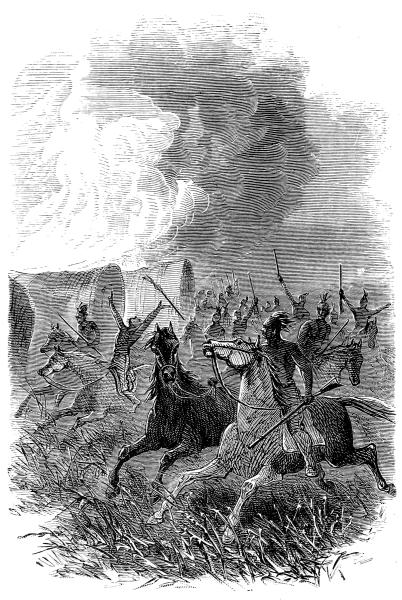
that ar creek, with a hul tribe of yellin’ an’ screechin’ red-skins
clost to my heels. I showed your uncle, this mornin’, the very place
whar I onct run the gauntlet of more’n a hundred Comanches. I tell
you, youngsters, I know every foot of this ground. Many a time me an’
poor ole Bill Lawson have skrimmaged with the Injuns through here,
when it war more’n a feller’s har war wuth to come to this creek arter
a drink o’ water. But I told you ’bout runnin’ the gauntlet. The way
it happened war this:
“’Bout fifteen year ago, me an’ ole Bill Lawson war trappin’ among the
mountains, twenty-five miles from the ole bar’s hole. We, in course,
had fine sport, ’cause me an’ ole Bill allers knowed whar to go to
find the best trappin’ grounds; an’, by the time spring opened, we had
as much spelter as we could tote away on our backs. It war gettin’
purty nigh time fur the Comanches to come round on their spring hunt,
an’ we began to talk of leavin’; but thar war plenty of beaver left in
the valley, an’ we didn’t like to go so long as thar war any game to
trap, so we kept puttin’ it off, an’ when at last we did start, it
war too late to get off with our plunder.
“One mornin’, jest at daylight, while I war in front of the shantee
cookin’ my breakfast, ole Bill come in from ’tendin’ to his traps, an’
said:
“‘Dick, the valley’s chuck full o’ red-skins. I jest seed more sign
down by the creek than I ever seed afore ’bout this place, an’ that’s
sayin’ a good deal. We had better shoulder our spelter an’ be off to
onct.’
“I didn’t stop to think any more ’bout breakfast jest then, but I ran
into the shantee, grabbed my furs, which I allers kept tied up ready
for a move, an’ me an’ ole Bill started out. The Injuns must have come
in durin’ the night, ’cause the day afore thar warn’t a bit of sign to
be seed fur ten miles ’round the valley. But we didn’t stop then to
think how or when they got in, but how should we get out. It warn’t no
easy thing to do, youngsters—to go through them mountains, swarmin’
with red-skins. They don’t walk through the woods like a feller does
when he’s squirrel huntin’, but they go sneakin’ round, an’ listenin’,
an’ peepin’; an’ if a chap don’t understand their natur, he’d better
not go among ’em.
“Wal, ole Bill led the way, sometimes a’most on his knees, his rifle
in his hand, an’ his bundle of furs on his shoulder, I followin’ clost
at his heels—both of us keepin’ our eyes open, an’ stoppin’ now an’
then to listen. We had made ’bout a mile up the mountain in this way,
when, all to onct, ole Bill stopped and looked straight before him. I
stopped, too, an’ seed three big Comanches comin’ along easy like,
lookin’ at the ground, examinin’ the bushes, an’ whisperin’ to each
other. They had found a trail that either me or ole Bill had made the
day afore, an’ war tryin’ to foller it up. But me an’ the ole man
warn’t the ones to leave a path that could be follered easy when we
thought thar war red-skins ’round; an’ I guess it bothered them
rascals some to tell which way we had gone, an’ how many thar war of
us. But they did foller it up slowly, an’ while we war lookin’ at ’em
they were jined by another Injun, who seemed to be a chief, for he
whispered a few orders, an’ two of the Comanches made off. They had
been sent to rouse the camp, an’ we knowed that we couldn’t get away
from that valley any too fast. The red-skins warn’t more’n a hundred
yards from us, an’ we knowed it would take mighty keerful movin’ to
get away from them without bein’ diskivered. But it war life or death
with us, an’ we began to crawl slowly through the bushes. A greenhorn
couldn’t have heered a leaf rustle if he hadn’t been two foot from us;
but thar’s a heap of difference atween a greenhorn’s ears an’ them
that a Injun carries. But they didn’t hear us, fur as long as we war
in sight we seed them still follerin’ up the ole trail; an’ as soon as
we thought we had got out of hearin’ of them, we jumped to our feet
an’ run like a pair of quarter hosses. We didn’t make no more noise
than we could help, but we hadn’t gone fur afore the mountains echoed
with the war-whoop, an’ a couple of arrers whizzed by our heads. The
Injuns had diskivered us. In course, we both dropped like a flash of
lightnin’, an’, while I war lookin’ round to find the varlets, ole
Bill struck out his hand, sayin’:
“‘This is a bad scrape, Dick, an’ mebbe me an’ you have done our last
trappin’ together. But we musn’t get ketched if we can help it, ’cause
we couldn’t look fur nothin’ but the stake.’
“While the ole man war speakin’, I seed one of the rascals that had
shot at us peepin’ out from behind a log. He didn’t show more’n two
inches of his head, but that war enough, an’ I reckon that red-skin
lay thar till his friends toted him off. Jest the minit I fired, ole
Bill throwed down his furs, jumped to his feet, an’ run, an’ I done
the same, although I did hate to leave that spelter that I had worked
so hard fur all winter. But, in course, thar war no help fur it. Thar
war plenty more beaver in the mountains, an’, if I got safe off, I
knowed whar to go to find ’em; but if I lost my scalp, I couldn’t get
another. So, as I war sayin’, I put arter the ole man, an’ jest then I
heered something ’sides a arrer sing by my head. It war a bullet, an’
the chap that sent it warn’t sich a bad shot neither; fur, if I had
the ole ’coon-skin cap I wore then, I could show you whar a piece of
it war cut out. I didn’t stop to look fur the feller, howsomever, but
kept on arter ole Bill, loadin’ my rifle as I ran. The woods war so
thick we couldn’t keep clost together, an’ I soon lost sight of him;
but that didn’t skeer me, fur I knowed he could take keer of his own
bacon. As fur myself, I never yet seed the Injun, or white man either,
that could ketch me, if I onct got a leetle start of him; an’ if all
the Injuns in the mountains war behind me, I could laugh at ’em. But
thar war some in front of me, as I found out afore I had gone fur. I
had jest got my rifle loaded, an’ war settlin’ down to my work—makin’
purty good time, I reckon, the Injuns behind me yellin’ an’ hootin’
all the while—when, all to onct, up jumped about a dozen more of the
rascals.
“I didn’t stop to ax no questions, but sent the nighest of ’em down in
a hurry; but in a minit arterward I war down, too; an’ when I war
pulled to my pins ag’in, I war a pris’ner, my hands bein’ bound behind
me with hickory bark. It warn’t a pleasant sight I seed, youngsters,
as I stood thar, lookin’ at them scowlin’ Injuns. At that day thar war
few of them Comanches that didn’t know me an’ ole Bill, an’ when they
seed who I war, they all set up a yell, an’ began dancin’ ’round me
like mad, shakin’ their tomahawks, an’ pintin’ their rifles an’ arrers
at me; an’ one feller ketched me by the har, an’ passed his knife
’round my head, as though he had half a notion to scalp me to onct.
They kept goin’ on in this way until all the Injuns in that part of
the woods had come up to see what the fuss war ’bout; an’ they, too,
had to go through the same motions. All to onct they happened to think
of ole Bill. The chief set up a shout, an’ all but four of the Injuns
put off on his trail. It showed me, plain enough, that the rascals war
afraid of me, when they left so many to guard me. But no four of them
Comanches would have stopped me from gettin’ away if I could have got
my hands free. I tell you, I done my best, makin’ that tough hickory
bark crack an’ snap, but it war no go—I war fast. As soon as the
others war out of sight, one big feller ketched me by the har, an’
begun to pull me t’wards the camp.
“He didn’t help me along very easy, but dragged me over logs an’
through bushes, as if he meant to pull my head off, while the other
fellers, findin’ nothin’ else to do, follered behind with switches,
that cut through my old huntin’-shirt like a knife. At last, arter
they had got me purty well thrashed, we reached the camp, which war
jest at the foot of the mountains—I’ll show you the place in the
mornin”—an’ here they stood me up ag’in a post. Then I ketched it
from every body—men, women, an’ young ones. The most of the braves
war still out arter the old man, an’ I could easy tell by the way they
whooped an’ yelled that they hadn’t ketched him. I knowed they
wouldn’t get him, neither, unless they surrounded him like they did
me.
“Wal, arter tormentin’ me fur a long time, an’ findin’ that I didn’t
keer fur ’em, the Injuns finally let me alone; an’ one ole dried-up
squaw brought me a piece of buffaler meat. They wouldn’t untie my
hands, but that ole woman sot thar on the ground, an’ fed me like I
war a baby. I eat a heap of that meat, ’cause I war hungry, an’ if I
got a chance to have a race with the varlets, I didn’t want to run on
an empty stomach; ’sides I might have to go without eatin’ fur two or
three days afore I could find ole Bill. Jest afore dark the braves
began to come in, one arter the other. They hadn’t ketched the ole
man, an’ I could see, by the way they scowled at me, that I would have
to stand punishment for his deeds, an’ my own into the bargain. I
could have yelled, when I knowed the old feller war safe, an’ I made
up my mind that if the Injuns would only give me half a chance, I’d
soon be with him ag’in.
“Wal, when the chiefs come in, I war tied fast to the post, and left
thar. They didn’t try to skeer me any more, ’cause they seed it war no
use, an’ ’sides, they wanted to save all their spite fur the mornin’,
fur it war too late to begin bisness that night. I war fast enough—as
fast as if I had been wrapped up in chains—but them Injuns war afraid
to trust me. They actooally kept half a dozen of their braves watchin’
me, from the time it began to grow dark till daylight the next
mornin’. I didn’t sleep very easy, fur I war standin’ ag’in that post,
an’ the bark they had tied me with war drawed so tight that it cut
into my arms; but I made out to git a nap or two, an’ when mornin’
come, an’ I had eat another big chunk of that buffaler meat, I war
ready fur ’em to begin.
“As soon as the sun war up, the chief called a council. It didn’t take
’em long to say what should be done with me, fur sooner than I had
thought fur, one of the chiefs set up a yelp, which war answered by
the hul tribe, an’ men, women, an’ children began formin’ themselves
into two lines, with whips, clubs, tomahawks, or whatever else they
could ketch hold of; an’ two fellers come up to set me free. I war to
run the gauntlet. I tell you, youngsters, if thar is any thing that
will make the har rise on a feller’s head, it is fur him to stand an’
look atween two lines sich as I saw that mornin’. It warn’t the fust
time I had been in jest sich scrapes, an’ I knowed, too, that the
Injuns didn’t mean to kill me then—they wanted to save me for the
stake—but somehow I couldn’t help feelin’ shaky. I didn’t let the
Injuns see it, howsomever, but tightened my belt, stretched my arms,
an’, ’walkin’ out in front of the lines, waited fur the word to start.
The head of the line war t’wards the camp, an’ at the foot, which war
t’wards this creek, stood five or six big fellers, waitin’ to ketch me
when I come out.
“Wal, it didn’t take me long to see how the land lay, an’ when the
chief yelled to let me know that the time had come, I started. The way
I traveled through ’em lines war a thing fur ’em Comanches to look at.
I got plenty of clips as I passed, but this war the only one that hurt
me.”
As the trapper spoke, he bared his brawny shoulder, and showed the
boys a long, ragged scar. The wound must have been a most severe one.
“That one,” continued Dick, “war made by a tomahawk. It didn’t hinder
my runnin’, howsomever, an’ I warn’t half a minit comin’ to the end of
’em lines. But when I got thar I didn’t stop. The Injuns that war
waitin’ thar, tried to ketch me, but I passed them like a streak of
lightnin’, an’ drawed a bee-line fur this ere creek. In course the
hul camp war arter me to onct; but I knowed that I war safe, fur all
the Injuns war behind me, an’ I wouldn’t have been afraid to run a
race with a hoss. I didn’t do as well as I had done afore, nor nigh as
well as I could do now, fur I war stiff an’ lame from bein’ tied up so
long; but I run plenty fast enough to git away. As I told you, I run
through these willows, swam the creek—which war wide an’ deep then,
on ’count of the snow an’ ice meltin”—then tuk to the mountains, an’
started to make a circle round to the ole bar’s hole. I traveled in
every little stream I could find; walked on logs, an’ on the second
day, found ole Bill. The ole feller had been mighty down-hearted since
I war ketched—fur the yells of the Injuns plainly told him what had
become of me—an’ had never expected to take me by the hand ag’in.
But, when he seed me safe an’ sound, he sot right down on the ground
an’ cried like a child.
“Wal, we lay ’round the ole bar’s hole till the Injuns had gone, an’
then set out fur the fort. We war on foot, an’ had but one rifle
atween us, but we got through all right, an’ in less’n a month, war on
our way to the mountains ag’in.”