BY
SHERWIN CODY Author of “The Art of Short Story Writing,” “Story Composition,”
“In the Heart of the Hills,” etc.
WERNER SCHOOL BOOK COMPANY NEW YORK CHICAGO BOSTON
THE
FOUR GREAT AMERICANS SERIES
Biographical Stories of Great Americans
for Young Americans
EDITED BY
JAMES BALDWIN, Ph.D.
In these biographical stories the lives of great Americans
are presented in such a manner as to hold the
attention of the youngest reader. In these lives the
child finds the most inspiring examples of good citizenship
and true patriotism.
VOLUMES NOW READY:
I. FOUR GREAT AMERICANS
George Washington, Benjamin Franklin Daniel Webster, Abraham Lincoln
By JAMES BALDWIN, Ph D.
Cloth, 246 pages, Price, 50 cents
II. FOUR AMERICAN PATRIOTS
Patrick Henry, Alexander Hamilton Andrew Jackson, U. S. Grant
By ALMA HOLMAN BURTON
Author of “The Story of Our Country,” etc.
Cloth, 254 pages, Price, 50 cents
III. FOUR AMERICAN NAVAL HEROES
Paul Jones, Oliver H. Perry Admiral Farragut, Admiral Dewey
By MABEL BORTON BEEBE
Cloth, 254 pages, Price, 50 cents
IV. FOUR AMERICAN POETS
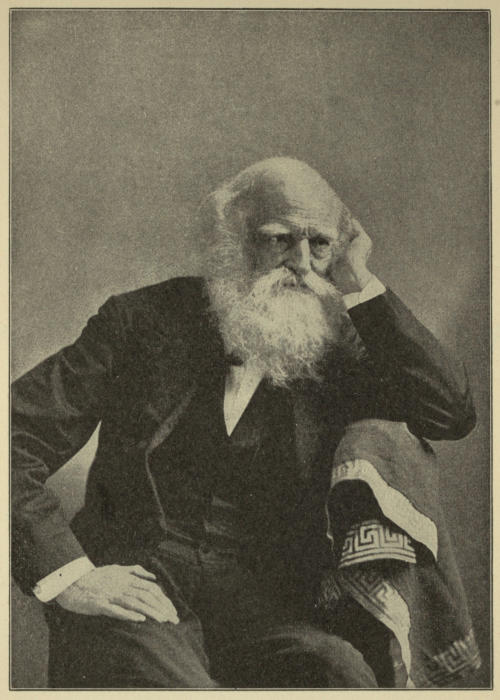
William Cullen Bryant, Henry Wadsworth
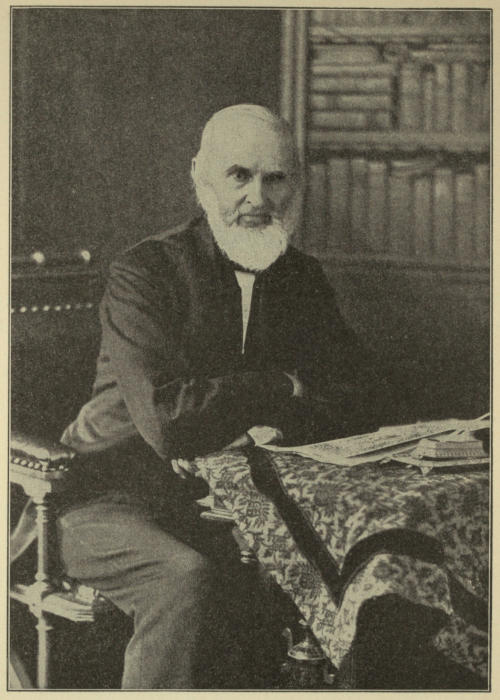
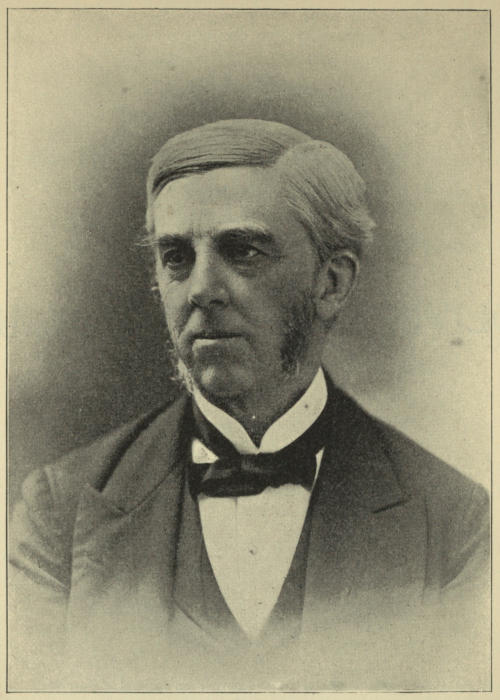
Longfellow, John Greenleaf Whittier Oliver Wendell Holmes
Do you know what is meant by “the love of
Nature”? Yes? But are you quite sure? Think
a little. It is not an easy thing to understand, and
many older people than you do not know what it
means.
Bryant was the great American poet of Nature.
His poetry is best understood and enjoyed by
those who have first learned to love Nature as
he loved her. To all such it appears to be very
simple and grand.
In order that we may come by easy steps to a
true appreciation of Bryant’s poetry, let us take a
lesson in the love of Nature.
“Man made the city, God made the country,”
is the old saying. Look at the long rows of city
houses: how ugly they are! How dirty are the
streets, from which on windy days clouds of dust
sometimes rise and almost choke you as you walk
along! Even the sky above is not often clear and
blue as it ought to be, but it seems filthy with
smoke and soot. And what sounds you hear!
The noise of the cars as they buzz and jar
along the street, the monotonous roar of human
traffic, and the rough words of teamsters and
hackmen as they try to crowd by one another—all
these grate upon the sensitive ear.
How different is everything in the country!
What a clear, brilliant blue the sky is; and what a
vast variety of color the surface of the earth
presents!
Here is the light, fresh green of the grass,
and over there are the darker greens of the
pines and cedars. In the autumn we observe
the gorgeous hues of the maples and the
oaks as their leaves change with the frost
from green to crimson and gold. Think, too, of
the flowers! Here are fields white with daisies,
and there are other fields filled with yellow buttercups
or red clover blossoms! Farther away are
fields of the graceful, slender-stalked wheat, or of
the tall, rustling corn!
Have you ever been in the woods in June? Instead
of the harsh sounds of the streets, you
hear the tumultuous but harmonious songs of
birds; instead of the steady roar of traffic,
you hear the deep note of the wind through
the trees, or the murmur of a little brook flowing
over stones or dashing down a waterfall. All
around you the trees rise, like columns in a cathedral,
but more beautiful and majestic; and the air
is filled with a sweet scent fit to be used for
incense in the churches.
Now read what Bryant has to say in his “Inscription
for the Entrance to a Wood.” There are
many hard words in it, and you must read very
carefully and thoughtfully; but it will make you
feel that on entering such a wood you are indeed
going into God’s own natural church, a place even
more magnificent and wonderful than Solomon’s
temple:
Stranger, if thou hast learned a truth which needs
No school of long experience, that the world
Is full of guilt and misery, and hast seen
Enough of all its sorrows, crimes, and cares
To tire thee of it, enter this wild wood
And view the haunts of Nature. The calm shade
Shall bring a kindred calm, and the sweet breeze
That makes the green leaves dance, shall waft a balm
To thy sick heart. Thou wilt find nothing here
Of all that pained thee in the haunts of men,
And made thee loathe thy life. The primal curse
Fell, it is true, upon the unsinning earth,
But not in vengeance. God hath yoked to guilt
Her pale tormentor, misery. Hence these shades
Are still the abodes of gladness; the thick roof
Of green and stirring branches is alive
And musical with birds, that sing and sport
In wantonness of spirit; while below
The squirrel, with raised paws and form erect,
Chirps merrily. Throngs of insects in the shade
Try their thin wings and dance in the warm beam
That waked them into life. Even the green trees
Partake the deep contentment; as they bend
To the soft winds, the sun from the blue sky
Looks in and sheds a blessing on the scene.
Scarce less the cleft-born wild-flower seems to enjoy
Existence, than the wingèd plunderer
That sucks its sweets. The mossy rocks themselves,
And the old and ponderous trunks of prostrate trees
That lead from knoll to knoll a causey rude
Or bridge the sunken brook, and their dark roots,
With all their earth upon them, twisting high,
Breathe fixed tranquillity. The rivulet
Sends forth glad sounds, and tripping o’er its bed
Of pebbly sands, or leaping down the rocks,
Seems, with continuous laughter, to rejoice
In its own being. Softly tread the marge,
Lest from her midway perch thou scare the wren
That dips her bill in water. The cool wind
That stirs the stream in play, shall come to thee,
This is one of the hardest things in Bryant’s
poetry. When you can see all its beauties, and
take pleasure in reading it, you will have learned
to love both Nature and Nature’s poet-priest.
[1] To help in the mastery of this poem, the student is advised to make
a careful list of all the natural objects mentioned in it, such as birds,
brooks, trees, and flowers, and try to recollect having seen something
of the same sort.
CHAPTER II BRYANT’S CHILDHOOD
Bryant was the first great American poet, having
been born fourteen years before Longfellow. Like
Longfellow, he could trace his descent (on his
mother’s side) from John Alden and Priscilla Mullens,
who came over in the Mayflower; and through
two other branches he was descended from Pilgrim
stock. The first Bryant in America did not come
in the Mayflower, but he was in Plymouth in 1632,
and was chosen town constable in 1663.
The poet’s father and grandfather were both
doctors; so when Dr. Peter Bryant was married to
“sweet Sallie Snell,” as the poet has it, and their
second child was born, the good doctor named
him William Cullen, after a great medical authority
who had died four years before. This happy
event—that is, the birth of William Cullen Bryant—occurred
November 3, 1794, in the small town
of Cummington, Massachusetts. But instead of
growing up to be a doctor the boy became a poet,
and his father was rather proud of the fact, too.
Cummington is a small town among the Berkshire
hills, in the western part of Massachusetts.
The country around it is mountainous, with wide
valleys which in the early days were very fertile.
Bryant’s grandfather, Snell, had come here in
1774, just before the Revolution, with a handful of
other settlers, to take up a homestead. There is a
story that Eben Snell, Jr., an uncle of the poet,
while working in the cornfield put his ear to the
ground and heard the sounds of the distant battle
of Bunker Hill.
Little William Cullen was very quick and
bright, though puny. In his autobiography he
says he could go alone when he was but a year
old, and knew all the letters of the alphabet
four months later. His older brother, Austin, did
even better than this, however; for he began to
read the Bible before he was three years old, and
in just about a year from the time he began, he had
read it all through, from Genesis to Revelation.
William Cullen as a small child learned many of
Watts’s hymns, and used to recite them as he
stood by his mother’s knee.
It is probable that so much study was not good
for him, for he suffered from terrible headaches,
and was so puny his father and mother thought
he would not live long. His head seemed to
be too big for his body. There is a story that
some medical students, who were studying in
Dr. Bryant’s office when William was a child,
were ordered to give him a cold bath every morning
in a spring near the house. They kept this
up so late in the fall that they had to break the
first skim of ice on the top of the water. The
treatment cured him, and after he was fourteen,
he says, he never had a headache in his life.
He began to go to school before he was four years
old. It was not unnatural that a little fellow of
that age should get sleepy during school hours.
One day he woke from a sound nap to find himself
in his teacher’s lap. When he realized where
he was he became furiously angry at the thought
that he should be treated so like a baby.
About this time, too, he was kicked by a horse.
A lady had come to call on his mother, and had
tied her horse to a tree near the door. There were
fresh chips scattered about, and William and his
elder brother amused themselves by throwing them
at the horse’s heels to make him caper. William
got too near and at last the horse kicked him over.
He soon recovered, and went to school with a
bandaged head, but a scar from the wound on his
head he carried to the day of his death.
When he was five years old, the family went to
live on Grandfather Snell’s old homestead, where
Dr. Peter Bryant remained as long as he lived.
Years afterward, when the poet became rich, he
bought this place for a country home.
He began now to go regularly to the district
school, where he learned reading, writing, and
arithmetic, a little grammar and geography, and
the Westminster Catechism. He was a fine
speller, seldom missing a word, and he got on well
in geography. The catechism, however, did not
interest him and he could not understand it.
Those were very strict Puritanic days. Says
Bryant, in his autobiography: “One of the means
of keeping boys in order was a little bundle of
birchen rods, bound together with a small cord,
and generally suspended on a nail against the
kitchen wall. This was esteemed as much a part
of the necessary furniture as the crane that hung
in the kitchen fireplace, or the shovel and tongs.”
And he tells us that sometimes the boy was sent
out to cut the twigs with which he himself was to
be whipped.
Not only was whipping thought to be good for
boys, but even grown-up people were whipped in
public for petty crimes.
About a mile from the Bryant home was a
public whipping-post. Says the poet: “I remember
seeing a young fellow, of about eighteen years of
age, upon whose back, by direction of a justice of
the peace, forty lashes had just been laid, as the
punishment for a theft which he had committed.
His eyes were red, like those of one who had been
crying, and I well remember the feeling of curiosity,
mingled with pity and fear, with which I gazed
on him.”
This was the last time the whipping-post was
used in that neighborhood, but it stood there for
several years longer.
CHAPTER III WHAT THE BOYS DID WHEN BRYANT WAS YOUNG
Life in the time of Bryant’s boyhood was rather
hard and rough. New England country life was
never easy. The chairs were very straight-backed,
the beds were hard, and the food was not very
delicate, though there was always plenty of it—plenty
of pork and beans, if nothing else. For all
that, the boys in Bryant’s day had a very good
time, which he tells about in the account of his
early life to which we have already referred.
Among the pleasant occurrences of those old-fashioned
times were the neighborhood “raisings.”
When a man intended to build a house he got
all the big, heavy timbers together for the frame,
and then called in the neighbors to help him put
them up. The minister always made a point of
being present; and the young men thought it great
sport, as did the boys, who could only look on. “It
was a spectacle for us,” says Bryant, “next to that
of a performer on the tight-rope, to see the young
men walk steadily on the narrow footing of the
beams at a great height from the ground, or as
they stood to catch in their hands the wooden pins
and the braces flung to them from below. Each
tried to outdo the other in daring, and when the
frame was all up, one of them would usually cap the
climax by standing on his head on the ridge-pole.”
Another good time was had at the maple sugar
frolic. In spring, when the sap begins to come
up in the maple trees, men go about, and bore two
or three holes in every maple tree in a sugar
camp. In these they stick little spigots with holes
through them, and underneath they set a pail to
catch the sap. Soon it begins to drop. When the
pails are filled, the men bring fresh ones, and carry
off the sap to an enormous iron kettle hung on a
pole over a hot fire.
“From my father’s door,” says Bryant, “in the
latter part of March and the early part of April,
we could see a dozen columns of smoke rising over
the woods in different places, where the work was
going on. After the sap had been collected and
boiled for three or four days, the time came when
the thickening liquid was made to pass into the
form of sugar. This was when the syrup had become
of such a consistency that it would feather—that
is to say, when a beechen twig, formed at the
small end into a little loop, dipped into the hot
syrup and blown upon by the breath, sent into the
air a light, feathery film.” The syrup was then
lifted off and poured into moulds, or else stirred
rapidly until cooled, when it became delicious brown
sugar in loose grains. The boys had a great deal
of fun “trying” the syrup to see if it was ready to
“sugar off.”
Then there were husking-bees and apple-parings
and cider-making; and in the winter all the young
people went to singing school.
Bryant in his boyhood was also fond of fishing
for trout in the small streams, where there were
plenty of fish to catch. Another sport was squirrel
shooting. The young men would divide into two
equal parties and see which party could shoot the
most squirrels.
Of course, in those days everybody went to
church. Young Bryant began when he was only
three years old. History does not say how he
behaved, but there was not much chance to be
naughty in church in those times. Every parish
had its tithing man, whose business it was to
maintain order in the church during divine service,
and who sat with a stern countenance through
the sermon, keeping a vigilant eye on the boys in
distant pews and in the galleries. Sometimes
when he detected two of them communicating
with each other, he went to one of them, took him
by the arm, and leading him away, seated him
beside himself. He was also directed by law to see
that the Sabbath was not profaned by people
wandering in the fields or fishing in the brooks.
When he was eight years old, young Cullen
began to make poetry. His grandfather thought
him rather bright at this, and a year or two later
asked him to turn the first chapter of the Book
of Job into verse. He did it all. Here are two
sample lines:
His name was Job, evil he did eschew.
To him were born seven sons; three daughters, too.
For this he received a ninepenny piece, though
his father thought the lines rather bad.
CHAPTER IV THE YOUNG POET
Bryant’s poetic career began when he was twelve
years old. Besides some “Enigmas” and a translation
from the Latin of Horace, he made a copy
of verses to be recited at the close of the winter
school, “in the presence of the master, the minister
of the parish, and a number of private gentlemen.”
The verses were printed in the Hampshire
Gazette, March 18, 1806, the year before
Longfellow was born. This same newspaper
had other contributions also from the pen of
“C. B.”
Dr. Peter Bryant was something of a politician.
He was several times a representative in the
Massachusetts legislature, and finally a senator.
He belonged to the Federal party, which was then
in opposition to the president. Jefferson was president,
and in 1807, for the purpose of protecting
American interests, he laid an embargo on shipping.
This brought on severe hard times, and
caused great indignation among the Federalists.
Dr. Bryant thought his young son might write a
satirical poem about it. So “The Embargo; or,
Sketches of the Times,” was written and printed
in a volume. There was a line on the title page
saying the poem was written by “a youth of thirteen.”
One of the great periodicals of that time,
called the Anthology, reviewed the book, and while
speaking well of it, said it seemed impossible that
such a poem had been written by a “youth of
thirteen.” So when the first edition was sold and
a second was printed the following year, young
Bryant’s friends prefixed an “Advertisement,” as
they called it—a paragraph in which they assured
the public that the author was only thirteen, and
there were plenty of people who would vouch for
it. In this edition the name William Cullen
Bryant was boldly printed.
Of course this was not very good poetry. There
is a story that years afterward some one asked
Bryant if he had a copy of his first book, “The
Embargo.” “No,” said he. Afterward the friend
who had asked him said he had found a copy in
Boston. “I don’t see how you can spend your
time with such rubbish,” said the poet, and turned
away.
During the next few years he wrote other boyish
and patriotic poems, some of which were printed
in the Hampshire Gazette. One, written when he
was sixteen, was entitled “The Genius of Columbia”;
another was, “An Ode for the Fourth of
July, 1812.”
In 1812 he entered the Sophomore Class in
Williams College, where he remained only a year.
There were only the president, one professor, and
two tutors at Williams College in those days, and
so Bryant’s room-mate decided to go to Yale,
where he could get a better education. Bryant
thought he would go, too. He left Williams
College and went home to prepare himself to pass
the examinations for entrance to the Junior Class
in Yale.
During this summer, while he was studying at
home, he often wandered about in the woods; and
here he wrote “Thanatopsis.” At this time
Bryant was a very meditative young man, fond of
reading poetry, a fair Greek and Latin scholar,
and devotedly fond of the country and all its
beauties.
Just how or when he wrote “Thanatopsis”
nobody ever knew. In the autumn his father
decided that he could not afford to send him to
Yale, as he was poor and had a large family. So
the young man went away to study law. After he
was gone, Dr. Bryant was looking over some
papers in his desk, and found in one of the pigeon-holes
some poems which his son Cullen had written.
One of them was “Thanatopsis.” He read
it over, and thought it so good that he took it to a
lady friend of his.
“Here are some poems,” said he, “which our
Cullen has been writing.”
She took them and began to read. When she
had finished “Thanatopsis” she burst into tears;
and Dr. Bryant found his eyes rather watery, too.
At that time Dr. Bryant was a member of the
senate in the Massachusetts legislature; and so,
going up to Boston, he took this and some other
poems along. The North American Review was
the great magazine in those days, and Dr. Bryant
knew slightly one of the editors, whose name was
Phillips. He went to call on him, but not finding
him at home left the package of manuscript with
his own name on it. When Mr Phillips came
home he found it, and after reading the poems
concluded that Dr. Bryant must have written
“Thanatopsis,” while the other poems were by his
son Cullen. But he regarded this poem as such a
find that he hurried over to Cambridge to see his
two fellow-editors and read them the wonderful
lines. When he had finished, one of them, Richard
H. Dana, himself a poet, said:
“Oh, Phillips, you have been imposed on.
There is no one in America who can write such
a poem as that.”
“Ah, but I know the man who wrote it,” said
Phillips. “He is in the senate.”
“Well, I must have a look at the man who
wrote that poem,” said Dana; and off he posted to
Boston. He went to the state house, and to the
senate chamber, and asked for Senator Bryant.
A tall, gray-bearded old man was pointed out
to him. Dana looked at him for a few minutes
and said to himself: “He has a fine head; but
that man never wrote ‘Thanatopsis.’” So without
speaking to him he returned to Cambridge.
The poem was printed in the North American
Review. It was the first great poem ever produced
in America; it was the work of a young
man not eighteen years of age, and it has since
been said to be the greatest poem ever written by
one so young.
CHAPTER V THANATOPSIS
Every child at school becomes familiar with this
grand poem, because it is in many of the higher
readers. But that is not enough. You should
learn to understand its meaning. As you read
this poem, are you not reminded of the deep notes
of a church organ, as the organist, left alone,
plays some mighty fugue in preparation for the
funeral of a great man? Thanatopsis (made up
from two Greek words) means a view of death.
The poem opens by calling to our minds the
grandeurs and the beauty of a cathedral-like
wood, where Nature rules supreme.
To him who in the love of Nature holds
Communion with her visible forms, she speaks
A various language; for his gayer hours she
Has a voice of gladness, and a smile
And eloquence of beauty, and she glides
Into his darker musings with a mild
And healing sympathy, that steals away
Their sharpness ere he is aware.
We should hardly expect a young man of seventeen
to be meditating on death; but even very
young people often think about it.
When thoughts
Of the last bitter hour come like a blight
Over thy spirit, and sad images
Of the stern agony, and shroud, and pall,
And breathless darkness, and the narrow house,
Make thee to shudder and grow sick at heart—
These are the things we all think of when father
or mother or brother or sister or young friend dies
and is laid away in the earth. It is sad and terrible,
and we cannot help weeping. At those times
strong men and women shed tears, and we do not
think it strange. But, says Bryant,—
Go forth under the open sky and list
To Nature’s teachings, while from all around—
Earth and her waters, and the depths of air—
Comes a still voice: Yet a few days, and thee
The all-beholding sun shall see no more
In all his course; nor yet in the cold ground,
Where thy pale form was laid, with many tears,
Nor in the embrace of ocean, shall exist
Thy image. Earth, that nourished thee, shall claim
Thy growth, to be resolved to earth again;
And, lost each human trace, surrendering up
Thine individual being, shalt thou go
To mix forever with the elements,
To be a brother to the insensible rock
And to the sluggish clod, which the rude swain
Turns with his share, and treads upon. The oak
Shall send his roots abroad and pierce thy mould.
Yet not to thine eternal resting-place
Shalt thou retire alone, nor couldst thou wish
Couch more magnificent. Thou shalt lie down
With patriarchs of the infant world—with kings,
The powerful of the earth—the wise, the good,
Fair forms, and hoary seers of ages past,
All in one mighty sepulchre.
Being turned back to earth again does not seem
so terrible when we think that all must have the
same fate. There is a suggestion of grandeur
in the thought that George Washington, King
Solomon, Sir Isaac Newton, Napoleon—all lie in
the same bed which Nature, the all-ruling, everlasting
power, has provided.
The hills,
Rock-ribbed and ancient as the sun,—the vales,
Stretching in pensive quietness between;
The venerable woods,—rivers that move
In majesty, and the complaining brooks
That make the meadows green; and, poured round all,
Old Ocean’s gray and melancholy waste,—
Are but the solemn decorations all
Of the great tomb of man.
When we reflect on how many have lived and
died, the earth seems but one great tomb. There
are said to be over 1,200,000,000 persons on the
earth to-day. In a few years they will all have
passed away, and others will have taken their
places; and this change has been going on for thousands
and thousands of years. In the graveyards
of any city will be found but a few hundred or at
most a few thousand graves; yet hundreds of thousands
of people have died there and been buried.
Where are their graves? Lost and forgotten.
All that tread
The globe are but a handful to the tribes
That slumber in its bosom.—Take the wings
Of morning, pierce the Barcan wilderness,
Or lose thyself in the continuous woods
Where rolls the Oregon, and hears no sound
Save his own dashings—yet the dead are there:
And millions in those solitudes, since first
The flight of years began, have laid them down
In their last sleep—the dead reign there alone.
So shalt thou rest; and what if thou withdraw
In silence from the living, and no friend
Take note of thy departure? All that breathe
Will share thy destiny. The gay will laugh
When thou art gone, the solemn brood of care
Plod on, and each one as before will chase
His favorite phantom; yet all these shall leave
Their mirth and their employments, and shall come
And make their bed with thee. As the long train
Of ages glides away, the sons of men,
The youth in life’s green spring, and he who goes
In the full strength of years, matron and maid,
The speechless babe, and the grey-headed man—
Shall one by one be gathered to thy side,
By those who in their turn shall follow them.
So live that when thy summons comes to join
The innumerable caravan, which moves
To that mysterious realm where each shall take
His chamber in the silent halls of death,
Thou go not, like the quarry-slave at night,
Scourged to his dungeon, but sustained and soothed
By an unfaltering trust, approach thy grave
Like one who wraps the drapery of his couch
About him, and lies down to pleasant dreams.
CHAPTER VI BRYANT BECOMES A LAWYER
Always of a studious turn, always reading in
his father’s well-stocked library, or wandering
through the woods and writing poetry, Bryant naturally
tended towards some learned profession.
He did not care to be a doctor; he would have
liked to be a literary man, if such a career had
then existed or been dreamed possible. As it was
not, he finally decided to become a lawyer.
A classmate who remembers him at this time
describes him as singularly handsome and finely
formed. He was tall and slender, and had a prolific
growth of dark brown hair. He was also
quick and dextrous in his movements, so much
so that his younger brother sometimes boasted
about his “stout brother,” though he afterward
learned that his strength was not so remarkable as
his skill and alertness in the use of it.
When his father’s poverty compelled him to
abandon college, he entered the law office of a Mr.
Howe, of Worthington, a quiet little village four
or five miles from Cummington.
Bryant’s friend and biographer, John Bigelow,
says: “A young man’s first year’s study of the
law commonly affects him like his first cigar or
his first experience ‘before the mast.’” In other
words, Bryant didn’t like it at all. He was a conscientious
young man, and kept at the work; but
he felt that he would almost as soon go out as a
day laborer. In a letter he speaks of Worthington
as consisting of “a blacksmith shop and a cow
stable,” where his only entertainment was reading
Irving’s “Knickerbocker.” Mr. Howe complained
that he gave more time to Wordsworth’s lyrical ballads
than to Blackstone and Chitty, the great
authorities on law, which he should have been
studying.
Young Bryant wanted to go to Boston to continue
his studies; but finally, as his father was too
poor to support him in Boston, he went to Bridgewater,
where his grandfather, Dr. Philip Bryant,
lived. He liked this place better. He was poet for
a Fourth of July celebration, and became interested
in politics. The War of 1812 was going on.
Madison was President, and Bryant, in his letters
to his friends, speaks of him as “His Imbecility.”
“His Imbecility” was warned that if he imposed
any more taxes the people would revolt.
At one time, Bryant thought of entering the
militia for the defense of states’ rights. It seems
that he then advocated the policy of Massachusetts
seceding from the Union, as the Southern
states afterwards did.
His father actually got him a commission as
adjutant in the Massachusetts militia, but the war
ended, and Bryant kept on with his law studies.
That same year he came of age and was admitted
to practice at the bar.
He now went home and began to look about
for a place where he could begin the practice of law.
He decided on Plainfield, a small village four
or five miles from Cummington. Plainfield had
been the home of his father for a short time when
the future poet was a child; but it was a very
small place, with not more than two hundred inhabitants.
He drudged here for a few months, earning
quite a little money; but he decided that the
place was too small, and went to Great Barrington,
where he had a chance to go into partnership
with a lawyer already established, whose practice
was worth $1,200 a year.
Here he settled down to hard work, and here
he remained as long as he continued to practice
law. After the success of “Thanatopsis,” he contributed
various articles to the North American
Review, and in it were published some of his most
famous poems. He was chosen one of the tithing
men of the town, and soon afterwards town clerk,
an office he held for five years. As town clerk he
received a salary of five dollars a year. The governor
of Massachusetts also made him Justice of
the Peace.
When Bryant was twenty-five years old his father
died. This caused him great grief; but about this
time, great happiness came to him also. Soon
after going to Great Barrington he had become
acquainted with a Miss Fairchild, who was an
orphan visiting in the neighborhood. He liked
her, and the year after his father’s death they were
married. She was his devoted wife and friend
for forty-five years, until she died.
CHAPTER VII A LITERARY ADVENTURER
Gradually Bryant had become known in the
small literary circle that had sprung up around
the North American Review, though his name was
not known outside this small circle in Boston. He
had a great desire to become a literary man; but
he knew he must support his wife and family, and
verse-making offered no money return.
His friends, Richard H. Dana, Miss Catherine
Sedgwick, and one or two others, tried to
persuade him to go to New York and engage in
literature. Finally he made a visit to New York.
A publishing firm there offered him two hundred
dollars a year to write one hundred lines of poetry
a month for them. He thought this might keep
him from starvation. He went back to Great
Barrington and stayed for some time longer, contributing
to the United States Literary Gazette,
for which Longfellow was then writing.
In 1825 he visited New York again, and was
offered the editorship of a monthly periodical, the
New York Review and Athenæum Magazine, which
some publishers were proposing to start. His salary
was to be one thousand dollars a year. This
offer he accepted, and he went to New York to
live, leaving his wife and family in Great Barrington
until he should find out whether he was going
to succeed. He considered that if literature failed,
he could drudge at the law in New York as well as
at Great Barrington.
James Fenimore Cooper, who was now becoming
a famous novelist, was a friend of Bryant’s.
So was William Ware, who wrote a novel based
on the life of Zenobia, the queen of Palmyra,—a
very famous book in its day and one still worth
reading. Bryant worked very hard. He liked
literature a great deal better than he did the law;
and though it was uncertain, he thought that fortune
would favor him in the end. The magazine
he edited did not succeed very well, and at the
end of a year was united with another one, the
New York Literary Gazette. A few months later
the United States Gazette in Boston was united with
the magazine which Bryant was editing, under the
title, United States Review and Literary Gazette.
Bryant was allowed one quarter interest in
the business and five hundred dollars a year
salary. The five hundred dollars was probably
all he got, and this sum was so small he could
not make it support his family very well. If
this magazine should succeed, he would get more
money; but it did not, and Bryant really thought
he would have to quit literature for law once
more.
He was licensed to practice in New York; but
just then fortune favored him: he was asked to
do some work on the New York Evening Post.
The assistant editor had gone to Cuba, and
finally died there. So Bryant was soon made the
assistant editor, and was allowed an interest in the
paper.
At that time the paper was favorable to the
federal party; but a few years later it became
decidedly democratic in tone. So long as Mr.
Bryant controlled it, it was an advocate of free
trade and a bold champion of human liberty.
CHAPTER VIII THE EDITOR OF A GREAT NEWSPAPER
Bryant’s life work proved to be, not writing
poetry, but editing a great New York daily paper.
For many years he went to his office at seven
o’clock every morning. He was never strong in
body, and he had to take very great care of
his health.
Every young reader should learn a useful
lesson from him, although it is not easy to follow
the rigorous mode of life he laid out for himself
and followed to the end of his days. He himself
tells in a letter what he did:
“I rise early at this time of the year (March),
about half-past five; in summer, half an hour or
even an hour earlier. Immediately, with very little
encumbrance of clothing, I begin a series of exercises,
for the most part designed to expand the
chest, and at the same time call into action all the
muscles and articulations of the body. These are
performed with dumb-bells,—the very lightest,
covered with flannel,—with a pole, a horizontal
bar, and a light chair swung around my head.
After a full hour and sometimes more passed in
this manner, I bathe from head to foot. When at
my place in the country, I sometimes shorten my
exercise in the chamber, and, going out, occupy
myself in some work which requires brisk motion.
After my bath, if breakfast be not ready, I sit
down to my studies till I am called. My breakfast
is a simple one—hominy and milk, or, in place of
hominy, brown bread, or oatmeal, or wheaten grits,
and, in season, baked sweet apples. Buckwheat
cakes I do not decline, nor any other article of vegetable
food, but animal food I never take at breakfast.
Tea and coffee I never touch at any time;
sometimes I take a cup of chocolate, which has no
narcotic effect, and agrees with me very well. At
breakfast I often take fruit, either in its natural
state or freshly stewed.
“After breakfast I occupy myself for a while
with my studies, and, when in town, I walk down
to the office of the Evening Post, nearly three
miles distant, and after about three hours return,
always walking.... In town, where I dine
late, I take but two meals a day. Fruit makes a
considerable part of my diet. My drink is water.
“That I may rise early, I, of course, go to bed
early; in town as early as ten; in the country
somewhat earlier.... I abominate drugs
and narcotics, and have always carefully avoided
anything which spurs nature to exertions which it
would not otherwise make. Even with my food I
do not take the usual condiments, such as pepper
and the like.”
A man who was so conscientious about eating
and drinking and going to bed and getting up in
the morning, was the kind of man who would be
conscientious in editing a newspaper. In Bryant’s
early newspaper life a great daily paper was not so
much a machine to gather news from every quarter
of the globe and serve it up in a sensational style, as
a medium for discussing public questions. Nowadays,
people often do not even look at the editorial
column; but in those days there was so little news
they were obliged to read this. It was about the
only fresh thing in the paper. Once a week, perhaps,
a sailing vessel from Europe would come
in with a bundle of European newspapers, from
which the editor would clip and reprint a summary
of foreign news. It took several days to get news
from Washington to New York. Local items were
generally sent in by friends of the editor. For
years Bryant had but one assistant, and they two
did all the reporting, editing, and editorial writing.
Reviews of books were sometimes done outside,
and the shipping and financial news was furnished
by a sort of City Press Association. It was Bryant’s
work to write a brilliant editorial or two every
morning. Many of these were on politics, others
on questions of local public interest. But Bryant
tried always to be on the side of right and justice.
For years the Post was regarded as the leading
paper of the people, standing for the rights of the
people. Many a time it fought the battles of the
great public, and sometimes it won.
A daily paper lasts but for a day; then it is dead
and another takes its place. To know how completely
a daily paper dies when its day’s work is
done, so to speak, suppose you try to buy a copy
three months old, or a year old. You remember
three months ago there were hundreds of thousands
of copies printed and distributed. You suppose
that you can get a copy at the office of the paper,
at any rate. But no; all more than three months
old have been destroyed.
In New York there was once a little old shop,
kept by a queer old mulatto, known as “Back
Number Bud,” who charged a dollar and a half
for a one cent paper, less than a year old. This
shop of “Back Number Bud’s” was, a few years
ago, the only place in New York City where back
numbers of newspapers could be purchased at any
price; and in smaller cities no copies whatever
could be obtained, except by chance.
A daily newspaper influences the people to-day,
and then dies, and another paper takes its place.
But if one man is making that paper every day for
fifty years, at the end of fifty years, doing a little
every day, he may have succeeded several times in
completely revolutionizing public opinion.
Besides Bryant, there were other great newspaper
editors in New York. One was Horace
Greeley, whose name every child has heard.
There were others, too. But none were more
faithful than Bryant. For years his newspaper
work took so much of his time that he wrote
scarcely any poetry at all. But as those numbers
of the Evening Post are dead and forgotten, we
shall never know how much good he did during
those years and years of faithful leadership.
CHAPTER IX HOW BRYANT BECAME RICH
We have already seen that Bryant was born a
poor country boy; that his father was so poor he
could not send his son to college more than a year;
and that Bryant himself, when he first went to
New York, worked for a time at a salary of only
five hundred dollars a year.
When he became assistant editor of the Evening
Post, the editor-in-chief, William Coleman, who
was also the chief proprietor, thought it would be
well to give a small interest in the paper to one or
two young men, so that when the older proprietors
died others would be coming on to take their
places. An eighth part was given to Bryant, who
was to pay for it gradually from the money he
could save. Another portion was offered to a
friend of his, who decided not to take it.
Three or four years later, when Mr. Coleman
died, Bryant was made editor-in-chief, and bought
a larger interest in the paper. He finally secured
one half. The other half was owned for a time by
a Mr. Burnham, a practical printer. Later, one
of Bryant’s assistants, whose name was Leggett,
owned a part interest.
In those days newspapers were not such costly
properties as they are to-day. Bryant always
made a good living, but he regarded the work in
which he was engaged as drudgery.
After he had been in the newspaper work for
some years, he wrote to his brother, who was a
pioneer in Illinois, saying he thought of retiring
from the Post, and asking what could be done in
the West with four or five thousand dollars. His
interest at this time was two fifths, so that he
must have valued the paper at about twelve thousand
dollars.
About this time, while he was away from
New York, his partner and assistant editor, Mr.
Leggett, nearly ruined the paper. When Bryant
returned he found that it was earning no money,
and that he could not sell his interest at any price.
He therefore set to work to win popularity for
the paper once more. This he succeeded gradually
in doing, and during the next ten years there
was an average yearly profit of over $10,000, of
which Bryant received a little less than half. In
1850 the yearly profit was $16,000, and in 1860 it
was $70,000. If Bryant received $30,000 for his
share of the profits of a year’s business, he might
be regarded as a rich man. After his death, the
Evening Post was sold for $900,000, of which
Bryant’s share was half.
During his later years he bought a great deal
of land and many houses on Long Island, where
he had a country home. He had another country
home at Cummington, his grandfather’s homestead,
where he built a beautiful house. He also traveled
a great deal, going to Europe many times, and to
other parts of the world.
Thus, by faithful, plodding work for many years
Bryant, though a poet, became rich. He was delicate
and sympathetic, like all true poets, but he
did not indulge in what some have supposed to be
the poet’s liberty to be reckless and careless. He
worked faithfully and very diligently all his life;
and in his old age he was well rewarded for all his
labor.
CHAPTER X BRYANT AS AN ORATOR AND PROSE WRITER
When Bryant went to New York it was a comparatively
small city. As years passed, it grew in
size and wealth, and its newspapers became more
important. We have seen how Bryant became
rich by his ownership of the Evening Post. He
also gained in honors. He was the editor of a
great daily paper, and he was also a noted poet.
His poems had been published both in this country
and in London, and many thousands of copies were
sold. Bryant was often asked to write poems for
great celebrations, or in honor of well-known
people. This he always refused to do. But he
often made public addresses. When James Fenimore
Cooper died, he acted, as it were, as the
spokesman of the nation’s grief. He pronounced
the funeral eulogy upon Irving, and upon many
noted people. He was not a great orator like
Daniel Webster; but such speeches as these upon
the lives of great men have seldom been surpassed.
We must remember, too, that all his life Bryant,
in his editorials, was writing prose. From these
editorials it would be easy to select some of the
finest pieces of prose writing in our language. As
most of them were on the passing events of the
day, they have never been reprinted,—they have
died with the newspaper. But here is a passage
on the emancipation of the slaves which has the
ring of true eloquence.
President Lincoln had proposed gradual emancipation.
“Gradual emancipation!” exclaims Bryant.
“Have we not suffered enough from slavery without
keeping it any longer? Has not blood enough
been shed? My friends, if a child of yours were
to fall into the fire, would you pull him out gradually?
If he were to swallow a dose of laudanum
sufficient to cause speedy death, and a stomach
pump were at hand, would you draw out the poison
by degrees? If your house were on fire, would
you put it out piecemeal? And yet there are men
who talk of gradual emancipation by force of
ancient habit, and there are men in the slave
states who make of slavery a sort of idol which
they are unwilling to part with; which, if it must
be removed, they would prefer to see removed
after a lapse of time and tender leave-takings.
“Slavery is a foul and monstrous idol, a Juggernaut
under which thousands are crushed to death;
it is a Moloch for whom the children of the land
pass through fire. Must we consent that the
number of the victims shall be diminished gradually?
If there are a thousand victims this year,
are you willing that nine hundred shall be sacrificed
next year, and eight hundred the next, and
so on until after the lapse of ten years it shall
cease? No, my friends, let us hurl the grim image
from its pedestal. Down with it to the ground!
Dash it to fragments; trample it in the dust.
Grind it to powder as the prophets of old commanded
that the graven images of the Hebrew
idolaters should be ground, and in that state scatter
it to the four winds and strew it upon the waters,
that no human hand shall ever gather up the
accursed atoms and mould them into an image to
be worshiped again with human sacrifice.”
This eloquent passage is taken from an editorial
in the Evening Post. The following is from a
speech delivered at a dinner given to Professor
Morse, the inventor of the telegraph:
“There is one view of this great invention which
impresses me with awe. Beside me at this board,
along with the illustrious man whom we are met to
honor, and whose name will go down to the latest
generations of civilized man, sits the gentleman to
whose clear-sighted perseverance, and to whose
energy—an energy which knew no discouragement,
no weariness, no pause—we owe it that the telegraph
has been laid which connects the Old World
with the New through the Atlantic Ocean. My
imagination goes down to the chambers of the
middle sea, to those vast depths where repose the
mystic wire on beds of coral, among forests of
tangle, or on the bottom of the dim blue gulfs,
strewn with the bones of whales and sharks,
skeletons of drowned men, and ribs and masts of
foundered barks, laden with wedges of gold never
to be coined, and pipes of the choicest vintages of
earth never to be tasted.
“Through these watery solitudes, among the
fountains of the great deep, the abode of perpetual
silence, never visited by living human
presence and beyond the sight of human eye,
there are gliding to and fro, by night and by
day, in light and in darkness, in calm and in
tempest, currents of human thought borne by the
electric pulse which obeys the bidding of man.
That slender wire thrills with the hopes and fears
of nations; it vibrates to every emotion that can be
awakened by any event affecting the welfare of the
human race.
“A volume of contemporary history passes
every hour of the day from one continent to
another. An operator on the continent of Europe
gently touches the keys of an instrument in his
quiet room, a message is shot with the swiftness of
light through the abysses of the sea, and before
his hand is lifted from the machine the story of
revolts and revolutions, of monarchs dethroned and
new dynasties set up in their place, of battles and
conquests and treaties of peace, of great statesmen
fallen in death, lights of the world gone out and
new luminaries glimmering on the horizon, is written
down in another quiet room on the other side
of the globe.
“Mr. President, I see in the circumstances
which I have enumerated a new proof of the
superiority of mind to matter, of the independent
existence of that part of our nature which we call
the spirit, when it can thus subdue, enslave, and
educate the subtilest, the most active, and in
certain of its manifestations the most intractable
and terrible, of the elements, making it in our
hands the vehicle of thought, and compelling it to
speak every language of the civilized world. I infer
the capacity of the spirit for a separate state of
being, its indestructible essence and its noble
destiny, and I thank the great discoverer whom we
have assembled to honor for this confirmation of
my faith.”
CHAPTER XI OTHER EVENTS IN BRYANT’S LIFE
Among the remaining important events of the
poet’s life, we must first speak of the publication
of his poems. In 1822, the year after his
marriage and while he was trying to practice law at
Great Barrington, he was invited to deliver the usual
poetical address before the Phi Beta Kappa Society
of Harvard College. For this occasion he wrote
the poem of “The Ages,” with which his collected
works now open. This poem secured him so
much reputation that he published a very small
volume of his works. There were but forty-four
pages, but in that small space were printed some
of the finest poems Bryant ever wrote. The
copies did not sell very rapidly, and Bryant’s profit
was not large. When he was old and famous, a
young man said to him, “I have just bought a
copy of the first volume of your poems. I paid
twenty dollars for it.”
“Hm!” said Bryant. “A good deal more
than I got for writing it!”
Of his other poems, a large number were written
for the United States Literary Gazette, and
the various magazines he edited in New York.
When he became editor of the Evening Post he
continued to edit the United States Review and
Literary Gazette, until it was discontinued. After
that he assisted in editing an annual called The
Talisman, which appeared regularly until 1829.
To this he contributed a considerable number of
poems. But now for several years he wrote but
little poetry, giving all his time and energy to the
newspaper.
In 1831, however, he published a second collection
of his poems. There were eighty in the
volume. Then he thought he would see how
they would be received in England. He had a
friend who knew Washington Irving. Irving was
a famous writer at this time, and his publisher was
John Murray, one of the greatest of English publishers.
Bryant obtained an introduction to Irving
by letter, and asked him to assist in getting Murray
to bring out a London edition of his poems.
Murray would not do it, however. But Irving
admired Bryant’s work, and after a time he found
another publisher who was willing to bring out the
volume. He himself wrote an introduction, and
dedicated the book to Rogers, the fashionable poet
of England at that time. But before the book
came out the publisher, a fussy old man, came to
Irving and said it would never do to print in England
the line,
And the British foeman trembles.
That would be sure to offend the stolid Briton’s
pride. So Irving changed the line to
The foeman trembles in his camp.
Years afterward there was some controversy over
this change on the part of Irving; but Irving and
Bryant always remained good friends.
Other volumes of his collected poems were published
from time to time after this; but they are
not important. The only other great poetic work
that Bryant attempted was his translation of Homer’s
Iliad and Odyssey. When he translated these
grand Greek poems into English blank verse he was
already quite an old man. His wife had died, and
he wished some regular work, aside from his paper,
that would claim his thoughts. So he made it a
practice to translate a few lines every day. This
he kept up for a number of years, until he had
translated the whole of both these long poems.
For this he probably received more money than
for all his other poems put together—over seventeen
thousand dollars in all.
We must next speak of his travels; for Bryant
was a great traveler. His first long journey was
made in 1832 to visit his brothers, who had become
the proprietors of a large landed estate in Illinois.
He was three weeks on the journey out. While
crossing the prairies between the Mississippi River
and his brothers’ plantation he met a company
of Illinois volunteers, who were going to take
part in the Black Hawk War. They were led by
a tall, awkward, uncouth lad, whose appearance
attracted Bryant’s attention, and whose conversation
pleased him, it was so breezy and original.
He learned many years afterward that this captain
was Abraham Lincoln. When in 1860 it was proposed
to nominate Lincoln for President, Lincoln
came to New York to speak, and Bryant introduced
him to the audience.
It was during his visit to his brothers that he
wrote of
The unshorn fields, boundless and beautiful,
For which the speech of England has no name.
He evidently liked the West, for we have seen that
later he proposed to sell out his paper and go there
to live.
In 1834 he made his first trip to Europe. While
he was gone he wrote letters regularly for his
paper; but he traveled leisurely and enjoyed himself.
He took his wife and daughters with him.
He remained two years, when he was called home
by the illness of the associate editor, who had
charge of the paper in his absence.
After this, at various times, he visited Europe
again, crossing the Atlantic in all six times. One
of these journeys, made in 1857, was chiefly for
Mrs. Bryant’s health. They landed at Havre, and
journeyed through Belgium and Holland, France
and Spain to Madrid, whence they crossed to
Naples, where Mrs. Bryant was ill for four months.
She recovered somewhat, but when at last they
returned to the United States she was not much
better. Bryant had bought the old homestead
at Cummington, and had invited all his relatives
from Illinois to join him in “hanging the pot.” In
July, 1858, he had to notify his brothers, some of
whom were already at Cummington, that his wife
was too ill to go there; and on the 27th of that
month she died. In regard to her death he wrote
to a friend, “I lived with my wife forty-five years,
and now that great blessing of my life is withdrawn,
and I am like one cast out of paradise and
wandering in a strange world.”
Nearly ten years before this, in 1849, he made a
visit of two months to Cuba, going by way of
the Carolinas and Florida. He was “received
by the governor-general of Havana, and passed
several days on a coffee estate at Matanzas,
going then by rail to San Antonio in a car built at
Newark, drawn by an engine made in New York,
and worked by an American engineer. He
breakfasted at the inn of La Punta on rice
and fresh eggs and a dish of meat. He witnessed
a cock-fight, a masked ball, a murderer garroted,
and slavery in some of its most inhuman
phases.”
He also visited Mexico, Egypt, and the Shetland
Islands, and was everywhere an interested
observer of men and manners.
CHAPTER XII HONORS TO THE GREAT POET
We have seen that Bryant was not only a great
poet, but a great newspaper editor, an eloquent
orator, and a rich man. So he came to be a
noted public character, one of the leading citizens
of the great city of New York. From this time
forward until his death in extreme old age, prominent
statesmen, politicians, poets, people of society,
hastened to shower honors upon him. He
was asked to be a regent of the University of
New York, but declined. Banquets were also
tendered him, which he also declined. But on
his seventieth birthday, November 3, 1864, the
Century Club of New York, of which he had been
one of the founders, resolved to make a great festival
in his honor. Bancroft, the historian, was
president of the club, and greeted Bryant with a
graceful speech on that great occasion. In Bryant’s
reply is the following passage, which will be
of interest to all young people as showing that
this great and wise man believed in placing
responsibility on the young, and not in keeping
them in the background for wise old heads.
“Much has been said of the wisdom of Old
Age,” said he. “Old Age is wise, I grant, for itself,
but not wise for the community. It is wise
in declining new enterprises, for it has not the
power nor the time to execute them; wise in
shirking from difficulty, for it has not the strength
to overcome it; wise in avoiding danger, for it
lacks the faculty of ready and swift action, by
which dangers are parried and converted into
advantages. But this is not wisdom for mankind
at large, by whom new enterprises must be undertaken,
dangers met, and difficulties surmounted.
What a world this would be if it were made up
of old men!”
Oliver Wendell Holmes was there, and read a
beautiful poem composed for the occasion. There
were also other poems read by their authors,
and Whittier and Lowell, who could not be there,
sent their poems to be read, while Longfellow and
a great many other famous people wrote letters of
congratulation.
Here are some of the beautiful lines from the
poem which Dr. Holmes read:
How can we praise the verse whose music flows
With solemn cadence and majestic close,
Pure as the dew that filters through the rose?
How shall we thank him that in evil days
He faltered never,—nor for blame nor praise,
Nor hire nor party, shared his earlier days?
But as his boyhood was of manliest hue,
So to his youth his manly years were true,
All dyed in royal purple through and through.
Ralph Waldo Emerson was there, and made a
speech, which he closed with this verse, written by
the poet Crabbe:
True bard, and simple as the race
Of heaven-born poets always are,
When stooping from their starry place
They’re children near but gods afar.
This means that great poets seem very great and
magnificent when we think of them after they are
dead and gone, or when they live by themselves
at a great distance; but really when you know
them, they are as natural and human as children.
That perfectly describes William Cullen Bryant.
In 1874 Bryant was elected an honorary member
of the Russian Academy of St. Petersburg. The
same year, on his eightieth birthday, he was presented
with an address of honor, signed by thousands
and thousands of people. This was accompanied
by a special vase, completed sometime
afterward, which commemorated his literary
career. A little later in the same year he visited
Governor Tilden at Albany, and was tendered a
public reception. After that some of his friends
proposed that he should be nominated as one of
the electors on the Tilden electoral ticket, when
Tilden was a candidate for the presidency of the
United States.
These and many other public honors were
heaped upon him in his old age. When over
eighty-three years of age he was invited to deliver
an address on the unveiling of a statue of Mazzini,
the Italian patriot, in Central Park, New
York City. After it was over, he was very much
exhausted, but walked across the park to the house
of a friend. On the steps he fell, being old and
feeble and very tired. His head hit on a stone and
he fainted away. Less than two weeks later,
June 12, 1878, he died from the effects of this fall.
CHAPTER XIII LEARNING TO LOVE A POET — THE DEATH OF LINCOLN.
It is not uncommon to hear young people say,
“I don’t like poetry at all. It is dry, horrid stuff,
and I don’t understand it.” No doubt some of
you will say or think this about Bryant’s poetry.
It is true that he used a great many long, hard
words; and his poems are sometimes rather solemn.
What is more, they are not musical like Longfellow’s.
It is said that Bryant had no ear for music. For
this reason you cannot read his poetry as you do
Longfellow’s, swinging along from line to line.
Young people who read in the sing-song style will
find that they cannot do that when they come to
Bryant. At first you may think his poetry is, for
this reason, not good poetry at all. Perhaps it
would be better to call Bryant a prose poet instead
of a musical poet. But when you get used to his
prose-like poetry, you will like it if you have in
you the least love of nature or natural beauty.
Take some one poem that you like and read it
over and over again, until you have it almost if not
quite by heart—for instance, that beautiful poem,
“The Death of the Flowers,” written on the occasion
of his sister’s death:
The melancholy days are come, the saddest of the year,
Of wailing winds, and naked woods, and meadows brown and sere.
Heaped in the hollows of the grove, the autumn leaves lie dead;
They rustle to the eddying gust, and to the rabbit’s tread.
The robin and the wren are flown, and from the shrubs the jay,
And from the wood-top calls the crow through all the gloomy day.
Other poems that are well worth reading many
times, until you really understand and love them,
are “The Waterfowl,” “Autumn Woods,” “November,”
“The Gladness of Nature,” “The
Past,” “To the Fringed Gentian,” “The Conqueror’s
Grave,” “An Invitation to the Country,”
“The Wind and the Stream,” “The Poet,”
“May Evening,” “The Flood of Years,” and
“Our Fellow-Worshipers.” To have mastered
one of these poems is better than to have read the
whole of Bryant carelessly. Take one, and read
it until by very force of habit you learn to love it;
and then the next poem you take up will reveal
beauties which you never suspected when you
first read it.
There is also a city poem of Bryant’s, “The
Crowded Street,” well worth learning to love:
Let me move slowly through the street,
Filled with an ever-shifting train,
Amid the sound of steps that beat
The murmuring walks like autumn rain.
How fast the flitting figures come!
The mild, the fierce, the stony face;
Some bright with thoughtless smiles, and some
Where secret tears have left their trace.
And here is one more short poem, which may you
all remember, long after you have forgotten that
you ever read this little history of the poet’s life!
Oh, slow to smite and swift to spare,
Gentle and merciful and just!
Who, in the fear of God, didst bear
The sword of power, a nation’s trust!
In sorrow by thy bier we stand,
Amid the awe that hushes all,
And speak the anguish of a land
That shook with horror at thy fall.
Thy task is done; the bond are free:
We bear thee to an honored grave,
Whose proudest monument shall be
The broken fetters of the slave.
Pure was thy life; its bloody close
Hath placed thee with the sons of light,
Among the noblest host of those
Who perished in the cause of Right.
THE STORY OF HENRY W. LONGFELLOW
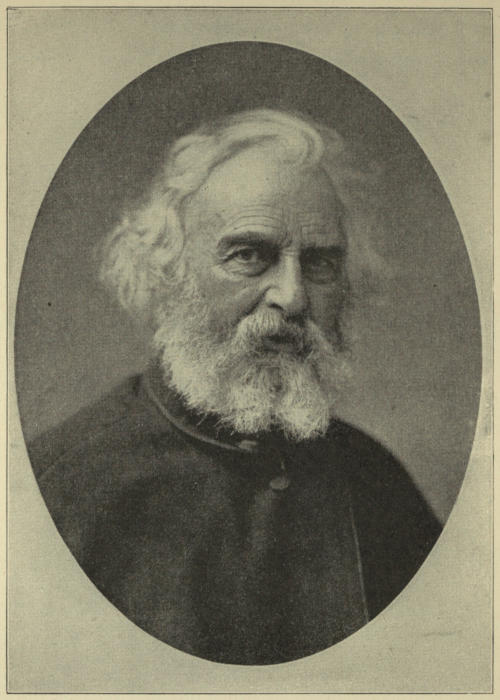
HENRY WADSWORTH LONGFELLOW
LONGFELLOW
CHAPTER I A GREAT POET
Lives of great men all remind us
We can make our lives sublime,
And, departing, leave behind us
Footprints on the sands of time;—
Footprints, that perhaps another,
Sailing o’er life’s solemn main,
A forlorn and shipwrecked brother,
Seeing, shall take heart again.
You doubtless remember how Robinson Crusoe
one day found footprints in the sand on the
shore of his desert island. “I am not alone!”
said he to himself. “Another human being has
been here before me.” Soon afterward he had
the good fortune to find his “man Friday.”
In geology we learn of footprints in rocks. Living
beings ages ago walked on the soft sand, and
that sand, lying for a long time undisturbed, was
at length hardened into rock.
The poet Longfellow has left “footprints on the
sands of time” in the shape of his poems, and we
may say those poems are like footprints hardened
into rock, which will last for ages. Many an
unhappy soul, after reading the sad, sweet, beautiful
verses of the “Psalm of Life,” has taken heart
to go on fighting life’s battle nobly, and doing
good instead of yielding to the temptation to be
weak and careless.
To realize what it is to be a great poet, think of
the millions of boys and girls, old and young, in
the United States, and in Great Britain and other
foreign countries, who have learned by heart such
famous poems as “The Village Blacksmith,”
“The Wreck of the Hesperus,” and “The Building
of the Ship.” You, yourself, no doubt, dear
reader, when you want something to memorize,
turn to a volume of Longfellow’s poems. You have
learned to love the poems: therefore let me introduce
to you the man who first lived the poems in his own
life, and you will certainly learn to love him, too.
The poet was born February 27, 1807, in Portland,
Maine. At the time of his birth his parents
were living in Captain Stephenson’s house, Mrs.
Stephenson being a sister of the elder Mr. Longfellow.
But this was only temporarily, indeed
only while the Stephenson family were visiting the
West Indies. The Longfellows soon moved into
the house of General Peleg Wadsworth, where Mrs.
Longfellow had spent part of her girlhood. It
is said to have been the first brick house ever
built in Portland, and it was one of the finest.
Here they lived until the baby grew into a man.
CHAPTER II LONGFELLOW’S ANCESTORS
Henry Wadsworth Longfellow belonged to a
good old New England family. His father was a
lawyer in Portland, Maine; his grandfather had
been a schoolmaster; and his great-grandfather
had been a blacksmith.
The Longfellows were most of them tall, strong
men, who had been soldiers, sailors and the like,
and none of them had shown the slightest talent
for poetry. But Henry Wadsworth Longfellow
was small and delicate, though he always stood
very erect and was a finely formed man.
His grandfather on his mother’s side was General
Peleg Wadsworth, who was once captured by
the British and came near being shipped off to
England; but he escaped and joined his wife and
family as they were going to Boston. The poet
also had an uncle Henry (for whom he was
named), who had been a lieutenant with Commodore
Preble and was killed at Tripoli a
short time before his namesake was born. Another
uncle was a second lieutenant on the frigate
Constitution when it captured the British ship
Guerrière in 1812.
On his mother’s side, Longfellow could trace his
origin straight back to John Alden and Priscilla
Mullens, who came over in the Mayflower, and
whom he has made immortal in his poem of “The
Courtship of Miles Standish.”
In short, Longfellow belonged to quite an
aristocratic family, as New England aristocracy
goes, and it was a fairly wealthy family also.
His father was once a member of Congress, and
afterward was chosen to make the speech welcoming
Lafayette when he visited Portland in 1825.
The house where Longfellow was born is still
standing and is well known to the children of Portland.
In the old days it was in the fashionable
part of the town, facing the ocean beach. But
now land has been filled in for a long distance out
into the ocean, and on this new land stand the
engine-house and tracks of the Grand Trunk railway.
So the house is now in a very poor neighborhood.
One day a teacher in a Portland school asked
her pupils if they knew where Longfellow was born.
“I know,” said a little girl. “In Patsey Connor’s
bedroom.”
Many poor people lived in the house, and the
room where Longfellow was born was now Patsey
Connor’s bedroom; but all the children of Portland
knew where it was.
CHAPTER III LONGFELLOW’S BOYHOOD — MR. FINNEY’S TURNIP
Our poet seems to have been a quiet, well
behaved child, rather slight, but always standing
up perfectly straight. He was careful of his clothes,
and learned his lessons well. Some people seem
to think that a very good little boy will never grow
up to be worth anything. Certainly it is a good
thing to have plenty of spirit and energy; but
Longfellow is an example of a boy who was as good
as George Washington is said to have been, and
he grew up to be the greatest poet in America, just
as Washington grew up to be the greatest president.
When he was three years old little Henry was
sent to school. For a many years a certain
Ma’am Fellows had kept a school in a little brick
schoolhouse not far from the Wadsworth mansion,
and it was she who taught the poet his first
lessons. Ma’am Fellows was a firm believer in
the doctrine that “one should never smile in school
hours.” Years afterward Longfellow told what he
remembered of her. “My recollections of my
first teacher,” said the poet, “are not vivid: but I
recall that she was bent on giving me a right start
in life; that she thought that even very young children
should be made to know the difference between
right and wrong; and that severity of
manner was more practical than gentleness of
persuasion. She inspired me with one trait,—that
is, a genuine respect for my elders.”
He afterward went to several other schools, including
one in Love Lane. When he grew a little
older he had to write compositions, and there is a
story about the first one he ever wrote. His
teacher told him to write a composition; but he
thought he couldn’t do it.
“But you can write words, can you not?” asked
the teacher.
“Yes,” was the response.
“Then you can put words together?”
“Yes, sir.”
“Then,” said the instructor, “you may take
your slate and go out behind the schoolhouse, and
there you can find something to write about; and
then you can tell what it is, what it is for, and what
is to be done with it; and that will be a composition.”
Henry took his slate and went out. He went
behind Mr. Finney’s barn, which chanced to be
near; and, seeing a fine turnip growing, he thought
he knew what it was, what it was for, and what
would be done with it.
A half hour had been allowed young Henry for
his first undertaking in writing compositions.
Before that time had expired he carried in his work,
very neatly written on his slate. It was so well done
that his teacher was both surprised and pleased.
There has been published in the newspapers a
very funny poem about a turnip, and some have
said that it is the one which Longfellow wrote at
this time. But the truth is, he never wrote it, for
that first composition was rubbed off the slate and
lost forever. This other poem was written years
afterward by somebody for a joke. Here is the
poem, however, for you to laugh about. You will
clearly see that Longfellow could not have written
it himself.
Mr. Finney had a turnip,
And it grew, and it grew;
And it grew behind the barn,
And the turnip did no harm.
And it grew and it grew,
Till it could grow no taller;
Then Mr. Finney took it up,
And put it in the cellar.
There it lay, there it lay,
Till it began to rot;
When his daughter Susie washed it,
And put it in the pot.
Then she boiled it, and she boiled it,
As long as she was able;
Then his daughter Lizzie took it,
And she put it on the table.
Mr. Finney and his wife
Both sat down to sup;
And they ate, and they ate,
Until they ate the turnip up.
When he was only thirteen years old Longfellow
wrote a real poem, which, though it has never been
published, is said to have been preserved in manuscript.
It was entitled “Venice, an Italian Song.”
The manuscript is dated “Portland Academy,
March 17, 1820,” and is signed with the full name
of the writer.
It was not long after this that his first published
poem appeared. It was entitled “The Battle of
Lovell’s Pond,” and was printed in one of the newspapers
of Portland.
There were only two papers in that city then.
Having written the ballad very carefully and
neatly, Henry thought he would like to see it in
print; but he was afraid to take it to the editor.
One of his school-mates persuaded him, however,
and he stole up one night and dropped it into the
editorial box.
He waited patiently for the next issue of the
paper, and then scanned its columns for his poem,
which he thought surely would be there. But
it wasn’t. Many weeks passed and it did not
appear. At last he went and asked to have his
manuscript returned.
It was given him and he took it over to the other
paper, the Portland Gazette, by whose editor it
was accepted and immediately published over the
signature “Henry.” Here are the first two stanzas:
Cold, cold is the north wind and rude is the blast
That sweeps like a hurricane loudly and fast,
As it moans through the tall waving pines, lone and drear,
Sighs a requiem sad o’er the warrior’s bier.
The war-whoop is still, and the savage’s yell
Has sunk into silence along the wild dell;
The din of the battle, the tumult is o’er,
And the war-clarion’s voice is now heard no more.
After that the young poet could have his verses
printed in that paper as often as he liked, and he
wrote a number of pieces for this purpose.
He went to Portland Academy, and was ready
to enter college at fourteen. One of his teachers
at the academy, who, no doubt, did a great deal
to impress his young mind, was Jacob Abbott,
the author of the “Rollo Books.” Some years ago
these were the most popular books for boys and
girls then known, and perhaps some of the young
people of this generation have read them. If they
have, they will know what fine books they are.
CHAPTER IV SOMETHING ABOUT THE TIMES WHEN LONGFELLOW WAS YOUNG
In the days when Longfellow was a child, people
were just changing from the old fashioned style of
living to ways that were new and more modern. The
older men wore knee breeches and silk stockings,
and shoes with big buckles, and had their long
hair gathered in a knot or “club” behind.
Those were strict Puritan days, too. Everybody
was very careful about going to church and keeping
Sunday, and theaters were prohibited until a few
years later. They do say, however, that the people
drank a good deal of Jamaica rum and did
other things that we should not approve of to-day.
Portland was quite a seaport, and had formerly
enjoyed great business prosperity. But in the
year that Longfellow was born, the embargo was
put on shipping, and severe “hard times” came
on. It is said “the grass literally grew upon the
wharves.”
Five years after his birth, came the war of 1812.
Fortifications were thrown up on Munjoy’s Hill,
and privateers were fitted out in the harbor. In
his beautiful poem, “My Lost Youth,” Longfellow
refers to this.
This poem is very interesting when we think of
the actual places to which Longfellow refers. Of
course he is thinking of Portland when he writes:
Often I think of the beautiful town
That is seated by the sea;
...
I can see the shadowy lines of its trees,
And catch, in sudden gleams,
The sheen of the far-surrounding seas,
And islands that were the Hesperides
Of all my boyish dreams.
...
I remember the black wharves and the slips,
And the sea-tides tossing free;
And Spanish sailors with bearded lips,
And the beauty and mystery of the ships,
And the magic of the sea.
In the following lines he refers to the fortifications
that were put up when he was five years old:
I remember the bulwarks by the shore,
And the fort upon the hill;
The sunrise gun, with its hollow roar,
The drum-beat repeated o’er and o’er.
And the bugle wild and shrill.
On the 4th of September, 1813, the Boxer, British
brig of war, was captured off the Maine coast by the
American brig Enterprise, and a few days later was
brought into Portland harbor. On the next day
both commanders, who had been killed in the
encounter, were buried in the cemetery at the foot
of Munjoy’s Hill. The poet thus records his recollections
of that event:
I remember the sea-fight far away,
How it thundered o’er the tide!
And the dead captains, as they lay
In their graves, o’erlooking the tranquil bay,
Where they in battle died.
While referring to this poem, it may be noted
that Longfellow was very fond of the country, as
well as of the sea, and he never lived in a city
larger than Cambridge, which is really no city at
all, but merely a college town. Near his home in
Portland was a large piece of woodland where he
was very fond of roaming about with some of his
friends. He thus speaks of it in the poem:
I can see the breezy dome of groves,
The shadows of Deering’s Woods;
And the friendships old and the early loves
Come back with a sabbath sound, as of doves
In quiet neighborhoods.
...
I remember the gleams and glooms that dart
Across the schoolboy’s brain;
The song and the silence in the heart,
That in part are prophecies, and in part
Are longings wild and vain.
At the end of each verse comes the beautiful
refrain—
And the voice of that fitful song
Sings on, and is never still:
“A boy’s will is the wind’s will,
And the thoughts of youth are long, long thoughts.”
Several other poems were suggested by the
sights and sounds of the poet’s boyhood. One was
“The Ropewalk,” describing a building that he
often passed. There was also a factory where
crude pottery was made and where he went and
watched the turning wheel that suggested to him
many years later the beautiful poem entitled
“Keramos.”
CHAPTER V COLLEGE DAYS
Longfellow went to college when he was very
young, indeed only fourteen years old. In those
days the requirements for entering college were not
so severe as they are now; yet they were by no
means easy, and only a bright scholar could
pass the examinations. Longfellow was one of
the bright boys. He stood second in his class.
He had an elder brother, Stephen, who entered college
at that same time.
His father and grandfather were graduates of
Harvard College; but as his father was then a
trustee of Bowdoin College, at Brunswick, Maine,
he was sent there. It happened that in the class
which he entered there were several other youths
who became very famous men. One was Hawthorne,
the greatest American novelist; and in the
class just above was Franklin Pierce, who afterwards
became President of the United States.
Not quite so famous as these two was another classmate
of Longfellow’s, John S. C. Abbott, whose
histories for young people have been only less popular
than the “Rollo Books” written by his brother,
Jacob Abbott, a somewhat older man.
In those days no one suspected that there were
in that college men destined to become so great.
Longfellow was merely an aristocratic young man
who stood well in his classes and “wrote verses as
a pastime.” The poet of the class was a young
man named Mellen. Hawthorne was very shy and
never learned his lessons. He studied in his own
way, and his professors had a very good opinion of
him, but he was not a good scholar.
There were in college two different kinds of
students, the country boys and the city fellows.
The country boys were usually rough, brown, and
not very well dressed. They would lumber along
the streets like farmers, as they were. It may
easily be imagined that they were not rich. The
lads from the seaports, on the other hand, the
city fellows, had white hands and faces, were fashionably
dressed, and were usually considered rich.
Longfellow was a city lad, and had plenty of
money. Hawthorne was more of a country fellow.
While in college the two were not intimate. Both
were naturally modest and shy, and each had only
a few friends with whom he associated. But some
years after they left college, Hawthorne sent his
first volume of stories, the “Twice-told Tales,” to
Longfellow, then a professor at Harvard College,
and Longfellow wrote a very kind article about it,
which was published in the North American Review.
It was the first worthy recognition Hawthorne had
received, and he was very grateful to Longfellow.
This made them warm friends, and such they
remained for the rest of their lives.
During his first year Longfellow did most of his
studying at home. He was doubtless a little homesick
at Brunswick, at first. That town is not very
far from Portland, but it took some time to get
there, for in those days there were no railroads.
The two Longfellow boys went up the coast in a
sailing boat to a town not far from Brunswick, and
from there they went by stage.
While in college young Henry had no great
adventures. He was a well behaved young man,
never hazed anybody, and was generally thought
rather a good fellow, but not remarkable in any
way. He wrote a good deal of poetry, which was
printed in the United States Literary Gazette,
without his name; but his cousin John Owen, then
at college with him, told him to his face one day
that poetry was not his forte.
One other thing remains to be said of his college
life. Though rich, he was generous toward his
poorer classmates, and at the same time very
modest and quiet about it. Here is one case, and
there are a good many others.
There was a student who had worked hard to
finish his college course; but one day he received
word that owing to the death of his father he would
have to leave college and earn his own living; the
family could spare him no more money to help him
through. This was sad news to him, for he had great
ambitions and hopes concerning his future career.
A friend of his, belonging to the class below
Longfellow’s, went to the poet and asked him
if he would not head a subscription, or do something
of the kind. At this time the poet had been
contributing pretty regularly to the United States
Literary Gazette, and had never received any pay
for it. Many of the poems had been copied in the
daily and weekly papers.
He wrote a note to the editor saying that he
thought he deserved in the future to be paid for
his contributions. His intention was to give the
money to his college mate. But the editor replied
that poems were generally printed gratis,
and made some vague promises.
This was a disappointment; but the classmate
who tells the story, Longfellow, and his brother
Stephen drew up a subscription paper, put down
such sums as they could afford, and passed the
document about among the college men. Enough
money was raised to carry the poor fellow through
his college course.
“For some reason or other,” says his cousin John
Owen, “the poet never liked to speak of this act of
his earlier career. He and I have talked about it,
to be sure; but one day he suggested that the subject
be forever dropped. It was one of his peculiar
habits—always to be doing some one a favor, and
to wish that it be kept a profound secret.”
CHAPTER VI THE YOUNG PROFESSOR
When Longfellow graduated from college he
was a young man of nineteen, slender, well built,
and graceful. He had blue eyes and light-brown
hair which he wore rather heavy about his head.
In his dress he was somewhat fastidious, and afterward
certain people were inclined to make fun of his
variety of neckties and light vests. But he always
showed the best of taste.
His father wished him to be a lawyer. But in
the year that he graduated a new professorship
was founded at Bowdoin, the professorship of
modern languages, and he was chosen to fill it.
Before that, Latin and Greek had been considered
the only languages worth studying. But French,
German, Italian, and Spanish were demanding
attention.
The story is that, while a student in college,
Longfellow had written a metrical translation of
one of Horace’s odes, which he had read at a general
examination. One of the examiners, the
Hon. Benjamin Orr, a distinguished lawyer of
Maine, was greatly struck with this translation,
which seemed to him especially beautiful. He
was one of the board of trustees, and when the
new professorship was created he nominated the
future poet, speaking of this translation as evidence
of his ability to fill the position.
Longfellow was only nineteen years old, and the
proposition came to him as a great surprise. As a
preparation he was to be allowed to spend three
years in Europe. By this time he was anxious to
enter a literary career, and this seemed to be just
the chance. His father consented and he prepared
to set out for Europe, though he did not
start until the following spring.
What his experiences were abroad, you may
learn by reading “Outre-Mer.” This book is
partly a story, but in reality it describes Longfellow’s
journeyings through Germany, France,
Italy, and Spain. He went from New York on a
slow sailing vessel; but his trip was a pleasant one,
and he seemed always to be lucky, as he was
through life.
At last, at twenty-two, he found himself a professor
in Bowdoin College, and quite a distinguished
young man. His “April Day” and
“Woods in Winter,” two short poems, had been
copied in many newspapers, and had even got
into the reading books of that day. His name
was not attached to any of these, and no one
thought of him as a great poet. It must be remembered
that teaching was hereafter the business
of his life; and a very faithful teacher he was.
Up to this time, and for long afterward, he did
not receive any money whatever for his poetry,
though occasionally some was promised him.
He studied very hard. He knew German thoroughly
well, and also French, Italian, Spanish,
Swedish, Finnish, and even something of other
modern languages. In those days people knew
very little about these languages, and few supposed
they had literature that was worth anything.
Longfellow became a great scholar in
them, however, and translated poetry from nearly
all of them. If you look in his complete works you
will find a great many poems marked as translations
from German, or Spanish, or Swedish, or
some other language. Many of these were printed
in learned essays which he wrote and published
in the North American Review.
He was very popular as a teacher. He seemed
to the boys like one of themselves, and he was very
sympathetic with them. Yet they all respected
him, and treated him politely. They thought that
he would some time be a famous man, and yet it
seemed more as if he would be a great scholar,
than a popular poet whom everybody, boys and
girls as well as grown-up people, could understand
and like.
CHAPTER VII THE “BEING BEAUTEOUS”
When he had been a professor at Bowdoin College
but little over a year, Longfellow married a
young lady named Mary Storer Potter. She was
the daughter of a well-known judge who lived in
Portland, and was something of a scholar too. It
is said she was especially fond of mathematics,
and had been taught to calculate eclipses. In
those days girls were sent to school very little,
and none of them ever went to college. The old
Puritan fathers thought girls were better off at
home doing housework. But Longfellow’s wife
was more fortunate.
She was at the same time good-looking and very
pleasant to every one, and so the young professor
and his young wife were invited about a great deal,
and everybody thought them a very happy pair.
They were very happy together for two or three
years; then Longfellow was asked to go to Harvard
College to be professor of modern languages
there. To prepare for this new and more prominent
position he went to Europe again. Of course
his wife went with him. They traveled about for
some time; but she was not well, and finally she
died.
Most of the poem entitled “Footsteps of Angels”
is about her, and it shows just what he thought of
her. It is worth remembering that this is the
poet’s own real wife who died when they were both
quite young. Here is a part of the poem. The
last stanzas refer to her.
When the hours of day are numbered,
And the voices of the Night
Wake the better soul, that slumbered,
To a holy, calm delight;
Ere the evening lamps are lighted,
And, like phantoms grim and tall,
Shadows from the fitful firelight
Dance upon the parlor wall;
Then the forms of the departed
Enter at the open door;
The beloved, the true-hearted,
Come to visit me once more;
...
And with them the Being Beauteous,
Who unto my youth was given,
More than all things else to love me,
And is now a saint in heaven.
With a slow and noiseless footstep
Comes that messenger divine,
Takes the vacant chair beside me,
Lays her gentle hand in mine.
And she sits and gazes at me,
With those deep and tender eyes,
Like the stars, so still and saint-like,
Looking downward from the skies.
Uttered not, yet comprehended,
Is the spirit’s voiceless prayer,
Soft rebukes, in blessings ended,
Breathing from her lips of air.
Oh, though oft depressed and lonely,
All my fears are laid aside,
If I but remember only
Such as these have lived and died!
CHAPTER VIII THE CRAIGIE HOUSE
Longfellow came back from Europe and was
installed as professor of modern languages and
belles-lettres at Harvard College, in the beautiful
town of Cambridge, two miles from Boston. Soon
after he began his life there he went to live at the
Craigie House, which has become so famous as the
home of Longfellow that it deserves a little description.
It will be remembered that Longfellow was now
a widower without children, his wife having died
during his second journey to Europe. When he
came to settle in Cambridge he was attracted by
the spacious rooms and the quiet and aristocratic
air of the Craigie House, famous as the headquarters
of Washington when he was in Cambridge
as commander-in-chief during the Revolutionary
War. George William Curtis has told the story
of Longfellow’s first visit to this house and how he
came to live there, and we give it here very nearly
in Mr. Curtis’s own words.
In the summer of 1837, a young man passed down
the elm-shaded walk that separated the old Craigie
House from the high road. Reaching the door he
paused to observe the huge old-fashioned brass
knocker and the quaint handle, relics, evidently,
of an epoch of colonial state. To his mind, however,
the house, and these signs of its age, were
not interesting from the romance of antiquity
alone, but from their association with the early days
of our Revolution, when General Washington,
after the battle of Bunker Hill, had his headquarters
in the mansion. Had his hand, perhaps, lifted
the same latch, lingering, as he pressed it, in a
whirl of myriad emotions? Had he, too, paused
in the calm summer afternoon, and watched the
silver gleam of the broad river in the meadows,
the dreamy blue of the Milton hills beyond? And
had the tranquillity of that landscape penetrated
his heart with “the sleep that is among the hills,”
and whose fairest dream to him was a hope now
realized in the peaceful prosperity of his country?
He was ushered in and found himself face to
face with Mrs. Craigie, a good old lady who had
seen better days. He asked if there was a room
vacant in the house.
“I lodge no students,” was her reply. Longfellow
was so young-looking she took him to be
a student.
“I am not a student,” answered the visitor, “but
a professor in the university.”
“A professor?” she inquired. She thought a
professor ought to be dressed like a clergyman.
“Professor Longfellow,” continued the guest,
introducing himself.
“Ah! that is different,” said the lady, her
features slightly relaxing, as if professors were
naturally harmless and she need no longer barricade
herself behind a stern gravity of demeanor.
“I will show you what there is.”
She preceded the professor upstairs, and going
down the hall she stopped at each door, opened it,
permitted him to perceive its delightful fitness for
his purpose, then quietly closed the door, observing,
“You cannot have that.” The professorial
eyes glanced restlessly around the fine old-fashioned
points of the mansion, marked the wooden carvings,
the air of opulent respectability in the past, which
corresponds in New England to the impression of
ancient nobility in Old England, and wondered if
he were not to be permitted to have a room at all.
The old lady at length opened the door of the
southeast corner room in the second story; and
while the guest looked wistfully in and awaited
the customary “You cannot have that,” he was
agreeably surprised by hearing that he might
have it.
The room was upon the front of the house and
overlooked the meadows to the river. It had an
atmosphere of fascinating repose, in which the
young man at once felt at home.
“This,” said the lady, “was Washington’s chamber.”
Here Longfellow lived for the rest of his life.
He was merely a lodger in one of the rooms until
he married the second time, six years after first
going there. On his marriage his wife’s father, Mr.
Nathan Appleton, who was a rich old gentleman,
bought the house and gave it to him as a wedding
present, and also gave him the lot opposite, so
that no one should ever build a house that would
shut off his view of the river Charles.
It was the view from the front of this house that
inspired the poet to write that beautiful poem, “To
the River Charles.” How sweet and suggestive
the opening verses, which note that he wrote the
poem four years after he moved into the Craigie
House!
River! that in silence windest
Through the meadows, bright and free,
Till at length thy rest thou findest
In the bosom of the sea!
Four long years of mingled feeling,
Half in rest, and half in strife,
I have seen thy waters stealing
Onward, like the stream of life.
Thou hast taught me, Silent River!
Many a lesson, deep and long;
Thou hast been a generous giver;
I can give thee but a song.
It may be said that Joseph Worcester, who
wrote Worcester’s Dictionary, had once lived in
this house, and Miss Sally Lowell, an aunt of
James Russell Lowell, as well as Jared Sparks, who
wrote a great life of Washington and was president
of Harvard College. Mr. Sparks and Edward
Everett both brought their wives there when they
were married.
It seemed that Longfellow was always getting
into famous houses. When he was at Bowdoin
College he lived in the house in which “Uncle
Tom’s Cabin” was afterward written. It is said that
Talleyrand, the famous French diplomat, and the
Duke of Kent, Queen Victoria’s father, had been
entertained at dinner at the Craigie House when it
belonged to the original owner, Colonel John Vassal.
CHAPTER IX THE FIVE OF CLUBS
Now began the finest years of Longfellow’s life.
It was in the early years at the Craigie House that
he wrote the “Psalm of Life” and most of his
other world-famous and world-loved poems, and it
was here that he enjoyed his best friendships.
When he first came to Cambridge to see about
accepting the professorship, he was introduced to
Charles Sumner, the great lawyer, orator, and
statesman, then a young man beginning to practice
law in Boston. The introduction took place in
Professor Felton’s rooms, who was also about the
same age, that is, under thirty, and who as a Greek
scholar and the writer of Greek textbooks has
become famous. Felton was a big, good-natured
fellow; and he and Charles Sumner at once took a
fancy to Longfellow. As soon as the poet was
settled in his new home a club was formed, consisting
of Longfellow, Sumner, Felton, George S.
Hillard (Sumner’s law partner), and Henry R.
Cleveland, who was also a teacher. These five,
who called themselves “The Five of Clubs,” met
usually every Saturday afternoon in Longfellow’s
room, sometimes in Felton’s, and occasionally in the
law offices of Sumner and Hillard in Boston.
They were all ambitious, all good fellows who
met for a “feast of reason,” but who nevertheless
knew how to have a royal good time. These meetings
were kept up regularly for several years.
It was about this time that Longfellow’s friendship
for Hawthorne began.
There were many other famous people here,
too, with whom Longfellow formed life-long friendships.
Holmes was becoming known as a young
poet as well as medical professor in Harvard College,
and Lowell, then a boy, was soon to come
upon the scene, and at last to take Longfellow’s
professorship when Longfellow should resign.
Charles Sumner was destined to be one of the
great antislavery agitators, and it was chiefly to
his influence that we owe Longfellow’s poems on
slavery. Longfellow was not of a very fiery nature.
He did not get excited even in those hot times
before the war, and Sumner had to urge him a
long time before he composed the poems entitled
“The Slave’s Dream,” “The Slave in the Dismal
Swamp,” and others on slavery.
Emerson was also one of his friends, and so
were several others among those who started the
Brook Farm experiment. These people had taken a
farm, and all had gone to live together on it, each
doing a little work, and all doing a great deal of
talking. Some of Emerson’s friends rather disliked
Longfellow because he took no interest in this
scheme, which proved a terrible failure. While
he was intimate with the Brook Farm people, and
always friendly as far as listening to them was concerned,
he kept on the even tenor of his ways quite
unmoved by their arguments.
CHAPTER X LONGFELLOW BECOMES A FAMOUS POET — AS TRANSLATED FROM THE CHINESE.
When Longfellow went to live in Cambridge he
was just thirty years old. He had not then written
any of the poems that are famous to-day, but
he began at once to produce most of those that we
love best. A good many of them were sent to the
Knickerbocker Magazine. One of them was the
“Psalm of Life,” for which he was promised
five dollars, which, however, was never paid him.
A poem then called “Floral Astrology,” but now
known as “Flowers,” was the first to have his full
name attached—“Harvard College, H. W. Longfellow.”
The “Psalm of Life” was signed simply
“L.” Both of these poems and “The Reaper
and the Flowers” (published in the same magazine
in the same way, at the same price, which was
never paid) had been copied into hundreds of newspapers
and were public favorites without the author’s
being in the least known. His friends knew
Longfellow wrote the poems, but the public did
not.
His cousin, John Owen, kept a bookstore in
Cambridge. One day Owen went to him and told
him he ought to have some of his poems printed
in a little volume, and with his name. Longfellow
objected to having his name appear, though he
thought it might be a good idea to have the poems
published if a publisher could be found. His
cousin said he should like to publish them; to this
Longfellow assented, but for some time refused
to have his name appear. At last he said, “Well,
bring them out in your own way!” That meant,
with his name on the title page.
That little volume, entitled “Voices of the
Night,” and including the poems still printed in
Longfellow’s collected works under that title, was
published in 1839, when Longfellow was thirty-two
years old. It contained the “Psalm of Life,”
“The Reaper and the Flowers,” “The Light of
Stars,” “Footsteps of Angels,” “Flowers,” “The
Beleaguered City,” and “Midnight Mass to the
Dying Year.” There were also some translations,
and a few of the poems he had published
while in college.
That book made Longfellow famous as a poet.
A few critics found fault with it, but not many, and
hundreds of others liked it and praised it. Longfellow
himself tells a pretty story of the “Psalm
of Life.” “I was once riding in London,” said he,
“when a laborer approached the carriage and
asked, ‘Are you the writer of the “Psalm of
Life?”’ ‘I am.’ ‘Will you allow me to shake
hands with you?’ We clasped hands warmly.
The carriage passed on, and I saw him no more;
but I remember that as one of the most gratifying
compliments I ever received, because it was so
sincere.”
In a published letter from Charles Sumner, there
is another touching story of the power this wonderful
poem possesses over men.
A man who had been very unlucky, an old classmate
of Sumner’s, went to his office to prove some
debts in bankruptcy. Sumner asked him what he
read. He replied that he read very little; that he
hardly found anything that was written from the
heart and was really true. “Have you read Longfellow’s
Hyperion?” Sumner asked him. “Yes,”
he replied, “and I admire it very much; I think
it a very great book.” He then added in a very
solemn manner, “I think I may say that Longfellow’s
‘Psalm of Life’ saved me from suicide. I
first found it on a scrap of newspaper, in the
hands of two Irish women, soiled and worn; and I
was at once touched by it.”
The Chinese translator and noted scholar, Tung
Tajen, a great admirer of Longfellow, sent the
poet a Chinese fan, upon which was inscribed in
Chinese characters a translation of the “Psalm of
Life.” The fan is one of the folding kind, and the
characters are inscribed on it in vertical columns.
An Englishman serving on the staff of the American
minister in China found this beautiful poem
in Chinese and translated it back into English, not
knowing that it had been written originally in English.
Here is a verse of the translation he made.
You will scarcely recognize the familiar—
Tell me not, in mournful numbers,
Life is but an empty dream!
For the soul is dead that slumbers,
And things are not what they seem.
Do not manifest your discontent in a piece of verse:
A hundred years (of life) are, in truth, as one asleep (so soon are they gone);
The short dream (early death), the long dream (death after long life), alike are dreams (so little is the body concerned; after death)
There still remains the spirit (which is able to) fill the universe.
The words in parenthesis were not in the Chinese
and the translator supplied them to complete the
sense in English.
CHAPTER XI HOW SOME OF THE GREAT POEMS WERE WRITTEN
We have already often spoken of the “Psalm of
Life,” perhaps the greatest poem Longfellow ever
wrote. He composed it in his room at the Craigie
House, which had been Washington’s chamber.
The death of his young wife had afflicted him
deeply, and one day as he sat between two windows,
looking sadly out, this poem came into his
mind and he wrote it. For a long time no one
knew of its existence, and it was not until many
months later that he sent it to be published. “The
Reaper and the Flowers” was written in much the
same way, and “The Light of Stars” was composed
on a serene and beautiful summer evening,
exactly suggestive of the poem.
Longfellow himself tells how “The Wreck of
the Hesperus” was written. Says he:
“This is one of the poems which I like to recall.
It floats in my mind again and again, whenever I
read of some of our frightful storms on the coast.
Away back in the year when the ‘Voices of the
Night’ was published, in the closing month of the
year, the New England coast was lashed by a
terrible tempest: and there were numerous shipwrecks
recorded. I remember reading in the
newspapers one day of the loss of a schooner on
the reef of Norman’s Woe, called ‘The Hesperus.’
Norman’s Woe is, as you are aware, a frowning
mass of rocks, surrounded by the ocean, not far
from Gloucester. It occurred to me to write a
ballad, which I did some days afterwards, while I
was sitting alone one night by the fire in the room
above.”
The fact is, after writing part of it he went to
bed, and being unable to sleep, got up and wrote
the remainder.
“Excelsior” probably stands next to the “Psalm
of Life” as a popular favorite. One evening, also
in that chamber of Washington’s at the Craigie
House, after he had been at a party, Longfellow
caught sight of this word on a torn piece of newspaper.
Lying near was a letter from Charles
Sumner, and immediately he began to write on the
back of this, crowding the stanzas in as best he
could. Later he carefully rewrote the poem, and
changed it in many parts. The next time Sumner
visited the Craigie House he was shown the letter,
and he asked to have it back. Longfellow gave it
him, and Sumner always kept it as a treasure. When
he died he left it by will to Harvard College.
Once in answer to a letter Longfellow gave the
following explanation of the meaning of the
poem:
“My intention in writing it was no more than to
display, in a series of pictures, the life of a man of
genius, resisting all temptations, laying aside all
fears, heedless of all warnings, and pressing right
on to accomplish his purpose. His motto is ‘Excelsior’—higher.
He passes through the Alpine
village, through the rough, cold paths of the world,
where the peasants cannot understand him, and
where his watchword is ‘an unknown tongue.’ He
disregards the happiness of domestic peace, and
sees the glaciers—his fate—before him. He disregards
the warnings of the old man’s wisdom and
the fascinations of woman’s love. He answers to
all, ‘Higher yet!’ The monks of St. Bernard are
the representatives of religious forms and ceremonies;
and with their oft-repeated prayer mingles
the sound of his voice, telling them there is something
higher than forms or ceremonies. Filled
with these aspirations, he pushes forward; and the
voice heard in the air is the promise of immortality
and progress ever upward, without having reached
the perfection he longed for.”
“The Village Blacksmith” is another poem with
a history. It will be remembered that we have
already said that Longfellow’s great-grandfather
was a blacksmith. The “village smithy” “under
a spreading chestnut tree”—the one about which
Longfellow wrote the poem, though his grandfather
was never there—stood on Brattle Street, in Cambridge.
After a time it had to be removed. Some
of the branches were cut off the chestnut tree,
that a dwelling-house might be put up, and it
then looked so ugly that the town authorities
ordered it to be cut down.
This made Longfellow feel very sad. The year
before he made a sketch of the shop and the tree,
just as they stood, and this rough sketch has been
published. On the morning the tree was cut down,
every one crowded out to see the choppers at work,
and gaze at the tree as it tumbled over.
On his seventy-second birthday the children of
Cambridge presented Longfellow with an arm-chair
made out of the wood of the old chestnut tree. It
was a handsome chair, jet black and finely carved
with horse chestnuts and leaves. Inscribed around
it was a verse from the poem:
And children coming home from school
Look in at the open door;
They love to see the flaming forge,
And hear the bellows roar,
And catch the burning sparks that fly
Like chaff from a threshing-floor.
The chair was upholstered in green leather, and
there was a brass plate under the cushion, on which
was inscribed:
“To the author of ‘The Village Blacksmith,’
this chair, made from the wood of the spreading
chestnut tree, is presented as an expression of grateful
regard and veneration by the children of Cambridge,
who, with their friends, join in the best
wishes and congratulations on this anniversary,
Feb. 27, 1879.”
Longfellow was very much pleased by this and
wrote a poem to the children, entitled “From My
Arm-chair.” You may read it in any volume of
his poems.
One more poem of which we must speak is
“The Skeleton in Armor.” Said Longfellow once,
“This ballad was suggested to me while riding on
the seashore at Newport. A year or two previous
a skeleton had been dug up at Fall River, clad in
broken and corroded armor; and the idea occurred
to me of connecting it with the round tower at
Newport, generally known, hitherto, as the Old
Windmill, though now claimed by the Danes as
a work of their early ancestors.”
When the poem was written some of Longfellow’s
friends, probably the members of that “Five
of Clubs,” thought it was beneath his dignity; but
others were so enthusiastic about it that when one
of them read it aloud to him very appreciatively
he sprang to his feet and embraced him, and paid
no more attention to the criticisms. He was thinking
about the subject, after his visit to the skeleton
that had been dug up, for more than a year before
the poem flashed into his mind.
CHAPTER XII THE POET’S SECOND MARRIAGE
You will remember that at the time his first
wife died Longfellow was in Holland. For a long
time after that he kept very much secluded, and
in the “Footsteps of Angels” we have seen how
deeply the thought of his first wife was impressed
on his memory. But while he was traveling in
Switzerland the year after her death, he met Mr.
Nathan Appleton, a rich man of Boston who was
traveling with his family. His daughter Frances
Elizabeth was very beautiful and had many admirers.
Perhaps Longfellow fell in love with her then,
but if he did, it was doubtless because she seemed
very cold toward him.
When he got back to Cambridge and was settled
in the Craigie House, he wrote a sort of novel
entitled “Hyperion,” which, like “Outre-Mer”,
described his journeyings in Europe, but which
also had a romantic love story, in which most
people thought that the hero, Paul Flemming, a
young American man of letters, was Longfellow
himself and the heroine, Mary Ashburton, was
Miss Appleton. In the story, Mary Ashburton
refused Paul Flemming’s offer of marriage. It is
not probable, however, that Longfellow said anything
about love at that time; but when the novel
was published and became popular it was whispered
about that the young lady was very indignant.
Nevertheless, the Appletons and Longfellow had
had a very pleasant time together in Europe.
Once they stopped at the hotel called “The
Raven.” It was in the town of Zurich. First
Mr. Appleton wrote his name in the register with
some compliment to the house. Then the landlord
presented a very long bill, which made Mr.
Appleton angry and he was vexed because he had
written something complimentary to the house.
“But I have not written my name,” said Mr.
Longfellow; “and, if you will allow me, I will
treat the innkeeper as he deserves.”
He took the register, and this is what he wrote
in it:
Beware of the Raven of Zurich!
’Tis a bird of omen ill,
With a noisy and unclean nest,
And a very, very long bill.
Longfellow went home first, and for six or seven
years lived, as we have seen, in Cambridge; but
later he often visited Pittsfield, where the Appleton
summer mansion was and where Miss Frances
Elizabeth was staying, and there she finally consented
to be his wife. They were married, and
Mr. Appleton bought the Craigie House and presented
it to them to keep house in.
Longfellow had five children, two sons and
three daughters. When the Appletons lived at
Lynn, one of the sons, Charles, was tipped over
while in a sailboat and of course got soaking wet.
In place of his shoes Mr. Appleton gave him a
pair of old slippers. Longfellow returned them
later with this parody of his own “Psalm of
Life”:
Slippers that perhaps another,
Sailing o’er the Bay of Lynn,
A forlorn or shipwrecked nephew,
Seeing, may purloin again.
His daughters, who became the comfort of his
old age, are beautifully referred to in the poem
called “The Children’s Hour”:
I hear in the chamber above me
The patter of little feet,
The sound of a door that is opened,
And voices soft and sweet.
From my study I see in the lamp light,
Descending the broad hall stair,
Grave Alice, and laughing Allegra,
And Edith with golden hair.
In 1861, twenty years before the poet himself
died, Mrs. Longfellow was burned to death. She
was sitting at her library table amusing her two
youngest children by making seals. A bit of the
burning wax fell on her light gauze dress, which
was in a moment all aflame. She cried out, and
Longfellow came running from the next room and
threw a rug about her; but she was so burned that
she soon died, though several doctors came almost
immediately. Longfellow himself was also frightfully
burned, but not dangerously.
This, and the death of his other wife, were the
two great sorrows of his life. Except for these
two misfortunes, it would seem as though he were
always fortunate, living, as it were, in a bed of
roses—always successful, never poor, never discontented
with his lot. But after the death of his
second wife he was very gloomy for a long time.
It may be said that the sadness of the deaths
of both wives made him write some of his best
poems.
Three years after the death of Mrs. Longfellow,
Hawthorne died.
Longfellow wrote a beautiful poem called “Hawthorne,”
which closes with this stanza:
Ah! who shall lift that wand of magic power,
And the lost clew regain?
The unfinished window in Aladdin’s tower,
Unfinished must remain!
CHAPTER XIII EVANGELINE, HIAWATHA, AND THE COURTSHIP OF MILES STANDISH
After his first marriage we have seen that Longfellow
wrote his most famous short poems. After
his second marriage he wrote his most famous long
poems. The first was “Evangeline.” It was
published in 1847, four years after his marriage;
but he had been a long time writing it. He once
wrote, “I had the fever burning a long time in my
brain before I let my hero take it. ‘Evangeline’
is so easy for you to read, because it was so hard
for me to write.”
The story of the Acadians is a familiar one.
Acadia was the French name for Nova Scotia.
But after the French had settled there the English
claimed the land as having been discovered by
John Cabot. There was much fighting between
the French and English over the disputed ground,
and finally the English made a settlement of their
own at Halifax; but the country villages were
made up mostly of the French. At last the rights
of the English to the territory were acknowledged
by the French government; but in the treaty that
was made it was provided that the French settlers
should not be obliged to pay taxes or take up arms
against their fellow Frenchmen. Most of them
also refused to take the customary oath of allegiance
to the King of England.
To make up for the loss of this territory the
French erected fortifications at Louisburg and
Cape Breton, and they encouraged the Indians to
keep up a raiding warfare on the English settlements.
In this border warfare the English
claimed that the French “neutrals” (as the
Acadians were called) acted as spies and stirred up
the Indians to revenge.
At last in 1755, a few years before the American
Revolution, the colony of Massachusetts proposed
an expedition against Acadia, and the British
government fitted it out. They captured the
neighboring French forts, and all the American
people rejoiced at the easy victory. Then came
the question, What should they do with those
treacherous “neutrals,” who were British subjects
though they would not swear allegiance to Great
Britain, and in heart and act remained loyal to
France after France had been beaten off the
ground.
“Scatter them through all the British colonies!”
ordered the governor.
Accordingly, eighteen thousand of them were
shipped off wherever it happened to be convenient
to send them, and in such haste that families were
separated, mothers and children parted, lovers torn
from each other, and all thrown into a new world
without money or property of any kind; for their
houses and barns were burned, their crops destroyed,
their money and goods confiscated. It
was a horrible retribution for a very natural and
simple-minded loyalty to their own native land
and government.
A friend of Hawthorne’s heard a story of a young
couple who were about to be married on the day
the proclamation was made; but as the young men
were separated from their friends and families to
prevent their taking up arms for their defense, the
two were sent to different colonies, and spent the
rest of their lives in a vain search for each other.
At last they meet in a hospital, where the hero is
dying. The story was offered to Hawthorne for a
novel, but he did not care for it. One day when
the friend, Hawthorne, and Longfellow were dining
together, the story was told again to Longfellow
and he was very much touched by it, especially by
the constancy of the heroine.
“If you are not going to use it for a novel,
give it to me for a poem,” said Longfellow; and
Hawthorne gladly consented.
The heroine of the poem was at first called
Gabrielle; and the poet located the scene of the
climax at a poorhouse in Philadelphia, with the
charming surroundings of which he had been fascinated
years before. While waiting for the
sailing of the packet for Europe at the time of his
first voyage, he wandered up Spruce street, where
his attention was attracted to a large building with
trees about it, inside of a high enclosure. He
walked along to the great gate and stepped inside.
The charming picture of a lawn, flower beds, and
shade which it presented made an impression
which never left him. When twenty-four years
afterward he came to write “Evangeline,” he
located the final scene at this poorhouse, and the
burial in an old Catholic graveyard not far away,
which he had found by chance on another walk at
the same period.
His next great poem was “Hiawatha.” For ten
years Longfellow had been thinking about writing an
Indian poem. At last a young man who had been
a pupil in one of his classes came back from the
West, where he had been living among the Indians.
One day while he was dining with the poet, he
told many of his experiences among the red men.
Longfellow was very much impressed, and looked
about for a book where he might read old Indian
legends. He found that a Mr. Schoolcraft had
published such a book, entitled “Algic Researches.”
For three years, he says, he read and reread this
volume. At last he began to write, and composed
nearly five hundred lines, when he changed
his mind and destroyed what he had written.
He began again and continued writing to the
end.
When “Hiawatha” was published, some critics
claimed that it was stolen from a Finnish poem,
and a great many people said unpleasant things
about it. Already Poe had written very unkindly
of “Evangeline,” as he seemed to be jealous
of Longfellow’s success. But both “Evangeline”
and “Hiawatha” soon became immensely
popular, thousands of copies being sold and
read.
Two years after “Hiawatha” appeared, the
Atlantic Monthly was started. Longfellow,
Holmes, Whittier, Emerson, Prescott and others,
were called together at a dinner, and Lowell was
chosen editor of the magazine. After the periodical
was started and became so famous, the men
who wrote for it met regularly once a month at a
dinner. Longfellow was a contributor and an
attendant at the dinners for a long time.
The year after the Atlantic Monthly was
started, “The Courtship of Miles Standish” was
published as a little volume. The poem professes
to be a love poem, but the love is not so warm and
sincere as that in the songs of Robert Burns.
CHAPTER XIV THE GOOD OLD MAN
Longfellow was one of the best-natured men in
the world. He was always pleasant and obliging
to everybody who came to see him. He wrote
his autograph for all the children who asked
him. Once there was a school celebration in his
honor. He was present and made a beautiful little
speech, in which, among other things, he thanked
the children of Cambridge for the arm-chair.
When the exercises were over the children crowded
about him and he wrote his name in their albums
until he could write no more, his hand was so tired.
But he told those who had not got his autograph
that he would write it for them if they would come
around to his house.
Many children went to see him on other occasions,
and he was always very kind to them. Everybody
loved him.
We have mentioned many of the men who were
his friends. Another was Professor Agassiz, the
great scientist and professor at Harvard College,
who was a warm and intimate friend of Longfellow’s.
After a time these friends began, one by one, to
die. Agassiz died, Sumner died, and a number of
others. Hawthorne had died some years before.
Longfellow lived a sad life after the terrible accident
that killed his wife, and was getting to be a
very old man. Every one tried to honor him. He
knew that he was accounted the greatest poet
America had produced. His sons and daughters
were about him and took excellent care of him.
Nevertheless, he began to weary of life a little,
and longed to join the dear ones who had gone
before.
It is autumn; not without,
But within me is the cold.
Youth and spring are all about;
It is I that have grown old.
He still wrote many beautiful poems, such as
the “Tales of a Wayside Inn,” “Keramos,” and
others. He even wrote a poem on the death of
Garfield a short time before he himself died. But
none of these poems became as famous as those he
had written in earlier years in the prime of his
manhood.
At last, on the 24th of March, 1882, he died, and
the whole country went into mourning for him.
His soul to him who gave it rose;
God lead it to its long repose,
Its glorious rest!
And though the poet’s sun has set,
Its light shall linger round us yet,
Bright, radiant, blest.
Note.—The thanks of the publishers are due Messrs. Houghton,
Mifflin & Co. for their kind permission to use selections from the
copyrighted works of Longfellow.
THE STORY OF JOHN GREENLEAF WHITTIER
JOHN GREENLEAF WHITTIER
WHITTIER
CHAPTER I THE QUAKER OF THE OLDEN TIME
The Quaker of the olden time!
How calm and firm and true,
Unspotted by its wrong and crime,
He walked the dark earth through!
The Quaker, with his broad-brimmed hat, his
queer, old-fashioned coat, and his habit of saying
“thee must” and “thee must not,” was not only
an honest man, but a good-natured, sensible
man as well. The poet Whittier was a good
Quaker, as “calm and firm and true” as the
Quaker in his poem. He was also fond of children,
and his best poems are about children and childhood
days.
It is only a little over two hundred years since
the first Quakers appeared. Whittier’s great-great-grandfather,
Thomas Whittier, was said to be a
Huguenot by descent. He came from England,
however, as a Puritan, and held various offices in
the Puritan church in Salisbury and Haverhill, in
northeastern Massachusetts, where he settled.
It happened that two Quakers, Joseph Peasley
and Thomas Macy, who had come to Haverhill,
were arrested and fined for “exhorting” on the
Lord’s day. They did it in their own houses; but
in those Puritan times, all the exhorting had to
be done in church by regular ministers. Thomas
Whittier thought these men had been treated rather
unjustly, and he and others petitioned the legislature,
or General Court, to pardon them. But the
old Puritans thought these petitioners about as bad
as the “heretics” themselves, as the Quakers were
regarded, and notified them that they must take
back their petition or be punished. Thomas Whittier
and Christopher Hussey, though not Quakers,
refused, and were deprived of their right to vote,
or, as it was called, “their rights as freemen.”
Thomas Whittier was such a good, sensible man,
however, that the people, although he was suspended
from voting, had to ask him to help them do
various things in the church; and after a while the
General Court restored his “rights as a freeman.”
He himself never became a Quaker, but his son
married a daughter of Joseph Peasley, and so most
of the Whittiers after that were Quakers. Yet
there were some who were not; for history tells of
a Colonel Whittier about the time of the Revolution.
He could not have been a Quaker, for no
good Quaker ever goes into the army.
The Quakers are a peculiar people. They do
not believe in fighting or going to war on any
account. They are always for peace. The poet
Whittier was opposed to war, and often wrote
against it; and he refused to favor the Civil War,
which freed the slaves, although he had himself
been for many years a great antislavery reformer,
along with his friend William Lloyd Garrison. But
he admits that he had a sort of diabolical liking for
the army and war, and once he wrote a war poem
and had it published anonymously. He thought
no one would ever know who wrote it, for it didn’t
sound much like a Quaker; but when he had
become an old man some one did find it out, and
he had to admit that he was its author.
Another thing the Quakers will not do is to swear,
either in a profane way, or before a court of justice.
They declare that the Scriptures say, “Swear not
at all,” and that it is just as wrong to swear in
court as in anger. They are not great talkers; and
in meeting, if no one has anything to say that is
worth saying, they think it much better to sit in
silence for an hour than to listen to a dull sermon.
Your grammars will tell you that it is just as
incorrect to say “thee is,” or “thee must,” as it is
to say “me is,” or “him ought.” It seems strange
that most of the Quakers in the world, from the
earliest time, should make a grammatical blunder
like this. Of course Whittier, and many others,
knew it was not correct; but they said that Quakers
had used this form of speech from the very first,
and they would not try to change the custom.
These queer people also said they were plain,
sensible folk, and therefore would not cater to the
“world and the devil” by wearing fine clothes. All
dressed in the same way, in what was called
Quaker drab, the men with broad-brimmed beaver
hats, the women with plain bonnets of black or
“dove-colored” silk, unadorned with ribbons or
other ornaments.
Neither did they have any music, nor indulge
themselves in any unnecessary luxuries. They
were sharp and shrewd, however, and as we
shall see in the case of Whittier, did not forbear to
have a little fun now and then.
The Puritans had revolted from the Church of
England, and came to America for religious freedom.
The Quakers had likewise revolted from
the established forms of worship, but their belief
was very different from that of the Puritans.
At first the Puritans in Massachusetts thought
they would keep the Quakers out of their colony.
They therefore punished severely every one who
dared to come among them. They condemned
four of them to death, and others they whipped and
imprisoned and banished. But these persecutions
did not prevent the Quakers from coming to Massachusetts,
and finally the Puritans became ashamed
of their intolerance, and left them to themselves.
CHAPTER II A FARMER’S BOY
The first Thomas Whittier, after he married,
built a log house, not far from the present Whittier
homestead; but when he grew old and became
well-to-do he put up what was then a fine house.
This was as long ago as 1688, or thereabouts.
In this house, which is still standing, the poet
John Greenleaf Whittier was born, December 17,
1807. His father was nearly fifty at the time of
his birth, and twenty-one years older than his
mother. His grandfather was about the same
age when his father was born, and his great-grandfather
and great-great-grandfather were
equally old at the births of their sons.
On his mother’s side Whittier was descended
from a remarkable old preacher named Stephen
Bachiler. This man had deep-set, bright eyes,
and handsome features, which were inherited by
most of his descendants, many of whom became
famous men. One was Daniel Webster, who
looked very much indeed like Whittier. Both had
the Bachiler eye and brow.
New England farm life is not easy or pleasant,
though Whittier never admitted that he didn’t
have a first-rate time when he was a boy, as you
may see by reading “Snow-Bound.” His father’s
family had to raise most of the food they ate.
They had no comfortable sofas, and the chairs
were very straight-backed. Besides, they did not
succeed very well in keeping warm in the winter.
As they thought it was necessary to toughen themselves,
they went out on very cold days without
much clothing on. Indeed, they probably had
but very few warm clothes. There were no such
things in those days as heavy flannels or great
overcoats. The cloth in their garments was spun
and woven at home by the mother, and she did
not always get the threads very close together.
So there were a great many spaces for the wind
to blow through. Of course they had to go to
meeting every First-day (Sunday), and as there
were no fires in the meeting-house, they suffered
much from the cold in winter.
Even the dwelling houses were not very warm.
There was only one fire, and it was built in a
chimney-place so large that there was room for
benches inside the chimney next to the fire. Then
the wind would come in through the cracks and
crevices; and while it was very hot before the fireplace,
a little way back it was cold. It would often
happen on cold, windy nights that their faces
would burn while their backs were almost freezing.
And the bedrooms were like ice-chests, and never
warm except in summer, when they were sure to be
too hot. Whittier was sickly all the latter part of
his life; and he laid his trouble largely to exposure
in childhood; for he was always delicate. He lived
to be very old, however, as did all his ancestors.
This was the unpleasant side to his boyhood; of
the pleasant side Whittier himself has told us. If
you wish to know what good times he had in the
summer season, read the “Barefoot Boy”:
Blessings on thee, little man,
Barefoot boy with cheeks of tan!...
From my heart I give thee joy—
I was once a barefoot boy!
It is only the country boy who knows—
How the tortoise bears his shell,
How the woodchuck digs his cell,
And the ground-mole sinks his well;
How the robin feeds her young,
How the oriole’s nest is hung;
Where the whitest lilies blow,
Where the freshest berries grow,
Where the groundnut trails its vine,
Where the wood-grape’s clusters shine.
But it is in “Snow-Bound,” his greatest and most
beautiful poem, that we hear of all the pleasant
times which the farm boy has in winter, and also all
about the members of Whittier’s own family. He
begins the poem by telling how the snowstorm
came up, and then goes on—
Meanwhile we did our nightly chores,—
Brought in the wood from out of doors,
Littered the stalls, and from the mows
Raked down the herd’s-grass for the cows.
Every farmer boy knows what “chores” are.
The fun came the next morning when their father,
“a prompt, decisive man,” wasting no breath, said,
“Boys, a path!” You must go to the poem itself
to read about the Aladdin’s cave they dug in the
snow, and the other things they did. “As night
drew on,” says the poet,
We piled with care our nightly stack
Of wood against the chimney back,—
The oaken log, green, huge and thick
And on its top the stout back stick;
The knotty forestick laid apart,
And filled between with curious art
The ragged brush; then, hovering near,
We watched the first red blaze appear,
Heard the sharp crackle, caught the gleam
On whitewashed wall and sagging beam,
Until the old, rude-furnished room,
Burst flower-like into rosy bloom....
Shut in from all the world without,
We sat the clean-winged hearth about
Content to let the north wind roar
In baffled rage at pane and door;
While the red logs before us beat
The frost line back with tropic heat;
And ever, when a louder blast
Shook beam and rafter as it passed,
The merrier up its roaring draught
The great throat of the chimney laughed.
The house dog on his paws outspread
Laid to the fire his drowsy head,
The cat’s dark silhouette on the wall
A couchant tiger’s seemed to fall;
And, for the winter fireside meet,
Between the andirons’ straddling feet,
The mug of cider simmered slow,
The apples sputtered in a row,
And, close at hand, the basket stood
With nuts from brown October’s wood.
Whittier was nearly sixty years old when he
wrote this poem, and perhaps he had forgotten
partly the hardships of his boyhood; but the poem
is so great because it is so simple and natural and
true. It may seem strange that the greatest work
of a great poet is no more than a description of his
every-day home when he was a boy. Whittier’s
home was not finer nor better than anybody else’s
home—than yours or mine; in fact, in comparison
with what we have, it was very poor indeed. Yet
Whittier made this wonderful poem about it. That
shows how great a poet he was. Only a great
poet could take a barefoot boy, or a snowstorm, or
a common farmhouse and write such beautiful
verses about it. Think of this carefully, and you
will come to understand what good poetry really is.
CHAPTER III WHITTIER’S FAMILY
Most people are blessed with brothers and sisters,
with whom they grow up. First one and then the
other is sent away to school. Soon they are all out
in the world, earning livings for themselves; they
get married and have families of their own; and
before long they seem to forget the home of their
childhood. But Whittier did not get married, and
one of his sisters did not marry. He lived on the
farm most of the time till he was thirty years
old, when he moved with his mother and sister to
Amesbury. We are therefore more than usually
interested in knowing about the members of the
family in which he was born.
First, there was his father. He was a plain
matter-of-fact man, and did not believe in poetry;
and so, in this, young Greenleaf received very little
encouragement from him.
The encouragement in his poetic efforts, which
the father failed to give, he got from his mother,
sisters, and brother, who were all proud of him.
His mother was a dear, sweet Quaker lady, as
saintly as she was lovely. Her face was full and
fair, and she had fine, dark eyes. She appreciated
poetry and all fine and delicate sentiments, and
for fifty years she was the guide, counselor, and
friend of her illustrious son.
Greenleaf had a brother, Matthew Franklin,
several years younger than himself, who outlived
every one else in the family except the poet. He
had also two sisters, the eldest of the family, and
the youngest. The elder sister, Mary, married
and lived in Haverhill; but the younger never married,
and was the poet’s intimate friend and housekeeper
until both were old. In “Snow-Bound”
the reader will find this beautiful description of
her, lines as sweet and beautiful as the poet ever
wrote:
Upon the motley-braided mat
Our youngest and our dearest sat,
Lifting her large, sweet, asking eyes,
Now bathed within the fadeless green
And holy peace of Paradise....
I tread the pleasant paths we trod,
I see the violet-sprinkled sod
Whereon she leaned, too frail and weak
The hillside flowers she loved to seek,
Yet following me where’er I went
With dark eyes full of love’s content.
...
And yet, dear heart! remembering thee,
Am I not richer than of old?
Safe in thy immortality,
What change can reach the wealth I hold?
What chance can mar the pearl and gold
Thy love hath left in trust with me?—
And when the sunset gates unbar,
Shall I not see thee waiting stand,
And, white against the evening star,
The welcome of thy beckoning hand?
The poem “Snow-Bound” was written perhaps
as a memorial of her. He and she had been for
fifty years as loving and fond as husband and
wife, but held together by a purer, more spiritual
bond.
She was a poet like her brother; and to this
day, in any complete edition of Whittier’s poems
you will find, towards the end of the volume,
“Poems by Elizabeth H. Whittier,” which he
wished to be always printed with his.
In this family there were two other kindly souls.
One was Uncle Moses, a brother of the poet’s
father, “innocent of books, but rich in lore of
fields and brooks.” The other was Aunt Mercy,
Mrs. Whittier’s sister:—
The sweetest woman ever Fate
Perverse denied a household mate,
Who, lonely, homeless, not the less
Found peace in love’s unselfishness,
And welcome wheresoe’er she went.
Such was the Whittier family, all good Quakers,
dressing in Quaker fashion, and talking in the
quaint Quaker way; but they were all cheerful and
ready for enjoyment, and all were fond and devoted
and gentle and ambitious to live well.
CHAPTER IV STORIES OF THE POET’S CHILDHOOD
The Whittiers seem to have been a simple-minded
family. Some stories told of the poet in
his childhood would almost make you think him
stupid, but no one seems ever to interpret them in
that way.
He remembered nothing that happened before
he was six years old; but about that time he heard
that a neighboring farm had been sold at auction.
The next morning he went out and was surprised
to find the land still there, instead of a big hole in
the ground; for he seemed to think that after the
farm was sold it would be taken away.
When he was nine years old, President Monroe
visited Haverhill, and happened to be there on the
same day that a menagerie came to town. The
Quaker boy was not allowed to see either. He
thought he did not care much for the wild beasts,
but he would have liked to see the greatest man in
the United States. The next day he trudged over
to the village, hoping to see at least some footprints
that the great man had left behind him.
He found at last the impressions of an elephant’s
feet in the road, and supposing these to be the
tracks of the President, he followed them as far
as he could make them out. Then he went home
satisfied that he had seen the footsteps of the
greatest man in the country.
At another time he and his brother calculated
that if each could lift the other by his boot straps,
first one lifting and then the other, they might lift
themselves up to the ceiling, and no telling how
much higher. Of course when they tried it they
didn’t get very far.
In later life he used to tell a story of how
children sometimes suffer needlessly, and in ways of
which their parents little dream. When he went to
ride with his father, they used to walk up a certain
hill, in order to rest the horse. By the side of the
road there was a gander, which had come out from
a neighboring farmyard; and he says he would
rather in later life have walked up to a hostile cannon
than as a child go by that gander. But he
was ashamed to let his father know his fear, and
so walked past in an agony of dread.
There is also told an interesting story of an ox
named Old Butler. One day Greenleaf went out
with some salt for the oxen. He was climbing up
the side of a steep hill when Old Butler, on top,
saw him, and came plunging down. The hill was
so steep that the ox could not stop, and in a
moment he would have crushed the young master;
but gathering himself together at the right
moment, the creature by a great effort leaped
straight out into the air over the head of the boy.
It was the wonderful intelligence of this ox that
saved young Greenleaf’s life.
Another amusing story is also told of this ox.
Once a Quaker meeting was being held in the
kitchen. Unexpectedly the ox stuck his head in
at the window. While a sweet-voiced sister was
speaking he listened quietly; but when a loud-voiced
brother began to speak, he drew out his
head, flung up his tail, and went off bellowing.
This the children thought very funny and a good
joke on the brother.
CHAPTER V SCHOOL DAYS
Brisk wielder of the birch and rule,
The master of the district school
Held at the fire his favored place.
Its warm glow lit a laughing face,
Fresh-hued and fair, where scarce appeared
The uncertain prophecy of beard.
He teased the mitten-blinded cat,
Played cross-pins on my uncle’s hat,
Sang songs, and told us what befalls
In classic Dartmouth’s college halls.
...
A careless boy that night he seemed;
But at his desk he had the look
And air of one who wisely schemed,
And hostage from the future took
In trained thought and lore of book.
Large-brained, clear-eyed—of such as he
Shall Freedom’s young apostles be.
—Snow-Bound.
Until he was nineteen Whittier went only to the
district school, and he used to say that in all that
time only two of the teachers were worth anything
at all. Both of these were Dartmouth students,
and are fairly well described in the above quotation
from “Snow-Bound.” One was Joshua Coffin,
Whittier’s first teacher. He came back again
some years later, and often spent his evenings at
the Whittier homestead. In later years he was
the poet’s friend and helper in the antislavery
cause.
Little Greenleaf started to school when he was
very small, and before he had learned his letters.
Among his poems is a sweet little one, entitled
“In School Days.” He begins by describing the
schoolhouse:
Within, the master’s desk is seen,
Deep scarred by raps official;
The warping floor, the battered seats,
The jack-knife’s carved initial.
You must read for yourself the story of the little
boy and the little girl, and how the latter said:
“I’m sorry that I spelt the word:
I hate to go above you,
Because,”—the brown eyes lower fell,—
“Because, you see, I love you!”
Of books to read they had not many in the
Whittier household, and most of them were the
works of saintly Quakers. The Bible was the
chief book, and that they read until they had it by
heart. Joshua Coffin used to bring various books
which he had and read them aloud to the older
people, not paying much attention to the boy of
fifteen who sat in the corner and listened. Once
he brought a volume of Burns’s poems and read
page after page, explaining the Scotch dialect.
Greenleaf, then a tall, shy lad, listened spellbound.
He had got into what his Uncle Moses called his
“stood.” The teacher saw that he was interested,
and offered to leave the book with him. That was
about the first good poetry he had ever heard. It
kindled the fire of poetic genius in his own mind
and heart, and he soon began to write poetry himself.
But he was only a farmer’s lad, and writing
poetry does not come easy to one in such surroundings.
While he was in his teens he made his first visit
to Boston, staying with a relative who was post-master
of the city. You may imagine how he
looked, a gawky country boy, with broad-brimmed
Quaker hat and plain, homespun clothes. But he
wore for the first time in his life “boughten buttons”
on his coat, and his Quaker hat had been
covered by his Aunt Mercy with drab velvet.
These made him feel very fine.
He was induced to buy a copy of Shakespeare;
and at the table of his relative was a brilliant lady,
who was very kind to him. He had been warned
against the temptations of the town, and you can
imagine how shocked he was to find out that this
fine lady was an actress. She invited him to go to
the theater; but he hastily declined, and was
almost ashamed of himself for having bought a
volume of plays, even if they were Shakespeare’s.
Somehow or other a copy of one of the Waverley
novels came into the Quaker home, and Whittier
and his sister read it together without letting their
parents know. They read late into the night; and
at one time, just as they were getting to an exciting
part, the candle burned out and they had to go to
bed in the dark, for it was quite impossible to get
another.
There is a story that Whittier’s first verses were
written on the beam of his mother’s loom. At any
rate he wrote verses on his slate in school, and
passed them around among the scholars. One
stanza his sister remembered, and repeated afterward:
And must I always swing the flail,
And help to fill the milking-pail?
I wish to go away to school;
I do not wish to be a fool.
The desk on which the poet wrote his first verses
was built by that original Thomas Whittier, more
than a hundred years before Greenleaf was born.
It stood in the kitchen for many years; then it was
packed away. But a few years before Whittier
died, a niece of his had it taken out and repaired,
and he used it until the end of his life.
In those old days his sister Mary thought his
verses exceedingly fine, quite as good as those she
read in the “Poet’s Corner” of the Free Press.
This paper had just been started in Newburyport
by William Lloyd Garrison, who was only three
years older than Whittier, but had had every
advantage of education. John Whittier, the
father, liked the solid tone of it, and subscribed.
Without letting her brother know, Mary got one
of his poems and sent it anonymously to the editor
of the paper. When, a week or so afterward, the
postman came along by the field where the Whittiers
were at work and flung the paper over the
fence, Greenleaf looked at once to see what was in
the “Poet’s Corner,” and was immensely surprised
to see his own poem there. He says he simply
stood and stared at it, without reading a word.
His father suggested that he had better go to
work; but he couldn’t help opening the paper again
and looking at his own poem.
Another poem was sent, and Garrison wrote a
note to introduce it, in which he said: “His poetry
bears the stamp of true poetic genius, which, if
carefully cultivated, will rank him among the bards
of his country.” How strange a prophecy, and
how strange the fortune that brought together the
great reformer, William Lloyd Garrison, and the
great poet, John Greenleaf Whittier, when both
were so young and inexperienced!
CHAPTER VI HAVERHILL ACADEMY
It was a happy day for Whittier when his sister
sent that stolen poem to the paper edited by
William Lloyd Garrison, for Garrison immediately
took a fancy to the author. After printing the
second poem sent, he learned from what part of
Haverhill the poems came, and drove out fourteen
miles to see the young author.
He was a neatly dressed, handsome, and affable
young gentleman, and came with a lady friend.
As it was a hot summer day, Whittier was at work
in the fields, wearing doubtless little beside an old
straw hat, a shirt, and a pair of overalls. His bashfulness
made him wish to avoid seeing the fine city
visitor; but his sister persuaded him. He slipped
in at the back door and changed his clothes, and a
long and interesting visit with Garrison followed.
They became fast friends, and in later years were
workers together in the cause of the slave.
Friend Whittier, the old gentleman, came into
the room while the two were having their first
talk, and Garrison told him he ought to send his
son away to school. The old gentleman was not
at all pleased by the turn affairs were taking, and
told young Garrison that he ought not to put such
notions into the boy’s head. As we have already
said, Friend Whittier, being a matter-of-fact
Quaker, did not approve of poetry anyway.
So this time passed by, and Greenleaf was kept
at work on the farm. Garrison gave up his paper
in Newburyport and went to Boston, and the young
poet sent his verses to the Haverhill Gazette. A
Mr. Thayer was the editor of this paper, and he
conceived the same opinion of the lad that Garrison
had. He also went to the old gentleman and urged
him to give his son a classical education. An academy
was to be opened in Haverhill that fall, and
young Whittier could attend it and spend part of
each week at home. Two years before, Greenleaf
had seriously injured himself by undertaking some
very hard work on the farm; indeed from this strain
he suffered all his life. On account of this, his
father considered the matter more favorably.
Mr. Thayer, the editor, promised to board the
young man in his family; but it was a serious question
as to where the small amount of money needed
was to come from. There was a mortgage of $600
on the farm, and nearly all the ready money that
could be obtained went to pay taxes and interest
on the debt. The young man received permission
to attend the academy; but he must pay his own
way.
It was not an easy thing to pick up spare change
in those days, as the elder Whittier well knew; but
Greenleaf looked cheerfully about. An opportunity
soon appeared. A hired man on his father’s farm
occupied his winters in making a kind of cheap
slippers, which he sold for twenty-five cents a pair.
He promised to teach the young poet the art of
making them. It was not hard to learn. During
the winter of 1826-27 he made enough to keep him
at the academy six months. He calculated so
closely that he thought he would have twenty-five
cents more than enough to pay his expenses of
board, books, and clothes. At the end of the term,
sure enough, he had that twenty-five cents left.
James F. Otis, a noted lawyer, read some of
Whittier’s poems, and, like Garrison, determined
to go and find him. He was told that he was a
shoemaker in Haverhill. He says that he found
him at work in his shoe shop, and making himself
known to him, they spent the day together in wandering
over the hills, and on the shores of the Merrimac
River, talking about matters literary. Like
Garrison, Otis later became an intimate friend of
Whittier.
When the Haverhill academy was opened, Whittier
was not only to become a pupil; but he contributed
the ode that was sung. This gave him a
sort of social send-off in the town, and henceforth
he was something of a personage in Haverhill.
In the year 1827 he contributed forty-seven
poems to the Haverhill Gazette alone, and forty-nine
in 1828.
So the young poet that William Lloyd Garrison
discovered and went fourteen miles to see was
beginning to become famous.
CHAPTER VII THE FRIENDSHIP OF GOOD WOMEN
If Whittier ever had a real love affair, no one
seems to have known about it. The fact is, he
was not of the passionate kind. But all his life
his best friends were women, and many a good
woman he knew and was fond of, and he and she
became real friends. And of that friendship with
him, all those women, without exception, were
proud indeed. In a letter written a dozen years
after his school life began, he says:
“For myself, I owe much to the kind encouragement
of female friends. A bashful, ignorant boy,
I was favored by the kindness of a lady who saw,
or thought she saw, beneath the clownish exterior
something which gave promise of intellect and
worth. [This was the wife of Mr. Thayer, with
whom he boarded.] The powers of my own mind,
the mysteries of my own spirit, were revealed to
myself, only as they were called out by one of those
dangerous relations called cousins, who, with all
her boarding school glories upon her, condescended
to smile upon my rustic simplicity. She was so
learned in the, to me, more than occult mysteries
of verbs and nouns, and philosophy, and
botany, and mineralogy, and French, and all that,
and then she had seen something of society, and
could talk (an accomplishment at that time to
which I could lay no claim), that on the whole I
looked upon her as a being to obtain whose good
opinion no effort could be too great.”
One of these young lady friends, perhaps the
very cousin of whom he speaks, wrote of him years
afterwards:
“He was nearly nineteen when I first saw him.
He was a very handsome, distinguished-looking
young man. His eyes were remarkably beautiful.
He was tall, slight, and very erect; a bashful
youth, but never awkward, my mother said, who
was a better judge of such matters than I....
“With intimate friends he talked a great deal,
and in a wonderfully interesting manner; usually
earnest, and frequently playful. He had a great
deal of wit. It was a family characteristic....
The influence of his Quaker bringing-up was manifest.
I think it was always his endeavor
to render less
The sum of human wretchedness.
This, I say, was his steadfast endeavor, in spite of
his inborn love of teasing. He was very modest,
never conceited, never egotistic. One could never
flatter him. I never tried, but I have seen people
attempt it, and it was a signal failure. He did
not flatter, but told some very wholesome and
unpalatable truths.”
An amusing story is told of Whittier’s love of
teasing. At the time it happened he must have
been between thirty and forty. A Quaker sister
named Sophronia Page, who went about preaching
to little gatherings of the Friends, stopped
one night at his mother’s house. As most Quaker
bonnets are precisely alike, there is no way of telling
them apart except by the name inside. When
Sophronia Page went away she put on Mrs. Whittier’s
bonnet by mistake. When she got to the
next stopping place and saw the name inside, she
sent the bonnet back. Whittier noticed it in a
box in the hall, and thought he would have some
fun with his mother.
“What does thee think Sophronia Page has
done?” he asked her, sitting down.
“I don’t know, Greenleaf,” she said quietly.
“What is it?”
“Something I’m much afraid she will be called
up in Yearly Meeting for.”
“I hope she hasn’t been meddling with the
troubles of the Friends,” said Mrs. Whittier,
anxiously, referring to some church quarrels.
“Worse than that!” said the young man, while
his mother got more and more excited. “She has
been taking other people’s things, and has just
begun to send some of them back.”
With that he went into the hall and brought
back the bonnet.
“If thee were twenty years younger I would take
thee over my knee!” said his mother when she saw
what it was all about.
Among his other famous women friends was Mrs.
Sigourney, the poetess, with whom he became acquainted
in Hartford while he was editing a paper
there. He also knew Lucy Larcom; and it was
said at one time that he was engaged to marry
Lucy Hooper, but there was no truth in this. Her
death, shortly afterwards, made him feel very sad.
In his poetic works you may find poems addressed
to both these women.
While speaking of women we must not omit a
description of that woman who was to him dearest
of all women in the world, his sister Lizzie. This
gifted sister Lizzie was “the pet and pride of the
household, one of the rarest women, her brother’s
complement, possessing all the readiness of speech
and facility of intercourse which he wanted; taking
easily in his presence the lead in conversation,
which the poet so gladly abandoned to her, while
he sat rubbing his hands and laughing at her
daring sallies. She was as unlike him in person as
in mind; for his dignified erectness, she had endless
motion and vivacity; for his regular and handsome
features, she had a long Jewish nose, so full
of expression that it seemed to enhance, instead of
injuring, the effect of the large and liquid eyes that
glowed with merriment and sympathy behind it....
Her quick thoughts came like javelins; a saucy
triumph gleamed in her great eyes; the head moved
a little from side to side with the quiver of a weapon,
and lo! you were transfixed.”
During his long life this sister was to Whittier
more than sweetheart or wife, for she had the wit
and the sympathy of all womankind in her one
frail form; and Whittier knew it and depended on
it for his happiness.
CHAPTER VIII POLITICAL AMBITION
Young Whittier remained at Haverhill academy
only two terms. We have seen that he paid for
the first one by making shoes. The second he paid
for by teaching school. When he went to the
committee to be examined for this school he felt
rather nervous; but the committee asked him only
for a specimen of his handwriting, which was very
neat and clear.
He decided not to go to college, because he said
he wouldn’t live on the charities of others, and it
would have been impossible to get through college
without borrowing money of friends. Poor as he
was, Whittier never borrowed money.
While in Haverhill he wrote a great many poems
and articles for the local newspaper. Garrison was
then in Boston editing a temperance paper. But
soon he thought he had something better in view,
and concluded to turn the editorship over to Whittier.
Whittier accepted the position and went to
Boston; but he was to edit the Manufacturer, not
the Philanthropist. Both were published by the
same people. This is the way he writes about his
work:
“The Manufacturer goes down well, thanks to
the gullibility of the public, and we are doing well,
very well. Have had one or two rubs from other
papers, but I have had some compliments which
were quite as much as my vanity could swallow.
Have tolerable good society, Mrs. Hale and her
literary club, etc. I am coming out for the tariff
by and by—have done something at it already—but
the astonisher is yet to come! Shall blow
Cambreling and McDuffie sky-high.”
Cambreling and McDuffie were politicians whom
he was going to oppose.
We should hardly think that the gentle poet
Whittier, Quaker as he was, would conceive the
ambition to become a politician; but he was editing
a political newspaper, and soon got deep into politics
and liked it.
He had not been in Boston long when, his father
becoming ill, he went back to the farm and
remained there until the old gentleman died, in
June, 1830. He spent all his time in study and
writing, however, and after his father’s death he
was asked to edit a political paper in Hartford,
Connecticut. He didn’t know anything about
Connecticut politics; but he took hold and soon
learned how matters stood. Everybody liked him
and he made some excellent friends there.
Of course rival political newspapers are always
saying sharp things about one another. After he
had been in Hartford a few weeks he opened a copy
of the Catskill Recorder and saw a long article
headed “John G. Whittier,” in which he was
abused and ridiculed unmercifully. He hid the
paper so that no one should see it, and went around
in fear and trembling, thinking every one would
know about it. Finally he wrote to the editor of
the paper, protesting; but the editor had another
paragraph, saying that, if he was as “thin-skinned”
as that, he had better keep out of politics. Soon
after this the New York papers, among them
Bryant’s Evening Post, spoke of him and his editorship
in a very complimentary manner, and he felt
better.
The fact is, Whittier was a good politician. He
managed affairs in Haverhill for years, and had a
sort of party of his own which controlled things.
Once on election day a tipsy man asked for a ride
with him into town, and said that if Whittier would
give him the ride he would vote for his candidate.
Usually the man had voted on the other side.
Whittier said, “All right,” and took him along. He
supported the man to the polls, put the right ballot
in his hand, and told him to vote. But the fellow
was so intoxicated he was obstinate, and determined
to vote the other way. At the last moment
somebody handed him the wrong ballot, and he
put it in the box.
There was in Haverhill district a politician who
did not really belong to Whittier’s party, but who
had always been elected after giving written
pledges. After he had been elected in this way for
several terms, and had been forced by Whittier to
live up to his promises, he determined to go in
without pledges. Whittier was away, and so he
wrote a noncommittal letter, referring to his past
record, and saying he didn’t intend to pledge himself
any further. But Whittier came back in the
nick of time, saw the danger, and went over to see
the man, whose name was Caleb Cushing. Whittier
told him he would not be elected unless he
signed the desired pledges. After a while he said
he would sign anything Whittier wrote. So the
young politician sat down and wrote a letter, which
Mr. Cushing copied and signed. It was printed as
a circular and sent all around town, and Cushing
was elected. Then after he was elected Whittier
watched him closely, and saw that he made good
the promises in that letter. Some time after, he
was on the point of being made a cabinet officer by
the party to which Whittier was opposed; but
by the use of this letter Whittier prevented it.
CHAPTER IX THE GREAT QUESTION OF SLAVERY
It is altogether probable that Whittier would
have been elected to Congress, and have had perhaps
a great political career, had it not been for
an act of genuine sacrifice on his part, made for
the sake of right and conscience.
In 1833 Garrison pointed out to him that the
country must be roused on the question of slavery.
As a good Quaker, Whittier was already an abolitionist.
He felt deeply the insufferable wrong
that American citizens, even though black, should
be slaves under the whip of a master. In an early
poem he cries passionately:
What, ho!—our countryman in chains!
The whip on woman’s shrinking flesh!
Our soil yet reddening with the stains
Caught from her scourging warm and fresh!
What! mothers from their children riven!
What! God’s own image bought and sold!
Americans to market driven,
And bartered as the brute for gold!
When Garrison’s appeal came, Whittier was at
home on the farm, having given up the editorship
of the Hartford paper on account of illness. Caleb
Cushing, seven years younger than he, had come
home from Europe and through Whittier’s influence
had been elected to Congress. Whittier’s
own name was being mentioned. A life of political
ambition seemed to lie open before him. But with
Garrison’s appeal, he began a thorough and careful
investigation of the question of slavery and its
abolition in the United States. At last he wrote
a pamphlet entitled “Justice and Expediency.”
It was a brilliant defense of the antislavery position.
This he had published at his own expense,
poor as he was. When it was about ready to
appear he hesitated, and considered the situation
carefully. The abolitionists were a poor, despised
party. If he cast in his lot with them, none of the
great political parties would have anything to do
with him: he must give up his political ambition,
and devote himself to a cause that would require
years for its success, even if it should ever
succeed.
In after times a boy of fifteen, who was ambitious
in a political way, came to him for advice.
Whittier said that as a young man his ideal had
been the life of a prominent politician. From
this he had been persuaded only by the appeals
of his friends—chiefly Garrison. Taking their
advice, he had united with the persecuted and
obscure band of abolitionists, and to this course he
attributed all his after success in life. Then, turning
to the boy, he placed his hand on his head,
and said in his gentle voice: “My lad, if thou
wouldst win success, join thyself to some unpopular
but noble cause.”
From this time on, for thirty years, Whittier
continued to be a very poor man. He made antislavery
speeches sometimes, edited antislavery
papers, wrote antislavery poems, was secretary of
antislavery societies. For all this he was paid
very little, and at the same time his health was
poor. He sold the farm which had been his
father’s, and moved to Amesbury, where he lived
for the remainder of his life.
His mother and his sister approved of his course,
and supported him in every way. Their enthusiastic
help made his life even pleasant. He thought
nothing of poverty or hardship, but only of the
great work into which he had thrown himself. At
one time he thought he must mortgage his home;
but a friend came to his assistance, and at last in
his old age he had money and comfort and all
that success brings with it.
From this time on, Whittier went through times of
terrible struggle and conflict. Garrison had started
his well-known paper, the Liberator, in Boston. To
it Whittier contributed the poem from which we
have quoted the verse on page 44. In 1835 he was
elected to the legislature by his fellow townsmen of
Haverhill.
While attending a special session of the legislature
that year, he saw the mob which came near
hanging Garrison, and saw the rope about his
friend’s neck as the crowd hurried him around the
corner of a street. The riot started in an attempt
to break up a meeting of the Female Antislavery
Society, which Whittier’s sister was attending.
When he heard of the outbreak he hurried off to
the rescue of his sister; but she and the other
women had escaped; and the police finally saved
Garrison and took him to the jail for protection.
CHAPTER X HOW WHITTIER WAS MOBBED
We must now mention a few exciting events in
which Whittier himself took part. At the time
of the occurrences referred to in the last chapter,
George Thompson, an eloquent English reformer
who had helped to secure the abolition of slavery
in the British colonies, came to Boston to speak
against slavery in the United States. It happened
that the good people of the churches
thought that the easy way to remove slavery was
to send the slaves back to Africa, and for this they
took up collections. Garrison and Whittier came
out strongly against this weak-kneed plan, and
George Thompson helped them. Of course, the
church folk were angry; and all the business men
were angry, because they said it spoiled business
to stir up this agitation. As a result, the rough
characters in every town saw a chance to have
sport, and did all they could to break up the
meetings of abolitionists. The good church people
and all the well-to-do and solid members of
the community were so angry that they wouldn’t
do anything to stop the mobs; and the result was
that, wherever the speakers went, stones and rotten
eggs were thrown at them, and abuse of all sorts
was heaped upon them.
They got up a cry against George Thompson
especially, that he was an Englishman who had
come over to try to steal American business; for
in those days Americans were very jealous of
England. They said Thompson’s antislavery
speeches were intended simply to stir up a quarrel
between the Northern people and the Southern,
so that England could step in and get their
business. Handbills were thrown broadcast in
Boston offering one hundred dollars to the first
person that would lay violent hands on him.
The first mob was the one Whittier saw in
Boston, from which his sister narrowly escaped.
The rioters were after Thompson; but not finding
him, they took Garrison instead.
A little later Thompson came to Haverhill and
stopped with the Whittiers. He and the poet
immediately set out on a tour into New Hampshire.
With Thompson had come a clergyman
named Samuel J. May. He was to have held
a meeting one Sunday in the First Parish
meeting-house in Concord, but the committee
refused to allow him to speak on slavery, and
another church was obtained.
At half-past seven he began to speak. Every
one was listening with breathless attention, when
a stone came through a window. He paid no
attention, but kept steadily on. In a moment
another stone came through the pulpit window,
and another big one fell among the audience and
frightened them so they all started for the door.
Rev. Mr. May then decided to close the meeting,
and called to the people to receive the benediction.
It was a good thing he did so, for the steps
of the church had been taken away, and if the
crowd had poured out they would have fallen
headlong. A heavily loaded cannon had also
been brought up, and would have been used with
terrible effect had the meeting lasted much longer.
Whittier’s sister took one arm of the clergyman,
and another young lady the other, and they got
him through the crowd without injury.
Whittier and Thompson had in the meantime
gone to meet a still more violent mob. A man
named George Kent arranged a meeting for them
in Concord, Massachusetts, since famous as the
home of Hawthorne and Emerson. Handbills
were circulated announcing that George Thompson
and John G. Whittier would hold a meeting
“at which the principles, views, and operations
of the abolitionists would be explained.” The
selectmen warned the people who were promoting
it that there would be trouble if they held it; but
they persisted.
As the hour for the meeting approached, a
great crowd gathered. The selectmen ordered
that the doors should not be opened. Thereupon
the crowd determined that they would find “the
incendiary George Thompson,” and punish him
as he deserved; and, with loud threats, they accordingly
set off for the house of George Kent and
his “wine cellar.”
On the way they met Whittier. They thought
he was Thompson, in spite of his Quaker coat
and the assurances of a gentleman who was with
him that he was not the man, and began to
pelt him with rotten eggs, mud, and stones.
Whittier was only lamed a little; but his coat was
spoiled by the decayed eggs so that he could not
wear it any more. Years afterward, when clothes
were being sent to the negroes in the South, he
donated this coat.
At last Whittier and his companion escaped
into the house of Colonel Kent, a brother of
George Kent, and the colonel convinced the crowd
that Thompson was not there. They therefore
pushed on to the house of George Kent, where
he really was. Quite a little company of antislavery
people had assembled there to see
Thompson, among them two nieces of Daniel
Webster. But when the crowd arrived, he had
left the house by a back street.
When the mob found that he was gone, they
went away to celebrate with fireworks and bonfires.
In the meantime Whittier, anxious for his
friend, changed his hat, and escaping through
the crowd went to the house of George Kent.
After a time Thompson came back. So did the
crowd, all the time firing guns, throwing stones,
and making a great noise.
At last, early in the morning, a horse and
buggy were brought around to the back door,
and Thompson and Whittier got into the vehicle.
Then the gates were thrown open, and, before
the crowd knew what was being done, they drove
away at a furious rate and escaped.
They drove fast; but the news had spread before
them. They came to an inn at some distance
from Concord. A number of men were
telling about the riot, and exhibiting a handbill
calling upon all good citizens to assist in capturing
George Thompson and giving him his deserts.
“How will you recognize the rascal?” asked
Whittier.
“Easily enough; he is a tonguey fellow,” said
the landlord.
When they were in their carriage ready to
drive away, Whittier said, “I am John G. Whittier,
and this is George Thompson.”
The men stared at them until they were out
of sight, but did not offer to lay hands on them.
A year or two later Whittier went to Philadelphia
to edit an antislavery paper. The abolitionists
had put up a large, fine building, called Pennsylvania
Hall. Whittier moved his editorial office
into it as soon as it was finished. A series of
meetings were at once held in it; but they did not
last long, for one night a mob burned the building,
and of course Whittier’s office, with all his
papers, was destroyed.
CHAPTER XI SOME OF WHITTIER’S FAMOUS POEMS
It is not necessary to tell all the events of those
years of struggle and hardship and poverty.
Whittier wrote a great many poems on slavery. A
volume containing one hundred of them was published
without his knowledge in 1837 by Isaac
Knapp, publisher of the Liberator in Boston. It
was entitled “Poems Written during the Progress
of the Abolition Question in the United States,
between the years 1830 and 1838. By John G.
Whittier.” He was in New York when it
came out. It was the first edition of his poems
ever published. The next year he edited a volume
of antislavery poems entitled “The North Star,”
only a few of which he contributed. In 1839 the
financial agent of the antislavery society, Joseph
Healy, published a volume of poems by Whittier.
There were 180 pages in the book, half of which
was devoted to poems on slavery, the remainder to
miscellaneous poems.
So the years passed by, and Whittier and his
friends kept up the great fight against slavery.
The poet wrote hundreds of pieces, poetry and
prose, which were published in all sorts of papers
all over the country. Now he was at Haverhill
in politics, always working for the cause of the
slave, now in Philadelphia or somewhere else
editing a paper; and again at his home in Amesbury
recovering his health.
In the meantime the great cause to which he
devoted himself moved steadily on until the Civil
War came and all the negroes were set free.
Whittier did not believe in war; but when it
came he urged the Quakers, who were opposed
to fighting, to become nurses, like the nuns and
sisters of the Catholic church, and minister to
the sick and wounded.
In 1857 the Atlantic Monthly was started in
Boston. All the great writers of the day were to
have a hand in it—Longfellow, Lowell, Emerson,
Holmes, and others. Whittier was also
invited to take part, and an edition of his collected
poems was published. The Atlantic
Monthly paid more for contributions than most
other periodicals in those days. Whittier got fifty
dollars for each poem, and had a poem published
nearly every month. He was in very delicate health
at this time, and was so poor that this small
amount was a godsend to him. He did not
attend the monthly dinners in Boston, to which
all the other literary men went, for he was a
Quaker and did not approve of wine and luxuries;
and besides he was not well enough to go. He
sent his poems, however, with modest little notes,
asking Lowell if he thought they would do, and
telling him not to hesitate in rejecting them if he
thought them silly. He seemed always to be
afraid lest his beautiful simple poems would be
so simple that some people would consider them
foolish.
In 1858 his mother died, and now he lived
alone with his sister. She, too, died in 1864, the
last year of the war, and the next year he wrote
“Snow-Bound” as a sort of tribute to her memory.
It was published in Boston in 1866 and at once
proved very popular. Whittier made $10,000 out
of the royalties on it. His great regret was that
his mother and sister had not lived to enjoy the
benefit of his good fortune.
Two famous poems deserve mention. One is
“Barbara Frietchie.” A lady friend of Whittier
heard the story in Washington, and at once said,
“That is a beautiful subject for a ballad by
Whittier. It is almost like a scrap of paper lying
around with his signature on it.” So she wrote it
out and sent it to him. Not long after that he
wrote the poem, following the original story almost
exactly. Some people afterward declared that it
was not true; but there was certainly an old German
woman who kept the Union flag waving over
the rebel troops.
The other poem is “The Barefoot Boy.” Whittier
wrote it in memory of his own boyhood. “For,”
says he, “I was once a barefoot boy.” It pleased
him very much, and he sent it up to Mr. Fields,
who was then editing the Atlantic, and asked “if
he thought it would do.” Mr. Fields thought it
very fine, and said it must go into the edition of
Whittier’s works which he was then publishing.
Whittier was now sixty years old. The struggles
of war and politics were over. The dear ones he
loved were dead. To amuse and relieve himself
he wrote those simple, beautiful ballads, which every
person has read and admired. They were among
the finest things he ever did. Among them were
“Maud Muller,” “Skipper Ireson’s Ride,” and
others equally familiar. They were cheerful and
happy, and some were about the days of his childhood.
There was occasionally a tinge of sadness
in them, but sadness mingled with hope.
Of all sad words of tongue or pen,
The saddest are these: “It might have been!”
Ah, well! for us all some sweet hope lies
Deeply buried from human eyes;
And, in the hereafter, angels may
Roll the stone from its grave away!
Whittier’s life might have been much easier and
much happier. But he had helped much in the
accomplishment of a great work, and he was not
one to regret all his hardships and sufferings.
CHAPTER XII THE END OF A SUCCESSFUL LIFE
Before closing this short biography we must
refer briefly to one or two interesting anecdotes
and circumstances. Whittier was color-blind, at
least as to red and green. He could see no difference
between the color of ripe strawberries and the
leaves of the vine. Yellow he thought the finest
color in the world, and perhaps for this reason he
preferred the golden-rod.
When the Peace Jubilee was to be celebrated
after the Civil War, Patrick S. Gilmore, the
famous bandmaster, asked Whittier to write an
ode for the occasion. He declined, and then Gilmore
offered a prize to the poet who would contribute
the best one. Whittier thought he would
write one and send it anonymously. No notice
was taken of it. Some people will point a moral
to this tale by saying, “See what a reputation
is!”
Whittier was very fond of pets. Once he had a
gray parrot. It was trained on shipboard and
would swear occasionally; but it soon fell into the
quiet ways of its home. One Sunday morning,
however, it got on top of the chimney while the
church bells were ringing, and began to dance and
scream and swear, while the poor Quakers inside the
house came out and looked helplessly up at him,
wondering how they would get him down. After
that he fell down the chimney and remained in
the soot two days. When he was discovered and
taken out he was nearly starved, and died not long
after.
Whittier also had a little bantam rooster which
he trained to crow when he placed it at the door of
his niece’s room in the morning. Every morning
Whittier would push open her door and put the
rooster on top of it; and the little fowl would
crow lustily until his young mistress was quite
awake.
One day not long after the war the Whittiers
received a small box, and on opening it they were
astonished to see little spikes sticking out all over.
Whittier’s niece at once guessed it must be an
infernal machine, and took it out and buried
it in the garden. A few days after there came a
letter saying a paperweight, made out of the bullets
from a famous battlefield, had been sent. Then
they knew it must be the thing they thought an
infernal machine, and went and dug it up; and
after that it always stood on the poet’s desk.
During the time of the war, Gail Hamilton, a
friend of Whittier’s, embroidered a pair of slippers
for him. They were in Quaker gray, but on them
was pictured a fierce eagle, with a bunch of thunderbolts
in one claw. He was looking knowingly
around, as much as to say that if he got a good
chance when nobody was looking, he would hurl
those thunderbolts. This was intended as a joke
on Whittier, who was a Quaker and opposed to
war, but still had a good deal of the warlike spirit
in him ready to break out at any moment. Whittier
used to say, referring to the slippers, that Gail
Hamilton was as sharp with her needle as with her
tongue.
On the occasion of his seventieth birthday,
Whittier was given a great dinner at the Hotel
Brunswick in Boston. Nearly all the famous
writers of the day were present. When it came
the poet’s turn to respond to the address of congratulation,
he said Longfellow would read a short
poem he had written. He handed a paper to that
poet, who read the response.
After that, his birthdays were celebrated more or
less regularly, and often Whittier had to make
great efforts to escape the “pilgrims” who came to
Amesbury to see him. Once a party of boys from
Exeter Academy started over to visit him and get
his autograph. By accident they were delayed,
and when they reached his house it was the dead
of night and the poet was in bed. He got up, however,
and gave them hospitality, writing in all their
books. Before he had finished, one of the boys
said, “You have written only John in my book.”
“I am afraid some of you haven’t even got as
much as that,” said he drily, and took up the
candle and went off to bed.
He died on the 7th of September, 1892, at the
house of some friends in New Hampshire, with
whom he was staying.
We cannot close this account of the life of the
dearest and sweetest of poets better than by quoting
his own words about himself:
And while my words are read,
Let this at least be said:
“Whate’er his life’s defeatures,
He loved his fellow-creatures.
...
“To all who humbly suffered,
His tongue and end he offered;
His life was not his own,
Nor lived for self alone.
“Hater of din and riot,
He lived in days unquiet;
And, lover of all beauty,
Trod the hard ways of duty.
“He meant no wrong to any,
He sought the good of many,
Yet knew both sin and folly,—
May God forgive him wholly!”
Also these lines from “My Soul and I”:
I have wrestled stoutly with the wrong,
And borne the right
From beneath the footfall of the throng
To life and light.
Wherever Freedom shivered a chain,
God speed, quoth I;
To Error amidst her shouting train
I gave the lie.
Note.—The thanks of the publishers are due Messrs. Houghton,
Mifflin & Co. for their kind permission to use selections from the
copyrighted works of Whittier.
THE STORY OF OLIVER WENDELL HOLMES
OLIVER WENDELL HOLMES
HOLMES
CHAPTER I THE TRUE HUMORIST — THE HEIGHT OF THE RIDICULOUS
Oliver Wendell Holmes was the humorist among
American poets, always with a smile around his
mouth and a twinkle in his eye, and a kindly little
half-hidden joke in everything he had to say. He
was a humorist of the genuine good-humored sort,
the “genial Autocrat,” the kindly and obliging
friend (for did he not write a poem on every possible
occasion at the request of all sorts of people?)
How kind, how pathetic, yet how amusing, are the
sweet, quaint lines of “The Last Leaf”:
My grandmamma has said—
Poor old lady, she is dead
Long ago—
That he had a Roman nose,
And his cheek was like a rose
In the snow;
But now his nose is thin,
And it rests upon his chin
Like a staff;
And a crook is in his back,
And a melancholy crack
In his laugh.
I know it is a sin
For me to sit and grin
At him here;
But the old three-cornered hat,
And the breeches, and all that,
Are so queer!
And if I should live to be
The last leaf upon the tree
In the spring,
Let them smile, as I do now,
At the old forsaken bough
Where I cling.
Dear Doctor Holmes! He did indeed live to be
the last leaf upon the tree; but to the very end he
went scattering his humorous and good-humored
words among his friends wherever he was, making
people happier as well as wiser, more light-hearted
as well as more thoughtful, until they turned from
crying to laughing. “The Last Leaf” is a little
sad, notwithstanding its lightness and fun. But
there is no sadness in this, the funniest poem that
Holmes ever wrote:
I wrote some lines once on a time
In wondrous merry mood,
And thought, as usual, men would say
They were exceeding good.
They were so queer, so very queer,
I laughed as I would die;
Albeit in the general way,
A sober man am I.
I called my servant, and he came;
How kind, it was of him
To mind a slender man like me,
He of the mighty limb!
“These to the printer,” I exclaimed,
And, in my humorous way,
I added (as a trifling jest),
“There’ll be the devil to pay.”
He took the paper, and I watched,
And saw him peep within;
At the first line he read, his face
Was all upon the grin.
He read the next, the grin grew broad,
And shot from ear to ear;
He read the third, a chuckling noise
I now began to hear.
The fourth, he broke into a roar;
The fifth, his waistband split;
The sixth, he burst five buttons off,
And tumbled in a fit.
Ten days and nights, with sleepless eye,
I watched that wretched man;
And since, I never dare to write
As funny as I can.
CHAPTER II THE BIRTH OF OLIVER HOLMES
“In the last week of August used to fall Commencement
day at Cambridge,” remarks the
doctor. “I remember that week well, for something
happened to me once at that time, namely,
I was born.”
It was in the year 1809—the same year that
Gladstone, Tennyson, Darwin, and Lincoln were
born—and on August 29. There is still in existence
an old and yellow almanac that belonged once
to Dr. Abiel Holmes, Oliver’s father. On the page
given to August the numbers of the days run down
the left-hand side, 1, 2, 3, down to 28, 29, 30, 31.
Opposite 29 are two little parallel lines, used as a
star or mark of reference, and at the bottom of the
page the two little lines are repeated, and after
them is written in ink “son b.” Of course “b”
stands for “born.” A few grains of black sand
were scattered over the wet ink to prevent it from
blotting, and some of those grains of sand may be
seen glistening there to this day. Oliver Wendell
Holmes was born, and the fact of his birth was
thus recorded in the almanac—“son b.”
Samuel Johnson was born in 1709; or, as Holmes
expresses it, “the year 1709 was made ponderous
and illustrious in English history by his birth.”
It appeared to strike Holmes as a huge joke that
he had been born just one hundred years after Dr.
Johnson, and he amused himself by following out
the parallel of their lives. Every year he used
to take down his copy of Boswell’s “Life of Johnson”
to see what the big, wise old grumbler was
doing in that year, just a hundred years before.
At last, in the year 1884, when he came to the
end of Johnson’s life, he said that he felt that
the incubus was raised; he had outlived the ponderous
parallel.
The birth of the “laughing philosopher,” as
Holmes has been called, took place in a very old
house in Cambridge, close to Harvard College, and
made famous in his poems as “the old gambrel-roofed
house.” After the battle of Lexington,
General-in-chief Artemas Ward had made this
house the headquarters for the rallying of the
patriots, and General Warren had stopped there
on his way to Bunker Hill. George Washington
and other famous men in those days must often
have darkened its doors.
For years it stood, this quaint old house in which
Holmes was born and grew to manhood, and from
which he went to Harvard College; but before he
died the property was sold to the University and
the house was torn down. Holmes admitted that
it was “a case of justifiable domicide.” He went
to pay it a last visit, and “found a ghost in each
and every chamber and closet,” and to each he
said a fond goodbye. When the land was leveled
down he did not care to go that way again.
Oliver’s father, Dr. Abiel Holmes, was an orthodox
clergyman of the strictest kind. But he was
nearly as good-natured as his son. He was a handsome
young man, and all the girls used to say,
“There goes Holmes—look!”
Colonel Thomas Wentworth Higginson once
found a letter written by his mother when she was
a girl, in which she gives some gossip about Dr. Abiel.
He sent it to his friend Oliver Wendell and you
can imagine the doctor’s amusement when he read
the following paragraph:
“Now, mamma, I am going to surprise you.
Mr. Abiel Holmes, of Cambridge, whom we so
kindly chalked out for Miss N. W., is going to be
married and, of all folks in the world, guess who
to! Miss Sally Wendell! I am sure you will not
believe it. However, it is an absolute fact, for Harriet
and M. Jackson told Miss P. Russell so, who told
us; it has been kept secret for six weeks, nobody
knows for what. I could not believe it for some
time, and scarcely can now; however, it is a fact,
they say.”
Evidently girls a hundred years ago wrote much
as they do now.
CHAPTER III AN AMERICAN ARISTOCRAT
Oliver Wendell Holmes belonged to one of
the most aristocratic families of Boston, and he
seemed proud of it. But he was an aristocrat
of the right sort. Said he: “I go for the man
with the family portraits against the one with the
twenty-cent daguerreotype, unless I find out that
the latter is the better of the two.” He said also:
“I like to see worthless rich people yield their
places to deserving poor ones, who, beginning
with sixpence or nothing, come out at last on
Beacon street and have the sun come into their
windows all the year round.”
He inherited good blood through three lines,
each of which was represented in his own name.
The Oliver represents his Boston “blue blood,”
which came to him from both his father’s and his
mother’s family. One of his ancestors was Lieutenant-Governor
Andrew Oliver, the distributor of
stamps in Boston, whom the people hated so,
though he was one of the richest of the old
Bostonians, had coaches, a chariot, and negro
slaves, as well as good sterling silver plate that
exists in the Holmes and Oliver families to this
day.
The Wendell stands for the old Dutch family
of Wendells, who had moved from Albany to
Boston, and who came originally from Embden,
in East Friesland, just on the border line between
Germany and the Netherlands. The Wendells
are still a wealthy and influential family in Albany,
solid old Dutch burghers. Two of Dr. Holmes’s
Dutch ancestors were shoemakers; one was a fur
trader.
Another of Holmes’s forefathers on his mother’s
side was Governor Thomas Dudley, of whom the
famous Cotton Mather wrote these verses:
“In books a prodigal, they say;
A living cyclopedia;
Of histories of church and priest,
A full compendium, at least;
A table-talker, rich in sense,
And witty without wit’s pretense.”
Governor Dudley’s daughter, Mrs. Anne Bradstreet,
from whom Holmes was descended, was
the first American poet. In 1650 she published
the first volume of verse ever written by an
American. It came out in London, and was entitled
“The Tenth Muse Lately Sprung Up in
America,” and so popular was it that it went
through eight editions. Among the other descendants
of this first American poetess were William
Ellery Channing and Wendell Phillips.
The first Holmes in the genealogy was a lawyer
of Gray’s Inn, London. John Holmes was born
near Boston, and went in 1686 to help settle
Woodstock, Connecticut. Holmes’s great-grandmother
Bathsheba, the wife of David Holmes,
was a most remarkable lady. She was famous as
a doctor and nurse.
They tell a fine story of her daring, how once,
in 1717, when the snow almost buried the houses
after a terrible storm, she climbed out of the
upper window of her house in Woodstock and
traveled on snowshoes over hill and dale to
Dudley, Massachusetts, to attend a sick woman.
She was accompanied by two men, who held the
ends of a long pole, while she held on in the
middle.
There is another remarkable story told of her.
Those were the days of Indian massacres. When
the men went out to work they took their guns
with them, leaving the women in the fort or garrison
house.
Once the women when alone asked, “Who will
go to the garden for vegetables?” Bathsheba
Holmes alone dared venture out. She got her
vegetables and came back, but not until years
afterward did she know in what danger she had
been. Then a solitary, decrepit Indian, broken
in spirit, called at her door to beg for cider, promising
to tell her a story if he got his drink.
She gave him the cider and he told his story.
It related to the brave lady herself. He said that
when she went to the garden for vegetables, on
that occasion long ago, he had been hidden in
the woods and had seen her, and had determined
to kill her. He had bent his bow and aimed his
arrow well, and in a moment he would have let
it fly; but a mysterious power stayed his arm; he
couldn’t shoot. When she had gone safely into
the garden he called himself a coward and determined
to have her life when she came out.
But, as she passed on her way back to the fort, the
same power stayed his arm again, and he wondered
that he could not kill a squaw. He had
always thought that it was the Great Spirit who
held his arm and saved her life. It was in this
mysterious way that God preserved the line that
was finally to give us the “genial autocrat,” the
“good doctor.”
Our poet’s grandfather Holmes was a captain
in the French and Indian war, and a surgeon in
the Revolution, dying a year or two before the
close of the latter war.
So you see what a thorough aristocrat, of the
true American kind, Oliver Wendell Holmes was.
CHAPTER IV CAMBRIDGE
Holmes, the poet, was born and brought up in a
poetic town. The old, yellow, hip-roofed house
stood close beside the grounds of Harvard College;
and all around were homes of men who were
famous or were to be famous. Cambridge has
always been a quaint, quiet, peaceful, well-bred
town. It stands at the back door of Boston, a half
hour’s walk from that “hub of the solar system.”
Elms and poplars line its streets, its houses look
like rich old relics, and everywhere are evidences
of comfort and culture. Imagine how George
Washington and General Warren, and all the Revolutionary
heroes walked up and down these streets!
Already in the time of Washington many famous
people had lived there; and after him came a whole
procession of great men, one after another—Longfellow,
Emerson, Sumner, Garrison, Motley—their
names are too many to mention.
In the center of the town are the Harvard College
buildings, of brick and stone, some old, some
new, surrounded by broad green lawns, and some
of them overrun with ivy. Then, running out from
the college grounds as a hub, are streets like the
spokes of a wheel. In one direction is Mount
Auburn cemetery, where hundreds of the famous
dead lie buried, and which is the most beautiful
cemetery in the United States. In another direction
are Lexington and Concord, while on another
side the Charles River flows serenely along
towards Boston Bay.
Everywhere about are to be seen college students
and professors. Here is a dapper young man with
a pointed beard—the new professor of English;
there is a bent old man, white-haired, tottering
in his gait—he is the famous professor of Greek.
Some of the students are gay and always cracking
jokes; others have deep-set eyes and shabby
clothes—“plugs” the others call them, for they are
very serious minded young fellows and never waste
a moment of time. Then there are many more
who go singing and shouting through the streets at
late hours in the night, causing the people who are
abed and asleep to be aroused from their slumbers
only to stick their heads out of the windows and
silently wish the young fellows were anywhere but
in Cambridge.
Such is this famous college town; and a very enjoyable
place it is to live in. A great many famous
people come here to preach in the churches, or to
lecture, or to speak at banquets and meetings. A
great many pretty girls come here to see the sights
and visit their brothers—and look at the crowds of
handsome young men.
In this old college town, this young aristocrat,
the descendant of patriots and governors and men
of wealth and women of beauty, grew quietly up
to manhood. He went to school, learned his lessons
well, but not too well, never got into trouble,
had a good time, and did not fret or worry about
anything, or annoy anybody, even his teachers.
There is a story of a famous feruling that he got—only
one—and years afterward the teacher came to
him to apologize. Holmes in a letter tells in his
humorous way how the repentant master came and
introduced himself to the now famous poet, how in
an embarrassed manner he recalled old days, and
finally the feruling, and then said he was sorry he
had given it. Holmes declared he had richly deserved
it; but the schoolmaster was glad to get
away. Apologizing to a pupil for whipping him is
indeed an embarrassing thing.
It was not at school, however, but in his father’s
library that Oliver learned most. That room in
the corner of the old house where were the dents
of the British muskets, was the study, and it was
filled from floor to ceiling, every wall, with books.
He says he “bumped about among books from the
time when he was hardly taller than one of his
father’s or grandfather’s folios.”
Beside the library, there was the old garden,
which he himself has quaintly described. “There
were old lilac bushes at the right of the entrance,
and in the corner at the left that remarkable moral
pear tree which gave me one of my first lessons in
life. Its fruit never ripened, but always rotted at
the core just before it began to grow mellow. It
was a vulgar specimen at best, and was set there
no doubt to preach its annual sermon. But in the
northern border was a high-bred Saint Michael
pear tree, which taught a lesson that all of gentle
blood might take to heart; for its fruit used to get
hard and dark, and break into unseemly cracks, so
that when the lord of the harvest came for it, it
was like those rich men’s sons we see too often, who
have never ripened, but only rusted, hardened, and
shrunken. We had peaches, lovely nectarines,
and sweet white grapes, growing and coming to
kindly maturity in those days.
“As for the garden beds, they were cared
for by the Jonathan or Ephraim of the household,
sometimes assisted by one Rube, a little old
Scotch gardener, with a stippled face and a
lively temper. Nothing but old-fashioned flowers
in them—hyacinths pushing their green beaks
through as soon as the snow was gone, or
earlier; tulips, coming up in the shapes of cornucopiæ;
peonies, butting their blunt way through the
loosened earth; lilies, roses—damask, white, blush,
cinnamon; larkspurs, lupines, and gorgeous hollyhocks.
“The yellow-birds used to be very fond of some
sunflowers that grew close to the pear tree with
a moral. I remember their flitting about, golden
in the golden light, over the golden flowers, as if
they were flakes of curdled sunshine.”
Oliver had a younger brother John, who was as
light of heart and full of fun as he; and gay times
they had together in this quiet old town, and this
old house with its books and its garden. He says
that as a boy he was afraid of the tall masts
of ships that used to come up the river, and he
would hide his eyes from them. And he was
afraid, too, of a great wooden hand, the sign of a
glove-maker whose shop he sometimes passed.
So in happiness and comfort he dreamed his
early years away, with his brothers and sisters and
father and mother. He was like a fine, luscious
pear in that old garden, ripening without rotting at
the core, or yet getting hard and full of cracks.
CHAPTER V SCHOOL LIFE
When young Oliver was ten, he was sent about
a mile away to a school where one of the pupils
was Margaret Fuller, who afterwards became a
famous writer. As a girl, says Holmes, she had
the reputation of being “smart.” Once she wrote a
school essay which was shown to the father of
Oliver. It began, “It is a trite remark.” But
Oliver didn’t know what trite meant. It was to him
a crushing discovery of her superiority. She was
stately and distant, as if she had great thoughts of
her own; she was a diligent student, and read a great
many of what she called “naw-vels.” “A remarkable
point about her,” says Holmes, “was that
long, flexile neck, arching and undulating in
strange sinuous movements, which one who loved
her compared to those of a swan, and one who
loved her not to the serpent that tempted Eve.”
After five years at this school, Oliver was taken
to Andover, and left at the house of a professor in
the theological seminary. He went to Phillips
Academy, where he studied a year preparatory to
entering Harvard College. There he met a rosy-faced
boy named Phineas Barnes, and the two
became great friends. Phineas did not go to Harvard
College, and they were soon separated; but
they always remained friends, and kept up a correspondence
as long as they lived.
At this time, says one of his biographers, he was
an energetic and lively youngster, full of fun and
mischief, with tendencies in the way of flageolets
and flutes, and with a weakness for pistols and
guns and cigars, which latter he would hide in the
barrel of the pistol, where his mother’s eyes would
never care to look for them.
One of the objects of most interest to the boys
at this school was a tutor who had had a dream
that he would fall dead while he was praying. He
regarded the dream as a warning, and asked the
boys to come in turn to see him before he died.
Says Holmes, “More than one boy kept his eye
on him during his devotions, possessed by the same
feeling the man had who followed Van Amburgh
about with the expectation, let us not say hope,
of seeing the lion bite his head off sooner or
later.”
Years later he revisited these scenes. He says
that the ghost of a boy was at his side as he wandered
among the places he knew so well: “‘Two
tickets for Boston,’ I said to the man at the station.
“But the little ghost whispered, ‘When you
leave this place you will leave me behind you.’
“‘One ticket for Boston, if you please. Goodbye,
little ghost.’”
At last Holmes returned to Cambridge and
immediately entered Harvard College, in “the
famous class of ’29.” He had many well-known
classmates, among them the Rev. Samuel Francis
Smith, the Rev. Dr. James Freeman Clarke, and
others. Smith was afterwards famous as the
author of “My Country, ’Tis of Thee,” and Dr.
Holmes, in one of his poems, thus writes about
him:
And there’s a nice youngster of excellent pith,—
Fate tried to conceal him by naming him Smith;
But he shouted a song for the brave and the free,—
Just read on his medal, ‘My country’ ‘of thee!’
Charles Sumner was in the next class below, and
the famous historian Motley two classes below.
Though Motley was the youngest student in the
college, he and Holmes afterward became the most
intimate of friends, and so remained through life;
and when Motley was dead Holmes wrote his
biography.
Holmes said Motley looked the ideal of a young
poet, and he goes on to describe him: “His
finely shaped and expressive features, his large,
luminous eyes, his dark waving hair, the singularly
spirited set of his head, his well outlined
figure, gave promise of manly beauty.”
After this description of Motley, read the following
which Holmes gives of himself in a letter to
Phineas Barnes:
“I, Oliver Wendell Holmes, Junior in Harvard
University, am a plumeless biped of exactly five
feet three inches when standing in a pair of substantial
boots made by Mr. Russell of this town,
having eyes which I call blue, and hair which I do
not know what to call.
“Secondly, with regard to my moral qualities,
I am rather lazy than otherwise, and certainly
do not study as hard as I ought to. I am not
dissipated and I am not sedate, and when I last
ascertained my college rank I stood in the humble
situation of seventeenth scholar.”
In another letter written when in college to his
friend Phineas he says:
“‘What do I do?’ I read a little, study a
little, smoke a little, and eat a good deal. ‘What
do I think?’ I think that’s a deuced hard question.
‘What have I been doing these three
years?’ Why, I have been growing a little in
body, and I hope in mind; I have been learning a
little of almost everything, and a good deal of some
things.”
And in still another letter, he says: “I have
been writing poetry like a madman, and then I
have been talking sentiment like a turtle-dove,
and gadding about among the sweet faces, and
doing all such silly things that spoil you for
everything else. This month of May is too good
for anything but love.”
CHAPTER VI COLLEGE LIFE
Holmes was not only born within the present
grounds of Harvard, he grew up there, was a student
of Harvard, and a loyal member of the
“famous class of ’29,” a lecturer and professor at
Harvard, and he became Harvard’s most famous
poet and man of letters, though Harvard has had
so many that were great. So the life at Harvard
College was always a part of his life; and perhaps
that is why he was so merry.
College students are great jokers. In the days
of Holmes the students decidedly objected to going
to chapel early in the morning, rising as they had
to do before daylight on cold winter days. To
show that they didn’t like this idea of early prayers,
they would sometimes fasten firecrackers to the
lids of the big Bible, so that when the president
or a professor came to lead the exercises and
opened the book, they would go off with a snap.
In those days, too, they had only candles, and
as prayers were held before daylight the chapel
candles had to be lighted. Sometimes the students
would put pieces of lead where the wick
ought to be, and when the candles burned down
to the lead the lights went out, of course leaving
the chapel in darkness. At other times the president
would be startled on entering the pulpit by
seeing a pig’s head standing upright and bristly on
his desk.
The rooms in the college dormitories were very
poorly furnished. Instead of matches they had
flint and steel and a tinder-box; and in almost
every room was a cannon ball, which the boys
would heat red-hot and set on a metal frame of
some sort to help keep the room warm. Sometimes
in the middle of the night a wicked student
or two would send one of these cannon balls rolling,
bump, bump, bump, down the stairs, waking every
one and getting the proctor out of bed. Sometimes,
too, the cannon ball was hot and burned the
fingers of the proctor when he tried to pick it up.
Then woe to the young lad who was caught and
proved to be the culprit.
In college, Holmes belonged to two or three
clubs. One was the Hasty Pudding Club, which
met in the rooms of the members. A worthy old
lady of the village called Sister Stimson prepared
the pudding in two huge pots; and the “providers”
of the evening would sling these, filled with the
boiling mush, on a stout pole, and, resting the ends
upon their shoulders, mount gallantly to the room
where the members were assembled, often in the
third or fourth story. A bowl of hasty pudding
was always carried to the officer in the entry, as a
sort of peace offering; and when the members had
eaten as much as they could, and had told all the
stories they had to tell, the occupants of nearby
rooms were invited to help finish up the repast.
Another club to which he belonged was called the
“Med. Facs.,” and each member or officer had the
title of a supposed professor in the Medical Faculty
of the University. The first meeting of the year
was held in an upper room, draped in black cotton
and decorated with death’s-heads and cross-bones
in chalk; a table, also hung in black, extended
lengthwise through the room. In the center sat
the mock president and about him were the “professors”
and “assistant professors,” all in black.
Near at hand stood two policemen, usually the two
strongest men in the class, dressed in flesh-colored
tights. On the stairs outside were crowds of
Juniors, from which twenty or thirty were to be
initiated into the society. This initiation consisted
usually in answering disagreeable questions put by
the “professors,” or in doing such things as
standing on one’s head, crawling about the floor,
singing Mother Goose melodies, or making a
Latin or Greek oration.
College Commencement in those days was like
a country fair. The people pitched tents on the
western side of the college yard (for there were then
no hotels, and boarding was expensive), and opposite
them were various stands and shows, making a
street which by nightfall was paved with watermelon
rinds, peachstones, and various refuse, on a
ground of straw,—all flavored with rum and tobacco
smoke.
Holmes himself has well described this festival
of the college year:
“The fair plain (the Common), not then, as now,
cut up into cattle pens by the ugliest of known
fences, swarmed with the joyous crowds. The
ginger-beer carts rang their bells and popped their
bottles, the fiddlers played Money Musk over and
over and over, the sailors danced the double-shuffle,
the gentlemen of the city capered in rusty jigs, the
town ladies even took a part in the lusty exercise, the
confectioners rattled red and white sugar plums,
long sticks of candy, sugar and burnt almonds into
their brass scales, the wedges of pie were driven
into splitting mouths, the mountains of (clove-sprinkled)
hams were cut down as Fort Hill is being
sliced to-day; the hungry feeders sat still and concentrated
about the boards where the grosser viands
were served, while the milk flowed from cracking
cocoanuts, the fragrant muskmelons were cloven
into new-moon crescents, and the great watermelons
showed their cool pulps sparkling and roseate
as the dewy fingers of Aurora.”
And besides all this, there were the orations of
the students, and the speeches of old graduates
who now came back famous, and all the bustle and
importance of the college men themselves, hurrying
to entertain their fair lady friends, their mothers,
and their fathers, who had come up to see how
they behaved.
CHAPTER VII A BUDDING POET — OLD IRONSIDES.
We have already seen in one of Holmes’s letters
to Phineas Barnes that while in college he was
“writing poetry like mad.” In the appendix to
the latest complete edition of his poems you will
find some lines translated from the Æneid while
he was a student at Andover, not yet sixteen years
old. In college he was poet to the Hasty Pudding
Club; had a poem at Exhibition, one at Commencement,
and was elected class poet; besides that, he
joined several classmates in a volume of satirical
poems on the first regular art exhibition in Boston.
When he finished his college course he studied
law for a year, though his father rather wished him
to be a clergyman. Says he, “I might have been
a clergyman myself, for aught I know, if a certain
clergyman had not looked and talked so like an
undertaker.” Think of the little smooth-voiced joker
in the pulpit! In another place he says, “How
grandly the procession of old clergymen who filled
our pulpit from time to time, and passed the day
under our roof, marches before my closed eyes!”
You must remember that Holmes was the son of
the orthodox clergyman of Cambridge, and these
were the men who exchanged pulpits with his father.
At first, as an experiment, he studied law for a
year; but he did not work very hard. He was
writing poetry. A paper called the Collegian was
started, and he contributed twenty-five or more
poems to it, among which were some of his funniest
and best. “The Last Leaf” and “The
Height of the Ridiculous” were among the work of
that first poetic year of his. He never thought
much of these poems, though some people consider
them quite as good as the poems of the famous
Thomas Hood, who wrote—
“Take her up tenderly,
Lift her with care,—
Fashioned so slenderly,
Young and so fair!”
Because he didn’t like them, or thought them
too rollicking, he did not reprint many of them.
Here is one, perhaps the first of his poems ever
printed with his name, which appeared in February,
1830, under the title “Runaway Ballad”:
I
Wake from thy slumbers, Isabel, the stars are in the sky,
And night has hung her silver lamp, to light her altar by;
The flowers have closed their faded leaves, and drooped upon the plain;
Oh! wake thee, and their dying hues shall blush to life again.
II
Get up! get up! Miss Polly Jones, the tandem’s at the door;
Get up and shake your lovely bones, it’s twelve o’clock and more;
The chaises they have rattled by, and nothing stirs around,
And all the world but you and me are snoring safe and sound.
III
I’ve got my uncle’s bay, and trotting Peggy, too,
I’ve lined their tripes with oats and hay, and now for love and you!
The lash is curling in the air, and I am at your side;
To-morrow you are Mrs. Snaggs, my bold and blooming bride.
Here is another, entitled “Romance”:
Oh! she was a maid of a laughing eye,
And she lived in a garret cold and high;
And he was a threadbare, whiskered beau,
And he lived in a cellar damp and low.
But not all his early poems were nonsense like
these. One day, in the fall of 1830, he read in the
Boston Advertiser a paragraph saying that the
Navy Department at Washington intended to
break up the frigate Constitution, which had
fought so bravely in the War of 1812, and won
such glory for the American people. Immediately
he wrote the following poem, which stands at the
beginning of his collected works:
Ay, tear her tattered ensign down!
Long has it waved on high,
And many an eye has danced to see
The banner in the sky;
Beneath it rung the battle shout,
And burst the cannon’s roar;—
The meteor of the ocean air
Shall sweep the clouds no more.
Her deck, once red with heroes’ blood,
Where knelt the vanquished foe,
When winds were hurrying o’er the flood
And waves were white below,
No more shall feel the victor’s tread
Or know the conquered knee;—
The harpies of the shore shall pluck
The eagle of the sea!
Oh, better that her shattered hulk
Should sink beneath the wave;
Her thunders shook the mighty deep,
And there should be her grave;
Nail to the mast her holy flag,
Set every threadbare sail,
And give her to the god of storms,
The lightning and the gale!
This stirring poem was published on the next
day but one, and was immediately copied into
nearly every newspaper in the United States.
Copies were even printed as handbills and distributed
about the city of Washington. Because
the people felt so badly about it, the Navy
Department at last decided not to break up Old
Ironsides.
CHAPTER VIII DOCTOR HOLMES
Young Mr. Holmes wrote so much poetry he
had little time for law during the twelve months
after his graduation. So at the end of the year
he gave up law and began to study medicine. At
first he felt his heart come up into his throat at
the sight of skeletons grinning at him from the
walls; and his cheek grew pale as the hospital
sheets when he passed among the sufferers and
saw the dead and dying, or helped to perform a
surgical operation; but after a time these things
were to him as nothing, mere every-day affairs.
About the same time, too, he became a collector
of rare old books. In 1833, when he had finished
his medical education as far as he could at home,
he went to Europe to complete his studies in the
hospitals of Paris and other cities. He remained
there two years and a half, and in that time he
had a chance to pick up some rare and queer old
volumes.
He returned a full-fledged doctor; but he seems
to have felt that he had neglected poetry long
enough, and soon published his first book, which
is dated 1836. He had been invited to read a
long and serious poem before the Phi Beta
Kappa society of Harvard, and this he made the
chief poem of his little volume, including more
than forty others. Beside the early humorous
poems which we have already referred to, there
was the well-known poem “The September
Gale,” beginning,—
I’m not a chicken; I have seen
Full many a chill September,—
and ending,—
And not till fate has cut the last
Of all my earthly stitches,
This aching heart shall cease to mourn
My loved, my long-lost breeches!
George Ticknor Curtis describes the youthful
poet in the following bright paragraph:
“Dr. Holmes had then just returned from
Europe. Extremely youthful in his appearance,
bubbling over with the mingled humor and pathos
that have always marked his poetry, and sparkling
with coruscations of his peculiar genius, his
Phi Beta Kappa poem of 1836, delivered with a
clear, ringing enunciation, which imparted to the
hearers his own enjoyment of his thoughts and
expressions, delighted a cultivated audience to a
very uncommon degree.”
Here is another description of the reading of
the same poem, which was printed in The Atlantic
Monthly:
“A brilliant, airy, and spirituelle manner,
varied with striking flexibility to the changing
sentiment of the poem,—now deeply impassioned,
now gayly joyous and nonchalant, and anon
springing up almost into an actual flight of rhapsody,—rendered
the delivery of this poem a rich,
nearly a dramatic, entertainment, such as we have
rarely witnessed.”
Abraham Lincoln read and admired the poems
in this first little volume. Once, in conversation,
he remarked, “There are some quaint, queer
verses, written, I think, by Oliver Wendell
Holmes, entitled ‘The Last Leaf,’ one of which
is to me inexpressibly touching.” He then repeated
the poem from memory, and as he finished
this much-admired stanza,—
The mossy marbles rest
On the lips that he has prest
In their bloom;
And the names he loved to hear
Have been carved for many a year
On the tomb,—
he said, “For pure pathos, in my judgment,
there is nothing finer than those six lines in the
English language.” Perhaps Lincoln was thinking
of the lonely grave of his own first love in Illinois,
for he once said, “Oh, I cannot bear the thought
of her lying out there with the storms beating
upon her.”
Holmes, having received his degree of M.D.
from Harvard College, began practicing medicine
in Boston. He was young and popular,
he was related to the best families, and he had
the best medical education the world could give.
The result was that he had plenty of practice.
He didn’t believe much in giving medicine, and
his doses were usually very small. He would
enter the sick-room with a bright, cheerful smile
on his face that of itself made the patient soon
feel better. In one of his books he gives this
maxim: “When visiting a patient enter the sick-room
at once, without keeping the patient in the
torture of suspense by discussing the case with
others in another room.”
Prize medals were offered in Boston for medical
essays, and in the first two years after he began
practicing medicine he gained three of these
medals. In 1838, after two years in Boston, he
was appointed professor of anatomy and physiology
in Dartmouth College. He remained there two
years, at the end of which time he resigned. He
then came back to Boston and married the daughter
of Judge Charles Jackson. He and his wife
took a house in the very heart of Boston, in a
little court leading out of Tremont street, and
there they lived for nearly twenty years. “When
he first entered that house two shadows glided
over the threshold; five lingered in the doorway
when he passed through it for the last time,—and
one of the shadows was claimed by its owner to
be longer than his own.” Those other shadows
were his children, his eldest son being taller than
the doctor himself. In the surrounding houses
there had been sorrow and disappointment and
death. “The whole drama of life was played in
that stock company’s theatre of a dozen houses,
one of which was his, and no deep sorrow or severe
calamity ever entered his dwelling. Peace be to
those walls, forever,” the professor said, “for
the many pleasant years he has passed within
them.”
He had two sons and a daughter. The oldest
son was named Oliver Wendell, and became a
judge. The other son, Edward, was also a lawyer.
The daughter, named after his wife Amelia
Jackson, married Mr. John Turner Sargent, and
it was at her country home at Beverly Farms that
Holmes spent much of his time toward the end of
his life.
He practiced medicine again in Boston for seven
years, when he accepted an appointment as professor
of anatomy and physiology in Harvard
Medical School. This professorship he held for
thirty-five years, when he resigned on account of
old age.
He had a beautiful country home called Canoe
Place, in the Berkshire Hills, in western Massachusetts.
There he spent “seven happy summer
vacations, which,” he declares, “stand in his
memory like the seven golden candlesticks seen in
the beatific vision of the holy dreamer.” Some
famous literary people lived near by, among them
Herman Melville, the novelist and traveler, and
not far away were Miss Sedgwick and Fanny
Kemble, and for a short time Hawthorne. The
doctor’s dwelling was a modest one, he tells us,—“not
glorious, yet not unlovely in the youth of its
drab and mahogany,—full of great and little boys’
playthings.” This place had come to him by
inheritance from his mother.
CHAPTER IX THE AUTOCRAT
In 1852 Holmes delivered a course of lectures
on the “English Poets of the Nineteenth Century,”—Wordsworth,
Moore, Keats, Shelley, and
others. At the end of each lecture he read a
poem, and these poems now appear in his collected
works as “After a Lecture on Wordsworth,”
“After a Lecture on Moore,” etc.
In a letter to an official he states the terms on
which he is willing to give this course of lectures in
various towns and cities:
“My terms for a lecture, when I stay over
night, are fifteen dollars and expenses, a room
with a fire in it, in a public house, and a mattress to
sleep on,—not a feather bed. As you write in
your individual capacity, I tell you at once all my
habitual exigencies. I am afraid to sleep in a cold
room; I can’t sleep on a feather bed; I will not
go to private houses; and I have fixed upon the
sum mentioned as what it is worth to go away for
the night to places that cannot pay more.”
The landlady in the “Autocrat of the Breakfast
Table” also has something to say about his
lectures:
“He was a man that loved to stick around
home as much as any cat you ever see in your life.
He used to say he’d as lief have a tooth pulled as
go away anywheres. Always got sick, he said,
when he went away, and never sick when he
didn’t. Pretty nigh killed himself goin’ about
lecturing two or three winters,—talkin’ in cold
country lyceums,—as he used to say,—goin’ home
to cold parlors and bein’ treated to cold apples and
cold water; and then goin’ up into a cold bed in a
cold chamber, and comin’ home next mornin’ with
a cold in his head as bad as the horse distemper.”
Perhaps this is why Holmes was not more of a
traveler, going to Europe but twice, and hardly
ever leaving his birthplace of Cambridge or his
home in Boston.
So twenty years passed by after he published
his first volume of poems before he did anything
else very literary. His fellow professor Longfellow
had become famous; and so had Hawthorne;
and so, too, had Lowell and Whittier.
But Holmes seemed to have no desire for fame.
He had written a few amusing poems, and delivered
some lectures.
But when the Atlantic Monthly was about to be
started, all the literary folk turned to Holmes and
said, “That jolly old fellow could write something
good, if he only would.”
The young publishers, Phillips & Sampson, were
enthusiastic about the new magazine. Lowell was
chosen editor, and Francis H. Underwood was
assistant, though the idea was originally his.
They called in Longfellow and Emerson, and
Motley and Holmes. This distinguished company
met at a dinner and talked over the new project.
Holmes suggested the name Atlantic Monthly.
Longfellow would contribute a poem now and
then, and Emerson an essay from time to time;
but poems and essays do not fill up a magazine
very fast. So Lowell determined to get something
from Holmes, some light, gossipy prose,
that should continue on from month to month.
The doctor remembered that he had written some
papers twenty-five years before for the New England
Magazine, and he determined to “shake the
same bough again” and see what fruit he could
get. So he began where he had left off all those
years before with an “As-I-was-saying.” And for
a year or more, every month in the Atlantic, the
“Autocrat” gave his opinions of life, cracked his
little jokes on men and things, recited a poem, or
gossiped with his landlady and fellow boarders.
And each month that distinguished literary company
met at some hotel or restaurant in Boston
and had a dinner which was a feast of reason and
good things for the mind and heart as well as for
the stomach; and Holmes was the wit and soul of
every banquet.
At last Oliver Wendell Holmes had come before
the world as a great poet and a great humorist.
The “Autocrat” is the very soul of humor, so
genial, so wise in his good advice, so gay in his
good nature, so light and sparkling and kind.
Now was published “The Deacon’s Masterpiece,
or, The Wonderful One-Hoss Shay”; and by its
side that most beautiful of all the poems Holmes
ever wrote, “The Chambered Nautilus.” When
the Princess of Wales asked him to write in her
album, he copied the last verse of “The Chambered
Nautilus,” as he had done in the album of
many a subject of our great republic. Listen!
Holmes could be stately and beautiful as well as
gay and humorous:
Build thee more stately mansions, O my soul,
As the swift seasons roll!
Leave thy low-vaulted past!
Let each new temple, nobler than the last,
Shut thee from heaven with a dome more vast,
Till thou at length art free,
Leaving thine outgrown shell by life’s unresting sea!
If you wish to know the wise things Holmes
said about anything and everything, read “The
Autocrat of the Breakfast Table.” Here are a
few bright sayings which you will not find in that
book, but which will give you an idea of the kind
of things with which the volume is filled:
“An Indian is a few instincts on legs, and holding
a tomahawk.”
“If a doctor has the luck to find out a new
malady, it is tied to his name like a tin kettle to a
dog’s tail, and he goes clattering down the highway
of fame to posterity with his æolian attachment
following at his heels.”
Gunpowder: “Chemistry seals up a few dark
grains in iron vases, and lo! at the touch of a
single spark, rises in smoke and flames a mighty
Afrit with a voice like thunder and an arm that
shatters like an earthquake.”
“The scholar’s mind is furnished with shelves
like his library. Each book knows its place in the
brain as well as against the wall or in the alcove.
His consciousness is doubled by the books which
encircle him, as the trees that surround a lake
repeat themselves in its unruffled waters. Men
talk of the nerve that runs to the pocket, but one
who loves his books, and has lived long with them,
has a nervous filament which runs from his sensorium
to every one of them.”
“Slang—is the way in which a lazy adult shifts
the trouble of finding any exact meaning in his (or
her) conversation on the other party. If both
talkers are indolent, all their talk lapses into the
vague generalities of childhood. It is a prevalent
social vice of the time, as it has been of times that
are past.”
Perhaps the most famous expression in the
“Autocrat” is that in which he calls Boston
“the hub of the solar system” (often wrongly
quoted as “the hub of the universe”).
“The Autocrat of the Breakfast Table” was
such a success that it sold the Atlantic Monthly
by the thousands of copies. The editors and publishers
both said, “This is just the thing: give us
more, give us more.” So Holmes wrote another
book, which he called “The Professor at the
Breakfast Table”; and then “The Poet at the
Breakfast Table.”
In the “Autocrat” Holmes said that every man
had in him the writing of at least one novel. As
the demand for his work was great, he thought he
would write one. So he produced “Elsie Venner,
a Romance of Destiny.” It is a strange story of
a girl who has the nature of a snake. Holmes
had heard of cases like that of Elsie Venner, and
he worked her story out in a scientific manner.
We read it as if it were really true, and it exercises
a weird fascination over us.
Later he wrote another novel, entitled “The
Guardian Angel.”
CHAPTER X “THE FAMOUS CLASS OF ’29”
Holmes was the poet of the occasional, if ever
there was one. If anybody held a meeting about
anything, and Holmes was asked to read a poem,
he kindly consented to do so. Who ever heard of
opening a meeting of a medical society with a poem?
Yet Holmes read an original poem at many a
meeting of the Massachusetts Medical Society.
It was at the yearly meeting of “the famous
class of ’29” that he read his poems oftenest.
Every year for sixty years, this loyal poet remained
true to class traditions. A poem from Holmes
was always expected, and the class always got it.
A college class is a band of friends, friends who
have passed the merriest years of their lives
together. They come to college from the country
over, from homes poor and rich, distant and near.
For four years they live together, all on an equal
footing, all together blooming into manhood.
Then they scatter to their various duties in the
world. One is a lawyer, another a journalist,
another a clergyman, another a doctor, and others
are business men. Yet how can they ever forget
those happy years together?
Each year all those members of the class of ’29
who could do so would come together at Commencement
time to renew old memories. Some of
the class were perhaps over seas and in foreign
lands; some, alas! were dead. So, as the years
passed by, the number grew smaller and smaller,
and the gathering became sadder and sadder; yet
none of them would have missed it.
The first class poem in Holmes’s works is entitled
“Bill and Joe,” and begins thus:
Come, dear old comrades, you and I
Will steal an hour from days gone by,
The shining days when life was new,
And all was bright with morning dew,
The lusty days of long ago,
When you were Bill and I was Joe.
Most of these verses are of sad memories of
happy times gone forever:
Where, oh, where are the visions of morning,
Fresh as the dews of our prime?
Gone, like the tenants that quit without warning,
Down the back entry of time.
But some are poems of dear friendship and
pleasure at seeing friends again, like this, called
“Indian Summer”:
You’ll believe me, dear boys, ’tis a pleasure to rise,
With a welcome like this in your darling old eyes;
To meet the same smiles and to hear the same tone
Which have greeted me oft in the years that have flown.
One poem entitled “The Boys” is well worth
remembering, especially the last stanzas:
Then here’s to our boyhood, its gold and its gray!
The stars of its winter, the dews of its May!
And when we have done with our life-lasting toys,
Dear Father, take care of thy children, the Boys!
During the times of the great Civil War the
poems were mostly of a patriotic kind. Here, for
instance, is the way he opens his poem in 1862,
entitled “The Good Ship Union”:
’Tis midnight: through my troubled dream
Loud wails the tempest’s cry;
Before the gale, with tattered sail,
A ship goes plunging by.
What name? Where bound?—The rocks around
Repeat the loud halloo.
—The good ship Union, Southward bound:
God help her and her crew!
In 1878 he wrote a poem on “The Last Survivor,”
which opens with these beautiful lines:
Yes! the vacant chairs tell sadly we are going, going fast,
And the thought comes strangely o’er me, Who will live to be the last?
Let us add one more verse, a humorous verse
in which the joker pretends he’s not so very old:
I don’t think I feel much older; I’m aware I’m rather gray;
But so are many young folks,—I meet ’em every day.
I confess I’m more particular in what I eat and drink,
But one’s taste improves with culture; that is all it means, I think.
Can you read as once you used to? Well, the printing is so bad,
No young folks’ eyes can read it like the books that once we had.
Are you quite as quick of hearing? Please to say that once again.
Don’t I use plain words, your Reverence? Yes, I often use a cane.
...
Ah, well,—I know—at every age life has a certain charm,—
You’re going? Come, permit me, please, I beg you’ll take my arm.
I take your arm! Why take your arm? I’d thank you to be told
I’m old enough to walk alone, but not so very old.
At last, in 1889, the poems stopped, because
there were so few of the class left, and the meetings
were so sad. In 1891, Holmes writes to a
friend: “Our old raft of eighteen-twenty-niners is
going to pieces; for the first time no class-meeting
is called for the 8th of January. I shall try to get
the poor remnant of the class together at my
house; but it is doubtful whether there is life
enough left for a gathering of half a dozen. I
have a very tender feeling to my coevals.”
CHAPTER XI A FEW STRAY FACTS
In 1858 Holmes moved from his house in Montgomery
Place to 21 Charles street, near the
Charles River; and here he was neighbor to Governor
Andrew, the war governor of Massachusetts,
and James T. Fields, the publisher. He afterward
occupied another house on Charles street, and
finally, in 1871, moved to Beacon street, where
was his home to the end of his life.
In 1882 he resigned his professorship at Harvard
and devoted himself to literary work, writing,
after this, his last book of table talks, which he
called “Over the Teacups.” In 1886 he visited
Europe. With the exception of the journey which
he took when a young man studying medicine, this
was his only trip abroad. He was gone only four
months, including the voyage both ways, and spent
most of his time in the little isle of Britain. It
seemed as if he disliked being long away from
home, or even away from Boston.
Dr. Holmes was an ingenious man, and had
many fads and fancies. He was the inventor of
the small stereoscope for hand use,—such as those
used for looking at photographs. The first one he
made himself entirely, all but the lenses, and he
often used to say that he might have made a fortune
out of this invention if he had patented it.
Yet, he seems never to have regretted that he had
not done so, thinking perhaps that the public had
been the gainer by his loss.
A life-long hobby of his was photography—beginning
in the days when this art was not so easy
and common as it is now. He became a really
skillful artist in it, and made many pictures of the
old gambrel-roofed house and scenes about Harvard
College, which have been preserved and may prove
useful to future historians.
Once he thought he could learn to play on
the violin. As a matter of fact, he had no ear
for harmony, and could never produce music.
Still, he shut himself up in his study and
scraped away hour after hour, for two or three
winters. At the end of that time he could play
two or three simple tunes so that they could be
recognized; then he gave it up and never played
any more.
One of his fads was the measuring of large
trees. When he traveled about the country he
always had a measuring tape in his pocket, and
this he would stretch around the trunk of every
big tree he saw. When he went to England he
pulled out his bit of string to see if the giant trees
of Old England were as big as the giant trees of
New England. He tells with what bated breath
and beating, fearful heart he measured one tree in
particular in England with a string on which he had
measured off the trunk of another big tree in
America. “Twenty feet, and a long piece of
string left!” he exclaims, when telling of it.
“Twenty-one feet—twenty-two—twenty-three,—an
extra heart-beat or two,—twenty-four—twenty-five,
and six inches over!!”
He finally became so noted as an authority on
big trees that he was consulted even by the
famous botanist, Professor Asa Gray.
In “The Autocrat of the Breakfast Table”
you may read of a slice of a hemlock tree, going
straight to the center, and showing three hundred
and forty-two rings, each ring representing a year
of life. Holmes really had this tree section, and
spent much time sticking pins in at the various
rings, each pin tagged with the date of some event
that was taking place when the ring was forming.
We have already spoken of his love for old
books. In the “Autocrat” he says: “I like
books—I was born and bred among them, and
have the easy feelings, when I get into their presence,
that a stable-boy has among horses. I don’t
think I undervalue them, either as companions or
instructors.” He was not only an expert in judging
an old and beautiful book, but he understood
the art of bookbinding, and sometimes practiced
it. Here is a sentence of his about books that we
should all remember: “Some books are edifices,
to stand as they are built; some are hewn stones,
ready to form a part of future edifices; some are
quarries, from which stones are to be split for
shaping and after use.”
Any one who has read the stirring ballad of
“Old Blue,” entitled “How the Old Horse Won
the Bet,” will guess that Holmes knew something
about horse-racing. What could be more vivid
than this:
“Go!”—Through his ears the summons stung
As if a battle-trump had rung;
The slumbering instincts long unstirred
Started at the old familiar word;
It thrills like flame through every limb,—
What means his twenty years to him?
The savage blow his rider dealt
Fell on his hollow flanks unfelt;
The spur that pricked his staring hide
Unheeded tore his bleeding side;
Alike to him are spur and rein,—
He steps a five-year-old again!
One of his most cherished memories was that of
seeing the famous steed Plenipotentiary win the
Derby; this was when Holmes was in England as
a young man; and indeed he knew “a neat, snug
hoof, a delicate pastern, a broad haunch, a deep
chest, a close ribbed-up barrel, as well as any
other man in the town.”
Besides these things, he was fond of boxing, of
boating, and other forms of sport; and he knew the
fine points about all of these manly pastimes.
You must not think, however, that Holmes was
not a hard worker and a careful student. He
wrote easily and freely, but revised with the greatest
care; and he prepared his college lectures over
every year, keeping them up to date while he was
constantly studying and reading and learning new
things about his profession.
CHAPTER XII THE END COMES — “THE AUTOCRAT”
The life of Oliver Wendell Holmes flowed like
a placid river, with scarcely a ripple upon its surface.
He was born and grew up and passed all his
life near that “hub” he has made so famous, surrounded
by throngs of friends, never visited by
sorrow, always fortunate, always happy. He
found amusement in everything, for he looked
on the bright side of life and turned everything into
humor. And at last he died, painlessly, serenely,
sitting in his chair, having been up and about to
the very last day. This final event—we cannot
call it sad—occurred October 7, 1894. He was
eighty-five years old.
We cannot better close this study of Americas
most genial poet-humorist than by quoting the following
appreciative and most touching lines from
an English journal: