When we have learned to choose and cook wholesome and appetizing food we
have not solved the whole problem of successful feeding. It is possible to
make people sick with good food, if it is badly selected and fed at wrong
times or in unsuitable amounts. Whether children grow to their full size
and strength depends more upon the choice of their food than upon any
other one thing. The effect of food is strikingly shown in the case of the
white rats in Fig. 74. The two upper ones are the same age. Both had the
same mother, lived in the same kind of clean cages, and had plenty of
food, but the diet of the upper was good for growth, while that for the
middle one was not. It remained perfectly well, but became stunted because
of the character of its food. You can see that it resembles the lowest one
in the illustration, which is only one fourth as old. In this chapter we
shall consider how and when and in what amounts to serve food so that
every one may get from it the fullest benefit in both health and
happiness.
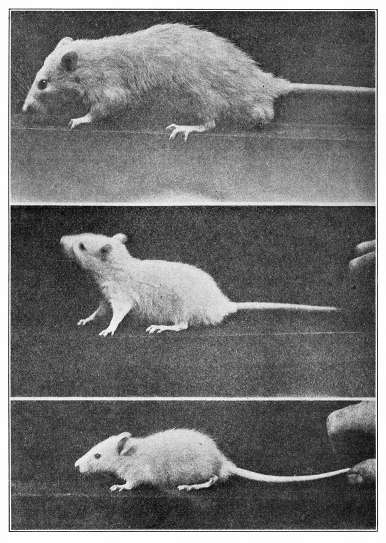 Fig. 74.—The effect of food on growth.
Reprinted from publication of the Carnegie Institution. Courtesy
Professor Lafayette B. Mendel.
Fig. 74.—The effect of food on growth.
Reprinted from publication of the Carnegie Institution. Courtesy
Professor Lafayette B. Mendel.
In Chapter I we learned that the body is a working machine whose first
requirement is fuel. Hence the first consideration in the diet is to have
the proper amount of fuel for each day, to provide energy for the constant
internal work that keeps the body alive, and for the variable external
work
which may be so light as to consist of the few movements that one
makes lying in bed, or sitting quietly; or so hard as to exercise many
muscles, as playing tennis, bicycling, or swimming.
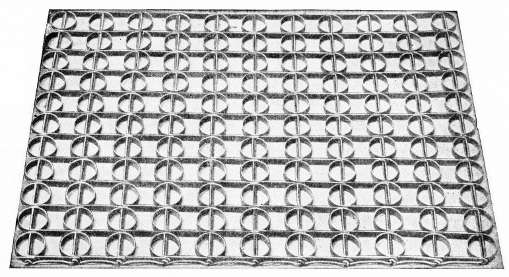
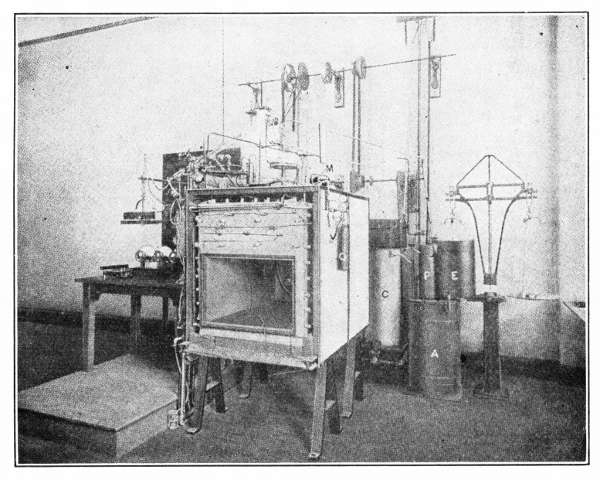 Fig. 75.—Respiration calorimeter, open. From
the “Journal of Biological Chemistry.” Courtesy of Professor Graham
Lusk.
Fig. 75.—Respiration calorimeter, open. From
the “Journal of Biological Chemistry.” Courtesy of Professor Graham
Lusk.
Energy requirements of adults.—We have also learned something about the
foods which supply this energy; we must now find out how much fuel (in the
form of food) it takes to do different amounts of work, just as the owner
of an automobile wants to know how much gasoline per mile or per hour is
required to run his machine under different conditions. Very careful
experiments have been made on many men in different ways to measure their
energy
output,
the most accurate and interesting being those made in a
respiration calorimeter, a device so delicate as to be able to measure the
extra heat given off when one changes from lying perfectly quiet to
sitting up equally still, thus adding the work of holding the upper part
of the body upright. A respiration calorimeter large enough to hold a
child is shown in Figs. 75 and 76. You can see that it consists of a
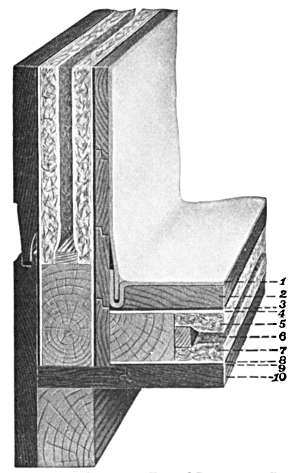
chamber with thick walls to prevent loss of heat. In Fig. 75 the door is
open. When an experiment is going on the door is closed, as in Fig. 76,
air being furnished through special tubes. The walls are fitted with
delicate thermometers and every
device
which will help to get the exact
amount of heat given off from the body is employed.
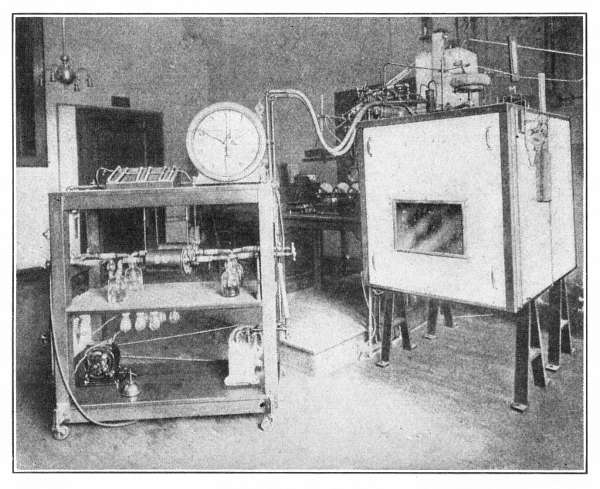 Fig. 76.—Respiration calorimeter, closed. From
the “Journal of Biological Chemistry.” Courtesy of Professor Graham
Lusk.
Fig. 76.—Respiration calorimeter, closed. From
the “Journal of Biological Chemistry.” Courtesy of Professor Graham
Lusk.
Just as it takes more fuel to run a big machine than a little one, so it
takes more energy for a large person than a small one; therefore we must
know the weight of the one whose food requirements we wish to calculate,
as well as the amount of energy required to do different kinds and amounts
of work. The following table will help in calculating the approximate fuel
requirements of any grown person. The food needs of children and young
people under twenty-five will be discussed later.
Approximate Energy Requirements of Average-sized Man
| Occupation | Calories per pound per hour |
| Sleeping | 0.4 |
| Sitting quietly | 0.6 |
| At light muscular exercise | 1.0 |
| At active muscular exercise | 2.0 |
| At severe muscular exercise | 3.0 |
Light exercise may be understood to include work equivalent to standing
and working with the hands, as at a desk in chemistry or cookery; or work
involving the feet like walking or running a sewing machine. Many persons,
as students, stenographers, seamstresses, bookkeepers, teachers, and
tailors do little or no work heavier than this.
Active exercise involves more muscles, as in bicycling compared with
walking, or exercise with dumb-bells as compared with typewriting.
Carpenters, general houseworkers, and mail carriers do about this grade of
work while on duty.
Severe exercise not only involves a good many muscles, but causes enough
strain to harden and enlarge them. Bicycling up grade, swimming, and other
active sports would be included in this kind of exercise. Lumbermen,
excavators, and a few others do even heavier work than this.
Knowing the weight of a grown man or woman, and something of the daily
occupation, as in the case of a professional man, we can estimate the
probable energy requirement somewhat as follows:
Sleeping, 8 hours; 8 × 0.4 Calories = 3.2 Calories per pound.
Sitting quietly (at meals, reading, etc.), 8 hours; 8 × 0.6 Calories
= 4.8 per pound.
At light muscular exercise (dressing, standing, walking, etc.),
6 × 1.0 Calories = 6.0 Calories per pound.
At active muscular exercise 2 hours, 2 × 2.0 Calories
= 4 Calories per pound.
Total Calories per pound for 24 hours, 18; 18 × 154 pounds (the weight of
the average man) = 2772, or approximately 2680, Calories per day required.
Calculate in this way the energy requirement for various grown persons
whom you know.
Energy requirements during growth.—In estimating food requirements of
those who are under twenty-five years old, we must bear in mind that the
same materials which serve for fuel serve in part for building material.
Protein is used for muscle building as well as for supplying energy, and
the larger one grows, the greater the reserves of carbohydrate and fat
which he can carry. Furthermore, internal activity is greater in the young
than the middle aged or very old, and external activity is apt also to be
greater. Think, for instance, how much running children do compared with
their parents. For all these reasons, we cannot use the table for adults
in calculating the energy requirement of young people. In the following
table an attempt has been made to take account of their greater needs, but
the estimates include only moderate exercise; with hard work more will be
required. Notice that the highest allowance per pound of body weight is
for the youngest children.
Energy Requirements during Growth
| Age in Years | Calories per pound
per day |
| Under 1 | 45 |
| 1-2 | 45-40 |
| 2-5 | 40-36 |
| 6-9 | 36-30 |
| 10-13 | 30-27 |
| 14-17 | 27-20 |
| 17-25 | not less than 18 |
With these two tables for calculating energy requirement we can determine
about how much will be needed by each member of the family. A group
consisting of a professional man, his wife, and three children under 16
will require about 10,000 Calories per day; a workingman’s family with the
same number of children from 12,000 to 14,000, because of the harder work
which both parents and possibly the children will do.
Protein requirement.—Since few of our foods consist of a single
foodstuff, and we are not likely to make even a single meal on pure fat,
or pure protein, or pure carbohydrate alone, we are sure to get some
building material in any diet, but we must see to it that we are getting
amounts which furnish the best possible conditions for growth and repair.
As we have already seen, nitrogen in the form of protein is necessary to
the life of every cell in the body. From protein, too, muscle is built,
though we cannot build good muscle merely by feeding protein; a diet
moderate in its amount of protein, but with plenty of fuel for healthy
exercise is best for muscle building. Under all ordinary conditions, if
ten to fifteen Calories in every hundred (10 to 15 per cent of the total
Calories) are from protein, the need for this kind of building material
will be met. Thus a family requiring 10,000 Calories per day should have
from 1000 to 1500 of these as protein Calories. The following table gives
the
protein
Calories in the 100-Calorie portions of some common food
materials.
Table Showing Distribution of Calories in
100-calorie Portions of Common Food Materials
| Food Material | Weight | Distribution of Calories |
| | Ounces | Protein | Fat | Carbohydrate |
| Almonds, shelled | 0.5 | 13 | 77 | 10 |
| Apples, fresh | 7.5 | 2 | 6 | 92 |
| Bacon | 0.5 | 6 | 94 | — |
| Bananas | 5.5 | 5 | 6 | 89 |
| Beans, dried | 1.0 | 26 | 5 | 69 |
| Beef, lean round | 2.5 | 54 | 46 | — |
| Bread | 1.4 | 14 | 4 | 82 |
| Butter | 0.5 | 1 | 99 | — |
| Cabbage | 13.3 | 21 | 7 | 72 |
| Carrots | 10.1 | 10 | 5 | 85 |
| Cheese, American | 0.8 | 27 | 73 | — |
| Cod, salt (boneless) | 3.1 | 98 | 2 | — |
| Cornmeal | 1.0 | 10 | 5 | 85 |
| Eggs, whole | 2.7 | 36 | 64 | — |
| Flour, white | 1.0 | 12 | 3 | 85 |
| Lamb chops | 1.3 | 23 | 77 | — |
| Lentils | 1.0 | 29 | 4 | 67 |
| Macaroni | 1.0 | 15 | 2 | 83 |
| Milk, whole | 5.1 | 19 | 52 | 29 |
| Milk, skimmed | 9.6 | 37 | 7 | 56 |
| Oats, rolled | 0.9 | 17 | 16 | 67 |
| Peanuts, shelled | 0.6 | 19 | 63 | 18 |
| Peas, canned | 6.4 | 26 | 3 | 71 |
| Peas, dried | 1.0 | 27 | 3 | 70 |
| Salmon, canned | 2.4 | 54 | 46 | — |
| Veal | 3.2 | 70 | 30 | — |
| Walnuts, shelled | 0.5 | 10 | 82 | 8 |
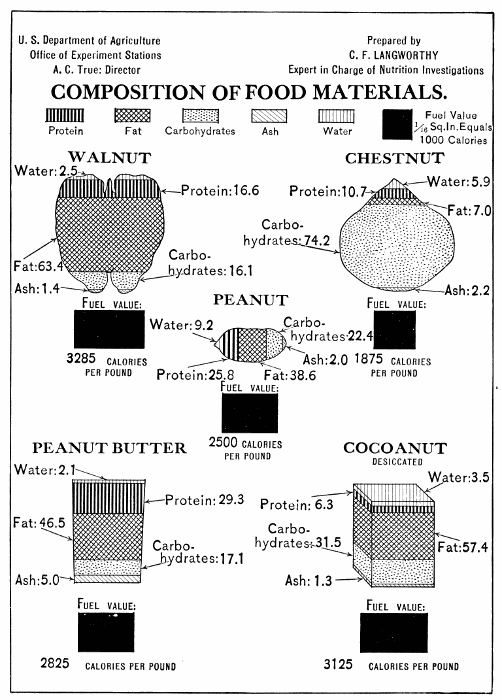
Notice that some foods, like bread, have about the right proportion of
protein calories; others, like beef, beans, and peas are very high in
protein calories. By combining some foods high in protein with others
containing little or none, we can get the right proportion. Thus, 100
Calories of beef combined with 400 each of bread and butter will give 900
Calories of which 114, or 12.7 per cent, are from protein.
| | PROTEIN CALORIES | TOTAL CALORIES |
| Beef | 54 | 100 |
| Bread | 56 | 400 |
| Butter | 4 | 400 |
| Totals | 114 | 900 |
| (114 ÷ 900 = 0.127 or 12.7%) |
It is interesting to work out other combinations which give these good
proportions.
Ash requirement.—We are also assured of ash in any ordinary diet, but
some attention should be paid to kind and amount, especially as many
common foods have lost the parts richest in ash. Patent flour, for
instance, made from the inner part of the grain, is not so rich in ash as
whole or cracked wheat. Valuable salts are also lost in cooking vegetables
when the water in which they were cooked is thrown away. If not desired
with the vegetable, this should be saved for gravy or soup. It is not
necessary to calculate a definite amount of ash for the diet, if
ash-bearing foods are freely used. By reference to the table on page 384
you can see what foods are valuable for supplying the important kinds of
ash. Milk is particularly rich in calcium and hence is required when the
bones are growing. Eggs have iron and phosphorus in forms well suited to
growth. But if eggs are too
expensive,
the vegetables and fruits
generally will supply these same substances.
Diet for growth.—Diets made in the chemical laboratory from mixtures of
pure (isolated) protein, fat, carbohydrate, and ash to satisfy all the
requirements which we have so far mentioned, do not behave alike when fed
to animals. The kind of protein is important as well as the amount. This
is shown by experiments in which only one protein is fed at a time. On
some, the animals will not thrive. On others, adult animals do very well,
but the young ones become stunted like the one shown on page 295. Milk has
been found to contain proteins on which young animals can thrive. But even
in diets containing the protein from milk, young animals do not develop
normally unless the salts of milk are added too. No perfect substitute for
milk has ever been found. During the first year of life, a child lives on
it almost exclusively; for the first five years it should be considered
the most important article in the diet; and throughout the period of
growth it should be freely used if children are to become vigorous men and
women. If not liked as a beverage, it can be used in cocoa, or cereal
coffee, in soups, puddings, and other dishes. Considering what milk may
save in the way of more expensive protein foods, such as eggs and meat,
and of ash-supplying foods like fruits and vegetables, it is to be
regarded as a cheap food. It is possible to get the proper amounts of fuel
and protein from white bread and meat, but such a diet is poorly balanced
as to ash constituents and especially lacks calcium. It would need to be
balanced by adding some fruit or vegetable and even then would not contain
as much calcium as is best for growing people. A diet of bread and milk,
on the other hand, is so nearly perfectly balanced (supplying fuel,
protein, and ash constituents in suitable amounts) that it can be taken
exclusively
for a long time. Whole wheat bread and milk would be even
better, because the whole wheat would supply more iron, in which white
bread and milk are not rich. The addition of fruits and vegetables to the
bread and milk diet would also be an advantage—partly for the same
reason.
Other foods especially valuable for growth are eggs and cereals from whole
grains. Children should acquire the habit of eating fruits and green
vegetables of all kinds, for when they are older and likely to take less
milk and cereals, the fruits and vegetables supply important ash
constituents and also help to prevent constipation.
The foods good for children are also good for adults, but the latter can
keep their bodies in good repair with less protein and ash in proportion
to body weight than are required during growth, and many kinds of protein
serve for repair. If there are not enough milk and eggs to go around,
adults can take meat, nuts, peas, beans and bread for protein, and trust
to these and fruit and vegetables for ash. When the body has been wasted
by sickness, however, a return to the foods of growth, especially a diet
of milk and eggs, is best for building it up again.
The number of meals in a day.—Knowing how much and what kinds of food are
best for each member of the family, we must next find out how to divide
the total food for the day into meals. Few of us could take our required
fuel in one meal, and if we could, we should probably be hungry before the
time for the next meal. Some persons get along very well with two meals a
day, but usually their fuel requirement is not high. Most people are more
comfortable and more likely to eat a suitable amount in a deliberate
fashion if they have three meals a day. When large amounts of fuel have to
be taken, four or five meals may be better than three; babies who have to
eat in proportion to their
size,
often 21⁄2 times as much as their
mothers, take 21⁄2 times as many meals, i.e. 7 or 8 in a day.
The amount of food for each meal.—While the number of meals depends
largely on the amount to be eaten in the whole day, and the appetite of
the subject, the amount at each meal is most influenced by the nature of
the daily occupation. The baby with nothing to do but eat and sleep has
meals uniform in kind and amount. The business man who works very hard
through the middle of the day, and has not time to take an elaborate meal,
nor time to rest after it so that it may digest easily, takes a light
luncheon and makes up for it at breakfast and dinner. The outdoor worker
who has a long hard day and expends much energy, takes an hour at noon for
a substantial dinner, in addition to a hearty breakfast and supper and
sometimes a mid-forenoon or mid-afternoon lunch.
Regularity of meals.—More important than the number of meals is
regularity as to time of eating and amount of food. Training for the
digestive tract is just as important as training the eye or the hand or
the brain. We cannot expect good digestions if we have a hearty luncheon
to-day, none at all to-morrow, and perhaps a scanty and hasty late one the
next day. To take food into the stomach between meals is to demoralize the
digestive system. Foods that are excellent as part of a meal provoke
headaches and bad complexions, and many symptoms of a protesting stomach,
when taken between meals. The younger the person, the more important is
regularity. Little children soon suffer if their meals are not “on the
minute.” Adults have more difficulty in controlling their time, but if
they have to be late to meals, they should be more careful than usual to
eat slowly and to choose plain simple food that will digest easily.
Mental attitude toward meals.—Good food may be provided at the proper
time and yet the members of a
family
may fail to keep well and happy
unless they come to meals in the right condition. Haste, chill,
exhaustion, anxiety, excitement, fretfulness, or anger may interfere with
the digestion of the most digestible of meals. Orderly table service, good
manners, and cheerful conversation are very important factors in the
success of a meal. Peace and joy as well as “calories” are watchwords of
good nutrition.
Balanced meals.—Having determined how many meals to serve in the day and
what their hours shall be, the next question is how to choose and
distribute the constituents of the day’s ration so as to promote
digestibility and satisfaction. A meal of pure protein, or fat, or
carbohydrate would not be relished, and would have some physiological
disadvantages. Digestion is likely to be more complete on a mixed diet. A
meal of carbohydrate alone leaves the stomach more quickly than any other
kind, and one would feel hungry before the next meal, though one might
have had plenty of fuel; a meal of fat alone would leave the stomach very
slowly, and one would not have so good an appetite for the next meal; a
meal of pure protein would stimulate heat production without any
particular advantages, except possibly in very cold weather: it would be
decidedly undesirable in hot weather. For these and other reasons it is
best to have the different foodstuffs represented in each meal, and to see
that no one contains an excess of fat, which tends to retard all
digestion. This is what is usually meant by a balanced meal, but it may
also include care that about the same proportion of fuel is served at the
same meal each day. A meal does not need to be “balanced” in quite the
same sense as a day’s ration. The latter must have a definite amount of
fuel, a suitable proportion of protein, ash well represented, some food
for bulk, the whole selected with regard for the physical condition,
tastes, habits, and pocketbooks of those to be fed.
Menus.—Food taken at a stated time constitutes a meal. It may consist of
a single food material, as bread, or a single dish, as soup; or it may
contain many kinds of food and many dishes. When the day’s ration consists
of a single food, there is no trouble in arranging the bill of fare, for
all meals are alike. But as soon as we have two foods, we may consider
whether they will digest better if eaten together or separately, and which
way they will please the palate better. Balanced diets do not necessarily
afford attractive menus. Macaroni and oatmeal would make a fairly well
balanced meal except as regards ash constituents, but no one would call
such a combination pleasing. By the substitution of a little cheese and an
orange for the oatmeal, a meal containing about the same fuel value and
proportion of protein could be arranged, and it would certainly appeal
more to the appetite, and furnish better proportions of ash constituents.
In the construction of the menu for the day or meal, we must consider not
only food values and time of day and combinations which shall be
digestible, but flavor, color, texture, and temperature of our foods. The
study of digestible combinations belongs to the science of nutrition. The
harmonious blending of tastes, odors, colors, and the like is an art. Just
as there are pleasing combinations of sound, so there are harmonies of
flavor; certain dishes seem naturally to “go together.” Habit has a great
deal to do with food combinations. A Chinaman would not eat sugar on rice;
a Japanese would not cook beans with molasses as the Bostonian does. It is
interesting to experiment with new combinations, and study to find out why
old ones are pleasing. Why do we like crackers with soup? Butter on bread?
Toast with eggs? Peas with lamb chops?
Digestible menus.—Some of our eating habits are worth preserving and
cultivating. Fresh fruit for breakfast
stimulates
the appetite and helps
to prevent or overcome constipation. A mild-flavored food like cereal is
better relished before we have had meats or other highly flavored food.
Soup at the beginning of a meal puts the stomach in better condition to
digest the food that follows. Ice cream at the end of a meal is less
likely to chill the stomach than at the beginning. Bread and butter afford
a good combination of fat and carbohydrate. Crackers help in the breaking
up of cheese into particles easy to digest.
Not all of our eating habits are good, however. Griddlecakes, melted
butter, and maple sirup taste good, but the cakes make a pasty mass
difficult for digestive juices to penetrate. The sirup is likely to
ferment, and the butter coating the whole delays digestion greatly.
Chicken salad is popular, but combinations of protein with much fat (as in
the mayonnaise dressing) always digest very slowly. Simple dishes, without
rich sauces or gravies, and not excessively high in fat, are easiest of
digestion. Pastries, fried foods, meats with much fat, like pork and
sausage, are always more or less difficult and should be attempted only by
the strong, or when the body is free from physical or nervous weariness,
and not about to undertake mental work.
Attention to the art of menu making not only helps to make the diet easier
to digest, but also better balanced. Foods which are similar in color,
flavor, and texture, like potatoes and rice, are not artistic in
combination, and it is better to substitute for one of them a green
vegetable, or meat or butter, in which case we get a better balance, as
more ash, protein, or fat would then be included with the starch of the
rice or potato.
In making the bill of fare it is a great mistake to consider each meal by
itself alone. If we do so, some days are likely to be very high in fuel,
while others may be very low.
Then,
too, the impression left from one
meal carries over to the next. We do not care to see on the dinner table
the same foods that we saw at luncheon. Our love of variety is one of
nature’s ways of seeing to it that we get different kinds of foodstuffs in
our diet. Variety stimulates appetite, but this does not mean a great
variety at one meal. The truest variety is obtained by a few well-selected
dishes at each meal. If we do not exhaust our resources on one meal, we
shall be able to have a greater range of foods in the course of a week. A
hotel may have fifty or sixty items on its bill of fare, but after a few
days one feels as if there were a great sameness, because all of them are
impressed on the mind at each meal and every day.
Dietaries.—A dietary, as we shall use the term
here,[19]
is a statement
of the food requirements of a person or group of persons for a day or some
other definite length of time, with a selection of foods to satisfy this
requirement.
The first part of a family dietary will have to be calculated according to
the age, weight, and occupation, as stated on pages 299-303. When
complete, it will stand somewhat like this:
Food Requirements
Members of
Family | Age | Weight
Pounds | Total
Calories | Protein
Calories |
| Man | 40 | 154 | 2680 | 268-402 |
| Woman | 38 | 120 | 2160 | 216-324 |
| Girl | 16 | 110 | 2200 | 220-330 |
| Boy | 12 | 75 | 2250 | 225-338 |
| Boy | 6 | 40 | 1600 | 160-240 |
| Total requirements | | | 10,890 | 1089-1634 |
In selecting food to satisfy these requirements it is a good plan to make
first a list of those foods that need to be included in the day’s dietary,
no matter what the particular menu may be. This will include foods for
growth where there are children, special dishes needed if any one is sick,
and those common foods which we are accustomed to include in every day’s
menu, such as bread and butter.
For the family which we are considering, this list will stand somewhat as
follows:
| Food | 100-calorie Portions |
| Milk | 20[20]
(6 for each child, the rest for the adults) |
| Cereal | 5 |
| Eggs (for children) | 2 (counting 2⁄3 portion per egg) |
| Fruit | 5 |
| Green vegetable | 2 |
| Meat or meat substitute | 5 |
| Bread | 15 |
| Butter | 15 |
This list is to be kept in planning the menu, whose character is further
determined by certain dishes which we wish particularly to have included.
For instance, we may desire roast beef for dinner. This is a highly
flavored meat, and a protein food which will go a long way towards
satisfying the adult’s protein needs. Special protein food for breakfast
may well be omitted, or take the form of eggs, which are a contrast to the
meat in flavor, form, etc. Protein food for luncheon might be fish or some
other meat substitute.
Vegetables for dinner should not only harmonize with the meat, but
contrast pleasingly with each other. This result is insured by choosing
one vegetable from the starchy type, as potatoes or sweet potatoes, and
the other vegetable of the green or succulent group, as spinach or
asparagus.
Below are two menus, in which have been kept in mind
the
foods which
ought to be included (see page 311) and the artistic arrangement of the
day’s meals, with roast beef as the keynote.
| Menu No. I. | Menu No. II. |
| Breakfast | Breakfast |
| Oranges | Grapes |
| Flaked wheat | Oatmeal |
| Twice baked rolls and butter | Toast with butter |
| Milk for children | Cereal café au lait for children |
| Coffee for adults | Coffee for adults |
| Luncheon | Luncheon |
| Creamed salmon on toast | Eggs au gratin |
| Peas | Stewed tomatoes |
| Graham bread and butter | Bread and butter |
| Stewed pears | Raspberry tapioca |
| Milk to drink | Cocoa |
| Dinner | Dinner |
| Clear tomato soup | Julienne soup |
| Roast beef | Roast beef |
| Mashed potatoes, string beans | Creamed macaroni, spinach |
| Cabbage salad | Celery and nut salad |
| Lemon jelly, whipped cream | Pineapple ice, lady fingers |
| Milk for children to drink | Milk for children to drink |
By a little calculation from tables giving the 100-Calorie portions of
food
materials[21]
we can find out whether or not we have well-balanced
dietaries. Let us take, for example, Menu I, and make a list of the foods
required to prepare it for a family of this size.
| Food Material | 100-Calorie
Portions | Total
Calories | Protein
Calories |
| Oranges | 2.5 | 250 | 15 |
| Flaked wheat | 5.0 | 500 | 74 |
| Rolls | 5.0 | 500 | 61 |
| Milk for children | 6.0 | 600 | 114 |
| Thin cream for cereal | 5.0 | 500 | 26 |
| Butter for rolls | 5.0 | 500 | 5 |
| Sugar for coffee | 1.0 | 100 | — |
| Creamed salmon |
| Salmon | 3.0 | 300 | 160 |
| Milk | 2.0 | 200 | 38 |
| Flour | 0.3 | 33 | 4 |
| Butter | 2.0 | 200 | 2 |
| Toast | 3.0 | 300 | 43 |
| Peas | 2.5 | 250 | 70 |
| Butter for peas | 1.0 | 100 | 1 |
| Graham bread | 5.0 | 500 | 68 |
| Butter for bread | 5.0 | 500 | 5 |
| Pears | 2.5 | 250 | 8 |
| Sugar for pears | 2.0 | 200 | — |
| Milk to drink | 6.0 | 600 | 114 |
| Tomato soup |
| Tomatoes | 0.5 | 50 | 10 |
| Butter | 2.0 | 200 | 2 |
| Flour | 0.3 | 33 | 4 |
| Roast beef | 5.0 | 500 | 138 |
| Mashed Potatoes | 5.0 | 500 | 52 |
| Milk | 1.0 | 100 | 19 |
| Butter | 1.0 | 100 | 1 |
| String beans | 0.5 | 50 | 11 |
| Butter for beans | 1.0 | 100 | 1 |
| Bread | 5.0 | 500 | 72 |
| Butter | 5.0 | 500 | 5 |
| Cabbage salad |
| Cabbage | 0.5 | 50 | 10 |
| Lettuce | 0.1 | 10 | — |
| Heavy cream for dressing | 2.0 | 200 | 4 |
| Lemon jelly |
| Gelatin | 0.5 | 50 | 50 |
| Lemon juice | 0.1 | 10 | — |
| Sugar | 4.0 | 400 | — |
| Whipped cream |
| Heavy cream | 3.0 | 300 | 7 |
| Milk to drink | 6.0 | 600 | 114 |
| | | ——— | ——— |
| Totals | | 10,636 | 1308 |
It is evident that we have enough protein, and as a good share of it is
from milk, we know that it will satisfy the children’s requirements in the
best possible way. The adults will get theirs largely from the salmon and
meat. Comparing this list with our first tentative one, we find that we
have used in building up our dietary 21 portions of milk, 5 of cereal, 5
of fruit (not including lemon juice), 4.1 of green vegetable, 8 of meat
(including salmon), 18 of bread, and 22 of butter, but no eggs. We have a
good representation of the different kinds of foodstuffs, with this
exception, and as the boys would need the eggs most, we could put them in
for their breakfast, thus adding about 140 total Calories and 50 protein
Calories. With this addition we are still slightly deficient in total
energy, but to add one or two hundred Calories is a very simple matter. A
second serving of potatoes, an extra roll for those whose fuel requirement
is highest, or a slightly more liberal use of butter, might well solve the
problem. This dietary calculation shows how the menu may help in getting a
balanced diet, and how knowledge of food values can be applied as a check
on the menu. If we had had fewer dishes in each meal, we should have had
to plan to serve larger portions of some or all of them, or to use more
freely such staples as bread, butter, and milk.
Each family must find out the kind of menu best suited to its resources.
Some typical meal plans suitable for everyday use are given below.
Typical Breakfast Plans
I
Fruit
Toast
Beverage
II
Fruit
Cereal
Toast
Beverage
III
Fruit
Meat
Toast
Beverage
IV
Fruit
Cereal
Meat
Toast
Beverage
V
Fruit
Cereal
Meat
1 other hot dish
Toast
Beverage
Typical Luncheon Plans I
Hot dish
Bread and butter
Beverage
II
Hot dish
Bread and butter
Simple dessert
Beverage
III
Soup
Another hot dish
Bread and butter
Dessert
Beverage
IV
Soup
2 other hot dishes
Salad
Dessert
Beverage
Typical Dinner Plans
I
2 hot dishes (as meat and vegetable)
Bread and butter
Dessert
II
Soup
2 or 3 other hot dishes (as meat and one or two vegetables)
Bread and butter
Dessert
Beverage
III
Soup
2 or 3 hot dishes
A relish (as jelly or pickle)
Bread and butter
Salad
Dessert
Beverage
More elaborate plans than these should usually be reserved for
state occasions.
The cost of the dietary.—The types of menu used will depend very largely
upon the income of the family. It is comparatively easy to plan attractive
bills of fare if one does not have to consider the amount of work involved
in preparing them, or the cost of the materials to be used. With knowledge
of food values an expensive dietary may be wholesome, but there is great
temptation to overeating and waste of food, and it is wise to keep meals
simple for the sake of good digestion. Most families have to consider
carefully the cost of food if any money is to be saved for books or travel
or emergencies. A dietary such as planned on page 313 will probably cost
from $1.50 to $2.00 for the day, or from 11⁄2 to 2 cents per 100
Calories, depending on the locality. Nothing is allowed for waste, which
may, if the cook and those who eat the food are not careful, amount to
from 10 to
15
per cent of the total cost. It is often estimated that the
“average” man will consume about 3000 Calories per day, and the cost may
be expressed on this basis as from 45 to 60 cents per man per day; or the
dietary spoken of as a 45-cent or 60-cent dietary or whatever the exact
cost per 3000 Calories may be. The cost of food for such a family for a
year would at this rate be from $550 to $750.
If the allowance for food be placed at 25 per cent of the total
income,[22]
this dietary would be appropriate for a family with an income
of $2200 to $3000 per year. The majority of families have to get along
with a lower expenditure for food, yet they want to be well nourished and
to enjoy their fare. Fortunately there is no real connection between cost
and nutritive value, some of the most nutritious foods being among the
cheapest. At the same time, we cannot get wholesome food for nothing.
There are very few foods which to-day cost less than 1⁄3 of a cent per 100
Calories, and these are mostly cereal products, such as cornmeal, rolled
oats, and flour, or sugars and molasses. These alone will not make a
well-balanced, palatable dietary, though they will supply all the fuel
needed for an “average” man for a day for ten cents. In many parts of the
country to-day it is hardly possible to make a dietary satisfactory week
in and week out with an average allowance of less than 3⁄4 of a cent per
100 Calories, and even this sum will prove satisfactory only provided
there be skill in food preparation as well as food selection. With an
allowance of 1 cent per 100 Calories it is possible almost anywhere to
make a balanced dietary with some attractiveness in appearance and flavor.
In
choosing foods with regard to cost a table that shows which are cheap
fuel and which dear, is a great help. Prices vary so much with place and
season that it is difficult to make one which is very exact, and some
rearrangement to suit any particular region may be necessary. The table on
page 318 will, however, serve as a guide.
Table of Food Materials
Arranged according to cost per 100 Calories
| Group I | Group II | Group III | Group IV |
| Less than 1¢ per 100 Calories | 1-2¢ per 100 Calories | 21⁄2-5¢ per 100 Calories | Over 5¢ per 100 Calories |
| |
| Apples, dried | Almonds | Beans, canned | Asparagus |
| Bacon (all fat eaten) | Apricots, dried | Limas | Beans, canned, string |
| Beans, dried | Bananas | Beans, string, fresh | Celery |
| Bread | Butter, over, 32¢ per pound | Beets, fresh | Chicken |
| Butter under 32¢ per pound | Cabbage | Cauliflower | Cod, fresh |
| Corned beef | Carrots, old | Codfish, salt | Cucumbers |
| Cornmeal | Cheese | Corn, canned | Lettuce |
| Cornflakes | Chestnuts | Eggs, 25-36¢ per doz. | Olives |
| Cornstarch | Chocolate | Haddock | Oysters |
| Cottonseed oil | Cocoa | Halibut | Peaches, canned |
| Crackers, soda | Cream | Ham | Pears, canned |
| Dates | Eggs under 25¢ per doz. | Lamb chops | Salmon, canned |
| Farina | Figs | Onions (city prices) | Sardines, canned |
| Flour | Grapes | Oranges | Scallops |
| Grapenuts | Milk, 7 to 13¢ per qt. | Round steak | Steak, choice cuts |
| Lard | Olive oil | Rump of beef | Spinach |
| Lentils | Peaches, dried | Tomatoes | Veal, loin |
| Macaroni | Peanuts | Veal, leg |
| Milk at 6¢ or less per qt. | Peanut butter |
| Molasses | Pork sausage |
| Oatmeal | Puffed cereals |
| Oleomargarine | Sweet potatoes |
| Rolled oats | Turnips |
| Peas, dried | Walnuts |
| Potatoes |
| Raisins |
| Pork, salt fat |
| Prunes |
| Rice |
| Suet |
| Sugar |
| Tapioca |
Inspection of this table shows that if we can afford only one cent per 100
Calories for food, we must get a large share from Group I, and a few from
Group II; if we wish to use foods in Group III, we shall have to do so
sparingly, or offset them with some of the very cheapest in Group I, to
keep the average as we wish it.
When we plan an attractive menu and find it is too expensive for us, we
may often carry out our plan by substituting cheaper foods of the same
sort. Thus in the dietary on page 313 we may substitute as follows:
- Bananas for oranges.
- Top milk for cream.
- Oleomargarine for a part of the butter.
- Bean loaf with tomato sauce for creamed salmon and peas.
- Stewed apricots for pears.
- Rump roast instead of rib roast.
Doing this, omitting the soup and crackers and the salad for dinner, and
increasing bread and potatoes, flaked wheat, and other cheaper foods to
prevent any deficiency in fuel, we can still prepare palatable and
digestible meals with the right food values, and save perhaps 25 per cent
on the total cost for the day.
Feeding the sick.—When illness is serious enough for a physician to be
consulted, he will give directions concerning the diet, and these should
be scrupulously followed. If the case is so severe as to demand a trained
nurse, she will have charge of the feeding, under the physician’s
guidance.
Many times, however, a member of the family is temporarily
indisposed and needs food different from the ordinary family bill of fare.
It is well to remember that in the first day or two of illness, fasting or
taking of very little food does no harm, and may be an excellent help
toward recovery, as it gives the digestive tract a chance to rest, if it
has been disturbed.
Nevertheless, the internal work of the body goes on, 0.4 Calorie per pound
per hour being expended during sleep, and about 0.6 Calorie per pound per
hour during waking hours in bed. A person in bed for twenty-four hours
will require about 0.5 Calorie per pound per hour to prevent use of body
material for fuel. A man of average weight, lying in bed, will thus need
about 1850 calories per day. Hence we must see to it, that after a person
has been sick for more than a few days (during which he can afford to burn
body fat) enough fuel is given to satisfy his energy requirements if he
can possibly digest it.
Food for an invalid must always be given in its most digestible forms.
Milk is one of the most valuable foods in sickness, not only because it
supplies so many body needs, but because it can be used in so many
ways,—hot, or cold, flavored or plain, made into junkets or sherbets,
combined with eggs in eggnogs and custards, fermented as in kumyss or
soured as in buttermilk or zoolak. In some form or other milk can almost
always be made digestible. Eggs are also of great value, not only poached
or dropped and served on toast, but as dainty omelets, or in beverages, as
eggnog, egg lemonade, and orangeade. Mild fruit juices, as orange, grape,
or pineapple, are not only refreshing but of considerable fuel value. If
there is no fever, chicken, lamb chops, tender broiled steak or roast beef
may serve to add variety to the menu. Broths stimulate the appetite and
help
digestion,
though they are of little or no food value themselves.
Cereals, eggs, and milk may be added to increase their food value. Cereals
in the form of gruels or delicate puddings, as cornstarch blancmange and
tapioca cream, are easily digested. Vegetables are best given rather
sparingly, and only delicate, mild-flavored ones, such as spinach or
asparagus, if digestion is much disturbed. In getting an invalid to take
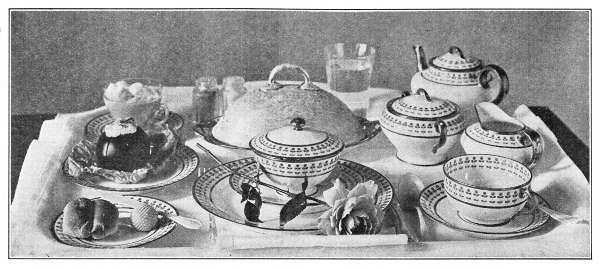
sufficient food, much depends upon the attractiveness of the service.
Remember that very little things, like a fingermark on a glass, or coffee
spilled into the saucer, may take away appetite and prevent enough food
being eaten. Food in small quantities and taken at more frequent intervals
than in health helps towards the best results. Knowledge of what
particular diet is best in different diseases comes only through careful
study of the science of nutrition after much study of chemistry and
physiology.
1. Calculate your own energy requirement.
2. Calculate the energy requirement of your family group.
3. Find the cost for your locality of the dietary arranged from Menu No.
1.
4. Make a dietary yielding 10,000 Calories, from ten to fifteen per cent
of which shall be protein calories, from Menu No. II, and calculate its
cost.
5. Find out the lowest sum for which a balanced dietary could be obtained
in your locality.
6. Revise the dietary from Menu No. I, so that it shall not cost over one
cent per hundred Calories.
7. Plan an ideal day’s dietary for yourself.
8. Plan a day’s dietary for an invalid which shall yield 2000 Calories,
300 of which shall be protein Calories.

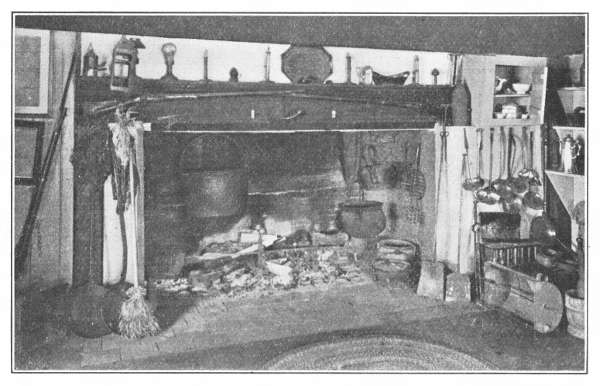
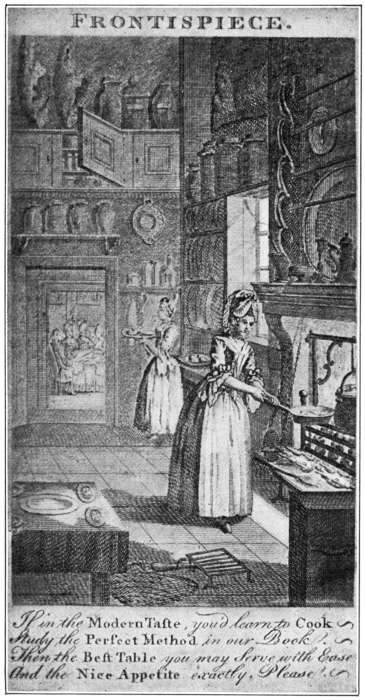 From the London and Country Cookbook, 1770.
Courtesy of the Bryson Library.
From the London and Country Cookbook, 1770.
Courtesy of the Bryson Library.