“It’s a wonder you ever left the country, if you
are so very fond of it,” said Eileen one day to the
governess. “You tell us to like it, and yet you
went away to Sydney,” she went on, somewhat
defiantly.
Miss Gibson paused a while, and then said
slowly:
“It was compulsory. My father was once a very
wealthy man, but a big smash came, and I was
obliged to earn my living, so I went to a City College,
and——”
“Oh!” they all murmured, “we are sorry.”
“What was the smash—a motor-car?” cried
Willie, eagerly.
Miss Gibson smiled.
“No, Willie; speculations and other things.”
“If it was a motor-car I’d never ride in one
again,” declared Eva.
“Oh, dear! it must be awful to be real rich once
and then get poor,” said Eileen. “I don’t know
how you stand it.”
“It is hard for a while; but, after all, there are
some things better than money.”
141
“Name them,” said Eileen, in mock despair.
“While we have health and strength and capacity
for simple enjoyments left, we can never be unhappy
long, and work is a great tonic.”
“Oh, dear!” sighed Eileen. “It’s a funny old
world, and you seem as happy as anyone, although
you were rich once and have to earn your living
now. It wouldn’t suit me.”
That evening Eileen called a meeting, and they
all talked in low tones.
“We ought to get up a subscription for her.”
“Oh, yes, let’s!” cried Doris, clapping her hands.
She always loved anything fresh or exciting. “Let’s
get it up quick!”
“Has anyone got any money? A subscription’s
no good without money.”
“I have two shillings,” said Mollie.
“And I have ninepence,” said Eva; “it’s all in
pennies, but I don’t suppose that makes any difference.”
“Not a bit, and I know Baby has sixpence.
You’ll let us have your sixpence for nice Miss Gibson,
won’t you, Baby, darling?”
“Ess,” said Baby, solemnly.
“That’s right, and I have one-and-ninepence——”
“And I have two-and-six,” cried Willie, as he
rushed off and brought it back, balancing it on his
fingers. “I did mean to buy a big knife with it,
like old Joe’s,” he said, as he handed it to Eileen,
somewhat reluctantly, “but you can have it.”
142
“Don’t give it if you’d rather not, Willie,” said
Eileen, quickly.
“Yes, take it; I might be rich myself some day,
and then get poor, and I’d like someone to get up a
subscription for me.”
“Yes; and, besides, you can always get the loan
of old Joe’s knife,” said Eileen, consolingly.
“Yes; and, besides, the very next half-crown I
get I’ll buy one with it, so I suppose a fellow can
wait a while,” he said, trying to appear cheerful.
“You’re leal dood,” said Doris.
“Perhaps you ought to only give half,” said Eva,
“because you see you’re a visitor here, and oughtn’t
to give so much as us.”
“No, half a crown or nothing,” said Willie
grandly; “besides, I’m the only man that’s giving,
so I ought to give most.”
“How much have you got, Doris?” asked Eileen.
“A penny,” she said, handing it to her.
“Is that all? Where’s the threepence you had
last week?”
“I let it fall in the creek the day I chased the
duck.”
“Oh, dear, dear, you are careless!”
“And de oder sixpence I give Teddy to bwing me
lollies wif.”
“No wonder you were so pleased about a subscription
when you had nothing to give. Let’s count
how much we’ve got.”
And they all got slates and pencils and added up
the sums.
“What do you get?” asked Eileen of Willie.
143
“Seven and seven pence,” answered Willie.
“Yes, that’s right. What a pity we couldn’t make
it eight shillings.”
“Suppose we ask old Joe,” said Eva.
“Oh, no, Miss Gibson mightn’t like it. Now
we’d better write out a little speech.”
“Oh, yes, let’s,” cried Doris again. “What’ll we
say?”
She sat back in her chair and prepared to enjoy
herself.
“We’ll write it out real nicely, and you’ll paint
flowers round it, won’t you, Eva?”
“Oh, yes, do,” shrieked Doris; “roses and pansies
an’——”
“Oh, no, they’re too hard,” said Eva. “Nice
green leaves and berries, I think—nice red berries.”
“Oh, yes!” they all cried.
“Yes, yes,” shrieked Doris, “green leaves and
wed berries,” and she clapped her hands loudly.
“You do the writing, Mollie, and we’ll all sign
our names,” continued Eileen.
“Yes,” shrieked Doris again; “but what about
Baby?”
“Oh, I’ll hold her hand,” said Eileen.
“Lovely,” cried Doris, subsiding again into her
chair.
So Mollie set to work to write out a speech, and
they all tried to help her, and after a lot of trials and
a few fights they managed one.
144
“Let’s hear it,” said Eileen, and they sat down
while Mollie read aloud.
Dear Miss Gibson,
Your six pupils wish you to take the enclosed money
as a little present, because we are sorry that you were
once rich and lost so much money, and hope you will soon
be rich again, and that you will always be very happy.
YOUR FOND PUPILS.
“That’s all right,” said Eileen.
“No, there’s another word for ‘take,’” said
Willie; “it would sound better. Let’s see, what
is it now?—oh, I know!—‘except’—yes, except the
money.”
“No, not ‘except,’” said Mollie. “‘Accept,’ I
think.”
“Anyhow, there’s only the difference of a letter
or two,” answered Willie, “and it sounds better.
Put one of them in and chance it.”
“Oh, no! we’ll have to look it up and make sure,”
said Mollie with a sigh, “and if there’s anything I
do hate doing it’s looking up a dictionary.”
“Oh, bother the dictionary—I hate ’em, too!”
said Willie.
“And so do I,” agreed Eileen; “but we’ll have
to look for it.”
They got the dictionary and hunted till they
found it.
“Ah, ‘accept’—that’s it!” cried Mollie.
“Anyhow, I was pretty near it,” said Willie, well
pleased.
“Now, write it out to-night, and to-morrow Eva
can paint it.”
“Oh, dear! I wish to-morrow morning was here,”
said Doris, who hated waiting.
145
So to-morrow morning Eva rose bright and early
and painted a spray of very bright green leaves and
very bright red berries on the card, and called them
to put their names on it. Willie came first, because
he was in a hurry to have a ride round the
paddock before school time. He hurriedly seized a
pen and ducked it into the ink.
“Let’s sign, and get away,” he said, importantly.
“Oh, do be careful!” said Eva.
“Careful? Who’s not careful, I’d like to know,”
he answered, and just then a great big blot of ink
splashed on the page.
“Oh, look what you’ve done!” cried Eva, almost
in tears.
“Oh, bother the old card!” cried Willie, in a
temper, and then there was a battle-royal.
“I knew you’d blot it. There! it’s all spoilt now,
and I’ll have to do another one.”
“What did you call me for? You knew I was
in a hurry. I’m sorry I signed my old name now.
Why didn’t some of the others write it for me? I
haven’t got time for fooling about writing on old
cards.”
“You’ve got as much time as any of us, and
you’re real ugly—that’s what you are.”
“Oh! ugly, am I? Well, I’ve got plenty of
mates, and I’m sorry I gave my half-crown now.”
“All right, then; I’ll tell Eileen what you said,
and she’ll give it back to you.”
She jumped up to run off and find Eileen.
146
“No, you don’t!” cried Willie, now ashamed of
himself. “You know I didn’t mean it. Just like
a girl—running off to tell tales, and pretendin’ you
think a fellow means what he says; here, let’s see
if we can’t fix it up. I’ll get the loan of old Joe’s
knife, and we’ll scrape the blot out.”
“No, that wouldn’t do.”
“Well, what about wiping it up with blotting
paper?”
“No, no good; it would all smear.”
“What about painting something over the blot—some
more leaves or something?”
“No; they’d look silly down there.”
“Well, what about painting a big butterfly over
it, flying up to the berries, eh? That’d look
grand.”
“No, I’ll have to do it all over again.”
“I’m real sorry,” said Willie. “I wish I could
paint, and I’d do it for you. Square dink, I would!”
“Oh! never mind; I’ll do another to-day, and
we’ll sign our names to-night, and we’ll have to give
it to her to-morrow.”
“Righto!” said Willie, as he marched off.
147
Meanwhile Eileen had been very busy thinking.
She actually hadn’t slept much the night before for
thinking. Seven-and-sevenpence wasn’t much to
give Miss Gibson. If she only had some more! If
she could only make some money; but there was
no way—yes, there was just one way that flashed
into her mind as she tossed about in bed. Tomorrow
Mr. Smith, the butcher from Bragan Junction,
would call for killing sheep. Supposing she
sold him Ronald, her big pet lamb. He would be
sure to give fifteen shillings to sixteen shillings for
him, and she’d give ten shillings of it to Miss Gibson.
Yes, that’s what she would do. She didn’t
care if Ronald were a pet and if she’d miss him.
He’d only go out to the paddocks after a while, and
get mixed up with the rest of the flock, and very
likely be sent away to Homebush, or perhaps he’d
be killed at home for their own table later on. Ugh!
she couldn’t bear to think of that! No, the best
thing to do would be to sell him to Mr. Smith.
She’d be brave, and she’d see Mr. Smith the first
thing to-morrow, and she’d tell him that she had a
big fat lamb for sale. She’d be real business-like,
and she’d take the money, and then she’d get away
somewhere quickly, where she couldn’t see Ronald
being driven off with the other sheep. She knew
it would be dreadfully lonesome for a while without
Ronald, but—she didn’t care. She would sell
him.
So when Mr. Smith came she was the first to
see him.
“Yes, Mr. Smith, father’s down in the gums paddock,
but I have a fine big fat pet lamb I want to
sell.”
“Righto!” said the genial butcher. “How
much?”
“Oh! er—about sixteen shillings.”
“Let’s have a look at him.”
Eileen led the way to the little back paddock,
where quite a flock of young fat sheep were grazing.
“That’s him with the red ribbon round his neck.”
148
“Righto! I’ll give you sixteen bob for him.
I’ve got the silver now, and I’d better carry him
down to the gums and put him with the others
there. Them pets don’t like leaving home, and—but
what’s wrong?” For Eileen was crying fit to
kill herself.
“I—I—don’t think I can let him go.”
“’Pon my goodness, don’t take on like that!
What! don’t want to sell him?”
“N-o—o. I wanted the money to give to—to—someone
for a sub—a subscription, but—they’ll have
to do without.”
“Righto, little woman; I won’t take him, but he’s
prime,” said the butcher, casting a regretful glance
at the fat lamb. “But, listen! Let me give something
towards that subscription,” and he drew out
a handful of silver. “Here, take five bob. I don’t
want to know what it’s for. I’m not curious, but I
want you to take it because I’m sure it’s a good
object.”
“Oh, it is, it is!” cried Eileen, “but I can’t take
your money, Mr. Smith. I’d feel too mean.”
“You must. I’ll be hurt if you don’t take it.
There you are, real hurt, and I don’t wonder at you
not being able to sell the pet; but all the same, I’d
ha’ liked to have had him,” he said, as he mounted
his horse and cast another regretful glance at the
prime lamb. “Good luck to you, my girl!” he
shouted as he rode off.
Eileen stood gazing at the five shillings.
149
“Oh, dear! I’m a great big baby—that’s what I
am, and I don’t know how I’m going to tell the
others. Supposing I don’t tell them. But I’ll have
to; they’ll want to know where I got the five
shillings. Supposing I say it was given to me in
secret. Oh, no, that would never do! They’d
always be asking me about it. Supposing I say I
picked it up. Oh! but that would be too mean—I
must let them know about the nice butcher. It
wouldn’t be fair to him if I didn’t. No, I’ll race up
and tell them now—now, while I feel I can. I’ll
just take to my heels and run and tell them as soon
as I get up there.”
She was as good as her word, and ten minutes
later an excited crowd had gathered round a hot,
flushed Eileen, who told them hurriedly of the good
kind Mr. Smith.
“Ain’t he lovely?” said Doris, admiringly.
“He’s a nice kind man, and I’ll pway for him to-night.
We’ll all pway for him.”
“Do you mean to say you meant to sell Ronald?
I don’t know how ever you could think of such a
thing,” cried Eva.
“Oh, well! you see I couldn’t when it came to
the time,” said Eileen. “I just tried my best to,
and I couldn’t.”
“And I shouldn’t think you could,” said Eva, in
tones of finality.
“But of course he’ll have to go some day,” said
Mollie. “Still, all the same, I couldn’t bear to see
the butcher carrying him off to kill him,” she continued,
quickly.
“Me, either.”
“Me, either.”
“Me, eder,” they all chimed in.
150
At last the list was finished, and Mr. Smith’s
five shillings was entered “from a kind, unknown
friend,” and the next step was the presentation.
“You’re the boss of the show, Eileen; you give
it,” said Willie, “and you’ll have to make the
speech, too.”
“Oh, dear, I don’t know whatever to say!” said
Eileen, nervously.
“Go on, there’s nothing to be frightened of,” said
Willie, bravely. “You’ll have to think of something.
You always say you’re goin’ on the stage:
this will be practice. Go on, let’s hear you before
you go on the stage,” and he stuck his two thumbs
in his leather belt and marched round the room.
“Oh, dear! I suppose I’ll have to say something,”
said Eileen. “Let’s see, now,” and she walked
round and round and rehearsed speech after speech.
“How’ll we give her the money?” asked Willie,
all of a sudden.
“I never thought of that,” said Eileen.
“No, of course you didn’t. It takes a man to
think of those things. It’s a good thing for you I’m
here. Why, that’s the very first thing you should
have thought of.”
“No, not the first,” said Eileen.
“What, then?” he demanded.
“Collecting the money, of course.”
“Oh, any fool would know that!” answered
Willie; “so you’re not so smart as you think.”
“We’d better put it on a little tray,” said Eva.
“Or a little bag,” said Mollie.
“Oh, no, loose! Let’s have it loose,” said Willie,
“so’s it’ll look a lot and we can hear it clink.”
151
“Do you think so?” asked Mollie. “I think we
ought to have it in a little purse, like a purse of
sovereigns.”
“Only, of course, it won’t be sovereigns,” said
Eileen. “You have a little muslin bag, Mollie—just
the very thing.”
“So I have—just the very thing,” and she ran off
to get it. “You can see the money through it, too;
it will be just right,” she cried, as she returned
with it.
“Here, let’s put it in,” cried Willie, and he stuffed
the silver and copper in. “It’s real nice and fat,
too. My word, she’ll think she’s getting a fortune,”
he went on, delightedly. “Good thing I thought
of the bag.”
“You thought of the bag?” cried Eileen, in sarcastic
tones. “Why, you wanted it given up loose,
all scattered over a tray.”
“Anyway, only for me you wouldn’t ha’ thought
anything about how you were going to give it to
her and you’d ha’ been scooping it up out of your
hands and very likely letting it fall all over the floor
if I hadn’t spoken about it, so there!”
After a great many more arguments and a great
deal of talking, everything was decided on at last.
152
That evening, while Miss Gibson was sitting
quietly correcting exercise books, the deputation
waited on her, and she received the surprise of her
life. In they marched, with Eileen at their head,
who made a sweeping bow, and the others tried to
follow suit. Baby was so much taken with the
proceeding that she kept on bowing and ducking for
the rest of the evening. She bowed to each and
every one of them. She marched off to the kitchen
and bowed to old Joe, till he asked her if she had
turned silly, and she bowed to all the pictures and
chairs; and, in fact, enjoyed herself immensely.
“Dear Miss Gibson, we wish you to—to——”
“Accept,” whispered Mollie.
“Accept this little token—a little picture and a
small bag of money, which we wish was much
bigger, and all our good wishes,” said Eileen, with
another sweeping bow.
“Really, children, this is a surprise—a little picture
and a bag of money——”
“Yes, you see, ’cause you lived in the country
once——” began Doris, while all the others chimed
in to explain matters.
“And we all hope you’ll be rich again some day,
and if you put the little bag of money in the bank
it might be a help in years to come.”
“Yes, and, besides, we might all be real poor ourselves
some day, and have no one to help us,”
chimed in Willie.
“And we all like you very much for telling us all
the nice things about the country, and we’ll never
forget you,” said Eva.
“And if you’d rather buy lollies, ’undreds and
thousan’s, or anything you like with it, you can,”
said Doris.
Then Baby returned from the kitchen, where she
had visited Joe, and bowed solemnly to them all,
and sent them into shrieks of laughter.
153
“So I have an unknown friend?” said Miss Gibson,
reading the list.
“Yes, it’s Smith, the butcher at Bragan Junction,”
cried Willie. “Didn’t know he knew you, did
you?”
“Willie, stop at once!” cried Eileen, and then she
told the story to Miss Gibson; “and he doesn’t
know who the subscription’s for, or nothing about
it; it’s just because he’s kind that he gave it, and he
wasn’t a bit inquisitive, and if ever I get real rich
I’ll send him a nice present,” she continued.
So the evening passed merrily away, and Miss
Gibson was much touched by the evidence of kindness
and thoughtfulness on the part of the children,
and the little picture, with its vivid green leaves and
bright berries, was put away among her treasures.
154
CHAPTER XIX. POETS.
All the children got the writing craze at “Gillong.”
They all wanted to be poets or authors,
and there was one continual scribble. Papers and
books and slates were covered with little scraps of
verses, till Mother declared she could never read
another bit of poetry.
Sometimes Eileen would come along with fourteen
verses of very much the same kind of jingle,
and ask them to listen and criticise.
“Oh, you said all that before!” Willie would say,
in disgust—“away up there in the third verse.”
“Yes, but, Willie, don’t you see it’s put in different
words, and you have to keep saying the same
thing over—only a little bit different to fill up.”
“Ugh! you’re a sickening old poet; you’d make
a fellow tired.”
But Eileen was not daunted. Only lately she had
taken to looking very important, and had kept quiet
about her work, but, all the same, she scribbled like
grim death.
“Some day she’ll come in with about a million
verses and make a fellow listen to them,” Willie
would grumble.
155
Sure enough, one day she came to them with a
fat note-book, and asked them to listen to the very
best she had ever written—quite a gem, she considered—so
they all sat down to hear it:
The moon-beams shine through the summer night,
All on a garden fair,
And the perfume of the flowers arise
All on the fresh night air.
The moon-beams play with the shining leaves,
And the flowers nod and sway,
And the stars look down with gentle eyes
All night till the dawn of day.
There were about eight more verses in this strain,
and then it went on:
The children play in the garden fair,
All through the summer hours,
And the birds they sing and the butterflies wing
Among the fruits and flowers.
“Butterflies wing? What’s that?” asked Willie.
“Oh! that means they fly; a poet can say anything,
and it’s all right.” Then she went on with
about twenty more verses.
“Beautiful!” cried Doris, clapping in ecstasy.
“Very nice, but too long, I think,” said Mollie.
“Oh, I don’t think so!” said Eileen. “I’m going
to send it to one of the Sydney papers. It’s as nice
a bit of poetry as ever I read in my life.”
“Are you goin’ to give it to a paper?” asked
Doris.
156
“Give it? No; they’ll have to pay me for it, and
pretty well, too, or I won’t part with it.”
So the precious MS. was sent away, and Eileen
waited with what patience she could for a reply.
Then all the others became keener than ever on
writing. Doris tried to compose, but she couldn’t
make the lines “fit,” and would get in a rage and
tear up the paper, and she nearly drove them all
crazy asking how to spell words and getting them
to help her.
“Oh, do leave it off—you’ll never be a poet! You
don’t even know what words go with each other,”
said Willie one day when she was begging his help.
“Oh, come on—help me! It’s all about pwetty
bluebells and daisies and my dolly——”
“Hang the bluebells and daisies and your old
doll!” answered Willie.
“You’re real ugly; you’re stopping at my place,
and you won’t help me,” said Doris, in a temper.
“All right, then; go on.”
“I love my little Dolly.”
“I do, I do, I do,” chimed in Willie.
“No, that won’t do,” called out Doris. “I love
my little dolly, I do; I love her so; and she is nice
and pwetty——”
“As everyone must know,” said Willie.
“Oh, yes! beautiful. ‘As everyone must know.’
Write it down, Willie.”
And Willie wrote down the first verse.
“She plays with the bluebells down along the
crick.”
157
“And she’ll tumble in the water if you give her
a good kick,” quoth Willie.
“Oh, Willie! You’re nasty. You mustn’t say
that about Rose.”
“All right, then. Go ahead.”
“Down along the crick,” repeated Doris, “where
the daisies and the bluebells——”
“Grow so very thick,” added Willie.
“Beauful!” she cried again.
“There, that’s two verses,” said Willie; “that’s
enough for one day. All good poets never make
more than two verses in a day.”
“Don’t dey?” said Doris.
“No, and you ought to leave it alone now for a
week, and you’ll be a real good poet when you start
again.”
“That’ll be beauful!” she cried again, clapping
her hands.
Eva used to write a lot about sunsets and moonbeams,
and fleecy clouds and brilliant birds. She
used to use the dictionary a great deal those days,
finding out big words to make her poems sound
grand. She always called them poems, and she
would copy them out neatly and paint little sprays
of flowers round them, and would only occasionally
let them be read. Mollie tried poetry for a time,
but soon gave it up and dashed into prose, and
wrote nice articles and essays.
“There’s more sense in yours than all the rest put
together,” said Willie. “It’s a lot nicer reading
than old poetry.”
158
Meanwhile Eileen waited for a reply about her
precious MS.
“Not in yet?” she would say, as she scanned the
paper every mail day.
“Oh, you might have to write a lot before you
get it in print!” Mollie would say.
“There’s no doubt about mine,” Eileen would
answer.
One day a big envelope came, and Eileen tore off
the wrapper, to find “Not suitable” in big letters
across her cherished manuscript.
“I’ll never try again,” she cried, almost on the
verge of tears. “They’re a mean, horrid old lot,
those paper people. I’m sure it is as good as the
old stuff they print. It’s just because I’m not
known.”
They all tried to console her. In fact, Willie
went so far as to say he’d call and see those paper
chaps when he went back to Sydney, and give them
a bit of his mind. Although he did not like Eileen’s
poetry, he was very loyal, and sympathised most
heartily with Eileen.
“I’d like to chop every one of ’em up!” said
Doris. And so by degrees Eileen’s keen disappointment
wore off.
Just a week later there was great shouting and
commotion over the page of a Sydney daily, for
there was one of Mollie’s articles in cold print, with
her name (“Mollie Hudson”) shining at the foot.
Oh, the joy and excitement!
159
“How ever did you think of it, Mollie?” and
“Oh, it’s beautiful!” came in choruses, for the little
article, entitled “The Old Picnic Tree,” breathed
of the fresh air of the paddocks and the leafy shade
of an old gnarled, knotted tree.
“Mollie’s a writer, Mollie’s a writer,” they all
shouted, dancing round her; and then they had to
have a half-holiday in her honour, and spent the
afternoon at the old tree that she had written of;
and they had billy tea and nice little hot cakes that
Mother had made in honour of the occasion. They
spent a wild, happy time, weaving fancies and romances
about the time when they should be all
famous.
“Perhaps we’ll all be real rich and clever when
we grow up,” said Eileen. “Wouldn’t it be lovely
if the five of us were all writers or artists or
musicians, or something of that sort, and had nice
big studios and plenty of money, and—and—have
a real grand jolly life.”
Of course, they all agreed with her, and thought
perhaps things might turn out in that fashion; and
then Willie said that he “might very likely beat
them all—he didn’t speak much about what he was
going to be,” he said, “but, all the same, he might
surprise them all some day; so they needn’t be too
surprised if he, too, became rich and famous.”
“Oh, tell us all about it, Willie!” they begged.
But he said he hadn’t quite finished thinking
things out; but, all the same, they needn’t be too
surprised if they heard of him later on being very
famous! Then he tried to look very important,
although until that moment the thought of being
famous had never entered his head.
160
Then the shades grew long in the paddock, and
they all scampered off home to the welcome glowing
fire of myall.
In an office in Sydney a man looked forward
eagerly to the arrival of the mail from the North-West,
for an eager enthusiast would write in glowing
terms of the bushland. Miss Gibson would
take her writing tablet to the paddocks, and write
quickly page after page:
My Dear Basil,
We are in the depths of winter, and you know what
winter in the country can be like at times. Well, it is just
delightful. The clover spreads far and wide like a great
green velvet carpet, up and down the gullies and away
across the paddocks. The deep tints of the clover, the
vivid green of the crowsfoot and wild carrot mingle in a
study of lights and shades, while the little blue flower of
the crowsfoot and the golden one of the clover vie in
scrolling floral effects on that vast green carpet. How I
revel in the wealth of sunshine out here in the paddocks,
but as evening draws in the chill air rises, and I hurry
back home through the clear cutting freshness, and there
a glowing fire awaits one. When the evenings are dull
or rainy I sit there and gaze into the glowing, gleaming
coals, and you never saw such beautiful, haunting colours
as you see among the myall coals!—one can weave all
kinds of fancies. Great sheafs of snow-white ashes fall
silently on the hearth, like snow-white pall, and then I
take the poker and stir up the glowing heart of the fire
again, and amber and red lights gleam among the dancing
flames. Some people think that I must have a very lonely
life up here, but I assure you that the time simply flies.
I often gather the children round the fireside and tell
them stories, and just to see their eager faces is payment
enough, for, do you know, it always seems wonderful to
me to watch the growing mind of a child and hear their
impressions of life, etc.? And I have been trying to instil
into them a love for and a very big interest in the beauties
and wonders of nature; for in after years, if empty and
lonesome days will come (as they too often come), they
will have something to fall back upon, and perhaps find
solace in, for it is wonderful how keen a joy we can find
in the out-of-door pursuits if we have a love for and an
appreciation of the beauties of nature.
And, oh, those glorious moonlight nights we have up
here in the winter! Why, it is quite vivid. Trees and
shrubs stand out clearly, and their shadows stand out
blackly under the rays of the serene silver moon that
swings high in the sky. Everything is transformed by
the kindly rays into things of beauty, and sometimes I
stand and gaze away across the paddocks bathed in the
silver light and marvel at the stillness. And, do you
know, as much as I love those moonlight nights, they
make me feel lonely? I just don’t know why—only that
it has that effect; and sometimes I almost welcome a rainy
night, when the rain drops beat a wild tattoo on the iron
roof, and I draw up my chair to the glowing fire and sit
there and dream.
I am looking forward to the spring-time. I have
promised to paint a big picture representing the Springtime
in the North-West for old Professor Dawson, and I
am all eagerness to begin.
Till then, adieu, for it will not be long ere “the whole
world will wake and sing.”
162
CHAPTER XX. GOOD-BYE TO “TEDDO.”
They were all under a shadow at “Gillong.”
Teddo was leaving the line. Teddo, whom they
remembered as long as they remembered anybody,
was going to leave the district. His contract had
run out, and a new man would soon take over the
coach line, and a coach and four would take the
place of Teddy’s sulky, for many passengers were
travelling by the new railway line, and were clamouring
for better accommodation than Teddy’s line
of vehicles. Miss Gibson had hinted pretty plainly
that there was to be no holiday in connection with
Teddy’s departure.
“I do certainly think we ought to get a holiday
the day he leaves,” said Eileen.
“Yes, indeed, he has been a good friend to us,”
sighed Mollie.
“Yes, Teddo’s been a good friend to us,” agreed
Eva.
“Yes, Teddo’s been a weal good fwiend to us,”
echoed Doris.
Then Baby burst into tears, and said that she
wanted Teddo to “tay wit dem.”
163
“I’ll never forget that letter,” said Eva.
“And how well he kept the secret,” said Mollie.
“And how he never even as much as hinted that
he had a secret,” went on Eileen; “never by a word
or a look did he ever mention that letter.”
“No, he can’t be beaten,” said Mollie. “We’ve
got a lot to thank Teddo for. Fancy asking a new
man to post a letter like that and keep our reply!”
“It couldn’t be done,” said Eileen, in tones of
finality. “And to think we can’t get a measly
holiday in honour of his going.”
“What did Miss Gibson say?” asked Eva. “Did
you ask for one, Mollie?”
“I didn’t exactly ask,” said Mollie; “but I mentioned
something about it, and she said we had too
many holidays; that she only taught about half the
time she should, and that birthdays were always
coming along, and that there was to be no more
holidays or no more birthdays till the end of the
year.”
“End of the year!” they all echoed in amazement.
“Why, it’s only August now, and my birthday
comes in September,” declared Eileen.
“And mine comes in November, an’ I’m goin’ to
have one whether she likes it or not,” said Doris, on
the verge of tears.
“What! no more holidays?” asked Willie, as he
came in. He always came and joined the group
when he thought there was anything extra on.
164
“No, dere’s to be no more birthdays or no more
excuses for holidays till the end of the year, and it’s
only de middle now!” cried Doris.
“Oh, dear! and mine’s at the end of this month!”
cried Willie, “and I suppose she won’t let me have
one, either. Jolly hard on a fellow when he comes
all the way from Sydney, and don’t get a holiday on
his birthday.” He looked very glum.
“I’ll tell you what!” cried Eileen, excitedly. “I’ll
give up my birthday for Teddo—there you are!
Surely we can get one day between now and the
end of the year, so we’ll beg off one for Teddo.”
“Oh, Eileen! will you?” they all cried. “That’ll
be lovely!”
“That will be great!” said Willie. “But I’ll
tell you what—mine comes sooner than yours, so
I’ll give mine up. There you are!”
“Oh, Willie, you’re splendid!” cried Eva. “Do
you really mean it? True?”
“Of course it’s true. We’ll all go to old school
on my birthday, same’s if it was just any other day,”
he said, stoutly.
“‘Oh, no, Willie!’ I said first, and perhaps when it
comes to the time you might be sorry and want
yours,” said Eileen. “You can ‘cry off’ if you
don’t want to give yours.”
“No, I won’t cry off,” said Willie, stoutly. “I’ll
stick to my word.”
“You’re grand, Willie,” cried Eva.
“I didn’t think it was in you,” cried Eileen.
“Here, shake hands.”
They all solemnly shook hands, and Willie felt
quite a hero.
165
“Oh, you don’t know me yet,” he said, cheerfully.
“An’ p’raps, after all, you might get yours given
to you just the same, Willie,” said Doris, hopefully.
“No,” answered Willie. “I won’t take it. I
give up all claims to it. It’s only fair to give Teddo
a day when he’s leaving the district.”
Then he marched out of the room, and felt like a
martyr for a good cause.
After all, they got the holiday, and the funny part
of it was that Teddo wasn’t there until the evening;
so they played all day, and prepared a big tea in
Teddo’s honour for the evening. Just all the children
and Teddo were present, and speeches were
made and toasts were given till Teddo was almost
in tears and wondered whatever he had done to win
such regard from the assembly.
“Good luck to you, Teddo! Wherever you go
you will carry all our good wishes with you, and
may you never lose your kind heart,” cried Eileen.
“Never forget that five little bush girls are in
your debt, Teddo,” cried Mollie. “We’ll never
forget you.”
“Good old Teddo!” cried Doris.
“Good luck to you, Teddo—all your life!” said
Eva.
“I’ll let oo take my ole dollie, Teddo, if oo like,”
said Baby, as she solemnly held her spoon in the
air.
166
“Bless your little heart an’ soul, Baby,” cried
Teddo. “I wouldn’t take it from you for the world.
But I’ll tell you what I’ll do—I’ll send you a beauty
from Queensland.”
“Oh, dood Teddo, dood Teddo!” chuckled Baby;
“send me a pitty noo dolly.”
“We’ll all miss you dreadfully, Teddo,” said
Mollie. “There’ll be no one to tell us all the news
on mail days now.”
“And no one to tell us when the little Smith girls
down the creek have new dresses,” said Eva.
“Or no one to tell us about the buck-jumping
horses at the station,” said Willie. “Ugh! it’ll be
a bit off without you.”
For Teddo had always brought along a little fund
of news for each one.
“By Jove, Teddo, old man, we will miss you!”
went on Willie. “We’ll hate coach days to come,
and not see you rattling down the road. It won’t
seem the same at all without you. Good luck,
wherever you go!”
They all cheered Willie’s speech, and then Teddo
rose to his feet.
“I’m not much of a hand at a speech,” he said,
“but I must say a few words and thank everyone
of you for the nice things you have said. I think
the five of you are the nicest little girls in the world,
and Willie’s one of the nicest chaps, and wherever
I go I’ll never forget you. It was real bosker of
you to give me this spread, and Teddo never forgets
old friends—never. I’ll always remember the lot of
you; and I’m not much of a hand with the pen, but
I’ll write you all a letter from Queensland—you see
if I don’t!”
167
“Me, too, Teddo,” said Baby.
“Ess, you, too, Baby.”
“Oh, do, Teddo, do!” came a chorus of voices.
“We’d love to get your letters.”
“Yes, I’ll write, right enough. Teddo don’t make
promises to break them.”
There was great cheering then, and cries of
“Hear, hear.”
“We know that, Teddo—we know that,” came
the chorus again.
“And I say again that I’ll never forget you,” he
went on, “and I hope you’re always happy and
contented and get on real well all your lives.”
They filled the room with shouts and cheering
when Teddy finished his speech, and Willie waved
a big handkerchief and shouted, “God save the
King”; and then Mother, Dad and Miss Gibson
came in, and Teddo’s health was drunk in lemon
syrup by all. After some more talking, he bade
them all good-bye, and rode through the silver
moonlight away through the frosty air under the
sparkling stars of the winter’s night. The children’s
voices followed him, singing “He’s a Jolly
Good Fellow,” “Good-bye, Sydney Town,” and any
other songs that came to their minds at the time;
and after each song there would be “Three cheers
for Teddo.”
168
So Teddo started the first stage of his journey
that took him away among strangers in the big
State of Queensland, and his little bush friends
would not see him again for many years to come. But
as they grew up they all retained memories of the
kindly red-headed Teddo, and from time to time a
very carefully-written letter would come from him
from some far-off town with a most outlandish
name, and many a time the map of Queensland was
searched to find “where Teddo was now”; and,
though other mailmen came and went, there was
never another such as Teddo on the line.
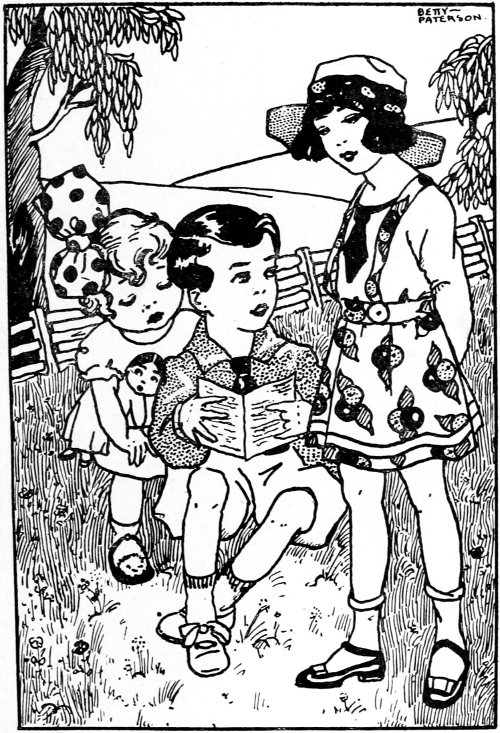
“A letter had come for Willie from his Mother.”
169
CHAPTER XXI. INTERCESSION.
A letter had come for Willie from his mother,
saying that he really must come home; he ought to
be satisfied now, and they missed him very much,
and he really must return to school, and ever so
many more reasons why he should come home.
Willie felt very downhearted.
“’Course I’d like to see them again, and I think
a terrible lot of them, and all that, but I do want to
stay longer. I asked Mamma ever so long ago to
let me stay till November, and she nearly promised
she would, but a woman never can keep her word,”
he went on, dashing away a tear.
“We’ll write and beg and beg for you,” said Eva.
“Will you? Good! Write and say you can’t
part with me, that I’m a—a—a real decent chap,
and say—oh, say anything at all you like, only do
get her to let me stay till November. Say it’s a
long way up here, and it’s no use coming for a little
while. Let’s see—how long have I been here now?
About seven months—well, say that a person ought
to stay nine or ten months, but that I’ll be real satisfied
to go home in November, and to be sure and
let me stay till then.”
“Yes, we’ll say all that and a lot more.”
170
“Righto! and I’ll pay for the stamps,” said Willie.
“Whatever it costs, let me know.”
Then a letter was concocted, and to read it one
would think that Willie was a little angel upon
earth:
We much regret that you want Willie back so soon
[they wrote]. You know, it is such a long way up here,
and once he gets home it may be years and years and
years till he comes back. He means to work and study so
hard when he goes home to make up for this long holiday,
and we would love him to stay till November; and then he
will be quite, quite satisfied to go. But if he went now
we would all miss him so much, because he’s such a help
and such good company, and Dadda would miss him fearfully,
and so would Mamma and Miss Gibson and all of
us. He studies real well for Miss Gibson, considering
that he is out so much and loves riding so much, and, you
know, in Sydney he’ll never get a ride; so now, while the
horses are fat, he ought to stay and ride a real lot, and I
am sure if you will only let him he will grow up to bless
you.
“How will that much suit?” asked Eva, who took
the composition on herself and read it aloud to him.
“By cripes, it’s real good!” answered Willie.
“Go on a few more pages like that, and she must let
me stay.”
“Well, if you say that word any more I won’t
write at all.”
“What word?” asked Willie, trying to appear innocent.
“You know quite well; you got it from old Joe,
and you needn’t bother copying him. Oh, dear!
Whatever else can I say?”
171
“Let’s see; you said I was nice and cheerful,
didn’t you? Well, say—oh! say that I look real
well, and I’m getting real fat.”
“But you said that in your last letter, didn’t
you?”
“Yes, but you say it, too.”
Willie looks so well and is getting real fat, and has a
lovely colour now, and he’s so nice and cheerful and
pleasant and kind that we would all love him to stay
longer; so I am sure, dear Mrs. Gray, that you will not
refuse our request, and that Willie will never forget you
for it.
There was much more in the same strain, and
then signatures were attached; but I think it was a
little note that Mother enclosed that made Mrs.
Grey decide to let her little boy remain till November,
and there was great rejoicing when the decision
arrived.
“We’re real good at writing letters,” said Eva,
somewhat proudly.
“Yes, that was a bonser one about me. I don’t
know how you thought of it all.”
“Oh, we can think all right,” said Eileen. “I
wouldn’t wonder if we made some money some day
thinking out inventions and patents and all those
kind of things.”
“Well, when I grow up I’ll help you,” declared
Willie. “If you want any money just come along
to me.”
He felt very grateful for that letter, as he thought
of the good free time before him.
172
“How will you make the money?” asked Eileen.
“Oh, I’ll manage that, all right! I haven’t decided
yet, but I’ll have it so you needn’t be afraid to
come for a loan. I won’t forget old friends....”
Willie was very polite for quite a long time after
that. He was always offering his chair to Mother
or one of the girls, and he was continually asking
Mother if she felt a draught, and would she like
windows or doors closed? And he actually tried
to study at night time to please Miss Gibson. The
thought of staying till November pleased him so
much.
“I wonder how much money it would take to
buy Myall?” he said to Joe, as they were riding
round the paddock.
“Pretty near a million, I reckon,” answered Joe.
“A million!” gasped Willie. “Oh, dear!” he
groaned. “I’ll never manage it.”
“Was you thinkin’ of buyin’ it?” asked Joe.
“I was wondering if I ever could,” said Willie.
“If I went to work and started to save up my money
straight away; but, oh, dear! I’ll never manage it.
A million’s a terrible lot of money, isn’t it, Joe?”
“I reckon so,” answered Joe. “I wouldn’t like
the counting of it.”
“No, ’specially if you were sleepy,” said Willie.
“You take it from me, young man, I wouldn’t be
sleepy if I ’ad the ’andlin’ of a million of money.
Why, I’d be thinkin’ every noise was a burgular
after it. No, old Joe’d be pretty wide awake if ’e
’ad the ’andlin’ of a million of money!”
173
“Of course I wouldn’t care if I didn’t have a very
big place,” went on Willie. “I wouldn’t care if it
was just one little paddock on the corner of the
creek. As long as it was land and belonged to me,
and I could live up here and ride. That’s all I
want.”
“Just enough to run a horse on, like?” said Joe.
“Yes,” said Willie, eagerly. “Do you think I
could buy a place like that?”
“Well, of course, you’d have to make a livin’
somehow,” answered Joe, “and you couldn’t make
much of a livin’ on a one-horse run; and I wouldn’t
like it to be said that old Joe ever put the idea into
your ’ead about it. But some day you might win a
lease, or buy a piece of land—enough to run a few
hundred sheep on, and by degrees you might buy
a little more, and get on that way. But you want
a bit o’ money to start with, or else you’ll have to
work very ’ard. ’Course, though, the banks would
lend you money, and you might be able to make a
do of it.”
“That’s what I’ll do. I’ll get the banks to lend
me money. I never thought about them. Why,
it’ll be real easy. I’ll go to a lot of different banks
and get them all to lend me a little; and I won’t let
any of ’em know that I’ve been to the other one—see?
My word! won’t Mother be surprised when
she hears I’ve got a bit of land?”
174
“Hey, steady there!” said Joe, a bit afraid.
“You’re too young yet—a long way too young to
think about it. Well, you can think, but don’t go
trying to git land right away. You’ve got a few
years ahead of you yet.”
“Yes, that’s the worst of being young,” sighed
Willie.
“Well, it’s funny, the difference in boys,” soliloquised
Joe; “here’s you dyin’ to be on the land, and
there was Frank dyin’ to be off it.”
“Yes, funny, isn’t it?” agreed Willie.
From that time he commenced to build castles in
the air, in which figured prominently a green stretch
of paddock with a gurgling creek running through
it; a dear little cottage nestling on its banks, and a
flock of big woolly sheep, some fine horses, and a
few dogs to make up the sum total of his possessions.
“And, of course, I must have some cattle,” he
would think, when completing the picture in his
mind’s eye; “and a dear little pony and sulky to
meet them at the railway station when they come up
to stay with me.”
“They” represented Mamma, Dadda, and Marcia.
175
CHAPTER XXII. A HERO.
Mrs. Grey, the overseer’s wife, at Jenkin’s old
place, was very ill. It was something unusual for
Mrs. Grey to be ill. Mother spent a lot of time
with her, and Miss Gibson would go down and read
aloud to her by the hour. But she grew gradually
worse, till at last Mother and the governess took
it in turns to stay with her, following out the doctor’s
instructions, which were written or wired
daily from the far-off town.
The children rather liked the novelty of Mrs.
Grey being ill at first, because they had broken time
at school, but as time went on they grew tired of
it. It was too lonesome in the house without
Mother at night time, and they missed Miss Gibson,
too. So old Joe came to the rescue, and told them
yarns.
“Did you ever hear tell of the time youse were
nearly burnt to death, and your Mother saved you?”
he asked one afternoon about dusk.
“Oh, no, Joe!” gasped Doris, with wide-open
eyes. “Tell’s.”
“Oh, you wasn’t in the world then!” answered
Joe. “Little Eva was a baby.”
176
Then Baby cried because Eva was ever a baby.
“Oh, tell’s about it!” cried Willie, eagerly.
“You never heard tell of it, then?”
“No, never,” cried Willie. “As true as anything,
I didn’t.”
“We have, but we’d love to hear it again,” said
Eileen.
“Righto!” and Joe tapped his pipe on his boot,
preparatory to filling it.
“Oh, dear! are you going to fill your pipe first?”
asked Willie. “Come on, I’ll help you.”
“No, thanks, young man; I don’t care about the
way you cut baccy.”
“Oh, dear, start telling us, Joe, while you’re cutting
the tobacco!” said Willie, all eagerness to hear
the story.
“Hold ’ard, hold ’ard!” said Joe, calmly, as he
went on with his work. At last the pipe was filled
and lit, and Joe proceeded.
“Yes, we was all away draftin’ at the yards down
at the back of ‘Coolabah,’ and a fire broke out down
along the crick, about four mile from here. There
was tons of dry grass lying about, and it blazed like
fury. Your Mother seen it light up, and you can
bet she got the shock of her life. Not a man within
miles, and all youse little ones with her. She knew
if it came this far the house and all would go, and
very likely you and her’d be burnt to death. So
she rushed out to the paddock and catches old
Dolly and whipped her into the spring-cart, and she
put all youse in, an’ she rushed round and gathers
up a little brood of chickens that she couldn’t bear to
think of bein’ burnt to death, and put ’em in a box
and jumps out into the cart and sent old Dolly
like—like blazes, down the Myall road, and all the
time the flames was comin’ nearer an’ nearer, and
she was hardly game to look back, fearin’ she would
see the house on fire.”
177
“Oh, dear!” gasped the children. “Wasn’t it
awful?”
“Yes, and she sent old Dolly as fast as she could
go down the road, and just as she turned the bend,
lo and behold youse! she sees a pack of horsemen
galloping down towards her!”
“Oh!” they gasped again in relief.
“Yes, they’d seen the fire, and knew it was near
your place, so they rushed off from the yards and
got here just in time to save the ’omestead. My!
wasn’t your Mother glad? She just sat and cried
after the shock; but, my word, she must have
rushed round to have got you all safe away, for the
fire was no time coming up the crick, and it swallowed
all before it! Yes, she just sat and cried, for
it was an awful shock to her, because she thought
the fire might overtake you and you’d all be burnt
to death alive.”
“Oh!” they all gasped again. “But wasn’t
Mother brave?”
“Brave!” echoed Joe. “Why, I call your Mother
a hero!”
“A hero—yes, that’s what she is!” they declared.
“Yes, she’s a regular hero,” declared Willie,
stoutly.
178
“Oh, dear, I’m glad we’re saved!” said Eileen,
“and were not burnt to death alive.”
“Do you know what I’d ha’ done, if I’d been
there?” asked Willie.
“No,” said Joe, quietly.
“I’d ha’ got the scythe, and I’d ha’ cut all the
grass down round the house, and I’d ha’ raked it all
away out so’s there’d be nothing for the fire to burn
near the house—see? And I’d ha’ got wet bags and
hung them all round——”
“Yes, and what’d the fire be doing all this time?”
asked old Joe, sarcastically. “Do you think it
would wait for you to cut the grass and rake it all
away, and find the bags, and all the rest of it? Oh,
no, young man, you wouldn’t ha’ been alive to tell
the tale to-day if you had started on them lines, and
don’t you forget it! No, you couldn’t ha’ done
better than your Mother,” he added, turning to the
other children. “I always said, and I always will
say, that your Mother’s a hero.”
“Oh, dear! isn’t it lovely to have your Mother a
hero?” gasped Doris....
“Here she comes now,” said Joe. “I wonder
what’s the news.”
“I say, let’s give her a cheer,” said the children.
“Well, I’d like you to, and I’d like to join in;
but it mightn’t be in keepin’ with the time, seeing
as how Mrs Grey is so ill.”
“Oh, yes! a good thing you thought of that, Joe,”
said Mollie.
“Old Joe can think sometimes,” said Joe, well
pleased.
179
Then Mother came in with the good news that
Mrs. Grey was much better, and that a friend of
hers would arrive to-morrow to look after her.
Then the children cheered to their heart’s content,
both because Mrs. Grey was better and because
their Mother was a hero.
180