“What the child imitates,” says Froebel, “he begins to understand. Let
him represent the flying of birds and he enters partially into the
life of birds. Let him imitate the rapid motion of fishes in the water
and his sympathy with fishes is quickened. Let him reproduce the
activities of farmer, miller and baker, and his eyes open to the
meaning of their work. In one word let him reflect in his play the
varied aspects of life and his thought will begin to grapple with
their significance.”
In all times and among all nations, finger-plays have been a delight
of childhood. Countless babies have laughed and crowed over
“Pat-a-cake” and other performances of the soft little hands; while
children of whatever age never fail to find amusement in playing
“Here is the church,
And here’s the steeple,
Open the doors,
And here are the people!” |
and others as well known.
Yet it is not solely upon the pleasure derived from them, that
finger-plays depend for their raison d’etre. By their judicious and
early use, the development of strength and flexibility in the tiny lax
fingers may be assisted, and dormant thought may receive its first
awakening call through the motions which interpret as well as
illustrate the phase of life or activity presented by the words.
The eighteen finger-plays contained in this book have already, through
publication in Babyland, been introduced to their especial public, and
have been much used in homes, though perhaps more in kindergartens. It
will readily be seen that while some of the plays are for the babies
in the nursery, others are more suitable for older children.
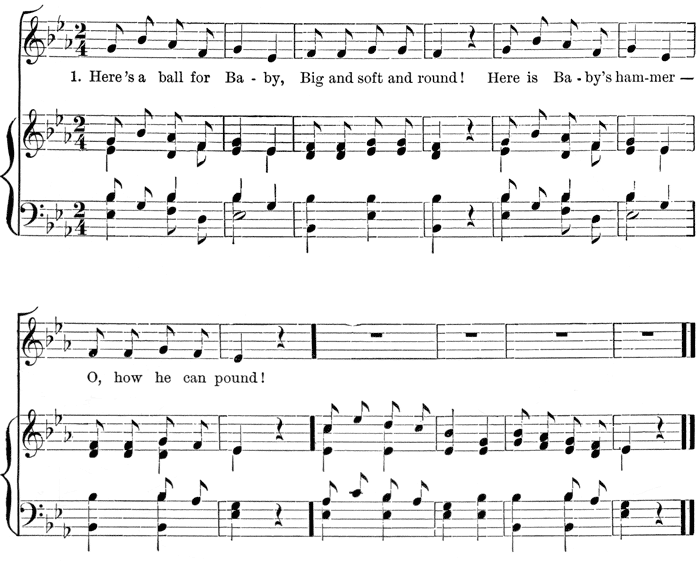
A baby-friend, ten months old, plays “All for Baby” throughout,
pounding and clapping gleefully with all his might—while children
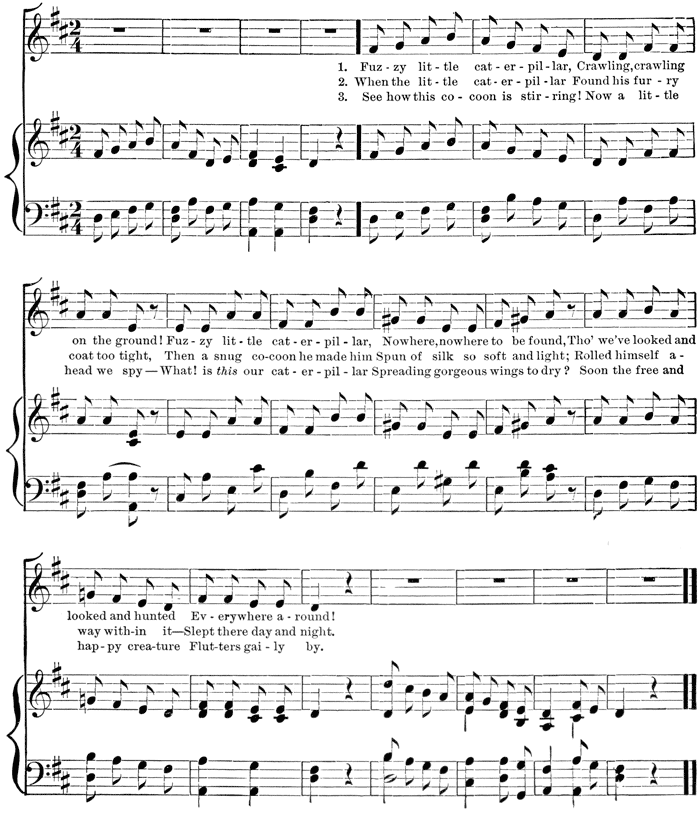
seven or eight years of age play and sing “The Caterpillar,” “How the
Corn Grew” and others with very evident enjoyment.
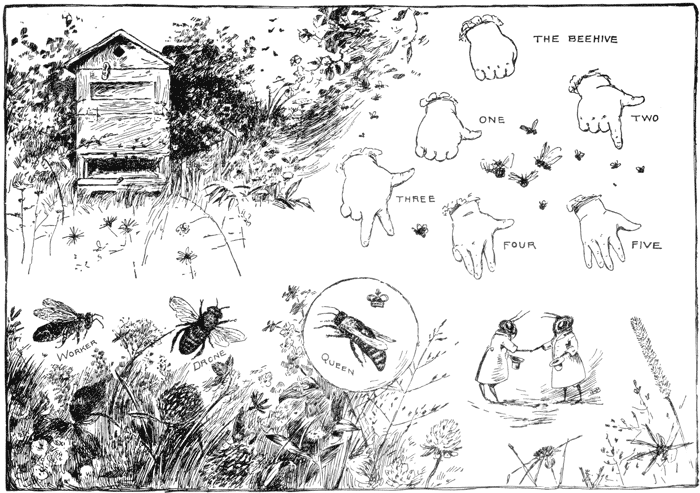
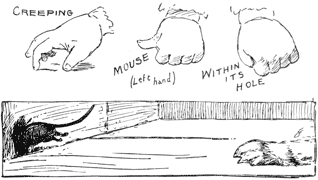
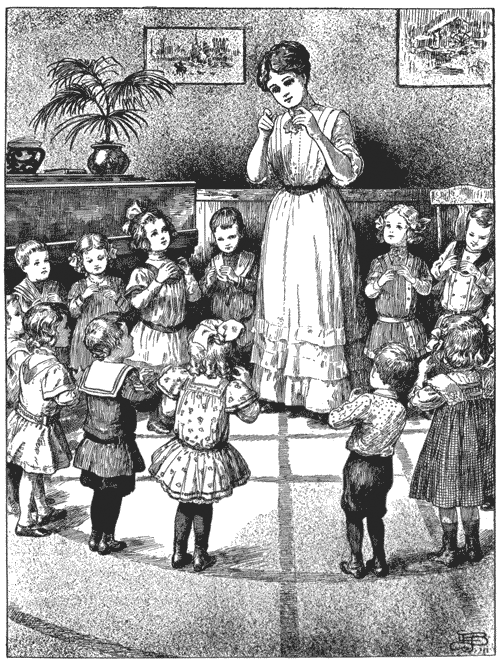
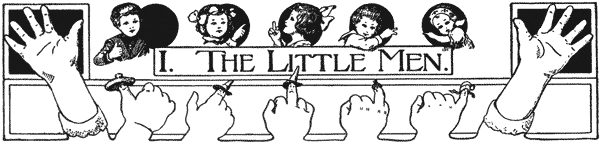
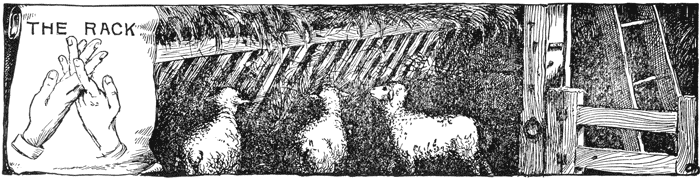
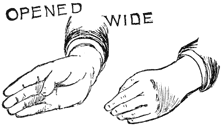
With a little study of the charming and expressive pictures with which
the artist, Mr. L.J. Bridgman, has so sympathetically illustrated the
rhymes, mothers and kindergartners have easily understood what motions
were intended. To elucidate still farther, however, the playing of
“The Merry Little Men” may be thus described:
During the singing of the first verse, the children look about in
every direction for the “little men,” but keep the hands hidden. At
the beginning of the second verse, raise both hands to full view with
fingers outspread and quiet. At the words, “The first to come,” etc.,
let the thumbs be shown alone, then the others as named in turn, till
all are again outspread as at the beginning of the second verse. In
the last verse the arms are moved from side to side, hands being
raised and fingers fluttering nimbly all the time. When displaying the
“busy little men,” raise the hands as high as possible.
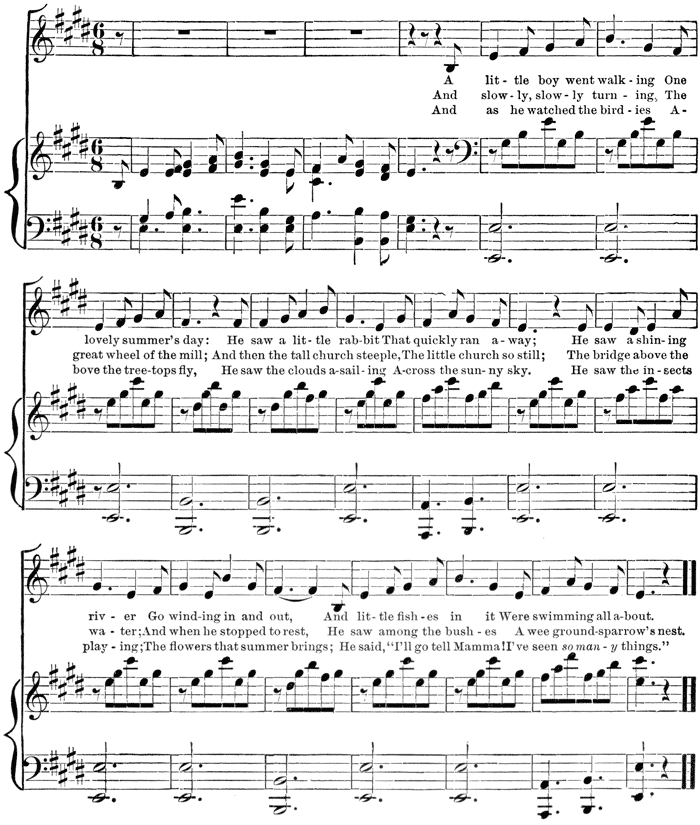
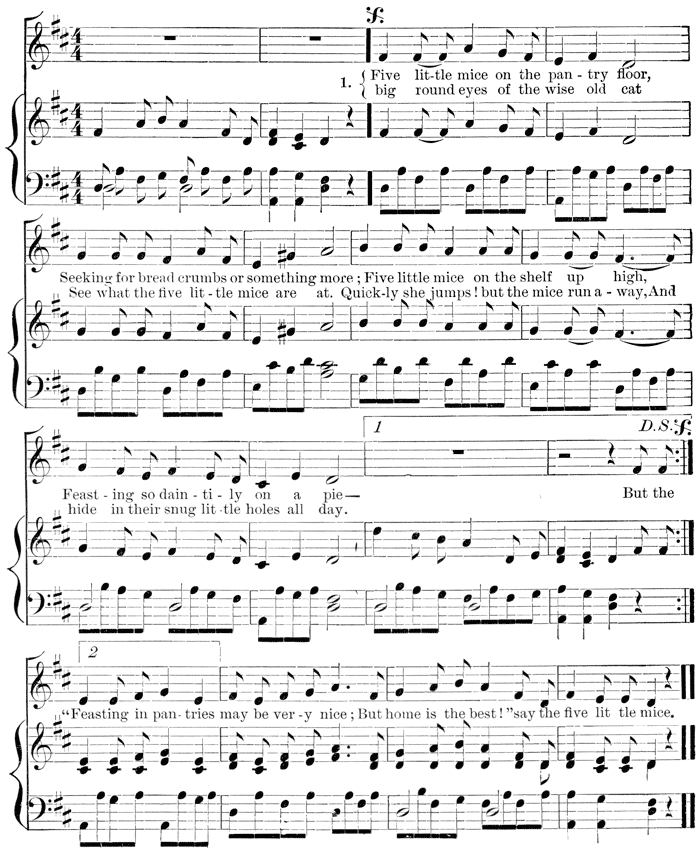
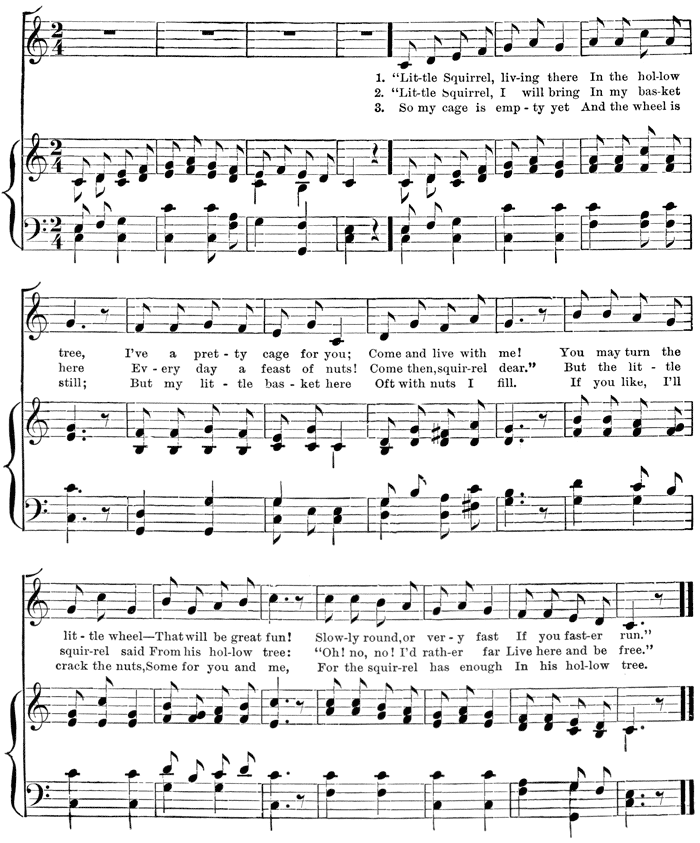
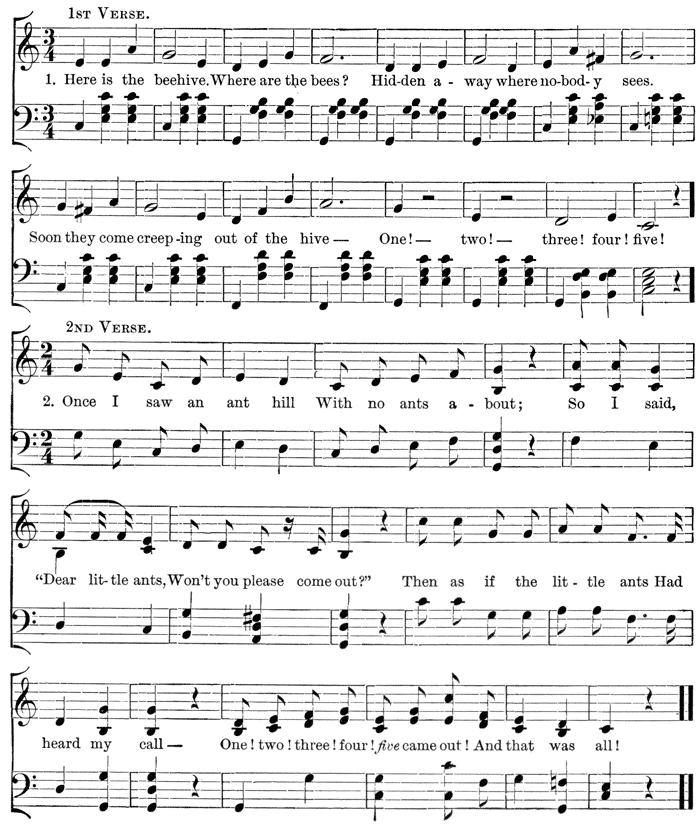
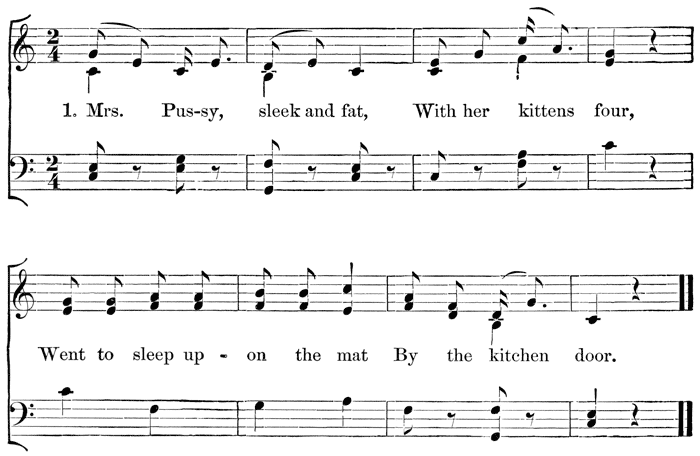
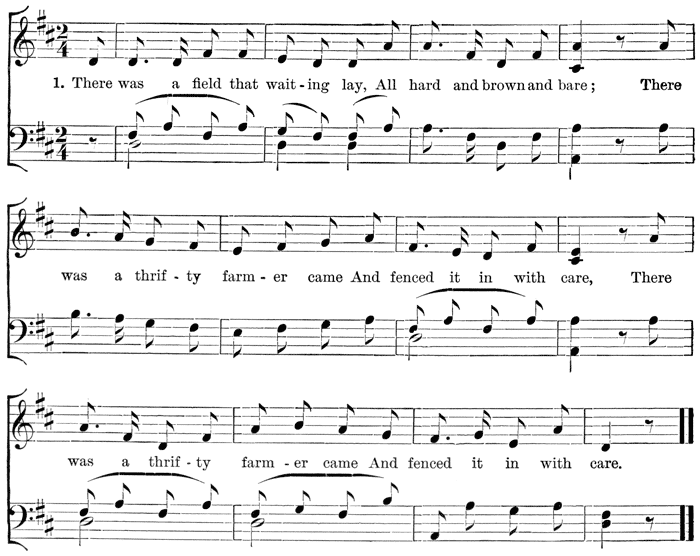
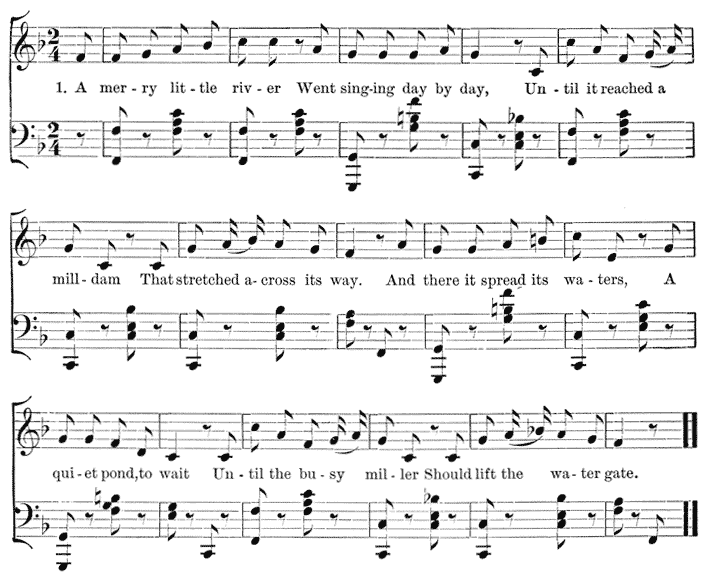
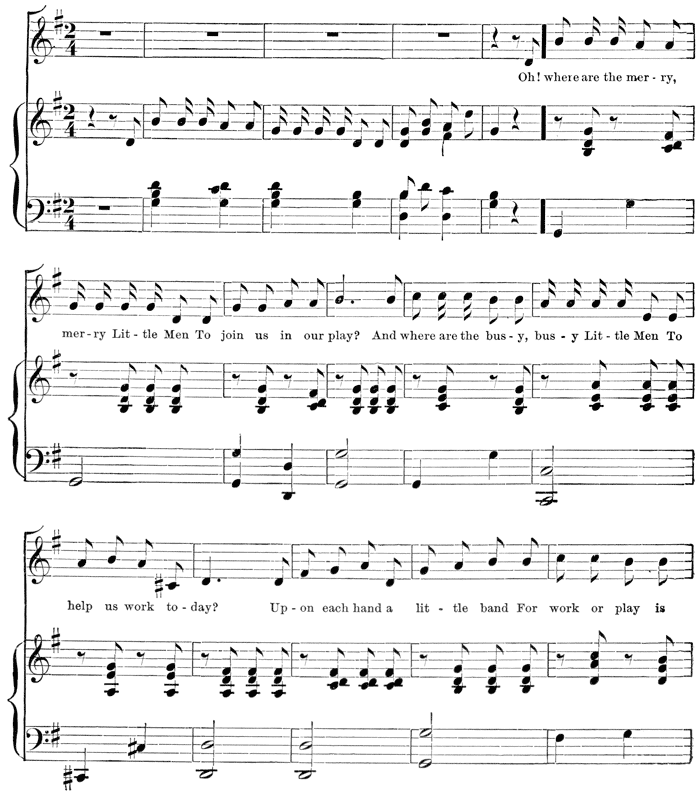
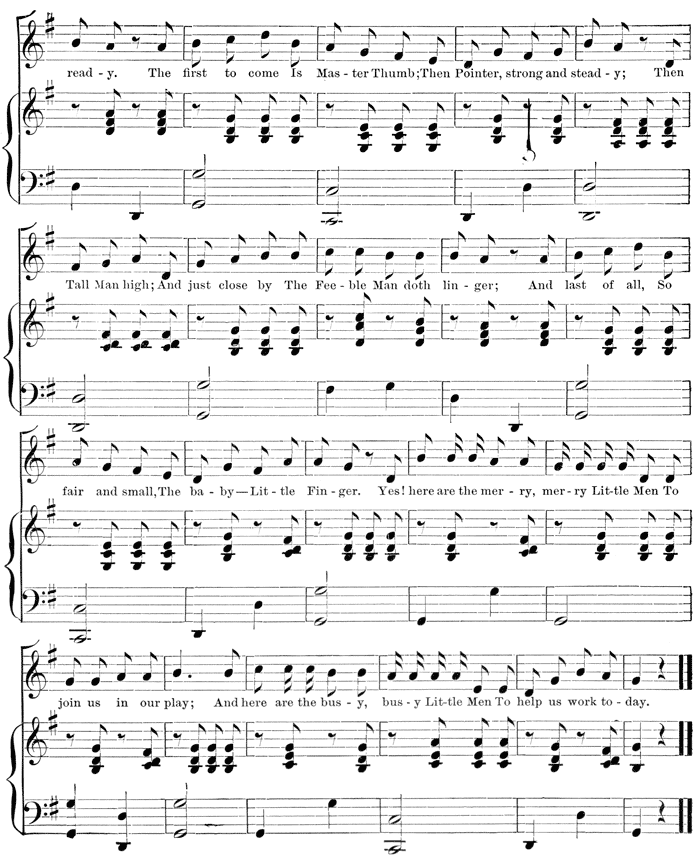
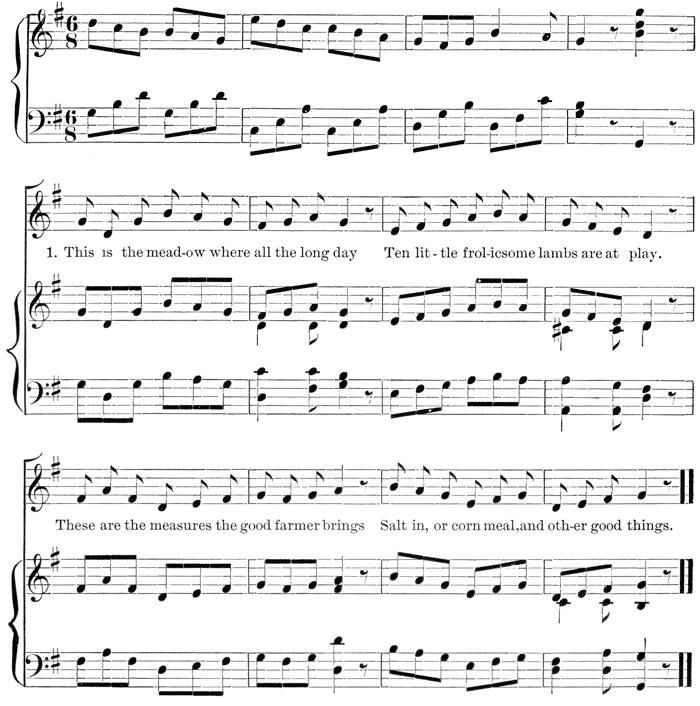
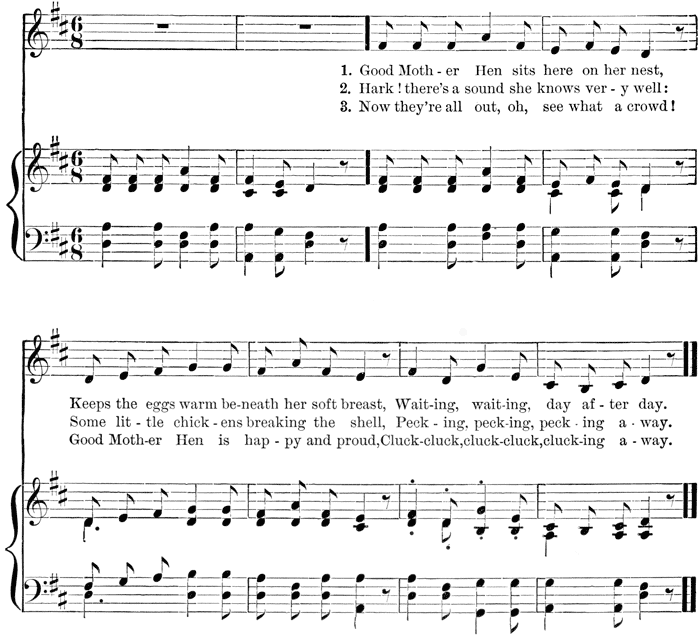
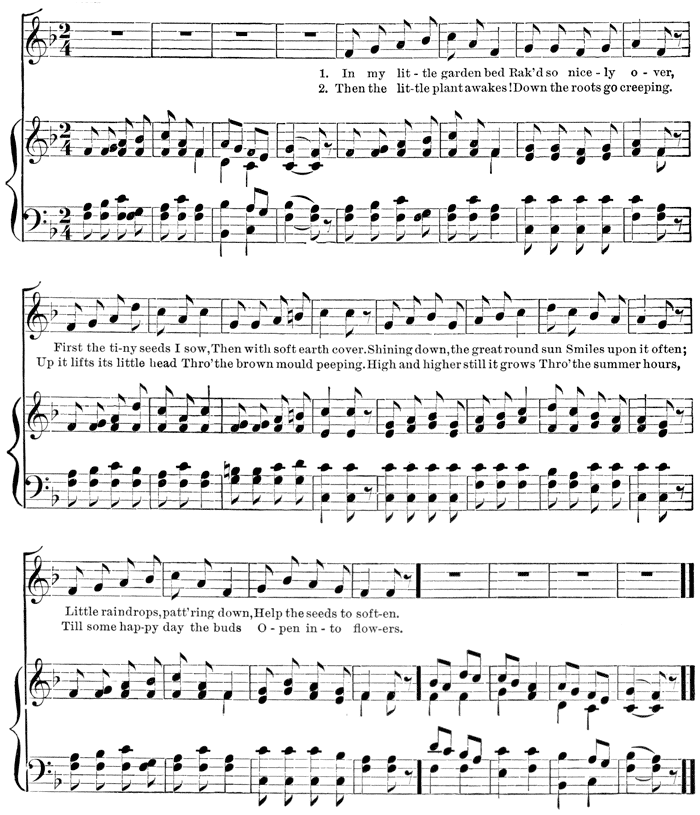
The music, composed by Miss Cornelia C. Roeske, will be found
melodious and attractive and especially suited to the voices and
abilities of the very young children for whom it is chiefly intended.
The harmonic arrangement is also purposely simple in consideration of
the many mothers and kindergartners who cannot devote time to
preparatory practice.
Emilie Poulsson.
Boston, 1889.
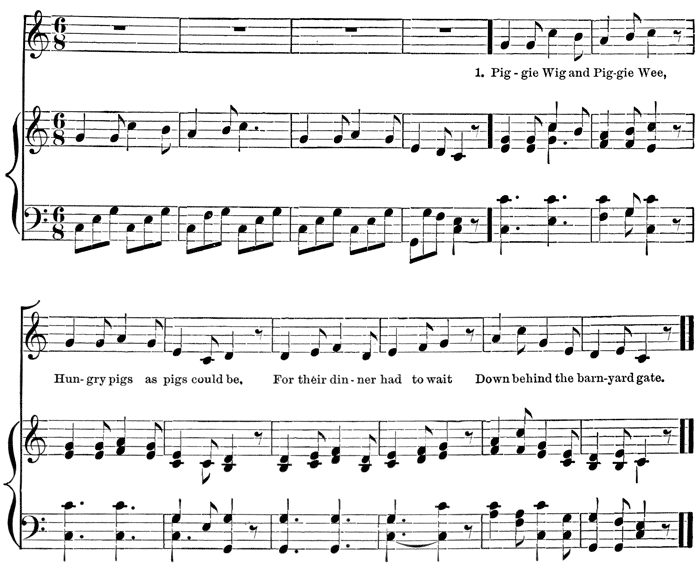
 Piggie Wig and Piggie Wee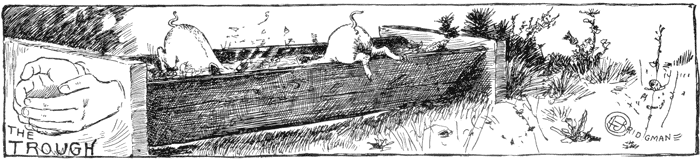
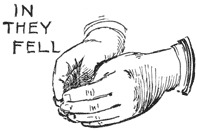 Piggie Wig and Piggie Wee,