My advent in Wall Street was on the heels of the panic of
1857. That panic was known as the “Western blizzard.”
It was entitled to the name, as its destructive power
and chilling effects had surpassed all other financial gales
that had swept over Wall Street. The first serious result
of its fatal force was the failure of the Ohio Life and Trust
Company, a concern of gigantic dimensions in those days.
The Company had an office in Wall Street, and on the
announcement of the collapse, business became completely
paralyzed. This failure was immediately followed by the
suspension of many large firms that had withstood the shock
of all ordinary collisions and had successfully weathered
many financial storms.
The panic was due in part to excessive importations of
foreign goods, and also to the rapid construction of railroads,
to a large extent on borrowed capital. There were
other contributing causes. The crops were bad that year,
and the country was unable to pay for its imports in produce,
and coin was brought to the exporting point. In
October, the New York City banks suspended payments,
and their example was followed throughout the country.
6Bank credits had been unduly expanded everywhere, and
the time had naturally arrived for contraction. It came
with a bound, and financial disaster spread like a whirlwind,
becoming general.
The Stock Exchange had been a moderately growing concern
for the ten years previous to this calamity, and the
securities there dealt in had been rapidly accumulating in
number and appreciating in value. Its members were
wealthy and conservative, with a strong infusion of Knickerbocker
blood, an admixture of the Southern element and a
sprinkling of Englishmen and other foreigners.
The effect of the crisis on the majority of Stock Exchange
properties was ruinous. Prices fell fifty per cent. in a few
days, and a large proportion of the Board of Brokers were
obliged to go into involuntary liquidation. There was a
great shaking up all around.
Then came the work of rehabilitation and reorganization.
Confidence gradually returned. The Young Republic had
great recuperative powers, and they were thoroughly exerted
in the work of resuming business. Much of the old
conservative element had fallen in the general upheaval, to
rise no more. This element was eliminated, and its place
supplied by better material, and with young blood, and in
December the banks resumed business.
This panic and its immediate results created an entire
revolution in the methods of doing business in Wall Street.
Prior to this time, the antique element had ruled in things
financial, speculative and commercial. This crisis sounded
the death knell of old fogyism in the “street.” A younger
race of financiers arose and filled the places of the old conservative
leaders.
The change was a fine exemplification of the survival of
the fittest, and proved that there was a law of natural selection
in financial affairs that superseded old conservatism
and sealed its doom.
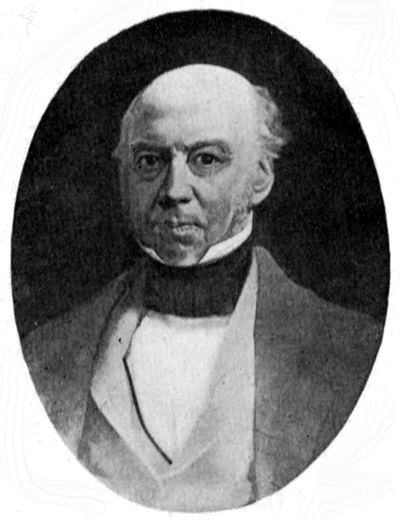
JAMES CLEWS
Of “The Leasows” Staffordshire, England
Father of Henry Clews
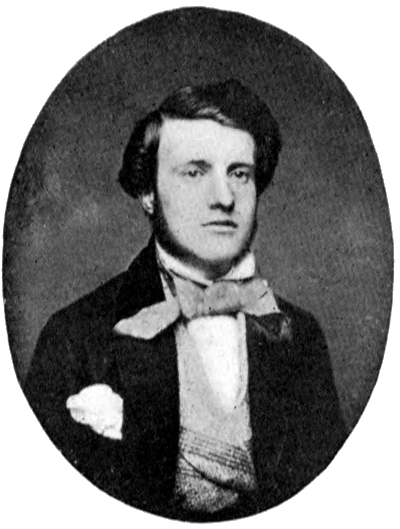
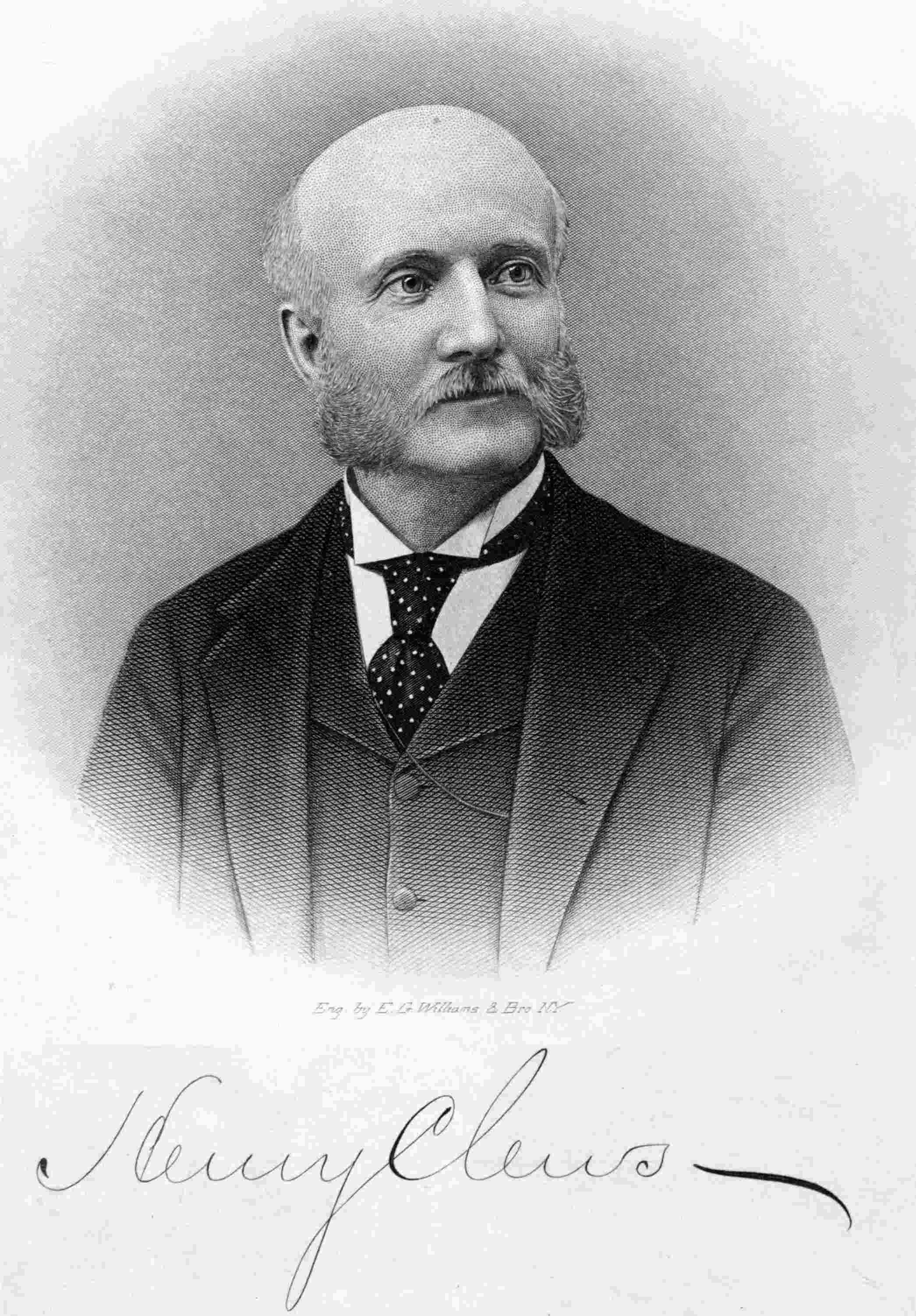
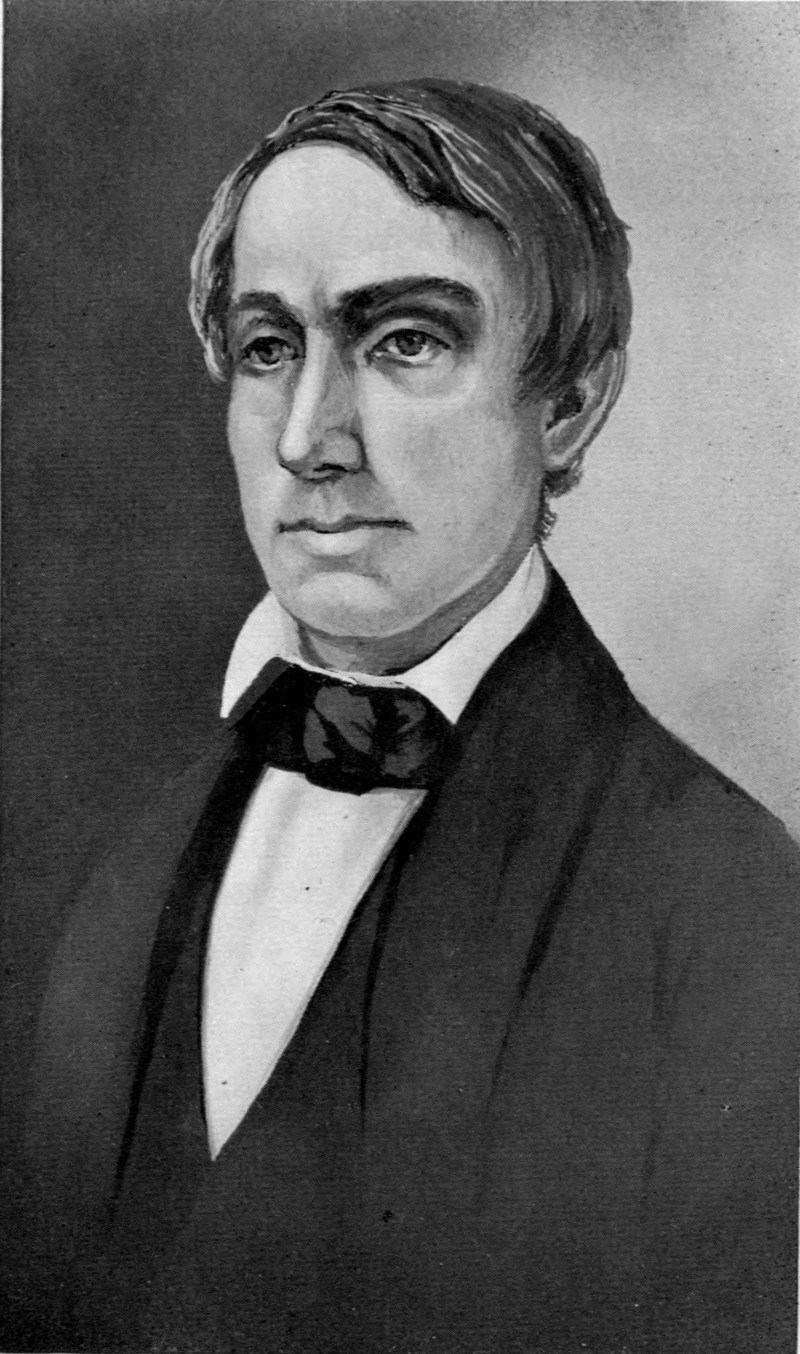
HENRY CLEWS
In 1857, at the Time of His Start in Wall Street
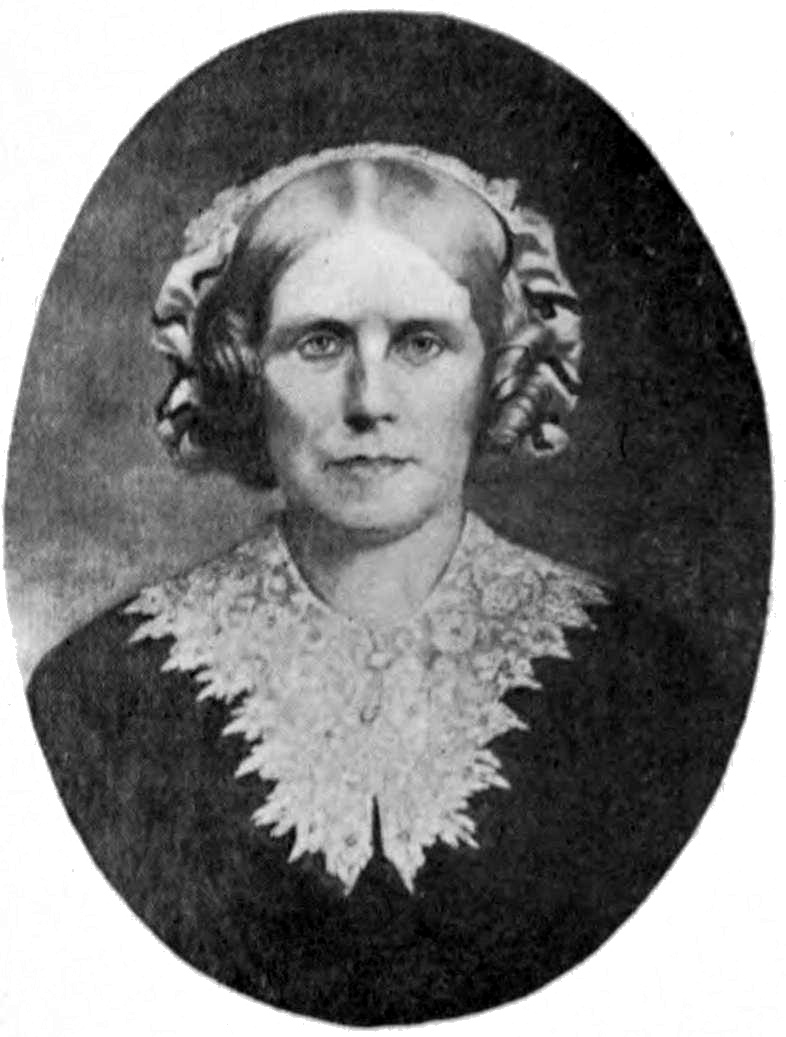
Mrs. ELIZABETH KENDRICK CLEWS
Mother of Henry Clews
Until that time, the general idea prevailed that those engaged
in financial matters must be people well advanced in
7years, even to the verge of infirmity. It is the same idea
that has been handed down, as if by divine right, from old
world prejudices, especially in the learned professions.
No doctor was considered a safe prescriber unless his hoary
locks, bald head and wrinkled brow proclaimed that he
had almost passed the period of exercising human sympathy.
The same rule of judgment was applied to the
lawyer and the clergyman.
These unworthy prejudices were fostered by the character
of the Government of the old country, and nurtured by the
surroundings of the venerable monarchies of Europe, where
they exist largely even to the present day. So tenacious of
life are these old-fashioned ideas, that many of them were
found in full vigor, dominating Wall Street affairs up to
the crash of 1857, fostering the antique element and choking
off salutary enterprise.
Hence the process of decay of these archaic notions and
our gradual development.
This struggle for new life in Wall Street was not successfully
developed without a serious effort to attain it. The
old potentates of the street fought hard to prolong their
obstructive power, and their tenacious vitality was hard to
smother, reminding one of the nine lives attributed to the
feline species. The efforts of the young and enterprising
men to gain an entrance to the Stock Exchange were regarded
by the older members as an impertinent intrusion on
the natural rights of the senior members. It was next to
impossible for a young man, without powerful and wealthy
patrons, to obtain membership in the New York Stock Exchange
at the time of which I speak.
The old fellows were united together in a mutual admiration
league, and fought the young men tooth and nail,
contesting every inch of ground when a young man sought
entrance to their sacred circle.
The idea then struck me that there was a chance for young
men to come to the front in Wall Street. I was then engaged
in the dry goods importing trade, in which I received
8my early training. I had been kept out of the Exchange for
several years by the methods to which I have alluded. My
fate was similar to that of many others. It was only by an
enterprising effort, and by changing the base of my operations,
that I finally succeeded.
The commissions charged at that time were an eighth of
one per cent. for buying and selling, respectively.
After numerous efforts to gain admission to the Exchange,
without success, I finally made up my mind to force it. I at
once inserted an advertisement in the newspapers, and proposed
to buy and sell stocks at a sixteenth of one per cent.
each way. This was such a bombshell in the camp of these
old fogies that they were almost paralyzed. What rendered
it more distasteful to them still was the fact that, while they
lost customers, I steadily gained them. The result was that
they felt compelled to admit me to their ranks, so that I
could be kept amenable to their rules and do business only
in their own conventional fashion. My membership cost me,
in all, initiation fee and other trifling expenses in connection
therewith, $500. This presents a striking contrast to
the recent price of a seat, $35,000, but though this difference
seems very large, yet the changes in every other respect
connected with Wall Street affairs have been in similar
proportion. Among some of the old members of that
day were Jacob Little, John Ward, David Clarkson and
others whose names may be found in the archives of the
Stock Exchange.
As an instance of the way in which membership was then
appreciated, it may be mentioned that speculators frequently
offered $100 a week, or ten times the cost of membership,
for the privilege of listening at the keyhole during
the calls.
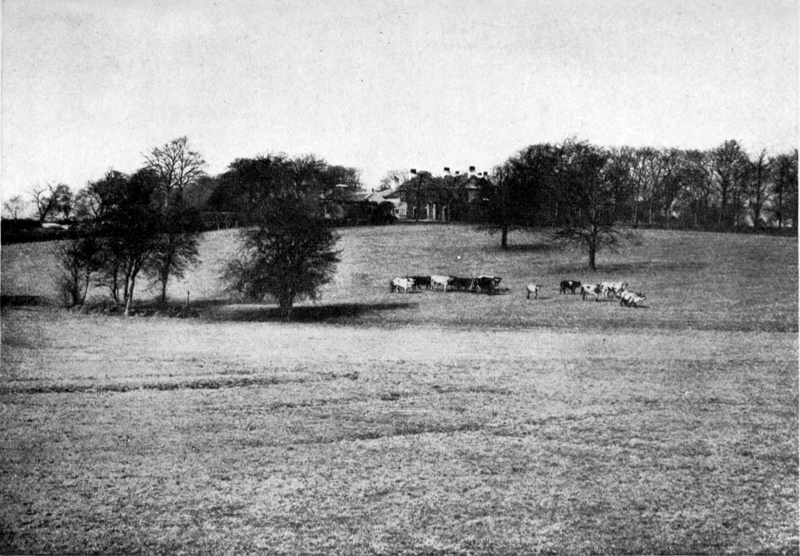
HENRY CLEWS’S BIRTHPLACE, “THE LEASOWS,”
HILDERSTONE, STAFFORDSHIRE, ENGLAND.
Although the prostration growing out of this panic was
very great and of long continuance throughout the country,
general confidence being shaken to its very foundation, yet,
on the whole, it was a great gain, and marked an era of
financial and speculative progress. It was the chief cause
9in drawing out the young element in the business of Wall
Street, which might have lain dormant for a much longer
period without this sudden and somewhat rude awakening.
It not only brought Young America to the front in speculation,
commerce and general business, but it imparted an
impetus of genuine enterprise to every department of trade
and industry, from the good effects of which the country
has never since receded.
This new element, emanating from the throes of one of the
greatest business revolutions that any country has ever experienced,
has continued to grow and thrive with marvellous
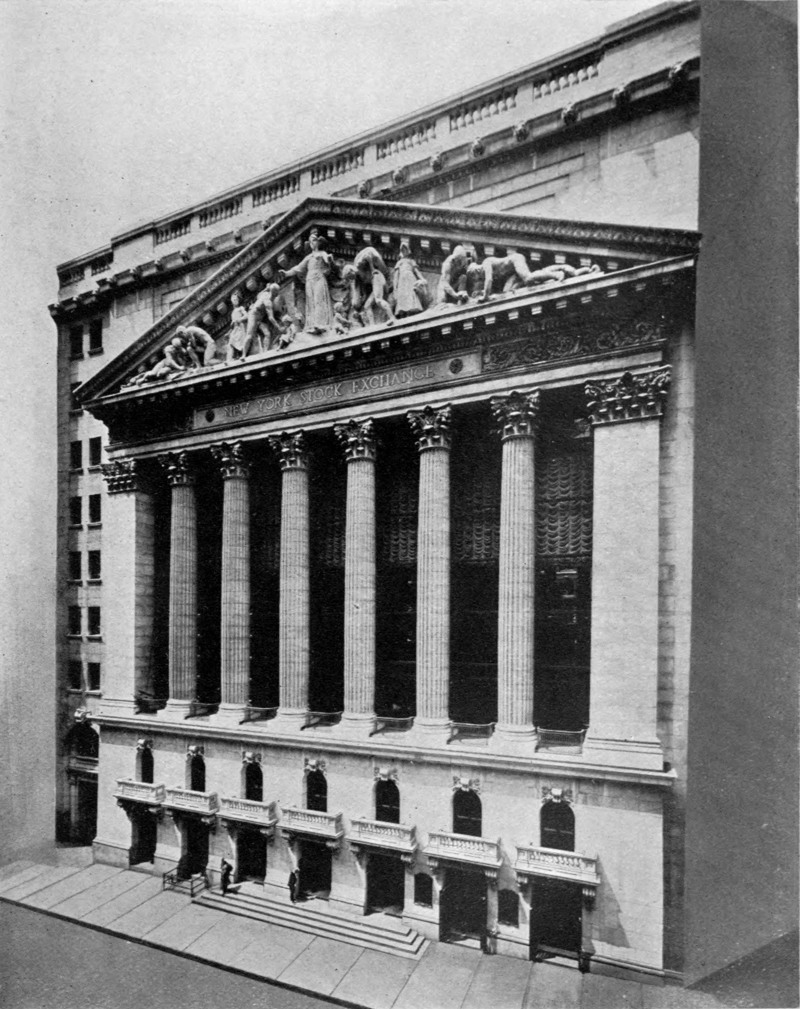
rapidity. It is now getting so large that the Exchange will
soon require a whole block instead of a basement as at its
origin for its headquarters. The Governing Committee of the
Stock Exchange are now looking forward to arrangements
for this consummation. How the ancient fathers of my early
days in Wall Street would have been shocked at the bare
idea of such amazing progress!
It is not the least singular phase of this evolution in Wall
Street, that the youthful element to which I have referred
stands alone as compared with the progress achieved by the
same class of men in any other nation. In America only
does the youthful element predominate in financial affairs;
and results have justified the selection, which perhaps in no
other nation is possible. Thanks to the freedom of our Republican
institutions, which, in spite of some individual
deductions and the occasional obstructions of “crankdom,”
make way for that progress, in the wake of which the other
nations of the world are emulous to follow.
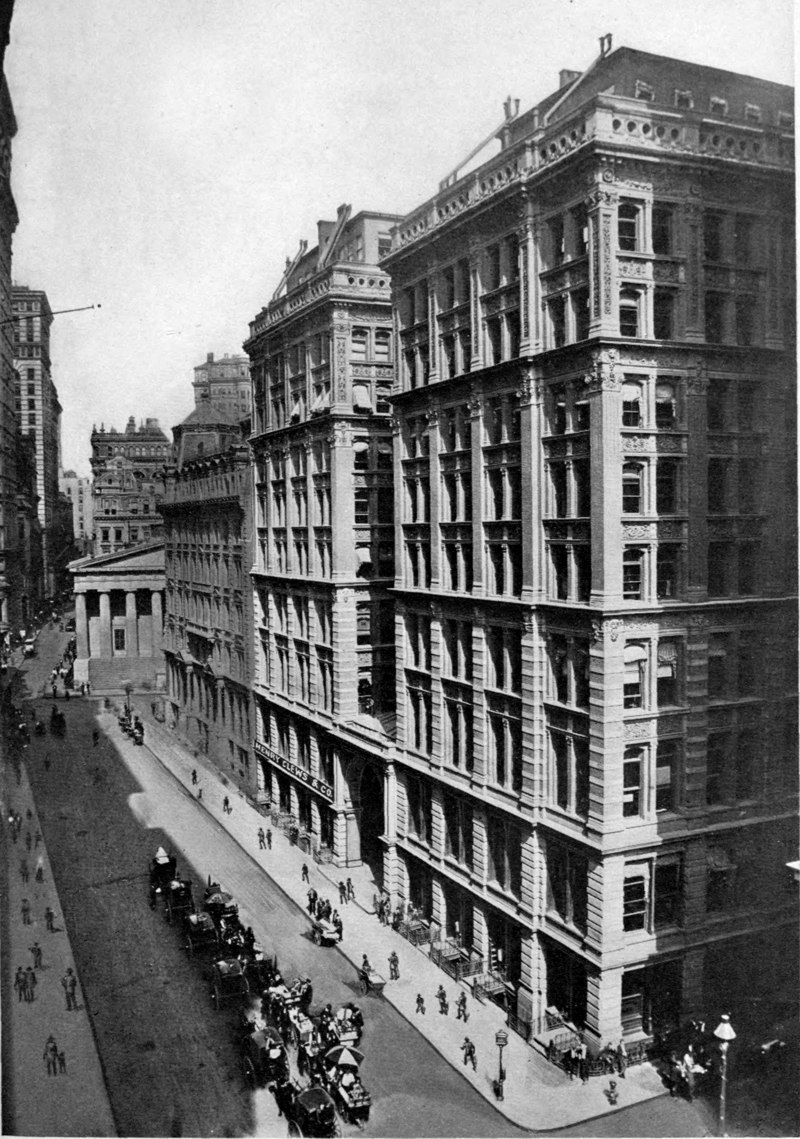
The Exchange was at this time situated on William street
between Beaver street and Exchange Place. That place is
rich in speculative reminiscences. It was there that Jacob
Little made and lost his nine fortunes. It was there that
Anthony Morse, the lightning calculator, operated. He
could foot up four columns of figures as easily as the ordinary
accountant could run up one. He had been a clerk,
and having saved seven hundred dollars by close economy,
10began to deal in stocks. His career at that time was more
marvellous even than that of Keene of a recent date. Morse
made a fortune of several millions in a year, and became
bankrupt during the same period, without any available
assets to speak of. It was all honorably lost, however.
There was no Ferdinand Ward game connected with it.
Youthful speculators had not then learned the “crooked”
methods of the young idea of modern times. It was there
also that Daniel Drew began to accumulate those millions
that afterward were subject to such a rude scattering. It
was there that the celebrated “corners” in Rock Island,
Prairie du Chien and Harlem were concocted. It was there
that the wealth was accumulated which built twenty thousand
miles of Western railroads, causing many millions of
acres, that would otherwise have been a wilderness, to blossom
like the rose, in spite of Mr. Powderly’s opinion that
no material good can come out of speculation, and thus adding
immense wealth in real estate to the country, besides
conferring incalculable benefits on trade and commerce, and
preparing comfortable homes not only for the pioneers and
surplus population of the Eastern States, but a teeming soil
that has attracted the down-trodden of every nation to come
and partake of the blessings of freedom and prosperity.
One of Jacob Little’s speculative ventures has been rendered
historically famous through the rule of limitation of
sixty days for option contracts. The necessity for this limit
was brought about by one of his celebrated attempts to
manipulate the market. He was one of the most prominent
speculators in Erie in the early days of Drew’s transactions
with that property and its stocks. Mr. Little had been
selling large blocks of Erie on seller’s option, to run from
six to twelve months. This was in the early history of
“corners,” before the method of managing them scientifically
had been fully developed and while “blind pools”
were yet in embryo.
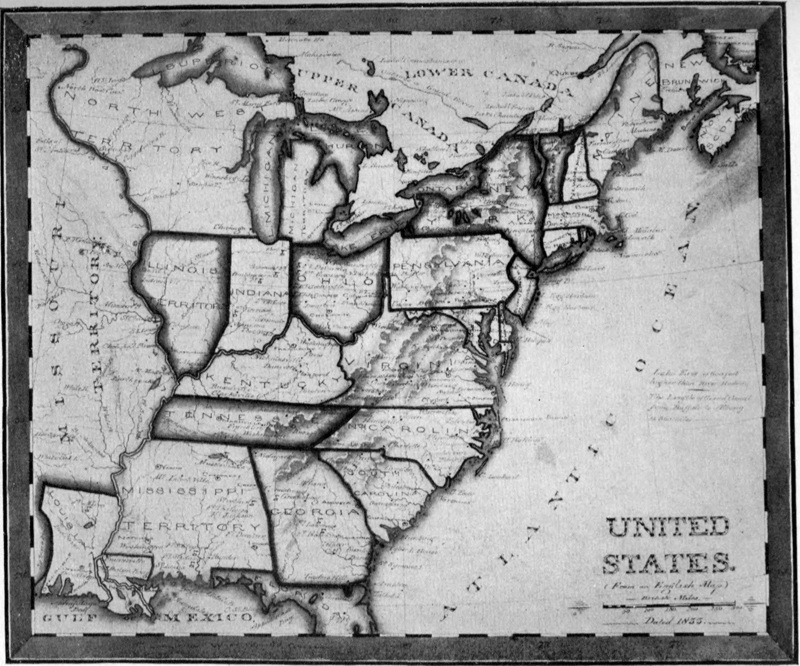
THIS MAP OF THE UNITED STATES OF AMERICA IS A PHOTOGRAPH TAKEN FROM THE ORIGINAL PEN-AND-INK HAND DRAWING MADE BY HENRY CLEWS FIFTY-FIVE YEARS AGO.
The leading members of the Erie Board formed a pool
to “corner” Mr. Little, and ran Erie shares up to a considerable
11height. They imagined that he was in blissful
ignorance of their purpose, and had everything arranged
for a coup d’etat which was to reach its crisis at two o’clock
on a certain day, when Little was to be completely overwhelmed
and hopelessly ruined. An hour prior to the time
appointed by the clique for his disaster he walked into the
Erie office, opened a bag filled with convertible bonds, and
requested an exchange of stock for the same. He had purchased
the bonds in London and had them safely locked up
for the emergency, which he promptly met on its arrival.
He got the stock, settled his contracts, broke the “corner,”
and came out triumphantly.
The option limit of sixty days was afterwards adopted in
order to prevent similar triumphs in manipulation on the
“short” side.
As will be illustrated more fully in subsequent chapters,
Mr. Little’s convertible bond trick was used with signal
advantage by his speculative successors in Erie, who practically
demonstrated on several occasions that there were
millions in it.
Mr. Little was generous and liberal to a fault with his
brother speculators who had experienced misfortune. He
used to say that he could paper his private office with notes
he had forgiven to the members of the Board. He was also
remarkable for his great memory. He could easily remember
all the operations he made in the course of a day
without making a note or a mistake.
Like Drew, he was careless in his attire, wearing a hat
like that of a farmer, and not a very prosperous one, but he
had no compeer in his day at calculating ahead in a speculative
venture.
12
CHAPTER II. WALL STREET AS A CIVILIZER.
13
Clerical Obliquity of Judgment About Wall Street
Affairs.—The Slanderous Eloquence of Talmage.—Wall
Street a Great Distributor, as Exhibited in
the Clearing House Transactions.—Popular Delusions
in Regard to Speculation.—What Our Revolutionary
Sires Advised About Improving the Industrial
Arts, Showing the Striking Contrast Between
Their Views and the Way Lord Salisbury Wanted
to Fix Things for This Country.
The dense ignorance displayed by men outside of Wall
Street, in regard to the business of that great mart, is
almost incredible. Even the most intelligent men I meet
in other professions and walks of life have the most utterly
crude and undefined notions about the methods of doing
business at the Stock Exchange. Many good and pious
clergymen are under the impression that Wall Street is a
name for the sum total of all kinds of infamy, and solemnly
exhort their devoted flocks not to touch the unclean
thing.
Clerical obliquity of judgment is not quite so bad, nor
popular ignorance so dense in this respect, as it has
been, but there is a large field for improvement yet. The
business activity of the country, and the spirit of intercourse
being so rapidly infused throughout all ranks of the
community, have demonstrated that this antipathy to Wall
Street has been simply an unworthy prejudice, in spite of
the high moral authority from which it has emanated.
I don’t wish to throw any aspersion on the noble purposes
of the clergy. The end they have been seeking has been good,
but it has not always justified the means employed. These
good men have unwittingly misrepresented Wall Street, to
the great detriment of the business interests of the country.
14There is no excuse, however, for a man in this enlightened
age, who professes to be a Shepherd in Israel and a spiritual
leader of the people, to remain ignorant of an important
fact, or to continue to see that fact through a false medium,
when he has the opportunity of coming into Wall Street and
seeing for himself. He has no right to set himself up as a
censor, a public detractor, and a public libeller upon a set
of men and merchants who are the bone and sinew of the
commercial and industrial interests and prosperity of the
country. It is not only a personal wrong but a public
injury.
The Rev. T. De Witt Talmage has perhaps done more
than any other clergyman to make our speculators, investors
and business men ridiculous in the eyes of the rest of
the community and in the estimation of John Bull, in whose
dominion his so-called sermons are extensively read. Talmage
has employed his flashing wit and mountebank
eloquence to bring financial disgrace on the business
methods of the whole country by the manner in which he
has ignorantly vilified Wall Street.
He can go to the Cremorne Garden, Billy McGlory’s,
Harry Hill’s and other places of dubious reputation, and
make himself acquainted with the real condition of things
there.
How far he has penetrated into the green rooms and behind
the scenes in these places it is not my business to know,
but why should he not treat Wall Street as fairly, where
everything is open to inspection, as he does these dens of
vice, where midnight scenes of villainous revelry and reckless
dissipation reign supreme? Why does he misrepresent
Wall Street without knowing anything about it? He can
come here and go wherever he wishes without a bodyguard
of detectives or fear of molestation. Why is he so particular
about doing justice to the brothel and the gaming
den, while he airs his ludicrous eloquence to the highest pitch
to falsify the respectable business methods of Wall Street?
15I recollect the time that men in the higher walks of life,
and among the higher classes (if I may use the expression,
in opposition to the opinion of the New York Sun, whose
editor maintains that we have no classes in this country)
would have been ashamed to be seen in Wall Street. Now,
men in the same sphere are proud of the distinction, both
socially and financially. In fact Wall Street has become
a necessity as a healthy stimulant to the rest of the business
of the country. Everything looks to this centre as an index
of its prosperity. It moves the money that controls the
affairs of the world.
Take the Clearing House, for example, with its 50 billions
of transactions annually. All but a fraction of this wonderful
wealth, compared with which the stupendous pile of
Crœsus was a mere pittance, passes through Wall Street,
continually adding to its mighty power. This great power,
in comparison with which the influence of monarchies is
weak, is not, like the riches of these, concentrated chiefly on
itself. It is imparted to all the industries and productive
forces of the country. Wall Street is a great distributor.
It is also universal in its benevolent effects, practically unlimited
by either creed or geography.
It has taken greater advantage, for the general good, of
scientific discovery than all the scientific societies combined.
Wherever the electric wires have penetrated the Wall Street
broker has followed. The members of the Stock Exchange
are, through the power of electricity, in closer sympathy
with the great heart of civilized humanity than all the missionaries
and philanthropic societies in the world. They are
the great cosmopolitans of the age. In practical sympathy
they outshine the most devoted efforts of the benevolent
associations of half the continent. They have the means to
do it, and this comes chiefly from being practical, and from
their strong antipathy as a body to cant and hypocrisy.
There are many popular delusions outside the ranks of
the clergy connected with the effort to form a correct estimate
16of Wall Street affairs by the general public. It is a
popular delusion that it is a place where people who are
in the “ring” take something for nothing. No idea could
be further wide of the mark in regard to Wall Street men
as a class, however true it may be of some individual
instances, as in other departments of business. Wall Street
gives full value for everything it receives, and the country
at large is deeply its debtor. Some people may think this
a paradox, but there is nothing more easily demonstrated to
those who have observed the commercial and industrial
progress of the country and the age.
Wall Street has furnished the money that has set the
wheels of industry in motion over the vast continent, and
in one century has brought us abreast, in the industrial arts,
of countries that had from one to two thousand years the
start of us. In this respect it has assisted nobly to carry
out the ideas of the fathers of the Constitution. Washington,
Jefferson, Madison, Franklin and Hamilton laid down
the doctrine that it would be a betrayal of the interests of
posterity to limit the productive energies of this country to
raw material. With our present experience we may think
it strange that this question should ever have been debated,
but it was, even after the old tyranny had been obliged to
loosen its grasp on the struggling enterprise of the young
Republic. Our old revolutionary sires deserve credit for
their foresight, but what would have been the fate of their
commercial philosophy if Wall Street had not supplied the
sinews of war to cope with the forces of nature, to work our
mines and build our railroads, and through these and other
means, to attract the teeming population from every clime
to cultivate our virgin soil and develop our wonderful industries
and resources?
Apropos of the above observations, I may add that during
the debate in the British Parliament, on the recognition
of the Confederacy, the great manufacturing power in our
industrial, financial and commercial progress was clearly
17exhibited and thoroughly appreciated by British statesmen.
It was made one of the strongest arguments, too, by some of
the representatives of our jealous and envious cousins on
the other side of the “pond,” why Great Britain should recognize
and aid the South in the war. Lord Salisbury, then
Lord Robert Cecil, at present the leader of the Tory party
in England, and the advocate of twenty years’ coercion for
Ireland, was one of the bitterest foes of the Union, chiefly
on this account. He was one of the Vice-Presidents of the
“Southern Independent Association,” for the promotion of
the cause of the Rebellion, and for supplying the Confederates
with money and arms, and for the ultimate object of
founding an empire of slavery on this continent.
In his speech then, on the Southern blockade, the future
Lord Salisbury made the following touching allusion to our
dangerous prosperity on this side: “The plain matter of
fact is, as every one who watches the current of history
must know, that the Northern States of America never can
be our sure friends, for this simple reason—not merely
because the newspapers write at each other, or that there
are prejudices on both sides, but because we are rivals—rivals
politically, rivals commercially. We aspire to the
same position. We both aspire to the government of the
seas. We are both manufacturing people, and in every port
as well as at every court we are rivals to each other. With
respect to the Southern States the case is entirely reversed.
The population are an agricultural people. They furnish
the raw material of our industry, and they consume the
products which we manufacture from it. With them, therefore,
every interest must lead us to cultivate friendly relations,
and we have seen that when the war began they at
once recurred to England as their natural ally.”
Thus we see how anxious Great Britain was to take the
place which the North has reserved for itself, and so proudly
maintained in commerce and industry.
The great coming man, Salisbury, wanted to reduce us all
18to the position of hewers of wood, drawers of water and
planters and pickers of cotton, for the special accommodation
of Great Britain, as the mighty centre of the world’s manufacturing
industries. This would have given a set-back to
our civilization, causing us to make a retrogressive move to
the dark ages. Since then we have afforded this noble lord
and his nation ample proof that we are very far advanced
in the manufacturing arts ourselves, and that in many things
we are far ahead of England, and they are no doubt greatly
surprised that the arrangement by which England was to
have all the profit and America all the hard work, has not
been carried out.
In this wonderful development of the industrial arts,
Wall Street money, enterprise and speculation have played
by far the most conspicuous and progressive part, thus enabling
us, in little more than two decades, to outstrip the old
nations that were so anxious to enslave us, in spite of the
fact that they had centuries upon centuries the start of us.
It must be galling to some of these people that we are now
the most available candidates for the commercial and industrial
supremacy of the world, and we have attained this
position, in a great measure, through the instrumentality of
Wall Street as a civilizer.
CHAPTER III. HOW TO MAKE MONEY IN WALL STREET.
19
How to take Advantage of Periodical Panics in Order
to Make Money.—Wholesome Advice to Young Speculators.—Alleged
“Points” from Big Speculators
End in Loss or Disaster.—Professional Advice the
Surest and Cheapest, and How and Where to Obtain it.
But few gain sufficient experience in Wall Street to command
success until they reach that period of life in which
they have one foot in the grave. When this time comes
these old veterans of the Street usually spend long intervals
of repose at their comfortable homes, and in times of panic,
which recur sometimes oftener than once a year, these old
fellows will be seen in Wall Street, hobbling down on their
canes to their brokers’ offices.
Then they always buy good stocks to the extent of their
bank balances, which have been permitted to accumulate for
just such an emergency. The panic usually rages until
enough of these cash purchases of stock is made to afford
a big “rake in.” When the panic has spent its force, these
old fellows, who have been resting judiciously on their oars
in expectation of the inevitable event, which usually returns
with the regularity of the seasons, quickly realize, deposit
their profits with their bankers, or the overplus thereof,
after purchasing more real estate that is on the up grade,
for permanent investment, and retire for another season to
the quietude of their splendid homes and the bosoms of their
happy families.
If young men had only the patience to watch the speculative
signs of the times, as manifested in the periodical
egress of these old prophetic speculators from their shells
of security, they would make more money at these intervals
20than by following up the slippery “tips” of the professional
“pointers” of the Stock Exchange all the year round, and
they would feel no necessity for hanging at the coat tails,
around the hotels, of those specious frauds, who pretend to
be deep in the councils of the big operators and of all the
new “pools” in process of formation. I say to the young
speculators, therefore, watch the ominous visits to the Street
of these old men. They are as certain to be seen on the eve
of a panic as spiders creeping stealthily and noiselessly
from their cobwebs just before rain. If you only wait to
see them purchase, then put up a fair margin for yourselves,
keep out of the “bucket shops” as well as the “sample
rooms,” and only visit Delmonico’s for light lunch in business
hours, you can hardly fail to realize handsome profits
on your ventures.
The habit of following points which are supposed to
emanate from the big operators, nearly always ends in loss
and sometimes in disaster to young speculators. The latter
become slavish in their methods of thought, having their
minds entirely subjected to others, who are presumed to do
the thinking for them, and they consequently fail to cultivate
the self-reliance that is indispensable to the success of any
kind of business.
To the question often put, especially by men outside of
Wall Street, “How can I make money in Wall Street?”
there is probably no better answer than the one given by
old Meyer Rothschild to a person who asked him a similar
question. He said, “I buys ‘sheep’ and sells ‘dear.’”
Those who follow this method always succeed. There
has hardly been a year within my recollection, going back
nearly thirty years, when there have not been two or three
squalls in “the Street,” during the year, when it was possible
to purchase stocks below their intrinsic value. The
squall usually passes over in a few days, and then the lucky
buyers of stocks at panic prices come in for their profits
ranging from five to ten per cent. on the entire venture.
21The question of making money, then, becomes a mere matter
of calculation, depending on the number of the squalls
that may occur during any particular year.
If the venture is made at the right time—at the lucky
moment, so to speak—and each successive venture is fortunate,
as happens often to those who use their judgment in
the best way, it is possible to realize a net gain of fifty per
cent. per annum on the aggregate of the year’s investments.
In this way it is easy to see how the rich will get richer,
and the poor poorer.
Sometimes men make money in Wall Street by strange
turns in their fortunes that appear like having been governed
by a special Providence, and this sometimes occurs
when men appear to be utter wrecks.
One of the strangest examples of this kind, in my personal
experience, occurred in the summer of 1885.
A man called at my office utterly broken down in spirit,
but with a few hundred dollars left out of many thousands
that he had possessed a few months previously.
“I read your letter of the third of July,” he said, “and
had some mind to act on the advice which it contained, but
was unfortunately dissuaded therefrom by reading an article
in a city paper by a very able writer, who had got the bearish
mania, then prevalent, on the brain, and who, I am informed,
is now, like myself, almost ruined.”
“I hardly know what to do,” he continued. “I have a
few hundred dollars left, which I will leave with you, and
you can use your pleasure with it. I am going out to the
country for the remainder of the summer. I will leave my
address with you, and, if there is any good result, you can
let me know of it. I really don’t hope for much, and of
course, I need hardly tell you that, in the event of being
‘wiped out,’ you need not apply to me for more margin.
Let this go with the rest,” he added, in a despairing tone.
The man walked sadly out, and I did not see him again
for months. I invested his pittance on the carte blanche
22order which he had given me, to the best of my judgment.
The result was favorable, and his account began to accumulate.
He was duly advised, according to our business
methods, of his good luck, but I did not hear anything from
him personally for several months.
One day, a portly gentleman, with rosy health beaming
in his face, stepped into my private office, and was quite
profuse in his thanks to me.
“Well,” I said; “I have but a hazy recollection of your
acquaintance, if I know you at all.”
“Don’t you recollect,” he said, “the time I went to the
country in summer, when I told you my case, and how I had
been unfortunate in speculation?”
“And are you the man who went to the country in despair
to die?” I asked, in surprise at his changed appearance.
“I am,” he replied, “and I owe the wonderful change
which you now see to your timely advice. I staked almost
my last dollar on that counsel, and now I am comfortably
fixed through your management of the small fund placed at
your disposal.”
How, this was an example of a man who did make money
simply by taking the advice that was freely tendered him.
There are others who lose, in spite of all that the most
honest judgment can do to prevent them.
Some men, when they have money, are so fearfully perverse
that all attempts to get them to do the right thing only have
the opposite effect, and they prefer to follow every wild
rumor.
One day, for instance, a man gave me an order to buy a
thousand shares of Erie without limit. The order was executed
at 94. I had no sooner bought it than the stock went
down.
My customer returned in a short time and ordered the
stock to be sold. It was then 92½.
In half an hour afterwards he returned again and ordered
it bought back again, without any limit as before. It was
bought back at 95.
23After consulting with other friends for some time he
ordered it sold again. The market by that time was 90.
He then came back the fifth time, and said: “I first saw
one man who told me to buy, and then another who told me
to sell. I understand one is called a ‘bull’ and the other a
‘bear.’ About these names I don’t know much, but I do
know now that I am a — jackass.”
This affords a good illustration of the way the average
speculator is managed and perplexed in Wall Street. There
is a means of avoiding such a peck of trouble, however, if
he would only take a little wholesome advice, wait patiently
for a proper opportunity, and not rush headlong to purchase
on the “tips” of the delusive rumor mongers. He would
then begin to learn how to make money in Wall Street.
As I have pointed out in another chapter, speculation is
a business that must be studied as a specialty, and though
it is popularly believed that any man who has money can
speculate, yet the ordinary man, without special training in
the business, is liable to make as great a mistake in this
attempt, as the man who thinks he can act as his own lawyer,
and who is said “to have a fool for a client.”
The common delusion, that expert knowledge is not required
in speculation, has wrecked many fortunes and reputations
in Wall Street, and is still very influential in its
pernicious and illusory achievements.
When a man wants correct advice in law he goes to a
professional lawyer in good standing, one who has made a
reputation in the courts, and who has afforded other evidence
to the public that he is thoroughly reliable. No man
of average common sense would trust a case in law to a bar
room “bummer” who would assert that he was well acquainted
with Aaron J. Vanderpoel, Roscoe Conkling, and
Wm. M. Evarts, and had got all the inside “tips” from
these legal lights on the law relating to the case in question.
The fellow would be laughed at, and, in all probability, if
he persisted in this kind of talk, would be handed over to
24the city physician to be examined in relation to his sanity,
but in Wall Street affairs men can every day make similar
pretensions and pass for embodiments of speculative wisdom.
If speculators are caught and fleeced by following such
counsel, the professional brokers who are members of the
Stock Exchange, are no more to blame than the eminent
lawyers to whom I have referred would be for the upshot
of a case that had been taken into court on the advice which
some irresponsible person had pretended to receive from
these celebrities of the New York Bar.
Professional advice in Wall Street, as in legal affairs, is
worth paying for, and costs far less in the end than the
cheap “points” that are distributed profusely around the
Street, thick as autumn leaves in Vallombrosa, and which
only allure the innocent speculator to put his money where
he is almost certain to lose it.
My advice to speculators who wish to make money in
Wall Street, therefore, is to ignore the counsel of the barroom
“tippers” and “tipplers,” turn their backs on “bucket
shops,” and when they want “points” to purchase, let them
go to those who have established a reputation for giving
sound advice in such matters, and who have ample resources
for furnishing correct information on financial topics, as
well as a personal interest in making all the money they
can for their clients.
There is no difficulty in finding out such reliable men
and firms in the vicinity of Wall Street, if speculators will
only read the newspapers, or make inquiry of the first
messenger boy they may happen to meet.
CHAPTER IV. IMPORTANCE OF BUSINESS TRAINING.
25
Sons of Independent Gentlemen make very bad Clerks.—They
become Unpopular with the Other Boys, and
must Eventually Go.—Night Dancing and Late Suppers
don’t contribute to Business Success.—Give
Merit its True Reward.—Keeping Worthless Pretense
in its True Position.—Running Public Offices
on Business Principles.—A Piece of Gratuitous
Advice for the Administration.—A College Course
not in general calculated to make a Good Business
Man.—The Question of Adaptability Important.—Children
should be Encouraged in the Occupation
for which they show a Preference.—Thoughts on
the Army and Navy.
I have usually found that the sons of independent gentlemen,
who have great expectations, make very poor
clerks and don’t develope into Good Wall Street men.
Their expectations seem to dwarf the ability that might
develope under the more favorable auspices of being
obliged to paddle their own canoe. Like the light under a
bushel, referred to in the Good Book, their brilliant qualities
are obscured and circumscribed by the paternal protection
in prospect. They have not a sufficient incentive to work,
because they know that all they require for their natural
wants will fall easily into their laps. The motives, therefore,
which usually develope the greatest mental qualities
are absent and the qualities themselves lie dormant,
and frequently decay like poppy seeds in their seed
vessels, without being productive of the fruits which are the
result of industrial habits and the desire for acquisition.
Such young men, instead of being a help to an office into
which they happen to be thrust, often through friendship and
favoritism, are a great hindrance and a stumbling block in
the path to promotion of other young men.
26After many ineffectual attempts to reform and remodel
them, they have generally to be discarded, as the drone bees
are ejected from the rest of the industrious hive. And they
usually become as unpopular with the other boys as the
drone does with his comrades who make the honey and will
not suffer the idle fellow to feast on the fruits of their labor.
Young men who have nothing but their own resources to
depend upon will be found far more meritorious than this
higher class. There are some eminent exceptions, but it
takes a large amount of good sense to counteract the conceit
instilled by the idea of financial independence by birth.
The latter are more liable to youthful and enervating
excesses, as they have the means to indulge in nocturnal
amusements that are not conducive either to clear brains or
active habits during the day.
Night dancing and late suppers, with some of their social
concomitants, when habitually indulged, don’t contribute to
business success. I know how this is myself, and therefore
speak feelingly; but I don’t lay myself open to the charge of
egotism when I say that I have never permitted the habit to
get the better of me.
I am not setting myself up as a censor of other men’s
habits, nor attempting to utter mere moral or religious
cant. I am simply discussing the question from a scientific
and physical standpoint, and I say that these habits don’t
contribute to business success, but, on the contrary, form one
of the greatest hindrances to it. They make any man, no
matter how strong he may be, physically unfit for ordinary
business. These “recreations” up town, however attractive
and delightful they may be, don’t fit a young man for business
down town. The line must be drawn somewhere. Let us
draw it, say, at Fourteenth street.
There has been much said and written about Civil Service
Reform by various authorities from President Cleveland
down to Dorman B. Eaton and the Custom House officials.
The great rule to follow is to give merit its true reward
27This draws out the best efforts of the recipient, where real
merit is found, and keeps the drones beyond the pale of
competition. It develops the qualities that are worthy of
being encouraged, and keeps worthless pretense in its
true position. This is the role I have adhered to in my
office, and it works like a charm. My office, though not
quite so large as the Custom House or Post Office of New
York city, I think affords a fair test of what could be done
on the largest possible scale.
If public office is a public trust, and we have the high
authority of President Cleveland and of the New York
Tribune for saying so, I think it can be administered on the
same business principles that have contributed to the success
of some of the largest and most successful firms in the world;
and among these, I think I can say without egotism, as the
matter is capable of demonstration, that the house of which
I have the honor to be the head, stands second to none in
the attributes to which I have referred.
The reader may say, “This is a puff for his own house.”
Well, even so. If it is, it is true, and will bear the strictest
investigation. So I don’t see why I should feign any false
modesty about the assertion. It would be sheer affectation
to do so.
Collegiate education is a great question for debate among
literary men, journalists and business men, as to its utility
in forming the character of youth for business life. As the
college curriculum and training stand at present, the ordinary
course is not in general calculated to make a good
business man. It is erroneously regarded by some people
as a kind of substitute for business training in the earlier
years of a young man’s life. There could be no greater
mistake in the beginning of a business career. It is in
many instances not only a hindrance, but absolutely fatal to
success. To put a young man in an office fresh from college,
on a level with one of the same age who has been training
in business methods since he left the common school, is
demoralizing to both.
28I wish to have it distinctly understood that in the foregoing
remarks I have not made any attempt to cast the
slightest reflection on the personal attributes and abilities
of any young man in any line of life or status of society,
and I make this statement perfectly independent of the
mere social incident as to whether the young man in question
may part his hair in the middle or assume other dudish
airs. That is his business, and I have no right to trench on
the sacred precincts of his individuality, nor do I mean to
do so. As a rule I stick to my own business. I simply intend
to imply that when a dude happens to come into my
office, where I think he will find the most æsthetic appointments
in the way of furniture and the business arrangements,
if he should, upon thus entering into my employment,
come to the sudden conclusion that this æstheticism of
office furnishing implied any plea for idleness or assumption
of airs on his part, he would very soon experience a rude
awakening from his charmed lethargy of conceit, and if he
were not prepared to undertake in a calm and appreciative
tone of mind the first lessons of business industry, I would
politely bid him an affectionate adieu, and on parting tell
him very kindly that though his great natural gifts might be
thoroughly adapted to shine in another sphere of life, he
was both by nature and education totally unfitted to play
the most humble part in a business career, such as that of
which my firm affords a fair and most successful example.
The same remarks will apply to any other young man
who does not appreciate his vocation, and try to know himself
as old Seneca taught.
I don’t insidiously single out the dude for an odious comparison.
The remark will apply just as appropriately to
the young man who is better fitted for a blacksmith or a
farmer, or perhaps a preacher, than a business man or a
financier.
“All blacksmiths,” says the Rev. Robert Collyer, “can’t
become preachers, and it would be bad for the world if they
29did.” There is a good deal of philosophy in the remark of
this popular preacher, and quite to the point on the subject
which I am now attempting to handle.
In fact, there is nothing in this world would grieve me
more than the prospect of being obliged to reflect in future
years on the fact that I had been instrumental in keeping a
young man’s “nose to the grind-stone,” so to speak, in
my office, where he would make a very poor employee without
the chance of attaining average success, while in a career
for which nature and education had fitted him, he
might not only be happy and successful, but make his mark
as a star of the first magnitude.
When viewed in this light, the question of adaptability
becomes a serious affair, for young men starting in life, and
for their parents, who often sacrifice a great deal of their
worldly comforts and peace of mind to launch their fond
offspring.
The best thing for parents to do, then, as a general rule,
is to encourage their children in that occupation or avocation
for which they show a decided preference. Whatever
young men do voluntarily, as a rule, they do well. This is
especially illustrated in the lives of youths who exhibit an
inclination for a military pursuit, which offers the least inducement
to human avarice, and attracts the mind through
the more sentimental motives of patriotism and the love of
glory. But in our present civilization there are national
feelings that must be inculcated and encouraged.
I entertained at my Newport residence, during the past
Summer, the officers of the 23d Brooklyn regiment of the
National Guard of the State of New York, because I felt it
a matter of duty to do so, as well as a privilege to do my
part in contributing to the encouragement of the young men
who have taken it upon themselves voluntarily to be members
of that militia company.
These young men visit Newport at very great cost to
each one, as they themselves have to contribute to the expenses
30attending the trip, and their presence in Newport in
going through, regularly each day, their drills and parades
with as much precision and correctness as though they all
had been graduates of West Point, all well equipped and
well attired in plain but most becoming military apparel,
made a most interesting scene to witness, contributing not
a little to the amusement and gratification of the residents
of that famous watering place. They are becoming disciplined
to be soldiers. They are mostly young men of
good families, of profitable occupation, many in business
for themselves and others trustworthy clerks in the employ
of others, with good salaries; consequently they make a
great sacrifice to themselves in the time that they thus bestow
upon such excursions as well as ordinarily in the drills
which they have to go through, when at home, once or twice
each week, frequently oftener. What is the incentive in
this personal sacrifice on their part?
The answer is, the spirit of patriotism, and that really is
what it means, for in the event of a foreign invasion or internal
disturbances, their services are pledged to the State
and to the Government. They are therefore liable to
receive at a moment’s notice a call from any quarter to go
to the front with their lives in their hands, leaving their families,
their wives, their children, their old parents, their
business, leaving all and requiring a farewell at their departure,
as the dangers they may have to encounter are
threatening in character and, not unlikely, may prevent
their ever returning alive.
Taking this view of the subject, therefore, these young
men should be encouraged by all who have the means and
power at their hand, and to the full extent of their ability.
Whenever they go on missions of State defense, it is
only just and fair that they should be received as soldiers,
and accorded the honors which soldiers merit. They are
entitled to it to a greater extent than the regular soldiers of
the United States standing army. These men do not make
31one-half the sacrifice that the young militia do, nor do they
make any better soldiers on the battle-field.
These militia soldiers, when they go to the front, leave
behind them enough, in the way of properly, good homes
and families, to make them more enthusiastic to fight for
victory, than the regular army, so that they may return to
their own domestic circles with the laurels that victory
gives.
In thin country we do not desire standing armies, for
we do not wish the expense entailed upon the Government
to sustain them, but we do want the young men
encouraged to do military duty and be prepared for action
when it comes. The only money, therefore, that the Government
need expend to protect our continent is a good
militia force in each of the various States, to be well disciplined.
In that case our country will be prepared to
meet foreign foes.
I am also opposed to a large standing naval force, not
only on account of the expense, but also because our country
is less likely to get into trouble with other nations,
providing we have no ships to send into their waters.
Naval officers are often very impetuous and chivalrous and
sometimes fancy they have grievances to repel, which are
largely imaginary, and with them it is a word and a blow.
With a thoroughly equipped and largely efficient naval
force, we might thus not unlikely be driven into a conflict
without cause or reason with some friendly power. Our
country is happily located far in the distance from the
quarrelling nations of Europe, and our being so removed is
our protection. It is not desirable to be brought in closer
contact by sending our naval vessels into their waters, to be
under their fire. The policy of this nation is peace and
good will to all mankind. What gain would it be to
America to have a conflict with England, even though we
should conquer in the end, or France, or Germany, or
Russia? We couldn’t tow any of these countries to ours,
32nor could we hold on to our conquest as a permanent possession;
neither should we desire to do so, as we have territory
enough in the 38 States which comprise the United
States of America, already, without desiring to annex that
of any of our far-off neighbors.
And if an emergency should arise in what has been called
the last resort of kings, namely, the necessity of going to
war, it would be found that the importance of this training
in the special business of war could then be appreciated at
its true value.
The importance of business training, that is, training for
the special occupation in which a man’s energies are to be
developed, is always made apparent when those energies are
put to the test of competition, or are called upon to put
forth an extraordinary effort. If a man has not got the
special training, whether in the army or in civil life, he is
never reliable in an emergency, but is like that weak and
vacillating friend which old Solomon compared to a broken
ankle.
I say, therefore, to the young man of the rising generation,
while you don’t relax any effort to procure all the
education that your time and means will afford, above all
things, don’t neglect the paramount importance of business
training.
CHAPTER V. PERSONAL HONOR OF WALL STREET MEN.
33
Breach of Trust Rare Among Wall Street Men.—The
English Clergyman’s Notion of Talmage’s Tirades
Against Wall Street.—Adventurous Thieves Have
No Sympathizers Among Wall Street Operators.—Early
Training Necessary for Success in Speculation.—Ferdinand
Ward’s Evil Genius.—A Great
Business can only be Built up on Honest Principles.—Great
Generals Make Poor Financiers, Through
Want of Early Training.—Practical Business is
the Best College.
There is no place in the world where people are trusted
so much on faith as they are in Wall Street; not even
in the Church.
The business is one of mutual confidence, and each day
there are numerous opportunities for men to secure many
millions of dollars of other people’s money and take themselves
safely off to that Paradise of defaulters and absconders
over the Border. Yet instances of this nature are comparatively
rare when we consider the large number of transactions
and the immense amount of money handled in Wall
Street.
The men of Wall Street have, therefore, become world-renowned
for straightforward dealing, and have thus obtained
the first position as leading spirits in the speculative
affairs not only of their own country, but of the entire world.
Wherever the speculative spirit of the age has obtained a
foothold, there Wall Street is a household word, and Wall
Street men are held in the highest esteem. It has become
a term familiar to the ears of those even who know nothing
about the business which has made its name almost universal.
“What is that Wall Street?” said an English curate to a
friend of mine who recently visited Liverpool. “What a
queer place,” he continued, “for Mr. Talmage to have his
Tabernacle.”
34The English divine, evidently only having “caught on”
to isolated sketches of the Brooklyn preacher’s calumnious
invectives, thought they were actually delivered among the
bulls and bears, and that Talmage had the boldness to
beard these ferocious animals in their den.
It is true the honor of Wall Street is sometimes slightly
tarnished, especially in the eyes of those who reside at a
great distance, owing to the occasional delinquencies of dishonorable
men, who consider Wall Street men and Wall
Street money fair game for swindling operations. These
are for the most part outsiders, who pounce upon the Street
as their illegitimate prey, after probably making a show of
doing business there.
There is no place, of course, where confidence men have
the opportunity of reaping such a rich harvest when they
can succeed in establishing the confidential relations that
help them to secure their swag. But Wall Street proper
is not any more responsible for such men than the Church,
whose sacred precincts are used and abused by the same
social pariahs in a similar manner. The Street is the victim
of these adventurers, and has no more to do with nurturing
and aiding them than the Church has.
What should be said of a financier who would have the
temerity to assert that the Church was an asylum for swindlers,
and that thence they issued forth to commit their lawless
depredations on society? He would be tabooed by all
intelligent people. Yet there would be about as much truth
in such a statement as in most of the eloquent anathemas
and objurations launched from the pulpit every Sunday
against Wall Street.
There is no place on this earth where adventurous thieves
have fewer sympathizers than in Wall Street, except perhaps
in Pinkerton’s and Byrnes’ detective bureaux.
There is another popular delusion with regard to those
who don’t succeed in Wall Street. Their failure is frequently
attributed to sharp practice on the part of the old
35habitues of the Street. People forget that the business of
speculation requires special training, and every fool who
has got a few hundred dollars cannot begin to deal in stocks
and make a fortune. The men who don’t succeed are usually
those who have spent their early life elsewhere, and whose
habits have been formed in other grooves of thought.
The business of Wall Street requires long and close training
in financial affairs, so that the mind may attain a flexible
facility with the various ins and outs of speculative
methods. If this training is from youth upward, all the
better. It is among this class that many of our most successful
men are to be found, though there are some eminent
examples of success among those who began late in life. It
will be found, however, that the latter must have a special
genius for the business, and genius, of course, discounts all
the usual conditions and auxiliaries; but among ordinary
intellects early training is generally indispensable to financial
success.
It seldom happens, moreover, that the early trained man
from youth up does any great wrong.
Ferdinand Ward may seem an exception to this rule, but
he had a born genius for evil, and though he had all the
early advantages of Timothy and Samuel the Prophet, with
a higher civilization thrown in, so utterly incorrigible was
his nature that nothing but prison walls and iron bars could
prescribe bounds to his rascality. He is an extraordinary
exception, a genius of the other extreme, against whose
subtle operations society must always be on its guard; but
he is only one of the dangerous exceptions that prove the
rule for which I am contending, the rule that early training
in finance more, perhaps, than in any other field of human
energy, is the great desideratum.
If such a man is unsuccessful, dishonor seldom accompanies
his misfortunes. He may pass through the whole
catalogue of financial disasters and their natural results.
He may fall to the gutter through over-indulgence in liquor
36and the despair attendant on a run of bad lack or unfortunate
connection with wicked partners, but he is still capable
of rising from the very ashes of his former self. He
will never stoop to swindle, no matter how low the rest of
his moral condition may be brought.
No great business can be built up except upon honest and
moral principles. It may flourish for a time, but it will topple
down eventually. The very magnitude to which the
business of Wall Street has grown is a living proof of its
moral stamina. It is impossible, in the social and moral
nature of things, to unite a large number of men, representing
important material interests, except on principles of
equity and fair dealing. A conspiracy to cheat must always
be confined to a small number.
The most successful men of Wall Street, to my own personal
knowledge, are those who came to the Street young
and have “gone through the mill,” so to speak; those who
have received severe training, who have had some sledgehammer
blows applied to their heads to temper them, like
the conversion of iron into steel.
These are some of the prerequisites of a successful financial
career.
One of the most common delusions incident to human
nature in every walk of life is that of a man who has been
successful in one thing imagining he can succeed in anything
and everything he attempts. In general, overweening
conceit of this kind can be cured by simple experiments that
bring men to a humiliating sense of their mortal condition
and limited capacity. When the experiment is tried in
Wall Street, however, to these healthy admonitions are
frequently added irreparable disaster and overwhelming
disgrace.
I shall note a few examples within the memory of newspaper
readers still living. The brief panic of 1884 brought
several instances of this character to the surface. Some of
them had fought our battles for national existence and
preserved the Union when this achievement seemed almost
37hopeless. Their fame as generals was as extensive as
history itself. They had planned and executed projects
with success on which the destiny of a great nation, and
perhaps the destiny of other nations, had impended, yet
when they attempted to manage banks, railroads and financial
operations they became hopelessly entangled.
The great captain of the Union’s salvation was as helpless
as a babe when Ferdinand Ward and James D. Fish
moved upon his works. The eye that took in the whole
situation at a glance at Vicksburg, Richmond and Appomatox
was totally unable to penetrate the insidious and
speculative designs of the “Young Napoleon of finance.”
General Grant was a victim, not so much to the sincere,
veracious and unsuspecting attributes which were so largely
predominant in that great man, as to his want of early
training in financial business affairs, and to the fact that he
was unable to appreciate its necessity in dealing with sharp
business men of loose morals. Generals Winslow and Porter
fell into a similar error of judgment in the West Shore
Railroad matter. Their mistake came near being a serious
blow to the railroad interests of this country. General
Wilson, of the New York and New England, and General
Gordon were similarly unfortunate. The common mistake
committed by these worthy men, to whom the country owes
an inestimable debt of gratitude, was the chief cause of the
“general demoralization,” to which Treasurer Jordan
facetiously but indignantly alluded when denouncing railroad
methods, and which from time to time has played sad
havoc with some of the best securities in the country.
Therefore, I say to all who have sons destined for a business
career, let your cherished offspring have the advantage
of early practical training in the particular line of business
for which you may consider them best adapted, and do so,
even to the partial neglect of their school and college education.
Practical business is the best school and college in
which they can possibly graduate. I shall attempt to make
this point clearer in another chapter.
38
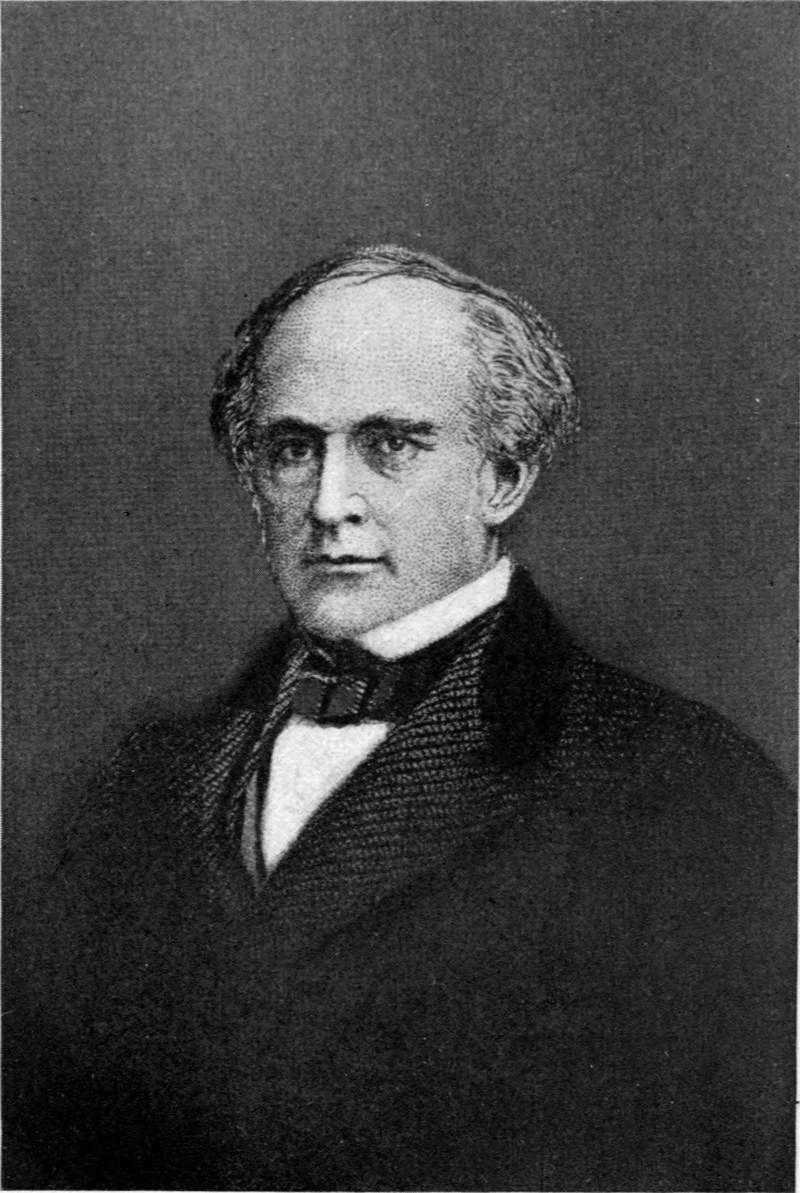
SALMON P. CHASE,
Secretary of the U. S. Treasury during the war period.
CHAPTER VI. WALL STREET DURING THE WAR.
39
The Financiers of Wall Street Assist the Government
in the Hour of the Country’s Peril.—The Issue of
the Treasury Notes.—Jay Cooke’s Northern Pacific
Scheme Precipitates the Panic of 1873.—Wall
Street Has Played a Prominent Part in the Great
Evolution and Progress of the Present Age.
Wall Street came to the rescue of the country when the
war broke out. The Government then did not have
money enough to pay the interest on the debt, and was sorely
embarrassed for a time. The Hon. S. P. Chase, Secretary
of the Treasury, sent word to Mr. Cisco, the Sub-Treasurer
in New York, to do everything in his power to raise the
money required to sustain the nation’s credit.
Mr. Cisco apprised the “Street” of the instructions he
had received from Washington concerning the empty condition
of the Treasury. He showed a number of the leading
operators and financiers that within a few days the interest
on the accruing obligations would have to be paid, or the
Government paper should go to protest. It was clearly
demonstrated that if funds could not be raised the Government
should be placed in a perplexing position, that would,
in all probability, greatly complicate and prolong the struggle
for national existence. It was one of the most critical moments
in the whole history of the Republic, and the emergency
required clear, decisive judgment, and promptitude of
action.
Wall Street men perceived the gravity of the situation at
a glance. If the Government’s credit should collapse, it
was feared that the whole framework of our political system
would be endangered.
The foundation of all securities was threatened with a
destructive upheaval, and most serious consequences were
40likely to ensue, menacing a contraction of all values. The
prospect was very dark. Not a ray of hope shone through
the sombre clouds that hung dismally over the Union. The
internal dissensions of our people, and the apparent destruction
of our national life, were watched with the deepest
interest by European friends and foes—the latter being then
largely in the majority, and only waiting a favorable opportunity
to pounce upon what they considered their destined
prey.
Manifest destiny seemed to have leagued all her forces in
opposition to us. The stoutest hearts quailed at the prospect
of our dissolution as a nation.
At this momentous juncture, when there was no eye to
pity, and when no other arm seemed mighty enough to save,
the Wall Street men were equal to the occasion. They put
their heads together, came to the front, and resolved to extricate
the Government from its perilous position. It is true
that they were well paid for it. They charged twelve per
cent. for the loan, but that was nothing when the risk is
taken into account. It was then almost impossible to get a
loan at any rate of interest. By some of the great nations
of Europe the risk then involved in such a loan was regarded
in about the same light as the people of this country
now estimate the present chances for realizing on Confederate
paper money, or Georgia bonds of the old issue.
In this state of public feeling, Lombard Street was not in
a favorable mood to negotiate loans with this country, and,
the whole fraternity of the Rothschilds shut their fists on
their shining shekels and shook their heads negatively and
ominously at the bare mention of advancing money to the
once great but now doomed Republic.
Money was dear at the time, and the Government was
only obliged to pay what could have been obtained in other
quarters. Curiously enough, private property then was considered
better security than the Government endorsement,
on the principle—which was not a very patriotic one, though
41in reality true—that the country could survive its form of
government. That form, however, the best the world has
yet seen, survived the shock and maintained its autonomy.
That it did so was in a large measure due to the prompt
action of Wall Street men in raising the sinews of war at
the incipient stage of the rebellion. Had they failed to do
so, it is not improbable that the repulse at Bull Run might
have proved a decisive blow to the Union, and plunged the
country into a state of anarchy from which nothing but a
despotism almost as bad could have retrieved it.
The negotiation of this loan brought out the twelve per
cent. Treasury notes. After this issue the rates fell. Then
came the 11 and the 10¾ per cent. issues, and subsequently
the well-known and long to be remembered 7 3-10 Treasury
notes.
After this issue had been popularized, successfully disposed
of, and finally taken up at maturity by the 5-20
loan, Jay Cooke was quick to issue, after their pattern, his
famous 7 3-10 Northern Pacific Railroad bonds. Evidently
he had a patent for negotiating that famous 7 3-10 per cent.
railroad loan, as almost every clergyman, Sunday-school
teacher and public benefactor were found to have invested
in them, when the crash came, and although the road was
the means of his financial downfall, with the ruin of an
innumerable number of others besides, who were dragged
into the same speculative whirlpool, this unfortunate event
was not entirely an unmixed evil.
It is true that this was the main and visible cause of
precipitating the panic of 1873, of which I shall speak more
fully in another chapter, but the Pacific road was the great
pioneer in opening up the Far West, and developing its
material resources, the great artery of the Western railroad
system, conveying vigorous and durable vitality to the industrial
life of the expansive regions beyond the Rockies.
Thus, in taking a retrospect of my twenty-eight years in
Wall Street, I find that what sometimes appeared to be
42great evils have been succeeded by compensating good, fate
counter-balancing fate, as the Latin poet has it. It was so,
as I have previously observed, after the panic of 1857. It
was so after the convulsion of 1873, and though I have only
historic evidence to guide me in regard to the earlier history
of the Street, I find it was so after 1837. So, the maxim that
history repeats itself has been fully verified in Wall Street.
So, now that I have relapsed into a reflective mood on
this subject, a host of important associations connected with
the main issue rush upon me. The prominent idea that
stands out in bold relief is the rapid and wonderful progress
made in Wall Street during the period that I have undertaken
to chronicle. And not only so, but the rapid strides
that have been made in everything, almost universally, during
that time, present a vast theme for consideration. The
part that Wall Street men have taken in this mighty evolution
is the topic that concerns me most at present. As I
attempt to progress with my subject, I observe this division
of it becoming more expansive, so that I find myself in the
position of the Irishman when he ascended to the top of a
mountain. After recovering from the first effects of his surprise,
he exclaimed: “I never thought the world was so
large!”
So it is with me. I never thought that Wall Street was
so big, nor that Wall Street affairs were so extensive, until
I began to write about them. They expand, as well as improve,
surprisingly on closer acquaintance. I only hope I
shall be able to impress this idea more vividly on the minds
of my clerical friends, and others who have been misguided
in this respect, chiefly on hearsay and irresponsible evidence,
and who, I am sorry to say, have been the well-meaning,
but over-zealous instruments of misleading others.
To come to an approximate deduction of facts, then, it is,
I think, a fair estimate of the general progress of humanity,
to say that there has been greater material advance in everything
that relates to a higher civilization, and the greatest
43good to the greatest number, during the last thirty years,
than in all the previous time that has elapsed since the period
that the father of history, old Herodotus, began to chronicle,
in his racy style, the real and imaginary events of the human
family.
The part that Wall Street has played in this amazing
progress has been comparatively large, and would, if thoroughly
investigated and fully discussed, make a larger book
than I have time to write at present.
I can only glance at the prominent topics and leading
events in the extensive and somewhat sensational history of
Wall Street, and sketch briefly the conspicuous features in
the lives of certain celebrities who have been conspicuous
in the history of speculation, and of those who have been
prominent in the financial affairs of the country.
CHAPTER VII. MORE WAR REMINISCENCES—BRITISH AND NAPOLEONIC DESIGNS.
45
How Napoleon Defied the Monroe Doctrine.—The Banquet
to Romero.—Speeches by Eminent Financiers,
Jurists and Business Men.—The Eloquent Address
of Romero against French Intervention.—Napoleon
shows his Animus by Destroying the Newspapers
Containing the Report of the Banquet.—The Emperor
Plotting with Representatives of the English
Parliament to Aid the Confederates and Make
War on the United States.
There were other critical periods during the war when
Wall Street came to the front, besides the one in which
it rendered such timely aid to the Government in its financial
embarrassment. One of these was when the Emperor
of the French, Napoleon III., showed his cloven foot and
exhibited anew the rancorous disposition which ten years
previously had crushed the Republican hopes of La Belle
France by the murderous Coup d’Etat. He made a bold attempt
to plant that blood-stained foot on this fair soil, in
open defiance of the Monroe doctrine, and to crush the liberties
that his immortal uncle, even in the full flush of his
great conquests, dared not attack and was forced to respect.
I shall here relate an incident of this period, which, I
think, has not obtained the prominence in our national
history to which, I believe, it is justly entitled.
Senor Romero, then Mexican Minister at Washington,
was invited to a public dinner in New York, in order that
proper occasion might be found to discuss the situation with
regard to the intentions of Napoleon the Little concerning
Mexico, and with a view of preventing foreign intrusion,
which was only the entering wedge for future invasion, at a
time when our nation was engaged in a family struggle to
46maintain its own existence, and demonstrate the durability
of Republicanism.
The dinner, at which there was a grand manifestation of
sympathy in favor of the Mexican cause against French
invasion, took place on the evening of March 29, 1864, at
Delmonico’s, Fifth Avenue and Fourteenth street. The
banquet was held in four of the largest rooms. The large
dining hall was illuminated as a promenade for the families
of the hosts and guests, and a large concourse of ladies and
gentlemen who were invited to see the table and be presented
to the distinguished envoy. The rooms were
elegantly decorated with flowers, grouped and festooned
with artistic skill, and the doorways arrayed with fragrant
wreaths and garlands. One room was set apart for the
orchestra, and Helmsmuller furnished the music.
Senor Don Juan N. Navarro, Consul-General of the Mexican
Republic, Ignacio Mariscal, an eminent jurist of Mexico,
and Don Fernando De La Cuesta, Assistant-Secretary of
the Legation, were invited guests. Following are the names
of the Committee of Invitation:
WILLIAM C. BRYANT,
WILLIAM H. ASPINWALL,
HAMILTON FISH,
JOHN W. HAMERSLEY,
JONATHAN STURGES,
JAMES W. BEEKMAN,
J. J. ASTOR, Jr.,
SMITH CLIFT,
W. E. DODGE, Jr.,
DAVID HOADLEY,
FREDERICK DE PEYSTER,
W. BUTLER DUNCAN,
WILLIAM CURTIS NOYES,
HENRY CLEWS,
FREDERICK C. GEBHARD,
JAMES T. BRADY,
GEORGE T. STRONG,
HENRY DELAFIELD,
HENRY E. PIERREPONT,
GEORGE OPDYKE,
DAVID DUDLEY FIELD,
GEORGE BANCROFT,
C. A. BRISTED,
ALEXANDER VAN RENSSELAER,
GEORGE FOLSOM,
WASHINGTON HUNT,
CHARLES KING,
WILLARD PARKER,
ADRIAN ISELIN,
ROBERT J. LIVINGSTON,
SAMUEL B. RUGGLES.
Hon. James W. Beekman presided. The stewards were
John Jacob Astor, John W. Hamersley and Henry Clews.
When full justice had been done to the large variety of
sumptuous dishes, the chairman called the company to
order, and explained that the object of the meeting was to
47do honor to the great cause of religions and political freedom
contended for by the Republic of Mexico. The chair
gave the first regular toast, “The President of the United
States,” and called upon David Dudley Field to respond,
who did so in his usual eloquent style, stating that the sentiment
of the whole country was united in sympathy with
the cause of the Mexicans, and that the Executive Department
of the Government was simply the agent and exponent
of the popular will. He dwelt at some length on the French
invasion of Mexico as one of the greatest crimes of the age,
and predicted the brief reign of Maximilian. Mr. Field
wound up his discourse with the following grand peroration:
Maximilian may come with the Austrian eagle and the
French tricolor; he may come with a hundred ships; he may
march on the high road from Vera Cruz to the capital, under
the escort of French squadrons; he may be proclaimed by
French trumpets in all the squares of the chief cities; but
he will return, at some earlier or later day, a fugitive from
the New World back to the Old, from which he came; his
followers will be scattered and chased from the land; the
titles and dignities which he is about to lavish on parasites
and apostates will be marks of derision; the flag of the
republic will wave from all the peaks of the Cordilleras,
and be answered from every mountain-top, east and west, to
either ocean; and the renewed country, purified by blood
and fire, will resume its institutions, and be free.
The second toast was, “Don Benito Juarez, Constitutional
President of the Mexican Republic,” to which Mr. Charles
King, President of Columbia College, responded. He
spoke of Mexico as the friend and ally of the Union as
opposed to European hostility.
His Excellency, Senor Matias Romero, the honored guest
of the evening, then made a brilliant speech on the situation,
from which I take the following extracts:
“I am very happy to say that the kind of feeling you express
for Mexico is fully reciprocated. In Mexico there
48are now but the sentiments of regard and admiration for
the United States, and the desire to pursue such a course as
will draw more closely all those powerful ties by which both
nations should be united.
“The Emperor of the French pretends that the object of
his interference in Mexican affairs is to prevent the annexation
of Mexico to the United States; and yet that very
thing would, most likely, be ultimately accomplished if a
monarchy were established in Mexico. Fortunately for us,
that scheme is by no means a feasible one.
“We were willing to grant to the United States every
commercial facility that will not be derogatory of our independence
and sovereignty. This will give to the United
States all possible advantages that could be derived from
annexation, without any of its inconveniences. That once
done, our common interests, political as well as commercial,
will give us a common whole American continental policy
which no European nation would dare disregard.
“The bright future which I plainly see for both nations
had made me forget for a moment the present troubles in
which they are now involved. I consider these troubles of
so transitory a nature as not to interfere materially with the
common destiny I have foreshadowed; but, as they have the
interest of actuality, I beg to be allowed to make a few
remarks in regard to them.
“Every careful observer of events could not help noticing,
when the expedition against Mexico was organized in Europe,
that it would, sooner or later, draw the United States into
the most serious complications, and involve them in the
difficulty. The object of that expedition being no less than
a direct and armed interference in the political affairs of an
American nation, with a view to overthrow its republican
institutions and establish on their ruins a monarchy, with a
European prince on the throne—the only question to be
determined by the United States and the other nations
concerned, was as to the time when they would be willing or
ready to meet the issue thus boldly and openly held out by
the antagonistic nations of Europe.
“This, in my opinion, is the situation in which the United
States are placed with regard to Mexico. Taking into consideration
the well-known sagacity of American statesmen
the often-proved devotion of the American people to
republican institutions, and the patriotism and zeal of the
49Administration that presides over the destinies of the
country, I cannot entertain the slightest doubt that the
United States will act in this emergency as will conduce to
the best interests they and mankind at large have at stake
in the Mexican question.
“The United States may find that they are brought
squarely to the issue in the Mexican question sooner than
they expected, should the report, lately reached here, of
any understanding between Maximilian, as so-called Emperor
of Mexico, and the insurgents in this country, prove correct.
The archduke, it is stated, will inaugurate his administration
by acknowledging the independence of the South, and,
perhaps, he will go further; and this, of course, by the
advice, consent and support of the French Government,
whose satellite, and nothing else, will the archduke be in
Mexico.
“Among the many events calculated to terminate immediately
French intervention in Mexico, the European complications
which threaten to cause a general war on that
continent should be particularly mentioned. It is certainly
wonderful that while Europe is in so insecure and agitated a
condition, menaced by revolutions everywhere, and wrestling
to recover its own existence and independence, the
French Emperor should be thinking about arranging other
people’s affairs, as if his own did not require his immediate
and most particular attention.”
Mr. George Bancroft, the eminent historian, was next
called upon to reply to the toast, “The Eminent Statesmen
of Mexico,” among whom the chair named Guatimotzin,
Hidalgo, Morelos, Ocampo, Lerdo and Degollado. Mr.
Bancroft said:
Gentlemen—Although I am not prepared to deliver an
address worthy of this auditory, I can not refrain from replying
and expressing my sentiments, as I have been called
to reply to the toast which our president has just proposed
to the statesmen of our neighboring sister republic. The
struggle which for many long years the Mexican people
have sustained against their interior tyrants has been an
heroic struggle, worthy of a civilized and cultivated people,
and in which the sympathies of the whole civilized
50world—of all the friends of political and religious liberty—ought
to have been manifested in a frank and decided manner
in behalf of the Mexican people, directed by the liberal
party. I believe, gentlemen, that the cause of civil wars,
not only in Mexico, but throughout all Spanish America, has
been the clergy alone, who, when they come to acquire power
in the State, always strive to overturn the government and
to subordinate the temporal interests of society to their own.
This attribute seems to belong principally to the Catholic
clergy.
“The struggle, then, in which up to this time the patriotic
Mexicans have been engaged, was a holy struggle, and the
sympathy of the whole people of the United States was with
them—a people who, whatever may be their religious creeds,
adopts as a fundamental principle the most complete religious
liberty, and the absolute independence of the Church from
the State.
“But now the sympathy of the United States is increased
for the Mexican people, when, in addition to the facts already
mentioned, we find this people struggling for their
independence and nationality against a European nation,
which, taking advantage of the civil strife in which we were
engaged, has sought to establish before our eyes a form of
Government in open antagonism to our own. We can not
do less than receive this project in the same way as Europe
would receive it, were we to foment revolutions and establish
republics on that continent.
“Then it is that those statesmen in the United States
who aid us to emerge from our present difficulties, and to
restore our power and legitimate influence, and those who
in Mexico not only consummate the great work of establishing
religious liberty on a solid basis, but who succeed in
driving from their country the foreign invader, or at least
keep the sacred fire of patriotism and of resistance to the
invader burning, while we disembarrass ourselves of our
complications, deserve, in the highest degree, our success
and ardent homage.
“Gentlemen, the Egyptians used to place a burning lamp
at the feet of their royal corpses. On descending the steep
vaults in which the corpses were deposited, the lamp was
naturally extinguished.
“Let Europe place at Maximilian’s feet the weak lamp
of monarchial power. It will not burn in the atmosphere
of our continent.”
51Mr. William Cullen Bryant was then called upon, and
said, in part:
“We of the United States have constituted ourselves a
sort of police of the New World. Again and again have
we warned off the highwaymen and burglars of the Old
World who stand at the head of its governments, styling
themselves conquerors. We have said to them, that if they
attempted to pursue their infamous profession here they
did it at their peril. But now, when the police is engaged
in a deadly conflict with a band of ruffians, comes
this Frenchman, knocks down an unoffending bystander,
takes his watch and purse, strips him of his clothing, and
makes off with the booty. This act of the French monarch
is as base, cowardly and unmanly as it is criminal and cruel.
There is no person, acquainted, even in the slightest degree,
with the political history of the times, who does not know
that it would never have been perpetrated had not the
United States been engaged in an expensive and bloody
war within their own borders.
“We thought that we saw the dawn of an era of enlightened
government in the administration of Juarez. That
dawn has been overcast by the clouds of a tempest wafted
hither from Europe. May the darkness which has gathered
over it be of short continuance; may these clouds soon be
dispelled by the sunshine of liberty and peace, and Mexico,
assured of her independence, take the high place which
belongs to her in the family of nations.” (Continued
applause.)
Senor Don Ignacio Mariscal responded to “Our Guest
and the Bar of Mexico.”
Mr. George Folsom, formerly envoy from the United
States to the Netherlands, responded on behalf of the
diplomacy, making special reference to Don Jose Lopez
Uraga, Mexican Minister to Berlin.
Dr. Willard Parker responded to the health of Dr. Navarro,
formerly Chief of the Medical Staff of the Mexican
Army.
Mr. George Opdyke responded on behalf of the merchants.
52Senor De La Cuesta replied to the Commerce of Mexico.
Mr. Jonathan Sturges spoke for the fine arts of Mexico.
Mr. Washington Hunt spoke, protesting strongly against
the French invasion of Mexico.
Mr. Frederick De Peyster, President of the New York
Historical Society, responded on behalf of the historians
of Mexico. He also made some eloquent remarks on the
tyranny of French intervention.
Mr. Henry E. Pierrepont spoke, as the representative of
Brooklyn, against the French policy in Mexico.
Mr. Smith Clift responded on behalf of the Bar.
Mr. Charles Astor Bristed replied on behalf of the Literary
Men.
Mr. William E. Dodge, Jr., spoke on behalf of the Young
Men of America. “The tread of a French invasion,” he
said, “is to them a direct insult, and were our own sad war
over, I believe there is not a town, or village, or hamlet,
where a full company would not spring to arms to aid our
sister republic in her glorious struggle. I give, as a sentiment
in which I know all will heartily join, the “Monroe
Doctrine”-“Americans can never allow the heel of European
despotism to place its imprint upon the soil of our Western
continent.”
The Chair then said, “Let us now recognize the services
of our commissariat, who have so nobly discharged their
stewardship. I propose the health of the stewards. I beg
Mr. John W. Hamersley to speak in their behalf.” Three
cheers were then given for the stewards.
Mr. Hamersley delivered an eloquent address, from which
I take the following excerpts:
“It is hardly fair, sir, to call on us while our hearts are
beating with fervid thoughts, and your ears ringing with
burning words. Had this toast been on the programme,
one of my coadjutors would have prepared an address
worthy of the compliment and the occasion. This Committee
was not chosen for their gifts of utterance, but for
53those humbler tastes, which only lend a grace to eloquence.
Our duties are æsthetic, industrial and artistic. We have
compassed the ends of the earth, the depths of the sea; we
have levied contributions on the four winds of heaven, to
cluster here all that can tempt the appetite, or fascinate the
ear and eye, and we fancied our mission accomplished.
“However, there is the post-prandial law; the despotism
of the wine cup, to which we all owe allegiance—the only
despotism which the descendants of the Huguenots, or
Pilgrim Fathers, will ever tolerate on this continent. We
are here, sir, in menace to none, but firmly and respectfully,
in the majesty of manhood, and in consciousness of power,
to reassert a principle, imbibed with our mother’s milk, a
household word, a dogma of American faith; but while we
cordially grasp our neighbor’s hand, in the darkest hour of
her trial, the grasp has due emphasis and significance.
“With her, we have kindred traditions; each of us has
hewn an empire from the wilderness; each of us has expelled
the oppressor; and both of us, with tattered banners
drenched in the gore of hero martyrs, are now appealing
from treachery to the God of Battles.
“We have a common future; for who can doubt that our
successes and the death-knell of treason is already rung?—who
can doubt that the triumph of our arms will be the
signal for the eagles of Austerlitz “to change their base,”
from the pyramids of Puebla for their perch on the towers
of Notre Dame? And permit me here, sir, to express a
hope, suggested by the season (God grant it may be a
prophecy), that the Easter chimes of Mexico, of the coming
year, with the glad tidings of a Saviour risen, shall peal from
sierra to sierra, from ocean to ocean, with the glad tidings of
a nation risen, a nation born again. (Cheers.)
“Sir [to the Chair], it is fitting, while the accents of sweet
music recall tender and happy memories (man, imaged by
that armed cactus; woman, by that graceful palm), it is holy
to consecrate the hour to her who was “last at the cross
and first at the sepulchre.” I propose, sir, a toast, to which
your heart’s pulse will echo:
‘The daughters of Mexico—Fair as her sons are brave.’”
(Enthusiastic and prolonged applause. Music—Viva Republica.)
“We must not permit the modesty of our banker and
steward, Mr. Clews, to outweigh our desire to hear from the
Bourse.”
Mr. President and Gentlemen—Enough has already
been said, in the speeches made this evening, to indicate
most conclusively the depth of sympathy which pervades
this community in behalf of the cause of Mexico, and I rise
to express my cordial concurrence with the sentiments which
have been avowed.
The unanimous and determined voices of this company
clearly show that public opinion in this country will not
submit to the encroachments of foreign powers upon any
portion of the territory of the continent.
The principles of free republican government are so
strongly implanted in the hearts of the people both of
Mexico and the United States, that they will never consent
to surrender them.
“Human freedom and the rights of man make common
cause between Mexico and all other American States.
“I do not utter these words in prejudice against any
government. In my judgment, European nations will best
promote the welfare of their own people by carefully abstaining
from all interference with the declared will of those
who dwell on this continent.
“The doctrine has been solemnly asserted, and will be
maintained inviolate against all alliances which seek to impede
the progress of liberal institutions, or to impair the
strength of governments founded on the rights and intelligence
of the people.
“This is the doctrine of the United States, and, under the
shield of its power and influence, the safety, prosperity and
independence of Mexico will be maintained and made perpetual.”
(Cheers.)
The meeting then separated, marching out to the inspiring
strains of the Marseillaise.
A few days after this meeting the House of Representatives
unanimously resolved that the United States would
never consent to the establishment of a monarchy which
would arise under the auspices of Europe, upon the ruins of
a republic on the American continent.
55The speeches at the Romero banquet, followed by this
resolution, were the premonitory sounds of the death knell
of Maximilian’s empire, even before he took formal possession
of his evanescent throne.
To show the animus of the Emperor regarding this meeting,
and how closely he was watching the struggle, I may
state that when the New York Herald, which had a full
account of the meeting, arrived in Paris it was promptly
seized by Napoleon’s censors and shared the fate of La
Lantern and some of Victor Hugo’s most vigorous productions.
It was committed to the flames on account of the
speeches made by some of our representative men. It will
be seen by reference to this incident that our representatives
in Wall Street were among the first to perceive this threatened
danger to the nation, and that they manifested their
business tact and capacity in promptly meeting it. They
acted literally on the maxim of Sir Boyle Roche, that “the
best way to shun danger is to meet it half way.”
Wall Street men were the first to make the move that
checkmated the tyrant who was ambitious to prove before
the eyes of the world that Republicanism was a failure.
A volume might be written by the student of universal
history, and probably will be by some future Herodotus,
Macaulay, or Prescott, on the far-reaching influences of this
original move on the part of the Wall Street men. There
is a large field for speculative theorizing, containing much
important truth in the way the Republican spirit was reflected
in the political thought of Mexico, as the result of
the feeling manifested at this public dinner in New York.
It was undoubtedly the active precursor of the events that
sealed the fate of that unfortunate cat’s paw, Maximilian. It
gave birth to the idea that reverberated across the Atlantic,
created distrust in Napoleon’s schemes of conquest as visionary
with his own people, and alarmed their Teutonic foes, who
urged forward those mighty preparations that culminated in
the terrible overthrow at Sedan.
56To the mere reader of our local newspapers the connection
between cause and effect of these great events may seem
far-fetched, but it is all plain sailing to the student of general
history.
In this connection it would be unjust to the genius of
history to omit the part which England played on the same
chessboard with her former political refugee, constable and
Imperial protégé. Although Mr. Disraeli has done considerable
justice to the case in Endymion, he has not dealt
with it from this side of the Atlantic. And I am now going
to touch on some points of hitherto unwritten history.
There was a secret alliance formed between Napoleon and
the British Cabinet—an international conspiracy on a large
scale—to demolish the liberties of this country, pounce upon
the wreck and then share the spoils between these two
powerful pirates. How this was planned and subsequently
averted would form, if fully written up, one of the most
interesting chapters in the voluminous library of statecraft,
and would take most of the political sensation out of the
best efforts of Macchiavelli, Talleyrand and Prince Metternich.
I can only glance at the leading features of the
diabolical scheme, and show how Wall Street men were
again promptly in the breach at the proper moment.
The New York riots of 1863 were fomented by British,
French and Southern influence combined, as a part of the
villainous plot. The design was to give our troops enough
to do in quelling local riots, so that they should have no
opportunity of going to the front. Southern passion was
predominant, and could not discern at the time that their
would-be allies were their bitterest enemies. It was hoped
that the “draft riots” would be so widespread as to afford
Southern chivalry a chance to march unimpeded to Washington
and capture the Capitol, when the allied foes of
liberty, by virtue of their entente cordiale, should seize upon
their prey.
Everything was in readiness for raising the blockade
57and pouring in armaments from Europe to complete the
conquest. England had acted with more caution than Napoleon,
and was slow to move, though he was constantly
urging her forward. It is due to the villainy of his great
conception to state, that, had he been able to move his more
sluggish ally in crime with greater celerity, the result might
have been overwhelmingly disastrous to this country.
CHAPTER VIII FOREIGN INTRIGUES AGAINST AMERICAN LIBERTY.
59
How the Imperial Pirates of France and England Were
Frightened Off Through the Diplomacy of Seward.—Ominous
Appearance of the Russian Fleet in
American Waters.—Napoleon Aims at the Creation
of an Empire West of the Mississippi, and the Restoration
of the Old French Colonies.—Plotting
With Slidell, Benjamin, Lindsay, Roebuck and
Others.—Urging England to Recognize the Confederacy.—Disraeli
Explains England’s Designs and
Diplomacy.—After the Naval Victory of Farragut,
and the Capture of New Orleans England Hesitates
Through Fear, and Napoleon Changes His
Tactics.—Renewal of Intrigues Between England
and France.—Their Dastardly Purposes Defeated
by the Victories of Gettysburg, Vicksburg, and the
General Triumph of the Union Arms.
While the events related in the previous chapter were
progressing apparently towards a result that might
have proved disastrous to the dearly purchased liberties of
this country, the nation was saved by taking advantage of a
circumstance that was peculiarly providential to the Union.
The Russian fleet happened to be in South American waters
at the time. Secretary Seward was apprised of the fact by a
Wall Street man. He was quick to act on the suggestion.
Alexis, the brother of the Emperor, was in command of the
fleet. Seward sent him a friendly invitation, which he instantly
accepted. The spies of Napoleon and of Scotland
Yard, who were always on the alert, and who always discerned
the evil side of everything, promptly informed their employers
of the fact. The conclusion was manifest to
European statesmen, who, unlike Wall Street men, never
“copper” the points given by spies. It seemed to them
clearly an alliance between the Great Empire and the Great
Republic. Extremes had met for mutual defence and safety
60probably for aggressive purposes. The conspirators were
frightened with their own shadows and foiled by their own
cowardice, and an apparently imminent calamity was thus
simply averted.
As the designs of the two great European powers were
craftily concealed through their evasive system of diplomacy,
it has frequently been a subject of debate as to
whether they meant to take the part of the Confederacy for
the purpose of dissolving the Union. It is necessary, therefore,
to produce some tangible evidence of the intentions of
these foreign potentates in the hour of our country’s
greatest peril.
The Confederate records purchased by the Government
some years ago throw a ghastly light on this subject, and
gravely warn us of the Scriptural injunction, to put no trust
in kings and rulers.
The correspondence between the officials of the Confederacy
and the Confederate Commissioners, Slidell and
Mason, at Paris and London, prove to a demonstration that
the ruler of France and the rulers of Great Britain were
making preparations on a large scale to take charge of this
country as soon as the Union, through their diplomatic aid,
should be dissolved. Letters from other representatives of
the Confederates of Europe go to corroborate this view of
the matter. The correspondence between Dudley, Post,
Mann and Lamar, who were commissioners in various parts
of Europe, and Judah P. Benjamin, the Confederate Secretary
of State, is conclusive on the subject of European
armed intervention, which has hitherto formed a topic of dispute
in the historic circles of the Civil War.
The correspondence of Slidell, who was on familiar
relations with the Emperor of the French, gives the inside
history of the intrigues of that potentate in such clear terms,
that there can be no doubt of his intentions towards this
country.
Had it not been for the superior vigilance of Mr. Dayton,
61the United States Minister at Paris, several privateers would
have been launched from French ports to prey upon the
commerce of the United States, and to do similar work to
that for which the Alabama was fitted out.
It would seem from the correspondence that the managers
of the affairs of Great Britain were not so anxious to encourage
the South as Napoleon was; at least they succeeded
in concealing their purpose better. The practical diplomacy
of England in this affair was superior to that of
France, though the latter has still held the palm for possessing
better diplomatic plotters, who are supposed to have
no superiors outside the royal associations of the reigning
power of Russia.
There is no doubt, however, that Napoleon was anxious
to take positive steps to recognize the South, while professing
the most friendly feelings in favor of the North, but he
was afraid to act except in unison with Great Britain, and
he failed to bring her to time until the favorable moment
for the execution of his plans had passed.
Slidell and Mason went to Europe in January, 1862.
This was perhaps the darkest and most critical period for
the cause of the Union during the great struggle. The
Commissioners carried letters with them showing the inefficiency
of the blockade of the Southern ports, the great disadvantages
and losses suffered by England and France
through cutting off the cotton supplies, and setting forth
the enormous advantages that would result if free trade with
the Confederacy were established. These were strong
arguments to arouse the spirit of commercial selfishness in
favor of the South.
The ambitious designs of Napoleon were of a very towering
and extensive character. He not only expected to recover
Louisiana, which his uncle in an hour of necessity
had sold to the United States, but he aimed at the restoration
of the entire old colonial empire of France on this
continent.
62The Emperor was thoroughly posted in the affairs of this
country. It seems that while he had resided in a small room
in Hoboken, and took his meals at a twenty-five cent restaurant,
paying for them with money borrowed from French
patriots, on the very slim prospect of reaching the throne of
France, he made the best use of his time, and he had studied
the history and geography of the United States and Canada
with great care and accuracy.
In justice to his character for gratitude, however, it must
be said, in passing, that, like young “Corneel” Vanderbilt,
he paid all the money he borrowed, and placed some of his
New York and Hoboken creditors in good positions at the
Tuileries, under the Second Empire. He never forgot a
favor nor forgave an injury.
The Emperor’s knowledge of American affairs, as well as
his ambitious designs, were briefly, but at the same time
very fully disclosed, in conversation with Mr. Benjamin, at
the Villa Eugenie, at Biarritz. “He turned with peculiar
and undisguised eagerness,” said Mr. Benjamin, “to the
Mexican question. He knew the very number of guns on the
Morro, the sums the United States had spent on the fortifications
in Florida, the exports and imports of Galveston
and Matamoras, in fact everything which well informed
local agents could have reported to an experienced statesman
eager for information. He examined me again on
Texas and its population, the disposition of the French
residents, the tendencies of the German colonists, the feeling
on the Mexican frontier. He observed that Louisiana was
nothing but French at the bottom. I was fully persuaded
that he proposed to seek in Mexico a compensation for the
lost colonies in the West Indies, which, he said, could not be
recovered, ‘sans nous brouiller avec nòs allies,’ (without embroiling
us with our allies). He insisted upon it that France
must, sooner or later, have a foothold (pied à terre) on the
Florida coast, for the purpose of protecting her commerce
in the Gulf, for, he added, ‘Nous ne voulons pas d’un autre
63Gibraltar de ce côté là,’ (we don’t want another Gibraltar on
that side.”)
Mr. Slidell’s predecessor at Paris, Mr. Rost, had received
assurance from the Duc de Morny, who was then next to the
Emperor in his knowledge of State affairs, that the South
would be recognized. It was only a question of time. After
consulting with M. Thouvenel, Minister of Foreign Affairs;
Persigny, Minister of the Interior; Fould, Minister of
Finance; Rouher, Minister of Commerce; Baroche, President
of the Council of State; Mocquard, Private Secretary
of the Emperor; Count Walewski, De Morny and others,
Slidell was satisfied that the Emperor was all right, and
he wrote to Jeff. Davis & Co. as follows:
“The Emperor has invited the English Government to
join with him in recognizing the South, but the English
Government, owing to Earl Russell, has refused to act
simultaneously with him.”
This statement of Slidell was true in one sense, but it
was not strictly and diplomatically correct. There is no
doubt that the English Government would have been anxious
enough to join the Emperor in any scheme of conquest
and spoliation that had a fair promise of success, and an
average chance of avenging the Boston Tea Party and the
Battle of Bunker Hill, but both powers were playing at the
game of diplomacy, each for the purpose of making the
other responsible for taking the initiative in the recognition
of the South. They were both very circumspect about committing
themselves, and the Palmerston-Russell Cabinet,
with that caution which always characterized old “Pam”
in foreign affairs, would not recognize any suggestion from
the Emperor that did not bear his signature. The Emperor
thought to make use of a Mr. Lindsay, a wealthy shipowner
and member of Parliament, to draw out the English Government,
but the latter was not to be committed to any
course of policy that might involve important responsibilities
in the future through any second-hand authority.
64The Emperor seemed to have opened his mind very
freely to Mr. Lindsay. He told him that he would have
taken steps to put an end to the blockade of the Southern
ports if the English Ministry had intimated a willingness
to act with him. He said he had forwarded intimation to
this effect through Mr. Thouvenel, but had not received a
satisfactory answer. He intimated that if England was
ready, he was, and was prepared at once to despatch a formidable
fleet to the Mississippi, on condition that England
should send an equal force to demand free ingress and egress
for their merchantmen, and for the cargoes of goods and supplies
of cotton which were necessary to carry on the commerce
of the world.
Napoleon was resolved to act, as he had always done, on
the high ground of conferring universal favors on humanity.
This was an old trick in his family, but it did not work
effectually this time. He said he had regarded the restoration
of the Union impossible from the first, and for that reason
had deprecated the continuance of the bloody contest,
which could not lead to any other result than separation.
He authorized Mr. Lindsay to make this statement to Lord
Cowley, and to ascertain whether he would recommend the
course indicated to his Government.
It is very refreshing to reflect on the sensitive exhibition
of feeling displayed, in his ostensible attempt to stop the
carnage and fratricidal strife, by the man who planned and
directed the wholesale assassinations in connection with the
sanguinary Coup d’Etat.
Mr. Lindsay reported back to the Emperor the substance
of his interview with Lord Cowley, who said that the English
Government was not prepared to act until further developments.
It was about this time that Mr. Seward was
getting in his fine diplomatic work with Earl Russell and
Palmerston, which helped materially to upset the calculations
of the Emperor.
Napoleon then requested Mr. Lindsay to see Palmerston,
65Russell, Derby and Mr. Disraeli, and to gather their intentions.
He desired Mr. Lindsay to do all this of his own
motion, and not as coming from him, and said he did not
wish to be embarrassed by the forms and delays of ordinary
diplomacy, because he felt the necessity of immediate action.
Lindsay again saw Earl Russell, as the accredited and
special ambassador of the Emperor, viva voce. The Earl
informed him that he could not receive any communications
from a foreign power, except through the regular diplomatic
channel. He then sought an interview with Mr. Disraeli,
who was much more affable and communicative than the
little Lord who stood so punctiliously on ministerial ceremony.
Disraeli threw considerable light on the subject. After
expressing a deep interest in the affairs of the Confederacy,
and saying that he fully concurred in the views of the
Emperor, he told Mr. Lindsay that he had good reasons for
believing that a secret understanding existed between Earl
Russell and Mr. Seward; that England, in the meantime,
would respect the Federal blockade and withhold recognition
of the South. “But if France should take the initiative,”
said Mr. Disraeli in conclusion, “any course she
may adopt to put an end to the present state of affairs will
undoubtedly be supported by a large majority in Parliament,
and knowing this, Lord Russell will give a reluctant assent
to this, to avoid a change of ministry, which would otherwise
certainly follow.”
This shows that Disraeli saw very clearly through the
duplicity of English diplomacy, and that while England was
profuse in her promises to Mr. Seward, she was only waiting
for the Emperor to act as pioneer in order that she might
have a safe opportunity as well as a plausible pretext for
armed intervention.
The Emperor complained that Earl Russell had divulged
his views on American affairs, as expressed through his
ambassador, to Mr. Seward. Lord Russell placed himself
66squarely on the “fence,” to be prepared for any emergency.
Finally, about the middle of April, the Emperor thought it
would be best that he himself should make a friendly appeal
to the Federal Government alone to open the ports, if England
did not join him, without further hesitation. He thought
it would be necessary, however, to accompany the appeal with
a demonstration of force on the Southern coasts; and if the
appeal should be effective, to back it up by a declaration of
his purpose not to respect the blockade. He determined,
however, to wait a few days longer to see how England
would act.
This resolution of the Emperor to make a friendly appeal
to raise the blockade was only a thin excuse to find a cause
for quarrel with the North, and it is very probable he would
have acted on this determination alone, but for an unexpected
event which changed his projects, and the apparent
course of history.
About a week after this diplomatic conference, Commodores
D. G. Farragut, and D. D. Porter, with their able
commanders Bailey and Bell, had made the famous passage
of forts Jackson and St. Philip, at the mouth of the Mississippi,
with the United States squadron, silenced the Chalmette
batteries and anchored in the harbor of New Orleans.
After two days’ parleying the city surrendered at discretion,
or rather, the city authorities passively and sullenly permitted
Farragut, and afterwards General Butler, to take
possession of the city without shedding any blood.
This great naval victory of Farragut’s squadron and its
consequences dampened the ardor of the Emperor. He saw
the chances of backing up his “friendly appeal” by a demonstration
of force, were cut off, so far as New Orleans and
the forts of the Mississippi were concerned.
Yet, Napoleon did not totally relinquish the enterprise,
on account of this crushing defeat of the Confederacy. M.
Billault, a prominent member of Napoleon’s cabinet, after
this event said to Slidell, “The cabinet, with the probable
67exception of M. Thouvenel, are in favor of the South. If
New Orleans had not fallen, our recognition could not have
been long delayed, but if the Confederates should obtain
successes in Virginia and Tennessee, and hold the enemy at
bay a month or two longer, we may see an opportunity for
intervention.”
The Emperor’s intentions, however, were fully revealed
in an autograph letter to General Forey, which was written
in July and in which his grasping ambition stood out in the
boldest relief. He wrote: “In the present state of civilization
of the world, the prosperity of America is not a
subject of indifference to Europe, for she nourishes our
manufactures and gives life to our commerce. We are
interested in having the Republic of the United States a
powerful and prosperous power, but we are not willing to
have that Republic take possession of the entire Gulf of
Mexico, command from there the Antilles as well as South
America, and monopolize the distribution of the products of
the New World. To prevent this, a stable Government must
be established in Mexico, and we will in that event have
restored to the Latin race on the other side of the Atlantic
its power and prestige.”
Napoleon completely overdid the thing in this letter to
General Forey. The vaulting ambition which overleaps
itself and falls on the other side stuck out too plainly. He
showed that he wanted the whole earth, and this aroused
the resentment of the South. In the following August, M.
Theron, a French consul in Texas, inspired by Napoleonic
ideas of annexation, coolly contemplated the transformation
of Texas to a French republic, and confided his project to
Governor Lubbock of that State, who apprised Jefferson
Davis of the consul’s aspirations. This was too much even for
the Confederate Government, and M. Theron and the French
consul at Richmond were both politely requested to leave
the Confederate States.
Napoleon persisted in his intrigues for the purpose of
68getting a foothold in this country, in spite of the rebuff
which his officious consuls had received from the Confederacy.
He expressed himself desirous of interesting some of
the rest of the European powers in the cause of the South,
and again entered into confidence with Slidell on the possibility
of joint mediation on the part of England, France
and Russia. “My own preference,” said the Emperor, “is
for a proposition for an armistice for six months, with the
Southern ports open to the commerce of the world. This
would put a stop to the effusion of blood” (How tender-hearted
he was!) “and hostilities would probably never be
resumed. We can urge it,” he added, “on the high grounds
of humanity, and the interests of the whole civilized world.
If it be refused by the North, it will afford good reason for
recognition, and perhaps for more active intervention.”
Mr. Slidell then suggested that if the Emperor would give
some kind of assurance that the police would not interfere,
ships and munitions of war might be sent from France to
the Confederacy.
“Why could you not have the ships built as if for the
Italian Government?” suggested the Emperor. “I do not
think it would be difficult, but I will consult my ministers
about it.”
Napoleon then suggested the joint appeal for the six
months’ armistice to England and Russia, which was declined
by both. He then made a direct offer of mediation
to the United States Government, in the most friendly terms,
and on the “high grounds of humanity.”
The United States Government did not see it in this
light, and rejected Napoleon’s humane offer.
The Confederate agents then obtained power to build
ships of war in French ports, and to arm and equip them,
and proceed to sea without molestation from the French
authorities, the Treaty of Paris forbidding such a hostile
act against a friendly power like the North to the contrary
notwithstanding. The despot of France imagined himself
above all treaties at that time.
69The English Alabama was then cruising in a most successful
manner. The Emperor had a conference with Mr.
Arman, a large shipbuilder, and assured him that there would
be no difficulty about building the ships for the Confederates
under the disguise of their Italian destination. Accordingly,
a contract was made for building five ships of war at
Bordeaux and Nantes, and afterwards another contract for
three iron-clad rams.
In 1863 the Emperor had a great deal of business on
hand, but was still convinced, amid all his diplomatic duties
that the South should be recognized by the European
powers. He was afraid, however, of putting his Mexican
expedition in jeopardy by risking a rupture with the North.
Finally, he said: “I will make a direct proposition to
England for joint recognition. This will effectually prevent
Lord Palmerston from misrepresenting my position and
wishes on the American question.” Accordingly, he had an
interview with those two worthy members of Parliament,
Messrs. Roebuck and Lindsay, at Fontainebleau, which was
said to be highly satisfactory. He authorized them to state
in the House of Commons that he was both willing and
anxious to recognize the Confederate States, with the co-operation
of England.
There was a great debate in Parliament on the subject,
in the midst of which Earl Russell arose and said that
Baron Gros, the French Minister, had received no communication
from his Government on American affairs. Mr.
Roebuck, who made the motion on the authority of the
Emperor, was astonished that he had been so badly fooled.
It still remains a mystery, however, why Baron Gros did
not receive the advice in question from the Emperor, because
M. Mocquard, the Emperor’s Secretary, wrote to
Slidell as follows: “On the next day after the interview
of Messrs. Roebuck and Lindsay with the Emperor, the
Minister of Foreign Affairs telegraphed Baron Gros to
‘officiously’ inform Lord Palmerston that, should Great
70Britain be willing to recognize the South, the Emperor
would be willing to follow her in that way.”
The only explanation that seems plausible under these
circumstances is, that the Palmerston-Russell Cabinet interrupted
this telegram to Baron Gros for diplomatic purposes,
or that the Baron, seeing that the debate in Parliament
had taken an unfavorable turn, had prudently resolved to
suppress the advice from Napoleon, in order that his master
might not commit himself while England was not heart and
soul with him in the enterprise. In fact, England had
begun to see that she had taken a false position, and Mr.
Gladstone’s eloquent spurt, to the effect that “Jefferson
Davis had created a nation,” was no longer the diplomatic
faith of England. She was more influenced by fear than
love, as she always is, and had begun to think, after the
capture of New Orleans and the destruction of the Confederate
fleet, that the Federal Government was capable of
organizing a formidable navy. The London Times, which
voiced diplomatic sentiment then, said so. During this very
debate on Roebuck’s motion, Lee’s army had been beaten at
Gettysburg, Vicksburg had surrendered and victory was
beginning to perch on the Northern banners everywhere.
Napoleon also drew in his horns, complaining bitterly that
“perfidious Albion” had gone back on him, and he was
afraid to permit the war ships, when finished, to leave the
French ports for any destination, and when he permitted
the English privateer, the Rappahannock, to depart, it was
under the injunction that the American minister should
know nothing about it.
What Lord Palmerston called a “concatenation of circumstances”
contributed largely to force the Emperor to
change his policy towards the United States. Maximilian’s
Mexican expedition was exceedingly unpopular, trouble was
brewing in several parts of the continent, and Bismarck
and Von Moltke were cunningly and deliberately weaving
that net in which the Man of Destiny, seven years later, was
71hopelessly entangled at Sedan. His dream of a French
American Empire beyond the Mississippi had vanished long
before his last abject act of humiliation in surrendering the
sword of France to Bismarck. And ere he died, a miserable
wreck of disappointed ambition, again a political exile, he
had the opportunity of seeing our own Republic, which he
sought to destroy, rehabilitated, and on its way to become
the greatest nation in history.
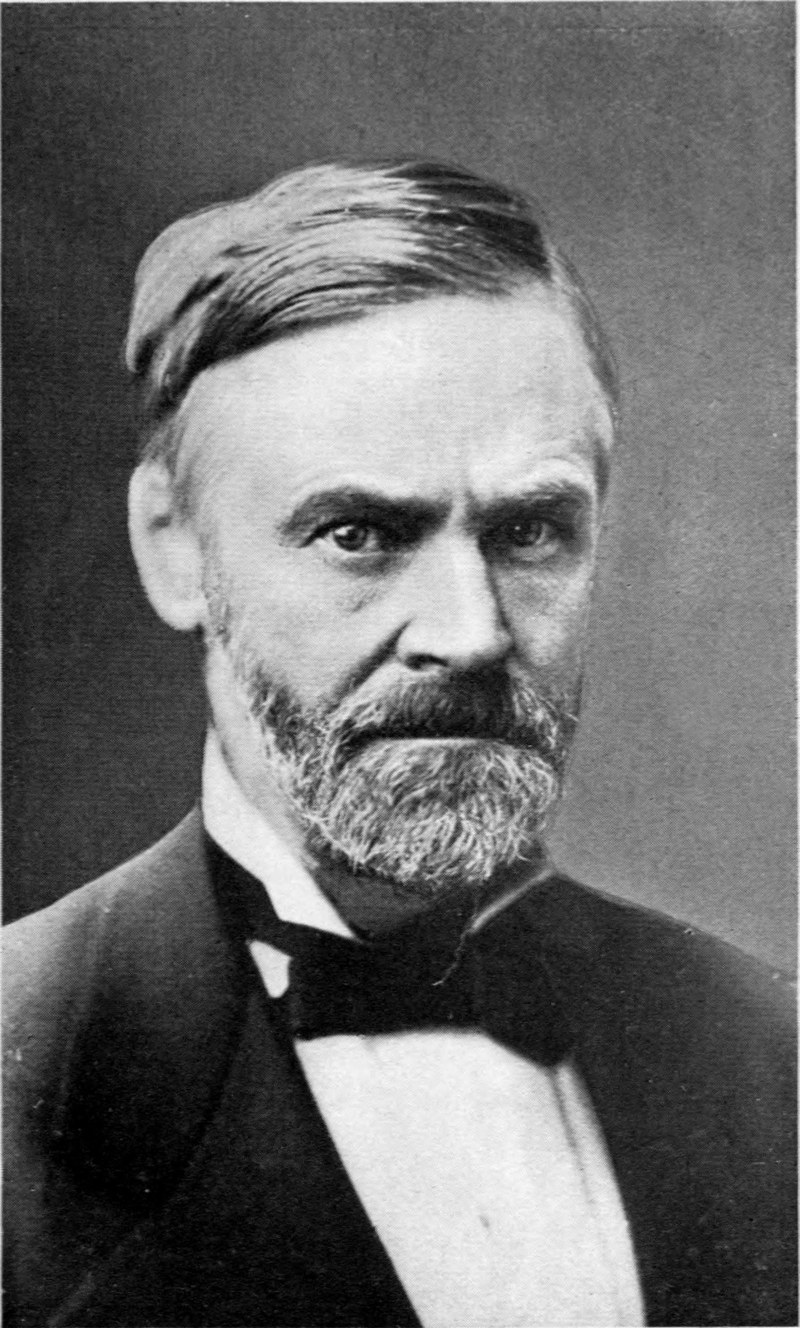
THE HON. JOHN SHERMAN,
Who has taken a prominent part in financial matters since the beginning of the war, first in making treasury notes a legal tender in 1862; in proposing the Redemption Act in 1867, which was passed in 1870, and in the resumption of specie payments in 1879, which was the crowning success of the financial policy which established the Government credit on a solid basis.
CHAPTER IX. SECRETARY CHASE AND THE TREASURY.
73
The Depleted Condition of the Treasury when Mr.
Chase took Office.—Preparations for War and
Great Excitement in Washington.—Chivalrous
Southerners in a Ferment.—Officials Up in Arms in
Defence of their Menaced Positions.—Miscalculation
with Regard to the Probable Duration of the
War.—A Visit to Washington and an Interview with
Secretary Chase.—Disappointment about the Sale
of Government Bonds.—A Panic Precipitated in
Wall Street.—Millionaires Reduced to Indigence
in a Few Hours.—Miraculously Saved from the
Wreck.—How it Happened.
Soon after Mr. Chase came into the Treasury he found
that money was seriously needed. In fact the Treasury
was empty. The expenditure for the fiscal year ending
June, 1861, was 62 millions, and there were only 41 millions
of revenue to meet them, and even this amount was threatened
with a serious reduction on account of the traitorous
and rebellious attitude of the South.
After President Lincoln had called upon Congress to provide
for the enlistment of 400,000 men, the expenses of the
Government were soon advanced to the enormous amount of
a million dollars a day. The Secretary of the Treasury made
a calculation, which he submitted to the President, showing
that the probable expenditures would amount to 318 millions
for the ensuing year. He advised that 80 millions be
provided for by taxation, 240 millions by loan, and that 50
millions of Treasury notes, redeemable in coin on demand,
should be issued.
The Secretary was authorized by Congress to borrow a
sum not exceeding 250 millions, on the credit of the United
States, and as a part of this loan he was, in the words of the
74Act, “to issue in exchange for coin, or pay for salaries or
other dues from the United States, not over 50 millions of
Treasury notes, bearing no interest, but payable on demand
at New York, Philadelphia or Boston.”
When Mr. Chase advertised for bids on the bonds known
as the 81 issue all bids at 94 and above were accepted, and
those under 94 were rejected.
I got up a syndicate immediately to take the entire balance
of the loan at 94, and went on to Washington to see
the Secretary. This syndicate comprised a number of New
York banks and many large capitalists. I called upon Secretary
Chase when I arrived, informed him of the object of
my visit and made him an offer of 94 for the entire balance
of the loan.
He was in favor of the proposition, but requested me to
leave the matter open until the following morning for him
to consider. It was a question with him whether he ought
not to give those whose bids had been rejected an equal
opportunity with the parties I represented.
I never can forget the impression I received on my approach
to Washington that morning. As I looked through
the window of the sleeping-car my eye was met by an entire
train load of brass cannon. There were at least a dozen
platform cars, each having one of those huge guns, all
apparently in order to wheel at once against the enemy. I
shall always remember the feelings that came over me at
that moment. The question of war or no war was vividly
presented to my mind, and this was the uppermost thought
during my visit at Washington.
I descended from my traveling quarters as soon as the
train was announced as having arrived at the capital, and
repaired to Willard’s, then the principal, if not, in fact, the
only hotel for a traveler to go to, and it was an old-fashioned,
historic hostelry. I hastened to my room, rapidly
performed my ablutions, and then found my way into the
dingy breakfast room. On inquiry, I found that ten o’clock
75was the usual hour for heads of departments, including Mr.
Chase, to be at the Treasury. At that hour I went to see
him. I sent in my card and was ushered into his presence
without delay. He was a man of portly frame and distinguished
bearing, and impressed me with the feeling of being
in the presence of an individual far above the average
standard of humanity in every respect.
I informed the Secretary of my mission, with the result
above stated.
About seven-eighths of the people of Washington, at that
time, were Southerners. The office-holders were largely composed
of the latter, and they were expecting to be suddenly
turned out of office. This rendered the place a boiling
caldron of conspiracy and treason.
As I went around collecting information, the sight of
those cannon that at first had made such an indescribable
impression upon me, continued to haunt my vision wherever
I went. The air was filled with rumors of war, and everybody
was wound up to the highest pitch of hostile excitement.
As I mingled among the people, the impression was forced
upon me that war was inevitable, and that up to the very
hilt of the sword. I felt that the contest would be long and
bloody.
I sent a dispatch to my firm in New York, conveying my
impressions to that effect, and advised them to clear the
decks in preparation therefor. I urged them to lose no time
in selling off all the mercantile paper on hand, and requested
them to communicate to the members of the syndicate,
which I had formed for the purchase of bonds, recommending
them to withdraw therefrom, as I was convinced that
war to the knife was imminent, and that Government bonds
must have a serious fall in price in consequence.
I saw Mr. Chase the next morning, and told him that, as I
believed, there was going to be a long and bloody war,
I could not conscientiously, in the interest of my clients,
renew my bid of the previous day.
76With regard to my opinion about the probable length of
the war, the Secretary took issue with me very firmly.
Mr. Chase, however, afterwards proved to be a warm and
most valued friend of mine, and it was largely due to his
aid and recognition that I achieved brilliant success in my
early Wall Street career during the war period.
The Secretary was of opinion that the bonds should command
par, at least, and they would be worth that and above
it very soon, he thought. He made this assertion on the
expectation that the impending difficulties would soon be
adjusted, and that in less than sixty days all the trouble
would be at an end.
It was not so extraordinary as it may seem to some people
now, with the light of later events fully before them, that the
Secretary was so sanguine of short work being made of the
South, because he only shared the opinion of a large number
of people, who greatly underestimated Southern durability.
After leaving the Secretary, who treated me with great
consideration, as he did every one in his inimitable and dignified
manner, which made such a durable and favorable
impression on all who came in contact with him, I felt greatly
pleased and highly gratified at meeting him. In fact, his
fine, magnetic presence was of a character to command the
admiration of almost every person who had the honor of an
interview. He was a great man for producing good first impressions,
and, unlike many impressions of this character
they were generally lasting.
Had I not visited Washington at the time I did, and had
I not obtained the correct impression concerning the future
of the then impending difficulties, my firm, like many others
that invested in Government bonds, mercantile paper, stocks
and other fluctuating properties, would have been irretrievably
ruined. I have reason to congratulate myself, therefore,
on my good fortune in narrowly escaping such a disaster,
almost at the beginning of my Wall Street career, as
I was thus enabled, at a later stage of the national trouble,
77to be of considerable service to the Government, through
the Treasury, in its efforts to sustain such an army in the
field as was calculated to ensure success to the Federal
arms.
My first experience in dealing in Government bonds was
just prior to the Lincoln administration, when Mr. Cobb
was Secretary of the Treasury. He advertised for sale to
the highest bidders an issue of U. S. bonds bearing five
per cent. interest, having twenty years to run, and my firm
bid for $200,000 of them, hoping to make a quick turn, and
a small profit thereon. A five per cent. deposit was made,
as required by custom.
The loan was all awarded to most of the bids, mine included,
and a very large part of it was awarded to Lockwood
& Co., who were then regarded the largest and most
prosperous Stock Exchange firm in the street.
George S. Robbins & Co., John Thompson, Marie & Kans,
and a few others, whose names I now forget, made also
large bids.
Of those mentioned, however, my firm stood alone in taking
up the bonds, as the threatening aspect of political affairs
came on so soon afterwards as to depreciate Government securities.
The original deposit of five per cent. was lost by
these subscribers, and the bonds were permitted to remain
in statu quo, as the Government never forced the claim
against the delinquents.
This, in a large measure, accounted for the impoverished
condition of the Treasury when Mr. Chase took charge of
it, and for which Mr. Cobb has been made an object, not
wholly undeserving, of public reproach.
The $200,000 bonds my firm subscribed for at par
were sold mostly at 95 and below, but the fact of taking
them, and meeting the subscription, without fail, gave my
firm an excellent standing with the Government at the beginning
of the war, and enured greatly to my firm’s advantage
thereafter.
78At the time I visited Washington my firm was more largely
engaged in dealing in mercantile paper than any other
branch of Wall Street business.
I had inaugurated the system at the time of my advent to
the “Street” of buying merchants’ acceptances and receivables
out and out, the rate being governed by the prevailing
ruling rate for money, with the usual commission added.
It was by this method that my firm soon became the largest
dealers in mercantile paper, which business had formerly
been controlled by two other firms for at least a quarter
of a century, and whose old fogy methods were by my innovations
easily eclipsed.
The merchants at that time would go to these discount
firms and leave their receivables, bearing their endorsements,
on sale there, and only when sold by piecemeal could
they obtain the avails thereof.
The more expeditious plan that I adopted, which was to
give these negotiators a check at sight, seemed generally to
merit their approbation, and enabled me to command the
situation in that line of business, very much to the chagrin
of my competitors.
In this way my firm had accumulated about five hundred
thousand dollars in notes, which were hypothecated with
various city and country banks.
After coming to the conclusion above referred to on my
visit to Washington, in regard to the certainty of a prolonged
and desperate war, I made quick steps back to New
York to dispose of my paper. I went vigorously to work,
and succeeded in unloading all but ten thousand dollars of
short time notes made by Lane, Boyce & Co., and a note of
$500 of Edward Lambert & Co.
I had no sooner accomplished this very desirable work of
shifting my burden, and distributing it in a more equable manner
on the shoulders of others, but at higher rates than I
paid, than in less than a week after my return from Washington
the exciting news arrived of the firing of the first
hostile gun at Fort Sumter.
79The announcement of this overt act of war spread like
wildfire, and the wildest scenes of excitement and consternation
were witnessed in Wall Street and throughout the
entire business community. The whole country was panic
stricken in an instant.
Stocks went down with a bound to panic prices. Fortunes
were lost, and millionaires were reduced to indigence in a
few hours. Money was unobtainable, and distrust everywhere
was prevalent.
The two firms whose paper I was unable to dispose of
were about the first to fail, and before the maturity of any
of the balance of the paper which I had successfully negotiated
both the drawers and endorsers thereon, without a
single exception, all collapsed.
The height which Gilroy’s kite attained would have been
nowhere in point of altitude to that which I should have
reached had I not had the good luck to have cleared my
decks as I did, and in the nick of time.
My safety in this instance was due to my inspiration, to
which I believe myself more indebted than anything else for
the privilege of remaining in Wall Street up to the present
date.
I am no spiritualist nor theosophist, but this gift or occasional
visitation of Providence, or whatever people may
choose to call it, to which I am subject at intervals, has
enabled me to take “points” on the market in at one ear
and dispose of them through the other without suffering any
evil consequences therefrom, and to look upon these kind
friends who usually strew these valuable “tips” so lavishly
around with the deepest commiseration. My ability to do
this, whatever may be its source, whether human or divine,
has saved me from being financially shattered at least two
or three times annually.
I do not indulge in any table tapping or dark seances like
the elder Vanderbilt, but this strange, peculiar and admonitory
influence clings to me in times of approaching squalls
more tenaciously than at any ordinary junctures.
80I have known others who have had these mysterious
forebodings, but who recklessly disregarded them, and this
has been the rock on which they have split in speculative
emergencies.
Therefore I say again, beware of “points.” They constitute
the ignis fatuus which lure more unfortunate speculators
to their financial doom than all other influences put together.
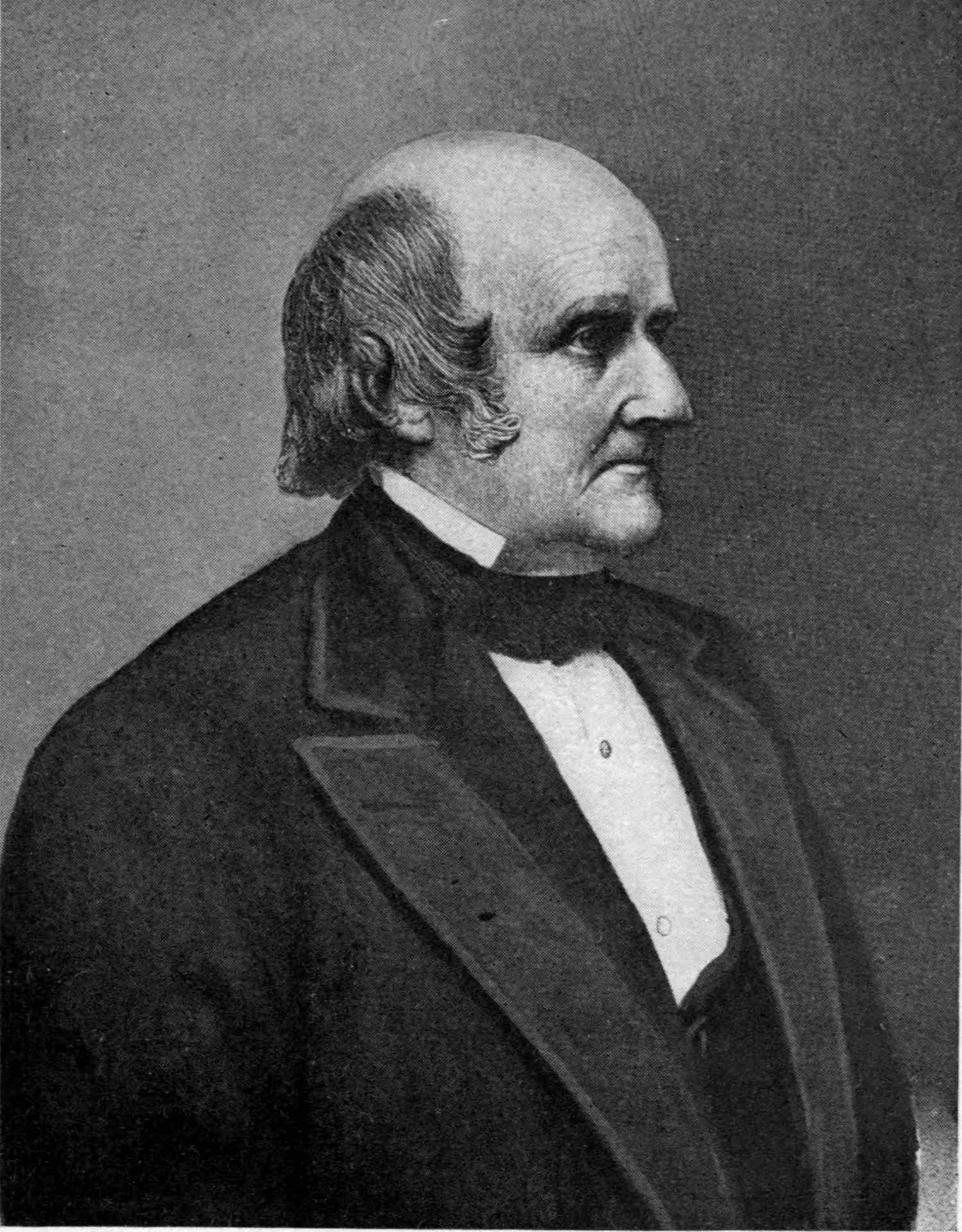
HON. ELBRIDGE GERRY SPAULDING,
Author of the Legal Tender Act, which authorized the issue of greenbacks in 1862. He was a member of Congress from New York. He resides at Buffalo, and is now in the eightieth year of his age, but still in good physical health, with his mind clear and vigorous.
CHAPTER X. THE NATIONAL BANKS.
81
Secretary Chase Considers the Problem of Providing
a National Currency.—How E. G. Spaulding takes
a Prominent Part in the Discussion on the Bank
Act.—The Act Founded on the Bank Act of the
State of New York.—Effect of the Act upon the
Credit of the Country.—A New System of Banking
Required.
The history of the Bank Act of 1863, improved by the
Act of 1864, would require much larger space than I
can devote to it in this book. I can only glance at its
salient points, and show its great influence, not only on the
finances of the country, but upon the destiny of the nation
itself.
The Hon. E. G. Spaulding, who was one of the most prominent
men in dealing with the financial questions of that
period, has written and preserved a very full history of
the legislation on the subject, and of the interesting debates
which preceded it.
After the temporary loans had been negotiated to release
the pressure upon the Government, Secretary Chase set his
mind to consider the problem of providing a currency without
disturbing the business organization of the country.
At this period he was met by a fresh difficulty, in the suspension
of specie payments, which had been hastened by the
arrest of Mason and Slidell, which, but for the wise policy of
Mr. Seward, would have precipitated a conflict with Great
Britain.
Early in 1862 Congress authorized ten million more of demand
notes. This was followed by further issues, making in
all 300 million United States notes. Secretary Chase was at
first opposed to making these notes a legal tender for private
82debts, but in order to get the bill through, he agreed to the
legal tender clause, as the Government was greatly in need
of money.
The Secretary was also empowered by Congress to borrow
500 million dollars on 5-20 year 6 per cent. bonds, and
also to obtain a temporary loan of 100 millions on condition
that the interest on the bonds should be paid in coin,
and that the customs should be collected in coin for that
purpose.
The first bill to provide a national currency secured by
a pledge of United States bonds was introduced by Mr.
Hooper, in July, 1862, but it was not reported from the Committee
to which it had been sent. At the meeting of Congress
in December the same year the financial problem had
become still more complicated, and owing to the magnitude
which the war had then assumed, the expenses amounted to
two millions a day.
The total receipts for the fiscal year ending June 30,
1863, were 511 millions, and the expenditures were 788
millions, thus leaving a deficit of 277 millions.
All the financial wisdom of the Secretary was necessary in
this dilemma. The question was whether to provide for
these 277 millions by a fresh issue of United States notes,
or by interest-bearing loans.
The Secretary was opposed to increase the volume of the
currency, saying that the result would be the inflation of
prices, increase of expenditures, augmentation of debt, and
ultimately disastrous defeat of the very purposes sought to
be attained by it.
He was in favor of an increase in the amount authorized to
be borrowed on the 5-20 bonds. He advised the creation
of banking associations which should secure their circulation
by a deposit of Government bonds. One object of this
was to create a market for the bonds.
Congress was not in favor of this proposition, and the
bill of Mr. Hooper was again offered in the following January,
83but was adversely reported from the Committee on
Ways and Means.
Another new issue of 100 millions United States notes
was ordered on motion of Mr. Stevens, of Pennsylvania, to
meet the constantly increasing needs of the army and navy.
Mr. Lincoln signed the joint resolution ordering the new
issue with some reluctance, and sent a special message to
the House, in which he expressed his regret that it was
necessary to add this last amount to the currency while the
suspended banks were free to increase their circulation.
Soon after this Senator Sherman offered a bill to provide a
national currency, somewhat after the model of Mr. Hooper’s
bill. The Sherman bill was passed before the end of February.
This virtually secured the present national banking
system.
In order to show more clearly the nature of the national
bank legislation, and the prominent part taken by Mr.
Spaulding and a few others therein, Mr. Chase having been
the directing mind, it is necessary to make a brief resume of
the action of Congress with the State banks in this connection.
In January, 1862, the banks applied to Secretary Chase
to receive their notes in payment for the bonds which he
had for sale, but the Secretary, thinking that this would
inflate the bank currency, refused the offer. Yet the process
of inflation went on until it increased from 130 to 167 millions.
When Mr. Spaulding advocated the National Bank Act
on the ground that it would provide a permanently improved
bank currency, the Hon. Roscoe Conkling, at that time in
the lower House, opposed the policy of making war upon
the twelve hundred banks in the free States, and made a very
affecting appeal for the orphans and widows who had stock
therein. He proposed to issue 260 millions of seven per
cent. bonds, payable in thirty-one years, to be exchanged
for the bills of the suspended banks of New York, Philadelphia
84and Boston, and also to issue 200 millions of United
States notes, payable in coin in a year. Mr. Conkling’s
scheme was assailed by Mr. Bingham, of Ohio, on the
ground that it would subject the national currency to the
mercy of city bankers and brokers. Other eminent representatives
stood up for the maintenance and integrity of
the State banks, and notably Mr. Conkling opposed the
measure vigorously, which was intended to tax the State
banks out of existence.
Mr. Spaulding, who advocated the bill, was followed by
Mr. Fenton in an able argument, showing the superiority of
a currency secured by United States bonds, and Senator
Sherman explained the great evil occasioned by the success
attending the counterfeiting of the State bank notes.
These arguments seemed to be conclusive and overwhelming
in the passage of the bill.
It must not be forgotten, to the honor of the State of New
York, that the National Bank Act was founded on the Banking
act of this State, whose chief features were a currency
secured on public funds, and that directors and stockholders
should be personally liable.
The authorship of this idea is attributed to Mr. Stillman,
who is also the well-known author of the “Stillman Act” to
abolish imprisonment for debt.
This bank act, which was especially engineered by the
far-seeing Secretary of the Treasury, Salmon P. Chase, had
almost a miraculous effect upon the credit of the country.
It created a new and extensive market for United States
bonds, which immediately advanced from 93 to par.
All the running expenses of the Government, accumulated
with such rapidity, were paid from the sale of the 5-20’s
within the short period of two months or thereabouts.
It was stated in the Treasury report at the end of the year
that “The Bank Act at once inspired faith in the securities
of the Government, and, more than any other cause, enabled
the Secretary to provide for the prompt payment of the
soldiers and the public creditors.”
85Mr. Hugh McCulloch, the Comptroller of the Currency,
saw room for certain changes in the law, some of which were
effected by Congress in the first session of 1864. These
changes were embodied in the Act of June, 1864.
There was a long debate and strenuous opposition, in
which Secretary Chase deeply sympathized, against State
taxation of the national banks, but despite the opposition
the taxation clause was carried.
At length the modified act was passed, limiting the total
amount of United States notes to be issued to 400 millions,
with such additional amount, not exceeding 50 millions, as
might be transiently required for the redemption of the
temporary loan, and thus the main features of the Bank Act,
which has served its purpose very well, became a law.
I hope, however, ere long, as I have more fully intimated
in another chapter, to see a superior system of banking,
which I believe must succeed the present system, which is
now doomed to “innocuous desuetude” through the imminent
payment of the public debt.
CHAPTER XI. THE NEW YORK STOCK EXCHANGE.
87
History of the Organization for Ninety-four Years.—From
a Button-Wood Tree to a Palace Costing
Millions of Dollars.—Enormous Growth and Development
of the Business.—How the Present
Stock Exchange was Formed by the Consolidation
of Other Financial Bodies.—Patriotic Action
During the War Period.—Reminiscences of Men
and Events.
The New York Stock Exchange is not a building, as
people generally suppose. It is an Association of
brokers united, but not incorporated by law, for the purpose
of buying and selling representatives of value called
“stocks” and “bonds.” Stocks, in the American sense of
the term, are properties consisting of shares in joint stock
companies or corporations, or in the obligations of a government
for its funded debt. In England, government obligations
only, are called “stocks,” and the obligations of
companies or corporations are called “shares.”
The edifice in which the Stock Exchange meets, and
which, in common parlance, is designated by the name of
the association of members, occupies a large portion of
the block bounded by Broad, Wall, and New streets, and
Exchange Place. Its main entrance is on Broad street, and
it has entrances also on Wall and New streets. It has
a frontage of 65 feet on Broad and 158 on New, on which
the back entrance is situated. The members of the Stock
Exchange have no need of a charter from the Legislature.
In fact, they have steadily resisted all attempts of the Solons
of this State to legislate in their interest. Their notion in
this respect is more fully commented upon in my chapter on
88“Corners.” The Tweed Ring, in the height of its power,
made a bold attempt to force a charter upon the Stock
Exchange, but it was indignantly rejected. The irrepressible
“Boss” and his henchmen, by the presentation of false
names, had a charter for the incorporation of the Stock Exchange
passed in 1871, the year prior to Tweed’s downfall, and
it was signed by the Governor. For these gratuitous services
the sum of $100,000 was impudently demanded; but the charter
was refused, and the demand repudiated by the association.
Since 1879 until recently the membership, which has
been full, was limited to 1,100, but by a resolution lately
passed the limit is now placed at 1,200. The seats for the
past year have sold at from $25,000 to $30,000.
The Stock Exchange building is a fine, solid structure,
devoid of anything showy, pretentious or decorative. It
was designed by James Renwick, the architect of Grace
Church and of St. Patrick’s Roman Catholic Cathedral, on
Fifth avenue at Fiftieth street. The cost of the building
was nearly $2,000,000. It costs nearly $200,000 a year
to pay the salaries of the various officials and keep
the building in proper repair. The apparatus for ventilating
the building is one of the best. It cost $30,000, and
supplies an abundance of pure air and perfumes at the same
time. The heating and cooling arrangements are the best
of their kind, and the lighting is admirable. There are
three chandeliers containing 200 electric lamps, which throw
a flood of beautiful soft light around the whole interior. The
building is well supplied with rooms for members, lavatories,
and closets. One great feature of the interior consists of
the large vaults, which contain more than a thousand safes
for the safe keeping of securities. About 400 of those safes are
let to persons who are not members. The vaults and safes
are considered the strongest in the country.
The growth of this institution appears marvelous when we
go back to its humble beginning in 1792, when the originators
formed the association under a button-wood tree in front of
89what is now No. 60 Wall Street. Following is the text of the
simple agreement into which the original members entered:
“We, the subscribers, brokers for the purchase and sale
of public stocks, do hereby solemnly promise and pledge
ourselves to each other that we will not buy or sell from
this date, for any person whatsoever any kind of public
stocks at a less rate than one-quarter of one per cent. commission
on the specie value, and that we will give a preference
to each other in our negotiations. In testimony whereof,
we have set our hands this 17th day of May, at New York,
1792. Lem Bleekez, Hugh Smith, Armstrong & Barnewell,
Samuel Marsh, Bernard Hart, Sutton & Hardy, Benjamin
Seixas, John Heary, John A. Hardenbrook, Amurt Beebee,
Alexander Gunty, Andrew D. Barclay, Empn. Hart, Julian
McIvers, G. N. Bleecker, Peter Inspach, Benjamin Winthrop,
James Ferrers, Isaac M. Gomez, Augustine H. Lawrence,
John Besley, Charles McIvers, Jr., Robinson & Hartshorn,
David Reedy.”
This arrangement existed, and was the only one by which
the members were bound, until 1820, when daily meetings
and the regular call of stocks began. The Board met in
various places, including the old Merchants’ Exchange on
the corner of Wall and William streets, but did not take
root in permanent shape until the year 1842, when it became
established in the new Merchants’ Exchange, now the Custom
House. An illustration of the old Merchants’ Exchange
is given on another page. The sight of it will doubtless
awake a host of endearing reminiscences in the minds of
some of the oldest merchants and speculators. It will be
remembered by the few survivors of that period that about
the year 1820 the meetings of the Board were held in the
office of Samuel J. Beebee, at 47 Wall Street. The Board
also met in a room in the rear of Leonard Bleecker’s; also
in the office of the old Courier and Journal. Subsequently
the meetings of the Board were held in an upper room of
the old Merchants’ Exchange. This building was destroyed
90by the great fire of 1835, and afterwards the new Merchants’
Exchange was built. The Board moved into this building
in 1842, and remained there until 1853. Up to this time
the Board was the very closest of corporations, its membership
being governed by the most iron-clad rules. There
was no field for financial news agencies in those days, for
the Board kept its proceedings a profound mystery, and its
members were bound to the strictest secresy on pain of expulsion.
That wonderful development of our later civilization,
the ubiquitous interviewer, was then unknown. The
business of the Board excited the most intense curiosity,
and so impatient did outsiders become to learn the mysteries
of the interior, that the members of an open Board
which was organized about the year 1837, after failing to
force themselves into the regular association, engaged a
building next to the Board-room, and dug the bricks out of
the wall in order that they might see and hear what was
going on.
The Board removed from the Merchants’ Exchange building
in 1863 to a room in the Commercial Exchange Bank
building, at the corner of Beaver and William. About the
year 1857, memorable as the period of the great panic, and my
advent in Wall Street, the Board removed to “Dan Lord’s
building,” which had entrances on William and Beaver
streets. It was here, about the time of my advent, in Wall
street, more fully described in another chapter, that some
of the great speculators of that era figured. Among these
were Daniel Drew, Jacob Little, and the lightning calculator,
Morse, who made and lost a fortune of millions in little
more than a year. In this building the rule of secresy was
not relaxed, and the fact is on record that a hundred dollars
a day were freely offered for the privilege of listening
at the key-hole during the time of the calls. The Board
continued to hold its meetings in this building during the
war, and up to 1865, when it removed to the present edifice.
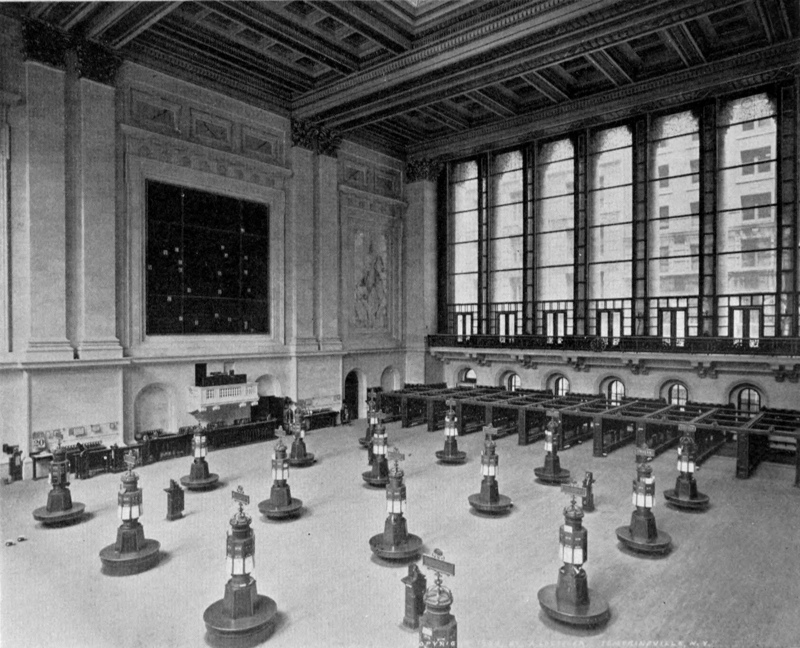
BOARD ROOM OF THE NEW YORK STOCK EXCHANGE.
91It is worthy of note here that the Stock Exchange, during
the war, for the purpose of assisting the Government,
passed a resolution prohibiting members from selling Government
bonds “short;” and also a resolution forbidding
all dealings in gold. The latter resolution was the principal
cause of the formation of the Gold Exchange. This
action on the part of the Stock Exchange was taken at a
pecuniary loss of many millions of dollars, the sacrifice
having been made for the highest and noblest of patriotic
purposes; yet, in the face of such an historic record as this
some people still imagine that the members of the Stock
Exchange never have been anything but a selfish set of
money grabbers. Is there any other institution in the
country whose members would have made such a personal
sacrifice in the interest of the Government? I doubt if there
is. Certainly, none did.
There was a second Open Board of Brokers formed in the
year 1863. It took up its quarters first in a basement in William
street, called the “Coal Hole.” The membership began to
increase rapidly, and the business accumulated so fast that
the Board was soon enabled to take more capacious accommodations
on Broad street, contiguous to the Stock Exchange.
In this menacing attitude the new Board began to make
serious inroads on the business of the old one, almost one-half
of which it had acquired by the year 1869, when the
old Board called a truce. It was seen by the judicious
members of the Board that the competition was likely to
work the ruin of both, and amicable negotiations were begun
which culminated in consolidation. So the Open Board, the
Stock Exchange and the United States Government Board
were consolidated in May, 1869, making the strongest public
financial association in the country, and one of the most
important in the world, and placing it upon an almost impregnable
footing. Mr. William Neilson was the first President
in the new building.
92The following are the names of the Presidents of the New
York Stock Exchange from 1824 until the present time:
1824 Edw. Lyde.
1825 “
John Wicker.
1828 “
1829 “
1830 Russell H. Nevins.
1831 John Ward.
1832 “
1833 “
1834 R. D. Weeks.
1835 E. Prime.
1836 R. D. Weeks.
1837 David Clarkson.
1838 “
1839 “
1840 “
1841 “
1842 “
1843 “
1844 “
1845 “
1846 “
1847 “
1848 “
1849 “
1850 “
1851 H. G. Stebbins.
1852 C. R. Marvin.
1853 “
1854 “
1855 “
1856 “
1857 J. H. Gourlie.
1858 H. G. Stebbins.
1859 W. H. Neilson.
1860 “
1861 “
1862 A. B. Baylis.
1863 H. G. Stebbins.
1864 Wm. Seymour, Jr.
1865 R. L. Cutting.
1866 Wm. Alex. Smith.
1867 John Warren.
1868 Wm. Searles.
1869 W. H. Neilson.
1870 Wm. Seymour.
1871 W. B. Clarke.
1872 Edw. King.
1873 Hy. G. Chapman.
1874 Geo. H. Brodhead.
1875 Geo. W. McLean.
1876 Salem T. Russell.
1877 Henry Meigs.
1878 Brayton Ives.
1879 “
1880 Donald Mackay.
1881 “
1882 F. N. Lawrence.
1883 A. S. Hatch.
1884 J. Edward Simmons.
1885 “
1886 James D. Smith.
1887 “
1888 “
1889 Wm. L. Bull.
1890 “
1891 W. B. Dickerman.
1892 “
1893 F. K. Sturgis.
1894 “
1895 F. L. Eames.
1896 “
1897 “
1898 “
931899 R. Keppler.
1900 “
1901 “
1902 “
1903 “
1904 R. H. Thomas.
1905 H. K. Pomroy.
1906 R. H. Thomas.
1907 “
1908 “
Jacob Isaacs was Secretary from 1824 to 1831.
Bernard Hart was Secretary from 1831 to 1855.
Geo. H Brodhead was Secretary from 1855 to 1870.
B. Ogden White was Secretary from 1870 to 1883.
George W. Ely was Secretary from 1883 to 1900.
Wm. McClure was Secretary from 1900 to 1905.
George W. Ely was Secretary from 1905 to 1908.
Ten Oldest Living Members to 1907, all of whom
joined the Exchange prior to July 1, 1864.
William Alexander Smith.
Henry Clews.
E. C. Benedict.
John H. Jacquelin.
H. S. Camblos.
L. D. Huntington.
J. H. Whitehouse.
A. S. Clark.
Edwin Corning.
L. J. Van Boskerck.
CHAPTER XII. “CORNERS” AND THEIR EFFECT ON VALUES.
95
The Senate Committee on “Corners” and “Futures.”—Speculation
Beneficial to the Country at Large.—A
Regulation of Values, and an Important Agent in
the Prevention of Panics.-“Corners” in all kinds
of Business.—How A. T. Stewart made “Corners.”—All
Importing Firms deal in “Futures.”—Legislation
Against “Corners” would stop Enterprise and
cause stagnation in Business.—Only the Conspirators
themselves get hurt in “Corners.”—The Black
Friday “Corner.”—Speculation in Grain Beneficial
to Consumers.
The New York Stock Exchange is organized after the same
manner as a social club, such as the Union League, the
Union or the Manhattan, and not under a special charter
from the Legislature. Hence it is protected from the interference
of that honorable body.
Although various attempts have been made, from time to
time, at Albany, to levy taxes upon the transactions of
the Exchange, and to interfere with the business of speculation
and investment in many other ways, these legislative
designs have hitherto been happily frustrated.
Shortly after the memorable “corner” in Hannibal & St.
Jo., in 1881, another attempt was made by the Legislature to
force Wall Street matters under the jurisdiction of Albany
lobbyists and “scalpers.”
The newspaper articles on the subject of the “corner” had
attracted the attention of the Legislature then in session,
and naturally suggested to some of the wiseacres of that
dignified and incorruptible body that the “corner” afforded
an excellent opportunity, when the public mind was excited
on the subject, to raise an outcry against the shocking immorality
of such huge speculations.
96A Senate Committee on “corners” and “futures” was
therefore appointed, and various Wall Street men were
summoned to appear before it, and give their testimony on
this interesting subject. I had the honor of being one of
the witnesses cited. I promptly obeyed the subpœna in
preference to taking the risk of being hauled up for contempt
and sent to durance vile. I appeared before the Committee
at the Metropolitan Hotel, and not only answered all
questions put to me, without any fashionable lapses of
memory, after the manner of certain other financiers, but I
regaled the Committee with a little dissertation on the subject
of investigation. I had letters from members of the
Legislature afterwards complimenting me for having made
the points very clear. So I can say, “Praise from Sir Hubert
is praise indeed,” and therefore I am encouraged to reproduce
that effort in this volume, not so much from an intense
desire to go down to posterity as a successful orator, as from
a disposition to record my approval, in more permanent form,
of the soundness of the legislative judgment on my explanation
of “corners.”
When the applause had subsided, I spoke as follows:
“Gentlemen of the Committee on Corners and Futures:
Speculation is a method now adopted for adjusting differences
of opinion as to future values, whether of products or
securities. This is more common now than in former years
because the facilities for procuring information have increased
with the greater intelligence and celerity with which
all business is now conducted, and also from the greater
rapidity with which such information can be transmitted by
telegraph and cable.
“In former years the results of a crop were known only
when it came to the market. Now almost everything affecting
its future value is known with a fair degree of accuracy before
the crop is harvested. This advanced information naturally
becomes the subject of speculative transactions which could
not have existed in former times.
97“Speculation brings into play the best intelligence as to
the future of values. It has always two sides. The one that
is based principally on the facts and conditions of the situation
wins in the end, and the result of the conflict is the
nearest possible approach to correct values. The consequences
of speculation are thus financially beneficial to the
country at large.
“Speculation for a fall in prices is based upon the presumption
of an over-supply. If it succeeds, the production
of the particular product is checked until prices recover, and
in the meantime production is diverted to articles less abundant.
Thus speculation proves a regulator both of values
and production. Speculation for a rise in prices is based
upon a presumption of scarcity or short supply, and its
direct effect is to quicken production and restore the equilibrium
of prices.
“‘Corners’ usually come from running speculation to an
excessive length, by which the seller becomes responsible for
deliveries beyond what he can possibly make. He thereby
places himself at the mercy of those with whom he has made
the contracts. These exigencies chiefly affect the speculators
themselves, and the community at large but little.
“Extreme prices usually grow out of them, but they are
only momentary, and have small effect upon regular or cash
transactions, which sympathize very remotely with these
temporary and artificial quotations.
“Speculation is not to be judged by its occasional excesses,
but by the general effects which the foregoing considerations
show to be beneficial. It regulates production by instantaneously
advancing prices when there is a scarcity, thereby
stimulating production, and by depressing prices when
there is over-production. It thus becomes one of the most
beneficial agents in the business world for the prevention
of panics.
“Speculation, moreover, makes a market for securities that
otherwise would not exist. It enables railroads to be built
98through the ready sale of their bonds, thus adding materially
to the wealth of the whole country, and opening a more
profitable market to labor. In this it becomes the forerunner
of enterprise and material prosperity in business.
“There are ‘corners’ in all kinds of business as well as in
Wall Street speculation. Mr. A. T. Stewart, the great dry
goods merchant, made more ‘corners’ during the latter part
of his life than half the rest of the business community put
together. He did this mainly by contracting for the entire
and exclusive production of certain classes of goods, and as
such goods could only be bought at his establishment he
had a close ‘corner’ in them, and accordingly put on his own
prices.
“The greater portion of all the large mercantile firms do
business in the same way. And all the importing firms deal
in futures. They sell goods by sample, agreeing to deliver
them at a future stated period, varying from thirty days to
twelve months. In the meantime the goods have to be
manufactured, and in many instances purchasers have to
wait until they are grown, and imported thousands of miles.
“If it were not for the support which comes from the ‘short’
interest in grain and the general activity created thereby in
times of depression, which come periodically in this country,
it would be in the power of the large speculative grain
dealers in Europe to manipulate prices downward, and purchase
our products every year, on raids, at prices much under
the cost of production.
“When we sell to Europe we must do so at a profit, or our
transactions don’t help to enrich the country.
“Another curious thing about ‘corners’ is that the people
who organize and manipulate them generally get most hurt
in the enterprise. This was the case with the ‘corner’ referred
to in Hannibal and St. Joseph. Mr. John Duff, of
Boston, was the man in whose prolific brain that ‘corner’
originated, and the result to him was financial ruin. The
stock ran up to 350, though the short account amounted to
99only about 1,200 shares, and the ‘shorts’ had to settle at
280.
“The result was similar in the ‘corner’ in Northwest in
1872, manipulated by Jay Gould. The stock was started at
80 and it ran up to 280. It then reacted to the former figure.
I believe Jay Gould was alone in that deal, and it
came pretty near crushing him, in spite of his incomparable
capacity for wriggling out of a tight place.
“Patents are ‘corners’ protected by law. The inventor has
a monopoly for seventeen years in his invention against all
the world, and this gives him a right to make and sell the
article covered by his patent, often at a profit of several
hundred per cent. on the original cost, and on the price it
would bring if placed in competition in the open market,
like railroad stocks and grain.
“If it is the intention of the Legislature of this State to
stop enterprise in business, then your Committee is undertaking
to accomplish that work in the right way, but I think
your success would be a public calamity.”
I doubt the expediency of either undertaking to regulate
enterprise by law or to choke off competition by the law-making
power. The result would be woeful stagnation in
business. It would crush the motives for commercial
activity and depress the creative energies of prosperity.
The law of supply and demand is the best regulator.
Congress attempted to suppress speculation in gold during
the war, and as soon as the act was passed prohibiting
such dealings, the premium on gold advanced 100 per cent.
This so much terrified the wise statesmen who concocted
this sweeping measure of financial reform, that they immediately
displayed much more wisdom in hastening to have
the bill repealed.
The simple reason that such laws will not work in practice
is that where there is a will there is generally a way to
evade them. This is the case with the very best of such
laws that can possibly be framed. Take the usury laws for
100example. The methods of getting around these are numerous,
and there is practically no limit to the rate of interest
that can be exacted except the conscience of the lender,
which is frequently very elastic. Daniel O’Connell said he
could drive a coach and six through any act of Parliament.
Jake Sharp was also of opinion that he could run a double-track
horse-car railroad through the best act that could be
framed by any Albany Legislature. Jake was checked in
his career at considerable trouble and expense, but his case
illustrated that the rule referred to holds good generally in
legislation.
The fact, however, that it seldom happens that anybody
gets badly hurt in “corners,” except the conspirators themselves,
is sufficient protection for the general public, and
should set the minds of legislators at rest, if they mean to
do legitimate business in their law-making capacity.
The conspirators in “corners” are usually left high and
dry without any market for their fictitious values, and the
“corner” very frequently has the effect of putting the
property out of the speculative market for a long time. The
fate of Han. & St. Jo. is a warning to those who manipulate
“corners.” The stock was seldom quoted for months afterwards.
Take the case of Black Friday for example. It was most
disastrous to the parties intimately connected with it. It
came near proving Gould’s ruin, and he has not got over the
moral effect of it yet. The probability is it will be an heirloom
in his family, a skeleton in the Gould closet for generations
to come. Gould and Black Friday have become synonymous
in the minds of many people, and the further from Wall
Street the more the distinction becomes confounded.
In making these remarks I have no intention of throwing
any reflection upon Mr. George Gould, who seems to be a
very promising young man for a rich man’s son. His careful
education has, no doubt, done much to counteract the drawbacks
incident to the sons of wealthy men to which I have
101referred more fully in another part of this book. His maternal
training, I understand, has been of the most exemplary
kind. This will go far to offset the disadvantages to a
business career, which the accident of his birth in luxurious
surroundings, according to my theory, otherwise entails. If
his brain is composed of the genuine plastic material out
of which the craniums of successful financiers are made, he
may learn to forget that he has been nursed in the lap of
luxury, and look back with due respect to the hole whence
his father was digged and the rock whence he was hewn.
He may have brains enough, possibly, to reflect with more
pride on that ingenious mousetrap that first brought his
father into prominence, than the gew-gaws of the gilded
palace in Fifth avenue, the luxuries of the handsome
parlors and rich conservatories at Irvington, and the
gorgeous trappings of his father’s yacht and palace cars.
I have, therefore, great hopes that George will be a conspicuous
exception to the rule I have propounded elsewhere
regarding rich men’s sons.
When a large mercantile firm buys up goods in any line
so that nobody else has the same goods, it then has a
“corner” in these goods.
“Corners” in goods differ from “corners” in Wall Street in
regard to their influence on the organizers. They don’t act
like a boomerang as the Wall Street “corners” mostly do.
The “corner” is sometimes sustained during the life of the
manipulator, as in the case of Mr. Stewart.
The successors of the great operators sometimes maintain
it, but in this instance Judge Hilton made a signal failure,
though in some respects he is a far abler man than Stewart
was. Yet, he had not the genius, for working “corners,” of
his eminent predecessor. He is, probably, so well learned in
the law that he has too much inclination to go around the
“corners.”
One thing is certain, very few of these merchants can become
wealthy except through the medium of “corners.” It
102is by these peculiar methods that nearly all large fortunes
are amassed in their line, and in a perfectly legitimate manner,
too, whatever casuists and hair-splitting moralists may
say or think about the matter. The tendency to make “corners”
seems to be interwoven in our business methods, and
to play an important part in the struggle for existence. So
I don’t see what we are going to do about it without a radical
change in that compendium of the best political wisdom
that the world has ever seen. I refer to the Constitution of
the United States. All the acumen and sophistry which the
most astute Philadelphia lawyer could bring to bear upon it
has hitherto failed to show that there is anything in this
wonderful document opposed to the liberty of making
“corners.”
As Mr. Gladstone has truly said: “This document is the
most wonderful work ever struck off at a given time by the
brain and purpose of man.”
I hold there is nothing in the Constitution opposed to
the freedom of making “corners,” and that all the evils resulting
from these speculative inventions can be met and
counteracted by business methods, and the laws regulating
the ordinary concerns of life without resorting to any rigid
or special methods.
To dispose of “corners” or abolish them on the large
scale to which I have alluded would presume an entire
revolution in our social system, and to attack them piecemeal,
as the Legislature frequently does, involves a very
suspicious kind of discrimination, and is at variance with
the spirit of the Constitution. In fact it often amounts to a
kind of thinly-disguised blackmail.
The truth is, that it is almost impossible to legislate
against “corners” without aiming a fatal blow at speculation
itself, which, as I have shown, is a vital principle in the
regulation of values, the stability of business, and the prevention
of panics.
I believe the men of most experience, not only in Wall
103Street, but in other departments of finance and commerce,
will bear me out in the statement that a market where even
values are considerably inflated by speculation, is more desirable
than a period of depression. The result, in the long
run, is the greatest good to the greatest number. I don’t believe
that the ghost of Jeremy Bentham himself could rise
up and consistently condemn this statement.
I believe that speculation in grain and provisions is materially
beneficial to consumers, and that the latter are better
off, one year with another, and less liable to be menaced with
periodical famines, than if there were no speculation in these
necessities of life.
Before leaving this prolific theme of “corners” I wish to
say a few words about my own experience in that line. The
only “corner” in which I have ever been materially hurt during
my long business experience was one manipulated by
the State of Georgia.
This Sovereign State issued and granted altogether about
eight millions of bonds, all bearing the great seal, properly
signed and legally issued for full value. I advanced over
two million dollars in good money on a part of these bonds.
Shortly after this transaction, the State of Georgia ascertained
through a garbled report of a committee sent to this
city by the Georgia Legislature, that all these bonds were
held outside of her own borders. The Legislature then passed
an act of repudiation, thereby reducing the value of the
bonds from par to that of waste paper. When I discovered
that my little pile of two million dollars in what I considered
good securities would no longer exchange for greenbacks,
I had a very disagreeable sensation of having been
“cornered” by the high toned and chivalrous representatives
of the State of Georgia, which, through its lawmakers, claimed
the sovereign right to do wrong to the citizens of a sister
State.
In the Harlem “corner,” which is referred to in another
place, contracts to deliver at 110 were settled at 179.
104About three million dollars were taken out of the pockets
of the bears. Several prominent houses went down in the
struggle. The result of the “corner” was that the bulls were
saddled with the entire capital stock of the property.
One broker, who had sold calls at 150 and was requested to
fulfil his contracts when the stock had advanced to 250, was
very much in the same position as Glendower’s spirits, which
were called from the vasty deep but would not come. “I
don’t see anything here,” he said, “about delivering. You
can call, but I don’t mind it.”
There were two “corners” in Harlem. The Common
Council was cornered in one and the Legislature in the
other.
In the Rock Island “corner” the bulls bought 20,000
shares more than existed, and the price rose from 110 to
150.
London financiers have a fearful horror of “corners.”
Hence the London Stock Exchange is very chary about
listing our railroads, especially those with a moderate
number of shares.
“Corners” are seldom profitable, and the parties connected
with them can hardly escape getting badly hurt unless they
are prepared to own and carry the entire property. Even
in that event, it is usually put out of the speculative market
for a considerable time.
The Hudson “corner” was one of the most successful. It
paid a profit of 12 per cent. There was a profit of 4½ on
the Rock Island “corner.”
The first “corner” of which there is any record in Wall
Street was in Morris Canal, an old “fancy” now almost forgotten
except for its “corner.” It had been forced upward
as fancies frequently are, until it was far above its intrinsic
value, and several operators began to sell “short.”
After this operation had gone on for some time a pool
was formed to protect it, and the pool bought it all up and
locked it up in a trunk. The operation was new to the
105Street and the bears were astounded, but when called upon
to settle they became furious, and accused the manipulators
of the “corner” of entering into a conspiracy. The “bulls”
asked the “bears” why they had sold what they did not possess
and could not procure.
The dispute was referred to the arbitration of the Board
of Brokers, and that eminent body, then unsophisticated in
the arts of speculation, took what seemed to them an equitable
view of the case, and decided it in favor of the
“shorts,” who, on the ground of conspiracy on the part of
the clique, were relieved from fulfilling their obligations.
CHAPTER XIII. THE COMMODORE’S “CORNERS.”
107
The Great Hudson “Corner.”—Commodore Vanderbilt
the “Boss” of the Situation.—The “Corner”
Forced upon Him.—How he Managed the Trick of
getting the Bears to “Turn” the stock, and then
caught them.—His able Device of Unloading while
Forcing the Bears to Cover at High Figures.—The
Harlem “Corner.”—The Common Council Betrayed
the Commodore, but were Caught in their own
Trap, and Lost Millions.—The Legislature Attempt
the same Game, and meet with a Similar Fate.
In the Hudson “corner,” the stock jumped from 112 to 180.
Commodore Vanderbilt was the “Boss” of the situation
in this “corner.” He got the “bulge” completely on all
the other parties connected with it, and what is more, he
had the balance of the sympathy of the Street with him, for
he was not the aggressor in getting up the “corner.” The
fighting at first was forced upon him, but he acted on the
defensive in a way that made his opponents sorry for their
rashness. Though he did not know much about Shakespeare,
he acted in accordance with old Polonius’ advice to
his son by pushing the opposition to the wall.
As soon as he gained the mastery, he became severely aggressive,
as he was in everything.
The beginning of this story of the Hudson “corner” is
somewhat romantic. The Commodore was sunning himself
on a pile of logs on the Jersey side of the Hudson while his
yacht lay in the stream, and he was in the mood for enjoying
a long and well-earned vacation, attempting to lay aside
for a time the toil and trouble of eking out a precarious
existence in speculation. While basking in the noon-day
sun and gazing with delight on the luxurious foliage that
arose from the New Jersey bank of the river, he was aroused
108from his charming reverie by a messenger from Wall Street,
who conveyed to him the important intelligence that a
wicked and unregenerate clique of “bears” had conspired to
sell Hudson stock “short,” and that it was declining with
great rapidity under the repeated and unmerciful blows of
their hammers.
The Commodore arose and shook off his lethargy, as a
lion may be supposed to shake the dew from his mane prior
to his preparation for a spring upon an unfortunate foe.
The Commodore hastened down to Wall Street and instructed
his brokers to take all the sellers’ options offered
in Hudson. Cash stock was then taken as quickly as possible
until the market was bare. A brief calculation showed
that the buyers had secured either as cash or contract stock
all the Hudson stock in existence with the exception of a
small number of shares which were not expected to come
upon the market.
The prolific brain of the Commodore then invented a
new move in the game. A number of leading “bear” houses
were requested to “turn” Hudson, which means to buy it
for cash from the cornering party and sell it back to them
on buyers’ options for periods varying from ten to thirty
days. This able ruse was intended to impress the bears
with the idea that the cornering party was weak. It seemed
as if they were short of cash. So the leading bears grasped
at the good chance, as they imagined, of turning several
thousand shares, and instantly threw the cash stock on the
market. It was privately picked up by the brokers of the
great “cornerer.”
Everything having thus far progressed in favor of the
ruse the trap was sprung upon the unsuspecting party.
The sellers’ options began to mature, and there was no Hudson
to be obtained.
The “corner” was complete, and the stock rose to 180. It
had been 112 a few mornings before, when the Commodore
was basking in the sun, and found that the bears were taking
109advantage of his absence. The loss on a hundred
shares was $6,800.
There were about 50,000 shares contracted for to be
delivered at this rate of profit by the “cornerers.” It will
thus be seen that they were well fixed.
The bears were in terrible anguish.
But the worst part of the deal for these poor animals had
yet to come. The bears who had turned the stock were
notified that they must stand and deliver. They complained
bitterly of the ingratitude of the bulls, whom they had only
sought to oblige, by turning the stock. The bulls were
implacable, however, and demanded their property. They
proposed a compromise which was most exacting. They
were willing to lend stock at five per cent. per day. Some
of the bears paid this, thinking the “corner” would be of
short duration, but it continued for over two weeks, and,
after paying five per cent. a day for several days, these poor
victims bought the stock at the high rate and settled.
This double move in turning the stock was the ablest
trick that had ever been accomplished in cornering. It
made Vanderbilt king of strategists in that line.
But the best part of the stratagem was that wherein the
bulls saved themselves from being saddled with the whole
stock, and made immense profits out of the deal.
While some of the bears were purchasing to cover at 170,
Vanderbilt’s private brokers were selling at 140, the clique
thus craftily unloading at good paying figures. This was
one of the best inside moves in the whole history of
“corners.”
The bulls thus saved themselves from the risk of being
loaded with probably the whole, or at any rate the greater
part of the capital stock, and through the Commodore’s able
management the load was comparatively light at the end of
the deal, the property remaining as good a speculative as
before, which is a rare exception in “corners.”
The “corner” in Harlem was not less skilfully managed
110than the one in Hudson, but it had fewer complications. It
was all plain sailing, so to speak, compared with the former,
yet it clearly illustrated that the Commodore had a
genius for “corners.” When he managed the Harlem “corner”
he had had no experience in railroad matters, and he
had reached the ripe age of sixty-nine.
I place the Hudson “corner” first in order because it was,
in several respects, the greatest, though it happened at a
later date than the Harlem.
It is a curious fact that in nearly all “corners” with which
the Commodore was connected, he was on the defensive, and
seldom the aggressor at the beginning of the fight. He was
always placed in such a position that he had to fight hard
to defend his property, or let it go to the dogs.
Buying stock in Harlem was his first venture in railroad
transactions. He bought it as an investment. This was in
1863. Thirty years prior to this he had been requested to
go into Harlem, but he declined, ironically remarking:
“I’m a steamboat man, a competitor of these steam contrivances
that you tell us will run on dry land. Go ahead. I wish
you well, but I never shall have anything to do with ’em.”
When the Commodore went into Harlem it was selling at
eight or nine dollars a share. It had been down as low as
three dollars about the time I arrived in Wall Street. He
put some money in the road, began improvements and the
stock soon rose to 30. Many people predicted that the
Commodore would lose all the money in railroads that he
had made in steamboats.
The stock, however, gradually rose to 50, and speculators
began to perceive that there was some inside movement going
on. This was made apparent when, one day in April,
1863, the Common Council of this city passed an ordinance
authorizing the Commodore to build a street railroad down
Broadway to the Battery. So Jake Sharp’s enterprise was
not original, as the Commodore was over twenty years ahead
of him.
111The Common Council were not immaculate in those days
either, though the Jaehnes and Waites escaped punishment.
They basely deceived the Commodore after taking his
money; but he punished them severely. As soon as the
franchise was granted, Harlem advanced to 75, and the Aldermen
began to sell it “short.” They thought they had the
Commodore fast in their clutches, and took their friends
into the secret. They expected to sell enough of stock to
make several millions. Their plan was to sell “short” all
that the market would take, and then repeal the ordinance,
which would cause the stock to drop probably below 50.
Drew was one of the great bears in this deal with the Aldermen.
The Commodore got wind of the scheme, went on buying,
and got others to help him, taking all the “shorts” that were
offered. The operators had soon sold a great deal more
Harlem stock than there was actually in existence. There
were 110,000 shares of Harlem. When the Aldermen and
their friends thought they had made millions, they repealed
the ordinance, and Judge Brady, in the Court of Common
Pleas, at the same time issued an injunction prohibiting the
laying of rails on the Broadway road.
Everybody thought that the Commodore was hopelessly
ruined. Harlem stock, however, dropped three points only,
to 72. This created surprise among the Aldermen and the
bears. They thought it should have dropped to 50. The
“shorts” went into the market for the purpose of covering.
Harlem ascended with amazing rapidity to 100, to 150, to
170 and finally to 179. The Common Council were obliged
to make their final settlements at the last figure. The Commodore
had all the stock. The Common Council lost a million,
and their friends, whom they had advised to sell
“short,” lost several millions. The Commodore “raked in”
five or six millions, and went on his way rejoicing and improving
Harlem, having now taken “Bill” in with him as
vice president.
112One would naturally imagine that the severe lesson which
the Common Council had received in “corners” would
have taught others to beware of the Commodore in this line
of speculation, although it was new to him, but it did not.
People as a rule will not learn either by precept or example.
They must go through the rough experience themselves.
The Legislature soon fell into the same trap in which the
Common Council had been caught and which they had
actually set for themselves. The following year the Commodore
secured control of the Hudson River Railroad
through the purchase of its stock, and afterwards secured
a sufficient number of the members of the Legislature to
pass a bill consolidating the road with Harlem. He also
won the promise of the Governor to sign the bill.
Harlem again began to rise, and went from 75 to 150.
This was early in 1864.
The members of the Legislature employed to pass the
bill pocketed the money of the Commodore and then
hatched a conspiracy, after the manner of the Common
Council, to ruin him and make millions by his fall. He
had a shrewd lobbyist in the Legislature, however, who
attentively watched his interests while he came down to
New York to purchase stock for the rise that must have
necessarily followed the passage of the bill. He had not
been long in Wall Street when he was informed that the
Legislature were imitating the game in which the Common
Council had been so signally defeated the previous year.
The Commodore sent him word to keep close watch at
Albany, and he went on buying stock in Wall Street.
The bill was defeated. Harlem stock had a slump from
150 to 90. The Commodore was in a dilemma, and would
have been dreadfully embarrassed only for the intense
avarice of the Legislature. If they had bought and
delivered at 90, they would have made millions, which the
Commodore would have lost; but, like the horse leech’s
daughter, they cried out for more. Nothing would satisfy
113them until the stock should be depressed to 50. Then they
could “scoop” in several millions and the Commodore
would be wound up. This was probably the darkest hour
in the Commodore’s life. He hardly knew which way to
turn. He was on the ragged edge. He has often pathetically
described his feelings at this crisis to his intimate
friends. He was almost on the brink of despair. He sent
for old John Tobin, who had been a gate keeper at the ferry-house
at Staten Island. Tobin had made quite a haul in
the former deal in Harlem, and was worth over a million.
He told Tobin what the perfidious members of the Legislature
had done. John had been buying Harlem also in prospect
of a rise.
“They stuck you too, John,” said the Commodore.
“How do you feel about it?” John sighed, and replied
that his feelings were not the most enviable. “Shall we
let ’em bleed us?” queried the Commodore.
John sighed again, but did not know what reply to make.
“John, don’t them fellows need dressing down?” emphatically
queried the Commodore. John answered in the affirmative,
but did not see how it was to be accomplished, as
“them fellows” at that moment seemed to hold the fort.
After a pause of deep reflection, the Commodore, again
addressing John with intensified emphasis in his tone, said:
“John, let us teach ’em never to go back on their word again
as long as they draw breath. Let us try the Harlem ‘corner’
once more.”
It was agreed to try and repeat the Harlem “corner.”
John put up a million. Leonard Jerome also went into
the deal. It took five millions to face the Legislature in
this game, in which they had every opportunity of packing
all the cards. It was virtually, at first, a silent game of
whist, at which the Commodore was a noted player. He
never played with greater skill than this time, except in the
Hudson “corner,” and in both instances he almost manifested
the skill of inspiration.
114The members of the Legislature completely lost their
heads. The old classic maxim, “whom the gods devote to
destruction, they first make mad,” appeared to apply peculiarly
to them, in the manipulation of the Harlem “corner.”
Some of them mortgaged their houses and lands to get
money to sell Harlem “short.” They advised all their
friends that it was such a sure thing that failure was impossible,
and brought all of their acquaintances whom they
could influence into the speculative maelstrom of Harlem.
In the coarse of a few weeks, the members of the Legislature
and their friends had sold millions of Harlem to be
delivered at various periods during the summer, when they
expected it would go ‘way down, probably to 8 or 9, where
the Commodore had originally bought it.
They expected, moreover, that the Commodore would have
appeared at Albany either in person or by his lobby representatives
to sue for terms of settlement. They were greatly
disappointed. He never left the company of his brokers
in Wall Street, and persisted in purchasing. The members
thought he must be mad, or at least in his dotage. He was
then threescore and ten, the Scriptural limit of human days.
The Commodore continued to purchase Harlem until he
had bought—paradoxical as it may seem to the general
reader—27,000 shares more than were in existence of Harlem
stock.
When the members of the Legislature who set the trap to
catch Vanderbilt, but in which they themselves were now
hopelessly ensnared, went into the market to buy for the
purpose of covering, there was no Harlem to be had. Vanderbilt
and his brokers had every share of it safely secured
in their strong boxes.
The members of the Legislature were paralyzed. They
could expect no mercy from the Commodore. He owed them
none, and though a good Christian prior to his death, he
was then practically a stranger to the doctrine of the great
Nazarene. “Return good for evil,” or, “whosoever shall
115smite thee on thy right cheek, turn to him the other also.”
He was rather inclined to follow the maxim of that practical
Quaker, who, when smitten on the cheek and asked to turn
the other, replied, “Friend, thou didst not read far enough.
It is written, ‘pay what thou owest,’” and he knocked the
fellow down.
This was the rule of action to which the Commodore rigidly
adhered in dealing with the Legislature in the Harlem
“corner.”
When a compromise was mooted to him, the Commodore
replied, “Put it up to a thousand. This panel game is
bring tried too often.”
No doubt he would have put it up to a thousand and
totally ruined the members of the Legislature, with the
Governor and their friends included, only for the overpowering
appeals of his two trustworthy friends, Leonard
Jerome and John Tobin.
Mr. Jerome had no sympathy for the Legislature, any
more than Vanderbilt had, but he had a patriotic desire to
take care of the “Street,” thus showing the large and comprehensive
view of which this able financier is capable where a
broad speculative question and a variety of diverse interests
are involved.
“If you should carry out your threat,” said Mr. Jerome
to the Commodore, “it would break every house on the
Street.”
The Commodore yielded to that touch of nature that
makes all the world akin, and under the magnetism of
Jerome’s prudent entreaty, like Pharaoh with the Israelites,
agreed to let the Legislature go—at 285 for Harlem.
In one day 15,000 shares matured at this figure. Speculators
who read these lines, just pause and think of it for a
moment! The stock that sold at $3 when I made my debut
in Wall Street in 1857, reached 285 in 1864, and could have
been put to 1,000. Don’t you feel astounded at the possibilities
of speculation?
116Then, again, think of the one-man power that could accomplish
this wonderful feat and prevail against a whole
Legislature and its Governor, with the choicest assortment
of “crooked” lawyers in the State, versed in all the arts of
duplicity and cunning to aid and abet said Legislature and
its Governor.
Think of this, and then you will have some conception of
the astute mind that the Commodore possessed, without
education to assist it, in the contest against this remarkable
combination of well-trained mental forces. There can hardly
be a doubt that the Commodore was a genius, probably without
equal in the financial world. There was hardly any
achievement of his life which he gloated over with such ineffable
delight as the cornering of the Legislature. He
would say, when referring to the matter afterwards: “We
busted the whole Legislature, and scores of the honorable
members had to go home without paying their board bills.”
Thus ended the second “corner” in Harlem.
Many large houses were ruined by the “corner,” and a
host of private speculators lost all they had. Daniel Drew
came very near being swamped in it, but finally escaped
with paying a million, chiefly through his influence at court.
It is unnecessary to speak of the celebrated Erie “corners”
here, as I have treated them pretty fully in the life
and speculations of Drew.
CHAPTER XIV. DANIEL DREW.
117
Drew, like Vanderbilt, an Example of Great Success
without Education.—Controlled more Ready Cash
than any man in America.—Drew goes Down as
Gould Rises.-“His Touch is Death.”—Prediction of
Drew’s Fall.—His Thirteen Millions Vanish.—How
he caught the Operators in “Oshkosh” by the
Handkerchief Trick.—The Beginning of “Uncle
Daniel’s” Troubles.—The Convertible Bond Trick.—The
“Corner” of 1866.—Millions Lost and Won in
a Day.—Interesting Anecdote of the Youth who
Speculated outside the Pool, and was Fed by Drew’s
Brokers.
One of the most singular and eventful careers in Wall
Street was that of Daniel Drew, familiarly called “Uncle
Daniel.” This man affords another remarkable instance of
the possibility of attaining great success by stubbornly following
up one idea, and one line of thought and purpose.
His life also shows that education is not necessary to success
in the acquisition of money, but, as I have attempted to
show in another chapter, may be a great hindrance.
This fact is abundantly illustrated in the lives of both
Drew and Vanderbilt. In fact, everybody who knew these
two men were of the opinion that with a fair or liberal education
they would never have cut a prominent figure as
financiers. It is also questionable whether either of them,
with all their ability in other respects, would have been
capable, with their peculiar predilections for other pursuits,
of receiving a common school or college education. They,
probably, had not the capacity for that kind of acquisition.
Perhaps it might have been impossible for any teacher to
make Drew pronounce the word shares otherwise than
“sheers,” or convince Vanderbilt that the part of a locomotive
118in which, the steam is generated should not be spelt
phonetically, “boylar.”
It is more than probable that professors in grammar
would have found it a hopeless task to convince the Commodore
that there was anything wrong in the expression,
“Never tell nobody what yer goin’ to do, till you do it,” or
Drew that it was improper to say to his broker, “Gimme
them sheers,” when he desired his stocks reduced to possession.
Both men seemed to think with the character in
Shakespeare, that reading and writing, like their other
attributes, came by nature. They evidently thought that
their abilities for financiering emanated solely from that
source, and results largely bore them out in that interpretation.
Both had supreme contempt for persons of less ability
than themselves in the speculative arena, yet they were
terribly jealous of rivals who essayed to compete with them
in their own peculiar methods of making money. Cunning
and shrewdness were the leading characteristics of Drew.
Though illiterate himself, he, however, showed that he appreciated
education in others, by erecting and endowing a
seminary in his native place.
Some people who were not inclined to give Drew any
credit for the finer and more generous and genial feelings
of man’s nature, said that his motive for this endowment
was merely popularity, and a morbid desire, like that of
Vanderbilt, to perpetuate his name.
Another motive, however, less ennobling to man’s nature,
seemed to be the true one. He saw that the religious element
in society was then influential, and that many religious
people of his acquaintance were in good circumstances, and
he sought to ingratiate himself with them in order to make
use of them in his speculations.
This appears clearly to have been at the bottom of his
precious gift of a seminary to his native county. It was a
curious illustration of retributive justice, if I am right about
his motive, that he was obliged to default in the payment of
that gift, with the exception of the interest.
119Daniel Drew, at one time, could command more ready
cash at short notice than any man in Wall Street, or probably
than any man in America. His wealth was estimated
at thirteen million dollars. He made a very large part of
this out of his speculations in Erie stock, of which corporation
he was then managing director and treasurer. Being thus
on the inside, he was enabled to leave everybody else on the
outside in the ups and downs of the market, which he himself
generally engineered.
The Street was frequently amazed by fluctuations of 20
or 30 per cent. in Erie stock, sometimes in the course of a
day or two, through the able manipulation of Mr. Drew.
It was a sorry day for Drew when Jay Gould took his
place in the control of Erie, and it was equally disastrous
for the Erie property.
From this period Gould began to grow rapidly to the full
stature of speculative manhood, while Drew moved as
quickly in a downward direction, until he found himself
again at the lowest rung of the financial ladder. It was no
wonder that he said of Gould, “his touch is death.”
Drew’s losses followed one another in quick succession,
until his thirteen millions had melted away like snow off a
ditch, and eventually he died in debt and broken hearted.
His last days stand out as a sad, but eloquent warning to
the avaricious. And this reminds me of a festive event, the
chief incidents of which, I think, are worthy of reproduction.
I remember being at a dinner party ostensibly given to
the old gentleman when in the very zenith of his financial
fame and prosperity. It was a kind of mutual admiration
society, Drew being the king-pin of the social coterie. On
account of his thirteen millions he was the centre of cringing
admiration, and was by a number of the assemblage
almost deified.
As is usual on such occasions, speechmaking was in order,
the oratorical talent being called out by the toasts as they
went the round of the board.
120When it came my turn to speak, I followed suit, to some
extent, in picking up the thread of the general glorification
extended to the honored guest, to whom I paid marked
deference.
“We are honored,” I said, “on this festive occasion, by a
gentleman of vast wealth, one who can control more ready
money than any man in America, and be it said to his honor,
it has all been of his own creation. He is a true representative
of American thrift and enterprise. His money and his
genial disposition together combined make all men his
friends, and I know of only one antagonistic spirit to the
continued growth of this already marvellous fortune; but
that one, in all probability, may yet work his ruin. I refer
to our honored guest, Mr. Drew, and his one enemy which I
have in mind is ‘Avarice.’”
In five years from that memorable dinner Daniel Drew
was a ruined man, and his thirteen millions had vanished
like the baseless fabric of a vision, leaving nothing but the
miserable wreck of an avaricious spirit behind.
The manner in which Drew was supposed to make religion
the handmaid to speculation was satirically touched in the
following verses published in the New York Tribune about
fifteen years ago:
He was a long, lank countryman,
And he stoppeth one of two.
“I’m not acquaint in these yeere parts,
An’ I’m a lookin’ fur Dan’l Drew.”
“I’m a stranger in the vineyard,
An’ my callin’ I pursoo
At the institoot at Madison,
That was built by Dan’l Drew.”
“I’m a stranger in the vineyard,
An’ my ’arthly wants are few;
But I want sum p’ints on them yer sheares,
An’ I’m a lookin’ fur Dan’l Drew.”
Again I saw that laborer,
Corner of Wall and New;
He was looking for a ferry boat,
And not for Daniel Drew.
121Upon his back he bore a sack,
Inscribed “Preferred Q. U.”
Some Canton scrip was in his grip,
A little Wabash, too.
At the ferry gate I saw him late,
With his white hat askew,
Paying his fare with a registered share
Of that “Preferred Q. U.”
And these words came back from the “Hackensack:”
“Ef yew want ter gamble a few,
Jest git in yer paw at a game o’ draw,
But don’t take a ’and with Drew.”
Mr. Drew was negligent in his attire, even to the verge of
slovenliness. He dressed like a drover, having originally
been employed in that capacity. By the way, the significant
term of “watering stock” originated in the practice of
Uncle Daniel giving his cattle salt in order to create a thirst
in them that would cause them to imbibe large quantities of
water, and thus appear bigger and fatter when brought to
market. Until he met with Gould and Fisk, it was difficult
for anybody to get the best of him in a deal.
He was wonderfully prolific in resources for the purpose
of getting advantage of those who attempted to overreach
him.
A good story, illustrative of this trait in his speculative
character, is told of the time that he was so severely
squeezed in Northwestern stock. He was greatly grieved at
his ill luck, while the brokers and operators who had been
prosperous at his expense were highly elated. They considered
it a great thing to have caught the wily old Daniel
napping. He was accordingly made the victim of much
ribaldry and jesting for several days in Wall Street. Some
of the young men carried the joke so far as to meet him
and laugh significantly and irritatingly in his face. He
seemed to take it all in good part, for he had a happy flow
of animal spirits, but he had a terrible rod in pickle for
these young men who were making him an object of ridicule.
122He watched for his opportunity, and one evening as several
of them were enjoying themselves in an uptown club, Uncle
Daniel walked in, sans ceremonie. He appeared to be looking
after some man, and though invited to remain, seemed
to be in a great hurry to get away, and was apparently excited
and warm. He seemed to have something important
on hand. He drew a big white handkerchief out of his
pocket a few times and wiped the perspiration from his
heated brow. When he was about to depart there came out
of his pocket with the handkerchief a small slip of white
paper which floated around apparently unseen by him, and
alighted at the feet of one of the bystanders, who quickly
set his foot upon it. When Mr. Drew made his exit the
white scrap of paper was instantly scanned. It contained
these ominous words in his own handwriting: “Buy me all
the Oshkosh stock you can at any price you can get it
below par.”
Here was a speculative revelation for the boys, for everybody
believed at the time that Oshkosh had already gone
too high, and the point had been circulated to sell it
“short.” The mysterious words written on this erratic
slip of paper, however, convinced these operators that there
must be a new deal to give Oshkosh another “kiting.”
There was no time to be lost in taking advantage of the
unexpected and highly valuable information. They formed
a pool to purchase 30,000 shares the next day. They
bought the stock according to pre-arrangement, and a new
broker of Daniel Drew’s was the man who sold it to them.
They only discovered how badly they themselves had been
sold by Mr. Drew’s handkerchief trick when Oshkosh began
to decline at the rate of a dozen points a day, and
Uncle Daniel soon raked in from the jokers and their friends
more than he had lost in Northwest.
Mr. Drew first entered the Board of Directors in Erie
about the year 1852, and remained there until he was
squeezed out, and almost ruined, in 1868. He held the office
of treasurer to the corporation.
123Drew was born in the town of Carmel, Putnam county, in
the year 1797, and was three years younger than Vanderbilt.
As I have intimated above, in early life he drove cattle from
his native town to New York. He afterward became proprietor
of the Bull’s Head tavern in this city.
He never changed his style of dress from that to which
he was accustomed to wear when he was a drover, and when
he was worth thirteen millions, instead of sporting a gold
headed cane, he went around Wall Street with the handle of
an old broken umbrella in his hand. While treasurer of
Erie he used every opportunity to manipulate the stock to
his own advantage, irrespective of the rights or interests of
any other person. He was the leading bear of the market
for many years. Like Vanderbilt, he was interested to
some extent in steamboats, but he made Erie stock the great
medium of acquiring his vast wealth. He got the name of
the speculative director, and at the outbreak of what was
known as the Erie war he was supposed to be almost
financially impregnable.
The “corner” of 1866 was the beginning of Uncle Daniel’s
troubles. Up to that period all had gone merry as a marriage
bell with him, and he was piling up the millions at a
rate which no other financier or speculator had ever dared
to imitate. Erie stock was selling at 95 in the spring of
that year. The company was badly off for money. It made
application to its treasurer for the needed relief. He was
ready to serve it in that way at all times, but he wanted
security for the loan. There were then 28,000 shares of
unissued Erie stock. The company also claimed the right
to raise money by the issue of bonds convertible into stock
at the option of the holder.
This was an old trick in the management of Erie matters.
It had saved Jacob Little on one occasion, as I have mentioned
in a former chapter, during the earlier history of
speculation in Wall Street. It was, therefore, not original
with the Drew management of Erie, as some people have
supposed.
124The 28,000 shares of unissued stock then, and three millions
of dollars of convertible bonds, were placed in the
hands of Mr. Drew as security, and he advanced the loan of
3½ million dollars to relieve the pressing necessities of the
corporation.
When Drew found himself thus fortified with the convertible
bonds, he laid another trap for the boys in the Street.
Erie had been rapidly absorbed for some time, and was very
strong at 95 with anxious purchasers. The stock was, therefore,
becoming very scarce. Mr. Drew had a large number
of contracts to fill, and operators were wondering where he
would get the stock to settle. Many of them were laughing
in their sleeves at his impending embarrassment, as they
had done on a former occasion, and were in ecstasies of delight
at the idea of the terrific “squeeze” which the old man
was about to experience. When he seemed on the very
horns of this dilemma, upon which the rampant bulls thought
they would successfully impale him, he converted his three
million bonds into an equivalent amount of stock, threw 58,000
shares on the market, met all his contracts, and fed the
voracious bulls with all they wanted.
Hungry as the Street had been for Erie, this was an overdose
that it was utterly incapable of digesting. The bulls
were paralyzed, and before they could rally their broken
ranks from the demoralizing effects of this unexpected sortie
from the stronghold of Erie, the stock had declined from 95
to 50, wiping out the broadest margins and putting the whole
army of bulls, reserve forces and all, to utter rout.
Millions were lost and won in a day in this deal.
This was regarded as a grand coup d’etat, and one of
Drew’s most brilliant exploits in operating. In fact, at the
time, it seemed to throw every prior operation of this nature
totally in the shade, and the other leading operators of
the street were blue with envy, green with jealousy, and
raging mad over their losses and the way they had been
entrapped and almost ruined by the deeply-laid scheme of
125the Erie treasurer. Drew was despised, feared and revered
on account of this unparalleled achievement. He then essayed
to rest on his oars for a short time, but his period of
repose was but short-lived.
There was a little side-show in connection with the maturing
of the operations in the pool just referred to, which
is so characteristic of Daniel’s methods that it is worth relating.
There was a young man in the Erie pool, but not
in the wheel-within-the-wheel in that sacred circle, who
imagined that the purpose of the pool was to put Erie stock
up, and accordingly he borrowed money from Uncle Daniel,
his credit being good and having money in the pool funds,
to purchase Erie. The accommodating treasurer not only
lent him the money, but his private brokers sold the young
man the Erie stock desired. He was duly fed from day to
day with the quantity which his speculative appetite craved.
After the dump just referred to, this unsophisticated youth
and some other members of the pool among his friends,
went to Uncle Daniel and requested him, as manager of the
pool, according to the programme supposed to have been
agreed upon, to put Erie again on the line of advance, in
order that the young man and his friends might get in and
out again, so as to cover their recent losses.
Mr. Drew, however, coolly informed them that the pool
had no Erie stock and did not want any, and was not prepared
to trade in that security any more at that time.
“I sold all our Arie at a profit,” said Uncle Daniel, “and
am now ready to divide the money.”
So this youthful member had the felicity of discovering
that while he was speculating on his own account for a rise,
Uncle Daniel was looking after his interests in another direction,
and had realized at the most opportune moment.
Thus this amateur operator, whom Uncle Daniel had
amused, without letting him into the secret, in the way described,
got nearly enough of money back to pay the loss
he had sustained experimenting outside the pool on his own
126account, and upon his own independent but fallacious judgment.
If he had not speculated outside, he would have had very
handsome profits from the pool, but he would not have
obtained the useful experience which was connected with
his losses, and the independent attitude he was ambitious
to assume in speculations.
CHAPTER XV. DREW AND VANDERBILT.
127
Vanderbilt Essays to Swallow Erie, and Has a Narrow
Escape from Choking.—He Tries to make Drew
Commit Financial Suicide.—Manipulating the Stock
Market and the Law Courts at the Same Time.—Attempts
to “Tie Up” the Hands of Drew.—Manufacturing
Bonds with the Erie Paper Mill and Printing
Press.—Fisk Steals the Books and Evades the
Injunction.—Drew Throws Fifty Thousand Shares
on the Market and Defeats the Commodore.—The
“Corner” is Broken and Becomes a Boomerang.—Vanderbilt’s
Fury Knows no Bounds.—In his Rage
he Applies to the Courts.—The Clique’s Inglorious
Flight to Jersey City.—Drew Crosses the Ferry
with Seven Millions of Vanderbilt’s Money.—The
Commodore’s Attempt to Reach the Refugees.—A
Detective Bribes a Waiter at Taylor’s Hotel, who
Delivers the Commodore’s Letter, which Brings
Drew to Terms.—Senator Mattoon gets “Boodle”
from Both Parties.
One of the most interesting episodes connected with the
speculative life of Drew, in the somewhat sensational history
of Erie affairs, was the interposition of Commodore Vanderbilt
in one of the famous deals of the Erie clique. His object
was to swallow up the corporation, and it came pretty
near swallowing him. He was only saved by the skin of the
teeth, after one of the most prolonged and desperate financial
struggles of his life.
In order to explain clearly the manner in which the Commodore
became involved in the Erie matter with Drew and
his partners, it will be necessary to take a brief resume of
the history of a few of his other prominent deals, more fully
dwelt upon elsewhere.
In 1860 Harlem stock had sold as low as eight or nine
128dollars a share. In January, 1863, when Vanderbilt got
full control of the property, the stock had advanced to 30,
and in July of the same year it had bounded to 92. In
August, when the “corner” was effected, it went to the remarkable
figure of 179.
It was put through a similar operation the succeeding
year, and the stock, which sold in January below 90, was
settled for in the following June at 285. Drew had been
drawn into one of these transactions, and his losses reached
nearly a million.
Vanderbilt’s prospects with the Harlem property were
seriously menaced by the competition of the Hudson River
railroad. He bought up the competing line, and thus destroyed
the competition. He made this purchase when the
stock was at par. He soon manifested his superior power
in management, and displayed his skill in the art of “watering,”
which he had invented. He had the stock advanced to
180 in a very short time.
Seeing his great success with these two properties, through
his novel and unique methods of financiering, the managers
of the New York Central, thinking that discretion was the
better part of valor, and perceiving that they could not hold
out against the edicts of manifest destiny very long, offered
their property to him almost at his own price, which he
very cordially accepted, approving their good judgment and
keen perception.
He obtained full control of New York Central early in
1867. As soon as this triple amalgamation was complete
he set his insatiable and avaricious heart upon Erie, and
essayed to compass his designs and effect his purpose of
reducing it to possession through the speculative machinery
of Wall Street.
It was through this channel that he had obtained Hudson,
and in defiance of the scientific maxim that lightning never
strikes twice in the same place, he was inspired with full
confidence in his ability to “scoop” Erie in the same manner.
129He tried first to arbitrate and consolidate, but his
efforts in that direction failed.
With all his marvellous foresight and almost unerring
judgment in speculative affairs, the Commodore was greatly
at fault in his calculation regarding the magnitude of the
task he had now undertaken in Erie. He had no idea of
the immense volume of the stock which, after the speculative
battle began to rage, seemed to spring out of the ground,
spontaneously, as the reserve troops of Wellington were said
to appear to do in the eyes of Napoleon when the struggle
waxed warm at Waterloo. He had to contend with the
ablest generals in speculation and finance that ever Wall
Street had produced. His first bold, flank movement was
an attempt to “corner” Drew. He knew how to manipulate
the courts almost as well as the Erie Ring did. Accordingly,
he made use of the services of Frank Work to obtain
an injunction from Judge Barnard, of Tweed Ring
notoriety, restraining Drew from the payment of interest on
3½ million bonds, pending an investigation of his accounts
as treasurer of Erie. This was followed up in a few days
by another application to the court for the treasurer’s removal
from office.
These measures were resorted to by Vanderbilt to prevent
the issue of this stock, into which these 3½ million bonds
were convertible, and thus enable him to get a “corner” in
the stock with greater facility. He thus attempted to make
the court instrumental in forcing Drew into a position where
he would be obliged to commit financial suicide.
The Erie Ring had managed to get legally around what in
reality was an over-issue of Erie stock and bonds in the following
subtle manner:
There was a statute of New York which authorized any
railroad to create and issue its own stock in exchange for
the stock of any other road under lease to it. The Ring
had obtained the Buffalo, Bradford & Pittsburg road,
which was comparatively worthless, for carrying out this
130scheme. The Erie management then set about supplying
themselves with the amount of Erie stock required, by leasing
their own road to the road of which they were directors.
They then created stock and issued it to themselves in exchange
under the authority vested in them by law.
The nominal price of the road with which they worked
this game of legerdemain was $250,000. They issued bonds
in its name for two millions of dollars, payable to one of
themselves as trustee.
Vanderbilt, before he could get a “corner” in Erie, had
to place a limit to the issue of the stock. Otherwise he
would have been throwing away millions, like pouring water
into a sieve, in his attempt to make a “corner.”
Drew was enjoined by the Commodore to return to the
Treasury 68,000 shares of the capital stock of Erie. This
was the amount that was said to remain in the unsettled
transactions of the Erie corner of 1866. This was the
sword of Damocles which Vanderbilt had suspended over
Drew’s devoted head.
Vanderbilt thus undertook to play the double game of
manipulating the courts and the stock market at the same
time, and against wily opponents, who were experts in both
operations.
There were at this time three competitors for the possession
of Erie in the field. The Drew party, the Vanderbilt
party, and the Boston, Hartford and Erie party. Drew had
tried to appease Vanderbilt to some extent, and had an interview
with him at Vanderbilt’s own house prior to the
election of the Erie directors. He agreed to “let up” on
Vanderbilt, and offered him greater swing in purchasing
Erie, while, on the other hand, Vanderbilt consented not to
press the proceedings in court against Drew.
Before this, the Boston party and Vanderbilt had
been fixing matters to oust Drew from the Erie directory.
Now, Vanderbilt changed his tactics, and resolved to let
Drew remain. The Boston party was with him, but to keep
131up the appearance of what had been formerly determined,
the new board was to be elected ostensibly without Drew,
and a vacancy created afterwards by which he could be
chosen in the board. This method of whipping the Devil
around the stump was adopted to put public opinion off its
guard, and help to forward Vanderbilt’s purposes of consolidation.
The election scheme was successfully effected,
but the ruse, though well conceived, fell far short of accomplishing
its designs.
There were wheels within wheels during this speculative
deal. Drew and Vanderbilt entered into a secret alliance
to exclude the Boston party, who was Vanderbilt’s ally.
The new board was elected, leaving Drew out. This was a
surprise to Wall Street, but a greater surprise was in store
for it when a vacancy was created the next day, and Drew
was re-elected to the Erie Board of Directors. The Street
was confused and confounded, and at a loss to know how to
act, and the Boston party was groping around to find out
where it stood. Frank Work was elected to the Erie
Board in the Vanderbilt interest. A pool was then formed
to put up Erie, as it was in a very depressed condition.
Drew was to manage the pool and manipulate the market.
The proposed plan for consolidating with the Vanderbilt
interests failed because the Erie people said that the great
railroad king would only consent to give them one-third of
the earnings, while they contributed more than half to the
pool. So, when this scheme collapsed, Vanderbilt went on
the speculative war path, and determined to snatch Erie
from the hands of the Ring in the way he had obtained
Hudson. He began his operations about the middle of
February, 1868, and pursued his policy in the courts for the
purpose of limiting the apparently unlimited supply of Erie
stock.
In the leasing process above referred to with the Buffalo,
Bradford & Pittsburgh, the Erie clique added $140,000 a
year to its income.
132Mr. Work got an additional injunction to prevent Erie
from issuing stock in addition to the 251,058 shares which
had appeared in the previous report of the road, and forbidding
a guarantee by Erie of the bonds of any other road,
and Drew was further restrained from any transactions in
Erie until he should return the 68,000 shares of capital
stock to the treasury.
It will thus be seen that Vanderbilt had taken very rigid
measures to “tie up” the hands of the veteran speculator.
The case was set down for hearing in the court of the
immaculate Judge Barnard, on the 10th of March. When
Vanderbilt thought he had everything fixed to force Drew
to ruin himself by the return of these shares, which would
enable Vanderbilt to effect his “corner,” he was checkmated
by a counter injunction issued in the interest of the Erie
people by Judge Balcom, of Binghamton, which stayed all
proceedings in Barnard’s court.
Richard Schell then applied to Judge Ingraham and got
out another injunction in the interest of the Vanderbilt
party, staying all proceedings before Judge Balcom.
In the meantime the Erie directors were busy preparing
their new issue of stock, despite the injunctions, in order
that the bulls of the Vanderbilt party might be generously
fed with Erie when the opportunity should arrive.
The Executive Committee of Erie resolved to issue bonds
for improvements, extensions and steel rails. The bonds
were convertible into stock at not less than 72½. Five millions
of these were manufactured by the Erie paper mill
and printing press, to be exchanged for Vanderbilt’s good,
solid cash.
A great difficulty presented itself at this juncture, which,
even to the majority of clever speculators, would have been
insurmountable. The genius of “Jim” Fisk was called in
to cut the Gordian knot. The certificates of the new Erie
shares were in the hands of the secretary of the company,
but he was enjoined from issuing them. They had been
133made out on Saturday night. On Monday the secretary
directed a messenger, in the Erie office in West street, to take
the books containing the certificates to the transfer office in
Pine street. The messenger took the books and walked out.
He was hardly a minute absent when he returned, apparently
frightened, without the books. He stated that Mr. Fisk,
who had been standing at the door, took the books from him,
and ran away with them!
The certificates were then where no injunction could
molest them. The next day the convertible bonds were
found upon the secretary’s desk. In a day or two afterwards
the certificates appeared in Wall Street. An order
was obtained from Judge Gilbert enjoining all the previous
orders of that legal luminary, Judge Barnard. Mr. Drew
then threw 50,000 shares of Erie stock on the market. The
boldness of the operation threw the Vanderbilt brokers off
their guard, for it never struck them for a moment that
Drew would risk contempt of court, and use the new issue
of Erie in the face of an injunction, so they eagerly
devoured the fresh bait before they got time to examine the
quality of it or suspect its origin.
Erie had opened at 80, and advanced to 83. When the
facts became known the stock broke, and declined to 71; but
under heavy purchases by the Vanderbilt party, soon recovered
to 78. The “corner,” however, was broken by the large
blocks which Drew had thrown on the market, and Vanderbilt
was signally defeated, and had a narrow escape from
being completely swamped. The corner proved a boomerang
to Vanderbilt. In his wrath he again applied to the
courts. As the result, the Erie clique were obliged to fly
and take refuge in Jersey City. Drew crossed the ferry
heavily loaded with a big carpet bag, which contained seven
millions, which had recently changed hands from Vanderbilt
to himself in the cornering operation.
Gould and Fisk decamped by different routes. When the
party had taken refuge in “Fort” Taylor (Taylor’s Hotel),
134safe from the laws of New York, they determined that no
papers should be served upon them, and gave strict orders to
the host that they would not receive anything in the shape of
letters or notes. Communications of all kinds were prohibited
except through persons well known to the clique, and
the waiters at the hotel were strictly enjoined to observe
this rule, on pain of being discharged.
While Vanderbilt was working hard to reach the refugees
through the courts, the Legislature and his detectives, he
discovered a method of communicating with Drew in spite of
the precautions with which the latter was surrounded. The
Commodore’s scheme would have done honor to a first-class
Nihilist of the present day. He instructed a person in his
service to play temporary detective, to go to the Taylor
Hotel in the garb of a commercial traveler from the Far
West, and to watch the movements of Drew, so as to get a
note slipped into his hand in a way that he would be certain
to read it.
The amateur detective watched for a day or two, and saw
that his only chance of success was when Drew was at lunch,
and that the person who waited on him must hand him the
note. He saw the waiter, and told him what he wanted, and
that when he should be discharged the Commodore would
find him a better place.
The waiter agreed to hand Mr. Drew the note. Drew was
enraged, sent for the host, and the waiter was instantly discharged,
only to enter Vanderbilt’s service, according to
agreement, at much higher remuneration. The note of the
Commodore, however, had the desired effect. What that
note contained, probably, nobody but Vanderbilt and Drew
ever knew. Though the friends of Drew attempted to
frighten him from going by arousing his suspicions of being
kidnapped, he came over to New York on the following Sunday
and had an interview with the Commodore. The matter
was fixed up between them, and while Gould and Fisk were
fighting Vanderbilt tooth and nail at Albany, and Gould
135was arrested and arraigned for contempt of court and other
high crimes and misdemeanors in the eyes of the Vanderbilt
lawyers, Drew was left unmolested to pursue the even
tenor of his way.
As treasurer of Erie, however, Drew took an active part in
the progress of legislative matters. He was the first to see
that Senator Mattoon, who was chiefly instrumental in organizing
the Investigating Committee, wanted tangible
recognition of his services before the Committee made its
report. He thought he was using Mattoon, but the Senator
used him, and gave his casting vote in favor of Vanderbilt,
whom he used also, after the most approved method of Albany
legislators. Mattoon was also found on the winning side at
the end of the legislative farce, when the bill in favor of the
Erie clique and its over-issue of stock was passed, and no
doubt got his fair share of the half million with which Drew
fortified Gould from the Erie treasury when this gentleman
went to Albany to conduct the war in the Legislature against
Vanderbilt concerning the extra issue of Erie stock.
CHAPTER XVI. DREW AND THE ERIE “CORNERS.”
137
A Harmonious Understanding with the Commodore.—How
the Compromise was Effected.—An Interesting
Interview with Fisk and Gould in the Commodore’s
Bed-Room.—How Richard Schell Raised the
Wind for the Commodore.—Drew’s Share of the
Spoils.—He Tries to Retire from Wall Street, but
Can’t.—The Settlement Cost Erie Nine Millions.—Gould
and Fisk “Water” Erie again, to the Extent
of Twenty-three Millions, but leave Drew out.-“Uncle
Daniel” Returns to the Street.—He is Inveigled
into a Blind Pool by Gould and Fisk,
Loses a Million and Retreats from the Pool.—He
then Operates Alone on the “Short” Side and
Throws Away Millions.—He Tries Prayer, but it
“Availeth Not.”-“It’s no Use, Brother, the Market
Still Goes Up.”—Praying and Watching the
Ticker.—Hopelessly “Cornered” and Ruined by his
Former Pupils and Partners.
About the middle of April Drew emerged from his retreat
in Jersey City, and appeared openly in Wall Street,
apparently without any fear of arrest. Other members of the
Erie clique had gone through the formality of purging their
contempt of court, but had not made their peace with the
Commodore, and things went forward without any special
interruption or excitement until July, when a settlement was
made with Vanderbilt.
It was agreed that the Commodore should be relieved of
50,000 shares of Erie stock at 70, for which he was to receive
$2,500,000 in cash, and $1,250,000 in bonds of the
Boston, Hartford & Erie at 80. It was further stipulated
that he was to receive $1,000,000 for the privilege of calling
on him at any time within four months for the remaining
50,000 shares of Erie at 70. He was allotted two seats in
138the Erie Board of Directors. All suits between the two
high contending parties were to be dismissed and all
offenses whatsoever relating to the case, in the language of
the law, were to be condoned.
The manner in which the compromise was effected is not
the least interesting part of the famous deal in Erie. Some
time after Drew had got through his famous Sunday evening
interview with the Commodore, paving the way for his
partners, by weeping and showing other manifestations of
deep contrition on account of his inglorious flight to Jersey
City, Gould and Fisk came over early one morning to see
the Commodore at his residence in Washington Place. Fisk
told the story of meeting the Commodore with great
unction, in his bold, brazen and lively manner. “Gould
wanted to wait,” said Fisk, “until the Commodore should
have time to get out of bed, but I rang the bell, and when
the door was opened I rushed up to his room. The Commodore
was sitting on the side of the bed with one shoe off and
one shoe on. He got up, and I saw him putting on the other
shoe. I remember that shoe from its peculiarity. It had
four buckles on it. I had never seen shoes with buckles in
that manner before, and I thought, if these sort of men
always wear that sort of shoe, I might want a pair. He said
I must take my position as I found it; that there I was, and
he would keep his bloodhounds (the lawyers) on our track;
that he would be damned if he didn’t keep them after us if we
didn’t take the stock off his hands. I told him that if I had
my way, I’d be damned if I would take a share of it; that he
brought the punishment on himself and he deserved it. This
mellowed him down. I told him that he was a robber. He
said the suits would never be withdrawn till he was settled
with. I said (after settling with him) that it was an almighty
robbery; that we had sold ourselves to the Devil, and that
Gould felt just the same as I did.”
Among the friends who adhered to the Commodore in the
trying hour of the “corner,” besides those mentioned, were
139William Heath, Richard Schell and his brother Augustus,
and Rufus Hatch. Richard Schell was highly practical and
remarkably shrewd in the aid which he offered the Commodore
to obtain money for the speculative fight. He managed,
through his tact and shrewdness, to get loans on Erie
after the banks had absolutely refused to lend, on account
of the over-issue of the stock. After this refusal, he made
inquiry at the banks, and found that most of them had New
York Central stock. He then went to a bank and said: “If
you don’t lend the Commodore half a million on Erie at 60,
he will put Central down to 50 to-morrow, and break half the
houses on the Street. You know whether or not you will be
among them.”
The threat was repeated at other banks, and, in almost
every instance, had the desired effect, and the Commodore
was supplied with the sinews of war, but he was only throwing
away his ammunition.
The Erie stock from the inexhaustible fountain of over-issue
was supplied to him without stint, and his attempts to
“corner” the clique were absolutely futile.
While these gamesters were feeding the Commodore with
this extemporized stuff to order, Fisk said: “If this printing
press don’t break down, I’ll be d—d if I don’t give the old
hog all he wants of Erie.”
The printing press did not break down, but did its work
well until the Commodore was nearly “burst,” and had it
not been for his indomitable courage and the hold he had
acquired on the courts, he would have been bankrupt. His
escape seemed almost a miracle to the people of Wall
Street, and Gould and Fisk were not less surprised that they
had met a foeman worthy of their steel. In spite of the fact
that he spilled over seven millions like water, the Commodore
managed to sustain the market through it all, and prevented
a crash that, in its local effects, at least, would have
been as disastrous as that of Black Friday.
Certain innocent holders who had been badly crushed in
140the collision between the great leaders received a financial
emollient for their lacerated feelings, amounting in the aggregate
to $429,250. The Boston party, represented by
Mr. Eldridge, was to be relieved of five millions of its
precious Boston, Hartford & Erie bonds, receiving therefor
four millions of Erie acceptances.
Thus, the settlement in full cost Erie about nine million
dollars. The Erie stock and bondholders were saddled with
this liability in defiance of law and justice.
Gould and Fisk pretended to be opposed to the settlement,
leaving the public to infer that it was all the work of
Drew with Vanderbilt. However this may have been, it
was probably the best thing the others could have done to
relieve themselves of their various complications at the
time. No doubt the Vanderbilt note to Drew, for which the
waiter was discharged from Taylor’s Hotel, was at the bottom
of the whole settlement.
Drew was left to enjoy his share of the fruits of the
“corner,” which netted seven millions, except that he had
to pay into the Erie treasury the trifling item of $540,000 in
discharge of interest and all claims or causes of action
which might be presented against him by the Erie Company.
The Erie Railway fell to the lot of Gould and Fisk
as their share of the spoils growing out of the entente cordiale.
Drew then retired from Wall Street in the same way that
Gould has so often retired since that time, except that Drew
had probably an honest intention so far as it was possible
for him to have such a conception of leaving the Street forever,
but it would seem that he had not the power to do so.
Once in Wall Street, always in Wall Street. It is like the
doctrine of the final perseverance of the saints, as laid down
in the Westminster Confession of Faith. It is impossible
to get out of it when the speculator gets fairly into its fascinating
grasp.
Drew might have enjoyed life and the consolations of
religion on the few millions he had left if he had retired in
141company with his Bible and Hymn Book, to some lovely,
secluded spot in the peaceful vales of Putnam county; but
he was under the infatuation of some latent and mysterious
force or attraction, the victim of some potent spell, like the
one in whose weird grasp Nancy Sykes was firmly held when
she essayed to get away from the murderous “Bill,” as described
by Dickens in Oliver Twist.
Drew came back to Wall Street, and saw and was vanquished,
quite unlike Cæsar.
When he returned to the “Street” after a few months absence,
the scene was greatly changed. His two pupils had
shown themselves to be such apt scholars, that in the interim
they had exceeded the wildest dreams of avarice that
ever their able preceptor had conjured up or inculcated. In
four months Gould and Fisk had inflated the capital stock
of Erie from 34 millions to 57 millions. No doubt, Uncle
Daniel was astounded at their progress, and his feelings can
be better imagined than described when, in the presence of
this marvellous increase of wealth, he reflected that he was
no longer treasurer of Erie, and had neither lot nor part in
its unprecedented prosperity.
His natural propensity to operate, however, was still
strong, but when he again tried his hand at speculation, it
seemed to have lost its cunning, and he felt almost as much
disappointed as Rip Van Winkle did when he awoke in
Sleepy Hollow, after his twenty years’ nap, and began to
examine the changed aspect of the country in the vicinity of
Irvington, now Gould’s country seat.
The speculative tactics in operation had been changed,
and he soon found that it was a losing game to go on the
bear side of the market. He was invited into the pool by
his old partners, to have a little practice at the popular game
of spider and fly. Drew had been the spider for a long
time who had inveigled the unwary flies from every direction
into his insidious net. He was now asked to assume
the role of a fly, while his former pupils played spiders. In
142plain terms, he was coolly requested to go into a “blind
pool” in Erie, deposit four millions, shut his eyes and open
his mouth, leaving the Erie sharpers to put taffy or candy
into it, just as they pleased.
He was no longer to have the privilege of pulling the
wires, nor the wool over other people’s eyes. On the contrary,
he was to be one of the puppets that should dance to
the music of Gould and Fisk, and let them pull the wool
over his eyes. He was not to ask any questions, but pay
his money and take his choice, that is to say, whatever
Gould and Fisk chose to give him. The terms were rather
humiliating, and on reflection, Uncle Daniel revolted. He
did not see the point of paying the piper without having
the privilege of choosing the tune. He, therefore, withdrew
his funds after losing a million, and undertook the task of
bearding these two young lions in their den—the den which
he had constructed for them, and the two young lions which
he had so carefully nurtured to destroy him. They were
very wroth with him on account of what they regarded as
his treachery, which virtually consisted in his refusal to be
totally devoured by them. The fact is, however, Daniel
could not have been true to any one, any more than they.
“Can the Ethiopian change his skin, or the leopard his
spots?”
After considering the matter prayerfully, as he always
did in such emergencies, he resolved to operate alone, and
the oracle told him to go on the short side. It was evident
that the Gods had doomed him to destruction, so he rushed
in madly to sell the market, which moved persistently upward.
In this emergency he took counsel of a Christian brother,
who advised him to pray. He tried hard to pray, but his
irresistible desire to keep constant watch on the tape of the
ticker, to see the quotations, evidently distracted his devotions.
This was probably the first time that he lost faith in
the power that moves the arm that moves the world. He
143went to his Christian brother with tears in his eyes, saying:
“It is no use, brother; the market still goes up.” And
Uncle Daniel ceased to pray, and despairingly fixed his attention
on the ticker.
Daring November, Drew contracted for the delivery of
70,000 shares of Erie at current prices. It was then in the
vicinity of 38. He proceeded on this line of operation until
he was hopelessly “cornered.” He then applied to the
court. Application was made for an injunction in the name
of August Belmont, but Gould and Fisk offset it by applying
for another injunction to their faithful Barnard. That
upright Judge not only granted an injunction restraining all
suits brought against his two eminent protegés, but appointed
Gould Receiver of Erie. He also gave authority to
the directors of Erie to use the funds of the corporation to
purchase and cancel 200,000 shares of stock, the legality
of whose issue had been questioned, at any price less than
the par value, without regard to the rate at which it had
been issued.
Gould and Fisk had issued these shares in the bear interest
at 40, ran the stock down to 35, and now obtained the
power to purchase it back at par in the bull interest. This
they did by the authority and permission of a Judge of the
Supreme Court, in spite of the law prohibiting members of
corporations to deal in their own stock. So these two great
manipulators “cornered” their old friend and teacher,
Drew, by legally over-riding the law.
Erie became scarce after this skilful movement was performed,
and was selling at 47. Drew made desperate attempts
to cover at this price, but the stock ran up to 57
between Monday and Wednesday. Wall Street was in a
terrible ferment, and, as the newspapers say, the greatest
excitement prevailed. Erie made still another leap and
reached 62. It was evident that it was bound to keep on
the upward grade, and there was no apparent relief for
Drew, at least for two or three days, when an incoming
144steamer was expected to have a considerable amount of Erie
on board. It was manifest, however, that by that time Drew
would have reached the end of his millions, and probably
most of his credit would have vanished with his own filthy
lucre. His oppressors were bearing down upon him with
all their might, and were evidently determined to make
short work of him.
The struggle waxed hotter as the hour of three in the
afternoon approached, and these two young lions of speculation
were determined to crush the old bear unmercifully
and effectually.
When Drew was apparently on the very brink of utter
financial destruction, and almost at the close of the market,
two events happened that preserved him from total annihilation.
There had been 300,000 shares of Erie issued in ten
share lots, which the operators thought were safely secreted
in London and Amsterdam. When the stock reached 60
these ten-share lots began to come out. It turned out that
most of them had never left home, but were securely had
by tradesmen, mechanics, grocers and small bankers and
brokers. They were thrown on the market with great
rapidity to realize handsome profits, and the efforts of the
clique to absorb them before they got into the hands of
Drew, made serious inroads on the reserve funds of the
champion operators. As troubles never come singly, at
this new juncture the banks refused to certify their checks.
Drew was, therefore, enabled to make good his contracts
at 47, but speculatively speaking, he was ruined. He came
pretty near bringing down his desperate assailants, however,
in his sad and frightful fall. The stock then fell to 42, and
Erie became a drug in the market. The victors had got the
spoils, but they paid dearly for them, and had come
pretty near being destroyed in the moment of their
triumph. They had purchased their Erie at “corner” prices,
and they were obliged to carry it, for nobody wanted it.
Added to this Erie was struck from the Board for a time,
145and had it not been for the gullibility of our English
cousins, this stock would have ceased to be a disturbing
element in the market for a great while longer.
Although old Drew was badly treated, yet there was little
sympathy for him, since he had merely become the victim
of his own avarice, vacillation, treachery and scheming to
catch others in the same net.
He could not justly complain of his former partners, and
Fisk told him so, for their methods of operation, and the
immense inflation of the Erie stock by which he was ruined
had been accomplished by the machinery which he, himself,
had set in motion, only his ci-devant colleagues had improved
upon it, and had received various new patents on inventions
and improvements, which they had joined to the old one
invented by “Uncle Daniel,” mating one of the best combinations
for the purpose of creating and working “corners”
that had ever been devised in Wall Street.
But the unkindest cut of all was the way in which Fisk
taunted him, on the eve of his crushing defeat, with the absurdity
of his complaints about the management of Erie
matters.
“You should be the last man,” said this worthy pupil,
sneeringly, to his dear old preceptor, “that should whine
over any position in which you may be placed in Erie.”
It was a sad truth, heartlessly uttered by the generous
“Jim.” Drew had no mercy on others, and could not expect
to be shown any of that “twice blessed quality” towards
himself.
The private scene in the Erie office between old Drew and
Fisk and Gould, just prior to their final and victorious
charge upon him, was deeply pathetic, yet none of the three
showed more conspicuously that they were destitute of that
proverbial honor among “boodlers” than Drew himself.
He had secured Vanderbilt to assist him in the courts, and
also in the market, against the machinations of the Erie
clique, and then, turning around, he went straight to Gould.
146and to him betrayed his ally and the plans he had arranged
with him, expecting mercy from his old colleague by this
dastardly act of humiliation and deception.
He must have lost his head at this crisis, for he ought to
have known Gould better. He begged and pleaded with
Gould and Fisk, and was ready to throw himself at their
feet. He implored them to join him, with the remnant of
his fortune, in giving the old paper mill another turn to
grind out more Erie stock, that he might be permitted to
emerge from that cruel “corner” in which he was placed
like a scorpion girt by fire, brooding over his guilty woes.
But his pupils proved that they had profited only too
well by his instructions. Just as he would have acted under
similar circumstances, they were perfectly relentless. They
seemed to be a double incarnation of Shylock personified,
or two Dromios bereft of conscience and human sympathy.
Drew had no Daniel but himself, to come to judgment.
There was no fair Portia to plead his cause, and if there had
been such an angelic creature in the case, though she might
have “broke up” Fisk, it is almost certain that Gould would
have successfully resisted her charms.
When Drew saw they were implacable he bade them good
night, and with the courage of despair returned to the charge
in Wall Street the next morning, with the results which have
been briefly related. He lost nearly two millions in that
fatal struggle.
CHAPTER XVII. INTERESTING EPISODES IN DREW’S LIFE.
147
Incidents in the Early Life of Drew, and How he Began
to Make Money.—He Borrows Money from Henry
Astor, Buys Cattle in Ohio and Drives them over
the Alleghany Mountains under Great Hardship
and Suffering.—His Great Career as a Steamboat
Man, and his Opposition to Vanderbilt.—His Marriage
and Family.—He Builds and Endows Religious
and Educational Institutions.—Returns to his Old
Home after his Speculative Fall, but can Find No
Rest so Far away from Wall Street.—His Hopes,
through Wm. H. Vanderbilt, of another Start in
Life.—His Bankruptcy, Liabilities and Wardrobe.—His
Sudden but Peaceful End.—Characteristic
Stories of his Eccentricities.
I had intended at first to give only a sketch of the salient
points in the speculative career of Drew, but, on reflection,
I find that the lives of great men all remind us that
people want to know a great deal of minutiæ concerning
men who have made their mark in this world. Our enterprising
newspapers are encouraging this laudable curiosity
more and more every day. So in the case of Drew, I must
try to furnish answers to questions that may be asked about
him in order that popular expectation may not be disappointed.
I shall endeavor to anticipate what the reader
may naturally want to know when he comes to the end of
Drew’s great speculative ventures. One of these questions
will probably be, what kind of a boy was Daniel Drew, and
how did he begin to make money?
It goes without saying that Drew was the most unique
figure that Wall Street has ever seen, and a characteristic
specimen of one kind of American thrift, enterprise and
speculation. Every side of his many-sided and peculiar
character, therefore, is of interest as the representative of a
148class to the reader who sets his heart on making money, and
the majority of readers have this weakness. He is of special
interest to all speculators not only in this country, but
throughout the civilized world. These facts constitute my
apology for dwelling so long and minutely on his characteristics.
I have an idea that his life and adventures will be
read with deep interest many years hence, and help to prolong
the existence and reputation of this book. They will
also assist to immortalize the man who was one of the most
wonderful products of American civilization, and who could
hardly have been evolved from any other soil or clime. Such
prodigies of success cause the members of the older social
fabrics to stare with astonishment at the stupendous capabilities
of our great country.
There is nothing interests people so much as the start in
life, probably because there are so few who consider themselves
able to get a good start. So far as I can learn, in
the case of Daniel Drew, the boy was father to the man.
He worked on a farm, going to school at intervals, where
he was unable to learn anything, except that he obtained a
notion of the current theological ideas of that day, until he
was fifteen years of age, when his father died, leaving him,
a younger brother and their mother to shift for themselves
on a poor, small farm. His father was of English and his
mother of Scotch descent.
In his seventeenth year young Drew enlisted as a substitute
in the State Militia, which had then been called into
service on account of the second war with England.
The regiment was placed at Fort Gansevoort, on the
Hudson, opposite New York. Hostilities ceased between
this country and England a few months after his enlistment,
and the regiment was mustered out. Daniel returned home.
His mother had taken charge of his substitute money, which
probably did not exceed a hundred dollars, the amount
with which his great rival, Commodore Vanderbilt commenced
life, and which he earned from his mother by
ploughing and planting a field.
149“I want my substitute money,” said Drew to his mother,
one day shortly after his return. “What are you going to
do with it?” queried the old woman, for being of Scotch
descent, she was quite as thrifty in looking after the pennies
as her American contemporary, old Mrs. Vanderbilt. They
both had the gripping sense by nature, and to this transmissible
quality may probably be attributed, in a large
degree, the financial success of both of their sons.
“I am going to buy cattle, and sell them in New York,”
replied Daniel.
“Are you sure you will not lose money by it?” rejoined
his mother.
“I am sure I will make money,” he said.
He started to purchase cattle in the country and to sell
them in New York. His profits were at first very small,
especially as his capital was so limited. He soon discovered
that if he could purchase his cattle in Ohio he would be
able to increase his profits largely, and he applied to Henry
Astor, a butcher in Fulton Market, and a brother of the
great millionaire, John Jacob Astor, for a loan to speculate
in Ohio cattle. Astor accommodated him, though he at
first thought he was running a considerable risk. He was
mistaken, for Drew made money and soon established his
credit on a solid basis. He bought cattle throughout Ohio,
and drove them over the Alleghany mountains. He is said
to have been the first drover who attempted this daring experiment.
It required sixty days then to make the journey.
He suffered great hardship and privation, and would sometimes
lose a third part of a drove of 600 or 1,000 in crossing
the mountains. Yet, as cattle were very cheap in Ohio, his
profits were still very large.
One terrible night, in a terrific thunderstorm, the tree
under which he took shelter was shattered to splinters, his
horse was killed under him, and he himself was struck senseless
for a time. But no hardship or privation could deter
him in the pursuit of making money. He afterwards extended
his operations to Kentucky and Illinois.
150In 1829 Drew opened a cattle yard at Twenty-fourth
street and Third avenue and ran the Bull’s Head Tavern.
He went into the steamboat business in 1834. Vanderbilt
had then been seventeen years in the business. Westchester
and Emerald were the names of his first two boats, and they
ran between New York and Albany, in opposition to the
Vanderbilt Line. Drew reduced the fare from three dollars
to one, and attempted to freeze out Vanderbilt. The war of
rates became so fierce that people were carried 100 miles
between these two cities for a shilling. Drew added the
Knickerbocker, the Oregon, George Law, Isaac Newton and the
New World to his river fleet, and became quite a formidable
competitor of the Commodore.
In 1840 Isaac Newton organized the People’s Line on the
Hudson, of which Drew became the largest stockholder.
The boats St. John, Dean Richmond and Drew were built.
The Isaac Newton was burned and the New World was sunk.
When the Hudson River Railroad was opened, in 1852,
Drew refused to sell out his stock. “You can regulate your
fares as you choose,” he said to the President of the Railroad
Company, “but the only way you can regulate my
steamboat fares is to buy the People’s Line, and this I
don’t believe you have money enough to do.” The railroad
line merely stimulated traffic, as the elevated railroads have
done in our day, and Drew was only a gainer instead of a
loser by the apparent competition. He also controlled the
Stonington Line for twenty years.
Drew made his debut in Wall Street in 1844, just thirteen
years prior to my first appearance on the boards of this
financial theatre, and he was quite a war horse in speculation
when I entered the arena. He formed a partnership
with his son-in-law, a Mr. Kelly, and Nelson Taylor, as
stock brokers and bankers. Their business was large and
their credit good. The firm continued for ten years, until
it was dissolved by the death of his partners. Drew then
became one of the most daring and successful operators in
Wall Street.
151Drew was married at the age of 25 to Roxana Mead, a
farmer’s daughter, by whom he was the father of three
children, William H., Josephine, who died in infancy, and
Catharine, who was married to the Rev. W. I. Clapp, a
Baptist clergyman, who died and left his widow in good
circumstances. So there were very little grounds for
“Uncle Daniel’s” dread that he should probably die in
miserable destitution, as it seems that his two surviving
children were very kind to him. His wife died in 1876.
Drew was a member of St. Paul’s Methodist Episcopal
Church of New York for several years. He contributed
large sums to various religious and educational institutions,
but like Wilkins Micawber, he usually paid the money in
notes, which appeared in the schedule of his liabilities when
he had lost his large fortune, and had become bankrupt.
He founded the Drew Seminary at Carmel, for young ladies,
at a cost of $250,000. He built the Drew Theological
Seminary, at Madison, New Jersey, also at a cost of $250,000,
and endowed it with a similar amount. He only paid
the interest on the latter. He increased the endowment
fund of the Wesleyan University, at Middletown, Conn.,
and the Concord Biblical Institute. He added $100,000 to
the endowment fund of Wesley University, but only paid
the interest on that also. These appear in the schedule, in
the list of his unsecured claims. He owned several large
grazing farms in Putnam county, but they were heavily
mortgaged.
Drew had some intention of returning to his old home
after the bankruptcy proceedings in 1876, to spend the remainder
of his days there among his grandchildren. This
desire shows that there was something inherently soft and
good, after all, in his avaricious nature, and reminds me of
the touching lines of Cowper on the same subject:
“Be it a weakness, it deserves some praise,
We love the play place of our early days,
The scene is touching, and the heart is stone,
That feels not at the sight, and feels at none.”
152He went out to Putnam county in 1876, when he was sick,
but he was soon glad to get back to the city. He said: “I
was troubled with visitors, some of ’em well on to 100 years
old. Some of them said I bought cattle from them when
I was young, on credit, and they wanted their bills. I kept
no books, and how was I to know I owed ’em for them critters?
It was dull outen thar,” he continued, “and yer never
can tell till the next day how ‘sheers’ is gone.”
So Uncle Daniel came back and stopped at the Hoffman
House, where he could have ready access to the ticker, and
kept constantly posted on the price of stocks. His principal
broker was Mr. David Groesbeck.
The city still seemed to have certain fascinations for him
that the country was unable to afford. He often spoke regretfully,
in his latter days, of being too old to retrieve his
fortune. He said he longed for rest. Nothing seemed to
weigh more heavily upon his mind than his inability to carry
out the plans connected with his religious endowments, and
he grieved deeply that he had not the means to return to Wall
Street that he might have another lucky turn that would
enable him to fulfil these religious obligations according to
the original intention.
In the bankruptcy schedule his personal property is itemized
as follows: watch and chain, $150; sealskin coat, $150;
wearing apparel, $100; Bible, hymn books, &c., $130.
Although he was economic in his domestic expenses, he
entertained friends liberally, and his house at the southwest
corner of Seventeenth street and Union Square was always
open to Methodist ministers, free of charge, from all quarters
of the world.
Some years prior to his death Mr. Drew gave the following
candid, succinct and pathetic account of his embarrassment
to a journalist who interviewed him:
“I had been wonderfully blest,” said Uncle Daniel, “in
money making. I got to be a millionaire before I knowed
it hardly. I was always pretty lucky till lately. I didn’t
153think I could ever lose money extensively. I was ambitious
of making a great fortune, like Vanderbilt, and I tried every
way I knew, but got caught at last. Besides that, I liked
the excitement of making money, and giving it away, and
am glad of it. So much has been saved anyhow. Wall
Street was a great place for making money, and I could not
give up the business when I ought to have done so. Now,
I see very clearly what I ought to have done. I ought to
have left the Street eight or ten years ago, and paid up what
I owed. When I gave $100,000 to this institution and that,
I ought to have paid the money, and I ought to have provided
better for my children, by giving them enough to
make them rich for life. Instead of that I gave my notes,
and only paid the interest on ’em, thinking I could do better
with the principal myself. One of the hardest things I have
had to bear has been the fact that I could not continue to
pay the interest on the notes I gave to the schools and
churches.”
“I gave my son the old homestead,” continued Mr. Drew,
“and some other small property up in Putnam, where we
came from, which I hope will make him independent at
least. My daughter married a rich man, and when he died,
leaving considerable property to five children, I was made
executor of the will. For so great a trust as their property
I was obliged to give security, which I did by making over
to them this house where we are, and the North River
steamboats, the Drew, Dean Richmond, St. John and
Chauncey Vibbard. This security makes them whole, and
I thank God that breach of trust is not on my conscience.
Their mother, my daughter, is, of course, well provided for,
through her children and deceased husband. My son’s
principal business is now in connection with the management
of the boats, by which he is getting on very well.”
After Drew’s great disaster in the Erie “corner,” he became
a special partner in the firm of Kenyon, Cox & Co., and when
this house failed, after the panic of 1873, Uncle Daniel was
154compelled to make an assignment. He had been for years
on the losing side, having dropped between two and three
millions in the Erie “corner” through the machinations of
Gould and Fisk. Horace F. Clark and Gould had also
cornered him in Northwestern to the tune of $750,000.
After the panic he had made an assignment to Wm. L.
Scott, of Erie, Pa., but was not legally declared a bankrupt
until 1876. His liabilities were $1,074,131.83, and his
assets were estimated at $746,499.46.
Like Vanderbilt, Drew kept his accounts in his head, and
considered the whole paraphernalia of book-keeping a confounded
fraud.
His failure, which at one time would have induced a panic,
did not cause a ripple on the surface of speculation. After
his discharge in the bankruptcy proceedings, he appeared to
pluck up fresh courage, and said, “The boys think I’m
played out, but I’ll give ’em many a turn and twist yet.” He
was interested in Toledo & Wabash, Canada Southern,
Quicksilver Mining Company and Canton (Land) Company
stock.
Wm. H. Vanderbilt, who had received his early financial
training as a clerk in Drew’s office, still retained a kindly
feeling for his old employer, and sometimes gave him
“pints” as Drew called them, on which he made a little
turn. It was said that Mr. Vanderbilt had intended to give
him another start in life about the time Drew passed
suddenly over to the majority. He died at 10.45 P. M.,
September 18, 1879, at the residence of his son, Wm. H.
Drew, No. 3 East Forty-second street.
His death came without any prior warning. He had been
apparently in his usual health during the day, and had
dined with Mr. Darius Lawrence, of Lawrence Brothers,
brokers in Broad street, at the Grand Union Hotel, at six
o’clock in the evening. After dinner he returned to the house
of his son. About nine o’clock he complained of feeling ill,
but refused to permit anybody to sit up with him, saying
155he would call Mr. Lawrence, who slept in an adjacent room,
if he should feel worse. About ten o’clock he went into
Mr. Lawrence’s apartments and said he felt much worse.
Dr. Woodman, his family physician, was immediately summoned,
but before his arrival Mr. Drew had expired. The
cause of his death was apoplexy.
Among the numerous stories related of Uncle Daniel’s
eccentricities, one is noteworthy in relation to his habit of
getting in a mellow mood when prayer failed to soothe him,
and covering himself up in bed after any speculative disappointment.
He was found in this condition one day at the
Sturtevant House, the year in which he died, by two Wall
Street acquaintances who called upon him, and were conversant
with his peculiar habits. He had all the windows closed,
so that the atmosphere in the room was stifling, and was
enveloped in several pairs of double blankets. His friends
called for a bottle of champagne, of which he refused to
partake. When this was drunk they called for another, and
left it with him, believing that when he was left alone he
might be inclined to imbibe without any feeling of embarrassment.
Another story is related characteristic of Uncle Daniel’s
methods of making the best use of a secret, and any confidence
that a person might foolishly repose in him, in a
speculative deal. During the war a young man known as
California Parker, who had more money than brains, began
to buy Erie in the vicinity of par, and put it up to 120. He
went to Drew and told him that he would let him in at
fifteen per cent. below the market, if he would only aid him
with a little money to carry the price higher. Mr. Drew
blandly appeared to entertain the young millionaire’s proposition
favorably and Parker, on the strength of that, continued
the struggle until he had almost reached the end of
his California gold. The next morning when he met Drew
the latter told him that he was unable to raise the money,
and appeared to be grieved at his disappointment. In the
156meantime Drew had instructed his brokers to sell Erie
“short,” knowing that Parker was unable to absorb any
more of that precious paper, Erie stock. The market went
down, Drew made a “scoop,” and Mr. Parker retired from
Wall Street a ruined, but a wiser man.
In personal appearance Drew was tall, strong and sinewy,
and in his latter days his face was seamed with deep lines,
indicating intense thought and worry. He had restless
twinkling eyes, with a steady cat-like tread in his gait. His
general demeanor was bland, good-natured and insinuating,
with affected but well dissembled humility, which was
highly calculated to disarm any resentment, and enable him
to move smoothly in society among all shades and conditions
of men. He has often been mistaken for a country deacon.
So, now, having revived and collated the chief incidents
in the chequered career of this great speculative celebrity,
I close this sketch with the ardent hope that he may have
found that peace beyond the tomb which the ordinary speculator
in Wall Street can seldom or never hope to achieve
on this side of “that beautiful shore.”
CHAPTER XVIII. PANICS.—THEIR CAUSES.—HOW FAR PREVENTABLE. — George I. Seney. — John C. Eno. — THE CLEARING-HOUSE AS A PREVENTER OF PANICS.
157
Not Accidental Freaks of the Market.—We are still a
Nation of Pioneers.—The Question of Panics Peculiarly
American.—Violent Oscillations in Trade
Owing to the Great Mass of New and Immature
Undertakings.—Uncertainty About the Intrinsic
Value of Properties.—Sudden Shrinkage of Railroad
Properties a Fruitful Cause of Panics.—Risks
and Panics Inseparable from Pioneering Enterprise.—We
are Becoming Less Dependent on the
Money Markets of Europe.—In Panics Much Depends
upon the Prudence and Self-control of the Money
Lenders.—The Law which Compels a Reserve Fund in
the National Banks is at Certain Crises a Provocative
of Panics.—George I. Seney.—John C. Eno.—Ferdinand
Ward.—The Clearing House as a Preventive
of Panics.
There are few subjects on which there is more loose theorizing
than that of the origin and remedy of panics.
These crises are commonly spoken of as accidental freaks
of the markets, due to antecedent reckless speculations,
controlled in their progress by the acts of men and banks
who have lost their senses, but quite easily prevented, and as
easily cured when they happen.
These are the notions of mere surface observers. They
may be in a measure true, when applied to the markets of
some of the older countries, whose business moves in long-established
grooves and embraces but little of the risk
attendant on new enterprises. In France and Germany,
for instance, the hazards of business are almost entirely
confined to the accidents of political events; and such nations
are comparatively exempt from panics due to purely
commercial causes. In the United States, panics arise,
principally, from causes from which European countries are
exempt.
158Notwithstanding our immense population and the large
measure of well-ordered consolidation that has been effected
in our various interests, we are still a nation of pioneers. In
every ten years, we now add nearly fifteen millions to our
population, which means that each successive decade we are
piling up the equivalent of a first-class European state upon
our past marvellous accumulation of empire. Inseparable
from this unparalleled national growth are great ventures
and great commercial and financial risks. Our new population
has to subdue new territory. New lands have to be
cleared; new mines have to be opened; new industries have
to be established; new railroads have to be built; new
banks created and new corporations founded. These new
ventures are necessarily in a measure experimental. Some
of them fail utterly; others succeed magnificently. They
require large outlays of capital in advance of obtainable results.
These outlays are, in many cases, met by borrowing;
the loans being secured by liens upon the uncertain undertakings,
and therefore lacking the stability of value that
attaches to well developed investments.
We have thus a ceaseless stream of new issues of stocks,
mortgages and commercial paper, and have, therefore, at all
times outstanding a large amount of obligations which, from
the uncertainty of their basis, are liable to wide fluctuations
in value. Besides these absolutely new investments, we have
also at all times an equal or larger amount of obligations
issued against enterprises which, although not properly
new, are still in an unconsolidated and experimental stage,
and the value of which is, therefore, subject to wide fluctuations.
Issues of this character naturally appeal to the
adventurous instincts of our people and elicit a vast extent
of speculative activity.
It is this peculiarity in the development and trade of the
United States that renders our markets more exposed to
panic than those of any other nation, and which makes the
question of panics a peculiarly American one. In any and
159every commercial nation, trade is subject to regular successions
of prosperity and depression. This oscillation results
from, or constitutes a natural law.
The action of commerce, like the motion of the sea or
the atmosphere, follows an undulatory line. First comes
an ascending wave of activity and rising prices; next,
when prices have risen to a point that checks demand,
comes a period of hesitation and caution; then, care
among lenders and discounters; then comes the descending
movement, in which holders simultaneously endeavor to
realize, thereby accelerating a general fall in prices. Credit
then becomes more sensitive and is contracted; transactions
are diminished; losses are incurred through the depreciation
of property, and finally the ordeal becomes so severe to the
debtor class that forcible liquidation has to be adopted, and
insolvent firms and institutions must be wound up. This
process is a periodical experience in every country; and
the extent of the destructiveness of the crisis that attends it
depends chiefly on the steadiness and conservatism of the
business methods in each particular community affected. In
addition to this ordinary and, I would even say, natural
liability to commercial crises with a greater or lesser degree
of panic, we, in the United States, have to stand the
far more violent oscillations so inseparable from our great
mass of new and immature undertakings.
In times of crisis, the obligations issued against such enterprises
suffer instantly from the uncertainty about their
intrinsic value. Holders are anxious to get rid of them;
banks which have advanced money on them, call in their
advances; and they become virtually unavailable assets.
Every panic that has happened since the beginning
of the era of railroads in this country, has been intensified
many-fold by the sudden shrinkage in the value of this class
of assets; and it is precisely here that the aggravation and
the chief danger of an American panic centres.
In view of these facts, what is the use of discussing the
160possibility of averting our periodic panics? Risks and panics
are inseparable from our vast pioneering enterprise; and
all we can hope is, that they may diminish in severity in
proportion as our older and more consolidated interests
afford an increasing power of resistance to their operation.
I am disposed to think that, in the future, the counteraction
from this source will be much more effective than it
has been in the past. The accumulations of financial resource
available for market purposes at our monetary centres
are increasing at a very rapid rate. Evidence of this
is seen in the fact that, while the magnitude of our corporate
undertakings is augmenting every year, we are also every
year becoming less dependent on the money markets of
Europe, and our large corporate loans are now made principally
at home. These accumulations afford elasticity to
our financial system and serve as a buffer against the violence
of great financial disturbances.
I do not see how we can in any other way satisfactorily
explain how it is that, while we have had two distinct waves
of commercial depression since the great crisis of 1873, such
as have ordinarily been attended with more or less panic,
we have had no disturbance that can be regarded as a fully
developed panic. The only approach to it was the disturbance
brought about by the Grant & Ward failure in May,
1884, which was merely a restricted and comparatively
temporary affair.
But, whilst maintaining that panics cannot be avoided in a
country situated as ours is in its present incomplete development,
I cannot avoid expressing the opinion that conditions
are permitted to exist which needlessly aggravate the perils
of these upheavals when they do occur. In every panic very
much depends upon the prudence and self-control of the
money lenders. If they lose their heads and indiscriminately
refuse to lend, or lend only to the few unquestionably strong
borrowers, the worst forms of panic ensue; if they accommodate
to their fullest ability the larger and reasonably safe
161class of borrowers, then the latter may be relied upon to
protect those whom the banks reject, and thus the mischief
may be kept within legitimate bounds. Everything depends
upon rashness being held in check by an assurance that
deserving debtors will be protected. This is tantamount to
saying that all depends on the calmness and wisdom of the
banks. They may easily mitigate or aggravate the severity
of the crisis, according as they are prudently liberal or
blindly selfish. It is, perhaps, safe to say, that the banks
never do all they may; but the banks of this city must be
credited with having shown great sagacity under repeated
derangements of this kind within the last twenty-five years.
They have largely succeeded in combining self-protection
with the protection of their customers; and the antecedents
they have established will go far toward breaking
the force of any future panic.
But, unfortunately, the law imposes restraints upon the
national banks which seriously interfere with the wise discretion
of those institutions. As the law now stands, the
banks are liable to be wound up at the order of the Government
if they permit their lawful money reserves to fall below
26 per cent. of their legal deposits. This establishes a
“dead line” which is so dreaded when approached that it
becomes almost a panic line. When that limit is reached,
the banks are compelled to contract their loans; and,
in certain conditions, the contraction of loans means forcible
liquidation, without regard to consequences. Thus
the very contrivance designed to protect the banks becomes
a source of most serious danger to their customers
and therefore to the banks themselves; and, in times of
monetary pressure, it is the most direct provocative of panic.
Were the banks allowed to use their reserves under such
circumstances, a fund would be provided for mitigating the
force of the crisis, and the danger might be gradually tided
over; but, as it is, the banks can legally do little or nothing
to avert panic; on the contrary, the law compels them to
162take a course which precipitates it; and when the crash has
come, they have to unite in common cause to disregard the
law and do what they can to repair the catastrophe that a
preposterous enactment has helped to bring about. This is
one of not a few unwise restrictions upon our national banks
which needs to be stricken from the statute book. These
periods of the breaking-down of unsound enterprises and of
the weeding out of insolvent debtors and of liquidation of
bad debts can never be wholly averted; nor is it desirable
that they should, for they are essential to the maintenance
of a sound and wholesome condition of business; but it is a
grave reproach to our legislators if, when the day of purgation
comes, the law treats the deserving and the undeserving
with equal severity.
The most prominent characters in the short lived panic
of 1884, as every observing person knows, were Ferdinand
Ward, James D. Fish and a few others who acted minor
parts in connection with the methods of financiering which
precipitated the crisis in Wall Street.
There are many people who think that Ward—the Young
Napoleon of finance, as he was popularly called—was able to
dupe everybody, his accomplices included, and that he was
chiefly responsible for all the trouble. But this is an exaggerated
and unscientific view of the case.
Among the financiers who came to grief in the general
embarrassment caused by the peculiar methods of the two
financiers referred to, was George I. Seney. Seney gave his
money away, and it was placed in the wrong quarters
for any tangible return. He was a great patron of the
churches and religious institutions. If he had studied
the life of Daniel Drew, he might have discovered that
investments in such enterprises as these were not particularly
profitable. In his financial difficulties, Seney was
163left high and dry without friends who would come to his
rescue. The result was, that the two financial institutions,
the Metropolitan Bank and the Brooklyn bank with which he
was thoroughly identified, had to go under as the result of
Mr. Seney’s misfortunes. And an insurance company in
Brooklyn, which had loaned about all of its surplus to Mr.
Seney, taking Metropolitan Bank stock as collateral, was
swamped as well.
There are few of the speculative magnates who succumbed
to the crash of 1884, whose financial histories are more interesting
than that of Mr. Seney. He is the son of a
Methodist minister, and was born at Astoria, Long Island,
about sixty years ago. He has always manifested the
deepest devotion to his paternal church, and in the very
height of his prosperity the church was the first object of
his financial care. He was educated at the University of
the City of New York, and shortly after he graduated,
and when about 22 years of age, entered the Metropolitan
Bank as a clerk. He was afterwards teller and then cashier.
This was when Mr. Williams was President and when Mr.
Jacques was Vice-President. Mr. Jacques resigned that
position several years ago and made a prolonged journey to
Europe. Mr. Williams died a few years ago, and Mr. Seney
became his successor as President of the bank.
Mr. Seney’s wonderful financial abilities were a comparatively
recent outgrowth of his mental evolution, at an age
when very few men exhibit signs of new developments.
Up to a date shortly prior to the panic, he was generally
regarded as slow and phlegmatic, without manifesting any
special parts that indicated superior brilliancy as a financier.
He first distinguished himself in Wall Street during the
speculative furore of 1879, and came to the front then with
sudden and surprising activity. He carved out an original
course for himself in speculation—so original, in fact, as to
stamp the enterprises with which he became identified with
his name. The Seney properties became almost as familiar
164to the financial world as the Goulds, the Vanderbilts and the
Villards.
Mr. Seney’s chief securities (so-called through the courtesy
of speculative parlance) were Ohio Central, Rochester and
Pittsburgh, East Tennessee, Virginia & Georgia, and the
celebrated “Nickel Plate” Road. These were known as the
Seney Syndicate properties, and the system of handling
them was entirely novel in the history of Wall Street,
causing the financial veterans of Wall Street to stand and
stare at the boldness and rapidity of the Seney movements.
Instead of starting with moderate issues in amount, as has
usually been the custom of most men handling railroad
and telegraph properties, and doing the watering process
by degrees, Mr. Seney boldly began the watering at the very
inception of the enterprise, pouring it in lavishly and without
stint. There was nothing mean or niggardly about his
method of free dilution, the sight of which threw some of
the old operators into a fit of consternation. The stocks
were strongly puffed, and as they were so thoroughly diluted
their owners could afford to let them get a start at a very
low figure. The future prospects of the properties were set
forth in the most glowing colors, the public took the bait,
and the stocks became at once conspicuous among the
leading active fancies of the market.
The cause of the vigorous life and amazing activity so
suddenly imparted to the stocks of the Seney Syndicate can
only be revealed by a careful perusal of Mr. Seney’s checkbook,
which, if still in existence, will show commissions paid
for the execution of the orders to buy and the orders executed
to sell, both by the same pen and in the same handwriting.
These transactions, in the language of the “Street,” are
called washed sales. In this way Mr. Seney was understood
to have made a very large amount of money, and from being
almost one of the poorest men in Brooklyn, he soon became
165marked as the richest. While he continued to thrive it
was a singular fact that the majority of his financial friends
seemed to fall into a decline.
When the affairs of the Seney enterprise were wound
up, it was discovered that these people had little left except
the certificates which bore the high-sounding term of
the Seney Syndicate Property.
One peculiarity about Mr. Seney in his social relations
was, that while he appeared almost bereft of sympathy for
used-up friends whom his schemes had ruined, he drew
largely on his immense gains for philanthropic purposes,
and in the aggregate must have distributed over $2,000,000
in a very magnanimous manner.
It would seem that Mr. Seney at one time aspired to
be a great philanthropist, and had it not been for the
unfortunate exposé which was the result of the panic, he
might one day have stood in as high and lordly a position
as the renowned Peabody, with even a greater reputation
as a financier. It is sad to picture the contrast
presented by the denouement with what might have been,
in a career which began with so much promise, dating
from the time that Mr. Seney was installed as President
of the Metropolitan Bank, whose standing and credit were
the highest in the State.
Mr. Seney’s speculative career affords an example of the
way in which this kind of speculation reflects on the
stability of our best banking institutions. The lesson is
one that should be carefully taken to heart by the financiers
of this country.
It is due, however, to Mr. Seney to state that he alone
was not responsible for the misfortunes of the Metropolitan
Bank, although he was the ruling spirit; for it could hardly
be possible that the directors of that institution could have
been ignorant of its affairs in connection with the Seney
speculations. The Metropolitan Bank cannot be compared
with the Marine Bank, which met a similar misfortune, for
166it was no family affair, and Mr. Seney had none of his
relatives connected with it, as Mr. Fish had with the Marine
Bank.
It appears that it was chiefly owing to the fact that Mr.
Seney had so little personal interest in the Metropolitan
Bank that he was so anxious to gut the concern, knowing
that the loss would fall upon others.
The most important point for speculators and investors,
however, connected with the enterprises of these men is,
that the terrible shrinkage of Stock Exchange values at
the time, amounting to over $1,000,000,000, was in a large
measure brought about by a foregone conclusion on the
part of the sagacious bear cliques that disaster would sooner
or later overtake the institutions over which Mr. Seney and
Mr. Fish presided.
This should afford a wholesome lesson, through the medium
of practical experience, to speculators and investors for all
future time. For this very reason the facts are worthy of
being put on permanent record as a reminder and a guide,
particularly to Wall Street men, who are too often prone to
forget the past and thus leave themselves liable to be caught
in a similar net again.
The transactions of the four prominent speculators
who played the most conspicuous part in the events which
resulted in the panic of May, 1884, should be preserved for
reference, as a guide when similar cases arise, for in
spite of the deep disgrace, shame and misery that have
followed in the wake of their enterprises, these men will
have hosts of imitators for many years to come. Ward,
Fish, Seney and Eno, with probably the one exception, Fish,
are, by many, considered smart men, who simply had the misfortune
to become involved, but who had a fair chance of
coming out of all their troubles, great millionaires and publicly
honored for their ability and success.
It must be admitted that there are some examples in the
financial world whose careers will fully support this theory
167and belief but they are the exceptions which only prove the
rule in speculation, as in other lines of business, that “honesty
is the best policy.” These men, who have been apparently
so successful through dishonest methods, are never free from
dread of being tripped up at any period of their inflated
prosperity. They are always subject to be called upon by the
application of the stern methods of honest financiering to
give an account of their stewardship, and to have the transactions
of a lifetime eventually gauged by the standard of
public honesty. It is the winding up that tells the tale,
and exposes the duplicity of the ablest financiers, who vainly
imagine that dishonest methods will always prevail.
Of the four famous “financiers” mentioned who were most
prominent in the Summer panic of 1884, the speculative
history of John C. Eno was in some respects the most remarkable
and most interesting.
Eno was a young man, not more than twenty-six years of
age, and a representative of that class of ardent and youthful
speculators who plunge into the market with all the
recklessness incident to young and sanguine imaginations,
with many roseate schemes of wealth and greatness, for
which inexperienced youth is proverbial. Eno was a victim
of that rashness, impulsiveness and desire for extravagance,
by which the possessors of these attributes frequently
get themselves and many of their associates embroiled in
numerous difficulties and embarrassments.
Another point of interest in the curious career of Eno was
his position as President of the Second National Bank of
New York, up to the time of the panic. Seldom does it fall
to the lot of a youth of his tender years to have conferred
upon him a position of such responsibility and dignity. The
manner in which he made use of this position of trust, for
appropriating money which did not belong to him, was notable
for its peculiar ingenuity.
168Most of the money lent by the bank was upon collateral
securities, which, for convenience, as well as for safety, were
kept, not at the bank, which was situated under the Fifth
Avenue Hotel, but in a vault down town.
The capital stock of the bank was $100,000, and it had
$4,000,000 of deposits, all of which was appropriated to
speculative use by this smart young man, who decamped to
Canada in company with a Roman Catholic priest.
Eno happened to have a rich father, who had made his
money by thrift and economy during a long and prosperous
life. To his credit, it must be said, that he came promptly
to the rescue of this wayward and erring son, and paid the
bank, of which he was director, three and one-half millions
of dollars, on condition that the other half million should be
contributed by the other directors, all of whom were very
rich men. The directors willingly accepted the proposition,
and thus the entire deficiency was made good by this generous
arrangement, so that none of the depositors suffered
the loss of a dollar.
The methods which Mr. John C. Eno, the President, resorted
to for the purpose of capturing the institution root
and branch, were ingenious and unique in their character,
inasmuch as they had a tendency to inspire the fullest confidence
in his vigilance and honesty regarding the affairs of
the bank, instead of exciting any suspicion.
He discouraged the custom of keeping the securities of the
bank in its own vaults, on the pretense that they were not
sufficiently secure, and suggested that a safe should be
rented in one of the down town safe deposit companies.
This was done at his request. He argued, further, that the
funds on hand being mostly family deposits, the depositors
were not of a class that often required to be accommodated
with discounts, and that the money was not taken by the
bank to be locked up and kept on hand so as to have the
name of having it, but to be used to the best possible advantage
consistent with safety, to make profitable returns
169through interest. Consequently, he was allowed to use the
money of the bank freely to make loans to Wall Street
brokers on interest, with approved collaterals, and he represented
to the directors that he was carrying out this course.
As the bank was located so far up town, (at Twenty-third
street,) the distance from Wall Street made it extra hazardous
to send securities back and forth, as adventurous thieves
might seize the messenger on the way. This has frequently
happened in this city. It was, therefore, desirable to have
the safe deposit vault in close proximity to Wall Street. Of
the combination to the safe in this vault Mr. John C. Eno
was the sole possessor. Having things fixed in this manner
it was indispensable that the President himself should go
down town every day, so as to accommodate the brokers in
the loaning of money. The directors were by this plan
convinced that the risks, through the careful methods adopted
by the President, were no greater than if the bank was located
in Wall Street. These conservative methods, so skilfully
planned and plausibly explained, increased the confidence of
the directors in the able and careful management of Mr. Eno,
and nobody was so much surprised as they, when the wool
was raised from their eyes and they discovered that these
various and ostensible “safeguards” were ingeniously devised
for the sole purpose of screening their skilful
inventor in the accomplishment of his huge defalcations.
Instead of loaning the money to Wall Street brokers, as
he represented to the directors, he placed it as margin
with his own brokers in various speculative ventures,
and in that manner he made away with the entire $4,000,000
of the bank’s deposits without exciting the least suspicion
in the confiding breasts of the directors.
Such another instance of a clean sweep of the deposits of
a bank by any of its officials, is probably not on record in
the whole history of this kind of manipulation.
When the President represented to the Cashier, every
evening, that he had lent specified sums on certain securities,
170his word was taken, and his checks for the amounts
duly honored, without exciting a feeling of suspicion. Thus,
by degrees the books of the bank showed $4,000,000 of
call loans upon unexceptionable collaterals, when in fact the
money had all gone to the President’s private account.
Eno speculated with the greater portion of the money
in stocks that were continually declining in price, and at
length the time arrived when he was obliged to make a clean
breast of the terrible condition of his affairs to his father.
As I have stated, the old gentleman, Mr. Amos R. Eno,
nobly came to the relief of his prodigal son, and saved the
bank from suspension.
As Eno senior is still worth about $25,000,000, he
will never suffer the pangs of poverty through this great
loss; but it will take a long time to enable him to survive
the disgrace which the flagrant acts of his son have brought
upon an honest and highly respected name.
In this panic the boldest and most remarkable instance of
self-sacrifice on record was manifested by the Clearing-House
banks. The panic of 1884, in its incipient stage, was different
to any that had preceded it—at least any of the financial
convulsions within my recollection—owing to the influence
exercised upon it by the prompt and liberal policy of
the banks. In every respect their action was notable,
showing that those at the head of their management had
largely profited by the lessons of former panics.
It was chiefly due to the masterly management of the
banks, together with the magnanimous conduct of Mr. Amos
R. Eno and his associate directors of the Second National
Bank, that the panic was short-lived and so narrowly circumscribed.
Had it not been for the determinate and instantaneous
joint action of these parties there would have
been a very serious crash, which would have been far-reaching
in its results.
171The results of the timely action taken on the part of the
managers of these institutions in this crisis, proves that
panics can be arrested by proper methods, and that quick and
determined action is indispensable in the incipient stage of
the emergency. If bank presidents could only be relied upon
by the business community to act promptly and in unison
with the business men, as they did in this instance, threatened
panics need have but little terror for the people, who now
live constantly in dread that these outbursts of business
disaster may be sprung upon them at any time in any
decade.
In the past history of panics bank managers, as a
rule, have acted without system, without judgment and
almost entirely without any well defined plan of action.
There has been an astonishing lack of vigor in their methods
and purposes, which were weak and vacillating in their
character—frequently more like the acts of children than
those of business men.
If the panic of 1873 had received the same vigorous
treatment in its origin as that of 1884, it could just as easily
have been checked as the latter, and the entire country
would have been saved a large portion of the depressing
effects of that serious collapse and its attendant disasters,
which caused a state of general prostration for five or six
years succeeding the event. These years, from a business
standpoint, appear as a blank in the history of the country’s
progress. Indeed, they constitute a black mark.
In 1884 the bears indulged in much adverse criticism in
regard to the action of the Clearing-House in taking Mr.
Seney’s pictures as collateral. At the time, this method of
financiering was without precedent; but the result has
fully justified the policy of the Clearing-House Association
and its management. Such an exceptionally fine collection
of paintings in a country like this, now filled with connoisseurs
who have sufficient wealth to gratify their tastes,
stimulates the demand for these luxurious articles of value
172and transforms them into the best collateral to be found in
the market. When the Seney pictures were offered for sale
at auction they attracted greater competition in the purchase,
at good prices, than could have been obtained for almost any
class of railroad securities connected with Wall Street for
months afterwards. While Mr. Seney seems to have been
as much of a virtuoso as the late Mrs. Morgan, he did not
permit his love of the beautiful to rise to such a pitch of
exaltation as would cause him to pay the extravagant prices
which almost ruined that eccentric woman. He never forgot
that the picture had a “market” value, and never permitted his
enthusiasm for the fine arts to make him a victim of sharp
and unconscionable dealers. In fact he appeared to have
been more wide-awake in picture buying than banking, and
demonstrated that the former, rather than the latter, was his
forte. If the bank presidents had not acted in the praiseworthy
manner referred to, the financial revulsion of that
panic would have been very serious. Several millions of
deposits in the Metropolitan and Second National were
promptly drawn out, and forthwith entered into circulation.
This saved the community from the evil influence of a large
number of panic makers in the persons of the depositors of
these banks. Instead, therefore, of helping to stir up the
excitement—as they would have done by pursuing the selfish
policy formerly resorted to in similar circumstances—every
person with funds in these two institutions, assisted very
effectively to allay suspicion and create confidence, instead
of distrust.
It was the disturbing element of panic makers, who generally
constitute one of the most potent factors of disruption
to be dealt with in seasons of business trouble, that caused
the greater part of the trouble at the time of Jay Cooke’s
failure. The holders of the Northern Pacific bonds then,
finding that the security was no longer equal to that of
Government bonds (as they had been taught to believe), but
was apparently worthless, became panic-stricken at their
173losses, and were all transformed into panic-makers, infusing
the spirit of distrust into every person with whom they came
into contact, until, like a fatal virus, it inoculated the whole
country, spreading business disaster far and wide.
CHAPTER XIX. OLD TIME PANICS.
174
The Panic of 1837.—How it was Brought About.—The
State Banks.—How they Expanded their Loans
under Government Patronage.—Speculation was
Stimulated and Values Became Inflated.—President
Jackson’s “Specie Circular” Precipitates the
Panic.—Bank Contractions and Consequent Failures.—Mixing
up Business and Politics.—A General
Collapse, with Intense Suffering.
The first panic of any great importance was that of 1837.
This panic had its origin in a misunderstanding between
the United States Bank, with headquarters located at Philadelphia,
and President Jackson, whose election the officials
of the bank had opposed.
The bank had been chartered in 1816, and went into operation
in 1817. Its charter had twenty years to run. The
bank had been kept in operation with varying success until
1830, when it was considered to be on a very stable footing,
so that the Finance Committee of the United States Senate
were enabled to testify to its efficiency as follows: “We are
satisfied that the country is in the enjoyment of a uniform
national currency, not only sound and uniform in itself, but
perfectly adapted to the purposes of the Government and
the community, and more sound and uniform than that
possessed by any other nation.”
This was the second United States Bank; the first had
been chartered in 1791.
The bank applied to Congress, in 1832, for a renewal of
its charter, which would expire in 1836. A bill was passed
by Congress to re-charter the bank. The bill was vetoed
by the President for the reason above stated. In the following
year the Treasurer announced, by order of the President,
175that the public funds, amounting to $10,000,000, would
be drawn from the custody of the bank because it was an
unsafe depository.
The transfer of the Government funds to the State banks
created great agitation in political and financial circles.
The State banks, under this favorable turn of Government
patronage, quickly assumed a thriving condition and began
to expand their loans and circulation. This stimulated
speculation in all parts of the country, but especially land
speculation. Large purchases of land were made from the
Government, and payment was made in notes of State banks.
With the rapid sales of its lands the Government was soon
able to pay off the public debt, and had still a surplus of
$50,000,000 in the Treasury. This apparent prosperity
continued for the next year or two, money was plenty and
speculation was greatly stimulated and values became inflated.
The crisis came in 1837, and was hastened by the “Specie
Circular,” which was the last official act of President Jackson,
and which pricked the bubble of inflation. This
circular, which was issued from the Treasury in July, 1836,
required all collectors of the public revenue to receive
nothing but gold and silver in payment. The purpose
of the circular was to check the speculation in public lands,
but it caused too sudden a contraction in values, and created
widespread disturbance in business circles generally.
The public protest against the “Specie Circular” was so
strong and universal, that a bill went through both houses
of Congress partially repealing it. “Old Hickory” did not
yield to Congress, however, and though he did not veto the
bill, he delayed signing it until after Congress adjourned,
thus preventing it from becoming a law.
The State banks sought to tide over the troubles arising
from the Jacksonian method of financiering by loans of
public money to certain financial concerns and individuals,
but this plan only made matters worse. There was a sudden
176expansion of paper money, which encouraged a wild
spirit of speculation and excessive importations, and imparted
an unnatural stimulus to business and commercial
affairs. This state of over-trading and reckless speculation
was suddenly checked by bank contractions, and in the
spring of 1837 there were failures amounting to $100,000,000
in New York city alone.
The shock was communicated to the entire country, and
a state of general paralysis in business circles ensued.
In the meantime the Bank of the United States continued
in operation, and did not even suspend in 1836, when its
charter expired, but obtained another charter from the
State of Pennsylvania, which was entitled “An Act to
repeal the State taxes on real and personal property, and to
continue and extend the improvement of the State by railroads
and canals, and to charter a State bank to be called
a United States bank.”
This United States bank did not expire until 1839, though
it suspended specie payment with the State banks in 1837,
when by this method they escaped a general collapse, and
dragged through an agonising existence for two years
longer. The circulating notes and deposits of the Bank of
the United States were paid in full, but the $28,000,000 of
capital were a total loss to the stockholders, who never obtained
a dividend. Such were the good old times of financiering
when General Jackson and his successor, Martin Van
Buren, sat in the Executive chair.
The entire capital stock of the bank was $35,000,000, of
which $7,000,000 were to be subscribed by the Government.
The real cause at the bottom of the failure of this bank
was its error of mixing up its legitimate business of banking
with politics and speculation, showing that keeping those
matters as distinct as possible is one of the great secrets of
success in each of them.
The panic of 1837 was further aggravated by the action
of the Bank of England which, in one day, threw out all the
177paper connected with the United States. The banks on this
side refused to discount paper, and as a retaliatory measure
in self-defense the business men and speculators withdrew
their deposits from the banks. This had a tendency to
cripple business still more, and cause utter prostration. In
their selfish frenzy bankers and merchants completed the
ruin of each other, hastening the catastrophe from their
inability to take a broad, cool and generous view of the
situation.
There was a general suspension of the New York banks
on May 10, 1837, and the banks throughout the country
followed in their wake within a week afterwards, producing
a financial convulsion unparalleled in the history of the
Republic. The country was brought to the verge of bankruptcy
from the effects of which a long time was required
for recovery.
After two years’ struggle to regain the credit and stability
lost through false methods of financiering, the banks suffered
a relapse, and underwent a severe process of weeding out
the weakest, nearly one-third of which happened to be of
this description. Out of 850 banks, 343 closed their doors
permanently.
The Sub-Treasury at New York was established the following
year, 1840, by an act of Congress which provided
that the officers of the Government should keep the public
funds in their own custody, that coin alone should be received
in payment to the United States, and bank notes were
to be no longer received and paid out at the Treasury.
While this short chapter deals with matters which go
back beyond my personal recollections of twenty-eight
years in Wall Street, still as the panic of 1837 was the first
of the great upheavals of its kind, that had a marked effect
on Wall Street affairs, it properly falls within the scope of
this book to chronicle the chief incidents of that great business
convulsion.
For this reason, therefore, I find room for it, in some
178measure commensurate with its importance, and the space
which can be afforded to it, as a matter of financial history,
the facts of which were still fresh in the recollection of several
speculators, bankers and business men, with whom I
had the honor of being acquainted shortly after my advent
in Wall Street immediately succeeding the panic of 1857.
Of those who gave me lively descriptions of their vivid
recollections of that panic, but few now survive.
I think, therefore, it is well for me to do my part in helping
to preserve the leading features of this important episode
in the early history of Wall Street, as there will soon be
none of those, who took an active part in the exciting events
of that period, left to tell the tale.
CHAPTER XX. THE TRUE STORY OF BLACK FRIDAY TOLD FOR THE FIRST TIME.
181
The Great Black Friday Scheme originates in patriotic
motives.—Advising Boutwell and Grant to sell
Gold.—The part Jim Fisk played in the Speculative
Drama.-“Gone where the Woodbine Twineth.”—A
general state of Chaos in Wall Street.—How the
Israelite Fainted.-“What ish the prish now?”—Gould
the Head Centre of the Plot to “Corner”
Gold.—How he Managed to Draw Ample Means
from Erie.—Gould and Fisk Attempt to Manipulate
President Grant and Compromise him and his Family
in the Plot.—Scenes and Incidents of the Great
Speculative Drama.
In the year 1869 this country was blessed with abundant
crops, far in excess of our needs, and it was apparent that
great good would result from any method that could be devised
to stimulate exports of a part, at least, of the surplus.
Letters poured into Washington by the thousand from
leading bankers, merchants and business men, urging that the
Treasury Department abstain from selling gold, as had been
the practice for some time, so that the premium might, as it
otherwise would not, advance to a figure that would send
our products out of the country, as the cheapest exportable
material in place of coin, which, at its then artificially depressed
price, was the cheapest of our products, and at the
same time the only one undesirable to part with. So the
Government decided to suspend gold sales indefinitely.
Jay Gould and others, being satisfied that this was to be
the policy of the Administration, commenced at once buying
large amounts of gold, actuated, doubtless, by the purest of
patriotic motives, namely, to stimulate cotton and cereal
exports. They succeeded in accumulating a considerable
182amount of gold at prices ranging from 135 to 140, covering
a period of three months’ steady buying.
This was the honest foundation on which the great Black
Friday speculative deal was erected.
The eruption on Black Friday was really caused by the
erratic conduct of James Fisk, Jr., who actively joined the
movement on Thursday, the day before, and became wild
with enthusiasm on the subject of high gold. He began on
Friday, early in the morning, to buy large blocks through
his own brokers, William Belden and Albert Speyer, running
the price up very rapidly.
The original syndicate consisted of Jay Gould, Arthur
Kimber, representing Stern Brothers, of London, and W. S.
Woodward, of Rock Island corner notoriety. The two latter,
however, sold out their interest to Gould, who directed the
deal to the end, with the assistance of several able and
wicked partners. Their office was located in Broad street,
on the present site of the Drexel Building.
When the excitement arising from the above causes was
at its height, I sent a telegram to Secretary Boutwell, and
one to President Grant, representing the exact condition of
affairs in Wall Street, and urging the sale of gold without
delay. I also prevailed upon General Butterfield, the New
York Sub Treasurer, and Moses H. Grinnell, the Collector
of the Port, to send similar telegrams, which they did, and
timely action was taken at once by an order coming to
sell $5,000,000. The moral effect of this Government action
was to strike terror to the holders of gold, and a general
rush was made to sell out, thereby driving down the premium
from 160, in less than two hours, to 132. The down grade
produced an excitement quite equal to the early furore in
the up movement. Albert Speyer had from Fisk a verbal
carte blanche order to buy, in million lots, all the gold he
could get at 160; while he was thus buying millions upon
millions at this figure, on the opposite side, and in other sections
of the room, sales were freely made in moderate amounts
183at 140, 145, 147 and 150, almost simultaneously; and even
when 135 was reached, which was soon thereafter, Speyer
still kept on bidding 160 for a million at a time, making one
of the wildest and most ludicrous spectacles ever witnessed
among men not idiots. Fisk afterwards repudiated the contracts
made on his account by Speyer & Belden, simply denying
having given the orders, and as they were not in writing,
they could not well be proven, hence both brokers failed,
throwing immense losses upon an innumerable number of
others. Quite a noted firm sold Speyer some of his million
lots, which they bought back at 140, being satisfied with the
profit of 20 per cent.; when they had finished buying, the
price instantly broke to 132, and the announcement of Speyer’s
failure, which was made before the close of the day,
caused them also to fail, as well as half the members of the
Gold Room. Owing to the serious complications prevailing
and the disaster being so widespread, it was found impossible
to continue the clearances through the Gold Bank, and
the Governing Committee of the Gold Room were at once
convened, and passed a resolution to suspend all dealings in
gold for one week, in order to enable the members to adjust
their difficulties and differences between themselves privately.
The Gold Bank also suspended business in the
meantime. While Albert Speyer was vigorously buying and
continuing to bid 160 for one million after another, the
clique were as actively engaged in selling all the market
would take at ten points less, and also busy making private
settlements with the shorts.
As the transactions were purely phantom in their nature,
the great parties in the speculative contest did not really lose
much. Contrary to popular opinion about such transactions,
they did, virtually, incur heavy losses, but in one way or another
they managed to evade them. Gould’s losses were
estimated at over four millions. Fisk’s were equally large, but
he repudiated all of them. Others were heavily saddled,
however, with the burden which he should have borne.
184Importing merchants were among the greatest sufferers,
and a large number of them were forced to cover at high
figures.
The suspension of the Gold Board caused many important
failures. Private settlements were made during a period of
sixty days following, in many instances on the basis of a
compromise.
When Fisk heard that Secretary Boutwell had ordered
gold sold, he exclaimed that it would knock spots out of
phantom gold, and send him and others with their long
stuff “where the woodbine twineth.” The full effect of the
disaster became more fully realized when the Gold Board
and Gold Bank suspended and the numerous large failures
were announced; then it almost seemed that a general state
of chaos reigned, and how to unravel the complications was
the problem to be solved. No one that had any connection
with gold dealings during the eventful day could positively
tell how they actually stood, or how to estimate their losses
or gains; such was the uncertainty as to future results,
and the doubt as to who was, and who was not, going to
pay the differences due. The Board Room was crowded
almost to suffocation, and the scene just prior to its close
partook of the appearance of Bedlam let loose; in fact, it
had not been much different during the entire day. Late
in the afternoon, a formidable body of enraged sufferers
assembled at the doors of Smith, Gould & Martin’s office,
and many and boisterous were the threats that were indulged
in against the members of the firm, in consequence
of which a police guard was detailed for their protection.
The gold furore brought many Israelites to Wall Street,
who since, by their numbers and natural shrewdness, have
become quite formidable in our midst.
One of them, being very long of the precious metal, on its
break from 160 to 140, fainted; water was soon obtained to
bathe his feverish brow, and rubbing was also adopted.
When, finally, he had sufficiently recovered to raise his head
185and open his eyes, looking all around he said: “What ish
the prish now?” Upon finding it still lower, he closed his
eyes again, and fell into another swoon. He was finally
carried from the Gold Room a sick and ruined, but a wiser
Hebrew, and is now in the “ole cloe” business on the East
side.
This is the history in brief, but the scenes and incidents
of that day would furnish material for an interesting
volume.
Although I am not much given to the sensational, I have
collected a few of the leading events in detail, which I think
are worth putting in permanent form, if I may presume that
this book itself may happily partake of that character.
The inside history of the conspiracy to put up the price
of gold is also full of interesting material, and shows how
deeply laid the scheme was to take advantage of the circumstances
and of the feeling which existed in favor of stimulating
our exports at the time. I shall, therefore, give an
epitome of the salient points behind the scenes of the great
speculative plot, and the bold attempt made to involve
President Grant and his family in the conspiracy.
As I have intimated, Jim Fisk, Jr., or Jim Jubilee Junior,
as he was then popularly called, was eventually put forth as
the active member of the manipulating coterie. The clique
made very good use of him, also, at intervals during the
period they were concerting their plans.
Fisk had originally been a peddler in New England, as his
father had been. He appeared in Wall Street a few years
previous to the great gold conspiracy as one of the confidential
men of Daniel Drew. Having shown that he was
too sharp for some of the people in the broker’s office
where Mr. Drew made his headquarters, he received a polite
hint that his presence there was undesirable. Mr. Fisk
then opened an office of his own, and united his speculative
fortunes with those of Mr. William Belden. The name
of the firm was Fisk & Belden. It was of but short duration.
186It seems that they had difficulty in finding bankers to
accommodate them to the extent required, and they closed
up the business. But though Fisk failed of success in this
instance as a broker, his resources were not by any means
exhausted. He made himself generally useful to Mr. Drew,
who still adhered to him.
As the result of this friendship and his own smartness,
in a short time afterwards Mr. Fisk was elected to the
directory of the Erie Railroad Company, and Mr. Drew,
who had forwarded his interest in that direction, was left
out. This is an instance of the way Fisk made the best
use of his friends.
As the result of Fisk’s election to the Erie Board, forty
thousand shares of new stock were issued. Bold attempts
were made to gobble up other railroads through the same
instrumentality. Fuller information on these matters is
given in my chapters on Drew, Gould, and the struggle with
Vanderbilt.
Fisk began to be considered a universal genius at that
time, and had acquired the sobriquet of Prince of Erie.
Though he had no money to operate with when he made
his debut in Wall Street, soon after this large issue of Erie
stock, he began to show signs of wealth very rapidly. He
had the reputation of being the fortunate owner of several
railroads and steamboats, an opera house, at least one bench
of judges, an unlimited number of lawyers and a bevy of
ballet girls.
The Head Centre of this gold conspiracy needs no introduction
here, as I have attempted to do him ample justice
in another chapter. He was also the power behind the throne
in Erie as well as in the Gold clique. He pulled the wires
while Fisk was the imposing factotum who was exhibited to
an admiring public. He managed the courts, the judges
and the lawyers, while Fisk got the reputation of doing
this fine work, but was simply the mechanical executive.
He had made himself solid with the Legislature also, and
187had acquired a hold on Erie that enabled him to use that
property just as he pleased for his own personal benefit,
ambition and purposes.
Erie was a mighty power at that time, with a wonderful leverage
for raising money. When cash was needed to purchase
another railroad, a legislature or a court, all that was necessary
was to sell a few hundred thousand of Convertible Bonds
and turn them into Erie shares. Mr. Gould was thus fortified
with ample means of raising money on call at the time
he played the heavy role in the events which culminated in
the disaster of Black Friday.
Though the circumstances at that time were all in favor
of success in such a plot, it required a mind with great
grasp and wonderful powers of generalization to take advantage
of all the bearings of the situation, and to utilize
everything toward the great end in view. Gould did his
work as chief of the conspiracy with rare tact and marvellous
sagacity.
A resume of the conspicuous points in the situation and
the plot will make this clear.
The supply of gold in the New York market then did not
exceed 25 millions. The Government held less than 100
millions, and about one-fourth of this was in the form of
special deposits represented by gold certificates, part of
which were deposited in the banks and the remainder circulating
throughout the country. Gold was then being sold
by the Treasury at the rate of a million a month, in accordance
with a plan that had been adopted as the best financial
policy, both for the administration and the prosperity of
the country. This had always a tendency to keep the price
down, but on account of the circumstances briefly related
in the beginning of this chapter, this policy of selling gold,
owing to our commercial relations, was no longer considered
for the best interests of the country, and Mr. Boutwell, with
his coadjutors in the Treasury, were bound to give ear to the
opinions of the bankers and business men in the interest of
our export trade.
188Although the policy of stopping the sale of gold had been
agreed upon in deference to the views of the best financiers
of the country, yet Mr. Gould and his fellow strategists
thought it was best to make assurance doubly sure on this
point, in order that nothing might stand in the way of the
great speculative intrigue, to get a “corner” in gold. President
Grant was conservative on the subject. The conspirators,
therefore, conceived the design of arranging things so
that Secretary Boutwell could not depart from this policy,
no matter what emergency might arise.
This bold and wicked strategy could only be successful
by first getting President Grant convinced that the theory
of stopping the gold sales was the only commercial salvation
for the country in the then condition of business stagnation
and the possible panic threatened. The theory was
then to impress him with the necessity of giving Secretary
Boutwell an absolute order not to sell gold, and afterwards
to fix things so that it would be impossible for the President
to revoke that order until the brilliant speculative purposes
of the clique in cornering gold should be accomplished.
The scheme was but little short of treason, regarded from
a patriotic point of view, and it is very questionable if the
perpetrators would have stopped short of this dastardly act,
had they not been convinced that their purpose was fully
compassed by a method less villainous and shocking. It
was considered indispensable by the conspirators, for the
consummation of their plans, that Grant should be got out
of the way by some means or other. Fortunately for him,
and for the honor of the nation, the plan succeeded without
the necessity of offering him any violence.
Before explaining how this was done it is necessary to
describe briefly a few of the preliminary events which
formed a portion of the plot.
It was arranged that General Grant should accompany a
party, one beautiful evening in the middle of June, who
were going to attend the great Peace Jubilee of Patrick
189Sarsfield Gilmore in Boston. Jim Fisk did the executive
work in the arrangement. There was a fine champagne
supper on board the Boston boat, and several gentlemen
were present who were thoroughly conversant with financial
questions, and could talk glibly on the state of the country.
The subject of exports and the policy of stopping the sale
of gold were thoroughly discussed. It was a feast of reason,
and those who have imagined that it was all flow of soul,
on that festive occasion, do very scant justice to the intelligence
that was at the bottom of the deep design of the
nocturnal excursion, planned by Gould, Fisk & Co. General
Grant was an eager listener to all that was said on the most
interesting subject of that day, but his mind, it would seem,
was not then thoroughly made up that the best policy for
the prosperity of the country was to stop the sale of gold.
He was undecided on that point, and it required well directed
reasons to convince him. Mr. Gould observed this
and foresaw what was necessary to be done. The drift of
the conversation, when this point was brought clearly out,
was very succinctly described by Mr. Gould in his testimony
before the Garfield Investigating Committee. He said:
“The President was a listener. The other gentlemen were
discussing. Some were in favor of Boutwell’s selling gold,
and some were opposed to it. After they all interchanged
their views, some one asked the President what his views
were. He remarked that he thought there was a certain
amount of fictitiousness about the prosperity of the country
and the bubble might as well be tapped in one way as
the other. That was the substance of his remark. He
asked me what I thought about it. I remarked that I
thought if that policy was carried out it would produce
great distress and almost lead to civil war; it would produce
strikes among the workmen, and the workshops, to a
great extent, would have to be closed; the manufactories
would have to stop. I took the ground that the Government
ought to let gold alone, and let it find its commercial
190level; that, in fact, it ought to facilitate an upward movement
of gold in the fall. The fall and winter is the only
time that we have any interest in. That was all that occurred
at that time.”
It may be necessary to observe that I am merely quoting
Gould from the report, and am not by any means responsible
for his confusion of ideas and grammar.
This is sufficient to show how ably Mr. Gould played his
part in attempting to get the President into the proper
frame of mind to enable him to endorse a policy so vital to
the interests of the country and to the success of the gold
clique.
“I took the ground,” says Gould, “that the Government
ought to let gold alone and let it find its commercial level.”
This reference to “its commercial level” is rich, coming
from the head-centre of the plotters who wanted to put the
article up to 200. Then, in another afterthought, he says:
“It (the Government) ought to facilitate an upward movement
of gold in the fall.”
How artfully insinuating was this suggestion in the interest
of our foreign commerce! It showed clearly the power
the man possesses of rising to the patriotic height of the
occasion. This is a characteristic of Mr. Gould that few
people know how to appreciate at its true worth. It has
stood out conspicuously in his character in many other
exigencies. It reminds one of the unkind but vigorous
remark of the famous old English critic, Dr. Samuel
Johnson: “Patriotism, Sir,” said the old cynic, “is the last
refuge of a scoundrel.”
About the time the above events were transpiring, the
Assistant Secretary of the Treasury, Mr. H. H. Van Dyck,
resigned his office in this city. Mr. Gould’s chief ambition
at that time was to name his successor, in order that he
might be able to control the Treasury when the time to get
a “corner” in gold should be ripe. Mr. Abel R. Corbin came
in quite handy at this juncture to help to further the designs
191of Mr. Gould. He was a man of fair education and considerable
experience both in business and politics. He had
been a lobbyist in Washington for some years. He was
well informed on financial matters, a pretty good writer, and
could “talk like a book.” His wife was a sister of Mrs.
Grant, and he had good opportunities for reaching the Presidential
ear, which he employed to the best advantage.
A gentleman named Robert B. Catherwood, who was
married to a step-daughter of Mr. Corbin, was approached
by Gould and Corbin on the subject of the assistant-treasuryship.
They were anxious that Mr. Catherwood
should take the office, and told him he could make a great
deal of money in a perfectly legitimate manner if he were
once installed.
So Mr. Catherwood stated in his testimony before the
Investigating Committee, but he adds, “My ideas differed
from theirs in what constituted a legitimate manner, and I
declined the office.”
The office then sought another man in the person of
General Daniel Butterfield. He received the intimation of
his appointment in a very different spirit from Mr. Catherwood,
showing that he was fully equal to the occasion. He
wrote a letter to Mr. Corbin thanking him kindly for the
offer, saying that he was under numerous obligations to
him, and expressing a hope that he would be eminently
successful in his undertaking. General Butterfield received
his commission in due course.
This made perfect another link in the chain of Mr. Gould’s
speculative design, as he supposed. It made Corbin “solid”
with Gould also, a position which they both highly appreciated.
Mr. Gould paid the following tribute of admiration
to the true value of Corbin in the enterprise: “He was a
very shrewd old gentleman. He saw at a glance the whole
case, and said he thought it was the true platform to stand
on; that whatever the Government could do legitimately and
fairly to facilitate the exportation of breadstuffs and produce
192good prices for the West, they ought to do so. He was
anxious that I should see the President, and communicate to
him my views on the subject.” Corbin talked with Grant
until he received a positive assurance that Boutwell was not
to sell any more gold. At a meeting in Grant’s house,
where Gould and Corbin were present, the President said:
“Boutwell gave an order to sell gold, and I heard of it, and
countermanded the order.”
It was not until Gould had received positive assurance
from the President’s own lips, that he considered his scheme
perfect. But the links of this strategic chain were now
nearly all forged. The bankers and merchants were largely
in his favor through commercial necessity, the Sub-Treasury
was “fixed,” as he thought, and the Executive fiat had placed
the Treasury of the United States itself where it could not
spoil the deal if Grant did not change his mind. There
were reasons, of course, to apprehend that he would do so
in case of an emergency; for he never was privy to the
scheme, no matter what his traducers and political enemies
may have said.
To ensure perfect safety, then, Grant must be put out of
the way temporarily. This was the crowning effort of the
conspirators. After the Boston Peace Jubilee, this Cabal
spent the remaining part of the summer in maturing its designs.
Large enterprises of this nature always require time
and patience. I am told that “Billy” Porter, “Sheeny”
Mike and other eminent burglars will work assiduously
from six to twelve months studying all the ins and outs of a
bank or other financial concern before coming to the point
of using the “jimmy,” blowing the safe or chloroforming
the janitor.
It seemed necessary that all the members of the Cabal
should be fully acquainted with the combination to Grant’s
purposes as regarded his orders to Boutwell, and that his
ideas should remain fixed on the theory of increasing exportation
for the country’s safety. Accordingly it was arranged
193that Jim Fisk should visit the President at Newport, where
he was on a visit, some time about the middle of August, a
month or so prior to Black Friday. It would seem that Grant
at this date was still wavering, and adhering to his policy
of selling gold in spite of the order which he had given
Boutwell. He may have been suspecting that the anxiety
of Gould, Corbin & Co. for the prosperity of the country
was not altogether genuine. The necessity of bringing
further pressure to bear upon him was therefore clearly
manifest.
Referring to the interview at Newport, Fisk said: “I
think it was some time in August that General Grant
started to go to Newport. I then went down to see him. I
had seen him before, but not feeling as thoroughly acquainted
as I desired for this purpose, I took a letter of
introduction from Mr. Gould, in which it was stated that
there were three hundred sail of vessels then on the Mediterranean,
from the Black Sea, with grain to supply the
Liverpool market. Gold was then about thirty-four. If it
continued at that price, we had very little chance of carrying
forward the crop during the fall. I know that we
felt nervous about it. I talked with General Grant on the
subject and endeavored, as far as I could, to convince him
that his policy was one that would only bring destruction on
us all. He then asked me when we should have an interview,
and we agreed upon the time. He said: ‘During
that time I will see Mr. Boutwell, or have him there.’”
The President was carefully shadowed after this by the
detectives of the clique, and great care was taken to throw
men across his path who were fluent talkers on the great
financial problem of the day, the absolute necessity of stimulating
the export trade and raising the premium upon gold
for that patriotic purpose. In this way, President Grant
began to think that the opinion of almost everybody he
talked with on this subject was on the same side, and must,
therefore, be correct.
194About the 1st of September it was considered that the
opinions of the President had been worked up fairly to the
sticking point, and Gould bought $1,500,000 in gold at 132½
for Corbin. Gould, however, was timid in his purchasing
at first, as he had heard that a number of operators who
were short of gold were making arrangements to give Secretary
Boutwell a dinner. On further assurances from Corbin
that the President had written Boutwell to sell no gold without
consulting him, Gould prepared to go ahead with the
execution of his great scheme. Nothing remained to be
done in the completion of the plot except to stow away the
President in a place of safety until the financial storm should
blow over.
Things were so managed that the President was placed in
a position that his honor was seriously in danger of being
compromised, yet so ably was the matter engineered that he
was perfectly unconscious of the designs of the plotters.
He was prevailed upon to go to a then obscure town in Pennsylvania,
named Little Washington. The thing was so arranged
that his feelings were worked upon to visit that place
for the purpose of seeing an old friend who resided there.
The town was cut off from telegraphic communication, and
the other means of access were not very convenient. There
the President was ensconced, to remain for a week or so
about the time the Cabal was fully prepared for action.
Sometime about the period of the President’s departure
for Little Washington, Fisk bought seven or eight millions
of gold. Gould then said to Fisk: “This matter is all fixed
up. Butterfield is all right. Corbin has got Butterfield all
right, and Corbin has got Grant fixed all right, and in my
opinion they are all interested together.”
This was patriotism with a vengeance. Just think of the
audacity of it! Gould enters into a scheme to place the
President in a position where he could not interfere with the
plan of getting a “corner” in gold, and then he turns around
and accuses the first Magistrate of the Republic with being
privy to a plot that was calculated to create a panic, and
195cause widespread disaster in business circles, and render
him an object of universal contempt.
Gould and Fisk, through Corbin, also attempted to compromise
Grant’s family, as well as his private Secretary,
General Horace Porter. This intention was fully disclosed
through the interview of Fisk with Corbin. Fisk testified:
“When I met Corbin he talked very shy about the matter
at first, but finally came right out and told me that Mrs.
Grant had an interest; that $500,000 in gold had been
taken at 31 and 32, which had been sold at 37; that Mr.
Corbin held for himself about two millions of gold, $500,000
of which was for Mrs. Grant and $500,000 for Porter.
I did not ask whether he was General or not. I remember
the name Porter. This was given out very slowly. He
let out just as fast as I did when he found that Gould had
told me about the same thing. I said: ‘Now, I have had
nothing to do with your transactions in one way or the
other. We have embarked in a scheme that looks like one
of large magnitude. Mr. Gould has lost as the thing stands
now. It looks as if it might be a pretty serious business
before getting out straight again. The whole success depends
on whether the Government will unload on to us or
not.’ He said: ‘You need not have the least fear.’ I said:
‘I want to know whether what Mr. Gould told me is true.
I want to know whether you have sent this $25,000 to Washington,
as he states?’ He then told me that he had sent it,
that Mr. Gould had sold $500,000 in gold belonging to Mrs.
Grant, which cost 32, for 37 or something in that neighborhood,
leaving a balance in her favor of about $27,000, and
that a check for $25,000 had been sent. Said I: ‘Mr. Corbin,
what can you show me that goes still further than your
talk?’ ‘Oh, well,’ the old man said, ‘I can’t show you anything,
but,’ said he, ‘this is all right.’ He talked freely and
repeated: ‘I tell you it is all right.’ When I went away
from there, I had made up my mind that Corbin had told
me the truth.”
196An attempt was made to prove, before the Garfield Committee,
that a package containing $25,000 was sent to Mrs.
Grant through the Adams Express Company, but expert
testimony failed to decide whether the amount was that or
$250, as the two noughts at the extreme right were crowded
into the cents column, and it was difficult to determine
whether or not a very light “period” was placed between
them and the “$250.”
The design of the clique was manifest, however, to implicate
the family of the President in some way or other, in
order that they might make use of the Executive influence
to help accomplish their great speculative purpose. But as
the Garfield Committee truly said in its report: “The
wicked and cunningly devised attempt of the conspirators
to compromise the President of the United States or his
family utterly failed.”
The scheme might have succeeded if Fisk had been possessed
of the coolness and penetration of his partner, but
his impetuosity, anxiety and enthusiasm aroused suspicion
and partially spoiled the plot.
Fisk was so eager to be satisfied that Grant was all right
that he overdid the thing by urging Corbin to write Grant
a letter to stand firm and not to permit the Treasury to sell
gold under any consideration. The outcome of this afforded
clear proof, if any were wanting, that Grant had no guilty
knowledge of the base purposes for which he was being used.
Fisk had this letter from Corbin sent by a special messenger
from Pittsburgh, who rode twenty-eight miles on horseback,
and delivered it in person to the President. He read
the letter, and had his suspicions at once aroused. He said
laconically to the messenger, “It is satisfactory; there is no
answer.” He began to see through the game, and at
once desired Mrs. Grant to write to Mrs. Corbin requesting
her husband to have nothing more to do with the Gould-Fisk
gang.
Mrs. Grant wrote to Mrs. Corbin to say that the President
197was greatly troubled to learn that her husband had been
speculating in Wall Street, and that she should desire him
to disconnect himself immediately with the party who were
attempting to entrap the President.
Corbin hastened to obey the mandate from Little Washington.
He was greatly agitated, but the ruling passion of
avarice was strong; in bidding Gould farewell, and before
taking his final adieu of the clique, he requested the arch
plotter to hand him over his share of the profits. Referring
to this incident, Gould said: “I told him I would give
$100,000 on account, and that when I sold, if he liked, I would
give him the average of my sales. I did not feel like buying
any gold of him then.”
This was the denouement of the plot against the President,
who immediately hastened to big Washington.
Now, let me again ask the reader to turn his attention for
a moment to the concluding scenes in the speculative drama
in Wall Street on Black Friday. How the clique tried to
manipulate Assistant-Secretary Butterfield was kept as profoundly
secret as possible, and as it turned out, he did not
have as much power over the events of that great day as was
expected. When somebody charged Fisk with tapping the
telegraph wires, however, to obtain information from the
Government, he replied: “It was only necessary to tap
Butterfield to find out all we wanted.”
This was very likely a vain boast of Fisk.
On Wednesday, the 22d September, two days preceding
Black Friday, the clique, it is believed, owned several millions
more gold than there was in the city outside the vaults of
the Sub-Treasury. Belden bought about eight millions of
gold on that day, while Smith, Gould, Martin & Co. were
also heavy purchasers. The clique held a caucus in the
office of William Heath & Co., in Broad street, and concluded
that it had gold enough to put the price to 200, if it
could carry the gold without lending and compel the “shorts”
to purchase. But the idea of finding a market for over thirty
198millions of gold was also a gigantic problem, and they felt
the risk of being ground between the upper and the nether
millstones of their scheme.
On the morning of Thursday another council of war was
held in the office of Belden & Co., on Broadway. At this
meeting, Gould, Fisk, Henry N. Smith and William Belden
were present. The proceedings of this meeting were kept
a profound secret, but one result of it was that Belden gave
his clerk the famous order to put gold to 144 and keep it
there. On that day Belden purchased about twenty millions
of gold, the price opening at 141½ and closing at 143½.
The chiefs of the Cabal had another private meeting up
town that evening. The great question of closing up the
transactions on the following day was the chief topic of
discussion. These operators held contracts for over $100,000,000
in gold. Gould said that the “short” interest was
$250,000,000. The total amount of gold in the city did not
exceed $25,000,000, and the difference between this and the
aggregate amount of the contracts of the clique was the
enormous amount that would have to be settled in the event
of a “corner.”
Fisk proposed that the clique show its hand, publish the
state of affairs, and offer to settle with the shorts at 150.
His plan was rejected by his brother conspirators.
On the morning of the fatal day, Belden and William
Heath had an early breakfast together at the Fifth Avenue
Hotel, and repaired immediately to their offices. Belden
announced that gold was going to 200. “This will be the
last day of the Gold Room,” he added. Moved by Belden’s
threat, a large number rushed to cover. In the language of
Henry N. Smith, “They came on with a rush to settle.” He
was settling in the office of Smith, Gould & Martin, at 150
to 145, while Albert Speyer, acting as broker for Fisk and
Gould, was bidding up to 160 for a million at a time. It
was only when the price came down to 133 that Speyer
199realized the humorous absurdity of his position. He had
then bought 26 millions since morning at 160.
A voracious demand for margins about midday brought
the work to a crisis. The scene at the office of Heath was
indescribable when Belden went there to see Gould and his
confederates, to find out what was to be done next with the
frenzied purchasers. An eye-witness thus describes the
scene at Heath’s office: “I went outside while Belden went
in. I walked up and down the alley-way waiting for him to
come out. Deputy sheriffs, or men appearing to be such,
began to arrive and to mount guard at Heath’s office to keep
out visitors. After waiting a prodigious long time, as it
seemed to me, Jay Gould came creeping out of the back
door, and looking round sharply to see if he was watched,
slunk off through a private rear passage behind the buildings.
Presently came Fisk, steaming hot and shouting. He
took the wrong direction at first, nearly ran into Broad
street, but soon discovered his error, and followed Gould
through the rear passage. Then came Belden, with hair
disordered and red eyes, as if he had been crying. He
called: ‘Which way have they gone?’ and, upon my pointing
the direction, he ran after them. The rear passage led
into Wall Street. At its exit the conspirators jumped into
a carriage and fled the Street.”
They did not fly the Street, however, but went to the
Broad street office of Smith, Gould & Martin, where the
crowd assembled, evidently with riotous intent, apparently
bent upon an application to Judge Lynch for justice; and
had any of the gentlemen appeared outside the confines of
the front wall, the chances were that the lamp-post near by
would have very soon been decorated with a breathless
body. To ensure their safety inside, however, a small police
force kept guard outside, which made the barricade complete.
These gentlemen remained under this shelter until
the small hours of the morning, busily endeavoring to find
out where they stood in the result of the gold deal, and the
200more they pondered over it, the greater grew the doubt in
their minds whether they were standing on their heads or
their heels.
Although the Black Friday “corner” was a temporary
calamity, perhaps it was worth all it cost, in teaching us a
useful lesson in financial and speculative affairs. In my
chapter on “Panics, and How to Prevent Them,” I think I
have made several points clear that can be utilized by financiers,
speculators and investors to advantage, in ease of an
impending panic or “corner.”
CHAPTER XXI. CAUSES OF LOSS IN SPECULATION.
201
Inadequate Information.—False Information.—Defects
of News Agencies.—Insufficiency of Margins.—Dangers
of Personal Idiosyncrasies.—Operating in
Season and out of Season.—Necessity of Intelligence,
Judgment and Nerve.—An Ideal Standard.—What
Makes a King Among Speculators?
As there is always a class of speculators whose operations,
in the long run, leave a net result of loss
rather than profit, it may not be amiss if I state what
experience has taught me as to the causes of this want of
success.
Undoubtedly, many who enter the arena of speculation
are in every way unfitted to take the risks against such
wily opponents as they must encounter. They are either
too ignorant or too wise, too timid or too bold, too pessimistic
or too sanguine, too slow or too hasty, too diffident or
too conceited, too confiding or too incredulous. These are
constitutional defects, any one of which may easily cost an
operator a fortune. And yet self-knowledge, with self-control,
may prevent these natural disqualifications from
seriously interfering with success. There is no mental discipline
more severe and exacting than that of speculation.
There is no pursuit in which a man can less afford to indulge
in whims, or prejudices, or pet theories, than that of staking
his money against the prospective changes in financial
values. He must be as calm and as impartial as a judge,
not less in respect to the risks he incurs than in regard to
the integrity of his own judgment. I should lay it down as
the first rule necessary to success, that the judgment be not
warped by any natural idiosyncrasies; this being secured,
a man may succeed in spite of his constitutional defects.
202Singular as it may seem, there are no advantages beset
with greater dangers than information—the one thing most
largely sought after and most highly prized. Very naturally,
most men object to taking a risk without possessing some
knowledge of the conditions that determine the risk; and
yet how few take care that their knowledge is adequate
enough or certain enough for the formation of a safe
judgment. In some cases, knowledge is unattainable and
the operation must be a leap in the dark; and in such instances
a man is unwise to step in unless his experience
satisfies him that he is uncommonly sagacious in guessing.
Many speculators lose because the information on which
they base their operations is insufficient; more because it
is false; and others because, while their information is correct,
they do not know how to turn it to account.
Between one or other of these difficulties in the use of
information must be distributed a very large proportion of
the losses incurred in speculation. Incomplete or insufficient
information is especially dangerous. One-sided knowledge
is nowhere so deceiving as here. A railroad, for
instance, may report an increase of gross earnings which is
construed as making its stock worth two or three per cent.
more than its current price; but the improvement may be
due to transient special causes, and the road’s current expenses
may be growing at a rate which makes the net increase
show a decrease. A financially embarrassed company may
announce an assessment of its stockholders, upon which
there is a rush to sell the stock; a little further explanation
shows that the proceeds of the assessment will so improve
the facilities of the company, or so enable it to reduce its
fixed charges, as to make the stock intrinsically far more
valuable than it was before; this discovery causes a sharp
advance in the shares, and the “short” sellers have to cover
their sales at a loss. A stock is bought up freely at New
York because London is taking large amounts of it; a day
or two later, the deliveries show that large holders connected
203with the management are unloading on the foreign
market upon knowledge of facts damaging to the prospects
of the property; the late buyers then rush to realize, and
pocket a loss instead of a profit. Every day furnishes
new instances of speculations undertaken on this incomplete
kind of information, and which end disastrously
because the operators did not wait to be informed on all
sides of the case, but were satisfied to take a pound of
assumption with but an ounce of fact.
One of the strongest anomalies of speculation is in the
facility with which men are induced to take large risks on
false information and manufactured “points.” Considering
the readiness with which a numerous class of “outside”
operators buy or sell on sensational rumors, it is not surprising
that the professional operators should keep the
market well supplied with such decoys; and it is not easy
to say which most deserves condemnation—the heedless
credulity of the dupes, or the deliberate lies of the canard-makers.
There is, however, a third party not less blameable
than either of the foregoing. I refer to those who make it
a part of their business to circulate false information. Principal
among these caterers are the financial news agencies
and the morning Wall Street news sheet, both specially devoted
to the speculative interests that centre at the Stock Exchange.
The object of these agencies is a useful one; but
the public have a right to expect that when they subscribe
for information upon which immense transactions may be
undertaken, the utmost caution, scrutiny and fidelity should
be exercised in the procurement and publication of the news.
Anything that falls short of this is something worse than bad
service and bad faith with subscribers; it is dishonest and
mischievous. And yet it cannot be denied that much of the
so-called news that reaches the public through these instrumentalities
must come under this condemnation. The
“points,” the “puffs,” the alarms and the canards, put out
expressly to deceive and mislead, find a wide circulation
204through these mediums, with an ease which admits of no
possible justification. How far these lapses are due to the
haste inseparable from the compilation of news of such a
character, how far to a lack of proper sifting and caution,
and how far to less culpable reasons, I do not pretend to
decide; but this will be admitted by every observer, that the
circulation of pseudo news is the frequent cause of incalculable
losses. Nor is it alone in the matter of circulating
false information that these news vendors are at fault. The
habit of retailing “points” in the interest of cliques, the
volunteering of advice as to what people should buy and
what they should sell, the strong speculative bias that runs
through their editorial opinions, these things appear to most
people a revolting abuse of the true functions of journalism.
But patent as these things are to those educated in the ways
of Wall Street, there is a large class who accept such effusions
as gospel, and are easily led by them into the clutches
of the sharks. It is but just, however, to acknowledge that
with these very serious drawbacks, both these classes of
news agencies render valuable service to Wall Street interests,
and it is to be hoped that experience will convince
them that their enterprises would attain a higher success
through emulating a higher standard.
Another source of losses in speculation lies in the speculator
not holding back a cash reserve sufficient to protect
him against an adverse course of prices. Ordinarily, the
man who speculates is of a sanguine temperament, and apt
to take risks without sufficient provision against contingencies.
Hence, it is common with inexperienced operators
to use all their available resources in their original margin.
The result is that, if prices go against them, they are liable
to be closed out and saddled with a loss they can ill afford.
Such persons should never pledge more than one-half of their
available means at the beginning of a transaction; the remaining
half should be kept as a guarantee against their being
“sold out,” or to enable them to duplicate the transaction at
205the changed price, so as to make an average likely to yield a
profit. The violation of this rule creates a class of weak
holders, who offer a constant inducement to “room-traders”
to raid the market; knowing, as they do, that when they
have impaired these unsupported margins, there is sure to
be a rush of selling orders calculated to break down prices.
It is safe to say that if better provisions were made for
keeping margins good, the power of the “bears” and the
wreckers would be broken; one-half of the losses of “outside”
operators would be obviated, and one-half the risks
of speculation would be obliterated.
Another class especially exposed to losses are those who
always operate in the same direction. Wall Street has its
optimists and pessimists; they are such from a constitutional
bent; and they are “bull” or “bear” in season and
out of season. As a rule, those that follow a natural disposition,
rather than the course of the market and the
conditions that mould it, are sure to bankrupt themselves
sooner or later. I do not mean to maintain that there is no
chance for an operator who clings continuously to one side
of the market; for in times when conditions favor higher
prices there is always some profitable work to be done by
the “bear” in checking excesses of a rise; and, when events
favor decline, the “bull” may find his chances in intervals
of excessive decline. But the man who can thus successfully
steer his craft against the winds and the tides must be a
thoroughly trained navigator, cool in temperament, capable
of reining his natural proclivities, and above all, the possessor
of means large enough to control, if necessary, the
course of the market by sheer money power. It is needless
to say that nine-tenths of this stereotyped class are devoid
of these requisites to success. One cannot but pity the
man with sallow face and sluggish gait so suggestive of the
blue pill, who, when everybody else is feeling the happy
impulse of a common prosperity, persists in believing that
the country is going to the dogs, and steadily sells stocks
206while everybody else is buying them. He is simply ruining
himself through unconsciousness that he views everything
through bilious spectacles. Equally is the man to be
commiserated who, from a constitutional intoxication of
hope, keeps on buying and holding when it is manifest that
the country has passed the summit of an era of prosperity
and is destined to a general reaction in trade and values.
Of course, such men never remain long in Wall Street; their
pockets are soon emptied, and they retire to reflect on the
folly of refusing to appreciate and to follow the natural
drift of the conditions that regulate values.
A minor source of losses lies in operating at times when
the market is so evenly balanced between opposing forces
that there is no chance for making profits. At such times,
operators get disgusted at the sluggishness of the market;
they change their holdings from day to day, with no advantage
except to their broker; and their monthly statement
shows a heavy list of charges for interest and commissions,
with no offset of profits. These intervals of stagnancy
sometimes run for weeks, sometimes for months; and at
such times a wise speculator would take care to keep out of
the market and hold himself in readiness for anything that
may turn up.
It is necessary to the avoidance of loss that the operator
should maintain an intelligent watch upon the influences
that control the market. Those influences are two-fold—such
as are intrinsic to the market, and such as are external
to it. Of the former class are those that relate to the spirit
and tone of the market; the position and disposition of the
cliques; the action of the large operators; the overloaded
or over-sold state of the market, as indicated by the loaning
rates for stocks; the influence exerted by the upward
or downward movements in stocks which at the moment are
specially active; the possibility of closing out holders on
“stop orders” or on the impairment of margins; the unloading
of influential cliques and the covering of important lines
207of short sales, &c., &c. Influences of this kind are very
frequently sufficient of themselves to control the market for
a considerable period in direct opposition to the tendency
indicated by external conditions. It is, however, no easy
matter to form a correct conclusion as to the drift resulting
from this set of factors. They are so concealed and so
changeful, and the symptoms are so vague, that it requires
long experience, added to unusual sagacity, to determine
what may be the tendency resulting from the complex action
and counteraction of this set of conditions. Some exceptional
operators enjoy an instinctive faculty for weighing
these shadowy indications with almost unerring certainty.
Such men usually care little about outside influences, except
so far as they may affect the market for the moment. From
the nature of the case, their transactions are apt to be brief
ones, and follow quickly the momentary course of the market
They are reckoned among the most sagacious speculators,
and are usually very successful. But their success is
the result of a special natural gift, and therefore cannot be
won by others.
The second class of influences above alluded to as external
to the market are of a very broad and varied character.
They embrace almost everything that affects the welfare of
the country. Those, however, which are most potent are,
the state of the crops; the condition of manufacturing industries;
the state and prospects of trade; the earnings of the
transportation companies; the course of the imports and
exports; the attitude of the foreign markets towards American
securities; the movements of the precious metals; the
condition of the London and Continental money markets;
the position of the New York banks and the course of currency
movements; the action of Congress, of the Legislatures
and of the Courts on matters affecting the value of
investments; the acts of labor unions and the drift of labor
agitations, and the course of political and social issues.
This may be considered a rather startling list of topics for
a man to keep himself well informed upon, but there is not
208one of them which may not any day become a controlling
factor in the condition of the stock market. For a man,
therefore, who aims to keep his knowledge abreast with his
business, it is necessary that he should be a close observer
of events. Undoubtedly few possess this breadth of information,
and most men think it sufficient to get their knowledge
as best they may when the events happen. The misfortune
in such cases is, that those better informed utilize the
event while the others are “getting posted.” Considering
how many half-informed or wholly ignorant persons engage
in speculation with more or less success, it cannot be pretended
that to keep informed on the foregoing set of conditions
is essential to a fair degree of success. But it must
be maintained that such knowledge is of incalculable value
and that a man who has it is in a position to act with more
intelligence, assurance and success than one without it. To
those who desire to turn to account all coming changes, and
to stand always prepared for the good or evil events of the
future, this intelligent comprehension of the status of all the
forces that make or unmake values is absolutely indispensable.
And yet it is one thing to possess this information;
another to know how to draw correct conclusions from it,
and yet another to know how best to use it in the area of
speculation. Failure at any one of these points may be
fatal to success and result in disaster.
I conclude, then, that for a man to be a thoroughly equipped
speculator, it is necessary that he be possessed of extraordinary
parts and attainments. He must be an unceasing
and intelligent observer of events at large, and a
sagacious interpreter of symptoms on the Exchange; his
judgment must be sound, not only as to existing conditions,
but as to coming tendencies, and he must possess the calmness
and nerve to face unflinchingly whatever emergencies
may arise. Whoever enjoys these qualities in the highest
degree must be the King of Speculators. As to others, their
rank must correspond to the degree of their conformity to
this ideal standard.
CHAPTER XXII. VILLARD AND HIS SPECULATIONS.
209
Return of the Renowned Speculator to Wall Street.—Recalling
the Famous “Blind” Pool in Northern
Pacific.—How Villard Captured Northern
Pacific.—Pursuing the Tactics of Old Vanderbilt.—Raising
Twelve Million Dollars on Paper Credit.—Villard
Emerges from the “Blind” Pool a Great
Railroad Magnate.—He Inflates His Great Scheme
from Nothing to One Hundred Million Dollars.—His
Unique Methods of Watering Stock as Compared
with those of George I. Seney.
The return of Mr. Henry Villard to Wall Street, after
two years’ absence in Germany, his native land, renews
the public interest in the career of that bold speculator.
My reminiscences of Wall Street affairs would be incomplete
without a sketch of the daring railroad operations of
this gentleman, which so fully illustrate some of the evils
to which I have referred in my chapter on “Railroad
Methods.”
The culminating point in the speculative history of Mr.
Villard, which covered a period of five years, from 1879 to
1884, was the famous blind pool in Northern Pacific.
Instead of taking up the events of his life in detail, and
carrying my readers to this point, I shall depart from the
usual course of biography, and present the more interesting
facts of the career of my hero at the beginning.
In his capture, of Northern Pacific he seems to have
followed the methods of the elder Vanderbilt very closely,
with the important exception that he failed in the consummation
of his purpose. Vanderbilt always, eventually, triumphed.
Villard was the chief agent in forming the Oregon Railway
and Navigation Company, which was organized for the
210purpose of consolidating the business of the Oregon Steam
Navigation Company with that of the Oregon Steamship
Company, and for the purpose of buying, building and operating
railroads, as stated in the circular setting forth the
objects of the company. The lines of the Oregon Railway
and Navigation Company extended from Portland west to
Wallula Junction.
The value of this property was seriously menaced by the
project of the Northern Pacific to extend its lines west,
with a terminus at Tacoma.
President Billings, of the Northern Pacific, rejected a
proposition from Mr. Villard to accommodate the Northern
Pacific by permitting it to reach the Pacific coast over the
lines of the Oregon Railway Navigation Company.
It was at this juncture that Villard resorted to the old Vanderbilt
tactics, by attempting to purchase stock enough of
the Northern Pacific to enable him to control the property.
For this purpose he formed a blind pool, in which Messrs.
Woerishoffer, Pullman and Endicott, and a host of other
solid men, were the original members. A fund of $8,000,000
was subscribed to purchase Northern Pacific
stock. During the spring of 1881 the pool kept on buying
steadily, and continued their operations until the middle of
summer, when it was discovered that the treasury of the
pool was almost exhausted without having effected its
purpose of acquiring control of the Northern Pacific
property.
Mr. Villard then called a meeting, explained matters,
proposed to extend the scope of the pool’s operations, and
to increase its membership. By showing the enormous
profits to be gleaned in the future, he succeeded in getting
$12,000,000 more subscribed. This secured the control
of the road, and in September, 1881, Mr. Villard was
elected President of Northern Pacific.
Villard at once emerged from this blind pool into a great
railroad magnate, in a manner, to the eye of the general
211public, as miraculous as the springing forth of Minerva
fully armed from the brain of Jupiter.
The stock of Northern Pacific advanced rapidly in price,
and Villard and his friends were supposed to be accumulating
millions with unprecedented celerity. Villard appeared
to have realized all the financial dreams of Monte
Cristo, and he was fast looming up into a proud and dangerous
rival of Gould, Vanderbilt and Huntington.
He went forward with the building of the Northern
Pacific road, which was finished two years after his success
in capturing it through the medium of his blind pool. His
phenomenal success induced him to enter largely into the
extension of other investments. He became lavish in his
personal expenses also, although he had formerly been
accustomed to the closest economy in his mode of living,
and he built a palace at Madison Avenue and Fiftieth
street.
When seemingly on the highest tide of prosperity, Villard
suddenly became embarrassed, and when an accounting
of the cost of finishing the road was made, he was found to
be away behind. There was a miscalculation of $20,000,000
somewhere. Villard explained it by declaring that
the estimate of the engineers for finishing the road was
$20,000,000, whereas the real cost reached $40,000,000.
For the $20,000,000 subscribed by the blind pool the subscribers
received the stock of the Oregon & Transcontinental.
This company had been organized to build branch
lines to the Northern Pacific, as the charter of the latter did
not permit it to build such lines.
This is the speculative history, in brief, of Mr. Villard
from the time he took hold of the Oregon & California Railroad
up to the juncture of his grand collapse. There were
several incidents, however, of more than ordinary interest
in his railroad history prior to the time he set his heart upon
Northern Pacific. As a stock-waterer he had, probably, no
superior, and was only equalled by Mr. George I. Seney, in
212that important department of railroad management. His
methods in obtaining control of the Oregon Steam Navigation
Company and the Oregon Steamship Company amply
illustrate his remarkable ability in this respect. When
Villard proposed to purchase these two companies he had
no money, but he had unlimited confidence in his own
ability. He asked each company to give him an option
to run a year for $100,000. They agreed to do this, and
Villard forthwith consulted a number of capitalists, who
came together and filed articles of incorporation of the
Oregon Railway & Navigation Company, a consolidation of
the two companies above-named. When this company, with
such a high sounding name, was organized, it had no assets,
and the prospects of acquiring any seemed exceedingly blue.
The names of the incorporators were as follows: Henry
Villard, James H. Fry, Artemus H. Holmes, Christian Bors,
W. H. Starbuck and Charles E. Brotherton, all of the city
and State of New York, and W. H. Corbett, C. N. Lewis,
J. N. Dolph, Paul Schulze and N. Thielson, all of Portland,
Oregon. The capital was nominally six million dollars,
divided into 60,000 shares. This arrangement was made in
June, 1879.
The next problem to be solved after the reorganization
was how to raise money to run the concern.
The Board of Directors, under the management of Mr.
Villard, were equal to the occasion. They met at Portland
a few days after the organization and executed a mortgage
to the Farmers’ Loan and Trust Company of New York, and
under this mortgage issued 6,000 bonds of $1,000 each, payable
in thirty years after July 1, 1879, with interest at 6 per
cent.
Mr. Villard then paid the $100,000 bonus money to the
companies which had been incorporated, took his option,
stock and bonds and came East to negotiate his securities.
It is said he presented them to Jay Gould, who refused to
touch them, as he believed there was not much stamina in
213the scheme, and he wished to avoid trouble with the Northern
Pacific, which he plainly saw the project involved. Villard
was more fortunate with Mr. Endicott, Jr., of Boston, Mr.
George Pullman and others whom they interested in the
enterprise.
The property of the two companies, out of which the new
company had been formed, whose securities were so boldly
placed upon the market, was not in reality purchased until
March of the following year.
After the organization was complete, the visible assets of
the Oregon Railway and Navigation Company did not exceed
$3,500,000, while the total liabilities amounted to
$21,000,000. This was made up as follows:
| Original stock |
$6,000,000 |
| Water |
3,000,000 |
| Water |
6,000,000 |
| Mortgage bonds |
6,000,000 |
It will thus be seen that there were seven dollars of liabilities
for every dollar of assets, and the intrinsic value of
the stock was represented by a minus quantity of 20 per
cent., having no positive value at all. In other words, it
was 20 per cent. worse than nothing.
In spite of these facts, however, Mr. Villard had the stock
listed at the Stock Exchange, and through a carefully prepared
report, showing immense and unprecedented earnings,
he had the stock bulled up to 200. It was when it reached
this high figure that the $9,000,000 of water (noted before)
were thrown in to prevent it from becoming top-heavy.
This was the preparatory and successful process of watering
which preceded the transactions of Mr. Villard on a more
magnificent scale in his manipulation of Northern Pacific, as
described at the opening of this chapter. Mr. Villard excelled
Mr. Seney in one respect which is noteworthy. As I
have shown in a former chapter, Mr. Seney poured the water
in lavishly at the reorganization, and prior to having his
properties listed on the Stock Exchange.
Villard improved upon this process by employing Seney’s
214method liberally in the first instance, and also by a free and
copious dilution after the stocks had been inflated to the
very point of bursting.
There is probably no instance in the whole history of
railway manipulation in which a man has presented to the
public, and with such amazing success, such a specious appearance
of possessing solid capital where so little existed
in reality.
He began with nothing in 1879 and succeeded in the course
of a year in possessing himself, by various adroit methods,
as described, of $3,500,000 of assets in railroad securities.
With this as a basis of operation, in five years he managed
to obtain temporary control of property aggregating in value
over $1,000,000,000.
CHAPTER XXIII. FERDINAND WARD.
215
Peculiar Power and Methods of the Prince of Swindlers.—How
he Duped Astute Financiers and Business
Men of all Sorts, and Secured the Support
of Eminent Statesmen and Leading Bank Officers,
whom he Robbed of Millions of Money.—The most
Artful Dodger of Modern Times.—The Truth of
the Swindle Practiced upon General Grant and
his Family.
In making a fair estimate of the part that Ferdinand Ward,
of the firm of Grant & Ward, played in the panic of
1884, I can only say that Ward’s methods, taken altogether
in their conception and execution, constituted a huge confidence
game. He built up confidence by deceiving a few
eminent men in financial and social circles, who, from his
insinuating and plausible demeanor, were induced to place
reliance upon his representations.
His presence was magnetic, and his manner deceitfully
unassuming. He had the art of dissembling in great perfection
and was possessed of extraordinarily persuasive
powers, without appearing to have any selfish object in
view. So highly developed in him were these social gifts,
through the power of cultivation, that he could convince his
unhappy victims that he was actuated with a single purpose
for their welfare.
By practicing in this way on the credulity of certain
people, Ward managed to get into his hands, for his own personal
use, sums of money aggregating millions. Some of
the richest financiers became his victims, chiefly induced by
promises of high rates of interest and large profits on
various ventures.
Ward would ascertain the names and circumstances of certain
216people who had large balances in their banks and were
unable to make satisfactory and paying investments with
them. He would bring certain influences to bear upon
them to take their money out of the bank and invest it
through him in “Government contracts,” which he said
afforded immense returns, but were of a delicate character,
and required some secrecy in the manipulation. This circumstance
naturally prevented him from going into an explanation
of the details of the enterprise, which it was not
necessary for the investors to know when their profits were
secured through such a stable investment. It was sufficient
for them to be assured that the returns would be very
large.
As an instance of the successful manner in which Ward’s
specious pretences worked, I will relate the experience of
one gentleman who deposited $50,000 with him, on the
strength of these representations—just as an experiment.
This gentleman was going on a trip to Europe and he left
the amount stated in the possession of Mr. Ward to be used
to the best possible advantage during his absence, and invested
in his own way.
About six months after the date of this deposit, the gentleman
returned from Europe and called at the office of
Grant & Ward to learn what progress had been made with
his investment. He saw Ward, and called his attention to
the fact.
The young Napoleon of finance recollected the appearance
of his customer at a glance, for he is admirably developed
in what phrenologists term individuality, and never
forgets a face, but in the immense rush of his speculative
business he had forgotten the circumstance until he referred
to his books. He was but a few minutes absent in the interior
office when he returned and informed the gentleman
that his $50,000 had been invested with the ordinary turn of
luck that usually accrued under his management, and he was
very happy to be able to hand him a check for $250,000,
217after deducting the ordinary commission, as the result of
the investment.
The man was overpowered with this unexpected turn of
luck, and the enormous profits taxed his credulity to its utmost
capacity. This was a speculative mine that he had
never dreamed of, and instead of sleeping any that night he
set his entire mind to calculate the profits on $250,000 in
the same ratio that his $50,000 investment had been transformed
into this amount.
It required very little mathematical knowledge to arrive
at the conclusion that with such another turn of speculative
prosperity, he would, within the next six months, be a millionaire
and have the original investment left intact. Then
if he should make this on three turns, which seemed not unlikely,
when he should be present to look after his own
business, he might pile up millions by the dozen.
The mind of this fortunate speculator being filled with
such thoughts as these, he lost no time after breakfast in
taking the train on the elevated road and arrived at Ward’s
office before business had begun. When Ward arrived he
met his customer with a gracious smile, took the check in
the most handsome manner and made a note of it in his
book.
The investor had not very long to wait this time before
he knew the result of his venture. It was only a few days
prior to the 12th of May, 1884, at which date the failures of
Grant & Ward and the Marine Bank were announced in
Wall Street, as the avant courier of a sudden panic. So, the
only thing that interfered with the second check producing
similar results to those of the first, was the unfortunate
panic, but of course Mr. Ward could tell his customer that
he was not responsible for that.
In this connection an important financial question
arises. Would there have been any panic had it not been
for Ward, Fish, Eno & Co.? However this may be, there
is one thing very evident, namely, that Mr. Ward must be
218accorded the power of ability to control men with whom he
came in contact in a remarkable manner, and of being
able to get the best of them in all financial matters. Old
and astute financiers, who were considered experts in every
method of speculation, and who knew all the artifices of
making a sharp bargain, became helpless in the mystical
presence of Ward, and were completely non-plussed by his
superior acumen in taking advantage of every situation that
offered the least opportunity of practicing his peculiar
methods of chicanery and fraud.
Ward seems to have been very much of a mind reader.
He knew when he passed that check over to the gentleman
referred to, for $250,000, that it would come back again, that
it would keep burning that man’s pocket while he kept it
there, and that sooner or later he was bound to return it to
the mysterious place of its issue. Doubtless this was not
the first case that Ward had experimented upon in this way.
He had evidently made a regular practice of it, and could
calculate the proportion of his victims with as much accuracy
as tables of mortality are made out for insurance companies.
There was no blind chance about Ferdinand’s
methods. He worked according to a rule, having calculated
to a nicety the exceptions that proved it, and his success
showed that he had not wasted much time over stubborn
cases.
Ward displayed marvellous tact in discovering, at a glance,
those who were sufficiently credulous to be entrapped into
acquiescence with his schemes, and manifested great executive
ability in pouncing upon his prey at the proper moment.
His methods of operation were admirably suited to his purposes.
He saw, for instance, that this man would not put
the money in any other kind of investment, and would not
be likely to operate, except through Ward himself, as no
other man could be found anywhere who could make himself
the instrument of realizing such stupendous returns for
the money invested.
219It is marvellous how the idea of large profits, when presented
to the mind in a plausible light, has the effect of
stifling suspicion.
The specious pretexts of Ward appeared equal to the task
of overcoming the most obdurate cases of incredulity. So,
it is not so singular, after all, that men utterly unacquainted
with business methods and sharp practice in speculation,
were so easily victimized by the sinister methods, conciliatory
manners and seductive schemes of this consummate imposter.
Ward was so successful in his arts of persuasion that he
could not only succeed in getting possession of all the available
capital, for his own practical use, of many eminent
financiers, but he had the power of transforming them into
walking advertisements for the promotion of his nefarious
designs, and turned them to the best account in drumming
up business and customers for him while they were blissfully
ignorant that they were all the time the subservient
mediums of swindling projects. In fact, they made themselves
the willing instruments of “roping” in others for
Ward’s purposes, inspired by the purest motives of gratitude
toward him as their confidential broker and benefactor.
In this way General Grant and his sons became the helpless
victims of Ward’s deeply designing duplicity.
People who have blamed General Grant fail to reflect on
the fact that the famous soldier and able tactician was no
better than a raw recruit in the hands of a disciplined warrior
when he was placed in contact with Ferdinand Ward’s
superior financial tactics.
One great point in the confidence game worked on joint
account between Fish and Ward was to obtain men of well
known reputation to vouch for the genuineness of the enterprises
in which they were engaged. This enabled them to
solidify and extend their credit. It was for this purpose that
General Grant was inveigled into signing the well-known
letter No. 2, addressed to Fish, which has been the subject
220of so much criticism and comment. Following is a copy
of this letter:
No. 2 Wall Street, }
Room 6, }
New York, July 6, 1882.
My Dear Mr. Fish:—In relation to the matter of discounts,
kindly made by you for account of Grant & Ward,
I would say that I think the investments are safe, and I am
willing that Mr. Ward should derive what profit he can for
the firm that the use of my name and influence may bring.
Yours very truly,
U. S. Grant.
This letter was written in answer to one from Jas. D.
Fish, President of the Marine Bank, saying he had negotiated
notes for the benefit of Grant & Ward, to the amount
of $200,000. He said in explanation: “Those notes, as I
understand it, are given for no other purpose than to raise
money for the payment of grain, &c., to fill the Government
contracts.”
This letter, signed by General Grant was designated by
his counsel as “only an ordinary letter in the course of business,”
and that is all it is where a man placed confidence in
another as General Grant did in Ward and Fish.
It was Ward who wrote the letter, through the instruction
of Fish, and got General Grant to sign it.
In an interview with a reporter of the New York World,
in July last, Ward explained the circumstances under which
the letter was signed, as follows:
“Do you know anything about that letter addressed to
Mr. Fish and signed by Gen. Grant, regarding the Government
contracts?” asked the reporter.
“Of course I do,” quickly replied Ward. “I made the
original draft. It was by Mr. Fish’s direction, and he asked
me to do it, suggesting what I should write. He had had
some trouble in getting Grant & Ward’s paper discounted,
for he attended to that and raised millions of dollars. He
wanted something to show to Mr. Cox, President of the
Mechanic’s Bank, and others from whom he tried to get
money for the firm. The contract business was the great
221thing, and he said if he only had something from the General
to show that he knew about the contracts, it would be
easier for him to go to these men. I distinctly remember
the circumstances under which this letter was prepared.
Fish gave me an idea what it ought to be like and I wrote
it. Then Mr. Fish went over it and made some corrections
in his own handwriting. It was scrawled on a piece of
paper that happened to be handy in the office, and after he
had it to suit him he handed it to me and I gave it to Spencer,
our cashier, to copy. I am not sure but that I have got
that draft somewhere among my papers. I think I have
seen it since the failure, and if it is still in existence it can
plainly be seen that Mr. Fish knew all about it before it
received Gen. Grant’s signature. The General was in the
habit of signing papers I asked him to without paying much
attention to what they were. So when I asked him to sign
this one he did so without much if any questioning. I understood
well enough what Fish wanted it for, because he
told me, and I have no doubt that Mr. Cox and other gentlemen
from whom he borrowed money saw the letter.”
CHAPTER XXIV. HENRY N. SMITH.
223
How Mr. Smith Started in Life and became a Successful
Operator.—His connection with the Tweed “Ring,”
and how he and the Famous “Boss” made Lucky
Speculations, through the use of the City Funds, in
Making a Tight Money Market.—On the Verge of
Ruin in a Pool with W. K. Vanderbilt.—He is Converted
to the Bear Side by Woerishoffer, and Again
Makes Money, but by Persistence in his Bearish
Policy Ruins Himself and Drags Wm. Heath & Co.
down also.
I have already had occasion to speak of Henry N.
Smith, who was a member of the firm of Smith, Gould
& Martin, but I consider him of sufficient importance,
speculatively speaking, for a separate biographical sketch.
pi
This gentleman is a native of Buffalo, and had been in
the mercantile business there before coming to Wall Street.
He was familiarly known as the young man from Buffalo.
He had then a decidedly Hebrew aspect; was a strawberry
blonde, with full beard of auburn hue, sharp, piercing eyes,
and an air of self-confidence. He had made some money in
Buffalo, and was lucky in his first ventures in Wall Street,
being one of the few who emerged from the panic of 1864
on the winning side. Smith became a bold operator, and
accumulated considerable money. He was invariably successful
in his transactions whenever he was governed
by his own judgment. The first disaster overtook him
in the panic of 1873. Immediately prior to that he had
been under the influence of Commodore Vanderbilt, who
put him into Western Union, and the loss which he sustained
by its terrible fall in that year almost ruined him.
He lost all his ready money, being left without anything
but his New York residence and a stock farm.
224He did not lose courage, however, by this speculative blow,
but picked himself up again and soon became quite a power
in the Street, and in spite of the ups and downs of speculation
and the various panics, Smith kept clearly ahead of
the market for many years, and became a successful and
comparatively wealthy operator.
He always managed to ingratiate himself with wealthy
connections in his various operations, and was able to command
an enormous amount of credit in comparison with his
actual means.
A few years ago, on his return from Europe, he met W.
K. Vanderbilt, and they began to discuss the probable future
of the market. Vanderbilt had been a bull for some time
previously. They entered into an agreement to operate on
the bull side together. The result was that Vanderbilt lost
several millions, and came pretty near running the risk of
exhausting a large part of his then anticipated share of his
father’s estate. The deal was disastrous to Smith also.
Soon after this discomfiture, one day, on his way to Long
Branch, Mr. Smith met the late Mr. Woerishoffer, who was
the great bear on the market, while Smith and Vanderbilt
were still then the leading bulls. Woerishoffer succeeded in
convincing Smith that his position on the market was
wrong—that he had better make a clean sweep of it in selling
out the stocks which he held, and join hands with him
on the bear side.
Smith was impressed with Woerishoffer’s advice, earnestness
and personality.
The great bear was also in a position to back up
his theory by examples of his success, the best and most
convincing argument that could possibly be employed,
especially by a Wall Street speculator. As the result of
this bearish counsel, Smith soon recuperated from the effect
of his former losses, and, in consequence, got bearish
notions so badly on the brain that he was prepared to swear
by Woerishoffer’s judgment, and considered his own equally
225infallible. He could see nothing but disaster ahead any
more than his general, and was recklessly prepared to follow
wherever the champion bear should lead in the destruction
of values.
Smith seemed to have the same abiding faith in Woerishoffer
that Ignatius Loyola reposed in the Pope of his
day. “If the Holy Father,” said that eminent Jesuit,
“should command me to row several leagues into the ocean
in an open boat, in the midst of a terrific gale, I should
straightway obey his mandate without asking why or
wherefore.”
Such is hardly an exaggerated illustration of the thorough
appreciation which Smith entertained of the perfection of
Woerishoffer’s bearish discipline, and the exact certitude of
his judgment in all matters of a speculative character. It
is almost impossible for a man who has had no experience
in Wall Street matters to estimate the extremes of fanaticism
in speculation to which a man is prepared to go when he is
seized with a monomania either on the bull or the bear side,
but especially on the latter.
The evidence of his senses counts for nothing, and the
evidence of other people’s senses, if possible, goes for less.
He is a consistent bull or bear, as the case may be, and that
settles it. He is Sir Oracle on the stock market and when
he speaks let no dog bark.
This inveterate combination of egotism and fanaticism
has ruined many hundreds, to my own knowledge. The disease
is contagious, and Smith had a very obstinate form of
it. His symptoms were even worse than those of Woerishoffer,
by whom he was smitten, a peculiarity that very often
occurs in the recipient of this financial malady.
Like Woerishoffer, Smith fought the market with desperation
on every advance. He adhered steadily to the policy
of attacking prices on every rally during the summer of
1885, while values were constantly advancing, with occasional
healthy reactions. When his own money was exhausted he
226began to incur cumulative liabilities with the house of Wm.
Heath & Co., until that famous firm had become almost depleted
of its available resources in replacing margins as fast
as they were wiped out by the persistent tide of advancing
prices in speculation.
Thus Mr. Smith proceeded, in obedience to the spirit of
bearish fanaticism, until his loss became so great that he not
only had to pay out all his own money, but was in debt to
the firm of Wm. Heath & Co. in a million dollars, which
was the cause of their failure, and which crippled or caused
to collapse several smaller houses.
When Mr. Smith appeared before the Governing Committee
of the Stock Exchange to make application for the extension
of time on his seat, he made the following extraordinary
statement: “On January 1, 1885, I was worth $1,400,000.
I had $1,100,000 in money, and the balance, $300,000, in
good real estate. On the following January I had lost the
whole amount, and was $1,200,000 in debt, a million of which
I owed to Wm. Heath & Co.”
Many people were surprised that Mr. Smith was enabled
to obtain such an enormous and unlimited amount of credit
in one house. I took the ground at the time, and I am still
of the same opinion, that the animal magnetism or psychologic
power of Henry N. Smith over the elder Heath was
the real cause of all the trouble.
Mr. Heath had been in bad health for some time, consequently
he left the general management of the business to
Mr. McCanless, the head clerk and general manager of the
firm, through whom the orders of Mr. Heath were strictly
executed.
Mr. Heath being weak in both body and mind, yielded his
opinions to those of Mr. Smith, by virtue of the superior
mental force of the latter.
In conducting a large Wall Street business it is necessary
that a man should have the mental stamina to say “no”
firmly, and stand to it. In order to be able to do this he
must be backed up by a vigorous, healthy physique.
227The power to utter a negative in a determined manner
requires, generally, a fair degree of physical force, and it is
absolutely necessary to the success of a Wall Street broker
that he should be able to do it when occasion requires. A
deficiency either in will power or physical force to pronounce
this small negative distinctly and firmly may result in financial
ruin, as it did in the case of Wm. Heath & Co.
Henry Nelson Smith made many successful turns in
speculation during the Tweed regime, owing to the facilities
which the municipal bankers belonging to that famous
coterie afforded him for manipulating the money market.
There were great fluctuations in stocks while William
Marcy Tweed was the power behind the throne in the
government of the city of New York. Mr. Tweed contributed
largely towards these fluctuations. He and his trusty
companions pulled the wires at the City Hall while the
puppets in several of the brokers’ offices in the vicinity of
Wall Street danced to the sweet will of the managers in the
municipal building.
One of Tweed’s three famous maxims was, “The way to
have power is to take it.” The other two were, “He is
human,” and “What are you going to do about it?” In conformity
with the first maxim, Mr. Tweed took control of the
city funds, besides a number of the city savings banks, and
other financial institutions, which he had organized through
special charters from the Legislature, which he also owned
during the period of his Boss-ship.
These funds were so managed that a very tight squeeze
could, at almost any time, be effected in the money market.
The city funds on hand were, at that time, usually about
from six to eight millions of dollars, and were deposited in
the banking institutions of the “Boss.” They were ostensibly
under the control of the City Chamberlain, who was
under the control of Tweed.
Henry N. Smith and a few other favorite members of the
syndicate would draw their balances from these banks,
228making money scarce to the general public, and the money
market would suffer a sudden squeeze, and consequently the
stock market would break, sometimes with such rapidity as
to produce disastrous results to a number of brokers, business
houses and other financial concerns outside the Tweed
Ring.
On one of these occasions Mr. Smith drove up to the
Tenth National Bank, the Black Friday ring institution,
in a cab, and drew his balance therefrom, amounting to
$4,100,000. He took it home and kept it there several
days under lock and key. In the meantime Mr. Tweed
and his companions withdrew from circulation the greater
portion of the amount under their immediate control,
making a tie-up, on the whole, of nearly twenty millions
of dollars. At that time this was an amount sufficient
to make a very stringent money market, and cause Wall
Street operators to feel very uncomfortable. It was then
a mighty power to be wielded by a few unscrupulous
men. At that time Mr. Smith considered himself worth at
least five million dollars. He lost most of this in the panic
of 1873, largely in Western Union stock, as above stated,
into which Commodore Vanderbilt had kindly put him.
I have referred to the prominent part which Mr. Smith
played in the great speculative drama of Black Friday, in
the scenes and incidents of my chapter on that ever-to-be-remembered
day in Wall Street
I shall, in another chapter, briefly review some of the
methods to which the Tweed Ring resorted to make speculation
and politics play into each other’s hands, and show
how a bold attempt was made to add the control of the
National Treasury to that of New York.
CHAPTER XXV. KEENE’S CAREER.
229
He Starts in Speculation as a California Broker.—A
Lucky Hit in a Mining Stock Puts Him on the Road
to be a Millionaire.—His Speculative Encounter
with the Bonanza Kings.—He Makes Four Millions,
Starts for Europe and Stops at Wall Street,
Where He Forms an Alliance With Gould, Who
“Euchres” Him and Others.—Selover Drops Gould
in an Area Way.—Keene Goes Alone and Adds Nine
Millions More to His Fortune.—He Then Speculates
Recklessly in Everything.—Suffers a Sudden Reversal
and Gets Swamped.—Overwhelming Disaster
in a Bear Campaign, Led by Gould and Cammack, in
Which Keene Loses Seven Millions.—His Desperate
Attempts to Recover a Part Entail Further Losses,
and He Approaches the End of His Thirteen Millions.—His
Princely Liberality and Social Relations
with Sam Ward.
One of the most remarkable up-and-down lives known to
Wall Street is that of James R. Keene. His rise and
fall are both of recent date.
Mr. Keene is of English parentage, and was born in
London, about 48 years ago. He came to this country at
the age of 17, lived in the South and studied law there. He
removed to San Francisco in 1853, and became well informed
in mining matters through several mining cases that were
put into his hands while practising at the bar in that city.
I am told he was also connected with a Western newspaper
for some time. He caught the speculative fever shortly after
his arrival in California, and, as it seems, abandoned both
law and journalism to become a broker.
Keene had hard work for some time to make both ends
meet, and his struggle for existence in the wild West
230made serious inroads on his health. His physician told
him he must give up work, and advised him to take a long
sea voyage if he intended to prolong his life. Acting on
this advice, he secured his passage to the East. This was the
turning point in both his health and fortune.
Prior to his departure, Mr. Keene was urged to invest
a few hundred dollars in a mining stock then selling
very low. The length of his journey and the change of
scene caused him almost to forget about his investment, and
the methods of communication between the far West and
the far East in those days were so very slow that he had
hardly any chance of being informed of his lucky venture
until his return. As an illustration of this slow transit of
news at that time, it may be stated that gold was discovered
January 19, 1848, but the news did not reach the Eastern
States until the following December. It was authoritatively
announced in the President’s annual message, and created
great excitement. Mr. Alfred Robinson, with about twenty
companions, were the first to leave New York for the scene
of the new El Dorado, on the bark “John Benton.”
After nearly a year’s absence Keene was surprised to find,
on his return, that mining stocks had taken a prodigious
bound upward and carried the one in which he had invested
with them. The mine had turned out to be a veritable
bonanza, and the stock which had cost him only a few
hundred dollars was then worth over $200,000.
Had Mr. Keene’s health not required his absence from
the scene of speculation the chances are that he would have
disposed of his stock as soon as it should have realized a
few thousand dollars.
This was a wonderful realization for one who had been
comparatively poor, and was sufficient to turn the head of
any ordinary man; but it only made Keene more anxious
for greater success, which he set himself diligently to
achieve.
The speculative craze was then intense and epidemic.
231Waiters and chambermaids bloomed into millionaires with
the rapidity of mushroom growth. Mr. Keene secured a
seat in the Board, and began to do an immense business.
Flood, Mackay, Fair and O’Brien were then the prominent
operators. The speculative contagion spread rapidly over
the coast, and soon imparted its influence to the entire continent.
Keene’s further investments were crowned with
similar success to that of his first venture, and even in a
greater ratio of profit.
Seeing the great and rapid advance in the stocks of the
Comstock mines, he naturally reasoned, like old Daniel
Drew, that what had gone up so high and so fast was bound
to come down. There were but few people on the coast at
that time, however, in a mood to reason so soberly, and it
required more than ordinary nerve to make the experiment
of selling “short.” Mr. Keene, however, had the courage
of his convictions, and made an onslaught upon the market.
There Was a strong contingent to oppose him, for the
wealthy syndicate just named, with the Bank of California
behind them, were his bitter foes, and they did their best
to crush him. In spite of their efforts, however, the market
began to yield under the pressure of Keene’s “short” sales.
In a little while the list gave way and stocks began to topple
from their dizzy eminence, even quicker than they had
climbed to that unprecedented height. Keene netted
millions in their fall. He cleared two and a-half millions
in the Belcher and Crown Point mines, and over half a
million in Ophir.
So, in a few years, this poor lawyer, journalist, curbstone
broker and invalid, found himself the happy possessor
of millions, his name covered with speculative glory, and the
fame of his fabulous fortune heralded in every city, town,
hamlet and mining camp between the two oceans.
Keene was still found on the right side of the market
when the great bubble burst, when the Bank of California
went under, and its president, Mr. Ralston, committed
232suicide while pretending to take a bath in the Pacific
Ocean.
In 1877 Mr. Keene started on a voyage for Europe for the
good of his health, and made a friendly call in Wall Street
to see how business was transacted there. He found the
speculative attraction irresistible. Mahomet had come to
the mountain and was held by its magnetic power.
Although Mr. Keene had been a grand success in California,
he had a good deal to learn when he came to Wall
Street. He soon discovered that California tactics would
not do here. He began to sell “short,” but found the market
failed to yield to the touch of his bearish wand as it had
done in San Francisco. When he sold ten thousand shares
of a certain stock the decline, instead of being a slump, as
he expected, was only an insignificant fraction, and the
market soon reacted. Mr. Keene quickly discovered that
he was throwing water into a sieve, and stopped sacrificing
his California gold so lavishly.
A pool was then formed by Mr. Keene and Jay
Gould to put down Western Union. Keene and Selover
sold the stock in large blocks, but it was absorbed by some
party or parties unknown as fast as it was thrown out. It
was gravely suspected that Mr. Gould was the wicked partner
who was playing this absorbing game behind the scenes.
Major Selover brooded over the matter so seriously that his
suspicions began to take tangible form and “body themselves
forth” in violence.
The Major and Keene met one morning at the rear entrance
of the Stock Exchange, in New street, and interchanged
intelligent glances on the subject, after the fashion
of those passed between Bill Nye and his companion at the
card table with the Heathen Chinee. Selover walked down
the street with blood in his eye, and meeting Mr. Gould on
the corner of New street and Exchange Place, caught
him up by the collar of the coat and a part of his pants and
dropped him in the area way of a barber’s shop.
233The little man promptly picked himself up, went quietly
to his office, and made a transaction by which Selover lost
$15,000 more. This was his method of retaliation.
Mr. Keene next went into the Atlantic and Pacific Telegraph
pool, and was again fortunate. It has been frequently
asserted that he lost heavily in this deal, but I have it on
good authority that he came out ahead. In the deal with
Gould in Western Union, he and Gould netted on joint account
$1,300,000. It is popularly believed that Gould
“euchred” Keene in this pool, but these are the bare facts.
Keene looked over the speculative field, and found that
there had been great depreciation in values prevailing
here since the panic of 1873. He had arrived in the nick of
time to take advantage of the situation. He was backed by
four millions of money, and the few losses which he at first
sustained were not felt by him, and only seemed to initiate
him properly.
This new blood was just what Wall Street then wanted
to put the wheels of speculation in motion. Mr. Keene
informed himself about the principal stocks dealt in at the
Exchange. He did so with remarkable rapidity. They
were all down to panic prices, and seeing that most of them
were intrinsically cheap, he bought heavily. Soon the turn
came which resulted in the high tide of speculation which
continued with but slight reactions all through 1879-80.
The advance was immense, as can be seen in the tabular
statement at the end of this book, and the profits were enormous.
Keene’s millions were doubled and trebled. He must have
felt himself a modern Crœsus.
Fully nine millions were added to the four which he
brought from California. He stood in the centre of that
great pile, figuratively speaking, the cynosure of all eyes from
Maine to California, and his fame was noised abroad in
Europe.
Gould and other old speculators began to grow green with
234envy at Keene’s unprecedented success. He seemed likely
to exceed the wildest dreams that ever the avarice of Monte
Cristo or Daniel Drew had conjured up, and with him
the imaginary profits of Col. Sellers had become material
realities. His investments were nearly all in good, reliable
securities. No dubious paper acceptances nor rotten railroad
items were mixed up with his tangible fortune,
which was without parallel in Wall Street for its size and
rapidity of accumulation.
The history of speculation was ransacked in vain for an
illustration of such amazing success in so short a period.
But here, I regret to say, this marvellous prosperity ends.
In an evil hour Mr. Keene was induced to spread himself
out all over creation, while he still retained his immense
interest in stocks. He was so flushed with successive victories
that he began to regard failure impossible, and
thought he was a man of destiny in speculation, such as
Napoleon considered himself in war. He speculated in
everything that came along—in wheat, lard, opium and fast
horses.
Keene’s attempt to get a corner in all the grain in the
country, however, was a signal failure. The very week that
Foxhall won the Grand Prix in Paris he himself was sadly
beaten in the speculative race by the steady going farmers
of the West, who sent their wheat to market quicker than he
could purchase it with his thirteen million dollars, and all
the credit which that implied.
All of a sudden, reversal in the tide of speculation set in.
Mr. Cammack was quick to perceive that Mr. Keene was extending
his lines and his ventures. He had a conversation
with Mr. Gould. They became convinced that the Californian
must soon be obliged to leave some of his enterprises in
a weak and unguarded position. It was impossible that he
could take care of them all. These two champion bears
united their efforts to upset the market, and each day
brought additional force to their aid. By dint of perseverance
235their efforts commenced to bear fruit, and it was apparent
that they would soon be rewarded with success. The
bears began to multiply while the bulls diminished, and the
remnant of the latter that were left were anything but rampant
at that time.
The bankers became timid. The brokers were inspired with
the same spirit and were still calling out for more margin.
Loans were called in as a part of the programme of a bear
campaign, and all the machinery of depression was put in
active motion. Prices were torn to pieces. Properties that
had been considered good as solid investments for a long
turn, were mercilessly raided, and some of them shattered
to fragments. In fact, there was a regular panic. In the
general slaughter, many of the brokers sold Mr. Keene’s
stocks out. His wheat was also sold in immense quantities
at great sacrifice, and his load was lightened all around, even
more quickly than it had been heaped up.
His losses are said to have amounted to seven millions of
dollars at this time.
The manly efforts of Mr. Keene to recover these losses,
as is usually the case in such instances, only resulted
in further misfortune. Disaster followed disaster, and as
he became desperate in his efforts to get back something,
his losses became constantly greater, until nearly the whole
of his immense pile was buried in fruitless efforts to recover
a portion of it.
Great sympathy has been felt in Wall Street for Keene
since his failure, for the Street had never before found such
a liberal man. By general consent he decidedly took the
palm in this respect, not only from all his speculative contemporaries,
but the archives of Wall Street since the days
of the first meetings of the brokers in the Tontine Coffee
House, opposite the sycamore tree, early in the century, can
furnish no such parallel of princely liberality as that of
James R. Keene during the period of his matchless prosperity.
236The parasites that waxed fat on his bounty and business
are numerous. At least a score of Wall Street brokers were
raised from penury to wealth by the commissions which they
made out of him. Many of them are to-day living in luxury
who started with a desk and a few plain office chairs to do
business for the California millionaire, and now he is comparatively
poor, and thrown on the slender resources of his
wife.
Keene arose from nil to be worth thirteen millions. He
is now back where he started.
A full and correct history of Keene’s beneficences would
fill this volume, and however much I admire him, I cannot
afford to give him so much space.
I shall relate one remarkable instance of his unbounded
generosity, however, as the object has been so universally
known, and was himself such a popular society man.
Long prior to Mr. Keene’s advent in Wall Street, Sam
Ward had been a conspicuous figure in Washington and
Wall Street, and had acquired a society reputation in
Europe.
This gentleman was originally forced into prominence by
his marriage with Miss Astor.
Mr. Ward had changed from one thing to another until
finally he took up his abode in Washington, and became a
lobbyist.
When Mr. Keene came to New York with his four millions
of dollars, which he had made when the majority of
New York investors had been on the losing side, dropping
their money almost as fast as water runs down hill, through
the unprecedented shrinkage in values, there was a wide
field for profitable investment. This shrinkage had been
going on from the panic of 1873, step by step downward
until 1878, when society had reached a stratum by dint of
levelling down that placed almost everybody upon an
equality. Property, in many instances, became a serious
encumbrance instead of a benefit, and many were glad to be
237rid of the responsibility of their holdings for what was sufficient
to settle the mortgage. Everybody felt poor, and was
really so, with a few fortunate exceptions.
Mr. Keene arrived here at the most fortunate moment for
investment. Everything was down to bed-rock prices. He,
therefore, became an object of actual curiosity, and was as
much of a lion in our midst as he had been in San Francisco.
He was not only the favorite of fortune, but a favorite of
society, which generally go together with curious inconsistency
in our social democracy.
One of the first acquaintances Mr. Keene made on his
arrival was this great society man, the celebrated Sam
Ward, who at once recognized his social worth, not only in
dollars and cents, but in considerable liabilities, genuine
representatives of dollars and cents. The more tangibly he
realized this fact the more tenacious was his attachment,
until Mr. Keene found Mr. Ward the very beau ideal of
Scriptural fraternity, namely, “a friend that sticketh closer
than a brother.”
Wherever Keene appeared, though apparently alone, it
was safe to bet that Ward’s shadow could soon be seen.
It is said of Seneca, when he observed a house falling,
and nobody near it, that he asked: “Where is the woman?”
So Keene’s presence naturally suggested Ward to the mental
vision of every Wall Street man and every sporting man.
Whether it was up-town or down-town, at Newport, or in
London, at the Derby, or the Grand Prix, it was all the
same, where Keene was, there Ward soon appeared with the
promptitude of the genius that stood before Aladdin when he
touched his wonderful lamp or rubbed his magic ring.
This self-sacrificing friendship and ardent devotion on
the part of Mr. Ward was recognized by Mr. Keene in the
most tangible manner. He made an investment for his protege,
of $50,000 in solid securities, placing them in the hands
of trustees, so that his ward received the income therefrom
of three thousand dollars, as an annuity, for life.
238Mr. Keene bestowed numerous benefits on other newly
made acquaintances, of which this is a fair sample.
A Pacific coast biographer draws the following graphic
sketch of Keene, some time after his departure from California,
which is curious reading in the light of the events
which I have related:
“No series of sketches of men, prominently identified with
the stock interests of the Pacific coast, would be complete
without a pen portrait of James R. Keene, the free lance
operator of the San Francisco stock market, who dared to
beard the Bonanza Kings in their den, and came off victorious
with many shekels of gold and silver. Mr. Keene is
no longer with us. Some time since, after having realized
largely on his stock ventures, he concluded to take a trip
East, to be extended to Europe, unless on the Atlantic seashore
he regained the health which too active exertions on
the Pacific had impaired. And so he went with his family.
Those who bade him God-speed expected to see him return
within a few months, certainly within a year, with recovered
health, new ambitions, new conquests to make. But he
comes not. New York has presented more attractions than
his old love, San Francisco. Railroad stocks, Jay Gould,
Sam Ward, Rufus Hatch, Long Branch, Trenor W. Park,
Newport, have been too many attractions for Jim Keene.
He fell into the New York market as easily as any man
generally falls among thieves—but he seems to have got the
best of the thieves in every issue. When it was rumored
that Keene contemplated making Wall Street his headquarters,
his old San Francisco friends generally wrote out
their calendars, and figured up when ‘Jim’ would be back,
bursted out and out, looking for a job. A few who had
abiding faith in Keene, who knew his pluck, who had gauged
his capacities, who had measured his horse sense, consulted
their calendars and said: ‘Jim is gone! He never will come
back to couch his lance in such a narrow field as ours. New
York is big, Wall Street is big—just about the size of institutions
that Keene wants to tackle.’ The few were right.
Keene hasn’t come back to look for a job. He has tried
conclusions with the smartest of the Wall Street operators,
and, novice that he was, came out triumphant. The California
goose that was to be plucked wasn’t plucked. Even
Jay Gould, with all his shrewdness, gave it up as a bad job;
239and Vanderbilt condescends to confer with Keene on momentous
occasions.
“Keene started in his career as a stock operator years ago
in San Francisco. He first was conspicuous as an impulsive,
dare-devil sort of a street broker, acting for big firms, with
an occasional dash for liberty and himself. Gradually he
worked his way from steerage to cabin, from the private’s
ranks to the position of the lieutenant of the watch, then to
officer of the day, and finally, boss of the stock concern. No
man in the stock market exercised so much influence as Mr.
Keene. He had hosts of friends, friends whom he grappled
with hooks of steel, ready to swear by him on any and every
occasion. Generous to a fault, brusque in manner at times,
but with the heart of a woman, ready to melt at a moment’s
notice, open-handed and open-hearted to the appeal of even
an acquaintance, no wonder that Jim Keene was the ideal
of the market.”
It is not generally known that Keene was chiefly instrumental
in rehabilitating the Bank of California after the
death of Ralston. He raised a large subscription in the
Stock Board, and got the Hon. William Sharon, D. O. Mills
and “Lucky” Baldwin to subscribe a million each, and he
put in a million himself. The bank was thus enabled to meet
all immediate demands, and a threatened panic was averted.
At the time of Keene’s failure he was chief of a syndicate
which had purchased 25,000,000 bushels of wheat, which
would soon have netted many million dollars of profit, if it
had been firmly held, but one or two of his partners in the
pool became timid and sold out. The syndicate went to
pieces, and both profits and capital vanished. He laid his
misfortune mainly to the newspapers which raised such a
universal cry about the immense “corner” that was being
manipulated in wheat, threatening a famine in the great staple
of human life.
Keene was next shaken out of his stocks. This was done
chiefly by an ably concocted scheme of the bears, and he
had the mortification of seeing the stocks which he had
held advance within a few months’ time to a point that
would have enabled him to realize ten million dollars, if he
had been able to hold them.
CHAPTER XXVI. OUR RAILROAD METHODS.
241
Deceptive Financiering.—Over-Capitalization.—Stock
“Watering.”—Financial Reconstructions.—Losses
to the Public.—Profits of Constructors.—Bad Reputation
of our Railroad Securities.—Unjust and
Dangerous Distribution of the Public Wealth.
The following chapter, on the subject of “Our Railroad
Methods,” was delivered by me as a Fourth of July address
at Mr. H. C. Bowen’s Annual Symposium at Woodstock,
Conn., to an assemblage of over 3,000 people. It was so
favorably received by the press and the public in general,
that I have been encouraged to publish it in this book without
any material changes:
In the whole range of our law-making there is no one
branch in which there has been such an utter lack of judgment,
foresight and just regard for the rights of the citizen,
as in the legislation provided for our railroads and railroad
companies. For the most part, the statutes relating to this
class of corporations are a set of general enactments, loosely
defining the large powers granted to the incorporators,
comparatively silent on the duties and obligations of the
companies to the public, and conferring upon them a virtual
carte blanche as to their methods of finance and of conducting
their business.
In a country whose products are mainly bulky, and have
to be carried to markets hundreds or thousands of miles
distant, it is of the first moment that its railroads should be
built with the strictest economy and on the lowest possible
capitalization. The low cost of land and the cheapness of
material for road-bed are especially favorable to our securing
this advantage; but the laws have permitted a system
of inflated financiering which neutralizes these natural adaptations
and immensely increases the cost of transportation.
As railroads have to be largely built with borrowed
242money, their construction in this country afforded an opportunity
for establishing credit relations with the great lending
centres of Europe, which might have been of incalculable
value in promoting the development of our vast resources in
various directions. England, Holland and Germany have
indeed loaned us very large amounts for railroad enterprises;
but the law has permitted these undertakings to be
conducted with so much concealment, misrepresentation
and actual fraud, and has so disregarded the rights of the
bondholders, that American credit has become a scandal
and a by-word on the European bourses. The result is, that
foreign capitalists are seeking other fields of investment;
and their respective Governments are encouraging them by
opening up new colonies, and thus getting fresh sources for
the supply of products which otherwise would have continued
to be readily taken from the United States. Such
are the rewards of immoral financiering; and these bad methods
are directly traceable to the encouragements afforded
by our negligently constructed railroad laws.
Perhaps I may best succeed in making myself understood
on this subject by illustrating the way in which our railroads
are usually built. Under the laws of the State of New York—which
are a fair sample of the laws of most other States—a
number of persons form a company under the general railroad
laws, registering at Albany the proposed route of the
road, the amount of capital stock and bonds to be issued,
and a few other particulars required in the papers of incorporation.
The incorporators then proceed to form themselves
into a syndicate or company, for the purpose of
contracting to build and equip the road. Here comes the
first step in the system of “crooked” financiering. In their
capacity of incorporators, the same men make a contract
with themselves, in the capacity of constructors. Of course,
they do not fail to make a bargain to suit their own interests.
They would be more than human if they did. Usually,
the bargain is that the construction company undertakes
243to build the road for 80 to 100 per cent. of the face value of
the first mortgage bonds, with an equal amount of stock,
and sometimes also a certain amount of second mortgages
thrown in, virtually without consideration. The first
mortgages are supposed to represent the real cash outlay
on the construction and equipment; but, as a matter of
fact, the true cash cost of the work done and materials
furnished ranges from 60 to 80 per cent. of the amount
of first lien transferred to the constructors. The Construction
Company disposes of the bonds, partly by negotiating
their sale to the public through bankers, at an advance
upon the valuation at which they had received them, and
partly by using them in payment for rails and equipment.
Beyond the profits made from building the road for the
first mortgage bonds, there remains in the hands of the
constructors the entire capital stock and any second mortgage
bonds they may have received, as a clear bonus, to be
held for future appreciation, and to keep control of the
Company and be ultimately sold on a market deftly manipulated
for that purpose.
This is the way in which a large majority of our railroads
have been and others are still constructed. It will thus be
seen that the actual cash cost of a railroad is ordinarily less
than 60 per cent. of the stock and bonds issued against the
property, and that its first mortgage exceeds the amount
of the legitimate actual cost of the road.
The basis of all the discredit, the embarrassments, the
bankruptcies and the robberies of our railroad system is
thus laid at the inception of the enterprises. They rest
upon an intrinsically rotten and dishonest foundation; and
the evil is far from having reached the end of its mischief
to the financial, political and social interests of the country.
In some few cases, railroads thus exorbitantly capitalized
have proved able to earn the interest on their debt,
provide for additional outlays on construction and betterments,
and even to pay dividends on their stock; but, in
244a large majority of cases, they have had to undergo a process
of financial reconstruction, in order to bring the debts
of the Company within its ability to meet its fixed charges.
It is not a risky estimate to suppose that of our present
125,000 miles of railroad, with its $7,500,000,000 of stock
and debts, 60 per cent. has undergone this process of debt-scaling
and rehabilitation. Were it not that the new roads
have opened up new country for settlement, which has become
an immediate source of traffic, these bad financial
results would have been more general and worse than they
have proved to be. The risks attending the building of
lines into unsettled regions ought to have been a reason
why they should be constructed upon conservative principles;
but, in reality, the prospects of settling new populations
and of tapping new sources of wealth, have been so
magnified to the eyes of distant and credulous lenders as
to enable the speculative constructors to easily consummate
their illegitimate schemes.
The general result of this system of financiering has been
to deprive the legitimate original investors of their chances
of making a fair return out of their investment. As a rule,
the bondholders have provided all the capital expended,
and the stockholders have invested nothing. The bondholders
incur all the risks; the stockholders have no responsibilities.
If the enterprise proves a success, the
bondholders get their interest, while the stockholders,
without a dollar of original outlay, get vastly more than
ever falls to the mortgage creditors through the stock becoming
an instrument of profitable speculation. If the
enterprise is a failure, the bondholder has to forego interest
and finally to accept a new mortgage for a less amount
and at a lower rate of interest; whilst the original stockholder
has, in the meantime, made money out of artificially
“booming” the shares in Wall Street.
The profits realized on these speculative constructions
are enormous, and have constituted the chief source of the
245phenomenal fortunes piled up by our railroad millionaires
within the last twenty years. It is no exaggeration to
characterize these transactions as direct frauds upon the
public. They may not be such in a sense recognized by
the law, for legislation has strangely neglected to provide
against their perpetration; but, morally, they are nothing
less, for they are essentially deceptive and unjust, and involve
an oppressive taxation of the public at large for the
benefit of a few individuals, who have given no equivalent
for what they get. The result of this system is that, on an
average, the railroads of the country are capitalized at probably
fully 50 per cent. in excess of their actual cost. The
managers of the roads claim the right to earn dividends upon
this fictitious capital, and it is their constant effort to
accomplish that object. So far as they succeed, they exercise
an utterly unjust taxation upon the public, by exacting a compensation
in excess of a fair return upon the capital actually
invested. This unjust exaction amounts to a direct charge
and burthen on the trade of the country, which limits the
ability of the American producer and merchant to compete
with those of foreign nations, and checks the development
of our vast natural resources. In a country of “magnificent
distances,” like ours, the cost of transportation is one of
the foremost factors affecting its capacity for progress; and
the artificial enhancement of freight and passenger rates
due to this false capitalization has been a far more serious
bar to our material development than public opinion has yet
realized. The hundreds of millions of wealth so suddenly
accumulated by our railroad monarchs is the measure of
this iniquitous taxation, this perverted distribution of wealth.
This creation of a powerful aristocracy of wealth, which
originated in a diseased system of finance, must ultimately
become a source of very serious social and political disorder.
The descendants of the mushroom millionaires of
the present generation will consolidate into a broad and
almost omnipotent money power, whose sympathies and influence
246will conflict with our political institutions at every
point of contact. They will exercise a vast control over
the larger organizations and movements of capital; monopolies
will seek protection under their wing; and, by the
ascendancy which wealth always confers, they will steadily
broaden their grasp upon the legislation, the banking and
the commerce of the nation.
The illegitimate methods by which the wealth of this
class has been accumulated cannot always remain a mystery
to the masses. The time will come when every citizen will
clearly perceive how his interests have been sacrificed for
the creation of this abnormal class; and, when that time
comes, a series of public questions will arise that will strain
our political institutions to their very foundations. Already
the working masses begin to see the dim outline of the
gigantic wrong that has been inflicted upon them in common
with all other classes. If they do not understand the
exact method by which a portion of the rewards of labor
has thus been diverted from them, they clearly comprehend
which is the class responsible. The labor troubles that
have so seriously shaken confidence during the spring of
this year have been largely stimulated by an idea that a
serious wrong has been done to the workman in the creation
of these abnormal fortunes. It is not surprising—although
it may lead to disappointing results—if workingmen should
reason that, if railroads can afford to make a few men so
wonderfully rich, they can afford to pay their employees
higher wages and for shorter hours. Nor can we wonder if,
when capitalists are on every hand piling up their wealth
by the tens of millions, the laborer should conclude that he
ought to be able to get a few dollars a week more, or deduct
an hour or two off his day’s work, without very seriously hurting
the employing class. This may be and is very fallacious
reasoning; but it is what might very naturally be expected
under these circumstances, from a class who are not trained
to think beyond surface depth. It will be of no avail to
247tell the workmen that this unjust distribution of wealth is
final and irrevocable; that there is no power of redress by
which a wrong of this nature can be righted; or that, as
voting citizens, they are as much responsible as anybody
else for permitting the neglects and defects of legislation
that have made these inequalities possible. This class
never reason either calmly or logically, and it will take a
great deal of fruitless agitation to satisfy them of the hopelessness
of their methods of seeking reparation.
The Socialistic seductions which have captivated such
large masses of the working population of Europe will all
the more readily find acceptance among our millions of
laborers because they have before their eyes such conspicuous
instances of the unequal division of wealth and of the
overwhelming power of organized capital. Certainly, if any
facts could be supposed to justify the doctrines of Socialism
and Communism, it would be the sudden creation of such
fortunes as those which, within a very few years, have come
into the hands of our railroad magnates. A few years later,
the public will understand much better than it now does
how facts like these have contributed to the raising of questions
of government which will dangerously test the cohesion
and endurance of our political institutions.
Artificial methods of establishing our railroad corporations
have naturally led to artificial methods of regulating
their operations. Over-capitalization incapacitates the roads
for competition; for it necessarily holds out a temptation to
parallel existing roads by others at a lower capitalization.
As roads running between the same points were multiplied,
competition for “through” business became more active,
until not only were dividends threatened on some of the best
lines, but some roads were driven into default on their mortgages.
At this point the “pool” was introduced—a device
by which all lines running between the same points agree to
put their business from through traffic into a common aggregate,
to be distributed among the several members according
248to certain accepted percentages. It was hoped that, in
this way, uniformity of charges could be maintained, at
such rates as were necessary to make the business satisfactory
to each member. This, however, was soon found to be
a step “from the mud into the mire.” The pool was discovered
to operate as a premium on the construction of new
parallels.
Speculators were quick to perceive that they could build
new lines on the same routes for much less cost than the old
ones, and that, with a lower capitalization, they could easily
compel the pool to admit them to membership, with all the
privileges of a ready-made traffic and with all the guarantees
the pool could afford of exemption from competition,
and of ample charges. Thus, the pools that, in the first
instance, were made necessary through the evils of speculative
methods of construction, became, in turn, the source of
a new and even worse form of the same evil. New roads
were built, or sets of old detached ones were connected, so
as to afford additional parallels to the existing trunk lines,
with no other object than to compel the latter to support
them by dividing with them a portion of their traffic, or to
accept the alternative of a reckless cutting down of rates.
The end to this viciously excessive system of construction
can only come when the pools have been reduced to such a
low condition that they will no longer care to take newcomers
into their co-partnership; in which case speculative
builders will see no chance for profit in such ventures. The
fate of the “Nickel Plate” and of the West Shore speculations,
by which nearly 1,000 miles of needless road was
built to divide traffic with the Vanderbilt system, serves as
a warning against the danger of building roads to live upon
pool support; but, nevertheless, the Eastern trunk pool still
stands exposed to a great deal of harassing outside competition
from possible and contemplated new combinations of
existing detached links. Routes of the latter kind are even
more formidable competitors than new lines, because they
249can be provided at a lower capitalization, and have already
the support of an established way traffic. It would not be
surprising if, within the next three or four years, several new
routes should in this way be established between New York
and Chicago.
It will thus be seen that the very contrivance intended to
stave off the vicious effects of artificial capitalization is
contributing, by a sort of punitive process, towards the end
of reducing earnings to a just ratio to the true value of the
properties. The weakness of the pool, arising from its
temptations to new competitors to enter the field, is not the
only cause of its failure. Up to this time it has been found
impossible to find a form of pool stringent enough to restrain
the members from cutting rates against each other. The
modes of possible evasion are so numerous, the sacrifices of
special advantages that each member has to make are so
galling, the small share that remains to each road in a
numerously divided business is so small, and the temptations
of agents to get freight “by hook or by crook,” in dull
times are so irresistible, that the strictest watching and the
severest penalties fail to secure a faithful observance of the
pool agreements. Much forbearance is shown towards
transgressions, and deliberate violations have to be condoned
or connived at; but, all the time, the pools are in imminent
danger of jealousies and breaches of faith causing their disruption.
No sooner have they won public confidence by
maintaining harmony through a period of prosperous business,
than the public wake up to find that some member has
been secretly “cutting,” and the agreements are torn to
pieces.
The result is, that the public have lost all confidence in
the ability of the pool to regulate competition; and, still
worse for the railroads, their managers are losing faith in
them also. The great crucial test of this expedient so
far as respects the Eastern lines, is likely to come when the
number of smaller outside competitors, of the character
250just alluded to, comes to be increased. The pool will not
be likely to admit them into its fold, which already includes
too many diverse interests to permit of harmony; and if it
did, the danger of disagreements and disruption would be
only thereby increased. And yet, if those routes are shut
out, they will act as so many free lances, attacking the older
lines in every direction, and doing business at rates which
will leave the pool companies no alternative but to follow
suit. In this dilemma, the outlook for some time ahead
is not an encouraging one for the older companies. To
my view, it seems very probable that their original sins
of construction and their subsequent transgressions of stock
“watering” are about to find them out. The natural law of
competition is a terrible foe to the violators of commercial
justice. It is the inevitable police power of trade. Its
working may be evaded for a time; its final conquest over
wrongs and monopolies may sometimes be delayed beyond
the limits of human patience, and men may at such times
lose confidence in its power to right the wrongs of society;
but its ultimate success in the restoration of equity and fair-play
is as certain as the rising of the sun.
My absolute confidence in the ultimate triumph of this
principle prompts me to venture the assertion that, at no
very distant period, the wrongs practised in the original construction
of our railroads and in the subsequent “waterings”
of their stocks, will be compensated through competition
adjusting the profits of the companies to the equivalent
of a fair return upon a true valuation of the properties; that
is, a value measured by what they are able to earn under the
conditions of free competition and the now current cash
cost of providing like facilities. That, it appears to me, is
the solution towards which our railroad problem is now
steadily working; and neither Congressional legislation,
nor State regulation, nor the resistance of organized capital,
can be expected much longer to stave off that result.
It may, however, be very properly asked, whether legislation
251has no duty in the premises? To me, it appears that
it has a very weighty one. The consequences of the original
neglect to prescribe proper regulations for the construction,
capitalization and financial management of railroads
has been so fully exposed by their past history, that the
Legislatures will greatly err if they neglect to impose restrictions
upon future corporations that will prevent
farther repetition or perpetuation of the evils. When the
Government bestows upon railroads important privileges
and franchises, under which fundamental private rights
are held in abeyance for the common good, it is due to the
public protection that the recipients of these favors should
be held under restrictions which will prevent them from
abusing the privilege to the public disadvantage.
When a railroad company capitalizes its property at
double its actual cost, and seeks to collect charges calculated
to yield dividends upon such false capital, it grossly perverts
and abuses the privileges conferred by its charter, and
virtually perpetrates a public robbery. This appears to be
a perfectly plain proposition, and yet this glaring wrong
has been so long tolerated that not only the railroads, but a
portion of the public even, have come to regard it as a sort
of right inherent in these corporations. One of the first
duties of the State Legislatures, therefore, is to enact laws
requiring that the stocks and bonds issued against any railroad
hereafter built shall, in no case, exceed in the aggregate
the true cash cost of the property; the penalty for the
violation of this restriction to be forfeiture of charter. The
responsibility of managers should be definitely fixed. All
extensions, betterments or improvements should be provided
for by issues of stock or bonds on like conditions. The
issue of mortgages should be restricted within 60 per cent.
of the true cost of the property.
In order to prevent wrongful speculative profits being
realized by the incorporators, they should be prevented
from becoming the constructors of their road, directly or indirectly;
and all contracts for construction, equipment, extensions
252or improvements should be made upon open competitive
bids, the lowest bid to be accepted, with substantial
guarantees for the faithful performance of the contract.
Also, it should be made the duty of a board of State railroad
commissioners to see to it that all these conditions are
strictly complied with. Regulations should be provided
prohibiting issues of stock for any other than construction
or equipment purposes, forbidding the payment of dividends
not actually earned, and enforcing the amplest publicity of
details relating to current traffic and the financial affairs of
the companies.
Had our original railroad laws incorporated provisions of
this character, our railroads would have all along ranked as
the safest and most stable investments of the country; the
discredit that hangs over our corporate enterprises would
have been averted; transportation would have been done at
lower rates with steadier charges, and we should have been
saved the social and political excrescence of an aristocracy
based upon ill-gotten wealth. After our bitter experience of
the dangerous results of neglecting to guard the railroad interest
by some such restraints as the foregoing it surely is
not too early now to apply these safer methods to all future
enterprises of this character. Not only is such legislation
due as a measure necessary for the protection of our commerce
and investors, but it would go very far towards
remedying the evils that have grown up under the old and
badly regulated system. To a man of business it is hardly
necessary to point out what would be the competitive advantages
of roads constructed under the proposed regulations.
As a rule, their capitalization would not exceed 50
to 60 per cent. of that of the older companies, and they
could, therefore, be run upon a much lower rate of charges.
The thoroughly conservative nature of their organization
would bespeak fer them a degree of public confidence which
would enable them to get all the capital needed for really
legitimate undertakings, whilst purely speculative ventures
would be put under conservative check. Under these circumstances
253new roads could do a profitable business, and
yet compete disastrously with the old excessively capitalized
companies. The ultimate result of this competition
from the new order of roads would inevitably be to reduce
the earnings of the older class to a point which would admit
of interest and dividends being earned only on the same rate
of capitalization as existed among the new-system companies. In
other words, the effect of the honest method of capitalization
here suggested would be to squeeze all the “water” out of
the old companies, and to bring them in effect, though possibly
not in form, to the same financial level as the new.
If my reasoning here is correct, there is cause for our
great railroad capitalists to look out for the security of their
investments. The basis for their wealth may prove far less
certain than they have imagined it to be. With the prevailing
and steadily increasing public feeling against the
methods of railroad capitalists and the working of our railroad
system, what assurance can there be that, when a remedy
for these corporate wrongs comes to be clearly propounded,
it will not be eagerly urged upon the attention of
the Legislatures and adopted without much ceremony? The
dash of a Governor’s pen is, therefore, all that stands between
the railroad millionaire and the sudden extinction
of a large portion of his inflated paper wealth. Is this a
chimerical conclusion? The question, it seems to me, deserves
a far more serious consideration than those most
vitally concerned have yet bestowed upon it. No man can
confidently deny the possibility of such a result as is here
indicated. No one familiar with the present public temper
on the subject of railroad monopoly can reasonably question
the probability even of a settlement of this kind being ere long
resorted to. Under these circumstances, it is a question very
pertinent to the times, whether the foundation of our railroad
aristocracy is as broad or as firm as it has been supposed
to be, and whether a healthy solution of the great
railroad problem is as difficult and as remote as some despondent
people have represented it to be.
254
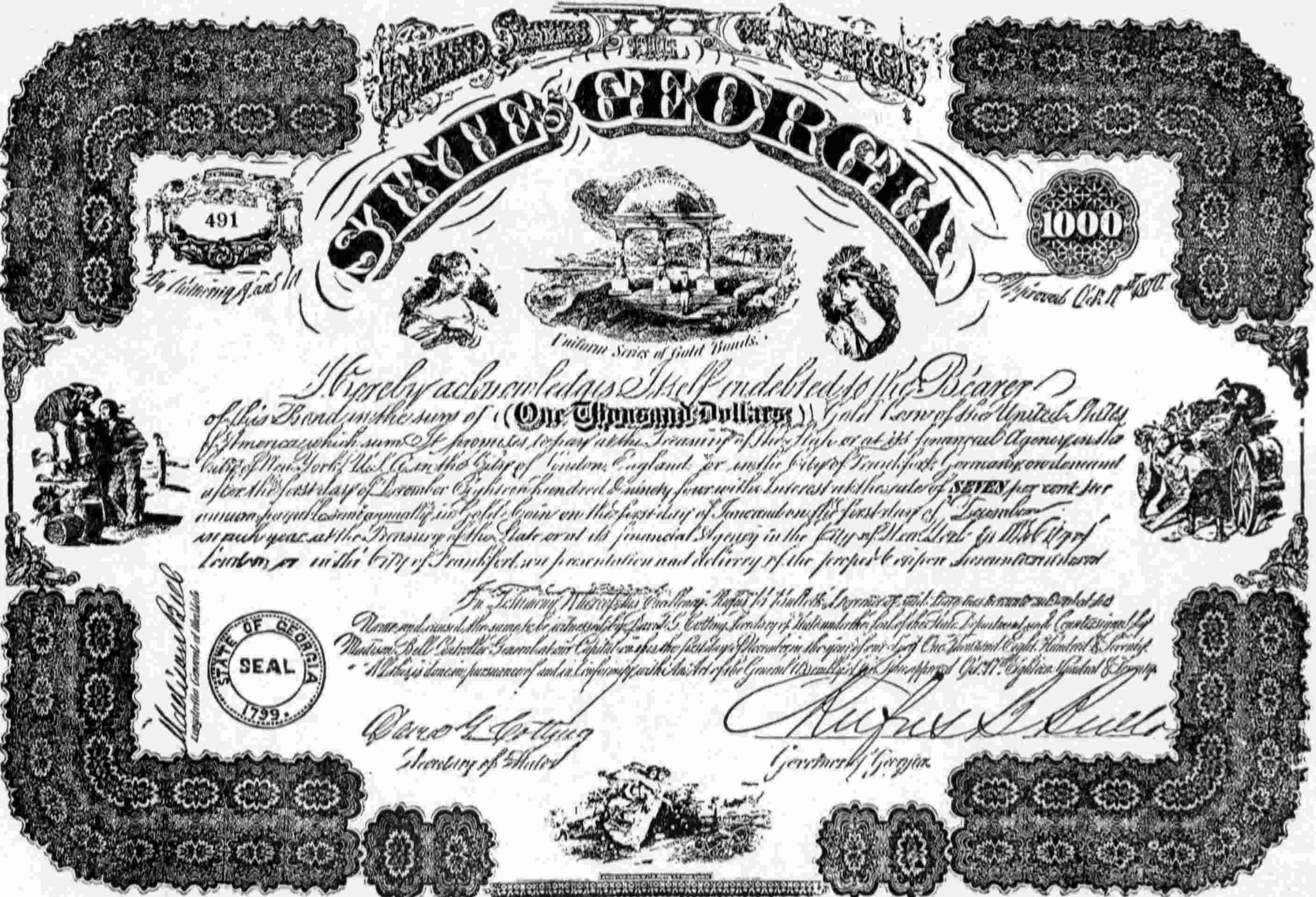
A ONE THOUSAND DOLLAR BOND OF THE STATE OF GEORGIA.
Repudiated.
CHAPTER XXVII. GEORGIA REPUDIATION BONDS. — Georgia’s Outlawed Bonds. — Georgia Bonds. — How the Georgia Bonds were Negotiated. — Georgia Securities and New York Savings Banks. — The Attorney-General’s Decision. — Georgia’s New Issue. — SHALL REPUDIATION BE RECOGNIZED — A REMINDER TO SENATOR EVARTS. — ANOTHER STRONG PROTEST.
255
How a Sovereign Southern State Cheated the Northern
Men who Helped Her in Distress.—A New
Way to Pay Old Debts.—Cancellation by Repudiation
of Just Claims for Cash Loaned to Sustain
the State Government, Build Public Schools
and Make Needed Improvements.—Bottom Facts
of the Outrage.—The Recent Attempt to Place a
New Issue of Georgia Bonds on the Market, while
the Old Ones Remain Unpaid.—The Case Before the
Attorney-General of the State of New York.—He
Examines the Legal Status of the Bonds in Connection
with the Savings Banks.—His Decision Prohibits
these Institutions from Investing the Hard
Earnings of the Working People in these Doubtful
and Dangerous Securities.—A Bold Effort to have
the Fresh Issue of Georgia Paper Put Upon the
List of Legitimate Securities of the New York
Stock Exchange Firmly Opposed and Eventually
Frustrated.—Reflections on the Bad Policy which
Advocated Repudiation and Has Injured Georgia
Credit in the Eyes of the World.—General Observations
upon the Nature of Repudiation of States’
Debts, and the Moral Influence on the General
Credit of the United States.—Successful Appeal of
Bondholders of the Repudiated Bonds to the Stock
Exchange.
One of the saddest events of my business experience
arose from the purest motives on my part, to aid the
South in the work of reconstruction, in the way of which,
as I have stated in the previous chapter, President Johnson
threw the greatest obstacles.
I ventured my money and offered my friendship at a time
when that section of the country stood in need of both
256money and friendship, and used my best efforts to bring
about the return of such feelings of fraternal harmony as
should exist among all the citizens of this great country.
For these kindly offices I was treated with the basest ingratitude
by some of the Southern States.
I held a large amount of Southern securities, all issued
for full value received, which went into the internal improvements
of that section, enhancing the taxable value of
its property. These securities bore the great seals of the
Sovereign States of Georgia and Alabama.
The dishonor attaching to repudiation in these instances
has been brought out in more glaring colors, from the fact
that these States have long since become abundantly able
to liquidate their obligations, and to erase the black spot
from the escutcheons of their chivalrous people.
The people themselves are not so much to blame as the
disreputable politicians into whose hands the management
of their affairs had fallen.
It is of the sovereign and high-toned State of Georgia
that I have most occasion to complain. On account of the
bad faith of that State, through her political managers, I
suffered a terrible reverse in my fortune, which came near
crushing out my financial existence.
It is not, therefore, surprising, I think, that having placed
my faith in the integrity of that State and the promises of
its officials and governing power, and having been so basely
deceived, that I should now be aroused to act in self defence,
fight for my rights and do all in my power to cause the
bonds or securities for which I paid good money to be redeemed,
and to have my just claims satisfied. It has
therefore, been incumbent upon me to leave no stone unturned
in fighting this battle, with the hope of recovering the
money, or a part of it, that was filched from me through
the ostensible defalcations of these sovereign and chivalrous
States.
About thirteen years ago the repudiation which has reflected
257such disgrace upon the South became prevalent in
that section, and took the character, for a time, of a severe
financial epidemic.
It was for this reason that the Legislature of the State
of New York, as well as the legislatures of several other
States, considered it necessary for the protection of the savings
banks, which are the custodians of many hundreds of
millions, chiefly of the hard earnings of the working people,
to prohibit these institutions from investing in, or loaning
upon, the securities of any State in the Union that had within
ten years previously repudiated any of its lawful obligations.
The laws of the State of New York, in chapter 409, section
260, of the laws of 1882, provides that savings banks shall
be prohibited from investing money in stocks or bonds of
any State which, in the language of the statute, “has within
ten years previous to making such investment by such corporation
defaulted in the payment of any part of either
principal or interest of any debt authorized by any legislature
of such State to be contracted.”
It was for this reason that the newly issued securities of
some of the Southern States have been unable to find a resting
place in the monied institutions of the North.
The State of Georgia, recently finding that she had some
obligations becoming due, and seeing that money was cheap
in the North, and that more than ten years had expired
since she repudiated her former obligations, thought there
was a good opportunity of issuing a fresh batch of these so-called
securities, similar to those that had been dishonored
in 1873.
The politicians of Georgia thought there was a good
opening in the State of New York to remove the restriction
placed upon the savings banks in 1882. They saw that the
Governor and the Legislature were both Democratic, with a
Democratic Attorney-General also, and therefore determined
to take advantage of this political condition, which they
258supposed was highly favorable to their scheme of stealing
a march upon the holders of the old repudiated bonds of
Georgia, who had been chiefly instrumental in getting the
act passed for the safety of savings banks’ depositors in the
State of New York.
The Georgia politicians aimed at having the restriction of
the savings banks removed, so far as it related to their
State, in order to afford them an opportunity of issuing several
millions of 4½ per cent. bonds for the purpose of taking
up an old issue of the 7 per cent. bonds, thus effecting a
considerable saving to the taxpayers of their State in this
reduction of interest.
With the purpose of having this matter arranged as quietly
as possible, two of the ablest lawyers of the State of Georgia
were surreptitiously sent to Albany to make argument before
the Attorney-General, Mr. Denis O’Brien, and to
attempt to convince that official, in a very plausible manner,
why the restriction should be removed from the savings
banks in the case of Georgia. No opposition was expected,
and the enthusiastic hope was indulged by those who were
engineering the scheme that upon this ex-parte statement of
these astute Georgia lawyers a favorable opinion would be
elicited from the Attorney-General of this State, which would
justify the Superintendent of the Bank Department in issuing
an order to remove the restriction which precluded the
savings banks of New York from investing in Georgia
bonds, on the ground that the State had not repudiated
within ten years. The repudiation could be traced back
thirteen years, instead of ten.
Pursuant to this application, a small item of a few lines
appeared in one of the Atlanta papers, which stated that Mr.
Calhoun had just returned from Albany, having made a very
strong and forcible appeal to the Attorney-General there,
urging him that the restriction on the part of the savings
banks be removed so far as Georgia was concerned.
This item was telegraphed to me, and on receiving the
259despatch I notified the holders of the repudiated bonds,
and wired the Attorney-General asking him when a hearing
of the other side could be had.
When the day arrived for the hearing before the Attorney-General,
Mr. Calhoun was surprised to find that there was
any opposition to his application, as the business had been
so quietly managed that it was supposed by the Georgia
members of the Bar that the bondholders would hardly be
apprised of it until everything should be fixed according
to the pre-arranged programme, and in favor of the repudiating
State obtaining fresh and unlimited credit without
settling up the old score. Mr. Calhoun was assisted in his
able argument on the sovereign right of repudiation by the
Hon. N. J. Hammond, Member of Congress and ex-Attorney-General
of Georgia.
In reply to these great lights of the Southern Bar, whose
genius would have shone more brilliantly in an honest
cause, I made the following address:
Henry Clews’ speech before the Attorney-General of the
State of New York, June 20, 1885:
The original act of repudiation by the State of Georgia
has been repeated each six months since that period to the
present date, by the refusal of the State to recognize and
pay the coupons on said bonds as they matured. This alone
repeats the repudiation of that State twice each year for the
past ten years at least, and therefore is a continuance of the
repudiation from the time of the original vile act up to the
present date; besides which, the bonds repudiated had twenty
years to run. The maturity of said bonds does not expire
until 1890. The repudiation should be considered, therefore,
as continuous during the entire period, from the date of the
issue of said bonds until 1890, five years hence. If it is to
be accepted that the test of a State’s credit is to be able to
show a record free from fresh repudiation for a period of
ten years, and that repudiation is not a continuous repudiation
until such obligations are fully settled and provided
for, what is to prevent a State from negotiating a fabulously
large amount of bonds, and thereby place an amount sufficiently
large in her treasury to admit of bridging over for
260the required ten years, and, after making such ample provision,
then pass an act, as heretofore, repudiating the bonds
issued, and keep repeating it each decade? Supposing the
same rule held good with a bank robber—and there is, as
far as integrity goes, really no great difference between the
two, only one seeks protection in Canada and the other behind
her sovereign rights, which is her Canada refuge. The
robber breaks into a savings bank, guts it of several millions
of dollars, flees to Canada, and there lives in affluence
for ten years. How silly it would appear if, after ten years,
provided he could show a record free from thieving during
that time, he had the legal right then to come back, and
thereby be entitled to a clean record as an honest man, and
in consequence be accorded a high credit. The position of
the State of Georgia in assuming such a role, in coming here
at this time to ask our savings banks to aid her in such a
nefarious business, simply lacks a parallel for audacity.
The management of savings banks must be conducted so as
to inspire confidence with the depositors and with the entire
community also. It is necessary, especially at panic periods,
for full confidence to be felt in the investments of
such institutions. If the prohibition is removed, as is now
sought to be, and savings banks be permitted to invest in
Georgia securities, and one of them should buy $500,000 of
the bonds, I venture the prediction that such an investment
will sooner or later form the basis of a rumor which will
cause a panic among its depositors and break that institution.
This would result in a most serious disaster to probably
thousands of poor people whose money had been
lodged there for safe-keeping. The mere whisper during a
panic that a certain institution had $500,000 of Georgia
bonds, and they were about to be repudiated, would bring
about just such a disaster as I have stated.
I ask your Honor if it would be wise for any savings bank
to be permitted by the Superintendent of the Banking Department
to become thus exposed to ruin? A State that is
abundantly able to meet her obligations and dishonors them
is too despicable for either credit or tolerance in a civilized
community, and it is a disgrace to the nation that States comprising
it have the power to make such obligations and repudiate
them at will and screen themselves behind their sovereign
rights, whereby they cannot be sued, and in consequence
leave the outrageously wronged innocent bondholders without
261 means of redress whatsoever. If the United States
Government ever expects to obtain that permanent high
credit in the money markets of the world to which the immense
resources of this magnificent country justly entitle
her, the great and growing evil of State repudiation must
be remedied. For States to repudiate with impunity, as the
State of Georgia has done, leaving no means whatever for
redress on the part of the victimized creditors, is a blot upon
the escutcheon of the whole country. This is not a fight,
your Honor, on the battle field against the South; it is a
fight on the financial field, and, as it is second only in importance
to the other, it must be settled, and now is the time
to strike the blow, as it will do the most good in that direction.
We, the creditors of Georgia, have not only borne the
loss and hardship of having our securities made valueless by
a legislative body, and many of us ruined thereby, but we
have also been vilely defamed—being branded as conspirators
to rob the State—simply because we were found to be
holders of these dishonored bonds. This has been done
by the State to cover up her own infamy, and make it appear
that we were the guilty parties and not the State. The attitude
of the State of Georgia, your Honor, is not unlike that
of a pickpocket, who, after rifling his neighbor’s pockets, is
the first to cry “stop thief” to elude detection. All that
the bondholders ask and claim is to have the entire case
submitted to a proper judicial tribunal. This right we have
been denied by the State, and the Constitution leaves us
powerless to enforce it. The State simply says, the bonds
are fraudulent and we will not pay them. It is a very
remarkable circumstance, however, that there has not been
a single one of the numerous officials, from ex-Governor
Bullock down, who were connected with the issue of these so-called
fraudulent bonds, prosecuted to conviction in the thirteen
years that have intervened since their issue. Still these
bonds are all repudiated on the ground of being fraudulently
issued, and the innocent bondholders alone are made to suffer
the harsh penalty imposed for having staked their money on
their belief in the honor and integrity of the people of
Georgia, which it is quite apparent are now non est.
I addressed a letter to your Honor on May 27th last, which
contains important information in connection with these
repudiated bonds. I ask permission to read this letter at
the present time, so that it may become a part of the evidence
in this case.
262The following circular letter contains a variety of opinions
analyzing the true relations of the State of Georgia to her
creditors, and clearly setting forth the nature of her liability
in the matter of the repudiated bonds in connection with the
house of which I was the head:
REPUDIATION ROBBERY BY THE “SOVEREIGN” STATE OF GEORGIA.
“The divine doctrine of State Sovereignty, which makes a State
too dignified to be sued for its debts, ought to make
it also too respectable to cheat its creditors”
Notice.—Managers of Insurance Companies or Savings
Banks should be and are likely to be held responsible, by
stockholders and depositors, for any losses incurred in the
event of their buying or loaning upon any bonds issued
hereafter by States which are under the cloud of repudiation.
New York, May 27, 1885.
Hon. Wm. A. Post, Deputy Attorney-General, Albany, N. Y.:
Dear Sir:—I deferred answering your telegram of Saturday
until this morning for the purpose of ascertaining
whether the bondholders’ counsel would be in readiness to
meet you at the time proposed, and only ascertained the fact
this morning that he would, so I wired you accordingly. I
presume that this Georgia repudiation question comes before
you for the purpose of removing the prohibition from
the savings banks of this State to their buying or loaning
upon Georgia State bonds, owing to that State being under
the cloud of repudiation. The prohibition of the savings
banks, issued by Mr. A. B. Hepburn, the former Superintendent
of the Banking Department, was based upon a
thorough and exhaustive examination in reference to all
matters appertaining thereto. This I have reason to know,
as that gentleman visited New York and took my testimony
and others in the case. The State of Georgia has always
charged, as the justification for repudiation, that R. B. Bullock,
Governor at the time of the issue of said bonds, had
issued the bonds without proper legislative authority, and
263besides had stolen or misappropriated most of the avails.
About three years since Governor Bullock visited Atlanta,
Ga., and demanded his trial under the several indictments
against him. The trial came up soon thereafter, and he was
acquitted on all the charges. This gentleman is now a resident
of Atlanta, Ga., and is to-day one of its most prominent
citizens. It has been also charged that as he was a Northern
born man, that he was a “carpet-bag” Governor, and for
that reason the bonds were not a legal issue. That attitude
is also unwarrantable, as the ex-Governor remained South
during the period of the entire war, and took a prominent
part on the Confederate side, in giving aid and comfort, and
thereby can justly be considered as being a Southerner and
not a Northerner in his interests and feelings. Most of the
bonds repudiated were passed upon as legally issued and
properly signed, by our best lawyers, such as Messrs. Evarts,
Southmayd & Choate, ex-Judge Emott, Abbott Bros., E.
Randolph Robinson, the brother of Judge Sedgwick, of this
city, and others.
Some of these repudiated bonds were also passed upon by
the New York Stock Exchange, and because repudiated were
afterwards stricken from the list of securities to be dealt in.
The face of these securities were worth par a few days prior
to their repudiation, and immediately after that Act was
passed were reduced to no more than the value of the paper
upon which they were engraved. The same may at any time
be the fate of any new securities to be issued by that State.
Those who had these bonds were and are innocent parties, and
among the sufferers are Trust Companies and savings banks.
The Metropolitan Savings Bank holds $100,000 of the 7 per
cent. Georgia gold bonds, bought about par; the Brooklyn
Trust Trust Co. holds $100,000; the Union Trust Co. holds
$100,000; the Commercial Warehouse Co. held between
$300,000 and $400,000 of the bonds, and their repudiation
caused the failure of that institution. The New York State
Loan and Trust Co., Henry A. Smyth, President, also had
$100,000 of the bonds, which loss was largely instrumental
in causing the collapse of that concern. The Broadway
National Bank holds $200,000 of these bonds as collateral,
upon which they loaned $160,000; Morton, Bliss & Co.,
Morris K. Jesup, Drexel, Morgan & Co., Ezra A. Boody,
George Morgan, son-in-law of J. S. Morgan, of London; J.
Bowman Johnson & Co., Richard Irvin & Co., L. Von Hoffman
264& Co., Russell Sage and many other first-class parties
that I can name are prominent sufferers resulting from
Georgia’s repudiation; besides which, my firm in 1873 held
over $2,500,000 State of Georgia securities, all of which had
been paid for or advanced upon, and my firm’s suspension
at that time was attributable thereto.
The only way to do, in my judgment, is to make the
Southern States which are now under the serious cloud of
repudiation, understand that their credit is impaired and
facilities for obtaining money materially lessened because
of it. Then, realizing that as their position, and finding that
they are shut out of the financial markets of the world owing
thereto, they will soon make a compromise with their lenient
creditors, and remove the blot from their escutcheons. The
Federal Government is comprised of the various States of
the Union, and to-day enjoys as high a credit as any nation
in the world. If the various States comprising the United
States are permitted, however, to repudiate with impunity
and screen themselves behind their sovereign rights so that
creditors have no recourse, the odium will soon fall upon the
General Government, and its credit will finally become
tarnished if not crippled in consequence. The State of
Georgia, as can be proven, received full value. The internal
improvements in Georgia bear testimony of this. The taxable
property of the State has been immensely enhanced by
these improvements, and the debt repudiated is a mere bagatelle
as compared with the ability of the State of Georgia to
provide for it. She has become rich in late years, and if the
stain of repudiation should be wiped out, would stand an
excellent chance of becoming a favorite resort for emigration
and for the flow of capital. Emigrants from other countries
to this, in locating, first look to the credit enjoyed by the
State their attention is called to, and if found high, their
conclusion is that there is safety for property, and if so,
corresponding safety for life; but they will not go to a repudiating
State, and in this way the South is held in check in
the development of her resources, owing to the want of new
blood. The bondholders of the State of Georgia have frequently
offered to leave all points at issue in reference to
Georgia’s repudiation to the Courts of that State, to the
United States District Judge, or to arbitration, the parties to
be selected by both sides, all of which has been denied, the
reply being the “bonds are repudiated, and we simply will
265not take any steps to provide for their recognition or payment,
and what are you going to do about it?” Under the
circumstances, creditors are powerless, of course, to do anything,
as the State cannot be sued. If you desire it, I will
send you a sample bond of some of the issues repudiated, so
that you may see how beautifully the signatures are written,
and how firmly fixed the seal of the Commonwealth is placed
upon them, besides the magnificent steel engraved workmanship
of the Continental Bank Note Company of this city. If
there was not a prospect of the State of Georgia being forced
by public opinion to provide for these bonds at some future
time, they would be worthy to be framed and hung up in our
parlors as a complete and fine work of art.
Judge Lochrane, former Chief-Justice of the State of
Georgia, has wired me that he will appear before you on
Wednesday; Colonel R. A. Crawford, of Georgia, will also do
so; Messrs. Abbott Brothers, of this city, and others will
appear before you.
You will please append this communication as a part of
the testimony, and should you desire more on the subject,
call upon me therefor.
I have the honor to remain,
Your obedient servant,
Henry Clews.
Edward Brandon, Esq., Chairman of the Committee on the Admission
of Securities to the N. Y. Stock Exchange:
Dear Sir:—It is currently reported that the State of
Georgia is about to apply to your Committee to list a new
issue of bonds. In behalf of myself and others who have
suffered most seriously by that State’s unwarrantable repudiation
of bonds, which have as full a right to an equal
standing as representing the credit of the State of Georgia
as possessed by the new bonds to be issued, and fully realizing
that the cruel fate of the former merely represents what
may be that of the latter, I claim the right, as a member of
the New York Stock Exchange, as a sufferer to the extent of
several millions of dollars by the State of Georgia’s bad
faith, to protest against the admission of any new securities
hereafter to be issued by that State until her repudiated
bonds are recognized and provided for.
Yours very truly,
Henry Clews.
266Ex-Governor Bullock’s Democratic successor, soon after
he was elected to that position, appointed as Attorney and
Agent for the State of Georgia, one of the State’s ablest
lawyers, a gentleman distinguished as having been a member
of the Confederate Congress, to investigate all the business
transactions between Henry Clews & Co. and the State
of Georgia. Under his signature as Attorney and Agent for
the State, he makes the following statement: “I would say,
with a great deal of pleasure, that after a very thorough and
complete examination of the books of account, papers and
correspondence of Messrs. Clews & Co., so far as they
relate to transactions of that house with the State of Georgia
during Governor Bullock’s administration, I am satisfied that
in all the dealings of that firm with the State of Georgia,
they have acted with both fairness and liberality, and I am
convinced that in all these matters Mr. Clews did nothing
that would not bear the closest scrutiny, and he did nothing,
in my opinion, to affect his character for integrity and fair
dealing. I make this statement with the more pleasure because
I began this examination of accounts of Clews & Co.
under impressions very unfavorable to Mr. Clews.”
The opinion of ex-Governor Brown, now our able senior
United States Senator, was asked by thirty-five members of
the Legislature of 1873. In the course of a comprehensive
and exhaustive argument, the distinguished Senator says:
“The State will be driven to abandon this position (legislative
repudiation) and to permit a case to be made by her
creditors to test the validity of these bonds in the courts of
the country, or she must stand dishonored in the estimation
of all good men, and her credit must sink to a ruinous
depth.”
The late ex-Governor Alexander H. Stephens, ex-Vice-President
of the Southern Confederacy, is on record as saying,
in reference to this repudiation, that it is “nothing short
of public swindling. Not less infamous than obtaining
money under false pretences.” But the partisan feeling was
then so intense that even the lamented ex-Governor Jenkins
was hardly accorded a respectful hearing in the Constitutional
Convention, of which he was president, when he plead
against sweeping repudiation without granting the holders a
267judicial hearing. Ex-Governor Jenkins said on that memorable
occasion: “Now, sir, I take this ground: that for the
proper examination and investigation oi these claims, neither
the Legislature nor this Convention, nor the people themselves,
are a proper tribunal to decide these matters. They
ought to be examined and determined judicially. It will
now, I presume, be admitted that the five years’ time between
legislative and constitutional convention repudiation was not
allowed to pass unnoticed by the parties having these bond
claims against the State. Having waived our sovereignty in
the past to allow the State to be sued in every county in
the State on claims for small-pox expenses, I submit that our
sovereignty ought not to be plead to bar so important an
issue as that now under consideration. The State can, in no
event, be put to loss. The whole State has been largely
benefited by the legislation and by the executive action
which was subsequently repudiated. We have been for
fifteen years past collecting annual taxes on fifty millions
of enhanced value of our taxable property; an increase
which is directly traceable to the good effects of the new
railroads built under that legislative and executive authority.
Shall we—can we honestly receive these benefits and repudiate
our liabilities?”
An interview with ex-Governor Rufus B. Bullock, of
Georgia, May 29th, 1885:
A reporter called upon ex-Governor Bullock at his rooms,
Fifth Avenue Hotel, and obtained the following interview:
Governor Bullock: “Any information in my possession is
at your service. I have published from time to time, over
my own signature, my views on this subject, and I have no
objections to repeating them. I desire to say, however, that
I am in no wise a party to the recent proceedings which have
been had before the Attorney-General of New York. I was
in the city on private business and without any previous
knowledge of the proposed hearing. I attended the hearing
out of curiosity, expecting to hear an argument by ex-Chief
Justice Lochrane, and while there was invited by the Acting
Attorney-General to respond to his inquiries. This I did
with the result as reported in your valuable paper. During
my administration in 1868-’69-’70 and ’71, bonds of the
State were issued for State purposes, and the endorsement
268of the State was placed upon certain railroad bonds under
the authority of law.
During the wild excitement that resulted in and followed the
overthrow of the Republican government in Georgia, nearly
all the acts of Republican administration were repudiated,
among them its financial transactions, and up to this day and
hour the questions of fact have never been permitted to reach
any judicial tribunal.
The people of New York State are fair-minded, law-abiding
and honest, and whenever they can be informed of
the truth will fearlessly follow it; but with regard to the
real merits of this repudiation, no light has reached them
because our courts have been closed.
It is asserted by the holders of these repudiated obligations—and
in this assertion I concur—that every bond was
issued in accordance with law, and that the State is now in
the enjoyment of the benefits resulting therefrom. In the
exciting times to which I have referred, a majority of the
then Legislature decided that the State was not bound by
the acts of its predecessors, and therefore these obligations
were null and void.
This is, of course, a question of law, and not of legislation.
I am sure that now, when partisan passion has subsided,
both parties to this controversy would cheerfully acquiesce
in any decision reached by our Supreme Court, and that the
holders of these defaulted securities would accept whatever
is awarded them in a long term bond at a low rate of interest,
and on such an adjustment all parties, at home and abroad,
could unite in maintaining the high financial credit to which
the Empire State of the South would then be entitled.
In December of last year the Atlanta Constitution, discussing
this subject, used the following language: “The burden
of his complaint is, that the bonds have never had a
hearing in court. This comes with poor grace from the ex-Governor,
who, when the validity of the bonds issued under
his administration was being discussed by the legislative
committee, was absent from this country, his whereabouts
unknown, and his testimony not procurable. The bonds were
‘in court’ then, and as Governor Bullock was not present
with his evidence when it was needed, he should not complain
that a new hearing is not had for his benefit.” To this I
made reply, which the Constitution kindly published, and I
will thank you to copy as follows: “I desire to say that
269I was not absent from the country. My whereabouts were
known, and my testimony was before the committee in the
full and complete report of the financial condition of the
State which I made to my successor, sustained by the official
records of the Executive and State Departments. I never
received a request from that committee to come before them
in person, and my presence would not have added to the
information in their possession. Every request received by
me from my successors, to aid in their investigations, has been
promptly complied with. In accordance with such request
I met Dr. Bozeman, financial agent, Attorney-General Hammond
and Governor Smith, in New York, and also subsequently,
Colonel Snead, Attorney for the State, and Colonel
Kibbe, chairman of committee. No fact within my knowledge
has ever been withheld, nor have I ever neglected any
proper opportunity to contradict the statement that any of
the bonds issued during my administration and reported to
my successor were ‘bogus.’ But, Mr. Editor, the question is,
shall a debtor pass on the validity and enforce judgment
against his own indebtedness? I submit that a legislative
investigating committee is not ‘a court’ in the sense that its
findings are conclusive on questions of law. To hold a
question so decided to be res adjudicata, is to sustain a legislative
usurpation of the judicial functions of the government.
If your position be well taken, that because the Legislature
has decided against the bonds, the case is res adjudicata, and
the judiciary is precluded—of what avail is our constitutional
guarantee that the executive, legislative, and judicial
branches of the government shall be separate and distinct,
and that neither shall encroach upon the functions of the
other? What protection has a citizen for his property if a
legislative decision upon a legal question must be regarded
as final res adjudicata?
Does not the taking of other people’s money to build up our
railroads, and refusing those people a hearing in courts of
our own creation, before judges of our own election, indicate
a want of confidence in the justice of our cause? The Territory
and State of Minnesota used other people’s money to
open up her lands by the construction of railroads, just as
Georgia did, pledged the faith of the State for repayment, and
then repudiated, just as Georgia did. After twenty years’
delay, justice has been done, and her obligations, as ascertained
through her court, have been paid. I have faith to
270believe that the Empire State of the South will eventually
keep pace with her sister States in the Union in meting out
exact justice through her courts to every man, come from
whence he may.
Hon. Wm. A. Post, Deputy Attorney-General of this
State, by appointment, visited this city last Friday to take
evidence on the Georgia repudiated bond question, the
object being to determine the legal status of a new issue of
bonds by the State of Georgia in connection with the savings
banks of this State. Owing to the repudiation of that
State, at present these institutions are debarred from investing
in bonds of any repudiating State, and the effort now is
being made by the representatives of the State of Georgia
to remove that barrier, so that the savings banks can be gutted
of their surplus means and filled up with the bonds
issued by that State, which are more than likely to share
the wicked fate of repudiation, as previous issues to the extent
of $8,000,000 have done. The savings banks managers,
even in the event of obtaining a decision authorizing them
to take Georgia bonds for investment, should be held personally
liable for any losses that may fall upon such institutions
if they hereafter invest the funds of widows and
orphans in a security which, judging from past experience, is
almost sure to be wiped out and made worthless. Mr. Clews
charged that Mr. Calhoun’s appearance in representing the
State before the Attorney-General at Albany was a surreptitious
proceeding, and was only heard of by mere chance by
the holders of the repudiated bonds through a squib in a
Georgia paper. He also stated that the bondholders had
patiently waited twelve years for their money, and no body
of creditors had ever been so lenient as those of the State
of Georgia, and justice demanded that these long-suffering
and much-defamed creditors should be settled with prior
to the financial world according to the State of Georgia a
sufficiently high credit to admit of her floating any new
issues of bonds. A motion was made to adjourn the meeting
until the 20th, which Mr. Post said he would accede to after
asking ex-Governor Bullock a few questions in relation to the
connection of the firm of Henry Clews & Co. and the State of
Georgia during the time he was its Governor. He desired to
make these inquiries now, as the ex-Governor was present and
might not be at the adjourned meeting. Mr. Clews requested
271permission to state that his firm—Henry Clews & Co.—had
never been agents for the State of Georgia, but merely
acted for her as bankers and brokers. The agent of the
State during the entire period of Governor Bullock’s term
of office was the Fourth National Bank of this city. He
stated that his firm received no bonds, excepting by purchase
or as collateral, and advanced money to the State as it was
needed. At one time the State owed for said advances as
much as $1,650,000; the money so advanced was stated by
Georgia’s officials as required to meet the expenses of the
government of the State. Ex-Governor Bullock fully ratified
Mr. Clews’ statement. He admitted that the Fourth National
Bank was the State financial agent, and that he had placed
a large quantity of bonds with Henry Clews & Co. to market
and as collateral for advances. “I will say,” said the Governor,
“that every dollar secured on the sale or pledge of
these bonds was received by the State, and it was expressly
agreed that the firm of Henry Clews & Co. should hold all
the bonds in their hands as security for the indebtedness
due them by the State of Georgia.”
Newspapers in Atlanta, Savannah and other parts of
Georgia have violently assailed The Graphic for its comments
on the new issue of Georgia State Bonds as affected
by the repudiation of a former issue. These journals are
short-sighted, as are the people of Georgia who imagine that
they save money by outlawing the obligations of their State
issued in the usual manner. We will not impute deliberate
dishonesty to them, but they certainly do not place their
own motives in a favorable light when they exclude the
holders of the repudiated bonds from even the right to present
their claims before the civil courts of Georgia. Ex-Governor
Bullock has been berated in the same connection,
and he cogently replies:
“I have no pecuniary interest in the repudiated bonds or
obligations. I have no lot or part in any scheme or combination
by or through which public attention is or has been
called to this matter. My attitude is that of a private citizen
who has as high a regard for the honor and good name of
Georgia as any man within her borders. I never obtrude
“the bond question” upon the public attention. But when
272my official action is attacked in that connection I shall never
fail to assert and re-assert that the financial statement made
by me to my successor in office was the exact truth and that
its correctness never has and never will be successfully
controverted. In that financial statement were many of the
State obligations, which in a time of great public excitement
and partisan zeal were ‘outlawed’ by the action of a political
body, and up to this day and hour the holders of such
obligations have been denied that cool, dispassionate hearing
of their claims which our courts alone can give. My
‘attitude’ is that Georgia is too great, that she stands too
prominent in this country and in the world at large to accept
the position of being a semi-annual defaulter and refusing
to the creditor a hearing in her own courts. It is idle for
me to assert or for you to deny the validity of the defaulted
securities. That is a question of law, and no Georgian can
defend his State while she slams the door of our courts in
the face of our creditors. I assert that it does make a vast
difference to Georgia whether her new securities are listed
at the Exchange in New York. Our own people or other
people can, of course, buy and own them, and I know the
interest and principal will surely be paid, but unless the
bonds are ‘listed’ they are not, in mercantile parlance, a
‘good delivery,’ and will not stand abroad as they should,
equal with the best State in the Union.”
A State which once repudiates its obligations cannot be
trusted not to do the same thing again. What guarantee
can any investor have that the bonds which Georgia is now
trying to put upon the market may not be outlawed by the
next Legislature? The Graphic has no interest in the matter
beyond that of upholding public morals, the good name of
the State and the rights of swindled creditors. The State
which repudiates is as foolish as the imbecile who cut off
his nose to spite his face.—N. Y. Graphic, June 6th, 1885.
The extreme care with which so-called securities or new
issues of bonds are scrutinized in this market nowadays is
shown in the opposition which has sprung up to the proposed
listing on the New York Stock Exchange of $3,500,000
new Georgia State bonds. While money is a glut in the
markets and our banks are now carrying a larger idle reserve
than ever before known in the history of business, there is
no disposition to permit Southern repudiators to come in
273and secure any part of the funds. The application to the
Attorney-General to permit our savings banks to “invest”
in the bonds, and the request that they be listed in the Stock
Exchange, aroused New York bankers to action, and their
opposition has been so far very effective. It has had this
good, at least, that it has revived attention in regard to the
repudiation of old obligations of Southern States. By its
act of repudiation, Georgia mulcted the New York investors
to the tune of millions. I know of one banker who now
holds more than $2,500,000 of these bonds, on which there
is an interest accumulation of twelve years’ duration, and
at least three leading financial institutions were carried
to the wall by the same means. Now, it is considered very
poor grace for the modern Christian statesmen of Georgia
to pass around the hat again. Let the State first repudiate
its repudiation, pay up old scores, and then it will be quite
early enough to ask for further loans. The argument that
the credit of the State is really benefited by the repudiation,
as she has so much less obligations to meet, is a quaint one,
and worthy the source from which it emanates. This is not
the sort of “prosperity” that invites further investment of
Northern funds.—Syracuse, N. Y., Sunday Herald.
When a Georgia bond is put on the market, our Democratic
friends cry out “Great is the Credit of Georgia.”
They claim that Georgia pays all of her obligations whenever
they are due, knowing their claim to be utterly false.
Georgia has not only repudiated legal obligations, in the
hands of innocent purchasers, but she denies the parties who
have paid value for her bonds the right to take the judgment
of her own courts on the validity of those bonds. So in the
bond business the State of Georgia acts not only the role of
the thief and robber, but also of the coward. The man
who claims that Georgia meets all her obligations is simply
a liar.
Respecting State securities, investors are showing a very
proper discrimination against the issues of States tainted
with repudiation. The action of the Superintendent of the
Banking Department of this State, in forbidding savings
274institutions from investing in the new issues of the bonds of
Georgia, has attracted attention to the danger of investments
thus tainted, and is very generally approved by the investing
public as a check to future acts of this kind. The disposition
shown by certain managers of savings banks to put
the funds in their charge into such doubtful securities should
be strongly condemned; and it is a question whether it is
not necessary, as a protection to such depositors, to make
such a use of the deposits of the poorer classes a penal
offence.—Weekly Financial Circular of Henry Clews & Co.,
June 6th, 1885.
The following circular explains the manner in which the
Georgia bonds were negotiated with my firm:
New York, July 3, 1885.
Hon. Wm. A. Post,
Deputy Attorney-General, State of New York:
The firm of Henry Clews & Co. did not solicit the account
of the State of Georgia, but it was opened at the request of
Mr. I. C. Plant, the leading private banker of Macon, Ga.,
and the most influential and affluent banker of the State of
Georgia then and at the present time. Mr. Plant was
brought to my office by Mr. P. C. Calhoun, President of the
Fourth National Bank, which institution was the financial
agent of the State of Georgia at the time. Mr. Calhoun introduced
Mr. Plant to me, by giving that gentleman a very
strong endorsement, and stated that Mr. Plant was in this
city for the purpose of raising money for the State of
Georgia, which money was required to pay off the members
of the Legislature. Mr. Calhoun stated that his bank had
loaned to Mr. Plant $400,000 on currency 7 per cent.
Georgia bonds, and as money was very stringent at the
present time and the calls were very numerous, he felt as
though $400,000 was as much as he ought to loan in any
one quarter. “But if you have any money, Mr. Clews, that
you are willing to loan at the present time, if you will accommodate
Mr. Plant, it may result in your doing some
good business with the State of Georgia. I would say,”
said he, “that you cannot advance money in any quarter
where it would be safer than to loan on the Georgia State
275bonds which Mr. Plant will offer you. I know the State of
Georgia well. I have ridden on horseback over almost every
foot of ground in the State in my early life in my collecting
trips. My father was in the saddlery and hardware business,
and the larger part of his business was in that State.
I know the people of this State; and as an evidence of my
opinion of the future of this State and its bonds, I will say
that if I had my choice to put my money into these bonds
of the State of Georgia, or those of the State of New York,
to leave to my family, I would give the bonds of Georgia the
preference, for the reason that her debt is so small as compared
with the debt of the State of New York at the present
time, and the future of the State of Georgia is destined to
be one of great prosperity.” Mr. Plant then said: “Mr.
Clews, Mr. Calhoun has advanced $400,000 towards the
amount I need, and I want $250,000 in addition. I know
the money market is very tight [as it was at that time,
money being worth 7 per cent. per annum and 1 per cent.
per day commission]; still, I think, if you will loan this
money to the State of Georgia, that it will enable you to
make a connection which will prove profitable to you in the
end.” I said: “Very well, Mr. Plant, I will make the loan
to the State of the $250,000 which you require.” Mr. Plant
then said: “Well, place it to the credit of the State of
Georgia, and I will bring in 500,000 of Georgia 7 per cent.
currency bonds, the same character of bonds which have
been lodged as collateral with the Fourth National Bank. I
will go at once to the Fourth National Bank, where they
are, and bring them down here;” which he did. The $250,000
was then placed to the credit of the State and a telegram
to that effect was sent to the Governor, and it was at
once drawn out on the official drafts of the State. This
started a correspondence with Governor Bullock, in his
official capacity, he being entirely unknown to me before.
Other applications were then made direct by the Governor
for additional loans, which were made from time to time,
until the amount so advanced reached to $1,650,000. After
receiving, in addition to the 500,000 bonds referred to, 800,000
more of similar bonds came into our possession from
time to time as collateral, being put up at 50 cents on the
dollar; and when we afterwards received a large installment
of the gold quarterly 7 per cent. bonds, having at that time
an excess of collateral in our hands, we voluntarily forwarded
276to the State 500,000 of the Currency 7s. This was
precisely and exactly the way my firm’s connection was commenced
with the State of Georgia. Mr. I. C. Plant, who is
still a banker of Macon, Ga., I am sure, will testify to the
correctness of my statements.
The State of Georgia gold 7 per cent. quarterly interest
bonds were placed by the Governor of Georgia in my firm’s
hands as additional collateral against the advances made to
the State, with full instructions to sell same and credit
avails. Application was made by request of Governor Bullock
to have this issue of bonds placed on the regular list of
the New York Stock Exchange, and after a full investigation
by that body, they were admitted. A portion of these
gold bonds were sold in this country and the balance in
Europe. When the Georgia Bond Committee came here
77,000 of these bonds were in Europe in the banker’s hands
there for sale, and my New York firm held 25,000, all others
received having been sold. These 102 bonds were reported
to this committee as unsold at that time, but soon thereafter,
and before the Act of repudiation was passed by the
Georgia Legislature, these 102 bonds were sold and reported
as sold, and I think the price was 97½, and the State’s account
was credited with the avails, and the proper authorities
of the State were duly notified thereof. Up to the time of
sale of these 102 bonds our standing order to sell continued
and was never revoked; because, however, these 102,000
had been reported to the Georgia Bond Committee when in
this city as being on hand at that time, they were repudiated,
together with the other bonds which we were supposed
to still hold. The New York Stock Exchange was called
upon by the Treasurer of the State of Georgia to order
struck from the list these 102 bonds, and the Exchange was
compelled to be governed thereby, as official notice had
been received of their repudiation. The following were the
numbers of these bonds * * * * You will perceive
that the numbers are not consecutive, thus showing that
they were not the last of the bonds placed in our hands.
The low numbers were received first and the highest numbers
last, in the deliveries made to us by Governor Bullock.
Under this statement of facts, which I am prepared to prove,
I insist that these 102,000 bonds are as binding upon the
State of Georgia as any of those which are now recognized.
My fellow members of the Stock Exchange who have made
277investigation fully confirm this opinion. A large number of
the coupons of these bonds were paid by the State on these
102,000 bonds, thus showing the State’s recognition of them
at one time. My firm repeatedly called upon the officials of
the State of Georgia to pay the balance due, but we could
get no response. After waiting patiently a very long time,
we called in eminent counsel for advice in this matter, and
under said advice the Governor and Treasurer of the State
of Georgia were notified in the regular legal form that if the
said indebtedness was not paid on or before a specified date
the collateral in our hands, each item being specified, belonging
to the State, would be sold at public auction at the
Merchants’ Exchange Rooms, 111 Broadway, at 12 o’clock,
by A. H. Muller & Sons, auctioneers. This notice of said
sale, together with list of securities, was inserted in the
newspapers; the sale took place, and the 800,000 Currency
and other bonds were disposed of to the highest bidders,
and the State’s account credited with the avails. All these
securities should be considered, therefore, as having passed
out of my firm’s possession and in the hands of other holders
for value. The State of Georgia in this matter is certainly
amenable to New York laws, and the entire business
was conducted in accordance with said law. Governor Bullock’s
successors did all they could to depreciate the securities
issued by their predecessors, and are responsible for
the low prices which the State of Georgia bonds afterward
sold for, as during Governor Bullock’s administration the
State 7s were at about par and the first mortgage Brunswick
& Albany bonds, guaranteed by the State, sold at 90 and
upwards. As an evidence of the high credit which my firm
had worked up for the State, we bought out the first million
issued of Brunswick & Albany First bonds guaranteed by the
State of Georgia, in the Berlin and Frankfort markets at 104,
and there were seven millions of bids therefor, and the one
million had to be distributed pro rata amongst the said bidders.
In testimony of the correctness of this statement,
I refer you to Mr. Budge, the head active partner of
Hallgarten & Co., and Mr. Schiff the head active partner of
Kuhn, Loeb & Co., of this city, who were interested with
me, and through these two gentlemen the bonds were sold.
After this great success, I ask you, or any fair-minded man,
was not my firm entitled to continue to advance upon Brunswick
& Albany first mortgage bonds endorsed by Georgia?
278and as the 275 Cartersville & Van Wert bonds, endorsed by
the State of Georgia, were offered to my firm shortly after
this signal success as collateral, were they not also equally
justified in advancing 167,000 upon them? and in that way,
and in that alone, these securities came into our hands. I
most positively assert that my firm never had any other
pecuniary interests but as herewith set forth in these two
enterprises. At the time of the repudiation of the State,
my firm held
| 750,000 |
Brunswick & Albany first mortgage bonds, endorsed by State of Georgia. |
| 275,000 |
Cartersville & Van Wert first mortgage bonds, endorsed by State of Georgia. |
| 587,000 |
State of Georgia Gold 7s. |
| 350,000 |
Brunswick & Albany first mortgage bonds. |
| 400,000 |
Coupons cashed by us on the State of Georgia securities, but a legal claim against the State. |
| 800,000 |
State of Georgia Currency 7s. |
| —— |
|
| 3,162,000 |
|
Also, a judgment of 525,000 obtained in favor of Henry
Clews & Co. in the State courts of Georgia against the
Brunswick & Albany Railroad Company, being an amount
due my firm over and above all securities in our hands. My
firm also obtained in the United States District Court of
Georgia a judgment to secure our advances of 167,000 to
the Cartersville & Van Wert Company. Neither of these
judgments have ever been satisfied.
This leaves out entirely the 102,000 Georgia 7s (quarterlies),
as well as many other scattering lots of different issues
of the State of Georgia securities. The past due
bonds referred to by Mr. Hammond were being hawked
about, both here and in London, for the purpose of forcing
their payment, and the holders threatened to use them to
interfere with the sale of the gold 7s which we were about
to bring out in this and foreign markets. I mentioned this
matter to Governor Bullock when on a visit here. He then
directed me to buy up such of these bonds which were in
troublesome hands, and as they were a demand claim
against funds then in the State Treasury, all you have to do,
he said, is to charge up the amount which you paid for said
bonds to the State’s account and retain in your hands the
bonds as collateral, and when the State is flush enough I’ll
279see that you are paid direct from the Treasury. These past
due bonds belonged to us, and were taken up by our money
and not the State’s; the 98,000 which were cancelled, which
Mr. Hammond refers to, were so cancelled by error, which
I am fully prepared at any time to prove. The depreciation
in Georgia State bonds which Mr. Hammond refers to did
not exist during Governor Bullock’s administration, but was
brought about by his successors in office, as they did all
they possibly could to depreciate the bonds of the State
authorized and issued by the previous Legislature.
I have the honor to remain,
Your obedient servant,
Henry Clews.
The efforts that are being made to place Georgia securities
in the savings banks of New York ought to be resisted
for two very good reasons: First, such investment would be
contrary to the law of the State; second, even if it were
legal it would be imprudent and unsafe.
As to the authority of our savings banks to invest in these
securities, it is understood that the opinion of the Attorney-General
has been asked. On this point there is not much
room for question. Savings banks are prohibited by law
from investing in the stocks or bonds of any State that has
within ten years defaulted in the payment of any part of
the principal or interest of its debt. By a constitutional
amendment adopted in 1877, Georgia ratified previous acts of
the Legislature repudiating more than eight millions of its
obligations. The excuse given for this proceeding was that
the State’s obligations had not been lawfully contracted,
and therefore were not binding. On this ground it is
claimed that Georgia securities do not fall within the prohibition
put by the law upon the savings banks of New York.
There would be some force in this view if Georgia were sustained
by any judicial decision holding the bonds invalid.
But it took advantage of that principal which protects a
State against suit by a citizen. It decided the question by
its own arbitrary edict It gave its victimized creditors no
voice in the matter. In the absence of judicial support or
warrant, its action can be regarded only as a repudiation.
But if there were no legal obstacle in the way, prudence
280alone should deter any savings institution from investing in
the bonds of a State that has so recently broken its faith
and repudiated its obligations. The managers of a savings
bank hold an exceptional trust. These institutions are the
depositories of the earnings of the poor. The first consideration
in their management is safety. With that end in
view the law imposes the most stringent regulations on
their supervision and the disposition of their funds. Their
investments are properly restricted to the safest and most
unquestionable securities. There is neither authority nor
excuse for taking any risk. Let individuals, if they wish,
invest in Georgia bonds. That is their own business. But
the managers of a savings bank cannot run any such risk
without failing in their duty to thousands of poor depositors.—N.
Y. Herald, July 17, 1885.
The decision of the Attorney-General, as was expected,
wisely prohibited the savings banks of this State from risking
any of the hard earnings of their large number of depositors
in such an uncertain security as Georgia bonds.
The Bank Superintendent, Willis S. Paine, referring in
his report of March, 1886, to this decision, says:
“For some time there has been a determined effort to
have the bonds issued by the State of Georgia accepted as a
lawful investment for savings banks of this State. My
predecessor in office declined to recognize their legal right
to invest in bonds of the State mentioned. Late in 1885
the State issued a considerable amount of bonds, which were
offered to the savings banks on terms advantageous to them,
and there was a desire on the part of some of the banks to
purchase the bonds. The matter was by me referred to the
Attorney-General to determine whether the State had
defaulted. Several hearings were had, at which the various
interests involved were represented by eminent counsel.
The conclusions reached by the Attorney-General were
based upon a consideration of the facts and circumstances
relating to the issue by the State of Georgia of its guarantee
of $1,500,000 of bonds of the Brunswick and Albany railroad,
which he holds are in default of interest, the principal not
281yet being due. He reaches the conclusion that at least in
the case of the bonds issued or indorsed in aid of the Brunswick
and Albany railroad it has defaulted, and this brings
the case within the prohibition of the statute of New York
regulating investments by trustees of savings banks. He
therefore concludes that the savings banks of New York may
not lawfully invest their deposits in the bonds of the State
of Georgia.”
An attempt was made last summer to have several
millions of the new issue of Georgia bonds listed on the
Stock Exchange in a second hand style, through the instrumentality
of Mr. Fred. Wolf, who was presumably an innocent
holder of these bonds. On this occasion I addressed to
the Governing Committee the following protest:
June 22, 1886.
To the Governing Committee of the N. Y. Stock Exchange:
Dear Sirs:—I have just been informed, whether correctly
or not, that, not the State of Georgia, but a person
by the name of Mr. Fred. Wolf, of this city, has applied to
your Committee to list $3,300,000 State of Georgia 4½ per
cent. bonds, and sets forth that said bonds are to take up
those of the State maturing in February, April and July.
I am advised that the bonds which matured, during the two
months first named, long since past, have already been
taken up by the State, so there remains but those which
mature on the 1st of July next outstanding of the class of
bonds referred to. At the time I was instrumental in defeating
the State of Georgia from removing a very necessary
restriction imposed by a New York State law from lodging
these same bonds upon the savings banks, the officials of
the State of Georgia exulted over the fact that the said defeat
in no way injured the State of Georgia, as the bonds
had already been disposed of at a satisfactory price to the
State, and therefore no longer belonged to them; thus showing
that the State of Georgia does not make the application
for the admission of these bonds to the Exchange, but
clearly shows that they are in possession of the avails of
these said bonds to provide for; not only those that had
matured but those that are due on the 1st of July next, consequently
282it takes away the necessity of the State having
the application now made favorably acted upon by your
Committee. Mr. Wolf, therefore, makes the application in
his own behalf, doubtless to enable him to extricate himself
from his own speculative venture in these so-called securities,
which he was in hopes when he took them of turning
over to certain saving banks who, by the Attorney-General’s
opinion, were precluded from buying these identical bonds,
which misfortune, from the statements made by the officials
of the State of Georgia, falls not upon them but the party
who has bought the bonds. As the original plan of lodging
these bonds in the savings banks was a failure and the poor
people’s money on deposit there was saved from wreck
thereby, it is now sought to land them upon others, providing
the New York Stock Exchange can be secured to give
character to them by listing them as is now attempted. My
firm represents two seats on the New York Stock Exchange
and has large interest there and I protest against
the proposition to list these Georgia bonds for regular dealings
at the Exchange, as the State of Georgia is not only in
default in payment of her bonds, both principal and interest,
and long since past due, but besides has repudiated
eight millions of her bonded debt which were issued for
value received under the great seal of the commonwealth,
properly signed, legally issued and in the hands of innocent
parties who have acquired vested rights therein, and, therefore,
are the victims of a gigantic robbery by the repudiation
of said bonds. It is but fair to assume that a State
which undertakes to blot out by a legislative act, without
being willing to submit any questions at issue to the
judiciary—who alone have the right to decide upon such
questions—find that to be so simple a method of paying
debts will not unlikely be tempted to repeat repudiation
often in the future. These bonds now attempted to
be foisted on the public cannot, by any possibility, be expected
to have any greater permanency of value than those
that have already received the shameful fate of being reduced
by repudiation to the value of brown paper. I
foresee, therefore, that if the N. Y. Stock Exchange lists this
new issue of bonds, that by fictitious methods quotations
may be obtained, and in all probability the members of the
N. Y. Stock Exchange be induced to deal in them and
suffer the cruel loss that has already been my fate. The
283State of Georgia, with interest to date, owes me and my old
firm at least five million dollars; therefore, I have a right,
owing to my large interests in the Stock Exchange, to
urge that the application to list these new Georgia bonds
be denied, for I fear that should it be otherwise, many of
the members whose seats are in part security for transactions,
may be tempted to deal in these so-called “securities”
and suffer great loss if not ruin thereby, for when the time of
repudiation takes place the security in their seats at the Exchange
may be made valueless through said loss to honest
creditors. When the State of Georgia wipes out the disgraceful
blot of repudiation which now stains the escutcheon
of the commonwealth, she will then be entitled to have the
facility which the New York Stock Exchange has the power
of granting, to aid her in restoring her credit to rank alongside
others. She will then be entitled to credit on a 3 per
cent. basis similar to the States of New York, Massachusetts,
Maryland and many others, but not before.
Respectfully yours,
Henry Clews.
New York, June 25, 1886.
To the Governing Committee of the N. Y. Stock Exchange:
Dear Sir:—I send you an exact copy, published in the
Graphic newspaper under date of June 15th, 1886, of a bond
issued by the State of Georgia, which you will perceive is
an out-and-out State bond and represents an issue of 1,800
bonds of $1,000 each. The act of authorization of the
State was passed upon by the eminent legal firm of Evarts,
Southmayd & Choate, also by the late Judge Emott as being
in conformity with law and in every respect a regular and
legally issued bond of that State. The innocent holders of
these bonds are the following:
| The Broadway National Bank |
$200,000 |
| The Metropolitan Savings Bank |
100,000 |
| The Brooklyn Trust Co |
100,000 |
| Russell Sage |
200,000 |
| Henry Clews & Co |
486,000 |
| The Union Trust Co |
100,000 |
| 284Ezra A. Boody |
200,000 |
| Richard Irvin & Co |
133,000 |
| The Commercial Warehouse Co. about |
200,000 |
The balance is in small lots scattered in numerous hands.
None of these bonds was disposed of for less than 90 cents
in money. The Broadway Bank loaned $160,000 upon theirs,
taking them as collateral. Some other institutions held
them as collateral against advances similar to that of the
Broadway Bank. The whole of this issue was repudiated
by the State.
The State of Georgia also notified the Exchange that a
large number of bonds known as Quarterly Gold Georgia
Bonds were also repudiated. The numbers of these bonds
were scattered in amongst an issue of two and one-half
millions of that class of bonds, all of which were long previously
admitted to dealings at the N. Y. Stock Exchange.
The N. Y. Stock Exchange having received notice from the
State that they had been repudiated, ordered them stricken
from the list. These bonds are all in the hands of innocent,
bona fide holders, who paid in the neighborhood of par for
them in all instances and the avails therefor were received
by the State.
Those not repudiated of these issues have since and are
now daily quoted at the N. Y. Stock Exchange, the price
being at the present time nominally about 112.
I have only noted a part of the bonds repudiated by the
State of Georgia, so that you may be convinced of the fact
that the bonds are out-and-out State bonds and just as good
an obligation issued under the great seal of the commonwealth
of Georgia and as absolutely binding upon the State
as the new bonds which are now attempted to be listed; and
should the latter be listed, the chances are that they will
share the same fate as those noted.
If a State can issue such obligations, and wipe them out
by an act of repudiation with impunity, and the Stock
Exchange ignore such shameful conduct, there will then be
no safety in buying bonds issued by any State, as it is
thereby made to appear that there is no stain left upon her
escutcheon, the evidence of which is that the N. Y. Stock
Exchange has backed them up in their action. Under the
Constitution which gives sovereign rights to States a citizen
holding these repudiated obligations cannot sue a State,
therefore there is no redress for a great wrong done.
285I shall be glad to appear before your Committee and give
you all the evidence in the case before you decide upon the
application now before you to admit $3,300,000 Georgia 4½
per cent. bonds.
Very respectfully yours,
Henry Clews.
In connection with this Georgia bond affair, even at the
expense of stringing the subject out to a considerable length,
I cannot omit the following communication to Senator
Evarts on the subject:
New York, April 13, 1886.
Hon. William M. Evarts, Washington, D. C.:
Dear Sir—It is quite generally understood, from information
lately received here from Washington, that there is
soon to be sprung upon Congress a bill providing for large
appropriations for the improvement of rivers and harbors
and other so-called public improvements in the South.
There is a feeling of strong opposition in financial circles in
this city against the justice of the General Government
making such appropriations to many of the Southern States
at the present time. This opposition is based upon the
fact that the State of New York contributes by taxation
about one-fifth of all the revenue raised in this country
which provides for the expenses incurred in carrying on the
Government, so that whatever moneys are spent for the so-called
public improvements, at least one-fifth of the amount
is extracted from the pockets of the citizens of this State,
through taxation; and as many of our citizens have been so
villainously victimized by the repudiation of the Southern
States, especially by the State of Georgia, it is but just and
fair to these victims, therefore, that no appropriations of
money for the purposes named should pass Congress for the
benefit of any State which is at present under repudiation.
It is eminently proper that Congress should take a stand
against this, as the very people who have been so robbed
are to pay the cost. A large number of them have been
ruined, as a penalty for believing in the honor and good
286faith of Southern States, and while such claims remain unpaid,
it certainly does appear harsh that these citizens
should be taxed by the General Government and compelled
to contribute to funds to be appropriated for the benefit of
States now in default of both principal and interest for
bonds issued by them under proper legislative authority
and bearing the great seal of the commonwealth. The
money paid for these bonds by confiding people has gone
into public improvements in those States. If the Government
desires to make appropriations, they should be made
to the holders of these bonds, and the share to the various
States be in their own bonds in place of money. The States
thereby would take the place of the present holders. When
repudiated bonds are all extinguished it will be time for the
Government to begin the appropriation of money direct. No
greater public improvement for the South, as well as for the
credit of the entire country, would equal the removal from
the various States of the blot of repudiation which now
stains their escutcheons, and reflects most injuriously upon
the credit of the General Government itself.
Yours very respectfully,
Henry Clews.
September 2, 1886.
James D. Smith, President of the Stock Exchange:
Dear Sir—I beg to hand you herewith a memorial in
relation to the new issue of Georgia bonds, signed by a number
of the largest and most important firms and corporations
in this city, most of whom are connected by membership
with the Stock Exchange, and all of whom, like myself,
are victims of the State of Georgia’s repudiation.
I understand that the subject of admitting this new issue
of these bonds is to come up for consideration at the next
regular meeting of your committee. Will you do me the
favor of presenting this petition at said meeting? Hoping
this matter will receive your favorable consideration and influence,
I have the honor to remain,
Yours very respectfully,
Henry Clews.
287To the Governing Committee of the New York Stock Exchange:
We, the undersigned, holders of repudiated bonds of the
State of Georgia, have learned that an application has been
made for listing upon your Exchange new issues of bonds of
that State.
We respectfully urge upon you that so long as the name
of Georgia remains dishonored by repudiation, you should
stamp upon such application your absolute disapproval, and
thus maintain the well known and uncompromising hostility
which the New York Stock Exchange has always shown
against bad faith and dishonest practice.
August 24, 1886.
RICHARD IRVIN & CO.,
MORTON, BLISS & CO.,
JAS. B. JOHNSTON,
S. W. MILBANK,
HENRY CLEWS & CO.,
HALLGARTEN & CO.,
FULTON BANK OF BROOKLYN, By J. A. Nexsen, Cashier,
WALTER S. JOHNSTON, Receiver Maine National Bank,
MORRIS K. JESUP,
JAMES R. JESUP,
DREXEL, MORGAN & CO.,
FOSTER & THOMSON,
NATIONAL BROADWAY BANK, By F. A. Palmer, Prest.,
L. VON HOFFMAN & CO.,
RUSSELL SAGE,
C. F. TIMPSON & CO.,
HERMAN R. LE ROY,
SAMUEL RAYNOR & CO.,
THE N. Y. WAREHOUSE & SECURITY CO., By S. C. Knapp, Secretary,
COMMERCIAL WAREHOUSE CO., J. F. Navarro, Prest.
The petition of these gentlemen was granted, and true to
its honorable record, the Governing Committee of the Stock
Exchange refused to have anything to do with the bonds of
the repudiating State of Georgia.
CHAPTER XXVIII. ANDREW JOHNSON’S VAGARIES.
289
“Swinging Around the Circle.”—How Mr. Johnson Came
to Visit New York on His Remarkable Tour.—The
Grand Reception at Delmonico’s.—The President
Loses his Temper at Albany and Becomes an Object
of Public Ridicule.—His Proclamation of “My Policy”
Ironically Received.—Returns to Washington
Disgraced.—The Massacre of New Orleans.—The
Impeachment of the President.
As I have attributed the ill luck of myself and others in
certain business ventures in Southern securities to
President Andrew Johnson, it will be necessary to describe
some of the vagaries of that gentleman which had such a
ruinous effect upon the investments of Northern men in the
South.
In common with several other Wall Street men, I had an idea
that the President might be favorably affected by the social
influence of the North, if that were brought to bear upon
him in the right way. So when we heard that he had been
invited to attend the laying of the corner-stone in the erection
of a monument to the memory of Stephen A. Douglas, at
Chicago, I got up a paper signed by several Wall Street
men and other prominent citizens, urging the President to
accept said invitation and also invited him to stop at New
York, on his way to the West.
The invitation was graciously accepted, and preparations
were made at once to give him a suitable reception. It was
hoped that this demonstration of our good will would
have the effect of smoothing down the asperities of the President,
and that it might remove any harsh feelings that he
entertained towards the members of Congress who represented
the Eastern and Western sections, and hence prove a means of
290inducing him to advise the people of the South, over whom he
had considerable influence, to lay aside their sentiments of
hostility and attend to their business interests in a manner
that should redound to the mutual benefit of the two great
sections of the country. This was in 1866.
The President left Washington about the end of August,
accompanied by General Grant, Admiral Farragut, Secretary
Wells, Postmaster Randall, and a few others of less note.
When the party arrived in New York it was joined by
Secretary of State Seward.
The preparations for the President’s reception were on a
magnificent scale for that time, and the people turned out
en masse eagerly to do honor to the Executive of the
nation. There was a grand procession which conducted
him to the City Hall, where he was received by the officials
of the City and State, and the procession afterwards
escorted him to Delmonico’s, at Fourteenth Street and Fifth
avenue, where a dinner was served in the most sumptuous
style, with every mark of honor and respect befitting the
distinguished guest and his numerous friends.
There was an address of welcome pertinent to the occasion,
and the President responded in a very happy style.
This was said to have been one of his best efforts in oratory,
in which he was, at times, exceedingly forcible and persuasive.
He was always pithy and powerful, and there has perhaps
never been a President who produced stronger, more
brilliant, and more argumentative state papers than Andrew
Johnson.
The audience at Delmonico’s was thoroughly delighted
with him, the dinner came off in a way that left nothing to
be desired, and everything seemed to indicate that the presidential
visit would be a potent influence in creating a new
era of harmony between the two hostile divisions of the
country.
Everything was lovely until the presidential party arrived
291at Albany, when it became manifest that the President
had set out with the full intention of giving the journey
the aspect of a political canvass, and of taking occasion
to abuse his enemies in the strongest terms, and to vindicate
his policy of reconstruction in opposition to that of
Congress.
The crowd which met him on his arrival at Albany was
immense, and on the whole was disposed to accord the President
a kind and courteous welcome.
The President was called upon to make a speech, in
which he made violent attacks upon his supposed enemies,
or those who opposed his policy, thereby sinking beneath
the dignity which he was expected to maintain as President
of the United States, to the level of a mere political demagogue.
His utterances in that motley assembly, of course,
were soon met by sharp opposition. There were many,
however, who did not treat the fiery demonstration of the
President seriously, and several of the crowd indulged in
the pastime of firing off a few good-natured jokes at the
tailor of Tennessee, who, by a mysterious fate, had been
raised to such a dizzy eminence. These jests were taken
seriously by the President, whose hot Southern blood became
so aroused that he forgot the dignity of his office and
station and condescended to bandy words, and exchange
terms of ribaldry with people in the crowd. He then became
a butt for savage ridicule. A small black flag was exhibited
which seemed to have the same effect upon him as
a red rag has upon a Texan steer.
The President became furious, and losing entire control
of himself, pointed towards a man in the crowd saying, “Who
is that man who dares to hoist that black flag. Let him
come up here and I will tell him what I think of him.”
This descent of personal dignity on the part of the President
was received by the audience with a feeling of ineffable
disgust. He had stooped beneath the level of the
average electioneering stump speaker. He was greeted
292with jeers and hooting, and the meeting was turned into a
roaring farce, in which the President played harlequin, to
the great delight of the ignorant element in the crowd,
and the terrible mortification of those who had conducted
him thither.
His friends were greatly incensed at his conduct. My
business friends and I were heartily sorry that we had anything
to do with this unruly Executive, who had evidently
lost his head through the sudden acquisition of power.
The President’s journey was continued to Chicago by way
of Cleveland, where he made similar outbursts to those displayed
at Albany. By the time he had reached Chicago he
had become a public object of ridicule. He spoke so vociferously
about “my policy” that the very boys in the streets
began to utter these words ironically and jeeringly.
The tour of the President was designated “Swinging
around the circle,” and when he returned to Washington he
had become an object of national contempt, and the majority
of the people had entirely lost confidence in him.
One thing about this time that intensified the popular
feeling of hostility against him was the attitude he assumed
concerning the massacre of New Orleans, which occurred
about a month before he started on his political tour.
The Convention which had formed the free constitution of
the State of Louisiana in 1864 had been ordered to reassemble
by its President. The Confederate sympathizers,
who had been greatly encouraged by the acts of the President
to keep alive their old feelings of hostility to the
North, resolved that the Republican Convention should not
be permitted to meet. The ground they urged for this proposed
action was that the Convention proposed to recommend
the imposition of Negro suffrage upon the State.
There was a riot and a terrible massacre, in which over a
hundred lives were lost, and several hundred persons were
wounded. The municipal authorities of New Orleans gave
aid and comfort to the rioters.
293The Congressional Committee that investigated the circumstances
connected with the riot reported that the President
knew that riot and bloodshed were apprehended. He
knew what military orders were in force, and yet without the
confirmation of the Secretary of War, or the General of the
Army, upon whose responsibility these military orders had
been issued, he gave orders by telegraph, which, if enforced,
as they would be, would have compelled our soldiers to aid
the rebels against the men in New Orleans who had remained
loyal during the war, and sought to aid and support, by
official sanction, the persons who designed to suppress, by
arrest and criminal process under color of the law, the
meeting of the Convention; and all this although the Convention
was called with the sanction of the Governor and
by one of the judges of the Supreme Court of Louisiana
claiming to act as President of the Convention. The effect
of the action of the President was to encourage the heart, to
strengthen the hand, and to hold up the arms of those who
intended to prevent the Convention from assembling.
The President’s opposition to the Reconstruction Bill
probably rendered him more unpopular than any other
executive act during his administration. The bill was
passed by large majorities in both Houses of Congress.
The President’s repudiation scheme was another very
unpopular recommendation, for which he was very strongly
reproved by the action of Congress. He stated in his message
of December, 1868: “That the holders of our securities
have already received upon their bonds a larger amount
than their original investments, measured by the gold standard.
Upon this statement of facts, it would seem but just
and equitable that the six per cent. interest now paid by the
Government should be applied to the reduction of the principal,
in semi-annual instalments, which in sixteen years and
eight months would liquidate the entire national debt.”
This clause of the President’s message was condemned by
an almost unanimous vote of both Houses.
294The great event in President Johnson’s career, however,
was his impeachment trial, which lasted from March 5
until May 26, 1868. He was arraigned at the bar of the Senate,
which was presided over by the Chief Justice of the
United States, the Hon. Salmon P. Chase.
The counsel of the President were Attorney-General
Henry Stanberry, who resigned his position to defend the
President, ex-Judge Benjamin R. Curtis, William S.
Groesbeck, who acted as substitute for Judge “Jerry”
Black, and Hon. Wm. M. Evarts. General Benjamin F.
Butler made the opening argument against the President,
accusing him of high crimes and misdemeanors. Hon. Wm.
Lawrence, of Ohio, posted him on the law of impeachment.
The chief charge in the articles of impeachment was the
removal of Mr. Stanton from the office of Secretary of War,
in alleged violation of the Tenure-of-office Act. According
to this act Stanton had a right to hold office during the term
of the President by whom he was appointed, and a month
longer. He was appointed by President Lincoln.
The question to be decided then was whether Johnson
was serving out Lincoln’s unexpired term, or whether he was
President de facto. Judge Curtis took the latter ground, and
argued, therefore, that Stanton’s term had expired.
At the conclusion of the trial, the Senate was addressed
against the President by General John A. Logan and Mr.
Boutwell. Thaddeus Stevens attempted to read a speech,
but was too weak. He handed his manuscript to General
Butler, who read it to the Senate, but it fell comparatively
flat. The Hon. Thomas Williams, of Pennsylvania, read a
speech in favor of impeachment, which was well received.
The case on behalf of the Senate was summed up by Hon.
John A. Bingham, who arrayed all the charges against the
President in a very strong and unfavorable light. His concluding
sentences were, “I ask you, Senators, how long men
would deliberate upon the question whether a private citizen
arraigned at the bar of one of your private tribunals of
295justice, for criminal violation of law, should be permitted
to interpose a plea in justification of his criminal act that
his only purpose was to interpret the Constitution and laws
for himself; that he violated the law in the exercise of his
prerogative to test it hereafter, at such day as might suit his
own convenience, in the courts of justice? Surely, Senators,
it is as competent for the private citizen to interpose such
justification in answer to his crime as it is for the President
of the United States to interpose it, and for the simple reason
that the Constitution is no respecter of persons, and
vests neither in the President nor in the private citizen
judicial power. For the Senate to sustain any such plea
would, in my judgment, be a gross violation of the already
violated constitution and laws of a free people.”
The speech of “Our own Evarts” was the chef d’œuvre of
his life, and probably did much to help the President’s narrow
escape. As it was, he was only saved from impeachment
by one vote, namely, that of Mr. Ross, of Kansas.
CHAPTER XXIX. THE DIX CONVENTION. — General Grant to General Dix. — General Dix’s Reply.
297
How the War Democrat, General Dix, was Elected Governor
by the Republican Party.—The Candidates
of Senator Conkling Rejected.—How Dix was Sprung
on the Convention, to the Consternation of the
Caucus.—Judge Robertson’s Disappointment.—Exciting
Scenes in the Convention.—General Dix declines
the Nomination, but Reconsiders and Accepts
on the Advice of his Wife and General Grant.—How
Dix’s Election Ensured Grant’s Second Term as
President.
Among the political events of the last quarter of a century
in which I took an active part, in common with
some other Wall Street men, I think the Utica Convention,
at which General Dix was nominated for Governor of this
State, is entitled to special notice, particularly on account of
its effect upon national politics.
I was a delegate to that Convention. Just as I was stepping
from the train to the platform at Utica I was met by a
gentleman who introduced himself to me as the Private Secretary
of Senator Conkling. He said he came to convey
an invitation to me from the Senator to be his guest during
my stay in that city. He escorted me to the carriage in waiting,
and I was taken to the palatial mansion of the Senator.
I was the only resident guest during my stay—an honor
which I highly appreciated.
Several gentlemen were invited that evening to dinner,
amongst whom were Hon. Chester A. Arthur, A. B.
Cornell, Wm. Orton and General Sharpe.
At the conclusion of a sumptuous repast the subject matter
relating to the Convention was introduced by Senator
Conkling. The Senator turned to me and said: “Mr. Clews,
why would not George Opdyke be the best man for Governor?”
Mr. Opdyke and Senator Conkling had always
298been on excellent terms, and a few weeks previously this
aspirant for Gubernatorial honors had been a guest at the
house of the Senator, and General Grant had been there at
the same time. It was apparent, therefore, that Mr. Opdyke
had gained special recognition from the Senator as his candidate
for Governor, and that the choice had been sanctioned
by General Grant. So the visit of these two distinguished
guests seemed to indicate that the matter had been
virtually, harmoniously and finally arranged, simply awaiting
the official approval of the Convention. Hence, the
point of the Senator’s inquiry directed to myself.
I replied: “Senator, I have a very high regard for Mr.
Opdyke, as a man of great ability, as well as a brother
banker, but as we have, all of us, a greater interest in what
is to be done at this Convention, with a view of re-electing
General Grant, we must, in my judgment, sacrifice all other
interests thereto. Looking at the matter from that point of
view, I am bound to say, therefore, that George Opdyke is
not our best man. As you remember, he was Mayor of the
city of New York at the time of the great riots of 1863, which
was the most critical period of the country’s existence, and
it was generally understood that in his official capacity he
showed the white feather. While I admit that the excitement
at the time was calculated to intimidate some of the
strongest hearts, still, Mr. Opdyke, as Chief Magistrate of
the city, was supposed to be equal to the emergency, and to
meet it with firmness, irrespective of personal danger. He
was expected to be equal to the task of ordinary self sacrifice
in such a position, and he did not come up to popular
expectation.
“And you will recollect, Senator,” I continued, “that your
own brother-in-law, that able, worthy and popular man, Hon.
Horatio Seymour, was so far carried away by his predilections
then, that he addressed the crowd of peace-breakers as
‘friends.’ I confess that when a man like him was so pronounced
on that side it was a difficult matter for a Mayor to
299have backbone enough to withstand the pressure. But public
opinion is not in the habit of making such fine distinctions
to excuse want of courage.
“If this is not an ample reason,” I said, “I can give you
another, which should be sufficient to determine that
Mr. Opdyke is not our best man at this time. He is young
enough, however, and may be available at a future period,
when the asperities associated with these troublous times
have been fully smoothed down. During the war Mr.
Opdyke had the misfortune to be a special partner in a
clothing manufacturing firm which had received a contract
from the Government to make clothing for the poor fellows
who were fighting our battles for the salvation of the country.
The clothing made by this firm was rejected on account of
the inferiority of the material, and this is said to have been
the first application of the term ‘shoddy’ to army clothing
in this country.”
Mr. Conkling seemed to be amazed at my statement, and
admitted that his protegé would not do. He felt considerably
embarrassed in regard to his position with reference
to Mr. Opdyke. He said, “Mr. Opdyke is here and expects
the nomination. Some one ought to tell him to withdraw.”
Thereupon Mr. A. B. Cornell volunteered to undertake
this delicate duty. He promptly performed it, and afterwards
reported that the work had been accomplished. He
said that Mr. Opdyke at once consented to comply with the
modest request, but was so mad about it that he had left the
city by the first train for home, being unwilling to remain for
the convention.
Prior to his departure, however, he had advised the Hon.
W. H. Robertson, who was the next prominent candidate, of
his withdrawal, and of the support of his constituency so far
as his name could control it.
Mr. Robertson, who had been prominent in the preliminary
canvass, was gratified at this turn of affairs, and encouraged
by his new accession of strength. He was quick
300to embrace the opportunity now left open, as there were no
other candidates whom he feared. So the whole of that
night he worked arduously and faithfully for the object in
view.
When I left the Conkling mansion next morning, after
breakfast, I mingled freely with the delegates, and found,
from the efforts made the previous night, that the nomination
of Judge Robertson was a foregone conclusion, and the
candidate himself was sure of it. The Robertson boom had
become suddenly popular. In fact, it was in the air.
I was invited to General Arthur’s parlors, where the
caucus had its headquarters. It was customary with
General Arthur, in those days, to take parlors for that purpose
at State Conventions. I found the rooms filled with
distinguished members of the party, and it was assumed by
all that Robertson was the candidate for Governor; it was
also proposed that we should march in a body to his hotel,
to congratulate him, and to assure him of the fact that we
were all for him. I declined to be of the number on that
mission, to the great chagrin of some of my friends. When
asked for my reasons, I said that I had no feeling of personal
hostility towards Mr. Robertson, but as the New York
Times had not been pleased with his conduct while State
Senator, and had severely criticized him thereafter, I felt
satisfied that under no circumstances could we rely upon the
Times to support our ticket if he were at the head of it;
and as that was the only paper in New York that we had to
fight our battles then, it was all important that we should
nominate a ticket that would not be antagonistic to it, in
order that we might have its endorsement and full co-operation.
The rest of the gentlemen went to pay their respects to
Judge Robertson, as pre-arranged, and during their absence
I went to the telegraph office and sent the following message
to General John A. Dix, to his residence at 3 West
Twenty-first street, New York:
301You are favored by many of the delegates for Governor. If nominated
will you accept? For the sake of the country, answer in the affirmative.
“Henry Clews.”
To this I received the following:
“I have telegraphed your dispatch to West Hampton, where my father
now is.
“Aug. 21 1872.
“John W. Dix.”
A short time afterwards the Convention met, and the
name of Robertson was presented. The management had
been so ably conducted since the departure of Mr. Opdyke,
that there seemed to be an overwhelming hurrah in favor of
Robertson, though it was evident that many of the delegates
did not know why they cheered, except by force of imitation.
The Convention at first, as has been the case on many similar
occasions—except that there never was any occasion precisely
similar to this one—did not seem to know its own mind, and
was apparently well in hand by the management. Several
most laudatory speeches were made in favor of Robertson,
which placed him on the very pinnacle of popularity with the
Convention, as manifested by the cheering and wild hurrahs
with which the speeches were received. The management
was thoroughly convinced that the popular tide had begun
to flow in favor of their candidate, beyond the possibility
of ebbing until it carried him to port, and there was probably
no man in that enthusiastic audience more fully convinced
of the fact than Robertson himself.
Several other nominations were made, but that of Robertson
overshadowed them all.
When the gavel was about to descend on the choice of
the people, as expressed through their intelligent representatives
by every sign of enthusiastic approval, the audience
being almost exhausted with this high pressure of excitement,
and when it was just prepared to relapse into a more
thoughtful and deliberate mood, I sprung General Dix on
the Convention. The mere mention of the name of that
veteran seemed to inspire the vast assemblage with new
life. The announcement acted like magic, and appeared to
302throw all the previous work of the Convention into utter
oblivion.
After Mr. Bruce and the Hon. E. Delafield Smith had
spoken, I said: “On behalf of the bankers and business
men of New York, regardless of party, the nomination of
John A. Dix would do more for the Republican party in the
national contest than any other that could be named. No
other man would receive equal confidence of the great
monied interests of the metropolis.”
The scene that followed the remarks of these gentlemen
and myself is indescribable. The whole audience arose to
their feet and cheered vehemently. If the house had been
struck with lightning the caucus managers could not have
been more surprised, and Judge Robertson must have begun
to doubt his own identity.
Concerning the scene in the Convention at this juncture,
the New York Herald the next morning had the following:
“The enthusiasm excited by the representatives of Henry
Clews carried the Convention, and it only wanted to put the
question to the delegates to result in a triumph for the Dix
interest. There was great confusion in the hall at this
moment. Delegates attempted to make themselves heard
from all parts of the hall. There were heard the first notes
of the coming avalanche of victory for the Dix ticket. The
stentorian voice of a delegate from St. Lawrence, mighty
almost as the cataract of Niagara, was heard above the din,
proclaiming that the St. Lawrence delegation endorsed the
nomination of Dix. Further enthusiasm was thus excited.
Then followed Kings, Jefferson, Cayuga and others, lost in
the cheering that was incessantly kept up. The whole of
the delegation seemed under one impulse to fall into line
under the flag raised by Dix as the standard-bearer of the
party. Then came a demand that no ballot should be taken,
formally or informally, but that the nomination of General
Dix be made by acclamation. The Hon. William A.
Wheeler, the chairman, said such a motion was not in order,
as there were other candidates before the Convention. This
difficulty, like every other, was soon swept away in the
tornado of excitement consequent upon the sudden and unexpected
course of affairs, so lately garbled and mixed up,
303had taken; and the clear course that the name of one man,
held back to the lucky moment, had arrived, to give it a talismanic
power, opened to the previous bewildered senses of
the delegates when the Bald-Eagle of Westchester, the proposer
of Judge Robertson, arose and announced the withdrawal
of his nominee’s name. A thunder of applause followed
this announcement, which was echoed and re-echoed,
when the several other proposers withdrew in quick succession
the names of their candidates. Then came again the
call to put the name of General Dix by acclamation to the
Convention. The vote was put and was unanimously carried,
with the greatest excitement ever before witnessed at a Convention.”
The New York Times said editorially:
“The Convention of this State has placed at the head of
its ticket two of the strongest names it could possibly have
selected. In General Dix it has nominated a Democrat who
is free from all the reproaches which the last twelve years
have brought upon the Democratic party—a man whose
character is without a stain, whose strenuous efforts to assist
the Union during the rebellion ought never to be forgotten,
who has been one of our most indefatigable assistants in
the work of reform, and whose integrity and abilities alike
entitle him to the respect of the public. No one can doubt
that if we have General Dix as Governor of this State the
affairs of the community will be managed with discretion,
dignity and a high sense of honor. We purposely refrained
from recommending candidates to the Convention, but now
that all is over, we need not disguise our opinion that General
Dix was the very best man that could have been chosen.
Honest Democrats will gladly support him, Republicans have
every reason to arrange themselves by his side, for he has
identified himself with every great work in which they have
been interested. He has always done his duty, no matter
what position he has occupied, and we shall be proud to
assist in electing him as Governor of this State. If we could
not trust such a man as General Dix, it would be very hard
to carry on the work of popular government at all.”
At the close of the proceedings I sent the following
despatch to General Dix:
“I took the responsibility of putting your name forward as a candidate
for Governor, and now rejoice in apprising you of your nomination
by the Convention by acclamation.
“Henry Clews.”
304On my return to New York, to my utter dismay, I found
the following telegram awaiting me:
“West Hampton, Aug. 22, 1872.
“Henry Clews:
“I have been compelled to decline.
“John A. Dix.”
That afternoon I went down to Long Branch to see General
Grant, and spent the evening with him. I showed him
the despatch from General Dix, declining the nomination,
and expressed the opinion that it was all important that he
should be prevailed upon to reconsider his first resolve, and
permit his name to head our ticket. “You know, General,”
I said, “Dix is a war Democrat. He will act as a bridge to
bring over to our ranks all the war Democrats. It was chiefly
for that reason that I sprung him on the Convention.”
General Grant realized the position at once, and fully
agreed with me.
I said: “General, you must write a letter to General
Dix, urging him to accept the nomination.” He wrote to
General Dix in a day or two. The veteran was greatly
moved by a letter from a renowned brother in arms, but
still had some difficulty in making up his mind, lest he
might lay himself open to the charge of inconsistency. And
here comes in the predominating influence of lovely woman,
even cruelly deprived as she is of the ballot. General Dix
held his final answer in abeyance until he should consult
his wife.
Following is the letter which General Grant wrote after
my interview with him:
“Long Branch, N. J., Aug. 24, 1872.
“My Dear General:
“I congratulate you upon the unanimity and enthusiasm of the Utica
Convention on the occasion of your nomination for the honorable and
responsible position of Governor of the great State of New York.
Especially do I congratulate the citizens of that State, almost irrespective
of party, upon your nomination. I believe you will receive the
active support of the great majority of the best people of the State,
305and the secret sympathy of thousands who may be so bound up by
party ties and pledges as to force them to support your opponent.
“But to doubt your election would be to impugn the intelligence and
patriotism of a people by whose enlightened discrimination such good
men as Tompkins, Clinton, Marcy, Fish, King and Morgan have been
lifted to the Chief Magistracy of the Empire State. With your election
reforms in the State will naturally follow, which all acknowledge have
been much needed for years.
“No one acquainted with the political history of New York for the
past eight years will claim that all the abuses of legislation are due to
Democratic rule, but members, or at least pretended members, of both
political parties share the responsibility of them.
“When I read the proceedings of the Convention of the 21st inst.,
and of the unanimity of feeling in favor of you and your associates on
the State ticket, I felt that victory had been already achieved and reform
inaugurated in the State of New York.
“Again, I congratulate you, not upon the prospect of being Governor,
but upon having it within your reach to render such services to
your State.
“It is a happy day when conventions seek candidates, not candidates
nominations. This dream has been realized in the action of the Convention
of the 21st inst. at Utica, New York.
“I have the honor to be, General, your most obedient servant,
U. S. GRANT.”
“Gen. John A. Dix, N. Y.”
“Leafield, West Hampton, N. Y.,
August 28, 1872.
“My Dear General:
“I am very thankful to you for your kind letter of congratulation on
my nomination for the office of Governor of this State. You are aware,
no doubt, that I declined it before the Convention was held. I am
deeply sensible of the honor conferred on me, especially by the manner
in which it was tendered; but my objections to the acceptance of the
nomination are so strong, that I would not think of it a moment, were
it not for the deep concern I feel in the result of the election, and the
great public interests at stake.
“I expect Mrs. Dix to arrive from Europe on the 2nd or 3rd proximo,
and as soon as I am able to confer with her, I shall reply to the letter of
the President of the Convention, advising me of my nomination.
“I am, dear General, very respectfully and sincerely yours,
JOHN A. DIX.”
“His Excellency, U. S. Grant.”
306It is evident from this correspondence that General
Grant’s letter, which I take the credit of having inspired,
reinforced by the latent, loving power and good judgment
of Mrs. Dix, assisted in the wise decision of the war Democrat
to accept the Republican office which was judiciously
thrust upon him.
The election of Dix made the second calling and election
of Grant sure. The Republican party took General Dix
into its fold, and the effect was, as I had anticipated, to bring
thousands of others similarly situated, to vote, at the Presidential
election, for General Grant.
The Dix nomination was the worst black eye that Mr.
Greeley received during that campaign, and the Sage of
Chappaqua acknowledged on his death bed that that event,
together with the Grant mass meetings at the Cooper Institute,
described in another chapter, sealed his political doom.
CHAPTER XXX. CONSEQUENCES OF THE UTICA (DIX’S) CONVENTION.
307
A Chapter of Secret History.—Conkling gets the
Credit for Dix’s Nomination and his “Silence Gives
Consent” to the Honor.—Robertson Regards him as
a Marplot.—The Senator Innocently Condemned.—The
Misunderstanding which Defeated Grant for
the Third Term, and Elected Garfield.—How the
Noble “306” were Discomfited.-“Anything to Beat
Grant.”—The Stalwarts and the Half Breeds.-“Me
Too.”—The Excitement which Aroused Guiteau’s
Murderous Spirit to Kill Garfield.
The political events succeeding the Utica Convention and
the nomination of General Dix for Governor contain
some inside history of more than ordinary importance.
Had I not sprung General Dix on that Convention at
the peculiar moment, as described in the last chapter,
Judge Robertson would have carried the day with flying
colors. It was a sudden and crushing blow to the
prospects of himself and his political friends, and it dissipated
some of the brightest hopes and brilliant schemes that
had ever originated in the fertile brain of Senator Conkling.
As a consequence of the unique turn that affairs took on
that day, the Senator was placed in a false position in relation
to some of his best friends. Several of the latter
were put in an attitude whereby they misinterpreted the
actions of Senator Conkling at that Convention, and unjustly
accused him of betraying friends that he had promised to
support. This was the result of a misconception on their
part, that the Senator was the prime mover of the coup d’etat
that surprised the Convention in the nomination of General Dix.
The credit was awarded to Conkling, without any hesitation
or inquiry, and he was either too proud, or too indifferent
308to public opinion to explain. If he had explained his position
candidly the chances are that his explanation would
have been taken in a Pickwickian or political sense. In
fact, he was in a position where he could hardly escape the
responsibility of Dix’s nomination, and everybody was ready
to believe that the movement in favor of Dix was too good a
thing to be engineered by a man of less calibre.
It would have been useless, therefore, for anybody else
to explain, as the person attempting to do so would only
have been laughed to scorn.
Judge Robertson, himself the greatest sufferer by the
curious turn affairs had taken, was the first to believe that
the nomination of Dix was one of Conkling’s masterstrokes
of political policy. He never thought of looking to any
other source for its emanation. He believed in his soul
it was the work of Conkling, and he thinks so to this day.
I happened to have been better informed, however; but
my explanation would have hardly passed muster at that
time, and I would have been charged with egotism if I had
attempted to explain. I think an explanation is now in
order, however, and may point a moral as well as help to
adorn a tale.
History is said to be philosophy teaching by example,
and one great historian has said that no one event in itself
is any more important than another, except from what it
teaches posterity by its example. So, for the benefit of
posterity, I now state the facts on this historical principle.
I am willing to make affidavit on the revised edition of
the good book that prior to the Utica Convention the name
of General Dix was not even lisped by Senator Conkling
within my hearing, nor was Dix ever thought of even remotely
by the Senator as a possible candidate.
I am almost certain that the Senator had taken no action
that could possibly conflict with the interests of Judge
Robertson prior to the mention of the name of Dix at the
Convention. In fact, with the exceptions previously stated,
309I am quite certain that the name of Dix was a genuine surprise
to the entire Convention, managers and all.
Judge Robertson thought differently, however. He believed
that Conkling was the cause of his defeat, and to
this misapprehension is due the enmity that sprang up between
these two men, and worked with various results to
the defeat of the political aims of both ever since.
As I was Senator Conkling’s guest, this seemed to create
a conviction in the mind of Judge Robertson, without any
inquiry into the matter, that I had acted at the instigation
of Conkling in bringing Dix to the front; whereas the conception
of Dix as the best candidate originated solely with
myself, nor did I ever suggest the idea to Conkling until I
addressed the Convention, in favor of General Dix.
Believing as he did, that the Senator had played the marplot
to such perfection at Utica, Robertson was naturally
on the watch for the first opportunity that would enable
him to get even with the friend whom he suspected of having
so basely betrayed him, and with having blocked his
way to political preferment.
This opportunity came at the Chicago Convention, when
the Utica statesman was managing matters very successfully
to nominate General Grant for a third term.
It is curious that the very circumstance which was most
conducive to Grant’s success for the second term was the
remote cause of his defeat for the third. Senator Conkling
had no idea of the deep-seated enmity that lodged in the
breast of Robertson. He had done nothing, knowingly,
to merit it, and had been calculating on the co-operation of
Robertson, as usual. He was not aware of the smouldering
fire of vengeance that lay latent in the bosom of his friend.
He supposed that Robertson and his co-mates in politics
were with him as in days of yore in the support of General
Grant. He imagined that he had gone to Chicago with a
full hand, but instead of that he was short of some of his
best cards, and his enemies had them stocked in a way that
finally brought him to grief.
310Conkling only discovered his dilemma after the Convention
met, when he found to his dismay that Robertson had
bolted the Grant ticket.
Robertson had first made an alliance with the Blaine
party, but finding an insufficiency of power among that party
to carry his point against the solid phalanx of the Grant
movement, he joined forces with John Sherman’s supporters,
who were under the management of James A. Garfield.
The able strategist from Utica, at the head of his 306
chosen followers, so disconcerted the Sherman contingent
that it also failed to carry the necessary number of guns.
As day after day passed without any change, it seemed as
if the Conkling forces had adopted the motto of Napoleon’s
old guard, “The Guard dies, but does not surrender.”
At length Robertson and his lieutenants collected the
shattered ranks of Blaine and Sherman, and with Garfield
at their head, like Ney attacking the English centre at
Waterloo, hurled them with desperation on the solid square
of Conkling, which still remained unbroken.
The united forces, however, with the war cry, “Anything
to beat Grant!” carried the day, Garfield was nominated
and Conkling retired in good order, but greatly discomfited.
Robertson had taken up this cry at the Convention in the
same spirit that was displayed by another man about whom
a good story was told during that campaign. He had got
that shibboleth on the brain, “Anything to beat Grant!”
As the story goes, a prediction had been made by some
religious enthusiast that the world was coming to an end
early in November of that year. A preacher was reminding
his congregation, one Sunday, of the prediction, and the
possibility of its fulfilment—at least that it was well to be
prepared for such an event. At the conclusion of his exhortation,
a man in the congregation arose to his feet, and in a
solemnly pathetic voice said, “Thank God.” At the end of
the service the minister’s curiosity was excited to converse
311with the man who had so fervently thanked heaven for what
most people regarded as a universal calamity. He saw the
man, and asked why he had made such a remarkable ejaculation
at the prospect of such a terrible consummation.
“Anything to beat Grant,” was the reckless and self-sacrificing
response.
It was in this spirit that the Robertson party made the
fight at Chicago, and in this spirit that they triumphed. It
was anything to beat Senator Conkling, however, so far as
Judge Robertson was concerned, who on other grounds
would probably have preferred Grant. Thus he avenged
upon the wrong man his defeat at the Utica Convention, and
I was permitted to escape scathless, though innocently responsible
for blasting his Gubernatorial aspirations.
This was not the end of Judge Robertson’s enmity to
Senator Conkling, however. When the new Government
came into power, Garfield, in making up his cabinet, selected
Blaine as a member of that special body. This created a
bad feeling between Blaine and Conkling, as it seemed to
the latter like a continuation of the conspiracy between
Robertson and Blaine, hatched at the Chicago Convention.
Thus the seeds of a strong and bitter antagonism were
sown between these two leading spirits in the Republican
party, each aspiring to be at least the power behind the
throne.
After Garfield’s inauguration Blaine was made Secretary
of State. Great credit for the Presidential success was not
only due to Mr. Blaine, but in a large degree to Judge Robertson
also, as without his assistance Garfield could not
have been nominated. So it was necessary to take care of
Judge Robertson too. This was done by making him Collector
of the Port of New York. These appointments were
severe political blows, which, in the nature of circumstances,
fell with full force upon the devoted head of Senator Conkling.
These events led to the sudden resignation of Senator
312Conkling and Senator Platt, “Me Too,” and a very serious
division in the ranks of the party, under the respective
names and banners of the Stalwarts and the Half-Breeds.
The excitement growing out of the political battle between
these factions aroused the intemperate zeal and insane delusions
of Guiteau to kill the President. Thus the thread
of cause and effect, when followed up in this way, is entangled
in the deepest mystery.
CHAPTER XXXI. GRANT’S SECOND TERM. — RESOLUTIONS. — CIRCULAR
313
The Best Man for the Position and Most Deserving of
the Honor.—How the “Boom” was Worked Up in
Favor of Grant.—The Great Financiers and Speculators
all Come to the Front in the Interest of the
Nation’s Prosperity and of the Man who had Saved
the Country.—The Great Mass Meeting at Cooper
Union.—Why A. T. Stewart Refused to Preside.—The
Results of the Mass Meeting and how they
were Appreciated by the Friends of the Candidate,
Leading Representatives of the Business Community
and the Public Press Generally, Irrespective of
Party.
I wish to relate briefly the part which I took in the re-election
of General Grant, whose defeat, when he was
spoken of as a candidate for the second term, was foreshadowed
among a large number of politicians of every
stripe. There were serious divisions in the ranks of his
former friends and adherents, and an organized effort was
made to destroy his prospects a long time in advance of the
meeting of the Philadelphia Convention.
All the political machinery of his enemies, and of disappointed
office seekers and their friends, was put in force,
and all the tactics and prejudices employed that were put
into operation with greater success four years later.
I felt assured that the nomination of any other man might
result in the defeat of the party, and that it was absolutely
necessary to its strength, maintenance and autonomy that
General Grant should again be our choice. He had been
tried for one term and found to be a very satisfactory executive.
There was no important risk involved in trying him
for a second term while the experiment with another man
in the then sensitive, unsettled and tentative condition of
314reconstruction, might have been injurious to the best political
and industrial interests of the country; and the experiment
would have been especially risky if the nominee should
have been a Democrat.
The people of the South were not then in a proper frame
of mind to be trusted with any power implying the mere
possibility of obtaining a controlling influence in the affairs
of the Government. I perceived it was important that the
Republicans should make a nomination that had a fair prospect
of being successful, and I felt satisfied that the result
would be extremely doubtful if we should nominate any
other man.
Besides, no other man was more deserving of the national
compliment, considering that he had done so much to terminate
the struggle for national existence, and had been the
chief force in suppressing the Rebellion. His genius and
courage had been chiefly instrumental in preserving to the
country the blessing of a Republican form of Government.
For this boon no people could ever be too profuse in the
manifestations of their gratitude.
This was the patriotic feeling deep in the hearts of the
people at large, but there was a secret movement engineered
by “sore-head” politicians, behind whom were even more
dangerous enemies, to thwart patriotic purposes. Some of
these conspirators had been brooding over latent schemes of
anarchy for a long period, and had been attempting to put
them in organic shape before half the first term of General
Grant had expired. They were hard at work training public
opinion, by every means in their power, to prevent Grant’s
renomination.
This hostile element was sedulously hatching scandals
and ventilating them in subsidized newspapers, and through
various other disreputable channels.
This opposition increased in violence and intensity, and
as the time approached when the country was to choose its
next President, the renomination of General Grant became
315a matter of serious doubt, even to some of his most enthusiastic
supporters. It had become a foregone conclusion that
the Democrats would draw largely from the Republican
ranks, and the anxiety on this point was intensified by the
hostility of the Tribune, and the prospect of Horace Greeley’s
candidacy. It was absolutely necessary, therefore, that
an energetic effort should be made, and the requisite steps
taken to ensure General Grant’s success at the Convention.
I entered into this feeling with a great deal of personal
enthusiasm. What was my motive? some one reading this
may ask.
Because I believed the sacredness of contracts, the stability
of wealth, the success of business enterprise, and the
prosperity of the whole country depended on the election
of Grant for President.
If the reader wants to get at the selfish motive, as all readers
do, I shall be perfectly candid with him in that respect
also. Of course I knew that Wall Street business would
boom in the wake of this general prosperity. That was the
selfish motive, from which no man is free. Of course, I expected
to share in Wall Street’s consequent prosperity.
I did not want office, as several of the highest were offered
me which I respectfully declined; and no office in the gift
of the people would have compensated me financially; and
moreover, my highest ambition has been satisfied in my own
line of business.
I went to work then in the interest of Grant for the second
term. I employed numerous canvassers at my own expense,
to find out the minds of the representative business men on
the subject, and to talk the matter up with those interested
in Republican success. These men reported to me daily,
and in a short time I had sounded the minds of that part of
the business community who had the greatest stake in the
country, and whose influence is always most felt when any
important achievement is to be compassed. I sent out a
petition, and obtained the names of a splendid array of
316merchants and business men of all shades of opinion and
politics in favor of Grant. Following is the heading of the
petition:
“A Public Meeting.
“To the merchants, bankers, manufacturers and other business
men in favor of the re-election of General Grant:
“The undersigned, desiring publicly to express their earnest
confidence in the sagacity, fidelity, energy and unfaltering
patriotism, so signally displayed by Ulysses S. Grant in
securing the restoration of peace at home, upholding national
rights abroad, and in maintaining throughout the world
the honor of the American name, do hereby invite their fellow
citizens to assemble in mass meeting at the Cooper Institute,
on Wednesday evening, the 17th of April, 1872.”
This call was chiefly the result of the personal canvass
which I had instituted a few weeks previously. I selected
the names of the persons to be called on from day to day,
and kept these men working the matter up, until I had secured
almost all the reputable business firms in the city of
New York. The following, whose original signatures I have
still in my possession, were prominent in the list:
WILLIAM E. DODGE,
JOHN C. GREEN,
HENRY F. VAIL,
GEORGE T. ADEE,
REV. SAMUEL OSGOOD,
WILLIAM H. FOGG,
BENJAMIN B. SHERMAN,
ROBERT L. STEWART,
WILLIAM HENRY ANTHON,
E. D. MORGAN,
JAMES BUELL,
H. B. CLAFLIN,
W. R. VERMILYE,
WM. M. VERMILYE,
CHARLES L. FROST,
NATHANIEL HAYDEN,
JESSE HOYT,
WILLIAM BARTON PEAKE,
EMIL SAUER,
JACOB OTTO,
JOSEPH STUART,
J. STUART,
THOS. GARNER ANTHONY,
FREDERICK S. WINSTON,
MORRIS FRANKLIN,
WM. C. BRYANT,
R. H. McCURDY,
JOSEPH SELIGMAN,
THEODORE ROOSEVELT,
WILLIAM ORTON,
CHARLES P. KIRKLAND,
PETER COOPER,
HUGH J. HASTINGS,
SAMUEL B. RUGGLES,
CORTLANDT PALMER,
JONATHAN EDWARDS,
CHARLES KNEELAND,
S. R. COMSTOCK,
PITT COOK,
THOMAS J. OWEN,
OTIS D. SWAN,
GEORGE OPDYKE,
HARPER & BROS.,
JOHN C. HAMILTON,
GEO. W. T. LORD,
SAMUEL T. SKIDMORE,
JONATHAN STURGES,
WM. H. VANDERBILT,
SHEPARD KNAPP,
WM. H. ASPINWALL,
J. S. ROCKWELL.
317It is sad to reflect that these are all now numbered with
the mighty dead.
These names will serve to show the great number of
prominent people gradually departing from us every few
years.
The name of the number of those yet alive who signed
that petition is legion. In fact those who did not sign it
were those whose names were not worth having. To put it
mildly, I secured through their own signatures, by this
method, all whose names were desirable. Our forces having
been mustered in this way, the next thing was to disconcert
the enemy, and inspire our own party by showing our available
strength, and the power and enthusiasm behind the
movement. This we proceeded to do by calling a mass
meeting at the Cooper Institute for April 17, 1872.
The meeting was an immense success, in numbers, brains
and respectability. The hall was crowded and the outside
meeting was several times larger.
Mr. A. T. Stewart had been invited to preside. He had
been a warm friend of General Grant, but had then become
lukewarm and indifferent, owing to the fact that he had
failed to obtain a Custom House promotion for one of his
wife’s near relations. I had endeavored for several days to
soften Stewart’s heart and get him to consent to be chairman
of the meeting, but he was incorrigible. Finally, I
succeeded in extorting a promise from him that if he did
not vote for General Grant he would not vote against him,
but beyond this it was impossible to mollify him. He was
a paragon of obduracy when he had once resolved upon any
course. Even the recollection that he, though an alien born,
had been offered the second highest position of trust in the
nation, Secretary of the Treasury, which he could not accept
on account of being in business, failed to draw out his feelings
of gratitude sufficiently to forget the fancied slight of
refusing his wife’s relative promotion.
Failing to secure Mr. Stewart, I invited Mr. William E.
318Dodge to preside. He graciously accepted the invitation
and made a very good chairman indeed.
The array of Vice-Presidents was said to excel anything
that had ever appeared in a similar list of the proceedings
of any meeting in this city.
I had invited Fred. Douglas and P. B. S. Pinchback, the
eminent colored orators, to the meeting, but they could not
attend, as they were at a New Orleans convention of their
own people. Mr. Rainey, a colored gentleman, spoke most
eloquently and with telling effect. This was the first time
since the war that a colored orator had addressed a meeting
of whites on politics in New York, or probably in the
North. Prior to this the colored vote for Grant had been
in doubt, as Horace Greeley, whose name was a word to
conjure with among these people, had recently been swinging
around the circle down South, with a view of capturing
alike the vote of the colored people, who loved him, and
that of the Democrats, who hated him. By a curious fatality
he failed to capture either. As Blaine has truly said of
him: “No other candidate could have presented such an
antithesis of strength and weakness.”
There had been no meeting for a long time previous to
this that had been the cause of such an enthusiastic awakening
in the party and among politicians generally over the
whole country, as this great demonstration of the people at
the Cooper Union. It crushed the aspirations of the so-called
Independents and smothered the lingering hopes of
the Democratic party.
In order to show the influence of this mass meeting upon
the destiny of political parties in the Presidential election
of 1872, it will be necessary to take a retrospect of the impression
it made on parties most deeply interested in the
result, and to make known their private opinions on the
subject. Inside history of this nature is always instructive,
and time has clothed with the attribute of public property,
what at one time was a very precious political secret.
319Among the striking incidents of the night of that meeting
I distinctly recollect one that was truly prophetic, in regard
to Senator Henry Wilson, of Massachusetts. A number of
the speakers and other prominent men took supper with me
at the Union League Club after the meeting, and in proposing
the health of Senator Wilson, who had spoken so
eloquently, I nominated him for the Vice-Presidency, and
sure enough he was afterwards elected to that position.
I shall take the liberty in this place of introducing to the
reader a few letters hitherto unpublished, which throw considerable
light on the value of the political work done by
myself and friends at that time, and how it was appreciated
by those most deeply interested in its outcome.
The following from the White House shows how anxiously
the current of events was being watched from that great
centre:
“Executive Mansion, }
Washington, D. C., April 17, 1872 }
My Dear Clews:
I have received your several interesting letters in regard to the great
meeting in New York, and have shown them to the President, who read
them with deep interest. I have not written any suggestions, because
I know you, being on the ground, could judge so much better of the situation,
and the temper of the New York people. You have done a great
work, and this evening’s success will, I have no doubt, be the reward of
your efforts. We shall look anxiously for the reports. What you say is
curious about the use of Dix’s name and others. Our people are at work
in Congress getting up telegrams signed by the Republican members of
all the State delegations endorsing the administration of General Grant.
I wish we had thought of these sooner, but still we can get them all in
time, I hope. I have just come from the House, where I was looking
after this matter. Wishing you every success,
I remain yours very sincerely,
HORACE PORTER,
(Sec’y to President Grant.)
After the meeting the President’s Secretary writes as
follows:
Executive Mansion, }
Washington, D. C., }
April 19, 1872. }
My Dear Clews:
I have only a moment before the mail closes to say how earnestly
all congratulate you upon the great success of the meeting.
320It was glorious and genuine. We read the proceedings in full in the
Times last night. It has created a marked effect in Congress and elsewhere.
Nearly every Republican in the House would have signed the
congratulatory telegrams, but the movement was started so late in the
day that the paper was not presented to any one.
Yours very truly,
HORACE PORTER.
The following, from the Hon. Roscoe Conkling, is a very
flattering reminiscence, which I highly appreciate:
United States Senate Chamber, }
Washington, April 19, 1872. }
My Dear Sir:
As a New Yorker and a Republican, I want to thank you for the great
service you have rendered our country and our cause in conceiving and
carrying forward the great meeting of night before last.
The effect of it will be wholesome and widefelt; it was most timely,
and its whole management was a success. Our friends all, I think, know
and appreciate the large debt due you in the premises.
Noting your suggestions as to the future, I lay them to heart.
Yours sincerely,
ROSCOE CONKLING.
Henry Clews, Esq.
The New York Herald’s special from Washington next day
after the meeting said:
“The President, in conversation with Senators who called
upon him this morning, expressed himself as much pleased
with the demonstration in New York last night, which he
regards only as evidence of the popularity of the Republican
party. He has been assured, from reliable sources,
that the leading Democratic merchants and bankers in
different parts of the country are anxious that the Republican
party may completely triumph at the coming Presidential
election, as the surest way of maintaining our credit,
and resisting anything like a financial crisis, which they
regard as certain if their own party should succeed.”
Following are the address and resolutions expressed
through the representatives of a grateful people in favor of
the hero who had saved the country:
Grant Meeting at Cooper Institute, March 17, 1872.—Address and Resolutions.
Hon. E. Delafield Smith, on behalf of the Committee of Arrangements,
read the following address, remarking that it was prepared by
one of the most eminent and substantial of our business men:
321The administration of public affairs under the government of President
Grant has been eminently wise, conservative and patriotic; our
foreign relations have been conducted with a scrupulous respect for the
rights of other nations, a jealous regard for the honor of our own; the
noble aspiration with which General Grant emphasized his acceptance
of his great office, “Let us have peace,” has been happily realized; the
Union has been completely re-established on such principles of justice
and equity as to insure its perpetuity; the Constitution, with all its
amendments, has been adhered to with rigid fidelity; domestic tranquility
has been restored; a spirit of humanity has been infused into
our Indian policy; the revenues of the country have been faithfully
collected and honestly disbursed, so that, while the burdens of taxation
have been materially lightened, the public debt has been largely reduced,
and the national credit appreciably strengthened; all branches of industry
have been stimulated to healthy activity; and throughout the
length and breadth of the land security, prosperity and happiness reward
the perils and sacrifices by which the rebellion was suppressed
and the Union preserved.
It is an act of poetic justice that the soldier whose victories in war,
and the statesman whose triumphs of peace have made the last decade
the most glorious in the annals of American history, should receive an
earnest of the gratitude of his countrymen by his re-election to the
Presidency.
It is an auspicious circumstance that the people are evidently awakening
to a higher sense of the duties and responsibilities of public officials.
There is a general disposition to hold men entrusted with place
and power to a strict accountability for their acts, and to demand that
honesty and capability shall be the inflexible conditions of appointment
to office. The recommendations of the president in favor of the principles
enunciated in the report of the Civil Service Commission, were
timely and apposite, and deserve universal endorsement.
Numerous investigations have been set on foot during the present
session of Congress, having for their object the discovery of corruption
in the public service. Disaffected Republicans and partisan Democrats
have made common cause in the endeavor to elicit evidence tending to
show acts of wrong doing, and to implicate the President in knowledge
or toleration of such acts. As in the days of Daniel, “they sought to
find occasion against him.” But, like the enemies of Daniel, “they could
find none occasion nor fault, forasmuch as he was faithful, neither was there
any error or fault found with him.”
The more incisive the scrutiny, the more palpable the demonstration
of his purity. The cost of pursuing these investigations has exceeded
the aggregate loss incurred by the Government through the dishonesty
of its subordinates since the administration came into power.
A record so clear and honorable challenges the admiration, and compels
322the approval of citizens whose only aim is to secure a stable and
beneficent Government—to preserve inviolate the faith of the nation—to
give security to capital, adequate reward to labor, and equal rights
to all.
With the grievances of disappointed office seekers, the masses who
thrive by their own toil, cannot be expected to find time or patience to
sympathize. Whether this Senator has had more or that Senator
less than his share of patronage, are insignificant questions compared
with the grave issues involved in a Presidential canvass. It is the constitutional
prerogative of the President to make appointments to office.
That he has not exercised these functions unwisely, the success of his
administration abundantly proves.
Believing that General Grant’s civic career fitly supplements his military
greatness, that he has brought to the discharge of his duties to the
State the same energy, foresight and judgment which marked his
achievements in the field, and made his campaigns from Donelson to
Appomatox for ever illustrious; and that he possesses and deserves
the confidence of the American people, we pledge to him our united
and hearty support as a candidate for re-election.
Hon. E. Delafield Smith, Chairman of the Committee on Resolutions,
presented the following:
First. That the merchants and mechanics, the bankers and business
men of New York, represented in this meeting and in the call under
which it is assembled, are satisfied with the wisdom, ability, moderation
and fidelity with which the national government is administered, and
in common with the bulk of our brethren throughout the Union favor
the continuance of its distinguished head in the office which he holds
with usefulness and honor.
Second. That the practical result of the coalition movement, if
successful, would be to restore the Democratic party to power.
Third. That such a restoration, after the late glorious triumph over
rebellion, would read in history like the record of a Tory resurrection
at the close of our revolutionary war.
Fourth. That Republicans elected to office mainly by those who assailed
the Union at the South and at the North embarrassed its defenders,
would inevitably become serviceable to the powers that sustain
them, like those northern presidents who were chosen by the South and
did its bidding better than its own statesmen.
Fifth. That the patriotism that made Grant President of the Republic
he saved, is akin to that which placed Washington at the head of the
nation he created. The trust was accepted by each at a manifest sacrifice
of interest and inclination, with modest misgiving as to civic
experience and qualification. But having been well and wisely administered,
the confidence implied in a re-election is an appropriate reward
323for faithful services, and accords with the broadest views of public
policy.
Sixth. That against hostile criticisms and unfounded imputations,
against alluring promises and prismatic theories,—we array the practical
reforms constantly inaugurated and the substantial results already
achieved by the present administration. The chronic vices of existing
systems, unfairly paraded to its injury, have been placed in a course of
amelioration or removal. The reduction of the national debt has elicited
the admiration of the world. Our diplomacy has made peace the
ally of national honor. And our President has been in deed as in name
a kind and “great father” to the Indian tribes still lingering within our
borders.
Seventh. That while honorable opposition is entitled to respect, every
effort to blacken, for political purposes, the character of President Grant,
is a crime against truth which vindicates him, and an insult to the
American people who honor and exalt him. Pure in private as irreproachable
in public life, with strong convictions yet deferential to the
popular will, patient under attack, more ready to listen than to speak,
with no display and no ostentation—those who know him best bear
testimony to the sense, the sagacity, and the power of analysis by which
his utterances are characterized and impressed.
Eighth. That in the judgment of this meeting a majority of the people
of the country expect, desire, and decree the renomination and re-election
of Ulysses S. Grant.
SPEECH OF HON. E. DELAFIELD SMITH.
Mr. E. Delafield Smith said:—Fellow Citizens:—It is manifest to us all
that President Grant will be renominated at the Convention in Philadelphia.
It is equally clear that such is the wish of the American people.
This is due to a confidence reposed in him by the “plain people”
of the country, which no misrepresentation seems able to impair. His
opponents assert that the public declarations in his favor are influenced
by the office holders. But this cannot well be, for the office holders are
always far outnumbered by the office seekers. With regard to executive
patronage, it is as true now as when Talleyrand first said it, that every
office conferred makes one ingrate and forty-nine enemies. The truth
is, possession of the offices is a source, not of strength, but of actual
weakness to any political party. In spite of this, General Grant is so
strong and popular that a coalition is frantically sought as the only and
forlorn hope of defeating him. It is thought that the Democratic masses
can be carried over bodily to the few Republican seceders. But the
moment the Democratic organization is relaxed, it will lose its hold upon
thousands of its own members, and they may and will prefer in voting
for a Republican to make the choice themselves, and they will rally in
large numbers to the hero of our patriotic armies. The coalition meeting,
324lately held in this city, recalls the old arrangement as to colored
troops, where the officers were white men, but the rank and file negroes.
So here, the platform was covered with Republicans, but the audience
was made up of Democrats. In thus acting with their old opponents
our disaffected friends boast of their independence, and impute servility
to us. But they are wrong. That man is most independent who is
at once loyal to his country, true to his party, and faithful to his friends!
With these brief observations, I move the adoption of the address and
resolutions.
My only apology for inserting the above address and
resolutions is, that I believe they constitute a valuable
epitome of a very important chapter, yet to be more fully
written, of the political history of the United States.
A greater criterion of the success of the meeting, however,
was the editorial opinion of the Evening Post next day,
which had been for a long time previously very bitter in its
attacks upon General Grant. It said:
“The meeting held last evening at the Cooper Institute
was, we believe, without precedent in our political history.
It was expressly called as a gathering of that branch of the
Republican party which desires the nomination and re-election
of President Grant. Yet, when it came together, the
officers and speakers assumed that it was a mass meeting of
the Republicans of New York. This is to say, according to
the organizers and promoters of this gathering, the one test
of Republicanism now is the political support of one man’s
aspirations, and that before any nomination has been made
by that party. This is a singular position to receive the
approval, at least, by their acquiescence, of such men as
some scores of those whose names are prominent in the
report of the meeting, and who, as we know, would prefer
some other candidate than General Grant, if they could
hope to control the Philadelphia nomination.
“The power of this meeting was wholly in its organization.
The list of officers chosen by it is, on the whole, the best,
most reputable, and most influential commanded by any
partisan meeting within our recollection. There are a few
names on it which disgrace their fellows; there are many
which carry no weight, but an unusually large proportion of
the very long list are eminent and representative names in
this city. The audience assembled was in many respects in
keeping with the officers. It consisted mainly of reputable,
thoughtful voters.”
325The good work was continued until November with the
result that is now historical.
The New York Sun said: “We believe that Henry Clews
did more, in a pecuniary way, to promote the success of Grant,
than any Republican millionaire of the Union League Club.”
Another mass meeting was held late in the fall. Referring
to it, and other events of that period, the President’s
Secretary writes a few days prior to the election as follows:
Washington, D. C., Nov. 2, 1872.
My Dear Clews:
We are all greatly obliged for the documents and information which
you have sent us during the campaign. The President says the list of
vice-presidents of the last Cooper Institute meeting is the most remarkable
list of prominent names he has ever seen upon one paper. It will
of itself do great good.
Our news is charming from all quarters, and all our hopes will, without
doubt, be fully realized on Tuesday next.
If the defeat of the enemy is overwhelming, it will be sufficient reward
for all our labors.
Your very truly,
HORACE PORTER.
To show still further the interest which the leading merchants,
bankers and business men of this city took in the
movement to re-elect General Grant at that time, the following
circular furnishes an excellent and historical record.
It constitutes, in a small compass and compact form, a valuable
chapter of financial history:
Of the Business Men of New York on the Financial Condition of the National
Debt of the United States. Further Reduction October 1,
10,327,000 Dollars.
The undersigned, merchants, bankers and business men of New York,
respectfully submit the following statements for the information of all
parties interested therein:
The Republican candidate for President of the United States is Gen.
Ulysses S. Grant, who was unanimously named for re-election at Philadelphia,
in May last.
At the commencement of Gen. Grant’s first term of office, March 4,
1869, the national debt was $2,525,000,000. On the first day of September,
of the present year, there had been paid and cancelled of the principal
of this debt, $348,000,000, leaving a balance of principal remaining
326unpaid at that date, in accordance with the official statement of the
Secretary of the Treasury, the sum of $2,177,000,000.
Of this amount, $1,177,000,000 are represented in a funded debt, bearing
interest in gold, while $400,000,000 remain unfunded in Treasury
circulation.
Up to the close of the last session of Congress, the annual reduction
of taxes, as measured by the rates of 1869, had been as follows:
| Internal revenue tax |
$82,000,000 |
| Income tax, (repealed,) |
30,000,000 |
| Duties on imposts, |
58,000,000 |
| |
——— |
| Making a total reduction of |
$170,000,000 |
The reduction of the yearly interest on the public debt exceeds the
sum of $23,200,000, of which $21,743,000 are saved by the purchase and
cancellation of the six per cent. public securities.
A careful consideration of these results of a prudent and faithful administration
of the national Treasury, induces the undersigned to express
the confident belief, that the general welfare of the country, the
interests of its commerce and trade, and the consequent stability of its
public securities, would be best promoted by the re-election of Gen.
Grant to the office of President of the United States.
New York, Oct. 4, 1872.
PHELPS, DODGE & CO.,
GEORGE OPDYKE & CO.,
A. A. LOW & BROTHERS,
JOHN A. STEWART,
VERMILYE & CO.,
JAY COOKE & CO.,
JOHN STEWARD,
HARPER & BROTHERS,
JOHN TAYLOR JOHNSTON,
FREDERICK S. WINSTON,
PEAKE, OPDYCKE & CO.,
MORRIS FRANKLIN,
SCHULTZ, SOUTHWICK & CO.,
J. S. ROCKWELL & CO.,
ROBERT H. McCURDY,
WILLIAM M. VERMILYE,
R. W. HOWES,
WILLIAM CULLEN BRYANT,
C. L. TIFFANY,
SPOFFORD BROS. & CO.,
JOHN C. GREEN,
H. B. CLAFLIN & CO.,
MOSES TAYLOR,
WM. H. ASPINWALL,
ROBERT LENOX KENNEDY,
S. B. CHITTENDEN & CO.,
JAMES G. KING’S SONS,
HENRY E. PIERREPONT,
EMIL SAUER,
BOOTH & EDGAR,
WILLIAM ORTON,
ISAAC H. BAILEY,
SHEPHERD KNAPP,
WILLIAMS & GUION,
EDWARDS PIERREPONT,
RUSSELL SAGE,
PETER COOPER,
ANTHONY, HALL & CO.,
GARNER & CO.,
J. S. T. STRANAHAN,
E. D. MORGAN & CO.,
DREXEL, MORGAN & CO.,
AUGUSTINE SMITH,
WM. H. VANDERBILT,
MORTON, BLISS & CO.,
JONATHAN STURGES,
J. & W. SELIGMAN & CO.,
J. & J. STUART & CO.,
JOHN A. PARKER,
BENJAMIN B. SHERMAN,
JOHN D. JONES,
J. D. VERMILYE,
SAMUEL T. SKIDMORE,
HENRY F. VAIL,
LLOYD ASPINWALL,
JACOB A. OTTO,
GEORGE W. T. LORD,
SAMUEL McLEAN & CO.,
HENRY CLEWS & CO.
CHAPTER XXXII. THE TWEED RING, AND THE COMMITTEE OF SEVENTY.
327
The Ring Makes Itself Useful in Speculative Deals.—How
Tweed and His “Heelers” Manipulated the
Money Market.—The Ring Conspires to Organize a
Panic for Political Purposes.—The Plot to Gain
a Democratic Victory Defeated and a Panic Averted
Through President Grant and Secretary Boutwell,
Who Were Apprised of the Danger by Wall Street
Men.—How the Committee of “Seventy” Originated.—The
Taxpayers Terrorized by Boss Tweed
and His Minions.—How “Slippery Dick” Got Himself
Whitewashed.—Offering the Office of City
Chamberlain as a Bribe to Compromise Matters.—How
the Hon. Samuel Jones Tilden, as Counsel to
the Committee, Obtained His Great Start in Life.
The Tweed Ring had considerable experience in and out
of Wall Street for several years during the municipal
reign of the famous Boss. I have made some reference to
their attempts to manipulate the market through tight
money, in my biographical sketch of that Wall Street celebrity
Henry N. Smith.
The Ring was often highly subservient in assisting certain
operators in speculative deals in stocks, one notable instance
being in Hannibal & St. Jo. shares, which resulted in a terrible
loss to Boss Tweed & Co. This stock became quite
neglected for a long period afterwards, and so remained
until the famous “corner” was engineered many years after
by John R. Duff, of Boston, through his New York broker,
Wm. J. Hutchinson, and by which poor Duff was almost, if
not entirely, ruined. It is only justice to Mr. Duff, in this
connection, to state that he was not to blame, as an exhaustive
investigation by the Governing Committee of the Stock
Exchange showed that his trouble chiefly arose through
328flagrant dishonesty and betrayal of trust on the part of his
agent, in whom he reposed too much confidence.
Boss Tweed and his special retainers sometimes made
Wall Street instrumental in engineering national and State
political movements. About the time of an election, if their
opponents happened to be in power, the Ring would produce
a stringency in the money market, by calling in simultaneously
all the city money, which was usually on temporary
loans in the Street.
This the Ring managers would accomplish through some
of the banks which were the depositories of the city funds,
and were under their control.
By this means they worked up a feeling of antagonism
against the Republicans who were in office, by throwing the
blame on them, and thus rendering them odious in the eyes
of those who had lost money in speculation. The blame was
not unnaturally fastened on the party in power, and most
men, when they lose money, are credulous enough to believe
anything that seems to account for the manner in which the
loss has been sustained. It seems to have a soothing effect
upon their minds, and furnishes them with a tangible object
upon which they may wreak their vengeance and feel satisfied.
There is nothing so irritating to the disappointed
speculator as the harassing doubt of where to fix the blame.
The Tweed Ring supplied this long-felt want, and filled
the aching void in the heart of the man who happened to
get on the wrong side of the market. When speculators frequently
had their margins “wiped out,” and were almost
beggared of everything except their votes, they found that
consolation which Wall Street refused them, in the sympathetic
hearts of Tweed’s “heelers,” who pointed to the poor
office-holders of the Republican party, representing them as
the sole possessors of Pandora’s box, which contained all
evils that flesh is heir to.
So these financial disasters were brought about by the
Tweed party for the purpose of getting their friends into office,
329which always paid tribute to the Boss when he was instrumental
in elevating a person to a fat position. He, himself,
did not want any better office than receiver general of this
tribute.
In those days a Presidential election was largely influenced
by the way Pennsylvania went, so that it had grown
into a political maxim, “As goes the Keystone State so goes
the Union.”
In the Spring of 1872, the year in which General Grant
was the Republican candidate for the second term, when it
was decided that Horace Greeley should be the Democratic
candidate, great efforts were made to produce a panic in
Wall Street. It was arranged by the Tweed party that
the panic should take place simultaneously with the State
election in Pennsylvania, so as to illustrate the evil results
of Republican rule, and turn the influence in favor of Mr.
Greeley’s election.
I received intimation of this politico-speculative conspiracy,
and communicated my information to Senator Conkling,
who was stopping at the Fifth Avenue Hotel at the time. I
told him that the Democrats were working up a panic to
help to defeat General Grant. He said it was the first he
had heard of it, but it was so like a move that Tweed and
his party would make, that he felt there was just cause for
alarm about it, and he requested me to go and see Governor
Morgan, and also George Opdyke, on the subject. I found
that the Governor was at a church meeting, and I left my
card telling him to call upon me at the rooms of the Republican
National Committee, as I wanted to see him upon
important business. I left word for Mr. Opdyke to call
also.
The Governor soon presented himself at the Committee
rooms, and I divulged to him my information and suspicions.
He did not exhibit so much interest as I imagined
the importance of the case demanded, and he appeared to
doubt the correctness of the report of the political intentions
330of the Tweed Ring, or rather he seemed to imagine
that the Ring was hardly capable of a move that involved
such subtlety and depth of design. Therein he greatly
underestimated the power, resources and statecraft of Peter
“Brains” Sweeney. The Governor was of a phlegmatic
temperament, and it was difficult to convince him of anything
that was not very clearly demonstrable. I told him
that my information was of such a positive and reliable nature
that I knew I was right, and that if there should be a
panic in Wall Street I had serious apprehensions that it
would prove disastrous to the Republicans in the national
campaign.
Governor Morgan appointed a meeting for the next day
to discuss the matter more fully and obtain further light
upon the subject. I took with me to see the Governor, whom
I had now convinced of the reality of the political plot, Mr.
George Opdyke and Mr. H. B. Claflin.
In the meantime the Governor had seen Travers, who,
being an inveterate bear on the situation, had an inkling of
what was in progress to break the market. The Governor
had satisfied himself that my representations were correct,
and that trouble was really brewing. He then entered with
earnestness into the question of the best policy to be adopted
to obstruct the schemes, and frustrate the purposes of
the Democratic party.
I then suggested, that as the matter did not admit of delay,
it was highly essential that some one, or more, of us should
go to Washington to see General Grant. The Governor
said he could not go. I could not go, and neither could
Mr. Claflin. So Mr. Opdyke, who was very ready in such
matters, consented to bear the important message in person,
provided we all agreed to back him up by writing a strong
letter to the President, setting forth the facts in relation to
the emergency. This we did, and Mr. Opdyke left at once
for Washington. This was on Friday evening, and he transacted
his business with more than ordinary despatch, and
331returned on Sunday morning. He sent for me, and told
me that he had explained the matter to the President, who
felt exceedingly grateful for the warning which he and our
letters had conveyed, and that he had forthwith consulted
with the Secretary of the Treasury, and it was resolved to
order the purchase, on Monday, of ten millions of bonds, and
the sale of ten millions of gold, for the purpose of averting,
in advance, any financial disturbance that might arise
through the project of the Tweed Ring to create an artificial
stringency in the money market.
Then I saw that these men who were engaged in the conspiracy
to create a panic, and benefit themselves both politically
and financially by its results, were a deeply designing lot,
and that under the law, gold could be bid up, the highest bidders
obtaining it, having the option of either paying by depositing
their money in payment for it in the National depositories,
which were the Fourth National Bank and the Bank
of Commerce, or else depositing it in the Sub-Treasury.
If deposited in the latter it would be locked up, and the
effect intended by the Treasury, to make money easy, would
be neutralized, in so far as the influence of the money as a
circulating medium was concerned.
In order, therefore, to provide for that probable contingency,
my firm subscribed for the whole ten millions of gold,
the names being the clerks of my office. We were awarded
eight millions, and we paid the money into the Bank of
Commerce, and the Fourth National Bank, through which it
was brought into circulation.
Thus ten millions of greenbacks and also ten millions of
gold came fresh from the Sub-Treasury into circulation immediately,
promptly anticipating and defeating the machinations
of the Ring.
The Tweed Ring being “all broke up” on this deal, the
effect was magical on the market. The plans of the conspirators
had been entirely upset, and the Pennsylvania
election took place a few days afterward with an overwhelming
majority for the Republicans.
332Had the panic, which was projected by the Ring, taken
place, the result might have been otherwise, and the re-election
of Grant thus jeopardized.
After this triumph over Tweed and his gang, I set my wits
to work to plan their overthrow. I saw that their power was
entirely money power, obtained by official position through
official theft. I was satisfied that these patriots who had
put their hands up to the elbows in the City Treasury of
New York were bent upon buying, stealing or otherwise
obtaining their way to the National Treasury at Washington.
They had hoped to do there on a large scale what they had
accomplished on a smaller scale in the city of New York,
where they were becoming restive under their limited
resources.
It was with the view of suppressing the dangerous aspirations
of this band of political marauders that I originated
the well known Vigilance Committee of Seventy, and at the
first meeting to organize this committee I nominated sixty-five
of its members.
The committee was thus backed at the start by so many
prominent citizens as to make it at once a power in the
community.
Then for the first time in many years the citizens of New
York were emboldened to become outspoken on the subject
of political plunder and tyranny, and against the officials
who had ruled the city with a rod of iron.
For a long time previous to this there had been grave
suspicions that robbery on a large scale was being perpetrated,
but no one dared to give utterance to the fact except
with bated breath and in half smothered whispers. No one,
with the possible exception of a few who were not taxpayers,
had the temerity to open his mouth to say a word against
the desperate men who controlled the destinies of the city,
through fear that on the event of any remark reaching the
ears of the Boss or his minions, the property of the person
333thus offending should be marked up to an artificial value and
his taxes accordingly increased. This was one of the most
effective methods pursued by the Ring to choke off unfriendly
criticism by the rich men of the city. In this way the
power of some of the most influential citizens became
paralyzed, being held in complete subjection under the
terrorism of this subtle system of blackmailing.
The power the Ring possessed of covering up the rascality
of its members and bamboozling the public is hardly conceivable
at this day except by those who had experience of
it at the time. As an instance of this I may state that some
time prior to the appointment of the Committee of Seventy
certain accusations were ventilated against Richard Connolly,
the City Comptroller. He put on a bold front, and
insisted upon an investigation of his department by a committee
of leading and prominent citizens. He named his
committee, who were Moses Taylor, Marshall Roberts and
John Jacob Astor. These were men against whom no
person could have any objection. They were wealthy and
independent citizens, and it might have been difficult at the
time to have selected any other three who commanded
greater confidence in the community. The investigation,
through the unblushing effrontery and audaciousness
of Connolly and his “pals,” resulted in an acquittal of Mr.
Connolly, which gave him a new lease of political life, and
rendered it more dangerous than ever for any one to utter a
word of hostile criticism against his methods of managing
the city finances.
Results showed, when the Ring was exposed, that Connolly
had made the very best use of this investigation in appropriating
additional sums out of the City Treasury.
The Ring was now supreme in city affairs, and the city
was under a reign of terror. This state of things existed
until the summer of 1872, when the Committee of Seventy got
into harness, after which the despotic thieves that had ruled
the roost so long, were driven from power one after another
334in rapid succession, and scattered to the four corners of the
globe.
The task of ousting this brazen band of plunderers, root
and branch, was attended with considerable difficulty, as
their resources were so numerous and powerful. When they
were no longer able to exercise their arbitrary power they
stooped to every form of cajolery and bribery in order to
adhere to the remnant of their official authority. As an illustration
of this, I may state that at the beginning of my efforts
in connection with the Committee of Seventy I was
waited upon by a member of the Ring and asked if I would
not accept the position of City Chamberlain. I said:
“That is a matter, of course, which I could not decide upon
at once, as there is no vacancy at present. It will be time
enough for me to consider the matter when a vacancy occurs,
and then when the position is offered to me.”
This answer carried with it an intimation, which I had
intended, with a view of drawing out some of the internal
methods of procedure in such cases, that I would probably
accept the position and help to smooth over impending revelations.
I thought that the end which the Committee had in
view justified this means of mildly extorting an important
secret in methods of Ring management, that was calculated
to aid us in the work of municipal reform.
Next day I was again waited upon by one of Tweed’s
most trusty friends, who graciously informed me that the
City Chamberlain had resigned, and that there was a vacancy
which I could fill to the entire satisfaction of the then appointing
power. I desired him to convey my feelings of
deep gratitude to the powers that were then on the point of
being dethroned, and to say that I very respectfully declined
the flattering offer. I said that I had thought earnestly
over the matter since the previous day, and as I was a
member of the Committee of Seventy, which was a reforming
organization, I felt that I could not conscientiously accept
the position.
335It was necessary that the office should be filled immediately,
and it was next offered to Mr. F. A. Palmer, President of the
Broadway Bank, which had been one of the Ring’s depositories
of the city funds.
Soon after this the majority of the city officials had resigned
and taken their flight to parts unknown. They were
scattered broadcast over the world. Some had gone to
Europe, some to Cuba, and others to that favorite and
paradisaical colony of defaulters, the New Dominion, leaving
the Committee of Seventy, as a reform and revolutionary
body, in complete control of the city.
Tweed remained, but was not quite so audacious in
putting his pet interrogative, “What are you going to do
about it?” He seemed to be convinced that the Committee
of Seventy meant business. Mayor Oakey Hall also remained,
and facetiously protested that as far as he was
concerned everything was “O. K.”
The Hon. Samuel J. Tilden began to loom into prominence
about this time. Through the influence of William F. Havemeyer,
he was chosen one of the three legal advisers of the
committee. Abraham B. Lawrence and Wm. H. Peckham
were the other two. Mr. Tilden was quick to seize this
opportunity of sudden prominence to bring himself to the
front and pose as a great reformer. Had it not been for
the Committee of Seventy, I believe it is very doubtful
whether this great reformer would ever have been known as
such, and it is also exceedingly problematical whether he
would have ever got the chance of being counted out, or,
attempting through the magic of his occult cyphers, to count
anybody else out of the Presidency of the United States.
336
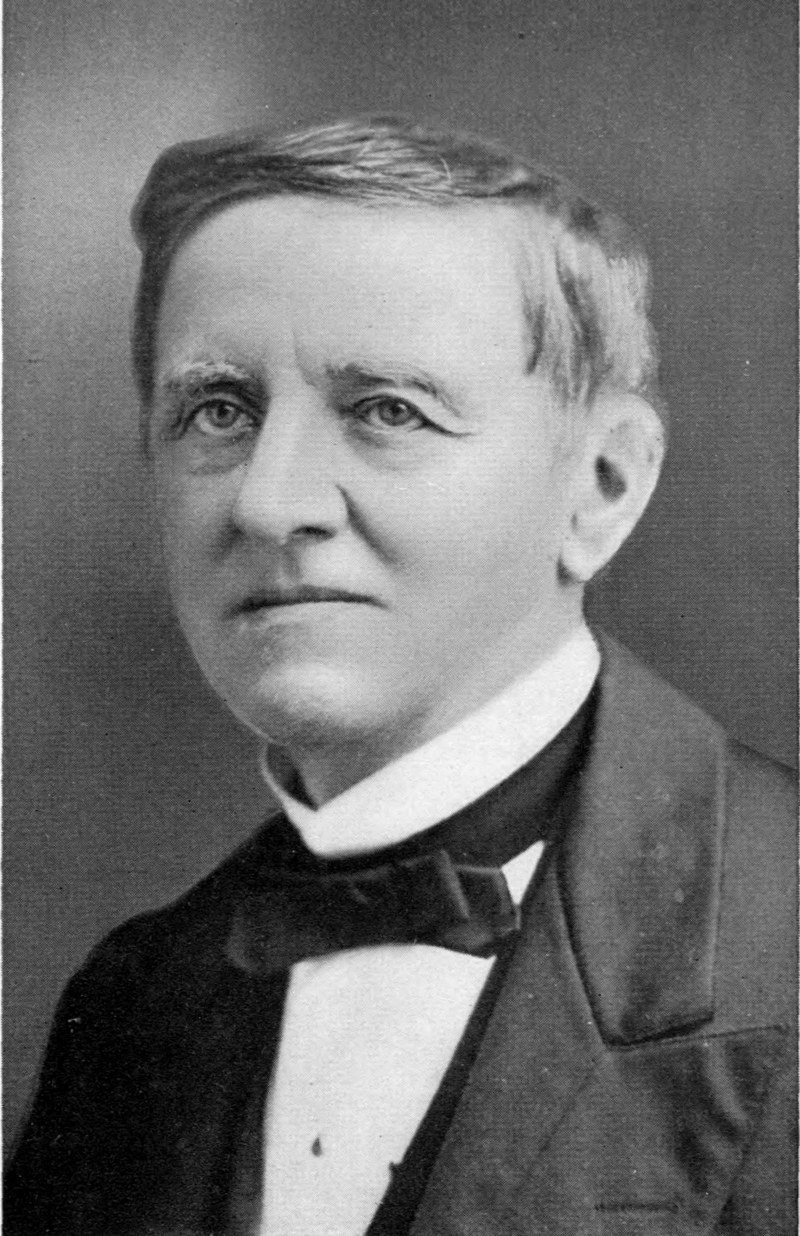
CHAPTER XXXIII. HON. SAMUEL J. TILDEN.
337
How Tilden began to Make his Fortune in Connection
with William H. Havemeyer.—Tilden’s Great Forte
in Politics.—He Improves his Opportunity with
the Discernment of Genius.—How Tilden became
one of the Counsel of the “Committee of Seventy.”—His
Political Elevation and Fame dating from
this Lucky Event.—The Sage of Greystone a Truly
Great Man.—Attains Marvelous Success by His
own Industry and Brain Power.—He not only Deserved
Success and Respect, but Commanded them.—How his
Large Generosity was Manifested in His
Last Will and Testament.—The Attempt to Break
that Precious Public Document.
Mr. Wm. H. Havemeyer had long been associated
with Mr. Tilden in railroad wrecking and the reorganization
of broken concerns of this character. Through this
process both these gentlemen became wealthy. When,
therefore, Mr. Havemeyer extended the right hand of
fellowship to his confidential companion in money making
affairs, and invited him to officiate as one of the
counsel of three for the Committee of Seventy, Mr.
Tilden was sharp enough to appreciate the opportunity,
which he seized with avidity.
He was quick to discern the tide in the affairs of men
which, when taken at the flood, leads on to fortune. He
did not wait until the tide began to ebb, but, like an able
seaman, set his sail at the propitious moment to catch the
prosperous breeze as well as the tide. Thus, through a
lucky chance and other men’s exertions, Mr. Tilden was
raised high on the very crest of the tidal wave of reform,
almost before he knew it.
In the first instance, this happy accident of being one of
the trinity of legal advisers to our committee, for which he
338was well paid, did not lead immediately so much to fortune
as to fame, but it formed an important portion of the
pedestal upon which the several millions which he so munificently
bequeathed to educational purposes were subsequently
raised. To fame he was then comparatively
unknown. The Committee of Seventy enabled him to
obtain the start which was chiefly instrumental in elevating
him to a position of renown in national politics.
Tilden’s great forte in politics, as in financial affairs and
railroad matters, was to set a cash value on everything, and
measure it accordingly. If he opened his “barrel” the
contents were not distributed indiscriminately, but on the
principle directed by the most expert judgment of where
the money would do the most good—according to Mr.
Tilden’s ideas of good. What they were I don’t attempt to
explain, but, like the popular novelist, charitably leave them
to the inference of the reader, or to that expert Moses who
so ably deciphered occult telegrams from Florida and
Louisiana when there was such a close contest for the office
of National Executive.
Without departing from the main issue of my subject,
however, I may say that the position which Mr. Tilden was
enabled to assume as counsellor to our committee made it
possible for him to rise from the, not to say dignified, although
money-making, attitude of railroad wrecker to that
of Governor of the Empire State of the Union, thus paving
the way for him to become almost a successful candidate
for the highest position in the gift of the Great Republic.
Such a sudden transition from comparative obscurity was
enough to turn any ordinary head.
Seeing the unexpected course that both our local
and national history have taken, it is impossible to say what
might have been the course of this man’s destiny, and the
fate of this new Daniel come to judgment in canal ring
masters, had it not been that his friend Havemeyer discovered
him at an opportune moment, and rescued him from
manifest oblivion in the nick of time.
339It must be said, on behalf of Mr. Tilden, however, that
he improved the occasion with the discernment of genius,
and in the fullest degree, and to the highest extent, thoroughly
justified Havemeyer’s choice.
The soundness of that proverbial philosophy which
holds that lightning never strikes twice in the same place
seems to have been fully appreciated by Mr. Havemeyer, although
this was a little ahead of the time that John Tyndall
and other scientists of the modern school of discovery had
demonstrated some of the recent wonders of electricity.
Tilden struck while the iron was hot, and though he failed
to reach the highest pinnacle of his soaring ambition, he
demonstrated the wonderful possibilities which lie in the
path of obscure men who are blest with friends who look
out for their welfare, and who have the precaution to turn
the wheel of fortune in the right direction.
Whether it was the result of fate, genius, or wise direction,
or a combination of all these attributes, I don’t pretend
to decide, but I have noted the simple facts from my own
observation and experience, associated with the rise and
financial progress of the Hon. Samuel J. Tilden, leaving
others deeper in scientific and philosophic matters to
supply the details and hidden mysteries of the causes of
his marvellous prosperity.
The Committee of Seventy, when entering upon its labors,
passed a resolution authorizing the appointment of a subcommittee
by the chair to select and retain three lawyers
to represent it in the matters of litigation that might arise
in connection with the investigation. Mr. Havemeyer, being
a member of the sub-committee, through his influence
Samuel J. Tilden was one of the three appointed.
To give the reader an idea of the power and prestige of
the Committee of Seventy at that time it is only necessary
to state that it was instrumental in making Mr. Abraham
Lawrence one of the Judges of the Supreme Court, and Mr.
W. H. Peckham, the third counsel, could have obtained almost
any judgeship he had desired, with perfect facility.
340These cases are on official record, and are living examples
to show that I am not exaggerating. Judge Lawrence still
adorns the bench, with an excellent record behind him, and
Mr. Peckham has been a prominent figure in many of the
most important suits that have become historic in the State
and City of New York.
Mr. Tilden saw the power which this committee, used as
an instrument of recommendation, wielded, and he set his
astute mind to avail himself of the reformatory advantages
which it afforded. The committee was a reform body, and
he saw his opportunity, as one of its counsel, to become a
reformer also. He builded almost better than he knew, if I
may be permitted to quote Scripture in this case, and he did
not build on a sandy foundation either. He planted himself
on the solid rock of reform principles, independent of
politics or previous condition. It must be said, to his credit,
that he used the material at his disposal with great tact and
good judgment, and made an excellent reformer.
Whatever may have been said about him by political opponents,
the late Sage of Greystone must be judged in this
sinful world by the positions to which he honorably attained.
He became a prominent and most estimable citizen
of our great Republic, and had it not been for his age,
and certain physical infirmities, the existence of which was
a matter of dispute, he would have made a very good President,
judging from his record as a Governor.
I have not intended to say anything especially disparaging
or ill-natured about Mr. Tilden through any hostile
feeling towards him, of which I never had any. My intention
has been simply to show how easily a man can rise if
he has the ability required to take passage on the tide of
prosperity exactly at its flow, the magic point of embarkation
which William Shakespeare has suggested.
So what I have stated about Mr. Tilden is in the main
rather to his credit than otherwise.
For a man who attained such an elevated position of
341success by his own industry and brain power I have the
highest respect and the deepest sympathy, knowing myself
a good deal about the toil attendant upon climbing above
the heads of the great majority of the “masses” with a
strong contingent of the envious “classes” always using
their best efforts to pull a man down who attempts to aspire
above a certain level. In fact, Mr. Tilden not only deserved
success and respect, but he commanded them. Such a man
should always be accorded most graciously his well-earned
deserts.
I can, therefore, conscientiously subscribe myself one of
the great admirers of his successful career on the whole,
bearing always in mind that human nature is not perfect,
and that there are few, if any, who have not had some
murky clouds cast over their fair fame.
Although on strict moral principles we should never do
evil that good may come, yet the manner in which Tilden
disposed of the greater portion of his fortune will, even in
the eyes of straight-laced moralists, go far to cover a multitude
of sins in the acquisition of his wealth. There are
probably few, if any, churches in the land that would have
refused a portion of the bequest, no matter how familiar
their members or their clergy might have been with Mr.
Tilden’s railroad methods.
In this imperfect sketch of the turning point of prosperity
in Mr. Tilden’s career, I have desired to show how little it
requires to change the entire current of a man’s apparent
destiny. A man who attains such eminent success has his
Creator to thank for endowing him in the first instance with
the capacity to take advantage of the chances thrown in his
way, and his own smartness for turning them to the best
account.
I have taken Mr. Tilden up and devoted to his extraordinary
career a few pages, from personal reminiscences, in
this book, owing to the fact that he was identified with a
number of railroads in the way which I have indicated
342above. His position in this respect naturally classifies him
with some of our most prominent Wall Street speculators,
investors and operators, and he thus naturally falls within
the scope of the main subject of this book.
Mr. Tilden, in his will, ordered that if the will should be
contested by any of the beneficiaries each and all of the
contesting parties should be disinherited.
In spite of this prohibition, George H. and Samuel J.
Tilden, sons of Henry A. Tilden, and nephews of the testator,
contested the validity of the instrument, not on the
ground of incapacity or undue influence, but upon construction.
Henry L. Clinton and Aaron Vanderpoel were the lawyers
for the contestants.
It is curious that the will of a man so deeply learned in
the law as Mr. Tilden was, should be questioned as to
whether it was a legal document or not. But such was the
ground of the contest. The point was this: The residuary
clause empowers the trustees to apply to the Legislature
for an act to incorporate a body to be called the Tilden
Trust. This body, when incorporated, was to become the
legatee. This method of procedure, according to the
opinion of learned counsel in the law, bequeathed to the
trustee under the will the power to name the public legatee
of the testator. It seems that a testator has no power to do
this, according to the recent decisions of the Courts of last
resort in this country, which, it would seem, Mr. Tilden had
not read. Nobody but the testator himself has power to
name the legatee. It appears he had the decision of the
English Court in his mind, which allows of this method of
bequeathing property. Following is the residuary clause in
full, bearing upon this point: “I request my said executors
and trustees to obtain, as speedily as possible, from the
Legislature an act of incorporation of an institution to be
known as the Tilden Trust, with capacity to establish and
maintain a free library and reading-room in the city of New
343York, and to promote such scientific and educational objects
as my said executors and trustees may more particularly designate.
Such corporation shall have not less than five
trustees, with power to fill vacancies in their number, and in
case said institution shall be incorporated in a form and
manner satisfactory to my said executors and trustees during
the lifetime of the survivor of the two lives in being,
upon which the trust of my general estate herein created is
limited, to wit, the lives of Ruby S. Tilden and Susie Whittlesey,
I hereby authorize my said executors and trustees to
organize the said corporation, designate the first trustees
thereof, and to convey to or apply to the use of the same
the rest, residue and remainder of all my real and personal
estate not specifically disposed of by this instrument, or so
much thereof as they may deem expedient, but subject,
nevertheless, to the special trusts herein directed to be constituted
for particular persons, and to the obligations to
make and keep good the said special trusts, provided that
the said corporation shall be authorized by law to assume
such obligation. But in case such institution shall not be so
incorporated during the lifetime of the survivors of the said
Ruby S. Tilden and Susie Whittlesey, or if for any cause or
reason my said executors shall deem it expedient to convey
said rest, residue and remainder, or any part thereof, or
to apply the same, or any part thereof, to the said institution,
I authorize my said executors and trustees to apply the
rest, residue and remainder of my properly, real and personal,
after making good the said special trusts herein
directed to be constituted, or such portion thereof as they
may not deem it expedient to apply to its use to such charitable,
educational and scientific purposes, as in the judgment
of my said executors and trustees will render the said rest,
residue and remainder of my property most widely and substantially
beneficial to the interests of mankind.”
344
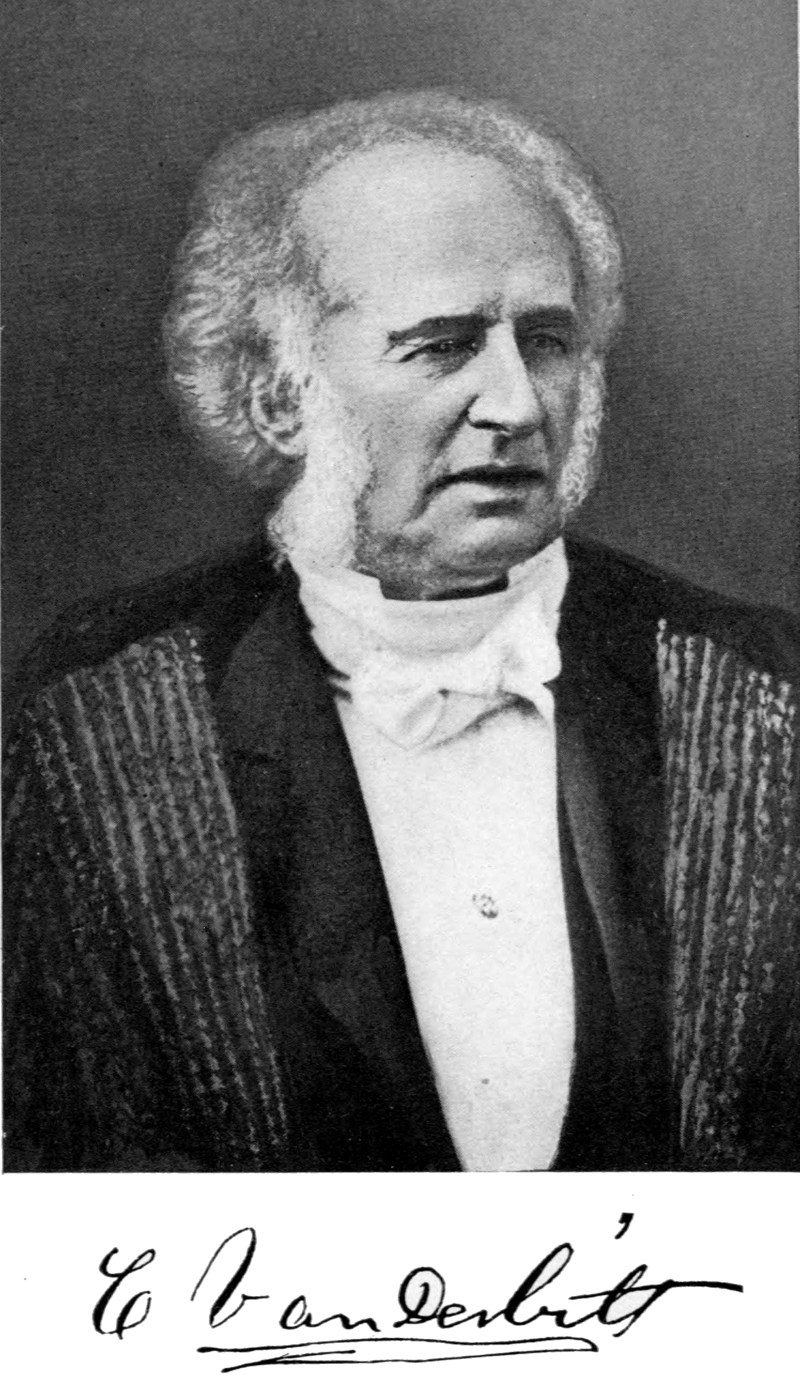
CHAPTER XXXIV. COMMODORE VANDERBILT. —HOW HIS MAMMOTH FORTUNE WAS ACCUMULATED.
345
Ferryman.—Steamboat Owner.—Runs a Great Commercial
Fleet.—The First and Greatest of Railroad
Kings.—The Harlem “Corner.”—Reorganization of
N. Y. Central.—How He Milked His Co-speculators.—His
Fortune.—Its Vast Increase by WM. H.
The most conspicuous man connected with Wall Street
in my early days of speculation was “Commodore”
Vanderbilt. Without going minutely into the early exploits
of the man, it will be sufficient, for the purposes of
this narrative, that I trace his start in life in connection with
a row-boat of which he was Captain, plying between Staten
Island, Governor’s Island, and New York, in which he himself
did the rowing. This enterprise, in course of time,
grew into one with boats propelled by steam, instead of
manual labor. During his progress as ferryman he became
proprietor of a hotel at New Brunswick, New Jersey. This
side issue did not prove very lucrative, perhaps, because
the Commodore, with all his versatile ability, did not possess
the special talents required to keep a hotel. The hotel
still exists, and is situated near the railroad station, and is
now, as it was then, merely a railroad tavern. The first
vivid recollection of the Commodore in Wall Street “dickering”
was in connection with the Nicaragua Transit Company,
the capital of which was over $4,000,000. He became
President of the Company, and soon afterward the head
and front of the whole enterprise. The Directors and stockholders,
and in fact every one else connected with the Company,
were soon crushed into nonentities. When their
complete subjection was obtained, the Commodore loomed
up into gigantic dimensions, and, as he expanded, the
346Nicaragua Company became small by degrees and beautifully
less in inverse proportion. Eventually the greatly
depressed stockholders, like the worm when trodden under
foot, turned and showed resentment. The case came into
Court and was the subject of ordinary investigation, but I
never heard of the Company recovering anything. I presume
their claims were relegated to the profit and loss
account in perpetuity.
After this, the Commodore started a line of steamers in
opposition to the fleet of Pacific Mail, and kept his boats
running until he was bought off. About this time an event
happened which has preserved for posterity a good story,
highly characteristic of the Commodore. His son-in-law,
James M. Cross, had conceived the idea of embarking in
the wholesale leather business in the “Swamp.” He had
been talked into it by an experienced man who was to be
his partner. A store was secured, and everything put under
way for the start, with the exception of the capital, which Mr.
Cross had agreed to contribute against the experience of
his partner. The amount was to be $50,000. Mr. Cross,
knowing that the Commodore had at this time become
rich and prosperous, felt satisfied that it was only necessary
to make application to his enterprising father-in-law
for the amount required. Thereupon, with the
confidence begotten of implicit trust, he approached the
Commodore for this temporary accommodation, giving
him a full description of the nature of the business.
After listening attentively to the statement of his esteemed
son-in-law, the Commodore said in reply: “Now,
James, if I let you have this $50,000 to put in the leather
business, how much do you think you will be able to
make for your share out of the profits?” Mr. Cross thought
the best position to take with a rigid business man like his
father-in-law was to be prudently conservative in his expectations,
and to keep all his Colonel Seller prospects in the
background. After a few moments reflection he replied: “I
347believe I am almost certain to make $5,000 a year.” The
Commodore promptly responded: “James, as I can do better
than that myself in handling $50,000, I will give you
$5,000 a year hereafter, and you may consider yourself in
my employ at that salary.” There was no way for James to
wriggle out of it, and he accepted the situation with apparent
good grace, whatever his internal emotions may have
been at the time. The Commodore forthwith dispatched Mr.
Cross to San Francisco to manage his steamboat business
there. He soon discovered, however, that James was hardly
aggressive enough for the go-ahead fellows on the gold
coast, and he was recalled. After looking around some time
for a man possessing the necessary requirements to be placed
in successful competition with the adventurous spirits of the
Pacific Slope, his search was rewarded by an introduction to
Commodore C. K. Garrison, then in command of a Mississippi
steamboat. Garrison had established his reputation
for being the best euchre player on the river, and for much
besides which that term implies. He was brave and fearless—in
fact, in some respects, a Jim Bludso of real life, with the
self-sacrificing qualities of that hero largely discounted,
or perhaps entirely left out. It required men of mettle
in those days to run a steamboat on the Father of Waters,
when the greater portion of the passengers belonged to the
gambling fraternity, and were all experts with the bowie
knife and the ready revolver.
The Commodore had an interview with Garrison, which
resulted in an engagement, and he was sent to San Francisco
as the Commodore’s agent. It was soon found that he was
the man for the Wild West, and he was not slow to appreciate
his own value and importance to the increasing fortunes
of his employer. He struck very often for higher wages,
and was always able to command his price. He rose, from
one advance to another, until his salary at that day had
reached the marvellous figure of $60,000 a year. Numerous
stories of Garrison’s fabulous prosperity on the Pacific
348Coast reached this city and the ears of the Commodore, and
his fame began to penetrate farther than the name of the
latter had ever been heard. These accounts had their effect
on a mind so naturally envious as that of the Commodore.
He began to realize the humiliating fact that, instead of
Garrison being in his employ, the former captain of the
Mississippi steamboat had him in tow, and was everywhere
regarded as the Boss, while Vanderbilt was simply supposed
to be his Eastern agent. This brought matters to the point
where patience ceased to be a virtue, and the connection was
severed. Soon after this the Commodore sold out to the
Pacific Mail Company, which again became a monopoly, and
as the fight had been a losing one to him, he was obliged to
find other waters for his boats.
Since his advent with a common row boat on the
waters of our own handsome bay, thence through the
gradations of ferry boats and steamboats, nothing but
unremitting success had attended his ventures, until his
unequal struggle in competition with Pacific Mail. He
appeared to have met his Trafalgar when he encountered
that fleet. His dissociation with Garrison seemed for a
time to forebode disaster. He gathered himself up temporarily
again, but never took to the waters so kindly afterwards.
He began to feel that his financial destiny was verging
towards a firmer foundation. His last boat was the famous
steamship Vanderbilt, which was recognized at the time
as one of the finest ships to be found on any sea. He made
a present of her to the Government during our great National
struggle, or according to another account, he lent her,
and the Government kept her. The Commodore at one
time had a fleet of sixty ships.
The Commodore became convinced that the growing prospects
of railroads pointed to greater facilities for transportation
in the future, and also a more profitable investment
than those watery regions which had hitherto appeared to
be his natural element. He promptly resolved to turn his
349back on the domain of Neptune, and to devote his great energies
to enterprises on land. He saw there was comparatively
little room for development in water traffic, while in
the railroad business the field was practically unlimited.
He then commenced to buy up Harlem Railroad stock, so
as to obtain control of that road, and in the operation got
up the celebrated Harlem “corner.” Application had been
made to the Legislature for some advantages in connection
with the road, which were refused for reasons best known
to leading members of that body. In the meantime Harlem
stock had been knocked down to a very low figure. The
Commodore remained in ambush, and was secretly purchasing
it. He then went to the Legislature to get his bill
passed. Most of the members of the Legislature thought
they had got the “deadwood” on the Commodore, and
enlisted a large number of their friends in the enterprise.
They attempted “to work the Commodore for all he was
worth,” and for a time appeared anxious to pass the
measure required. On the strength of this anticipated
action on the part of the Legislature the stock advanced,
when the members sold “short” and failed to legislate.
The stock naturally went down, and Vanderbilt bought it
up. The collapse anticipated by the Legislature did not take
place, and, instead of that, the Commodore got a “corner” in
the stock, and the members of the Legislature were the parties
mulcted. They had, therefore, all to go to the Commodore’s
office, and settle up with him on his own terms, and he
made arrangements to get his measure in favor of the road
through the Legislature as part of the bargain. This transaction
is more fully described in another chapter.
His next great enterprise was in connection with the New
York Central. Having successfully euchred the legislators
in the matter of Harlem, he was encouraged to play a still
higher game. As soon as he obtained control of this property,
it seemed as if it had been touched by a magic wand,
or that famous stone of Midas, contact with which turned
350everything into gold. Prior to this event the road had
been dragged along under the management of Dean Richmond,
Samuel Sloan and Henry Keep, without any signs of
prosperity; but when Vanderbilt took hold of it there was
a sudden change to visible progress and prosperity. It
never looked behind afterwards, and both enterprises have
enjoyed signal and increasing success ever since, thus illustrating
the marvellous capacity of the Commodore for the
organization and management of large enterprises. The
hydraulic operations of the Commodore with the stock of
this property would alone furnish material for a very interesting
chapter. Sending it up on one occasion at a bound,
between Saturday and Monday, 20 per cent., was a new move
in manipulation which caused some of the boldest operators
on the Stock Exchange to stand aghast. He kept working
the stock up and down, in some such way as Mr. S. V. White
now keeps toying with Lackawanna, until he “milked” the
street sometimes very dry. He kept the tempting prize of a
coming dividend glittering before the eyes of the dazzled
imaginations of his friends who were dealing in the stock,
but the “milking” process was so ably managed that, when
the famous 80 per cent. dividend was actually declared, they
had become so poor that they were unable to carry any of the
stock, so as to avail themselves of the profits. There was
but one man that I know of who reaped any benefit from it,
and that was an old friend of the Commodore, who still
lives, and who had met with signal reverses in some of the
Erie deals at the time Mr. Gould so ably managed that concern.
This man had been wiped out in Erie, and his depressed
condition awoke a sympathetic cord momentarily in
the heart of the Commodore. He gave his friend the tip
the day before the dividend was declared, and he found
another friend who bought enough of stock to realize $700,000,
which was divided between them. This is the solitary
exception within my knowledge where the Commodore failed
to bag the entire game without “saying turkey once” to any
person connected with the deal.
351The life of the Commodore affords singular scope for reflection
on the immense possibility of a great business
capacity to amass a huge fortune in a few years, especially
in this country. The Commodore and his son William H.,
in a little more than half a century, accumulated the largest
private fortune in the world, excepting the aggregate wealth
of all the Rothschilds combined, which has been the result of
the most expert financiering in all the capitals of Europe
through several generations, with all the resources of the
greatest monarchs on the earth to back their various enterprises.
With all these advantages in favor of the Rothschilds,
the Vanderbilt fortune amounts to two-thirds of the sum
total of theirs. The result is certainly astounding when submitted
to a test of the highest standard of comparison that
can be found anywhere on this globe. But, wonderful as
the success of the Commodore was in its rapid gradations,
from the possession of a rowboat on our bay to that of a
fleet of sixty-six steamboats that brought mercantile argosies
from all parts of the world, and in later years his great railroad
acquisitions, yet the success of his son is more marvellous
still.
In seventy years the Commodore arose from nothing
financially to be the proud possessor of $90,000,000. Wm.
H. obtained $75,000,000 of that and nearly trebled it in a
tenth part of the time. He made three times as much in
seven years as his father made in seventy, or he made
as much on an average every two and one-half years as his
father had done during the three score and ten of his active
business and speculative career. If any person having the
necessary amount of temerity had ever ventured to make
such a prediction as this in the presence of the old Commodore,
what a natural burn idiot he would have been regarded
by that grand old man. If the spirits of the departed
ever visited the glimpses of the moon in these days,
what a profound sense of humiliation that of old Vanderbilt
must feel, as it makes its nightly rounds through those
352spacious marble corridors in Fifth avenue, or, perched on
the dome of the Grand Central Depot, it contemplates the
mighty development and expansion of its earthly designs,
now extended far beyond the limits of what its highest ambition
had dared to foreshadow.
Some people may argue that it required greater ability
to acquire these first $90,000,000 than the present
sum total of the wealth of the Vanderbilts. Those who
argue thus, however, have no precedent to suggest their
position. An instance of such prosperity on so large
a scale in so short a time has never occurred in the
history of financiering. The accumulations in all the
wealthy families that I know of have been comparatively
slow, and the history of the family of European millionaires
shows a similar principle of gradation, except, indeed, that
the gradation in the majority of instances has gone backwards.
Very few wealthy men, with the exception of the
Rothschilds, the Astors and a few others, have had any
children capable of increasing their wealth, except where it
was almost impossible to do otherwise under the law of
primogeniture. In this country, therefore, where the law
of distribution has full scope, Wm. H. Vanderbilt, who had
to that time been regarded as a man of very moderate capacity,
proved himself to be the ablest financier of which
there is any record either in ancient or modern history.
Jay Gould, with all the resources of science at his disposal,
and all the talent that money could command, with
newspapers, politicians, lawyers, judges, and courts at his
will, with as good a start, financially dating from 1878, as
Wm. H. Vanderbilt had, has been left far behind in the
race for wealth, and for the highest prize ever gained by
one man in any nation. It has been truly said that a fool
can make money, but it takes a wise man to keep it. Wm.
H. Vanderbilt’s financial wisdom, as well as his ability, was
signally displayed in keeping this great fortune intact,
besides adding fully three times as much more to it; and
353it proves that his father made no mistake in selecting him
to hand his name and fortune down to posterity. This immense
pile of “filthy lucre,” however, in spite of all the
credit that is justly due to its late manager, has had one
serious drawback from a public standpoint. In fact, the
very announcement of this mammoth fortune in the newspapers,
at the time of Mr. Wm. H. Vanderbilt’s death, had a
most demoralizing effect upon a large number of the wealthy
portion of the community, who began to feel that they were
nonentities in comparison. In making this statement I absolve
the Vanderbilt family from any blame. Every man in
this great Republic has the privilege of walking in the footsteps
of the two great Vanderbilts if he only has the ability;
but it would not be wisdom for a large number of men to
attempt it. They would be pretty certain to “get left.”
The story of the distribution of the Vanderbilt wealth, however,
has brought discontent to many a home where happiness
reigned before. It could hardly be otherwise, constituted
as human nature is, and especially human nature in
our highly strung commercial society, where the spirit of
ambition is always strenuously aiming at higher flights.
People who heretofore had considered themselves rich, and
socially important, with a million or so to draw upon, felt
that they were mere ciphers in the scale of wealth; they
seemed to themselves to be financially blighted, and miserably
poor in contrast with the colossal magnitude of the
Vanderbilt possessions as exhibited in the Surrogate’s Court.
The plain, cold, prosy figures brought out there read like a
romance, or the story of Sinbad the Sailor and the Valley of
Diamonds. But it was all stern reality. This is why the
feelings which suffer from this contrast are so deeply
pathetic. It is a reality, and a stern reality, that can hardly
be imitated or duplicated by any other two men in this
generation. The thing is possible, but just about as probable
as it was for every private soldier of Napoleon the
Great, who each had a Marshal’s baton in his knapsack, to
354become a Marshal. “Every blacksmith,” says the Rev.
Robert Collyer, “might become a preacher, but it would be
a great public calamity if it should happen to that extent.”
The bare outlines of the Vanderbilt wills, which have made
such a deep impression on the community at large, will be
found in another part of this book. I think they will afford
very interesting reading for generations yet unborn.
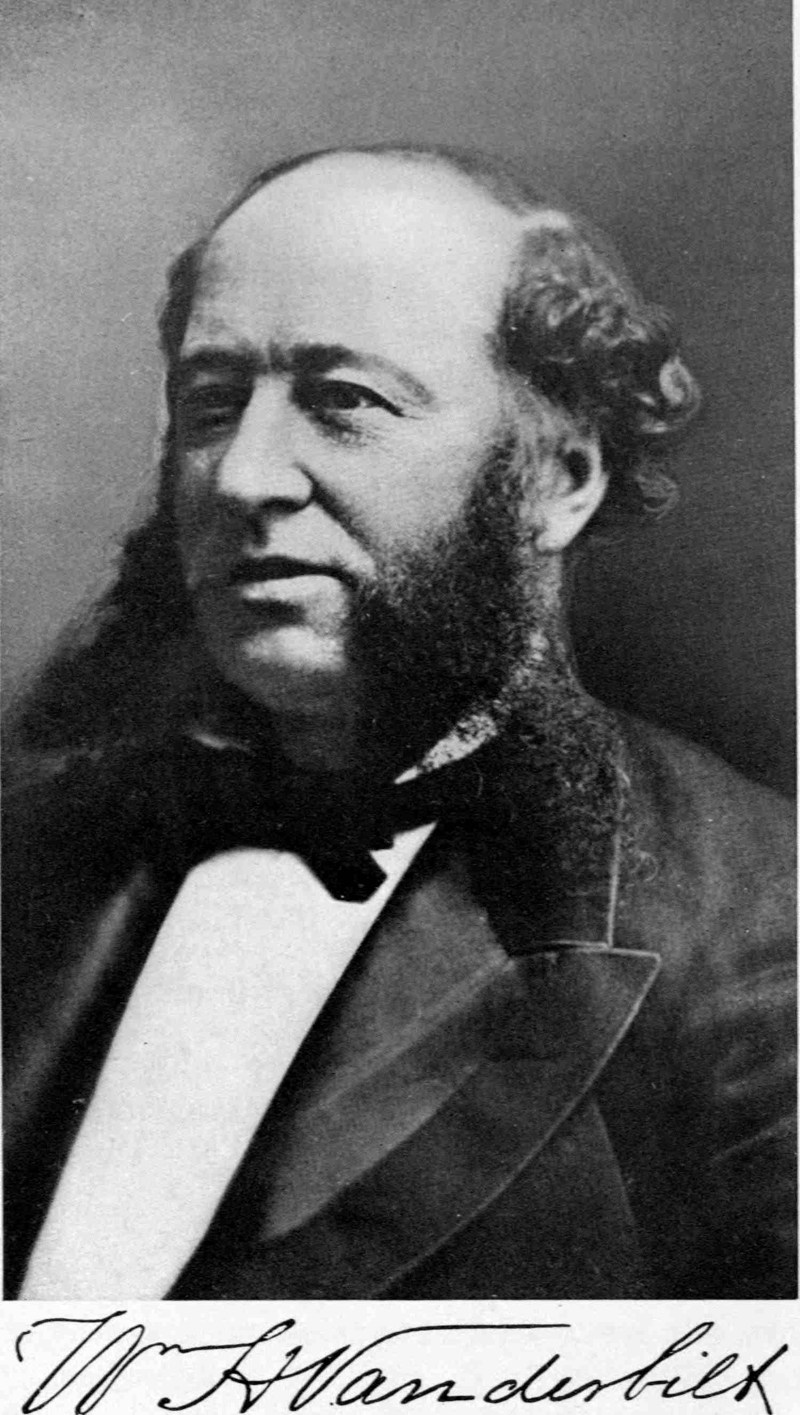
CHAPTER XXXV. WILLIAM H. VANDERBILT.
355
A Builder Instead of a Destroyer of Public Values.—His
Respect for Public Opinion on the Subject of
Monopolies.—His First Experience in Railroad
Management.—How he Improved the Harlem Railroad
Property.—His Great Executive Power Manifested
in Every Stage of Advance Until he Becomes
President of the Vanderbilt Consolidated System.—An
Indefatigable Worker.—His Habit of Scrutinizing
Every Detail.—His Prudent Action in the Great
Strike of 1877, and its Good Results.—Settled all
Misunderstandings by Peace and Arbitration.—Makes
Princely Presents to his Sisters.—The Singular
Gratitude of a Brother-in-Law.—How he
Compromises by a Gift of a Million with Young
Corneel.—Gladstone’s Idea of the Vanderbilt Fortune.—Interview
of Chauncey M. Depew with the
G. O. M. on the Subject.—The Great Vanderbilt
Mansion and the Celebrated Ball.—The Immense
Picture Gallery.—Mr. Vanderbilt Visits Some
of the Famous Artists.—His Love of Fast Horses.—A
Patron of Public Institutions.—His Gift to the
Waiter Students.—While Sensitive to Public Opinion,
has no Fear of Threats or Blackmailers.-“The
Public be Damned.”—Explanation of the Rash Expression.—The
Purchase of “Nickel Plate.”—His
Declining Health and Last Days.—His Will and
Wise Method of Distributing 200 Millions.—Effects
of this Colossal Fortune on Public Sentiment.
In treating of the family in the order of descent, I shall
now make a brief survey of the life of William H.
Vanderbilt, especially in its relation to Wall Street affairs and
the management of his great railroad system, the two being
closely connected. William H. Vanderbilt was not
much of a speculator in the Wall Street sense of the term.
He was more of an investor than a speculator, and his investments
356had always a healthy effect upon the market.
Unlike Woerishoffer and others of that ilk, he built up
instead of pulling down values, but was at the same time
careful to avoid the error of inflation. He paid due deference
to public opinion also, in striving to allay its alarm in
regard to the dangerous overgrowth of monopolies. A grand
illustration of this was seen in the sale of the large block
of New York Central. His first experience in railroad
matters was in connection with the Staten Island Railroad,
thirteen miles in length. The road had been mismanaged
and was deeply in debt, and became bankrupt. As he and
his father had considerable interest in the road William H.
was appointed receiver. It seems this was done secretly at
the suggestion of the Commodore, who wanted to discover
by this experiment if his son had any capacity for
railroad management. The receivership of the Staten
Island road was crowned with signal success. In
two years the entire indebtedness of the road
was paid, and the stock, which had been worthless,
rose to 175. William H. Vanderbilt was then elected
President of the road. It was at this time, it is said, that
the Commodore began to correct his judgment regarding the
“executive ability of William H.,” and the latter relaxed no
effort to please his exacting father in everything, taking all
his abuse without complaint or anger. After the Commodore
secured control of the Harlem road, which was his first
great railroad venture, he made William H. Vice-President.
As a co-worker with his father the latter further demonstrated
his capacity for railroad management, and Harlem
stock, which had been down to nearly nothing, in a few years
became one of the most valuable railroad properties in the
country. So, it is a fact, although not generally known,
that William H. Vanderbilt had proved himself to be a
competent railroad manager before his eminent father had
fairly begun that line of business. It was almost entirely
owing to his individual exertions and sound judgment that,
357in a few years, the Harlem road was double-tracked, and
such other improvements made as sent the stock from 8 or 9
to above par. The Commodore was so highly pleased and
agreeably surprised with his son’s management of the Harlem
road that he made him Vice-President of the Hudson
River Railroad also, and at a later date associated him in
the same capacity with the management of the important
consolidation of New York Central & Hudson River.
The great executive power of William H. was manifested in
every successive movement which his father directed, and
unparalleled prosperity was the result in every instance.
After William H. was fully installed in the Vice-Presidency
of the consolidated system of the Vanderbilt railroads he
became an indefatigable worker, taxing his physical and
mental powers to their utmost capacity, and it was doubtless
this habit of hard work, persisted in for many years, that
resulted in so sudden and comparatively premature death for
a member of a family famous for its longevity throughout
several generations. He insisted on making himself familiar
with the smallest details of every department, and examined
everything personally. He carefully scrutinized every bill,
check and voucher connected with the financial department
of the immense railroad system, and inspected every engine
belonging to the numerous trains of the roads. In addition
to this general supervision of everything that pertained to
the railroads, he was in the habit of going over a large
amount of correspondence which the majority of other men
not possessing the hundredth part of his wealth hand over to
their clerks, and he answered a great number of letters with
his own hand which financiers of comparatively moderate
means are in the habit of dictating to their stenographers.
When his father died, at the age of 82, in January, 1887,
William H. Vanderbilt, then 56 years of age, found himself
the happy possessor of a fortune variously estimated at from
75 to 90 million dollars. The remainder of the Commodore’s
bequests amounted to 15 millions.
358After the death of his father the executive powers of Wm.
H. Vanderbilt, in the management of the vast railroad interests
bequeathed to him, were called into active play.
The great strike of 1877 among the railroad employes
threatened to paralyze business all over the country, and
came pretty near causing a social revolution. In this emergency
a cool head and prudent judgment were valuable
attributes to a railroad manager. Mr. Vanderbilt proved
that he possessed both in more than an ordinary degree.
Just prior to encountering the knotty problem of the strike
he had been highly instrumental in bringing about suspension
of hostilities in the freight war, and the course which
he advised led to an arrangement that produced harmony
among the trunk lines for a considerable period. As a consequence
of the rate war the railroad companies were obliged
to cut down the wages of their employes, and this was the
chief element in causing the strike. There were 12,000 men
in the employ of the New York Central and Harlem. Their
wages had been reduced ten per cent. and they had threatened
to annihilate the Grand Central Depot. Instead of
making application to have the militia called out, as had
been done in Pennsylvania, Mr. Vanderbilt—although a
man possessed of far more than ordinary courage—with
keen foresight proposed a kindly compromise with his employes.
He telegraphed from Saratoga to his head officials
an order to distribute $100,000 among his striking employes
and promising them a restoration of the ten per cent. reduction
as soon as business improved to a point justifying such
an advance. This prompt and prudent action had the
desired effect, and the consequence was that while there was
a small insurrection in Pittsburgh, and bloody war to the
knife, at great cost to Allegheny County, calmness reigned
in the prominent railroad circles of New York, and the taxpayers
escaped the burden that might otherwise have been
put upon their shoulders, and the demoralizing effects of
violence and bloodshed were prevented. Over 11,500 of the
35912,000 men returned to work, thus showing their gratitude
to Mr. Vanderbilt and faith in his promise, which was afterwards
duly fulfilled. The policy of Wm. H., in the management
of his great railroad system, unlike that of his father,
was entirely pacific in its character. He was disposed to
settle all misunderstandings by reason and arbitration, and
had no inclination for fighting and conquest, after the manner
of the Commodore. Although a very close calculator in
business matters, a habit to which he adhered even to the
precision of striking out superfluous items which should not
have been charged in his lunch bill, Mr. Vanderbilt was in
many respects generous to a fault. He compromised the
suit with his brother, “Young Corneel,” allowing him the
interest on $1,000,000, whereas his father had only left him
the interest on $200,000, with a forfeiture clause in the
event of “Corneel” contesting the will. Wm. H. also made
a present of $500,000 in United States bonds to each of his
sisters, out of his own private fortune. A good story is
related in connection with the distribution of this handsome
gift. Mr. Vanderbilt, it is said, went around one evening in
his carriage, taking the bonds with him and dispensing them
to the fortunate recipients from his own hands. One of his
brothers-in-law having observed by the evening papers that
the bond market had declined a point or two on that day,
said, “William, these bonds fall $150 short of the $500,000,
according to the closing prices of this day’s market.” “All
right,” replied Mr. Vanderbilt, with assumed gravity, “I
will give you a check for the balance,” and he wrote and
signed it on the spot. It is related that another brother-in-law
followed him to the door, and said, “If there is to be
anything more in this line I hope we shall not be forgotten.”
It is said that these remarkable instances of ingratitude,
instead of irritating him, as they would have in the case of
an ordinary individual, only served to arouse his risible
faculties and that he regarded the exhibitions of human
weakness as a good joke.
360One of the greatest works of Mr. Vanderbilt’s life was the
building of the beautiful palace on Fifth avenue, between
Fifty-first and Fifty-second streets, which he adorned extensively
with paintings selected from the great masterpieces of
the most renowned artists of the world.
One reason assigned for his disinclination to speculate was
that he regarded the property left by his father in the light
of a sacred trust, and while he considered it a filial duty to
look after its increase and accumulation, he was careful not
to do anything that might risk its dissipation.
Mr. Chauncey Depew, who succeeded to the presidency
of the New York Central & Hudson River Railroad Company,
was upon one occasion, while visiting in London, a
guest at a dinner given to the Hon. Wm. E. Gladstone, then
Premier of England, and was honored by a seat on the left
of Mr. Gladstone, with whom he discussed the differences
between American and English railroad and financial management.
In the course of conversation Mr. Gladstone said,
“I understand you have a man in your country who is worth
£20,000,000 or $100,000,000, and it is all in property which
he can convert at will into cash. The Government ought to
seize his property and take it away from him, as it is too
dangerous a power for any one man to have. Supposing
he should convert his property into money and lock it up,
it would make a panic in America which would extend to
this country and every other part of the world, and be a
great injury to a large number of innocent people.” Mr.
Depew admitted that the gentleman referred to—who was
Mr. Vanderbilt—had fully the amount of money named and
more, and in his usual suave and conclusive way, replied,
“But you have, Mr. Gladstone, a man in England who has
equally as large a fortune.”
Mr. Gladstone said, “I suppose you mean the Duke of
Westminster. The Duke of Westminster’s property is not
as large as that. I know all about his property and have
kept pace with it for many years past. The Duke’s property
361is worth about £10,000,000 or $50,000,000, but it is
not in securities which can be turned into ready cash and
thereby absorb the current money of the country, so that he
can make any dangerous use of it, for it is merely an hereditary
right, the enjoyment of it that he possesses. It is
inalienable, and it is so with all great fortunes in this
country, and thus, I think, we are better protected here in
England than you are in America.” “Ah, but like you in
England, we in America do not consider a fortune dangerous,”
was the ready response.
The best proof of Wm. H. Vanderbilt’s great ability as a
financier is the marvellous increase in the value of the
estate which he inherited from his father during the seven
years which he had the use and control of it, and in which
he did more than treble the value at which it was estimated
on the death of the Commodore.
The weakest financial operation on his part, known to the
public, was the purchase of the Nickel Plate Road, as regards
the time of the transaction, in which he was rather
premature. It is now positively known that if he had
waited about a month longer the road would have gone into
bankruptcy and have fallen into his lap on his own terms.
In that case the West Shore would have followed suit.
In such an event I believe Mr. Vanderbilt would have
been saved an immense amount of money, remorse and
mental strain, which, no doubt, aggravated the malady
which was the cause of his sudden death. He realized his
error when it was too late, and it was a source of great
mental anxiety to him in his latter days. He was very
sensitive, and nothing afforded him more gratification than
a clean and successful transaction, which drew forth public
approval, and in the purchase of Nickel Plate he was caught
napping. It was a mistake for which the Commodore, had
he been alive, could never have forgiven him.
The syndicate that built the road had solely for their
object to land it upon either Gould or Vanderbilt, and it
362was upon its last legs at the time it made the transfer to Mr.
Vanderbilt. The syndicate laid a trap for him. It had
been coquetting with Mr. Gould in reference to the purchase,
and had made it to appear, through the press and other
channels of plausible rumors, that he had an eye upon the
road. Mr. Gould had occasion to go West about this time
and the syndicate invited him to make his homeward trip
over the road, taking particular pains that all these rumors
and reports should reach the ears of Mr. Vanderbilt, who
was impressed with the idea that Mr. Gould’s trip was one
of inspection, with the intention of buying the road if he
did not anticipate him. This was just what the syndicate
desired, and the successful consummation of their financial
plot.
The purchase was made solely in the interest of Lake
Shore, as it was a parallel road, and the road was afterwards
turned over to the Lake Shore Company.
The conception of the scheme was to build the road at a
nominal price and sell it to Mr. Vanderbilt as high as possible,
and this was duly accomplished. I am quite satisfied that
if this road had not been sold at this particular time it would
then have gone into the hands of a receiver, while a number
of the syndicate, who had built the road, would have failed,
and a general crash would have ensued. This Mr. Vanderbilt’s
purchase averted for the time, and served to prolong
the period of its coming until May, 1884.
For a few years prior to his death Mr. Vanderbilt was in
a weak condition. This cause of mental annoyance came
upon him at a time when he was not robust enough to bear
it and had not sufficient strength to throw it off. He had been
seized with a slight paralytic stroke, the only visible effect
of which was a twitching of the lower lip. Shortly after
this he lost the entire sight of one eye, about a year before
his death. This was not generally known to the public, however,
and it was the principal cause of his giving up his
favorite pastime of driving, which was one of his greatest
363pleasures and the chief source of mental diversion from the
heavy weight of his worldly cares and responsibilities.
The day after Mr. Vanderbilt’s death I sent the following
circular to my customers:
“As Mr. Wm. H. Vanderbilt was a very important factor
in Wall Street business, I feel it incumbent upon me to
issue a letter to my friends and clients on the subject of his
decease, especially as the loss to the Street is a most important
one, and certainly will be felt for some time to come.
Mr. Vanderbilt undoubtedly, at the time of his death, was
the largest holder of American securities in the world, and
had innumerable followers, who were also vast holders
of similar properties as those he controlled, who acted more
or less in concert with him, and who were at his beck and
call. When he told them to buy or sell they would do so.
These parties have now lost a valuable friend and counsellor,
and a leader in whom they believed implicitly. In such
quarters, for some time to come at least, more or less of a
dazed condition will prevail, precisely, the same as would
exist in an army in the event of the general in command
having been killed. Mr. Vanderbilt was a bolder and larger
operator than his father ever dared to be, as he spread out
over more interests. The market has lost an able leader,
who was usually a builder-up of the interests of the entire
country, and unlike many other large operators, who, at
times, are on that side, but quite as frequently on the wrecking
side. It will be a long while before so conspicuous and
valiant a leader as Mr. Wm. H. Vanderbilt will be forthcoming,
and the market will, for a protracted period, have
cause to mourn its great loss. It is, indeed, fortunate that
Mr. Vanderbilt lived long enough to see the completion of
the consolidation of the West Shore and New York Central
roads; since both roads are under the able direction of Mr.
Depew, they are now secure from future harm; but the same
cannot be said of the South Pennsylvania enterprise, as
negotiations remain in connection therewith unfinished,
which will suffer by Mr. Vanderbilt’s death, and it will be
found difficult, I fear, for any other man to knit the discordant
elements together that at present exist in that quarter.
There is enough in this for some ground of apprehension,
and this matter may, therefore, disturb the harmony of
the great trunk lines, as this speck of trouble may yet prove
364a cancer in the body of the stock market. As it is capable
of infusing its poison elsewhere, beyond where it is at present
located, it is certain that there will be required skillful
surgery to prevent inoculation therefrom.
“The stock market started off to-day as if held by concerted
action, and the appearances indicating that such attitude
might prevail to bridge over the Vanderbilt shock. While
prices had a moderate break, it was scarcely adequate as a
fitting tribute of respect to Mr. Vanderbilt’s memory, as the
great General of the Army of Finance of this country. It
was unmistakable, however, that the large selling was mostly
of long stock, coming from numerous frightened holders
who were shaken out, and it was very evident that the bears
were more conspicuous as buyers than as sellers, to cover
their short sales made during the previous several days. I
do not think that the market had, considering the power it
has lost in the death of Mr. Vanderbilt, as much of a break
as should have occurred; still, it must be remembered, that
the dealings have been so enormous during the past month,
which represent the immense number of operators now interested
in the market, that it has taken from it a character
which previously existed as a one man market, and therefore
it is owing to this fact that the removal of any one man, or
a half dozen of them, by death or otherwise, could not bring
about, at the present time, any very wide and lasting disaster
to Wall Street. This market, as I have repeatedly
stated, can fairly be now considered the market for the world,
and beyond the permanent reach of any one man doing it
any lasting harm. As Mr. Vanderbilt invented pegging
stocks, and stood his ground when taken better than any
one that will survive him in that plan of strategic movement,
he will, in that particular alone, be sorrowfully missed.
I am of the opinion, now that Mr. Vanderbilt is no more,
that Mr. Gould’s plan of leaving the Street will undergo a
modification, at least by his remaining for some time longer
at the helm. This will prove, in such an event, an important
factor in the future, especially as the bulls of the Street
have for at least a year past recognized Mr. Gould in the light
of a benefactor. To them he has proved a brave and able
leader, and the field is now clear for him to become commander-in-chief
of all the forces, without any one to dispute
his right thereto. This should be enough to fire his ambition
and keep him in our midst, and probably will.”
365Among the popular and erroneous impressions entertained
regarding Wm. H. Vanderbilt, the one that he was no judge
of pictures seemed to have taken deep root in the public
mind, except among the few who knew him intimately, and
the celebrated artists whom he visited and from whom he
purchased many of the works of art which adorn his great
gallery in Fifth avenue, now in charge of his youngest son,
George. That Mr. Vanderbilt had an intimate knowledge
and correct appreciation of true art has been amply proved
by the highest authority. I am well aware that some years
ago this statement would have been ridiculed by the majority
of the newspapers; but Mr. Vanderbilt never bought a
picture that he did not fully understand in his own simple,
unaffected method of judgment. He may not have been
capable of the highest flights of fancy, necessary to follow
the poetic imagination of the artist to its extreme height, but
he was equal to the task of grasping all the material essentials
from a common-sense point of view.
So far from making any pretence of being a lover of art,
he was in the habit of saying, when a handsome painting
was shown him, “It may be very fine, but until I can appreciate
its beauty I shall not buy it.”
Apropos of his modesty and judgment, in regard to the
fidelity to nature of a picture, a circumstance is related of
his visit to Boucheron, a French picture dealer, where he
wanted to see a painting by Troyon, with the object of buying
it. A yoke of oxen turning from the plough to leave
the field is the subject. Experts in art had taken exception
to the manner in which the cattle left the field. When Mr.
Vanderbilt’s opinion was asked, he said, “I don’t know as
much about the quality of the picture as I do about the
truth of the actions of the cattle. I have seen them act like
that hundreds of times.” The artists present submitted to
his judgment, as he knew more about the oxen than they
did. When in France he visited the celebrated Rosa Bonheur,
at Fontainebleau, who was about his own age, and
366gave her an order for two pictures, which she painted to his
entire satisfaction. He had his portrait painted by the
celebrated Meissonier, to whom he paid nearly $200,000 for
seven pictures. He purchased in Germany this artist’s
masterpiece, “The Information—General Desaix and the
Captured Peasant,” for $40,000, giving Meissonier, who had
not seen it for many years, a great surprise, and filling the
heart of the enthusiastic artist with unbounded gratitude for
rescuing the picture from Germany and bringing it to
America.
Mr. Vanderbilt’s taste for music, especially operatic music,
was refined, and he had a keen sense of the humorous.
Neither Mr. Vanderbilt nor any of his family ever displayed
any anxiety to hobnob with those people who are
known as the leaders of society, although possessed of more
wealth than the greatest of them. The celebrated fancy
dress ball, given by Mrs. Wm. K. Vanderbilt, at the suggestion
of Lady Mandeville, in March, 1883, seemed to have
the effect of levelling up among the social ranks of upper-tendom,
and placing the Vanderbilts at the top of the heap,
in what is recognized as good society in New York. So far
as cost, richness of costume and newspaper celebrity were
concerned, that ball had, perhaps, no equal in history. It
may not have been quite so expensive as the feast of Alexander
the Great at Babylon, some of the entertainments of
Cleopatra to Augustus and Mark Antony, or a few of the
magnificent banquets of Louis XIV., but when viewed from
every essential standpoint, and taking into account our
advanced civilization, I have no hesitation in saying that
the Vanderbilt ball was superior to any of those grand historic
displays of festivity and amusement referred to, and more
especially as the pleasure was not cloyed with any excesses
like those prevalent with the ancient nobility of the old
world and frequently exhibited among the modern “salt of
the earth” in the mother country. The ball had the effect
of drawing the Astors and the Vanderbilts into social union.
367The entente cordiale was brought about in this way, as the
story goes:
Several weeks before the ball Miss Carrie Astor, daughter
of Mrs. William Astor, organized a fancy dress quadrille, to
be danced at the ball. Mrs. Vanderbilt, it seems, heard of this
and said, in the hearing of some friends, that she was sorry
Miss Astor was putting herself to so much trouble, as she
could not invite her to the ball, for the reason that Mrs.
Astor had never called on her. This was carried to Mrs.
Astor, who immediately unbent her stateliness, called on
Mrs. Vanderbilt, and in a very ladylike manner made the
amende honorable for her former neglect. So the Astors
were cordially invited to the ball, where Miss Astor presented
a superb appearance with her well trained quadrille.
All Mr. Vanderbilt’s other attachments vanished in presence
of his love for his horses. When any company, of
which he formed a part, began to talk horse his tongue was
immediately loosened and he became eloquent. Although
generally a man of few words and diffident as a talker, he
could throw the eloquence of Chauncey M. Depew in the
shade when the subject was horse. He not alone admired
the speed of his horses; he seemed possessed of the fondness
of an Arabian for them, and, like old John Harper of
Kentucky, would probably have slept with them only through
fear of the newspapers criticising his eccentricity. It was
he who introduced the custom of fast driving teams, first
with Small Hopes, purchased by his father, and Lady Mac,
purchased by himself. With this team, in a top road wagon,
he made the then remarkable time of 2.23¼.
A host of rivals immediately sprang up, of whom Mr.
Frank Work was the most formidable. Mr. Vanderbilt procured
faster teams, and with Aldine and Early Rose, under
the spur of competition, reduced the time to 2.16½. Mr.
Work, however, was a daring and persistent rival, and soon
beat this record, although only by a fraction of a minute,
which in trotting or racing counts just the same as if it
368were an hour. Mr. Vanderbilt then purchased the famous
Maud S. in Kentucky for $21,000, and with her and Aldine
made the mile in Fleetwood Park in June, 1883, in 2.15½.
He afterwards reduced this time to 2.08¾, leaving Mr.
Work and all other rivals hopelessly in the distance. Eventually
he sold Maud S. to Mr. Robert Bonner for the comparatively
small amount of $40,000, on condition that she
should never be trotted for money. Other men would have
given $100,000 for her without this condition.
On the 12th of August, this year, Murphy, the famous
jockey, drove Maud S. in single harness, at Tarrytown, a mile
in 2.10½, and declared he did not push her. He said he was
confident he could make her do the mile in 2.06 or 2.07 if
Mr. Bonner would permit him, thus smashing all trotting
records.
It has been said by experts in driving that Mr. Vanderbilt
was the best double-team driver in America, either
amateur or professional.
Mr. Vanderbilt’s bequests were liberal and numerous. He
added $300,000 to the million which his father gave, through
the wife of the Commodore and Dr. Deems, to the Nashville
University. He gave half a million to the College of Physicians
and Surgeons, and his sister, Mrs. Sloane, added a
quarter of a million to this generous donation. It cost him
over $100,000 to remove Cleopatra’s Needle from Egypt to
Central Park. He offered to cancel the $150,000 check
which he gave to General Grant to relieve him from the
Ward-Fish embarrassment, and his munificent gift to the
waiter students in the White Mountains will long be remembered.
Although Mr. Vanderbilt was very courageous, as was
proved by the fact that no matter how many threatening letters
he may have received—and their name was legion—from
cranks, socialists and others, he never made any change in
his programme or his routine of business for the day, and
never absented himself from the place where he was expected
369at any particular hour on account of such letters. Yet he was
peculiarly sensitive to public opinion, and sought in various
ways to correct its hasty judgment in regard to himself and
his enormous wealth.
It was this sensitive feeling, together with his profound respect
for popular opinion against monopolies, which induced
him to sell a controlling interest, 300,000 shares out of 400,000,
at from 120 to 130, ten points below the market price, of
New York Central stock in 1879 to a syndicate, the chief members
of which were Drexel, Morgan & Co., Morton, Bliss & Co.,
August Belmont & Co., Winslow, Lanier & Co., L. Von Hoffman
& Co, Cyrus W. Field, Edwin D. Morgan, Russell Sage,
Jay Gould and J. S. Morgan & Co. of London. The amount
paid for the stock was $35,000,000. As the syndicate largely
represented the Wabash system, the stock of that property,
as well as New York Central, had an important advance.
The reasons assigned for this stupendous and unprecedented
stock transaction are briefly condensed by Mr. Chauncey M.
Depew as follows: “Mr. Vanderbilt, because of assaults
made upon him in the Legislature and in the newspapers,
came to the conclusion that it was a mistake for one individual
to own a controlling interest in a great corporation like
the New York Central, and also a mistake to have so many
eggs in one basket, and he thought it would be better for
himself and better for the company if the ownership were
distributed as widely as possible. The syndicate afterwards
sold it, and the stock became one of the most widely-distributed
of the dividend-paying American securities.
There are now about 14,000 stockholders. At the time he
sold there were only 3,000.”
That hasty expression, “The public be damned,” which
Mr. Vanderbilt used in an interview with a reporter for a
Chicago newspaper, has received wide circulation, various
comment and hostile criticism. Although the expression is
literally correct, the public at first, and many of them to
this day, received a wrong impression in regard to the spirit in
370which it was applied. It was represented as if Mr. Vanderbilt
was a tyrannical monopolist, who defied public opinion.
A true and simple relation of the interview is a sufficient
answer to this. The subject was the fast mail train to
Chicago. Mr. Vanderbilt was thinking of taking this train
off, because it did not pay, and did not appear to him therefore
to be a necessity, and he did not propose to run trains
as a philanthropist. As part of the interview which
relates to this point has become so widely historic, I think
it will bear reproduction here, literally:
“Why are you going to stop this fast mail train?” asked
the reporter.
“Because it doesn’t pay,” replied Mr. Vanderbilt; “I
can’t run a train as far as this permanently at a loss.”
“But the public find it very convenient and useful. You
ought to accommodate them,” rejoined the reporter.
“The public,” said Mr. Vanderbilt. “How do you know,
or how can I know that they want it? If they want it why
don’t they patronize it and make it pay? That’s the only
test I have as to whether a thing is wanted or not. Does it
pay? If it doesn’t pay I suppose it isn’t wanted.”
“Are you working,” persisted the reporter, “for the public
or for your stockholders?”
“The public be damned!” exclaimed Mr. Vanderbilt, “I
am working for my stockholders. If the public want the
train why don’t they support it.”
This, I think, was a very proper answer from a business
standpoint, and the expression, when placed in its real connection
in the interview, does not imply any slur upon the
public. It simply intimates that he was urging a thing on
the public which it did not want and practically refused.
The “cuss” word might have been left out, but the crushing
reply to the reporter would not have been so emphatic, and
that obtrusive representative of public opinion might have
gone away unsquelched. As it was, however, he and his
editor exhibited considerable ingenuity in making the best
371misrepresentation possible out of the words of Mr. Vanderbilt,
thus giving them a thousand times wider circulation
than the journal in which they were first printed, and affording
that paper a big advertisement. This is the correct
account of that world-renowned expression, “The public be
damned!”
The mausoleum at New Dorp, Staten Island, is another
outcome of the genius of Wm. H. Vanderbilt. Mr. Richard
M. Hunt was the architect. Pursuant to the instructions of
Mr. Vanderbilt, it was built without any fancy work, but at
the same time on such a grand and substantial scale that it is
said there is nothing among the tombs of either European or
Oriental royalty to excel it, in solidity of structure and
grandeur of design. It is forty feet in height, sixty in
breadth and about 150 in depth. It is situated on an eminence
commanding the largest prospect of the bay, and one
of the finest views all around in the State of New York.
The tomb and the twenty-one acres of land, upon the highest
part of which it stands, cost nearly half a million dollars, and
when the grounds are finished, in the style intended, beautiful
roads and walks made, flower gardens planted with the requisite
adornments, the entire expense of the mausoleum and
its surroundings will not fall far short of a million dollars.
The precautions taken by the family against resurrectionists
is one of the best that has ever been adopted. There
is a guard at the tomb night and day. Each of these must
put on record his vigilance every fifteen minutes by winding
up a clock, which is sent to the office at the Grand Central
Depot every morning.
In May, 1883, Mr. Vanderbilt, finding that his railroad
duties were too heavy for him, resigned the presidencies of
his roads and took a trip to Europe. James H. Rutter was
elected President of the Central, and on his death was succeeded
by Chauncey M. Depew, the present President, who
so ably fills that office. About a year before his death Mr.
Vanderbilt gave unmistakable notice of his approaching
372dissolution when he stopped driving his fast teams, and went
out riding with some other person to drive for him. He
must have keenly felt his growing weakness when he was
obliged to resign the reins which he so fondly desired to
hold, and which he had handled with such inimitable skill.
The death of Mr. Vanderbilt was a great surprise, especially
to Wall Street, as very few brokers were aware even of
his failing health. On the 8th day of December, 1885, he arose
early, apparently no worse in health than he had been for a
year previous. He went to the studio of J. Q. A. Ward and
gave that artist a sitting for the bronze bust ordered by the
Trustees of the College of Physicians and Surgeons. Mr.
Depew called upon him at one o’clock, but finding that Mr.
Robert Garrett, President of the Baltimore & Ohio Railroad
Company, had also called to see Mr. Vanderbilt, Mr. Depew
waived his opportunity in favor of Mr. Garrett. Mr. Garrett
was conversing on his project of getting into New York by
way of Staten Island and a bridge over the Arthur Kill. They
were in the study. Mr. Vanderbilt sat in his large arm
chair and Mr. Garrett sat on a sofa opposite to him. It
seems that Mr. Vanderbilt was in perfect harmony with the
plans of Mr. Garrett. While he was replying to the remarks
of Mr. Garrett the latter observed that his voice began to
falter and there was a curious twitching of the muscles about
his mouth. Soon he ceased to speak and had a spasm. In
a moment he leaned forward and would have fallen on his
face on the floor, but Mr. Garrett caught him in his arms,
laid him gently on the rug and put a pillow under his head.
This was only the work of a few moments, but before it was
accomplished the greatest millionaire in America had ceased
to breathe. When Dr. McLean, the family physician, arrived
he said a blood vessel had burst in the head, and so death,
according to the frequently expressed wish of Mr. Vanderbilt,
was instantaneous.
On the announcement of Mr. Vanderbilt’s death, (which
was after Board hours), a panic was predicted in the stock
373market. A pool was formed of the most wealthy leading
operators, with a capital of $12,000,000, to resist such a calamity.
It was not required, however. There was a reaction
of a few points in the morning following, which was recovered
before the close of the market. The stocks of Mr. Vanderbilt’s
properties, as well as the properties themselves, had
been so well distributed that such a disaster could hardly
have occurred without a strong outside combination to help
it, and the prevalent desire there was to assist speculation
in the very opposite direction. The remains of Mr. Vanderbilt
were conveyed to New Dorp and deposited in the tomb
without any ostentation.
In the chapter on the young Vanderbilts a brief account
of the disposition of the mammoth fortune of $200,000,000
is given.
CHAPTER XXXVI. “YOUNG CORNEEL.”
375
The Eccentricities of Cornelius Jeremiah Vanderbilt,
and his Marvellous Power for Borrowing Money.—He
Exercises Wonderful Influence over Greeley
and Colfax.—A Dinner at the Club with Young
“Corneel” and the “Famous Smiler.”—“Corneel
tries to make himself Solid with Jay Cooke.—The
Commodore Refuses to Pay Greeley.-“Who
the Devil Asked You?” retorted Greeley.-“Corneel’s”
marriage to a Charming and Devoted Woman.—How
she Softened the Obdurate Heart of her Father-in-Law.
Cornelius J. Vanderbilt, the brother of Wm.
H., popularly known by the name of “Young Corneel,”
is entitled to a place in this book, as he was prominent
among the many financial friends I have had, in his own
peculiar line.
“Corneel” was eccentric, and was possessed of some
astonishing peculiarities that made him a genius in his way.
He led a charmed and adventurous life in his own circles.
He had a wonderful facility for getting into scrapes, and
“banked” on the Commodore to extricate him therefrom,
which the latter did on many occasions. The mere fact,
however, that he had such a father, was in itself sufficient,
very often, to get him out of his troubles, without any effort
on the part of the Commodore in that direction. “Corneel,”
however, worked this “racket” for all it was worth, and in
time it became almost exhausted. Still, he went on making
new acquaintances without limit, and to many of them the
name of the Commodore was a sufficient guarantee of security
for sundry loans, that were promised to be paid on the fulfilment
of certain expectations which only existed in the
borrower’s imagination.
376But it was not very safe for “Corneel” to rely upon his
father, or to bank upon his credit in any case. If he had depended
solely on the paternal security, he would often have
found, when in his worst straits, that he had leaned upon a
willow cane for support. “Corneel” had a peculiar fascination
in his ability to catch the ear of prominent men, who
would listen attentively to his tale of woe, and some of them
were so thoroughly under the spell of his persuasive powers
that they would “fork” out the required amount without
hesitation, to relieve his pressing necessities.
It is sad to relate that the money thus sometimes piteously
solicited, and really required to pay a board bill or room
rent, was often thrown away in the first gambling den that
the borrower happened to be passing, while the landlady
and the washerwoman would be obliged to extend their bills
of credit indefinitely.
Amongst the special friends upon whom he was in the
habit of exercising his alluring magnetism were the Hon.
Schuyler Colfax and Horace Greeley. Over both of these
eminent gentlemen he seemed to have perfect control. So
hopelessly were they under the charm of his occult power
that they seldom said “no” to any request that he made,
especially when he wanted to borrow money. No sorcerer
ever had his helpless victims more completely at his mercy,
nor had greater power by the touch of his mysterious wand,
than “Corneel” had over these and certain other men, when
he would entertain them with a list of imaginary wrongs
which he had suffered at the hands of his father and brother.
In their ears this story never seemed to become stale, though
it was the same old story every time, with hardly any attempt
at variation. To them and others, over whom he exercised
this unaccountable influence, the thing did not seem
to become monotonous like other twice-told tales, related by
ordinary people.
To the man of average intellect and common business
capacity “Corneel” was a shocking “bore” and a victim of
377morbid melancholia, but these men of genius were won by
the impression which he had made upon them, and thoroughly
imbued with the deepest sympathy for the wrongs which
his strange hallucinations conjured up. Unlike most men
who borrow money from friends and don’t pay, instead of
exhausting his credit by this business delinquency, he made
it the basis for increasing it, and it generally seemed to be
a potent means of enabling him to borrow more. Hence
his obligations to Mr. Greeley were persistently cumulative
until they exceeded $50,000.
I have been told by a person familiarly acquainted with
him that years after Greeley’s death he would sometimes sit
in deep meditation, with the tears welling up in his eyes,
especially when in a great financial strait, and sighingly
say: “When Mr. Greeley died I lost the best friend in the
world.” Be it said to his credit, however, in spite of all his
shortcomings, he exhibited his honesty by paying every
cent of the debt, with interest, to Mr. Greeley’s daughters.
He also paid the greater part of all the other debts which he
had contracted under similar circumstances, after making a
settlement with Wm. H. and receiving a much larger amount
than he had been left by the will of his father, who bequeathed
him merely a decent competence for his rank and
station in life, without any surplus for the policy shops and
faro banks.
One of the qualities possessed by “Corneel” in a remarkable
degree, and which enabled him to be so successful a
borrower, was his extreme earnestness. He bent his whole
energies to the work in hand, and his requests usually met
with ready response. If he had put the same energy and
intense enthusiasm into legitimate speculation, he would
have been as successful as his father or Jay Gould. He
must have been an intuitive judge of character, for he showed
that he generally knew his man in advance of making application
for sundry little loans. In that respect he was not
unlike the famous huntsman who was a dead shot every
time.
378My first acquaintance with “Corneel” was through one
of his special friends, the Hon. Schuyler Colfax, whom he
brought to my office for the purpose of having himself introduced
by Mr. Colfax. He informed me that he had just
then returned from Hartford, Conn., where he had taken his
friend, Mr. Colfax, for a week’s visit at his house. It can
be readily imagined, therefore, that at this time Mr. Colfax
had but little control over his own bank account and for a
long time afterwards.
I invited both these gentlemen to dinner at the Club that
afternoon. Although Mr. Colfax was an extraordinarily good
talker, he was left far in the distance and almost silenced
by “Corneel.” Most of what the latter said, however, had
very little in it of a tangible character, and was almost entirely
made up of unstinted praise of his friend Colfax. If
ever there was a man talked up to the skies, or if the thing
were possible, Colfax must have been literally in that elevated
position during our dinner.
There was no let-up to the unqualified adulation, yet I
must say that there was none of the uninterrupted stream of
fulsome flattery fell to the ground. Schuyler took it all
in as he did his viands, and as if it were legitimately his
due, a proof positive that “Young Corneel” was not mistaken
in his man; and a further demonstration of his natural sagacity
in striking the man upon whom he could successfully
exercise his peculiar charms of persuasion.
When he got tired talking about Mr. Colfax, the object of
his next theme was Mr. Greeley, on whom he was profusely
prolific.
I met Mr. Greeley frequently afterwards, and told him
what a good friend he had in young Cornelius Vanderbilt.
“Yes,” he said, with a knowing smile, “I think he is a good
friend of mine. I have heard of his frequently saying nice
things about me. It is a great pity, however,” he added
significantly, “that he is so frequently short of funds. If
he had more money he would be a very good fellow.”
379It was generally in the way above referred that he
would steal a march on Mr. Greeley and impose on his good
nature. He would say nice things about him to some one
who would quote him to Mr. Greeley, and thus pave the
way for an additional loan. In a few days afterward “Corneel”
would call on his tried and trusty friend, and never fail
to obtain the needed relief, or a large portion of it.
“Corneel” had great tact in utilizing his various advantages
for borrowing, and was imbued with a thorough devotion
to his object, worthy of a better cause. The day following
his first visit to my office, he called again and told me
that his friend Colfax had left by the early train for Washington
and had urged him to go along, but as he had some
matters to attend to he had postponed his departure until
the night train.
He said to me, “By-the-bye, you know Jay Cooke very
well.”
I said, “Yes.”
Then he replied, “I have some matters to look after in
connection with the Treasury Department, and I think he
could be of some service to me. Will you be good enough
to oblige me with a letter of introduction to him? I may
not need it,” he added with a business air of sang froid, “but
I should like to have it in case of need.”
I wrote him a brief and non-committal introduction, somewhat
as follows:
“This will introduce to you Mr. Cornelius Vanderbilt, Jr., son of the
Commodore. I take the liberty of making you acquainted with him
through this medium, at his own request.
“Truly yours, Henry Clews.”
There was certainly nothing on the face of this document,
except the Commodore’s name, to justify any person in utilizing
it as a bill of credit.
Yet the financial genius of “Young Corneel” was equal to
the task of an indirect negotiation of this character, and
after the lapse of a few days his drafts from Jay Cooke began
380to pour into my office like April showers. None of them
was very large, but when put together they aggregated a
pretty fair amount, and were so cumulative in their character
that, had I not wired Mr. Cooke to stop the supplies, it
is difficult to say what figure the sum total would have
reached.
The last time I saw “Young Corneel” was at Long Branch,
where he took a drive with me one fine warm afternoon. He
spoke feelingly about his wasted life, and concerning the
many good friends who had come so often to his rescue, and
had got him out of his numerous holes, into which, through
misfortune, he had been thrown. He said all there was of
life for him was to live long enough to pay up old scores.
He had fully determined to do this, and then, he thought, a
prolongation of existence would have no further charms for
him. It must be said to his credit that he accomplished this
work, and then laying himself sadly down, died by his own
hand.
Let us, therefore, throw the mantle of charity over that
tragic scene in the Glenham Hotel, and hope that his soul
may elsewhere have found the rest which in its poor, afflicted
body it vainly sought for here.
That portion of the Commodore’s will in which he makes
provision for Cornelius J. is thoroughly characteristic of
the old man, in its iron-clad provisions. It says: “I direct
that $200,000 be set apart, the interest thereof to be applied
to the maintenance and support of my son, Cornelius J.
Vanderbilt, during his natural life. And I authorize said
trustees, in their discretion, instead of themselves making
the application of said interest money to his support, to pay
over from time to time, to my said son, for his support, such
portions as they may deem advisable, or the whole of the
interest of said bonds. But no part of the interest is to be
paid to any assignee of my said son, or to any creditor who
may seek by legal proceedings to obtain the same; and in
case my said son should make any transfer or assignment of
381is beneficial interest in said bonds or the interest thereof,
or encumber the same, or attempt so to do, the said interest
of said bonds shall thereupon cease to be applicable to his
use, and shall thenceforth, during the residue of his natural
life, belong to my residuary legatee. Upon the decease of
my said son, Cornelius J., I give and bequeath the last
mentioned $200,000 of bonds to my residuary legatee.”
Though a portion of this provision is rather whimsical,
yet it was ably designed to force “Corneel” to desist from
his besetting sin, the gaming table.
If the trustees were permitted to pay him the whole of
the interest at whatever period they should choose, it seems
harsh that the beneficiary should forfeit it entirely, if he
should seek to relieve present and pressing necessities, by
borrowing on his future income. It showed that the Commodore,
even at the hour of his death, thought that “Corneel”
was not fit to be treated otherwise than as a child, and
that it was necessary he should be kept under the guardianship
of his brother.
This circumstance hurt “Corneel’s” feelings greatly, as
he imagined himself a bigger man, mentally, than Wm. H.
This opinion, however, no other man could conscientiously
endorse, except it might have been Greeley or Colfax.
“Corneel,” though always exclaiming against the old
man’s hard-heartedness, had an intense admiration for his
father’s abilities, and he was as sensitive as a sunflower
when any other person would say a word to disparage the
Commodore. While railing constantly at the parsimony of
his father, he was as devoted a hero-worshipper of the Commodore
as Thomas Carlyle ever was of the greatest of his
heroes, and he never grew tired talking of his achievements,
with the history of which he was thoroughly familiar. He
had even a more intense hatred against Gould than his
father had, and solemnly believed that Gould and Fisk had,
during the manipulation of the Erie “corner,” conspired to
assassinate the Commodore.
382Of course this was one of his many hallucinations, and
there was not the least ground for it, but he had got it
indelibly on the brain, and he would not tolerate contradiction
in that notion any more than in any other opinion
which he had got fixed in his morbid mind. He once went
into an epileptic fit in the presence of a friend of mine who
attempted to reason with him on the improbability of such
a man as Gould contemplating murder.
He never forgave his father for having him arrested and
incarcerated in Bloomingdale Lunatic Asylum. He had
run off to California the time of the gold fever, and shipped
as a sailor. He was then in his eighteenth year. When he
returned, which was pretty soon, as he had no ability to
enter into the terrible mental and physical struggle for
wealth on the gold coast, his father had him arrested. It
was soon discovered that he was no lunatic, however eccentric
he might be, and he was released, but he took the matter
dreadfully to heart, and it had a melancholy and demoralizing
effect upon all his future life. He was petulant,
and still complaining, and often acted like a crazy man in
that the more any of his intimate friends tried to please him
he seemed the more dissatisfied; yet it was impossible to
get along with him without humoring him, and it was almost
next to impossible to humor him. In this way he could
work on the minds of the strongest of his friends, so as almost
to put them into a fit as bad as one of his own.
Dr. Swazy’s patience was often put to a very severe test
in his attempt to please this eccentric invalid.
“Corneel” was a miser everywhere except at the gaming
table, and would cling to a cent with greater tenacity than
ordinary people display in holding on to a ten-dollar bill.
But among the gamblers either a ten-dollar bill or a hundred-dollar
bill was less valuable in his eyes than a cent
in the common transactions of every day life. “Faro” and
“keno” had terrific power over him. He has often been
known to have had an epileptic fit at the gaming-table, get
383a doze afterwards which seemed like the sleep of death,
so cadaverous did he look on those occasions, and then
awake up and go on with the play, whose fascination he appeared
utterly powerless to resist.
When it came to the ears of the Commodore that Greeley
was lending his son hundreds and sometimes thousands of
dollars at a time, he visited the office of the Tribune. He
rushed without ceremony into the sanctum, where Greeley
was busy at his high desk, grinding out a tirade against
some political or social abuse, and thus addressed the Sage
of Chappaqua: “Greeley, I hear yer lendin’ ‘Corneel’
money.” “Yes,” said Greeley, eyeing the monarch of steamboat
men through his glasses, with an air of philosophic contempt
mixed with commiseration; “I have let him have
some.” “I give you fair warning,” replied the Commodore,
“that you need not look to me; I won’t pay you.” “Who
the devil asked you?” retorted Greeley. “Have I?”
This closed the interview. The Commodore retraced his
steps down the rickety stairs into Spruce street, and
Greeley continued to grind out his illegible chirography for
the profane printers. There is no record, I believe, that the
subject was ever reverted to between them. Soon after the
death of Greeley the Commodore sent a check for $10,000
each to his two daughters.
The Commodore was well satisfied with the marriage of
young “Corneel” to Miss Williams, of Hartford, Connecticut,
and he had hoped that his son would begin then to
lead a new life, but he was doomed to disappointment.
There is a good story told about an interview between the
Commodore and Mr. Williams prior to the marriage.
Mr. Williams called upon the Commodore at his office in
Fourth street, near Broadway, and informed him that his
son, Cornelius Jeremiah, had asked his daughter in marriage,
and she was willing if the Commodore had no objection
to the union.
“Has your daughter plenty of silk dresses?” asked the
Commodore, sententiously.
384“Well,” replied Mr. Williams, showing some sensitiveness
at what he at first considered assumption of superiority and
purse-pride on the part of the Commodore, “my daughter,
as I told you, is not wealthy. She has a few dresses like
other young ladies in her station, but her wardrobe is not
very extensive nor costly.”
“Has your daughter plenty of jewelry?” continued the
Commodore, without appearing to take much notice of Mr.
Williams’ explanation.
“No, sir,” replied Mr. Williams, becoming slightly
nettled, and showing a laudable pride in opposition to what
he considered a slur on account of his moderate means, “I
have attempted to explain to you that I am in comparatively
humble circumstances, and my daughter cannot afford
jewelry.”
“The reason I ask you,” pursued the Commodore, “is,
that if she did possess these articles of value, my son would
take them and either pawn or sell them, and throw away
the proceeds at the gaming table. So I forewarn you and
your daughter that I can’t take any responsibility in this
matter.”
The nuptials were duly consummated, however, in spite
of the Commodore’s constructive remonstrance.
After the marriage “Corneel” asked his father for some
money to build a house. “No, Corneel,” he said emphatically,
“you have got to show that you can be trusted before
I trust you.”
His wife made application to her father-in-law with better
success, however. He gave her a check for $10,000. In
a few months afterward she paid another visit to the Commodore,
who received her cordially, but expected she had
come for another loan, and he was attempting to work up his
courage to the point of refusal; for, strong and almost invincibly
obdurate as he was in the general affairs of life, in
the presence of the fair sex, like Samson when he got his
hair cut, he was weak and like another man.
385“Well,” said the Commodore, addressing his daughter-in-law
with a kindly smile, “what can I do for you now?”
“Well, papa,” she replied in her exceedingly candid and
agreeable manner, “we did not need all the money, so I
brought you back $1,500.”
The Commodore could hardly believe his ears and eyes,
and thought for a moment that he must be under some
mysterious delusion, superinduced by the spiritual seances
which he then was in the habit of attending. But when
the cash was put in his hand he found it was a material
reality. This sealed a warm friendship between him and
his worthy and economical daughter-in-law, which was
only severed by her premature death about ten years before
that of her unfortunate husband.
The sympathy that some people manifested for “Young
Corneel” was, like his own maladies, of the most morbid or
delusive character. He had $200 a week from his father all
the time that he was whining to the public about his pinching
poverty and denouncing the old man’s niggardliness.
This would have been ample, with fair economy, not only
for all the necessaries of life, but, under judicious management,
would have afforded the recipient many of its luxuries.
With his irresistible propensity for gambling, he would
not have been any better off physically, but worse, with the
entire income from his father’s 75 or 100 millions. The only
difference that should have arisen was that he would have
been instrumental in carrying out in part the socialistic and
communistic idea of a wider distribution of private property,
amassed by thrift, privation and industry, among the drones,
lazy “loafers” and criminals of society.
The Commodore’s judgment, therefore, in limiting his
prodigal son to $200 a week, was not only comprehensive,
but beneficent in its results both to his son and to society
at large.
386
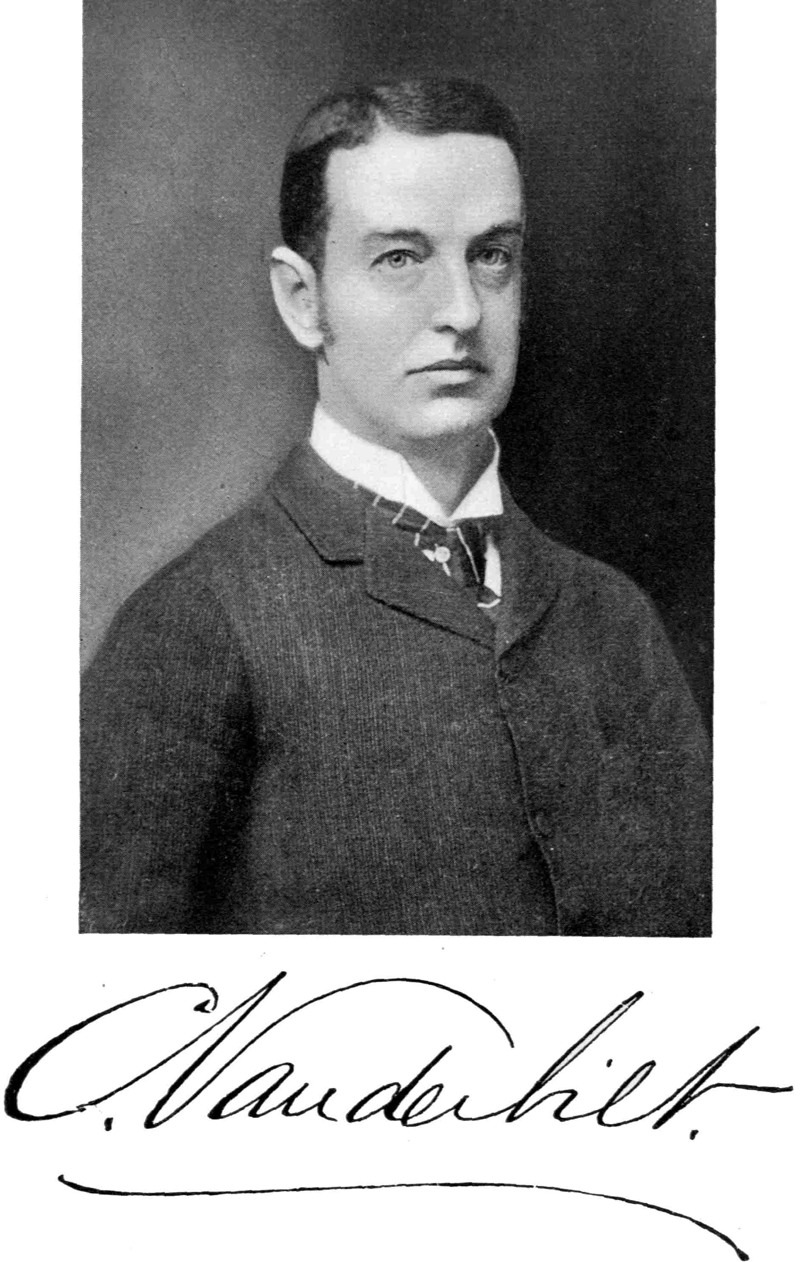
CHAPTER XXXVII. THE YOUNG VANDERBILTS AND THEIR FORTUNES.
387
Remarkable for Physical and Intellectual Ability.—The
Mixture of Races and the Law of Selection.—The
Wonderful Will and the Wise Distribution
of Two Hundred Millions.—Tastes, Habits
and Social Proclivities of the Young Vanderbilts.—The
Married Relations of Some of Them.—Being
Happily Assorted they make Good Husbands.—Their
Property Regarded as a Great
Trust.—Their Railroad System and its Great
Army of Employes.—The Young Men Cautious
about Speculating, and Conservative in their Expenses
Generally.
The young Vanderbilts who have succeeded to the estate
of their father, William H., are all remarkable for both
intellectual and physical power, as well as a high degree of
refinement, showing how fast human evolution under favorable
circumstances progresses in this country. In other
countries it takes many generations to develop such men as
the present Vanderbilts. In this country three generations
in this instance have produced some of the best samples of
nature’s nobility, which is superior in every respect to the
proud and vain-glorious production which emanates from
the succession of “a hundred earls” in England, or even a
greater number of barons, princes and kings on the Continent
of Europe. It would be difficult to produce better
types of men in the short period named than Cornelius,
William K., Frederick and George Vanderbilt, in personal
appearance, breeding and culture.
The mixture and amalgamation of races from all parts of the
world have doubtless had a great deal to do with such favorable
results in the reproduction of our species in the United
States. In the old country close intermarriages seem to
have a deteriorating effect on the race, with probably the
388one apparent exception, namely, the house of Rothschild,
and a little longer time may tell that the rule of deterioration
holds good in this case also.
The four sons of William H. Vanderbilt have had the
greatest start in life of any family in all the records of history,
ancient and modern, with the single exception, probably,
of the five Rothschild brothers, the sons of old Anselm,
and they had not near so much money to begin with,
but had the advantage of the Vanderbilts in their locations
and in their methods of combination. These methods, as I
have observed elsewhere, could only be attained through
the Hebrew religion. By the provisions of the remarkable
will, which revealed such enormous wealth as to make almost
every other millionaire feel comparatively poor, the greater
portion of 200 million dollars was divided among the eight
children of the testator. Millions were distributed in this
case as other millionaires have been in the habit of dealing
with thousands. The ordinary human mind fails to grasp
the idea of such a vast amount of wealth. If converted into
gold it would have weighed 500 tons, and it would have
taken 500 strong horses to draw it from the Grand Central
Depot to the Sub-Treasury in Wall Street. If it had been
all in gold or silver dollars, or even in greenbacks, it would
have taken Vanderbilt himself, working eight hours a day,
over thirty years to count it. If the first of the Vanderbilts
had been a contemporary of old Adam, according to the
Mosaic account, and had then started as president of a railroad
through Palestine, with a salary of $30,000 a year, saving
all this money and living on perquisites, the situation
being continued in the male line to the present day, the sum
total of all the family savings thus accumulated would not
amount to the fortune left by Wm. H. Vanderbilt, unless
this original $30,000 had been placed at compound interest,
and that in a bank from which young Napoleons of finance
had been strictly excluded.
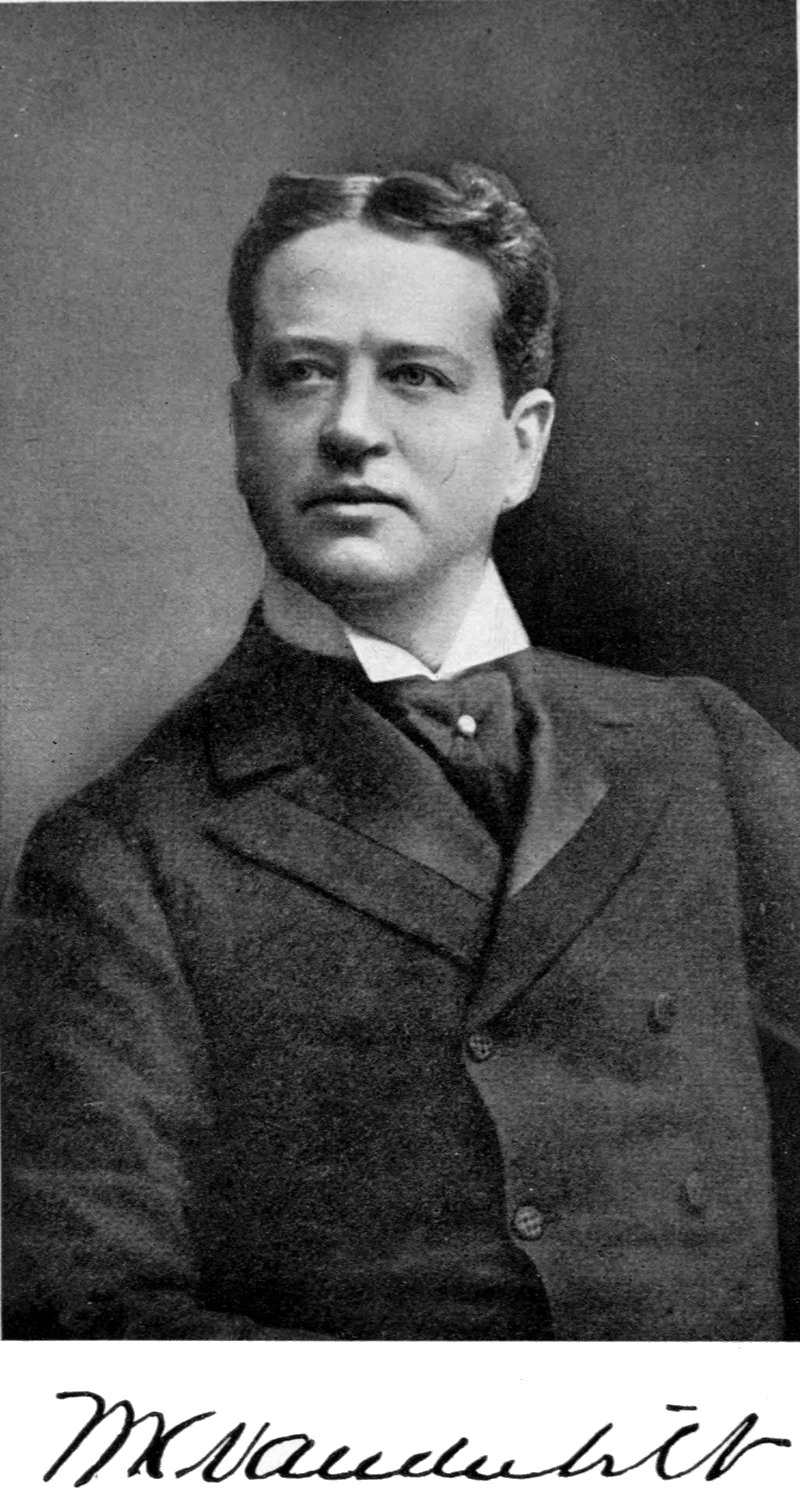
The will itself affords one of the best tests on record of
389the sound judgment and equitable mind of the testator. He
was under filial obligations to a certain extent to revere the
memory and respect the opinions of the father through
whom he had acquired the means of accumulating this wonderful
fortune.
The Commodore had modified ideas of primogeniture, not
exactly in the English sense of the term, but he had an
intense desire to perpetuate his name and wealth, and would
doubtless have advised William H., and perhaps he did, to
bequeath nearly all his possessions to one of his sons, leaving
the rest of the family a bare independence.
Wm. H., in accordance with his sensitive disposition,
upright mind, and a due respect for the feelings, opinions
and even the prejudices of others, resolved to make what
public opinion would be likely to consider an approximately
fair division of his immense estate. In this attempt, I
think he succeeded pretty well, considering all the circumstances
and difficulties with which he had to grapple. A
synopsis of the will itself, however, herewith inserted, will
enable the public to be the best judge of the equity of the
case.
In the first place Mr. Vanderbilt devised to his wife the
palatial residence, which cost two millions, situated between
51st and 52d streets on Fifth avenue, the stables on Madison
avenue, the paintings and statuary, and an annuity of
$200,000 per annum. He also empowered her to dispose of,
by will, in any way she might desire, $500,000 out of the
sum set apart to produce her annuity of $200,000.
He bequeathed to each of his four daughters, Mrs. Elliott
F. Shepard, Mrs. William Sloane, Mrs. Hamilton McK.
Twombly and Mrs. William Seward Webb, an elegant house
on Fifth avenue in the vicinity of his own mansion. He
then devised 40 million dollars’ worth of securities, 25
millions of which were in United States bonds, to be
divided by the trustees equally among his eight children,
five millions each. Next he bequeathed 40 millions more in
390securities, ten millions of which were in United States
bonds, and the balance in securities of his own railroads, to
his eight children, share and share alike.
He gave to his son Cornelius two million dollars in addition
to all other bequests made to him.
George W., his youngest son, is to receive at the death of
his mother all that she possessed during her natural life, and
if he should die without issue his inheritance shall go to
Wm. H., the son of Cornelius, but in the event of this contingency
not occurring, the grandson, Wm. H., is to receive
a million on attaining the age of 30.
Then followed a host of small legacies to relatives, friends
and employes. He left $2,000 a year to each of his uncle
Jacob’s three children.
He gave $200,000 to the Vanderbilt University of Nashville,
Tenn., founded by his father; and he left about a
million in the aggregate to twelve charitable and religious
institutions.
The twenty-second clause of the will is the most important,
especially to his two eldest sons. It reads as follows:
“All the rest, residue and remainder of all the property
and estate, real, personal and mixed, of every description
and wheresoever situated, of which I may be seized or
possessed, or to which I may be entitled at the time of my
decease, I give, devise and bequeath unto my two sons,
Cornelius Vanderbilt and William K. Vanderbilt, in equal
shares, and to their heirs and assigns, to their use forever.”
Mrs. Vanderbilt was appointed executrix and her four
sons executors of the will. The witnesses were Judge
Charles A. Rapallo, Samuel F. Barger, C. C. Clarke and
I. P. Chambers.
This remainder, left to his two sons named in the clause
cited, amounted to about 50 million dollars each, in addition
to their other bequests, thus leaving each of them nearly as
wealthy as their grandfather was when he died. Cornelius
is said to be worth over 80 million dollars.
391Cornelius is the oldest son. He is a year or two over
forty. He received a good education, and had an excellent
business training in his father’s offices at the Grand Central
Depot. He has always been remarkable for strict attention
to business, and for his thorough familiarity with everything
connected with his own department, as well as having a
good general knowledge of all the departments of the great
railroad system. When his father retired from active work,
and the presidency of the roads, Cornelius succeeded him as
Chairman of the Board of Directors in New York Central
and Michigan Central.
Wm. K. took a similar position in Lake Shore, and was
also elected President of New York, Chicago & St. Louis,
generally called the Nickel Plate road.
Cornelius was married about fourteen years ago to Miss
Alice Gwinn, a handsome young lady of Cincinnati, and has
four children. He resides in an elegant house, at the corner
of Fifty-seventh street and Fifth Avenue, and has a handsome
summer residence, “The Breakers,” at Newport.
He is connected, as an active worker, with various charitable
and religious institutions, and is very favorably known
and highly respected in the best social circles. He is gaining
a great reputation through various donations to laudable
objects. Among these may be mentioned the Club House
in the vicinity of the Grand Central Depot, for the accommodation
of employes of the various railroads connected
with the Vanderbilt system. Also his magnificent gift to
the Metropolitan Museum of Art, the celebrated picture of
Rosa Bonheur, “The Horse Fair,” which is valued at
$60,000. In this he surpassed the most liberal efforts of
Mr. George I. Seney, in one of his grand specialties, namely,
contributions to Art.
William Kissam Vanderbilt, the second son of Wm. H.,
also received a fair education, and graduated in business in
the Transportation Department of his father’s great railroad
system, where he exhibited marked ability in mastering all
392the essentials, and in doing his work with rapidity and
accuracy. He is considered the most handsome and the
most imposing in appearance of any of the family, although,
as I have intimated at the beginning of this chapter, they
are all above the average in regard to the manly and gentlemanly
virtues, owing to what Darwin would have designated
the “natural law of selection.” Wm. K. has a grand mansion,
on the corner of Fifty-second street and Fifth Avenue,
and a country residence at Islip, Long Island, where he
usually summers. He is about thirty-eight years of age.
He is married to Miss Alva Smith, the daughter of a wealthy
merchant of Savannah. She is a leading lady in society,
considerably above the average in good looks, and possessed
of rare conversational powers, with an ample fund of wit
and humor. They have three children.
Frederick W. Vanderbilt, the third son of the late millionaire,
seemed to have had a greater desire for study than the
two former, hence after going through the ordinary course
for boys at home, he went to Yale, where he graduated in the
Sheffield Scientific School. Thus equipped he went into his
father’s office, and made himself thoroughly acquainted with
the general routine of the whole business, in every department.
He married Mrs. Torrance, formerly the wife of his cousin.
Young Vanderbilt fell in love with her and married her in
a year afterward. She is an exceedingly attractive woman,
and the union is a very happy one. Mr. Vanderbilt gave
Frederick the house at Fortieth street and Fifth Avenue, in
which he himself had resided prior to his removal to the
Fifth Avenue palace. This house was built by the old Commodore
for his son W. H. It was considered to be the finest
residence in the city at the time of its completion.
George W. Vanderbilt, the youngest of the four sons, is
now about 25 years of age. He is not so robust as the
others, but enjoys pretty good health. He manifested a
decided tendency at an early age for study and reading.
393He is said to be extensively read in literature for his age,
and has written some essays on various subjects, which
give considerable promise of success with perseverance in
that line. He is a lover of the fine-arts, knows the history
of all the pictures in the great gallery which his father collected,
and like that revered parent, whose constant companion
he was during the last few years of his life, he is
very fond of the opera. His grandfather, the Commodore,
left him a million dollars, to which his father added another
million on his twenty-first birthday.
George W. has recently made a handsome present to the
Bond street free public library, donating thereto $40,000
to build a branch of that institution at 251 West Thirteenth
street. He bids fair to be a liberal patron of letters, and
no doubt his gifts in this way will be prudently directed
and made with good judgment. The man who can appreciate
learning, as George Vanderbilt has proved he can, will
never be likely to leave the terms of an endowment to a
public library, for instance, which he intended for the benefit
of the whole community, so loose that a clique of
trustees can restrict all its privileges to a limited number
of ladies and gentlemen of leisure, by narrowing the hours
of keeping the institution open, as has been done with
those two fine libraries intended by the donors for the
people at large, namely, the Astor and the Lenox.
New York is comparatively poor in its libraries, even on
the supposition that these public trusts should not be tampered
with, and their original object defeated; but when
the best of them are diverted from the purpose originally
intended by the philanthropists who presented them to the
public, a great wrong is inflicted on the citizens of New
York.
There has been a great deal said and written during the
past few years about the Vanderbilt system of railroads
being a great monopoly. I am not in favor of monopolies.
On the contrary, I have, in this book, as well as through
other mediums of reaching the public, and in interviews
394published all over the country, denounced monopolies in
very strong terms. I regard the Vanderbilt properly, however,
in the light of a great trust, the four young men above
referred to, with Chauncey M. Depew, the President of New
York Central, being the trustees, and I question very much
if that eminent team of honest and able reformers, Henry
George and the Rev. Dr. Edward McGlynn, with other
minor lights of the Anti-Poverty Society, could administer
that trust with greater benefit to the public, nor could they
employ a greater army of well-paid, easy-worked, and well-fed
men by any State or National supervision or management,
or by breaking up the great corporation into probably
a hundred or more small companies.
The Vanderbilt system employs 200,000 people at better
wages than they can obtain elsewhere, any place in the
world. It pays over $150 an hour for taxes. The State is
paid $1 for every $2.70 received by the stockholders.
Nor can I think it possible that the paternal system of
Government proposed by the Socialists, with all the modern
discoveries and appliances of dynamite to aid them, could
accomplish as much in a century for the well-being and advantage
of the people of this State and of the whole country
as the Vanderbilt system of railroads has done in half
that time. I see no reason, therefore, to regard the present
Vanderbilt regime as a grinding monopoly.
Until the Georgeites, the McGlynnites, and the Socialists
demonstrate that their untried systems will confer greater
happiness on humanity than honest enterprise in the best
circumstances, under our present social system, with all its
defects, has developed, I shall be tardy in subscribing my
adhesion to the new order of things.
I don’t wish to be understood for a moment as implying
that I am averse to free thought, the highest development
of humanity, mentally and physically, and the most advanced
evolution in the same direction. I aim at keeping
abreast of all these within the free exercise of my own
judgment, and it is thus that I can heartily applaud Dr.
395McGlynn for his polite but firm refusal to visit the Eternal
City for the purpose of being corrected or regulated in regard
to free thought and free speech, as viewed from the
American standpoint, by a foreign potentate, who assumes
the guardianship and governorship of all human affairs, both
from a spiritual and secular point of view.
The days of Hildebrand (Pope Gregory VII.) are gone for
ever, and Leo XIII. should have sense enough to know it.
McGlynn will never stand, like Henry IV., shivering in his
shirt at the door of the Vatican, awaiting his sentence of
penance to Canossa. Bismarck, however, came pretty near
repeating this little historical episode not long since, but
the great Chancellor of the German Empire, unlike McGlynn,
did not have the advantage of an American education,
and the independence which it confers. He may,
therefore, to some extent be excused. I think, however, that
McGlynn will stick, and I admire his firmness. No church,
no matter how powerful its foreign allies may be, can suppress
free speech in the home of the brave and the land of
the free.
So, in their battle for freedom of speech, I admire the
pluck of the George-McGlynn party, but as regards their
social theories, I shall remain in a waiting mood until I see
them more fully demonstrated.
To return from this little digression, however, I wish to
express the hope that the young Vanderbilts will manage
their vast estate so as to inure to the public benefit in such
a way that the most fastidious Socialist will be unable to
take exception to the benign results.
The young Vanderbilts have at intervals speculated in
Wall Street, but conservatively, with the exception of William
K., who, in the past, has made numerous and spasmodic
turns, chiefly on the advice of older operators, which
have not always redounded to his interest. As a rule these
young men are shrewd and cautious financiers, and I think
it is safe to say that none of them will run the risk of losing
his handsome fortune in speculation.
396
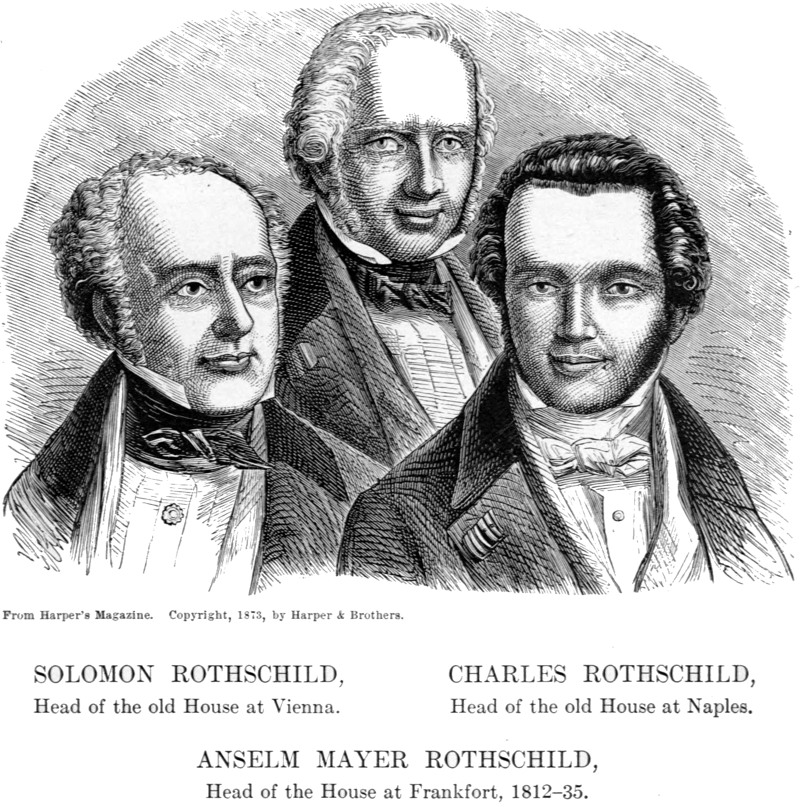
From Harper’s Magazine. Copyright, 1873, by Harper & Brothers.
SOLOMON ROTHSCHILD,
Head of the old House at Vienna.
CHARLES ROTHSCHILD,
Head of the old House at Naples.
ANSELM MAYER ROTHSCHILD,
Head of the House at Frankfort, 1812-35.
CHAPTER XXXVIII. THE ROTHSCHILDS.
397
The Beginning of the Financial Career of the Great
House of Rothschild.—The Hessian Blood Money
was the Great Foundation of their Fortune.—How
the Firm of the Five Original Brothers was Constituted.—Nathan
the Greatest Speculator of the
Family.—His Career in Great Britain, and How He
Misrepresented the Result of the “Battle of
Waterloo” for Speculative Purposes.—Creating a
Panic on the London Stock Exchange—His Terror
of Being Assassinated.—His Death Causes a Panic
on the London Exchange and the Bourses.
As the Rothschilds have indirectly made an immense
amount of money in Wall Street from time to time, a
sketch of the famous house and its methods of doing business
will be of interest in this volume. The house is represented in
America by Mr. August Belmont, than whom there is no
banker more widely known and more highly regarded all the
world over. It is due to the wise and conservative management
of Mr. Belmont that the famous Rothschilds have reaped
millions of profits from American sources. The original name
of Rothschild was Bauer. The family adopted the name Rothschild
(Red Shield) from the sign which the founder of the
house kept over his dingy little shop in Frankfort-on-the-Main,
in the odoriferous quarter called the Judengasse
(Jews’ street). In this little shop Mayer Anselm Rothschild,
the founder of the house, discounted bills, changed money,
examined the quality of coins, bought cheap and sold dear.
“How do you get so rich, Mr. Rothschild?” said a friend of
his to old Anselm one day, as he leaned over his dusky little
counter. The original head of the great house said: “I
buys ‘sheep’ and sells ‘deer.’” His knowledge of the
quality of coins was marvellous. He could detect a light
398coin the moment he took it in his hand, and there was no
imitation diamond or gem could escape his eye. He had the
instinct of genius in detecting everything in the form of
money or jewelry that was not genuine. He was a walking
directory so far as the financial standing of every commercial
man in Frankfort and in several other important
cities in Germany was concerned. At the age of seventeen
young Rothschild took rank with the best, oldest and ablest
financiers of Frankfort. His father, who died when Mayer
Anselm was thirteen years of age, had intended to make him
a Rabbi, but the coin had such attraction for him, that it
quickly drew him from the Talmud, and he established himself
in his father’s narrow quarters as a financier.
It is not generally known that Rothschild’s first great start
in financial life was given to him by the use of the twenty million
dollars which was paid to the Landgrave of Hesse, Frederic
II., by George III. of England, for 17,000 Hessians to
help to whip George Washington and retain the American
Colonies. This blood money was the original basis of the
vast fortune of the Rothschilds. It was deposited with
Mayer Anselm by William IX., the successor of Frederic,
whose example was followed by other great ones of the earth,
and in a few years the agents of the kings and princes of
Europe were flocking to Frankfort to negotiate loans with
Rothschild on behalf of their mighty patrons.
There is a very interesting story related, giving the reason
why the Landgrave passed by all the great bankers of Frankfort
and entrusted this large amount, together with a similar
amount afterwards, to Rothschild. The latter had occasion to
visit Prince William at his palace in Cassel, and found him
playing a game of chess with Baron Estorff. Rothschild prudently
kept quiet and did not interrupt the game, but stepped
lightly up and stood behind the prince’s chair, where he
could watch every move. The Prince was getting the worst of
the game, and was becoming a little excited. Turning around,
he said: “Rothschild, do you understand chess?” “Sufficiently
399well, your Serene Highness,” replied Rothschild,
“to induce me, were the game mine, to castle on the king’s
side.” The Prince took the hint, and won the game. Then
turning to Rothschild, he said: “You are a wise man. He
who can extricate a chess player from such a difficulty as I
was in, must have a very clear head for business.”
The Prince afterwards told the Baron that Rothschild was
as good a chess player as Frederic the Great, and that a man
of such capacity must be able to take good care of money.
The forty millions which were obtained on deposit remained
with the house of Rothschild for nine years, and when
Napoleon invaded Germany in the interim, the money, together
with other valuables, was hidden in wine casks in
Rothschild’s cellar, but the Conqueror never thought of tapping
the casks. After peace was proclaimed, and William,
who had been obliged to seek safety in flight, returned
home, old Rothschild was dead, but his son Anselm handed
over to the Prince every dollar of the forty millions, and
tendered him in addition two per cent. interest for the entire
time of the deposit. The Prince made him a present of the
interest.
The elder Rothschild had five sons, namely: Anselm, who
succeeded his father in Frankfort; Solomon, of Vienna;
Nathan Mayer, of London; Charles, of Naples; and James,
of Paris. According to their father’s will, the five sons were
to constitute but one firm, in which they were to enjoy
equal profits, and never divide the fortune. The business
was to be managed at Frankfort as headquarters, to which
great money centre all the profits from the other moneyed
capitals were to be raked in. The intention of the old man
was to make these five money kings dominate Europe by
the power of their wealth, so that the ordinary kings would
become their subjects, and in many instances the hopes of
the great old chess player have been realized. All the annual
settlements were made at Frankfort, and the brothers
met there at least once a year for a general conference.
400This system continues, and though the original five brothers
have all passed over to the majority, the last of them, James,
having died in Paris in 1868, at the ripe age of 76, yet the
representatives of the house in the large cities of Europe
sustain the principles of union, harmony and consolidation
laid down by old Anselm Mayer Rothschild. Although this
union has been the great source of the Rothschilds’ success,
it would be hopeless, however, for any other parent outside
the Hebrew race to imitate the injunction of old Rothschild.
The idea of an equal division of the profits could not be entertained
for a moment by an American. The socialistic
family tie that enjoined such an arrangement could only be
rendered binding through the power of the Hebrew religion.
Just imagine how an American would feel if by some lucky
turn of fortune, like that of Nathan Rothschild in London,
after the battle of Waterloo, he should make six millions
in a day, and be requested to divide it with his four
brothers! He would sooner spend a million of it to try and
break the old man’s will, and employ several of the best
sophistical lawyers he could find to prove that his father
was demented.
It is supposed that the elder Rothschild died worth 15 or
20 millions, but this is in a great measure merely conjecture,
as nobody outside the family ever knew what their real wealth
was, this fact having always been kept an inviolate family
secret. It must be said, to the credit of the old man, that in
his latter days, instead of becoming stingy, as many do, he
was quite liberal, and, according to the scriptural injunction,
distributed his alms in secret, without even permitting his
sons to know anything about the matter. He contributed
largely to various charities in the same way. It is said he
would go through the poverty-stricken districts of the city
after night, giving money to the needy, from whom he would
retreat before giving them time to thank him for his beneficence.
He had a notion that those who gave without receiving
thanks were greater favorites with the Divine Being,
who rules the destinies of man.
401
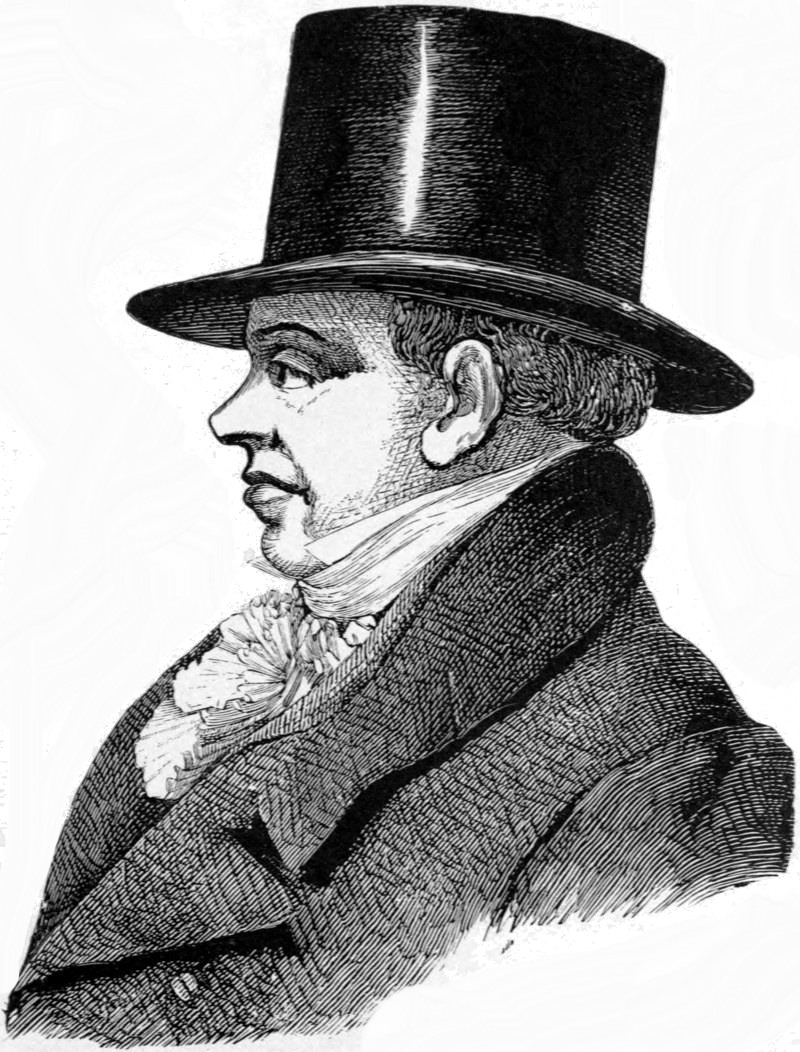
From Harper’s Magazine. Copyright, 1873, by Harper & Brothers.
NATHAN MAYER ROTHSCHILD.
(The Financial Hero of Waterloo.)
402The greatest speculator of the five brothers was Nathan
Mayer Rothschild, the third son of the great old man. He
made the grand hit of his life after the battle of Waterloo.
He kept watching the movements of the opposing armies on
the Continent, and followed Wellington very closely as he
approached the famous field. It seems that the Iron Duke
was not at all pleased with Nathan’s attention to him, as he
took him for either a spy or an assassin, and was on the
point of having him arrested several times. But Nathan
kept his purpose steadily in view, in spite of the fact that
bullets were whizzing around his ears in showers. He sat
on his horse on the hill of Hougomont with perfect composure
in the teeming rain the whole afternoon, looking
upon that terrible struggle that was to decide the destiny of
nations, until Blucher arrived and the French were put to
route.
As soon as Nathan saw this he put spurs to his steed
and made all possible haste to Brussels, where a carriage
with swift horses was in waiting to carry him to Ostend.
At day light next morning he arrived on the Belgian
coast, where he found it exceedingly difficult to obtain a
boat, the sea being very rough. At length he obtained a
boatman as courageous as himself, who undertook the task
for 2,500 francs, and landed him at Dover in the evening.
He lost no time, but with relays of the swiftest horses
pushed forward to London, and was on the Exchange next
morning ready for business, long before the opening of the
market. That was the morning of the 20th, only a day and
two nights after the battle that decided the fate of nations.
Nathan had performed a great feat. He acted his role well.
Like the great hero whose political history had just closed,
Nathan was “grand, gloomy and peculiar,” in the financial
sense of the phrase. He was an embodiment of the latest
information from the Continent. In defiance of winds
and waves he had, at the risk of his life, outstripped the
swiftest couriers and the best special correspondents of that
403day. The great operators flocked around him asking,
“What is the news?” Nathan sighed heavily and seemed
reluctant to tell. Eventually, this important piece of information
was extorted from him, in strict confidence:
“Blucher, at the head of his vast army of veterans, was
defeated by Napoleon at Ligny, on the 16th and 17th (of
June), and there can be no hope for Wellington with his
comparatively small and undisciplined force.” This statement
was substantially true, and it forcibly reminds one of
Tennyson’s poetic remarks:
“A lie which is all a lie
May be met and fought with outright,
But a lie which is half a truth,
Is a harder matter to fight.”
True, Blucher had been repulsed at Ligny. The Duke had
an awkward squad, with the exception of the English, the
Irish, and the Scotch Greys, to marshal in fighting order,
but he “got there all the same.” Nathan’s secret point soon
oozed out, and in less than an hour after the opening there
was a perfect panic on the London Stock Exchange. Nathan
had his brokers at work, first selling “short,” and then, when
the market reached bed rock, buying on the long side. He
bought everything that he could raise, borrow or beg the
money for—consols, notes and bills. When the news of
Wellington’s victory arrived, forty-eight hours after Nathan
had begun to manipulate the market, and when he was “long”
of everything that he had money or credit to purchase,
securities went up with a boom. Nathan realized six million
dollars, and it is said that a large number of the great
operators flocked around him to congratulate him. It was
lucky for Nathan that the scene of his operations was in
London instead of Wall Street, otherwise Judge Lynch
might have had something to say before the settlements had
been made.
The career of Nathan Rothschild in England was remarkable,
and his success from the very start phenomenal. He
404began his speculations and money-lending operations in
Manchester with $500, being the limited amount which he
was permitted to draw from the family treasury on taking
his departure from Frankfort to seek his fortune in Great
Britain. In five years he had augmented the $500 to a million.
He then removed to London. There he married a daughter
of Levi Cohen, one of the wealthiest Hebrews of the great
metropolis, well known by the pseudonym of Pound-Adoring
Cohen. His father-in-law was afraid that Nathan would
soon ruin himself, so reckless did he seem in his speculations,
estimated by the conservative standard of old Cohen.
Nathan was very fortunate in his speculative ventures in the
public funds, and managed to get himself introduced so as
to do considerable business for the Government in its transactions
on the Continent. His first introduction to the Government
was through the Duke of Wellington, who during his
peninsular campaigns had made drafts that the Treasury of
Great Britain was dilatory in meeting. Nathan purchased
these drafts at a large discount. He afterwards renewed
them to the Government, and they were eventually redeemed
at par. This was the means of bringing him into confidential
relations with the ministry of Great Britain, and he
was entirely trusted as their chief agent in all their financial
matters on the Continent. This gave him immense
advantage in speculating, and enabled him to give his
brothers in the other great capitals of Europe a large
amount of valuable and inside information, which put them
in a position to speculate with success in the funds of their
respective Governments. Nathan had made arrangements
to get the very latest information from Frankfort, then the
centre of European financiering, by well trained carrier
pigeons. He had also several boats of his own by which
to send personal messages across the channel in cases
where these were requisite, and a boat always in readiness
at a moment’s notice in case his presence should be indispensable
at the great money centre, and the central counting
and clearing house of the family.
405Nathan Rothschild was a strange and inconsistent compound
of liberality, avariciousness, and penuriousness. He
entertained his guests in a princely style, and often princes
were mingled with those guests, but he was miserably mean
with his clerks and employees generally. Unlike A. T.
Stewart, who followed the very opposite rule, and had his
place filled with bankrupt dry goods men as employees, the
Rothschilds would never engage anybody who had been unfortunate
in business. They had a superstitious feeling that
misfortune is contagious, and they carefully avoided coming in
contact with any of its victims. Nathan was even more precise
than Wm. H. Vanderbilt in calculating the pennies in his lunch
bill; but while Vanderbilt did this as a mere whim to illustrate
his business precision and correctness, Rothschild
really loved the pennies with ardent devotion. But Baron
Nathan, even when he had accumulated $70,000,000 or $80,000,000,
was not happy. He was tortured by the fear of
enemies, who, he believed, intended to murder him. Like
Vanderbilt, he received many threatening letters; but
unlike the New York millionaire, who paid no attention to
threats, but walked and drove out defiantly, Rothschild was
still in mortal terror, and believed that the threats were intended
to be executed. Nathan made one of his biggest
piles out of the Almaden quicksilver mines in Spain. The
Spanish Government wanted a loan, which he granted, receiving
the mines as security for several years. He got up a
“corner” in quicksilver, and raised the price 100 per cent.
He realized almost $6,000,000 out of this transaction.
It was as good for him as the Waterloo deal, only the
returns did not come in so quickly. Nathan died in Frankfort,
at the age of 59, in 1836. His last words were, “He is
trying to kill me. Quick, quick, give me the gold.” His
death created a panic on the London Stock Exchange, and
the Continental Bourses were greatly embarrassed by the
event. The news was conveyed by a carrier pigeon, which
was shot by a boy near Brighton. The message was briefly,
406Il est mort-“He is dead.” The interests of the house of
Rothschild are now scattered over the globe, and it is probable
that the aggregate wealth of all the branches of the
firm, including the possessions of the various members of
their families, exceeds $1,000,000,000.
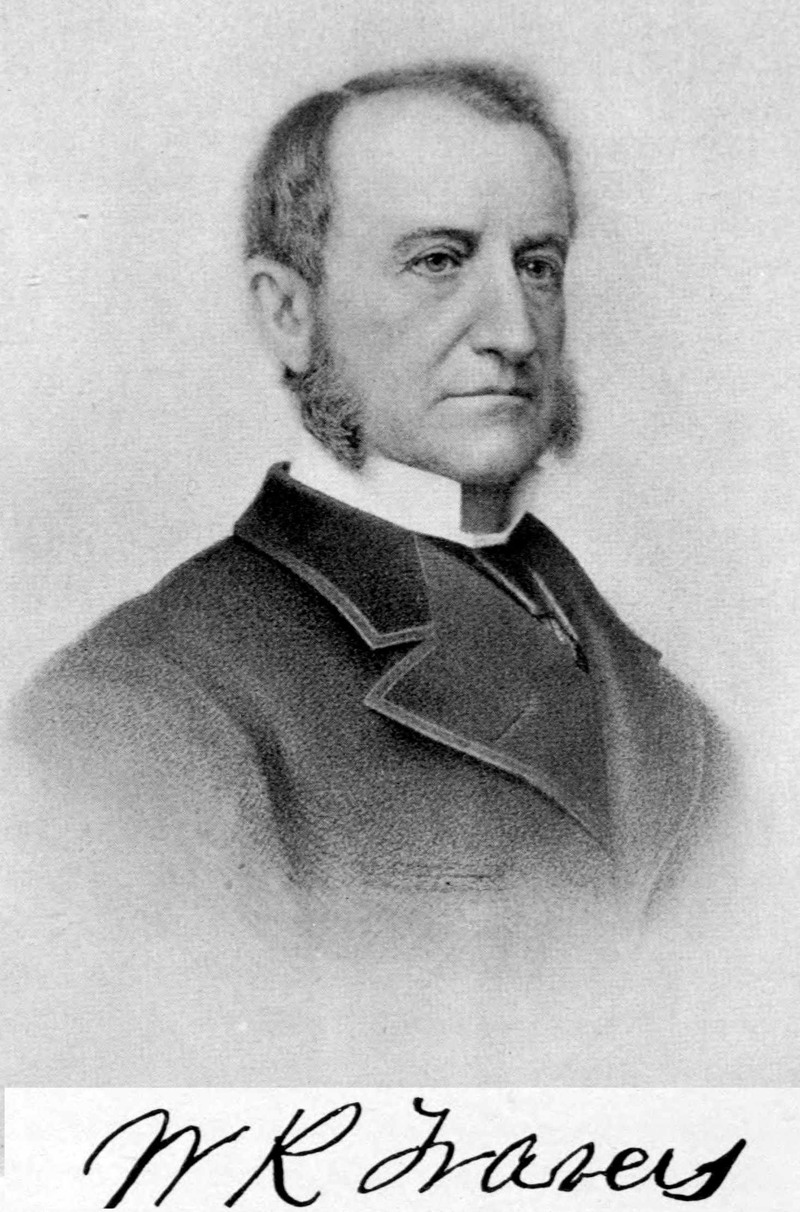
CHAPTER XXXIX. TRAVERS. — The Death of Travers.
407
The Unique Character of Travers—His Versatile Attainments—Although
of a Genial and Humorous
Disposition, He Has Always Been a Bear—How He
Was the Means of Preserving the Commercial Supremacy
of New York—He Squashes the English
Bravado, and Saves the Oratorical Honor of Our
Country—Has the Oyster Brains?—It Must Have
Brains. For it Knows Enough to Sh-sh-shut Up—The
Dog and the Rat—I D-d-don’t Want to Buy
the D-d-dog; I Will Buy the R-r-rat—Travers
on the Royal Stand at the Derby—How He Was
Euchred by the Pool-Seller—My Proxy in a Speech
at the Union Club.—If You are a S-s-self-made Man,
Wh-wh-y the D-devil Didn’t You Put More H-Hair
on the Top of Your Head? Other Witticisms, &c.
Wm. R. Travers is one of the most notable men of
Wall Street in our time.
His success in speculation has usually been on the bear
side, which is rather singular, as he is a man of such a genial
disposition, with a kind nature, an inexhaustible supply of
sparkling wit, and always brimful of humor.
He is also fond of athletic sports of every description,
and, in fact, is a kind of universal genius, so various and
versatile are his attainments. Owing to his immense variety
of qualities, tastes and pursuits, he has one of the most
remarkable records in Wall Street; and the most singular
thing about him, probably, is, that while having all the attributes
usually inherent in a bull, he has always been a
bear in his transactions.
This genial, benevolent and high spirited man has never
been known to believe that there was any value in any
property.
If he ever by chance happened to make any money on
408the bull side of the market, it must have made him feel very
uncomfortable—in fact, conscientiously miserable—as he
could not realize that by any possibility it belonged to him.
It is due to Mr. Travers, however, that New York has
been so highly classified in the catalogue of cities, in fact,
as occupying the highest position in public estimation, and
that it has attained full credit for being the largest in wealth
and population of any city in the Union. This fact, now
generally admitted, seemed to have been suspended in doubt
until Mr. Travers came from Baltimore to reside in our
midst.
It will be remembered by many Wall Street men that prior
to the advent of Mr. Travers the rivalry among several of the
seaboard cities on the Atlantic coast was very keen. Boston,
Philadelphia and Baltimore were each in turn disposed to
claim pre-eminence. Thanks to this Wall Street magnate,
the matter is now no longer in dispute. It was finally decided
in this way:
One day after Mr. Travers became one of ourselves, an
old friend from Baltimore met him in Wall Street. As it had
been a long time since they saw each other, they had a considerable
number of topics to talk over. They had been
familiar friends in the Monumental City, and were not therefore
restrained by the usual social formalities.
“I notice, Travers,” said the Baltimorean, “that you
stutter a great deal more than when you were in Baltimore.”
“W-h-y, y-e-s,” replied Mr. Travers, darting a look of
surprise at his friend; “of course I do. This is a d-d-damned
sight b-b-bigger city.”
That settled it. Since this famous interview, and this
scientific explanation given by Mr. Travers to his old friend,
no skeptic has had sufficient temerity to entertain any doubt
regarding the financial and commercial supremacy of New
York; its leading position as the great emporium of the
Continent has never since been questioned; and there are
409few cities outside of Ohio that can claim such power in
politics.
It is due to Mr. Travers, also, that this country still retains
the palm for oratory and volubility in speech, and has
successfully resisted the intrusive and pretentious claims of
Great Britain in regard to that great and somewhat limited
accomplishment.
The destiny of this nation in that respect hung in the
balance at one time.
A sort of go-as-you-please oratorical contest was being
arranged to decide the question of championship between
Great Britain and ourselves, and a vaunting and loquacious
Britisher had appeared in our midst to dispute the claim of
the national cup in oratory as Rowell had done for the belt
in pedestrianism.
This English bravado had letters of introduction from
Lord Randolph Churchill, Sir Charles Dilke, Lord Salisbury,
Mr. Gladstone, and other British declaimers to Mr. Travers
and other American gentlemen. It was in the yachting
season, and the voluble champion was invited to accompany
a party, of which Mr. Travers was the leading spirit,
down the bay in Mr. Travers’ yacht. The orator had
talked everybody within earshot of his voice almost deaf.
When the party arrived at the dinner table it was hoped
that he would cease for a short time; but when every other
topic seemed exhausted, as well as the patience of his
listeners, he started off with renewed fluency on the subject
of oysters, which constituted the dish then at table.
“It is now a debatable point among scientists,” he began,
“as to whether or not the oyster has brains.” Travers,
who up to this time had endured the infliction of his loquacious
guest, with the calmness of Job, said, “I think the
oyster must have b-b-brains because it knows enough when
to sh-sh-shut up.”
By this satiric stroke the English orator was dumbfounded
and almost paralyzed; his fluent tongue ceased to wag with
410its usual volubility, and when requested to name his time
for the international contest, he begged to be excused until
cured of his cold. He took the next steamer for Liverpool,
and has not been heard of since. Mr. Travers’ incisive remark
about the mental attributes of the oyster thoroughly
squashed him, and saved the oratorical honor of our country.
Mr. Travers started in life in the grocery business in
Baltimore, but disaster overtaking him there, he came to
New York, and soon thereafter formed a co-partnership with
Leonard W. Jerome, the firm being Travers & Jerome. Mr.
Travers met with fair prosperity from the start, and soon
accumulated wealth. The worst set-back probably that he
ever received during his residence in this city was on one
occasion on his way home after the business day was over.
Being attracted by the display in the window of a bird
fancier and dog dealer, from curiosity he was tempted to
enter the place. One of the conspicuous objects that met
his eye was a very large sized parrot. Mr. Travers inquired
of the proprietor of the establishment who was in attendance
“i-i-if th-th-th-that p-p-parrot c-c-could t-t-talk?”
Its owner quickly replied, “If it couldn’t talk better than
you, I’d cut its damned head off.”
Mr. Travers for a long time afterwards made up his mind
some time or other to get even with this dealer in animals
and birds, and succeeded most effectually. His coachman
made a complaint to him that the stable was overrun
with rats. Mr. Travers said, “Well, you m-m-must hunt
for a r-r-rat dog.” The coachman made it known that Mr.
Travers wanted a dog, and all those engaged dealing in dogs
overran Mr. Travers’ house as ferociously as the rats had
overrun the stable, to get him to buy a dog. Among the rest
who responded was this identical man who kept the store
where the parrot was. Mr. Travers recognized him at once,
and told him, “I-i-if he w-w-would b-b-b-be d-d-down at
the s-s-stable in the m-morning with t-th-the d-d-dog, he
would g-g-give him a tr-tr-trial, and if he p-pr-proved to
b-b-be a g-g-good r-rat c-c-catcher, would b-b-buy him.”
411Mr. Travers sent for his coachman and told him to catch
three or four rats and put them in the bin, and he would be
down in the morning to try the dog. So, good and early next
morning Mr. Travers was on hand at the stable, and also the
dog man and his terrier. Three rats having already been put
into the bin, Mr. Travers ordered the dog put inside, as the
man said he was ready for the fray, and the rats were so
ferocious, and showed such determined fight, that they kept
the dog at bay, and he took to the corner of the bin for
protection. By and by the owner pushed him right on the
rats, and after a pretty fierce tussle he did secure one of
them and shook him until dead. This success encouraged a
tussle with another, which, after a long fight, shared the same
fate. The third rat, however, was determined to resist the
dog, and did so nobly and fiercely, making a prolonged fight,
which resulted in a draw, and it was hard to tell which was
the worst hurt, the dog or the rat.
The owner of the dog then turned to Mr. Travers and
said: “Now you see what a fine dog that is, won’t you buy
him?” Mr. Travers replied: “I d-d-don’t w-w-want t-t-to
b-b-buy the d-d-dog, b-b-but I’ll b-b-b-buy the r-rat.”
Mr. Travers, when he first saw the owner of this dog,
remembered him in connection with the parrot. Since the
rat fight, however, this same man has never ceased to remember
Mr. Travers, so that honors remain easy between them.
Mr. Travers has never been known to be at a loss for wit to
meet an emergency, and it is recognized that it flows as
freely from his lips and in as perfectly natural a way, as
ordinary conversation does from most people.
Early in the Spring of last year, on the advice of his
physician, Mr. Travers took his maiden trip to Europe, and
would not have gone but for the urgency of the case, always
regarding that this country was big enough for him without
leaving its shores. When he reached England, however, he
found, when his arrival was announced through the medium
of the papers, that he was as well known amongst the nobility,
412sporting world and other distinguished people there as
he was in his own country, owing to his connection with the
turf and athletic sports, together with his widely published
witticisms which had preceded him. He consequently was
overpowered by attention and hospitality, and participated
to as full an extent as his health would permit. He attended
the Derby, and took an interest in a pool which resulted in
his favor. As soon as he ascertained his good fortune, he
went to bag his money, but found that the pool man had
decamped with the funds. This was a sad disappointment.
He could scarcely believe his eyes or the various statements
which went to corroborate this man’s disappearance, but it
was evident that he was non est, as he was nowhere to be
found about the stand or on the field. Travers made complaint
to a policeman, who appeared perfectly indifferent to
the charge. Mr. Travers said: “W-w-we d-don’t d-d-do
th-th-that way in m-my c-c-c-country. I b-b-belong to
America.” The policeman turned impertinently and said:
“You had better go back to your own country, if that’s the
case.” This was an indignity to which Mr. Travers did not
feel inclined to submit, and he at once exhibited his badge,
which admitted him to the royal stand. The policeman
recognized it with affright, and almost fell on his knees in
making profuse apologies and offers of service, showing the
cringing spirit which prevails in England to royalty and
nobility, by the people who occupy the position as servants
to these high-born personages. Mr. Travers overlooked this
official rudeness, and submitted to his loss as cheerfully as
possible under the circumstances.
I met Mr. Travers on board the Newport boat immediately
on his return, and he told me this story. I replied, “that I
was surprised that a man of that character should have acted
so villainously, as I had always supposed that such men were
influenced by the recognized principle the world over, of
honor among thieves.” Mr. Travers instantly replied: “No
one could have t-t-told him that I was a th-th-thief.”
413I remember another instance, which was during the
war period. I had written a series of letters on national
financial matters, which were then before the country for
discussion, and they were published in the New York Times.
Mr. Travers was met on his way down town by a Wall Street
friend on the morning that one of these letters appeared in
the paper, who asked Mr. Travers if he had seen Mr. Clews’
last letter. Mr. Travers said, “I h-h-hope so.”
Shortly after this I was a guest at a dinner party at the
Union Club, and was late in presenting myself. When I
reached the entertainment (which was a sort of mutual
admiration gathering), the speeches had commenced, and
I no sooner had taken my seat than Mr. Lawrence
Jerome proposed my health. While it was being drank,
Mr. Travers, who sat immediately opposite, came over
and whispered in my ear, “Clews, you d-d-don’t w-want
t-to speak so soon after c-c-oming in here, d-d-do
you?” “No, I do not,” I replied. “I’ll t-t-tell th-th-them
so, will I?” “Yes, I wish you would,” I said. He
went back to his place and said, “Gentlemen, I have
talked with Mr. Clews, and he d-d-desires me t-to ask you
t-to excuse him f-from making a speech on th-th-this occasion
and i-if you w-will d-d-do so, he w-will w-write you a
l-letter.”
To show the rapid fluctuations that take place in Wall
Street, and how even the best judges of the market are often
mistaken in their prognostications, I will note an instance in
connection with Mr. Travers. On his return from Europe,
which was early in July, 1885, when the market on this side
was weak, cables prior to his departure evidently indicated
to him that much lower figures were in order. Just prior
to the arrival of the steamer, in conversing with an associate
member of the Exchange, he said, “B-b-barnes, I’ll
make a l-l-little b-b-bet with you; I’ll b-b-bet you L-l-lackawanna
will b-b-be under six-ty when we r-reach New
Y-York.” Barnes was not willing to make the bet, however,
414but on their arrival, which was two days after, nothing
surprised Mr. Travers so much as to find Lackawanna 110
instead of the figure 60 or less which he had predicted,
especially as its advance did not cease thereafter until it
sold at 130.
It has been justly said, that if a man will wear a good
looking hat, and good, well polished boots, the head and feet
being the parts which first catch the eye of an observer, it
matters very little what kind of material the coat, vest and
trousers may be made of, if they are whole and kept clean.
Though they may be threadbare the man will appear to be
fairly dressed, and will look much younger than if he were
careless regarding the covering of his extremities. If the
latter are fairly adorned he can pass muster.
Knowing this fact, I had always been in the habit of posing
before the public as a youth. In this I was materially
assisted by having no hair on the top of my head, in the
place where other people’s hair usually grows. I had been
this way for twenty years, just presenting about the same
appearance as when I was born, and it has always been a
matter of remark how youthful I looked.
I have often been asked what I did to keep myself looking
so young. My truthful answer always has been that,
“Virtue is its own reward.” This theory invariably passed
as sound in my case until it was knocked into a cocked hat
by Travers. One unlucky day he removed the mask, and
changed the current of public opinion against me on the
much cherished subject of my perpetual bloom of youth.
It occurred in this way. Frank Leslie’s Illustrated Weekly
had published a number of pictures of the active business
men of New York, who were known in the community as
self-made men, and mine was among them.
A few days after the appearance of my picture in this
paper, I happened, one afternoon, on my way uptown, to
drop into the Union Club, and as usual, went into the main
room. It was full of members, largely composed of a scattering
of Wall Street bankers and brokers.
415Travers was present, and when he is on hand on such occasions,
it always means laughter for the multitude at some
one’s expense. In this instance it happened to be at mine.
As I entered the room, Travers said, in an audible voice:
“Hallo, boys! here comes Clews, the self-made man.” Then,
addressing himself to me, he said: “I s-s-say, Cl-Cl-Clews,
as you are a s-s-self-made man, wh-wh-why the d-d-devil
didn’t you p-put more h-h-hair on the top of your head?”
This story having gone the rounds, as it soon did, drew
attention to my summer-appareled head, which before that
time had enabled me to pass myself off as a youngster just
striking out at the commencement of life. That stroke of
Travers’ wit, however, has been the cause of consigning me
ever since to the ranks of the old “fogies.” Now, everybody
is convinced that my hair, now non est, had already come
and gone, and that my head represents the work of ages.
This is another vivid instance illustrating the saying that
“many a truth is spoken in jest.”
When Travers thus removed my mask of adolescence, it
made me feel unhappy for some time, as it really transformed
my entire identity, and deprived me of that luxury
so dear to all the fair sex, and to many of my own, of sailing
under false colors in reference to my age.
Still, as Travers is such a righteous, good fellow, I have
had to forgive him, notwithstanding the gravity of the
offense in having hurt the most tender part of my sensitive
nature. So we can make up and become friends again, as I
value the renewal of his friendship even at the cost of such
a great personal sacrifice as the deprivation of my supposed
youthfulness.
On the principle that misery loves company, and as Mr.
Travers had brought misery to my lot by drawing public
attention to my bare head, I found consolation, shortly afterwards,
in a huge joke that the same facetious individual perpetrated
upon another member of the Club, who happened
to be one of New York’s most celebrated lawyers. This
416gentleman, it is well known, has been connected with some
of the largest and most remunerative railroad cases in our
courts for many years, and being considered a great authority
in that branch of legal lore, he was accustomed to exact his
own terms from his wealthy clients, which meant, in most
instances, a very fat fee. This gentleman was standing on
the side of the street opposite the Club one afternoon, while
Travers was surrounded by a cluster of club men on the
other side. “Look across the way, boys,” observed Travers,
“th-th-there’s B-B-Barlow with his hands in his own p-p-pockets
at last.”
On another occasion, when Travers, who resides at Newport
in the summer, and is the possessor of a small-sized
yacht there, which he obtained some years ago in lieu of a
debt, was taking a refreshing sail on his yacht in the bay
one morning, it happened that a squadron of yachts appeared
in his vicinity, and there was going to be a race. Travers
having been made acquainted with the fact, invited a party
of friends to go to see the race. As soon as it became known
to the yachtsmen that the renowned Travers had appeared
on the deck of his yacht, a committee was assigned to convey
to him the respects of the members of the squadron.
When they came alongside his craft he invited them on
board, and saw at a glance that they nearly all happened to
be bankers and brokers. Casting his eyes across the glittering
water, he beheld a number of beautiful white-winged
yachts in the distance, and finding, by inquiry, that they all
belonged to Wall Street well known brokers, he appeared
thereby to be thrown momentarily into a deep reverie, and,
without turning his gaze from the handsome squadron,
finally asked his distinguished visitors, “wh-wh-where are
the cu-cu-customers’ yachts?”
Comment would be entirely superfluous.
A. T. Stewart, the world renowned retail dry goods merchant,
was elected, on one occasion, to preside at a meeting
of citizens during the war period, Travers being amongst the
417number present. When Mr. Stewart took his gold pencil
case from his pocket and rapped with its head on the table
for the meeting to come to order, Travers called out, in an
audible tone, “C-cash!” which brought down the house,
and no one laughed more heartily than Mr. Stewart, although
it was a severe thrust at himself.
As it is sometimes said of a stranger who comes from a
foreign country, Travers came to New York well recommended,
bringing letters of introduction with him from the
first families of Baltimore, and credentials which at once
established his status and reputation. So it was not necessary
for him to remain long on probation in New York.
Coming here was not a new birth to him, although, in some
measure, he may be said to have risen, Phœnix-like, from
the ashes of his former self, as business misfortunes had
overtaken him in Baltimore.
Travers had not only to start in a new place and in a new
business when he came here, but he had to begin the ascent
of his prosperous career at the very bottom of the financial
ladder. Owing to his incomparable geniality he met with
hosts of friends from the very start, and he prospered from
the word “go.”
Travers formed several partnerships at various times.
After making considerable money in the one above alluded
to with Mr. Jerome, the partnership was dissolved, and
Travers then continued business alone as a Wall Street
operator, and as I have formerly stated, usually acted on
the bear side of the market, which was remarkable for a
person of such a buoyant and hopeful disposition.
In his business operations Mr. Travers has always shown
great sagacity, mingled with caution, and his prestige as a
leader became so great that he soon attracted a numerous
following of operators, who, with their eminent leader,
formed a set widely known in speculative circles all over
this country as the “Twenty-third Street Party.” Of this
party, Mr. Addison Cammack, the celebrated bear, was a
prominent member, and a great admirer of Mr. Travers.
418Mr. Travers was well-born and received a good education,
with an excellent training for a business career. He married
a daughter of the Hon. Reverdy Johnson, who was
United States Minister to England during the administration
of Andrew Johnson, and who was one of the most
prominent members of the Bar.
Mr. Travers has always been famous for his attachment to
out-door sports and amusements, and on the principle that
water finds its level, so did Mr. Travers in the sporting
world. He soon became President of the Jerome Jockey
Club, President of the Racquet Club, President of the Athletic
Club, and was thoroughly identified as a leader in
the large majority of manly and out-door sports, in which
the youth of New York city and its suburbs were interested.
It is due both to Mr. Travers and his quondam partner,
the renowned Leonard W. Jerome, to state that the efforts
of these two men have been chiefly instrumental in elevating
the social and moral tone of the race-course in this
part of the country, and raising it to a standard of respectability,
to which before their reformatory efforts it
was partially a stranger. It was, in a great measure,
through their exertions that the race-track became a fashionable
resort, in the North, for ladies, as it had been in the
South for many years, especially in Kentucky. The ladies
of the present day can now talk horse at Jerome Park,
Sheepshead Bay and Long Branch with a volubility that
twenty years ago would have shocked their mothers, and
would still cause their grandmothers to have epileptic fits.
So the ladies of the present generation are greatly indebted
to these two gentlemen for having removed the social stigma
from the turf, in this section, thus enabling the fair sex to
enjoy, in common with the lords of creation, and without
compunction and loss of dignity, one of the greatest pleasures
in the whole range of out-door recreations.
The breed of horses has been improved to an extent that
419leaves the famous Arabian steed of yore, that outstripped
the flight of the ostrich, far in the distance. This development
in speed has been brought to its highest pitch in
Harry Bassett, and Wm. H. Vanderbilt’s fondly cherished
Maud S., now the property of Mr. Robert Bonner. For this
immense evolution in speed and staying powers the patrons
of the turf are largely indebted to Jerome and Travers.
One of Travers’ best bon mots was inspired by the sight
of the Siamese Twins. After carefully examining the
mysterious ligature that had bound them together from
birth, he looked up blankly at them and said, “B-b-br-brothers,
I presume.”
Among Travers’ contemporaries, Mr. Charles L. Frost
was very well known a few years ago. His specialty was
purchasing the junior securities of foreclosed railroads which
were supposed to be wiped out, so far as any visible element
of value was concerned.
Then, at a time when it was quite inconvenient for the reorganized
companies, he would pounce down upon them
with some sort of vexatious litigation, and would often levy
on the bank balances of these corporations as a part of his
proceedings and peculiar methods of management. He
was enabled to take such action as they were foreign corporations.
In this way he made it exceedingly difficult for
these corporations to defend the various suits in law engineered
by him, and rendered their existence exceedingly
uncomfortable by placing their money in a tight place and
cutting off the interest.
These peculiar methods of financiering identified Mr.
Frost in a measure with Wall Street men, as a character
whom most of the bankers and brokers who had any dealings
with him have had good reason to remember feelingly.
Frost had bushy, white curly hair, a beardless, full face, and
a very red nose, which could only be acquired at considerable
expense or as the result of chronic dyspepsia. There
is no evidence, however, that he was a victim of this natural
420malady, so his highly-colored proboscis must be accounted
for in some other way.
Mr. Travers met this gentleman one morning by accident
in a Fourth Avenue railroad car going down town. Although
formerly acquainted, they had not met in years, and time, as
indicated by his white locks, was beginning to tell upon Mr.
Frost.
This attracted the attention of Mr. Travers, who cordially
shook hands with the old gentleman, and after making a
rapid survey of his person, said, “Wh-why, Mr. Frost, wh-wh-what
beautiful white hair you have; what a su-su-superb
blue n-n-necktie you wear; what a m-m-mag-magnificent
red nose you have got. If I had s-s-seen you
as I do now in w-w-war times, I should have taken you
for a p-p-perfect p-p-patriot, red white and blue.”
The foregoing reminiscences of Travers were written and
stereotyped while the great wit and financier was still alive.
I have, therefore, not deemed it necessary to recast the
matter, but consider it sufficient to add a few of the salient
points in Mr. Travers’ character and career, with more bons
mots which the death of this popular man brought out. He
died in Bermuda, March 19, 1887. He had gone there in
the previous November, where he had a residence of his
own, in the hope that the climate might restore him to
health, but the malady, diabetes, had got too far ahead,
and, in spite of the best medical skill, carried him over to
the majority. His wit, like that of Tom Hood, did not forsake
him even in his last hours.
While on his death-bed at Bermuda a friend called to see
him, and said, “What a nice place Bermuda is for rest and
change.” Travers replied: “Y-y-yes, th-the waiters g-g-get
th-th-the ch-change and th-the h-h-hotel k-k-keepers
th-the r-r-rest.”
421Among Travers’ famous hits the following is one of the
best: Jim Fisk’s zenith of glory and grandeur was in the
vicinity of its height when he secured the control of the Boston
& Providence line of steamboats. He constituted himself
Commodore, and was always on the deck as they departed
each day, dressed in a Commodore’s attire, and was
evidently very much elated in being supreme in command
in connection with these magnificent steamboats. Jay Gould
was, financially, equally interested with him in the venture,
and Commodore Fisk, in his usual splurgy manner, had a
large likeness of both Gould and himself hung up at the
head of the stairs leading to the large saloon cabin on each
of these steamboats. Travers and others, who at that time
were leading magnates of the street, were invited to inspect
one of these large boats that had been newly fitted up,
gilded, and put in magnificent shape, with a band of music
on board, etc. Fisk met Travers as he went on board,
and volunteered to escort him over the boat to show him
its magnificence and superb appointments. As they went
up the stairs and came to the first landing, he pointed out
the likenesses of Fisk and Gould that were hung there,
and asked Travers if he didn’t think they were good.
Travers replied: “I th-think th-th-they are v-v-very good,
b-b-b-but t-to m-make th-th-them c-c-complete, th-there
sh-sh-should b-b-be a p-p-picture of our S-S-S-Saviour
in th-th-the m-middle.”
The last time I saw Mr. Travers down town he called at
my office. After he ran his eye over the stock quotations,
I said: “The market is pretty stiff, Travers.” He said:
“Y-yes, it is th-the st-st-stiffness of d-d-death;” and, sure
enough, in the course of two or three days afterwards, a big
smash took place.
Mr. Travers once said to a friend: “C-come and see me
in S-September. If y-you wish I will give you a p-point
that will m-make m-money. He wished to do the man a
422favor in return for a kindly office. Late in the month mentioned
the friend dropped into Travers’ office.
“C-come for that p-point?” asked Mr. Travers.
“Certainly,” replied the friend.
“Well, y-you are the luckiest d-dog I know. I p-played
that p-point two weeks ago myself and lost a pile of money.
Y-you st-stick to m-me l-long enough and c-close enough,
and I’ll l-land y-you in the p-poorhouse, sure.”
When “Plunger” Walton was in the height of his prosperity
on the turf he met Travers at Saratoga.
“I have been anxious to see you for some time,” said
Walton. “I think we can do business together,” he added.
“I’ve got good judgment on horses and horse racing, and
you have the same on stocks and stock speculation. I’ve
made $350,000 on horse races in the last two years. Now,
you give me points on stocks, and I’ll give you points on
races. Is it a go?”
“Y-you’ve made three h-hundred and f-fifty th-thousand
dollars on h-horse racing?” Travers repeated.
“Yes.”
“And you want m-me to g-give you p-points on st-stocks?”
“In exchange for my points on horses. Yes.”
“Well, I’ll give you a f-first rate p-point. If you’ve made
that much in two y-years, st-stick to your b-b-business.
It is a f-first-rate p-point.”
One day, many years ago, Mr. Travers was standing on
the curb of New street, opposite the Exchange, buying
some stock from a gentleman whose aspect was unmistakably
of the Hebrew stamp.
“Wh-wh-what is your name?” asked Travers.
“Jacobs,” responded the seller.
“B-b-but wh-what is your Christian name?” reiterated
Travers.
The Hebrew was non-plussed, and the crowd was convulsed
with laughter.
423The first time Mr. Travers attempted to find Montague
street, in Brooklyn, he lost his way, although he was near
the place. Meeting a man he said:
“I desire to r-reach M-montague st-street. W-will you
b-be kik-kind enough to pup-point the way?”
“You-you are go-going the wrong w-way,” was the stammering
answer. “That is M-montague st-street there.”
“Are y-you mimick-mimicking me, making fun of me-me?”
asked Mr. Travers sharply.
“Nun-no, I assure you, sir,” the other replied. “I-I am
ba-badly af-flict-flicted with an imp-impediment in my
speech.”
“Why do-don’t y-you g-get cured?” asked Travers,
solemnly. “G-go to Doctor —, and y-you’ll get c-cured.
D-don’t y-you see how well I talk? H-he cu-cured me.”
The fortune left by Mr. Travers has been estimated at
$3,000,000. He left three sons, William B. Travers, John
Travers, and Reverdy Travers, and five daughters, four of
whom are married. His only sister is Mrs. Prince, mother
of the late John D. Prince, of Prince & Whitely.
Mr. Travers assisted a large number of young men to go
into business, and helped to give the start in life to several
of the most successful men in Wall Street.
He was charitable, and his secret beneficences are said
to have been numerous. He enjoyed the wealth he had
made in a way that should make the majority of millionaires
blush with shame at their parsimony. He was a
bon vivant of the first water. He maintained five domestic
establishments on a first-class and luxurious scale, not like
a Caligula, merely for his personal gratification or the
pride of ostentation, but rather for the development of those
social traits of character in which he had few equals, and
no superior. The great social pride of his life was to make
his friends feel happy. He had one of the best cellars in
New York. His table at any of his residences was not
only bountiful, but exhibited a menu equal to that at Delmonico’s.
424His favorite wine was Madeira, of which he was
a perfect judge. He was very moderate, however, both in
eating and drink, but would have the best of everything
despite the cost.
He was a kind and indulgent father, but was pleased to
see his boys manifest ample pluck like himself. Apropos of
this characteristic, one of his boys came home one day with
a big blackened eye.
“W-w-w-where d-d-did you g-g-g-get th-th-that?”
inquired the father, anxiously.
“In a f-f-fight, sir,” replied the son, who has a similar
impediment in his speech.
“D-d-d-did y-y-you w-w-w-whip the other f-f-fellow?”
“Y-y-yes, sir.”
“Q-q-q-quite r-r-right. H-h-h-here’s a d-d-dollar
f-f-for y-you. Always w-w-whip the other f-f-fellow.”
Travers himself was courageous, tall, and sinewy, and in
his younger days a great athlete. He was 68 years of age
at the time of his death. He was a member of twenty-seven
clubs, social, political, and athletic. He was a Democrat
in politics. As to his religious belief, I expect if he had
been questioned on that he would have given the same
answer as another eminent man who cut a great figure in
this country: “The world is my country; to do good is
my religion.” Travers might have added: “I also wish to
be the means of creating and diffusing the greatest amount
of social happiness and enjoyment of which humanity is
capable.”
I may conclude by saying of Travers, as an eminent
author observed of his namesake the divine William, the
Bard of Avon, “We ne’er shall see his like again.”
CHAPTER XL. CHARLES F. WOERISHOFFER.
425
The Career of Charles F. Woerishoffer, and the Resultant
Effect upon Succeeding Generations.—The
Peculiar Power of the Great Leader of the Bear
Element in Wall Street.—His Methods as Compared
with Those Other Wreckers of Values.—A
Bismarck Idea of Aggressiveness the Ruling Element
of His Business Life.—His Grand Attack on
the Villard Properties, and the Consequence
Thereof.—His Benefactions to Faithful Friends.
By the death of Charles F. Woerishoffer, Wall Street
lost one of the most prominent figures which has ever
shown up here. Mr. Woerishoffer died May 9, 1886. His
career is one worthy of study by watchers of the course of
speculation in this or any other country. The results of
his life-work show what can be accomplished by any man
who sets himself at work upon an idea, and who devotes
himself steadily and persistently to a course of action for
the development and perfection of the principle which actuates
his life. Mr. Woerishoffer possessed peculiar personal
qualities which are denied to most men and to all
women. He had the magnetic power of impressing people
with confidence in the schemes which he inaugurated; that
is to say, he had the power of organization—the same
power has made other men great, and will continue to make
men great who possess it in all walks of life. Notable instances
may be cited in the cases of Bismarck, Gladstone,
Napoleon, Grant, and—coming down to Wall Street proper—Gould,
Daniel Drew, old Jacob Little and the Vanderbilts,
especially the Commodore, in his superior power of aggressiveness.
It has been said of Mr. Woerishoffer that he was fortunate.
He was indeed. He was fortunate in the possession
426of natural ability, and he had the aptitude to take advantage
of events, and associate circumstances and the strength of
purpose, and to direct, instead of following, the operations
with which he became connected. He was the leader of the
bear element of the Street—at least he was such during the
period which marks his successful operations here. There is
no doubt that the death of Mr. Woerishoffer was hastened because
of the great strain of mind growing out of his business
transactions. There is one point in this connection which
has been overlooked by his biographers, namely, that his
boldness in the magnitude of his dealings was resultant
from a careless or non-calculative mind. I do not believe
that Mr. Woerishoffer ever undertook a speculation of any
sort until he had carefully calculated all the chances pro and
con, and his success, remarkable as it was, was largely due
to the combination of calculation and the natural development
of business conditions, of which he was a close
student.
Mr. Woerishoffer’s conception of business principles
was iconoclastic to an intense degree. As a broker, as a
business man, as an operator in stocks, he “believed in
nothing;” that is to say, he was a believer in the failures of
men, and had no faith in the corporations and enterprises
which were organized for the purpose of the development of
the best interests of the country in which he lived. There
is another view, or another statement of this peculiar
feature, of the character of this man which may be given
in description, and this is illustrative of the careful study
he made of everything passing along in the lines of life
with which he was connected. It is this: That Mr. Woerishoffer,
by his intimate study of the prospects and probabilities
of the projected plans of enterprising Americans,
had come to the conclusion that the majority of them must
fail, and that the first flush of enterprise would be changed
to a darker shade as time progressed. That is to say, he
saw and knew a great deal of the organization of the railroad
427schemes which have marked the growth of our rapid
development in a business way, and he judged that the inflated
ideas of the projectors must meet with a check as
developments were made, and that the earning capacity of
the roads would not equal expectations. Hence he sold the
stocks, and sold them right and left from the start, and with
his followers reaped the profits. Woerishoffer never indulged
in the finesse of Gould or Henry N. Smith. He had
the German ideas of open fight, and he attacked everything
indiscriminately, losing money sometimes, but making
money at other times, and by his open dash and persistency
carried his point.
There is no doubt that the successful career of a man of
this sort has a deleterious effect upon those who follow him
in succeeding generations. It does not matter how successful
the development of the business industries of this country
may be hereafter, there will always be found men who
will speculate upon the ruination rather than the success of
the best interests of the country merely because Charles F.
Woerishoffer lived and made a fortune by his disbelief and
his disregard of the growth of the institutions of the country
which gave him a home.
Woerishoffer was a wonderful example of the sudden rise
and steady and rapid progress of a man of strong and tenacious
purpose, who adheres with firmness to one line of
action or business. He was born in Germany. Woerishoffer’s
Wall Street career was begun in the office of August
Rutten, afterwards of the firm of Rutten & Bond, in which
Woerishoffer subsequently became Cashier. He left this
firm in 1867, and joined M. C. Klingenfeldt. Mr. Budge, of
the firm of Budge, Schutze & Co., in 1868, bought him a
seat in the Stock Exchange. Some time after he entered the
Board he became acquainted with Mr. Plaat, of the well-known
banking firm of L. Von Hoffman & Co. Mr. Woerishoffer
was entrusted with the execution of large orders,
especially in gold and Government bonds. At that time
428the trading in these securities was very large. Afterwards
Plaat became an operator himself, and Woerishoffer followed
in his footsteps as an apt pupil. Eventually he formed the
firm of Woerishoffer & Co., his first partners being Messrs.
Schromberg and Schuyler, who made fortunes and retired.
Woerishoffer was connected in enormous operations with
some of the magnates of the street; for instance, James R.
Keene, Henry N. Smith, D. P. Morgan, Henry Villard,
Charles J. Osborn, S. V. White, Addison Cammack, and last,
though not least, Jay Gould. He was especially on intimate
terms with his great brother bear, Addison Cammack, both
speculatively and socially. Besides being a bold operator
in the street, Woerishoffer was associated with large railroad
schemes, which gave him the inside track in speculation.
He was connected with the North River Construction Company,
the Northern Pacific, Ontario & Western, West Shore,
Denver & Rio Grande, Mexican National, several of the St.
Louis Companies, and Oregon Transcontinental. He was
originally a rampant bull on these properties until they
began to get into trouble, and then he became a furious and
unrelenting bear. He smashed and hammered them down
right and left. He soon covered his losses, and began to
make enormous profits on the short side of the market. On
the bonds and stock of the Kansas Pacific, when it became
merged in the Union Pacific, it is supposed that Woerishoffer
cleared over a million dollars.
Woerishoffer, it seems, was one of the first to propose
the building of the Denver & Rio Grande Railroad. On
this enterprise he realized immense profits for himself and
his friends. The stock rose until it reached 110, and was
“puffed” up for higher figures. The public was attracted
by the brilliant prospects of immense profits on the
long side. Mr. Woerishoffer and friends held large
quantities of long stock, but sold out, and afterwards put
out a large line of shorts. The bear campaign had
Woerishoffer as leader, and, it is said, he succeeded in
429covering as far down as 40, and some even lower. In 1878,
when the market began its great boom on account of the resumption
of specie payment and the general prosperity of
the country, he organized a combination which bought
stocks largely and sold wheat short. On this deal he made
large profits, and began to develop into a pretty strong
millionaire. He took advantage of the shooting of President
Garfield, in 1881, together with his colleagues, Cammack
and Smith, to organize a bear raid on a large scale,
which was probably one of the chief, although somewhat
remote, causes of bringing about the panic of 1884.
The great perspicacity which he had in the deals enumerated
failed him in 1885. He thought, as the wheat
crop was small, that wheat would go up and stocks would go
down, but the very reverse occurred. The disappointment
and depression, very probably, resulting from this brought
on the aneurism of the heart, which killed the great bear
operator, and his death was a fortunate event for Wall
Street.
One of the many things which gave Woerishoffer great
reputation as a speculator, both here and in Germany and
England, was the bold stand he took in the fight for the
control of Kansas Pacific against Jay Gould, Russell Sage,
and other capitalists, railroad magnates and financiers in
1879. He represented the Frankfort investors, and had
engaged to sell a large quantity of Denver extension bonds
at 80, to the Gould-Sage syndicate. The syndicate, however,
knowing that they had the controlling influence,
declared the contract for 80 off, and “came to the conclusion,
after examining the road-bed, that the bonds were not worth
more than 70,” and they would not take them at a higher
figure. Woerishoffer then made a grand flank movement on
the little Napoleon of finance and his able lieutenants. He
seemed to be greatly put out that they had broken their
contract, but did not complain very bitterly. He immediately
cabled to the English and German bondholders, and soon
430secured a majority of the bonds which the syndicate wanted,
and deposited them in the United States Trust Company.
He then informed the syndicate that they could not obtain
a single bond under par to carry out their great foreclosure
scheme. It was this circumstance that caused Frankfort
speculators and investors to come so largely into the New
York stock market, and that also made English capital flow
in freely, speculators throwing off their former timidity.
The amount involved in the Gould-Sage syndicate deal was
about $6,000,000 of bonds, thus netting Woerishoffer considerably
over a million. This deal at once gave him an international
reputation as a far-sighted speculator, and this reputation
was gained at the expense of Gould and Sage, owing
to their disregard of the contract which had been entered
into.
Woerishoffer showed great sagacity as a speculator when
Henry Villard put forward his immense bubble scheme in
Northern Pacific and the Oregons. Although invited to go
into the big deal with other millionaire speculators who had
taken the Villard bait so freely, Woerishoffer kept prudently
aloof, and looked on the players at the Villard checkerboard
with equanimity and at a safe distance. He was not then
considered of very much account by the men of ample means
who so freely subscribed $20,000,000 to the Villard bubble.
At the moment when these subscribers were so highly elated
with the idea that the Villard fancies were going far up into
the hundreds and, perhaps, the thousands, like the bonanzas
during the California craze, Woerishoffer boldly sold the
whole line “short.” This was a similar stroke of daring to
that which James R. Keene had perpetrated on the bonanza
kings in the height of their greatest power and anticipations.
The Villard syndicate determined to squeeze Woerishoffer
out entirely, and for this purpose a syndicate was formed to
buy 100,000 shares of stock. There were various millionaires
and prominent financiers included in the syndicate. These
were the financial powers with which Woerishoffer, small in
431comparison, had to contend single-handed. The feat that
Napoleon performed at Lodi, with his five generals behind
him, spiking the Austrian guns which were defended by
several regiments, was but a moderate effort in war compared
with that which Woerishoffer was called upon to achieve in
speculation. He took things very coolly, and with evident
unconcern watched the actions of the syndicate. The latter
went to work vigorously, and soon obtained 20,000 shares of
the stock which they required. It still kept climbing rapidly,
and so elated was this speculative syndicate with the success
of its plans that it clamored for the additional 80,000 shares,
according to the resolution. The speculators thought they
were now in the fair way of crushing Woerishoffer, and with
a hurrah obtained the 80,000 shares required, but Woerishoffer’s
brokers were the men who sold them to the big syndicate.
It was not long afterwards that the syndicate felt as
if it had been struck by lightning. In a short time the Villard
fancies began to tumble. The syndicate was in a
quandary, but nothing could be done. It had tried to crush
Woerishoffer. He owed it no mercy. The inevitable laws
of speculation had to take their course, and the great little
bear netted millions of dollars. These events occurred in
1883.
After the Villard disruption, Mr. Woerishoffer became
conservative for some time, and was a bull or a bear just as
he saw the opportunity to make money. When the West
Shore settlement took place he watched the course of
events with a keen eye, and was one of the most prominent
figures in pushing the upward movement upon the strength
of that settlement. His profits on the bull side then were
immense. After this he became a chronic and most destructive
bear. The reason he assigned for his conversion
and change of base was that the net earnings of the railroads
were decreasing, and did not justify an advance in
prices. He pushed his theory to an extreme, making little
or no allowance for the recuperative powers of the country,
432and the large bear contingent, which he successfully led,
seemed to be inspired with his opinions. These opinions,
pushed to the extreme, as they were, had a very demoralizing
effect upon the stock market, and constituted a potent
factor in the depreciation of all values, throwing a depressing
influence on speculation, from which it did not recover
until many months after Mr. Woerishoffer’s death. The
great bear had wonderful skill in putting other operators off
the track of his operations by employing a large number of
brokers, and by changing his brokers and his base of action
so often that speculators were all at sea regarding what he
was going to do, and waiting in anxiety for the next move.
It was considered remarkable at the time that his death had
not a greater influence on the stock market than this result
proved. If he had died a week sooner, his death might
have created a panic, for he was then short of 200,000
shares of stock. His short accounts had all been covered
before the announcement of his death on the Stock Exchange.
Woerishoffer was almost as famous for his generosity as
James R. Keene. It is said that he made presents to faithful
brokers of over twenty seats, of the value of $25,000
each, in the Stock Exchange. He made a present of a $500
horse to the cabman who drove him daily to and from his
office. He was exceedingly generous with his employes. A
short time before his death, feeling that the strain from over-mental
exertion was beginning to tell on his constitution, he
had resolved to visit Europe for the purpose of recuperating,
but, like most of our great operators, he had stretched the
mental cords too far before making this prudent resolve,
and he died at the early age of 43. How many valuable
lives would be prolonged if they would take needful rest in
time! The death of Woerishoffer should be a solemn warning
to Wall Street men who are anxious to heap up wealth
too rapidly. His fortune has been variously estimated at
from $1,000,000 to $4,000,000. He left a widow and two
little daughters.
433Woerishoffer had simply the genius for speculation which
is uncontrollable, irrespective of consequences to others.
He had no intention of hurting anybody, but his methods
had the effect of bringing others to ruin all the same. He
merely followed the bent of his genius by making money
within the limits of the law, and did not care who suffered
through his operations. All speculation on the bear side
involves the same principle. If there is any difference
among speculators, it only consists in degree. Large transactions,
like those in which Woerishoffer was engaged, are
more severely felt by those who have the misfortune to get
“squeezed;” but it all resolves itself into a question of the
survival of the fittest.
Woerishoffer’s success in this country seems strange to
Americans, but how much stranger it must have seemed to
the people of his native town of Henau Hesse-Nassau, where
he was born in 1843, in comparative poverty. John Jacob
Astor was one of the first of a considerable number of Germans
to find this country a veritable new El Dorado, where
peasants’ sons, as if by magic, became far wealthier than
many of the nobility whom they had, as boys, gazed upon
with awe. Who could have foreseen such a career for the
poor young German, who came to New York in 1864? He
was then in his twenty-first year. He had had some experience
in the brokerage business in Frankfort and Paris, but
he came here poor. Addison Cammack, who was to become
his ally in many a gigantic speculation, was then prominent
in the South, where he had favored the cause of the people
of his State during the war, and had made a fortune. D. P.
Morgan, who was to be another of his speculative associates,
had already won a fortune by speculating in cotton in
London. Russell Sage counted his wealth by the millions.
Jay Gould and Henry N. Smith had gone through the feverish
excitement of a Black Friday, and either, in common
parlance, could have “bought or sold” the poor young German.
Nevertheless, by strange turns in the wheel of fortune,
434he acquired a financial prestige that enabled him to beard
the lion in his den, and snap his fingers at powerful combinations
that sought to ruin him. When Henry Villard
demanded his resignation as a director in the Oregon Transcontinental
Company, on the ground that he had been selling
the Villard properties short, the “Baron” (as Woerishoffer
was often called) tendered it at once, and flung down the
gage of battle in the announcement that he would ruin the
head of the Villard system.
Chas. F. Woerishoffer was slightly built, had a light complexion,
was under the medium height, and, on the street,
might have been taken for a bank clerk. He showed his
inborn love of gaming in many ways. He is said to have
broken a faro bank at Long Branch twice; he would play at
roulette and poker for large stakes. He was kind-hearted
and charitable. At Christmas his benefactions to clerks
and messenger boys were notable. In the height of a great
speculation he sometimes showed extreme nervousness, but
during the memorable contest with the Villard party he
exhibited the greatest coolness and composure. He was a
curious compound of German phlegm and American nervousness.
One of the fortunate events in his career was his marriage,
in 1875, with Miss Annie Uhl, the step-daughter of
Oswald Ottendorfer, the editor and proprietor of the great
German organ of New York, the Staats Zeitung, who brought
him, it was understood, a fortune of about three hundred
thousand dollars.
The following circular to my customers, which I published
May 13th, 1886, with special reference to the death of
Woerishoffer, and its consequences, I think is worthy of
reproduction here:
“The future of the market is going to be a natural one,
and will go up and down from natural causes; when this is
fully realized there will be no lack of the public taking a
hand in it. That element has been crowded out of Wall
Street for a long time past, largely due to the fact that its
435judgment to predicate operations has been sat on by brute
force. It has been, therefore, made to feel that the market
was not one where it was safe to venture. This brute
force power came from Woerishoffer, who has for a long
time past been the head and front as a leader on the bear
side, and was a gigantic wrecker of values. His method
was to destroy confidence and hammer the vitality out of
every stock on the list which showed symptoms of life, and
his power was the more potential, as all the room traders
were converted to believe in him and were his followers.
His decease leaves, therefore, the entire bear fraternity without
any head, and consequently in a state of demoralization,
and in a condition not unlike a ship at sea without a rudder.
Mr. Woerishoffer was a genial, hospitable man, lovely in character
at his own home, true to his friends and generous to a
fault, and will, therefore, be a great loss as a gentleman; but
so far as the prosperity of the country goes, his death will
be the country’s gain. To the fact that Mr. Woerishoffer’s
power and influence are no longer felt on the market is
almost entirely due the change of front of the situation,
which is now one of hopefulness. While he lived the public
and half the members of the Board were completely terrorized
by the fear of him, and were kept in check from being
buyers, however much the position of affairs warranted going
on the long side. The bull side of the market has had for a
long time past to contend with the bold and ferocious attitude
of Mr. Woerishoffer. When the bulls felt justified in
making a rally and forcing the market to go their way, when
it looked most encouraging, as a result of their efforts, Mr.
Woerishoffer would strike their specialty a sledge hammer
blow on the head; he would repeat that on every attempt that
was made, which finally resulted in discouragement. If ten
thousand shares were not ample for that purpose, he would
quadruple the quantity; in fact, he has often been known to
have outstanding contracts on the short side of the market
amounting to 200,000 shares of stock at least. As an operator
436he seemed to be so peculiarly constituted as to know no
fear, and would often turn apparent defeat to success by
possessing that trait of character. It will be a long time before
another such determined and desperate man will appear
on the stage to take his place; in the meantime, it will be
plainer sailing in Wall Street, besides safer for operators.
Mr. Woerishoffer, as an operator, was full of expedients. He
put his whole soul into his operations, and not only would
he attack the stock market with voraciousness, but he would
manipulate every quarter where it would aid him; sometimes
it would be in the grain market, sometimes by shipping gold,
and sometimes by the manipulation of the London market.
He had all the facilities for operation at his fingers’ ends,
in fact he commanded the situation to such an extent as to
make his power felt. Mr. Cammack, Mr. Woerishoffer’s
associate, while usually a bear, is a very different man and
not to be feared, for that gentleman usually sells stocks
short only on reliable information, and always to a limited
extent. If he finds that the market does not go down by the
weight of sales, he soon extricates himself at the first loss.
In this method of doing business lies his safety. In this
way he will sell often 10, 20 or 30 thousand shares of stock
and make the turn, but will not, like his late friend Woerishoffer,
take a position and stand by it through thick and
thin, and browbeat the market indefinitely until it finally
goes his way. At the present time, therefore, the bulls have
no great power to fear whenever they have merit upon which
to predicate their operations. The future will be brighter
for Wall Street speculators and investors than it has been for
a long period, and with the public who may be expected to
come again to the front, greatly increased activity should
be the result.”
CHAPTER XLI. WOMEN AS SPECULATORS
437
Wall Street no Place for Women.—They Lack the
Mental Equipment.—False Defenses of Feminine
Financiers.—The Claflin Sisters and Commodore
Vanderbilt.—Fortune and Reputation Alike Endangered.
As speculators, women hitherto have been utter failures.
They do not thrive in the atmosphere of Wall Street,
for they do not seem to have the mental qualities required
to take in the varied points of the situation upon which
success in speculation depends. They are, by nature, parasites
as speculators, and, when thrown upon their own
resources, are comparatively helpless. Although they are
able, through craft and subtlety, to rule the male sex to a
large extent, yet, when obliged to go alone, they are like a
ship at sea in a heavy gale without compass, anchor or rudder.
They have no ballast apart from men, and are liable
to perish when adversity arises. When some of our strong-minded
woman’s-righters read this—and I hope for this
honor from them—I can imagine certain of them launching
epithets of scorn against my head, and even charging me
with dense ignorance regarding the history of the great
women of the world, and the wonderful achievements of
some of them. They will, no doubt, cite Joan of Arc against
me; Queen Elizabeth, Catharine of Russia, the unfortunate
and beautiful Mary, Queen of Scots, et al. Women, in general,
rarely summon beautiful women in their own cause, but
in this case they will probably do so; for it is a trick of the
sex to bring feminine beauty to play as a tramp card when
man is the game.
The wife of John Stuart Mill, Mrs. Elizabeth Cady
Stanton, Julia Ward Howe, and a host of other great
438female reformers and revolutionists will, without doubt,
be quoted against my theory. Several of the strong-minded
novelists and their chief works will be cited to show how
unfounded is my charge. Ouida, George Elliot, and George
Sand will probably be arrayed in judgment against me.
The one answer to all this must be that such women are the
exceptional cases, which prove the rule and sustain my
theory. Besides, these fair ones, with the exception of
Ouida, and, to some extent, Elizabeth Cady Stanton, and
possibly, George Sand, have never tried their hands at speculation.
They have excelled in their particular lines, but
when all their secret history is known, it will be found that
men were the source of their inspiration. I am aware that
the opposite theory is held, through false gallantry; but the
chivalrous knights who credit the fair sex with more speculative
brains than they possess are in a petty minority, and
will always remain so as long as men have manhood enough
to decide according to their judgment instead of their emotions.
Fact is the best test on this question, and I will recite a
few facts in the history of some of the female speculators of
Wall Street, quite aware that I touch a very delicate subject.
The namby-pambyism and the pseudo “gallantry” now so
prevalent, are generally opposed to any fair statement in
regard to woman’s real financial capacity, and, worse than
all, woman’s true interests and functions are greatly aspersed
and prejudiced by these false sentiments. When carried
away, as she so often is, by the insidious flatteries of man
and the showy frivolities of fashion, a woman is rendered
temporarily blind to these important facts; but, in the exceptional
instances, where she reasons calmly and reflects prudently,
she pays the greatest respect to those of our sex who
dispense plain advice and blunt opinions. Dudes and
designing flatterers may revel for a time in their conquests,
but the opinions of men of judgment, honesty and virtue
will eventually triumph with those of the other sex who are
most discerning.
439Let me, then, illustrate my estimate of women as speculators
by a few of the more prominent examples I have
known in Wall Street, who have essayed to make a fortune
after the manner of men. I shall take up the present Lady
Cooke and her sister, Mrs. Woodhull. Lady Cooke has
now a virtual “castle in Spain,” or rather in Portugal,
besides one of the most elegant mansions in London.
My knowledge of the history of those sisters and their
financial relations and business connections with the late
Commodore Vanderbilt, go to illustrate the fact very clearly
that the cleverest women cannot be successful in Wall Street;
and if this is so, where will the ordinary female be found
when she essays the role of an operator?
The notorious firm of Woodhull, Claflin & Co., in their
peculiar combination, included Commodore Vanderbilt. I
shall say something about their methods of operation before
touching upon the history and biography of the two sisters,
which is remarkable in the extreme. Very soon after the
Commodore had aided to set these two women up as brokers,
in Broad Street, the firm was known all over the land.
The present titled Lady Cooke was then plain Tennie C.
Claflin, and she was plain in every sense of the word, excepting
in face, which certainly was quite pretty. She had,
however, less personal magnetism than her celebrated sister,
Victoria C. Woodhull, but doubtless made more impression
on a well-known journalist of this city and upon the Commodore
than any one else, until she met Sir — Cooke.
Tennie was rather phlegmatic in temperament, and could
therefore exercise but little influence over the ordinary man,
but she was cool and calculating, and had evidently more
brain than she seemed to possess. She could wear a winning
smile, but it was manifestly put on for the occasion.
I recollect her calling at my office one afternoon. After the
usual interchange of civilities, she told me she wished to
deposit a check for $7,000. The check was signed by the
wealthiest man in Wall Street, and was promptly accepted
440by my cashier, and duly credited. A few days after this
event, Miss Tennie drove up to my office in a cab. She
wore a look of enthusiasm and pleasant surprise. In her
countenance one could read at a glance that she had a heavy
thought to divulge. So she said she had a “point.” I
don’t care for “points” as a rule, but I was bound by all the
laws of chivalry and business courtesy to give the lady a
respectful hearing, and I did. The point had emanated
from a very high source, and for that reason, also, was entitled
to respectful consideration. The charming Tennie
wanted to buy 1,000 shares of New York Central. Though
always on the alert for business, I was not then at all anxious
to execute the lady’s order. I received Miss Claflin with all
due respect, and without giving her any intimation that I
perceived, by my peculiar inspiration, “the gentleman in
the fence,” I tapped my little bell, to which my office messenger
responded. “Tell the cashier,” I said, “to make out
Miss Tennie Claflin’s account.” This was simply the work
of a few minutes, and Miss Tennie was instantly furnished
with a check, including interest for the time of deposit.
Miss Claflin bowed herself out, and I heaved a sigh of relief,
and thought that everything was over so far as that check
was concerned. But I was slightly mistaken.
Tennie went to the Fourth National Bank immediately, and
presented the check. She returned to my office in a few
minutes afterwards. P. C. Calhoun was then President of the
Fourth National. When Tennie returned, she said, “Mr.
Clews, the bank wishes to have me identified.” I called a boy
and told him to accompany Miss Claflin to the bank, and identify
her as being entitled to the amount of the check. This
sealed her credit for that amount at the bank, owing to which
I obtained the rather doubtful distinction of having been
made the medium of largely aiding to establish the firm of
Woodhull & Claflin in Broad street. Myself and the Fourth
National Bank were said to have been the “sponsors” for
this consummation. As soon as I ascertained how my name
441was being connected with those ladies, I had a private interview
with the President of the Fourth National, which
prevented Tennie from using my name to a great extent
thereafter. I have never attempted to take any credit to myself
for this affair, but there is one thing evident, and that is,
that I did not get euchred in the matter. The Commodore
was then regarded as the power behind the throne, or behind
the fair sex. If the sisters had any scheme in the background
(and I have reason to believe they had,) I did not get
caught in it.
Far be it from my purpose to insinuate that these celebrated
“sisters” are a sample of all the women who intrude
into speculative circles. These facts, however, show by
what sort of methods two of the most notorious female
speculators of these times gained their success. It would
be an aspersion on womanhood to suppose that many women
would be found willing to resort to like methods; but it is
safe to say that, as a rule, women can have little other hope
of success than by using their blandishments to win the
attentions and the services of the other sex. There are
doubtless exceptions to this rule, as in the case of Mrs.
Green, whose unaided sagacity has placed her among the
most successful of our millionaire speculators. She is, however,
made up of a powerful masculine brain in an otherwise
female constitution, and is one among a million of her sex.
If women are fortunate enough to escape being fleeced
when they enter Wall Street, it can only be from extraordinary
luck, or from the protecting counsel of their brokers,
or from compassionate indulgence shown to them when
swamped by their losses. My own experience shows that
when they lose their money—as they usually do—they are
by no means sparing in their pleas for consideration; and
this fact shows that women who aspire to this path to fortune
are not usually endowed with the self-respect, the
modesty and the independence of masculine favors which
characterize all high-minded women. In truth, this is so
442well understood among the habitués of Wall Street, that
while a woman who frequents brokers’ offices is not likely to
find any lack of attentions, yet she is sure to lose caste
among those who bestow such gallantries. In a word, Wall
Street is not the place for a lady to find either fortune or
character.
The explanation given by Mrs. Victoria Woodhull ——
is somewhat different from the statement herein made by me
in reference to the establishment of the brokerage firm, run
ostensibly by the famous sisters; and as this celebrated lady
shows in some of her recent utterances that she has done so
much for humanity, truth, and financial reform, her statement
is entitled to fair presentation. I shall, therefore,
give it in full. It is as follows:
“The first move my sister and I made in this direction
was to establish a banking and brokerage office in Broad
street. This step we were induced to take with the view of
proving that woman, no less than man, can qualify herself
for the more onerous occupations of life. So startling was
this innovation that the whole city of New York was aroused,
and when we entered the precincts of Wall and Broad streets
they were blocked with crowds of people until the novelty
wore away. But to-day women can establish themselves in
any business, enter any avenue of life that they are qualified
through education to fill, either political, financial, scientific,
medical or mechanical, so great is the advance. At that
time, as some of the New York papers said, everything, to
the external view, was at the height of prosperity. But we
exposed, in our Weekly, one nefarious scheme after another
when we realized that companies were floated to work mines
that did not exist, or that, if they did exist, had nothing in
them, and to make railways to nowhere in particular, and
that banks and insurance societies flourished by devouring
their shareholders’ capital. The papers of 1872 said that in
one year we had exposed and destroyed nearly every fraudulent
443scheme that was then in operation—railroad swindles
and the banking houses which were palming them off on the
public. Life insurance companies were reduced from forty
to nineteen for the whole country; the Great Southern
bonds and the Mexican Claim bubbles collapsed. More
than one tried to buy our silence, and when their money was
refused they turned and charged us with levying blackmail,
and, losing in their rage and fear all sense of honor, said
that we were immoral women or we would not have commenced
such an undertaking. Other papers took up the
warfare. It brought about a great revolution in financial
matters, but it made us many bitter enemies, for we were
the first to put ourselves into the breach.”
I shall make no attempt to contradict the bold statement
of the lady, but simply quote it for what it is worth, leaving
the inference to the reader, as the novelistic phrase goes,
but I do hold that the very result of the experiment to
which she alludes is one of the strongest and most cogent
arguments in favor of my theory, that women are not qualified
by nature for the speculative and financial operations in
which so many men have made their mark. Even the few
apparent exceptions to the rule have been sad failures compared
with the achievements of the male sex in this department
of human enterprise. “Jennie June,” the able and
accomplished wife of Mr. Croly, the well-known journalist,
has essayed the speculative role, but she has not been very
successful. When women such as these have failed what can
the ordinary female expect? Well, I think they had better
abide by the advice of St. Paul in regard to women speaking
in the church. Let them say or do nothing in the peculiar
line for the pursuit of which they are evidently disqualified,
but if they want to know anything, “ask their husbands at
home.” Those who have not yet obtained husbands may
ask their fathers, brothers or lovers, and if they do so they
will often be saved a world of trouble.
There has recently been a curious craze in the ranks of
young ladies as well as among married women for speculation,
444many of them thinking they could make a fortune
in a few days, weeks or months, and it is nearly time
that this speculative mania should be checked or stopped.
Maidens of uncertain age have probably been foremost
in leading this movement, and through their influence
many estimable ladies have been induced to bring financial
trouble upon their husbands and families. Many
of the woman’s righters think that it would be a glorious
thing to follow in the footsteps of Victoria Woodhull ——,
whom they imagine to have been a success
in that line of business; whereas she was a sad failure.
Women as brokers have singularly failed in every known
instance of experience. Victoria W. has been much more
successful as an investor than a speculator, and the best
investment of her life was that of her last marriage. There
she made a decided hit. Perhaps, her Wall Street experience
may have assisted her, in a great measure, to accomplish
this feat. Compared with her two former marriages, however,
her happy union with the foreign banker is a decided
success. It is probably only in the matrimonial line that
women can become successful speculators.
Now, I shall attempt to give some reasons, with all due respect
to the fair sex—and without trying to lower them in the
estimation of men—why those dear creatures, so necessary to
our happiness in many other respects, are not by nature, nor
even by the best possible education, qualified to become
speculators. Women are too impulsive and impressionable.
Although they often arrive at correct conclusions in the ordinary
affairs of life with amazing rapidity, they don’t reason
in the way that is indispensable to a successful speculator.
They jump to a conclusion by a kind of instinct, or it may
be a sort of inspiration, on a single subject or part of a subject,
but they are entirely unable to take that broad view of
the whole question and situation which the speculator has
to seize at a glance, in the way that Jacob Little, the elder
Vanderbilt, or Daniel Drew could have done, as I have
445described in other chapters. Gould possesses many of
these qualities, though he has never been a speculator like
the others, in the ordinary and true sense of the term, but,
as I have clearly shown in another place, made his great
fortune by putting two or more wrecked railroads together
and making others believe they were good, and selling out
on them afterwards, and not by legitimate speculation or
investment.
Women who have hitherto engaged in speculation
have not yet shown that they are capable of generalizing
the causes which affect the market as these kings of
finance have done, nor have they illustrated that they are
possessed of the ability to foresee financial events in the
same way. Some people may think that Mrs. Hettie Green
may be an exception to the rule, but, without attempting to
detract from the abilities of this eminent and wealthy lady,
I hardly think she has the mental power of any of the great
operators whom I have named, and though it must be admitted
that she has done some fine work in manipulating
Louisville & Nashville, I am of the opinion that she would
fall very far short of leading a bear attack on the market
like any of those for which the late Charles F. Woerishoffer
was famous, and in organizing a “blind pool” she would
stand no show against Gould, Major Selover, Addison Cammack
or James R. Keene.
Lady Claflin Cook, formerly Tennie C. Claflin, or “Tennessee,”
as she was baptized, though she had not the intellectual
ability of her sister Victoria, appeared to exercise
more influence over Commodore Vanderbilt on account
of her greater capacity as a spiritualistic medium. In
his latter days, as is well known, the Commodore was
an implicit believer in Spiritualism, and considered it
expedient to consult mediums in the same way that the
ancient Greeks and Romans went to their oracles, before
engaging in any great enterprise. It is not generally
known that the fallacy of Tennie’s mediumistic powers was
446exposed by the Christian Brothers, and her usefulness to
the Commodore considerably impaired thereby in his
estimation. This came about through the influence of Mrs.
Claflin, the mother of the celebrated sisters. Her superstition
ran so high that she imagined her daughters were possessed
of evil spirits through the power of Colonel Blood,
Victoria’s second husband. The holy men received due
credit for exorcising the spirits, thus freeing the sisters from
this mysterious thraldom, and Victoria from Blood. Her
great prosperity and that of her sister began from this date,
and at the beginning of the celebrated case on the part of
“young Corneel” to break the Commodore’s will the sisters
suddenly took a trip to England, lest they might be called
as witnesses. It was a lucky day for them, and their speculative
career is probably now closed. This is the kind of
speculation for which women are best fitted. The introduction
to this great “deal” came through Wall Street indirectly,
but it does not prove by any means that women can be successful
operators in speculative transactions and financial
investments. It simply shows that they are excellent in
adventures where their emotional feelings are brought to
bear upon the weaker characteristics of men.
CHAPTER XLII. WESTERN MILLIONAIRES IN NEW YORK. — Collis P. Huntington. — Leland Stanford. — Darius O. Mills. — Charles Crocker. — Mark Hopkins. — W. S. O’Brien. — James G. Fair. — William Sharon. — Wm. C. Ralston. — John P. Jones. — William H. Stewart. — James Lick. — John W. Shaw.
447
Eastward the Star of Wealth and the Tide of Beauty
Take their Course.—Influence of the Fair Sex on
This Tendency, and Why.—New York the Great
Magnet of the Country.—Swinging Into the Tide
of Fashion.—Collis P. Huntington.—His Career
from Penury to the Possessor of Thirty Millions.—Leland
Stanford.—First a Lawyer in Albany,
and Afterward a Speculator on the Pacific Coast.—Has
Rolled Up Nearly Forty Millions.—D. O.
Mills.—an[**An?] Astute and Bold Financier.—Courage
and Caution Combined.—His Rapid Rise in California.—He
Makes a Fortune by Investing in
Lake Shore Stock.—Princes of the Pacific Slope.—Mackay,
Flood and Fair.—Their Rise and Progress.—William
Sharon.—A Brief Account of His
Great Success.—Wm. C. Ralston and His Daring
Speculations.—Begins a Poor New York Boy, and
Makes a Fortune in California.—John P. Jones.—His
Eventful Career and Political Progress.-“Lucky”
Baldwin.—His Business Ability and Advancement.—Lucky
Speculations.—Amasses Ten or
Fifteen Millions.—William A. Stewart.—Discovers
the Eureka Placer Diggins.—His Success as a
Lawyer and in Mining Enterprises.—James Lick.—One
of the Most Eccentric of the California
Magnates.—Real Estate Speculations.—His Bequest
to the Author of the “Star Spangled
Banner.”—John W. Shaw, Speculator and Lawyer.
Not a few Western men of wealth have in recent years
taken up their abode in New York. This is partly,
and doubtless largely, due to the influence of ladies. The
ladies of the West of course have heard of Saratoga, the far-famed
spa of America, and as the fortunes of their husbands
mount higher and higher into the millions, they become
more and more anxious to see this great summer resort of
448wealth and fashion. Their influence prevails, and at the
height of the gay season they may be seen at the United
States or the Grand Union. They are in practically a new
world. There is the rustle and perfume, the glitter and
show, the pomp and circumstance of the more advanced
civilization of the East, and the ladies, with innate keenness,
are quick to perceive a marked difference between this gorgeous
panorama and the more prosaic surroundings to which
they have been accustomed. As people of wealth and social
position, they are naturally presented to some of the society
leaders of New York, whom they meet at Saratoga, and who
extend an invitation to visit them in their splendid mansions
in the metropolis. In New York the Western ladies go to
the great emporiums of dry goods and fancy articles of all
sorts, to the famous jewelry stores, and other retail establishments
patronized by the wealthy. They form a taste
for all the elegancies of metropolitan life, and this is revealed
in a hundred little ways.
They have been accustomed, for instance, to wearing two
buttoned gloves, but now, in emulation of their New York
sisters, they must have them up nearly to the shoulder.
Their dresses of Western make do not bear comparison with
the superb toilettes of New York ladies, and so they seek
out the most fashionable modistes in the city, and the
change in their appearance is as marked as it is favorable.
The innate refinement and love of elegance which is so
striking a characteristic in most American women is exemplified,
perhaps, in no respect more strikingly than in their
taste in dress, and the Western ladies soon require the finest
French silks for their dresses. They must have the most expensive
real lace; their toilettes must be numerous, rich, and
varied, and the refinements of other articles of dress or
ornament to which American women have attained may well
astonish and even awe the masculine mind.
In a word, people of wealth are apt to be drawn to New
York because it is the great magnet of the country, whose
449attractive power is well nigh irresistible. What London is
to Great Britain, what Paris is to the Continent, what Rome
was in its imperial day to the Empire, what proud old Nineveh
was to Assyria, the winged lion of the Orient; what
Tyre was to old Syria, whose commercial splendor aroused
the eloquence of the Hebrew prophet—New York is to the
immense domain of the American Republic, a natural stage,
set with innumerable villages, towns, and populous cities,
with mighty rivers and vast stretches of table-lands and
prairies, and far-reaching harvest fields and forests, for the
great drama of civilization on this Continent. New York
has now a population of approximately 1,500,000. By the
close of the present century it will certainly reach 2,000,000,
and the next century will see it increase to perhaps ten times
that number. The great metropolis attracts by its restless
activity, its feverish enterprise, and the opportunities which
it affords to men of ability, but in the connection which I
am now considering more particularly it attracts as an enormous
lode-stone by its imperial wealth, its Parisian, indeed
almost Sybaritic luxury, and its social splendor.
New York city has more wealth than thirteen of the States
and Territories combined. It is really the great social
centre of the Republic, and its position as such is becoming
more and more assured. It will yet outshine London and
Paris. Go where we may throughout the country, see what
cities we may, there is always something lacking which New
York readily affords. There is emphatically no place like
New York. Here are some of the finest stores in the world,
and mansions of which a Doge of Venice or a Lorenzo de
Medici might have been proud. Here are the most beautiful
ladies in the world, as well as the most refined and cultivated;
here are the finest theatres and art galleries, and
the true home of opera is in this country; here is the glitter
of peerless fashion, the ceaseless roll of splendid equipages,
and the Bois de Boulogne of America, the Central Park;
here there is a constant round of brilliant banquets, afternoon teas
450and receptions, the germans of the elite, the grand
balls, with their more formal pomp and splendid circumstance;
glowing pictures of beautiful women and brave men
threading the mazes of the dance; scenes of revelry by night
in an atmosphere loaded with the perfume of rare exotics,
to the swell of sensuous music. It does not take much of
this new kind of life to make enthusiastic New Yorkers of
the wives of Western millionaires, and then nothing remains
but to purchase a brown stone mansion, and swing into the
tide of fashion with receptions, balls, and kettle-drums,
elegant equipages with coachmen in bright-buttoned livery,
footmen in top boots, maid-servants and man-servants, including
a butler and all the other adjuncts of fashionable
life in the great metropolis. It is of interest to glance at
the career, by the way, of some of the more famous financial
powers of the West, who have either settled of recent years
in New York or who are frequently seen here.
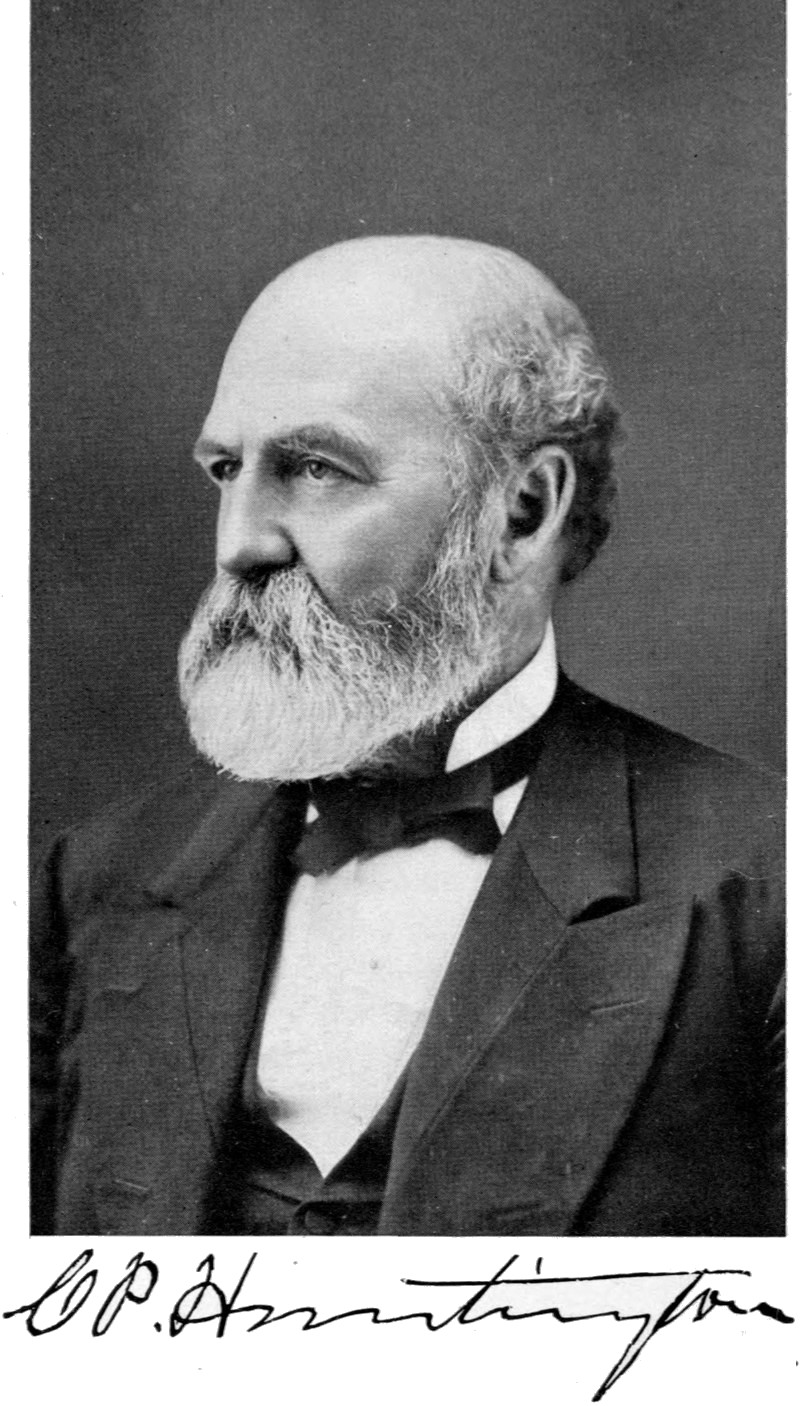
One of the financiers who may be seen daily entering the
palatial Mills Building in Broad street, New York, is a tall,
well-built man, with a full beard tinged with gray, a square,
resolute jaw, and keen bluish-gray eyes. Though now in
his 66th year, his step is light and quick, betokening good
habits in his youth and due care of himself in his later years.
He is one of the best known of American financial chieftains.
It is Collis P. Huntington. He is a born leader of
men. As a boy of 15 he came to New York, with scarcely a
penny. Now he is worth thirty million dollars. He was
born October 22d, 1821, at Harwinton, in Litchfield county,
Connecticut. He numbers among his ancestors Samuel
Huntington, one of the signers of the Declaration of Independence,
who was also President of the Continental Congress
and Governor and Chief Justice of Connecticut; and
also Bishop F. D. Huntington and the artist Daniel Huntington.
C. P. Huntington’s father was a farmer and small
451manufacturer, in his fourteenth year Huntington left school
and asked his father to give him his time on condition that
he should support himself. He came to New York in the
following year, 1836, and bought a small bill of goods, a
neighbor of his father’s becoming his surety. At that early
age he showed the same shrewdness in business, the same
energy and resolution in carrying through his projects
as he did in later life. At twenty-three he settled at
Oneonta, Otsego county, New York, as a general merchant.
In 1844 he married a Connecticut girl, who proved a valuable
helpmeet in days when it was never supposed he would ever
attain any particular financial distinction. In March, 1849,
he sailed for San Francisco, going by way of the Isthmus,
and following a consignment of goods which he had made in
the previous year. He was now in his 28th year, and a
future full of marvellous success awaited him. This was
not immediately apparent, however. Business success is not
usually attained without long and persistent efforts, and in
spite of repeated discouragements. He found San Francisco
at that time a resort merely for the idle and the reckless.
It did not prove at this particular juncture a satisfactory
field for his business; his funds ran low, and he determined
to go to Sacramento. He earned his passage money thither
on a schooner, by helping to load her for a dollar an hour.
In Sacramento he started in business, after a time, with a
small tent as a store, and a limited supply of general merchandise
as his stock in trade; he worked hard; he labored
early and late. Here he met Mark Hopkins, and they
formed a business co-partnership, which proved so successful
that by 1856 the firm was known as one of the wealthiest
on the Pacific slope. California, however, was isolated.
It was a long trip over the plains by wagon trains to the
nearest point of commercial importance east of the Rocky
Mountains, and the ocean voyage by way of the Isthmus of
Panama was long and slow. A railroad to the East was imperatively
needed, in order to develop the enormous resources
452of the broad territory lying west of that natural
barrier known as the Rocky Mountains. But how to bring
it about was the question. Few were daring enough to seriously
grapple with the problem. It was in the store of
Huntington & Hopkins that the project was first considered
with a resolute purpose to push it through. The Civil War,
however, broke out just then, and the first gun fired on Fort
Sumter seemed like the knell of this great project. Collis
P. Huntington was undaunted. “I will,” he says, “be one
of the eight or ten, if Hopkins agrees, to bear the expense of
a careful and thorough survey.” The result was that seven
gentlemen agreed to defray the expense of such a survey.
Two subsequently ceased to give their aid. The remaining
five organized the Central Pacific Railroad Company. Mr.
Huntington at once went to Washington to secure Government
aid in constructing the first trans-continental railway.
He was successful. When the Pacific Railroad bill was
passed he telegraphed to his partners with characteristic
humor and terseness: “We have drawn the elephant.” He
at once came to New York to form a syndicate to take the
bonds. Many at such a time would have gone to speculators
begging for aid and pledging his bonds for railroad
material with which to commence the great line. He did
nothing of the kind. The French saying, “Toujours de
l’audace,” seemed to be his maxim. He was always bold.
He coolly announced that he would not dispose of his bonds
except for cash, and, strange as it may have seemed, he
capped the climax by refusing to sell any at all unless $1,500,000
worth were taken. He was again successful, but the
purchaser required more security. Thereupon Mr. Huntington
made himself and his firm responsible for the whole
amount. It was thus on the pledge of the private fortunes
of Mr. Huntington and his partner that the first fifty miles
of the road were built. After a time, however, funds ran
low; it seemed inevitable that the number of laborers should
be reduced. Certainly more means were necessary. At that
453time the Government held the first mortgage on the road,
and no Government subsidy bonds were obtainable until a
section of fifty miles of the road had been completed. Huntington
and Hopkins stepped into the breach, and agreed to
keep five hundred men at work for a year at their private
expense, and three other gentlemen agreed to furnish three
hundred men for the same length of time. This resolution
ended their troubles; the road was built through to a
connection with the Atlantic seaboard, and trans-continental
transportation became a fact and no longer a dream. Mr.
Huntington came to New York again, and here he now resides
in a fine mansion on Park avenue. He is still a hard
worker, but after business hours he dismisses as far as possible
the cares of his financial functions. Among the railroad
systems controlled and operated by him and his associates,
the executive conduct of which is largely directed by
himself, are the Central Pacific, the Chesapeake & Ohio, the
Trans-Mississippi roads, and the Southern Pacific, making a
total of nearly eight thousand miles of line. He is also
heavily interested in roads in Mexico and Central America
and steamship lines plying to the Chesapeake Bay, to
Brazil, China and Japan and other parts of the world.
Directly or indirectly he has thirty thousand men under him.
In business he is an autocrat; his manner is quick and decisive;
he is direct in his speech, and expresses himself with
force when he says anything. He also knows when silence
is golden. He is a good story teller, and has a large fund
of anecdotes; he has original wit, a store of quaint, homely
sayings, which are often singularly apt. Sitting in his office
chair, with a black skull cap, which he usually wears in business
hours, pushed back on his head, he has an open, jolly,
unassuming look, and the stranger would hardly take him for
one of the uncrowned financial kings of this country. He
is one of the few men in this country who have shown themselves
more than a match for Jay Gould.
454
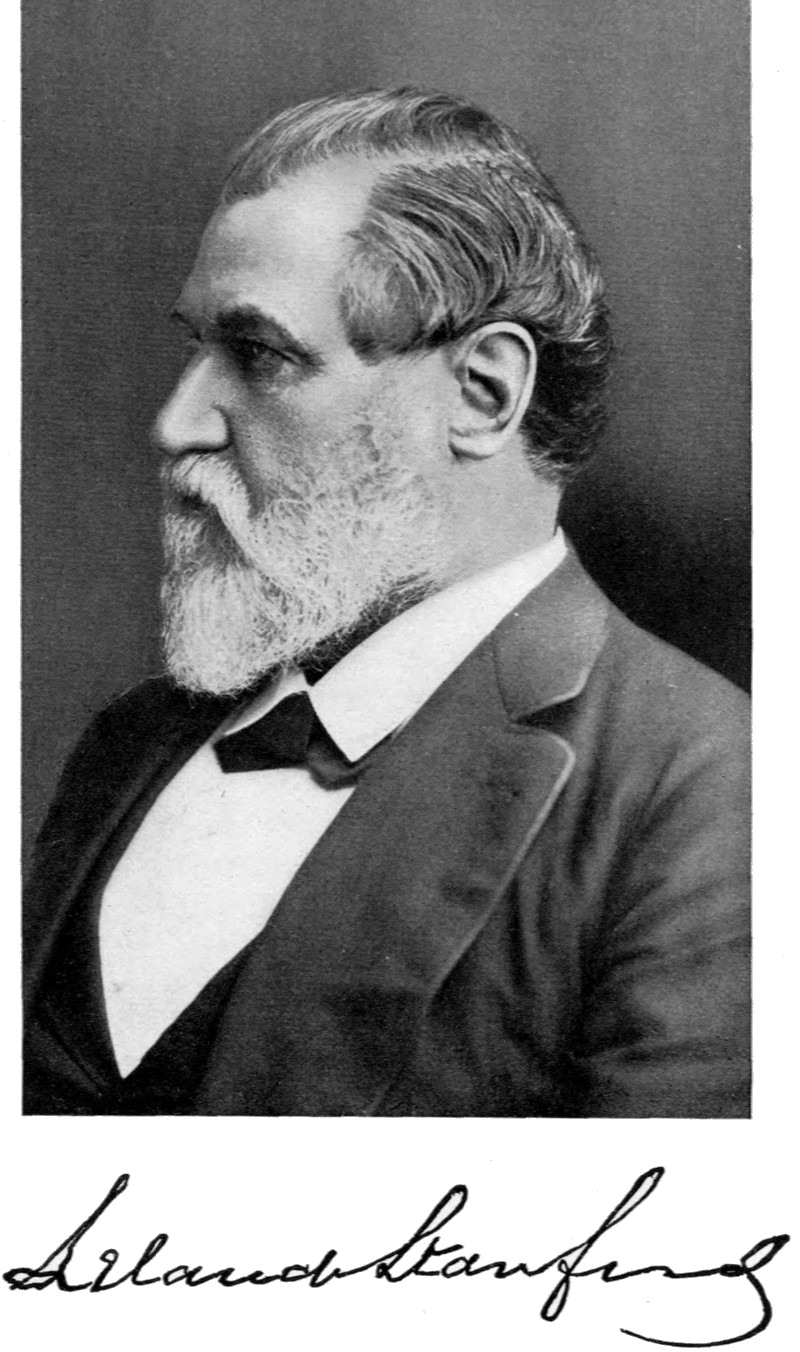
Leland Stanford, one of California’s United States Senators,
is worth from thirty to forty million dollars. He was
born in Albany county, New York, March 9, 1824. He
received an academical education and entered a law office in
Albany in 1846, and, after three years’ study, was admitted
to practice law in the Supreme Court of the State of New
York. He removed to Port Washington, in the northern
part of Wisconsin, and there engaged in the practice of his
profession for four years. In 1852 fire destroyed his law
library and other property, whereupon he went to California
and became associated in business with his three brothers,
who had preceded him in seeking fortune on the Pacific
Slope. His first business venture was in Michigan Bluffs,
but in 1856 he removed to San Francisco to engage in business
enterprises on a large scale. His business at one time,
it seems, was in oil, and, later, in various manufacturing and
agricultural ventures. He was elected Governor of California
in 1861. He insisted upon being inaugurated as provided
by the State constitution, at the Capitol building, though
the locality was under water by reason of floods. He became
President of the Central Pacific Railroad and superintended
its construction over the mountains, building 530
miles of it in 293 days. He was elected as a Republican to
the United States Senate in 1884, and his term does not expire
till 1891. He is still the President of the Central Pacific
Railroad and of several of its associated lines, while he is a
director in others. He owns a princely domain in California,
known as Palo Alto ranch, comprising six thousand acres,
which he has devoted to the site of an Industrial University
for both sexes, as a memorial of his only son, who died some
years ago. He has richly endowed this great educational
institution, setting aside for it about ten million dollars.
Here both sexes will be fitted to fill a useful part in the
battle of life; they will be instructed in mechanical arts
and agricultural as well as in other branches of education,
455which will start the student fairly in life. He found, as
President of the Central Pacific Railroad Company, that
many bright young men of collegiate education were not
specially fitted for any particular work in the great school
of life, and those who are familiar with great cities know that
thousands of men have really wasted their years in obtaining
a collegiate education which never enabled them to earn
more than barely enough to live upon. They become, in
many cases, ill-paid book-keepers, entry clerks, salesmen,
car conductors, postmen, and sometimes find themselves
obliged to turn their hands to hard manual labor, or else
starve. Senator Stanford’s beneficent plan, then, of giving
the young such a practical education that they can face the
world with confidence and with a reasonable certainty of
remunerative employment, or with the requisite knowledge
to guide them in enterprises of their own, is worthy of the
highest commendation, and his example is likewise worthy
of the emulation of gentlemen with millions to spare in all
parts of the country. If Samuel J. Tilden had endowed a
university of this kind he would have been a far greater
benefactor in many respects than he has undoubtedly shown
himself in his will. Governor Stanford’s great ranch, which
is to become a seat of learning, is situated about 32 miles
from San Francisco, and promises to be the educational
Mecca of the Pacific Slope. His fortune, notwithstanding
this princely donation, is still enormous, amounting to
twenty-five or thirty million dollars.
One of the most notable figures daily seen on Wall Street
is a man about five feet nine inches in height, with handsome,
florid features and a firm jaw, indicative of great
decision of character. He is now about fifty eight years of
age, and is as industrious and energetic as when he began
his eventful career. It is Darius O. Mills. He is one
of the most astute and one of the boldest financiers in this
456country. He has the courage of a Richelieu, joined to that
famous statesman’s caution and conservatism when the
march of events requires it. Of the California magnates he
is one of the most notable. In New York he has taken the
highest rank, socially and financially, of them all. As I
have intimated, he is bold, and yet, on occasion, he wisely
acts upon the maxim that discretion is the better part of
valor. He was born in a small town on the Hudson River,
in this State. Before the California gold excitement broke
out he and his brother were in the hotel business. He has
always been dependent on his own exertions; he has fought
his way to opulence, such as a prince might envy, by his
own keen intelligence and undaunted enterprise. He began
in humble circumstances. To-day he is worth twenty millions.
He is a permanent resident in the metropolis, and is
regarded as one of New York’s best and most influential
citizens.
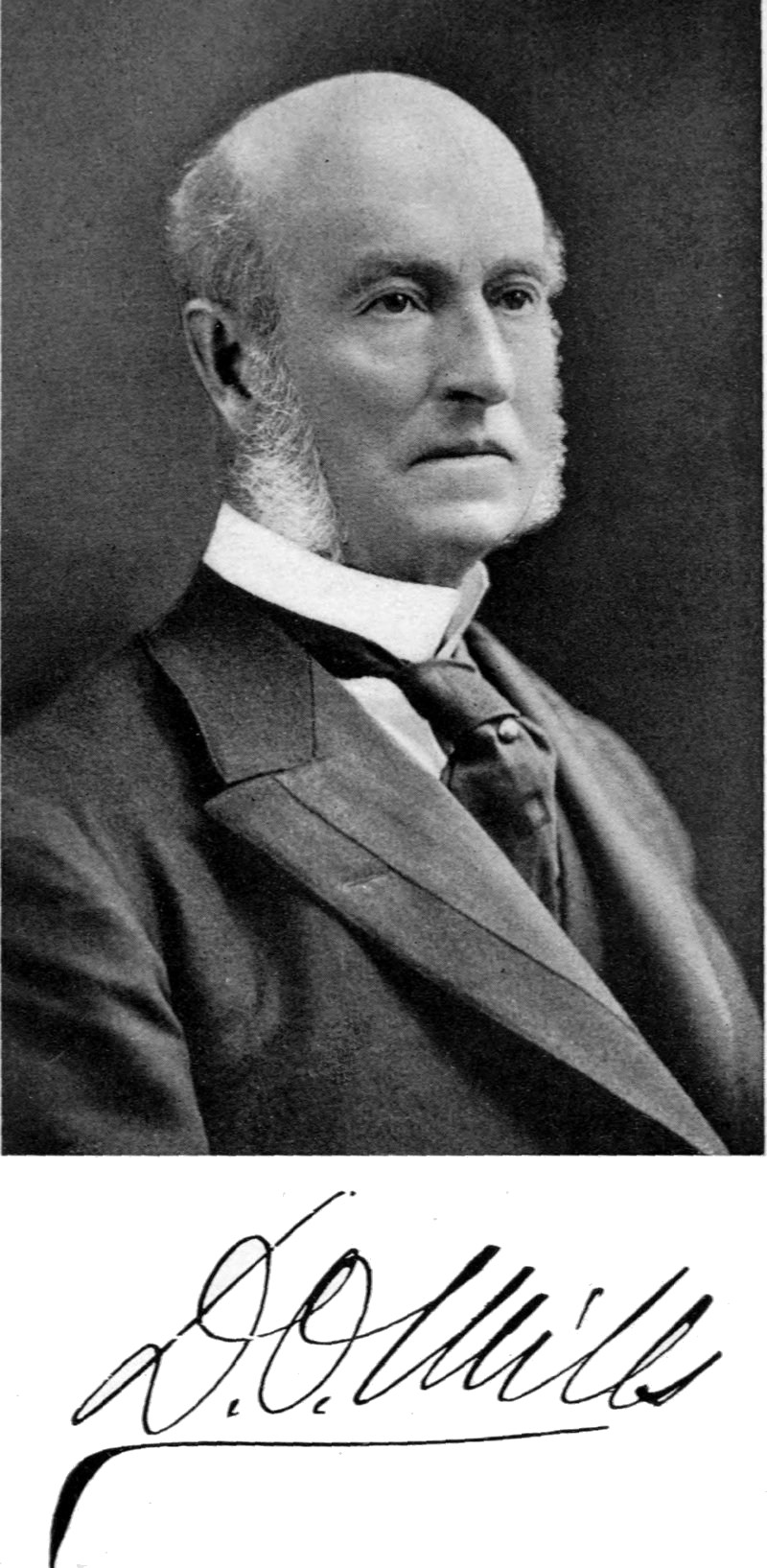
He laid the foundation of his vast wealth in California.
On the breaking out of the gold fever he and his brother
left their native town for the fields of adventure, where men
of shrewd foresight and determined courage achieved a success
stranger than the wonders of a Persian tale. The
brothers did not trust to luck. They chartered a sailing
vessel, loaded it with commodities likely to be in demand
among the miners, and then sailed for the Golden Gate via
Cape Horn. After a narrow escape from shipwreck they
arrived at San Francisco and at once opening a store, they
sold their merchandise to the eager miners at fabulous
prices. D. O. Mills rapidly accumulated wealth, and when
Wm. C. Ralston organized the Bank of California, he
became its President. During the time that Mr. Mills gave
his attention to the Bank of California it was the most successful
institution of a similar character in this country, but
when he decided to remove to New York his connection
with the great bank was severed. Disaster came under
Ralston’s administration. Mr. Mills had continued to be a
457stockholder, and when a financial hurricane struck the bank,
he was quick to go to the rescue. He contributed largely
to provide for the bank’s losses and to reorganize it with
new capital, which placed it again among the foremost
financial institutions of the United States. The credit of
this Herculean achievement was due more to him perhaps
than to any other man. His social position is deservedly
high. His son married the daughter of a member of the
historic Livingston family, one of the oldest and most illustrious
in this country. His daughter married the successor
to the editorial chair of Greeley, Whitelaw Reid, whose able
management of the Tribune has established a world-wide
fame for that gentleman. These marriages of his children
strengthened his already strong position socially, which he
soon won despite the fact that he was a newcomer. Mr.
Mills is distinguished for a princely liberality. He believes
in distributing his property generously while living. He
has built, therefore, one of the finest residences in this city
for his son; he bought for his daughter, Mrs. Reid, at a
cost of four hundred thousand dollars, the Villard palace on
Madison Avenue. His other acts of generosity are numberless.
He himself lives in fine style. He paid the highest
price ever paid per foot for a residence in New York when
he bought from D. P. Morgan, for one hundred and seventy-five
thousand dollars, that gentleman’s residence directly
opposite St. Patrick’s Cathedral on Fifth Avenue. This
mansion occupies two lots on a Columbia College leasehold.
After purchasing it Mr. Mills gave a carte blanche order to
a noted decorator of New York, and during a trip to California
the work of decoration was done. On his return he
at once took possession of a mansion of which a Shah of
Persia might be proud. He was delighted with all that had
been wondrously wrought by the beautifying touch of
splendid art; with the richly carved wood work, the gorgeously
picturesque ceilings, the inlaid walls and floors, and
the tout ensemble of Oriental magnificence. His contentment
458was complete, but a surprise awaited him. It was the
decorator’s bill for four hundred and fifty thousand dollars.
This, it is said, slightly disturbed his serenity. It caused
him to look with a critic’s eye on the splendid decorations
which constituted a study in the fine arts at such high rates of
tuition. As with the eagle eye of a connoisseur, he perceived
that the bill was altogether too high. He succeeded in getting,
however, only a slight reduction. Moral: Don’t give
carte blanche orders to decorators any more than you would
hire a cab without first making a bargain.
Mr. Mills came to New York to take up his residence
some years ago, with a fortune of many millions of dollars.
He is particularly worthy of a place in this book, as from
the time of making his home here he has been prominently
identified with Wall Street. Soon after taking up
his residence here he became acquainted with William H.
Vanderbilt, at whose suggestion he invested very heavily
in Lake Shore. He made by this operation no less than
$2,700,000. This large sum he devoted to the construction
of a palatial building on Broad Street, which bears
his name, and is probably the finest and most complete
structure for office purposes in the world. It has a frontage
of 175 feet on Broad street, 30 feet on Wall Street, and 150
feet on Exchange place, and is nine stories high. Thirteen
buildings were torn down to secure its site. It was begun
in May, 1880, and was practically finished in one year, the
men working night and day. It is built largely of Philadelphia
brick, with Belleville brown stone trimmings. It
is otherwise ornamented with terra cotta, and Corinthian
and Renaissance capitols, and red Kentucky marble pillars.
On the first three floors the wainscoting is of Italian marble,
and there is marble tiling throughout the building; the
woodwork on the first two floors is mahogany, and on the
upper floors it is reeded and panelled cherry. There are
400 offices, and the tenant population is 1,200. For weeks
at a time the total daily average number of persons carried
459on six elevators has been no less than fifteen thousand. The
working force necessary to look after this magnificent structure
numbers 60 person. The net annual rental is about
$200,000, the highest individual rent paid being $20,000.
Mr. Mills’ exceptional skill as a financier has won him a
high reputation in New York, and his counsel on vexed and
abstruse questions has often been quoted by powerful corporations.
He is a director in several railroads, including
the Erie, and it is understood is interested in mining enterprises.
In the battle of life he has achieved signal success.
His career is a fitting lesson to future generations.
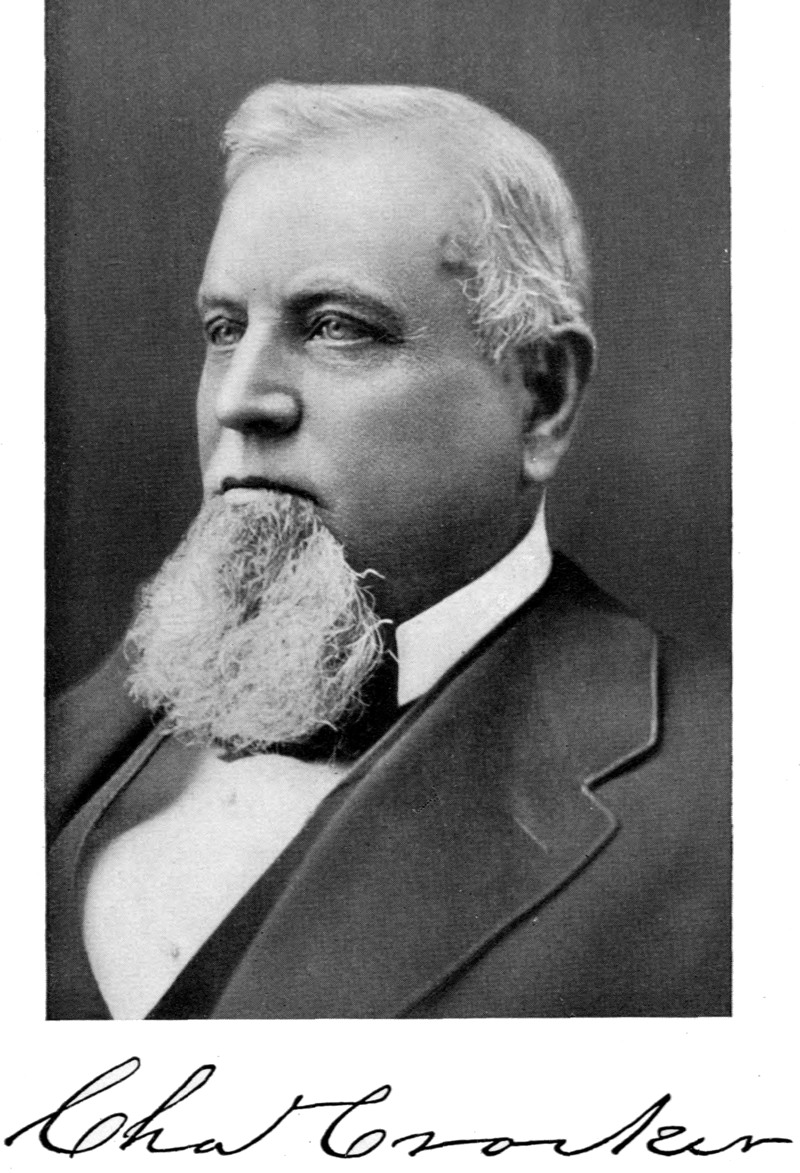
Charles Crocker is now about 65 years of age, and lives
in New York city. He was born in Ohio in humble circumstances,
and early in life followed for a time the occupation
of blacksmith. He used to get up at four o’clock in
the morning and work hard all day. It was a hard life, and
he engaged, after a time, in other occupations, gradually, in
the meantime, by thrift and industry, amassing a sufficient
sum to enable him to go to California, in the height of the
mining fever, and establish a general store in Sacramento.
He met with considerable success in trade, and when the
project was formed to build the Central Pacific Railroad, he
lent his aid to the enterprise, and has ever since been
identified with that corporation. He is now its Secretary
and Vice-President, and is also interested in associate roads.
Mark Hopkins died some years ago, worth fifteen million
dollars. He was from Massachusetts, and went to California
on the breaking out of the mining furore, and settled in
Sacramento, where he soon engaged in the hardware business
with C. P. Huntington, with whom he also embarked
in the ambitious enterprise of building the Central Pacific
Railroad. He won a large fortune in his railroad operations.
460His widow has a magnificent estate at South Great Barrington,
in Massachusetts.
We come now to the famous mining princes of the Pacific
Slope. The discovery of gold in California, and of the rich
deposits of the precious metal elsewhere on the Pacific Slope,
led not merely to the accumulation of vast individual fortunes;
it sent the currents of new life humming through
the veins, so to speak, of the entire country; it stimulated
trade; it awakened new life; it gave a tremendous impulse to
a thousand industrial enterprises; it sent the Republic forth
as a conquering hero of commerce, leveling all obstacles and
laughing at difficulties; tunneling mountains, building railroads
whose very rails seem to catch a golden gleam from
the rich traffic; spanning great rivers with majestic bridges,
building ships and steamers; setting vast manufactories to
awake the solitude of primeval forests with the thunder of
machinery, the ringing of hammers and the thousand voices
of labor; building villages, towns and cities with such marvelous
rapidity as to suggest the touch of the magical wand
of genii. With the treasure taken from her bosom nature
herself was subdued; an electric thrill stirred the older
centres of population as it led the new sections, and the
Republic has ever since, regardless of those periodical
reactions known as panics, kept its onward march in fulfillment
of that far-sighted prophecy that the star of empire
takes its way to the West, and that on the broad stage of the
American Continent the Anglo-Saxon race will win far greater
triumphs than it has ever achieved in its amazing career
since it sprang from the barbarism of the Northern wilds of
Europe to take its proud station as the dominant family on
this globe. The rich gold mines, and later the great silver
mines, have given this country a feverish dream of speculation,
in which gigantic fortunes have been amassed. The
richest deposit of silver in Nevada, if not in the world, was
the Comstock lode on the east side of Mount Davidson, in
Storey county, and partly under the towns of Virginia and
461Gold Hill. At one time its ores contained one-third in value
of gold and two-thirds of silver. The lode has been traced
on the surface some twenty-seven thousand feet, and has
actually been explored about twenty thousand feet, within
which space most of the larger mines are located. The lode
has been opened to the depth of about twenty-two hundred
feet. The various mines on this lode have given a total
return, it is estimated, of some three hundred millions of
dollars.
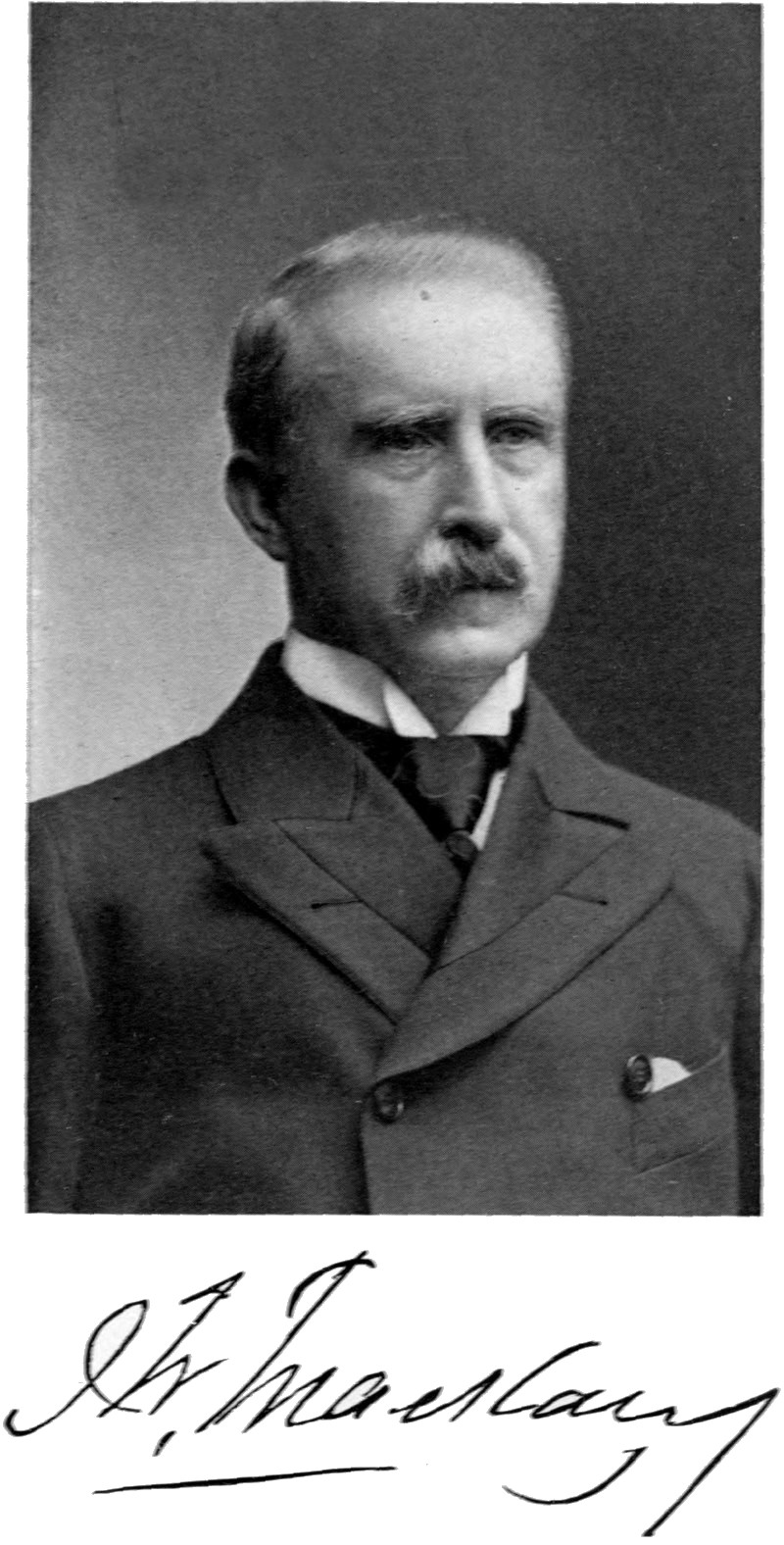
One of the most famous of the bonanza magnates is John
W. Mackay. His rise to financial power reads like a
romance, and yet his astounding success was by no means
attained as by turning over a hand. He believed in the
richness of the bonanza field; he and a number of associates
purchased the controlling interest in the corporations
which owned it. Then began the grand hunt for the ore
body. Others had tried to find it, but had given it up in
despair. The idea that the property was worth working
was laughed to scorn. The men who believed in it persisted
in spite of all discouragements, which were many;
they spent about half a million in prospecting. They made
in 1875, after long and trying efforts, the famous strike
which astounded the business world, and stirred up a speculative
fever which did not die out for years. This plain,
quiet, unpretending financier was born in the humblest circumstances
in Dublin, Nov. 28, 1835, and is consequently in his
52nd year. He came to this country very early in life, and
as a boy worked for Wm. H. Webb, the once famous shipbuilder
of New York. In 1852 he went with a party to California,
sailing in one of the ships of his former employer.
It has been said that previous to this he kept a liquor saloon
in Louisville. Like so many others, however, he caught the
gold fever, and on arriving in California he immediately engaged
in placer mining in Sierra county of that State. He
met with the usual vicissitudes of fortune, but at last a fair
degree of success rewarded his untiring efforts, and he thereupon
462went to Virginia City, Nevada, and started a tunnel in
what was called the Union ground, north of the Ophir mine.
The speculation was disastrous. He lost all he possessed,
but he was not conquered. He secured work as a timber
man in the Mexican mine, and he engaged also as a miner,
swinging the pick and shovel, and little dreaming that this
would be told as an interesting circumstance in a career
which was to be successful beyond his wildest hopes. He
labored industriously; he saved his money, and he watched
his opportunities, which very few people do. He got his
first important start in connection with the Kentuck mine in
Gold Hill, but he had frequent fluctuations of fortune until
finally, in 1863, he formed a mining co-partnership with J.
M. Walker, a brother of a former Governor of Virginia, and
subsequently the firm was strengthened by the addition of
Messrs. Flood, O’Brien, and Fair. The firm struck their
first great success in 1865-67 during their control of the
Hale & Norcross mine. Later came the celebrated California
and Consolidated Virginia mines, the wonders of the mining
world. He was married in 1867 to the daughter of Daniel
Hungerford. Hungerford, by the way, was a Canadian,
who came to New York many years ago and lived in West
Broadway, where he followed the occupation of a barber.
When the Mexican war broke out he enlisted, and at the
close of that war he returned to his family and his previous
occupation. When the famous Colonel Walker raised a
force in New York for the invasion of Nicaragua, Hungerford,
who seems to have been of an adventurous spirit,
enlisted, and barely escaped the fate of Walker and those
of his force who were captured and shot by the Nicaragua
authorities. He escaped by fleet running, and again returned
to his family and tonsorial profession, dying soon
after his return. His daughter married a physician, with
whom she went to Nevada. He died and left her in reduced
circumstances. With the open-handed generosity characteristic
of the financiers of the Pacific Slope, a number of
463wealthy gentlemen, learning of the circumstances, started a
subscription, to which Mr. Mackay made a large contribution.
She called to thank him, and the acquaintance thus
begun ripened into mutual attachment, whose happy consummation
was their marriage a few years later. Mrs. Mackay,
during the last few years, has resided for the most part in
Paris and London, where she has lived on a scale of magnificence
which has dazzled and astounded foreigners. Mr.
Mackay himself has apparently little inclination for social
triumphs; he is well liked wherever he is known for his
quick, genial manners, but seems to avoid publicity. He
alternates, for the most part, between New York and San
Francisco. In New York his office is at the Nevada Bank,
in which he is a large stockholder, owning, in fact, half of
the stock. In recent years he has become largely interested
in a cable line to Europe, started in opposition to other
well-known lines. His fortune is estimated at twenty millions.
Mr. Mackay’s step-daughter was married a few years
ago to the Prince of Colonna, who belongs to one of the
most ancient and wealthy families of the nobility of Italy.
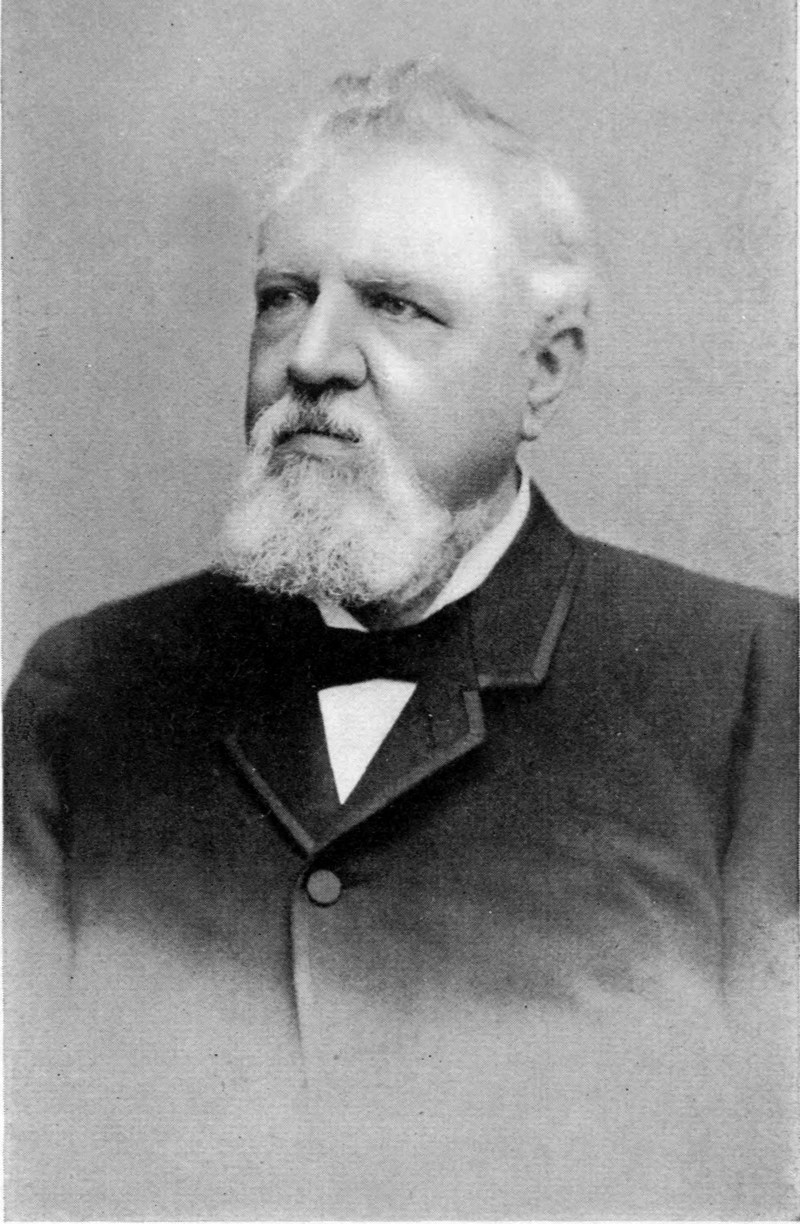
James C. Flood was once a poor boy of New York city,
now he is worth more millions than can exactly be told. He
went to San Francisco in 1849, poor and friendless, and in
company with the late W. S. O’Brien, opened a liquor saloon,
where he sold whiskey at 12½ cents a glass. He drew the
liquor from casks piled one upon another. In those early
days of the future queen of the Pacific Slope there were no
gorgeous saloons with tesselated marble floors, a dazzling
stretch of costly mirrors, and a gallery of rare pictures.
Such resorts as Flood’s, in the slang of the day, were termed
“gin mills,” and in the man who drew whiskey from the casks
rather than tendering a heavy cut glass decanter, it would
have been difficult for the most fanciful to have recognized
the future famous man of millions. He made money and
went into mining stocks. The first great mining speculation
in which Flood, with his partner, O’Brien, embarked was in
4641862, in Kentuck and the stocks of other mines on the
Comstock lode. Then they went heavily into Hale & Norcross,
one of the old time favorites. They were generally
successful in these operations, but a crowning and dazzling
triumph awaited them. In February of 1874 there were
whispers that the Consolidated Virginia, which had caused
a furore some ten years previous, but had fallen off materially,
and the newer mine, the California, would soon develop
rich bodies of ore. Flood and his partners, who owned
these mines, became certain of this prospective bonanza in
the following winter, and early in 1875 came the announcement
of the discovery of the fabulous ore bodies which made
the name of the Comstock lode known round the world, and
lifted the owners of the celebrated mines at once into wealth
so enormous as to make the extravagances of the Arabian
Nights seem tame. The establishment of the Nevada Bank
was the idea of Mr. Flood, who is said to possess a natural
aptitude for finance. He became president of the bank and
a large stockholder in it. He is a man of compact robust
build, five feet nine inches in height, with quiet, courteous
manners, and of an energetic, self-reliant and industrious
disposition. He has had a remarkable rise, but has shown
himself equal to the surprising good fortune which has
attended his strange career.
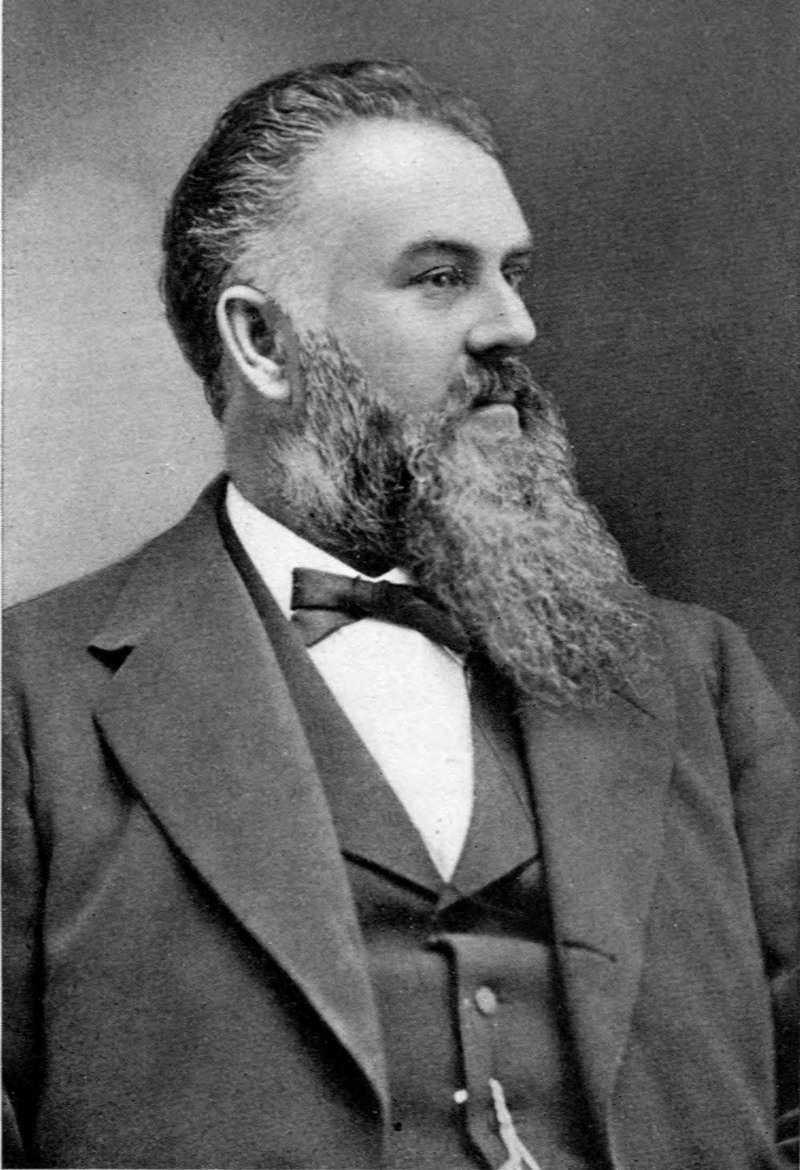
It is of interest to recall the fact that the original Comstock
syndicate, most of whom derived such enormous wealth
from the Comstock lode, was composed of Messrs. Mackay,
Flood, O’Brien, Fair and Walker. Soon after these gentlemen
became associated in their great enterprises, Walker
sold out his share of one-fifth to Mackay, for a very small
consideration, and this consequently gave that gentleman an
interest of two-fifths, against the one-fifth share held by each
of the three others in the firm, a fact which accounts for
Mackay’s greater wealth. Walker, one of the original parties
in interest, afterward not only lost in mining and other speculations
the amount which Mackay had paid him for his share,
465but all his other means, and was, in fact, completely beggared,
and died in an asylum for paupers. He had experienced
dramatic vicissitudes of fortune. He ought to have been
worth fully twenty millions of dollars. He died without a
penny.
W. S. O’Brien was associated with Mackay, Flood and
Fair in developing mines on the Comstock, and died in 1878,
enormously wealthy. He was born in New York, went to
San Francisco in the early days of the gold excitement, and
at first kept a liquor saloon with Flood. He gradually
engaged in mining speculations, and ultimately met with
such success that he died famous as one of the bonanza
kings. It is an interesting circumstance that four Irishmen
secured the lion’s share of the bonanza millions, and they
were all born poor. The harp of Tara’s halls never was
struck to so strange a roundelay as this.
James G. Fair is another of the bonanza kings who has had
an interesting career. He was born Dec. 3d, 1831, near Belfast,
Ireland. He came to this country with his parents in
1843 and settled in Illinois. He received a thorough business
education in Chicago, and at the same time devoted considerable
attention to scientific studies. On the breaking out
of the gold fever in 1849 he removed to California, settling
at Long’s Bar, Feather River, in that State. He mined on
the Bar for some time without much success, and then turned
his attention to quartz mining. Placer mining in those days
was conducted in too primitive a fashion to suit a man of
his mechanical ingenuity. Placer, by the way, is a term of
Spanish origin, signifying a gravelly place where gold is
found, especially by the side of a river or in the bed of a
mountain torrent. In quartz mining, on the other hand,
the metal is obtained by smelting after crushing the rock of
466which it forms a part. Mr. Fair engaged in quartz mining
in Calaveras county, California, and later became superintendent
of various quartz mines in other parts of the State.
In 1855 he became superintendent of the Ophir, and four
years later of the Hale & Norcross. In 1860 he removed
to Nevada and became actively engaged in developing mines.
In 1867 he formed a partnership with John W. Mackay,
James C. Flood and Wm. S. O’Brien. The firm, at Mr.
Fair’s suggestion, obtained control of the California and
Sides mine, the White & Murphy, the Central Nos. 1 and 2,
and the tract known as the Kinney ground, and it was in this
rich field that the famous California and Consolidated Virginia
mines were developed, the yield of which, under Mr.
Fair’s superintendence, is estimated at about two hundred
million dollars. He began speculative buying of real estate
in San Francisco in 1858, and is now said to own seventy
acres of land in different parts of that city, constituting in
itself an enormous fortune. He was elected to the United
States Senate as a Democrat to succeed the Hon. William
Sharon, and took his seat in 1881, his term expiring March
3d, 1887. In person Mr. Fair is of about the medium height,
of compact, solid build, has handsome features, and is a man
who would be likely to attract attention anywhere. His
fortune is estimated at from ten to twenty millions.
William Sharon was one of the remarkable men developed
by the mining excitement in this country, one of the
sagacious, self-reliant men who inevitably come to the front
wherever they are found. He showed his mettle when the
Bank of California was forced to suspend, and when a commercial
pall hung over San Francisco. In the midst of the
frenzied excitement he was one of the few who kept cool
and never lost their courage. The wild excitement on
the Stock Exchange of San Francisco was stopped at his
suggestion that the sessions be indefinitely postponed.
467Then he called a meeting of the Bank of California directors
and made a stirring appeal to them to stand by the bank in
the hour of its misfortune, and rescue the business interests
of the coast from the paralysis by which they were likely to
be seized if they did not take a resolute stand, put their shoulders
to the wheel and acquit themselves like men. He proposed
that each subscribe liberally to put the bank again in
operation, and set the example by a very large subscription—said
to have been five million dollars. Others also subscribed
liberally, and to the astonishment and joy of the
city the bank again threw open its doors for business. He
had some years prior to this become connected in business
with the lamented Ralston.
William Sharon was born in Ohio, and early in life began
the practice of law in Illinois. He went to San Francisco,
and immediately engaged in the real estate business, and
ultimately became a very large operator in lands, but failed,
and in 1863 went to Nevada to take the agency of the Bank
of California in Gold Hill and Virginia City. The bank
had large loans out on mining property, and as the production
of many of the mines had seriously declined, Ralston
grew uneasy, and was greatly relieved when Sharon offered
to become personally responsible for these loans on
condition that the bank advance him a considerable sum to
be used in contemplated mining developments, and allow
him two years in which to meet the loans. The terms were
accepted. Sharon ran new drifts here and there, and in
four months, to Ralston’s amazement, paid all the loans, and
placed on deposit three-quarters of a million to his own
account. This feat drew general attention to him; he was
consulted in large operations; he became a director in the
great bank. He never forgot Ralston’s kindness to him.
He assumed entire charge of the personal affairs of Ralston
after his death, and settled on Mrs. Ralston nearly half a
million of dollars. He finally entered politics, and represented
California in the United States Senate. He was a conspicuous
468example of business acumen and surprising energy, as
well as of becoming gratitude to the knightly Ralston, of
whom he always said: “He was my benefactor.”
Wm. C. Ralston was one of the most notable, as he was
one of the most remarkable, of all the financial giants of
the Pacific Slope. He ascended the gilded summits of financial
renown, and he fell into a shadowy valley of stern retribution
and utter ruin. No man could be more popular, none
could exhibit greater daring in his business enterprises. He
was a New York boy, but drifted to the West, and became a
clerk on a Mississippi steamboat, finally became Captain,
and having amassed some money, he leaped into speculative
waters, like another Leander, to swim the Hellespont
of California finance. He became associated with Commodore
Garrison and two others in the banking business in
San Francisco about 1853. Finally he organized the Bank
of California, and became first its Cashier and then its President.
His rise was marvellous. At one time he was supposed
to be worth $20,000,000 or more. He had a country
seat at Belmont, in San Mateo county, that a king might have
been proud to own, and here he entertained in royal fashion.
Every celebrity that visited California was received with
regal hospitality by this monetary prince of the golden
State. But as the allied armies arrayed against Napoleon
were often put to rout from being too much spread out, so
this financial Titan, combining the genius and courage of
many in one, was finally overthrown by adverse fortune,
because his enterprises were too much spread out. He had
too many projects on hand at one time. He lost heavily in
mining and real estate speculations; he lost in manufacturing
enterprises. Fate struck him suddenly as with the hammer
of Thor. In one fearful storm of trouble all his misfortune
descended upon him at once. All the waves and
469billows of adversity broke over him. He had no chance to
recover himself. Birnam seemed all at once to come to his
financial Dunsinane. An investigation of the affairs of the
Bank of California was made by the directors of that institution.
Their suspicions had been aroused that Ralston’s
administration of its affairs was open to grave criticism. He
attended the meeting of the directors, and was coldly requested
to withdraw during the discussion. He who had
been absolute in the great bank saw that his power was
gone; he stood on the brink of a moral Niagara. He left
the Directors to make the inevitable discovery that he had
over-issued the stock of the bank some $6,000,000, and
crazed with grief and despair, found a suicide’s death in the
waters of the bay. He had over-issued the stock hoping
and believing that success in some one of his numerous and
gigantic enterprises would enable him to provide for it, but
disaster stealing on him suddenly, like a thief in the night,
frustrated any plan of restitution, and he paid for his fault
with his life. He was a man about five feet seven inches in
height, with a rather florid complexion, a full light brown
beard and kindly brown eyes. He was once the idol of
California, and his one great fault is almost swallowed up
in the memory of his princely generosity, his hearty geniality,
and his many other engaging traits.
John P. Jones has had an eventful career. He has made
and lost millions. He was worth at one time five or six millions.
He lost very heavily in railroad enterprises in
Southern California. He had been engaged in mining and
had won a big heap of treasure, probably as much wealth
as any one needs, or more, but with the restless ambition of
one who would travel still higher up the glittering heights
of financial fame he sought to emulate Huntington, Stanford
and others and become a railroad magnate. It was a case
of vaulting ambition o’erleaping itself and falling on the
470other side. He lost almost his entire fortune, but he has
now regained his feet again and is once more wealthy. He
profited by the revival of interest in mines and mining
stocks in 1886, and secured, moreover, a considerable interest
in the Alaska mine, in which D. O. Mills was interested.
He bought stocks of once famous mines at low prices,
and when the advance on the revival of public interest
in mining shares took place he was a large
gainer. John W. Mackay has within the last few
years shown a disposition to lend him assistance in
his endeavors to recover his former footing. John P.
Jones is one of a number of Englishmen who have won
financial celebrity in this country. He was born in Herefordshire,
England, in 1830, and came to this country with
his parents when only a year old, settling in Ohio. For a
few years he attended school in Cleveland. In the early
days of the gold excitement in California he emigrated to
that State and engaged in farming and mining. He acquired
a taste for politics. He represented his county in both
houses of the State Assembly. In 1867 he went to Gold
Hill, Nevada, and has ever since been engaged to a greater
or less extent in developing the mineral resources of that
State. In his earlier days he worked hard as a miner in one
of the counties of California. He worked in placers and
tunnels; he had many ups and down. He was daring and
ambitious, and sometimes seemingly reckless. He spent a
million dollars trying to develop some mines in Mono, California,
and then gave up the attempt. At one time he controlled
the Ophir, Savage and Crown Point mines on the
Comstock lode; he owned large establishments for the manufacture
of ice in Georgia, Louisiana and Texas and elsewhere;
he made large purchases of land in California; he
engaged in a multitude of ambitious enterprises. He had
too many irons in the fire. Misfortune did not daunt him.
Like the old hunter of tradition, his motto was, “Pick the
flint and try it again.” He may yet become a financial
471power again. He has a certain readiness as a speaker; he
is of large frame and not unpleasing aspect, and his taste
for public debate and the excitements of the political arena
have led him into contests for public honors which have
been successful. He was elected as a Republican to the
United States Senate in 1872, and has twice been elected, so
that his term will not expire until 1891.
R. J. Baldwin has become widely known by the sobriquet
of “lucky.” He is 59 years old and was born in Ohio. His
father moved to Indiana and had a farm adjoining that of
Schuyler Colfax. There he worked till he reached his
twentieth year. He married in the following year and went
to a small place in Indiana and kept a country store; he
soon built canal boats to ply between Chicago and St. Louis.
He went to Racine, Wisconsin, in 1850, and engaged in the
grocery business with considerable success. He was keen
at a bargain and always had an eye out for the main chance.
His so-called “luck” was in reality business skill. He went
to California in 1853, after purchasing a number of horses
and wagons and an ample supply of merchandise. He
found a good market for his goods in Salt Lake, making
nearly four thousand dollars on the venture, and further on
he sold his wagons and harness and made up a pack train
over the mountains, and, arriving in San Francisco, sold his
teams at good prices. His trip had been a complete success.
He now went into the hotel business, and, after selling out
twice to good advantage, he formed a partnership to engage
in the brick trade, which, proving very successful mainly
through his skill in drumming up business, he decided to go
into it alone. He himself knew nothing about brick making,
but he studied up the subject and eventually became an
expert. He obtained remunerative contracts with the
Government; he boarded his men and made for a time
about fifteen hundred dollars a month. He finally sold out
and went into the livery business. He made money and
invested considerable in real estate. He sold out and went
472to Virginia City, Nevada, at the breaking out of the mining
excitement there. At that point he started a lumber yard.
He speculated in mines and met at times with great success,
but once he was so badly worsted in this great game that he
was compelled to mortgage all of his property; but the tide
turned soon and became a flood of gold. He speculated in
such mines as the Crown Point, Belcher, Consolidated Virginia,
California and Ophir. He acquired at one time the
controlling interest in the Ophir. He has speculated heavily
in San Francisco real estate, and with marked success. He
erected a building there that cost, with all its appurtenances,
over three million dollars. Part of it is used as a theatre.
He bought sixty thousand acres of land in Los Angeles
county, and had practically a town of his own. He spent
about half a million dollars improving this tract, more particularly
his Santa Anita ranch of over fifteen thousand
acres. His sagacity and industry, rather than mere “luck,”
have won him his fortune of ten or fifteen million dollars.
William H. Stewart, another successful man of the Far
West, who has twice represented Nevada in the United
States Senate, was a New York boy, born in Wayne county
in 1827. A good many New York boys have succeeded in
the West. He went to California early in 1850. In the
fall of that year, while prospecting, he discovered the Eureka
placer diggings; he built saw mills, worked claims because
disgusted with mining, went to Nevada City in the spring of
1852, and in December of that year was appointed District
Attorney, was elected to that office in the following year,
and in 1854 was appointed Attorney General, thereupon
taking up his residence in San Francisco, where, by the way,
he married a daughter of ex-Governor Foote, of Mississippi.
Later he returned to Nevada City and established a very
lucrative law practice, and remained in that county till the
spring of 1860, when the furore over the Comstock mines
473induced him to go to Virginia City, Nevada. He thoroughly
understood mining law, and soon had a large practice. The
large sums which his legal talents brought him were invested
in mines, and he became one of the leading operators on the
Comstock lode. He invested half a million dollars in San
Francisco real estate. He rendered important services to
mining interests while in the United States Senate, in preventing
the passage of a bill providing for the sale of all
the mineral lands of the country at public auction, a
measure which it was supposed would concentrate much of
the mining property of the United States into the hands of
the wealthy.
James Lick, born in Pennsylvania in 1796, was one of
the strange characters of California. He went there in 1847,
after having been a manufacturer of pianos in this country
and different parts of South America. He took $30,000
to San Francisco, which he invested in real estate, foreseeing
that it was to become the great city of the Pacific Slope.
He bought lots by the mile. His profits were enormous.
He became one of the great millionaires of California. He
set aside $2,000,000 in 1874, to be held by seven trustees,
and to be devoted to certain public and charitable purposes.
In 1875 he desired to make some changes in his schedule of
gifts, and when the trustees expressed some doubts as to
their legal right to give assent, at his request they resigned.
The next year he died, and then followed a litigation by
his son and other heirs, which was finally so adjusted as to
leave a large sum to be devoted to various public and charitable
projects. He left $60,000 to be devoted to a statue
of Francis Scott Key, the author of the “Star Spangled
Banner.” He was very eccentric, due, it is said, to an early
disappointment in love. He sought the hand of a miller’s
daughter, but was dismissed by the father, because young
Lick did not own a mill. When he became enormously
474wealthy, James Lick built a large mill, and adorned it with
mahogany and costly woods as a memorial of his youthful
attachment. He seemed to derive almost childish pleasure
in contemplating this splendid building, which would have
so far outshone any that could ever have been owned by the
man who had once spurned him for his poverty. The poor
young men of one generation are often the millionaires of
the next. One of the great monuments to his memory is the
great Lick Observatory.
John W. Shaw, who made considerable money in mines
and mining stocks, is one of the Western millionaires who
reside in New York. He was a superintendent of mines,
and speculated on his information. He was at one time
prominently identified with the Eureka Consolidated mine.
He is supposed to be worth $4,000,000 to $5,000,000, and is
now President of the Hocking Valley Road. Messrs. Keene,
Lent, Dewey, Harpending, Verdenal and other more or less
successful men well known in California, live here. One
of the distinguished lawyers of the West who have come
here to establish a practice is ex-Governor Hoadly, of Ohio.
Austin Corbin, though at one time a lawyer in Iowa, found
his true field in New York, and Alfred Sully, after amassing
some means in the same State, likewise found himself drawn
to New York, and won unexpected success in finance here.
CHAPTER XLIII. RAILROAD INVESTMENTS.
475
Vastness of our Railroad System.—Its Cost.—Fall in
the Rate of Interest.—Tendency to a Four Per
Cent. Rate on Railroad Bonds.—Effect of the
Change on Stocks.—Prospective Speculation.—Some
Social Inequities to be Adjusted through Cheaper
Transportation.
There are, perhaps, few who distinctly realize the
magnitude of the amount of capital invested in the
railroads of the United States. The immense area over
which our population is distributed necessitates a much
greater length of railroad, as compared with inhabitants,
than exists in any other nation. In 1884 we had, according
to “Poor’s Manual of Railroads,” no less than 125,380
miles of road within the United States, which exceeds the
entire mileage of Europe. This was required to provide for
the travel and transportation of about 54,000,000 of population,
while Great Britain, France, and Germany, with their
combined population of 120,000,000, had in the same year
about 60,000 miles, and Russia, with some 85,000,000 of
people, had only about 19,000 miles.
It can hardly be a matter for boasting that we have found
it necessary to provide such a disproportionate length of
road to accommodate the wants of trade and travel; for the
more capital we have to invest in the facilities for carriage
the less we have for investment in the means for production,
and the more we have to pay for transportation service the
worse is our position for competing with other nations. This,
undoubtedly, is a much more important factor than is generally
allowed in the question of our ability to command a
share in the world’s international commerce proportioned
to the extent of our population.
476The cost of our railroads, as indicated by the capitalization
statements of the Companies in 1884, is represented by
$3,669,116,000 in bonds and $3,762,016,000 of stock. As
shown in another chapter on “Railroad Methods,” the
actual cash outlay in construction and equipments is very
much less than these figures; but the roads aim to earn an
investment return on these enormously inflated amounts,
and do so as far as they may be able.
Elsewhere in this volume I have shown how the effort to
earn dividends upon hundreds of millions of fictitious railroad
capital is imposing an unjust tax on the people, retarding
the growth of national commerce and creating a distinct
millionaire class not without danger to our political future;
and I wish here to refer to one fact from which we may
hope for some mitigation of this pernicious tendency.
Within recent years it has become very clear that a large
permanent reduction has been effected in the rate of interest
on fixed capital. Perhaps, the principal causes of this
change has been (1) the high credit of the Government,
represented by a 3 per cent. rate of interest on its loans;
(2) diminution of the element of risk in our corporate enterprises;
(3) the more developed and consolidated condition
of our industry; and (4) the growth of the national earnings
in a ratio disproportionate to the new undertakings inviting
capital. To such an extent has the loanable resources of
the country increased that, whereas ten to fifteen years
ago we found it necessary to borrow in other countries a
large portion of the money needed to build our railroads,
we are now almost entirely independent of European lenders,
and are beginning to invest in the construction of roads
in Canada and Mexico.
Thus comes about the fact that, while the bulk of the new
outstanding railroad bonds bear interest at 6 to 7 per cent.,
with exceptions at 5 and 8 per cent., there is no difficulty
in now negotiating the mortgages of sound railroads at 4
per cent., and that may be safely regarded as the future
477rate for all meritorious loans. It is not difficult to see to
what course of things this fact points. If new roads can be
built on a 4 per cent. ratio of interest charges, then the new
constructions on that basis and the gradual replacing of
maturing loans at the same rate will very quickly establish
a competition between roads thus situated and the large
mass of companies burdened with the old high rate of
interest that will bear very seriously on the latter. To a company
with, say, $40,000,000 of bonded debt, it is a matter of
a difference of $800,000 per year in fixed charges whether it
pays 6 per cent. interest or 4 per cent. This difference
will be so vital in cases of competition between high rate
roads and low-rate ones, that it will leave no choice, with
a very important proportion of our railroads, between facing
financial embarrassment and taking immediate steps for readjusting
their debts to the new and lower rate of interest.
As an important proportion of the original bonds issued 25
to 30 years ago at 6, 7, and 8 per cent. rate by the older
roads are now beginning to mature very rapidly, a large
extent of high-rate debt will from this time forward be
transmuted into 4 per cent. bonds, which will add force to
the tendency here indicated.
Some important results must follow from this new drift
in railroad investments. One of the effects would naturally
be a diminution of the current high rate of premium on the
old bonds, which has become, so adjusted as to yield, in
most cases, a return of 4 to 4½ per cent. on the market value.
Holders of this class of bonds will perceive that the companies
cannot long sustain the burden of their present high
rate of fixed charges, and will soon come to discount in advance
the inevitable “scaling” of their bonds. When the
railroads begin to feel the effects of competition with the
low-rate companies, they will not be slow to adjust their
finances to the new situation; neither will they be nice
about their methods of effecting such adjustments; and the
rights of creditors will be ruthlessly dealt with under the
478compulsion of foreclosure; and when this compulsory
stage is reached, it will not be very long before a large proportion
of the high-rate bonds is transmuted into long 4
per cent. obligations.
This very important transition, upon a such large mass of
investments, is to be anticipated as one of the most conspicuous
financial events of the comparatively near future.
One of its first effects may be expected to appear in a certain
tone of depression among investors, who will feel themselves
impoverished through the fall in the market value of
their bonds, and by the impending reduction of one-third in
their income from this class of securities. The bondholders—and,
indeed, investors generally—will be likely to reason that
the reduction in the fixed charges of the roads will leave so
much more available for the stockholders; and there would
be this extent of warrant for such a conclusion, that, as the
stock of a company usually about equals the amount of its
bonds issues, any reduction in the rate of interest on the
latter would be just so much per cent. saved towards the
dividend on share capital. Under such circumstances, there
would naturally be a marked increase in the demand for railroad
stocks, and a large advance in their market value would
in all probability result. To those who contemplate investing
in railroad shares, this is a consideration which, it appears
to me, should claim their consideration.
It would seem probable that, in the process of conversion
here foreshadowed, there are the elements of an era of unusual
speculative activity at a period not very remote. That
speculative movement may be expected to consummate and
finally adjust the change. Naturally, such an excitement
would tend to produce a great inflation in the price of stocks
(as distinguished from bonds); the final stroke of adjustment,
however, would come ultimately through the construction
of new competing roads, which would take out of the net
earnings of the roads as much as had been saved by the
reduction of interest on their debts, thus leaving the dividend
479resources where they stood before the change. The
final issue of this transition, therefore, would be to give the
public at large about the entire benefit of what the railroads
saved by the amelioration of their debt charges.
The tendency I have here aimed to foreshadow is one
that must largely tend to the public advantage. In other
words, the railroads, having reduced by 30 to 40 per cent.
their interest charges, will be in a position to perform their
services for correspondingly lower charges. This will be an
invaluable advantage to all our industries, and especially to
such as have to deal with bulky products, a considerable
portion of the costs of which consists of charges for transportation,
and the working class, who constitute the bulk of
our consumers, will be especially benefited.
In another chapter I have shown how the overcapitalization
of our railroads has caused a false and unjust distribution
of wealth, and burdened our industries with transportation
charges which are a serious obstacle to our national
progress. The tendency above delineated shows how seriously
the natural laws governing the distribution of wealth
provide an ultimate remedy for such violations of these
laws. The railroad capitalists who have made their millions
by providing railroads at such an inflated cost are now
faced with the certain prospect of a loss of one-third of
their income from their investments; and that deduction
will have to be distributed among the community at large in
the form of cheaper carriage.
This is but a repetition of what we find so many times in
the history of nations, that when any important class
exacts, by some artificial process, a vast amount of wealth
that does not naturally and justly belong to it, it ultimately
finds the earning capacity of its accumulations declining.
This is one among the many reasons why a low rate of interest
is apt to prevail in countries where privileged or
aristocratic classes have absorbed an undue proportion of
the national wealth.
CHAPTER XLIV. THE SILVER QUESTION. — Questions. — Replies.
481
Its Fundamental Importance.—Dangers of Neglecting
it.—Attempts at Evasion.—How it must be finally
met.—Silver Paper Currency Schemes, and their
Futility.
Of all current public questions, I know of none that
so vitally affects the future of our financial interests
as this one—what shall be the status of silver among the
world’s currencies? At the present time, about one-half
of the world’s metallic money consists of silver, and the
other half of gold. It is clear that silver cannot maintain
its necessary function as money unless it is invested with
stability of exchangeable value. Such stability it cannot
possess without the intervention of a conventional arrangement
which, with all the force of a uniform law, makes a
given weight of silver virtually exchangeable for a given
weight of gold. This principle once established, and silver
bullion being made convertible into silver coin at the mints
of the chief nations on demand, it follows that the bullion
value of silver must constantly conform closely to its value
as coin, and the stability of the value of silver coin would
thus be insured.
The difficulty has been that, owing to petty jealousies
and prejudices, Governments have hesitated to act with the
unanimity that is necessary to an efficient conventional arrangement.
Each one has preferred that others should take
the responsibility of free coinage; and the result has been
that unrestricted coinage has been adopted only by those
nations which happened to be most imperatively committed
to the necessity of protecting their silver circulation. Those
nations were comprised in the international combination
known as “The Latin Union.” That Union was found competent
482to take care of all the new supplies of silver, so long
as the principle of free coinage was maintained and the
value of the metal was kept uniform under its operation. In
an evil hour, however, certain German theorists persuaded
Chancellor Bismarck to commit Germany to the demonetization
of silver. The large supply of the metal thereby suddenly
thrown into the mints of the Union nations alarmed
that combination, first, into a limitation of their coinage of
silver, and, finally, into a suspension of it. The coinage demand
for silver being thus cut off, the price of silver bullion
was cut loose from the relative legal valuation between silver
coin and gold, and was left to drift with the variations
in the commercial demand, and to decline in consequence of
an excess of supply over demand. This is a brief explanation
of the causes of the present depreciation in the value
of silver.
I know of no way of repairing the value of that metal
other than by establishing an international union, similar in
its objects and conditions to the now virtually defunct Latin
Union, but embracing a wider range of Governments than
that combination did; the co-operation of the United States,
England and Germany being especially important. Here I
may perhaps be permitted to republish a series of questions
propounded by the New York Daily Commercial Bulletin, in
October last, with my answers appended, as briefly expressing
the conclusions I have been led to form on this
question:
I. Would the stock of gold in the world afford a basis
broad enough to meet the banking and commercial operations
of Europe and the United States, without the co-ordinate
use of a properly regulated silver legal tender?
II. Would you favor an International Coinage Union,
embracing the United States and the leading European Governments,
based upon a uniform valuation of silver as compared
with gold, and binding each member to coin on demand
all silver presented at its mints and to make such coin
a legal tender?
483III. Supposing the ratio of valuation adopted by such a
Union to be the present most general one of 15½ to 1, do
you see any reason why the obligation of all nations in the
Union to convert silver bullion into legal tender coin at
that rate should fail to restore silver to its former value of
about 60 pence per ounce?
IV. Would the suspension of the coinage of the Silver
Dollar be judicious, or necessary, or effectual, as a means of
inducing European Governments to join in an International
Coinage compact?
V. Are there any important reasons connected with the
finances of the United States Government, with our currency
system, or with the prospective trade of this country, why
the coinage of the Standard Dollar should be suspended?
IV. Do you favor the immediate suspension of coinage of
the Silver Dollar?
1. Possibly the existing stocks of gold in Europe and America
might be sufficient to serve the purposes of banking
reserves and for transmission in the international exchanges;
but it is impracticable to use such a valuable metal to the
extent required for the purposes of active circulation, and
this creates a necessity for a silver legal tender coin for the
retail transactions of business. For this reason I regard
the use of silver, co-ordinately with gold, as an indispensable
element in the world’s currency.
2. I regard an international union as absolutely necessary
for maintaining the joint use of gold and silver, if the relative
value between those metals is to be steadily maintained.
If a uniform value of silver were adopted by members of such
a union, and if the mint of each nation were bound to coin
all silver brought to it, and the coins were made a legal
tender, it appears to me that this would establish a uniform
value for silver bullion the world over, on a parity with the
legal valuation of silver coin; and this conventional value
of bullion would be preserved as long as the union should be
continued. Even the limited international arrangement
known as the Latin Union sufficed to keep silver at about 60
pence per ounce, until its members, taking fright by the demonetization
of silver by Germany, stopped the coinage of
silver; when, the conventional support being withdrawn
and the coinage demand suspended, bullion fell to its value
as a mere commodity. This shows how effective the union
principle is, and what becomes of silver without it.
4843. If an international union were to fix the value of the
two metals at 15½ weights of silver to 1 of gold, the rate
now general in Europe, and the members of the union were
compelled to coin it on demand at that rate, then the free
convertibility of bullion into coin would necessarily make
the coin and the bullion of equal value, except the slight
difference that might arise from coinage charges; which is
tantamount to making silver worth about 60 pence an ounce,
or its former value.
4. In view of the differences of opinion in Europe on the
standard question and the strong prejudices in England in
favor of the gold standard, it appears to me more than
doubtful whether any step will be taken on this subject
until those countries are made to carry the burthen of the
large surplus of silver that we are now coining. But with
25 to 30 millions of bullion of our silver going thither every
year, the effect would be so serious upon Asiatic trade and
upon the immense silver circulation of the Latin nations,
that it seems certain they would soon become willing to assume
their share in restoring silver. At any rate, it is
a proper and necessary compulsion for us to apply.
5. The Government is very closely threatened with a suspension
of gold payments, if the coinage is continued. We
have already seen a point at which the Treasury had to negotiate
with the banks for six millions of gold to avert that
catastrophe; and it is only a thin margin of a very few millions
that separates us from such a condition all the time.
Of course, if the Government suspended coin payments, gold
would be apt to go to an indefinite premium; with the consequence
of a rush of greenbacks into the Treasury for redemption
and a depreciation of such paper as is redeemable
in silver to the purchasing power of that coin. In my view,
these dangers are much nearer than is generally supposed;
and it is a most unjustifiable policy that needlessly perpetuates
this state of things.
6. For the reasons assigned in my other answers to your
inquiries, I regard the suspension of the coinage of the
the silver dollars as to the last degree imperative. And the
suspension should be both total and unconditional. Either
a partial or a temporary suspension would fail equally to
avert the home dangers with which we are threatened, and
to bring about that European action which is indispensable
to a sound and permanent settlement of the question.
485So long as there was no efficient conventional arrangement
for maintaining the value of silver, no nation can
safely continue its coinage, because, in so doing, it was increasing
its stock of currency, the future value of which
could not be depended upon, and which might easily become
a source of embarrassment and injustice between
citizen and citizen, between debtor and creditor. In our
country, however, such was the political influence of the silver-producing
States that they easily induced Congress to order
the coinage of not less than $24,000,000 per annum of standard
silver dollars. The effect of this has been, undoubtedly, to
somewhat check the decline in silver bullion; but at the
expense of the artificial addition already of $230,000,000 of
badly depreciated legal tender to our circulating medium.
Our whole currency system has thus been vitiated; for our
$680,000,000 of paper money may be redeemed in silver;
and we are thus exposed to the very gravest dangers, in the
event of anything causing an important drain of gold to
Europe. That the coin thus issued was not really needed
for the purposes of circulation is demonstrated by the fact
that it has been found impossible to get more than one-third
of it into circulation. In order to obviate this difficulty,
various devices have been introduced for keeping the coin
in the Treasury and issuing against it paper certificates of
small denominations. The most ingenious of these contrivances
was the one proposed by Hon. A. J. Warner, of
Ohio, and pressed on the Government for its endorsement.
In September last I took occasion to publish certain objections
to Mr. Warner’s scheme, which was finally rejected by
the Silver party; and, with that rejection, there is probably
an end to all proposals for creating a purely silver paper
currency. As a brief exposition of one phase of this controversy,
it may perhaps be permissible to reproduce here
the views then expressed:
Mr. Warner’s measure virtually concedes that the coinage
of the silver dollar has already been carried to a point that
486threatens serious danger to the currency system of the country,
and, consequently, to the just relations between the
creditor and debtor classes. This confession from a representative
of the Silver party does not come a day too soon;
and it would be welcome, were it not accompanied with proposals
that would aggravate the evils which need to be
remedied. Let us briefly examine Mr. Warner’s plan.
First, it discontinues the current monthly coinage of silver
dollars required under the existing “Bland Act.” 2. It
provides that, in lieu of this current coinage, holders of silver
bullion may deposit any amount thereof in the United
States Treasury. 3. It requires that, against such unrestricted
deposits of bullion, the Government shall issue to
the depositors “bullion certificates,” expressing an amount
of money equal to the market value of the bullion at the
time of its deposit. 4. These certificates are to act as a
new form of currency. The Government could use them in
liquidation of all its debts not made expressly payable in
gold; and it would be required to accept them in payment
of customs duties, taxes and public dues generally. The
national banks would be required to accept them in payments
between themselves. And, 5, the certificates are made redeemable
in lawful money, (i. e., either gold, silver or U. S.
notes), or at the option of the Treasury in silver bullion at
its current value at the time of redemption. These are the
more vital provisions of the scheme. Let us see what they
involve.
Against the whole plan there lies a very positive doubt
of its constitutionality. The Constitution empowers Congress
to authorize the coinage of gold and silver, and to
make such coins a legal tender; but there is nothing in the
powers thus conferred, nor in any powers conveyed by that
instrument, that can be construed into a right of the Government
to receive silver bullion on deposit. The Government
can have no interest, duty or function in connection
with bullion, except so far as it may be procured for the
express purpose of coinage. It can have no more power to
assume the custody of bullion for the accommodation of its
producers than it has to store cotton, iron or wheat for the
convenience of the dealers in those commodities. And
when, in addition to assuming the grave responsibilities of
custodian, the Government undertakes to issue receipts endowed
with special privileges and attributes, calculated to
487incorporate those receipts as an important part of the currency
system, it commits a breach of the true functions of
government and of the true constitutional limitations of
federal authority, which, it would seem, the Supreme Court
should unqualifiedly prohibit.
The provision made for the redemption of these proposed
certificates would be to the last degree objectionable. They
are payable in legal tender money, or, at the option of the
Government, in an equivalent value of silver bullion at its
current market price. If the Government chooses to redeem
them in lawful money, it exposes itself to a new and important
demand upon its legal tender notes or its gold:
and as the amount of greenbacks owned by the Treasury
now runs so low as to prohibit those notes being used for
the purpose, it follows that the redemption of the certificates
would have to be made from the Treasury stock of
gold. Thus the operation of the scheme would be to exchange
the Government gold for silver bullion. What could
the silver men desire better? What could all other interests
dread more? It would be a direct step towards incapacitating
the Government for maintaining gold payments; and, as
such, would go far towards dissipating that broad substratum
of gold which is the sole means of preventing our entire
paper currency from depreciating to a level with the bullion
value of the silver dollar.
It is thus clear that the Government would be ultimately
driven to redeem the certificates in silver bullion. What
does that imply? First, that the Treasury would have to
stand the loss upon the deposits of bullion that might arise
from a fall in its value. Take a case for illustration. A
deposit is made of 1,000,000 ounces of gold at the current
price of $1.10 per ounce, the Treasury being required to
issue against it $1,100,000 of certificates. Later, when the
price of silver has fallen to say $1.05, the $1,100,000 of certificates
is presented for redemption, and 1,047,619 ounces
of silver have to be delivered, as the bullion equivalent at
the current market value. The Government thus loses 47,619
ounces of silver by the transaction. Now, seeing what
a handsome profit can be made by thus depositing bullion
at a higher price and withdrawing it at a lower, are men so
virtuous that we can depend on their not working this Treasury
silver mine to the utmost possible advantage? With the
hands of the Government thus tied, it would be at the mercy
488of unprincipled speculators and could not escape being
mulcted to the extent of millions of dollars. The moment
such a bill was signed by the President, speculative combinations
would be formed with London bullion dealers; the
European stocks would be secured, and, after advancing the
price, would be sent to the United States Treasury. The
next step would be to force down the price; and then the
certificates would be presented to be redeemed by a much
larger quantity of silver than had been deposited against
them. And thus the game would go on continuously, the
Government being the loser in every transaction. A finer
scheme for the benefit of speculators could not have been
conceived; but for legitimate interests, in many ways dependent
on the value of silver, nothing could be more
serious.
There is nothing in Mr. Warner’s measure to prevent the
United States Treasury from being saddled with as much
of the European stocks of silver as speculators find it to
their interest to send here, in addition to the product of our
own mines; and for such deposits the Treasury would be
compelled to pay whatever artificial price it suited the
operators to determine. And what does such a transfer involve?
First, that we should have to ship so much more
gold to Europe, making the operation a virtual exchange
of Europe’s silver for America’s gold; next, that the United
States Government would thus be made to bear the sole
weight and responsibility of carrying the WORLD’S surplus
of silver; next, that, as a consequence, England, Germany,
and other nations would become still more reluctant than
they now are to negotiate for an international settlement of
the silver question; next, that the Government would be so
handicapped with its enormous load of silver as to place it
at an utter disadvantage in such negotiations; next, that the
Government would be exposed to immense losses in assuming
such vast responsibilities; and, next, that the large issues
of certificates to be made against this mass of bullion would
be a forcible and artificial inflation of the currency, which
could not fail to produce disaster to all the material interests
of the country.
Of course, such an arrangement would be all that the silver
interests could desire. For them, indeed, it would be a
far better protection than the Bland Act. But this advantage
would be only temporary; for when the scheme broke
489down of its own weight, as sooner or later it must, the
miners would be exposed to ruin from the consequent derangements.
The only wholesome treatment of this question is to
repeal the Silver Coinage Act. That done, we should add
$25,000,000 to our yearly exports, instead of locking up so
much of our national product as dead capital in the Treasury;
while that increase of exports would give us a greater
command of European gold and thereby strengthen our international
position in this question. Europe, and especially
England, would then be compelled to earnestly consider
measures for placing the double standard upon a broad and
lasting international basis; and as such a disposition began
to manifest itself, the silver market would so far sympathize
as to amply compensate producers for any losses they might
suffer from a temporary fall in bullion.
Henry Clews.
Bad as the situation is, in respect to this vast mass of the
world’s circulating medium, yet it is far from being a hopeless
one. The more serious it becomes, the nearer will be
the remedy. The derangements to commerce and to immense
vested interests must ultimately become so serious, that the
nations which now obstruct the application of a remedy will
be compelled to submit to the necessities of an imperative
danger, and the end will probably be that a coinage union
will be established between the great nations, on a basis
broad enough to give stability to this form of money beyond
all possibility of future disturbance.
CHAPTER XLV. THE LABOR QUESTION.
491
Harmony Between the Representatives of Capital and
Labor Necessary for Business Prosperity.—If Manufacturers
should Combine to Regulate Wages,
the Arrangement Could only be Temporary.—The
Workingmen are Taken Care of by the Natural
Laws of Trade.—Competition Among the Capitalists
Sustains the Rate of Wages.—Opinion of John
Stuart Mill on this Subject.—Compelling a Uniform
Rate of Pay is a Gross Injustice to the Most
Skilful Workmen.—The Tendency of the Trades
Unions to Debar the Workingman from Social Elevation.—The
Power of the Unions Brought to a
Test.—The Universal Failure of the Strikes.—Revolutionary
Demands of the Knights of Labor.—Gould
and the Strikes on the Missouri Pacific,
&c., &c.
There is no influence to which business circles are
more sensitive than the disruption of harmony between
capital and labor. Whatever affects the productiveness
of labor affects, more directly than any other cause,
the national prosperity and the welfare of all classes of
society. The value of the vast aggregate of corporate property
represented on the Stock Exchange is vitally dependent
on the maintenance of such relations between the employed
and employing classes as contribute to the highest
welfare of both and to the largest possible national production;
and, therefore, whatever tends to imperil such relations
becomes a source of serious disturbance to the stock
market, to financial interests at large, and to the best interests
of labor itself.
There appears to be an idea, in certain quarters, that the
modern concentration of capital into large masses has made
it necessary for workmen also to organize themselves into
492large bodies, sinking their individual rights and liberties
and selling their labor en masse. For my part, I am unable
to see the force of this reasoning, although I cannot but
respect the ability of some authorities by which it is sanctioned.
It seems to assume that large employers of labor
have more power to depress wages than smaller ones; and
from this it is inferred that it is necessary for workmen to
combine to protect themselves against this supposed increased
exposure to aggression from capital. But is either
the premise or the conclusion sound? In order to concede
the assumption we must suppose that large employers can
cease to be competitors for labor; for in no other way can
they depress wages. But this can never happen; for capitalists
will always produce to the fullest extent compatible
with an average rate of profit, and this ensures the largest
possible demand for labor and, therefore, the highest possible
rate of wages. If employers combined to force the
rate of wages down, as workmen do to force it up, they would
undoubtedly be able to compel a temporary reduction in the
remuneration of labor.
But, of necessity, such an artificial depression of wages
could only be temporary; for what was thus taken by force
from labor would make manufacturing so unusually profitable
that new capital would be immediately attracted to it,
and the consequent additional demand for labor would
necessitate an advance in wages, which the combined manufacturers
would be compelled to pay. As a matter of fact,
manufacturers do not combine to regulate wages, not only
because of the reasons just stated, but also because they
know that no such combination could be maintained in the
face of the jealousies and conflicting interests that always
exist among them. If, then, it is true that manufacturers
are compelled by the necessities of competition to pay as
much for labor as it is for the time-being worth, and, if they
do not and cannot combine to depress wages, I am unable
to see where arises the necessity for the workmen to combine
493for the purpose of protecting themselves against capital.
The workingmen are taken care of by the natural laws of
trade far more perfectly than they can be by any artificial
arrangement; and trades unions are simply an intrusion
upon the domain of those laws, without the power to supplement
or perfect their operation, and with a certainty of
obstructing and perverting their tendency, with the inevitable
result of mischief to all parties. If the unions do occasionally
get an advance in wages, it would have come by
the natural laws of competition among the capitalists. It
might be delayed for a time, but if you calculate the loss of
wages and suffering entailed by the strike, I think the
workmen would be safer in the end to wait for the natural
advance. I am clearly borne out in this view of the case
of the capitalist by that great political economist, philosopher
and thinker, John Stuart Mill, who was certainly no
enthusiastic friend of the capitalist, and is an acknowledged
friend of labor as widely as his writings are known, which
is almost as extensive as civilization itself.
After laying down the principles of Socialism, Mill says:
“Next, it must be observed that Socialists generally, and
even the most enlightened of them, have a very imperfect
and one sided notion of the operation of competition. They
see half its effects, and overlook the other half; they regard
it as an agency for grinding down every one’s remuneration—for
obliging every one to accept less wages for his labor,
or a less price for his commodities, which would be true
only if every one had to dispose of his labor or his commodities
to some great monopolist, and the competition were all on one
side. They forget that competition is the cause of high
prices and values as well as of low; that the buyers of labor
and of commodities compete with one another as well as the
sellers; and that if it is competition which keeps the prices
of labor and commodities as low as they are, it is competition
which prevents them from falling still lower. In truth,
when competition is perfectly free on both sides, its tendency
is not specially either to raise or to lower the price of articles,
but to equalize it; to level inequalities of remuneration,
494and to reduce all to a general average, a result which,
in so far as realized (no doubt very imperfectly), is, on
Socialistic principles, desirable. But if, disregarding for
the time that part of the effects of competition which consists
in keeping up prices, we fix our attention on its effect in
keeping them down, and contemplate this effect in reference
solely to the interest of the laboring classes, it would seem
that if competition keeps down wages, and so gives a motive
to the laboring classes to withdraw the labor market from
the full influence of competition, if they can, it must on the
other hand have credit for keeping down the prices of the
articles on which wages are expended, to the great advantage
of those who depend on wages. To meet this consideration
Socialists, as we said in our quotation from M. Louis Blanc,
are reduced to affirm that the low prices of commodities
produced by competition are delusive, and lead in the end
to higher prices than before, because when the richest
competitor has got rid of all his rivals, he commands the
market and can demand any price he pleases. Now, the
commonest experience shows that this state of things, under
really free competition, is wholly imaginary. The richest
competitor neither does nor can get rid of all his rivals, and
establish himself in the exclusive possession of the market;
and it is not the fact that any important branch of industry
or commerce formerly divided among many has become, or
shows any tendency to become, the monopoly of a few.
“The kind of policy described is sometimes possible where,
as in the case of railways, the only competition possible is
between two or three great companies, the operations being
on too vast a scale to be within the reach of individual
capitalists; and this is one of the reasons why businesses
which require to be carried on by great joint-stock enterprises
cannot be trusted to competition, but, when not reserved
by the State to itself, ought to be carried on under conditions
prescribed, and from time to time, varied by the State, for
the purpose of insuring to the public a cheaper supply of
its wants than would be afforded by private interest in the
absence of sufficient competition. But in the ordinary
branches of industry no one rich competitor has it in his
power to drive out all the smaller ones. Some businesses
show a tendency to pass out of the hands of many small
producers and dealers into a smaller number of larger ones;
but the cases in which this happens are those in which the
495possession of a larger capital permits the adoption of more
powerful machinery, more efficient, by more expensive processes,
or a better organized and more economical mode of
carrying on business, and thus enables the large dealer
legitimately and permanently to supply the commodity
cheaper than can be done on the small scale; to the great
advantage of the consumers, and therefore of the laboring
classes, and diminishing, pro tanto, the waste of the resources
of the community so much complained of by Socialists, the
unnecessary multiplication of mere distributors, and of the
various other classes whom Fourier calls the parasites of
industry. When this change is effected, the larger capitalists,
either individual or joint-stock, among which the
business is divided, are seldom, if ever, in any considerable
branch of commerce, so few as that competition shall not
continue to act between them; so that the saving in cost,
which enabled them to undersell the small dealers, continues
afterwards, as at first, to be passed on, in lower prices, to
their customers. The operation, therefore, of competition
in keeping down the prices of commodities, including those
on which wages are expended, is not illusive but real, and
we may add, is a growing, not a declining fact.”
One principle of the unions is exceedingly unjust to the
workingmen to the last degree. It starts with the assumption
that all workmen are equal in their capacity as to the
quality of service or work and the quantity of production;
and upon this false assumption is based the injustice of
compelling all members to bind themselves to a uniform
rate of pay. A greater injustice and a more flagrant inequity
cannot be found in the whole range of the world’s
social institutions; nor is the wrong the less culpable because
the members voluntarily inflict it upon themselves;
for as “no man liveth unto himself” but has dependents
for whom he is bound to do the best in his power, so no
man is free to throw away to the less industrious or less
competent what his superior abilities and industry have
earned for himself.
This levelling system is not only in defiance of the law of
varied endowment which the Creator has incorporated into
496the constitution of humanity, but it tends to bind into one
cast-iron man the entire working community, debarring them
from all chances of progress and consigning them to a degrading
condition of semi-slavery or serfdom. Time was
when the way was clear to any workingman in this country
to the highest positions of wealth, or of social standing or
political influence. As a matter of fact, a large proportion
of our present successful merchants, and not a few even of
our millionaires, are men who have risen from the ranks of
labor. The first steps in their progress were won by the
superiority of their skill or faithfulness as workmen, which
qualified them to rise step by step to higher achievements.
Then, the workman was free to rise according to his abilities
and his character; he was the free ruler of his own
destiny. Now, it seems the tendency of the trades unions
is to obliterate all such distinctions and virtually debar the
workman from the possibility of earning a rank among his
fellowmen proportioned to his merits; and on this plan the
American workman would be as completely cut off from the
chances of social elevation, as was the American slave
twenty-five years ago. This would be a terrible degradation,
of which every man who enjoys the rights of American
citizenship should deem himself incapable and feel ashamed.
However much political leaders, and even some who rejoice
in the reputation of economists, may feel disposed to
regard these combinations as a social necessity of the time,
and an institution that has come to stay, I cannot resist the
conviction that the trades-union movement has already seen
its culmination and is destined to a steady disintegration,
unless the system is greatly modified. The principle of
combination is useless unless it can be successfully employed
to compel employers to accept the terms of the
employees. In fact, it has been almost the sole object of
the unions to employ it, through the agency of strikes, to
compel the acquiescence of capital. Up to a recent period,
it has been largely successful in this sense. So long as employers
497could at all afford to comply with the demands of
labor, they would make considerable sacrifices to avoid the
inconvenience and loss connected with the interruption of
their operations involved in a strike. At last, however, the
workingmen advanced their demands to a pitch so seriously
threatening to industry and so vitally dangerous to the material
interests of the country at large, that employers saw,
with common consent, that the time had come when a
square issue must be made with this modern invasion on
their rights.
The spring of 1886 will always be memorable, for its
having brought to a fair test the power and principles of
trades-unionism. Strikes were suddenly initiated on a
stupendous scale, upon the railroads, among the western
factories, and among the larger employers in the Middle
States, partly to enforce demands for higher wages, partly
to shorten the time of work to eight hours a day, and above
all, to compel employers to recognize the leaders of the
unions in determining the conditions of employment and
to submit all disputes between the two parties to arbitration.
Employers, simultaneously, but without any concert of
action, met the challenge squarely. They refused to concede
the demands made; they in many instances declined
to recognize the officers of the unions; they proceeded
promptly to fill the places of the strikers with non-union
men, and refused to make formal conditions with returning
strikers; they brought to bear upon the leaders of the
strikes the laws against conspiracy; and they took the
“boycotters” before the courts. The result of this treatment
was an almost universal failure of the strikers; the
declaration by the courts that the compulsory methods of
the unions are illegal, and in the nature of conspiracies;
the throwing out of employment of tens of thousands of
union employees, and the exhaustion of the funds raised
by the unions for enforcing their coercive tactics.
The result of the contest was that, within one brief month,
498the power of the unions was shown to be weakness itself;
employers everywhere discovered the intrinsic importance
of the combinations they had so much before dreaded, and
very many respectable and reflecting members of the unions
felt themselves discredited in the eyes of the public, while
their faith in the efficiency of their system of supposed protection
was seriously shaken. After this, if I am not
seriously mistaken, employers will find that they have much
less to fear from trades-unions than they had once supposed.
A defeat so fundamental as this, is likely to be followed by
the gradual dispersion of the formidable array of united
workmen. Such a result is no more than is to be reasonably
expected from an organization based upon no great truth
and no sound principle, but resting upon popular ignorance
and misconception of the natural laws governing society.
During the progress of the recent strikes, I had occasion
to make frequent allusions to the course of events, from
which I may be permitted to make the following quotations:
(The following appeared on the 3d of May.)
“The Knights of Labor have undertaken to test, upon a
large scale, the application of compulsion as a means of
enforcing their demands. The point to be determined is,
whether capital or labor shall, in future, determine the
terms upon which the invested resources of the nation are
to be employed.
“To the employer it is a question whether his individual
rights as to the control of his property shall be so far overborne
as not only to deprive him of his freedom, but also
expose him to interference seriously impairing the value of
his capital. To the employees, it is a question whether, by
the force of coercion, they can wrest, to their own profit,
powers and control, which, in every civilized community,
are secured as the most sacred and inalienable rights of the
employer.
“This issue is so absolutely revolutionary of the moral
relations between labor and capital, that it has naturally
produced a partial paralysis of business, especially among
industries whose operations involve contracts extending into
499the future. There has been at no time any serious apprehensions
that such an anarchical movement could succeed, so
long as American citizens have a clear perception of their
rights and their true interests; but it has been distinctly
perceived that this war could not fail to create a divided, if
not a hostile feeling, between the two great classes of society;
that it must hold in check not only a large extent of ordinary
business operations, but also the undertaking of those
new enterprises which contribute to our national progress,
and that the commercial markets must be subjected to
serious embarrassments.
“From the nature of the case, however, this labor disease
must soon end one way or another; and there is not much
difficulty in foreseeing what its termination will be. The
demands of the Knights and their sympathizers, whether
openly expressed or temporarily concealed, are so utterly
revolutionary of the inalienable rights of the citizen, and so
completely subversive of social order, that the whole community
has come to a firm conclusion that those pretensions
must be resisted to the last extremity of endurance and
authority; and that the present is the best opportunity for
meeting the issue firmly and upon its merits. The organizations
have sacrificed the sympathy which lately was
entertained for them, on account of inequities existing in
certain employments; they stand discredited and distrusted
before the community at large as impracticable, unjust and
reckless; and, occupying this attitude before the public,
their cause is gone and their organization doomed to failure.
They have opened the flood gates to the immigration of foreign
labor, which is already pouring in by tens of thousands;
and they have set a premium on non-union labor, which will
be more sought after than ever, and will not be slow to secure
superior earnings by making arrangements with employers
upon such terms and for such hours as may best suit their
interests. Thus, one great advantage will incidentally
come out of this crisis beneficial to the workingman, who,
by standing aloof from the dead-level system of the unions,
will be able to earn according to his capacity, and thereby
maintain his chances for rising from the rank of the employee
to that of the employer. This result cannot be long
delayed, because not only is loss and suffering following
close upon the heels of the strikers, but the imprudences of
their leaders are breeding dissatisfaction among the rank
500and file of the organizations, which if much further protracted,
will gravely threaten their cohesion. It is by no
means certain that we may not see a further spread of
strikes, and possibly with even worse forms of violence than
we have yet witnessed; but, so long as a way to the end is
seen, with a chance of that end demonstrating to the
organizations that their aspirations to control capital are
impossible dreams, the temporary evils will be borne with
equanimity. The coolness with which the past phases of
the strikes have been endured, shows that the steady
judgment of our people may be trusted to keep them calm
under any further disturbance that may arise.
“Prior to the strike in the Missouri Pacific, Jay Gould was
one of the most hated men in the people. He was anxious
to have public respect and sympathy. He had made all the
money he wanted, and was willing to spend part of it in
gaining the respect and honor of the country. What his
money could not do for him this strike on the Missouri
Pacific has done. The sympathy and good-will which previously
were with the strikers have been shifted from them to
him. There is no doubt that the strikers selected the Missouri
Pacific because it was a property with which Gould
was known to be most largely identified, and because they
thought that general execration would be poured out on him
in any event. But, instead of injuring Mr. Gould, they have
done him inestimable service.
“The timely and forcible action of Mayor Harrison, of
Chicago, will put dynamiters and rioters where they belong,
and thus divide the sheep from the goats in a very short
time. If officials would sink political bias, the country
would soon be rid of law-breakers and disturbers of the
peace. As this plan of treatment has now been adopted, it
will be far reaching in its effect, and stop mob gatherings,
riotous speech-making, and other such bad incentives, which
recently have been so conspicuous in Chicago, Milwaukee,
St. Louis, and elsewhere. The laboring classes, who are
parties to the strike, will now have an opportunity to retire
to their homes, where there will be more safety than in the
streets, which will bring to them reflection. They will then
soon become satisfied that they are the aggrieved parties,
and the not unlikely result will be their turning upon their
leaders, who have deceived them.
“There have been numerous vacancies created by the strikers
501voluntarily resigning. There has been no difficulty in
filling these vacancies by those who are equally capable, if
not more so, from other countries flocking to our shores.
The steam ferry between this country and Europe has demonstrated
this by the steamer just arrived in six days and
ten hours from European shores to our own. As the separation
between the oppressed operatives of the Old World and
America is thus reduced to hours, Europe will quickly
send to us all the labor we need to meet all such emergencies.
“The laboring man in this bounteous and hospitable
country has no ground for complaint. His vote is potential,
and he is elevated thereby to the position of man.
Under the government of this nation, the effect is to elevate
the standard of the human race and not to degrade it.
In too many other nations it is the reverse. What, therefore,
has the laborer to complain of in America? By exciting
strikes and encouraging discontent he stands in the way
of the elevation of his class and of mankind.
“The tide of emigration to this country, now so large,
makes peaceful strikes perfectly harmless in themselves, because
the places of those who vacate good situations are
easily filled by newcomers. When disturbances occur
under the cloak of strikes it is a different matter, as law and
order are then set at defiance. The recent outbreaks in
Chicago, which resulted in the assassination of a number of
valiant policemen through a few cowardly Polish Nihilists
firing a bomb of dynamite in their midst, was the worst
thing that could have been done for the cause of the present
labor agitation, as it alienates all sympathy from them.
It is much to the credit, however, of Americans and Irishmen
that, during the recent uprisings, none of them have
taken part in any violent measures whatsoever, nor have
they shown any sympathy with such conduct.
“If the labor troubles are to be regarded as only a transient
interruption of the course of events, it is next to be
asked, what may be anticipated when those obstructions disappear?
We have still our magnificent country, with all
the resources that have made it so prosperous and so progressive
beyond the record of all nations. There is no
abatement of our past ratio of increase of population; no
limitation of the new sources of wealth awaiting development;
no diminution of the means necessary to the utilization
502of the unbounded riches of the soil, the mine, and the
forest. Our inventive genius has suffered no eclipse. In
the practical application of what may be called the commercial
sciences, we retain our lead of the world. As pioneers
of new sources of wealth, we are producing greater results
than all the combined new colonizing efforts which have recently
excited the aspirations of European governments. To
the over-crowded populations of the Old World the United
States still presents attractions superior to those of any
other country, as is demonstrated by the recent sudden revival
of emigration from Great Britain and the continent to
our shores.”
CHAPTER XLVI. AN IMPORTANT SYNOPSIS.
503
A Resume in Brief of the Leading Events Connected
with Wall Street Affairs for Seventy-seven Years.
December, 1816.—The first savings banks in the United
States went into operation.
July, 1820.—Great financial distress throughout America.
The causes were excessive importations and a deranged currency.
August, 1833.—There was great commercial distress,
caused by contraction by the United States Bank. The
bank defended its course on the ground of the evident hostilities
of the Administration, the public deposits, amounting
to $10,000,000, having been withdrawn by order of the
President.
May, 1837.—In this year commercial distress prevailed
throughout the United States. On May 10th all the banks
in New York city, by common consent, suspended specie
payments, banks throughout the country following the example.
In New York about 300 large failures took place.
In Boston 168 failures were reported. In New Orleans
houses stopped payment owing an aggregate of $27,000,000.
May, 1838.—The banks of New York and New England
resumed payment after the suspension due to the panic of
1837. The Philadelphia banks resumed in August, 1838,
and in January, 1839, there was nominal resumption
throughout the country.
July, 1840.—The bill organizing the United States Sub-Treasury
became a law. The act was repealed in 1841, but
was re-enacted in 1846.
504October, 1842.—The first sub-marine telegraph cable, the
invention of Prof. Morse, was laid between Governors’
Island and the Battery, New York, October 18th.
January, 1844.—The first telegraph line in the United
States was erected. The telegraph was invented by Morse
in 1837.
August, 1851.—The depression of this year reached its
height on the 13th. A bad credit system had been in vogue,
trade with California had not met expectations, imports had
been large, exports of gold heavy, cotton declined in Europe,
the banks contracted, property was sacrificed to raise ready
money, mercantile credit was disturbed everywhere, and distress
was general in all the cities. In Wall Street large
blocks of stock were unloaded and the market was broken.
Erie went from 90 to 68¾. Later in the month money became
easier, prices advanced, and the market resumed its
ordinary aspect.
October, 1851.—Panic regarding the value of State money.
The Metropolitan Bank made war on the country banks to
compel them to deposit with it against their notes, which
were extensively circulated in the city. After receiving
their bills the Metropolitan Bank demanded their redemption
in specie. This led to many suspensions. The bills
were well secured by State stocks, and the Metropolitan
continued to receive them. As brokers refused to take
State moneys of any kind there was a rush to the Metropolitan,
and a panic prevailed. Ultimately the brokers bought
the bills at a discount and made large profits. Their purchases
gradually restored confidence, but not before four
country banks had failed.
July, 1853.—A panic in the stock market in consequence
of bank contraction. The State Legislature enacted that
the banks should publish weekly, in the New York Times,
statements of their condition. In preparing for this statement
the banks called in a large portion of their loans, and
505ran after each other for specie. The panic was of short
duration.
October, 1853.—Simeon Draper, a railroad banker, failed.—Stocks
were depressed on the 19th, in consequence of
bank contraction. There were several failures.
January, 1854..—California defaulted in its interest on the
1st, and there was much alarm in financial circles in consequence.
February, 1854.—Heavy failures in California.
May, 1854.—The New York, Newfoundland & London
Telegraph Company was organized, and was the first company
to attempt Atlantic cable telegraphy.
July, 1854.—Robert Schuyler, President of the New York
& New Haven Railroad Company, fraudulently issued nearly
$2,000,000 stock of the company. About the same time
fraudulent entries, made by Secretary Kyle, were discovered
in the stock ledger of the Harlem Company, amounting to
about $470,000. Frauds were also discovered in the affairs of
the Parker Vein and the Vermont Central railway companies.
In consequence there was a rapid decline in the stock market,
and many suspensions occurred in New York, Boston
and Philadelphia.
September, 1854.—A severe twist in Erie stock on the 13th.
October, 1854.—Frauds on the Ocean, American Exchange
and National banks were discovered.
December, 1854.—There was a severe run on the savings
banks of the city of New York on the 9th.
September, 1855.—A financial panic in San Francisco and
many failures of prominent bankers.
September, 1856.—Charles B. Huntington committed forgeries
amounting to $15,000,000 or $20,000,000. The forgeries
were used as collateral security for raising money, and
for a time were taken up before maturity.
506April, 1857.—Freight-train men on the Baltimore & Ohio
struck. Trains were molested and many fights occurred.
The military were called out and a desperate fight ensued,
in which many were killed and wounded.
August, 1857.—The financial panic of this year began on
the failure of the Ohio Trust Company, with liabilities about
$7,000,000. Banks either failed or suspended specie payments
everywhere. The New York banks resumed in December.
Business was generally prostrated until the
following spring, when improvement became perceptible.
July, 1860.—Congress authorized a war loan of $250,000,000.
The National debt was $64,640,838.11. It reached
$2,756,431,571, its greatest point, in 1885.
August, 1860.—Treasury notes to the amount of $50,000,000
were authorized by Congress.—The first well ever sunk
for oil, and the first petroleum ever obtained by boring.
The well was at Titusville, Oil Creek, Pa. It gave 1,000
barrels a day. This was the beginning of the petroleum
business.
December, 1860.—The Southern banks suspended specie
payment on the 12th.
April, 1861.—The lowest price at which United States
bonds sold during the war was 75 for the 5s of 1874, quoted
in this month.
December, 1861.—The National Bank system was recommended
by Secretary Chase.—A premium for gold was
quoted at the New York Stock Exchange for the first time,
on the 30th.
April, 1862.—Gold was first quoted at a premium on the
12th, and by October 1 it had advanced to 123.
February, 1864.—Speculation in stocks was “rampant”
and “wild.”
507March, 1864.—There was a panic in the coal stocks on the
10th.—The month was noted for a rapid rise in gold.
April, 1864.—A semi-panic in Wall Street on the 18th.
June, 1864.—National currency to the amount of $300,000,000
was authorized by Congress. The full amount was
issued before the close of 1867.
August, 1864.—Gold touched 261¾, its highest point.
July, 1865.—The Stock Exchange made a rule inflicting a
penalty on members who attended Gallaher’s up-town night
Exchange.
August, 1865.—Edward B. Ketchum, a junior partner in a
prominent banking house in New York, forged gold certificates
to the extent of $1,500,000, and they were negotiated
at the banks. In addition he abstracted more than $3,000,000
from the vaults of the firm. The firm failed.
October, 1865.—Call loans were made as high a per
cent. and a heavy commission added. Tight money checked
a rise in stocks. Money was wanted in the West for the
moving of crops. Relief came on the demand from the West
subsiding, and by temporary loans from the Sub-Treasury
to the banks.
November, 1865.—Prairie du Chien common stock was cornered.
On the 6th 29,000 shares were bought at about 40.
The trap being sprung 200 and more was demanded, and the
shorts settled at rates ranging from 110 to 210. There were
several failures. It opened on a Monday at 96; on Tuesday
it ranged between 160 and 225, and closed on Saturday
at 110.
December, 1865.—The new Stock Exchange building was
opened for business on the 9th.
February, 1866.—Toward the close, on February 20th,
everybody seemed to want to borrow money, and no one was
willing to lend. The market verged on panic. People were
508afraid of the course of the Government in selling upwards
of $12,000,000 gold.
April, 1866.—Michigan Southern was cornered. The price
rose from 84 to 104. The pool closed out and the price
dropped to 80 within 24 hours. Other corners were made
in the same month in Reading, Rock Island, Hudson River,
Cleveland & Pittsburg and Northwestern preferred. Money
was plentiful and speculation was rampant.
May, 1866.—The marketing of Erie stock by Daniel Drew
caused a drop in its price from 74½ on May 18th to 60½ on
May 31st. The movement had very little effect on the remainder
of the market.
July, 1866.—A panic in stocks followed the failure of
Overend, Gurney & Co., London bankers.
August, 1866.—London markets were first quoted by Atlantic
cable in New York.
November, 1866.—There was heavy speculation in stocks,
produce, dry goods and real estate. Poor men became
rich by a single turn of the wheel. Unexpectedly the Treasury
drew about $15,000,000 for its own purposes, money
became tight and the bears became very active. Prices declined
about 10 points, and outsiders lost upwards of $25,000,000.
December, 1866.—Northwestern preferred and Cumberland
Coal were cornered.
January, 1867.—Prices broke on the 18th with a rush.
Cumberland Coal declined 55 points, and the general list
went off in sympathy. There were several failures. Money
was tied up by bear operators.—President Yelverton, of
the Bank of North America, on learning of the failure of
A. J. Meyer & Co., the firm having overdrawn its account
$219,000, was seized with apoplexy and died.
509May, 1867.—A pool in Erie was broken by the sale of a
large block of English stock.
October, 1867.—Daniel Drew was turned out of Erie, and
the stock advanced 10 points.
December, 1867.—Vanderbilt secured control of New York
Central.
January, 1868.—A corner in Rock Island was broken,
owing to the company throwing 49,000 shares on the market.
The stock declined heavily.
February, 1868.—The contest between Drew, Vanderbilt
and Frank Worth was at its height.
April, 1868.—There was a break in Atlantic Mail, with
subsequent complications.
June, 1868.—An unsuccessful attempt to corner Pacific
Mail was made.
July, 1868.—Jay Gould became president of Erie.
October, 1868.—Money became stringent, owing to the
withdrawal of funds from New York for the West. The
associated banks lost $20,000,000 in deposits and $12,000,000
in legal tenders, with a reduction of only $9,000,000 in loans.
Special efforts were made to break the stock market, but
the bull leaders had provided themselves with time loans,
running to the end of the year, and were thus enabled to
hold prices.
November, 1868.—Erie was cornered, and a panic extending
through the whole list occurred. It was helped by the
inability of a leading operator, a director of St. Paul, to
meet puts on that stock. The common and preferred fell
about 20 points. Erie made an extraordinary issue of
shares. Later on money became more plentiful, prices
advanced and the market became very strong.
510April, 1869.—A bill to consolidate the New York Central
and the Hudson River railroad companies passed the Legislature.
May, 1869.—The New York Stock Exchange and the
Open Board of Brokers were amalgamated under one management.
The new Exchange began business with 1,030
members and $750,000 in its treasury.—The era of consolidations.
Active stocks advanced to prices never before
reached. New York Central sold at 192-5/8. A movement to
depress prices at the close of the month met with some
success.—The last rails of the Union Pacific and Central
Pacific railroads were laid. Trains began running across the
continent on the 15th.
June, 1869.—Many brokers failed, the result of a successful
bear attack on the market.
July, 1869.—Heavy speculation in the Vanderbilt stocks.
New York Central advanced to 217-7/8. Money was stringent.
September, 1869.—New York Central dropped 25 points
on the 22d, and a panicky feeling was developed.—Gold
reached 165 on Friday, the 24th—Black Friday. Transactions
ran up into hundreds of millions, and business was conducted
with so much confusion that bids running from 135 to 160
were made at one and the same time in different parts of
the room. Between 11 and 12 o’clock the shorts settled on
a basis of 148@158, the market price being 5@15 higher.
At noon it was officially announced that the Government
would sell gold next day and buy bonds, and within 15
minutes the price had fallen to 135, and the great speculation
had collapsed.
April, 1870.—The cliques who had bought stocks on the
decline after Black Friday, started an upward movement in
the last week of the month. The public came in and top
figures were reached about May 10. The cliques unloaded,
turned bears, depressed prices until margins were wiped
511out, bought in again at the decline and were ready for
another advance.
May, 1870.—The process of “shearing the lambs” was
repeated in this month.
June, 1870.—James Boyd, carrying 40,000 shares of stock
and $5,000,000 gold, failed. The market showed signs of
breaking, but was sustained by the cliques.
July, 1870.—Congress authorized an addition of $54,000,000
to the national currency.
January, 1871.—A prominent operator repudiated his
orders to buy Reading. Several brokers failed in consequence.
The market was only slightly depressed.
April, 1871.—There was much speculative excitement in
the stock market.
June, 1871.—Rock Island was cornered. The pool began
buying at 114½ and advanced it to 130-7/8. On liquidation
the stock declined to 110. Many failures occurred and bad
faith was charged.
October, 1871.—The week beginning October 9, 1871, was
one of the most eventful in the history of the Stock Exchange.
The banks had expanded beyond precedent and
were compelled to contract loans to raise money for crop
purposes. The payment by France to Germany in settlement
of war claims caused the Bank of England rate to
advance from 3 to 5 per cent., and produced a feeling bordering
on panic in London. The New York market was very
sensitive when news of the Chicago fire came. Prices
broke 4@10 points. On Tuesday there was great excitement;
sales were enormous and fluctuations wide. On
Wednesday there was a rally on the belief that the Government
would purchase 5-20s. The lowest prices, however,
were made on Thursday. On Friday there was more steadiness
512and prices were higher. The bank statement was
favorable and matters quieted down.
December, 1871.—The Ocean National Bank, the Union
Square and the Eighth National Bank failed. Money was
scarce, but stocks were firmly held. Operators and brokers
were loaded up with stocks and they sustained prices,
awaiting an opportunity to get out.
March, 1872.—The Erie revolution occurred. The Board
of Directors was overthrown, and Jay Gould resigned the
presidency. Gen. Dix became his successor. The operation
caused great activity in the stock market, and money
became tight.
June, 1872.—Stock dividends on Lake Shore and Michigan
Central were declared.
August, 1872.—Gold was cliqued.
September, 1872.—Erie was cornered. The Gould-Smith
clique was short of it. The stock first became scarce on
purchases by German brokers for foreign account. Then
Drew became a heavy purchaser. At the same time the
German brokers were long of gold, and with the double idea
of punishing them and compelling those carrying Erie to sell
out the Gould-Smith clique endeavored to lock up money.
This plan was defeated by the refusal of two banks to pay
out legal tenders on certified checks. Just then, too, the
Government bought $5,000,000 bonds and sold the same
amount of gold. This completely broke the speculative
manipulation of money, and a panic was averted. During
the height of the panic there were no quotations for money.
Among the failures of the week were Northrup, Chick &
Co., bankers, the Glenham Woolen Manufacturing Co., Paton
& Co., dry goods, George Bird, Grinnell & Co., stock brokers,
Hoyt, Sprague & Co. and A. & W. Sprague. The banks
suspended their weekly statements, and they were not resumed
until late in November.
513November, 1872.—Jay Gould was arrested on criminal
charges based on his management of the Erie Railroad. He
surrendered securities, the face value of which was more
than $9,000,000, in December.—Northwestern was cornered.
It opened Nov. 20 at 83¾ and closed at 95. On
Thursday it sold at 100, and at the close on Friday 200 was
bid. On Saturday buying in under the rule ran the price
up to 230. The settlement was made on the following Tuesday,
when the price declined to par, the highest bid made
being 85. Jay Gould, Horace F. Clark and Augustus Schell
conducted the corner, while the cornered were Drew and
Henry N. Smith. It was one of the most profitable corners
ever made in Wall Street.
February, 1873.—There was a noted corner in Northwestern.
April, 1873.—The preliminary panic of the year occurred
in this month. The stock market was uneasy. The failure
of a firm of silk importers was followed by that of Barker &
Allen, the members of which were related to Vanderbilt.
Three other firms also failed. Confidence returned and
quiet prevailed until the 26th, when the Atlantic Bank
failed. This brought about another depression, which was
followed by a quick rally.
May, 1873.—Heavy break in Pacific Mail. The further
retirement of greenbacks was prohibited by Congress.
August, 1873.—Fraud was discovered in the issue of certain
bonds of the New York Central & Hudson River Railroad.
September, 1873.—The New York Warehouse & Security
Company failed on the 8th; Kenyon, Cox & Co., in which
Daniel Drew was a special partner, on the 13th; Jay Cooke
& Co. on the 18th, and Fisk & Hatch on the 19th. Innumerable
brokers failed. There were runs on the Fourth
514National Bank and the Union Trust Company. The secretary
of the company was a defaulter to the extent of $500,000,
and its doors were closed. The Bank of the Commonwealth
failed. There was a panic in the stock market,
and the excitement ran so high that the Governing Committee
closed the Exchange at 11 o’clock on Saturday,
the 20th. The Gold Exchange Bank was unable to effect all
the clearances, and dealers were unable to get their balances.
The result was the temporary suspension of some dozen
firms. The Gold Exchange Bank having been enjoined by
the courts from making the clearances, the Bank of New
York undertook the job and failed in it. Next a committee
of 20 was appointed to do the work, but it failed also, because
Smith, Gould & Martin refused to render a statement
to it. The final settlements were made between members
themselves. Smith, Gould & Martin, with contracts
amounting to $9,000,000, settled on a basis of 135. Business
was resumed on Sept. 30.
December, 1873.—The Credit Mobilier was organized for
the construction of the Union Pacific Railroad. It was composed
of stockholders of the railway company, and had a
capital of $3,750,000. Profits were large, and the stock was
quoted at 400. Certain Congressmen were given stock at
par on their personal notes, the object being to gain their
favor in case adverse legislation was proposed. Oakes
Ames, of Massachusetts, was expelled from the House for
his connection with the bribery, and James Brooks, of New
York, for accepting bribes. Other Congressmen were censured.
A proposition to impeach Vice-President Colfax was
reported against by the Judiciary Committee.
January, 1874.—The value of the pound sterling was fixed
by Congress at $4.86.65.
February, 1874.—Two letters, purporting to come from
the Wabash and Western Union companies, were received
515by the Stock Exchange, announcing an increase of stock by
the directors. The market went off three points before it
was discovered that the letters were forgeries.
April, 1874.—The President’s veto of the inflation bill
unsettled prices and caused depression. The bears raided
the market, causing a heavy decline, but a quick recovery
followed.
February, 1875.—Wabash went in the hands of a receiver.
May, 1875.—A receiver for Erie was appointed.
July, 1875.—Duncan, Sherman & Co. failed.
August, 1875.—The Bank of California failed. Cashier
Ralston committed suicide.
March, 1876.—Jay Gould made his famous attack on
Western Union.
April, 1876.—The National Bank of the State of New York
failed.
November, 1876.—Many savings banks failed.
January, 1877.—Commodore Vanderbilt died on the 4th.
February, 1877.—Jersey Central went into the hands of a
receiver.
July, 1877.—Great railway strikes; rioting and incendiarism
in Baltimore and Pittsburgh; losses $10,000,000. Over
100,000 laboring men took part in the movement.
January, 1878.—The Vanderbilt combination, including
Michigan Central, Lake Shore and Canada Southern, was
made in this month.
February, 1878.—The purchase of silver bullion by the
Government to the amount of $2,000,000 to $4,000,000 per
month, and its coinage into legal tender dollars, was ordered
by Congress on the 28th.
May, 1878.—Congress passed the Resumption Act.
516January, 1879.—Specie payments were resumed after the
suspension which took place soon after the opening of the
war of the rebellion.
April, 1879.—Gould and Field combined, and under their
auspices the St. Louis, Kansas City & Northern and Wabash
Railways were consolidated. Gould already had control of
Union Pacific and Kansas Pacific, and afterward secured
control of Missouri Pacific and Denver & Rio Grande.
June, 1879.—Western Union declared a scrip dividend of
17 per cent.
August, 1879.—There was a serious tumble in prices in
this month.
October, 1879.—The stock market was very active in
October and November. The bull movement of the year
was at its height and transactions were so numerous that it
was impossible to record them all. The drop came in
November.
November, 1879.—William H. Vanderbilt sold 250,000
shares of New York Central & Hudson River stock at 120
to a syndicate headed by J. S. Morgan & Co., of London.
Early in the following year the same syndicate took 100,000
shares on the same terms.
May, 1880.—Philadelphia & Reading Railway and Coal
and Iron Company failed. There was a flurry in the stock
market in consequence.
June, 1880.—A scrip dividend of 100 per cent. to the holders
of Rock Island stock on the purchase and consolidation
of the Iowa Southern and the Missouri Northern with Rock
Island.—A leading German Wall Street banking house, in
view of the large exports of gold, offered a premium of 1/2 of
1 per cent. for a call on $1,000,000 gold, the privilege to
extend for one year.
November, 1880.—The Louisville & Nashville declared a
100 per cent. stock dividend.—Western Union declined from
517104-7/8, on November 22d, to 77½ on December 17th.—Jay
Gould purchased most of the stock of the Denver, South
Park & Pacific Railroad, in the following month a large
block of Iron Mountain and a majority of the International
& Great Northern.
December, 1880.—Seats in the New York Stock Exchange
sold at $25,000. A great number of new securities were listed.
So numerous were the combinations, consolidations and
extensions of railways that in many cases the analogy with
former periods was lost, and comparisons as to earnings
were of little value. In 1886 seats in the Exchange sold at
$35,000. In December, 1870, when speculation was stagnant
and the market was clear of all outsiders, seats sold at
$3,000.—B. G. Arnold & Co., the largest coffee importing
house of New York, suspended. They were the principals
in a combination to corner Java coffee, and met disaster in
the attempt.
January, 1881.—Western Union, American Union and
Atlantic & Pacific consolidated. The former company declared
a stock dividend of 38¼ per cent. The capital stock
was made $80,000,000.
February, 1881.—Call loans were made at 1 per cent. per
day on the 25th.
May, 1881.—The Gould southwestern railway system was
consolidated.
July, 1881.—President Garfield was shot by Guiteau.
The stock market broke on the news of the shooting, and a
panic was only prevented by the intervention of Sunday
and the National holiday on Monday.—The Oregon war
debt was paid.
August, 1881.—There was heavy speculation in wheat and
corn in Chicago and New York. Money became scarce, and
call loans were made at interest and commission.
518September, 1881.—The Hannibal & St. Joseph corner.
January, 1882.—The trunk line railway war of rates was
settled.—Gould and Huntington purchased a controlling
interest in the St. Louis & San Francisco Railway and half
the ownership of the Atlantic & Pacific Railway.
February, 1882.—The market showed some animation
early in 1882, but it soon collapsed and became very weak.
Bottom was touched on the 23d, the recovery being based
on talk of a settlement of the then existing trunk line rate
war.—Richmond & Danville plunged from 219 to 130 and
a semi-panic ensued on the Stock Exchange.
March, 1882.—To allay reports that he was in financial
straits, Mr. Gould, on the 13th, displayed his wealth. He
took from a tin box $23,000,000 Western Union, $12,000,000
Missouri Pacific, $6,000,000 Manhattan Elevated, $2,000,000
Wabash common, and $10,000,000 bonds of Metropolitan,
New York Elevated and Wabash preferred. He offered to
show $30,000,000 additional railway stocks, but his visitors
had seen enough.
October, 1882.—A syndicate headed by the late W. H. Vanderbilt
purchased 124,800 shares of the common and 140,500
shares of the preferred stock of the New York, Chicago &
St. Louis Railway at 13 and 37 respectively. This stock
afterwards became the property of the Lake Shore & Michigan
Southern Railway.
December, 1882.—The Municipal Bank of Shopin, Russia,
failed with liabilities of $60,000,000.—The railway war
in the Northwest lasted from September until December
15. On the announcement of the settlement the market improved
and the year closed with a better feeling all around.
February, 1883.—Western Union absorbed Mutual Union
by lease, the rental being interest at 6 per cent. on $5,000,000
bonds and 6 per cent. on $2,500,000 stock.
519March, 1883.—A block of Hannibal & St. Joseph stock
was sold to Chicago, Burlington & Quincy. At the same
time Wabash was leased to Iron Mountain.—From the
19th until the close of the month there was great depression.
Money on call loaned at 4@25 per cent. The public was
heavily loaded with stocks.
May, 1883.—Jersey Central was leased to Reading.
June, 1883.—The National Petroleum Exchange and the
New York Mining Stock Exchange consolidated.—McGeoch,
Everingham & Co., of Chicago, failed in consequence
of an unsuccessful attempt to corner the lard market.
The firm lost $6,000,000.—The movement against the
circulation of trade dollars at par was begun in Philadelphia
and extended throughout the country.
July, 1883.—Western Union Telegraph operators struck
for increased pay. The strike lasted a month and ended in
failure.
October, 1883.—A notable feature of 1883 was the gigantic
losses made in speculative operations. The failures of
McGeoch, of Chicago, and Ranger, of Liverpool, were
notorious instances, but thousands of private individuals
were squeezed out by the pressure.—In the summer and
fall of this year there had been a shrinkage in prices of
stocks, when, in October, the Northern Pacific Company
announced a proposed issue of $20,000,000 new bonds. This
precipitated a heavy decline in nearly the whole list. The
market became largely oversold, when a sharp twist was
made in a number of stocks, and prices advanced with great
rapidity. Northern Pacific preferred jumped from 56 to 78½
within a few days, and Oregon & Transcontinental went
from 34½ to 51. Then Vanderbilt came into the market and
put up Michigan Central from 77 to 96½, and the other
Vanderbilt stocks to a less extent. Great depression followed
this manipulation.
520December, 1883.—The mercantile failures in 1883 amounted
to $173,000,000, against $81,000,000 in 1881.—The triple
alliance between Union Pacific, Rock Island and St. Paul
was made.—Villard resigned from Oregon & Transcontinental and
Oregon Railway & Navigation.
January, 1884.—Firmness in the market on the announcement
that a syndicate had made a large loan to Oregon &
Transcontinental on the pledge of its stocks. A quick move
against the shorts caused a sharp advance.—Henry Villard
resigned the presidency of the Northern Pacific Railroad.—John
J. Cisco & Co., New York bankers, failed.—The
surplus reserve of the New York National banks was
wiped out.—James R. Keene, operator in wheat, failed.
March, 1884.—There was a squeeze in New York Central.
It sold up to 122.—Delaware, Lackawanna & Western was
cornered, and its price was run up to 133-1/8 regular and 139½
cash. S. V. White managed the pool. Another move in
the same stock was made later in the year. The pool closed
out at an average of 102. Then the stock dropped to 86¾.
May 6, 1884.—The Marine Bank failed May 6th, wrecked
by Grant & Ward. Grant & Ward suspended two days
later.,
May, 1884.—During the panic the New York banks issued
Clearing House certificates to the extent of $24,915,000, of
which $7,000,000 went to the Metropolitan Bank. Similar
certificates, to the amount of $26,565,000, were issued in the
panic of 1873.—The height of the panic was reached on
the 14th. The storm had been brewing for nearly three
years, but it was in no sense a commercial panic. Stock
Exchange values had shrunk to an unparalleled degree, and
the crash was precipitated by the developments regarding
Grant & Ward, John C. Eno, Fish, of the Marine Bank, and
a few others. The disturbance was over by July 1.—The
Metropolitan Bank failed. Eno’s frauds on the Second
521National Bank discovered. George I. Seney failed. The
Atlantic Bank failed.
June, 1884.—The greatest depression following the May
panic was reached. Large overselling led to a sharp rally.—Charles
Francis Adams, Jr., became president of the
Union Pacific.
August, 1884.—The Wall Street Bank failed.
November, 1884.—The Metropolitan Bank, on May 15th
had $11,294,000 in deposits; on October 1st $1,338,000, and
in November it went into liquidation and retired from business.
December, 1884.—The Lackawanna pool of 1884 closed
out its holdings on the 12th, and there being no further
support to the market prices declined, and the year closed
with much depression.—The largest corn crop ever grown
in the United States was that of 1884. It was estimated at
1,800,000,000 bushels.
January, 1885.—Henry N. Smith, a noted bear operator,
failed, and carried down with him the brokerage firm of
William Heath & Co.
November, 1885.—The trunk lines came to an agreement
and advanced rates. This gave confidence, and an upward
movement was started. The Vanderbilts and the Grangers
were the features of the market.
December, 1885.—Texas Pacific stock collapsed. A receiver
was appointed for the property on the suit of the Missouri
Pacific, a large holder of its floating debt.—William H.
Vanderbilt died suddenly on the 8th. The fact was not
known down town until after business hours, but it had a
very unsettling influence. The next morning the market
opened 1@3 points lower, but the bulls had combined to
support prices, and bought freely. In many instances
prices were higher at the close than on the previous day.
522February, 1886.—The trans-continental pool was ruptured.
The railroads declined to continue to pay the subsidy demanded
by Pacific Mail.
March, 1886.—Western Union declared a scrip dividend
of 1½ per cent. for the quarter. The scrip was made convertible
into stock, and carried the same rate of interest as
the stock.—The representatives of the coal companies
met at a dinner party and reached “an agreement among
gentlemen” that the anthracite coal production for the year
should not exceed 33,250,000 tons.—F. B. Gowen joined
the Drexel-Morgan syndicate for the reorganization of
Reading. The announcement caused a rapid advance in all
coal stocks.—The great strike on the Gould system of
railroads, inaugurated on the 7th, failed.—Heavy engagements
of gold for shipment abroad were made.
April, 1886.—Wabash, St. Louis & Pacific were sold in
foreclosure.—Labor strikes at their height. The Lake
Shore switchmen struck in Chicago, and the Third Avenue
horse car drivers in New York. The troubles had a depressing
influence on the stock market.
May, 1886.—Charles Woerishoffer, bear operator, died
May 9.—Chicago anarchists attacked the police with
bombs, killing and wounding many. Police used revolvers
freely and many rioters fell. Anarchists were sentenced
to death.—The strike on the Southwestern system was
officially declared off on the 1st. The men were completely
beaten after a contest of six weeks.—Tasker Marvin, bull
operator, failed. Marketing of long stock caused decline.
The depression was aided by existing labor troubles.
June, 1886.—Western Union passed its dividend.
November, 1886.—The managers of the trunk lines reaffirmed
the presidents’ agreement of the previous year to
maintain rates.—Richmond & West Point Terminal became
very active and strong on the purchase by the company of the
523control of Richmond & Danville.—There were extraordinary
buoyancy and speculative activity in stocks. Low
priced non-dividend payers were largely dealt in. One
specialty after another was “boomed,” and in some instances
large profits were made.
December, 1886.—About $10,740,000 in gold was imported
at New York during the month.—Prices toppled over on
the 15th. All kinds of cheap stocks had been boomed by
cliques, when, on money becoming tight, there was a rush
to realize. Sales reached the unprecedented figure of
1,095,159 shares. The most conspicuous stocks in the decline
were Philadelphia & Reading and New York & New
England. No financial disaster or failure of importance
occurred. There was much uneasiness for several days, but
a better feeling soon set in, although speculation was
checked by the prevailing high rate for money.—The
Inter-State Commerce bill was introduced in Congress.
January, 1887.—On a report that Hocking Valley had suffered
by irregularities of former directors, stock broke 1½
points. The consumption of iron in the United States exceeded
that of Great Britain for the first time in 1886.
The Inter-State Commerce Bill was passed by the House
Jan. 21, by a vote of 5 to 1. European war rumors caused
foreign selling and a break in the market of 2 to 5 points.
There was a complete recovery on the following day.
CHAPTER XLVII. INTERNATIONAL SIGNIFICANCE OF THE BARTHOLDI STATUE.
525
Great as an Achievement of Art, but Greater as the
Embodiment of the Idea of Universal Freedom
the World Over.—It is a Poetic Idea of a Universal
Republic.—Enlightenment of the World Must
Result in the Freedom of Man.
The following was sent by me to the New York World, as
briefly embodying my views on Bartholdi’s great work,
a few days prior to the dedication of the Statue of Liberty:
“When, several years ago, the gigantic forearm, with the
torch in its hand, of the Statue of Liberty was exhibited
in Madison square, the people who gazed at it with
idle curiosity had little idea that the mammoth structure of
which it was a part would so soon be completed, or that it
would be so great an achievement as it now stands. Thanks
to the New York World, which gave the impetus to the subscription
fund movement, which enabled the great sculptor
to realize the greatest artistic dream of his life within a
reasonable period. Some people may imagine that the
time has been long, but many people who understood the
magnitude of the work, and observed the slowness of the
subscriptions, had no hope of seeing it finished in this
generation prior to the time the subscription for the pedestal
was under way.
“Until the last few days, when this colossal goddess arose
on Bedloe’s Island in all her full, finished and magnificent
proportions and artistic splendor, like the ancient divinity
emerging from the foam of the sea, the people did not begin
to realize the magnitude of Bartholdi’s idea. In mere
mechanical size the statue with its appurtenances excel
anything and everything of the same character in the world.
526It is the biggest thing of its kind either ancient or modern,
and is, therefore, the most appropriate emblem to show forth
the evolution and the international and historic associations
of the two greatest Republics that the world has yet seen.
The Colossus of Rhodes, the great Sphinx and other colossal
statues sink into insignificance when compared with the
latest production of Bartholdi’s brain.
“But great as the statue is as a work of art, the international
idea which it embodies is greater still. When taken in connection
with that earlier and comparatively insignificant
effort of the same eminent artist, the Statue of Lafayette
in Union square, the Colossus of Liberty suggests a whole
century of history, replete with greater events than the
thousand years which preceded it. In these two statues
the interdependence of the two great nations is clearly
portrayed, and their destiny as the pioneers of universal
Republicanism brought out in bold relief. If Tennyson’s
poetic dream of a universal Republic is ever to be realized
it will come through the idea which the chisel of Bartholdi
has immortalized, and which the World has been chiefly
instrumental in providing with a local habitation and a name
on Bedloe’s Island. European monarchs are now trembling
on their thrones, which are doomed to crumble into ruins at
no distant day, through the very idea which ‘The Statue of
Liberty Enlightening the World’ is destined to propagate
from this day forward in its imposing position in our spacious
harbor. The Israelites of old were cured of their bodily
maladies by gazing at a serpent erected on a pole. In a
similar way the politically afflicted and oppressed of all
nations, as soon as they emerge through the narrows of our
magnificent bay, either by day or night, will find a panacea
for all their ills in the sight of that wonderful statue, with
all that its name implies.
“And one word as to what is in that name which has been so
severely criticised. On account of it Americans have been
charged with egotism, but those who talk in this way seem
527to forget that Bartholdi himself, as the representative of the
French nation, is the author of the name. So, as it comes
from him in his representative capacity, we can receive it
with good grace, and without being amenable to any such
charge as that referred to. Taken, with all its broad, historical
associations, I don’t think the name is at all too pretentious.
I have no hesitation in predicting that, ere the
present century draws to a close, results will fully justify
the assumption.
“The magnificent gift of the French people, and the years
of toil and study which Bartholdi has devoted, gratis, to
his unprecedented labor of love, cannot fail of the great
and only reward which both have so earnestly and magnanimously
sought, namely—to enlighten the world.”
CHAPTER XLVIII LARGE FORTUNES AND THEIR DISPOSITION. — Stephen Girard. — Peter Cooper.
529
How the Fortunes of the Astors were Made.—George
Peabody and his Philanthropic Schemes.—Johns Hopkins
and his Peculiarities.—A. T. Stewart and his
Abortive Plans.—A Sculptor’s Opinion of his Head.—Eccentricities
of Stephen Girard, and How he
Treated his Poor Sister.—His Penurious Habits
and Great Donations.—James Lenox and the Library
which he Left.—How Peter Cooper Made his
Fortune, and his Liberal Gifts to the Cause of Education.—Samuel
J. Tilden’s Munificent Bequests.—The
Vanderbilt Clinic.—Lick, Corcoran, Stevens
and Catharine Wolf.
I shall take a short review in this chapter of some of
the most prominent wealthy men who have been the
architects of their own fortunes, and comment briefly on
their methods of disposing of their estates.
In the United States, John Jacob Astor was one of the
first to arrest public attention in the matter of large fortunes.
Before his day there were few, if any, millionaires
on this side of the Atlantic. Now there are thousands of
these lucky individuals. It is true, George Washington,
the Father of our country, was very comfortably fixed, and
supported aristocratic style in his domestic life, but he
probably never was worth more, all told, than $200,000. It
is singular that none of his successors have ever been worth
even this amount. It was believed at one time that Grant
had accumulated a large amount of money and value, and
was fast approaching the financial status of a millionaire,
but this popular delusion was suddenly dispelled when he
and his family were victimized by the first young Napoleon
of finance, Ferdinand Ward.
The founder of the now wealthy house of Astor and of
the Astor Library died in 1848, at the age of 85. He left
530the greater bulk of his estate to his son, William B. Astor.
He bequeathed $400,000 to the Astor Library, also a few
legacies, amounting in all, the library inclusive, to about
$500,000. His wealth, at the time of his death, was estimated
at twenty millions, a very large fortune at that time.
William B. Astor, who died in 1875, left $250,000 to the
library, and the large balance of his estate to his sons and
widow.
The Astors have been characteristic for their benefactions,
in a quiet way, to a large number of public objects.
Their estate is remarkable for the way it has been kept intact,
and for its steady and considerably rapid improvement,
and they are popular as landlords.
The elder Astor who came to this country from Waldorf
in Germany, near Heidelberg, before he was 20 years of
age, and who started in life dealing in furs, had a grand
scheme on foot at one time for monopolizing the fur trade
of the whole world, which he had calculated would then
have brought him a million dollars a year. He was diverted
from this purpose by the large profits which he found in
real estate, by dealing in which he made most of his money;
and the family has steadily adhered to this line of speculation
and investment through two generations.
The native American who, perhaps, ranks above all others
in the munificence of his gifts, and the beneficence of his
purpose was George Peabody. He was a poor Massachusetts
boy, who, by hard industry, arose to be one of the
largest millionaires of his day. He was also a philanthropist
in the highest sense of the term. His fortune at
one time probably exceeded ten millions. His well-known
benefactions, during his life, exceeded seven million dollars,
and it is supposed that he gave away vast amounts in charity
of which no definite account was kept.
Shortly before his death, in 1869, he bequeathed two and
a half millions as a building fund for lodging houses for the
poor of London, and devised for a Southern Education Fund
531two million one hundred thousand. In addition to these he
left five millions to various relatives. J. S. Morgan, who
was Mr. Peabody’s partner in the banking business, became,
at his death, his successor, and is now supposed to be a
richer man than Mr. Peabody ever was.
Johns Hopkins, who died at Baltimore in 1873, at the age
of 78, was one of the most eccentric millionaires and philanthropists.
Very few expected that he would bequeath the
great university and the hospital which are called by his
name. He was so wretchedly penurious that he hardly
afforded himself the means of subsistence. His benefactions
to these two institutions, however, exceed eight million
dollars.
Alexander T. Stewart, the great dry goods merchant, who
was reputed to be one of the three wealthiest men in the
United States, Commodore Vanderbilt and John Jacob
Astor being the other two, died in 1876. He had no
legitimate heirs, and his estate, estimated at one time between
twenty and thirty millions, was left to his wife, with
the exception of a million to Judge Hilton and $325,000 to
his employes.
Mr. Stewart’s two great benefactions were failures, as he
left nobody able and willing to carry out his intentions in
regard to their arrangement.
They would probably have been failures in any event, as
they seemed to the majority of people to be in a large
measure Utopian. One was Garden City on Long Island,
intended to be homes for industrious mechanics on a higher
and more comfortable scale than the majority of the dwelling
of these sons of physical and intellectual toil. A grand
cathedral was built there in memory of the merchant prince,
and a beautiful crypt for his mortal remains, which were
stolen from St. Mark’s churchyard shortly after the interment.
The mechanics and laborers were not attracted to Garden
City, and it is now making slow progress with tenants whose
avocations are generally in the higher walks of life.
532The other great enterprise was a home for girls and women
at moderate expense. This was in the shape of a hotel
on a large scale at Park Avenue and Thirty-third street. The
restrictions and the prices were such that the home also
failed to attract the class it was intended for. The public
gift, therefore, reverted to the Stewart estate, or rather was
taken forcible possession of by the trustees and transformed
into the Park Avenue Hotel. To carry out the rather
indefinite terms of the bequest would probably have involved
the expenditure of a very large amount of the Stewart
estate, and, perhaps, the enterprise would even then have
been a failure. It is more than probable that if Mr. Stewart
had lived a few years longer, he himself would have
been satisfied with the impracticability of both his semi-philanthropic
schemes.
There were great things expected in the shape of benefactions
from Mr. Stewart at the time of his death. He
had done so little in that respect while living that the public
indulged the hope that he would make up for his charitable
shortcomings when he found that his worldly accumulations
could no longer be of any service or gratification to
him, and that he could not take any of them away with
him.
Hence, it was a considerable disappointment to the public
when the will revealed the fact that nothing had been devised,
out of the immense hoard of nearly half a century’s savings,
to charitable purposes.
On the day of his death I had an engagement with my
dentist, Mr. Dwinell, in Thirty-fourth street, and while I
was seated in the chair Mr. Wilson MacDonald, the well
known sculptor, came in to pay a visit to the dentist, with
whom he was well acquainted. Having been introduced by
the sculptor, we immediately entered into conversation on
the prominent local topic of the day, the death of Mr.
Stewart and the probable distribution of his wealth.
533Mr. MacDonald invited me to go to his studio to see a
bust in clay of Mr. Stewart that he had just about finished.
He said, “I knew Mr. Stewart’s aversion to having any portraits
or photographs taken of himself during his lifetime,
so I provided for the emergency some time ago by taking
close observation of him at various intervals. During the past
two years I have frequently come in contact with him, going
into his store and getting a good look at him from various
points of view, so as to impress his likeness upon my mind.
I have thus succeeded in getting a pretty good bust of him
in clay.”
Mr. MacDonald was very anxious that I should call and
see this bust, because, as I knew Mr. Stewart so well, he inferred
that my judgment would be worth something, and he
expressed a desire that I should criticise his work. I promised
him I would call and see the bust as soon as I could
spare the time.
On leaving the dentist’s office I made another engagement
to go back the following week, and in the meantime I had
been unable to call at the studio of the artist, but the latter
happened to be in the office of the dentist when I called
there again. The will of Mr. Stewart had been published
in the interim, and in it all reference to charities and benevolent
institutions had been carefully omitted.
Mr. MacDonald reminded me that I had not called to see
the bust, and added, “If you had called that time you would
hardly recognize any resemblance between what it is now
and what it was then.” “How is that?” I inquired. “Because,”
he replied (facetiously), “as soon as I saw the will
published in the newspapers and none of that immense pile
left to the public, from whom it had been collected, I set to
work and toned down the bumps of benevolence, conscientiousness,
sublimity, veneration and ideality, making those of
acquisitiveness, inhabitiveness, amativeness and all the selfish
and animal propensities prominent. I naturally concluded,
if phrenology is not a fraud, that Stewart’s will was
534a manifestation of the non-existence of the higher and more
humane organs in his cranium. There certainly could be
nothing there indicative of any generous emotions.”
I think everybody who knew the great dry goods merchant
will be inclined to say that the judgment of the sculptor
was neither rash nor uncharitable.
Stephen Girard was another of the great millionaires who
arose from penury, and whose eccentricity took a philanthropic
turn. Mr. Girard was a Frenchman, born near
Bordeaux in 1750, who made his home in later years in
Philadelphia. He bequeathed over two million dollars to
found and endow Girard College in that city.
There is a good story told, which seems to be well authenticated,
of the manner in which Mr. Girard rewarded the
ingratitude of a sister. When he was a boy about ten he
manifested very little disposition for hard work, and his
family treated him harshly. One morning a rumpus arose
about his idleness, and having said something that aroused
the ire of his sister, she clutched the broom and flew at him
in a rage. He retreated, receiving a few hard blows over
the shoulders as he passed for the last time over the threshold
of his paternal home. He went to sea, his father having
been a seaman, and through various vicissitudes of fortune
eventually turned up as a millionaire in Philadelphia.
After young Girard had gone through the preliminary
course as cabin boy, trading between France, the West
Indies and New York, he had saved up some money and
became part owner of a small trading vessel. This was in
1776, the year of the Declaration of Independence. His
trading was suspended by the war with Great Britain. He
then speculated in the renting of a number of stores in Philadelphia,
and sub-let them at a large profit. Afterward he
purchased a controlling interest in the stock of the old U.
S. Bank in 1812, and became a private banker with a capital
535of more than a million. Subsequently he loaned five millions
to the Government to help defray war expenses.
In the meantime fortune, however, had not favored his
irate sister, who had chastised him with the broom. She
remained poor. She had heard of her brother’s wealth,
however, but did not have money enough to pay her passage
to this country. In this extremity she went to the captain
of a Philadelphia vessel in a French port and told him that
she was a sister of Stephen Girard, without money, and
desired to go and see her brother, who was well known to
the captain. She received the best accommodation that the
vessel could afford. Having arrived in Philadelphia the
gallant captain escorted her to the house of her wealthy
brother. Leaving her in the hallway he went in to see Mr.
Girard and told him that a lady outside wished to see him.
The benevolent captain was prepared to behold a demonstration
of joy, which he thought would be exhibited as soon
as the long lost brother and sister should recognize each
other. He was not kept long in suspense. Mr. Girard knew
his sister instantly. “C’est vous.” “It is you,” he said.
“Oui,” she replied. These were all the words that passed.
There was no rushing into each others arms, but on the contrary,
Mr. Girard plunged at the captain in a lively mood.
“What authority had you to bring that woman here?” he
said. The captain was dumbfounded and hardly knew what
to answer. “Take her back again at your own expense,” he
added.
The captain did not stand a minute on the order of his
going, and the millionaire’s sister, without receiving one
kind adieu, was conducted from the palatial mansion of her
brother to the vessel, and thence to her pauper home in
France.
This shows that the great philanthropist had a good
memory and was resentful of injuries, yet it also betrays a
narrowness from some taint of which the greatest minds are
not entirely free. The Girard sister was unable to comprehend
536the higher aspirations of her young brother and his intelligent
convictions, which had, no doubt, taken form at that
early period of his life, that a man can never become wealthy
by hard manual labor. He was wrong, however, in giving
her the cold shoulder. She was correct in one sense, from her
point of view, although a narrow view, and his large charity
should have condoned an error arising from her superficial
conception of his early designs.
His narrow-mindedness, with all his genuine greatness, and
his eccentricity were exhibited in a remarkable degree in
some of the restrictions of his will regarding the college.
Although he was exceedingly generous in his gifts to religious
denominations, without distinction, as well as to charitable
institutions generally, he was, though illiterate, a free
thinker of the school of Voltaire and Rousseau. He, therefore,
had inserted in his will a prohibitory clause to the
effect that no clergyman should be permitted to have anything
to do with Girard College, nor even be admitted as a
visitor. The college is for orphans between six and ten
years of age, who are put to a trade when they are sixteen,
all expenses being defrayed until they are able to earn a
living. There are now over 500 beneficiaries. Girard died
in 1831, at the ripe age of four score and one. He was
worth nine million dollars, of which but a very small pittance
went to a few of his relatives, the great bulk of the
estate having been distributed among charitable institutions.
This great philanthropist was exceedingly close in money
matters with men generally, and it is said that he never had
a friend, except the friend in the pocket, which is by all odds
the most genuine.
The late James Lenox takes rank with the great philanthropists
of the age, in attempting to devote a large portion
of his surplus wealth to the good of humanity. When he
died, in 1880, at the age of eighty, he was supposed to be
one of the five wealthiest men in New York. He spent a
million dollars to found and endow the Presbyterian Hospital
537at Seventieth street and Madison avenue, and over a half
million in building the Lenox Library at Seventieth street
and Fifth avenue.
The building and the library are both immense gifts, but
admission to the latter is so hampered by red tape, forms
and ceremonies that it is of little or no earthly use to the
general public. As a piece of architecture the building may,
according to the ideas of the famous John Buskin, help to
educate the people, but in other respects they derive no
benefit from it. The library, which is built on ten city lots,
contains the choicest selection of books in the world, outside
of the British Museum, besides valuable manuscripts
and works of art, and its collection of American works is
unsurpassed anywhere. That part of the collection, consisting
of Mr. Lenox’s own private library of 15,000 volumes,
contains books of rare value, many of which could not be
duplicated. This is one reason why the general public are
excluded.
In fact, there is a good deal to be said in favor of the
fastidious care that is taken of some libraries and picture
galleries, as a large portion of the general public don’t know
how to appreciate their privileges, and therefore abuse them,
some through the relic monomania and others actuated by
pure mischief. Thus it was that Mr. William H. Vanderbilt
was very reluctantly obliged to exclude the general public
from his fine picture gallery, as certain visitors scratched the
etchings with their canes and put their fingers on the pictures,
while others were incessantly on the relic hunt and
had to be carefully watched during their visit.
Peter Cooper was another of the philanthropists, with
large means, who sought to distribute a considerable part of
it where it would do the most good to humanity, especially
to that portion of it who are in pursuit of knowledge under
difficulties. Mr. Cooper had a hard time of it himself getting
538a fair education, and he knew how to appreciate the boon.
He was born in New York in 1791, and at the age of seventeen
was apprenticed to a coachmaker. He tried his hand
at several other occupations, was an inventor by nature, and
the designer and builder of the first locomotive in this country,
which had its trial trip on a part of the Baltimore &
Ohio Railroad.
Mr. Cooper experienced his great success in fortune building
in the manufacture of glue. He afterwards erected extensive
iron works at Baltimore, Maryland, and subsequently
in Trenton, New Jersey. During his life he built the Cooper
Institute, at a cost of $650,000, with a subsequent donation
of $150,000. This institution is devoted to the instruction and
elevation of the working classes. It consists of a large
reading room and library and a public lecture hall. The
building occupies a small block at the junction of Third and
Fourth avenues and Eighth street. It has evening schools,
attended by 2,000 pupils; a school of design for females, in
which there are 200; also, a school of telegraphy for women,
from which, in two years, over 300 operators have been sent
out.
The rents from the building on the lower floor and the
offices defray the greater portion of the expenses. Ample
provision was made in Mr. Cooper’s will for the permanence
of the institution. During his life he was a general donor to
all kinds of charitable institutions, and almost every variety
of labor organization. He ran for President in 1876 on the
Greenback and Labor ticket, and was defeated by an overwhelming
majority. He had an idea that a large issue of
greenbacks would create universal prosperity and make
everybody happy. He died in 1883, at the age of ninety-two,
leaving five or six million dollars, the greater portion
of which fell to his son and daughter, the latter being the
wife of Mayor Hewitt.
One of the greatest of American philanthropists, especially
as his princely bequest was rather unexpected, was
539the Hon. Samuel Jones Tilden, whose financial and political
career I have referred to in another chapter. He was about
seventy-three years of age at the time of his death, in
August, 1886.
Mr. Tilden died worth about five millions, four of which
he left to be donated to public and beneficent objects. The
greater part of this is to be spent in the erection and endowment
of a grand free library, which, if the terms of the
bequest are properly administered, will be the greatest institution
of its kind in this country.
The disposition of the Vanderbilt fortune, up to the present
time, has been briefly described in the lives of the
various members of the family in another chapter. The
Clinic of the College of Physicians, however, which has
recently been opened at Sixtieth street and Fourth avenue,
is entitled to greater detail, as it is, perhaps, destined at
some future day to become a great medical centre. Mrs. W.
D. Sloane, daughter of Wm. H. Vanderbilt, subscribed $250,000
to build the Maternity Hospital, in connection with this
institution, her father having, prior to that, donated the balance
of the million necessary to finish the entire structure,
which consists of the Clinic, the Maternity Hospital and the
College Hospital. It is said that in all their appointments
the different departments of this institution are superior to
anything of a similar description in the world.
Among the men who disposed of great fortunes I may
mention James Lick, of California, who devoted millions to
charitable purposes; William W. Corcoran of Washington,
who gave two millions for an art gallery and a home for old,
decrepit and superannuated women; also, Mr. Stevens, of
Hoboken, who devised two millions, one for the Stevens
Battery and the other for the Stevens Institute at Hoboken.
Miss Catharine Wolf, who died last year worth twelve
millions, bequeathed largely of her estate to charitable purposes,
and donated her magnificent art gallery to the Metropolitan
Museum of Art.
540What a lesson is taught in these examples of philanthropic
celebrities to our fellow-beings—I was going to say
fellow citizens, but that would not be appropriate in many
instances—the Socialists. Those millionaires, who have all
more or less been denounced as hard-hearted monopolists,
have been among the hardest workers and thinkers all their
lives, many of them denying themselves the luxuries and
some of them even the full necessities of life. For what
purpose? Simply to be the hard worked and poorly fed
mediums of accumulating wealth to relieve the necessities
and minister to the comfort of the less fortunate, the idle,
the dissipated, the poor and the needy, and in general those
who misunderstood and abused them on account of their
good work.
It was good for those benefactors of humanity that virtue
is its own reward.
CHAPTER XLIX. SOUTHERN AFFAIRS IN SPECULATION.
541
The Preservation of the Union a Great Blessing.—To
Let them “Secesh” would have been National
Suicide.—How Immigration has Assisted National
Prosperity.—Rescued from the Dynastic Oppression
of European Governments.—Showing Good
Fellowship towards the Southern People and Aiding
them in their Internal Improvements.—The
South, Immediately After the War, had Greater
Advantages than the North for Making Material
Progress.—The Business of the North was Inflated.—The
States of Georgia and Alabama Offered
Inviting Fields for Investment.—Issuing
State Securities, Cheating and Repudiating.—President
Johnson Chiefly to Blame for the Breach
of Faith with Investors who were Swindled out
of their Money.—Revenge and Avarice Unite in
Financial Repudiation.
During the war I did all that lay in my humble power
to farther the cause of the Union, believing that it was
a righteous one, and that the North went into the struggle
to maintain, uphold and preserve the best form of government
known to man, and certainly the only one suitable to
America.
View it as we may, the wisdom of man has yet evolved
nothing to surpass the Constitution of the United States.
Whether Thomas Jefferson or Thomas Paine was the author
of its leading features, is a matter that I shall not stop to
discuss, but suffice it to say, that upon it has been established
the best government in the world. There is no other
system in ancient or modern history that could weld together
and bring into the social and political affinity of one
great integral harmony the immense variety and diversity of
human elements that are dwelling as one large and comparatively
happy family in the United States.
542What other system could combine so many nationalities,
creeds, passions and prejudices, modifying all of them and
uniting all for the general good and the perfection of a
higher development of human nature in political and social
life?
There is none. We must go to the pleasanter pages of
political fiction to find a comparison.
This country has made greater strides in each decade
towards the possible approach of More’s Utopia or Plato’s
Republic than any other country has done in the same number
of centuries.
It must be admitted that we are a considerable distance
from the happy goal contemplated by the writers named,
but we are moving in the direction to show that its attainment
is possible. We shall yet accomplish what the world
has hitherto considered a pleasant fiction overworked through
the highest ideal of Greek art.
This high state of development is what we are coming to
in spite of the fact that the average ward politician has immense
chasms to cross before the hill tops of his evolution
shall appear in sight. When he begins to climb, however,
his ascent will be marvellously rapid and he will leave that
vehement youth of Longfellow’s, whose watchword was Excelsior,
far in the distance. Moreover, his steps will be
steady and prudent, and not liable to unfortunate reaction
or fatal mishap.
It has been said that revolutions never go backward. With
much stronger emphasis it may be asserted that evolutions
in a Republic like those I am now contemplating never recede,
but still press forward and upward towards the mark
of a higher ideal.
A large proportion of the people who come here do so for
the chief purpose of getting away from other forms of government
that are despotic in their rule and oppressive to
their subjects.
These people who come to us are saved and redeemed
543Their lives would have been wasted if they had remained
in the land of their birth. In this country, they not
only add to the wealth of the nation, but they become useful
members of the social fabric, with few exceptions, enjoying
happiness themselves and bringing up children, whom
they teach to admire, honor and revere the institutions of
this country in contrast with the land of their own nativity.
This country has thus become the asylum for the down-trodden
of every nation, and it is a great gainer by the contrast
thus constantly presented to the minds of those who
come here. Our own people are also in this way taught to
appreciate their privileges and set a higher value upon the
advantages they enjoy.
If it were not for the constant stream of immigration to
these shores, the people of this country might begin to think
that Republicanism was the birthright of all, and forget that
they enjoyed especial privileges by birth, and came into
this world with a very important start of other nations. I
fear that some of them are prone to imagine, especially some
of the fair sex, that we suffer here from that long felt want
of a hereditary and native nobility. Some of these fair ones
have had sad experience, that should have disabused their
young minds of these notions not very long ago. The force
of these examples will have some effect, at least, in moderating
the folly of their mothers. It can hardly be expected
that many of the young ladies will learn much themselves,
except by a repetition of the same sad experience,
but the persuasive powers of the mammas may exercise a
deterring effect in many instances where hasty matrimonial
alliances to catch the bauble of a foreign title would be the
forerunner of much misery and sometimes shame.
I might cite many instances of these from our own city,
but the sensational papers will deal with them ad nauseam.
I don’t aspire to be sensational in this book. I only attempt
to state in matters of this kind what may suffice to point the
moral, leaving the sensational story-teller to adorn the tale
544Nor do I mean to cast any reflection on such happy marriages
as that of Miss Jerome to Lord Randolph Churchill,
and others I could mention.
Our expansive territory has enabled the adventurous and
energetic of all nations of the world to come here and make
homes for themselves, instead of remaining in the land of
their birth, where many of them were existing in a modified
condition of slavery under other names.
The idea of encouraging this large exodus from other
lands, and this freedom of assimilation with our people, has
been one of the great bulwarks of our prosperity.
I realized this fact very clearly at the commencement
of the war of the Rebellion, and have cherished it ever
since.
I therefore felt deeply earnest in my sympathy with the
North against the South, whose great effort was to break up
the present form of government, attempting to destroy its
autonomy and powerful cohesiveness.
The nation would have been split in twain to start with,
if Horace Greeley’s advice had been taken, “Let them
secesh.” Mr. Greeley’s counsel was well meant, as he
thought the Southern people would soon be glad to return
to the Union, but it would have been national suicide to
follow it.
The two parts of the dissevered nation would have been
constantly menacing each other, and kept on a war footing,
with occasionally recurring hostilities across the border on
every slight provocation. The result would have been that
some or all of the European powers would have taken advantage
of this state of affairs to plant the standard of despotism
once more on these shores, making this fair land a
battle ground for Imperial and kingly ambition.
These designs were foreshadowed by Napoleon III., whose
actions I have dealt with more fully in another place, and
Great Britain was only awaiting the opportunity to avenge
Bunker Hill, Saratoga and Yorktown.
545In fact, all the powers of Europe would have taken advantage
of the chance of acquiring a slice of such a fine domain,
where in the event of successful secession only feeble
resistance could have been offered to foreign aggression.
In the event of a decisive victory for the Confederate
arms, faction fights would have always been springing up,
and the tendency would still have been increasing to create
a greater number of separate and independent governments.
Napoleon had been looking at matters in this probable
light, when he resolved to make Mexico a backdoor, with
Maximilian as its keeper, to enable him to gain an entrance
to this country when a favorable opportunity for the completion
of his purposes should arise.
Having myself been born in a foreign land, where I passed
my boyhood’s days, I have a vivid recollection of the workings
of the harsh system of a European government, although
by the accident of birth I was placed in circumstances where
the pressure on myself was not very galling.
I saw enough, however, to make a durable impression on
my mind, to arouse my sympathies for others and to excite
my lasting indignation against dynastic oppression.
I lost no opportunity during the dark days of the rebellion
in this country, to be outspoken in favor of the cause
which I had espoused from a firm conviction that it was
right. I did all I could to help to promote ways and
means for aiding the North in carrying on the war. I went
into the contest with my whole heart, and gave my entire
and undivided attention to the sale of Government securities
to raise the sinews of war.
In this way, I believe, I rendered more valuable assistance
to the cause than if I had been performing deeds of
valor amid the roar of cannon and the rattle of musketry.
I became pronounced in my opinions and made myself
active in organizing meetings to celebrate every victory of
the Union army, thus inspiring the men in the field and the
recruits on their way thither, and sustaining the hearts of
546our business men to place implicit confidence in the future
triumph of the nation.
It required more courage than many people now imagine
to take this stand at that time, for opinion was largely divided
in this city on the prospects of the issue, and a strong
sentiment in favor of the enemy threatened at one time to
become predominant.
Many people were eyed with very strong suspicion during
the greater part of the struggle in regard to their loyalty,
who had followed the course of extreme prudence in keeping
their counsel, being doubtful of the result. I took the ground
that citizenship would not be worth much in the event of
final disaster to the Union cause. I was also of the opinion,
when the war was ended to the glory of the country and the
maintenance of the Government on a substantial basis, that
the time had come to bury the hatchet.
I believed not only in bringing back the South under the
old flag, but also in extending the right hand of fellowship
to the people, who, whatever may have been their faults, had
been terribly punished.
I believed that no good could come out of a policy that
persisted in trampling upon a fallen foe, especially as that
foe had, after all, only been an erring brother, and could be
brought back again into the family fold to share its mutual
sympathy and material prosperity.
I felt, therefore, that I could afford to be prominent in a
movement that had this great and harmonious end in view,
the more especially as my loyalty had never been questioned
in the hour of our greatest peril.
I not only extended the right hand of fellowship to
Southern men, but gave aid and comfort to them wherever
they appeared in our midst.
My office, therefore, after having been the headquarters
of loyal Northern men, and for every project in the interest
of the Union cause, became notorious as the rendezvous of
Southern generals and Southern people generally, almost as
soon as the war was over.
547General Beauregard was one of the prominent leaders of
the Confederacy to whom I exercised the liberty of extending
hospitalities on his first visit here. I relaxed no effort
to make his visit agreeable, and show him the sights around
the city. I recollect escorting him as my guest to the Gold
Room, which was then quite an institution in Wall Street.
At this time gold was selling at a premium of about 50.
On our entrance to the Room it was at once whispered
around that my distinguished guest was General Beauregard.
The President of the Board was at that time outspoken
and bitter in his opinions against everything
Southern, and had not the good sense and common manners
to conceal his animus on this occasion. Others took
a similar attitude, and the feeling manifested became as belligerent
as if the war had been actually raging.
This exhibition of bad blood and bad manners was very
distasteful to me. I was a member of this Exchange, and I
thought I knew my rights, and I was disposed to maintain
them. I regarded the insult to Beauregard as offered to
myself, and was prepared to resent it accordingly. He was
my guest, and I had determined to stand by him at all
hazards. I informed those who were foremost in manifesting
these unworthy feelings of resentment that I should protect
my friend no matter what course they should take, as
long as he desired to remain in the room. This had some
effect in smoothing down the asperities of the most hostile,
and we were permitted to depart in peace. I escorted
General Beauregard afterwards to the New York Stock
Exchange, where he was kindly received, and without a
murmur of feeling. I introduced him to many of the members
individually, who shook hands with him and interchanged
civilities in the warmest manner, giving him a
hearty welcome to our city. Beauregard was delighted with
this reception at the Stock Exchange, but was greatly
chagrined at the conduct of the people in the Gold Room.
After this, many other Southern notabilities from time to
548time came to the Street, and received at my hands similar
treatment. Among others, General Forrest, of Fort Pillow
carnage notoriety, paid me a visit.
I could relate a great many other instances, if time and
space would permit, showing very explicitly the efforts I
have made to help along harmony and reconstruction. I
was anxious, in the interest of general prosperity, to assist
the South to recover from the dreadful blow inflicted upon
her by a fratricidal war as soon as possible.
So, as the work of reconstruction progressed, I became
interested in the internal improvements of that section of
our country, as my subsequent investments there will fully
attest. I thought that the South had experienced fighting
enough, as the North had, and that the people of that
section would gratefully accept the terms in the main
agreed upon under the appletree at Appomattox, between
General Grant and General Lee. I had hoped that the peace
would be such as to conserve all the interests of the country,
including every man, from the boldest and bravest Confederate
general down to the lowest of the negro race, without
any invidious distinction. I had the hopeful impression
that all would go to work and do all in their power to till
the soil, or do anything else that would add to the material
wealth of the country and the individual happiness of its
recreated citizens; that they would apply themselves to
every form of industry that would help in any degree to a
recovery from the disasters growing out of the war, and
the lamentable destruction of property attending it.
The South immediately after the war had greater advantages
than most people imagine, if it had only taken hold
of them in the right spirit. It had various sources of prosperity,
which under prudent management would have enabled
it to leave the North far behind in the race for
wealth. Its leading staples, cotton, tobacco, and rice, had
all a gold value in the markets of the world.
This opportunity of going in to produce at hard-pan prices
549on a gold basis invested it with an immense leverage against
the North, with its inflated currency and war prices, growing
out of the large issue of paper money necessary to carry on
the war, and consequent over-speculation as a natural result
or sequence.
It seemed to me, then, that, while the South had a grand
opening for growth in prosperity on a solid basis to begin
with, the business of the North was, in comparison, in an inflated
position, that must burst before it could get a fair start
on a solid foundation. It appeared as if it would sooner or
later suffer a temporary collapse, while the South had only
to begin and build without fear of any such interruption.
I, therefore, selected for my investments as the best fields
in the South the two States that stood the highest in their
financial credit, in their character for integrity and enterprise,
and that then had the brightest outlook, namely
Georgia and Alabama.
These States took my money freely, issued their State
securities, their County securities, sold me their bonds, and
got me thoroughly interested, and that to a very large extent,
and then treated me with the basest ingratitude, repudiating
their bonds, and cheating me out of my money and
property in every way conceivable.
I attribute the cause of this unjust treatment, however, to
Andrew Johnson, who, by accident, through the assassination
of President Abraham Lincoln, became President of the
United States.
Mr. Johnson was a Tennesseean, loyal during the war to
all appearances, and for all practical purposes of the Union
cause, and he would doubtless have so remained had it not
been for the unfortunate circumstance of Abraham Lincoln’s
death.
This made him Executive of the nation, for which by
ability he was amply fit and qualified, but through bias and
temperament, entirely unfit to fill creditably this eminent
position for the best interests of the country at large.
550The position I took, as above stated, was, that since the
war was over, it was a thing to be forgotten as speedily as
possible. The finality was seriously delayed owing to the
hostility that President Johnson did his best to excite and
prolong amongst the people of the South.
Congress, it will be remembered, was leniently disposed
in the passing of measures and framing of laws to bring the
traitorous States of the South back again into the Union.
The members of Congress most cautiously and delicately
worked to patch up old sores that were supposed to exist
between the victors and the vanquished, but when their bills
went to the President they were unmercifully subjected to a
wholesale process of vetoing, almost indiscriminately. This
produced a condition of chronic hostility between the legislative
and executive branches of the Government, and the
wider the breach became the stronger and more vindictive
grew the spirit which it naturally aroused in the Southern
people.
These people were sadly misled by the President, whom
they trusted, and his hobbies were humored at the expense
of their prosperity.
Johnson made the people of the South believe that his
vetoes would only delay legislation until Congress should be
forced to find them something better. They, accordingly,
reposed faith in him, and were badly deceived.
The feeling of animosity excited by this condition of
things so worked on the minds of the people, causing the
South to wax bitter and revengeful, that it appeared to
people on this side of Mason and Dixon’s line that their
Southern brethren had become even more implacable than
during the hottest scenes of the war.
It was for the reasons above stated that bonds which had
been issued by the South for money invested by the North
were, in a large measure, repudiated. As soon as it was
discovered that most of the vested interests were owned by
Northern people, the spirit of revenge and avarice combined
551was aroused to the point of repudiation. And, unlike the
courage of Macbeth, it did not require any stimulant to
make that the sticking point. Every method that ingenuity
could devise to strike a blow at the North was employed.
No opportunity was allowed to slip that afforded any advantage,
either material or moral.
Thus, instead of accepting the situation as General Lee
had done, they were led astray by every one who had a
political axe to grind. They took an active part in politics
instead of looking after the various industries of the country
and developing its resources. They engaged in political
discussions and their attendant broils, to the neglect of
necessary enterprises that would have brought them material
prosperity.
Thus they became poorer and poorer. Many years were
lost in these political turmoils, and the people became more
and more embarrassed.
From these circumstances there were many financial
victims, but few, if any, suffered more in that respect than
myself.
I had over two and a half millions of dollars invested in
the State of Georgia securities, and in other ways, a million
more at least in Alabama and North Carolina together, all
of which was perfectly annihilated, the entire disastrous
result growing out of the factious spirit that was created
and fostered by the vile and narrow prejudices of President
Andrew Johnson, of whom I have still more to say in another
chapter.
552
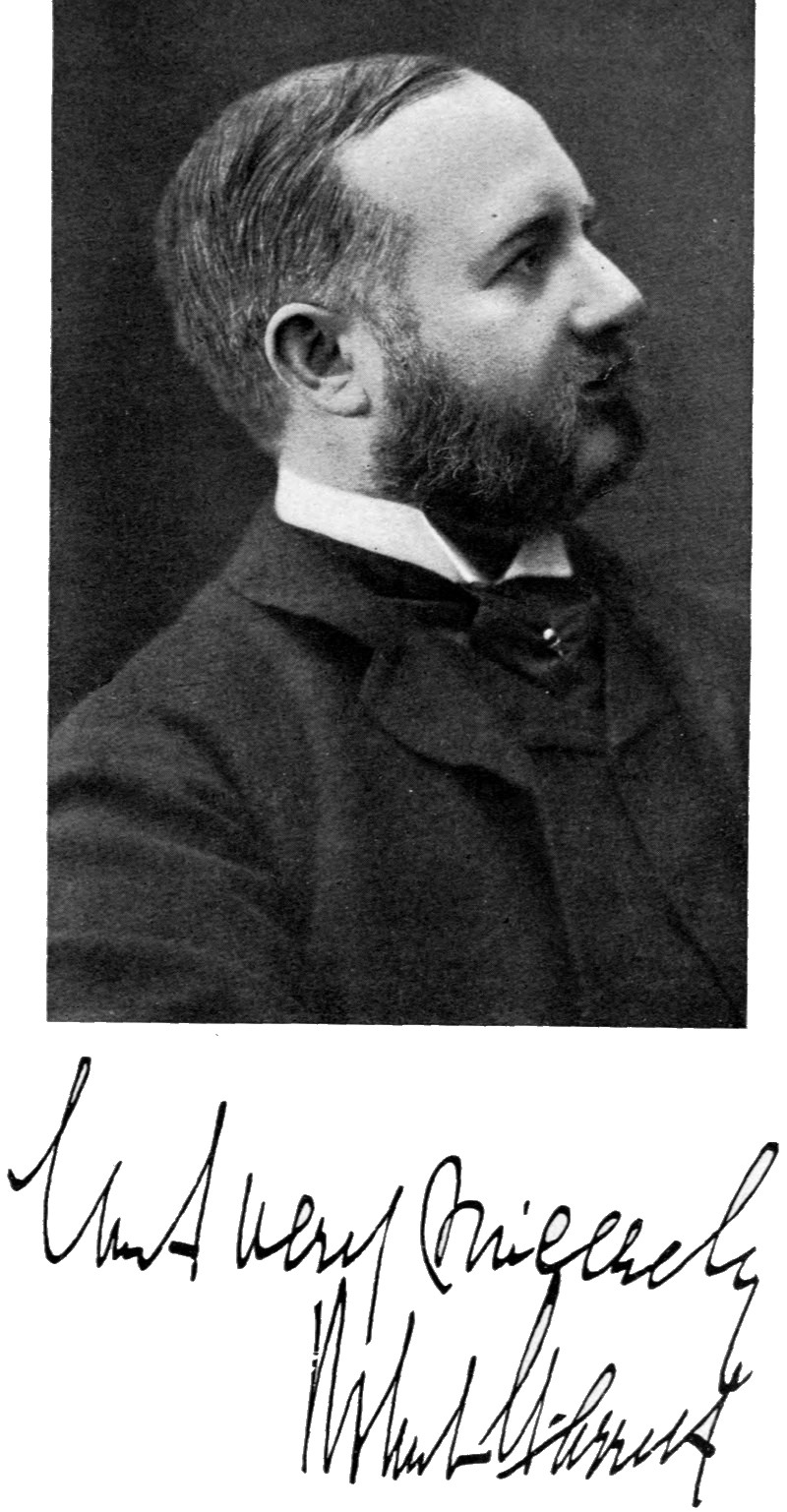
Most Very Sincerely Robert Garrett
CHAPTER L. WESTERN AND SOUTHERN FINANCIAL LEADERS. — Calvin S. Brice. — Gen. Samuel Thomas. — Ancestry in England—Brains in America.
553
Alfred Sully, his Origin and Successful Career.—Calvin
S. Brice, a Financier of Ability.—General Samuel
Thomas, Prominent in the Southern Railroad
System.—General Thomas M. Logan, a Successful
Man in Railroading and Mining.—Financial Chieftains
of Baltimore.—The Garretts.—Their Great
Success as Railroad Managers.—Portrait of Robert
Garrett.
Alfred Sully, who has become so prominent in the
financial world within a year, is tall, rather slightly
built, nervous, and energetic. His face, by its long, square
contour and thoughtful lines, suggests that of Senator Wm.
M. Evarts; the eyes are keen and penetrating but kindly.
At heart his tastes are those of a genial literary recluse.
Circumstances and unquestioned ability have made him a
financial leader. He was born about 46 years ago in
Ottawa, Canada, where he received a good academical education.
He tried his fortune in the West. He went to Cincinnati,
studied law, and was graduated from one of its best
schools, whereupon he went to Davenport, Iowa, and formed
a co-partnership which became known as the leading law
firm of the city. He acquired some means, and in 1872
came to New York, the proper place for men of ability. It
is understood that at this time he had some idea of indulging
his tastes for authorship, but Austin Corbin put a veto
on that. The two had become acquainted in Davenport,
where Mr. Corbin was formerly a banker, and the latter, on
meeting Mr. Sully in New York, tendered him the position
of General Manager of the Corbin Banking Company,
which he had established here. He accepted it. But this
post, responsible as it was, could not long hold a born financier,
and we soon find him obtaining control of the Indiana,
554Bloomington & Western Road. He next bought the Ohio
Southern, of which he is still President, a transaction in
which he and his friend nearly doubled their money. Then
he made a great deal of money in the Central Iowa and
other roads in Illinois. He and Austin Corbin secured control
of the Long Island Road, and he gave much time and
labor to the Manhattan Beach Road and associated interests
at Coney Island. Then he went into the scheme of
restoring the financial health of that enfeebled giant among
railroads, the Reading, and was one of the prime movers in
the reorganizing and consolidation of the Richmond Terminal,
the Richmond & Danville, the East Tennessee, Virginia
& Georgia, and numerous other Southern roads, which
now form one vast system, which will probably yet obtain
an entrance into New York.
Calvin S. Brice was Vice-President of the East Tennessee,
Virginia & Georgia Road, and is a Director in the Richmond
Terminal and numerous other Southern roads. He
is now connected with the United States Express Company,
in the management of which he will take an active part. He
was born in Lima, Ohio, about 48 years ago, and was educated
as a lawyer. He is below the medium height, and
rather slightly built, but has broad shoulders, a fitting
pedestal for a good head, with firm square features and keen
bluish gray eyes. He wears a sandy beard, closely trimmed,
which tends to heighten the effect of decision of character.
He is a financier of ability.
General Samuel Thomas, who is prominent in the Southern
railroad system, is now about 50 years of age, is a
Western man, and before the war was a civil engineer in
the service of an Ohio railroad. After the war he again
became a civil engineer, but, drifting after a time to New
555York, engaged in railroad enterprises, and ultimately secured
a large interest in Southern railroads. He is now
President of the East Tennessee, Virginia & Georgia, and
is largely interested in the Richmond & West Point Terminal,
the Richmond & Danville, the Memphis & Charleston,
and other Southern roads. He is tall, well-built, energetic,
and affable. He lives in fine style, and is a member of the
Union League. He is worth several millions.
Gen. Thomas M. Logan is President of the Virginia Midland
Railroad, Vice-President of the Richmond & Danville
and Richmond Terminal, and a Director in all the roads in
this system. He was born in Charleston, S. C., about 44
years ago. He served with distinction in the Confederate
Army, and rose to be a Brigadier-General, being one of the
youngest in the service. He is a graduate of the University
of South Carolina, and formerly practiced law in Richmond,
Virginia, where he is also engaged in extensive manufacturing
and mining enterprises. He resides in Richmond,
and is a member of the Westmoreland Club, but often
comes to New York on railroad business, in which he has
amassed a comfortable fortune.
John W. Garrett’s name will always be associated with
that great property, the Baltimore & Ohio, which he rescued
from the verge of bankruptcy. He was a man of great force
of character, and inherited an aptitude for business. He
was a graduate of Lafayette College in Pennsylvania, and
engaged in business in Baltimore. He became a Director
of the Baltimore & Ohio Railroad, and in 1858 was elected
its President. He was a staunch supporter of the Union in
the civil war. Despite a disloyal sentiment plainly noticeable
in Baltimore and elsewhere in Maryland, he lent the
Government all the assistance in his power in the transportation
of hundreds of thousands of Federal soldiers. He was
quick to repair burned bridges, and to do anything to facilitate
the military operations of the Federal Government. President
Lincoln and Secretary Stanton thanked him warmly.
556His salary as President was $10,000 a year. The Directors
repeatedly offered to increase the remuneration, but he declined
to accept it. He often refused offers as high as
$50,000 a year to become the President of other roads. He
was autocratic in his administration. His will was law. He
found the Baltimore & Ohio Railroad a weak and struggling
underline in the railroad world, and he left it a giant in the
American system of railroad transportation.
Robert Garrett, the son of the preceding, and now the
President of the Baltimore & Ohio Road, is one of the railroad
kings of the United States. He became the President
of the Baltimore & Ohio in his thirty-seventh year, after
having served as Third Vice-President and First Vice-President
under his father’s administration. He is a graduate
of Princeton, a man of genial characteristics, and a
favorite in society. He has made a study of railroad administration,
but is now understood to seek some relief
from the burdens unavoidably incident to his position as
the head of a great railroad. And he is wise. He is many
times a millionaire. Why should he devote his life to unnecessary
care and labor? Rich men in this country are
apt to work too hard. They do not enjoy life as men of far
less wealth do in Europe. Under almost any administration
the Baltimore & Ohio Road has a great future before it. The
road was built to draw the Western trade to Baltimore. This
trade had been diverted from that city by the building of
the great canals. New York & Philadelphia were receiving
the lion’s share of the traffic. The first stone on the Baltimore
& Ohio Road was laid by Charles Carroll, one of the
signers of the Declaration of Independence, in 1828. The
road was opened to Wheeling in 1853. The firm of Robert
Garrett & Sons was established in 1849, and was originally
engaged in the wholesale grocery trade. When the road
reached Wheeling its finances were at the lowest ebb. The
house founded by the grandfather of the present head of
the road bought largely of its bonds at a very low figure,
557and this marked the first connection of the Garrett family
with this great property. The house of Garrett & Sons
still exists as a banking establishment under the management
of T. Harrison Garrett. In 1853 Baltimore & Ohio
stock could be bought for a song. Since then it has sold
at as high as $225 a share. The improvement in the property
was very largely doe to the efforts of John W. and
Robert Garrett.
The recent embarrassing complications of Mr. Garrett in
connection with the management of his railroad and telegraph
companies, it is hoped, will only be temporary, and
I expect to see him again, at no distant day, reinstated at
the head of the great corporation over which he and his
father presided. His present difficulties are matters of current
newspaper record and comment, and I need not, therefore,
enlarge upon them here. As shown by the latest report,
the Baltimore & Ohio Railroad is virtually in a good,
prosperous and solvable condition, and I have no doubt that
the Drexel-Morgan syndicate which has undertaken to put
the property on a still more solid and durable basis with the
ten million loan which it has negotiated, will uprightly do
its whole duty, and in due time return the trust considerably
enhanced in value to Mr. Garrett, his heirs and assigns.
John H. Inman, another member of the Southern railroad
circle, was born in Tennessee. He is tall, fine looking
and soldierly in appearance. He is one of the shrewdest of
the capitalists who have invested large amounts in Southern
enterprises. He came to New York from Atlanta, quite
poor, after the civil war. In the war he was a quartermaster’s
clerk, and his old quartermaster afterwards became one
of his brokers on the Cotton Exchange. Young Inman
went into the office of an uncle on arriving in New York,
and learned the business of a cotton broker. He was clear-headed
and successful. After he became a partner in the
firm he added very materially to his wealth by carrying
cotton for the premiums on the options. He is recognized
558as one of the leaders of the Cotton Exchange. In recent
years he has become a financier, has made large loans
to railroads in the South, and has invested heavily in
Atlanta real estate, and in iron enterprises in Birmingham,
the rising Southern market. He was prominent in the
reorganization of the Richmond & Danville railroad system,
in which he is largely interested. He is a director in the
Richmond Terminal and associate lines, as well as the
Louisville & Nashville and other Southern roads. He
invested nearly two millions in the Tennessee Coal & Iron
Company. He is now about 50 years of age. He seems
to be a man of destiny. He is a man of great force of
character and exceptional business skill. He resides in
New York, and is possessed of a large fortune.
In this country no one cares about ancestry. The spectacle
of Mark Twain weeping at the tomb of Adam is a
humorous expression of American opinions on this general
subject of ancestry. To save time he paid his devoirs to
the fountain head without stopping at the Guelphs, the
Tudors, the Bourbons, the Hohenzollerns, the Hapsburgs,
or the Romanoffs. There is no time, if there was any wish
in this great country—shaking to the tread of gigantic
business—to inquire, “Who was his father?” There is only
time for such questions as, “What do you know?” “What
can you do?” “How have you succeeded?” Integrity and
ability stand a man in better stead in America than show of
purple veins of Norman blood. Even in the aristocracy (so
to speak) of brains, ancestry in one sense, so far from being
an advantage, is apt to be precisely the reverse. A son of
Henry Clay or Daniel Webster can never hope to attain
the lofty pre-eminence of the sire, and suffer by comparison.
Great men do not always have great sons. For
one Pitt, the son of a great Chatham, there are hundreds
of sons who intellectually dishonor great fathers.
559Brains, intelligence, industry, energy, and pluck; these are
the talismanic words which stand for success in America,
where no ghost of a dead feudalism hovers over the land,
darkening it by its blighting presence. In England the
first question, a silly echo of centuries, is, “Who is his
father?” But who are the nobility? Have they any title
as such to the respect of right-thinking persons? The
nobility is running to seed, or rather the once noble tree is
withering and dying; it has borne its fruit and its time has
passed away. In Scriptural language, Why cumbereth it
the ground? How many of the nobility are now worthless
roues, habitual seducers, dried up or half consumed by the
fires of passion and debauchery! They are dying as the
fool dieth, with a drunken leer on their shrunken faces and
the stain of dishonor on their escutcheons. The Commons
of England will yet redeem the nation from the thraldom of
a worthless aristocracy. America is the true field for the
human race. It is the hope and the asylum for the oppressed
and down-trodden of every clime. It is the inspiring example
of America—peerless among the nations of the earth, the
brightest star in the political firmament—that is leavening
the hard lump of aristocracy and promoting a democratic
spirit throughout the world. It is indeed the gem of the
ocean to which the world may well offer homage. Here
merit is the sole test. Birth is nothing. The fittest survive.
Merit is the supreme and only qualification essential
to success. Intelligence rules worlds and systems of
worlds. It is the dread monarch of illimitable space, and
in human society, especially in America, it shines as a
diadem on the foreheads of those who stand in the foremost
ranks of human enterprise. Here only a natural order of
nobility is recognized, and its motto, without coat of arms
or boast of heraldry, is “Intelligence and integrity.”
CHAPTER LI. ARBITRATION.
561
How the System of Settling Disputes and Misunderstandings
by Arbitration has worked in the Stock
Exchange.—Why not Extend the System to Business
Matters Generally?—Its Great Advantages over
Going to Law.—It is Cheap and has no Vexatious Delays.—Trial
by Jury a Partial Failure.—Some
Prominent Cases in Point.—Jury “Fixing” and its
Consequences.—How Juries are Swayed by their
Sympathies.—A Curious Miscarriage of Justice before
a Referee.—The Little Game of the Diamond Broker.
Wall Street has derived great prestige and character
from the New York Stock Exchange. In fact, the
Stock Exchange is Wall Street, so to speak, so much so that
if the Exchange moved to any other locality, the latter would
become the new Wall Street, to the utter oblivion of the old,
which would soon be eclipsed and regarded as a thing of
the past.
The New York Stock Exchange has distinguished itself
in many respects, but there is probably nothing for which it
is likely to become more famous in history than its solution
of the great problem of settling disputes and misunderstandings
by arbitration. Other financial bodies have tried
the same substitute for ordinary law proceedings, but it
would appear that greater success has crowned the efforts
of the Stock Exchange in this particular experiment than
any other corporate body.
The large number of cases on record that have been
amicably settled by arbitration within the past few years,
in which law would have been formerly considered indispensable,
seem to point to a period, probably not far distant,
when arbitration will be the great and ultimate court of appeal
562in the large majority of civil cases. Several considerations
will make it the most popular. It is cheaper, less
complicated, not subject to vexatious delay; it is more
equitable, and the members composing the Arbitration Committees
are business men, who are quick to discern, accurate
in perception, sound in judgment and decisive in drawing
their conclusions on business principles.
The expense of arbitration is a mere trifle compared with
the enormous sums swallowed up in litigation.
Transactions involving millions of dollars annually in the
Stock Exchange are made subject to settlement by this
method of arbitration in the event of any difference of
opinion arising in any particular case. Very few instances
occur in which there is any necessity to carry the case beyond
the jurisdiction of the Arbitration Committee.
The number of cases actually settled in this way would
probably cost half a million dollars annually if they had to
be brought into court, to say nothing of the incidental expenses,
which would amount to as much more, arising
from delay, on the scale of present charges by the legal profession,
even leaving out our own Evarts, who is probably
the Boss charger of the Bar.
The success attending the system at the Stock Exchange,
I think, goes far to prove that the method might be universally
extended to the great pecuniary interest and personal
comfort of business men throughout the country, for the
adjustment of their misunderstandings and grievances among
one another.
My object in writing upon this subject has for its basis
the hope that this chapter may catch the eye of some of our
great merchants in this and other large cities, and that it
may suggest to those of them who have not contemplated
the subject already, the advisability and necessity of establishing
for themselves a similar method of arbitration to
that which has been so successful in the Stock Exchange, to
be final and without appeal, in their respective business
affairs.
563Experience has fully demonstrated that trial by jury is in
innumerable instances a signal failure; especially has this
been so since what is known as “jury fixing” has become
so common in the courts. The practice of bribing jurors
has now become a secret profession, and is so ably conducted
that it is almost impossible, except in rare instances,
to expose it.
But apart from this vicious and criminal practice of tampering
with juries, there are many other reasons why it is
next to impossible, in a large variety of instances, to obtain
justice from an ordinary jury.
Human sympathy plays a very important part in the verdicts
of juries generally. I mean by this, class sympathy.
A business man who is regarded by the community as rich
and powerful, can hardly expect justice from a common jury
unless the party opposed to him occupies a similar station
in society. Where the position of either the plaintiff or defendant
calls forth sympathy with regard to worldly means,
in the large majority of cases the ordinary jurors will bring in
a verdict in favor of the man of small or moderate means,
believing that they are in duty bound to sympathize with
the oppressed. In a case where a clerk or a woman, for instance,
is a party to the suit, it is next to impossible for a
man of means to receive equity at the hands of the great
palladium of our liberty. I am sorry it is so, but I speak
feelingly in this matter, as I have myself been a victim of
this unworthy class prejudice, in a country where all men
are theoretically equal.
Counsel usually make a great display over the cases of
impecunious clients, out of all proportion to their magnitude.
Mole hills become ostensibly transformed into mountains
in the eye of the highly imaginative lawyer, who works
himself up into such a dramatic pitch of enthusiasm about
the wrongs of his client, that he appears to be in dead earnest.
He infuses the same feeling into the jury, who are
beguiled into solemnity by the force of forensic oratory, and
564fail to appreciate the farcical side of the case, but are
totally swayed by sentiment and prejudice, to the utter exclusion
of the evidence.
There are many objections, also, to trial or partial trial,
by referee, although it is in many instances an improvement
on the jury system. It is, however, amenable to numerous
and flagrant abuses.
As an instance of this, I shall briefly relate a case which
some time ago came within the sphere of my own observation.
A gentleman of my acquaintance had a claim for a very
large amount against a financial man in good circumstances,
and it was sent to a referee, who, after a long, tedious and
exhaustive investigation of all the facts, gave a decision in
favor of the plaintiff for several hundred thousand dollars.
Soon after the decision, the defendant saw the plaintiff,
and made him an offer of thirty thousand dollars to settle
the matter, at the same time stating that if he did not accept
the offer, he would either appeal the case or hunt up
fresh evidence for a new trial.
This offer of settlement, which was but a small part of
the amount awarded by the judgment, was naturally declined
by the plaintiff, and application was made to the
court under the pretense of newly discovered evidence, for a
new trial, which was granted. Thereupon, after another
tedious trial, the old beaten track having been gone carefully
over again, without omitting any of the aforesaid
“whereases, neverthelesses and notwithstandings,” or any
of the monotonous flummery connected therewith, the case
was again sent to the same referee, before whom the same
wearisome inquiry was repeated. This time, however, the
referee relieved the monotony, at the close, by rendering a
decision in favor of the defendant, for a large sum, instead
of the plaintiff, as on the former occasion.
This decision was a genuine surprise to the plaintiff, who
then called upon the defendant and expressed in severe
565terms his indignation at the change that had been unwarrantably
made in the decision of the referee, saying he
would not submit to it. He was extremely firm in his
manner and said: “I positively assure you that if the judgment
is enforced this town will not be large enough to hold
you and myself.”
The successful defendant then said, “What do you want
me to do?”
“Well,” replied the plaintiff magnanimously, “I simply
desire to be released of that judgment.”
“Will that satisfy you?” asked the other litigant.
“Yes,” he replied, “under the circumstances. I have had
enough of such law, and want to get rid of it.”
“Well,” said the defendant, “I will do it, and give you a
receipt in full in satisfaction of all claims.”
After this cordial termination of the trouble, the defendant
turned to the plaintiff and said confidentially, “I am
sorry you did not take the thirty thousand dollars which I
offered you. I would sooner you had it than anyone else,
as I had to pay it all the same.”
The profound lesson of humility taught in Scripture, that
“the first shall be last and the last first,” was fully verified
in this instance.
As litigation is now carried on either before a jury or a
referee, it has a tendency to stir up bad blood, which grows
worse as the case progresses through its various and lengthy
stages, leaving relations more strained and matters for both
parties much worse at the end than at the beginning. As
the case drags its slow length along criminations and recriminations
between plaintiff and defendant are constantly elicited,
and family matters that should be regarded as sacred
are dragged before the eyes of the public, subjected to unfriendly
criticism, and innocent parties who have no interest
in the case are subject to have their private affairs made
known, to their great mortification, and often to their great
detriment, having a cloud thrown over their reputation long
after the litigants have passed away.
566Thus the evils of litigation are far reaching in their
consequences, and frequently exercise a most deleterious influence
over the character and prosperity of those who have
nothing to do with the original parties to the contest, and
have no interest in the suit.
The expense is also another important consideration in
going to law, and is only to be measured by the bank balances
of the contending parties.
The time lost in the methods of procedure now generally
adopted is of the utmost importance, especially to people the
success of whose business in a large measure may depend
on their personal attention thereto. It is perfectly astounding
to reflect on the important portion of a person’s
existence that may be lost in one case, which, from its
inception in the lower court up through the regular gradations
of the Supreme Court and Court of Appeals when a
new trial is had, probably thus going over the entire ground
twice, may consume all the way from five to ten years under
the perpetual pressure of mental anxiety and torture before
the end is reached, when at least one, and sometimes both
parties, are financially ruined.
The worry, wear and tear of attending to a lawsuit in the
capacity of either plaintiff or defendant is perfectly incomprehensible
to those who have never passed through the trying
ordeal. A person in either capacity, with his train of
witnesses, is obliged to dance attendance on court every
day, no matter how pressing the necessities of his own business
may be. Books must be carried thither, and all his
establishment must be upset for the convenience of the
court and to gratify the whims and caprices of the opposing
litigant. The business places of the two contending parties
are entirely disarranged, and the help thrown into a state of
partial disorganization. Each party to the suit seeks to
give the other all the trouble he possibly can, and to subject
him to all the sources of annoyance his imagination can
devise. Such is the spirit imbued by going to law.
567A lawyer, therefore, who has about half a dozen moderate
cases has thus his entire time occupied, and while his
clients keep out of bankruptcy his income is as good as the
annuity of a life insurance company, and frequently the
security is better.
The effect of the change which I propose, in the majority
of cases where merchants and business men find it necessary
now to resort to legal methods, would perhaps not render
the life of the ordinary lawyer so happy as it is under the
present system, but the merchants would gain ten-fold more
than the lawyers would lose, so the effect upon the entire
community would be incalculably beneficial.
The system of arbitration which I contemplate could be
extended in every line of business throughout the entire
country, with a Central Association in New York or any
other city that might be agreed upon. In fact, there might
be several business centres, one in each important city,
with its ramifications extending throughout the section in
which its commercial interests more immediately clustered.
Branch associations could be organized in the smaller cities
and towns, enjoying all the facilities of direct communication
with the central body, and availing themselves of all
the information and statistics there collected, and the nature
of decisions in special and leading cases of settlement.
Each association in its own city or town should be considered
fully competent to deal with its own affairs, the Central
Association being only consulted as an advisory body.
I should recommend also that each association should have
a governing committee, which should constitute its Court of
Appeal, whose decision should be deemed final.
It would hardly be necessary to prescribe penalties for
the few isolated cases that would kick against the arbitration
system, and resort to law, as their legal experience
before they got through would be punishment sufficient
without the association taking any further action. Discipline,
however, of a mild character, would have to be
568enforced in these and other special cases, for the better efficiency
of organization.
It might be well to have a rule whereby the parties submitting
their cases to arbitration should recognize the necessity,
after having the methods of procedure thoroughly
explained to them, of putting themselves under obligations
to abide by the decision.
In carrying out a national idea of this kind of association,
business could be greatly facilitated and much expense
saved by the various committees having due regard to their
places of meeting, so as to be as near as possible to the centre
of the greater number of the witnesses in each particular
case.
The courts, which are now greatly overworked, would be
immensely relieved by this system, and they would have
more time to sift important and exceptional cases which, in
their nature, could not possibly be made subjects of arbitration.
There are quite enough of such cases to occupy
the time of the various courts.
One of the most vexatious and irritating things connected
with court trials is the constant attendance required, even
when no progress is being made in the case. The expenses,
too, are always accumulating.
Though nothing is accomplished the attendance of the
lawyers is far from being a labor of love. Their services
must be handsomely rewarded by the litigants.
Such a process of settlement as I suggest would not, after
all, be any great hardship to the best of the legal fraternity,
as there would be enough work left for them, but it would
afford immense relief to the now overworked judges, while
it would facilitate and forward the ends of justice to an extent
that can hardly be imagined by those who have been
always accustomed to the slow and monotonous machinery
of the law courts, and it would help to weed out the large
camp following of pettifoggers, whose occupation would be
partially gone.
569There is a great deal of time lost in regular court business,
causing much exasperation to the parties to a suit, in
settling mere technicalities and side issues of law, before the
real merits of the case can be reached. Many of these technical
delays could be easily disposed of by business men,
on business principles, and by taking a simple and common-sense
view of the matter, by the usual methods pursued in
arbitration.
This new method of settling disputes would do away with
the farce of giving bonds in many cases, which is another
great source of annoyance, and which, after all, only amounts
to a mere formality in a large number of cases, and in many
others a very hollow and fraudulent pretense, as many of
the bondsmen are only men of straw, and though technically
qualified, are not in reality responsible for the obligations
undertaken by them.
When good, reliable sureties are offered, in many instances
they are put through an irritating course of examination
in relation to their private affairs, much of which is
entirely unnecessary, and only designed to perplex and annoy
them. They are thus obliged to expose matters relating to
their private business, about which the public have no right
to know anything, and they are often examined in such a
way, as if they themselves were on trial, and were attempting
criminal concealment of something that they had a right
to disclose. A good deal of this arises from the impudent,
unmannerly style of certain lawyers, who treat a man as a
criminal suspect, when he has no interest in the case whatever,
but has simply come voluntarily forward to assist a
friend in trouble.
This is all, however, in the present method of procedure,
connected with the machinery of so-called justice, and this
kind of abuse has been carried to such an extent in some of
the instances just referred to, that very few responsible parties,
who know anything about the modus operandi of qualifying
as a surety, are willing to respond to such calls of
570friendship. Hence, one of the difficulties in obtaining good
bondsmen, and an additional reason why the professional
straw men are so plentiful.
It probably helps the business of the latter, between
whom and the abusive lawyers there may be an understanding
on “boodle” principles.
I shall relate an instance which I consider worthy of permanent
record illustrative of the matters to which I here
refer, in which my firm was victimized.
On the occasion referred to, my firm sued a client for
a just debt of sixteen thousand dollars. The case was sent
to a referee, whose standing, in his particular line, was unquestioned
at the time, and very few men, in his circle, had
better family connections. He stood high in his profession
and both sideS were satisfied with the choice. The case was
very long and tedious, having been drawn out to a most provoking
extent by encumbering the record with immense
piles of irrelevant matter. The renewed calls for legal fees
on both sides were numerous and vexatious, yet there was
no help but graceful submission to the payment of this
tribute.
After a number of years it was reluctantly conceded by
the lawyers that the evidence was all in on both sides. The
litigants breathed heavy and responsive sighs of relief, each
side being confident of victory.
A short time prior to the close of the case, the referee
spoke to me, gratuitously offering his advice to settle the
case, as he said he intended to give a decision adverse to my
firm. To this I demurred, and expressed my determination
to fight the case to the bitter end.
The result was, however, that my firm not only did not
get a decision in its favor for the $16,000 to which it was
justly entitled, but this claim was wiped out by this Daniel
come to judgment, who gave a decision in favor of the defendant
for $132,000.
I regarded this award as such a terrible outrage upon justice
571that I obtained a stay of proceedings, and made an appeal,
setting forth therein the advice given to me by the
referee to settle before the case was closed.
Judge Fancher, who wrote the opinion on behalf of the
bench, consigned that referee to everlasting disgrace, and
set aside his opinion. There the case ended.
Another instance in my experience will illustrate the point
which I have made in regard to the sympathy exhibited by
juries with those whom they regard, rightly or wrongly, as
oppressed. At one time I had employed a clerk at the rate
of $2,000 per annum. He was a great disappointment to
me in regard to competency, for the work for which I had
engaged him, and for his entire lack of application to, as
well as deficiency in, the department to which he was assigned.
At the end of the first year, therefore, I gave him
notice, in presence of two competent witnesses, that I should
not require him after his year had expired, and advised him
to look out at once for another situation. On the last day
of the year he came to me with tears in his eyes and said
that he had been unable to obtain another place, owing to
the bad times prevailing, and begged me, in the name of his
family, who was solely dependent upon him, to keep him in
my services still longer, until he could get another situation.
Purely out of sympathy for his condition, and believing his
story, which was very plausible and pathetic, I told him
that he might remain a short time longer on the same salary,
but that I should require him to use all his exertions to get
another place as speedily as possible.
When he entered on the second term his services were no
more use to me than a fifth wheel is to a coach. After the
expiration of a few weeks, I sent for him and inquired if he
had got another situation; I said I had given him ample time
to obtain one, and that I could not consent to keep him any
longer. I therefore requested my cashier to draw a check
to his order for the balance of his wages, up to date, filled
in as a part of the body thereof with the words “payment in
full for all claims and demands.”
572Thereupon he left my employment, but called repeatedly
at the office afterward. I assumed that his visits were simply
for the purpose of paying his respects. At the expiration
of the second year I received a notice of suit which he
had commenced in Brooklyn for the balance of salary due
him for the year, being at the rate of $2,000 a year for ten
months.
The case came up duly in the Brooklyn court, his only
witness being his father, who had made several calls upon
me after the discharge of his son, on the strength of which
he set forth, in his evidence, certain conferences that should
have taken place between him and myself, the greater part
of which were purely fictitious. He was the only witness
called on the side of the plaintiff, while I had five or more
witnesses to substantiate the facts, as I have related them, in
relation to the young man’s discharge, all of them being of
most excellent character.
Strange to say, the jury entirely ignored the overwhelming
testimony on my side, and seemed to be altogether influenced
by the “spread-eagle” address of the defendant’s
counsel, which I am free to say was both able and ingenious.
He drew a harassing picture of the poverty of the young
man, and presented the imminent destitution of his family
in a most pitiable light, brought about solely by the ruthless
treatment of this hard-hearted millionaire and bloated
bondholder. Hence the verdict was made, through the force
of counsel’s oratory, to depend exclusively on the sympathy
of the jury, irrespective of the evidence.
The case occupied several days, with five or six employees
from my office in constant attendance, who were obliged to
carry to and from court, every day, huge books and large
quantities of papers, disturbing the regular business of the
office in a very disagreeable manner.
After counsel had gone over the ordinary rigmarole in reviewing
the testimony, the jury went through the formality
of retiring, to keep up appearances, and after a brief interval
573of absence returned to court with a verdict for the deeply
injured clerk for back pay, together with interest for the ten
months during which he had not rendered me an hour’s
service.
My lawyer was easily able to obtain fresh evidence from
other sources, but he had not considered it necessary to put
any more witnesses on the stand, as he had regarded the
testimony already produced more than ample, so sanguine
was he of success, and so fully satisfied of the plainness of
his case, which he considered had only one side, and that in
my favor.
The jury, however, put the boot on the other foot, upset
all my counsel’s calculations and showed him that his
law went for nothing where the famous twelve had the right
to judge and legislate at the same time in accordance with
their sympathies and prejudices. Still he went through the
formality of going before the judge with new evidence, and
applied for a new trial, which was ordered on the ground that
the verdict was not in accordance with the weight of evidence.
The new case was called after the customary delays, and
the same ground was duly traversed again, with my additional
witnesses, before another highly intelligent jury,
whose prejudices were all on the side of the greatly injured
young man, who sought twelve months’ pay for two months’
useless services. The only witness that appeared again for
the defendant was his faithful and veracious father, whose
memory was marvellously correct in relation to his former
statements on the first trial.
There is an old proverb which says that it requires such
men to have good memories. I need not quote it, as almost
everyone knows it.
To make a long story short, however, that forensic orator
appeared again for his poverty-stricken client, armed with
all the old enthusiasm exhibited on the former trial. He
had not much new matter to present, but his dramatic attributes,
574by dint of longer practice, and more familiarity with
his side of the case (it was only necessary for him to study
the one side) had become considerably improved since his
former effort, and it is needless to say that he carried the
jury with him.
By that intelligent safeguard of our liberties, the jury, the
second trial was only regarded as an aggravated case of persecution,
on my part, and the verdict was given more cheerfully
in favor of the plaintiff than on the former occasion.
Although it would have been much better for me, from a
financial point of view, to have paid the amount of the exaction,
with all the legal and illegal fees and impositions connected
therewith, yet I felt disinclined to be bamboozled in that
way.
When the court was applied to for another new trial, the
judge said, “I have already given you one new trial, taking
the responsibility. The relief you now ask has already been
before two juries, and I am not willing to take upon me any
additional responsibility in the matter. You must therefore
look for any further rights or redress to which you may
consider yourself entitled, to the Court of Appeals.”
The case is now, therefore, awaiting the good time and
discretion of the Court of Appeals, where it will, in all probability,
be heard and adjudicated upon sometime within the
next ten years. In the meantime the young man is happy
in the reflection that his judgment is a good investment,
drawing six per cent. interest.
There is still another case illustrative of some of the peculiar
points referred to, and showing the truth of the maxim
among lawyers that, “You never know what a jury will do,”
in which I had the honor, or the misfortune to be joined.
A well-known outside broker in Wall Street, who had a
large experience in transacting business for Mr. Sage and
other notabilities of the street, in “puts,” “calls,” and other
exterior securities, came to me one afternoon and asked me
if I didn’t want to buy a pair of diamond earrings.
575At that time I had not begun my career as a dealer in diamonds,
except in one solitary instance, and that was when I
purchased the wedding ring, which is one of the requisites
in a matrimonial contract for a long term. I was, therefore,
comparatively a tyro in the business, and the party with
whom I was dealing did not fail to take advantage of
my inexperience. I made some inquiry about the diamonds
from this broker, to which I received apparently satisfactory
answers, and I concluded they would suit my wife, and as I
had had a good day’s business I made him an offer of a
thousand dollars for the precious ornaments, which he
quickly accepted, and I paid him the money.
In the course of a few weeks after I was waited upon by a
diamond dealer and his lawyer, with neither of whom I had
the honor of any previous acquaintance, and they accordingly
introduced each other. The diamond dealer introduced
the lawyer and vice versa. I immediately concluded
I was going to get a good stock order from both of them,
but I was soon disappointed as well as surprised to find that
these gentlemen had called on an entirely different kind of
business, which was totally devoid of commissions on any
stock transactions.
They said I had a pair of earrings belonging to them, and
I declined to give them up except on return of my thousand
dollars.
These two gentlemen bade me good day, and in the course
of time I was served with the usual legal papers in a suit
which reached the calendar after some time. The young
man who sold me the diamonds was put on the stand. He
testified that he had received them from a certain diamond
broker, but not the dealer in question, with whom he had
had no connection whatever.
The diamond broker, it appeared, had long been agent for
this dealer, selling diamonds and had, as set forth in the
evidence, sold over ten thousand dollars’ worth in a few
years.
576During the trial a paper was produced to prove that this
broker had received these diamonds to show them to a customer,
and as it turned out I happened to be the customer.
The money which I had paid him for them he had failed to
turn over to his employer, of whom I had no knowledge,
nor had I any chance of knowing him in the transaction.
All the facts were presented, as above related, to the jury,
who, after due deliberation, decided that I must give up the
diamonds and suffer to be cheated out of my thousand dollars.
This case is now on appeal. I have since offered to relinquish
the diamonds and lose my money, rather than suffer
the expense and trouble of continuing the litigation, but
plaintiff wants to bleed me further to the tune of $300 to
cover his law expenses. To this illegal tribute I have not
yet submitted, and have resolved to see what virtue there
is in further defense before a higher tribunal.
“Millions of dollars for defence, but not a dollar for
tribute,” is a maxim which it is expensive to follow, but
after all, the result of such a course, if one can afford it,
may be morally healthy.
I consider that these cases, in which I acted a rather unenviable
part, are only samples of many which constitute
one of the best arguments for a general system of arbitration,
such as I have briefly and imperfectly outlined.
CHAPTER LII. NEW YORK AS A FINANCIAL CENTRE.
577
Its Past, Its Present, Its Future.—Banking Decadence.—Growth
of Interior Centres.—Obstruction from
the National Bank Laws.—Relief Demanded.—Requirements
of the Future.
What New York has been as a centre for the settlement
of financial transactions is a matter of history;
what it is destined to be, in that respect, may not be so entirely
certain as some people hastily assume. There are some
facts which seem to suggest the question whether our city
may prove able to retain its past proportion of the vast settlements
of this ever-growing continent; and, although there
is nothing to warrant very positive opinions about the
future, it must be conceded as an unquestionable historic
fact that in late years there have been symptoms of positive
decadence in the status of our financial metropolis.
In the past there have been three separate successive sets
of conditions directly affecting the financial standing of New
York. First, there was the period when this city was the
distributing point for nearly all the importations, and for the
bulk of our domestic manufactures through all parts of the
country. Equally, New York was the almost sole port of
export for Western products, and although the exports for
the cotton States were made direct from their local ports,
yet the financial transactions connected with those shipments
were effected through this city. Then New York had virtually
no competitor as an exchange centre.
Next came a period during which the larger Western
cities, especially Chicago and St. Louis, aspired to become
distributors of foreign and Eastern merchandise; a change
very naturally following the rapid growth of population in
the West and Southwest. Thus a vast jobbing trade became
578rapidly established at these interior centres, and New York’s
share in the distribution of goods to the retail trade became,
in a large measure, confined to the Middle and nearer Western
States, and to a portion of the South. The jobbers of these
new interior centres, however, had still to get their supplies
of merchandise from or through the Eastern metropolis; so
that, whilst we lost much of our jobbing business, we
retained, with some limited exceptions, the importing and
commission branches, together with their ordinary rate of
increase.
We are now in the beginning of a third and still more
important era, during which both the importing and commission
branches of our trade are threatened with invasion.
The Western jobbing houses have attained a standing
which warrants their importing direct from the countries
of production, instead of through New York. Another
Western and Southwestern consumption has risen to such a
magnitude as to encourage the creation of manufacturing
establishments in the vicinity of the markets. The West is
rapidly becoming a competitor in the leading branches of
manufacture with the East, and is evidently destined to
supply itself, at no distant day, with a very large portion of
the domestic merchandise hitherto contributed through New
York merchants, and with the facilities of New York banks.
Nor is this all. Chicago and some other Western cities are
throwing off their dependence on New York intermediaries
for the exportation of grain and provisions, selling them
direct to Europe, and shipping the goods on through bills of
lading.
These changes are not the result of any mere spirit of
blind recklessness grasping after business. They are the
product of actual natural economies, and appear to be so
decidedly in the interest of the Western merchants that it
can hardly be doubted that the new methods have come “to
stay.”
Clearly, then, the natural development of national production
579of commerce is to build up independent financial centres
at the interior, the effect of which can only be to check
in some measure the growing ascendancy of New York.
Perhaps few among my readers will be prepared for the
following statistical facts bearing on this question; the
conclusions to be drawn from which are not very flattering
to the pride of the “Gothamites.”
The transactions at the New York Clearing House are the
surest indication of the standing and progress of this city
as a financial centre. The records of that institution show
that its annual exchanges rose step by step from 5,750 million
dollars in 1854 to 48,566 in 1881, an increase of 744 per
cent. in 27 years, or at the average rate of 1,585 millions
per year. From 1881 there has been the following remarkable
rate of decline:
In 1881, the exchanges were 48,566 millions of dollars.
In 1882, the exchanges were 46,553 millions of dollars.
In 1883, the exchanges were 40,293 millions of dollars.
In 1884, the exchanges were 34,092 millions of dollars.
In 1885, the exchanges were 25,251 millions of dollars.
Thus it will be seen that there has been a decline in the
transactions of the Clearing House banks of 23,315 millions,
or at the rate of 48.4 per cent., within the last four years.
Last year the exchanges fell below even those of twenty
years previous, when the amount was 26,032 millions. Of
course, this very remarkable decrease in the volume of transactions
is, in part, attributable to the great falling off in the
amount of speculative transactions in 1885, as compared
with 1881. This, however, can only account to a comparatively
small extent for such a vast change. Something is
also to be attributed to the general decline in the prices of
merchandise and investments during the period; but this explanation
is also entirely inadequate, for the average fall in
prices did certainly not exceeded 20 per cent., while the decrease
in the exchanges, as already shown, had been 48.4 per
cent. Moreover, on the other side, some offset against the decline
580in speculation and in prices must be allowed on account
of an increase of five to six millions in the population of the
country during the interval; which, alone should call for an
increase of 10 per cent. within this period. It is still more
significant that, since the year 1872, the capital of the banks
in the New York Clearing House has been reduced from
$84,400,000 to $58,600,000, a decline of 30 per cent.; which
at least implies that banking has become less profitable
than it formerly was, and which could scarcely have
happened if New York had retained its wonted share of the
increase of financial operations arising from the growth of
population and commerce in the nation at large.
Some light may be thrown on these changes by a comparison
between the ratio of progress in the transactions of
the Clearing Houses of New York and Chicago respectively.
In 1866, the first complete year of the Chicago Clearing
House, the clearings amounted to $453,800,000, while in
1885 the figures reached $2,318,500,000—an increase of 410
per cent. At New York, in 1866, the clearings were $28,717,000,000,
and in 1885 they had fallen to $25,250,000,000—a
decrease of 12½ per cent. within two decades of great
national progress, and while the population tributary to this
city had increased over twenty millions.
In the year 1879—the period of the resumption of specie
payments and of the beginning of a great revival of commerce
and of financial enterprise—the Chicago Clearings
were $1,257,700,000, and last year they were $2,318,500,000,
showing an increase of 84.3 per cent. The clearings at New
York, within the same period, show an increase of about ¼
of one per cent.
It has already been shown that the capital of the banks
in the New York Clearing House (exclusive of surplus) fell
30 per cent. below 1872 and 1886; on the other hand, the
capital of the banks in the Chicago Clearing House rose
from $9,845,000 in 1872 to $16,928,000 in the present year,
an increase of 72 per cent.
581The foregoing comparisons show that although the clearings
at Chicago are only about one-tenth those of New York,
yet the former city is making very rapid strides, while here
we are virtually retrograding, and confirm the conclusion
above expressed, that the importance of New York as a financial
centre is suffering from diversion of settlements and
of banking facilities to the larger cities of the interior, and
especially to Chicago.
So far as this tendency is the result of natural changes in
conditions, it is inevitable and must be permanent, if, indeed,
it be not destined to gain in force and extent. But so
far as the change is due to artificial obstructions to banking
operations, it is susceptible of modification.
And here I may be permitted to venture certain suggestions
which may quite possibly encounter objections from
men more than my peers in banking experience and wisdom.
It has long been my conviction that the banking arrangements
existing at New York are far from satisfying the requirements
of a city that not only aspires to be, but also
possesses many adaptations for occupying the position of
the great financial centre, not only for domestic settlements,
but also for international exchanges.
The bulk of our banking transactions are done by banks
incorporated under either national or State laws. Admirably
as the national banking system, taken as a whole, is constructed,
yet it includes some important positive disqualifications
for its institutions performing an important class of operations
essential to a great centre of exchanges. It was, perhaps,
not to be expected that a system designed mainly for
provincial cities and for rural populations should adequately
provide for these broader wants. Nor could any uniform
and homogeneous system be expected to be very perfect
and satisfy at the same time both classes of requirements.
Interior banks, whose management must be expected to be
more or less lacking in experience and competency, may
need to be placed under legal restraints, which, in the case
582of a thoroughly conducted metropolitan bank, would be not
only needless, but positively injurious. Unfortunately, this
discrimination has received little recognition in our national
bank legislation; on the contrary, that larger discretion
which should have been conceded to the higher training and
more select ability that administer the metropolitan banks,
has been ignored, and heavier restrictions have been placed
upon the New York national banks than upon those of any
other part of the national system.
The “reserve” laws are oppressive to no better purpose
than that of positive injury. All other banks than those of
New York are permitted to count in their reserves any funds
resting with their “redemption agents;” and this item
usually constitutes, in the case of banks of the “other reserve
cities,” 41 per cent. of the total reserves held, and in
the case of all other banks about 60 per cent. The New
York banks, on the contrary are compelled to hold their
entire reserve (25 per cent. of their deposits) in the form of
lawful money. Nor is this the heaviest embargo. The reserves
are not permitted to be used when the occasion arises
for which a bank reserve is always presumed to be provided.
The moment a bank allows its reserve to fall below the required
25 per cent. it becomes the duty of the Comptroller
of the Currency to close its doors and put it into liquidation
if the deficiency be not immediately made good. If panic
occurs, and depositors want their money, there is nowhere
any power to relax the crushing force of this law, and the
banks are therefore compelled to suspend payment to depositors
and in order to avert general ruin at such times
they have to resort to the expedient of making their cash
assets available in common, thereby saving themselves and
their customers outside of and in spite of the destructive
tendency of the law. Of course, the danger of running into
such a crisis as this creates a feverish dread in all times of
special stringency in the money market. All eyes are at
such times fixed upon the reserve “dead line;” and, as
583that limit is approached, loans are artificially contracted,
depositors draw their money, and the very reserve that
should be used for elasticity and to relieve periods of
special tension become the certain cause of panic and ruin.
A banking centre whose banks are periodically exposed to
dangers of this serious character, and where the law unites
with adverse circumstances to foster panics, is hampered
with the worst possible disqualification for performing those
higher and broader functions of banking which demand
freedom of discretion and elasticity of resource.
This evil appears all the greater when it is considered
that the amount required to be set apart as so much idle
reserve ordinarily exceeds the entire capital of the banks. It
might be supposed to be serious enough that such a large
proportion of the resources of the bank should be held perpetually
idle and earning no interest; but when this sacrifice
of earning capacity is made for a purpose that brings no
advantages, but rather a very serious danger, the effect can
be nothing less than an unwholesome and very injurious
restriction upon banking operations, and it is not surprising,
therefore, that the national banks of New York city exhibit
decadence instead of progress.
What is needed to enable this metropolis to reach the
financial status to which it is entitled is a class of banking
institutions possessing facilities and functions much broader
and freer than those conferred by the national charters. It
is out of the question to hope that these facilities may be
provided through modifications of the national bank system.
The banks, and especially those of New York, have
to encounter so much prejudice and ignorant demagogism
from Congress, in seeking any modification of the national
system, that they would sooner endure almost any wrong
than demand changes in the law. Their only redress is in
reorganizing under the State laws, which many of them have
already done, whilst new institutions almost uniformly prefer
the State system. To meet the wants here contemplated,
584it would probably be necessary to get from the State Legislature
special authorization for forms and functions of banking
not now distinctly provided for under either Federal or
State laws.
The special business to be done by such a class of banks
scarcely needs enumeration, much of it being so self-evident.
In the present stage of our national development, it is becoming
a grave reflection upon our men of capital that we
should remain almost entirely dependent on foreign bankers
for the facilities for transacting our immense external commerce.
The necessity that formerly existed for this dependence
can no longer be urged as an excuse. All the capital
and the banking experience necessary to found and to administer
large credit and exchange institutions are ready to
hand. A business of $1,200,000,000 per annum connected
with our imports and exports would be available for this
form of enterprise. Our export trade is crippled in many
branches of business simply because it is found impossible
to get the liberal credits necessary to facilitate consignments
to distant markets. Manchester defeats us on cotton
goods, not so much on the ground of prices or superiority
of fabrics, but because her merchants can get any time or
amount of credit required, whilst we have to market our
goods on restricted credits and through Manchester agents,
who at the same time are selling English products in competition
with ours. The English exporter has the advantage
of being able to get his credits from the bank
with which he keeps his account, while the American has to
go to a foreign banker, who has no inducement to consider
his convenience or to moderate his charges. The natural
place for an export merchant to keep his account is with the
bank that grants him his credits; and this fact suggests the
facility with which banks of the kind here suggested could
build up a large business.
Every year we find it necessary to largely pledge our cotton
crop in advance to provide the means for gathering and marketing
585it. Why should this money have to be drawn from
England, especially as the crop is thereby subjected to
the control of the foreign buyers, and we are unable to protect
our own products? These advances afford an illustration
of another class of important operations in which the
existing banks cannot directly participate, but which ought
properly to be undertaken by domestic banks.
With respect to our importations, what sufficient reason
can be urged why the importer should have to get his credit
from the agent of a London banker, instead of receiving it
from an American bank through which he chose to transact
his entire business, and which, therefore, would be the fittest
source for procuring his credits? It cannot be to the advantage
of the importer to be exposed to the vicissitudes of the
European money markets, nor can the London banker grant
credits to merchants 3,000 miles distant, whose position he
imperfectly knows, without compensation for the extra risk.
The business is, therefore, done at a disadvantage to both
parties. The credit should be issued directly from the point
where the importer does his business; and this would soon
become the fact were banks to be provided possessing special
adaptations for doing such a business.
Other functions proper to institutions of the character
here suggested would be the negotiation of corporate loans,
temporary advances to corporations, the receiving of corporate
accounts, and the facilitation of corporate reconstruction.
Banking for the larger corporations presents
many possibilities of advantage to both banks and companies
of which our existing banks cannot, as at present restricted,
avail themselves.
It is needless to say that these suggested institutions,
whilst undertaking operations of the special character above
indicated, should also aim to secure the best class of deposits
and to discount the higher class of paper. As the national
bank laws would prohibit to them the profits of circulation,
it might well merit consideration whether they should not
586issue to customers of high standing their own acceptances,
within certain safe limits. These credits, yielding the current
rate of interest, would be a highly profitable, as well as
an entirely legitimate branch of business; and they have the
sanction of successful usage among the best banks of London.
I am unable to see what objection there should be to further
following London precedent by allowing on deposits a rate of
interest below that current in the market for the time being.
Such a course would attract accounts and would immensely
increase the power and the earning resources of the banks.
Moreover, as such institutions, being exempt from embarrassing
reserve restrictions and other needless limitations,
would be less subject to the oscillations of the money markets
than are the present banks, they would afford better
advantages to members of the Stock Exchange in the form
of loans upon securities than they now are able to get. The
importance of this business may be inferred from the fact
that the yearly transactions in stocks at the Exchange have
averaged, for the last six years, 102,000,000 shares, which, at
an estimated average of $60 per share, represents an annual
business of $6,120,000,000, to say nothing of the business in
bonds, which also is very large.
Banks of this character would naturally attract a large
portion of the Stock Exchange houses, which experience
has shown to be exceptionally safe and profitable. The
single fact that these banks would not be obligated to conform
their loans to arbitrary 25 per cent. reserve would be
a decisive reason for Wall Street firms doing their business
with such institutions.
To some extent the wants here alluded to have been met
by our loan and trust companies. As institutions of loan
and deposit these institutions are doing important public
service, and the deficiencies in the functions allowed to the
national banks are diverting to them a large and valuable
business. The companies of this character in New York
and Brooklyn have nearly $14,000,000 of capital and
587$15,000,000 of surplus and profits. Their resources aggregate
$175,000,000, and their deposits $137,000,000. Their
rapid progress is indicated by the fact that, since 1883, their
resources have increased $32,000,000, or at the rate of 27
per cent. during three years of depression in business. But
while this success demonstrates the great necessity for enlarged
local banking facilities, the facilities afforded by the
trust companies are entirely too limited to satisfy the large
special requirements of a great financial centre above referred
to, and only add to the necessity for a class of banks
which shall do for New York what the great joint stock
banks and the mammoth private discount houses of London
are doing for the business of that cosmopolitan centre.
These suggestions are offered for what the men of Wall
Street may deem them worth. They demonstrate that there
is ample scope and urgent need for a new element in our
banking arrangements to accommodate the larger operations
of finance and commerce; and it would not be difficult to
prove that the country is suffering seriously from lack of
such facilities. It will not be pretended that there is any
lack of either the capital or the managerial talent requisite
for such enterprise. Nor, since the rate of interest has
come to rule as low in this country as it is in Europe, have
we any longer anything to fear on that ground from the
competition of foreign bankers. At any rate, if New York
aspires to a position of financial independence and to become,
in the broadest possible sense, the financial centre of
the vast and growing exchanges of this continent and of its
transactions with other nations, there should be no delay in
giving this greater breadth and scope to its banking institutions.
Our merchants, I am satisfied, are ready to respond to
a movement of this character; are the bankers and the capitalists
equally prepared to provide the facilities?
CHAPTER LIII. EARTHQUAKE THEORIES AND WALL STREET AFFAIRS.
589
The Shock of Every Calamity felt in Wall Street.—Earthquakes
the only Disasters which seem to
Defy the Power of Precaution.—Becoming a Subject
of Serious Thought for Wall Street Men and
Business Men.—The Volcano Theory of Earthquakes.—Other
Causes at Work Producing these
Terrific Upheavals.—Why Charleston was more
Severely Shaken Up than New York.—Why the
Southern Earthquake did not Strike Wall Street
with Great Force.—Earthquakes Likely to Become
the Great Disasters of the Future.
Wall Street is the financial centre of this country
as much so as London is recognized to be the
financial centre of the world at the present time. Hence it
is really the heart of the nation, through which its financial
blood flows to invigorate and impart new life to every section
of the land. Hence, also, every section and city have an
influence on Wall Street. When the Chicago fire occurred
it immediately created a panic. When a calamity occurs at
any part of the country the shock is first felt in Wall Street.
When a large failure happens, such as that of a bank or
important railway, in any other locality, the influence is at
once imparted to Wall Street. This is owing to the fact that
Wall Street is the recognized and only market for securities
of every description. All sections are dependent upon it, because
it controls the money market. It is the great connecting
link of the financial transactions of the whole
country. A probable disaster through fire, like that which
occurred at Chicago, is now no longer a terror to the Street
or to the country, as was the case for a long time after that
terrible calamity, for the reason that methods have been adopted
for the purpose of restricting the conflagration and
590confining it within narrow limits. Fires which occur now
are soon extinguished, and it is unlikely that they can ever
play such havoc as they have done in the past. The possibility,
with our enlarged experience, of taking precaution
against those various calamities has robbed fires of most of
their former terrors. Science and machinery have furnished
us with the means of grappling with them.
But the one great, and now very alarming exception,
which seems to defy the power of science and every human
precaution, is an earthquake. This remarkable phenomenon
has awakened great interest and inspired terror in the minds
of the people at the present time, because the exhibition of
its destructive powers is fresh in our memories on account
of its terrific visitation at Charleston. Hence, many people
are in great fear that some other section of the country
may be stricken at any moment with a similar overwhelming
disaster. It is the insidious and uncertain nature of the
calamity that strikes the mind with awe. There is no possibility
of anticipating it or making the least provision to
avoid its dreadful consequences. The Charleston earthquake
wiped out over ten millions of property. It came,
like a thief in the night, and before morning the greater
portion of the city was a mass of ruins. When we reflect
on the extent of the destruction of property, it is marvellous
how few people were killed—only about one hundred,
and only two or three hundred were wounded. One of the
greatest wonders why this calamity should have occurred
in Charleston is, that part of the city has stood for nearly
two centuries, and the recent earthquake has been the first
it has experienced. Another curious circumstance is, that
the disaster should have occurred on so large a scale there,
as the locality is so far removed from the region of any
volcano.
This clearly demonstrates that the old “volcano” theory
of earthquakes is thoroughly exploded, and we must seek
for causes and the explanations in other quarters. Although
591Wall Street has not been governed by any known law of
earthquakes, except as regards the fluctuations of the properties
in a bear market dealt in at the Exchange, yet a great
number of Wall Street habitues, as well as other business
men, are beginning to think seriously on the subject of
earthquakes, and are attempting to penetrate their causes.
Reflecting upon the upheaval—or rather the settling
down of Charleston—I have come to the conclusion that
similar disasters may be looked for in other localities,
hitherto not subject to them, and considered by scientists
absolutely free from these phenomena, at least on so large
a scale. These peculiar disturbances that now make life so
precarious on this planet, I attribute to the innumerable
and so largely increasing excavations going on in various
parts of the country, in the different mining operations, which
displace the underpinning of the surface and cause it to sink
beneath the weight which it carries. Of all the great mining
industries which conspire to produce earthquakes, I
think that of oil plays the most important part, and is the
most treacherous in its operations beneath the surface of the
earth. The pumping of oil from the bowels of the earth has
been going on for thirty years in this country in several
districts. I believe it is not too large an estimate to state
that in that time an enormous lake of oil has been removed,
that would probably fill the basin of Lake Erie or Ontario.
That fluid made its way, probably, some of it from long distances
in subterraneous rivers before reaching the place
where the nature of the soil permitted it to gush through a
shaft to the surface, as it does in such abundance in the oil
regions of Pennsylvania. Some of those undercurrents may
have come from other States, percolating through and disintegrating
the soil in their passage for hundreds of miles,
until they found an outlet, on the principle that all fluids
have a tendency to find their level. There may be a great
underground reservoir of this oil, which has taken many
years to penetrate through the earth owing to the tendency
592stated, cleaving, in its subterraneous journey, fissures
through ranges of mountains, and thus loosening the earth
and taking away the support from the surface wherever it
has penetrated. The fluid, percolating through various
strata of clay and rock, has displaced these in its course.
Owing to this displacement there must, of necessity, be a
settling down of the land in the various regions through
which the oil has passed, which will, of course, differ in degree
owing to the density of the rock or clay. If the earth
should be of a pulpy, soft nature the settling will be greater,
and when it happens to be the foundation of a town or city
the catastrophe will also be greater in inverse proportion to
the degree of consistency of the earth. It is presumable,
therefore, that some of the streets beneath the foundation
of Charleston is of this pulpy, yielding character, and hence
great was the fall of that city.
When New York was visited by the earthquake in 1884,
and at various other times, there was only a moderate shaking
up, comparatively speaking. Why? Because its substructure
is solid stone to an immense depth, even lower
than the depths of the ocean. Of these subterraneous rivers
of which I have spoken we have many examples besides
that of oil, and also proofs that they traverse
great distances, as, for instance, in the case of the Saratoga
Springs. It is clearly demonstrated that in the
case of these and other springs the waters must come
from various sources, and pass through many varieties
of minerals before they arrive at their destination, and thus
receive the combination of elements which impart to them
their medicinal qualities. Then there are numerous instances
of this remarkable power of water in the case of these
monstrous land slides in mountainous regions, such as the
Alps. In the act of attempting to find its level, too, water
sometimes exerts its influence, in breaking up rocks, equal
in its manifestation to a powerful explosive. Thus we see
the great influences that are at work everywhere capable of
593producing earthquakes without the necessity of resorting to
the volcanic theory and without the aid of fire.
In further illustration of this theory of earthquakes, let
us suppose that one of these immense oil lakes which must
exist in the bowels of the earth should be situated beneath
a mountain, where it has been undisturbed for ages, but
through some recent disturbing cause—most likely that of
excavating, to which I have referred—it begins to find an
outlet through various fissures. When once started, this
great mass of fluid matter begins to go with a rush, forcing
innumerable outlets, until the internal lake is in a measure
exhausted. This creates an immense vacuum, which deprives
the mountain of a large portion of its support; hence there
is a settling down of several inches or several feet, according
to the nature and the solidity of the support. It is
this process of settling down and the struggle of the large
masses of fluid to force their way out, that create the rumbling
noise resembling that of distant thunder, and which also
cause the tremulous and quivering motion felt at the surface
of the earth, and still more distinctly in the houses,
and most distinctly of all in the upper stories thereof.
These effects may be produced at a great distance from the
original cause of action, varying, of course, in their
intensity according to that distance. Several of these effects
have been distinctly experienced in Charleston since the
first great catastrophe, but showing that the cause is weaker
and further removed from the scene of the disaster than it
was during the first fearful shock.
The Charleston earthquake did not strike Wall Street with
very great force. The very fact of its weak effect upon the
great financial centre of gravity created about as much surprise
in the Street as the frightful shock itself did in a very
different and opposite manner upon the people of Charleston.
The reason that the great catastrophe which overwhelmed
Charleston had so little effect on Wall Street was chiefly
owing to the fact that comparatively little loss fell upon the
594corporations or the people connected with Wall Street
interests. The loss of ten millions fell mainly upon the
people of the doomed city alone. Only a small portion fell
upon people located elsewhere either in the North or the
South. Had such a disaster happened in any of the large
cities North, East or West, owing to their intertwining connections
with Wall Street, a panic would have been the
result not unlike the one which followed the Chicago fire.
Earthquakes are likely to become the great disasters of
the future most to be dreaded. Our population now comprises
sixty millions, which, at the present rate of increase,
will soon reach one hundred millions. Among these is a
large proportion of go-ahead, driving men, who are constantly
diving into the bowels of the earth to dig up the vast treasures
which are there concealed. Through this laudable
enterprise the underpinning of the surface of our globe is
being constantly disturbed; and though it is far from a consoling
reflection, the time may come, and may not be far
distant, when such calamities as that of Charleston may be
as common as railroad accidents are now.
CHAPTER LIV. AUGUST BELMONT.
595
The American Representative of the Rothschilds.—Begins
Life in the Rothschilds’ House in Frankfort.—Consul
General to Austria and Minister to
the Hague.—A Great Financier and a Connoisseur
in Art.
August Belmont has achieved the highest credit of
any banker in the United States. His bills are always
in demand and command a little more than those of any one
else. He came to New York comparatively poor, but is now
worth millions. As a representative of the Rothschilds in
this country he has for many years held a high position in
the financial world. He has managed the business of that
historic house with prudence and exceptional acuteness and
sagacity. Contrast his success in this country with the
experience of Americans abroad. George Peabody, and
J. S. Morgan, the successor of that philanthropist, may seem
to be exceptions to the rule, but they did not win such social
and business success as has been achieved by Mr. Belmont
in this country, and the fact remains that no American could
have been so successful abroad as he has been in the United
States. Europe does not afford the opportunities that so
often arise here. This is the country of great and frequent
opportunities; there is a large and inviting field for enterprise
and business skill, although, of course, all cannot win
such a position in the financial world as that occupied by
Mr. Belmont, who is reckoned among the wealthiest as well
as the most honored of America’s adopted citizens.
He was born in the Rhenish Palatinate sixty-eight years
ago. His father was a man in well-to-do circumstances, who
sent him, when he was thirteen years old, to become an
apprenticed clerk to the Rothschilds in their Frankfort
596house. According to the German custom, he received no
pay; he was compensated by the opportunity of learning
the banking business. He made rapid progress. Before he
was twenty-one he was selected to accompany one of the
Rothschilds to Italy and France as his secretary. In 1837
the famous house, recognizing the promising field in this
country for profitable investments, sent young Belmont to
New York as their agent, a position which he held till 1858,
when he became their American correspondent and general
representative, and this responsible post he has held ever
since. In 1844 he was appointed Consul-General for Austria,
and held the position for five years, when he relinquished
it because of his personal friendship for Louis Kossuth and
his sympathy with Hungary in the quarrel with Austria.
In 1849 Mr. Belmont married the niece of Commodore Perry,
the hero of Lake Erie, a beautiful and accomplished lady,
who did much to strengthen his social position. In 1853
he was appointed Minister to the Hague by President Pierce,
and served four years. He has always been a staunch
Democrat, and was for several years chairman of the Democratic
National Committee. He has generally refused to
accept public office, but his eldest son, Perry, has served
several terms in Congress.
Mr. Belmont is under the medium height, rather stout,
with iron-gray side whiskers, round German features and
keen dark eyes, and among the strong characteristics of the
man is his marked chivalric courtesy and knightly courage.
As a financier he has few equals and no superior, and to his
politic and conservative management, as well as his foresight
and intimate knowledge of affairs, is due the American
prestige and success of the Rothschilds. Mr. Belmont’s
house on Fifth Avenue, with its splendid art treasures, is
worth a large fortune in itself. He is a connoisseur in works
of art, and has one of the finest private collections of pictures
in the world. For many years he has also had a
princely residence at Newport and a stock farm at Babylon,
597Long Island. Though not, strictly speaking, a club man,
he was one of the founders of the Manhattan Club. His
successful career is an illustration of the fact that this
country affords a fine opportunity for the intelligence, thrift
and industry not only of native Americans but of the
Republic’s adopted citizens.
CHAPTER LV. THE SOCIALIST OBJECTIONS TO THE PRESENT ORDER OF SOCIETY EXAMINED.
599
Increase of Population and the Growing Pressure upon
the Means of Subsistence.—Education and Moral
Improvement the True Remedy for Existing or
Threatened Evils.—Errors of Communism and Socialism.—How
Socialistic Leaders and Philosophers
Recognize the Truth.—Growth of Population Does
not Mean Poverty.
Mr. Mill says: “It is impossible to deny that the considerations
brought to notice in the preceding chapter make
out a frightful case either against the existing order of society
or against the position of man himself in this world.” How
much of the evils should be referred to the one, and how much
to the other, is the principal theoretic question which has to
be resolved. But the strongest case is susceptible of exaggeration;
and it will be evident to many readers, even
from the passages I have quoted, that such exaggeration is
not wanting in the representations of the ablest and most
candid Socialists. Though much of their allegations is unanswerable,
not a little is the result of errors in political
economy; by which, let me say once for all, I do not mean
the rejection of any practical rules of policy which have
been laid down by political economists—I mean ignorance
of economic facts, and of the causes by which the economic
phenomena of society as it is are actually determined.
In the first place, it is unhappily true that the wages of
ordinary labor, in all the countries of Europe, are wretchedly
insufficient to supply the physical and moral necessities
of the population in any tolerable measure. But, when it is
further alleged that even this insufficient remuneration has
a tendency to diminish; that there is, in the words of M.
600Louis Blanc, une basse continue des salaires (a continual decline
of wages); the assertion is in opposition to all accurate
information, and to many notorious facts. It has yet
to be proven that there is any country in the civilized world
where the ordinary wages of labor, estimated either in
money or in articles of consumption, are declining; while
in many they are, on the whole, on the increase—and an
increase which is becoming, not slower, but more rapid.
There are, occasionally, branches of industry which are
being gradually superseded by something else, and in those,
until production accommodates itself to demand, wages are
depressed; which is an evil, but a temporary one, and would
admit of great alleviation even in the present system of social
economy. A diminution thus produced of the reward
of labor in some particular employment is the effect and the
evidence of increased remuneration, or of a new source of
remuneration, in some other; the total and the average remuneration
being undiminished, or even increased. To
make out an appearance of diminution in the rate of wages
in any leading branch of industry, it is always found necessary
to compare some month or year of special and temporary
depression at the present time, with the average rate,
or even some exceptionally high rate, at an earlier time.
The vicissitudes are no doubt a great evil, but they were as
frequent and as severe in their former periods of economical
history as now. The greater scale of the transactions, and
the greater number of persons involved in each fluctuation,
may make the change appear greater, but though a large
population affords more sufferers, the evil does not weigh
heavier on each of them individually. There is much evidence
of improvement, and none that is at all trustworthy,
of deterioration, in the mode of living of the laboring population
of the countries of Europe. When there is any appearance
to the contrary it is local or partial, and can
always be traced either to the pressure of some temporary
calamity, or to some bad law or unwise act of government
601which admits of being corrected, while the permanent causes
all operate in the direction of improvement.
M. Louis Blanc, therefore, while showing himself much
more enlightened than the old school of levellers and democrats—inasmuch
as he recognizes the connection between low
wages and the over-rapid increase of population—appears
to have fallen into the same error which was at first committed
by Malthus and his followers, that of supposing that
because population has a greater power of increase than subsistence,
its pressure upon subsistence must be always growing
more severe. The difference is that the early Malthusians
thought this an irrepressible tendency, while M. Louis
Blanc thinks that it can be repressed, but only through a system
of Communism. It is a great point gained for truth
when it is recognized that the tendency to over-population
is a fact which Communism, as well as the existing
order of society, would have to deal with. And it is encouraging
that this necessity is admitted by the more
considerable chiefs of all existing schools of Socialism.
Owen and Fourier, as well as M. Louis Blanc, admitted
it, and claimed for their respective systems a pre-eminent
power of dealing with this difficulty. However this may be,
experience shows that in the existing state of society the
pressure of population on subsistence, which is the principal
cause of low wages, though a great is not an increasing
evil; on the contrary, the progress of all that is called civilization
has a tendency to diminish it, partly by the more
rapid increase of the means of employing and maintaining
labor, partly by the increased facilities opened to labor for
transporting itself to new countries and unoccupied fields of
employment, and partly by a general improvement in the
intelligence and prudence of the population. This progress,
no doubt, is slow; but it is much that such progress should
take place at all, while we are still only in the first stage of
that public movement for the education of the whole people
which, when more advanced, must add greatly to the force
602of the two causes of improvement specified above. It is,
of course, open to discussion what form of society has the
greatest power of dealing successfully with the pressure of
population on subsistence, and on this question there is
much to be said for Socialism; what was long thought to
be its weakest point will, perhaps, prove to be one of its
strongest. But it has no just claim to be considered as the
sole means of preventing the general and growing degradation
of the mass of mankind through the peculiar tendency
of poverty to produce over-population. Society as at
present constituted is not descending into that abyss, but
gradually, though slowly, rising out of it, and this improvement
is likely to be progressive if bad laws do not interfere
with it.
CHAPTER LVI. STOCK EXCHANGE CELEBRITIES. — Washington E. Connor. — A Future Financial Power.
603
How Wall Street Bankers’ Nerves are Tried.—Fine
Humor, Jocular Dispositions, and Scholarly Taste
of Operators.—George Gould as a Future Financial
Power.—American Nobility Compared with European
Aristocracy.—How the Irish can Assist to Purge
Great Britain of her Bilious Incubus of Nobility.—The
Natural Nobility of our own Country, and
their Destiny.
Among the well-known members of the Stock Exchange
not elsewhere mentioned are James D. Smith, who is
now in his second term as President, and who is also President
of the New York and Exchange clubs and Commodore
of the New York Yacht Club, a man of a genial nature and
everyone’s friend; Brayton Ives, twice President of the Stock
Exchange, the colonel of a cavalry regiment under General
Sheridan in the civil war, and later a Brevet-Brigadier
General; a graduate of Yale, and a member of the Union
League, Century, Athletic and University clubs; Charles
Johnes, the King of board room traders, once a clerk for
Henry Clews & Co., now worth a million, and a Prince
of good fellows, as bright and quick as he is popular; Louis
Bell, a daring and successful operator, a son of the well-known
Isaac Bell, and who was at one time a clerk with
Brown Brothers & Co., the bankers; John Kirkner, another
plucky operator, keen in forecasting the market, and
tenacious of his opinions, whether contrary to generally
accepted views or not; Eugene Bogert, Wm. B. Wadsworth,
William Henriques and James Raymond, also successful
traders; John Slayback, Edward Brandon, James Mitchell,
Vice-Chairman Alexander Henriques, ex-President J. Edward
Simmons, Secretary Geo. W. Ely, Donald Mackay,
604Thomas B. Musgrave, Frank Work, the Wormsers, R. P.
Flower, John T. Lester, Frank Savin, Charles Schwartz and
A. E. Bateman, are all worthy of special notice. Some of the
foregoing have a large following, more particularly the large
room traders, like Messrs. Johnes, Bell, Bogert, Kirkner and
Wadsworth. There are eleven hundred members of the Stock
Exchange, and it is seldom that a black sheep is discovered
among them. There are some lambs, perhaps, who receive a
spring and fall shearing, but if they have pluck the wool
comes back again, and they push up the thorny and brambly
path to wealth, leaving, it is true, a little fleece here and there
in the struggle, but generally “getting there,” nevertheless.
It is, however, a mistake to suppose that all the members of
the Stock Exchange are wealthy. They have their ups and
downs like everybody else, and some are in very moderate
circumstances.
The strain on a Wall Street broker is so great, the tension
of the nerves, in one of the most trying vocations known
in the business world, is so severe, that joking and in fact
boyish pranks constitute a safety valve for the relief of
brains that would otherwise become disordered. Without the
relief of joking and skylarking, Nature’s own remedy for the
burdened mind in such circumstances—many a stock broker
would go mad. “There is nothing so good as a laugh,”
says the song, and this expresses a profounder truth than
is generally suspected. Charles Darwin relaxed the severe
mental strain induced by his inquiries into occult questions
of biological science by reading the humorous extravagances
of Mark Twain, and the greatest thinkers, men who are far
out on the cold frontiers of thought, seeking, as intellectual
pioneers, the solution of the fundamental problem of existence,
are proverbially jocular in their hours of relaxation.
Nature herself may be said to laugh, and why not overburdened
business men? The pranks at Christmas on the
Stock Exchange, the sound of hand organs in the Board
Room, the smashing of hats, pushing and jostling, the
605blowing of tin horns, the waltzes and lanciers, the walking
matches, wrestling and sparring—these are only the natural
reaction through the safety valve of humor which tend to
relieve undue tension and keep the spirits clear and fresh.
There is more or less skylarking on all dull days, and the
effect is mental invigoration. It is a mistake to suppose that
only the younger men participate in these amusements.
The older members are the most incorrigible. When a
new member, for instance, is receiving his vigorous initiation
and being hustled here and there like a chip in raging
waters, his silk hat skimming along the floor, the foot ball
of hundreds of feet, his collar at right angles with his person
and his coat tails flying like a Dutch lugger under full sail,
a group of older members may look on with apparent disapproval,
but the moment the newcomer is driven in their
direction he finds that his last state is worse than the first.
The veterans give him a reception that makes him look
wilder and gasp more than ever, and he is glad to escape
from these gray bearded evil-doers. The horse play is
rough but it does no harm, and the new member, after buying
a new hat, is ready to “get square” on the next unfortunate
wight to be initiated.
As to the Stock Exchange as a great financial institution,
none stands higher in the world. Its transactions involve
hundreds of millions in a year, and nowhere is there more
regard for strict equity in business. Its members are as
exemplary a class of business men as can be found anywhere.
Its methods are strictly upright, and a black sheep
finds no mercy. Wealth will not necessarily procure a
membership in this great financial emporium. The applicant
must be a person of good repute. It numbers men of
great wealth, men of a high order of talent, men of scholarly
tastes, connoisseurs in art, students of science, literature and
philosophy, and men capable of standing at the helm and
giving direction to vast enterprises in the domain of finance
and commerce. There is not a more intelligent body of
606men in the world. The very nature of their business compels
them to study great public questions, and many of the
members are men of a distinctly statesmanlike caste of
mind, of whom the Stock Exchange may well be proud,
while they themselves derive no small distinction from being
identified with so illustrious and honorable a body.
Washington E. Connor was born in New York city about
37 years ago. He first appeared in Wall Street as a clerk
for Wm. Belden & Co., a firm in which the redoubtable Jim
Fisk was once a partner. Black Friday of September, 1869,
when a financial hurricane whistled through Wall Street,
brought young Connor to the front, and he has ever since
remained there. He was long the able lieutenant of Mr.
Gould in large speculations. He is a natural leader in speculation—cool,
quick and adroit. From time to time he has
been a director in the Western Union, Union Pacific, Missouri
Pacific, Missouri, Kansas & Texas, Kansas Pacific and
Wabash Companies. He was president of the Central Construction
Company, which established the lines of the
American Union Telegraph Company. He was a director
in the famous Credit Mobilier Company, the Texas & Colorado
Improvement Company, the Metropolitan and New
York Elevated roads and the New Jersey Southern. He is
a member of the Union League and the Lotus clubs, and
especially enjoys the society of artists, writers and other
persons of talent and cultivation. He has a good library,
and is of a somewhat studious turn of mind. As a youth he
studied at the College of the City of New York.
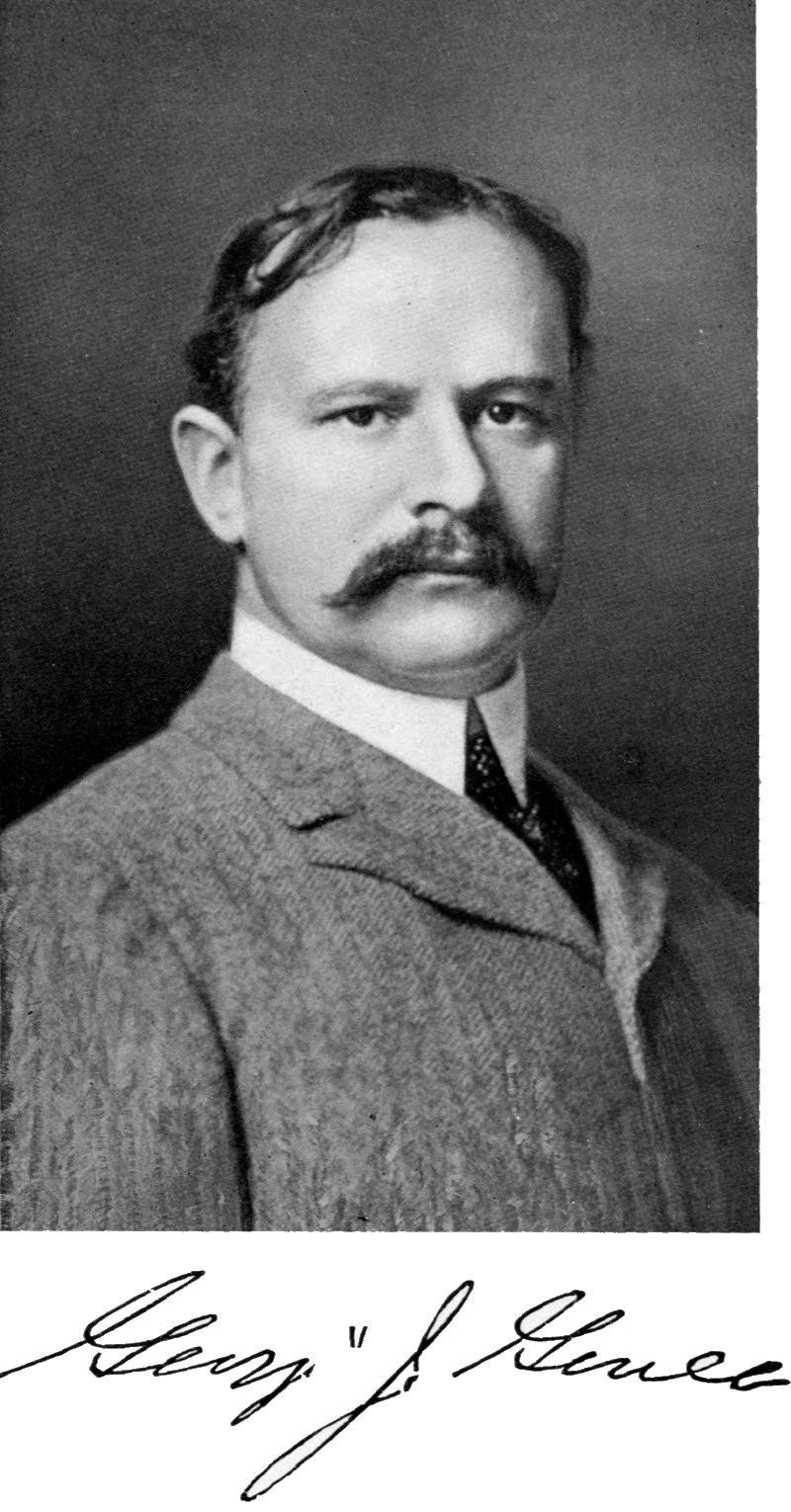
George J. Gould will be one of the few very rich men in
this country, as he will, of course, be his father’s successor.
He possesses good abilities, has an attractive presence, and
607is modest and retiring in his manners. He has, thus far,
made an excellent record, and the Stock Exchange was glad
to admit him to membership. He is connected with all of
his father’s roads, and is gradually relieving him of much of
the onerous work connected therewith. If anything should
happen to Jay Gould, George Gould would stand in the same
financial relation to his affairs that Wm. H. Vanderbilt sustained
to his father, the Commodore, and, like him, would be
found equal to the new honors and responsibilities devolving
upon him. This reasonable expectation should dispel
any apprehension of a financial shock in the event of Jay
Gould’s demise.
George Gould is bright and agreeable, and a good husband.
If Jay Gould has made enemies, that is no reason
why his son should not be popular. It is proverbial
that the male descendants of a family are more akin to
the side of the mother than to that of the father, and as
Mrs. Jay Gould has always been recognized as a most
exemplary wife and mother, she may rightfully be regarded
as the equal of any woman in New York, and one to be respected
and honored accordingly by those whom we ought
to take as social exemplars. There should be no other
standard of social test than that of merit; not judging individuals
by what they were, but by what they are to-day; not
judging by the ridiculous test of ancestry—a criterion which
would upset some of our social demi-gods—but by the real
worth of the living man or woman. Suppose, for instance,
the young Vanderbilts, who rank high in society, and are
splendid specimens of nature’s noblemen, should be measured
by the standard of the old Commodore when he was a
boatman on Staten Island. Everybody would recognize
such a test of fitness as to the last degree absurd. In the
United States nature’s nobility is at the front, as against the
parchment nobility of England and the Continent. The
personelle of the English nobility makes a sorry showing
beside that of young George Gould, the young Vanderbilts,
and others of our wealthy Americans.
608The modern nobility spring from success in business.
Peace has its victories in the formation of character greater
than those of war; and peace and republicanism will
develop the future greatness of the human family, and not
pretentious yet effete monarchies, of which mankind is
heartily sick. Many of the so-called noblemen of to-day
shine only by a faint reflected glimmer from the armor of
mediæval ancestors; or their ancestry may be much more
recent, and steal slyly off in the gloom of forgotten crimes
to the prison or the gallows; or their patent of nobility
may be a thing of yesterday, a child’s bauble solemnly displayed
by addle-pated dotards, ridiculous even to the unthinking.
The English nobility is coming to the auction
block. Not a few in former times laid their heads there
for treason, but now it is articles of more value, namely, the
curious, the antiquities, the bric-a-brac, the works of art,
the rare furniture, which comes to the block, and they are
purchased by the new nobility raised up by success in
finance and commerce. There is very little in Europe which
is not obtainable at a price. Titles in England may yet be
sold as they have been in Italy. Who cares for a title of
Italian or French nobility? To this low estate must English
titles come at last. It is marvellous that they have
endured so many centuries after the downfall of the feudal
system that originally gave them birth.
Why is it that Gladstone has always refused a title?
One reason is that at his birth nature gave him a higher
title to nobility than parchment can ever confer.
Another is that he did not care to be ennobled and then
wrapped, as a titled mummy, in the sweet-scented cerements
of political death, to be buried in that Egyptian tomb of
political extinction, the House of Lords. And to-day he is
a Colossus among statesmen, whose grand figure will loom
up in history as one of the foremost men of the nineteenth
century, a Titan dwarfing the proudest of a senile nobility.
And yet he is simply a great Commoner.
609If the Irish wish to assist nature in purging Great Britain
of her bilious incumbus of nobility, they should recognize
the fact that ridicule is a good medicine. The Irish are
proverbially prolific. Let them make a point of christening
the rising generation with titled names. Then there
would be myriads bearing the name of Duke O’Reilly, Earl
McCarty, Marquis O’Brien, Baron Sullivan, Sir Timothy
Finnegan, Lord McSwynny, and so on. The objection to
this plan, however, is that it would brand thousands of innocent
and helpless children of worthy parents with titles
which have become contemptible to all right-thinking persons
as the badges of imbecility, mediocrity, or dishonor.
This is a rather lengthy digression after beginning with
one of the natural nobility which we have in this country,
namely, the nobility founded solely on merit, but the case
of a young man like George Gould naturally suggests contrasts.
He is destined to take a commanding position in
the world of finance in future years, and it is gratifying to
know that he is a man of high character, excellent capacity,
and of great promise. There is usually a disposition to
criticise the sons of very wealthy men, due to that envy to
which poor human nature is so prone, but the fact in this
case is indisputable that young Gould is held in high esteem
wherever he is known. He is a graduate of Harvard and
Columbia, and a member of the Manhattan and other clubs,
and he is, in the business world, where he is most powerful,
simply a reserved and quiet associate, always controlling
his lines, but never interfering in a strident way with those
who are working for them.
CHAPTER LVII. A LOOK INTO THE FUTURE.
611
What we are.—What we are Preparing for.—What we
are Destined to do and to Become.—We are Entering
on an Era of Seeming Impossibilities.—Yet the
Inconceivable will be Realized.
In reviewing the past, I am struck with the enormous
growth of New York as a city, New York as a State,
and the United States as a Nation. The fact is that we
hustle through the business world so fast (and this is especially
applicable to Wall Street), that we do not realize how
rapidly we are going. To any one who is familiar with the
appearance of the down town or business part of the city,
as it was twenty years ago, ten years ago, or even eight
years ago, the difference to-day will give some intimation of
the changes which are going on around us, and are merely
features of development. Why, even ten years ago, the old
Equitable Building was a structure to which attention was
attracted because of its greatness and its superiority over
any other building in New York city—its height, its width,
its breadth, its depth, its elevators, its beauty of arrangement
inside and its artistic aspect outside. Millions of dollars
have been spent in the past few months in making this
one building about four times as large as the original structure
which brought pride to the hearts of New Yorkers, and
surprised and startled their friends from the country.
To-day it is one of the greatest buildings on the Island, and
even rivals the State Capitol, which is supposed to be the
pride of the people of the Empire State. This is only one
instance. All along lower Broadway, the great business
artery of the country, four-story and five-story buildings
612have been torn down, and nine-story buildings put up in
their place. Four and five buildings have been dug away
and a single structure put up in their place, and in some of
the buildings—indeed in scores of them—within a few
blocks of the Stock Exchange, there are whole communities
of people who are performing life’s work in their own good
way, rather than interfering with their neighbors or themselves,
and who know nothing of what goes on around and
about them, and care less. Small armies of retainers and
servants, and the most perfect mechanism, are needed to enable
these communities to carry on their work with dispatch
and convenience. That is to say, where offices are rented in
the eighth and ninth stories of a building, the occupants
expect to be shot up to them, and down from them, with no
trouble to themselves, and no weariness of limbs—and they
are. This must be done, too, without loss of time—and it is.
All the attendant arrangements must have the elements of
luxuriousness and comfort—and they do.
This is a small feature of our development, however. So
far as the development of the city is concerned, this appears
to be an era of bridges, and Rapid Transit Elevated roads.
So far as the development of inter-State communication is
concerned this is an era of Express Trains, which, although
they have reached a speed of a mile a minute in certain
perfected sections of the roads, do not at all indicate what
will come to pass in the future. Electricity is, of course,
the means for instantaneous communication between
separate points known to human intelligence, practically
annihilating time between the New World
and the Old World, and between separated points in
either world, or even in the cities. But electricity does
not travel with anything like the speed of light and
air. Now, in some few instances, we have utilized compressed
air as a means of locomotion. Efforts are being
made, but are still in a crude state of development, for the
utilization of electricity as a motive power. Suppose we
613look one handled years ahead, and, calculating upon the
factors and experiences of the past one hundred years,
imagine what the picture will be of this town as a city,
and this people as a nation. I believe that one hundred
years hence the era of bridges between this city and those
which adjoin it across the rivers, will have passed away, and
that instead of one or two or five bridges across the East
River, we will have pneumatic tubes at every pier, and I
believe the same will be true on either side and at the end of
the island. These tubes will spread from New York, as the
blood vessels in the human body spread out and are supplied
from the heart; for New York is not only the business heart
of this country, but it is destined to be, so surely as God permits
growth, the business heart of the world, and the money
centre of the world. And the arteries from this centre will distribute
the blood all over, and in all directions. Through
these pneumatic tubes I believe there will be almost instantaneous
communication or transportation of people from one
point to another. Nor will this be confined to New York
city alone. In the near future the Trunk Line Railroad to
leading points, such as Washington, Philadelphia, Boston
and Chicago, will probably run trains at the rate of one hundred
miles an hour, and even this will only be a beginning.
To admit of this, steel rails will be required of about
double their present weight, and the wheels must be proportionately
massive and strong. The risk attendant upon
such increased speed will be no greater than the ordinary
speed of the present day, say forty miles an hour. But the
time will come, during the next five generations, when the
pneumatic tubes will extend from here to these central points
of the East and the West and the South; and it will be possible
for a man to leave New York at seven o’clock and go to
Chicago for breakfast, transact his business and return to
New York for lunch or business appointment by twelve
o’clock noon of the same day. Of course, one of the problems
to be solved in connection with this sort of meteoric
614speed will be to supply air for breathing purposes; and the
same compressed air which will shoot the carriage through
the tube, will be in some form utilized for the purpose.
This, however, only for a period; for I think the time must
come when electricity will be the one motive power of this
country and of the world, so far as the transportation of people
and property is concerned. Time is money, and the
American idea is to save time. We now waste little enough
of it in all conscience. The greatest business of the world,
that of the New York Stock Exchange, is already compressed
into five hours’ time; and yet it is a business in which the
most trivial error or accident because of haste might
cause losses of millions. The obliteration of time is a
necessity of American enterprise. When Electricity is
made the general propelling power, it is likely that a stationary
engine will be located at Niagara Falls, and the
force and power of those waters utilized to supply all the
needed propelling power for this State, if not even beyond,
to remote and far-off sections of our country. I
heard it once said by an intelligent authority, that
it had been predicted that instead of the coal mines of this
country sending their products hundreds and thousands of
miles away, for transportation-power, at a great expense,
that a stationary engine would be located at the mouth of
the mine, and the power derived from the coal transmitted
therefrom over an electric wire. This would, indeed, be a
great transformation, and a great improvement and a great
economy. But a greater change, one quite as likely in
the future, and perhaps possible within the lifetime of
some of our children, will be the abolition of railroads by
the pneumatic tube process, and the transmission of power
as I have suggested.
A hundred years hence the people who then occupy our
places will look upon us as primitive and crude, or, in
accordance with the Darwinian theory, as the monkeys from
which their perfected race has been developed. In fact,
615there is a good deal of Darwinism in our development, in a
business sense, if not in a human sense. As the surroundings
grow, so does the intellect of the human race, and there
is no telling what we may do or what we may become—provided
we live long enough. We have plenty of room, plenty
of power, plenty of natural ability, and we make our own
opportunities; all we lack in this world is time and perfect
science, and if time is given us we may be able to show what
giants of enterprise a free people may become; that, as the
first choice of God’s creation, we lack nothing.
We are proud now of our Brooklyn Bridge. But when
the Bridge was opened, and the foot passenger rate was
made one cent per person, and the car rates three cents, it
was a grave question of consideration for the men upon
whom devolved the responsibility of the conduct of the
Bridge, whether or not the cities would supply passengers
enough to make the Bridge self-supporting. It was not
expected that they could or would. But to-day, the rate for
foot passengers is one-fifth of one cent, and the car passengers
are transported for two and one-half cents. The time
is not far distant when these rates will be made much less,
if not abolished entirely. They certainly will be abolished
so far as the promenade is concerned; and, at the rate of
one cent per passenger now, the Bridge would earn dividends
for each of the two cities which issued bonds for its
construction; while the taxable value of the property in
both has been so largely enhanced, that the Bridge has paid
for itself already, and, yet it has been open less than five
years. More than a year ago the experience of the Directors
was that the facilities of this Bridge were perfectly
inadequate; and, while everything has been done to increase
them and extensions and improvements have been made,
the Bridge is still too slow, and its power facilities too
limited for the proper accommodation of the people who
cross it from city to city.
This is only one evidence of the growth of New York; it
616is merely an incident. There is another incident, which, in
connection with what I have said about the difference in
construction of buildings during the past few years, I think
I will mention right here. The city of New York donated
to the Government the site in the City Hall Park where the
New York post-office now stands. It was the original intention
that the building should be only three stories in
height. The capping was already on, and the roof was in
the primitive stages of construction, when, walking down
Broadway one morning, as I passed the structure, the
thought occurred to me that, for a building of its size and
heavy granite exterior, its height was disproportionate, and
gave it a dwarfed appearance, and a lack of symmetry. Besides
that, whatever space could be added to it by the increase
in its height, even though the additional room might be a
surplus for the time being, the time would soon come when
even more would be needed. I wrote to Architect Mullet,
calling his attention to these facts, and insisting that, in
confining the building to three stories, he was making a mistake;
that it was not in keeping with the magnificence of
the structure; that it should have one or more additional
stories, with a mansard addition besides, and that the business
experience of the past most certainly demonstrated
that the room would soon be needed by the Government for
the proper conduct of its affairs in this the greatest business
center of the country. Within a week Mr. Mullet called to see
me, and I convinced him that I was correct in my criticism
and predictions. He said, in reply: “But there is no appropriation;
the money appropriated is exhausted, and the
building cannot be enlarged.” I asked him: “Well, what
is necessary to be done in the matter? Suppose I write to
Mr. Boutwell, the Secretary of the Treasury, about it, and
urge that the building be enlarged as I suggest.” Mr. Mullet
approved of the suggestion, and I added: “I will write to
several members of Congress to the same effect.” This I
did, and it was not long afterward that Mr. Mullet informed
617me that my efforts in the matter had been successful, and he
had received orders to go ahead and make the building four
stories in height, with a mansard roof story besides. This
additional room was not needed at the time, but it has already
become inadequate for the accommodation of the Government
postal employees, and a few others who have been
granted quarters there. And now there is a proposition
under consideration for the construction of an additional
Government building in this city which will cover two
blocks of ground or more, and in which may be centered
the various departments of Government, which are now
scattered in a half dozen or more places. Is not this evidence
of growth? Is not this evidence of development
which justifies what has been said as to our prospective
growth? Yet this is merely incidental to the strides of progress
going on; and, if we are walking at this pace, will not
our children’s children be racing at the different paces suggested
by some of the predictions I have made?
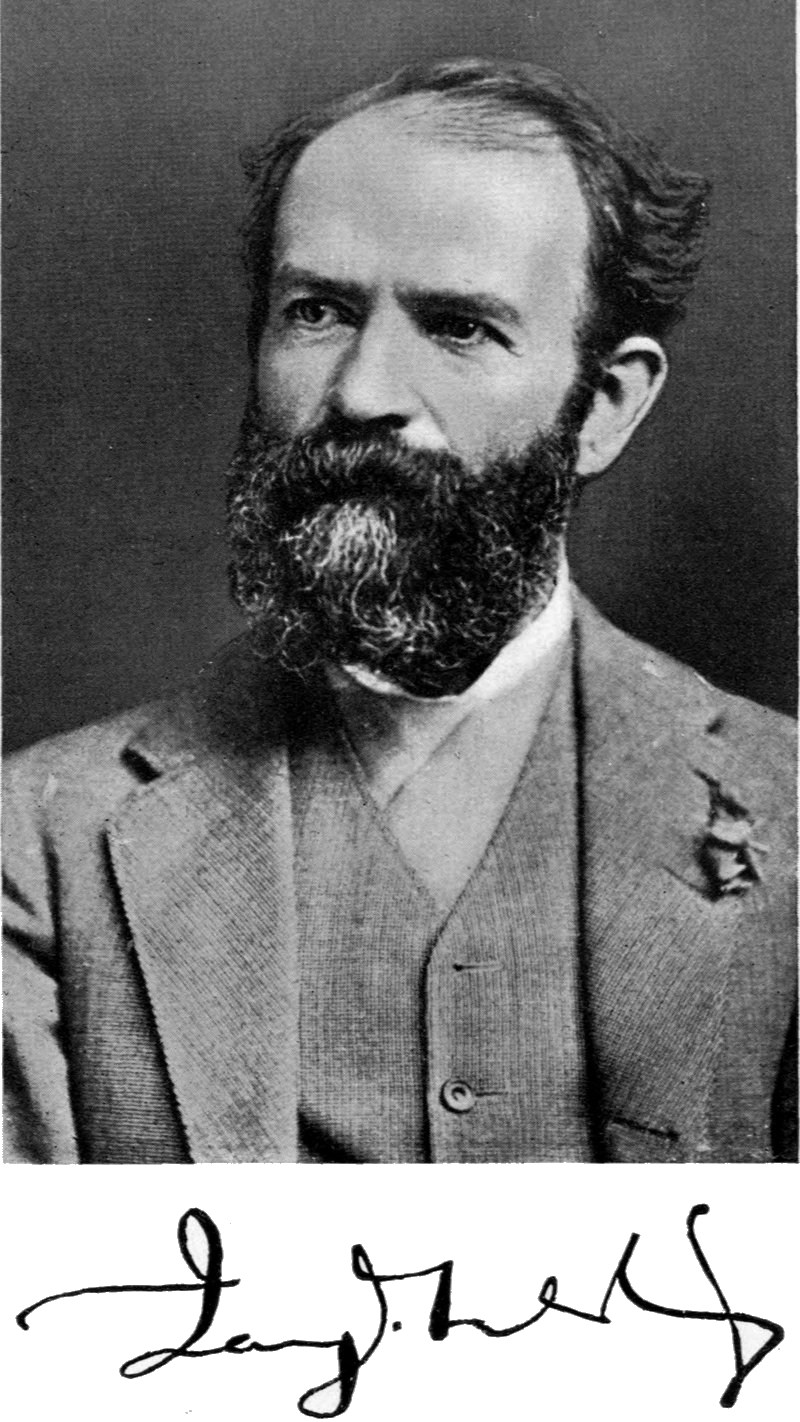
CHAPTER LVIII. JAY GOULD. — JAY GOULD AND HIS SYSTEM.
618
His Birth and Early Education.—Clerk in a Country
Store.—He Invents a Mouse Trap.—Becomes a Civil
Engineer and Surveys Delaware County.—Writes a
Book and Sells It.—Gets a Partnership in a Pennsylvania
Tannery and Soon Buys his Partner Out.—He
Comes to New York to Sell his Leather, Falls
in Love with a Leather Merchant’s Daughter and
Marries her.—Settles in the Metropolis and Begins
to Deal in Railroads.—Buys a Bankrupt Road from
his Father-in-law, Reorganizes it and Sells it at a
Considerable Profit.—Henceforth he Makes his
Money Dealing in Railroads.—His Method of Buying,
Reorganizing and Selling Out at a Large
Profit.—How he Managed Erie in Connection with
Fisk and Drew.—His Operations on Black Friday.—Checkmated
by Commodore Vanderbilt and Obliged
to Settle.—He Makes Millions out of Wabash and
Kansas & Texas.—His Venture in Union Pacific.—His
Construction Companies.—Organization of American
Union Telegraph, and His Method of Absorbing
and Getting Control of Western Union.—The Strike
of the Telegraphers and his Great Encounter with
the Knights of Labor and Trades Unionists.—Gould’s
First Yachting Expedition.—An Exceedingly
Humorous Story of his Early Experience on
the Water.—His Status as a Factor in Railroad
Management.—His Acquisition of Baltimore & Ohio
Telegraph, &c.
If Fenimore Cooper, Sir Walter Scott, Charles Dickens or
Dumas, in the height of the popularity of any of these
great writers of fiction, had evolved from his inner consciousness
a Jay Gould as the hero of a novel, its readers would have
found serious fault with the author for attempting to transcend
the rational probability allowed to the latitude of fiction.
Few novel readers, in fact, would have patiently submitted
to such a strain on their credulity prior to the era in
619the financial development of this country which produced
some of the leading characters which Wall Street has brought
to the front, as stern realities of every day life, since my
advent in the great arena of speculation.
Among these Jay Gould is conspicuous, and of all the
self-made men of Wall Street he had probably the most
difficulty in making the first thousand dollars of the amazing
pile which he now controls.
Jay Gould was born at Stratton Falls, Delaware county,
New York, about the year 1836. He was the son of John
B. Gould, a farmer, who kept a grocery store. At the
age of sixteen young Gould became a clerk in a variety store
belonging to Squire Burnham, about two miles from the
Falls. Here, in his leisure hours, he assiduously improved
the little learning he had received at the village school, by
applying himself to the study of book-keeping in the evenings.
It was when he was at this store, according to the most
reliable accounts, that he manifested his natural aptitude
for making sharp and profitable bargains. His employer, the
Squire, had his eye on a piece of land in Albany, which he
expected to obtain cheap and so make a profit. He
whispered his intention to some friend in the store and his
young assistant overheard him. When he went to put his
design of purchasing the land in execution he found that
young Mr. Gould had been there before him, and had secured
the title.
About this time there was a firm which had undertaken to
survey the county and make office maps of it, and young
Gould was employed to assist them. Having mastered the
elementary principles of geometry, and being naturally quick
and correct at figures, he soon became a fair expert in common
land surveying, and made himself exceedingly useful
to his employers. But the idea of not only being his own
boss but an employer of other people’s brains and muscles
was one of his ruling propensities, and he used every effort
620to attain this object. In a short time he bought out the
firm, wrote a history of the county to accompany the maps
and peddled his book among the residents.
This natural inclination to buy out every concern with
which he has been connected has been the ruling passion of
his life, and still tenaciously adheres to him. Prior to his
negotiations with the firm of surveyors, he had invented a
mouse trap in his intervals of leisure in the store, and with
the proceeds of this and the bargain in the land, out of
which he had outwitted his employer, he was enabled to
make himself master of the situation with the surveyors.
Shortly after this Gould became interested in a Pennsylvania
tannery with Zadoc Pratt, who was the capitalist.
Through the advice of Israel Corse, the Commission Merchant
of the firm, Col. Pratt proposed to dissolve the partnership.
Gould induced Charles M. Leupp & Co. to purchase
Pratt’s interest for $150,000. The business did not meet the
expectations of Leupp, who in a fit of despondency committed
suicide. After his death Gould failed to retain possession
of the property, which was sold to H. D. H. Snyder,
thus terminating Mr. Gould’s career as a Pennsylvania tanner.
On his visits to New York Mr. Gould was attracted by the
greater advantages which the Empire City afforded for extending
his business, and came here to reside. He had ingratiated
himself in the favorable esteem of one of the grocery
merchants with whom he had done business. The merchant
took him to his house to board and Mr. Gould fell in love
with his handsome daughter. It was a mutual affair of the
heart, like that of his son George and Miss Edith Kingdon,
and a speedy marriage was the result. The results of the
happy union seem to have been all that could be desired,
and the domestic felicity of Mr. and Mrs. Gould, so far as
the public have been able to ascertain, has never suffered
the slightest jar or interruption.
The father-in-law owned shares in a railroad which was in
a bad financial condition. He employed his new son-in-law
to see what he could do to extricate him from a position in
621which he was likely to become embarrassed, and he wanted
to sell his shares. Mr. Gould examined the road, (with the
locality of which he had been well acquainted in his boyhood,)
saw the favorable possibilities of its future, under
good management, and instead of selling his father-in-law’s
shares to a stranger, he took them at their market value himself,
purchased more, finally obtained control of the entire
property, and sold it to a rival company at a large profit.
This, I believe, was Mr. Gould’s first transaction in railroad
matters, and from that day to this his great speculative
forte has been buying and selling railroads. It was in that
kind of business, and not in the stock market, as is popularly
supposed, that he made the great bulk of his enormous fortune.
On his entrance to Wall Street he began business alone.
Afterwards he formed a partnership with Henry N. Smith
and — Martin, the firm taking the name of Smith,
Gould & Martin. Martin is now in a lunatic asylum, and
Henry N. Smith, who was the chief cause of the failure of
Wm. Heath & Co. for a million dollars, is now a poor pensioner
on the bounty of his wife. But Mr. Gould still
towers aloft, in the full enjoyment and the continued progress
of his speculative prosperity, without being dismayed
by any competitor, however powerful, and overcoming
all obstacles, no matter how gigantic.
As I have noticed pretty fully some of Mr. Gould’s greatest
speculative transactions, mostly behind the scenes in the
chapter on Black Friday and also in the account of the
“Commodore’s Corners,” it will be unnecessary to repeat
them here.
There was one clever transaction in the Black Friday
affair that should be put on record to the credit of the able
management of that great deal. One prominent individual
connected therewith was personally responsible for $4,500,000.
This was a pretty heavy load at that time even for
him to carry, but it did not weigh very heavily upon
622him for any appreciable length of time. He adroitly
managed to shift it over on to the shoulders of that broad-backed,
soulless creature called the Erie Corporation, making
it responsible by simply signing himself “T. R.,” instead
of “J.G.,” the large letters representing the ordinary contraction
“Tr.” for Treasurer. By this simple and ingenious
device this shrewd gentleman got rid of the burthensome
legacy on the negative side, bequeathed to him by the
“Black Friday corner.”
There is a story told, with several variations, in regard to
a sensational interview between Mr. Gould and Commodore
Vanderbilt. The scene is laid in the parlor of the Commodore’s
house. It was about the time that the latter was
making desperate efforts to get a corner in Erie, and at that
particular juncture when, having been defeated in his purpose
by the astute policy of the able triumvirate of Erie—Gould,
Fisk and Drew—he had applied to the courts as a
last resort to get even with them.
They had used the Erie paper mill to the best advantage,
in turning out new securities of Erie to supply the Vanderbilt
brokers, who vainly imagined that they were getting a
corner in the inexhaustible stock. Mr. Vanderbilt was wild
when he discovered the ruse and had no remedy but law
against the perpetrators of this costly prank. These adroit
financiers usually placed the law at defiance, or used it to
their own advantage, but this time they were so badly caught
in their own net that they had to fly from the State and take
refuge at Taylor’s Hotel in Jersey City.
It seems that during their temporary exile beyond the
State Gould sought a private interview one night with the
Commodore, in the hope of bringing about conciliatory
measures.
The Commodore conversed freely for some time, but in
the midst of his conversation he seemed to be suddenly
seized with a fainting spell, and rolled from his seat unto the
carpet, where he lay motionless and apparently breathless.
623Mr. Gould’s first impulse was to go to the door and summon
aid, but he found it locked and no key in it. This increased
his alarm and he became greatly agitated. He
shook the prostrate form of the Commodore, but the latter
was limp and motionless. Once there was a heavy sigh and
a half suffocated breathing, as if it were the last act of respiration.
Immediately afterward the Commodore was still
and remained in this condition for nearly half an hour.
Doubtless this was one of the most anxious half hours that
ever Mr. Gould has experienced.
If I were permitted to indulge in the latitude of the ordinary
story teller, I might here draw a harassing picture of
Mr. Gould’s internal emotions, gloomy prospects in a criminal
court and dark forebodings. His prolific brain would
naturally be racked to find a plausible explanation in the
event of the Commodore’s death, which had occurred while
they were the sole occupants of the room; and at that time,
in the eyes of the public, they were bitter enemies.
I can imagine that, in the height of his anxiety, he would
have been ready to make very easy terms with his great
rival, on condition of being relieved from his perilous position.
It would have been a great opportunity, if such had
been possible, for a third party to have come in as a physician,
pronouncing it a case of heart disease. No doubt Mr.
Gould would have been willing to pay an enormous fee to
be relieved of such an oppressive suspicion.
The object of the Commodore’s feint was evidently to try
the courage and soften the heart of Mr. Gould, who never
seemed to suspect that it was a mere hoax. His presence
of mind, however, was equal to the occasion, as he bore the
ordeal with fortitude until the practical joker was pleased
to assume his normal condition and usual vivacity. If Mr.
Gould had been a man of common excitability he might
have acted very foolishly under these trying circumstances,
and this doubtless would have pleased his tormentor intensely.
624The modus operandi of Mr. Gould, in the purchase and
sale of railroads, has been to buy up two or more bad roads,
put them together, give the united roads a new name, call it
a good, prosperous line, with immense prospects in the immediate
future, get a great number of people to believe all
this, then make large issues of bonds and sell them at a
good price, for the purpose of further improving and enhancing
the value of the property. After these preliminaries
had been gone through, if profitable purchasers came
along, they could have the road at a price that would amply
compensate Mr. Gould for all his labor and acute management.
If these purchasers should be unable to run the road
profitably and were obliged to go into liquidation after a year
or two, as frequently happens, then Mr. Gould or his agents
would very likely be found on hand at the sale to take back
the road at a greatly reduced price. Mr. Gould would then
get a fresh opportunity of showing the superiority of his
management. He would be able to demonstrate that the
road had left his possession in excellent and progressive
condition, but through loose management had been run
down. He would then set about the work of reorganization
again and go through the same role substantially, with slight
variations, as before, realizing a handsome profit on each
successive reorganization.
It would take too much time, and swell this volume far
beyond the space which I have laid out for it, to go minutely
into the history of all Mr. Gould’s great enterprises. In
fact, it would take a large volume in itself to do justice to
the various schemes which have been put under way by him
directly and indirectly and carried to a successful issue during
his busy life of a quarter of a century in Wall Street.
This seems a long time for a man who is still so young,
although he is a grandfather, and enjoying the use of his
mental faculties more vigorously than ever.
Owing to my own busy life I have only time to sketch the
most salient points of Mr. Gould’s prosperous career. Some
625future historian of Wall Street is destined to make a big
“spread” upon him, as the newspaper reporter would say.
He will have ample material if he only begins his work soon;
but whoever undertakes the job should not forget the maxim
of that great veteran of literature, old Dr. Samuel Johnson,
about material for biography having a general tendency
to become scarce, and, in some instances, eventually to
vanish. While the reliable material for Mr. Gould’s biography
may be subject to the common fate of growing less,
as time advances, there is no danger of utter oblivion in his
case. He has impressed his footprints on the sands of
time too firmly for that.
I don’t for a moment mean to insinuate the reason for this,
which is given by Shakespeare as applicable to similar cases,
although some ill-natured and envious people might use the
well-known quotation in this connection:
“The evil that men do lives after them,
The good is often interred with their bones.”
I have no hesitation in saying that Mr. Gould will leave
a large amount of good after him, and, indeed, it seems now
as if the Shakespearian adage was to be reversed in his
case. The evil that he may have done is likely to be forgotten.
He bids fair to outlive most of it, if he only goes
on to the end as he has been doing for the past few years.
He is now showing a decided disposition to become more of
a builder up than a wrecker of values.
Through his great executive ability in railroad management
and construction he has been instrumental in making
many blades of grass grow where none had grown before,
causing the desert to blossom like the rose, assisting thousands
who had formerly been poor and almost destitute,
pent up either in European hovels or New York tenement
houses, to find happy homes in the West and South. He
has been a great factor in improving the value of the land,
and thus, while he was enriching himself, adding materially
626to the wealth and prestige of the nation and thereby elevating
it in the appreciation of the world at large.
The correspondent of the London Times recently sent
over here to write up a description of the country, dwells
emphatically on this characteristic of Mr. Gould and other
great millionaires and railroad magnates, who contribute so
largely to the general prosperity of which they seem to be
the indispensable mediums.
It was as the managing power in the Erie Railroad that
Mr. Gould laid the broad foundation of his fortune. His
speculative connections with Erie are more fully dealt with
in the lives of Daniel Drew and Commodore Vanderbilt.
The money and influence which he gained, in connection
with the Erie corporation, enabled him to extend his operations
in the acquisition of railroad property until, through
Union Pacific and its various connections, Wabash and a
number of Southwestern roads, it seemed probable, at one
time, that he was in a fair way of grasping the entire control
of the trans-continental business in railroad matters. And
this was prior to the time when he obtained his present hold
on telegraph facilities.
Some of the able schemes in which Mr. Gould has had
credit for playing an important part, and sometimes a role
that was considered rather reprehensible, were managed, so
far as the outside business was concerned, chiefly by one or
more of his wicked partners. In one of the most noteworthy
of those projects, namely, the attempt to capture the
Albany & Susquehanna Railroad, Mr. Gould seldom or never
appeared in person before the public. His partner, James
Fisk, Jr., was cast in that role and played it with great
ability. With the essential aid of those two shining lights
of the New York bar, David Dudley Field and Thomas G.
Shearman, the Prince of Erie, (as Jim Fisk was called,) came
pretty near snatching possession of 142 miles of a very important
railroad, with the control of only 6,500 out of 30,000
shares of the stock, and 3,000 shares of these 6,500 had been
illegally obtained, as was eventually decreed by the court.
627Mr. Fisk, though the silent member of the Erie firm, had
also control of Judge Barnard, of the Supreme Court of the
City and County of New York.
The Albany & Susquehanna road would have been a
valuable prize for Erie. It runs from the eastern extremity
of the New York Central at Albany to a junction with Erie
at Binghamton. At that time Erie aspired to be a successful
competitor with Central for New England business, and had
determined to monopolize the coal trade between that section
and Pennsylvania. This connecting link of 142 miles
was therefore regarded as a very valuable acquisition by
both the large roads. Hence it was worth a desperate effort,
and Jim Fisk showed that he had a true appreciation of its
value, for he organized a company of New York roughs,
placed himself at their head, and being armed with bludgeons
and pistols and an injunction from Judge Barnard,
obtained from him in New York city—while he was really
in Poughkeepsie at the time—went to Albany and took
forcible possession of the offices of the railroad. He had
the President, Secretary, counsel and receiver of the road
arrested and put under $25,000 bonds each. Mr. Fisk went
through the farce of an election of Erie candidates for the
offices which he had forcibly made vacant in the Albany &
Susquehanna, bringing his roughs up to vote as stockholders.
The President of the road, Mr. Joseph H. Ramsey, fought
stoutly for his rights and ousted the intruders. He had
spent eighteen years building the road, and was naturally
attached to it. He also found a Judge to aid him. Justice
E. Darwin Smith, of Rochester, eventually rendered a decision
in favor of the Ramsey party, with the opinion that
“Mr. Fisk’s attempt to carry the election by his contingent
of ‘toughs’ was a gross perversion and abuse of the right
to vote by proxy, tending to convert corporation meetings
into places of disorder, lawlessness and riot.” Costs were
decreed to the Ramsey directors, and a reference made to
628ex-Judge Samuel L. Selden, of the Court of Appeals, who
fixed the allowance to be paid by the Fisk board to the Ramsey
board at $92,000. It is worthy of note that the Fisk
board consisted of the unlucky number of thirteen.
The Erie party appealed, but long before the appeal could
be heard the Albany & Susquehanna was leased in perpetuity
to the Delaware & Hudson Canal Company, against
whom the Erie party was not strong enough to go to law.
Thus ended the struggle for this great connecting link.
It is worthy of remark that this was one of the few cases
in which, where Mr. Gould made up his mind to obtain the
control, possession or ownership of property, he did not
succeed.
The methods of acquiring the control and the possession
of other people’s property have been raised to the dignity
of a fine art by Mr. Gould. This art has been prosecuted,
too, through “legitimate” means. He has had the law at his
back every time, and been supported in his marvellous acquisitions
by the highest Court authority.
The manner in which he managed to get Western Union
into his hands affords a very striking illustration of his
methods and the great secret of his success.
When first laying his schemes to obtain the control of
the telegraph property he got up a construction company to
build a telegraph line. This was a company of exceedingly
modest pretensions. It had a capital of only $5,000. It
built the lines of the Western Union Telegraph Company,
with which Mr. Gould paralleled most of the important lines
of Western Union, and cut the rates until the older and larger
corporation found that its profits were being reduced towards
the vanishing point. Then it was glad to make terms with its
competitor; a union of interests was the result, and Mr.
Gould obtained control of the united concern.
“Impossible,” said Norvin Green, in high dudgeon, when
the insidious intentions of Mr. Gould were broached to him
a few months before the settlement took place. “It would
629bankrupt Gould and all his connections to parallel our lines,
and to talk of harmony between him and us is the wildest
kind of speculation.” The genial Doctor was then master
of the situation in Western Union, or imagined himself so
at that time, and regarded with contempt the efforts of
Gould and his colleagues to bring the company to terms.
In a few months afterward the Doctor tamely submitted to
play second fiddle to the little man whom he had formerly
despised.
The arrangement in reference to the cable companies followed
the capture of Western Union. The struggle is still
pending for the entire monopoly in the cable business, and
it now seems only a question of time when the Bennett-Mackay
party will have to succumb, leaving Gould in the
supreme control of the news of the world. If this should
happen he would become an immense power for either good
or evil both in speculation and politics. In fact it would
be too great a monopoly to be entrusted to the will of one
man. Although it might be judiciously managed, as the
cup of his ambition would then be surely full, yet the experiment
would be extremely hazardous.
The controlling interest in the Elevated Railroads of this
city, recently achieved by Mr. Gould through his business
and speculative relations with Mr. Cyrus W. Field, are of
too recent date to require any special notice or comment
here. Suffice it to say, that I fear my friend Mr. Field has
not come out at the big end of the horn, although everything
has no doubt been in conformity with the most approved
business principles and in strict adherence to the most honorable
methods of dealing in railroad securities. It is
significant, however, that Mr. Field has preserved a prudent
reticence on the subject.
Mr. Gould, from my point of view, has been a public
benefactor in the bold and successful stand which he has
maintained against strikers. Though Western Union lost
over half a million dollars by the strike of the telegraphers,
630which greatly alarmed the stockholders, yet Mr. Gould held
out until the strikers were obliged to give in. He pursued
the same policy, with a similar result, in the case of the
Knights of Labor. During the strike of the latter I
explained my views on the subject in a circular to my customers
as follows:
“The Knights of Labor have undertaken to test, upon a
large scale, the application of compulsion as a means of
enforcing their now enlarged demands. This has necessitated
a crisis of a very serious kind. The point to be determined
has been, whether capital or labor shall in future
determine the terms upon which the invested resources of
the nation are to be employed. To the employer, it is a
question whether his individual rights as to the control of
his property shall be so far overborne, as to not only
deprive him of his freedom, but also expose him to interferences
seriously impairing the value of his capital. To
the employes, it is a question whether, by the force of
coercion, they can wrest to their own profit powers and control
which, in every civilized community, are secured as the
most sacred and inalienable rights of the employer. This
issue is so absolutely revolutionary of the normal relations
between capital and labor, that it has naturally produced a
partial paralysis of business, especially among industries
whose operations involve contracts extending into the future.
There has been at no time any serious apprehension that
such an utterly anarchial movement could succeed, so long
as American citizens have a clear perception of their rights
and their true interests; but it has been distinctly perceived
that this war could not fail to create a divided if not a hostile
feeling between the two great classes of society; that it
must hold in check, not only a large extent of ordinary
business operations but also the undertaking of those new
enterprises which contribute to our national progress, and
that the commercial markets must be subjected to serious
embarrassments. * * * * * From the nature of the
case, however, this labor disease must soon end one way or
another; and there is not much difficulty in foreseeing what
its termination will be. The demands of the Knights and
their sympathizers, whether openly expressed or temporarily
concealed, are so utterly revolutionary of the inalienable
631rights of the citizen, and so completely subversive of
social order, that the whole community has come to a firm
conclusion that these pretensions must be resisted to the
last extremity of endurance and authority.”
The manner in which Mr. Gould acquired his great control
in some of the Western and Southwestern railroads was
pretty fully developed in the recent investigation held in
this city, Boston and San Francisco by the Pacific Railway
Commissioners. Mr. Gould’s testimony, as reported in the
daily papers of May, 1887, probably contains almost as correct
and succinct an account of his pooling arrangements
and schemes in connection with certain railroads and his
methods of making money out of them as can be obtained
anywhere. His testimony, on the whole, was exceedingly
affable, comprehensive and precisely to the point, and has
not been contradicted in any material points by any of the
succeeding witnesses that have yet been examined on this
widely interesting subject. Its substance was as follows:
[From the Herald, May 18, 1887.]
A dapper little man in plain pepper and salt (the pepper
predominating) business suit entered the Pacific Railway
Commissioners’ offices yesterday morning and sat down
quietly with his not over shiny silk hat on his knee.
The natty gentleman, unobtrusive possessor of the small
dark and brilliant eyes, was the man of millions.
He had lots of information for the Commission, and he
gave them more of the inside facts of the early consolidation
deals of the Union Pacific than they hoped to get.
It had been expected that Mr. Gould would prove a wily
witness, hard to corral and liable to shy over the fence at
the slightest provocation, but at the very outset his manner
was a complete surprise. He told the Commission that he
was suffering from neuralgia, and said that he could not
speak very loud in consequence. There were times during
his examination that his tone was faint, and it was only loud
two or three times, when he became very much interested in
some explanation. At all times, however, it was well modulated,
and now and again had a musical cadence about it
632that was very pleasing. He first became interested in
Pacific roads in 1873. He bought Union Pacific stock in the
market, but it went down to fourteen cents on the dollar.
He held about 100,000 shares. He had a consultation with
Sidney Dillon, and finally made a proposition to fund the
floating debt in bonds, of which he took a million dollars’
worth at above their par value. In 1874 he became a director
and served on the executive committee. He continued
in the direction during 1874, 1875 and 1876, and went over
the road twice a year. He had no interest in the Fisk suit,
but knew it was brought. He had no contingent interest
whatever in the suit.
He became interested in the Kansas Pacific in 1878, but
thought he knew the road in 1874. He remembered a proposition
looking toward a unity of interest between the Denver
Pacific and the Colorado Central.
Being examined as to the positions of the roads, and as
things did not appear to be very clear, Mr. Gould, putting
his hand to his inside pocket, said: “I have a little map
here if you are not familiar with the location.”
The little map was brought out and all hands gathered
around it, while Mr. Gould’s index finger went on an excursion
over States and Territories in absolute defiance of the
Inter-State Commerce Law. He recalled the fact that the
plan of consolidation was considered as early as 1875, after
Mr. Anderson read some extract from a paper, but he said
it was not carried out then. He might even have had a talk
with Scott about it on further consideration.
The little road connecting with the Colorado Central was
built by him, and was the result partly of the contest between
the Union Pacific and the Kansas Pacific. Prior to
1878 he could not recollect having owned any stock or securities
of the Kansas Pacific. His interest in the Union
Pacific has increased to 200,000 shares, the total issue of
stocks being 367,000 shares. He kept books of his transactions.
Mr. Morosini kept them a part of the time.
Q. Where are the books? A. I have them.
Q. Where? A. In my possession.
Q. Are they at the service of the Commission? A. If they
desire them, with the greatest of pleasure.
This was the first sensation of the day, and the witness
smiled blandly as he felt the full force of it.
Up to this time he had answered every question promptly.
633There appeared to be no hesitation on his part, and, indeed,
there was none during the entire day’s session. Almost
every preceding witness had taken refuge behind “I don’t
know,” or “I cannot remember,” or “Really I am not sure,”
but there was none of this from Gould. And the apparently
full and free offer of his books capped the climax.
After this whenever his memory was in any way at fault
the witness fell back on the books. In asking him what he
had bought certain stocks for he said the books would
show.
“Will your books also show who the broker was?”
“Oh, yes; certainly, certainly, certainly.”
In the matter of the St. Louis pool he had conversed with
a number of persons.
Q. With whom did you converse? A. I presume with all
the signers of the agreement.
Q. Will you tell us all about the preliminary measures
leading up to this? A. I would have the neuralgia a good
deal worse than I have if I undertook to tell you all of the
details.
This was the original proposition of consolidation, which
was a stock instead of a bond agreement, and it was soon
demonstrated that it would not work.
Q. How soon after this was the new arrangement entered
into? A. Almost immediately afterward, I think. The object
was the funding of a heterogeneous mass of securities
into one class of securities.
Q. Did you confer with others? A. I conferred with myself
as well as others. What I thought was a fair price for
me was a fair price for the others.
Q. To whom did you deliver your bonds? A. I suppose
to the committee, but I do not know.
Q. But you would not deliver $2,000,000 to a man in
whom you did not have confidence? A. Probably not.
Q. Who kept the accounts? A. I don’t know.
Q. You don’t remember? A. I don’t charge my memory
with these things after they are over, but my books will
show, and they are at the service of the Commission.
Mr. Gould’s manner in saying this was unusually suave
and polite, and the lines of his mouth relaxed just enough to
suggest a smile.
In speaking a few moments later of the securities bought
by Mr. Gould from the “St. Louis parties” he was asked
of whom he bought them.
634“I cannot tell about that off-hand, but my books will show
it.”
“Which of the St. Louis people did you confer with?”
“I think they came on here to see me. They were tired
out and wanted to sell, and came over to do it.”
“Then you bought all the securities first and tried to get
some other gentlemen to go in with you afterward?”
“Yes, several gentlemen whom I thought would be of service
to the road. There ought to be some books. Somebody
must have kept accounts of the transactions. My recollection
is that these people came on and told me they
wanted to sell. I asked them how much they thought they
ought to have and they gave me the price quoted in the
agreement.”
“I simply said, ‘I will take them,’ and that was all there
was to it. That is my recollection. In 1879 I owned about
$4,000,000 worth.”
The examination led into the stamped income bonds of
the Kansas Pacific, and Mr. Gould was asked as to the condition
of the road. He thought it was poor. The road had a
large intrinsic value, but it had been badly financed and its
securities were way down.
Q. Did you not buy some of your securities abroad? A.
I bought two millions of Denver Pacific at seventy-four
cents, I think, from some Amsterdam people. I was in London
and heard that they wanted to sell. I was afraid to go
over, because I had very little time, and thought they would
probably take a couple of days to smoke before finding out
whether they would sell or not. But I was mistaken. I
went over and got to Amsterdam in the morning; washed
and had my breakfast. I saw them at eleven, bought them
out at twelve, and started back in the afternoon.
When Mr. Gould was asked as to the prices he had paid
for the securities with which he had acquired the Kansas
Pacific bonds he took out his papers and handed the Commission
a series of neatly written reports on these purchases
and sales.
He purchased in 1879 St. Jo. and Denver first mortgage
bonds, $1,562,886.69, for $603,204.78.
Of these, $617,000 worth he sold to Russell Sage, F. L.
Ames, Sidney Dillon, S. H. H. Clark, Ezra H. Baker, F. G.
Dexter and Elisha Atkins for $246,800.
On January 24, 1880, he surrendered $956,779.76 in these
635bonds and scrip in exchange for 9,568 shares of Union Pacific
at par.
For St. Jo. and Denver Pacific receivers’ certificates to the
number of fifty-nine he paid $60,695, and on January 24, 1880,
he surrendered them for 590 shares of Union Pacific at par,
or $59,000.
Of St. J. and Denver stock during 1879 he acquired 8,819
shares, and sold 3,806 shares to the same persons purchasing
the bonds. On January 24 he surrendered the 5,013
shares he had remaining on hand at par for $100,200.
During the same time he bought $784,000 worth of the St.
Joseph Bridge bonds for $586,940, of which he sold to Sage
and Dillon $150,000 worth for $112,500.
He also bought 4,000 shares of stock for $6,000, making
the total cost of $634,000 bonds and 4,000 shares of stock
$480,440. Received in exchange for the whole business,
6,340 shares of Union Pacific stock at par, making $634,000.
The gentlemen to whom Gould sold the securities were all
directors of the Union Pacific. These gentlemen, the witness
thought, retained their bonds until the consolidation,
as they were bought with a purpose. “The Denver stock
was called trimmings,” said Mr. Gould, smiling, “and went
with the bonds.”
On the consolidation of the company he transferred 27,000
shares of Union Pacific Railroad stock for new stock.
He had transferred his Union Pacific stock at one time to
some other parties on account of a peculiar law in Massachusetts,
which enables an attachment of stock on a suit,
whether there was anything in it or not.
“I found out about that law,” said Mr. Gould, “and put
the stock in somebody’s else’s name. You can’t tell anything,”
he continued, sharply, “about any stock list. There
are many shares of stock held by brokers for years.”
After the consolidation he had begun to distribute his
stock among other holders.
“I made up my mind,” he said, “it would be better to
have four or five stockholders do a little of the walking instead
of one.”
Q. That idea was very much stimulated by the rise in the
stock after the consolidation, was it not? A. Yes, because
the stock went up then so much that there wasn’t enough to
go round.
636The witness told the story of the employing of General
Dodge and Solon Humphreys to recommend the consolidation.
They were fair men, he thought, and would make a
fair report.
He had not talked to them after they went West to make
their report.
Q. How is that? A. Well, he naively replied, while they
were making their examination my interests had changed.
Q. They had changed? A. Yes, I had bought the Missouri
Pacific.
Q. Did General Dodge and Mr. Humphreys look into the
past history of the road? A. I consider the future of a road
more important than its past.
Q. Yes, but what I want— A. The past was no criterion
as to the Union Pacific road.
Q. But don’t you think that General Dodge and Mr. Humphreys—?
A. “All my life,” said Mr. Gould, warming up;
“all my life I have been dealing in railroads—that is, since I
have been of age, and I have always considered their future
and not their past.”
“That is the way I have made my money,” said he. “The
very first railroad I ever bought had a most deplorable past,
but its future was fair. I paid ten cents on the dollar for its
bonds, and finally sold the stock for $1.25. It was the future
of the Union Pacific that drew me into it. I went into
it to make money.”
“You were not in favor of the consolidation at the time it
was made?”
“No, my interests had changed.”
“Did you try to stop it?”
“Well,” said Mr. Gould, slowly, “my opposition to it was
known and they were greatly alarmed.”
“Who?”
“Ames, Dexter, Atkins and Dillon. They came on from
Boston to see me about it. They had heard that I was going
to build an extension to the Denver Pacific and connect
the Missouri Pacific. They said I was committed to the
consolidation and laid right down on me. I offered my
check for $1,000,000 to let me out, and I have offered it
since.
“I will pay it now,” said the witness, with a strong rising
inflection of the voice and looking hard at the Union Pacific
people in the room.
637“I offered them a million, but they would not let me out
of the room until I had signed an agreement to carry out the
consolidation.”
“Where is that paper?”
“I suppose it is in Boston. If I could have carried out
my Missouri Pacific plan I would have a property now that
would be worth par.”
“I don’t think you have any reason to complain of your
profits in the matter,” replied Mr. Anderson, at which
Mr. Gould partly closed his eyes to hide their twinkle, and
said nothing.
The paper which he signed was an agreement to carry out
the consolidation on certain terms. The consolidation was
an assured fact after January 15, because the witness held
the controlling interest.
“But I have now ceased to be the tower of the Union Pacific,”
he said.
In asking Mr. Gould about his connection with Lawyer
Holmes at the time of the consolidation, Mr. Anderson asked
him whether he was sure about a certain conversation.
“Yes,” he said, “for I had it impressed on my mind.”
“How was that?”
“Well, I remember parting with a lot of stock at ten cents
for which I could have got par a few days afterward.
Wouldn’t that impress the occasion on your memory, Mr.
Anderson?”
Everybody laughed at this, and the witness, although he
had lost a million or two, laughed as heartily as the loudest.
As far as the Denver Pacific stock was concerned Mr.
Gould said it was worth practically nothing unless the consolidation
was made. It was the signature of the Union Pacific
that made it good.
“Do you consider that the trustees fulfilled their duty in
letting this stock out of trust?” he was asked.
“I consider that it was the only thing to do, and I stand
on what was done. I am ready to take the responsibility
for it that day, or this day, or any other day.”
[From the New York Times, May 19, 1887.]
Jay Gould gave another day to the Pacific Railway Commission
yesterday. His manner was, as usual, cool and
collected, and he was apparently full of a patient desire to
tell everything he knew. Yet Mr. Gould told very little,
although he answered hundreds of questions, some of them
638puzzling enough to drive a less long-headed financier into a
corner. The Denver Pacific stock and the way it got out of
the trust were first taken up. Mr. Gould said he thought
the course taken was best for everybody. Naturally he
wanted the Denver Pacific to go into the consolidation,
holding as he did, $1,000,000 of the securities, and being
trustee of over $3,000,000 more. At first it was doubtful if
the Union Pacific would take it, but it did for the franchises.
“I want to say again,” declared Mr. Gould, “that no director
or person connected with the Union Pacific ever made a
dollar out of Denver Pacific. I am glad to put a final nail
in that coffin.”
His plan at one time was to build a line from Denver to
Ogden, via Salt Lake and Loveland Pass. It would have
been shorter than the Union Pacific and obtained more local
business, for the Union Pacific ran north of the mineral belt
and the Southern Pacific south of it. After he obtained the
Missouri Pacific he saw what a good thing he had in it, but
he was persuaded to give his pledge to go on with the consolidation
of the other roads. The Boston folk became
agitated within a month after he bought the Missouri
Pacific, and got the pledge from him. If the Missouri Pacific
had been put through it would have injured the Union
Pacific a great deal.
“According to the ethics of Wall Street,” Mr. Gould was
asked, do you consider it absolutely within the limits of
your duty, while a director of the Union Pacific, to purchase
another property and to design an extension of the road
which would perhaps ruin the Union Pacific?”
“I don’t think it would have been proper. That’s the
reason I let it go.”
“Did you consider your duty to the Government?”
“I had considered it.”
“How would the Government claim have been affected by
building a parallel line?”
“It would have been wiped out.”
After the Thurman bill had been sustained by the Supreme
Court Mr. Gould had a plan to build a road from Omaha to
Ogden, just outside the right of way of the Union Pacific,
and give that road back to the Government. It would give
others “a chance to walk.” The Government tried to
squeeze more out of the turnip than was in it. For
$15,000,000 a road could be built where it had cost the
Union Pacific $75,000,000.
639“You were not devoted to the interests of the Government?”
“I wanted to protect them. Their legislative action hurt
their own interests and put those of the stockholders in
jeopardy. The Government repudiated their own contracts.
Cash was offered to pay the Government the Union Pacific
debt. I had the debt reckoned up and offered to pay it. In
1877 or 1878 I made the offer to the Judiciary Committee,
of which Mr. Edmunds was Chairman. I made the offer
myself. The debt was estimated at $15,000,000 or $17,000,000.
But the Government would not concede that
interest terminated with the bonds. No action was taken on
the proposition.”
Mr. Gould thought he wrote his own resignation as Director
of the Union Pacific. He resigned because he ought
not to deal with the company while one of its directors.
He put it in President Dillon’s office. Mr. Dillon knew
what it meant.
“What did it mean?”
“That if the consolidation went through it involved large
transactions with Jay Gould, and if I had stayed in it would
have complicated things. Before January 10, 1880, no bargain
was made to pay par for St. Jo. and Western bonds,
nor Kansas Central, nor 239 for Central Branch stock.
That came afterward.”
The Colorado Central lease was canceled on account of a
State law against consolidating competing lines. Mr. Gould
did not know that the Dodge and Humphreys letter was to
be presented to the meeting of January 24. He was probably
informed of the consolidation on the day it took place.
He was also probably present at the first meeting of the
new company on January 24. Mr. Gould’s resignation from
the Kansas Pacific Board was gone over, and in summarizing
his reasons for resigning Mr. Gould said he did not want to
be mixed up with trusteeships and directorships. When he
was not a Union Pacific director he felt at liberty to take
care of himself. There was a chance that the properties
might be made hostile to him, and then it would have been
improper for him to be a director. He did not know
that Russell Sage was to move the acceptance of his resignation.
“At the Kansas Pacific meeting a list of the branch lines
640obtained from you was read. President Dillon said the
company had bought them. What did he mean?”
“Possibly he referred to the directors’ agreement with
me.”
“But we can find no record of this in the books. Don’t
you think he referred to the agreement with the Boston gentlemen?”
“Very likely, but it had no authority until it was accepted
or rejected.”
Mr. Gould was set to explaining some discrepancies between
the accounts of his dealings in branch securities,
handed in on Tuesday, and the list submitted by Controller
Mink. Mr. Mink gave 15,162 shares of St. Jo. and Western
stock, and Mr. Gould 8,119. The difference was explained
by Mr. Gould’s getting some stock for building the Hastings
and Grand Island. He retained control of the $150,000 St.
Jo. Bridge bonds he sold Dillon and Sage and turned them
over with his own. His $479,000 Kansas Central bonds and
2,521 shares of the stock cost him $431,820.25 at the time he
bought the Missouri Pacific. They all went into the consolidation
for $479,000. Mr. Gould bought the Central
Branch of the Union Pacific from Oliver Ames and President
Pomeroy, who came to New York and induced him to
go and look at the property.
“I thought it was doing a big business,” said he. “Afterward
I learned they had kept the freight back for a week
to impress me. So I saw a freight train at every station
when I got there. I bought the road anyway.” Its total
cost to Mr. Gould was $1,826,500. Over the Central Branch,
whose stock was disposed of by Mr. Gould for 239, there
was a little stir in the hearing, but the witness tranquilly
explained that the road was practically stocked at only
$2,500 a mile, and therefore the stock ought to range way
above par.
“Has the road earned dividends?” he was asked.
“I don’t think so.”
“Have the aggregate earnings exceeded the fixed and
Government charges?”
“I never figured it out. Stock doesn’t always depend
upon dividends altogether. I paid 750 for my Missouri Pacific—4,000
shares at that figure. You pay more for rubies
than for diamonds and more for diamonds than for
glass.”
641Then the examination turned to the days just after the
consolidation, and the witness was asked if there was any
corporate action of the new company before the stock was
turned over to him.
“All I know,” he said, “is that the stock of the new
company was delivered.”
“Was the new company bound to carry out the Kansas
Pacific obligations of this sort?”
“Well, I suppose it assumed the Kansas Pacific obligations.”
“Why were you not paid in Kansas Pacific consols instead
of stock?”
“I suppose they preferred stock to bonds. I was clever
to them and took stock.”
Another turn carried questions and answers to other differences
in the accounts, but the commission got little light.
“It’s safe to say the lawyers got the difference,” chuckled
Mr. Gould, at the end of the set of questions. He had made
large cash advances, at different times, to the Kansas Pacific
to meet the floating debt, and very likely these would have
to be counted in to explain matters in all cases. There was
one point upon which the witness strongly insisted, and that
was that all through the negotiations and transactions no
class of people nor any particular holders of securities experienced
any discrimination in their favor, as compared
with the treatment given everybody else.
After the consolidation Mr. Gould said he had few transactions
in Union Pacific branch lines. He had an interest in
the Denver & South Park, however, a minority interest at first,
but subsequently he bought the whole road from Governor
Evans. “I’m showing you my whole hand,” he said, cheerfully,
at the end of the catalogue of the branches. Of the
Union Pacific’s legal expenses he knew of none which were
not perfectly legal.
“Who were the road’s counsel in Washington?”
“Messrs. Shellabarger & Wilson were the only ones, as
far as I knew.”
“Have you ever been to Washington on business of the
company?”
“Yes. And I paid my own hotel bills.”
“Do you recall persons sent to Washington from other
places in the interest of the road?”
“Judge Usher and Mr. Poppleton.”
642“Who represented the Kansas Pacific?”
“Judge Usher. I don’t know that they had anybody in
Washington.”
“How often did you go to Washington for the road?”
“I was there while the Thurman bill was pending. It
passed, and I haven’t been there since. No, I take that
back. I was down before the Labor Committee. I got
rather disgusted.”
“Do you know whether anything was spent to influence
legislation?”
“No, sir. I know of no such expenditure.”
“Where could we find records of such transactions?”
“I don’t think such transactions exist.”
“Do you remember advising, at a meeting, that Mr. Ordway,
of Washington, be employed in the interests of the
Kansas Pacific?”
“No, sir.”
Mr. Anderson read from the minutes of a Kansas Pacific
meeting, in 1876, and Mr. Gould remembered that Senator
Rollins, a great friend of Mr. Ordway, asked him to write a
letter about it. He knew of nothing coming from the letter.
“Do you remember any talk of fighting the Credit Mobilier?”
“I saw some of their stockholders and they said they
would turn in their stock to us. Others wouldn’t. The
Credit stockholders alleged that the Union Pacific owed their
company a great deal of money. I succeeded in getting the
great bulk of the stock turned over before a judgment was
obtained.”
“You remember your address to the Union Pacific president
and directors.”
“I wanted to put myself in a position to bring a suit.”
“Who opposed this proposed action of yours?” asked Mr.
Anderson, reading from the minutes of a directors’ meeting
that Mr. Dexter moved “to decline to bring suit, as requested
by Mr. Gould.”
“I think the directors declined, and I brought the suits individually.”
“There is another letter of yours to the directors, requesting
them to begin suit against the Credit for a full accounting
of all profits, under certain alleged contracts,” etc.
“I think that was on a different set of contracts.”
643Mr. Frederick L. Ames, the first witness called, testified
that he was formerly a stockholder in the Union Pacific
Railroad, and is a cousin of the Hon. Oliver Ames, Governor
of the Commonwealth. He was familiar with the relations
of this road and the Kansas Pacific Road prior to 1877.
“I personally attended,” he said, “to the affairs of the road
under the direction of my father, Oliver Ames. The first
dividend of the road was paid in 1875 or 1876. I do not
remember the rate paid. I was somewhat familiar with the
condition of the Kansas Pacific. I did not think the stock
of much value in 1877. Mr. Jay Gould was instrumental
in buying up the Kansas Pacific securities in 1876. I understood
that he owned a large amount of the funding bonds
and unstamped incomes. I never knew what the respective
interests of any of the gentlemen interested were. I owned
no securities that entered into that pool. I received two
certificates for $50,000 each. I have not these in my possession
now. They were turned over to somebody. These
certificates were probably issued to every member of the
pool. I think I paid $100,000 to the Farmers’ Loan and
Trust Company.”
Mr. Anderson—Have you been able to find those certificates,
Mr. Mink?
Controller Mink—They are not in our possession, sir.
Mr. Anderson—It is very strange that we cannot get any
clue to these certificates.
Continuing, Mr. Ames testified as to the manner in which
the business of the pool was conducted, a copy of the consolidated
mortgage being introduced in evidence.
“I do not remember,” he said, “that I ever contributed
the $388,000 funding bonds named in this mortgage. My
connection with this pool was limited to the advancement
or the $100,000. The pooling rates and mortgage rates
were identical. I was a director in the Kansas Pacific
Road in 1879. I cannot explain why bonds were issued to
persons having claims against the road at a rate which
would exaggerate its indebtedness more than $1,000,000. I
exchanged my bonds for Kansas Pacific bonds. I do not
remember that, in 1880, $2,950,000 of preferred stock was
issued to Jay Gould at 75 when the bonds were worth 94.
I do not know of any other transaction of the kind. I do
not know how the Kansas Pacific Road came to be indebted
to Jay Gould for $2,000,000 at this time. All the directors
644were in favor of the consolidation except Jay Gould. He
was unwilling to accede to any such terms as we thought we
were entitled to, and seemed very much agitated at the
course we had taken. The final consummation was reached
at Mr. Gould’s house. I do not remember that we would
not let Mr. Gould leave the room until he had signed the
paper. The paper was signed by all present. The basis
of the consolidation was $50,000,000.”
When asked how he explained the payment of dividends
by the Union Pacific with a condition of affairs which requires
a sale of stock for the extinction of a floating debt,
Mr. Ames said that the declaration of the dividend was
made upon the statement of the net earnings, and the road
might very well have earned the dividends several times
over and at the same time have been building roads and
borrowing money and using its funds for other purposes,
in addition to the property, which would not interfere with
the right to declare dividends. Mr. Ames also said that the
directors of the Union Pacific were largely controlled in
signing the agreement read at the forenoon session by the
fact that they were cornered by Jay Gould. “I think it
has resulted favorably for the Union Pacific,” he continued,
“and I would not take back the action if I could. I made
nothing by the consolidation, as I did not sell my Kansas
Pacific stock, but hold it now. Mr. Gould made about
$3,500,000.”
Judge Dillon cross-examined Mr. Ames, and showed from
his evidence that he had no personal ends served by the
consolidation. He said that his interest in the Union Pacific
is larger now than it was in 1880, and that he is one of
the largest stockholders.
The following from the New York Times of April 27,
1887, contains a graphic account of Mr. Gould’s mode of
reviewing his system of railroads:
On first thought it seems almost impossible that Jay
Gould has only been a railroad magnate of the first class
little more than half a decade, yet such is the fact. In 1879
he owned only the nucleus of his present Southwestern
system of railroads, and as the rival of the Wabash through
considerable territory was the Missouri Pacific, he felt by no
means at ease regarding the ultimate fate of his venture.
645Commodore Garrison owned a controlling interest in Missouri
Pacific, which was managed by his brother Oliver.
Commodore Garrison did not like Mr. Gould, and would not
have objected to make Gould’s purchase of Wabash a dear
bargain. He probably would have done so had it not been
for Oliver Garrison. The latter and Ben W. Lewis, Gould’s
manager of the Wabash, were close friends, and Garrison,
as chief executive of the Missouri Pacific, did nothing to
injure Gould’s property. But when Mr. Lewis called upon
Mr. Gould in New York one day toward the close of 1879,
and tendered his resignation on the ground of other interests
which claimed his attention, Gould immediately saw breakers
ahead, and said so. Lewis suggested that he remove
the breakers by buying the control of Missouri Pacific.
The suggestion was not allowed to get moldy. Gould
called upon Oliver Garrison and offered $1,500,000 for the
Garrison interest in the road. Garrison was much surprised,
and said it would be necessary to consult with the Commodore.
He said, however, that $1,500,000 was at least
$500,000 too low. When the Commodore heard of Gould’s
offer he rubbed his hands, laughed, and put the price at
$2,800,000. Gould retorted that he could have bought it on
the previous day for $2,000,000. The Commodore explained
that the difference between yesterday and to-day
was $800,000. Gould said nothing and retired. He made
another effort on the following day. The Commodore had
been thinking. His thoughts cost Mr. Gould $1,000,000,
for his price on the third day of the negotiations was
$3,800,000. Mr. Gould did not express his thoughts, but his
speech demonstrated that he appreciated the danger and
expense of delay. He said, “I’ll take it,” and he did.
Thus from a beginning of less than 1,000 miles he secured
control of a system of over 5,000, forming the Missouri
Pacific, Iron Mountain, and International and Great Northern
and their branches into one compact system. The bargain,
in comparison with the present value of the properly,
was as close a one as Mr. Gould ever managed to make, and
from the day it was closed he has lost no opportunity of
extending his railroad properly, which, with lines that are
yet on paper, but are almost certain to be built, is soon
likely to embrace at least 6,000 miles of rail.
Though the General Manager’s office is at St. Louis, and
none of the Gould roads—for the Wabash is not considered
646in the system—run east of the Mississippi, nothing of importance
is transacted there without the knowledge and
sanction of Mr. Gould. Private wires run from the St.
Louis office to the Western Union Building, in which is Mr.
Gould’s private office, where he spends some hours each
day sitting at a desk that never ought to have cost more
than $25.
He has traveled many times over every mile of his railroads.
There is an immensity of interest in such a trip
when made for the first time, or even the second or third,
but it has been made so often by Mr. Gould that he has
thoroughly absorbed all the pleasure to be obtained from it
except that which smacks of dollars and power. His trips
occupy about three weeks from the time his special car, the
Convoy, leaves St. Louis until it returns to that hot and
dusty city of pageants and conventions.
When word is flashed to St. Louis that Mr. Gould is on
his way, every official on the system packs his head full of
information, and there is unwonted activity from Omaha to
Galveston and from Fort Worth to San Antonio. All of
the system’s executive force was selected either by Mr.
Gould or by trusted officials in whom he had implicit faith,
and the heads of divisions who work for Jay Gould could
not work harder for anybody else, although in some instances
their bank accounts do not show it.
Mr. Gould lately was in the Southwest on a tour of inspection.
On his trips he is always accompanied by General
Superintendent Kerrigan, a New Yorker by birth, a South-westerner
by education. Physically they are in marked
contrast. The cleanly shaven, fair-complexioned Superintendent
would make two of his employer. In manner they
are much alike, though Kerrigan has a spice of bluffness
that is lacking in the other. He has the composed, unexcitable
manner of Gould to perfection, and is never known,
no matter how great the provocation may be, to speak except
in a low-pitched tone. He is a walking railroad encyclopedia,
and has the topographical features of the Southwest—every
corner of it—at his fingers’ ends. He has
been employed on railroads of the system for over thirty
years. From his Superintendent Mr. Gould obtains such
details as the latter gathers from the Division Superintendents
and other officials, but in making a trip Mr. Gould
insists upon stopping at every point included in one of Mr.
647Kerrigan’s regular trips of supervision. He is always
accompanied by a stenographer, who is also a typewriter,
and the Superintendent and the heads of divisions follow
the same plan.
Upon arriving at a station at which it has been decided to
make an inspection, Mr. Gould asks how long a stop will be
made. The answer may be “an hour.” Mr. Gould looks
at his watch. He then accompanies the Superintendent on
a part of his rounds, listens quietly to his talk with the
railroad officials of the place, and having heard all he cares
to listen to, wanders around by himself while the Superintendent
picks up the information which later he will give to
his employer. Mr. Gould manifests no impatience until
the hour has been exhausted. But if the engineer is not
ready to start on the minute, and all hands are not in their
places on the car, he begins to fidget, and is restless until a
fresh start is made.
He is a strong advocate of method. The day’s work is
laid out in the morning and almost before the train starts in
the morning he has settled how many stops can be made
during the day and where the night can be spent. He dines
and sleeps on board his car from the start to the finish of a
three weeks’ trip. At night the Convoy is run to the quietest
part of the yard, as the owner objects to more noise than
he can avoid at night, though he can apparently stand as
much as any one else in daylight. His car is always a curiosity
along the line, and people come from far and near to
look at it as it stands in the evening in a secluded spot, secure
in its loneliness. In some parts of the country through
which his roads run he is quite as much of a curiosity in the
eyes of the country folk as a circus, and were he to stand on
the platform after the manner of James G. Blaine, would attract
quite as big a crowd as that gentleman. He is never
apparently anxious to achieve notoriety in that way, and is
quite as modest in his demeanor while on one of his tours
as he is in his office or his Fifth Avenue mansion. In the
latter, as a few newspaper reporters know, he is more unassuming
and far more polite than a majority of his thousand-dollar
employes.
Mr. Gould meets some odd as well as prominent people on
his trips and occasionally has a peculiar experience. On his
first visit to Galveston, Texas, he discovered that it was on
an island. Like a good many others he imagined it was on
648the mainland. On this occasion a number of citizens had
been appointed to do him honor and he had promised to take
up his quarters at a hotel. The committee had neglected to
secure carriages for the party, and made a desperate effort
just before the arrival of his car to repair the omission.
This it was unable to do. There was an election at Galveston
on that particular day. It was a hot one, both the day
and the election, and everything on wheels had been bought
up by the contending parties. Twenty dollars was offered
for a hack and refused. The committee felt forlorn until
Mr. Gould laughed at its dilemma and remarked that he saw
no hills that he couldn’t climb. This is the only joke
charged against Mr. Gould by the people who live on the
line of his roads, for the highest point of Galveston is only
three feet above the sea level. The inhabitants claim four
feet, and denounce as a libel the statement made by people
who live inland to the effect that tide water is three feet
higher than Galveston.
While skimming along over the International and Great
Northern, between Houston and Galveston, Mr. Gould cannot
look on either side of him without looking at land owned
by A. A. Talmage, manager of the Wabash Railroad. Mr.
Talmage owns a tract or ranch—though there are but few
cattle on it—of 160,000 acres. For this land Mr. Talmage
paid 12½ cents per acre. He would probably refuse to sell
it to-day for $6 an acre. If Mr. Talmage owned nothing
else besides this ranch he might be considered above want.
Mr. Gould owns some land in different parts of the country
also, but as a proprietor of the soil he occupies a much
lower grade than Manager Talmage. George Gould probably
owns as much land—railroad land grants not considered—in
the Southwest as his father, and is always on the lookout
for bargains. These are always to be had at the close
of a disastrous agricultural or cattle season. Newcomers in
Texas are liable to forget that disastrous years only occur
occasionally, and that in three favorable seasons the profits
will be large enough to stand one bad season in three. They
may hear of all this after they sell out, but the old settler is
not offering information that can only be bought with experience
until it is valuable as a mournful reflection.
The Iron Mountain Railroad has a station called Malvern.
It is 44 miles south of Little Rock. As his car pulls into Malvern
Mr. Gould sees on a narrow gauge railroad that also has
649a station there an engine with a diamond-shaped head-light.
The narrow gauge road runs from Malvern to Hot Springs.
Mr. Gould has no interest in it, but he knows it was built
and is owned—every spike in it—by a man who received his
first start in life from the same man who placed him on his
feet. The Hot Springs railroad is owned by “Diamond
Joe” Reynolds, who was started in business many years ago
by Zadock Pratt, of the town of Prattsville, Greene county,
N. Y., when the young man lived in Sullivan county, right
across the line of Delaware county, Penn., where Jay Gould
was enabled by Mr. Pratt to tan hides with oak and hemlock
bark, not after the fashion of Wall Street. Reynolds and
Gould were assisted by Mr. Pratt about the same time.
Reynolds is not as wealthy to-day as Mr. Gould, but he owns
all the money he wants, and Mr. Gould has often said it did
not need fifty millions to secure contentment. “Diamond
Joe” Reynolds is a rich man and he spends much of his
time between Chicago and Hot Springs. On his first visit
to Hot Springs he was compelled to stage it from Malvern.
The ride disgusted him as much as the Springs delighted
him. He found a man who had obtained a charter for a
railroad from Malvern to the Springs and who had no money.
The charter and some money changed hands. Reynolds
built the railroad and owns it, rolling stock and all. The
road is 24 miles long. He made his money in wheat, but
not in Sullivan county. After getting a start there he went
West and shipped wheat from Wisconsin to Chicago. He
shipped it in sacks and marked the sacks with a diamond and
inclosed in it the letters “J. O.” It was from this circumstance,
because the sacks and trade mark became widely
known, that he obtained the sobriquet of “Diamond Joe,”
and not as those who have only heard of him think for a
penchant for gems, and Mr. Reynolds is modest as well as
rich.
Mr. Gould travels like a rocket while inspecting his roads.
In this way he gets a certain amount of exercise, for, as travelers
know, a heavy train drawn at the rate of 50 miles an hour
will make little fuss in comparison with the antics of a single
car tacked to an engine making the same rate. Mr. Gould
often travels in the Convoy at a 50-mile gait, and during
such a trip he has been known to change seats—from one
side of the car to the other—not of his own volition, but
without changing countenance. So long as Superintendent
650Kerrigan keeps his hand off the bell rope Mr. Gould makes
no remonstrance, but accepts his shaking without a grumble.
He changed engineers on one of his recent trips without
knowing it. The engineer had been running slowly, for reasons
of his own, in spite of numerous pulls at the bell cord.
When, however, he discovered that dinner was under way
he pulled the throttle open, and the locomotive darted
ahead suddenly as if going through space. The jar cleaned
the table like a flash. At the next station the engineer was
promoted to a freight train.
A REMINISCENCE OF KANSAS PACIFIC.
There is an interesting piece of information regarding the
deal in Kansas Pacific in the testimony of Mr. Artemus H.
Holmes, formerly the attorney of that company, showing
how the stock made a marvelous leap from two or three
dollars to par in seven days. Mr. Holmes testified as follows:
From 1873 to 1877 the market value of all the Kansas Pacific
securities was extremely low. The Kansas Pacific stock
was $2 to $3 a share and practically valueless. Land grant
bonds were worth 10 cents on the dollar, and Denver extension
about 40, but ranged from 50 to 70 in 1876 to 1878. The
first mortgage bonds were below par, the company’s credit
was gone and the stock unmarketable. Sidney Dillon, who
was then President of the Kansas Pacific Company, was anxious
to have the matter settled as quickly as possible. At
the former’s suggestion a friendly suit was brought on January
17, 1880, before Judge Donohue, in the Supreme Court,
in this city, to settle the ownership of the Denver Pacific
stock. The trustees said they could not do anything with
the stock that would injure it. On January 20, 1880, Horace
M. Ruggles, as referee, heard argument, the case was
closed in two days, the decision was made January 23 and
the decree signed by Judge Donohue on January 24, giving
the stock to the Gould party. Mr. Holmes stated: “All
the time this was pending the articles of consolidation were
being drawn up, but I did not know anything about it until
they were signed on January 24.” Referee Ruggles decided
that 29,000 snares of Denver Pacific stock free from mortgages
should pass to the Kansas Pacific. This was put into
the Union Pacific and 29,000 shares of the consolidated
651company’s stock given in exchange, which sold at par. The
witness was sharply questioned as to what he knew about
Referee Ruggles’ report. He was asked if he knew who
wrote the report, or had any knowledge as to who did.
Q. In order to prepare the decree which was signed on
Jan. 24, you must have had the finding before you, did you
not? A. No.
Q. How could you prepare it without knowing what the
finding was, for the decree was presented the very next day?
A. I must withdraw that answer, and change it to yes.
Gov. Pattison—Do I understand you to say that the stock
which was exchanged had risen in a few days from $2 to $3
a share to par. Mr. Holmes said that was a fact, and then
this question was put to him:
Q. In other words, Mr. Dillon had sworn on Jan. 17, 1880,
that the stock had no financial value, and yet on Jan. 24 it
was worth par. A. Yes.
This discloses another of Mr. Gould’s valuable secrets of
the way to make money rapidly.
GOULD’S FIRST YACHTING EXPERIENCE.
There is a humorous story told of Mr. Gould’s first
yachting experience, which was recently published in the
Philadelphia Press, and its veracity vouched for by a living
witness to the event. It is characteristic of Mr. Gould in
some special respects, and runs as follows:
At the residence of a club man, whose reputation as a
raconteur is nearly as great as that of his Burgundy, I
noticed a pretty model of a jib and mainsail yacht. Replying
to my admiring inquiry the club man explained:
“That is the model of a boat upon which were passed
some of the sunniest hours of my life. She was owned by
one of the Cruger family, of Cruger-on-the-Hudson, and has
an added interest from the fact that upon her Jay Gould
acquired his first yachting experience, and so eventful a one
that I’ll bet he remembers it to this day.
“Crugers—one of the oldest and best known families in
the State, intermarried as they are with other Knickerbockers
like the Schuylers, Livingstons and Van Rensselaers—owned
all the land in the neighborhood of the station subsequently
named after them. A portion of this property
652consisted of a brick yard, which was rented to the son of
old Schuyler Livingston. It was in 1853 or 1854, and Jay
Gould had just failed in the tannery business in Pennsylvania.
“Young Livingston’s leased brick yard wasn’t paying,
and he concluded that it needed a shrewd business man at
its head. He advertised for a partner, and one day there appeared
in response a small, dark gentleman, looking scrupulously
neat in his black broadcloth. He gave his name as
Jay Gould. Pending negotiations, Mr. Gould became the
guest of the Crugers at the old mansion on the hill. Every
effort was put forth to entertain him during his stay, the
more as he seemed to regard favorably a partnership with
their young friend.
“One day Mr. Cruger invited Gould to a sail to Newburgh,
and got ready his yacht, of which that model is the
reduction. Several of us youngsters were taken along to
help work the boat. Eugene Cruger, a nephew of the
yacht’s owner, was one of us. Peekskill was reached and
the whole party went up to the hotel.
“All the way up the river we had noticed that Mr. Gould
was uneasy, shifting about constantly on the deck, where he
sat, and squirming and twisting as if seeking to find a softer
spot. Nothing was said about it, of course, but when we
landed Mr. Gould himself furnished the explanation. From
the heat of the sun the yellow paint on the boat’s deck had
become baked and chalky, and it was not long before the
little man discovered that the dry powder was coming off
on his trousers. Hence his uneasiness. He concluded by
saying he was afraid his broadcloth nether garments would
be, if they were not already, ruined, and was determined to
abandon the trip and return by rail. This Mr. Cruger
would not hear of, and promised to obviate the difficulty.
We all adjourned to a general store and Cruger bought, for
two shillings and a half, a pair of jean overalls. These
Mr. Gould put on when we went aboard the boat and expressed
his unqualified satisfaction at the result.
“On our trip back from Newburgh we again called at
Peekskill, and once more the party started for the hotel.
This time Mr. Gould declined the invitation to take something
and preferred to remain on board. About an hour
was spent in the hotel, when suddenly Mr. Cruger remembered
that he wanted some white lead, and young Eugene
653Cruger and I went with him to the store to carry it down to
the boat.
“‘How’d the overalls work, Mr. Cruger?’ was the salutation
of the storekeeper. Then before answer could be
returned, he added admiringly: ‘That friend o’ yourn is
purty shrewd.’
“‘Who, Mr. Gould? Yes, he appears to be a thorough
business man.’
“‘Well, I sh’d say so! He can drive a mighty sharp bargain.’
“‘Drive a sharp bargain?’ repeated Cruger, all at sea.
‘What do you mean?’
“‘Why, don’t you know he was in here ’bout three quarters
of an hour ago, and sold me back the overalls you
bought for him.’
“‘Thunder, no!’ roared Cruger in astonishment.
“‘Well, sir, he jest did that. He kem in here, tole me
he’d no fu’ther use for ’em, that they was as good as when I
sold ’em, an’ after we’d haggled awhile he ’greed ter take
two shillin’ fur ’em, which I paid him. Here’s the overalls.’
“I can shut my eyes now,” went on the jolly club man,
with a hearty laugh, suiting the action to the words, “and
call up Mr. Cruger’s face with its mingled expression of
amazement and incredulity. He left the store in silence. Not
until we had nearly reached the boat did he speak. Then
he only said, ‘Boys, I’ll fix him for that?’ We reached
home without any reference to the incident. On the way
back Mr. Gould sat upon his pocket-handkerchief.
“The same night Mr. Cruger perfected his plan. Next
day Mr. Cruger proposed a fishing party. Mr. Gould declined
to go. He had concluded, he said, not to take an interest
in young Livingston’s brickyard, and would return to the
city on the afternoon train. A business engagement, involving
quite a sum of money, had to be kept. His host argued
with him, but for a time to no purpose. The saturnine
little man had a tremendous amount of determination in his
composition. Finally a compromise was effected, it being
agreed that he should put Gould off at a station in time
to catch the train. That he must catch it without fail, he
most emphatically declared.
“The day passed on and we were off Sing Sing, when we
saw the smoke of the coming train. We had been running
free before the wind, but immediately Mr. Cruger, who was
654at the stick, shoved it down; we hauled in on the sheets
and headed for the Eastern shore. Mr. Gould was by this
time on his feet, clinging to the windward coaming, the
deepest anxiety pictured on his face. Just there the water
shoals rapidly. We were within fifty feet of the shore,
opposite the railroad depot. The time had now come for
Mr. Cruger’s revenge.
“‘Let go the main and jib sheets!’ he shouted. ‘Down
with your board!’
“Never was order more eagerly obeyed. The sheets
whizzed through the blocks, ready hands slipped out the
pin and jammed down the centre-board, and in a second the
yacht, with a grating shock and shaking sails, came to a
stand, fast on the sandy bottom. There she was bound to
stay until the obstructing board was lifted again.
“‘What’s the matter?’ exclaimed Mr. Gould, anxiously.
Of course he had not detected the ruse, for he knew no
more about the working of a yacht than a sea cow does about
differential calculus.”
“‘I’m afraid we’re aground,’ replied Mr. Cruger, with a fine
assumption of sadness. ‘Boys, get out the sweeps and push
her off.’
“We struggled with the long oars in a great show of ardor,
while Gould watched us in breathless suspense, between
hope and fear. But as we had taken care to put the sweeps
overboard astern, the harder we shoved the faster we stuck.
The little man’s suspicions were not in the slightest degree
aroused and he turned in despair to Mr. Cruger.
“‘What shall I do!’ he almost wailed. ‘I’ve got to catch
that train!’
“‘Then,’ replied the joker, solemnly, ‘you’ll have to wade
or swim.’
“Already the train was in sight, two miles away, and
whatever was to be done had to be done quickly. As I have
said, there was plenty of grit in the embryo railroad king,
and quick as a wink he was out of his sable clothes and
standing before us clad only in his aggressively scarlet undergarments.
Holding his precious broadcloth suit above
his head, he stepped into the water, which, shallow as it was,
reached to the armpits of the little gentleman. Then he
started for the shore, his short, thin legs working back and
forth in a most comical fashion as he strove to quicken his
pace. The station platform was crowded with people, and
655very soon the strange figure approaching them was descried.
A peal of laughter from 500 throats rolled over the water to
us, the ladies hiding their blushes behind parasols and fans.
The men shouted with laughter. Finally the wader reached
the base of the stone wall, and for a moment covered with
confusion—and but little else—stood upon the rock, one
scarlet leg uplifted, looking for all the world like a flamingo
on the shore of a Florida bayou, while the air was split with
shrieks of laughter, in which we now unreservedly joined.
Then came the climax of the joke, which nearly paralyzed
the unfortunate victim.
‘Haul on your sheets, boys, and up with the board!’ was
Cruger’s order. As the yacht gathered headway and swept
by within ten feet of the astonished Mr. Gould, we laughingly
bade him good-bye, advising a warm mustard bath
when he got home.
“Then his quick mind took in the full force of the practical
joke we had worked upon him and his dark face was a
study for a painter. But the train had already reached the
station, taken on its passengers and the wheels were beginning
to turn again for its run to the city. As Gould scrambled
up the wall, his glossy black suit still pressed affectionately
to his bosom, the ‘All aboard!’ had sounded and the
cars were moving. Every window was filled with laughing
faces as he raced over the sand and stones and was dragged
by two brakemen on to the rear platform, panting and dripping.
The last glimpse we caught of him was as the train
entered the prison tunnel. Then, supported on either side
by the railroad men, he was making frantic plunges in his
efforts to thrust his streaming legs into his trousers as the
platform reeled and rocked beneath him.”
“Did he ever return Mr. Cruger the two shillings?” the
writer inquired.
“Return the two shillings!” echoed the club man. For a
moment he was silent. Then, as a retrospective gleam crept
into his eyes, he slowly shook his head and, with seeming
irrelevancy, said:
“I—guess—you—are—not—very—well—acquainted—with—Mr.—Jay—Gould.”
The above story was submitted to Mr. Eugene Cruger at
his residence, No. 1211 Livingston Avenue, together with the
inquiry as to its accuracy. Mr. Cruger made the following
reply: “I must say that I can’t imagine who can have furnished
656these particulars, for most of those who took part in
the incidents related have gone forever. Whoever the informant
may be, however, it cannot be denied that you have
received a true account of what occurred. I enjoyed the affair
at that period, but time has softened things and the
recollection is not without its unpleasant side.”
The success of Mr. Gould in securing the Baltimore and
Ohio Telegraph to be consolidated with Western Union, has
placed him at the head of the greatest telegraph monopoly
in the world, practically beyond competition. It remains to
be seen whether or not Congress will take any action towards
the creation of a Government telegraph that will
afford a guarantee of protection against extortionate rates.
It is true that Western Union has lowered its rates, but
this is generally regarded as a conciliatory move of a temporary
character on the part of Mr. Gould for the purpose
of showing that Government telegraphy is not a
necessity, and that as soon as the attention of Congress is
turned away from the question rates will go up again.
While I should not approve of the Government going so
far as to condemn Western Union property, and making a
purchase thereof on an appraised valuation, still I do believe
that proper Congressional action should be taken to
provide supervision and protective control over the telegraphic
communication throughout the country. My idea
is that the Government should interfere rather as a regulator
than an owner, being careful to avoid everything that could
be construed into monopoly on its own part, any more than
in connection with our railroad system.
Mr. Gould went to Europe late in the fall, and visited
several places there ostensibly for health, pleasure, and recreation.
What his secret and ultimate designs may be has
not yet transpired, although they have been a leading topic
of much conjecture among financiers and Wall Street magnates
since his arrival on the other side. One of the best
things got off on this subject was, that when Mr. Gould sent
in his card to one of the Rothschilds, the latter requested
657the messenger to inform the gentleman that Europe was not
for sale.
He returned about the end of March to find some of his
railroads, especially in Missouri Pacific system, in a somewhat
crippled condition.
With a feeling of deep humility that I have made many
important omissions in Mr. Gould’s variegated career,
although I have surrendered all the space to him that I can
very well afford, I now beg to take my leave of him, at least
so far as the present edition is concerned.
658
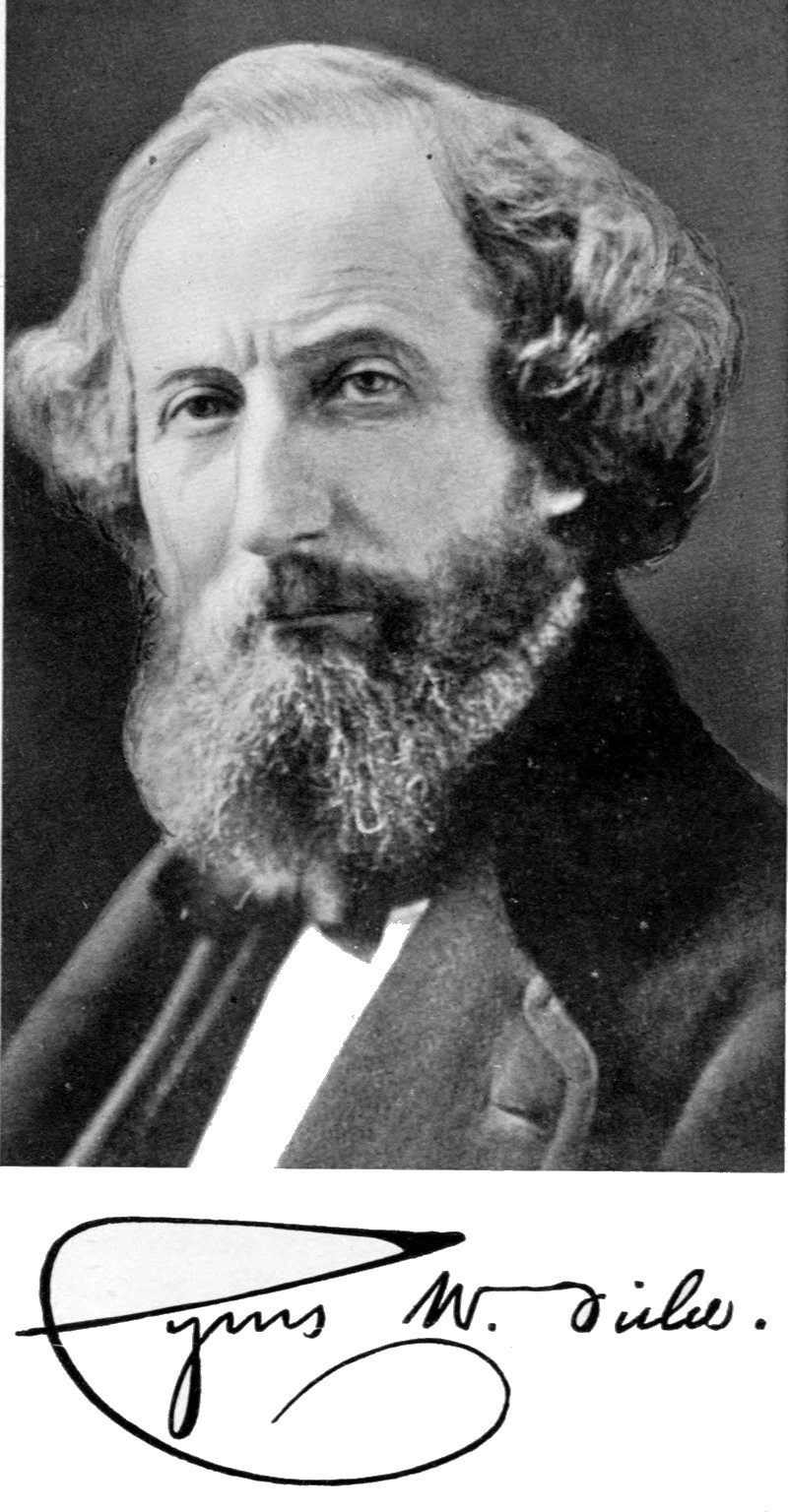
CHAPTER LIX. MEN OF MARK. — Cyrus W. Field. — Hon. Stephen V. White. — Austin Corbin. — Philip D. Armour. — John A. Stewart. — Anthony J. Drexel. — The Jerome Brothers. — Addison Cammack. — Russell Sage. — Chauncey M. Depew. — James M. Brown. — Stedman, the Poet and Financier. — Moses Taylor. — Anthony W. Morse. — Former Giants of the Street. — J. Pierpont Morgan. — Thomas L. James .
659
Cyrus W. Field—Hon. Stephen V. White—Austin Corbin—Philip
D. Armour—Hon. Levi P. Morton—John A.
Stewart—Anthony J. Drexel—The Jerome Brothers—Addison
Cammack—Russell Sage—Chauncey M.
Depew—James M. Brown—Stedman the poet—Victor
H. Newcombe—Moses Taylor—Former Giants
of the Street—Henry Keep—Anthony W. Morse.
Cyrus W. Field has been termed a locomotive in
trousers. The simile illustrates the indefatigable energy
of the man. His indomitable resolution and his energy of
character have placed him high among the distinguished
men of the age. He was born at Stockbridge, Mass., in 1819.
His father was a clergyman. At fifteen years of age, Cyrus
W. Field came to New York with a trifling sum in his
pocket. For three years he was in the employ of A. T.
Stewart, the dry goods merchant, and then went to Lee,
Mass., to work in his brother’s paper mill. Two years later
he became a partner in the paper firm of E. Root & Co., in
Maiden Lane, but the co-partnership was not successful.
Later on he again went into the paper business, and by 1853
had acquired a competence, whereupon he partially withdrew
from mercantile pursuits, and his health having failed
he took a trip to South America. He was about to withdraw
entirely from business, when he was induced, with
considerable difficulty, to look into a project for laying a
telegraphic cable to England. Frederick N. Gisbourne had
interested Matthew D. Field, a civil engineer, and a brother
of Cyrus W. Field, in a project for establishing a telegraph
line between New York and St. John’s, Newfoundland, partly
on poles, partly under ground, and partly under water. At
660St. John’s, the fastest steamers ever built were to sail for
Ireland, and the time between the two countries was to be
shortened to six days or less. A company had attempted
to carry out this project, and had become bankrupt. The
idea was un-American; it was unsatisfactory; much quicker
communication was needed. It was not till Mr. Field conceived
the idea of laying a cable direct from Newfoundland
to Ireland, that he became really interested in the enterprise.
He was assured by high scientific authority that the
idea could be carried out. In March, 1854, Mr. Field went
to St. John’s, Newfoundland, and obtained from the legislature
a charter, granting an exclusive right for fifty years,
to establish a telegraph line from the Continent of America
to Newfoundland and thence to Europe. Then, with considerable
difficulty, he obtained in New York subscriptions
amounting to $1,500,000, which he thought would be sufficient.
The line really cost $1,834,500, being more than
2,600 miles long. His first attempt failed in 1857. He
succeeded in the following year, and then the cable became
silent, and the incredulous public thought that this would
end all attempts to do something that seemed miraculous.
For seven years no attempt was made to lay a cable, as the
Civil War intervened, but in 1865 Mr. Field again took up
the enterprise, in which he had never lost faith. By this time
sub-marine telegraphy had been greatly improved, a better
cable was constructed, and a better machine for laying it
was invented. The famous steamer Great Eastern took the
cable, but after going some 1,200 miles, the great vessel
gave a lurch that broke the cable and an attempt to grapple
it was unsuccessful. In 1866, however, a cable was successfully
laid. A private citizen seldom receives such honors
as was showered on Mr. Field, in 1866, when Europe and
America realized that largely through the exertions of one
man, they were joined by the Atlantic cable. He had
pushed a vast project to a successful consummation in spite
of incredulity, ridicule, indifference and strenuous opposition.
661Peter the Hermit did not preach the crusade with
more fervor and enthusiasm than this priest of commerce, so
to speak, advocated the great work with which history will
always link his name. If any one had, a few centuries
ago, ventured to predict that the day would come when
there would be six or seven cable telegraphs stretched
along the ocean bed between America and Europe—along
dim prehistoric valleys, four miles under water and
over great sub-marine mountains—by means of which a
message could be sent nearly three thousand miles and an
answer received in thirty seconds; he would have been in
danger of incarceration as a lunatic, or even of death on the
scaffold or at the stake. This daring utilitarian age, however,
has grown accustomed to startling exhibitions of human
ingenuity. Mr. Field owns considerable Western Union
stock, and is interested in a number of railroads, including
the Manhattan Elevated. He owns one-fifth of the stock of
the Acadia Coal Co., is a special partner in the grain firm of
Field, Lindley & Co., and owns the Mail and Express, one of
the great papers of the metropolis. He has a house in
Gramercy Park and a fine mansion at Irvington on an estate
of about 500 acres. He is a large owner of real estate
in that very pleasant section, owning some 56 houses besides
considerable land. He is fully six feet in height, of
light complexion, with penetrating, bluish-gray eyes, which
peer sharply into those of an interlocutor. The nose is
prominent, the brows knit with years of thought, the mouth
and jaw indicate great decision of character. He is a man
of courtly manners and exceptional abilities.
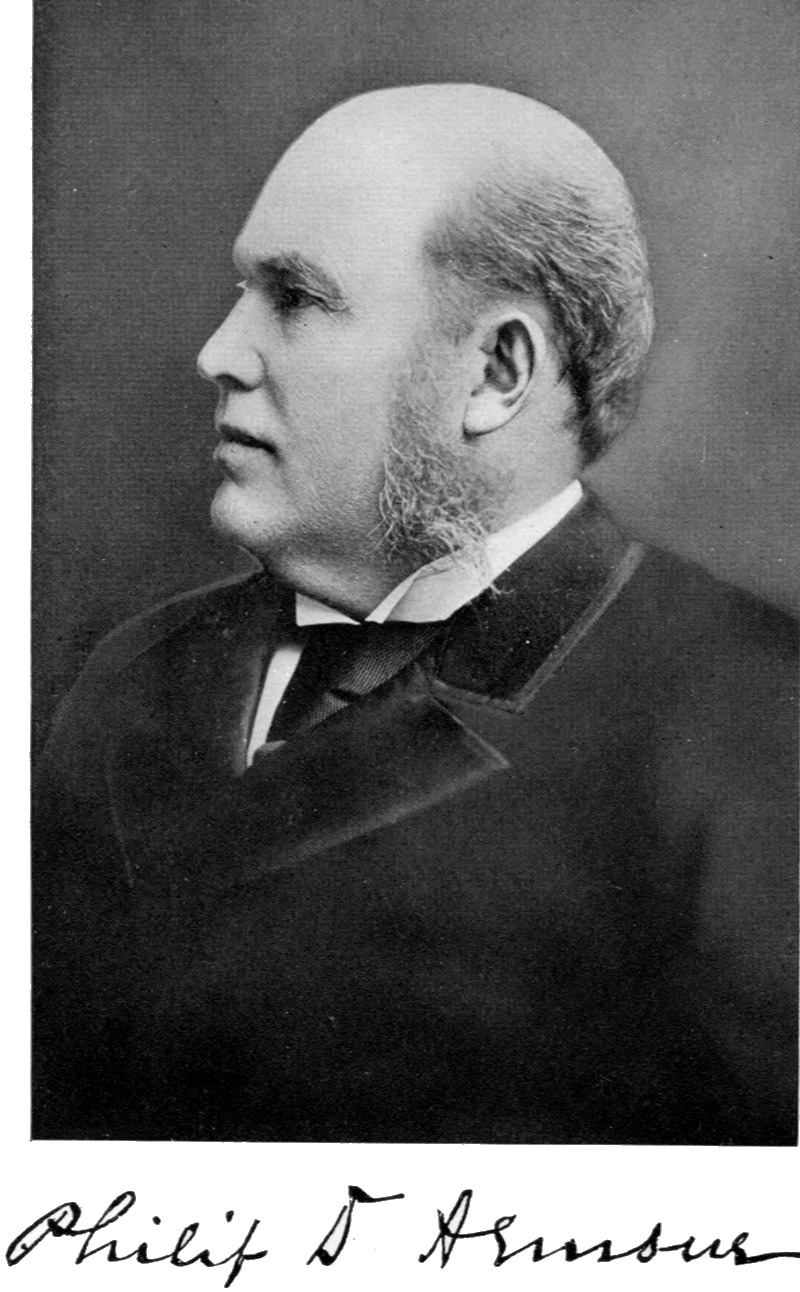
Hon. Stephen V. White is a short, compactly built, dark-complexioned
man of 54. In manners he is courteous and
unassuming; in business methods he is quick and straightforward.
He is a Director in the Western Union and the Lackawanna
road. He is a bold, dashing operator in stocks, and
662in Wall Street has met with considerable success. One of
his greatest favorites is Lackawanna. He expects to see it
some day go to 200. He has several times badly squeezed
the shorts in that stock, and, now that he has practically demonstrated
what they ought to have known before, namely,
that the stock can easily be cornered, the bears are apt to
fight shy of it. He has a large clientele, and, being a natural
leader, he has plenty of followers in his speculative campaigns.
He was born in North Carolina. He was graduated
from Knox College at Galesburg, Illinois. He studied
law in the office of the Hon. John J. Kasson, afterward
United States Minister to Germany. He drifted to St. Louis,
and there became a reporter for the Missouri Democrat. He
went to Des Moines, practised law for nine years, and was
elected a Judge. He came to New York, and for a time
practised law, but soon became a stock broker as well. He
still occasionally appears as counsel in the Federal Courts,
and sometimes in the Supreme Court of the United States.
He is a ready and forcible speaker, full of vim and fire. He
was a warm personal friend of the late Henry Ward Beecher,
the grand old Chrysostom of the nineteenth century, who
has left the world brighter for his memory and darker for
his absence. In the frank, keen, practical financier and
lawyer, and the great, warm hearted preacher, glowing with
fervid idealism and generous enthusiasm and high aspirations
for the human race, there were kindred qualities that
made them friends. Mr. White, in 1886, was elected to Congress
from Brooklyn, where he resides. He is scholarly in
his tastes, well versed in the classics, and is especially fond
of astronomy, for the study of which he has a fine observatory
in his palatial home. He is popular in Wall Street.
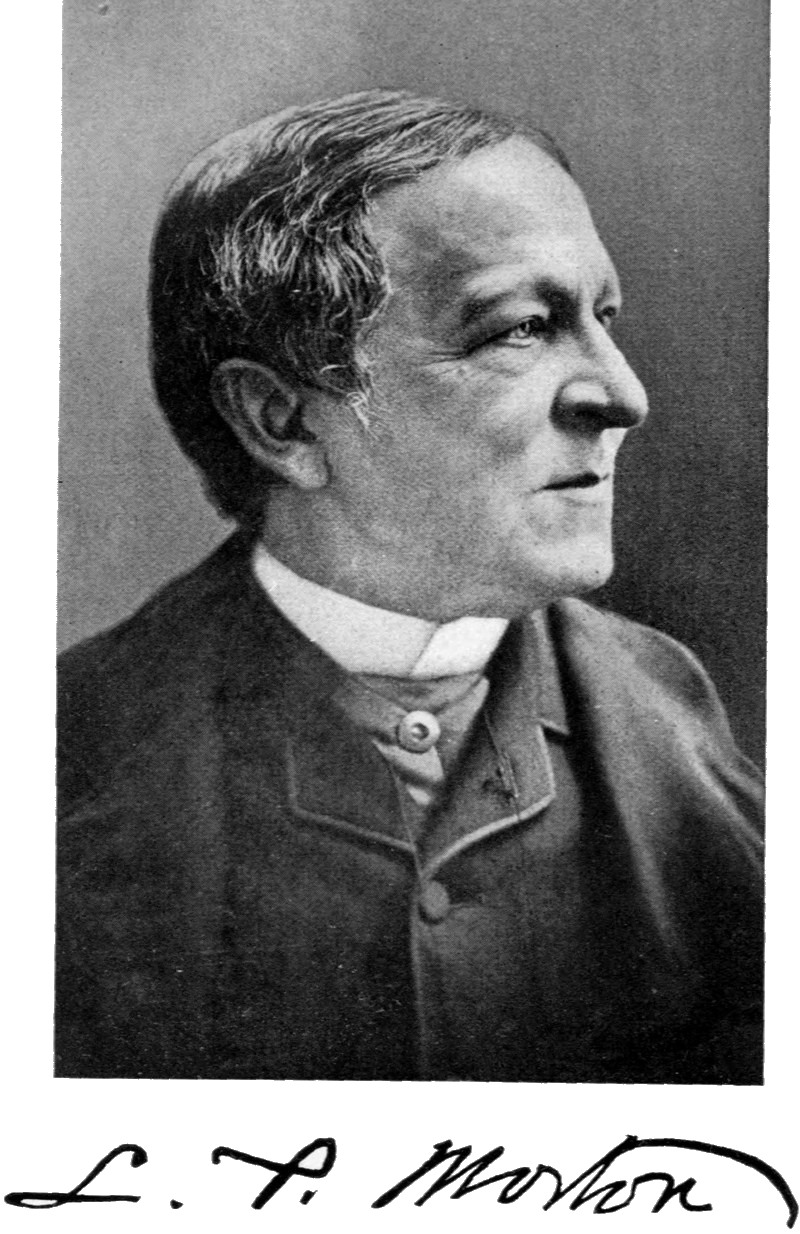
Within a year Austin Corbin has become a prominent
figure in the financial world, winning wide business celebrity
by his identification with the reorganization of the Reading
663Railroad. He is by nature the reverse of an iconoclast,
namely, a builder up. He would construct rather than destroy.
He would save a property if it were at all possible,
and in pulling that poor, tired, financial pilgrim Reading
out of the slough of despond, and in directing its way toward
a primrose path of prosperity, he is engaged in a congenial
task. He is about 58 years of age, and was born in
Newport, New Hampshire. He studied law, and was graduated
from the Harvard Law School. For a time he practised
law in his native town as a partner of Ex-Governor Metcalf,
of New Hampshire, but in 1851 he went to Davenport, Iowa.
There he really organized the first national bank under
the new system, which was to prove of such incalculable
financial benefit to the nation. Mr. Corbin made the first
application under the new law, but it happened to be faulty
in some minor technicalities, and before their trivialities
could be corrected four other national banks were organized,
so that his bank became number five under the new system.
He came to New York in 1865, and established a banking-house
here. He is President of the Reading, Long Island,
Indiana, Bloomington & Western, Elmira, Cortland &
Northern, and Manhattan Beach Railroads. He is a member
of the Union League, Manhattan and Saturday Night
Clubs of New York, the Somerset Club of Boston, and the
Conservative Club of London. He is a man of strict probity,
genial in his manners, and deservedly held in high
esteem.
Philip D. Armour was born in a little village near Watertown
in the interior of New York State, in 1832. He is
powerfully built, with broad shoulders, a large head and
firm, square features and light gray eyes, that never seem
excited or disturbed. His manners are quiet, composed and
courteous. In 1849, leaving his native village, he went to
California. He crossed the plains with a six-mule team
664which he drove himself. He worked for a few years in the
gold fields, accumulated a little capital, and in 1855 went to
Milwaukee and engaged in the grain and warehouse
business. He prospered moderately but steadily. Then he
thought of going into the lumber business, but bought an interest
in the pork packing establishment of Layton & Plankington,
the former retiring. At this time he was worth half
a million. He soon increased this three-fold. In the war,
provisions were very high, but when Gen. Grant was closing
in on the Confederacy for the final struggle that could only
end in the triumph of the North, Mr. Armour saw that
prices must come down with the Confederacy. He came at
once to New York and began to sell pork short. He began
to sell at $40 a barrel. He covered at $18 and netted, it is
said, nearly two million dollars. He now enlarged his
business, established new packing houses in Chicago and
Kansas City as well as agencies all over the world. He has
sold sixty million dollars’ worth of food products in a year.
He has five thousand names on his pay roll. He has
cornered pork three times within recent years, and in 1880
made, it is said, three millions in punishing bears who tried
to sell the market down. A campaign against the bears in
pork or meats he calls protecting his cellars. Those cellars
are well protected. No bearish Ali Baba has the pass-word
to go in and plunder them, and the number of cinnamons
and grizzlies, big and little, who have licked their paws in rueful
remembrance of the attempt are not a few. He has made
millions in successful grain speculations. He invested four
millions in St. Paul stock, buying it outright. He is now
one of the recognized financial leaders of the country, as
aggressive as a Wellington at the proper time and cautious
as a Fabius when caution is the watchword of wisdom. He
lives in a plain house on Prairie Avenue in Chicago, and is
himself a man devoid of ostentation. He works from 7 A.
M. till 6 P. M. His fortune is estimated at fifteen millions
of dollars.
666Hon. Levi P. Morton received his business training in the
dry goods trade. Then he became a banker. He has a
national reputation as a financier. He is shrewd, genial
and successful. President Garfield made him Minister to
France. He had previously done good service as a member
of Congress. He is now in his sixty-third year. He is
a lineal descendant of George Morton, one of the Pilgrim
Fathers who came to this country in 1623. Mr.
Morton was born in the State of New Hampshire. At 20
he became a clerk in a country store. He had to shift
for himself. Necessity is the stimulus that men of real
ability require. He stayed five years in the obscure New
Hampshire village and then went to Boston, where he ultimately
engaged in business. But New York attracted him.
He embarked in the dry goods business here and went into
banking afterwards, and soon laid the broad foundations for
the successful firms of Morton, Bliss & Co., of New York, and
Morton, Rose & Co., of London. His Congressional and
diplomatic laurels followed. He filled the French Mission
with great satisfaction to the French people as well as those
of the American traveling public, as he was a free and generous
entertainer. His large fortune has been amassed
since he came to Wall Street. He has a fine villa at Newport
and also one on the Hudson.
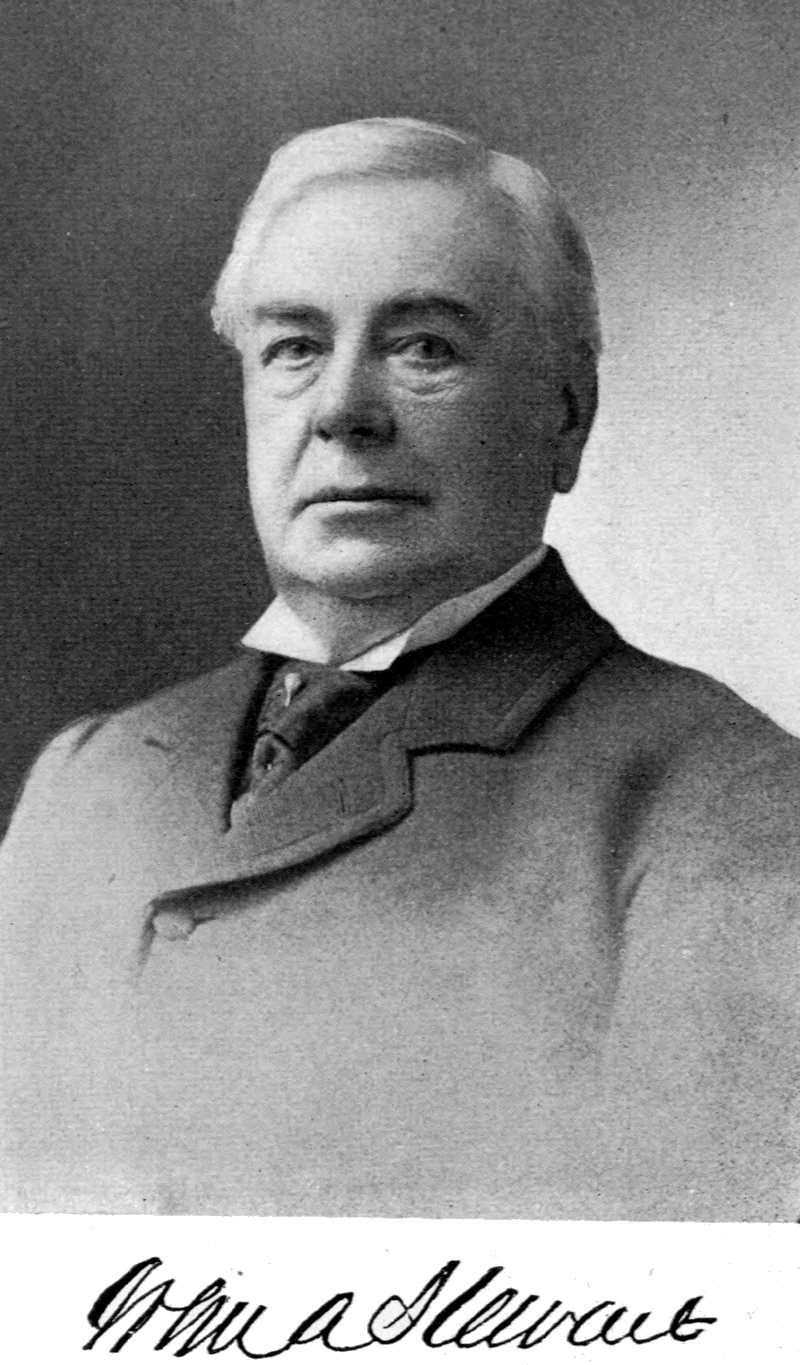
John A. Stewart is President of the United States Trust
Company, one of the largest banking and trust corporations
in America. Its deposits are over forty millions of dollars.
Its great success is largely due to the able management of
President Stewart, who has in fact shown marvellous ability
in the management of large financial interests. Mr. Stewart
during the war period was urged by Secretary Chase to
became Sub-Treasurer of the United States in this city, and
he finally consented to take the position, although at a great
667personal sacrifice, being actuated solely by a patriotic spirit.
He is one of the financial lights of the metropolis, and is
respected for his financial acumen and his sterling qualities
as a man.
Anthony J. Drexel is the head of the house of Drexel &
Co. in Philadelphia and Drexel, Morgan & Co. in New York.
The house was founded by Joseph Drexel, who emigrated to
this country from Germany early in the present century, and
began business in Philadelphia in a small way as a sort of
exchange broker. When the California gold fever broke
out he made connections with parties in San Francisco and
received large amounts of gold. In these transactions he
got his first great start. The returns from the exchange
were large. As his means increased he gradually extended
his business, and finally, by thrift and diligent attention to
business, he accumulated quite a snug fortune. In the end
he built up a successful banking business, in which his sons
became interested, and at his death inherited his wealth and
the business. The elder brother died a few years ago, leaving
ten million dollars to his family and to various charities.
Anthony Drexel, the present head of this signally
successful firm, is 55 years of age, and is a man of excellent
business capacity. He is one of the successful business
men of the United States.
Addison Jerome, who died some years ago, was a gigantic
operator in his day, and displayed great ability in the conduct
of speculative campaigns, but he went beyond his
depth and disaster followed. Like many others in Wall
Street, he gained his business education in the dry goods
trade. He met with one of his greatest reverses in his
attempt to corner Lake Shore. Others followed, one after
another, and the end was financial shipwreck.
668
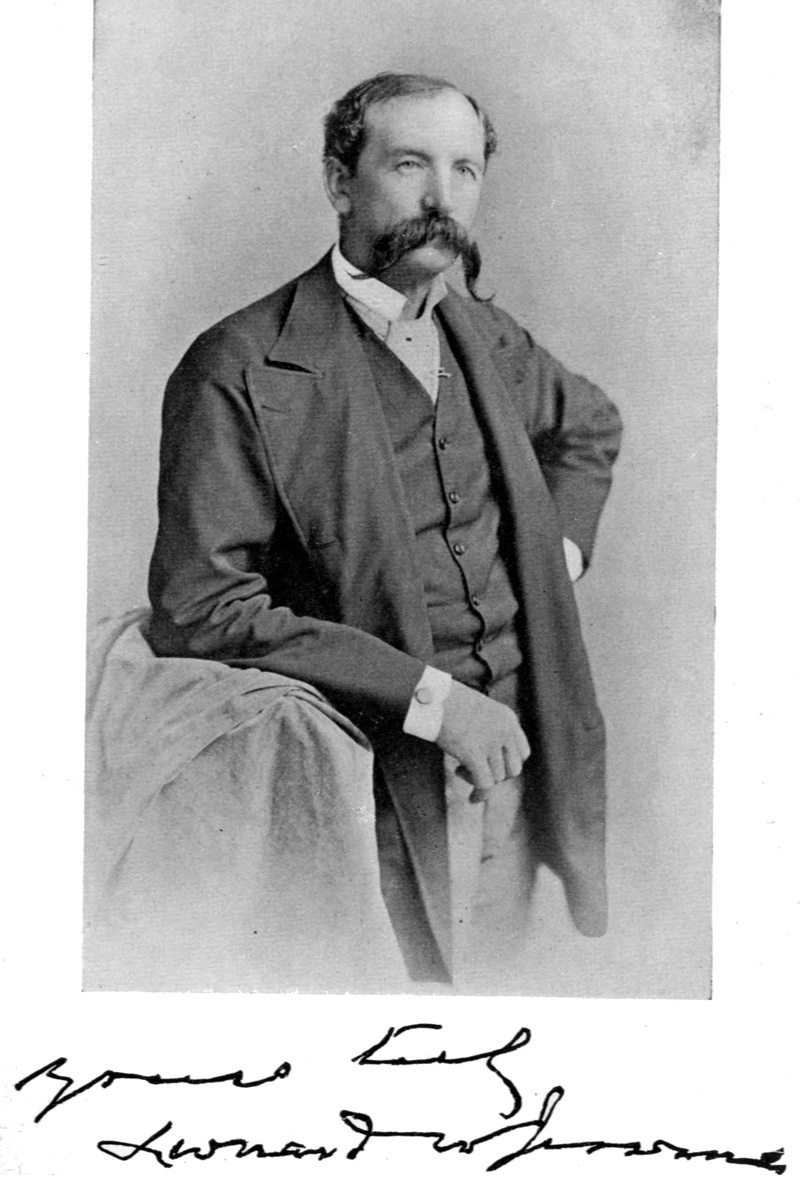
yours truly
Leonard W Jerome
At this time his brother, Leonard W. Jerome, was one of
the foremost men of Wall Street and was a partner of Wm.
R. Travers, the firm name being Travers & Jerome. Leonard
Jerome is splendidly built and nearly six feet in height. His
ancestors were Huguenots. He was born in Pompey, Onondaga
county, New York. His grandfather was a Presbyterian
clergyman. At 14 Leonard was sent to Princeton
College and was graduated with credit. He then spent
three years reading law in Albany, and at 22 was admitted
to the bar. He practiced law with his uncle, Judge Jerome, of
Rochester. Afterward with his brother Lawrence he established
a newspaper, called the Rochester Native American, and
he made a good editor. President Filmore appointed him
Consul at Trieste. He came to Wall Street in 1854. His
first operation was in putting up all he could spare, about
two thousand dollars, as margin on five hundred shares of
Cleveland and Toledo stock, one of the old-time speculative
favorites. He bought it on a sure point from the treasurer
of the road. He bought. The treasurer sold. Result:
The stock fell, and Jerome lost all his spare funds. He was
not discouraged. He studied Wall Street tactics, and in
the end he made the treasurer pay dearly for his former
success in spearing a lamb. He invested $500 in buying
calls and made $5,000 within thirty days. He became a
partner of William R. Travers. They were very successful
on the short side of the market. He was to meet with some
reverses, however. In 1862 the agent of the State of Indiana,
in a manner that would have deceived the very elect,
through an unauthorized issue of Indiana 5 per cent. bonds,
swindled him out of $600,000 by the hypothecation of the
bonds. The State repudiated the acts of its agent, and as
an individual is not allowed to sue a State, Mr. Jerome was
robbed of the money. Still another reverse was met in
Pacific Mail. When the capital stock was increased to
$20,000,000 he took 50,000 shares at 200. The price advanced
soon thereafter to 243, and he sold a part of his
669stock, but kept a large block of it on account of his faith in
its value. At the next quarterly meeting of the Board of
Directors, however, it was decided by a majority of one, five
directors being present, to reduce the dividend from five to
three per cent. The street was thunderstruck at the audacity
of this move; the market broke, and in two hours Mr.
Jerome’s stock depreciated $800,000. Still he made large
gains in Pacific Mail as well as big losses. He left Wall
Street years ago with an ample fortune. He went there
with next to nothing, and in spite of reverses, came out a
substantial victor in the financial tourney. In the war he
was always enthusiastic in his devotion to the cause of the
North, and subscribed with princely liberality to aid patriotic
movements. When the first great Union meeting was
held at the Academy of Music he paid all the expenses. He
was Treasurer of the Union Defense Committee, and he
likewise paid all of its incidental expenses. He was the
most liberal in his contributions and the most devoted in
his allegiance to the Government in its darkest and gloomiest
hours. He was the founder of the fund for the benefit
of the families of those who were killed or wounded in the
New York riots of 1863, growing out of the draft. His
checks for $10,000 and more to aid the Union arms were
frequent; he contributed $35,000 toward the construction of
the “Meteor,” a war vessel built to destroy the famous
“Alabama” of the Confederacy. During the war Mr.
Jerome purchased and held for some years the largest interest
in the New York Times, then edited by the great war
editor, Henry J. Raymond, an old friend of Mr. Jerome’s.
Like Mr. Travers, his early partner, Mr. Jerome has done
much to encourage all out-of-door sports, especially on the
race course. He established the Jerome Park Jockey Club,
and became half owner in a famous speed horse which cost
$40,000. No one has done more to improve the breed of
blooded horses in this country than Mr. Jerome. He has
also been prominent in yachting. He first owned the
670“Undine”; then, with Commodore McVickar, he bought the
“Restless,” and still later, with Commodore James Gordon
Bennett, the “Dauntless.” He paid $125,000 for the steam
yacht “Clara Clarita,” which proved a failure, and since
then he has not been so enthusiastic a yachtsman as formerly.
He made $45,000 on the great ocean yacht race of
1866. He had much to do with introducing the taste for
four-in-hands in this country. He has been a liberal patron
of American art in all its branches. He paid for the musical
education of a number of well-known singers, whose
voices were trained in the best Italian schools. His social
position has always been high, but it has been still further
promoted by the marriages of his beautiful daughters. The
elder, Clara, is married to Mr. Morton Frewen, a member of
an old English family which long represented their shire in
Parliament. Another, Leoni, married Mr. John Leslie of
the Guards, and son and heir of Sir John Leslie; while
Jennie married Lord Randolph Churchill, the notable but
erratic statesman. Leonard W. Jerome, whose history I
have followed somewhat minutely, is one of the best-hearted
men that Wall Street ever knew. The more he made the
more he gave. He was liberal to a fault. He was never
happy but when making others happy. He was a Sir Philip
Sidney of chivalry and peerless generosity—a man in whom
the warmest and most ingratiating traits of human nature
were as natural as the winning sunniness of his disposition
and the courage which once made him one of the great gladiators
in the arena of Wall Street. Both he and his brother
Lawrence are old members of the Union Club. Lawrence
was formerly a stock broker. He had his ups and downs,
and withdrew from Wall Street several years ago. He sold
his seat in the Stock Exchange and placed the proceeds,
about $30,000, in an annuity which insures him about $4,000
a year for the remainder of his life. This, with his other
income, places him in easy circumstances and preserves his
naturally cheerful disposition, rendering him one of the
671most companionable men in the city. He is about five feet
ten inches in height, stout and of light complexion. Since
the death of his old friend, Wm. R. Travers, to whom he
was as Damon to Pythias, he stands pre-eminent among the
wits of New York. He is the prince of metropolitan wags
and wits. His friends are legion. The great, genial, warm
hearted, boyish Larry Jerome, as his friends love to call
him, is literally a man without an enemy, and long may he
live to brighten society with his happy exuberance of spirits,
his scintillating humor and his brilliant wit.
Addison Cammack is about sixty years of age and was
born in Hopkinsville, Kentucky. He was reared in comfortable
but humble circumstances. Early in life he began
his business career as a clerk in the house of J. P. Whitney
& Co., then the largest ship brokers in New Orleans. He
showed decided business talent, and ultimately became a
partner in the firm. In the early part of the Civil War he
was located in Havana, but in 1863 he went to London and
and engaged in business and speculation there. He returned
to this country in two years, and in 1866 embarked in the
wholesale liquor business in New York with J. W. George,
the firm being J. W. George & Co. In about two years the
firm was dissolved and Mr. Cammack became a member of
the Stock Exchange, having previously formed a co-partnership
with the late Chas. J. Osborn, under the name of
Osborn & Cammack. This co-partnership, after some years
of great prosperity, was dissolved, and since then Mr. Cammack
has been an operator on his own account. In this
capacity he has become widely known. He is a shrewd
operator, and quickly changes his mind if he thinks he has
been wrong. He jumps from one side of the market to the
other with the greatest celerity when occasion demands it,
but in the main he seems most at home on the bear side. In
bear operations he has met with some reverses, while in this
672direction he has also made millions. He seems to place
great faith in Benner’s book of “Financial Prophecies.” At
times he operates on a very large scale, and he has been
known to cover fifty thousand shares of stock in a single
day. He is tall, well built, and has strong features, with
keen, gray eyes. In manners he is very democratic and
candid, and occasionally somewhat bluff; but he is a man of
generous impulses, very charitable, and has plenty of friends,
both for his financial acumen and for his qualities as a man
who never deserts his friends, and who has not a few of the
characteristics of mediæval chivalry joined to the shrewd
practicality of a great stock operator of this practical epoch.
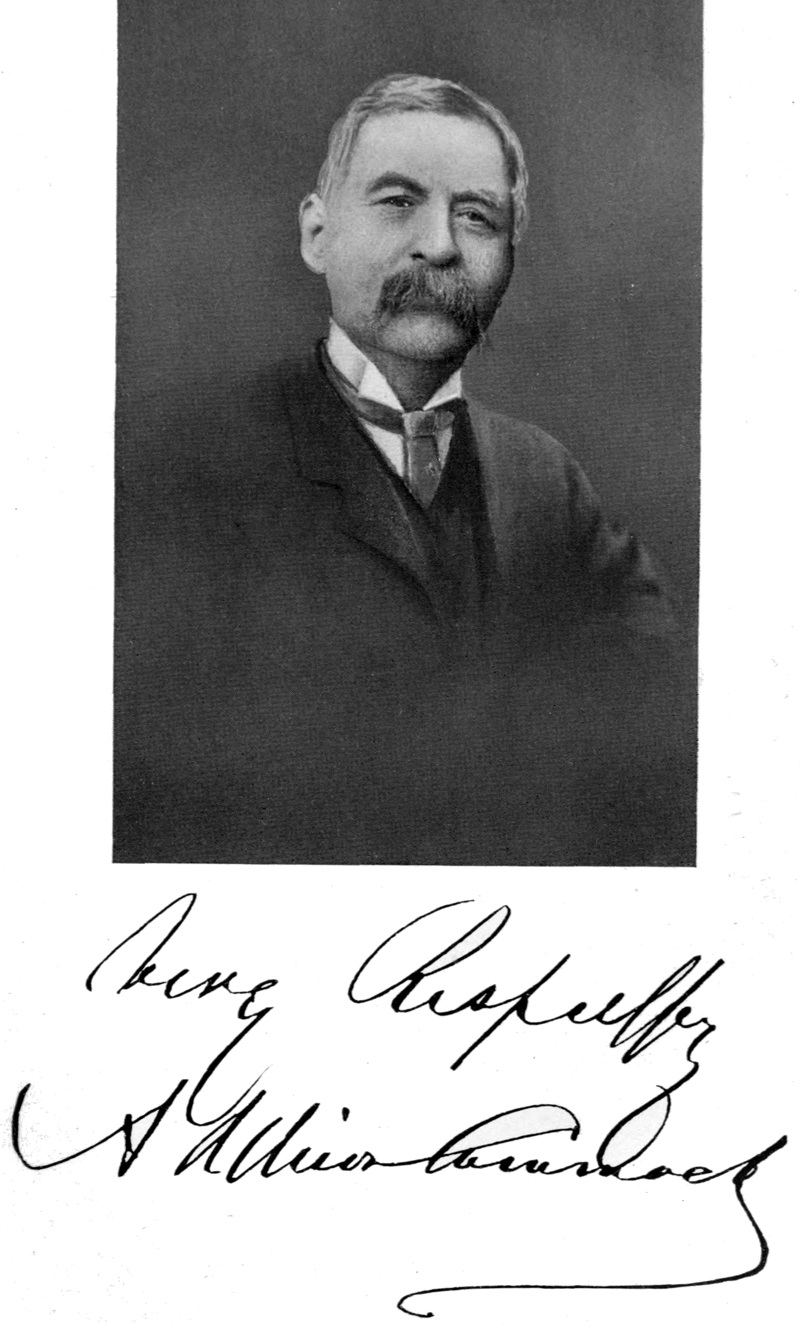
Very Respectfully
Addison Cammack
Russell Sage is one of the best known of Wall Street
celebrities. He was born seventy years ago in Oneida
county, of this State. As a boy, he was employed in a
country general store, beginning life in this fashion at 14.
His business aptitude early manifested itself, and at 20 he
bought out his employer in Troy, to which he had in the
meantime removed. He became later on a member of the
Troy Board of Aldermen, served seven years, and was then
elected Treasurer. Still later he was elected to Congress,
serving from 1853 to 1857. He started the project of purchasing
Mount Vernon and making it a national domain,
and took great pride in the success which attended his
efforts in this direction. While in Congress he became connected
with the Pacific Mail Steamship Company, and later
Vice-President of the Chicago, Milwaukee & St. Paul, also
for a time its acting president. He is now a director in the
Gould telegraph and railroad systems, is interested in a
number of trust companies and is also said to own a large
amount of stock in the Importers’ and Traders’ Bank. He
is the king of puts and calls. He has usually been successful
in writing privileges, but in the summer of 1884, when
the market broke so badly as to produce a panic, Mr. Sage
673met with a decided reverse. He had sold a large number of
puts, and the loss was several million dollars. He is known
as, in one sense, the largest capitalist of Wall Street, inasmuch
as he keeps the largest cash balance. It runs far up
in the millions, giving him quick resources with which to
carry out any project that may seem desirable. He is quiet
and simple in his habits, making no display. He lives on
Fifth Avenue, and also has a place at Babylon, Long Island.
He is worth about twenty millions. He is tall, light complexioned,
with keen, gray eyes, and in Wall Street might be
taken for a country gentleman seeing the sights.
Chauncey M. Depew owes his rise to native abilities and
the friendship of the Vanderbilt family, which he has thoroughly
merited. He made the acquaintance of Wm. H.
Vanderbilt about the year 1866 and became the attorney of
the New York and Harlem Railroad. On the union of the
New York Central and Harlem roads, in 1869, he was appointed
attorney of the consolidated company, and in 1875
he was made general counsel. A few years previous he had
been elected director of the New York Central road, and
subsequently became a director in the Chicago and Northwestern,
Michigan Central, St. Paul and Omaha, the Lake
Shore and the Nickel Plate. In 1882 he was elected second
vice-president of the New York Central, and in 1885 succeeded
Mr. Rutter as president of that great railroad. He
was born in Peekskill in 1834, and comes of an old French
Huguenot family. He still owns the homestead purchased
two hundred years ago by his ancestors. His mother is a
descendant of the brother of Roger Sherman, of revolutionary
fame. Mr. Depew was graduated from Yale College in
1856, and three years later was admitted to the bar. In
1862 he was elected to the New York Assembly and acted as
Chairman of the Committee of Ways and Means and part
of the time as Speaker. In 1863, the year after Governor
674Seymour’s election, Mr. Depew was a candidate for Secretary
of State on the Republican ticket, overcame the Democratic
ascendancy, and was elected by about thirty thousand votes.
He declined re-election and was appointed Minister to Japan
by Secretary Seward. He held the post several years, and
resigned it to resume business. His commission as Collector
of the Port of New York was once made out by President
Johnson, but in consequence of Senator E. D. Morgan’s refusal
to sustain Mr. Johnson’s veto of the Civil Rights bill
the President never sent the nomination to the Senate, but
tore it up in a rage. In 1872 Mr. Depew was a candidate
for Lieutenant-Governor of New York on the Liberal-Republican
ticket, and was defeated. Two years later the
Legislature elected him Regent of the State University.
He served one year as one of the Commissioners to build
the new Capitol at Albany. In the memorable contest for
the United States Senatorship in 1881, Mr. Depew for
eighty-two days received the votes of three-fourths of the
Republican members, retiring then to ensure the election
of Warner Miller. Mr. Depew is President of the Union
League and a member of many other clubs and societies,
and is very popular wherever he is known. He is one of
the wittiest and readiest after-dinner speakers in this country,
and when occasion requires, rises to the height of a born
orator. His tastes seem to be those of a statesman and a
scholar rather than those of a financier in the ordinary
acceptation of the term, but his conservative and able administration
of his office as President of one of the greatest
trunk lines in this country, reveals a thorough apprehension
of railroad problems and a natural capacity for whatever
duties may be imposed upon him. His great versatility is
exemplified by the fact that he has succeeded in law, politics
and railroad management.
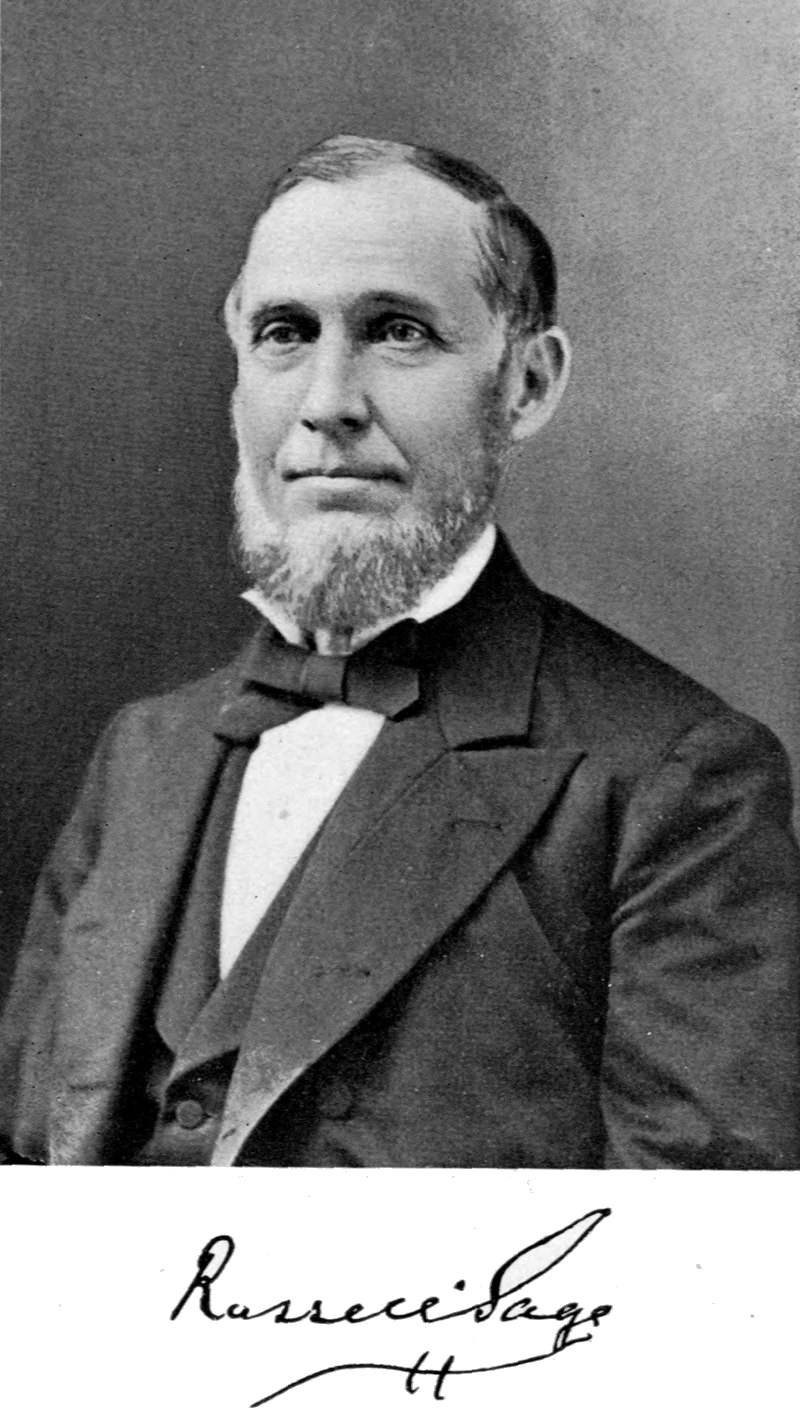
James M. Brown, the banker, was born in New York city,
and is about 65 years of age. He is ex-President of the Chamber
675of Commerce, and is held in general esteem and respect.
The house of Brown Bros. & Co., in which he is now the
senior member, has an interesting history. Early in the
present century Alexander Brown came from Belfast, Ireland,
to this country, and settled in Baltimore, where he engaged
in the dry goods business under the firm name of
Alexander Brown & Sons. Subsequently the firm comprised
five sons of Alexander Brown. The business of the dry
goods firm prospered, and branch houses were established
in Philadelphia, New York and Liverpool, a son going to
each of these cities to represent the parent house in Baltimore.
In New York and Philadelphia the style of the firm
was Brown Brothers & Co., as the father had died in the
meantime. In Liverpool they associated with them Mr.
Shipley, and the firm there was Brown, Shipley & Co.
Another house was established in London later on under the
same title as the Liverpool firm. All the houses were still
engaged in the dry goods trade. Here in New York, in
which we are more particularly interested, the firm made advances
on cotton, and received linens from abroad, and also
orders to buy cotton for Liverpool. Gradually the house
began to make larger advances to planters and others engaged
in the cotton trade, and finally the banking business
became so large as to swallow up the dry goods trade and
the house thereupon dropped merchandise and became
bankers. Later on a branch house was established in Boston,
and at times it has had branch houses in New Orleans,
Mobile, Galveston, Savannah and Charleston conducted
under the name of the parent firm. At present it has
houses in London, Liverpool, New York, Philadelphia,
Boston, Baltimore and New Orleans. All of the original
Brown brothers are dead. James M. Brown is a near relative
of James Brown, whose picture appears, and who was
the original head of the house in New York. James M.
Brown did not enter the house in his youth. He was for
years the senior member of the dry goods house of Brown,
676Seaver & Dunbar. On the dissolution of this firm James M.
Brown became a partner in the house of which, by reason of
his years and large experience, he may be considered the
head. The other partners here are Howard Potter, John
Crosby Brown, Charles D. Dickey, Waldron Post Brown, a
son of James M. Brown, and W. F. Halsey. The New York
partners are interested in the branch houses in this country
and abroad. James M. Brown was a member of the famous
Committee of Seventy which contributed to the downfall of
the Tweed Ring in this city. He is of the medium height
and florid complexion, well preserved, genial in manners,
and is a man of high character.
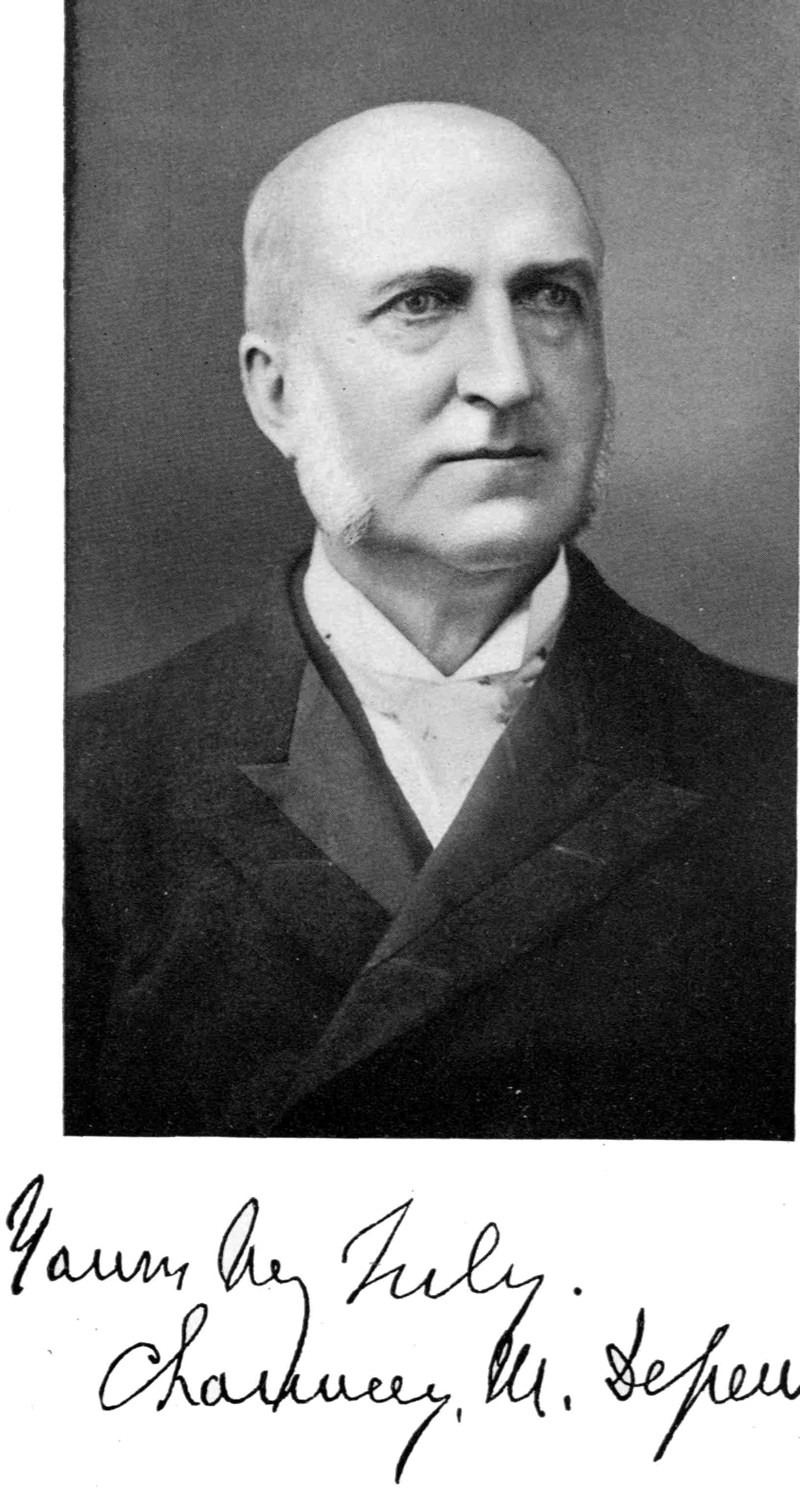
Yours Very Truly.
Chauncey M. Depew.
A small, slightly built gentleman with iron gray side
whiskers, a refined face and expressive gray eyes, is one of
the notable figures in Wall Street. It is Edmund Clarence
Stedman, the banker poet. He was born in a small town in
Connecticut in 1833, studied at Yale, entered journalism in
1852, came to New York in 1855, and soon began to contribute
poems to the New York Tribune. He became a war
correspondent for the World on the outbreak of the rebellion,
and continued in this capacity till 1863. In that year he
became private secretary to Attorney-General Bates at
Washington. Meantime he studied law, and contributed to
the Atlantic Monthly and other leading magazines. As a
poet, he holds high rank; as a writer of polished, graceful
prose he has few equals; as a thorough gentleman and a
scrupulous man of business he is held in the highest respect.
Through the imprudence of another he has within a few
years met with some financial reverses, which he met
courageously and honorably, and he is now well on his way
towards his former position of financial ease. Although a
poet, he understands Wall Street business thoroughly, and is
considered a keen judge of financial opportunities.
677Victor H. Newcombe was born in Louisville, Kentucky,
about 48 years ago. His father was President of the Louisville
& Nashville Railroad, and the son succeeded the
father in that position. The elder Newcombe was a financial
power in Kentucky. He was sagacious and far-seeing. In
every respect, he was an excellent business man. Victor
Newcombe has fallen heir to his father’s laurels and is a successful
operator in Wall Street. He has achieved signal
success in most of the campaigns in which he has engaged,
whether on the bull or the bear side of the market. He is
cautious, and turns quickly when he thinks there is occasion.
He seems to act on the French saying, that “only a fool
never changes his mind.” He lives in fine style on Fifth
avenue, and also has a beautiful residence at Elberon. He
is one of a number of prominent gentlemen from the South
who have enrolled themselves among the citizens and taxpayers
of New York. He is an ex-director in the New
York & New England road, and a prominent member of the
Union and Tuxedo Park Clubs.
Moses Taylor, now deceased, was one of the notable
figures in Wall Street life for many years. He started as a
South street merchant, after having been a clerk with G. G.
& S. Howland. Wm. H. Aspinwall was also a clerk with
that house at the same time. When Mr. Taylor gave up his
situation to embark in business for himself, Mr. Aspinwall
was admitted into the Howland firm as a junior partner.
Moses Taylor was a man governed largely by intuition.
There was little argument; with him, so to speak, it was a
word and a blow. Having formed his impression and taken his
quick resolution, there was no length to which he would not
go in the transaction, either in buying or selling or advancing
money. He was President of the City Bank and owned
a large amount of its stock. Under his administration the
bank was wonderfully successful. His son-in-law Percy R.
678Pyne, is now its President. Moses Taylor was a valuable
aid to the Union cause during the war. He was a close
friend of Secretary Chase, and whenever the Government
needed the assistance of the banks, the Secretary’s influence
with the great merchant speedily brought about the desired
result. Moses Taylor realized the fact that the support of
the Government by the entire banking system was an imperative
necessity. The presidents of the banks would be
called together on one of these appeals from the Secretary
of the Treasury, and whatever action Mr. Taylor favored
would be adopted, so strong was his influence, and so high
his standing as a merchant and financier. He accumulated
wealth very fast in connection with the sugar branch of his
business. Most of the large sugar planters consigned their
product to his firm, and they were also governed by his
superior judgment in investing their money, so that he
always had important connections with Wall Street, a fact
that entitles him to a place in this book. While investing
millions for Cuban capitalists, he also invested very largely
for himself. Moses Taylor was the first to discover the
value of the Delaware, Lackawanna & Western Coal property,
and while the stock was kicked about Wall Street, because
the company was bankrupt, he picked it up at a few
cents on the dollar, and made millions of dollars from this
investment alone. At his death he was one of the largest
owners of the stock, as his faith in it was so strong that he
had refused to sell it, even though the price had risen above
140. He died worth at least forty millions of dollars. He
had no social aspirations, and no interest in anything but
business. It was his idol. Few men have been harder
workers from early in life up to their last days. He never
felt that he could spare time for recreation, and was seldom
known during his long business career to leave the city
over night, summer or winter, except on business. Moses
Taylor had for partners in his business his son-in-law
Percy R. Pyne and Lawrence Turnure, both excellent business
679men, and Mr. Taylor owed much of his success to the
selection of these gentlemen to aid in the management of
his affairs. Mr. Taylor placed in the hands of these two
gentlemen, especially during the last ten years of his life,
the laboring oar of his vast business, and the successful results
are the evidence of their sagacity and marvellous
ability.
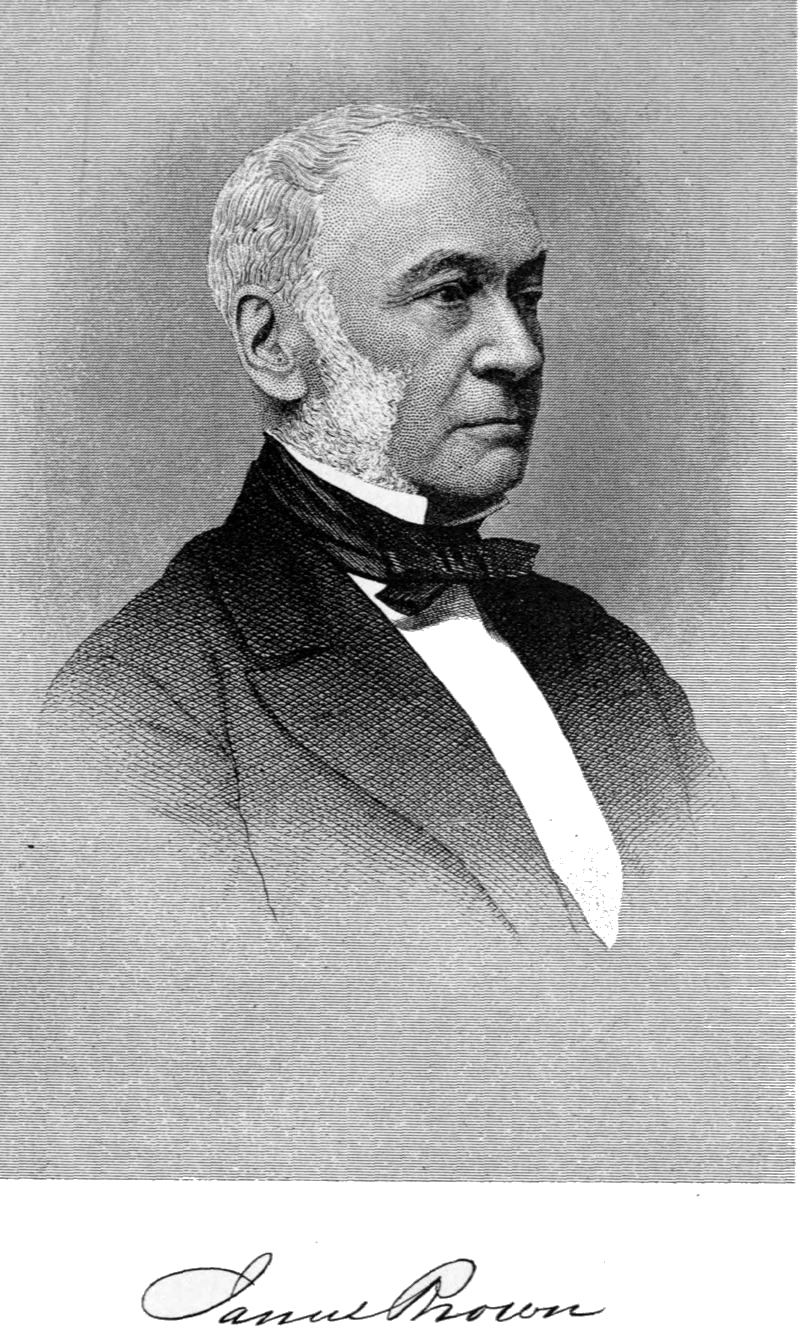
Anthony W. Morse was once one of the remarkable men
of Wall Street. He made $150,000 in speculation, bought a
yacht and went to Europe during the war. While in England,
he mingled with the aristocracy, and became strongly
imbued with the idea that the North would not be successful
in the war, and that the National currency would become
almost valueless. He thought that the more the National currency
depreciated, the more railroad stocks and bonds would
advance; in short, that whatever the currency would buy
would advance, while the currency itself would become nearly
worthless. He therefore became a rampant bull on stocks. He
bought almost the whole list, and also did a large business in
buying for others whom he succeeded in impressing with his
own ideas. He had many followers and made a tremendous
inflation. Secretary of the Treasury Chase was advised
of this Morse speculation, which might prove prejudicial to
the National credit, and he announced that if the inflation
was carried any further, he would prick the bubble by selling
gold. Anthony W. Morse thereupon personally sent
Secretary Chase a dispatch saying that he would take all
the gold that the United States Government had to sell.
Mr. Chase immediately ordered Assistant Treasurer John
J. Cisco to sell $10,000,000 of gold to the highest bidders.
The usual notice appeared in the morning newspapers, and
a panic at once followed. At 12 o’clock, or two hours after
the opening of the Exchange, it was announced from the
rostrum that Anthony W. Morse had failed. This terminated
680the career of Mr. Morse as a large operator and manipulator,
and with his downfall the death knell was sounded to
his imported theories. He straggled manfully for several
years to regain his footing, but his prestige was gone, and
he failed in every effort to push his way again to the front.
His ill-success soured him. His health failed, and he went
to Havana to recuperate. There he died with profanity on
his lips, enraged at the failure of all his hopes. He paid
the penalty of disloyalty. His friends of the English
nobility were largely to blame for all his misfortunes.
Their predictions of the success of the South led him on to
irretrievable ruin. He did not see that their wish was
father to the thought.
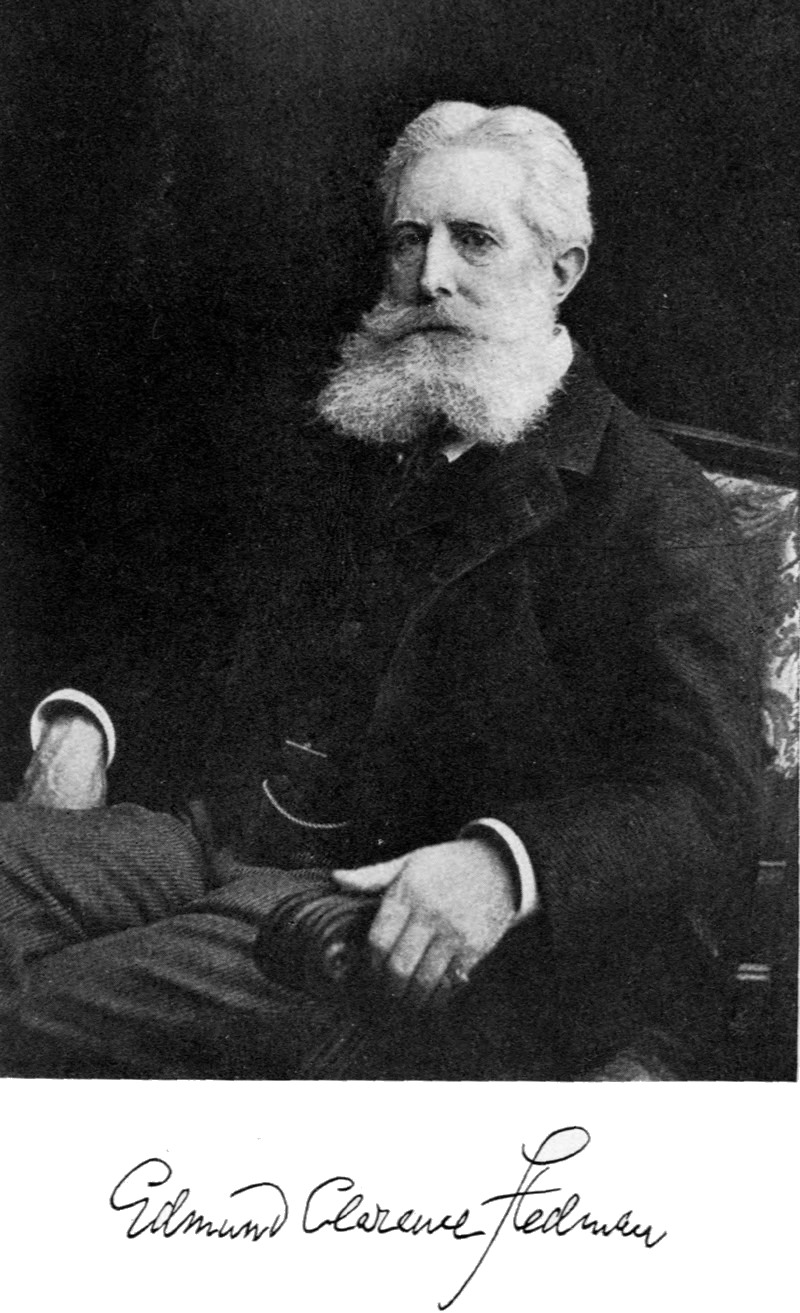
Henry Keep, once President of the Lake Shore road, and
also of the New York Central, was in his day a power in
Wall Street. He was the first to discover the intrinsic value
of railroad property in the Northwest, and manipulated
Chicago & Northwestern stock, both common and preferred,
very successfully, making a great deal of money for himself
and friends. He died very wealthy. He came to New
York city from Watertown, in the interior of New York,
and at first was an exchange broker, dealing mainly in uncurrent
money. He had previously served in some humble
position on a railroad. By careful and economical habits
he was able to leave a fortune of several million dollars,
largely in common and preferred Northwestern stock. The
plot of ground on which William H. Vanderbilt built his palatial
Fifth Avenue home was once the property of Mr. Keep,
who originally bought it for about $250,000 for the purpose
of building a charitable institution, but changed his mind
when the property quadrupled in value. Then he concluded
that charity should begin at home. He sold the plot, extending
for one block along Fifth Avenue, to Mr. Vanderbilt
for one million dollars. Still his original intentions
681were good, and it was only after the real estate market, as
with Satanic malice, had in that locality advanced 400 per
cent. and taken him up into a high mountain of temptation,
that his philanthropical project turned awry and lost the
name of action. While Mr. Keep made a signally good President
of the Lake Shore road and was a great manipulator of
stocks, he was a failure as President of the New York Central,
and he resigned that post having no confidence in the
future of the property. Commodore Vanderbilt, who believed
in the property, became his successor, and in a previous
chapter I have given the story of the rise of that remarkable
man. It is of interest to recall, by the way, that while
President of the Lake Shore road Mr. Keep went largely
short of the stock. As the President he naturally had inside
information. Addison Jerome, a brother of Leonard
Jerome, was a big operator of the day, and undertook to
corner President Keep. In those days a great deal of stock
was sold on seller’s option for thirty and sixty days. Mr.
Keep had sold largely in this way, and Addison Jerome and
his clique had bought heavily, expecting that the corner
would be complete when the options should mature. A surprise
awaited them. Mr. Keep made deliveries promptly in
brand new shares. They were really an over-issue by the
Company. It was a Waterloo in a double sense for Jerome
and his fellow bulls. They were in over their heads. It
had such a dampening effect that they immediately threw
up the sponge and the stock came down with a crash. The
issue of this new stock was smoothed over by turning the
avails into the treasury of the Company, a fact, however,
which did not prevent Mr. Keep from making a pretty good
turn on his shorts.
J. Pierpont Morgan, known as the “Railroad Reorganizer,”
and who has won a place in the front rank among
American financiers, is a son of the well-known Junius S.
682Morgan, the head of the firm of J. S. Morgan & Co., of London,
and the successor of George Peabody, the great philanthropist
in the banking business there. George Peabody,
some years before his death, visited this country, and, desiring
a partner in his great banking house, made inquiry in
Boston for a suitable person. Junius S. Morgan was recommended
as a young man of exceptional business talents
and he was selected for the responsible post, the firm being
known as George Peabody & Co. On the death of the
celebrated head of the firm, the name was changed to J. S.
Morgan & Co. The success of the father has been repeated
in the signally successful career of the son. During the
palmy days of the firm of Duncan, Sherman & Co., once renowned
among the financial strongholds of the country, J.
Pierpont Morgan was one of the clerks. It was there he
graduated as a practical student of financial achievements;
it was there he won his spurs for the monetary campaigns that
awaited him. Leaving the house that was then a synonym
for invincible solidity, Mr. Morgan established the firm of
Dabney, Morgan & Co. Mr. Dabney was formerly one of
the firm of Duncan, Sherman & Co. After a few years the
firm in which Mr. Morgan had thus first engaged in business
on his own account was dissolved. But the check, if it may
so be termed, was only momentary, and colossal feats of
financiering were to deck his career with triumphs. He
formed a connection with the wealthy Drexels, of Philadelphia,
and a New York branch of their banking house was
established, under the name of Drexel, Morgan & Co.,
which has for some years been largely engaged in the reorganization
of crippled railroads like the West Shore,
Reading and many others. And they have been very successful.
They have been financial physicians, healing sick
corporate bodies; monetary surgeons, amputating needless
expenditures and reckless methods; or, in perhaps more
happy figure, skilful pruners of the vine, that the ultimate
vintage might be more abundant.
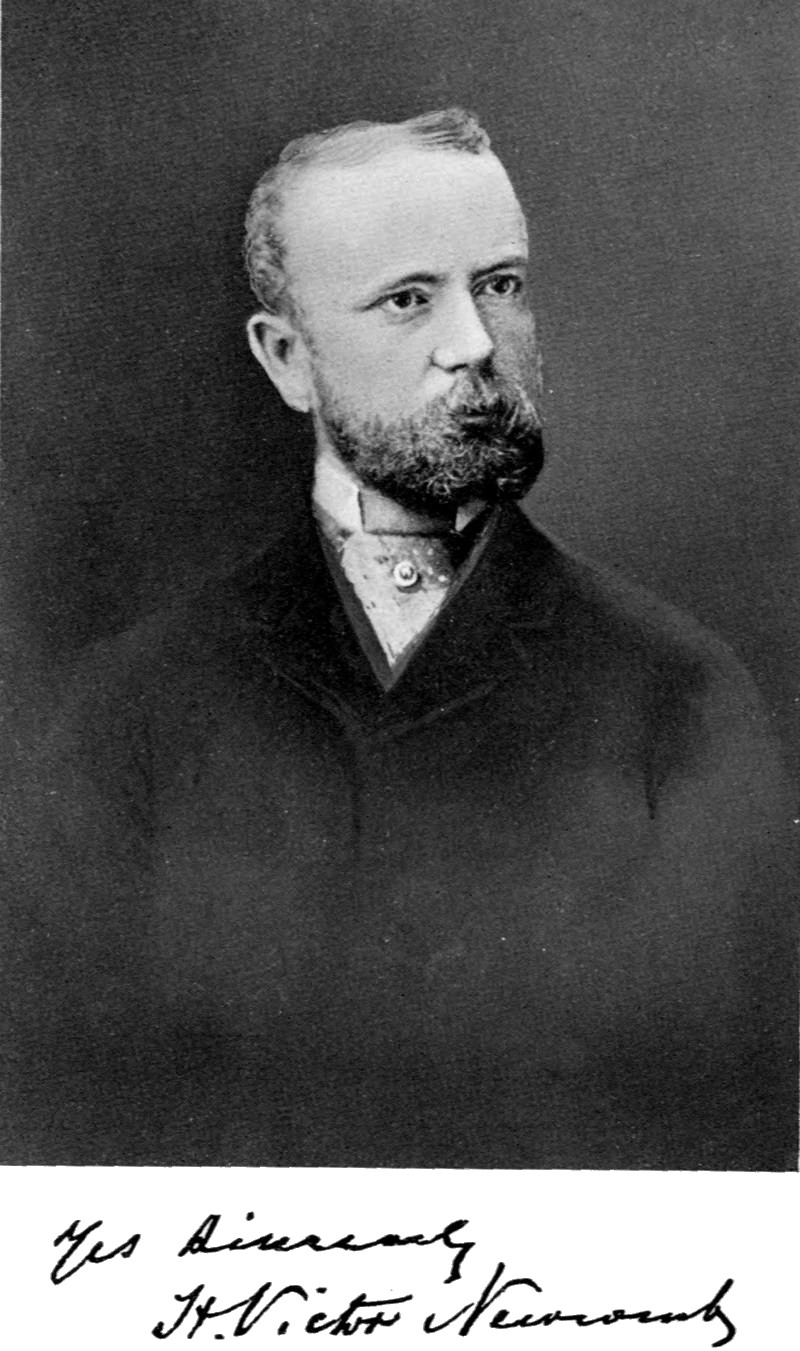
Yrs Sincerely
H. Victor Newcombe
Mr. Morgan is endowed with very positive traits of character.
He has the driving powers of a locomotive. He
cares nothing for show; he is a plain man of action. He
strikes hard blows; he is naturally aggressive. In speech
he is candid to the verge of bluntness; in action he is short,
sharp and decisive. Like a true soldier, he is a man of acts
rather than words. Rugged as a Spartan in his nature,
hating circumlocution, bombast and palaver, going straight
to the mark, yet with due caution and prudence, he exhibits
many of the best traits of the practical financier.
I have asked Mr. Morgan for his picture for publication
in this book, but with natural personal modesty, he has recommended
that his handsome partner, Anthony Drexel, of
Philadelphia, be selected in his place, and with a view to
encouragement in Wall Street of blushing modesty—that
century flower of the financial conservatory—I have complied
with his request.
President of the Lincoln National Bank, has had a career in
New York brilliant in the service of the public, and marked
in the practical skill with which confidences and enterprises
have been directed by him. His training has contributed
largely to his success as a financier. He came from Utica
in 1861 and entered the Custom House as Deputy, and
finally attained the position of Postmaster-General after a
long and successful term as Postmaster of the City of New
York. Mr. James directed the affairs of the Lincoln Bank
so successfully that what promised to be a small up-town
bank has developed into a National bank of considerable
importance. He is one of the men of the times, one who
feels the tide of local affairs, a man of the people who acts
from wholly conscientious motives, and whose ambition has
never exceeded his sense of duty.
CHAPTER LX. JAMES B. AND JOHN H. CLEWS.
683
The subjects of this sketch, whose portraits adorn these
pages, are both members of my firm and I think this book
would be incomplete without putting in a few words in
reference to them. As will be seen by the sketches which
follow, they both commenced their business careers in a
modest way and through perseverance and industry have
attained positions in the financial world which are in every
way creditable to them. I have made it a rule never to
introduce a blood relative into my office for a position of
trust unless I believed him worthy of confidence and capable
of performing the duties assigned to him in an intelligent
manner. To do so would be an act of injustice, not
only to him but to his associates in the office, and generally
causes ill feeling and bad results in the end. Happily
with my nephews I have had no such cause or ground for
complaint. On the score of merit alone they have succeeded
in advancing themselves to their present positions.
James Blanchard Clews was born in Dunkirk, N. Y.,
August 4, 1859. After graduating from Chamberlain College,
in this State, he entered the general office of the Red
Line Transit Company, in Buffalo, N. Y., where he spent
two years. He then accepted a position of responsibility
in the General Manager’s office of the Union Steamboat
Company, also located in Buffalo. Here his ability and
his growing capacity for making a good business man were
further satisfactorily illustrated and recognized by those
officially over him. Realizing, however, that Wall Street
offered better opportunities for advancement, he resigned
his position and obtained one in my banking office as book-keeper.
684Commencing at the bottom of the clerical staff,
he displayed so much ability, coupled with untiring energy
in the performance of his duties, it was a pleasure to promote
him from time to time, whenever an opportunity offered,
with the result that after eight years of vigorous training
through the successive grades of Book-keeper, Cashier,
and General Manager, he was rewarded in 1890 by being
made a member of my firm. It will thus be seen that my
nephew possesses a thorough and practical knowledge of
the inside workings of a banking house which is so essential
to a successful Wall Street business man. Being besides
a student of nature, he has also improved every
opportunity to learn the value of railroad and other investments
and to-day is a recognized authority on all such
matters. He has served as President of an important railroad
and is a Director in a number of large corporations.
John H. Clews,[1] junior member of the firm of Henry
Clews & Co., was born October 28, 1856. In beginning
his business career he entered the service of the Erie
Railroad Company, in the transportation department, where
he gained a general knowledge of railroad management
and its affairs. After a few years with that company he
was offered a position with the Western Transportation
Company, the water line of the New York Central Railroad.
Here he had the opportunity of completing his
education in all the branches of transportation. He was
then appointed Agent of the New York, Chicago & St.
Louis Railway at East Buffalo, N. Y., the distributing
point for all freight between the East and the West. From
this place he entered Wall Street, where he evinced the
same progressive spirit. In 1890 he became a member of
the New York Stock Exchange, acting as one of the chief
brokers for Henry Clews & Co., and January 1, 1898, he
obtained an interest in the firm.
CHAPTER LXI. A REMARKABLE CHAPTER OF HISTORY.
685
Any review of the advance of this country during the
past fifteen years, forms a record of the most wonderful
progress ever made by any nation in such a short period.
A record of the development of the country’s resources
through a resistless energy that seems destined to control
the markets of the world, reads almost like one of
Grimm’s famous tales, for after numerous trials, and
the surmounting of many obstacles, the fairy wand is
turning what we will into gold.
One of the effects of the Vanderbilt boom of 1885 is
to be found in the enormous mileage of new railroad
construction in 1887, namely 12,000 miles. It may have
looked at the time excessive, but it has turned out to
be a fortunate anticipation of the great business strides
made since that time. As far back as that year, our
exports of manufactured articles began to show an appreciable
increase.
The year following will always be memorable as the
time of the great blizzard which tied New York up so
effectually for several days. As a direct result of the
exposure to its severity, the country lost in Roscoe
Conkling one of the most picturesque figures in American
politics and a man of unblemished reputation. He
was taken from the arena of affairs too soon to allow his
participation in the presidential campaign of that year.
686My own experience at the time has impressed the
memory of the great storm strongly upon my mind.
I had gone to Newport accompanied by Mrs. Clews to
inspect some improvements then being made at my
summer home, and in returning we came across the
bay in the regular boat for the purpose of taking the
noon-day train which ran from Boston to New York.
When we were about half way over the bay, a vicious
squall struck us and we began to doubt if we should
ever reach the shore again. Finally, however, we did
manage to land, and connected with the belated train.
Progress of course was slow, so slow in fact that the
next morning saw us only as far as New London, whence
further movement was out of the question. Many of
my readers will recall the railroad ferry over the bay
from New London. The last train previous to ours
had been started across, but the violence of the tempest
had compelled the pilot to give up the task and return.
With more incoming trains, New London was soon congested
by the sudden increase in population, and accommodations
of any sort were at a premium. We were for
a time at a loss as to where we could go, but fortunately
succeeded in inducing the manager of the hotel there
to install us in the private apartments of the proprietor,
who had the day before started with his family for
Florida. He spent the ensuing four days upon the
railroad, between New London and New Haven,
banked in by a snow drift six feet high, while
we enjoyed the hospitality of his apartments during
that time. I am sure that we could not conscientiously
complain of the exchange. Telegraphic communication
with New York was completely shut off. As our children
had remained in the city, we were naturally
anxious to know of their welfare and relieve any anxiety
687they might have as to our safety. There remained but
one means of communication, and that a wire to Boston,
whence messages could be cabled to Liverpool, and back
to New York, and that is the way we got word to and
from the metropolis. That was a rather circuitous way,
but it was effective.
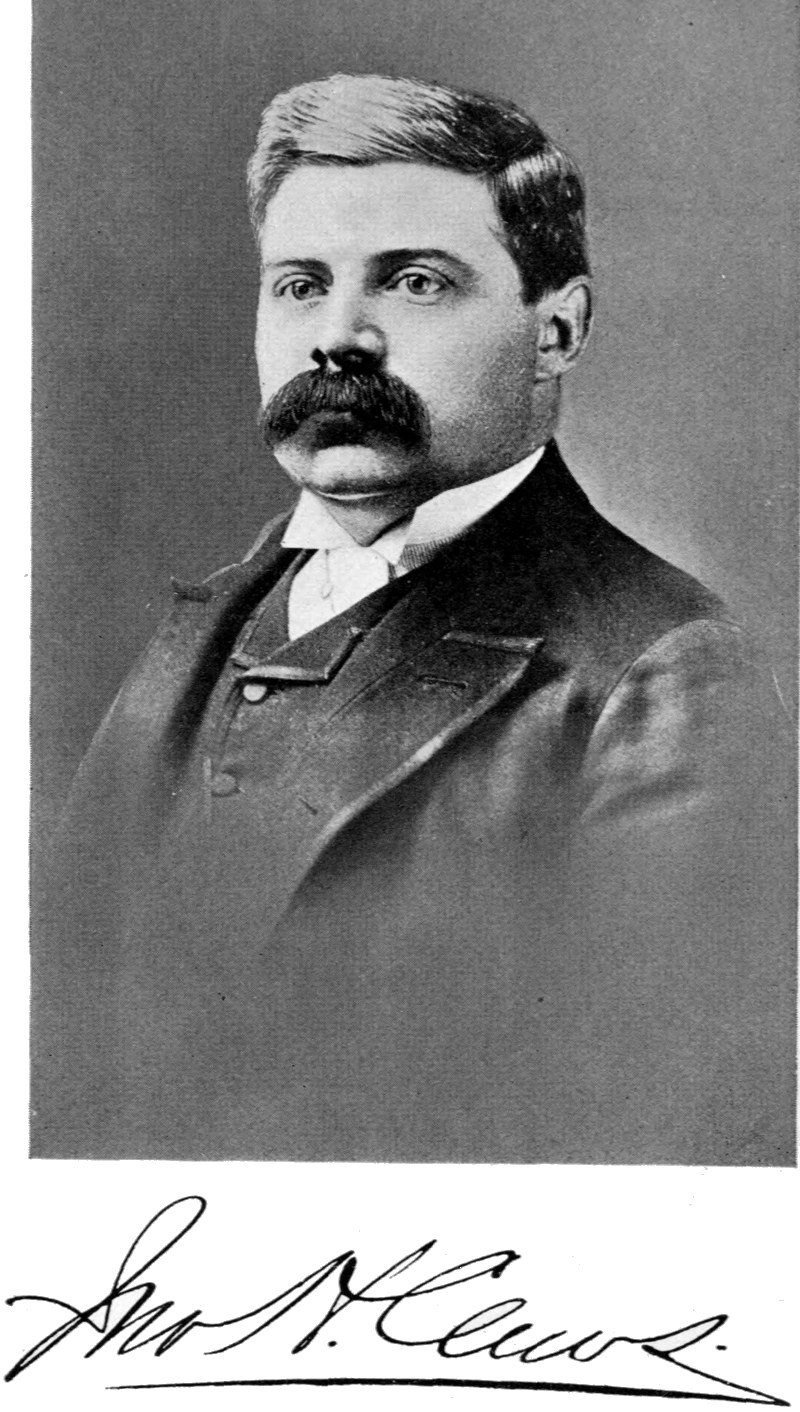
Mr. Cleveland’s renomination and accompanying free
trade talk, disturbed the markets more or less from the
date of his nomination in 1888 up to the time of General
Harrison’s election. The latter’s entrance into the
White House started the entire business of the country
going, and through his wise management, we were
brought to a very high point of prosperity, the last year
of his term being, up to that time, one of the most prosperous
in our history. One of General Harrison’s most
signal achievements was in the exchange of reciprocity
treaties, which was managed in such a masterly manner
by his resourceful Secretary of State, Mr. Blaine.
In the middle of General Harrison’s term, occurred
the greatest financial shock the world had experienced
in the last quarter century, or since the panic of 1873.
The suspension of the great firm of Baring Bros. of
London in the fall of 1890 proved a demoralizing force
from the effects of which finances did not thoroughly
recover for several years. The direct cause of the failure,
as is now well known, was over-commitment in
Argentine enterprises. Through the representations of
an agent of theirs who had visited the country, everything
bearing the name of Argentine was colored a most
rosy hue, and the investments of that great house and
its following were enormous. The inevitable reaction
from such inflation found them with an immense load
of these securities unmarketable, and they were forced
to suspend. The assistance rendered in rehabilitating
688the firm has been signally successful. Through the efforts
of Mr. Lidderdale, Governor of the Bank of England,
that institution took over some seven million
pounds sterling of the congested obligations of the firm.
By the wise, patient, and sagacious management of these
former unmarketable properties the bank was finally
enabled to realize enough therefrom to pay up all the
arrears of the firm.
The liquidation of American securities by British
holders which was consequent upon their failure was
enormous in volume and extended over several years.
The year 1890 was further noteworthy as marking the
birth of that unfortunate compromise of the silver agitation
known as the Sherman silver-purchase law, which
was to bring about such direful results within a brief
three years. After the shock of the Baring panic had
subsided, the beneficial effects of the McKinley tariff
law began to be felt and with increased exports, largely
of grain, in the succeeding year, together with ample
protection for home industries, we were ushered into
1892 under very auspicious circumstances.
Bountiful crops again provided a basis for what developed
into a wonderfully prosperous year. During
the year, Jay Gould (largely through the aid of his son
George), by one of his characteristic strokes, succeeded
in obtaining control of the Union Pacific system, while
Mr. Huntington was thinking the matter over; but his
personal control was not to last very long, for in December
of that year, Mr. Gould died, after a career of
great activity and venturesomeness, which has elsewhere
been reviewed in this book.
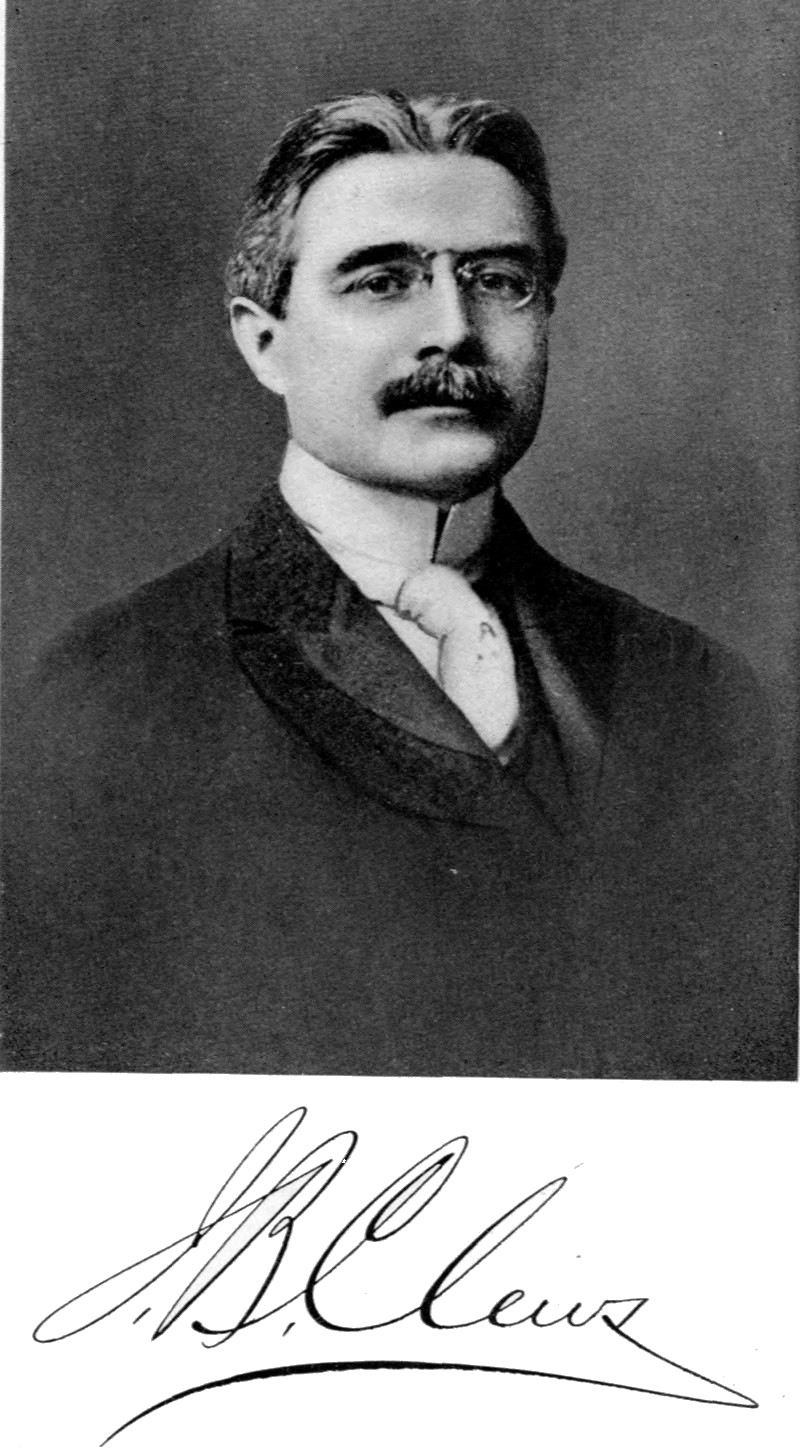
The Democratic party still clung to their idol, and
Mr. Cleveland was renominated for the presidency in
1892, and by one of those inexplicable turns of public
689opinion which foolishly wished a change of administration
in the midst of prosperous times, he was elected, and
returned to Washington the following March, be it said,
enjoying the confidence of the great majority of the
people. Almost from the time of that election, the Wall
Street markets were depressed, the fear of free trade
measures being the basis of distrust. Late in the year,
the Treasury’s stock of gold began to show signs of diminishing,
and with the exception of a few rallies, one
notably in the following January, prices continued on
the downward course. Co-incident with the decrease of
gold reserves arose reports of a disposition on
the part of the Secretary of the Treasury to interpret
the word “coin” in our Government obligations
as allowing the redemption of the bonds in
either gold or silver at the option of the Government.
The effect of any doubt or question upon
this most important subject could only result in unsettling
confidence; of which Addison speaks as the
“high priest in the temple of trade.” For the first time
in very many years, our Treasury operations showed a
deficit, and things were going from bad to worse. The
first great smash in prices occurred in May, when the
famous Cordage Trust went to pieces. At the same
time, Sugar stock and the remainder of the then few
industrial shares took part in the sharp decline. The
gold reserve had by the middle of the year reached
alarmingly low figures, so that the pressure of public
opinion compelled the calling of an extra session of
Congress for the purpose of repealing the silver purchase
clause of the Sherman law,—which had proved to
be a veritable “Old Man of the Sea” upon the back of
the country, threatening to throttle business interests
everywhere.
690The Congressional procrastination, and obstructive
tactics in the Senate worked havoc with trade and
finance, and when relief finally came in the repeal of
the silver purchase clause, the vitality of the patient
had sunk so low, that it was a matter of years before
returning health, in the form of confidence, brought back
our native buoyancy and push. It became necessary
early in the following year to issue $50,000,000 worth of
bonds in order to keep the gold reserve from getting too
near the vanishing point. Tariff agitation, which had
been started by President Cleveland’s message to Congress
in December, 1893, upset all the calculations of
business men, who hoped, after a disastrous summer,
that the tide had turned. But, no sooner was the fear
of a silver deluge quieted, than revenue reform brought
on another period of anxiety and delay. Fortunately
when that distorted measure (with its 640 Senate
amendments) which bore the name of the late William
L. Wilson, a man of deep thought and the highest integrity,
did become a law in the following year, it was
not burdened with an income tax.
There are those who argue, probably to their own
satisfaction, that this latter is an equitable form of
taxation, but it has always appeared to me as putting
a premium on idleness by taxing thrift.
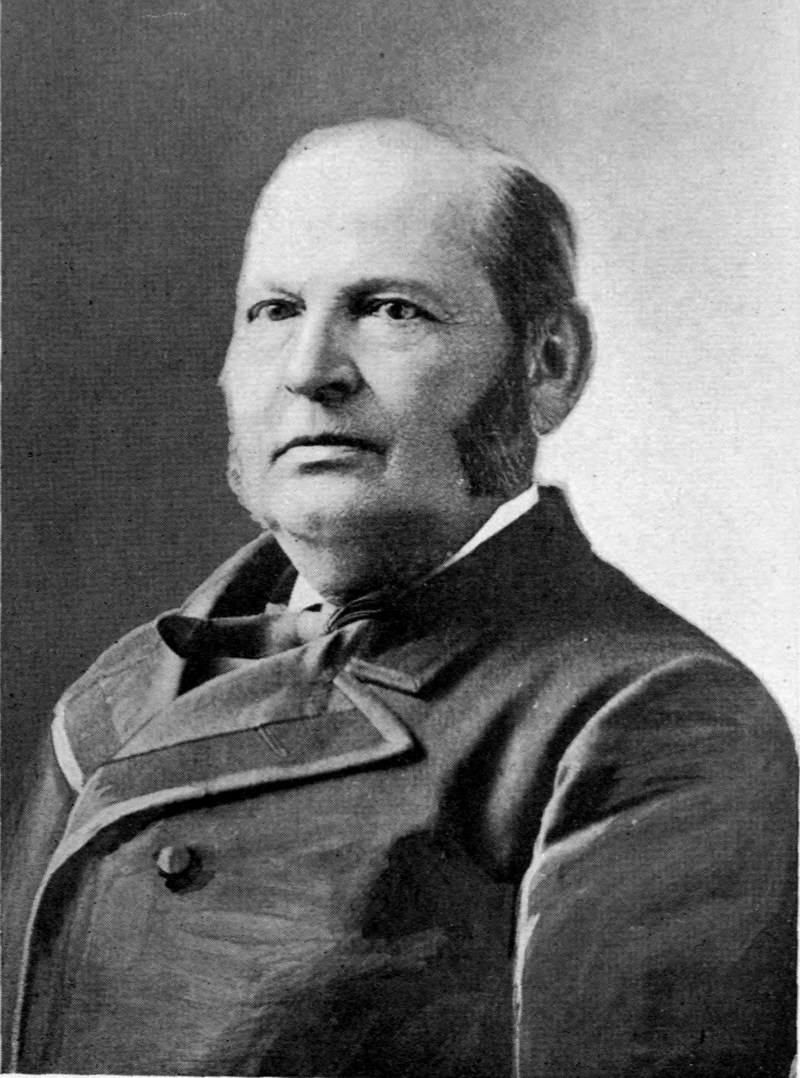
Another issue of $50,000,000 bonds was necessary
before the year was out, and in spite of this replenishment,
gold exports to pay our debts to Europe for securities
sent back to us by the ream, continued in such
volume as to render a further issue imperative in the
following February. This will be remembered as somewhat
unique in our Treasury operations, being in the
form of a purchase of 3,500,000 oz. of gold, which cost
the Government $62,500,000. The famous syndicate
691which undertook the delivery of the precious metal,
agreed to do all in its power by the further deposit of
gold in the Treasury and as far as possible, a control
of foreign exchange rates to keep the reserve intact.
Its powerful aid unquestionably saved the people from
many more business disasters, by a bolstering up of confidence
in the power of the Government to pay its debts.
The syndicate lived up to its agreement fully, depositing
in the month of August some seven and a half millions
of gold.
One scarcely hears mentioned nowadays the name of
that poor fellow whose fabulous fortune (on paper)
finally proved too burdensome for his uneducated mind.
Barney Barnato was in his way a picturesque character,
and a most vivid illustration of the overthrow of
mind by matter, when the former is not in control.
The sharp break in South African shares in the London
market during October, of course exerted a sympathetic
influence here; but worse things were yet in
store for us. Our President’s famous Venezuela message
to Congress in December, 1895, acted like an earthquake—which
shook the markets to their very foundations
and engulfed hundreds of millions of values before
it subsided. The final outcome of the dispute between
England and Venezuela has to a very great extent vindicated
the former’s claims. Let us, however, look upon
the whole matter as a step forward for civilization in the
advancement of the principle of arbitration, the true
solution of all international difficulties. In 1896, we did
finally reach the end of our troubles, though not without
much worriment. A further bond issue of $100,000,000
to meet deficits, brought that total up to $262,500,000
issued in two years. A rather expensive administration,
692but “troubles come not singly, but in battalions.”
The Presidential Campaign just past, with the same
nominees at the head of the respective parties, recalls
the wild free silver talk of four years ago. Panic and
depression succeeding each other had left the people
almost hysterical. After Bryan’s nomination in July,
gold hoarding was the order of the day. Of course the
effect of this on the money and security markets meant,
under the circumstances, another downward plunge in
prices. New York Central sold at 88, the lowest price
in the past fifteen years, and C., B. & Q. at 53, the lowest
price in nearly forty years, and all other stocks sold
down in the same proportion.
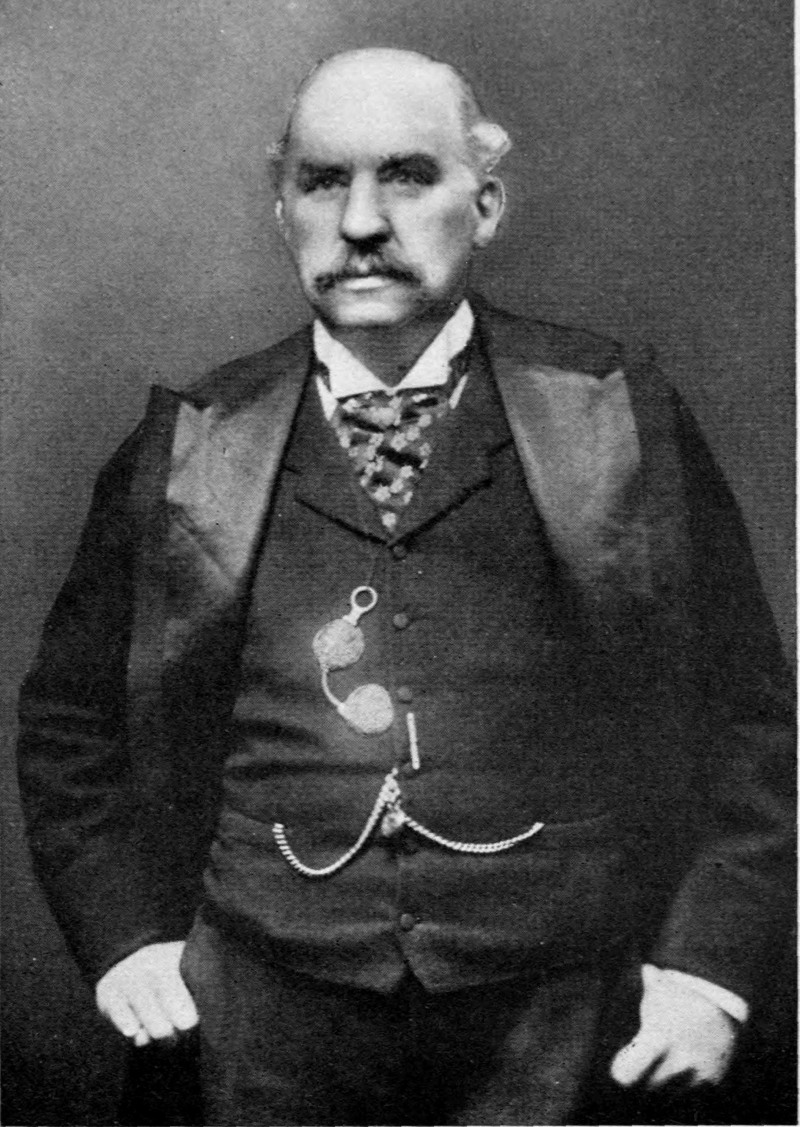
I have said that we reached the end of our troubles in
1896, but the end did not come till the November election,
which showed that William McKinley, “the advance
agent of prosperity,” had been elected President. The
nomination of William J. Bryan, hitherto a comparatively
unknown man, but who electrified the Democratic
National Convention by his specious eloquence, the eloquence
of a political Belial, able, in the Miltonic phrase,
“to make the worst appear the better reason,” whose
famous phrase, “you shall not press down upon the
brow of labor this crown of thorns, you shall not crucify
labor upon a cross of gold,” swept the convention off its
feet and made him the nominee for president, was a blow
that for a time seriously disturbed Wall Street and commercial
circles everywhere. Mr. Bryan called for the
free coinage of silver at the ratio of 16 to 1, and by
his tireless activity in stumping the country created a
feeling of depression that reached the pitch of panic and
left the people almost hysterical with fear. But as
Martin Van Buren said on one occasion, “the sober
693second thought of the people is never wrong and is
always efficient.” The sober second thought of the people
carried the day. Crowds might flock to hear the orator,
but they voted with the party of prosperity and
honor. The carefully written speech of Mr. Bryan, a
speech which, for once, he read from his manuscript in
the great Madison Square Garden meeting, did not deceive
the people; it fell flat.
With Bryan’s fiasco in this city, the clouds finally began
to break. How plainly the record of these four years
shows the absolute domination of the markets by Washington.
And not of the financial markets alone by any
means, but of the whole business interests of the country,
which finally were well-nigh paralyzed by four years
of increasing anxiety and wonder as to what might happen
next.
It is gratifying to turn away from that period of
distress to the succeeding years of prosperity. The vindication
of the good sense of the people in the election
of William McKinley did, at last, turn the tide; and for
good and all, let us hope. With an unquestioned currency
basis, improvement became possible. We were
greatly favored too, in the first year of Mr. McKinley’s
administration, by bountiful crops at a time of shortage
in Russia, France, and the Danubian Provinces. It was
a great year of prosperity for our farmers, who, through
good prices, and the exportation of some 120,000,000
bushels of wheat, were enabled to pay off mortgages in
wholesale fashion, and herein we see the beginning of
present good times. Furthermore our export trade
showed great increase. As was to be expected, there
was a great rush of importations just prior to the passage
of the Dingley Tariff Bill in July, and a consequent
decline in revenues immediately thereafter; but the
694completed record of its operation up to the present
time is a splendid tribute to the wisdom of its author.
The Supreme Court decision in 1897 in what was known
as the Trans-Missouri Case, declaring all railroad pooling
illegal, proved somewhat of a shock to the market,
but with improvement in business, our roads soon found
enough traffic before them to more than go ‘round, without
worrying about its division.
The year 1898 began very favorably with large gold
imports and easy money. Cuban affairs, which had
begun to threaten late in the previous year, finally culminated
in the outbreak of war with Spain in April.
The condition of things in Cuba having become a reproach
to the civilized world, this Government, acting
for the conscience of Christendom, directed that the war
which Spain was waging against the Cuban revolutionists
should cease, with all its indescribable horrors, its
barbarous cruelties to women and children, and as
Spain did not heed the warning, our Government intervened
in the interest of common humanity, an event
which marked a distinct advance in the history of the
human race, for history makes no mention of any war
waged on such a scale in behalf of the cause of humanity.
Certainly never was a war more clearly justified
or one which showed greater courage on the part of the
intervening nation, for there can be no doubt that more
than one of the Continental powers of Europe would
have been glad to side with Spain and would have done
so, but for the emphatic negative of Great Britain.
Naturally there ensued a period of depression, but
it was short-lived. The ensuing months of activity and
buoyancy surpassed anything of the kind in our history.
After the apprehension as to how the business world
would adjust itself to war conditions had passed away,
695business began to boom all over the country. We were
on our feet again with financial health restored. That
wonderful boom in the stock market, begun in the summer
of 1898 and lasting until the spring of 1899, will
not soon be forgotten.
It seems more like a dream than a fact that trade and
commerce and financial operations could swell to such
well-nigh inconceivable figures, revealing a degree of
prosperity almost past belief, like some marvelous good
fortune of an individual in a Persian tale, favored by good
Genii, actual fact rivalling fancy or throwing it far into
the shade. In other words the oldest and most experienced
merchants and financiers in this country were
astounded at the degree of solid prosperity attained by
the great Republic, the lion’s whelp, rivalling or surpassing
the strength of the old lion, the mother country
across the sea.
To the late Ex-Governor Flower belongs the credit of
fearlessly taking the initiative in that marvelous rise in
values to which I shall revert later on.
The formal close of the Spanish war gave fresh impetus
to trading and prices kept soaring well on into the
spring of 1899. The year 1898 has the distinction of
marking the beginning of the greatest era of trade combinations,
those gigantic commercial engines, that the
world has ever seen. The capitalization of those inaugurated
during 1898 and 1899 reached the fabulous aggregate
of $3,500,000,000. The mind is staggered by the
possibilities of enterprise which such a sum suggests.
The tendency towards centralization in the railroad
world was first shown in the merger of the Lake Shore
road with the New York Central.
The year 1899 was one of great prosperity, the greatest
since we have been a nation, albeit its close was
696marked by one of the worst semi-panics the Street has
ever experienced. In order to account for some of the
most important features of the panic of December, 1899,
it is necessary to take a glance backward at certain
great financial events of the year even as early as April.
In that month was formed the famous Amalgamated
Copper Corporation, a creation of the Standard Oil
magnates.
The capital stock of the company was $75,000,000.
The shares were said to be subscribed five times over.
Owing to its parentage, the stock became popular, and
was sustained at par for some time, but scarcely two
months had elapsed before a break of 25 per cent. in
the price occurred.
This break was regarded as a rather suspicious circumstance,
and was supposed by the “knowing ones” to
be a part of the deal. The Amalgamated Company was
a mammoth combination, comprised of large share interests
in over 30 companies, the famous Anaconda of
Montana heading the list, and being the most prominent
The panic fell most severely upon the copper companies,
the shrinkage on the share capital of which for
the year is alone estimated at nearly $200,000,000.
Besides this, the currency movement to the South and
West had been unusually large and prolonged, and
finally tightness of money brought about an immense
drop in the entire stock market. But with general conditions
prosperous all over the country, such panics happily
do not leave lasting scars.
The last year of the wonderful nineteenth century
has been a remarkable one in our history. Since the first
defeat of the silver agitators in 1896, our financial
strides have been so rapid that it seems now a question
of but a short time when New York will be the financial
697centre of the world. What a contrast between our position
in 1900, and that in 1895, when we were knocking at
the door of Europe with bonds for sale to provide running
expenses for our Government. To-day England
finds it to her interest to place $25,000,000 of her war
loan with us, Germany asks for $20,000,000 of American
gold, Russia is seeking to borrow from us and Sweden
has not gone empty-handed away. And these accommodations
have been accorded without causing so much
as a ripple in our money markets. The source of such
plenty is of course found in our wonderful increase of
exports. For ten months of this present calendar year,
the trade balance in our favor approximates $500,000,000,
making, in the past three years, the vast total of
fifteen hundred million dollars balance to our credit.
There we see both the lever and the fulcrum with which
to move the financial world.
A little over a year ago occurred the death of Cornelius
Vanderbilt, the grandson and namesake of the
Commodore. Here was a gentleman whose charities
were almost boundless. His gifts to the people
through art and in many other ways were princely, but
perhaps his memory is greener in the minds of those
who, through his great private charity, were lifted above
want.
These great latter day fortunes have not often failed,
in this country, in being administered by men whose
conception of life, and of duty toward their fellow men
has turned the duty into a pleasure. This is a very
great tribute to American citizenship and should not
be forgotten or lost sight of by our sometime critics.
The passage of the Currency bill in March, 1900, undoubtedly
did much to increase Europe’s faith in our
monetary stability and, furthermore, the result of the
698Presidential election of 1900, the triumph of the party
of sound money seems to preclude the recurrence of any
attacks upon the financial honor of this country. There
has been a campaign of education going on in this country
ever since the advocate of the free and unlimited
coinage of silver at the ratio of 16 to 1 first promulgated
his doctrines. The benefit to the people of this knowledge
of public affairs is clearly apparent. They will
have none of false theories and suicidal experiments,
they will not go after false financial gods, they will not
bow the knee to the Baal of repudiation and confiscation.
While the modern method of commercial development
is open to criticism in some respects, still I take it that
the evils complained of are not those of very existence
but are rather those of circumstance, and are open to
correction by the will of the people. How often have
we heard that these combinations stifle competition—but
for how long? Does not their existence excite competition?
Furthermore, their management calls for
the very highest ability and creates a keen intellectual
competition which cannot fail to be of educational
value at large. It remains for ensuing years to provide
correction for those defects which are bound to appear
in any new and untried system.
We end the century that almost covers our national
existence with a past record and prospects unparalleled.
We enter the new century full of faith in our institutions,
that have stood severe tests even in our short life,
and full of hope for even greater national achievements.
We are fast taking the lead in the affairs of nations as
well as in the affairs of commerce and finance, and have
need of great steadiness of character, and fixity of national
honor, which now seems assured for all time. It
699augurs well that we begin the twentieth century, which
displays such vistas of greatness, at peace with all the
world.
CHAPTER LXII. BOOMS IN WALL STREET.
700
Wall Street has lately been enjoying quite a boom
in some respects differing from any in its previous history.
Probably the most interesting feature about this
boom is that it is not in any sense spectacular. In that
respect it is unique. Prices of many stocks are higher
and intrinsic values greater than they have ever been
before. The market has all the qualities that normally
would cause intensest excitement and focus the attention
of the entire country on the Stock Exchange. Yet
in spite of these conditions, the Street is in a normal
state of mind, and it is doubtful if the general mass of
the people, who get their information from the newspapers
are fully aware that there is even an ordinary
boom in Wall Street. This unusual condition is due, I
believe, to the fact that the boom we are enjoying is
built on a foundation that reaches clear to the bowels of
the earth. There is nothing unnatural or artificial
about it. Wall Street is simply one of the centres that
reflects the general prosperity throughout the country.
Farmers, merchants, mechanics, mill workers, and
miners are all so intent in keeping pace with the progress
in their own pursuits that they have no time to cast
eyes our way. The same conditions that are booming
stocks, are booming everything else in the country at an
701equal rate, so that we are in nowise singular or deserving
of special attention.
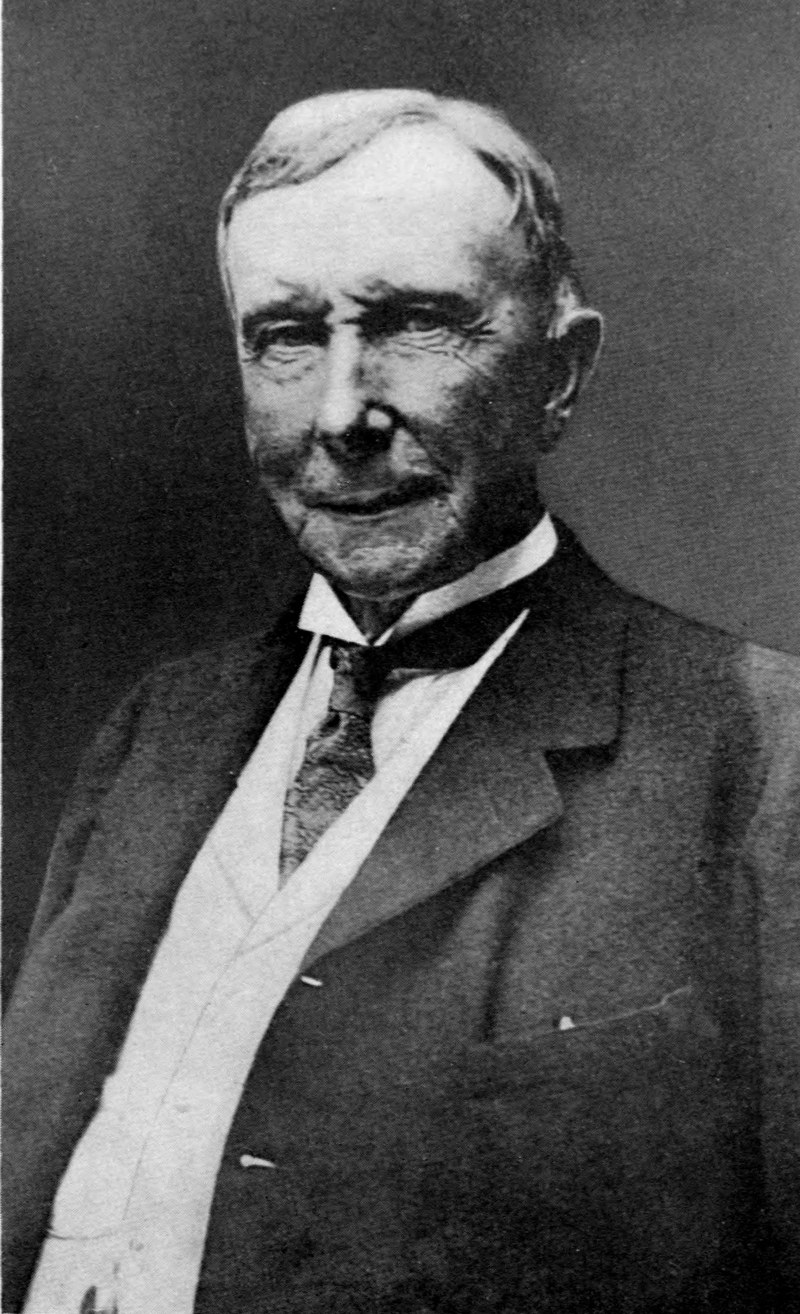
Photograph from Underwood & Underwood, N. Y.
JOHN D. ROCKEFELLER.
Another factor too, has developed in the Street that
prevents the usual excitement and hurly burly incident
to a rising market. This is the absence of a pronounced
central figure, or controlling force. Usually a boom
centres about some one man who stands boldly out in
the open, or whose hand it is known is manipulating
values. At present the manipulation is being carried
on in a method that is as quiet as it is novel and unusual.
That the market is being manipulated, is apparent
enough even to the most casual observer. But
the source of this manipulation is probably known only
to a few; all others are but students in the Street.
They know that a new order has come, and that this
order is due to the most powerful and resistless influence
that has ever manifested itself in Wall Street.
This influence is very largely composed of the Standard
Oil Combination, who have introduced in their Wall
Street operations the same quiet, unostentatious, but
resistless measures that they have always employed
heretofore in the conduct of their corporate affairs.
Beside this group, every other man or combination of
men that has ever operated in the Street are materially
belittled by comparison. The heretofore conspicuously
big operators that have flashed up and across the horizon,
appear comparatively small beside the men who
are running things for us now.
At his best, Jay Gould was always compelled to face
the chance of failure. Commodore Vanderbilt, though
he often had the Street in the palm of his hand, was
often driven into a corner where he had to do battle for
his life, and so it has been with every great speculator,
or combination of speculators, until the men who control
702the Standard Oil took hold. With them, manipulation
has ceased to be speculation. Their resources
are so vast that they need only concentrate on any given
property in order to do with it what they please. And
that they have so concentrated on a considerable number
of properties outside of the stocks in which they are
popularly credited with being exclusively interested is
a fact well known to every one who has opportunities
of getting beneath the surface. They are the greatest
operators the world has ever seen, and the beauty of
their method is the quiet and lack of ostentation with
which they carry it on. There are no gallery plays,
there are no scareheads in the newspapers, there is no
wild scramble and excitement. With them the process
is gradual, thorough and steady, with never a waver or
break. How much money this group of men have made,
it is impossible even to estimate. That it is a sum beside
which the gains of the most daring speculator of
the past were a mere flea bite, is putting the case mildly,
and there is an utter absence of chance that is terrible
to contemplate. This combination controls Wall Street
almost absolutely. Many of the strongest financial institutions
are at their service in supplying accommodations
when needed. With such power and facilities it
is scarcely conceivable what these men must be making,
what they can do on either side of the market. So far,
fortunately, their manipulations have all been one way,
upwards, and in conjunction with the general prosperity
it has resulted in making large sums of money for
nearly everybody in the Street.
Here and there we have heard of losses, some of them
fairly large, but in comparison with the general money
making these are hardly to be taken into consideration.
The last preceding boom that Wall Street enjoyed
703was as different from the present as it is possible to
imagine. It had all the elements which this one has
not. It centred about one man who stood out in the
lime-light clear and distinct. It kept the Stock Exchange
in a constant state of ferment. It filled the
newspapers with column upon column of sensational
stories. It made millions for an army of retainers, on
paper, and it kept the market jerking up and down for
months. Roswell P. Flower, ex-governor of the State
of New York, was the leader of the boom, and a more picturesque
figure has never been seen in Wall Street,
which is saying a great deal. Mr. Flower was an individual
of very plain exterior. He often used language
that was noticeable more for its force and directness
and emphasis, than it was for polish. He had an
ambling gait and looked like a well-fed farmer. He
was rarely seen without a huge quid of tobacco that almost
filled the left side of his mouth. Spittoons were
an essential part of the furnishings of his office. His
clothing hung on his person not unlike meal sacks. His
hat was rarely brushed, and for days at a time, apparently,
he forgot to shave. Altogether he was the last
person, in appearance, who might be expected to lead
in a district that is famous for its well groomed men.
His education was certainly not collegiate; doubtless all
his peculiar traits the ordinary man would have judged
a handicap, still they were Mr. Flower’s strongest aids.
The lack of artificial polish gave people confidence in
his statements. His limited education enabled him to
think clearly along certain lines without being hampered
with mental digressions, which would probably
have come with a higher original mental culture.
As the administrator and manager of the estate of his
brother-in-law, Henry Keep, he came into the Street
704twenty or twenty-five years ago. He in that way controlled
a large amount of funds, which by conservative
direction he increased very substantially. He scarcely
ever figured in the speculative field to any great extent,
until after he had completed his term as Governor of
New York State. When he returned to the Street from
Albany, he naturally came with a considerable prestige.
Ex-governors of the Empire State are not very plentiful
in and about the Stock Exchange. He also brought
with him a large political following. In both of the
great parties in New York State there are many men
of standing and influence who like to take a flyer in
Wall Street. Almost to a man they associated themselves
with Mr. Flower, who, during his term at the
capital had made hosts of friends with Republicans and
Democrats alike, and this, though his party loyalty had
never been questioned. He also had close associations
with most of the big capitalists. After he had settled
down to business, on leaving politics behind, Mr. Flower
picked out several stocks as his specialties, Chicago Gas,
Federal Steel and Rock Island being some of these.
Under his manipulation all these properties went up
and soon began to show a big advance, unusual strength
and great activity. The bears made frequent assaults
on his position and now and then pushed him towards
the wall, but he always fought his way to the front
again, and came out master in every encounter. When
he had himself pretty well entrenched in the specialties
he was handling, he suddenly plunged into Brooklyn
Rapid Transit, and for months he kept things stirred
up in a way that even Wall Street has not seen very
often., He picked up the stock commencing at six
dollars a share, and in an incredibly short time ran it
up to over 138. Almost every politician in the State
705made a fortune on paper. Mr. Flower was immensely
popular with the Wall Street news reporters, who
helped his boom along through the glowing accounts
they wrote from day to day.
Under the impetus of the swirl in Rapid Transit,
practically every property in the Street went flying upward,
until the end did not seem to be in sight. The
bears were beaten to a standstill every time they showed
their heads, the only result of their attacks being
that Flower stocks would jump up a notch higher. The
ex-governor preached Americanism and confidence, until
everybody believed that if a stock was only grounded,
and the property located in America, you could buy it
at any price and still be on the safe side.
That a terrible panic did not grow out of this boom
was due only to one fact: Mr. Flower’s sudden death.
Had he lived thirty days longer, the bubble must have
been pricked, and the result would have been disastrous.
Mr. Flower went to the country for a day’s rest,
ate freely of ham and radishes and washed his frugal
meal down with a copious supply of ice water; he naturally,
in consequence, died in a few hours afterwards
of an attack of acute indigestion; his death alone saved
the Street.
The Rockefellers, the Vanderbilts and his other
wealthy friends rushed into the market with millions
and sustained values. They were in a position to attribute
the threatened reaction to his death and pointed
out the absurdity of letting such an incident affect the
value of stocks. They discounted the break that must
have come in the natural course of events under the forcing
process that was going on. Reasoning such as this
spread broadcast through the papers stopped the break.
Where the bottom would have fallen out entirely there
706was only virtually a moderate break all along the line;
why it was not worse was due to the market being
bolstered up by the Standard Oil Combination and
others with them coming to the rescue just in time to
prevent a big smash. The small speculators operating
on moderate margins were of course all wiped out
almost to a man, but many of the big fellows were saved.
It is probably the only instance on record where the
death of a big operator saved a general smash. Those
hurt were numerous politicians and small fry operators
who instead of getting away with snug fortunes in the
shape of profits, lost their all.
An interesting circumstance of the Flower boom was
developed involuntarily by young Joe Leiter. Leiter
himself, although he had gone to the wall some time
previously, indirectly had brought about certain conditions
that served Mr. Flower’s purpose admirably.
These conditions were the general release of hundreds of
millions of dollars on mortgages on farm lands. When
Leiter began to corner wheat, it was ruling down in the
neighborhood of sixty cents a bushel. He lifted it to considerably
over a dollar before he went broke. This
enabled thousands of farmers to realize on their crops
at the dollar figure and above, which brought prosperity
almost over night to the wheat growing belt. With the
money realized from their wheat the farmers paid off
their mortgages to the extent of two or three hundred
million dollars. These mortgages were generally held
in the East. This released that much Eastern capital,
causing that vast volume of money to seek investment.
The men controlling this money were overjoyed when
Mr. Flower made an opening for them through the Wall
Street boom, and hence it was a comparatively easy matter
for a time to push up values.
707J. Pierpont Morgan, now a noted character, was
trained as a clerk in the one-time famous banking
house of Duncan, Sherman & Co. Later he made a
connection with Anthony J. Drexel, probably the
wealthiest banker in his time in America. Out of this
grew the house of Drexel, Morgan & Co., with Mr. Morgan
as the managing partner in New York. When Mr.
Drexel died, Mr. Morgan absorbed the entire business,
and a few years later when his father died, Mr. Morgan
became the head of the London house of J. S. Morgan
& Co. as well. This put him in a very prominent position.
He soon thereafter demonstrated his influence by
reorganizing the bankrupt Richmond & West Point Terminal
Railway & Warehouse Co., changing its name to
the Southern Railway Co. A number of small roads
were added to it, many of which were in financial
straits, and practically all of them had been badly managed.
He combined them into one system under the
one head. This railroad combination is now one of the
great properties of this country. Mr. Morgan next
turned his attention to the reorganization of the Reading
and the Erie roads, which were in a bad way. He soon
produced order out of chaos there, and that resulted in
a boom in railroad stocks all along the line. He had
several sharp tussles, however, with some of the big
stock holders, who tried to stand out against him on account,
as they thought, of his plans being too drastic;
and during these tussles he not infrequently resorted to
the usual methods to break values, buying at the reduced
prices so as to strengthen his control.
The people who followed Mr. Morgan’s lead in these
transactions generally made money.
A different sort of deal was engineered a few years
before by S. V. White, popularly known as Deacon
708White, because of his position as deacon in Plymouth
Church. Mr. White is one of the oldest operators in
the Street, and one of the most striking figures. He has
made half a dozen great fortunes in speculation and lost
them, but he is as undaunted as ever, and in spite of the
fact that he is now over seventy years old, he is still
active daily in the market.
Probably one of the most unique stock deals ever
carried out in the Street resulted from the transaction of
Joseph Bannigan when President of the Rubber Trust.
The history of this deal which for a time resulted in a
great boom in industrials, has never been told, and is
known to but very few persons, most of whom, by the
way, were its victims.
Bannigan was an uneducated Irishman who could
hardly read and write. He commenced life in a New
England rubber factory and worked for $1.50 per day
and died worth five million dollars. He was shrewd
and bright and knew the value of money. He saved to
such good purpose that when the Rubber Trust was
formed he was at the head of one of the biggest factories
in the country, located in Providence. His
knowledge of the trade was so thorough that despite the
fact that he almost invariably used small i’s in writing
a letter, he was made President of the Trust, his holdings
amounting to about forty thousand shares. When
matters had been moving along for some time, Bannigan
made up his mind that the other men in the trust,
the big fellows, were not treating him right, and that
the best thing he could do was to get out. So he packed
his stock certificates in a grip sack, left Providence on
the night boat, landed in New York bright and early,
had his breakfast and then made a bee line for a stock
brokers’ office. He had assured himself in advance
709that this stock broker was to be relied on and told him
frankly what he intended to do.
“I want to sell out bag and baggage,” he said. “I
want to get rid of every one of my forty thousand
shares. Here they are, put them on the market and
sell them.” The stock broker told him that that would
never do. If he wanted to realize full value for his
holdings he would have to go about it in a different
way, for if he threw his forty thousand shares into the
market it would knock the bottom out and he would
get little or nothing for his stock. Mr. Bannigan saw
the point, and asked what he was to do.
“Buy,” said the broker.
“But I don’t want to buy; I have got more now than
I want.”
“That is all right; buy anyway, that will make a market
for the stock, and then you can unload when the
time comes.”
“How much must I buy?”
“Oh, about $250,000 worth.”
“But I have not got $250,000 in cash to go and buy
Rubber stock.”
“Well, you can borrow it; a man in your position, Mr.
Bannigan, would have no difficulty in borrowing
$250,000.”
Much against his will the old man was finally persuaded
to do as he was told. About two weeks later
the broker wrote to him that he must buy some more,
this time, $200,000 worth. Mr. Bannigan used rather
strong language, but finally yielded as he had before.
He borrowed $200,000, and turned it over. With this
additional capital to work on, the brokers continued to
manipulate the market. The insiders soon discovered
that some strong party was buying; but they did
710not know who, Bannigan having carefully kept himself
in the background. His brokers operated skilfully in
the stock, one day buying, the next, selling to keep the
stock active. The brokers after awhile commenced to
borrow large amounts of the stock. This convinced the
insiders that there was a big short interest somewhere,
and they got together in order to squeeze the shorts.
The inside holders who held most of the stock, who had
combined to squeeze the shorts out, as they thought,
put the price up to 61, and at about that figure Bannigan’s
was all unloaded. Bannigan now found himself
full of money and the other fellows had his stock.
They never awakened to the fact that the President had
sold out on them until his shares were delivered against
their purchases, as they thought, of short stock. Rubber
soon thereafter did not stop tumbling until it had
gone from 61 to 16. This deal had all the elements of a
comedy-drama and the playwright who can do it justice
will find material there which will make him an everlasting
fortune and reputation. I have touched but
lightly on a few of the important incidents. It is not
often, however, that newcomers in the Street fare as
well as this in the end. For a time they will go on merrily
enough, and send things booming; but in the end
many get the worst of it. A. B. Stockwell is a good
illustration of the truth of this. He is still around the
Street somewhere, but is one of the “has beens,” like
numerous other former conspicuously large and supposed
to be brilliant operators. At one time he was
worth many millions of dollars. To-day, he is upside
down. His start in life was as purser on a Lake Erie
steamboat; his father, it is said, kept a livery stable in
Cleveland. On one of his trips, Stockwell was in a
position to show considerable attention to Elias Howe,
711the inventor of the eye at the upper end of the sewing
machine needle. Mr. Howe was accompanied by his
daughter. Stockwell made himself agreeable to Miss
Howe also, and with such good effect that he managed
to win her affections and soon thereafter married the
young lady. When Mr. Howe died, Mrs. Stockwell
came into possession of her father’s millions. With
this nest egg Stockwell started in Wall Street, and
before anyone realized what had happened he was the
most talked of man in the district. He put all his
wife’s millions into Pacific Mail stock, and secured entire
control of the Company. He came into the Street as
plain Stockwell, then as the news of his liberality and
good fellowship spread, he became Mr. Stockwell; after
he got hold of Pacific Mail he was Commodore Stockwell,
by common consent. Everybody bowed and
scraped to him and no man was so high and mighty that
he was not proud to shake his hand. Stockwell took
hold of Pacific Mail at about 40 and sent it up to 107.
It was at this period that he was worth over fifteen million
dollars; but he found, unfortunately, when it was
too late to retreat, that while Pacific Mail was up to
107, it was not worth that figure when the unloading
commenced. He was landed high and dry with it all
and the Street told him he was welcome to it. He
tried to sell, and found that there was no market.
Then came violent demands on him to pay up his numerous
call loans, and in order to respond thereto, he
had to sell regardless of price and thus created a whirlpool,
which finally sent the stock down to the price at
which he commenced his original purchase at 40. In
this one upset, he lost all his paper profits and his wife’s
millions besides. This catastrophe not only stripped
him of all his worldly possessions, but reduced him to the
712position of being plain Stockwell again, and there are
many also who even go so far as to call him “that
little red-headed cuss.” That was the most famous
boom in the history of Pacific Mail, notwithstanding
Leonard Jerome’s previous brilliant ups and downs in
that former erratic property.
Leonard and Addison Jerome had a good time with
Pacific Mail for a while. They ran it up to high figures
several times; but finally meeting with the same experience
that Stockwell did. The two Jeromes from
being among the wealthiest and most dazzling operators
in the Street, were in the end practically wiped out.
Leonard Jerome, who was the father of Lady Randolph
Churchill, had nothing left to bequeath his daughter except
an equity in the house now occupied by The Manhattan
Club on Madison Avenue, which yields an income
of about $15,000 a year, of which Lady Churchill
gets $10,000.
These are a few of the booms that have stirred up
things in Wall Street at one time or another, as did the
Keene booms, of which there were several, the Gould
booms, and the Vanderbilt booms, all of which have
been referred to in previous chapters in this book.
The question of trusts or trade combinations has, in
recent years, excited a good deal of interest. One of
the most interesting figures in this connection is John
D. Rockefeller, who will undoubtedly be regarded by
the future historian as a striking character in the business
history of the nineteenth century. And be it remembered
that history now concerns itself, not so much
with the doings of governments; not so much with the
personalities of emperors, kings, presidents or even
with political parties, as with the life of the people
themselves. This is clearly shown by such historians
713as Lord Macaulay and John Bach McMaster. And
looking at history in this way, surely John D. Rockefeller
must be regarded as one of the most interesting
types of the great commercial powers of the day. He
was a pioneer, a commercial Daniel Boone, striking out
into a new and untrodden field of enterprise, taking
great risks, undergoing grave financial perils of a novel
kind and at length winning a complete and lasting success—a
success which has filled business history
with his achievements and the world with his fame.
It was a great stride from the little farmhouse
in Tioga County, New York, to the place which
he fills to-day. Born in 1838 he is now in the
prime of life. Reared by strict, church-going people,
his word is as good as his bond; he is the
soul of business integrity, and a striking example of
what thrift, enterprise and persistency will do for a
young man who starts out in life with apparently little
or no chance of success. His old schoolmaster, it
seems, was the first to get the young man to look into
the refining of petroleum. Not so many years ago, they
used sperm oil, and it cost $1.50 a gallon. How to
refine the thick, ill-smelling oil found in the water
courses of Pennsylvania was a problem. It was black
slime, and John D. Rockefeller, by hitting upon a
method of refining it and introducing it in the home
throughout the world has made a fortune that recalls
the fable of Midas. Before he was twenty-one he
formed a partnership with a man named Hewitt and
at first engaged in the warehouse and produce business.
Then came the great oil craze in Pennsylvania. Poor
farmers suddenly became rich; thousands flocked to
the oil fields. Young Rockefeller kept his head.
Asked to make investments in oil wells for Cleveland
714friends he dissuaded them from the project on the
ground that the thing was being overdone, and with
Samuel Andrews, who was familiar with the general
processes of distilling, engaged in the refining branch
of the petroleum trade. The firm subsequently became
Rockefeller, Flagler & Andrews, which rapidly expanded
its field of operations, and in 1870 organized the Standard
Oil Company with a capital of $1,000,000. It
started pipe lines to ship the oil to the seaports. It
made millions in by-products once considered worthless.
It established markets all over the known world, cheapened
its methods of production and outstripped all competitors.
Little wonder then, that its “extra” dividend
in the year 1899 amounted to $23,000,000 over and
above the regular dividends on the whole capital stock.
Mr. Rockefeller attributes his success to early training
and perseverance. That is, like other men who have
stamped their individuality upon the affairs of mankind,
he is what is termed a causationist; in other
words, he believes that nothing is got for nothing; that
effects proceed from causes, and the cause of success he
believes to be largely perseverance. He believes that
perseverance overcomes almost everything, even nature
itself, and in that opinion this practical business man
is at one with the philosophers of antiquity.
He and his associates in the Standard Oil Company
are naturally a power in the stock market. They are,
of course, very large holders of railroad stocks and
bonds and at times their influence is as irresistible as
the laws of gravitation. John D. Rockefeller’s influence
alone could be so, as he is supposed to be the richest
man in America and indeed the richest man ever
known in human history. His is believed to be the
greatest fortune ever accumulated by any man within
715his own lifetime. That he feels the responsibilities of
his great wealth is obvious from his munificent gifts
to educational and charitable institutions, to churches
and to a hundred other praiseworthy objects. His
princely donations to schools, colleges and universities
rival those of that other public-spirited citizen, Andrew
Carnegie. They are equally strong in their belief that
the greatest charity lies in helping others to help themselves.
CHAPTER LXIII. A GLIMPSE INTO THE FUTURE.
716
I believe that it would be difficult to set bounds to
the possibilities of American development. The inventive
genius of the people, their adaptability to all circumstances,
their tenacity of purpose, their wonderful
energy, and the fabulous resources of the country all
make it certain that the United States will reach a
degree of power and prosperity hitherto unexampled
in human history. Carlyle’s “French Revolution,” has
been strikingly described as “history read by flashes of
lightning,” and I am tempted to use the same language
in describing the commercial revolution which has
taken place in this country during the last few years.
Great as it is, however, I think it merely a prelude to
what is to come. We are destined for one thing to have
a great Pacific trade. Fifty years ago, Humboldt said
that the day would come when the trade of the Pacific
Ocean would be as great as that of the Atlantic. And
the increase within a year or two in this commerce
augurs well for the ultimate fulfillment of the great
scientist’s prophecy. We readily adapt ourselves to the
requirements of foreign markets and that is a very important
point. Lord Charles Beresford bears testimony
to this fact. He says with truth that Americans find
out what the foreign markets want, then they supply it.
The English say in effect, “We know what you want
717better than you know yourselves.” The American sends
the Chinese thirty-inch-wide calico, which is what they
want; the Englishman sticks to twenty-seven inches,
with the remark expressed or implied, “Take it or leave
it.” And the Chinese will leave it rather than take it
and the American manufacturer will be the gainer
thereby. Minister Wu’s recent remarks on the necessity
of finding out just what the Chinese want and
then conforming to their wants, cannot be too carefully
borne in mind. Furthermore, we are ready to adopt the
newest and most highly perfected machinery regardless
of cost. Mr. Carnegie, for instance, on a single occasion
discarded machinery which had cost him $2,000,000,
and replaced it with the latest which inventive
genius could supply. The London engineering journals,
on the other hand, admit that the British manufacturers
will not change their machinery no matter
how apparent it may be that they are being distanced
by their more progressive rivals in this country. They
reason that they have put just so much money into the
“plant” and must get just so much out of it before they
will replace it. This seems a good deal like the ostrich
which thrusts its head into the sand and refuses to look
danger in the face. In the meantime the British are
left behind in the race and Glasgow merchants have to
try the puerile and utterly futile device of getting up
a boycott against American steel and iron products.
Such a device, under the circumstances, seems a good
deal like the attempt of the celebrated Dame Partington,
as the famous English wit Sidney Smith describes
it, to sweep back the Atlantic Ocean. She trundled her
mop vigorously and made a gallant onslaught, but the
Atlantic was aroused and it is needless to say who was
the victor. And the American iron trade’s invasion of
718English markets must result in a victory, unless there is
a radical change in conditions, which no one can now
foresee. We study the markets; we take pains to ascertain
their wants, and it is an axiom of trade that a man
or nation that supplies the demand, whatever it may happen
to be, gets the trade. This is a law as inexorable,
as unchangeable as the laws of the Medes and Persians.
We are now one of the five great world powers, financial
and political, with a population second to none except
Russia. That is to say, we have a population of
76,300,000, Germany has 55,000,000, Austro-Hungary
45,000,000, the United Kingdom 41,000,000, France 39,000,000,
Italy 32,000,000, Spain 20,000,000, Russia 136,000,000,
Japan, 45,000,000, India 340,000,000, China
400,000,000. The Mongolian race is numerically powerful,
but in the long run can the yellow race stand up
against the white? I doubt it. Meantime the population
in this western home of the Caucasian race is steadily
increasing. In 1800 the United States had a population
of only 5,308,483. It is now 76,304,799. Then
we had sixteen states. Now we have forty-five. Then
our territory consisted of 909,050 square miles. It is
now 3,846,595 square miles. We have practically a new
race made up of an amalgamation of all branches of
the Caucasian race, speaking the English tongue, which
in my judgment is destined to be the one tongue spoken
in the world. It is a people determined to uphold just
and equitable principles of trade and to have sound
money. The amount now in circulation is $2,074,687,871,
or an increase within three years of $400,000,000.
Russia has only 26,000 miles of railroad; we have 190,000.
In the last fifteen years we have made more progress
in the things which tend to increase practically the
term of human life by annihilating time and space and
719supplying necessities and comforts of one kind or another
than ever before in our history. We are told that
what does not happen in a year may happen in a minute.
Similarly what might not have happened in a thousand
years under adverse conditions, has happened in fifteen.
What of the future? In the language of Daniel
Webster, “the past at least is secure.” We see that the
bank exchanges which in 1888 were $48,750,886,813,
have risen in 1900 to approximately $92,000,000,000.
During four years of a sound money Republican Administration,
exchanges in our clearing houses steadily
increased from $48,750,886,813 in 1888, to the magnificent
total of $60,883,572,438 in 1892. But from 1892,
during four years of Democratic rule, our clearings fell
from $60,883,572,438 to $51,935,651,733 in 1896, running
as low as $45,000,000,000 in 1894. From 1896,
during Mr. McKinley’s Administration, we gained on
an average more than ten billions each year, the exchanges
having gone up from $51,935,651,733 in 1896, to
the surprising sum of $92,037,588,818 in 1900. From
1888 to 1892 during a Republican Administration, we
increased our exports $317,787,505, reaching the then
gratifying figure of $1,015,732,011. From 1892 to 1896,
during a Democratic Administration, our exports decreased
by $152,531,524, falling from $1,015,732,011 to
$863,200,487. From 1896 down to June 30, 1900, with
two months estimated, during McKinley’s Administration,
our exports have gone up from $863,200,487 in
1896, to $1,400,000,000, gaining $537,000,000, or nearly
doubling; and of this vast export of $1,400,000,000 more
than $400,000,000 are manufactured goods, and would
require in their production more than a million of American
mechanics.
From the fall of 1888 to the fall of 1892, during a
720Republican Administration, national banks gained in
resources $694,400,000, going from $2,815,700,000 to
$3,510,100,000. From the fall of 1892 to the fall of
1896, during a Democratic Administration, the national
banks lost in resources $346,500,000, going down from
$3,510,100,000 to $3,263,600,000. From the fall of 1896
to April 26, 1900, during McKinley’s Administration,
the national banks have gained in resources $1,548,356,000,
going up from $3,263,600,000 to $4,811,956,000. The
increase in both Republican periods was constant and
gradual throughout, demonstrating, as has been well
said, the influence and power of far-reaching politics
which alone can bring about uniform and universal
prosperity worthy the genius of the American people.
The Republican party turned over the Government to
the Democrats in March, 1893, with a bonded debt of
only $585,029,330, and this was increased to $847,365,130,
in times of peace. For the purpose of prosecuting
the war the debt was increased in 1898 by $200,000,000,
and now stands at $1,046,048,750, less such an amount of
the twenty-five millions of 2 per cent. bonds as the
Secretary of the Treasury may have already redeemed.
During the last four years of Democratic administration,
$201,003,808 of gold was exported; while during
the first three years of the recent Administration,
or down to June 30, 1899, we imported $201,071,000,
making a difference in favor of Republican politics of
$402,074,808. Look, too, at the per capita circulation
in the United States. In 1802, it was $5.00; in 1845,
$9.00; in 1873, $15.85; in 1892, $24.40; in 1900, $26.77.
As President McKinley pointed out in his message,
our foreign trade for the fiscal year of 1900 showed a remarkable
record. The total of imports and exports
for the first time in the history of the country exceeded
721two billions of dollars. The exports are greater than
they have ever been before, the total for the fiscal year
1900 being $1,394,483,082, an increase over 1899 of
$167,459,780, an increase over 1898 of $163,000,752, over
1897 of $343,489,526, and greater than 1896 by $511,876,144.
The growth of manufactures in the United
States is evidenced by the fact that exports of manufactured
products largely exceed those of any previous
year, their value for 1900 being $433,851,756, against
$339,592,146 in 1899, an increase of 28%. Agricultural
products were also exported during 1900 in greater volume
than in 1899, the total for the year being $835,858,123,
against $784,776,142 in 1899.
The imports for the year amounted to $849,941,184,
an increase over 1899 of $152,792,695. The increase is
largely in materials for manufacture, and is in response
to the rapid development of manufacturing in the
United States. While there was imported for use in
manufactures in 1900 material to the value of $79,768,972
in excess of 1899, it is reassuring to observe that
there is a tendency toward decrease in the importation
of articles manufactured ready for consumption, which
in 1900 formed 15.17 per cent. of the total imports
against 15.54 per cent. in 1899 and 21.09 per cent. in
1896.
The election of November, 1900, stamped out of the
minds of the people all fear that any sort of governmental
policy in any way inimical to the finances or
business or prosperity of the country may be adopted.
A very great factor in our future development, which
our people are soon to discover, will appear in the
building up of the ports of trade on the Pacific Coast,
which will be so extensive and rapid in progress that
the Atlantic ports will before long begin to feel the competition
722of the Western coast of our country. Our
grasp of the Philippine Islands, and the foothold in
trade and greater share of confidence in our disinterestedness
as regards territorial encroachment which is
fast gaining in the Chinese Empire, will finally consummate
the preparations for as great business and prosperity
for the Pacific coast States as have heretofore
been enjoyed by those of the Atlantic coast. Soon a
part of the trade and commerce of the Eastern States
will be brought into competition with that of the great
Pacific coast, insomuch that it will appear that indeed
“Westward the star of empire takes its way.” It is the
foresight of such change in the Pacific States that has
helped produce such a pronounced electoral result.
Our country is now passing through a rapid growth
of progress and power and prestige which will soon
place her in the leadership of the nations, with every
means necessary for extending civilization, enlightenment,
commerce and better government over the world.
We have come to the time when we must take up the
mighty work of further cultivating and improving the
condition of mankind, and we will continue this great
work until our labors shall have brought to pass better
conditions of government, co-ordination of interests,
education, and peace and good will among the nations
of the earth. In the progress of civilization since the
dawn of the Christian era, the momentous task of leadership
has devolved first upon Rome, then upon Spain,
then upon England. It seems to have been reserved for
the “Young Giant of the West” to complete the tasks
undertaken, and assemble into one great community of
interest vast national forces which have been the growth
of centuries. In due time we shall no doubt finish the
work and bring peace and good will to men in every
723part of the world and prepare men everywhere to turn
the spear into a pruning hook, the sword into a ploughshare
and to give freedom and protection and prosperity
to all sorts and conditions of men, and put an end to
strife between the nations. We believe that such is the
great office to which we have been called, and that our
functions as the leading nation of the world have already
begun.

ALL THE PRECEDING PAGES WERE
WRITTEN YEARS AGO, AND WHAT FOLLOWS
BRINGS THE WORK UP TO THE
DATE OF THIS ISSUE, MARCH 31ST, 1908.
CHAPTER LXVI. THE UPS AND DOWNS OF WALL STREET. — Illustrated by Personal Reminiscences of Its Leaders.
728
The mutations and vicissitudes, the ups and downs, of
Wall Street can be best illustrated by sketches, from
life, of the career and experience of its leading operators,
who have often, though not generally, gone up like a rocket
and come down like a stick.
I will not begin with those now foremost in the Wall
Street arena, but go back to Jacob Little, whose name is still
a household word on the Stock Exchange.
He died in the sixties, while the war between North and
South was raging, and he had gradually ceased to be a power
in the Street after the panic of 1857. He remained a bear
on the rising tide of currency inflation following the outbreak
of the war, and was submerged and wiped out.
He was an odd fish—singular in appearance, manner, and
business methods, but for more than twenty years he had a
great name in Wall Street. To speak colloquially, he was
the cock of the walk by self-assertion and common consent.
He was the successor of Jacob Barker, who came from
Philadelphia, and was the first great leader Wall Street had
known. He was trained in his office, and began as a stock
operator on his own account in 1835.
The panic of 1837 made his reputation and his fortune,
for, being naturally a bear, he was largely “short” of stocks.
That panic swept the whole United States with the besom
of destruction, and sent prices down to zero. It left him a
greater bear than ever, a preacher of distrust and a prophet
729of failure. He thrived on calamity, and grew richer and
richer during the years of depression that followed that memorable
revulsion.
From 1835 to 1846 he was in his glory and his prime,
and no one disputed his leadership in the world of Wall
Street. But then he met with a great reverse, not, however,
through continuing to “bear” stocks, but through a “bull”
operation in Norwich and Worcester Railroad stock. He
attempted, with a Boston clique, to control it, and personally
bound himself to the clique, in the sum of $25,000, not to
sell his stock below 90.
He went to work to put it up, but it “bulled hard,” and
refused to stay up. So he paid the forfeit, and sold out at
the best prices he could get, losing a million, which was
looked upon in those days as ten or twenty millions would
be now. This was the only large bull operation he ever engaged
in, and it confirmed him in his natural bearishness.
He more than recovered from this disaster, however, by
breaking the “corner” in Erie stock not long afterwards.
He was largely “short” of it, and the cornering clique had
bought up all the stock on the market. They put the price
higher and higher from day to day, but Jacob Little remained
unterrified, and refused to “cover” his contracts.
He was the only one “short” who stood out against the
cornerers, and made no effort to buy in his stock. The eyes
of all Wall Street were watching him, and the prevailing
opinion was that he would be forced to “cover” at a ruinous
loss, or fail.
But he had “a card up his sleeve” that the cornerers had
never suspected, and just when they were expecting his surrender,
or failure, at the maturity of his contracts to deliver,
he produced a big bundle of new Erie certificates of stock
and filled his contracts by delivering them. These had been
issued to him in exchange for the company’s convertible
bonds, unknown to the clique, the issue of the bonds with
the convertible clause being also unknown to them.
Such a surprise and checkmate Wall Street had never
730known before, and the “corner” was broken, with resulting
demoralization and disaster to the cornering clique, and great
profit and eclat to Jacob Little. But subsequently he failed
several times on the “bear” side, yet always managed to
pay in full out of later successes. He was equally generous
as a creditor, and compromised on easy terms, so as to give
his debtors a chance to recuperate. Hence he was liked and
respected notwithstanding his aggressiveness and the havoc
he often wrought among speculators on the opposite side of
the market.
He was a born speculator. Speculation was his daily
bread. He liked it for its own sake. His ambition was to
control the stock market, and he was willing to run extra
hazardous risks to achieve this end. He once said: “I care
more for the game than the results, and, winning or losing,
I like to be in it!”
It was this feeling that kept him in Wall Street after his
money power and his prestige of success, as well as his
health, had passed away. He was out of debt, but without
money in any considerable amount. He was a mere shadow
of what he had been, a name and nothing more. Nevertheless,
he risked his small operations with zest. But his health
gave way more and more, and he fainted one morning in the
board room, in Lord’s Court, and his end came not long
afterwards.
He said, “I die poor!” But from the ashes of his estate
and unsettled accounts his family succeeded in collecting
about $150,000, which he had neglected to look after, for
he had always been careless and easy-going in money matters,
and attached little value to money except for its use in speculation.
He was the very reverse of a miser, for he had never
cared to hoard.
It was Anthony W. Morse who gave the finishing stroke
to the career of Jacob Little, for, while Little was operating
for a decline in the early sixties, Morse sprang into the speculative
ring as a rampant bull, and bid prices up on the Stock
Exchange, while it was still in Lord’s Court, in a way that
731astonished him and the other fossils of the board. They considered
him utterly reckless. But Morse foresaw that the
great war issues of United States currency—greenbacks as
they were called—then being made would inflate the prices
of stocks largely, and he accordingly, metaphorically speaking,
rushed in where angels feared to tread.
He became the storm center, the hub, the pivotal point, in
the wildest riot of stock speculation this country has ever
known, or probably ever will know again; and who was he?
A slight, fair-complexioned country lad, he came to New
York without a dollar, and became a clerk in a stockbroker’s
office. Then he married a woman with some money, and
induced her to let him speculate a little for her, and was
successful in making something for her, and enough for himself
to buy a seat at the Stock Exchange, which then cost
only $500, the initiation fee.
That was in 1862, up to which time he was both insignificant
and unknown. But the bold, dashing style in which
he immediately began to astonish the natives and rattle the
dry bones of the fossils, by his rapidly advancing bids for
railway stocks, showed that he was a man of the time, fully
up to date. Had he not proved to be right on the market
he would have been ruined at the start, but the market went
with him, and it went with a rush that made the old fogies
of the board say: “Well, well! this young fellow got the
start of us—we are not in it!”
He first put up Cleveland & Pittsburg with the ease and
celerity of a man who thought it a mere trifle to handle.
Then he successfully took hold of Ohio & Mississippi, Rock
Island, Erie, and Fort Wayne, and put them up in the same
pyrotechnical and flamboyant way. He, in one day, marked
Fort Wayne up from 118 to 152. He had unlimited confidence
in himself, because he saw that he was on the right
track, and the Street and the public followed him. He ran
Pittsburg up from 65 to 108 amid great excitement, and
bid 100 for the whole capital stock, “seller one year.” He
then sold all his Pittsburg between 96 and 108. His firm,
732Morse & Co., were overrun with commission business at their
large ground-floor office in William Street. By the early
part of 1863 he had punished the bears badly, and made, it
was estimated, at least $1,250,000, and his career of riotous
success ran for just two years, during which he was supposed
to have made enormously. There was a rush to join every
pool he formed, so great was his prestige. Men crowded the
sidewalk in front of his office trying to find out what he said,
or what he was doing, so that they might do likewise; and
if he gave a “bull” point on any stock, nearly all who heard
of it acted upon it, feeling confident that it was a dead certainty.
His fellow-brokers in the board largely followed
him, like the rank and file, and rag, tag, and bobtail of the
Wall Street crowd, because he had been always right. Never
indeed was a Wall Street leader, before or since, more blindly
followed than Morse. The whole country joined in the mad
speculation there, and he was on the crest of the wave.
One night at the Evening Exchange Morse bid 112 for
10,000 shares of Erie stock, and Daniel Drew sold them.
Then he bid the same price for 20,000 more, and Drew sold
them. A day or two later Drew “covered” at a heavy loss.
When Morse took hold of Ohio & Mississippi he jumped it
from 49 to 69 in a couple of days.
Money was cheap and abundant, owing to the currency
inflation, and speculation so active that many stock houses
kept a relay of clerks for night work. Meanwhile speculation
in gold was as rampant as in stocks, and hundreds of
new mining and petroleum companies were launched, and
the stocks of these were actively traded in at high and rapidly
rising prices, while old and worthless stocks, like Bucks
County Lead, were resuscitated and boomed with the rest.
Clergymen and women were drawn into this whirlpool of
speculation, and any stock with “gold” in its name went off
“like hot cakes.” One stock was considered about as good
as another to buy, as all were going up. Morse led the crazy
multitude in everything, and, among his other achievements,
he put Rock Island up from 106 to 149, and, in doing so,
733bought the whole capital stock, which was then only 56,000
shares.
Morse’s doom was sealed by Mr. Salmon P. Chase, who
as Secretary of the Treasury sought to stop the wild inflation,
and particularly the tremendous bull speculation in gold, by
selling gold for currency, and locking the currency up in the
Sub-treasury, so as to make a tight money market. This
had the desired effect, for it made money so scarce and dear
that it forced the large speculative holders of stocks to sell,
through the banks calling in their loans, and brought on a
panic, just at the time when Morse was more heavily loaded
with stocks than he had ever been before.
Broken in health, and looking weary and haggard, he tried
to sell, and this set every one of his followers selling like a
flock of sheep, and prices tumbled from bad to worse under
the general rush to realize. Fort Wayne fell at the morning
session of the board on that fatal Monday of the Morse
panic, on the 18th of April, 1864, from 153 to 119. Then
Morse left the room for the last time, and, going to his office,
said to his partner, “The game is up!” Reading had also
fallen that morning nineteen per cent.; Pittsburg, seventeen;
Hudson River, twenty-three; and all other active stocks about
as much.
This monetary tornado, that found Morse overloaded with
stocks, there and then swept him out of the Stock Exchange,
for, knowing that he was hopelessly ruined, he wrote an
announcement of the suspension of Morse & Co., and sent
it to the board a few minutes after he had left it. The failure
proved a very bad one, and the firm was unable to settle
or resume. Morse was no longer the leader of Wall Street,
and many of his customers, in a semifrantic condition, rushed
in upon him and denounced him bitterly. The king had been
dethroned, never to regain his crown, nor ever to get a fresh
start.
Pandemonium reigned during the rest of the day, and at
the Evening Exchange uptown at night Speculation had
been so widespread, and Morse had been so implicitly trusted
734as a leader, that the collapse ruined thousands, including
many women, and a raving, cursing mob crowded into the
Evening Exchange and overflowed into the Fifth Avenue
Hotel. There was a night of horror in hundreds of homes.
Morse was upbraided and cursed, and many of his customers,
as is usual when they lose their money in a broker’s
office, blamed him for their losses.
Then for a year Morse disappeared. When he returned
he looked more haggard than ever, and he died poor soon
afterwards. No one ever accused Morse of being dishonest,
therefore his Waterloo defeat gained him widespread sympathy.
Few Wall Street magnates had more friends than
Anthony W. Morse from start to finish of his career.
John M. Tobin, who had been a ferry gatekeeper for Commodore
Vanderbilt on Staten Island, figured largely as a
speculator in the gold room, and also as a stock operator,
during the two years of the Morse campaign, and saw many
ups and downs. He began to loom up still more after Morse
sank below the horizon in 1864. He was known to be the
agent of Commodore Vanderbilt in cornering Harlem stock,
and shone in Vanderbilt’s reflected light, although a large
operator on his own account.
The Harlem “corner” was a memorable event. Through
the winter of 1863-64 the stock had been selling at about 60,
and Vanderbilt was a director and large stockholder, and,
moreover, determined to make what he called “a big thing”
out of it. The road was, however, generally considered of
little account except for carrying milk. So, in connection
with his street-railway projects for improving its value, he
engineered the stock up to 117. He counted upon getting a
charter from the Common Council; but its members tricked
him, and after passing a favorable resolution they sold the
stock “short” and then rescinded the resolution, and it fell
to 72. So they made money at his expense.
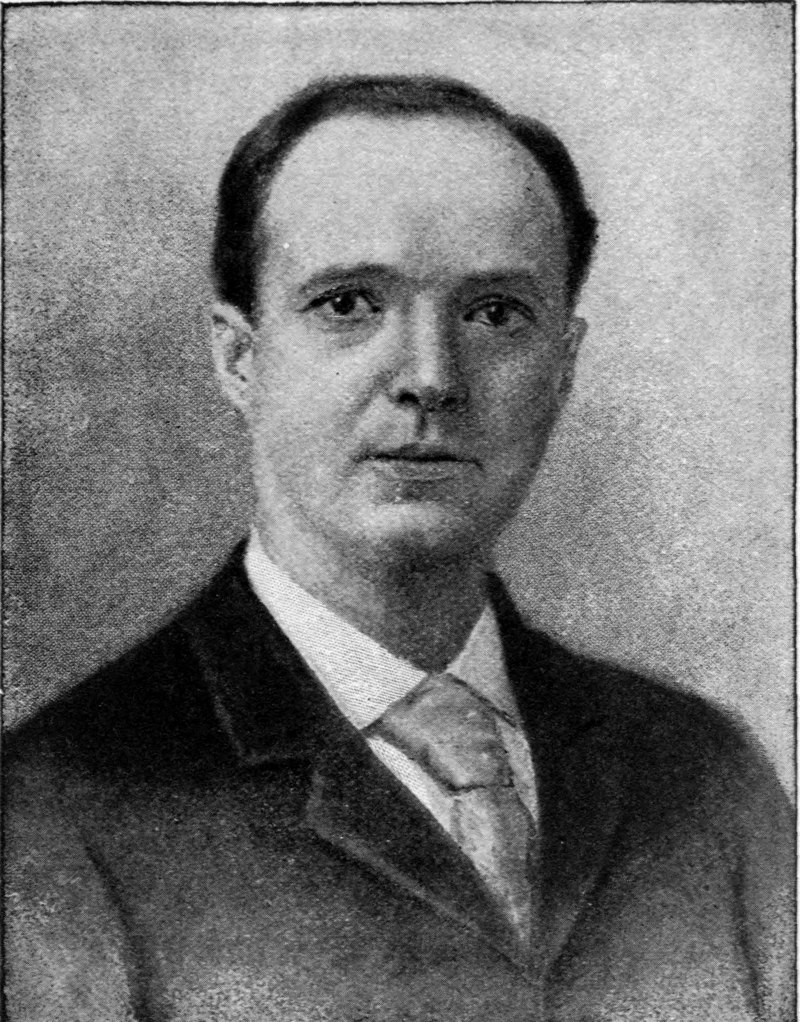
He then applied to the Legislature at Albany for a Harlem
franchise to lay rails in Broadway; and the legislators
saw there was room for stock speculation in this. They
735made a favorable report on a bill granting Vanderbilt’s application,
and on this Harlem stock rose sharply to 150.
Then they and their friends, including the New York Common
Councilmen, sold it short largely, thinking they had a
sure thing; and Tobin bought for Vanderbilt all that was
offered. On March 25, 1864, they voted, by prearrangement,
against the bill, and Harlem stock fell to 101.
The sellers of Harlem rejoiced, for they had large profits
on paper; but Tobin still continued to buy the stock, and
under his purchases it rapidly recovered. The commodore
was determined to punish them. Within ten days Harlem
was up to 150 again. A week later it touched 185, and thereafter,
for ten days, fluctuated between 175 and 200. Daniel
Drew sold calls on it for 30,000 shares, thinking it could not
stay up long, and the professional speculators, both in and
out of the Stock Exchange, took a hand in selling it “short”
on the same theory. The Morse panic swept over it in April,
but still it stood up, like a pyramid in the desert, and Tobin
still continued buying for Vanderbilt.
In May the price of Harlem was put up to 300. It stood
at 285 on the day 15,000 shares had to be delivered, and
they were settled for at this price. Daniel Drew compromised
by paying $1,000,000 to Tobin in settlement of his
own Harlem “shorts,” but the claim against him was
$1,700,000. He, however, threatened a suit for conspiracy.
Tobin’s share of the profits of the corner was about two
millions, and this made him worth three.
Commodore Vanderbilt chuckled, and disposed of the Harlem
road by leasing it at eight per cent. on the stock to the
New York Central & Hudson when he got control of it. So
Harlem proved a bonanza to him till the end, and is still one
of the splendid assets of his descendants. After the “corner,”
Tobin bulled gold on a tremendous scale in the face
of the Union victories that terminated the war. He bulled
it from 198 to 211 against the “short” interest at the beginning
of 1865, and then it broke on him so heavily that he
lost more than $1,500,000. After that he met with a succession
736of disasters in the stock market, and lost every dollar
that he had, besides running in debt with his brokers. He
then retired to live with his sister on a farm on Staten Island,
and was never seen again in Wall Street. He saw ups and
downs with a vengeance. So did his contemporary of the
open board, E. A. Coray, who made and lost about as much.
Addison G. Jerome had a career in Wall Street more
brief than that of Anthony W. Morse, but he is still well
remembered there as a shining light. He entered Wall Street
as an operator early in 1863, after being a merchant in the
dry goods trade, and during the rest of that year was called
“the Napoleon of the public board,” so conspicuously active,
bold, and successful was he in his operations. He was a
friend and broker of John Tobin’s, and coöperated with him
in bulling Harlem, with the result that he made a very large
amount of money out of it, first by the rise from 60 to 117,
when Commodore Vanderbilt was dealing with the New
York Common Council, and next when he was punishing the
legislators at Albany for going back on him, as he phrased
it, in the 1864 “corner.”
He became a brilliant leader, and had a host of followers,
and was successful in everything he undertook until he bulled
Michigan Southern, and, with a clique that he formed, bought
control of it. He put it to high figures, and was sure of his
position. But Henry Keep, the treasurer of the company,
and a keen operator in stocks, stepped in, and turned Jerome’s
success into utter and disastrous failure.
Henry Keep knew something that Jerome was unaware of,
namely, that a clause in the Michigan Southern’s charter permitted
its directors to increase its capital stock. So he called
a secret meeting of the board, and an increase of 14,000
shares was voted. Then, with this increase for future delivery,
he sold the stock against it, and borrowed to make
his deliveries, which made Jerome think Keep was largely
“short” of Michigan Southern. He and his clique, therefore,
kept on buying and advancing the price, while Keep
kept on selling more and more. The final result was that
737Jerome called in all his loans of the stock, so as to force
the “shorts” to “cover,” and that Keep responded by delivering
the 14,000 shares of new stock, which caused a fall
of twenty per cent. in Michigan Southern in one day. This
involved the loss of nearly all the three millions of money
Jerome had so quickly made, and killed him as a leader,
although he was respected as an honorable man. He took the
loss of his fortune and prestige so much to heart that he sickened
and died in the following year of some obscure disease,
a virtually ruined man. But, fortunately, during his nine
months of phenomenal success he had settled enough on his
wife to keep the wolf from the door. His ups and downs
were remarkably swift even for Wall Street.
Leonard W. Jerome, a younger brother of Addison’s, was
prominent in Wall Street and society, and as the driver of a
four-in-hand, long before the latter appeared, and continued
in the Street long after Addison passed away. His career
was also marked by memorable ups and downs. In 1863 he
was a large holder of Hudson River Railroad stock, which
the bears had hammered down to 107. So he formed a strong
clique to bull it against the “short” interest, and bought all
the stock that was offered until he had taken nearly all the
capital. Then he bid up the price gradually till it reached
175, and made the stock so scarce that he loaned it to the
bears to make their deliveries, at five per cent. a day. The
shorts, estimated to represent about 50,000 shares, finding
there was no help for them, covered at a very heavy loss,
while Jerome made a great deal of money by squeezing them,
presumably two or three millions.
His prestige increased with his wealth, and he became a
social as well as a financial lion. He had been watching Pacific
Mail since it succeeded the Nicaragua Transit Company
in 1856. In 1861 its stock fell to 69, but in the next year
its earnings were enormous, and 26,000 of its 40,000 shares
were bought by a combination of operators, mostly its directors,
who transferred it to Brown Brothers & Co., to be held
in trust for their benefit for five years; and they selected Leonard
738Jerome to bull the stock in the open market. Under his
manipulation it rose to 160 in thirteen months after he commenced
operations for the ring. There was a large “short”
interest in it by that time, and, to force the “shorts” to settle,
he put it to 200, and kept it there, and they settled.
In 1865 Pacific Mail’s capital was increased from four
millions to ten, and yet its stock stood at 240, and it paid
twenty per cent. a year in dividends. The year after, it was
increased to twenty millions, yet it sold at 180, with Jerome
still bulling it. But in 1867 he met his Waterloo in it. To
use his own words, he had bitten off more than he could chew.
The company’s earnings fell off largely, and its report showed
assets reduced from thirty-four to twenty-two millions; the
Government paper-money issues were being rapidly contracted,
and the flood of “water” injected into the stock
was beginning to tell upon it. Moreover, Jerome had agreed
to buy the old five-year combination’s stock at 160. Owing
to all this, accompanied by a generally weak stock market,
Pacific Mail broke, under enormous sales, from 163 to 115
in a few days on his hands, and he lost practically everything
he had, except some real estate. After being thus ruined by
Pacific Mail, Leonard Jerome ceased to be a power in Wall
Street. He had no longer any prestige there, and soon retired
from it entirely, and died, at the home of his daughter,
Lady Randolph Churchill, in London, a poor man. He had
experienced his full share of the ups and downs of Wall
Street.
Pacific Mail was nothing to Leonard W. Jerome after he
lost his money, nor he to Pacific Mail. The company had
seen its most palmy and prosperous days, and its water-logged
stock was heavy on the market. It suffered from reduced
traffic and bad management, and in 1871-72 its stock had
sunk to so low an ebb that the directors felt it was necessary
to do something to mend matters. So, having little of the
stock, they decided, instead of trying to reëlect themselves,
to give up the ship. They retired to make room for a new
board in November, 1871, with Alden B. Stockwell at the
739helm as president. Nominally the new board selected him,
but really he selected them to do his bidding.
His name was then very little known in Wall Street, but
he was known to have been a steamboat clerk on Lake Erie,
and more recently to have married the daughter of Elias
Howe, the sewing-machine inventor and manufacturer of
Bridgeport, Conn., and thus acquired wealth and become the
president of the Howe Sewing Machine Company and the
Willcox & Gibbs Company.
He had come to Wall Street to see what he could do, and
finding Pacific Mail stock down to the 40’s in 1871, he
began to bull it with a vigor that excited some wonder; and
the wonder grew when it was found that he had secured stock
and proxies enough to elect his own board of directors. He
elected them and himself by a vote of 118,000 shares, and
became Commodore Stockwell at a bound. His wish was law
to his codirectors, and the irreverent called it a dummy board.
With the assets of the Pacific Mail Company under his
control, and acting for it, he soon managed to get control,
and become president, of the Panama Railway Company. He
began, on this acquisition of the Pacific Mail Company, to
bull Pacific Mail stock anew by making splendid promises.
In October, 1872, while the company’s steamers were foundering
and burning with alarming frequency, he claimed that
it had increased its property by large purchases, and was
earning more than eleven per cent. a year in excess of the
Government subsidy. This, he said, would enable it to pay
twelve per cent. on its capital stock from January 1, 1872.
Then he asked for authority from the Legislature at Albany
to reduce its capital stock from twenty millions to ten, which
was granted; but the company never availed itself of this authority,
and to this day its capital remains at twenty millions.
The stock, that had been as low as 40, responded to his
“bull” statements and manipulation, for Wall Street saw
that the intention was at least to put the stock up. It rose,
after a good deal of see-sawing, to about 107, and Commodore
Stockwell was the sensation of the time in Wall Street.
740He became, like Leonard W. Jerome, what was called a “big
swell.” He had one of the largest houses in Madison Avenue
and one of the showiest turnouts in the city, and yet he had
been commodore for less than a year.
He did not confine himself to Pacific Mail and the other
interests mentioned, but took hold of that railway cripple,
Boston, Hartford and Erie, and bought 30,000 shares of Atlantic
and Pacific Railway preferred at 25, a stock of uncertain
legal status, although the certificates had been printed
by the company, because there was no legal authority for its
issue. But this did not prevent the stock from being made
active for a short time in Wall Street at prices a good deal
above cost.
Before long, however, it became discredited, and so also
did Boston, Hartford and Erie stock, while Pacific Mail suffered
under fresh losses and reduced earnings. The stocks
of the three companies were vigorously attacked by the bears
and they all went down together, Stockwell being unable to
support them, and all that he had made was lost. This state
of things involved him in a snarl about the 27,000 shares of
the Pacific Mail Company’s treasury stock, and a compromise
was the result, by which he is said to have given his note to
the Pacific Mail Company for $1,140,000, indorsed by the
Howe Sewing Machine Company.
Then, at the next election, he ceased to be its president, and
a new board of directors was elected. He was also dropped
from the Panama Railroad directorate and the Atlantic and
Pacific board. He had lost his money and his prestige, and
there were none so poor as to do him reverence. He led a
precarious existence as a small speculator afterwards, and,
not long before his death, failed for a small amount as a
member of the Consolidated Exchange.
He was a man of popular manners, and, in describing his
change of fortune, he humorously remarked: “When I first
came into Wall Street, it was asked, ‘Who is that man Stockwell?’
But I was respectfully spoken of as ‘Mr. Stockwell’
after I had made a good deal of money bulling Pacific Mail;
741and when I was elected president of Pacific Mail, I was
styled ‘Commodore Stockwell’ and ‘a Wall Street leader,’
and a great man generally. But when Pacific Mail broke,
and broke me, I became ‘That red-headed cuss Stockwell.’”
Thus are the ups and downs of Wall Street, and Wall Street
opinion, illustrated in real life.
Of all the great operators of Wall Street, however, Daniel
Drew furnishes the most remarkable instance of immense and
long-continued success, followed by utter failure and hopeless
bankruptcy. His early success as a stock speculator was all
the more surprising because he was an illiterate man, who
had barely learned to read and to write enough to be able to
sign his own name in a sprawling, illegible hand.
He had been a cattle drover, and after that the keeper of
the Bull’s Head Tavern, at the New York Cattle Yards, and
was without any experience of banking or Stock Exchange
affairs when he first came into Wall Street; and he never
even read a newspaper. But he succeeded in making money
from the start, and then joined others in putting capital into
Hudson River steamboats; and his investments in these became
large and proved very profitable, although he knew
nothing about running steamers himself.
His shrewdness enabled him to make millions by stock
speculation, and before long, without knowing anything of
the stock brokerage business except as a customer, he entered
into a Stock Exchange partnership, his firm being Drew &
Robinson. For many years this house was prosperous and
prominent, and Drew, after it was dissolved, and when at
the summit of his prosperity, said to a friend who rated him
at twenty millions, “I guess sixteen will cover it.”
After that Drew’s cunning and sagacity seemed gradually
to fail him. He met with a succession of disasters through
bad judgment, but was more liberal than before in endowing
the Drew Theological Seminary and other Methodist institutions.
Yet, instead of giving the endowments in cash, he gave
his notes for them, and paid interest on these. The consequence
was that when he finally lost every dollar that he had,
742and was declared a bankrupt, without any assets, the notes
were worthless. While in this bankrupt condition and dependent
for a home on his son, he died, and his death was as
unnoticed as that of any other Wall Street wreck. He had
gone out of sight, and out of mind, when his money was gone.
Never did anyone go further up or further down in Wall
Street as a stock speculator than Daniel Drew.
Charles F. Woerishoffer was a brilliant Stock Exchange
operator, who made a large fortune out of nothing and then
lost most of it again by overstaying his market as a bear after
the panic of 1884.
James R. Keene came to New York with several millions,
made out of mining stocks in California at the time of the
great Bonanza gold discovery at Gold Hill, when Flood and
O’Brien, Mackay, and John P. Jones made their millions.
But Keene, after adding to his “pile,” lost all he had through
overextending his operations in bulling stocks and grain in
the eighties. He, however, got a fresh start through being
employed by large interests to manipulate stocks for them,
and after several more ups and downs he is rich again.
Henry N. Smith, a former partner of Jay Gould, made
five or six millions as an operator in stocks, only to lose them
again and die poor. The brief meteoric Wall Street career
of Ferdinand Ward, who lured General Grant into forming
the firm of Grant & Ward, is well remembered. He went
up so high that when he came down he landed in Sing Sing
prison. Fish, the president of the Marine Bank, did the
same, after being long in good repute.
It is unnecessary to dilate on any of the Vanderbilts, or
Goulds, or Russell Sage, or Henry Keep, or Henry Villard,
or William E. Travers, because they had no totally overwhelming
reverses in their Wall Street career; but John F.
Tracy, the president of the Rock Island Railroad in the sixties,
was ruined by his stock speculations after being worth
more than five millions, and he had to relinquish his presidency,
and died in poverty. Cyrus W. Field, too, lost
nearly all his large fortune through overloading himself with
743Manhattan Railway stock; and Addison Cammack, the Ursa
Major of Wall Street, died worth little in comparison with
what he had once possessed.
How violent the vicissitudes of Wall Street are at times
we may easily infer when we recall the tremendous convulsion
produced by the gold conspiracy of Black Friday, on
September 24, 1869, which involved thousands in enormous
losses, and caused both the Stock Exchange and the Gold
Clearing House, and Gold Exchange Bank, to be closed;
or when we think of the devastating Northern Pacific panic
of May 9, 1901, or of the far-reaching and long-continued
havoc worked by the panic of 1873.
The memorable failure of Jay Cooke & Co., early in the
last-mentioned panic, will be recalled by many as vividly as
the collapse of the Ohio Life and Trust Company that started
the panic of 1857.
All these reminiscences of the ups and downs of Wall
Street will serve to remind my readers that, while it is often
easy to make money, it is still easier to lose it. Therefore,
boldness should be always tempered with caution in the pursuit
of the Almighty Dollar in Wall Street.
CHAPTER LXVII. RECENT WALL STREET BOOMS.
744
The Resistless Power Behind the Market.—The Advent
of Governor R. P. Flower.—How Stocks
were Boomed with a Dash.—A Sudden Death
Averts a Big Panic.—Mr. Morgan as a Railway
Reorganizer.—How Bannigan Unloaded His Rubber.—Millions
Won Only to be Lost.
Wall Street, after the election of McKinley, enjoyed
a boom such as it has seldom known. Probably
the most interesting feature about this boom was that
it was not in any sense spectacular. In that respect it is
unique. Prices of stocks went higher and the intrinsic value
of most of them was greater than ever before. The market
had all the qualities that normally would cause intense excitement
and focus the attention of the entire country on
the Stock Exchange. Yet in spite of these conditions the
Street was in a normal state of mind, and it is doubtful if
the general mass of the people, who get their information
from the newspapers, were aware that there was even an
ordinary boom in Wall Street. This unusual condition was
due, I believe, to the fact that the boom we were enjoying
was built on a foundation that reached clear to the bowels
of the earth. There was nothing unnatural or artificial
about it. Wall Street, instead of being the center, is simply
one of the centers that reflects the general prosperity
throughout the country. Farmers, merchants, mechanics,
mill workers, and miners are all so intent on keeping pace
with the progress in their own pursuits that they have no
time to cast eyes our way. The same conditions that boom
745stocks may boom everything else in the country at an equal
rate, so that we are in nowise deserving of special attention.
Another factor, too, had developed in the Street that prevented
the usual excitement and hurly-burly incident to a
rising market. This was the absence of a pronounced central
figure. Usually a boom centers about some one man who
stands boldly out in the open, and whose hand is known to be
manipulating values. But then the manipulation was being
carried on by a method that was as quiet as it was novel and
unusual. That the market was being manipulated was apparent
enough even to the most casual observer. But the
source of this manipulation was probably known to only a
few.
They knew that a new order of things had come, due to
the most powerful influence that had ever manifested itself
in Wall Street. This influence was very largely composed
of the Standard Oil combination, who introduced in their
Wall Street operations the same quiet, unostentatious, but
resistless measures that they had always employed in the
conduct of their corporate affairs. The heretofore conspicuously
big operators were mere tyros beside the men who are
running things for us now.
At his best, Jay Gould was always compelled to face the
chance of failure. Commodore Vanderbilt, though he often
had the Street in the palm of his hand, was frequently driven
into a corner where he had to do battle for his life; and so
it was with every great speculator, or combination of speculators,
until the men who control the Standard Oil took hold.
With them, manipulation has ceased to be speculation. Their
resources are so vast that they need only to concentrate on
any given property in order to do with it what they please;
and that they have thus concentrated on a considerable number
of properties outside of the stocks in which they are popularly
supposed to be exclusively interested is a fact well
known to everyone who has opportunities of getting beneath
the surface. They are the greatest operators the world has
ever seen, and the beauty of their method is the quietness and
746lack of ostentation with which they carry it on. There are
no gallery plays, there are no scare heads in the newspapers,
there is no wild scramble or excitement. With them the
process is gradual, thorough, and steady, with never a waver
or break. How much money this group of men have made it
is impossible even to estimate. That it is a sum beside which
the gain of the most daring speculator of the past was a mere
bagatelle is putting the case mildly. And there is an utter
absence of chance that is terrible to contemplate. This combination
controls Wall Street almost absolutely. Many of
the strongest financial institutions are at their service in supplying
accommodations when needed. With such power and
facilities it is easily conceivable that these men must make
enormous sums on either side of the market. So far, fortunately,
their manipulations have all been one way—upward;
and in conjunction with the general prosperity this has resulted
in making large sums of money for nearly everybody
in the Street.
Here and there we have heard of losses, some of them fairly
large, but in comparison with the general money-making these
are hardly to be taken into consideration.
The last preceding boom that Wall Street had enjoyed
was as different from this as it is possible to imagine. It
had all the elements which this one had not. It centered
about one man who stood out in the lime light clear and distinct.
It kept the Stock Exchange in a constant state of ferment.
It filled the newspapers with column upon column of
sensational stories. It made millions for an army of retainers,
on paper, and it kept the market jerking up and down
for months.
Roswell P. Flower, ex-Governor of the State of New York,
was the leader of the boom, and a more picturesque figure had
never been seen in Wall Street, which is saying a great deal.
Mr. Flower was an individual of a very plain exterior. He
often used language that was noticeable more for its force,
directness, and emphasis than it was for polish. He was
rarely seen without a huge quid of tobacco that almost filled
747the left side of his mouth. Spittoons were an essential part
of the furnishings of his office. His clothing hung on his
person not unlike meal sacks. His hat was rarely brushed,
and for days at a time, apparently, he forgot to shave. Altogether
he was the last person, in appearance, who would be
expected to lead in a district that is famous for its well-groomed
men. His education was certainly not collegiate.
All these factors the ordinary man would have judged to be
handicaps, yet they were Mr. Flower’s strongest aids. The
lack of artificial polish gave people confidence in his statements.
His limited education enabled him to think clearly
along certain lines without being hampered by mental digressions,
which would probably have come with a higher mental
culture.
As the administrator and manager of the estate of his
brother-in-law, Henry Keep, he came into the Street about
twenty-five years ago. He controlled a large amount of
funds, which by conservative direction he increased very substantially.
He scarcely ever figured in the speculative field
to any great extent until after he had completed his term as
Governor of New York State. When he returned to the
Street from Albany he naturally came with a considerable
prestige. Ex-Governors of the Empire State are not very
plentiful in and about the Stock Exchange. He also brought
with him a large political following. In both of the great
parties in New York State there are many men of standing
and influence who like to take a flyer in Wall Street. Almost
to a man they associated themselves with Mr. Flower, who,
during his term at the capital, had made hosts of friends with
Republicans and Democrats alike. He also had close associations
with most of the big capitalists.
After he had settled down to business, on leaving politics
behind, Mr. Flower picked out several stocks as his specialties.
Under his manipulation all these properties went up
and soon began to show a big advance, unusual strength, and
great activity. The bears made frequent assaults on his position
and now and then pushed him toward the wall, but he
748always fought his way to the front again, and came out master
in every encounter. When he had himself pretty well
intrenched in the specialties he was handling, he suddenly
plunged into Brooklyn Rapid Transit, and for months he kept
things stirred up in a way that even Wall Street has seldom
seen. He picked up the stock commencing at 6 and in an incredibly
short time ran it up to over 138. Almost every
politician in the State made a fortune on paper. Mr. Flower
was immensely popular with the Wall Street news reporters,
who helped his boom along through the glowing accounts they
wrote from day to day.
Under the impetus of the swirl in Rapid Transit, practically
every property in the Street went flying upward, until
the end did not seem to be in sight. The bears were beaten
to a standstill every time they showed their heads. The only
result of their attacks was that Flower stocks would jump up
a notch higher. The ex-Governor preached Americanism and
confidence, until everybody believed that if a stock were only
grounded, and the property located in America, you could
buy it at any price and still be on the safe side.
That a terrible panic did not grow out of this boom was
due only to one fact: Mr. Flower’s sudden death. Had he
lived thirty days longer the bubble must have been pricked,
and the result would have been disastrous. Mr. Flower
went to the country for a day’s rest, ate freely of ham and
radishes, and washed his frugal meal down with a copious
supply of ice water. He died, a few hours afterwards, of
an attack of acute indigestion. His death alone saved the
Street.
The Rockefellers, the Vanderbilts, and his other wealthy
friends rushed into the market with millions and sustained
values. They were in a position to attribute the threatened
reaction to his death, and pointed out the absurdity of letting
such an incident affect the value of stocks. They discounted
the break that must have come, in the natural course of
events, under the forcing process that was going on. Reasoning
such as this, spread broadcast through the papers, stopped
749the break. Where the bottom would have fallen out entirely
there was virtually but a moderate break all along the line.
The small speculators, operating on moderate margins, were
of course wiped out almost to a man; but most of the big
fellows were saved. It is probably the only instance on record
where the death of a big operator saved a general smash.
Those hurt were numerous politicians and small-fry operators
who, instead of getting away with snug fortunes in the shape
of profits, lost everything.
An interesting incident of the Flower boom was the way
it was involuntarily helped along by young Joe Leiter. Leiter
himself, although he had gone to the wall some time previously,
had indirectly brought about certain conditions that
served Mr. Flower’s purpose admirably. These conditions
were the general release of hundreds of millions of dollars on
mortgages on farm lands. When Leiter began to corner wheat
it was ruling down in the neighborhood of sixty cents a bushel.
He lifted it to considerably over a dollar before he went broke.
This enabled thousands of farmers to realize on their crops
at the dollar figure and above, which brought prosperity almost
overnight to the wheat-growing belt. With the money realized
from their wheat they paid off their mortgages to the
extent of two or three hundred million dollars. These mortgages
were generally held in the East. This released that
much Eastern capital, causing a vast volume of money to seek
investment. The men controlling this money were overjoyed
when Mr. Flower made an opening for them through the Wall
Street boom, and hence it was comparatively easy, for a time,
to push up values.
Mr. J. Pierpont Morgan, now a noted character in the
Street, was trained as a clerk in the one-time famous banking
house of Duncan, Sherman & Co. Later he made a connection
with Anthony J. Drexel, probably the wealthiest banker
of his time in America. Out of this connection grew the
house of Drexel, Morgan & Co., with Mr. Morgan as the managing
partner in New York. When Mr. Drexel died, Mr.
Morgan absorbed the entire business, and a few years later,
750when his father died, he became the head of the London house
of J. S. Morgan & Co. as well.
This put him in a very prominent position. He soon thereafter
demonstrated his influence by reorganizing the bankrupt
Richmond and West Point Terminal Railway and Warehouse
Company, changing its name to the Southern Railway Company.
A number of small roads were added to it, many of
which were in financial straits and practically all of which
had been badly managed. He combined them into one system
under one head. Mr. Morgan next turned his attention
to the reorganization of the Reading and the Erie roads,
which were in a bad way. He soon produced order out of
chaos there, and that resulted in a boom in railroad stocks
all along the line. He had several sharp tussles, however,
with some of the big stockholders, who tried to stand out
against him because they thought his plans too drastic.
The people who followed Mr. Morgan’s lead in these transactions
generally made money.
A different sort of deal was engineered a few years before
by Mr. S. V. White, popularly known as Deacon White, because
of his position as a deacon in Plymouth Church. Mr.
White is one of the oldest operators in the Street, and one of
its most striking figures. He has made half a dozen great
fortunes in speculation and lost them, but he is as undaunted
as ever, and in spite of the fact that he is now over seventy
years old he is still active daily in the market.
Probably one of the most unique stock deals ever carried
out in the Street resulted from the transaction of Joseph Bannigan
when President of the Rubber Trust. The history of
this deal, which for a time resulted in a great boom in industrials,
has never been told, and is known to but very few
persons, most of whom, by the way, were its victims.
Bannigan was an uneducated Irishman. He began life in
a New England rubber factory and conscientiously worked
his way up from a wage of $1.50 a day to die worth
$5,000,000. He was shrewd and bright and knew the value
of money. He saved to such good purpose that when the
751Rubber Trust was formed he was at the head of one of the
biggest factories in the country, located in Providence. His
knowledge of the trade was so thorough that, despite the fact
that he almost invariably used small “i’s” in writing a letter,
he was made president of the trust, his holdings amounting
to about 40,000 shares. When matters had been moving
along for some time, Bannigan made up his mind that the
other men in the trust, the big fellows, were not treating him
right, and that the best thing he could do was to get out. So
he packed his stock certificates in a gripsack, left Providence
on the night boat, landed in New York bright and early, had
his breakfast, and then made a bee line for a stockbroker’s
office. He had assured himself in advance that this stockbroker
was to be relied upon, and so he told him frankly what
he intended to do.
“I want to sell out, bag and baggage,” he said. “I want
to get rid of every one of my 40,000 shares. Here they are;
put them on the market and sell them.” The stockbroker told
him that that would never do. If he wanted to realize full
value for his holdings he would have to go about it in a different
way, for if he should throw his 40,000 shares into the
market it would knock the bottom out of prices, and he would
get little or nothing for his stock. Mr. Bannigan saw the
point and asked what he ought to do.
“Buy,” said the broker.
“But I don’t want to buy; I have got more now than I
want.”
“That is all right; buy anyway; that will make a market
for the stock, and you can unload when the time comes.”
“How much must I buy?”
“Oh, about $250,000 worth.”
“But I have not got $250,000 in cash to go and buy rubber
stock.”
“Well, you can borrow it; a man in your position, Mr.
Bannigan, will have no difficulty in borrowing $250,000.”
Much against his will the old man was finally persuaded
to do as he was told. About two weeks later the broker wrote
752to him that he must buy some more—this time $200,000
worth. Mr. Bannigan used rather strong language, but finally
yielded as before. He borrowed $200,000 and turned it over.
With this additional capital to work on, the broker continued
to manipulate the market. The insiders soon discovered that
some strong party was buying, but they did not know who,
Bannigan having carefully kept himself in the background.
His broker operated skillfully in the stock, one day buying,
the next selling, to keep the stock active. The broker after a
while began to borrow large amounts of the stock. This convinced
the insiders that there was a big short interest somewhere,
and they got together in order to squeeze the shorts.
The inside holders who controlled most of the stock combined
to squeeze “the shorts” out. In furtherance of this plan they
put the price up to 61, and at about that figure Bannigan’s
stock was all unloaded. Bannigan now found himself full of
money, while the other fellows were filled up with his stock.
They never awakened to the fact that the president had sold
out on them until his shares were delivered against their purchases,
as they thought, of “short” stock. Rubber broke and
did not stop tumbling until it had gone from 61 to 16.
This deal had all the elements of a comedy-drama, and the
playwright who can do it justice will find material there
which will make him an everlasting fortune and reputation.
It is not often, however, that newcomers in the Street fare
as well as this in the end. For a time they will go on merrily
enough, and send things booming, but in the end most of them
get the worst of it. At the risk of repeating myself, I will
say here:
Mr. A. B. Stockwell is a good illustration of the truth of
this. At one time he was worth many millions of dollars.
His start in life was as a purser on a Lake Erie steamboat;
his father, it is said, kept a livery stable in Cleveland. On
one of his trips Stockwell was in a position to show considerable
attention to Elias Howe, the inventor of the eye at the
top end of the sewing-machine needle. Mr. Howe was accompanied
by his daughter. Stockwell made himself agreeable to
753Miss Howe also, and with such good effect that he managed
to win her affections, and soon thereafter married her.
When Mr. Howe died, Mrs. Stockwell came into possession
of her father’s millions. With this nest egg Stockwell started
in Wall Street, and before anyone realized what had happened
he was the most talked-of man in the district. He put
all his wife’s millions in Pacific Mail stock, secured entire
control of the company and elected himself its president. He
came into the Street as plain Stockwell. Then, as the news
of his liberality and good-fellowship spread, he became Mr.
Stockwell. After he got hold of the Pacific Mail he was Commodore
Stockwell by common consent. Everybody bowed and
scraped to him, and no man was so high and mighty that he
was not proud to shake his hand.
Stockwell took hold of Pacific Mail at about 40 and sent
it up to 107. It was at this period that he was worth on
paper over $15,000,000. But he found, unfortunately, when
it was too late to retreat, that though Pacific Mail was up to
107 it was not worth that figure when the unloading commenced.
He was landed high and dry with it all, and the Street told
him he was welcome to it. He tried to sell, and found that
there was no market. Then came violent demands on him
to pay up his numerous call loans, and in order to respond
he had to sell regardless of price, and thus a whirlpool was
created which finally sent the stock down to the price at which
he had begun his original purchases. In this one upset he lost
all his paper profits and his wife’s millions besides. That
was the most famous boom in the history of Pacific Mail,
notwithstanding Leonard Jerome’s previous brilliant ups and
downs in that property.
Leonard Jerome and his brother Addison had a good time
with Pacific Mail for a while. They ran it up to high figures
several times, but finally met with the same experience that
Stockwell did. The two Jeromes, from being among the
wealthiest and most dazzling operators in the Street, were in
the end practically wiped out. Leonard Jerome, who was the
754father of Lady Randolph Churchill, had nothing left to bequeath
his daughter except an equity in the house now occupied
by the Manhattan Club on Madison Avenue, which yields
an income of about $15,000 a year, of which Lady Churchill
gets $10,000.
These are a few of the booms that have stirred up things
in Wall Street at one time or another, as did the Keene, the
Gould, and the Vanderbilt booms, and the rest I have mentioned.
CHAPTER LXVIII. WALL STREET’S WILD SPECULATION, 1900-1904.
755
McKinley’s Reëlection and the Defeat of Bryanism
Set the Big Ball of Speculation Rolling on the
Stock Exchange.—The Tremendous Volume of
Speculation by both Large and Small Capitalists.—The
Rush to Incorporate New Companies
and Create Industrial Trusts and Railway Combinations.—The
Enormous Capitalization of the
United States Steel Corporation and Other Companies
in Excess of Real Values.—The Rapid
Growth and Popularity of New and Old Trust
Companies and the Effect of Their Competition
in Forcing Bank Consolidations.—The Bold and
Reckless Speculations in Railway Stocks of
the Newly Enriched Western Capitalists.—The
Great Northern Pacific Panic of May 9, 1901.—The
Capture of Control of the Louisville & Nashville
Railway by John W. Gates, and Its Redemption
by J. P. Morgan & Co., Acting in the Interest
of the Louisville & Nashville and Southern Railway.—The
Slowing Down of Wild and Reckless
Speculation in Stocks after September, 1902,
through the Influence of the Banks and Conservative
Bankers, thus Averting Further Inflation
and a Great Convulsion.—The Liquidation
and Depression of 1903 a Natural Reaction from
the Intoxication of the Preceding Prolonged
Boom.—The Great Rise in Cotton and the Collapse
of the Tremendous Bull Speculation Led
by Daniel J. Sully when He Failed.—The Sudden
Fall in the Iron Barometer in 1903, and the
General Situation in 1904.
Wall Street changed with almost magical suddenness
from depression and apprehension to confidence
and buoyancy with the defeat of Bryan and his silver heresy,
756and the reëlection of McKinley in November, 1900. Large
capitalists all over the country began to buy stocks and bonds
on so heavy a scale that prices shot up rapidly, like the celebrated
Gilderoy’s kite, and very soon orders poured into the
Stock Exchange from people of smaller means everywhere,
and a tremendous bull market for stocks resulted, with too
many men staking, or ready to stake, their bottom dollar on
the rise.
The speculative capitalists and large operators of Wall
Street, not of course excepting many of the active Standard
Oil magnates and James R. Keene, naturally availed themselves
of this state of affairs to manipulate stocks on a grand
scale. Having loaded up with them early at low prices, they
boomed them with vigor; and we witnessed the beginning of
a carnival of speculation, and an unexampled rush to form
combinations of industrial and railroad interests, or trusts,
and generally to capitalize the concerns taken in for many
times the amount of their previous capital or real value. The
stock thus created, after being admitted to dealings in Wall
Street, was made active and bid up by the promoters to high
figures to catch buyers, while the public, which had become
crazy to buy, took it in enormous amounts. It bought in
haste to repent at leisure, for, I regret to say, most of the
buyers have it still; and the aggregate loss its shrinkage in
price represents is to be counted by very many hundreds of
millions of dollars.
But it was fortunate for both Wall Street and the nation
that the inflation which ran riot till September, 1902, was
then checked by the conservative action and warnings of the
banks and men like myself, for if it had been allowed to continue
for another half year it would have ended in a disastrous
convulsion, a bursting of the bubble, which would have
been felt all over the United States, and in every department
of business, as in and after the panics of 1857 and 1873. I
was one of the first to sound the alarm and call a halt in this
dangerously wild speculation in my weekly letter dated September
13, 1902, in the following words:
757“A man becomes an inebriate by getting himself into a
condition where he ceases to recognize effect as following
cause. Under the influence, at times, of the intoxicating
beverage he will defy both law and order. This is due to the
callous condition he has allowed himself to get into. The
stock market of late has been productive of a similar condition
of mind with a majority of people. They have been engaged
now for such a prolonged period in buying, buying,
buying, making profits on all their ventures, as to make them
like the inebriate, callous to all adverse factors whenever they
come up. High prices don’t frighten them; scarcity and high
rates for money don’t frighten them; cautionary signals don’t
frighten them; strikes don’t frighten them. Buying and holding
on have simply become chronic with them. This may not
unlikely continue to be the condition of the stock market until
compulsory liquidation sets in, which the strain in the money
situation will sooner or later produce. I recommend great
caution on the buying side, and, better still, not buying at all
at the prevailing high prices. I see no possibility of relief
to the money market excepting through the importation of
gold. The activity of business all over the country, together
with the moving of the crops, is going to keep money thoroughly
employed at high rates from now onward and all the
way through the new year; therefore, those who buy stocks to
carry hereafter, excepting on big concessions from present
prices, may meanwhile be overtaken with discomfort from
depreciation in values as well as from the difficulty of obtaining
money at reasonable rates.
“Henry Clews.”
The intoxication of the time having gradually given place
to sobriety, and a slow but heavy downward reaction in prices,
we escaped the violent and widespread panic that threatened
us, and that would have been inevitable had we not “slowed
down” in time. As it was, the decline was long-continued
and severe, and impoverished or ruined hundreds of thousands
of people, including a vast number of formerly very
rich men. Both big and little speculators became the victims
of the downward plunge of prices: but the country as a whole
758was saved from serious disturbance and depression—that is,
from the effects of such a tremendous collapse and crash as
menaced Wall Street during nearly the entire year 1903.
This was very fortunate for all our material interests; and
the conservative element in Wall Street is to be congratulated
on having so successfully put on the brakes in time to prevent
a collapse that would have involved and disturbed the nation
from the Atlantic to the Pacific.
The year 1901 was the most remarkable in the financial
history of the United States, and Wall Street was a theater
of action whose performances astonished not only the entire
country, but the world. Their like had never been seen before,
not even during the great war between North and South.
It would take volumes to fully describe and give retrospective
clearness to the leading events of that extraordinary period
which made the Stock Exchange continually the scene of
wild excitement, daring manipulation, and unexampled
inflation.
To say that Wall Street astonished the natives and made
conservative business men stand aghast is no exaggeration.
There were six influential factors actively at work in that
year, namely, the consolidation of railroad and industrial
companies at enormously inflated prices, including the disastrous
Northern Pacific skyrocket “corner,” the restless sea
of reckless stock speculation that swept the American people
into its vortex, with all its razzle-dazzle extravagance, the
transformation of this country from a heavy lender in Europe
to a heavy and urgent borrower, the partial failure of the
corn crop, the decline in prices for nearly all the staples except
grain and iron, and the collapse in earnings and dividends
of many new industrial combinations. These included
The Amalgamated Copper Company, and the panicky decline
in its stock, which impoverished or ruined many thousands
of investors, it being first run up to 130 and then rapidly
down to 60 by the manipulators, who sold out and then sold
“short,” and who are said to have made more than fifty
millions by the up and down movement. Subsequently even
759this low price was cut nearly in two, as the decline did not
stop until 32½ was reached.
A mere recital of events as they occurred would be an eloquent
serial story to those familiar with the alphabet of Wall
Street; and there is no more interesting or exciting serial
story than the stock ticker tells, from day to day, to those
interested in the stock market, or one that often excites more
joy or sorrow, or carries with it more weal or woe, prosperity
or ruin. But the ticker, like Tennyson’s brook, will go on
forever during business hours, for we shall never be without
a stock market and speculation.
The transactions of the New York Stock Exchange in 1901
were so tremendous in volume as to excite wonder. But they
only represented the speculative spirit, the intoxication of the
time. The sales in the first half of the year aggregated
175,800,600 shares of stocks and $637,100,800 of bonds at
par value, an increase of 109,906,300 shares and $346,900,700
in bonds over the same six months in 1900.
As prices soared the volume of speculation increased, and
on January 7th the day’s total sales amounted to 2,116,500
shares, and then went on increasing till they reached 3,271,000
on April 30th. Then came the Northern Pacific bombshell,
the panic of May 9th, when stocks came down even
faster than Captain Scott’s coon, and the actual sales were
still larger, but owing to the intense excitement, demoralization,
and confusion that prevailed, it was impossible to keep
track of them all, and the ticker registered only 3,073,300
shares.
This sudden catastrophe convulsed the stock market in a
way that alarmed money lenders, destroyed confidence, and
caused a general rush to sell stocks which brought them down
with a crash, involving many thousands in ruinous losses.
The revulsion of feeling, the change in the sentiment of the
Street was as startling as a violent earthquake, and the consequences
were fraught with grave disaster. Up to the very
eve of this great convulsion in the stock market the dance of
speculation had been fast and furious, among both “the big
760men” and the little, and its unlooked-for occurrence reminded
one of Byron’s lines on the Brussels ball, given on the eve of
the battle of Waterloo, when the sound of cannon unexpectedly
boomed above the music:
“On with the dance! Let joy be unconfined;
No sleep till morn when Youth and Pleasure meet
To chase the glowing hours with flying feet.
The lamps shone o’er fair women and brave men;
A thousand hearts beat happily; and when
Music arose with its voluptuous swell,
Soft eyes looked love to eyes that spake again,
And all went merry as a marriage bell;
But hush! hark! a deep sound strikes like a rising knell,
Arm! arm! it is—it is—the cannon’s opening roar!”
Fortunately, in the midst of the Northern Pacific panic,
the financial belligerents combined to stop it. Their competitive
buying for control of the stock had caused the “corner.”
But the extraordinarily high prices to which it was
bid up by those short of it were reached after the competitive
buying had ceased for the want of sellers. The contestants
saw the wisdom of coming to terms to restore confidence and
check the havoc that was being wrought on the Stock Exchange,
where prices had fallen from fifteen to fifty per cent.
that day, while Northern Pacific common stock had sold up
to $1,000 a share. So J. P. Morgan & Co., the bankers of
the Hill-Burlington-Great Northern party, and Kuhn, Loeb
& Co., the bankers of the Harriman-Union Pacific party, met
in haste, and came to an agreement as to the Northern Pacific
stock they had bought, the formal announcement of which
caused a violent recovery of prices the next day, but not before
the sweep of the besom of destruction had caused several
Stock Exchange failures to be announced. The recovery was
followed by a relapse of equal violence under a fresh rush to
sell, which carried stocks nearly as low as in the panic, and
then by a fresh recovery, a usual feature in a crisis where
credit has been severely shaken and many have been crippled.
761The outcome of this agreement between the two sides was
the formation of the Northern Securities Company, practically
as arranged for by J. P. Morgan & Co. and Kuhn, Loeb
& Co., Mr. Morgan naming the directors by mutual consent.
Into this repository, or holding company, the Hill and Harriman
companies—that is, both sides to the controversy—put
their Northern Pacific stock, as well as Great Northern stock,
and the Northern Securities Company later issued its own
stock to them in exchange for it.
But when, in 1904, the Northern Securities Company was
held by the United States Supreme Court to be a violation of
the anti-trust law, and it became necessary to distribute its
assets, a new controversy arose. Its directors proposed to
make an equal, or pro rata, distribution of the Northern Pacific
and Great Northern stocks deposited with it, whereas
President E. H. Harriman, for the Union Pacific, which deposited
the lion’s share of the Northern Pacific, namely,
$78,000,000, wanted all its stock back again; in other words,
to eat his cake and have it, too. As this, if assented to, would
have given the Union Pacific control of the Northern Pacific,
President Hill, for the Great Northern Burlington system,
naturally objected, and we all know of the litigation that followed,
and in view of the glorious uncertainty of the law, it
would have been rash to have predicted its final outcome.
On the Stock Exchange, April was the most active month
of 1901, the sales aggregating 41,689,200, a daily average of
1,812,600. On April 24th no less than 652,900 shares of
Union Pacific were sold. These specimen bricks furnish a
practical commentary on the rampant speculation then in
progress.
The new incorporations of the year represented an amazing
amount of capital, the total being far in excess of any
previous year, even that of 1899, when many of the large
trust combinations were formed. The largest and probably
the most heavily watered combination launched was the
United States Steel Corporation, with its $508,478,000 of
common stock, $510,277,300 of preferred stock, and $304,000,000
762of bonds. The mania for organizing new companies
and making combinations of old ones on largely inflated capital
spread to every State in the Union, and the promoters of
industrial enterprises, in particular, seemed to be trying to
surpass each other in piling Pelion on Ossa in excessive capitalization.
Their obvious purpose in most instances was to
sell the stock to the public, and the poor public took the bait
and suffered accordingly, for much of the stock in a great
many of the new schemes became almost entirely worthless,
both as collateral and in the stock market, and the rest experienced
very heavy depreciation, and, figuratively speaking,
like the shaky corporations it represented, went limping along
with an uncertain gait and a ragged and down-at-the-heel
appearance suggestive of reduced circumstances and hard
times.
In every State there was a flood, if not a deluge, of new
companies. In New Jersey, 2,346 were formed in 1901, with
a capitalization of $4,773,702,000, against 2,181 in 1900,
with a capitalization of $1,350,208,400; and in New York,
Ohio, and Texas the incorporation mills were proportionately
active in grinding out new companies with fictitiously large
capital stocks.
Commercial and manufacturing corporations were practically
unknown, that is, in any substantial form, in the United
States till about 1850, and then they followed the development
of the railways. In 1848 the first general corporation
act, known as the Manufacturing Act, had been passed in
this State, and companies began to be organized under it;
but the law limited their capital and imposed other restrictions,
whereas companies may now be incorporated for a thousand
years with an unlimited amount of capital. The contrast
between 1850 and this era of trusts marks the great and
rapid progress of the country in the interval in population,
commerce, manufacturing industry, banking, railway building,
and general material prosperity.
The growth of trust companies has been the natural outcome
of our industrial and economic development, and the
763freedom allowed by our laws in monetary affairs. In England,
France, and other European countries the laws restrict
corporation rights and privileges so rigidly that such companies
would find it impossible to do business there as they
do here. Hence trust companies have practically no existence
except in this country. How immensely they have prospered
of recent years the banks know to their cost. In 1882 the
gross deposits of all such companies in the United States were
$144,841,000. In 1892 they were $411,659,000; but after
the new industrial combination era began, in 1897, they shot
up with amazing celerity, and new companies sprang up like
mushrooms in all our large cities, and here and there in small
towns.
Being competitors of the banks they shared their business,
and so prevented or limited their natural growth, and forced
many of the bank consolidations that have since taken place.
At the end of June, 1902, their deposits had mounted up to
$1,525,887,000. Here was an increase of $1,114,228 in ten
years to about half of the total individual national bank deposits
of the country, for these on July 16, 1902, were
$3,098,875,772. Moreover, in the city of New York the
trust company deposits exceed, or did exceed, the individual
deposits of the national banks, those of the latter on September
15, 1902, aggregating $603,565,374, while on June 30,
1902, the deposits of the trust companies, as shown by their
semi-annual reports to the State Superintendent of Banking,
were $760,776,124. This comparison is a very suggestive
revelation of where the money goes and how the trust companies
prosper at the expense of the banks.
In 1902, again, a few leading factors, or influences, controlled
American finance, and shaped the real financial history
of the year. These were the good corn crop, following
the bad one, and other satisfactory harvests; the overstraining
of American bank resources to supply the vast requirements
of the new trust and flotation enterprises when the capital
and currency of the country were required for its regular
trade and ordinary business; the enormous increase in our
764foreign importations contemporaneously with a very heavy
decrease in our exports; the great rise in the price of the raw
materials used in our manufactures, as well as in the cost of
labor; the strenuous efforts of large speculative capitalists to
extend and hold permanent control of their respective railway
and industrial enterprises and undertakings; the reckless and
unprecedented Vesuvius-like eruption of speculation in railroad
and other stocks by wealthy and newly enriched Western
stock operators known as “the Chicago Crowd” and “the
Pittsburg Crowd,” respectively, aided by heavy bank loans at
high rates; and finally the refusal of the public to follow
them any longer as buyers. This accords with what I have
said about the influence of the conservative banks and bankers
in calling a halt on the wild speculation for a rise which raged
up to the latter part of September in that year.
The exploit, in 1902, of John W. Gates, backed by his
speculative associates, in buying a majority of the Louisville
& Nashville Railway stock, was his last successful venture
to make a big haul of millions on the Stock Exchange. After
that he and they met with very heavy losses in their continued
efforts to boom stocks. But Mr. Gates was paid a profit of
ten millions of dollars on his Louisville & Nashville purchases
by J. P. Morgan & Co., a partner in that firm having made
the bargain with him at the Waldorf-Astoria Hotel, at three
o’clock in the morning, after it had been discovered that Mr.
Gates had really bought control of the stock.
It transpired, in evidence, that Mr. Perkins had gone there
at that hour for this purpose, and found Mr. Gates in bed.
The object in giving him so large an amount above what he
had paid for the stock he had just bought was to get him out
of the way as a mischief-maker, for with him in control of
the Louisville & Nashville, there was no telling what he
would do to demoralize the Southern Railway system. He
was looked upon as a bull in a china shop, to be coaxed and
tempted out, regardless of expense, before he began to toss the
crockery with his horns.
So when he said to Mr. Perkins, “As you want the stock
765so badly, to keep the Belmont board in control and protect
the Southern Railway, I will let you have it if you will pay
me ten millions more than it cost,” the proposition was
promptly accepted; and the deal was closed on this basis.
The Louisville & Nashville and the Southern Railway companies
were supposed to have been jointly interested in the
purchase, but the Gates stock was finally turned over to the
Atlantic Seaboard Air Line.
Buying control of the Louisville & Nashville by Mr. Gates
was a far bolder operation than President Hill’s purchase of
the stock of the Burlington & Quincy for the Great Northern,
or than the Moore Brothers’ purchase of control of the Rock
Island and their subsequent great inflation of its stock and
bonded debt, because Gates bought it merely as a speculation,
without any desire to manage the road. He was fortunate
in being able to sell it so easily to those he had frightened by
his daring coup.
It is interesting to compare the leading influences, or principal
factors, in Wall Street in 1903 with those of 1901 and
1902. Stock Exchange transactions in that year were very
much smaller than in 1902, but not nearly as much so as the
total in 1902 had fallen below those of 1901, the year of the
greatest activity and excitement in this memorable speculative
period. The sales in 1903 aggregated 161,099,800
shares, against 188,497,600 in 1902 and 265,945,700 in
1901. The largest total on any one day in 1903 was 1,539,000,
against 1,996,000 in 1902 and 3,202,200 in 1901. The
largest in any month in 1903 was that of January, 16,002,300,
against 26,568,000 in April, 1902, and the smallest in 1903
was 10,731,000 in November, against 7,884,900 in June,
1902.
The barometer of the iron trade was still rising at the
opening of 1903. Good crops had been gathered and were
being sold at good prices; railway earnings were large, and
railway companies were making heavy expenditures for new
equipment and improvements, and every department of business
and manufacturing industry seemed prosperous, with the
766iron trade enjoying its full share of that prosperity. So
heavy, indeed, was the demand for iron and steel that the
capacity of our works was unequal to it, and we were importing
iron and steel largely, as we had been in 1902.
But in June the iron industry experienced one of its time-honored
lightning changes. That barometer suddenly fell.
The demand subsided with surprising celerity in all lines, and
by November prices in some of these were fifty per cent. lower
than in January. The boom in the iron trade which commenced
in 1899 was at an end after lasting for four years.
At the end of the year, however, the trade began to revive,
and 1904 witnessed a slow but steady improvement in it,
as the reports of the United States Steel Corporation’s earnings
have shown. Consequently that highly inflated company,
after being forced in 1903 to suspend dividends on its common
stock, was encouraged to continue them at seven per cent.
on its preferred stock. But this carried cold comfort to the
hundreds of thousands who had been impoverished by buying
these stocks at the high prices at which they were floated here
and in Europe.
Before the end of 1903 liquidation on a large scale in
stocks had run its course and exhausted itself, and the market
quieted into comparative steadiness; and in 1904 we
had, on the whole, nothing more than a dull trading market,
with the outside public very largely absent. But there has
been a general tendency toward slow improvement, although
the net earnings of both railways and industrial companies
have, on the average, shown a heavy shrinkage, a reflection
of the reduced volume of trade and more or less industrial
depression following the overstimulated boom of previous
years. Just as 1901 was the year of the most unbridled
and unrestrained inflation, 1902 witnessed a constant battle
against the tendency to a downward reaction, and 1903 saw
and felt the reaction, which was all the more severe because
it had been so long delayed.
In the cotton market, however, as wild and extraordinary
a bull speculation raged in 1903 and the early part of 1904,
767under the lead of Daniel J. Sully in New York, and William
P. Brown and a Southern clique in New Orleans, as ever
excited the Stock Exchange. Through their manipulation,
helped by the statistical position of cotton and the prospect of
reduced production, cotton rose, under an enormous and unprecedented
volume of transactions, from about eight cents a
pound here to seventeen cents, with frequent violent fluctuations,
and Mr. Sully was avowedly planning to carry it up
to twenty cents, when he found his resources insufficient to
carry, on a falling market, the amount of cotton sold to him.
So after going up like a rocket, he came down like the rocket
stick, although his previous profits by the rapid rise had run
into several millions. It was well that a halt was thus practically
called to this excited speculation and excessive advance
in cotton, for it had inflicted heavy losses upon spinners and
caused the closing of many mills. Sully’s failure was the
logical result of a too daring speculative campaign, and reminds
us of that vaulting ambition which overleaps itself and
falls on the other side.
Glancing at other countries, I find that Canada made more
material progress in 1903 than in any previous year in her
history, business increasing substantially in nearly every
branch of trade and finance, stimulated by bountiful crops
and 150,000 immigrants. But in England the continued decline
of British Consols to the lowest prices in a generation
reflected a low financial barometer, the legacy of the costly
South African war. France, however, made the best showing
of the year in Europe in finance and general prosperity,
while in Germany a vigorous industrial revival lifted that
country out of its previous depression consequent on over-speculation
and bank failures.
One question of great interest in relation to our new industrial
combinations is whether a proper readjustment of
their hugely inflated capital and excessive charges will place
them permanently in a condition of efficiency, productiveness,
solvency, and prosperity, or whether they will ultimately
drift, one by one, into the hands of receivers through their
768inability to make both ends meet, or become hopeless wrecks,
like the Shipbuilding Trust. The same fate is liable to overtake
many other large flotations into which there was a too
copious flow of water, supplemented by chicanery and misrepresentation.
Many of these have been organized in disregard
and defiance of legitimate finance, and have exposed
the stock market and all the monetary interests depending
upon them to risks and disastrous disturbances inseparable
from organizations whose foundations rest largely on wind
and water and on prospectuses and book-keeping that often
failed to tell the truth, the whole truth, and nothing but the
truth.
It was well that a stop was practically put to the creation
of such inflated industrial combinations, as well as to needless
combinations and highly inflated stock issues among the
railroads for power and profit and stock-jobbing purposes, by
the course of the Wall Street banking interest, to which I
have referred, in coming to the conclusion that the over-watering
of new companies, the marketing of new stocks, and
the rise of prices on the Stock Exchange had been carried
beyond the point of safety, and that the outside public had
bought more speculative industrial and railway stocks than
they would be able to carry on a falling market.
They argued, therefore, that their buying power and their
inclination to buy were nearly exhausted, and that the stock
market had become largely a field of action for certain heavy
and reckless speculators, each of whom had suddenly made
many millions by the formation of new trusts and railway
combinations. Some of these had become multi-millionaires
through the early sale of the heavy amounts of United States
Steel stock they received in exchange for their plants when
that huge corporation was launched in its sea of water. In
this they were like some others who enriched themselves by
their industrial combinations in the West before they branched
out in Wall Street.
Very large bank loans to the brokers of these big operators
were gradually called in and fresh accommodations refused
769them. Without loans it was impossible for them to buy and
run up stocks to inordinately high prices, as they had been
doing. Therefore they found that, to a large extent, their
occupation was, like Othello’s, gone. They were eagles with
clipped wings.
The heavy liquidation by large and small operators in
1903 caused a heavy and almost continuous decline in prices
on the Stock Exchange. Many rich men were compelled by
this shrinkage and the calling in of their loans by the banks
to sell out heavy lines of both railway and industrial stocks.
Not a few of these lost practically all their capital, while
nearly all the rest sold a large part of their best holdings to
protect the remainder, which became unmarketable.
This period of liquidation and depression left Wall Street
and the country at large in 1904 thickly sprinkled with poor
rich men, capitalists with a good deal of property, real and
personal, including stocks, but all unsalable in the market
except at an almost ruinous loss. Their policy is naturally
to hold on to what they have left till the tide turns, and if
they are strong enough to be able to do this they will doubtless
meet with their reward. History repeats itself in Wall
Street as well as elsewhere, and with this prospect in view
they can cheerfully say, as the old song says, “There’s a good
time coming, boys; only wait a little longer.”
Meanwhile, those who were active in Wall Street during
this eventful period of inflation and speculation must note,
more than others, the vast change that has come over sentiment
and opinion in Wall Street and everywhere else.
Both Wall Street and the outside public have lost the faith
that they had in many of the stock-market leaders, the men
who were once followed blindly in their schemes of inflation
and regarded as omnipotent in their execution. The power
and prestige of these leaders, for the present at least, have
passed entirely away, and none are so poor as to do them
reverence. The devotees of the Street no longer worship the
old idols.
Wall Street and the public also lost faith in all new
770ventures and new railway and industrial bond and stock
issues, as well as in the good judgment and good faith of the
promoters and corporations concerned. The revelations of
fraud, chicanery, and excessive capitalization that have been
made in the courts and elsewhere, have undeceived even the
dullest and most credulous believers in the schemes and
schemers that took the country by storm in the days of Wall
Street’s wild and pyrotechnical speculation.
Out of evil there cometh good, and this great change from
blind credulity and inordinate inflation to discriminating distrust
and severe contraction has exerted a wholesome effect
in paving the way to a sounder, safer, and generally better
state of things both in and out of Wall Street. But meanwhile
one bad sign is noteworthy. The large corporations,
being unable to market new bond issues, are borrowing heavily
from banking syndicates at five to six per cent. on notes running
from one to three years. There is danger in this, and
the way of the borrower on these terms may, like that of the
transgressor, be hard. But the end may justify the means;
and the nation is still growing as rapidly and as grandly as
ever in our history from ocean to ocean.
There is nothing to provoke pessimism in the magnificent
strides we are making in the march of progress; Wall Street
is always sure to reflect this progress and our growth in material
prosperity, as well as any periods of depression we may
encounter, for it is the great barometer not only of the country
and the times, but very largely of the world.
CHAPTER LXIX. REVIEW OF THE PANIC YEAR, 1903.
771
The year 1903 passed into history with few pleasant
memories. To a great number of individuals it was
a year of disappointment and loss. To the very few it was
a year of golden experience, demonstrating anew that real
success only comes from rigid adherence to sound business
principles and abstention from illegitimate speculation.
Those who remained steadfast to well-established methods of
finance and business weathered the storms of the year with
little injury; while those who defied economic laws and ventured
on the untried highways to success were, later, chiefly
engaged in repairing battered fortunes and gathering together
their scattered senses.
Nineteen hundred and three was chiefly conspicuous as
marking the culmination and collapse of the great trust movement
which began five or six years ago. The country had
fairly gone combination mad, both capital and labor emulating
each other in the furious race toward combination and
monopoly. All consequences were blindly disregarded, only
the advantages of combination receiving any serious attention,
and no regard whatever was paid to the workings of
these huge combinations. Whoever pointed out their inherent
defects, their defiance of natural economic laws, their
ineradicable opposition to human nature, their socialistic
tendencies, their opposition to individuality, their inability
to suppress competition—whoever was bold enough to oppose
these tendencies on such grounds was swept aside with contempt
and indifference. This phase of the movement, however,
was by no means the end of the trust mania. It received
an enormous stimulus from Wall Street, where the
772clever promoter quickly discovered in the increased profits
and power of these combines something new to capitalize.
These forced profits, together with the premiums paid to original
owners for control of good will and for promoters’ commissions,
were the basis of an enormous overcapitalization,
the new concerns frequently being capitalized at several times
their real value. Not less than $6,000,000,000 of these new
creations was made within a few short years, forming the
basis of a colossal speculation, backed by unequaled financial
power and launched upon an unprecedented industrial boom.
It is not the purpose of this brief review to cite instances of
failure. Fortunately, the losses resulting from inability to
unload on the public fell chiefly upon those best able to bear
them, the panic being strictly financial and, fortunately, not
commercial or industrial. For the original shareholders in
these combinations who failed to sell, the losses were chiefly
on paper; but they were sufficiently heavy to seriously cripple
many rich men whose fortunes had been locked up in
these enormously inflated new creations. Syndicate after
syndicate was formed to finance these organizations; some
made fabulous profits, but others were closed out with heavy
losses, bringing the country to the verge of the greatest panic
in history. Fortunately, the country’s general prosperity
was only slightly impaired by the tremendous strain thus
imposed on Wall Street. The storm was finally safely weathered
because of the prudence of our bankers and the strength
of our national resources, as well as the continued prosperity
of the farmer, who once more proved himself the backbone of
the nation. These experiences have effectually killed the
trust mania, and its revival is exceedingly improbable. Big
corporations, it is true, will remain, for the reason that they
are the best known means of doing the world’s work; but the
era of excessive capitalization of good will, promoters’ fees,
monopoly profits, and the delusions of visionary economists
is happily at an end. Whether the final days of reckoning
for the trusts have been seen or not is a question that must
be left until the ultimate test of business adversity is applied,
773which we sincerely hope is still far distant. At best, the
future of the industrials is dubious. Along with, and as a
natural sequence of, the trust movement came the labor movement.
The power of combination once discovered was as
badly misused by labor as by capital; even worse, for the demands
of labor were pushed to such extremes of extortion and
injustice as to throttle business and arouse popular indignation
among those who still preserved some ideas of individual
freedom.
Next to the trust movement the most potent influence in
the business world was the simply phenomenal boom in the
iron and steel trade. The world had never seen such rapid
development before. This was based principally upon the
enormous demands of American railroads, which have been
practically reconstructed in order to meet the tremendous
rush of traffic which the nation’s growth has imposed upon
them. The big car and the big locomotive necessitated heavier
rails, new bridges, and new terminal facilities; so that hundreds
and hundreds of millions were thus expended, very
largely out of current earnings, but in many cases, also, by
the creation of new capital issues. It is probable that the
heaviest portion of this work has been done, yet much remains
to be completed, and railroads will be heavy buyers
of steel to continue projected improvements. Another powerful
stimulus to the iron trade was the use of the steel frame
building for office purposes. This meant a revolution in
office buildings, and the business centers of all our large
cities are undergoing a process of reconstruction which is
far from complete, and was brought to an abrupt halt by the
extortionate demands of labor. In addition to these two
great sources of demand the uses of iron and steel are steadily
extending with the progress of invention, the cheapening
of their cost, and the high price of lumber. The iron trade’s
pace was too rapid to last, and the reaction came with unexpected
severity in the latter half of 1903, precipitated, of
course, by the financial reaction, which, along with the labor
agitation, discouraged all new enterprise.
CHAPTER LXX. LEADING WALL STREET EVENTS UP TO THE FALL OF 1907.
774
The natural result of the panic of 1903, and the long
period of depression in Wall Street, was that an unprecedentedly
large surplus reserve was accumulated by the
New York banks in 1904, reaching its maximum in August.
This was still further swelled in 1905, when speculation for
a rise again assumed formidable proportions, and new high
records were made in the stock market. Both bank loans
and deposits reached a magnitude never before known, and
the activity on the Stock Exchange, combined with that in
trade, and land, mining, and other speculations outside of
Wall Street, caused the clearing house exchanges to greatly
exceed those of any previous year.
Our foreign imports also increased till they made new
high records, although our exports failed to keep pace with
them. This large import trade reflected both the rising fortunes
of the rich, who had suffered severely during the depression
of 1903, and the general prosperity. Our imports
are the barometer of the times. When these are good, they
are large; but in bad times they shrink enormously, for a
large percentage of them represent luxuries, and we are a
luxury-loving people, and, in comparison with Europeans,
our manner of living is expensive, not to say extravagant.
Before the end of 1905 the banks of the rest of the country
followed those of New York in reporting deposits and loans
larger than ever before, whereas in the early part of it their
only high record was in the amount of their cash reserves.
This showed the great demand for loans and discounts to
meet the requirements of the rapidly increasing volume of
trade and speculation.
775The amount of money available for loans was largely
reduced in the early part of 1905 by our heavy exports of
gold. But it was subsequently increased by the issue, up
to December 1st, of sixty millions in National Bank note
circulation, which was so much fuel added to the fire of speculation,
not, however, in Wall Street, as much as in the interior,
where there was a rage for new enterprises of all
kinds, mostly speculative. Everyone with money enough to
make a venture seemed to be seeking a short cut to wealth.
This inland speculation and business activity, particularly
in the West and South, caused the exchanges or clearings of
the banks all over the country, except in New York, which
was comparatively dull, to reach larger totals than ever before.
Our iron production and foreign imports, at the same
time, made new high records.
The gold in the United States Treasury, owned by the
Government, increased under the tariff on imports from
$193,072,614, early in 1905, to $291,258,135, near the end,
and the total amount held by it, including that held against
outstanding gold certificates, increased to $816,354,352, the
largest in the Government’s history, and also the largest held
by any government or institution in the world. The next
largest sum ever held elsewhere was $591,600,000, by the
Bank of Russia, in 1898. Yet on January 31, 1895, the
total amount of gold held by Uncle Sam—that is, by the
Treasury—was only $97,353,776, and on February 12th
this had dwindled to $41,340,181, owing to the run on the
Treasury through fear that the Government might be forced
to suspend gold payments. But President Cleveland’s
prompt action in selling bonds for gold—to the Morgan-Belmont
syndicate—averted this possibility.
Before glancing at more recent events, it is well to refresh
our memories by looking back at the most conspicuous
features of the stirring period in Wall Street’s history, extending
from the beginning of 1901 to 1906. In 1901 we
had a year of extraordinary developments, including new
company organizations and old company amalgamations, wild
776and reckless speculation by the outside public, heavy borrowing
of European money to carry on this speculation, the
failure of the corn crop, and, except for corn, a heavy fall in
the prices of our products.
In 1902 Wall Street was flooded with new bond and stock
flotation schemes, all clamoring for bank loans, although the
activity of trade called for all the loanable capital available.
Coincidently, there was wild and reckless speculation in
stocks by newly made industrial millionaires with large bank
resources and enormous loans at their command. The outside
public, however, were not tempted by the bait they offered.
Hence, the banks had an excessive burden of loans,
all the greater because of the determination, at any risk, of
the speculative capitalists to carry out their flotation schemes
so as to control great industrial, railway, and other corporations.
Meanwhile, there was an immense increase in our
foreign imports and a decrease in our agricultural exports,
and a great rise in raw materials and the cost of labor. But,
fortunately, the year gave us a good corn crop and other satisfactory
harvests.
Then came 1903 with its train of disasters. Investors
took alarm at the masses of new securities thrown upon the
market, and withdrew from it. The securities consequently
became unsalable, and prices declined rapidly. This forced
liquidation in bonds and stocks of all kinds, particularly the
better kinds, to save the poorer from sacrifice by the syndicates,
corporations, firms, and persons who were over-extended
and unable to respond to the calling in of loans by the banks
and other money lenders. Wall Street was full of “undigested
securities,” on which it was impossible to borrow any
longer. So multitudes of holders had to sell them for what
they would bring. Then came a heavy decline in iron and
steel, among other things, an equally heavy reduction of the
profits of industrial corporations, with many corresponding
reductions in dividends, and a very sharp contraction in our
before greatly expanded foreign imports owing to the hard
times. We had a rich man’s panic, and plenty of poor rich
777men. But, again, we had abundant grain crops, although
the cotton crop was very short, which resulted in our shipping
more cotton to Europe in the autumn than ever before,
while its price was abnormally high.
In 1904 we saw one effect of the depression of 1903 in
the abnormally large surplus reserves of the New York banks,
when money on call for about eight months loaned largely
as low as one per cent. Only four times before had these
reserves been exceeded. Then came the largest gold exports
ever made by us. In June the stock market began to recover
under spirited speculation for a rise, together with much buying
by investors. But reckless professional speculators carried
prices so high that the market collapsed in December.
During the year there had been a slow yet general revival of
trade, in the face of extremely high prices for cotton, resulting
from a short crop and a bull movement, which paralyzed
the cotton manufacture, and caused many mills to
close both here and in England. But happily this was followed
by the most bountiful cotton crop we ever had, owing
to the high price of the staple having stimulated cotton planting
all over the South. A heavy fall in the price of cotton
resulted, in which the bull leader failed. But the grain crops
met with disaster, and were the smallest since 1900, which
resulted in the highest prices since 1898, and the smallest
exports to Europe since 1872. The presidential campaign in
the meantime passed without creating a ripple in the tide of
Wall Street.
In 1895, simultaneously with much discussion of the
world’s increasing gold product, we saw both here and in
the Old World, especially in the latter part of the year,
unexampled monetary stringency with very high rates for
money. The surplus reserve of the New York banks was
wiped out twice, that is, they twice fell below the dead line
of the required twenty-five per cent. reserve on their deposits,
while the Bank of England’s condition was the lowest since
1890, and the Bank of Germany’s the lowest since 1897.
Yet we had a very active and excited bull speculation in
778stocks, just as Germany had, despite the high rates for
money, and its abnormal scarcity consequent on its vast employment
in trade and speculative enterprises outside of Wall
Street.
That the world’s increased gold product largely stimulated
speculation for a rise, both by adding to the amount of gold
in circulation and the amount of paper money issued by
the banks against it, is certain. Its effect has not been seen
in lowering rates of interest, but in lowering its own value,
or purchasing power, by reason of its increased supply or,
in other words, by raising the prices of stocks, commodities,
labor, and whatever else money buys. So the increased
supply of gold has only quickened the uses for it by fostering
speculation, and the demand for speculation has outrun
the increased supply of gold—that is, money—and correspondingly
raised interest rates, as well as prices. In 1905
our national prosperity was crowned with abundant harvests,
the corn crop having been the largest on record, and that of
wheat the second largest. This gave a fresh impetus to trade
and speculative enterprise, with increased railway and industrial
earnings, and production, especially in iron and
steel products, at a higher pitch than ever before. Dividends
and reserves also increased in proportion. Russia’s
disastrous war was waged without causing any national disturbance
in Wall Street, and her largely reduced crop of
wheat helped us to secure better prices for our own surplus
wheat in Europe. So it is an ill wind that blows no one
any good.
In 1905, too, we witnessed the stormy upheaval in the
Equitable Life Assurance Society, begun by the acrimonious
duel between President Alexander and Vice President Hyde,
which led to the general exposure of the waste, extravagance,
graft, and corruption in life-insurance management, through
the investigation of the New York Legislative Committee.
The loss of new insurance business, caused by the popular
distrust of the companies exposed, had its principal effect
in Wall Street in their reduced power to buy bonds; and
779the prolonged stagnation in the bond market after they ceased
to be large buyers was largely attributable to this cause.
But the exposure was much needed and did great good in
correcting abuses of power and turning the rascals out.
Our exports of domestic merchandise kept pace with our
tremendous industrial prosperity, and these more than doubled
in the ten years ending with June, 1906. Raw cotton, provisions,
and iron and steel manufactures were exported in
the fiscal year 1906 to a value exceeding $300,000,000, iron
and steel showing the largest increase, and seventeen articles,
or classes of articles, had an export value of from ten
to forty-two millions. While iron and steel have taken third
place, raw cotton still holds the first, and provisions the second,
and copper manufactures have advanced from the
eleventh to the fourth place. But refined mineral oil, that
was third, is now the eleventh, and flour has dropped from
fourth to seventh, although showing an increase of seven
millions, and wheat from seventh to thirteenth.
On the other hand, our exports of agricultural implements
were five times as great in 1906 as in 1896, which advanced
them from the twenty-third to the fourteenth place in the
list. Our cotton manufactures, too, advanced in value from
twelfth to eighth, that is, from $16,750,000 to $53,000,000.
There is, however, still room for a great increase in these,
and the outlook favors a large and growing demand for them
in China, the Philippines, and South America. We have
become a great manufacturing and mining, as well as agricultural,
nation, and a lower tariff on raw materials would
swell our exports enormously. That will come in time; but
at present politics stand in the way.
In 1906 we saw a continuation of the same big bull speculation
in stocks that, with varying fortunes, had been progressing
since June, 1904, with Edward H. Harriman,
president of the Union Pacific Railway system, and James
J. Hill, president of the Great Northern Railway system, the
most conspicuously dominant figures in the railway world,
and, incidentally, in the world of Wall Street. Prices on
780the Stock Exchange, and the rates for money, both on call
and time, were abnormally high, and still tending upward,
till both frequently exceeded six per cent. in August, and,
in some instances, jumped as high as thirty per cent. early
in September, the excess above six, in the case of time loans,
being represented by a commission. This, on the eve of
the usual drain of money westward and southward, to move
the crop, caused much anxiety for the future, as it was entirely
without precedent in that month. But the Secretary
of the Treasury, through bank deposits and gold imports,
was relied upon to relieve the stringency when it became
more acute later on, under the actual drain of money West
and South. He did so by renewing his offer, made in April,
to deposit gold with national banks when secured by bonds,
to the amount of any gold they wanted to import, the deposits
to be returned when the gold arrived. Thus they were
saved loss of interest in transit, and gold was imported
largely.
The money market seemed to have no terrors for the great
speculative capitalists in control of the stock market. Prices
were still bid up boldly, and the Harriman and Hill stocks,
in particular, were marked up to figures never before quoted,
just as Reading and the other anthracite coal stocks had been
long before and have been since.
The chief sensation of the year 1906 in the stock market
was produced by the Harriman announcement on Friday,
August 17th, that the semi-annual dividend on Union Pacific
had been raised to five per cent., or from a six-per-cent. per
annum basis to ten per cent.; and that an initial dividend of
two and a half per cent., or at the rate of five per cent. per
annum, had been declared on Southern Pacific. These unexpectedly
large dividends and the delay in making them
known, after they had been acted upon by the directors on
Wednesday, and finally on Thursday, greatly excited and
disturbed Wall Street. They were dividends that staggered
the bears and astonished the bulls, and caused an advance
of sixteen per cent. in Union Pacific and five per cent. in
781Southern Pacific stock that day. They also made the whole
market run into a wild bull speculation, stimulated by a
rush of “shorts” to cover their contracts, and a sudden
influx of fresh buyers from the outside public. Reckless buying
by these made it easy for the bull leaders to run prices
up sharply, especially as it was expected or feared by many
that the example set by Union Pacific in dividend raising
would, or at least might, be followed by certain other large
companies, both railway and industrial, whether the increase
was justified by actual net earnings, or only intended for
stock-jobbing purposes.
The criticisms of President Harriman and his associates
to which these sensationally large and peculiarly announced
dividends gave rise, were too trenchant to bear quotation
or description. But Mr. Harriman was said to have added
ten millions to his personal fortune by the rise in Union
Pacific and Southern Pacific stock, which preceded and followed
these very generous distributions to the stockholders.
The fact that Mr. Harriman, the son of a quiet country
clergyman, should have been able to come into Wall Street
and climb the ladder to wealth and power as he has done,
and with such amazing celerity, shows the unlimited possibilities
of the Street as a gold mine, for the Union Pacific
Railway system, like the other great railway systems whose
stocks and bonds have always been dealt in here, was practically
born and financed in Wall Street. His rise to a position
of such prominence and vast power is far more wonderful
even than the career of Russell Sage as a Wall Street money
maker; for Russell Sage never had any power but his money,
whereas Edward Henry Harriman represents and controls
thousands of millions’ worth of other people’s property, employing
tens of thousands of persons. He is a moving spirit
in dozens of banks and other corporations, including the
Wells Fargo Express Company, outside of the Union Pacific
and Southern Pacific system of railways and steamships. The
great stock market struggle between Harriman and Hill for
the control of Northern Pacific in 1901 was a battle royal
782on a grand yet disastrous scale, that will always be memorable
in the history of Wall Street.
When Russell Sage died in July, 1906, within a few days
of his reaching ninety years, leaving not far from a hundred
millions of money, he left a will which reflected his sagacity
as a money saver, for he left all he had, except a few unimportant
bequests, to his wife. He did so, I infer, instead of
distributing his great wealth himself, because he knew that
the State inheritance tax would only be one per cent. on what
he gave her, while it would be five per cent. on what he left
to such relatives as he had surviving, as well as to all others.
It was, to a certain extent, “the ruling passion strong in
death,” for, of course, he knew that his wife had no use or
desire for so much money. Although his bequeathing it to
her was a tribute to her goodness and a symbol of their happy
married life, she would probably have preferred to shoulder
a much lighter load of wealth. Its distribution will be no
ordinary task, although it will doubtless be a labor of love
with Mrs. Sage.
Russell Sage, in his manner of life, all now agree, set a
good example of frugality and industry in an extravagant
and pleasure-loving age, and hence he is held by many to
have been a public benefactor. His unusually economical
and plain habits, together with his great wealth and great
age, naturally made him conspicuous and also a target for
the wits, and in this way he became better known through
caricature than matter-of-fact description. But that was one
of the penalties of publicity. He passed from poverty to
great wealth entirely of his own creation without being
spoiled by it, and remained one of the plain, unpretentious
people till the end.
He owed all he had to Wall Street, and his career illustrated,
more than any other has ever done, how fertile a field
for fortune making Wall Street may prove to a sagacious
man, of untiring industry, who knows how to cultivate it,
and can see and avail himself of its splendid opportunities.
His rise from extreme poverty to immense wealth, through
783his own unaided exertions, shows how one man, single-handed,
may do wonders and turn all he touches to gold,
and that, too, in Wall Street. We are living in a stirring
and rapidly progressive time, and the great and growing
importance of the New York Stock Exchange was reflected
by the rise in the price of a membership in it in 1906 to not
very far from a hundred thousand dollars.
The year 1906 was one of immense activity and prosperity
in trade. Prices were high and still advancing, and profits
large, particularly those of industrial corporations. At the
same time a mammoth bull movement was running its course
on the Stock Exchange, and the grain crop turned out larger
than ever before in our history, while enormous issues of
new securities were announced by both railway and industrial
corporations. These new issues severely taxed the resources
of the money market, already being too heavily
drawn upon by the “big men” of the Street to promote
their wild bull campaign in stocks, and spasms of stringency
were frequent. Indeed, the year 1906 from beginning to end
witnessed a continuation of those inordinately heavy demands
for money from Wall Street and corporations, and these led
to the disturbed monetary conditions which were first felt in
September, 1905. It was an eventful year, a year of immense
activity on the Stock Exchange, in which much that
was unprecedented occurred. It was a year in which the
stock market, after touching high record prices and violent
ups and downs, went gradually, in an excited speculation,
from bad to worse, in a limited sense, or from one critical
stage to another, till it reached the year’s end. Then it averaged
only nine per cent. below the highest prices. But it
became, in spite of the boldest bull manipulation, gradually
weaker and more demoralized. The bull movement at length
met its Waterloo in the spring of 1907, because the plunging
millionaires who had been bidding them up found no
buyers for their stocks. So they had to liquidate heavily,
like the rest. It was another rich man’s panic.
From a slow and irregular decline stocks good, bad, and
784indifferent passed into the rapids of a bear market, with the
bears, emboldened by success, recklessly aggressive, and on
March 14th prices broke from ten to twenty-five per cent.
under their fierce attacks, and relentless hammering, supplemented
by an avalanche of long stock forced for sale under
stop orders that had been reached, or through weakened and
exhausted margins, or by holders unwilling to take any further
loss.
Yet enormous as was this paniclike fall in prices on that
disastrous day, many stocks went still lower in the breaks
that followed the sharp rally that succeeded it. So March,
1907, ended as it began, in gloom and depression, which was
followed by comparative dullness but little recovery in April
and May. In June, however, it became evident that liquidation
had exhausted itself, and all unfavorable factors had
been discounted by the decline. Hence, although the market
was almost entirely professional, with the outside public as
apathetic as ever, it began to develop an upward tendency, notwithstanding
the sharp rise in grain and cotton due to the
extensive damage done by an unusually cold spring, and the
fact that we shipped $15,000,000 in gold to France in June.
This vast and thorough liquidation had been mainly by the
bull pools and richest speculative capitalists in Wall Street,
and involved tremendous losses. These leaders of the bull
movement had been caught overloaded with stocks, carried
over from the previous boom that they had recklessly engineered.
They were forced to sell because the banks were
either calling in their loans, which they were unable to replace,
or calling from time to time for more margin to offset
the decline in prices. Thus their cash resources were being
constantly impaired.
Meanwhile, money loaned at abnormally high rates, and
five times in the spring, autumn, and winter of 1906 the New
York banks showed a deficit in their reserve. Money, therefore,
was very hard to borrow, because these giants of speculation
had overtaxed the banks’ resources by borrowing too
much. Coincidently the outside public held aloof from the
785stock market, owing to the great activity of trade and the wild
speculation in land, mines, building, and other new enterprises
all over the country.
This speculation from Maine to California absorbed an
immense amount of money, of which Wall Street saw nothing,
and it left the large speculative holders of stocks without any
market for them, except among the professional traders. No
wonder they staggered, and finally, in the spring of 1907,
succumbed under the heavy loads they were carrying, which
they had mistakenly bid up to excessively high prices in a
vain attempt to bring in the public as buyers. Wall Street
was then the only blue spot on the map of the United States.
To relieve the pressure for money there, and so help to
bull stocks, the large interests in Wall Street, excepting J. P.
Morgan & Co., imported from Europe $40,000,000 of gold
in the spring of 1906 and $45,000,000 in the autumn.
This last great importation caused the Bank of England
to raise its minimum rate of discount from three to four,
then to five, and then again to six per cent., the highest since
the Boer War. The rate, it was intimated, would have been
advanced to seven per cent. had we taken any more of the
yellow metal. The purchase of so much gold in England was
made possible only through the Secretary of the Treasury,
Mr. Leslie M. Shaw, practically advancing the means for
importing it by lending gold to the banks, secured by collaterals,
the loaned gold to be returned when the imported gold
arrived.
The spring gold importations followed the great San
Francisco earthquake and fire, on April 18th, involving an
estimated loss of $250,000,000. Most of this, however, fell
upon British, German, and other foreign fire-insurance companies,
which relieved this country financially to a corresponding
extent, although New York shipped more than
$50,000,000 of gold to San Francisco to fortify the banks
in that city.
After the stock market had been sold to a standstill and its
weak timbers eliminated, by May, 1907, it was only natural,
786in view of its previous drastic liquidation and heavy decline,
that with good crop weather following the backward spring,
stocks should advance. The keel of a future bull market of
large dimensions had been laid by the disastrous liquidation
that had occurred, and we subsequently witnessed its development
on a rapidly ascending scale. It is a law of nature that
action follows reaction.
This reminds us that Wall Street easily passes from one
extreme to another, and that very often the dawn is nearest
when the night is darkest, in finance as well as nature. Moreover,
Wall Street is always with us, just as the poor are, and
the stock market is a serial story that never ends.
In July, the improvement in the stock market, and especially
the Harriman stocks, was very decided, with the indications
favoring a wider and more active speculation, for as
yet it was almost entirely professional. In this movement
the Standard Oil and Harriman party were the bull leaders,
with Union Pacific the leading stock. Notwithstanding their
vigorous efforts, however, the outside public remained entirely
apathetic, and there was growing anxiety as to the future
of the money market. This was increased by our having,
unexpectedly, to ship gold to Europe, nearly all of it to the
Bank of France, as well as by depressed monetary conditions
there, with much disturbance, under heavy liquidations, in
London and Berlin. Even British Consols declined from
week to week, till they touched 81, the lowest price recorded
since 1848, the year of the Smith O’Brien rebellion in Ireland,
when they sold down to 80.
Then came an angry and threatening contest, and stormy
litigation, between the States of North Carolina and Alabama
and the Southern Railway Company, involving also other
Southern States and railways. The main conflict was between
the States named and the United States Courts on the
2¼ and 2½ cents a mile rate law. This went so far as to
cause a revocation of the license of the Southern Railway to
operate its lines in Alabama. The situation for a time was
extremely critical, but a truce was at length arrived at, the
787Southern Railway agreeing to obey the State law, and leave
the ultimate decision to the United States Supreme Court.
While this disturbing controversy was at a white heat, the
$29,240,000 fine inflicted by Judge Landis, of the United
States District Court, at Chicago, on the Standard Oil Company
of Indiana, fell like a thunderbolt upon not only Wall
Street, but investors all over the country. This was on Saturday,
the 3d of August, and it looked so like confiscation,
and so alarmed the large speculative capitalists, who had been
supporting the stock market, that they at once withdrew their
supporting orders and, for self-protection, became heavy sellers
themselves of the stocks they held. They foresaw the
effect of this disturbing decision, and the course of the Southern
States towards the railways, upon investors, in causing
liquidation. Simultaneously, a threatening report from the
Bureau of Corporations added fuel to the fire of distrust.
Day after day, for twelve business days, following the
opening of the stock market on Monday, the 5th, there was an
almost uninterrupted and very heavy decline in prices for
both railway and industrial stocks, the best and highest priced
being the heaviest sufferers, and falling from ten to twenty-five
per cent. The scare among holders of stocks increased
as prices declined, and demoralization in the market carried
these generally below the lowest in the panic of March. It
was very largely another rich man’s panic, due to fears as to
what might come next to disturb confidence in the value and
future dividends of both railway and industrial stocks. The
worst of it was, the innocent were, as usual, made to suffer
with the guilty. But after a storm there cometh a calm, and
so it was in this case, and perhaps all’s well that ends well.
But the ordeal was a very severe one, particularly for the
large holders of stocks, and made the year 1907 still more
memorable than before.
Rumors of impending Wall Street and industrial corporation
failures, as usual in times of disturbance, filled the
air, but only one important industrial failure and one unimportant
Wall Street suspension occurred in August, and
788the gradual return of confidence caused a gradual improvement
on the Stock Exchange, although the semi-annual dividend
on Southern Railway preferred stock was reduced from
2½ to 1½ per cent., and the dividends on Erie’s first and
second preferred stocks were declared payable in four per
cent. scrip warrants instead of cash. Toward the end of the
month the Secretary of the Treasury announced that weekly
deposits would be made in the national banks till October
15th, and this at once began to ease the money market and
further strengthen confidence.
Early in September, however, there came a relapse in the
stock market, and another Stock Exchange failure. This recurrence
of disturbance and depression was partly due to
stagnation, followed by demoralization in the copper trade,
both here and in Europe, which caused a reduction in the
price of copper by the selling agency of the Amalgamated Co.
from 25 cents a pound to 18 cents, and not long afterwards to
15 cents.
Meanwhile the Calumet and Hecla, the Quincy, and other
copper companies had reduced their dividends, owing to the
small demand for copper, and Amalgamated copper stock
declined rapidly to 57½, against 121 in January. In Boston,
also, the copper stocks broke in the same demoralized way
under heavy liquidation.
Railway shares sympathized with this extreme weakness
of copper and the copper stocks, but not as much as American
Smelting, the U. S. Steels, and other industrial stocks,
and gradually the copper crisis ceased to dominate them.
At the same time the general market for both railroad stocks
and bonds was strengthened by the great success of the
$40,000,000 issue of 4½ per cent. bonds by the City of
New York, the loan being five times over-subscribed. This
showed there was a large amount of money in the country
awaiting investment in good securities. Yet, later, new low
records were made for sundry railway and industrial stocks,
including Southern Railway common and preferred, and the
789stock market, in its nervous and irregular fluctuations, told
of the timidity of the bulls and the boldness of the bears,
consequent on shrinkage in the iron trade, and uncertainty
as to the business future.
CHAPTER LXXI. THE GREAT CRISIS OF 1907.
790
The worst forebodings of September were far more
than realized in October, when the monetary disturbance,
and distrust of credits, spread from the Stock Exchange
and Wall Street to the banking interests, and involved
the whole country in a panic that will always make
the year 1907 memorable in our history.
Until the collapse in the “Curb” market of the stock of
the United Copper Co., followed, on the 17th of October, by
the failure of the two Stock Exchange firms that had been
manipulating this Heinze specialty for Heinze interests, the
panicky conditions of the year had been practically confined
to the stock market and the interests directly affected by it.
But that collapse, involving those Heinze failures, fell like
a bombshell not only on the stock market, but on the banks
of which F. A. Heinze, the president of the United Copper
Co., had, not long before, purchased control. The fact that
two of his brothers were members of one of the failed firms—Otto
Heinze & Co.—caused heavy withdrawals of deposits
from these banks, and particularly the Mercantile National
Bank, of which he had become the president.
The New York Clearing House Committee took alarm the
same day and examined the Mercantile. The result was that
it demanded the resignation of all its officers and directors
that night, as a condition preparatory to giving it any assistance.
They complied, President Heinze among them,
and the bank was assisted to pay its clearing-house balances
for several days. But these were so large that further assistance
was then refused. Thereupon one of its old directors
791succeeded in bringing in new capital and new directors
on the day following, Sunday, so that the bank was enabled
to continue business without a break.
But meanwhile the contagion of distrust was spreading,
and there was a run on the deposits of not only the Heinze
but the Thomas and the Morse banks, the Thomases and the
Heinzes having been equally prominent with Morse in buying
control of banks for speculative purposes. The Clearing
House Committee took them all in hand, and demanded the
resignations of their officers and directors. In this way they
stamped these bank promoters out of the banks they had
managed to get control of. Then the banks were assisted.
Suspicion soon fell upon certain trust companies with
speculative affiliations, more or less connected with the same
promoters. Suddenly a heavy and spectacular run upon
the Knickerbocker Trust Company, the second largest in
New York, with more than sixty millions of deposits, caused
it to close its doors on the first day of the run. This was
on Tuesday, the 22d of October. The immediate cause of
the run was the resignation, on the previous day, of Charles
T. Barney, its president, coupled with the notification to
the banks of the National Bank of Commerce, on the same
day, that it would not clear for the Knickerbocker Trust Co.
after the following day. So, this being published in the
newspapers, the depositors rushed to withdraw their deposits.
The Clearing House and Mr. J. P. Morgan, when appealed
to, refused to assist the Knickerbocker on the ground that
they found it was not solvent. The collapse of the Knickerbocker
was immediately followed by extensive runs on small
banks and trust companies in New York and Brooklyn, as
well as on the savings banks, and about a dozen of the
former, including seven in Brooklyn, closed their doors. But
the savings banks took advantage of the sixty and ninety
days’ time allowed them by law for the payment of deposits
after notice.
Following these minor banking suspensions there were
long-continued runs on the Trust Company of America and
792its Colonial Branch, and the Lincoln Trust Company, with
all-night lines of waiting depositors. But, finally, after a
hard struggle, these were examined by Morgan committee
experts and found solvent, whereupon, in the banking conferences
held for a number of days and nights at the residence
of Mr. J. P. Morgan, it was agreed to provide them
with all the money necessary to meet the run. To Mr.
Morgan great credit is due for the arduous work he undertook
to better the banking situation in this critical period
of storm and stress.
New low records for stocks were made meanwhile under
very heavy liquidation, Union Pacific touching 100, and
Amalgamated Copper 41¾, on the 24th of October, and all
others sinking to lower depths in about the same proportion,
while the abnormal scarcity and high rates for money caused
trading on margins to be generally suspended by brokers.
Transactions were, of course, largely curtailed by being
placed on a cash basis, but the buying of odd lots for investment
was very heavy all through the crisis. The decline
in Amalgamated was accelerated by copper selling down to
12 cents a pound. But much of the liquidation in the stock
market was caused by the banks and trust companies calling
in their loans on stock collaterals, and thus forcing the borrowers
to sell.
The hoarding of money, and the withdrawal of deposits
from the banks and trust companies, became so extensive that
these institutions had little or none to lend, and for several
days call loans were made on the New York Stock Exchange
at rates ranging from 50 to 100 per cent per annum, and in
exceptional instances as high as 125.
The United States Treasury came to the relief of the
money market by making—under the personal direction of
Secretary Cortelyou—unusually heavy deposits in the National
banks of the City of New York, as well as in other
cities which were drawing heavily on their New York balances.
But still the banks and trust companies continued
to lose their ordinary deposits rapidly, and the money thus
793withdrawn by the timid and distrustful was taken out of
circulation by being placed in safe-deposit boxes, tin boxes,
wallets, and other receptacles. This hoarding was foolish,
as well as harmful and un-American.
New York had to deal with a banking crisis. So, on
Saturday, the 26th of October, the members of the New York
Clearing House met, and resolved to issue, on and after that
date, Clearing House certificates—bearing six per cent interest—to
be used by the banks of the Association in paying
their daily balances at the Clearing House, instead of currency.
These the Clearing House at once began to issue,
when called for by any bank, to the amount of 75 per cent
of the value of any acceptable assets it might deposit with
the Clearing House. This gave immediate relief to the
banks, and especially those whose reserves of currency were
most largely depleted, for they immediately availed themselves
of their issue.
At the same time they saw that, in addition to the government
deposits, large importations of gold were necessary to
replace, at least in part, the hoarded money, and aid in restoring
confidence. The Clearing House certificates, by releasing
much of their gold and legal tender notes, enabled
them, through “cable transfers,” to purchase gold in England
for shipment to New York, and by the end of the first
week in November $50,000,000 had been purchased by banks
and bankers for shipment to the United States, and nearly
half that amount had already reached New York. But some
of the importing banks were in other cities, including Chicago,
Philadelphia, Boston, Pittsburg, and San Francisco.
These heavy importations, however, disturbed the London
money market, and on Thursday, the 31st of October, the
Bank of England raised its minimum rate of discount from
4½ to 5½ per cent, to check the outflow of gold. This not
proving sufficient, it raised it to 6 per cent on the Monday
following, and to 7 per cent on Thursday, the 7th of November,
a higher rate than had been reached since 1873, the
year of the great panic in this country and in Germany,
794when the Bank of England rate was advanced to 9 per cent.
But once, in 1866, it went up to 10 per cent.
The Bank of France also, on the 7th of November, 1907,
raised its rate from 3½ to 4 per cent, owing to the drain of
gold to this country; and such an advance is very rare in
France. For seven years, up to the spring of 1907, it had
stood at 3 per cent. The Bank of Germany also advanced
its rate to 7½, and the Bank of Belgium to 6 per cent.
These rates showed how severely the loss of this gold was
felt in Europe. By November 16 our gold purchases aggregated
$70,000,000.
In the interval the clearing houses in all the large cities
of the United States had, in self defence, followed the example
of New York in issuing clearing house certificates.
Currency, too, had been selling at a premium ranging from
2½ to 5 per cent for certified checks, owing to its great
scarcity. At Pittsburg the Stock Exchange was closed immediately
after the announcement of the failure of the three
Westinghouse companies there. Other failures were very
numerous.
In Pittsburg, Chicago, New Orleans, and many other
cities, the local clearing houses printed clearing house checks
of small denominations, from 25 cents or one dollar up, to
be taken out and paid out by the banks instead of currency,
when found necessary. Several of the Western Boards of
Trade closed, owing to the demoralization in the grain market,
caused by the heavy decline in prices under the rush to
sell in order to raise money, while many banks all over the
country issued their own cashiers’ checks for both small and
large amounts, instead of currency or clearing house certificates,
in payment of depositors’ checks. The banks were in
a partial state of suspension from Maine to California.
The extent of the drain on bank reserves may be inferred
from the fact that the statement of totals for all the
New York associated banks for the week ending on Saturday,
November 2, showed that they were collectively $38,838,825
below the dead-line of 25 per cent reserve on their
795deposits, without counting Government deposits, which had
been very large. The detailed statement of each bank’s condition
was not published on that date, and continued to be
withheld till after the crisis had passed into history.
This large deficit of the New York banks caused much
uneasiness and a further sharp decline in the stock market,
but the frequent day and night conferences of leading bank
officers with Secretary Cortelyou and Mr. J. P. Morgan, to
devise ways and means of relieving the extreme stringency
and distrust of the monetary situation, were productive of
much good. This was especially the case in bringing the
trust companies together to act as a unit through a committee,
of which Edward King, President of the Union
Trust Co., was made chairman. This committee was organized
in the office of J. P. Morgan & Co., which, indeed, was
the headquarters for all banking relief outside of the Clearing
House.
Unfortunately for Europe, our purchases there of so many
millions of dollars’ worth of gold, within three weeks, seriously
unsettled the London, Paris, and Berlin stock exchanges,
and a continuous decline in stock and bond prices
attended its export to this country. But, notwithstanding
the relief we obtained from this great source, the banks here
still continued under a heavy strain. An indication of this
was found in the statement of the New York Clearing House,
giving the totals for the week ending on Saturday, the 9th
of November, the third week of the acute stage of the crisis.
It showed that the deficit of the associated New York City
banks, in their legal reserve, had increased $13,085,800 over
that of the week before, making their total deficit $51,921,625.
But as the Clearing House statements are made up on
averages for each week, and not on the actual condition of
the banks at the end of the week, the gold imported was
only credited from the dates on which it was received by
the banks. Moreover, this statement was made on rising
averages, that of the week before on falling averages.
A conspicuously important feature of the arrangements
796made at the Morgan conferences for supplying the needs and
taking care of the Trust Company of America was the sale,
at par—$100 a share—of the majority of the stock of the
Tennessee Coal, Iron and R.R. Co.—which had been largely
hypothecated with it—to the United States Steel Corporation,
payment for the stock to be made in its 5 per cent sinking
fund bonds at 84. This exchange of Tennessee stock for the
Steel bonds was promptly made through J. P. Morgan & Co.,
on and after November 7, thus adding another large property
to the many other subsidiary properties of the U. S. Steel
Corporation.
This transfer was one of the most notable events of the
memorable panic year—1907—the wreckage of which it will
take a long time to clear away. But meanwhile the country
will have started on a new career of prosperity, and with
eighty-four millions of people to develop its boundless resources,
we need have no fear but that its recovery will be
rapid, and its future as great and grand as we could desire.
Moreover, it will be all the better and stronger, and all the
higher in its business standards, for the severe yet purifying
ordeal through which it has passed.
CHAPTER LXXII. THE CAUSES OF THE CRISIS OF 1907. [2]
797
The wiseacres in Wall Street and elsewhere had to take
many sledgehammer blows in this panic year. They
had become like Tom Toddy—too big-headed for their bodies.
When a man knows it all, then his danger commences. My
advice is, never follow such a leader, but wait patiently and
the time will come when you can safely copper him.
In September, 1906, when stock and bond prices were
advanced abnormally to a 3½ to 4 per cent basis, while six
months’ money was loaning at 6 per cent, it was evident that
one or the other was too high; and considering the growing
demand for the use of money it was quite apparent it was
not money that was too dear, but securities. At that time
I persistently advised everyone to get out of stocks and out
of debt, and keep out for a prolonged period, only making
quick turns meanwhile.
Since then security values have gone down prodigiously—$3,500,000,000
will scarcely cover the depreciation of those
dealt in on the New York Stock Exchange alone; so those
who took my advice and got out at top prices can well afford
now to buy back their stocks, if dividends are not reduced.
No one can foresee changes in these. But everything that is
good is fairly cheap and below intrinsic value, based upon
present returns. Our financial situation is vastly different
to any previous one after great panics, of which there have
been many, since the one of 1857 brought on by the failure
of the Ohio Life & Trust Co., at the time of my advent in
Wall Street: so I have been in all these panics.
798The conditions now differ from those of all the other great
financial storms because the wealth of the nation has become
so vast as to make it the richest in actual wealth and productiveness,
per capita, of all nations. As a matter of fact,
our wealth-making developments have been so excessive as to
have forged ahead of our banking facilities. This has had
much to do with our recent setback. Wise and sagacious
capitalists saw the handwriting on the wall in Wall Street
and elsewhere, and those who did unloaded their securities
last year, dumping their stocks at top-notch prices, amounting
to at least $800,000,000, upon weaker-backed people.
This unloading, together with the San Francisco earthquake
disaster, wiped out, in prices, $350,000,000 of property,
and struck the staggering blows which did more than
anything else to pave the way to the recent panic conditions.
The selling out by big holders was followed by all the large
railroad systems in the country selling bonds, stocks and
notes. These, being offered to stockholders of record at
apparently tempting prices, were floated. This great mass
of new securities coming on the market was an indigestible
one and absorbed the capital of a very large number of the
rich men of the country and put it in a fixed form: and
most of these heretofore very rich men have ever since been
in the position of a man who, having had a “Sherry dinner,”
is urged to accept the hospitality of a friend to take a
“Delmonico dinner.”
What produced the panic was a number of adverse factors
happening one after another in rapid succession. The first
was the unloading by sagacious holders of securities at high
prices; the second was the immense creation and selling of
new securities by the railroads for improvements; the third,
the revelation of scandals started by Mr. Hughes, the investigator
of the life insurance companies. We all know
what happened in that connection. Then came the Interstate
Commerce examination of Mr. Harriman as a witness
and his revelations under oath; then the $29,400,000 fine
by Judge Landis on the Standard Oil Co. of Indiana, and
799finally, the insistence by Governor Hughes, against overwhelming
opposition, of the passage of the Utilities Bill,
under which the investigation of the Metropolitan Surface
Railroad was started and which unearthed what really caused
the shares of that great company to fall from their high
price of $127 per share to $20 a share—about the present
price. This was the straw that broke the camel’s back and
caused an entire breakdown of confidence; which is usually
the major part of the foundation of credit. The undermining
of this caused the closing of the doors of the Knickerbocker
Trust Co. Then a state of chaos ensued and bedlam
broke loose, and almost everybody in Wall Street stood aghast
wondering what would happen next.
As I have faithfully presented my side of the case to
you, in a crude way, I ask you, as though you were impaneled
on a jury, the question: Why should all the blame of
producing the recent panic be laid to President Roosevelt?
The real causes of all the trouble can be summed up as
follows: (1) The high finance manipulation in advancing
stocks to a 3½ to 4 per cent basis, while money was loaning
at 6 per cent and above, on six and twelve months’ time on
the best of collaterals; (2) capital all over the nation having
gone largely into real estate and other fixed forms, thereby
losing its liquid quality; (3) the making of injudicious
loans by the Knickerbocker Trust Co., hence suspension;
(4) the unloading by certain big operators of $800,000,000
of securities, following which were the immense sales of new
securities by the railroads; (5) the California earthquake,
with losses amounting to $350,000,000; (6) the investigation
of the life insurance companies; (7) the Metropolitan Street
Railroad investigation; (8) the absurd fine by Judge Landis
of $29,400,000 against a corporation with a capital of
$1,000,000; (9) the Interstate Commerce Commission’s
examination into the Chicago & Alton deal and the results
thereof.
These were substantially the causes which led up to and
really brought about our present disastrous condition. Did
800President Roosevelt do any of these things? Not one of
them. But Governor Hughes was the brilliant investigator
of the life insurance companies, and also unearthed the
Metropolitan Railroad scandal through being the author of
the Public Utilities law. Yet Mr. Roosevelt is condemned
by many, while Mr. Hughes is praised by the people all
over the country. I ask on this showing if there is any
justice in putting the entire blame for the present disturbed
state of financial affairs upon President Roosevelt’s shoulders,
without including Governor Hughes, as both have been
equally engaged in the same reform movement.
I am not willing to affirm that either is to blame, for both
have simply done their duly in enforcing the laws, and exposing
wrongdoing. How in my opinion the market will
turn permanently when the big men of Wall Street commence
to take back what they sold, which they can already
do at a difference in prices of from 30 to 50 per cent. With
the $70,000,000 of imported gold here and on the way from
Europe, together with an increase in bank notes, there will
soon be no lack of money in this country. What is now
wanted is more confidence to increase credits. To import
more gold will embarrass London and other foreign money
centers. This should be avoided by stopping further gold
imports. Cheap money alone will not of course put up
stocks. The governing factors will be the state of trade,
and net earnings, and the “big men” will be governed
by these.
CHAPTER LXXIII. RECENT MEN OF MARK. — Charles M. Schwab. — Daniel Gray Reid. — Thomas Fortune Ryan. — John Warne Gates. — August Belmont. — William H. Moore. — Anthony Nicholas Brady. — Stuyvesant Fish. — GOVERNOR HUGHES AND WALL STREET.
801
Born in Pennsylvania, May 30, 1851; rose, from the
bottom, to be President of the Carnegie Steel Company,
then, on its incorporation, became President of the
United States Steel Corporation, but resigned, and later
became President of the Bethlehem Steel Company; has
large mining interests, especially in Nevada; he travels much,
but resides on Riverside Drive, New York, in one of the
largest houses in the city, built as an exact copy of a historical
French château near Paris.
Born in Richmond, Ind., August 1, 1858; became Vice-President
of Second National Bank there; then went into
the tin plate industry, and in 1895 became one of the organizers
of the American Tin Plate Company, afterwards
merged in the United States Steel Corporation; removed to
Chicago in 1897, and to New York in 1899, and was one of
the Executive Committee of the United States Steel Corporation
when organized in 1901; also became a director and
leading spirit in the Rock Island Railway Company in association
with the two Moore brothers, William H. and James
Hobart, the Chicago reorganization lawyers. All three are
now residents of New York.
802
Born in Virginia, October 17, 1851; came to Wall Street
in 1870 from Baltimore and the drygoods trade; became
prominent in the consolidation and extension of metropolitan
street railroads, and also gas and electric light systems here
and in Chicago, and in the American Tobacco Company, and
later bought control of the stock of the Equitable and the
Washington Life Insurance companies; has been director of
many other corporations, and is also Vice-President of the
Morton Trust Company.
Born at West Chicago, Ill., 1855; kept a hardware store
there; then became salesman in Texas for barbed wire; later
established the Southern Wire Company in St. Louis and
Braddock Wire Company near Pittsburg; after absorbing
two other companies, sold out to Federal Steel Company,
which was then absorbed by United States Steel Corporation.
He thus acquired great wealth, and became a large operator
in Wall Street, and organized the firm of C. G. Gates & Co.,
now dissolved. After buying control in the open market of
the Louisville & Nashville Railway, he sold it to J. P. Morgan
& Co.
Born February 18, 1853; son of the late August Belmont,
and head of August Belmont & Co., bankers, and New York
representatives of the Rothschilds; is President of the Interborough
Rapid Transit Company and other corporations;
also of the Coney Island Jockey Club and other turf organizations,
and keeps up a large racing stable, is also a director
in a number of banks and railways and other companies, and
803politically, like his father, a leading Democrat; is a member
of many clubs and associations; graduated at Harvard in
1875, and has a New York residence at 44 East 34th Street,
but lives much of the year at his country home at Hempstead,
Long Island. He is well known, too, as the financial
director of the Belmont Tunnel, across the East River, between
New York and Long Island City.
Born in Utica, N. Y., October 25, 1848; located in Chicago
with his younger brother, James Hobart Moore, in 1873,
and both were admitted to the Illinois bar, and practiced
as W. H. & J. H. Moore, making a specialty of reorganizing
corporations; reorganized the Carnegie Steel Company, and
formed the four corporations in “the Moore group” that
were absorbed by the United States Steel Corporation; later
controlled the Rock Island and other railway and industrial
corporations, partly in conjunction with Daniel Gray Reid.
Born at Lille, France, August 22, 1843; came to the
United States with his parents when a child; opened a tea
store in Albany in 1864, and afterwards other tea stores
there and in Troy; became a promoter and director of gas
and electric light corporations in Albany, Troy, Chicago,
New York, and other cities, and, later, of street railway companies
in Brooklyn and elsewhere; acquired a controlling
interest in the People’s Gas Company of Chicago and a very
large one in the Brooklyn Rapid Transit Company, into
which he merged his Brooklyn companies; is also a large
stockholder in the American Tobacco Company and many
other industrial companies; resides at 411 State Street,
Albany, but his office is at 54 Wall Street.
804
Son of the late Hon. Hamilton Fish, Governor of the
State of New York and Secretary of State in General
Grant’s Cabinet. Born June 24, 1851, at New York, N. Y.
Educated at Columbia College, New York, graduated 1871.
Entered railway service October 1, 1871, after which he,
up to June 20, 1872, became clerk in the Illinois Central
Railroad, New York office; June 20 to October, 1872, secretary
to president of same company; November 1, 1872
to December 31, 1874, clerk with Morton, Bliss & Co. at
New York, and Morton, Rose & Co. at London; January
1, 1875 to March 15, 1877, managing clerk Morton, Bliss &
Co., holding their power of attorney; December 14, 1876 to
March 6, 1879, member New York Stock Exchange; March
16, 1876, elected Director Illinois Central Railroad, and appointed
treasurer and agent for purchasing committee New
Orleans, Jackson & Great Northern Railroad; November 8,
1877, elected secretary Chicago, St. Louis & New. Orleans
Railroad; and March, 1882, vice-president Chicago, St.
Louis & New Orleans Railroad; January 7, 1883 to April 2,
1884, second vice-president Illinois Central Railroad; April
2, 1884 to May 14, 1887, vice-president; May 18, 1887 to
November 7, 1906, president same road; President American
Railway Association April 27, 1904 to April 25, 1906;
Chairman Seventh Session International Railway Congress,
Washington, D. C., May, 1905. Elected Director of the National
Park Bank, March, 1883, and so remains; elected a
Trustee of the Mutual Life Insurance Company of New York
in the year 1888 and continued as such until February 23,
1906, when he resigned. What Mr. Fish did for the Illinois
Central Railroad Company while its President, is shown
in the following extract from the London Statist, and also
in the Annual Reports of the Directors of the Company,
which make a marvellous exhibit of Mr. Fish’s able and
sagacious management during his long régime:
805The Illinois Central is the most important of the systems
running north and south between Chicago and the Gulf of
Mexico. At one time its prosperity chiefly depended upon the
cotton crop; but although this crop still gives it a large
traffic, its prosperity has been built up by the acquisition
of a large share of the grain and maize traffic. In the old
days corn, or maize, was sent through the Western States
for shipment via Boston, New York, and Baltimore, but the
Illinois Central has now succeeded in diverting a vast portion
of it to New Orleans. It now derives its revenue from
carrying a large traffic at low rates in competition both with
the Eastern lines and with the water transit of the Mississippi;
In recent years the Company has built extensions which now
enable it to participate in the coal and iron ore traffic required
by or originating in the Birmingham iron district.
The Illinois Central has always enjoyed good management.
In its early days, when the accepted principle of railway
working was to charge high rates and to carry very little
traffic, its policy conformed to that of other well-managed
undertakings. For the past twenty years its policy has
changed; it has sought to render to the public the maximum
of service for the lowest possible rate. The success of this
policy has exceeded all expectations. In the twelve months
to June 30th last the Company carried traffic at a lower rate
than ever before, and yet obtained a record profit, both actually
and relatively to its capital expenditure. This success
has resulted from good management, economy of operation,
and economy of capital expenditure.
806
In respect to the present agitation at Albany, as recommended
by Governor Hughes, to investigate Wall Street
methods, I do not hesitate to say that as the head of the
firm of Henry Clews & Co. I am perfectly willing at any
time to allow a representative, appointed by either the Federal
or State authorities, to examine the books of my firm,
as the result of such an examination can reflect nothing but
credit on our business methods. I should, however, object
and refuse to show, in any instance, the names of our customers,
as our relations with them are confidential and will
not be betrayed. Ever since our firm was established we
have made a practice of issuing notices of purchases or sales
to clients, giving in each case the name of the broker from
whom bought, or to whom sold. This is now, I believe, the
custom in other offices, and is a guarantee that brokers execute
the orders on the floor of the New York Stock Exchange.
CHAPTER LXXIV. NEEDED PUBLICITY AND REFORM IN CORPORATIONS.
807
Years ago I saw the inevitable end of the methods of
some of the unscrupulous managers and manipulators
of corporations, and began to agitate the employment of certified
public accountants to examine into, and report to the
stockholders, the true condition of the companies involved.
Had my suggestions been adopted there would have been
little cause for the recent investigation by the government
officials, as the reform now sought would have been accomplished
long before the present stringency of money became
a disturbing element all over the world, and would not have
led to the semi-panicky conditions which prevailed so disastrously
in 1907. An address on “Publicity and Reform,”
which I delivered before the Wharton School of Finance,
University of Pennsylvania, in April, 1906, includes my
urgent adoption of the policy I have referred to, and reads
as follows:
We live in a progressive age, and we are at present passing
through a period of salutary business reform. This
reform means improvement, and business men of all kinds
should help and not retard it. The banking, railway, and
insurance communities should, in particular, do all they
can to promote it and invite the fullest publicity as to their
transactions and methods of doing business. In this connection
the opposition developed in the New York Legislature
to the investigation of the banks was a mistake of judgment,
808because it was calculated to excite distrust, whereas willingness
to submit to thorough investigation would allay it.
This opposition drew more public attention to the agitation
for a general bank department examination than would
otherwise have been attracted to it, and the unwillingness to
submit to it suggested that there was a screw loose, or something
to conceal in connection with some of the State banks;
and that they were therefore vulnerable to attack, or at least
open to criticism. This suspicion those concerned should
have avoided by not only boldly facing the legislative music,
but inviting it and leaving everything open and above board.
Corporations and banking and mercantile firms that become
at all objects of suspicion should, in their own interests,
speedily clear themselves, by inviting the fullest examination
and publicity. Unsoundness and irregularity, if such existed,
would thus be exposed and weeded out, instead of being
nursed in secret, and so doing harm and impairing confidence
in corporations and firms perfectly sound and regular in their
methods and practices. The sound concerns would stand better
than ever after passing through this ordeal of publicity.
The New York Legislature, as well as the Legislatures of the
other States, should respond to the popular agitation for publicity
by passing laws requiring all corporations, including
banks and trust companies, to make at least semi-annual reports
of their condition, certified to by registered public accountants,
with power invested in the State Superintendents
to order special examinations by such accountants, at any
time, when deemed necessary; that is, whenever they were
suspected of being unsound or irregular in their business
methods. This should be done for the protection of others
as well as to clear them of suspicion and restore their credit,
if found to be sound and straight. Only the insolvent and
the crooked would have anything to fear from this wholesome
publicity.
In this way disaster might be averted and impaired confidence
promptly restored. I lay stress upon the employment
of skilled accountants because the certified results of their
809examinations would be accepted as conclusive of the actual
conditions being as they stated or described. They would
speak with authority. It should be made a felony for an
accountant to make a false or misleading report, and he should
ever after be disqualified from practising.
To meet the growing demand for them, every college and
university should have a department for the special training
of accountants, who on graduating should receive a diploma
or degree, as in the medical or legal profession. Already the
position held by certified accountants is high, but it should
be raised still more by the action of the universities and
colleges. Some of these have established departments for
accountants, where the students undergo thorough training
by men who have had practical experience in the profession,
but all institutions of learning ought to have them and maintain
them in a high state of efficiency in view of their importance
to the business community. The opposition to publicity
shown by the New York State banking interest, as
represented in the Legislature, where it has choked off
probing, has thereby aroused fresh suspicions and much
adverse criticism. It is not surprising that many are led to
suspect that there is much concealed that ought to be revealed.
The strong desire for secrecy in the management of corporations,
especially with life insurance companies, is obviously
in defiance of public sentiment, and the Legislature
should now make the house-cleaning thorough while it is
about it. If it does less it will fail in its duty.
It is indeed very surprising, under the circumstances, that
the officers and trustees of the great life insurance companies
should have supposed that anything short of complete cleansing
and purification would satisfy their policyholders and
the public.
The bankers of the country are, more or less, intimately
concerned in seeing this Augean insurance stable thoroughly
cleaned out, for, unless it is, distrust will linger, and the life
insurance taint will, more or less, continue to extend to the
banks, bankers, bond dealers, and trust companies, with which
810the life insurance companies necessarily have to do business.
For the banking interests to virtually ignore the past, and
say to the life insurance companies, “Go, and sin no more,”
would be pusillanimously evading the requirements of the situation.
The cloud that drifted over Wall Street from the
insurance investigation must be entirely dispersed by the fullest
investigation and publicity and the establishment of a new
regime in insurance management and its banking methods
and affiliations.
It is the duty of life insurance trustees to co-operate to this
end, and for them to refuse to do so is to imply consciousness
of their own inability to stand the searching ordeal. If such
there be, owing to their purchases or sales of securities, in
connection with their respective companies, or any other
doings that cannot bear the light or are open to criticism,
they should be ventilated and exposed without fear or favor.
The efforts to smother further life insurance investigation,
which had their counterpart in the opposition to the proposed
banking department investigation, should be frowned down
by public opinion, both in the interests of morality and good
business practices. The banks and the banker should, like
Caesar’s wife, be above suspicion, and not less so the life insurance
manager and trustee.
Turning to the railways, we find the need of stricter laws
in matters that favor a few at the expense of the many, as,
for instance, in the giving of rebates. To prevent these, not
a mere fine, which can be easily paid, should be imposed, but
the offence should be made a misdemeanor, punishable with
imprisonment. Railway officials would then, with the danger
of an indictment and a term in prison before them, hesitate
to violate the law. For their own reputation, as well as for
the sake of their families, they would be likely to avoid that
secret and unlawful rate-cutting, disguised by the payment of
rebates, which has done so much in the past to foster unholy
monopolies and crush competition to the ruin of thousands.
In the lime-light of publicity the irregular rebate practices
811of the railways, for the benefit of large and favored shippers,
would be impossible; and equally so would have been the go-as-you-please
and extravagant management of the life insurance
companies as revealed by the insurance investigation.
Under the new order of things, regulated by stricter laws, it
should be made impossible for these irregularities ever to
occur. The death-knell should also be sounded by these
stricter laws and reforms of much of the “graft” that has
been epidemic in political and business life. Publicity of
accounts would be a protection to all solvent concerns and expose
and eliminate the unsound and the fraudulent that would
otherwise be a menace to them, and it should be welcomed by
all who have nothing to fear from such publicity.
We are passing through a reform—yea, a revolutionary
period in business affairs. But good will come out of it, for
with our improved business methods will come a higher sense
of responsibility and a keener perception of duty, which cannot
fail to inspire correspondingly greater confidence and
produce more certain results. We shall thus have more
conservatism in business and fewer speculative hazards and
crookedness than before.
Therefore, let the march of reform be unimpeded, for it
will lead us to a higher financial and commercial eminence
than even that on which we already stand, and hasten the time
when this country will be the world’s greatest financial and
commercial centre.
It would seem that many need more conservatism and prudence
in their business ventures, and they would be the better
for having the lime-light of publicity thrown on them. When
the sky-rockets of the business world fall they are not the only
sufferers, for they injure others who are perfectly sound and
conservative by creating distrust of all.
The accounting and publicity I advocate would expose,
check, and prevent the irregularities and the one-man power
abuses that have ended in so many collapses. The one-man
control of large corporations must come to an end. An ounce
of prevention is better than a pound of cure.
812Corporations, too, should show that they have souls by not
neglecting the welfare of their employes. They should promote
their health by giving them healthy surroundings where
they work, and also by making graduated provision for old
age service, or pensions in case of disability, after long service.
This, or giving them a share in the profits of the business,
would do much to narrow the gulf between labor and
capital.
The one-man power in large corporations, with a lot of
dummy directors subservient to it, should also come to an end.
Dummy directors are no better than so many decoy ducks that
mislead the public. They are directors who do not direct,
and are not expected to direct by those in control who selected
them for election. They are consequently a false pretence.
No man ought to accept a place as director or trustee of an
institution, or corporation, particularly in a banking, railway,
industrial or life insurance company, who does not fully
appreciate the responsibility of the position and the care
and vigilance it demands, and intend to faithfully and conscientiously
perform its duties. To intentionally become a
dummy director is reprehensible, and directors in dealing
with the officers of their corporations should have opinions of
their own and not be afraid to express them. They are not
alone responsible for their own errors or wrongful acts, but
for failure to expose and put a stop to the wrongdoing of the
officers or employees under their control, and they should not
assume such duties when they cannot properly attend to them.
I once knew a man of very great business renown, who during
the last thirty years of his life was much sought after
because he possessed the qualifications necessary to make him
a most satisfactory dummy or dumb director. Hence he was
connected with a very large number of companies. He was
a man of wealth, retired from business, and had great capacity,
but it was of the avoirdupois kind. His chief qualification
consisted in his always attending punctually all the
meetings. He came early and stayed till the end. He
watched closely to determine which way the majority vote was
813going and always went with it. He was never known to open
his mouth, except when the luncheon was served after the
directors’ meeting had adjourned. He was much lamented by
corporation managers when he died. He was their favorite
director, on the ground, as claimed, he gave no trouble and
was perfectly satisfied with the result of every meeting. When
he was handed his five-dollar gold piece for attendance it
caused him to go home rejoicing. I cite him as a specimen
brick among dumb and dummy directors.
Directors should make it their business to learn all that is
going on in the corporations and institutions that they direct,
so that they may qualify themselves to act intelligently, instead
of in a blindfolded way, as is too commonly the case.
They should assert their rights, and direct in fact as well as
in name, but of course necessarily leaving all the details to
the officers. They, too, should avoid grinding axes of their
own at the expense of their companies, and co-operate with
both State and Federal officials in the strict observance and
enforcement of the laws, and never connive or wink at their
evasion.
All these influences for the better would promote public
confidence in our ways of doing business, and indirectly also
contribute to the stability of our monetary position. What
we greatly need is a more stable money market in Wall
Street. Such erratic changes in the rates for Stock Exchange
loans that we sometimes see would create a convulsion in Europe
if they were possible there. But as they are not possible
there, why should they be here? We are destined to ultimately
become the monetary centre of the world, but that cannot
be till we acquire the stability of the Old World in interest
rates.
A freak money market, jumping up to absurdly high rates
and then down again, is as dangerous as it is intolerable. It
is inimical to the proper transaction of legitimate business,
and a disturbing factor that should be made as impossible in
New York as it is in London, Paris, or Berlin. What we
need, among other things, to prevent it is more care and conservatism
814in banking circles. In the European money centres
the rates for money rise and fall in response to supply and
demand, just as they do here, but within narrow limits beyond
which they never pass. There is no good reason why it
should not be so with us.
It is to be hoped that the eminently well qualified members
of the committee appointed by the New York Chamber of
Commerce—consisting of Messrs. Vanderlip, Conant, Straus,
Claflin, and Clarke—will reach a solution of the problem of
the money market and define how far its vagaries and irregularities
are owing to a want of sufficient currency, capital, or
credit, or sudden and excessive demands for loans, consequent
on excessive activity in speculation, or unwillingness to lend
in times of distrust and panic.
In European countries monetary stability can always be
relied upon; and that element of stability, which our money
market now lacks, must exist here before we can command
the confidence of the world as the world’s financial centre.
But we are now rapidly taking steps in the right direction,
and the reform movement in business and legislation can
come none too soon for our national welfare. Let the good
work of reform go on and prosper, for from it we shall reap
an abundant harvest in the future.
There was no good and sufficiently sound reason why
money, on call, should have loaned in Wall Street at rates
ranging from 100 to 125 per cent. per annum—as it did in
December last, when in other cities all over the country it
loaned no higher than six per cent. These money spasms,
while local in their actual effect, exert a disturbing and demoralizing
moral influence which is far-reaching. Such pernicious
activity in the money market is not natural. It is due
to artificial causes and ill-regulated methods affecting our
local supply and demand.
For the rates of interest to be leaping wildly up and down,
in the loan crowd of the Stock Exchange, and changing violently
every few moments, according to the shifting bids and
offers of the excited borrowers and lenders, would seem to be
815absurd and laughable enough for opera bouffe. But in the
banking and Stock Exchange business it is a serious evil, involving
large results.
Such an abnormal money market is, of course, not very
often seen, but it occurs often enough to make it important
for us to study its causes and seek a remedy for such monetary
excesses. It is indeed a topic so serious as to call for the gravest
consideration. Yet neither the stringency nor these minute
to minute, or hour to hour, fluctuations were caused by
any fluctuation going on in the volume of the currency or any
except local influences.
What we have to guard against and prevent is these occasional
spasms. Against the slow general rise and fall of interest
rates for money of from, say, 2 to 6 per cent per annum
and vice versa, there is nothing to be said, for the movement
is a legitimate one, a natural result of the varying supply
and demand. We see it in the Old World, as well as the New
World, but such rocket-like soarings, and such eccentric ups
and downs as Wall Street has experienced from time to time,
are peculiar to itself. It must, however, outgrow them, and
the sooner it does so the better. It is not my purpose in this
address to show how the end in view may be best accomplished,
but that it can and will be accomplished within no
long time is certain. The fault is not so much due to the
want of elasticity in our currency system as to our local
methods of doing business in stocks and lending and borrowing
money to carry them.
The causes of general monetary stringency are always apparent,
but the cause of the local scarcity of cash that sends
the money rate up 5, 10, 20 or even 50 per cent in an hour
or so among a small group of borrowers and lenders in the
Stock Exchange, could evidently be avoided, as it is in Europe,
and it is the business and duty of both borrowers and
lenders here to avoid it.
One thing tending to produce occasional local stringency is
that our money market has to contend with the evil effects of
the New York Sub-Treasury, or rather the Sub-Treasury system,
816that locks money up that ought to be kept in circulation.
Every Sub-Treasury acts practically as a Government bank,
just as the old United States National Bank in Philadelphia
did, and takes in all the money it can get, but pays out none,
except on Government vouchers. So it does not perform all
the functions of a bank, and we should have a more elastic
currency if the Sub-Treasury system were abolished, which it
doubtless will be in time. Theoretically, we have no United
States National Bank, yet practically we have one in every
Sub-Treasury. Until Congress amends the Sub-Treasury and
National Currency laws, the banks and trust companies could
by a united understanding prevent extreme money rates, by
agreeing not to charge in excess of 10 per cent interest; or,
what would be better still, 7 per cent, on call loans during
periodical money strains. While they would lose some immediate
profits, they would be abundantly compensated later
on by making New York a greater, safer, and stronger financial
centre, which would materially increase their business.
In Germany, emergency currency may be issued by the
banks in times of stringency. This, in effect, releases them
from the limit on reserves, just as, in panics, a Government
order in council releases the Bank of England from the limit
placed on its note issues, and allows it to issue its notes to an
unlimited extent. The consequent inflation of the currency
under both the German and English systems, and the revival
of confidence produced by it, brings relief in the money
market.
But our only way of obtaining similar relief is for the Secretary
of the Treasury to order Treasury deposits to be made
in National banks on the security of United States bonds, or
if he is willing to accept them, first class State or city bonds.
Assuming the banks to have the bonds, the Treasury may not
always have the money to spare for this purpose beyond its
proper working balance, and at the best it is a make-shift
expedient.
That we need a more elastic currency is indisputable, and
also such changes in our custom of borrowing and lending
817money on collaterals on the Stock Exchange as will secure
stability in rates of interest there, even in times of stringency.
The time will come when the circulation of the National
banks will be based on gold, instead of United States bonds,
and in that way our monetary system will more closely approach
that of the principal European nations. But we need
not prepare to cross the bridge until we come to it.
With regard to the other matters referred to, it is always
well to strike while the iron is hot, and at present the reform
movement in legislation affecting life insurance and banking
concerns is at white heat, not only in the State of New York,
but elsewhere, and it should be pressed forward until all the
results aimed at are secured.
In the first place, to accomplish this the life insurance and
bank investigations already in progress, or proposed, should
be carried out to the fullest extent, and, through the employment
of expert and independent book-keepers and accountants,
made so thorough as to leave nothing hidden or in doubt.
The results in detail should then be promptly published, and
in a form that all could understand, so that the public would
know the plain, unvarnished truth. In this way rumors and
suspicions of underhand doings, bribery and corruption,
graft, fraud, deficiencies in accounts, misappropriation of
funds, and concealed insolvency, would, if not confirmed, be
contradicted and swept away, thus leaving the concerns before
under suspicion in all the better credit and standing.
Not only should all this be done now, but the State Legislature
should be equally prompt in passing the laws necessary
to maintain this high standard of publicity in the future,
and making it mandatory upon the banking and insurance
departments to order frequent examinations into the condition
of all State banks and banking and insurance concerns
by expert accountants, and publish their findings. All opposition
to such investigation and publicity is of itself calculated
to excite suspicion, whether it comes from banks, trust
companies, life insurance officers, and trustees, or other concerns,
or parties in interest. Industrial and other corporations
818of all kinds, including railways, ought also to be made,
by mandatory laws, subject to stricter supervision and periodical
examination as to their financial condition. Hence the
Attorney-General of this and other States should be invested
with new powers to this end, and the provisions of the laws
should be made mandatory upon them. They should call for
verified statements of earnings, profits, expenses, capitalization,
indebtedness, dividends, property valuations, liabilities
and assets, so that large corporations would cease to be blind
pools, and fraud and misrepresentation would be checked by
being exposed; and it is exposure and publicity which is most
dreaded by those who prefer crooked ways to open and above
board business methods and integrity of purpose. But those
who have nothing to hide have much to gain from it, and
should welcome the lime-light of this new era of publicity.
Secrecy is only the defence of the weak.
The recent decision of the Supreme Court of the United
States in the Tobacco and Paper Trust cases, that corporations
cannot take refuge in secrecy, but must give testimony
as to all their transactions, when required, even where it is
self-incriminating, is a great victory of the people. It marks
the beginning of a new departure in corporate management
by enforcing existing laws, and requiring that publicity of
accounts, which large industrial, railway, and other corporations,
and most notably the large industrial trusts, have hitherto
so strictly guarded against and avoided, after the blind
pool fashion.
The decision is that the law as it stands, giving a witness
the constitutional privilege of refusing to give testimony tending
to incriminate himself, does not extend to or cover his
refusal to produce books and papers that would incriminate
his, or any other corporation, the immunity being wholly personal.
He cannot, therefore, assert it either in behalf of a
third person or a corporation, yet strange to say this clear
and convincing reasoning has never been put forward by
lawyers opposing the trusts. But it will make the way of the
corporation transgressor harder in the future.
819It opens the door and clears the way for a thorough, complete,
and public examination of the affairs and accounts of
the trusts. It removes the first loophole for their escape from
the consequences of their unlawful acts, and from the exposure
of their methods of opposing and crushing competitors.
They will, therefore, become liable to prosecution under the
Sherman Anti-Trust Law, and all unlawful combinations,
schemes, and conspiracies will be effectually and permanently
broken up.
This decision is pf such vast and far-reaching importance,
not only to all directly concerned, but to the whole country,
that its legal effect and its moral influence can hardly be
overestimated. It will probably become as famous in the history
of the Supreme Court as the Dred Scott decision; and it
will prevent in future the miscarriage of justice for want of
evidence against corporations, which has so frequently occurred
in the past. It will also raise the moral tone of corporate
management by enforcing publicity before refused, for
the decision not only applies to all railway and industrial
corporations, but banks, trust companies, and insurance companies
of all kinds. It shows that a rigid enforcement of existing
laws is alone necessary to correct many abuses of long
standing.
The temptation that secret acts and secretive general management
present to those disposed to wrongdoing and chicanery,
malfeasance, misappropriation, and graft can easily
be imagined; and it can also be as easily inferred that such
management is apt to give rise to suspicions and rumors detrimental
to the interest of the corporations concerned, and
indirectly injurious to others. Honesty is not only the best
polity, but a moral duty, and should be as much the watchword
of corporations as of individuals, and no man should
betray his trust for either love or money, whether acting in
or out of a corporate capacity.
There is more permanent prosperity, as well as honor, to be
secured by honest than dishonest means, and to quote the
Bible, “What does it profit a man if he gain the whole world,
820and lose his own soul?” Yet unscrupulousness in high places
of trust is often forced upon public attention. This should
all be swept away as a debasing element in business life, for
dishonesty, like the upas tree, casts a blighting influence wherever
it is.
The corruption of judges and juries and the bribing of
legislators should be more abhorrent than larceny itself to
every captain of industry and all corporate officials, who
should have equal respect for the truth and their own honor.
Great wrongdoers should be no more exempt from punishment
than small offenders and mere millions should furnish no
protection to them.
Great fortunes accumulated by monopoly and oppression,
and other dishonest means, are no credit to their possessors,
but really a reproach, and the abuse of power by them is a
great national evil. Every business man should take pride
not only in his regard for honesty, truth, and fair dealing,
but in his own personal honor, whether he is acting for a
corporation or himself. We are now on the highroad to the
correction of a multitude of abuses and the country is to be
congratulated upon this salutary movement for improvement
and reform in our business methods. Our great remedy is
PUBLICITY, and the enforcement of the law.
The immensity and grandeur of our national progress and
achievements justify us in looking forward to a still greater
and grander development in the future and still more splendid
triumphs of mind over matter than we have already accomplished.
I do not say with the spread-eagle Fourth of
July orator:
“No pent up Utica controls our powers,
But the whole boundless continent is ours.”
Yet it cannot be ignored that no other nation has such a
magnificent career of expansion, development, and progress
before it as the United States, united as it is by telegraph and
telephone and our vast network of railways, from the Atlantic
821to the Pacific, and Maine to Florida, in unbroken
continuity.
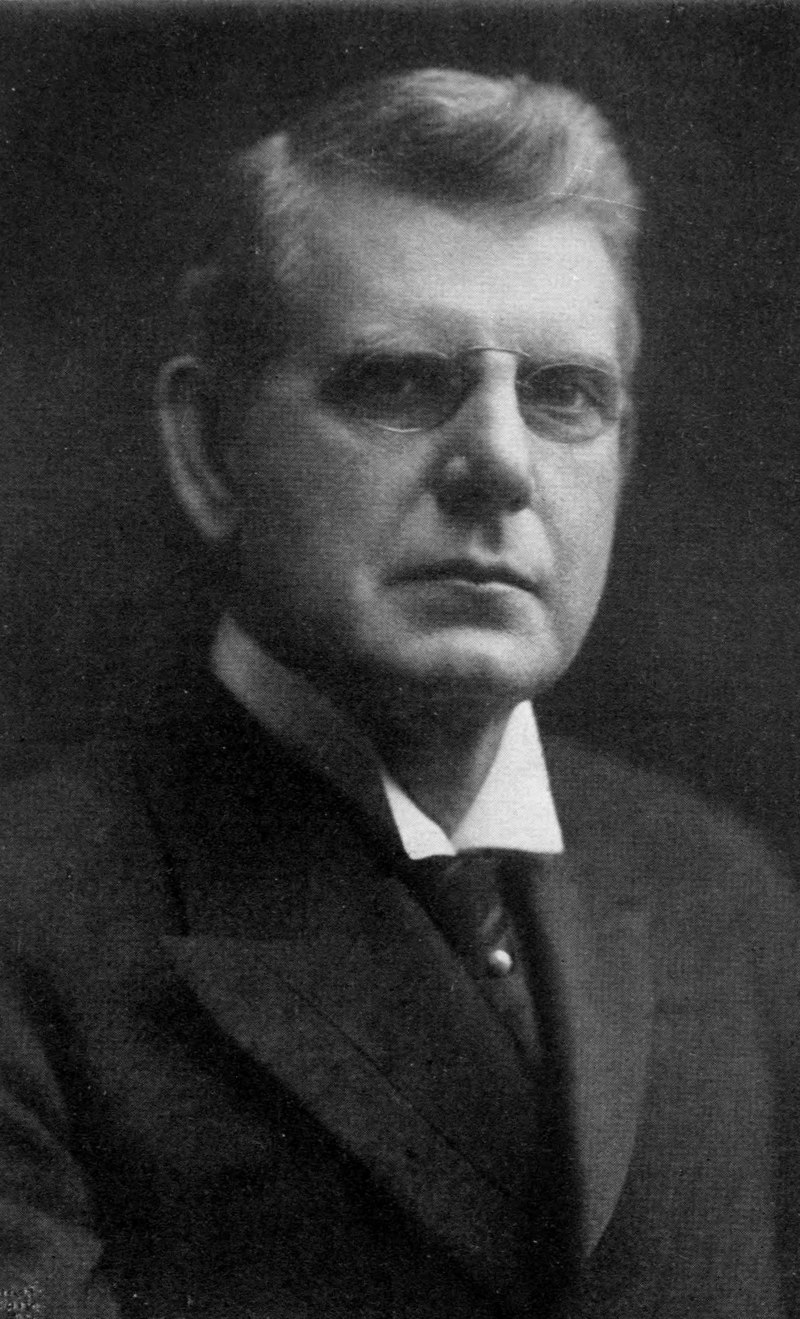
With the growth of our population, which even now exceeds
eighty millions, we shall grow more and more in national
importance and wealth, not only in material wealth but
in the higher products of an advancing civilization, in the
arts and sciences and literature, and all that embellishes and
glorifies mankind. Therefore we should, as we go along, constantly
endeavor to correct errors, shortcomings, and abuses,
and prune away rotten and unsound timbers in our public
and business life, and make the whole machinery of business
and activities of all kinds—trade, banking, insurance, manufacturing,
legislative, and the various professions and mechanical
industries, work as legitimately, honestly, smoothly,
and harmoniously as possible. The way to do this can be
best paved by promoting public spirit, and sweeping away
the opportunities for business wrongdoing in secret, such as
rebating, by wise laws properly enforced, and backed by public
opinion, yet laws not oppressive, unjust or too inquisitorial.
This would compel the “crooks,” “grafters,” “rebaters”
and “competition crushers” of the business world,
who have schemed in darkness, and shunned the light, to come
out into the open view, and this publicity alone would be a
perfect cure for many great evils. So let us have more light—the
light of PUBLICITY.
CHAPTER LXXV. THE MONETARY SITUATION AND ITS REMEDIES. [3]
822
The rapid growth of our population, the great activity of
all our industries, the general prosperity of the country,
apart from the terrible calamity at San Francisco, and the
immense speculation going on in land and mining ventures,
especially in the West, are the underlying causes of the severe
monetary stringency that New York has lately experienced.
These influences have kept money to a much larger extent
than usual active in the interior and prevented its concentration
not only in New York and the other Eastern monetary
centres, but at the Western centres.
Chicago in particular found that money, instead of returning
there from the interior in good volume, as it usually does
in January, February, and March, continued this year to be
sent to the interior by the banks there at an average rate of
$12,000,000 a month during these three months. This movement
was not so much owing to the land and mining boom as
to the immense absorption of money in the various manufacturing,
mercantile, and other expanding business interests
all over the West and South. So great was, and still is, the
activity in these directions that speculation in grain, provisions,
and stocks has been more neglected in the West than
for several years, as the narrowness of the markets there has
shown.
To show more precisely the effect on the money markets of
this unusually great speculative and industrial activity it is
823only necessary to say that, during this first quarter of the
year 1906, the Chicago banks steadily and heavily lost in deposits,
while their loans kept increasing. A comparison of the
condition of the national banks in that city on April 6th, as
reported to the Comptroller of the Currency, with their condition
at the date of their previous report on January 29th,
showed an increase in their loans of $8,625,237 (or 4.11 per
cent) and a decrease in their deposits of $6,773,490 (or 2.11
per cent) and a decrease in cash resources of $14,628,960, or
10.38 per cent. These figures explain why money was so
scarce in New York. The West had none to send us, although
there is more money in circulation than ever before. If we
go back to the condition of the same Chicago banks on March
14th, 1905, and compare it with their report referred to, we
still find that their deposits decreased $8,687,117 and their
cash resources $7,970,318, while their loans increased $1,599,774;
and in their reduced cash resources the Chicago
banks reflected the condition of the banks in all the other
large cities of the West, Northwest, and Southwest. There
has been a rapidly rising volume of trade and land and mining
speculation there for more than a year, and enormous
activity in new industrial enterprises. In the Southwest, particularly,
the growth of banking has been not only unprecedented
but enormous. I include in this designation the
States of Missouri, Arkansas, Louisiana, Texas, and Kansas
and the Territories of Oklahoma, Indian, New Mexico, and
Arizona. The last decade has witnessed in this section of our
country more extensive and rapid material development than
was ever before seen anywhere, either in the United States
or elsewhere, and this expansion in banking was in response
to that material development, and therefore had a legitimate
foundation in business requirements. American spirit and
enterprise, and Western push, overcame all obstacles in
spreading civilization and creating trade, especially in the new
settlements.
In the five years ending with 1900, 101 new national and
other banking institutions were established in these nine
824States and Territories—with a consequent increase of $94,500,000
in individual deposits and $150,300,000 in aggregate
resources, and in the next five years ending with 1905
no fewer than 1,415 new banks and banking institutions were
added to the number—a resulting increase of $73,400,000 in
capital and surplus, $383,750,000 in individual deposits and
$670,350,000 in aggregate resources. Thus, in ten years,
there was an increase of 1,516 in the number of banks, of
$137,000,000 in capital and surplus, of which $79,000,000
was surplus, of $478,000,000 in individual deposits, and of
$820,750,000 in aggregate resources.
This enormous banking development reflected and stimulated
the enormous development of the country, and aided
trade fully as much as trade helped the banks. The one kept
pace with the other, and marvelous progress in both was the
result; and this progress continues, and will continue indefinitely
long under the stimulus of the rapidly increasing
population of that still sparsely settled section.
This banking development is of incalculable benefit, both
locally and generally, for its influence is far-reaching. The
drain of money from the outlying districts, including New
York, to move the crops, is reduced as banking facilities in
the West and South increase.
In the South, during the same period, there has also been
very great commercial and banking development, with the
banks and trade going hand in hand to help each other, as in
the Southwest. The South was never before so active and
prosperous; and, rapidly as it is progressing, it will go on
prospering with unabated vigor and enterprise, for it has
entered upon a new era of prosperity and immense development
of its material resources awaits it. In manufacturing
and mining, as well as agriculture, immense opportunities
are open to it; and before long the natural increase of its
population will be largely added to by the white immigration
that it needs. So the South has a bright and magnificent
future.
This vast industrial and mercantile activity—this general
825business enterprise, this land and mining speculation, or
boom, has extended, in various degrees, all over the United
States, and the influence it has had on the money market in
large cities, and particularly in New York, was only a natural
and easily foreseen result. It has produced a corresponding
activity in money, because of the greater demand for its
use; and the real estate speculation, the vastest we have to
deal with, is still increasing.
The boom is almost entirely in land and mostly in vacant
plots, or lots, suitable for building purposes; but there is
also a very active speculation in improved property, and
much speculative building. The amount of money practically
locked up in this land speculation is much larger than is generally
supposed.
Statistics of 29 of the largest cities of the United States
show that in the month of May they issued permits for the
construction of 13,712 new buildings, to cost $55,074,761,
against only 12,036 in May, 1905, to cost $50,791,738, an
increase of 8 per cent, and a similar increase was shown in
each preceding month of 1906. The May increase was greatest
in cities remote from the Atlantic Coast; in Portland,
Oregon, it was 309 per cent; in Tacoma, 111 per cent; in
Seattle, 30 per cent. But the San Francisco catastrophe was
evidently the main cause of the large increase in Portland
and Tacoma. Yet the increase in Omaha was 75 per cent,
in St. Paul 49 per cent, in Duluth 110 per cent, in Louisville
50 per cent, in New Orleans 47 per cent, and in Chicago 39
per cent. These figures, dry as they may seem, are eloquent
in their suggestiveness of the extent of the demand for money
from this one source, the land and building boom.
Gold and silver mining speculation, too, last year began
to assume the dimensions of a boom in Nevada, and all the
old metal and mineral mining camps, and many new ones
in other States, are, like the Lake Michigan copper regions,
scenes of active speculation in properties, as well as busy
with mining, and hosts of speculators are their own bankers,
carrying large amounts of currency in their pockets.
826The money that usually returns to the money centers is
thus widely scattered and too busily employed to return. So
we have to deal with a period of prosperity and industrial
activity that is something more than normal. But—without
referring to the heavy drain of cash for the relief of San
Francisco, which was offset by gold imports—although money
was scarce in New York, owing to this enormous activity and
general prosperity that kept it moving from hand to hand, it
was not scarce enough to justify the excessively high rates
we often witness on the Stock Exchange. These were serious
and hurtful, and to guard against such vicissitudes in our
money market every member of the Stock Exchange and
every banker and bank officer should use his influence.
How far the Chamber of Commerce Committee on the Reform
of the Currency will succeed in providing remedies for
the monetary situation remains to be seen. But from the
twenty-seven questions it has sent to bankers and others it is
apparent that it contemplates no fundamental change in our
currency system. Inferentially, it will not interfere with
United States legal tender notes, nor with United States
bonds as a basis for the circulation of the national banks.
Yet both bases are indefensible on sound economic principles.
The issue of greenbacks was merely a war measure, and intended
to serve only a temporary purpose; instead of which
we have made it permanent, so keeping the Government in
the banking business with its war currency system.
There can be no question as to the false bottom on which
the national bank currency rests; for paper, that is, paper
money, should not be secured by, or redeemed in paper, even
when that paper is as indisputably good as United States
bonds. All our paper money ought to be based on readily
convertible assets and redeemable in gold. Bonds, even
United States bonds, by which national bank notes are now
secured, are only evidences of debt, and the time will come
when these will be liquidated, and the sooner the better.
The committee probably thinks that the existing order of
things, notwithstanding its fundamental errors, is too deeply
827rooted and strongly fortified to be materially changed without
danger of the remedy proving worse than the disease. It
consequently favors more national bank currency on the present
basis. Branch banks and rediscounting for small banks
by large banks are also favored. The committee’s questions
indicate, however, that it favors the abolition of the Sub-Treasury
system, and to that result it should resolutely bend
its energies. At present the Sub-Treasuries are practically
banks, like the old United States Bank at Philadelphia, with
the important difference against them that all the money they
take in remains locked up in their vaults till paid out on
Treasury drafts. The evil effect on the money market, and
particularly on Wall Street, of thus withholding money from
circulation in periods of stringency has been too often felt.
It was more than usually conspicuous and severe during the
late tight money ordeal, owing to the Treasury receipts very
largely exceeding its disbursements. This greatly aggravated
the scarcity of money in New York, due to other causes, and
resulted, in Wall Street, in the rates for call loans ranging
at times, within the last six months, with rapid and eccentric
fluctuations, from 15 to 30 per cent, and on one occasion
touching 125 per cent. We have here a phenomenon entirely
distinct from ordinary monetary conditions.
These extremely high and highly fluctuating rates are, it
is true, peculiar to the New York Stock Exchange, but they
are none the less a great evil, and they acquire national and
even international importance from the fact that New York
is the financial center of the country and the New York Stock
Exchange the barometer of financial values for the whole
United States.
However much our commanding position may in other respects
fit New York to be the world’s financial center, it cannot
aspire to and secure that position of power so long as it
is the scene of these violent fluctuations in the rates of interest
for call loans on the Stock Exchange. Measures should
therefore be taken not only to prevent them, but to make their
recurrence impossible; and how this can be best and most
828efficiently accomplished is a matter for very serious consideration.
That it can be accomplished is evident from the entire absence
of any such violent rate oscillations in the money markets
of Europe. There the rates of interest fluctuate slowly
within a reasonably narrow range, generally between 3 and
5 per cent, the extremes being 1 or 2 above, or below, these
figures. Such unreasonable eruptions in the money market
as we have sometimes seen in the loan crowd of the New
York Stock Exchange were never seen, and would be impossible,
in London, Paris, Berlin, or any other European capital.
Why, then, should they ever occur, or be possible here?
In response to questions propounded by the Chamber of
Commerce Committee I would say that, as the Sub-Treasury
system is a disturbing factor in the money market, provision
should be made by Congress for the regular deposit in national
banks of surplus Government money above its regular
working balance of fifty millions, the banks to pay interest
at 2 per cent per annum thereon.
Bank notes, in my opinion, are a form of bank obligation
the same in principle as bank deposits, payable on demand,
and these notes, as the most convenient form of credit,
should be released as much as possible from restrictions not
necessary to secure their safety, acceptability, and redemption
in gold, or United States legal tender notes, for so long as
the latter may be kept outstanding.
In seeking increased flexibility for our currency I would
not suggest anything that would impair the value of United
States bonds as a basis of circulation; but it deserves consideration
whether new currency might not be issued by moderately
increasing, above the par of the bonds but not above
their average market value, the amount of notes to be secured
by them. Then, too, why should not national banks be
authorized to issue a fixed proportion of circulating notes
upon their general resources, these to be secured by a guaranty
fund? To induce the retirement of these notes when
not needed, owing to money being superabundant at low
829rates, this asset circulation could be made liable to a graduated
tax. The proportion of notes to capital that should be
allowed, and the amount of the tax, are matters upon which
bankers differ, but I favor strict moderation in both. This
asset currency, under moderate restrictions, for use under ordinary
conditions, would be far preferable to any emergency
circulation, ISSUED UNDER A HIGH TAX, although Secretary
Shaw recommended it in his report for 1905.
As the taxes collected upon the circulation of national
banks from 1864 to the end of June, 1905, amounted to $96,220,997,
and the failed banks, during that period, had outstanding
only $17,295,748 of notes, and the dividends paid
on their claims averaged 77.95 per cent, it follows, at the
same ratable proportion of loss, that the deficiency on account
of their notes would have been only $3,813,712, or 22.05
per cent of their total circulation. So in the light of this
experience I see no great risk in a guaranty fund, consisting
of the taxes paid upon circulation, nor do I see why
it would not be sufficient to redeem all the notes of failed
banks.
I would make the asset currency a first lien upon the assets
of the issuing banks, and allow the banks to redeem their
notes at appointed redemption places in the large cities. This
would save the trouble and delay of sending them to Washington,
and by facilitating redemptions when money was
easy, give more ebb and flow to the currency and tend to prevent
excessive speculation in times when there is a glut of
money. Under the Canadian banking system there are several
central redemption cities for bank notes; but I would
not, as is the case in Canada, limit the right to issue notes
to banks of not less capital than $500,000. There is safety
in numbers, in regard to banks as well as other matters.
Then, too, it would be well to make all the Sub-Treasuries in
the country useful as national bank note redemption points,
because it would contribute to the elasticity of the currency
in the same way that it does in Canada, and doubtless Congress
would favor such a measure.
830The proposition to establish a new bank in Wall Street
with $50,000,000, or even more, capital, or to increase the
capital of an existing bank to that extent, to serve the purposes
of Stock Exchange borrowers, and regulate rates of interest,
after the manner of the Bank of England, is deserving
of no consideration whatever. It would merely excite
and provoke the jealousy and opposition of other banking
institutions, and create a sort of monopoly with special privileges,
without securing the end in view. A Bank of Banks
is not what we want, nor do we want a revival of the old
United States Bank.
Such a bank as the Bank of England, or the Bank of
France, could not be created here, either in a day or a generation,
for those time-honored institutions are the growth of
ages. They are very much older than any of the other banks
there; and, under the control of their respective governments,
they have grown up with their countries and become practically,
although not by ownership, government institutions.
Hence their prestige and power, and the impossibility of
other banks superseding them.
It may, however, deserve consideration whether the New
York Clearing House might not exert power in regulating
rates of interest similar to that exercised by the Bank of
England, providing the banks belonging to it would unite to
give it that power; and is there any reason why they should
not? Even without any formal or concentrated action in this
direction, outside of the Clearing House Committee, it could
appoint a committee to name every week, or oftener when
necessary, as the Bank of England does, a minimum rate of
interest on call loans and discounts. It could also fix a maximum
rate for each. This need not be compulsory; but even
only as a recommendation it would have a powerful moral
effect, and the Wall Street banks, if they approved of the innovation,
would conform to it. The Clearing House could,
indeed, after the formal approval of this regulation by its
members, enforce its observance under penalties, if deemed
necessary. In this alone, in my opinion, a practical remedy
831would be found for the high rate evil on the Stock Exchange.
But, at the same time, greater elasticity could be given to
our national bank currency if Congress would amend the law
so as to permit of currency being issued against specified
bank assets, subject to the approval of the Comptroller of the
Currency. This is a feature of the banking system of other
countries, which has always worked very well and to the satisfaction
of all interests; and what our currency urgently
needs is greater elasticity.
Strictly speaking, according to economic principles, we
cannot expect a perfect currency, with all the resiliency and
elasticity possible in a currency, so long as bonds instead of
gold are used as the basis of our bank circulation. Yet for
security the bonds are, under present conditions, just as good
as gold; and there would be more elasticity in the bank circulation
based upon them if the restrictions imposed upon
their redemption by the Act of 1882, which are now unnecessary,
were removed. Indeed, the inability to promptly retire
bank notes is one of the worst faults of our system, and
Congress should repeal the restrictions without delay. If this
obstacle in the way of resiliency were removed, and the unlimited
retirement of bank notes permitted, we may rest assured
that free expansion, when demanded, would quickly
follow curtailment, and this ebb and flow of the currency
would obviously be an elastic movement.
As it is, there is a great waste of banking power in our
treatment of national bank notes and reserves. We have
$544,765,959 of national bank notes, and only $337,130,321
of United States legal tender notes, and, setting gold aside,
the redemption of the former in the latter is obviously absurd
and inconsistent with sound finance and good banking. We
see in the present system this $544,765,959 of banking capital
absorbed and represented by non-reserve currency. The
capital is perfectly safe, but it is locked out of any other use,
and rendered inefficient for any other purpose. This calls
for a remedy. The percentage of reserves to loans in national
832banks has decreased from more than 20 per cent in 1898 to
less than 15 per cent. Hence the bank reserves require to
be increased.
The law relating to the redemption of national bank notes
in United States notes, or greenbacks, was passed when the
greenbacks very largely exceeded the bank notes in amount,
but the reversal of these conditions reminds us that the tail
is now wagging the dog. This alone makes it clear that the
law should be amended.
But beyond all this we should open our money market
more to the rest of the world by establishing a new factor,
which would always afford prompt relief in times of stringency,
by giving us cable transfers of gold, instead of gold
shipments, and of itself prevent abnormally high rates.
Through this medium we could, instantly, practically draw
gold from Europe whenever wanted, and Europe could do the
same from us, when needed there. I refer to the establishment
of an International Gold Transfer System, or Clearing
House, to supersede and dispense with what I may call the
old-fashioned gold see-saw. Gold in circulation is doing good
work, but gold see-sawing across the ocean is going to waste.
The custom of shipping gold from one country to another, in
response to the ups and downs of the market rates for foreign
exchange, not only reminds me of the forward-and-back
movement in a quadrille, but suggests that, as the precious
metal is rendered practically useless while in transit, it should
not be used in a dance of that kind across the ocean. The
subject may not seem to be very important, but it really is
so, for “tall oaks from little acorns grow”; and it is surprising
that in the march of modern improvement this method
of settling international balances has not been superseded
by a shorter, quicker, and cheaper cut to transatlantic adjustments.
Bankers, in both hemispheres, are absurdly behind
this progressive and electric age, in transporting gold
from the New World to the Old, and vice versa, to adjust
balances between them, whenever the rates of exchange show
a profit in the transaction. That they could profitably dispense
833with it is obvious, as they could easily establish this
transfer system, this international clearing house for gold, at
very small expense. Thus the risk, and loss of time, involved
in the old-fashioned method would be eliminated, while the
new arrangement, being under their own control, would beyond
peradventure serve every necessary purpose of the shippers,
combined with perfect safety.
The disadvantage of shipping boxes or kegs of gold to and
fro between America and Europe is apparent when we consider
that it is a time-wasting see-saw performance, which
involves the expense of packing, cartage, freightage, insurance,
and loss of interest while in transit, and still greater
loss due to abrasion consequent on sea transportation, to say
nothing of bankers’ commissions, and risk of partial or entire
loss by robbery, accident, or marine disaster; ignoring,
moreover, the restraints it imposes upon our foreign trade.
All these disadvantages could be obviated and this handicap
upon our commerce removed by a mutual-interest arrangement,
between the leading banks in the United States and
Europe, to deposit a sufficiently large amount of gold on each
side of the Atlantic, and issue international clearing-house
certificates and draw bills of exchange against the deposits.
This gold could be counted as part of their reserve, if in their
own vaults; or the Bank of England, in London, and the
United States Sub-Treasury in Wall Street, could be used as
the gold depositaries. We have a clearing house for bank
checks in each of the large cities, and one also for the transactions
of the New York Stock Exchange. London, too, has its
bank clearing house. Why, then, should the clearing house
system not be extended to international transfers of gold, so
as to make them possible at any moment by cable-telegraph
instead of the slow process of six-days transfers? In this
way our international dealings would be quickened and extended
and our financial and commercial relations become
more intimate.
There is no good reason why we should unnecessarily treat
gold as we do, when we can save time, money, and risk by
834keeping the metal where it is, and issuing certificates of deposit
against it, and the use and transfer of which would
serve as well as gold shipments.
The present custom becomes a ridiculous “chasse” across
the Atlantic, when we see the same gold shipped to Europe,
then shipped back to America within a few days after reaching
its destination, without being unpacked, owing to sudden
intervening changes in the rates of exchange, making it profitable
for the former gold exporting country to import the
metal. Such wasteful shilly-shally procedure would be likely
to excite mirth in opera bouffe, but bankers who ship gold are
very serious about it, and seem to be without enough perception
of the ludicrous to see anything funny in its coming and
going, although they feel the shoe pinch in its costliness in
both time and money. As the world’s gold production increases
the urgent need of this over-sea change will become
more and more conspicuous, and its adoption will accord with
the generally progressive spirit and methods of our telegraphic
and telephonic age.
Had such an international gold clearing house existed the
sagacious but unprecedented action of the Secretary of the
Treasury, to relieve the money market by making deposits,
as secured loans, in certain banks, to encourage and cover
their prospective gold importations from Europe, the same
to be returned on the arrival of the gold, would have been
unnecessary. While this expedient has well served a temporary
purpose, it is not to be relied upon as a permanent
source of relief during monetary stress, and it involves a
stretch of authority under the law that is open to grave objection.
But, as it happened, the Secretary’s action, which
was taken just before the San Francisco disaster occurred,
proved particularly fortunate, and probably prevented a very
serious aggravation of the stringency in the money market,
owing to the heavy remittances to California. It was a piece
of good luck that seemed almost providential, and the end
justified the means. But it should always be regarded as
only a fortuitous circumstance and temporary expedient, not
835as a permanent source of relief; and it emphasizes our need
of a new international gold transfer system. Moreover, the
benefit Europe would derive from it would be equal to our
own.
The Secretary, under the circumstances, acted wisely in
also increasing the Treasury deposits in the national banks,
while the Government’s receipts were largely in excess of its
disbursements, so as to offset, as far as possible, this preponderance
of receipts, and lessen the drain of money into
the Sub-Treasuries. But this method of relief is, too, only
a temporary expedient, to remedy the evils of the Sub-Treasury
system. While the Sub-Treasury system lasts Congress
should authorize the Secretary to deposit customs, as well
as internal revenue receipts, in the national bank depositaries,
in time of stringency, when the Government’s receipts
exceed its disbursements, and it has more than a sufficient
working balance. The Government should, as a compensation
to it, require the banks to pay interest at, say, two and
one-half or three per cent per annum on such deposits, these
not to exceed, in amount, 25 per cent of their paid-up and
unimpaired capital, and to be returnable on demand, but
without requiring these special deposits to be secured. They
should, however, be made a first lien upon the assets of the
banks.
If the changes above suggested were made, I am sanguine
that they would prove to be remedies for the evils and disadvantages
under which we now labor, and so increase the
stability of our money market and improve and fortify the
machinery of the whole monetary system, while giving more
elasticity to the currency.
CHAPTER LXXVI. INDIVIDUALISM VERSUS SOCIALISM. [4]
836
In order that I may present a clear understanding of my
view of the subject, it is only fair, in the first place, to
state that the system of Individualism which I shall endeavor
to uphold is worthy and commendable. I hold it to
be superior in every sense to any of the various plans of
Socialism offered by its advocates. By this I do not mean
Individualism in the extreme sense of the term, for, as we
all know, in no civilized country and under no form of
government whatsoever does, or can, extreme Individualism
exist.
In the world of economics and politics Individualism has
a distinct meaning, as a name given to the theory of government
which favors the non-interference of the State in the
affairs of individuals. It has also been well defined, as the
private ownership of the means of production and distribution,
where competition is possible; leaving to public ownership
those means of production and distribution in which
competition is practically impossible.
It will, then, be at once apparent that, in the consideration
of the forces helpful and necessary to society, the individualist
believes that competition which encourages merit and
develops skill should remain paramount. And right here the
issue is made, between Individualism and Socialism, the Socialist
837denying that competition is beneficial to society, but
contending rather that it is a deleterious and harmful force.
Upon this issue, so joined, I stand firmly in favor of the
principle of competition, and that system of Individualism
which guards, protects and encourages competition. It is
that system of government under which we live to-day—a
government of the people, by the people and for the people—the
United States of America—a free system of government,
in the best and broadest sense of the term.
Under this free system of government, whereby individuals
are free to get a living or to pursue wealth as each chooses,
the usual result is competition. Obviously, then, competition
really means industrial freedom. Thus, any one may choose
his own trade or profession, or, if he does not like it, he
may change. He is free to work hard or not; he may make
his own bargains and set his price upon his labor or his
products. He is free to acquire property to any extent, or
to part with it. By dint of greater effort or superior skill,
or by intelligence, if he can make better wages, he is free
to live better, just as his neighbor is free to follow his example
and to learn to excel him in turn. If any one has a
genius for making and managing money, he is free to exercise
his genius, just as another is free to handle his tools.
In this primary outline of the free system of Individualism,
it is well also to consider the good side of freedom or
Individualism. It is an axiom, well established, that the
freer men are to choose their work and to use and enjoy its
results, the more work they are willing to do. Their energy
and enterprise are called out, their wits sharpened, their
hopes stirred. If any one wins unusual success, others are
encouraged to try better methods. If an individual enjoys
his money, gained by energy and successful effort, his neighbors
are urged to work the harder, that they and their children
may have the same enjoyment.
Thus, every one accomplishes more in a condition of freedom
or Individualism, and the whole nation is richer, than
if custom or a Socialistic community fettered and restricted
838men, and compelled them to work according to rule. With
matured individuals, this is on the same principle that children
enjoy their sports better, when left to themselves, than
if a parent or teacher were to meddle and make rules for
them.
I believe that it can be stated, as an established fact, that
whenever men are, as individuals, free to work, to earn and
to save and use their earnings as they deem fit, the capable,
the industrious, the temperate and the intelligent everywhere
tend to rise to prosperity. The skilful are always in demand
and at good wages. And remember, that a day’s wages never
purchased so much in supplies as it does in the United States,
where we use the individual or competitive system of work,
because high as prices are, wages are still higher.
As a further part of this summary of Individualism and
competition, let us also add the moral side, for it is a considerable
and important item. When men labor, earn or save
with perfect freedom, they develop many moral qualities,
such as patience, self-reliance, self-sacrifice, venturesomeness,
integrity, generosity and respect for others’ rights.
If a Socialistic committee of the wisest men could manage
and make rules for the rest, and provide for every one’s necessities,
men would not acquire or exhibit these sterling
qualities of manhood, as well as they would by being thrown
upon their own resources.
We know this, also, from the fact that the strongest characters
have been worked out in brave and patient competition
and conflict, often under difficult circumstances; whereas the
men who have never been thrown upon their own resources
rarely amount to anything.
After this preliminary description of the worth and salient
influence of Individualism, under which our country has
grown to be the greatest nation of the world, let us now turn
to Socialism—a system which, if adopted, would call a halt
to our progress, tear down our established institutions, and
turn our great prosperity into ruin and decay.
It is difficult to tell just what is meant by Socialism in
the more modern sense of the term.
839It has appeared in the United States under five different
and almost totally disconnected forms. It has appeared as
a movement towards the establishment of Socialistic communities
or communisms; it has appeared as Fourierism, as
German or International Socialism, as Nihilism and Christian
Socialism.
Professor Mallock, the eminent English writer, in his lectures
in New York, made a careful analysis of Socialism,
and exposed its plausible sophistries, some of which, Socialists
boast, are grounded on our defined principles of political
economy, which the learned writer asserts are rather incomplete.
It may be admitted that this is so, and that fuller
and clearer distinctions could well be added to our text books
on the subject. But, joining the issue in a clean-cut way,
between Individualism and Socialism, obviates all necessity
at this time of further considering such distinctions, and
clarifies our respective positions in this debate.
It was noticeable that, during the delivery of these lectures,
hints and remonstrances were freely thrown out that the
structure that Dr. Mallock was attacking was not Socialism
at all, in the modern acceptation of the term, but something
else that had long ago been abandoned.
Now, while I have no unfriendliness whatever with the
honest Socialist (mistaken, deluded and sadly out of place
in this grand Republic, as he may be), I do say, that this
position is but too often the wily subterfuge, sought to be
taken advantage of by the insincere agitator or pretended
reformer, when he sees that he is beaten. His invariable
answer to an irrefutable argument is: “Oh, that which you
talked about is not modern Socialism!”
For the purpose of this discussion, however, we can agree
that, as contradistinguished from Individualism, Socialism
opposes and denounces competition as an injurious and unnecessary
force in society, and advocates the collective ownership,
through the State, of all the means of production and
distribution.
Socialists would, in other words, fence up the great field
840of free opportunity, deaden all incentive or inspiration for
great achievement, and not only curtail, but wholly remove,
the right to compete and excel, and make it impossible to
write “success” as the result of individual effort.
Just think of that! Why, the very thing that the Socialists
attack, as untenable and wrong in government—individual
competition—has done more than anything else to make us
what we are as a nation to-day; has kept alive the precious
fires of liberty and freedom and has preserved the
institutions of our country. Take away the spirit of Individualism
from the people, and you at once eliminate the
American Spirit—the love of freedom—of free industry—free
and unfettered opportunity—you take away freedom
itself!
And right here, I take the position and shall ever contend,
that the United States (of all countries in the world) is no
place for Socialism. Let us never forget that it was founded
by the wisdom and patriotism of the Fathers of the Revolution,
and that it is blessed with a Constitution, framed by
men who loved individual freedom and national liberty, and
who risked their lives and sacrificed their property in the
struggle to overthrow injustice and oppression and achieve
independence and individual equality. Let us not forget its
past one hundred and thirty years of eventful history, replete
as they are with many chapters of severe trial, over all of
which it has ever risen superior. This splendid history has
placed our system of government beyond the line of experiment,
and raised it to such an elevation of recognition and
respect, that it now ranks as the highest among all the nations
of the earth.
Born of the spirit of resistance to oppression, with the
broadest and freest constitution that the world has ever
known—a land of freedom and equality in the best and most
liberal sense of the term—it would seem that the sincere
lover of liberty and equality could ask no better home than
this democracy of ours—whose glorious flag floats over eighty-four
millions of prosperous and enlightened people.
841To further add, the term “contented people” might, perhaps,
not be a strictly true assertion, and neither would it,
in my opinion, be a desirable one to use; for to the spirit
of discontent and ambition, so predominant in the American
character, are due largely the grand achievements and the remarkable
progress and advancement of our nation in all
things that make for greatness, strength, and public welfare.
However, we must be careful to draw a plain line of contradistinction
between that discontent which is really the mainspring
of human activity, and which, appreciating the solidity
and soundness of our foundation, aspires to build thereon
to the highest ideals of perfection and success—and that misguided
or malicious discontent of Socialism which arrays
itself as an enemy of all civilized forms of government and
seeks their utter destruction.
We can well understand and appreciate, in a country
ruled by a despot, whose heel of oppression and tyranny is
ever on the necks of the down-trodden people, the feeling of
the masses who, desiring some measure of free action and
equality, would revolt against such conditions, and seek a
reorganization of society. They would, naturally, look as far
away as they could from such a government of despotism—the
only one they had ever known—to the other extreme—a
country where the State should own all the land and capital,
employ all the people, and divide everything, share and share
alike, among the community.
But the spirit of revolt, which in that case may be patriotism,
becomes ridiculous and open to the charge of insincerity
when the tenets of its doctrine are transplanted and cultivated
upon American soil by our foreign population.
With further reason, also, must we question the sincerity
of the Socialist, who, leaving oppression behind, emigrates
to this country, where tyranny and despotism are unknown,
and yet who continues to echo that war cry of destruction
wrung from his heart by the cruelty of his old-time oppressors.
He comes here from a land of want and thraldom to a
842land of plenty and freedom. He may come without name,
fame, or property, and he is received with open arms. After
a brief residence he is entitled to full citizenship, and is then
a part of the government, enjoying all the rights and privileges
of the native born. Besides the active or public equality—the
equality possessed by all, the right to share in the
government, such as the electoral franchise and eligibility to
public office—he has the rights of private equality. He is
possessed of legal equality—the equal possession of private
civil rights enjoyed by all citizens. Then there is the equality
of material conditions—that is, the right to acquire
wealth and all that wealth implies.
Every opportunity to achieve success and happiness abounds
on every hand, and every incentive to industry and accomplishment
awaits him; and if he is energetic and skilful,
there is nothing to hinder him from becoming prosperous,
or, in other words, successful in whatever vocation in life
he may pursue. With qualities that commend themselves
to his fellow men, there is no limit to the possibilities of his
achievements, and very soon (as has been very often the
case) he may become a leader of men. If, therefore, he is
sincere, surely he must agree with me that, in view of these
conditions, this is no place for the Socialist. And does it
not sound like a paradox to hear this cry of Socialism still
rending the air—while every avenue of fortune lies open to
every one?
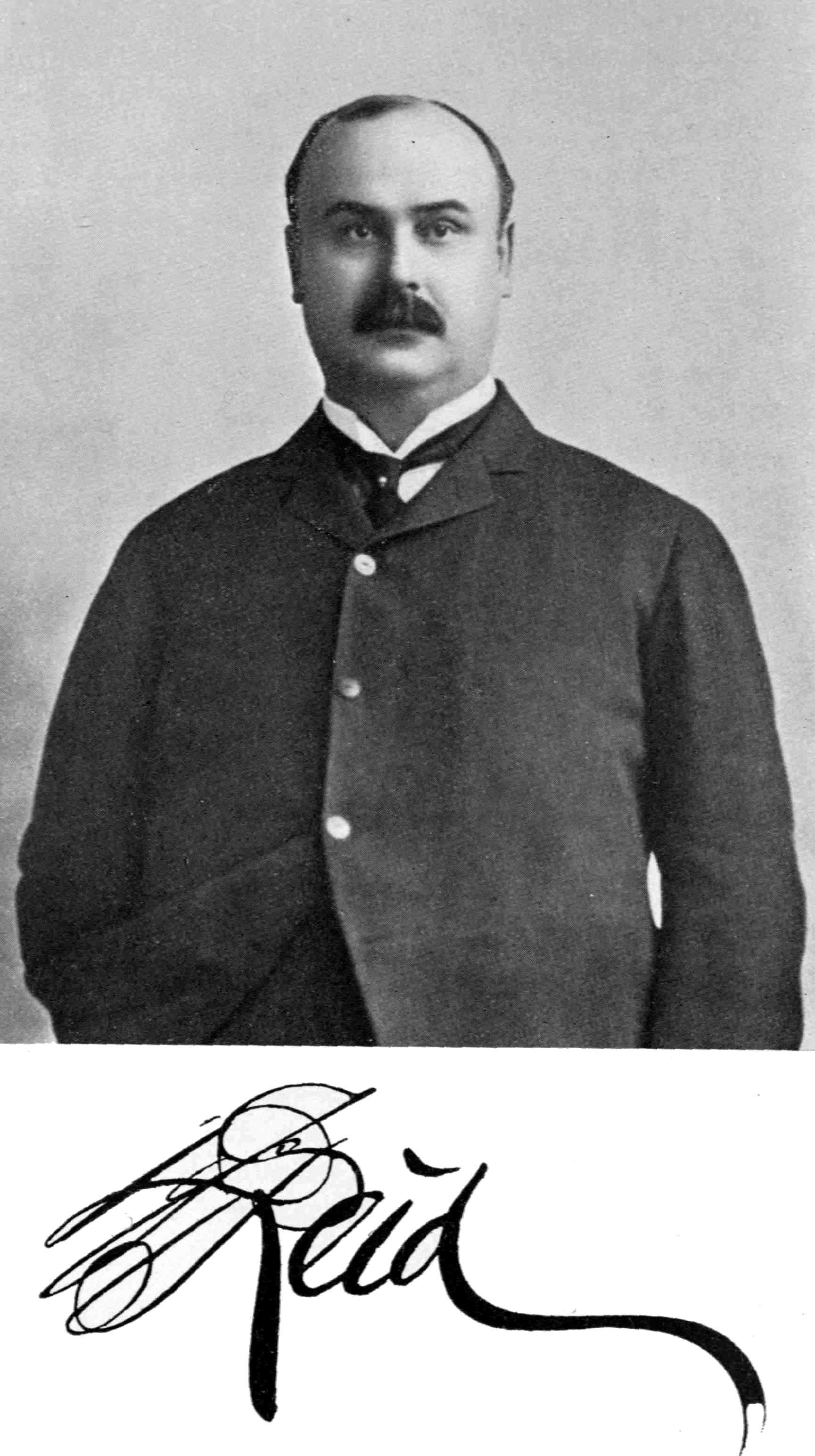
Socialism is self-contradictory, and opposed to deep-rooted
and ineradicable human instincts. Its origin is, of course,
purely selfish; but there are two kinds of selfishness—the
enlightened and unenlightened. Unfortunately, Socialism
belongs chiefly to the latter. It is often overlooked that the
identical love of gain which seeks to equalize the distribution
of wealth will not be satisfied with equality. A desire
for gain will still remain and seek to acquire. The most
commendable object in Socialism is the uplifting of the down-trodden
and poor. Yet that great commoner and tribune of
the people, William Jennings Bryan, tells us that under
843Individualism we have seen a constant increase in altruism.
That the fact that the individual can select the object of his
benevolence and devote his means to the causes that appeal
to him has given an additional stimulus to his endeavors.
And Mr. Bryan pointedly asks the question: “Would this
stimulus be as great under Socialism?” Let it not be forgotten
that by means of present tendencies and existing economic
laws the poor are constantly growing richer. They
were never so prosperous as to-day. Labor has made great
strides, and the uplift in the lower walks of life in all Christendom
during the past twenty years has been beyond precedent.
Give us wise and just legislation, and complaints
about the inequitable distribution of wealth will quickly
disappear.
The state of society that the Socialists seek to establish
may be beneficial to a class which, under any conditions,
lacks frugality, thrift, and self-reliance; but just where the
general mass of humanity is to be bettered or elevated, socially,
morally, or politically, is a point not satisfactorily
explained. A society in which all human beings do right,
for the simple reason that it is right, cannot exist unless
human nature is recast and reconstructed. Human nature
must be treated as it is found in the general makeup of man,
and, therefore, a society in which all special desires, all ambition,
and all self-esteem have been eliminated, precludes
development and progress. It reduces everything to utter
shiftlessness and stagnation. In such a Society there can
be no incentive to great achievements in art, literature, mechanics,
and invention. If all are to be placed on an equal
footing, the ignorant with the educated, the dullard with the
genius, and the profligate with the provident, what encouragement
is there for special effort?
If you render accessible to each and every member of the
human family the achievements and benefits of civilization,
holding “property in common,” why should a man rack his
brain or strain his muscles in producing something which he
expects to prove remunerative to himself in some way, but
844which, under the Socialistic state, would go to the equal
financial benefit of all?
Just for a moment, stop to think of the effect of bringing
all men as near to a dead level as possible, for I recognize
that not even Socialism would secure the equality which it
seeks. If one physician is more skilful than another, who
could insist that he receive no better reward than the less
skilful, when many would be willing to offer it? Or how
else could he avoid having all the patients in the community
upon his hands except by charging more for his services than
an inferior physician? If one lawyer shows greater ability
than another, is he not entitled to a larger fee for his talent?
And how else is he to protect himself from taking all the
business from the lawyer of less ability? Again, if the skill
of the cabinet maker is higher and rarer and worth more
than that of the carpenter, how can the latter expect the
same compensation as the former? To put both on the same
plane would be unjust, and would lead to one being compelled
to work beyond his strength, while the less skilful
would probably be insufficiently occupied. Socialism, you
thus see, would often place a premium upon laziness and
inefficiency.
Socialism would benefit the shiftless and lazy at the expense
of the thrifty and industrious. Is that a good system
to advocate and follow? Which of you would be willing to
share your hard-won provision for your own family with
another family, the head of which you knew to be lazy, incapable,
and dissipated? What incentive to struggle would
remain if the results of that struggle were to be taken away
from you and given to others who sat idly by? What would
be the effect upon the United States of throttling the ambition
to achieve? Take the necessity of struggle out of life,
and we should quickly weaken human nature. Civilization
would decline and national decay quickly follow. True, the
competitive system works harshly upon the weak and incompetent.
This, however, opens a channel for development
of benevolence, kindness, and patience, without which human
845nature would be exceedingly one-sided and forbidding. The
indigent, unfortunate, and weak will always be a charge upon
the stronger, whether in the family, the municipality, or the
state. It is folly to think that life can be lived without
struggle; and that is one of the chief delusions of Socialism
which would quickly impair our national manhood and endurance.
Trouble and pain have their part in the plan of
nature.
The Socialist is usually an unfortunate or misled individual.
He has probably suffered from reverses or unfortunate
environment. He has perhaps been roughly or cruelly
handled. Perhaps he cannot get on satisfactorily, or his
ambitions have been disappointed. He is then in a condition
of discontent ready to swallow Socialistic—or any other—sophistries
which hold out the delusive promise of relief.
Socialism attaches too little importance to the fact that
men are made with an infinite variety of tastes, abilities,
and capacities. No two are precisely alike, and it is utter
folly for poor, weak man to undertake to equalize these differences.
All progress in history has been made through
struggle and sacrifice; and Socialism, no matter how beneficent
its intentions, cannot change the inscrutable laws of
nature or humanity. All natural laws have their reverse
side. Gravitation, which keeps us firm on our feet so long
as we are on solid ground, knocks us to pieces if we attempt
to walk off a housetop or over the opening of a pit. It is
not the natural law, but the attempt to ignore it, that gives
us trouble.
I most emphatically assert that we cannot get rid of competition,
any more than we can get rid of the law of gravitation.
The American inventor, mechanic, farmer, merchant, and
financier, and the worker in every profession, are, every one
of them, proud, respectively, of their skill, knowledge, and
ability. Their ambition is to excel—to produce the most
and best. Experience, enterprise, and courage create opportune
conditions most favorable to the State and Nation and
846to themselves. Each vies with his fellow man in producing
the best results, and is always willing to tackle any obstacle—no
matter how formidable—that stands in the way of success.
In his whole compendium and entire makeup, there is
no such word as fail. He aids, by his untiring and individual
energy and effort, in making his country the greatest
in the whole agricultural, industrial, and financial world.
He reaps the reward of industry and accomplishment, and
his home is blessed with bounty; and he knows that his
children have equal opportunity with himself to learn and
to achieve.
Shall he be asked to tolerate, or consider, the sacrifice of
all these things, so dear to him, for Socialism?
Shall he be led to believe in a foreign plan or system of
government that degrades skill, eliminates acquisition and
thrift, and ignores genius? I cannot think so!
These are the very qualities and attributes that he prizes
so highly, as essential to the prosperity of the home and
nation. He knows (or should know) that to do so would be
to deaden and relinquish those God-given qualities of heart
and brain that have helped to make him and his country
what they are to-day.
He knows (what the nations of the world concede) that
the American people are the most prosperous of all on the
face of the globe; and that this high and commanding position
has been attained under existing conditions, and through
the operation of our admirable system of government.
Whatever, therefore, may be the pretexts used to make him
dissatisfied with his lot, his own experience tells him every
day that the Constitution under which he lives is a glorious
one, and so implanted in the hearts of the American people
as to be impregnable against the assaults of Socialism.
At the same time, he is appreciative of the fact that it is
not in the nature of things to expect in this world blessings
pure and unmixed; but he is thankful for the superior good
that he enjoys under our beneficent democratic form of government.
847A state of Socialism in the United States would tend to
drive all our men of superior ability, skill, and power out
of the country. The strong would quickly seek other fields
where the qualities which they possess would have a free
chance and an open field. They would promptly desert a
country that offered nothing better than a dismal dead level,
with no means of achievement in sight, and the nation would
quickly fall into a state of miserable inertia or decay. Our
forefathers came to this country to establish religious freedom;
they next fought for political freedom; afterwards they
sacrificed a million lives for race freedom; and now we, their
successors, with such glorious traditions behind us, must
stand for industrial and social freedom. For, in the final
analysis, Socialism can stop at nothing short of industrial
slavery and political bondage. Great achievements would
be impossible under it.
Having shown the force and importance of individual initiative
and independence and the necessity for the spur of
competition to bring about the best results in human welfare
and achievement, I now turn to the rather concrete branch
of the subject, known as Municipal Ownership.
Naturally, a proposition involving the placing of the ownership
and operation of our railroads, telegraph lines, plants
for supplying light and surface transportation, and conducting
manufactories and business, is one of such vital concern
to all of us as to arouse our keenest interest.
It is a part and parcel of the Socialistic plan of government,
and, to a very great extent, the arguments and illustrations
presented in my treatment of Socialism, generally,
are of direct application to Municipal Ownership.
I would term it the entering wedge of Socialism, adroitly
resorted to by its advocates. These Socialists well know the
temper of the American people toward their propaganda and
wild project, and at the same time they recognize the peculiar
trait of character disclosed by Americans in their curiosity
and liking for anything new. Hence, they grossly exaggerate
the shortcomings and ills that exist in our body politic
848as constituted; and, at the same time, extol, in an extravagant
manner, the superior conditions that would follow the
taking of a small portion of the Socialist’s infallible cure.
Municipal Ownership, as far as I have been able to observe,
is also a pure and simple political move to secure votes
for aspirants for office, and it is used for this purpose, regardless
of any other question. It is one of those planks that
we often see inserted by parties in their platform, to stand
upon, to attract and gather in the votes. So Socialism has
its uses—for them.
I will admit that there are many economists who have
presented a friendly side to the Socialistic theories involved,
and have prepared able and extended articles in their endeavor
to support or uphold such theories (either in whole
or in part); and it would be unjust to include them in the
same category with politicians and Socialists. However, if
that statesman was only half right who, in speaking of the
tariff, said that the question was a business one, and that a
condition and not a theory confronted us, then I feel that I
am right in saying that “Public Ownership” is a practical
business question entirely—and not a theoretical one.
There are so many logical and unanswerable reasons
against this Socialistic proposition that I feel it incumbent
upon me to enlarge only upon the practical ones, that I know
more about, than upon those of the theoretical group.
The experience of years has demonstrated that at the present
time all business enterprises require rare ability and
experience, if not genius, to ensure success.
Great financiers and successful men have devoted their
lives to the study and practice of their trade and business.
How is it possible, then, for municipalities to expect such
qualifications from officers whose term of office is for one or
two years, or during the tenure in office of a political party?
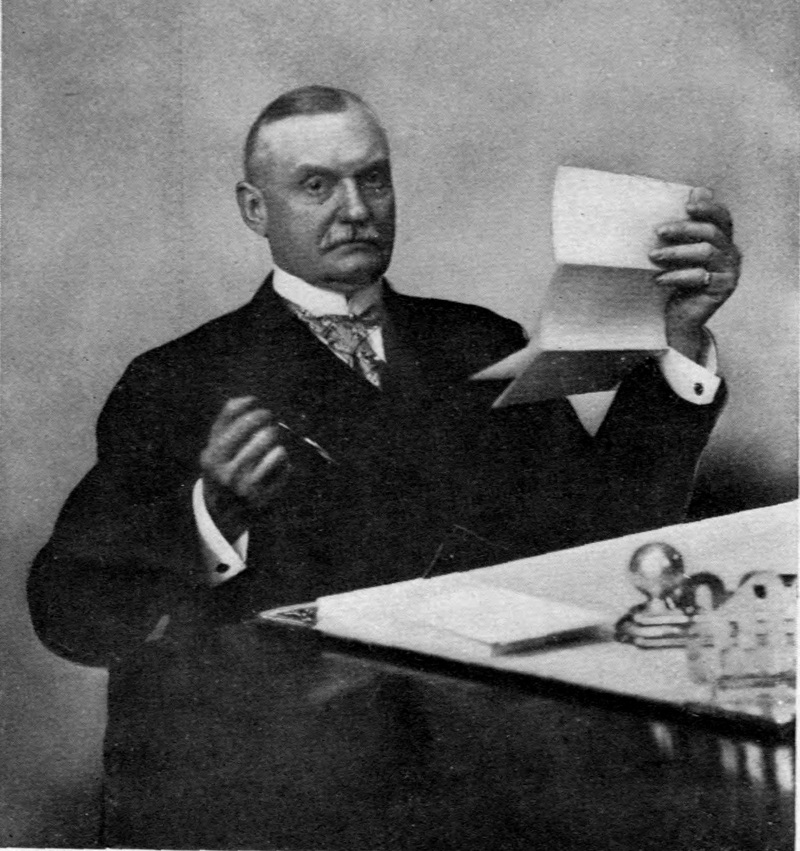
From stereograph. Copyright, 1907, by Underwood & Underwood, N. Y.
THOMAS F. RYAN.
In the economy of commerce and its daily conduct and
operation, there are numerous divisions or departments, each
one of which can only be understood, appreciated, and conducted
by men of special training and fitness—who have
849given years of application thereto—and it is only by their
watchful care and expert management of each of these divisions
that a possible success is derived or business made
to pay.
The smallest neglect, the merest indifference to details, or
the inattention that always accompanies abstraction by something
else—taking one’s mind off his business—upsets the
whole system, and means waste instead of saving economy,
loss in place of profit, and inevitable failure as the result.
That this is true there is not the slightest doubt, and would
be readily confirmed by the leaders of every industry.
Animated by a desire to make the best possible showing,
for use at the next election, a false economy would be exercised
under Municipal Ownership, and no attention would
be paid to obtaining useful new inventions; and needed improvements
and extensions would, likewise, be ignored.
On the other hand, under private ownership, the best professional
talent is employed, at salaries unheard of in public
office; and all the latest inventions and improvements are at
once utilized, giving the public up-to-date service.
The active, modern business man, keenly alive to the requirements
necessary to ensure profit and success, perceives
at a glance the evils and mischievous results that would infect
everything carried on under this Socialistic plan. And
as John Stuart Mill well says: “The mischief begins when,
instead of calling forth the activity of individuals, the municipality
substitutes its own activity for theirs.”
No serious attempt has ever been made to show the possibility
of securing and retaining, under some rule of municipal
civil service, or otherwise, the best men to assume the
burden of management and responsibility. As already explained,
it would be practically impossible to secure the best
men, and no system of civil service has yet been formulated,
intended and able to provide for their retention.
In this connection, a fitting illustration is the case of
Colonel Waring, who instituted and maintained the best
street-cleaning system we have ever seen. His work was
850simply marvelous, and he made New York City a model of
cleanliness.
No one ever questioned his ability or integrity; yet, while
at the very zenith of his success, he was asked to resign, and
obliged to leave the city employment to make room for the
choice of a new city administration.
The defects and fallacies of Municipal Ownership which
I have described permeate all government ownership. Official
reports and statistics furnish convincing proofs and conclusive
evidence of the failure of this system as conducted
abroad, and more signal loss and damage—in an incalculable
degree—would surely follow its adoption here. Just in proportion
as our interests and enterprises are the greatest and
most successful, as compared with other nations, would be
the immensity of our depreciation and collapse.
The United States is so different from other nations in
its political system that this fact alone precludes serious consideration
of our adoption of this imported Socialistic hobby
and political heresy. It is also a country whose every chapter
of growth, progress, and prosperity is a continuous narrative
of individual efforts of its citizens. They, naturally,
prize individuality as they do independence itself, and have
every reason to believe that the present system of government
is the best for them, and that this land of Individualism is no
place for Socialism.
Imagine New York under Municipal Ownership of our
public utilities! We should then have fastened upon us a
more colossal and more corrupt Tammany than even existed
in Tweed’s times. Graft would thrive beyond all dreams
of avarice. Let us take a lesson from England in this respect,
where public ownership has been tried on a larger
scale and under more favorable conditions than elsewhere.
In a few instances the running of street railways or city
lighting plants has been successful, but exceptions do not
always prove the rule, and the conditions under which these
enterprises have been operated there must be taken into consideration.
English cities are comparatively free of political
851corruption, and are, moreover, often served by men of high
character, wealth, and ability—men having a strong sense
of civic duty, who deem it an honor to give their community
efficient service. Unfortunately, we have not yet developed
a class of this sort in the United States; perhaps in due time
we shall; but, until then, the experiment of Municipal Ownership
had better be indefinitely postponed. A weak point
of Municipal Ownership has usually been the financial end
of the business concerning which the public has been poorly
informed. Many of these enterprises in English cities have
proved unprofitable. The accounts have been juggled, and
expenses that should be charged against the plant were often
transferred to city accounts. Not a few of the English cities
have so run into debt as to injure their credit and impair the
sale of their securities. Already, the British taxpayer is
beginning to complain about the costliness of these Municipal
Ownership schemes, and a decided reaction against them is
setting in. The London County Council has launched heavily
into these ventures, many of which have proved losing
ventures, and some prominent experts have gone so far as
to predict that London will be bankrupt before long, unless
present tendencies are reversed. If Municipal Ownership
has failed under the highly favorable conditions which exist
in England, how can it succeed here? Again, the English
telegraph system operated by the British Government does
not compare with the private systems of the United States,
either in efficiency or cheapness, and England with its public
telephones is very far behind the United States in efficiency
and cost. London does not begin to have the number of telephones
per capita that New York can claim. American railroads
under private ownership perform the best and cheapest
service in the world.
If any further argument were needed to convince you that
the United States is no place for Socialism, its root or
branches, it may be found in the radical and quite amusing
change of front shown by Major Dalrymple, of Glasgow,
upon the occasion of his visit to this country. He came here
852at the request of Major Dunne, of Chicago, and the Municipal
Ownership League of New York, to aid the forces of
Socialism in their efforts in behalf of Municipal Ownership.
He was the great Apostle of that doctrine in Glasgow, and
the very man, in their opinion, to convert our people to that
system.
Upon his arrival here, he was greeted with great éclat by
the League of this city, and gave out an interview in which
he spoke as follows:
“I see no reason why any city in this country should not
be able to own its street railways, and to run them with as
much success as we have achieved at Glasgow. I admit that
the proposition is a much larger one than the one we had to
tackle, but at the bottom it is the same.”
This was before he knew our country and its institutions.
After an extended stay here, he prepared for his homeward
journey, but before sailing, he was again interviewed, and
to the surprise and discomfiture of the Socialists, he retracted
all that he had said before in favor of Municipal Ownership,
in the following language:
“To put street railways, gasworks, telephone companies,
etc., under Municipal Ownership would be to create a political
machine in every large city that would be simply impregnable.
These political machines are already strong
enough, with their control of policemen, firemen, and other
office holders.
“If, in addition to this, they could control the thousands
of men employed in the great public utility corporations, the
political machines would have a power that could not be overthrown.
I came to this country a believer in public ownership.
What I have seen here, and I have studied the
situation carefully, makes me realize that private ownership,
under proper conditions, is far better for the citizens of
American cities.”
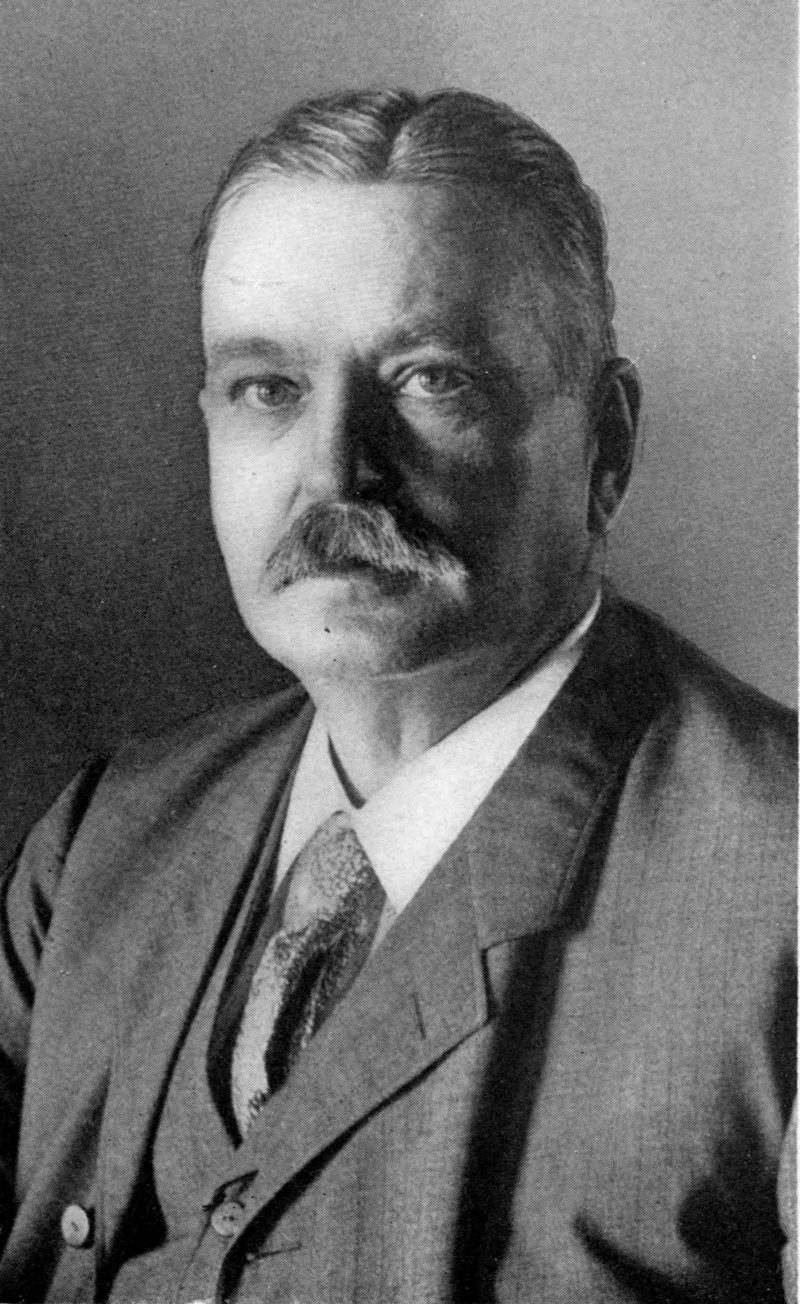
From stereograph. Copyright, 1906, by Underwood & Underwood, N. Y.
JOHN W. GATES.
The New York papers aptly called this “The conversion
of the Scot”; and this blunt and honest admission coming
from their own authority, that Municipal Ownership in this
853country was wholly impracticable, stunned and paralyzed its
agitators, and caused many of its adherents to leave the
ranks of Socialism.
Mr. James Bryce, the worthy newly appointed English
Ambassador to this country, pointed out some twenty years
ago, in his “American Commonwealth,” how the then future
of the United States sometimes presented itself to the mind
as a struggle between two forces—the one beneficent, the
other malign; the one striving to speed the nation to a port
of safety before the storm arrives, the other to retard its
progress, so that the tempest may be upon it before the port
is reached. He further expressed concern as to whether the
progress then discernible toward a wiser public opinion and
a higher standard of public life would succeed in bringing
the mass of the people up to a high level, or whether the
masses would yield to the temptation to abuse their power
and seek violent and vain and useless remedies—like Socialism—for
the evils which would affect us.
This able statesman predicted that the question would be
decided early in the present century, and would be evidenced
by the condition of progress and prosperity brought about
by the people in the meantime.
When the Ambassador was recently welcomed to our
shores, the answer to this question concerning us, asked by
him so long ago, was found awaiting him.
It was spoken clearly and loudly by our teeming products
of agriculture and mining, and echoed in thunder tones by
our mammoth shops and factories of industry, and it was
seen shining in the happy faces of our busy and prosperous
people.
Upon the golden page of to-day in our splendid history
will stand out the assuring fact that this surpassingly successful
state of things has not blossomed and come forth under
the blighting shade of the deadly Upas tree of Socialism,
but that it has all been developed by and through Individualism.
In conclusion, let me impress upon you that Individualism
854in the United States has stood all tests—especially the crucial
tests of time and experience—and it points with pride
and satisfaction to the great developments secured for the
American people under the bright and beneficent rays of our
admirable Constitution and Republican form of government.
And if the aim of all government is to ensure prosperity
to the country, and happiness to the people it controls, the
unrivaled excellence of Individualism may fairly be judged
by its magnificent results.
Edwin Markham, Esq., the Author and Poet, being agreed
upon by both parties to the debate, presided at the meeting.
At the close of the above address the chairman addressed
the 5,000 assemblage as follows:
“Ladies and Gentlemen: I hope you have enjoyed
listening to Mr. Clews’s very able address as much as I
have. He swept the entire horizon and has left nothing
more to be said on his side.”
Mr. Markham then introduced Professor Kirkpatrick, to
combat Mr. Clews’s arguments.
CHAPTER LXXVII. GREAT WEALTH AND SOCIAL UNREST. [5]
855
Mr. Chairman, Ladies and Gentlemen:
I think that you will agree with me when I say that
there is nothing more commendable and that augurs
better for the future of the institutions of our country—our
great American Republic—than the interest shown by all
classes in the important sociological questions of the day.
The general willingness of our citizens to solve the serious
problems involved by rationally debating them, and allowing
careful consideration and calm judgment to lead the way to
honest conviction, is one of the good signs of the times.
We are progressive in spirit as well as in our practical
achievements, and, in many respects, we have set the pace for
other nations.
At one time, we know, capitalists and leaders of industry
too often either wholly ignored the discontent or appeals of
the laboring people in their employ, or subject to their influence,
or, if appreciating the causes of their discontent,
showed no disposition whatever to right their wrongs, or even
to define their own views and position, or make any attempt
to defend their own side of the case.
This was the attitude of Capital toward Labor in former
times that I may liken to the Dark Ages. It was, of course,
radically wrong and unjust. The refusal, or, at least, the
unwillingness, of Capital to recognize the fact that there are
two sides to every case was not only oppressive, but often led
856to costly and destructive strikes, and, doubtless, in a measure,
retarded development and progress in industrial and other
human affairs. But now Capital is showing more readiness
to meet Labor on the same platform of discussion; and in
keeping with this opening of the door to fair and full two-sided
discussion is the general tendency of legislation to improve
the condition of the masses, and the Chautauqua Institution
in holding this Convention to consider the question
of Social Unrest is entitled to great credit for the performance
of a most laudable service in the interest of education
and progress and the uplifting of humanity. It is sowing
the seeds of future advancement and greatness in those directions.
The fact that Social Unrest exists, and moreover is very
prevalent, not only here but throughout the world, cannot be
denied. Thus, in Russia, just emerging from the throes of
a deadly and costly war, the spirit of discontent and Nihilism
is rampant, and in France the Terrorists are gaining in
numbers and clamoring for their rights, while Austria and
Germany are greatly disturbed by the constant persistence
of the violent and revolutionary Socialists in railing against
society and government as they now exist. In Great Britain,
too, the Socialists have stirred the people to uneasiness by the
loud threats, and rule or ruin alarms, that they are sounding.
While this unrest and discontent are especially great in
foreign countries, we cannot shut our eyes to the fact that
these exist in the United States—though not in such large
proportions as in Europe. Moreover, they are largely of a
different kind and quality.
But it is not well for us to give undue recognition to the
Socialistic outcries in this country, for by so doing we might
encourage and aggravate a condition that, to my mind, is an
equal menace to both Capital and Labor—the two great living
forces of our national life. We may increase an evil by
magnifying it.
Too much appreciation and regard cannot, however, possibly
be shown to that spirit of unrest existing among us,
857which leads to individual betterment and national development,
and which is especially characteristic of the American
people.
Ever since the blazing torch of civilization threw its
bright light upon the world, it has been the paramount disposition
of man to add to his possessions and to aspire to
higher and better conditions. In this he is distinguished
from savages and the lower orders of animal life, which have
no perception of what we call ambition and achievement.
Man being endowed with a mind, it is through the exercise
of his mental faculties that he is made restless under unsatisfactory
conditions; and civilized man is fired with a desire
for improvement, and particularly to improve his own fortunes
and position by increasing his possessions, and acquiring
distinction, or reputation in his business. This is well,
so long as it does not degenerate into graft, or the misuse of
other people’s money.
It is this unrest and this aspiration that constitute the
great incentive to human progress, and that have given us
our cultivated fields and teeming harvests, endowed and multiplied
our noble edifices of learning and religion, built our
large and splendid cities and homes, our great bridges and
other engineering works, and our vast factories and other busy
hives of industry. This is laudable ambition that stimulates
national development.
We must, however, be careful to draw a plain line of demarcation
between that unrest I have described, and which
springs from an appreciation of the solidity and soundness
of our foundation and aspires to build thereon so as to realize
the highest ideals of perfection and success—and that misguided
or malicious unrest and discontent incited by Socialism.
This is really at enmity with all civilized forms of
government and all measures of advancement in the right
direction, and seeks their overthrow and utter destruction.
The spirit of unrest that I have commended, and which I
have termed an American type, is not noisy and clamorous in
its nature, and it manifests itself mostly through organizations
858of labor, in demands for adequate or increased compensation,
or the fixing of a stated reasonable number of hours
to constitute a day’s work. With these purposes, and the aims
of Labor-Unions generally, I want to state that I am in the
fullest accord. The laborer is worthy of his hire, as the
Bible says.
But it is not from this source that the wail and cry of
Social Unrest comes. No, “The shallows murmur, while the
depths are dumb,” and it is from the other and Socialistic
class that we hear the government and its institutions decried,
and capital and commerce attacked, and the spirit of competition
and achievement assailed. I say, Down with these assassins
of good government, these assailants of law and
order!
True, we see Labor strikes in some places; but these are
incidents that have not been uncommon at any time in the
past, and are not marked or significant enough now to form
a particular feature of the prevailing Social Unrest. We
have not yet reached the Millennium!
But whence comes the Socialist’s expression of unrest and
discontent, and what is it based on? It reminds me of Don
Quixote, and the fight against a windmill.
What is the sum and substance of the Socialists’ grievance?
They see only evil in what is really good government, and
none are so blind as those who will not see.
They claim to be dissatisfied with the existing order of
things. But what remedies that are not revolutionary do they
prescribe for the cure of existing social and political ills?
The fact is that many Socialists at heart are anarchists!
In almost every instance you will find among the rabble at
a Socialist meeting some honest but mistaken theorists, who
plausibly find fault not only with the conduct of our government,
but with the very form of our government itself, and
picture, under the delusion they cherish, an utterly impossible
Utopia where—
“The people all are blessed
And the weary all have rest.”
859These visionaries are reinforced by pretended reformers
and professional agitators, often of great persuasive powers,
who appeal strongly to the passions and prejudices of the
ignorant people of various nationalities who are made to
imagine that they are still down-trodden. Here, in my opinion,
lies a real menace and danger—that of these people being
carried away by the power and passion of such appeals, the
inflammatory utterances of reckless demagogues and firebrands.
They are the public enemies we have most need to
guard against.
The path of safety lies in standing ready to discuss every
proposition which they advance, and then refute, with cool
reasoning and argument, the fallacy and falsity of their position
and the destructive doctrines they teach.
It will also be very noticeable that the people comprising
the Socialistic audiences at such meetings are mostly foreigners
who, seeking better social and political environments,
emigrated to America, a large part of them within the past
decade or two. As discontented aliens they become as dangerous
as the firebrands they listen to, but there is no spirit
of self-sacrifice among them. Moreover, they are slaves to
what is worst in Socialism and blind followers of a false
god!
That this peculiar condition of things should exist in this
country seems almost paradoxical. It is something that a patriotic
American cannot tolerate, and mainly an outcome of
Russian oppression, imported by those who have fled from
it, and who fail to understand or appreciate the new conditions
under which they live. We can well understand and
appreciate how, in a country ruled by a despot, whose heel
of oppression and tyranny is ever on the necks of the down-trodden
people, the masses, desiring some measure of free action
and equality, would revolt against these conditions, and
seek a reorganization of society. They would, naturally,
look as far away as they could from such a government of
despotism—the only one they had ever known—to the other
extreme—an imaginary country where the State should own
860all the land and capital, employ all the people and divide
everything, share and share alike, among the community.
Such a government will, of course, never exist. It is simply
impossible.
But the spirit of revolt, which, in that case, may be patriotism,
becomes ridiculous, and open to the charge of insincerity,
when its worst doctrines are transplanted and cultivated
upon American soil by our foreign population. When
it appears here it is really more like Anarchism than Socialism,
and I emphasize this.
Born of the spirit of resistance to oppression, with the
broadest and freest constitution that the world has ever
known—a land of freedom and equality in the best and most
liberal sense of the term—it would seem that the sincere
lover of liberty and equality could ask no better home than
this democracy of ours—whose glorious flag floats over eighty-four
millions of prosperous and enlightened people.
With further reason, also, must we question the sincerity
of the violent type of Socialist, who, leaving oppression behind,
emigrates to this country, where tyranny and despotism
are unknown, and yet continues to echo Socialism’s war-cry
of destruction, wrung from his heart by the cruelty of his
old-time oppressors. When he does this he becomes an enemy
of our Republic, unworthy of citizenship.
He comes here from a land of want and thraldom to a land
of plenty and freedom. He may come without name, fame,
or property, and he is received with open arms. After a
brief residence, he is entitled to full citizenship, and is then
a part of the government, enjoying all the rights and privileges
of the native born. He is a sharer in the equality possessed
by all, the right to share in the government such as
the electoral franchise and eligibility to public office. He is
possessed of the civil rights enjoyed by all citizens in the
equality of material conditions—that is, the right to acquire
wealth and all that wealth implies.
Every opportunity for him to achieve success and happiness
abounds on every hand, and every incentive to industry
861and accomplishment awaits him, and, if he is energetic and
skilful, there is nothing to hinder him from becoming prosperous,
or, in other words, successful in whatever vocation in
life he may engage. With qualities that commend themselves
to his fellow men, there is no limit to the possibilities
of his achievements, and very soon, as has been very often
the case, he may become not only wealthy but a leader of
men. If, therefore, he is sincere, surely he must agree with
me that in view of these conditions this is no place for the
Socialist. He must be an ingrate who would fail to appreciate
the splendid boon.
Does it not, indeed, sound like a paradox to hear this cry
of Socialism still rending the air while every avenue of fortune
lies open to everyone? It is a glaring anomaly of the
times, an offence to American institutions, a poor return for
our national hospitality. Vague and illogical as the theories
advanced by the doctrinaires of Socialism are, there runs
throughout all their teachings and preachings bitter and radical
opposition to individual accumulation of wealth and individual
competition in industry.
Socialists would, in other words, fence up the great field
of free opportunity, deaden all incentive or inspiration for
great achievement and not only curtail, but wholly remove
the right to compete and excel and make it impossible to
achieve success as the result of individual effort. They would
reduce us all to a barren uniformity.
Think of this monstrous proposition! Why, the very thing
that the Socialists attack as untenable and wrong in government,
namely, individual competition, has done more than
anything else to make us what we are as a nation; has kept
alive the precious fires of liberty and freedom, and preserved
the institutions of our country. Take away the progressive
spirit of Individualism from the people, and you at once eliminate
the American spirit—the love of freedom—of free industry—and
free and unfettered opportunity—you take away
indeed freedom itself!
The state of society the Socialists seek to establish might
862be beneficial to a class which, under any conditions, lacks frugality,
thrift and self-reliance; but just where the general
mass of humanity would be bettered or elevated socially, morally
or politically, is a point not satisfactorily explained, and
never will be.
If you render equally accessible to each and every member
of the human family the benefits of civilization, all holding
“properly in common,” why should a man rack his brain or
strain his muscles in producing something which he expects
to prove remunerative or beneficial to himself in some way,
but which under the Socialistic state would contribute to the
equal financial benefit of all? The highway to distinction
and opulence would be closed.
As illustrating the inconsistency of some poor specimens of
human nature, when put to the test of Socialism, I will tell
two stories:
Jerry Sullivan had proclaimed himself a Socialist, and was
being interviewed by his friend, Mike Casey.
“Jerry, do you believe in dividing up everything with
your neighbor?”
“Indeed, and I do that.”
“If you had two horses (Jerry had none) would you give
one to your neighbor Flanagan?”
“I’d be only too glad to.”
“And if you had two automobiles, would you give him
one?”
“Sure, Mike, I would. We should have share and share
alike in this world.”
“And if you had two Angora goats (which Jerry did have)
would you give one to Flanagan?”
“What, give him one of my goats! Not by a jugful! Let
Barney Flanagan buy his own goats.”
One of my millionaire clients, on his return from a trip
abroad, called upon me to pay his respects. In the course
of our conversation he said he had become a confirmed Socialist.
I expressed surprise, and said, “Then, of course, you
are going to divide up all your properly with your less fortunate
863associates?” He said, “Oh no, but I want all the other
fellows to do it.”
The most commendable object in Socialism is the uplifting
of the down-trodden and poor, yet that great Commoner and
Tribune of the People, William Jennings Bryan, tells us that
under Individualism we have seen a constant increase in altruism.
That the fact that the individual can select the object
of his benevolence and devote his means to the causes that
appeal to him has given an additional stimulus to his endeavors.
And Mr. Bryan pointedly asks the question: “Would
this stimulus be as great under Socialism?” Let it not be
forgotten that by means of present tendencies and existing
economic laws the poor are constantly growing richer, that is,
better off, particularly as indicated by the savings bank deposits.
The common people and the savings banks were never
before so prosperous as they are now. Labor has made great
strides, and the uplift in the lower walks of life in all
Christendom during this generation and particularly during
the past twenty years has been beyond precedent. Give us
wise and just legislation, and complaints of the inequitable
distribution of wealth will quickly disappear. Let us put
down and keep down the revolutionary Socialists and Anarchists.
Of course, if the unrest of a people is prompted by a desire
to promote the good of the greatest number of their fellow
beings it will be productive of lasting benefit to all in the
long run. But if any combination of capitalists, laborers,
politicians, or religious bodies, has for its aim the particular
good of only a certain class or party, such action as they take
will be prompted by selfish desire, and will work for evil and
injustice. The great mass of the people of this country, outside
of the big cities, are not allied with either the members
of labor unions or the very large capitalists, and the feeling
of discontent is largely bred in cities, where it is magnified
by the prominence given to it by agitators and the newspapers.
The wage earner in the cities is more or less disheartened
864by the high prices of food supplies, the higher rents and the
higher rates of interest on mortgages, and he argues that his
pay has not advanced in the same proportion as the price of
home necessaries. Mechanics and other laboring men are receiving
higher average wages than ever before, but the display
of wealth in modern palaces for the rich, and the abundance
of automobile and kindred luxuries among them, have kindled
envy and whetted their desire for things beyond their
means or hopes of attainment. While no law can change the
nature of a man, and while we cannot expect an ambitious
man with an elastic conscience to always become a benefactor,
or a labor union leader, filled with hate, to become a saint, I
hope that the agitation now existing may lead in time to a
more general observance of the Golden Rule, to do unto others
as we would they should do unto us.
I may say here that I believe nine-tenths of the dissatisfaction
of the masses is based upon mistaken ideas. Few
men are capable of judging impartially of the rights or the
motives which actuate those upon whom Fortune has smiled:
Success may be often a matter of luck and opportunity; but
it cannot be denied that judgment, mental force and courage
are the factors which are bound to insure success.
I now speak not only of success from a monetary standpoint—for
many of our most useful, intelligent and influential
citizens are comparatively poor—but of all success. Our
larger cities are the hotbeds of unrest. The older generation,
being anxious that their sons shall have more, and know more,
than themselves, and enjoy the good things in life which they
have desired but have not been able to obtain, now try to give
their children a liberal education and fit them for what they
consider more congenial or higher-class occupations than their
own.
The outcome of this is that the younger men, when their
education is completed, drift into the cities, where they think
they have a better chance of getting on in life. It is the same
with farmers, laborers and mechanics. Their children desire
to rise above their early environments, and wish to occupy
865positions where they can use their brains rather than their
hands. Hence the many deserted farms in New England and
in the State of New York, for poor soil is not sufficient cause
for their desertion. It can be made good by fertilizers, and
where there’s a will there’s a way.
This discontent is producing a superfluity of clerks and
other brain workers, who think work with the head more genteel
than work with the hands, and a great shortage of farm
workers that are needed to develop our agricultural resources.
Even the children of the most ignorant foreigners are imbued
with this ambition before they are able to speak our language.
Too many despise honest labor and want to live by their wits.
So we have a vast host of surplus politicians, office-seekers,
promoters, brokers, lawyers, clerks, canvassers and drones.
In olden days the young were willing to follow in the footsteps
of the old, and begin life where their fathers began.
Now they expect to begin where their fathers leave off, and
are dissatisfied and disappointed if they find that they have
to start from the foot of the ladder.
What we most need in this country to promote and popularize
farm and village life, and check the general tendency
of both young men and young women to drift to the large
cities, is a change in our educational system. We should
establish trade schools everywhere to teach the trades and
practical sciences, and so make country-bred people proficient
in occupations that they could follow on the farm, and in
village as well as town life. This knowledge would induce
them to stay where they were born, instead of rushing off to
make or mar their fortunes in the overcrowded cities where
many come to grief. Thus the congestion of population in
the cities would be relieved, and the country generally would
be able to retain the men and women it needs for its industries
that are now held in check by an insufficiency of labor.
In this way we might gain millions of good mechanics and
other useful workmen where they are most needed, and reduce
the number of the inefficient and unemployed in the cities, to
say nothing of the chronic idlers and the sporting, gambling
866and criminal classes. Men instructed for the professions
would of course still study in the colleges, but the masses have
no use to which they can put the higher education of even the
high schools.
There are a lot of well-meaning theorists engaged in so-called
Social reform who are largely responsible for many
things that add to the unrest in the poorer sections of our
cities. Far be it from me to criticize anyone who has the
desire to better the condition of his less fortunate brothers,
but the work of many of these reformers reminds me of the
man who threw a panful of kerosene on a small fire with the
idea of putting out the flames. To be a true Social reformer
a man must be well informed on conditions which obtain on
all sides of life. A rich man may have acquired wealth by
miserly habits, but if he has not been dishonest he is entitled
to his savings, and no law can compel him to divide with the
poor man who has been profligate in the use of his earnings.
The thousands of immigrants who arrive at our ports each
week are, for the most part, poor and ignorant. The greater
number of them remain in our cities and add to the congestion
and widespread poverty of the cities. But these same immigrants
are willing to work, and in a year or two, instead of
being a charge upon the community, have savings bank accounts
of their own. However, they are ripe for the reception
of the gospel of unrest, as they have lived hitherto in places
where the poor are always poor, with no lookout for improvement,
and willingly listen to the agitator and prophet of discontent.
Mr. Roosevelt has said and done things in the last
four years which have shaken our land. Many investors have
thought that he had gone too far in his insistence that the law
should be rigidly enforced, as they, innocent holders of securities,
had been made to suffer loss by the depression in prices.
While it is hard that such losses should have been incurred,
it is no fault of the President, and his action, in the long run,
is to be of untold value to our national and individual prosperity.
If his actions will insure the fulfillment of the law
by the magnates in power in our railroads and corporations,
867the little man will be on a par with the big man, and all investments
will be on a safer basis, and the dark secrets of the
manipulator will give place to the open publication of rates
and earnings so that a stockholder will know where he stands
and what his company is doing.
Daniel Webster, as far back as 1842, found that the spirit
of unrest was in the air as it is now. In an address in that
year he said:
“There are persons who constantly clamor. They complain
of oppression, speculation and the pernicious influence
of accumulated wealth. They cry out loudly against all banks
and corporations and all means by which small capitals become
united in order to produce important and beneficial results.
They carry on mad hostility against all established
institutions. They would choke the fountain of industry, and
dry all the streams. In a country of unbounded liberty they
clamor against oppression. In a country of perfect equality
they would move heaven and earth against privilege and
monopoly. In a country where property is more evenly divided
than anywhere else they rend the air shouting agrarian
doctrines. In a country where the wages of labor are high
beyond parallel, they would teach the laborer that he is but
an oppressed slave.”
I will here deviate to another division of the subject.
Considerable uneasiness and unrest have been evinced not
only by the Socialists, but by many others, as to whether
great individual or corporate wealth—in other words, capital—is
inimical and hostile to the public welfare and a menace
to our institutions.
I think that it can be clearly shown that this anxiety and
unrest are without any good foundation. There is nothing in
fact to justify this unrest.
In our own country especially, where individual opportunities
are practically limitless and where thought and effort
are exerted to the utmost straining point, most fruitful, indeed,
has been the result. We have seen that the making of
large fortunes coincidently with great general prosperity, that
868is, by those doing a profitable business on a large scale, is an
inevitable economic result.
The past forty-five years in the United States embrace a
new era of wealth—an era in which the accumulation of vast
amounts of money, or its equivalent, in individual and corporate
hands, has accompanied the most marvelous national
growth and prosperity in all history.
New conditions have arisen, and new methods have had to
be employed, while new men, equipped with new ideas, have
not been found wanting to meet all requirements, and to keep
step with the march of progress on both land and sea. Unlike
the people of some of the older countries, where, as in Russia,
they distrust their government, Americans do not hoard their
wealth. They employ it. They have nothing to hoard it for.
Their quickly acquired fortunes are generally lavishly disbursed,
both in their style of living and their investments.
With much of the money they put into circulation, railroads
are built and extended, mammoth factories are constructed,
labor is employed on a larger scale than before, more farms
are cultivated, and more crops are moved and exported.
Through all the arteries of trade and commerce the wealth
thus employed flows and adds to the growth and prosperity
of the country.
Keeping the wheels of commerce moving, by supplying the
demands of the financial, mercantile, manufacturing and agricultural
world with the “sinews of war,” in the up-to-date
American way, instead of merely gathering wealth and hiding
it away, has been to my mind one great secret of our unprecedented
national advancement.
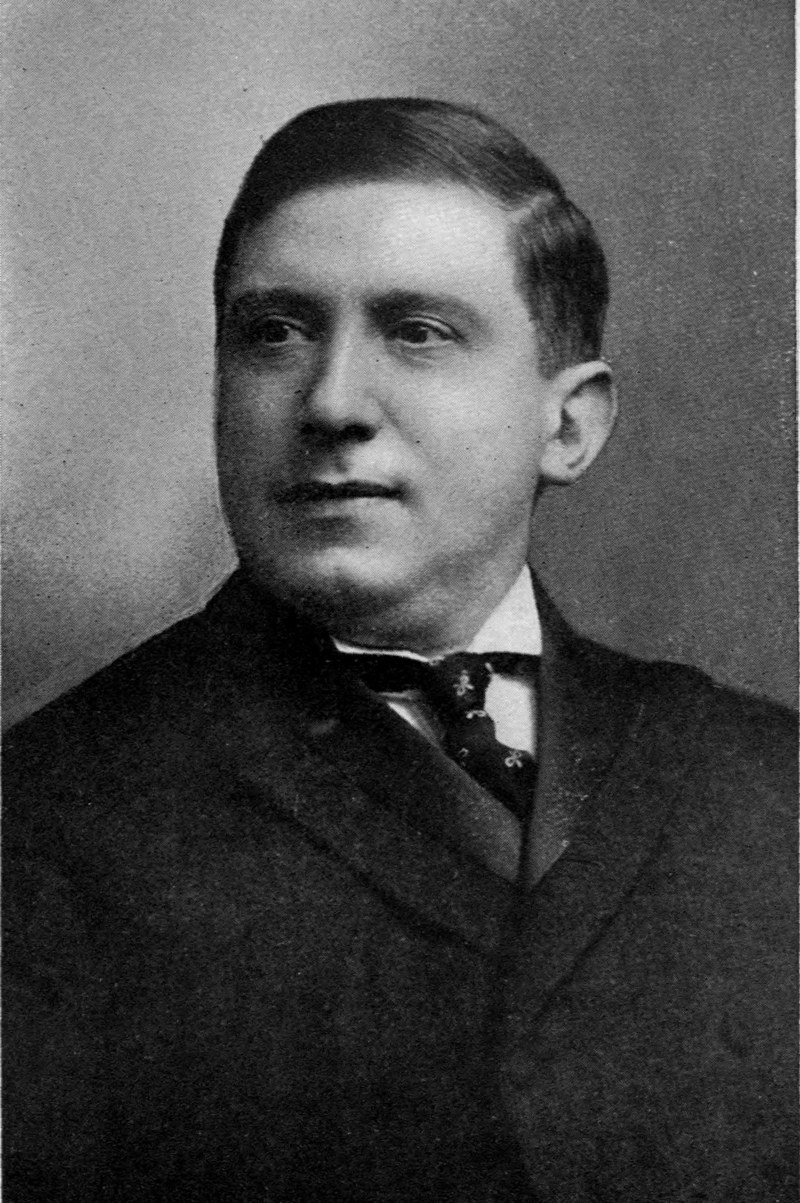
Although it is impossible to demonstrate just how important
an influence this practice of keeping wealth actively in
use has played in helping to bring about and preserve the
generally progressive and prosperous condition of affairs,
there is evidence enough to refute much that has been said
against the possession of great wealth, and also to show that
the hostile or critical attitude of the press and the people
toward it is unjust, and should be derided instead of being
869popular with the masses, as it is. The assistance which Americans
of great wealth have given the nation, in the founding
and preservation of institutions for the public benefit and in
many other ways, has never been sufficiently appreciated or
acknowledged.
Wealth in good hands serves good purposes. The richest
men of the Thirteen Colonies in the American Revolution
were among the most active and self-sacrificing of American
patriots. They included George Washington, John Adams,
John Hancock, Thomas Jefferson, James Madison and Robert
Morris, whose names are imperishable on our national roll
of fame.
In that glorious struggle for freedom, these wealthy patriots
performed a leading and arduous part, and aided largely in
effecting that grand result—the establishment of this great
republic, the United States of America, under the best and
freest Constitution in the world.
Passing onward from that memorable time, we come to that
of the Rebellion, when Secession reared its aggressive head,
and the very life of our institutions was in extreme jeopardy.
In the early part of the great Civil War—when the Government,
friendless abroad, knew not which way to turn for the
financial aid that it so sorely needed to defend itself and
prosecute the war—history will recall that the great wealth
of private individuals proved not a menace, but a blessing
and a godsend to the Nation. These served their country
well by coming forward with their wealth and buying United
States bonds in large amounts when the risk was hazardous.
By so doing they rendered patriotic public service that should
make even the Socialists hesitate before condemning great individual
wealth as dangerous to the national welfare.
I might in illustration of what I say enumerate instances
almost without number where, from the rock-ribbed coast of
Maine to the Golden Gate of California, under the beneficent
rays of great gifts of the wealthy the seeds of education
have been sown broadcast and have grown into grand
and telling factors in shaping the character of the rising
870generation of American manhood and the destiny of this
great country.
In keeping with the hostility, or unrest, concerning great
individual wealth, and large corporate capital, we are at times
confronted by the bold assertion, made by extremists, that
some limit should be set to the amount of property an individual
may own. The impracticability and inadvisability of
any such measure are at once apparent. You might as well
try to limit the capacity or energy of an individual. When
you prevent an individual from accumulating you at once discourage
his productiveness. This is an axiom beyond dispute.
As regards great corporate capital, I must admit that there
has been in many instances, in the past, good cause for much
of the unrest and dissatisfaction manifested by the people.
Toward competitors large corporations have too often been
unscrupulous, just as the railways were in giving rebates to
control the heavy traffic. These illegal and reprehensible
methods were pursued far too long, not only causing immense
personal and commercial loss and injury, but shaking the confidence
of the public in the large corporations called Trusts.
These offences can, however, under our new laws, hardly be
repeated in the future.
Under the provisions of the Sherman Anti-Trust law, the
Elkins Anti-Rebate law and other and later restraining statutes,
condign punishment will, doubtless, be dealt out to offenders,
and a rigid enforcement of these laws, and their
necessary amendments, will be sufficient to regulate corporate
bodies and stand as an ægis of protection for the nation.
In this very active period of business reform overcapitalization
is an evil that must be classed with rebates, railroad
discrimination, and other corporate abuses. This also applies
almost equally to both the industrial and railroad systems.
However much this evil may have been regarded and thought
inevitable in the past, owing to peculiar and lax conditions in
the pioneer days of railroads and industrial upbuilding, it is
intolerable now, and should be made impossible in the future.
There is not the slightest doubt that a great deal of the public
871unrest has proceeded from this source. But, with the stoppage
of the evil, it ought to subside.
Overproduction of any kind is a detriment to trade and
leads first to extravagance and then to disaster; overfeeding
produces disease; overtraining of an athlete weakens him and
causes his defeat; overstudy racks the nerves of the student
and unfits him for usefulness. Overwork kills man and beast,
and ruins even our locomotives and machinery. Too much
rain, too much wind, and too much sunshine spoil our crops;
too much confidence or too much caution prevents a business
man from achieving success. There is a happy medium in
all things which produces good results and promotes success.
Under our modern system of financing our railroads and industrial
corporations overcapitalization has in many instances
run riot and produced an overplus of undigested securities.
This system of financing will surely lead to disaster if not
curbed and conducted in a rational manner. If a company
needs additional funds for legitimate purposes, such capital
is a necessity which stockholders will willingly provide; but
the managers of corporations should be compelled to state exactly
and definitely for what purpose such funds are needed,
and should also be compelled to make a clear and definite
report.
Centralization of power in the hands of an able executive
is a good idea if he prove worthy of the trust his colleagues
confide in him, but, on the other hand, makes him a master,
and them slaves, if he be unscrupulous and crafty.
Happily, the days of overcapitalization are seemingly over,
and an aroused public opinion will, no doubt, be expressed in
whatever prohibitive laws are necessary, if those already enacted
prove insufficient.
In, at least, some instances the existing laws seem inadequate.
It is likewise due to the sound corporations of the
country, as well as to the public, that something further
should be provided to overcome the feeling of suspicion toward
them, and to keep the people informed as to their existing
methods and the true condition of their affairs.
872The remedy for corporation wrongdoing is found in publicity!
This publicity is the great need of the present and
the future, and the public should demand it. It is a lamp
that we should always keep burning.
In a recent address delivered by me before the Wharton
School of Finance of the University of Pennsylvania, I urged
that the New York Legislature, as well as the Legislatures of
the other States, should respond to the popular agitation for
this publicity by passing laws requiring all corporations to
make at least semi-annual reports of their condition, certified
to by registered public accountants, with power invested in
the State superintendents to order special examinations by
such accountants at any time when deemed necessary, that is,
whenever any of them were suspected of being unsound or
irregular in their business methods.
The question now to decide is what remedies can best be
adopted to prevent a repetition of stock-watering. My plan
is for the Government to appoint a salaried director in each
of the interstate roads, this director to be on the executive
committee also. His duty should be to act as a watchdog,
and he should be required to report to the Interstate Commerce
Commission all crooked acts or suspicions of any; besides
which the interstate roads should be compelled by law
to issue sworn statements of their exact condition semi-annually.
Officials of railroad companies found guilty of any
illegal acts whatsoever should be punished by imprisonment.
Money penalties are of no use in stopping wrongs of wealthy
corporations.
Railroad discriminations and other abuses were incident
and owing to our extraordinary development during the last
half century, and especially to the striking failure of our Legislatures
to keep pace with national progress.
Let us briefly look into a few of the causes which were
responsible for this railway abuse. Both before and after our
recent Civil War this country was greatly in need of more
railway transportation than it had, and national development
was impossible without it. We had millions of square miles
873of territory rich in natural resources, but totally undeveloped
and awaiting population, capital and transportation. Of
course transportation had to be provided before either population
or capital could venture with any freedom into the
Great West. In those days it was vastly more difficult to raise
$1,000,000 for a new railroad enterprise than it was to procure
$100,000,000 in more recent times. The public was not
accustomed to such ventures, and the country did not then
contain the large number of wealthy men who must now be
depended upon to back such great enterprises.
In those days railroads required relatively large capital;
the risks were new and great, and some means of securing
large profits had to be devised in order to tempt men of means
to venture into such enterprises, which from their very nature
involved a long wait for profit. Our earliest railroad builders
were men of unbounded faith in the future, and they well
knew that many years of patience and outlay would be necessary
before such enterprises could become profitable. It is
almost axiomatic to say that in this country our railroads
have been the principal factors in national progress. In the
United States, railroads were called upon to develop both
population and traffic. In Europe, population and traffic
were already in existence and simply awaited the railroad.
When railroad building first began, England was already a
closely settled country; and it was only necessary to construct
the lines to obtain profitable traffic at once. No special inducements
were necessary for the attraction of capital, and
no preliminary period of waiting or loss was required to
develop traffic. It was vastly different here; railroads had to
be built across thousands of miles of new country, frequently
over apparently insurmountable mountains where neither
traffic nor population existed; and their builders, men of
monumental ability and enterprise, knew full well that a generation
must pass before such enterprises could be considered
profitable and solid investments.
Under such conditions what inducements could be offered
to overcome such overwhelming obstacles? While government
874aid was eagerly sought, it was restricted mainly to the Pacific
roads where political reasons, such as unification of new territory,
justified government support. Another form of national
aid was the giving of large land grants to railroad
corporations as a stimulus to the settlement of new territory
and the building of roads adjacent thereto. Even those helps
were insufficient.
Meanwhile, the treasures of the Great West offered irresistible
attractions to new enterprise and settlement. The
demand for more railroads was insistent; then came the devices
of stock-watering and overcapitalization as inducements
to new capital. Roads were often built entirely on bonds;
and stock, having little or no value except for voting, was
given away as a bonus with the bonds, or used for various
purposes, often in speculation, and such stock frequently
found its way back to the original promoters at bargain if not
waste-paper prices. This era of speculative railroad building
was naturally accompanied by all sorts of illegitimate operations;
overcapitalization bearing a leading part. No one
would now dare think of resorting to such practices as were
common in those pioneer days. They were utterly indefensible,
and yet as an expedient they served their purposes
in raising much of the capital with which to develop our early
railroad systems.
Our great railroad builders were fully entitled to great
profits, since their boldness and skill developed the finest railroad
systems the world has ever seen, and without them the
United States would never have obtained its present magnificent
position and prosperity. We must admit their methods
were open to serious criticism, and would not be tolerated
in these days of improved business standards. Nevertheless,
they were the methods of the day, and must be judged as such.
I do not wish to be understood as defending or apologizing
for overcapitalization, for I consider it an economic evil of
the most dangerous character, and its penalties—political as
well as economic—cannot be averted.
It should not be forgotten that the great wave of grangerism
875and anti-railroad agitation which swept this country in
the ‘80s was a direct revulsion of popular feeling against the
burdens of overcapitalization and their tax upon traffic. These
were the political results of such abuses. The economic consequences
which followed—somewhat late to be sure—were
witnessed in the reconstruction period that followed the panic
of 1873, when vast millions of railroad capital were literally
wiped out by the reorganization of railway corporations.
To-day most of our railroads are comparatively free of overcapitalization,
both because much of the water has been eliminated
by reorganizations, and because the increased value of
terminals and other properties, as well as the large improvements
that were paid for out of earnings, have increased the
intrinsic value of shares which at one time may have been
practically valueless. This process of accretion has been going
on for many years, so that now there is comparatively
little difference between intrinsic and market values. Of
course, some recent striking departures from sound railroad
financing can be cited; but I am speaking in broad terms,
and have no hesitation whatever in asserting that American
railroad investments are now sounder financially than any
similar class of securities in the world, and this notwithstanding
that railway companies are compelled to borrow enormous
sums in order to meet the demands of a wonderfully expanding
traffic.
A comparison greatly in our favor could be made with British
railroads which have for years been inflating their shares
by a policy of charging improvements to capital account; the
American system being to charge such items against earnings.
The result is that British railroad shares, which were once
held up to us as models of soundness and honest capitalization,
are now seriously threatened with an excess of water; and
unless the present policy is changed, English stockholders will
soon be discarding their home favorites for the bonds and
stocks of more soundly managed American railroads.
I have dwelt considerably upon the overcapitalization of
our railroads. Now a word about overcapitalization in another
876direction, where it is a vastly more serious affair. While
we now have little to fear from overcapitalization of railroads,
an inflation has taken place in our industrials of the most
extravagant character, and this is one of the most serious
menaces to our industrial and financial future. A feature of
our national development which has attracted world-wide attention
during the last ten years has been the consolidation
of nearly all our great industries into a few “Trusts.” This
era of consolidation, or “Trust-making,” must be classed as
an industrial revolution of the highest import, containing
tremendous possibilities for both good and evil. Within a
few short years a large proportion of our industries were combined
or turned into Trusts, and securities issued in exchange
aggregating about $6,000,000,000.
Of course, many of the objects of these combinations
were perfectly legitimate. The seeking of better and more
economic methods of production and distribution was eminently
proper, but the grasping for monopoly was not legitimate,
and has proved more largely responsible for the political
and social unrest of the times than any other single cause.
Nothing has done more to stimulate Socialism than this unwholesome
tendency toward monopoly and excessive centralization.
On this feature, however, it is not my intention to
dwell further; I must even entirely pass over the overcapitalization
of public franchises as a subject of sufficient importance
to demand special treatment.
All things considered, however, I feel safe in saying that
there is practically no more reason for unrest on the part of
the business community or the people of the nation, on account
of the large aggregation of capital represented by
Trusts, than from equally large sums in the hands of individuals;
for both are equally controlled by law and influenced
by public opinion, and public opinion is often more powerful
than law in righting wrong. Moreover, public opinion makes
the laws. As the Latin aphorism says, The People’s voice is
the Voice of God!
I take decided issue with a certain distinguished gentleman
877from Maryland, that the existing unrest has been brought
about by the national administration at Washington, and by
the Chief Executive of our country, and challenge the truth
of this assertion. It is both a surprising and ridiculous accusation.
The leading men of thought—not only in the
United States, but all over the world—agree that if, after the
startling exposures of the life insurance and railroad abuses,
President Roosevelt had not taken the sturdy and bold stand
that he did, the confidence of the public would not only have
been severely shaken, but would have been well-nigh uprooted;
and such a general spirit of unrest would have followed
as to be truly alarming in its nature.
As it was, his level-headed and courageous course was
timely and almost providential, and instead of being the subject
of adverse criticism, he is entitled to the highest praise
from all. Apart from some politicians and a few others, we
are indeed all paying him this deserved tribute. He has
often shown us that he possesses the courage of his convictions.
In conclusion, while we doubtless all agree that the existing
social unrest, anxiety and prejudice are to be deplored, may
we not also unite in the hope that, under the educating influence
of a full discussion of the economic questions of the
hour, and with the enforcement of the laws in the hands of
an honest and courageous executive, the way to betterment
will be thoroughly paved? It is a patriotic duty to endeavor
to lessen popular discontent and promote social and political
peace and harmony, and substitute public confidence for unrest
and the violent agitation of Socialism, and so enhance the
manifold blessings we enjoy as American citizens, yes, as
citizens of the foremost nation of the world, with a future
even grander than its past, a country where Nature is everywhere
lavish of her abundance, and freedom and independence
are our birthright. Beholding then, my friends, this
grand spectacle of national progress and achievement even as
it appears to us at this day, it certainly needs no prophetic
tongue to foretell with confidence and absolute verity that to
the true and ardent patriot and ambitious American, in fact,
878to every man inspired with lofty ideals and imbued with a
spirit and desire for improvement and the perfection of democratic
government, the social and political vista of our country’s
future will disclose a picture of prosperity and contentment
that will prove a glorious inheritance to the coming
generations of the American people.
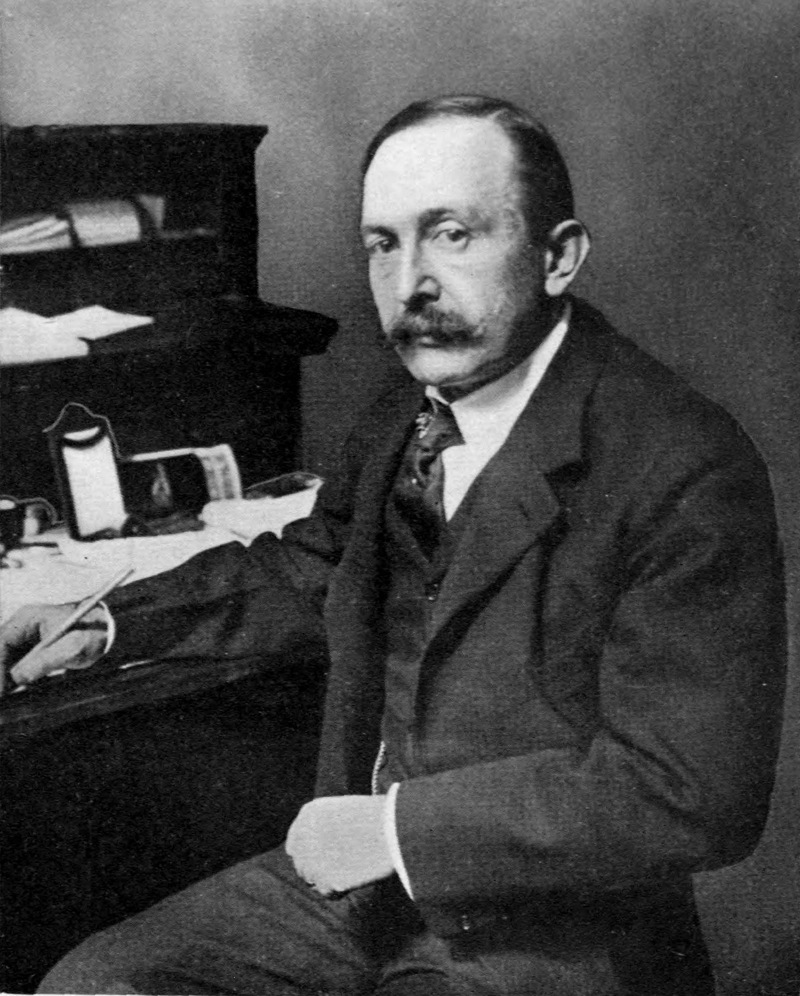
From stereograph. Copyright, 1906, by Underwood & Underwood, N. Y.
AUGUST BELMONT.
CHAPTER LXXVIII. THE FINANCIAL SITUATION. [6]
879
Mr. President, Members of the Kentucky Bankers’ Association:
As all know, we have recently passed through a crisis of
distrust in Wall Street—distrust of corporate credit,
and railway and other corporate stocks. This was reflected
in what I may call a slow panic, a heavy and prolonged decline
on the Stock Exchange under a continuous flood of
liquidation by both investors and speculators.
This crisis had been brewing for a long time, and we had
a violent intimation of the dangerous and disturbing elements
in the financial situation last spring, culminating in
the collapse of the stock market in March. But it was not
until a United States Court at Chicago inflicted a fine of
$29,240,000 on the Standard Oil Company, of Indiana, that
investors, and the large capitalists of Wall Street, including
Standard Oilers, took alarm. Then the trouble became acute.
The Wall Street speculative multi-millionaires in particular
felt the shoe pinch very sharply. They had been trying
hard to engineer a bull movement in stocks, for they were
very heavily loaded with them. They had, however, met
with indifferent success, for the outside public was out of the
market and refused to come in. This huge and unprecedented
fine, these leaders of the bull movement saw, was a
880disconcerting and staggering blow at the property of corporations,
and consequently at the stocks of corporations. It
amounted, if enforced, to confiscation, and they, as large
speculators, like the rich and moderately rich investing class,
reasoned that if the Standard Oil Company of Indiana could
be fined and have its property confiscated in this way, other
corporations would be liable to the same fate. They also saw
that small investors and people generally would think and
argue as they themselves did, and that their consequent distrust
would lead to a heavy decline in prices under heavy
liquidation, through fear or necessity.
So they reversed their tactics. In other words, they decided
to run, and, being a little lame, they started early.
Instead of continuing their bull movement in stocks, they
at once withdrew their support from the market and began
to liquidate themselves, for self-protection. The rank and
file of the bulls, seeing that stocks were going down with a
rush from this and other sources, were quick to do likewise,
as if they thought the devil would take the hindmost, while
the bears helped the market’s descent by an unopposed and
vigorous hammering. The bull leaders had abandoned it to
its fate, and the banking interests were not willing to stand
in the gap.
The best and highest-priced stocks suffered the heaviest
decline, and for a fortnight there was an outpouring of stocks
and a downpouring of prices that finally carried nearly all
of these below the lowest of March. Wall Street trembled
in its boots.
The decline was accelerated by the unusual scarcity of
money on time, and the advancing rates for it, which undermined
confidence in the future of the money market, and
in the ability of many corporations in urgent need of money
to borrow on their collaterals, or obtain discounts. Fears on
this score had very recently been justified by the failure of
a large iron and construction company in New York City,
and when it was followed by a receivership for the Pope
Manufacturing Company, the rush to sell stocks, and the
881fresh break in prices, added to the previous demoralization.
The bears held high carnival, for their harvest was abundant
enough to realize their dreams of avarice.
It was feared that this failure might prove the beginning
of a long line of similar failures, and there were many
gloomy forebodings as to what would come next, either in
the way of failures or State or Federal action against railway
or industrial corporations, which would, by damaging
their credit, lower the value of their stocks, and possibly
imperil future dividends. We too often fear the things we
think instead of the things that are.
Through all this turmoil and disorder the want of money
by many large corporations and the difficulty of borrowing it
was always an uppermost topic. It touched their weakest
spot, and showed the insufficiency of their working capital.
They had large assets in plant and materials, but comparatively
little cash to carry on their large and increasing business.
This made them dependent on the banks; and when
the decline in stocks and bonds caused distrust that led to
a curtailment or refusal of credits by the banks, they had
nothing to fall back upon of their own. They were between
the Devil and the deep sea.
This want of a sufficiency of liquid assets is a common
shortcoming among our corporations, both large and small,
and therefore a great element of weakness, especially in
periods of distrust, and should be remedied as far as possible
in the future. It is better to do less business on a safe
basis than could be done by extensive borrowing, with the
hazard of failure in some unlooked-for crisis or time of
depression. The greed of gain should be tempered by the
wise admonition to make haste slowly. But unfortunately
most people are in a hurry, and want to make short cuts
to success.
The August crisis, like all panics, was brought about and
aggravated more by fears of impending trouble and false
rumors than by actual occurrences. Sentiment often sways
as much as facts, and the public had become extremely sensitive
882to unfavorable news and constructions regarding the situation,
and comparatively blind and deaf to its favorable
features. All this was ammunition for the bears on the
Stock Exchange, and they made the most of it by steadily
and relentlessly hammering stocks down, so increasing the
depression caused by the liquidation of both speculators and
investors, and the loss of confidence in values. But, like
Oliver Twist, the bears still asked for more.
This want of confidence was mainly due to exaggerated
apprehensions of the effect upon railway and industrial corporations
and their stocks of the Government investigations
and prosecutions, and the hasty action of the States against
the railways in cutting down their rates. Much of this
State legislation is too restrictive, and will probably be modified,
or rescinded, after a trial.
It was argued that there was no telling where and when
the so-called crusade against the railways and the Trusts
would stop, or what the final result would be. The bears
and the alarmists were equally loud and excited in pointing
to the twenty-nine-million fine as a sign of what, in varying
degrees and amounts, might happen to other corporations,
and bring ruin to many of them. Thus a merely unsettling
influence was magnified into a formidable element of national
disaster. As prophets of disaster, the bears outdid each other,
regardless of their friends, the bulls.
The threats and aggressive attitude of some of the Government’s
law officers alarmed many as much as their allegations
against the corporations they prosecuted did, and they feared
that irreparable harm to those corporations, and their business,
would be done before their cases were finally decided
on appeal, and that their stocks and bonds would suffer accordingly,
with, it might be, interest and dividends suspended.
Thus they borrowed a large amount of trouble.
With these feelings uppermost in the public mind, or at
least influencing investors, it was not surprising that such
a fever of distrust prevailed on every stock exchange in the
United States, and that sympathetically and temporarily it
883somewhat affected the London Stock Exchange and every
bourse on the European Continent. The situation had begun
to look almost hopeless before reason began to take the
place of hysteria among most investors and speculators.
Then the indiscriminate slaughter of stocks prompted investment
buying, and the great scare, after two weeks of storm
and stress, gradually passed into history, while prices, with
occasional setbacks, responded to the change of sentiment by
slow but general recovery. But whether this will be followed
by a relapse or not remains to be seen.
The apprehension excited among investors and speculators
in stocks by that $29,240,000 fine against the Standard Oil
Company of Indiana did an immense amount of harm
through the enormous losses to which it led. In combination
with the prosecution of the Southern Railway by Southern
States, involving the conflict between North Carolina and
Alabama and the United States Courts, that extravagant fine,
so suggestive of opera bouffe, was the immediate cause of the
heavy liquidation that produced this August crisis and turned
the New York stock market into a storm center. Although
there was no probability or even possibility of this fine ever
being collected from a million-dollar corporation, even if
affirmed on appeal, public sentiment was about as much disturbed
as if it were ultimately collectible. By creating, although
without sufficient reason, fear of confiscation, it led
to those enormous sales and sacrifices of stocks by investors,
as well as by speculators, and the virtual panic that lasted
those two long and memorable weeks.
The innocent thus suffered with the guilty, and the evil
effect of such a fine was clearly demonstrated by a very severe
and disastrous object lesson. The true remedy for rebating
and other wilful violations of law is not to be found in the
infliction of heavy penalties on the guilty corporations, but
on the responsible and guilty officers of those corporations,
and not alone by fine but by imprisonment. Heavy fines
inflicted on corporations fall finally on their stockholders,
through a corresponding loss of dividend-paying power, and
884the lowering of market prices for their stocks. The proper
remedy is punishment behind iron bars.
As the stockholders are in no way responsible for delinquencies
in management, it is unjust to make them suffer
the consequences of these. It should, therefore, be the future
policy of both the Federal Government and the States to
punish corporations for illegal practices by criminal proceedings
against those in their employ who are found to be responsible
for them. Thus punishments will be confined to the
guilty, and confidence will be restored among investors, for
such prosecutions would in no way tend to depreciate the
value of the stocks and bonds of the corporations concerned,
but on the contrary they would tend to enhance their value
by promoting honest management. This is a pivotal point
to be kept constantly in view. Backsliders would be the only
sufferers.
The collapse in Wall Street stocks was, however, not so
much due to the trust prosecutions, the Southern States Railway
legislation, the twenty-nine-million fine, and the avowed
policy of President Roosevelt’s administration, as to the general
condition of monetary affairs, and the condition of the
stock market itself, although the causes enumerated started
the August collapse. The outside public had for a long time
been holding aloof from the stock market, owing both to the
railway and industrial prosecutions, and hostile State legislation,
and the great activity in trade, and in land, mining,
and other speculation calling for a great deal of money.
Speculation outside of Wall Street was never more rampant.
At the same time stocks were very largely concentrated
in the hands of a few men of great wealth, who were anxious
to sell them at improving prices, and they could only do this
by making a market for them. They had in this endeavor
a hard row to hoe, as the farmers say, for money was scarce
and dear on time, not only here but all over the world, with
the European market, like our own, overloaded with securities
for sale, and, worse than all, with no demand for them
885from investors. They were in a tight place, rich as they
were.
This condition of affairs was reflected in the gradual and
persistent decline of British Consols, that had always been
rated as the best and safest securities in the world, to 81,
the lowest price at which they had sold since 1848—the year
of the Smith O’Brien uprising in Ireland, when they touched
80. The depression in the other European stock markets
was almost equally great, particularly in Berlin. We could,
therefore, look for no market for our stocks, or our vast
accumulations of new railway and other bonds, in Europe.
The foreign markets were closed to us, and wanted nothing
American but our gold. Our speculative capitalists loaded
down with these unsalable securities were severely handicapped.
From being giants, they had become cripples. Their
wealth was tied up instead of being in the liquid form of
poorer men who had their money in savings banks, withdrawable
at any time. One New York City institution, the Bowery
Savings Bank, held and still holds over a hundred million
dollars of deposits.
Here was wealth in a liquid form that our large Wall
Street capitalists, like most of the large corporations, sadly
lacked, and they well might have envied their poorer brethren
who owned these deposits. In proportion to their means, the
poorer men were better off than the rich.
The fact is that our rich men undertook too much, both
in the forming of syndicates to underwrite new bond issues
and in attempting to control the stock market under adverse
circumstances. They overestimated themselves very largely,
or, in slang parlance, bit off more than they could chew, and
when the shoe pinched most severely in March, and again
in August last, they had to sell stocks at a heavy sacrifice
to pay off the loans that were called in by the banks, or to
meet the calls for more margin. For once they were really
hard up.
This over-extension of Wall Street capitalists, with their
efforts to unduly inflate prices, had its counterpart elsewhere,
886for such over-trading was by no means confined to them, but
extended to, and was conspicuously shown by, railway and
industrial corporations in their efforts to keep up with the
increasing demands upon them consequent on the country’s
great prosperity and natural growth. This over-extension
was in the form of excessive expenditures and vast issues of
bonds, stocks, and short-time notes. These far exceeded in
aggregate amount the capacity of our own investors to absorb
them. Hence, hundreds of millions of these are still being
carried by the banking syndicates that underwrote them, and
of course they at present show a very heavy aggregate loss.
This kind of medicine is much disliked even by multi-millionaires.
Stimulated by the country’s enormous prosperity during
the last few years, we have gone ahead too fast in all kinds
of new and costly construction work and improvements. We
have, in fact, gone ahead regardless of expense; and railway
and manufacturing corporations have stretched their credit,
in too many instances, almost to the breaking point. Meanwhile
the railways have been overtaxed with traffic and the
manufactories overrun with orders for their product, and
they still are so notwithstanding all the much discussed and
confidently predicted falling off in trade.
Through over-taxing their capacity, their working capital,
and their credit to keep up with it, the national prosperity
has proved a two-edged sword to many corporations as well
as individual firms, and the greed for excessive profits among
them led to much of the corporate dishonesty, illegal acts
and methods, and wholesale graft in high places which we
have seen exposed. These excesses and irregularities are now
being corrected.
No wonder that their exposure, from time to time, gave
blow after blow to public confidence, and kept investors from
buying stocks, and turned their attention and speculative enterprise
in other directions, and into other channels. These
exposures and violations of law naturally aroused severe
public criticism and indignation, and called for investigation
887by the Federal Government. In this President Roosevelt
took the lead for the purpose of correcting the mal-administration,
the abuse of power, and the illegal practices that
had been exposed.
It was far from his intention to disturb public confidence
among the stockholders of the railway and other corporations
that, through their officers, had been guilty of illegal and
fraudulent acts, particularly rebating. His object was by
extirpating abuses to secure honest and lawful methods of
management, and so protect and benefit investors in bonds
and stocks, and secure justice and equality for shippers of
produce and merchandise of all kinds, with the same rates
for all, small and great, rich and poor, without special privileges
to any, great corporations being compelled to respect
the law as well as small ones. The righting and correction
of wrongs practised in violation of the Inter-State and anti-trust
laws of Congress would have had no disturbing effect
upon investors, and the public mind, if properly viewed; and
it requires a stretch of imagination to hold Mr. Roosevelt
even indirectly responsible for the twenty-nine-million fine,
the immediate cause of the disturbance in Wall Street that
followed it.
Under the general monetary and other conditions then existing,
that fine proved to be the last straw that broke the
camel’s back, and, as is too often the case, the innocent stockholders
were made to suffer with the guilty in the collapse
of the stock market. The judge who frightened investors
with visions of confiscation by inflicting that preposterous
fine, must bear the responsibility of starting that downfall,
not President Roosevelt.
August, 1907, was one of the most remarkable months in
the history of Wall Street. After opening in profound gloom,
with the stock market crumbling rapidly away under the rush
of investors and speculators to sell, regardless of price, and
with the bears and alarmists busily at work predicting widespread
disaster, few expected during the twelve exciting and
perilous days of the crisis that the month would close with
888the stock market gradually recovering, confidence somewhat
restored, and many of both the bulls and the bears as unreasonably
eager to buy as they before had been to sell, while
the sentiment of the Street had changed from extreme depression
and despondency to a cheerful and hopeful optimism.
Incidentally the bulls were hanging the hides of some of the
bears on the fence.
When the fall in prices was greatest, new low records were
reached for many of even the best stocks, not only for the
year but for several or many years, as in the case of New
York Central, which sold at 99½, or lower than at any time
since 1898. In those twelve eventful days investors might
well shudder, for market values shrunk about three thousand
millions of dollars, if we include all the stocks dealt in on
the New York Stock Exchange measured by their lowest
prices and total capitalization. But, of course, the actual
losses sustained were comparatively small. Wall Street as
soon forgets its sorrows as its joys, and looks ahead.
When at their lowest prices—and I give them as specimen
bricks—Amalgamated Copper stock had depreciated 43
millions, Union Pacific 51 millions, Northern Pacific 36
millions, Great Northern 34 millions, New York Central
25 millions, Pennsylvania 28 millions, and Southern Pacific
21 millions, while in the Curb market Standard Oil
stock suffered a shrinkage of 80 millions, and American
Tobacco stock of 32 millions. That much of oil seemed to
have been cast upon the waters, and that much of tobacco
to have gone up in smoke.
The partial recovery in the stock market and the gradual
return of confidence were coincident with and in the face
of a rising market for cotton. There was an advance in
middling cotton to 13½ cents a pound, the highest price on
record for thirty-two years. Yet there was no dearth in
the supply of cotton, and no sign of a “corner,” or the
possibility of one, and we carried over into the new crop
year, which began on the 1st of September, a visible supply
of 1,200,000 bales of American cotton, making a world’s
889supply of 2,300,000 bales, or nearly 540,000 more than at
the same time last year. These statistics may be dry, like
a certain brand of champagne, but they tell their story in a
nutshell.
I dwell on cotton because cotton is still king in the South,
although less powerful in its sway than before the war, owing
to the South’s development of its other resources and its more
diversified financial and commercial interests. It is fortunate
in not having all its eggs in one basket.
The recuperative power shown by Wall Street, after the
crisis, was typical of that of the whole country. Speculative
sentiment quickly passes from one extreme to the other. We
are a great and progressive people and soon recover from
disasters however formidable. We had a conspicuous illustration
of this in the San Francisco catastrophe, to say
nothing of the civil war. But a period of stability and
comparative quiet would now be salutary. The recovery
in the stock market, notwithstanding the severity of the
recent strain, was mainly due to the sober second thought
of the people, in conjunction with the announcement of the
plan of the Secretary of the Treasury to ease the money
market by making deposits weekly in the National banks of
the large cities till the middle of October. This allayed anxiety
as to the money market and it will, or may, have the desired
effect in a large degree till the crop moving season is
over, by preventing the undue locking up of money in the
Sub-Treasuries at a time when it is most imperatively needed
for business uses. The better feeling resulted, early in September,
in the 40 millions of New York City 4½ per cent.
bonds being bid for five times over, although at premiums
averaging only a trifle more than 2 per cent.
The very severe decline in copper and the copper stocks,
this month, has, however, caused some renewed and widespread
disturbance, and the reduction of dividends by the
Calumet and Hecla and Quincy copper companies will doubtless
be followed by a general reduction of copper dividends.
This is at present the worst feature of the general situation,
890as it indicates a largely reduced trade demand for copper,
and foreshadows a curtailment of copper mining.
The Treasury plan is only a makeshift, however. The true
remedy for this currency evil lies in the abolition of the independent
Treasury and Sub-Treasury system, and the substitution
in its place of now existing National bank depositaries.
Congress should abolish it accordingly, and it
probably will if the banks unite in demanding it, and so keep
the currency in the banks, and in active circulation. The
present antiquated system has been outgrown by the country,
and is a reproach to our national intelligence as a great commercial
people.
Simultaneously with the improvement in conditions here,
and partly because of it, for example is contagious, there was
a decided turn for the better in both sentiment and prices on
the London Stock Exchange and the Berlin Bourse. Apprehensions
which had been felt there of the trouble here extending,
so as to more or less seriously involve Europe, subsided
when it was seen that we had regained our composure,
and were going ahead as usual. The situation had indeed
changed so much that it really looked as if nothing very disastrous
had happened, despite the hysteria and the crash that
followed the spectacular fine of that Napoleon of the bench,
Judge Kenesaw Mountain Landis, a long name—or some of
it—that will be remembered, especially by the Standard Oil
Company, long after the fine has been set aside, or O.K.’d,
by the United States Supreme Court. But it would be rash
to assume that the trouble is all over. There are still many
weak structures and disturbing causes that menace the situation.
There is future danger in a too sudden recovery of
confidence, and in under-estimating the danger we have
passed through.
Meanwhile, because of what the Government has done to
correct abuses in the management of the railways and the
trusts, their stockholders will find that it has added to the
security of their holdings of railway and other stocks, at the
same time that it will prevent the acquisition of large fortunes,
891in dishonest ways, at their expense. The business situation
will also be the safer and sounder and more conservative
for it, and its general betterment will compensate
for the suffering involved in the ordeal we have passed
through. Often out of evil there cometh good.
All concerned in the ownership and management of corporations
should willingly conform to the Federal laws now
in force, and, if any of these should prove onerous, unjust,
or defective, Congress can be called upon to amend them.
They might as well make a virtue of necessity. The same
course should be pursued with regard to railway rates, fixed
by the respective States, until these, and their justice or injustice,
have been passed upon by the Supreme Court of the
United States. Through this compliance with law the popular
craze against the railways and the Trusts will gradually
subside, while the misconceptions and exaggerated views concerning
Mr. Roosevelt’s policy and its influence will die out
in the clearer light of a better understanding.
Of one thing we may be sure, and that is that President
Roosevelt will always stand firm in his policy of enforcing
the laws against wrongdoing by corporations. We heard this
from Secretary Taft in his strong endorsement of that policy,
and we heard it re-affirmed in the President’s Provincetown
speech. But the penalties should always be inflicted on the
individual officers responsible for violations of law, and these,
to be effectual, should involve imprisonment, not fines against
them or the corporations. That remedy is the only certain
cure for the disease, if it again appears. By uniting in support
of the President’s policy, which simply means the enforcement
of the Inter-State Commerce law and the Sherman
Anti-Trust law, as amended, those in control of railways and
industrial corporations will increase the value of their stocks,
and raise their credit both at home and abroad, while inspiring
the other officers, and the rank and file of their employees,
with a higher sense of honor, and responsibility to the public,
than was compatible with the old rebating and graft-seeking
trickery.
892A large part of Wall Street was in such a nervous state
during the crisis that it jumped at shadows, and trembled at
a touch. It shuddered when Attorney General Bonaparte
facetiously said that there was a fine covey of game among
the large capitalists in control of corporations, and that he
would be a poor marksman who would not bring some of the
birds down.
It found fresh cause for alarm in the fight between the
Southern Railway and the Southern States, and when the
railway had its license canceled by Alabama it had a fresh
attack of “nerves,” and, later, saw an ominous event in the
surrender of the railway to the State, to recover its license.
It feared the anti-corporation storm would wreck and devastate
the business of the country. But after a storm there
cometh a calm, and the nation, as a whole, is unscathed.
In considering the situation we must never fail to bear in
mind that although investors, and holders of stocks and bonds,
and many of the weaklings of the business world, have been
made to suffer severely by the stern and uncompromising
course of the Federal Government and some of the States—and
that confidence was so undermined as to cause a temporary
halt in enterprise—good results will follow. This
ordeal has been at least a purifying one, and while the East
has exaggerated its disturbing influence, the West and South
have been comparatively indifferent to it. Those sections
were never more prosperous and progressive than they are
now. This arises from the fact that the East, being richer
than the West, and having much more invested capital, especially
in stocks and bonds, is correspondingly more interested
in the market for these than the West, and more disturbed by
great depression in Wall Street, and the causes producing it.
The East is, therefore, much more likely to borrow trouble
than the West or the South, especially when it cannot borrow
money.
This borrowing of trouble took the usual form of fearing
from day to day that worse consequences of the crisis awaited
us than we had yet experienced, and it was increased among
893business men and corporations when they found their banks
would no longer accept as collaterals for loans and discounts
many of the securities they held for investment, and upon
which they had been previously able to borrow in proportion
to their market price. They found, too, they were generally
unable even to borrow, on time, what they wanted, on the
best of collaterals.
They were therefore cramped for money, and this restricted
or embarrassed them in their business, and in a few
instances caused their failure. Here we recognize the close
connection that exists between trade and finance. The severe
depression on the Stock Exchange so far impaired the market
value of stocks and bonds as to make the banks and other
money lenders everywhere distrustful of credits, the result
being this inability to borrow, or at least to borrow all that
was necessary. So it was not surprising that those with insufficient
working capital were badly cramped, and had to
curtail their business and make sacrifices, or go to the wall.
The curtailment from this cause among mercantile and
manufacturing firms has been very extensive. It was better
than going to the wall, however, and the after-effect upon the
business situation has been salutary and wholesome. It has
acted like a safety valve in checking over-trading, over-capitalizing,
over-borrowing, over-stocking, and overdoing generally.
It has slackened the pace at which too many scantily
equipped concerns were going on the road to ruin. So
it has made the business situation stronger and safer for
the sound and solvent; and the elimination of a mushroom
growth of irresponsible credit-seekers should be welcomed
by the banks.
Wall Street is the great monetary clearing house of the
country whose ramifications are co-extensive with the nation
itself. It does not create values, but it reflects everything
affecting securities and commodities, and represents all material
interests. It is an unfailing barometer of values and the
times. So those who say a heavy fall, or a panic, in stocks
only affects Wall Street speculators shoot very wide of the
894mark. Wall Street radiates its influence over the whole country,
and to a large and growing extent over the whole world,
and it, or I should say New York, is destined, within no
very long time, to become the financial center of the world.
The recent severe financial disturbance in Wall Street, resulting
in a reduction in the value of securities aggregating
over $3,000,000, has proven one important thing, and that is
that Wall Street and the industrial interests of the country
have finally largely separated, and that a panic in Wall
Street, while depressing, need not necessarily cause one at
the same time in mercantile circles.
No doubt some of the Trusts and railway companies, accustomed
to driving with a too free hand, and without much
regard for the law, considered they were being handled very
harshly by the law officers of the Government when they were
brought up with a round turn and heavily fined for rebating.
But, as they had violated the law wilfully, they had only
themselves to blame, and they well knew that the way of the
transgressor is hard—when convicted. There was some reason,
however, in the complaint of some of the railways that
in many of the States they had been made the targets of an
aggressive popular policy towards corporations, that is, the
policy of enforcing rigorously laws which might in some
cases, such as the passenger and commodity rate laws by the
States, finally be declared unconstitutional by the Supreme
Court of the United States.
Our large railway and industrial corporations were primarily
responsible for the disturbance and loss of confidence
in the monetary situation through their recklessly extravagant
issues of bonds, stocks, and short-term notes. For a long
time they seemed to be doing their best to kill, in this way,
the goose that laid the golden egg, and they finally succeeded
in exhausting both their own borrowing power and the ability
of the banks to lend, or of investors, at home or abroad, to
purchase their issues. This tremendous output of new securities
had to be checked, for it not only glutted the market, and
overloaded underwriting syndicates, but depreciated values
895and created distrust among investors. It was piling Pelion
on Ossa with a vengeance.
The collapse of last March in the stock market, and the
more prolonged one of August, were obviously outbreaks of
the same malady, the latter intensified by that twenty-nine-million
fine. The distrust that caused these explosions had
been brewing for years, and had its origin in the wholesale
issues that over-taxed the money market and the lending capacity
of the country and also squeezed Europe like an
orange for all the money it had to lend.
It was righteous retribution that overtook some, at least,
of the wrongdoers among the larger corporations. Their
chickens had come home to roost through their own unrestricted
and extravagant exploitations and illegal and dishonest
practices.
The wholesome remedy of their discontinuance, combined
with proper curtailment and conservatism, has been forced
upon them by the necessities of the situation; and the enforcement
of the new laws has no doubt put a stop to at
least the most flagrant of the corporate abuses before prevalent.
But the too sudden application of the brake at a critical
turn in the road may at any time work havoc; and it is
doubtful whether rigorous prosecutions for violations of law
in years gone by are not productive of more harm than good.
They are always unsettling, and unsettlement involves a
corresponding weakening of confidence.
But future offences should be prosecuted with the utmost
rigor of the law, and the railway companies and industrial
corporations now fully understand this; and not one of them
would be likely to run the risk of again violating the law,
especially with imprisonment for offenders as the penalty.
We must, however, always be careful not to make the remedy
worse than the disease. In other words, the interests of the
country at large are of more importance than the punishment
of corporate wrongdoers for long past offences. Some allowance
must be made for the heat of competition in the strenuous
years we have passed through, and the former general
896tendency to moral laxity of men controlling and representing
corporations, when acting in their corporate capacity, a laxity
they would probably not have been guilty of in their own
personal affairs. This would, of course, indicate their want
of a proper sense of responsibility and honor. But that failing
is not uncommon. Now their eyes have been opened to
the danger of being without it.
The apparent indifference of some of the principal prosecuting
officers of the Government to investment interests, in
the published interviews with them, was, however, complained
of as of itself disturbing and disconcerting to investors. It
may have indicated a supposition that only capitalists, speculators,
and those of large means were affected by the decline
in stocks and bonds. The erroneousness of this impression
is shown by the stock transfer books of every large railway
and industrial corporation, in which the small holders of
small means are very numerous, running up to several or
many thousands in each corporation, and reaching a very
large aggregate of shares. The small investors thus suffer
by depreciation with the large ones, and even the people of
small means with only savings bank deposits are, as we can
all see, menaced through their dividends by the depreciation
of the securities held for investment by the savings
banks. Their depositors may learn a lesson in finance from
this.
Those of the State of New York report for the half year
ending on June 30, 1907, a new high aggregate for deposits
and resources, the deposits being $1,394,296,034 and the
resources $1,490,760,675. Yet their surplus, calculated on
the market value of their holdings of stocks and bonds, had
fallen from $108,671,735 on June 30, 1906, to $95,743,206.
Here we have a shrinkage through the decline in prices of
nearly thirteen millions or twelve per cent. of their surplus,
in one year, although the savings banks are by law restricted
in their investments to the most stable of first-class securities.
If we go back to their reports of January 1, 1901, we find
their surplus was $118,294,674, showing that the market for
897bonds has meanwhile been on a declining scale. Thus the
savings banks and Wall Street are shown to be related.
In this August crisis there was far too much hysteria
shown where calm judgment was called for, and this hysteria
made the situation dangerous, although there was nothing
dangerous in the actual condition of the country, apart
from the distrust of credits and the scarcity of money on
time, resulting from the immense activity of general business
here and the monetary stringency abroad. A moderate slowing
down of business is consequently the best remedy for this
excess, and the one that will in the most direct and natural
way generally restore ease to the money market. Meanwhile,
the banks should assist within proper limits, when called
upon, corporations and firms of proved earning capacity and
known to be sound, and discriminate against those that have
only an insecure or speculative foundation. This would accord
with the teaching of the Bible, “To him that hath shall
be given and from him that hath not shall be taken away
even that which he hath.”
The popular feeling against very rich men, who have acquired
their wealth through the trusts and railways, is not
a prejudice against property, but against the supposed ways
and means by which their large fortunes were acquired. The
impression is, with many, that those means were dishonest,
and that their rapacious grasping for riches involved corruption
in corporate management, and, in general, a feathering
of their own nests at the expense of the people, or at best
other people. To see them flaunting what they consider their
ill-gotten gains exasperates men, and spreads discontent and
unrest among the millions. Envy and malice are easily
cultivated.
It is an inequality of wealth that they resent because they
believe it to have been created by rebating, stock watering,
inside speculation, and tricks and devices by which other
people’s money was got unjustly, and by various illegal and
fraudulent practices and abuse of corporate power. The
exposures made from time to time tended to confirm the
898people in this impression and prejudice, and President Roosevelt
was only responding to their call when he urged the
prosecution of the corporations known to have been among
the most flagrant violators of the anti-rebate law.
These violators were not the corporations, which we all
know have no souls, but their officers; yet the officers have
gone thus far unwhipped of justice, much to the disgust of
the masses of the people. But in future this defect should
be remedied, and rich and poor among the individual violators
of the law should be prosecuted criminally, and upon
conviction sent to jail like any other criminal. I can understand
how many men, who as private individuals would have
avoided criminal or wrongful acts, had no scruples about
violating laws in their corporate capacity. This, however,
is an indefensible plea. They showed a moral laxity which
has been exposed and branded as a crime, and instead of it
let us hope they have now a sense of corporate responsibility
and honesty, as a result of these Government prosecutions,
and the knowledge that in future such violations of law can
hardly be repeated with impunity. They will certainly find
that honesty is the best policy.
The cry against Mr. Roosevelt has been so indiscriminate
that it would often be amusing but for its serious aspect.
If a corporation, firm, or individual fails in business nowadays,
Mr. Roosevelt is blamed. If a man makes a bad investment
in anything, or if his creditors press him for payment,
or his creditors are slow to pay or go into bankruptcy, he
blames Mr. Roosevelt, while the vast host of large and small
investors in stocks and bonds all over the country are almost
of one mind in blaming Mr. Roosevelt for the depreciation
in the market value of their stocks and bonds.
I should not be surprised if very soon even the ladies who
have lost at the fashionable game of bridge will blame Mr.
Roosevelt for their losses. Everyone, nowadays, dumps his
misfortunes upon Roosevelt, and attributes the cause to him.
I recently heard of a man who had been doing a thriving
business on Long Island shore catching eels and selling them
899in the New York market. Lately the eels have stopped going
into his pots to be caught, so he is now going about howling
against Roosevelt for ruining his business. That is no more
ridiculous than many other things for which he is blamed,
without having had anything to do with them. In thus
complaining they overlook the long train of causes and events
that led up to this year’s disturbances in Wall Street.
The public must have a scapegoat in times of excitement
and discontent, and many of our wealthy people thoughtlessly
held the President responsible for the disturbances and
unsettlement we have witnessed, and their own losses and
disappointments, because he had taken the initiative in calling
upon the law officers of the Government to prosecute the
railway and industrial corporations known to have violated
the law. They seemed unaware that he did this to stop those
illegal practices which had made enormous fortunes for the
favored few, and enabled them to crush or impoverish their
competitors and impose upon the people. He was the people’s
champion.
He did not advise these prosecutions without good cause,
for in every instance where a case was tried on its merits the
Government secured a conviction. Fines of large, but not
enormous, amounts were levied accordingly against many of
our principal railway companies, including the New York
Central, and against large industrial corporations, including
the Sugar Trust, for rebating and accepting rebates. But
as the punishment was always by fining the corporations, and
never by the imprisonment of the officers, who were the actual
violators of the law, the masses of the people complained that
while they themselves would have been sent to jail if guilty
of criminal offences, these high and mighty railway and Trust
officials were not, and that by fining the corporations only the
innocent stockholders were made to suffer instead of the individual
wrongdoers. Their complaint was just.
I trace the causes of this year’s state of affairs as far back
as the failure in London of Baring Bros. & Co., in 1890,
for that unexpected event gave a shock to confidence, and
900curtailed credits all over the world. Indeed, the long career
and prestige of that celebrated and honorable house gave it
a credit in both hemispheres that was second only to that
of the Bank of England, and its collapse wiped out of existence
the immense amount of credit and the banking facilities
that it had enjoyed so long. This involved a corresponding
international contraction of the medium of exchange, and
tightened the purse strings of the world, and it continued to
do so long after the failure had passed into history.
The Boer war involved, in another way, great and prolonged
depression in England. It drained her of an immense
amount of money, and drained her also of a vast number of
men whose labor was needed at home. To raise the sinews
of war, she had to issue from time to time large amounts of
consols, and these, being in excess of the power of investors
to absorb them, steadily declined, and now—years after the
war—they are still heavy. It naturally surprised the world
when last August they reached 81, the lowest point in their
long decline, and John Bull was sorely puzzled to define the
cause.
The Russian-Japanese war was another very costly and
depressing factor, and adversely affected international money
markets because it involved immense borrowing by both Russia
and Japan, and their bonds are still helping to glut the
European markets, and to some extent our own, as many of
the Japanese bonds are held here. At the same time France
is particularly unfortunate in being burdened with a vast
amount of Russian securities, far more than ever before,
which leaves her correspondingly powerless to make other
investments, or extend assistance, when needed, to other
countries.
Then came our Pacific coast disaster, the earthquake and
fire at San Francisco, which involved enormous losses there,
and struck Wall Street and its speculative capitalists a tremendous
blow, for the latter were about as heavily loaded
with stocks at that time as before the March crash, and these
had a severe break in consequence. It also involved English
901and German as well as American fire insurance companies
in heavy losses.
The effect of this train of disastrous events, both here and
in Europe, has been more or less cumulative, and their influence
was so great and far reaching that it is still being felt,
especially by our rich and speculative Wall Street men, with
little of their wealth in the liquid form they would prefer,
notwithstanding their heavy liquidation. They are still tied
up with large amounts of stocks and bonds, bought long ago
at higher prices, and for which there is but a limited market.
As the same condition of affairs exists in Europe, they may
find some comfort in that fact, for we are told misery loves
company. They certainly have plenty of it.
Fortunately the reports of the National and State banks
all over the country show that they are in a sound and strong
condition, the result of proper conservatism, and in protecting
themselves they have protected their depositors and stockholders.
So the banks have escaped being involved in serious
losses through the crisis in the stock market, and are in a
position, now that the depression, if not over, is at least no
longer acute, to lend assistance in the recovery that sooner or
later inevitably follows such a cyclone and excessive decline
in prices as we have witnessed.
The banks, however, have in common with all other holders
of stocks and bonds suffered loss by the depression in price
of the securities owned by themselves, this being, as I have
shown, particularly the case with the savings banks, and it
may possibly, if not soon recovered, lead to a reduction of
their dividends. If it should so eventuate, it would be an
object lesson that would show the poor man that even his
savings bank deposit was not beyond the depressing influence
of a Wall Street crisis. But let us hope that there will be
no such far-reaching result. The savings banks have, however,
already deducted large amounts from the value of their
holdings of securities on account of the past and present
year’s depreciation. Few of their depositors understand this,
and where ignorance is bliss ’tis folly to be wise.
902We are fortunate in being Americans and having so great
a country under our sovereignty, for its vast geographical
extent, its diversified interests and resources, and wide differences
in climate make one section to a certain extent independent
of another. Thus the South, the West, and the
Northwest looked with complacency upon the Wall Street
crisis as something confined to the East. There was no falling
off in bank clearings, no lessening of the activity in trade
South or West. The industrial and agricultural resources
of the country were unaffected, and the outlook for the crops
and trade is reassuring in all directions. Yet last month
many feared the country was going to the dogs.
The last Government report indicates a decrease in the
estimated crop of wheat, but with the invisible left-over supplies,
it will fall little, if any, short of last year’s crop, while
the corn and other grain crops will largely exceed the demand
for home consumption. The cotton crop, too, which the
planters will soon begin to gather, promises to be almost equal
to the last. Yet its price is much higher. The grain crops,
by reason of damage to the crops in Europe and elsewhere,
and higher prices, are likely to yield more when marketed
here and abroad than in recent years. Our exports of cotton,
too, in the last fiscal year were valued at more than half
a billion of dollars, while our exports of manufactures aggregated
750 millions. Our coal, iron, copper, gold, silver, and
other mineral products will be larger in 1907 than in 1906,
and our total industrial income will show no diminution.
Yet in August many felt as blue as indigo about the situation.
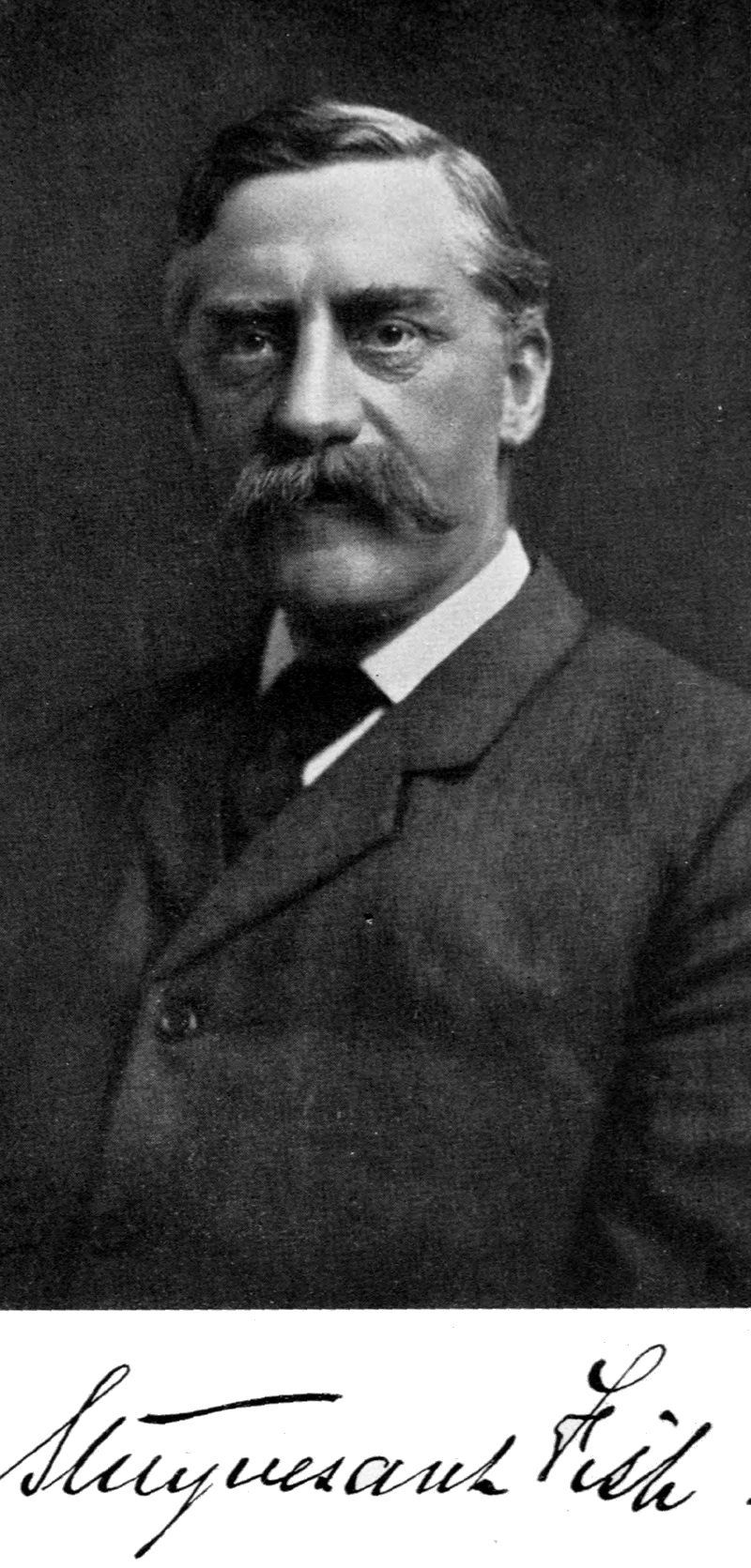
I say all this to show that the railways will have all the
freight traffic they want, and the enforcement of existing
laws relating to them will be more likely to increase than
diminish their net earnings, for they will gain largely by the
stoppage of rebating and other abuses. Some of our State
and possibly some of our Federal laws may be too drastic,
and, so far as their requirements are unreasonable, oppressive
or unnecessary, they should, and doubtless will be, amended
by Congress and the States, or set aside as unconstitutional
903by the courts, as in the case of Pennsylvania’s two cents a
mile rate, for an unjust or vexatious law is abhorrent to
justice—justice so well typified by that blind goddess who
holds the scales on such an even balance in the world of art.
Corporations, as much as individuals, are entitled to a square
deal, and a square deal for all is what President Roosevelt
is working for.
As it is, most of the Western railways have, like the Southern
lines, a double track traffic for a single track road, and
there is abiding prosperity in this plethora of business. It
is a sort of embarrassment of riches, for, notwithstanding
the vast additions that all the railways have made to their
rolling stock and motive power in recent years, and the enormous
amounts spent in building branches and double tracking
portions of their main lines, and increasing their terminal
facilities, they are still unable expeditiously to cope with the
present superabundance of traffic; and this will naturally increase
with the growth of population. So the outlook for
their stockholders is better than ever.
For his courageous course in unearthing and prosecuting
the rebating evil and other wrongdoing, President Roosevelt
is entitled to the highest praise; and I reiterate that the heads
of railway and other large corporations will best serve their
own and the country’s interests by co-operating with him and
his administration to secure strict compliance with the law
in future, with the hope of clemency for their past violations
of law.
That the railway companies always, as a matter of policy,
are disposed to be conciliatory and not willing to be openly
antagonistic to the enforcement of law, is beyond question.
Like the American people, they are law-abiding. We saw
an instance of this in the course of the Southern Railway and
other Southern lines, in withdrawing their appeal from the
State Court to the United States District Court in the rate
case, and agreeing to charge only the State rates, namely, two
and one-quarter cents a mile, in North Carolina, two and
one-half cents in Alabama, and three cents in Virginia, till
904a decision on the constitutionality of the State rate laws is
rendered by the United States Supreme Court. This concession
was avowedly made to avoid further conflict with
those States, although the companies were within their legal
rights in the appeal they had taken. They were wise.
After the good work the Government has already done in
exposing and punishing the rebate evil and other abuses, it
would seem that the end in view—namely, their stoppage—has
been substantially achieved. I therefore think you will
agree with me that the Government can well afford to rest
on its secured results and its laurels, and discontinue prosecutions
for old offences, while holding all to the strictest accountability
for violations of law in the future. The law-breaking
corporations have been taught a lesson that they will
never forget, and have suffered penalties that they will not
be willing to incur again.
By the Government thus showing clemency towards the
offenders they would all the more be put on their good behavior,
and the clamor against Mr. Roosevelt, in which they
have been the leaders, would gradually subside. Those who
have been punished by the law are always very likely to have
a bad opinion of it, and to retaliate by charging injustice.
Hence the old English saying, “No rogue e’er felt the halter
draw with good opinion of the law.”
This reminds me that the two international congresses of
socialists held in England and Germany in August, one at
Cambridge and the other at Stuttgart, showed what large
masses of the people there are laboring to overthrow the existing
law and order of society by putting restrictions and
fetters upon individual achievement, genius, and capacity for
good work, and by giving the inferior masses all that they
would allow the superior and educated to enjoy, a levelling
process entirely inconsistent with Americanism, for it would
destroy all incentive to great efforts, and reduce all to a uniformity
inimical to progress. Some of the decline in British
Consols is attributed to this socialist agitation in England,
and notably in the House of Commons, several of its members
905being radical socialists; and the same is true of Germany
and its Parliament.
In Berlin, which has been for some time the storm-center
of Europe, socialism and its revolutionary doctrines, and
especially the meetings and preachings of the rampant of
the socialists, have added to the disturbance, distrust, and
depression caused by the monetary situation. There, as here,
over-expansion in all directions had over-taxed the money
market and glutted the Bourse, the banks, and the speculative
capitalists with new issues of securities that were either
unsalable, or salable only at a ruinous sacrifice, owing to the
heavy shrinkage in prices, and the absence of demand at the
low prices. This presents an almost parallel case to our
own, except as to the effect of socialistic agitation.
We have too many blatant socialists here, but they are not
planted in congenial soil, and their demagoguery and schemes
for the destruction of society as it exists will yield no harvest,
for in this great country, where all are free and blessed with
equal opportunities, there is no reason, no just cause, or
excuse for socialism. The agitation in favor of socialism
and its doctrines is not American. It is antagonistic to
American institutions, and comes almost entirely from those
who have fled from oppression and despotism in Russia and
elsewhere in the Old World to our shores, and who fail to
see, as they should, that the conditions which have given rise
to socialism in Europe are entirely different here. So socialism
will never take root in the United States, however much
it may be agitated by those of foreign birth who reciprocate
our hospitality in giving them all the rights of citizenship
that we possess ourselves, by advocating the downfall and
destruction of our institutions and system of society, which
has made this great nation of free and independent citizens
what it is to-day, the wonder of the world.
The Bank of France has continuously felt, but resolutely
fought against, depressing foreign influences by tenaciously
holding on to its gold, and it attracted more of it recently
from this country by paying interest in transit. Both London.
906and Berlin have long been trying hard to get gold from
France, but without success. This determined policy, and
refusal to finance anything that would take money out of the
country, is intended to fortify the Bank of France and
French investors against a possible crisis due to their colossal
holdings of Russian bonds. France is the guardian and
watch dog of monetary Europe.
While the situation in Germany is strained, that country
is taking the lead in European manufacturing enterprises,
and it is forcing its trade in all parts of the world. To its
great expansion in industrial work, the locking up of capital
there, in industrial enterprises of all sorts, is chiefly due.
Tempted by great expectations capitalists have invested in
them very heavily, and induced by high rates of interest the
banks, and other large money lenders, have loaned enormously
on industrial securities for which there is at present
little or no demand from investors, and this conversion of
their resources from a cash or liquid form to a form much
more fixed than they expected, has very largely curtailed the
supply of loanable funds to others, and caused or aggravated
the long existing monetary stringency in Berlin. Yet,
strange to say, Germany uses very few bank checks. The
German Government, however, is about to consider a plan
for regulating their issue and use. Even the Government salaries,
aggregating $211,344,000, or 888 million marks, a
year, are paid wholly in specie. Here we see 18 million dollars
a month withdrawn from circulation, to return slowly.
This is almost as bad as our Sub-treasury system. No wonder
Germany is pinched for money.
One indirect cause, hitherto overlooked, of the prolonged
monetary stringency in Europe has been the absorption of
gold by Egypt, India and China, and it has been sufficient to
largely neutralize the effect of the increased gold product of
South Africa, Australia, America and other countries. India
has desired gold of late years, instead of silver exclusively,
as before, owing to the depreciation in value of the
white metal, and China has been secretly absorbing it for the
907same reason, and with an ultimate view to placing that nation
on a gold basis.
Egypt, however, for several years has been largely buying
gold with the proceeds of its large exports, which include a
particularly fine quality of long staple cotton that commands
a much higher price than ordinary cotton. This gold is extensively
hoarded by the Egyptian capitalists instead of being
placed in the banks there, and entering into the monetary circulation.
The consequence is that it is lost sight of, and lost
to the world outside, for Egypt is not only distrustful
of banks, but imports very little in comparison with what it
exports. So it is enabled to keep what it gets in gold. This
seems to me an answer to the question, “What becomes of the
new gold?”
The world’s peace in the future is more likely to be disturbed
on the Pacific Ocean side than on the Mediterranean.
I predict that within the next few years all the great European
nations will combine, in friendly relations, offensive
and defensive, against the balance of the world, which means
against China, Japan and India, that represent two-thirds of
the world’s population. If the United States wants to stand
aloof and avoid being drawn in on one side or the other, the
Philippines must be parted with. The contest of the European
nations will be for commerce in the East, and the
European powers, especially Russia and Germany, will do
all they can to breed trouble between the United States and
Japan and would be glad to have both nations crippled
through a war. So long as we hang on to the Philippines we
will have a war cloud hanging over us. England, owing to
her alliance with Japan, is in a better position to take care of
the Philippines than we are, and if we could make an honorable
deal with England to exchange them for her South
American possessions, it would be a good thing for us, as,
when the Panama Canal is built, those islands will be of
much more advantage to us than the Philippines, and by thus
removing the bone of contention we would secure permanent
peace. The Philippines will be a great source of expense to
908us without any possibility of obtaining corresponding advantages;
therefore, why retain what will keep a sore spot open
as long as we hold on? We are not a colonizing nation—we
have territory enough of our own within our own border,
while England, on account of her meagre dimensions, requires
colonizing for self-existence.
I am inclined to think that it may turn out to have been
a mistake for Commodore Perry to have opened the ports of
Japan to the world—a caged lion being safer than one let
loose. It resulted in Japan building herself up as a power;
then followed the war with China, which was instrumental
in breaking down China’s exclusive walled-in method of existence.
So that now China is also opened to the world like
Japan; her 350,000,000 of people will get themselves on a
war protecting basis, which will naturally make an alliance
with Japan a necessity, and such an alliance will after a
while require the European combination as an offset; otherwise,
sooner or later some of the European nations will be apt
to meet the same fate as old Rome at the hands of the barbarians—simply
wiped out of existence. China and Japan
will fight for their self-preservation and commercial interests.
The 300,000,000 in India will fight for release from
Great Britain’s rule, and backed by fanatical inspiration,
under skilled leadership, will make a dangerous foe sometime.
Hence India’s natural desires will make her akin to
China and Japan, arrayed against any foreign foe. So India,
China and Japan and the rest of the Orient, when well disciplined
and well equipped and led by Japanese generals,
will require the combined European nations to hold them in
check. The European nations have now had all the wars
they want and they have gained through them their present
forceful positions of independence, hence all future great
wars will be to keep the 900,000,000 of people in Asia in subjection,
and it will need all their combined power to do so.
I will now come nearer home and glance at the rising star
of the South.
The continued material prosperity of the South is one of
909the best signs of the times, and it has given a legitimate forward
impulse to the whole country. This section of the
United States is in its natural resources more favored than
any other, and presumably will ultimately become the richest.
That indeed is its natural destiny under the industrial
and agricultural development which will come from the
growth of population, the consequent increase in the supply
of labor and the progress of education. Here, indeed, you
have a splendid prospect where distance lends enchantment
to the view, and in aiding, encouraging and stimulating this
development, on good business principles, none will be able to
render better service than you Southern bankers. Already
the South is progressing in actual agricultural and industrial
wealth from year to year, and day to day, at a rate that would
have seemed fabulous not very long ago; and the banker
shares with the farmer this rapidly increasing prosperity,
especially if cotton is selling at more than thirteen cents a
pound, or even at ten cents. It is, therefore, to the banker’s
interest to co-operate with the farmer, for by so doing the
benefit becomes mutual. You gentlemen, as Southern bankers,
are favored by Providence in being where you have such
a wide and splendid field for doing good to others on a safe
and conservative basis, at the same time that you are building
up the South, and doing good for yourselves in the time-honored
business of banking.
While the South is increasing rapidly in actual and substantial
wealth, it is a good sign that this wealth is not going
into a few hands, but being widely distributed among all
grades of the population. The city, the town, the village, the
factory and the farm give equal and abundant evidence that
all are sharing this boon of material prosperity, resulting
from their own industry and the Southern country’s legitimate
development. You have, figuratively speaking, only to
tickle the soil with a hoe, and it smiles with a harvest.
The South produced last year crops and other raw products
valued at two thousand millions of dollars, or four hundred
and fifty millions more than all the United States, outside of
910the South produced in 1880; and last year also its manufactured
products were valued at two thousand five hundred
millions, or five times more than it manufactured in 1880.
This is the right kind of expansion.
Last year, too, the increase in the assessed value of property
in the South was eleven hundred millions, or three hundred
and fifty millions more than the increase between 1890
and 1900. Contrast the increase of seven hundred and sixty
millions in that ten-year period with the increase of over
sixteen hundred millions in the last two years—1905 and
1906.
Such growth is as phenomenal as it is gratifying, not only
to the people of the South but to the people of the whole
United States, and it is not a forced but a natural growth.
We see it most conspicuously in the development of its
industries, for it has now two hundred and fifty millions
invested in cotton mills, an amount exceeding the capital invested
in cotton mills in all the United States in 1880. This
alone is a grand exhibit.
The South also is making pig iron at the rate of three
million five hundred thousand tons a year, more than all the
rest of the country made in the year 1880, and the capacity
of the South for iron and steel making is practically unlimited.
Turning to bituminous coal, the South mined eighty-five
million tons of it last year, and in the last fiscal year the
foreign exports of all kinds from southern ports were valued
at seven hundred and thirty-four millions against only about
two hundred and fifty millions in 1881. The South may well
be proud of all this productiveness.
So great is this material development and so great the consequent
demand for transportation facilities, that every railway
in the South may well need double tracking, while to
keep pace with the South’s present rate of progress, thousands
of miles of new railways will have to be constructed every
year for many years to come. The South should therefore
continue to encourage capital no less than immigration, on
a scale extensive enough to meet all its legitimate requirements.
911This is the work, Gentlemen and Bankers of the
South, that lies before you.
Now I come to Kentucky; good old Kentucky—with which
is linked the fame of Daniel Boone, and a Civil War record
of which it may well be proud.
We in the North, of course, all know that Kentucky is
famous for its beautiful women, its handsome men, its splendid
race horses of the great blue grass region, and the whiskey
of which Colonel Watterson has told us so much and claims
to be so fine a judge. His story of “Old Kentucky Bourbon”
is a dream of eloquence.
But first of all to engage our attention are the women,
whose beauty is only eclipsed by their charm of manner,
their refinement and bright intelligence. They represent an
aristocracy of the best blood of the American people, and I can
testify to their fascinations, for I won, or rather surrendered
to, one of the finest of Kentucky’s daughters, after for a long
time supposing that my surrender was impossible even to the
fairest of the fair; and therefore I am glad to come to Kentucky
and to enjoy the privilege of addressing so many of its
stalwart sons as are gathered in this distinguished assembly
of Kentucky bankers, on the general situation, after the financial
storm we have passed through. I indeed almost feel, in
the tender words of the popular song, that I have at length
reached “My Old Kentucky Home.”
As a border State, you are claimed by both the South and
the North, and your hospitality makes visitors from every
quarter believe that, no matter where they hail from, Kentucky
knows no North, no South, no East, no West, in the
welcome she extends to strangers, or friends, from every
sister State. When, in after life, these visitors sing the
old song, “There’s no place like home,” they will mentally
add, “except Kentucky.”
I thank God that to-day we all know the United States as a
United Country now and forever, which during the present
generation has grown, and is growing, more united, more
liberal, in a broader sense, and each section more just and
912generous in seeking to solve the problem of granting equal
rights to rich and poor alike.
In closing I desire to impress upon you that I shall always
have in my heart a grateful appreciation of your kindness
and courtesy in permitting me to meet and address you on
this occasion.
At the close of this Address a motion was made that “Mr.
Clews be tendered a vote of thanks by the members of the
Convention for his very able, very interesting, and most
instructive address.”
The President of the Association—who presided—said,
“Those in favor of the motion will please rise.” He then
declared the vote to be unanimous.
CHAPTER LXXIX. Table Showing Dates of Admission of the Members of the
913
NEW YORK STOCK EXCHANGE.
According to the Directory Issued July 1, 1907.
Prior to May 3, 1869, the New York Stock Exchange was
a body with a membership of 533. Of such original membership,
there are now remaining 31, as appears by the following
list, such list giving the date of their admission:
1844—Dec. 17—Wm. Alexander Smith.
1857—Nov. 20—J. H. Whitehouse.
1858—Mar. 6—L. D. Huntington.
1862—May 10—A. M. Cahoone.
1863—June 6—E. C. Benedict.
Aug. 10—J. H. Jacquelin.
Sept. 4—H. S. Camblos.
1864—June 27—Henry Clews.
July 6—E. S. Connor.
July 8—E. H. Bonner.
Dec. 12—H. S. Wilson.
Dec. 30—F. W. Gilley.
1865—Jan. 11—Joseph Walker.
Feb. 28—Jas. Weeks.
Dec. 2—R. Suydam Grant.
9141866—Feb. 17—Donald Mackay.
Mar. 24—A. I. Ormsbee.
May 2—Francis L. Ames.
Sept. 7—D. Henry Smith.
Dec. 8—W. T. Colbron.
1867—June 15—G. J. Losea.
1868—Mar. 27—T. W. Thorne.
May 26—H. S. Germond.
June 8—Chas. Gregory.
July 24—Jas. D. Smith.
Dec. 28—C. H. Leland.
1869—Jan. 9—A. H. Combs.
Jan. 12—F. K. Sturgis.
Feb. 24—A. M. Judson.
Feb. 26—W. G. Read.
Mar. 18—W. E. Tillinghast.
On May 3, 1869, a separate body of brokers, known as
the “Government Bond Department,” was admitted, upon
the payment of $1,000 each. This board has a membership,
as admitted, of 173, and of such members there now remain
15, as appears by the following list:
W. L. Bull.
E. A. De Mauriac.
R. P. Lounsbery.
William Rasmus.
Jas. Seligman.
C. A. Buttrick.
Louis P. Henop.
J. R. Maxwell.
Salem T. Russell.
R. K. White.
Chas. S. Day.
Cyrus J. Lawrence.
Alfred Neilson.
Chas. M. Schott.
W. B. Wadsworth.
Between the 3d and 8th day of May, 1869, various members
were elected, of whom one now remains, Mr. F. Nathan,
who was admitted to membership on May 6, 1869.
915On May 8, 1869, a consolidation was effected with an
organization known as the “Open Board of Brokers,” at
that time facetiously referred to as the “Coal-holers,” from
the fact that they had held their meetings for a time in a
basement in William Street.
This Open Board had a membership of 354, of whom
there remain as members at the present time but 26, as
appears by the following list:
L. D. Alexander.
S. L. Blood.
M. Burr, Jr.
W. B. Dickerman.
H. H. Hollister.
W. B. Lawrence.
J. E. Mastin.
W. B. Sancton.
J. M. Armory.
John S. Bussing.
L. G. Fisher.
W. H. Johnson.
A. Libaire.
P. H. Minis.
Oswin O’Brien.
S. M. Schaffer.
W. G. Wiley.
W. F. Bishop.
John V. Bouvier.
G. F. Cummings.
Albert T. Hatch.
A. Josephson.
W. B. Lockwood.
H. J. Morse.
E. L. Oppenheim.
A. H. Vernam.
Of members admitted during the balance of the year 1869,
that is, from May 8th until the close, there remain at present
7, as appears by the following list, which gives the date of
admission in each case:
S. W. Boocock, June 2d.
D. B. Van Emburg, June 19th.
M. C. Bouvier, June 25th.
John Bianchi, June 26th.
Jas. B. Wilson, Oct. 5th.
W. S. Gurnee, Nov. 30th.
Henry G. Campbell, Dec. 2d.
As the result of the admissions of the two bodies heretofore
described, the membership of the Exchange rose to a total
916of 1,060, at which figure it stood until December, 1879, on
which date, in order to raise funds for the construction
of a new building, there were sold at auction forty additional
memberships, which brought an average of about
$15,000 each. Of these seats so purchased there now remain
9.
This brought the total membership to 1,100, at which
figure it has ever since remained. It appears, therefore,
that of members who joined the Exchange prior to the 1st
of January, 1870, there at present remain 85, as follows:
| Members of the original “New York Stock Exchange” now remaining |
31 |
| Members of the “Government Bond Department” who joined May 3, 1869 |
15 |
| One member who joined the Exchange May 6, 1869 |
1 |
| Members of the “Open Board of Brokers” who were admitted May 8, 1869 |
26 |
| Present members who joined between May 9, 1869 and Jan. 1, 1870 |
7 |
| |
__ |
| |
80 |
CHAPTER LXXX. ENGLAND AND RUSSIA IN OUR CIVIL WAR AND THE WAR BETWEEN RUSSIA AND JAPAN. [7]
917
There has recently been much discussion relative to
the attitude of England and Russia towards the United
States during our Civil War. This was provoked by the war
between Russia and Japan, which caused the partisans of
Russia here to contend that Americans ought to sympathize
with Russia in the contest. They argued that Americans
should do this because Japan has an alliance by treaty with
England, and English sentiment was a good deal against the
United States in our struggle, or rather in favor of the South
as against the North, whereas Russia was on our side, and
made us, in 1863, as they erroneously claim, an offer of naval
assistance in the event of intervention by England and
France.
It is very easy to assert, as it has long been asserted and by
many believed, that Russia, in 1863, offered the United
States Government the use of her ships of war that then
came to the port of New York, and that this prevented, or
may have prevented, England and France from recognizing
the independence of the Southern Confederacy. But we have
yet to learn that there is any record of such an official overture
by Russia, either at St. Petersburg or at Washington;
and there certainly would be one in both countries if the
assertion was a fact instead of being wholly mythical.
Would Lincoln or Seward have left the country in ignorance
918of such an affair, or of any suggestion in that direction,
if it had been officially made? It is a myth that hardly calls
for contradiction. Such matters between nations cannot be
kept secret, and the lapse of forty years since 1863 without
revealing anything concerning the alleged orders, goes to
prove that there were none of the kind, and that there was
nothing to reveal. The Russian ships came here in 1863, just
as the Russian fleet with the Grand-Duke Alexis came to
New York in 1871, merely on a cruise.
That sentiment in England during the war was largely pro-Southern
among the wealthy mercantile and manufacturing
class is not to be disputed. But this resulted from the interruption
of the cotton supply by the war and the blockade of
the Southern ports, and from the loss of the South as a customer
for British manufactures, involving much depression
and distress. The shoe pinched very severely. Liverpool and
Manchester, in particular, were great sufferers by the war,
and smarted under the extinction, for the time being, of
their Southern cotton supply and connections, and they were
against the North largely because it had choked off this
trade.[8]
But this sentiment, this irritation, due to business conditions
growing out of the war, was merely personal, and in no
way involved the British Government, or reflected its leanings,
opinions, or future policy. Liverpool and Manchester
were, not unnaturally, sentimentally against the North, because
it was, under the necessities of war, preventing the
South from shipping its produce to England or importing
British goods. That feeling of irritability against the North
would have disappeared at any time with the resumption of
919trade with the South; and it did disappear as soon as the war
ended and the Southern ports were reopened to commerce.
England’s American trade up to that time had been very
much larger with the South than with the North, for cotton
was much more truly “king” then than it is now; and, apart
from grain and provisions, the export trade of the North was
very small in comparison with its present great extent.
Moreover, the wealth of the United States was small in proportion,
and our social relations with England and the rest
of Europe were not nearly as intimate and extensive as they
have since become. We have learned to know each other
much better in the interval.
We had not then begun to export beauty and fashion,
largely in the shape of American heiresses, for the delight
and enrichment of the aristocracy of the Old World, and we
could boast of no such colossal individual fortunes as we can
now.
When, however, the British Government did, on one occasion,
consider the question of recognition of the South and
intervention in the war, it was solely on the proposition of
the French Emperor, Napoleon the Third, who wanted to
break up our Union in order to promote his scheme for planting
the Latin race in America, by establishing, under French
protection, an empire in Mexico, with Maximilian on the
throne. But his proposition was at once unanimously, emphatically
and unconditionally rejected by the British
Cabinet.
We have this on the highest official authority, that of Mr.
Gladstone himself, who, in a letter to me dated May 30th,
1889, speaks thus positively on the subject:
26 James’s Street, May 30, 1889.
Dear Sir:
Having expressed my interest in the portions of your work which I read
on the day of its arrival, I think it would be less than ingenuous if I did not,
after reading what relates to the Cabinet of Lord Palmerston, on page 56
and in the following chapter, make some reference to it.
Allow me to assure you that, so far as that Cabinet is concerned, you have
920been entirely misled in regard to matters of fact. As a member of it, and
now nearly its sole surviving member, I can state that it never at any time
dealt with the subject of recognizing the Southern States in your great
civil war, excepting when it learned that proposition of the Emperor Napoleon
Third, and declined to entertain that proposition without qualification,
hesitation, delay, or dissent.
In the debate which took place on Mr. Roebuck’s proposal for the negotiation,
Lord Russell took no part, and could take none, as he was a member
of the House of Lords. I spoke for the Cabinet.
You will, I am sure, be glad to learn that there is no foundation for a
charge which, had it been true, might have aided in keeping alive angry sentiments
happily gone by. You are, of course, at liberty to publish this
letter.
I remain, dear sir, your very faithful servant,
W. E. GLADSTONE.
Henry Clews, Esq.
In this letter it will be seen, Mr. Gladstone, the Grand Old
Man, as England called him, a member of the British Cabinet
during Lord Palmerston’s administration, which extended
from 1859 to 1865, more than covering the period of the war
for the Union, assured me that the Cabinet never at any
time dealt with the subject of recognizing the Southern
States, except to decline to entertain the proposition of
France, and this “without qualification, hesitation, delay, or
dissent.”
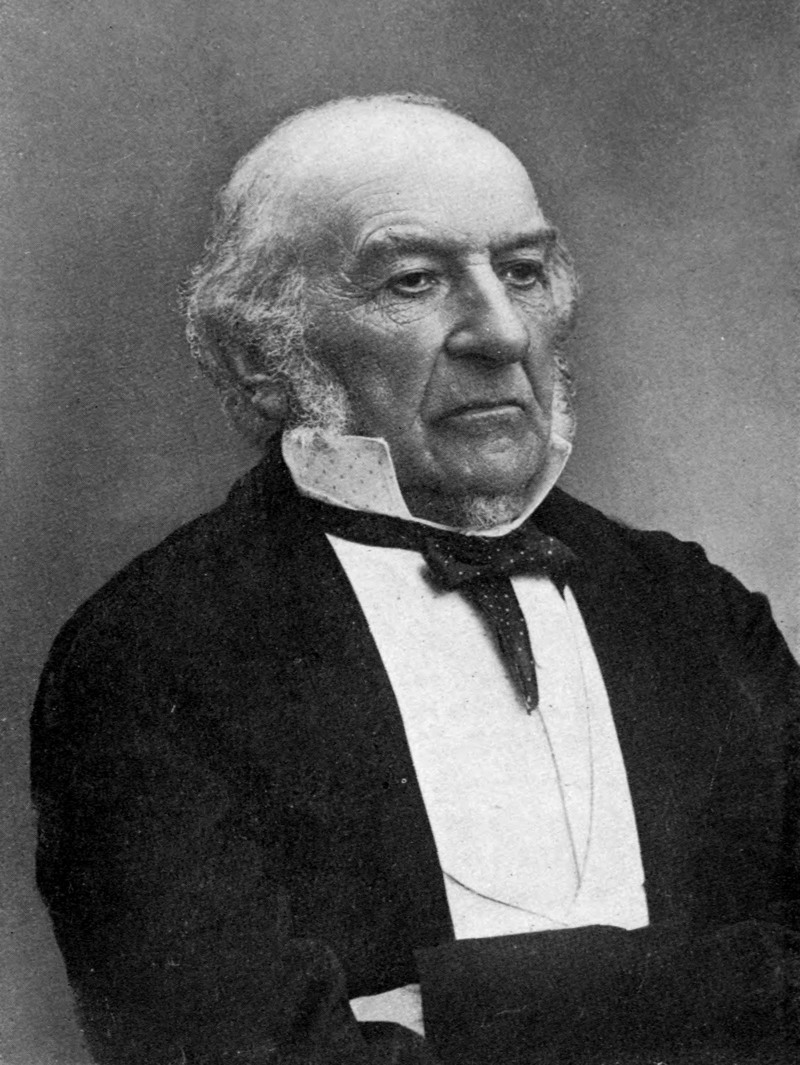
What could be more positive and emphatic than this?
What more unequivocal, explicit and direct? It is an unqualified
statement that the British Government had never
during the war in any way considered the question of recognizing
the Southern Confederacy, except on that one occasion,
and England was the first nation to which the French
proposal was made. Had England joined France when
Napoleon made his proposition, which she was the first to reject,
that conspirator against us would have tried hard to help
the South to succeed in disrupting the Union, for the purpose
of regaining possession of Louisiana, and capturing as much
additional territory as possible in order to annex it to the
empire he expected to found in Mexico. He wanted a weak
921neighbor. We were saved from his machinations, and this
great danger, by the resolute course of the British Government;
and Napoleon thereafter sowed the wind to reap the
whirlwind in Mexico. He consigned poor Maximilian to
disaster and an inglorious death, after his empire had fallen
like a house of cards when the French troops, that had bolstered
up his throne, were withdrawn.
This positive testimony from so high and competent an
authority as Mr. Gladstone ought to be conclusive in effectually
disproving the unfounded “cock and bull” story that
England, at one time, contemplated the recognition of the
Southern Confederacy, and that she was prevented from
moving in that direction, and led to reverse her policy, and
prevent the escape of the Confederate cruisers from Laird’s
shipyard at Birkenhead, by the arrival at New York of Russian
war-ships.
The fact that a Russian squadron, commanded by Admiral
S. Lessoffsky on his flagship “Alexander Nevsky,” did come
to New York late in September, 1863, and that its officers
were very hospitably received and entertained, is the peg on
which this story is made to hang. I have good reasons for
saying the ships came here with no such object, nor with
“sealed orders” to take an active part in the war, if required.
New York was merely a port of call for them, and no doubt
their officers were glad to get here and be fêted, as they were.
They also, it is safe to assume, appreciated the courtesy of
William H. Seward, the Secretary of State, who afterwards
told me that, when he heard of their arrival in American
waters, he invited them to accept the hospitalities of the port
of New York. He, of course, foresaw that their coming here
would, or at least might, have a good moral and political
effect in our favor both at home and abroad, by depressing
the South and encouraging the North, and causing any foreign
Powers that might have been considering the advisability
of recognizing the Southern Confederacy to postpone
action under the impression that we had, or might have,
Russia for an ally.
922He was astute enough to see that this visit of the Russian
squadron might seem to be what it was not, particularly to
foreign eyes. Appearances, we all know, are often deceptive,
yet they sometimes exert great influence. The visit of this
squadron was a case in point. It was a splendid “bluff,” at
a very critical period in our history. Its coming was all the
more desired by Mr. Seward because, on the 3d of February,
1863, he had received a despatch from the Emperor Napoleon
offering to mediate between the United States and the Southern
Confederacy, to which he replied three days later,
absolutely rejecting the offer, in very positive terms. After
that, early in July, the battle of Gettysburg had been fought,
and Northern prospects had brightened very materially.
Nevertheless, the coincidence of an arrival, about the same
time as the Atlantic Squadron came, of more Russian war-ships
at San Francisco, under the command of Admiral
Popoff, added to Secretary Seward’s gratification; and, when
the Russian officers of the Atlantic Squadron went on to
Washington, he kept up the festivities to which they had been
accustomed in New York by giving them a grand dinner. He
was a fitting host, as he had originally invited them to come
here.
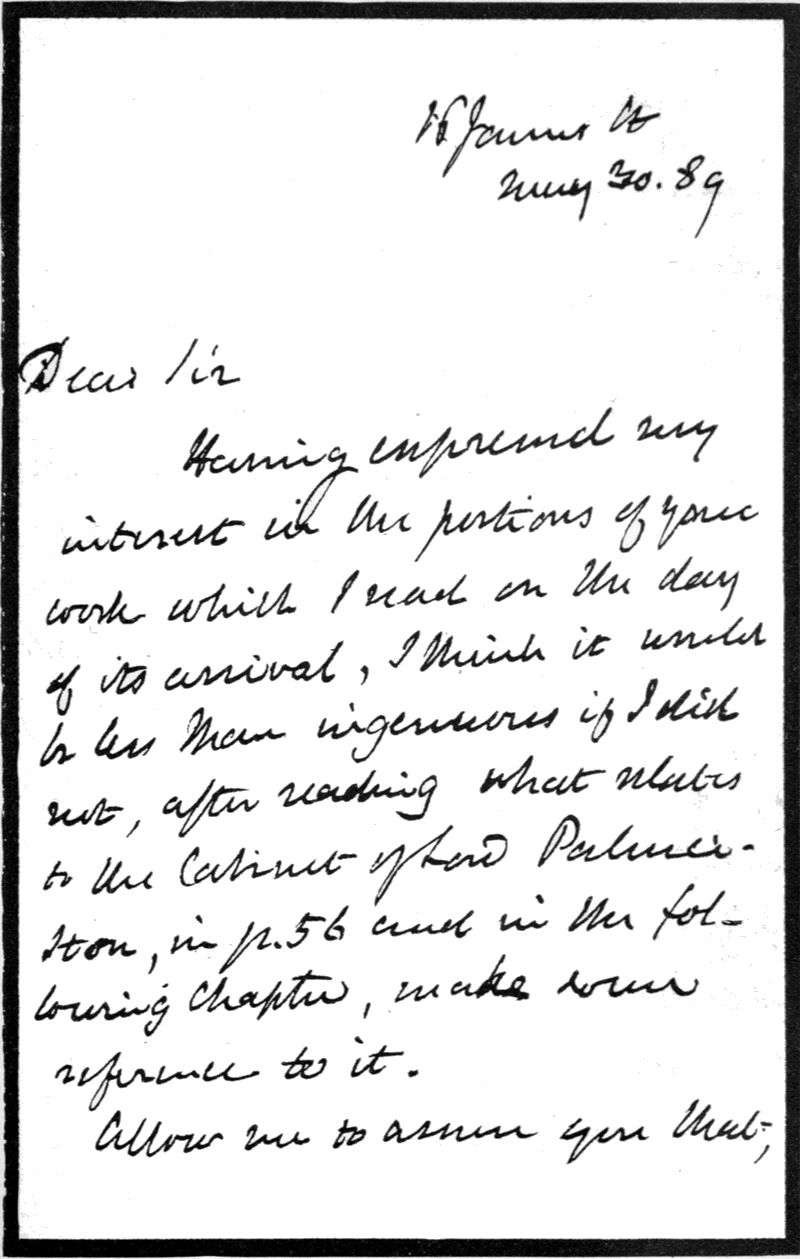
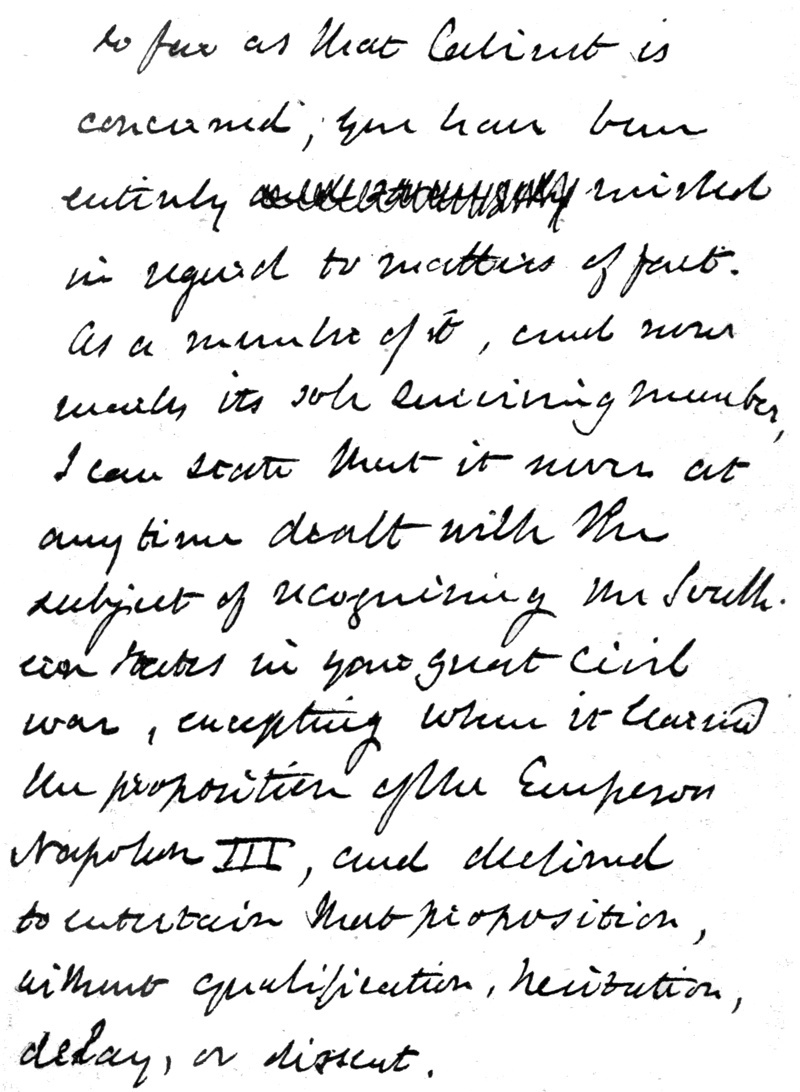
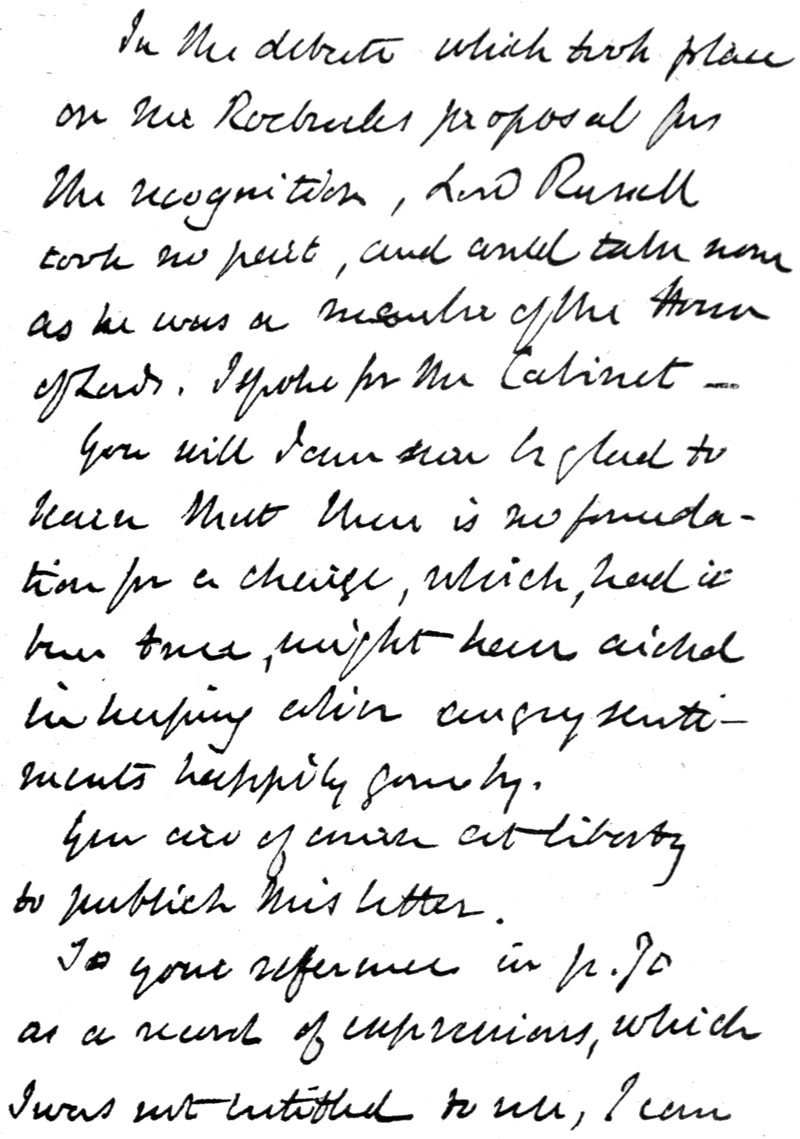
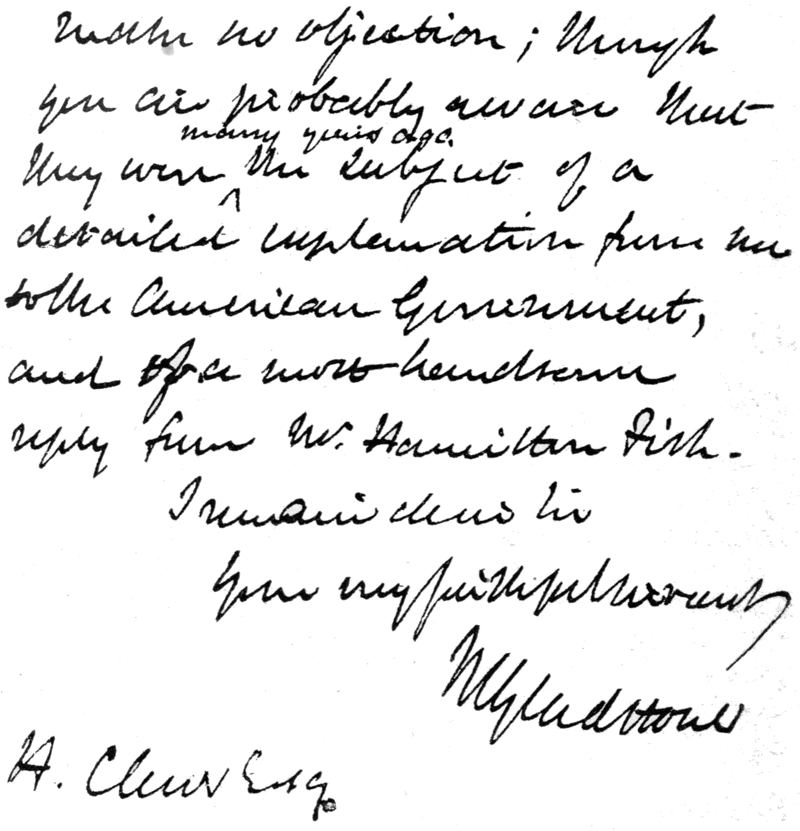
The Grand-Duke Alexis when he came to New York, with
another Russian squadron, under another Admiral, in 1871,
practically verified, in reply to my inquiries in conversation
while I was acting as one of the Russian Reception Committee,
what Secretary Seward had previously intimated to me—namely,
that there was no foundation for the story that the
Russian squadron of 1863 had come here to help us in warfare,
if needed. Mr. Seward told me this very definitely on
one occasion when I met him at Washington. But that its
officers enjoyed themselves here very much socially was
evident from their profuse expression of thanks, and acknowledgment
of obligations for the favors received, before they
took their departure, and also from the fact that when they
got back to Russia, they called in a body, with the Emperor’s
approval, on Mr. Cassius M. Clay, the American Minister at
923St. Petersburg, to return thanks more formally for the courtesies
and kindness of which they had been the recipients here.
Now, it is clearly to be inferred that, if they had come here
to serve us at a grave crisis, by offering to take part in our
war, they would not have felt themselves under such obligations
to us; on the contrary, we should have been under very
great obligations to them, which would have called for public
acknowledgment. Moreover, if the Russians had come on
any such mission as naval co-operation in actual war, if
needed, it would not only have been a matter of official record
in both countries, but it would have immediately become
known, not alone to the public here, but to the world. It
would have been simply impossible to keep the news from the
press; and the Government at Washington would have had
no object; no good purpose to serve, in concealing such an
alliance, for alliance it would have been of great international
importance, and one which would have tended, still more
than the activity of our own navy, to show Europe and the
South the hopelessness of the South’s struggle with the North.
Russia was friendly to the United States, of course; but this
friendship between the two countries was very different from
an offer, or a willingness, to help us by armed intervention
in our favor. Russia has never intimated that she had any
such intention; and, indeed, such intervention on her part
would have been folly, as her navy was then very small after
the destruction of the Crimean War, and would have been
powerless against England or France.
The conclusion is, therefore, that the sympathy with
Russia in its present war with Japan, which many in the
United States are endeavoring to stimulate on the strength of
this Munchausen story of proffered war-ships, is based on a
mere assumption. Just as in the case of one of Dickens’s
characters, “Mrs. Harris,” there was “no such person,” so
in the case of this visit of Russian cruisers, there was no such
offer of these by Russia to the United States, nor any evidence
of any intention to offer them by Russia. On the
contrary, Prince Gortchakoff, the Russian Minister of Foreign
924Affairs, repeatedly said to our Minister at St. Petersburg
and in despatches to the Russian Minister at Washington,
that Russia greatly favored peace, and wished for
its speedy return; but would never take sides in the controversy
between North and South.
Finally, as to England, we have the word of William
Ewart Gladstone that the British Government was not unfriendly
to us throughout our Civil War, inasmuch as it was
absolutely and entirely opposed to the recognition of the
Southern Confederacy, and instantly and effectually checkmated
the French Emperor when he tried to make it swerve
from its consistent course of neutrality. Had the British
Government been unfriendly, it would have jumped at this
chance to join France in recognition and intervention.
“By their fruits ye shall know them.”
There is no reason in what I have said, however, for an
anti-Russian and pro-Japanese feeling in the United States,
or an anti-American feeling in Russia; and it is much to be
desired that friendly feeling towards each other should prevail
in both countries, but not at the expense of truth. Even
Japan, while fighting Russia, is showing good-will and generosity
towards Russian officers and men, and treating them
with uncommon courtesy and consideration.
My only object in thus writing is to present the matters
referred to, involving the relations of the United States with
England, France and Russia during our Civil War, in a true
and proper light, and so to correct prevailing misapprehensions.
Russia’s course in Manchuria, however, by which she
tightened, instead of releasing, her grip upon it, as she promised
to do, sufficiently accounts for our lack of sympathy with
her in her war with Japan.
While professing friendship for the United States, she has
acted in bad faith, and by her restrictions ruined our growing
trade there; and all the specious arguments put forward by
Russia through the Russian Ambassador at Washington will
not make the American people believe that Russian success
in this war would be an advantage to the United States.
925Hence, American sympathies are not generally on the side
of autocratic and grasping Russia, with its closed door, but
with liberal Japan, and its open door. Moreover, it is to be
hoped that Russia will find her so-called “special position”
of exclusiveness and monopoly in Manchuria untenable, and
be compelled to abandon it, to evacuate that country, and
leave its trade open to all the world. Then the now idle and
ruined factories, built there by Americans, could be turned
to profitable account again.
Although our relations with Russia have always been
friendly, past friendship does not justify present injustice.
The retention of her foothold in Manchuria, which she was
to have held only until the country was pacified, and her
obvious and avowed designs upon Corea, evidently aim at the
acquisition of their territory, and point to similar ultimate
designs upon China and Japan.
Such being the case, we may well sympathize with Japan
in her struggle with Russia. We owe nothing to Russia because
some of her ships came to New York in 1863; but we
are indebted to England for having peremptorily declined
the proposition of France to recognize the Southern Confederacy.
Moreover, England is our natural ally, as we are allied
to her by an affinity of race, language, religion and free institutions.
As for “the Yellow Peril,” of which so much has
been said, especially by the Russian Ambassador, as something
to be feared by the Western nations, it is purely
imaginary and chimerical. There is no more danger of
China and Japan, if successful in war at home, invading and
overrunning the rest of the world at any time in the future,
near or remote, than there is of the man in the moon coming
down and invading us with an army of moonshiners.
August 11th, 1905.
Editor New York Times, New York City.
Dear Sir: My attention has been called to an editorial in your issue of
August 10th, entitled “That Gladstone Letter Again,” the letter in question
being the one received by me personally from Mr. Gladstone. The editorial
926by its wording seems to bring in question the authenticity and veracity of
the statements contained therein.
The letter came to me voluntarily from Mr. Gladstone, as the result of an
article written by me, and it should remove any doubt as to the position of
the British Cabinet in connection with our Civil War. The utterances of
some of the individual members of the Cabinet did doubtless favor the
South during a part of our Civil War, but when Emperor Napoleon’s proposition
for intervention came up in the British Cabinet, the action taken was
exactly as Mr. Gladstone states in his letter to me, and is borne out by Mr.
Gladstone’s speech in the House of Commons made soon afterwards, and
it was largely due to his speech that Mr. Roebuck’s motion on Napoleon’s
proposition was defeated.
There is an unwritten law in England that the deliberations of the British
Cabinet shall never be revealed by any member except by consent of the
Crown. Mr. Gladstone was known to be a great stickler for conventions,
and his letter to me in which he expressly says I am at liberty to publish it
could not have been written except by consent of Queen Victoria.
Very truly yours,
HENRY CLEWS.
CHAPTER LXXXI. THE CRISIS OF 1907 AND ITS CAUSES. WAS PRESIDENT ROOSEVELT TO BLAME? [9]
927
It gives me great pleasure to meet the members of the
Chamber of Commerce of the city of Cleveland.
Next to New York—being from New York I have to
make this distinction—next to New York, I consider Cleveland
the home of the most worthy set of business men in
the United States. Your forefathers chose well when they
elected to settle in this beautiful spot. The wisdom which
they displayed is proven by the twenty miles of docks on
your water front and by the fact that your people own the
largest tonnage on the lakes.
The natural resources of your surroundings have made
you masters of trade in coal, iron, and petroleum. Your
harbors are commodious, and what they lacked in natural
formation you have supplied by the famous breakwaters
which have been built. Your city is not only a natural business
center, but also a railroad center.
Your Euclid Avenue is spoken of in the East as a model
to be copied by the lovers of beauty.
Fifty years ago Cleveland was a village. If you continue
to thrive as you have, where will you be fifty years hence?
It was in the soil of Cleveland that the seed was planted
that has grown and developed into the greatest business
plant in the world. To-day the Standard Oil Company commands
trade in every country on the face of the globe, and
928as a body are the greatest merchants that the world has ever
known.
Ohio has robbed Virginia of the right to be known as
“the mother of Presidents,” and I predict that the Republican
Convention to be held this summer will present as its
candidate your most famous and honored citizen, Hon.
William H. Taft, who will be elected by an overwhelming
majority. I suggest that he and Mr. Roosevelt change places—Taft
as President and Roosevelt as Secretary of War, or
still better, Secretary of the Navy. Then we will be ever
alertful and prepared for eventualities both on our Atlantic
and Pacific coasts. In this way we will retain the services
of both.
I will begin by saying that the elimination of the Godly
Motto on our gold coin many people may think means-“In
President Roosevelt we trust, but in God we distrust”; but
I am sure the great mass of the Americans do not think
that way. They believe in trusting both God and the President,
and if the President will put back “God” on the
American coin they will put him back in the White House
after his present term—thus making our Motto: God first,
our Country second, Theodore Roosevelt third (term). The
Three together one and inseparable for the next four years.
It is my belief that there is not an intelligent man in the
United States who sincerely questions the “honesty of Theodore
Roosevelt’s motives.” Whatever he has done he has
done to promote the public good and the nation’s welfare,
whether his speeches have helped to cause distrust or not.
He is an honest man, and an honest man is said to be the
noblest work of God. But, of course, as we cannot expect
perfection even in honest men, they may sometimes make
mistakes in their judgment of consequences, however good
their intentions are. That we all allow for.
You ask the question: Is President Roosevelt’s policy
towards capital sound? In other words, has he, in denouncing
and instigating the prosecution of law-breaking
railway corporations, and industrial Trusts, menaced the
929prosperity of the country? I contend that he has not. He
certainly had no intention to do so, for, while he was instrumental
in turning on the light, he was not responsible for the
abuses of power that the light revealed, and it is the revelation
of graft and illegal methods, on the part of certain
railway and other corporations, through the acts of their
responsible managers, and controlling capitalists, that has
undermined public confidence in many of them.
It is true that the marked change in conditions and public
sentiment, especially in the stock market,—from the great
optimism, buoyancy and high prices of last year to the great
depression and low prices of this year of panics,—has caused
many unthinking critics of the situation to ascribe it to
the influence of President Roosevelt. The speculative capitalists
and Trust magnates who have lost heavily by the
depression in stocks have this impression of the effect of
his policy and speeches in exposing corporate wrongdoing.
But it is an idea that needs to be controverted, or at least
is open to question, and his course is generally approved by
popular opinion all over the country. In other words the
people generally are in favor of the policy represented by
all that the President has done to correct corporate abuses
and illegal methods and raise the standard of business
morality.
Before entering further into the subject, however, I will
say that gatherings of this kind, where the burning questions
of the day are discussed in a frank and friendly way,
are productive of good fellowship, and good results. Different
minds view important events from different standpoints,
and any association that meets for this purpose with a desire
to obtain by mutual discussion, the fairest and best understanding
relating to public measures, is doing a patriotic service,
and is worthy of the highest commendation. It is particularly
so at a time like this, in view of the prevailing
depression and distrust.
It is very fortunate that a presidential election did not
take place last year, as the people were in such a state of uncertainty
930and apprehension that many well-meaning men
would not, I fear, have voted with a desire for their country’s
good, but be biased by personal interest or a determination
to obtain revenge for what they have lost by the great and
prolonged decline in the stock market and the disturbance of
credits.
It is, of course, greatly to be deplored that some of the
men high in command in the industrial and railroad companies
have abused the trust reposed in them and made it
imperative for the President to instruct the attorneys of the
national government to investigate their doings, and prosecute
those corporations and their officers charged with using
their corporate powers to do illegal acts, like rebating, and
such chicanery as that of the Chicago & Alton reorganization.
The fact that, in nearly every such instance of Government
prosecution, the guilt of the parties accused has been
proved on their trial, justifies President Roosevelt in his
action.
While capital may continue timid until the whole truth is
known and confidence in corporate management restored, the
agitation, will, in the end, prove beneficial to the country; for
it will purify it by eliminating the unlawful evils complained
of. This will inspire foreign capitalists as well as our own
with confidence; and they will invest heavily in American
securities, just as soon as they feel assured that the surplus
earnings of our railway and industrial companies will be
fairly divided among the stockholders under honest management,
regulated by law, and subject to Federal and State
supervision.
Recent events have shown that drastic action was necessary
to insure a square deal for all. Mr. Roosevelt is not attacking
capital, but he is attacking those in control of corporations
who have misused their power and position to do illegal
acts and presumably for their personal profit. Confidence
received blow after blow from this source, before getting
another rude shock through the exposures resulting from the
Metropolitan Securities investigation, and the action of the
931New York Clearing House with regard to the Heinze and
Morse banks.
It is now over two years since public disclosures of this
kind as well as of railway rebating began, followed by the
collapse of the copper manipulation and, very recently, by
the scandals connected with the New York Traction situation.
No wonder, therefore, that confidence is seriously disturbed.
And who is responsible? Not President Roosevelt
and Mr. Hughes, the famous life insurance investigator, who
have been instruments of exposure, but the individuals who
conceived and conducted these unlawful operations. Of
course the guilty protest against financial house cleaning;
and they endeavor to ward off official investigations on the
plea that these disturb confidence, and make the innocent
suffer. But the whole responsibility should be placed where
it belongs—upon the perpetrators of misdeeds, and not upon
those who, in the discharge of the duties of their high office,
have been the means of turning on the light and preventing
future operations of the kind. Those who have trifled with
the public interest, and displayed a blind disregard of the
people’s rights, are the real transgressors.
It becomes daily more evident that when all our railway
and industrial corporations are known to be honestly managed,
and when stockholders and investors get their due,
values will be more stable, and American credit, which is
now at a low ebb in all the great financial centers of the
world, will be restored to its rightful place.
Throughout all these disclosures of illegal methods and
wholesale graft there is one gleam of encouragement, and
that is, that public opinion is aroused and will insist upon
clean as well as capable corporate management in the future,
and thus these disclosures will result in the raising of the
moral standard of corporate management. Meanwhile, the
public is disturbed by these revelations, and wonders what
financial irregularity will be brought to light next. The action
of many corporate managers has seemed to indicate
that they think little of violating the laws, and that, if they
932are broken by one high in authority, or in social life, immunity
must be granted; or some subordinate be made to
suffer instead of themselves. If a poor man commits a crime,
he is sent to jail. Sympathy for his family may sometimes
make the judge lenient as to the time of his incarceration,
but, however short the term, it generally brings sorrow and
want to the family for which he is the sole provider. Thus,
the innocent have to suffer with the guilty in such cases.
In corporate matters, if a manager or controlling capitalist
breaks the law, justice should punish him, as it would anyone
else. The law should be no respecter of persons.
Sodom and Gomorrah were destroyed because the people
broke Nature’s laws; and this government, although the best
known to man, would be destroyed in the course of time, if
the rich and unscrupulous were permitted to break the laws
with impunity, while the poor were punished for much less
serious offenses. This invidious distinction has caused those
who have suffered by the corrupt and illegal practices of
corporations and their managers to unload their grievances
upon the President. In their communications they tell him
that, while many from their ranks are being sent to prison,
they fail to see any of the rich being sent there, although the
evidence against them is unquestionable. This unjust distinction,
if it continues, I repeat, cannot fail to have an unsettling
effect upon the American people, and may finally
result in something more, as this is a government of the
people, for the people and by the people, and a discrimination
in favor of the wealthy—whether corporations or individuals—will
not be very long permitted by the plain people, who
are largely in the majority.
President Roosevelt took the oath at his inauguration to
be guided by the Constitution, and as the Constitution requires
that the Executive of the nation shall enforce the laws,
he would have been derelict in his duty and unfaithful to
his oath if he had not taken the action he has, to compel
corporations to conform to the Interstate Commerce and
Sherman Anti-Trust laws and their amendments. Whenever
933evidence has reached him, through the complaints of
people who have suffered in consequence of the violation of
these laws, he has very properly handed the material received
over to the Attorney General to make the necessary investigation,
and as in every case thus prosecuted the results have
justified all he has done as to these, he deserves great credit.
The so-called indiscriminate attacks that are claimed to have
been made by him upon corporations and business interests
have no sound basis. So far as his intentions go, he has only
attacked dishonesty and law-breaking. While I fully approve
of what Mr. Roosevelt has done in the way of reform,
I confess I do not fully approve of his too oft repeated passionate
utterances on the subject during the recent period of
distrust. It undoubtedly has helped to unsettle the minds of
timid investors and weak-minded depositors. The President
has probably been a little too outspoken at a time when silence
would have been golden. There are periods when the least
said the better; still, I applaud his good intentions and his
excellent deeds, which cannot fail to prove fruitful in the
end. We should all be willing, therefore, to overlook his
recent volubility and frequent reiterations.
A short time ago France stood ready to invest large sums
in American bonds and stocks. But just after her first venture
in Pennsylvania Railroad bonds our corporation scandals
filled the air with their unpleasant odor and French
capital was locked at once against everything American.
When all the old evils have been exposed, and wrongs
righted, and foreign as well as home investors again seek
investments for their funds in our securities, we may rest
assured that, having undergone rigid investigation, they will
be looked upon as the best in the world.
That President Roosevelt should be blamed in any way
for the banking troubles, business failures and losses that
have been made in the stock market is unfair; but it is always
the case that the Executive in office bears the brunt of whatever
disasters of the kind occur during his administration.
Those of us whose hair is no longer black, brown, sandy
934or red,—or very abundant,—can well remember the calumny
and evil reports that were heaped upon the broad shoulders
of the well beloved Abraham Lincoln. The noble cause
he fought for cost millions of lives and billions of dollars,
and of course there were very many who suffered at that time
by the war. Of these many were most bitter in their denunciation
of President Lincoln, and this nearly broke the
heart of that great man, but did not for a moment cause him
to desist in the work he saw it was his duty to perform to
the end. To-day, those who traduced him join freely with
the whole nation in doing honor to his memory. President
Roosevelt may be severe in the frankness with which he reiterates
his intention to punish those who break the law; but,
in the distant future, the world at large will remember him
as one who dared to suffer under unjust denunciation for
the sake of right, and even now the great mass of the people
are with him in his efforts to improve and purify business
conditions.
Those capitalists who have lost money largely by this
year’s decline in prices of stocks, and the monetary disturbance,
are naturally bitter and resentful; but even the majority
of such, down in their hearts, grant that in principle
President Roosevelt is doing his plain duty, though in his
speeches he may have said too much too often. If what he
has done is wrong, it is the fault of the law, for he has urged
no greater punishment than the enforcement of the law. But
the man would be daring, indeed, in the face of the exposures
already noted, who would presume to say that the law is
unjust. It aims at equal justice for all, and we are a law
abiding people.
In view of all the wrong doing in corporation management
it must not, however, be forgotten that the majority of our
corporations are ably and honestly managed in the interest
of the stockholders. It is not surprising that black sheep
have crept into some of them, for a certain percentage of
people in every walk of life and every association, church
or social club, are bad at heart, and show up in their true
935colors, when subjected to the temptation to commit wrongs
which will tend to their personal advantage. The assumption
that now prevails, that all corporation management is
dishonest, is, therefore, unjust and has been causing much
of the hysteria that has prevailed in Wall Street and elsewhere.
To protect minority stockholders, especially in the Interstate
Railroads, they should have at least one representative
in the board of directors, and he should be elected by the
minority at each annual meeting. If such a director was a
cool-headed, honest business man, certain abuses, which have
been prevalent in the past, could not have occurred and
would be prevented in the future.
It is much to be regretted that to aid personal schemes,
some of the men in power, even in some of our large National
Banks, have resorted to methods which have caused loss of
confidence in them, which resulted in their retirement, practically
under compulsion, as officers and directors. It is
almost needless to say that, of all corporations, our National
Banks should be the last to be used for illegal purposes, or
to promote personal gain or speculations.
When a man in power imperils the solvency and good
reputation of one of our banks, he is a public enemy, and
as mean and guilty as one who attacks the virtue of a virtuous
woman. To destroy confidence in that woman and her
good name is to do her an irreparable wrong. Destroy confidence
in a bank and you destroy that which is one of the
corner-stones of business prosperity. Those who invest in
railroad stocks, or stocks of Industrial corporations, risk only
the cost of their investment, but the holder of record of a
National Bank stock is liable for an additional amount equal
to the par value of his holdings.
Publicity is the greatest safeguard of the prosperity of any
corporate enterprise, and the best preventive of irregularities
and frauds. Many men will do in secret what they would
fear and refuse to do under the public eye; and if hitherto
secret ways are, in the future, made known, and seen of all
936men, there will be less breaking and unfaithfulness
among many classes of business men in high places.
This doctrine of publicity I have preached for years, and
it was the topic of an address I delivered before the Wharton
School of Political Economy in the University of Pennsylvania
eighteen months ago. I saw then what was going
on in corporate corruption and grafting, and railroad rebating,
but, of course, had no tangible evidence or legal proof
of these misdoings.
During the intervening time, however, so much of this
came to light that there was no alternative for the national
government, as well as many of the states, but to take drastic
action to stop these evils, and probe right and left to locate
and convict those responsible for them. President Roosevelt
led the way to this laudable end. He is not in favor
of persecution, however; but he is in favor of the prosecution
of those known to be guilty; and I firmly believe that his
courageous stand in this movement to correct and punish
corporate abuses will overshadow, in the history of his Presidency,
all his other achievements.
Remember: he would punish only the guilty and protect
property interests in every way possible, so that the innocent
may not suffer with the guilty, or at least suffer as little as
possible.
The lawyers engaged to defend wealthy corporate wrongdoers
may sometimes prevent their conviction and punishment;
but the people are entitled to the protection which
comes from an equal administration of justice.
In these days the truth of the biblical saying, that “the
wicked flourish like a green bay tree, but they shall be cut
down,” has become evident to us in certain instances applicable
to corporations.
Some ancient cities and empires, including the great Roman
Empire, were ruined by the lawlessness and unscrupulousness
of their rich men—the great oppressors of those
days—and our America was fast falling too much under
control of large corporations and corporation capitalists; but,
937the plain people of this country are for equality, equal rights,
and fair play for all, and opposed to a plutocracy.
In his address at Memphis, this year, President Roosevelt
said:
“I will no more stay my hand because a wrongdoer masquerades
as a labor leader than if he masquerades as a captain
of industry.
“I am against undesirable citizens when they are great
capitalists who win a fortune by chicanery and when they
are men who, under the guise of standing for labor, preach
and encourage violence and murder.”
To show that he recognized the sensitiveness of certain
corporation capitalists who are cast into a frenzy by his
most common sense remarks, he once said: “It has come to
a point where my saying that honesty is the best policy is
liable to lead to a run on the banks.”
In discussing the cause of the present panicky contraction
and disturbance in the business and financial world, nothing,
however, could be further from the truth than to charge it
all to the great corporation exposures and prosecutions.
There were many other things that contributed to bring
about this year’s depression and disturbance, and to cast
over the brightest sky that ever shone the heavy clouds of
distrust, reaction, and panic.
The clouds in the financial sky can remotely be attributed
in a large measure to the effect of the tremendous railroad,
industrial and commercial development of the last ten years,
which brought about capital requirements in excess of the
ability of the country to supply them.
Naturally and necessarily, this resulted in precautionary
steps being taken by bankers and others to limit demands
that capital could not supply.
This conservatism and consequent contraction of the overwhelming
volume of business, will, it is believed, prove the
strongest force in averting further trouble and disaster. I
have for some time been urging the application of this brake,
or safety valve, of conservatism, and it is really imperative.
938In an effort to meet the demands of the enormous business
offered them, the great railway and industrial corporations
sought to enlarge their equipment at vast expense. In this
they acted unwisely. They overtraded. To use a common
saying, “they bit off more than they could chew.” It was,
perhaps, excusable, not very long ago, when confidence was
in its zenith and credit superabundant, to attempt the financing
of mammoth undertakings. But unexpectedly and like
a bolt out of a clear sky, came the startling insurance and
other exposures, and gradually timidity took the place of
confidence. Then capital, which is always more timid than
usual at such times, began to contract, and many railway
and industrial corporations found themselves unable to borrow
the large sums needed to meet their extraordinary expenditures.
The banks in many instances, having already over-extended
credits, were unable to provide the necessary funds, and new
securities, owing to excessive supplies and other causes,
ceased to find the ready market that they had enjoyed for
so long a period. Investors took wing. Curtailment, therefore,
in every direction became a necessity, so President
Roosevelt can no more be blamed for the existing depression
and panicky disturbance than he can be credited with all
the great prosperity that preceded the crisis.
That this reaction, culminating in a panic so severe, came
just at the time it did, is largely if not wholly coincidental.
It cannot be denied, however, that the startling disclosures
of wholesale wrongdoing on the part of many of the great
railway and industrial corporations disturbed the confidence
of the public to the core and paved the way to it.
The indictment and prosecution of the rich and powerful
corporations that had been violators of the law were but the
necessary and legal consequences of their own guilty conduct.
Article II, Section 1, of the Constitution of the United
States requires that before he enters on the execution of his
office the President shall take the following oath: “I do
solemnly swear that I will faithfully execute the office of
939the President of the United States, and will to the best of my
ability preserve, protect and defend the Constitution of the
United States.”
Section 3 of the same Article of the Constitution, in enumerating
the duties of the President, says: “That he shall
take care that the laws shall be faithfully executed.”
As at the time of his inauguration as President of the
United States, Theodore Roosevelt solemnly swore that he
would faithfully execute its laws, all of you, I know, will
agree with me when I assert that he was bound to loyally
and fearlessly keep that oath.
As an honest man, he has only tried to do his duty. He
has attacked the law-breaking corporations, and those in
control who have amassed large fortunes out of them dishonestly,
and these only. Not to have prosecuted and to
have let these corporations, and their officers, go on, unchecked
and unpunished, would have been to violate his oath
of office and to neglect the duty imposed upon him.
It would certainly make a farce of this great republic,
and cast a stigma upon our integrity, if the laws of the land
were not enforced against the rich and the poor alike! No
such reflection as that upon our national honor will ever
be tolerated by Theodore Roosevelt! He has been ready at
all times to uphold the national honor. It has been well
said that the honor of the nation is the soul of the nation.
President Roosevelt’s resolute and unyielding stand for
the rights of the people, against the powerful corporate
wrongdoers who had thrived so long upon their secret misdeeds,
has commanded the attention and admiration of the
world. His excess of earnestness and denunciation at times,
we can forgive.
Victor Hugo, in speaking of one of the world’s greatest
“Immortals,” truly said: “When a man is a glory in the
face of his nation, that nation which does not perceive the
fact astounds the human race around.”
President Roosevelt has proved himself a successful crusader
against successful corporate dishonesty, involving violations
940of law; and it is doubtful, as he says, whether his
policies have had any material influence in bringing about
the severe depression and banking crisis of this memorable
year. But whether they have or not, he declares, with the
courage of his convictions, that during the remainder of his
term he will not swerve from these policies, but persevere
in them unflinchingly. Yet all that his administration has
done has been to unearth the wrongdoing. It is impossible
to cut out a cancer without making the patient feel temporarily
worse than before.
It is a mistake, or a slander, to say that Theodore
Roosevelt has made war against capital. He is only opposed
to dishonest corporate methods, and dishonestly acquired
wealth. He respects the possessors of honorably acquired
and honestly used fortunes, and would protect their property
interests in every way possible, and guard them against injustice,
and be resolute in defending their rights; for their
success leads to the inference that they are good citizens.
But he will assuredly stand against crimes of unscrupulous
cunning in the management of railway, industrial or financial
corporations as resolutely as he would against crimes of
brutal violence, and equally punish the rich man and the
poor man, for crime is crime whether committed by a plutocracy
or capitalist, a poor wage earner, or a mob. These
are his avowed principles and policies.
He would regard a man who builds a railway where it is
needed, and operates it fairly and honestly, as a public benefactor;
but if that man manipulated the stock and bonds
of that railway so as to swindle the stockholders or bondholders,
or the public, or gave rebates or otherwise favored
one shipper over another, he would regard that man as an
enemy of our institutions who should be punished for his
wrongdoing. All this goes to answer the question: Is President
Roosevelt’s policy towards capital sound? I say that
it is, when rightly understood!
Furthermore, the regulation of corporations by the Federal
Government should be made absolute, and taken away
941from the States, where they do an Interstate business, like
the railways and express companies. This would be better
for the corporations, themselves, as well as the people than
present conditions. They should be placed under National
control, just as the National Banks are.
This central undivided control would do away with the
confusion of Federal and State authority now existing.
Moreover, I would favor the extension of this Federal control
to all interstate corporations, and it will come in time.
Meanwhile President Roosevelt is paving the way for it,
and to him let us give all honor for his long step in the
right direction.
But, now that Mr. Roosevelt has substantially achieved
his purpose, he can well afford to rest satisfied that his work
will continue to bear good fruit without any further public
addresses on the subject.
The people are already familiar with his views, and their
continued reiteration by him in his speeches, especially
during this period of financial and industrial distrust, depression
and unsettlement, would tend to inspire fresh uneasiness
as to the situation and the value of corporate stocks
and bonds. It would do this, owing to the extreme nervousness
and timidity of capital that prevails.
It is this abnormally sensitive and apprehensive condition
of public feeling that led to the recent senseless run upon
certain New York trust companies, and in a minor degree
upon banks and savings banks, and that caused very many of
the depositors, after withdrawing their money, to hoard it
in safe deposit vaults, and various less safe receptacles, instead
of depositing it in other institutions.
Their hoarding it, naturally made conditions all the
worse, through very seriously increasing the stringency of
the money market. So great became the scarcity of loanable
funds that from the 23d to the 31st of October, call
loans were made daily on the New York Stock Exchange
at rates averaging 50 per cent per annum, with some
ranging from 75 to 100 per cent. Such hoarding, on
942a large scale, is fraught with great danger, as it involves a
sudden contraction of the circulation and drain upon bank
reserves. In this instance it caused renewed panic and
fresh breaks in stocks, and it alone compelled the New York
Bank Clearing House members to vote unanimously to
issue Clearing House Certificates—nothing else would have
offset the run on deposit institutions.
It would be very far from President Roosevelt’s wish to
say or do anything that would cause people to hoard money
instead of employing it in customary channels; for hoarding
is a public injury and contrary to good citizenship. Furthermore,
it is entirely un-American. But the public mind
has been wrought up to such a pitch of distrust and semi-hysteria,
through the disclosures of corporate dishonesty,
and other disturbing causes, that a false, or at least exaggerated,
impression exists among many that all corporations
are, or may be, in the same boat. This want of confidence
in the situation is very largely what has caused the heavy
and prolonged liquidation in stocks, and led to the bank
and trust company runs and great monetary and industrial
disturbance we have witnessed in this great and far-reaching
crisis.
Mr. Roosevelt will, therefore, see, now that he is becoming
more and more cognizant of the situation, that what the
public, and particularly the investing class, needs in this
period of stress and storm and anxiety, is to be calmed and
reassured and made aware that there is a silver lining to
the cloud, and no good reason for their loss of confidence;
for the country is still as great and grand, and prolific in
its resources, as ever, with its future no less promising and
magnificent than it was before this crisis darkened the sky.
It is known that he takes this view of the situation, and
is earnestly co-operating with the Secretary of the Treasury
to ease the money market and restore confidence.
CHAPTER LXXXII. OUR GREAT AMERICAN PANICS FROM FIRST TO LAST.
943
The panic of 1907 naturally revived public interest in
all our previous panics, and therefore a brief historical
review of these is timely. The small one that followed the
throwing overboard of the historic tea in Boston harbor
in George the Third’s time, and which was the prelude to
the War of Independence—the victorious struggle of the
old Thirteen Colonies to throw off the British yoke—was
of no importance, owing to the country’s scanty trade and
banking development, and the corresponding scarcity of
credits. It was a tempest in a teapot, this sequel to the Boston
tea party.
The panic of 1812 was the first of much magnitude in
the history of the United States, and it resulted from over-trading
and undue expansion in all directions, but was precipitated
by our war with England in that year. The banking
capital of the country was then only seventy millions
of dollars, yet more than ninety banks failed in the run
upon their deposits that ensued, and the Government found
great difficulty in raising a war loan. Meanwhile, trade and
manufactures, which had been very active and prosperous
before the declaration of war, suddenly became almost paralyzed.
The change from undue inflation to the undue contraction
born of fear was disastrous in its wholesale destruction
of market values and credits. But the Government
war expenditures, after it had succeeded in disposing of its
securities, gradually stimulated recovery from the worst
effects of the panic, and industries that had been suspended
944were resumed, thus re-employing labor that had been left
idle.
Not much has been recorded of the panic of 1823, which
caused trade depression till 1825, so it was evidently much
milder and less disastrous than that of 1812. It was another
instance of the reaction that follows over-trading and
an over-extension of credits, without any war or other great
event to precipitate it.
The panic of 1837 was, however, much more serious and
disastrous, because it involved far greater results owing to
the growth of the United States in extent, population, and
wealth in the interval. like its predecessor, and indeed
all other panics, it was due to the over-extension of trade,
speculation and credits, but it was precipitated by the troubles
of the United States Bank, and President Jackson’s
hostility to that institution.
Speculation had been running wild, particularly in land
and new railway projects, which were then in their infancy
in England. The achievements of George Stephenson, the
builder of the first locomotive engine there, had quickly
kindled the fire of railway enterprise in this country, and
promoters busied themselves in raising capital for building
and equipping railways here; and incidentally it gave a
strong impulse to the widely prevailing speculation in land.
The panic of 1857 was, of course, infinitely greater in
its extent and consequences than that of 1837, owing to the
same causes that made the latter greater than that of 1812,
namely, the growth of the territory, population, and wealth
of the United States. Its main cause can be traced to the
enormous increase of speculative enterprise in this country,
especially in railway building, following the great gold discoveries
of 1849 in California. But its immediate cause was
the general alarm produced by the failure of the Ohio Life
and Trust Company, which had its principal agency in Wall
Street.
There, at the corner of Nassau Street, it had long been
regarded as a pillar of financial strength, and no institution
945in the United States stood in higher credit or commanded
greater confidence, although without any good reason.
When it suspended payment, the news came upon the public
with the suddenness of a thunderbolt from a clear sky.
The unexpected shock filled the financial and mercantile
community with dismay, and from one end of the country
to the other credit was destroyed.
This, indeed, was panic. Bank-notes were everywhere
distrusted, and presented for redemption; whereupon the
banks everywhere suspended specie payment, except that
the Chemical Bank of New York redeemed its own notes.
Business depression and thousands of failures from Maine
to California followed, and nearly three fourths of the railways,
and other large corporations, defaulted in their interest
and other payments, and went into the hands of receivers.
The depression grew deeper from month to month
for more than a year after the panic, and some of the best
railway stocks declined to $3 to $5 a share, including Michigan
Southern and Harlem. Meanwhile corporate foreclosure
sales and reorganizations told the story of the financial
wreckage of the time.
The country had not long recovered from the effects of
this great panic when, on the 4th of March, 1861, Lincoln
was inaugurated President, and the Civil War broke out.
There was severe depression—a war crisis—then, but it
was so slow, insidious, and prolonged that it was never called
a panic. It may be said to have commenced—in anticipation
of the threatened war of the South against the North—with
Lincoln’s election in November, 1860, and to have
continued till the Government began to issue the paper
money of the war era in 1861, after the suspension of
specie payments.
One feature of the panic of 1857, and the prolonged
depression that followed it, duplicated the experience of
1837, and that was the almost universal prevalence of what
were called “shinplasters.” These were practically I O Us
given as change by anyone who had received a bank-note
946or check for more than the amount due him in payment
for anything. In New York the notes of solvent New York
banks were never refused in payment, while those of banks
elsewhere were tabooed; but in making change, no specie
was given, the banks having suspended specie payments.
So, unless the exact amount was tendered, shinplasters were
given for the balance.
The city was flooded with these personal evidences of
debt for small amounts, issued by storekeepers, hotels, restaurants,
saloons, barbers, and the rest of mankind, and
many of these were passed from hand to hand till they
became too dirty and dilapidated to be handled. They were
the worst kind of filthy lucre, and understood to be only
redeemable on a return to cash payments by the banks.
But of course many of them never were redeemed. They
ranged in amount from one cent to several dollars, and this
sort of scrip was more or less extensively issued from Maine
to Texas.
The Black Friday Gold Panic was a Wall Street convulsion,
and not far reaching, like the others. It occurred
on Friday, September 24, 1869, and was the result of a
conspiracy, headed by Jay Gould, to corner gold, and force
the “shorts” and importers to buy at a high premium.
The Tenth National Bank, in Nassau Street, which he, and
those associated with him, managed to control, became conspicuously
involved in the corner through over-certifying
their checks to the amount of about $7,500,000 on that day,
and, as a result, it was closed by the Government bank
examiner. Several scandals cropped out in connection with
this conspiracy to corner gold, one of which involved the
resignation of the New York Assistant Treasurer, and another
two brokerage firms employed by the gold cornerers
to buy and receive their gold. Gold, after being bid up
by the conspirators day by day from 119½ to 162¼, broke
thirty per cent on the announcement that the Government
would sell five millions of gold. This was followed by the
suspension of the Gold Clearing House Bank, and the Stock
947Exchange was also closed to check the panic in stocks
that ensued. While not a commercial panic, Black Friday
was very disastrous to many in Wall Street.
Next came the tremendous panic of 1873, which, commencing
in Wall Street, on September 13, with the failure
of several prominent banking and brokerage firms, including
Howes & Macy, Kenyon Cox & Co. (in which Daniel
Drew was a special partner), Fisk & Hatch, and then Jay
Cooke & Co., rapidly spread, and soon covered the entire
country. Many other failures followed these from day to day,
and crowds of sightseers besieged Wall Street from morning
till night, while the Stock Exchange was closed, and remained
closed for ten days to prevent the sacrifice of stocks.
The severity of the distress that prevailed may be inferred
from the fact that on the 19th of September twenty-two
Stock Exchange firms suspended payment. Rumors of
bank and trust company troubles flew thick and fast, and
there was a heavy run on their deposits, while the Union
Trust Company was temporarily forced to close in order to
raise money on its assets to meet the run upon it. Several
banks were known to be unable to stand the general run
any longer, when, on the evening of September 20th, the
New York Clearing House resolved to issue $10,000,000
of Clearing House loan certificates, in accordance with the
resolution adopted to meet the crisis of 1860-61. It was
on the same date that the Stock Exchange was closed by
its governing committee.
On the 24th of September an additional issue of $10,000,000
of certificates was authorized, and on the 27th, so
great and widespread had the panic become that all restrictions
upon their issue were removed. The banks, instead
of paying checks in cash, except for small sums, to depositors,
certified them, payable through the Clearing House,
and the weekly bank statement of the Association was suspended
on September 27th, and not resumed till December
28th. The amount of Clearing House loan certificates attained
its maximum—$22,400,000—on October 20th. In
948the interval business was resumed on the New York Stock
Exchange on September 30th, after its ten days of suspension.
While it remained closed there was a curb market
on Broad Street for stocks and bonds, but sales for cash
there could only be made at panic prices. The crisis of
1873 was far more severe than that of 1907, and recovery
from it was very slow. The panic of 1884 extended far beyond
Wall Street, but was most severely felt there.
There was a stock market panic in 1890, due to the
failure of Baring Bros. & Co., in London, and heavy gold
exports from this side to allay the panic there, but it did
not spread much beyond Wall Street, and was soon over.
The panic of 1893 was, however, severe and extensive, and
15,000 failures were attributed to it throughout the country.
As usual, it resulted from undue speculation and expansion
in trade, stocks, and new enterprises. But it was
more immediately caused by the agitation of the 16-to-1
silver heresy, which led to a run on the gold in the United
States Treasury till the amount of free gold held by it, at
all points, was less than twenty millions, while the amount in
the Sub-Treasury in New York was reduced to only about
$8,700,000. It was then, in February, 1893, that President
Cleveland made his famous gold purchase for United States
bonds from the Morgan-Belmont syndicate, namely 3,500,000
ounces of gold for $62,312,500 of four per cent bonds.
This, aided by the syndicate’s efforts, stopped gold exports
and replenished the supply of gold in the Treasury, and so
restored confidence. Therefore the run ceased; and after
that the largely increased customs duties gradually swelled
the gold belonging to the Government to a far larger amount
than it had ever held before.
Coming down to the panic of 1907, we are confronted
by its causes. These were cumulative, but, as in every preceding
crisis, the main cause was far too large a mass of
credits—that is, of debts—for the amount of cash in which
they were redeemable. Trade and speculation had been
long so active, and too often recklessly expanded, that this
949disproportion had become dangerous, and a menace to our
safety, as I pointed out several times months before the
crisis actually came. I said that a serious reaction, a serious
revulsion, was inevitable unless we moderated our pace
and mended our ways in the matters that I have elsewhere
referred to and criticised.
From my knowledge of banking, and my personal experience
of our previous panics, dating from that of 1857, I
could foresee that this vast and growing disproportion between
the volume of credits and cash would finally lead to
collapse. This disproportion is always large, and always
becomes larger in periods of activity in trade and speculation.
But in this country, and particularly among our speculative
Wall Street millionaires and promoters, it had become
unwieldy, while, very largely, liquid capital had been
converted into fixed forms that were unavailable in raising
cash.
Yet the people generally did not see the danger and
take alarm till, on October 21, the New York Clearing House
was notified by the Bank of Commerce that it would not
clear for the Knickerbocker Trust Company after the following
day; and simultaneously the Clearing House made
an examination of the Mercantile National Bank, and ordered
all its officers and directors to resign at once, preparatory
to assisting it.
Then the public suddenly took fright, and the run upon
the deposits of the Knickerbocker Trust Company caused
it to close its doors about two hours after it had opened
them the next day. This added fuel to the fire of distrust,
and the run on the Trust Company of America and its
Colonial Branch, and also on the Lincoln Trust Company,
began; and six banks and a trust company suspended in
Brooklyn, and the Hamilton Bank in Harlem, on the day
following.
At the same time there was a heavy withdrawal of deposits
from all the banks and trust companies, and the
money thus withdrawn was not deposited in other institutions,
950but hoarded. Hence the severe monetary stringency
that ensued, which caused call loans on the Stock Exchange
to command as much as forty to fifty per cent per annum
at one time, and from fifteen to twenty-five till the end of
the year.
The New York Clearing House saw the urgent need of
promptly fortifying the banks in the Association against
the drain on their deposits, and, on October 26, resolved to
issue Clearing House certificates against such satisfactory
assets as they might deposit, these certificates to be used by
them instead of cash, in paying their daily balances at the
Clearing House. This gave immediate relief to the banks,
and was the signal for every other bank clearing house in
the large cities to do likewise, besides which many of the
country banks issued checks of their own, from one dollar
up, in payment of checks against deposits.
The other principal features and details of the crisis I
have given elsewhere. But it must not be overlooked that,
severe as it was in its actual effects, it was very largely
sentimental in the sense that it was precipitated by fear—fear
born of distrust. That is the immediate cause of all
panics, but without the superinducing causes this fear would
not exist. In our case it was the very seriously impaired
credit situation, arising from a multiplicity of contributory
causes, which inspired the fear that caused the runs on the
banks and trust companies, and the hoarding of the money
withdrawn, as well as the withholding of other money
which, in the absence of distrust, would have been deposited.
To fill the vacuum caused by hoarding, we outdid
all our previous efforts by importing about a hundred millions
of gold.
This hoarding, and consequent stringency, apart from the
issue, in all, of $81,000,000 of Clearing House loan certificates,
was responsible for the premium on currency,
which at one time was quoted at four to five per cent, for it
practically forced the banks to a partial suspension of payments
involved in requiring checks to be made payable
951through the Clearing House, except in cases where they
were willing to accommodate depositors with small amounts
of currency. But fortunately the premium, which had
dwindled to ¼ @ ⅜ on the 31st of December, disappeared
at the beginning of 1908. Meanwhile, all through the
crisis, large employers of labor had found great difficulty,
and incurred much expense, in obtaining currency enough
to pay wages; and in Pittsburg and other labor-employing
centers, wages were paid largely in scrip issued by the banks
or employing corporations. This scrip was so generally
issued that in Pittsburg all the street car lines accepted
it for fares.
No wonder that these conditions seriously checked buying
of all kinds, and caused demoralization and semi-paralysis
in industrial corporations, and that hundreds of thousands of
operatives were thrown out of employment by the stoppage
or curtailment of work in mills and other manufacturing
establishments. But the storm being over, and the money
market again easy, there is every prospect of gradual, if not
rapid, recovery to a normal standard of prosperity in our
trade and manufacturing industries. It was not till January
11, 1908, that the Clearing House reported the deficit
in the bank reserves wiped out, and a surplus of $6,084,050
accumulated against a deficit of $11,509,550 on January 3d,
and at one time of $81,000,000.
It should not be thought, because we imported a hundred
millions of gold from Europe to relieve the monetary
stress produced by the crisis, that we thereby placed
this country under obligations to any other country. The
gold we imported we bought and paid for from our own
resources, equivalent to cash, in the shape of exports of
cotton, grain, petroleum, copper, and other American produce.
These commodities were even more necessary to Europe
than the gold we purchased there was to us. So the transactions
on both sides were mere matters of bargain and
sale, no favor being shown on either side. Indeed, both
952England and France did all they could to restrict our importations
of gold. The extraordinary advance of the Bank
of England rate to seven per cent, and its retention there
till we discontinued our purchases of gold, furnished practical
proof of this. This was justifiable, of course, as a
defensive and protective measure for the bank, but none
the less it was an obstacle placed in our path.
Its proclaimed purpose was to prevent our taking gold
from Europe as much as possible, yet in the face of this
heavy handicap we bought and paid for and imported all
the gold we wanted, and it was not till after we had stopped
buying that the Bank of England lowered its rate to six per
cent. This showed that we controlled the Bank of England
more than the Bank of England controlled us. We were
not assisted; we assisted ourselves, and neither asked nor
received favors.
This important fact testified to the strength and wide
sweep of our resources, both financial and commercial, and
also to the solidity and soundness of our business position,
and the foundation on which it rested. The firmness, too,
with which we bore the enormous strain of the crisis, and
the good order and condition in which we emerged from
it, were equally eloquent in testifying to the same effect,
and showing that ours is indeed a great country—the greatest
of all nations in its material resources and acquired
wealth.
The advantage of this is largely shared by us with the
rest of the world, both in our enormous foreign trade and
the vast amount of money spent every year by American
tourists in Europe. If the hundred and fifty millions of
dollars spent by them there in 1907 had been kept at home,
it might have obviated the necessity of our importing gold
to relieve the crisis. Europe has good reason to return
thanks for all it gets from us; and what would the trade
and commerce of Europe be, in this progressive age, without
the United States of America?
The strength, the resolution, and the courage with which
953the country, as a whole, bore the brunt of the crisis of
1907 augurs well for a rapid recovery from its effects, and
paves the way to renewed prosperity and progress; and
there is every probability that it will recuperate more swiftly
from the great and trying ordeal than it did from the
memorable panics of 1812, 1837, 1857, 1873, 1884, and
1893, for its wealth, population, and general resources are
now so vastly greater than they were at any of those periods
that comparisons are out of the question.
The growth of our banking system alone since 1873 is
indicated by the fact that in the very severe panic of that
year the New York Clearing House issued only $16,000,000
of Clearing House certificates to the banks belonging to it,
whereas in the panic of 1884 it issued $21,000,000, in the
panic of 1893 $41,000,000, and in this last panic of 1907
no less than $81,000,000. The crisis was severe but it was
purifying, and eliminated a vast amount of unwholesome
and dangerous, if not dishonest, speculative elements from
the management of many of our banks and large railway
and industrial corporations, and left in its place the legacy
of a higher standard of business morality than we had before.
Hence, perhaps we may say, with Shakespeare, all’s
well that ends well, and, with the Bible, out of evil cometh
good. At least we have plucked the flower Safety from
the nettle Danger.
This view of our country, and the situation, is shared
by the banking community of the Old World, who also
absolve President Roosevelt from blame or responsibility
for the crisis. In this connection a leading London banker,
Mr. H. H. Raphael, a member of Parliament and one of
the most influential and popular financial men in Great
Britain, said, in December:
“We regard President Roosevelt as not only one of the
most courageous, but one of the ablest of all your long
line of distinguished Presidents. We admire him for his
courage and independence. No wonder the heart of the
American people is with him; he is giving you a good housecleaning,
954and you well need it; and although you are passing
through financial storm and stress now, we know something
of the wonderful recuperative power of the United
States, and it will not be long before America will be forging
ahead on the highway of economical progress, cleaner
and stronger than ever.”
This opinion is well worth quoting because of its evident
sincerity. There is no suspicion of politics or office-seeking
about the allusion to President Roosevelt, and if
one man more than any other in this great country of ours
deserves the resounding applause of a national “Hip! Hip!
Hurrah!” for his public services, it is President Roosevelt.
CHAPTER LXXXIII. WALL STREET AS IT REALLY IS. A VINDICATION.
955
Many people, and some newspapers, have a false impression
that Wall Street is a gambling arena that
does a great deal of harm and no good, and that it ought
to be, as far as possible, abolished, while Wall Street speculators
have been recklessly and unjustly denounced as
gamblers.
But those who know Wall Street well have no such impressions
of it, or its speculators, or of the Wall Street
community of bankers and brokers. They can, on the contrary,
testify that there is no more honorable and responsible
body of men in the world than its bankers and the
members of the New York Stock Exchange, and that nowhere
is honesty, integrity, and good faith more resolutely
exacted than on that Exchange, as its constitution, by-laws,
and rules clearly show; and nowhere is a black sheep, when
discovered, more quickly and severely punished than there.
The penalties involve expulsion from membership, or suspension
for any length of time the Governors may think
proper for violations of its rules, and they are rigorously
enforced in all cases. The same remarks, I am glad to say,
apply substantially to the stock exchanges in Boston, Philadelphia,
Baltimore, and other cities.
During the crisis of 1907, and the exposures of corporate
irregularities that preceded it, no members of the Stock Exchange
were implicated in the wrongdoing that surprised
and shocked the public. The men in control of the life
insurance companies that were examined and held up to
scorn, for their misuse and misappropriation of other people’s
956money, were not members of the Stock Exchange, nor were
they Wall Street men.
The men who wrecked the Metropolitan Street Railway
System were not members of the Stock Exchange, nor were
those apostles of unsound banking, the speculative bank promoters
who gained control of the three chains of New York
City banks to promote their own speculative purposes, and
inadvertently paved the way to the panic; nor was a member
of the Stock Exchange responsible for the failure of
the Knickerbocker Trust Company, or at all involved in
that leading event of the panic; nor was a member of the
Stock Exchange responsible for any bank, trust company,
or corporation failure, or run that occurred anywhere during
the crisis, or at any time in the panic year.
Of course there may possibly be undiscovered black sheep
in Wall Street as well as elsewhere, for we find them in
church pews, and occasionally even in church pulpits; but
we should not heap wholesale condemnation upon either
Wall Street or the churches on that account.
To call the buying and selling of stocks or bonds, on the
Stock Exchange, gambling, is a misnomer, a misuse of the
word, due either to ignorance of the transactions there, or
malice. It is so whether the purchases or sales are by investors
or speculators, for speculation on the Stock Exchange
is not gambling. Whether stocks, or bonds, are bought, or
sold, by investors or speculators is immaterial between the
contracting brokers on the floor of the Exchange. They
know no difference whatever. Delivery of the stocks or
bonds is made by the one, and received by the other, in
every case, and payments made accordingly, at the sale and
purchase prices, investment and speculative transactions
being treated exactly alike.
A sale and purchase is the work of a moment in the Board
Rooms, and no voucher is exchanged to prove it till comparisons
are made at the brokers’ offices, usually after the
Exchange closes. But no contract thus made in an instant
of time is ever repudiated, no matter how heavy a loss it
957may involve to buyer or seller, for the penalty of such a
repudiation would be immediate suspension from the Stock
Exchange, followed by expulsion when proved.
Members of the Stock Exchange are not only men of
assured solvency and respectability but of good social position,
and generally of large means and more than ordinary
education and culture. Most of them, too, belong to our
best clubs. Any conduct of theirs that was considered prejudicial
to the interests of the Exchange would render them
amenable to discipline, and be promptly investigated by the
Governing Committee, whose duty it is to inflict the prescribed
penalties, in such cases, without fear or favor.
The fact that a membership has a market value varying
from $50,000 to $90,000 is a certain guarantee of solvency
and fair dealing under ordinary circumstances. A
Stock Exchange membership thus carries with it a large
property qualification, and its owner is a substantial citizen,
who is, as we know, often one of “the Four Hundred,”
or to be seen in our best society, and whose wealth, in many
instances, amounts to millions. Preliminary to admission
also he has to submit to a searching examination by the
Committee on Admissions.
Recent attacks upon the character of the New York
Stock Exchange are entirely unjustified and have been
prompted by either ignorance or prejudice. If the Stock
Exchange were abolished great enterprises would soon be
paralyzed. Without its medium it would be impossible to
raise the capital for conducting our great railroad and industrial
corporations; investors would be deprived of the
means of finding profitable employment for their capital,
and there would be no free market for the many millions
of securities there dealt in. Abolish the Stock Exchange
and the free play of market forces which best develop real
values; then investors would be kept in the dark and their
properties would be exposed to grosser manipulations than
ever thought of by stock market operators. The New York
Stock Exchange, it should be remembered, is nothing more
958than a well-systematized market place for the exchange of
or trading in securities. From the very nature of its purpose
and its organization it cannot exercise any direct control
over the management of the corporations whose securities
are dealt in by its members. It may establish certain rules
as to the conduct of business by its members, and may insist
that only securities of certain standards shall be dealt in
on its floor. Beyond that it cannot go; and buyers and
sellers alike, as in all matters of business, are expected to
exercise their own intelligence as to the merits of investments.
One thing is certain, that whatever its shortcomings
there is no organized body of business men where the standards
of integrity are higher and more fixed than on the
New York Stock Exchange. Its transactions are carried on
chiefly by word of mouth; the spoken word being as sacredly
kept as signed contracts. Further, there is a Board of
Governors to whom any complaint can be carried, whose
purpose is to prevent all abuses within its power and to
maintain the highest possible standards of business. All
infractions of the rules are promptly punished. Certainly,
whoever begins throwing stones at the New York Stock Exchange
should first look and see if his own window-panes
are not in danger.
A great deal of nonsense is also heard about speculation.
Now, speculation, like many other good things, may be carried
to excess, and is then injurious and open to the severest
criticism. But speculation within reasonable limits is most
beneficial. It is one of the main incentives to enterprise.
Crush this disposition to venture, or the willingness to accept
a risk, and enterprise would languish, trade and industry
would decline, and we should gradually settle down to certain
industrial and commercial decay. In the present highly
developed state of modern civilization speculation is a motive
power of the first importance, and being a part of human
nature itself cannot be eradicated. In the course of ordinary
business, speculation is the natural balance wheel of
trade, furnishing a class of operators who are willing to buy
959or sell when others for various reasons are disinclined.
Moreover, by keeping up the conflict between a large body
of buyers and sellers the true value of securities or commodities
is more safely determined than when speculation
is entirely absent. The short seller is always a buyer at a
lower price, and therefore a supporter in case of decline.
Conversely, the long buyer restrains undue advances by selling
to secure his profits. Again, the banker is better able to
judge the value of collateral in a free and active market, a
factor which is much to the advantage of both legitimate
borrowers and lenders who may not have the remotest interest
in speculative movements. The giving of credit and the
making of loans is very largely dependent upon a thorough
test of values such as speculation only often determines. Of
course speculation is sometimes carried to excess, and much
injury results in consequence. Such excesses which are the
consequence of defects in human nature must always be expected
and are better corrected by experience and public
opinion than by any artificial regulation. Who has not the
right to profit from good business judgment, especially if
that judgment incurs the risk of the future; and who should
complain if his own judgment leads him into losing transactions?
Concerning speculation there is also another foolish
misconception. Speculation is frequently confounded
with gambling, although the two are radically different.
Speculation is based upon knowledge and facts, whereas
gambling deals solely with chance. It is a fallacy to
suppose that any but a small percentage of transactions
on the New York Stock Exchange come under the head of
gambling. What difference is there between buying stocks
and bonds on part payment, or margin as it is often called,
and buying land or houses or other property with only one-fifth
in cash and carrying the balance on mortgage? Such
transactions are speculative, are strictly moral, and entirely
a matter of business judgment. All operations entering into
the future are necessarily speculative. So far as the New
York Stock Exchange is concerned its rules are drawn for
960the strict purpose of protecting legitimate trading, and an
actual transfer of property is required for every transaction.
Of course, abuses exist in all trades and will continue to
exist, rendering it the more necessary to use a little intelligent
discrimination before condescending to loose denunciation,
which may easily do much harm and no good.
The President’s attack on options in his recent message to
Congress certainly cannot apply to any business transacted
on the New York Stock Exchange, as options are not dealt
in there. Options of from three to sixty days were dealt
in a great many years ago, but were abandoned long since.
Every purchase and sale now made on the floor of the New
York Stock Exchange provides for a delivery on the day of
purchase, or the following day, and payment made therefor
upon delivery of the security, and no law can possibly be
passed by Congress, or the State Legislature, to prevent a
broker thus buying securities for a customer on part payment
on terms satisfactory to himself, any more than a
law could be enacted to prevent a dry goods, hardware,
grocer, or merchant in any other line from extending
credit to his customers. Nearly all the business of the world
is thus transacted, and could not be done on a large scale
otherwise. In London, however, most of the business is virtually
on an option basis, as it provides for fortnightly settlements,
there being two settlement periods each month, which
can be extended from time to time indefinitely at the option
of the parties connected therewith.
The method of doing business in “futures” prevails on
the Cotton and Produce Exchanges, and could not well be
transacted, to the extent of making an active market for the
benefit of the producers, on any other basis, in my opinion.
To do away with dealings in futures would simply do away
with the exchanges, which would be to the disadvantage of
the farmers. A farmer, as soon as he ascertains that his
crop is secure, makes a calculation of how long it will take
to put it in his barn, thrash it out, and transmit it to Chicago,
and he sells it to deliver during that month or a later
961one, thus ridding himself of any further risk of fluctuation
in the price, and is made happy thereby. If he is deprived
of such a market, it puts him back to the old way of doing
business, when the large dealers from Liverpool, Chicago,
and other quarters sent their agents direct to the farmers at
harvest time, and by bringing all kinds of discouraging influences
to bear upon them made them sell at a fraction
above the cost of production; as against this they are at present
able to hold their crop back and get the highest price.
In having the ready market which now exists the farmers
have all become rich. Why, therefore, change the present
plan, which has given so much prosperity to the producers
of cotton and other products, to what might be likely to
reverse their present satisfactory condition?
Members of the New York Stock Exchange, in cases of
insolvency, are required, by the rules, to immediately notify
the Stock Exchange of their inability to meet their contracts,
and the selling or buying in “under the rule,” to
close defaulted contracts, if there are any, usually follows
the announcement of a failure and failure carries with it
suspension. But failures in the Stock Exchange are very
few and far between, considering that there are eleven hundred
members. They are indeed far below the average of
failures in mercantile business, and they are generally followed
by satisfactory settlements and readmission to membership,
and a resumption of business.
This speaks well for both the integrity and the conservatism
of Stock Exchange houses. It is very seldom that what
would be called a bad failure occurs among them. There
are, in fact, no abuses on the Stock Exchange, for trickery
and unfair dealing is impossible, owing to the strictness of
the surveillance and discipline constantly maintained over
the members, who are also themselves punctilious in keeping
their contracts and observing the rules, and doing only what
is fair and square in business. This is essential to their
own interests and success, as bankers and brokers, without
regard to the penalty of suspension, or expulsion, for any
962irregularity. That penalty they approve of, for it is a protection
for all of them, except an occasional black sheep
that they are glad to see weeded out of the Exchange.
How necessary the Stock Exchange is to the banks was
shown during the recent crisis, as in preceding panics, when
to protect themselves they were forced to call in their loans
by wholesale, and where necessary to at once liquidate the
collaterals. It was the Stock Exchange that made this
liquidation possible, and saved many of the banks and trust
companies from suspension, as well as many bankers and
brokers, who were enabled by it to pass through the trying
ordeal, instead of going to the wall in Wall Street.
The Stock Exchange therefore obviously performs a great
and very useful and important function in monetary affairs,
besides being the barometer of values for stocks and bonds,
as measured by prices, while the cotton and the grain exchanges
perform a similar service with regard to those speculative
commodities.
Yet one effect of the crisis of 1907 has been to give a new
impulse to Wall Street detraction, and sharpen the teeth
and claws of the detractors. While many are mistaken
enough to hold Wall Street responsible for the past year’s
financial disaster, many more are equally mistaken in declaring
that President Roosevelt caused them by his speeches
and the Government prosecutions of law-breaking railway
and Industrial Corporations. Both charges are unreasonable
and false, but this consideration is a small matter to
those who have no hesitation in making reckless assertions
which they are unable to prove, and who are as ready to vent
their spite as they are their prejudices.
Many indeed without knowing anything about Wall Street
speculation, and who have never speculated anywhere, blame
speculation for a host of evils that are in no way due to it.
Some of them would even close the Stock Exchange to stop
speculation there, forgetting apparently that this would deprive
investors and banking institutions as well as speculators
of a market for securities, and make all the stocks and
963bonds now listed and dealt in there practically unmarketable.
In such an event there would most certainly be a fall
in their prices greater than any we witnessed in 1907.
It is true that in the manipulation of stocks matched
orders may have been occasionally resorted to, despite the
rule against it on the Stock Exchange, but it is only because
of the difficulty, or impossibility, of discovering or proving
it, for there is no body of men subject to stricter discipline,
or more amenable to it, than the members of the
New York Stock Exchange, nor any more patriotic, as their
generous acts during the Civil War, and at other times, have
abundantly shown.
Neither should it be forgotten that they pay the State
of New York a tax of two dollars on every hundred shares of
stock they sell, which is an important source of revenue to
the commonwealth. That the Stock Exchange, as a free
market for securities, is indispensable to the country is beyond
question. It is necessary to our national needs, and
I am proud of being one of the oldest of its members, my
membership dating from 1864; and I am able from long
personal experience and observation to testify to the integrity,
soundness, and general good character of my fellow
members and the banking community of Wall Street.
Therefore take my word for it that Wall Street is not as
black as it is painted, and that anyone’s money is as safe
there as anywhere in business, if properly placed, and
handled with good judgment. If any of it is lost it is by
its owner, and he has only himself to blame for his ill luck.
But it is always to the interest of his banker and broker
to have him make money, for when a customer loses his
money his broker in some degree shares the loss by losing
him as a customer.
In conclusion, I hope that if any of you ever take a flyer
in Wall Street, you will come out of it, with flying colors,
on the winning side, and with a good opinion of the Street
proportioned to the magnificence of your success!
CHAPTER LXXXIV. THE FINANCIAL AND TRADE SITUATION, PAST, PRESENT — FIRST. — SECOND. — THIRD. — FOURTH. — FIFTH. — SIXTH. — SEVENTH. — EIGHTH. — NINTH. — TENTH. — LASTLY.
964
AND FUTURE, REVIEWING THE CRISIS OF 1907,
WITH CAUSES AND REMEDIES.[10]
It gives me no ordinary pleasure to address an audience
of Pittsburg bankers, for Pittsburg is the hub of our
iron and steel industry, and as it has no rival in the manufacture
of iron and steel, it may well feel proud of its supremacy.
It is no exaggeration to say that the rise and
progress of that industry in Pittsburg is one of the marvels
of the age. A few years ago Pittsburg was known in New
York as the Smoky City. A little later she became known as
the City of Steel and Coal. Now, through the alchemy of
the brains of your wise men, she is known as the place where
smoke and coal and steel are in some mysterious way mixed
up in such a form that they fill your pockets with pure gold.
To the millionaire of to-day we bow in deference to his
wealth. But to the grimy sons of toil, who planted the seed
and bore the burdens of the earlier days, we take off our
hats with reverence. The founders of your city chose wisely
in selecting this spot for settlement, at the river’s junction,
in the midst of rich deposits of coal and iron. It seems
rather odd that your two greatest products should be glass,
which is brittle, and steel, which is tough. You also excel
in producing cork, which is light, and iron, which is heavy.
965Surely extremes meet in your city as well as rivers. Down
our way we wonder what you do not produce when we learn
of the diversity of your wares. It certainly seems to me
that a man could learn a whole lot if allowed to visit all your
various foundries, factories and mills, but it would take him
nearly as long as to go through college, as their name is
legion. The welcome which you have given me touches me
deeply, and I assure you that in future I shall preach the
doctrine that there are others in Pittsburg whose mission it
is to dispense happiness besides Mr. Carnegie.
If we glance at the history of steel manufacturing in the
United States, we find it centered in and very largely confined
to Pittsburg, and if we recall the enormous fortunes
made in that industry by Mr. Carnegie and many others,
under the protection of high tariff, we see one of the greatest
wonders of trade development and modern enterprise.
Yet it was not until after the beginning of the war between
the North and the South—the great conflict waged
from 1861 to 1865—that any large or even considerable
amount of steel was manufactured in the United States. But
now we lead the world in making it, and Pittsburg is our
great source of supply. At the same time, we can justly
say that the march of invention and modern improvement
in other directions has kept pace with the growth of Pittsburg
and our marvelous progress in iron and steel-making.
This reflection is particularly gratifying in view of our
recent financial crisis, in which New York was the storm-center,
and Pittsburg almost as stormy for a time. But both
cities, like the country at large, stood up bravely and made
the best of the situation by all the means at their command.
Both fortified themselves by a good emergency measure and
issued Clearing House Certificates, according to their needs.
Pittsburg, however, went one or two better than New York,
and, like many other cities, issued scrip; and better still no
one in Pittsburg refused it, not even a car conductor for
fares. Here was public spirit rising almost to the height of
patriotism.
966Now, Pittsburg in common with the rest of the country
is again about on an even keel financially, with its banks on
a cash basis, its cashiers’ certificates and scrip redeemed, and
its Stock Exchange reopened. But unfortunately the crisis
gave industry a blow from which it has not yet recovered,
although conditions are steadily improving all over the
United States. The iron and steel industry received the
hardest blow of all, and from a feast you quickly passed to
a famine, which is a way the iron trade always had. It is
proverbially, however, as quick to recover as to collapse; so
all we have to do is to keep up our courage and wait, and
we may feel assured there is a good time coming. But
whether it will come soon, or later, is a question about which
iron-masters, financiers, and trade doctors generally are
much divided in opinion at present. It is a good sign, however,
that work has been resumed in fully three-fourths of
the entire Duquesne works of the United States Steel Corporation
in Pittsburg, although it is admitted that only 46
per cent of all the Corporation’s works are running.
In September, 1906, when stock and bond prices were
manipulated abnormally to a 3½ per cent basis, while six
months’ money was loaning at 6 per cent, it was evident that
one or the other was too high; and considering the growing
demand for the use of money it became quite apparent it
was not money that was too dear, but securities. At that
time I persistently advised every one to get out of stocks
and out of debt, and keep out for a prolonged period.
Since then security values went down prodigiously—$3,500,000,000
would scarcely cover the depreciation at its
lowest point of those dealt in on the New York Stock Exchange
alone. Our financial situation is vastly different,
however, from what it was in any of our previous great
panics, of which there have been a number, since that of
1857, which began with the failure of the Ohio Life & Trust
Co. at the time of my advent in Wall Street. I have been
in all the subsequent panics, and the present conditions differ
from those of all the other great financial storms because
967the wealth of the nation has become so vast as to make it
the richest in actual wealth and productiveness of all nations.
As a matter of fact, our wealth-making developments have
been so extensive and excessive as to have forged ahead of
our banking facilities. This has had much to do with our
recent setback. Wise and sagacious capitalists saw the handwriting
on the wall in Wall Street and elsewhere, and those
who did unloaded their securities in 1906, dumping their
stocks at top-notch prices, amounting to at least $1,000,000,000,
upon weaker-backed people.
This unloading, together with the San Francisco earthquake
disaster, which wiped out $350,000,000 of property,
struck the staggering blows which did more than anything
else to pave the way to the recent panic conditions. The
selling out by big holders was followed by all the large railroad
systems in the country selling huge amounts of bonds,
stocks and short-term notes. These being offered to stockholders
of record at apparently tempting prices, were floated.
But this great mass of new securities coming on the market
was an indigestible one, and absorbed the capital of a very
large number of the rich men of the country and put it in
fixed form; and most of these heretofore very rich men have
ever since been in the position of a man who, having had a
“Sherry dinner,” is urged to accept another dinner at Delmonico’s
immediately afterwards—his wish strong but his
capacity lacking.
What produced the panic was a number of adverse factors
happening one after another in rapid succession.
I summarize, briefly, the causes as follows:
The Boer war which left England in almost as bad a financial
strait as we were in through the culmination of a similar
period of overdoing in trade and speculation in new
industrial ventures, together with an excess of new issues of
British Consols during the war period resulting in a recent
968decline in the price of these prime securities to 81—about
the lowest price on record.
Germany was in fully as bad a condition owing to extravagant
industrial enterprises, rivalling our own, and which
required the most careful nursing to avoid a collapse.
France acted alone in financing Russian loans, and in the
crisis of the Japanese-Russian war was compelled unwillingly
to supply new funds in order to protect the French
loans already outstanding. Hence France had little or no
money to lend except to the French.
The Japanese-Russian war brought both of these countries
forward for the first time as prominent and important
factors in the world’s money market, and both are still, like
Oliver Twist, crying for “more.” This conflict and the
Boer war combined wasted over $2,000,000,000 of capital.
Funds were almost unobtainable except at prohibitive
rates at the time of our recent crop-moving period, and for
causes already mentioned we could not look to Europe for
help. Usually Europe discounts New York securities bills
for about $300,000,000 at this period, but last year Europe
said: “No; we have troubles of our own.”
The California earthquake with losses of $350,000,000,
and the Chili and other earthquakes of less importance and
severity in various parts of the world were heavy blows at
prosperity.
969
The compulsory unloading of very many millions of dollars
of stocks and bonds by large capitalists and operators,
together with immense sales of new securities by corporations
and railroads, and the manipulation of prices and stocks
up to a 3½ per cent interest basis while time money was
loaning at 6 per cent, and above, on the best of collateral.
Besides which heavy, excessive and reckless operations in
real estate and mining enterprises having been made all over
the nation, caused large amounts of capital to lose its liquid
quality and become fixed.
The investigation of the great life insurance companies
and the Metropolitan railroad, and the sad disclosures, followed
by the absurd fine of $29,400,000 by Judge Landis
against a corporation with a capital of only $1,000,000, had
a demoralizing effect upon the public mind. This preposterous
fine savored of confiscation and alarmed investors.
The Interstate Commerce Commission’s examination of
the Chicago & Alton deal and the consequent developments
further undermined the confidence of investors.
The making of injudicious loans by the Knickerbocker
Trust Co. and the chains of banks, both in Manhattan and
Brooklyn, which caused the suspension of the institutions
and arrest of officials on criminal charges intensified public
distrust, while the collapse of the Copper market unsettled
the metal markets all over the world and resulted in a reduction
of dividends on copper shares, and a serious break
in the price of all that class of securities.
970
A gross abuse of our credit system and the consequent
inflation of all values, stimulated by loose banking and promoting
methods, proved the climax in a series of events
which culminated in the sharpest though not the severest
panic the present generation has experienced. The main
cause of the panic was that of general overdoing. Credit
was over-extended; speculation was reckless and ill-advised;
expansion of every sort was being carried to excess by over-confidence,
until finally the country’s floating capital was
practically exhausted through being turned too rapidly from
liquid to fixed forms. We have only to glance at the demands
upon new capital during the last year or two to realize
this fact.
Some idea of the congested state of the stock market may
be obtained from the fact that during the last five years
the total amount of new securities authorized was $6,800,000,000;
the eleven months of 1907 alone accounting for
$2,000,000,000 of this total.
During the latter period our railroads authorized $1,400,000,000
securities, of which they were able to issue only
one-half, owing to money market conditions. Of industrial
securities less than $500,000,000 were authorized, but nearly
$400,000,000 of these appear to have been issued.
These figures take no account of the issues of municipal
securities, and those of many other business concerns of a
minor character, but they are quite sufficient to indicate the
extraordinary demands upon the money market during the
last two years, demands which in connection with huge
speculative borrowings imposed an unbearable strain upon
the banks and precipitated the March, August and October
collapses in the stock market. Other influences have undoubtedly
been at work to cause the breakdown, but no single
factor compares in importance with that of the excessive
issues of new securities and obligations during the past two
years which the country was utterly unable to assimilate.
971In discussing the cause of the recent panicky contraction
and disturbance in the business and financial world, nothing,
however, could be further from the truth than to charge
it all to the great corporation exposures and prosecutions.
As I have said, there were many other things that contributed
to bring about last year’s depression and disturbance,
and to cast over the bright sky of business prosperity
the heavy clouds of distrust, reaction and panic.
The recent clouds in the financial sky can remotely be
attributed in a large measure to the effect of the tremendous
railroad, industrial and commercial development of the last
ten years, which brought about capital requirements in excess
of the ability of the country to supply them.
Naturally and necessarily, this resulted in precautionary
steps being taken by bankers and others to limit demands
that capital could not supply.
This conservatism and consequent contraction of the overwhelming
volume of business will, it is believed, prove the
strongest force in averting further trouble and disaster.
In an effort to meet the demands of the enormous business
offered them, the great railway and industrial corporations
sought to enlarge their equipment at vast expense. In
this they acted unwisely. They overtraded. It was perhaps
excusable not very long ago, when confidence was in its
zenith and credit superabundant, to attempt the financing of
mammoth undertakings. But unexpectedly and like a bolt
out of a clear sky, came the startling insurance and other
exposures, and gradually timidity took the place of confidence.
Then capital, which is always more timid than usual at
such times, began to contract, and many railroad and industrial
corporations found themselves unable to borrow the
large sums needed to meet their extraordinary expenditures.
The banks, in many instances, having already over-extended
credits, were unable to provide the necessary funds,
and new securities, owing to excessive supplies and other
causes, ceased to find the ready market that they had enjoyed
972for so long a period. Investors took wing. Curtailment,
therefore, in every direction became a necessity;
President Roosevelt can no more be blamed for the recent
depression and panicky disturbance than he can be credited
with all the great prosperity that preceded the crisis.
That this reaction, culminating in a panic so severe, came
just at the time it did, is largely if not wholly coincidental.
It cannot be denied, however, that the startling disclosures
of wrongdoing on the part of many of the great railroad and
industrial corporations disturbed the confidence of the public
to the core, and paved the way to it.
Being now myself optimistic, I look on the sunny side and
hope for the best. It is, however, a time for conservatism,
and while trusting in Providence, it is well to keep our powder
dry. It is a good time to cultivate the virtue of patience,
and make haste slowly until all the aftermath of the panic,
in the way of liquidation and the elimination of unsound
timber from business structures, is completed.
This will leave everything in the financial and industrial
world stronger than before. It will also leave us with a
higher standard of business morality resulting from the exposure
of looting and other illegal practices and abuses of
power in the management of large corporations. The stoppage
of the evil of rebating by the railroads is of itself a
great gain in this respect, and for this we have to thank
President Roosevelt.
As to the future, Pittsburg and the iron and steel trade
should be the first to feel improvement in the general business
of the country, for iron is still the best barometer of
the times, as it leads all other industries in both depression
and recovery, and what an eventful history Pittsburg can
point to, the world knows.
It was at Pittsburg that the Bessemer process was first
applied to steel making in America, and the giant strides in
the industry that followed its supersedure of the open-hearth
process not only astonished ourselves but all Europe. It was
a new departure on a grand scale, this application of science
973to mechanical methods, a revelation that was marvellous in
the trade expansion and wealth it produced.
Yet it is not improbable that before long, if not immediately,
the Bessemer process by which this immense development
was achieved will be very generally superseded by the
open-hearth process of steel making, which originated and
had its early development in this country. Thus in the
whirligig of time it will displace the Bessemer process, by
which it was itself displaced. This, as you are of course
aware, is owing to improvements, chiefly by Talbott, an
American engineer, in the open-hearth process, which for a
long time has been considered almost out of the race in competition
with the Bessemer process. This reminds us that
history repeats itself.
The open-hearth process has now been brought to such
perfection that its superiority over the Bessemer process is
declared by many in the trade to be established. Thus practice
makes perfect, and time works wonders. Its superiority
over the Bessemer process is said to have been particularly
demonstrated in dealing with ores of any but a very
low phosphorus grade. This American improvement in the
open-hearth process has been already widely recognized and
adopted in England, and we are in this way repaying the
debt we owed to that country for the Bessemer process.
The steel manufactured in the United States last year aggregated
23,246,000 tons, of which 12,275,000 tons were
by the Bessemer process and 10,971,000 tons by the open-hearth
process. There were also some other varieties of
production, copied from processes in use on the European
Continent, but the general drift, I am informed, is now
towards the open-hearth process.
Out of Pittsburg, of course, I should not talk so much
about steel, but iron and steel are Pittsburg’s bread and butter.
This reminds me that apart from agriculture the principal
sources of our national wealth are minerals and manufacturing.
Mining and manufacturing are primary and
fundamental industries. Our agricultural income last year,
974according to the United States census estimates, was about
seven thousand millions of dollars, while the metals mined
were valued at about two thousand millions, against $1,902,517,565
in 1906.
This metallic product for the year, it is estimated, was
turned by manufacturing it into materials having a market
value of fifteen thousand millions of dollars. If we add that
of agriculture, the metallic products, and manufacturing, together,
we have a total valuation for the year of twenty-four
thousand millions of dollars. The fertility of our natural
resources is here shown by their rapid rate of development.
But this, while contributing so largely to our present national
wealth, is not an unmixed good. We should always
bear in mind that the more we take out of the earth, and
the more we strip our forests of timber, the less we have
remaining. In forestry, however, we are now preparing for
the future by replanting, but we cannot replant minerals.
The mineral products of this country have more than
trebled since 1890; more than doubled since 1899; and are
more than five fold what they were in 1880. From 1900 to
1906 our mineral product increased at a rate representing a
hundred and ninety millions a year.
I am quoting these statistics as a reminder of the vastness
of our natural resources, and the recuperative power of the
nation, which is one of the most encouraging features of the
national situation. These resources are the backbone of the
country’s greatness; and those who can see nothing cheerful
in the outlook and to whom everything at times looks as blue
as indigo, will do well to think of them, for they are Nature’s
national banks, that can never fail, and unfailing sources of
our national prosperity.
It was these resources, in the form of exports to foreign
countries, that enabled us to purchase and pay for—without
borrowing or asking favors—the one hundred millions of
gold that we imported to relieve the crisis. Here was indisputable
evidence of the large international trade balance in
our favor, and of our monetary and commercial independence
975of the rest of the world; and this gold we still hold,
although in the ordinary course of commerce we may reasonably
export some of it before long, for we have plenty to
spare and money is superabundant at two per cent on call
in Wall Street. Meanwhile our exports of produce and other
merchandise continue extremely heavy, and they were never
heavier than during the crisis, that is, in the last three
months of 1907, while in January, 1908, they rose to a total
value of one hundred and twenty-eight millions, or $17,742,352
more than in January, 1907. This is all the more
favorable because our imports since the crisis have very
largely decreased. In our January exports, cotton alone
represented $76,687,508 of the total, and breadstuffs
$24,463,503.
As to our national finances and the defects of our currency
system, there is much that calls for reform, but there
seems to be little or no prospect at this session of Congress
of the passage of a comprehensive financial measure, although
it is a remedy we need. We shall therefore have to
rest content for the time being with the much amended
emergency currency measure, familiar to us as the Aldrich
Bill. This provides only for the issue of a maximum of five
hundred millions of currency by the Government to the national
banks, to ward off a panic or mitigate its effects, the
banks to pay six per cent interest per annum for whatever
they take of this emergency currency, and give security in
acceptable railway, municipal and other bonds for it to the
Treasury.
So far, so good. I am, therefore, strongly in favor of the
Aldrich measure as a panic remedy, naturally so as I originated
the fundamental part of it. It will do much to prevent
panics, and will effectually stop the hoarding of currency
that accompanies them, for what inducement would
there be to hoard it when a supply of five hundred millions
of new currency would be open to the banks? There could
be no extreme scarcity of money then; nothing in any way
approaching the stringency that not only New York but the
976whole United States suffered under in the last three months
of 1907.
Yet the great remedy, the comprehensive financial reform
measure we need will be ultimately passed by Congress, and
its provisions will include the modification of the Sub-Treasury
system, which has always been a source of much
mischief through locking up Government money received for
Customs duties and internal revenue taxes, that ought to be
kept in circulation. The proposition, however, to establish
a central national bank in New York, or anywhere else, as a
substitute for it, is to be strongly deprecated. It would be
a rich plum for those who controlled it, but would excite the
jealousy and hostility of all the other banks. Moreover, such
a bank would in effect be a revival of the old United States
Bank, against which, and the scandals and corruption connected
with it, President Jackson made war so vigorously as
to force it into liquidation. The second experiment of a
United States bank was no less involved in scandal and no
less a failure than the first, and in each case there was the
same inglorious end, compulsory liquidation. Both, too,
were used as political machines, and guilty of favoritism and
many abuses of power, and a new central bank would give
us another big political and speculative machine, liable to the
same evils and objections. Therefore all bankers should
resolutely oppose a central bank. It would not be a remedy
for any of the evils complained of, but, instead, furnish us
with a new complication.
While we can hardly expect any fundamental changes in
our currency system at present, one improvement might
easily be made in it by Congress at once, and that is by the
removal of restrictions on the amount of national bank notes
taken out or canceled per month, as well as by establishing
a bank-note redemption bureau at every United States Sub-Treasury,
so as to save the delay and expense of sending to
and from the Redemption Bureau at Washington, that all
the national banks are now subjected to. As a minor remedy
this should be urged upon Congress.
977Turning to the United States bonds pledged with the
Treasury to secure the national bank notes, we all know that
they are as good as gold, if not better, but still they are
evidences of debt, and it is a false economic principle to issue
currency on such a basis. Moreover, it is costly for the
Government, for it practically and permanently prevents it,
in the interest of the national banks, from redeeming the
bonds deposited to secure national bank notes, out of its surplus
income. Still it has great merit in giving us a safe and
sound bank currency. Ultimately this system, born of the
civil war, will be superseded by a better one, but this will
doubtless be done in a manner which will not interfere with
or impair vested interests.
Owing to the short time now left of this session of Congress,
nothing more than the “Aldrich” bill can possibly be
enacted at this time. Its simplicity is a recommendation to
Congress. But, nevertheless, Congress should later pass a
permanent currency bill, a bill which will settle every question
as to the finances of the nation, at once and for a century
to come. Such a bill is possible, and in fact it would
be the simplest kind of measure for the Government to adopt—one
to provide for just the kind of currency, and the
amount of currency the business of the nation, the banks,
and the people should have; one to provide for a perfectly
elastic currency without creating the slightest depreciation
of money or danger of loss to banks or Government. It
should provide a perfect way of obtaining money to move the
crops, and furnish an all-sufficient means of preventing or
breaking panics. It should make the money of the United
States still more current and acceptable in all parts of the
world. This would make the nation greater in the eyes of
other nations, and give the United States Treasury a proper
command of the commerce and finances of the world, within
ten years after being put into operation.
All the Government need do to effect such change in the
finances of the country, and to acquire all such advantages
for the Government and the people, in my opinion, is to wipe
978out the whole system of National Bank Currency, and give
such banks, or any banks, Government currency direct, upon
the same securities and such other kinds of securities as the
Government is willing to accept, and permit the banks to
increase or diminish the amount it obtains whenever the
business of the banks requires it; every bank to do no more
than give sufficient security for the money. The Government
need do no more than to take the security and hand
the bank the money. The Government should be paid for
the use of the money a low rate of interest, say one per cent.
No bank should be required to pay more.
The credit of the Government will be all sufficient for the
credit of the currency, and every dollar of it would be perfectly
secured by the security given the Government for it
by the banks. The issuing of the money by the Government
under this system would not injure the credit of the Government
in the slightest degree. Banks should be allowed to
increase or diminish the amount of money they obtain in
amounts which can be decided by the law. Such a system
would be satisfactory to all the people, except the national
banks. These banks have been given the privilege of having
their names on the money they issue long enough. The
money of the banks has ever been Government money. The
Government has promised to pay it if the banks did not, and
has had the means of paying. Let the Government do as it
should: issue all the money. Let it be circulated by banks
which give proper security for it. Enlarge the means of securing
the Government, by accepting State and Municipal
bonds, or even Railroad bonds, to the extent of say 50 per
cent, and Government bonds for the other 50 per cent.
The amount of additional business this change in the
finances of the country would make the Government, would
be no greater than any other change would make, and would
be much less than what will be necessary if the present bill
before the Senate is passed. All the great work and expense
of settling up the affairs of broken national banks and paying
off their notes will be stopped.
979There would be no such things then for the Government
to settle. The Treasury can be required by the law to keep
all the currency issued for the purpose, that may be taken
up, distinct and separate from all Treasury receipts from
other sources.
The severity of the panic ordeal of 1907 that the New
York banks passed through was reflected in the issue to them
by the New York Clearing House, on and after October 22d,
of, in all, a hundred millions of loan certificates, although
the largest amount of these outstanding at any one time was
eighty-four millions. This form of banking relief is purely
American and has never been adopted in Europe. The
maximum issue of Clearing House loan certificates in the
panic of 1893 was $41,690,000, and in the panic of 1873
$26,565,000. But in 1893 New York bank deposits were
only $400,000,000; in 1907 they were $1,050,000,000, exclusive
of Trust Companies. The maximum of certificates
in 1907 was reached in the third week of November, but the
Clearing House banks showed their largest deficit in reserve—$54,100,000—in
the first week in November. Simultaneously
the loan certificates issued by the Boston Clearing
House reached their largest aggregate, $11,995,000. It is
noteworthy also that three powerful New York banks then
held one-third of all the loan certificates issued by the New
York Clearing House. One of these held $13,500,000; another
$10,000,000; and the third $7,500,000. The obvious
object of this was to enable the strong banks to loan a part
of their cash reserves to weak associates.
The Clearing House Committee and the New York banks
individually and collectively did splendid work in mitigating
as far as possible the effects of the panic, while the Secretary
of the Treasury, Mr. Cortelyou, rendered very valuable
service by co-operating with the national banks to reduce the
monetary stringency through large Treasury deposits and
facilitating the importation of gold.
Mr. Morgan and several other private bankers also rendered
praiseworthy service during the panic, and my firm did
980its part by loaning to the members of the Stock Exchange,
at the most critical period, three million dollars at moderate
rates of interest.
The New York Clearing House is a non-incorporated association,
but its reserve is the foundation for an enormous
amount of the country’s commercial credit. Of course, the
banks and others holding practically unsalable collateral for
loans, that the borrowers were unable to repay, were forced
to help the borrowers and save themselves from loss by continuing
to hold them through the crisis for a better market.
There were many cases of this kind, particularly among the
Trust Companies, and there has been much slow and careful
after-panic liquidation of such collateral, and much of it has
still to be done. It is, however, being facilitated by the decided
improvement that has taken place in the market for
first-class bonds.
Capitalists who for the past two or three years had been
dissatisfied with the returns of ordinary investments and who
had gone into hazardous speculations and extensive underwriting
of new bond issues in the hope of large and quick
profits, have been sobered by their heavy losses and are now
seeking safety in prime investment bonds.
Had the market for bonds not improved as it has, it would
have been practically impossible for the New York Central
and other Railway Companies to have marketed the large
amount of notes they have succeeded in selling since the
beginning of this year. The after effects of the panic, as
well as the panic itself, would also have been far worse than
anything we have witnessed had it not been for the previous
heavy stock-market liquidation, a liquidation that in many
cases had been practically continuous from the end of 1906,
and that was most drastic and disastrous in August, 1907.
That the banking situation has become normal is indicated
by the elimination of loan certificates and the resumption of
normal methods by all the Clearing Houses in the United
States, and particularly by the resumption of the weekly detailed
bank statements by the New York Clearing House.
981This occurred on February 8th for the first time after their
suspension on October 26, 1907, and was supplemented by
statements of the non-Clearing House banks and Trust Companies,
including actual as well as average conditions. This
last is a new and commendable feature, which every Saturday
will enable us to learn how all the banking institutions
in New York City and its several boroughs stand, both individually
and collectively, in their average and their actual
condition.
That we are assured of a superabundance of money at low
rates of interest is evident from the large and growing accumulations
of surplus funds in the banks from Maine to
California, and the light demand. All the indications favor
a protracted period of extreme ease in the money market,
modified only by gold exports and the withdrawal by the
Government, from time to time, of some and probably a
large part of its deposits in national banks. This again reminds
us that the Sub-Treasury system makes the Government
an unlimited hoarder of money, with only evil results.
This, alone, calls for its modification.
But while the large aggregate of the surplus funds of the
banks testifies to the return of confidence, and with it the
return to banking channels of hoarded money, it also reflects
the dullness of trade and much idle machinery and unemployed
labor. Hence the bank clearings of the United States
in January were twenty-five per cent less than in January,
1907. This condition of affairs has been and still is severely
felt by the Railways, whose largely reduced gross and net
earnings and long lines of empty cars tell why a number of
them, like many industrial corporations, have reduced or
passed their dividends, or paid them in scrip. More railway
and industrial corporations will probably have to accommodate
themselves to circumstances and do likewise in consequence
of reduced earnings. That we expect, and are prepared
for, while the trade depression lasts, and hence we all
hope and trust it will be short.
Meanwhile we cannot ignore the political situation in this
982Presidential year, and the disturbing and depressing effect
of the recent message of President Roosevelt to Congress, with
its onslaught on Wall Street, followed by the unjust bitter
attack of Mr. Bryan on Stock Exchange speculation, which
he denounced as gambling. Wall Street was thus ground
between the upper and nether millstones of the Republican
and the Democratic parties; it was fired on from both sides
with hot shot, grape and canister, without any good reason.
Speculation in stocks, as conducted through Stock Exchange
brokers, is no more gambling than speculation in real
estate or ordinary merchandise. All trade is more or less
speculative because it involves risks. If it did not involve
risk there would not be so many mercantile failures as there
are every year, yet no one calls trade gambling. Every time
a merchant buys a line of goods, he makes a venture, not
knowing whether they will rise or depreciate in market value
on his hands. He buys also on credit, just as he gives credit
to his customers; and what is the difference in principle between
this form of credit and the credit a stock broker gives
his customers who pay ten per cent on the par value of their
purchases while the broker provides the balance and holds
the stocks as security? This is the margin, which is a credit
in the account of each of them; and I call it a credit instead
of a margin, which is a better word for brokers to use.
The present anti-speculation crusade is accompanied by
many delusions and very imperfect ideas concerning the conditions
and equities of business operations. Who is to decide
which are speculative transactions and which are not?
Business cannot be conducted without making contracts entering
into the future, and that is speculation. The builder
who contracts to build you a home is a speculator; the manufacturer
who agrees to deliver a thousand cases of cotton
goods sixty days hence is dealing in futures, and all operations
extending into the future are unavoidably of a speculative
character. Even marriage is often called a lottery.
It is quite impossible and thoroughly stupid to try to eliminate
speculation, for it is an essential element in all business
983transactions, except those for cash. If business were reduced
to the latter basis, it would soon become injuriously restricted
and more exposed to corners and violent fluctuations
than ever.
As to legitimate or illegitimate speculation, who is to decide
between the two, and where is the line to be drawn?
If the investor buys securities in advance of his income,
expecting to complete the purchase later on, is that legitimate?
Suppose circumstances compel him to change his
mind and sell before his original purchase is completed, is
that legitimate? And in what respect does such a transaction
differ from the ordinary marginal contract? It may,
perhaps, differ in intent; for the speculator usually buys with
a view to taking advantage of temporary fluctuations. Yet,
who would be bold enough to investigate the intentions of
buyers or sellers? Only the most drastic kind of force could
compel divulgence of such secrets, and is it possible to
establish any such system of espionage in this country?
Speculation, as often stated in these advices, when confined
to reasonable limits is beneficial. It is the natural balance
wheel of commerce and finance. By its means and through
the conflict of opinion between buyers and sellers real values
are established by simpler and more reliable means than by
any other known methods. No Government investigation
will ever ascertain the real value of our railroads so well as
the higgling and bargaining between buyers and sellers,
which is alike the moving spirit of commerce and the arbiter
of values on all Stock Exchanges the world over. Speculation
is liable to be carried to excess, and abuses in speculative
methods undoubtedly exist; but these are better corrected
by a strong and elevated public opinion than through
any legal measures based upon political claptrap. There is
a flood of nonsense in this campaign against speculation, anti-option,
etc., which does not find believers here but may in
other parts of the country. It consists very largely of political
humbug, and is nothing more than one of the usual
methods by which crafty politicians play upon the ignorance
984and prejudice of the masses for their own advantage. After
the elections this mania will probably pass away, to be then
recognised as one of the psychological features usually following
a panic. Previous instances of this sort of agitation
were the granger and populist movement, which exhibited
many of the present symptoms of political insanity. Nevertheless,
such agitation may do serious harm, and its fallacies
should be fearlessly exposed in order to prevent the people
from being deceived and misled. Even now this agitation,
especially us manifested in hostile State Legislatures, is
seriously interfering with that restoration of confidence that
is absolutely necessary to business recovery. It is keeping
both capital and labor idle. Capital is proverbially timid,
and until such attacks cease enterprise is sure to be more or
less repressed. Of course there are abuses that need rectifying,
but it is folly to carry restraint to the point of extinction.
Because a few individuals play golf to harmful excess,
would any sane person suppress so wholesome a sport? Yet
that is precisely the policy of many of the reformers of
the present day. Too frequently these reform movements
savor of ignorance. Their purpose is frequently admirable;
but the country sadly needs more sanity in their
application.
President Roosevelt condemns “options” very vigorously,
as if they were now dealt in on the Stock Exchange,
as they once were, ranging from three to sixty days; but
they have not been traded in there for many years, all purchases
and sales of stock being deliverable and receivable on
the day following the transactions on the floor of the Exchange,
except those specifically for “cash,” which means,
to be delivered and received the same day. But on the Cotton,
Produce and Coffee Exchanges, and Chicago Board of
Trade, nearly all the transactions are in “futures”—and
these are a boon to cotton and grain growers and coffee importers,
who, through them, can sell their growing crops and
importations months before they actually possess and are
ready to deliver them, so in advance making sure of the
985prices they will get for their farm products and importations.
This is speculation, yet perfectly legitimate, and I think
that if President Roosevelt and Mr. Bryan knew more about
these markets and the N. Y. Stock Exchange from actual
experience, they would see the injustice of much that they
have said in decrying the evils of speculation. Black sheep
and exceptional wrongdoing should not be held up as examples
of all and everything in Wall Street; and because
unscrupulous men sometimes embezzle in order to get money
to speculate with, Wall Street should not be held responsible
for their crime, any more than a river should be blamed for
a man’s suicide because he jumps into it to end his troubles.
There is nothing illegal or against public welfare in a broker
buying and selling stocks and bonds for his customers in
conformity with the rules of the N. Y. Stock Exchange, nor
can there ever be; and I know that such business is just as
honorable and legitimate as the buying and selling of iron,
dry goods or real estate on credit. It is credit that keeps
alive the business world.
The attacks on the financial center of this country are indiscriminate,
and I am sorry that President Roosevelt, who
has done so much good in other respects, should have nipped
the bud of reviving confidence in the stock market in the
way he did, for his denunciation of Wall Street, coupled
with Mr. Bryan’s wholesale and wild condemnation of the
Stock Exchange, led to a renewal of liquidation in the stock
market, and a fresh decline in prices through creating fresh
distrust of their holdings among investors.
The New York Stock Exchange is a great national and
international market, and its 1100 members compose a very
honorable and wealthy body of men, whose integrity in all
their business transactions is unquestioned. They are bound
not only by the rules of the Stock Exchange to be absolutely
honorable and strictly honest in their dealings, but their own
interests and their relations with their fellow members and
their customers compel them to be so, and to be also above
986suspicion. Summary punishment, even to expulsion from
membership, would follow any dishonorable or dishonest act
on the part of any of them, and such instances are of extremely
rare occurrence. It is therefore unjust to stigmatize
these men, these bankers and brokers of good business
standing and good social position, in the manner they have
been stigmatized recently by Mr. Bryan; and again I think
that if he knew Wall Street better than he does he would
have been more discriminating, and would have confined his
severest criticism to the speculative capitalists who have
probably at times abused the Stock Exchange by the manipulation
of stocks.
The so-called practice of “washing” is strictly prohibited
by the rules of the Stock Exchange, but as it is very hard to
detect and prove, in some instances, doubtless it may possibly
have gone unpunished. The Stock Exchange, however, earnestly
endeavors to ferret out and prevent and severely punish
all violations of its rules.
After every great panic, the Stock Exchange has been
made a scape-goat, and unjustly assailed as the main cause
of the trouble. The fact however that the two great opposing
forces in national politics are now united in their attacks
upon Wall Street is unusual, and foreshadows more attacks
of the same disturbing character during the presidential campaign.
This is a depressing factor in both the financial and
trade situation, and we see evidence of it in all directions.
It is, of course, a factor that retards recovery from the crisis
by retarding the growth of confidence, and how far its influence
will extend we have yet to see. But of one thing we
may be sure, and that is, we shall be reminded of it very
forcibly from time to time from the batteries on both sides
of the political battle ground until after the November election;
then the guns will cease to belch their thunder. Hence
we must be prepared for it in the interval and make the best
of it, remembering the old adage-“Forewarned, Forearmed.”
But never before has politics hurled its javelins so
fiercely against Wall Street, and that practically means all
987the Stock Exchanges in the country. The joint attack is
against stock speculation, and no Stock Exchange in the
world ever was or ever can be free from that. It would obviously
be absolutely impossible to distinguish investment
from speculative transactions on the floor of the Stock Exchange,
or tell whether long or short stock was being bought
and sold. Because speculative capitalists in control of large
corporations have managed them dishonestly for their own
benefit, and in furthering their schemes and speculations
employed stock brokers and used the Stock Exchange, it and
its members should not be held responsible for the wrongdoing
of these men, as it is a market open to all the world,
just as is the London Stock Exchange or any Bourse in Continental
Europe. To restrict its scope and operations by law
would be to lessen its usefulness to investors and corporations
issuing securities, and destroy its utility as a free market
for all.
Wall Street being not only a local but a national and international
financial center, the whole world, not only the
whole country, is tributary to it, and it is indispensable to
the whole country. Yet it is made the target at present for
all sorts of political abuse, and various schemes have been
urged for suppressing trading in stocks, all of which are of
course chimerical, for as long as we have securities, there
must, in justice to the millions of holders, be a market for
them. Without it there would be a sort of chaos of confusion
and abnormal prices, for it is the speculator who is
often the most keen and discriminating in judging the true
value of securities. The much maligned “bear” is the
safety valve of the market. He often prevents the manipulation
of the price of a stock to an unfairly high figure by
exposing the weak points in the situation, which is a protection
to a prospective buyer.
A great deal of shallow abuse is still being showered on
the Stock Exchange from all parts of the country. This always
follows a panic. It pleases a certain class of ignorant
and misguided people to hear Wall Street denounced and
988maligned on every opportunity. It matters little whether
the accusations are right or wrong. So pessimistic is public
opinion that the worse the charges the more numerous the
believers. No one looks on the other side; no one is told of
the manifold services and advantages of Wall Street as a
financial center. No one is taught that Wall Street is merely
a central market for capital, just as Chicago is for wheat,
Boston for wool, New Orleans for cotton, etc. How many
appreciate the fact that Wall Street is as essential to the
business life of the country as is the Legislature at Washington
to our political life? How many realize that Wall Street
is the primary nerve center of the American business world;
that a blow struck there is an injury to the whole financial
and business fabric of the nation? How many forget that
in Wall Street the investor can deal with greater advantage
to himself, as a rule, than in any other financial market?
How many understand that there the country can best settle
its accounts; send its savings, and make its investments more
readily and on better terms than anywhere else? The very
individuals who most violently abuse Wall Street are often
among the first to go there for financing new enterprises or
to pick up cheap investments. Thither, also, these same
grumblers hasten in order to “get rich quickly.” When
they succeed nothing is heard about the “wickedness” of
Wall Street, and they flatter themselves as to their own superior
shrewdness. But when these same individuals lose,
then Wall Street is nothing but a “gambling hell and a cesspool
of iniquity.” They fail to recognize that their losses
are the result of their own cupidity, or inability to discriminate
between sound and unsound investments. They usually
lose because of their own bad judgment; but nevertheless,
there is no end to their objurgations.
Now Wall Street after all is little different from any other
department of business and industry. Its makeup naturally
includes men with similar failings and similar impulses to
good and evil that exist everywhere; men who are better
than the politicians who make capital by abusing Wall
989Street; men who are better than some of the trusts or the
unions which aim to selfishly and often relentlessly grasp all
within their power. It may also include a very few who
unscrupulously manipulate property for their own advantage
and at every opportunity. But it also includes a vast
majority of men of high principles, of great foresight and of
enlightened self-interest; men who recognize that their own
welfare is dependent upon their regard for the welfare of
others. Most of such men are rarely heard of, and their
good deeds and honorable achievements are not exploited in
the daily press, which is naturally interested in the search
for the abnormal. Wall Street probably contains a much
larger percentage of strong brainy men than any other community,
because right there centers the management of large
affairs and great organizations which demand the highest
ability. True, Wall Street attracts some men of unscrupulous
and predatory instincts because of the great opportunities
for accumulating wealth by devious and often improper
methods. The occasional flotation of questionable schemes
and the improper use of funds held in trust undoubtedly are
sometimes among the greatest evils connected with Wall
Street. They are evils that its best men are most anxious to
see eliminated, and it is satisfactory to know that strong
efforts are being made in this direction. It cannot be too
strongly stated that many of the abuses which aggravated
the late panic could not be repeated, and have been stopped
forever. Whatever defects remain, the business standards
of Wall Street are upon a distinctly higher plane than existed
some time ago. In spite of troubles and pessimism the
world is growing better and better. But so long as fools with
money are to be found, just so long will there be sharpers
ready to take the one and leave the other. It is useless to
expect the millennium. Human nature changes slowly, and
the only means of checking abuses is to establish rules and
standards of a high order, and to keep alive a public opinion
that will insist upon their enforcement. An alert and vigorous
public opinion is often more effective in preventing evil
990than the punitive measures which are applied after the
wrong has been done.
No king, on being crowned, was ever prouder or happier
than I, when I first stepped on the floor of the New York
Stock Exchange as a newly elected member. The pride that
I felt at that time has grown and increased every year since
that day, so long ago, as I have seen the Exchange grow in
influence and moral power. There is no body of men in the
world superior to the members of our Exchange in honor,
integrity and truthfulness. Every transaction on the floor
is done on word of mouth. Sales involving millions of dollars
are consummated without a scrap of writing, and it is a
rare occurrence that even a dispute arises over a transaction,
and even then, unless a witness can be found to the transaction,
the matter is settled usually by each party assuming
one-half the loss, as both the buyer and the seller know that
the other is just as square and honest as he is, and that the
dispute is over a misunderstanding and not a misrepresentation.
Many people are wont to worry over the nervous
strain under which their friends in the Stock Exchange are
laboring in busy times. Their worry is unnecessary, as the
busy time on the “Street” is the happy time. Many people
pretend to be shocked at the want of dignity which prompts
the members to skylark and act like boys. Don’t be shocked.
This is the recreation which offsets the strain and keeps the
members young. One of the most impressive scenes that can
be witnessed is viewed from the gallery on the morning of a
very busy day. At five minutes to 10 the members are seen
quietly gathering in little groups around the different
“posts,” chatting and smiling—at 10 o’clock exactly a gong
sounds which announces that business can begin. Every
man on the floor commences to yell and paw the air, and one
who did not understand would think that he was watching
the working room of bedlam. But if he watches closely he
will see that order reigns in seeming chaos. Automatic signals
on the walls, quickly moving pages and telephone clerks
in the booths at the side of the Exchange room, all work in
991harmony, and the great machinery “moves in a mysterious
way its wonders to perform.” Almost everything in the
country, yes in the world, has its influence in this great market.
The grains of wheat, the kernels of corn, the bolls of
cotton, the chinch bug and the boll weevil: each has a vote.
The miner deep in the bowels of the earth and the crew on
a swiftly moving railroad train, the track walker and the
laborer are all exercising indirectly an influence. All the
great railroads and industrial corporations come to Wall
Street in their time of need, and if their object is worthy
they do not leave with their wants unsupplied. Wall Street
proper, as represented through the New York Stock Exchange,
is the barometer of the country. Every man, woman
or child who has a dollar invested or deposited in a savings
bank is interested in the good or bad times which prevail in
the Street. In times of great disaster or need, the members
of the Exchange are the leaders in contributing to the relief
of the afflicted. There is a lot of good in Wall Street that
outsiders know nothing of; if you are one of them, find out
the truth. Be sure to hear witnesses on both sides. Honor
and truthfulness are the cornerstones on which the whole
fabric of business in Wall Street is built, and confidence is
the keystone of the arch that covers all transactions. The
fact that a weak spot is occasionally uncovered proves the
strength of the general structure. There is no place in the
world where the measure of confidence between employer
and employee is so large and where loyally to each other is
so marked. In whatever business a young man intends to
embark, a year or two in Wall Street is a good training, as
he will learn much that will benefit him in after life. He
would realize the necessity of close attention to work and
the true application of the principles of the Golden Rule.
In these times of reckless denunciation of Wall Street a general
application of this rule by those who attack by innuendo
and without a scintilla of truth would help to restore confidence
and give evidence of fair-mindedness on their part.
Men in high places prefer charges and the very wording of
992their complaint proves that they are beyond the depth of
their knowledge. Wall Street will survive all attacks, and
the refutation of these attacks by well-meaning but mistaken
men will in the long ran redound to its lasting good. This
is a time of trial by fire in both business and private life, and
those who have nothing to fear will come out of it unscathed,
and the New York Stock Exchange will be in the front rank
of those declared guiltless and worthy.
Possibly there are a few abuses undiscovered on the Stock
Exchange that should be remedied. Nevertheless, I affirm
without fear of contradiction that there is no business institution
in the United States where standards are as high or
where the integrity of its members is equal to that prevailing
on the Stock Exchange. Therefore, let the people and our
Legislatures come to their senses, and awake to the fact that
in striking at the financial district they are hurting themselves
quite as much as those whom they seek to destroy, and
that the evil transactions are small in comparison with the
good. Let them understand that in fomenting discontent of
this sort they are intensifying the general depression, adding
to the number of unemployed, driving capital into hiding
and generally interfering with that recovery in commerce
and industry which is now so earnestly desired. The present
antipathy to Wall Street savors largely of public hysteria,
bogyphobia and political dementia. Apparently, it is a disease
which must run its course; if so, the best cure will be a
period of reflection in which to cultivate calmer and more
rational views.
At the same time that Wall Street is being riddled with
hot shot, the railways are being harassed by State legislation,
involving low rates, and projects are on foot that in
effect would prevent their development to meet the wants
of the people. All this is oppressive and inimical to the national
welfare, and I advocate as a remedy removing the
interstate railways from the control of the States, and placing
them entirely under the control of the United States
Government. This Congress can and should do promptly.
993Another great difficulty the railways and other large employers
of labor now have to contend with is the refusal or
unwillingness of the Labor Unions to consent to a reduction
of wages to meet reduced earnings. A lowering of wages
has become absolutely necessary, for they are still at the
high figures to which they were pushed during the long
period of prosperity. They are at a boom level that railway
and manufacturing corporations cannot afford to pay in these
altered times. The Labor Unions should recognize this at
once, and reduce their wage scales, and not wait until they
are forced to yield. Moreover, they should see that with reduced
wages a larger number of men could be profitably employed
than is possible with wages as they are, and in this
way the ranks of the unemployed would be reduced. This
of itself would be of great benefit to both the working men
and their employers, as well as to the country at large. It
is a time when common sense should be brought into play in
the adjustment of means to ends in wages as well as other
matters, for the more it is the quicker will be recovery from
the effects of the panic, and the less will be the suffering
from industrial depression by labor as well as capital. This
in the concrete means that it would result in there being
fewer workmen in actual want, and fewer corporations going
to the wall. It is one of the great remedies that the situation
now calls for.
A general reduction of wages would to almost a certainty
cause some mills that have closed to reopen, and cause others
that are running on part time to run on full time. The advent
of Spring will of course tend to stimulate recovery, so
we shall have the help of Nature to repair damages. With
Nature as an ally, we ought to rapidly overcome all obstacles
in the way of complete recuperation.
Readjustment of existing conditions is the order of the
day, and where there’s a will there’s a way, as we all know.
The general reduction that has taken place in the price of
commodities, and to some extent in rents, furnishes a very
good reason of itself why wages should be reduced from the
994high points to which they climbed to meet high prices. As
it is, the inequality between wages and prices is very conspicuous,
and equality should be restored as quickly as possible.
Equality is another name for justice. It is also the
touchstone of taxation. Workmen should not forget that
even half a loaf is better than no bread, and that by accepting
reduced wages they are paving the way to better times
for themselves as well as for the country. Then, too, they
owe a duty to society at large. No one should be governed
by the narrow, selfish policy of living for himself alone.
This is a world in which we must give and take, and labor
and capital have mutual interests.
The decline in commodity prices, that were before excessive,
has been salutary and of vast benefit in bringing the
necessaries of life within easier reach of the wage-earning
masses, and in preventing many industries from going from
bad to worse, through cheapening their supplies of raw material.
The people generally, as consumers, benefit by this
reduction in the cost of production, and in turn it tends to
increase consumption and quicken trade and manufacturing
enterprise. All these influences, too, toad to strengthen confidence
in the situation and hope for the future. But the
over-trading, extravagance and excessive speculation that
primarily led to the panic should be carefully guarded
against in the future.
The very severe and extensive liquidation that we have
witnessed, not only in Wall Street but all over the country,
has made the financial situation sounder and therefore safer
than it has been for several years, for it must be confessed
that many of our speculative captains of industry and finance
passed far beyond the bounds of conservatism in their operations,
and invited the crisis we experienced by their reckless
assumption of inordinate risks and liabilities.
It was a fitting retribution when some of them were engulfed
by it. Especially culpable and dangerous to the public
were those speculative capitalists who sought and gained
control of chains of important national banks, and then used
995their resources to extend their own hazardous speculative
schemes. These men were really the immediate cause of the
crisis, and they are now deservedly paying the penalty for it.
But this is a small consideration in comparison with the
enormous amount of havoc they created. One good thing,
however, has come out of so much evil, and that is improvement
in our banking condition, by the exposure and eradication
of this unsound banking that prevailed in New York,
and to some extent elsewhere.
We shall, in this generation at least, have no more such
speculators stepping into control of large New York banks
and using them pretty much as if they, their assets and deposits,
were their own property. Those responsible for this
unsound banking were public enemies, and we are still feeling
the effects of their reckless and illegal proceedings. The
fact that several of them are now under indictment for their
offences is a reminder that the way of the transgressor is
hard. Their elimination from the banking world removed
a source of great danger, which might, if allowed to continue
longer, have resulted in a far worse state of things than they
actually created before their career was brought to a close.
A salutary effect of the panic is the check it has given to
extravagance and waste in living expenses, and the practical
lesson in economy that it has taught very many, for economy
is wealth. To reduce expenses after business reverses is the
best way to recuperate, and a little adversity is not without
its uses among us, for we are beyond question the most extravagant
people in the world. This extravagance in living
has been the prime cause of much of the “graft” evil that
has lowered the tone of our business and political life, to say
nothing of abuses of power, embezzlements, corporation-looting,
and other forms of dishonesty.
President Roosevelt in his war against illegal and dishonest
corporate practices has certainly worked for the good of
the country and to raise the standard of business morality;
and the life insurance, railway and other corporate scandals
that we are all familiar with have shown how much reform
996and purification were needed even in high places. Let us
never forget, as the Bible tells us, that “Righteousness exalteth
a nation” however great may be its material prosperity.
That there is a very large amount of money lying idle and
available for investment in first-class bonds was conspicuously
shown by the result of the sale by the City of New
York on February 14th of fifty millions of four and a half
per cent bonds, when three hundred millions were bid for,
at an average price of about 104¾. This oversubscription of
six times the amount offered came from people who would
not have touched any but gilt-edge securities.
Of course, the present cheapness of money accounts for
much of this large New York subscription, as apart from investors,
banks and bankers are seeking safe employment for
their surplus, in securities that can be promptly marketed
on the Stock Exchange whenever necessary. The latter is
an indispensable condition with them, particularly now in
view of the national banks being enormously indebted to the
Government in the shape of Treasury deposits, and also in
view of the future needs of the Government calling for their
return. This is already giving a hardening tendency to time
money.
Although trade is largely prostrated through inactivity, it
is safe to say, notwithstanding what is bad in the situation,
that fundamental conditions are generally sound, and therefore
recovery while gradual will be the easier for it. Meanwhile
with inactivity forced upon us, let us be masterly in
our inactivity, and make a virtue of necessity. There is
much in knowing when to stop and when to go ahead; when
to ’bout ship and when to take in sail, and double reef the
mainsail and the topsails, or heave to, and when to sail under
bare poles or a full spread of canvas. Skillful navigation is
necessary to success.
With regard to bank reserves, it is especially important
during this period of depression that they should be kept
exceptionally strong and as much as possible, within reasonable
997limits, above the required percentage. Twenty-five per
cent of reserve against deposits in the central reserve cities,
and especially in New York, is not always sufficient, as we
have seen, from time to time, to enable the banks there to
weather a storm.
The Bank of England maintains an average reserve of
nearly twenty-five per cent larger than that; and it is guarded
from suspension in times of panic by a suspension of the
bank act by the Government, which allows it to issue its notes
ad libitum without any compulsory reserve. Here are two
elements of safety. The stronger in reserve the banks keep
themselves, the more confidence in them and in the situation
will be strengthened, and the stronger confidence becomes,
the more enterprise can build upon it. So the banks by their
conservatism should do all they can to encourage confidence
as the prime requisite in recuperation.
The New York banks, holding as they do largely the reserves
of other banks throughout the country, should hold a
reserve nearer to that of the Bank of England, which is also
the depository of the reserve of other banks, but in a much
larger proportion. If the New York banks had held thirty
per cent reserve last October, when the Knickerbocker Trust
Company failed, there might have been no necessity for issuing
Clearing House certificates, and in that case there would
have been no hoarding of money and little or no panic. But
the banks are naturally desirous of making money by keeping
their loans and discounts at high figures, so they are apt
to look upon reserves above the legal limit as money wasted.
The legal limit, however, is too low in the central reserve
cities. My remedy is to raise it. It ought, in my opinion,
to be at least thirty per cent instead of twenty-five per cent,
and apart from any legal requirement, the New York Clearing
House should adopt a rule requiring the banks in the
Association to keep a reserve of thirty per cent. The banks
would lose a little in profits by this change, but they would
gain in safety, and reduce our liability to panics. Their experience
during the crisis, when for ten weeks, until the end
998of December, currency loaned at a premium ranging from
two per cent to five per cent, should make them anxious to
avoid another such ordeal, and an ounce of prevention is better
than a pound of cure.
One unpleasant part of the aftermath of the panic in New
York was the failure in one week, at the end of January,
notwithstanding that they held five millions of loan certificates,
of four banks belonging to the Clearing House, because
of runs on their deposits, and the refusal of the Clearing
House to give them further assistance. Whether or not
any of these will be able to resume is still undetermined.
Yet, in sharp contrast with the excitement and alarm that
prevailed for weeks after the Knickerbocker Trust Company
failed, the public regarded these failures with apathy, and the
recovery in the stock market which was then in progress,
chiefly under the covering of short contracts, was not even
checked by it, so much had sentiment changed in the interval.
These failures had been practically discounted, large
as they were, by what had gone before, including the decline
in stocks. Yet collectively they had more than twenty-one
thousand depositors. These may eventually be paid in full,
but it is very uncertain when that will be, for the law is a
slow coach, especially when a permanent receivership is
fastened upon a bank, largely owing to the long wait usually
necessary for the conversion of slow assets into cash. Moreover,
the expenses of liquidation eat up a large part of the
assets under the system of fees for receivers and their counsel,
which have always been much too large for the work
done, and consequently they involve injustice to the creditors.
Laws should therefore be passed substituting for fees
fixed rates of compensation, per diem, for both of these, that
is salaries; and meanwhile the courts should, under the existing
laws, reduce their fees to reasonable amounts, and so
correct this evil of extravagance in the cost of liquidation,
which in some instances has been so excessive as to practically
amount to robbery of the victims. This is a needed
remedy that should be urged upon State legislatures.
999Two of these failed banks are expected to resume within
six months, while the other two will be wound up, and probably
pay depositors forty per cent or fifty per cent of their
claims within about that length of time.
Very fortunately, however, the crisis of 1907 was much
less prolific of bank failures than that of either 1873 or
1893. In 1893 no fewer than one hundred and fifty-eight
banks suspended, and of these sixty-five went into permanent
receiverships, while eighty-six resumed within the year, and
seven later. But few of these banks had a capital of half a
million or more, their average capitalization being only
$169,000. The banks generally in the fourteen years interval
had gained immensely in strength as well as in number,
and their power of resistance to the effects of the crisis,
when it came, had been correspondingly increased.
While the profits of trade and manufacturing have been
dwindling, prophets as to the future of business and prices
have increased enormously, and they were never more
numerous or more divided in opinion than they are now.
Some of them point to the fact that with the single exception
of steel, in the hands of the United States Steel Corporation,
prices have declined, and they argue that unless
demand increases they will, like stocks and wages, naturally
go lower, and that the Steel Corporation will be forced, by
the reductions already being made by the independent steel
makers as well as by the heavy decline in iron, to follow
suit. These also look for somewhat prolonged depression.
But many other prophets are sanguine that we are already
seeing the worst of it, and that commodity prices are about
as low as they are likely to go. The true prophets are probably
the conservatives who steer between these conflicting
opinions and avoid both extremes. But whatever may come,
on the ebbing or rising tide, of our business life, we should,
as Longfellow says, “Learn to labor and to wait, with a
heart for any fate,” and at the same time hold ourselves
always ready to make the best of our opportunities as they
arise, and, as America is pre-eminently rich in opportunities,
1000we shall not find them waiting long. In any event, the
wants of eighty-four millions of our people must be supplied,
and we are the most progressive nation in the world. I
therefore ask—Who’s afraid?
I am quite of the opinion that the time has arrived for
calamity howling to cease; there is now no occasion for undue
anxiety. Caution, however, may be necessary, especially
in commercial operations. The worst of the financial depression
has been seen, and the long-distance view is certainly
more encouraging than at any time during the last six
months. Business men have now no reason to feel otherwise
than confident. I firmly believe that recuperation will
be quicker after the recent panic than was experienced after
any of the previous great panics since the one of 1857.
Now is the time for the timid to develop bravery, for the
strong to aid the weak, for the ignorant to be willing to learn
from the wise. Let us all work together for the common
good, and the upward tide will bear us all along towards
better times and lasting prosperity. Panics come in cycles
and it will be years before another one can strike us. Let
the worker give his best services to his employer. Let the
employer grant justice and fair pay to the worker and to all,
and the nightmares and storms of the past year will be forgotten
or remembered only as a lesson taught by experience,
which will serve to teach us not to overdo in the future but
to temper enterprise with conservatism.
CHAPTER LXXXV. AMERICAN SOCIAL CONDITIONS. [11]
1001
Mr. Chairman and Students of Yale University:
As you gentlemen of good old Yale are studying American
social conditions, I am glad to have the opportunity of
addressing you, and I congratulate you on the prestige you
will derive from graduating at so great and famous a university.
You are now on the threshold of American citizenship
and have good reason to be proud of the prospect before
you, with its unlimited possibilities.
Surely it is a privilege that you all value, and can hardly
overvalue, that of becoming American citizens, and thus
forming a part of this free and glorious Republic, where the
gates of opportunity are thrown wide open to you, and the
golden harvest of success stands ready to be reaped by the
worthy and deserving, who are able and willing to do good
work, and work hard in their chosen calling. I may reasonably
predict that some of you will become leaders of thought,
trade, science, literature or art, and that will be your ample
reward. I base my prediction on the fact that you are not
here because you are compelled to be, but because you have a
thirst for knowledge, for information, or suggestions that
may be of use to you in this connection, and are willing and
anxious to work hard to attain what you desire. The first
requisite to attain success in any form is this willingness
to study and work for what you want, so, being equipped
with this necessary quality at the start, you are prepared to
make headway in the battle of life.
1002The pessimist is abroad in this fair land of ours, in these
days, preaching the gospel of discontent, and a favorite text
is that the young man has now no show, or little chance to
get on in life. Do not be misled or discouraged by such a
false doctrine. There never was a time when brains were at
a greater premium than at present, nor courage, education,
industry, and energy more requisite or in greater demand.
The harder you have to struggle to complete your education,
the better fitted you will be for that battle of life, for in
your youth you will have attained victory over the obstacles
which lie in the path of success. Disappointments may embarrass
you, but you must conquer them, instead of allowing
them to conquer you. Every victory, thus won, will be an
incentive to further efforts and achievements, and will provide
a stepping stone to success.
Right here, let me impress upon you that the foundation
stones of real success in life are industry, honesty, and truthfulness.
These are jewels which every man can possess, if
he cares to. Do not be honest because it pays, or as a matter
of policy. Be honest because you are conscientious, and it is
right to be honest and a reproach to be dishonest. A man
who is honest and truthful in all things is the highest type
of manhood, and commands respect in every walk of life.
While you are still young, I advise you to have an ideal.
Make up your mind what you are best suited for, and strive
with all that is in you to perfect yourself for the work of
such a position or profession. While it is the almost universal
desire to become rich, remember that there are other
things in life more to be desired than great wealth. Whether
amassed in Wall Street or elsewhere. Few of the great authors,
scientists, professors, or inventors have been wealthy
men, yet they were great public benefactors, and their names
will live in the pages of history long after the very rich men
of the world have been forgotten.
Learn well the history of your country. Study the science
of Federal, State, and Municipal government. Study also
finance and banking. Whether you go into Wall Street or
1003not, it will be useful to you. Before you leave Yale, try to
inform yourselves on all the subjects that will make you
useful citizens, as well as competent, practical workers.
School yourselves to be polite and courteous under trying
circumstances. Politeness is one of the strongest allies one
can have in his dealings with his fellow-men. It is not only
so in my field of activity—Wall Street—but everywhere.
Read only good books. Libraries are now so plentiful that—even
if you have not one of your own—good books are
within the reach of all, and here at Yale you, of course, have
an embarrassment of riches from the Greek and Latin classics
to modern literature.
While you are improving your minds, take good care of
your bodies. You are not yet too old for me to give you
points. Exercise all you can in the open air. Cleanliness
of body, and neatness of dress, even if you are not millionaires
and your clothes are threadbare, will often be taken as
a guarantee of good character. Be thrifty and economical,
even if you cannot equal Russell Sage, and never get into
debt, if you can help it.
Strive to learn to do some one thing, in the line of your
studies, better than anyone else can do it, and you will have
a specialty to recommend you to a chosen career. Whatever
you attempt to do, do it with your whole soul—as Mr. Roosevelt,
our strenuous and gifted President, says: “Buck hard
and hit the center of the line.”
I have been much impressed with the manual training
schools, which have recently been established in New York
City. I wish that manual training could be added to the
course in every school and college. Mr. Booker Washington
has ably presented the plan in his Tuskegee Institution,
where every man to get an education must learn a trade, and
every man who learns a trade gets an education. It is a
substantial personal asset for rich or poor.
Because you live in a city, do not think that the country
is less attractive, and has no chance to grow like a town.
The State of Texas alone could give to every man, woman,
1004and child in the United States a full-sized building lot
20 × 100, and then, allowing for public highways, have over
one-third of the area of the State left for the production of
food supplies. The West, the Southwest, and the South, are
yearning for newcomers. Horace Greeley used to say: “Go
West, young man!” The emigrants from foreign shores will
some day realize that there is a welcome ready for them outside
of cities. Colonies will be formed and men of intelligence
will be needed to rule and advise the newcomers; and
those of you who can speak a foreign language will be well
fitted for such a position. But you may aspire to the United
States Senate, or to become Wall Street millionaires.
The natural resources of our country are constantly being
developed, and men of brains and courage will be sought to
lead the armies of workmen. Every man cannot be a captain
of industry, but a man of pluck and education need not remain
a private in the ranks very long. Still, avoid that
vaulting ambition that overleaps itself and falls on the other
side.
Whatever your calling may be, try to become your own
master in your younger days. Nothing will give you so
much self-reliance as the habit of relying on yourself. You
may possibly fail at first, but great successes are often built
on failures, if the one who fails will profit by the lesson.
Bulwer Lytton tells us that in the bright lexicon of Youth,
there is no such word as Fail.
When you graduate, do not imagine that your education
is completed. Consider that you are just beginning to be
able to learn, and that your College life has simply been a
period of training to put you in condition for the real struggle
for knowledge. Practice makes perfect in all the professions.
See to it that you acquire some new point in knowledge
every day that will be of future value to you. This will mean
365 good ideas acquired in a year, and every one of these
ideas will be like money out at interest, or like seeds planted
in good soil. They will blossom and bear fruit.
1005Do not believe that all men in politics are rascals, or
weaklings, who can be bought for a price. If you have the
inclination, get into political life and be a factor in the affairs
of your district. Honest and truthful men will be most
welcome in this field, and may be of great public service.
Do not be worried by the statements made by so many
pessimists that society, and the country at large, are on the
verge of moral bankruptcy. I tell you that the world is
growing better every day, and good men are held in higher
respect than ever. Of course there are more rascals, and
more thieves, than there were fifty years ago, but that is
because there are far more people. The percentage of bad
to good is relatively smaller. Men who do wrong are found
out oftener and sooner than they were in the olden days,
and the news of wrongdoing is carried all over the land by
telegraph and telephone and published broadcast in the daily
papers. A hundred years ago a man might commit a crime
a thousand miles from New York and we could not get the
news of it in a month, even if it was sent at all.
Use all your endeavors to suppress the use of profanity
or obscenity in public places or elsewhere. This is one of
the crying evils of the day and our women are never safe
from the insults of having to listen to talk that would not
be tolerated in a first-class barroom. But of course the present
company is excepted. You are all gentlemen and
scholars.
Be cheerful under adverse circumstances. Ella Wheeler
Wilcox expresses what I mean when she says:
“It’s easy enough to be pleasant,
When life goes by like a song;
But the man worth while
Is the one who will smile
When everything goes dead wrong.”
Whenever you see a chance to help a fellow-man who is
not as well equipped as you are, give him a lift up. If you
do so, you may forget it, but he never will, and you will
1006secure a friend who will be looking for a chance to do you a
good turn.
An old clergyman used to preach that true religion consisted
in doing something good each day, so that when one
went to bed at night, he could feel that the world was a little
better, or some one a little happier, because he had lived
that day.
Chemistry is going to play the important part in the next
twenty-five years that electricity has in the past quarter of
a century. Fortune awaits any man who can make use of
waste material. Millions of dollars’ worth of this is thrown
away every year because the mind of man has not, as yet,
been able to solve the problem of utilizing it. Students are
now at work to this end and who can tell but one of you
may be the man who will play an important part in this
great work of discovering new sources of wealth and progress.
If so, he will find a bigger gold mine than Wall
Street.
Railroad magnates are on the watch for improvements and
devices of any kind that will tend toward saving time, increasing
facilities, lessening liability of accident, or saving
in cost of construction or equipment. Here is a broad field
for action and for fertile minds to work in.
Copper metal is in such demand that the price has recently
been higher than in a generation, namely, twenty-six
cents a pound, and some cheaper metal may be found to possess
qualities that will allow it to take the place of copper in
a degree.
Surgeons and physicians now perform operations and effect
cures that would have been considered miracles in my
younger days, and still we find each year that they have
much to learn. It is possible that I am now addressing some
youthful savant, who will startle the world in the distant
future by still more miraculous skill.
Wherever you go, whatever you do, keep your eye on the
star of Hope. Every man has his place in the world if he
can only find it. Opportunity knocks at every man’s door
1007at some time during his early life. Look sharp and secure
it when it knocks at yours, and grab it before it flies.
But, to all I would advise that when you have found occupation,
whether it is in the professions, or not, strive to
please. Don’t expect to sit in high places at once. Remember
that most of you are in the junior class and can only
graduate to a higher class by merit. Study well your surroundings
and what is ahead of you. Carefully consider
what may await you. If you see no evidence of a position
worthy of your hopes, do not hesitate to make a change. It
is better to change several times while you are young than to
waste your time by remaining where you cannot expect to
achieve success.
One of the fundamental principles of business is that civility
costs nothing and always pays good dividends, both in
and out of Wall Street. Very often the temptation will come
to you in dealing with a nervous or cranky customer or client,
to give vent to your wrath or impatience. My advice is don’t.
That is also Punch’s advice to those about to marry. To
succeed in holding and pleasing such a customer is a high
accomplishment, and sure to attract attention.
The Almighty has endowed every man with two important
allies, namely, courage and conscience. The latter can be
blunted if not heeded and an elastic conscience is worse than
a wooden leg. Be cautious not to enter into any deal or occupation
when your conscience warns you that you are treading
on dangerous ground; but, having made up your mind
that you are in the right, press forward with all the energy
that is in you. If you do not succeed, have the courage to rise
and try again and renew the struggle. Nearly every man
who has made a great success in business life has, in his
earlier years, suffered reverses. These failures have been
lessons that have taught him the way to win. You may
often be temporarily discouraged by seeing success come to
the dishonest and unworthy, but remember that such cannot
command the respect of their fellows. There is more in life
than “filthy lucre,” although Wall Street prizes it immensely.
1008A contented mind is more to be desired than great riches,
and, if you are poor, be independently poor. Andrew Carnegie
says that to die rich is to die disgraced, so guard against
that.
You are really now on the threshold of a new school—the
school of Life. As the old forest guides were taught their
wood wisdom by the rocks, the streams, the grass, the leaves,
and kindred objects, so you will learn by actual contact with
all the customs, rules, and complex situations of the business
world, what to do and what to avoid.
Many young men are disheartened before they start in
business by the fact that so many lines of manufacture are
controlled by big corporations and trusts. As I have already
shown, they hear the talk of the agitator and discontented that
a poor man has no chance in life. Let me repeat that brains
will always command a premium and that young men who
have brains, backed by energy, will always be in demand.
You must prove that you have these requisites, by good work,
and you will find capital will seek to combine with such
qualities. You may start in business, or the professions, with
your feet on the bottom rung of the ladder; it rests with you
to acquire the strength to climb to the top. You can do so if
you have the will and the force to back you. There is always
plenty of room at the top. The men now at the top have their
minds and hands full, and are eager to delegate to smart
assistants some of their work so as to ease the burden they
bear. Success comes to the man who tries to compel success
to yield to him. Cassius spoke well to Brutus when he said:
“The fault is not in our stars, dear Brutus, that we are underlings,
but in our natures.”
Form the habit as soon as you become a money earner, or
money maker, of saving a part of your salary, or profits.
Put away one dollar out of every ten you earn. The time
will come in your lives, when, if you have a little money,
you can control circumstances; otherwise circumstances will
control you. You may often have to practice self-denial to
save ten per cent. of your earnings; but compel yourselves
1009to do so and you will never regret it. Most of the leading
men in business life to-day started out less well equipped
with worldly goods or education than any of you. What they
have done at least some of you can do.
See that the money you spend is well spent. By careful
judgment in this respect, you will acquire a habit which will
cling to you in after life. Many a man makes bad investments
because he did not learn to be cautious in the beginning
of his business career.
The improvements in the past quarter of a century have
been marvelous and the end is not yet. There are many new
ideas being formulated, and some of you may bear an important
part in solving problems which will revolutionize
the world. Electricity and chemistry are perhaps still in
their infancy, and latent forces are floating around unknown
to men. The next fifty years may indeed witness
changes just as great and startling as we have seen during
the last fifty.
I once advised young men to go as soon as possible into
business. I have changed my opinion somewhat and think
that it is well to get a technical training in a business at
college where special courses are taught. I still consider,
however, that if a young man is to enter Wall Street he will
learn just as much by going into the Street as soon as he
graduates, and I consider a large office just as good as any
business college, where a pupil can learn by actual experience
as well as he could by a theoretical course in a business college.
Almost every man in a leading position in a banking
house has started as a junior clerk and gradually worked his
way up.
The term “Get the habit” has become quite a metropolitan
by-word and brings me to speak on this subject, for the
habits we acquire have much to do with our progress, and as
Lamartine has truly said:
“Habit with its iron sinews
Clasps and holds us day by day.”
1010In the various matters of detail that make up the sum and
substance of business—considered as trifles by the foolish,
but by the wise as important and vital—such as our methods
of occupation, our time, and our manners, great care should
be taken to acquire the sterling habits of industry, punctuality,
and sobriety. The most watchful and jealous care
should ever be exercised by you all in this regard. A single
deviation from the straight path may mean much, for habit
is not of sudden acquirement, but is formed (and also lost)
act by act, thread by thread, as we progress in the journey
of life.
If you hold a fiduciary position in a Wall Street banking
house, or bank, remember that the information you acquire
regarding the secrets and inside facts of the business of your
employers belongs to them alone and must not be divulged
or spoken of to anyone. Very often you will hear of “tips”
being circulated there as inside information. Never put
faith in such tips, as an employee who would give away the
secrets of the firm he works for would be unscrupulous
enough to lie to you, and I warn you not to make a close
friend of such a person. Do not think that I look upon you
as boys in tendering this piece of advice, but rather as a
veteran addressing new recruits.
The trait of tenacity of purpose is very often a natural
gift; but if you have not this persistence by nature you must
cultivate it. For, with it, you can succeed, you can make
difficulties bend, you can make opposition give way, and
doubt and hesitancy yield to confidence and success. Without
it, the more shining qualities of our nature will not
insure your success, nor avert failure and disaster.
At the time the Suspension Bridge over the Niagara River
was to be erected the great question was how to get the cable
over. A kite was elevated, which, with a favoring wind,
alighted on the opposite shore. To its insignificant little
string a cord was attached which was drawn over, then a
rope, then a larger one, and then a cable; until the great
bridge between the United States and Canada was completed.
1011First across the gulf we cast
Kite-borne threads till lines are passed,
And habit builds the bridge at last.
In like manner, my friends, our whole character is made
up of little things, of threads and strands and ropes of habit.
Let us be sure that they are always good and sound.
Next to the unwisdom of selecting and following bad or
incompetent advisers in matters of business, there are also
certain persons whom, if you wish to do well and make a fortune
honestly, you should be careful to avoid. You will not
always know them by their appearance; in fact, that is often
the worst rule to go by, for they are generally well disguised.
It is in their manner and conversation that you will find
them out, and, that this be the easier, I have made a collection
of their characteristics, as follows:
Avoid a man
Who vilifies his benefactor;
Who unjustly accuses others of bad deeds;
Who never has a good word for anybody;
Who, when he drinks, habitually drinks alone;
Who boasts of the superiority of his family;
Who talks religion downtown in connection with his daily business affairs;
Who talks recklessly against the virtue of respectable women;
Who runs in debt with no apparent intention of paying;
Who borrows small sums on his note or check dated ahead;
Who will not work for an honest living;
Who looks down upon those who do;
Who is always prating about his own virtues;
Who imputes bad motives to those trying to do good;
Who betrays confidence;
Who lies;
Who is honest only for policy’s sake;
Who deceives his wife and boasts of it to others;
1012Who chews tobacco in a public conveyance;
Who gets intoxicated in public places;
Who partakes of hospitality and talks behind his entertainer’s back;
Who borrows money from a friend and then blackguards the lender.
With a population of 85,000,000 people, which this country
now has, it is easy to find associates in life without selecting
men possessed of any of these characteristics, and life
is the better worth living without them.
You will both save and make money by strict observance
of this short catalogue of men to avoid. You are not called
upon to do anything or to risk any money in the exercise of
this discretion. It simply consists in letting such people
severely alone, and if you have been in the habit of being
imposed upon by such characters, you will find your happiness,
as well as your cash, greatly increased by prudently
avoiding them.
There is another subject of signal importance, to which I
invite your earnest attention.
You must ever bear in mind that while, when you become
citizens, you will possess certain rights and privileges—such
as the elective franchise and equality before the law—there
are, as well, sacred obligations and duties imposed upon
you, as citizens, that should be faithfully regarded and performed.
To properly understand and appreciate these duties, you
should, I reiterate, make a careful study of our system of
government, and acquaint yourselves with the manner in
which municipalities, states, and the nation are governed.
As you mature, attend political meetings and read and discuss
economic questions of the day; for public discussion
is one of the best quickeners of individual thought and expression.
Be prepared, when the time comes, to actively participate
in the affairs of your city and state as well as the
nation, and stand always ready and willing to lend your aid
1013to the uplifting of the government to the highest ideals of
Democracy, or Republicanism, as you see them.
If I should add a further word of advice it would be an
appeal to you to ever cherish, deep in your hearts, undying
love of country.
Not only be ready to defend it with your lives; but constantly
cultivate and encourage the inspiring qualities of
civic pride and virtue, so that your whole future career will
reflect a sincere and patriotic affection for and just appreciation
of the noble institutions of our great republic. As,
however, you are doubtless all true patriots this advice may
be uncalled for.
Leaving, these few precepts with you, I wish to assure you
that in whatever you may undertake, in banking, trade,
or the professions, you will have my good wishes for your
success, and if I have planted in your minds seed that will
bear good fruit, it will add to the pleasure I have enjoyed
in addressing you and giving you incidentally, as students
of American social conditions, my experience of human
nature, for, in your case particularly, the proper study of
mankind is Man.
CHAPTER LXXXVI. THE FINANCIAL AND TRADE SITUATION AND PROSPECTS. [12]
1014
In familiarizing myself with the history, scope, and objects
of the distinguished organization I have the honor
to address—The National Association of Cotton Manufacturers—I
was impressed by the vast extent and importance
of the interests it represents through its membership, which
covers not only New England but the whole manufacturing
world of the United States, to say nothing of foreign countries
in which it has a notable representation.
Such an organization is obviously capable of exerting
great and lasting power for good in the improvement and
development of the cotton manufacturing industry in this
country, and incidentally it cannot fail to benefit all our
manufacturing interests, for there are ties, visible and invisible,
that bind them all together in a bond of mutual
sympathy.
How immense these interests are is almost beyond computation;
but we may form some idea of them from the fact
that the capital stock of the textile mills, print works and
bleacheries represented by your Association’s own members
alone, aggregates no less than $334,500,000, without counting
their surplus.
Your statistics further tell us that in these mills are 17,157,637
spindles, 1,472 sets of woolen and worsted cards,
5,849 knitting machines, and 67 printing machines. These
figures are eloquently suggestive of the country’s manufacturing
1015enterprise and skill, which have kept pace with its
rapid growth, and the progress of mechanical science.
Beyond all this, you have $400,075,000 more capital in
the affiliated manufacturing industries of cotton cloth, cotton,
textile machinery, mill supplies and the like, represented
by your associate members. This, indeed, is a grand
exhibit.
So your association is the representative of $734,586,000
of capital, a large item in the national wealth of the United
States. But, great as it is, it will continue to grow with this
great and ever-growing nation, and with it will come still
further improvements in mechanical processes, methods and
machinery, and a far wider foreign market for our manufactures,
especially in the Orient and South America, where
the British and the Germans have dominated trade in the
past.
This association in its work for the advancement of cotton
manufacturing interests, and particularly in the promotion
of their commercial relations, and whatever relates to
improvements in manufacture, is a valuable ally of the
motive power that turns the wheels and runs the machinery
of the mills; and I congratulate you on being united for
a purpose so conducive to both the prosperity of a great
manufacturing interest and the national welfare.
I will now turn to the main subject, the financial and
trade situation, present and prospective, in which I find
much that is encouraging and favorable to a general betterment
of conditions from this time forward.
With regard to business conditions and prospects, the
general sentiment of both Wall Street and the rest of the
country is optimistic, and to this may be attributed the extensive
recovery of the stock market that has already taken
place since the crisis that began in October. Although the
dealings in stocks have been very largely professional, the improvement
reflects the confidence in the situation of the rich
Wall Street men who have led the movement, and confidence,
like distrust, is contagious.
1016The absence of any considerable buying by the outside
public has been conspicuous, but so also, since the end of
1907, has been forced or voluntary liquidation. Hence, there
being no pressure to sell actual stock, it was easy for the
powerful bull party at work to advance prices against the
short interest, which was very large; and the bears were
driven to cover their contracts at a heavy sacrifice of their
previous paper profits. But, like the poor, the bears are
always with us, and their expressed views as to trade conditions
and prospects are, of course, as pessimistic as those of
the majority are the reverse. But the majority rule, and
Wall Street never fails to discount the future. It is the
great financial barometer of the United States.
Leaving sentiment aside, there is ample scope for differences
of opinion as to the exact situation and the future, so
conflicting are the reports that come to us. In some sections,
and some industries, very different conditions are reported
than those that prevail elsewhere, and bankers, merchants
and manufacturers in the same towns disagree as to things
as they are.
This shows that we are in that uncertain transition period
which always follows panic; and how long it will last, is
the problem that business men all over the country are now
trying to solve. Meanwhile the rise in stocks, which has
been encouraged by the banking interest largely for the sake
of its influence in promoting confidence among the people
of all classes, may fairly be looked upon as the precursor
of substantial improvement in general business.
Yet, however much we may hope for quick recovery from
the effects of the crisis, we should always look unfavorable
facts squarely in the face, for self-deception is the worst
kind of folly. We must consider the worst, as well as the
best, features of the situation, in order to gauge it correctly;
and the reduction of ten per cent. in the wages of cotton
mill operatives in New England, and the working of many
cotton, woolen and other mills on part time only, and the
shutting down of others, shows how much manufacturing industry
1017there, as well as elsewhere, has been affected by the
severe ordeal we have passed through.
But, so far as the banking institutions were concerned,
Boston enjoyed a larger degree of immunity from trouble
during the crisis than any other city, a fact that bears
testimony to their soundness and conservatism. Boston
may, therefore, well pride herself on this memorable circumstance,
the result of good banking and good business
methods. She had, fortunately, no speculative capitalists
with chains of important banks under their control, as New
York had.
The crisis accomplished one good thing, and that was the
sweeping away of this unsound banking, which had become
a menace not only to New York, but to the whole country.
The best banking authorities believe that actual business
improvement is already making headway, although there is
no uniformity in it, the recovery in some places, and some
lines of business, being decided, while in others it is barely
visible. Thus the Southwest, and its great distributing center,
St. Louis, report a larger degree of betterment than any
other section, while Chicago, like the Eastern and Middle
States, reports comparatively little.
In the present stage of recuperation, the wage problem is
forcing itself more and more upon public attention, and
especially upon that of mill owners and the railway companies.
The urgent necessity the railways are under of reducing
them, to offset reduced earnings, is met by the
unwillingness, or refusal, of the men to have them reduced.
They have been encouraged in this attitude by President
Roosevelt’s action, and now the labor leaders are urging
Congress to legislate in support of their position. But Capital
has its rights as well as Labor.
The railway companies, as an alternative to reducing
wages, have proposed an increase in freight rates, but shippers
are up in arms against this, particularly manufacturers;
and the authorities of the States, as well as the
Interstate Commerce Commission, signified their opposition
1018to it. The railways, meanwhile, have kept pace, as far as
practicable, with the contraction of traffic, by discharging
large numbers of their men. In this way they have materially
reduced their expenses, while they report increased
efficiency by the labor still employed, every man in these
times being anxious to hold his place by doing good work.
That is to say, jobs being now scarce, men want to keep
their jobs instead of being “laid off,” as the phrase is. This
of itself is a wholesome effect of hard times.
The labor problem is one of peculiar difficulty, and substantial,
permanent improvement in trade and securities
will not be seen until there has been a complete readjustment
of commodities, prices and wages in accordance with the
altered conditions. To insure steady work for labor, and
a fair profit for employers, why would it not be wisdom
for the labor union leaders to agree to a contract to last
for the coming four months only, consenting to a reduction
of 20 per cent. in wages?
Readjustment is a harmonizing process, and harmony promotes
recovery and the full development of our powers and
resources. This is what the business situation imperatively
calls for now, and all business men should do their best to
foster it, and so work together as a unit, for in unity there
is strength. We have an example of it in our United States.
The cotton goods industry in New England has, I know,
been much more severely depressed by the crisis than was
at first thought possible; but, fortunately, the losses sustained
will be the more easily borne because of the large
profits of previous years. Notwithstanding the cuts made
in standard goods, the demand for them is still abnormally
light, and hence stocks are accumulating in the face of the
heavy decrease in production.
No wonder, therefore, that those most intimately concerned
are more or less at sea as to how long this depression
will continue, and what the results will be. They see certain
grades of goods that were selling at 8⅜ cents a yard
just before the panic now being offered at 5½ cents, and
1019this is an object lesson that tends to make even the most
optimistic of them a trifle blue for the time being. But this
is precisely the time when courage and confidence in the
situation are most needed. I give you all credit, however,
for being equal to the occasion.
With eighty-five millions of our own people to clothe—to
say nothing of the rest of mankind—manufactured cotton
products will before long be in demand again at rising prices,
for civilization demands clothes in hot weather as well as
cold.
Meanwhile, endurance is called for, and will doubtless not
be found wanting, except where special circumstances impose
limits to it, and we all know that patience is a virtue.
Recovery to normal conditions will, of course, be gradual,
and it is better that it should be so, to ensure permanence.
In the meantime, it will be a relief to the dry goods trade
when sales are no longer extensively made by cutting under
quoted prices more or less sharply.
The bold, and even aggressive, action of the American
Federation of Labor in going to Washington and making demands
upon Congress, and criticizing not only the laws but
the decisions of the Supreme Court of the United States,
puts a new and serious face on the old contest between Labor
and Capital. It arouses some apprehension as to the lengths
to which Labor will go, and how far its political influence
may enable it to accomplish its purposes. Politicians are
ever ready to show subserviency to Labor, merely for the
purpose of gaining votes for themselves.
We all want to see justice done to Labor, but we also want
to guard against injustice being done to Capital by Labor,
and Labor’s resistance to a reduction of wages to correspond
in some degree with the decline in the earnings and profits
of those employing it, is a practical injustice to all those
outside the ranks of organized labor.
The readjustment of wages to existing conditions is, therefore,
of the first importance and should be first to receive serious
consideration, with a view to harmonizing both sides, and
1020a prompt settlement. Half a loaf is better than no bread, for
both Labor and Capital, and it is not to the interest of either
to kill the goose that lays the golden egg. Their interests
are mutual, but Labor is posing as if they were antagonistic.
It has often done this before, but never more conspicuously
than now.
With respect to our foreign market for cotton goods, there
is plenty of room to widen it, but our exports of these, in
competition with England, Germany and other countries,
are more or less checked by the high price of labor here, and
its comparatively low price there. Hence we should constantly
endeavor to overcome this disadvantage by keeping
ahead of the rest of the world in labor-saving devices, and
improvements in machinery and manufactures. We should
try to surpass all Europe in the quality, as well as the cheapness
of our goods.
As we are the most inventive of all nations, and the
quickest to adapt ourselves to new or altered conditions, we
shall doubtless find this feasible, if not an easy task, whereas
England, our greatest competitor in manufacturing, is proverbially
slow in changing machinery.
I once asked Mr. Andrew Carnegie what was the mainspring
of his phenomenal success as a manufacturer of iron
and steel, and he replied:
“I always kept foremost in making improvements in my
machinery and methods of manufacture. Whenever a new
invention that I could use was patented, I secured it at any
cost, and so kept in advance of all my competitors.
“At one time I had two million dollars’ worth of new
machinery that I was about to install, but a man came to
me with an improvement in it that he had just patented,
and I bought his patent and adopted it. In doing this, I
had to cast aside, as old material, the two millions’ worth
of new machinery. But the improvement recompensed me
many times over for what I had sacrificed to make the
change.”
It is in promoting improvements in manufacturing processes
1021and machinery that this Association, apart from its
general utility, can be of great and permanent value to the
cotton mill industry and kindred manufacturing enterprises.
Ready adaptability of means to ends is as important in
manufacturing cotton sheetings, and the other products of
the loom, as in every other business and everything else.
I remember that in conversation with Admiral Sir
Charles Beresford, of the British navy, when he was visiting
New York, he told me of an instance of American
adaptability to circumstances, that he noticed while in
China. The Chinese had been long complaining of the want
of sufficient width in a certain grade of British cotton
fabrics that they were using and they had asked the English
agents from time to time if they would increase the width.
But nothing came of their expostulations and requests, as
the agents, after writing home, told them the Manchester
manufacturers said they would have to alter their machinery
in order to give them the desired width, and this could not
be done.
But the agent of a large American dry goods house, with
extensive cotton mill interests, arrived at Shanghai, and
hearing the complaint of the Chinese, he said: “Give me
your order and you can have whatever width you want,”
and he got the order. Sir Charles added: “So, you see,
you people are smart and give them what they want; besides,
you make your cotton goods heavier than we do and the
Chinese like them better because they wear longer, for when
the Chinese put on such clothes they never come off until
they rot off.” Here was an instance of ready adaptability
to the occasion and market needs by an American, which
the English lacked.
An illustration of the importance of scientific investigation
with a view to the discovery of new elements and processes
in manufacturing, is found in silkine, a fabric closely
resembling silk, which has come into popular use. It resulted
from the discovery that the mulberry and other trees
on which silk worms feed possess properties that could be extracted
1022and utilized, to a certain extent, in the production
of a silky fibrous material which in combination with fine
Egyptian cotton, made a cloth so closely resembling silk as
to be possibly mistaken, except by experts, for the silk of
the silk worm. Here theoretical and practical science were
happily combined with mechanical skill to produce an
entirely new material, and doubtless there are many similar
opportunities awaiting discovery. This Association by
stimulating such investigation in mechanical science may
achieve even greater results than it anticipates.
The world’s markets offer a most magnificent opportunity
for the enterprise of American cotton manufacturers. We
grow four-sixths of the world’s crop of cotton but manufacture
only one-sixth. That is to say, we export three-fourths
of the cotton we grow, leaving England and Germany to
turn the fibre into yarns and fabrics for other countries in
all parts of the world. A much larger share of this foreign
trade ought by right to come to the United States, for the
foreign market offers a field vastly larger and quite as profitable
as the domestic field, if the extraordinary profits of
Lancashire spinners during the past few years are to be
taken as an index.
Last year Great Britain exported cotton goods valued at
$500,000,000, while our exports of cotton manufactures
were valued at only $26,000,000. During this same period
Great Britain exported 6,298,000,000 yards of piece goods
valued at $400,000,000; our exports meanwhile being only
216,000,000 yards at $15,000,000. Here, then, is a field
for our best ambitions and skill. We cannot forever endure
the sight of seeing other nations manipulating our raw product
at enormous profits, a goodly portion of which should
remain for distribution on this side of the Atlantic.
There is one respect in which the New England cotton
industry much impresses an outsider. Your industry, I am
glad to say, is, and always has been, remarkably free from
the evils of promotion and speculative enterprise. Furthermore,
it has most fortunately not been inoculated with the
1023fever for trusts and consolidations; although I happen to
know that such projects have from time to time been presented
to your consideration. Perhaps your refusals to
entertain such propositions thus far have been due to conditions
peculiar to the industry; yet I venture to hope that
it has been not a little due to the strong spirit of individualism
which is one of the best characteristics of the New Englander;
a characteristic which I trust will be cherished for
generations to come, because it is a most wholesome and
necessary check upon the paternalistic tendencies of the day.
One beneficial result of this policy is that the cotton industry
is adapting itself to the new conditions following the
panic with much less friction than in other industries. You
have lowered prices, curtailed production and diminished
costs in order to stimulate a revival of consumption in a
manner that promises to make you among the first in completing
the process of readjustment. When recovery begins
the cotton trade ought to be among the first to feel reviving
influences. While other industries have been using or misusing
their newly acquired powers of combination to resist
natural tendencies, or to squeeze out dividends upon grossly
watered stocks, you have squarely faced the new conditions
and trimmed your sails accordingly. I have no doubt, therefore,
that, with your mills honestly capitalized, you will soon
be going along safely and comfortably in smoother waters
when the trusts will still be struggling against adverse conditions
simply made worse by foolish resistance to economic
laws.
The most encouraging feature of our business situation
now is the prospect of an unusually large wheat crop, winter
wheat being in extra fine condition, and spring wheat
having been planted under the most favorable conditions,
owing to the season for farm work being three weeks earlier
this year than last. The planting of other crops has also
been facilitated by good weather, and altogether the agricultural
outlook, at this date, has very rarely been so promising
of bountiful results.
1024This is a great national blessing, for the foundation of
our national wealth is our crops. Agriculture is indeed the
great source of both our national and international strength.
It was almost entirely from this source that we were enabled,
from a merely nominal sum last August, to build up
a foreign trade balance of 521 millions of dollars in the first
eight months of this fiscal year, and the large preponderance
of our exports over our imports still continues, and will
make the balance in our favor at the end of the year one of
unexampled magnitude.
This curtailment of our imports, especially of luxuries,
has made the shoe pinch in Europe, for we had been
Europe’s best foreign customers. But, naturally extravagant
as we are as a people, we can economize with as much
ease, celerity and determination as we can spend, when the
necessity to do so arises. So we are at present economizing
on a grand scale and with great success.
We have only to consider our unlimited sources of national
wealth, however, to see that the prospect before us
is one that should inspire absolute confidence in the gradual
return of prosperity in all directions. Let us bear in mind
that our agricultural products yielded us last year, as the
returns of the Department of Agriculture show, $7,400,000,000.
Mining and manufacturing were the next largest sources
of our national wealth. The metals mined yielded $3,000,000,000,
and this metal product was converted by manufacturing
into materials that had a market value of fifteen
thousand millions of dollars. Thus the agricultural products,
metals mined and metals manufactured, in the year,
had a value of $25,400,000,000. We may, therefore, well
and honestly say that this is a great country. “Long life
to it!” as an enthusiastic Irishman was once heard to exclaim.
“By jabers, it can’t be beat!”
The market for raw cotton has, of course, been handicapped
by the depression in the cotton industry, and the efforts
of the Southern planters to advance the price of the
1025staple very materially by holding it back instead of marketing
it, have failed, as they deserved to fail. Cotton is now
lower than it was during the crisis, and about as low as at
any time in this crop year, being 300 points, or 3 cents a
pound, below the season’s top notch. But cotton is still
king in the factories.
This decline is equivalent to $15 per bale, or a hundred
and eighty million dollars on a crop of twelve million bales.
So spinners and spot buyers in general have not for two
years had so good a chance to purchase for summer and
autumn delivery, and advantageously cover their season’s
requirements as they had last month and this. But spinners
have taken more than a million bales less of this season’s
crop since the first of September last than in the same
time in the previous year.
The Census Bureau in its final report for the season tells
us the total crop ginned up to the first of March last was
11,261,163 bales, including “linters”; and it estimates that
127,646 bales remained unginned on March 1. Allowing
for the usual under-estimating of the cotton ginned in the
reports to the Government, it follows, from the figures, that
the spinnable cotton from the last season’s crop will aggregate
no more than 11,500,000 bales. This is with the average
net weight of a bale, 501½ pounds.
The statistical or technical position of cotton is therefore
bullish, notwithstanding the very large falling off in consumption
and the requirements of spinners, this year, both
here and in Europe, as the indications are that there will
not be a very heavy or unmanageable load of cotton to be
carried over into the new crop year, which begins on the first
of September.
One very hopeful sign of the times is the check that has
been given to radical state legislation concerning railway
corporations by the Supreme Court of the United States,
declaring the rate laws of Minnesota and North Carolina in
certain respects unconstitutional. The decision practically
denies the right of a State to enact and enforce rate laws
1026against interstate railways. This takes the wind out of the
sails of a good many Western and Southern political agitators,
and makes the State courts more definitely than ever
subservient to the Federal Courts. The clash as to jurisdiction
between the two courts which we witnessed in the South
last year is therefore not likely to recur.
The decision was based mainly upon the unreasonable
penalties prescribed by the North Carolina and Minnesota
statutes, but it sustains beyond all question the contention
of the railway companies, which are now held to be at liberty
to refuse to obey any State law reducing rates upon
their making affidavit that it would reduce their earnings
to an unreasonable extent. Upon such an affidavit a judge
of the United States Circuit Court can order a suspension
of the operation of the law until the law can be shown in
court to be reasonable.
This is a protecting bulwark against radical and confiscatory
State legislation, resulting from the inflammatory
appeals of demagogues. By protecting the railways it protects
investors, and adds to the security of railway property,
which, in turn, strengthens confidence in that property, and
confidence is what is most necessary to recuperation. Let
us therefore help to increase it.
It is the desire to promote confidence, and clarify the business
situation, that has inspired the recent utterances of
President Roosevelt, and dictated the course of the Federal
law department. This is commendable and has had a good
effect.
The most spectacular event of the crisis, and its most sensational
starting point, in New York, was the failure of the
Knickerbocker Trust Company under a wild rush to withdraw
its deposits on the 22nd of October, 1907, and the
subsequent suicide of Charles T. Barney, its president; and
the most satisfactory event in its later career was its resumption
of business on the 26th of March, 1908, after
many trials and tribulations. On that day, too, it received
$1,500,000 of deposits more than it paid out, a remarkable
1027contrast to the heavy run before the suspension. This, and
the almost simultaneous payment in full of the depositors
of the Oriental Bank, a New York State institution, were
reassuring influences that did much in helping to pave the
way to general recovery, and stimulate the rise in the stock
market, which of itself had a good moral, if not material,
effect upon the business situation.
It was not till the fourth day after the Knickerbocker’s
suspension, namely, on Saturday, the 26th of October, that
the New York Clearing House committee decided to issue
Clearing House certificates to the banks in the Association
needing them to pay their Clearing House balances. Then
their issue against satisfactory collaterals deposited with the
Clearing House, began at once. This was the signal for
every other clearing house in the country to do likewise
simultaneously.
On the same day the detailed weekly bank statements were
suspended, and these were not resumed till the 8th of February,
1908. Meanwhile a hundred and one millions of
the Clearing House certificates had been issued and redeemed,
except some that were held by the National Bank
of North America, the Mechanics and Traders Bank, the
Bank of New Amsterdam, and the Oriental Bank, which
had all failed. But these were all redeemed before the end
of March.
It was in the third week of November that the issue of
Clearing House certificates reached its maximum. But the
banks had reached their largest deficit in reserve in the first
week of November, when it rose to $54,100,000, a prodigious
amount of which the public was in ignorance.
In Boston at the same time your banks had taken out
$11,995,000 of their own Clearing House certificates, but this
total was never increased. After that the banking situation
all over the country was slowly on the mend. But, owing
to the partial suspension of currency payments by the banks,
caused by runs and hoarding inspired by the use of clearing
house certificates, currency and gold commanded a premium
1028in New York ranging from 1 to 5 per cent. This premium
was current from the time the certificates were first issued
till the end of December, 1907. The hoarding of money
was, meanwhile, enormous. After that the premium became
suddenly a thing of the past, and hoarded money was rapidly
deposited with the banks.
It is noteworthy that in the panic of 1873 the New York
Clearing House issued only $26,565,000 of certificates, and
in the panic of 1893 only $41,690,000. But these figures
merely show how very much smaller New York’s banking
capital, deposits, and loans were in those years than they
are now.
The throwing out of employment through the effects of
the panic of large numbers of men, most of them of foreign
birth, resulted in a larger exodus of steerage passengers to
Europe than was ever before known, these aggregating 114,078
in the first two months of 1908, while only 50,601 immigrants
arrived here during those months. The outward
rush commenced in November and it still continues with
little abatement. But as a safety valve for unemployed labor
it is perhaps to be welcomed for the time being, as it reduces
the ranks of the unemployed, and when the labor of these
aliens is again in demand they will return as fast as they
went. They know on which side their bread is buttered.
Immigration is, however, no longer as necessary to this
country as it was in pioneer times. Our aim now should
be to keep out undesirable immigrants, particularly anarchists,
Black Hand Italians and Armenians, and rabid socialists
who come here to make trouble, and preach doctrines
of equality and confiscation, entirely inimical to American
institutions and national as well as individual progress.
I now come to the markets for stocks, bonds, and speculative
commodities, and the recent indiscriminate attacks
upon them by Mr. Bryan and others both in and out of
Congress, as hotbeds of what they call gambling.
As one of the oldest members of the New York Stock Exchange
I can, from my long experience, testify to the integrity
1029and high character of its membership, and the strict
discipline of that Association over those composing it. Any
breach of its rules, any deviation from the line of fair dealing,
or anything prejudicial to its interests, is promptly
investigated and as promptly punished, when proved to the
satisfaction of the Governing Committee, by fine, suspension,
or expulsion. But it is very rare for a member to be either
charged with or found guilty of chicanery of any kind.
It is therefore unjust and outrageous for Mr. Bryan and
others who have denounced the New York Stock Exchange
to call it a gambling arena and its members gamblers. They
are brokers in a free market, a market open to all the world,
and they are ready to receive and execute orders from all
the world, and whether or not these orders are for investment
or speculative account, it is not for them to inquire.
Still less is it for them to discriminate against speculation,
when speculative far more than investment dealings are the
life of every stock exchange in the world. A stock exchange
to have any value must be a free market.
Speculation in stocks is no more gambling than speculation
in real estate, or merchandise, although different in
degree, but there may be excesses in speculation as in everything
else. The stock exchange as a body should not, however,
be held responsible for the excesses of individual
speculators, or for the dishonesty of men who embezzle in
order to get money for the purpose of speculating. Gas
should not be blamed for causing the death of a man who
deliberately locks his room door, shuts his windows tight,
and turns on the gas to die.
Those who know Wall Street well, as I do, know how
false a view of it Mr. Bryan and others, including certain
members of Congress, have given to the public. If they
really had known Wall Street well, and had any conscience,
they would not have said what they did say. They have
misrepresented it grossly and unjustifiably, and in their
moralizings upon it they have not reasoned, but ranted.
Some of them have even advocated the entire elimination
1030of the Stock Exchange. They would thus invite financial
chaos and leave investors, the banks, insurance companies,
and all other corporate holders of stocks and bonds practically
without a market for their securities in which to either
buy or sell. This would be putting back the hands of the
clock of progress with a vengeance. It would be going back
to the wigwam and the canal boat, but of course it would
never be tolerated and therefore be impossible.
Yet this slandering and mudslinging campaign by representatives
of both the great political parties for political
effect is none the less injurious and reprehensible because
it can never have any substantial result, much less the destruction
of Wall Street. It is scandalous abuse of which
we may have more before the November election, but it is
already high time that it should stop in the interest of truth
and justice and the public welfare.
These assailants of the New York Stock Exchange would
also abolish all other stock exchanges, and the Chicago Board
of Trade, as well as all the other grain and provision exchanges,
and all the cotton exchanges in the country that
deal in futures. Perhaps they are not aware that the farmers
and planters of the West and South derive, or can derive,
great benefit from having a free market for “futures” open
to them, for it enables them to sell their crops before they
are harvested, if the prices are satisfactory and they want
to make sure of them. This applies also to the Coffee Exchange
and importers of coffee.
To drive dealings in time options from the Produce and
other exchanges would be to drive them to Canada, Liverpool,
and London, and let the markets there make prices for
us, instead of making them for ourselves, all of which shows
the absurdity of this clamor against speculation in stocks
and speculative commodities. Speculation is thus stigmatized
as gambling with no more reason or justice than the inevitable
risks of ordinary mercantile trade could be called
gambling, for no one can engage in trade of any kind without
taking risks.
1031Now that the storm of the crisis has passed away, and the
investigation and prosecutions that have taken place have
laid bare the corporate evils that were rife among us, including
railway rate rebating and various forms of looting and
wholesale graft by controlling capitalists, we have come into
a purer business atmosphere. Corrupt, plundering, and law-breaking
officers of banks, and railway, insurance, and other
large corporations have, in many cases, been exposed and
shown the error of their ways, and we have in consequence
a higher business morality than we had before we passed
through this ordeal of purification. In other words, the
house cleaning we have had has done us good, and this of
itself is a compensation that can hardly be overrated in its
future influence. Banks and trust companies and railways,
insurance, and other corporations have been freed from much
unsound and dishonest management, and also loose, grafting
and speculative practices, and we have in their place that
higher moral tone which is safeguarded by greater publicity
of accounts and more rigid official examinations under new
and stricter laws than ever before.
Thus temptation to chicanery and other corporate wrongdoing,
and abuses, by those in control of corporations, is
largely reduced, and this is important, for an old proverb
tells us that opportunity makes the thief.
Good grounds for an optimistic view of the situation and
the future, you will all acknowledge, can be found in our
unequaled and immense natural resources and their uninterrupted
development. These and the enterprise of our
people and our free institutions and popular government,
which makes us all sovereigns in our own right, are national
blessings. They fortify our national life, and leave our
splendid growth and powers of achievement unchecked; and
our wonderful progress in the past will no doubt be eclipsed
by our still greater and grander future, with the United
States of America the foremost nation in the world.
In all this progressive movement the cotton and other mill
industries of New England, and the rest of the country, will
1032share; and in this natural and legitimate expansion, gentlemen,
you and your successors may look forward to, and find,
the potentiality of wealth beyond the dreams of avarice, as
Andrew Carnegie did in Pittsburg. From such a great
American object lesson for manufacturers as Carnegie, you
should all derive a vast amount of encouragement, and that
hope that springs eternal in the human breast.
CHAPTER LXXXVII. PEACE ASSURANCES FROM JAPAN.
1033
ASSURANCE FROM VISCOUNT KENTARO KANEKO, THE EMINENT
STATESMAN OF JAPAN, THAT BELLIGERENT
REPORTS ARE GROUNDLESS.
FABRICATIONS, HE SAYS, OF SENSATIONAL NEWSPAPERS.
NO APPREHENSION IN EMPIRE OF ANY DISRUPTION OF FRIENDSHIP EXISTING BETWEEN THE TWO NATIONS.
Declaring that all talk of trouble between this country
and Japan is the outgrowth of “pernicious fabrication
on the part of sensational newspapers,” Viscount Kentaro
Kaneko, who was special Ambassador to the United States
from Japan during the Russian-Japanese war, has written a
reply to a letter addressed him by me, in which the latter,
under date of December 5th, last, expressed the hope that
no difficulties might arise between the two countries which
could not be readily and amicably adjusted.
Viscount Kaneko, whose elevation to his present title and
whose appointment as adviser to the Emperor on all things
American, came close upon the heels of the close of the struggle
with Russia, besides is one of the present eminent Statesmen of
the Empire. During General Grant’s first term, he was a
member of a commission sent here to study American finance.
Prince Ito was the head of this commission and I acted
as friendly adviser, at the request of General Grant, then
President. This commission afterwards went to London,
Paris, and Berlin, and made a similar investigation of the
financial systems of each of those nations, and on their return
1034home, via the Suez Canal, they made a full report of
their mission and in it strongly recommended their government
to adopt the American system, which was promptly
done, and I was appointed by the Japanese Government
special agent to aid in carrying out their new financial
system. I awarded the contract for the engraving to the
Continental Bank Note Co., of New York, on their successful
competitive bid, and after all the work of establishing
their new financial system was accomplished I received a
flattering commendation from the Secretary of the Japanese
Treasury for my services in the matter and a very handsome
pair of Japanese silver vases as a souvenir accompanied same.
My letter, which was sent when reports of impending
trouble with Japan were numerous, is as follows:
December 5, 1907.
My Dear Viscount:
It gives me infinite pleasure to congratulate you on the bestowal of your
present very great title by the Emperor, knowing as I do that it is so richly
deserved. No one in this country can bear stronger testimony of your
untiring vigilance and masterly efforts in the work you had on hand in this
country during your war with Russia, and the marvelous success which
crowned your exertions. No one of your nation who has visited this country
made more or stronger friends than you did amongst our people, and
we are all hoping that the time will come when you will return as Ambassador.
It would indeed be an appointment for the benefit of both
nations, and would do more than anything I can think of to strengthen the
long-existing friendly relations between the two peoples. There are occasional
rumors of our relations being strained, but they originate, I am quite
sure, in either Russia or Germany, owing to a desire in some quarters to
disrupt the friendship. You can rely upon one fact, however, that if there
is ever a severance, which God forbid, it will not emanate from this side.
Faithfully yours, HENRY CLEWS.
VISCOUNT KANEKO’S ANSWER.
My Dear Mr. Clews:
Your kind letter of December 5th reached me a few days ago and I am
infinitely obliged to you for your hearty congratulation on my recent advancement
to a higher rank for a modest service which I was able to render
my Emperor and country during the late war. In performing the duties
which were entrusted to me during my sojourn in your country, what little
1035I was able to accomplish was due to the kind encouragement and assistance
which the friends in America so unsparingly gave me. and in this connection
I assure you that you share the largest part of it.
You mentioned about the so-called strained relations between America
and Japan. It is really a pernicious fabrication of sensational newspapers,
and I am glad that you seem to believe it to be so too. So far as I am aware
there is nothing of a serious nature diplomatically pending between the two
countries. It is absolutely groundless, therefore, even to imagine, as some
alarmists would have us believe, that there may be a possible disruption of
the friendship which has been cemented so firmly ever since this country was
introduced by America to the family of civilized nations in the world. I
assure you that every one of our people on this side of the Pacific is keenly
alive to the gratitude we owe you, and I think it most remarkable that nobody
in this empire seems to entertain, even to the slightest degree, any apprehension
of a breach of the friendship. Such a thing never comes into
our head. Again thanking you for your courtesy,
Sincerely yours,
(Signed) KENTARO KANEKO.
Tokyo, Japan, January 21, 1908.
I have kept up a correspondence with Prince Ito and
other Japanese Statesmen ever since I was first associated
with them thirty-seven years ago. The letter from the
Viscount spoke for itself and showed the utter nonsense of
sensational reports.
I also wrote to Marquis Ito about the war rumors as
follows:
December 5, 1907.
My Dear Marquis:
Notwithstanding the frequent rumors that have of late sprung up, both
in this country and Europe, to the effect that the long-existing friendly
relations between Japan and America are becoming strained, I think I
am in a position to know that there is not the slightest foundation therefor,
so far as we are concerned. There has been, however, a vicious motive in
their circulation, and it is quite dear to my mind that they have had their
origin in, and are disseminated by people in Russia and Germany, the wish
being father to the thought. For some reason or other they seem particularly
anxious that the pleasant relations existing between our two
countries should be weakened, and finally severed, hence the strenuous
efforts in that direction. I feel quite sure, however, that there is not the
slightest possibility of such a contingency.
To show how false these rumors are, as well as to cement the friendship
which now exists between our countries (which you and I know to be real
1036and lasting) and to put an end to the jingo talk of the press both here and in
Japan, would it not be an excellent idea for the Emperor to formally invite
the Admiral and Commanders of our fleet, which is to cruise in the Pacific
waters, to meet him at some convenient seaport in your country? I know
that the American people would appreciate such an honor and that the
greeting they would receive from your countrymen would banish all
thought of a disruption of our pleasant relations. The Yankees of the
West respect and admire the Yankees of the East, and every effort should
be made to increase the harmony which now prevails.
Hoping, my dear Prince, that you are enjoying good health and happiness,
I remain
Faithfully yours,
HENRY CLEWS.
Marquis Ito, Tokyo, Japan.
FLEET TO VISIT JAPAN.
INVITATION ACCEPTED.
NEW PROOF OF FRIENDSHIP BETWEEN THE TWO NATIONS.
Official Statement from Washington, March 20.
The American battleship fleet is to visit Japan. The
desire of the Emperor to play host to the “Big Sixteen”
was expressed to Secretary Root yesterday by Baron Takahira,
the Japanese Ambassador. The invitation, which was
in the most cordial terms, was considered by President
Roosevelt and the Cabinet to-day. Secretary Root was
directed to accept the invitation, and the acceptance was
communicated to Baron Takahira this afternoon.
CHAPTER LXXXVIII. THE EMPEROR OF JAPAN.
1037
DECORATES HENRY CLEWS WITH THE ORDER OF COMMANDEUR
OF THE MOST DISTINGUISHED ORDER OF
THE RISING SUN—ON THE INSIGNIA IN JAPANESE
LETTERS IS “KUN-KO-SEI-SHO”—WHICH
MEANS “EXALTED MARK OF MERITS
AND SERVICES.”
LETTER FROM VISCOUNT KANEKO.
New York Tribune, March 21, 1908.
Tokyo, March 23, 1908.
My Dear Mr. Clews:
Please accept my heartiest congratulation on the new honor which has
been added to your already distinguished life by His Imperial Majesty,
the Emperor, who was pleased to confer upon you the Imperial Decoration,
in recognition of your valuable service to this country. In due time, I
know, Ambassador Takahira in Washington will officially present it to
you. I hardly need say how gratefully I am appreciating your kind
friendship which enabled me to perform whatever was entrusted to me,
though to a very modest extent, during my sojourn in your land in 1904-1905.
And in this connection, I assure you that I now look back, with
much feeling, to those pleasant times I had with you in America. I
sincerely hope that our next meeting will soon be in this country where
your special interest in us is already so greatly appreciated, as is shown
in the recognition which has been given you by the Emperor this time.
With my renewed assurance of the warmest regards to yourself, and
hoping that this will find you well, I remain,
Very sincerely yours,
(Signed) KENTARO KANEKO.
Mr. Henry Clews,
New York City.
1038COPY OF LETTER TO VISCOUNT KENTARO KANEKO.
April 25, 1908.
My Dear Viscount:
I am in receipt of your most highly appreciated letter of March 23d,
for which I cordially thank you; and I am daily expecting to be honored
by receiving the Imperial Decoration which you state is to be conveyed
by Ambassador Takahira. Upon its receipt I will formally express my
gratification to his Imperial Majesty, the Emperor, for the great honor
conferred.
If Japan were nearer to New York I might be able to promise that our
next meeting would be in your own country—the Land of the Rising Sun—but
as you have achieved so much good for Japan, in the United States, I
doubt not that business, or international diplomacy, of which you are one
of the masters, will bring you here again, when, I assure you, you will be
received with the honor and respect which your distinguished services
and your high personal character entitle you to expect.
With assurances of the highest regard and friendship for you and your
countrymen, I have the honor to remain,
Very sincerely yours,
HENRY CLEWS.
Viscount Kentaro Kaneko,
Tokyo, Japan.
CONSULATE GENERAL OF JAPAN.
60 Wall Street, New York City,
April 27, 1908.
Esteemed Sir:
Referring to the official dispatch of even date, I take liberty to ask you
to appoint some afternoon in the near future which will be convenient for
you to receive me at your home or elsewhere when I will have the honor
and pleasure of carrying out the important mission of presenting you with
the distinguished mark of honor. With kind regards,
Yours very respectfully,
(Signed) K. MIDZUNO.
Mr. Henry Clews,
630 Fifth Avenue, New York City.
I named Sunday, May 3d, at half-past one o’clock, at my
residence, 630 Fifth Avenue, and invited a large number
of friends to luncheon, which made the occasion a most
enthusiastic and enjoyable one.
1039The Honorable Kokichi Midzuno, said: Mr. Clews, acting under the
instructions of His Excellency Count Tadasu Hayashi, Minister of
Foreign Affairs, I have the honor to inform you that His Imperial Majesty,
the Tenno of Japan, my August Sovereign, as a special token of Imperial
good will, has graciously been pleased to confer upon you the decoration
of Commandeur of the most distinguished order of the Rising Sun, and
I have the honor to present to you the said decoration. In performing
this most pleasant duty, I deem it my privilege to avail myself of this
occasion to tender my hearty congratulations and to convey to you, Esteemed
Sir, the assurance of my highest consideration.
Which was replied to by me as follows:
Mr. Midzuno:
In receiving at your hands under the instructions of His Excellency
Count Tadasu Hayashi, Minister of Foreign Affairs for the Empire of
Japan, the decoration of Commandeur of the most distinguished order of
the Rising Sun, bestowed upon me by His Imperial Majesty, the Emperor
of Japan, as a special token of his good will, I respectfully acknowledge
my high appreciation of the honor, and shall always value the distinction
as one of the greatest that could be conferred upon me. I shall ever
regard it not alone as a flattering compliment to myself, and a recognition
of such services as I have been able to render, but as an emblem of the
friendly relations that bind Japan and the United States together in a
bond of sympathy; and I trust that this tie of friendship will never be
weakened. I at least will always endeavor to strengthen it.
I have long been intimately conversant with the affairs of Japan, and
been deeply and sympathetically interested in the rapid and wonderful
development of the Empire, and all the more so in consequence of my
good fortune in having had the personal acquaintance, while they were in
New York, of those two distinguished Japanese Statesmen, who are now
Prince Ito and Viscount Kentaro Kaneko. Moreover, the correspondence
that has passed between us since their return to Japan has only quickened
my regard, and heightened my admiration for them and their Country.
Both have proved themselves great in peace as well as war, and may the
light of the Land of the Rising Sun never grow dim, and America and
Japan be joined by their mutual interests in unbroken peace and concord
forever.
With many thanks to His Imperial Majesty, the Emperor, for this great
honor, and to His Excellency Count Tadasu Hayashi, as well as yourself,
for your courtesy in the fulfilment of your duties, and for the evidences of
your personal friendship for me, which touches me deeply, I assure you
that my appreciation cannot be expressed in words.
This symbol of the Rising Sun indicates the coming of the day of greatness
1040of your nation, and my fervent hope is that darkness may be unknown
in your land.
In the midst of our festivities to-day there is a cloud, and I desire to
express my deepest sympathy to the people of Japan in the loss of so many
young lives in the disaster which visited them during the past week.
Though dead, these young men still live as an example to others that a
life given to country in time of peace deserves the same lasting glory as
though given in battle.
I then requested the ladies and gentlemen to fill their
glasses and rise and drink to the health of His Imperial
Majesty, the Emperor of Japan.
The Consul General of Japan answered the toast as
follows:
Mr. Clews, Ladies and Gentlemen:
As the local representative of Japan, I have the pleasure and honor to
thank you for the toast to His Imperial Majesty, proposed by our esteemed
Host and so heartily joined in by you all. It is high honor as well as great
pleasure that I was in a position to personally present that high mark of
honor to Mr. Henry Clews. But what makes me most happy is that this
came in most opportune time, when the international horizon which was
said to be more or less clouded for some time has become clear—so clear
that even the yellowest journals of this country which are sparing no efforts
to stir up anti-Japanese feeling among American people, can no more
find any meteorological item for a pessimistic weather forecast. Now that
all transient and incidental questions between your country and ours have
been settled in an amicable way, now that your government, on behalf of
your people, have gladly accepted our invitation to participate in the
Grand Exposition to be held in Japan in 1912, and now that my fellow
countrymen in Japan have most pleasant anticipation to welcome the
officers and men of your mighty fleet of battleships in our beautiful ports,
I hope and trust that the most friendly relations between two nations,
which have existed and are happily existing, will be an everlasting one.
In conferring upon you, Mr. Clews, that high mark of honor which I have
just had the pleasure to present, His Majesty is reflecting the friendly
feeling and unfeigned affection that fifty millions of His faithful subjects
entertain toward the people of this great Republic for their kind guidance
and unshaken sympathy shown to Japan and her people from the time
when your great Commodore knocked at the door of our Island Empire to
invite its secluded people to the comity of nations down to the present day,
not to speak of the most trying time Japan passed through a few years
ago, and their gratitude for the most valuable service rendered by American
1041people to effect the termination of hostilities and restoration of peace
through the far-sighted, active, and able good offices of your great President,
whose toast I beg to propose.
My acknowledgment by letter of the honor conferred
upon me:
May 2, 1908.
Dear Sir:
Please convey to his Imperial Majesty, the Emperor of Japan, my sincere
thanks for bestowing upon me, as a token of his good will, the Imperial
decoration of Commandeur of the most distinguished order of the
Rising Sun. No words of mine can fitly express my high appreciation of
this honor, and I shall always value the distinction as one of the greatest
that it has been my good fortune to achieve. I consider it a symbol of the
friendly relations existing between Japan and the United States—a friendship
which, I assure you, I shall endeavor to foster and promote to the best
of my ability.
With many thanks to his Imperial Majesty for the honor conferred upon
me, of which I am justly proud, and to your Excellency for your kind
offices in my behalf, I have the honor to remain,
Most sincerely yours,
(Signed) HENRY CLEWS.
His Excellency Count Tadasu Hayashi, Minister of Foreign
Affairs of the Empire of Japan.
The following letter from Prince, then Marquis, Ito is
interesting as a part of the world’s history, and shows the
feeling and friendship of that great statesman:
Tokyo, April 14, 1904.
Dear Sir:
In answer to your letter of February 17th, let me first of all thank you
most sincerely for the constant sympathy you have shown to our country’s
cause. Your friendly efforts on the occasion of the Chino-Japanese
war are still fresh in my memory and in the memory of all those who have
heard of them. And, in general, the sympathetic attitude of public opinion
of your country is a great encouragement to us in our faith that in fighting
for our own future security and undisturbed enjoyment of the fruits of
civilization, we are to a certain extent fighting also for the common cause
of all. Just as you say, the supremacy of Russia in Corea would mean not
only a constant menace to the very existence of our island empire, but
would also mean the wholesale destruction of our commercial and industrial
1042interests already legitimately vested there in the past, not to mention
the loss of natural outlet for our expanding people. The constant policy
of Russia in this part of the globe has steadily inclined toward monopolization
of natural resources of the country she conquers and annexes. Her
Manchurian policy is the irrefutable evidence of the above statement. So
that in fighting for our own interests we are at the same time fighting for
the principle of “fair competition all around” in these new markets of the
world. I am indeed very sorry that the negotiations carried on on our
side, with sincere “bona-fide,” were not crowned with success so earnestly
desired. If the Russian Government were a little more inspired by the
spirit of moderation and of toleration for the legitimate interests of others
things would not have come to this pass. As it was, there remained no
other way for us but to try to enforce by arms what we could not do by
reason. And we had to do so ere it would have become too late, for Russia
was steadily and rapidly augmenting her fighting forces available in this
part of her empire, so that before long the sheer mass of her fighting power
would have made it a folly for us to attempt to resist the unscrupulous
march onward. It has been nothing but a coolly thought-out step in the
cause of State necessity. And I am much gratified to see that you as well
as the general public opinion of your country, have understood our motives
in their true light.
Hoping that you are enjoying as robust a health as when I saw you last
in New York, and also hoping to be able to see you again in no distant
future,
I remain, yours sincerely,
(Signed) MARQUIS H. ITO.
Henry Clews, Esq.,
New York City, U. S. A.
The following article, which I wrote at the time for one
of our leading magazines, contains matter which may be
instructive to my readers:
May 24, 1904.
The success of the Japanese in the present war with Russia is due to
their great zeal. What they undertake to do, they generally do with great
earnestness of purpose, which calls forth sacrifice, energy, courage, and
determination. The concentration of all these qualities is the basis of
success in all undertakings whether large or small. The success of the
Japanese is easily accounted for also by the fact that they love their Emperor
as a people—they are willing to fight for him and to die for him,
added to which, they are fatalists and are not afraid to face death on the
battle-field, because they firmly believe that the next world is better than
this, and therefore to die in a good cause, especially in fighting for the
salvation of their country, secures a high and honorable position there.
1043Against these characteristics, which back the Japanese in the present war,
their antagonists, the Russians, fear their Emperor, and under the autocratic
rule of the nation soldiers are very often put into the army through
force and kept there. There is a vast difference, therefore, on the battlefield,
in the fighting qualities of soldiers who are backed by love of their
Emperor and soldiers who are backed by fear of their Emperor. Then
again, the discipline of the Japanese soldiers is of a more intelligent and
up-to-date order than that of the Russians. Each regiment in Japan is
composed of 400 men with a captain in command who carries a sword.
Their training provides that if anything should happen to the captain,
and his sword should fall to the ground, it must be taken up on the instant
by the next in rank, and if anything should happen to him, the next
in rotation takes his place, and so on all the way through to the last man;
and each man to the end of the 400 is capable of picking up the sword and
commanding with it, which also means to continue the fight until the last
man in each regiment is killed or disabled; in other words, the fight is never
to be given up except by total extinction. As an evidence of the interest
and earnestness of the Japanese people, it is customary, amongst the trades-people,
whenever a family that they have been supplying with the necessaries
of life is deprived of the father of the family, in consequence of his
going to the war, to continue to supply all their needs the same as before
and without sending any bill therefor. It is pretty difficult, therefore,
for the Russians, notwithstanding that they so largely outnumber the
Japanese, to whip such a determined, forceful people either on land or sea.
There is scarcely an important college anywhere in the world in which
Japanese students are not to be found studying for all vocations, and they
are bent upon acquiring the best and most up-to-date methods in all walks
of life. Admiral Togo was educated at Annapolis, and the American,
English, and Continental colleges have educated many of Japan’s best
army and navy officers now engaged in the war.
The Japanese are not given much to invention, but they possess great
discernment and discrimination; they know a good thing when they see it,
and are very skilful in imitation. Fifty years ago, when Commodore
Perry successfully negotiated for the opening of the Japanese ports, that
nation’s intercourse with the outside world commenced. A few years
thereafter a commission was appointed to frame a constitution. This
commission visited all the great nations in pursuit of information. They
familiarized themselves with the American constitution and the basis of
the government of other nations; they culled the best from all and put it
into their constitution. It took them seven years to accomplish it. When
they made their report to the Emperor he accepted it without any modifications
whatsoever, and notwithstanding the great changes that have
taken place in that country in consequence of its growth and development,
there has been no occasion up to this date to in any way change that
document.
1044They also appointed thirty-five years ago a commission, with the present
great statesman, Marquis of Ito, at its head, to visit the various nations
with a view of obtaining the best information possible in order to establish
a financial system. On their trip around the world to study the various
foreign financial systems with a view of adopting one up to date for Japan,
they first came to this country and brought official letters to General Grant,
then President. General Grant turned them over to me to teach them
our financial system. I posted them up thoroughly on our financial
methods. They then went to England, France, and Germany, and returned
to Japan via the Suez Canal. On their return, their report strongly
favored the adoption of the American system. It was accepted by the
Government, and their Secretary of the Treasury appointed me their agent
to get up the engraving of their new currency and bonds, similar to those
of the United States Government. I sent the phraseology and denominations
of all our different demand notes and various bonds to them, and
they transferred the same into their own hieroglyphics and sent them to me.
I had the same beautifully steel engraved through the Continental Bank
Note Company, who were the lowest bidders, in competition for the work.
Since that time I have kept up a most interesting and exceedingly friendly
acquaintance and correspondence with Marquis Ito, and his recent letter
to me contained much of interest, as it gave most excellent reasons for
Japan being involved in the present war, which he said was not from his
country’s desire, but through necessity, as a matter of defense.
CHAPTER LXXXIX. THE NATIONAL CORPORATION PROBLEM. [13]
1045
Mr. President and Members of the Economic Club:
The political and popular clamor against the industrial
Trusts, with which we have been long familiar, was
due primarily to the anti-monopoly sentiment of the people,
but in a far greater degree to the crushing of competitors,
through unlawful and unjust methods, by some of the conspicuously
large corporations, as Government prosecutions
have shown.
Hence public hostility to the Trusts increased, and remedial
legislation was called for. The general feeling was that
as a Trust had neither a body to be kicked nor a soul to
be damned it should be handled by the law without gloves,
and with the utmost rigor.
The exposure of the railway rebating evil by which competition
had been destroyed, and great monopolies built up
resulting in colossal fortunes for their principal owners,
added fuel to the fire of this indignation; and similar abuses
and unlawful practices by certain Trusts showed how strong
combinations of capital had preyed upon, and killed off,
weaker ones, and individual traders, to an extent that made
the injustice of it a national scandal.
Owing to the inflamed state of the public mind, some
of the laws enacted to remedy the evils complained of may
have been too drastic for the purpose. But excesses of this
kind correct themselves. Such laws are either not enforced,
1046or repealed after being enforced. As General Grant once
said to me,-“The surest way to repeal a bad law is to enforce
it.” We have fortunately always a safety valve in
public opinion, which never errs in the long run, and the
public opinion of a nation is reflected in its laws.
The immensity of corporate interests in the United States
is suggested by the fact that, including prominent city banks
and Trust companies, there are more than 20,000 corporations
reported in the manuals devoted to them. Of these
1,512 are active, operating railway companies, 1,129 electric
traction companies, 1,158 gas, electric light and electric
power companies, 267 water companies, 259 telephone, telegraph
and cable companies, 1,510 active, operating and producing
industrial and miscellaneous companies, 880 active
or operating mining companies, and 13,500 banking, insurance
and other financial companies.
The railway companies cover 222,013 miles, and they
had a capitalization and bonded debt, on the 1st of January,
1908, of $13,908,456,846, at par.
The industrial and miscellaneous companies had at the
same date a capitalization of $9,849,833,000, and the stocks
of all the corporations in the United States aggregated more
than $33,600,000,000 at par, exclusive of banks, Trust companies
and other financial institutions.
In connection with the present enormous railway mileage
of the country, it is interesting to note that as recently as
1865 there were only 3,085 miles in operation; and in 1879—the
year of specie resumption, after the long civil war
suspension from 1861—this total had only increased to
86,556 miles.
These figures remind us of the great rapidity with which
new railway corporations were subsequently organized, and
laid their tracks, while old ones extended their lines from
Maine to California, and the St. Lawrence to the Gulf of
Mexico.
We can also remember the nation’s phenomenal progress
simultaneously in all other directions, and that, before 1880,
1047Trust companies and industrial corporations were few and
far between in comparison with the great multitude of those
with which we have now to deal. The modern era of these
striking features of our business life, and the development
of the industrial Trusts which now cover the country, East,
West, North and South, had then hardly commenced.
Yet our great corporations, and our great railway systems
are still growing and multiplying, and will continue
to grow and multiply to meet the wants of our rapidly increasing
population for generations to come, till every part
of our vast territory is thickly settled. Railways and manufactories
represent our largest corporations, and are next in
importance to our unlimited agricultural resources and
mining interests.
They remind us too, that while these and all other corporations
need regulation by law, this regulation should
never hamper, or interfere with, their legitimate activities
and expansion, however strict and severe it may be in prohibiting
and punishing wilful violations of law and other
abuses of power.
It is significant of the power and extent of our railway
systems that these—fifty-seven of them in all—operate, or
control, six hundred and eighty-eight subsidiaries, or jointly
controlled railway companies, embracing 196,425 miles of
road, with an aggregate of outstanding stock of $4,750,325,000,
and $8,180,780,000 of bonds, a total for both, at
par, of $12,931,154,000. These figures are exclusive of
stocks and bonds held in the treasuries of the companies.
Thus nearly ninety per cent of the steam railway mileage
of the United States is operated, or controlled, by the
fifty-seven systems. The remaining ten per cent of the
country’s railway mileage is composed mainly of short, independent
and disconnected lines, some of which are run
at a loss, and many without reporting any considerable
profit.
Railway corporations in this country are therefore, except
as to this unimportant ten per cent, a great consolidated
1048force, for the fifty-seven systems that control ninety per cent
of the mileage, are equivalent to so many Trusts, and these
can join hands in a solid phalanx at any time for any lawful
purpose, and practically form one great railway Trust spanning
the continent, a gigantic power that but for law would
be a monopoly.
So the National corporation problem is largely one of
the railways, and it involves the best way for the Federal
Government to regulate these, and all the corporations, in the
interest of trade, commerce and the people, and to do this
without imposing unnecessary restrictions upon their legitimate
operations and development.
The corporation problem in this country is still new and
unsolved, but it has assumed immense national importance
through the growth of the large industrial Trusts during
the last twenty years. Before that they were unknown, and
they have to a large extent revolutionized business and business
methods in the United States.
They resulted from the enormous and rapid increase of
our population, industrial activity, industrial development
and wealth, and the consequent increase of competition in
all branches of trade. Corporations, good, bad and indifferent,
sprang up like mushrooms, and then combinations of
corporations into larger ones took place, and we had Trusts.
These were organized ostensibly to secure economies in
management which, in conjunction with their large capital,
would enable them to compete advantageously with smaller
concerns in the same lines of business, and give them more
or less control of their markets.
But in doing this they of course threw many out of employment,
and forced many of their smaller competitors out
of business. Consequently the popular sentiment against
them at first was very strong and the cry of “Monopoly”
was often heard.
It was found however that the rise in prices that had
been generally apprehended as a result of the formation of
Trusts did not occur, at least not to any disturbing extent.
1049So public hostility to them quieted down, although their
struggling and ruined competitors still felt sore over their
rivals’ success, all the more so when it was discovered that
most of them were making far larger profits than had ever
before been made in the same industries. If this had always
been done honestly there would have been no reason to complain.
The great industries dominated by Trusts included, besides
petroleum and sugar refining, iron and steel working,
copper and other metal and mineral mining, India rubber
and tobacco manufacturing, distilling, and also many miscellaneous
manufactures, in addition to those in other lines
than manufacturing. The traders who had occupied these
fields of industry before them looked small indeed beside
these new corporation giants.
Discrimination in favor of one and against another by
railway corporations was an iniquity that built up large fortunes
for a few and starved and ruined many. But that,
let us hope, has been effectually stopped forever by its exposure
and denunciation by President Roosevelt and the
Federal legislation which it provoked; and any revival of
it should be punished with the utmost rigor of the law, not
by fines but by imprisonment of both the giver and receiver
of rebates.
Fines can be easily paid by large corporations, however
much their stockholders may suffer, but being placed behind
iron bars is always distasteful, if not terrible, to their officers;
and it leaves a stigma that they are anxious to avoid.
Their aversion to being disgraced in the eyes of their
families and friends by imprisonment as criminals will always
tend to make them extremely cautious not to incur this
risk, however willing through lack of moral scruples, some
of them might be to violate the anti-rebate laws if they could
do so with impunity, and however much they might be aware
that lawlessness, apart from the question of dishonesty, is
anarchy, and therefore unpatriotic.
Corporation looting in its various forms, and political
1050contributions of corporation money, are, like rebating, equally
wrong in principle, and should be punished with equal
severity and involve compulsory restitution. That is really
the only way to prevent the recurrence of such wrongs by
the unprincipled.
Judge Anderson, in charging the jury at the trial of
John R. Walsh in Chicago for bank frauds, said: “The law
presumes that every man understands and foresees the natural,
legitimate and inevitable consequences of his acts. The
color of the act determines the complexion of the intent.
The intent to injure or defraud may be presumed when the
unlawful act which results in loss or injury is proved to
have been knowingly committed.”
Many of the irregularities, abuses and questionable methods
of large corporations resulted no doubt from the haphazard
speculative manner in which they were organized.
Their promoters and organizers had always, or nearly always,
speculative objects in view in forming the combinations
we call Trusts. They looked for their first profit in the
stock deals involved in them, and were generally willing to
give extravagant prices, payable in stock, for properties that
they wished to control and bring into these new Trusts.
This, of course, caused overcapitalization, and in many
cases this overcapitalization was equivalent to several times
the actual value of the properties embraced in the Trusts
created, and in some instances to many times their value.
Then too extravagantly high salaries were given to the men
in control of such organizations for their services as officers.
They were generally “on the make,” working for Number
One—that is for themselves—as well as the Trusts.
It often followed that, in their efforts to float their stock
and pay dividends, loose and none too scrupulous practices
were resorted to, and more or less false and exaggerated
representations were made as to actual values and conditions.
So greed and graft dominated not a few of them more than
the interests of their outside stockholders.
They were in a position where they could help themselves
1051to the cream, and leave the skim milk for the investors,
and not many of them neglected their opportunity to skim
the cream, and to feather their nests more or less, in the
last few years, before stricter laws were passed by Congress
and the States for the management of corporations.
The laxity of both the State and Federal laws with regard
to corporations, till recently, permitted much to be done
in the dark, which is now rendered impossible by the light
of publicity that is required by the new enactments, as well
as by various prohibitions of dishonest practices, besides
that crowning evil, railway rebating, that were before
prevalent.
Campaign contributions by corporations were wrong,
morally and legally, not because political contributions are
wrong, but because they were a wrongful and illegal use of
corporate money. But the controlling officers of many large
corporations, particularly the New York City Railways and
large life insurance companies, were woefully blind to this,
so accustomed had they been to handling corporate funds in
their charge as if they owned them, and could do as they
pleased.
These transactions were almost on a par with some of
those connected with the purchase at a fictitious price of a
certain Street Railway—a practically non-existent line—in
which large capitalists were concerned. Here was a flagrant
instance—involving a diversion of half a million dollars—of
the doings of men controlling a great street railway system,
at the expense of the stockholders whom it was their
duty to faithfully serve and protect.
That many dishonest acts by men controlling corporations
have gone unpunished is greatly to be regretted, and looks
very much like a miscarriage of justice. But let us believe
that dishonesty was exceptional and honesty the rule in corporate
management.
Where punishment is inflicted for infractions of the law
involving larceny, it should be the same as for giving or receiving
railway rebates. Fines have no terrors for wealthy
1052evildoers who violate the law for their own sinister ends at
the expense of others.
The popular hostility to the Trusts however, was often
too indiscriminate. It made little or no distinction between
the good and the bad. The Trusts were, as enlarged corporations
with large capital, a national trade development of
our time.
Aiming at greater production, economy and efficiency,
through their large means and modern improvements, than
had been possible with small concerns, they marked a forward
step in that progressive industrial, commercial and
financial march which has created our vast national wealth
and made this country the Wonder of the World.
But of course it was inevitable that these Trusts, with
their large capital, and new and improved methods and
machinery, should supersede to a great extent the old order
of things, and take away from them the business of others
that they competed with. It is only natural that the stronger
competitors should more or less dominate or destroy the
weaker, and the success of the Trusts was merely another
illustration of the survival of the fittest. This is a law of
Nature which it is useless to resist.
It is therefore not against the creation of Trusts, but
against injustice, lawlessness, misrepresentation, looting and
other evil practices in the management of Trusts that we
have a good right to complain, and against which the strong
arm of the law should be always raised. A well and honestly
managed Trust can do business as legitimately, and with as
much or more, advantage to the public, as any individual,
any firm, or any small corporation can.
But there is constantly greater temptation to wrongdoing
by those in control of large corporations than is the case in
small ones. We have seen many instances of the abuse of
power in these, not only in forcing the allowance of rebates
from the railways, but in other unjustifiable ways calculated
to get the upper hand of competitors, or kill them off entirely,
as well as in the misuse of corporate funds for speculative
1053purposes, to say nothing of appropriations through that too
common form of dishonesty called graft.
Men in high positions in corporations have often done in
secret, in the way of chicanery what they would have been
both ashamed and afraid to do openly. But now that the
old practices have been exposed and the new laws require
publicity of accounts, and have closed the door to the many
opportunities for fraud and graft that were before open,
through severe penalties, we have a purer business atmosphere
and a higher moral tone in our business life. So
some good has come out of our corporation scandals, and public
sentiment has been aroused against corporate corruption
and all abuses of power.
Corporations no less than individuals of course have rights
which should be scrupulously respected by both our Federal
and State legislators. But one defect in corporation legislation
by Congress, as well as the States, has often been that
it failed to make a sufficient distinction between what may
be called private and public corporations. It stands to reason
that railway and industrial corporations, and all public utility
companies, that have sold their stocks and bonds to the
public, and had them admitted to dealings on the stock exchanges
should have their condition subjected to stated periodical
examinations and publicity which would be uncalled
for in the case of smaller corporations that had not marketed
any of their securities, and whose earnings and affairs had
no interest for the general public.
The railway companies are now required by law to keep
their books and accounts in a certain prescribed form under
the supervision of the Interstate Commerce Commissioners,
and this is the right kind of publicity, for it permits of no
cheating, nor of any neglect to comply with the law. The
record of each day’s business tells the story and these books
and accounts are all the time open to Government inspection.
But such regulations would be unreasonable if applied to the
small private industrial corporations.
Honestly managed and solvent corporations have nothing to
1054fear from publicity as to their financial condition, although
they have a perfect right to guard their trade secrets from
publicity, provided they are free from any dishonest or illegal
taint. Well and honestly managed public utility corporations
are our best protection against municipal ownership,
which in this country would be sure to involve political corruption,
and probably poor service.
It would be a step towards socialism, and socialism in this
country would be antagonistic to our government, our institutions
and our national progress, and should be resolutely
resisted and frowned upon by all Americans. It is a weed
transplanted from the hotbeds of European despotism that
can never flourish here, for our soil is entirely unsuited
to it.
Publicity at regular intervals of earnings and conditions
by railway, industrial and other corporations creates confidence
where confidence is merited, while exposing weakness
where weakness exists. By eliminating that which is unsound
and dangerous, it benefits the sound and the safe, and
removes grounds of suspicion injurious to all.
Secrecy is the defense of the weak, and they naturally
shirk the light; but the public interests demand that all the
large corporations submit to it, and stand or fall according
to their merits. This applies to banking and insurance as
well as manufacturing, trading and transportation corporations,
all, in this respect being in the same class.
To facilitate this publicity and ensure simplicity and
accuracy the books and statistics of corporations should be
kept in a clear and systematic manner that any examiner
could easily understand. I say this because in some large
corporation failures that have occurred much irregularity
and confusion of accounts was found.
This not only delayed the receivers in ascertaining the
amount of the assets and liabilities, but showed that the officers
of the failed concerns could not have been very closely
conversant with their precise condition when they suspended.
Bad, or careless book keeping, accounting and office management
1055has led to many important corporation failures that
good work in that department might have averted.
Corporations should therefore, be careful to supervise their
clerical forces closely, and also employ accountants to make
periodical examinations and audits of their books, for accounting
and statistics in these days have been raised to the
importance of a science.
Old fogyism, wherever it still exists, should be made to
give place to improved and time saving modern methods.
These may be small matters to dwell upon, but a close observance
of them is necessary to good corporate management
in this age of close competition and aggressive enterprise.
All that is out of date, or needless, or a drag upon progress,
or which handicaps business development should be promptly
discarded.
The political influence of large corporations has so far not
received as much consideration as it deserves. But it is a
factor in our State and national business life that is more
and more making itself felt in an unobtrusive but none the
less effective way.
We have seen this manifested in the strong and numerous
protests, emanating from this source, against the national
government and the interstate commerce commission consenting
to the general rise of freight rates conditionally
agreed upon by the Eastern and other railways. In making
these protests to President Roosevelt the corporations are
well aware that he can control the action of the interstate
commissioners in the matter, and by a word cause them to
either give or refuse permission to raise railway rates. They
know too that his keen political observation and insight will
cause him to weigh and consider with the greatest care the
effect of the administration’s course in consenting, or refusing
to consent, to this inconsistent proposal to raise railway
freight rates in such a period of trade depression as this,
when more than 413,000 cars are idle. In view of the Presidential
Campaign, and the issue to be decided at the polls
next November, not merely by the politicians, but by the
1056people, he will not underrate the importance of the railway
corporation question as a political factor.
We saw that the President’s communication to the interstate
commissioners a short time ago directing an investigation
by them in relation to the need of the proposal of the
Southern railways to reduce wages, resulted in an immediate
abandonment of their announced plan to reduce them, and
in fact all the railways were similarly influenced by that act
of his. He knew that the reduction in one section would be
the entering wedge for a general reduction, and perhaps a
strike.
So the railways switched off the reduced wages line to the
increased freight line, thinking that the President, from what
he had said, as he surveyed the situation from his political
observatory, would prefer the alternative of higher freight
rates to lower wages. Here comes the rub. It is a two-edged
political sword that President Roosevelt, above all
others, will see requires to be very cautiously handled.
Without great care in this difficulty the administration
might find itself between the upper and the nether millstone
of a very ugly question, and in active antagonism with
either the large corporations and the whole mercantile community,
on the one hand, or the railways, on the other, with
both sides bringing all their political influence and artillery
into play.
Here would be an acrimonious contest that could not fail
to affect political results in November. The President would
very naturally be anxious to avert it, but how to reconcile
the two opposite courses of saying yea or nay to the railways,
and secure harmony between them and Labor, is a problem
hard to solve.
In connection with the proposition agreed to by the officers
of the Eastern trunk railways to advance freight rates from
ten to fourteen per cent, it is well to consider that the gross
earnings of all reporting lines in February showed a decrease
of twelve and one half per cent from those of last year, and
that in March the decrease was 14⅜ per cent, the result of
1057the prevailing industrial depression, particularly in the iron,
steel and coal trade and the New England cotton and woolen
milling industry.
The proposed increase would, of course, have to be added
to the cost of the commodities carried, and saddled upon the
consumers. It was therefore to be expected that a flood of
indignant protests would come from these, as well as from
large shippers and the rank and file of the mercantile community.
They have urged the injustice of such an advance
in these hard times, and in the teeth of an average contraction
of fully twenty-five per cent in the demand for goods.
But the railways in reply point to the refusal of the U. S.
Steel Corporation and other large trade combinations to lower
their prices for railway materials, as well as to the political
and other work of the Labor Unions, at Washington and
elsewhere, in support of their determination to keep wages
up to the highest figures of prosperous times, refusing meanwhile
to listen to any terms of wage readjustment to the situation
as it is. These are extenuating circumstances, but two
wrongs do not make a right; and the best way of adjusting
these differences is a difficult corporation and labor problem
of itself.
It may surprise some to learn that the great power concentrated
in the President’s hands by Congress has made the
great corporations, including the railway companies and
banking institutions, ambitious and eager to control the Federal
Government itself, and they are resolutely working to
control it as far as they can by the force of capital, but as
unobtrusively as possible. They know that their designs to
make the money power supreme would arouse popular indignation,
so they are engaged in a still hunt, and Samuel J.
Tilden used to say that this is what wins in politics and a
political campaign.
The Government control of the Trusts, the railways and
other corporations has become so great that it is hardly to be
wondered at that the great object that they have now in view
should be to control the government’s policy, and already
1058they are sub rosa powerful political machines. In this connection
it is significant that some large railway and banking
interests have identified themselves with the Presidential
movement. Every fresh extension by Congress of the President’s
power over corporate interests has made the large
corporations—industrial, railway and financial—with their
enormous capital and resources, more and more bold and
determined in their efforts to control the Presidency, if indeed
that is possible; and this motive underlies a great and
growing amount of corruption in our National politics.
We can therefore see in the attitude and views of the great
corporations, with their wealth and political influence, a possible
menace to our Republic and its free institutions.
This is a matter of vast and vital concern to our citizens,
and it is high time that their serious attention should be
called to the fact that the powers with which the President
is invested over the business of all classes of corporations
have become so extended and far reaching that the Trusts
and their railway and financial allies, are ready to sacrifice
any moral principle, and pay any price within their power,
to control the policy of the Federal Government.
So the greatest of all the National corporation problems
we have now to deal with is how to curb and regulate, without
injustice, the increasing political power and pernicious
political activity of these and other corporations, and prevent
them from accomplishing their great object, Government control,
for this indeed would be a National calamity.
To President Roosevelt we are almost entirely indebted
for the development we have witnessed in the National control
of corporations under the authority of that provision of
the Constitution which invests Congress with the power to
regulate commerce between the States. This was a great task
well performed, and only second to it in importance has been
his activity in promoting Congressional legislation for the
investigation, conservation and increase of the country’s
National resources, including the irrigation of arid regions,
the establishment in the public domain of forest reserves,
1059which had been too long neglected, and the extension and
increased efficiency of the geological survey.
Closely allied to those National interests and the Federal
management and control of corporations has been the President’s
direction of the work of the Department of Commerce
and Labor, the act creating which provides that it shall be
its duty “to foster, promote and develop the foreign and
domestic commerce, the mining, manufacturing and fishing
industries, the labor interests and the transportation interests
of the United States.”
As all the business of the country outside of banking and
finance, is practically covered by this Department, its importance
can hardly be overestimated, especially in relation
to the great corporations; and it is in co-operation between
these and the commercial organizations of the United States,
in common with all the other designated business interests of
the country, and this branch of the Federal Government,
that harmony and good corporate management can be best
promoted, and the political power and aspirations of the
Trusts, the railways and the other corporations be effectually
regulated and permanently curbed. To this result that Department’s
energies should steadily tend, for the political
domination of this country by Trusts and the money power
would be an intolerable evil, however much it might be
hidden and disguised. It would be inimical to our form of
government, and the spirit of all American institutions, and
to ward off this threatened danger, by nipping it in the bud,
is a public duty that the government owes to the people.
It is indeed likely to become our great National corporation
problem; all the other problems relating to the Trusts,
the banks and the railways being subordinate to this in importance,
for it aims at political power for Capital, which
would undermine the very foundations of our great and
glorious republic—the government for which the patriots of
the American Revolution fought so bravely at Bunker Hill,
and then, crowned with victory, made 1776 glorious with the
Declaration of Independence.
1060But forewarned, forearmed, and public opinion the great
court of appeal, will always govern and keep the Trusts as
well as all our other great business interests in line for the
advancement of our National welfare and the prosperity of
the people.