Errors, when reasonably attributable to the printer, have been corrected.
The corrections appear as words underlined with a light gray. The original
text will be shown when the mouse is over the word. Please see the
transcriber’s note at the end of this text for details.
French passages did not include diacritical marks (with a single
appearance of ‘ç’ on p. 54), and are presented here as printed.
C. CHINIQUY
1
BY
FATHER CHINIQUY,
THE APOSTLE OF TEMPERANCE OF CANADA.
AUTHOR OF “THE MANUAL OF TEMPERANCE,” “THE PRIEST, THE WOMAN, AND THE CONFESSIONAL,”
“PAPAL IDOLATRY,” “ROME AND EDUCATION,” ETC.
FLEMING H. REVELL COMPANY,
New York.Chicago.Toronto.
Publishers of Evangelical Literature.
2COPYRIGHT,
1886,
BY REV. CHARLES CHINIQUY, ST. ANNE, KANKAKEE CO., ILL.
Dedication.
3
TO COLONEL EDWIN A. SHERMAN.
Allow me to mention your name the first among the many to whom I
dedicate this book.
I owe this to you as a token of gratitude for your help in my researches
after the true murderers of our martyred President Abraham Lincoln.
I found you as wise and honorable in your counsels as our country
found you brave on the battlefields of Liberty.
this book is also dedicated by the humblest of their brethren.
Orangemen! Read this book: you will not only understand Romanism
as you never did, but you will find many new reasons to be, more than
ever, vigilant, fearless and devoted, even to death, in the discharge of the
sacred duties imposed upon you by your love for your country, your brethren
and your God.
This is to Certify that Bro. C. Chiniquy was duly initiated into Boyne L. O. L. No.
401, and is a member in good standing, and we do therefore request all Brethren to receive
him as such, whereof witness our hand and seal hereto affixed.
Master No. 401.
John Hamilton, Secretary.
TO THE HONEST AND LIBERTY-LOVING PEOPLE OF THE
UNITED STATES,
I also dedicate this book.
Americans! You are sleeping on a volcano, and you do not suspect it!
You are pressing on your bosom a viper which will bite you to death, and
you do not know it.
Read this book, and you will see that Rome is the sworn, the most implacable,
the absolutely irreconcilable and deadly enemy of your schools,
your institutions, your so dearly bought rights and liberties.
4Read this book, and you will not only understand that it is to Rome
you owe the rivers of blood and the unspeakable horrors of the last civil
war: but you will learn that Romanism and Liberty can not live on the
same ground. This has been declared by the Popes, hundreds of times.
Read this book: And you will not only see that Abraham Lincoln was
murdered by Rome, but you will learn that Romanism, under the mask of
religion, is nothing but a permanent political conspiracy against all the
most sacred rights of man and the most holy laws of God.
In those pages you will not learn to hate the Roman Catholics. No!
But you will learn to be more than ever watchful in guarding the precious
treasures of Freedom bestowed upon you by your fathers. You will learn
never to let them fall into the hands of those who, with the sacred name of
Liberty on their lips, and the mask of Liberty on their faces, are sworn to
destroy all Liberty.
TO ALL THE FAITHFUL MINISTERS OF THE GOSPEL,
I also, dedicate this book.
Venerable Ministers of the Gospel! Rome is the great danger ahead
for the Church of Christ, and you do not understand it enough.
The atmosphere of light, honesty, truth and holiness in which you are
born, and which you have breathed since your infancy, makes it almost impossible
for you to realize the dark mysteries of idolatry, immorality, degrading
slavery, hatred of the Word of God, concealed behind the walls of that
modern Babylon. You are too honest to suspect them; and your precious
time is too much taken up by the sacred duties of your ministry, to study the
long labyrinth of argumentations which form the bulk of the greater number
of controversial books. Besides that, the majority of the books of controversy
against Rome are of such a dry character that, though many begin
to read them, very few have the courage to go to the end. The consequence
is an ignorance of Romanism which becomes more and more deplorable
and fatal, every day.
It is ignorance which paves the way to the triumph of Rome, in
a near future, if there is not a complete change in your views, on that
subject.
It is that ignorance which paralyzes the arm of the Church of Christ, and
makes the glorious word “Protestant” senseless, almost a dead and ridiculous
word. For who does really protest against Rome, to-day? where are
those who sound the trumpet of alarm?
When Rome is striking you to the heart by cursing your schools and
wrenching the Bible from the hands of your children; when she is not only
battering your doors, but scaling your walls and storming your citadels,
how few dare go to the breach and repulse the audacious and sacrilegious
foe?
Why so? Because modern Protestants have not only forgotten what
Rome was, what she is, and what she will forever be: the most irreconcilable
5and powerful enemy of the Gospel of Christ; but they consider her
almost a branch of the church whose corner-stone is Christ.
Faithful ministers of the Gospel! I present you this book that you may
know that the monster Church of Rome, who shed the blood of your forefathers,
is still at work, to-day, at your very door, to enchain your people to
the feet of her idols. Read it, and for the first time, you will see the inside
life of Popery with the exactness of Photography. From the supreme
art with which the mind of the young and timid child is fettered, enchained
and paralyzed, to the unspeakable degradation of the priest under
the iron heel of the bishop, everything will be revealed to you as it has
never been before.
The superstitions, the ridiculous and humiliating practices, the secret
and mental agonies of the monks, the nuns and the priests, will be shown to
you as they were never shown before. In this book, the sophisms and errors
of Romanism are discussed and refuted with a clearness, simplicity and
evidence which my twenty-five years of priesthood only could teach me. It
is not in boasting that I say this. There can be no boasting in me for having
been so many years an abject slave of the Pope. The book I offer you
is an arsenal filled with the best weapons you ever had to fight, and, with the
help of God, conquer the foe.
The learned and zealous champion of Protestantism in Great Britain
Rev. D. Badenoch, who has revised the manuscript, wrote to a friend: “I
do not think there is a Protestant work more thrilling in interest and more
important at the present time. It is not only full of incidents, but also of
arguments, on the side of truth with all classes of Romanists, from the
bishops to the parish priests. I know of no work which gives so graphically
the springs of Roman Catholic life, and at the same time, meets the
plausible objections to Protestantism in Roman Catholic circles. I wish
with all my heart that this work would be published in Great Britain.”
The venerable, learned and so well known Rev. Dr. Kemp, Principal
of the Young Ladies’ College of Ottawa, Canada, only a few days before his
premature death, wrote: “Mr. Chinqiuy has submitted every chapter of his
‘Fifty Years in the Church of Rome’ to me: I have read it with care and
with the deepest interest; and I commend it to the public favor in the highest
terms. It is the only book I know that gives anything like a full and
authentic account of the inner workings of Popery on this continent, and so
effectively unmasks its pretence to sanctity. Besides the most interesting
biographical incidents, it contains incisive refutations of the most plausible
assumptions and deadly errors of the Romish Church. It is well fitted to
awaken Protestants to the insidious designs of the arch-enemy of their
faith and liberties, and to arouse them to a decisive opposition. It is written
in a kindly and Christian spirit, does not indulge in denunciations, and,
while speaking in truth, it does so in love. Its style is lively and its English
good, with only a delicate flavor of the author’s native French.”
6TO THE BISHOPS, PRIESTS AND PEOPLE OF ROME,
this book is also dedicated.
In the name of your immortal souls, I ask you, Roman Catholics, to
read this book.
By the mercy of God, you will find, in its pages, how you are cruelly
deceived by your vain and lying traditions.
You will see that it is not through your ceremonies, masses, confessions,
purgatory, indulgences, fastings, etc., you are saved. You have nothing to
do but to believe, repent and love.
Salvation is a gift! Eternal life is a gift! Forgiveness of sin is a gift!
Christ is a gift!
Read this book, presented by the most devoted of your friends, and, by
the mercy of God, you will see the errors of your ways—you will look to
the GIFT—you will accept it—and in its possession you will feel rich and
happy for time and eternity.
SPECIAL NOTICE TO NEW EDITION.
8
Since the publication of the second edition of “Fifty Years in the
Church of Rome,” the incendiary torch of the foe has twice reduced into
ashes the electrotype plates, with many volumes already printed, and about
to be delivered to subscribers.
Though those two disasters have completely ruined me financially,
they have not discouraged me, for my trust was in God, and in Him
alone. Relying on His divine and paternal protection, I offer this New
Edition to my brethren, with the prayerful hope that the Good Master will
bless it for His glory, and the good of His elect, wherever it may go.
I have no words to sufficiently bless the friends who have extended
to me a helping hand to raise the book from its fiery grave; and I cannot
sufficiently thank the Press, both religious and secular, of Europe
and America, for the kind appreciation given, almost everywhere, to my
humble labor.
May this book, with the help of God, be the means of giving liberty
to those who are held in the bondage of ignorance, superstition and
idolatry, is the sincere desire of their friend,
Rome and Education—Why does the Church of Rome hate the Common Schools of the United States, and wants to destroy them?—Why does she object to the reading of the Bible in the Schools?
Simony—Strange and sacrilegious traffic in the so-called Body and Blood of Christ—Enormous sums of Money made by the sale of Masses—The Society of three Masses abolished and the Society of one Mass established
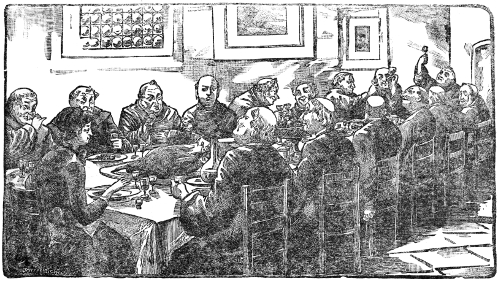
Quebec Marine Hospital—The first time I carried the “Bon Dieu” (the wafer god) in my vest pocket—The Grand Oyster Soiree at Mr. Buteau’s—The Rev. L. Parent and the “Bon Dieu” at the Oyster Soiree
Dr. Douglas—My First Lesson on Temperance—Study of Anatomy—Working of Alcohol in the Human Frame—The Murderess of her own Child—I forever give up the use of Intoxicating Drinks
Conversions of Protestants to the Church of Rome—Rev. Anthony Parent, Superior of the Seminary of Quebec: His peculiar way of finding access to the Protestants and bringing them to the Catholic Church—How he spies the Protestants through the Confessional—I persuade ninety-three Families to become Catholics
Chambers and his Accomplices Condemned to death—Asked me to prepare them for their terrible Fate—A week in their Dungeon—Their Sentence of Death changed to Deportation to Botany Bay—Their Departure for exile—I meet one of them a sincere Convert, very rich, in a high and honorable position in Australia in 1878
The Miracles of Rome—Attack of Typhoid Fever—Apparition of St. Anne and St. Philomene—My Sudden Cure—The Curate of St. Anne Du Nord, Mons. Ranvoise, almost a disguised Protestant
My Nomination as Curate of Beauport—Degradation and Ruin of that place through Drunkenness—My opposition to my nomination useless—Preparation to Establish a Temperance Society—I write to Father Mathew for advice
Foundation of Temperance Societies in the neighboring Parishes—Providential arrival of Monsignor De Forbin Janson, Bishop of Nancy—He publicly defends me against the Bishop of Quebec and forever breaks the opposition of the Clergy
Sent to succeed Rev. Mr Varin, Curate of Kamouraska—Stern opposition of that Curate and the surrounding Priests and People—Hours of Desolation in Kamouraska—The good Master allays the Tempest, and bids the Waves be still
Organization of Temperance Societies in Kamouraska and surrounding Country—The Girl in the Garb of a man in the service of the Curates of Quebec and Eboulements—Frightened by the Scandals seen everywhere—Give up my Parish of Kamouraska to join the “Oblates of Mary Immaculate of Longueuiel.”
Noviciate in the Monastery of the Oblates of Mary Immaculate of Longueuiel—Some of the thousand Acts of Folly and Idolatry which form the life of a Monk—The Deplorable Fall of one of the Fathers—Fall of the Grand Vicar Quiblier—Sick in the Hotel Dieu of Montreal—Sister Urtubise, what she says of Maria Monk—The two Missionaries to the Lumbermen—Fall and Punishment of a Father Oblate—What one of the best Father Oblates thinks of the Monks and the Monastery
I accept the hospitality of the Rev. Mr. Brassard of Longueuiel—I Give my reasons for leaving the Oblates to Bishop Bourget—He presents me with a splendid Crucifix blessed by his Holiness for me, and accepts my services in the cause of Temperance in the Diocese of Montreal
Preparation for the last Conflict—Wise Counsel, Tears and Distress of Father Mathew—Longueuiel the first to accept the great reform of Temperance—The whole District of Montreal, St. Hyacinthe and Three Rivers Conquered—The City of Montreal with the Sulpicians take the Pledge—Gold Medal—Officially named Apostle of Temperance in Canada—Gift of £500 from Parliament
My Sermon on the Virgin Mary—Compliments of Bishop Prince—Stormy Night—First serious doubts about the Church of Rome—Faithful discussion with the Bishop—The Holy Fathers opposed to the modern Worship of the Virgin—The Branches of the Vine
The Holy Fathers—New mental troubles at not finding the Doctrines of my Church in their writings—Purgatory and the Sucking Pig of the Poor Man of Varennes
Letter from the Rev. Bishop Vandeveld of Chicago—Vast project of the Bishop of the United States to take possession of the Rich Valley of the Mississippi and the Prairies of the West, to rule that Great Republic—They want to put me at the head of the Work—My Lecture on Temperance at Detroit—Intemperance of the Bishops and Priests of that City
My visit to Chicago in 1857—Bishop Vandeveld—His Predecessor Poisoned—Magnificent Prairies of the West—Return to Canada—Bad Feelings of Bishop Bourget—I decline sending a rich Woman to the Nunnery to enrich the Bishop—A Plot to Destroy me
The Plot to Destroy me—The Interdict—The Retreat at the Jesuits’ College—The Lost Girl, Employed by the Bishop, retracts—The Bishop Confounded, sees his Injustice, makes amends—Testimonial Letters—The Chalice—The Benediction before I leave Canada
Address presented me at Longueuil—I arrive at Chicago—I select the spot for my Colony—I build the first Chapel—Jealousy and Opposition of the Priests of Bourbonnais and Chicago—Great Success of the Colony
Intrigues, Impostures, and Criminal life of the Priests in Bourbonnais—Indignation of the Bishop—The People ignominiously turn out the Criminal Priests from their Parish—Frightful Scandal—Faith in the Church of Rome seriously Shaken
Public Acts of Simony—Thefts and Brigandage of Bishop O’Regan—General Cry of Indignation—I determine to resist him to his face—He employs Mr. Spink again to send me to Gaol, and he fails—Drags me as a Prisoner to Urbana in the Spring of 1856 and fails again—Abraham Lincoln defends me—My dear Bible becomes more than ever my Light and my Counselor
Bishop O’Regan sells the Parsonage of the French Canadians of Chicago, pockets the money, and turns them out when they come to complain—He determines to turn me out of my Colony and send me to Kahokia—He forgets it next day and publishes that he has Interdicted me—My People send a Deputation to the Bishop—His Answers—The Sham Excommunication by three drunken Priests
Address from my People, asking me to remain—I am again dragged as a prisoner by the Sheriff to Urbana—Abraham Lincoln’s anxiety about the issue of the Prosecution—My Distress—The Rescue—Miss Philomena Moffat sent by God to save me—LeBelle’s Confession and Distress—My Innocence acknowledged—Noble Words and Conduct of Abraham Lincoln—The Oath of Miss Philomena Moffat
A moment of Interruption in the Thread of my “Fifty Years in the Church of Rome,” to see how my sad Previsions about my defender, Abraham Lincoln, were to be realized—Rome the Implacable Enemy of the United States
The Fundamental Principals of the Constitution of the United States drawn from the Gospel of Christ—My first visit to Abraham Lincoln to warn him of the Plots I knew against his Life—The Priests circulate the news that Lincoln was born in the Church of Rome—Letter of the Pope to Jeff Davis—My last visit to the President—His admirable reference to Moses—His willingness to die for his Nation’s Sake
Abraham Lincoln a true man of God, and a true Disciple of the Gospel—The Assassination by Booth—The tool of the Priests—John Surratt’s house—The Rendezvous and Dwelling Place of the Priests—John Surratt Secreted by the Priests after the murder of Lincoln—The Assassination of Lincoln known and published in the town three hours before its occurrence
Deputation of two Priests sent by the People and the Bishops of Canada to persuade us to submit to the will of the Bishop—The Deputies acknowledge publicly that the Bishop is wrong and that we are right—For peace sake, I consent to withdraw from the contest on certain conditions accepted by the Deputies—One of the Deputies turns false to his promise, and betrays us, to be put at the head of my Colony—My last interview with him and Mr. Brassard
Mr. Desaulnier is named Vicar General of Chicago to crush us—Our People more united than ever to defend their rights—Letters of the Bishops of Montreal against me, and my answer—Mr. Brassard forced, against his conscience, to condemn us—My answer to Mr. Brassard—He writes to beg my pardon
I write to the Pope Pius IX, and to Napoleon, Emperor of France, and send them the Legal and Public Documents proving the bad conduct of Bishop O’Regan—Grand Vicar Dunn sent to tell me of my victory at Rome, and the end of our trouble—I go to Dubuque to offer my submission to the Bishop—The peace sealed and publicly proclaimed by Grand Vicar Dunn the 28th of March, 1858
Excellent testimonial from my Bishop—My Retreat—Grand Vicar Saurin and his assistant, Rev. M. Granger—Grand Vicar Dunn writes me about the new storm prepared by the Jesuits—Vision—Christ offers Himself as a Gift—I am forgiven, rich, happy and saved—Back to my People
The Solemn Responsibilities of my New Position—We give up the Name of Roman Catholic to call ourselves Christian Catholics—Dismay of the Roman Catholic Bishops—My Lord Duggan, Coadjutor of St. Louis, hurried to Chicago—He comes to St. Anne to persuade the People to submit to his Authority—He is ignominiously turned out, and runs away in the midst of the Cries of the People
My father, Charles Chiniquy, born in Quebec, had studied in
the Theological Seminary of that city, to prepare himself
for the priesthood. But a few days before making his vows,
having been the witness of a great iniquity in the high quarters
of the church, he changed his mind, studied law and became a
notary.
Married to Reine Perrault, daughter of Mitchel Perrault, in
1808, he settled at first in Kamoraska, where I was born on the
30th July, 1809.
About four or five years later, my parents emigrated to
Murray Bay. That place was then in its infancy, and no school
had yet been established. My mother was, therefore, my first
teacher.
Before leaving the Seminary of Quebec my father had
received from one of the Superiors, as a token of his esteem, a
beautiful French and Latin Bible. That Bible was the first
book, after the A B C, in which I was taught to read. My
mother selected the chapters which she considered the most
interesting for me; and I read them every day with the greatest
attention and pleasure. I was even so much pleased with several
chapters, that I read them over and over again till I knew them
by heart.
When eight or nine years of age, I had learned by heart the
history of the creation and the fall of man; the deluge; the
sacrifice of Isaac; the history of Moses; the plagues of Egypt;
the sublime hymn of Moses after crossing the Red Sea; the
history of Samson; the most interesting events of the life of
David; several Psalms; all the speeches and parables of Christ;
10and the whole history of the sufferings and death of our Saviour
as narrated by John.
I had two brothers, Louis and Achille; the first about four,
the second about eight years younger than myself. When they
were sleeping or playing together, how many delicious hours I
have spent by my mother’s side, in reading to her the sublime
pages of the divine book.
Sometimes she interrupted me to see if I understood what I
read; and when my answers had made her sure that I understood
it, she used to kiss me and press me on her bosom as an
expression of her joy.
One day, while I was reading the history of the sufferings of
the Saviour, my young heart was so much impressed that I could
hardly enunciate the words, and my voice trembled. My mother,
perceiving my emotion, tried to say something on the love of
Jesus for us, but she could not utter a word—her voice was
suffocated by her sobs. She leaned her head on my forehead,
and I felt two streams of tears falling from her eyes on my
cheeks. I could not contain myself any longer. I wept also;
and my tears were mixed with hers. The holy book fell from
my hands, and I threw myself into my dear mother’s arms.
No human words can express what was felt in her soul and
in mine in that most blessed hour! No! I will never forget that
solemn hour, when my mother’s heart was perfectly blended
with mine at the feet of our dying Saviour. There was a real
perfume from heaven in those my mother’s tears which were
flowing on me. It seemed then, as it does seem to me to-day,
that there was a celestial harmony in the sound of her voice and
in her sobs. Though more than half a century has passed since
that solemn hour when Jesus, for the first time, revealed to me
something of His suffering and of His love, my heart leaps with
joy every time I think of it.
We were some distance from the church, and the roads, in
the rainy days, were very bad. On the Sabbath days the neighboring
farmers, unable to go to church, were accustomed to
gather at our house in the evening. Then my parents used to
put me up on a large table in the midst of the assembly, and I
11delivered to those good people the most beautiful parts of the
Old and New Testaments. The breathless attention, the applause
of our guests, and—may I tell it—often the tears of joy which
my mother tried in vain to conceal, supported my strength and
gave me the courage I wanted, to speak when so young before
so many people. When my parents saw that I was growing
tired, my mother, who had a fine voice, sang some of the beautiful
French hymns with which her memory was filled.
Several times, when the fine weather allowed me to go to
church with my parents, the farmers would take me into their
caleches (buggies) at the door of the temple, and request me to
give them some chapter of the Gospel. With a most perfect
attention they listened to the voice of the child, whom the Good
Master had chosen to give them the bread which comes from
heaven. More than once, I remember, that when the bell called
us to the church, they expressed their regret that they could not
hear more.
On one of the beautiful spring days of 1818, my father was
writing in his office, and my mother was working with her
needle, singing one of her favorite hymns, and I was at the door,
playing and talking to a fine robin which I had so perfectly
trained that he followed me wherever I went. All of a sudden
I saw the priest coming near the gate. The sight of him sent a
thrill of uneasiness through my whole frame. It was his first
visit to our home.
The priest was a person below the common stature, and had
an unpleasant appearance—his shoulders were large and he was
very corpulent; his hair was long and uncombed, and his double
chin seemed to groan under the weight of his flabby cheeks.
I hastily ran to the door, and whispered to my parents, “M. le
cure arrive” (“Mr. Curate is coming”). The last sound was
hardly out of my lips, when the Rev. Mr. Courtois was at the
door, and my father, shaking hands with him, gave him a
welcome.
That priest was born in France, where he had a narrow
escape, having been condemned to death under the bloody
administration of Robespierre. He had found a refuge, with
12many other French priests in England, whence he came to
Quebec, and the bishop of that place had given him the charge
of the parish of Murray Bay.
His conversation was animated and interesting for the first
quarter of an hour. It was a real pleasure to hear him. But of
a sudden his countenance changed as if a dark cloud had come
over his mind, and he stopped talking. My parents had kept
themselves on a respectful reserve with the priest. They seemed
to have no other mind than to listen to him. The silence which
followed was exceedingly unpleasant for all the parties. It looked
like the heavy hour which precedes a storm. At length the
priest, addressing my father, said, “Mr. Chiniquy, is it true that
you and your child read the Bible?”
“Yes, sir,” was the quick reply, “my little boy and I read
the Bible, and what is still better, he has learned by heart a great
number of its most interesting chapters. If you will allow it,
Mr. Curate, he will give you some of them.”
“I did not come for that purpose,” abruptly replied the
priest; “but do you not know that you are forbidden by the
holy Council of Trent to read the Bible in French?”
“It makes very little difference to me whether I read the
Bible in French, Greek or Latin,” answered my father, “for I
understand these languages equally well.”
“But are you ignorant of the fact that you cannot allow your
child to read the Bible?” replied the priest.
“My wife directs her own child in the reading of the Bible,
and I cannot see that we commit any sin by continuing to do in
future what we have done till now in that matter.”
“Mr. Chiniquy,” rejoined the priest, “you have gone through
a whole course of theology; you know the duties of a curate;
you know it is my painful duty to come here, get the Bible from
you and burn it.”
My grandfather was a fearless Spanish sailor (our original
name was Etchiniquia), and there was too much Spanish blood
and pride in my father to hear such a sentence with patience in
his own house. Quick as lightning he was on his feet. I pressed
myself, trembling, near my mother, who trembled also.
13At first I feared lest some very unfortunate and violent scene
should occur; for my father’s anger at that moment was really
terrible.
But there was another thing which affected me. I feared
lest the priest should lay his hands on my dear Bible, which was
just before him on the table; for it was mine, as it had been
given to me the last year as a Christmas gift.
Fortunately, my father had subdued himself after the first
moment of his anger. He was pacing the room with a double-quick
step; his lips were pale and trembling, and he was muttering
between his teeth words which were unintelligible to any
one of us.
The priest was closely watching all my father’s movements;
his hands were convulsively pressing his heavy cane, and his face
was giving the sure evidence of a too well-grounded terror. It
was clear that the ambassador of Rome did not find himself infallibly
sure of his position on the ground he had so foolishly chosen
to take; since his last words he had remained as silent as a tomb.
At last, after having paced the room for a considerable time,
my father suddenly stopped before the priest, and said, “Sir, is
that all you have to say here?”
“Yes, sir,” said the trembling priest.
“Well, sir,” added my father, “you know the door by which
you entered my house; please take the same door and go away
quickly.”
The priest went out immediately. I felt an inexpressible joy
when I saw that my Bible was safe. I ran to my father’s neck,
kissed and thanked him for his victory. And to pay him, in my
childish way, I jumped upon the large table and recited, in my
best style, the fight between David and Goliath. Of course, in
my mind, my father was David and the priest of Rome was the
giant whom the little stone from the brook had stricken down.
Thou knowest, O God, that it is to that Bible, read on my
mother’s knees, I owe, by thy infinite mercy, the knowledge of
the truth to-day; that Bible had sent, to my young heart and
intelligence, rays of light which all the sophisms and dark errors
of Rome could never completely extinguish.
Chapter II.
14
MY FIRST SCHOOL-DAYS AT ST. THOMAS—THE MONK AND CELIBACY.
In the month of June, 1818, my parents sent me to an excellent
school at St. Thomas. One of my mother’s sisters resided
there, who was the wife of an industrious miller, called Stephen
Eschenbach. They had no children, and they received me as
their own son.
The beautiful village of St. Thomas had already, at that time,
a considerable population. The two fine rivers which unite their
rapid waters in its very midst before they fall into the magnificent
basin from which they flow into the St. Lawrence, supplied
the water-power for several mills and factories.
There was in the village a considerable trade in grain, flour
and lumber. The fisheries were very profitable, and the game
was abundant. Life was really pleasant and easy.
The families Tachez, Cazeault, Fournier, Dubord, Frechette,
Tetu, Dupuis, Couillard, Duberges, which were among the most
ancient and notable of Canada, were at the head of the intellectual
and material movements of the place, and they were a real
honor to the French Canadian name.
I met there with one of my ancestors on my mother’s side
whose name was F. Amour des Plaines. He was an old and
brave soldier, and would sometimes show us the numerous
wounds he had received in the battles in which he had fought
for his country. Though nearly eighty years old, he sang to us
the songs of the good old times with all the vivacity of a young
man.
The school of Mr. Allen Jones, to which I had been sent,
was worthy of its wide-spread reputation. I have never known
15and teacher who deserved more, or who enjoyed in a higher
degree, the respect and confidence of his pupils.
He was born in England, and belonged to one of the most
respectable families there. He had received the best education
which England could give to her sons. After having gone
through a perfect course of study at home, he had gone to Paris,
where he had also completed an academical course. He was
perfectly master of the French and English languages. And it
was not without good reasons that he was surrounded by a great
number of scholars from every corner of Canada. The children
of the best families of St. Thomas were with me, attending the
school of Mr. Jones. But he was a Protestant, the priest was
much opposed to him, and every effort was made by that priest
to induce my relatives to take me away from that school and
send me to one under his care.
The name of the priest was Loranger. He had a swarthy
countenance, and in person was lean and tall. His preaching
had no attraction, and he was far from being popular among
the intelligent part of the people of St. Thomas.
Dr. Tachez, whose high capacity afterwards brought him to
the head of the Canadian Government, was the leading man of
St. Thomas. Being united by the bonds of a sincere friendship
with his nephew, L. Cazeault, who was afterward placed at the
head of the University of Laval, in Quebec, I had many opportunities
of going to the house of Mr. Tachez, where my young
friend was boarding.
In those days, Dr. Tachez had no need of the influence of the
priests, and he frequently gave vent to his supreme contempt for
them. Once a week there was a meeting in his house of the
principal citizens of St. Thomas, where the highest questions of
history and religion were freely and warmly discussed; but the
premises as well as the conclusion of these discussions were
invariably adverse to the priests and religion of Rome, and too
often to every form of Christianity.
Though these meetings had not entirely the character or
exclusiveness of secret societies, they were secret to a great
extent. My friend Cazeault was punctual in telling me the days
16and hours of the meeting, and I used to go with him to an
adjoining room, from which we could hear everything without
being suspected. From what I heard and saw in these meetings,
I most certainly would have been ruined, had not the Word of
God, with which my mother had filled my young mind and
heart, been my shield and strength. I was often struck with
terror and filled with disgust at what I heard at those meetings.
But what a strange and deplorable thing! My conscience was
condemning me every time I listened to these impious discussions,
while there was a strong craving in me to hear them that I could
not resist.
There was then in St. Thomas a personage who was unique
in his character. He never mixed with the society of the village,
but was, nevertheless, the object of much respectful attention
and inquiry from every one. He was one of the former monks
of Canada, known under the name of Capucin or Recollets,
whom the conquest of Canada by Great Britain had forced to
leave their monastery.
He was a clockmaker, and lived honorably by his trade.
His little white house, in the very midst of the village, was the
perfection of neatness.
Brother Mark, as he was called, was a remarkably well-built
man; high stature, large and splendid shoulders, and the most
beautiful hands I ever saw. His long black robe, tied around
his waist by a white sash, was remarkable for its cleanliness.
His life was really a solitary one, always alone with his own
sister, who kept his house.
Every day that the weather was propitious, Brother Mark
spent a couple of hours in fishing, and as I was myself exceedingly
fond of that exercise, I used to meet him often along the
banks of the beautiful rivers of St. Thomas.
His presence was always a good omen to me; for he was
more expert than I in finding the best places for fishing. As
soon as he found a place where the fish was abundant, he would
make signs to me, or call me at the top of his voice that I might
share in his good luck. I appreciated his delicate attention to me,
and repaid him with the marks of a sincere gratitude. The good
17monk had entirely conquered my young heart, and I cherished
a sincere regard for him. He often invited me to his solitary
but neat little home, and I never visited him without receiving
some proofs of a sincere kindness. His good sister rivalled him
in overwhelming me with such marks of attention and love as
I could only expect from a dear mother.
There was a mixture of timidity and dignity in the manners
of brother Mark which I have found in no one else. He was
fond of children: and nothing could be more graceful than his
smile every time that he could see that I appreciated his kindness,
and that I gave him any proof of my gratitude. But that smile,
and any other expression of joy, were very transient. On a
sudden he would change, and it was obvious that a mysterious
cloud was passing over his heart.
The Pope had released the monks of the monastery to which
he belonged, from their vows of poverty and obedience. The
consequence was that they could become sic and even
rich, by their own industry. It was in their power to rise to a
respectable position in the world by their honorable efforts. The
pope had given them the permission they wanted, that they
might earn an honest living. But what a strange and incredible
folly to ask the permission of a pope to be allowed to live
honorably on the fruits of one’s own industry!
These poor monks, having been released from their vows of
obedience, were no longer the slaves of a man: but were now
permitted to go to heaven on the sole condition that they would
obey the laws of God and the laws of their country! But into
what a frightful abyss of degradation men must have fallen, to
believe that they required a license from Rome for such a purpose.
This is, nevertheless, the simple and naked truth. That excess
of folly, and that supreme impiety and degradation are among
the fundamental dogmas of Rome. The infallible pope assures
the world that there is no possible salvation for any one who
does not sincerely believe what he teaches in this matter.
But the pope who had so graciously relieved the Canadian
monks from their vows of obedience and poverty, had been
inflexible in reference to their vows of celibacy. From this
18there was no relief.
The honest desires of the good monk to live according to the
laws of God, with a wife whom heaven might have given him,
had become an impossibility—the pope vetoed it.
The unfortunate monk was bound to believe that he would
be forever damned if he dared to accept as a gospel truth the
Word of God which says:—
“Propter fornicationem antem, unusquisque uxorem suam
habeat, unaquaque virum suum habeat. (Vulgate Bible of
Rome.) Nevertheless to avoid fornication let every man have
his own wife, and let every woman have her own husband.”
(1 Cor., vii.: 2). That shining light which the Word contains
and which gives life to man, was entirely shut out from brother
Mark. He was not allowed to know that God himself had said,
“It is not good that man should be alone, I will make him an
help-meet for him,” (Gen. 2: 18). Brother Mark was endowed
with such a loving heart! He could not be known without
being loved; and he must have suffered much in that celibacy
which his faith in the pope imposed upon him.
Far away from the regions of light, truth and life, that soul,
tied to the feet of the implacable modern Divinity, which the
Romanists worship under the name of Sovereign Pontiff, was
trying in vain to annihilate and destroy the instincts and affections
which God himself had implanted in him.
One day, as I was amusing myself, with a few other young
friends, near the house of brother Mark, suddenly we saw
something covered with blood thrown from the window, and
falling at a short distance from us. At the same instant we
heard loud cries, evidently coming from the monk’s house: “O
my God! Have mercy on me! Save me! I am lost!”
The sister of brother Mark rushed out of doors and cried to
some men who were passing by: “Come to our help! My poor
brother is dying! For God’s sake make haste, he is losing all
his blood!”
I ran to the door, but the lady shut it abruptly and turned
me out, saying, “we do not want children here.”
I had a sincere affection for the good brother. He had
19invariably been so kind to me! I insisted and respectfully
requested to be allowed to enter. Though young and weak, it
seemed that my friendly feelings towards the suffering brother
would add to my strength, and enable me to be of some service.
But my request was sternly rejected, and I had to go back to
the street among the crowd which was fast gathering. The
singular mystery in which they were trying to wrap the poor
monk, filled me with trouble and anxiety.
But that trouble was soon changed into an unspeakable
confusion when I heard the convulsive laughing of the low
people, and the shameful jokes of the crowd, after the doctor
had told the nature of the wound which was causing the
unfortunate man to bleed almost to death. I was struck with
such horror that I fled away; I did not want to know any more
of that tragedy. I had already known too much!
Poor brother Mark had ceased to be a man—he had become
an eunuch.
O cruel and Godless church of Rome! How many souls
hast thou deceived and tortured! How many hearts hast thou
broken with that celibacy which Satan alone could invent!
This unfortunate victim of a most degrading religion, did not,
however, die from his rash action; he soon recovered his usual
health.
Having, meanwhile, ceased to visit him; some months later
I was fishing along the river in a very solitary place. The fish
were abundant, and I was completely absorbed in catching them,
when, on a sudden, I felt on my shoulder the gentle pressure of
a hand. It was brother Mark’s.
I thought I would faint through the opposite sentiments of
surprise, of pain and joy, which at the same time crossed my
mind.
With an affectionate and trembling voice he said to me, “My
dear child, why do you not come to see me any more?”
I did not dare to look at him after he had addressed me these
words. I liked him on account of his acts of kindness to me.
But the fatal hour when, in the street before the door, I had
suffered so much on his account—that fatal hour was on my
20heart as a mountain which I could not put away—I could not
answer him.
He then asked me again with the tone of a criminal who sues
for mercy; “Why is it my dear child, that you do not come any
longer to see me? You know that I love you.”
“Dear brother Mark,” I answered “I will never forget your
kindness to me. I will forever be grateful to you; I wish that
it would be in my power to continue, as formerly, to go and see
you. But I cannot, and you ought to know the reason why I
cannot.”
I had pronounced these words with down-cast eyes. I was
a child, with the timidity and happy ignorance of a child. But
the action of that unfortunate man had struck me with such a
horror that I could not entertain the idea of visiting him any
more.
He spent two or three minutes without saying a word, and
without moving. But I heard his sobs and his cries, and his
cries were those of despair and anguish, the like of which I have
never heard since.
I could not contain myself any longer, I was suffocating with
suppressed emotion, and I would have fallen insensible to the
ground if two streams of tears had not burst from my eyes.
Those tears did me good—they did him good also—they told
him that I was still his friend.
He took me in his arms and pressed me to his bosom—his
tears were mixed with mine. But I could not speak—the
emotions of my heart were too much for my age. I sat on a
damp and cold stone, in order not to faint. He fell on his knees
by my side.
Ah! if I were a painter I would make a most striking tableau
of that scene. His eyes, swollen and red with weeping, were
raised to heaven, his hand lifted up in the attitude of supplication;
he was crying out with an accent which seemed as though it
would break my heart.
“Mon Dieu! Mon Dieu que je suis malheureux.”
My God! My God! what a wretched man I am!
21The twenty-five years that I have been a priest of Rome,
have revealed to me the fact that the cries of desolation I heard
that day, were but the echo of the cries of desolation which go
out from almost every nunnery, every parsonage and every
house where human beings are bound by the ties of the Romish
Celibacy.
God knows that I am a faithful witness of what my eyes
have seen and my ears have heard, when I say to the multitudes
which the Church of Rome has bewitched with her enchantments.
Wherever there are nuns, monks and priests who live in
forced violation of the ways which God has appointed for man
to walk in, there are torrents of tears, there are desolated hearts,
there are cries of anguish and despair which say in the words of
brother Mark:
“Oh! que je suis malheureux!”
Oh! how miserable and wretched I am!
Chapter III
22
THE CONFESSION OF CHILDREN.
No words can express to those who have never had any
experience in the matter, the consternation, anxiety and
shame of a poor Romish child, when he hears, for the first time,
his priest saying from the pulpit, in a grave and solemn tone,
“This week, you will send your children to confession. Make
them understand that this action is one of the most important of
their lives, that for every one of them, it will decide their eternal
happiness or misery. Fathers and mothers, if, through your
fault, or his own, your child is guilty of a bad confession—if he
conceals his sins and commences lying to the priest, who holds
the place of God himself, this sin is often irreparable. The devil
will take possession of his heart: he will become accustomed to
lie to his father confessor, or rather to Jesus Christ, of whom he
is a representative. His life will be a series of sacrileges; his
death and eternity those of the reprobate. Teach him, therefore,
to examine thoroughly his actions, words and thoughts, in order
to confess without disguise.”
I was in the church of St. Thomas when those words fell
upon me like a thunderbolt.
I had often heard my mother say, when at home, and my
aunt, since I had come to St. Thomas, that upon the first confession
depended my eternal happiness or misery. That week
was, therefore, to decide about my eternity.
Pale and dismayed, I left the church, and returned to the
house of my relatives. I took my place at the table, but could
not eat, so much was I troubled. I went to my room for the
purpose of commencing my examination of conscience and to
try to recall my sinful actions, words, and thoughts. Although
23scarcely over ten years of age, this task was really overwhelming
for me. I knelt down to pray to the Virgin Mary for help; but
I was so much taken up with the fear of forgetting something,
and of making a bad confession, that I muttered my prayers
without the least attention to what I said. It became still worse
when I commenced counting my sins. My memory became
confused, my head grew dizzy; my heart beat with a rapidity
which exhausted me, and my brow was covered with perspiration.
After a considerable length of time spent in these painful efforts,
I felt bordering on despair, from the fear that it was impossible
for me to remember everything. The night following was
almost a sleepless one; and when sleep did come, it could
scarcely be called a sleep, but a suffocating delirium. In a
frightful dream, I felt as if I had been cast into hell, for not
having confessed all my sins to the priest. In the morning, I
awoke, fatigued and prostrated by the phantoms of that terrible
night. In similar troubles of mind were passed three days
which preceded my first confession. I had constantly before
me the countenance of that stern priest who had never smiled
upon me. He was present in my thoughts during the day, and
in my dreams during the night, as the minister of an angry God,
justly irritated against me on account of my sins. Forgiveness
had indeed been promised to me, on condition of a good
confession; but my place had also been shown to me in hell, if
my confession was not as near perfection as possible. Now, my
troubled conscience told me that there were ninety-nine chances
against one, that my confession would be bad, whether by my
own fault I forgot some sins, or I was without that contrition of
which I had heard so much, but the nature and effects of which
were a perfect chaos to my mind.
Thus it was that the cruel and perfidious Church of Rome took
away from my young heart the good and merciful Jesus, whose
love and compassion had caused me to shed tears of joy when I
was beside my mother. The Saviour whom that church made
me to worship, through fear, was not the Saviour who called little
children unto Him, to bless them and take them in His arms.
Her impious hands were soon to torture and defile my childish
24heart, and place me at the feet of a pale and severe looking man—worthy
representative of a pitiless God. I was made to tremble
with terror at the footstool of an implacable divinity, while the
gospel asked of me only tears of love and joy, shed at the feet
of the incomparable Friend of sinners!
At length came the day of confession; or rather of judgment
and condemnation. I presented myself to the priest.
Mr. Loranger was no longer priest of St. Thomas. He had
been succeeded by Mr. Beaubien, who did not favor our school
any more than his predecessor. He had even taken upon himself
to preach a sermon against the heretical school, by which we
had been excessively wounded. His want of love for us,
however, I must say, was fully reciprocated.
Mr. Beaubien had, then, the defect of lisping and stammering.
This we often turned into ridicule, and one of my favorite amusements
was to imitate him, which brought bursts of laughter from
us all.
It had been necessary for me to examine myself upon the
number of times I had mocked him. This circumstance was
not calculated to make my confession easier, or more agreeable.
At last the dreaded moment came. I knelt at the side of my
confessor. My whole frame trembled. I repeated the prayer
preparatory to confession, scarcely knowing what I said so
much was I troubled with fear.
By the instructions which had been given us before confession,
we had been made to believe that the priest was the true representative—yea,
almost the personification of Jesus Christ. The
consequence was, that I believed my greatest sin had been that
of mocking the priest. Having always been told that it was
best to confess the greatest sin first, I commenced thus: “Father
I accuse myself of having mocked a priest.”
Scarcely had I uttered these words, “mocked a priest,” when
this pretended representative of the humble Saviour, turning
towards me, and looking in my face in order to know me better,
asked abruptly, “What priest did you mock, my boy?” I would
rather have chosen to cut out my tongue than to tell him to his
face who it was. I therefore kept silent for a while. But my
25silence made him very nervous and almost angry. With a
haughty tone of voice he said, “What priest did you take the
liberty of thus mocking?”
I saw that I had to answer. Happily his haughtiness had
made me firmer and bolder. I said “Sir, you are the priest
whom I mocked.”
“But how many times did you take upon you to mock me,
my boy?”
“I tried to find out,” I answered, “but never could.”
“You must tell me how many times; for to mock one’s own
priest is a great sin.”
“It is impossible for me to give you the number of times,”
answered I.
“Well, my child, I will help your memory by asking you
questions. Tell me the truth. Do you think you have mocked
me ten times?”
“A great many times more, sir.”
“Fifty times?”
“Many more still.”
“A hundred times?”
“Say five hundred times and perhaps more,” answered I.
“Why, my boy, do you spend all your time in mocking me?”
“Not all; but unfortunately I do it very often.”
“Well may you say unfortunately; for so to mock your
priest, who holds the place of our Lord Jesus Christ, is a great
misfortune, and a great sin for you. But tell me, my little boy,
what reason have you for mocking me thus?”
In my examinations of conscience I had not foreseen that I
should be obliged to give the reasons for mocking the priest;
and I was really thunderstruck by his questions. I dared not
answer, and I remained for a long time dumb, from the shame
that overpowered me. But with a harrassing perseverance the
priest insisted on my telling why I had mocked him; telling
me that I should be damned if I did not tell the whole truth.
So I decided to speak, and said, “I mocked you for several
things.”
“What made you first mock me?” continued the priest.
26“I laughed at you because you lisped. Among the pupils of
our school, it often happens that we imitate your preaching to
excite laughter.”
“Have you often done that?”
“Almost every day, especially in our holidays, and since you
preached against us.”
“For what other reasons did you laugh at me, my little boy?”
For a long time I was silent. Every time I opened my mouth
to speak courage failed me. However, the priest continuing to
urge me, I said at last, “It is rumored in town that you love
girls; that you visit the Misses Richards every evening, and this
often makes us laugh.”
The poor priest was evidently overwhelmed by my answer,
and ceased questioning me on this subject. Changing the conversation,
he said:
“What are your other sins?”
I began to confess them in the order in which they came to
my memory. But the feeling of shame which overpowered me
in repeating all my sins to this man was a thousand times greater
than that of having offended God. In reality this feeling of
human shame which absorbed my thought—nay, my whole
being—left no room for any religious feeling at all.
When I had confessed all the sins I could remember, the
priest began to ask me the strangest questions on matters about
which my pen must be silent. I replied, “Father, I do not
understand what you ask me.”
“I question you on the sixth commandment (seventh in the
Bible). Confess all. You will go to hell, if through your
fault you omit anything.”
Thereupon he dragged my thoughts to regions which, thank
God had hitherto been unknown to me.
I answered him: “I do not understand you,” or “I have
never done these things.”
Then, skilfully shifting to some secondary matter, he would
soon slyly and cunningly come back to his favorite subject,
namely, sins of licentiousness.
His questions were so unclean that I blushed, and felt sick
27with disgust and shame. More than once I had been, to my
regret, in the company of bad boys; but not one of them has
offended my moral nature so much as this priest had done. Not
one of them had ever approached the shadow of the things from
which that man tore the veil, and which he placed before the
eye of my soul. In vain did I tell him that I was not guilty of
such things; that I did not even understand what he asked me;
he would not let me off. Like the vulture bent upon tearing
the poor bird that falls into his claws, that cruel priest seemed
determined to defile and ruin my heart.
At last he asked me a question in a form of expression so bad
that I was really pained. I felt as if I had received a shock
from an electric battery; a feeling of horror made me shudder.
I was so filled with indignation that, speaking loud enough to be
heard by many, I told him: “Sir, I am very wicked; I have
seen, heard and done many things which I regret; but I never
was guilty of what you mention to me. My ears have never
heard anything so wicked as what they have heard from your
lips. Please do not ask me any more of those questions; do not
teach me any more evil than I already know.”
The remainder of my confession was short. The firmness
of my voice had evidently frightened the priest, and made him
blush. He stopped short and began to give me some good
advice, which might have been useful to me if the deep wounds
which his questions had inflicted upon my soul had not so
absorbed my thoughts as to prevent me from giving attention to
what he said.
He gave me a short penance and dismissed me.
I left the confessional irritated and confused. From the
shame of what I had just heard from the mouth of that priest I
dared not lift my eyes from the ground. I went into a retired
corner of the church to do my penance; that is, to recite the
prayers he had indicated to me. I remained for a long time in
church. I had need of a calm after the terrible trial through
which I had just passed. But vainly I sought for rest. The
shameful questions which had been asked me, the new world of
iniquity into which I had been introduced, the impure phantoms
28by which my childish heart had been defiled, confused and
troubled my mind so strangely that I began to weep bitterly.
Why those tears? Why that desolation? I wept over my
sins? Alas! I confess it with shame, my sins did not call forth
those tears. And yet how many sins had I already committed,
for which Jesus shed his precious blood. But I confess my sins
were not the cause of my desolation. I was rather thinking of
my mother, who had taken such good care of me, and who had
so well succeeded in keeping away from my thoughts those
impure forms of sin, the thoughts of which had just now defiled
my heart. I said to myself, Ah! if my mother had heard those
questions; if she could see the evil thoughts which overwhelm
me at this moment—if she knew to what school she sent me
when she advised me in her last letter to go to confession, how
her tears would mingle with mine! It seemed to me that my
mother would love me no more—that she would see written
upon my brow the pollution with which that priest had profaned
my soul.
Perhaps the feeling of pride was what made me weep. Or
perhaps I wept because of a remnant of that feeling of original
dignity whose traces had still been left in me. I felt so downcast
by the disappointment of being removed farther from the
Saviour by that confessional which had promised to bring me
nearer to Him. God only knows what was the depth of my
sorrow at feeling myself more defiled and more guilty after than
before my confession.
I left the church only when forced to do so by the shades of
night, and came to my uncle’s house with that feeling of uneasiness
caused by the consciousness of having done a bad action,
and by the fear of being discovered.
Though this uncle, as well as most of the principal citizens of
the village of St. Thomas, had the name of being a Roman
Catholic, yet he did not believe a word of the doctrines of the
Roman Church. He laughed at the priests, their masses, their
purgatory, and especially their confession. He did not conceal
that when young, he had been scandalized by the words and
actions of a priest in the confessional. He spoke to me jestingly.
29This increased my trouble and my grief. “Now,” said he “you
will be a good boy. But if you have heard as many new things
as I did the first time I went to confess, you are a very learned
boy;” and he burst into laughter.
I blushed and remained silent. My aunt, who was a devoted
Roman Catholic, said to me, “Your heart is relieved, is it not,
since you confessed all your sins?” I gave her an evasive
answer, but I could not conceal the sadness that overcame me.
I thought I was the only one from whom the priest had asked
those polluting questions. But great was my surprise, on the
following day, when going to school I learned that my fellow
pupils had not been happier than I had been. The only difference
was, that instead of being grieved, they laughed at it. “Did
the priest ask you such and such questions?” they would demand
laughing boisterously. I refused to reply, and said, “Are you
not ashamed to speak of these things?”
“Ah! ah! how very scrupulous you are,” continued they.
“If it is not a sin for the priest to speak to us on these matters,
how can it be a sin for us?” I stopped, confounded, not knowing
what to say.
I soon perceived that even the young school girls had not
been less polluted and scandalized by the questions of the priest
than the boys. Although keeping at a distance, such as to
prevent us from hearing all they said, I could understand enough
to convince me that they had been asked about the same questions.
Some of them appeared indignant, while others laughed heartily.
I should be misunderstood were it supposed that I mean to
convey the idea that this priest was more to blame than others,
or that he did more than fulfil the duties of his ministry in asking
these questions. Such, however, was my opinion at the time,
and I detested that man with all my heart until I knew better.
I had been unjust towards him, for this priest had only done his
duty. He was only obeying the Pope and his theologians. His
being a priest of Rome was, therefore, less his crime than his
misfortune. He was, as I have been myself, bound hand and
foot at the feet of the greatest enemy that the holiness and truth
of God have ever had on earth—the Pope.
30The misfortune of Mr. Beaubien, like that of all the priests
of Rome, was that of having bound himself by terrible oaths
not to think for himself, or to use the light of his own reason.
Many Roman Catholics, even many Protestants, refuse to
believe this. It is, notwithstanding, a sad truth. The priest of
Rome is an automaton—a machine which acts, thinks and speaks
in matters of morals and of faith, only according to the order and
the will of the Pope and his theologians.
Had Mr. Beaubien been left to himself, he was naturally too
much of a gentleman to ask such questions. But no doubt he
had read Liguori, Dens, Debreyne, authors approved by the
Pope, and he was obliged to take darkness for light, and vice
for virtue.
Chapter IV
31
THE SHEPHERD WHIPPED BY HIS SHEEP.
Shortly after the trial of auricular confession, my young
friend, Louis Cazeault, accosted me on a beautiful morning
and said, “Do you know what happened last night?”
“No,” I answered. “What was the wonder?”
“You know that our priest spends almost all his evenings
at Mr. Richards’ house. Everybody thinks that he goes there
for the sake of the two daughters. Well, in order to cure him
of that disease, my uncle, Dr. Tache, and six others, masked,
whipped him without mercy as he was coming back at eleven
o’clock at night. It is already known by every one in the
village, and they split their sides with laughing.”
My first feeling on hearing that news, was one of joy. Ever
since my first confession I felt angry every time I thought of
that priest. His questions had so wounded me that I could not
forgive him. I had enough of self-control, however, to conceal
my pleasure and I answered my friend:
“You are telling me a wicked story; I can’t believe a word
of it.”
“Well,” said young Cazeault, “come at eight o’clock this
evening to my uncle’s. A secret meeting is to take place then.
No doubt they will speak of the pill given to the priest last night.
We shall place ourselves in our little room as usual and shall
hear everything, our presence not being suspected. You may
be sure that it will be interesting.”
“I will go,” I answered, “but I do not believe a word of
that story.”
I went to school at the usual hour. Most of the pupils had
preceded me. Divided into groups of eight or ten, they were
32engaged in a most lively conversation. Bursts of convulsive
laughter were heard from every corner. I could very well see
that something uncommon had taken place in the village.
I approached several of these groups, and all received me
with the question:
“Do you know that the priest was whipped last night as he
was coming from the Misses Richards’?”
“That is a story invented for fun,” said I.
“You were not there to see him, were you? You therefore
know nothing about it; for if anybody had whipped the priest
he would not surely boast of it.”
“But we heard his screams,” answered many voices.
“What! was he then screaming out?” I asked.
“He shouted at the top of his voice, ‘Help, help! Murder!’”
“But you were surely mistaken about the voice,” said I.
“It was not the priest who shouted, it was somebody else. I
could never believe that anybody would whip a priest in such a
crowded village.”
“But” said several, “we ran to his help and we recognized
the priest’s voice. He is the only one who lisps in the village.”
“And we saw him with our own eyes,” said several.
The school bell put an end to this conversation. As soon as
school was out I returned to the house of my relatives, not
wishing to learn any more about this matter. Although I did
not like this priest, yet I was much mortified by some remarks
which the older pupils made about him.
But it was difficult not to hear any more. On my arrival
home I found my uncle and aunt engaged in a very warm
debate on the subject. My uncle wished to conceal the fact
that he was among those who had whipped him. But he gave
the details so precisely, he was so merry over the adventure,
that it was easy to see that he had a hand in the plot. My aunt
was indignant, and used the most energetic expressions to show
her disapprobation.
That bitter debate annoyed me so that I did not stay long to
hear it all. I withdrew to my study.
During the remainder of the day I changed my resolution
33many times about my going to the secret meeting in the evening.
At one moment I would decide firmly not to go. My conscience
told me that, as usual, things would be uttered which it was not
good for me to hear. I had refused to go to the two last meetings,
and a silent voice, as it were, told me I had done well.
Then a moment after I was tormented by the desire to know
precisely what had taken place the evening before. The flagellation
of a priest in the midst of a large village was a fact too
worthy of note to fail to excite the curiosity of a child. Besides,
my aversion to the priest, though I concealed it as well as I
could, made me wish to know whether everything was true on
the subject of the chastisement. But in the struggle between
good and evil which took place in my mind during that day, the
evil was finally to triumph. A quarter of an hour before the
meeting my friend came to me and said:
“Make haste, the members of the association are coming.”
At this call all my good resolutions vanished. I hushed the
voice of my conscience, and a few minutes later I was placed in
an angle of that little room, where for more than two hours I
learned many strange and scandalous things about the lives of
the priests of Canada.
Dr. Tache presided. He opened the meeting in a low tone
of voice. At the beginning of his discourse I had some difficulty
to understand what he said. He spoke as one who feared
to be overheard when disclosing a secret to a friend. But after
a few preliminary sentences he forgot the rule of prudence
which he had imposed upon himself, and spoke with energy and
power.
Mr. Etienne Tache was naturally eloquent. He seemed to
speak on no question except under the influence of the deepest
conviction of its truth. His speech was passionate, and the tone
of his voice clear and agreeable. His short and cutting sentences
did not reach the ear only; they penetrated even the secret folds
of the soul. He spoke in substance as follows:
“Gentlemen:—I am happy to see you here more numerously
than ever. The grave events of last night have, no doubt,
decided many of you to attend debates which some began to
34forsake, but the importance of which, it seems to me, increases
day by day.
“The question debated in our last meeting—‘The Priests’—is
one of life and death, not only for our young and beautiful
Canada, but in a moral point of view it is a question of life and
death for our families, and for every one of us in particular.
“There is, I know, only one opinion among us on the subject
of priests; and I am glad that this opinion is not only that of all
educated men in Canada, but also of learned France; nay, of the
whole world. The reign of the priest is the reign of ignorance,
of corruption, and of the most barefaced immorality, under the
mask of the most refined hypocrisy. The reign of the priest is
the death of our schools; it is the degradation of our wives, the
prostitution of our daughters; it is the reign of tyranny—the loss
of liberty.
“We have only one good school, I will not say in St. Thomas,
but in all our county. This school in our midst is a great honor
to our village. Now see the energy with which all the priests
who come here work for the closing of that school. They use
every means to destroy that focus of light which we have started
with so much difficulty, and which we support by so many
sacrifices.
“With the priest of Rome our children do not belong to us;
he is their master. Let me explain. The priest honors us with
the belief that the bodies, the flesh and bones of our children, are
ours, and that our duty in consequence is to clothe and feed them.
But the nobler and more sacred part, namely, the intellect, the
heart, the soul, the priest claims as his own patrimony, his own
property. The priest has the audacity to tell us that to him
alone it belongs to enlighten those intelligences, to form those
hearts, to fashion those souls as it may best suit him. He has the
impudence to tell us that we are too silly or perverse to know
our duties in this respect. We have not the right of choosing
our school teachers. We have not the right to send a single ray
of light into those intellects, or to give to those souls who hunger
and thirst after truth a single crumb of that food prepared with
so much wisdom and success by enlightened men of all ages.
35“By the confessional the priests poison the springs of life in
our children. They initiate them into such mysteries of iniquity
as would terrify old galley slaves. By their questions they
reveal to them secrets of a corruption such as carries its germs of
death into the very marrow of their bones, and that from the
earliest years of their infancy. Before I was fifteen years old I
had learned more real blackguard ism from the mouth of my
confessor than I have learned ever since in my studies and in my
life as a physician for twenty years.
“A few days ago I questioned my little nephew, Louis
Cazeault, upon what he had learned in his confession. He
answered me ingenuously, and repeated things to me which I
would be ashamed to utter in your presence, and which you,
fathers of families, could not listen to without blushing. And
just think, that not only of little boys are those questions asked,
but also of our dear little girls. Are we not the most degraded
of men if we do not set ourselves to work in order to break the
iron yoke under which the priest keeps our dear country, and by
means of which he keeps us, with our wives and children, at his
feet like vile slaves!
“While speaking to you of the deleterious effect of the
confessional upon our children, shall I forget its effect upon our
wives and upon ourselves? Need I tell you that, for most
women, the confessional is a rendezvous of coquetry and of love?
Do you not feel as I do myself, that by means of the confessional
the priest is more the master of the hearts of our wives than
ourselves? Is not the priest the private and public confidant of
our wives? Do not our wives go invariably to the feet of the
priest, opening to him what is most sacred and intimate in the
secrets of our lives as husbands and as fathers? The husband
belongs no more to his wife as her guide through the dark and
difficult paths of life: it is the priest! We are no more their
friends and natural advisers. Their anxieties and their cares they
do not confide to us. They do not expect from us the remedies
for the miseries of this life. Towards the priest they turn their
thoughts and desires. He has their entire and exclusive confidence.
In a word, it is the priest who is the real husband of our
36wives! It is he who has the possession of their respect and of
their hearts to a degree to which no one of us need ever aspire!
“Were the priest an angel, were he not made of flesh and
bones just as we are, were not his organization absolutely the
same as our own, then might we be indifferent to what might
take place between him and our wives, whom he has at his feet,
in his hands—even more, in his heart. But what does my
experience tell me, not only as a physician, but also as a citizen
of St. Thomas? What does yours tell you? Our experience
tells us that the priest, instead of being stronger, is weaker than
we generally are with respect to women. His sham vows of
perfect chastity, far from rendering him more invulnerable to
the arrows of Cupid, expose him to be made more easily the
victim of that god, so small in form, but so dreadful a giant by
the irresistible power of his weapons and the extent of his
conquests.
“As a matter of fact, of the last four priests who came to
St. Thomas, have not three seduced many of the wives and
daughters of our most respected families? And what security
have we that the priest who is now with us does not walk in the
same path? Is not the whole parish filled with indignation at
the long nightly visits made by him to two girls whose dissolute
morals are a secret to nobody? And when the priest does not
respect himself, would we not be silly in continuing to give him
that respect of which he himself knows he is unworthy?
“At our last meeting the opinions were divided at the
beginning of the discussion. Many thought it would be well to
speak to the bishop about the scandal caused by those nightly
visits. But the majority judged that such steps would be useless,
since the bishop would do one of two things, namely, he would
either pay no attention to our just complaints, as has often been
the case, or he would remove this priest, filling his place with
one who would do no better. That majority, which became a
unanimity, acceded to my thought of taking justice into our own
hands. The priest is our servant. We pay him a large tithe.
We have therefore claims upon him. He has abused us, and
does so every day by his public neglect of the most elementary
37laws of morality. In visiting every night that house whose
degradation is known to everybody, he gives to youth an
example of perversity the effects of which no one can estimate.
“It had been unanimously decided that he should be whipped.
Without my telling you by whom it was done, you may be
assured that Mr. Beaubien’s flagellation of last night will never
be forgotten by him!
“Heaven grant that this brotherly correction be a lesson to
teach all the priests of Canada that their golden reign is over,
that the eyes of the people are opened, and that their domination
is drawing to an end!”
This discourse was listened to with deep silence, and Dr.
Tache saw by the applause that followed that his speech had
been the expression of everyone.
Next followed a gentleman named Dubord, who in substance
spoke as follows:
“Mr. President:—I was not among those who gave the
priest the expression of public feeling with the energetic tongue
of the whip. I wish I had been, however; I would heartily
have co-operated in giving that lesson to the priests of Canada.
Let me give my reason.
“My daughter, who is twelve years old, went to confession
as did the others a few weeks ago. It was against my will. I
know by my own experience that of all actions confession is the
most degrading in a person’s life. I can imagine nothing so
well calculated to destroy for ever one’s self-respect as the
modern invention of the confessional. Now, what is a person
without self-respect—especially a woman? Without this all is
lost to her forever.
“In the confessional everything is corruption of the lowest
grade.
“In the confessional, a girl’s thoughts are polluted, her
tongue is polluted, her heart is polluted—yes, and forever polluted!
Do I need to tell you this? You know it as well as I
do. Though you are now all too intelligent to degrade yourselves
at the feet of a priest, though it is long since you have
been guilty of that meanness, not one of you have forgotten the
38lessons of corruption received, when young, in the confessional.
Those lessons were engraved on your memory, your thoughts,
your hearts, and your souls like the scar left by the red-hot iron
upon the brow of the slave, to remain a perpetual witness of his
shame and servitude. The confessional is a place where one
gets accustomed to hear, and repeat without a scruple, things
which would cause even a prostitute to blush!
“Why are Roman Catholic nations inferior to nations
belonging to Protestantism? Only in the confessional can the
solution of that problem be found. And why are Roman
Catholic nations degraded in proportion to their submission to
the priest? It is because the oftener the individuals composing
those nations go to confession the more rapidly they sink in the
scale of intelligence and morality. A terrible example of this
I had in my own house.
“As I said a moment ago, I was against my daughter going
to confession; but her poor mother, who is under the control of
the priest, earnestly wanted her to go. Not to have a disagreeable
scene in my house, I had to yield to the tears of my wife.
“On the day following that of her confession they believed
I was absent; but I was in my office, with the door sufficiently
open to allow me to hear what was said. My wife and daughter
had the following conversation:
“‘What makes you so thoughtful and sad, my dear Lucy,
since you went to confession? It seems to me you should feel
happier since you had the privilege of confessing your sins.’
“Lucy made no answer.
“After a silence of two or three minutes her mother said:
“‘Why do you weep, dear child? Are you ill?’
“Still no answer from the child.
“You may well suppose that I was all attention. I had my
suspicions about the dreadful ordeal which had taken place. My
heart throbbed with uneasiness and anger.
“After a short time my wife spoke to her child with sufficient
firmness to force her to answer. In a trembling voice and
half suppressed with sobs my dear little daughter answered:
“‘Ah! mamma, if you knew what the priest asked me, and
39what he said to me in the confessional, you would be as sad as
I am.’
“‘But what did he say to you? He is a holy man. You
surely did not understand him if you think he said anything to
pain you.’
“‘Dear mother,’ as she threw herself into her mother’s arms,
‘do not ask me to confess what that priest said! He told to me
things so shameful that I cannot repeat them. But that which
pains me most is the impossibility of banishing from my
thoughts the hateful things which he has taught me. His
impure words are like the leeches put upon the chest of my
friend Louise—they could not be removed without tearing the
flesh. What must have been his opinion of me to ask such
questions!’”
“My child said no more, and began to sob again.
“After a short silence my wife rejoined:
“‘I’ll go to the priest. I’ll tell him to beware how he
speaks in the confessional. I have noticed myself that he goes
too far with his questions. I, however, thought that he was
more prudent with children. After the lesson that I’ll give him
be sure that you will have only to tell your sins, and that you
will be no more troubled by his endless questions. I ask of
you, however, never to speak of this to anybody, especially
never let your poor father know anything about it; for he has
little enough religion already, and this would leave him without
any at all.’”
“I could contain myself no longer. I rose and abruptly
entered the parlor. My daughter threw herself, weeping, into
my arms. My wife screamed with terror, and almost fell into a
swoon. I said to my child:
“If you love me, put your hand on my heart and promise
me that you’ll never go to confession again. Fear God, my
child; walk in His presence, for His eye seeth you everywhere.
Remember that day and night He is ready to forgive us. Never
place yourself again at the feet of a priest to be defiled and
degraded by him!
“This my daughter promised me.
40“When my wife had recovered from her surprise I said to
her:
“Madam, for a long time the priest has been everything and
your husband nothing to you. There is a hidden and terrible
power that governs your thoughts and affections as it governs
your deeds—it is the power of the priest. This you have often
denied; but providence has decided to-day that this power should
be forever broken for you and for me. I want to be the ruler
in my own house; and from this moment the power of the priest
over you must cease, unless you prefer to leave my house
forever. The priest has reigned here too long! But now that
I know he has stained and defiled the soul of my daughter, his
empire must fall! Whenever you go and take your heart and
secrets to the feet of the priest, be so kind as not to come back
to the same house with me.”
Three other discourses followed that of Mr. Dubord, all of
which were pregnant with details and facts going to prove that
the confessional was the principal cause of the deplorable
demoralization of St. Thomas.
If, in addition to all that, I could have mentioned before that
association what I already knew of the corrupting influences of
that institution given to the world by centuries of darkness,
certainly the determination of its members to make use of every
means to abolish its usage would have been strengthened.
Chapter V.
41
THE PRIEST, PURGATORY, AND THE POOR WIDOW’S COW.
The day following that of the meeting at which Mr. Tache
had given his reasons for boasting that he had whipped the
priest, I wrote to my mother: “For God’s sake, come for me; I
can stay here no longer. If you knew what my eyes have seen
and my ears have heard for some time past, you would not delay
your coming a single day.”
Indeed, such was the impression left upon me by that flagellation,
and by the speeches which I had heard, that had it not
been for the crossing of the St. Lawrence, I would have started
for Murray Bay on the day after the secret meeting at which I
had heard things that so terribly frightened me. How I
regretted the happy and peaceful days spent with my mother in
reading the beautiful chapters of the Bible, so well chosen by
her to instruct and interest me! What a difference there was
between our conversations after these readings, and the conversations
I heard at St. Thomas!
Happily my parents’ desire to see me again was as great as
mine to go back to them. So that a few weeks later my mother
came for me. She pressed me to her heart, and brought me
back to the arms of my father.
I arrived at home on the 17th of July, 1821, and spent the
afternoon and evening till late by my father’s side. With what
pleasure did he see me working difficult problems in algebra,
and even in geometry! for under my teacher, Mr. Jones, I had
really made rapid progress in those branches. More than once
I noticed tears of joy in my father’s eyes when, taking my slate,
he saw that my calculations were correct. He also examined me
in grammar. “What an admirable teacher this Mr. Jones
42must be,” he would say, “to have advanced a child so much in
the short space of fourteen months!”
How sweet to me, but how short, were those hours of happiness
passed between my good mother and my father! We had
family worship. I read the fifteenth chapter of Luke, the
return of the prodigal son. My mother then sang a hymn of
joy and gratitude, and I went to bed with my heart full of
happiness to take the sweetest sleep of my life. But, O God!
what an awful awakening thou hadst prepared for me!
At about four o’clock in the morning heart-rending screams
fell upon my ear. I recognized my mother’s voice.
“What is the matter, dear mother?”
“Oh, my dear child, you have no more a father! He is
dead!”
In saying these words she lost consciousness and fell on the
floor!
While a friend who had passed the night with us gave her
proper care, I hastened to my father’s bed. I pressed him to
my heart, I kissed him, I covered him with my tears, I moved
his head, I pressed his hands, I tried to lift him up on his
pillow; I could not believe that he was dead! It seemed to me
that even if dead he would come back to life—that God could
not thus take my father away from me at the very moment
when I had come back to him after so long an absence! I
knelt to pray to God for the life of my father. But my tears
and cries were useless. He was dead! He was already cold
as ice!
Two days after he was buried. My mother was so overwhelmed
with grief that she could not follow the funeral
procession. I remained with her as her only earthly support.
Poor mother! How many tears thou hast shed! What sobs
came from thine afflicted heart in those days of supreme grief!
Though I was then very young, I could understand the
greatness of our loss, and I mingled my tears with those of my
mother.
What pen can portray what takes place in the heart of a
woman when God takes suddenly her husband away in the
43prime of his life, and leaves her alone, plunged in misery, with
three small children, two of whom are even too young to know
their loss! How long are the hours of the day for the poor
widow who is left alone, and without means, among strangers!
How painful the sleepless night to the heart which has lost
everything! How empty a house is left by the eternal absence
of him who was its master, support, and father! Every object
in the house and every step she takes remind her of her loss
and sinks the sword deeper which pierces her heart. Oh, how
bitter are the tears which flow from her eyes when her youngest
child, who as yet does not understand the mystery of death,
throws himself into her arms and says: “Mamma, where is
papa? Why does he not come back? I am lonely!”
My poor mother passed through those heart-rending trials.
I heard her sobs during the long hours of the day, and also
during the longer hours of the night. Many times I have seen
her fall upon her knees to implore God to be merciful to her and
to her three unhappy orphans. I could do nothing then to
comfort her, but love her, pray and weep with her!
Only a few days had elapsed after the burial of my father
when I saw Mr. Courtois, the parish priest, coming to our house
(he who had tried to take away our Bible from us). He had
the reputation of being rich, and as we were poor and unhappy
since my father’s death, my first thought was that he had come
to comfort and to help us. I could see that my mother had the
same hopes. She welcomed him as an angel from heaven.
The least gleam of hope is so sweet to one who is unhappy!
From his very first words, however, I could see that our
hopes were not to be realized. He tried to be sympathetic, and
even said something about the confidence that we should have
in God, especially in times of trial; but his words were cold
and dry.
Turning to me, he said:
“Do you continue to read the Bible, my little boy?”
“Yes, sir,” answered I, with a voice trembling with anxiety,
for I feared that he would make another effort to take away
that treasure, and I had no longer a father to defend it.
44Then addressing my mother, he said:
“Madam, I told you that it was not right for you or your
child to read that book.”
My mother cast down her eyes, and answered only by the
tears which ran down her cheeks.
That question was followed by a long silence, and the priest
then continued:
“Madam, there is something due for the prayers which have
been sung, and the services which you requested to be offered
for the repose of your husband’s soul. I will be very much
obliged to you if you pay me that little debt.”
“Mr. Courtois,” answered my mother, “my husband left me
nothing but debts. I have only the work of my own hands to
procure a living for my three children, the eldest of whom is
before you. For these little orphans’ sake, if not for mine, do
not take from us the little that is left.”
“But, madam, you do not reflect. Your husband died
suddenly and without any preparation; he is therefore in the
flames of purgatory. If you want him to be delivered, you
must necessarily unite your personal sacrifices to the prayers of
the Church and the masses which we offer.”
“As I said, my husband has left me absolutely without
means, and it is impossible for me to give you any money,”
replied my mother.
“But, madam, your husband was for a long time the only
notary of Mal Bay. He surely must have made much money.
I can scarcely think that he has left you without any means to
help him now that his desolation and sufferings are far greater
than yours.”
“My husband did, indeed, coin much money, but he spent
still more. Thanks to God, we have not been in want while he
lived. But lately he got this house built, and what is still due
on it makes me fear that I will lose it. He also bought a piece
of land not long ago, only half of which is paid, and I will,
therefore, probably not be able to keep it. Hence I may soon,
with my poor orphans, be deprived of everything that is left us.
In the meantime I hope, sir, that you are not a man to take away
from us our last piece of bread.”
45“But, madam, the masses offered for the rest of your husband’s
soul must be paid,” answered the priest.
My mother covered her face with her handkerchief and
wept.
As for me, I did not mingle my tears with hers this time.
My feelings were not those of grief, but of anger and unspeakable
horror. My eyes were fixed on the face of that man who
tortured my mother’s heart. I looked with tearless eyes upon
the man who added to my poor mother’s anguish, and made her
weep more bitterly than ever. My hands were clenched, as if
ready to strike. All my muscles trembled; my teeth chattered
as if from intense cold. My greatest sorrow was my weakness
in the presence of that big man, and my not being able to send
him away from our house, and driving him far away from my
mother.
I felt inclined to say to him: “Are you not ashamed, you
who are so rich, to come and take away the last piece of bread
from our mouths?” But my physical and moral strength were
not sufficient to accomplish the task before me, and I was filled
with regret and disappointment.
After a long silence, my mother raised her eyes, reddened
with tears, on the priest, and said:
“Sir, you see that cow in the meadow, not far from our
house? Her milk and the butter made from it form the principal
part of my children’s food. I hope you will not take her
away from us. If, however, such a sacrifice must be made to
deliver my poor husband’s soul from purgatory, take her as
payment of the masses to be offered to extinguish those devouring
flames.”
The priest instantly arose, saying, “Very well, madam,” and
went out.
Our eyes anxiously followed him; but instead of walking
towards the little gate which was in front of the house, he
directed his steps towards the meadow, and drove the cow before
him in the direction of his home.
At that sight I screamed with despair: “O, my mother! he
is taking our cow away! What will become of us?”
46Lord Nairn had given us that splendid cow when it was three
months old. Her mother had been brought from Scotland, and
belonged to one of the best breeds of that country. I fed her
with my own hands, and had often shared my bread with her.
I loved her as a child always loves an animal which he has
brought up himself. She seemed to understand and love me
also. From whatever distance she could see me, she would run
to me to receive my caresses, and whatever else I might have to
give her. My mother herself milked her; and her rich milk
was such delicious and substantial food for us. We all felt so
happy, at breakfast and supper, each with a cupful of that pure
and refreshing milk!
My mother also cried out with grief as she saw the priest
taking away the only means which heaven had left her to feed
her children.
Throwing myself into her arms, I asked her: “Why have
you given away our cow? What will become of us? We
shall surely die of hunger.”
“Dear child,” she answered, “I did not think the priest
would be so cruel as to take away the last resource which God
had left us. Ah! if I had believed him to be so unmerciful I
would never have spoken to him as I did. As you say, my
dear child, what will become of us? But have you not often
read to me in your Bible that God is the Father of the widow
and the orphan? We shall pray to that God who is willing to
be your father and mine. He will listen to us, and see our
tears. Let us kneel down and ask of Him to be merciful to
us, and to give us back the support of which the priest has
deprived us.”
We both knelt down. She took my right hand with her
left, and, lifting the other hand towards heaven, she offered a
prayer to the God of mercies for her poor children such as I
have never since heard. Her words were often choked by her
sobs. But when she could not speak with her voice, she spoke
with her burning looks raised to heaven, and with her uplifted
hand. I also prayed to God with her, and repeated her words,
which were broken by my sobs.
47When her prayer was ended she remained for a long time
pale and trembling. Cold sweat was flowing on her face, and
she fell on the floor. I thought she was going to die. I ran
for cold water, which I gave her, saying: “Dear mother! O, do
not leave me alone upon earth!” After drinking a few drops
she felt better, and taking my hand, she put it to her trembling
lips; then drawing me near her, and pressing me to her bosom,
she said: “Dear child, if ever you become a priest, I ask of you
never to be so hard-hearted towards poor widows as are the
priests of to-day.” While she said these words, I felt her
burning tears falling upon my cheek.
The memory of these tears has never left me. I felt them
constantly during the twenty-five years I spent in preaching the
inconceivable superstitions of Rome.
I was not better, naturally, than many of the other priests.
I believed, as they did, the impious fables of purgatory; and
as well as they (I confess it to my shame), if I refused to take,
or if I gave back the money of the poor, I accepted the money
which the rich gave me for the masses I said to extinguish the
flames of that fabulous place. But the remembrance of my
mother’s words and tears has kept me from being so cruel and
unmerciful towards the poor widows as Romish priests are, for
the most part, obliged to be.
When my heart, depraved by the false and impious doctrines
of Rome, was tempted to take money from widows and orphans,
under pretence of my long prayers, I then heard the voice of
my mother, from the depth of her sepulchre, saying: “My dear
child, do not be cruel towards poor widows and orphans, as are
the priests of to-day.” If, during the days of my priesthood at
Quebec, at Beauport and Kamouraska, I have given almost all
that I had to feed and clothe the poor, especially the widows
and orphans, it was not owing to my being better than others,
but it was because my mother had spoken to me with words
never to be forgotten. The Lord, I believe, had put into my
mother’s mouth those words, so simple but so full of eloquence
and beauty, as one of His great mercies towards me. Those
tears the hand of Rome has never been able to wipe off;
48those words of my mother the sophisms of Popery could not
make me forget.
How long, O Lord, shall that insolent enemy of the gospel,
the Church of Rome, be permitted to fatten herself upon the
tears of the widow and of the orphan by means of that cruel
and impious invention of paganism—purgatory? Wilt thou not
be merciful unto so many nations which are still the victims of
that great imposture? Oh, do remove the veil which covers the
eyes of the priests and people of Rome, as thou hast removed it
from mine! Make them to understand that their hopes of
purification must not rest on these fabulous fires, but only on the
blood of the Lamb shed on Calvary to save the world.
Chapter VI.
49
FESTIVITIES IN A PARSONAGE.
God had heard the poor widow’s prayer. A few days after
the priest had taken our cow she received a letter from
each of her two sisters, Genevieve and Catherine.
The former, who was married to Etienne Eschenbach, of
St. Thomas, told her to sell all she had and come, with her
children, to live with her.
“We have no family,” she said, “and God has given us the
good things of this life in abundance. We shall be happy to
share them with you and your children.”
The latter, married in Kamouraska to the Hon. Amable
Dionne, wrote: “We have learned the sad news of your husband’s
death. We have lately lost our only son. We wish to
fill the vacant place with Charles, your eldest. Send him to us.
We shall bring him up as our own child, and before long he
will be your support. In the meantime, sell by auction all you
have, and go to St. Thomas with your two younger children.
There Genevieve and myself will supply your wants.”
In a few days all our furniture was sold. Unfortunately,
though I had carefully concealed my cherished Bible, it disappeared.
I could never discover what became of it. Had
mother herself, frightened by the threats of the priest, relinquished
that treasure? or had some of our relatives, believing it
to be their duty, destroyed it? I do not know. I deeply felt
that loss, which was then irreparable to me.
On the following day, in the midst of bitter tears and sobs, I
bade farewell to my poor mother and young brothers. They
went to St. Thomas on board a schooner, and I crossed in a
sloop to Kamouraska.
50My uncle and aunt Dionne welcomed me with every mark
of the most sincere affection. Having soon made known to
them that I wished to become a priest, I began to study Latin
under the direction of Rev. Mr. Morin, vicar of Kamouraska.
That priest was esteemed to be a learned man. He was about
forty or fifty years old, and had been priest of a parish in the
district of Montreal. But, as is the case with the majority of
priests, his vows of celibacy had not proved a sufficient guarantee
against the charms of one of his beautiful parishioners. This
had caused a great scandal. He consequently lost his position,
and the bishop had sent him to Kamouraska, where his past
conduct was not so generally known. He was very good to me,
and I soon loved him with sincere affection.
One day, about the beginning of the year 1822, he called me
aside and said:
“Mr. Varin (the parish priest) is in the habit of giving a
great festival on his birthday. Now, the principal citizens of
the village wish on that occasion to present him with a bouquet.
I am appointed to write an address, and to choose some one to
deliver it before the priest. You are the one whom I have
chosen. What do you think of it?”
“But I am very young,” I replied.
“Your youth will only give more interest to what we wish
to say and do,” said the priest.
“Well, I have no objection to do so, provided the piece be
not too long, and that I have it sufficiently soon to learn it well.”
It was already prepared. The time of delivering it soon
came. The best society of Kamouraska, composed of about
fifteen gentlemen and as many ladies, were assembled in the
beautiful parlors of the parsonage. Mr. Varin was in their
midst. Suddenly Squire Paschal Tache, the seigneur of the
parish, and his lady entered the room, holding me by each hand,
and placed me in the midst of the guests. My head was
crowned with flowers, for I was to represent the angel of the
parish, whom the people had chosen to give to their pastor the
expression of public admiration and gratitude. When the
address was finished, I presented to the priest the beautiful
51bouquet of symbolical flowers prepared by the ladies for the
occasion.
Mr. Varin was a small but well-built man. His thin lips
were ever ready to smile graciously. The remarkable whiteness
of his skin was still heightened by the rose color of his cheeks.
Intelligence and goodness beamed from his expressive black
eyes. Nothing could be more amiable and gracious than his
conversation during the first quarter of an hour passed in his
company. He was passionately fond of these little fetes, and
the charm of his manners could not be surpassed as the host of
the evening.
He was moved to tears before hearing half of the address,
and the eyes of many were moistened when the pastor, with a
voice trembling and full of emotion, expressed his joy and gratitude
at being so highly appreciated by his parishioners.
As soon as the happy pastor had expressed his thanks, the
ladies sang two or three beautiful songs. The door of the
dining-room was then opened, and we could see a long table
laden with the most delicious meats and wines that Canada could
afford.
I had never before been present at a priest’s dinner. The
honorable position given me at that little fete permitted me to
see it in all its details, and nothing could equal the curiosity with
which I sought to hear and see all that was said and done by the
joyous guests.
Besides Mr. Varin and his vicar there were three other
priests, who were artistically placed in the midst of the most
beautiful ladies of the company. The ladies, after honoring us
with their presence for an hour or so, left the table and retired
to the drawing-room. Scarcely had the last lady disappeared
when Mr. Varin rose and said:
“Gentlemen, let us drink to the health of these amiable
ladies, whose presence has thrown so many charms over the first
part of our little fete.”
Following the example of Mr. Varin, each guest filled and
emptied his long wine-glass in honor of the ladies.
Squire Tache then proposed “The health of the most venerable
52and beloved priest of Canada, the Rev. Mr. Varin.” Again
the glasses were filled and emptied, except mine; for I had been
placed at the side of my uncle Dionne, who, sternly looking at
me as soon as I had emptied my first glass, said: “If you drink
another I will send you from the table. A little boy like you
should not drink, but only touch the glass with his lips.”
It would have been difficult to count the healths which were
drank after the ladies had left us. After each health a song or
a story was called for, several of which were followed by
applause, shouts of joy, and convulsive laughter.
When my turn to propose a health came I wished to be
excused, but they would not exempt me. So I had to say about
whose health I was most interested. I rose upon my two short
legs, and turning to Mr. Varin, I said, “Let us drink to the
health of our Holy Father, the Pope.”
Nobody had yet thought of our Holy Father, the Pope, and the
name, mentioned under such circumstances by a child, appeared
so droll to the priests and their merry guests that they burst into
laughter, stamped their feet and shouted, “Bravo! bravo! To
the health of the Pope!” Everyone stood up, and at the invitation
of Mr. Varin, the glasses were filled and emptied as usual.
So many healths could not be drunk without their natural
effect—intoxication. The first that was overcome was a priest,
Noel by name. He was a tall man, and a great drinker. I had
noticed more than once, that instead of taking his wine-glass he
drank from a large tumbler. The first symptoms of his intoxication,
instead of drawing sympathy from his friends, only
increased their noisy bursts of laughter. He endeavored to take
a bottle to fill his glass, but his hand shook, and the bottle,
falling on the floor, was broken to pieces. Wishing to keep up
his merriment he began to sing a Bacchic song, but could not
finish. He dropped his head on the table, quite overcome, and
trying to rise, he fell heavily upon his chair. While all this
took place the other priests and all the guests looked at him,
laughing loudly. At last, making a desperate effort, he rose,
but after taking two or three steps, fell headlong on the floor.
His two neighbors went to help him, but they were not in a
53condition to help him. Twice they rolled with him under the
table. At length another, less affected by the fumes of wine,
took him by the feet and dragged him into an adjoining room,
where they left him.
This first scene seemed strange enough to me, for I had
never before seen a priest intoxicated. But what astonished me
most was the laughter of the other priests over that spectacle.
Another scene, however, soon followed which made me sadder.
My young companion and friend, Achilles Tache, had not been
warned, as I had, only to touch the wine with his lips. More
than once he had emptied his glass. He also rolled upon the
floor before the eyes of his father, who was too full of wine to help
him. He cried aloud, “I am choking!” I tried to lift him up,
but I was not strong enough. I ran for his mother. She came,
accompanied by another lady, but the vicar had carried him into
another room, where he fell asleep after having thrown off the
wine he had taken.
Poor Achilles! he was learning, in the house of his own
priest, to take the first step of that life of debauchery and
drunkenness which twelve or fifteen years later was to rob him
of his manor, take from him his wife and children, and to
make him fall a victim to the bloody hand of a murderer upon
the solitary shores of Kamouraska!
This first and sad experience which I made of the real and
intimate life of the Roman Catholic priest was so deeply
engraved on my memory that I still remember with shame the
bacchic song which that priest Morin had taught me, and which
I sang on that occasion. It commenced with these Latin words:
Ego in arte Bacchi,
Multum profeei
Decies pintum vini
Hodie bibi.
I also remember one sung by Mr. Varin. Here it is:
Savez-vous pourquoi, mes amis, (bis)
Nous sommes tous si rejouis? (bis)
Amis n’endoutez pas,
C’est qu’un repas
N’est bon.
54Qu’ apprete sans façon,
Mangeons a la gamelle.
Vive le son, vive le son,
Mangeons a la gamelle,
Vive le son du flacon!
When the priests and their friends had sung, laughed and
drank for more than an hour, Mr. Varin rose and said: “The
ladies must not be left alone all the evening. Will not our joy
and happiness be doubled if they are pleased to share them
with us?”
This proposition was received with applause, and we passed
into the drawing-room, where the ladies awaited us.
Several pieces of music, well executed, gave new life to this
part of the entertainment. This resource, however, was soon
exhausted. Besides, some of the ladies could well see that their
husbands were half drunk, and they felt ashamed. Madam
Tache could not conceal the grief she felt, caused by what had
happened to her dear Achilles. Had she some presentiment, as
many persons have, of the tears which she was to shed one day
on his account? Was the vision of a mutilated and bloody
corpse—the corpse of her own drunken son fallen dead, under
the blow of an assassin’s dagger, before her eyes?
Mr. Varin feared nothing more than an interruption in those
hours of lively pleasure, of which his life was full, and which
took place in his parsonage.
“Well, well, ladies and gentlemen, let us entertain no dark
thoughts on this evening, the happiest of my life! Let us play
blind man’s buff.”
“Let us play blind man’s buff!” was repeated by everybody.
On hearing this noise, the gentlemen who were half asleep
by the fumes of wine seemed to awaken as if from a long
dream. Young gentlemen clapped their hands; ladies, young
and old, congratulated one another on the happy idea.
“But whose eyes shall be covered first?” asked the priest.
“Yours, Mr. Varin,” cried all the ladies. “We look to you
for the good example, and we shall follow it.”
“The power and unanimity of the jury by which I am
55condemned cannot be resisted. I feel that there is no appeal. I
must submit.”
FESTIVITIES IN A PARSONAGE.
Immediately one of the ladies placed her nicely perfumed
handkerchief over the eyes of her priest, took him by the hand,
led him to an angle of the room, and having pushed him gently
with her delicate hand, said: “Mr. Blindman! Let everyone
flee! Woe to him who is caught!”
There is nothing more curious and comical than to see a man
walk when he is under the influence of wine, especially if he
wishes nobody to notice it. How stiff and straight he keeps his
legs! How learned and complicated, in order to keep his
equilibrium, are his motions to right and left! Such was the
position of priest Varin. He was not very drunk. Though he
had taken a large quantity of wine, he did not fall. He carried
with wonderful courage the weight with which he was laden.
The wine which he had drank would have intoxicated three
ordinary men; but such was his capacity for drinking, that he
could still walk without falling. However, his condition was
sadly betrayed by each step he took and by each word he spoke.
Nothing, therefore, was more comical than the first steps of the
poor priest in his efforts to lay hold of somebody in order to pass
his band to him. He would take one forward and two backward
steps, and would then stagger to the right and to the left.
Everybody laughed to tears. One after another they would all
either pinch him or touch him gently on his hand, arm or
shoulder, and passing rapidly off would exclaim, “Run away!”
The priest went to the right and then to the left, threw his arms
suddenly now here and then there. His legs evidently bent
under their burden; he panted, perspired, coughed, and everyone
began to fear that the trial might be carried too far, and beyond
propriety. But suddenly, by a happy turn he caught the arm of
a lady who in teasing him had come too near. In vain the lady
tries to escape. She struggles, turns round, but the priest’s hand
holds her firmly.
While holding his victim with his right hand he wishes to
touch her head with his left, in order to know and name the
pretty bird he had caught. But at that moment his legs gave
56way. He falls, and drags with him his beautiful parishioner.
She turns upon him in order to escape, but he soon turns on
her in order to hold her better!
All this, though the affair of a moment, was long enough to
cause the ladies to blush and cover their faces. Never in all my
life did I see anything so shameful as that scene. This ended
the game. Everyone felt ashamed. I make a mistake when I
say everyone, because the men were almost all too intoxicated to
blush. The priests also were either too drunk or too much
accustomed to such scenes to be ashamed.
On the following day every one of those priests celebrated
mass, and ate what they called the body and blood, the soul and
divinity of Jesus Christ, just as if they had spent the previous
evening in prayer and meditation on the laws of God! He,
Mr. Varin, was the arch-priest of the important part of the
diocese of Quebec from La Riviere Ouelle to Gaspe.
Thus, O perfidious Church of Rome, thou deceivest the
nations who follow thee, and ruinest even the priests whom thou
makest thy slaves.
Chapter VII.
57
PREPARATION FOR THE FIRST COMMUNION—INITIATION TO IDOLATRY.
Nothing can exceed the care with which Roman Catholic
priests prepare children for their first communion. Two
and three months are set apart every year for that purpose. All
that time the children between ten and twelve years of age are
obliged to go to church almost every day, not only to learn by
heart their catechism, but to hear the explanations of all its
teachings.
The priest who instructed us was the Rev. Mr. Morin, whom
I have already mentioned. He was exceedingly kind to children,
and we respected and loved him sincerely. His instructions to
us were somewhat long; but we liked to hear him, for he always
had some new and interesting stories to give us.
The catechism taught as a preparation for our first communion
was the foundation of the idolatries and superstitions
which the Church of Rome gives as the religion of Christ. It
is by means of that catechetical instruction that she obtains for
the Pope and his representatives that profound respect, I might
say adoration, which is the secret of her power and influence.
With this catechism Rome corrupts the most sacred truths of
the gospel. It is there that Jesus is removed from the hearts
for which he paid so great a price, and that Mary is put in his
place. But the great iniquity of substituting Mary for Jesus is
so skillfully concealed, it is given with colors so poetic and
beautiful, and so well adapted to captivate human nature,
that it is almost impossible for a poor child to escape the
snare.
One day the priest said to me, “Stand up, my child, in order
58to answer the many important questions which I have to ask
you.”
I stood up.
“My child,” he said, “when you had been guilty of some
fault at home, who was the first to punish you—your father, or
your mother?”
After a few moments hesitation I answered, “My father.”
“You have answered correctly, my child,” said the priest.
“As a matter of fact, the father is almost always more impatient
with his children, and more ready to punish them, than the
mother.”
“Now, my child, tell us who punished you most severely—your
father or your mother?”
“My father,” I said, without hesitation.
“Still true, my child. The superior goodness of a kind
mother is perceived even in the act of correction. Her blows
are lighter than those of the father. Further, when you had
deserved to be chastised, did not one sometimes come between
you and your father’s rod, taking it away from him and pacifying
him?”
“Yes,” I said; “mother did that very often, and saved me
from severe punishment more than once.”
“That is so, my child, not only for you, but for all your
companions here. Have not your good mothers, my children,
often saved you from your fathers’ corrections even when you
deserved it? Answer me.”
“Yes, sir,” they all answered.
“One question more. When your father was coming to
whip you, did you not throw yourself into the arms of some one
to escape?”
“Yes, sir; when guilty of something, more than once, I
threw myself into my mother’s arms as soon as I saw my father
coming to whip me. She begged pardon for me, and pleaded
so well that I often escaped punishment.”
“You have answered well,” said the priest. Then turning
to the children, he continued:
“You have a Father and a Mother in heaven, dear children.
59Your father is Jesus, and your mother is Mary. Do not forget
that a mother’s heart is always more tender and more prone to
mercy than that of a father.
“Often you offend your Father by your sins; you make Him
angry against you. What takes place in heaven then? Your
Father in heaven takes His rod to punish you. He threatens to
crush you down with His roaring thunder; He opens the gates
of hell to cast you into it, and you would have been damned
long ago had it not been for the loving Mother whom you have
in heaven, who has disarmed your angry and irritated Father.
When Jesus would punish you as you deserve, the good Virgin
Mary hastens to Him and pacifies Him. She places herself
between Him and you, and prevents Him from smiting you.
She speaks in your favor, she asks for your pardon and she
obtains it.
“Also, as young Chiniquy has told you, he often threw himself
into the arms of his mother to escape punishment. She
took his part, and pleaded so well that his father yielded and
put away the rod. Thus, my children, when your conscience
tells you that you are guilty, that Jesus is angry against you and
that you have good reason to fear hell, hasten to Mary! Throw
yourselves into the arms of that good mother; have recourse to
her sovereign power over Jesus, and be assured that you will be
saved through her!”
It is thus that the Pope and the priests of Rome have
entirely disfigured and changed the holy religion of the gospel!
In the Church of Rome it is not Jesus, but Mary, who represents
the infinite love and mercy of God for the sinner. The
sinner is not advised or directed to place his hope in Jesus, but
in Mary, for his escape from deserved chastisement! It is not
Jesus, but Mary, who saves the sinner! Jesus is always bent on
punishing sinners; Mary is always merciful to them!
The Church of Rome has thus fallen into idolatry: she
rather trusts in Mary than in Jesus. She constantly invites
sinners to turn their thoughts, their hopes, their affections, not to
Jesus, but to Mary!
By means of that impious doctrine Rome deceives the intellects,
60seduces the hearts, and destroys the souls of the young
forever. Under the pretext of honoring the Virgin Mary, she
insults her by outraging and misrepresenting her adorable Son.
Rome has brought back the idolatry of old paganism under
a new name. She has replaced upon her altars the Jupiter
Tonans of the Greeks and Romans, only she places upon his
shoulders the mantle and she writes on the forehead of her idol
the name of Jesus, in order the better to deceive the world!
Chapter VIII
61
THE FIRST COMMUNION.
For the Roman Catholic child, how beautiful and yet how
sad is the day of his first communion! How many joys
and anxieties by turn rise in his soul when for the first time he
is about to eat what he has been taught to believe to be his God!
How many efforts he has to make, in order to destroy the manifest
teachings of his own rational faculties! I confess with deep
regret that I had almost destroyed my reason, in order to prepare
myself for my first communion. Yes, I was almost exhausted
when the day came that I had to eat what the priest had assured
us was the true body, the true blood, soul and divinity of Jesus
Christ. I was about to eat him, not in a symbolical or commemorative,
but in a literal way. I was to eat his flesh, his
bones, his hands, his feet, his head, his whole body! I had to
believe this or be cast forever into hell, while, all the time, my
eyes, my hands, my mouth, my tongue, my reason told me that
what I was eating was only bread!
Has there ever been, or will there ever be, a priest or a
layman to believe what the Church of Rome teaches on this
dreadful mystery of the Real Presence? Shall I say that I
believed in the real presence of Jesus Christ in the communion?
I believed in it as all those who are good Roman Catholics
believe. I believed as a perfect idiot or a corpse believes.
Whatever is essential to a reasonable act of faith had been
destroyed in me on that point, as it is destroyed in every priest
and layman in the Church of Rome. My reason as well as my
external senses had been, as much as possible, sacrificed at the
feet of that terrible modern god, the Pope! I had been guilty
of the incredibly foolish act, of which all good Roman Catholics
62are guilty—I had said to my intellectual faculties, and to all my
senses, “Hush, you are liars! I had believed to this day that
you had been given to me by God in order to enable me to walk
in the dark paths of life, but, behold! the holy Pope teaches me
that you are only instruments of the devil to deceive me!”
What is a man who resigns his intellectual liberty, and who
cares not to believe in the testimony of his senses? Is he not
acting the part of one who has no gift or power of intelligence?
A good Roman Catholic must reach that point! That was my
own condition on the day of my first communion.
When Jesus said, “If I had not come and spoken unto them
they had not had sin; but now they have no cloak for their sins:
if I had not done among them the works that none other man
did, they had not had sin; but now have they both seen and
hated both me and my Father” (John xv. 22-24), he showed
that the sin of the Jews consisted in not having believed in what
their eyes had seen and their ears had heard. But behold, the
Pope says to Roman Catholics that they must not believe in
what their hands undoubtedly handle and their eyes most clearly
see! The Pope sets aside the testimony most approved by
Jesus. The very witnesses invoked by the son of God are
ignominiously turned out of court by the Pope as false
witnesses!
As the moment of taking the communion drew near, two
feelings were at war in my mind, each struggling for victory.
I rejoiced in the thought that I would soon have full possession
of Jesus Christ, but at the same time I was troubled and
humbled by the absurdity which I had to believe before receiving
that sacrament. Though scarcely twelve years old, I had
sufficiently accustomed myself to reflect on the profound darkness
which covered that dogma. I had been also greatly in the
habit of trusting my eyes, and I thought that I could easily
distinguish between a small piece of bread and a full-grown
man!
Besides, I extremely abhorred the idea of eating human flesh
and drinking human blood, even when they assured me that
they were the flesh and blood of Jesus Christ himself. But
63what troubled me most was the idea of that God, who was
represented to me as being so great, so glorious, so holy, being
eaten by me like a piece of common bread! Terrible then was
the struggle in my young heart, where joy and dread, trust and
fear, faith and unbelief by turns had the upper hand.
While that secret struggle, known only to God and to
myself, was going on, I had often to wipe off the cold perspiration
which came on my brow. With all the strength of my
soul I prayed to God and the Holy Virgin to be merciful unto
me, to help, and give me sufficient strength and light to pass
over these hours of anguish.
The Church of Rome is evidently the most skillful human
machine the world has ever seen. Those who guide her in the
dark paths which she follows are often men of deep thought.
They understand how difficult it would be to get calm, honest
and thinking minds to receive that monstrous dogma of the real
corporal presence of Jesus Christ in the communion. They well
foresaw the struggle which would take place even in the minds
of children at the supreme moment when they would have to
sacrifice their reason on the altar of Rome. In order to prevent
those struggles, always so dangerous to the Church, nothing has
been neglected to distract the mind and draw the attention to
other subjects than that of the communion itself.
First, at the request of the parish priest, helped by the vanity
of the parents themselves, the children are dressed as elegantly
as possible. The young communicant is clothed in every way
best calculated to flatter his own vanity also. The church
building is pompously decorated. The charms of choice vocal
and instrumental music form a part of the fete. The most
odorous incense burns around the altar and ascends in a sweet-smelling
cloud towards heaven. The whole parish is invited,
and people come from every direction to enjoy a most beautiful
spectacle. Priests from the neighboring churches are called, in
order to add to the solemnity of the day. The officiating priest
is dressed in the most costly attire. This is the day on which
silver and gold altar-cloths are displayed before the eyes of the
wondering spectators. Often a lighted wax taper is placed in
64the hand of each young communicant, which itself would be
sufficient to draw his whole attention; for a single false motion
would be enough to set fire to the clothes of his neighbor, or
his own, a misfortune which has happened more than once in
my presence.
Now, in the midst of that new and wonderful spectacle; of
singing Latin psalms, not a word of which he understands; in
view of gold and silver ornaments, which glitter everywhere
before his dazzled eyes; busy with the holding of the lighted
taper, which keeps him constantly in fear of being burned alive,
can the young communicant think for a moment of what he is
about to do?
Poor child! his mind, ears, eyes, nostrils are so much taken
up with those new, striking and wonderful things that, while
his imagination is wandering from one object to another, the
moment of communion arrives, without leaving him time to
think of what he is about to do! He opens his mouth, and the
priest puts upon his tongue a flat thin cake of unleavened bread,
which either firmly sticks to his palate or otherwise melts in his
mouth, soon to go down into his stomach just like the food he
takes three times a day!
The first feeling of the child, then, is that of surprise at the
thought that the Creator of heaven and earth, the upholder of
the universe, the Saviour of the world, could so easily pass down
his throat!
Now, follow those children to their homes after that great
and monstrous comedy. See their gait! Listen to their conversation
and their bursts of laughter! Study their manners, their
coming in, their going out, their glances of satisfaction on their
fine clothes, and the vanity which they manifest in return for
the congratulations they receive on their fine dresses. Notice
the lightness of their actions and conversation immediately after
their communion, and tell me if you find anything indicating
that they believed in the terrible dogma they have been taught!
No, they have not believed in it, neither will they ever do so
with the firmness of faith which is accompanied by intelligence.
The poor child thinks he believes, and he sincerely tries to do
65so. He believes in it as much as it is possible to believe in a
most monstrous and ridiculous story, opposed to the simplest
notions of truth and common sense. He believes as Roman
Catholics believe. He believes as an idiot believes!! He
believes as a corpse believes!
That first communion has made of him, for the rest of his
life, a real machine in the hands of the Pope. It is the first but
most powerful link of that long chain of slavery which the
priest and the Church pass around his neck. The Pope holds
the end of that chain, and with it he will make his victim go
right or left at his pleasure, in the same way that we govern the
lower animals. If those children have made a good first communion
they will be submissive to the Pope, according to the
energetic word of Loyola. They will be in the hands of the
Supreme Pontiff of Rome just what the stick is in the hand of
the traveller—they will have no will, no thought of their own!
And if God does not work a miracle to bring them out from
the bondage which is a thousand times worse than the Egyptian,
they will remain in that state during the rest of their lives.
My soul has known the weight of those chains. It has felt
the ignominy of that slavery! But the great Conqueror of souls
has cast down a merciful eye upon me. He has broken my
chains, and with His holy Word He has made me free.
May His name be forever blessed!
Chapter IX.
66
INTELLECTUAL EDUCATION IN THE ROMAN CATHOLIC | COLLEGE.
I finished, at the College of Nicolet, in the month of
August, 1829, my classical course of study which I had
begun in 1822. I could easily have learned in three or four
years what was taught in those seven years.
It took us three years to study Latin grammar, when
twelve months would have sufficed for all we learned of it. It
is true that during that time we were taught some of the rudiments
of the French grammar, with the elements of arithmetic
and geography. But all this was so superficial, that our teachers
often seemed more desirous to pass away our time than to enlarge
our understandings.
I can say the same thing about the Belles Lettres and of
rhetoric, which we studied two years. A year of earnest study
would have sufficed to learn what was taught us during these
twenty-four months. As for the two years devoted to the study
of logic, and of the subjects classed under the name of philosophy,
it would not have been too long a time if those questions
of philosophy had been honestly given us. But the student in
the college of the Church of Rome is condemned to the
torments of Tantalus. He has indeed the refreshing waters of
Science put to his lips, but he is constantly prevented from
tasting them. To enlarge and seriously cultivate the intelligence
in a Roman Catholic college is a thing absolutely out of
the question. More than that, all the efforts of the principals
in their colleges and convents tend to prove to the pupil that his
intelligence is his greatest and most dangerous enemy—that it is
like an untamable animal, which must constantly be kept in
67chains. Every day the scholar is told that his reason was not
given him that he might be guided by it, but only that he may
know the hand of the man by whom he must be guided. And
that hand is none other than the Pope’s. All the resources of
language, all the most ingenious sophisms, all the passages of
both the Fathers and the Holy Scriptures bearing on this
question are arranged and perverted with inconceivable art to
demonstrate to the pupil that his reason has no power to teach
him anything else than that it must be subjected to the Supreme
Pontiff of Rome, who is the only foundation of truth and light
given by God to guide the intelligence and to enlighten and
save the world.
Rome, in her colleges and convents, brings up, or raises up,
the youth from their earliest years; but to what height does she
permit the young man or woman to be raised? Never higher
than the feet of the Pope!! As soon as his intelligence, guided
by the Jesuit, has ascended to the feet of the Pope, it must
remain there, prostrate itself and fall asleep.
The Pope! That is the great object towards which all the
intelligence of the Roman Catholics must be converged. It is
the sun of the world, the foundation and the only support of
Christian knowledge and civilization.
What a privilege it is to be lazy, stupid and sluggish in a
college of Rome! How soon such an one gets to the summit of
science, and becomes master of all knowledge! One needs only
to kiss the feet of the Pope, and fall into a perfect slumber
there. The Pope thinks for him! It is he (the Pope) who
will tell him what he can and should think, and what he can
and should believe!
I had arrived at that degree of perfection at the end of my
studies, and J. B. Barthe, Esq., M.P.P., being editor of one of the
principal papers of Montreal in 1844, could write in his paper when
my “Manual of Temperance” was published: “Mr. Chiniquy
has crowned his apostleship of temperance by that work, with
that ardent and holy ambition of character of which he gave us
so many tokens in his collegiate life, where we have been so
many years the witness of his piety when he was the model of
68his fellow students, who had called him the Louis de Gonzague
of Nicolet.”
These words of the Montreal member of Parliament
mean only that, wishing to be saved as St. Louis de Gonzague,
I had blindly tied myself to the feet of my superiors. I had, as
much as possible, extinguished all the enlightenments of my
own mind to follow the reason and the will of my superiors.
These compliments mean that I was walking like a blind man
whom his guide holds by the hand.
Though my intelligence often revolted against the fables
with which I was nurtured, I yet forced myself to accept them
as gospel truths; and though I often rebelled against the ridiculous
sophisms which were babbled to me as the only principles
of truth and Christian philosophy, yet as often did I impose
silence on my reason, and force it to submit to the falsehoods
which I was obliged to take for God’s truth! But, as I have
just confessed it, notwithstanding my good will to submit to my
superiors, there were times of terrible struggle in my soul, when
all the powers of my mind seemed to revolt against the degrading
fetters which I was forced to forge for myself.
I shall never forget the day when, in the following terms, I
expressed to my Professor in Philosophy, the Rev. Charles
Harper, doubts which I had conceived concerning the absolute
necessity of the inferior to submit his reason to his superior.
“When I shall have completely bound myself to obey my
superior, if he abuses his authority over me to deceive me by
false doctrines, or if he commands me to do things which I
consider wrong and dishonest, shall I not be lost if I obey him?”
He answered: “You will never have to give an account to
God for the actions that you do by the order of your legitimate
superiors. If they were to deceive you, being themselves deceived,
they alone would be responsible for the error which
you would have committed. Your sin would not be imputed to
you as long as you follow the golden rule which is the base of
all Christian philosophy and perfection—humility and obedience!”
Little satisfied with that answer, when the lesson was over I
expressed my reluctance to accept such principles to several of
69my fellow students. Among them was Joseph Turcot, who
died some years ago when, I think, he was Minister of Public
Works in Canada. He answered me: “The more I study what
they call their principles of Christian philosophy and logic, the
more I think that they intend to make asses of every one of us!”
On the following day I opened my heart to the venerable
man who was our principal—the Rev. Mr. Leprohon. I used to
venerate him as a saint and love him as a father. I frankly
told him that I felt very reluctant in submitting myself to the
crude principles which seemed to lead us into the most abject
slavery, the slavery of our reason and intelligence. I wrote
down his answer, which I give here:
“My dear Chiniquy, how did Adam and Eve lose themselves
in the Garden of Eden, and how did they bring upon us all the
deluge of evils by which we are overwhelmed? Is it not
because they raised their miserable reason above that of God?
They had the promise of eternal life if they had submitted their
reason to that of their Supreme Master. They were lost on
account of their rebelling against the authority, the reason of
God. Thus it is to-day. All the evils, the errors, the crimes
by which the world is overflooded come from the same revolt of
the human will and reason against the will and reason of God.
God reigns yet over a part of the world, the world of the elect,
through the Pope, who controls the teachings of our infallible
and holy Church. In submitting ourselves to God, who speaks
to us through the Pope, we are saved. We walk in the paths
of truth and holiness. But we would err, and infallibly perish,
as soon as we put our reason above that of our superior, the
Pope, speaking to us in person, or through some of our superiors
who have received from him the authority to guide us.”
“But,” said I, “if my reason tells me that the Pope, or some
of those other superiors who are put by him over me, are mistaken,
and that they command me something wrong, would I
not be guilty before God if I obey them?”
“You suppose a thing utterly impossible,” answered Mr.
Leprohon, “for the Pope and the bishops who are united to him
have the promise of never failing in the faith. They cannot
70lead you into any errors, nor command you anything against the
law of God. But supposing for a moment that they would
commit any error, and that they would compel you to believe or
do something contrary to the teachings of the gospel, God
would not ask of you any account of an error committed when
you are obeying your legitimate superior.”
I had to content myself with that answer, which I put down
word for word in my note book. But in spite of my respectful
silence, the Rev. Mr. Leprohon saw that I was yet uneasy and
sad. In order to convince me of the orthodoxy of his doctrines,
he instantly put into my hands the two works of De Maistre,
“Le Pape” and “Les Soirees de St. Petersburg,” where I
found the same doctrines supported. My superior was honest
in his convictions. He sincerely believed in the sound philosophy
and Christianity of his principles, for he found them
in these books approved by the “infallible Popes.”
I will mention another occurrence to show the inconceivable
intellectual degradation to which we had been dragged at the
end of seven years of collegiate studies. About the year 1829
the curate of St. Anne de la Parade wrote to our principal,
Rev. Mr. Leprohon, to ask the assistance of the prayers of all
the students of the College of Nicolet in order to obtain the
discontinuance of the following calamity: “For more than three
weeks one of the most respectable farmers was in danger of losing
all his horses from the effects of a sorcery! From morning to
night, and during most of the night, repeated blows of whips
and sticks were heard falling upon these poor horses, which
were trembling, foaming and struggling! We can see nothing!
The hand of the wizard remains invisible. Pray for us, that
we may discover the monster, and that he may be punished as
he deserves.”
Such were the contents of the priest’s letter; and as my
superior sincerely believed in that fable, I also believed it, as
well as the students of the college who had a true piety. On
that shore of abject and degrading superstitions I had to land
after sailing seven years in the bark called a college of the
Church of Rome!
71The intellectual part of the studies in a college of Rome,
and it is the same in a convent, is therefore entirely worthless.
Worse than that, the intelligence is dwarfed under the chains by
which it is bound. If the intelligence does sometimes advance,
it is in spite of the fetters placed upon it; it is only like some
few noble ships which, through the extraordinary skill of their
pilots, go ahead against wind and tide.
I know that the priests of Rome can show a certain number
of intelligent men in every branch of science who have studied
in their colleges. But these remarkable men had from the
beginning secretly broken for themselves the chains with which
their superiors had tried to bind them. For peace sake they
had outwardly followed the rules of the house, but they had
secretly trampled under the feet of their noble souls the ignoble
fetters which had been prepared for their understanding. True
children of God and light, they had found the secret of remaining
free even when in the dark cells of a dungeon!
Give me the names of the remarkable and intelligent men
who have studied in a college of Rome, and have become real
lights in the firmament of science, and I will prove that nine-tenths
of them have been persecuted, excommunicated, tortured,
some even put to death for having dared to think for themselves.
Galileo was a Roman Catholic, and he is surely one of the
greatest men whom science claims as her most gifted sons. But
was he not sent to a dungeon? Was he not publicly flogged by
the hands of the executioner? Had he not to ask pardon from
God and man for having dared to think differently from the
Pope about the motion of the earth around the sun!
Copernicus was surely one of the greatest lights of his time,
but was he not censured and excommunicated for his admirable
scientific discoveries?
France does not know any greater genius among her most
gifted sons than Pascal. He was a Catholic. But he lived and
died excommunicated.
The Church of Rome boasts of Bossuet, the Bishop of
Meaux, as one of the greatest men she ever had. Yes; but has
72not Veuillot, the editor of the Univers, who knows his man
well, confessed and declared before the whole world that
Bossuet was a disguised Protestant?
Where can we find a more amiable or learned writer than
Montalembert, who has so faithfully and bravely fought the
battle of the Church of Rome in France during more than a
quarter of a century? But has he not publicly declared on his
death-bed that that Church was an apostate and idolatrous
Church from the day that she proclaimed the dogma of the
Infallibility of the Pope? Has he not virtually died an excommunicated
man for having said with his last breath that the
Pope was nothing else than a false god?
Those pupils of Roman Catholic colleges of whom sometimes
the priests so imprudently boast, have gone out from the
hands of their Jesuit teachers to proclaim their supreme contempt
for the Roman Catholic priesthood and Papacy. They
have been near enough to the priest to know him. They have
seen with their own eyes that the priest of Rome is the most
dangerous, the most implacable enemy of intelligence, progress
and liberty; and if their arm be not paralyzed by cowardice,
selfishness or hypocrisy, those pupils of the colleges of Rome
will be the first to denounce the priesthood of Rome and demolish
her citadels.
Voltaire studied in a Roman Catholic college, and it was
probably when at their school that he nerved himself for the
terrible battle he has fought against Rome. The Church will
never recover from the blow which Voltaire has struck at her in
France.
Cavour, in Italy, had studied in a Roman Catholic college
also, and under that very roof it is more than probable that his
noble intelligence had sworn to break the ignominious fetters
with which Rome had enslaved his fair country. The most
eloquent of the orators of Spain, Castelar, studied in a Roman
Catholic college; but hear with what burning eloquence he
denounces the tyranny, hypocrisy, selfishness and ignorance of
the priests.
Papineau studied under the priests of Rome in their college
73at Montreal. From his earliest years that Eagle of Canada
could see and know the priests of Rome as they are; he has
weighed them in the balance; he has measured them; he has
fathomed the dark recesses of their anti-social principles; he
has felt his shoulders wounded and bleeding under the ignominious
chains with which they dragged our dear Canada in the
mire for nearly two centuries. Papineau was a pupil of the
priests; and I have heard several priests boasting of that as a
glorious thing. But the echoes of Canada are still repeating the
thundering words with which Papineau denounced the priests as
the most deadly enemies of the education and liberty of Canada!
He was one of the first men of Canada to understand that there
was no progress, no liberty possible for our beloved country so
long as the priests would have the education of our people in
their hands. The whole life of Papineau was a struggle to wrest
Canada from their grasp. Everyone knows how he constantly
branded them, without pity, during his life, and the whole world
has been the witness of the supreme contempt with which he
has refused their services, and turned them out at the solemn
hour of his death!
When, in 1792, France wanted to be free, she understood
that the priests of Rome were the greatest enemies of her liberties.
She turned them out from her soil or hung them to her
gibbets. If to-day that noble country of our ancestors is stumbling
and struggling in her tears and her blood—if she has fallen
at the feet of her enemies—if her valiant arm has been paralyzed,
her sword broken and her strong heart saddened above measure,
is it not because she had most imprudently put herself again under
the yoke of Rome?
Canada’s children will continue to flee from the country of
their birth so long as the priest of Rome holds the influence
which is blasting everything that falls within his grasp, on this
continent as well as in Europe; and the United States will soon
see their most sacred institutions fall, one after the other, if the
Americans continue to send their sons and daughters to the
Jesuit colleges and nunneries.
When, in the warmest days of summer, you see a large
74swamp of stagnant and putrid water, you are sure that deadly
miasma will spread around, that diseases of the most malignant
character, poverty, sufferings of every kind, and death will soon
devastate the unfortunate country; so, when you see Roman
Catholic colleges and nunneries raising their haughty steeples
over some commanding hills or in the midst of some beautiful
valleys, you may confidently expect that the self-respect and the
manly virtues of the people will soon disappear—intelligence,
progress, prosperity will soon wane away, to be replaced by superstition,
idleness, drunkenness, Sabbath-breaking, ignorance,
poverty and degradation of every kind. The colleges and
nunneries are the high citadels from which the Pope darts his
surest missiles against the rights and liberties of nations. The
colleges and nunneries are the arsenals where the most deadly
weapons are night and day prepared to fight and destroy the
soldiers of liberty all over the world.
The colleges and nunneries of the priests are the secret places
where the enemies of progress, equality and liberty are holding
their councils and fomenting that great conspiracy, the object of
which is to enslave the world at the feet of the Pope.
The colleges and nunneries of Rome are the schools where
the rising generations are taught that it is an impiety to follow
the dictates of their own conscience, hear the voice of their intelligence,
read the Word of God, and worship their Creator
according to the rules laid down in the gospel.
It is in the colleges and nunneries of Rome that men learn
that they are created to obey the Pope in everything—that the
Bible must be burnt, and that liberty must be destroyed at any
cost all over the world.
Chapter X.
75
MORAL AND RELIGIOUS INSTRUCTION IN THE ROMAN | CATHOLIC COLLEGES.
In order to understand what kind of moral education students
in Roman Catholic colleges receive, one must only be told
that from beginning to the end they are surrounded by an
atmosphere in which nothing but Paganism is breathed. The
models of eloquence which we learned by heart were almost
exclusively taken from Pagan literature. In the same manner
Pagan models of wisdom, of honor, of chastity were offered to
our admiration. Our minds were constantly fixed on the masterpieces
which Paganism has left. The doors of our understanding
were left open only to receive the rays of light which
Paganism has shed on the world. Homer, Socrates, Lycurgus,
Virgil, Horace, Cicero, Tacitus, Cæsar, Xenophon, Demosthenes;
Alexander, Lucretia, Regulus, Brutus, Jupiter, Venus, Minerva,
Mars, Diana, etc., etc., crowded each other in our thoughts, to
occupy them and be their models, examples and masters for
ever.
It may be said that the same Pagan writers, orators and
heroes are studied, read and admired in Protestant colleges. But
there the infallible antidote, the Bible, is given to the students.
Just as nothing remains of the darkness of night after the
splendid morning sun has arisen on the horizon, so nothing of
the fallacies, superstitions and sophisms of Paganism can trouble
or obscure the mind on which that light from heaven, the Word
of God, comes every day with its millions of shining rays. How
insignificant is the poetry of Homer when compared with the
sublime songs of Moses! How pale is the eloquence of Demosthenes,
Cicero, Virgil, etc., when read after Job, David or
76Solomon! How quickly tumble down the theories which those
haughty heathens of old wanted to raise over the intelligence of
men when the thundering voice from Sinai is heard; when the
incomparable songs of David, Solomon, Isaiah or Jeremiah are
ravishing the soul which is listening to their celestial strains!
It is a fact that Pagan eloquence and philosophy can be but
very tasteless to men accustomed to be fed with the bread which
comes down from heaven, whose souls are filled with the
eloquence of God, and whose intelligence is fed with the philosophy
of heaven.
But, alas! for me and my fellow-students in the college of
Rome! No sun ever appeared on the horizon to dispel the
night in which our intelligence was wrapped. The dark clouds
with which Paganism had surrounded us were suffocating us,
and no breath from heaven was allowed to come and dispel
them. Moses, with his incomparable legislation, David and
Solomon with their divine poems, Job with his celestial philosophy,
Jeremiah, Isaiah and Daniel with their sublime songs,
Jesus Christ himself with his soul-saving gospel, as well as his
apostles Peter, John, Jude, James and Paul—these were all put
on the Index!! They had not the liberty to speak to us, and we
were forbidden, absolutely forbidden, to read and hear them!
It is true that the Church of Rome, as an offset to that, gave
us her principles, precepts, fables and legends that we might be
attached to her, and that she might remain the mistress of our
hearts. But these doctrines, practices, principles and fables
seemed to us so evidently borrowed from Paganism—they were
so cold, so naked, so stripped of all true poetry, that if the Paganism
of the ancients was not left absolute master of our affections,
it still claimed a large part of our souls. To create in us a
love for the Church of Rome, our superiors depended greatly on
the works of Chateaubriand. The “Genie du Christianisme”
was the book of books to dispel all our doubts, and attach us to
the Pope’s religion. But this author, whose style is sometimes
really beautiful, destroyed, by the weakness of his logic, the
Christianity which he wanted to build up. We could easily see
that Chateaubriand was not sincere, and his exaggerations were
77to many of us a sure indication that he did not believe in what
he said. The works of De Maistre, the most impudent history-falsificator
of France, were also put into our hands as a sure
guide in our philosophical and historical studies. The “Memoirs
du Comte Valmont,” with some authors of the same stamp,
were much relied on by our superiors to prove to us that the
dogmas, precepts and practices of the Roman Catholic religion
were brought from heaven.
It was certainly our desire as well as our interest to believe
them. But how our faith was shaken, and how we felt troubled
when Livy, Tacitus, Cicero, Virgil, Homer, etc., gave us the
evidence that the greater part of these things had their root and
their origin in Paganism.
For instance, our superiors had convinced us that scapulars,
medals, holy water, etc., would be of great service to us in
battling with the most dangerous temptations, as well as in
avoiding the most common dangers of life. Consequently we
all had scapulars and medals, which we kept with the greatest
respect, and even kissed morning and evening with affection, as
if they were powerful instruments of the mercy of God to us.
How great, then, was our confusion and disappointment when
we discovered in the Greek and Latin historians that those
scapulars and medals and statuettes were nothing but a remnant
of Paganism, and that the worshippers of Jupiter, Minerva,
Diana and Venus believed themselves also free, as we did, from
all calamity when they carried them in honor of these divinities!
The further we advanced in the study of Pagan antiquity, the
more we were forced to believe that our religion, instead of
being born at the foot of Calvary, was only a pale and awkward
imitation of Paganism. The modern Maximus Pontifex (the
Pope of Rome), who, as we were assured, was the successor of
St. Peter, the Vicar of Jesus Christ, resembled the “Pontifex
Maximus” of the great republic and empire of pagan Rome
as two drops of water resemble each other. Had not our Pope
preserved not only the name, but also the attributes, the pageantry,
the pride, and even the garb of that high pagan priest?
Was not the worship of the saints absolutely the same as the
78worship of the demigods of olden time? Was not our purgatory
minutely described by Virgil? Were not our prayers to
the Virgin and to the saints repeated, almost in the same words,
by the worshippers who prostrated themselves before the images
of their gods, just as we repeated them every day before the
images which adorned our churches? Was not our holy water
in use among the idolaters, and for the same purpose for which
it is used among us?
We knew by history the year in which the magnificent
temple consecrated to all the gods, bearing the name of Pantheon,
had been built at Rome. We were acquainted with the
names of several of the sculptors who had carved the statues of
the gods in that heathen temple, at whose feet the idolaters
bowed respectfully, and words cannot express the shame we
felt on learning that the Roman Catholics of our day, under the
very eyes and with the sanction of the Pope, still prostrated
themselves before the SAME IDOLS, in the SAME TEMPLE, and
to obtain the SAME FAVORS!
When we asked each other the question, “What is the
difference between the religion of heathen Rome and that of the
Rome of to-day?” more than one student would answer: “The
only difference is in the name. The idolatrous temples are the
same: the idols have not left their places. To-day, as formerly,
the same incense burns in their honor? Nations are still prostrated
at their feet to give them the same homage and to ask of
them the same favors; but instead of calling this statue Jupiter,
we call it Peter; and instead of calling that one Minerva or
Venus, it is called St. Mary. It is the old idolatry coming to us
under Christian names.”
I earnestly desired to be an honest and sincere Roman
Catholic. These impressions and thoughts distracted me greatly,
inasmuch as I could find nothing in reason to diminish their
force. Unfortunately, many of the books placed in our hands
by our superiors to confirm our faith, form our moral character,
and sustain our piety and our confidence in the dogmas of the
Church of Rome, had a frightful resemblance to the histories I
had read of the gods and goddesses. The miracles attributed to
79the Virgin Mary often appeared to be only a reproduction of
the tricks and deceits by which the priests of Jupiter, Venus,
Minerva, etc., used to obtain their ends and grant the requests of
their worshippers. Some of those miracles of the Virgin Mary
equalled, if they did not surpass, in absurdity and immorality,
what mythology taught us among the most hideous accounts of
the heathen gods and goddesses.
I could cite hundreds of such miracles which shocked my
faith and caused me to blush in secret at the conclusion to which
I was forced to come, in comparing the worship of ancient and
modern Rome. I will only quote three of these modern
miracles, which are found in one of the books the best approved
by the Pope, entitled “The Glories of Mary.”
First miracle. “The great favors bestowed by the Holy
Virgin upon a nun named Beatrix, of the Convent of Frontebraldo,
show how merciful she is to sinners. The fact is related
by Cesanus, and by Father Rho. This unfortunate nun, having
been possessed by a criminal passion for a young man, determined
to leave her convent and elope with him. She was the
doorkeeper of the convent, and having placed the keys of the
monastery at the feet of a statue of the Holy Virgin, she boldly
went out, then led a life of prostitution during fifteen years in a
far off place.
“One day, accidentally meeting the purveyor of her convent,
and thinking she would not be recognized by him, she asked
him news of Sister Beatrix.
“‘I know her well,’ answered this man; ‘she is a holy nun,
and is mistress of the novices.’
“At these words Beatrix was confused; but to understand
what it meant, she changed her clothing, and going to the convent,
inquired after Sister Beatrix.
“The Holy Virgin instantly appeared to her in the form of
the statue at whose feet she had placed the keys at her departure.
The Divine Mother spoke to her in this wise: ‘Know, Beatrix,
that in order to preserve your honor, I have taken your place
and done your duty since you have left your convent. My
daughter, return to God and be penitent, for my son is still
80waiting for you. Try, by the holiness of thy life, to preserve
the good reputation which I have earned you.’ Having thus
spoken, the Holy Virgin disappeared. Beatrix re-entered the
monastery, donned her religious dress, and, grateful for the
mercies of Mary, she led the life of a saint.” (“Glories of
Mary,” chap. vi., sec. 2.)
Second miracle. Rev. Father Rierenberg relates that there
existed in a city called Aragona, a beautiful and noble girl by
the name of Alexandra, whom two young men loved passionately.
One day, maddened by the jealousy each one had of the
other, they fought together, and both were killed. Their
parents were so infuriated at the young girl, the author of these
calamities, that they killed her, cut her head off, and threw her
into a well. A few days after St. Dominic, passing by the
place, was inspired to approach the well and to cry out,
“Alexandra, come here!” The head of the deceased immediately
placed itself upon the edge of the well, and entreated
St. Dominic to hear its confession. Having heard it, the Saint
gave her the communion in the presence of a great multitude of
people, and then he commanded her to tell them why she had
received so great a favor.
She answered that though she was in a state of mortal sin
when she was decapitated, yet as she had a habit of reciting the
holy rosary, the Virgin had preserved her life.
The head, full of life, remained on the edge of the well two
days before the eyes of a great many people, and then the soul
went to purgatory. But fifteen days after this the soul of
Alexandra appeared to St. Dominic, bright and beautiful as a
star, and told him that one of the surest means of removing souls
from purgatory was the recitation of the rosary in their favor.
(“Glories of Mary,” chap. viii., sec. 2).
Third miracle. “A servant of Mary one day went into one
of her churches to pray, without telling her husband of it.
Owing to a terrible storm she was prevented from returning
home that night. Harassed by the fear that her husband would
be angry, she implored Mary’s help. But on returning home
she found her husband full of kindness. After asking her
81husband a few questions on the subject, she discovered that
during that very night the Divine Mother had taken her form
and features and had taken her place in all the affairs of the
household! She informed her husband of the great miracle, and
they both became very much devoted to the Holy Virgin.”
(“Glories of Mary:” Examples of Protection, 40.)
Persons who have never studied in a Roman Catholic college
will hardly believe that such fables were told us as an appeal for
us to become Christians. But, God knows, I tell the truth. Is
it not a profanation of a holy word to say that Christianity is
the religion taught the students in Rome’s colleges?
After reading the monstrous metamorphoses of the gods of
Olympus, the student feels a profound pity for the nations who
have lived so long in the darkness of Paganism. He cannot
understand how so many millions of men were, for such a long
time, deceived by such cruel fables. With joy his thoughts are
turned to the God of Calvary, there to receive light and life.
He feels, as it were, a burning desire to nourish himself with the
words of life, fallen from the lips of the “great victim.” But
here comes the priest of the college, who places himself between
the student and Christ, and instead of allowing him to be
nourished with the Bread of Life he offers him fables, husks
with which to appease his hunger. Instead of allowing him to
slake his thirst from the waters which flow from the fountains
of eternal life, he offers him a corrupt beverage!
God alone knows what I have suffered during my studies to
find myself absolutely deprived of the privilege of eating this
bread of life—His Holy Word.
During the last years of my studies, my superiors often
confided to me the charge of the library. Once it happened
that, as the students were taking a holiday, I remained alone in
the college, and shutting myself up in the library, I began to
examine all the books. I was not a little surprised to discover
that the books which were the most proper to instruct us stood
on the catalogue of the library marked among the forbidden
books. I felt an inexpressible shame on seeing with my own
eyes that none but the most indifferent books were placed in our
82hands—that we were permitted to read authors of the third rank
only (if this expression is suitable to such whose only merit
consisted in flattering the Popes, and in concealing or excusing
their crimes). Several students more advanced than myself had
already made the observation to me, but I did not believe them.
Self-love gave me the hope that I was as well educated as one
could be at my age. Until then I have spurned the idea that,
with the rest of the students, I was the victim of an incredible
system of moral and intellectual blindness.
Among the forbidden books of the college I found a splendid
Bible. It seemed to be of the same edition as the one whose
perusal had made hours pass away so pleasantly when I was at
home with my mother. I seized it with the transports of a
miser finding a lost treasure. I lifted it to my lips, and kissed it
respectfully. I pressed it against my heart, as one embraces a
friend from whom he has long been separated. This Bible
brought back to my memory the most delightful hours of my
life. I read its divine pages until the scholars returned.
The next day Rev. Mr. Leprohon, our director, called me to
his room during the recreation, and said: “You seem to be
troubled and very sad to-day. I noticed that you remained
alone while the other scholars were enjoying themselves so well.
Have you any cause of grief? or are you sick?”
I could not sufficiently express my love and respect for this
venerable man. He was at the same time my friend and benefactor.
For four years he and Rev. Mr. Brassard had been
paying my board; for, owing to a misunderstanding between
myself and my uncle Dionne, he had ceased to maintain me at
college. By reading the Bible the previous day I had disobeyed
my benefactor, Mr Leprohon; for when he entrusted me with
the care of the library he made me promise not to read the books
in the forbidden catalogue.
It was painful to me to sadden him by acknowledging that I
had broken my word of honor, but it pained me far more to
deceive him by concealing the truth. I therefore answered him:
“You are right in supposing that I am uneasy and sad. I confess
there is one thing which perplexes me greatly among the rules
83that govern us. I never dared to speak to you about it; but as
you wish to know the cause of my sadness, I will tell you. You
have placed in our hands, not only to read, but to learn by
heart, books which are, as you know, partly inspired by hell,
and you forbid us to read the only book whose every word is
sent from heaven! You permit us to read books dictated by
the Spirit of darkness and sin, and you make it a crime for us to
read the only book written under the dictation of the Spirit of
light and holiness. This conduct on your part, and on the part
of all the superiors of the college, disturbs and scandalizes me!
Shall I tell you, your dread of the Bible shakes my faith, and
causes me to fear that we are going astray in our Church.”
Mr. Leprohon answered me: “I have been the director of
this college for more than twenty years, and I have never heard
from the lips of any of the students such remarks and complaints
as you are making to me to-day. Have you no fear of
being the victim of a deception of the devil, in meddling with a
question so strange and so new for a scholar whose only aim
should be to obey his superiors?”
“It may be,” said I, “that I am the first to speak to you in
this manner, for it is very probable that I am the only student
in this college who has read the Holy Bible in his youthful days.
I have already told you there was a Bible in my father’s house,
which disappeared only after his death, though I never could
know what became of it. I can assure you that the perusal of
that admirable book has done me a good that is still felt. It is,
therefore, because I know by a personal experience that there is
no book in the world so good, and so proper to read, that I am
extremely grieved, and even scandalized, by the dread you have
of it. I acknowledge to you I spent the afternoon of yesterday
in the library reading the Bible. I found things in it which
made me weep for joy and happiness—things that did more
good to my soul and heart than all you have given me to read
for six years. And I am so sad to-day because you approve
of me when I read the works of the devil, and condemn me
when I read the Word of God.”
My superior answered: “Since you have read the Bible, you
84must know that there are things in it on matters of such a
delicate nature that it is improper for a young man, and more so
for a young lady, to read them.”
“I understand,” answered I; “but these delicate matters, of
which you do not want God to speak a word to us, you know
very well that Satan speaks to us about them day and night.
Now, when Satan speaks about and attracts our thoughts
towards an evil and criminal thing, it is always in order that we
may like it and be lost. But when the God of Purity speaks to
us of evil things (of which it is pretty much impossible for men
to be ignorant), He does it that we may hate and abhor them,
and He gives us grace to avoid them. Well, then, since you
cannot prevent the devil from whispering to us things so delicate
and dangerous to seduce us, how dare you hinder God from
speaking of the same things to shield us from their allurements?
Besides, when my God desires to speak to me Himself on any
question whatever, where is your right to obstruct His word on
its way to my heart?”
Though Mr. Leprohon’s intelligence was as much wrapped
up in the darkness of the Church of Rome as it could be, his
heart had remained honest and true; and while I respected and
loved him as my father, though differing from him in opinion,
I knew he loved me as if I had been his own child. He was
thunderstruck by my answer. He turned pale, and I saw tears
about to flow from his eyes. He sighed deeply, and looked at
me some time reflectingly, without answering. At last he said:
“My dear Chiniquy, your answer and your arguments have a
force that frightens me, and if I had no other but my own
personal ideas to disprove them, I acknowledge I do not know
how I would do it. But I have something better than my own
weak thoughts. I have the thoughts of the Church, and of
our Holy Father the Pope. They forbid us to put the Bible
in the hands of our students. This should suffice to put an end
to your troubles. To obey his legitimate superiors in all things
and everywhere, is the rule a Christian scholar like you should
follow; and if you have broken it yesterday, I hope it will be
the last time that the child whom I love better than myself will
cause me such pain.”
85On saying this he threw his arms around me, clasped me to
his heart, and bathed my face with tears. I wept also. Yes, I
wept abundantly.
But God knoweth, that though the regret of having grieved
my benefactor and father caused me to shed tears at that moment,
yet I wept much more on perceiving that I would no more be
permitted to read His Holy Word.
If, therefore, I am asked what moral and religious education
we received at college, I will ask in return, What religious education
can we receive in an institution where seven years are
spent without once being permitted to read the Gospel of God?
The gods of the heathen spoke to us daily by their apostles and
disciples—Homer, Virgil, Pindar, Horace! and the God of the
Christians had not permission to say a single word to us in that
college!
Our religion, therefore, could be nothing but Paganism
disguised under a Christian name. Christianity in a college or
convent of Rome is such a strange mixture of heathenism and
superstition, both ridiculous and childish, and of shocking fables,
that the majority of those who have not entirely smothered the
voice of reason cannot accept it. A few do, as I did, all in their
power, and succeed to a certain extent, in believing only what
the superior tells them to believe. They close their eyes and
permit themselves to be led exactly as if they were blind, and a
friendly hand were offering to guide them. But the greater number
of students in Roman Catholic colleges cannot accept
the bastard Christianity which Rome presents to them. Of
course, during their studies they follow its rules, for the sake of
peace; but they have hardly left college before they proceed to
join and increase the ranks of the army of skeptics and infidels
which overruns France, Spain, Italy and Canada—which overruns,
in fact, all the countries where Rome has the education of
the people in her hands.
I must say, though with a sad heart, that moral and religious
education in Roman Catholic colleges is worse than void, for
from them has been excluded the only true standard of morals
and religion—The Word of God!
Chapter XI.
86
PROTESTANT CHILDREN IN THE CONVENTS AND | NUNNERIES OF ROME.
We read in the history of Paganism that parents were
often, in those dark ages, slaying their children upon
the altars of their gods, to appease their wrath or obtain
their favors. But we now see a stranger thing. It is that
of Christian parents forcing their children into the temples
and to the very feet of the idols of Rome, under the fallacious
notion of having them educated! While the Pagan parent
destroyed only the temporal life of his child, the Christian
parent, for the most part, destroys his eternal life. The Pagan
was consistent: he believed in the almighty power and holiness
of his gods; he sincerely THOUGHT that they ruled the world,
and that they blessed both the victims and those who offered
them. But where is the consistency of the Protestant who
drags his child and offers him as a sacrifice on the altars of the
Pope! Does he believe in his holiness or in his supreme and
infallible power of governing the intelligence? Then why does
he not go and throw himself at his feet and increase the number
of his disciples? The Protestants who are guilty of this great
wrong are wont to say, as an excuse, that the superiors of
colleges and convents have assured them that their religious
convictions would be respected, and that nothing should be said
or done to take away or even shake the religion of their
children.
Our first parents were not more cruelly deceived by the
seductive words of the serpent than the Protestants are this day
by the deceitful promises of the priests and nuns of Rome.
I had been myself the witness of the promise given by our
87superior to a judge of the State of New York, when, a few
days later that same superior, the Rev. Mr. Leprohon, said to
me: “You know some English, and this young man knows
French enough to enable you to understand each other. Try to
become his friend and to bring him over to our holy religion.
His father is a most influential man in the United States, and
this, his only son, is the heir of an immense fortune. Great
results for the future of the Church in the neighboring republic
might follow his conversion.”
I replied: “Have you forgotten the promise you have made
to his father, never to say or do anything to shake or take away
the religion of that young man?”
My superior smiled at my simplicity, and said: “When you
shall have studied theology you will know that Protestantism is
not a religion, but that it is the negation of religion. Protesting
cannot be the basis of any doctrine. Thus, when I promised
Judge Pike that the religious convictions of his child should be
respected, and that I would not do anything to change his faith,
I did promise the easiest thing in the world, since I promised
not to meddle with a thing which has no existence.”
Convinced, or rather blinded, by the reason of my superior,
which is the reasoning of every superior of a college or nunnery,
I set myself to work from that moment to make a good Roman
Catholic of that young friend; and I would probably have succeeded,
had not a serious illness forced him, a few months after,
to go home, where he died.
Protestants who may read these lines will, perhaps, be
indignant against the deceit and knavery of the Superior of the
College of Nicolet. But I will say to those Protestants, it is
not on that man, but on yourselves, that you must pour your
contempt. The Rev. Mr. Leprohon was honest. He acted
conformably to principles which he thought good and legitimate,
and for which he would have cheerfully given the last drop of
his blood. He sincerely believed that your Protestantism is a
mere negation of all religion, worthy of the contempt of every
true Christian. It was not the priest of Rome who was contemptible,
dishonest and a traitor to his principles, but it was
88the Protestant who was false to his gospel and to his own
conscience by having his child educated by the servants of the
Pope. Moreover, can we not truthfully say that the Protestant
who wishes to have his children bred and educated by a Jesuit
or a nun is a man of no religion? and that nothing is more
ridiculous than to hear such a man begging respect for his
religious principles! A man’s ardent desire to have his religious
convictions respected is best known by his respecting them
himself.
The Protestant who drags his children to the feet of the
priests of Rome is either a disguised infidel or a hypocrite. It
is simply ridiculous for such a man to speak of his religious
convictions, or beg respect for them. His very humble position
at the feet of a Jesuit or a nun, begging respect for his faith, is a
sure testimony that he has none to lose. If he had any he would
not be there, an humble and abject suppliant. He would take
care to be where there could be no danger to his dear child’s
immortal soul.
When I was in the Church of Rome, we often spoke of the
necessity of making superhuman efforts to attract young Protestants
into our colleges and nunneries, as the shortest and only
means of ruling the world before long. And as the mother has
in her hands, still more than the father, the destinies of the
family and of the world, we were determined to sacrifice everything
in order to build nunneries all over the land, where the
young girls, the future mothers of our country, would be
moulded in our hands and educated according to our views.
Nobody can deny that this is supreme wisdom. Who will
not admire the enormous sacrifices made by Romanists in order
to surround the nunneries with so many attractions that it is
difficult to refuse them preference above all other female
scholastic establishments? One feels so well in the shade of
these magnificent trees during the hot days of summer! It is so
pleasant to live near this beautiful sheet of water, or the rapid
current of that charming river, or to have constantly before one’s
eyes the sublime spectacle of the sea! What a sweet perfume
the flowers of that parterre diffuse around that pretty and
89peaceful convent! And, besides, who can withstand the almost
angelic charms of the Lady Superior! How it does one good
to be in the midst of those holy nuns, whose modesty, affable
appearance, and lovely smile present such a beautiful spectacle,
that one would think of being at heaven’s gate rather than in a
world of desolation and sin!
O foolish man! Thou art always the same—ever ready to
be seduced by glittering appearances—ever ready to suppress
the voice of thy conscience at the first view of a seductive
object!
One day I had embarked in the boat of a fisherman on the
coast of one of those beautiful islands which the hand of God
has placed at the mouth of the Gulf of St. Lawrence. In a few
minutes the white sail, full-blown by the morning breeze, had
carried us nearly a mile from the shore. There we dropped our
anchor, and soon our lines, carried by the current, offered the
deceitful bait to the fishes. But not one would come. One
would have thought that the sprightly inhabitants of these
limpid waters had acted in concert to despise us. In vain did
we move our lines to and fro to attract the attention of the
fishes; not one would come! We were tired. We lamented
the prospect of losing our time, and being laughed at by our
friends on the shore who were waiting the result of our fishing
to dine. Nearly one hour was spent in this manner, when the
captain said, “Indeed, I will make the fishes come.”
Opening a box, he took out handfuls of little pieces of finely-cut
fishes, and threw them broadcast on the water.
I was looking at him with curiosity, and I received with a
feeling of unbelief, the promise of seeing, in a few moments,
more mackerel than I could pick up. These particles of fish,
falling upon the water, scattered themselves in a thousand
different ways. The rays of the sun, sporting among these
numberless fragments, and thousands of scales, gave them a
singular whiteness and brilliancy. They appeared like a thousand
diamonds, full of movement and life, that sported and
rolled themselves, running at each other, while rocking upon the
waves.
90As these innumerable little objects withdrew from us they
looked like the milky way in the firmament. The rays of the
sun continued to be reflected upon the scales of the fishes in the
water, and to transform them into as many pearls, whose whiteness
and splendor made an agreeable contrast with the deep
green color of the sea.
While looking at that spectacle, which was so new to me, I
felt my line jerked out of my hands, and soon had the pleasure
of seeing a magnificent mackerel lying at my feet. My companions
were as fortunate as I was. The bait so generously
thrown away had perfectly succeeded in bringing us not only
hundreds, but thousands of fishes, and we caught as many of
them as the boat could carry.
The Jesuits and the nuns are the Pope’s cleverest fishermen,
and the Protestants are the mackerels caught upon their baited
hooks. Never fisherman knew better to prepare the perfidious
bait than the nuns and Jesuits, and never were stupid fishes more
easily caught than Protestants in general.
The priests of Rome themselves boast that more than half of
the pupils of the nuns are the children of Protestants, and that
seven-tenths of those Protestant children, sooner or later, become
the firmest disciples and the true pillars of popery in the United
States. It is with that public and undeniable fact before them
that the Jesuits have prophesied that before twenty-five years
the pope will rule that great republic; and if there is not a
prompt change their prophecy will probably be accomplished.
“But,” say many Protestants, “where can we get safer securities
that the morals of our girls will be sheltered than in
those convents? The faces of those good nuns, their angelic
smiles, even their lips, from which seems to flow a perfume
from heaven—are not these the unfailing signs that nothing will
taint the hearts of our dear children when they are under the
care of those holy nuns?”
Angelic smiles! Lips from which flow a perfume from
heaven! Expressions of peace and holiness of the good nuns!
Delusive allurements! Cruel deceptions! Mockery of comedy!
Yes, all these angelic smiles, all these expressions of joy and
91happiness, are but allurements to deceive honest but too trusting
men!
I believed myself for a long time that there was something
true in all the display of peace and happiness which I saw reflected
in the faces of a good number of nuns. But how soon
my delusions passed away when I read with my own eyes, in a
book of the secret rules of the convent, that one of their rules is
always, especially in the presence of strangers, to have an appearance
of joy and happiness, even when the soul is overwhelmed
with grief and sorrow! The motives given to the nuns for thus
wearing a continual mask, is to secure the esteem and respect of
the people, and to win more securely the young ladies to the
convent!
All know the sad end of life of one of the most celebrated
female comedians of the American theatre. She had acted her
part in the evening with a perfect success. She appeared so
handsome and so happy on the stage! Her voice was such a
perfect harmony; her singing was so merry and lively with mirth!
Two hours later she was a corpse! She had poisoned herself on
leaving the theatre! For some time her heart was broken with
grief which she could not bear.
Thus it is with the nun in her cell! forced to play a sacrilegious
comedy to deceive the world and to bring new recruits
to the monastery. And the Protestants, the disciples of the gospel,
the children of light, suffer themselves to be deceived by
this impious comedy.
The poor nun’s heart is often full of sorrow, and her soul is
drowned in a sea of desolation; but she is obliged, under oath,
always to appear gay! Unfortunate victim of the most cruel
deception that has ever been invented. That poor daughter of
Eve, deprived of all the happiness that heaven has given, tortured
night and day by honest aspirations, which she is told are
unpardonable sins, she has not only to suppress in herself the few
buds of happiness which God has left in her soul, but what is
more cruel, she is forced to appear happy in anguish of shame
and of deception.
Ah! if Protestants could know, as I do, how much the
92hearts of those nuns bleed, how much those poor victims of the
pope feel themselves wounded to death, how almost every one
of them die at an early age, broken-hearted, instead of speaking
of their happiness and holiness, they would weep at their profound
misery. Instead of helping Satan to build up and maintain
those sad dungeons by giving both their gold and their children,
they would let them crumble into dust, and thus check the
torrents of silent though bitter tears which those cells hide from
our view.
I was traveling in 1851 over the vast prairies of Illinois in
search of a spot which would suit us the best for the colony
which I was about to found. One day my companions and myself
found ourselves so wearied by the heat that we resolved to
wait for the cool night in the shade of a few trees around a
brook. The night was calm; there were no clouds in the sky,
and the moon was beautiful. Like the sailor upon the sea, we
had nothing but our compass to regulate our course on those
beautiful and vast prairies. But the pen cannot express the
emotions I felt while looking at that beautiful sky and those
magnificent deserts opened to our view.
We often came to sloughs which we thought deeper than
they really were, and of which we would keep the side for fear
of drowning our horses. Many a time did I get down from the
carriage and stop to contemplate the wonders which those ponds
presented to our view.
All the splendors of the sky seemed brought down in those
pure and limpid waters. The moon and the stars seemed to have
left their places in the firmament to bathe themselves in those
delightful lakelets. All the purest, the most beautiful things of
the heavens seemed to come down to hide themselves in those
tranquil waters as if in search of more peace and purity.
A few days later I was retracing my steps. It was daytime,
and following the same route, I was longing to get to my charming
little lakes. But during the interval the heat had been great,
the sun very hot, and my beautiful sheets of water had been
dried up. My dear little lakes were nowhere to be seen.
And what did I find instead? Innumerable reptiles, with
93the most hideous forms and filthy colors! No brilliant stars, no
clear moon were there any more to charm my eyes. There was
nothing left but thousands of little toads and snakes, at the sight
of which I was filled with disgust and horror!
Protestants! when upon life’s way you are tempted to admire
the smiling lips and unstained faces of the pope’s nuns, please
think of those charming lakes which I saw on the prairies of
Illinois, and remember the innumerable reptiles and toads which
swarm at the bottom of those deceitful waters.
When, by the light of divine truth, Protestants see behind
these perfect mockeries by which the nun conceals with so much
care the hideous misery which devours her heart, they will understand
the folly of having permitted themselves to be so easily
deceived by appearances. Then they will bitterly weep for having
sacrificed to that modern Paganism the future welfare of
their children, of their families and of their country!
“But,” says one, “the education is so cheap in the nunnery.”
I answer, “The education in convents, were it twice cheaper
than it is now, would still cost twice more than it is worth. It
is in this circumstance that we can repeat and apply the old
proverb, ‘Cheap things are always too highly paid for.’”
In the first place, the intellectual education in the nunnery is
completely null. The great object of the pope and the nuns is
to captivate and destroy the intelligence.
The moral education is also of no account; for what kind of
morality can a young girl receive from a nun who believes that
she can live as she pleases as long as she likes it—that nothing
evil can come of her, neither in this life nor in the next, provided
only she is devout to the Virgin Mary?
Let Protestants read the “Glories of Mary,” by St. Liguori,
a book which is in the hands of every nun and every priest, and
they will understand what kind of morality is practiced and
taught inside the walls of the Church of Rome. Yes, let them
read the history of that lady who was so well represented at
home by the Holy Virgin that her husband did not perceive that
she had been absent, and they will have some idea of what their
children may learn in a convent.
Chapter XII.
94
ROME AND EDUCATION—WHY DOES THE CHURCH OF ROME
HATE THE COMMON SCHOOLS OF THE UNITED STATES, AND
WANTS TO DESTROY THEM? WHY DOES SHE OBJECT TO
THE READING OF THE BIBLE IN THE SCHOOL?
The word EDUCATION is a beautiful word. It comes from
the Latin educare, which means to raise up, to take from
the lowest degrees to the highest spheres of knowledge. The
object of education is, then, to feed, expand, raise, enlighten and
strengthen the intelligence.
We hear the Roman Catholic priests making use of that
beautiful word education as often, if not oftener, than the Protestant.
But that word “education” has a very different meaning
among the followers of the pope than among the disciples of the
Gospel. And that difference, which the Protestants ignore, is
the cause of the strange blunders they make every time they try
to legislate on that question, here, as well as in England or in
Canada.
The meaning of the word education among Protestants is as
far from the meaning of that same word among Roman Catholics
as the southern pole is from the northern pole. When a Protestant
speaks of education, that word is used and understood in
its true sense. When he sends his little boy to a Protestant
school, he honestly desires that he should be reared up in the
spheres of knowledge as much as his intelligence will allow.
When that little boy is going to school, he soon feels that he
has been raised up to some extent, and he experiences a sincere
joy, a noble pride, for this new, though at first very modest
raising; but he naturally understands that this new and modest
upheaval is only a stone to step on and raise himself to a
95higher degree of knowledge, and he quickly makes that second
step with an unspeakable pleasure. When the son of a Protestant
has acquired a little knowledge, he wants to acquire more.
When he has learned what this means, he wants to know what
that means also. Like the young eagle, he trims his wings for
a higher flight, and turns his head upward to go farther up in
the atmosphere of knowledge. A noble and mysterious ambition
has suddenly seized his young soul. Then he begins to feel
something of that unquenchable thirst for knowledge which God
Himself has put in the breast of every child of Adam; a thirst
of knowledge, however, which will never be perfectly realized
except in heaven.
When God created man in His own image, He endowed him
with an intelligence and moral faculties worthy of the high, I
was going to say the divine, dignity of His own beloved children.
He Himself put in us aspirations and instincts by which
we were to be constantly longing after the oceans of light, truth
and knowledge, whose waves wash His eternal throne. It is
that thirst after more knowledge, that constant longing after
more light, which constitutes the difference between man and
brute. Man has received from God an intelligence which,
though clouded now by sin, is to him what the helm is to the
noble ship which crosses the boundless ocean; he has a conscience,
an immortal soul which binds him to God, and he feels
it. His destinies are glorious, they are incommensurable, they
are infinite, and he knows it. Though a dethroned king, he
feels that he is still a king. The six thousand years which have
passed over him since his fall have not yet effaced the kingly
title which God Himself wrote on his forehead when He told
him, “Multiply, and replenish the earth, and subdue it” (Gen.
i: 28). With that glorious, that divine mission of subduing the
air and the light, the wind and the waves, the seas and the earth,
the roaring thunder and the flashing lightning constantly before
his eyes, man marches to the conquest of the world with the
calm certitude of his power and the glorious aspirations of his
royal dignity.
The object of education, then, is to enable man to fulfill that
96kingly mission of ruling, subduing the world, under the eyes of
his Creator. Let us remember that it is not from himself, nor
from any angel, but it is from God himself that man has
received that sublime mission. Yes, it is God himself who has
implanted in the bosom of humanity the knowledge and aspirations
of those splendid destinies which can be attained only by
“Education.”
What a glorious impulse is this that seizes hold of the newly
awakened mind, and leads the young intelligence to rise higher
and pierce the clouds that hide from his gaze the splendors of
knowledge that lie concealed beyond the gloom of this nether
sphere! That impulse is a noble ambition; it is that part of
humanity that assimilates itself to the likeness of the great
Creator; that impulse which education has for its mission to
direct in its onward and upward march, is one of the most
precious gifts of God to man. Once more, the glorious mission
of education is to foster these thirstings after knowledge and
lead man to accomplish his high destiny.
It ought to be a duty with both Roman Catholics and
Protestants to assist the pupil in his flight toward the regions of
science and learning. But is it so? No. When you Protestants
send your children to school, you put no fetters to their
intelligence; they rise with fluttering wings day after day.
Though their flight at first is slow and timid, how happy they
feel at every new aspect of their intellectual horizon! How
their hearts beat with an unspeakable joy when they begin to
hear voices of applause and encouragement from every side
saying to them, “Higher, higher, higher!” When they shake
their young wings to take a still higher flight, who can express
their joy when they distinctly hear again the voices of a beloved
mother, of a dear father, of a venerable pastor, cheering them
and saying, “Well done! Higher yet, my child, higher!”
Raising themselves with more confidence on their wings,
they then soar still higher, in the midst of the unanimous concert
of the voices of their whole country encouraging them to the
highest flight. It is then that the young man feel his intellectual
strength tenfold multiplied. He lifts himself on his eagle
97wings, with a renewed confidence and power, and soars up still
higher, with his heart beating with a noble and holy joy. For
from the south and north, from the east and the west, the echoes
bring to his ears the voices of the admiring multitudes—“Rise
higher, higher yet!”
He has now reached what he thought, at first, to be the
highest regions of thought and knowledge; but he hears again
the same stimulating cries from below, encouraging him to a
still higher flight toward the loftiest dominion of knowledge and
philosophy, till he enters the regions where lies the source
of all truth, and light and life. For he has also heard the voice
of his God, speaking through His Son Jesus Christ, crying,
“Come unto me! Fear not! Come unto me! I am the light,
the way! Come to this higher region where the Father, with
the Son and the Spirit, reign in endless light!”
Thus does the Protestant scholar making use of his intelligence
as the eagle of his wing, go on from weakness unto
strength, from the timid flutter to the bold, confident flight,
from one degree to another still higher, from one region of
knowledge to another still higher, till he loses himself in that
ocean of light and truth and life which is God.
In the Protestant schools no fetters are put on the young
eagle’s wings; there is nothing to stop him in his progress, or
paralyze his movements and upward flights. It is the contrary:
he receives every kind of encouragement in his flight.
Thus it is that the only truly great nations in the world are
Protestants! Thus it is the truly powerful nations in the world
are Protestants! Thus it is that the only free nations in the
world are Protestants! The Protestant nations are the only
ones that acquit themselves like men in the arena of this world;
Protestant nations only march as giants at the head of the
civilized world. Everywhere they are the advance guard in
the ranks of progress, science and liberty, leaving far behind the
unfortunate nations whose hands are tied by the ignominious
iron chains of Popery.
After we have seen the Protestant scholar raising himself,
on his eagle wings, to the highest spheres of intelligence,
98happiness and light, and marching unimpaired toward his
splendid destinies, let us turn our eyes toward the Roman
Catholic student, and let us consider and pity him in the supreme
degradation to which he is subjected.
That young Roman Catholic scholar is born with the same
bright intelligence as the Protestant one; he is endowed by his
Creator with the same powers of mind as his Protestant neighbor;
he has the same impulses, the same noble aspirations
implanted by the hand of God in his breast. He is sent to
school apparently, like the Protestant boy, to receive what is
called “Education.” He at first understands that word in its
true sense; he goes to school in the hope of being raised,
elevated as high as his intelligence and his personal efforts will
allow. His heart beats with joy, when at once the first rays of
light and knowledge come to him; he feels a holy, a noble pride
at every new step he makes in his upward progress; he longs to
learn more, he wants to rise higher; he also takes up his wings,
like the young eagle, and soars up higher.
But here begin the disappointments and tribulations of the
Roman Catholic student; for he is allowed to raise himself—yes,
but when he has raised himself high enough to be on a
level with the big toes of the Pope, he hears piercing, angry,
threatening angry cries coming from every side—“Stop! stop!
Do not raise yourself higher than the toes of the Holy Pope!...
Kiss those holy toes, ... and stop your upward flight!
Remember that the Pope is the only source of science, knowledge
and truth!... The knowledge of the Pope is the ultimate
limit of learning and light to which humanity can attain....
You are not allowed to know and believe what his Holiness
does not know and believe. Stop! stop! Do not go an
inch higher than the intellectual horizon the Supreme
Pontiff of Rome, in whom only is the plenitude of the true
science which will save the world.”
Some will perhaps answer me here: “Has not Rome produced
great men in every department of science?” I answer,
Yes; as I have once done before. Rome can show us a long
list of names which shine among the brightest lights of the
99firmament of science and philosophy. She can show us her
Copernices, her Galileos, her Pascals, her Bossuets, her Lamenais,
etc., etc. But it is at their risk and peril that those giants
of intelligence have raised themselves into the highest regions of
philosophy and science. It is in spite of Rome that those eagles
have soared up above the damp and obscure horizon where the
Pope offers his big toes to be kissed and worshipped as the ne
plus ultra of human intelligence; and they have invariably been
punished for their boldness.
On the 22nd of June, 1663, Galileo was obliged to fall on his
knees in order to escape the cruel death to which he was to be
condemned by the order of the Pope; and he signed with his
own hand the following retractation: “I abjure, curse and detest
the error and heresy of the motion of the earth,” etc., etc.
That learned man had to degrade himself by swearing a
most egregious lie, namely, that the earth does not move around
the sun. Thus it is that the wings of that giant eagle of Rome
were clipped by the scissors of the Pope. That mighty intelligence
was bruised, fettered, and, as much as it was possible to
the Church of Rome, degraded, silenced and killed. But God
would not allow that such a giant intellect should be entirely
strangled by the bloody hands of that implacable enemy of light
and truth—the Pope. Sufficient strength and life had remained
in Galileo to enable him to say, when rising up, “This will not
prevent the earth from moving!”
The infallible decree of the infallible Pope, Urban VIII.,
against the motion of the earth, is signed by the Cardinals Felia,
Guido, Desiderio, Antonio, Bellingero, and Fabricicio. It says,
“In the name and by the authority of Jesus Christ, the plenitude
of which resides in His vicar, the Pope, that the proposition that
the earth is not the center of the world, and that it moves with
a diurnal motion is absurd, philosophically false, and erroneous
in faith.”
What a glorious thing for the Pope of Rome to be infallible!
He infallibly knows that the earth does not move around the
sun! And what a blessed thing for the Roman Catholics to be
governed and taught by such an infallible being. In consequence
100of that infallible decree, you will admire the following
act of humble submission of two celebrated Jesuit astronomers,
Lesueur and Jacquier: “Newton assumes in his third book the
hypothesis of the earth moving around the sun. The proposition
of that author could not be explained, except through the
same hypothesis: we have, therefore, been forced to act a character
not our own. But we declare our entire submission to the
decrees of the Supreme Pontiffs of Rome against the motion of
the earth.” (Newton’s “Principia,” vol. iii., p. 450.)
Now, please tell me if the world has ever witnessed any degradation
like that of Roman Catholics? I do not speak of the
ignorant and unlearned, but I speak of the learned—the intelligent
ones. There you see Galileo condemned to gaol because
he had proved that the earth moved around the sun, and to
avoid the cruel death on the rack of the holy Inquisition if he
does not retract, he falls on his knees and swears that he will
never believe it—in the very moment that he believes it! He
promises, under a solemn oath, that he will never say it any more,
when he is determined to proclaim it again the very first opportunity!
And here you see two other learned Jesuits, who have
written a very able work to prove that the earth moves around
the sun; but, trembling at the thunders of the Vatican, which
are roaring on their heads and threaten to kill them, they submit
to the decrees of the Popes of Rome against the motion of
the earth. These two learned Jesuits tell a most contemptible
and ridiculous lie to save themselves from the implacable wrath
of that great light-extinguisher whose throne is in the city of the
seven hills.
Lamenais, a Roman Catholic priest, who lived in this very
century, was one of the most profound philosophers and eloquent
writers which France has ever had. But Lamenais was publicly
excommunicated for having raised himself high enough in the
regions of Gospel light to see that “liberty of conscience” was
one of the great privileges which Christ has brought from
heaven for all the nations, and which He has sealed with His
blood! No man has ever raised himself higher in the regions
of thought and philosophy than Pascal; but the wings of that
101giant eagle were clipped by the Pope. Pascal was an outcast in
the Church of Rome. He lived and died an excommunicated
man! Bossuet is one of the most eloquent orators which Rome has
given to the world. But Veuillot, the editor of the Univers
(the official journal of the Roman Catholic clergy of France)
assures us that Bossuet was a disguised Protestant.
If, at any step made by the Protestant through the regions
of science and learning, he asks God or man to tell him how he
can proceed any further without any fear of falling into some
unknown and unsuspected abyss, both God and man tell him
what Christ said to His apostles—that he has eyes to see, ears
to hear, and an intelligence to understand; he is reminded that
it is with his own eyes, and not with another’s eyes, he must
look; that it is with his own ears, and not with another’s ears,
he must hear; and that it is with his own intelligence, and not
another’s intelligence, he must understand. And when the
Protestant has made use of his own eyes to see, and his own
ears to hear, and his own intelligence to understand, he nevertheless
feels again his feet uncertain on the trembling waves of
the mysterious and unexplored regions of science and learning
which spread before him as a boundless ocean, all the echoes of
heaven and earth bring to his ears the simple but sublime words
of the Son of God: “If a son shall ask bread of any of you that
is a father, will he give him a stone? Or if he ask a fish, will
he, for a fish, give him a serpent? Or if he shall ask an egg,
will he offer him a scorpion? If ye then, being evil, know how
to give good gifts unto your children; how much more shall
your heavenly Father give the Holy Spirit to them that ask
him?”
Emboldened with this infallible promise of the Saviour,
which has ennobled and almost divinized him, the Protestant
student ceases to tremble and fear, a new strength has been
given to his feet, a new power to his mind. For he has gone to
his Father for more light and strength. Nay, he has boldly
asked not only the assistance and the help of the Spirit of God,
but the very presence of His Spirit in his soul to guide and
strengthen him. The assurance that the great God who has
102created heaven and earth is his Father, his loving Father, has
absolutely raised him above himself; it has given a new, I dare
say a divine impulse, to all his aspirations for truth and knowledge.
It has put into his breast the assurance that, sustained by
the love, and the light, and the help of that great infinite,
eternal God, he feels himself as a giant able to cope with any
obstacle. He does not any more walk, on his way to eternity,
as a worm of the dust; a voice from heaven has told him that
he was the child of God! Eternity, and not time, then becomes
the limits of his existence; he is no more satisfied with touching
with his hands and studying with his eyes the few objects which
are within the limited horizon of the eyelid-vision. He stretches
his giant hands to the boundless limits of the infinite, he boldly
raises his feet and eyes from the dust of this earth, to launch
himself into the boundless oceans of the unknown worlds. He
feels as if there was almost nothing beyond the reach of his
intelligence, nothing to resist the power of his arms, nothing to
stop his onward progress toward the infinite so long as the
infallible words of Christ shall be his compass, his light, and his
strength. He will then touch the mountains, and they will melt
and bow down before him to let his iron and fiery chariot pass
over the Rocky Mountains, 8,000 feet above the level of the
sea. He will boldly ascend to the regions where the lightning
and the storms reign, and there he will place his daring hands
into the roaring clouds, and wrench the sparkle of lightning
which will carry his message from one end of the world to the
other. He will force the oceans to tremble and submit, as
humble slaves, before those marvelous steam-engines which, like
giants, carry “floating cities” over all the seas in spite of the
winds and the waves.
Had the Newtons, the Franklins, the Fultons, the Morses
been Romanists, their names would have been lost in the
obscurity which is the natural heritage of the abject slaves
of the Popes. Being told from their infancy that no one
had any right to make use of his “private judgment,” intelligence
and conscience in the research of truth, they would
have remained mute and motionless at the feet of the modern
103and terrible god of Rome, the Pope. But they were Protestants!
In that great and glorious word “Protestant,” is the secret of the
marvelous discoveries with which they have changed the face of
the world. They were Protestants! Yes, they had passed
their young years in Protestant schools, where they had read a
book which told them that they were created in the image of
God, and that that great God had sent His eternal Son, Jesus, to
make them free from the bondage of man. They had read in
that Protestant book (for the Bible is the most Protestant book
in the world) that man had not only a conscience, but an intelligence
to guide him; they had learned that that intelligence and
conscience had no other master but God, no other guide but
God, no other light but God. On the walls of their Protestant
schools the Son of God had written the marvelous words:
“Come unto me; I am the Light, the Way, the Life.”
But when the Protestant nations are marching with such giant
strides to the conquest of the world, why is it that the Roman
Catholic nations not only remain stationary, but give evidence of
a decadence which is, day after day, more and more appalling
and remediless? Go to their schools and give a moment of
attention to the principles which are sown in the young intelligences
of their unfortunate slaves, and you will have the key to
that sad mystery.
What is not only the first, but the daily school lesson taught
to the Roman Catholic? Is it not that one of the greatest
crimes which a man can commit is to follow his “private judgment?”
which means that he has eyes, but cannot see; ears, but
he cannot hear; and intelligence, but he cannot make use of it in
the research of truth and light and knowledge, without danger
of being eternally damned. His superiors—which mean the
priest and the Pope—must see for him, hear for him, and think
for him. Yes, the Roman Catholic is constantly told in his
school that the most unpardonable and damnable crime is to
make use of his own intelligence and follow his own private
judgment in the research of truth. He is constantly reminded
that man’s own private judgment is his greatest enemy. Hence
all his intellectual and conscientious efforts must be brought to
104fight down, silence, kill his “private judgment.” It is by the
judgment of his superiors—the priest, the bishop and the pope—that
he must be guided in everything.
Now, what is a man who cannot make use of his “private
personal judgment?” Is he not a slave, an idiot, an ass? And
what is a nation composed of men who do not make use of their
private personal judgment in the research of truth and happiness,
if not a nation of brutes, slaves and contemptible idiots?
But as this will look like an exaggeration on my part, allow
me to force the Church of Rome to come here and speak for
herself. Please pay attention to what she has to say about the
intellectual faculties of men. Here are the very words of the
so-called Saint Ignatius Loyola, the founder of the Jesuit
Society:
“As for holy obedience, this virtue must be perfect in every
point—in execution, in will, in intellect, doing which is enjoined
with all celerity, spiritual joy and perseverance; persuading ourselves
that everything is just, suppressing every repugnant
thought and judgment of one’s own in a certain obedience; and
let every one persuade himself, that he who lives under obedience
should be moved and directed, under Divine Providence, by his
superior, JUST AS IF HE WERE A CORPSE (perinde acsi cadaver
esset) which allows itself to be moved and led in every direction.”
Yes! Protestants, when you send your child to school, it is
that he may more and more understand the dignity of man.
Your object is to enlighten, expand and raise his intelligence.
You want to give more light, more strength, more food, more
life to that intelligence. But know it well, not from my pen,
but from the solemn declaration of Rome. The young Roman
Catholic goes to school, not only that his intelligence may be
fettered, clouded and paralyzed, but that it may be killed. (You
have read it.) It is only when he will be like a corpse before
his superior that the young Roman Catholic will have attained
to the highest degree of perfect manhood! Is not such a
doctrine absolutely anti-Christian and anti-social. Is it not
diabolical? Would not mankind become a flock of brute beasts
105if the Church of Rome could succeed in persuading her hundred
of millions of slaves to consider themselves as cadavers—corpses
in the presence of their superiors.
Some one will, perhaps, ask me what can be the object of
the popes and the priests of Rome in degrading the Roman
Catholics in such a strange way that they turn them into moral
corpses? What can be the use of those hundred of millions of
corpses? Why not let them live? The answer is a very easy
one. The great, and the only object of the thoughts and workings
of the Pope and the priests is to raise themselves above the rest
of the world. They want to be high! high! high! above the
head not only of the common people, but of the kings and
emperors of the world. They want to be not only as high, but
higher than God. It is when speaking of the Pope that the Holy
Ghost says: “He opposeth and exalteth himself above all that
is called God, or that is worshipped; so that he, as God, sitteth in
the temple of God, shewing himself that he is God” (2 Thess.
ii. 4). To attain their object, the priests have persuaded their
millions and millions of slaves that they were mere corpses;
that they must have no will, no conscience, no intelligence of
their own, just “as corpses, which allow themselves to be moved
and led in any way, without any resistance.” When this has
been once gained, they have made a pyramid of all those motionless,
inert corpses, which is so high, that though its feet are on
the earth, its top goes to the skies, in the very abode of the old
divinities of the Pagan world, and putting themselves and their
popes at the top of that marvelous pyramid, the priests say to
the rest of the world: “Who among you are as high as we are?
Who has ever been raised by God as a priest and a pope?
Where are the kings and the emperors whose thrones are as
elevated as ours? Are we not at the very top of humanity?”
Yes! yes! I answer to the priests of Rome, you are high, very
high indeed! No throne on earth has ever been so sublime, so
exalted as yours. Since the days of the tower of Babel, the
world has not seen such a high fabric. Your throne is higher
than anything we know. But it is a throne of corpses!!!
And if you want to know what other use is made of those
106millions and millions of corpses, I will tell it to you. There is
no manure so rich as dead carcasses. Those millions of corpses
serve to manure the gardens of the priests, the bishops and the
popes, and make their cabbages grow. And what fine cabbages
grow in the Pope’s garden!
Is it not a lucky thing for the world in general, and for the
Roman Catholics in particular, that though they are taught to
become like corpses, to have no will, no understanding, no
judgment of their own in the presence of their superiors, there
are many who can never attain to that perfection of intellectual
degradation and death! Yes, in spite of the efforts, in spite of
the teachings of their Church, a few Roman Catholics retain
some life, some will, some intelligence, some judgment of their
own which prevents them from becoming complete brutes.
Many now and then refuse to descend to the damp, dark and
putrid abode of the corpses. They want to breathe the fresh
and pure air of liberty which God has given to man. They
raise their humiliated forehead from the ignominious tomb which
their church has dug for them, and they give some signs of life.
But at every such signs of life given by an individual or by a
people in the Church of Rome, be sure that you will see the
flashing light and hear the roaring thunder of the Vatican
directed against the rebel who dares to refuse to become a corpse
before his superiors. It is for having shown such signs of life
and independence of mind that Galileo was sent to gaol and
threatened to be cruelly tortured on the racks of the Inquisition
in Italy, three hundred years ago. It is for having shown those
symptoms of life that not long ago the honest Kenna, one of the
most respected Roman Catholics of the day, was excommunicated
the day before his death, and had to be buried as a dog in
his own field, for having refused to take away his children from
an excellent grammar school to obey the priest. It is for having
dared to think for himself that a few days before his death the
amiable and learned Montalembert was considered as an outcast
by the Pope, who refused him the honor of public prayers in
Rome after his death.
But that you may better understand the degrading tendencies
107of the principles which are as the fundamental stone of the
moral and intellectual education of Rome, let me put before
your eyes another extract of the Jesuit teachings, which I take
again from the “Spiritual Exercises,” as laid down by their
founder, Ignatius Loyola: “That we may in all things attain
the truth, that we may not err in anything, we ought ever to
hold as a fixed principle that what I see white I believe to be
black, if the superior authorities of the Church define it to be so.”
You all know that it is the avowed desire of Rome to have
public education in the hands of the Jesuits. She says everywhere
that they are the best, the model teachers. Why so?
Because they more boldly and more successfully than any other
of her teachers aim at the destruction of the intelligence and
conscience of their pupils. Rome proclaims everywhere that
the Jesuits are the most devoted, the most reliable of her teachers;
and she is right, for when a man has been trained a sufficient
time by them, he most perfectly becomes a moral corpse. His
superiors can do what they please with him. When he knows
that a thing is white as snow, he is ready to swear that it is
black as ink, if his superior tells him so. But some may be
tempted to think that these degrading principles are exclusively
taught by the Jesuits; that they are not the teachings of the
Church, and that I do an injustice to the Roman Catholics when
I give, as a general iniquity, what is the guilt of the Jesuits
only. Listen to the words of that infallible Pope Gregory
XVI., in his celebrated Encyclical of the 15th of August, 1832.
“If the holy Church so requires, let us sacrifice our own
opinions, our knowledge, our intelligence, the splendid dreams
of our imagination, and the most sublime attainments of the
human understanding.”
It is when considering those anti-social principles of Rome
that our learned and profound thinker, Gladstone, wrote, not
long ago: “No more cunning plot was ever devised against the
freedom, the happiness and the virtues of mankind than Romanism.”
(“Letter to Earl Aberdeen.”) Now, Protestants, do
you begin to see the difference of the object of education
between a Protestant and a Roman Catholic school? Do you
108begin to understand that there is as great a distance between
the word “Education” among you, and the meaning of the
same word in the Church of Rome, than between the southern
and the northern poles! By education you mean to raise man
to the highest sphere of manhood. Rome means to lower him
below the most stupid brutes. By education you mean to teach
man that he is a free agent; that liberty, within the limits of the
laws of God and of his country, is a gift secured to every one;
you want to impress man with the noble thought that it is
better to die a free man than to live a slave. Rome wants to
teach that there is only one man who is free, the Pope, and that
all the rest are born to be his abject slaves in thought, will and
action.
Now, that you may still more understand to what a bottomless
abyss of human degradation and moral depravity these anti-Christian
and anti-social principles of Rome lead her poor blind
slaves, read what Liguori says in his book, “The Nun Sanctified”:
“The principal and most efficacious means of practicing
obedience due to superiors, and of rendering it meritorious
before God, is to consider that in obeying them we obey God
himself, and that by despising their commands, we despise the
authority of our Divine Master. When, thus, a religious
receives a precept from her prelate, superior or confessor, she
should immediately execute it, not only to please them but
principally to please God, whose will is made known to her by
their command. In obeying their command, in obeying their
directions, she is more certainly obeying the will of God than if
an angel came down from heaven to manifest his will to her.
Bear this always in your mind, that the obedience which you
practice to your superior is paid to God. If, then, you receive a
command from one who holds the place of God, you should
observe it with the same diligence as if it came from God himself.
Blessed Egidus used to say that it is more meritorious to
obey man for the love of God than God himself. It may be
added that there is more certainty of doing the will of God by
obedience to your superior than by obedience to Jesus Christ,
should He appear in person and give His commands. St.
109Philip de Neri used to say that religious shall be most certain of
not having to render an account of the actions performed
through obedience; for these the superiors only who commanded
them shall be held accountable.” The Lord said once to St.
Catherine of Sienne, “Religious will not be obliged to render an
account to me of what they do through obedience; for that I
will demand an account from the superior. This doctrine is
conformable to Sacred Scripture: Behold, says the Lord, as
clay is in the potter’s hands, so are you in my hand, O Israel!
(Jeremiah xviii: 6.) A religious man must be in the hands of
the superiors to be molded as they will. Shall the clay say to
him that fashioneth it, What art thou making? The potter
ought to answer, ‘Be silent; it is not your business to inquire
what I do, but to obey and to receive whatever form I please to
give you.’”
I ask of you, American Protestants, what would become of
your fair country if you were blind enough to allow the Church
of Rome to teach the children of the United States? What
kind of men and women can come out of such schools? What
future of shame, degradation and slavery you prepare for your
country if Rome does succeed in forcing you to support such
schools. What kind of women would come out from the
schools of nuns, who would teach them that the highest pitch of
perfection in a woman is when she obeys her superior, the
priest, in everything he commands her! that your daughter will
never be called to give an account to God for the actions she
will have done to please and obey her superior, the priest, the
bishop or the Pope? That the affairs of her conscience will be
arranged between God and that superior, and that she will never
be asked why she had done this or that, when it will be to
gratify the pleasures of the superior and obey his command that
she has done it. Again, what kind of men and citizens will
come out from the schools of those Jesuits who believe and
teach that a man has attained the perfection of manhood only
when he is a perfectly spiritual corpse before his superior; when
he obeys the priest with the perfection of a cadaver, that has
neither life nor will in itself.
110But some will be tempted to think that this perfect blind
obedience to the priest, which is the corner-stone of the
Roman Catholic education, is required only in spiritual matters.
Yes; but you must not forget that in the Church of Rome
every action of the public or private life belongs to the spiritual
sphere, which the superior only must rule. For instance, a
Roman Catholic has not the right to select the teacher of his
boy, nor the school where he will send him; he must consult
his priest, and if he dares to act in a different way from what
his priest has told him in the selection of that teacher or that
school, he is excommunicated and damned, as Mr. Kenna has
been lately. If he votes according to his own private judgment
for Mr. Jones, instead of Mr. Thompson, the selected member
of the bishop and the priest, he is damned and considered as a
rebel against his holy Church, out of which there is no salvation.
The Church of Rome’s only object in giving what she calls
education is to teach her slaves that they must obey their
superiors in everything, as God himself. All the rest of her
teaching is only a mask to conceal her plans. History is never
taught in her schools; what she calls history is a most shameful
string of falsehoods. Of course she does not dare to say a word
of truth about her past struggles against the great principles of
light and liberty, when she covered the whole of Europe with
tears, blood and ruins. Writing, reading, arithmetic, geography
and grammar are taught to a certain degree in her schools, but
all these teachings are nothing else but covered roads through
which the priest wants to reach the citadel of the heart and
intelligence of his poor victim, and take an absolute possession
of them. Those things are taught every day only to have a
daily opportunity to persuade the pupil that he must never
make any use of his private judgment in anything, and that he
must submit his intelligence, his conscience, his will to the
intelligence, conscience and will of his superior, if he wants to
save himself from the eternal fire of hell. He is constantly told,
what I have been told a thousand times myself, when studying
in the college of Nicolet, that those who obey their superiors
in everything will not be called to give an account of their
111actions to their Supreme Judge, even if those actions were bad
in themselves; for, as Liguori told you a moment ago, “Whosoever
obeys his superior for the love of God, obeys God himself,
and that there are more merits to obey one’s own superior
than God himself.”
The Church of Rome shows her great wisdom in enforcing
that dogma of the entire and blind subjection of the will and
intelligence of the inferior to the superior. For the very
moment that a Roman Catholic thinks that it is his right and
sacred duty to follow the dictates of his own conscience and
intelligence, he is lost to the church of Rome. It is only when
a man has entirely silenced and absolutely killed his intelligence,
it is only when he has become a perfect moral corpse, that he
can believe that his priest, even his drunken priest, has the
power to change a wafer, or any other piece of bread, into the
great God, for whom and by whom everything has been created.
It is only when the intelligence of man has become a dead
carcass that he can believe that a miserable sinner has the
supreme power to force the Son of God to come, in His divine
and human person, into his vest or pant’s pockets to follow him
everywhere he wants to go, even to the bar of the low tavern,
that He may become his companion of debauch and drunkenness.
Do you see, now, why the Church of Rome cannot let
her poor young slaves go to your schools? In your schools,
the first thing you inculcate to the pupil is that his intelligence
is the great gift of God, by which man is distinguished from
the brute; that he must enlighten, form, feed, cultivate his
intelligence, which is to him what the helm is to the ship,
Christ, with His holy Word, being the pilot. You see, now
why the Church of Rome abhors your schools. It is because
you want to make men, and she wants to make brutes. You
want to raise men to the highest sphere to which his intelligence
can allow him to reach; she wants to keep him in the dust, at
the feet of the priests; you want to form free citizens, she wants
to form abject and obedient slaves of the priests; you teach man
to keep his sacred promises and stand by his oath, she teaches
him that the Pope has the right to dissolve the most sacred
112promises and to annul all his oaths, even to the oath of allegiance
to his country. You tell your pupils that so long as they will
keep themselves within the limits of the laws of their country
they are responsible only to God for their consciences. They
tell their pupils that it is not to God, but to the priest that he
must go to give an account of his conscience. You teach your
pupils that the laws of God only bind the conscience of man;
they tell him that it is the laws of the Church, which means the
ipse dixit of the Pope, which binds their consciences. You
teach the student that every man has the right to change his
religion according to his conscience; she positively says that no
man has the right to change his religion according to his
conscience. It is evident that the Church of Rome would be
dead to-morrow, if, to-day, she would allow her children to
attend schools where they would learn to follow the dictates of
their conscience and listen to the voice of their intelligence.
But she is too shrewd to avow before the world the real reasons
why she wants, at any cost, to prevent her children from
attending your schools. And it is here she shows her profound
and diabolical cunning. Though she is the most deadly enemy
of liberty of conscience, though she has, time after time, anathemized
liberty of conscience as one of Satan’s schemes, she
suddenly steps on, as the great friend and apostle of liberty of
conscience, and under that new mask she approaches your
legislators with great airs of dignity, and says, “We are happy
to live in a country where liberty of conscience is secured to
every citizen. It is in its sacred name that we respectfully
approach your honorable legislature to ask: First, to be
exempted from sending our children to the Government schools.
Second, to have the money we want from the public treasury in
order to support our own schools. For two reasons: First, you
read the Bible in your schools, and it is against our conscience to
let our children read the Bible. Second, you have some
prayers at the beginning and some religious hymns sung at the
end of the hours of school, and it is against our conscience to
allow the children of the Church of Rome to join you in those
prayers and hymns.” The legislators, who, for the greater part
113are too honorable men to suspect the fraud, are won by the air
of candor and honesty of the Roman Catholic petitioners.
Considering the great benefit which will come to the country if
all the children are taught in the same school, they are soon
ready to make any sacrifice in order to have the Roman Catholic
and the Protestant children under the same roof, to receive the
same light and the same moral food and same instruction. As
true patriots, the legislators understand that if they wish their
beloved country to be strong and happy, the first thing they
must do is to make the young generation one in mind, in heart.
If the Protestant and Roman Catholic children are taught in
the same school, they will know each other and love each other
when young, and those sacred ties of friendship which will bind
them in the spring of life, will be strengthened when their
reason will be matured and enlightened by a good education
under the same respected and worthy teachers. As Christian
men, the legislators would perhaps like to keep the Bible, and
have short prayers in the schools; but as patriots, they feel that
those things, though good and sacred, are an insurmountable
barrier to the Roman Catholic. The delicate conscience of the
bishops and priests cannot allow such things in the school
attended by their lambs! Through respect for the sacred rights
of the Roman Catholic conscience, the legislators in many
places throw the Bible overboard, and they say to God: “Please
get out from our schools, and do excuse us if we order our
teachers to ignore your existence!” They say to Jesus Christ:
“We have not forgotten your sublime and touching words,
‘Suffer little children to come unto me.’ No doubt you would
like to press our dear little ones on your loving heart and bless
them for a moment in the schools; but we cannot allow them to
go so near you in the school, we cannot even allow them to
speak to you a single word there. Please be not offended if we
turn you out from those very schools where you were so welcome
formerly. We are forced to that sad extremity through
the respect we owe to the tender consciences of our fellow-citizens
of the Church of Rome. You know that they cannot
allow their children to speak to you together with ours.” But
114when those awful, not to say sacrilegious, sacrifices have been
made by the Protestant legislators to appease the implacable
god of Rome—when, through respect for the scruples of the
bishops and priests of Rome, the great God of Heaven, with
His Son, Jesus Christ, have been unceremoniously turned out
from the schools—when the Word of God has been prohibited,
and the Bible is thrown overboard, is the Moloch god appeased?
Will the Roman Catholic bishops and priests tell their children
that they may unite with yours to go and receive education from
the same teacher? No! But assuming, then, a sublime
air of indignation, they turn against you as mad dogs; they
call your schools godless schools! good only to form thieves,
infidels and atheists!
Do you see now that all those dignified scruples of conscience
about reading the Bible, praying with you, etc., were only a
mask to deceive you, and make you fall into a snare? Do you
not perceive now that they did not care a straw for the Bible
and the prayers in the schools? but they wanted your legislators
to compromise themselves before the Christian world, lose their
moral strength in the eyes of a great part of the nation, divide
your ranks, your means, your strength, and beat you on that
great question of education. They will take such airs of martyrs
when you will try to force their children to your schools that
many honest and unsuspecting Protestants will be completely
deceived by them. At first, they could not, they said, trust the
children to your hands, because you read the Word of God; you
prayed and blessed God in the school. But now that the Bible
and God are turned out from the schools, they baptize them by
the most ignominious names which can be given—they call them
“godless schools!” Have you ever seen a more profoundly
ignominious and sacrilegious trick? Will not your legislators
open their eyes to that strange act of deception, of which they
are the victims? Will they not come out quickly from the
traps laid before them by the bishops and the priests of Rome?
Yes! let us hope that your patriots and Christian legislators
will soon understand that they owe a reparation to God and to
their country; with unanimous voice they will ask pardon from
115God for having expelled him from the very place where He has
most right to reign supremely—the school.
For what is a school without God in its midst to sit as a
father, and to form the young hearts and evoke the young
intellect? What is a boy, what is a girl, what is a woman or a
man without God? what is a family, what is a people without
God? It is a monstrosity, it is a body without life, it is a world
without light, it is a cistern without water. Let us hope that,
before long, your patriotic and Christian legislators will remember
that the Bible is the foundation of the greatness of
Protestant nations. It is to the Bible the United States, as
well as Great Britain, owe their liberty, power, prestige and
strength. It is the Bible that has ennobled the hearts of your
heroes, improved the minds of your poets and orators, and
strengthened the arms of your warriors. Yes! it is because
your soldiers have brought with them everywhere, the Bible,
pressed on their hearts, that they have conquered the enemies of
liberty. So long as the United States will be true to the Bible,
their glorious banners will fly respected and feared all over the
seas, and over all the continents of the world. Let the disciples
of the Gospel, the children of God, and the redeemed of Christ
all over the fair and noble country you inhabit, hasten to request
their legislators to invite the Saviour of the world to come back
and bless their dear children in the school. For it is not only in
your homes and in your churches that Jesus tells you “Suffer little
children to come unto me.” It is particularly in the school.
Oh! give two or three minutes to those dear little ones, that
they may press themselves on His bosom, bless him for having
saved them on the cross, and proclaim his mercies by singing
one of those hymns which they like so much. By this noble
act of national reparation you will take away from the hands of
the priests the only weapon with which they can hurt you; you
will destroy the only argument they use with a true force
against your schools when they call them godless schools. Do
not fear any more the priests and the prelates of Rome. Do
not yield any more and give up your privilege to please them
and reconcile them to your schools. You will never be able to
116reconcile them to your schools; for there is light in your schools,
and they want the darkness. There is freedom and liberty in
your schools; they want slavery! There is life in your schools,
and it is only on dead corpses that their church can have a chance
to live a few years more. You see, by a sad experience, that
their scruples of conscience against the Bible and the prayer of
the school are mere hypocrisy just thrown into the eyes of the
public. Do not say with some honest but deluded Protestants:
Is it not enough that that child should learn his religion at
home? No, it is not enough; for it is in our nature that we
want two witnesses to believe a thing. What comes to our
mind only through one witness remains uncertain; but let two
good witnesses confirm a fact, and then we accept it. Your
child wants two witnesses to believe the necessity of the sacredness
of religion. His Christian home is surely a good witness
to your child, but it is not enough; what he has heard from you
must be confirmed by his school teacher. Without this second
witness, nine times out of ten your children will be skeptics and
infidels. Besides that, the very idea of God brings with it the
obligation to bless, love and adore Him everywhere. The
moment you take your child to a place where not only he cannot
love, bless and adore God, but where the adoration and the
praise of God are forbidden, you entirely destroy the idea of
God from the mind and from the heart of your child. You make
him believe that what you have told him, when at home, of God
is only a fable to amuse and deceive him.
Do you see that noble ship in the midst of that splendid
harbor, how she is tossed by the foaming waves, how she is
beaten by the furious winds? What does prevent that ship
from flying before the storm and running ashore, a miserable
wreck? What does prevent her from being dashed on that
rock? The anchor! Yes, the anchor is her safety. But let a
single link of the chain that binds the ship to her anchor break,
will she not soon be dashed on the rock and broken to pieces,
and sink to the bottom of the sea? It is so with your child!
So long as his intelligence and his heart are united to God by the
anchor of faith, he will nobly stand against the furious waves,
117he will nobly fight his battles; but let the school teacher be
silent about God, and here is a broken link, and the child will
be a wreck. Do not fear the priest, but fear God! Do not try
any more to please the priests, but do all in your power to please
your great and merciful God, not only in your homes, but also
in your schools, and those schools will become more than ever a
focus of light, an inexhaustible source of intellectual and moral
strength—more than ever your children will learn in the school
to be your honor and your glory and your joy. They will learn
that they are not ignoble worms of the dust, whose existence
will end in the tomb, but that they are immortal as God, whose
beloved children they are. They will learn how to serve their
God and love their country. Be not ashamed, but be proud to
send your children to schools where they will learn how to be
good Christians and good citizens. When you will have finished
your pilgrimage they will be your worthy successors, and the
God whom they will have learned to fear, serve and love in the
school will help them to make your country great, happy and
free.
Chapter XIII.
118
THEOLOGY OF THE CHURCH OF ROME: ITS ANTI-SOCIAL AND ANTI-CHRISTIAN CHARACTER.
Talleyrand, one of the most celebrated Roman Catholic
bishops of France, once said, “Language is the art of
concealing one’s thoughts.” Never was there a truer expression,
if it had reference to the awful deceptions practiced by the
Church of Rome under the pompous name of “Theological
studies.”
Theology is the study of the knowledge of the laws of God.
Nothing, then, is more noble than the study of theology. How
solemn were my thoughts and elevated my aspirations when, in
1829, under the guidance of the Rev. Messrs. Raimbault and
Leprohon, I commenced my theological course of study at
Nicolet, which I was to end in 1833!
I supposed that my books of theology were to bring me
nearer to my God by the more perfect knowledge I would acquire,
in their study, of His holy will and His sacred laws. My
hope was that they would be to my heart what the burning coal,
brought by the angel of the Lord, was to the lips of the prophet
of old.
The principal theologians which we had in our hands were
“Les Conferences d’Anger,” Bailly, Dens, St. Thomas, but
above all Liguori, who has since been canonized. Never did I
open one without offering up a fervent prayer to God and to
the Virgin Mary for the light and grace of which I would be
in need for myself and for the people whose pastor I was to
become.
But how shall I relate my surprise when I discovered, that
in order to accept the principles of the theologians which my
119Church gave me for guides, I had to put away all principles of
truth, of justice, of honor and holiness! What long and painful
efforts it cost me to extinguish, one by one, the lights of truth
and of reason kindled by the hand of my merciful God in my
intelligence. For to study theology in the Church of Rome
signifies to learn to speak falsely, to deceive, to commit robbery,
to perjure one’s self! It means how to commit sins without
shame, it means to plunge the soul into every kind of iniquity
and turpitude without remorse!
I know that Roman Catholics will bravely and squarely
deny what I now say. I am aware also that a great many
Protestants, too easily deceived by the fine whitewashing of the
exterior walls of Rome, will refuse to believe me. Nevertheless
they may rest assured it is true, and my proof will be irrefutable.
The truth may be denied by many, but my witnesses cannot be
contradicted by any one. My witnesses are even infallible.
They are none other than the Roman Catholic theologians
themselves, approved by infallible Popes! These very men
who corrupted my heart, perverted my intelligence and poisoned
my soul, as they have done with each and every priest of their
Church, will be my witnesses, my only witnesses. I will just
now forcibly bring them before the world to testify against
themselves!
Liguori, in his treatise on oaths, Question 4, asks if it is
allowable to use ambiguity, or equivocal words, to deceive the
judge when under oath, and at No. 151 he answers: “It is
certain, and the opinion of all theologians, that for good reasons
one may be permitted to use equivocations and to maintain them
by oath; and by ‘good reasons’ we mean all that can do any
good to the body or the soul.”
Here is the Latin text:
“Certum est, et commune apud omnes quod, ex justa causa,
licitum sit uti aequivocatione, et cum juvamento affirmare: Et
justa causa esse potest quicunque fines honestus ad servanda bona
spiritui vel corporali utilia” (Sal: Nos. 109 and vol. sauch).
“A culprit, or a witness, questioned by a judge, but in an
illegal manner, may swear that he knows nothing of the crime
120about which he is questioned, though he knows it well, mentally
meaning that he knows nothing in such a manner as to answer.”
When the crime is very secret and unknown to all, Liguori
says the culprit or the witness must deny it under oath. Here
are his own words:
“Idem si testis ex alio capite, non teneatur deponere: Nempe
si ipsi conotet crimen caruisse culpa, vel si sciat crimen, sed sub
secreto, cum nulla proccesserit infamia.”
“He may swear that he knows nothing, when he knows
that the person who committed the crime committed it without
malice (as affir. Salm. to c. 2, No. 259, and Elb. No. 145); or
again, if he knows the crime, but secretly, and that there has
been no scandal” (as we are assured by Card. No. 51.)
“When a crime is well concealed, the witness, and even the
criminal, may and even must swear that the crime has not been
committed!
“The guilty party may yet do likewise, when a half proof
cannot be brought against him.”
Here is the Latin text:
“Reus vel testis non tenetur judicio, respondere si crimen
fuerit omnis occultum tunc enim potest imo teneteur testis dicere
reum non commisse. Et idem potest reus, si non adsit semiplena
probatio” (Salm. D. 2, No. 146 Bus.).
Liguori asks himself (Quest. 2): If an accused, legally interrogated
by a judge, may deny his crime under oath, when the
confession of the crime might cause his condemnation, and be
disadvantageous to him? and he answers:
“It is altogether probable that when the accused fears a sentence
of death, or of being sent to prison, or exiled, he may deny
his crime under oath, understanding that he has not committed
this crime in such a manner as to be obliged to confess it.” Here
is the Latin text:
“Quæritur 2. Au reus legitime interrogatus possit negare
cimen, etiam cum juramento, si grave damnum, ex confessione
ipsi immineat satis probabiliter, (Lugo de Justitia, D. 40, N. 15;
Tamb. lib. 3, etc.); et aliis pluribus dicunt posse reum si sibi
immineat poena mortis, carceris, rut exilii, negare crimen, etiam
121juramento, saltem sine peccato gravi, sub intelligendo; se non
commississe quotenus teneatur illud fateri mado sit spes vitandi
pœnam.”
“He who has sworn to keep a secret is not obliged to keep
his oath, if any consequential injury to him or to others is thereby
caused.”
“If any one has sworn before a judge to keep the truth, he is
not obliged to say secret things.” (Less, Bonar, Trall, etc.)
Liguori asks whether a woman, accused of the crime of
adultery, which she has really committed, may deny it under
oath? He answers: “Yes; provided that she has been to confess,
and received the absolution; for then,” he says, “the sin
has been pardoned, and has really ceased to exist.”
“Quaritur 2. An adultera negare adulterium viro suo?
Resp. Si adulterium confessa sit: Potest respondere, ‘Innocens
sum ab hoc crimine’ quia per confessionem est jam oblatum.”
(Card, Disc. 19, N. 54.)
Liguori maintains that one may commit a minor crime in
order to avoid a greater crime. He says: “It is right to advise
any one to commit a robbery or a fornication in order to avoid a
murder.”
“Hinc, docet, Sanchez, No. 19 caj. sot., parato aliquem occidere
licet posse suaderi ut ab eo furetur, vel ut fornicatur”
(page 419).
Question 3, Liguori: “May a servant open the door for a prostitute?”
Croix denies it, but Ligouri affirms it.
“Utrum famulo ostium meretrici operere? Negat
Croix. At commune affirmant Theologi.”
Question 4, Liguori: “Quaeretur an liceat famulo deferre
scalam vel subjicere humeros domino ascendenti ad fornicandum
et similia. Buss, etc., affirmant, quorum sententia probabilior
videtur.”
“May a servant bring a ladder and help his master to go up
and commit adultery? Buss and others think that he may do it,
and I am of the same opinion.” (Liguori, Q. 2.)
“A servant has the right to rob his master, a child his father,
and a poor man the rich!”
122The Salmantes says that a servant may, according to his own
judgment, pay himself with his own hands more than was agreed
upon as a salary for his own work, if he finds that he deserves a
larger salary; “and,” says Liguori, “this doctrine appears just
to me.”
Salm., D. 4, proe. N. 137, dicunt famulum etiam ex proprio
judicio sibi compensare suam operam, si ipse certe judicet se
majus stipendium mereri. Quod sane videtur mihi probabile.
A poor man, who has concealed the goods and effects of
which he is in need, may swear that he has nothing.
“Indigens, bonis absconditis ad sustentationem, protest judici
aespondere se nihil habere.” (Salm., N. 140.)
In like manner an heir who, without taking an inventory,
conceals his goods, when it is not the goods mortgaged for the
debt, may swear that he has concealed nothing, understanding
the goods with which he was to pay. (Salm. 140.)
“There are many opinions about the amount which may be
stolen to constitute a mortal sin. Navar has said, too scrupulously,
that to steal a half piece of gold is a mortal sin; while
others, too lax, hold that to steal less than ten pieces of gold
cannot be a serious sin. But Tol, Mech, Less, etc., have more
wisely ruled that to steal two pieces of gold constitutes a mortal
sin.”
Dubium 2, Liguori: “Variae ea de re sunt sententiæ. Nav.
nimis scrupulose statuit medium regulum: alii nemis laxe 10
aureos. Moderatius, Tol., Med. Less., etc., etc., duos regales, etsi
minus sufficiat, si notabiliter noceat.”
“Is it a crime to steal a small piece of a relic? There is no
doubt its being a sin in the district of Rome, since Clement VII.
and Paul V. have excommunicated those who committed such
thefts. But this theft is not a serious thing when committed
outside of the district of Rome, unless it be a very rare and
precious relic, as the wood of the Holy Cross or some of the hair
of the Virgin Mary!”
Dubium 3, Liguori: “If any one steals small sums at different
times, either from the same or from different persons, not
having the intention of stealing large sums, nor of causing a
123great damage, his sin is not mortal; particularly if the thief is
poor, and if he has the intention to give back what he has
stolen.”
Latin text: “Si quis et occasione furatur sive uni, sive
pluribus, non intendens notabile aliquid acquirere nec proximo
graviter nocere, neque ea simul sumpta unum mortale constituunt,
si vel restituere non possit vel animum habeat restituendi.”
Question 11, N. 536: “If several persons steal from the
same master, in small quantities, each in such a manner as not to
commit a mortal sin, though each one knows that all these little
thefts together cause a considerable damage to their master, yet
no one of them commits a mortal sin, even when they steal at
the same time.”
Latin text: “Si plures modica furentur, nemo peccat graviter,
et si mutuo sciant graviter damnum domino fieri. Et hoc,
etiamsi singuli eodem tempore furentur.” (Liguori, 536.)
Liguori, speaking of children who steal from their parents,
says: “Salas, cited by Croix, maintains that a son does not
commit a mortal sin when he steals only twenty or thirty pieces
of gold from a father who has an income of 150 pieces of
gold; and Lugo approves of that doctrine. Less and other
theologians say that it is not a mortal sin for a child to steal two
or three pieces of gold from a rich father; Bannez maintains
that to commit a mortal sin a child must steal not less than fifty
pieces of gold from a rich father; but Lacroix rejects that
doctrine, except the father is a prince.”
The theologians of Rome assure us that we may, and even
that we must, conceal and disguise our faith.
“Though lying is forbidden, we may be allowed to conceal
the truth, or to disguise it under ambiguous or equivocal words
or signs, for a just cause, and when there is no necessity to
confess the truth. If by that means one can rid himself of
dangerous pursuits, he is permitted to use it; for in general it is
not true to say that, when interrogated by public authority about
his faith, he is obliged to reveal it. When you are not questioned
as to your faith, you are not only allowed to conceal
it, but it is often more to the glory of God and the interest of
124your neighbor. If, for example, you are among a heretical
people, you can do more good by concealing your faith; or if,
by declaring it, you are to cause great trouble or death. It is
temerity to expose one’s life.” (Liguori, L. 2.)
The Pope has the right to release from all oaths.
“As for an oath made for a good and legitimate object, it
seems that there should be no power capable of annulling it.
However, when it is for the good of the public, a matter which
comes under the immediate jurisdiction of the Pope, who has the
supreme power over the Church, the Pope has full power
to release from that oath.” (St. Thomas, Quest. 89, art. 9,
vol. iv.)
The Roman Catholics have not only the right, but it is their
duty to kill heretics.
“Excommunicatus privatur omni alia civili communicatione
fidelium, ita ut ipsi non possit cum aliis, et si non sit toleratus,
etiam aliis cum ipso non possit communicare; idque in casibus
hoc versu comprehensis. Os, orare, cammunio, mensa negatur.”
Translated: “Any man excommunicated is deprived of all
civil communication with the faithful, in such a way that if he
is not tolerated they can have no communication with him, as it
is in the following verse: ‘It is forbidden to kiss him, pray with
him, salute him, to eat or to do any business with him.’” (St.
Liguori, vol. ix., page 62.)
“Quanquam heretici tolerandi non sunt ipso illorum demerito,
usque tamen ad secundam correptionem expectandi sunt, ut ad
sanam redeant ecclesiæ fidem; qui vero post secundam correptionem
in suo errore obstinati permanent, non modo excommunicationis
sententia sed, etiam sæcularibus principibus exterminandi
tradendi sunt.”
Translated: “Though heretics must not be tolerated because
they deserve it, we must bear with them till, by a second
admonition they may be brought back to the faith of the
Church. But those who, after a second admonition, remain
obstinate in their errors, must not only be excommunicated, but
they must be delivered to the secular powers to be exterminated.”
125“Quanquam heretici revertentes, semper recipiendi sint ad
pœnitentiam quoties cumque relapsi fuerint; non tamen semper
sunt recipiendi et restituendi ad bonorum hujus vitæ participationem
... recipiumtur ad pœnitentiam ... non tamen ut
liberentur a sententia mortis.”
Translated: “Though the heretics who repent must always
be accepted to penance, as often as they have fallen, they must
not in consequence of that always be permitted to enjoy the
benefits of this life. When they fall again they are admitted to
repent. But the sentence of death must not be removed.” (St.
Thomas, vol. iv., page 91.)
“Quum quis per sententiam denuntiatur propter apostasiam
excommunicatus, ipso facto, ejus subditi a domino et juramento
fidelitatis ejus liberati sunt.”
“When a man is excommunicated for his apostasy, it follows
from that very fact that all those who are his subjects are
released from the oath of allegiance by which they were bound
to obey him.” (St. Thomas, vol iv., page 91.)
Every heretic and Protestant is condemned to death, and
every oath of allegiance to a government which is Protestant or
heretic is abrogated by the Council of Lateran, held in A. D. 1215.
Here is the solemn decree and sentence of death, which has
never been repealed, and which is still in force:
“We excommunicate and anathematize every heresy that
exalts itself against the holy orthodox and Catholic faith,
condemning all heretics, by whatever name they may be known;
for though their faces differ, they are tied together by their tails.
Such as are condemned are to be delivered over to the existing
secular powers, to receive due punishment. If laymen, their
goods must be confiscated. If priests, they shall be first
degraded from their respective orders, and their property
applied to the use of the church in which they have officiated.
Secular powers of all ranks and degrees are to be warned,
induced, and, if necessary, compelled by ecclesiastical censure, to
swear that they will exert themselves to the utmost in the
defence of the faith, and extirpate all heretics denounced by the
Church who shall be found in their territories. And whenever
126any person shall assume government, whether it be spiritual or
temporal, he shall be bound to abide by this decree.
“If any temporal lord, after being admonished and required
by the Church, shall neglect to clear his territory of heretical
depravity, the metropolitan and bishops of the province shall
unite in excommunicating him. Should he remain contumacious
for a whole year, the fact shall be signified to the Supreme
Pontiff, who will declare his vassals released from their allegiance
from that time, and will bestow the territory on Catholics,
to be occupied by them, on the condition of exterminating the
heretics, and preserving the said territory in the faith.
“Catholics who shall assume the cross for the extermination
of heretics shall enjoy the same indulgences and be protected by
the same privileges as are granted to those who go to the help
of the Holy Land. We decree, further, that all who may have
dealings with heretics, and especially such as receive, defend, or
encourage them, shall be excommunicated. He shall not be
eligible to any public office. He shall not be admitted as a
witness. He shall neither have the power to bequeath his
property by will, nor to succeed to any inheritance. He shall
not bring any action against any person, but any one can bring
an action against him. Should he be a judge, his decision shall
have no force, nor shall any cause be brought before him.
Should he be an advocate, he shall not be allowed to plead.
Should he be a lawyer, no instruments made by him shall be
held valid, but shall be condemned with their author.”
But why let my memory and my thoughts linger any longer
in these frightful paths, where murderers, liars, perjurers and
thieves are assured by the theologians of the Church of Rome
that they can lie, steal, murder and perjure themselves as much
as they like, without offending God, provided they commit those
crimes according to certain rules approved by the Pope for the
good of the Church!
I should have to write several large volumes were I to quote
all the Roman Catholic doctors and theologians who approve of
lying, of perjury, of adultery, theft and murder, for the greatest
glory of God and the good of the Roman Church! But I have
127quoted enough for those who have eyes to see and ears to
hear.
With such principles, is it a wonder that all the Roman
Catholic nations, without a single exception, have declined so
rapidly?
The great Legislator of the World, the only Saviour of
nations, has said: “Man shall not live by bread alone, but by
every word that proceedeth out of the mouth of God.” A
nation can be great and strong only according to the truths
which form the basis of her faith and life. “Truth” is the
only bread which God gives to the nations that they may prosper
and live. Deceitfulness, duplicity, perjury, adultery, theft,
murder, are the deadly poisons which kill the nations.
Then, the more the priests of Rome, with their theology,
are venerated and believed by a people, the sooner that
people will decay and fall. “The more priests the more
crimes,” has said a profound thinker; for then the more hands
will be at work to pull down the only sure foundations of
society.
How can any man be sure of the honesty of his wife as long
as a hundred thousand priests tell her that she may commit any
sin with her neighbor, in order to prevent him from doing something
worse? or when she is assured, that, though guilty of
adultery, she can swear she is pure as an angel?
What will it avail to teach the best principles of honor,
decency and holiness to a young girl, when she is bound to go
many times a year to a bachelor priest, who is bound in conscience
to give her the most infamous lessons of depravity, under
the pretext of helping her to confess all her sins?
How will the rights of justice be secured, and how can the
judges and the juries protect the innocent and punish the guilty,
so long as the witnesses are told by two hundred thousand
priests that they can conceal the truth, give equivocal answers,
and even perjure themselves under a thousand pretexts?
What Government, either monarchical or republican, can be
sure of a lease of existence? how can they make their people
walk with a firm step in the ways of light, progress and liberty,
128as long as there is a dark power over them which has the right,
at every hour of the day or night, to break and dissolve all the
most sacred oaths of allegiance?
Armed with his theology, the priest of Rome has become
the most dangerous and determined enemy of truth, justice and
liberty. He is the most formidable obstacle to every good
Government, as he is, without being aware of it, the greatest
enemy of God and man.
Chapter XIV
129
THE VOW OF CELIBACY.
Were I to write all the ingenious tricks, pious lies, shameful
stories called miracles, and sacrilegious perversions of the
Word of God made use of by superiors of seminaries and
nunneries to entice their poor victims into the trap of perpetual
celibacy, I should have to write ten large volumes, instead of a
short chapter.
Sometimes the trials and obligations of married life are so
exaggerated that they may frighten the strongest heart. At
other times the joys, peace and privileges of celibacy are
depicted with such brilliant colors that they fill the coldest mind
with enthusiasm.
The Pope takes his victim to the top of a high mountain,
and there shows him all the honors, praise, wealth, peace and
joys of this world, united to the most glorious throne of heaven,
and then tells him: “I will give you all those things if you fall
at my feet, promise me an absolute submission, and swear never
to marry in order to serve me better.”
Who can refuse such glorious things? But before entirely
shutting their eyes, so that they may not see the bottomless
abyss into which they are to fall, the unfortunate victims sometimes
have forebodings and presentiments of the terrible miseries
which are in store for them. The voice of their conscience,
intelligence and common sense has not always been so fully
silenced as the superior desired.
At the very time when the tempter is whispering his lying
promises into their ears, their Heavenly Father is speaking to
them of the ceaseless trials, the shameful falls, the tedious days,
130the dreary nights, and the cruel and insufferable burdens which
are concealed behind the walls where the sweet yoke of the
Good Master is exchanged for the burdens of heartless men and
women.
As formerly, the human victims crowned with flowers, when
dragged to the foot of the altar of their false gods, often cried
out with alarm, and struggled to escape from the bloody knife of
the heathen priest, so at the approach of the fatal hour at which
the impious vow is to be made, the young victims often feel their
hearts fainting and filled with terror. With pale cheeks, trembling
lips and cold-dropping sweat they ask their superiors,
“Is it possible that our merciful God requires of us such a
sacrifice?”
Oh! how the merciless priest of Rome then becomes
eloquent in depicting celibacy as the only way to heaven, or
in showing the eternal fires of hell ready to receive cowards and
traitors, who, after having put their hand to the plough of
celibacy, look back! He speaks of the disappointment and
sadness of so many dear friends, who expected better things of
them. He points out to them their own shame when they will
again be in a world which will have nothing for them but
sneers for their want of perseverance and courage. He overwhelms
them with a thousand pious lies about the miracles
wrought by Christ in favor of his virgins and priests. He
bewitches them by numerous texts of Scripture, which he
brings as evident proof of the will of God in favor of their
taking the vows of celibacy, though they have not the slightest
reference to such vows.
The text of which the strangest abuses are made by the
superiors to persuade the young people of both sexes to bind
themselves to those shameful vows is Matt. xix., 12, 13: “For
there are eunuchs which were born from their mother’s womb;
and there are some eunuchs which were made eunuchs of
men; and there are eunuchs which have made themselves
eunuchs for the kingdom of heaven’s sake. He that is able to
receive it, let him receive it.”
Upon one occasion our superior made a very pressing appeal
131to our religious feelings from this text, to induce us to make the
vow of celibacy and become priests. But the address, though
delivered with a great deal of zeal, seemed to us deficient in
logic.
The next day was a day of rest (conge). The students in
theology who were preparing themselves for the priesthood,
with me, talked seriously of the singular arguments of the last
address. It seemed to them that the conclusions could not in
any way be drawn from the selected text, and therefore determined
to respectfully present their objections and their views,
which were also mine, to the superior; and I was chosen to
speak for them all.
At the next conference, after respectfully asking and obtaining
permission to express our objections with our own frank and
plain sentiments, I spoke about as follows:
“Dear and venerable sir: You told us that the following
words of Christ, ‘There be eunuchs which have made themselves
eunuchs for the kingdom of heaven’s sake,’—show us
evidently that we must make the vow of celibacy and make
ourselves eunuchs if we want to become priests. Allow us to
tell you respectfully, that it seems to us that the mind of our
Saviour was very different from yours when he pronounced
these words. In our humble opinion, the only object of the
Son of God was to warn His disciples against one of the most
damnable errors which were to endanger the very existence of
nations. He was foretelling that there would be men so wicked
and blind as to preach that the best way for men to go to
heaven would be to make eunuchs of themselves. Allow us to
draw your attention to the fact that in that speech Jesus Christ
neither approves nor disapproves of the idea of gaining a throne
in heaven by becoming eunuchs. He leaves us to our common
sense and to some clearer parts of Scripture to see whether or
not He approves of those who would make eunuchs of themselves
to gain a crown in heaven. Must we not interpret this
text as we interpret what Jesus said to His apostles, ‘The time
cometh that whosoever killeth you will think that he doeth
God’s service’ (John xvi., 1, 2).
132“Allow us to put these two texts face to face:
“‘There are eunuchs which have
made themselves eunuchs for the
kingdom of heaven’s sake.’ (Matt.
xix., 12, 13).
“‘The time cometh that whosoever
killeth you will think that
he doeth God’s service.’ (John xvi.
1, 2).
“Because our Saviour has said that there would be men who
would think that they would please God (and of course gain a
place in heaven) by killing His disciples, are we, therefore,
allowed to conclude that it would be our duty to kill those who
believe and follow Christ? Surely not.
“Well, it seems to us that we are not to believe that the
best way to go to heaven is to make ourselves eunuchs, because
our Saviour had said that some men had got that criminal and
foolish notion into their mind!
“Christian nations have always looked with horror upon
those who voluntarily became eunuchs. Common sense, as well
as the Word of God, condemns those who thus destroy in their
own bodies that which God in his wisdom gave them for the
wisest and holiest purposes. Would it not, therefore, be a crime
which every civilized and Christian nation would punish, to
preach publicly and with success to the people that one of the
surest ways for a man to go to heaven would be to make himself
an eunuch? How can we believe that our Saviour could
ever sanction such a practice?
“Moreover, if being eunuchs would make the way to heaven
surer and more easy, would not God be unjust for depriving us
of the great privilege of being born eunuchs, and thus being
made ripe fruits for heaven?
“It seems to us that that text does not in any way require us
to believe that an eunuch is nearer the kingdom of God than
he who lives just according to the laws which God gave to man
in the earthly paradise. If it was not good for man to be
without his wife when he was so holy and strong as he was in
the Garden of Eden, how can it be good now that he is so weak
and sinful?
“Our Saviour clearly shows that he finds no sanctifying
power in the state of an eunuch, in his answer to the young
133man who asked him, ‘Good master, what must I do that I may
have eternal life?’ (Matt. xix., 16.) Did the good Master
answer him in the language we heard from you two days ago,
namely, that the best way to have eternal life is to make yourself
an eunuch—make a solemn vow never to marry? No; but
he said, ‘Keep the commandments!’
“Were the blessed Saviour to-day in your place, and I
should ask him, ‘What must I do to be saved, and to show the
way of God to my brethren?’ would he not say to me, ‘Keep
the commandments!’ But where is the commandment of God
in the Old or New Testament, to induce us to make such a vow
as that of celibacy? The promise of a place in heaven is not
attached in any way to the vow of celibacy. Christ has not a
word about that doctrine.
“Allow us to respectfully ask, if the views concerning the
vows of celibacy entertained by Christ had been like yours, is it
possible that He would have forgotten to mention them when
He answered the solemn question of that young man? Is it
possible that He would not have said a single word about a
thing which you have represented to us as being of such vital
importance to those who sincerely desire to know what to do to
be saved? Is it not strange that the Church should attach such
an importance to that vow of celibacy, when we look in vain
for such an ordinance in both the Old and New Testaments?
How can we understand the reasons or the importance of such a
strict, and we dare say, unnatural obligation in our day, when
we know very well that the holy apostles themselves were
living with their wives, and that the Saviour had not a word of
rebuke for them on that account?”
This free expression of our common views on the vows of
celibacy evidently took our superior by surprise. He answered
me, with an accent of indignation which he could not suppress.
“Is that all you have to say?”
“It is not quite all we have to say,” I answered; “but before
we go further we would be much gratified to receive from you
the light we want on the difficulties which I have just stated.”
“You have spoken as a true heretic,” replied Mr. Leprohon,
134with an unusual vivacity; “and were it not for the hope which
I entertain that you said those things more to receive the light
you want than to present and support the heretical side of such
an important question, I would at once denounce you to the
bishop. You speak of the Holy Scriptures just as a Protestant
would do. You appeal to them as the only source of Christian
truth and knowledge. Have you forgotten that we have the
holy traditions to guide us, the authority of which is equal to
that of the Scriptures?
“You are correct when you say that we do not find any
direct proof in the Bible to enforce the vows of celibacy upon
those who desire to consecrate themselves to the service of the
Church. But if we do not find the obligation of that vow in
the Bible, we find it in the holy traditions of the Church.
“It is an article of faith that the vow of celibacy is ordered
by Jesus Christ, through His Church. The ordinances of the
Church, which are nothing but the ordinances of the Son of
God, are clear on that subject, and bind our consciences, just as
the commandments of God upon Mount Sinai; for Christ has
said, those who do not hear the Church must be looked upon as
heathen and publicans. There is no salvation to those who do
not submit their reasoning to the teachings of the Church.
“You are not required to understand all the reasons for the
vow of celibacy; but you are bound tobelieve in its necessity
and holiness, as the Church has pronounced her verdict upon
that question. It is not your business to argue about those
matters; but your duty is to obey the Church, as dutiful children
obey a kind mother.
“But who can have any doubt about the necessity of the
vows of celibacy, when we remember that Christ had ordered
His apostles to separate themselves from their wives?—a fact on
which no doubt can remain after hearing St. Peter say to our
Saviour, ‘Behold, we have forsaken all and followed thee; what
shall we have, therefore?’ (Matt. xix. 27). Is not the priest
the true representative of Christ on earth? In his ordination, is
not the priest made the equal, and, in a sense, the superior of
Christ? for when he celebrates Mass he commands Christ, and
135that very Son of God is bound to obey! It is not in the power
of Christ to resist the orders of the priest. He must come down
from heaven every time the priest orders Him. The priest
shuts Him up in the holy tabernacles or takes him out of them,
according to his own will.
“By becoming priests of the New Testament you will be
raised to a dignity which is much above that of angels. From
these sublime privileges flows the obligation of the priest to
raise himself to a degree of holiness much above the level of
the common people, a holiness equal to that of the angels. Has
not our Saviour, when speaking of the angels, said, ‘Neque
nubent neque nubentur?’ They marry not, nor are given in
marriage. Surely, since the priests are the messengers and
angels of God, on earth they must be clad with angelic holiness
and purity.
“Does not Paul say that the state of virginity is superior to
that of marriage? Does not that saying of the apostle show
that the priest, whose hands every day touch the divine body
and blood of Christ, must be chaste and pure, and must not be
defiled by the duties of married life? That vow of celibacy it
like a holy chain, which keeps us above the filth of this earth
and ties us to heaven. Jesus Christ, through His holy Church,
commands that vow to his priests as the most efficacious remedy
against the inclinations of our corrupt nature.
“According to the holy Fathers, the vow of celibacy is like
a strong, high tower, from the top of which we can fight our
enemies, and be perfectly safe from their darts and weapons.
“I will be happy to answer your other objections, if you
have any more,” said Mr. Leprohon.
“We are much obliged to you for your answers,” I replied,
“and we will avail ourselves of your kindness to present you
with some other observations.
“And, firstly, we thank you for having told us that we find
nothing in the Word of God to support the vows of celibacy,
and that it is only by the traditions of the Church that we can
prove their necessity and holiness. It was our impression that
you desired us to believe that the necessity of that vow was
136founded on the Holy Scriptures. If you will allow it, we will
discuss the traditions another time, and will confine ourselves
to-day to the different texts to which you referred in favor of
celibacy.
“When Peter says, ‘We have given up everything,’ it seems
to us that he had no intention of saying that he had forever
given up his wife by a vow. For St. Paul positively says,
many years after, that Peter had his wife; that he was not only
living with her in his own house, but was traveling with her
when preaching the gospel. The words of Scripture are of
such evidence on that subject that they can neither be obscured
by any shrewd explanation nor by any tradition, however
respectable it may appear.
“Though you know the words of Paul on that subject, you
will allow us to read them: ‘Have we not power to eat and
drink? have we not power to lead about a sister, a wife, as well
as other apostles and as the brethren of the Lord, and Cephas?’
(1 Cor. ix., 4, 5). St. Peter saying, ‘We have forsaken everything’
could not mean then that he had made a vow of celibacy,
and that he would not live with his wife as a married man.
Evidently the words of Peter mean only that Jesus had the first
place in his heart—that everything else, even the dearest objects
of his love, as father, mother, wife, were only secondary in his
affections and thoughts.
“Your other text about the angels who do not marry, from
which you infer the obligation and law of the vow of celibacy,
does not seem to us to bear on that subject as much as you have
told us. For, be kind enough to again read the text: ‘Jesus
answered and said unto them, ‘Ye do err, not knowing the
Scriptures, nor the power of God. For in the resurrection they
neither marry nor are given in marriage, but are as the angels
of God in heaven’ (Matt. xxii. 29, 30). You see that when
our Saviour speaks of men who are like angels, and who do not
marry, He takes care to observe that he speaks of the state of
men after the resurrection. If the Church had the same rule
for us that Christ mentioned for the angelic men to whom He
refers, and would allow us to make a vow never to marry after
137the resurrection, we would not have the slightest objection to
such a vow.
“You see that our Saviour speaks of a state of celibacy; but
He does not intimate that that state is to begin on this side of the
grave. Why does not our Church imitate and follow the teachings
of our Saviour? Why does she enforce a state of celibacy before
the resurrection, while Christ postpones the promulgation
of this law till after that great day?
“Christ speaks of a perpetual celibacy only in heaven! On
what authority, then, does our Church enforce that celibacy on
this side of the grave, when we still carry our souls in earthly
vessels?
“You tell us that the vow of celibacy is the best remedy
against the inclinations of our corrupt nature; but do you not
fear that your remedy makes war against the great one which
God prepared in His wisdom? Do we not read in our own vulgate:
‘Propter fornicationem autem quisque suam uxorem habeat,
et unaquaquæ virum suum’? ‘To avoid fornication let
every man have his own wife, and let every woman have her
own husband’ (2 Cor. vii. 2.)
“Is it not too strange, indeed, that God does tell us that the
best remedy He had prepared against the inclinations of our corrupt
nature is in the blessings of a holy marriage. ‘Let every
man have his own wife, and every woman her own husband.’
But now our Church has found another remedy, which is more
accordant to the dignity of man and the holiness of God, and that
remedy is the vow of celibacy!”
The sound of my last words were still on my lips when our
venerable superior, unable any longer to conceal his indignation,
abruptly interrupted me, saying:
“I do exceedingly regret to have allowed you to go so far.
This is not a Christian and humble discussion between young
Levites and their superior, to receive from him the light they
want. It is the exposition and defence of the most heretical
doctrines I have ever heard. Are you not ashamed, when you
try to make us prefer your interpretation of the Holy Scriptures
to that of the Church? Is it to you, or to His holy Church,
138that Christ promised the light of the Holy Ghost? Is it you
who have to teach the Church, or the Church who must teach
you? Is it you who will govern and guide the Church, or the
Church who will govern and guide you?
“My dear Chiniquy, if there is not a great and prompt
change in you and in those whom you pretend to represent, I
fear much for you all. You show a spirit of infidelity and
revolt which frightens me. Just like Lucifer, you rebel against
the Lord! Do you not fear to share the eternal pains of his
rebellion?
“Whence have you taken the false and heretical notions you
have, for instance, about the wives of the apostles? Do you not
know that you are supporting a Protestant error, when you say
that the apostles were living with their wives in the usual way
of married people? It is true that Paul says that the apostles
had women with them, and that they were even traveling with
them. But the holy traditions of the Church tell us that those
women were holy virgins, who were traveling with the apostles
to serve and help them in different ways. They were ministering
to their different wants—washing their underclothes, preparing
their meals, just like the housekeeper whom the priests have
to-day. It is a Protestant impiety to think and speak otherwise.
“But only a word more, and I am done. If you accept the
teaching of the Church, and submit yourself as doubtful children
to that most holy Mother, she will raise you to the dignity of
the priesthood, a dignity much above kings and emperors in this
world. If you serve her with fidelity, she will secure to you the
respect and veneration of the whole world while you live, and
procure you a crown of glory in heaven.
“But if you reject her doctrines, and persist in your rebellious
views against one of the most holy dogmas; if you continue to
listen to the voice of your own deceitful reason rather than to
the voice of the Church, in the interpretation of the Holy
Scriptures, you become heretics, apostates and Protestants; you
will lead a dishonored life in this world, and you will be lost for
all eternity.”
139Our superior left us immediately after these fulminating
words. Some of the theological students, after his exit, laughed
heartily, and thanked me for having so bravely fought and
gained a glorious victory. Two of them, Joseph Turcot and
Benony Legendre, disgusted by the sophisms and logical absurdities
of our superior left the seminary a few days after. The
rest, with me, had not the moral courage to follow their example,
but remained, stunned by the last words of our superior.
I went to my room and fell on my knees, with a torrent of
tears falling from my eyes. I was really sorry for having
wounded his feelings, but still more so for having dared for a
moment to oppose my own feeble and fallible reason to the
mighty and infallible intelligence of my Church!
At first it appeared to me that I was only combatting, in a
respectful way, against my old friend, Rev. Mr. Leprohon; but
I had received it from his own lips that I had really fought
against the Lord!
After having spent a long and dark night of anguish and
remorse, my first action, the next day, was to go to confession,
and ask my confessor, with tears of regret, pardon for the sins I
had committed and the scandal I had given.
Had I listened to the voice of my conscience, I certainly
would have left the seminary that day; for they told me that I
had confounded my superior and pulverized all his arguments.
Reason and conscience told me that the vow of celibacy was a
sin against logic, morality and God; that that vow could not be
sustained by any argument from the Holy Scriptures, logic or
common sense. But I was a most sincere Roman Catholic. I
had therefore to fight a new battle against my conscience and
intelligence, so as to subdue and silence them forever! Many a
time it was my hope, before this, to have succeeded in slaughtering
them at the foot of the altar of my Church; but that day,
far from being forever silenced and buried, they had come out
again with renewed force, to waken me from the terrible
illusions in which I was living. Nevertheless, after a long and
frightful battle, my hope was that they were perfectly subdued
and buried under the feet of the holy Fathers, the learned theologians
140and the venerable popes, whose voice only I was
determined now to follow. I felt a real calm after that struggle.
It was evidently the silence of death, although my confessor
told me it was the peace of God. More than ever I determined
to have no knowledge, no thought, no will, no light, no desires,
no science but that which my Church would give me through
my superior. I was fallible, she was infallible! I was a sinner,
she was the immaculate spouse of Jesus Christ! I was weak,
she had more power than the great waters of the ocean! I was
but an atom, she was covering the world with her glory!
What, therefore, could I have to fear in humbling myself to her
feet, to live of her life, to be strong of her strength, wise of her
wisdom, holy with her holiness? Had not my superior repeatedly
told me that no error, no sin would be imputed to me as
long as I obeyed my Church and walked in her ways?
With these sentiments of a most profound and perfect respect
for my Church, I irrevocably consecrated myself to her service
on the 4th of May, 1832, by making the vow of celibacy and accepting
the office of sub-deacon.
Chapter XV.
141
THE IMPURITIES OF THE THEOLOGY OF ROME
“The mother of harlots and abominations.”—Rev. xvii. 5.
Constrained by the voice of my conscience to reveal
the impurities of the theology of the Church of Rome, I
feel, in doing so, a sentiment of inexpressible shame. They are
of such a loathsome nature, that often they cannot be expressed
in any living language.
However great may have been the corruptions in the theologies
and priests of paganism, there is nothing in their records
which can be compared with the depravity of those of the
Church of Rome. Before the day on which the theology of
Rome was inspired by Satan, the world had certainly witnessed
many dark deeds; but vice had never been clothed with the
mantle of theology:—the most shameful forms of iniquity had
never been publicly taught in the schools of the old pagan priest,
under the pretext of saving the world. No! neither had the
priests or the idols been forced to attend meetings where the
most degrading forms of iniquity were objects of the most minute
study, and that under the pretext of glorifying God.
Let those who understand Latin read the pages which I give
at the end of my book, “The Priest, the Woman, and the
Confessional,” and then decide as to whether or not the
sentiments therein contained are not enough to shock the
feelings of the most depraved. And let it be remembered that
all those abominations have to be studied, learned by heart and
thoroughly understood by men who have to make a vow never
to marry! For it is not till after his vow of celibacy that the
student in theology is initiated into those mysteries of iniquity.
Has the world ever witnessed such a sacrilegious comedy?
142A young man about twenty years of age has been enticed to
make a vow of perpetual celibacy, and the very next day the
Church of Rome puts under the eye of his soul the most infamous
spectacle? She fills his memory with the most disgusting images!
She tickles all his senses and pollutes his ears not by imaginary
representations, but by realities which would shock the most
abandoned in vice!
For, let it be well understood, that it is absolutely impossible
for one to study those questions of Roman Theology, and fathom
those forms of iniquity without having his body as well as his
mind plunged into a state the most degrading. Moreover, Rome
does not even try to conceal the overwhelming power of this
kind of teaching; she does not even attempt to make it a secret
from the victims of her incomparable depravity, but BRAVELY
TELLS them that the study of those questions will act with an
irresistible power upon those organs, and without a blush says
“that pollution must follow!!!”
But in order that the Church of Rome may more certainly
destroy her victims, and that they may not escape from the abyss
which she has dug under their feet, she tells them “There is no
sin for you in those pollutions!” (Dens, vol. i., p. 315.)
But Rome must bewitch, so as the better to secure their
destruction. She puts to their lips the cup of her enchantments,
the more certainly to kill their souls, dethrone God from their
consciences, and abrogate his eternal laws of holiness. What
answer does Rome give those who reproach her with the awful
impurity of her theology. “My theological works,” she
answers, “are all written in Latin; the people cannot read them.
No evil, no scandal, therefore, can come from them!” But
this answer is a miserable subterfuge. Is this not the public
acknowledgment that her theology would be exceedingly
injurious to the people if it were read and understood by them?
By saying, “My theological works are written in Latin,
therefore the people cannot be defiled, as they do not understand
them,” Rome does acknowledge that these works would only
act as a pestilence among the people were they read and
understood by them. But are not the one hundred thousand
143priests of Rome bound to explain in every known tongue, and
present to the mind of every nation, the theology contained in
those books? Are they not bound to make every polluting
sentence in them flow into the ears, imagination, hearts and
minds of all the married and unmarried women whom Rome
holds in her grasp?
I exaggerate nothing when I say that not fewer than half a
million women every day are compelled to hear in their own
language, almost every polluting sentence and impure notion of
the diabolical science.
And here I challenge, most fearlessly, the Church of Rome
to deny what I say, when I state that the daily average of women
who go to confession to each priest, is ten. But let us reduce the
number to five. Then the two hundred thousand priests
who are scattered over the whole world, hear the confessions
of one million women every day. Well, now, out of
one hundred women who confess, there are at least ninety-nine
whom the priest is bound in conscience to pollute, by questioning
them on the matters mentioned in “The Priest, the Woman and
the Confessional.” How can one be surprised at the rapid downfall
of the nations who are under the yoke of the Pope?
The public statistics of the European, as well as of American
nations, show that there is among Roman Catholics nearly double
the amount of prostitution, bastardy, theft, perjury and murder,
than is found among Protestant nations. Where must we, then,
look for the cause of those stupendous facts, if not in the corrupt
teachings of the theology of Rome. How can the Roman
Catholic nations hope to raise themselves in the scale of Christian
dignity and morality as long as there remain two hundred
thousand priests in their midst, bound in conscience every day to
pollute the minds, and the hearts of their mothers, their wives
and their daughters.
And here let me say, once for all, that I am not induced to
speak as I do from any motive of contempt or unchristian feeling
against the theological professors who have initiated me into
those mysteries of iniquity. The Rev. Messrs. Raimbault and
Leprohon were, and in my mind they still are, as venerable as
144men can be in the Church of Rome. As I have been myself,
and as all the priests of Rome are, they were plunged into the
abyss without understanding it, into the abyss of the most stolid
ignorance. They were crushed, as I was myself, under a yoke
which bound their understanding to the dust and polluted their
hearts without measure. We were embarked together on a
ship, the first appearance of which was really magnificent, but
the bottom of which was irremediably rotten. Without the
true Pilot on board we were left to perish on unknown shoals.
Out of this sinking ship the hand of God alone, in his merciful
providence, rescued me. I pity those friends of my youth, but
despise them? hate them? No! Never! Never!
Every time our theological teachers gave us our lessons, it
was evident that they blushed in the inmost part of their souls.
Their consciences as honest men were evidently forbidding them,
on the one hand, to open their mouths on such matters, while, on
the other hand, as slaves and priests of the Pope, they were
compelled to speak without reserve.
After our lessons in theology, we students used to be filled
with such a sentiment of shame that sometimes we hardly dared
to look at each other; and, when alone in our rooms, those
horrible pictures were affecting our hearts, in spite of ourselves,
as the rust affects and corrodes the hardest and purest steel.
More than one of my fellow-students told me, with tears of
shame and rage, that they regretted to have bound themselves
by perpetual oaths to minister at the altars of the Church.
One day one of the students, called Desaulnier, who was
sick in the same room with me, asked me: “Chiniquy, what do
you think of the matters which are the objects of our present
theological studies? Is it not a burning shame that we must
allow our minds to be so polluted?”
“I cannot sufficiently tell you my feelings of disgust,” I
answered. “Had I known sooner that we were to be dragged
over such a ground, I certainly never would have nailed my
future to the banners under which we are irrevocably bound
to live.”
“Do you know,” said Desaulnier, “that I am determined
145never to consent to be ordained a priest; for when I think of the
fact that the priest is bound to confer with women on all these
polluting matters, I feel an insurmountable disgust and shame.”
“I am not less troubled,” I replied. “My head aches and
my heart sinks within me, when I hear our theologians telling
us that we will be in conscience bound to speak to females on
these impure subjects. But sometimes this looks to me as if it
were a bad dream, the impure phantoms of which will disappear
at the first awakening. Our Church, which is so pure and holy,
that she can only be served by the spotless virgins, surely cannot
compel us to pollute our lips, thoughts, souls, and even our
bodies, by speaking to strange women on matters so defiling!”
“But we are near the hour at which the good Mr. Leprohon
is in the habit of visiting us. Will you,” said I, “promise to
stand by me on what I shall ask him on this subject? I hope to
get from him a pledge that we will not be compelled to be
polluted in the confessional by the women who will confess to
us. The purity and holiness of our superior is of such a high
character, that I am sure he has never said a word to females on
those degrading matters. In spite of all the theologians, Mr.
Leprohon will allow us to keep our tongues and our hearts, as
well as our bodies, pure in the confessional.”
“I have had the desire to speak to him on this subject for
some time,” rejoined Desaulnier, “but my courage failed me
every time I attempted to do so. I am glad, therefore, that you
are to break the ice, and I will certainly support you, as I have
a longing desire to know something more in regard to the
mysteries of the confessional. If we be at liberty never to
speak to women on those horrors, I will consent to serve the
Church as a priest; but if not, I will never be a priest.”
A few minutes after this our superior entered, to kindly
inquire how we had rested the night before. Having thanked
him for his kindness, I opened the volumes of Dens and Liguori,
which were on our table, and, with a blush, putting my fingers
on one of the infamous chapters referred to, I said to him:
“After God, you have the first place in my heart since my
mother’s death, and you know it. I take you, not only as my
146benefactor, but also, as it were, as my father and mother. You
will therefore tell me all I want to know in these my hours of
anxiety, through which God is pleased to make me pass. To
follow your advice, not to say your commands, I have lately
consented to receive the order of sub-deacon, and I have in
consequence taken the vow of perpetual celibacy. But I will
not conceal the fact from you that I had not a clear understanding
of what I was then doing; and Desaulnier has just stated to me,
that until recently he had no more idea of the nature of that
promise, nor of the difficulties which we now see ahead of us in
our priestly life, than I had.
“But Dens, Liguori and St. Thomas have given us notions
quite new in regard to many things. They have directed our
minds to the knowledge of the laws which are in us, as well as
in every other child of Adam. They have, in a word, directed
our minds into regions which were quite new and unexplored by
us; and I dare say that every one of those whom we have
known, whether in this house or elsewhere, who have made the
same vow, could tell the same tale.
“However, I do not speak for them; I speak only for myself
and Desaulnier. For God’s sake, please tell us if we will be
bound in conscience to speak in the confessional, to the married
and unmarried females, on such impure and defiling questions as
are contained in the theologians before us?”
“Most undoubtedly,” replied Rev. Mr. Leprohon; “because
the learned and holy theologians whose writings are in your
hands are positive on that question. It is absolutely necessary
that you should question your female penitents on such matters;
for, as a general thing, girls and married women are too timid
to confess those sins, of which they are even more frequently
guilty than men, therefore they must be helped by questioning
them.”
“But have you not,” I rejoined, “induced us to make an
oath that we should always remain pure and undefiled? How
is it, then, that to-day you put us in such a position that it is
almost an impossibility for us to be true to our sacred promise?
For the theologians are unanimous that those questions put by
147us to our female penitents, together with the recital of their
secret sins, will act with such an irresistible power upon us that
we will be polluted.
“Would it not be better for us to feel those things in the
holy bonds of marriage, with our wives, and according to the
laws of God, than in company and conversation with strange
women? Because, if we are to believe the theologians which
are in our hands, no priest—not even you, my dear Mr.
Leprohon, can hear the confessions of women without being
defiled.”
Here Desaulnier interrupted me, and said: “My dear Mr.
Leprohon, I concur in everything Chiniquy has just been telling
you. Would we not be more chaste and pure by living with
our lawful wives, than by daily exposing ourselves in the
confessional in company of women whose presence will irresistibly
drag us into the most shameful pit of impurity? I ask you,
my dear sir, what will become of my vow of perfect and
perpetual chastity, when the seducing presence of my neighbor’s
wife, or the enchanting words of his daughter, will have defiled
me through the confessional. After all, I may be looked upon
by the people as a chaste man; but what will I be in the eyes of
God? The people may entertain the thought that I am a strong
and honest man; but will I not be a broken reed? Will God
not be the witness that the irresistible temptations which will
have assailed me when hearing the secret sins of some sweet
and tempting women, will have deprived me of that glorious
crown of chastity for which I have so dearly paid? Men will
think that I am an angel of purity; but my own conscience
will tell me that I am nothing but a skillful hypocrite. For
according to all the theologians, the confessional is the tomb of
the chastity of priests!! If I hear the confession of women, I
will be like all other priests, in a tomb, well painted and gilded
on the outside, but within full of corruption.”
Francis Desaulnier, just as he had foretold me, refused to be
a priest. He remained all his life in the orders of the sub-deaconate,
in the College of Nicolet, as a Professor of Philosophy.
He was a man who seldom spoke in conversation, but
148thought very much. It seems to me that I still see him there,
under that tall centenary tree, alone, during the long hours of
intermission, and many long days during our holidays, while the
rest of the students passed hither and thither, singing and
playing, on the enchanting banks of the river of Nicolet.
He was a good logician and a profound mathematician; and
although affable to everyone, he was not communicative. I was
probably the only one to whom he opened his mind concerning
the great questions of Christianity—faith, history, the Church
and her discipline. He repeatedly said to me: “I wish I had
never opened a book of theology. Our theologians are without
heart, soul or logic. Many of them approve of theft, lies and
perjury; others drag us, without a blush, into the most filthy
pits of iniquity. Every one of them would like to make an
assassin of every Catholic. According to their doctrine, Christ
is nothing but a Corsican brigand, whose bloody disciples are
bound to destroy all the heretics by fire and sword. Were we
acting according to the principles of those theologians, we would
slaughter all Protestants with the same coolness of blood as we
would shoot down the wolf which crosses our path. With their
hand still reddened with the blood of St. Bartholomew they
speak to us of charity, religion and God, as if there were neither
of them in the world.”
Desaulnier was looked upon as “un homme singulier” at
Nicolet. He was really an exception to all the men in the
seminary. For example: Though it was the usage and the law
that ecclesiastics should receive the communion every month,
and upon every great feast day of the Church, yet he would
scarcely take the communion once a year. But let me return to
the interview with our superior.
Desaulnier’s fearless and energetic words had evidently
made a very painful impression upon our superior. It was not
a usual thing for his disciples in theology thus to take upon
themselves to speak with such freedom as we both did on this
occasion. He did not conceal his pain at what he called our
unbecoming and unchristian attack upon some of the most holy
ordinances of the Church; and after he had refuted Desaulnier
149in the best way he could, he turned to me and said: “My dear
Chiniquy, I have repeatedly warned you against the habit you
have of listening to your own frail reasoning, when you should
only obey as a dutiful child. Were we to believe you we
would immediately set ourselves to work to reform the Church
and abolish the confession of women to priests; we would throw
all our theological books into the fire and have new ones written,
better adapted to your fancy. What does all this prove? Only
one thing, and that is, that the devil of pride is tempting you as
he has tempted all the so-called Reformers, and destroyed them
as he would you. If you do not take care, you will become
another Luther!
“The theological books of St. Thomas, Liguori and Dens
have been approved by the Church. How, therefore, do you
not see the ridicule and danger of your position. On one side,
then, I see all our holy popes, the two thousand Catholic
bishops, all our learned theologians and priests, backed up by
our two hundred millions of Roman Catholics drawn up as an
innumerable army to fight the battles of the Lord; and on the
other side, what do I see? Nothing but my small, though very
dear Chiniquy!
“How, then, is it that you do not fear, when with your
weak reasoning you oppose the mighty reasoning and light of
so many holy popes, venerable bishops and learned theologians?
Is it not just as absurd for you to try to reform the Church by
your small reasons, as it is for the grain of sand which is found
at the foot of the great mountain to try to turn that mighty
mountain out of its place? or for the small drop of water to
attempt to throw the boundless ocean out of its bed, or try to
oppose the running tides of the Polar seas?
“Believe me, and take my friendly advice,” continued our
superior, “before it is too late. Let the small grain of sand
remain still at the foot of the majestic mountain! and let the
humble drop of water consent to follow the irresistible currents
of the boundless seas, and everything will be in order.
“All the good priests who have heard the confessions of
women before us have been sanctified and have had their souls
150saved, even when their bodies were polluted; for those carnal
pollutions are nothing but human miseries, which cannot defile
a soul which desires to remain united to God. Are the rays of
the sun defiled by coming down into the mud? No! The rays
remain pure, and return spotless to the shining orb whence they
came. So the heart of a good priest—as I hope my dear
Chiniquy will be—will remain pure and holy in spite of the
accidental and unavoidable defilement of the flesh.
“Apart from those things, in your ordination you will receive
a special grace which will change you into another man; and the
Virgin Mary, to whom you will constantly address yourself will
obtain for you a perfect purity from her Son.
“The defilement of the flesh spoken of by the theologians,
and which, I confess, is unavoidable when hearing the confessions
of women, must not trouble you; for they are not
sinful, as Dens and Liguori assure us. (Dens, vol. i., pages
299, 309.)
“But enough on that subject. I forbid you to speak to me
any more on those idle questions, and, as much as my authority
is anything to you both, I forbid you to say a word more to each
other on that matter!”
It was my fond hope that my dear and so much venerated
Mr. Leprohon would answer me with some good and reasonable
arguments; but he, to my surprise, silenced the voice of our conscience
by “un coup d’etat.”
Nevertheless, the idea of that miserable grain of sand which
so ridiculously attempted to remove the stately mountain, and
also of that all but perceptible drop of water which attempted
to oppose itself to the onward motion of the vast ocean, singularly
struck and humbled me. I remained silent and confused, though
not convinced.
This was not all. Those rays of the sun, which could not
be defiled, even when going down into the mud, after bewildering
one by their glittering appearance, left my soul more in the
dark than ever. I could not resist a presentiment that I was in
the presence of an imposition, and of a glittering sophism.
But I had neither sufficient learning, moral courage, nor grace
151from God clearly to see through that misty cloud, and to expel
it from my mind.
Almost every month of the ten years which I had passed in
the seminary of Nicolet, priests of the district of Three Rivers
and elsewhere were sent by the bishops to spend two or three
weeks in doing penances for having bastards by their nieces,
their housekeepers and their fair penitents. Even not long
before this conversation with our director, the curate of St.
Francois, the Rev. Mr. Amiot, had in the very same week two
children by two of his fair penitents, both of whom were sisters.
One of those girls gave birth to her child at the parsonage the
very night on which the bishop was on his episcopal visit to
that parish. These public and undeniable facts were not much
in harmony with those beautiful theories of our venerable
director concerning the rays of the sun, which “remained pure
and undefiled, even when warming and vivifying the mud of
our planet.” The facts had frequently occurred to my mind
while Mr. Leprohon was speaking, and I was tempted more
than once to ask him respectfully if he really thought these
“shining rays,” the priests, had thus come into the mire, and
would then return, like the rays of the sun, without taking back
with them something of the mire in which they had been so
strangely wallowing. But my respect for Mr. Leprohon sealed
my lips.
When I returned to my room, I fell on my knees to ask God
to pardon me for having, for a moment, thought otherwise than
the popes and theologians of Rome. I again felt angry with
myself for having dared, for a single moment, to have arrayed
my poor little and imperceptible grain of sand—drop of water—and
personal and contemptible understanding against that
sublime mountain of strength, that vast ocean of learning, and
that immensely divine wisdom of the popes!
But, alas! I was not yet aware that when Jesus in His
mercy sends into a perishing soul a single ray of His grace, that
there is more light and wisdom in that soul than in all the popes
and their theologians!
I was then taught what the real foundation of the Church of
152Rome is, and sincerely believed that to think for myself was a
damnable impiety—that to look and see with my own eyes, and
understand with my own mind, was an unpardonable sin. To
be saved I had to believe, not what I considered to be the truth,
but what the popes told me to be the truth. I had to look and
see every object of faith, just as every true Roman Catholic of
to-day has to look and see the same, through the Pope’s eyes or
those of his theologians.
However absurd and impious this belief may be, yet it was
mine, and it is also the belief of every true member of the
Church of Rome to-day. The glorious light and grace of God
could not possibly flow directly from Him to me; they had to
pass through the Pope and his Church, which were my only
mountain of strength and only ocean of light. It was, then, my
firm belief that there was an impassable abyss between myself
and God, and that the Pope and his Church were the only
bridge by which I could have communication with Him. That
stupendously high and most sublime mountain, the Pope, was
between myself and God; and all that was allowed my poor
soul was to raise itself and travel with great difficulty till it
attained the foot of that holy mountain, the Pope, and, prostrating
itself there in the dust, ask him to let me know what my
yet distant God would have me do. The promises of mercy,
truth, light and life were all vested in this great mountain, the
Pope, from whom alone they could descend upon my poor lost
soul!
Darkness, ignorance, uncertainty and eternal loss were my
lot the very moment I ceased worshipping at the feet of the
Pope! The God of Heaven was not my God; He was only the
God of the Pope. The Saviour of the world was not my
Saviour; he was only the Pope’s. Therefore it was through
the Pope only that I could receive Christ as my Saviour, and to
the Pope alone had I to go, to know the way, the truth and the
life of my soul!
God alone knows what a dark and terrible night I passed
after this meeting! I had again to smother my conscience,
dismantle my reason, and bring them all under the turpitudes of
153the theologies of Rome, which are so well calculated to keep
the world fettered in ignorance, superstition, and death.
But God saw the tears with which I bedewed my pillow
that night. He heard the cry of my agonizing soul, and in His
infinite love and mercy determined to come to my rescue, and
save me. If He saw fit to leave me many years more in the
slavery of Egypt, it was that I might better know the plagues
of that land of darkness, and the iron chains which are there
prepared for poor lost souls.
When the hour of my deliverance came, the Lord took me
by the hand and helped me to cross the Red Sea. He brought
me to the Land of Promise—a land of peace, life and joy which
passeth all understanding.
Chapter XVI.
154
THE PRIEST OF ROME AND THE HOLY FATHERS: OR HOW I
SWORE TO GIVE UP THE WORD OF GOD TO FOLLOW THE
WORD OF MEN.
There are several imposing ceremonies at the ordination of
a priest; and I will never forget the joy I felt when the
Roman Pontiff presenting to me the Bible, ordered me, with a
solemn voice, to study and preach it. That order passed
through my soul as a beam of light. But, alas! those rays of
light and life were soon to be followed, as a flash of lightning
in a stormy night, by the most sudden and distressing darkness!
When holding the sacred volume, I accepted with unspeakable
joy the command of studying and preaching its saving
truth; but I felt as if a thunderbolt had fallen upon me when I
pronounced the awful oath which is required from every priest:
“I will never interpret the Holy Scriptures except according
to the unanimous consent of the Holy Fathers.”
Many times, with the other students in theology, I had
discussed the nature of that strange oath; still more often, in the
silence of my meditations, alone in the presence of God, I had
tried to fathom the bottomless abyss which, it seemed to me,
was dug under my feet by it, and every time my conscience had
shrunk in terror from its consequences. But I was not the only
one in the seminary who contemplated, with an anxious mind,
its evidently blasphemous nature.
About six months before our ordination, Stephen Baillargeon,
one of my fellow theological students, had said in my presence
to our superior, the Rev. Mr. Raimbault: “Allow me to tell
you that one of the things with which I cannot reconcile my
conscience is the solemn oath we will have to take, ‘That we
155will never interpret the Scriptures except according to the
unanimous consent of the Holy Fathers!’ We have not given
a single hour yet to the serious study of the Holy Fathers. I
know many priests, and not a single one of them has ever
studied the Holy Fathers; they have not even got them in their
libraries! We will probably walk in their footsteps. It may
be that not a single volume of the Holy Fathers will ever fall
into our hands! In the name of common sense, how can we
swear that we will follow the sentiments of men of whom we
know absolutely nothing, and about whom, it is more probable,
we will never know anything, except by mere vague hearsay?
Our superior gave evident signs of weakness in his answer
to that unexpected difficulty. But his embarrassment grew
much greater when I said: “Baillargeon cannot contemplate
that oath without anxiety, and he has given you some of his
reasons; but he has not said the last word on that strange oath.
If you will allow me, Mr. Superior, I will present you some
more formidable objections. It is not so much on account of
our ignorance of the doctrines of the Holy Fathers that I tremble
when I think that I will have ‘to swear never to interpret the
Scriptures except according to their unanimous consent.’ Would
to God that I could say, with Baillargeon, ‘I know nothing of
the Holy Fathers; how can I swear that they will guide me in
all my ways?’ It is true that we know so little of them that it
is supremely ridiculous, if it is not an insult to God and man,
that we take them for our guides. But my regret is that we
know already too much of the Holy Fathers to be exempt from
perjuring ourselves, when we swear that we will not interpret
the Holy Scriptures except according to their unanimous
consent.
“Is it not a fact that the Holy Fathers’ writings are so
perfectly kept out of sight, that it is absolutely impossible to
read and study them? But even if we had access to them, have
we sufficient time at our disposal to study them so perfectly that
we could conscientiously swear that we will follow them? And
if we don’t study them, how can we be exempted from wilful
perjury the day that we will swear to follow them? How can
156we follow a thing we do not see, which we do not hear, and
about which we do not know more than the man in the moon?
Our shameful ignorance of the Holy Fathers is a sufficient
reason to make us fear at the approach of the solemn hour that
we will swear to follow them. Yes! But we know enough of
the Holy Fathers to chill the blood in our veins when swearing
to interpret the Holy Scriptures only according to their unanimous
consent. Please, Mr. Superior, tell us what are the texts
of Scripture on which the Holy Fathers are unanimous. You
respect yourself too much to try to answer a question which no
honest man has, or will ever dare to answer. And if you, one
of the most learned men of France, cannot put your finger on
the texts of the Holy Bible and say, ‘The Holy Fathers are
perfectly unanimous on these texts!’ how can we, poor young
ecclesiastics of the humble College of Nicolet, say ‘The Holy
Fathers are unanimously of the same mind on those texts?’
But if we cannot distinguish to-day, and if we shall never be able
to distinguish between the texts on which the Holy Fathers are
unanimous and the ones on which they differ, how can we dare
to swear before God and man to interpret every text of the
Scriptures only according to the unanimous consent of the
Holy Fathers?
“By that awful oath, will we not be absolutely bound to
remain mute as dead men on every text on which the Holy
Fathers have differed, under the evident penalty of becoming
perjured? Will not every text on which the Holy Fathers
have differed become as the dead carcass which the Israelites
could not touch, except by defiling themselves? After that
strange oath, to interpret the Scriptures only according to the
unanimous consent of the Holy Fathers, will we not be absolutely
deprived of the privilege of studying or preaching on a
text on which they have differed?
“The consequences of the oath are legion, and every one of
them seems to me the death of our ministry, the damnation of
our souls! You have read the history of the Church, as we
have it here, written by Henrion, Berrault-Bell-Costel and
Fleury. Well, what is the prominent fact in those reliable
157histories of the Church? Is it not that the Church has constantly
been filled with the noise of the controversies of Holy Fathers
with Holy Fathers? Do we not find, on every page, that the
Holy Fathers of one century very often differed from the Holy
Fathers of another century in very important matters? Is it not
a public and undeniable fact, that the history of our Holy Church
is almost nothing else than the history of the hard conflict, stern
divisions, unflinching contradictions and oppositions of Holy
Fathers to Holy Fathers?
“Here is a big volume of manuscript written by me, containing
only extracts from our best Church historians, filled with
the public disputes of Holy Fathers among themselves on almost
every subject of Christianity.
“There are Holy Fathers who say, with our best modern
theologians—St. Thomas, Bellarmine and Liguori—that we
must kill heretics as we kill wild beasts; while many others say
that we must tolerate them! You all know the name of the
Holy Father who sends to hell all the widows who marry a
second time, while other Holy Fathers are of a different mind.
Some of them, you know well, had very different notions from
ours about purgatory. Is it necessary for me to give you the
names of the Holy Fathers, in Africa and Asia, who refused to
accept the supreme jurisdiction we acknowledge in the Pope
over all churches? Several Holy Fathers have denied the
supreme authority of the Church of Rome—you know it; they
have laughed at the excommunications of the Popes! Some
even have gladly died when excommunicated by the Pope,
without doing anything to reconcile themselves to him! What
do we find, in the six volumes of letters we have still from St.
Jerome, if not the undeniable fact that he filled the Church with
the noise of his harsh denunciations of the scriptural views of
St. Augustine on many important points. You have read those
letters? Well, have you not concluded that St. Jerome and St.
Augustine agreed almost only on one thing, which was, to
disagree on every subject they treated?
“Did not St. Jerome knock his head against nearly all the
Holy Fathers of his time? And has he not received hard knocks
158from almost all the Holy Fathers with whom he was acquainted?
Is it not a public fact that St. Jerome and several other Holy
Fathers rejected the sacred book of the Maccabees, Judith,
Tobias, just as the heretics of our time reject them?
“And now we are gravely asked, in the name of the God of
Truth, to swear that we will interpret the Holy Scriptures only
according to the unanimous consent of those Holy Fathers, who
have been unanimous but in one thing, which was never to
agree with each other, and sometimes not even with themselves.
“For it is a well-known fact, though it is a very deplorable
one, for instance, that St. Augustine did not always keep to the
same correct views on the text ‘Thou art Peter, and upon that
rock I will build my church.’ After holding correct views on
that fundamental truth he gave it up, at the end of his life, to
say, with the Protestants of our day, that ‘upon that rock means
only Christ, and not Peter.’ Now, how can I be bound by such an
oath to follow the views of men who have themselves been
wavering and changing, when the Word of God must stand as
an unmoving rock to my heart? If you require from us an
oath, why put into our hands the history of the Church, which
has stuffed our memory with the undeniable facts of the endless
fierce divisions of the Holy Fathers on almost every question
which the Scriptures present to our faith?
“Would to God that I could say, with Baillargeon, I know
nothing of the Holy Fathers! Then I could perhaps be at peace
with my conscience, after perjuring myself by promising a thing
that I cannot do.
“I was lately told by the Rev. Mr. Leprohon, that it is
absolutely necessary to go to the Holy Fathers in order to
understand the Holy Scriptures! But I will respectfully repeat
to-day what I then said on that subject.
“If I am too ignorant or too stupid to understand St. Mark,
St. Luke and St. Paul, how can I be intelligent enough to
understand Jerome, Augustine, and Tertullian? And if St.
Matthew, St. John and St. Peter have not got from God the
grace of writing with a sufficient degree of light and clearness
to be understood by men of good-will, how is it that Justin,
159Clemens and Cyprian have received from our God a favor of
lucidity and clearness which he denied to His apostles and
evangelists? If I cannot rely upon my private judgment when
studying, with the help of God, the Holy Scriptures, how can I
rely on my private judgment when studying the Holy Fathers?
You constantly tell me I cannot rely on my private judgment to
understand and interpret the Holy Scriptures; but will you
please tell me with what judgment and intelligence I shall have
to interpret and understand the writings of the Holy Fathers, if
it be not with my own private judgment? Must I borrow the
judgment and intelligence of some of my neighbors in order to
understand and interpret, for instance, the writings of Origen?
or shall I be allowed to go and hear what that Holy Father
wants from me with my own private intelligence? But again,
if you are forced to confess that I have nothing else but my
private judgment and intelligence to read, understand and
follow the Holy Fathers, and that I not only can, but I must,
rely on my own private judgment, without any fear, in that
case, how is it that I will be lost if I make use of that same
private and personal judgment when at the feet of Jesus,
listening to His eternal and life-giving words?
“Nothing distresses me so much in our holy religion as this
want of confidence in God when we go to the feet of Jesus to
hear or read His soul-saving words, and the abundance of self-confidence,
when we go among sinful and fallible men, to know
what they say.
“It is not to the Holy Scriptures that we are invited to go to
know what the Lord saith, it is to the Holy Fathers!!
“Would it be possible that, in our Holy Church, the Word
of God would be darkness, and the words of men light!
“This dogma, or article of our religion, by which we must
go to the Holy Fathers in order to know what ‘The Lord
saith,’ and not to the Holy Scripture, is to my soul what a
handful of sand would be to my eyes—it makes me perfectly
blind.
“When our venerable bishop places the Holy Scriptures in
my hands and commands me to study and preach them, I will
160understand what he means, and he will know what he says.
He will give me a most sublime work to perform; and, with
the grace of God, I hope I will do it. But when he orders me
to swear that I will never interpret the Holy Scriptures, except
according to the unanimous consent of the Holy Fathers, will
he not make a perjured man of me, and will he not say a thing
to which he has not given sufficient attention? For to swear
that we will never interpret anything of the Scriptures, except
according to the unanimous consent of the Holy Fathers, is to
swear to a thing as impossible and ridiculous as to take the moon
with our hands. I say more, it is to swear that we will never
study nor interpret a single chapter of the Bible. For it is
probable that there are very few chapters of that Holy Book
which have not been a cause of serious difference between
some of the Holy Fathers.
“As the writings of the Holy Fathers fill at least two
hundred volumes in folio, it will not take us less than ten years
of constant study to know on what question they are or are not
unanimous! If, after that time of study, I find that they are
unanimous on the question of orthodoxy, which I must believe
and preach, all will be right with me. I will walk with a
fearless heart to the gates of eternity, and with the certainty of
following the true way of salvation. But if among fifty Holy
Fathers there are forty-nine on one side and one only on the
opposite side, in what awful state of distress will I be plunged!
Will I not be then as a ship in a stormy night, after she has
lost her compass, her masts and her helm. If I were allowed to
follow the majority, there would always be a plank of safety to
rescue me from the impending wreck. But the Pope has
inexorably tied us to the unanimity. If my faith is not the
faith of unanimity, I am forever damned. I am out of the
Church!!
“What a frightful alternative is just before us! We must
either perjure ourselves, by swearing to follow a unanimity
which is a fable, in order to remain Roman Catholics, or we
must plunge into the abyss of impiety and atheism by refusing to
swear that we will adhere to a unanimity which never existed.”
161It was visible, at the end of that long and stormy conference,
that the fears and anxieties of Baillargeon and mine were
partaken of by every one of the students in theology. The
boldness of our expressions brought upon us a real storm. But
our superior did not dare to face or answer a single one of our
arguments; he was evidently embarrassed, and nothing could
surpass his joy when the bell told him that the hour of the
conference was over. He promised to answer us the next day;
but the next day he did nothing but throw dust into our eyes,
and abuse us to his heart’s content. He began by forbidding
me to read any more of the controversial books I had bought a
few months before, among which was the celebrated Derry
discussion between seven priests and seven Protestants. I had
to give back the well-known discussion between “Pope and
Maguire,” and between Gregg and the same Maguire. I had
also to give up the numbers of the Avenir and other books of
Lamenais, which I had got the liberty, as a privilege, to read.
It was decided that my intelligence was not clear enough, and
that my faith was not sufficiently strong to read those books. I
had nothing to do but to bow my head under the yoke and obey,
without a word of murmur. The darkest night was made
around our understandings, and we had to believe that that
awful darkness was the shining light of God!! We rejected
the bright truth which had so nearly conquered our minds, in
order to accept the most ridiculous sophisms as gospel truths!
We did the most degrading action a man can do—we silenced
the voice of our conscience, and we consented to follow our
superior’s views, as a brute follows the order of his master; we
consented to be in the hands of our superiors like a stick in the
hands of the traveler.
During the months which elapsed between that hard-fought,
though lost battle, and the solemn hour of my priestly ordination,
I did all I could to subdue and annihilate my thoughts on that
subject. My hope was that I had entirely succeeded. But, to
my dismay, that reason suddenly awoke, as from a long sleep,
when I had perjured myself, as every priest has to do. A chill
of horror and shame ran through all my frame in spite of
162myself. In my inmost soul a cry was heard from my wounded
conscience. “You annihilate the Word of God! You rebel
against the Holy Ghost! You deny the Holy Scriptures to
follow the steps of sinful men! You reject the pure waters of
eternal life, to drink the waters of death.”
In order to choke again the voice of my conscience, I did
what my Church advised me to do—I cried to my wafer god
and to the blessed Virgin Mary, that they might come to my
help, and silence the voices which were troubling my peace by
shaking my faith.
With the utmost sincerity, the day of my ordination, I
renewed the promise that I had already so often made, and said
in the presence of God and His angels, “I promise that I will
never believe anything except according to the teachings of my
Holy and Apostolic Church of Rome.”
And on that pillow of folly, ignorance and fanaticism I laid
my head to sleep the sleep of spiritual death, with the two
hundred millions of slaves whom the Pope sees at his feet.
And I slept that sleep till the God of our salvation, in His
great mercy, awoke me, by giving to my soul the light, the
truth and the life which are in Jesus Christ.
Chapter XVII.
163
THE ROMAN CATHOLIC PRIESTHOOD: OR ANCIENT AND
MODERN IDOLATRY.
I was ordained a priest of Rome in the Cathedral of Quebec,
on the 21st of September, 1833, by the Right Reverend
Sinai, first Archbishop of Canada. No words can express the
solemnity of my thoughts, the superhuman nature of my aspirations,
when the delegate of the Pope, imposing his hands on my
head, gave me the power of converting a wafer into the
real substantial body, blood, soul and divinity of Jesus Christ!
The bright illusion of Eve, as the deceiver told her “Ye shall
be as gods,” was child’s play compared with what I felt when,
assured by the infallible voice of my Church that I was not only
on equal terms with my Saviour and God, but I was in reality
above Him! and that hereafter I would not only command, but
create Him!!
The aspirations to power and glory which had been such a
terrible temptation in Lucifer were becoming a reality in me!
I had received the power of commanding God, not in a spiritual
and mystical, but in a real, personal and most irresistible way.
With my heart full of an inexpressible joy and gratitude to
God, and with all the faculties of my soul raised to exaltation, I
withdrew from the feet of the pontiff to my oratory, where I
passed the rest of the day in meditation on the great things
which my God had wrought in me.
I had, at last attained the top of that power and holiness
which my Church had invited me to consider from my infancy
as the most glorious gift which God had ever given to man!
The dignity which I had just received was above all the
dignities and the thrones of this world. The holy character of
164the PRIESTHOOD had been impressed on my soul, with the
blood of Christ, as an imperishable and celestial glory. Nothing
could ever take it away from me in time or eternity. I was to
be a priest of my God forever and ever. Not only had Christ
let His divine and priestly nature fall on my shoulders, but He
had so perfectly associated me with Himself as the great and
eternal Sacrificator, that I was to renew, every day of my life,
His atoning SACRIFICE! At my bidding, the only and eternally
begotten Son of my God was now to come into my hands in
person! The same Christ who sits at the right hand of the
Father was to come down every day into my breast, to unite
His flesh to my flesh, His blood to my blood, His divine soul to
my poor sinful soul, in order to walk, work and live in me and
with me in the most perfect unity and intimacy!
I passed the whole day and the greater part of the night in
contemplating the superhuman honors and dignities which my
beloved Church had conferred on me. Many times I fell on
my knees to thank God for His mercies towards me, and I could
hardly speak to Him except with tears of joy and gratitude. I
often repeated the words of the Holy Virgin Mary: “My soul
doth magnify the Lord, and my spirit doth rejoice in God my
Saviour.”
The privileges granted to me were of a more substantial
kind than those bestowed upon Mary. She had been obeyed
by Christ only when He was a child. He had to obey me now,
although He was in the full possession of His eternal glory!
In the presence of God and His angels, I promised to live a
holy life as a token of my gratitude to Him. I said to my lips
and my tongue, “Be holy now; for you will not only speak to
your God: you will give Him a new birth every day!” I said
to my heart, “Be holy and pure now; for you will bear every
day the Holy of Holies.” To my soul I said, “Be holy now;
for you will henceforth be most intimately and personally united
to Christ Jesus. You will be fed with the body, blood, soul and
divinity of Him before whom the angels do not find themselves
pure enough!”
Looking on my table, where my pipe, filled with tobacco,
165and my snuff-box were lying, I said: “Impure and noxious
weeds, you will no more defile me! I am the priest of the
Almighty. It is beneath my dignity to touch you any more!”
and opening the window I threw them into the street, never to
make use of them again.
On the 21st of September, 1833, I had thus been raised to
the priesthood; but I had not yet made use of the divine powers
with which I had been invested. The next day I was to say
my first Mass, and work that incomparable miracle which the
Church of Rome calls Transubstantiation.
As I have already said, I had passed the greater part of the
night between the 21st and 22nd in meditation and thanksgivings.
On the morning of the 22nd, long before the dawn of
day, I was dressed and on my knees. This was to be the most
holy and glorious day of my life! Raised the day before, to
a dignity which was above the kingdoms and empires of the
world, I was now for the first time, to work a miracle at the
altar which no angel or seraph could do.
At my bidding Christ was to receive a new existence! The
miracle wrought by Joshua, when he commanded the sun and
moon to stop, on the bloody plain of Gibeon, was nothing compared
to the miracle that I was to perform that day. When the
eternal Son of God would be in my hands, I was to present
myself at the throne of mercy, with that expiatory victim of the
sins of the world pay the debt, not only of my guilty soul, but
of all those for whom I should speak? The ineffable sacrifice
of Calvary was to be renewed by me that day with the utmost
perfection!
When the bell rang to tell me that the hour was come to
clothe myself with the golden priestly robes and go to the altar,
my heart beat with such a rapidity that I came very near
fainting. The holiness of the action I was to do, the infinite
greatness of the sacrifice I was about to make, the divine victim
I was to hold in my hands and present to God the Father! the
wonderful miracle I was to perform, filled my soul and my
heart with such sentiments of terror, joy and awe, that I was
trembling from head to foot; and if very kind friends, among
166whom was the venerable secretary of the Archbishop of Quebec,
now the Grand Vicar Cazault, had not been there to help and
encourage me, I think I would not have dared to ascend the
steps of the altar.
It is not an easy thing to go through all the ceremonies of a
mass. There are more than one hundred different ceremonies
and positions of the body, which must be observed, with the
utmost perfection. To omit one of them willingly, or through
a culpable neglect or ignorance, is eternal damnation. But
thanks to a dozen exercises through which I had gone the
previous week, and thanks be to the kind friends who helped
and guided me, I went through the performances of that first
mass much more easily than I expected. It lasted about an
hour. But when it was over, I was really exhausted by the
effort made to keep my mind and heart in unison with the
infinite greatness of the mysteries accomplished by me.
To make one’s self believe that he can convert a piece of
bread into God requires such a supreme effort of the will, and
complete annihilation of intelligence, that the state of the soul,
after the effort is over, is more like death than life.
I had really persuaded myself that I had done the most holy
and sublime action of my life, when, in fact I had been guilty
of the most outrageous act of idolatry! My eyes, my hands and
lips, my mouth and tongue, and all my senses, as well as the
faculties of my intelligence, were telling me that what I had
seen, touched, eaten, was nothing but a wafer; but the voices of
the Pope and his Church were telling me that it was the real
body, blood, soul and divinity of Jesus Christ. I had persuaded
myself that the voices of my senses and intelligence were the
voices of Satan, and that the deceitful voice of the Pope was the
voice of the God of Truth! Every priest of Rome has to come
to that strange degree of folly and perversity, every day of his
life, to remain a priest of Rome.
The great imposture taught under the modern word TRANSUBSTANTIATION,
when divested of the glare which Rome, by
his sorceries, throws around it, is soon seen to be what it is—a
most impious and idolatrous doctrine.
167“I must carry the ‘good god’ to-morrow to a sick man,”
says the priest to his servant girl. In plain French: “Je dois
porter le ‘Bon Dieu’ demain a un malade, dit le praitre a sa
servante; mais il n’y en a plus dans le tabernacle.” “But there
are no more in the tabernacle. Make some small cakes,
that I may consecrate them to-morrow.” And the obedient
domestic takes some wheat flour, for no other kind of flour is fit
to make the god of the Pope. A mixture of any other kind
would make the miracle of “transubstantiation” a great failure.
The servant girl accordingly takes the dough, and bakes it
between two heated irons, on which are graven the following
figures, ✝ C.H.S. When the whole is well baked, she takes her
scissors and cuts those wafers, which are about four or five
inches large, into smaller ones of the size of an inch, and
respectfully hands them over to the priest.
The next morning the priest takes the newly-baked wafers
to the altar, and changes them into the body, blood, soul and
divinity of Jesus Christ. It was one of those wafers that I had
taken to the altar in that solemn hour of my first mass, and
which I had turned into my Saviour by the five magical words—Hoc
est enim corpus meum!
What was the difference between the incredible folly of
Aaron on the day of his apostasy in the wilderness, and the
action I had done when I worshipped the god whom I made
myself, and got my friends to worship? Where, I ask, is the
difference between the adoration of the calf-god of Aaron and
the wafer-god which I had made on the 22nd September, 1833.
The only difference was, that the idolatry of Aaron lasted but
one day, while the idolatry in which I lived lasted a quarter of
a century, and has been perpetuated in the Church of Rome for
more than a thousand years.
What has the Church of Rome done by giving up the words
of Christ, “Do this in remembrance of me,” and substituting
her dogma of Transubstantiation? She has brought the world
back to the old heathenism. The priest of Rome worships a
Saviour called Christ. Yes; but that Christ is not the Christ of
the gospel. It is a false and newly-invented Christ whom the
168Popes have smuggled from the Pantheon of Rome, and sacrilegiously
called by the adorable name of our Saviour Jesus
Christ.
I have often been asked: “Was it possible that you sincerely
believed that the wafer could be changed into God by you?”
And, “Have you really worshipped that wafer as your Saviour?”
To my shame, and to the shame of poor humanity, I must
say “Yes.” I believed as sincerely as every Roman Catholic
priest is bound to believe it, that I was creating my own Saviour-God
every morning by the assumed consecration of the wafer;
and I was saying to the people, as I presented it to them, “Ecce
agnus Dei”—“This is the Lamb of God, who takes away the
sins of the world; let us adore him”—prostrating myself on
my knees, I was adoring the God made by myself, with the help
of my servant; and all the people prostrated themselves to adore
the newly-made god!
I must confess, further, that though I was bound to believe
in the existence of Christ in heaven, and was invited by my
Church to worship Him as my Saviour and my God, I had, as
every Roman Catholic has, more confidence, faith and love
towards the Christ which I had created with a few words of my
lips, than towards the Christ of heaven.
My Church told me, every day of my life, and I had to
believe and preach it, that though the Christ of heaven was my
Saviour, He was angry against me on account of my sins; that
He was constantly disposed to punish me according to His
terrible justice; that He was armed with lightning and thunder
to crush me; and that, were it not for His mother, who day and
night was interceding for me, I should be cast into that hell
which my sins had so richly deserved. All the theologians,
with St. Liguori at their head, whose writings I was earnestly
studying, and which had received the approbation of infallible
popes, persuaded me that it was Mary whom I had to thank
and bless, if I had not yet been punished as I deserved. Not
only had I to believe this doctrine, but I had to preach it to the
people. The result was for me, as it is for every Roman
Catholic, that my heart was really chilled, and I was filled with
169terror every time I looked to the Christ of heaven through the
lights and teachings of my Church. He could not, as I believed,
look to me except with an angry face; He could not stretch out
His hand towards me except to crush me, unless His merciful
mother or some other mighty saint interposed their saving supplications
to appease His just indignation. When I was praying
to that Christ of the Church of Rome, my mind was constantly
perplexed about the choice I should make of some powerful
protector, whose influence could get me a favorable hearing
from my irritated Saviour.
Besides this, I was told, and I had to believe it, that the
Christ of heaven was a mighty monarch, a most glorious king
surrounded by innumerable hosts of servants, officers and friends,
and that, as it would not do for a poor rebel to present himself
before his irritated King to get his pardon, but he must address
himself to some of His most influential courtiers, or to His
beloved mother, to whom nothing can be refused, that they
might plead his cause; so I sincerely believed that it was better
for me not to speak myself to Jesus Christ, but to look for some
one who would speak for me.
But there would be no such terrors or fears in my heart when I
approached the Saviour whom I had created myself! Such an
humble and defenceless Saviour, surely, had no thunder in His
hands to punish His enemies. He could have no angry looks
for me. He was my friend, as well as the work of my hands.
There was nothing in Him which could inspire me with any
fear. Had I not brought Him down from heaven? And had
He not come into my hands that He might hear, bless and
forgive me?—that He might be nearer to me, and I nearer to
Him?
When I was in His presence, in that solitary church, there
was no need of officers, of courtiers, of mothers to speak to Him
for me. He was no longer there a mighty monarch, an angry
king, who could be approached only by the great officers of His
court; He was now the rebuked of the world, the humble and
defenceless Saviour of the manger, the forsaken Jesus of Calvary,
the forgotten Christ of Gethsemane.
170No words can give any idea of the pleasure I used to feel
when, alone, prostrated before the Christ whom I had made at
the morning mass, I poured out my heart at His feet. It is
impossible for those who have not lived under those terrible
illusions to understand with what confidence I spoke to the
Christ who was then before me, bound by the ties of His love
for me! How many times, in the colder days of winter, in
churches which had never seen any fire, with an atmosphere
15 degrees below zero, had I passed whole hours alone, in
adoration of the Saviour whom I had made only a few hours
before! How often have I looked with silent admiration to the
Divine Person who was there alone, passing the long hours of
the day and night, rebuked and forsaken, that I might have an
opportunity of approaching Him, and of speaking to Him as a
friend to his friend, as a repenting sinner to his merciful Saviour.
My faith—I should rather say my awful delusion, was then so
complete that I scarcely felt the biting of the cold! I may
say with truth, that the happiest hours I ever had, during the
long years of darkness into which the Church of Rome had
plunged me, were the hours which I passed in adoring the
Christ whom I had made with my own lips. And every priest
of Rome would make the same declaration, were they questioned
on the subject.
It is a similar principle of monstrous faith that leads widows
in India to leap with cries of joy into the fire which will burn
them into ashes with the bodies of their deceased husbands.
Their priests have assured them that such a sacrifice will secure
eternal happiness to themselves and their departed husbands.
In fact, the Roman Catholics have no other Saviour to
whom they can betake themselves than the one made by the
consecration of the wafer. He is the only Saviour who is not
angry with them, and who does not require the mediation of
virgins and saints to appease His wrath. This is the reason why
Roman Catholic churches are so well filled by the poor blind
Roman Catholics. See how they rush to the foot of their
altars at almost every hour of the day, sometimes long before
the dawn! Go to some of their churches, even on a rainy and
171stormy morning, and you will see crowds of worshippers, of
every age and from every grade of society, braving the storm
and the rain, walking through the mud to pass an hour at the
foot of their tabernacles!
How is it that the Roman Catholics, alone, offer such a
spectacle to the civilized world? The reason is very simple
and plain. Every soul yearns for a God to whom it can speak,
and who will hear its supplications with a merciful heart, and
who will wipe away her penitential tears. Just as the flowers
of our gardens turn naturally towards the sun which gives them
their color, their fragrance and their life, so every soul wants a
Saviour who is not angry but merciful towards those who come
unto Him—A Saviour who will say to the weary and heavy laden:
“Come unto me, and I will give you rest.”—A God, in fine, who
is not armed with Thunder and Lightning, and does not require
to be approached only by saints, virgins and martyrs; but who,
through his son Jesus, is the real, the true and the only friend of
Sinners.
When the people think that there is such a God,—such a
loving Saviour to be found in the tabernacle, it is but natural
that they should brave the storms and the rains, to worship at
his feet, to receive the pardon of their sins.
The children of light, the disciples of the gospel, who protest
against the errors of Rome, know that their Heavenly Father is
everywhere ready to hear, forgive and help them. They know
that it is no more “at Jerusalem, nor on this or that mountain,”
or at church that God wants to be worshipped (John iv. 21.)
They know that their Saviour liveth, and is everywhere ready to
hear those who invoke His name; that He is no more in that
desert, or in that secret chamber (Matt. xxiv.) They know
that He is everywhere—that He is ever near to those who look
to his bleeding wounds and want to wash their robes in His
blood. They find Jesus in their most secret closets when they
enter them to pray;—they meet Him and converse with Him
when in the fields, behind the counter, traveling on railroads or
steamers—everywhere they meet with Him, and speak to Him
as friend to friend.
172It is not so with the followers of the Pope. They are told
contrary to the gospel (Matt. xxiv. 22.), that Christ is in this
Church—in that secret chamber or tabernacle! Cruelly deceived
by their priests, they run, they brave the storms to go as near as
possible to that place where their merciful Christ lives. They go
to the Christ who will give them a hearty welcome, who will
listen to their humble prayers, and be compassionate to their tears
of repentance.
Let Protestants cease to admire poor deluded Roman Catholics
who dare the storm and go to church even before the dawn of
day. This devotion, which so dazzles them, should excite
compassion, and not admiration; for it is the logical result of the
most awful spiritual darkness. It is the offspring of the greatest
imposture the world has ever seen, it is the natural consequence
of the belief that the priest of Rome can create Christ and God
by the consecration of a wafer, and keep Him in a secret
chamber.
The Egyptians worshipped God under the form of crocodiles
and calves: The Greeks made their gods of marble or of gold:
The Persian made the sun his god: The Hottentots make their
gods with whale-bone, and go far through the storms to adore
them: The Church of Rome makes her god out of a piece of
bread! Is this not idolatry?
From the year 1833, to the day that God in his mercy opened
my eyes, my servant had used more than a bushel of wheat flour,
to make the little cakes which I had to convert into the Christ
of the mass. Some of these I ate; others I carried about with
me for the sick; and others I placed in the tabernacle for the
adoration of the people.
I am often asked:—“How is it that you could be guilty of
such a gross act of idolatry?” My only answer is the answer
of the blind man of the gospel: “I know not, only this one
thing I know, that I was blind, and could not see. But Jesus has
touched my eyes and now I see.” (John ix. ii).
Chapter XVIII.
173
NINE STARTLING CONSEQUENCES OF THE DOGMA OF TRANSUBSTANTIATION—THE
OLD PAGANISM UNDER A CHRISTIAN
NAME.
On the day of my ordination to the priesthood, I had to believe,
with all the priests of Rome, that it was within the limits
of my powers to go into all the bakeries of Quebec, and change
all the loaves and biscuits in that old city, into the body, blood,
soul and divinity of our Lord Jesus Christ, by pronouncing over
them the five words: Hoc est enim corpus meum. Nothing
would have remained of these loaves and biscuits but the smell,
the color, the taste.
2. Every bishop and priest of the cities of New York and
Boston, Chicago, Montreal, Paris and London, etc., firmly believes
and teaches that he has the power to turn all the loaves
of their cities, of their dioceses, nay, of the whole world, into the
body, blood, soul and divinity of our Saviour Jesus Christ.
And, though they have never yet found it advisable to do that
wonderful miracle, they consider, and say, that to entertain any
doubt about the power to perform that marvel, is as criminal as
to entertain any doubt about the existence of God.
3. When in the Seminary of Nicolet, I heard, several times,
our Superior, the Rev. Mr. Raimbault, tell us that a French
priest having been condemned to death in Paris, when dragged
to the scaffold had, through revenge, consecrated and changed
into Jesus Christ all the loaves of the bakeries of that great city
which were along the streets through which he had to pass; and
though our learned superior condemned that action in the strongest
terms, yet he told us that the consecration was valid, and that
the loaves were really changed into the body, blood, soul and
174divinity of the Saviour of the world. And I was bound to believe
it under pain of eternal damnation.
4. Before my ordination I had been obliged to learn by
heart, in one of the most sacred books of the Church of Rome,
(Missale Romanism, p. 63) the following statement: “If, after
the consecration, the consecrated bread disappear, taken away by
the wind, or through any miracle; or dragged away by an animal,
let the priest take a new bread, consecrate it, and continue
his mass.”
And at page 57 I had learned, “If a fly or spider fall into the
chalice, after the consecration, let the priest take and eat it, if he
does not feel an insurmountable repugnance; but if he cannot
swallow it, let him wash it and burn it and throw the ashes into
the sacrarium.”
5. In the month of January, 1834, I heard the following
fact from the Rev. Mr. Paquette, curate of St. Gervais, at a
grand dinner which he had given to the neighboring priests:
“When young, I was the vicar of a curate who could eat as
much as two of us, and drink as much as four. He was tall and
strong, and he has left the dark marks of his hard fists on the
nose of more than one of his beloved sheep; for his anger was
really terrible after he drank his bottle of wine.
“One day, after a sumptuous dinner, he was called to carry
the good god (Le Bon Dieu), to a dying man. It was mid-winter.
The cold was intense. The wind was blowing hard.
There was at least five or six feet of snow, and the roads were
almost impassable. It was really a serious matter to travel nine
miles on such a day, but there was no help. The messenger was
one of the first marguilliers (elders) who was very pressing,
and the dying man was one of the first citizens of the place.
The curate, after a few grumblings, drank a tumbler of good
Jamaica with his marguillier as a preventative against the cold,
went to church, took the good god (Le Bon Dieu), and threw
himself into the sleigh; wrapped as well as possible in his large
buffalo robes.
“Though there were two horses, one before the other, to
drag the sleigh, the journey was a long and tedious one, which
175was made still worse by an unlucky circumstance. They were
met half-way by another traveler coming from the opposite
direction. The road was too narrow to allow the two sleighs
and horses to remain easily on firm ground when passing by each
other, and it would have required a good deal of skill and patience
in driving the horses to prevent them from falling into the soft
snow. It is well known that when once horses are sunk into
five or six feet of snow, the more they struggle the deeper they
sink.
“The marguillier, who was carrying the ‘good god,’ with the
cure, naturally hoped to have the privilege of keeping the
middle of the road and escaping the danger of getting his horses
wounded, and his sleigh broken. He cried to the other traveler,
in a high tone of authority: “Traveler! let me have the road.
Turn your horses into the snow! Make haste, I am in a hurry.
I carry the good god!”
“Unfortunately the traveler was a heretic, who cared much
more for his horses than for the “good god.” He answered:
“Le Diable emporte ton Bon Dieu avant que je ne casse le cou
de mon cheval!” “The devil take your god before I consent
to break the neck of my horse. If your god has not taught you
the rules of law and of common sense, I will give you a free
lecture on that matter,” and jumping out of his sleigh, he took
the reins of the front horse of the marguillier to help him to walk
on the side of the road, and keep the half of it for himself.
“But the marguillier, who was naturally a very impatient and
fearless man, had drank too much with my curate, before he left
the parsonage, to keep cool, as he ought to have done. He also
jumped out of his sleigh, ran to the stranger, took his cravat in
his left hand and raised his right one to strike him in the face.
“Unfortunately for him, the heretic seemed to have foreseen all
this. He had left his overcoat in the sleigh and was more ready
for the conflict than his assailant. He was also a real giant in
size and strength. As quick as lightning his right and left fists
fell like iron masses on the face of the poor marguillier, and
threw him on his back in the soft snow, where he almost
disappeared.
176“Till then the curate had been a silent spectator; but
the sight and the cries of his friend, whom the stranger was
pommelling without mercy, made him lose his patience. Taking
the little silk bag which contained the ‘good god’ from about his
neck, where it was tied, he put it on the seat of the sleigh, and
said: ‘Dear good god! Please remain neutral; I must help
my marguillier! Take no part in this conflict, and I will punish
that infamous Protestant as he deserves.’
“But the unfortunate marguillier was entirely put hors de
combat before the curate could go to his help. His face was
horribly cut—three teeth were broken—the lower jaw dislocated,
and the eyes were so terribly damaged that it took several days
before he could see anything.
“When the heretic saw the priest coming to renew the battle,
he threw down his other coat to be freer in his movements.
The curate had not been so wise. Relying too much on his
herculean strength, covered with his heavy overcoat, on which
was his white surplice, he threw himself on the stranger, like a
big rock which falls from the mountain and rolls upon the oak
below.
“Both of these combatants were real giants, and the first blows
must have been terrible on both sides. But the ‘infamous
heretic’ probably had not drank so much as my curate before
leaving home, or perhaps he was more expert in the exchange
of these bloody jokes. The battle was long and the blood
flowed pretty freely on both sides. The cries of the combatants
might have been heard at a long distance, were it not for the
roaring noise of the wind, which at that instant was blowing a
hurricane.
“The storm, the cries, the blows, the blood, the surplice and
the overcoat of the priest torn to rags, the shirt of the stranger
reddened with gore, made such a terrible spectacle, that in the
end the horses of the marguillier, though well-trained animals,
took fright and threw themselves into the snow, turned their backs
to the storm and made for home. They dragged the fragments
of the upset sleigh a pretty long distance, and arrived at the door
of their stable with only some diminutive parts of the harness.
177“The ‘good god’ had evidently heard the prayer of my curate,
and he had remained neutral; at all events he had not taken the
part of his priest, for he lost the day, and the infamous Protestant
remained master of the battle-field.
“The curate had to help his marguillier out of the snow in
which he was buried, and where he had lain like a slaughtered
ox. Both had to walk, or rather crawl, nearly half a mile in
snow to their knees, before they could reach the nearest farmhouse,
where they arrived when it was dark.
“But the worst is not told. You remember when my curate
had put the box containing the ‘good god’ on the seat of the
sleigh, before going to fight. The horses had dragged the
sleigh a certain distance, upset and smashed it. The little silk
bag, with the silver box and its precious contents, was lost in the
snow, and though several hundred people had looked for it,
several days at different times, it could not be found. It was
only late in the month of June, that a little boy, seeing some
rags in the mud of the ditch, along the highway, lifted them and
a little silver box fell out. Suspecting that it was what the
people had looked for so many days during the last winter, he
took it to the parsonage.
“I was there when it was opened; we had the hope that the
‘good god’ would be found pretty intact, but we were doomed
to be disappointed, The good god was entirely melted away.
Le Bon Dieu etait fondu!”
During the recital of that spicy story, which was told in the
most amusing and comical way, the priests had drunk freely and
laughed heartily. But when the conclusion came: “Le Bon
Dieu etait fondu!”
“The good god was melted away!” There was a burst of
laughter such as I never heard—the priests striking the floor
with their feet, and the table with their hands, filled the house
with the cries, “The good god melted away!”
“The good god melted away!”
“Le Bon Dieu est fondu!” “Le Bon Dieu est fondu!”
Yes, the god of Rome, dragged away by a drunken priest, and
really melted away in the muddy ditch. This glorious fact was
178proclaimed by his own priests in the midst of convulsive laughter,
and at tables covered with scores of bottles just emptied by them!
6. About the middle of March, 1839, I had one of the most
unfortunate days of my Roman Catholic priestly life. At about
two o’clock in the afternoon, a poor Irishman had come in haste
from beyond the high mountains, between Lake Beauport and the
river Morency, to ask me to go and anoint a dying woman. It
took me ten minutes to run to the church, put the “good god” in
the little silver box, shut the whole in my vest pocket and jump
into the Irishman’s rough sleigh. The roads were exceedingly
bad, and we had to go very slowly. At 7 p. m. we were yet
more than three miles from the sick woman’s house. It was
very dark, and the horse was so exhausted that it was impossible
to go any further through the gloomy forest. I determined to
pass the night at a poor Irish cabin which was near the road. I
knocked at the door, asked hospitality, and was welcomed with
that warm-hearted demonstration of respect which the Roman
Catholic Irishman knows, better than any other man, how to pay
to his priests.
The shanty, twenty-four feet long by sixteen wide, was built
with round logs, between which a liberal supply of clay, instead
of mortar had been thrown, to prevent the wind and cold from
entering. Six fat, though not absolutely well-washed, healthy
boys and girls, half-naked, presented themselves around their
good parents as the living witnesses that this cabin, in spite of its
ugly appearance, was really a happy home for its dwellers.
Besides the eight human beings sheltered beneath that hospitable
roof, I saw, at one end, a magnificent cow with her newborn
calf, and two fine pigs. These two last boarders were
separated from the rest of the family only by a branch partition
two or three feet high.
“Please your reverence,” said the good woman, after she had
prepared our supper, “excuse our poverty, but be sure that we
feel happy and much honored to have you in our humble dwelling
for the night. My only regret is that we have only potatoes,
milk and butter to give you for your supper. In these
backwoods, tea, sugar and wheat flour are unknown luxuries.”
179I thanked that good woman for her hospitality, and caused
her to rejoice not a little by assuring her that good potatoes,
fresh butter and milk, were the best delicacies which could be
offered to me in any place. I sat at the table and ate one of the
most delicious suppers of my life. The potatoes were exceedingly
well-cooked—the butter cream and milk of the best quality, and
my appetite was not a little sharpened by the long journey over
the steep mountains.
I had not told these good people, nor even my driver, that I
had “Le bon Dieu,” the good god, with me in my vest pocket.
It would have made them too uneasy, and would have added too
much to my other difficulties. When the time of sleeping arrived,
I went to bed with all my clothing, and slept well; for I
was very tired by the tedious and broken roads from Beauport
to these distant mountains.
Next morning, before breakfast and the dawn of day, I was
up, and as soon as we had a glimpse of light to see our way, I
left for the house of the sick woman, after offering a silent prayer.
I had not traveled a quarter of a mile when I put my hand
into my vest pocket, and to my indescribable dismay, I found that
the little silver box containing the “good god” was missing.
A cold sweat ran through my frame. I told my driver to stop
and turn back immediately, that I had lost something which
might be found in the bed where I had slept. It did not take
five minutes to retrace our way.
On opening the door I found the poor woman and her husband
almost besides themselves, and distressed beyond measure.
They were pale and trembling as criminals who expected to be
condemned.
“Did you not find a little silver box after I left?” I said.
“O, my God!” answered the desolate woman, “Yes, I have
found it, but would to God I had never seen it. There it is.”
“But why do you regret finding it, when I am too happy to
find it here, safe in your hands?” I replied.
“Ah! your reverence, you do not know what a terrible
misfortune has just happened to me not more than half a minute
before you knocked at the door.”
180“What misfortune can have fallen upon you in so short a
time,” I answered.
“Well, please your reverence, open the little box and you
will understand me.”
I opened it, but the “good god” was not in it!! Looking
in the face of the poor distressed woman, I asked her, “What
does this mean? It is empty!”
“It means,” answered she, “that I am the most unfortunate
of women! Not more than five minutes after you had left the
house, I went to your bed and found that little box. Not
knowing what it was, I showed it to my children and to my
husband. I asked him to open it, but he refused to do it. I
then turned it on every side, trying to guess what it could contain;
till the devil tempted me so much that I determined to open it.
I came to this corner, where this pale lamp is used to remain on
that little shelf, and I opened it. But, O, my God; I do not
dare to tell the rest.”
At these words she fell on the floor in a fit of nervous excitement—her
cries were piercing, her mouth was foaming. She
was cruelly tearing her hair with her own hands. The shrieks
and lamentations of the children were so distressing that I could
hardly prevent myself from crying also.
After a few moments of the most agonizing anxiety, seeing
that the poor woman was becoming calm, I addressed myself to
the husband, and said: “Please give me the explanation of these
strange things?”
He could hardly speak at first, but as I was very pressing, he
told me with a trembling voice: “Please your reverence; look
into that vessel that the children use, and you will perhaps
understand our desolation! When my wife opened the little
silver box, she did not observe the vessel was there, just beneath
her hands. In the opening, what was in the silver box fell into
that vase, and sank! We were all filled with consternation
when you knocked at the door and entered.”
I felt struck with such unspeakable horror at the thought
that the body, blood, soul and divinity of my Saviour, Jesus
Christ, was there, sunk into that vase, that I remained speechless,
181and for a long time did not know what to do. At first it came
to my mind to plunge my hands into the vase and try to get my
Saviour out of that sepulchre of ignominy. But I could not
muster courage to do so.
At last I requested the poor desolated family to dig a hole
three feet deep in the ground, and deposit it, with its contents,
and I left the house, after I had forbidden them from ever saying
a word about that awful calamity.
7. In one of the most sacred books of the laws and regulations
of the Church of Rome (Missale Romanism), we read,
page 58, “If the priest after the communion vomit, and that
in the vomited matter the consecrated bread appears, let him
swallow what he has vomited. But if he feels too much
repugnance to swallow it, let him separate the body of
Christ (the consecrated bread), from the vomited matter,
till it be entirely corrupted, and then throw it into the
sacrarium.”
8. When a priest of Rome, I was bound, with all the
Roman Catholics, to believe that Christ had taken His own
body, with his own hand to His mouth! and that he had eaten
Himself, not in a spiritual, but in a substantial, material way!
After eating himself, he had given himself to each one of his
apostles, who then ate him also!!
9. Before closing this chapter, let the reader allow me to
ask him, if the world in its darkest ages of paganism has ever
witnessed such a system of idolatry, so debasing, impious,
ridiculous and diabolical in its consequences as the Church of
Rome teaches in the dogma of transubstantiation!
When, with the light of the gospel in hand, the Christian
goes into those horrible recesses of superstition, folly and impiety,
he can hardly believe what his eyes see and his ears hear. It
seems impossible that men can consent to worship a god whom
the rats can eat! A god who can be dragged away and lost in
a muddy ditch by a drunken priest! A god who can be eaten,
vomited, and eaten again by those who are courageous enough
to eat again what they have vomited!!
The religion of Rome is not a religion: it is the mockery,
182the destruction, the ignominious carricature of religion. The
Church of Rome, as a public fact, is nothing but the accomplishment
of the awful prophecy: “Because they receive not the
love of the truth that they might be saved, God shall send them
strong delusions that they might believe a lie.” (2 Thess. ii. x.
xi.)
Chapter XIX.
183
VICARAGE AND LIFE AT ST. CHARLES, RIVIERRE BOYER.
On the 24th September, 1833, Rev. Mr. Casault, secretary
of the bishop of Quebec, presented to me the official letters
which named me the vicar of the Rev. Mr. Perras, arch-priest,
and curate of St. Charles, Rivierre Boyer, and I was soon on
my way, with a cheerful heart, to fill the post assigned to me
by my superior.
The parish of St. Charles is beautifully situated about twenty
miles south-west of Quebec, on the banks of a river, which flows
in its very midst, from north to south. Its large farm-houses
and barns, neatly white-washed with lime, were the symbols of
peace and comfort. The vandal axe had not yet destroyed the
centenary forests which covered the country. On almost every
farm a splendid grove of maples had been reserved as the witness
of the intelligence and taste of the people.
I had often heard of the Rev. Mr. Perras, as one of the most
learned, pious and venerable priests of Canada. I had even been
told that several of the governors of Quebec had chosen him for
the French teacher of their children. When I arrived he was
absent on a sick call, but his sister received me with every mark
of refined politeness. Under the burden of her five and fifty
years she had kept all the freshness and amiability of youth.
After a few words of welcome, she showed me my study and
sleeping room. They were both perfumed with the fragrance
of two magnificent bouquets of the choicest flowers, on the top
of one of which was written the words: “Welcome to the
angel whom the Lord sends to us as his messenger.” The two
rooms were the perfection of neatness and comfort. I shut the
doors and fell on my knees to thank God and the blessed Virgin
184for having given me such a home. Ten minutes later I came
back to the large parlor, where I found Miss Perras waiting for
me, to offer me a glass of wine and some excellent “pain de
savoie,” as it was the universal custom, then, to do in every
respectable house. She then told me how her brother, the curate,
and herself were happy when they heard that I was to come
and live with them. She had known my mother before her
marriage, and she told me how she had passed several happy
days in her company.
She could not speak to me of any subject more interesting,
than my mother; for, though she had died a few years before,
she had never ceased to be present to my mind, and near and
dear to my heart.
Miss Perras had not spoken long when the curate arrived.
I rose to meet him, but it is impossible to adequately express
what I felt at that moment. The Israelites were hardly struck
with more awe when they saw Moses coming down from Mount
Sinai, than I was at the first sight I had of that venerable man.
Rev. Mr. Perras was then about sixty-five years old. He
was a tall man—almost a giant. No army officer, no king ever
bore his head with more dignity. But his beautiful blue eyes,
which were the embodiment of kindness, tempered the dignity
of his mien. His hair, which was beginning to whiten, had not
yet lost its golden lustre. It seemed as if silver and gold were
mixed on his head to adorn and beautify it. There was on his
face an expression of peace, calm, piety and kindness, which
entirely won my heart and respect. When, with a smile on
his lips, he extended his hands towards me, I felt beside myself,
I fell on my knees and said: “Mr. Perras, God sends me to
you that you may be my teacher and my father. You will have
to guide my first and inexperienced steps in the holy ministry.
Do bless me and pray that I may be a good priest as you are
yourself.”
That unpremeditated and earnest act of mine, so touched the
good old priest, that he could hardly speak. Leaning towards
me, he raised me up and pressed me to his bosom, and with a
voice trembling with emotion he said, “May God bless you,
185my dear sir, and may he also be blessed for having chosen you
to help me carry the burden of the holy ministry in my old
age.” After half-an-hour of the most interesting conversation,
he showed me his library, which was very large and composed
of the best books which a priest of Rome is allowed to read;
and he very kindly put it at my service.
Next morning, after breakfast, he handed me a large and
neat sheet of paper, headed by these latin words:
“ORDO DUCIT AD DEUM.”
It was the rule of life which he had imposed upon himself, to
guide all the hours of the day in such a way that not a moment
could be given to idleness or vain pastime.
“Would you be kind enough,” he said, “to read this and
tell me if it suits your views? I have found great spiritual and
temporal benefits in following these rules of life, and would be
very happy if my dear young coadjutor would unite with me in
walking in the ways of an orderly, Christian and priestly life.
I read this document with interest and pleasure, and handed
it back to him saying: “I will be very happy, with the help of
God, to follow with you the wise rules set down here for a holy
and priestly life.”
Thinking that these rules might be interesting to the reader,
I give them here in full:
1.
Rising,
5.30 a. m.
2.
Prayer and meditation
6 to 6.30 a. m.
3.
Mass, hearing confession and recitation of brevarium
6.30 to 8 a. m.
4.
Breakfast
8 a. m.
5.
Visitation of the sick, and reading the lives of the saints
8.30 to 10 a. m.
6.
Study of philosophical, historical, or theological books
11 a. m. to 12.
7.
Dinner
12 to 12.30.
8.
Recreation and conversation
12.30 to 1.30.
9.
Recitation of vespers
1.30 to 2 p. m.
10.
Study of history, theology or philosophy
2 to 4 p. m.
11.
Visit to the holy sacrament and reading “Imitation of Jesus Christ,”
4 to 4.30 p. m.
12.
Hearing of confessions, or visit to the sick, or study
4.30 to 6 p. m.
13.
Supper
6 to 6.30 p. m.
18614.
Recreation
6.30 to 8 p. m.
15.
Chaplet—reading of the Holy Scriptures and prayer
8 to 9 p. m.
16.
Going to bed
9 p. m.
Such was our daily life during the eight months which it
was my privilege to remain with the venerable Mr. Perras,
except that Thursdays were invariably given to visit some of
the neighboring curates, and the Sabbath days spent in hearing
confessions, and performing the public services of the church.
The conversation of Mr. Perras was generally exceedingly
interesting. I never heard from him any idle, frivolous talking,
as it is so much the habit among the priests. He was well
versed in the literature, philosophy, history and theology of
Rome. He had personally known almost all the bishops and
priests of the last fifty years, and his memory was well stored
with anecdotes and facts concerning the clergy, from almost
the days of the conquest of Canada. I could write many
interesting things, were I to publish what I heard from him,
concerning the doings of the clergy. I will only give two or
three of the facts of that interesting period of the church in
Canada.
A couple of months before my arrival at St. Charles, the
vicar who preceded me, called Lajus, had publicly eloped
with one of his beautiful penitents, who, after three months of
public scandal, had repented and come back to her heart-broken
parents. About the same time a neighboring curate, in whom
I had great confidence, compromised himself also, with one of
his fair parishioners, in a most shameful, though less public way.
These two scandals, which came to my knowledge almost at
the same time, distressed me exceedingly, and for nearly a week
I felt so overwhelmed with shame, that I dreaded to show my
face in public, and I almost regretted that I ever became a priest.
My nights were sleepless; the best viands of the table had lost
their relish. I could hardly eat anything. My conversations
with Mr. Perras had lost their charms. I even could hardly
talk with him or anybody else.
“Are you sick, my young friend?” said he to me one day.
“No, sir, I am not sick, but I am sad.”
187He replied, “Can I know the cause of your sadness? You
used to be so cheerful and happy since you came here. I
must bring you back to your former happy frame of mind.
Please tell me what is the matter with you? I am an old man
and I know many remedies for the soul as well as for the
body. Open your heart to me, and I hope soon to see that dark
cloud which is over you pass away.”
“The two last awful scandals given by the priests,” I answered,
“are the cause of my sadness. The news of the fall
of these two confreres, one of whom seemed to me so respectable,
has fallen upon me like a thunderbolt. Though I had
heard something of that nature when I was a simple ecclesiastic
in the college, I had not the least idea that such was the life of
so many priests. The fact of the human frailty of so many,
is really distressing. How can one hope to stand up on one’s
feet when he sees such strong men fall by one’s side? What
will become of our holy church in Canada, and all over the
world, if her most devoted priests are so weak and have so little
self-respect, and so little fear of God?”
“My dear young friend,” answered Mr. Perras, “Our
holy church is infallible. The gates of hell can not prevail
against her; but the assurance of her perpetuity and infallibility
does not rest on any human foundation. It does not rest on
the personal holiness of her priests; but it rests on the promises
of Jesus Christ. Her perpetuity and infallibility are a perpetual
miracle. It requires the constant working of Jesus Christ to
keep her pure and holy, in spite of the sins and scandals of
her priests. Even the clearest proof that our holy church has
a promise of perpetuity and infallibility, is drawn from the very
sins and scandals of her priests; for those sins and scandals
would have destroyed her long ago, if Christ was not in the
midst to save and sustain her. Just as the ark of Noah was
miraculously saved by the mighty hand of God, when the
waters of the deluge would otherwise have wrecked it, so our
holy church is miraculously prevented from perishing in the
flood of iniquities by which too many priests have deluged the
world. By the great mercy and power of God, the more the
188waters of the deluge were flowing on the earth, the more the
ark was raised towards heaven by these very waters. So it
is with our holy church. The very sins of the priests make
that spotless spouse of Jesus Christ fly away higher and higher
towards the regions of holiness, as it is in God. Let, therefore,
your faith and confidence in our holy church, and your respect
for her, remain firm and unshaken in the midst of all these
scandals. Let your zeal be rekindled for her glory and extension,
at the sight of the unfortunate confreres who yield to the
attacks of the enemy. Just as the valiant soldier makes superhuman
efforts to save the flag, when he sees those who carried
it fall on the battle-field. Oh! you will see more of our flag-bearers
slaughtered before you reach my age. But be not
disheartened or shaken by that sad spectacle; for once more
our holy church will stand forever, in spite of all those human
miseries, for her strength and her infallibility do not lie in men,
but in Jesus Christ, whose promises will stand in spite of all
the efforts of hell.
“I am near the end of my course, and thanks be to God, my
faith in our holy church is stronger than ever, though I have
seen and heard many things, compared with which, the facts
which just now distress you are mere trifles. In order the
better to inure you to the conflict, and to prepare you to hear
and see more deplorable things than what is now troubling
you, I think it is my duty to tell you a fact which I got from
the late Lord Bishop Plessis. I have never revealed it to anybody,
but my interest in you is so great that I will tell it to you,
and my confidence in your wisdom is so absolute, that I am sure
you will never abuse it. What I will reveal to you is of such
a nature that we must keep it among ourselves, and never let
it be known to the people, for it would diminish, if not destroy,
their respect and confidence in us, respect and confidence, without
which, it would become almost impossible to lead them.
“I have already told you that the late venerable Bishop
Plessis was my personal friend. Our intimacy had sprung up
when we were studying under the same roof in the seminary
of St. Sulpice, Montreal, and it had increased year after year
189till the last hour of his life. Every summer, when he had
reached the end of the three months of episcopal visitation of
his diocese, he used to come and spend eight or ten days of
absolute rest and enjoyment of private and solitary life with me,
in this parsonage. The two rooms you occupy were his, and
he told me many times that the happiest days of his episcopal
life were those passed in this solitude.
“One day he had come from his three months’ visit, more
worn out than ever, and when I sat down with him in this
parlor, I was almost frightened by the air of distress which
covered his face. Instead of finding him the loquacious, amiable
and cheerful guest I used to have in him, he was taciturn,
cast down, distressed. I felt really uneasy for the first time,
in his presence, but as it was the last hour of the day, I supposed
that this was due to his extreme fatigue, and I hoped that the
rest of the night would bring about such a change in my venerable
friend, that I would find him the next morning, what
he used to be, the most amiable and interesting of men.
“I was, myself, completely worn out. I had traveled
nearly thirty miles that day, to go to receive him at St. Thomas.
The heat was oppressive, the roads very bad, and the dust awful.
I was in need of rest, and I was hardly in my bed, when I fell
into a profound sleep, and slept till three o’clock in the morning.
I was then suddenly awakened by sobs and half-suppressed
lamentations and prayers, which were evidently coming from
the bishop’s room. Without losing a moment, I went and
knocked at the door, inquiring about the cause of these sobs.
Evidently the poor bishop had not suspected that I could hear
him.
“‘Sobs! Sobs!’ he answered, ‘What do you mean by that.
Please go back to your room and sleep. Do not trouble yourself
about me, I am well,’ and he absolutely refused to open
the door of his room. The remaining hours of the night, of
course, were sleepless ones for me. The sobs of the bishop
were more suppressed, but he could not sufficiently suppress
them to prevent me from hearing them. The next morning
his eyes were reddened with weeping, and his face was that
190of one who had suffered intensely all the night. After breakfast
I said to him: “My lord, last night has been one of
desolation to your lordship; for God’s sake, and in the name
of the sacred ties of friendship, which has united us during
so many years, please tell me what is the cause of your sorrow.
It will become less the very moment you share it with your
friend.”
“The bishop answered me: ‘You are right when you
think that I am under the burden of a great desolation; but
its cause is of such a nature, that I cannot reveal it even to you,
my dear friend. It is only at the feet of Jesus Christ and
His holy mother, that I must go to unburden my heart. If
God does not come to my help, it is sure that I must die from
it. But I will carry with me into my grave, the awful mystery
which kills me.’
“In vain, during the rest of the day, I did all that I could to
persuade Monseigneur Plessis to reveal the cause of his grief.
I failed. At last, through respect for him, I withdrew to my
own room, and left him alone, knowing that solitude is sometimes
the best friend of a desolated mind. His lordship, that
evening, withdrew to his sleeping room sooner than usual, and
I retired to my room much later. But sleep was out of the
question for me that night, for his desolation seemed to be so
great, and his tears so abundant, that when he bade me ‘good
night,’ I was in fear of finding my venerable, and more than
ever dear friend, dead in his bed the next morning. I watched
him, without closing my eyes, from the adjoining room, from
ten o’clock till the next morning. Though it was evident that
he was making great efforts to suppress his sobs, I could see that
his sorrow was still more intense that night, than the last one,
and my mental agony was not much less than his, during those
distressing hours.
“But I formed an extreme resolution, which I put into effect
the very moment that he came out of his room the next morning,
to salute me.
“‘My Lord,’ said I, ‘I thought till the night before last,
that you honored me with your friendship, but I see to-day
191that I was mistaken. You do not consider me as your friend,
for if you would look upon me as a friend worthy of your
confidence, you would unburden your heart unto mine. A true
friend has no secret from a true friend. What is the use of
friendship if it be not to help each other to carry the burdens of
life! I found myself honored by your presence in my house, so
long as I considered myself as your own friend. But now, that
I see I have lost your confidence, please allow me frankly to say
to your lordship, that I do not feel the same at your presence
here. Besides, it seems to me very probable that the terrible
burden which you want to carry alone will kill you, and that
very soon, and I do not at all like the idea of finding you suddenly
dead in my parsonage, and having the coroner holding his
inquest on your body, and making the painful inquiries which
are always made upon one suddenly taken by death, particularly
when he belongs to the highest ranks of society.
Then, my lord, be not offended if I respectfully request your
lordship to find another lodging as soon as possible.’
“My words fell upon the bishop like a thunderbolt. He
seemed to awaken from a profound sleep. With a deep sigh he
looked in my face, with his eyes rolling in tears, and said:
“‘You are right, Perras, I ought never to have concealed my
sorrow from such a friend as you have always been for more
than half a century to me. But you are the only one to whom
I can reveal it. No doubt your priestly and Christian heart
will not be less broken than mine; but you will help me with
your prayers and wise counsels to carry it. However, before I
initiate you into such an awful mystery, we must pray.’
“We then knelt down and, we said together a chaplet to
invoke the power of the Virgin Mary, after which we recited
Psalm li: ‘Misere mihi.’ Have mercy upon me, O Lord!
“There, sitting by me on this sofa, the bishop said: ‘My
dear Perras, you are the only one to whom I could reveal
what you are about to hear, for I think you are the only one
who can hear such a terrible secret without revealing it, and
because, also, you are the only friend whose advice can guide me
in this terrible affliction.
192“‘You know that I have just finished the visit of my immense
diocese of Quebec. It has taken me several years of hard work
and fatigue, to see by my own eyes, and know by myself, the
gains and losses—in a word, the strength and life of our holy
church. I will not speak to you of the people. They are, as a
general thing, truly religious and faithful to the church. But
the priests. O, Great God! will I tell you what they are? My
dear Perras, I would almost die with joy, if God would tell me
that I am mistaken. But, alas! I am not mistaken. The sad,
the terrible truth is this (putting his right hand on his forehead,)
the priests! Ah! with the exception of you and three others, are
infidels and atheists! O, my God! my God! what will become
of the church in the hands of such wicked men!’ and covering
his face with his hands, the bishop burst into tears, and for one
hour could not say a word. I myself remained mute.
“At first I regretted having pressed the bishop to reveal
such an unexpected mystery of iniquity. But, taking counsel
of our very fathomless humiliation and distress, after an hour of
silence, spent in pacing the walks of the garden, almost unable
to look each other in the face, I said: ‘My lord, what you have
told me is surely the saddest thing that I ever heard; but allow
me to tell you that your sorrows are out of the limits of your
high intelligence and your profound science. If you read the
history of our holy church, from the seventh to the fifteenth
century, you will know that the spotless spouse of Christ has
seen as dark days, if not darker, in Italy, France, Spain and
Germany, as she does in Canada, and though the saints of those
days deplored the errors and crimes of those dark ages, they have
not killed themselves with their vain tears as you are doing.’
“Taking the bishop by the hand, I led him to the library,
and opened the pages of the history of the church, by Cardinals
Baronius and Henrion, I showed him the names of more than
fifty Popes who had evidently been atheists and infidels. I
read to him the lives of Borgia, Alexander VI. and a dozen
others, who would surely and justly be hanged to-day by the
executioner of Quebec, were they, in that city, committing one
half of the public crimes of adultery, murder, debauchery of
193every kind, which they committed in Rome, Avignon, Naples,
etc., etc. I read to him some of the public and undeniable
crimes of the successors of the apostles, and of the inferior
clergy, and I easily and clearly proved to him that his priests,
though infidels and atheists, were angels of pity, modesty, purity
and religion, when compared with a Borgia, who publicly lived
as a married man with his own daughter, and had a child by her.
He agreed with me that several of the Alexanders, the Johns,
the Piuses and the Leos, were sunk much deeper in the abyss of
every kind of iniquity than his priests.
“Five hours passed in so perusing the sad but irrefutable
pages of the history of our holy church, wrought a marvelous
and beneficial change in the mind of Monseigneur Plessis.
“My conclusion was, that if our holy church had been able
to resist the deadly influence of such scandals during so many
centuries in Europe, she would not be destroyed in Canada, even
by the legion of atheists by whom she is served to-day.
“The bishop acknowledged that my conclusion was correct.
He thanked me for the good I had done him, by preventing him
from despairing of the future of our holy church in Canada, and
the rest of the days which he spent with me, he was almost as
cheerful and amiable as before.
“Now, my dear young friend,” added Mr. Perras, “I hope
you will be as reasonable and logical in your religion as Bishop
Plessis, who was probably the greatest man Canada has ever
had. When Satan tries to shake your faith by the scandals you
see, remember that Stephen, after having fought with his
adversary,—the Pope Constantine II., put out his eyes and
condemned him to die. Remember that other Pope, who
through revenge against his predecessor, had him exhumed,
brought his dead body before judges, then charged him with
the most horrible crimes, which he proved by the testimony
of scores of eye-witnesses, got him (the dead Pope), to be
condemned to be beheaded and dragged with ropes through
the muddy streets of Rome, and thrown into the river Tiber.
Yes, when your mind is oppressed by the secret crimes of the
priests, which you will know, either through the confessional
194or by public rumor, remember that more than twelve Popes
have been raised to that high and holy dignity by the rich and
influential prostitutes of Rome, with whom they were publicly
living in the most scandalous way. Remember that young bastard,
John XI., the son of Pope Sergius, who was consecrated
Pope, when only twelve years old, by the influence of his prostitute
mother, Marosian, but who was so horribly profligate that
he was deposed by the people and the clergy of Rome.
“Well, if our holy church has been able to pass through such
storms without perishing, is it not a living proof that Christ is her
pilot, that she is imperishable and infallible because St. Peter is
her foundation, ‘Tu es Petrus et super hanc petram edificabo
Ecclesiam meam, et portae inferi non prevalebunt adversus eam.’”
Oh, my God! what shall I confess to my confusion, what
my thoughts were during that conversation, or rather that
lecture of my curate, which lasted more than an hour! Yes,
to thy eternal glory, and to my eternal shame, I must say the
truth. When the priest was exhibiting to me the horrible
unmentionable crimes of so many of our Popes, to calm my fears
and strengthen my shaken faith, a mysterious voice was repeating
to the ears of my soul, the dear Saviour’s words: “A good
tree cannot bring forth evil fruit, neither can a corrupt tree bring
forth good fruit. Every tree that bringeth not good fruit is
hewn down and cast into the fire. Wherefore, by their fruits
ye shall know them,” and in spite of myself the voice of my
conscience cried in thundering tones that a church, whose head
and members were so horribly corrupt, could not, by any means,
be the Church of Christ.
But the most sacred and imperative law of my church,
which I had promised by oaths, was, that I would never obey
the voice of my conscience, nor follow the dictates of my
private judgment, when they were in opposition to the teachings
of my church. Too honest to admit the conclusions of Mr.
Perras, which were evidently the conclusions of my church, I
was too cowardly and too mean to bravely express my own mind,
and repeat the words of the Son of God: “By their fruits ye
shall know them! A good tree cannot bring forth evil fruit!”
Chapter XX.
195
PAPINEAU AND THE PATRIOTS, IN 1833—THE BURNING OF
“LE CANADIEN” BY THE CURATE OF ST. CHARLES.
The name of Louis Joseph Papineau will be forever dear to
the French Canadians; for whatever may be the political
party to which one belongs in Canada, he cannot deny that it
is to the ardent patriotism, the indomitable energy, and the
remarkable eloquence of that great patriot, that Canada is indebted
for the greater part of the political reforms which promise
in a near future to raise the country of my birth to the rank of a
great and free nation.
It is not my intention to speak of the political parties which
divided the people of Canada into two camps in 1833. The
long and trying abuses under which our conquered race was
groaning, and which at last brought about the bloody insurrections
of 1837 and 1838, are matters of history, which do not
pertain to the plea of this work. I will speak of Papineau, and
the brilliant galaxy of talented young men by whom he was
surrounded and supported, only in connection with their difficulties
with the clergy and the Church of Rome.
Papineau, Lefontaine, Bedard, Cartier and others, though born
in the Church of Rome, were only nominal Romanists. I have
been personally acquainted with every one of them, and I know
they were not in the habit of confessing. Several times I invited
them to fulfil that duty, which I considered, then, of the utmost
importance to be saved. They invariably answered me with
jests, which distressed me; for I could see that they did not
believe in the efficacy of auricular confession. These men were
honest and earnest in their efforts to raise their countrymen from
the humiliating and inferior position which they occupied compared
196with the conquering race. They well understood that the first
thing to be done in order to put the French Canadians on a
level with their British compatriots, was to give good schools to
the people; and they bravely set themselves to show the
necessity of having a good system of education, for the country
as well as for the city. But at the very first attempt they
found an insurmountable barrier to their patriotic views in the
clergy. The priests had everywhere the good common sense
to understand that their absolute power over the people was
due to its complete ignorance. They felt that that power
would decrease in the same proportion that light and education
would spread among the masses. Hence the almost insurmountable
obstacles put by the clergy before the patriots, to
prevent them from reforming the system of education. The
only source of education, then in Canada, with the exception of
the colleges of Quebec, Montreal and Nicolet, consisted in
one or two schools in the principal parishes, entirely under the
control of the priests, and kept by their most devoted servants,
while the new parishes had none at all. The greater part of
these teachers knew very little more, and required nothing
more from their pupils, than the reading of the A, B, C, and
their little catechism. When once admitted to the first communion,
the A, B, C, and the little catechism were soon forgotten,
and 95 in 100 of the French Canadian people were not even
able to sign their names! In many parishes, the curate, with
his school-teacher, the notary, and a half-dozen of others, were
the only persons who could read or write a letter. Papineau
and his patriotic friends understood that the French Canadian
people were doomed to remain an inferior race in their own
country, if they were left in that shameful state of ignorance.
They did not conceal their indignation at the obstacles placed
by the clergy to prevent them from amending the system of
education. Several eloquent speeches were made by Papineau,
who was their “Parliament Speaker,” in answer to the clergy.
The curates, in their pulpits, as well as by the press, tried to
show that Canada had the best possible system of education—that
the people were happy—that too much education would
197bring into Canada the bitter fruits which had grown in France,—infidelity,
revolution, riots, bloodshed; that the people were
too poor to pay the heavy taxes which would be imposed for
the new system of education. In one of his addresses, Papineau
answered this last argument, showing the immense sums of
money, foolishly given by those so-called poor people, to gild
the ceilings of the church (as was the usage then). He made a
calculation of the tithes paid to the priests; of the costly images
and statues of saints, which were to be seen then, around all the
interior of the churches, and he boldly said that the priests would
do better to induce the people to establish good schools, and pay
respectable teachers, than to lavish their money on objects which
were of so little benefit.
That address, which was reproduced by the only French
paper of Quebec, “Le Canadien,” fell upon the clergy like a
hurricane upon a rotten house, shaking it to its foundation.
Everywhere Papineau and his party were denounced as infidels,
more dangerous than Protestants, and plans were immediately
laid down to prevent the people from reading “Le Canadien,”
the only French paper they could receive. Not more than
half a dozen were receiving it in St. Charles; but they used to
read it to their neighbors, who gathered on Sabbath afternoons
to hear its contents. We at first tried, through the confessional,
to persuade the subscribers to reject it, under the pretext that it
was a bad paper; that it spoke against the priests and would
finally destroy our holy religion. But, to our great dismay, our
efforts failed. The curates then had recourse to a more efficacious
way of preserving the faith of the people.
The postmaster of St. Charles was, then, a man whom Mr.
Perras had got educated at his own expense in the seminary
of Quebec. His name was Chabot. That man was a perfect
machine in the hands of his benefactor. Mr. Perras forbade
him to deliver any more of the numbers of that journal to the
subscribers, when there would be anything unfavorable to the
clergy in its columns. “Give them to me,” said he, “that I
may burn them, and when the people come to get them, give
them such evasive answers, that they may believe that it is the
198editor’s fault, or of some other post-offices, if they have not
received it.” From that day, every time there was any censure
of the clergy, the poor paper was consigned to the flames. One
evening, when Mr. Perras had, in my presence, thrown a bundle
of these papers into the stove, I told him: “Please allow me
to express to you my surprise at this act. Have we really the
right to deprive the subscribers of that paper, of their property?
That paper is theirs, they have paid for it. How can we take
upon ourselves to destroy it without their permission! Besides,
you know the old proverb: Les pierres parlent. (Stones
speak.) If it were known by our people that we destroy their
papers, would not the consequences be very serious? Now,
Mr. Perras, you know my sincere respect for you, and I hope I
do not go against that respect by asking you to tell me by what
right or authority you do this? I would not put this
question to you if you were the only one who does it. But I
know several others who do just the same thing. I will, probably,
be obliged, when a curate, to act in the same manner,
and I wish to know on what grounds I shall be justified in
acting as you do.”
“Are we not the spiritual fathers of our people,” answered
Mr. Perras.
I replied, “Yes, sir, we are surely the spiritual fathers of
our people.” “Then,” rejoined Mr. Perras, “we have in spiritual
matters all the rights and duties which temporal fathers
have, in temporal things, toward their children. If a father
sees a sharp knife in the hands of his beloved but inexperienced
child, and if he has good reasons to fear that the dear child may
wound himself, nay, destroy his own life with that knife, is it
not his duty, before God and man, to take it from his hands and
prevent him from touching it any more?”
“Yes,” I answered, “but allow me to draw your attention
to a little difference which I see between the corporal and the
spiritual children of your comparison. In the case you bring
forward, of a father who takes away the knife from the hands
of a young and inexperienced child, that knife has, very probably,
been bought by the father. It has been paid for with that
199father’s money. It is, then, the father’s knife. But the papers
of your spiritual children, which you have thrown into your
stove, have been paid for by them, and not by you. They are
theirs, then, before the laws of God and man, and they are not
yours.”
I saw that my answer had cut the good old priest to the
quick, and he became more nervous than I had ever seen him.
“I see that you are young,” answered he; “you have not yet
had time to meditate on the great and broad principles of our
holy church. I confess there is a difference in the rights of the
two children to which I had not paid attention, and which, at
first sight, may seem to diminish the strength of my argument.
But I have, here, an argument which will satisfy you, I hope.
Some weeks ago, I wrote to our venerable Bishop Panet about
my intention of burning that miserable and impious paper, “Le
Canadien,” to prevent it from poisoning the minds of our people
against us, and he has approved me, adding the advice, to be
very prudent, and to act so secretly that there would be no
danger in being detected. Here is the letter of the holy bishop,
you may read it, if you like.”
“I thank you,” I replied, “I believe that what you say in
reference to that letter is correct. But suppose that our good
bishop has made a mistake in advising you to burn those papers,
would you not have some reasons to regret that burning, should
you, sooner or later, detect that mistake?”
“A reason of regretting to follow the advice of my superiors!
Never! Never? I fear, my dear young friend, that you do not
sufficiently understand the duties of an inferior, and the sacred
rights of superiors in our holy church. Have you not been told
by your superiors in the college of Nicolet, that there can be no
sin in an inferior, who obeys the orders or counsels of his
legitimate superiors?”
“Yes sir,” I answered, “the Rev. Mr. Leprohon has told
us that, in the college of Nicolet.”
“But,” rejoined Mr. Perras, “your last question makes me
fear that you have forgotten what you have learned there. My
dear young friend, do not forget that it was the want of respect
200to their ecclesiastical superiors, which caused the apostacy of
Luther and Calvin, and damned so many millions of heretics
who have followed them. But in order to bring your rebellious
mind under the holy yoke of a perfect submission to your
superiors, I will show you, by our greatest and most approved
theologian, that I can burn these papers, without doing anything
wrong before God.”
He then went to his library, and brought me a volume of
Liguori, from which he read to me the following Latin words:
Docet Sanchez, No. 19.—Parato aliquem occidere licite posse
suaderi ut ab eo furetur, vel ut fornicatur (Page 419.) “It is
allowed to commit a sin of a lesser degree, in order to prevent
one of a graver nature.” With an air of triumph he said, “Do
you see now that I am absolutely justifiable in destroying these
pestilential papers. According to those principles of our holy
Church, you know well that even a woman is allowed to commit
the sin of adultery with a man who threatens to kill her, or himself,
if she rebukes him; because murder and suicide are greater
crimes, and more irremediable than adultery. So the burning
of those papers, though a sin, if done through malice, or without
legitimate reasons, ceases to be a sin; it is a holy action the
moment I do it, to prevent the destruction of our holy religion,
and to save immortal souls.”
I must confess, to my shame, that the degrading principles
of absolute submission of the inferior to the superiors, which
flattens everything to the ground in the Church of Rome, had
so completely wrought their deadly work on me, that it was my
wish to attain to that supreme perfection of the priest of the
Church of Rome, to become like a stick in the hands of my
superiors—like a corpse in their presence. But my God was
stronger than his unfaithful and blind servant, and he never
allowed me to go down to the bottom of that abyss of folly and
impiety. In spite of myself, I had left in me sufficient manhood
to express my doubts about that awful doctrine of my Church.
“I do not want to revolt against my superiors,” I answered,
“and I hope God will prevent me from falling into the abyss
201where Luther and Calvin lost themselves. I only respectfully
request you to tell me, if you would not regret the burning of
these papers, in case you would know that Bishop Panet made
a mistake in granting you the power of destroying a property
which is neither yours nor his—a property over which neither
of you has any control?”
It was the first time that I was not entirely of the same mind
with Mr. Perras. Till then, I had not been brave, honest or
independent enough to oppose his views and his ipse dixit,
though often tempted to do so. The desire of living in peace
with him; the sincere respect which his many virtues and venerable
age commanded in me; the natural timidity, not to say
cowardice, of a young, inexperienced man, in the presence of a
learned and experienced priest, had kept me, till then, in perfect
submission to the views of my aged curate. But it seemed impossible
to yield any longer, and to bow my conscience before
principles, which seemed to me then, as I am sure they are now,
subversive of everything which is good and holy among men.
I took the big Bible, which was on the table, and I opened it at
the history of Susanna, and I answered: “My dear Mr. Perras,
God has chosen you to be my teacher, and I have learned many
things since it has been my privilege to be with you. But I
have much more to learn, before I know all that your books
and your long experience have taught you. I hope you will
not find fault with me, if I honestly tell you that in spite of
myself, there is a doubt in my mind about this doctrine of our
theologians,” and I said: “Is there anything more sublime, in
the whole Bible, than that feeble woman Susanna, in the
hands of those two infamous men? With a diabolical impudence
and malice, they threaten to destroy her, and to take her before
a tribunal which will surely condemn her to the most ignoble
death, if she does not consent to satisfy their criminal desires.
She is just in the position alluded to by Liguori. What will
she do? Will she be guided by the principles of our theologians?
Will she consent to become an adulteress in order to prevent
those two men from perjuring themselves, and becoming
murderers, by causing her to be stoned to death, as was required
202by the law of the Jews? No! She raises her eyes and her soul
towards the God whom she loves and fears more than anything
in the world, and she says: “I am straitened on every side, for if
I do this thing it is death unto me; and if I do it not, I cannot
escape your hands. It is better for me to fall into your hands,
and not to do it, than to sin in the sight of the Lord.” Has not
God Almighty himself shown that he approved of that heroic
resolution of Susanna, to die rather than commit adultery. Does
He not show that He planted, Himself, in that noble soul, the
principle that it is better to die than break the laws of God
when he brought his prophet Daniel, and gave him a supernatural
wisdom to save the life of Susanna? If that woman
had been guided by the principles of Ligouri, which, I confess
to you with regret, are the principles accepted everywhere in
our Church (principles which have guided you in the burning of
“Le Canadien,”) she would have consented to the desires of
those infamous men. Nay, if she had been interrogated by her
husband, or by the judges on that action, she would have been
allowed to swear before God and men, that she was not guilty
of it. Now, my dear Mr. Perras, do you not find that there is
some clashing between the Word of God, as taught in the Holy
Scriptures, and the teachings of our Church, through the
theologians?”
Never have I seen such a sudden change in the face and
manners of a man, at I saw in that hour. That Mr. Perras,
who had, till then, spoken with so much kindness and dignity,
completely lost his temper. Instead of answering me, he abruptly
rose to his feet, and began to pace the room with a quick step.
After some time, he told me: “Mr. Chiniquy, you forget that
when you were ordained a priest, you swore that you would
never interpret the Holy Scriptures according to your own fallible
private judgment; you solemnly promised that you would take
them only according to the unanimous consent of the Holy
Fathers speaking to you through your superiors. Has not
Ligouri been approved by the Popes, by all the bishops of the
Church? We have then, here, the true doctrine which must
guide us. But instead of submitting yourself with humility, as
203it becomes a young and inexperienced priest, you boldly appeal
to the Scriptures, against the decisions of Popes and bishops;
against the voice of all your superiors, speaking to you through
Liguori. Where will that boldness end? Ah! I tremble for
you if you do not speedily change; you are on the high road to
heresy!”
These last words had hardly fallen from his lips when the
clock struck 9 p. m. He abruptly stopped speaking, and said:
“This is the hour of prayer.” We knelt and prayed.
I need not say that that night was a sleepless one to me. I
wept and prayed all through its long dark hours. I felt that
I had lost, and forever, the high position I had in the heart of
my old friend, and that I had probably compromised myself,
forever, in the eyes of my superiors, who were the absolute
masters of my destinies. I condemned myself for that inopportune
appeal to the Holy Scriptures, against the ipse dixit of
my superiors. I asked God to destroy in me that irresistible
tendency by which I was constantly going to the Word of God
to know the truth, instead of remaining at the feet of my
superiors, with the rest of the clergy, as the only fountain of
knowledge and light.
But, thanks be to God, that blasphemous prayer was never
to be granted.
Chapter XXI
204
GRAND DINNER OF THE PRIESTS—THE MANIAC SISTER OF REV. MR. PERRAS.
It was the custom in those days, in the Church of Rome, to
give the title of arch-priest to one of the most respectable
and able priests, among twelve or fifteen others, by whom he was
surrounded. That title was the token of some superior power,
which was granted him over his confreres, who, in consequence,
should consult him in certain difficult matters.
As a general thing, those priests lived in the most cordial
and fraternal unity, and to make the bond of that union stronger
and more pleasant, they were, in turn, in the habit of giving a
grand dinner every Thursday.
In 1834 these dinners were really state affairs. Several
days in advance, preparations were made on a grand scale, to
collect everything that could please the tastes of the guests. The
best wines were purchased. The fattest turkeys, chickens, lambs,
or sucking pigs were hunted up. The most delicate pastries
were brought from the city, or made at home, at any cost. The
rarest and most costly fruits and desserts were ordered. There
was a strange emulation among those curates, who would surpass
his neighbors. Several extra hands were engaged some days
before, to help the ordinary servants to prepare the “Grand
Dinner.”
The second Thursday of May, 1834, was Mr. Perras’ turn,
and at twelve o’clock, noon, we were fifteen priests seated around
the table.
GRAND DINNER OF THE PRIESTS.
I must here render homage to the sobriety and perfect moral
habits of the Rev. Mr. Perras. Though he took his social glass
of wine, as was the universal usage at that time, I never saw
205him drink more than a couple of glasses at the same meal. I
wish I could say the same thing of all those who were at this
table that day.
Never did I see, before nor after, a table covered with so
many tempting and delicate viands. The good curate had surpassed
himself, and I would hardly be believed, were I to give
the number of dishes and covers, plates et entreplates, which
loaded the table. I will only mention a splendid salmon, which
was the first brought to Quebec that year, for which Mr. Amiot,
the purveyor of the priests around the capital, had paid twelve
dollars.
There was only one lady at that dinner, Miss Perras, sister
of the curate. However, she was not at all embarrassed by
finding herself alone among those jolly celebataires, and she
looked like a queen at the head of the table. Her sweet and
watchful eyes were everywhere to see the wants of her guests.
She had an amiable word for every one of them. With the
utmost grace she pressed the Rev. Mr. A. to try that wing of
turkey—she was so gently remonstrating with the Rev. Mr. B.
for his not eating more, and she was so eloquent in requesting
them all to taste of this dish, or of that; which was quite a new
thing in Canada. And her young chickens! who could refuse
to accept one of them, after she had told their story: how, three
months before, in view of this happy day, she had so cajoled the
big black hen to watch over sixteen eggs in the kitchen; what
a world of trouble she had, when the little dog was coming in,
and she (the hen) was rushing at him! how, many times, she
had to stop the combatants and force them to live in peace! and
what desolation swept over her mind, when, in a dark night, the
rats had dragged into their holes three of her newly-hatched
chickens! how she had got a cat to destroy the rats; and how
in escaping Scylla, she was thrown upon Charybdis, when three
days after, the cat made his dinner of two of her dear little
chickens; for which crime, committed in open day, before
several witnesses, the sentence of death was passed and executed,
without benefit of clergy.
Now, where would they find young chickens in the month
206of May, in the neighborhood of Quebec, when the snow had
scarcely disappeared?
These stories, given with an art which no pen can reproduce,
were not finished before the delicate chickens had disappeared
in the hungry mouths of the cheerful guests.
One of the most remarkable features of these dinners was the
levity, the absolute want of seriousness and gravity. Not a
word was said in my presence, there, which could indicate that
these men had anything else to do in this world but to eat and
drink, tell and hear merry stories, laugh and lead a jolly life.
I was the youngest of those priests. Only a few months
before, I was in the Seminary of Nicolet, learning from my
grave old superior, lessons of priestly life, very different from
what I had there under my eyes. I had not yet forgotten the
austere preaching of self-denial, mortification, austerity and
crucifixion of the flesh, which were to fill up the days of a
priest!
Though, at first, I was pleased with all I saw, heard and
tasted; though I heartily laughed with the rest of the guests,
at their bon mots, their spicy stories about their fair penitents,
or at the funny caricatures they drew of each other, as well as
of absent ones, I felt, by turns, uneasy. Now and then the
lessons of priestly life, received from the lips of my venerable
and dear Mr. Leprohon, were knocking hard at the door of my
conscience. Some words of the Holy Scriptures which, more
than others, had adhered to my memory, were also making a
strange noise in my soul. My own common sense was telling
me that this was not quite the way Christ taught his disciples
to live.
I made a great effort to stifle those troublesome voices.
Sometimes I succeeded, and then I became cheerful; but a
moment after I was overpowered by them, and I felt chilled, as
if I had perceived on the walls of the festive room, the finger of
my angry God, writing, “MENE, MENE, TEKEL UPHARSIN.”
Then all my cheerfulness vanished, and I felt so miserable that,
in spite of all my efforts to look happy, the Rev. Mr. Paquette,
curate of St. Gervais, observed it on my face. That priest was
207probably the one who most enjoyed everything of that feast.
Under the snowy mantle of sixty-five years, he had kept the
warm heart and the joviality of youth. He was considered one
of our most wealthy curates, and he richly deserved the reputation
of being the most epicurean of them all. He was a perfect
cook, and with his chaplet or his breviarium in hand, he used to
pass a great part of the day in his kitchen, giving orders about
broiling this beefstake, or preparing this fricassee, and that gravy
a la Francais. He was loved by all his confreres, but particularly
by the young priests, who were the objects of his constant
attentions. He had always been exceedingly kind to me, and
when in his neighborhood, I dare say that my most pleasant hours
were those passed in his parsonage.
Looking at me in the very moment when my whole intellectual
being was, in spite of myself, under the darkest cloud,
he said: “My dear little Father Chiniquy, are you falling into
the hands of some blue devils, when we are all so happy? You
were so cheerful half an hour ago! What is the matter with
you now? Are you sick? You look as grave and anxious as
Jonah, when in the big whale’s stomach! What is the matter
with you? Has any of your fair penitents left you, to go to
confess to another, lately?”
At these funny questions, the dining-room was shaken with
the convulsive laughter of the priests. I wished I could join in
with the rest of my confreres; for it seemed to me very clear
that I was making a fool of myself by this singularity of
demeanor. But there was no help for it; for a moment before
I had seen that the servant girls had blushed; they had been
scandalized by a very improper word from the lips of a young
priest, about one of his young female penitents; a word which he
would, surely, never have uttered, had he not drank too much
wine. I answered: “I am much obliged to you for your kind
interest. I find myself much honored to be here in your midst; but
as the brightest days are not without clouds, so it is with us all sometimes.
I am young, and without experience; I have not yet learned
to look at certain things in their proper light. When older, I hope
I shall be wiser, and not make an ass of myself as I do to-day.”
208“Tah! Tah! Tah!” said old Mr. Paquette, “this is not the
hour of dark clouds and blue devils. Be cheerful, as it behooves
your age. There will be hours enough in the rest of your life
for sadness and sombre thoughts. This is the hour for laughing
and being merry. Sad thoughts for to-morrow.” And
appealing to all, he asked, “Is not this correct, gentlemen?”
“Yes, yes,” unanimously rejoined all the guests.
“Now,” said the old priest, “you see that the verdict of the
jury is unanimously in my favor and against you. Give up
those airs of sadness, which do not answer in the presence of
those bottles of champagne. Your gravity is an anachronism
when we have such good wines before us. Tell me the reason
of your grief, and I pledge myself to console you, and make you
happy as you were at the beginning of the dinner.”
“I would have liked better that you should have continued
to enjoy this pleasant hour without noticing me,” I answered.
“Please excuse me if I do not trouble you with the causes of my
personal folly.”
“Well, well,” said Mr. Paquette, “I see it; the cause of
your trouble is that we have not yet drank together a single glass
of sherry. Fill your glass with that wine, and it will surely
drown the blue devil, which I see at its bottom.”
“With pleasure,” I said, “I feel much honored to drink with
you,” and I put some drops of wine into my glass. “Oh! oh!
what do I see you doing there? Only a few drops in your glass!
This will not even wet the cloven feet of the blue devil which is
tormenting you. It requires a full glass, an overflowing glass,
to drown and finish him. Fill, then, your glass with that
precious wine—the best I ever tasted in my whole life.”
“But I cannot drink more than those few drops,” I said.
“Why not?” he replied.
“Because, eight days before her death, my mother wrote
me a letter, requesting me to promise her that I would never
drink more than two glasses of wine at the same meal. I gave
her that promise in my answer, and the very day she got my
pledge, she left this world to convey it, written on her heart,
into heaven, to the feet of her God!”
209“Keep that sacred pledge,” answered the old curate; “but
tell me why you are so sad when we are so happy?”
“You already know part of my reasons—if I had drank as
much wine as my neighbor, the vicar of St. Gervais, I would
probably have filled the room with my shouts of joy, as he does;
but you see now that the hands of my deceased, though always
dear mother, are on my glass to prevent me from filling it any
more, for I have already drank two glasses of wine.”
“But your sadness in such a circumstance is so strange, that
we would all like to know its cause.”
“Yes, yes,” said all the priests. “You know that we like
you, and we deeply feel for you. Please tell us the reason of
this sadness.”
I then answered, “It would be better for me to keep my
own secret, for I know I will make a fool of myself here; but
as you are unanimous in requesting me to give you the
reasons of the mental agony through which I am just passing,
you will have them.
“You well know that, through very singular circumstances,
I have been prevented, till this day, from attending any of your
grand dinners. Twice I had to go to Quebec on these occasions,
sometimes I was not well enough to be present—several times I
was called to visit some dying person, and at other times the
weather, or the roads were too bad to travel; this, then, is the
first grand dinner, attended by you all, that I have the honor of
attending.
“But before going any further, I must tell you that during
the eight months it has been my privilege to sit at Rev. Mr.
Perras’ table, I have never seen anything which could make me
suspect that my eyes would see, and my ears would hear such
things in this parsonage as have just taken place. Sobriety,
moderation, truly evangelical temperance in drink and food were
the invariable rule. Never a word was said which could make
our poor servant girls, or the angels of God blush. Would
to God that I had not been here to-day! For I tell you,
honestly, that I am scandalized by the epicurean table which is
before us; by the enormous quantity of delicate viands and
210the incredible number of bottles of most costly wines, emptied
at this dinner.
“However, I hope I am mistaken in my appreciation of what
I have seen and heard—I hope you are all right and that I am
wrong. I am the youngest of you all. It is not my business to
teach you, but it is my duty to be taught by you.
“Now, I have given you my mind, because you so pressingly
requested me to do it, as honestly as human language will allow
me to do. I have the right, I hope, to request you to tell me,
as honestly, if I am, and in what I am, wrong or right!”
“Oh! ho! my dear Chiniquy,” replied the old curate, “you
hold the stick by the wrong end. Are we not the children of
God?”
“Yes, sir,” I answered, “we are the children of God.”
“Now, does not a loving father give what he considers the
best part of his goods to his beloved children?”
“Yes, sir,” I replied.
“Is not that loving father pleased when he sees his beloved
children eat and drink the good things he has prepared for them?”
“Yes, sir,” was my answer.
“Then,” rejoined the logical priest, “the more we, the beloved
children of God, eat of these delicate viands, and drink of
those precious wines, which our Heavenly Father puts into our
hands, the more he is pleased with us. The more we, the most
beloved ones of God, are merry and cheerful, the more he is
himself pleased and rejoiced in his heavenly kingdom.
“But if God, our Father, is so pleased with what we have
eaten and drunk to-day, why are you so sad?”
This masterpiece of argumentation was received by all
(except Mr. Perras), with convulsive cries of approbation, and
repeated “bravo! bravo!”
“I was too mean and cowardly to say what I felt. I tried
to conceal my increased sadness under the forced smiles of my
lips, and I followed the whole party, who left the table, and
went to the parlor to drink a cup of coffee. It was then half-past
one p. m. At two o’clock the whole party went to the
church, where, after kneeling for a quarter of an hour before
211their wafer God, they fell on their knees at the feet of each other,
to confess their sins, and get their pardon, in the absolution of
their confessors!
At three p. m. they were all gone, and I remained alone with
my venerable old curate Perras. After a few moments of silence,
I said to him: “My dear Mr. Perras, I have no words to express
to you my regret for what I have said at your table. I beg
your pardon for every word of that unfortunate and unbecoming
conversation, into which I was dragged in spite of myself;
you know it. It does not do for a young priest, as I am, to
criticise those whom God has put so much above him by their
science, their age and their virtues. But I was forced to give
my mind, and I have given it. When I requested Mr. Paquette
to tell me in what I might be wrong, I had not the least idea
that we would hear, from the lips of one of our veterans in the
priesthood, the blasphemous jokes he has uttered. Epicurus
himself would have blushed, had he been among us, in hearing
the name of God connected with such deplorable and awful
impieties.”
Mr. Perras answered me: “Far from being displeased with
what I have heard from you at this dinner, I must tell you that
you have gained much in my esteem by it. I am, myself,
ashamed of that dinner. We priests are the victims, like the rest
of the world, of the fashions, vanities, pride and lust of that
world against which we are sent to preach. The expenditure
we make at those dinners is surely a crime, in the face of the
misery of the people by whom we are surrounded. This is the
last dinner I give with such foolish extravagance. The next time
my neighbors will meet here, I will not expose them to stagger
on their legs, as the greater part of them did when they rose
from the table. The brave words you have uttered have done
me good. They will do them good also; for though they had
all eaten and drunk too much, they were not so intoxicated as
not to remember what you have said.”
Then, pressing my hand in his, he said, “I thank you my
good little Father Chiniquy for the short but excellent sermon
you have given us. It will not be lost. You have drawn my
212tears when you have shown us your saintly mother going to the
feet of God in heaven, with your sacred promise written in her
heart. Oh! you must have had a good mother! I knew her
when she was very young. She was then, already, a very
remarkable girl, for her wisdom and the dignity of her manners.”
Then he left me alone in the parlor, and he went to visit a
sick man in one of the neighboring houses.
When alone I fell on my knees, to pray and weep. My soul
was filled with emotions which it is impossible to express. The
remembrance of my beloved mother whose blessed name had
fallen from my lips when her sacred memory filled my mind with
the light and strength I needed in that hour of trial—the gluttony
and drunkenness of those priests, whom I was accustomed to respect
and esteem so much—their scandalous conversation—their
lewd expressions—and more than all, their confessions to
each other after two such hours of profanity and drinking, were
more than I could endure. I could not contain myself, I wept
over myself, for I felt also the burden of my sins, and I did not
find myself much better than the rest, though I had not eaten
or drunk quite so much as several of them—I wept over my
friends, whom I had seen so weak; for they were my friends. I
loved them, and I know they loved me. I wept over my church,
which was served by such poor, sinful priests. Yes! I wept
there, when on my knees, to my heart’s content, and it did me
good. But my God had another trial in store for his poor unfaithful
servant.
I had not been ten minutes alone, sitting in my study, when
I heard strange cries, and such a noise as if a murderer were at
work to strike his victim. A door had evidently been broken
open, up stairs, and some one was running down stairs as if one
was wanting to break down everything. The cries of “Murder,
murder!” reached my ears, and the cries of “Oh! my God! my
God! where is Mr. Perras?” filled the air.
I quickly ran to the parlor to see what was the matter, and
there I found myself face to face with a woman absolutely naked!
Her long black hair was flowing on her shoulders; her face was
pale as death—her dark eyes fixed in their sockets. She stretched
213her hands toward me with a horrible shriek, and before I could
move a step, terrified, and almost paralyzed as I was, she seized
my two arms with her hands, with such a terrible force as if my
arms had been grasped in a vise. My bones were cracking under
her grasp, and my flesh was torn by her nails. I tried to escape,
but it was impossible. I soon found myself as if nailed to the
wall, unable to move any further. I cried then to the utmost
compass of my voice for help. But the living spectre cried still
louder: “You have nothing to fear. Be quiet. I am sent by
God Almighty and the blessed virgin Mary, to give you a message.
The priests whom I have known, without a single exception,
are a band of vipers: they destroy their female penitents
through auricular confession. They have destroyed me, and
killed my female child! Do not follow their example!” Then
she began to sing, with a beautiful voice, to a most touching tune,
a kind of poem she had composed herself, which I secretly got
afterward from one of her servant maids, the translation of which
is as follows:
“Satan’s priests have defiled my heart!
Damned my soul! murdered my child!
O my child! my darling child!
From thy place in heaven, dost thou see
Thy guilty mother’s tears?
Canst thou come and press me in thine arms?
My child! my darling child!
Will never thy smiling face console me?”
When she was singing these words, big tears were rolling
down her pale cheeks, and the tone of her voice was so sad that
she could have melted a heart of stone. She had not finished
her song when I cried to the girl: “I am fainting, for God’s
sake bring me some water!” The water was only passed to my
lips, I could not drink. I was choked, and petrified in the presence
of that living phantom! I could not dare to touch her in
any way with my hands. I felt horrified and paralyzed at the
sight of that livid, pale, cadaverous, naked spectre. The poor
servant girl had tried in vain, at my request, to drag her away
from me. She had struck her with terror, by crying, “If you
touch me, I will instantly strangle you!”
214“Where is Mr. Perras? Where is Mr. Perras and the other
servants? For God’s sake call them,” I cried out to the servant
girl, who was trembling and beside herself.
“Miss Perras is running to the church after the curate,” she
answered, “and I do not know where the other girl is gone.”
In that instant Mr. Perras entered, rushed toward his sister,
and said, “Are you not ashamed to present yourself naked before
such a gentleman?” and with his strong arms he tried to
force her to give me up.
Turning her face towards him, with tigress eyes, she cried
out, “Wretched brother! what have you done with my child?
I see her blood on your hands!”
When she was struggling with her brother, I made a sudden
and extreme effort to get out of her grasp; and this time I succeeded:
but seeing that she wanted to throw herself again upon
me, I jumped through a window which was opened.
Quick as lightning she passed out of the hands of her brother,
and jumped also through the window to run after me. She
would, surely, have overtaken me; for I had not run two rods,
when I fell headlong, with my feet entangled in my long, black,
priestly robe. Providentially, two strong men, attracted by my
cries, came to my rescue. They wrapped her in a blanket, taken
there by her sister, and brought her back into the upper chambers,
where she remained safely locked, under the guard of two
strong servant maids.
The history of that woman is sad indeed. When in her
priest-brother’s house, when young and of great beauty, she was
seduced by her father confessor, and became mother of a female
child, which she loved with a real mother’s heart. She determined
to keep it and bring it up. But this did not meet the views
of the curate. One night, while the mother was sleeping, the
child had been taken away from her. The awakening of the unfortunate
mother was terrible. When she understood that
she could never see her child any more, she filled the parsonage
with her cries and lamentations, and, at first, refused to take
any food, in order that she might die. But she soon became a
maniac.
215Mr. Perras, too much attached to his sister to send her to a
lunatic asylum, resolved to keep her in his own parsonage, which
was very large. A room in its upper part had been fixed in
such a way that her cries could not be heard, and where she
would have all the comfort possible in her sad circumstances.
Two servant maids were engaged to take care of her. All this
was so well arranged, that I had been eight months in that parsonage,
without even suspecting that there was such an unfortunate
being under the same roof with me. It appears that occasionally,
for many days, her mind was perfectly lucid, when she
passed her time in praying, and singing a kind of poem which
she had composed herself, and which she sang while holding me
in her grasp. In her best moments she had fostered an invincible
hatred for the priests whom she had known. Hearing her
attendants often speak of me, she had, several times, expressed
a desire to see me, which, of course, had been denied
her. Before she had broken her door, and escaped from the
hands of her keeper, she had passed several days in saying that
she had received from God a message for me which she would
deliver, even if she had to pass on the dead bodies of all in the
house.
Unfortunate victim of auricular confession! How many
others could sing the sad words of thy song,
“Satan’s priest’s have defiled my heart,
Damned my soul! murdered my child!”
Chapter XXII.
216
I AM APPOINTED VICAR OF THE CURATE OF CHARLESBOURGH—THE
PIETY, LIVES AND DEATHS OF FATHERS BEDARD AND
PERRAS.
The grand dinner previously described had its natural results.
Several of the guests were hardly at home, when they
complained of various kinds of sickness, and none was so severely
punished as my friend Paquette, the curate of St. Gervais. He
came very near dying, and for several weeks was unable to work.
He requested the bishop of Quebec to allow me to go to his
help, which I did to the end of May, when I received the following
letter:
Charlesbourgh, May 25th, 1834.
Rev. Mr. C. Chiniquy:
My Dear Sir: My Lord Panet has again chosen me, this year, to accompany
him in his episcopal visit. I have consented, with the condition
that you should take my place, at the head of my dear parish, during my
absence. For I will have no anxiety when I know that my people are in
the hands of a priest who, though so young, has raised himself so high in
the esteem of all those who know him.
Please come as soon as possible to meet me here, that I may tell you
many things which will make your ministry more easy and blessed in
Charlesbourgh.
His Lordship has promised me that when you pass through Quebec, he
will give you all the powers you want to administer my parish, as if you
were its curate during my absence.
Your devoted brother-priest, and friend in the love and
heart of Jesus and Mary,
ANTOINE BEDARD.
I felt absolutely confounded by that letter. I was so young
and so deficient in the qualities required for the high position to
217which I was so unexpectedly called. I know it was against the
usages to put a young and untried priest in such a responsible
post. It seemed evident to me that my friends and my superiors
had strangely exaggerated to themselves my feeble capacity.
In my answer to the Rev. Mr. Bedard, I respectfully remonstrated
against such a choice. But a letter received from the
bishop himself, ordering me to go to Charlesbourgh, without delay,
to administer that parish during the absence of its pastor,
soon forced me to consider that sudden and unmerited elevation
as a most dangerous, though providential trial, of my young
ministry. Nothing remained to be done by me but to accept
the task in trembling, and with a desire to do my duty. My
heart, however, fainted within me, and I shed bitter tears of
anxiety. When entering into that parish for the first time, I
saw its magnitude and importance. It seemed, then, more than
ever evident to me that the good Mr. Bedard, and my venerable
superiors, had made a sad mistake in putting such a heavy burden
on my young and feeble shoulders. I was hardly twenty-four
years old, and had not more than nine months’ experience
of the ministry.
Charlesbourgh is one of the most ancient and important
parishes of Canada. Its position, so near Quebec, at the feet of
the Laurentide Mountains, is peculiarly beautiful. It has an almost
complete command of the city, and of its magnificent port,
where not less than 900 ships then received their precious cargoes
of lumber. On our left, numberless ranges of white houses extended
as far as the Falls of Montmorency. At our feet the
majestic St. Lawrence, dashing its rapid waters on the beautiful
“Isle d’Orleans.” To the right the parishes of Lorette, St. Foy,
St. Roch, etc., with their high church steeples, reflected the sun’s
glorious beams: and beyond, the impregnable citadel of Quebec,
with its tortuous ranges of black walls, its numerous cannon and
its high towers, like fearless sentinels, presented a spectacle of
remarkable grandeur.
The Rev. Mr. Bedard welcomed me on my arrival with
words of such kindness that my heart was melted and my mind
confounded. He was a man about sixty-five years of age, short
218in stature, with a well-formed breast, large shoulders, bright eyes,
and a face where the traits of indomitable energy were coupled
with an expression of unsurpassed kindness.
One could not look on that honest face without saying to
himself: “I am with a really good and upright man!” Mr.
Bedard is one of the few priests in whom I have found a true
honest faith in the Church of Rome. With an irreproachable
character, he believed with a child’s faith all the absurdities
which the Church of Rome teaches, and he lived according to
his honest and sincere faith.
Though the actions of our daily lives were not subjected to
a regular and inexorable rule in Charlesbourgh’s as in St.
Charles’ parsonage, there was yet far more life and earnestness
in the performance of our ministerial duties.
There was less reading of learned, theological, philosophical
and historical books, but much more real labor in Mr.
Bedard’s than in Mr. Perras’ parish: there was more of the old
French aristocracy in the latter priest, and more of the good
religious Canadian habitant in the former. Though both could
be considered as men of the most exalted faith and piety in the
Church of Rome, their piety was of a different character. In
Mr. Perras’ religion there was real calmness and serenity, while
the religion of Mr. Bedard had more of a flash of lightning
and the noise of thunder. The private religious conversations
with the curate of St. Charles were admirable, but he could not
speak common sense for ten minutes when preaching from his
pulpit. Only once did he preach while I was his vicar, and then
he was not half through his sermon before the greater part of
his auditors were soundly sleeping. But who could hear the
sermons of Rev. Mr. Bedard without feeling his heart moved
and his soul filled with terror? I never heard anything more
thrilling than his words when speaking of the judgments of God
and the punishment of the wicked. Mr. Perras never fasted,
except on the days appointed by the church: Mr. Bedard condemned
himself to fast besides twice every week. The former
never drank, to my knowledge, a single glass of rum or any
other strong drink, except his two glasses of wine at dinner; but
219the latter never failed to drink full glasses of rum three times a
day, beside two or three glasses of wine at dinner. Mr. Perras
slept the whole night as a guiltless child; Mr. Bedard, almost
every night when I was with him, rose up, and lashed himself
in the most merciless manner with leather thongs, at the end of
which were small pieces of lead. When inflicting upon himself
those terrible punishments, he used to recite, by heart, the fifty-first
Psalm, in Latin, “Miserere mihi Deus secundam magnam
misericordiam tuam” (Have mercy upon me, O, Lord, according
to thy loving kindness); and though he seemed to be unconscious
of it, he prayed with such a loud voice, that I heard every word
he uttered; he also struck his flesh with such violence, that I
could count all the blows he administered.
One day I respectfully remonstrated against such a cruel
self-infliction as ruining his health and breaking his constitution.
“Cher petit Frere” (dear little brother), he answered, “Our
health and constitution cannot be impaired by such penances,
but they are easily and commonly ruined by our sins. I am one
of the healthiest men of my parish, though I have inflicted upon
myself those salutary and too well-merited chastisements for
many years. Though I am old, I am still a great sinner. I
have an implacable and indomitable enemy in my depraved
heart, which I cannot subdue except by punishing my flesh.
If I do not do those penances for my numberless transgressions,
who will do them for me? If I do not pay the debts I owe to
the justice of God, who will pay them for me?”
“But,” I answered, “Has not our Saviour, Jesus Christ, paid
our debts on Calvary? Has he not saved and redeemed us all
by his death on the cross? Why, then, should you or I pay
again to the justice of God that which has been so perfectly and
absolutely paid by our Saviour?”
“Ah! my dear young friend,” quickly replied Mr. Bedard,
“that doctrine you hold is Protestant, which has been condemned
by the Holy Council of Trent. Christ has paid our debts, certainly;
but not in such an absolute way that there is nothing
more to be paid by us. Have you never paid attention to what
St. Paul says, in his Epistle to the Colossians. I fill up that
220which is behind of the sufferings of Christ in the flesh for his
body’s sake, which is the Church. Though Christ could have
entirely and absolutely paid our debts, if it had been his will, it
is evident that such was not his holy will—he left something
behind, which Paul, you, I, and every one of his disciples, should
take and suffer in our flesh for his Church. When we have
taken and accomplished in our flesh what Christ has left behind,
then the surplus of our merits goes to the treasury of the Church.
For instance, when a saint has accomplished in his flesh what
Christ has left behind for his perfect sanctification, if he accomplishes
more than the justice of God requires, that surplus of
merits not being any use to him, is put by God into the grand
and common treasure, where it makes a fund of merits of infinite
value, from which the Pope and the bishops draw the indulgences
which they scatter all over the world as the dew from
heaven. By the mercy of God, the penances which I impose
upon myself, and the pains I suffer from these flagellations,
purify my guilty soul, and raising me up from this polluting
world, they bring me nearer and nearer to my God every day.
I am not yet a saint, unfortunately, but if by the mercy of God,
and my penances united to the sufferings of Christ, I arrive at
the happy day when all my debts shall be paid, and my sins
cleansed away, then if I continue those penances and acquire
new merits, more than I need, and if I pay more debts than I
owe to the justice of God, this surplus of merits which I shall
have acquired will go to the rich treasure of the Church, from
which she will draw merits to enrich the multitude of good souls
who cannot do enough for themselves to pay their own debts,
and to reach that point of holiness which will deserve a crown in
heaven. Then, the more we do penance and inflict pains on our
bodies, by our fastings and floggings, the more we feel happy in
the assurance of thus raising ourselves more and more above the
dust of this sinful world, of approaching more and more to that
state of holiness of which our Saviour spoke when he said:
‘Be holy as I am holy myself.’ We feel an unspeakable joy
when we know that by those self-inflicted punishments we
acquire incalculable merits, which enrich not only ourselves, but
221our holy Church, by filling her treasures for the benefit and salvation
of the souls for which Christ died on Calvary.”
When Mr. Bedard was feeding my soul with these husks, he
was speaking with great animation and sincerity. Like myself,
he was far away from the Good Father’s house. He had never
tasted of the bread of the children. Neither of us knew anything
of the sweetness of that bread. We had to accept those husks
as our only food, though it did not remove our hunger.
I answered him: “What you tell me here is what I find in
all our ascetic books and theological treatises, and in the lives of
all our saints. I can hardly reconcile that doctrine with what I
read this morning in the 2d chapter of Ephesians. Here is the
verse in my New Testament: ‘But God, who is rich in mercy,
for his great love wherewith he loved us, even when we were
dead in sins, he has quickened us together with Christ. By grace
ye are saved; for by grace ye are saved, through faith, and not
of ourselves, it is this gift of God; not of works, lest any man
should boast.’
“Now, my dear and venerable Mr. Bedard, allow me respectfully
to ask, how it is possible that your salvation is only by
grace, if you have to purchase it every day by tearing your flesh
and lashing your body in such a fearful manner? Is it not a
strange favour—a very singular grace—which reddens your skin
with your blood, and bruises your flesh every night?”
“Dear little brother,” answered Mr. Bedard, “when Mr. Perras
spoke to me, in the presence of the bishop, with such deserved
eulogium of your piety, he did not conceal that you had
a very dangerous defect, which was to spend too much time in
reading the Bible, in preference to every other of our holy books.
He told us more than this. He said that you had a fatal tendency
to interpret the Holy Scriptures too much according to
your own mind, and in a sense which is rather more Protestant
than Catholic. I am sorry to see that the curate of St. Charles
was but too correct in what he told us of you. But, as he added
that, though your reading too much the Holy Scriptures brought
some clouds in your mind, yet when you were with him, you
always ended by yielding to the sense given by our holy Church.
222This did not prevent me from desiring to have you in my place
during my absence, and I hope we will not regret it, for we are
sure that our dear young Chiniquy will never be a traitor to our
holy Church.”
These words, which were given with a great solemnity,
mixed with the good manners of the most sincere kindness,
went through my soul as a two-edged sword. I felt an inexpressible
confusion and regret, and, biting my lips, I said: “I
have sworn never to interpret the Holy Scriptures except
according to the unanimous consent of the Holy Fathers, and
with the help of God, I will fulfil my promise. I regret exceedingly
to have differed for a moment from you. You are
my superior by your age, your science and your piety. Please
pardon me that momentary deviation from my duty, and pray
that I may be as you are—a faithful and a fearless soldier of our
holy Church to the end.”
At that moment the niece of the curate came to tell us that
the dinner was ready. We went to the modest, though exceedingly
well-spread table, and to my great pleasure, that painful
conversation was dropped. We had not sat at the table five
minutes, when a poor man knocked at the door and asked a
piece of bread for the sake of Jesus and Mary. Mr. Bedard
rose from the table, went to the poor stranger, and said: “Come,
my friend, sit between me and our dear little Father Chiniquy.
Our Saviour was the friend of the poor: he was the father of
the widow and the orphan, and we, his priests, must walk after
him. Be not troubled; make yourself at home. Though I am
the curate of Charlesbourgh, I am your brother. It may be
that in heaven you will sit on a higher throne than mine, if you
love our Saviour, Jesus Christ, and his holy mother, Mary, more
than I do.”
With these words, the best things that were on the table
were put by the good old priest on the plate of the poor stranger,
who, with some hesitation, finished by doing honor to the excellent
viands.
After this, I need not say that Mr. Bedard was charitable to
the poor; he always treated them as his best friends. So also
223was my former curate of St. Charles; and, though his charity
was not so demonstrative and fraternal as that of Mr. Bedard, I
had never yet seen a poor man go out of the parsonage of St.
Charles whose breast ought not to have been filled with gratitude
and joy.
Mr. Bedard was as exact as Mr. Perras in confessing once,
and sometimes twice, every week; and, rather than fail in that
humiliating act, they both, in the absence of their common confessors,
and much against my feelings, several times humbly
knelt at my youthful feet to confess to me.
These two remarkable men had the same views about the
immorality and the want of religion of the greater part of the
priests. Both have told me, in their confidential conversations,
things about the secret lives of the clergy which would not be
believed were I to publish them; and both repeatedly said that
auricular confession was the daily source of unspeakable depravities
between the confessors and their female, as well as male
penitents; but neither of them had sufficient light to conclude
from those deeds of depravity that auricular confession was a
diabolical institution. They both sincerely believed, as I did then,
that the institution was good, necessary and divine, and that it
was a source of perdition to so many priests only on account of
their want of faith and piety; and principally from their neglect
of prayers to the Virgin Mary.
They did not give me those terrible details with a spirit of
criticism against our weak brethren. Their intention was to
warn me against the dangers, which were as great for me as for
others. They both invariably finished those confidences by inviting
me more and more to pray constantly to the mother of
God, the blessed Virgin Mary, and to watch over myself, and
avoid remaining alone with a female penitent, advising me
also to treat my own body as my most dangerous enemy, by
reducing it into subjection to the law, and crucifying it day and
night.
Mr. Bedard had accompanied the Bishop of Quebec in his
episcopal visits during many years, and had seen with his eyes
the unmentionable plague, which was then, as it is now, devouring
224the very vitals of the Church of Rome. He very seldom
spoke to me of those things without shedding tears of compassion
over the guilty priests. My heart and my soul were
also filled with an unspeakable sadness when hearing the details
of such iniquities. I also felt struck with terror lest I might
perish myself, and fall into the same bottomless abyss.
One day I told him what Mr. Perras had revealed to me
about the distress of Bishop Plessis, when he had found that
only three priests besides Mr. Perras believed in God, in his
immense diocese. I asked him if there was not some exaggeration
in this report. He answered, after a profound sigh: “My
dear young friend, the angel could not find ten just men in
Sodom—my fear is that they would not find more among the
priests! The more you advance in age, the more you will see
that awful truth—Ah! let those who stand, fear, lest they fall!”
After these last words he burst into tears, and went to church
to pray at the feet of his wafer god!
The revelations which I received from those worthy priests
did not in any way shake my faith in my Church. She even
became dearer to me; just as a dear mother gains in the affection
and devotedness of a dutiful son as her trials and affliction increase.
It seemed to me that after this knowledge it was my
duty to do more than I had ever done to show my unreserved
devotedness, respect and love to my holy and dear mother, the
Church of Rome, out of which (I sincerely believed then) there
was no salvation. These revelations became to me, in the
good providence of God, like the light-houses raised on the hidden
and dreadful rocks of the sea, to warn the pilot during the
dark hours of the night to keep at a distance, if he does not want
to perish.
Though these two priests professed to have a most profound
love and respect for the Holy Scriptures, they gave very little
time to their study, and both several times rebuked me for passing
too many hours in their perusal; and repeatedly warned me
against the habit of constantly appealing to them against certain
practices and teachings of our theologians. As good Roman
Catholic priests, they had no right to go to the Holy Scriptures
225alone to know what “the Lord saith!” The traditions of the
Church were the fountains of science and light! Both of them
often distressed me with the facility with which they buried out
of view, under the dark clouds of their traditions, the clearest
texts of Holy Scripture which I used to quote in defence of my
positions in our conversations and debates.
They both, with an equal zeal, and unfortunately with too
much success, persuaded me that it was right for the Church to
ask me to swear that I would never interpret the Holy Scriptures,
except according to the unanimous consent of the Holy
Fathers. But when I showed them that the Holy Fathers had
never been unanimous in anything except in differing from one
another on almost every subject they had treated; when I demonstrated
by our Church historians that some Holy Fathers had
very different views from ours on many subjects, they never
answered my questions, except by silencing me by the text: “If
he does not hear the Church let him be as a heathen or a publican,”
and by giving me long lectures on the danger of pride and
self-confidence.
Mr. Bedard had many opportunities of giving me his views
about the submission which an inferior owes to his superiors.
He was of one mind with Mr. Perras and all the theologians
who had treated that subject. They both taught me that the
inferior must blindly obey his superior, just as the stick must
obey the hand that holds it; assuring me at the same time that
the inferior was not responsible for the errors he commits when
obeying his legitimate superior.
Mr. Bedard and Mr. Perras had a great love for their
Saviour, Jesus; but the Jesus Christ whom they loved and
respected and adored was not the Christ of the Gospel, but the
Christ of the Church of Rome.
Mr. Perras and Mr. Bedard had a great fear, as well as a
sincere love for their God, while yet they professed to make
him every morning by the act of consecration. They also most
sincerely believed and preached that idolatry was one of the
greatest crimes a man could commit, but they themselves were
every day worshipping an idol of their own creating. They
226were forced by their Church to renew the awful iniquity of
Aaron, with this difference only, that while Aaron made his
gods of melted gold, and molded them into a figure of a calf,
they made theirs of flour, baked between two heated and well-polished
irons, and in the form of a crucified man.
When Aaron spoke of his golden calf to the people, he said:
“These are thy gods, O, Israel, which brought thee out of the
land of Egypt.” So, likewise, Mr. Bedard and Mr. Perras,
showing the wafer to the deluded people, said: “Ecce agnus
Die qui tollit peccata mundi!” (“Behold the Lamb of God
which taketh away the sins of the world!”)
These two sincere and honest priests placed the utmost confidence
also in relics and scapularies. I have heard both say that
no fatal accident could happen to one who had a scapulary on
his breast—no sudden death would overtake a man who was
faithful about keeping those blessed scapularies about his person.
Both of them, nevertheless, died suddenly, and that too of the
saddest of deaths. Mr. Bedard dropped dead on the 19th of
May, 1837, at a great dinner given to his friends. He was in the
act of swallowing a glass of that drink of which God says:
“Look not upon the wine when it is red, when it giveth its
color in the cup, when it moveth itself aright. At the last it
biteth like a serpent and stingeth like an adder.”
The Rev. Mr. Perras, sad to say, became a lunatic in 1845,
and died the 29th of July, 1847, in a fit of delirium.
Chapter XXIII.
227
THE CHOLERA MORBUS OF 1834—ADMIRABLE COURAGE AND
SELF-DENIAL OF THE PRIESTS OF ROME DURING THAT
EPIDEMIC.
I had not been more than three weeks the administrator of
the parish of Charlesbourgh, when the terrible words, “The
cholera morbus is in Quebec!” sent a thrill of terror from one
end to the other of Canada.
The cities of Quebec and Montreal, with many surrounding
country places, had been decimated in 1832 by the same terrible
scourge. Thousands upon thousands had fallen its victims;
families in every rank of society had disappeared; for the most
skillful physicians of both Europe and America had been unable
to stop its march and ravages. But the year 1833 had passed
without hearing almost of a single case of that fatal disease: we
had all the hope that the justice of God was satisfied, and that
He would no more visit us with that horrible plague. In this,
however, we were to be sadly disappointed.
Charlesbourgh is a kind of suburb of Quebec, the greatest
part of its inhabitants had to go within its walls to sell their
goods several times every week. It was evident that we were
to be among the first visited by that messenger of a just, but
angry God. I will never forget the hour after I had heard:
“The cholera is in Quebec!” It was, indeed, a most solemn
hour to me. At a glance, I measured the bottomless abyss which
was dug under my feet. We had no physicians, and there was
no possibility of having any one—for they were to have more
work than they could do in Quebec. I saw that I would have
to be both the body and the soul-physician of the numberless
victims of this terrible disease.
228The tortures of the dying, the cries of the widows and of the
orphans, the almost unbearable stench of the houses attacked by
the scourge, the desolation and the paralyzing fears of the whole
people, the fatherless and motherless orphans by whom I was
to be surrounded, the starving poor for whom I would have to
provide food and clothing when every kind or work and industry
was stopped; but above all, the crowds of penitents whom
the terrors of an impending death would drag to my feet to
make their confessions, that I might forgive their sins, passed
through my mind as so many spectres. I fell on my knees,
with a heart beating with emotions that no pen can describe,
and prostrating myself before my too justly angry God, I cried
for mercy; with torrents of tears I asked Him to take away my
life as a sacrifice for my people, but to spare them: raising my
eyes towards a beautiful statue of Mary, whom I believed to be
then the Mother of God, I supplicated her to appease the wrath
of her Son.
I was still on my knees, when several knocks at the door
told me that some one wanted to speak to me—a young woman
was there, bathed in tears and pale as death, who said to me:
“My father has just returned from Quebec, and is dying from
the cholera—please come quick to hear his confession before he
expires!”
No tongue will ever be able to tell half of the horrors which
strike the eyes and the mind the first time one enters the house
of a man struggling in the agonies of death from cholera. The
other diseases seem to attack only one part of the body at once,
but the cholera is like a furious tiger, whose sharp teeth and nails
tear his victim from head to feet without sparing any part. The
hands and the feet, the legs and the arms, the stomach, the
breast and the bowels are at once tortured. I had never seen
anything so terrific as the fixed eyes of that first victim whom I
had to prepare for death. He was already almost as cold as a
piece of ice. He was vomiting and ejecting an incredible
quantity of a watery and blackish matter, which filled the house
with an unbearable smell. With a feeble voice he requested
me to hear the confession of his sins, and I ordered the family
229to withdraw and leave me alone, that they might not hear the
sad story of his transgressions. But he had not said five words
before he cried out: “Oh my God! what horrible cramps in my
leg! For God’s sake, rub it.” And when I had given up hearing
his confession to rub the leg, he cried out again: “Oh! what
horrible cramps in my arms!—in my feet!—in my shoulders!—in
my stomach!” And to the utmost of my capacity and my
strength, I rubbed his arms, his feet, his shoulders, his breast,
till I felt so exhausted and covered with perspiration, that I
feared I should faint. During that time the fetid matter ejected
from his stomach, besmeared me almost from head to foot. I
called for help, and two strong men continued with me to rub
the poor dying man.
It seemed evident that he could not live very long; his sufferings
looked so horrible and unbearable! I administered him
the sacrament of extreme-unction. But I did not leave the house
after that ceremony, as it is the custom of the priests. It was
the first time that I had met face to face with that giant which
had covered so many nations with desolation and ruin, caused so
many torrents of tears to flow. I had heard so much of him!
I knew that, till then, nothing had been able to stop his forward
march! He had scornfully gone through the obstacles which
the most powerful nations had placed before him to retard his
progress. He had mocked the art and the science of the most
skillful physicians all over the world! In a single step, he had
gone from Moscow to Paris!—and in another step he had
crossed the bottomless seas which the hands of the Almighty
have spread between Europe and America! That king of
terrors, after piling in their graves, by millions, the rich and the
poor, the old and the young, whom he had met on his march
through Asia, Africa, Europe and America, was now before
me! Nay, he was torturing, before my eyes, the first victim he
had chosen among my people! But the more I felt powerless
in the presence of that mighty giant, the more I wanted to see
him face to face. I had as a secret pleasure, a holy pride, in
daring him. I wanted to tell him: “I do not fear you! You
mercilessly attack my people, but with the help of God, in the
230strength of the One who died on Calvary for me, and who told
me that nothing was more sweet and glorious than to give my
life for my friends, I will meet and fight you everywhere when
you attack any one of those sheep who are dearer to me than
my own life!”
Standing by the bedside of the dying man, whilst I rubbed
his limbs to alleviate his tortures, I exhorted him to repent. But
I closely watched that hand to hand battle—that merciless and
unequal struggle between the giant and his poor victim. His
agony was long and terrible, for he was a man of great bodily
strength. But after several hours of the most frightful pains,
he quietly breathed his last. The house was crowded with the
neighbors and relations, who, forgetful of the danger of catching
the disease, had come to see him. We all knelt and prayed for
the departed soul, after which I gave them a few words about
the necessity of giving up their sins and keeping themselves ready
to die and go at the Master’s call.
I then left that desolated house with feelings of distress which
no pen can portray. When I got back to the parsonage, after
praying and weeping alone in my closet, I took a bath, and
washed myself with vinegar and a mixture of camphor, as a preventive
against the epidemic. The rest of the day, till ten at
night, was spent in hearing the confessions of a great number of
people whom the fear of death had dragged around my confessional
box that I might forgive their sins. This hearing of confession
was interrupted only at ten o’clock at night, when I was
called to the cemetery to bury the first victim of the cholera in
Charlesbourgh. A great number of people had accompanied
the corpse to his last resting-place: the night was beautiful, the
atmosphere balmy, and the moon and stars had never appeared
to me so bright. The stillness of the night was broken only by
the sobs of the relations and friends of the deceased. It was one
of the best opportunities God had ever given me of exhorting
the people to repentance. I took for my text: “Therefore, be
ye also ready; for in such an hour as ye think not, the Son of
Man cometh.” The spectacle of that grave, filled by a man who
twenty-four hours before, was full of health and life in the
231midst of his happy family, was speaking more eloquently than
the words of my lips, to show that we must be always ready.
And never any people entered the threshold of their homes with
more solemn thoughts than those to whom I spoke, that night,
in the midst of the graveyard.
The history of that day is the history of the forty days which
followed—for not a single one of them passed without my being
called to visit a victim of the cholera—more than one hundred
people were attacked by the terrible disease, nearly forty of
whom died!
I cannot sufficiently thank my merciful God for having protected
me in such a marvelous way that I had not a single hour
of disease during those two months of hard labors and sore trials.
I had to visit the sick not only as a priest, but as physician also;
for seeing, at first, the absolute impossibility of persuading any
physician from Quebec to give up their rich city patients for our
more humble farmers, I felt it was my duty to make myself as
expert as I could in the art of helping the victims of that cruel
and loathsome disease: I studied the best authors on that subject,
consulted the most skillful physicians, got a little pharmacy which
would have done honor to an old physician, and I gave my care
and my medicine gratis. Very soon the good people of Charlesbourgh
put as much, if not more confidence, in my medical care,
as in any other of the best physicians of the country. More than
once, I had to rub the limbs of so many patients in the same day,
that the skin of my hands was taken away, and several times the
blood come out from the wounds. Dr. Painchaud, one of the
ablest physicians of Quebec, who was my personal friend, told
me after, that it was a most extraordinary thing that I had not
fallen a victim to that disease.
I would never have mentioned what I did, in those never-to-be-forgotten
days of the cholera of 1834, when one of the most
horrible epidemics which the world has ever seen spread desolation
and death almost all over Canada, if I had been alone to
work as I did; but I am happy and proud to say that, without a
single exception, the French Canadian priests, whose parishes
were attacked by that pestilence, did the same. I could name
232hundreds of them who, during several months, also, day after
day and night after night, bravely met and fought the enemy,
and fearlessly presented their breasts to its blows. I could even
name scores of them who heroically fell and died when facing
the foe on that battlefield!
We must be honest and true towards the Roman Catholic
priests of Canada. Few men, if even any, have shown more
courage and self-denial in the hour of danger than they did. I
have seen them at work during the two memorable years of
1832 and 1834, with a courage and self-denial worthy of the admiration
of heaven and earth. Though they knew well that the
most horrible tortures and death might be the price of their devotedness,
I have not known a single one of them who ever
shrank before the danger. At the first appeal, in the midst of
the darkest and stormiest nights, as well as in the light of the
brightest days, they were always ready to leave their warm and
comfortable beds to run to the rescue of the sick and dying.
But, shall we conclude from that, as the priests of Rome
want us to do, that their religion is the true and divine religion
of Christ? Must we believe that because the priests are brave,
admirably brave, and die the death of heroes on the battlefields,
they are the true, the only priests of Christ, the successors of the
apostles—the ministers of the religion out of which there is no
salvation? No!
Was it because his religion was the divine and only true one
that the millionaire Stephen Gerard, when in 1793 Philadelphia
was decimated by a most frightful epidemic, went from house to
house, visiting the sick, serving, washing them with his own
hands, and even helping to put them into their coffins? I ask it
again, is it because his religion was the divine religion of Jesus
that that remarkable man, during several months, lived among
the dying and the dead, to help them, when his immense fortune
allowed him to put a whole world between him and the danger?
No; for every one knows that Stephen Gerard was a deist, who
did not believe in Christ.
Was it because they followed the true religion that, in the
last war between Russia and Turkey, a whole regiment of
233Turks heroically ran to a sure death to obey the order of their
general, who commanded them to charge bayonets on a Russian
battery, which was pouring upon them a real hail of bullets and
canisters? No! surely no!
These Turks were brave, fearless, heroic soldiers, but nothing
more. So the priests of the Pope, who expose themselves
in the hour of danger, are brave, fearless, heroic soldiers of the
Pope—but they are nothing more.
Was it because they were good Christians that the soldiers
of a French regiment, at Austerlitz, consented to be slaughtered
to the last, at the head of a bridge where Napoleon had ordered
them to remain, with these celebrated words: “Soldiers! stand
there and fight to the last; you will all be killed; but you will
save the army, and we will gain the day!”
Those soldiers were admirably well disciplined—they loved
their flag more than their lives—they knew only one thing in the
world: “Obey the command of Napoleon!” They fought like
giants and died like heroes. So the priests are a well-disciplined
band of soldiers; they are trained to love their church more
than their own life; they also know only one thing: “Obey
your superior, the Pope!” they fight the battle of their church
like giants, and they die like heroes!
Who has not read the history of the renowned French man-of-war,
the “Tonnant?” When she had lost her masts, and was
so crippled by the red bullets of the English fleet that there was
no possibility of escape, what did the soldiers and mariners of
that ship answer to the cries of “Surrender!” which came from
the English admiral? “We die, but do not surrender!”
They all went to the bottom of the sea, and perished rather
than see their proud banners fall into the hands of the foe!
Is it because those French warriors were good Christians
that they preferred to die rather than give up their flag? No!
But they knew that the eyes of their country, the eyes of the
whole world were upon them. Life became to them a trifle: it
became nothing when placed in the balance against what they
considered their honor, and the honor of their fair and noble
country;—nay, life became an undesirable thing, when it was
234weighted against the glory of dying at the post of duty and
honor.
So it is with the priest of Rome. He knows that the eyes
of his people, and of his superiors—the eyes of his whole church
are upon him. He knows that if he shrinks in the hour of
danger, he will forever lose their confidence and their esteem;
that he will lose his position and live the life of a degraded man!
Death seems preferable to such a life.
Besides, it is not only in the gospel of Christ that we read:
“This is my commandment, that ye love one another, as I have
loved you.” “Greater love hath no man than this, that a man
lay down his life for his friends.” Our great God has written
these words in the hearts of all the children of Adam. He has
written them in the very heart of humanity. These words are
engraven in the hearts of the Turks of Constantinople, as well
as in the hearts of the priests of Canada. They are engraven in
the hearts of the Esquimaux of the icy regions of Greenland, as
well as in the hearts of the refined citizens of Paris.
Hence, in the midst of the wreck of almost all the other
virtues, we find a spark of that sacred fire, kept alive, everywhere.
For again, God Almighty himself has breathed that spark of fire
and life into the heart of man when he made him in his own
image. We find that spark of holy and inextinguishable fire of
love and life even among the most depraved nations. For that
nation must infallibly perish and disappear the day it has lost it
entirely. This is the reason why, even among the degraded
idolaters of ancient and modern times, we find acts of admirable
devotedness and self-sacrifice. Read the history of the Iroquois,
written by the Jesuit Father, Charlevoix, and you will see how
the savages of our forests often raised themselves to the very
stature of giants at the approach of death, when the honor of
their nations, or the interests of their friends, or their own
reputation was at stake. No men have ever carried the contempt
of pain and death so far, perhaps, as the heathen Iroquois
of this continent.
Yes! let the people of Canada read the history of “La
Nouvelle France,” and they will cease from presenting to us the
235courage of their priests as an indication of the divinity of their
religion. For there they will see that the worshippers of the
wooden gods of the forests have equalled, if not surpassed, in
courage and self-denial in the face of death, the courage and
self-denial of the priests of the wafer god of Rome.
Chapter XXIV.
236
I AM NAMED A VICAR OF ST. ROCH, QUEBEC CITY—THE REV.
MR. TETU—TERTULLIAN—GENERAL CARGO—THE SEAL
SKINS.
In the beginning of September, 1834, the Bishop Synaie
gave me the enviable position of one of the vicars of St.
Roch, Quebec, where the Rev. Mr. Tetu had been curate for
about a year. He was one of the seventeen children of Mr.
Francis Tetu, one of the most respectable and wealthy farmers
of St. Thomas. Such was the amiability of character of my new
curate, that I never saw him in bad humor a single time during
the four years that it was my fortune to work under him in that
parish. And although in my daily intercourse with him I sometimes
unintentionally sorely tried his patience, I never heard an
unkind word proceed from his lips.
He was a fine-looking man, tall and well-built, large forehead,
blue eyes, a remarkably fine nose and rosy lips, only a
little too feminine. His skin was very white for a man, but his
fine short whiskers, which he knew so well how to trim, gave
to his whole mien a manly and pleasant appearance.
He was the finest penman I ever saw; and by far the most
skillful skater of the country. Nothing could surpass the agility
and perfection with which he used to write his name on the ice
with his skates. He was also fond of fast horses, and knew, to
perfection, how to handle the most unmanageable steeds of Quebec.
He really looked like Phaeton when, in a light and beautiful
buggy, he held the reins of the fiery coursers which the
rich bourgeois of the city liked to trust to him once or twice a
week, that he might take a ride with one of his vicars to the
237surrounding country. Mr. Tetu was also fond of fine cigars
and choice chewing tobacco. Like the late Pope Pius IX., he
also constantly used the snuff-box. He would have been a
pretty good preacher, had he not been born with a natural horror
of books. I very seldom saw in his hands any other books
than his breviary, and some treatises on the catechism: a book
in his hands had almost the effect of opium on one’s brains, it
put him to sleep. One day, when I had finished reading a
volume of Tertullian, he felt much interested in what I said of
the eloquence and learning of that celebrated Father of the
Church, and expressed a desire to read it. I smilingly asked
him if he were more than usual in need of sleep. He seriously
answered me that he really wanted to read that work, and that
he wished to begin its study just then. I lent him the volume,
and he went immediately to his room in order to enrich his mind
with the treasures of eloquence and wisdom of that celebrated
writer of the primitive church. Half an hour after, suspecting
what would occur, I went down to his room, and noiselessly
opening the door, I found my dear Mr. Tetu sleeping on his
soft sofa, and snoring to his heart’s content, while Tertullian
was lying on the floor! I ran to the rooms of the other vicars,
and told them: “Come and see how our good curate is studying
Tertullian!”
There is no need to say that we had a hearty laugh at his
expense. Unfortunately, the noise we made awoke him, and
we then asked him: “What do you think of Tertullian?”
He rubbed his eyes, and answered, “Well! well! what is
the matter? Are you not four very wicked men to laugh at the
human frailties of your curate?” We for awhile called him
Father Tertullian.
Another day he requested me to give him some English
lessons. For, though my knowledge of English was then very
limited, I was the only one of five priests who understood and
could speak a few words of that language. I answered him
that it would be as pleasant as it was easy for me to teach the
little I knew of it, and I advised him to subscribe for the “Quebec
Gazette,” that I might profit by the interesting matter
238which that paper used to give to its readers; and at the same
time I should teach him to read and understand its contents.
The third time that I went to his room to give him his lesson,
he gravely asked me: “Have you ever seen ‘General Cargo?’”
I was at first puzzled by that question, and answered him:
“I never heard that there was any military officer by the name
of ‘General Cargo.’ How do you know that there is such a
general in the world?”
He quickly answered: “There is surely a ‘General Cargo’
somewhere in England or America, and he must be very rich;
for see the large number of ships which bear his name, and have
entered the port of Quebec these last few days!”
Seeing the strange mistake, and finding his ignorance so
wonderful, I burst into a fit of uncontrollable laughter. I could
not answer a word, but cried at the top of my voice: “General
Cargo! General Cargo!”
The poor curate, stunned by my laughing, looked at me in
amazement. But, unable to understand its cause, he asked me:
“Why do you laugh?” But the more stupefied he was, the
more I laughed, unable to say anything but “General Cargo!
General Cargo!”
The three other vicars, hearing the noise, hastily came from
their rooms to learn its cause, and get a good laugh also. But I
was so completely beside myself with laughing, that I could not
answer their questions in any other way than by crying,
“General Cargo! General Cargo!”
The puzzled curate tried then to give them some explanation
of that mystery, saying with the greatest naivete: “I cannot
see why our little Father Chiniquy is laughing so convulsively.
I put him a very simple question when he entered my room to
give me my English lesson. I simply asked him if he had ever
seen ‘General Cargo,’ who has sent so many ships to our ports
these last few days, and added that that general must be very
rich, since he has so many ships on the sea!” The three vicars
saw the point, and without being able to answer him a word,
they burst into such fits of laughter that the poor curate felt
more than ever puzzled.
239“Are you crazy?” he said, “What makes you laugh so
when I put to you such a simple question? Do you not know
anything about that ‘General Cargo,’ who surely must live
somewhere, and be very rich, since he sends so many vessels to
our port that they fill nearly two columns of the ‘Quebec
Gazette?’”
These remarks of the poor curate brought such a new storm
of irrepressible laughter from us all as we never experienced in
our whole lives. It took us some time to sufficiently master our
feelings to tell him that “General Cargo” was not the name of
any individual, but only the technical words to say that the ships
were laden with general goods.
The next morning the young and jovial vicars gave the story
to their friends, and the people of Quebec had a hearty laugh at
the expense of our friend. From that time we called our good
curate by the name of “General Cargo,” and he was so good-natured
that he joined with us in joking at his own expense. It
would require too much space were I to publish all the comic
blunders of that good man, so I shall give only one more.
On one of the coldest days in January, 1835, a merchant of
seal skins came to the parsonage with some of the best specimens
of his merchandise, that we might buy them to make overcoats.
For in those days the overcoats of buffalo or raccoon skins were
not yet thought of. Our richest men used to have beaver overcoats,
but the rest of the people had to be contented with Canada
seal skins; a beaver overcoat could not be had for less than $200.
Mr. Tetu was anxious to buy his skins; his only difficulty
was the high price asked by the merchant. For nearly an hour
he had turned over and over again the beautiful skins, and had
spent all his eloquence on trying to bring down their price, when
the sexton arrived, and told him, respectfully: “Mr. le Cure,
there are a couple of people waiting for you with a child to be
baptized.” “Very well,” said the curate, “I will go immediately;”
and addressing the merchant, he said: “Please wait a
moment; I will not be long absent.”
In two minutes after, the curate had donned the surplice,
and was going at full speed through the prayers and ceremonies
240of Baptism. For, to be fair and true towards Mr. Tetu (and I
might say the same thing of the greatest part of the priests I
have known), it must be acknowledged that he was very exact
in all his ministerial duties; yet he was in this case going through
them by steam, if not by electricity. He was soon at the end.
But, after the sacrament was administered, we were enjoined,
then, to repeat an exhortation to the godfathers and godmothers,
from the ritual which we all knew by heart, and which began
with these words: “Godfather and godmothers: you have
brought a sinner to the church, but you will take back a saint!”
As the vestry was full of people who had come to confess,
Mr. Tetu thought that it was his duty to speak with more emphasis
than usual in order to have his instructions heard and felt
by everyone. But instead of saying, “Godfather and godmother,
you have brought a sinner to the church, you will take
back a saint!” he, with great force and unction, said: “Godfather
and godmother, you have brought a sinner to the church,
you will take back a seal skin!”
No words can describe the uncontrollable burst and roar of
laughter among the crowd, when they heard that the baptized
child was just changed into a “seal skin.” Unable to contain
themselves, or do any serious thing, they left the vestry to go
home and laugh to their heart’s content.
But the most comic part of this blunder was the sang
froid and the calmness with which Mr. Tetu, turning towards
me, said: “Will you be kind enough to tell me the cause of
that indecent and universal laughing in the midst of such a
solemn action as the baptism of this child?”
I tried to tell him his blunder; but for some time it was
impossible to express myself. My laughing propensities were
so much excited, and the convulsive laughter of the whole multitude
made such a noise, that he would not have heard me
had I been able to answer him. It was only when the greatest
part of the crowd had left that I could reveal to Mr. Tetu that
he had changed the baptized baby into a “seal skin!” He
heartily laughed at his own blunder, and calmly went back
to buy his seal skins. The next day the story went from house
241to house in Quebec, and caused everywhere such a laugh as
they had not had since the birth of “General Cargo.”
That priest was a good type of the greatest part of the
priests of Canada: Fine fellows—social and jovial gentlemen—as
fond of smoking their cigars as of chewing their tobacco
and using their snuff; fond of fast horses; repeating the prayers
of their breviary and going through the performance of
their ministerial duties with as much speed as possible. With a
good number of books in their libraries, but knowing nothing of
them but the titles; possessing the Bible, but ignorant of its
contents; believing that they had the light, when they were in
awful darkness; preaching the most monstrous doctrines as
the gospel of truth; considering themselves the only true
Christians in the world, when they worshipped the most contemptible
idols made with hands. Absolutely ignorant of the
Word of God, while they proclaimed and believed themselves
to be the lights of the world. Unfortunate, blind men, leading
the blind into the ditch!
Chapter XXV.
242
SIMONY—STRANGE AND SACRILEGIOUS TRAFFIC IN THE
SO-CALLED BODY AND BLOOD OF CHRIST—ENORMOUS
SUMS OF MONEY MADE BY THE SALE OF MASSES—THE
SOCIETY OF THREE MASSES ABOLISHED AND THE SOCIETY
OF ONE MASS ESTABLISHED.
In one of the pleasant hours which we used invariably to pass
after dinner, in the comfortable parlor of our parsonage, one
of the vicars, Mr. Louis Parent, said to the Rev. Mr. Tetu:
“I have handed this morning more than one hundred dollars to
the bishop, as the price of the masses which my pious penitents
have requested me to celebrate, the greatest part of them for the
souls in purgatory. Every week I have to do the same thing,
just as each of you, and every one of the hundreds of priests in
Canada have to do. Now, I would like to know how the
bishops can dispose of all these masses, and what they do with
the large sums of money which go into their hands from every
part of the country to have masses said. This question vexes
me, and I would like to know your mind about it.”
The good curate answered in a joking manner, as usual:
“If the masses paid into our hands, which go to the bishop, are
all celebrated, purgatory must be emptied twice a day. For I
have calculated that the sums given for those masses in Canada
cannot be less than $4,000 every day, and, as there are three
times as many Catholics in the United States as here, and as
those Irish Catholics are more devoted to the souls in purgatory
than the Canadians, there is no exaggeration in saying that they
give as much as our people; $16,000 at least will thus be given
every day in these two countries to throw cold water on the
burning flames of that fiery prison. Now, these $16,000 given
243every day, multiplied by the 365 days of the year, make the
handsome sum of $5,840,000 paid for that object in low masses,
every year. But, as we all know, that more than twice as much
is paid for high masses than for the low, it is evident that more
than $10,000,000 are expended to help the souls of purgatory
end their tortures every twelve months, in North America alone.
If those millions of dollars do not benefit the good souls in purgatory,
they at all events are of some benefit to our pious bishops
and holy popes, in whose hands the greatest part must remain
till the day of judgment. For there is not a sufficient number of
priests in the world to say all the masses which are paid for by
the people. I do not know any more than you do about what
the bishops do with those millions of dollars; they keep that
among their secret good works. But it is evident there is a
serious mystery here. I do not mean to say that the Yankee
and the Canadian bishops swallow those huge piles of dollars as
sweet oranges; or that they are a band of big swindlers, who
employ smaller ones, called Revs. Tetu, Baillargeon, Chiniquy,
Parent, etc., to fill their treasuries. But, if you want to know
my mind on that delicate subject, I will tell you that the least
we think and speak of it, the better it is for us. Every time my
thoughts turn to those streams of money which day and night
flow from the small purses of our pious and unsuspecting people
into our hands, and from ours into those of the bishops, I feel as
if I were choking. If I am at the table I can neither eat nor
drink, and if in my bed at night, I cannot sleep. But as I like
to eat, drink and sleep, I reject those thoughts as much as possible,
and I advise you to do the same thing.”
The other vicars seemed inclined, with Mr. Parent, to accept
that conclusion; but, as I had not said a single word, they requested
me to give them my views on that vexatious subject,
which I did in the following brief words:
“There are many things in our holy church which look like
dark spots; but I hope that this is due only to our ignorance.
No doubt these very things would look as white as snow, were
we to see and know them just as they are. Our holy bishops,
with the majority of the Catholic priests of the United States
244and Canada, cannot be that band of thieves and swindlers whose
phantoms chill the blood of our worthy curate. So long as we
do not know what the bishops do with those numberless masses
paid into their hands, I prefer to believe that they act as honest
men.”
I had hardly said these few words, when I was called to
visit a sick parishioner, and the conversation was ended.
Eight days later, I was alone in my room, reading the
“L’ami de la Religion et du Roi,” a paper which I received from
Paris, edited by Picot. My curiosity was not a little excited,
when I read, at the head of a page, in large letters: “Admirable
Piety of the French Canadian People.” The reading of that
page made me shed tears of shame, and shook my faith to its
foundation. Unable to contain myself, I ran to the rooms of
the curate and the vicars, and said to them: “A few days ago
we tried, but in vain, to find what becomes of the large sums of
money which pass from the people, through our hands, into
those of the bishop, to say masses; but here is the answer, I
have the key to that mystery, which is worthy of the darkest
ages of the Church. I wish I were dead, rather than see with
my own eyes such abominations.” We then read that long
chapter, the substance of which was that the venerable bishops
of Quebec had sent not less than one hundred thousand francs,
at different times, to the priests of Paris, that they might say
four hundred thousand masses at five cents each! Here we had
the sad evidence that our bishops had taken four hundred thousand
francs from our poor people, under the pretext of saving
the souls from purgatory! That article fell upon us as a thunderbolt.
For a long time we looked at each other without being
able to utter a single word; our tongues were as paralyzed by
our shame; we felt as vile criminals when detected on the spot.
At last, Baillargeon, addressing the curate, said: “Is it possible
that our bishops are swindlers, and we, their tools to defraud
our people? What would that people say, if they knew that
not only we do not say the masses for which they constantly fill
our hands with their hard-earned money, but that we send those
masses to be said in Paris for five cents! What will our good
245people think of us all when they know that our bishop pockets
twenty cents out of each mass they ask us to celebrate according
to their wishes.”
The curate answered: “It is very lucky that the people do
not know that sharp operation of our bishops, for they would
surely throw us all into the river. Let us keep that shameful
trade as secret as possible. For what is the crime of simony if
this be not an instance of it?”
I replied: “How can you hope to keep that traffic of the
body and blood of Christ a secret, when not less than 40,000
copies of this paper are circulated in France, and more than 100
copies come to the United States and Canada? The danger is
greater than you suspect; it is even at our doors. Is it not on
account of such public and undeniable crimes and vile tricks of
the clergy of France that the French people in general, not
only have lost almost every vestige of religion, but, not half a
century ago, condemned all the priests and bishops of France to
death as public malefactors?
“But that sharp mercantile operation of our bishops takes a
still darker color, when we consider that those ‘five-cent masses’
which are said in Paris are not worth a cent. For who among
us is ignorant of the fact that the greatest part of the priests of
Paris are infidels, and that many of them live publicly with
concubines? Would our people put their money in our hands
if we were honest enough to tell them that their masses would
be said for five cents in Paris by such priests? Do we not
deceive them when we accept their money, under the well
understood condition that we shall offer the holy sacrifice
according to their wishes? But, instead of that, we get it sent
to France, to be disposed of in such a criminal way. But, if
you allow me to speak a little more, I have another strange
fact to consider with you, which is closely connected with this
simonical operation.”
“Yes! speak, speak!” answered all four priests.
I then resumed: “Do you remember how you were enticed
into the ‘Three Masses Society?’ Who among us had the idea
that the new obligations we were then assuming were such that
246the greatest part of the year would be spent in saying masses
for the priests, and that it would thus become impossible to
satisfy the pious demands of the people who support us? We
already belonged to the societies of the Blessed Virgin Mary
and of St. Michael, which raised to five the number of masses
we had to celebrate for the dead priests. Dazzled by the idea
that we would have two thousand masses said for us at our
death, we bit at the bait presented to us by the bishop as
hungry fishes, without suspecting the hook. The result is that
we have had to say 165 masses for the 33 priests who died during
the past year, which means that each of us has to pay
$41.00 to the bishop for masses which he has had said in Paris
for $8.00. Each mass which we celebrate for a dead priest
here, is a mass which the bishop sends to Paris, on which he
gains twenty cents. Then the more priests he enrolls in his
society of ‘Three Masses,’ the more twenty cents he pockets
from us and from our pious people. Hence his admirable zeal
to enroll every one of us. It is not the value of the money
which our bishop so skilfully got from our hands which I
consider, but I feel desolate when I see that by these societies we
become the accomplices of his simonical trade. For, being forced
the greatest part of the year to celebrate the holy sacrifice for
the benefit of the dead priests, we cannot celebrate the masses
for which we are daily paid by the people, and are therefore
forced to transfer them into the hands of the bishop, who sends
them to Paris, after spiriting away twenty cents from each of
them. However, why should we lament over the past? It is
no more within our reach. There is no remedy for it. Let us
then learn from the past errors how to be wise in the future.”
Mr. Tetu answered: “You have shown us our error. Now,
can you indicate any remedy?”
“I cannot say that the remedy we have in hand is one of
those patented medicines which will cure all the diseases of our
sickly church in Canada, but I hope it will help to bring a speedy
convalescence. That remedy is to abolish the society of ‘Three
Masses,’ and to establish another of ‘One Mass,’ which will be
said at the death of every priest. In that way it is true that
247instead of 2,000 masses, we shall have only 1,200 at our death.
But if 1,200 masses do not open to us the gates of heaven, it is
because we shall be in hell. By that reduction we shall be
enabled to say more masses at the request of our people, and
shall diminish the number of five-cent masses said by the priests
of Paris at the request of our bishop. If you take my advice,
we will immediately name the Rev. Mr. Tetu president of the
new society, Mr. Parent will be its treasurer, and I consent to
act as your secretary, if you like it. When our society is organized,
we will send our resignations to the president of the other
society, and we shall immediately address a circular to all the
priests, to give them the reason for the change, and respectfully
ask them to unite with us in this new society, in order to diminish
the number of masses which are celebrated by the five-cent
priests of Paris.”
Within two hours the new society was fully organized, the
reasons of its formation written in a book, and our names were
sent to the bishop, with a respectful letter informing him that
we were no more members of the ‘Three Masses Society.’ That
letter was signed, “C. Chiniquy, Secretary.” Three hours later,
I received the following note from the bishop’s palace:
“My Lord Bishop of Quebec wants to see you immediately upon important
affairs. Do not fail to come without delay. Truly yours,
“Charles F. Cazeault, Sec’y.”
I showed the missive to the curate and the vicars, and told
them: “A big storm is raging on the mountain; this is the first
peal of thunder—the atmosphere looks dark and heavy. Pray
for me that I may speak and act as an honest and fearless priest,
when in the presence of the bishop.”
In the first parlor of the bishop’s palace I met my personal
friend, Secretary Cazeault. He said to me: “My dear Chiniquy,
you are sailing on a rough sea—you must be a lucky mariner if
you escape the wreck. The bishop is very angry at you; but be
not discouraged, for the right is on your side.” He then kindly
opened the door of the bishop’s parlor, and said: “My lord,
Mr. Chiniquy is here, waiting for your orders.”
“Let him come, sir,” answered the bishop.
248I entered and threw myself at his feet, as it is the usage of
the priests. But, stepping backward, he told me in a most
excited manner: “I have no benediction for you till you give me
a satisfactory explanation of your strange conduct.”
I arose to my feet and said: “My lord, what do you want
from me?”
“I want you, sir, to explain to me the meaning of this letter
signed by you as secretary of a new-born society called, ‘One
Mass Society.’” At the same time he showed me my letter.
I answered him: “My lord, the letter is in good French—your
lordship must have understood it well. I cannot see how
any explanation on my part could make it clearer.”
“What I want to know from you, is what you mean, and
what is your object in leaving the old and respectable ‘Three
Masses Society?’ Is it not composed of your bishops and of all
the priests of Canada? Did you not find yourself in sufficiently
good company? Do you object to the prayers said for the souls
in purgatory?”
I replied: “My lord, I will answer by revealing to your
lordship a fact which has not sufficiently attracted your attention.
The great number of masses which we have to say for the souls
of the dead priests makes it impossible for us to say the masses
for which the people pay into our hands; we are, then, forced
to transfer this money into your hands; and then instead of
having these holy sacrifices offered by the good priests of Canada,
your lordship has recourse to the priests of France, where
you get them said for five cents. We see two great evils in this:
First—Our masses are said by priests in whom we have not the
least confidence; and though the masses they say are very cheap,
they are too dearly purchased; for between you and me, we can
say that, with very few exceptions, the masses said by the priests
of France, particularly of Paris, are not worth one cent. The
second evil is still greater, for in our eyes, it is one of the greatest
crimes which our holy church has always condemned, the
crime of simony.”
“Do you mean to say,” indignantly replied the bishop, “that
I am guilty of the crime of simony?”
249“Yes! my lord; it is just what I mean to say, and I do not
see how your lordship does not understand that the trade in
masses by which you gain 400,000 francs on a spiritual merchandise,
which you get for 100,000, is not simony.”
“You insult me! You are the most impudent man I ever
saw. If you do not retract what you have said, I will suspend
and excommunicate you!”
“My suspension and my excommunication will not make the
position of your lordship much better. For the people will
know that you have excommunicated me because I protested
against your trade in masses. They will know that you pocket
twenty cents on every mass, and that you get them said for five
cents in Paris by priests, the greatest part of whom live with
concubines, and you will see that there will be only one voice in
Canada to bless me for my protest and to condemn you for your
simoniacal trade on such a sacred thing as the holy and tremendous
sacrifice of the body, blood, soul and divinity of Jesus
Christ.”
I uttered these words with such perfect calmness that the
bishop saw that I had not the least fear of his thunders. He
began to pace the room, and he heaped on my devoted head all
the epithets by which I could learn that I was an insolent, rebellious
and dangerous priest.
“It is evident to me,” said he, “that you aim to be a reformer,
a Luther, au petit pied, in Canada. But you will never be anything
else than a monkey!”
I saw that my bishop was beside himself, and that my perfect
calmness added to his irritation. I answered him: “If
Luther had never done anything worse than I do to-day, he
ought to be blessed by God and man. I respectfully request
your lordship to be calm. The subject on which I speak to you
is more serious than you think. Your lordship, by asking
twenty-five cents for a mass which can be said for five cents,
does a thing which you would condemn if it were done by
another man. You are digging under your own feet, and under
the feet of your priests the same abyss in which the Church of
France nearly perished, not half a century ago. You are
250destroying with your own hands every vestige of religion in the
hearts of the people, who will sooner or later know it. I am
your best friend, your most respectful priest, when I fearlessly
tell you this truth before it is too late. Your lordship knows
that he has not a priest who loves and cherishes him more than I
do—God knows, it is because I love and respect you, as my own
father, that I profoundly deplore the illusions which prevent
you from seeing the terrible consequences that will follow, if our
pious people learn that you abuse their ignorance and their good
faith, by making them pay twenty-five cents for a thing which
costs only five. Woe to your lordship! Woe to me, woe to
our holy church, the day that our people know that in our holy
religion the blood of Christ is turned into merchandise to fill the
treasury of the bishops and pope!”
It was evident that these last words, said with most perfect
self-possession, had not all been lost. The bishop had become
calmer. He answered me: “You are young and without experience:
your imagination is easily fed with phantoms. When
you know a little more, you will change your mind and will have
more respect for your superiors. I hope your present error is
only a momentary one. I could punish you for this freedom
with which you have dared to speak to your bishop, but I prefer
to warn you to be more respectful and obedient in future.
Though I deplore for your sake that you have requested me to
take away your name from the ‘Three Masses Society,’ you and
the four simpletons who have committed the same act of folly
are the only losers in the matter. Instead of two thousand
masses said for the deliverance of your souls from the flames of
purgatory, you will have only twelve hundred. But, be sure of
it, there is too much wisdom and true piety in my clergy to follow
your example. You will be left alone, and, I fear, covered with
ridicule. For they will call you the ‘little reformer.’”
I answered the bishop: “I am young, it is true, but the
truths I have said to your lordship are as old as the gospel. I
have such confidence in the infinite merits of the holy sacrifice
of the mass, that I sincerely believe that twelve hundred masses
said by good priests are enough to cleanse my soul and extinguish
251the flames of purgatory. But, besides, I prefer twelve
hundred masses said by one hundred sincere Canadian priests, to
a million said by the five-cent priests of Paris.”
These last words, spoken with a tone half serious, half jocose,
brought a change on the face of my bishop. I thought it was
a good moment to get my benediction and take leave of him. I
took my hat, knelt at his feet, obtained his blessing and left.
Chapter XXVI
252
CONTINUATION OF THE TRADE IN MASSES.
The hour of my absence had been one of anxiety for the
curate and the vicars. But my prompt return filled them
with joy.
“What news!” they all exclaimed.
“Good news,” I answered; “the battle has been fierce but
short. We have gained the day; and if we are only true to ourselves,
another great victory is in store for us. The bishop is so
sure that we are the only ones who think of that reform, that he
will not move a finger to prevent the other priests from following
us. This security will make our success infallible. But we
must not lose a moment. Let us address our circular to every
priest in Canada.”
One hour later there were more than twenty writers at work,
and before twenty-four hours, more than three hundred letters
were carried to all the priests, giving them the reasons why we
should try, by all fair means, to put an end to the shameful
simoniacal trade in masses which was going on between Canada
and France.
The week was scarcely ended, when letters came from nearly
all the curates and vicars to the bishop, respectfully requesting him
to withdraw his name from “The Society of the Three Masses.”
Only fifty refused to comply with our request.
Our victory was more complete than we had expected. But
the bishop of Quebec, hoping to regain his lost ground, immediately
wrote to the bishop of Montreal, my Lord Telemesse, to
come to his help and show us the enormity of the crime we had
253committed, in rebelling against the will of our ecclesiastical
superiors.
A few days later, to my great dismay, I received a short and
very cold note from the bishop’s secretary, telling me that their
lordships, the bishops of Montreal and Quebec, wanted to see
me at the palace, without delay. I had never seen the bishop of
Montreal, and my surprise and disappointment were great in
finding myself in the presence of a man, my idea of whom was
of gigantic proportions, when in reality he was very small. But
I felt exceedingly well pleased by the admirable mixture of firmness,
intelligence and honesty of his whole demeanor. His eyes
were piercing as the eagle’s; but when fixed on me, I saw in them
the marks of a noble and honest heart.
The motions of his head were rapid, his sentences short, and
he seemed to know only one line—the straight one—when approaching
a subject or dealing with a man. He had the merited
reputation of being one of the most learned and eloquent men
of Canada. The bishop of Quebec had remained on his sofa
and left the bishop of Montreal to receive me. I fell at his feet
and asked his blessing, which he gave me in the most cordial
way. Then, putting his hand upon my shoulder, he said in a
Quaker style: “Is it possible that thou art Chiniquy—that young
priest who makes so much noise? How can such a small man
make so much noise?”
There being a smile on his countenance as he uttered these
words, I saw at once that there was no anger or bad feeling in
his heart. I replied: “My lord, do you not know that the most
precious pearls and perfumes are put up in the smallest vases?”
The bishop saw that this was a compliment to his address;
he smilingly replied: “Well, well, if thou art a noisy priest,
thou art not a fool. But tell me, why dost thou want to destroy
our ‘Three Mass Society’ and establish that new one on its ruins,
in spite of thy superiors?”
“My lord, my answer will be as respectful, short and plain as
possible. I have left the ‘Three Mass Society’ because it was
my right to do it, without anybody’s permission. I hope our
venerable Canadian bishops do not wish to be served by slaves!”
254“I do not say,” replied the bishop, “that thou wert bound in
conscience to remain in the ‘Three Mass Society;’ but, can I
know why thou hast left such a respectable association, at the
head of which thou seest thy bishops and the most venerable
priests in Canada?”
“I will again be plain in my answer, my lord. If your lordship
wants to go to hell with your venerable priests by spiriting
away twenty cents from every one of our honest and pious penitents
for masses which you get said for five, by bad priests in
Paris, I will not follow you. Moreover, if your lordship wants
to be thrown into the river by the furious people, when they
know how long and how cunningly we have cheated them with
our simoniacal trade in masses, I do not want to follow you into
the cold stream.”
“Well, well!” answered the bishop, “let us drop that matter
forever.”
He uttered this short sentence with such an evidence of sincerity
and honesty, that I saw he really meant it. He had, at a
glance, seen that his ground was untenable, in the presence of
priests who knew their rights and had a mind to stand by them.
My joy was great indeed at such a prompt and complete victory.
I again fell at the bishop’s feet and asked his benediction
before taking leave of him. I then left to go and tell the
curates and vicars the happy issue of my interview with the
bishop of Montreal.
From that time till now, at the death of every priest, the
Clerical Press never failed mentioning whether the deceased
priest belonged to the “Three” or “One Mass Society.”
We had, to some extent, diminished the simoniacal and infamous
trade in masses, but unfortunately we had not destroyed
it; and I know that to-day it has revived. Since I left the
Church of Rome, the bishops of Quebec have raised the “Three
Mass Society” from its grave.
It is a public fact, that no priest dare deny, that the trade
in masses is still conducted on a large scale with France. There
are in Paris and other large cities in that country public agencies
to carry on that shameful traffic. It is, generally, in the
255hands of booksellers or merchants of church ornaments. Every
year their houses send a large number of prospectuses through
France and Belgium and other Catholic countries, in which they
say that, in order to help the priests, who having received money
for their masses, don’t know where to have them said, they offer
a premium of twenty-five or thirty per cent. to those who will
send them the surplus of the money they have in hand, to offer
the Holy Sacrifice of the Mass.
The priests who have such surplus, tempted by that premium,
which is usually paid with a watch or chain, or a chalice, disgorge
a part or the whole of the large sums they possess into
the hands of the pious merchants, who take this money and use
it as they please.
But they never pay the masses in money, they give only merchandise.
For instance, that priest will receive a watch if he
promises to celebrate one or two hundred masses, or a chalice to
celebrate three or four hundred masses. I have, here in hand,
several of the contracts or promissory notes sent by those
merchants of masses to the priests. The public will, no doubt, read
the following documents with interest. They were handed me
by a priest lately converted from the Church of Rome:
Rue de Reimes—Paris.
Ant. Levesques, editor of the works of Mr. Dufriche—Desgenettes.
Cure of Notre Dame des Victoires.
Delivered to the Rev. Mr. Camerle, curate of Ansibeau (Basses Alpes).
Paris, October 12, 1874.
F.
10 metres of Satin cloth, at 22 francs
220.
8 ” of merino, all wool
123.
Month of May
2.
History of Mary Christina
1.40
Life of St. Stanislas Koska
2.
Meditations of the Soul
4.
Jesus Christ, the light of the world
2.
Packing and freight
9.30
———
Total
363.70
Mr. Curate: We have the honor of informing you that the packages
containing the articles you have ordered on the 4th of October, were shipped
256on the 12th of October, to Digne, where we respectfully request you to go
and ask for them. For the payment of these articles, we request you to say
the following masses:
58 ad intentionem of the giver, for the discharge of Rev. Mr. Montet.
58 ad intentionem of the givers, for the discharge of Rev. Mr. Hœg.
100-188 for the dead, for the discharge of Rev. Mr. Wod.
Mr. Curate: Will you be kind enough to say or have said all those
masses in the shortest time possible, and answer these Rev’d gentlemen, if
they make any inquiries about the acquittal of those masses.
Respectfully yours,
(Signed) Ant. Levesques.
Paris, Nov. 11, 1874.
Rev. Mr. Camerle: We have the honor of addressing you the invoice
of what we forwarded to you on the 12th of October. On account we have
put to your credit 188 masses. We respectfully request you get said to
the following intentions:
73 70 20 13
for the dead, to the acquittal of Rev. Mr. Watters, pro defucto, ad intentionem donatis, ad intentionem donatis,
For the discharge of Rev. Mr. C——
——
176
Mr. Curate: Be kind enough to say these masses or have them said
as soon as possible, and answer the reverend gentlemen who may inquire
from you about their acquittal. The 188 masses mentioned in our letter of
the 3rd inst., added to the 176 here mentioned, make 364 francs, the value of
the goods sent you. We thought you would like to have the pamphlets of
propaganda we address you.
Respectfully yours,
Signed: Ant. Levesques.
Hence it is that priests, in France and elsewhere, have gold
watches, rich house furniture, and interesting books, purchased
with the money paid by our poor deluded Canadian Catholics to
their priests for masses which are turned into mercantile commodities
in other places. It would be difficult to say who makes
the best bargain between those merchants of masses, the priests
to whom they are sold, or those from whom they are bought at
a discount of twenty-five to thirty per cent.
The only evident thing is the cruel deception practiced on the
credulity and ignorance of the Roman Catholics by their priests
and bishops. To-day, the houses of Dr. Anthony Levesques in
Paris are the most accredited in France. In 1874, the house of
257Mesme was doing an immense business with its stock of masses,
but in an evil day, the Government suspected that the number of
masses paid into their hands, exceeded the number of those celebrated
through their hired priests. The suspicion soon turned
into certainty when the books were examined. It was then
found that an incredible number of masses, which were to empty
the large room of purgatory, never reached their destination, but
only filled the purse of the Parisian mass merchant; and so the
unlucky Mesme was unceremoniously sent to the penitentiary to
meditate on the infinite merits of the holy sacrifice of the mass,
which had been engulfed in his treasures.
But these facts are not known by the poor Roman Catholics
of Canada, who are fleeced more and more by their priests, under
the pretext of saving souls from purgatory.
A new element of success in the large swindling operations
of the Canadian priests has lately been discovered. It is well
known that in the greater part of the United States, the poor
deluded Irish pay one dollar to their priest, instead of a shilling,
for a low mass. Those priests whose conscience are sufficiently
elastic (as is often the case), keep the money without ever thinking
of having the masses said, and soon get rich. But there are
some whose natural honesty shrinks from the idea of stealing;
but unable to celebrate all the masses paid for and requested at
their hands, they send the dollars to some of their clerical friends
in Canada, who, of course, prefer these one dollar masses to the
twenty-five cent ones paid by the French Canadians. However,
they keep that secret and continue to fill their treasury.
There are, however, many priests in Canada who think it less
evil to keep those large sums of money in their own hands, than
to give them to the bishops to traffic with the merchants of Paris.
At the end of one of the ecclesiastical retreats in the seminary of
St. Sulpice in 1850, Bishop Bourget told us that one of the
priests who had lately died, had requested him, in the name of
Jesus Christ, to ask every priest to take a share in the $4,000
which he had received for masses he had never said. We
refused to grant him that favor, and those $4,000 received by
that priest, like the millions put into the hands of other priests
258and the bishops, turned to be nothing less than an infamous
swindling operation under the mask of religion.
To understand what the priests of Rome are, let the readers
note what is said in the Roman Catholic Bible, of the priest of
Babylon:
“And King Astyges was gathered to his fathers, and Cyrus,
of Persia, received his kingdom, and Daniel conversed with the
king, and was honored above all his friends. Now the Babylonians
had an idol, called Bel, and there were spent upon him,
every day, twelve measures of fine flour, and forty sheep and
six vessels of wine. And the king worshipped it and went daily
to adore: but Daniel worshipped his own God, and the king said
unto him: ‘Why dost thou not worship Bel?’ who answered and
said: ‘because I may not worship idols made with hands, but the
living God, who hath created the heavens and the earth, and
hath sovereignty over all flesh.’ Then the king said: ‘Thinkest
thou not that Bel is a living God! Seest thou not how much
he eateth and drinketh every day?’
“Then Daniel smiled and said: ‘Oh, king! be not deceived;
for this is but clay within and brass without, and did never eat
or drink anything.’
“So the king was wroth, and called for his priests and said:
‘If ye tell me not who this is that devoureth these expenses, ye
shall die; but if ye can certify me that Bel devoureth them, then
Daniel shall die, for he has spoken blasphemy against Bel.’ And
Daniel said unto the king: ‘Let it be according to thy word.’
“Now the priests of Bel were three score and ten, besides
their wives and children.
“And the king went with Daniel to the temple of Bel—so
Bel’s priests said: ‘Lo! we got out, but thou, O king, set on
the meat, and make ready the wine, and shut the door fast, and
seal it with thine own signet; and to-morrow when thou comest
in, if thou findest not that Bel hath eaten up all, we will suffer
death; or else, Daniel, that speaketh falsely against Bel shall die—and
they little regarded it, for under the table they had made a
privy entrance, whereby they entered continually and consumed
those things.’
259“So when they were gone forth, the king set meats before
Bel.
“Now Daniel had commanded his servants to bring ashes,
and those they strewed throughout all the temple, in the presence
of the king alone: then they went out, and shut the door, and
sealed it with the king’s signet, and so departed.
“Now in the night came the priests, with their wives and
children, as they were wont to do, and did eat and drink up all.
“In the morning betimes the king arose, and Daniel with him.
“And the king said, ‘Daniel, are the seals whole?’ And he
said, ‘Yea, O king, they be whole.’ And as soon as they had
opened the door, the king looked upon the table, and cried with
a loud voice: ‘Great art thou, O Bel! and with thee there is no
deceit at all.’ Then laughed Daniel, and held the king that he
should not go in, and said: ‘Behold now the pavement, and
mark well whose footsteps are these.’ And the king said: ‘I
see the footsteps of men, women and children.’ And then the
king was angry, and took the priests, with their wives and children,
who showed him the privy doors, where they came in
and consumed such things as were on the tables.
“Therefore the king slew them, and delivered Bel into
Daniel’s power, who destroyed him and his temple.”
Who does not pity the king of Babylon, who, when looking
at his clay and brass god, exclaimed: “Great art thou, O Bel,
and with thee there is no deceit!”
But, is the deception practiced by the priests of the Pope on
their poor, deluded dupes, less cruel and infamous? Where is
the difference between that Babylonian god, made with brass
and baked clay, and the god of the Roman Catholics, made
with a handful of wheat and flour, baked between two hot
polished irons?
How skilful were the priests in keeping the secret of what
became of the rich daily offerings brought to the hungry god!
Who could suspect that there was a secret trap through which
they came with their wives and children to eat the rich offerings?
So, to-day, among the simple and blind Roman Catholics,
who could suppose that the immense sums of money given every
260day to the priests to glorify God, purify the souls of men, and
bring all kinds of blessings upon the donors, were, on the contrary,
turned into the most ignominious and swindling operation
the world has ever seen?
Though the brass god of Babylon was a contemptible idol,
is not the wafer god of Rome still more so? Though the priests
of Bel were skilful deceivers, are they not surpassed in the art of
deception by the priests of Rome! Do not these carry on their
operations on a much larger scale than the former?
But, as there is always a day of retribution for the great
iniquities of this world, when all things will be revealed; and
just as the cunning of the priests of Babylon could not save
them, when God sent his prophet to take away the mask, behind
which they deceived their people, so let the priests of Rome
know that God will, sooner or later, send his prophet, who will
tear off the mask, behind which they deceive the world. Their
big, awkward and flat feet will be seen and exposed, and the
very people whom they keep prostrated before their idols, crying:
“O God! with thee there is no deceit at all!” will become
the instruments of the justice of God in the great day of retribution.
Chapter XXVII.
261
QUEBEC MARINE HOSPITAL—THE FIRST TIME I CARRIED THE
“BON DIEU” (THE WAFER GOD) IN MY VEST POCKET—THE
GRAND OYSTER SOIREE AT MR. BUTEAU’S—THE REV. L.
PARENT AND THE “BON DIEU” AT THE OYSTER SOIREE.
One of the first things done by the curate Tetu, after his
new vicars had been chosen, was to divide, by casting lots,
his large parish into four parts, that there might be more regularity
in our ministerial labors, and my lot gave me the northeast
of the parish which contained the Quebec Marine Hospital.
The number of sick sailors I had to visit almost every day
in that noble institution, was between twenty-five and a hundred.
The Roman Catholic chapel, with its beautiful altar was not yet
completed. It was only in 1837 that I could persuade the hospital
authorities to fix it as it is to-day. Having no place there to
celebrate mass and keep the Holy Sacrament, I soon found myself
in presence of a difficulty which, at first, seemed to me of a
grave character. I had to administer the viaticum (holy communion)
to a dying sailor. As every one knows, all Roman
Catholics are bound to believe that by the consecration, the wafer
is transformed into the body, soul and divinity of Jesus Christ.
Hence, they call that ceremony: “Porter le bon dieu au malade”
(carry the good God to the sick.) Till then, when in
Charlesborough or St. Charles, I, with the rest of Roman Catholic
priests, always made use of pomp and exterior marks of
supreme respect for the Almighty God I was carrying in my
hands to the dying.
I had never carried the good God without being accompanied
by several people, walking or riding on horseback. I then wore
a white surplice over my long black robe (soutane) to strike the
people with awe. There was also a man ringing a bell before me,
262all along the way, to announce to the people that the great God,
who had not only created them, but had made himself man to
save them, by dying on Calvary, was passing by; that they had
to fall on their knees in their houses, or along the public roads
or in their fields, and prostrate themselves and adore him.
But could I do that in Quebec, where so many miserable
heretics were more disposed to laugh at my God than to adore
him?
In my zeal and sincere faith, I was, however, determined to
dare the heretics of the whole world, and to expose myself to
their insults, rather than give up the exterior marks of supreme
respect and adoration which were due to my God everywhere;
and twice I carried Him to the hospital with the usual solemnity.
In vain my curate tried to persuade me to change my mind.
I closed my ears to his arguments. He then kindly invited me
to go with him to the bishop’s palace, in order to confer with
him on that grave subject. How can I express my dismay when
the bishop told me, with a levity which I had not yet observed
in him, “that on account of the Protestants whom we had to
meet everywhere, it was better to make our ‘God’ travel incognito
in the streets of Quebec.” He added in a high and jocose
tone: “Put Him in your vest pocket, as do the rest of the city
priests. Carry Him to your dying patients without any scruples.
Never aim at being a reformer and doing better than your venerable
brethren in the priesthood. We must not forget that we
are a conquered people. If we were masters, we would carry
Him to the dying with the public honors we used to give Him
before the conquest; but the Protestants are the stronger. Our
governor is a Protestant, as well as our Queen. The garrison
which is inside the walls of their impregnable citadel, is composed
chiefly of Protestants. According to the laws of our
holy church, we have the right to punish, even by death, the miserable
people who turn into ridicule the mysteries of our holy
religion: But though we have that right, we are not strong
enough to enforce it. We must, then, bear the yoke in silence.
After all, it is our God himself, who in his inscrutable judgment,
has deprived us of the power of honoring Him as He deserves,
263and to tell you my whole mind as plainly as possible, it is not
our fault, but His own doing, so to speak, if we are forced to
make Him travel incognito through our streets. It is one of the
sad results of the victory which the God of battles gave to the
Heretics over us on the plains of Abraham. If, in His good providence,
we could break our fetters, and become free to pass again
the laws which regulated Canada before the conquest, to prevent
the heretics from settling among us, then we would carry Him
as we used to do in those happy days.”
“But,” said I, “when I walk in the streets with my good
God in my vest pocket, what will I do if I meet any friend who
wants to shake hands and have a joke with me?”
The bishop laughed and answered: “Tell your friend you
are in a hurry, and go your way as quickly as possible; but if
there is no help, have your talk and your joke with him, without
any scruple of conscience. The important point in this delicate
matter is that the people should not know that we are carrying
our God through the streets incognito; for this knowledge would
surely shake and weaken their faith. The common people are,
more than we think, kept in our holy church, by the impressing
ceremonies of our processions and public marks of respect we
give to Jesus Christ, when we carry Him to the sick; for the
people are more easily persuaded by what they see with their
eyes and touch with their hands, than by what they hear with
their ears.”
I submitted to the order of my ecclesiastical superior; but I
would not be honest, were I not to confess that I lost much of
my spiritual joy for some time in the administration of the viaticum.
I continued to believe as sincerely as I could, but the
laughing words and light tone of my bishop had fallen upon
my soul as an icy cloud. The jocose way in which he had
spoken of what I had been taught to consider as the most awful
and adorable mystery of the church, left the impression on my
mind that he did not believe one iota of the dogma of transubstantiation.
And in spite of all my honest efforts to get rid of
that suspicion, it grew in my mind every time I met him to talk
on any ministerial subject.
264It took several years before I could accustom myself to carry
my God in my vest pocket as the other priests did, without any
more ceremony than with a piece of tobacco. So long as I was
walking alone I felt happy. I could then silently converse with
my Saviour, and give Him all the expressions of my love and
adoration. It was my custom, then, to repeat the 103d or 50th
psalm of David,—or the Te Deum, or some other beautiful
hymn, or the Pange Langua, which I knew by heart. But no
words can express my sadness when, as it was very often the
case, I met some friends forcing me to shake hands with them,
and began one of those idle and common-place talks, so common
everywhere.
With the utmost efforts, I had then to put a smiling mask on
my face, in order to conceal the expression of faith which are
infallibly seen, in spite of one’s self, if one is in the very act of
adoration.
How, then, I earnestly cursed the day when my country had
fallen under the yoke of Protestants, whose presence in Quebec
prevented me from following the dictates of my conscience!
How many times did I pray my wafer god, whom I was personally
pressing on my heart, to grant us an opportunity to break
those fetters, and destroy forever the power of Protestant England
over us! Then we should be free again, to give our Saviour
all the public honors which were to due his majesty. Then we
should put in force the laws by which no heretic had any right
to settle and live in Canada.
Not long after that conversation with the bishop, I found
myself in a circumstance which added much to my trouble and
confusion of conscience on that matter.
There was then, in Quebec, a merchant who had honorably
raised himself from a state of poverty, to the first rank among
the wealthy merchants of Canada. Though, a few years after,
he was ruined by a series of most terrible disasters, his name is
still honored in Canada, as one of the most industrious and honest
merchants of our young country. His name was James
Buteau. He had built a magnificent house and furnished it in
a princely style.
265In order to celebrate his “house warming” in a becoming
style, he invited a hundred guests from the elite of the city,
among whom were all the priests of the parishes. But in order
not to frighten their prudery, though the party was to be more
of the nature of a ball than anything else, Mr. Buteau had given
it the modest name of an Oyster Soiree.
Just as the good curate Tetu, with his cheerful vicars was
starting, a messenger met us at the door, to say that Mr. Parent,
the youngest vicar, had called to carry the “Good God” to a
dying woman.
Mr. Parent was born, and had passed his whole life in
Quebec, in whose seminary he had gone through a complete and
brilliant course of study. I think there was scarcely a funny
song in the French language which he could not sing. With a
cheerful nature, he was the delight of the Quebec society, by
almost every member of which he was personally known.
His hair was constantly perfumed with the richest pomade,
and the most precious eaux de cologne surrounded him with an
atmosphere of the sweetest odors. With all these qualities and
privileges, it is no wonder that he was the confessor “a la mode”
of the young ladies of Quebec.
The bright luminaries which hover around Jupiter are not
more exact in converging toward the brilliant star, than those
pious young ladies were in gathering around the confessional
box of Mr. Parent every week or fortnight.
The unexpected announcement of a call to the deathbed of
one of his poorest penitents, was not quite the most desirable
thing for our dear young friend, at such an hour. But he knew
too well his duty to grumble. He said to us: “Go before me
and tell Mrs. Buteau that I will be in time to get my share of
the oysters.”
By chance, the sick house was on the way and not far from
Mr. Buteau’s splendid mansion. He left us to run to the altar and
take the “Good God” with him. We started for the soiree, but not
without sympathizing with our dear Mr. Parent, who would lose
the most interesting part, for the administration of the viaticum.
The extreme unction, with the giving of indulgences, in articulo
266mortis, and the exhortation to the dying, and the people gathered
from the neighborhood to witness those solemn rites, could
not take much less than three quarters, or even an hour of his
time. But, to my great surprise, we had not yet been ten minutes
in the magnificent parlor of our host, when I saw Mr. Parent,
who like a newborn butterfly, flying from flower to flower, was
running from lady to lady, joking, laughing, surpassing himself
with his inimitable, lovely and refined manners. I said to myself,
how is it possible that he has so quickly got rid of his unpalatable
task with his dying penitent! and I wanted an opportunity
of being alone with him, to satisfy my curiosity on that point.
But it was pretty late in the evening, when I had a chance to say
to him; “We all feared lest your dying patient might deprive us
of the pleasure of your company the greater part of the soiree!”
“Oh! Oh!” answered he, with a hearty laugh, “that intelligent
woman had the good common sense to die just two minutes
before I entered her house. I suppose that her guardian angel,
knowing all about this incomparable party, had dispatched the
good soul to heaven a little sooner than she expected, in my
behalf.” I could not but smile at his answer, which was given
in a manner to make a stone laugh. “But,” said I, “what have
you done with the ‘Good God’ you carried with you?”
“Ah! ah! the Good God,” he replied in a jocose and subdued
tone. “Well, well! the ‘Good God’? He stands very
still in my vest pocket. And if he enjoys this princely festivity
as well as we all do, he will surely thank me for having brought
him here, even en survenant. But do not say a word of his
presence here; it would spoil everything.”
That priest, who was only one year younger than myself,
was one of my dearest friends. Though his words rather smelt
of the unbeliever and blasphemer, I preferred to attribute them
to the sweet champagne he had drunk than to a real want of
faith.
But I must confess that, though I had laughed very heartily
at first, his last utterance pained me so much that, from that
moment to the end of the soiree, I felt uneasy and confounded.
My firm belief that my Saviour Jesus Christ was there in
267person, kept a prisoner in my young friend’s vest pocket, going
to and fro from one young lady to the other, witnessing the
constant laughing, hearing the idle words, the light and funny
songs, made my whole soul shudder, and my heart sunk within
me. By times I wished I could fall on my knees to adore my
Saviour, whom I believed to be there. However, a mysterious
voice was whispering in my ear: “Are you not a fool to believe
that you can make a God with a wafer; and that Jesus Christ
your Saviour and your God, can be kept a prisoner, in spite of
himself, in the vest pocket of a man? Do you not see that your
friend Parent, who has much more brains and intelligence than
you, does not believe a word of that dogma of transubstantiation?
Have you forgotten the unbeliever’s smile which you
saw on the lips of the bishop himself only a few days ago?
Was not that laugh the infallible proof that he also does not
believe a particle of that ridiculous dogma?”
With superhuman effort I tried, and succeeded partly, to
stifle that voice. But that struggle could not last long within
my soul without leaving its exterior marks on my face. Evidently
a sad cloud was over my eyes, for several of my most
respectable friends, with Mr. and Mrs. Buteau, kindly asked if I
were sick.
At last I felt so confused at the repetition of the same
suggestion by so many, that I felt that I was only making a fool
of myself by remaining any longer in their midst. Angry with
myself for my want of moral strength in this hour of trial, I
respectfully asked pardon from my kind host for leaving their
party before the end, on account of a sudden indisposition.
The next day there was only one voice in Quebec, saying
that young Parent had been the lion of that brilliant soiree, and
that the poor young priest Chiniquy had been its fool.
Chapter XXVIII.
268
DR. DOUGLAS—MY FIRST LESSON IN TEMPERANCE—STUDY
OF ANATOMY—WORKING OF ALCOHOL IN THE HUMAN
FRAME—THE MURDERESS OF HER OWN CHILD—I FOREVER
GIVE UP THE USE OF INTOXICATING DRINKS.
God controls the greatest as well as the smallest of the events
of this world. Our business during the few days of our
pilgrimage, then, is to know His will and do it. Our happiness
here, as in heaven, rests on this foundation, just as the success
and failures of our lives come entirely from the practical knowledge
or ignorance of this simplest and sublimest truth. I dare
say that there is not a single fact of my long and eventful life
which has not taught me that there is a special providence in
our lives. Particularly was this apparent in the casting of the
lots by which I became the first chaplain of the Quebec Marine
Hospital. After the other vicars had congratulated each other
for having escaped the heavy burden of work and responsibilities
connected with that chaplaincy, they kindly gave me the
assurance of their sympathies for what they called my bad luck.
In thanking them for their kindly feelings, I confessed that
this occurrence appeared to me in a very different light. I was
sure that God had directed this for my good and His own glory,
and I was right. In the beginning of November, 1834, a slight
indisposition having kept me for a few days at home, Mr. Glackmayer,
the superintendent of the hospital, came to tell me that
there was an unusually large number of sick, left by the Fall
fleets, in danger of death, who were day and night calling for
me. He added in a secret way, that there were several cases of
small-pox of the worst type; that several had already died and
many were dying from the terrible cholera morbus, which was
still raging among the sailors.
269This sad news came to me as an order from heaven to run to
the rescue of my dear sick seamen. I left my room, despite
my physician, and went to the hospital.
The first man I met was Dr. Douglas, who was waiting for
me at Mr. C. Glackmayer’s room. He confirmed what I had
known before of the number of sick, and added that the prevailing
diseases were of the most dangerous kind.
Dr. Douglas, who was one of the founders and governors of
the hospital, had the well-merited reputation of being one of
the ablest surgeons of Quebec. Though a staunch Protestant
by birth and profession, he honored me with his confidence
and friendship from the first day we met. I may say I have
never known a nobler heart, a larger mind and a truer philanthropist.
After thanking him for the useful though sad intelligence
he had given me, I requested Mr. Glackmayer to give me a
glass of brandy, which I immediately swallowed.
“What are you doing there?” said Dr. Douglas.
“You see,” I answered; “I have drank a glass of excellent
brandy.”
“But please tell me why you drank that brandy.”
“Because it is a good preservative against the pestilential
atmosphere I will breathe all day,” I replied. “I will have to
hear the confessions of all those people dying from small-pox or
cholera, and breathe the putrid air which is around their pillows.
Does not common sense warn me to take some precautions
against the contagion?”
“Is it possible,” rejoined he, “that a man for whom I have
such a sincere esteem is so ignorant of the deadly workings of
alcohol in the human frame? What you have just drank is
nothing but poison; and, far from protecting yourself against
the danger, you are now much more exposed to it than before
you drank that beverage.”
“You poor Protestants,” I answered, in a jocose way, “are
a band of fanatics, with your extreme doctrines on temperance;
you will never convert me to your views on that subject. Is it
for the use of the dogs that God has created wine and brandy?
270No; it is for the use of men who drink them with moderation
and intelligence.”
“My dear Mr. Chiniquy, you are joking; but I am in
earnest when I tell you that you have poisoned yourself with
that glass of brandy,” replied Dr Douglas.
“If good wine and brandy were poisons,” I answered, “you
would be long ago the only physician in Quebec, for you are the
only one of the medical body whom I know to be an abstainer.
But, though I am much pleased with your conversation, excuse
me if I leave you to visit my dear sick sailors, whose cries for
spiritual help ring in my ears.”
“One word more,” said Dr. Douglas, “and I have done.
To-morrow morning we will make the autopsy of a sailor who
has just died suddenly here. Have you any objections to come
and see with your eyes, in the body of that man, what your
glass of brandy has done in your own body?”
“No, sir; I have no objection to see that,” I replied. “I
have been anxious for a long time to make a special study of
anatomy. It will be my first lesson; I cannot get it from a
better master.”
I then shook hands with him and went to my patients, with
whom I passed the remainder of the day and the better part of
the night. Fifty of them wanted to make general confessions
of all the sins of their whole lives; and I had to give the last
sacraments to twenty-five who were dying from small-pox or
cholera morbus. The next morning I was, at the appointed
hour, by the corpse of the dead man, when Dr. Douglas kindly
gave me a very powerful microscope, that I might more
thoroughly follow the ravages of alcohol in every part of the
human body.
“I have not the least doubt,” said he, “that this man has
been instantly killed by a glass of rum, which he drank one
hour before he fell dead. That rum has caused the rupture of
the aorta” (the big vein which carries the blood from the heart).
While talking thus, the knife was doing its work so quickly,
that the horrible spectacle of the broken artery was before our
eyes almost as the last word fell from his lips.
271“Look here,” said the doctor, “all along the artery, and
you will see thousands, perhaps millions of reddish spots, which
are as many holes perforated through it by alcohol. Just as the
musk rats of the Mississippi river, almost every spring, dig little
holes through the dams which keeps the powerful river within
its natural limits, and cause the waters to break through the
little holes, and thus carry desolation and death along its shores,
so alcohol every day causes the sudden death of thousands of
victims, by perforating the veins and opening small issues
through which the blood rushes out of its natural limits. It is
not only this big vein which alcohol perforates; it does the same
deadly work in the veins of the lungs and the whole body.
Look at the lungs with attention, and count, if you can, the
thousands and thousands of reddish, dark and yellow spots, and
little ulcers with which they are covered. Every one of them
is the work of alcohol, which has torn and cut the veins and
caused the blood to go out of its canals, to carry corruption and
death all over these marvelous organs. Alcohol is one of the
most dangerous poisons—I dare say it is the most dangerous.
It has killed more men than all the other poisons together.
Alcohol cannot be changed or assimilated to any part or tissue
of our body, it cannot go to any part of the human frame
without bringing disorder and death to it. For it cannot in any
possible way unite with any part of our body. The water we
drink, the wholesome food and bread we eat, by the laws and
will of God are transformed into the different parts of the body,
to which they are sent through the millions of small canals
which take them from the stomach to every part of our frame.
When the water has been drunk, or the bread we have eaten is,
for instance, sent to the lungs, to the brain, the nerves, the
muscles, the bones—wherever it goes it receives, if I can so
speak, letters of citizenship; it is allowed to remain there in
peace and to work for the public good. But it is not so with
alcohol. The very moment it enters the stomach it more or less
brings disorder, ruin and death, according to the quantity taken.
The stomach refuses to take it, and makes a supreme effort to
violently throw it out, either through the mouth, or by indignantly
272pushing it to the brain or into the numberless tubes by
which it discharges its contents to the surface through all the
tissues. But will alcohol be welcome in any of these tubes and
marvellous canals, or in any part or tissue of the body it will
visit on its passage to the surface? No! Look here with your
microscope, and you will see with your own eyes that everywhere
alcohol has gone into the body there has been a hand-to-hand
struggle and a bloody battle fought to get rid of it. Yes!
every place where King Alcohol has put his foot has been
turned into a battlefield, spread with ruin and death, in order to
ignominiously turn it out. By a most extraordinary working of
nature, or rather by the order of God, every vein and artery
through which alcohol has to pass suddenly contracts, as if to
prevent its passage or choke it as a deadly foe. Every vein and
artery has evidently heard the voice of God: ‘Wine is a mocker:
it bites like a serpent and stings like an adder!’ Every nerve
and muscle which alcohol touched trembled and shook as if in
the presence of an implacable and unconquerable enemy. Yes,
at the presence of alcohol every nerve and muscle loses its strength,
just as the bravest man, in the presence of a horrible monster or
demon, suddenly loses his natural strength, and shakes from head
to foot.”
I cannot repeat all I heard that day from the lips of Dr.
Douglas, and what I saw with my own eyes of the horrible
workings of alcohol through every part of the body. It would
be too long. Suffice to say that I was struck with horror at my
own folly, and at the folly of so many people who make use of
intoxicating drinks.
What I learned that day was like the opening of a mysterious
door, which allowed me to see the untold marvels of a new
and most magnificent world. But though I was terror-stricken
with the ravages of strong drink in that dead man, I was not yet
convinced of the necessity of being a total abstainer from wine
and beer, and a little brandy now and then, as a social habit.
I did not like to expose myself to ridicule by the sacrifice
of habits which seemed then, more than now, to be among
the sweetest and most common links of society. But I determined
273to lose no opportunity of continuing the study of the
working of alcohol in the human body. At the same time I resolved
to avail myself of every opportunity of making a complete
study of anatomy under the kind and learned Dr. Douglas.
It is from the lips and works of Dr. Douglas that I learned
the following startling facts:
1st. The heart of man, which is only six inches long by four
inches wide, beats seventy times in a minute, 4,200 in one hour,
100,300 in a day, 36,792,000 in a year. It ejects two ounces
and a half of blood out of itself every time it beats, which
makes 175 ounces every minute, 656 pounds every hour, seven
tons and three-quarters of blood which goes out of the heart
every day! The whole blood of a man runs through his heart
in three minutes.
2d. The skin is composed of three parts placed over each
other, whose thickness varies from a quarter to an eighth of a
line. Each square inch contains 3,500 pores, through which the
sweat goes out. Every one of them is a pipe a quarter of an
inch long. All those small pipes united together would form a
canal 201,166 feet long—equal to forty miles, or nearly thirteen
leagues!
3rd. The weight of the blood in a common man is between
thirty and forty pounds. The blood runs through the body in
100 seconds, or one minute and forty-one seconds. Eleven
thousand (11,000) pints of blood pass through the lungs in
twenty-four hours.
4th. There are 246 bones in the human body; 63 of them
are in the head, 24 in the sides, 16 in the wrist, 14 in the joints,
and 108 in the hands and feet.
The heart of a man who drinks nothing but pure water
beats about 100,300 a day, but will beat from 25,000 to 30,000
times more if he drinks alcoholic drinks. Those who have not
learned anatomy know little of the infinite power, wisdom, love
and mercy of God. No book except the Bible, and no science
except the science of astronomy, is like the body of man, to tell
us what our God is, and what we are. The body of man is a
book written by the hand of God, to speak to us of Him as no
274man can speak. After studying the marvellous working of the
heart, the lungs, the eyes and the brain of man, I could not
speak; I remained mute, unable to say a single word to tell my
admiration and awe. I wept, as overwhelmed with my feelings.
I should have liked to speak of those things to the priests with
whom I lived, but I saw at first they could not understand me;
they thought I was exaggerating. How many times, when
alone with God in my little closet, when thinking of those
marvels, I fell on my knees, and said: “Thou art great, O my
God! The works of thy hands are above the works of man!
But the works of thy love and mercy are above all thy other
works!”
During the four years I was chaplain of the Marine Hospital,
more than one hundred corpses were opened before me, and
almost as many outside the hospital. For when, by the order
of the jury and the coroner, an autopsy was to be made, I seldom
failed to attend. In that way, I have had a providential opportunity
of acquiring the knowledge of one of the most useful and
admirable sciences, as no priest or minister probably ever had on
this continent. It is my conviction that the first thing a temperance
orator ought to do is to study anatomy; get the bodies of
drunkards, as well as those of so-called temperate drinkers,
opened before him, and study there the workings of alcohol in
the different organs of man. So long as the orators on temperance
will not do that, they cannot understand the subject on
which they speak. Though I have read the best books written
by the most learned physicians of England, France and the United
States, on the ravages of rum, wine and beer, of every kind and
name, in the body of men, I have never read anything which
enlightened me so much, and brought such profound convictions
to my intelligence, as the study I have made of the brain, the
lungs, the heart, veins, arteries, nerves and muscles of a single
man or woman. These bodies, opened before me, were books
written by the hand of God himself, and they spoke to me as no
man could speak. By the mercy of God, to that study is due
the irresistible power of my humble efforts in persuading my
countrymen to give up the use of intoxicating drinks. But here
275is the time to tell how my merciful God forced me, His unprofitable
and rebellious servant, almost in spite of myself, to give up
the use of intoxicating drinks.
Among my penitents there was a young lady belonging to
one of the most respectable families in Quebec. She had a
child, a girl, almost a year old, who was a real beauty. Nothing
this side of heaven could surpass the charms of that earthly
angel. Of course that young mother idolized her; she could
hardly consent to be without her sweet angel, even to go to
church. She carried her everywhere, to kiss her at every
moment and press her to her heart. Unfortunately that lady, as
it was then, and is still now too often the case, even among the
most refined, had learned in her father’s house, and by the
example of her own mother, to drink wine at table, and when
receiving the visits of her friends or when visiting them herself.
Little by little she began to drink, when alone, a few drops of
wine, at first by the advice of her physician, but soon only to
satisfy the craving appetite, which grew stronger day by day.
I was the only one, excepting her husband, who knew this fact.
He was my intimate friend, and several times, with tears trickling
down his cheeks, he had requested me, in the name of God,
to persuade her to abstain from drinking. That young man
was so happy with his accomplished wife and his incomparably
beautiful child! He was rich, had a high position in the world,
numberless friends, and a palace for his home! Every time I
had spoken to that young lady, either when alone or in the
presence of her husband, she had shed tears of regret; she had
promised to reform, and take only the few glasses prescribed by
her doctor. But, alas! that fatal prescription of the doctor was
like the oil poured on the burning coals; it was kindling a fire
that nothing could quench. One day, which I will never forget,
a messenger came in haste and said: “Mr. A. wants you to come
to his home immediately. A terrible misfortune has just happened—his
beautiful child has just been killed. His wife is half
crazy; he fears lest she will kill herself.”
I leaped into the elegant carriage, drawn by two fine horses,
and in a few minutes I was in the presence of the most distressing
276spectacle I ever saw. The young lady, tearing her robes
into fragments, tearing her hair with her hands and cutting her
face with the nails of her fingers, was crying, “Oh! for God’s
sake, give me a knife that I may cut my throat? I have killed
my child! My darling is dead! I am the murderess of my
own dear Lucy! My hands are reddened with her blood. Oh!
may I die with her!”
I was thunderstruck, and at first remained mute and motionless.
The young husband, with two other gentlemen, Dr.
Blanchet and Coroner Panet, were trying to hold the hands of
his unfortunate wife. He did not dare to speak. At last the
young wife, casting her eyes upon me, said: “Oh, dear Father
Chiniquy, for God’s sake give me a knife that I may cut my
throat! When drunk, I took my precious darling in my arms
to kiss her; but I fell—her head struck the sharp corner of the
stove. Her brain and blood are there spread on the floor! My
child! my own child is dead! I have killed her! Cursed liquor!
Cursed wine! My child is dead! I am damned! Cursed
drink!”
I could not speak, but I could weep and cry. I wept, and
mingled my tears with those of that unfortunate mother. Then,
with an expression of desolation which pierced my soul as with
a sword, she said: “Go and see.” I went to the next room, and
there I saw that once beautiful child, dead, her face covered with
her blood and brains! There was a large gap made in the right
temple. The drunken mother, by falling with her child in her
arms, had caused the head to strike with such a terrible force on
the stove that it upset on the floor. The burning coals were
spread on every side, and the house had been very nearly on fire.
But that very blow, with the awful death of her child, had
suddenly brought her to her senses, and put an end to her intoxication.
At a glance she saw the whole extent of her misfortune.
Her first thought had been to run to the sideboard, seize a large,
sharp knife, and cut her own throat. Providentially, her husband
was on the spot. With great difficulty, and after a terrible
struggle, he took the knife out of her hands and threw it into
the street through the window. It was then about five o’clock
277in the afternoon. After an hour passed in indescribable agony
of mind and heart, I attempted to leave and go back to the
parsonage. But my unfortunate young friend requested me, in
the name of God, to spend the night with him. “You are the
only one,” he said, “who can help us in this awful night. My
misfortune is great enough, without destroying our good name
by spreading it in public. I want to keep it as secret as possible.
With our physician and coroner, you are the only man on earth
whom I trust to help me. Please pass the night with us.”
I remained, but tried in vain to calm the unfortunate mother.
She was constantly breaking our hearts with her lamentations—her
convulsive efforts to take her own life. Every minute she
was crying, “My child! my darling Lucy! Just when thy little
arms were so gently caressing me, and thy angelic kisses were
so sweet on my lips, I have slaughtered thee! When thou wert
pressing me on thy loving heart and kissing me, I, thy drunken
mother, gave thee the death blow! My hands are reddened
with thy blood! My breast is covered with thy brains! Oh!
for God’s sake, my dear husband, take my life. I cannot consent
to live a day longer! My dear Father Chiniquy, give me a
knife, that I may mingle my blood with the blood of my child!
O that I could be buried in the same grave with her!”
In vain I tried to speak to her of the mercies of God towards
sinners; she would not listen to anything I could say; she was
absolutely deaf to my voice. At about ten o’clock, she had a
most terrible fit of anguish and terror. Though we were four
men to keep her quiet, she was stronger than we all. She was
stronger than a giant. She slipped from our hands and ran to
the room where the dead child was lying in her cradle. Grasping
the cold body in her hands, she tore the bands of white linen
which had been put round the head to cover the horrible wound,
and with cries of desolation she pressed her lips, her cheeks, her
very eyes, on the horrible gap from which the brain and blood
were oozing, as if wanting to heal it and recall the poor dear
one to life.
“My darling, my beloved, my own dear Lucy,” she cried,
“open thy eyes—look again at thy mother! Give me a kiss!
278Press me again to thy bosom! But thine eyes are shut! Thy
lips are cold! Thou dost not smile on me any longer! Thou
art dead, and I, thy mother, have slaughtered thee! Canst thou
forgive me thy death? Canst thou ask Jesus Christ, our
Saviour, to forgive me? Canst thou ask the blessed Virgin
Mary to pray for me? Will I never see thee again? Ah, no!
I am lost—I am damned! I am a drunken mother who has
murdered her own darling Lucy! There is no mercy for the
drunken mother, the murderess of her own child.”
And when speaking thus to her child, she was sometimes
kneeling down, then running around the room as if flying before
a phantom.
But even then, she was constantly pressing the motionless
body to her bosom, or convulsively passing her lips and cheeks
over the horrible wound, so that her lips, her whole face, her
breast and hands, were literally besmeared with the blood flowing
from the wound. I will not say that we were all weeping and
crying, for the words “weeping and crying” cannot express
the desolation—the horror we felt. At about eleven o’clock,
when on her knees, clasping her child to her bosom, she lifted
her eyes towards me, and said:
“Dear Father Chiniquy, why is it that I have not followed
your charitable advice when, still more with your tears than
with words, you tried so often to persuade me to give up the use
of those cursed intoxicating wines? How many times you have
given me the very words which come from heaven: ‘Wine is a
mocker; it bites as a serpent, and stings as an adder!’ How
many times, in the name of my dear child, in the name of my
dear husband, in the name of God, you have asked me to give
up the use of those cursed drinks! But listen now to my prayer.
Go all over Canada; tell all the fathers never to put any intoxicating
drink before the eyes of their children. It was at my
father’s table that I first learned to drink that wine which I will
curse during all eternity! Tell all the mothers never to taste
these abominable drinks. It was my mother who first taught
me to drink that wine which I will curse as long as God is!
“Take the blood of my child, and go redden with it the top
279of the doors of every house in Canada, and say to all those who
dwell in those houses that that blood was shed by the hand of a
murderess mother when drunk. With that blood write on the
walls of every house in Canada that ‘wine is a mocker.’ Tell
the French Canadians how, on the dead body of my child, I
have cursed that wine which has made me so wretchedly miserable
and guilty.”
She then stopped, as if to breathe a little for a few minutes.
She added:
“In the name of God, tell me, can my child forgive me her
death? Can she ask God to look upon me with mercy? Can
she cause the blessed Virgin Mary to pray for me and obtain
my pardon?”
But before I could answer, she horrified us by the cries, “I
am lost! When drunk I killed my child! Cursed wine!”
And she fell a corpse on the floor. Torrents of blood were
flowing from her mouth on her dead child, which she was pressing
to her bosom even after her death!
That terrible drama was never revealed to the people of
Quebec. The coroner’s inquest was that the child’s death was
accidental, and that the distressed mother died from a broken
heart six hours after.
Two days later the unfortunate mother was buried, with the
body of her child clasped in her arms. Many tears were shed
on that tomb, and this dear little child’s guardian angel must
have written with its blood on that tomb: “Wine is a mocker;
look not at it. It biteth like a serpent, and stings like an adder.”
However, what I had just seen and heard could not be buried
and forgotten in the grave.
After such a terrible storm, I was in need of solitude and rest,
but above everything I was in need of praying. I shut myself
in my little room for two days, and there, alone, in the presence
of God, I meditated on the terrible justice and retribution which
He had called me to witness. The unfortunate woman had not
only been my penitent: she had been, with her husband, among
my dearest and most devoted friends. It was only lately that
she had become a slave to drunkenness. Before that, her piety
280and sense of honor were of the most exalted kind known in the
Church of Rome. Her last words were not the commonplace
expressions which ordinary sinners proffer at the approach of
death; her words had a solemnity for me which almost transformed
them into oracles of God in my mind. Each of them
sounded in my ears as if an angel of God had touched the thousand
strings of my soul, to call my attention to a message from
heaven. Sometimes they resembled the terrible voice of thunder;
and again it seemed as if a seraph, with his golden harp,
were singing them in my ears, that I might prepare to fight
faithfully for the Lord against His gigantic enemy, alcohol.
In the middle of that horrible night, when the darkness
was most profound and the stillness fearful, was I awake, was I
sleeping? I do not know. But I saw the calm, beautiful and
cherished form of my dear mother standing by me, holding by
the hand the late murderess, still covered with the blood of her
child. Yes! my beloved mother was there standing before me;
and she said, with power and authority which engraved every
one of her words on my soul, as if written with letters of tears,
blood and fire: “Go all over Canada; tell every father of a
family never to put any intoxicating drink before his children.
Tell all the mothers never to take a drop of those cursed wines
and drinks. Tell the whole people of Canada never to touch
nor look at the poisoned cup, filled with those cursed intoxicating
drinks. And thou, my beloved son, give up forever the use
of those detestable beverages, which are cursed in hell, in
heaven and on earth. It bites like a serpent; it stings like an
adder.”
When the sound of that voice, so sweet and powerful, was
hushed, and my soul had ceased seeing that strange vision of the
night, I remained for some time exceedingly agitated and
troubled. I said to myself, “Is it possible that the terrible
things I have seen and heard these last few days will destroy my
mind, and send me to the lunatic asylum?”
I had hardly been able to take any sleep or food for the last
three days and nights, and I seriously feared lest the weakness
of my body would cause me to lose my reason. I then threw
281myself on my knees to weep and pray. This did me good. I
soon felt myself stronger and calmer.
Raising again my mind to God, I said: “O my God, let
me know thy holy will, and grant me the grace to do it. Do
the voices I have just heard come from thee? Hast thou really
sent one of the angels of thy mercy, under the form of my beloved
mother? or is all this nothing but the vain dreams of my
distressed mind?
“Is it thy will, O my God, that I should go and tell my
country what thou hast so providentially taught me of the horrible
and unsuspected injuries which wine and strong drink cause
to the bodies as well as to the souls of men? Or is it thy will
that I should conceal from the eyes of the world the wonderful
things thou hast made known to me, and that I might bury them
with me in my grave?”
As quick as lightning the answer was suggested to me.
“What I have taught thee in secret, go and tell it on the housetops!”
Overwhelmed with an unspeakable emotion, and my
heart filled with a power which was not mine, I raised my hands
toward heaven, and said to my God:
“For my dear Saviour Jesus’ sake, and for the good of my
country, O my God, I promise that I will never make any use
of intoxicating drinks; I will, moreover, do all in my power to
persuade the other priests and the people to make the same
sacrifice!”
Fifty years have passed since I took that pledge, and,
thanks be to God, I have kept it.
For the next two years, I was the only priest in Canada who
abstained from the use of wine and other intoxicating drinks;
and God only knows what I had to suffer all that time—what
sneers, and rebukes and insults, of every kind, I had silently to
bear! How many times the epithets of fanatic, hypocrite, reformer,
half-heretic, have been whispered into my ear, not only
by the priests, but also by the bishops.
But I was sure that my God knew the motives of my actions,
and, by His grace, I remained calm and patient. In His infinite
mercy, He has looked down upon His unprofitable servant and
282has taken his part. He had himself chosen the day when my
humiliations were to be turned into great joy. The day came
when I saw those same priests and bishops, at the head of their
people, receiving the pledge and blessing of temperance from
my hands. Those very bishops who had unanimously, at first,
condemned me, soon invited the first citizens of their cities to
present me with a golden medal, as a token of their esteem, after
giving me, officially, the title of “Apostle of Temperance of
Canada.” The Governor and the two Chambers of Parliament
of Canada voted me public thanks in 1851, and presented me
£500 as a public testimony of their kind feelings for what had
been done in the cause of temperance. It was the will of my
God, that I should see, with my own eyes, my dear Canada taking
the pledge of temperance and giving up the use of intoxicating
drinks. How many tears were dried in those days!
Thousands and thousands of broken hearts were consoled and
filled with joy. Happiness and abundance reigned in many once
desolate homes, and the name of our merciful God was blessed
everywhere in my beloved country. Surely this was not the
work of poor Chiniquy!
It was the Lord’s work, for the Lord, who is wonderful in
all His doings, had once more chosen the weakest instrument
to show His mercy towards the children of men. He had called
the most unprofitable of His servants to do the greatest work of
reform, Canada has ever seen, that the praise and glory might be
given to Him, and Him alone!
Chapter XXIX.
283
CONVERSIONS OF PROTESTANTS TO THE CHURCH OF ROME—REV.
ANTHONY PARENT, SUPERIOR OF THE SEMINARY OF
QUEBEC: HIS PECULIAR WAY OF FINDING ACCESS TO THE
PROTESTANTS AND BRINGING THEM TO THE CATHOLIC
CHURCH—HOW HE SPIES THE PROTESTANTS THROUGH THE
CONFESSIONAL—I PERSUADE NINETY-THREE FAMILIES TO
BECOME CATHOLICS.
“Out of the Church of Rome there is no salvation,” is one of
the doctrines which the priests of Rome have to believe
and teach to the people. That dogma, once accepted, caused
me to devote all my energies to the conversion of Protestants.
To prevent one of those immortal and precious souls from going
into hell seemed to me more important and glorious that the
conquest of a kingdom. In view of showing them their errors,
I filled my library with the best controversial books which could
be got in Quebec, and I studied the Holy Scriptures with the utmost
attention. In the Marine Hospital, as well as in my intercourse
with the people of the city, I had several occasions of
meeting Protestants and talking to them; but I found at once that,
with very few exceptions, they avoided speaking with me on
religion. This distressed me. Having been told one day that
the Rev. Mr. Anthony Parent, superior of the Seminary of
Quebec, had converted several hundred Protestants during his
ministry, I went to ask him if this were true. For answer, he
showed me the list of his converts, which numbered more than
two hundred, among whom were some of the most respectable
English and Scotch families of the city. I looked upon that
list with amazement; and from that day I considered him the
most blessed priest of Canada. He was a perfect gentleman in
his manners, and was considered our best champion on all points
284of controversy with Protestants. He could have been classed,
also, among the handsomest men in his time, had not he been so
fat. But, when the high classes called him by the respectable
name of “Mr. Superior of the Seminary,” the common people
used to name him Pere Cocassier (“Cock-fighting Father”),
on account of his long-cherished habit of having the bravest
and strongest fighting-cocks of the country. In vain had the
Rev. Mr. Renvoyze, curate of the “Good St. Anne,” that greatest
miracle-working saint of Canada, expended fabulous sums of
money in ransacking the whole country to get a cock who would
take away the palm of victory from the hands of the superior of
the Seminary of Quebec. He had almost invariably failed;
with very few exceptions his cocks had fallen bruised, bleeding
and dead on the many battlefields chosen by those two priests.
However, I feel happy in acknowledging that, since the terrible
epidemic of cholera, that cruel and ignominious “passe temps”
has been entirely given up by the Roman Catholic clergy of
this country. Playing cards and checkers is now the most usual
way the majority of curates and vicars have recourse to spend
their long and many idle hours, both of the week and Sabbath
days.
After reading over and over again that long list of converts,
I said to Mr. Parent: “Please tell me how you have been able
to persuade these Protestant converts to consent to speak with
you on the errors of their religion. Many times I have tried to
show the Protestants whom I met, that they would be lost if
they do not submit to our holy Church, but, with few exceptions,
they laughed at me as politely as possible, and turned the
conversation to other matters. You must have some secret way
of attracting their attention and winning their confidence.
Would you not be kind enough to give me that secret, that I
may be able also to prevent some of those precious souls from
perishing?”
“You are right when you think that I have a secret to open
the doors of the Protestants, and conquer and tame their haughty
minds,” answered Mr. Parent. “But that secret is of such a
delicate nature, that I have never revealed it to anybody except
285my confessor. Nevertheless, I see that you are so in earnest for
the conversion of Protestants, and I have such a confidence in
your discretion and honor, that for the sake of our holy Church
I consent to give you my secret; only you must promise that
you will never reveal it, during my lifetime, to anybody—and
even after my death you will not mention it, except when
you are sure it is for the greatest glory of God. You know that
I was the most intimate friend your father ever had; I had no
secret from him, and he had none from me. But God knows
that the friendly feelings and confidence I had in him are now
bestowed upon you, his worthy son. If you had not in my heart
and esteem the same high position your father occupied, I would
not trust you with my secret.”
He then continued: “The majority of Protestants in Quebec
have Irish Roman Catholic servant girls; these, particularly before
the last few years, used to come to confess to me, as I was
almost the only priest who spoke English. The first thing I
used to ask them, when they were confessing, was, if their masters
and mistresses were truly devoted and pious Protestants, or
if they were indifferent and cold in performing their duties.
The second thing I wanted to know was, if they were on good
terms with their ministers; whether or not they were visited by
them. From the answers of the girls, I knew both the moral
and immoral, the religious or irreligious habits of their masters
as perfectly as if I had been an inmate of their households. It
is thus that I learned that many Protestants have no more religion
and faith than our dogs. They awake in the morning, and
go to bed at night, without praying to God any more than the
horses in their stables. Many of them go to church on the Sabbath
day, more to laugh at their ministers and criticise their sermons
than for anything else. A part of the week is passed in
turning them into ridicule; nay, through the confessions of these
honest girls, I learned that many Protestants liked the fine ceremonies
of our Church; that they often favorably contrasted
them with the cold performances of their own, and expressed
their views in glowing terms about the superiority of our educational
institutions, nunneries, etc., over their own high schools or
286colleges. Besides, you know that a great number of our most
respectable and wealthy Protestants trust their daughters to our
good nuns for their education. I took notes of all these things,
and formed my plans of battle against Protestantism, as a general
who knows his ground and the weak points of his adversaries,
and I fought as a man who is sure of an easy victory.
The glorious result you have under your eyes is the proof that I
was correct in my plans. My first step with the Protestants
whom I knew to be without any religion, or even already well
disposed toward us, was to go to them with sometimes £5, or
even £25, which I presented to them as being theirs. They, at
first, looked at me with amazement, as a being coming from a
superior world. The following conversation then almost invariably
took place between them and me:
“Are you positive, sir, that this money is mine?”
“Yes, sir,” I answered. “I am certain that this money is
yours.”
“But,” they replied, “please tell me how you know that it
belongs to me? It is the first time I have the honor of talking
with you, and we are perfect strangers to each other.”
I answered: “I cannot say, sir, how I know that this money
is yours, except by telling you that the person who deposited it
in my hands for you has given me your name and your address
so correctly that there is no possibility of any mistake.”
“But can I not know the name of the one who has put that
money into your hands for me?” rejoined the Protestant.
“No, sir; the secret of confession is inviolable,” I replied.
“We have no example that it has ever been broken; and I, with
every priest of our Church, would prefer to die, rather than
betray our penitents and reveal their confession. We cannot
even act from what we have learned through their confession,
except at their own request.”
“But this auricular confession must then be a most admirable
thing,” added the Protestant; “I had no idea of it before this
day.”
“Yes, sir, auricular confession is a most admirable thing,” I
used to reply, “because it is a divine institution. But, sir, please
287excuse me; my ministry calls me to another place. I must take
leave of you, to go where my duty calls me.”
“I am very sorry that you go so quickly,” generally answered
the Protestant. “Can I have another visit from you?
Please do me the honor of coming again. I would be so happy
to present you to my wife; and I know she would be happy
also, and much honored to make your acquaintance.”
“Yes, sir, I accept with gratitude your invitation. I will feel
much pleased and honored to make the acquaintance of the family
of a gentleman whose praises are in the mouth of every one,
and whose industry and honesty are an honor to our city. If you
will allow me, next week, at the same hour, I will have the
honor of presenting my respectful homage to your lady.
“The very next day, all the papers reported that Mr. So-and-So
had received £5, or £10, or even £25, as a restitution
through auricular confession: and even the staunch Protestant
editors of those papers could not find words sufficiently eloquent
to praise me and our sacrament of penance.
“Three or four days later, I was sure that the faithful servant
girls were in the confessional-box, glowing with joy to tell me
that now their masters and mistresses could not speak of anything
else than the amiability and honesty of the priests of Rome.
They raised them a thousand miles over the heads of their own
ministers. From those pious girls, I invariably learned that
that they had not been visited by a single friend without making
the eulogium of auricular confession, and even sometimes expressing
the regret that the reformers had swept away such a
useful institution.
“Now, my dear young friend, you see how, by the blessing
of God, the little sacrifice of a few pounds brought down and
destroyed all the prejudices of those poor heretics against auricular
confession and our holy Church in general. You understand how the
doors were opened to me, and how their hearts
and intelligences were like fields prepared to receive the good
seed. At the appointed hour, I never failed from paying the requested
visit, and I was invariably received like a messiah. Not
only the gentlemen, but the ladies, overwhelmed me with marks
288of the most sincere gratitude and respect; even the dear little
children petted me, and threw their arms around my neck to
give me their sweetly angelic kisses. The only topic on which
we could speak, of course, was the great good done by auricular
confession. I easily showed them how it works as a check to
all the evil passions of the heart; how it is admirably adapted to
all the wants of the poor sinners, who find a friend, a counsellor,
a guide, a father, a real saviour in their confessor.
“We had not talked half an hour in that way, when it was
generally evident to me that they were more than half way out
of their Protestant errors. I very seldom left the houses without
being sure of a new, glorious victory for our holy religion
over its enemies. It is very seldom that I do not succeed in
bringing that family to our holy Church before one or two
years; and if I fail of gaining the father or mother, I am
nearly sure to persuade them to send their daughters to our good
nuns and their boys to our colleges, where they, sooner or later,
become our most devoted Catholics. So you see that the few
dollars I spend every year for that holy cause are the best investments
ever made. They do more to catch the Protestants of Quebec
than the baits of the fishermen do to secure the cod fishes of
the Newfoundland banks.”
In ending this last sentence, Mr. Parent filled his room with
laughter.
I thanked him for these interesting details. But I told him:
“Though I cannot but admire your perfect skill and shrewdness
in breaking the barriers which prevent Protestants from understanding
the divine institution of auricular confession, will you
allow me to ask you if you do not fear to be guilty of an imposture
and a gross imposition in the way you make them believe
that the money you hand them has come to you through auricular
confession?”
“I have not the least fear of that,” promptly answered the
old priest, “for the good reason that, if you had paid attention
to what I have told you, you must acknowledge that I have not
said positively that the money was coming from auricular confession.
If those Protestants have been deceived, it is only due
289to their own want of a more perfect attention to what I said. I
know that there were things that I kept in my mind which
would have made them understand the matter in a very different
way if I had said them. But Liguori and all our theologians,
among the most approved of our holy Church, tell us that these
reservations of the mind (‘mentis reservationes’) are allowed
when they are for the good of souls and the glory of God.”
“Yes,” answered I, “I know that such is the doctrine of
Liguori, and it is approved by the popes. I must confess, however,
that this seems to me entirely opposed to what we read in the sublime
gospel. The simple and sublime ‘Yea, yea,’ and ‘Nay, nay,’
of our Saviour seems to me in contradiction with the art of deceiving,
even when not saying absolute and direct falsehoods; and if
I submit myself to those doctrines, it is always with a secret protest
in my inmost soul.”
In an angry manner, Mr. Parent replied: “Now, my dear
young friend, I understand the truth of what the Rev. Messrs.
Perras and Bedard told me lately about you. Though these
remarkable priests are full of esteem for you, they see a dark
cloud on your horizon; they say that you spend too much time
in reading the Bible, and not enough in studying the doctrines
and holy traditions of the Church. You are too much inclined
also to interpret the Word of God according to your own
fallible intelligence, instead of going to the Church alone for
that interpretation. This is the dangerous rock on which Luther
and Calvin were wrecked. Take my advice. Do not try to
be wiser than the Church. Obey her voice when she speaks to
you through her holy theologians. This is your only safeguard.
The bishop would suspend you at once were he aware of your
want of faith in the Church.”
These last words were said with such emphasis that they
seemed more like a sentence of condemnation from the lips of
an irritated judge than anything else. I felt that I had again
seriously compromised myself in his mind; and the only way of
preventing him from denouncing me to the bishop as a heretic
and a Protestant was to make an apology, and withdraw from
the dangerous ground on which I had again so imprudently put
290myself. He accepted my explanation, but I saw that he bitterly
regretted having trusted me with his secret. I withdrew from
his presence, much humiliated by my want of prudence and
wisdom. However, though I could not approve of all the
modus operandi of the superior of Quebec, I could not but
admire, then, the glorious results of his efforts in converting
Protestants; and I took the resolution of devoting myself more
than ever to show them their errors and make them good
Catholics. In this I was too successful; for during my twenty-five
years of priesthood I have persuaded ninety-three Protestants
to give up their gospel light and truth, in order to
follow the dark and lying traditions of Rome. I cannot enter
into the details of their conversions, or rather perversions;
suffice it to say, that I soon found that my only chance of success
in that proselytizing work was among the Ritualists. I saw at
first that Calvin and Knox had dug a really impassable abyss
between the Presbyterians, Methodists, Baptists and the Church
of Rome. If these Ritualists remain Protestants, and do not
make the very short step which separates them from Rome, it
is a most astonishing fact, when they are logical men. Some
people are surprised that so many eminent and learned men, in
Great Britain and America, give up their Protestantism to submit
to the Church of Rome; but my wonder is that there are so
few among them who fall into that bottomless abyss of idolatry
and folly, when they are their whole life on the very brink of
the chasm. Put millions of men on the very brink of the Falls
of Niagara, force them to cross to and fro in small canoes
between both shores, and you will see that, every day, some of
them will be dragged, in spite of themselves, into the yawning
abyss. Nay, you will see that, sooner or later, those millions of
people will be in danger of being dragged in a whole body, by
the irresistible force of the dashing waters, into the fathomless
gulf. Through a sublime effort the English people, helped by
the mighty and merciful hand of God, have come out from the
abyss of folly, impurity, ignorance, slavery and idolatry called
the Church of Rome. But many, alas! in the present day,
instead of marching up to the high regions of unsullied Gospel
291truth and light—instead of going up to the high mountains
where true Christian simplicity and liberty have forever planted
their glorious banners—have been induced to walk only a few
steps out of the pestiferous regions of Popery. They have
remained so near the pestilential atmosphere of the stagnant
waters of death which flow from Rome, that the atmosphere
they breathe is still filled with the deadly emanations of that
modern Sodom. Who, without shedding tears of sorrow, can
look at those misguided ministers of the Gospel who believe
and teach in the Episcopal Church that they have the power to
make their God with a wafer, and who bow down before that
wafer god and adore him! Who can refrain from indignation
at the sight of so many Episcopal ministers who consent to have
their ears, minds and souls polluted at the confessional by the
stories of their penitents, whom in their turn they destroy by
their infamous and unmentionable questions? When I was
lecturing in England, in 1860, the late Archbishop of Canterbury,
then Bishop of London, invited me to his table, in
company with Rev. Mr. Thomas, now Bishop of Coulbourne,
Australia, and put to me the following questions, in the presence
of his numerous and noble guests:
“Father Chiniquy, when you left the Church of Rome,
why did you not join the Episcopalian rather than the Presbyterian
Church?”
I answered: “Is it the desire of your lordship that I should
speak my mind on that delicate subject?”
“Yes, yes,” said the noble lord bishop.
“Then, my lord, I must tell you that my only reason is that
I find in your Church several doctrines which I have to condemn
in the Church of Rome.”
“How is that?” replied his lordship.
“Please,” I answered, “let me have one of your Common
Prayer Books.”
Taking the book, I read slowly the article on the visitation
of the sick: “Then shall the sick person be moved to make a
special confession of his sins, if he feels his conscience troubled
with any weighty matters. After which confession the priest
292shall absolve him, after this sort: ‘Our Lord Jesus Christ, who
hath left power to His Church to absolve all sinners who repent
and believe in Him, of His great mercy forgive thee all thine
offenses, and by His authority, committed to me, I absolve thee
of all thy sins, in the name of the Father, the Son, and the Holy
Ghost. Amen.’” I then added: “Now, my lord, where is the
difference between the errors of Rome and your Church on
this subject?”
“The difference is very great,” he answered. “The Church
of Rome is constantly pressing the sinners to come to her priests
all their lifetime, where we subject the sinner to this humiliation
only once in his life, when he is near his last hour.”
“But, my lord, let me tell you that it seems to me the
Church of Rome is much more logical and consistent in this
than the Episcopal Church. Both churches believe and teach
that they have received from Christ the power to forgive the
sins of those who confess to their priests, and you think yourself
wiser because you invite the sinner to confess and receive
his pardon only when he is tied to a bed of suffering, at the last
hour before his death. But will your lordship be kind enough
to tell me when I am in danger of death. If I am constantly in
danger of death, must you not, with the Church of Rome,
induce me constantly to confess to your priests, and get
my pardon and make my peace with God? Has our Saviour
said anywhere that it was only for the dying, at the last
extremity of life, that He gave the power to forgive my
sins? Has He not warned me many times to be always ready;
to have always our peace made with God, and not to wait till
the last day, to the last hour?”
The noble bishop did not think fit to give me any other
answer than these very words: “We all agree that this doctrine
ought never to have been put in our Common Prayer Book.
But you know that we are at work to revise that book, and
we hope that this clause, with several others, will be taken
away.”
“Then,” I answered, in a jocose way, “my lord, when this
obnoxious clause has been removed from your Common Prayer
293Book, it will be time for me to have the honor of belonging to
your great and noble Church.”
When the Church of England went out of the Church of
Rome, she did as Rachel, the wife of Jacob, who left the house
of her father, Laban, and took his gods with her. So the
Episcopal Church of England, unfortunately, when she left
Rome, concealed in the folds of her mantle some of the false
gods of Rome; she kept to her bosom some vipers engendered
in the marshes of the modern Sodom. These vipers, if not
soon destroyed, will kill her. They are already eating up her
vitals. They are covering her with most ugly and mortal
wounds. They are rapidly taking away her life.
May the Holy Ghost rebaptize and purify that noble Church
of England, that she may be worthy to march at the head of the
armies of the Lord to the conquest of the world, under the banners
of the great Captain of our Salvation.
Chapter XXX.
294
THE MURDERS AND THEFTS IN QUEBEC FROM 1835 TO 1836—THE
NIGHT EXCURSION WITH TWO THIEVES—THE RESTITUTION—THE
DAWN OF LIGHT.
The three years which followed the cholera will be long
remembered in Quebec for the number of audacious thefts
and the murders which kept the whole population in constant
terror. Almost every week, the public press had to give us the
account of the robbery of the houses of some of our rich merchants,
or old wealthy widows.
Many times, the blood was chilled in our veins by the cruel
and savage assassinations which had been committed by the
thieves when resistance had been offered. The number of these
crimes, the audacity, with which they were perpetrated, the
ability with which the guilty parties escaped from all the researches
of the police, indicated that they were well organized,
and had a leader of uncommon shrewdness.
But in the eyes of the religious population of Quebec, the
thefts of the 10th of February, 1835, surpassed all the others by
its sacrilegious character. That night, the chapel dedicated to
the blessed Virgin Mary was entered, a silver statue of
the Virgin, the gift of the King of France, a massive
lamp, a silver candlestick, and the silver vases which contained
the bread which the Roman Catholics believe to be
the body, blood and divinity of Jesus Christ, were stolen,
and the holy sacrament impiously thrown and scattered on the
floor.
Nothing can express the horror and indignation of the whole
Catholic population at this last outrage. Large sums of money
were offered in order that the brigands might be detected. At
last, five of them—Chambers, Mathieu, Gagnon, Waterworth,
295and Lemoine—were caught in 1836, tried, found guilty and
condemned to death in the month of March, 1837.
During the trial, and when public attention was most intensely
fixed on its different aspects, in a damp, chilly dark night,
I was called to visit a sick man. I was soon ready, and asked
the name of the sick man from the messenger. He answered that it
was Francis Oregon. As a matter of course, I said that the
sick man was a perfect stranger to me, and that I had never
heard that there was even such a man in the world. But when
I was near the carriage which was to take me, I was not a little
surprised to see that the first messenger left abruptly and disappeared.
Looking with attention, then, at the faces of the two
men who had come for me in the carriage, it seemed that they
both wore masks.
“What does this mean?” I said; “each of you wear a mask.
Do you mean to murder me?”
“Dear Father Chiniquy,” answered one of them, in a low,
trembling voice, and in a supplicating tone, “fear not. We
swear before God that no evil will be done to you. On the
contrary, God and man will, to the end of the world, praise and
bless you, if you come to our help, and save our souls, as well as
our mortal bodies. We have in our hands a great part of the
silver articles stolen these last three years. The police are on
our track, and we are in great danger of being caught. For
God’s sake, come with us. We will put all those stolen things
in your hands, that you may give them back to those who have
lost them. We will then immediately leave the country, and
lead a better life. We are Protestants, and the Bible tells us
that we cannot be saved if we keep in our hands what is not
ours. You do not know us, but we know you well. You are
the only man in Quebec to whom we can so trust our lives and
this terrible secret. We have worn these masks that you may
not know us, and that you may not be compromised if you are
ever called before a court of justice.”
My first thought was to leave them and run back to the
door of the parsonage; but such an act of cowardice seemed to
me, after a moment’s reflection, unworthy of a man. I said to
296myself, these two men cannot come to steal from me; it is well
known in Quebec that I keep myself as poor as a church mouse,
by giving all I have to the poor. I have never offended any
man in my life, that I know. They cannot come to punish or
murder me. They are Protestants, and they trust me. Well, well,
they will not regret to have put their trust in a Catholic priest.
I then answered them: “What you ask from me is of a very
delicate, and even dangerous nature. Before I do it, I want to
take the advice of one whom I consider the wisest man of
Quebec—the old Rev. Mr. Demars, ex-president of the seminary
of Quebec. Please drive me as quickly as possible to the seminary.
If that venerable man advises me to go with you, I will
go; but I cannot promise to grant you your request if he tells
me not to go.”
“All right,” they both said; and in a very short time, I was
knocking at the door of the seminary. A few moments after, I
was alone in the room of Mr. Demars. It was just half-past
twelve at night.
“Our little Father Chiniquy here on this dark night, at half-past
twelve! What does this mean? What do you want from
me?” said the venerable old priest.
“I come to ask your advice,” I answered, “on a very strange
thing. Two Protestant thieves have in their hands a great
quantity of the silverware stolen, these last three years. They
want to deposit them in my hands, that I may give them back
to those from whom they have been stolen, before they leave
the country and lead a better life. I cannot know them, for
they both wear masks. I cannot even know where they take
me, for the carriage is so completely wrapped up by curtains
that it is impossible to see outside. Now, my dear Mr. Demars,
I come to ask your advice. Shall I go with them or not?
But remember that I trust you with these things under the seal
of confession, that neither you nor I may be compromised.”
Before answering me, the venerable priest said: “I am very
old, but I have never heard of such a strange thing in my life. Are
you not afraid to go alone with these two thieves in that covered
carriage?”
297“No, sir,” I answered; “I do not see any reason to fear anything
from these two men.”
“Well! well,” rejoined Mr. Demars, “if you are not afraid
under such circumstances, your mother has given you a brain of
diamond and nerve of steel.”
“Now, my dear sir,” I answered, “time flies, and I may have
a long way to travel with these two men. Please, in the shortest
possible way, tell me your mind? Do you advise me to go
with them?”
He replied, “You consult me on a very difficult matter; there
are so many considerations to make, that it is impossible to weigh
them all. The only thing we have to do is to pray God and His
Holy Mother for wisdom—Let us pray.”
We knelt and said the “Veni Sancte Spiritus;” “Come Holy
Spirit,” etc., which prayer ends by an invocation to Mary as
Mother of God.
After the prayer Mr. Demars again asked me: “Are you
not afraid?”
“No, sir, I do not see any reason to be afraid. But, please,
for God’s sake hurry on, tell me if you advise me to go and accept
this message of mercy and peace.”
“Yes! go! go! if you are not afraid,” answered the old
priest, with a voice full of emotion, and tears in his eyes.
I fell on my knees and said: “Before I start, please, give
me your blessing and pray for me, when I shall be on my way
to that strange, but, I hope, good work.”
I left the seminary and took my seat at the right hand of one
of my unknown companions, while the other was on the front
seat, driving the horse.
Not a word was said by any of us on the way. But I perceived
that the stranger, who was at my left, was praying to
God; though in such a low voice that I understood only these
words twice repeated: “O Lord! have mercy upon me—such
a sinner!”
These words touched me to the heart, and brought to my
mind the dear Saviour’s words: “The publicans and harlots
shall go into the kingdom of God before you,” and I also prayed
298for that poor repenting sinner and for myself, by repeating the
sublime 50th Psalm:
“Have mercy upon me, O Lord!”
It took about half an hour to reach the house. But, there,
again, it was impossible for me to understand where I was. For
the carriage was brought so near the door that there was no possibility
of seeing anything beyond the carriage and the horse
through the terrible darkness of that night.
The only person I saw, when in the house, was a tall woman
covered with a long black veil, whom I took to be a disguised
man, on account of her size and her strength; for she was carrying
very heavy bags with as much ease as if they had been a
handful of straw.
There was only a small candle behind a screen, which gave
so little light that everything looked like phantoms around us.
Pictures and mirrors were all turned to the wall, and presented
the wrong side to view. The sofa and the chairs were also upset
in such a way that it was impossible to identify anything of what
I had seen. In fact, I could see nothing in that house. Not a
word was said, except by one of my companions, who whispered
in a very low voice, “Please, look at the tickets which are on
every bundle; they will indicate to whom these things belong.”
There were eight bundles. The heaviest of which was composed
of the melted silver of the statue of the virgin, the candlesticks,
the lamp of the chapel, the ciborium, a couple of chalices,
and some dozens of spoons and forks. The other bundles were
made up of silver plates, fruit baskets, tea, coffee, cream and
sugar pots, silver spoons and forks, etc.
As soon as these bundles were put into the carriage we left
for the parsonage, where we arrived a little before the dawn of
day. Not a word was exchanged between us on the way, and
my impression was, that my penitent companions were sending
their silent prayers, like myself, to the feet of that merciful God
who has said to all sinners, “Come unto me, all ye who are
heavy laden, and I will give you rest.”
They carried the bundles into my trunk, which I locked with
peculiar attention. When all was over, I accompanied them to
299the door to take leave of them. Then, each seizing one of my
hands, by a spontaneous movement of gratitude and joy, they
pressed them on their lips, shedding tears, and saying in a low
voice: “God bless you a thousand times for the good work you
have just performed. After Christ, you are our saviour.”
As these two men were speaking, it pleased God to send forth
into my soul one of those rays of happiness which he gives us
only at great intervals.
I believe our fragile existence would soon be broken up were
we by such joys incessantly inundated. Those two men had
ceased to be robbers in my eyes. They were dear brethren,
precious friends, such as are seldom to be seen. The narrow and
shameful prejudices of my religion were silent before the fervent
prayers that I had heard from their lips; they disappeared in
those tears of repentance, gratitude and love, which fell from
their eyes on my hands. Night surrounded us with its deepest
shades; but our souls were illuminated with a light purer than
the rays of the sun. The air that we breathed was cold and damp;
but one of these sparks brought down from heaven by Jesus to
warm the earth, had fallen into our hearts, and we were all penetrated
by its glow. I pressed their hands in mine, saying to
them:
“I thank and bless you for choosing me as the confident of
your misfortunes and repentance. To you I owe three of the
most precious hours of my life. Adieu! We shall see one
another no more on this earth; but we shall meet in heaven.
Adieu!”
It is unnecessary to add that it was impossible to sleep the
remainder of that memorable night. Besides, I had in my possession
more stolen articles than would have caused fifty men to
be hanged. I said to myself: “What would become of me if
the police were to break in on me, and find all that I have in my
hands. What could I answer if I were asked, how all these had
reached me?”
Did I not go beyond the bounds of prudence in what I have
just done? Have I not, indeed, slipped a rope around my neck?
Though my conscience did not reproach me with any thing,
300especially when I had acted on the advice of a man as wise as
Mr. Demars, yet was I not without some anxiety, and I longed
to get rid of all the things I had, by giving them to their legitimate
owners.
At ten o’clock in the morning, I was at Mr. Amiot’s, the
wealthiest goldsmith in Quebec, with my heavy satchel of melted
silver. After obtaining from him a promise of secrecy, I handed
it over to him, giving him at the same time its history. I asked
him to weigh it, keep its contents, and let me have its value,
which I was to distribute according to its label.
He told me that there was in it a thousand dollars’ worth of
melted silver, which amount he immediately gave me. I went
down directly to give about half of it to Rev. Mr. Cazeault,
chaplain of the congregation, which had been robbed, and who
was then the secretary of the Archbishop of Quebec; and I distributed
the remainder to the parties indicated on the labels
attached to this enormous ingot.
The good Lady Montgomery could scarcely believe her eyes
when, after obtaining also from her the promise of the most inviolable
secrecy on what I was going to show her, I displayed
on her table the magnificent dishes of massive silver, fruit
baskets, tea and coffee pots, sugar bowls, cream jugs, and a great
quantity of spoons and forks of the finest silver, which had been
taken from her in 1835. It seemed to her a dream which brought
before her eyes these precious family relics.
She then related in a most touching manner what a terrible
moment she had passed, when the thieves, having seized her, with
her maid and a young man, rolled them in carpets to stifle their
cries, whilst they were breaking locks, opening chests and cupboards
to carry off their rich contents. She told me how nearly
she had been stifled with her faithful servants under the enormous
weight of carpets heaped upon them by the robbers.
This excellent lady was a Protestant, and it was the first time
in my life that I met a Protestant whose piety seemed so enlightened
and sincere. I could not help admiring her.
When she had most sincerely thanked and blessed me for the
service I had done her, she asked if I would have any objection
301to pray with her, and to aid her in thanking God for the favor
he had just shown her. I told her, I should be happy in uniting
with her to bless the Lord for his mercies. Upon this, she gave
me a Bible, magnificently bound, and we read each in turn a
verse slowly, and on our knees, the sublime Psalm 103: “Bless
the Lord, O my soul,” etc.
As I was about to take leave of her, she offered me a purse
containing one hundred dollars in gold, which I refused, telling
her that I would rather lose my two hands than receive a cent
for what I had done.
“You are,” she said, “surrounded with poor people. Give
them this that I offer to the Lord as a feeble testimony of my
gratitude, and be assured that as long as I live I will pray God
to pour his most abounding favors upon you.”
In leaving that house I could not hide from myself that my
soul had been embalmed with the true perfume of piety that I
had never seen in my own church.
Before the day closed, I had given back to their rightful
owners the effects left in my hands, whose value amounted to
more than $7,000, and had my receipts in good form.
I am glad to say here, that the persons, most of whom were
Protestants, to whom I made these restitutions, were perfectly
honorable, and that not a single one of them ever said anything
to compromise me in this matter, nor was I ever troubled on this
subject.
I thought it my duty to give my venerable friend, the Grand
Vicar Demars, a detailed account of what had just happened.
He heard me with the deepest interest, and could not retain his
tears when I related the touching scene of my separation from
my two new friends, that night, one of the darkest—which, nevertheless,
has remained one of the brightest of my life.
My story ended, he said, “I am, indeed, very old, but I must
confess that never did I hear anything so strange and so beautiful
as this story. I repeat, however, that your mother must have
given you a brain harder than diamond and nerves more solid
than brass, not to have been afraid during this very singular adventure
in the night.”
302After the fatigues and incidents of the last twenty-four hours,
I was in great need of rest, but it was impossible for me to sleep
a single instant during the night which followed. For the first
time, I stood face to face with that Protestantism which my
Church had taught me to hate and fight with all the energy that
heaven had bestowed on me, and when that faith had been, by
the hand of Almighty God, placed in the scale against my own
religion, it appeared as a heap of pure gold opposite a pile of
rotten rags. In spite of myself, I could hear incessantly the
cries of grief of that penitent thief: “Lord, have mercy on me,
so great a sinner!”
Then, the sublime piety of Lady Montgomery, the blessings
she had asked God to pour on me, his unprofitable servant,
seemed, as so many coals of fire heaped upon my head by God,
to punish me for having said so much evil of Protestants, and so
often decried their religion.
A secret voice arose within me: “Seest thou not how these
Protestants, whom thou wishest to crush with thy disdain,
know how to pray, repent, and make amends for their
faults, much more nobly than the unfortunate wretches whom
thou holdest as so many slaves at thy feet by means of the
confessional?
“Understandest thou not that the Spirit of God, the grace
and love of Jesus Christ, produces effectually in the hearts and
minds of these Protestants a work much more durable than thy
auricular confession? Compare the miserable wiles of Mr.
Parent, who makes false restitutions, to cast dust into the eyes of
the unsuspecting multitude, with the straightforwardness, noble
sincerity, and admirable wisdom of these Protestants, in making
amends for their wrongs before God and men, and judge for thyself
which of those two religions raise, in order to save, and which
degrades, in order to destroy the guilty.
“Has ever auricular confession worked as efficiently on sinners
as the Bible on these thieves to change their hearts?
“Judge, this day, by their fruits, which of the two religions
is led by the spirit of darkness, or the Holy Ghost?”
Not wishing to condemn my religion, nor allow my heart to
303be attacked by Protestantism during the long hours of that restless
night, I remained anxious, humiliated, and uneasy.
It is thus, O my God, that thou madest use of everything,
even these thieves, to shake that wonderful fabric of errors, superstitions,
and falsehoods that Rome had raised in my soul.
May thy name be forever blessed for thy mercies towards me,
thy unprofitable servant!
Chapter XXXI.
304
CHAMBERS AND HIS ACCOMPLICES CONDEMNED TO DEATH—ASKED
ME TO PREPARE THEM TO MEET THEIR TERRIBLE
FATE—A WEEK IN THEIR DUNGEON—THEIR SENTENCE OF
DEATH CHANGED INTO DEPORTATION TO BOTANY BAY—THEIR
DEPARTURE FOR EXILE—I MEET ONE OF THEM, A SINCERE
CONVERT, VERY RICH, IN A HIGH AND HONORABLE
POSITION IN AUSTRALIA IN 1878.
A few days after the strange and providential night spent
with the repentant thieves, I received the following letter
signed by Chambers and his unfortunate criminal friends:
“Dear Father Chiniquy:—We are condemned to death. Please
come and help us to meet our sentence as Christians.”
I will not attempt to say what I felt when I entered the
damp and dark cells where the culprits were enchained. No
human words can express those things. Their tears and their
sobs were going through my heart as a two-edged sword. Only
one of them had, at first, his eyes dried, and kept silent; Chambers,
the most guilty of all.
After the others had requested me to hear the confession of
their sins, and prepare them for death, Chambers said: “You
know that I am a Protestant. But I am married to a Roman
Catholic, who is your penitent. You have persuaded my two
so dear sisters to give up their Protestantism and become Catholics.
I have many times desired to follow them. My criminal
life alone has prevented me from doing so. But now I am determined
to do what I consider to be the will of God in this important
matter. Please, tell me what I must do to become a Catholic.”
I was a sincere Roman Catholic priest, believing that out of
the Church of Rome there was no salvation. The conversion of
that great sinner seemed to me a miracle of the grace of God: it
305was for me a happy distraction in the desolation I felt in that
dungeon.
I spent the next eight days, in hearing their confessions, reading
the lives of some saints, with several chapters of the Bible
as the Seven Penitential Psalms, the sufferings and death of
Christ, the history of the Prodigal Son, etc. And I instructed
Chambers, as well as the shortness of the time allowed me, in
the faith of the Church of Rome. I usually entered the cells at
about 9 A. M. and left them only at 9 P. M.
After I had spent much time in exhorting them, reading and
praying several times, I asked them to tell me some of the
details of the murders and thefts they had committed, which
might be to me as a lesson of human depravity, which would
help me when preaching on the natural corruption and malice of
the human heart, when once the fear and the love, or even the
faith in God, were completely set aside.
The facts I then heard very soon convinced me of the need
we have of a religion, and what would become of the world if
the atheists could succeed in sweeping away the notions of a
future punishment after death, or the fear and the love of God
from among men.
When absolutely left to his own depravity, without any
religion to stop him on the rapid declivity of his uncontrollable
passions, man is more cruel than the wild beasts. The existence
of society would simply be impossible without a religion and a
God to protect it.
Though I am in favor of liberty of conscience, in its highest
sense, I think that the atheist ought to be punished like the murderer
and the thief—for his doctrines tend to make a murderer
and a thief of every man. No law, no society is possible if there
is no God to sanction and protect them.
But the more we were approaching the fatal day, when I
had to go on the scaffold with those unfortunate men, and to see
them launched into eternity, the more I felt horrified. The tears
the sobs and the cries of those unfortunate men had so melted
my heart, my soul and my strong nerves, they had so subdued
my unconquerable will, and that stern determination to do my
306duty at any cost, which had been my character till then, that I
was shaking from head to feet, when thinking of that awful hour.
Besides that, my constant intercourse with those criminals,
these last few days, their unbounded confidence in me, their
gratitude for my devotedness to them, their desolation and their
cries when speaking of their fathers or mothers, wives or children,
had filled my heart with a measure of sympathy which I
would vainly try to express. They were no more thieves and
murderers, to me, whose bloody deeds had at first chilled the
blood in my veins; they were the friends of my bosom—the
beloved children whom cruel beasts had wounded. They were
dearer to me than my own life—not only I felt happy to mix
my tears with theirs, and unite my ardent prayers to God for
mercy with them, but I would have felt happy to shed my blood
in order to save their lives. As several of them belonged to the
most reputable families of Quebec and vicinity, I thought I could
easily interest the clergy and the most respectable citizens to sign
a petition to the governor, Lord Gosford, asking him to change
their sentence of death into one of perpetual exile to the distant
penal colony of Botany Bay, in Australia. The governor was
my friend. Colonel Vassal, who was my uncle, and the adjutant-general
of the militia of the whole country, had introduced
me to his Excellency, who many times had overloaded me with
the marks of his interest and kindness, and my hope was that he
would not refuse me the favor I was to ask him, when the petition
would be signed by the Bishop, the Catholic priests, the
ministers of the different Protestant denominations of the city,
and hundreds of the principal citizens of Quebec. I presented
the petition myself, accompanied by the secretary of the Archbishop.
But to my great distress, the governor answered me that
those men had committed so many murders, and kept the country
in terror for so many years, that it was absolutely necessary
they should be punished according to the sentence of the court.
Who can tell the desolation of those unfortunate men, when,
with a voice choked by my sobs and my tears, I told them that
the governor had refused to grant the favor I had asked him for
them. They fell on the ground and filled their cells with cries
307which would have broken the hardest heart. From those very
cells we were hearing the noise of the men who were preparing
the scaffold where they were to be hanged the next day. I tried
to pray and read, but was unable to do so. My desolation was
too great to utter a single word. I felt as if I were to be hanged
with them—and to say the whole truth, I think I would have
been glad to hear that I was to be hanged the next day to save
their lives. For there was a fear in me, which was haunting me
as a phantom from hell, the last three days. It seemed that, in
spite of all my efforts, prayers, confessions, absolutions and sacraments,
these men were not converted, and that they were to be
launched into eternity with all their sins.
When I was comparing the calm and true repentance of the
two thieves, with whom I spent the night a few weeks before in
the carriage, with the noisy expressions of sorrow of these newly
converted sinners, I could not help finding an immeasurable distance
between the first and the second of those penitents. No
doubt had remained in my mind about the first, but I had serious
apprehensions about the last. Several circumstances, which it
would be too long and useless to mention here, were depressing
me by the fear that all my chaplets, indulgences, medals, scapulars,
holy waters, signs of the cross, prayers to the Virgin, auricular
confessions, absolutions, used in the conversion of these sinners,
had not the divine and perfect power of a simple look to
the dying Saviour on the cross. I was saying to myself, with
anxiety: “Would it be possible that those Protestants, who
were with me in the carriage, had the true ways of repentance,
pardon, peace and life eternal in that simple look to the great
victim, and that we Roman Catholics, with our signs of the cross
and holy waters, our crucifixes and prayers to the saints, our
scapulars and medals, our so humiliating auricular confession,
were only distracting the mind, the soul and the heart of the sinner
from the true and only source of salvation, Christ!” In the
midst of those distressing thoughts, I almost regretted having
helped Chambers in giving up his Protestantism for my
Romanism.
At about 4 P. M. I made a supreme effort to shake off my
308desolation, and nerve myself for the solemn duties God had
intrusted to me. I put a few questions to those desolated men,
to see if they were really repentant and converted. Their answers
added to my fears that I had spoken too much of the
virgins and the saints, the indulgences, medals and scapulars, integrity
of confession, and not enough of Christ dying on the
cross for them. It is true, I had spoken of Christ and his death
to them, but this had been so much mixed up with exhortation
to trust in Mary, put their confidence in their medals, scapulars,
confessions, etc., that it became almost evident to me that, in our
religion, Christ was like a precious pearl lost in a mountain of
sand and dust. This fear soon caused my distress to be unbearable.
I then went to the private, neat little room, which the gaoler
had kindly allotted to me, and I fell on my knees to pray God
for myself and for my poor convicts. Though this prayer
brought some calm to my mind, my distress was still very great.
It was then that the thought came again to my mind to go to the
governor and make a new and supreme effort to have the sentence
of death changed into that of perpetual exile to Botany
Bay: and without a moment of delay, I went to his palace.
It was about 7 P. M. when he reluctantly admitted me to his
presence, telling me, when shaking hands, “I hope, Mr. Chiniquy,
you are not coming to renew your request of the morning,
for I cannot grant it.”
Without a word of answer, I fell on my knees, and for more
than ten minutes I spoke as I had never spoken before. I spoke
as we speak when we are the ambassadors of God in a message
of mercy. I spoke with my lips. I spoke with my tears. I
spoke with my sobs and cries. I spoke with my supplicating
hands lifted to heaven. For some time, the governor was mute,
and as if stunned. He was not only a noble-minded man, but
he had a most tender, affectionate and kind heart. His tears
soon began to flow with mine, and his sobs mixed with my sobs;
with a voice, half suffocated by his emotion, he extended his
friendly hand, and said:
“Father Chiniquy, you ask me a favor which I ought not to
309give, but I cannot resist your arguments, when your tears, your
sobs, and your cries are like arrows which pierce and break my
heart. I will give you the favor you ask.”
It was nearly 10 P. M. when I knocked at the door of the
gaoler, asking his permission to see my dear friends in their cells,
to tell them that I had obtained their pardon, that they would not
die. That gentleman could hardly believe me. It was only after
reading twice the document I had in my hands that he saw that
I told him the truth.
Looking at the parchment again, he said: “Have you noticed
that it is covered and almost spoiled by the spots evidently made
with the tears of the governor. You must be a kind of a sorcerer
to have melted the heart of such a man, and have wrenched from
his hands the pardon of such convicts; for I know he was absolutely
unwilling to grant the pardon.”
“I am not a sorcerer,” I answered. “But you remember that
our Saviour Jesus Christ had said, somewhere, that he had
brought a fire from heaven—well, it is evident that he has
thrown some sparks of that fire into my poor heart, for it was so
fiercely burning when I was at the feet of the governor, that I
think I would have died at his feet, had he not granted me that
favor. No doubt that some sparks of that fire have also fallen on
his soul and in his heart when I was speaking, for his cries, his
tears and his sobs were filling his room, and showing that he was
suffering as well as myself. It was that he might not be consumed
by that fire that he granted my request. I am now the most
happy man under heaven. Please, make haste. Come with me
and open the cells of those unfortunate men that I may tell
what our merciful God has done for them.” When entering
their desolated cells I was unable to contain myself. I cried out:
“Rejoice, and bless the Lord, my dear friends! You will not die
to-morrow! I bring you your pardon with me!”
Two of them fainted, and came very near dying from excess
of surprise and joy. The others, unable to contain their emotions,
were crying and weeping for joy. They threw their arms around
me to press me to their bosom, kiss my hands and cover them
with their tears of joy. I knelt with them and thanked God,
310after which I told them how they must promise to God to serve
him faithfully, after such a manifestation of his mercies. I read
to them the 100th, 101st, 102d, and 103d Psalms, and I left them
after twelve o’clock at night to go and take some rest. I was in
need of it after a whole day of such work and emotions.
The next day, I wanted to see my dear prisoners early, and I
was with them at 7 A. M. As the whole country had been
glad to hear that they were to be hanged that very day, the
crowds were beginning to gather at that early hour to witness
the death of those great culprits. The feelings of indignation
were almost unmanageable, when they heard that they were not
to be hanged, but only to be exiled for their life to Botany Bay.
For a time, it was feared that the mob would break the doors of
the gaol and lynch the culprits. Though very few priests were
more respected and loved by the people, they would have probably
torn me into pieces when they heard that it was I who had deprived
the gibbet of its victims, that day. The chief of police
had to take extraordinary measures to prevent the wrath of the
mob from doing mischief. He advised me not to show myself
for a few days, in the streets.
More than a month passed before all the thieves and murderers
in Canada, to the number of about seventy, who had been
sentenced to be exiled to Botany Bay, could be gathered into the
ship which was to take them into that distant land. I thought it
was my duty, during that interval, to visit my penitents in gaol
every day, and instruct them on the duties of the new life they
were called upon to live. When the day of their departure
arrived, I gave a Roman Catholic New Testament, translated by
DeSacy, to each of them to read and meditate on their long and
tedious journey, and I bade them adieu, recommending them to
the mercy of God, and the protection of the Virgin Mary and
all the saints. Some months, later, I heard that, on the sea,
Chambers had cut loose his chains and those of some of his companions,
with the intention of taking possession of the ship, and
escaping on some distant shore. But he had been betrayed, and
was hanged on his arrival at Liverpool.
I had almost lost sight of those emotional days of my young
311years of priesthood. Those facts were silently lying among the
big piles of the daily records, which I had faithfully kept since
the very days of my collegiate life at Nicolet, when, in 1878, the
Rev. George Sutherland, Presbyterian minister, of Sydney, invited
me in the name of the noble-hearted Orangemen and many
other Christians of that great country, to go and lecture in Australia.
They accompanied their invitation with a check of £100
for the traveling expenses from Chicago to that distant land, and
I accepted their kind invitation.
Some time after my arrival, when I was lecturing in one of
the young and thriving cities of that country, whose future destinies
promise to be so great, a rich carross, drawn by two splendid
English horses, driven by two men en livre, stopped before the
house where I had put up for a few days. A venerable gentleman
alighted from the carriage and knocked at the door, as I was
looking at him from the window. I went to the door, to save
trouble to my host, and I opened it. In saluting me, the stranger
said: “Is Father Chiniquy here?”
“Yes, sir,” I answered. “Father Chiniquy is the guest of
this family.”
“Could I have the honor of a few minute’s conversation with
him?” replied the old gentleman.
“As I am Father Chiniquy, I can, at once, answer you that
I will feel much pleasure in granting your request.”
“Oh, dear Father Chiniquy,” quickly replied the stranger,
“is it possible that it is you? Can I be absolutely alone with
you for half an hour, without any one to see and hear us?”
“Certainly,” I said; “my comfortable rooms are upstairs, and
I am absolutely alone there. Please, sir, come and follow me.”
When alone, the stranger said: “Do you not know me?”
“How can I know you, sir,” I answered. “I do not even
remember ever having seen you.”
“You have not only seen me, but you have heard the confession
of my sins, many times; and you have spent many hours in
the same room with me,” replied the old gentleman.
“Please tell me where and when I have seen you, and also
be kind enough to give your name: for all those things have
escaped from my memory.”
312“Do you remember the murderer and thief, Chambers, who
was condemned to death in Quebec, in 1837, with eight of his
accomplices?” asked the stranger.
“Yes, sir; I remember well Chambers, and the unfortunate
men he was leading in the ways of iniquity,” I replied.
“Well, dear Father Chiniquy, I am one of the criminals
who filled Canada with terror, for several years, and who were
caught and rightly condemned to death. When condemned, we
selected you for our father confessor, with the hope that through
your influence we might escape the gallows; and we were not
disappointed. You obtained our pardon; the sentence of death
was commuted into a life of exile to Botany Bay. My name in
Canada was A——, but here they call me B——. God has
blessed me since in many ways; but it is to you I owe my life,
and all the privileges of my present existence. After God, you
are my saviour. I come to thank and bless you for what you
have done for me.”
In saying that, he threw himself into my arms, pressed me
to his heart, and bathed my face and my hands with tears of
joy and gratitude.
But his joy did not exceed mine, and my surprise was equal
to my joy to find him apparently in such good circumstances.
After I had knelt with him to thank and bless God for what I
had heard, I asked him to relate to me the details of his strange
and marvellous story. Here is a short resume of his answer:
“After you had given us your last benediction, when on
board the ship which was to take us from Quebec to Botany
Bay, the first thing I did was to open the New Testament you
had given me and the other culprits, with the advice to read it
with a praying heart. It was the first time in my life I had
that book in my hand. You were the only priest in Canada
who would put such a book in the hands of common people.
But I must confess that its first reading did not do me much
good, for I read it more to amuse myself and satisfy my
curiosity, than through any good and Christian motive. The
only good I received from that first reading, was that I clearly
understood, for the first time, why the priests of Rome fear and
313hate that book, and why they take it out of the hands of their
parishioners when they hear that they have it. It was in vain
that I looked for mass, indulgence, chaplets, purgatory, auricular
confession, Lent, holy waters, the worship of Mary, or prayers
in an unknown tongue. I concluded from my first reading of
the Gospel that our priests were very wise to prevent us from
reading a book which was really demolishing our Roman Catholic
Church, and felt surprised that you had put in our hands a
book which seemed to me so opposed to the belief and practice
of our religion as you taught it to us when in gaol, and my confidence
in your good judgment was much shaken. To tell you
the truth, the first reading of the Gospel went far to demolish
my Roman Catholic faith, and to make a wreck of the religion
taught me by my parents, and at the college, and even by you.
For a few weeks, I became more of a skeptic than anything else.
The only good that first reading of the Holy Book did me was
to give me more serious thoughts and prevent me from uniting
myself to Chambers and his conspirators in their foolish plot for
taking possession of the ship and escaping to some unknown and
distant shore. He had been shrewd enough to conceal a very
small, but exceedingly sharp saw, between his toes before coming
to the ship, with which he had already cut the chains of eighteen
of the prisoners, when he was betrayed and hanged on his
arrival at Liverpool.
“But if my first reading of the Gospel did not do me much
good, I cannot say the same thing of the second. I remember
that, when handing to us that holy book, you had told us never
to read it except after a fervent prayer to God for help and light
to understand it. I was really tired of my former life. In giving
up the fear and the love of God, I had fallen into the deepest
abyss of human depravity and misery, till I had come very
near ending my life on the scaffold. I felt the need of a change.
You had often repeated to us the words of our Saviour, ‘Come
unto me all ye who are weary and heavy laden, and I will give
you rest;’ but, with all the other priests, you had always mixed
those admirable and saving words with the invocation of Mary,
the confidence in our medals, scapulars, signs of the cross, holy
314waters, indulgences, auricular confessions, that the sublime appeal
of Christ had always been, as it always will be, drowned
in the Church of Rome by those absurd and impious superstitions
and practices.
“One morning, after I had spent a sleepless night, and feeling
as pressed down under the weight of my sins, I opened my
gospel book, after an ardent prayer for light and guidance, and
my eyes fell on these words of John, ‘Here is the Lamb of God,
who takes away the sins of the world!’ These words fell upon
my poor guilty soul with a divine, irresistible power. With tears
and cries of an unspeakable desolation, I spent the day in crying,
‘O Lamb of God, who taketh away the sins of the world, have
mercy upon me! Take away my sins!’ The day was not over,
when I felt and knew that my cries had been heard at the mercy-seat.
The Lamb of God had taken away my sins! He had
changed my heart and made quite a new man of me. From
that day, the reading of the Gospel was to my soul what bread
is to the poor, hungry man, and what pure and refreshing waters
are to the thirsty traveler. My joy, my unspeakable joy, was to
read the holy book, and speak with my companions in chains of
the dear Saviour’s love for the poor sinners; and, thanks be to
God, a good number of them have found Him altogether
precious, and have been sincerely converted in the dark holds of
that ship. When working hard at Sydney with the other culprits,
I felt my chains to be as light as feathers when I was sure
that the heavy chains of my sins were gone; and though working
hard under a burning sun from morning till night, I felt
happy, and my heart was full of joy when I was sure that my
Saviour had prepared a throne for me in His kingdom, and that
He had brought a crown of eternal glory for me by dying on
the cross to redeem my guilty soul.
“I had hardly spent a year in Australia, in the midst of the
convicts, when a minister of the Gospel, accompanied by another
gentleman, came to me and said: ‘Your perfectly good behavior
and your Christian life has attracted the attention and admiration
of the authorities, and the governor sends us to hand you this
document, which says you are no more a criminal before the law,
315but that you have your pardon, and you can live the life of an
honorable citizen, by continuing to walk in the ways of God.’
After speaking so, the gentlemen put one hundred dollars in my
hands, and added: ‘Go and be a faithful follower of the Lord
Jesus, and God Almighty will bless you and make you prosper
in all your ways.’ All this seemed to me as a dream or vision
from heaven. I would hardly believe my ears and my eyes.
But it was not a dream, it was a reality. My merciful Heavenly
Father had again heard my humble supplications; after having
taken away the heavy chains of my sins, He had mercifully
taken away the chains which wounded my feet and my hands.
I spent several days and nights in weeping and crying for joy,
and in blessing the God of my salvation, Jesus the redeemer of
my soul and my body.
“Some years after that, we heard of the discoveries of the
rich gold mines in several parts of Australia.
“After having prayed God to guide me, I bought a bag of
hard crackers, a ham and cheese, and started for the mines in
company with several who were going, like myself, in search of
gold. But I soon preferred to be alone. For I wanted to pray
and to be united to my God, even when walking. After a long
march, I reached a beautiful spot, between three small hills, at
the foot of which a little brook was running down toward the
plain below. The sun was scorching, there was no shade, and I
was much tired, I sat on a flat stone to take my dinner, and
quenched my thirst with the water of the brook. I was eating
and blessing my God at the same time for His mercies, when
suddenly my eyes fell on a stone by the brook, which was about
the size of a goose egg. But the rays of the sun were dancing
on the stone, as if it had been a mirror. I went and picked it up.
The stone was almost all gold of the purest kind! It was almost
enough to make me rich. I knelt to thank and bless God for
this new token of his mercy toward me, and I began to look
around to see if I could not find some new pieces of the precious
metal, and you may imagine my joy, when I found that the
ground was not only literally covered with pieces of gold of
every size, from half an inch to the smallest dimensions, but that
316the very sand, in great part, was composed of gold. In a very short
time, it was the will of God that I could carry to the bank particles
of gold to the value of several thousand pounds. I continued
to cover myself with rags and have old boots on, in order
not to excite the suspicion of any one on the fortune which I
was accumulating so rapidly. When I had about £80,000 deposited
in the banks, a gentleman offered me £80,000 more for
my claim, and I sold it. The money was invested by me on a
piece of land which soon became the site of an important city,
and I soon became one of the wealthy men of Australia. I then
began to study hard and improve the little education I had received
in Canada. I married, and my God has made me father
of several children. The people where I settled with my fortune
and wife, not knowing my antecedents, have raised me to
the first dignities of the place. Please, dear Mr. Chiniquy, come
and take dinner with me, to-morrow, that I may show you my
house and some of my other properties, and also that I may introduce
you to my wife and children. But let me ask the favor
not to make them suspect that you have known me in Canada,
for they think I am an European.” When telling me his marvellous
adventures, which I am obliged to condense and abridge,
his voice was, many times, choked by his emotion his tears and
his sobs, and more than once he had to stop. As for me, I was
absolutely beside myself with admiration at the mysterious ways
through which God leads his elect, in all ages. Now, I understand
why my God had given me such a marvellous power over
the governor of Canada, when I wrenched your pardon from
his hands almost in spite of himself, I said: “That merciful God
wanted to save you, and you are saved! May his name be forever
blessed.”
The next day, it was my privilege to be with his
family, at dinner. And never have I seen a more happy
mother, and a more interesting family. The long table was
actually surrounded by them. After dinner, he showed me
his beautiful garden and his rich palace, after which, throwing
himself into my arms, he said: “Dear Father Chiniquy,
all those things belong to you. It is to you, after God, that I
317owe my life, all the blessings of a large and Christian family,
and the honor of the high position I have in this
country. May the God of Heaven for ever bless you for
what you have done for me.” I answered him: “Dear
friend, you owe me nothing, I have been nothing but a feeble
instrument of the mercies of God toward you. To that great
and merciful God alone be the praise and the glory. Please ask
your family to come here and join with us in singing to the
praise of God the 103d Psalm.” And we sang together: “Praise
the Lord, O my soul, and let all that is within me praise His holy
name.
“He hath not dealt with us after our sins, nor rewarded us
according to our iniquities.
“For as the heaven is high above the earth, so great is his
mercy toward them that fear him.
“As far as the east is from the west, so far hath He removed
our transgressions from us.
“Like as a father pitieth his children, so the Lord pitieth
them that fear Him.”
After the singing of that hymn, I bade him adieu for the
second time, never to meet him again except in that Promised
Land, where we will sing the eternal Alleluia around the throne
of the Lamb, who was slain for us, and who redeemed us all in
His blood.
Chapter XXXII.
318
THE MIRACLES OF ROME—ATTACK OF TYPHOID FEVER—APPARITION
OF ST. ANNE AND ST. PHILOMENE—MY SUDDEN CURE—THE
CURATE OF ST. ANNE DU NORD, MONS RANVOIZE, A
DISGUISED PROTESTANT.
The merchant fleet of the fall of 1836 had filled the Marine
Hospital of Quebec with the victims of a ship-typhoid fever
of the worst kind, which soon turned into an epidemic. Within
the walls of that institution Mr. Glackmeyer, the superintendent,
with two of the attending doctors, and the majority of the
servants, were swept away during the winter months.
I was, in the spring of 1837, almost the only one spared by
that horrible pest. In order not to spread terror among the citizens
of Quebec, the physicians and I had determined to keep
that a secret. But, at the end of May, I was forced to reveal it
to the Bishop of Quebec, My Lord Signaie; for I felt in my
whole frame, the first symptoms of the merciless disease. I prepared
myself to die, as very few who had been attacked by it
had escaped. I went to the bishop, told him the truth about the
epidemic, and requested him to appoint a priest, immediately, as
chaplain in my place, for I added, I feel the poison running
through my veins, and it is very probable that I have not more
than ten or twelve days to live.
The young Mons D. Estimanville was chosen, and though I
felt very weak, I thought it was my duty to initiate him in his
new and perilous work. I took him immediately to the hospital,
where he never had been before, and, when at a few feet from
the door, I said: “My young friend, it is my duty to tell you that
there is a dangerous epidemic raging in that house since last fall,
nothing has been able to stop it. The superintendent, two physicians
and most of the servants have been its victims. My
319escape till now is almost miraculous. But these last ten hours I
feel the poison running through my whole body. You are
called by God to take my place; but before you cross the threshold
of that hospital, you must make the generous sacrifice of
your life; for you are going on a battle-field from which only
few have come out with their lives.”
The young priest turned pale and said: “Is it possible that
such a deadly epidemic is raging where you are taking me?” I
answered: “Yes! my dear young brother, it is a fact, and I consider
it my duty to tell you not to enter that house, if you are
afraid to die!”
A few minutes of silence followed, and it was a solemn
silence, indeed! Did the angels of God appear to show him
the crown given to those who die for their brethren? I do
not know. What I do know is that, a few months later, that
young priest won the glorious crown by falling at his post of
duty. He then took his handkerchief and wiped away some
big drops of sweat, which were rolling from his forehead on his
cheeks, and said: “Is there a more holy and desirable way of
dying than in ministering to the spiritual and temporal wants of
my brethren? No! If it is the will of God that I should fall
when fighting at this post of danger, I am ready. Let his holy
will be done.”
He followed me into the pestilential house with the heroic
step of the soldier who runs at the command of his general to
storm an impregnable citadel, when he is sure to fall. It took
me more than an hour to show him all the rooms, and introduce
him to the poor, but very dear sick and dying mariners.
I felt then so exhausted that two friends had to support me
on my return to the parsonage of St. Roch. My physicians
were immediately called (one of them, Dr. Rousseau, is still
living) and soon pronounced my case so dangerous that three
other physicians were called in consultation. For nine days, I
suffered the most horrible tortures in my brains and the very
marrow of my bones, from the fever, which so devoured my
flesh, as to seemingly leave but the skin.
On the ninth day, the physicians told the bishop, who
320had visited me, that there was no hope for my recovery. The
last sacraments were administered to me, and I prepared myself
to die, as taught by the Church of Rome. The tenth day I was
absolutely motionless, and not able to utter a word. My tongue
was parched like a piece of dry wood.
Through the terrible ravage on the whole system, my very
eyes were so turned inside their orbits, the white part only could
be seen; no food could be taken from the beginning of the sickness
except a few drops of cold water, which were dropped
through my teeth with much difficulty. But, though all my
physical faculties seemed dead, my memory and my intelligence
were full of life, and acting with more power than ever.
Now and then, in the paroxysms of the fever, I used to see awful
visions. At one time, suspended by a thread at the top of a
high mountain, with my head down over a bottomless abyss; at
another, surrounded by merciless enemies, whose daggers and
swords were plunged through my body. But these were of
short duration, though they have left such an impression on my
mind that I still remember the minutest details. Death had at
first no terrors for me. I had done, to the best of my ability, all
that my church had told me to do to be saved. I had, every
day, given my last cent to the poor, fasted and done penance
almost enough to kill myself, made my confessions with the
greatest care and sincerity, preached with such zeal and earnestness
as to fill the whole city with admiration.
My pharisaical virtues and holiness, in a word, were of such
a glaring and deceitful character, and my ecclesiastical superiors
were so taken by them that they made the greatest efforts to
persuade me to become the first Bishop of Oregon and Vancouver.
One after the other, all the saints of heaven, beginning with
the Holy Virgin Mary, were invoked by me that they might pray
God to look down upon me in mercy, and save my soul.
On the thirteenth night, as the doctors were retiring, they
whispered to the Revs. Baillargeon and Parent, who were at my
bedside: “He is dead, or if not, he has only a few minutes to
live. He is already cold and breathless, and we cannot feel his
321pulse.” Though these words had been said in a very low tone,
they fell upon my ears as a peal of thunder. The two young
priests, who were my devoted friends, filled the room with such
cries, that the curate and the priest, who had gone to rest, rushed
to my room, and mingled their tears and cries with theirs.
The words of the doctor, “He is dead!” were ringing in my
ears as the voice of a hurricane; I suddenly saw that I was in
danger of being buried alive; no words can express the sense of
horror I felt at that idea. A cold, icy wave began to move slowly,
but it seemed to me, with irresistible force, from the extremities
of my feet and hands toward the heart, as the first symptoms of
approaching death. At that moment, I made a great effort to
see what hope I might have of being saved, invoking the help of
the blessed Virgin Mary. With lightning rapidity, a terrible vision
struck my mind; I saw all my good works and penances, in
which my church had told me to trust for salvation, in the balance
of the justice of God. These were in one side of the
scales, and my sins on the other. My good works seemed only
as a grain of sand compared with the weight of my sins.[B]
B. In order to be understood by those of my readers who have never been
deceived by the diabolical doctrines of the Church of Rome, I must say
here, that when young I had learned all my Catechism, and when a priest, I
had believed and preached what Rome says on that subject. Here is her
doctrine as taught in her Catechism:
“Who are those who go to heaven?”
Ans. “Those only who have never offended God, or who, having
offended Him, have done penance.”
This awful vision entirely destroyed my false and pharisaical
security, and filled my soul with an unspeakable terror. I
could not cry to Jesus Christ, nor to God, his Father, for mercy;
for I sincerely believed what my church had taught me on that
subject, that they were both angry with me on account of my
sins. With much anxiety, I turned my thoughts, my soul and
hopes toward St. Anne and St Philomene. The first was the
object of my confidences since the first time I had seen the
numberless crutches and other “Ex Votos” which covered the
Church of “La Bonne St. Anne du Nord,” and the second was
the saint a la mode. It was said that her body had lately
322been miraculously discovered, and the world was filled with the
noise of the miracles wrought through her intercession. Her
medals were on every breast, her pictures in every house, and
her name on all lips. With entire confidence in the will and
power of these two saints to obtain any favor for me, I invoked
them to pray God to grant me a few years more of life;
and with the utmost honesty of purpose, I promised to add to
my penances, and to live a more holy life, by consecrating
myself with more zeal than ever, to the service of the poor and
the sick. I added to my former prayer, the solemn promise to
have a painting of the two saints put in St. Anne’s Church, to
proclaim to the end of the world their great power in heaven, if
they would obtain my cure and restore my health. Strange
to say! the last words of my prayer were scarcely uttered,
when I saw above my head St. Anne and St. Philomene, sitting
in the midst of a great light, on a beautiful golden cloud. St.
Anne was very old and grave, but St. Philomene was very
young and beautiful. Both were looking at me with great
kindness.
However, the kindness of St. Anne was mixed with such an
air of awe and gravity, that I did not like her looks; while St.
Philomene had such an expression of superhuman love and
kindness, that I felt myself drawn to her by a magnetic power,
when she said distinctly: “You will be cured!” and the vision
disappeared.
But I was cured, perfectly cured! At the disappearance of
the two saints, I felt as though an electric shock went through my
whole frame; the pains were gone, the tongue was untied, the
nerves were restored to their natural and easy power; my eyes
were opened, the cold and icy waves which were fast going
from the extremities to the regions of the heart, seemed to be
changed into a most pleasant warm bath, restoring life and
strength to every part of my body. I raised my head, stretched
out my hands, which I had not moved for three days, and looking
around, I saw the four priests. I said to them: “I am cured,
please give me something to eat, I am hungry.”
Astonished beyond measure, two of them threw their arms
323around my shoulders to help me sit a moment, and change my
pillow; when two others ran to the table which the kind nuns of
Quebec had covered with delicacies in case I might want them.
Their joy was mixed with fear, for they all confessed to me
afterwards that they at once thought that all this was nothing
but the last brilliant flash of light which the flickering lamp
gives before dying away. But they soon changed their minds
when they saw that I was eating ravenously, and that I was
speaking to them and thanking God with a cheerful though
very feeble voice. “What does this mean?” they all said. “The
doctors told us last evening that you were dead; and we have
passed the night not only weeping over your death, but praying
for your soul, to rescue it from the flames of purgatory, and now
you look so hungry, so cheerful and so well.”
I answered: “It means that I was not dead, but very near
dying, and when I felt that I was to die, I prayed to St. Anne
and St. Philomene to come to my help and cure me; and they
have come. I have seen them both, there, above my head. Ah!
if I were a painter, what a beautiful picture I could make of that
dear old St. Anne and the still dearer St. Philomene! for it is St.
Philomene who has spoken to me as the messenger of the
mercies of God. I have promised to have their portraits painted
and put into the church of The Good St. Anne du Nord.”
While I was speaking thus, the priests, filled with admiration
and awe, were mute; they could not speak, except with tears of
gratitude. They honestly believed with me that my cure was
miraculous, and consented with pleasure to sing that beautiful
hymn of gratitude, the “Te Deum.”
The next morning the news of my miraculous cure spread
through the whole city with the rapidity of lightning, for besides
a good number of the first citizens of Quebec who were related
to me by blood, I had not less than 1,800 penitents who loved
and respected me as their spiritual father.
To give an idea of the kind interest of the numberless friends
whom God had given me when in Quebec, I will relate a single
fact. The citizens who were near our parsonage, having been
told by a physician that the inflammation of my brain was so
324terrible that the least noise, even the passing of carriages or the
walking of horses on the streets, was causing me real torture,
they immediately covered all the surrounding streets with
several inches of straw to prevent the possibility of any more
noise.
The physicians having heard of my sudden cure, hastened to
come and see what it meant. At first, they could scarcely believe
their eyes. The night before, they had given me up for dead,
after thirteen days suffering with the most horrible and incurable
of diseases! And there I was, the very next morning, perfectly
cured! No more pain, not the least remnant of fever, all the
faculties of my body and mind perfectly restored!
They minutely asked me all the circumstances connected with
that strange, unexpected cure; and I told them simply but plainly,
how, at the very moment I expected to die, I had fervently
prayed to St. Anne and St. Philomene, and how they had come,
spoken to me and cured me.
Two of my physicians were Roman Catholics, and three
Protestants. They, at first, looked at each other without saying
a word. It was evident that they were not all partakers of my
strong faith in the power of the two saints. While the Roman
Catholic doctors, Messrs. Parent and Rousseau, seemed to believe
in my miraculous cure, the Protestants energetically protested
against that view in the name of science and common sense.
Dr. Douglas put me the following questions, and received the
following answers. He said:
“Dear Father Chiniquy, you know you have not a more devoted
friend in Quebec than I, and you know me too well to
suspect that I want to hurt your religious feelings when I tell
you that there is not the least appearance of a miracle in your so
happy and sudden cure. If you will be kind enough to answer
my questions, you will see that you are mistaken in attributing
to a miracle a thing which is most common and natural. Though
you are perfectly cured, you are very weak; please answer only
‘yes’ or ‘no’ to my questions, in order not to exhaust yourself.
Will you be so kind as to tell us if this is the first vision you
have had during the period of that terrible fever?”
325Ans. I have had many other visions, but I took them as
being the effect of the fever.
Doctor. Please make your answers shorter, or else I will
not ask you another question, for it would hurt you. Tell us
simply, if you have not seen in those visions, at times, very frightful
and terrible, and at others, very beautiful things?
Ans. Yes, sir.
Doctor. Have not those visions stamped themselves on
your mind with such a power and vividness that you never
forget them, and that you deem them more realities than mere
visions of a sickly brain?
Ans. Yes, sir.
Doctor. Did you not feel, sometimes, much worse, and
sometimes much better after those visions, according to their
nature?
Ans. Yes, sir.
Doctor. When at ease in your mind during that disease,
were you not used to pray to the saints, particularly to St. Anne
and St. Philomene?
Ans. Yes, sir.
Doctor. When you considered that death was very near
(and it was indeed) when you had heard my imprudent sentence
that you had only a few minutes to live, were you not taken
suddenly by such a fear of death as you never felt before?
Ans. Yes, sir.
Doctor. Did you not then make a great effort to repel
death from you?
Ans. Yes, sir.
Doctor. Do you know that you are a man of an exceedingly
strong will, and that very few men can resist you when
you want to do something? Do you not know that your will is
such an exceptional power that mountains of difficulties have
disappeared before you, here in Quebec? Have you not seen
even me, with many others, yielding to your will almost in spite
of ourselves, to do what you wanted?
With a smile, I answered, “Yes, sir.”
Doctor. Do you not know that the will, or if you like it
326better, the soul, has a real, mysterious, and sometimes an irresistible,
power over the body, to silence its passions, calm its sufferings,
and really heal its diseases, particularly when they are of a
nervous nature, as in all cases of fever?
Ans. Yes, sir! I know that.
Doctor. Do you not remember seeing, many times, people
suffering dreadfully from toothache, coming to us to have their
teeth extracted, who were suddenly cured at the sight of the
knives and other surgical instruments we put upon the table for
use?
I answered, with a laugh, “Yes, sir. I have seen that very
often, and it has occurred to me once.”
Doctor. Do you think that there was a supernatural power,
then, in the surgical implements, and that those sudden cures of
toothache were miraculous?
Ans. No, sir.
Doctor. Have you not read the volume of the Medical
Directory I lent you, on typhoid fever, where several cures exactly
like yours are reported?
Ans. Yes, sir.
Then, addressing the physicians, Dr. Douglas said to
them:
“We must not exhaust our dear Father Chiniquy. We are
too happy to see him full of life again, but from his answers you
understand that there is no miracle here. His happy and sudden
cure is a very natural and common thing. The vision was what
we call the turning-point of the disease, when the mind is powerfully
bent on some very exciting object, when that mysterious
thing of which we know so little as yet, called the will, the spirit,
the soul, fights as a giant against death, in which battle, pains,
diseases, and even death, are put to flight and conquered.
“My dear Father Chiniquy, from your own lips we have it;
you have fought, last night, the fever and approaching death, as
a giant. No wonder that you won the victory, and I confess, it
is a great victory. I know it is not the first victory you have
gained, and I am sure it will not be the last. It is surely God
who has given you that irresistible will. In that sense only does
327your cure come from Him. Continue to fight and conquer as
you have done last night, and you will live a long life.
Death will long remember its defeat of last night, and will not
dare approach you any more, except when you will be so old
that you will ask it to come as a friend, and put an end to the
miseries of this present life. Good-bye.”
And with friendly smiles, all the doctors pressed my hand
and left me, just as the bishop and the curate of Quebec, Mons.
Baillargeon, my confessor, were entering the room.
An old proverb says: “There is nothing so difficult as to
persuade a man who does not want to be persuaded.” Though
the reasoning and kind words of the doctor ought to have been
gladly listened to by me, they had only bothered me. It was
infinitely more pleasant, and it seemed then, more agreeable to
God, and more according to my faith in the power of the saints
in heaven, to believe that I had been miraculously cured. Of
course, the bishop with his coadjutor, and my Lord Turgeon, as
well as my confessor, with the numberless priests and Roman
Catholics who visited me during my convalescence, confirmed me
in my views.
The skillful painter, Mr. Plamondon, recently from Rome,
was called, and painted at the price of $200 (£50) the tableau,
I had promised to put in the church of St. Anne du Nord. It
was one of the most beautiful and remarkable paintings of that
artist, who had passed several years in the Capitol of Fine Arts
in Italy, where he had gained a very good reputation for his
ability.
Three months after my recovery, I was at the parsonage of
the curate of St. Anne, the Rev. Mr. Ranvoize, a relative of
mine. He was about 64 years of age, very rich, and had a magnificent
library. When young he had enjoyed the reputation of
being one of the best preachers in Canada.
Never had I been so saddened and scandalized as I was by
him on this occasion. It was evening when I arrived with my
tableau. As soon as we were left alone, the old curate said: “Is
it possible, my dear young cousin, that you will make such a fool
of yourself to-morrow? That so-called miraculous cure is nothing
328but “naturæ suprema vis,” as the learned of all ages have called
it. Your so-called vision was a dream of your sickly brain, as
it generally occurs at the moment of the supreme crisis of the
fever. It is what is called the “turning-point” of the disease,
when a desperate effort of nature kills or cures the patient. As
for the vision of that beautiful girl, whom you call St. Philomene,
who has done you so much good, she is not the first girl,
surely, who has come to you in your dreams, and done you
good!” At these words he laughed so heartily that I feared
he would split his sides. Twice he repeated this unbecoming
joke.
I was, at first, so shocked at this unexpected rebuke, which I
considered as bordering on blasphemy, that I came very near
taking my hat, without answering a word, to go and spend the
night at his brother’s; but, after a moment’s reflection, I said to
him:
“How can you speak with such levity on so solemn a thing?
Do you not believe in the power of the saints, who, being
more holy and pure than we are, see God face to face,
speak to Him and obtain favors which he would refuse to us
rebels? Are you not the daily witness of the miraculous cures
wrought in your own church, under your own eyes? Why
those thousands of crutches which literally cover the walls of
your church?”
My strong faith, and the earnestness of my appeal to the
daily miracles of which he was the witness, and above all,
the mention of the numberless crutches suspended all over the
walls of his church, brought again from him such a Homeric
laugh, that I was disconcerted and saddened beyond measure.
I remained absolutely mute; I wished I had never come into
such company.
When he had laughed at me to his heart’s content, he said:
“My dear cousin, you are the first one to whom I speak in this
way. I do it because, first: I consider you a man of intelligence,
and hope you will understand me. Secondly: because
you are my cousin. Were you one of those idiotic priests, real
blockheads, who form the clergy of to-day; or, were you a stranger
329to me, I would let you go your way, and believe in those ridiculous,
degrading superstitions of our poor ignorant and blind people,
but I know you from your infancy, and I have known your
father, who was one of my dearest friends; the blood which
flows in your veins, passes thousands of times every day through
my heart. You are very young and I very old. It is a duty
of honor and conscience in me to reveal to you a thing which I
have thought better to keep till now, a secret between God and
myself. I have been here more than thirty years, and though our
country is constantly filled with the noise of the great and small
miracles wrought in my church, every day, I am ready to swear
before God, and to prove to any man of common sense, that not
a single miracle has been wrought in my church since I have
come here. Every one of the facts given to the Canadian people
as miraculous cures, are sheer impositions, deceptions, the work
of either fools, or the work of skillful impostors and hypocrites,
whether priests or laymen. Believe me, my dear cousin, I have
studied carefully the history of all those crutches. Ninety-nine
out of a hundred have been left by poor, lazy beggars, who, at
first, thought with good reason that, by walking from door to
door with one or two crutches, they would create more sympathy
and bring more into their purses; for how many will indignantly
turn out of doors a lazy, strong and healthful beggar,
who will feel great compassion, and give largely to a man who
is crippled, unable to work, and forced to drag himself painfully
on crutches? Those crutches are, then, passports from door to
door. They are the very keys to open both the hearts and purses.
But the day comes when that beggar has bought a pretty good
farm with his stolen alms; or when he is really tired, disgusted
with his crutches and wants to get rid of them! How can he do
that without compromising himself?
“By a miracle! Then, he will sometimes travel again hundreds
of miles from door to door, begging as usual, but this time,
he asks the prayers of the whole family, saying, ‘I am going to
the ‘good St. Anne du Nord’ to ask her to cure my leg (or
legs). I hope she will cure me, as she has cured so many others,
I have great confidence in her power!’”
330“Each one gives twice, nay, ten times as much as before to
the poor cripple, making him promise that if he is cured, he will
come back and show himself, that they may bless the good St.
Anne with him. When he arrives here, he gives me sometimes
one, sometimes five dollars, to say mass for him. I take the
money, for I would be a fool to refuse it when I know that his
purse has been so well filled. During the celebration of the mass,
when he receives the communion, I hear generally, a great noise,
cries of joy! A miracle! A miracle!! The crutches are thrown
on the floor, and the cripple walks as well as you or I! And the
last act of that religious comedy is the most lucrative one, for he
fulfills his promise of stopping at every house he had ever been
seen with his crutches. He narrates how he was miraculously
cured, how his feet and legs became suddenly all right. Tears of
joy and admiration flow from every eye. The last cent of that
family is generally given to the impostor, who soon grows rich
at the expense of his dupes. This is the plain, but true story, of
ninety-nine out of every hundred of the cures wrought in my
church. The hundredth, is upon people as honest, but, pardon
me the expression, as blind and superstitious as you are; they
are really cured, for they were really sick. But their cures are
the natural effects of the great efforts of the will. It is the result
of a happy combination of natural causes which work together
on the frame, and kill the pain, expel the disease and restore
to health, just as I was cured of a most horrible toothache,
some years ago. In the paroxysm, I went to the dentist and requested
him to extract the affected tooth. Hardly had his knife
and other surgical instruments come before my eyes than the
pain disappeared. I quietly took my hat and left, bidding a
hearty ‘good-by’ to the dentist, who laughed at me every time
we met, to his heart’s content.
“One of the weakest points of our religion is in the ridiculous,
I venture to say, diabolical miracles, performed and believed
every day among us, with the so-called relics and bones of the
saints.
“But, don’t you know that, for the most part, these relics
are nothing but chickens’ or sheeps’ bones. And what
331could not say, were I to tell you of what I know of the daily
miraculous impostures of the scapulars, holy water, chaplets and
medals of every kind. Were I a pope, I would throw all these
mummeries, which come from paganism, to the bottom of the sea,
and would present to the eyes of the sinners, nothing but Christ
and Him crucified as the object of their faith, invocation and
hope, for this life and the next, just as the Apostle Paul, Peter
and James do in their Epistles.”
I cannot repeat here, all that I heard, that night, from that
old relative, against the miracles, relics, scapulars, purgatory,
false saints and ridiculous practices of the Church of Rome. It
would take too long, for he spoke three hours as a real Protestant.
Sometimes what he said to me seemed according to common
sense, but as it was against the practices of my church, and
against my personal practices, I was exceedingly scandalized and
pained, and not at all convinced. I pitied him for having lost
his former faith and piety. I told him at the end, without ceremony:
“I heard, long ago, that the bishops did not like you,
but I knew not why. However, if they could hear what you
think and say here about the miracles of St. Anne, they would
surely interdict you.”
“Will you betray me?” he added, “and will you report our
conversation to the bishop?”
“No, my cousin,” I replied, “I would prefer to be burned
to ashes. I will not sell your kind hospitality for the traitor’s
money.”
It was two o’clock in the morning when we parted to go to
our sleeping rooms. But that night was again a sleepless one
to me. Was it not too sad and strange for me to see that that
old and learned priest was secretly a Protestant!
The next morning, the crowds began to arrive, not by hundreds,
but by thousands, from the surrounding parishes. The
channel between “L’Isle D’Orleans” and St. Anne, was literally
covered with boats of every size, laden with men and women
who wanted to hear from my own lips, the history of my
miraculous cure, and see, with their own eyes, the picture of the
two saints who had appeared to me. At 10 A. M., more than
33210,000 people were crowded inside and outside the walls of the
Church.
No words can give an idea of my emotion and of the emotion
of the multitude when, after telling them in a simple and plain
way, what I then considered a miraculous fact, I disclosed to
their eyes, and presented it to their admiration and worship.
There were tears rolling on every cheek and cries of admiration
and joy from every lip.
The picture represented me dying in my bed of sufferings,
and the two saints seen, at a distance, above me, and stretching
their hands, as if to say: “You will be cured.” It was hung on
the walls, in a conspicuous place, where thousands and thousands
have come to worship it from that day to the year 1858, when
the curate was ordered by the bishop to burn it, for it had pleased
our merciful God, that very year, to take away the scales which
were on my eyes and show me his saving light, and I had published
all over Canada, my terrible, though unintentional error,
in believing in that false miracle. I, however, was honest in
my belief in a miraculous cure; and the apparition of the two
saints had left such a deep impression on my mind, that, I confess
it to my shame, the first week after my conversion, I very
often said to myself: “How is it that I now believe that the
Church of Rome is false, when such a miracle has been wrought
on me as one of her priests?”
But, our God, whose mercies are infinite, knowing my honesty
when a slave of Popery, was determined to give me the full
understanding of my errors in this way.
About a month after my conversion, in 1858, I had to visit a
dying Irish convert from Romanism, who had caught in Chicago,
the same fever which so nearly killed me at the Marine
Hospital of Quebec. I again caught the disease, and during
twelve days passed through the same tortures and suffered the
same agonies as in 1837. But this time, I was really happy to
die; there was no fear for me to see the good works as a grain
of sand in my favor, and the mountains of my iniquities in the
balance of God against me. I just had given up my pharisaical
holiness of old; it was no more in my good works, my alms,
333my penances, my personal efforts, I was trusting to be saved;
it was in Jesus alone. My good works were no more put by
me in the balance of the justice of God to pay my debts and to
appeal for mercy. It was the blood of Jesus, the Lamb slain
from the foundation of the world for me, which was in the balance.
It was the tears of Jesus, the nails, the crown of thorns,
the heavy cross, the cruel death of Jesus only, which was there
to pay my debts and to cry for mercy. I had no fear then, for
I knew that I was saved by Jesus, and that that salvation was
a perfect act of His love, His mercy and His power; I was glad
to die.
But when the doctor had left me, the thirteenth day of my
sufferings, saying the very same words of the doctors of Quebec:
“He has only a few minutes to live, if he be not already dead,”
the kind friends who were around my bed, filled the room with
their cries! Although, for three or four days, I had not moved
a finger, said a single word, or given any sign of life, I was perfectly
conscious. I had heard the words of the doctor and I was
glad to exchange the miseries of this short life for that eternity
of glory which my Saviour had bought for me. I only regretted
to die before bringing more of my dear countrymen out of the
idolatrous religion of Rome, and from the lips of my soul, I said:
“Dear Jesus, I am glad to go with thee just now, but if it be
thy will to let me live a few years more, that I may spread the
light of the gospel among my countrymen; grant me to live a
few years more, and I will bless thee eternally, with my converted
countrymen, for thy mercy.” This prayer had scarcely
reached the mercy seat, when I saw a dozen bishops marching
toward me, sword in hand, to kill me. As the first sword raised
to strike was coming down to split my head, I made a desperate
effort, wrenched it from the hand of my would-be murderer,
and struck such a blow on his neck that the head rolled down to
the floor. The second, third, fourth, and so on to the last,
rushed to kill me; but I struck such terrible blows on the necks
of every one of them, that twelve heads were rolling on the floor
and swimming in a pool of blood. In my excitement, I cried to
my friends around me: “Do you not see the heads rolling and
the blood flowing on the floor?”
334And suddenly I felt a kind of electric shock from head to foot.
I was cured! perfectly cured!! I asked my friends for something
to eat; I had not taken any food for twelve days. And
with tears of joy and gratitude to God, they complied with my
request.
This last cure was not only the perfect cure of the body, but
it was a perfect cure of the soul. I understood then clearly that
the first was not more miraculous than the second. I had a perfect
understanding of the diabolical forgeries and miracles of
Rome. I was not cured or saved by the saints, the bishops or
the Popes, but by my God, through his son Jesus.
Chapter XXXIII.
335
MY NOMINATION AS CURATE OF BEAUPORT—DEGRADATION
AND RUIN OF THAT PLACE THROUGH DRUNKENNESS—MY
OPPOSITION TO MY NOMINATION USELESS—PREPARATIONS
TO ESTABLISH A TEMPERANCE SOCIETY—I WRITE TO
FATHER MATHEW FOR ADVICE.
The 21st of September, 1838, was a day of desolation to
me. On that day I received the letter of my bishop,
appointing me curate of Beauport.
Many times, I had said to the other priests, when talking about
our choice of the different parishes, that I would never consent
to be curate of Beauport.
That parish, which is a kind of a suburb of Quebec, was too
justly considered the very nest of the drunkards of Canada.
With a soil of unsurpassed fertility, inexhaustible lime quarries,
gardens covered with most precious vegetables and fruits,
forests near at hand to furnish wood to the city of Quebec, at
their doors, the people of Beauport were, nevertheless, classed
among the poorest, most ragged and wretched people of Canada.
For almost every cent they were getting at the market went
into the hands of the saloon-keepers.
Hundreds of times I had seen the streets which led from St.
Roch to the upper town of Quebec almost impassable, when
the drunkards of Beauport were leaving the market to go
home.
How many times I heard them fill the air with their cries
and blasphemies; and saw the streets reddened with their blood,
when fighting with one another, like mad dogs.
The Rev. Mr. Begin, who was their cure since 1825, had
accepted the moral principles of the great Roman Catholic
“Theologia Liguori,” which says, “that a man is not guilty of
336the sin of drunkenness, so long as he can distinguish between a
small pin and a load of hay.” Of course the people would not
find themselves guilty of sin so long as their eyes could make
that distinction.
After weeping to my heart’s content at the reading of the
letter from my bishop, which had come to me as a thunderbolt,
my first thought was that my misfortune, though very great, was
not irretrievable. I knew that there were many priests who were
as anxious to become curates of Beauport as I was opposed to it.
My hope was that the bishop would be touched by my tears,
if not convinced by my arguments, and that he would not
persist in putting on my shoulders a burden which they could
not carry.
I immediately went to the palace, and did all in my power to
persuade his lordship to select another priest for Beaufort.
He listened to my arguments with a good deal of patience
and kindness, and answered:
“My dear Mr. Chiniquy, you forget too often that ‘implicit
and perfect obedience’ to his superiors is the virtue of a good
priest? You have given me a great deal of trouble and disappointment
by refusing to relieve the good Bishop Provencher
of his too heavy burden. It was at my suggestion, you
know very well, that he had selected you to be his co-worker
along the coasts of the Pacific, by consenting to become the
first Bishop of Oregon. Your obstinate resistance to your
superiors in that circumstance, and in several other cases, is one
of your weak points. If you continue to follow your own
mind rather than obey those whom God has chosen to guide
you, I really fear for your future. I have already too often
yielded to your rebellious character. Through respect to myself,
and for your own good, to-day I must force you to obey me.
You have spoken of the drunkenness of the people of Beauport,
as one of the reasons why I should not put you at the head of
that parish; but this is just one of the reasons why I have
chosen you. You are the only priest I know, in my diocese,
able to struggle against the long-rooted and detestable evil, with
a hope of success.
337“‘Quod scriptum scriptum est.’ Your name is entered in our
official registers as the curate of Beauport; it will remain there
till I find better reasons than those you have given me to change
my mind. After all, you cannot complain; Beauport is not only
the most beautiful parsonage in Canada, but it is one of the most
splendid spots in the world. In your beautiful parsonage, at the
door of the old capital of Canada, you will have the privileges
of the city, and the enjoyments of some of the most splendid
scenery of this continent. If you are not satisfied with me
to-day, I do not know what I can do to please you.”
Though far from being reconciled to my new position, I saw
there was no help; I had to obey. As my predecessor, Mr.
Begin, was to sell all his house furniture, before taking charge
of his far distant parish, La Riviere Ouelle, he kindly invited
me to go and buy, on long credit, what I wished for my own
use, which I did.
The whole parish was on the spot long before me, partly to
show their friendly sympathy for their late pastor, and partly to
see their new curate. I was not long in the crowd without
seeing that my small stature and my leanness were making a
very bad impression on the people, who were accustomed to pay
their respects to a comparatively tall man, whose large and square
shoulders were putting me in the shade.
Many jovial remarks, though made in half-suppressed tones,
came to my ears, to tell me that I was cutting a poor figure by
the side of my jolly predecessor.
“He is hardly bigger than my tobacco-box,” said one not far
from me; “I think I could put him in my vest pocket.”
“Has he not the appearance of a salted sardine!” whispered a
woman to her neighbor, with a hearty laugh.
Had I been a little wiser, I could have redeemed myself by
some amiable or funny words, which would have sounded pleasantly
in the ears of my new parishioners.
But, unfortunately for me, that wisdom is not among the gifts
I received from nature. After a couple of hours of auction, a
large cloth was suddenly removed from a long table, and
338presented to our sight an incredible number of wine and
beer-glasses, of empty decanters and bottles of all sizes and quality.
This brought a burst of laughter and clapping of hands from
almost every one. All eyes were turned toward me, and I heard
from hundreds of lips: “This is for you, Mr. Chiniquy.”
Without weighing my words, I instantly answered: “I do
not come to Beauport to buy wine glasses and bottles, but to
break them.”
These words fell upon their ears like a spark of fire on a
train of powder. Nine-tenths of the multitude, without being
very drunk, had emptied from four to ten glasses of beer or rum,
which Rev. Mr. Begin himself was offering them in a corner of
the parsonage. A real deluge of insults and cursings overwhelmed
me; and I soon saw that the best thing I could do was
to leave the place without noise, and by the shortest way.
I immediately went to the bishop’s palace to try again to
persuade his lordship to put another curate at the head of such a
people.
“You see, my lord,” I said, “that by my indiscreet and rash
answer I have forever lost the respect and confidence of that
people. They already hate me; their brutal cursings have fallen
upon me like balls of fire. I prefer to be carried to my grave
next Sabbath than have to address such a degraded people. I
feel that I have neither the moral nor the physical power to do
any good there.”
“I differ from you,” replied the bishop, “Evidently the
people wanted to try your mettle, by inviting you to buy those glasses,
and you would have lost yourself by yielding to their
desire. Now they have seen that you are brave and fearless. It
is just what the people of Beauport want; I have known them
for a long time. It is true that they are drunkards; but, apart from
that vice, there is not a nobler people under heaven. They
have, literally, no education, but they possess marvellous common
sense, and have many noble and redeeming qualities, which you
will soon find out. You took them by surprise when you boldly
said you wanted to break their glasses and decanters. Believe
me, they will bless you if, by the grace of God, you fulfill your
339prophecy; though it will be a miracle if you succeed in making
the people of Beauport sober. But you must not despair. Trust
in God; fight as a good soldier, and Jesus Christ will win the
victory.”
Those kind words of my bishop did me good, though I would
have preferred being sent to the back woods of Canada, than to
the great parish of Beauport. I felt that the only thing that I
had to do was to trust in God for success, and to fight as if I
were to gain the day. It came to my mind that I had committed
a great sin by obstinately refusing to become bishop of Oregon,
and my God, as a punishment, had given me the very parish for
which I felt an almost insurmountable repugnance.
The next Sunday was a splendid day, and the church of Beauport
was filled to its utmost capacity by the people, eager to see
and hear, for the first time, their new pastor.
I had spent the last three days in prayers and fastings. God
knows that never a priest, nor any minister of the gospel,
ascended the pulpit with more exalted views of his sublime functions
than I did that day, and never a messenger of the gospel
had been more terrified than I was, when in that pulpit, by the
consciousness of his own demerits, inability and incompetency, in
the face of the tremendous responsibilities of his position. My
first sermon was on the text: “Woe unto me if I preach not the
gospel” (1 Cor. ix.:16). With a soul and heart filled with the
profoundest emotions, a voice many times suffocated by uncontrollable
sobs, I expounded to them some of the awful responsibilities
of a pastor. The effect of that sermon was felt to the
last day of my priestly ministry in Beauport.
After the sermon, I told them: “I have a favor to ask of
you. As it is the first, I hope you will not rebuke me. I have,
just now, given you some of the duties of your poor young curate
toward you; I want you to come again this afternoon at half-past
two o’clock, that I may give you some of your duties toward
your pastor.” At the appointed hour the church was still
more crowded than in the morning, and it seemed to me
that my merciful God blessed still more that second address
than the first.
340The text was: “When he (the shepherd) putteth forth his
own sheep, he goeth before them, and the sheep follow him, for
they know his voice.” (John x.:4.)
Those two sermons on the Sabbath were a startling innovation
in the Roman Catholic Church of Canada, which brought
upon me, at once, many bitter remarks from the bishop and surrounding
curates. Their unanimous verdict was that I wanted
to become a little reformer. They had not the least doubt that in
my pride I wanted to show to the people “that I was the most
zealous priest of the country.” This was not only whispered
from ear to ear among the clergy, but several times it was thrown
into my face in the most insulting manner. However, my God
knew that my only motives were, first, to keep my people away
from the taverns, by having them before their altars during the
greatest part of the Sabbath day; second, to impress more
on their minds the great saving and regenerating truths I
preached, by presenting them twice on the same day under different
aspects.
I found such benefits from those two sermons that I continued
the practice during the four years I remained in Beauport,
though I had to suffer and hear in silence, many humiliating and
cutting remarks from many co-priests.
I had not been more than three months at the head of that
parish, when I determined to organize a temperance society on
the same principles as Father Mathew, in Ireland.
I opened my mind, at first, on that subject to the bishop, with
the hope that he would throw the influence of his position in
favor of the new association, but, to my great dismay and surprise,
not only did he turn my project into ridicule, but absolutely
forbade me to think any more of such an innovation.
“Those temperance societies are a Protestant scheme,” he
said. “Preach against drunkenness, but let the respectable people
who are not drunkards alone. St. Paul advised his disciple
Timothy to drink wine. Do not try to be more zealous than they
were in those apostolic days.”
I left the bishop much disappointed, but did not give up my
plan. It seemed to me if I could gain the neighboring priests to
341join with me in my crusade I wanted to preach against the usage
of intoxicating drinks, we might bring about a glorious reform
in Canada, as Father Mathew was doing in Ireland.
But the priests, without a single exception, laughed at me,
turned my plans into ridicule, and requested me in the name of
common sense, never to speak any more to them of giving up
their social glass of wine.
I shall never be able to give any idea of my sadness, when I
saw that I was to be opposed by my bishop and the whole
clergy in the reform which I considered then, more and more
every day, the only plank of salvation, not only of my dear people
of Beauport, but of all Canada. God alone knows the tears
I shed, the long, sleepless nights I have passed in studying,
praying, meditating on that great and holy work of Beauport.
I had recourse to all the saints of heaven for more strength and
light; for I was determined, at any cost, to try and form a temperance
society.
But every time I wanted to begin, I was frightened by the
idea, not only of the wrath of the whole clergy, which would
hunt me down, but still more of the ridicule of the whole country,
which would overwhelm me in case of a failure. In these
perplexities, I thought I would do well to write to Father
Mathew, and ask him his advice and the help of his prayers.
That noble apostle of temperance of Ireland answered me in an
eloquent letter, and pressed me to begin the work in Canada as
he had done in Ireland, relying on God, without paying any
attention to the opposition of man.
The wise and Christian words of that great and worthy Irish
priest came to me as the voice of God; and I determined to
begin the work at once, though the whole world should be
against me.
I felt that if God was in my favor, I would succeed in
reforming my parish and my country in spite of all the priests
and bishops of the world, and I was right. Before putting the
plow into the ground, I had not only prayed to God and all his
saints, almost day and night, during many months, but I had
studied all the best books written in England, France and the
342United States on the evil wrought by the use of intoxicating
drinks. I had taken a pretty good course of anatomy in the
Marine Hospital under the learned Dr. Douglas.
I was then well posted on the great subject I was to bring
before my country. I knew the enemy I was to attack. And
the weapons which would give him the death blow were in my
hands. I only wanted my God to strengthen my hands and
direct my blows. I prayed to Him, and in His great mercy He
heard me.
Chapter XXXIV
343
THE HAND OF GOD IN THE ESTABLISHMENT OF THE TEMPERANCE SOCIETY IN BEAUPORT AND VICINITY.
“My thoughts are not your thoughts,” saith the Lord. And,
we may add, His works are not like the works of man.
This great truth has never been better exemplified than in the
marvellous rapidity with which the great temperance reformation
grew in Canada, in spite of the most formidable obstacles. To
praise any man for such work seems to me a kind of blasphemy,
when it is so visibly the work of the Lord.
I had hardly finished reading the letter of Ireland’s Apostle
of Temperance, when I fell on my knees and said: “Thou
knowest, O my God, that I am nothing but a sinner. There is
no light, no strength, in thy poor, unprofitable servant. Therefore
come down into my heart and soul, to direct me in that
temperance reform which thou hast put into my mind to establish.
Without thee, I can do nothing, but with thee, I can do
all things.”
This was on Saturday night, March 20th, 1839. The next
morning was the first Sabbath of Lent. I said to the people
after the sermon: “I have told you, many times, that I sincerely
believe it is my mission from God to put an end to the unspeakable
miseries and crimes engendered every day, here and in our
whole country, by the use of intoxicating drinks. Alcohol is
the greatest enemy of your souls and your bodies. It is the most
implacable enemy of your husbands, your wives and your children.
It is the most formidable enemy of our dear country and
our holy religion. I must destroy that enemy. But I cannot
fight alone. I must form an army and raise a banner in your
midst, around which all the soldiers of the gospel will rally.
344Jesus Christ himself will be our general. He will bless and
sanctify us—He will lead us to victory. The next three days
will be consecrated by you and by me in preparing to raise that
army. Let all those who wish to fill its ranks, come and pass
these three days with me in prayer and meditation at the feet of
our sacred altars. Let even those who do not want to be
soldiers of Christ, or to fight the great and glorious battles
which are to be fought, come, through curiosity, to see a most
marvellous spectacle. I invite every one of you, in the name of
our Saviour, Jesus Christ, whom alcohol nails anew to the cross
every day. I invite you in the name of the holy Virgin Mary,
and of all the saints and angels of God, who are weeping in
heaven for the crimes committed every day by the use of
intoxicating drinks. I invite you in the names of the wives,
whom I see here in your midst, weeping because they have
drunkard husbands. I invite you to come in the names of the
fathers whose hearts are broken by drunkard children. I invite
you to come in the name of so many children who are starving,
naked and made desolate by their drunkard parents. I invite
you to come in the name of your immortal souls, which are to
be eternally damned if the giant destroyer, Alcohol, be not
driven from our midst.”
The next morning, at eight o’clock, my church was crammed
by the people. My first address was at half-past eight o’clock,
the second at 10.30 A. M., the third at 2 P. M., and the fourth at
five. The intervals between the addresses were filled by beautiful
hymns selected for the occasion.
Many times during my discourse, the sobs and the cries of the
people were such that I had to stop speaking, to mix my sobs
and my tears with those of my people. The first day seventy-five
men, from among the most desperate drunkards, enrolled
themselves under the banner of Temperance. The second day
I gave again four addresses, the effects of which were still more
blessed in their result. Two hundred of my dear parishioners
were enrolled in the grand army which was to fight against
their implacable enemy.
But it would require the hand of an angel to write the
345history of the third day, at the end of which, in the midst of
tears, sobs, and cries of joy, three hundred more of that noble
people swore, in the presence of their God, never to touch, taste,
nor handle the cursed drinks with which Satan inundates the
earth with desolation, and fills hell with eternal cries of despair.
During these three days, more than two-thirds of my people
had publicly taken the pledge of temperance, and had solemnly
said, in the presence of God, at the feet of their altars, “For the
love of Jesus Christ, and by the grace of God, I promise that I
will never take any intoxicating drink, except as a medicine. I
also pledge myself to do all in my power, by my words and example,
to persuade others to make the same sacrifice.”
The majority of my people, among whom we counted the
most degraded drunkards, were changed and reformed, not by
me surely, but by the visible, direct work of the great and
merciful God, who alone can change the heart of man.
As a great number of people from the surrounding parishes,
and even from Quebec, had come to hear me the third day,
through curiosity, the news of that marvellous work spread very
quickly throughout the whole country. The press, both French
and English, were unanimous in their praises and felicitations.
But when the Protestants of Quebec were blessing God for that
reform, the French Canadians, at the example of their priests,
denounced me as a fool and heretic.
The second day of our revival, I had sent messages to four of
the neighboring curates, respectfully requesting them to come
and see what the Lord was doing, and help me to bless Him.
But they refused. They answered my note with their contemptuous
silence. One only, the Rev. Mr. Roy, curate of
Charlesbourg, deigned to write me a few words, which I copy
here:
Rev. Mr. Chiniquy, Curate of Beauport.
My dear Confrere:—Please forgive me if I cannot forget the respect I
owe to myself, enough to go and see your fooleries.
Truly yours,
Pierre Roy.
Charlesbourg, March 5th, 1839.
346The indignation of the bishop knew no bounds. A few days
after, he ordered me to go to his palace, and give an account of
what he called my “strange conduct.”
When alone with me, he said: “Is it possible, Mr. Chiniquy,
that you have so soon forgotten my prohibition not to establish
that ridiculous temperance society in your parish? Had you
compromised yourself alone by that Protestant comedy—for it
is nothing but that—I would remain silent, in my pity for you.
But you have compromised our holy religion by introducing a
society whose origin is clearly heretical. Last evening, the
venerable Grand Vicar Demars told me that you would sooner
or later become a Protestant, and that this was your first step.
Do you not see that the Protestants only praise you? Do you
not blush to be praised only by heretics? Without suspecting
it, you are just entering a road which leads to your ruin. You
have publicly covered yourself with such ridicule that I fear your
usefulness is at an end, not only in Beauport, but in all my
diocese. I do not conceal it from you, my first thought, when,
an eye-witness told me yesterday what you had done, was to
interdict you. I have been prevented from taking that step only
by the hope that you will undo what you have done. I hope
that you yourself will dissolve that Anti-Catholic association, and
promise to put an end to these novelties, which have too strong
a smell of heresy to be tolerated by your bishop.”
I answered: “My lord, your lordship has not forgotten that
it was absolutely against my own will that I was appointed
curate of Beauport; and God knows that you have only to say a
word, and without a murmur, I will give you my resignation,
that you may put a better priest at the head of that people,
which I consider, and which is really, to-day, the noblest and the
most sober people of Canada. But I will put a condition to the
resignation of my position. It is, that I will be allowed to
publish before the world, that the Rev. Mr. Begin, my predecessor,
has never been troubled by his bishop for having allowed
his people, during twenty-three years, to swim in the mire of
drunkenness; and that I have been disgraced by my bishop, and
turned out from that same parish, for having been the instrument,
347by the mercy of God, in making them the most sober people
of Canada.”
The poor bishop felt at once that he could not stand on the
ground he had taken with me. He was a few minutes without
knowing what to say. He saw also that his threats had no influence
over me, and that I was not ready to undo what I had
done.
After a painful silence of a minute or two, he said:
“Do you not see that the solemn promises you have extorted
from those poor drunkards are rash and unwise; they will break
them at the first opportunity. Their future state of degradation,
after such an excitement, will be worse than the first.”
I answered: “I would partake of your fears if that change
were my work; but as it is the Lord’s work, we have nothing
to fear. The works of men are weak and of short duration, but
the works of God are solid and permanent.
“About the prophecy of the venerable Mr. Demars, that I
have taken my first step towards Protestantism, by turning a
drunken into a sober people, I have only to say that if that
prophecy be true, it would show that Protestantism is more apt
than our holy religion to work for the glory of God and the
good of the people. I hope that your lordship is not ready to
accept that conclusion, and that you will not then trouble yourself
with the premises. The venerable Grand Vicar, with
many other priests, would do better to come and see what the
Lord is doing in Beauport, than to slander me and turn false
prophets against its curate and people. My only answer to the
remarks of your lordship, that the Protestants alone praise me,
when the Roman Catholic priests and people condemn me,
proves only one thing, viz.: that Protestants, on this question,
understand the Word of God and have more respect for it than
we Roman Catholics. It would prove also that they understand
the interests of humanity better than we do, and that they have
more generosity than we have, to sacrifice their selfish propensities
to the good of all. I take the liberty of saying to your lordship,
that in this, as in many other things, it is high time that
we should open our eyes to our false position. Instead of
348remaining at the lowest step of the ladder of one of the most
Christian virtues, temperance, we must raise ourselves to the top,
where Protestants are reaping so many precious fruits. Besides,
would your lordship be kind enough to tell me why I am denounced
and abused here, and by my fellow-priests and my bishop,
for forming a temperance society in my parish, when Father
Mathew, who wrote to me lately to encourage and direct me in
that work, is publicly praised by his bishops and blessed by the
Pope for covering Ireland with temperance societies?
“Is your lordship ready to prove to me that Samson was a
heretic in the camp of Israel, when he fulfilled the promise made
by his parents, that he would never drink any wine or beer; and
John, the Baptist, was he not a heretic and a Protestant as I am,
when, to obey the voice of God, he did what I do to-day, with
my dear people of Beauport?”
At that very moment the sub-secretary entered to tell the
bishop that a gentleman wanted to see him immediately on
pressing business, and the bishop abruptly dismissed me, to my
great comfort; and my impression was that he was as glad to get
rid of me as I was to get rid of him.
With the exception of the secretary, Mr. Cazeault, all the
priests I met that day and the next month, either gave me the
cold shoulder or overwhelmed me with their sarcasms. One of
them who had friends in Beauport, was bold enough to try to
go through the whole parish to turn me into ridicule by saying
that I was half crazy, and the best thing the people could do
was to drink moderately to my health when they went to
town.
But at the third house, he met a woman, who, after listening
to the bad advice he was giving to her husband, said to him: “I
do not know if our pastor is a fool in making people sober, but
I know you are a messenger of the devil, when you advise my
husband to drink again. You know that he was one of the most
desperate drunkards of Beauport. You personally know also
what blows I have received from him when he was drunk; how
poor and miserable we were; how many children had to
run on the streets, half naked, and beg in order not to starve
349with me! Now that my husband has taken the pledge of temperance,
we have every comfort; my dear children are well fed
and clothed, and I find myself as in a little paradise. If you do
not go out of this immediately, I will turn you out with my
broomstick.”
And she would have fulfilled her promise, had not the priest
had the good sense to disappear at the double-quick.
The next four months after the foundation of the society in
Beauport, my position when with the other priests was very
painful and humiliating. I consequently avoided their company
as much as possible. And as for my bishop, I took the resolution
never to go and see him, except he should order me into his
presence. But my merciful God indemnified me by the unspeakable
joy I had in seeing the marvellous change wrought by Him
among my dear people. Their fidelity in keeping the pledge
was really wonderful, and soon became the object of the admiration
of the whole city of Quebec and of the surrounding country.
The change was so sudden, so complete and so permanent,
that the scoffing bishops and priests, with their friends, had, at
last, to blush and be silent.
The public aspect of the parish was soon changed, the houses
were repaired, the debts paid, the children well clad. But what
spoke most eloquently about the marvellous reform, was that the
seven thriving saloons of Beauport were soon closed, and their
owners forced to take to other occupations. Peace, happiness,
abundance and industry, everywhere took the place of the riots,
fighting, blasphemies and the squalid misery which prevailed
before. The gratitude and respect of that noble people for
their young curate knew no bounds; as my love and admiration
for them cannot be told by human words.
However, though the great majority of that good people had
taken the pledge, and kept it honorably, there was a small
minority, composed of the few who never had been drunkards,
who had not yet enrolled themselves under our blessed banners.
Though they were glad of the reform, it was very difficult to
persuade them to give up their social glass! I thought it was
my duty to show them in a tangible way, what I had so often
350proved with my words only, that the drinking of the social glass
of wine, or of beer, is an act of folly, if not a crime. I asked my
kind and learned Doctor Douglas to analyze, before the people,
the very wine and beer used by them, to show that it was
nothing else but a disgusting and deadly poison. He granted
my favor. During four days that noble philanthropist extracted
the alcohol, which is not only in the most common, but in the
most costly and renowned wines, beer, brandy and whiskey.
He gave that alcohol to several cats and dogs, which died in a
few minutes in the presence of the whole people.
These learned and most interesting experiments, coupled with
his eloquent and scientific remarks, made a most profound impression.
It was the corner-stone of the holy edifice which our
merciful God built with his own hands in Beauport. The few
recalcitrants joined with the rest of their dear friends to show to
our dear Canada that the temperance societies are nothing else
than drops of living water which comes from the fountains of
eternal life, to reform and save the world.
Chapter XXXV.
351
FOUNDATION OF TEMPERANCE SOCIETIES IN THE NEIGHBORING
PARISHES—PROVIDENTIAL ARRIVAL OF MONSIGNOR
DE FORBIN JANSON, BISHOP OF NANCY—HE PUBLICLY
DEFENDS ME AGAINST THE BISHOP OF QUEBEC, AND FOREVER
BREAKS THE OPPOSITION OF THE CLERGY.
The people of Beauport had scarcely been a year enrolled
under the banners of temperance, when the seven thriving
taverns of that parish were deserted and their owners forced to
try some more honorable trade for a living. This fact, published
by the whole press of Quebec, more than anything forced the
opponents, especially among the clergy, to silence, without absolutely
reconciling them to my views. However, it was becoming
every day more and more evident to all that the good done in
Beauport was incalculable, both in a material and moral point of
view. Several of the best thinking people of the surrounding
parishes began to say to one another: “Why should we not
try to bring into our midst this temperance reformation which is
doing so much good in Beauport?” The wives of drunkards
would say: “Why does not our curate do here, what the curate
of Beauport has done there?”
On a certain day, one of those unfortunate women, who had
received, with a good education, a rich inheritance, which her
husband had spent in dissipation, came to tell me that she had
gone to her curate to ask him to establish a temperance society
in his parish, as we had done in Beauport; but he had told her
“to mind her own business.” She had then respectfully
requested him to invite me to come and help to do for his parishioners
what I had done for mine, but she had been sternly
rebuked at the mention of my name. The poor woman was
weeping, when she said: “Is it possible that our priests are so
352indifferent to our sufferings, and that they will let the demon of
drunkenness torture us as long as we live, when God gives us
such an easy and honorable way to destroy his power for ever?”
My heart was touched by the tears of that lady, and I said to
her: “I know a way to put an end to the opposition of your
curate, and force him to bring among you the reformation you
so much desire; but it is a very delicate matter for me to mention
to you. I must rely upon your sacred promise of secrecy, before
opening my mind to you on that subject.”
“I take my God to witness,” she answered, “that I will
never reveal your secret.” “Well, madame, if I can rely upon
your discretion and secrecy, I will tell you an infallible way to
force your priest to do what has been done here.”
“Oh! for God’s sake,” she said, “tell me what to do.”
I replied: “The first time you go to confession, say to your
priest that you have a new sin to confess which is very difficult
to reveal to him. He will press you more to confess it. You
will then say:
“‘Father, I confess I have lost confidence in you.’ Being
asked ‘Why?’ you will tell him: ‘Father, you know the bad
treatment I have received from my drunken husband, as well as
hundreds of other wives in your parish from theirs; you know
the tears we have shed on the ruin of our children, who are
destroyed by the bad example of their drunken fathers; you
know the daily crimes and unspeakable abominations caused by
the use of intoxicating drinks; you could dry our tears and make
us happy wives and mothers, you could convert our husbands
and save our children, by establishing the society of temperance
here, as it is in Beauport, and you refuse to do it. How, then,
can I believe you are a good priest, and that there is any charity
and compassion in you for us?’
“Listen with a respectful silence to what he will tell you;
accept his penance, and when he asks you if you regret that sin,
answer him that you cannot regret it till he has taken the providential
means which God offers him to convert the drunkards.
“Get as many other women whom you know are suffering
as you do, as you can, to go and confess to him the same thing;
353and you will see that his obstinancy will melt as the snow before
the rays of the sun in May.”
She was a very intelligent lady: She saw at once that she had
in hand an irresistible power to force her priest out of his shameful
and criminal indifference to the welfare of his people. A
fortnight later she came to tell me that she had done what I had
advised her, and that more than fifty other respectable women
had confessed to their curate that they had lost confidence in
him, on account of his lack of zeal and charity for his people.
My conjectures were correct. The poor priest was beside
himself, when forced, every day, to hear from the very lips of
his most respectable female parishioners, that they were losing
confidence in him. He feared lest he should lose his fine parish
near Quebec, and be sent to some of the backwoods of Canada.
Three weeks later, he was knocking at my door, where he
had not been since the establishment of the temperance society.
He was very pale, and looked anxious. I could see in his countenance
that I owed the honor of this visit to his fair penitents.
However, I was happy to see him. He was considered a good
priest, and had been one of my best friends before the formation
of the temperance society. I invited him to dine with me, and
made him feel at home as much as possible, for I knew by his
embarrassed manner that he had a very difficult proposition to
make. I was not mistaken. He at last said:
“Mr. Chiniquy, we had, at first, great prejudices against
your temperance society; but we see its blessed fruits in the great
transformation of Beauport. Would you be kind enough to
preach a retreat of temperance, during three days, to my people,
as you have done here?”
I answered: “Yes, sir; with the greatest pleasure. But it
is on condition that you will yourself be an example of the sacrifice,
and the first to take the solemn pledge of temperance, in
the presence of your people.”
“Certainly,” he answered; “for the pastor must be an example
to his people.”
Three weeks later, his parish had nobly followed the example
of Beauport, and the good curate had no words to express his
354joy. Without losing a day, he went to the two other curates of
what is called “La Cote de Beaupre,” persuaded them to do
what he had done, and six weeks after, all the saloons from
Beauport to St. Joachim were closed; and it would have been
difficult, if not impossible, to persuade any one in that whole
region to drink a glass of any intoxicating drink.
Little by little, the country priests were thus giving up their
prejudices, and were bravely rallying around our glorious banners
of temperance. But my bishop, though less severe, was still
very cold toward me. At last, the good providence of God forced
him, through a great humiliation, to count our society among
the greatest spiritual and temporal blessings of the age.
At the end of August, 1840, the public press informed us
that the Count de Forbin Janson, Bishop de Nancy, in France,
was just leaving New York for Montreal. That bishop, who
was the cousin and minister to Charles the Tenth, had been sent
into exile by the French people, after the king had lost his
crown in the Revolution of 1830. Father Mathew had told me,
in one of his letters, that this bishop had visited him, and blessed
his work in Ireland, and had also persuaded the Pope to send
him his apostolical benediction.
I saw, at once, the importance of gaining the approbation of
this celebrated man, before he had been prejudiced by the bishop
against our temperance societies. I asked and obtained leave of
absence for a few days, and went to Montreal, which I reached
just an hour after the French bishop. I went immediately to
pay my homage to him, told him all about our temperance work,
asking him, in the name of God, to throw bravely the weight of
his great name and position in the scale in favor of our temperance
societies. He promised he would, adding: “I am perfectly
persuaded that drunkenness is not only the great and common
sin of the people, but still more of the priests in America, as
well as in Ireland. The social habit of drinking the detestable
and poisonous wines, brandies and beer used on this continent,
and in the northern parts of Europe, where the vine cannot
grow, is so general and strong, that it is almost impossible to
save the people from becoming drunkards, except through an
355association in which the elite of society will work together to
change the old and pernicious habits of common life. I have
seen Father Mathew, who is doing an incalculable good in Ireland;
and, be sure of it, I shall do all in my power to strengthen
your hands in that great and good work. But do not say to anybody
that you have seen me.”
Some days later, the Bishop of Nancy was in Quebec, the
guest of the Seminary, and a grand dinner was given in his
honor, to which more than one hundred priests were invited,
with the Archbishop of Quebec, his coadjutor, N. G. Turgeon,
and the Bishop of Montreal, M. Q. R. Bourget.
As one of the youngest curates, I had taken the last seat,
which was just opposite the four bishops, from whom I was
separated only by the breadth of the table. When the rich and
rare viands had been well disposed of, and the most delicate
fruits had replaced them, bottles of the choicest wines were
brought on the table in incredible numbers. Then the superior
of the college, the Rev. Mr. Demars, knocked on the table to
command silence, and rising on his feet, he said at the top of his
voice: “Please, my lord bishops, and all of you, reverend
gentlemen, let us drink to the health of my Lord Count de Forbin
Janson, Primate of Lorraine and Bishop of Nancy.”
The bottles passing around were briskly emptied into the
large glasses put before every one of the guests. But when the
wine was handed to me, I passed it to my neighbor without
taking a drop, and filled my glass with water. My hope was
that nobody had paid any attention to what I had done; but I
was mistaken. The eyes of my bishop, my Lord Signaie, were
upon me. With a stern voice, he said: “Mr. Chiniquy, what
are you doing there? Put wine in your glass, to drink with us
the health of Mgr. de Nancy.”
These unexpected words fell upon me as a thunderbolt, and
paralyzed me with terror. I felt as at the approach of the most
terrible tempest I had ever experienced. My blood ran cold in
my veins; I could not utter a word. For what could I say,
there, without compromising myself forever. To openly resist
my bishop, in the presence of such an august assembly, seemed
356impossible. But to obey him was also impossible; for I had
promised my God and my country never to drink any wine. I
thought, at first, that I could disarm my superior by my modesty
and my humble silence. However, I felt that all eyes were
upon me. A real chill of terror and unspeakable anxiety was
running through my whole frame. My heart began to beat so
violently that I could not breathe. I wished, then, I had followed
my first impression, which was not to come to that dinner. I
think I would have suffocated, had not a few tears rolled down
from my eyes, and helped the circulation of my blood. The
Rev. Mr. Lafrance, who was by me, nudged me, and said:
“Do you not hear the order of my Lord Signaie? Why do
you not answer, by doing what you are requested to do?” I
still remained mute, just as if nobody had spoken to me. My
eyes were cast down; I wished then I were dead. The silence
of death, reigning around the tables, told me that every one
was waiting for my answer; but my lips were sealed. After
a minute of that silence, which seemed as long as a whole year,
the bishop, with a loud and angry voice which filled the large
room, repeated: “Why do you not put wine in your glass, and
drink to the health of my Lord Forbin Janson, as the rest of us
are doing?”
I felt I could not be silent any longer. “My lord,” I said,
with a subdued and trembling voice, “I have put in my glass
what I want to drink. I have promised my God and my country
that I would never drink any more wine.”
The bishop, forgetting the respect he owed to himself and
to those around him, answered me in the most insulting manner:
“You are nothing but a fanatic, and you want to reform us.”
These words struck me as the shock of a galvanic battery,
and transformed me into a new man. It seemed as if they had
added ten feet to my stature and a thousand pounds to my
weight. I forgot that I was the subject of that bishop, and
remembered that I was a man, in the presence of another man.
I raised my head and opened my eyes; as quick as lightning I
rose to my feet, and addressing the Grand Vicar Demars, superior
of the seminary, I said with calmness: “Sir, was it that I
357might be insulted at your table that you have invited me here?
Is it not your duty to defend my honor when I am here, your
guest? But, as you seem to forget what you owe to your guests,
I will take my own defense against my unjust aggressor.” Then,
turning towards the Bishop de Nancy, I said: “My Lord de
Nancy, I appeal to your lordship from the unjust sentence of
my own bishop. In the name of God, and of His Son, Jesus
Christ, I request you to tell us, here, if a priest cannot, for his
Saviour’s sake, and for the good of his fellow-men, as well as
for his own self-denial, give up forever the use of wine and
other intoxicating drinks, without being abused, slandered and
insulted, as I am here, in your presence?”
It was evident that my words had made a deep impression
on the whole company. A solemn silence followed for a few
seconds, which was interrupted only by my bishop, who said to
the Bishop de Nancy: “Yes, yes, my lord; give us your sentence.”
No words can give an idea of the excitement of every one in
that multitude of priests, who, accustomed from their infancy,
abjectly to submit to their bishop, were, for the first time, in the
presence of such a hand-to-hand conflict between a powerless,
humble, unprotected young curate and his all-powerful, proud
and haughty archbishop.
The Bishop of Nancy, at first, refused to grant my request.
He felt the difficulty of his position; but after Bishop Signaie
had united his voice to mine, to press him to give his verdict, he
rose and said:
“My Lord Archbishop of Quebec, and you, Mr. Chiniquy,
please withdraw your request. Do not press me to give my
views on such a new, but important subject. It is only a few
days since I came in your midst. It will not do that I should so
soon become your judge. The responsibility of a judgment in
such a momentous matter is too great. I cannot accept it.”
But when the same pressing request was repeated by nine-tenths
of that vast assembly of priests; and that the archbishop
pressed him more and more to pronounce his sentence, he raised
his eyes and hands to heaven, and made a silent but ardent prayer
to God. His countenance took an air of dignity, I might say
358majesty, which gave him more the appearance of an old prophet
than of a man of our day. Then, casting his eyes upon his audience,
he remained a considerable time, meditating. All eyes
were upon him, anxiously waiting for the sentence. There was
an air of grandeur in him, at that moment, which seemed to tell
us that the purest blood of the great kings of France was flowing
in his veins. At last, he opened his lips, but it was again
pressingly to request me to settle the difficulty with the archbishop
among ourselves, and to discharge him of that responsibility.
But we both refused again to grant him his request, and
pressed him to give his judgment. All this time, I was standing,
having publicly said that I would never sit again at that table,
unless that insult was wiped away.
Then he said with unspeakable dignity: “My Lord of Quebec!
Here, before us, is our young priest, Mr. Chiniquy, who,
once on his knees, in the presence of God and his angels, for the
love of Jesus Christ, the good of his own soul and the good of
his country, has promised never to drink! We are the witnesses
that he is faithful to his promise, though he has been pressed to
break it by your lordship.
“And because he keeps his pledge with such heroism, your
lordship has called him a fanatic! Now, I am requested by
every one here, to pronounce my verdict on that painful occurrence.
Here it is! Mr. Chiniquy drinks no wine! But, if I
look through the past ages, when God himself was ruling his
own people, through his prophets, I see Samson, who, by the
special order of God, never drank wine or any other intoxicating
drink! If from the Old Testament, I pass to the New, I see
John the Baptist, the precursor of our Saviour Jesus Christ, who
to obey the command of God, never drank any wine!! When I
look at Mr. Chiniquy, and see Samson at his right hand to protect
him; and John the Baptist at his left to bless him, I find his
position so strong and impregnable, that I would not dare attack
or condemn him!”
These words were pronounced in the most eloquent and dignified
manner, and were listened to with a most respectful and
breathless attention.
359Bishop de Nancy, keeping his gravity, sat down, emptied his
wine glass into a tumbler, filled it with water, and drank to my
health.
The poor archbishop was so completely confounded and humiliated,
that every one felt for him. The few minutes spent
at the table, after this extraordinary act of justice, seemed oppressive
to every one. Scarcely any one dared to look at his
neighbor, or speak, except in a low and subdued tone, as when a
great calamity has just occurred.
Nobody thought of drinking his wine; and the health of the
Bishop de Nancy was left undrunk. But a good number of
priests filled their glasses with water, and giving me a silent sign
of approbation, drank to my health.
The society of temperance had been dragged by her enemies
to the battle-field, to be destroyed; but she bravely fought, and
gained the victory. Now, she was called to begin her triumphant
march through our dear Canada.
Chapter XXXVI
360
THE GOD OF ROME EATEN BY A RAT.
Has God given us ears to hear, eyes to see, and intelligence
to understand? The Pope says, no! But the Son of God
says, yes. One of the most severe rebukes of our Saviour to
His disciples, was for their not paying sufficient attention to
what their eyes had seen, their ears heard, and their intelligence
perceived. “Perceive ye not yet, neither understand? Have
ye your heart yet hardened? Having eyes, see ye not, having
ears, hear ye not? and do not ye remember?”—(Mark viii: 17,
18.)
This solemn appeal of our Saviour to our common sense, is
the most complete demolition of the whole fabric of Rome. The
day that a man ceases to believe that God would give us our
senses and our intelligence to ruin and deceive us, but that they
were given to guide us, he is lost to the Church of Rome. The
Pope knows it; hence the innumerable encyclicals, laws, and
regulations by which the Roman Catholics are warned not to
trust the testimony of their ears, eyes, or intelligence.
“Shut your eyes,” says the Pope to his priests and people; “I
will keep mine opened, and I will see for you. Shut your ears,
for it is most dangerous for you to hear what is said in the world.
I will keep my ears opened, and will tell you what you must
know. Remember that to trust your own intelligence, in the
research of truth, and the knowledge of the Word of God, is
sure perdition. If you want to know anything, come to me: I
am the only sure infallible fountain of truth,” saith the pope.
And this stupendous imposture is accepted by the people and
the priests of Rome with a mysterious facility, and retained with
a most desolating tenacity.
361It is to them what the iron ring is to the nose of the ox,
when a rope is once tied to it. The poor animal loses its self-control.
Its natural strength and energies will avail it nothing;
it must go left or right, at the will of the one who holds the end
of the rope.
Reader, please have no contempt for the unfortunate priests
and people of Rome, but pity them, when you see them walking
in the ways into which intelligent beings ought not to take a
step. They cannot help it. The ring of the ox is at their nose,
and the Pope holds the end of the rope. Had it not been for
that ring, I would not have been long at the feet of the wafer
god of the Pope. Let me tell you of one of the shining rays of
truth, which were evidently sent by our merciful God, with a
mighty power, to open my eyes. But I could not follow it; the
iron ring was at my nose; and the Pope was holding the end of
the rope.
This was after I had been put at the head of the magnificent
parish of Beauport, in the spring of 1840. There was living at
“La jeune Lorette,” an old retired priest, who was blind. He
was born in France, where he had been condemned to death,
under the Reign of Terror. Escaped from the guillotine, he
had fled to Canada, where the bishop of Quebec had put him in
the elevated post of Chaplain of the Ursuline Nunnery. He
had a fine voice, was a good musician, and had some pretensions
to the title of poet. Having composed a good number of church
hymns, he had been called “Pere Cantique,” but his real name
was “Pere Daule.” His faith and piety were of the most
exalted character among the Roman Catholics; though these did
not prevent him from being one of the most amiable and jovial
men I ever saw. But his blue eyes, sweet as the eyes of the
dove; his fine yellow hair, falling on his shoulders as a golden
fleece; his white, rosy cheeks, and his constantly smiling lips,
had been too much for the tender hearts of the good nuns. It
was not a secret that “Pere Cantique,” when young, had made
several interesting conquests in the monastery. There was no
wonder at that. Indeed, how could that young and inexperienced
butterfly escape damaging his golden wings, at the numberless
362burning lamps of the fair virgins? But the mantle of charity
had been put on the wounds which the old warrior had received
on that formidable battlefield, from which even the Davids,
Samsons, Solomons, and many others, had escaped only after
being mortally wounded.
To help the poor, blind priest, the curates around Quebec
used to keep him by turn in their parsonages, and give him the
care and marks of respect due to his old age. After the Rev.
Mr. Roy, curate of Charlesbourg, had kept him five or six
weeks, I had taken him to my parsonage. It was in the month
of May—a month entirely consecrated to the worship of the
Virgin Mary, to whom Father Daule was a most devoted priest.
His zeal was really inexhaustible, when trying to prove to us
how Mary was the surest foundation of the hope and salvation
of sinners; how she was constantly appeasing the just wrath of
her son Jesus, who, were it not for his love and respect to her
would have, long since, crushed us down.
The Councils of Rome have forbidden their blind priests to
say their mass; but on account of high piety, he had got from
the Pope the privilege of celebrating the short mass of the
Virgin, which he knew perfectly by heart. One morning,
when the old priest was at the altar, saying his mass, and I was
in the vestry, hearing the confessions of the people, the young
servant boy came to me in haste, and said, “Father Daule calls
you; please come quick.”
Fearing something wrong had happened to my old friend, I
lost no time, and ran to him. I found him nervously tapping the
altar with his two hands, as in an anxious search for some very
precious thing. When very near to him, I said: “What do you
want?” He answered with a shriek of distress: “The good
god has disappeared from the altar. He is lost! (J’ai perdu le
Bon Dieu. Il est disparu de dessus l’autel!”) Hoping that he
was mistaken, and that he had only thrown away the good god,
“Le Bon Dieu,” on the floor, by some accident, I looked on the
altar, at his feet, everywhere I could suspect that the good god
might have been moved away by some mistake of the hand.
But the most minute search was of no avail; the good god could
363not be found. I really felt stunned. At first, remembering the
thousand miracles I had read of the disappearance and marvellous
changes of form of the wafer god, it came to my mind that we
were in the presence of some great miracle; and that my eyes
were to see some of these great marvels of which the books of
the Church of Rome are filled. But I had soon to change my
mind, when a thought flashed through my memory, which
chilled the blood in my veins. The church of Beauport was
inhabited by a multitude of the boldest and most insolent rats I
have ever seen. Many times, when saying my mass, I had seen
the ugly nose of several of them, who, undoubtedly attracted by
the smell of the fresh wafer, wanted to make their breakfast
with the body, blood, soul and divinity of my Christ. But, as I
was constantly in motion, or praying with a loud voice, the rats
had invariably been frightened and fled away into their secret
quarters. I felt terror-stricken at the thought that the good
god (Le Bon Dieu) had been taken away and eaten by the
rats.
Father Daule so sincerely believed what all the priests of
Rome are bound to believe, that he had the power to turn the
wafer into God, that, after he had pronounced the words by
which the great marvel was wrought, he used to pass from five
to fifteen minutes in silent adoration. He was then as motionless
as a marble statue, and his feelings were so strong that often
torrents of tears used to flow from his eyes on his cheeks.
Leaning my head toward the distressed old priest, I asked him:
“Have you not remained, as you are used, a long time motionless,
in adoring the good god, after the consecration?”
He quickly answered, “Yes, but what has this to do with the
loss of the good god?”
I replied in a low voice, but with a real accent of distress and
awe, “Some rats have dragged and eaten the good god!”
“What do you say?” replied Father Daule. “The good
god carried away and eaten by rats?”
“Yes,” I replied, “I have not the least doubt about it.”
“My God! my God! what a dreadful calamity upon me!”
rejoined the old man; and raising his hands and his eyes to
364heaven, he cried out again, “My God! my God! Why have
you not taken away my life before such a misfortune could fall
upon me!” He could not speak any longer; his voice was
choked by his sobs.
At first, I did not know what to say; a thousand thoughts
some very grave, some exceedingly ludicrous, crossed my mind
more rapidly than I can say them. I stood there, as nailed to
the floor, by the old priest, who was weeping as a child, till he
asked me, with a voice broken by his sobs, “What must I do
now?” I answered him: “The Church has foreseen occurrences
of that kind, and provided for them the remedy. The
only thing you have to do is to get a new wafer, consecrate it,
and continue your mass as if nothing strange had occurred. I
will go and get you, just now, new bread.” I went, without
losing a moment, to the vestry, got and brought a new wafer,
which he consecrated and turned into a new god, and finished
his mass, as I had told him. After it was over, I took the disconsolate
old priest by the hand to my parsonage for breakfast.
But all along the way he rent the air with his cries of distress.
He would hardly taste anything, for his soul was drowned in a
sea of trouble. I vainly tried to calm his feelings, by telling him
that it was no fault of his; that this strange and sad occurrence
was not the first of that kind; that it had been calmly foreseen
by the Church, which had told us what to do in these circumstances;
that there was no neglect, no fault, no offence against
God or man on his part.
But as he would not pay the least attention to what I said, I
felt the only thing I had to do was to remain silent and respect
his grief, by letting him unburden his heart by his lamentations
and tears.
I had hoped that his good common sense would help him to
overcome his feelings, but I was mistaken; his lamentations were
as long as those of Jeremiah, and the expressions of his grief as
bitter.
At last, I lost patience and said: “My dear Father Daule,
allow me to tell you respectfully that it is quite time to stop these
lamentations and tears. Our great and just God cannot
365like such an excess of sorrow and regret about a thing which
was only, and entirely, under the control of His power and
eternal wisdom.”
“What do you say there?” replied the old priest, with a
vivacity which resembled anger.
“I say that, as it was not in your power to foresee or to
avoid that occurrence, you have not the least reason to act and
speak as you do. Let us keep our regrets and our tears for our
sins; we cannot shed too many tears on them. But there is no
sin here, and there must be some reasonable limit to our sorrow.
If anybody had to weep and regret without measure what has
happened, it would be Christ. For He alone could foresee that
event, and he alone could prevent it. Had it been His will to
oppose this sad and mysterious act, it was in His, not in our
power to prevent it. He alone has suffered from it, because it
was His will to suffer it.”
“Mr. Chiniquy,” he replied, “you are quite a young man,
and I see you have the want of attention and experience which
are often seen among young priests. You do not pay a sufficient
attention to the awful calamity which has just occurred
in your church. If you had more faith and piety you
would weep with me instead of laughing at my grief. How
can you speak so lightly of a thing which makes the angels of
God weep? Our dear Saviour dragged and eaten by rats!
Oh! great God! does not this surpass the humiliation and horrors
of Calvary?”
“My dear Father Daule,” I replied, “allow me respectfully
to tell you that I understand, as well as you do, the nature of the
deplorable event of this morning. I would have given my blood
to prevent it. But let us look at that fact in its proper light.
It is not a moral action for us; it did not depend on our will
more than the spots of the sun. The only one who is accountable
for that fact is our God! For, again, I say, that He was
the only one who could foresee and prevent it. And, to give
you plainly my own mind, I tell you here that if I were God
Almighty, and a miserable rat would come to eat me, I would
strike him dead before he could touch me.”
366There is no need of confessing it here; every one who reads
these pages, and pays attention to this conversation, will understand
that my former so robust faith in my priestly power of
changing the wafer into my God had melted away and evaporated
from my mind, if not entirely, at least to a great extent.
Great and new lights had flashed through my soul in that
hour; evidently my God wanted to open my eyes to the awful
absurdities and impieties of a religion whose God could be
dragged and eaten by rats. Had I been faithful to the saving
lights which were in me then, I was saved in that very hour;
and before the end of that day I would have broken the shameful
chains by which the Pope had tied my neck to his idol of
bread. In that hour it seemed to me evident that the dogma of
transubstantiation was a sic monstrous imposture, and
my priesthood an insult to God and man.
My intelligence said to me with a thundering voice: “Do
not remain any longer the priest of a God whom you make every
day, and whom the rats can eat.”
Though blind, Father Daule understood very well by the
stern accents of my voice, that my faith in the god whom he
had created that morning, and whom the rats had eaten, had
been seriously modified, if not entirely crumbled down. He
remained silent for some time, after which he invited me to
sit by him; and he spoke to me with a pathos and an authority
which my youth and his old age alone could justify. He gave
me the most awful rebuke I ever had; he opened on my
poor wavering intelligence, soul and heart, all the cataracts of
heaven. He overwhelmed me with a deluge of Holy Fathers,
Councils and infallible Popes, who had believed and preached
before the whole world, in all ages, the dogma of transubstantiation.
If I had paid attention to the voice of my intelligence, and
accepted the lights which my merciful God was giving me, I
could easily have smashed the arguments of the old priest of
Rome. But what has the intelligence to do in the Church of
Rome? What could my intelligence say? I was forbidden
to hear it. What was the weight of my poor, isolated intelligence,
367when put in the balance against so many learned, holy
infallible intelligences?
Alas! I was not aware, then, that the weight of the intelligence
of God, the Father, Son and Holy Ghost was on my side;
and that, weighted against the intelligence of the Popes, they
were greater than all the words against a grain of sand.
One hour after, shedding tears of regret, I was at the feet of
Father Daule, in the confessional box, confessing the great sin I
had committed by doubting, for a moment, of the power of the
priests to change a wafer into God.
The old priest, whose voice had been like a lion’s voice, when
speaking to the unbelieving curate of Beauport, had become
sweet as the voice of a lamb when he had me at his feet, confessing
my unbelief. He gave me my pardon. For my penance,
he forbade me ever to say a word on the sad end of the
god he had created that morning; for, said he: “This would
destroy the faith of the most sincere Roman Catholics.” For
the other part of the penance, I had to go on my knees every
day, during nine days, before the fourteen images of the way of
the cross, and say a penitential psalm before every picture, which
I did. But the sixth day the skin of my knees was pierced, and
the blood was flowing freely. I suffered real torture every time
I kneeled down, and at every step I made. But it seemed to me
that these terrible tortures were nothing compared to my great
iniquity!
I had refused, for a moment, to believe that a man can create
his God with a wafer! and I had thought that a church which
adores a god eaten by rats must be an idolatrous church!
Chapter XXXVII
368
VISIT OF A PROTESTANT STRANGER—HE THROWS AN ARROW INTO MY PRIESTLY SOUL NEVER TO BE TAKEN OUT.
A few days before the arrival of Bishop de Forbin Janson, I
was alone in my study, considering my false position
toward my ecclesiastical superiors, on account of my establishing
the temperance society against their formal protest. My heart
was sad. My partial success had not blinded me to the reality
of my deplorable isolation from the great mass of the clergy.
With very few exceptions, they were speaking of me as a dangerous
man. They had even given me the nickname of “Le
reformateur au petit pied” (small-sized reformer), and were
losing no opportunity of showing me their supreme contempt
and indignation, for what they called my obstinacy.
In that sad hour, there were many clouds around my horizon,
and my mind was filled with anxiety; when, suddenly, a stranger
knocked at my door. He was a good-sized man, his smiling
lips and honest face were beaming with the utmost kindness.
His large and noble forehead told me, at once, that my visitor
was a man of superior intellect. His whole mien was that of a
true gentleman.
He pressed my hand with the cordiality of an old friend, and
giving me his name, he told me at once the object of his visit, in
these words.
“I do not come here only in my name; but it is in the name
of many, if not of all the English-speaking people of Quebec
and Canada. I want to tell you our admiration for the great reform
you have accomplished in Beauport. We know the stern
opposition of your superiors and fellow-priests to your efforts,
and we admire you more for that.
369“Go on, sir, you have on your side the great God of heaven,
who has said to us all: ‘Look not thou upon the wine when it
is red, when it giveth its color in the cup, when it moveth itself
aright. At the last, it biteth like a serpent, it stingeth like an
adder.’
“Take courage, sir,” he added; “you have, on your side, the
Saviour of the world, Jesus Christ himself, who has inspired his
Apostle Paul to say: ‘I will not drink any wine if it can be a
cause of sin to my neighbor.’ Fear not man, sir, when God the
Father, and His son, Jesus Christ, are on your side. If you find
any opposition from some quarter, and if deluded men turn you
into ridicule when you are doing such a Christian work, bless the
Lord. For Jesus Christ has said: ‘Blessed are they who do
hunger and thirst after righteousness, for they shall be filled.
Blessed are ye when men shall revile you and persecute you,
and shall say all manner of evil against you, falsely, for my
sake.’
“I come also to tell you, sir, that if there are men who
oppose you, there are many more who are praying for you day
and night, asking our Heavenly Father to pour upon you His
most abundant blessings.
“Intoxicating drinks are the curse of this young country. It
is the most deadly foe of every father and mother, the most
implacable enemy of every child in Canada. It is the ruin of
our rich families, as well as the destruction of the poor.
“The use of intoxicating drinks, under any form or pretext
is an act of supreme folly; for alcohol kills the body and damns
the soul of its blind victim.
“You have, for the first time, raised the glorious banners of
temperance among the French Canadian people; though you are
alone, to-day, to lift it up, be not discouraged; for, before
long, you will see your intelligent countrymen rallying around it
to help you to fight and conquer.
“No doubt the seed you sow to-day is often watered with
your tears; but before long you will reap the richest crop,
and your heart will be filled with joy when your grateful country
will bless your name.”
370After a few other sentences of the same elevated sentiments,
he hardly gave me time enough to express my feelings of
gratitude, and said: “I know you are very busy, I do not want
to trespass upon your time. Good-bye, sir; may the Lord bless
you, and be your keeper in all your ways.”
He pressed my hand, and soon disappeared. I would try,
in vain, to express what I felt when alone with my God, after
that strange and providential visit. My first thought was to fall
on my knees and thank that merciful God for having sent me
such a messenger to cheer me in one of the darkest hours of my
life; for every word from his lips had fallen on my wounded soul
as the oil of the Good Samaritan on the bleeding wounds of the
traveler to Jericho. There had been such an elevation of
thought, such a ring of true, simple but sublime faith and piety;
such love of man and fear of God in all that he had said. It
was the first time I had heard words so conformable to my
personal views and profound convictions on that subject. That
stranger, whose visit had passed as quickly as the visit of an
angel from God, had filled my heart with such joy and surprise
at the unexpected news that all the English-speaking people of
Canada were praying for me!
However, I did not fall on my knees to thank God; for my
sentiments of gratitude to God were suddenly chilled by the
unspeakable humiliation I felt when I considered that that
stranger was a Protestant!
The comparison I was forced to make between the noble
sentiments, the high philosophy, the Christian principles of that
Protestant layman with the low expressions of contempt, the
absolute want of generous and Christian thoughts of my bishop
and my fellow-priests when they were turning into ridicule that
temperance society which God was so visibly presenting to us as
the best, if not the only way, to save the thousands of drunkards
who were perishing around us, paralyzed my lips, bewildered
my mind, and made it impossible for me to utter a word of
prayer. My first sentiments of joy and of gratitude to God
soon gave way to sentiments of unspeakable shame and distress.
I was forced to acknowledge that these Protestants, whom
371my Church had taught me, through all her councils, to anathematize
and curse as the damned slaves and followers of Satan,
were, in their principles of morality, higher above us than the
heavens are above the earth! I had to confess to myself that
those heretics, whom my Church had taught me to consider as
rebels against Christ and His Church, knew the laws of God
and followed them much more closely than ourselves. They
had raised themselves to the highest degree of Christian temperance,
when my bishops, with their priests, were swimming
in the deadly waters of drunkenness!
A voice seemed crying to me: “Where is the superiority of
holiness of your proud Church of Rome over those so-called
heretics, who follow more closely the counsels and precepts of
the gospel of Christ?”
I tried to stifle that voice, but I could not. Louder and
louder it was heard asking me: “Who is nearer God—the
bishop, who so obstinately opposes a reform which is so evidently
according to the Divine Word, or those earnest followers of the
gospel, who make the sacrifice of their old and most cherished
usages with such pleasure, when they see it is for the good of
their fellow-men and the glory of God?”
I wished then to be a hundred feet below the ground, in
order not to hear those questions answered within my soul.
But there was no help; I had to hear them, and to blush at the
reality before my eyes.
Pride! yes, diabolical pride! is the vice, par excellence, of
every priest of Rome. Just as he is taught to believe and say
that his church is far above every other church, so he is taught
to believe and say that, as a priest, he is above all the kings,
emperors, governors and presidents of this world. That pride
is the daily bread of the pope, the bishop, the priests, and even
the lowest layman in the Church of Rome.
It is also the great secret of their power and strength. It is
this diabolical pride which nerves them with an iron will, to
bring down everything to their feet; subject every human being
to their will, and tie every neck to the wheels of their chariot.
It is this fearful pride which so often gives them that stoical
372patience and indomitable courage in the midst of the most cruel
pain, or in the face of the most appalling death, which so many
deluded Protestants take for Christian courage and heroism.
The priest of Rome believes that he is called by God Almighty
to rule, subdue and govern the world. With all those prerogatives
that he fancies granted him by heaven, he builds up a high
pyramid, on the top of which he seats himself, and from that
elevation looks down with the utmost contempt on the rest of
the world.
If anyone suspects that I exaggerate in thus speaking of the
pride of the priest, let him read the following haughty words
which Cardinal Manning puts on the lips of the pope in one of
his lectures:
“I acknowledge no civil power; I am the subject of no prince.
I am more than this. I claim to be the supreme judge and
director of the conscience of men: of the peasant who tills his
field and of the prince who sits upon the throne; of the household
that lives in the shade of privacy, and the legislator that
makes laws for the kingdom. I am the sole, last, supreme judge
of what is right or wrong.”
Is it not evident that the Holy Ghost speaks of this pride of
the priests and of the pope—the high priest of Rome—when he
says: “That man of sin, that son of perdition, who opposeth
and exalteth himself above all that is called God, or that is
worshipped, so that he, as God, sits in the temple of God, showing
himself that he is God.”
That caste pride which was in me, though I did not see it
then, as it is in every priest of Rome, though he does not suspect
it, had received a rude check, indeed, from that Protestant
visitor. Yes, I must confess it, he had inflicted a deadly wound
on my priestly pride; he had thrown a barbed arrow into my
priestly soul which I tried many times, but always in vain, to
take away. The more I attempted to get rid of this arrow, the
deeper it went through my very bones and marrow. That
strange visitor, who caused me to pass so many hours and days
of humiliation, when forcing me to blush at the inferiority
of the Christian principles of my Church compared with those
373of the Protestants, is well known in Canada, the United States
and Great Britain, as the founder and first editor of two of the
best religious papers of America, the Montreal Witness and the
New York Witness. His name is John Dougall.
As he is still living, I am happy to have this opportunity of
thanking and blessing him again for the visit he paid to the
young curate of Beauport forty-five years ago.
I was not aware then that the wounds inflicted by that unknown
but friendly hand was one of the great favors bestowed
upon me by my merciful God; but I understand it now. Many
rays of light have since come from the wounds which my
priestly pride received that day. Those rays of light helped
much to expel the darkness which surrounded me, by leading
me to see, in spite of myself, that the vaunted holiness of the
Church of Rome is a fraud.
Chapter XXXVIII.
374
ERECTION OF THE COLUMN OF TEMPERANCE—SCHOOL BUILDINGS—ADDRESSES—A
NOBLE AND TOUCHING ACT OF THE
PEOPLE OF BEAUPORT.
The battle fought and gained at the grand dinner of the
Quebec Seminary by the society of temperance had been
decisive.
The triumph was as complete as it was glorious. Hereafter
her march to the conquest of Canada was to be a triumph. Her
blessed banners were soon to be planted over all the cities, towns
and villages of my dear country.
To commemorate the expression of their joy and gratitude to
God to the remotest generations, the people of Beauport erected
the beautiful Column of Temperance, which is still seen halfway
between Quebec and the Montmorency Falls. The Bishop
de Nancy, my Lord Forbin Janson, blessed that first monument
of temperance, September 7th, 1841, in the midst of an immense
multitude of people.
The parishes of St. Peter, St. John, St. Famille (Orleans
Island), with St. Michel were the first after Lange Gardien,
Chateau Richer, St. Anne and St. Joachin, to request me to
preach on temperance.
Soon after, the whole population of St. Roch, Quebec, took
the pledge with a wonderful unanimity, and kept it long with
marvellous fidelity. In order to show to the whole country
their feelings of gratitude, they presented me with a fine picture
of the Column of Temperance and a complimentary address,
written and delivered by one of the most promising young men
of Quebec, Mr. John Cauchon, who was raised some years later
to the dignity of a Cabinet Minister, and who has been the
worthy lieutenant-governor of Manitoba.
375That address was soon followed by another from the citizens
of Quebec and Beauport, presented along with my portrait, by
Mr. Joseph Parent, then editor of the Canadien, and afterwards
Provincial Secretary of Canada.
What a strange being man is! How fickle are his judgments!
In 1842, they had no words sufficiently flattering to
praise the very man in the face of whom they were spitting in
1838, for doing the very same thing! Was I better for establishing
the society of temperance in 1842 than I was in establishing
it in 1838? No! And was I worse when, in 1838, bishops,
priests and people were abusing, slandering and giving me bad
names for raising the banners of temperance over my country,
than I was in continuing to lift it up in 1842? No?
The sudden and complete change of the judgment of men in
such a short period of time had the good and providential effect
of filling my mind with the most supreme indifference, not to
say contempt, for what men thought or said of me.
Yea! this sudden passage from condemnation to that of
praise, when I was doing the very same work, had the good
effect to cure me of that natural pride which one is apt to feel
when publicly applauded by men.
It is to that knowledge, acquired when young, that I owe
the preservation of my dignity as man and priest, when all my
bishops and their priests were arrayed against me at the dining
table of the Seminary of Quebec. It is that knowledge, also,
that taught me not to forget that I was nothing but a worm of
the dust and an unprofitable servant of God, when the same
men overwhelmed me with their unmerited praises.
Let not my readers think, however, that I was absolutely
indifferent to this change of public feeling; for no words can
tell the joy I felt at the assurance which these public manifestations
afforded me that the cause of temperance was to triumph
everywhere in my country.
Let me here tell a fact too honorable to the people of Beauport
to be omitted. As soon as the demon of intemperance was
driven from my parish, I felt that my first duty was to give my
attention to education, which had been so shamefully neglected
376by my predecessors that there was not a single school in the
parish worthy of that name. I proposed my plan to the people,
asked their co-operation and set to work without delay.
I began by erecting the fine stone school house near the
church, on the site of the old parsonage. The old walls were
pulled down, and on the old foundation a good structure was
soon erected with the free collections raised in the village. But
the work was hardly half finished when I found myself without
a cent to carry it on. I saw at once that, having no idea of the
value of education, the people would murmur at my asking any
more money. I therefore sold my horse, a fine animal given
me by a rich uncle, and with the money finished the building.
My people felt humiliated and pained at seeing their pastor
obliged to walk when going to Quebec or visiting the sick.
They said to each other; “Is it not a burning shame for us to
have forced our young curate to sell his fine horse to build our
school houses, when it would have been so easy to do that work
ourselves? Let us repair our faults.”
On my return from establishing the society of temperance in
St. John, two weeks later, my servant man said to me:
“Please, Mr. le Cure, come to the stable and see a very
curious thing.”
“What curious thing can there be?” I answered.
“Well, sir, please come and you will see.”
What was both my surprise and pleasure to find one of the
most splendid Canadian horses there, as mine! For my servant
said to me: “During your absence the people have raised five
hundred dollars and bought this fine horse for you. They say
they do not want any longer to see their curate walking in the
mud. When they drove the horse here, that I might present
him to you as a surprise on your arrival, I heard them saying
that, with the temperance society, you have saved them more
than five hundred dollars every week in money, time and health,
and that it was only an act of justice to give you the savings of
a week.”
The only way of expressing my gratitude to my noble
people was to redouble my exertions in securing the benefits of
377a good education to their children. I soon proposed to the
people to build another school house two miles distant from the
first.
But I was not long without seeing that this new enterprise
was to be still more uphill work than the first one among the
people, of whom hardly one in fifty could sign his name.
“Have not our fathers done well without those costly schools?”
said many. “What is the use of spending so much money for
a thing that does not add a day to our existence, nor an atom to
our comfort?”
I soon felt confronted by such a deadly indifference, not to
say opposition, on the part of my best farmers, that I feared for
a few days lest I had really gone too far. The last cent of my
own revenues was not only given, but a little personal debt
created to meet the payments, and a round sum of $500 had to
be found to finish the work. I visited the richest man of Beauport
to ask him to come to my rescue. Forty years before he
had come to Beauport barefooted, without a cent, to work. He
had employed his first earned dollars in purchasing some rum,
with which he had doubled his money in two hours; and had
continued to double his money, at that rate, in the same way,
till he was worth nearly $200,000.
He had then stopped selling rum, to invest his money in city
properties. He answered me: “My dear curate, I would have
no objections to give you the $500 you want, if I had not met
the Grand Vicar Demars yesterday, who warned me, as an old
friend, against what he calls your dangerous and exaggerated
views in reference to the education of the people. He advised
me, for your own good, and the good of the people, to do all in
my power to induce you to desist from your plan of covering
our parishes with schools.”
“Will you allow me,” I answered, “to mention our conversation
to Mr. Demars, and tell him what you have just said about
his advising you to oppose me in my efforts to promote the interests
of education?”
“Yes, sir, by all means,” answered Mr. Des Roussell. “I
allow you to repeat to the venerable superior of the Seminary of
378Quebec what he said to me yesterday; it was not a secret, for
there were several other farmers of Beauport to whom he said
the very same thing. If you ignore that the priests of Quebec
are opposed to your plans of educating our children you must be
the only one who does not know it, for it is a public fact. Your
difficulties in raising the funds you want come only from the
opposition of the rest of the clergy to you in this matter; we
have plenty of money in Beauport to-day, and we would feel
happy to help you. But you understand that our good-will is
somewhat cooled by the opposition of men whom we are accustomed
to respect.”
I replied: “Do you not remember, my dear Mr. Des Roussell,
that those very same priests opposed me in the same way
in my very first efforts to establish the temperance society in
your midst?”
“Yes, sir,” he answered with a smile, “we remember it well,
but you have converted them to your views now.”
“Well, my dear sir, I hope we shall convert them also in
this question of education.”
The very next morning, I was knocking at the door of the
Rev. Grand Vicar Demars, after I had tied my splendid horse
in the courtyard of the Seminary of Quebec. I was received
with the utmost marks of courtesy. Without losing any time,
I repeated to the old superior what Mr. Des Roussell had told
me of his opposition to my educational plans, and respectfully
asked him if it were true.
The poor Grand Vicar seemed as if thunder-struck by my
abrupt, though polite question. He tried, at first, to explain
what he had said, by taking a long circuit, but I mercilessly
brought him to the point at issue, and forced him to say, “Yes, I
said it.”
I then rejoined and said: “Mr. Grand Vicar, I am only a
child before you, when comparing my age with yours; however,
I have the honor to be the curate of Beauport. It is in that
capacity that I respectfully ask you by what right you oppose
my plans for educating our children?”
“I hope, Mr. Chiniquy,” he answered, “that you do not mean
379to say that I am the enemy of education; for I would answer
you that this is the first house of education on this continent, and
that I was at its head before you were born. I hope that I have
the right to believe and say that the old Superior of the Seminary
of Quebec understands as well as the young curate of Beauport
the advantage of a good education. But I will repeat to you
what I said to Mr. Des Roussell, that it is a great mistake to
introduce such a general system of education as you want to do
in Beauport. Let every parish have its well educated notary,
doctor, merchants, and a few others to do the public business;
that is enough. Our parishes of Canada are models of peace
and harmony under the direction of their good curates, but they
will become unmanageable the very day your system of education
spreads abroad; for then all the bad propensities of the
heart will be developed with an irresistible force. Besides, you
know that since the conquest of Canada by Protestant England,
the Protestants are waiting for their opportunity to spread the
Bible among our people. The only barrier we can oppose to
that danger is to have in the future, as in the past, only a very
limited number of our people who can read or write. For as
soon as the common people are able to read, they will, like Adam
and Eve, taste the forbidden fruit; they will read the Bible, turn
Protestant, and be lost for time and eternity.”
In my answer, among other things, I said: “Go into the
country, look at the farm which is well cultivated, ploughed with
attention and skill, richly manured, and sown with good seed, is
it not infinitely more pleasant and beautiful to live on such a farm
than on one which is neglected, unskilfully managed and covered
with noxious weeds? Well, the difference between a well-educated
and an uneducated people is still greater in my mind.
“I know that the priests of Canada, in general, have your
views, and it is for that reason that the parish of Beauport, with
its immense revenues, has been left without a school worthy the
name, from its foundation till my going there. But my views
are absolutely different; and as for your fear of the Bible, I
confess we are antipodes to each other. I consider that one of
the greatest blessings God has bestowed upon me, is that I have
380read the Bible when I was on my mother’s knees. I do not even
conceal from you that one of my objects in giving a good
education to every boy and girl of Beauport, is to put the gospel
of Christ in their hands as soon as they are able to read it.”
At the end of our conversation, which was very excited on
both sides, though kept in the bounds of politeness during nearly
two hours, I said: “Mr. Grand Vicar, I did not come here to
convert you to my views—this would have been impertinence on
my part; nor can you convert me to yours, if you are trying it,
for you know I have the bad reputation of being a hard case. I
came to ask you, as a favor, to let me work according to my
conscience in a parish which is mine and not yours. Do not
interfere any more in my affairs between me and my parishioners
than you would like me to interfere in the management of
your seminary. As you would not like me to criticize you before
your pupils and turn you into ridicule, please cease adding to my
difficulties among my people, by continuing in the future what
you have done in the past.
“You know, Mr. Grand Vicar, that I have always respected
you as my father; you have many times been my adviser, my
confessor and my friend; I hope you will grant me the favor I
ask from you in the name of our common Saviour. It is for
the spiritual and temporal good of the people and pastor of
Beauport that I make this prayer.”
The old priest was a kind-hearted man. These last words
melted his heart. He promised what I wanted, and we parted
from each other on better terms than I had expected at first.
When crossing the courtyard of the seminary, I saw the
Archbishop Signaie, who, coming from taking a ride, had stopped
to look at my horse and admire it. When near him, I said:
“My lord, this is a bishop’s horse, and ought to be in your
hands.”
“It is what I was saying to my secretary,” replied the bishop.
“How long is it since you got it?”
“Only a few days ago, my lord.”
“Have you any intention of selling it?”
“I would, if it would please my bishop,” I replied.
381“What is the price?” asked the bishop.
“Those who gave it to me paid $500 for it,” I replied.
“Oh! oh! that is too dear,” rejoined the bishop; “with five
hundred dollars we can get five good horses. Two hundred
would be enough.”
“Your lordship is joking. Were I as rich as I am poor, one
thousand dollars would not take that noble animal from my
hands, except to have it put in the carosse of my bishop.”
“Go and make a check for two hundred dollars to the order
of Mr. Chiniquy,” said the bishop to his sub-secretary, Mr.
Belisle.
When the secretary had gone to make the check, the bishop
being alone with me, took from his portfeuille three bank bills
of one hundred dollars each, and put them into my hands, saying:
“This will make up your $500, when my secretary gives
you the check. But please say nothing to anybody, not even to
my secretary. I do not like to have my private affairs talked of
around the corners of the streets. That horse is the most
splendid I ever saw, and I am much obliged to you for having
sold it to me.”
I was also very glad to have $500 in hand. For with $300
I could finish my school house, and there was $200 more to
begin another, three miles distant.
Just two weeks later, when I was dressing myself at sunrise,
my servant came to my room and said: “There are twenty
men on horseback who want to speak to you.”
“Twenty men on horseback who want to speak to me!” I
answered. “Are you dreaming?”
“I do not dream,” answered my young man; “there they
are at the door, on horseback, waiting for you.”
I was soon dressed and in the presence of twenty of my best
farmers, on horseback, who had formed themselves in a half-circle
to receive me.
“What do you want, my friends?” I asked them.
One of them, who had studied a few years in the Seminary
of Quebec, answered:
“Dear pastor, we come in the name of the whole people of
382Beauport to ask your pardon for having saddened your heart by
not coming as we ought to your help in the superhuman efforts
you make to give good schools to our children. This is the
result of our ignorance. Having never gone to school ourselves,
the greater part of us have never known the value of education.
But the heroic sacrifices you have made lately have
opened our eyes. They ought to have been opened at the sale
of your first horse. But we were in need of another lesson to
understand our meanness. However, the selling of the second
horse has done more than anything else to awaken us from our
shameful lethargy. The fear of receiving a new rebuke from
us, if you made another appeal to our generosity, has forced
you to make that new sacrifice. The first news came to us as a
thunderbolt. But there is always some light in a thunderbolt.
Through that light we have seen our profound degradation, in
shutting our ears to your earnest and paternal appeals in favor
of our own dear children. Be sure, dear pastor, that we are
ashamed of our conduct. From this day, not only our hearts
but our purses are yours, in all you want to do to secure
a good education for our families. However, our principal
object in coming here to-day is not to say vain words, but
to do an act of reparation and justice. Our first thought, when
we heard that you had sold the horse we had given you, was
to present you with another. We have been prevented from doing
this by the certainty that you would sell it again, either to
help some poor people or to build another school house. As
we cannot bear to see our pastor walking in the mud when
going to the city or visiting us, we have determined to put
another horse into your hands, but in such a way that you will
not have the right to sell it. We ask you then, as a favor, to
select the best horse here among these twenty which are before
you, and to keep it as long as you remain in our midst, which
we hope will be very long. It will be returned to its present
possessor if you leave us; and be sure, dear pastor, that the one
of us who leaves his horse in your hands will be the most happy
and proudest of all.”
When speaking thus, that noble-hearted man had several
383times been unable to conceal the tears which were rolling down
his cheeks, and more than once his trembling voice had been
choked by his emotion.
I tried in vain at first to speak. My feelings of gratitude
and admiration could be expressed only with my tears. It took
some time before I could utter a single word. At last I said:
“My dear friends, this is too much for your poor pastor. I
feel overwhelmed by this grand act of kindness. I do not say
that I thank you—the word thank is too small, too short and
insignificant to tell you what your poor unworthy pastor feels
at what his eyes see and his ears hear just now. The great and
merciful God, who has put those sentiments into your hearts,
alone can repay you for the joy with which you fill my soul. I
would hurt your feelings, I know, by not accepting your offering.
I accept it. But to punish your speaker, Mr. Parent, for
his complimentary address, I will take his horse for the time I
am curate of Beauport, which I hope will be till I die.” And I
laid my hand on the bridle of the splendid animal.
There was then a struggle which I had not expected. Every
one of the nineteen whom I left with their horses began to cry:
“Oh! do not take that horse; it is not worth a penny; mine is
much stronger,” said one. “Mine is much faster,” cried out
another. “Mine is a safe rider,” said a third. Every one wanted
me to take his horse, and tried to persuade me that it was the
best of all; they really felt sorry that they were not able to
change my mind.
Has any one ever felt more happy than I was in the midst
of these generous friends?
The memory of that happy hour will never pass away from
my mind.
Chapter XXXIX.
384
SENT TO SUCCEED REV. MR. VARIN, CURATE OF KAMOURASKA—STERN
OPPOSITION OF THAT CURATE AND THE SURROUNDING
PRIEST AND PEOPLE—HOURS OF DESOLATION
IN KAMOURASKA—THE GOOD MASTER ALLAYS THE TEMPEST,
AND BIDS THE WAVES BE STILL.
On the morning of the 25th of August, 1842, we blessed and
opened the seventh school of Beauport. From that day
all the children were to receive as good an education as could be
given in any country place of Canada. Those schools had been
raised on the ruins of the seven taverns which had so long
spread ruin, shame, desolation and death over that splendid
parish. My heart was filled with an unspeakable joy at the
sight of the marvellous things which, by the hand of God, had
been wrought in such a short time.
At about two P. M. of that never-to-be-forgotten day, after I
had said my vespers, and was alone, pacing the alleys of my
garden, under the shade of the old maple trees bordering the
northern part of that beautiful spot, I was reviewing the struggles
and the victories of these last four years. It seemed that everything
around me—not only the giant trees which were protecting
me from the burning sun, but even the humblest grasses and
flowers of my garden—had a voice to tell me, “Bless the Lord
for His mercies.”
At my feet the majestic St. Lawrence was rolling its deep
waters; beyond, the old capital of Canada, Quebec, with its
massive citadel, its proud towers, its bristling cannons, its numerous
houses and steeples, with their tin roofs reflecting the
light of the sun in myriads of rays, formed such a spectacle
of fairy beauty as no pen can describe. The fresh breeze from
385the river, mingled with the perfume of the thousand flowers of
my parterre, bathed me in an atmosphere of fragrance. Never
yet had I enjoyed life as at that hour. All the sanguine desires
of my heart and the holy aspirations of my soul had been more
than realized. Peace, harmony, industry, abundance, happiness,
religion and education had come on the heels of temperance, to
gladden and cheer the families which God had entrusted to me.
The former hard feelings of my ecclesiastical superiors had been
changed into sentiments and acts of kindness, much above my
merits. With the most sincere feelings of gratitude to God, I
said with the old prophet, “Bless the Lord, O my soul.”
By the great mercy of God, that parish of Beauport, which
at first had appeared to me as a bottomless abyss, in which I was
to perish, had been changed for me into an earthly paradise.
There was only one desire in my heart. It was that I never
should be removed from it. Like Peter on Mount Tabor, I
wanted to pitch my tent in Beauport to the end of my life. But
the rebuke which had shamed Peter came as quickly as lightning
to show me the folly and vanity of my dreams.
Suddenly the carrosse of the Bishop of Quebec came in sight,
and rolled down to the door of the parsonage. The sub-secretary,
the Rev. Mr. Belisle, alighting from it, directed his steps
towards the garden, where he had seen me, and handed me the
following letter from the Right Rev. Turgeon, Coadjutor of
Quebec:
My dear Mons. Chiniquy.
His lordship Bishop Signaie and I wish to confer with you on a most
important matter. We have sent our carriage to bring you to Quebec.
Please come without the least delay.
Truly yours,
✠ Flav. Turgeon.
One hour after, I was with the two bishops. My Lord
Signaie said:
“Monseigneur Turgeon will tell you why we have sent for
you in such haste.”
“Mons. Chiniquy,” said Bishop Turgeon, “is not Kamouraska
your birthplace?”
386“Yes, my lord.”
“Do you like that place, and do you interest yourself much
in its welfare?”
“Of course, my lord, I like Kamouraska; not only because it
is my birthplace, and the most happy years of my youth were
spent in it, but also because, in my humble opinion, the beauties
of its scenery, the purity of its atmosphere, the fine manners and
proverbial intelligence of its people, make it the very gem of
Canada.”
“You know,” rejoined the bishop, “that Rev. Mons. Varin
has been too infirm, these last years, to superintend the spiritual
interest of that important place, it is impossible to continue putting
a young vicar at the head of such a parish, where hundreds
of the best families of the aristocracy of Quebec and Montreal
resort every summer. We have, too long, tried that experiment
of young priests in the midst of such a people. It has been a
failure. Drunkenness, luxury and immoralities of the most degrading
kind are eating up the very life of Kamouraska to-day.
Not less than thirty illegitimate births are known and registered
in different places from Kamouraska these last twelve months.
It is quite time to stop that state of affairs, and you are the only
one, Mons. Chiniquy, on whom we can rely for that great and
difficult work.”
These words passed through my soul as a two-edged sword.
My lips quivered, I felt as if I were choking, and my tongue,
with difficulty muttered: “My lord, I hope it is not your intention
to remove me from my dear parish of Beauport.”
“No, Mons. Chiniquy, we will not make use of our authority,
to break the sacred and sweet ties which unite you to the
parish of Beauport. But we will put before your conscience the
reasons we have to wish you at the head of the great and important
parish of Kamouraska.”
For more than an hour, the two bishops made strong appeals
to my charity for the multitudes who were sunk into the abyss
of drunkenness and every vice, and had no one to save
them.
“See how God and men are blessing you to-day,” added the
387Archbishop Signaie, for what you have done in Beauport! Will
they not bless you still more, if you save that great and splendid
parish of Kamouraska, as you have saved Beauport? Will not
a double crown be put upon your forehead by your bishops, your
country and your God, if you consent to be the instrument of the
mercies of God towards the people of your own birthplace, and
the surrounding country, as you have just been for Beauport
and its surrounding parishes? Can you rest and live in peace
now in Beauport, when you hear day and night the voice of the
multitudes who cry: ‘Come to our help, we are perishing?’
What will you answer to God, at the last day, when He will
show you the thousands of precious souls lost at Kamouraska,
because you refused to go to their rescue? As Monseigneur
Turgeon has said, we will not make use of our authority to force
you to leave your present position; we hope that the prayers of
your bishops will be enough for you. We know what a great
sacrifice it will be for you to leave Beauport to-day; but do not
forget that the greater the sacrifice, the more precious will the
crown be.“
My bishops had spoken to me with such kindness! Their
paternal and friendly appeals had surely more power over me
than orders. Not without many tears; but with a true good
will, I consented to give up the prospects of peace and comfort
which were in store for me in Beauport, to plunge myself again
into a future of endless trouble and warfare, by going to
Kamouraska.
There is no need of saying that the people of Beauport did
all in their power to induce the bishops to let me remain among
them some time longer. But the sacrifice had to be made. I
gave my farewell address on the second Sabbath of September;
in the midst of indescribable cries, sobs and tears, and on the 17th
of the same month, I was on my way to Kamouraska. I had
left everything behind me at Beauport, even to my books, in
order to be freer in that formidable conflict which seemed to be
in store for me in my new parish.
When I took leave of the bishops of Quebec, they showed
me a letter just received by them from Mons. Varin, filled with
388the most bitter expressions of indignation on account of the choice
of such a fanatic and fire-brand as Chiniquy, for a place so well
known for its peaceful habits and harmony among all classes.”
The last words of the letter were as follows:
“The clergy and people of Kamouraska and vicinity consider
the appointment of Mons. Chiniquy to this parish as an insult,
and we hope and pray that your lordship will change your mind
on the subject.”
In showing me the letter, my lord Signaie and Turgeon said:
“We fear that you will have more trouble than we expected
with the old curate and his partisans, but we commend you to the
grace of God and the protection of the Virgin Mary, remembering
that our Saviour has said: ‘Fear not, I have overcome the
world.’”
I arrived at Kamouraska the 21st of September, 1842, on
one of the finest days of the year. But my heart was filled with
an unspeakable desolation, for all along the way, the curates had
told me that the people, with their old pastor, were unanimous
in their opposition to my going there. It was even rumored
that the doors of the church would be shut against me, the next
Sunday. To this bad news were added two very strange facts.
My brother Achilles, who was living at St. Michel, was to drive
me from that place to St. Roch des Aulnets, whence my other
brother Louis, would take me to Kamouraska. But we had not
traveled more than five or six miles, when the wheel of the newly
finished and beautifully painted buggy, having struck a stone,
the seat was broken into fragments, and we both fell to the
ground.
By chance, as my brother was blessing the man who sold
him that rig for a new and first-class conveyance, a traveler
going the same way passed by. I asked him for a place in his
caleche, bade adieu to my brother, and consoled him by saying:
“As you have lost your fine buggy in my service, I will give
you a better one.”
Two days after, my second brother was driving me to my
destination, and when about three or four miles from Kamouraska,
his fine horse stepped on a long nail which was on the
389road, fell down and died in the awful convulsions of tetanus. I
took leave of him, and consoled him also by promising to give
him another horse.
Another carriage took me safely to the end of my journey.
However, having to pass by the church, which was about 200
yards from the parsonage, I dismissed my driver at the door of
the sacred edifice, and took my satchel in hand, which was my
only baggage, entered the church and spent more than an hour
in fervent prayers, or rather in cries and tears. I felt so heart-sick
that I needed that hour of rest and prayer. The tears I shed
there relieved my burdened spirit.
A few steps from me, in the cemetery, lay the sacred remains
of my beloved mother, whose angelic face and memory were
constantly before me. Facing me was the altar where I had
made my first communion; at my left, was the pulpit which was
to be the battlefield where I had to fight the enemies of my God
and my people, who, I had been repeatedly told, were cursing
and grinding their teeth at me. But the vision of that old curate
I had soon to confront, and who had written such an impudent
letter against me to the bishops, and the public opposition of the
surrounding priests to my coming into their midst, were the
most discouraging aspects of my new position. I felt as if my
soul had been crushed. My very existence seemed an unbearable
burden.
My new responsibilities came so vividly before my mind in
that distressing hour, that my courage, for a moment, failed me.
I reproached myself for the act of folly in yielding to the
request of the bishops. It seemed evident that I had accepted
a burden too heavy for me to bear. But I prayed with all the
fervor of my soul to God and to the Virgin Mary, and wept to
my heart’s content.
There was a marvellous power in the prayers and tears which
came from my heart. I felt as a new man. I seemed to hear
the trumpet of God calling me to the battlefield. My only
business then was to go and fight, relying on Him alone for victory.
I took my traveling bag, went out of the church, and
walked slowly towards the parsonage, which has been burnt
390since. It was a splendid two-story building, eighty feet in
length, with capacious cellars. It had been built shortly after
the conquest of Canada, as a store for contraband goods; but
after a few years of failure, became the parsonage of the parish.
The Rev. Mons. Varin, though infirm and sick, had watched
me from his window, and felt bewildered at my entering the
church and remaining so long.
I knocked the first door, but as nobody answered, I opened
it, and crossed the first large room to knock at the second door;
but, here also, no answer came except from two furious little
dogs. I entered the room, fighting the dogs, which bit me several
times. I knocked at the third and fourth doors with the
same result—no one to receive me.
I knew that the next was the old curate’s sleeping-room. At
my knocking, an angry voice cried out: “Walk in.”
I entered, made a step toward the old and infirm curate, who
was sitting in his large arm chair. As I was about to salute
him, he angrily said: “The people of Beauport have made
great efforts to keep you in their midst, but the people of Kamouraska
will make as great an effort to turn you out of this place.”
“Mons. le Cure,” I answered calmly, “God knoweth that I
never desired to leave Beauport for this place. But I think it is
that great and merciful God who has brought me here by the
hand; and I hope He will help me to overcome all opposition,
from whatever quarter it may come.”
He replied angrily: “Is it to insult me that you call me
‘Mons. le Cure?’ I am no more the curate of Kamouraska.
You are the curate now, Mr. Chiniquy.”
“I beg your pardon, my dear Mr. Varin; you are still, I
hope you will remain all your life, the honored and beloved
curate of Kamouraska. The respect and gratitude I owe you
have caused me to refuse the titles and honors which our bishop
wanted to give me.”
“But, then, if I am the curate, what are you?” replied the
old priest, with more calmness.
“I am nothing but a simple soldier of Christ, and a sower of
the good seed of the gospel!” I answered. “When I fight the
391common enemy in the plain, as Joshua did, you, like Moses, will
stand on the top of the mountain, lift up your hands to heaven,
send your prayers to the mercy-seat, and we will gain the day.
Then both will bless the God of our salvation for the victory.”
“Well! well! this is beautiful, grand and sublime,” said the
old priest, with a voice filled with friendly emotions. “But
where is your household furniture, your library?”
“My household furniture,” I answered, “is in this little bag
which I hold in my hand. I do not want any of my books, as
long as I have the pleasure and honor to be with the good Mons.
Varin, who will allow me, I am sure of it, to ransack his splendid
library, and study his rare and learned books.”
“But what rooms do you wish to occupy?” rejoined the
good old curate.
“As the parsonage is yours, and not mine,” I answered,
“please tell me where you want me to sleep and rest. I will
accept, with gratitude, any room you will offer me, even if it
were in your cellar or granary. I do not want to bother you in
any way. When I was young, a poor orphan in your parish,
some twenty years ago, were you not a father to me? Please
continue to look upon me as your own child, for I have always
loved you and considered you as a father, and still do the same.
Were you not my guide and adviser, in my first steps in the
ways of God? Please continue to be my friend and adviser
to the end of your life. My only ambition is to be your right-hand
man, and to learn from your old experience and your
sincere piety, how to live and work as a good priest of Jesus
Christ.”
I had not finished the last sentence, when the old man burst
into tears, threw himself into my arms, pressed me to his heart,
bathed me with his tears, and said, with a voice half-suffocated
by his sobs: “Dear Mr. Chiniquy, forgive me the evil things I
have written and said about you. You are welcome in my parsonage,
and I bless God to have sent me such a young friend,
who will help me to carry the burden of my old age.”
I then handed him the bishop’s letter, which had confirmed
all I had said about my mission of peace towards him.
392From that day to his death, which occurred six months after,
I never had a more sincere friend than Mr. Varin.
I thanked God, who had enabled me at once, not only to
disarm the chief of my opponents, but to transform him into my
most sincere and devoted friend. My hope was that the people
would soon follow their chief, and be reconciled to me, but I did
not expect that this would be so soon, and from such an unforeseen
and unexpected cause.
The principal reason the people had to oppose my coming to Kamouraska,
was, that I was the nephew of the Hon. Amable
Dionne, who had made a colossal fortune at their expense. The
Rev. Mr. Varin, who was always in his debt, was also forced by
the circumstances, to buy everything, both for himself and the
church, from him, and had to pay, without a murmur, the most
exorbitant prices for everything.
In that way, the church and the curate, though they had very
large revenues, had never enough to clear their accounts. When
the people heard that the nephew of Mons. Dionne was their
curate, they said to each other: “Now our poor church is forever
ruined, for the nephew will, still more than the curate, favor
his uncle, and the uncle will be less scrupulous than ever in asking
most unreasonable prices for his merchandise.”
They felt they had more than fallen from Charybdis into Scylla.
The very next day after my arrival, the beadle told me that
the church needed a few yards of cotton for some repairs, and
asked me if he would not go, as usual, to Mr. Dionne’s store.
I told him to go there first, ask the price of that article, and then
go to the other stores, ordering him to buy at the cheapest one.
Thirty cents was asked at Mr. Dionne’s, and only fifteen cents
at Mr. St. Pierre’s; of course we bought at the latter’s store.
The day was not over before this apparently insignificant
fact was known all over the parish, and was taking the most extraordinary
and unforeseen proportions.
Farmers would meet with their neighbors, and congratulate
themselves that, at last, the yoke imposed upon them by the old
curate and Mr. Dionne was broken; that the taxes they had to
pay the store were at an end, with the monopoly which had cost
393them so much money. Many came to Mr. St. Pierre to hear
from his own lips that their new curate had, at once, freed them
from what they considered the long and ignominious bondage,
against which they so often, but so vainly protested. For the
rest of the week, this was the only subject of conversation. They
congratulated themselves, that they had, at last, a priest, with
such an independent and honest mind, that he would not do them
any injustice, even to please a relative in whose house he had
spent the years of his childhood.
This simple act of fair play towards that people won over
their affection. Only one little dark spot remained in their
minds against me. They had been told that the only subject on
which I could preach was: Rum, whiskey and drunkenness.
And it seemed to them exceedingly tedious to hear nothing else
from the curate, particularly when they were more than ever
determined to continue drinking their social glasses of brandy,
rum and wine.
There was an immense crowd at church the next Sunday.
My text was: “As the Father has loved me, so have I loved
you.” Showing them how Jesus had proved that He was their
friend.
But their sentiments of piety and pleasure at what they had
heard were nothing compared to their surprise when they saw
that I had preached nearly an hour without saying a word on
whiskey, rum or beer.
People are often compared to the waters of the sea in the
Holy Scriptures. When you see the roaring waves dashing on
that rock to-day, as if they wanted to demolish it, do not fear
that this fury will last long. The very next day, if the wind
has changed, the same waters will leave that rock alone, to spend
their fury on the opposite rock. So it was in Kamouraska.
They were full of indignation and wrath when I set my feet in
their midst; but a few days later, those very men would have
given the last drop of their blood to protect me. The dear
Saviour had evidently seen the threatening storm which was to
destroy His poor unprofitable servant. He had heard the roaring
waves which were dashing against me. So he came down and
bid the storm “be still,” and the waves be calm.
Chapter XL.
394
ORGANIZATION OF TEMPERANCE SOCIETIES IN KAMOURASKA
AND SURROUNDING COUNTRY—THE GIRL IN THE GARB
OF A MAN IN THE SERVICE OF THE CURATES OF QUEBEC
AND EBOULEMENTS—FRIGHTENED BY THE SCANDALS
SEEN EVERYWHERE—GIVE UP MY PARISH OF KAMOURASKA
TO JOIN THE “OBLATES OF MARY IMMACULATE OF
LONGGUEIL.”
Two days after my arrival at Kamouraska, I received a letter
from the surrounding priests, at the head of whom was
the Grand Vicar Mailloux, expressing the hope that I would not
try to form any temperance society in my new parish, as I had
done in Beauport; for the good reasons, they said, that drunkenness
was not prevailing in that part of Canada, as it was in the
city of Quebec. I answered them politely, that, so long as I
should be at the head of this new parish, I would try, as I had
ever done, to mind my own business, and I hoped that my
neighboring friends would do the same. Not long after, I saw
that the curates felt ashamed of their vain attempt to intimidate
me.
The next Sabbath, the crowd was greater than at the first.
Having heard that the merchants were to start the next day,
with their schooners, to buy their winter provisions of rum, I
said, in a very solemn way, before my sermon:
“My friends, I know that, to-morrow, the merchants leave
for Quebec, to purchase their rum. Let me advise them, as their
best friend, not to buy any; and as the ambassador of Christ, I
forbid them to bring a single drop of those poisonous drinks
here. It will surely be their ruin, if they pay no attention
to this friendly advice; for they will not sell a single
drop of it, after next Sabbath. That day, I will show to the intelligent
395people of this parish, that rum, and all the other drugs
sold here, under the name of brandy, wine and beer, are nothing
else than disgusting, deadly and cursed poisons.”
I then preached on the words of our Saviour: “Be always
ready; for ye know neither the day nor the hour when the Son
of Man cometh.” Though the people seemed much pleased and
impressed by that second sermon, they felt exceedingly irritated
at my few warning words to the merchants. When the service
was over, they all rallied around the merchants to tell them not
to mind what they had heard.
“If our young curate,” said they, “thinks he will lead us by
the nose, as he has done with the drunkards of Beauport, he will
soon see his mistake. Instead of one hundred tons, as you
brought last fall, bring us two hundred, this year; we will drink
them to his health. We have a good crop, and we want to
spend a jolly winter.”
It is probable that the church of Kamouraska had never seen
within its walls such a crowd as on the second Sabbath of October,
1842. It was literally crammed. Curiosity had attracted
the people, who, not less eager to hear my first grand sermon
against rum, than to see the failure they expected, and wished,
of my first efforts to form a temperance society. Long before
the public service, at the door of the church, as well as during
the whole preceding week, the people had pledged themselves
never to give up their strong drink, and never to join the temperance
society.
But what are the resolutions of man against God? Is He
not their master?
The half of that first sermon on temperance was not heard,
when that whole multitude had forgotten their public promises.
The hearts were not only touched—they were melted and
changed by God, who wanted to show, once more, that His
works of mercy were above all the works of His hands.
From the very first day of my arrival in Kamouraska, I had
made a serious and exact inquiry about the untold miseries brought
upon the people by intoxicating drinks.
I had found that, during the last twenty years, twelve men
396had been drowned, and eight had been frozen to death, who had
left twenty widows and sixty orphans in the most distressing
poverty. Sixty farmers had lost their lands, and had been
obliged to emigrate to other places, where they were suffering
all the pangs of poverty from the drunkenness of their parents;
several other families had their properties mortgaged for their
whole value, to the rum merchants, and were expected, every
day, to be turned out from their inheritances, to pay their rum
bills. Seven mothers had died in delirium tremens, one had hung
herself, another drowned herself when drunk. One hundred
thousand dollars had been paid to the rum merchants during the
last fifteen years. Two hundred thousand more were due to
the storekeeper; three-fourths of which were for strong drink.
Four men had been murdered, among whom was their landlord,
Achilles Tache, from their drunken habits!
When I had recapitulated all these facts, which were public
and undeniable, and depicted the desolation of the ruined families,
composed of their own brothers, sisters, and dear children;
when I brought before their minds, the tears of the widows, the
cries of the starving and naked children, the shame of the families,
the red hands of the murderers, and the mangled bodies of
their victims; the eternal cries of the lost from drunkenness, the
broken-hearted fathers and mothers, whose children had been
destroyed by strong drink; when I proved to them that there
was not a single one in their midst who had not suffered, either
in his own person, or in that of his father or mother, brothers,
sisters or children. Yes, when I had given them the simple and
awful story of the crimes committed in their midst; the ruin and
deaths, the misery of thousands of precious souls for whom
Christ died in vain, the church was filled with such sobs and
cries that I often could not be heard. Many times my voice
was drowned by the indescribable confusion and lamentation of
that whole multitude. Unable to contain myself, several times
I stopped and mingled my sobs and cries with those of my
people.
When the sermon, which lasted two hours, was finished, I
asked all those who were determined to help me in stopping the
397ravages of intoxicating drinks, in drying the tears which they
caused to flow, and saving the precious souls they were destroying,
to come forward and take the public pledge of temperance,
by kissing a crucifix which I held in my hand. Thirteen hundred
and ten came.
Not fifty of the people had refused to enroll themselves
under the blessed and glorious banners of temperance! and these
few recalcitrants came forward, with a very few exceptions, the
next time I spoke on the subject.
The very same day, the wives of the merchants sent despatches
to their husbands in Quebec, to tell them what had been
done, and not a single barrel of intoxicating drinks was brought
by them. The generous example of the admirable people of
Kamouraska spoke with an irresistible eloquence to the other
parishes of that district, and before long, the blessed banners of
temperance floated over all the populations of St. Pascal, St.
Andrew, Isle Verte, Cacouna, Riviere du Loup, Rimouski,
Matane, St. Anne, St. Roch, Madawaska, St. Benoit, St. Luce,
etc., on the south side of the St. Lawrence, and the Eboulements,
La Malbaye, and the other parishes on the north side of the
river; and the people kept their pledge with such fidelity that
the trade in rum was literally killed in that part of Canada, as it
had been in Beauport and its vicinity.
The blessed fruits of this reform were soon felt and seen
everywhere, in the public prosperity and the spread of education.
Kamouraska, which was owing $200,000, to the merchants in
1842, had not only paid its interest, but had reduced its debt to
only $120,000, when I left it to go to Montreal, in 1846.
God only knows my joy at these admirable manifestations of
his mercies toward my country. However, the joys of man are
never without their mixture of sadness.
In the good providence of God, being invited by all the
curates to establish temperance societies among their people, I
had the sad opportunity, as no priest ever had in Canada, to
know the secret and public scandals of each parish. When I
went to the Eboulements, on the north side of the river, invited
by the Rev. Noel Toussignant, I learned from the very lips of
398that young priest, and the ex-priest, Tetreau, the history of the
most shameful scandals.
In 1830, a young priest of Quebec, called Derome, had fallen
in love with one of his young female penitents of Vercheres,
where he had preached a few days, and he had persuaded her to
follow him to the parsonage of Quebec. The better to conceal
their iniquity from the public, he persuaded his victim to dress
herself as a young man, and throw her dress into the river, to
make her parents and the whole parish believe that she was
drowned. I had seen her many times at the parsonage of
Quebec, under the name of Joseph, and had much admired her
refined manners, though more than once I was very much
inclined to think that the smart Joseph was no one else than a
lost girl. But the respect I had for the curate of Quebec (who
was the coadjutor of the bishop) and his young vicars, caused
me to reject those suspicions as unfounded. However, many,
even among the first citizens of the city, had the same suspicions,
and they pressed me to go to the coadjutor and warn him; but I
refused, and told those gentlemen to do that delicate work themselves,
and they did it.
The position of that high dignitary and his vicar was not
then a very agreeable one. Their bark had evidently drifted
into dangerous waters. To keep Joseph among themselves was
impossible, after the friendly advice from such high quarters,
and to dismiss him was not less dangerous. He knew too well
how the curate of Quebec, with his vicars, were keeping their
vows of celibacy, to dismiss him without danger to themselves;
a single word from his lips would destroy them. Happily, for
them, Mr. Clement, then curate of the Eboulements, was in
search of such a servant, and took him to his parsonage, after
persuading the bishop-coadjutor to give Joseph a large sum of
money to seal his lips.
Things went on pretty smoothly between Joseph and the
priest for several years, till some suspicions arose in the minds of
the sharp-sighted people of the parish, who told the curate that
it would be safer and more honorable for him to get rid of his
servant. In order to put an end to those suspicions, and to
399retain him in the parsonage, the curate persuaded him to marry
the daughter of a poor neighbor.
The three bans were published, and the two girls were duly
married by the curate, who continued his criminal intimacies, in
the hope that no one would trouble him any more on that subject.
But not long after he was removed to La Petite Riviere,
and in 1838, the Rev. M. Tetreau was appointed curate of the
Eboulements. This new priest, knowing nothing of the abominations
which his predecessor had practiced, continued to employ
Joseph. One day, when Joseph was working at the gate of the
parsonage, in the presence of several people, a stranger came and
asked him if Mr. Tetreau was at home.
“Yes, sir, Mr. Curate is at home,” answered Joseph; “but
as you seem a stranger to the place, would you allow me to ask
you from what parish you come?”
“I am not ashamed of my parish,” answered the stranger.
“I come from Vercheres.”
At the word “Vercheres,” Joseph turned so pale that the
stranger was puzzled. He looked carefully at him, and exclaimed:
“Oh! my God! What do I see here? Genevieve! Genevieve!
over whom we have mourned so long as drowned! Here
you are, disguised as a man!”
“Dear uncle” (it was her uncle); “for God’s sake, not a
word more here!”
But it was too late; the people who were there had heard
the uncle and the niece. Their long and secret suspicions were
well-founded. One of their former priests had kept a girl, under
the disguise of a man, in his house; and to blind his people
more thoroughly, he had married that girl to another, in order
to have them both in the house when he pleased, without awakening
any suspicion!
The news went, almost as quickly as lightning, from one end
to the other of the parish, and spread all over the country, on
both sides of the St. Lawrence. I had heard of that horror, but
I could not believe it. However, I had to believe it, when, on
the spot, I heard from the lips of the ex-curate, M. Tetreau, and
400the new curate, M. Noel de Toussignant, and from the lips of
my landlord, the Honorable Laterriere, the following details,
which had come to light only a short time before.
The justice of the peace had investigated the matter, in the
name of public morality. Joseph was brought before the magistrates,
who decided that a physician should be charged to make,
not a post mortem but an ante-mortem inquest. The Honorable
Laterriere, who made the inquest, declared that Joseph
was a girl, and the bonds of marriage were legally dissolved.
At the same time, the curate M. Tetreau, had sent a dispatch
to the Right Rev. Bishop-coadjutor of Quebec, informing him
that the young man whom he had kept in his house, several
years, was legally proved a girl; a fact which, I need hardly
state, was well known by the bishop and his vicars! They immediately
sent a trustworthy man with £500, to induce the girl
to leave the country without delay, lest she were prosecuted and
sent to the penitentiary. She accepted the offer, and crossed
the lines to the United States with her $2,000, where she was
soon married, and where she still lives.
I wished that this story had never been told me, or at least,
that I might be allowed to doubt some of its circumstances; but
there was no help. I was forced to acknowledge that in my
Church of Rome, there was such corruption from head to foot,
which could scarcely be surpassed in Sodom. I remember what
the Rev. Mr. Perras had told me of the tears and desolation of
Bishop Plessis, when he had discovered that all the priests of
Canada, with the exception of three, were atheists.
CARDINAL NEWMAN.
I would not be honest, did I not confess that the personal
knowledge of that fact, which I learned in all its scandalous details
from the very lips of unimpeachable witnesses, saddened
me, and for a time, shook my faith in my religion, to its foundation.
I felt secretly ashamed to belong to a body of men so
completely lost to every sense of honesty, as the priests and
bishops of Canada. I had heard of many scandals before. The
infamies of the grand vicar Manceau and Quiblier of Montreal,
Cadieux at Three Rivers, and Viau at Riviere Ouelle. The
401public acts of depravity of the priests Lelievre, Tabeau, Pouliot,
Belisle, Brunet, Quevillon, Huot, Lajuste, Rabby, Crevier,
Bellecourt, Valle, Mignault, Noel, Pinet, Duguez, Davely and
many others, were known to me, as well as by the whole clergy.
But the abominations of which Joseph was the victim seemed
to overstep the conceivable limits of infamy. For the first time,
I sincerely regretted that I was a priest. The priesthood of
Rome seemed then, to me, the very fulfillment of the prophecy
of Revelation, about the great prostitute, who makes the nations
drunk with the wines of her prostitutions.
Auricular confession, which I knew to be the first, if not the
only cause, of these abominations, appeared to me, what it really
is, a school of perdition for the priest and his female penitents.
The priest’s oath of celibacy, was to my eyes, in those hours of
distress, but a shameful mask to conceal a corruption which was
unknown in the most depraved days of old paganism. New and
bright lights came, then, before my mind which, had I followed
them, would have guided me to the truth of the gospel. But I
was blind! The Good Master had not yet touched my eyes
with his divine and life-giving hand. I had no idea that
there could be any other church than the Church of Rome,
in which I could be saved. I was, however, often saying to
myself: “How can I hope to conquer on a battlefield where so
many, as strong and even much stronger than I am, have perished?”
I felt no longer at peace. My soul was filled with trouble
and anxiety. I not only distrusted myself, but I lost confidence
in the rest of the priests and bishops. In fact, I could not see
any one in whom I could trust. Though my beautiful and dear
parish of Kamouraska was, more than ever, overwhelming me
with tokens of its affection, gratitude and respect, it had lost its
attraction for me. To whatever side I turned my eyes, I saw
nothing but the most seducing examples of perversion. It seemed
as if I were surrounded by numberless snares, from which it was
impossible to escape. I wished to depart from this deceitful and
lost world.
When my soul was as drowned under the waves of a bitter
402sea, the Rev. Mr. Guignes, Superior of the Monastery of the
Fathers of Oblates of Mary Immaculate, at Longueuil, near Montreal,
came to pass a few days with me, for the benefit of his
health.
I spoke to him of that shameful scandal, and did not conceal
from him that my courage failed me, when I looked at the torrent
of iniquity which was sweeping everything, under our eyes,
with an irresistible force.
“We are here alone, in the presence of God,” I said to him.
“I confess that I feel an unspeakable horror at the moral ruin
which I see everywhere in our church. My priesthood, of
which I was so proud till lately, seems to me, to-day, the most
ignominious yoke, when I see it dragged in the mud of the most
infamous vices, not only by the immense majority of the priests,
but even by our bishops. How can I hope to save myself, when
I see so many stronger than I am, perishing all around me?”
The Reverend Superior, with the kindness of a father and
the gravity of an apostle, answered me:
“I understand your fears perfectly. They are legitimate
and too well-founded. Like you, I am a priest; and like you, if
not more than you, I know the numberless and formidable dangers
which surround the priest. It is because I know them too
well, that I have not dared to be a secular priest, a single day. I
knew the humiliating and disgraceful history of Joseph and the
coadjutor bishop of Quebec. Nay! I know many things still
more horrible and unspeakable which I have learned when
preaching and hearing confessions in France and in Canada. My
fear is that, to-day, there are not many more undefiled souls
among the priests, than in Sodom, in the days of Lot. The fact
is, that it is morally impossible for a secular priest to keep his
vows of celibacy, except by a miracle of the grace of God. Our
holy church would be a modern Sodom, long ago, had not our
merciful God granted her the grace that many of our priests have
always enrolled themselves among the armies of the regular
priests, in the different religious orders which are, to the church,
what the ark was to Noah and his children, in the days of the
deluge. Only the priests whom God calls, in His mercy, to become
403members of any of those orders, are safe. For they are
under the paternal care and surveillance of superiors whose zeal
and charity are like a shield to protect them. Their holy and
strict laws are like strong walls and high towers which the enemy
cannot storm.”
He then spoke to me, with an irresistible eloquence, of the
peace of soul which a regular priest enjoys within the walls of
his monastery. He represented, in the most attractive colors,
the spiritual and constant joys of the heart which one feels when
living, day and night, under the eyes of a superior to whom he
has vowed a perfect submission. He added: “Your providential
work is finished in the diocese of Quebec. The temperance
societies are established almost everywhere. We are in need of
your long experience and your profound studies on that subject,
in the diocese of Montreal. It is true that the good Bishop de
Nancy has done what he could to support that holy cause, but,
though he is working with the utmost zeal, he has not studied
that subject enough to make a lasting impression on the people.
Come with us. We are more than thirty priests, oblates of Mary
Immaculate, who will be too happy to second your efforts in that
noble work, which is too much for one man alone. Moreover,
you cannot do justice to your great parish of Kamouraska and
to the temperance cause together. You must give up one, to
consecrate yourself to the other. Take courage, my young
friend! Offer to God the sacrifice of your dear Kamouraska, as
you made the sacrifice of your beautiful Beauport, some years
ago, for the good of Canada and in the interest of the Church,
which calls you to its help.”
It seemed to me that I could oppose no reasonable argument
to these considerations. I fell on my knees, and made the sacrifice
of my beautiful and precious Kamouraska. The last Sabbath
of September, 1846, in the midst of tears and desolation
which no words can depict, I gave my farewell address to the so
dear and intelligent people of Kamouraska, to go to Longueuil
and become a novice of the Oblates of Mary Immaculate.
Chapter XLI.
404
PERVERSION OF DR. NEWMAN TO THE CHURCH OF ROME IN
THE LIGHT OF HIS OWN EXPLANATIONS, COMMON SENSE
AND THE WORD OF GOD.
The year 1843 will be long remembered in the Church of
Rome for the submission of Dr. Newman to her authority.
This was considered by many Roman Catholics as one of the
greatest triumphs ever gained by their church against Protestantism.
But some of us, more acquainted with the daily contradictions
and tergiversations of the Oxford divine, could not associate
ourselves in the public rejoicings of our church.
From almost the very beginning of his public life, Dr. Newman,
as well as Dr. Pusey, appeared to many of us as cowards
and traitors in the Protestant camp, whose object was to betray
the church which was feeding them, and which they were sworn
to defend. They both seemed to us to be skillful but dishonest
conspirators.
Dr. Newman, caught in the very act of that conspiracy, has
boldly denied it. Brought before the tribunal of public opinion
as a traitor who, though enrolled under the banners of the
Church of England, was giving help and comfort to its foe, the
Church of Rome, he has published a remarkable book under
the title of “Apologia pro vita sua,” to exculpate himself. I
hold in my hands the New York edition of 1865. Few men
will read that book from beginning to end; and still fewer will
understand it at its first reading. The art of throwing dust in
the eyes of the public is brought to perfection in that work. I
have read many books in my long life, but I have never met
with anything like the Jesuit ability shown by Dr. Newman in
giving a color of truth to the most palpable errors and falsehoods.
I have had to read it at least four times, with the utmost
405attention, before being sure of having unlocked all its dark
corners and sophistries.
That we may be perfectly fair towards Dr. Newman, let us
forget what his adversaries have written against him, and let us
hear only what he says in his own defence. Here it is. I dare
say that his most bitter enemies could never have been able to
write a book so damaging against him as this one which he has
given us for his apology.
Let me tell the reader at once that I, with many other priests
of Rome, felt at first an unspeakable joy at the reading of many
of the “Tracts for the Times.” It is true that we keenly felt
the blows Dr. Newman was giving us now and then; but we
were soon consoled by the more deadly blows which he was
striking at his own Church—the Church of England. Besides
that, it soon became evident that the more he was advancing in
his controversial work, the nearer he was coming to us. We
were not long without saying to each other: “Dr. Newman is
evidently, though secretly, for us; he is a Roman Catholic at
heart, and will soon join us. It is only from want of moral
courage and honesty that he remains a Protestant.”
But from the very beginning there was a cloud in my mind,
and in the minds of many other of my co-priests, about him.
His contradictions were so numerous, his sudden transitions
from one side to the other extreme, when speaking of Romanism
and Anglicanism; his eulogiums of our Church to-day, and his
abuses of it the very next day; his expressions of love and respect
for his own Church in one tract, so suddenly followed by the
condemnation of her dearest doctrines and practices in the next,
caused many others as well as myself to suspect that he had no
settled principles, or faith in any religion.
What was my surprise, when reading this strange book, I
found that my suspicions were too well founded; that Dr.
Newman was nothing else than one of those free-thinkers who
had no real faith in any of the sacred dogmas he was preaching,
and on which he was writing so eloquently! What was my
astonishment when, in 1865, I read in his own book, the confession
made by that unfortunate man that he was nothing else but
406a giant weathercock, when the whole people of England were
looking upon him as one of the most sincere and learned
ministers of the Gospel! Here is his own confession, pages 111,
112. Speaking of the years he had spent in the Episcopal
Church as a minister, he says: “Alas! It was my portion, for
whole years, to remain without any satisfactory basis for my
religious profession; in a state of moral sickness, neither able to
acquiesce in Anglicanism, nor able to go to Rome!” This is
Cardinal Newman, painted by himself! He tells us how miserable
he was when an Episcopalian minister, by feeling that his
religion had no basis, no foundation!
What is a preacher of religion who feels that he has no
basis, no foundation, no reason to believe in that religion? Is
he not that blind man of whom Christ speaks, “who leads
other blind men into the ditch?”
Note it is not Rev. Charles Kingsley; it is not any of the
able Protestant controversialists: it is not even the old Chiniquy,
who says that Dr. Newman was nothing else but an unbeliever,
when the Protestant people were looking upon him as one of
their most pious and sincere Christian theologians. It is Dr.
Newman himself who, without suspecting it, is forced by the
marvellous Providence of God, to reveal that deplorable fact in
his “Apologia pro vita sua.”
Now what was the opinion entertained by him of the high
and low sections of his church? Here are his very words,
page 91: “As to the High Church and the Low Church, I
thought that the one had not much more of a logical basis than
the other; while I had a thorough contempt for the Evangelical!”
But please observe that when this minister of the Church
of England had found, with the help of Dr. Pusey, that this
church had no logical basis, and that he had a “thorough contempt
for the Evangelical,” he kept a firm and continuous hold
upon the living which he was enjoying from day to day. Nay,
it is when paid by his church to preach her doctrines and fight
her battles that he set at work to raise another church! Of
course the new church was to have a firm basis on logic, history
and the Gospel; the new church was to be worthy of the
407British people, it was to be the modern ark to save the perishing
world!
The reader will perhaps think I am joking, and that I am
caricaturing Dr. Newman. No! the hour in which we live is
too solemn to be spent in jokes—it is rather with tears and sobs
that we must approach the subject. Here are the very words of
Dr. Newman about the new church he wished to build after demolishing
the Church of England as established by law. He
says (page 116): “I have said enough on what I consider to
have been the general objects of the various works which I
wrote, edited, or prompted in the years which I am reviewing. I
wanted to bring out in a substantive form a living Church of
England, in a position proper to herself, and founded on distinct
principles; as far as paper could do it, and as earnestly
preaching it and influencing others toward it, could tend to make
it in fact;—a living church, made of flesh and blood, with voice,
complexion, motion and action, and a will of its own.” (The
italics are mine.) If I had not said that these words were written
by Dr. Newman, would the reader have suspected it?
What is to be the name of the new church? Dr. Newman
himself has called it “Via Media.” As the phrase indicates,
it was to stand between the rival Churches of England and
Rome, and it was to be built with the materials taken, as much
as possible, from the ruins of both.
The first thing to be done, then, was to demolish that huge,
illogical, unscriptural, unchristian church, restored by the English
reformers. Dr. Newman bravely set to work, under the eye
and direction of Dr. Pusey. His merciless hammer was heard
almost day and night from 1833 to 1834, striking alternately,
with hard blows, now against the church of the Pope, whom he
railed Antichrist, and then against his own church, which he
was, very soon, to find still more corrupted and defiled than its
anti-Christian rival. For, as he was proceeding in his work of
demolition, he tells us that he found more clearly, every day,
that the materials and the foundations of the Church of Rome
were exceedingly better than those of his own. He then determined
to give a coup de grace to the Church of England,
408and strike such a blow that her walls would be forever pulverized.
His perfidious tract XC. aims at this object.
Nothing can surpass the ability and the pious cunning with
which Dr. Newman tries to conceal his shameful conspiracy in
his “Apologia.”
Hear the un-British and unmanly excuses which he gives
for having deceived his readers, when he was looked upon as
the most reliable theologian of the day, in defence of the doctrine
of the Church of England. In pages 236-37 he says:
“How could I ever hope to make them believe in a second
theology, when I had cheated them in the first? With what
face could I publish a new edition of a dogmatic creed, and ask
them to receive it as gospel? Would it not be plain to them
that no certainty was to be found anywhere? Well, in my defence,
I could make but a lame apology; however, it was the
true one—viz: that I had not read the Fathers critically enough;
that in such nice points as those which determine the angle of
divergence between the two churches, I had made considerable
miscalculations; and how came this about? Why, the fact was,
unpleasant as it was to avow, that I had leaned too much upon
the assertions of Usher, Jeremy Taylor, or Barrow, and had
been deceived by them.”
Here is a specimen of the learning and honesty of the great
Oxford divine! Dr. Newman confesses that when he was
telling his people “St. Augustine says this, St. Jerome says
that”—when he assured them that St. Gregory supported this
doctrine, and Origen that, it was all false. Those holy fathers
had never taught such doctrines. It was Usher, Taylor and
Barrow who were citing them, and they had deceived him!
Is it not a strange thing that such a shrewd man as Dr. Newman
should have so completely destroyed his own good name in
the very book he wrote, with so much care and ingenuity, to defend
himself? One remains confounded—he can hardly believe
his own eyes at such want of honesty in such a man. It is
evident that his mind was troubled at the souvenir of such a
course of procedure. But he wanted to excuse himself by saying
it was the fault of Usher, Taylor and Barrow!
409Are we not forcibly brought to the solemn and terrible
drama in the Garden of Eden? Adam hoped to be excused by
saying, “The woman whom thou gavest to be with me, she gave
me the fruit of the tree, and I did eat.” The woman said,
“The serpent beguiled me, and I did eat.” But what was the
result of those excuses? We read: “Therefore the Lord God
sent him forth from the Garden of Eden.” Dr. Newman has
lost the precious inheritance God has given him. He has lost
the lamp he had received to guide his steps, and he is now in the
dark dungeon of Popery, worshipping as a poor slave, the wafer
god of Rome.
But what has become of that new church or religion, the
Via Media, which has just come out from the sickly brain of
the Oxford professor? Let us hear its sad and premature end
from Dr. Newman himself. Let me, however, premise, that
when Dr. Newman began his attacks against his church, he at
first so skillfully mixed the most eloquent eulogiums with his
criticisms, that, though many sincere Christians were grieved,
few dared to complain. The names of Pusey and Newman commanded
such respect that few raised their voices against the conspiracy.
This emboldened them. Month after month they
became unguarded in their denunciations of the Church of England,
and more explicit in their support of Romanism. In the
meantime, the Church of Rome was reaping a rich harvest of
perverts; for many Protestants were unsettled in their faith, and
were going the whole length of the road to Rome, so cunningly
indicated by the conspirators. At last, the 90th tract appeared in
1843. It fell as a thunderbolt on the church. A loud cry of
indignation was raised all over England against those who had
so mercilessly struck at the heart of that church which they had
sworn to defend. The bishops almost unanimously denounced
Dr. Newman and his Romish tendencies, and showed the absurdity
of his Via Media.
Now, let us hear him telling himself this episode of his life.
For I want to be perfectly fair to Dr. Newman. It is only
from his own words and public acts that I want the reader to
judge him.
410Here is what he says of himself, after being publicly condemned:
“I saw indeed clearly that my place in the movement
was lost. Public confidence was at an end. My occupation
was gone. It was simply an impossibility that I could say
anything henceforth to good effect, when I had been posted up
by the Marshal on the buttery hatch of every college of my
University after the manner of discommoned pastry-cooks, and
when, in every part of the country, and every class of society,
through every organ and occasion of opinion, in newspapers, in
periodicals, at meetings, in pulpits, at dinner-tables in coffee-rooms,
in railway carriages, I was denounced as a traitor who
had laid his train, and was detected in the very act of firing it
against the time-honored establishment.”... “Confidence
in me was lost. But I had already lost full confidence
in myself.” (p. 132.)
Let the reader hear these words from the very lips of Dr.
Newman—“Confidence in me was lost! But I had already
lost full confidence in myself!” (p. 132.) Are these words the
indications of a brave, innocent man? Or are they not the cry
of despair of a cowardly and guilty conscience?
Was it not when Wishart heard that the Pope and his millions
of slaves had condemned him to death, that he raised his
head as a giant, and showed that he was more above his accusers
and his judges than the heavens are above the earth? Had he
lost his confidence in himself and in his God when he said:
“I am happy to suffer and die in the cause of Truth?” Did
Luther lose confidence in himself and in his God, when condemned
by the Pope and all his Bishops, and ordered to go
before the Emperor to be condemned to death, if he would not
retract? No! It is in those hours of trial that he made the
world to re-echo the sublime words of David: “God is our
refuge and our strength, a present help in trouble. Therefore,
we will not fear, though the earth be removed, and
though the mountains be carried into the midst of the sea.
Though the waters thereof roar and be troubled, though the
mountains shake with the swelling thereof.” But Luther had a
good cause. He knew, he felt, that the God of Heaven was on
411his side, when Dr. Newman knew well that he was deceiving
the world, after having deceived himself. Luther was strong
and fearless: for the voice of Jesus had come through the fifteen
centuries to tell him: “Fear not, I am with thee.” Dr. Newman
was weak, trembling before the storm, for his conscience
was reproaching him for his treachery and his unbelief.
Did Latimer falter and lose his confidence in himself and in
his God, when condemned by his judges and tied to the stake to
be burnt? No! It is then that he uttered those immortal and
sublime words: “Master Ridley: Be of good comfort and play
the man; we shall, this day, light a candle, by God’s grace, in
England, as I trust shall never be put out!”
This is the language of men who are fighting for Christ and
His Gospel. Dr. Newman could not use such noble language
when he was betraying Christ and His Gospel.
Now, let us hear from himself when, after having lost the
confidence of his Church and his country, and having also lost his
confidence in himself, he saw a ghost, and found that the
Church of Rome was right. At page 157, he says: “My
friend, an anxiously religious man, pointed out the palmary
words of St. Augustine which were contained in one of the extracts
made in the (Dublin) Review, and which had escaped my
observation, ‘Securus judicat orbis terrarum.’ He repeated these
words again and again; and when he was gone, they kept ringing
in my ears.... The words of St. Augustine struck me
with such a power which I never had felt from any words before.
To take a familiar instance, they were like the ‘Turn
again, Whittington,’ of the chime; or, to take a more serious one,
they are like the ‘tolle lege’ of the child which converted St.
Augustine himself. ‘Securus judicat orbis terrarum!’ By those
great words of the ancient father, the theory of the Via Media
was absolutely pulverized. I became excited at the view thus
opened upon me.... I had seen the shadow of a hand
upon the wall.... He who has seen a ghost cannot be as
if he had never seen it. The heaven had opened and closed
again. The thought, for the moment, had been: ‘The Church
of Rome will be found right, after all.’” (158).
412It would be amusing, indeed, if it were not so humiliating, to
see the naivete with which Dr. Newman confesses his own aberration,
want of judgment and honesty in reference to the pet
scheme of his whole theological existence at Oxford. “By
these words,” he says, “the Via Media was absolutely pulverized!”
We all know the history of the mountain in travail, which
gave birth to a mouse. Dr. Newman tells us frankly that, after
ten years of hard and painful travail, he produced something less
than a mouse. His Via Media was pulverized; it turned to be
only a handful of dust.
Remember the high-sounding of his trumpet about his plan
of a new church, that New Jerusalem on earth, the church of
the future which was to take the place of his rotten Church of
England. Let me repeat to you his very words about that new
ark of salvation with which the professor of Oxford was to save
the world. (Page 116): “I wanted to bring out, in a substantive
form, a living Church of England, in a position proper to
herself and founded on distinct principles, as far as paper could
do it, and as earnestly preaching it and influencing others towards
it could tend to make it a fact: a living church, made of flesh
and blood, with voice, complexion, and motion, and action, and a
will of its own.”
Now, what was the end of that masterpiece of theological
architecture of Dr. Newman? Here is its history, given by the
great architect himself: “I read the palmary words of St. Augustine,
‘Securus judicat orbis terrarum!’ By those great
words of the ancient father, the theory of the Via Media was
pulverized! I became excited at the view thus opened before
me. I had seen the shadow of a hand on the wall. He who
has seen a ghost can never be as if he had not seen it; the heavens
had opened and closed again. The thought, for a moment,
was ‘The Church of Rome will be found right, after all.’”
(158). Have we ever seen a man destroying himself more completely
at the very moment that he tries to defend himself?
Here he does ingeniously confess what every one knew before,
that his whole work, for the last ten years, was not only a self-deception,
413but a supreme effort to deceive the world—his Via
Media was a perfect string of infidelity, sophism, and folly. The
whole fabric had fallen to the ground at the sight of a ghost!
To build a grand structure, in the place of his Church which he
wanted to demolish, he had thought it was sufficient to throw a
great deal of glittering sand, with some blue, white, and red dust,
in the air! He tells us that one sad hour came when he heard
five Latin words from St. Augustine, saw a ghost—and his great
structure fell to the ground!!
What does this all mean? It simply means that God Almighty
has dealt with Dr. Newman as He did with the impious
Pharaoh in the Red Sea, when he was marching at the head of
his army against the church of old, his chosen people, to destroy
them.
Dr. Newman was not only marching with Dr. Pusey at the
head of an army of theologians to destroy the Church of God,
but he was employing all the resources of his intellect, all his
false and delusive science, to raise an idolatrous church in its
place; and when Pharaoh and Dr. Newman thought themselves
sure of success, the God of Heaven confounded them both. The
first went down with his army to the bottom of the sea as a
piece of lead. The second lost, not his life, but something infinitely
more precious—he lost his reputation for intelligence,
science and integrity; he lost the light of the Gospel, and became
perfectly blind, after having lost his place in the kingdom
of Christ!
I have never judged a man by the hearsay of anyone, and I
would prefer to have my tongue cut out than to repeat a word
of what the adversaries of Dr. Newman have said against him.
But we have the right, and I think it is our duty, to hear and
consider what he says of himself, and to judge him on his own
confession.
At page 174 we read these words from his own pen to a
friend: “I cannot disguise from myself that my preaching is
not calculated to defend that system of religion which has been
received for three hundred years, and of which the Heads of
Houses are the legitimate maintainers in this place....
414I fear I must allow that, whether I will or no, I am disposing
them (the young men) towards Rome.” Here Dr. Newman
declares, in plain English, that he was disposing his hearers and
students at Oxford to join the Church of Rome! I ask it: what
can we think of a man who is paid and sworn to do a thing, who
not only does it not, but who does the very contrary? Who
would hesitate to call such a man dishonest? Who would hesitate
to say that such a one has no respect for those who employ
him, and no respect for himself?
Dr. Newman writes this whole book to refute the public accusation
that he was a traitor, that he was preparing the
people to leave the Church of England and to submit to the
Pope. But, strange to say, it is in that very book we find the irrefutable
proof of his shameful and ignominious treachery! In
a letter to Dr. Russell, President of the Roman Catholic College
of Maynooth, he wrote, page 227: “Roman Catholics will
find this to be the state of things in time to come, whatever
promise they may fancy there is of a large secession to their
church. This man or that may leave us, but there will be no
general movement. There is, indeed, an incipient movement of
our church towards yours, and this your leading men are doing
all they can to frustrate by their unwearied efforts, at all risks to
carry off individuals. When will they know their position, and
embrace a larger and wiser policy?” Is it not evident here that
God was blinding Dr. Newman, and that He was making him
confess his treachery in the very moment that he was trying to
conceal it? Do we not see clearly that he was complaining of
the unwise policy of the leaders of the Church of Rome who
were retarding that incipient movement of his church towards
Romanism, for which he was working day and night with Dr.
Pusey?
But had not Dr. Newman confessed his own treachery, we
have, to-day, its undeniable proof in the letter of Dr. Pusey to
the English Church Union, written in 1879. Speaking of Dr.
Newman and the other Tractarians, he says: “An acute man,
Dr. Hawkins, Provost of Oriel, said of the ‘Tracts,’ on their
first appearance, ‘I know they have a forced circulation.’ We
415put the leaven into the meal, and waited to see what would come
of it. Our object was to Catholicise England.”
And this confession of Dr. Pusey, that he wanted to Catholicise
England, is fully confirmed by Dr. Newman (page 108, 109)
where he says: “I suspect it was Dr. Pusey’s influence and example
which set me and made me set others on the larger and
more careful works in defense of the principles of the movement
which followed” (towards Rome) “in a course of years.”
Nothing is more curious than to hear from Dr. Newman
himself with what skill he was trying to conceal his perfidious
efforts in preparing that movement towards Rome. He says on
that subject, page 124: “I was embarrassed in consequence of
my wish to go as far as possible in interpreting the articles in
the direction of Roman dogma, without disclosing what I was
doing to the parties whose doubts I was meeting, who might be,
thereby, encouraged to go still farther than, at present, they
found in themselves any call to do.”
A straw fallen on the water indicates the way the tide goes.
Here we have the straw, taken by Dr. Newman himself, and
thrown by him on the water. A thousand volumes written by the
ex-Professor of Oxford to deny that he was a conspirator at work
to lead his people to Rome, when in the service of the Church
of England, could not destroy the evident proof of his guilt given
by himself in this strange book.
If we want to have a proof of the supreme contempt Dr.
Newman had for his readers, and his daily habit of deceiving
them by sophistries and incorrect assertions, we have it in the
remarkable lines which I find at page 123 of his Apologia.
Speaking of his “doctrinal development,” he says: “I wanted
to ascertain what was the limit of that elasticity in the direction
of Roman dogma. But, next, I had a way of inquiry of my own
which I state without defending. I instanced it afterward in my
essay on ‘Doctrinal Development.’ That work, I believe, I have
not read since I published it, and I doubt not at all that I have
made many mistakes in it, partly from my ignorance of the details
of doctrine as the Church of Rome holds them, but partly
from my impatience to clear as large a range for the Principles416of doctrinal development (waiving the question of historical
fact) as was consistent with the strict apostolicity and identity of
the Catholic creed. In like manner, as regards the Thirty-nine
Articles, my method of inquiry was to leap ‘in medias res’”
(123-124).
Dr. Newman is the author of two new systems of theology;
and, from his own confession, the two systems are a compendium
of error, absurdities, and folly. His Via Media was “pulverized”
by the vision of a ghost, when he heard the four words
of St. Augustine: “Securus judicat orbis terrarum.” The
second, known under the name of “Doctrinal Development,” is,
from his own confession, full of errors on account of his ignorance
of the subject on which he was writing, and his own impatience
to support his sophisms.
Dr. Newman is really unfortunate in his paternity. He is the
father of two children. The first-born was called Via Media.
But it had neither head nor feet, it was suffocated on the day of
its birth by a “ghost.” The second, called “Doctrinal Development,”
was not viable. The father is so shocked with the
sight of the monster, that he publicly confessed its deformities
and cries out, “Mistake! mistake! mistake!” (pages 123-124
Apologia pro vita sua).
The troubled conscience of Dr. Newman has forced him to
confess (page 111) that he was miserable, from his want of faith,
when a minister of the Church of England and a Professor of
Theology of Oxford: “Alas! it was my portion for whole
years to remain without any satisfactory basis for my religious
profession!” At page 174 and 175 he tells us how miserable
and anxious he was when the voice of his conscience reproached
him in the position he held in the Church of England, while
leading her people to Rome. At page 158 he confesses his unspeakable
confusion when he saw his supreme folly in building
up the Via Media, and heard it crash at the appearance of a
ghost. At page 123 he acknowledges how he deceived his readers,
and deceived himself, in his “Doctrinal Development.” At
page 132 he tells us how he had not only completely lost the
confidence of his country, but lost confidence in himself. And
417it is after this humiliating and shameful course of life that he
finds out “that the Church of Rome is right!”
Must we not thank God for having forced Dr. Newman to
tell us through what dark and tortuous ways a Protestant, a disciple
of the Gospel, a minister of Christ, a Professor of Oxford,
fell into that sea of Sodom called Romanism or Papism! A great
lesson is given us here. We see the fulfillment of Christ’s word
about those who have received great talents and have not used
them for the “Good Master’s honor and glory.”
Dr. Newman, without suspecting it, tells us that it was his
course of action towards that branch of the Church of Christ of
which he was a minister, that caused him to lose the confidence
of his country, and troubled him so much that it caused him to
lose that self-confidence which is founded on our faith and our
union with Christ, who is our rock, our only strength in the
hour of trial. Having lost her sails, her anchor, and her helm,
the poor ship was evidently doomed to become a wreck. Nothing
could prevent her from drifting into the engulfing abyss of
Popery.
Dr. Newman confesses that it is only when his guilty conscience
was uniting its thundering voice with that of his whole
country to condemn him, that he said, “After all, the Church of
Rome is right!”
These are the arguments, the motives, the light which have
led Dr. Newman to Rome! And it is from himself that we
have it! It is a just, and avenging God who forces his adversary
to glorify Him and say the truth in spite of himself in this
“Apologia pro vita sua.”
No one can read that book, written with almost a superhuman
skill, ability, and fineness, without a feeling of unspeakable
sadness at the sight of such bright talents, such eloquence, such
extensive studies, employed by the author to deceive himself and
deceive his readers; for it is evident, on every page, that Dr.
Newman has deceived himself before deceiving his readers. But
no one can read that book without feeling a sense of terror also.
For he will hear, at every page, the thundering voice of the
God of the Gospel, “Because they received not the love of the
418Truth that they might be saved, God shall send them strong delusions,
that they should believe a lie.” (2 Thess. ii:10-11).
What, at first, most painfully puzzles the mind of the Christian
reader of this book is the horror which Dr. Newman has
for the Holy Scriptures. The unfortunate man who is perishing
from hydrophobia does not keep himself more at a distance
from water than he does from the word of God. It seems incredible,
but it is a fact, that from the first page of the history of
his “Religious Opinions” to page 261, where he joins the Church
of Rome, we have not a single line to tell us that he has gone
to the Word of God for light and comfort in his search after
truth. We see Dr. Newman at the feet of Daniel Wilson, Scott,
Milner, Whately, Hawkins, Blanco White, William James, Butler,
Keble, Froude, Pusey, &c., asking them what to believe,
what to do to be saved: but you do not see him a single minute,
no! not a single minute, at the feet of the Saviour, asking him,
“Master, what must I do to have ‘Eternal Life?’” The sublime
words of Peter to Christ, which are filling all the echoes of
heaven and earth, these eighteen hundred years, “Lord! To
whom shall we go? Thou hast the words of eternal life!” have
never reached his ears! In the long and gloomy hours, when
his soul was chilled and trembling in the dark night of infidelity;
when his uncertain feet were tired by vainly going here and
there, to find the true way, he has never heard Christ telling
him: “Come unto Me. I am the Way; I am the Door; I am
the Life!” In those terrible hours of distress of which he
speaks so eloquently, when he cries (page 111) “Alas! I was
without any basis for my religious profession, in a state of moral
sickness: neither able to acquiesce in Anglicanism, nor able to go
to Rome:” when his lips were parched with thirst after truth,
he never, no never, went to the fountain from which flow the
waters of eternal life!
One day, he goes to the Holy Fathers. But what will he
find there? Will he see how St. Cyprien sternly rebuked the
impudence of Stephen, Bishop of Rome, who pretended to have
some jurisdiction over the See of Carthage? Will he find how
Gregory positively says that the Bishop who will pretend to be
419the “Universal Bishop” is the forerunner of Anti-Christ? Will
he hear St. Augustine declaring that when Christ said to Peter,
“Thou art Peter, and upon this rock I will build my Church,”
He was speaking of Himself as the rock upon which the Church
would stand? No. The only thing which Dr. Newman brings
us from the Holy Fathers is so ridiculous and so unbecoming
that I am ashamed to have to repeat it. He tells us (page 78),
“I have an idea. The mass of the Fathers (Justin, Anthenagoras,
Irenæus, Clement, Tertullian, Origen, Ambrose), hold
that, though Satan fell from the beginning, the angels fell before
the deluge, falling in love with the daughters of men. This has
lately come across me as a remarkable solution of a notion I
cannot help holding.”
Allow me here to remind the reader that, though the Fathers
have written many beautiful evangelical pages, some of them
have written the greatest nonsense and the most absurd things
which human folly can imagine. Many of them were born and
educated as pagans. They had learned and believed the history
and immorality of their demi-gods; they had brought those
notions with them into the Church; and they had attributed to
the angels of God, the passions and love for women which was
one of the most conspicuous characters of Jupiter, Mars, Cupid,
Bacchus, etc. And Dr. Newman, whose want of accuracy and
judgment is so often revealed and confessed by him in this book,
has not been able to see that those sayings of the Fathers were
nothing but human aberrations. He has accepted that as Gospel
truth, and he has been silly enough to boast of it.
The bees go to the flowers to make their precious honey.
They wisely choose what is more perfect, pure and wholesome
in the flowers to feed themselves. Dr. Newman does the very
contrary: he goes to those flowers of past ages, the Holy Fathers,
and takes from them what is impure for his food. After this,
is it a wonder that he has so easily put his lips to the cup of the
great enchantress who is poisoning the world with the wine of
her prostitution?
When the reader has followed with attention the history of
the religious opinions of Dr. Newman in his “Apologia pro
420vita sua,” and he sees him approaching, day after day, the bottomless
abyss of folly, corruption, slavery and idolatry of Rome,
into which he suddenly falls (page 261), he is forcibly reminded
of the strange spectacle recorded in the eloquent pages of Chateaubriand,
about the Niagara Falls.
More than once, travelers standing at the foot of that marvel
of the marvels of the works of God, looking up toward heaven,
have been struck by the sight of a small, dark spot, moving in
large circles, at a great distance above the fall. Gazing at that
strange object, they soon remarked that in its circular march in
the sky, the small, dark spot was rapidly growing larger, as it
was coming down towards the thundering fall. They soon
discovered the majestic form of one of the giant eagles of
America! And the eagle, balancing himself in the air, seemed
to look down on the marvellous fall, as if absolutely taken with
admiration at its grandeur and magnificence! For some time,
the giant of the air remained above the majestic cataract, describing
his large circles. But when coming down nearer and
nearer the terrific abyss, he was suddenly dragged by an irresistible
power into the bottomless abyss, to disappear. Some time
later the body, bruised and lifeless, is seen floating on the rapid
and dark waters, to be forever lost in the bitter waters of the
sea, a long distance below.
Rome is a fall. It is the name which God himself has given
her: “There come a falling away” (2 Thess. ii., 3). As the
giant eagle of America, when imprudently coming too near the
mighty Fall of Niagara, is often caught in the irresistible vortex
which attracts it from a long distance, so that eagle of Oxford,
Dr. Newman, whom God had created for better things, has
imprudently come too near the terrific papal fall. He has been
enchanted by its beauty, its thousand bright rainbows; he has
taken for real suns the fantastic jets of light which encircles its
misty head, and conceals its dark and bottomless abyss. Bewildered
by the bewitching voice of the enchantress, he has been
unable to save himself from her perfidious and almost irresistible
attractions. The eagle of Oxford has been caught in the whirlpool
of the engulphing powers of Rome, and you see him
421to-day, bruised, lifeless, dragged on the dark waters of Popery
towards the shore of a still darker eternity.
Dr. Newman could not make his submission to Rome without
perjuring himself. He swore that he would never interpret the
Holy Scriptures except according to the unanimous consent of
the Holy Fathers. Well, I challenge him here, to meet me and
show me that the Holy Fathers are unanimous on the supremacy
of the power of the Pope over the other Bishops; that he is
infallible; that the Priest has the power to make his God with a
wafer; that the Virgin Mary is the only hope for sinners. I
challenge him to show us that auricular confession is an ordinance
of Christ. Dr. Newman knows well that those things
are impostures. He has never believed, he never will believe
them.
The fact is that Dr. Newman confesses that he never had
any faith when he was a minister of the Church of England;
and it is clear that he is the same since he became a Roman
Catholic. In page 282 we read this strange exposition of his
faith: “We are called upon not to profess anything, but to
submit and be silent,” which is just the faith of the mute animal
which obeys the motion of the bridle, without any resistance or
thought of its own. This is—I cannot deny it—the true, the only
faith in the Church of Rome; it is the faith which leads directly
to Atheism or idiotism. But Christ gave us a very different
idea of the faith he asks from his disciples when he said: “The
time has come when the worshippers shall worship the Father
in spirit and in truth.” (John vi., 23.)
That degraded and brutal religion of Dr. Newman, surely
was not the religion of Paul, when he wrote, “I speak as to wise
men; judge ye what I say.” (1 Cor. x., 15.) Dr. Newman honestly
tells us (page 228), when speaking of the worship of the
Virgin Mary: “Such devotional manifestations in honor of
our Lady had been my great Crux as regards Catholicism. I
say, frankly that I do not fully enter into them now ... they
are suitable for Italy, but are not suitable for England.” He
has only changed his appearance—his heart is what it was
formerly, when a minister of the Church of England. He
422wanted then another creed, another Church for England. So
now, he finds that this and that practice of Rome may do for the
Italians, but not for the English people!
Was he pleased with the promulgation of Papal infallibility?
No. It is a public fact that one of his most solemn actions, a
few years since his connection with the Church of Rome, was
to protest against the promulgation of that dogma. More than
that, he expressed his doubts about the wisdom and the right of
the Council to proclaim it.
Let us read his interesting letter to Bishop Ullathorne—“Rome
ought to be a name to lighten the heart at all times;
and a council’s proper office is, when some great heresy or other
evil impends, to inspire hope and confidence in the faithful.
But now we have the greatest meeting which ever has been,
and that at Rome, infusing into us by the accredited organs of
Rome and of its partisans (such as the Civilta, the Armonia,
the Univers and the Tablet) little else than fear and dismay!
When we are all at rest and have no doubts, and—at least practically,
not to say doctrinally—hold the Holy Father to be infallible,
suddenly there is thunder in the clear sky, and we are told
to prepare for something, we know not what, to try our faith,
we know not how—no impending danger is to be averted, but
a great difficulty is to be created. Is this the proper work of an
Œcumenical Council? As to myself, personally, please God, I
do not expect any trial at all; but I cannot help suffering with
the many souls who are suffering, and I look with anxiety at the
prospect of having to defend decisions which may not be difficult
to my own private judgment, but may be most difficult to maintain
logically in the face of historical facts.
“What have we done to be treated as the faithful never were
treated before? When has a definition de fide been a luxury of
devotion, and not a stern, painful necessity? Why should an
aggressive, insolent faction be allowed to ‘make the heart of the
just sad, whom the Lord hath not made sorrowful?’ Why cannot
we be let alone, when we have pursued peace, and thought
no evil!
“I assure you, my Lord, some of the truest minds are driven
423one way and another, and do not know where to rest their feet—one
day determining ‘to give up all theology as a bad job,’
and recklessly to believe henceforth almost that the Pope is impeccable;
at another, tempted to ‘believe all the worst that a
book like Janus says;’ others doubting about ‘the capacity
possessed by Bishops drawn from corners of the earth, to judge
what is fitting for European society;’ and then, again, angry
with the Holy See for listening to ‘the flattery of a clique of
Jesuits, redemptorists, and converts.’
“Then, again, think of the store of Pontifical scandals in the
history of eighteen centuries, which have partly been poured
forth, and partly are still to come. What Murphy inflicted upon
us in one way, M. Veuillot is indirectly bringing on us in another.
And then, again, the blight which is falling upon the multitude
of Anglican Ritualists, etc., who, themselves, perhaps—at least
their leaders—may never become Catholics, but who are leavening
the various English denominations and parties (far beyond
their own range), with principles and sentiments towards their
ultimate absorption into the Catholic Church.
“With these thoughts ever before me, I am continually
asking myself whether I ought not to make my feelings public?
But all I do is to pray those early doctors of the Church, whose
intercession would decide the matter (Augustine, Ambrose and
Jerome, Athanasius, Chrysostom and Basil), to avert this great
calamity.
“If it is God’s will that the Pope’s infallibility be defined,
then it is God’s will to throw back ‘the times and movements’
of that triumph which He has destined for His kingdom, and I
shall feel I have but to bow my head to His adorable, inscrutable
providence.
“You have not touched upon the subject yourself, but I think
you will allow me to express to you feeling which, for the most
part, I keep to myself.”[C]
C. “The Pope, the Kings, and the People.” (Mullan & Son, Paternoster
Square, pp. 269-70.) Also see (London) Standard, 7th April, 1870.
These eloquent complaints of the new convert exceedingly
irritated Pius IX. and the Jesuits at Rome; they entirely destroyed
424their confidence in him. They were too shrewd to ignore
that he had never been anything else but a kind of free-thinker,
whose Christian faith was without any basis, as he himself
confessed. They had received him, of course, with pleasure, for
he was the very best man in England to unsettle the minds of
the young ministers of the Church, but they had left him alone
in his oratory of Birmingham, where they seemed to ignore
him.
However, when the protest of the new so-called convert
showed that his submission was but a sham, and that he was
more Protestant than ever, they lashed him without mercy.
But before we hear the stern answers of the Roman Catholics
to their new recruit, let us remember the fact that when that
letter appeared, Dr. Newman had lost the memory of it; he
boldly denied its paternity at first; it was only when the proofs
were publicly given that he had written it, that he acknowledged
it, saying for his excuse that he had forgotten his writing it!!
Now let us hear the answer of the Civilta, the organ of the
Pope, to Dr. Newman. “Do you not see that it is only temptation
that makes you see everything black? If the Holy Doctors
whom you invoke, Ambrose, Jerome, etc., do not decide the controversy
in your way, it is not as the Protestant Pall Mall
Gazette fancies, because they will not or cannot interpose, but
because they agree with St. Peter, and with the petition of the
majority. Would you have us make a procession in sackcloth
and ashes to avert this scourge of the definition of a verity?”
Ibid, p. 281.
The clergy of France, through their organ, L’Univers (Vol.
11, p. 31-34), was still more severe and sarcastic. They had
just collected £4,000 to help Dr. Newman to pay the enormous
expenses of the suit for his slanders against Father Achille,
which he had lost.
Dr. Newman, as it appears by the article from the pen of the
celebrated editor of the Univers, had not even had the courtesy
to acknowledge the gift, nor the exertions of those who had
collected that large sum of money. Now let us see what they
thought and said in France about the ex-Professor of Oxford
425whom they called the “Respectable Convict.” Speaking of the
£4,000 sent from France, Veuillot says: “The respectable convict
received it, and was pleased; but he gave no thanks and
showed no mercy. Father Newman ought to be more careful
in what he says; everything that is comely demands it of him.
But, at any rate, if his Liberal passion carries him away, till he
forgets what he owes to us and to himself, what answer must one
give him, but that he had better go on as he set out, silently ungrateful?—L’Univers,
Vol. 11. p. 32-34. Ibid, p. 272.
These public rebukes, addressed from Paris and Rome by
the two most popular organs of the Church of Rome, tell us
the old story; the services of traitors may be accepted, but they
are never trusted. Father Newman had not the confidence of
the Roman Catholics.
But some one will say: Has not the dignity of Cardinal, to
which he has lately been raised, proved that the present Pope
has the greatest confidence in Dr. Newman?
Had I not been 25 years a priest of Rome, I would say
“Yes!” But I know too much of their tactics for that. The
dignity of Cardinal has been given to Drs. Manning and Newman
as the baits which the fisherman of Prince Edward Island
throw into the sea to attract the mackerels. The Pope, with
those long scarlet robes thrown over the shoulders of the two
renegades from the Church of England, hopes to catch more
English mackerels.
Besides that, we all know the remarkable words of St. Paul:
“And those members of the body which we think to be less
honourable, upon them we bestow more abundant honours, and
our uncomely parts have more abundant comeliness.” (1 Cor.
xii., 23.)
It is on that principle that the Pope has acted. He knew well
that Dr. Newman had played the act of a traitor at Oxford; that
he had been caught in the very act of conspiracy by his Bishops;
that he had entirely lost the confidence of the English people.
These public facts paralyzed the usefulness of the new convert.
He was really a member of the Church of Rome, but he was
one of the most uncomely ones; so much so, that the last Pope,
426Pius IX., had left him alone, in a dark corner, for nearly eighteen
years. Leo XIII. was more shrewd. He felt that Newman
might become one of the most powerful agents of Romanism in
England, if he were only covering his uncomeliness with the
rich red Cardinal robe.
But will the scarlet colors which now clothe Dr. Newman
make us forget that, to-day, he belongs to the most absurd, immoral,
abject and degrading form of idolatry, the world has ever
seen? Will we forget that Romanism, these last six centuries,
is nothing else than old paganism in its most degrading forms,
coming back under a Christian name? What is the divinity
which is adored in those splendid temples of modern Rome? Is
it anything else but the old Jupiter Tonans? Yes, the Pope has
stolen the old gods of paganism, and he has sacrilegiously
written the adorable name of Jesus in their faces, that the more
deluded modern nations may have less objection to accept the
worship of their pagan ancestors. They adore a Christ in the
Church of Rome; they sing beautiful hymns to His honor; they
build him magnificent temples; they are exceedingly devoted to
Him—they make daily enormous sacrifices to extend His power
and glory all over the world. But what is that Christ? It is
simply an idol of bread, baked every day by the servant girl of
the priest, or the neighboring nuns.
I have been 25 years one of the most sincere and zealous
priests of that Christ. I have made Him with mine own hands,
and the help of my servants for a quarter of a century; I have a
right to say that I know Him perfectly well. It is that I may
tell what I know of that Christ that the God of the Gospel has
taken me by the hand, and granted me to give my testimony
before the world. Hundreds of times, I have said to my servant
girl what Dr. Newman and all the priests of Rome say,
every day, to their own servants or their nuns: “Please make
me some wafers, that I may say mass, and give the communion
to those who want to receive it.” And the dutiful girl took
some wheat flour, mixed it with water, and put the dough
between these two well-polished and engraven irons, which she
had well heated before. In less time than I can write it, the
427dough was baked into wafers. Handing them to me, I brought
them to the altar, and performed a ceremony which is called
“the mass.” In the very midst of that mass, I pronounced on the
wafer five magic words, “Hoc est enim corpus meum,” and had
to believe, what Dr. Newman and all the priests of Rome profess
to believe, that there were no more wafers, no more bread
before me, but that what were wafers, had been turned into the
great Eternal God who had created the world. I had to prostrate
myself, and ask my people to prostrate themselves before
the God I had just made with five words from my lips; and the
people, on their knees, bowing their heads, and bringing their
faces to the dust, adored God whom I had just made, with the
help of these heated irons and my servant girl.
Now, is this not a form of idolatry more degrading, more insulting
to the infinite Majesty of God than the worship of the
golden calf? Where is the difference between the idolatry of
Aaron and the Israelites adoring the golden calf in the wilderness
and the idolatry of Dr. Newman adoring the wafer in his temple?
The only difference is, that Aaron worshipped a god infinitely
more respectable and powerful, in melted gold, than Dr. Newman
worshipping his baked dough.
The idolatry of Dr. Newman is more degrading than the
idolatry of the worshippers of the sun.
When the Persians adore the sun, they give their homage to
the greatest, the most glorious being which is before us. That
magnificent fiery orb, millions of miles in circumference, which
rises as a giant, every morning, from behind the horizon, to
march over the world and pour everywhere its floods of heat,
light and life, cannot be contemplated without feelings of respect,
admiration and awe. Man must raise his eyes up to see that
glorious sun—he must take the eagle’s wings to follow his giant
strides throughout the myriads of worlds which are there, to
speak to us of the wisdom, the power, and love of our God. It
is easy to understand that poor, fallen, blind men may take that
great being for their god. Would not every one perish and die,
if the sun would forget to come every day, that we may bathe
and swim in his ocean of light and life?
428Then, when I see the Persian priests of the sun, in their magnificent
temple, with censers in their hands, waiting for the appearance
of its first rays, to intone their melodious hymns and
sing their sublime canticles, I know their error and I understand
it; I was about to say, I almost excuse it. I feel an immense
compassion for these deluded idolaters. However, I feel they
are raised above the dust of the earth: their intelligence, their
souls cannot but receive some sparks of light and life from the
contemplation of that inexhaustible focus of light and life. But
is not Dr. Newman with his Roman Catholic people a thousand
times more worthy of our compassion and our tears, when they
are abjectly prostrated before this ignoble wafer—to adore it as
their Saviour, their Creator, their God? Is it possible to imagine
a spectacle more humiliating, blasphemous and sacrilegious, than
a multitude of men and women prostrating their faces to the
dust to adore a god whom the rats and mice have, thousands of
times, dragged and eaten in their dark holes? Where are the
rays of light and life coming from that wafer? Instead of being
enlarged and elevated at the approach of this ridiculous modern
divinity, is not the human intelligence contracted, diminished
paralyzed, chilled and struck with idiocy and death at its feet?
Can we be surprised that the Roman Catholic nations are so
fast falling into the abyss of infidelity and atheism, when they
hear their priests telling them that more than 200,000 times,
every day, this contemptible wafer is changed by them into the
great God who has created heaven and earth at the beginning,
and who has saved this perishing world by sacrificing the body
and the blood which He has taken as His tabernacle to show us
His eternal love!
Come with me and see those multitudes of people with their
faces prostrated in the dust, adoring their white elephant of
Siam.
Oh! what ignorance and superstition! what blindness and
folly! you will exclaim. To adore a white elephant as God!
But there is a spectacle more humiliating and more deplorable:
There is a superstition, an idolatry below that of the Siamese.
It is the idolatry practiced by Dr. Newman and his millions
429of co-religionists to-day. Yes! The elephant-god of the
Asiatic people, is infinitely more respectable than the wafer-god
of Dr. Newman. That elephant may be taken as the symbol of
strength, magnanimity, patience, etc. There is life, motion in
that noble animal—he sees with his eyes, he walks with his feet.
Let some one attack him, he will protect himself—with his
mighty trunk he will throw his enemy high in the air—he will
crush him under his feet.
But look at this modern divinity of Rome. It has eyes, but
does not see; feet, but does not move; a mouth, but does not
speak. There is neither life nor strength in the wafer god of
Rome.
But if the fall of Dr. Newman into the bottomless abyss of
the idolatry of Rome is a deplorable fact, there is another fact
still more deplorable.
How many fervent Christians, how many venerable ministers
of Christ everywhere, are, just now, prostrated at the dear Saviour’s
feet, telling Him with tears: “Didst thou not sow the
good Gospel seed all over our dear country, through the hands
of our heroic and martyred fathers? From whence, then, hath it
these Popish and idolatrous tares?” And the “Good Master”
answers, to-day, what he answered eighteen hundred years ago.
“While men slept, the enemy came during the night; he has
sowed those tares among the wheat, and he went away.”—(Matthew
xiii: 25.)
And if you want to know the name of the enemy who has
sowed tares, in the night, amongst the wheat, and went away,
you have only to read this “Apologia pro vita sua.” You will
find this confession of Dr. Newman at page 174:—
“I cannot disguise from myself that my preaching is not calculated
to defend that system of religion which has been received
for three hundred years, and of which the Heads of Houses
are the legitimate maintainers in this place.... I must
allow that I was disposing the minds of young men towards
Rome!”
Now, having obtained from the very enemy’s lips how he has
sowed tares during the night (secretly), read page 262, and you
430will see how he went away and prostrated himself at the feet of
the most implacable enemy of all the rights and liberties of men,
to call him “Most Holy Father.” Read how he fell at the knees
of the very power which prepared and blessed the Armada destined
to cover his native land, England, with desolation, ruins,
tears and blood, and enchain those of her people who would not
have been slaughtered on the battle-field! See how the enemy,
after having sown the tares, went away to the feet of a Sergius
III., the public lover of Maroria—and to the feet of his bastard,
John XI., who was still more debauched than his father—and to
the feet of Leo VI., killed by an outraged citizen of Rome, in
the act of such an infamous crime that I cannot name it here—to
the feet of an Alexander, who seduced his own daughter, and
surpassed in cruelty and debauchery Nero and Caligula. Let us
see Dr. Newman falling at the feet of all those monsters of depravity,
to call them, “Most Holy Fathers,” “Most Holy Heads
of the Church.” “Most Holy and Infallible Vicars of Jesus
Christ!”
At the sight of such a fall, what can we do, but say with
Isaiah:
“The Lord has broken the staff of the wicked, and the scepter
of the ruler.... How art thou fallen, O Lucifer, Son
of the morning! how art thou cut down to the ground?” Is. xiv.
Chapter XLII.
431
NOVICIATE IN THE MONASTERY OF THE OBLATES OF MARY IMMACULATE
OF LONGUEUIL—SOME OF THE THOUSAND ACTS
OF FOLLY AND IDOLATRY WHICH FORM THE LIFE OF A MONK—THE
DEPLORABLE FALL OF ONE OF THE FATHERS—FALL OF
THE GRAND VICAR QUIBLIER—SICK IN THE HOTEL DIEU OF
MONTREAL—SISTER URTUBISE, WHAT SHE SAYS OF MARIA
MONK—THE TWO MISSIONARIES TO THE LUMBER MEN—FALL
AND PUNISHMENT OF A FATHER OBLATE—WHAT ONE OF
THE BEST FATHER OBLATES THINKS OF THE MONKS AND
THE MONASTERY.
On the first Sabbath of November, 1846, after a retreat of
eight days, I fell on my knees, and asked as a favor, to be
received as a novice of the religious order of the Oblates of
Mary Immaculate of Longueuil, whose object is to preach retreats
(revivals) among the people. No child of the Church
of Rome ever enrolled himself with more earnestness and sincerity
under the mysterious banners of her monastic armies, than
I did, that day. It is impossible to entertain more exalted views
of the beauty and holiness of the monastic life, than I had. To
live among the holy men who had made the solemn vows of
poverty, obedience and charity, seemed to me the greatest and
the most blessed privilege which my God could grant on
earth.
Within the walls of the peaceful monastery of Longueuil,
among those holy men who had, long since, put an impassable
barrier between themselves and that corrupted world, from the
snares of which I was just escaping, my conviction was that I
should see nothing but actions of the most exalted piety; and
that the deadly weapons of the enemy could not pierce those
walls protected by the Immaculate Mother of God!
The frightful storms which had covered with wrecks the
432roaring sea, where I had so often nearly perished, could not
trouble the calm waters of the port where my bark had just
entered. Every one of the members of the community was to
be like an angel of charity, humility, modesty, whose example
was to guide my steps in the ways of God. My superior appeared
to be less a superior than a father, whose protecting care,
by day and night, would be a shield over me. Noah, in the ark,
safe from the raging waves which were destroying the world,
did not feel more grateful to God, than I was, when once in this
holy solitude. The vow of perfect poverty was to save me, for
ever, from the cares of the world. Having, hereafter, no right
to possess a cent, the world would become to me a paradise,
where food, clothing, and lodging would come without anxiety
or care. My father superior would supply all these things,
without any other condition on my part, than to love, and obey
a man of God whose whole life was to be spent in guiding my
steps in the ways of the most exalted evangelical virtues. Had
not that father himself made a solemn vow to renounce not only
all the honors and dignities of the church, that his whole mind
and heart might be devoted to my holiness on earth, and my salvation
in Heaven?
How easy to secure that salvation now! I had only to look
to that father on earth, and obey him as my Father in Heaven.
Yes! The will of that father, was to be, for me, the will of my
God. Though I might err in obeying him, my errors would
not be laid to my charge. To save my soul, I should have only
to be like a corpse, or a stick in the hands of my father superior.
Without any anxiety or any responsibility whatever of my own,
I was to be led to heaven as a new-born child in the arms of
his loving mother without any fear, thoughts or anxiety of his
own.
With the Christian poet I could have sung:
“Rocks and storms I’ll fear no more,
When on that eternal shore,
Drop the anchor! Furl the sail!
I am safe within the vail.”
But how short were to be these fine dreams of my poor deluded
mind! When on my knees, father Guigues handed me,
433with great solemnity, the Latin books of the rules of that monastic
order, which is their real gospel, warning me that it was a
secret book, that there were things in it that I ought not to reveal
to any one; and he made me solemnly promise that I would never
show it to any one outside of the order.
When alone, the next morning, in my cell, I thanked God
and the Virgin Mary for the favors of the last day, and the
thought came involuntarily to my mind:
“Have you not, a thousand times, heard and said that the
Holy Church of Rome absolutely condemns and anathematizes
secret societies. And, do you not, to-day, belong to a secret
society? How can you reconcile the solemn promise of secrecy
you made last night, with the anathemas hurled by all your
popes against secret societies?” After having, in vain, tried, in
my mind, to reconcile those two things, I happily remembered
that I was a corpse, that I had forever given up my private
judgment—that my only business, now, was to obey. “Does a
corpse argue against those who turn it from side to side? Is it
not in perfect peace, whatever may be the usage to which it is
exposed, or to whatever place it is dragged? Shall I lose the
rich crown which is before me, at my first step in the way of
perfection?”
I bade my rebellious intelligence to be still, my private judgment
to be mute, and, to distract my mind from this first temptation,
I read that book of rules with the utmost attention. I had
not gone through it all, before I understood why it was kept
from the eyes of the curates and other secular priests. To my
unspeakable amazement, I found that, from the beginning to the
end, it speaks with the most profound contempt for them all. I
said to myself: “What would be the indignation of the curates,
if they should suspect that these strangers from France have
such a bad opinion of them all! Would the good Canadian
curates receive them as angels from heaven, and raise them so
high in the esteem of the people, if they knew that the first
thing an oblate has to learn, is that the secular priest is, to-day,
steeped in immorality, ignorance, worldliness, laziness, gluttony,
etc.; that he is the disgrace of the church, which would speedily
434be destroyed, was she not providentially sustained, and kept in
the ways of God, by the holy monastic men whom she nurses as
her only hope? Clear as the light of the sun on a bright day,
the whole fabric of the order of the oblates presented itself to
my mind, as the most perfect system of Pharisaism the world
had ever seen.
The oblate who studies his book of rules, his only gospel,
must have his mind filled with the idea of his superior holiness,
not only over the poor sinful, secular priest, but over everyone
else. The oblate alone is Christian, holy and saved; the rest of
the world is lost! The oblate alone is the salt of the earth, the
light of the world!
I said to myself: “Is it to attain this pharisaical perfection,
that I have left my beautiful and dear parish of Kamouraska,
and given up the honorable position which my God had given me
in my country!”
However, after some time spent in these sad and despondent
reflections, I again felt angry with myself; I quickly directed
my mind to the frightful, unsuspected and numberless scandals
I had known in almost every parish I had visited. I remembered
the drunkenness of that curate, the impurities of this, the
ignorance of another, the worldliness and absolute want of faith
of others, and concluded that, after all, the oblates were not far
from the truth in their bad opinions of the secular clergy. I
ended my sad reflections by saying to myself: “After all, if the
oblates live a life of holiness, as I expect to find here, is it a crime
that they should see, feel and express among themselves, the
difference which exists between a regular and a secular clergy?
Am I come here to judge and condemn these holy men? No!
I came here to save myself by the practice of the most heroic
Christian virtues, the first of which, is that I should absolutely
and forever give up my private judgment—consider myself as a
corpse in the hand of my superior.”
With all the fervor of my soul, I prayed to God and to the
Virgin Mary, day and night, that week, that I might attain that
supreme state of perfection, when I would have no will, no
judgment of my own. The days of that first week passed very
435quickly, spent in prayer, reading and meditation of the Scriptures,
studies of ecclesiastical history and ascetical books, from
half-past five in the morning till half-past nine at night. The
meals were taken at the regular hours of seven, twelve and six
o’clock, during which, with rare exceptions, silence was kept, and
pious books were read. The quality of the food was good; but,
at first, before they got a female cook to preside over the kitchen,
everything was so unclean, that I had to shut my eyes at meals,
not to see what I was eating. I should have complained, had
not my lips been sealed by that strange monastic vow of perfection
that every religious man is a corpse! What does a corpse
care about the cleanliness or uncleanliness of what is put into its
mouth? The third day, having drank at breakfast a glass of
milk which was literally mixed with the dung of the cow, my
stomach rebelled; a circumstance which I regretted exceedingly,
attributing it to my want of monastic perfection. I envied the
high state of holiness of the other fathers, who had so perfectly
attained to the sublime perfection of submission that they could
drink that impure milk, just as if it had been clean.
Everything went on well the first week, with the exception
of a dreadful scare I had, at the dinner of the first Friday. Just
after eating soup, when listening with the greatest attention to
the reading of the life of a saint, I suddenly felt as if the devil
had taken hold of my feet; I threw down my knife and fork,
and I cried, at the top of my voice, “My God! My God! what
is there?” and as quick as lightning, I jumped on my chair to
save myself from Satan’s grasp. My cries were soon followed
by an inexpressible burst of convulsive laughter from everyone.
“But what does that mean? Who has taken hold of my
feet?” I asked.
Father Guigues tried to explain the matter to me, but it took
him a considerable time. When he began to speak, an irrepressible
burst of laughter prevented his saying a word. The fits
of laughter became still more uncontrollable, on account of the
seriousness with which I was repeatedly asking them who could
have taken hold of my feet! At last, some one said, “It is Father
Lagier who wanted to kiss your feet!” At the same time,
436Father Lagier, walking on his hands and knees, his face covered
with sweat, dust and dirt, was crawling out from under the table,
literally rolling on the floor, in such an uncontrollable fit of
laughter, that he was unable to stand on his feet.
Of course, when I understood that no devil had tried to drag
me by the feet, but that it was simply one of the father oblates,
who, to go through one of the common practices of humility in
that monastery, had crawled under the table, to take hold of the
feet of everyone and kiss them, I joined with the rest of the community,
and laughed to my heart’s content.
Not many days after this, we were going, after tea, from the
dining-room to the chapel, to pass five or ten minutes in adoration
of the wafer-god; we had two doors to cross, and it was
pretty dark. Being the last who had entered the monastery, I
had to walk first, the other monks following me; we were reciting,
with a loud voice, the Latin Psalm: “Misere mihi
Deus.” We were all marching pretty fast, when, suddenly, my
feet met a large, though unseen object, and down I fell, and
rolled on the floor; my next companion did the same, and rolled
over me, and so did five or six others, who, in the dark had also
struck their feet on that object. In a moment, we were five or
six “Holy Fathers” rolling on each other on the floor, unable to
rise up, splitting our sides with convulsive laughter. Father
Brunette, in one of his fits of humility, had left the table a little
before the rest, with the permission of the Superior, to lay himself
flat on the floor, across the door. Not suspecting it, and
unable to see anything, from the want of sufficient light, I had
entangled my feet on that living corpse, as also the rest of those
who were walking too close behind me to stop, before tumbling
over one another.
FALL OF THE “HOLY FATHERS.”
No words can describe my feelings of shame when I saw,
almost every day, some performance of this kind going on, under
the name of Christian humility. In vain, I tried to silence the
voice of my intelligence, which was crying to me, day and night,
that this was a mere diabolical caricature of the humility of
Christ. Striving to silence my untamed reason by telling it
that it had no right to speak and argue and criticise, within the
437holy walls of the monastery. It, nevertheless, spoke louder, day
after day, telling me that such acts of humility were a mockery.
In vain, I said to myself, “Chiniquy, thou art not come here to
philosophize on this and that, but to sanctify thyself by becoming
like a corpse, which has no preconceived ideas, no acquired store
of knowledge, no rule of common sense to guide you! Poor,
wretched, sinful Chiniquy, thou art here to save thyself by admiring
every idea of the holy rules of your superiors, and to
obey every word of their lips!”
I felt angry against myself, and unspeakably sad, when, after
whole weeks and months of efforts, not only to silence the voice
of my reason, but to kill it, it had more life than ever, and was
more and more loudly protesting against the unmanly, unchristian
and ridiculous daily usages and rules of the monastery. I
envied the humble piety of the other good Fathers, who were
apparently so happy, having conquered themselves so completely
as to destroy that haughty reason which was constantly rebelling
in me.
Twice, every week, I went to reveal to my guide and confessor,
Father Allard, the master of novices, my interior struggles;
my constant, though vain efforts to subdue my rebellious
reason. He always gladdened me with the promise that, sooner
or later, I should have that interior perfect peace which is promised
to the humble monk, when he has attained the supreme
monastic perfection of considering himself as a corpse, as regards
the rules and will of his superiors. My sincere and constant
efforts to reconcile myself to the rules of the monastery were, however,
soon to receive a new and rude check. I had read in the
book of rules, that a true monk must closely watch those who
live with him, and secretly report to his superior the defects and
sins which he detects in them. The first time I read that strange
rule, my mind was so taken up by other things, that I did not pay
much attention to it. But the second time, I studied that clause,
the blush came to my face, and in spite of myself, I said: “Is
it possible that we are a band of spies?” I was not long in seeing
the disastrous effects of this most degrading and immoral rule.
One of the fathers, for whom I had a particular affection, for his
438many good qualities, and who had, many times, given me the
sincere proof of his friendship, said to me one day: “For God’s
sake, my dear Father Chiniquy, tell me if it is you who denounced
me to the Superior, for having said that the conduct of
Father Guigues toward me was uncharitable?” “No! my dear
friend,” I answered, “I never said such a thing against you, for
two reasons: The first is, that you have never said a word in my
presence which could give me the idea that you had such an
opinion of our good Father Superior; the second reason is, that,
though you might have told me anything of that kind, I would
prefer to have my tongue cut and eaten by dogs, than to be a
spy, and denounce you!”
“I am glad to know that,” he rejoined, “for I was told by
some of the fathers that you were the one who had reported me
to the superior as guilty, though I am innocent of that offense,
but I could not believe it.” He added, with tears: “I regret
having left my parish to be an oblate, on account of that abominable
law which we are sworn to fulfill. That law makes a real
hell of this monastery, and, I suppose, of all the monastic orders,
for I think it is a general law with all the religious houses.
When you have passed more time here, you will see that the law
of detection puts an insurmountable wall between us all; it destroys
every spring of Christian and social happiness.”
“I understand perfectly well what you say,” I answered
him; “the last time I was alone with father superior, he asked
me why I had said that the present Pope was an old fool; he
persisted in telling me that I must have said it, ‘for,’ he added,
‘one of our most reliable fathers has assured me you said it.’
‘Well, my dear father superior,’ I answered him, ‘that reliable
father has told you a big lie; I never said such a thing, for the
good reason that I sincerely think that our present Pope is one
of the wisest that ever ruled the church.’” I added: “Now I
understand why there is so much unpleasantness in our mutual intercourse,
during the hours we are allowed to talk. I see that
nobody dares to speak his mind on any grave subject. The conversations
are colorless and without life.”
“That is just the reason,” answered my friend. “When some
439of the fathers, like you and me, would prefer to be hung rather
than become spies, the great majority of them, particularly
among the French priests recently imported from France, will
not hear ten words from your lips on any subject, without finding
an opportunity of reporting eight of them as unbecoming
and unchristian, to the superiors. I do not say that it is always
through malice that they give such false reports: it is more
through want of judgment. They are very narrow-minded;
they do not understand the half of what they hear in its true
sense: and they give their false impressions to the superiors, who,
unfortunately, encourage that system of spying, as the best way
of transforming every one of us into corpses. As we are never
confronted with our false accusers, we can never know them,
and we lose confidence in each other; thus it is that the sweetest
and holiest springs of true Christian love are forever dried up.
It is on this spying system, which is the curse and the hell of our
monastic houses, that a celebrated French writer, who had been
a monk himself, wrote of all the monks:
“Ils rentrent dans leurs monasteres sans se connaitre; ils y
vivent sans s’aimer et ils se separent sans se regretter” (monks
enter the monastery without knowing each other. They live
there, without loving each other, and they depart from each
other without any regret).
However, though I sincerely deplored that there was such a
law of espionage among us, I tried to persuade myself that it
was like the dark spots of the sun which do not diminish its
beauty, its grandeur and its innumerable blessings. The society
of the oblates was still to me the blessed ark where I should find
a sure shelter against the storms which were desolating the rest
of the world.
Not long after my reception as a novice, the providence of
God put before my eyes one of those terrible wrecks which
would make the strongest of us tremble. Suddenly, at the hour
of breakfast, the superior of the Seminary of St. Sulpice, and
grand vicar of the Diocese of Montreal, the Rev. Mr. Quibiler,
knocked at our door, to rest an hour and breakfast with us, when
on his way to France.
440This unfortunate priest, who was among the best orators and
the best looking men, Montreal had ever seen, had lived such a
profligate life with his penitent nuns and ladies of Montreal, that
a cry of indignation from the whole people had forced Bishop
Bourget to send him back to France. Our father superior took
the opportunity of the fall of that talented priest, to make us
bless God for having gathered us behind the walls of our monastery,
where the efforts of the enemy were powerless. But alas!
we were soon to know, at our own expense, that the heart of
man is weak and deceitful everywhere.
It was not long after the public fall of the grand vicar of
Montreal, when a fine-looking widow was engaged to preside
over our kitchen. She was more than forty years old, and had
very good manners. Unfortunately, she had not been four
months in the monastery, when she fell in love with her father
confessor, one of the most pious of the French father oblates.
The modern Adam was not stronger than the old one against
the charms of the new Eve. Both were found, in an evil hour,
forgetting one of the holy laws of God. The guilty priest was
punished and the weak woman dismissed. But an unspeakable
shame remained upon us all! I would have preferred to have
my sentence of death, than the news of such a fall inside the
walls of that house where I had so foolishly believed that Satan
could not lay his snares. From that day, it was the will of God
that the strange and beautiful illusions which had brought me
to that monastery, should fade away one after the other, like the
white mist which conceals the bright rays of the morning sun.
The oblates began to appear to me pretty much like other men.
Till then, I had looked at them with my eyes shut, and I had
seen nothing but the glittering colors with which my imagination
was painting them. From that day, I studied them with my
eyes opened, and I saw them just as they were.
In the spring of 1847, having a severe indisposition, the doctor
ordered me to go to the Hotel Dieu of Montreal, which was,
then, near the splendid St. Mary’s Church. I made there, for
the first time, the acquaintance of a venerable old nun, who was
very talkative. She was one of the superiors of the house; her
441family name was Urtubise. Her mind was still full of indignation
at the bad conduct of two father oblates, who, under the
pretext of sickness, had lately come to her monastery to seduce
the young nuns who were serving them. She told me how she
had turned them out ignominiously, forbidding them ever to
come again, under any pretext, into the hospital. She was young,
when Bishop Lartigue, being driven away from the Sulpician
Seminary of Montreal, in 1824, had taken refuge, with his
secretary, the Rev. Ignace Bourget, into the modest walls of
that nunnery. She told me how the nuns had soon to repent
having received that bishop with his secretary and other
priests.
“It was nearly the ruin of our community. The intercourse
of the priests with a certain number of the nuns,” she said:
“was the cause of so much disorder and scandal, that I was deputed
with some other nuns, to the bishop to respectfully request
him not to prolong his stay in our nunnery. I told him, in my
name, and in the name of many others, that if he would not comply
with our legitimate request, we should instantly leave the
house, go back to our families and get married, that it was better
to be honestly married than to continue to live as the priests,
even our father confessors, wanted us to do.”
After she had given me several other spicy stories of those
interesting distant days, I asked her if she had known Maria
Monk, when she was in their house, and what she thought of
her book “Awful Disclosures?” “I have known her well,”
she said. “She spent six months with us. I have read her
book, which was given me, that I might refute it. But after
reading it, I refused to have anything to do with that deplorable
exposure. There are surely some inventions and suppositions in
that book. But there is a sufficient amount of truth to cause all
our nunneries to be pulled down by the people, if only the half
of them were known to the public?”
She then said to me: “For God’s sake, do not reveal these
things to the world, till the last one of us is dead, if God spares
you.” She then covered her face with her hands, burst into
tears, and left the room.
442I remained horrified. Her words fell upon me as a thunderbolt.
I regretted having heard them, though I was determined
to respect her request not to reveal the terrible secret she had
entrusted to me. My God knows that I never repeated a word
of it till now. But I think it is my duty to reveal to my country
and the whole world the truth, on that grave subject, as it was
given me by a most respectable and unimpeachable eye-witness.
The terrible secrets which sister Urtubise had revealed to me
rendered my stay in the Hotel Dieu as unpleasant as it had been
agreeable at first. Though not quite recovered, I left, the same
day, for Longueuil, where I entered the monastery with a heavy
heart. The day before, two of the fathers had come back from
a two or three months’ evangelical excursion among the lumber
men, who were cutting wood in the forests, along the Ottawa
River and its tributaries, from one to three hundred miles north-west
of Montreal. I was glad to hear of their arrival. I hoped
that the interesting history of their evangelical excursions, narrow
escapes from the bears and the wolves of the forests; their hearty
receptions by the honest and sturdy lumber men, which the superior
had requested me, some weeks before, to write, would
cause a happy diversion from the deplorable things I had recently
learned. But only one of those fathers could be seen, and
his conversation was anything but interesting and pleasant.
There was evidently a dark cloud around him. And the other
oblate, his companion, where was he? The very day of his arrival,
he had been ordered to keep his room, and make a retreat
of ten days, during which time he was forbidden to speak to any
one.
I inquired from a devoted friend among the old oblates the
reason of such a strange thing. After promising never to reveal
to the superiors the sad secret he trusted me with, he said:
“Poor father D—— has seduced one of his fair penitents, on
the way. She was a married woman, the lady of the house
where our missionaries used to receive the most cordial hospitality.
The husband having discovered the infidelity of his wife,
came very near killing her; he ignominiously turned out the two
443fathers, and wrote a terrible letter to the superior. The companion
of the guilty father, denounced him and confessed everything
to the superior, who has seen that the letter of the enraged
husband was only giving too true and correct version of the
whole unfortunate and shameful occurrence. Now, the poor
weak father, for his penance, is condemned to ten days of seclusion
from the rest of the community. He must pass that whole
time in prayer, fasting, and acts of humiliation, dictated by the
superior.”
“Do these deplorable facts occur very often among the father
oblates?” I asked.
My friend raised his eyes, filled with tears, to Heaven, and
with a deep sigh, he answered: “Dear Father Chiniquy, would
to God that I might be able to tell you that it is the first crime
of that nature committed by an oblate. But alas! you know, by
what has occurred with our female cook, not long ago, that it is
not the first time that some of our fathers have brought disgrace
upon us all. And you know also the abominable life of Father
Telmont with the two nuns at Ottawa!”
“If it be so,” I replied, “where is the spiritual advantage of
the regular clergy over the secular?”
“The only advantage I see,” answered my friend, “is that
the regular clergy gives himself with more impunity to every
kind of debauch and licentiousness than the secular. The monks
being concealed from the eyes of the public, inside the walls of
their monastery, where nobody, or at least very few people have
any access, are more easily conquered by the devil, and more
firmly kept in his chains, than the secular priests. The sharp
eyes of the public, and the daily intercourse the secular priests
have with their relations and parishioners, form a powerful and
salutary restraint upon the bad inclinations of our depraved nature.
In the monastery, there is no restraint except the childish
and ridiculous punishment of retreats, kissing of the floor, or of
the feet, the prostration of the ground as father Brunet did, a
few days after your coming among us.
“There is surely more hypocrisy and selfishness among the
regular than the secular clergy. That great social organization
444which forms the human family, is a divine work. Yes! those
great social organizations which are called the city, the township,
the country, the parish, and the household, where every
one is called to work in the light of day, is a divine organization,
and makes society as strong, pure and holy as it can be.
“I confess that there are also terrible temptations, and deplorable
falls there, but the temptations are not so unconquerable, and
the falls not so irreparable, as in these dark recesses and unhealthy
prisons raised by Satan only for the birds of night
called monasteries or nunneries.
“The priest and the woman who fall in the midst of a well
organized Christian society, break the hearts of the beloved
mother, cover with shame a venerable father, cause the tears of
cherished sisters and brothers to flow, pierce, with a barbed arrow
the hearts of thousands of friends; they forever lose their
honor and good name. These considerations are so many providential,
I dare say divine shields, to protect the sons and daughters
of Eve against their own frailty. The secular priest and the
woman shrink before throwing themselves into such a bottomless
abyss of shame, misery and regret. But behind the thick
and dark walls of the monastery, or the nunnery, what has the
fallen monk or nun to fear? Nobody will hear of it, no bad
consequences worth mentioning will follow, except a few days
of retreat, some insignificant, childish, ridiculous penances, which
the most devoted in the monastery are practicing almost every
day.
“As you ask me, in earnest, what are the advantages of a
monastic life over a secular, in a moral and social point of view,
I will answer you: In the monastery, man as the image of God
forgets his divine origin, loses his dignity; and as a Christian, he
loses the most holy weapons Christ has given to his disciples to
fight the battle of life. He, at once and forever, loses that law
of self-respect, and respect for others, which is one of the most
powerful and legitimate barriers against vice. Yes! That great
and divine law of self-respect, which God himself has implanted
in the heart of every man and woman who live in a Christian
society, is completely destroyed in the monastery and nunnery.
445The foundation of perfection in the monk and the nun is that they
must consider themselves as corpses. Do you not see that this
principle strikes at the root of all that God has made good, grand
and holy in man? Does it not sweep away every idea of holiness,
purity, greatness! every principle of life which the Gospel of
Christ had for its mission to reveal to the fallen children of Adam?
“What self-respect can we expect from a corpse? and what
respect can a corpse feel for the other corpses which surround
it? Thus it is that the very idea of monastic perfection carries
with it the destruction of all that is good, pure, holy and spiritual
in the religion of the gospel. It destroys the very idea of life,
to put death into its place.
“It is for that reason that if you study the true history, not
the lying history, of monachism, you will find the details of a
corruption impossible, anywhere else, not even among the lowest
houses of prostitution. Read the Memoirs of Scipio de Ricci,
one of the most pious and intelligent bishops our Church has
ever had, and you will see that the monks and the nuns of Italy
lead the very life of the brutes in the fields. Yes! read the terrible
revelations of what is going on among those unfortunate
men and women, whom the iron hand of monachism keeps tied
in their dark dungeons, you will hear from the very lips of the
nuns that the monks are more free with them than the husbands
are with their legitimate wives; you will see that every one of
those monastic institutions is Sodom!
“The monastic axiom, that the highest point of perfection is
attained only when you consider yourself a corpse in the hand
of your superior, is anti-social and anti-Christian; it is simply
diabolical. It transforms into a vile machine that man whom
God had created in his likeness, and made forever free. It degrades
below the brute that man whom Christ, by his death,
has raised to the dignity of a child of God, and inheritor of an
eternal kingdom in Heaven. Everything is mechanical, material,
false, in the life of a monk and a nun. Even the best virtues are
deceptions and lies. The monks and the nuns being perfect
only when they have renounced their own free will and intelligence,
to become corpses, can have neither virtues nor vices,
446Their best actions are mechanical. Their acts of humility
are to crawl under the table and kiss the feet of each other, or
to make a cross on a dirty floor with the tongue, or lie down in
the dust to let the rest of the monks or the nuns pass over them.
Have you not remarked how these so-called monks speak with
the utmost contempt of the rest of the world? One must have
opportunities as I have had of seeing the profound hatred which
exists among all monastic orders against each other. How the
Dominicans have always hated the Franciscans, and how they
both hate the Jesuits, who pay them back in the same coin.
What a strong and merciless hatred divides the oblates, to whom
we belong, from the Jesuits! The Jesuits never lose an opportunity
of showing us their supreme contempt! You are aware
that, on account of those bad feelings, it is absolutely forbidden
to an oblate to confess to a Jesuit, as we know it is forbidden to
the Jesuits to confess to an oblate, or to any other priest.
“I need not tell you, for you know that their vow of poverty
is a mask to help them to become rich with more rapidity than
the rest of the world. Is it not under the mask of that vow that
the monks of England, Scotland, France and Italy became the
masters of the richest lands of those countries, which the nations
were forced, by bloody revolutions, to wrench from their grasp?
“I have seen much more of the world than you. When a
young priest, I was the chaplain, confessor and intimate friend of
the Duchesse De Berry, the mother of Henry V., now the only
legitimate King of France. When, in the midst of those great
and rich princes and nobles of France, I never saw such a love
of money, of honor, of vain glory, as I have seen among the
monks since I have become one of them. When the Duchess
De Berry finished her providential work in France, after making
the false step which ruined her, I threw myself into the religious
order of the Chartreux. I have lived several years in their
palatial monastery of Rome; have cultivated and enjoyed their
sweet fruits in their magnificent gardens; but I was not there
long, without seeing the fatal error I had committed in becoming
a monk. During the many years I resided in that splendid mansion,
where laziness, stupidity, filthiness, gluttony, superstition,
447tediousness, ignorance, pride and unmentionable immoralities,
with very few exceptional cases, reigned supreme. I had every
opportunity to know what was going on in their midst. Life
soon became an unbearable burden, but for the hope I had of
breaking my fetters. At last I found out that the best, if not the
only way of doing this, was to declare to the Pope that I wanted
to go and preach the gospel to the savages of America, which
was and is still true.
“I made my declaration, and by the Pope’s permission, the
doors of my gaol were opened, with the condition that I should
join the order of the Oblates Immaculate, in connection with
which I should evangelize the savages of the Rocky Mountains.
“I have found among the monks of Canada, the very same
things I have seen among those of France and Italy. With very
few exceptions, they are all corpses, absolutely dead to every
sentiment of true honesty and real Christianity; they are putrid
carcasses, which have lost the dignity of manhood.
“My dear Father Chiniquy,” he added, “I trust you as I
trust myself, when I tell you for your own good, a secret which
is known to God alone. When I am on the Rocky Mountains,
I will raise myself up, as the eagles of those vast countries, and
I shall go up to the regions of liberty, light and life; I will cease
being a corpse, to become what my God has made me—a free
and intelligent man. I will cease to be a corpse, in order to become
one of the redeemed of Christ, who serve God in spirit
and in truth.
“Christ is the light of the world; monachism is its night!
Christ is the strength, the glory, the life of man; monachism is
its decay, shame and death! Christ died to make us free; the
monastery is built up to make slaves of us! Christ died that we
might be raised to the dignity of children of God; monachism is
established to bring us down much below the living brutes, for
it transforms us into corpses! Christ is the highest conception
of humanity; monachism is its lowest.
“Yes, yes, I hope my God will soon give me the favor I have
asked so long. When I shall be on the top of the Rocky
Mountains, I will, forever, break my fetters. I will rise from
448my tomb, I will come out from among the dead, to sit at the
table of the redeemed, and eat the bread of the living children
of God.”
I do regret that the remarkable monk, whose abridged views
on monachism I have here given, should have requested me
never to give his name, when he allows me to tell some of his
adventures, which will make a most interesting romance. Faithful
to his promise, he went, as an oblate, to preach to the savages
of the Rocky Mountains, and there, without noise, he slipped
out of their hands; broke his chains, to live the life of a freedman
of Christ, in the holy bonds of a Christian marriage with a
respectable American lady.
Weak and timid soldier that I was once; frightened by the
ruins spread everywhere on the battle-field, I looked around to
find a shelter against the impending danger; I thought that the
monastery of the oblates of Mary Immaculate was one of those
strong towers, built by my God, where the arrows of the enemy
could not reach me, and I threw myself into it.
But, hardly beginning to hope that I was out of danger, behind
those dark and high walls, when I saw them shaking like
a drunken man; and the voice of God passed like a hurricane
over me.
Suddenly, the high towers and walls around me fell to the
ground, and were turned into dust. Not one stone remained on
another.
And I heard a voice saying to me: “Soldier! come out and
get in the light of the sun; trust no more in the walls built by
the hand of man; they are nothing but dust. Come and fight
in the open day, under the eyes of God, protected only by the
gospel banners of Christ! Come out from behind those walls,
they are a diabolical deception, a snare, a fraud!”
I listened to the voice, and I bade adieu to the inmates of the
monastery of the oblates of Mary Immaculate.
When, on the first of October, 1847, I pressed them on
my heart for the last time, I felt the burning tears of many of
them falling on my cheeks, and my tears moistened their faces:
for they loved me, and I loved them. I had met there several
449noble hearts and precious souls, worthy of a better fate. Oh! if
I could have, at the price of my life, given them the light and
liberty which my merciful God had given me! But they were
in the dark; and there was no power in me to change their
darkness into light.
The hand of God brought me back to my dear Canada, that
I might again offer it the sweat and labors, the love and life of
the least of its sons.
Chapter XLIII.
450
I ACCEPT THE HOSPITALITY OF THE REV. MR. BRASSARD, OF
LONGUEUIL—I GIVE MY REASONS FOR LEAVING THE OBLATES
TO BISHOP BOURGET—HE PRESENTS ME WITH A
MEDALLION, PORTRAIT OF THE POPE AND A SPLENDID
CRUCIFIX BLESSED BY HIS HOLINESS FOR ME, AND ACCEPTS
MY SERVICES IN THE CAUSE OF TEMPERANCE IN
THE DIOCESE OF MONTREAL.
The eleven months spent in the monastery of the oblates of
Mary Immaculate, were among the greatest favors God
has granted me. What I had read of the monastic orders, and
what my honest, though deluded imagination had painted of the
holiness, purity and happiness of the monastic life, could not be
blotted out of my mind, except by a kind of miraculous interposition.
No testimony whatever could have convinced me that
the monastic institutions were not one of the most blessed of the
gospel. Their existence, in the bosom of the Church of Rome,
was, for me, an infallible token of her divine institution, and one
of the strongest proofs that those heretics were entirely separated
from Christ. Without religious orders, the Protestant denominations
were to me, as dead and decayed branches cut from
the true vine, which are doomed to perish.
But, just as the eyes of Thomas were opened, and his intelligence
was convinced of the divinity of Christ, only after he
had seen the wounds in his hands and side, so I could never
have believed that the monastic institutions were of heathen and
diabolical origin, if my God had not forced me to see with my
own eyes, and to touch with my fingers, their unspeakable corruptions.
Though I remained for some time longer, a sincere Catholic
priest, I dare say that God himself had just broken the strongest
tie of my affections and respect for that church.
451It is true that several pillars remained, on which my robust
faith in the holiness and apostolicity of the church rested for a
few years longer, but I must here confess, to the glory of God,
that the most solid of those pillars had forever crumbled to pieces,
when in the monastery of Longueuil.
Long before my leaving the oblates, many influential priests
of the district of Montreal, had told me that my only chance of
success, if I wanted to continue my crusade against the demon of
drunkenness, was to work alone.
“Those monks are pretty good speakers on temperance,”
they unanimously said, “but they are nothing else than a band
of comedians. After delivering their eloquent tirades against
the use of intoxicating drinks, to the people, the first thing they
do is to ask for a bottle of wine, which soon disappears! What
fruit can we expect from the preaching of men who do not believe
a word of what they say, and who are the first, among
themselves, to turn their own arguments into ridicule? It is
very different with you; you believe what you say; you are consistent
with yourself; your hearers feel it; your profound, scientific
and Christian conviction pass into them with an irresistible
power.
“God visibly blesses your work with a marvellous success!
Come to us,” said the curates, “not as sent by the superior of the
oblates, but as sent by God himself, to regenerate Canada. Present
yourself as a French Canadian priest; a child of the people.
That people will hear you with more pleasure, and follow your
advice with more perseverance.
“Let them know and feel that Canadian blood runs in your
veins; that a Canadian heart beats in your breast; continue to be
in the future, what you have been in the past. Let the sentiments
of the true patriot be united with those of a Catholic priest; and
when you address the people of Canada, the citadels of Satan
will crumble everywhere before you in the district of Montreal,
as they have done in that of Quebec.”
At the head of the French Canadian curates, who thus spoke,
was my venerable personal friend and benefactor, the Rev. Mr.
Brassard, curate of Longueuil. He had not only been one of
452my most devoted friends and teachers, when I was studying m
the college of Nicolet, but had helped me, with his own money,
to go through the last four years of my studies, when I was too
poor to meet my collegiate expenses. No one had thought more
highly than he of the oblates of Mary Immaculate, when they
first settled in Canada. But their monastery was too near the
parsonage for their own benefit. His sharp eyes, high intelligence
and integrity of character, soon detected that there was
more false varnish than pure gold, on their glittering escutcheon.
Several love scrapes between some of the oblates and the pretty
young ladies of his parish, and the long hours of night spent by
Father Allard with the nuns, established in his village, under
the pretext of teaching them grammar and arithmetic, had filled
him with disgust. But what had absolutely destroyed his confidence,
was the discovery of a long suspected iniquity, which at
first seemed incredible to him. Father Guigues, the superior,
after his nomination, but before his installation to the Bishopric
of Ottawa, had been closely watched, and at last discovered
opening the letters of Mr. Brassard, which, many times, had
passed from the post office through his hands. That criminal
action came very near being brought before the legal courts by
Mr. Brassard; this was avoided only by Father Guigues acknowledging
his guilt, asking pardon in the most humiliating
way, before me and several other witnesses.
Long before I left the oblates, Mr. Brassard had said to me:
“The oblates are not the men you think them to be. I have
been sorely disappointed in them, and your disappointment will
be no less than mine, when your eyes are opened. I know that
you will not remain long in their midst. I offer you, in advance,
the hospitality of my parsonage, when your conscience calls you
out of their monastery!”
I availed myself of this kind invitation on the evening of the
1st of November, 1847.
The next week was spent in preparing the memoir which I
intended to present to my Lord Bourget, Bishop of Montreal, as
an explanation of my leaving the oblates. I knew that he was
disappointed and displeased with the step I had taken.
453The curate of Chambly, Rev. Mr. Mignault, having gone
to the bishop, to express his joy that I had left the monks, in
order to serve again the church, in the ranks of secular clergy,
had been very badly received. The bishop had answered him:
“Mr. Chiniquy may leave the oblates if he likes; but he will be
disappointed if he expects to work in my diocese. I do not want
his services.”
This did not surprise me. I knew that those monks had
been imported by him from France, and that they were pets of
his.
When I entered their monastery, just eleven months before,
he was just starting for Rome, and expressed to me the pleasure
he felt that I was to join them.
My reasons, however, were so good, and the memoir I was
preparing was so full of undoubted facts and unanswerable arguments,
that I was pretty sure, not only to appease the wrath
of my bishop, but to gain his esteem more firmly than before.
I was not disappointed in my expectation.
A few days later, I called upon his lordship, and was received
very coldly. He said: “I cannot conceal from you my surprise
and pain, at the rash step you have just taken. What a shame,
for all your friends to see your want of consistency and perseverance!
Had you remained among those good monks, your
moral strength could have been increased more than ten-fold.
But you have stultified yourself in the eyes of the people, as well
as in mine; you have lost the confidence of your best friends,
by leaving, without good reasons, the company of such holy
men. Some bad rumors are already afloat against you, which
give us to understand that you are an unmanageable man, a selfish
priest, whom the superiors have been forced to turn out as a black
sheep, whose presence could not be any longer tolerated inside
the peaceful walls of that holy monastery.”
Those words were uttered with an expression of bad feeling
which told me that I had not heard the tenth part of what he
had in his heart. However, as I came into his presence, prepared
to hear all kinds of bad reports, angry reproaches, and
humiliating insinuations, I remained perfectly calm. I had, in
454in advance, resolved to hear all his unfriendly, insulting remarks,
just as if they were addressed to another person, a perfect
stranger to me. The last three days had been spent in prayers
to obtain that favor. My God had evidently heard me; for the
storm passed over me, without exciting the least unpleasant
feelings in my soul.
I answered: “My lord: Allow me to tell you that, in taking
the solemn step of leaving the monastery of Longueuil, I was
not afraid of what the world would say or think of me. My
only desire is to save my soul, and give the rest of my life to my
country and my God, in a more efficacious way than I have yet
done. The rumors which seem to trouble your lordship about
my supposed expulsion from the oblates, do not affect me in the
least, for they are without the least foundation. From the first
to the last day of my stay in that monastery, all the inmates,
from the superior, to the last one, have overwhelmed me with
the most sincere marks of kindness, and even of respect. If
you had seen the tears which were shed by the brothers, when I
bade them adieu, you would have understood that I never had
more devoted and sincere friends than the members of that religious
community. Please read this important document, and
you will see that I have kept my good name during my stay in
that monastery.” I handed him the following testimonial letter
which the superior had given me when I left:
“I, the undersigned, superior of the noviciate of the oblates of Mary
Immaculate, at Longueuil, do certify that the conduct of Mr. Chiniquy,
when in our monastery, has been worthy of the sacred character which he
possesses, and after this year of solitude, he does not less deserve the confidence
of his brethren in the holy ministry than before. We wish, moreover,
to give our testimony of his persevering zeal in the cause of temperance.
We think that nothing was more of a nature to give a character of
stability to that admirable reform, and to secure its perfect success, than the
profound reflections and studies of Mr. Chiniquy, when in the solitude of
Longueuil, on the importance of that work.
T. F. Allard,
Superior of the Noviciate O. M. I.”
It was really most pleasant for me to see that every line of
that document, read by the bishop, was blotting out some of the
stern and unfriendly lines which were on his face, when speaking
455to me. Nothing was more amiable than his manners, when he
handed it back to me, saying: “I thank God to see that you are
still as worthy of my esteem and confidence as when you entered
that monastery. But would you be kind enough to give me the
real reasons why you have so abruptly separated from the oblates?”
“Yes, my lord, I will give them to you: but your lordship
knows that there are things of such a delicate nature, that the lips
of man shiver and rebel when required to utter them. Such are
some of the deplorable things which I have to mention to your
lordship. I have put those reasons in these pages, which I respectfully
request your lordship to read,” and I handed him the
Memoir, about thirty pages long, which I had prepared.
The bishop read, very carefully, five or six pages, and said:
“Are you positive as to the exactness of what you write here?”
“Yes, my lord! They are as true and real as I am here.”
The bishop turned pale, and remained a few minutes silent,
biting his lips, and after a deep sigh, said: “Is it your intention
to reveal those sad mysteries to the world, or can we hope that
you will keep that secret?”
“My lord,” I answered, “if your lordship and the oblates
deal with me, as I hope they will do, as with an honorable
Catholic priest; if I am kept in the position which an honest
priest has a right to fill in the Church, I consider myself bound,
in conscience and honor, to keep those things secret. But, if
from any abuse, persecutions emanating from the oblates, or any
other party, I am obliged to give to the world the true reasons
of my leaving that monastic order, your lordship understands
that, in self-defence, I will be forced to make these revelations!”
“But the oblates cannot say a word, or do anything wrong
against you,” promptly answered the bishop, “after the honorable
testimony they have given you.”
“It is true, my lord, that I have no reason to fear anything
from the oblates!” I answered; “but those religious men are
not the only ones who might force me to defend myself. You
know another who has my future destinies in his hands. You
know that my future course will be shaped on his own toward me.”
With amiable smile, the bishop answered:
456“I understand you. But I pledge myself that you have
nothing to fear from that quarter. Though I frankly tell you
that I would have preferred seeing you work as a member of
that monastic institution, it may be that it is more according to
the will of God, that you should go among the people, as sent
by God, rather than by a superior, who might be your inferior
in the eyes of many, in that glorious temperance of which you
are evidently the blessed apostle in Canada. I am glad to tell
you that I have spoken of you to his holiness, and he requested
me to give you a precious medal, which bears his most perfect
features, with a splendid crucifix. His holiness has graciously
attached 300 days indulgences for every one who will take the
pledge of temperance in kissing the feet of that crucifix. Wait
a moment,” added the bishop, “I will go and get them and
present them to you.”
When the bishop returned, holding in his hands those two
infallible tokens of the kind sentiments of the Pope towards me,
I fell on my knees to receive them and press them both to my
lips with the utmost respect. My feelings of joy and gratitude,
in that happy hour, cannot be expressed. I remained mute, for
some time with surprise and admiration, when holding those
precious things which were coming to me, as I then sincerely
believed, from the very successor of Peter, and the true Vicar of
Christ himself. When handing me those sacred gifts, the
bishop addressed me the kindest words which a bishop can utter
to his priest, or a father to his beloved son. He granted me the
power to preach and hear confessions all over his diocese, and
he dismissed me only after having put his hand on my head and
asked God to pour upon me His most abundant benedictions
everywhere I should go to work in the holy cause of temperance
in Canada.
Chapter XLIV.
457
PREPARATIONS FOR THE LAST CONFLICT—WISE COUNSEL,
TEARS AND DISTRESS OF FATHER MATHEW—LONGUEUIL
THE FIRST TO ACCEPT THE GREAT REFORM OF TEMPERANCE—THE
WHOLE DISTRICT OF MONTREAL, ST. HYACINTHE
AND THREE RIVERS CONQUERED—TWO HUNDRED THOUSAND
TEETOTALERS—THE CITY OF MONTREAL WITH THE
SUPLICIANS TAKE THE PLEDGE—GOLD MEDAL—OFFICIALLY
NAMED APOSTLE OF TEMPERANCE OF CANADA—GIFT OF
£500 FROM PARLIAMENT.
Our adorable Saviour said: “What king, going to make war
against another king sitteth not down first, and consulteth
whether he be able, with ten thousand, to meet him that cometh
against him with twenty thousand?” (Luke 14: 31.) To follow
that advice, how often had I fallen on my knees before my God,
to implore the necessary strength and wisdom to meet that terrible
enemy which was marching against me and my brethren!
Many times I was so discouraged by the sense of personal incapacity,
that I came near fainting and flying away at the sight of
the power and resources of the foe! But the dear Saviour’s voice
has as many times strengthened me, saying: “Fear not, I am
with thee!” He seemed, at every hour, to whisper in my ears:
“Cheer up, I have overcome the world!” Trusting, then, in my
God, alone, for victory, I nevertheless understood that my duty
was to arm myself with the weapons which the learned and the
wise men of the past ages had prepared. I again studied the
best works written on the subject of wine, from the learned naturalist,
Pleny, to the celebrated Sir Astley Cooper. I not only
compiled a multitude of scientific notes, arguments and facts from
these books, but prepared a “Manual of Temperance,” which obtained
so great a success for such a small country as Canada, that
458it went through four editions of twenty-five thousand copies in less
than four years. But my best source of information and wisdom
was from letters received from Father Mathew, and my personal
interviews with him, when he visited the United States.
The first time I met him, in Boston, he told me how he
regretted his having, at first, too much relied on the excitement
and enthusiasm of the multitudes. “Those fits,” he said, “pass
away as quickly as the clouds of the storm; and they, too often,
leave no more traces of their passage. Persevere in the resolution
you have taken in the beginning, never to give the pledge,
except when you give a complete course of lectures on the damning
effects of intoxicating drinks. How can we expect that the
people will forever give up beverages which they honestly,
though ignorantly, believe to be beneficial and necessary to their
body? The first thing we do we must demonstrate to them that
these alcoholic drinks are absolutely destructive of their temporal
as well as of their eternal life. So long as the priest and the
people believe, as they do to-day, that rum, brandy, wine, beer
and cider give strength to help man to keep up his health in the
midst of his hard labors; that they warm his blood in winter and
cool it in the summer; all our efforts, and even our successes, will
be like the burning bundle of straw, which makes a bright light,
attracts the attention for a moment, and leaves nothing but smoke
and cinders.
“Hundreds of times, I have seen my Irish countrymen honestly
taking the pledge for life; but before a week had elapsed,
they had obtained a release from their priest, under the impression
that they were unable to earn their own living and support
their families, without drinking those detestable drugs. Very
few priests in Ireland have taken the pledge, and still fewer
have kept it. In New York, only two Irish priests have given
up their intoxicating glass, and the very next week I met both
of them drunk! Archbishop Hughes turned my humble efforts
into ridicule, before his priests, in my own presence, and
drank a glass of brandy to my health with them at his own
table, to mock me. And here in Boston the drinking habits of
the Bishop and his priest are such, that I have been forced,
459through self-respect, to quietly withdraw from his palace and
come to this hotel. This bad conduct paralyzes and kills me.”
In saying these last words, that good and noble man burst
into a fit of convulsive sobs and tears; his breast was heaving under
his vain efforts to suppress his sighs. He concealed his face in
his hands, and for nearly ten minutes he could not utter a word.
The spectacle of the desolation of a man whom God had
raised so high, and so much blessed, and the tears of one who
had himself dried up so many tears, and brought so much joy,
peace and comfort, to so many desolate homes, has been one of
the most solemn lessons my God ever gave me. I then learned
more clearly than ever, that all the glory of the world is Vanity,
and that one of the greatest acts of folly is to rely, for happiness,
on the praises of men, and the success of our own labors.
For who had received more merited praises, and who had seen
his own labors more blessed by God and man, than Father Mathew,
whom all ages will call “The Apostle of Temperance of
Ireland?”
My gratitude to Mr. Brassard caused me to choose his parish,
near Montreal, for the first grand battle-field of the impending
struggle against the enemy of my God and my country; and
the first week of Advent determined upon for the opening of the
campaign. But the nearer the day chosen to draw the sword
against the modern Goliath the more I felt the solemnity of my
position, and the more I needed the help of Him on whom alone
we can trust for light and strength.
I had determined never to lecture on temperance in any place,
without having previously inquired, from the most reliable
sources, about:
1st. The number of deaths and accidents caused by drunkenness
the last fifteen or twenty years.
2d. The number of orphans and widows made by drunkenness.
3d. The number of rich families ruined, and the number of
poor families made poorer by the same cause.
4th. The approximate sum of money expended by the people
during the last twenty years.
460As the result of my inquiries, I learned that during that short
period, that 32 men had lost their lives when drunk; and through
their drunkenness 25 widows and 37 orphans had been left in the
lowest degree of poverty; 72 rich families had been entirely
ruined and turned out of their once happy homes by the demon
of intemperance, and 90 kept poor. More than three hundred
thousand dollars ($300,000) had been paid in cash, without
counting the loss of time, for the intoxicating beverages drank
by the people of Longueuil during the last twenty years.
For three days, I spoke twice a day to crowded houses. My
first text was: “Look not upon the wine when it is red, when it
giveth its color in the cup: when it moveth itself aright. At
last, it biteth like a serpent and stingeth like an adder” (Prov. 33:
31-32).
The first day I showed how alcoholic beverages were biting
like a serpent and stinging like an adder, by destroying the lungs,
the brains, and the liver; the nerves and the muscles; the blood
and the very life of man.
The second day I proved that intoxicating drinks were the
most implacable and cruel enemies of the fathers, the mothers,
the children; of the young and the old; of the rich and the poor;
of the farmers, the merchants and the mechanics; the parish and
the country.
The third day I proved, clearly, that those intoxicating liquors
were the enemy of intelligence, and the soul of man; the gospel
of Christ and of His holy church; the enemy of all the rights of
man and the laws of God.
My conclusion was, that we were all bound to raise our hands
against that gigantic and implacable foe, whose arm was raised
against every one of us. I presented the thrilling tableau of our
friends, near and dear relations, and neighbors, fallen and destroyed
around us; the thousands of orphans and widows, whose fathers
and husbands had been slaughtered by strong drink. I brought
before their minds the true picture of the starving children, the
destitute widows and mothers, whose life had to be spent in tears,
ignominy, desolation and unspeakable miseries, from the daily
use of strong drink. I was not half through my address when
461tears flowed from every eye. The cries and sobs so much
drowned my voice, that I had several times to stop speaking for
a few minutes.
Then holding the crucifix, blessed and given to me by the
Pope, I showed what Christ had suffered on the cross for sins
engendered by the use of intoxicating drinks. And I requested
them to listen to the voices of the thousands of desolate orphans,
widows, wives, and mothers, coming from every corner of the
land; the voices of their priests and their church; the voices of
the angels, the Virgin Mary and the saints in heaven; the voice
of Jesus Christ their Saviour, calling them to put an end to the
deluge of evils and unspeakable iniquities caused by the use of
those cursed drinks; “for,” said I, “those liquors are cursed by
millions of mothers and children, widows and orphans, who owe
to them a life of shame, tears, and untold desolation. They are
cursed by the Virgin Mary and the angels who are the daily
witnesses of the iniquities with which they deluge the world.
“They are cursed by the millions of souls which they have
plunged into eternal misery.
“They are cursed by Jesus Christ, from whose hands they
have wrenched untold millions of souls, for whom he died on
Calvary.”
Every one of those truths, incontrovertible for Roman Catholics,
were falling with irresistible power on that multitude of
people. The distress and consternation were so profound and
universal, that they reacted, at last, on the poor speaker, who
several times could not express what he himself felt except with
his tears and his sobs.
When I hoped that, by the great mercy of God, all resistances
were subdued, the obstacles removed, the intelligences enlightened,
the wills conquered, I closed the address, which had lasted
more than two hours, by an ardent prayer to God, to grant us
the grace to give up forever the use of those cursed poisons, and
I requested every one to repeat with me, in their hearts, the solemn
pledge of temperance in the following words:
“Adorable and dear Saviour, Jesus Christ, who died on the
cross to take away my sins and save my guilty soul, for thy glory,
462the good of my brethren and of my country, as well as for my
own good, I promise, with thy help, never to drink, nor to give
to anybody any intoxicating beverages; except when ordered by
an honest physician.”
Our merciful God had visibly blessed the work and his unprofitable
servant. The success was above our sanguine expectations.
Two thousand three hundred citizens of Longueuil enrolled
under the banners of temperance. Instead of inviting them to
sign any written pledge, I asked them to come to the foot of the
altar and kiss the crucifix I was holding, as the public and solemn
pledge of their engagement.
The first thing done by the majority of the intelligent farmers
of Longueuil, on the return from the church, was to break
their decanters and their barrels, and spill the last drop of the
accursed drink on the ground.
Seven days later, there were eighty requests in my hands to
go and show the ravages of alcoholic liquors to many other parishes.
Boucherville, Chambly, Varennes, St. Hyacinthe, etc., Three
Rivers, the great city of Montreal, with all the priests of St.
Sulpice, the parishes along the Chambly river, Laprairie, Lachine.
In a word, the vast diocese of Montreal, Three Rivers
and St. Hyacinthe, one after the other, raised the war cry against
the usages of intoxicating drinks, with a unanimity and determination
which seemed to be more miraculous than natural.
During the four years, I gave 1,800 public addresses, in 200
parishes, with the same fruits, and enrolled more than 200,000
people under the banners of temperance. Everywhere, the taverns,
the distilleries and breweries were shut, and their owners
forced to take other trades to make a living; not on account of
any stringent law, but by the simple fact that the whole people
had ceased drinking their beverages, after having been fully persuaded
that they were injurious to their bodies, opposed to their
happiness, and ruinous to their souls.
The convictions were so unanimous and strong on that subject,
that, in many places, the last evening I spent in their midst,
463the merchants used to take all their barrels of rum, beer, wine
and brandy to the public squares, make a pyramid of them, to
which I was invited to set fire. The whole population, attracted
by the novelty and sublimity of that spectacle, would then fill
the air with their cries and shouts of joy. When the husbands
and wives, the parents and children of the redeemed drunkards
rent the air with their cries of joy at the destruction of their enemy,
and the fire was in full blaze, one of the merchants would
give me an ax to stave in the last barrel of rum. After the last
drop was emptied, I usually stood on it to address some parting
words to the people.
Such a spectacle baffles any description. The brilliant lights
of the pine and cedar trees, mixed with all kinds of inflammable
materials which every one had been invited to bring, changed
the darkest hour of that time into the brightest of days. The
flames, fed by the fiery liquids, shot forth their tongues of fire
towards Heaven, as if to praise their great God, whose merciful
hand had brought the marvellous reformation we were celebrating.
The thousand faces, illuminated by the blaze, beamed
with joy. The noise of the cracking barrels, mixed with that of
a raging fire; the cries and shouts of that multitude, with the
singing of the Te Deum, formed a harmony which filled every
soul with sentiments of unspeakable happiness. But where shall
I find words to express my feelings, when I had finished speaking!
The mothers and wives to whom our blessed temperance
had given back a loving husband and some dear children, were
crowding around me with their families and redeemed ones, to
thank me, press my hands to their lips, and water them with
their grateful tears.
The only thing which marred that joy were the exaggerated
honors and unmerited praises with which I was really overwhelmed.
I was, at first, forced to receive an ovation from the curates
and people of Longueuil, and the surrounding parishes, when
they presented to me my portrait, painted by the artist Hamel,
which filled me with confusion, for I felt so keenly that I did
not deserve such honors! But it was still worse at the end of
464May, 1849. Judge Mondelet was deputed by the bishop and
the priests and the city of Montreal, accompanied by 15,000 people,
to present me with a gold medal, and a gift of $400.
But the greatest surprise my God had in store for me, was
kept for the end of June, 1850. At that time, I was deputed by
40,000 teetotalers, to present a petition to the Parliament of Toronto,
in order to make the rumsellers responsible for the ravages
caused to the families of the poor drunkards to whom they had
sold their poisonous drugs. The House of Commons having
kindly appointed a committee of ten members to help me to
frame that bill, it was an easy matter to have it pass through the
three branches. I was present when they discussed and accepted
that bill. Napoleon was not more happy when he won the battle
of Austerlitz, than I was when I heard that my pet bill had
become a law, and that hereafter, the innocent victims of the
drunken father or husband would receive an indemnity from the
landsharks who were fattening on their poverty and unspeakable
miseries.
But what was my surprise and consternation, when, immediately
after the passing of that bill, the Hon. Dewitt rose and
proposed that a public expression of gratitude should be given
me by Parliament, under the form of a large pecuniary gift!
His speech seemed to me filled with such exaggerated eulogiums,
that I would have been tempted to think it was mockery,
had I not known that the Protestant gentleman was one of my
most sincere friends. He was followed by the Honorables Baldwin
and Lafontaine, Prime Minister at the time, and half a dozen
other members, who went still further into what I so justly consider
the regions of exaggeration.
It seemed to me bordering on blasphemy to attribute to Chiniquy,
a reformation which was so clearly the work of my merciful
God.
The speeches on that subject lasted two hours, and were followed
by a unanimous vote to present me with £500, as a public
testimony of the gratitude of the people for my labors in the
temperance reform of Canada. Previous to that, the bishops
of Quebec and Montreal had given me tokens of their esteem
465which, though unmerited, had been better appreciated by
me.
When in May, 1850, the Archbishop of Quebec, my Lord
Turgeon, sent the Rev. Charles Baillargeon, curate of Quebec,
to Rome, to become his successor, he advised him to come to
Longueuil and get a letter from me, which he might present to
the Pope, with a volume of my “Temperance Manual.” I complied
with his request, and wrote to the Pope. Some months
later, I received the following lines:
Rome, Aug. 10th, 1850.
Rev. Mr. Chiniquy:
Sir and Dear Friend:—Monday the 12th, was the first opportunity
given me to have a private audience with the Sovereign Pontiff. I presented
him your book, with your letter, which he received, I will not say with that
goodness which is so eminently characteristic of him, but with all special
marks of satisfaction and approbation, while charging me to state to you
that he accords his apostolic benediction to you and to the holy work of temperance
you preach. I consider myself happy to have had to offer on your
behalf, to the Vicar of Jesus Christ, a book which, after it had done so much
good to my countrymen, had been able to draw from his venerable lips, such
solemn words of approbation of the temperance society and of blessings on
those who are its apostles; and it is also, from my heart, a very sweet pleasure
to transmit them to you.
Your Friend,
Charles Baillargeon,
Priest.
A short time before I received that letter from Rome, my
Lord Bourget, Bishop of Montreal, had officially given me the
title of “Apostle of Temperance;” in the following documents,
which, on account of their importance, the readers will probably
like to have its original Latin:
“IGNATIUS BOURGET, Miseratione Divina et Stæ. Sedis Apostolicæ
Gratia, Episcopus Marianopolitanensis, etc., etc.,
etc.”
“Universis præsentes litteras inspecturis, notum facimus et attestamur
Venerabilem Carolum Chiniquy, Temperantiæ Apostolum, Nostræ Diocœcis
Sacerdotem, Nobis optime notum esse, exploratumque habere illum
vitam laudabilem et professione Ecclesiastica consonam agere, nullisque ecclesiasticis
censuris, saltem quæ ad nostram devenerunt Notitiam innodiatum:
qua propter, per viscera Misericordiæ Dei Nostri, obsecramus omnes
466et Singulos Archiepiscopos, Episcopos, cœteras que Ecclesiæ dignitates ad
quos ipsum declinare contingent, ut eum, pro Christi Amore, benigne tractare
dignentur, et quando cumque ab eo fuerint requisiti, Sacrum Missæ
Sacrificium ipsi celebrare, nec non alia munia Ecclesiastica, et pietatis opera
exercere permittant, paratos nos ad similia et majora exhibentes: In quorum
fidem, præsentes litteras signo sigilloque nostris, ac Secretarii Episopatus
nostri subscriptione communitas expediri mandavimus Marianopoli, in
Œdibus Nostris Beati Jacobi, anno millesimo quinquagesimo. Die vero
mensis Junii Sexta.”
“✠IG. Epus. Marianopolitanensis.”
“J. O. PARE, Can. Secrius.”
Translation.
IGNATIUS BOURGET, by the Divine Mercy and Grace of the
Holy Apostolic See, Bishop of Montreal.
To all who would inspect the present letters, we make known and certify
that the venerable Charles Chiniquy, “Apostle of Temperance,” Priest
of our Diocese, is very well known to us, and we regard him as proved, to
lead a praiseworthy life, and agreeable to his ecclesiastical profession.
Through the tender mercies of our God, he is under no ecclesiastical censures,
at least, which have come to our knowledge.
We entreat each and all, Archbishop, Bishop and other dignitaries of
the church, to whom it may happen that he may go, that they, for the love
of Christ, entertain him kindly and courteously, and as often as they may be
asked by him, permit him to celebrate the holy sacrifice of the mass, and exercise
other ecclesiastical privileges of piety. Being ourselves ready to grant
him these and other greater privileges. In proof of this we have ordered the
present letters to be prepared under our sign and seal, and with subscription
of our secretary, in our palace of the blessed James, in the year one thousand
eight hundred and fifty, on the sixth day of the month of
June.
✠IGNATIUS. Bishop of Marianopolis.
By order of the most illustrious and most Reverend Bishops of Marianopolis,
D. D.
J. O. Pare, Canon,
Secretary.
No words from my pen can give an idea of the distress and
shame I felt when these unmerited praises and public honors began
to flow upon me. For, when the siren voice of my natural
pride was near to deceive me, there was the noise of a sudden
storm in my conscience, crying with a louder voice: “Chiniquy,
thou art a sinner, unworthy of such honors.”
This conflict made me very miserable. I said to myself. “Are
467those great successes due to my merits, my virtues and my eloquence?
No! Surely No! They are due to the great mercy
of God for my dear country. Will I not forever be put to
shame if I consent to these flattering voices which come to me
from morning till night, to make me forget that to my God
alone, and not to me, must be given the praise and glory of that
marvellous reform?”
These praises were coming every day, thicker and thicker,
through the thousand trumpets of the press, as well as through
the addresses daily presented to me from the places which had
been so thoroughly reformed.
Those unmerited honors were bestowed on me by multitudes
who came in carriages and on horseback, bearing flags, with
bands of music, to receive me on the borders of their parishes,
where the last parishes had just brought me with the same kind
of ovations.
Sometimes, the roads were lined on both sides, by thousands
and thousands of maple, pine or spruce trees, which they had
carried from distant forests, in spite of all my protests.
How many times the curates, who were sitting by me in the
best carriages, drawn by the most splendid horses, asked me:
“Why do you look so sad, when you see all these faces beaming
with joy?” I answered, “I am sad, because these unmerited
honors these good people do me, seems to be the shortest way
the Devil has found to destroy me.”
“But the reform you have brought about is so admirable and
so complete—the good which is done to the individuals, as well
as to the whole country, is so great and universal, that the people
want to show you their gratitude.”
“Do you know, my dear friends,” I answered, “that that
marvellous change is too great to be the work of man? Is it not
evidently the work of God? To Him, and Him alone, then we
ought to give the praise and the glory.”
My constant habit, after these days of ovation, was to pass a
part of the night in prayer to God, to the Virgin Mary, and to
all the saints in heaven, to prevent me from being hurt by these
worldly honors. It was my custom then to read the passion of
468Jesus Christ, from his triumphant entry into Jerusalem to his
death on the cross, in order to prevent this shining dust from adhering
to my soul. There was a verse of the gospel, which I
used to repeat very often in the midst of those exhibitions of the
vanities of this world: “What is a man profited if he should
gain the whole world and lose his own soul?” (Matt. 16:26).
Another source of serious anxiety for me, was then coming
from the large sums of money constantly flowing from the hands
of my too kind and grateful reformed countrymen into mine.
It was very seldom that the public expression of gratitude
presented me in their rhetorical addresses were not accompanied
by a gift of from $50 to $500, according to the means and importance
of the place. Those sums multiplied by the 365 days
of the year would have soon made of me one of the richest men
of Canada.
Had I been able to trust to my own strength against the
hungers of riches, I should have been able, easily, to accumulate
a sum of at least $70,000, with which I might have done a great
amount of good.
But I confess, that when in the presence of God, I went to
the bottom of my heart, to see if it were strong enough to carry
such a glittering weight, I found it, by far, too weak. I knew
so many who, though evidently stronger than I was, had fallen
on the way and perished under too heavy burden of their treasures,
that I feared for myself at the sight of such unexpected
and immense fortune. Besides, when only 18 years old, my venerable
and dear benefactor, the Rev. Mr. Leprohon, director of
the College of Nicolet, had told me a thing I never had forgotten:
“Chiniquy,” he said, “I am sure you will be what we call
a successful man in the world. You will easily make your way
among your contemporaries; and, consequently, it is probable
that you will have many opportunities of becoming rich. But
when the silver and gold flow into your hands, do not pile and
keep it. For, if you set your affections on it, you will be miserable
in this world and damned in the next. You must not do
like the fattened hogs, which give their grease only after their
death. Give it while you are living. Then you will not be
469blessed only by God and man, but you will be blessed by your
own conscience. You will live in peace and die in joy.”
These solemn warnings from one of the wisest and best
friends God had ever given me when young, has never gone out
of my mind. I found them corroborated in every page of that
Bible which I loved so much and studied every day. I found
them also written, by God, on my heart. I then, on my knees,
took the resolution, without making an absolute vow of it, to
keep only what I wanted for my daily support and give the rest
to the poor, or some Christian or patriotic object. I kept my
promise. The £500 given me by parliament did not remain
three weeks in my hands. I never put a cent in Canada in the
vaults of any bank; and when I left for Illinois, in the fall of
1851, instead of taking with me $70,000, as it would have been
very easy, had I been so minded, I had hardly $1,500 in hand,
the price of a part of my library, which was too heavy to be
carried so far away.
Chapter XLV.
470
MY SERMON ON THE VIRGIN MARY—COMPLIMENTS OF BISHOP
PRINCE—STORMY NIGHT—MY FIRST SERIOUS DOUBTS
ABOUT THE CHURCH OF ROME—PAINFUL DISCUSSION WITH
THE BISHOP—THE HOLY FATHERS OPPOSED TO THE MODERN
WORSHIP OF THE VIRGIN—THE BRANCHES OF THE
VINE.
The 15th of August, 1850, I preached in the Cathedral of
Montreal, on the blessed Virgin Mary’s power in heaven,
when interceding for sinners. I was sincerely devoted to the
Virgin Mary. Nothing seemed to me more natural than to
pray to her, and rely on her protection. The object of my sermon
was to show that Jesus Christ cannot refuse any of the
petitions presented to him by his mother; that she has always
obtained the favors she asked her Son, Jesus, to grant to her
devotees. Of course, my address was more sentimental than
scriptural, as it is the style among the priests of Rome. But I
was honest; and I sincerely believed what I said.
“Who among you, my dear brethren,” I said to the people,
“will refuse any of the reasonable requests of a beloved mother?
Who will break and sadden her loving heart when, with supplicating
voice and tears, she presents to you a petition which it is
in your power, nay, to your interests, to grant? For my own
part, were my beloved mother still living, I would prefer to have
my right hand crushed and burned into cinders, to have my
tongue cut, than to say, No! to my mother, asking me any favor
which it was in my power to bestow.
“These are the sentiments which the God of Sinai wanted
to engrave in the very hearts of humanity, when giving his laws
to Moses, in the midst of lightning and thunders, and these are
the sentiments which the God of the Gospel wanted to impress
471on our souls by the shedding of his blood on Calvary. These
sentiments of filial respect and obedience to our mothers,
Christ Jesus, the Son of God and Son of Mary, practiced to
perfection. Although God and man, he was still in perfect submission
to the will of his mother, of which he makes a law to
each of us.
“The Gospel says, in reference to his parents, Joseph and
Mary, ‘He was subject unto them.’ (Luke 2:51.) What a
grand and shining revelation we have in these few short words:
‘Jesus was subject unto Mary!’ Is it not written in the same
Gospel, that ‘Jesus is the same to-day, as he was yesterday, and
will be forever?’ He has not changed. He is still the Son of
Mary, as he was when only twelve years old.
“This is why our holy Church, which is the pillar and foundation
of Truth, invites you and me, to-day, to put an unbounded
confidence in her intercession. Remembering that Jesus has
always granted the petitions presented to him by his divine
mother, let us put our petitions in her hands, if we want to receive
the favors we are in need of.
“The second reason why we must all go to Mary, for the
favors we want from heaven, is that we are sinners—rebels in
the sight of God. Jesus Christ is our Saviour. Yes! but he is
also our God, infinitely just, infinitely holy. He hates our sins
with an infinite hatred. He abhors our rebellions with an infinite,
a godly hatred. If we had loved and served him faithfully
we might go to him, not only with the hope, but with the assurance
of being welcomed. But we have forgotten and offended
Him; we have trampled His laws under our feet; we have joined
with those who nailed Him on the cross, pierced his heart with
the lance, and shed His blood to the last drop. We belong to
the crowd which mocked at His tortures, and insulted Him at
His death. How can we dare to look at Him and meet His
eyes? Must we not tremble in his presence? Must we not fear
before that Lion of the tribe of Judah whom we have wounded
and nailed to the cross?
“Where is the rebel who does not shiver, when he is dragged
to the feet of the mighty Prince against whom he has drawn the
472sword? What will he do if he wants to obtain pardon? Will
he go himself and speak to that offended Majesty? No! But
he looks around the throne to see if he can find some one of the
great officers and friends, or some powerful and influential person,
through whose intercession he can obtain pardon. If he
finds any such, he goes immediately to him, puts his petitions
into their hands, and they go to the foot of the throne to plead
for the rebel, and the favor which would have been indignantly
refused to the guilty subject, had he dared to speak himself, is
granted, when it is asked by a faithful officer, a kind friend, a
dear sister or a beloved mother.
“This is why our holy church, speaking through her infallible
supreme pontiff, the Vicar of Christ, Gregory XVI., has told us, in
the most solemn manner, that ‘Mary is the only hope of sinners.’
Winding up my arguments, I added: “We are those insolent,
ungrateful rebels. Jesus is the King of Kings against whom
we have, a thousand times, risen in rebellion. He has a thousand
good reasons to refuse our petitions, if we are impudent enough
to speak to Him ourselves. But look at the right hand of the
offended King, and behold his dear and divine mother. She is
your mother also. For it is to every one of us, as well as to
John, that Christ said on the cross, speaking of Mary, ‘Behold
your Mother.’
“Jesus has never refused any favor asked by that Queen of
Heaven. He cannot rebuke His Mother. Let us go to her; let
us ask her to be our advocate and plead our cause, and she will
do it. Let us suppliantly request her to ask for our pardon, and
she will get it.”
I then sincerely took these glittering sophisms for the true
religion of Christ, as all the priests and people of Rome are
bound to take them to-day, and presented them with all the
earnestness of an honest though deluded mind.
My sermon had made a visible and deep impression. Bishop
Prince, coadjutor of my Lord Bourget, who was among my
hearers, thanked and congratulated me for the good effect it
would have on the people, and I sincerely thought I had said
what was true and right before God.
473But when night came, before going to bed, I took my Bible
as usual, knelt down before God, in the neat little room I occupied
in the bishop’s palace, and read the twelfth chapter of
Matthew, with a praying heart and a sincere desire to understand
it, and be benefitted thereby. Strange to say! when I reached
the 40th verse, I felt a mysterious awe, as if I had entered for
the first time, into a new and most holy land. Though I had
read that verse, and the following, many times, they came to my
mind with a freshness and newness as if I had never seen them
before. There was a lull in my mind for a few moments. Slowly,
and with breathless attention, supreme veneration and respect, I
read the history of that visit of Mary to the sacred spot where
Jesus, my Saviour, was standing in the midst of the crowd, feeding
his happy hearers with the bread of life.
When I contemplated that blessed Mary, whom I loved, as
so tenderly approaching the house where she was to meet her
divine Son, who had been so long absent from her, my heart
suddenly throbbed in sympathy with hers. I felt as if sharing
her unspeakable joy at every step which brought her nearer to
her adorable and beloved son. What tears had she not shed
when Jesus had left her alone, in her poor, now, and cheerless
home, that He might preach the gospel in the distant places,
where his Father had sent Him! With Jesus in her humble
home, was she not more happy than the greatest queen on her
throne! Did she not possess a treasure more precious than all
the world! How sweet to her ears were the words she had
heard from His lips!
How lovely the face of the most beautiful among the sons of
men! How happy she must have felt when she heard that he
was, now, near enough to allow her to go and see Him! How
quick were her steps! How cheerful and interesting the meeting!
How the beloved Saviour will repay by His respectful
and divine love to his mother, the trouble and the fatigue of her
long journey! My heart beat with joy at the privilege of witnessing
that interview, and of hearing the respectful words Jesus
would address to His mother!
With heart and soul throbbing with these feelings, I slowly read,
474“While he talked to the people, behold His mother and His
brethren, stood without desiring to speak with Him.
“Then one said unto Him: Behold, thy mother and thy
brethren stand without desiring to speak with thee.
“But he answered, and said unto him that told Him: Who
is my mother? Who are my brethren?
“And he stretched forth His hands towards His disciples, and
said: Behold my mother and brethren!
“For whosoever shall do the will of my Father which is in
Heaven, the same is my brother, sister and mother.”
I had hardly finished reading the last verse, when big drops
of sweat began to flow from my face, my heart beat with a tremendous
speed, and I came near fainting; I sat in my large armchair,
expecting every minute to fall on the floor. Those alone
who have stood several hours at the fall of the marvellous Niagara,
heard the thundering noise of its waters, and felt the shaking
of the rocks under their feet, can have any idea of what I felt in
that hour of agony.
A voice, the voice of my conscience, whose thunders were
like the voice of a thousand Niagaras, was telling me: “Do you
not see that you have preached a sacrilegious lie, this morning,
when, from the pulpit, you said to your ignorant and deluded
people, that Jesus always granted the petitions of His mother,
Mary? Are you not ashamed to deceive yourself, and deceive
your poor countrymen with such silly falsehoods?”
Reader, read again these words! and understand that, far from
granting all the petitions of Mary, Jesus has always, except when
a child, said “No!” to her requests. He has always rebuked
her, when she asked him anything in public! Here she comes
to ask Him a favor before the whole people. It is the easiest, the
most natural favor that a mother ever asked of her son. It is a
favor that a son has never refused to a mother. He answers by
a rebuke, a public and solemn rebuke! Is it through want of
love and respect for Mary that He gave her that rebuke? No!
Never a son loved and respected a mother as He did. But it
was a solemn protest against the blasphemous worship of Mary,
as practiced in the Church of Rome.
475I felt, at once, so bewildered and confounded, by the voice,
which was shaking my very bones, that I thought it was the
devil’s voice; and, for a moment, I feared less I was possessed of
a demon.
“My God,” I cried, “have mercy on me! Come to my help!
Save me from my enemy’s hands!”
As quick as lightning, the answer came: “It is not Satan’s
voice you hear. It is I, thy Saviour and thy God, who speaks
to thee. Read what Mark, Luke, and John tell you about the
way I received her petitions, from the very day I began to work,
and speak publicly as the Son of God, and the Saviour of the
world.”
These cries of my awakening intelligence were sounding in
my ears for more than one hour, before I consented to obey them.
At last, with a trembling hand, and a distressed mind, I took my
Bible and read in St. Mark, chapter iii: verses 31, 32, 33, 34
and 35: “There came then his brethren and his mother, and
standing without, sent unto him, and calling him. And the
multitude sat about him and they said unto him: Behold thy
mother and thy brethren without, sending for thee. And he
answered them, saying: who is my mother and my brethren?
“And he looked round about on them which sat about him,
and said: Behold my mother and my brethren. For whosoever
shall do the will of God, the same is my brother, my sister, and
my mother.”
The reading of these words acted upon me as the shock of a
sword going through and through the body of one who had
already been mortally wounded. I felt absolutely confounded.
The voice continued to sound in my ears: “Do you not see you
have presented a blasphemous lie, every time you said that Jesus
always granted the petitions of his mother?”
I remained again, a considerable time, bewildered, not knowing
how to fight down thoughts which were so mercilessly shaking
my faith, and demolishing the respect I had kept, till then,
for my church. After more than half an hour of vain struggle
to silence these thoughts, it came to my mind that St. Luke had
narrated this interview of Mary and Jesus in a very different
476way. I opened the holy book again to read the eighth chapter.
But how shall I find words to express my distress when I saw that
the rebuke of Jesus Christ was expressed in a still sterner way by
St. Luke than by the two other evangelists!
“Then came to him his mother and brethren, and could not
come at him for the press.
“And it was told him: Thy mother and thy brethren stand
without, desiring to see thee.
“And he answered, and said unto them: my mother and brethren
are those who will hear the word of God and do it.” (Luke
viii: 19, 20, 21.)
It then seemed to me as if those three Evangelists said to
me: “How dare you preach, with your apostate and lying
church, that Jesus has always granted all the petitions of Mary,
when we were ordered by God to write and proclaim that all
the public petitions she had presented to him, when working as
the Son of God, and the Saviour of the world, had been answered
by a public rebuke?”
What could I answer? How could I stand the rebuke of
these three Evangelists? Trembling from head to foot, I fell
upon my knees, crying to the Virgin Mary to come to my help
and pray that I might not succumb to this temptation, and lose
my faith and confidence in her. But the more I prayed, the
louder the voice seemed to say: “How dare you preach that Jesus
has always granted the petitions of Mary, when we tell you the
contrary by the order of God himself?”
My desolation became such, that a cold sweat covered my
whole frame again; my head was aching, and I think I would
have fainted had I not been released by a torrent of tears. In
my distress, I cried: “Oh! my God! my God! look down upon
me in thy mercy; strengthen my faith in thy Holy Church!
Grant me to follow her voice and obey her commands with more
and more fidelity; she is thy beloved church. She cannot err.
She cannot be an apostate church.” But in vain I wept and
cried for help. My whole being was filled with dismay and
terror from the voices of the three witnesses, who were crying
louder and louder.
477“How dare you preach that Christ has always granted the
petitions of Mary, when the gospels, written under the inspiration
of the Holy Ghost, tell you so clearly the contrary?”
When I had, in vain, wept, prayed, cried, and struggled from
ten at night till three in the morning; the miraculous change of
water into wine, by Christ, at the request of his mother, suddenly
came to my mind. I felt a momentary relief from my terrible
distress, by the hope that I could prove to myself that, in this
case the Saviour had obeyed the demands of his holy mother. I
eagerly opened my Bible again and read:
“And the third day there was a marriage in Cana, of Galilee,
and the mother of Jesus was there.
“And both Jesus was called, and his disciples, to the marriage.
And when they wanted wine, the mother of Jesus said unto
him, they have no wine. Jesus saith unto her: Woman, what
have I to do with thee? Mine hour is not yet come.
“His mother saith unto the servants: whatsoever he saith unto
you, do it.” (John ii: 2.)
Till that hour, I had always accepted that text in the sense
given in the Church of Rome, as proving that the very first
miracle of Jesus Christ was wrought at the request of his mother.
And I was preparing myself to answer the three mysterious
witnesses: “Here is the proof that you are three devils, and not
three evangelists, when you tell me that Jesus has never granted
the petitions of his mother, except when a child. Here is the
glorious title of Mary to my confidence in her intercession; here
is the seal of her irresistible superhuman power over her divine
son; here is the undeniable evidence that Jesus cannot refuse
anything asked by his divine mother!” But when, armed with
these explanations of the church, I was preparing to meet what
Matthew, St. Mark, and St. Luke had just told me, a sudden distressing
thought came to my mind; and this thought was as if
I heard the three witnesses saying: “How can you be so blind
as not to see that instead of being a favor granted to Mary, this
first miracle is the first opportunity chosen by Christ to protest
against her intercession. It is a solemn warning to Mary never
to ask anything from him, and to us, never to put any confidence
478in her requests. Here, Mary, evidently full of compassion for
those poor people, who had not the means to provide the wine
for the guests who had come with Jesus, wants her Son to give
them the wine they wanted. How does Christ answer her
requests? He answers it by a rebuke, a most solemn rebuke.
Instead of saying: “Yes, mother, I will do as you wish,” he
says, “Woman, what have I to do with thee?” which clearly means
“Woman, thou hast nothing to do in this matter. I do not want
you to speak to me of the bridegroom’s distress. It was my desire
to come to their help and show my divine power. I do not
want you to put yourself between the wants of humanity and
me. I do not want the world to believe that you had any right,
any power or influence over me, or more compassion on the
miseries of man than I have. Is it not to me, and me alone, the lost
children of Adam must look to be saved? Woman, what have
I to do with thee in my great work of saving this perishing
world? Nothing, absolutely nothing. I know what I have to
do to fulfill, not your will, but my Father’s will!”
This is what Jesus meant by the solemn rebuke given to
Mary. He wanted to banish all idea of her ever becoming an
intercessor between man and Christ. He wanted to protest
against the doctrine of the Church of Rome, that it is through
Mary that He will bestow His favor, to His disciples, and Mary
understood it well when she said, “Whatsoever He saith unto
you, do it.” Never come to me, but go to Him. “For there is no
other name given among men, whereby we must be saved.”
Every one of these thoughts passed over my distressed soul
like a hurricane. Every sentence was like a flash of lightning
in a dark night. I was like the poor dismantled ship suddenly
overtaken by the tempest in the midst of the ocean.
Till the dawn of day, I felt powerless against the efforts of
God to pull down and demolish the huge fortress of sophisms,
falsehoods, idolatries, which Rome had built around my soul.
What a fearful thing it is to fight against the Lord!
During the long hours of that night, my God was contending
with me, and I was struggling against Him. But though
brought down to the dust; I was not conquered. My understanding
479was very nearly convinced; but my rebellious and proud
will was not yet ready to yield.
The chains by which I was tied to the feet of the idols of
Rome, though rudely shaken, were not yet broken. However,
to say the truth, my views about the worship of Mary had received
a severe shock, and were much modified. That night
had been sleepless; and in the morning my eyes were red, and
my face swollen with my tears.
When, at breakfast, Bishop Prince, who was sitting by me,
asked: “Are you sick? Your eyes are as if you had wept all
night?”
“Your lordship is not mistaken, I have wept the whole
night!” I answered.
“Wept all the night!” replied the bishop. “Might I know
the cause of your sorrow?”
“Yes, my lord. You can, you must know it. But please
come to your room. What I have to say is of such a private
and delicate nature, that I want to be alone with your lordship,
when opening my mind to the cause of my tears.”
Bishop Prince, then coadjutor of Bishop Bourget and late
bishop of St. Hyacinthe, where he became insane in 1858 and
died in 1860, had been my personal friend from the time I entered
the college at Nicolet, where he was professor of Rhetoric.
He very often came to confession to me, and had taken a lively
interest in my labors on temperance.
When alone with him, I said: “My lord, I thank you for
your kindness in allowing me to unburden my heart to you. I
have passed the most horrible night of my life. Temptations
against our holy religion such as I never had before, have assailed
me all night. Your lordship remembers the kind words
you addressed to me, yesterday, about the sermon I preached.
But, last night, very different things came to my mind, which
have changed the joys of yesterday into the most unspeakable
desolation. You congratulated me, yesterday, on the manner I
had proved that Jesus had always granted the request of His
mother, and that He cannot refuse any of her petitions. The
whole night it has been told to me that this was a blasphemous
480lie, and from the Holy Scriptures themselves, I have been nearly
convinced that you and I, nay, that our holy church, are preaching
a blasphemous falsehood every time we proclaim the doctrines
of the worship of Mary as the gospel truth.”
The poor bishop, thunderstruck by this simple and honest
declaration, quickly answered: “I hope you have not yielded
to these temptations, and that you will not become a Protestant
as so many of your enemies whisper to each other.”
“It is my hope, my lord, that our merciful God will keep
me, to the end of my life, a dutiful and faithful priest of our
holy church. However, I cannot conceal from your lordship
that my faith was terribly shaken, last night.
“As a bishop, your portion of light and wisdom must be
greater than mine. I hope you will grant me some of the lights
which still brightly shine before your eyes: I have never been
so much in need of the counsels of your piety and the help of
your spiritual knowledge as to-day. Please help me to come out
from the intellectual slough in which I spent the night.
“Your lordship has congratulated me for having said that
Jesus Christ has always granted the petitions of Mary. Please
tell me how you reconcile that proposition with this text,” and I
handed him the gospel of Matthew: pointing to the last five
verses of the twelfth chapter, I requested him to read them aloud.”
He read them and said: “Now what do you want from
me?”
“My lord, I want respectfully to ask you how can we say
that Jesus has always granted the requests of His mother, when
this evangelist tells us that He never granted her petitions, when
acting in His capacity of Saviour of the world.
“Must we not fear that we proclaim a blasphemous falsehood
when we support a proposition directly opposed to the
gospel?”
The poor bishop seemed absolutely confounded by this simple
and honest question. I also felt confused and sorry for his
humiliation. Beginning a phrase, he would give it up; trying
arguments, he could not push to their conclusion. It seemed to
me that he had never read that text, or if he had read it, he, like
481myself and the rest of the priests of Rome, had never noted
that they entirely demolish the stupendous impostures of the
church in reference to the worship of Mary.
In order to help him out of the inextricable difficulties into
which I had once pushed him, I said: “My lord, will you
allow me to put a few more questions to you?”
“With pleasure,” he answered.
“Well! my lord, who came to this world to save you and me?
Is it Jesus or Mary?”
“It is Jesus,” answered the bishop.
“Who was called, and is, in reality, the sinner’s best friend?
Was it Jesus or Mary?”
The bishop answered: “It was Jesus.”
“Now please allow me a few more questions.”
“When Jesus and Mary were on earth, whose heart was most
devoted to sinners? Who loved them with a more efficacious
and saving love; was it Jesus or Mary?”
“Jesus, being God, His love was evidently more efficacious
and saving than Mary’s,” answered the bishop.
“In the days of Jesus and Mary, to whom did Jesus invite
sinners to go for their salvation; was it to himself or Mary?”
I asked again.
The bishop answered: “Jesus has said to all sinners, ‘Come
unto me.’ He never said come or go to Mary.”
“Have we any examples, in the Scriptures, of sinners, who,
fearing to be rebuked by Jesus, have gone to Mary and obtained
access to him through her, and been saved through her intercessions?”
“I do not remember of any such cases,” replied the bishop.
I then asked: “To whom did the penitent thief, on the cross,
address himself to be saved; was it to Jesus or to Mary?”
“It was to Jesus,” replied the bishop.
“Did that penitent thief do well to address himself to Jesus
on the cross, rather than to Mary who was at His feet?” said I.
“Surely he did better,” answered the bishop.
“Now, my lord, allow me only one question more. You
told me that Jesus loved sinners, when on earth, infinitely more
482than Mary; that he was infinitely more their true friend than she
was; that he infinitely took more interest in their salvation, than
Mary; that it was infinitely better for sinners to go to Jesus than
to Mary, to be saved; will you please tell me if you think that
Jesus has lost, in heaven, since he is sitting at the right hand of
his Father, any of his divine and infinite superiority of love and
mercy over Mary for sinners: and can you show me that what
Jesus has lost has been gained by Mary?”
“I do not think that Christ has lost any of his love, and
power to save us, now that he is in heaven,” answered the bishop.
“Now, my lord, if Jesus is still my best friend; my most
powerful, merciful and loving friend, why should I not go
directly to him? Why should we, for a moment, go to any one
who is infinitely inferior, in power, love and mercy, for our
salvation?”
The bishop was stunned by my questions.
He stammered some unintelligible answer, excused himself
for not being able to remain any longer, on account of some
pressing business; and extending his hand to me before leaving
he said: “You will find an answer to your questions and difficulties
in the Holy Fathers.”
“Can you lend me the Holy Fathers, my lord?”
He replied: “No sir, I have them not.”
This last answer from my bishop, shook my faith to its foundation,
and left my mind in a state of great distress. With the
sincere hope of finding in the Holy Fathers, some explanations
which would dispel my painful doubts, I immediately went to
Mr. Fabre, the great bookseller of Montreal, who got me, from
France, the splendid edition of the Holy Fathers, by Migne. I
studied with the utmost attention, every page where I might
find what they taught of the worship of Mary, and the doctrines
that Jesus had never refused any of her prayers.
What was my desolation, my shame and my surprise, to find
that the Holy Fathers of the first six centuries had never advocated
the worship of Mary, and that the many eloquent pages on the
power of Mary in heaven, and her love for sinners, found in
every page of my theologians; and other ascetic books I had
483read till then, were but impudent lies; additions interpolated in
their works a hundred years after their death.
When discovering these forgeries, under the name of the
Holy Fathers, of which my church was guilty, how many times,
in the silence of my long nights of study and prayerful meditations,
did I hear a voice telling me: “Come out of Babylon.”
But where could I go? Out of the Church of Rome, where
could I find that salvation which was to be found only within
her walls? I said to myself, “Surely there are some errors in
my dear church.”
“The dust of ages may have fallen on the precious gold of
her treasures, but will I not find still more damnable errors
among those hundreds of Protestant churches, which, under the
name of Episcopalians, Presbyterians, Baptists, Methodists, &c.,
&c., are divided and sub-divided into scores of contemptible sects
anathematizing and denouncing each other before the world?”
My ideas of the great family of evangelical churches, comprised
under the broad name of Protestantism, were so exaggerated
then, that it was absolutely impossible for me to find in them
that unity which I considered the essentials of the church of
Christ.
The hour was not yet come, but it was coming fast, when
my dear Saviour would make me understand his sublime words:
“I am the vine and ye are the branches.”
It was some time later, when under the beautiful vine I had
planted in my own garden, and which I had cultivated with
mine own hands, I saw that there was not a single branch like
another in that prolific vine.
Some branches were very big, some very thin, some very
long, some very short, some going up, some going down, some
straight as an arrow, some crooked as a flash of lightning, some
turning to the west, some to the east, some to the north, and
others to the south.
But, although the branches were so different from each other
in so many things, they all gave me excellent fruit, so long as
they remained united to the vine.
Chapter XLVI.
484
THE HOLY FATHERS—NEW MENTAL TROUBLES AT NOT FINDING
THE DOCTRINES OF MY CHURCH IN THEIR WRITINGS—PURGATORY
AND THE SUCKING PIG OF THE POOR MAN
OF VARENNES.
The most desolate work of a sincere catholic priest is the
study of the Holy Fathers. He does not make a step in
the labyrinth of their discussions and controversies without seeing
the dreams of his theological studies and religious views disappear
as the thick morning mist, when the sun rises above the
horizon. Bound, as he is, by a solemn oath, to interpret the
Holy Scriptures only according to the unanimous consent of the
Holy Fathers, the first thing which puzzles and distresses him
is their absolute want of unanimity on the greater part of the
subjects which they discuss. The fact is, that more than two-thirds
of what one Father has written, is to prove that what
some other Holy Father has written, is wrong and heretical.
The student of the Fathers not only detects that they do not
agree with one another, but finds that many of them do not even
agree with themselves. Very often they confess that they were
mistaken when they said this and that; that they have lately
changed their minds; that they now hold for saving truth, what
they formerly condemned as damnable error!
What becomes of the solemn oath of every priest, in presence
of this undeniable fact? How can he make an act of faith when
he feels that its foundation is nothing but falsehood?
No words can give an idea of the mental tortures I felt, when
I saw positively, that I could not, any longer, preach on the eternity
of the suffering of the damned, nor believe in the real presence
of the body, soul and divinity of Christ in the sacrament
of communion; nor in the supremacy of the sovereign pontiff of
485Rome, nor in any of the other dogmas of the church, without
perjuring myself! For there was not one of those dogmas
which had not been flatly and directly denied by some Holy
Fathers.
It is true, that in my Roman Catholic theological books, I
had long extracts of Holy Fathers, very clearly supporting and
confirming my faith in these dogmas. For instance, I had the
apostolic liturgies of St. Peter, St. Mark, and St. James, to prove
that the sacrifice of the mass, purgatory, prayers for the dead,
transubstantiation, were believed and taught from the very days
of the apostles.
But what was my dismay when I discovered that those liturgies
were nothing else than vile and audacious forgeries presented
to the world, by my Popes and my church, as gospel truths.
I could not find words to express my sense of shame and
consternation, when I became sure that the same church which
had invented these apostolic liturgies, had accepted and circulated
the false decretals of Isidore, and forged innumerable additions
and interpolations to the writings of the Holy Fathers, in
order to make them say the very contrary of what they intended.
How many times, when alone, studying the history of the
shameless fabrications, I said to myself: “Does the man whose
treasury is filled with pure gold, forge false coins, or spurious
pieces of money? No! How, then, is it possible that my church
does possess the pure truth, when she has been at work during
so many centuries, to forge such egregious lies, under the names
of liturgies and decretals, about the holy mass, purgatory, the
supremacy of the Pope, etc.”
“If those dogmas could have been proved by the gospel and
the true writings of the Fathers, where was the necessity of
forging lying documents? Would the Popes and councils have
treasuries with spurious bank bills, if they had had exhaustless
mines of pure gold in hand? What right has my church to be
called holy and infallible, when she is publicly guilty of such
impostures?”
From my infancy I had been taught, with all the Roman
Catholics, that Mary is the mother of God, and many times
486every day, when praying to her, I used to say, “Holy Mary,
mother of God, pray for me.”
But what was my distress when I read in the “Treatise on
Faith and Creed,” by St Augustine, chapter iv., § 9, these very
words, “When the Lord said: Woman, what have I to do
with thee? Mine hour is not yet come.” (John xix: 4.) He
rather admonishes us to understand that, in respect of His being
God, there was no mother for Him.
This was so completely demolishing the teachings of my
church, and telling me that it was blasphemy to call Mary,
mother of God, that I felt as if struck with a thunderbolt.
Several volumes might be written, if my plan were to give
the story of my mental agonies, when reading the Holy Fathers,
I found their furious battles against each other, and reviewed
their fierce divisions on almost every subject. The horror of
many of them at the dogmas which my church had taught to
make me believe from my infancy, as the most solemn and
sacred revelations of God to man, such as transubstantiation,
auricular confession, purgatory, the supremacy of Peter, the absolute
supremacy of the Pope over the whole church of Christ.
Yes! what thrilling pages I would give to the world, were it
my intention to portray in their true colors, the dark clouds, the
flashing lights and destructive storms which, during the long
and silent hours of the many nights I spent in comparing the
Fathers with the Word of God and the teachings of my church.
Their fierce and constant conflicts; their unexpected, though
undeniable opposition to many of the articles of the faith I
had to believe and preach; were coming to me day after day, as
the barbed darts thrown at the doomed whale when coming out
of the dark regions of the deep to see the light and breathe the
pure air.
Thus, as the unexpected contradictions of the Holy Fathers
to the tenets of my church, and their furious and uncharitable
divisions among themselves, were striking me, I plunged deeper
and deeper in the deep waters of the Fathers and the Word of
God, with the hope of getting rid of the deadly darts which were
piercing my Roman Catholic conscience. But it was in vain.
487The deeper I went, the more the deadly weapons would stick to
the flesh and bone of my soul. How deep was the wound I
received from Gregory the Great, one of the most learned Popes
of Rome, against supremacy and universality of the power
of the Pope of Rome as taught to-day, the following extracts
from his writings will show: “But I confidently say that whosoever
calls himself universal bishop, or desires to be called so, in
his pride, he prefers himself to the rest. And he is led to error
with a similar pride. For as that wicked one wishes to appear
a God, above all men, whosoever he is, who alone desires to be
called a supreme Bishop, extols himself above the other bishops.”
(Bk. vii. Int. 15. Epist. 33, to Maurituus Augustus.)
These words wounded me very painfully. I showed them to
Mr. Brassard, saying: “Do you not see here the incontrovertible
proof of what I have told you many times, that, during the first
six centuries of Christianity, we do not find the least proof that
there was anything like our dogma of the supreme power and
authority of the Bishop of Rome, or any other bishop, over the
rest of the Christian world? If there is anything which comes
to the mind with an irresistible force, when reading the Fathers
of the first centuries, it is that, not one of them had any idea that
there was, in the church, any man chosen by God, to be in fact
or name, the universal and supreme pontiff. With such an
undeniable fact before us, how can we believe and say that the
religion we profess and teach is the same which was preached
from the beginning of Christianity?”
“My dear Chiniquy,” answered Mr. Brassard, “did I not tell
you, when you bought the Holy Fathers, that you were doing a
foolish and dangerous thing? In every age, the man who singularises
himself and walks out of the common tracks of life is
subject to fall into ridicule. As you are the only priest in Canada
who has the Holy Fathers, it is thought and said in many
quarters, that it is through pride you got them; that it is to
raise yourself above the rest of the clergy, that you study them,
not only at home, but that you carry some wherever you go. I
see with regret, that you are fast losing ground in the mind, not
only of the bishop, but of the priests in general, on account of
488your indomitable perseverance in giving all your spare time in
their study. You are also too free and imprudent in speaking
of what you call the contradictions of the Holy Fathers, and
their want of harmony with some of our religious views.
Many say that this too great application to study, without a
moment of relaxation, will upset your intelligence and trouble
your mind. They even whisper that there is danger ahead for
your faith, which you do not suspect, and that they would not
be surprised if the reading of the Bible and the Holy Fathers
would drive you into the abyss of Protestantism. I know that
that they are mistaken, and I do all in my power to defend you.
But, I thought, as your most devoted friend, that it was my duty
to tell you those things, and warn you before it is too late.”
I replied: “Bishop Prince told me the very same things,
and I will give you the answer he got from me; ‘When you
ordain a priest, do you not make him swear that he will never
interpret the Holy Scriptures, except according to the unanimous
consent of the Holy Fathers? Ought you not, then, to know
what they teach? For, how can we know their unanimous consent
without studying them. Is it not more than strange that
not only the priests do not study the Holy Fathers, but the only
one in Canada who is trying to study them, is turned into ridicule
and suspected of heresy? Is it my fault if that precious
stone, called 'unanimous consent of the Holy Fathers’ which is
the very foundation of our religious belief and teachings, is to be
found nowhere in them? Is it my fault if Origen never believed
in the eternal punishment of the damned; if St. Cyprien denied
the supreme authority of the Bishop of Rome, if St. Augustine
positively said that nobody was obliged to believe in purgatory,
if St. John Chrysostom publicly denied the obligations of
auricular confession, and the real presence of the body of Christ
in the eucharist? Is it my fault if one of the most learned and
holy Popes, Gregory the Great, has called by the name of Antichrist,
all his successors, for taking the name of supreme pontiff,
and trying to persuade the world that they had, by divine
authority, a supreme jurisdiction and power over the rest of the
church?’”
489“And what did Bishop Prince answer you?” rejoined
Mr. Brassard.
“Just as you did, by expressing his fears that my too great
application to the study of the Bible and the Holy Fathers
would either send me to the lunatic asylum, or drive me into
the bottomless abyss of Protestantism.”
I answered him, in a jocose way: “that if the too great study
of the Bible and the Holy Fathers were to open me the gates of
the lunatic asylum, I feared I would be left alone there, for I
know that they are keeping themselves at a respectable distance
from those dangerous writings.” I added seriously. “So long
as God keeps my intelligence sound, I cannot join Protestants,
for the numberless and ridiculous sects of these heretics are a
sure antidote against their poisonous errors. I will not remain a
good Catholic on account of the unanimity of the Holy Fathers,
which does not exist, but I will remain a Catholic on account of
the grand and visible unanimity of the prophets, apostles and the
evangelists, with Jesus Christ. My faith will not be founded upon
the fallible, obscure and wavering words of Origen, Tertullian,
Chrysostom, Augustine or Jerome; but on the infallible word of
Jesus, the Son of God, and His inspired writers; Matthew, Mark,
Luke, John, Peter, James and Paul. It is Jesus, not Origen
who will now guide me; for the second was a sinner, like myself,
and the first is forever my Saviour and my God. I know
enough of the Holy Fathers to assure your lordship that the
oath we take accepting the Word of God according to their
unanimous consent, is a miserable blunder, if not a blasphemous
perjury. It is evident that Pius IV., who imposed the obligation
of that oath upon us all, never read a single volume of the Holy
Fathers. He would not have been guilty of such an incredible
blunder, if he had known that the Holy Fathers are unanimous
in only one thing, which is to differ from each other on almost
everything; except we suppose that, like the last Pope, he was
too fond of good champagne, and that he wrote that ordinance
after a luxurious dinner.”
I spoke this last sentence in a half-serious and half-joking
way.
490The bishop answered: “Who told you that about our last
Pope?”
“Your lordship,” I answered, “told me that, when you
complimented me on the apostolical benediction which the
present Pope sent me through my Lord Baillargeon, ‘that his
predecessor would not have given me his benediction for preaching
temperance because he was too fond of wine!’”
“Oh yes! yes! I remember it now,” answered the bishop.
“But it was a bad joke on my part, which I regret.”
“Good or bad joke,” I replied, “It is not the less the fact,
that our last Pope was too fond of wine. There is not a single
priest of Canada who has gone to Rome, without bringing that
back as a public fact, from Italy.”
“And what did my Lord Prince say to that,” asked again
Mr. Brassard.
“Just as when he was cornered by me, on the subject of the
Virgin Mary, he abruptly put an end to the conversation, by
looking at his watch and saying that he had a call to make, at
that very hour.”
Not long after that painful conversation about the Holy
Fathers, it was the will of God, that a new arrow should be
thrust into my Roman Catholic conscience, which went through
and through, in spite of myself.
I had been invited to give a course of three sermons at
Varennes. The second day, at tea time, after preaching and
hearing confessions for the whole afternoon, I was coming from
the church with the curate, when half-way to the parsonage,
we were met by a poor man, who looked more like one coming
out of the grave, than a living man; he was covered with rags,
and his pale and trembling lips indicated that he was reduced to
the last degree of human misery. Taking off his hat, through
respect for us, he said to Rev. Primeau, with a trembling voice;
“You know, Mr. le Cure, that my poor wife died, and was
buried ten days ago, but I was too poor to have a funeral service
sung the day she was buried, and I fear she is in purgatory,
for almost every night, I see her in my dreams, wrapped up in
burning flames. She cries to me for help, and asks me to have
491a high mass sung for the rest of her soul. I come to ask you to
be so kind as to sing that high mass for her.”
“Of course,” answered the curate, “your wife is in the
flames of purgatory, and suffers there the most unspeakable tortures,
which can be relieved only by the offering of the holy
sacrifice of mass. Give me five dollars and I will sing that mass
to-morrow morning.”
“You know very well, Mr. le Cure,” answered the poor
man, in a most supplicating tone, “that my wife has been sick,
as well as myself, a good part of the year. I am too poor to
give you five dollars!”
“If you cannot pay, you cannot have any mass sung. You
know it is the rule. It is not in my power to change it.”
These words were said by the curate with a high and unfeeling
tone, which were in absolute contrast with the solemnity and
distress of the poor sick man. They made a very painful impression
upon me, for I felt for him. I knew the curate was
well-off, at the head of one of the richest parishes of Canada;
that he had several thousand dollars in the bank. I hoped at
first, that he would kindly grant the petition presented to him,
without speaking of the pay, but I was disappointed. My first
thought, after hearing his hard rebuke, was to put my hand in
my pocket and take one of the several five-dollar gold pieces I
had, and give it to the poor man, that he might be relieved from
his terrible anxiety about his wife. It came also to my mind to
say to him: “I will sing your high mass for nothing to-morrow.”
But alas! I must confess, to my shame, I was too cowardly to do
that noble deed. I had a sincere desire to do it, but was prevented
by the fear of insulting that priest, who was older than
myself, and for whom I had always entertained great respect.
It was evident to me that he would have taken my action as a
condemnation of his conduct.
When I was feeling ashamed of my own cowardice, and still
more indignant against myself than against the curate, he said to
the disconcerted poor man: “That woman is your wife; not
mine. It is your business, and not mine, to see how to get her
out of purgatory.”
492Turning to me, he said, in the most amiable way: “Please,
sir, come to tea.”
We hardly started, when the poor man, raising his voice,
said, in a most touching way: “I cannot leave my poor wife in
the flames of purgatory; if you cannot sing a high mass, will
you please say five low masses to rescue her soul from those
burning flames?”
The priest turned towards him and said: “Yes, I can say
five masses to take the soul of your wife out of purgatory, but
give me five shillings; for you know the price of a low mass is
one shilling.”
The poor man answered: “I can no more give one dollar
than I can five. I have not a cent; and my three poor little
children are as naked and starving as myself.”
“Well! well!” answered the curate, “when I passed this
morning, before your house, I saw two beautiful sucking pigs.
Give me one of them, and I will say your five low masses.”
The poor man said: “These small pigs were given me by a
charitable neighbor, that I might raise them to feed my poor
children next winter. They will surely starve to death, if I
give my pigs away.”
But I could not listen any longer to that strange dialogue;
every word of which fell upon my soul as a shower of burning
coals. I was beside myself with shame and disgust. I abruptly
left the merchant of souls, finishing his bargains, went to my
sleeping-room, locked the door, and fell upon my knees to weep
to my heart’s content.
A quarter of an hour later, the curate knocked at my door
and said: “Tea is ready; please come down!” I answered:
“I am not well; I want some rest. Please excuse me, if I do
not take my tea to-night.”
It would require a more eloquent pen than mine to give the
correct history of that sleepless night. The hours were dark
and long.
“My God! my God!” I cried, a thousand times, “Is it possible
that, in my so dear Church of Rome, there can be such
abominations as I have seen and heard to-day? Dear and adorable
493Saviour, if thou wert still on earth, and should see the soul
of a daughter of Israel fallen into a burning furnace, wouldst
thou ask a shilling to take it out? Wouldst thou force the poor
father, with his starving children, to give their last morsel of
bread, to persuade thee to extinguish the burning flames? Thou
hast shed the last drop of thy blood to save her. And how
cruel, how merciless, we, thy priests, are, for the same precious
soul! But are we really thy priests? Is it not blasphemous
to call ourselves thy priests, when not only we will not sacrifice
anything to save that soul, but will starve the poor husband and
his orphans? What right have we to extort such sums of money
from thy poor children to help them out of purgatory? Do not
thy apostles say that thy blood alone can purify the soul?
“Is it possible that there is such a fiery prison for the sinners
after death, and that neither thyself nor any of thy apostles has
said a word about it?
“Several of the Fathers consider purgatory as of Pagan origin.
Tertullian spoke of it only after he had joined the sect of
the Montanists, and he confesses that it is not through the Holy
Scriptures, but through the inspiration of the Paraclete of Montanus
that he knows anything about purgatory. Augustine, the
most learned and pious of the Holy Fathers, does not find purgatory
in the Bible, and positively says that its existence is
dubious; that every one may believe what he thinks proper
about it. Is it possible that I am so mean as to have refused to
extend a helping hand to that poor distressed man, for fear of
offending the cruel priest?
“We priests believe, and say that we can help souls out of
the burning furnace of purgatory, by our prayers and masses;
but instead of rushing to their rescue, we turn to the parents,
friends, the children of those departed souls, and say: “Give
me five dollars; give me a shilling, and I will put an end to those
tortures; but if you refuse us that money, we will let your
father, husband, wife, child, or friend endure those tortures,
hundreds of years more! Would not the people throw us into the
river, if they could once understand the extent of our meanness
and avarice? Ought we not to be ashamed to ask a shilling to
494take out of the fire a human being who calls us to the rescue?
Who, except a priest, can descend so low in the regions of
depravity?”
It would take too long to give the thoughts which tortured
me during that terrible night. I literally bathed my pillow with
my tears. Before saying my mass next morning, I went to confess
my criminal cowardice and want of charity towards that
poor man, and also the terrible temptation against my faith which
tortured my conscience during the long hours of that night!
And I repaired my cowardice by giving $5.00 to that poor man.
I spent the morning in hearing confessions till ten o’clock,
when I delivered a very exciting sermon on the malice of sin,
proved by the sufferings of Christ on the cross. This address
gave a happy diversion to my mind, and made me forget the sad
story of the sucking pig.
After the sermon, the curate took me by the hand to his dining
room, where he gave me, in spite of myself, the place of honor.
He had the reputation of having one of the best cooks of
Canada, in the widow of one of the governors of Nova Scotia,
whom he had as his housekeeper. The dishes before our eyes
did not diminish his good reputation.
The first dish was a sucking pig, roasted with an art and perfection
as I had never seen; it looked like a piece of pure gold,
and its smell would have brought water to the lips of the most
penitent anchorite.
I had not tasted anything for the last twenty-four hours; had
preached two exciting sermons, and spent six hours in hearing
confessions. I felt hungry; and the sucking pig was the most
tempting thing to me. It was a real epicurean pleasure to look
at it and smell its fragrance. Besides, that was a favorite dish
with me. I cannot conceal that it was with real pleasure that I
saw the curate, after sharpening his long, glittering knife on the
file, cutting a beautiful slice from the shoulder, and offering it to
me. I was too hungry to be over patient. My knife and fork
had soon done their work. I was carrying to my mouth the
tempting and succulent mouthful, when, suddenly, the remembrance
of the poor man’s sucking pig came to my mind. I laid
495the piece on my plate, and with painful anxiety, looked at the
curate and said: “Will you allow me to put you a question
about this dish?”
“Oh! yes; ask me, not only one, but two questions, and I
will be happy to answer you to the best of my ability,” answered
he, with his fine manners.
“Is this the sucking pig of the poor man of yesterday?” I
asked.
With a convulsive fit of laughter, he replied: “Yes; it is
just it. If we cannot take away the soul of the poor woman
out of the flames of purgatory, we will, at all events, eat a fine
sucking pig!”
The other thirteen priests filled the room with laughter, to
show their appreciation of their host’s wit.
However, their laughter was not of long duration. With a
feeling of shame and uncontrollable indignation, I pushed away
my plate with such force, that it crossed the table, and nearly
fell on the floor, saying, with a sentiment of disgust which no
pen can describe: “I would rather starve to death than eat of
that execrable dish; I see in it the tears of the poor man; I see
the blood of his starving children; it is the price of a soul. No!
no, gentlemen; do not touch it. You know, Mr. Curate, how
30,000 priests and monks were slaughtered in France, in the
bloody days of 1792. It was for such iniquities as this that
God Almighty visited the church in France. The same future
awaits us here in Canada, the very day that people will awaken
from their slumber and see that, instead of being ministers of
Christ, we are vile traders of souls, under the mask of
religion.”
The poor curate, stunned by the solemnity of my words, as
well as by the consciousness of his guilt, lisped some excuse.
The sucking pig remained untouched; and the rest of the dinner
had more the appearance of a burial ceremony than of a convivial
repast.
By the mercy of God, I had redeemed my cowardice of the
day before. But I had mortally wounded the feelings of that
curate and his friends, and forever lost their good-will.
496It is in such ways that God was directing the steps of his
unprofitable servant through ways unknown to him. Furious
storms were constantly blowing around my fragile bark, and
tearing my sails into fragments. But, every storm was pushing
me, in spite of myself, towards the shores of eternal life, where
I was to land safely a few years later.
Chapter XLVII.
497
LETTER FROM THE REV. BISHOP VANDEVELD, OF CHICAGO—VAST
PROJECT OF THE BISHOPS OF THE UNITED STATES
TO TAKE POSSESSION OF THE RICH VALLEY OF THE MISSISSIPPI
AND THE PRAIRIES OF THE WEST, TO RULE THAT
GREAT REPUBLIC—THEY WANT TO PUT ME AT THE HEAD
OF THE WORK—MY LECTURES ON TEMPERANCE AT DETROIT—INTEMPERANCE
OF THE BISHOP AND PRIESTS OF
THAT CITY.
On the 15th of December, 1850, I received the following
letter:
Chicago, Ill., Dec. 1st, 1850.
Rev. Father Chiniquy,
Apostle of Temperance of Canada.
Dear Sir:—When I was in Canada, last fall, I intended to confer with
you on a very important subject. But you were then working in the diocese
of Boston, and my limited time prevented me from going so far to meet
you. You are aware that the lands of the State of Illinois and the whole
valley of the Mississippi are among the richest and most fertile of the
world. In a near future, those regions, which are now a comparative wilderness,
will be the granary, not only of the United States, but of the whole
world; and those who will possess them, will not only possess the very
heart and arteries of this young and already so great republic, but will become
its rulers.
It is our intention, without noise, to take possession of those vast and
magnificent regions of the west in the name and for the benefit of our holy
church. Our plan to attain that object is as sure as easy. There is, every
year, an increasing tide of emigration from the Roman Catholic regions of
Europe and Canada towards the United States. Unfortunately, till now,
our emigrants have blindly scattered themselves among the Protestant
populations, which too often absorb them and destroy their faith.
Why should we not direct their steps to the same spot? Why should
we not, for instance, induce them to come and take possession of these fertile
States of Illinois, Missouri, Iowa, Kansas, etc. They can get those lands
now at a nominal price. If we succeed, as I hope we will, our holy church
498will soon count her children here by ten and twenty millions, and through
their numbers, their wealth and unity, they will have such a weight in the
balance of power that they will rule everything.
The Protestants, always divided among themselves, will never form
any strong party without the help of the united vote of our Catholic people;
and that party alone which will ask and get our help by yielding to our
just demands, will rule the country. Then, in reality, though not in appearance,
our holy church will rule the United States, as she is called by
our Saviour Himself to rule the whole world. There is, to-day, a wave of
emigration from Canada towards the United States which, if not stopped or
well directed, is threatening to throw the good French Canadian people into
the mire of Protestantism. Your countrymen, when once mixed with the
numberless sects which try to attract them, are soon shaken in their faith.
Their children sent to Protestant schools, will be unable to defend themselves
against the wily and united efforts made to pervert them.
But put yourself at the head of the emigrants from Canada, France
and Belgium; prevent them from settling any longer among the Protestants,
by inducing them to follow you to Illinois, and with them you will
soon see here a Roman Catholic people, whose number, wealth and influence
will amaze the world. God Almighty has wonderfully blessed your
labors in Canada, in that holy cause of temperance. But now the work is
done, the same Great God presents to your Christian ambition a not less
great and noble work for the rest of your life. Make use of your great
influence over your countrymen to prevent them from scattering any longer
among Protestants, by inducing them to come here, in Illinois. You will
then lay the foundation of a Roman Catholic French people whose piety,
unity, wealth and number will soon renew and revive, on this continent, the
past and fading glories of the Church of France.
We have already, at Bourbonnais, a fine colony of French Canadians.
They long to see and hear you. Come and help me to make that comparatively
small, though thriving people, grow with the emigrants from the
French-speaking countries of Europe and America, till it covers the whole
territory of Illinois with its sturdy sons and pious daughters. I will ask
the pope to make you my coadjutor, and you will soon become my successor,
for I already feel too weak and unhealthy to bear alone the burden
of my too large diocese.
Please consider what I propose to you before God, and answer me.
But be kind enough to consider this overture as strictly confidential between
you and me, till we have brought our plans into execution.
Truly Yours, ✠Oliv Vandeveld,
Bishop of Chicago.
I answered him that the bishops of Boston, Buffalo and
Detroit had already advised me to put myself at the head of the
499French Canadian emigration, in order to direct its tide towards
the vast and rich regions of the West. I wrote him that I felt
as he did, that it was the best way to prevent my countrymen
from falling into the snares laid before them by Protestants,
among whom they were scattering themselves. I told him that
I would consider it a great honor and privilege to spend the last
part of my life in extending the power and influence of our holy
church over the United States, and that I would, in June next,
pay my respects to him in Chicago, when on my way towards
the colony of my countrymen at Bourbonnais Grove. I added
that after I should have seen those territories of Illinois and the
Mississippi valley with my own eyes it would be more easy to
give him a definite answer. I ended my letter by saying: “But
I respectfully request your lordship to give up the idea of selecting
me for your coadjutor or successor. I have already twice
refused to become a bishop. That high dignity is too much
above my merits and capacities to be ever accepted by me. I am
happy and proud to fight the battles of our holy church; but let
my superiors allow me to continue to remain in her ranks simply
as a soldier to defend her honor and extend her power. I may,
then, with the help of God, do some good. But I feel and know
that I would spoil everything, if raised to an elevated position,
for which I am not fit.”
Without speaking to anybody of the proposition of the
Bishop of Chicago, I was preparing to go and see the new field
where he wanted me to work, when, in the beginning of May,
1851, I received a very pressing invitation from my Lord Lefebre,
Bishop of Detroit, to lecture on temperance to the French
Canadians, who were then forming the majority of the Roman
Catholics of that city.
That bishop had taken the place of Bishop Rese, whose
public scandals and infamies had covered the whole Catholic
church of America with shame. During the last years he had
spent in his diocese, very few weeks had been passed without his
being picked up beastly drunk in the lowest taverns, and even in
the streets of Detroit, and dragged, unconscious to his palace.
After long and vain efforts to reform him, the pope and the
500bishops of America had happily succeeded in persuading him to
go to Rome, and pay his respects to the so-called vicar of Jesus
Christ. This was a snare too skilfully laid to be suspected by
the drunken bishop. He had hardly set his feet in Rome when
the inquisitors threw him into one of their dungeons, where he
remained till the republicans set him at liberty, in 1848, after
Pope Pius IX. had fled to Civita Vecchia.
In order to blot out from the face of his church the black
spots with which his predecessor had covered it, my Lord Lefebre
made the greatest display of zeal for the cause of temperance.
As soon as he was inducted, he invited his people to follow
his example and enroll themselves under its banners, in a
very powerful address on the evils caused by the use of intoxicating
drinks. At the end of his eloquent sermon, laying his right
hand on the altar, he made a solemn promise never to drink any
alcoholic liquors.
His telling sermon on temperance, with his solemn and public
promise, were published through nearly all the papers of that
time, and I read it many times to the people with good effect.
When on my way to Illinois, I reached the city of Detroit to
give the course of lectures demanded by the bishop, in the first
week in June. Though the bishop was absent, I immediately
began to preach to an immense audience in the Cathedral. I
had agreed to give five lectures, and it was only during the third
one that Bishop Lefebre arrived. After paying me great compliments
for my zeal and success in the temperance cause, he
took me by the hand to his dining-room and said: “Let us go
and refresh ourselves.”
I shall never forget my surprise and dismay, when I perceived
the long dining table covered with bottles of brandy,
wine, beer, etc., prepared for himself and his six or seven priests,
who were already around it, joyfully emptying their glasses.
My first thought was to express my surprise and indignation,
and leave the room in disgust, but by a second and better
thought I waited a little to see more of that unexpected spectacle.
I accepted the seat offered me by the bishop at his right
hand.
501“Father Chiniquy,” he said, “this is the sweetest claret you
ever drank.” And before I could utter a word, he had filled my
large glass with the wine and drank his own to my health.
Looking at the bishop in amazement, I said: “What does
this mean, my lord?”
“It means that I want to drink with you the best claret you
ever tasted.”
“Do you take me for a comedian? and have you called me
here to play such a strange comedy?” I replied, with lips trembling
with indignation.
“I did not invite you to play a comedy,” he answered. “I
invited you to lecture on temperance to my people, and you have
done it in a most admirable way these last three days. Though
you did not see me, I was present at this evening’s address. I
never heard anything so eloquent on that subject as what you
said. But now that you have fulfilled your duty, I must do
mine, which is to treat you as a gentleman and drink that bottle
of wine with you.”
“But, my lord, allow me to tell you that I would not deserve
to be called or treated as a gentleman were I vile enough to
drink wine after the address I gave this evening.”
“I beg your pardon for differing from you,” answered the
bishop.“ Those drunken people to whom you spoke so well
against the evils of intemperance are in need of the stringent
and bitter remedies you offer them in your teetotalism. But here
we are sober men and gentlemen, we do not want such remedies.
I never thought that the physicians were absolutely bound to
take the pills they administer to their patients.”
“I hope your lordship will not deny me the right you claim
for yourself, to differ with me in this matter. I entirely differ
from you, when you say that men who drink as you do with
your priests, have a right to be called sober men.”
“I fear, Mr. Chiniquy, that you forget where you are, and to
whom you speak just now,” replied the bishop.
“It may be that I have made a blunder, and that I am guilty
of some grave error in coming here and speaking to you as I am
doing, my lord. In that case, I am ready to ask your pardon.
502But before I retract what I have said, please allow me to respectfully
ask you a very simple question.”
Then taking from my pocket-book his printed address, and
his public and solemn promise never to drink, neither to offer
any intoxicating drinks to others, I read it aloud, and said:
“Are you the same Bishop of Detroit, called Lefebre, who
has made this solemn promise? If you are not the same man, I
will retract and beg your pardon, but if you are the same, I have
nothing to retract.”
My answer fell upon the poor bishop as a thunderbolt.
He lisped some unintelligible and insignificant explanation,
which, however, he ended by a coup d’etat, in saying:
“My dear Mr. Chiniquy, I did not invite you to preach to
the bishop, but only to the people of Detroit.”
“You are right, my lord, I was not called to preach to the
bishop, but allow me to tell you that if I had known sooner that
when the Bishop of Detroit, with his priests, solemnly, publicly,
and with their right hand on the altar, promised that they would
never drink any intoxicating drinks, it means that they will drink
and fill themselves with those detestable liquors till their brains
shiver with their poisonous fumes, I would not have troubled you
with my presence or my remarks here. However, allow me to
tell your lordship to be kind enough to find another lecturer for
your temperance meetings; for I am determined to take the
train to-morrow morning for Chicago.”
There is no need to say that during that painful conversation
the priests (with only one exception) were as full of indignation
against me as they were full of wine. I left the table and went
to my sleeping apartment, overwhelmed with sadness and shame.
Half an hour later, the bishop was with me, conjuring me to
continue my lectures, on account of the fearful scandals which
would result from my sudden and unexpected exit from Detroit,
when the whole people had the assurance from me that very
night that I would continue to lecture the two following evenings.
I acknowledged that there would be a great scandal, but
I told him that he was the only one responsible for it, by his
want of faith and consistency.
503He, at first, tried to persuade me that he was ordered to drink
by his own physicians, for his health; but I showed him that
this was a miserable illusion. He then said that he regretted
what had occurred, and confessed that it would be better if the
priests practiced what they preached to the people. After which,
he asked me, in the name of our Lord Jesus Christ, to forget
the errors of the bishop and priests of Detroit, in order to think
only of the good which the conversion of the numberless drunkards
of that city would do to the people.
He spoke to me with such earnestness of the souls saved, the
tears dried, the happiness restored to hundreds of families by
temperance, that he touched the most sensitive chords of my
heart, and got from me the promise that I would deliver the
other two expected lectures. He was so glad that he pressed me
on his bosom and gave me, what we call in French, Le baiser
de paix (kiss of peace), to show me his esteem and gratitude.
When alone, I tried to drown in a sound sleep the sad emotions
of that evening; but it was impossible. That night was to
be again a sleepless one to me. The intemperance of that high
dignitary and his priests filled me with an unspeakable horror
and disgust. Many times during the dark hours of that night,
I heard as if it were a voice, saying to me: “Do you not see
that the bishops and priests of your church do not believe a word
of their religion? Their only object is to throw dust in the eyes
of the people, and live a jolly life. Do you not see that you do
not follow the Word of God, but only the vain and lying traditions
of men, in the Church of Rome? Come out of it; break
the heavy yoke which is upon you, and follow the simple, pure
religion of Jesus Christ.”
I tried to silence that voice by saying to myself: “These
sins are not the sins of my holy church—they are the sins of
individuals. It was not the fault of Christ if Judas was a thief!
It is not more the fault of my holy church if this bishop and
his priests are drunkards and worldly men. Where will I go if
I leave my church? Will I not find drunkards and infidels
everywhere I may go in search of a better religion?”
The dawn of the next day found me feverish, and unable to
504get any rest in my bed. Hoping that the first fresh air of the
morning would do me good, I went to the beautiful garden,
covered with fruit trees of all kinds, which was then around the
Episcopal residence. But what was my surprise to see the
bishop leaning on a tree, with his handkerchief over his face, and
bathed in tears. I approached him with the least noise possible.
I saw that he did not perceive me. By the motion of his head
and shoulders, it became evident to me that he was in anguish of
soul. I said to him: “My dear bishop, what is the matter?
Why do you weep and cry at such an early hour?”
Pressing my hand convulsively in his, he answered:
“Dear Father Chiniquy, you do not yet know the awful
calamity which has befallen me this night.”
“What calamity?” I asked.
“Do you not remember,” he answered, “that young priest
who was sitting at your right hand, last evening? Well! he
went away, during the night, with the wife of a young man,
whom he had seduced, and stole $4,000 from me before he left.”
“I am not at all surprised at that, when I remember how that
priest emptied his glasses of beer and wine last night,” I answered.
“When the blood of a man is heated by those fiery liquors,
it is sheer absurdity to think that he will keep his vow of
chastity.”
“You are right! You are right! God Almighty has punished
me for breaking the public pledge I had taken never to
drink any intoxicating drinks. We want a reform in our midst,
and we will have it,” he answered. “But what horrible scandal!
One of my young priests gone with that young wife, after
stealing $4,000 from me! Great God! Must we not hide our
face now, in this city?”
I could say nothing to alleviate the sorrow of the poor bishop,
but to mingle my tears of shame and sorrow with his. I went
back to my room, where I wept a part of the day, to my heart’s
content, on the unspeakable degradation of that priesthood of
which I had been so proud, and about which I had such exalted
views when I entered its ranks, before I had an inside view of
its dark mysteries.
505Of course, the next two days that I was the guest of Bishop
Lefebre, not a single drop of intoxicating drink was seen on the
table. But I know that not long after, that representative of the
pope forgot again his solemn vows and continued with his
priests drinking, till he died a most miserable death in 1875.
Chapter XLVIII.
506
MY VISIT TO CHICAGO IN 1851—BISHOP VANDEVELD—HIS
PREDECESSOR POISONED—MAGNIFICENT PRAIRIES OF THE
WEST—RETURN TO CANADA—BAD FEELINGS OF BISHOP
BOURGET—I DECLINE SENDING A RICH WOMAN TO THE
NUNNERY TO ENRICH THE BISHOP—A PLOT TO DESTROY
ME.
The journey from Detroit to Chicago, in the month of June,
1851, was not so pleasant as it is to-day. The Michigan
Central Railroad was completed then only to New Buffalo. We
took the steamer there and crossed Lake Michigan to Chicago,
where we arrived the next morning, after nearly perishing in a
terrible storm. On the 15th of June, I first landed, with the
greatest difficulty, on a badly wrecked wharf, at the mouth of
the river. Some of the streets I had to cross in order to reach
the bishop’s palace were almost impassable. In many places
loose planks had been thrown across them to prevent people
from miring in the mud and quicksands.
The first sight of Chicago was then far from giving an idea
of what that city has become in 1886. Though it had rapidly
increased in the last ten years, its population was then not much
more than 30,000. The only line of railroad finished was from
Chicago to Aurora, about forty miles.
The whole population of the State of Illinois was then not
much beyond 200,000. To-day, Chicago alone numbers more
than 500,000 souls within her limits. Probably more grain,
lumber, beef and pork are now bought and sold in a single day
in Chicago than were then in a whole year.
When I entered the miserable house called the “bishop’s
palace,” I could hardly believe my eyes. The planks of the
lower floor, in the dining-room, were floating, and it required a
great deal of ingenuity to keep my feet dry while dining with
507him for the first time. But the Christian kindness and courtesy
of the bishop, made me more happy in his poor house than I
felt, later, in the white marble palace built by his haughty successor,
C. O’Regan.
There were then in Chicago about 200 French Canadian
families, under the pastorate of the Rev. M. A. Lebel, who, like
myself, was born in Kamouraska. The drunkenness and other
immoralities of the clergy, pictured to me by that priest, surpassed
all I had ever heard or known.
After getting my promise that I would never reveal the fact
before his death, he assured me that the last bishop had been
poisoned by one of his grand vicars in the following way. He
said, the grand vicar, being father confessor of the nuns of
Loretto, had fallen in love with one of the so-called virgins, who
died a few days after becoming the mother of a still-born
child.
This fact having transpired, and threatening to give a great
deal of scandal, the bishop thought it was his duty to make an
inquiry and punish his priest, if he should be found guilty. But
the grand vicar, seeing that his crime was to be easily detected,
found that the shortest way to escape exposure was to put an
end to the inquest by murdering the poor bishop. A poison very
difficult to detect was administered, and the death of the prelate
soon followed, without exciting any surprise in the community.
Horrified by the long and minute details of that mystery of
iniquity, I came very near returning to Canada, immediately,
without going any further. But after more mature consideration,
it seemed to me that these awful iniquities on the part of the
priests of Illinois was just the reason why I should not shut my
ears to the voice of God, if it were His will that I should come
to take care of the precious souls He would trust to me. I spent
a week in Chicago, lecturing on temperance every evening, and
listening during the days to the grand plans the bishop was
maturing, in order to make our Church of Rome the mistress
and ruler of the magnificent valley of the Mississippi, which
included the States of Minnesota, Iowa, Missouri, Kansas, Mississippi,
etc. He clearly demonstrated to me, that once mistress
508of the incalculable treasures of those rich lands, through the
millions of her obedient children, our church would easily command
the respect and the submission of the less favored states of
the east.
My zeal for my church was so sincere that I would have
given, with pleasure, every drop of my blood, in order to secure
to her such a future of power and greatness. I felt really happy
and thankful to God that He should have chosen me to help the
pope and the bishops realize such a noble and magnificent project.
Leaving Chicago, it took me nearly three days to cross the
vast prairies, which were then a perfect wilderness, between
Chicago and Bourbonnais, where I spent three weeks in preaching
and exploring the country extending from the Kankakee
river to the south-west towards the Mississippi.
It was only then that I plainly understood the greatness of
the plans of the bishop, and that I determined to sacrifice the
exalted position God had given me in Canada to guide the steps
of the Roman Catholic emigrants from France, Belgium and
Canada towards the regions of the west, in order to extend the
power and influence of my church all over the United States.
On my return to Chicago, in the second week of July, all
was arranged with the bishop for my coming back in the autumn,
to help him to accomplish his gigantic plans.
However, it was understood between us that my leaving
Canada for the United States would be kept a secret till the last
hour, on account of the stern opposition I expected from my
bishop.
The last thing to be done, on my return to Canada, in order
to prepare the emigrants to go to Illinois, rather than any other
part of the United States, was to tell them through the press the
unrivaled advantages which God had prepared for them in the
west. I did so by a letter, which was published not only by the
press of Canada, but also in many papers of France and Belgium.
The importance of that letter is such that I hope my
reader will bear with me in reproducing the following extracts
from it.
509Montreal, Canada East.
August 13th, 1851.
It is impossible to give our friends, by narration, an idea of what we
feel, when we cross for the first time the immense prairies of Illinois. It
is a spectacle which must be seen to be well understood.
As you advance in the midst of these boundless deserts, where your
eyes perceive nothing but lands of inexhaustible richness, remaining in the
most desolating solitude, you feel something which you cannot express by
any words.
Is your soul filled with joy, or your heart broken with sadness? You
cannot say. You lift up your eyes to heaven, and the voice of your soul is
chanting a hymn of gratitude. Tears of joy are trickling down your cheeks,
and you bless God, whose curse seems not to have fallen on the land where
you stand: “Cursed is the earth in thy work; thorns and thistles shall it
bring forth to thee.”
You see around you the most luxuriant verdure; flowers of every kind,
and magnificence above description.
But, if in the silence of meditation, you look with new attention on
those prairies, so rich, so magnificent, you feel an inexpressible sentiment
of sadness, and addressing yourself to the blessed land, you say: “Why
art thou so solitary? Why is the wild game alone here to glorify my God?”
And if you continue to advance through those immense prairies, which,
like a boundless ocean, are spreading their rolling waves before you, and
seem to long after the presence of man, to cover themselves with incalculable
treasures, you remember your friends in Canada, and more particularly
those among them who, crushed down by misery, are watering with the
sweat of their brow a sterile and desolated soil, you say:
“Ah! if such and such of my friends were here, how soon they would
see their hard and ungrateful labors changed into the most smiling and happy
position.”
Perhaps I will be accused here, of trying to depopulate my country, and
drive my countrymen from Canada to the United States.
No! no. I never had so perverse a design. Here is my mind about
the subject of emigration, and I see no reason to be ashamed of it, or to
conceal it.
It is a fact that a great number (and much greater than generally believed)
of French Canadians are yearly emigrating from Canada, and nobody
regrets it more than I do; but as long as those who govern Canada
will not pay more attention to that evil, it will be an incurable one, and
every year Canada will lose thousands and thousands of its strongest arms
and noblest hearts, to benefit our happy neighbors.
With many others, I had the hope that the eloquent voice of the poor
settlers of our eastern townships would be heard, and that the government
would help them; but that hope has gone like a dream, and we have now
510every reason to fear that our unfortunate settlers of the east will be left to
themselves.
The greatest part of them, for the want of roads to the markets of
Quebec and Montreal, and still more by the tyranny of their cruel landlords,
will soon be obliged to bid an eternal adieu to their country, and with an
enraged heart against their haughty oppressors, they will seek in the exile
to a strange land the protection they could not find in their own country.
Yes! If our Canadian government continues a little longer to show the
same incomprehensible and stupid apathy for the welfare of its own subjects,
emigration will increase every year from Canada to swell the ranks of the
American people.
Since we cannot stop that emigration, is it not our first duty to direct it
in such a way that it will be to the poor emigrants as little injury as possible?
Let us do everything to hinder them from going to the large cities of
the United States.
Drowned in the mixed population of American cities, our unfortunate
emigrating countrymen would be too much exposed to losing their morality
and their faith.
Surely there is not another country under the heavens where space,
bread, and liberty are so universally assured to every member of the community,
as the United States. But it is not in the great cities of the United
States that our poor countrymen will soonest find these three gifts. The
French Canadian who will stop in the large cities, will not, with a very few
exceptions, raise himself above the unenviable position of a poor journeyman.
But those among them who will direct their steps towards the rich and
extensive prairies of Bourbonnais, will certainly find a better lot.
Many in Canada would believe that I am exaggerating, were I to publish
how happy, prosperous and respectable is the French Canadian population
of Bourbonnais.
The French Canadians of Bourbonnais have had the intelligence to
follow the good example of the industrious American farmers in the manner
of cultivating the lands.
On their farms as well as those of their neighbors, you will find the
best machinery to cut their crops, to thresh their grain.
They enjoy the just reputation of having the best horses in the country,
and very few can beat them for the number and quality of their cattle.
Now, what can be the prospects of a young man in Canada, if he has
not more than $200? A whole life of hard labor and continued privation
is his too certain lot. But, let that young man go directly to Bourbonnais,
and if he is industrious, sober and religious, before a couple of years he will
see nothing to envy in the most happy farmer in Canada.
As the land he will take in Illinois, is entirely prepared for the plow,
he has no trees to cut or eradicate, no stones to move, no ditch to dig, his
511only work is to fence and break his land and sow it, and the very first year
the value of the crop will be sufficient to pay for his farm.
Holy Providence has prepared everything for the benefit of the happy
farmers of Illinois.
That fertile country is well watered by a multitude of rivers and large
creeks, whose borders are generally covered with the most rich and extensive
groves of timber of the best quality, as black oak, maple, white oak,
burr oak, etc.
The seeds of the beautiful acacia (locust), after five or six years, will
give you a splendid tree.
The greatest variety of fruits are growing naturally in almost every part
of Illinois; coal mines have been discovered in the very heart of the country,
more than sufficient for the wants of the people. Before long, a railroad
from Chicago to Bourbonnais will bring our happy countrymen to the most
extensive market, the Queen city of the west—Chicago.
I will then say to my young countrymen who intend emigrating from
Canada: “My friend, exile is one of the greatest calamities that can befall
a man.
“Young Canadian, remain in thy country, keep thy heart to love it,
thy intelligence to adorn it, and thine arms to protect it.
“Young and dear countrymen, remain in thy beautiful country; there
is nothing more grand and sublime in the world than the waters of the
St. Lawrence. It is on those deep and majestic waters that, before long,
Europe and America will meet and bind themselves to each other by the
blessed bonds of an eternal peace; it is on its shores that they will exchange
their incalculable treasures. Remain in the country of thy birth, my dear
son. Let the sweat of thy brow continue to fertilize it, and let the perfume
of thy virtues bring the blessing of God upon it.
“But, my dear son, if thou hast no more room in the valley of the
St. Lawrence, and if, by the want of protection from the Government, thou
canst not go to the forest without running the danger of losing thy life in
a pond, or being crushed under the feet of an English or Scotch tyrant, I
am not the man to invite thee to exhaust thy best days for the benefit of the
insolent strangers, who are the lords of the eastern lands. I will sooner tell thee,
‘go my child,’ there are many extensive places still vacant on the
earth, and God is everywhere. That Great God calleth thee to another
land, submit thyself to His Divine Will.
“But, before you bid a final adieu to thy country, engrave on thy heart
and keep as a holy deposit, the love of thy holy religion, of thy beautiful
language and of the dear and unfortunate country of thy birth.
“On thy way to the land of exile, stop as little as possible in the great
cities, for fear of the many snares thy eternal enemy has prepared for thy
perdition.
“But go straight to Bourbonnais. There you will find many of thy
brothers, who have erected the cross of Christ; join thyself to them, thou
512shalt be strong of their strength; go and help them to conquer to the Gospel
of Jesus those rich countries, which shall, very soon, weigh more than is
generally believed, in the balance of the nations.
“Yes, go straight to Illinois. Thou shalt be not entirely in a strange
and alien country. Holy Providence has chosen thy fathers to find that
rich country, and to reveal to the world its admirable resources.
“More than once, that land of Illinois has been sanctified by the blood
of thy ancestors.
“In Illinois, thou shalt not make a step without finding indestructible
proof of the perseverance, genius, bravery and piety of thy French forefathers.
“Go to Illinois, and the many names of Bourbonnais, Joliet, Dubuque,
La Salle, St. Charles, St. Mary, etc., that you will meet everywhere, will
tell you more than my words, that that country is nothing but the rich
inheritance which your fathers have found for the benefit of their grandchildren.”
C. CHINIQUY.
I would never have published this letter, if I had foreseen its
effects on the farmers of Canada. In a few days after its appearance,
their farms fell to half their value. Every one, in some
parishes, wanted to sell their lands and emigrate to the west.
It was only for want of purchasers that we did not see an emigration
which would have surely ruined Canada. I was frightened
by its immediate effect on the public mind. However,
while some were praising me to the skies, for having published
it, others were cursing me, and calling me a traitor. The very
day after its publication, I was in Quebec, where the bishops of
Canada were met in council. The first one I met, was my Lord
De Charbonel, Bishop of Toronto. After having blessed me,
he pressed my hand and said:
“I have just read your admirable letter. It is one of the
most beautiful and eloquently written articles I ever read. The
Spirit of God has surely inspired every one of its sentences. I
have, just now, forwarded six copies of it to different journals of
France and Belgium, where they will be republished and do an
incalculable amount of good, by directing the French-speaking
Catholic emigrants towards a country where they will run no
risk of losing their faith, with the assurance of securing a future
of unbounded prosperity for their families. Your name will be
put among the names of the greatest benefactors of humanity.”
513Though these compliments seemed to me much exaggerated
and unmerited, I cannot deny that they pleased me, by adding to
my hopes and convictions that great good would surely come
from the plan I had of gathering all the Roman Catholic emigrants
on the same spot, to form such large and strong congregations;
that they would have nothing to fear from heretics. I
thanked the bishop for his kind and friendly words, and left him
to go and present my respectful salutations to my Bishop of
Montreal, my Lord Bourget, and give him a short sketch of my
voyage to the far west. I found him alone in his room, in the
very act of reading my letter. A lioness, who had just lost her
whelps, would not have looked upon me with more angry and
threatening eyes than that bishop did.
“Is it possible,” he said, “Mr. Chiniquy, that your hand has
written and signed such a perfidious document? How could you
so cruelly pierce the bosom of your own country, after her dealing
so nobly with you? Do you not see that your treasonable
letter will give such an impetus to emigration that our most
thriving parishes will soon be turned into solitude? Though
you do not say it, we feel at every line of that letter, that you
also will leave your country, to give help and comfort to our
natural enemies.”
Surprised by this unexpected burst of bad feelings, I kept
my sang froid, and answered:
“My lord, your lordship has surely misunderstood me, if
you have found in my letter any treasonable plan to ruin our
country. Please read it again, and you will see that every line
has been inspired by the purest motives of patriotism, and the
highest views of religion. How is it possible that the worthy
Bishop of Toronto should have told me that the Spirit of God
Himself had dictated every line of that letter, when my good
bishop’s opinion is so completely opposite?”
The abrupt answer the bishop gave to these remarks, clearly
indicated that my absence would be more welcome than my
presence. I left him, after asking his blessing, which he gave
me in the coldest manner possible.
On the 25th of August, I was back at Longueuil, from my
514voyage to Quebec, which I had extended as far as Kamouraska,
to see again the noble-hearted parishioners, whose unanimity in
taking the pledge of temperance, and admirable fidelity in keeping
it then, had filled my heart with such joy.
I related my last interview with Bishop Bourget to my faithful
friend Mr. Brassard. He answered me:
“The present bad feelings of the Bishop of Montreal against
you, are no secret to me. Unfortunately the low-minded men
who surround and council him, are as unable as the bishop
himself, to understand your exalted views in directing the steps
of the Roman Catholics towards the splendid valley of the
Mississippi. They are beside themselves, because they see that
you will easily succeed in forming a grand colony of French-speaking
people in Illinois. Now, I am sure of what I say,
though I am not free to tell you how it came to my knowledge;
there is a plot somewhere to dishonor and destroy you, at once.
Those who are at the head of that plot, hope that if they can
succeed in destroying your popularity, nobody will be tempted
to follow you to Illinois. For, though you have concealed it as
well as you could, it is evident to every one now, that you are
the man selected by the bishops of the west to direct the uncertain
steps of the poor emigrants towards those rich lands.”
“Do you mean, my dear Mr. Brassard,” I replied, “that
there are priests around the Bishop of Montreal, cruel and vile
enough to forge calumnies against me, and spread them before
the country in such a way that I shall be unable to refute
them.”
“It is just what I mean,” answered Mr. Brassard. “Mind
what I tell you; the bishop has made use of you to reform his
diocese. He likes you for that work. But your popularity is
too great, to-day, for your enemies; they want to get rid of you,
and no means will be too vile or criminal to accomplish your
destruction, if they can attain their object.”
“But, my dear Mr. Brassard, can you give me any details of
the plots which are in store against me?” I asked.
“No! I cannot, for I know them not. But be on your
guard; for your few, but powerful enemies, are jubilant. They
515speak of the absolute impotency to which you will soon be
reduced; if you accomplish what they so maliciously and falsely
call your treacherous objects.”
I answered; “Our Saviour has said to all His disciples; ‘In
the world, ye shall have tribulations. But be of good cheer, I
have overcome the world.’ I am more determined than ever, to
put my trust in God and fear no man.”
Two hours after this conversation, I received the following
from the Rev. M. Pare, secretary to the Bishop:
To the Rev. Mr. Chiniquy,
Apostle of Temperance.
My Dear Sir:—My lord Bishop of Montreal would like to see you
upon some important business. Please come at your earliest convenience.
Yours truly,
Jos. Pare, Secretary.
The next morning I was alone with Monseigneur Bourget,
who received me very kindly. He seemed at first to have entirely
banished the bad feelings he had shown in our last interview
at Quebec. After making some friendly remarks on my
continual labors and success in the cause of temperance, he
stopped for a moment, and seemed embarrassed how to resume
the conversation. At last he said:
“Are you not the father confessor of Mrs. Chenier?”
“Yes! my lord. I have been her confessor since I lived in
Longueuil.”
“Very well, very well,” he rejoined, “I suppose that you
know that her only child is a nun, in the Congregation Convent.”
“Yes! my lord, I know it,” I replied.
“Could you not induce Mrs Chenier to become a nun also?”
asked the bishop.
“I never thought of that, my lord,” I answered, “and I do
not see why I should advise her to exchange her beautiful cottage,
washed by the fresh and pure waters of the St. Lawrence,
where she looks so happy and cheerful, for the gloomy walls of
the nunnery.”
516“But she is still young and beautiful; she may be deceived
by temptation when she is there, in that beautiful house, surrounded
by all the enjoyments of her fortune,” replied the
bishop.
“I understand your lordship. Yes, Mrs Chenier has the
reputation of being rich; though I know nothing of her fortune,
she has kept well the charms and freshness of her youth. However,
I think that the best remedy against the temptations you
seem to dread so much for her, is to advise her to marry. A
good Christian husband seems to me a much better remedy
against the dangers, to which your lordship alludes, than the
cheerless walls of a nunnery.”
“You speak just as a Protestant,” rejoined the bishop, with
an evident nervous irritation. “We remark that, though you
hear the confessions of a great number of young ladies, there is
not a single one of them who has ever become a nun. You
seem to ignore, that the vow of chastity is the shortest way to a
life of holiness in this world and happiness in the next.”
“I am sorry to differ from your lordship, in that matter,”
I replied. “But I cannot help it, the remedy you have found
against sin is quite modern. The old remedy offered by our
God Himself, is very different and much better, I think.
“‘It is not good that man shall remain alone, I will make a
help-mate for him,’ said our Creator in the earthly paradise.
‘And to avoid fornication, let every man have his wife, and let
every woman have her husband,’ said the same God,
through His apostle Paul.
“I know too well how the great majority of nuns keep their
vows of chastity, to believe that the modern remedy against the
temptations you mention, is an improvement on the old one
found and given by our God!” I answered.
With an angry look, the bishop replied:
“This is Protestantism, Mr. Chiniquy. This is sheer Protestantism.”
“I respectfully ask your pardon for differing from your
lordship. This is not Protestantism. It is simply and absolutely
the ‘pure word of God.’ But, my lord, God knows that it is
517my sincere desire, as it is my interest and my duty, to do all in
my power to deserve your esteem. I do not want to vex nor
disobey you. Please give me a good reason why I should advise
Mrs. Chenier to enter a monastery, and I will comply with
your request the very first time she comes to confess.”
Resuming his most amiable manner, the bishop answered me:
“My first reason is, the spiritual good which she would receive
from her vows of perpetual chastity and poverty in nunnery.
The second reason is, that the lady is rich; and we are in need
of money. We would soon possess her whole fortune; for her
only child is already in the Congregation Convent.”
“My dear bishop,” I replied, “you already know what I
think of your first reason. After having investigated that fact,
not in the Protestant books, but from the lips of the nuns themselves,
as well as from their father confessors, I am fully convinced
that the real virtue of purity is much better kept in the
homes of our Christian mothers, married sisters, and female
friends, than in the secret rooms, not to say prisons, where the
poor nuns are enchained by the heavy fetters assumed by their
vows, which the great majority curse when they cannot break
them.
“And for the second reason, your lordship gives me to
induce Mrs. Chenier becoming a nun, I am again sorry to say,
that I cannot conscientiously accept it. I have not consecrated
myself to the priesthood to deprive respectable families of their
legal inheritance in order to enrich myself, or anybody else. I
know she has poor relations who need her fortune after her
death.”
“Do you pretend to say that your bishop is a thief?” angrily
rejoined the bishop.
“No, my lord! By no means. No doubt, from your high
standpoint of view, your lordship may see things in a very different
aspect, from what I see them, in the low position I occupy
in the church. But, as your lordship is bound to follow the dictates
of your conscience in everything, I also feel obliged to give
heed to the voice of mine.”
This painful conversation had already lasted too long. I was
518anxious to see the end of it; for I could easily read in the face
of my superior that every word I uttered was sealing my doom.
I rose up to take leave of him, and said: “My lord, I beg your
pardon for disappointing your lordship.”
He coldly answered me:
“It is not the first time, though I would it were the last, that
you show such a want of respect and submission to the will of
your superiors. But, as I feel it is a conscientious affair on your
part, I have no ill-will against you, and I am happy to tell you
that I entertain for you all my past esteem. The only favor I ask
from you, just now, is that this conversation may be kept secret.”
I answered: “It is still more to my interest than yours to
keep this unfortunate affair a secret between us. I hope that
neither your lordship, nor the Great God, who alone has heard
us, will ever make it an imperious duty for me to mention it.”
“What good news do you bring me from the bishop’s palace?”
asked my venerable friend, Mr. Brassard, when I returned, late
in the afternoon.
“I would have very spicy, though unpalatable news to give
you, had not the bishop asked me to keep what has been said
between us a secret.”
Mr. Brassard laughed outright, at my answer, and replied:
“A secret! a secret! Ah! but it is a gazette secret; for the
bishop has bothered me, as well as many others, with that matter,
frequently, since your return from Illinois. Several times he
has asked us to persuade you to advise your devoted penitent,
Mrs. Chenier, to become a nun. I knew he invited you to his
palace, yesterday, for that object.”
“The eyes and the heart of our poor bishop,” continued Mr.
Brassard, “are too firmly fixed on the fortune of that lady.
Hence, his zeal about the salvation of her soul, through the monastic
life. In vain I tried to dissuade the bishop from speaking
to you on that subject, on account of your prejudices against our
good nuns. He would not listen to me. No doubt you have
realized my worst anticipations; you have, with your usual stubbornness,
refused to yield to his demands. I fear you have added
to his bad feelings, and consummated your disgrace.”
519“What a deceitful man that bishop is,” I answered indignantly.
“He has given me to understand that this was a most
sacred secret between him and me; when I see, by what you say,
that it is nothing else than a farcical secret, known by the hundreds
who have heard of it.
“But please, my dear Mr. Brassard, tell me, is it not a burning
shame that our nunneries are changed into real traps, to steal
cheat and ruin so many unsuspecting families? I have no words
to express my disgust and indignation, when I see that all those
great demonstrations and eloquent tirades about the perfection
and holiness of the nuns, on the part of our spiritual rulers, are
nothing else, in reality, than a veil to conceal their stealing
operations. Do you not feel that those poor nuns are the victims
of the most stupendous system of swindling the world has ever
seen?
“I know that there are some honorable exceptions. For
instance, the nunnery you have founded here, is an exception.
You have not built it to enrich yourself, as you have spent your
last cent in its erection. But you and I are only simpletons, who
have, till now, ignored the terrible secrets which put that
machine of the nunneries and monkeries in motion. I am more
than ever disgusted and terrified, not only by the unspeakable
corruptions, but also by the stupendous system of swindling
which is their foundation stone. If the cities of Quebec and
Montreal could know what I know of the incalculable sums of
money secretly stolen through the confessional to aid our bishops
in building the famous cathedrals and splendid palaces, or to
cover themselves with robes of silk, satin, silver and gold; to live
more luxurious than the Pashas of Turkey, they would set fire to
all those palatial buildings; they would hang the confessors who
have thrown the poor nuns into these dungeons, under the pretext
of saving their souls, when the real motive was to lay hands
on their inheritance and raise their colossal fortunes. The
bishop has opened before me a most deplorable and shameful
page of the history of our church. It makes me understand
many facts which were a mystery to me till to-day. Now I
understand the terrible wrath of the English people in the days
520of old, and of the French people more recently, when they so
violently wrenched from the hands of the clergy the enormous
wealth they had accumulated during the dark ages. I have condemned
those great nations till now. But, to-day, I absolve
them. I am sure that those men, though blind and cruel in their
vengeance, were the ministers of the justice of God. The God
of heaven could not, forever, tolerate a sacrilegious system of
swindling, as I know, now, to be in operation from one end to
the other, not only of Canada, but of the whole world, under
the mask of religion. I know that the bishop and his flatterers
will hate and persecute me for my stern opposition to his rapacity.
But I do feel happy and proud of his hatred. The God of truth
and justice, the God of the gospel, will be on my side, when
they attack me. I do not fear them; let them come. That
bishop surely did not know me, when he thought that I would
consent to be the instrument of his hypocrisy, and that, under
the false pretext of a delusive perfection, I would throw that
lady into a dungeon for her life, that he might become rich with
her inheritance.”
Mr. Brassard answered me: “I cannot blame you for your
disobeying the bishop, in this instance. I foretold him what has
occurred; for I knew what you think of the nuns. Though I
do not go as far as you in that, I cannot absolutely shut my eyes
to the facts which stare us in the face. Those monkish communities
have, in every age, been the principal cause of the calamities
which have befallen the church. For their love of riches, their
pride and laziness, with their other scandals, have always been
the same.
“Had I been able to foresee what has occurred inside the
walls of the nunnery I built up here, I never would have erected
it. However, now that I have built it, it is the child of my
old age; I feel bound to support it to the end. This does not
prevent me from being afflicted when I see the facility with
which our poor nuns yield to the criminal desires of their too
weak confessors. Who could have thought, for instance, that
that lean and ugly superior of the oblates, Father Allard,
could have fallen in love with his young nuns, and that so many
521would have lost their hearts on his account. Have you heard
how the young men of our village, indignant at his spending
the greater part of the night with the nuns, have whipped him,
when he was crossing the bridge, not long before his leaving
Longueuil for Africa? It is evident that our bishop multiplies
too fast those religious houses.
“My fear is that they will, sooner than we expect, bring
upon our Church of Canada the same cataclysms which have so
often desolated her in England, France, Germany and even in
Italy.”
The clock struck twelve just when this last sentence fell
from the lips of Mr. Brassard. It was quite time to take some
rest. When leaving me for his sleeping room, he said:
“My dear Chiniquy, gird your loins well, sharpen your sword
for the impending conflict. My fear is that the bishop and his
advisers will never forget your wrenching from their hands the
booty they were coveting so long.
“They will never forgive the spirit of independence with
which you have rebuked them.
“In fact, the conflict is already begun; may God protect you
against the open blows, and the secret machinations they have
in store for you.”
I answered him: “I do not fear them. I put my trust in
God. It is for His honor I am fighting and suffering. He will
surely protect me from those sacrilegious traders in souls.”
Chapter XLIX.
522
THE PLOT TO DESTROY ME—THE INTERDICT—THE RETREAT
AT THE JESUITS’ COLLEGE—THE LOST GIRL, EMPLOYED
BY THE BISHOP, RETRACTS—THE BISHOP CONFOUNDED,
SEES HIS INJUSTICE, MAKES AMENDS—TESTIMONIAL LETTERS—THE
CHALICE—THE BENEDICTION BEFORE I LEAVE
CANADA.
The first week of September, 1851, I was hearing confessions
in one of the churches of Montreal, when a fine-looking
girl came to confess sins, whose depravity surpassed anything I
had ever heard. Though I forbade her twice to do it, she gave
me the names of several priests who were the accomplices of
her orgies. The details of her iniquities were told with such
cynical impudence that the idea struck me, at once, that she was
sent by some one to ruin me. I abruptly stopped her disgusting
stories by saying: “The way you confess your sins, is a sure
indication that you do not come here to reconcile yourself to God,
but to ruin me. By the grace of God, you will fail. I forbid
you to come any more to my confessional. If I see you again
among my penitents, I will order the beadle to turn you out of
the church.”
I instantly shut the door of the small aperture through which
she was speaking to me.
She answered something which I could not understand. But
the tone of her voice, the shaking of her hands and head, with
her manner of walking, when she left the confessional, indicated
that she was beside herself with rage, as she went to speak a
few words to a carter who was in the church preparing himself
to confess.
The next evening, I said to Rev. Mr. Brassard that I
suspected that a girl was sent to my confessional to ruin me.
523He answered: “Did I not warn you sometime ago that
there was a plot to destroy you? I have not the least doubt but
that that girl was hired to begin that diabolical work. You
have no idea of my anxiety about you. For I know your
enemies will not shrink from any iniquity to destroy your good
name, and prevent you from directing the tide of emigration
from Canada to the valley of the Mississippi.”
I replied “that I could not partake of his fears; that God
knew my innocence and the purity of my motives; He would
defend and protect me.”
“My dear Chiniquy,” replied Mr. Brassard, “I know your
enemies. They are not numerous, but they are implacable, and
their power for mischief knows no limits. Surely, God can save
you from their hands; but I cannot share your security for the
future. Your answer to the bishop, in reference to Mrs. Chenier,
when you refused to send her to the nunnery, that he might inherit
her fortune, has, forever, alienated him from you. Bishop
Bourget has the merited reputation of being the most revengeful
man in Canada. He will avail himself of the least opportunity
to strike you without mercy.”
I answered: “Though there should be a thousand Bishops
Bourget to plot against me, I will not fear them, so long as I am
in the right, as I am to-day.”
As the clock struck twelve, I bade him good night, and ten
minutes later I was sound asleep.
The following days I went to deliver a course of lectures on
temperance to several parishes south of Laprairie, till the 28th
of September, after which I came back from St. Constant to rest,
for a few days, and prepare to start for Chicago.
On my arrival, I found on my table a short letter from Bishop
Bourget, telling me that, for a criminal action, which he did not
want to mention, committed with a person he would not name,
he had withdrawn all my priestly powers and interdicted me.
I handed the letter to Mr. Brassard and said: “Is not this
the fulfillment of your prophecies? What do you think of a
bishop who interdicts a priest without giving him a single fact,
and without even allowing him to know his accusers?”
524“It is just what I expected from the implacable vengeance
of the Bishop of Montreal. He will never give you the reasons
of your interdict, for he knows well you are innocent, and he
will never confront you with your accusers; for it would be too
easy for you to confound them.”
“But is not this against all the laws of God and man? Is it
not against the laws of the church?” I replied.
“Of course it is,” he answered; “but do you not know that,
on this continent of America, the bishops have, long ago, thrown
overboard all the laws of God and man, and all the laws of the
church, to rule and enslave the priests?”
I replied: “If it be so, are not Protestants correct when
they say that our church has rejected the Word of God, to follow
the traditions of man? What can we answer them when
they tell us that our church has no right to be called the Church
of God? Would the Son of God have given up his life on the
cross to save men, that they might be the property of a few lawless
tyrants, who should have the right to take away their honor
and life?”
“I am not ready to answer those puzzling questions,” he
answered, “but this is the fact. Though it is absolutely against
all the laws of the church to condemn a priest without showing
him his guilt, and confronting him with his accusers, our modern
bishops, every week, condemn some of their priests without
specifying any fact, or even giving them the names of their
accusers.”
“Mind what I tell you,” I replied. “I will not allow the
bishop to deal with me in that way. If he dares to trample the
laws of the gospel under his feet to accomplish my ruin, and
satisfy his vengeance, I will teach him a lesson that he will never
forget. Thanks be to God, it is not the gory cross of the bloody
Inquisition, but the emblem of the British Lion which I see there
floating on the tower, to protect our honor and life in Canada.
I am innocent; God knows it. My trust is in Him; He will not
forsake me. I will go immediately to the bishop. If he never
knew what power there is in an honest priest, he will learn it
to-day.”
525Two hours later, I was knocking at the bishop’s door. He
received me with icy politeness.
“My lord,” I said, “you already know why I am in your
presence. Here is a letter from you, accusing me of a crime
which is not specified, under the testimony of accusers whom
you refuse to name! And before hearing me, and confronting
me with my accusers, you punish me as guilty! You not only
take away my honor, with that unjust sentence, but my life! I
come in the name of God, and of His Son, Jesus Christ, to respectfully
ask you to tell me the crime of which I am accused,
that I may show you my innocence. I want to be confronted
with my accusers, that I may confound them.”
The bishop was, at first, evidently embarrassed by my presence;
his lips were pale and trembling, but his eyes were dry and
red, like the tiger’s eyes in the presence of his prey. He
answered:
“I cannot grant your request, sir.”
Opening, then, my New Testament, I read:
“Receive no accusation against a priest, except under two or
three witnesses” (1st Tim. v: 19). I added: “It was after I
had heard this voice of God, and of His holy church, that I consented
to be a priest. I hope it is not the intention of your lordship
to put aside this Word of God and of His church. It is
not your intention to break that solemn covenant made by Christ,
with His priests, and sealed with His blood?”
With an air of contempt and tyrannical authority, which I
had never suspected to be possible in a bishop, he answered:
“I have no lesson of Scripture or canonical law to receive
from you, sir, and no answer to give to your impertinent questions.
You are interdicted! I have nothing to do with you.”
These words, uttered by the man whom I was accustomed to
consider as my superior, had a strange effect upon me. I felt as
if awakening from a long and painful dream.
For the first time, I understood the sad prophecies of the Rev.
Mr. Brassard, and I realized the horror of my position. My
ruin was accomplished. Though I knew that that high dignitary
was a monster of hypocrisy, injustice and tyranny, he had, among
526the masses, the reputation of a saint. His unjust sentence would
be considered as just and equitable by the multitude over whom
he was reigning supremely. At a nod of his head, the people
would fall at his feet and obey his commands to crush me. All
ears would be shut, and all hearts hardened against me. In that
fatal hour, for the first time in my life, my moral strength and
courage failed me. I felt as if I had just fallen into a bottomless
abyss, out of which it was impossible to escape. What
would my innocence, known only to God, avail me, when the
whole world would believe me guilty? No words can give an
idea of the mental torture of that horrible hour.
For more than a quarter of an hour not a word was exchanged
between the bishop and me. He seemed very busy writing letters,
while I was resting my head between my hands, and shedding
torrents of tears. At last, I fell on my knees, took the
hands of the bishop in mine, and, with a voice half choked with
sighs, I said: “My lord, in the name of our Lord Jesus Christ,
and in the presence of God, I swear that I have done nothing
which could bring such a sentence against me. I again implore
your lordship to confront me with my accusers, that I may show
you my innocence.”
With a savage insolence, the bishop withdrew his hands, as
if I had contaminated them, and said, after rising from his chair:
“You are guilty; go out of my presence.”
A thousand times since, I have thanked my God that I had
no dagger with me, for I would have plunged it into his heart.
But, strange to say, the diabolical malice and dishonesty of that
depraved man, suddenly brought back my former self-respect
and courage. I at once took the stern resolution to face the
storm. I felt, in my soul, that giant strength which, often, God
Himself implants in the breast of the oppressed when he is in
the presence of his merciless tyrants. It seemed that a flash of
lightning had passed through my soul, after having written in
letters of fire on the walls of the palace: “Mystery of iniquity.”
Relying entirely on the God of truth and justice, who knew
my innocence and the great perversity of my oppressor, I left
the room, without saying a word, and hastened back to Longueuil,
527to acquaint the Rev. Mr. Brassard with my firm resolution to
fight the bishop to the end. He burst into tears when I told
him what had occurred in the bishop’s palace.
“Though innocent, you are condemned,” he said. “The
infallible proof of your innocence, is the cruel refusal of allowing
you to be confronted with your accusers. Were you guilty,
they would be too glad to show it, by confounding you before
those witnesses. But the perversity of your accusers is so well
known that they are ashamed of giving their names. The bishop
prefers to crush you under the weight of his unmerited reputation
for justice and holiness; for very few know him as we do.
My fear is that he will succeed in destroying you. Though innocent,
you are condemned and lost. You will never be able to
contend against such a mighty adversary.”
“My dear Mr. Brassard, you are mistaken,” I replied. “I
never was so sure of coming out victorious from a conflict as to-day.
The monstrous iniquity of the bishop carries its antidote
with itself. It was not a dream I saw when he so ignominiously
turned me out of his room. A flash of lightning passed before
my eyes and wrote, as if on the walls of the palace, ‘Mystery of
iniquity!’ When Canada, the whole of Christendom, shall
know the infamous conduct of that dignitary; when they shall
see the ‘mystery of iniquity,’ which I shall stamp upon his
forehead, there will be only one cry of indignation against him!
Oh! if I can only find out the names of my accusers! How I
will force that mighty tyrant to withdraw that sentence, at double
quick.
I am determined to show, not only to Canada, but to the
whole world, that this infamous plot is but the work of the vile
male and female slaves by whom the bishop is surrounded.
“My first thought was to start immediately for Chicago
where Bishop Vandeveld expected me.
“But I am resolved not to go until I have forced my merciless
oppressor to withdraw his unjust sentence. I will, immediately,
go to the Jesuit College, where I propose spending
the next eight days in prayer and retreat.
“The Jesuits are the ablest men under heaven to detect the
528most hidden things. I hope they will help me to unearth that
dark mystery of iniquity, and expose it to the world.”
“I am glad to see that you do not fear the terrible storm
which is upon you, and that your sails are so well trimmed,”
answered Mr. Brassard. “You do well in putting your trust in
God, first, and in the Jesuits afterwards. The fearless way in
which you intend to meet the attacks of your merciless enemies,
will give you an easy victory. My hope is that the Jesuits will
help you to find out the names of your false accusers, and that
you will make use of them to hurl back in the face of the bishop
the shame and dishonor he had prepared for you.”
At six P. M., in a modest, well-lighted and ventilated room of
the Jesuit College, I was alone with the venerable Mr. Schneider,
its director.
I told him how the Bishop of Montreal, four years before,
after giving up his prejudices against me, when I had left the
oblate, had earnestly supported me in my labors. I acquainted
him also with the sudden change of those good feelings into the
most uncontrollable hatred, from the day I had refused to force
Mrs. Chenier to become a nun, that he might secure her fortune.
I told him also how those bad feelings had found new food in
my plan of consecrating the rest of my life to direct the tide of
the French Catholic emigration towards the Mississippi valley.
I exposed to him my suspicions about that miserable girl I had
turned out from my confessional. “I have a double object in
view,” I added:
“The first, is to spend the last eight days of my residence in
Canada in prayer. But my second is, to ask the help of your
charity, wisdom and experience in forcing the bishop to withdraw
his unjust sentence against me. I am determined, if he does
not withdraw it, to denounce him before the whole country,
and to challenge him, publicly, to confront me with my accusers.”
“If you do that,” answered Mr. Schneider, “I fear lest you
not only do an irreparable damage to the Bishop of Montreal,
but to our holy church also.”
I replied: “Our holy church would indeed suffer an irreparable
529damage, if she sanctioned the infamous conduct of the bishop;
but this is impossible.”
“You are correct,” rejoined the Jesuit. “Our holy church
cannot sanction such criminal conduct. She has, hundreds of
times, condemned those tyrannical and unjust actions, in other
bishops. Such want of common honesty and justice will be condemned
everywhere, as soon as it is known. The first thing we
have to do, is to find out the names of your accusers. I have
not the least doubt that they are the blind instruments of Machiavelist
plots against you. But those plots have only to be
brought to light, to vanish away. My impression is, that the
miserable girl you have so abruptly and so wisely turned out of
your confessional, knows more than the bishop wants us to find
out, about the plots. It is a pity you did not ask her name and
residence. At all events, you may rely on my efforts to persuade
our bishop that his personal interest, as well as the interest of
our holy religion, is, that he should speedily withdraw that sentence,
which is a nullity by itself. It will not be difficult for me
to show him that he has fallen into the very pit he has dug under
your feet. He has taken a position against you which is absolutely
untenable. Before your retreat is at an end, no doubt
he will be too happy to make his peace with you. Only trust in
God, and in the blessed Virgin Mary, and you have nothing to
fear from the conflict. Our bishop has put himself above all the
laws of man and God, to condemn the priest he had himself officially
named: ‘the Apostle of Temperance of Canada.’ There
is not a single man, in the church, who will allow him to stand
on that ground. The 200,000 soldiers you have enrolled under
the holy banners of temperance, will force him to retract his too
hasty and unjust sentence.”
It would be too long to repeat here all the encouraging
words which that wise Jesuit uttered.
Father Schneider was a European priest, who was in Montreal
only since 1849. won my confidence, the very first time
I met him, and I had chosen him, at once, for my confessor and
adviser. The third day of my retreat, Father Schneider came to
my room earlier than usual, and said:
530“I have worked hard the last two days, to find out the name
and residence of the carter to whom that miserable girl spoke in
the church, after you had turned her out of your confessional,
and I have it. If you have no objection I will send for him.
He may know that girl and induce her to come here.”
“By all means, dear father,” I answered, “do it without losing
a moment.”
Two hours later, the carter was with me. I recognized him
as one of those dear countrymen whom our society of temperance
had transformed into a new man. I asked him if he remembered
the name of the girl who, a few days before, had
spoken to him in the church, after going out of my confessional.
“Yes sir! I know her well. She has a very bad name,
though she belongs to a respectable family.”
I added: “Do you think you could induce her to come here,
by telling her that a priest, in the Jesuit College, wants to see
her? But do not give her my name.”
He answered: “Nothing is more easy. She will be here in
a couple of hours, if I find her at home.”
At three P. M., the carter was again knocking at my door, and
said, with a low voice:
“The girl you want is in the parlor; she has no idea you are
here, for she told me that you were now preaching in St. Constant.
She seems to be very angry against you, and bitterly
complains against your want of courtesy, the very first time she
went to confess to you.”
“Is it possible that she told you that?” I replied.
“Yes sir! She told me that to explain her terrible excitement
when coming out of your confessional, the other day; she
then requested me to drive her home. She was really beside herself,
and swore that she would make you pay for your harsh words
and rude manner towards her. You will do well to be on your
guard with her. She is one of the most depraved girls of
Montreal, and has a most dangerous tongue, though to the
shame of our holy religion, she is daily seen in the bishop’s
palace.”
I immediately went to Father Schneider, and said: “My
531dear father, by the mercy of God, the girl we want to see is in
the parlor. By what I have just heard from the carter who
drove her, I have not the least doubt but that she is the one employed
by the bishop to slander me, and get a pretext for what
he has done. Please come with me to witness my innocence.
But, take your gospel, ink, paper and pen with you.”
“All right,” answered the wise Jesuit.
Two minutes later we were in her presence.
It is impossible to describe her dismay, when she saw me.
She came near fainting. I feared she should not be able to utter
a word.
I spoke to her very kindly, and ran to get a glass of cold
water, which did her good.
When she recovered, I said to her, with a tone of mixed authority
and kind firmness: “You are here in the presence of
God and two of his priests. That great God will hear every
word which will fall from your lips. You must speak the truth.
You have denounced me to the bishop as guilty of some great
iniquity. You are the cause of my being interdicted. You, alone,
can repair the injury you have done me. That injury is very
great; but it can be easily repaired by you. In the presence of
that venerable priest, say whether or not, I am guilty of the
crime you have brought to my charge!”
At these words, the unfortunate girl burst into tears. She
hid her face in her handkerchief, and with a voice half-suffocated
with sighs, she said:
“No sir! You are not guilty.”
I added: “Confess another thing. Is it not a fact that you
had come to my confessional more with the intention of tempting
me to sin, than to reconcile yourself to God?”
“Yes sir!” she added, “this was my wicked intention.
“Continue to tell the truth, and our great and merciful God
will forgive you. Is it not to revenge yourself for my rebuking
you, that you have brought the false accusations to the bishop in
order that he might interdict me?”
“Yes sir! that is the only reason I had for accusing you.”
After Father Schneider had made four copies of those
532declarations, signed by him as witness, and after she had sworn
on the gospel, I forgave her the injury she had done me, I gave
her some good advice and dismissed her.
“Is it not evident,” I said to Father Schneider, “that our
merciful God never forsakes those who trust in him?”
“Yes, I never saw the interposition of God so marvellously
manifested as in this perfect deliverance from the hands of your
enemies. But, please tell me why you requested me to make
four copies of her sworn declaration of your innocence; was not
one sufficient?” asked Mr. Schneider.
I answered: “One of those copies was for the bishop; another
will remain in your hands, Mr. Brassard will have one,
and I need one for myself. For the dishonesty of the bishop is
so evident to me, now, that I think him able to destroy the copy
I will send him, with the hope, after its destruction, of keeping
me at his feet. If he does that new act of iniquity, I will confound
him with the three other authentic copies which will remain.
Besides, this unfortunate girl may die sooner than we expect.
In that case, I would find myself again with the bishop’s
knife on my throat, if I had no other retractation to the perjured
declaration which he has persuaded her to give him.”
“You are right,” replied Father Schneider, “now the only
thing for you to do is to send that retractation to the bishop, with
a firm and polite request to retract his unjust sentence against
you. Let me do the rest with him. The battle is over. It has
been fierce, but short. However, thanks be to God, you have a
most complete victory over your unjust aggressors. The bishop
will do all in his power, no doubt, to make you forget this darkest
page of his life.”
The shrewd Jesuit was correct, in his previsions. Never did
any bishop receive me with so many marks, not only with kindness,
but I dare say of respect, than Bishop Bourget, when, after
my retreat, I went to take leave of him, before my departure
from Canada to the United States.
“I trust, my lord,” I said, “that, to-day, I can hope to possess
the confidence and friendly feelings of your lordship?”
“Certainly, my dear Mr. Chiniquy, certainly; you possess
533my full confidence and friendship. I dare say more; you possess
my most sincere gratitude, for what you have done in my
diocese.”
I answered: “I am much obliged to your lordship for this
expression of your kind feelings. But, now, I have two new favors
to ask from your lordship. The first, is a written document expressive
of those kind feelings.
“The second, is a chalice from your hands to offer the holy
sacrifice of mass the rest of my life.”
“I will grant your request with the utmost pleasure,” answered
the bishop; and without losing a moment, he wrote the
following letter, which I reproduce here, on account of its importance.
TRANSLATION.
Montreal. Oct. 13th, 1851.
Sir:—You request me to give you permission to leave my diocese in order
to go and offer your services to the Bishop of Chicago. As you still belong
to the Diocese of Quebec, I think you ought to address yourself to my lord
of Quebec, to get the extract you want. As for me, I cannot but thank you
for what you have done in our midst; and in my gratitude towards you, I
wish you the most abundant blessing from heaven. Every day of my life,
I will remember you. You will always be in my heart, and I hope that on
some future day, the providence of God will give me some opportunity of
showing you all the feelings of gratitude I feel towards you.
I remain, your most obedient servant,
✠Ignace.
Bishop of Montreal.
Rev. C. Chiniquy.
Though that letter was a most perfect recantation of all he
had said and done against me, and was of immense value to me
in such circumstances, the bishop added to its importance by the
exceedingly kind manner in which he handed it to me.
As he was going into another room he said:
“I will give you the silver chalice you want, to offer the
holy sacrifice of mass the rest of your days.”
But, he came back and said:
“My secretary is absent, and has the key of the trunk which
contains those vases.”
“It makes no difference, my lord,” I replied, “please order
534your secretary to put that chalice in the hands of Rev. Mr. Brassard,
who will forward it, with a box of books which he has to
send me to Chicago, next week.”
The bishop very kindly promised to do so; and he fulfilled
his promise. The next day, the precious gift was put in the
hands of Mr. Brassard, in presence of several priests.
It was sent, the following week, to Chicago, where I got it,
and that fine silver chalice is still in my possession.
I then fell on my knees, and said:
“My lord, I am just leaving Canada for the Far West, please
give me your benediction.”
He blessed me and pressed me to his heart with a tenderness
of a father, saying:
“May God Almighty bless you, wherever you go and in
everything you do, till the end of your life.”
Chapter L.
535
ADDRESS PRESENTED ME AT LONGUEUIL—I ARRIVE AT CHICAGO—I
SELECT THE SPOT FOR MY COLONY—I BUILD THE
FIRST CHAPEL—JEALOUSY AND OPPOSITION OF THE
PRIESTS OF BOURBONNAIS AND CHICAGO—GREAT SUCCESS
OF THE COLONY.
Though I had kept my departure from Canada as secret as
possible, it had been suspected, by many; and Mr. Brassard,
unable to resist the desire that his people should give me the expression
of their kind feelings, had let the secret slip from his lips,
two days before I left. I was not a little surprised, a few hours
before my taking leave of him, to see his whole parish gathered
at the door of his parsonage, to present me the following
address.
TO THE REV. FATHER CHINIQUY.
Venerable Sir:—It is only three years since we presented you your
portrait, not only as an expression of our gratitude for your labors and success
in the cause of temperance in our midst, but also as a memorial, which
would tell our grandchildren the good you have done to our country. We
were, then, far from thinking that we were so near the day when we would
have the sorrow to see you separating yourself from us.
Your unforeseen exit from Canada fills us with a regret and sadness,
which is increased by the fear we have, that the reform you have started,
and so gloriously established everywhere, will suffer from your absence.
May our merciful God grant that your faithful co-laborers may continue it,
and walk in your footsteps.
While we submit to the decrees of providence, we promise that we will
never forget the great things you have done for the prosperity of our country.
Your likeness, which is in every Canadian family, will tell to the
future generations, what Father Chiniquy has done for Canada.
We console ourselves by the assurance that, wherever you go, you will
raise the glorious banners of temperance among those of our countrymen
536who are scattered in the land of exile. May those brethren put on your
forehead, the crown of immortality, which you have so well deserved for
your noble work in our midst. Signed
L. M. Brassard,
Priest and Curate.
H. Hicks, Vicar.
AND 300 OTHERS.
I ANSWERED:
Gentlemen:—I thank you for the honor you do me by your address.
But allow me to tell you, that the more I look upon the incalculable good
resulting from the Temperance Reform I have established, nearly from one
end of Canada to the other, the more I would deceive myself, were I to
attribute to myself the whole merit of that blessed work.
If our God has chosen me, his so feeble servant, as the instrument of
his infinite mercies towards our dear country; it is because he wanted us to
understand that He alone could make the marvellous change we see everywhere,
and that we shall give all the glory to Him.
It is more to the fervent prayers, and to the good examples of our venerable
bishops and curates, than to my feeble efforts, that we owe the triumph
of temperance in Canada; and it is my firm conviction that that holy
cause will lose nothing by my absence.
Our merciful God has called me to another field. I have heard his
voice. Though it is a great sacrifice for me to leave my own beloved country,
I must go to work in the midst of a new people, in the distant lands of
Illinois.
From many parts of Europe and Canada, multitudes are rushing towards
the western territories of the United States, to secure to their families,
the incalculable treasures which the good providence of God has scattered
over those broad prairies.
Those emigrants are in need of priests. They are like those little ones
of whom God speaks in his Word, who wanted bread and had nobody to
give them any: “I have heard their cries, I have seen their wants.” And
in spite of the great sacrifice I am called upon to make, I must bless the
Good Master, who calls me to work in that vineyard, planted by his own
hands, in those distant lands.
If anything can diminish the sadness of my feelings, when I bid adieu
to my countrymen, it is the assurance given me by the noble people of
Longueuil, that I have in Canada many friends whose fervent prayers will
constantly ascend to the throne of grace, to bring the benedictions of heaven
upon me, wherever I go.
C. Chiniquy.
I arrived at Chicago on the 29th of October, 1851, and spent
537six days with Bishop Vandeveld, in maturing the plans of our
Catholic colonization.
He gave me the wisest advice with the most extensive
powers which a bishop can give a priest, and urged me to begin,
at once, the work, by selecting the most suitable spot for such an
important and vast prospect.
My heart was filled with uncontrollable emotions when the
hour came to leave my superior and go to the conquest of the
magnificent State of Illinois, for the benefit of my church.
I fell at his knees to ask his benediction, and requested him
never to forget me in his prayers. He was not less affected than
I was, and pressing me to his bosom, bathed my face with his
tears, and blessed me.
It took me three days to cross the prairies from Chicago to
Bourbonnais. Those prairies were then a vast solitude, with almost
impassable roads. At the invitation of their priest, Mr.
Courjeault, several people had come long distances to receive
and overwhelm me with the public expressions of their joy and
respect.
After a few days of rest, in the midst of their interesting
young colony, I explained to Mr. Courjeault that, having been
sent by the bishop to found a settlement of Roman Catholic emigrants,
on a sufficiently grand scale to rule the government of
Illinois, it was my duty to go further south, in order to find the
most suitable place for the first village I intended to raise. But
to my unspeakable regret, I saw that my proposition filled the
heart of that unfortunate priest with the most bitter feelings of
jealousy and hatred. It had been just the same thing with Rev.
Mr. Lebel, at Chicago.
The very moment I told him the object of my coming to Illinois,
I felt the same spirit of jealousy had turned him into an
implacable enemy. I had expected very different things from
those two priests, for whom I had entertained, till then, most
sincere sentiments of esteem. So long as they were under the
impression that I had left Canada to help them increase their
small congregations, by inducing the emigrants to settle among
them, they loaded me, both in public and private, with marks
538of their esteem. But the moment they saw that I was going
to found, in the very heart of Illinois, settlements on such a large
scale, they banded together to paralyze and ruin my efforts. Had
I suspected such opposition from the very men on whose moral
help I had relied for the success of my colonizing schemes, I
would have never left Canada, for Illinois. But it was now too
late to stop my onward march. Trusting in God alone for success,
I felt that those two men were to be put among those unforeseen
obstacles which Heaven wanted me to overcome, if I
could not avoid them. I persuaded six of the most respectable
citizens of Bourbonnais to accompany me, in three wagons, in
search of the best site for the center of my future colony. I had
a compass, to guide me through those vast prairies, which were
spread before me like a boundless ocean. I wanted to select the
highest point in Illinois for my first town, in order to secure the
purest air and water for the new emigrants.
I was fortunate enough, under the guidance of God, to
succeed better than I expected, for the government surveyors
have lately acknowledged that the village of St. Anne occupies
the very highest point of that splendid state.
To my great surprise, ten days after I had selected that
spot, fifty families from Canada had planted their tents around
mine, on the beautiful site which forms to-day the town of St.
Anne.
We were at the end of November, and though the weather
was still mild, I felt I had not an hour to lose in order to secure
shelter for every one of those families, before the cold winds and
chilly rains of winter should spread sickness and death among
them. The greater part were illiterate and poor people,
without any idea of the dangers and incredible difficulties of establishing
a new settlement, where everything had to be created.
There were, at first, only two small houses, one 25 by 30, and
the other 16 by 20 feet, to lodge us.
With the rest of my dear emigrants, wrapped in buffalo
robes, with my overcoat for my pillow, I slept soundly, many
nights on the bare floor, during the three months which it took
to get my first house erected.
539Having taken the census of the people on the first of December,
I found two hundred souls, one hundred of whom were
adults. I said to them:
“There are not three of you, if left alone, able to prepare a
shelter for your families, this winter; but if, forgetting yourselves,
you work for each other, as true friends and brethren,
you will increase your strength tenfold, and in a few weeks,
there will be a sufficient number of small, but solid buildings,
to protect you against the storms and snow of the winter which
is fast coming upon us. Let us go to the forest together and cut
the wood, to-day; and to-morrow we will draw that timber to
one of the lots you have selected, and you will see with what
marvellous speed the house will be raised, if your hands and
hearts are perfectly united to work for each other, under the
eyes and for the love of the merciful God who gives us this
splendid country for our inheritage. But before going to the
forest, let us kneel down to ask our Heavenly Father to bless
the work of our hands, and grant us to be of one mind and one
heart, and to protect us against the too common accidents of
those forests and building works.”
We all knelt on the grass, and, as much with our tears as
with our lips, we sent to the mercy-seat a prayer, which was
surely heard by the One who said, “Ask and you will receive,”
and we started for the forest.
The readers would scarcely believe me, were I to tell them
with what marvellous rapidity the first forty small, but neat
houses were put up on our beautiful prairies.
Whilst the men were cutting timber, and raising one another’s
houses, with a unity, a joy, a good-will and rapidity, which
many times drew from me tears of admiration, the women would
prepare the common meals. We obtained our flour and pork
from Bourbonnais and Momence, at a very low price; and, as
I was a good shot, one or two friends and I, used to kill,
every day, enough prairie chickens, quails, ducks, wild geese,
brants and deer, to feed more people than there were in our
young colony.
Those delicious viands, which would have been welcomed on
540the table of the king, and which would have satisfied the most
fastidious gourmand, caused many of my poor, dear emigrants to
say:
“Our daily and most common meals here, are more sumptuous
and delicate than the richest ones in Canada, and they cost
almost nothing.”
When I saw that a sufficient number of houses had been
built to give shelter to every one of the first emigrants, I called a
meeting and said:
“My dear friends, by the great mercy of God, and in almost
a miraculous way, (thanks be to the unity and charity which
have bound you to each other till now, as members of the same
family,) you are in your little, but happy homes, and you have
nothing to fear from the winds and snow of the winter, I think
that my duty now is to direct your attention to the necessity
of building a two-story house. The upper part will be used as
the school-house for your children on week days, and for a
chapel on Sundays, and the lower part will be my parsonage. I
will furnish the money for the flooring, shingles, the nails and
the windows, and you will give your work gratis to cut and
draw the timber and put it up. I will also pay the architect, without
asking a cent from you. It is quite time to provide a school
for your children; for in this country, as in any other place, there
is no possible prosperity or happiness for a people, if they neglect
the education of their children. Now, we are too numerous
to continue having our Sabbath worship in any private house, as
we have done till now. What do you think of this?”
They unanimously answered:
“Yes! after you have worked so hard to give a home to
every one of us, it is just that we should help you to make one
for yourself. We are happy to hear that it is your intention to
secure a good education for our children. Let us begin the work
at once.”
This was the 16th of January, 1852. The sun was as warm
as on a beautiful day of May in Canada. We again fell upon
our knees to implore the help of God, and sang a beautiful
French hymn.
541The next day, we were seventy-two men in a neighboring
forest, felling the great oaks; and on the 17th of April, only
three months later, that fine two-story building, nearly forty feet
square, was blessed by Bishop Vandeveld.
It was surmounted by a nice steeple, thirty feet high, in which
we had put a bell, weighing 250 pounds, whose solemn sound
was to tell our joys and sorrows over the boundless prairies.
On that day, instead of being only fifty families, as at the last
census, we numbered more than one hundred, among whom
more than 500 were adults. The chapel which we thought, at
first, would be too large, was filled to its utmost capacity on the
day of its consecration to God.
Not a month later, we had to speak of making an addition of
forty feet more, which when finished, six months later, was found
to be still insufficient for the accommodation of the constantly
increasing flood of immigration, which came, not only from
Canada, but from Belgium and France. It soon became necessary
to make a new center, and expand the limits of my first colony;
which I did, by planting a cross at l’Erable, about fifteen
miles southwest of St. Anne, and another at a place we call St.
Mary, twelve miles southeast, in the county of Iroquois. These
settlements were soon filled; for that very spring, more than
one thousand new families came from Canada, to join us.
No words can express the joy of my heart, when I saw with
what rapidity, my (then) so dear Church of Rome was taking
possession of those magnificent lands, and how soon she would be
unrivaled mistress, not only of the State of Illinois, but of the
whole valley of the Mississippi. But the ways of men are not
the ways of God. I had been called, by the Bishops of Rome,
to Illinois, to extend the power of that church. But my God had
called me there, that I might give, to that church, the most deadly
blow she has ever received on this Continent.
My task is now to tell my readers, how the God of Truth,
and Light and Life, broke, one after another, all the charmed
bonds by which I was kept a slave at the feet of the Pope; and
how He opened my eyes, and those of my people, to the unsuspected
and untold abominations of Romanism.
Chapter LI.
542
INTRIGUES, IMPOSTURES, AND CRIMINAL LIFE OF THE PRIEST
IN BOURBONNAIS—INDIGNATION OF THE BISHOP—THE
PEOPLE IGNOMINIOUSLY TURN OUT THE CRIMINAL PRIEST
FROM THEIR PARISH—FRIGHTFUL SCANDAL—FAITH IN
THE CHURCH OF ROME SERIOUSLY SHAKEN.
“Please accompany me to Bourbonnais; I have to confer
with you and the Rev. Mr. Courjeault, on important
matters,” said the bishop, half an hour before leaving St. Anne,
after having blessed the chapel.
“I intended, my lord, to ask your lordship to grant me that
honor, before you offered it,” I answered.
Two hours of good driving took us to the parsonage of the
Rev. Mr. Courjeault, who had prepared a sumptuous dinner, to
which several of the principal citizens of Bourbonnais had been
invited.
When all the guests had departed, and the bishop, Mr. Courjeault,
and I, were alone, he drew from his trunk, a bundle of
weekly papers of Montreal, Canada, in which several letters,
very insulting and compromising for the bishop, were published,
signed R. L. C. Showing them to me, he said:
“Mr. Chiniquy, can I know the reason you had for writing
such insulting things against your bishop?”
“My lord,” I answered. “I have no words to express my
surprise and indignation, when I read those letters. But, thanks
be to God, I am not the author of those infamous writings. I
would rather have my right hand cut off, than to allow it to pen
such false and perfidious things against you, or any one else.”
“Do you assure me that you are not the writer of the letters?
Are you positive in that denegation; and do you know the contents
of these lying communications?” replied the Bishop.
543“Yes, my lord, I know the contents of these communications.
I have read them, several times, with supreme disgust and indignation;
and I positively assert that I never wrote a single line of
them.”
“Then, can you tell me who did write them?” said the
bishop.
I answered: “Please, my lord, put that question to the Rev.
Mr. Courjeault; he is more able than any one to satisfy your
lordship on that matter.”
I looked at Mr. Courjeault with an indignant air, which told
him, that he could not any longer wear the mask, behind which
he had concealed himself, for the last three or four months. The
eyes of the bishop were also turned, and firmly fixed on the
wretched priest.
No! Never had I seen anything so strange, as the countenance
of that guilty man. His face, though usually ugly, suddenly
took a cadaverous appearance; his eyes were fixed on the
floor, as if unable to move.
The only signs of life left in him, were given by his knees,
which were shaking convulsively; and by the big drops of
sweat rolling down his unwashed face; for, I must say here, en
passant, that, with very few exceptions, that priest was the dirtiest
man I ever saw.
The bishop, with unutterable expressions of indignation,
exclaimed:
“Mr. Courjeault; you are the writer of those infamous and
slanderous letters! Three times, you have written, and twice you
told me, verbally, that they were coming from Mr. Chiniquy! I
do not ask you if you are the author of these slanders against me.
“I see it written in your face. Your malice against Mr.
Chiniquy, is really diabolical. You wanted to ruin him in my
estimation, as well as in that of his countrymen. And to succeed
the better in that plot, you publish the most egregious falsehoods
against me in the Canadian press, to induce me to denounce
Mr. Chiniquy as an impostor.
“How is it possible that a priest can so completely give himself
to the Devil?”
544Addressing me, the bishop said: “Mr. Chiniquy, I beg your
pardon for having believed and repeated, that you were depraved
enough to write those calumnies against your bishop, I was deceived
by that deceitful man.
“I will immediately retract what I have written and said
against you.”
Then, addressing Mr. Courjeault he again said:
“The least punishment I can give you is to turn you out of
my diocese, and write to all the Bishops of America, that you are
the vilest priest I ever saw, that they may never give you any
position on this Continent.”
These last words had hardly fallen from the lips of the
bishop, when Mr. Courjeault fell on his knees, before me, and
bathing, with his tears, my hands, which he was convulsively
pressing in his, said:
“Dear Mr. Chiniquy, I see the greatness of my iniquity
against you and against our common bishop. For the dear Saviour
Jesus’ sake, forgive me. I take God to witness that you
will never have a more devoted friend than I will be. And you,
my lord, allow me to tell you, that I thank God that my malice
and my great sin against both you and Mr. Chiniquy is known
and punished at once. However, in the name of our crucified
Saviour, I ask you to forgive me. God knows that, hereafter,
you will not have a more obedient and devoted priest than I.”
It was a most touching spectacle to see the tears, and hear
the sobs of that repentant sinner. I could not contain myself,
nor refrain from tears. They were mingled with those of that
returning stray sheep. I answered:
“Yes, Mr. Courjeault, I forgive you with all my heart, as I
wish my merciful God to forgive me my sins. May the God
who sees your repentance forgive you also!”
Bishop Vandeveld, who was gifted with a most sensitive
and kind nature, was also shedding tears, when I lifted up
Mr. Courjeault to press him to my heart, and to tell him again
with my voice choked with sobs: “I forgive you most sincerely,
as I want to be forgiven.”
He asked me: “What do you advise me to do? Must I forgive
545also? and can I continue to keep him at the head of this
important mission?”
“Yes, my lord. Please forgive and forget the errors of that
dear brother; he has already done so much good to my countrymen
of Bourbonnais. I pledge myself that he will, hereafter,
be one of your best priests.”
And the bishop forgave him, after some very appropriate
and paternal advice, admirably mixed with mercy and firmness.
It was then about three o’clock in the afternoon. We separated,
to say our vespers and matins (prayers which took nearly
an hour).
I had just finished reciting them in the garden, when I saw
the Rev. Mr. Courjeault walking from the church towards me,
but his steps were uncertain, as one distracted or half drunk. I
was puzzled at the sight, for he was a strong teetotaler, and I
knew he had no strong drink in the church. He advanced three
or four steps, then retreated. At last, he came very near, but
his face had such an expression of terror and sadness that he was
hardly recognizable. He muttered something that I could not
understand.
“Please repeat your sentence,” I said to him, “I did not
understand you.”
He then put his hands on his face, and again muttered something.
His voice was drowned in his tears and sobs. Supposing
that he was coming to ask me again to pardon his past malice
and calumnies against me, I felt an unspeakable compassion for
him.
As there were a couple of seats near by, I said to him:
“My dear Mr. Courjeault, come and sit here with me; and
do not think any more of what God Almighty has blotted out
with the blood of His Son. I will never think any more of your
momentary errors. You may look upon me as your most devoted
friend.”
“Dear Mr. Chiniquy,” he answered, “I have to reveal to you
another dark mystery of my miserable life. Since more than a
year, I have lived with the beadle’s daughter as if she were my
wife!
546“She has just told me that she is to become a mother in a
few days, and that I have to see to that, and give her $500. She
threatens to denounce me publicly to the bishop and people if I
do not support her and her offspring. Would it not be better
for me to flee away, this night, and go back to France to live in
my own family, and conceal my shame? Sometimes, I am even
tempted to throw myself in the river, to put an end to my miserable
and dishonored existence. Do you think that the bishop
would forgive this new crime, if I threw myself at his feet and
asked pardon? Would he give me some other place in his vast
diocese, where my misfortunes and my sins are not known?
Please tell me what to do.”
I remained absolutely stupefied, and did not know what to
answer. Though I had compassion for the unfortunate man, I
must confess that this new development of his hypocrisy and
rascality filled me with an unspeakable horror and disgust. He
had, till then, wrapped himself in such a thick mantle of deception
that many of his people looked upon him as an angel of
purity. His infamies were so well concealed under an exterior
of extreme moral rigidity that several of his parishioners looked
upon him as a saint, whose relics could perform miracles. Not
long before, two young couples, of the best families of Bourbonnais,
having danced in a respectable social gathering, had
been condemned by him, and compelled to ask pardon, publicly,
in the church. This pharisaical rigidity caused the secret vices
of that priest to be still more conspicuous and scandalous. I felt
that the scandal which would follow the publication of this
mystery of iniquity would be awful; that it would even cause
many, forever, to lose faith in our church. So many sad thoughts
filled my mind that I was confused and unable to give him any
advice. I answered:
“Your misfortune is really great. If the bishop were not
here, I might, perhaps, tell you my mind about the best thing to
do, just now. But the bishop is here; he is the only man to
whom you have to go to know how to come out of the bottomless
abyss into which you have fallen. He is your proper counsellor;
go and tell him, frankly, everything, and follow his advice.”
547With staggering step, and in such deep emotions that his sobs
and cries could be heard for quite a distance, he went to the
bishop. I remained alone, half petrified at what I had heard.
Half an hour later, the bishop came to me. He was pale and
his eyes reddened with tears. He said to me:
“Mr. Chiniquy, what an awful scandal! What a new disgrace
for our holy church! That Mr. Courjeault, whom I
thought, till to-day, to be one of my best priests, is an incarnate
devil. What shall I do with him? Please help me by your
advice; tell me what you consider the best way of preventing
the scandal, and protecting the faith of the good people against
the destructive storm which is coming upon them.”
“My dear Bishop,” I answered, “the more I consider these
scandals here, the less I see how we can save the church from
becoming a dreadful wreck. I feel too much the responsibility
of my advice to give it. Let your lordship, guided by the Spirit
of God, do what you consider the best for the honor of the
church and the salvation of so many souls, which are in danger
of perishing when this scandal becomes known. For me, the
only thing I can do is to conceal my face with shame, go back to
my young colony to pray and weep and work.”
The bishop replied: “Here is what I intend to do. Mr.
Courjeault tells me that there is not the least suspicion among
the people of his sin, and that it is an easy thing to send that girl
to the house provided in Canada for priests’ offenses, without
awakening any suspicion. He seems so penitent, that I hope,
hereafter, we have nothing to fear from him. He will now live
the life of a good priest here, without giving any scandal. But
if I remove him, then there will be some suspicions of his fall,
and the awful scandal we want to avoid will come. Please lend
me $100, which I will give to Mr. Courjeault, to send that girl
to Canada as soon as possible; and he will continue here, to work
with wisdom after this terrible trial. What do you think of that
plan?”
“If your lordship is sure of the conversion of Mr. Courjeault,
and that there is no danger of his great iniquity being
known by the people, evidently the wisest thing you can do is
548to send that girl to Canada, and keep Mr. Courjeault here.
Though I see great dangers even in that way of dealing in this
sad affair. But, unfortunately, I have not a cent in hand to-day,
and I cannot lend you the $100 you want.”
“Then,” said the bishop, “I will give a draft on a bank of
Chicago, but you must endorse it.”
“I have no objection, my lord, to endorse any draft signed by
your lordship,” I replied.
Though it was late in the day, and that I had, at first, proposed
to spend the night, I came back to my dear colony of St.
Anne. Bourbonnais appeared to me like a burning house, in the
cellar of which there was a barrel of powder, from which one
could not keep himself too far away.
Five days later, four of the principal citizens of that interesting,
but sorely tried, place knocked at my door. They were sent
as a deputation from the whole village to ask me what to do
about their curate, Mr. Courjeault. They told me that several
of them had, long since, suspected what was going on between
that priest and the beadle’s daughter, but they had kept that secret.
However, yesterday, they said the eyes of the parish had been
opened to the awful scandal.
The disgusting demonstrations and attention of the curate,
when the victim of his lust took the diligence, left no doubt in
the minds of any one that she is to have a child in Montreal.
“Now, Mr. Chiniquy, we are sent here to ask your advice.
Please tell us what to do.”
“My dear friends,” I answered, “it is not from me, but from
our common bishop, that you must ask what is to be done in such
deplorable affairs.”
But they replied: “Would you not be kind enough to come
to Bourbonnais with us, and go to our unfortunate priest to tell
him that his criminal conduct is known by the whole people, and
that we cannot decently keep him a day longer as our Christian
teacher. He has rendered us great services in the past, which
we will never forget. We do not want to abuse or insult him
in any way. Though guilty, he is still a priest. The only favor
we ask from him now is that he quits the place, without noise
549and scandal, in the night, to avoid any disagreeable demonstrations
which might come from his personal enemies, whom his
pharisaical rigidity has made pretty numerous and bitter.”
“I do not see any reason to refuse you that favor,” I answered.
Three hours later, in the presence of those four gentlemen,
I was delivering my sad message to the unfortunate curate. He
received it as his death warrant. But he was humble, and submitted
to his fate.
After spending four hours with us in settling his affairs, he
fell on his knees, with torrents of tears, he asked pardon for the
scandal he had given, and requested us to ask pardon from the
whole parish, and at 12 o’clock at night he left for Chicago.
That hour was a sad one, indeed, for us all. But my God had a
still sadder hour in store for me. The people of Bourbonnais
had requested me to give them some religious evening services
the next week, and I was just at the end of one of them, the 7th
of May, when, suddenly, the Rev. Mr. Courjeault entered the
church, walked through the crowd, saluting this one, smiling on
that one, and pressing the hands of many. His face bore the
marks of impudence and debauchery.
From one end of the church to the other, a whisper of amazement
and indignation was heard.
“Mr. Courjeault! Mr. Courjeault!! Great God! what does
this mean?”
I observed that he was advancing towards me, probably with
the intention of shaking hands, before the people, but I did not
give him time to do it. I left by the back door, and went to the
parsonage, which was only a few steps distant. He, then, went
back to the door to have a talk with the people, but very few
gave him that chance. Though he affected to be exceedingly
gay, jocose and talkative, he could not get many people to stop
and hear him. Every one, particularly the women, were filled
with disgust, at his impudence. Seeing himself nearly deserted,
at the church door, he turned his steps towards the parsonage,
which he entered, whistling. When he beheld me, he laughed
and said:
550“Oh! oh! our dear little Father Chiniquy here? How do
you do?”
“I am quite unwell,” I answered, “since I see that you are
so miserably destroying yourself.”
“I do not want to destroy myself,” he answered; “but it is
you who wants to turn me out of my beautiful parish of Bourbonnais,
to take my place. With the four blockheads who
accompanied you, the other day, you have frightened and persuaded
me that my misfortune with Mary was known by all the
people; but our good bishop has understood that this was a trick
of yours, and that it was one of your lying stories. I came back
to take possession of my parish, and turn you out.”
“If the bishop has sent you back here to turn me out, that I
may go back to my dear colony, he has just done what I asked
him to do; for he knows, better than any man, for what great
purpose I came to this country, and that I cannot do my work
so long as he asks me to take care of Bourbonnais. I go, at
once, and leave you in full possession of your parsonage. But I
pity you, when I see the dark cloud which is on your horizon.
Good-bye!”
“You are the only dark cloud on my horizon,” he answered.
“When you are gone, I will be in as perfect peace as I was
before you set your feet in Illinois. Good-bye; and please never
come back here, except I invite you.”
I left, and ordered my servant-man to drive me back to St.
Anne. But when crossing the village, I saw that there was a
terrible excitement among the people. Several times they
stopped me, and requested me to remain in their midst to advise
them what to do.
But I refused, saying to them: “It would be an insult on my
part to advise you anything, in a matter where your duty as men
and Catholics is so clear. Consult the respect you owe to yourselves,
to your families and to your church, and you will know
what to do.”
It took me all night, which was very dark, to come back to
St. Anne, where I arrived at dawn, the 9th of May, 1852.
The next Sabbath day, I held a public service in my chapel,
551which was crowded, without making any allusion to that deplorable
affair. On the Monday following, four citizens of Bourbonnais
were deputed to tell me what they had done, and asked me
not to desert them in that hour of trial, but to remember that I
was their countryman, and that they had nobody else to whom
they could look to help to fulfill their religious duties. Here is
the substance of their message:
“As soon as we saw that you had left our village, without
telling us what to do, we called a public meeting, where we
passed the following resolutions”:
1st. No personal insult shall be given to Mr. Courjeault.
2nd. We cannot consent to keep him a single hour as our pastor.
3rd. When, next Sabbath, he will begin his sermon, we will instantly
leave the church, and go to the door, that he may remain absolutely alone,
and understand our stern determination not to have him any more for our
spiritual teacher.
4th. We will send these resolutions to the bishop, and ask him to
allow Mr. Chiniquy to divide his time and attention between his new colony
and us, till we have a pastor able to instruct and edify us.
Strange to say, poor Mr. Courjeault, shut up in his parsonage
during that night, knew nothing of that meeting. He had
not found a single friend to warn him of what was to happen
the next Sunday. That Sunday, the weather was magnificent,
and there never had been such a multitude of people at the
church.
The miserable priest, thinking by that unusual crowd, that
everything was to be right with him, that day, began his mass
and went to the pulpit to deliver his sermon. But he had
hardly pronounced the first words, when, at a signal given by
some one, the whole people, without a single exception, ran
out of the church, as if it had been on fire, and he remained
alone.
Of course, this fell upon him as a thunderbolt, and he came
very near fainting. However, recovering himself, he went to
the door, and having with his tears and sobs, as with his words,
persuaded the people to listen to what he had to tell them, he
said:
“I see that the hand of God is upon me, and I deserve it. I
552have sinned, and made a mistake by coming back. You do not
want me any more to be your pastor. I can not complain of
that; this is your right, you will be satisfied. I will leave the
place forever, to-night. I only ask you to forgive my past errors
and pray for me.”
This short address was followed by the most deadly silence,
not a voice was heard to insult him. Many, on the contrary,
were so much impressed with the sad solemnity of this occurrence
that they could not refrain their tears. The whole people
went back to their homes with broken hearts. Mr. Courjeault
left Bourbonnais that very night, never to return again.
But the awful scandal he had given did not disappear with
him.
Our Great and Merciful God, who, many times, has made
the very sins and errors of his people to work for good, caused
that public iniquity of the priest to remove the scales from many
eyes and prepare them to receive the light, which was already
dawning at the horizon. A voice from heaven was as if heard
by many of us:
“Do you not see that in your Church of Rome, you do not
follow the Word of God, but the lying traditions of men? Is it
not evident that your priest’s celibacy is a snare and an institution
of Satan?”
Many asked me to show them, in the Gospel, where Christ
had established the law of celibacy.
“I will do better,” I added, “I will put the Gospel in your
hands, and you will look for yourselves in that holy book what
is said on that matter.”
The very same day I ordered a merchant, from Montreal, to
send me a large box filled with New Testaments, printed by the
order of the Archbishop of Quebec, and on the 25th as many
from New York. Very soon it was known by every one of
my emigrants that not only had Jesus never forbidden His
apostles and priests to marry, but he had left them free to have
their wives, and live with them, according to the very testimony
of Paul: “Have we not the power to lead about with us a wife
and sister, as well as the rest of the apostles and brethren of the
553Lord, and Cephas” (Cor. ix: 55); they saw, by their Gospel,
that the doctrine of celibacy of the priests was not brought from
heaven by Christ, but had been forged in darkness, to add to the
miseries of man. They read and read over again these words
of Christ:
“If you continue in my word, you shall be my disciples
indeed.
“You shall know the truth, and it shall make you free.
“If, therefore, the son shall make you free, you shall be free
indeed” (John viii: 31, 32, 36).
And those promises of liberty, which Christ gave to those
who read and followed His Word, made their hearts leap with
joy. They fell upon their minds as music from heaven. They
also soon found, by themselves, that every time the disciples of
Christ had asked Him who would be the first ruler, or the pope,
in His church, he had always solemnly and positively said that,
in His church, nobody would ever become the first, the ruler or
the pope.
And they began, seriously, to suspect that the great powers
of the pope and his bishops were nothing but a sacrilegious usurpation.
I was not long without seeing that the reading of the
Holy Scriptures by my dear countrymen was changing them
into other men.
Their minds were evidently enlarged and raised to higher
spheres of thought. They were beginning to suspect that the
heavy chains which were wounding their shoulders were preventing
them from making progress in wealth, intelligence and
liberty, as their more fortunate fellow-men, called Protestants.
This was not yet the bright light of the day, but it was the
blessed dawn.
Chapter LII.
554
On the 20th of May, 1852, I received the following letter
from Bishop Vandeveld:
Rev. Mr. Chiniquy.
My Dear Mr. Chiniquy:—The Rev. Mr. Courjeault is just returned
from Bourbonnais, where he ought never to have gone back. He has told
me of his complete failure and ignominious exit. I bitterly regret having
allowed him to go there again. But he had so persuaded me that his
criminal conduct with his servant girl was ignored by the people, that I had
yielded to his request.
I feel that this new attempt, on his part, to impose himself on that
honest people, has added to the enormity of his first scandal. I advise him
now to go back to France, where he can more easily conceal his shame than
in America. But one of the darkest features of that disgusting affair is that
I am obliged to pay the $500 which the girl asked, in order to prevent Mr
Courjeault from being dragged before the civil tribunal and sent to jail.
The malice of that priest against you has received its just reward. But
my fear is that you have another implacable enemy here in Mr. Lebel,
whose power to do evil is greater than Mr. Courjeault’s.
Before you began your great work of directing the flood of Roman
Catholic emigration towards this country, to secure it to our holy church,
he was in favor of that glorious scheme, but his jealousy against you has
suddenly changed his mind.
He has, lately, addressed a letter to the Canadian press, every word of
which is an unmitigated falsehood. Of course, the Bishop of Montreal,
who is more than ever opposed to our colonization plan, has published that
lying letter in his journal; more than that, he has reproduced the testimony
of a perjured man, who swears that many of the people of Illinois are bitten
and killed by the rattlesnakes, and those who escape are taxed six cents for
each pane of glass of their windows.
Will you be discouraged by this opposition? I hope not. This opposition
is the greatest evidence we could have that our scheme is from God,
and that He will support you. I am tempted to interdict Mr. Lebel, and
send him back to Canada, for writing things which he so well knows to be
false. The want of a French-speaking priest for your countrymen of Chicago
is the only thing which has prevented me from withdrawing his faculties.
555But I have warned him that if he writes any more against the truth,
I will punish him as he deserves.
For you, my dear sir, I will address to you the very words which God
Himself addressed to His servant, Joshua: “Be strong, and of good courage;
for unto this people shalt thou divide, for an inheritance, the land which I
swear unto their fathers to give them” (Joshua 1: 6).
1 agree with what you wrote me in your last letter, that the charge I
have given you of Bourbonnais, pro tempore, will seriously interfere with
your other numberless duties towards your dear emigrants. But there is no
help; the only thing I can promise, is to relieve you as soon as possible. I
have no other priest to whom I can trust the interesting mission of Bourbonnais.
For Father Huick is too old and infirm for such a work. It is
evidently the will of God that you should extend your labors over the first
limits you had fixed. Be faithful to the end, and the Lord will be with you,
and support you throughout all your labors and tribulations.
Truly Yours,
✠ Oliv Vandeveld,
Bishop of Chicago.
During the next six months, more than 500 families from
France, Belgium and Canada came and gave to our colony a
life, power and prosperity impossible for me to depict. The joy
I felt at this unforeseen success was much diminished, however,
by the sudden news that Mr. Courjeault had come back from
France, where he spent only one month.
Not daring to visit Bourbonnais again, he was lurking on the
frontiers of Indiana, only a few miles distant, evidently with
some sinister intention.
Driven to a state of madness by his jealousy and hatred, that
unfortunate man addressed to me, on the 23d of January, 1853,
the most abusive letter I ever received, and ended it by telling
me that the fine (though unfinished) church of Bourbonnais,
which he had built, was to be burned, and that my life would be
in danger if I remained at the head of that mission.
I immediately sent that letter to the bishop, asking his advice.
In his answer he told me that he thought that Mr. Courjeault
was wicked enough to fulfill his threats. He added: “Though
I have not yet clear evidence of it, it is my fear that Mr. Lebel
is united with Mr. Courjeault in the diabolical plot of burning
your church of Bourbonnais. Several people have reported to
556me that he says that your presence there will be the ruin of that
people, and the destruction of their church. Oh! to what extremities
bad priests can go, when once they have given themselves
to their unbridled passions! The first thing I would advise
you, my dear Mr. Chiniquy, in the presence of such a terrible
calamity, is to insure that church without delay. I have
tried to do it here, but they have refused, under the pretext that
it is an unfinished, frame building, and there are too many
dangers of fire when people are still working at it.
“My impression is that Mr. Lebel is on intimate terms with
some insurance gentlemen, and has frightened them by speaking
of that rumor of danger, of which he is probably the father,
with that miserable Courjeault. Perhaps you may have a better
chance, by addressing yourself to some insurance company which
you might find at Joliet or at Springfield.”
After vain efforts to insure the church, I wrote to the bishop:
“The only way to escape the impending danger is to finish the
church at once, and insure it after. I have just made a collection
of $400 among the people of Bourbonnais, to which I added
$300 from my own private resources, and will go to work immediately
if your lordship has no objections.”
Having got the approbation of my superior, on the 1st of
March I began to put the last hand to that building.
We worked almost day and night, till the 1st of May, when
it was all finished. I dare affirm, that for a country place, that
church was unsurpassed in beauty. The inside frame-work was
all made of the splendid black oak of Bourbonnais, polished and
varnished by most skillful men, and it looked like a mirror.
Very seldom have I seen anything more grand and beautiful than
the altar, made also of that precious black oak. It was late at
night when, with my fellow-laborers, covered with dust and
sweat, we could say with joy the solemn words, “It is finished!”
Afterwards we sung the Te Deum.
Had I had any opportunity, at that late hour, it was my
thought and desire to insure it. But I was forced to postpone
this till the next Monday.
The next day (the first Sabbath of May, 1853), the sun
557seemed to come out from the horizon and rise above our heads
with more than usual magnificence.
The air was calm and pure, and the numberless spring
flowers of our gardens mingling their perfumes with the fragrant
leaves of the splendid forest at the front of the village,
the balmy atmosphere, the songs of the birds, seemed to tell
us that this Sabbath day was to be the most happy one for me
and my dear people of Bourbonnais. The church had never
been so crowded. The hymns we sung had never been so
melodious, and the words of gratitude which I addressed to my
God, when I thanked him for the church he had given us, in
which to adore and bless him, had never been so sincere and
earnest: never had our tears of joy flowed so profusely as on that
splendid and never-to-be-forgotten Sabbath.
Alas! who would suspect that, six hours later, the same
people, gathered around the smoking ruins of their church,
would rend the air with their cries of desolation! Such, however,
was the case.
While taking my dinner, after the public service, two little
boys, who had remained in the church to wait for the hour of
the Catechism, ran to the parsonage, crying: “Fire! Fire!!
Fire!!!”
Bare-headed, and half-paralyzed with the idea that my
church was on fire, I went out to see the awful reality. A girdle
of smoke and fire was already issuing from almost every part,
between the top of the wooden walls and the roof.
I had rushed to the church with a pail of water in my hand.
But it was too late to make any use of it; the flames were
already running and leaping with a fearful rapidity over the
fresh varnish, like a long train of powder. In less than two
hours all was finished again.
No doubt could remain in our minds. This was the work of
an incendiary, for there was no fire in the church after the
service. Many strangers who had come from a distance, had
gone through the whole nave and the upper galleries, to have a
better sight of the whole building, and two of them had been
seen by the little boys, remaining ten or fifteen minutes alone;
558they had gone back to some of the houses of the village without
being remarked by anybody, for it was dinner time, and
there was nobody to watch them.
Though stunned by that awful calamity, the noble-hearted
people of Bourbonnais did not lose their minds. Seeing that they
were all gathered around the smoking ruins, at about six P. M., I
addressed to them a few words to support their courage. I told
them that it was only in the midst of great trials and difficulties
that men could show their noblest qualities, and their true manhood;
that if we were true men, instead of losing our time in
shedding tears and rending the air with our cries of desolation,
we would immediately put our hands to the work, and begin
the very next day to raise up, not a frame building, which the
flames could turn into ashes in a few minutes, and which the
storm could blow down over our heads, but a stone church,
which would stand before God and man as an imperishable
monument of their faith, indomitable courage and liberality.
We immediately started a subscription, to erect, without delay,
a stone church. In less than one hour, $4,000 in money, and
more than $5,000 in time, timber and stone and other material,
were subscribed, every cent of which has been faithfully given
for the erection of that fine stone church of Bourbonnais.
The next Thursday, Bishop Vandeveld came from Chicago
to confer with me about what could be done to repair that terrible
loss, and to inquire confidentially of me as to the author of
that fire. All the facts we gathered pointed to the same direction.
It was evident that the miserable Courjeault, with Lebel,
the French Canadian priest of Chicago, had done that evil work
through their emissaries. No doubt of this remained in my mind
when I learned that soon after, Mr. Courjeault had thrown himself
into one of those dark dungeons called a monastery of La
Trappe, which Satan has built on earth as a preparation for the
dark hereafter of the wicked.
The unexpected visit of the bishop, had, at first, rejoiced me,
by the hope that he would bring me words of encouragement.
But what was my disappointment, when he said to me:
“My dear Mr. Chiniquy, I must reveal to you a thing that I
559have not yet made known to anyone. It is confidential, and I
request you not to say a word before it is accomplished. I can
not remain any longer Bishop of Illinois! No! I cannot any
longer assume the responsibilities of such a high position, because
it is beyond my power to fulfill my duties and do what the church
requires of me. The conduct of the priests of this diocese is
such, that, should I follow the regulations of the canon, I would
be forced to interdict all my priests with the exception of you
and two or three others.
“They are all either notorious drunkards, or given to public
or secret concubinage; several of them have children by their
own nieces, and two by their own sisters. I do not think that
ten of them believe in God. Religion is nothing to them but a
well-paying comedy. Where can I find a remedy for such a
general evil? Can I punish one of them and leave the others
free in their abominable doings, when they are almost all equally
guilty? Would not the general interdiction of these priests be
the death blow to our church in Illinois? Besides, how can I
punish them, when I know that many of them are ready to
poison me the very moment I raise a finger against them. I
suppose that you do not ignore the fact that my poor predecessor
was poisoned by one of those priests who had seduced several
nuns, when he was in the very act of investigating the matter.
“I intend to go to Rome, as soon as I receive my permit
from the pope, to renounce at his feet the Bishopric of Chicago,
which I will not keep on any consideration.
“If the pope does not give me another diocese, with a better
set of priests, I prefer to spend the rest of my life at the head
of a small congregation, where I shall not have, on my
shoulders, the awful responsibility which is killing me here.
The last horrible deeds of Courjeault and Lebel, of which you
are the victim to-day, has filled the bitter cup which God has
put to my lips to drink. It is overflowing. I cannot any longer
endure it.”
When speaking so, the bishop’s face was bathed with tears.
It was very late—too late, indeed, to make the remonstrances
which came to my mind, in order to change his resolutions.
560I determined to wait till the next morning, when I should
have plenty of time, I hoped, to expel his dark thoughts, and
give him more courage. Besides, I was, myself, so discouraged
by those awful disclosures, that I was in need of mental as well
as bodily rest. But, alas! the next day was to be one of the
darkest of my priestly life!
When the hour for breakfast came the next morning, I went
to awaken the bishop. What was my dismay, when I found
him drunk!
Before going to bed, he had secretly asked my housekeeper
to give him the bottle of wine which I used to celebrate mass.
It was a large bottle, containing nearly a quart of wine, which
would last me at least six months. The whole of which he had
drank during the night!
I had been told that Bishop Vandeveld (as well as the greater
number of the Bishops of the United States) was a drunkard,
but I had never believed it. He always drank very moderately,
before me, any time I sat at his table, or he at mine. It appears
that it was at night, when nobody could see him, that he gave
himself up to that detestable habit. His room was filled with
the odor of what he had vomited, after drinking such an enormous
quantity of wine. He left the room, only at noon, after
the fumes of the wine had almost entirely disappeared, and requested
the housekeeper to cleanse it herself, without letting
the servants know anything of the occurrence of the
night.
But words would fail to express my consternation and the
discouragement I felt. I had formed such a good and exalted
opinion of that man! I had found in him such noble qualities!
His intelligence was so bright, his learning so extensive, his heart
so large, his plans so grand, his piety so sincere, his charity so
worthy of a Bishop of Christ!
It was so pleasant for me to know, till then, that I was
honored with the full confidence of a bishop who, it seemed to
me, had not a superior in our church!
The destruction of my dear church by the hands of incendiaries
was surely a great calamity for me; but the fall of my
561bishop, from the high position he had in my heart and mind, was
still greater.
I had the means, in hand, to rebuild that church; but my
confidence in my bishop was irremediably, and forever lost!
Never had a son loved his father more sincerely, than I had
loved him; and never had any priest felt a more sincere respect
for his bishop, than I for him! Oh! what a terrible wound was
made in my heart that day! what tortures I felt!
But how many times, since, I have blessed my God for these
wounds! Without them, I should never have known, that
instead of being in the bosom of the Immaculate Church of
Christ, I was the slave of that great Babylon, which poisons the
nations with the wine of her abominations.
My love and respect for Bishop Vandeveld, were very
strong chains, by which I was bound to the feet of the idols of
Rome. I will earnestly bless God for having himself broken
these chains, on that day of supreme desolation.
The remaining part of the day, as well as the hour of the
next morning which the bishop spent in my house, I remained
almost mute in his presence. He was not less embarrassed when
he asked me my view about his project of leaving the diocese.
I answered him, in a few words, that I could not disapprove the
purpose; for I would, myself, prefer to live in a dark forest, in
the midst of wild animals, than among drunken, atheist priests
and bishops.
Some months later, I learned, without regret, that the Pope
had accepted his resignation of the Bishopric of Chicago, and
appointed him Bishop of Natchez, in Louisiana. His successor
to the Bishopric of Chicago, was Rev. O’Regan.
One of the very first things which this new bishop did, was
to bring Bishop Vandeveld before the criminal tribunals, as a
thief, accusing him of having stolen $100,000 from the Bishopric
of Chicago, and carrying them away with him. There is no
need to say, that this action caused a terrible scandal. Not only
in Illinois, but through all the United States, both priests and laymen
had to blush, and cast down their eyes before the world. The
two bishops, employing the best lawyers to fight each other,
562came very near proving to the world that both of them were
equally swindlers and thieves; when the Pope forced them both
to stop their contestation, and bring the affair before his tribunal,
at Rome. There, it was decided that the $100,000, which had
really been taken from Chicago to the Natchez diocese, should
be equally divided between the two bishops.
How many times did I feel my soul brought to the dust, in
the midst of those horrible scandals! How many sleepless nights
have I spent, when a voice, which I could not silence, seemed
crying to me, louder than thunder:
“What are you doing here, extending the power of a church,
which is a den of thieves, drunkards, and impure atheists? A
church, governed by men whom you know to be godless, swindlers,
and vile comedians? Do you not see that you do not follow
the Word of God, but the lying traditions of men, when you
consent to bow your knees before such men? Is it not blasphemy
to call such men the ambassadors, and the disciples of the humble,
pure, holy, peaceful, and divine Jesus? Come out of that church!
Break the fetters, by which you are bound, as a vile slave, to
the feet of such men! Take the Gospel for thine only guide,
and Christ for thine only Ruler!”
I was in desolation, at finding that my faith in my church
was, in spite of myself, shaken by these scandals. With burning
tears rolling down my cheeks, and with a broken, and humiliated
heart, I fell, one night, on my knees, and asked my God
to have mercy upon me, by strengthening my faith and preserving
it from ruin. But it seemed that neither my tears nor my
cries were of any avail, and I remained the whole night, as a
ship struck by a hurricane, drifting on an unknown sea, without
a compass or a rudder.
I was not aware of it then, but I learned it after, that the
divine and sure Pilot was directing my course towards the port
of salvation!
The next day, I had a happy diversion, in the arrival of fifty
new emigrants, who knocked at my door, asking my advice about
the best place to select for their future home.
It seemed to me, though pretty long after that, that my duty
563was to go and pay my respects to my new bishop, and open to
him my heart as to my best friend, and the guide whom God
Himself had chosen to heal the wounds of my soul, by pouring
the oil and wine of charity into them.
I will never forget the day (the 11th day of December, 1854)
when I saw Bishop O’Regan, for the first time, nor the painful
impressions I received from that first interview.
He was of medium stature, with a repugnant face, and his
head always in motion: all its motions seemed the expression of
insolence, contempt, tyranny, and pride; there was absolutely
nothing pleasant, either in his words, or in his manners. I fell
on my knees to ask his benediction, when I had given him my
name and kissed his hand, which seemed as cold as that of a
corpse.
“Ah! ah! you are Father Chiniquy,” he said, “I am glad to
see you, though you have deferred your visit a long time; please
sit down, I want some explanation from you about a certain very
strange document, which I have just read to-day;” and he
went, at the double quick, to his room to get the document.
There were two Irish priests in the room, who came a few minutes
before me. When we were alone, one of them said: “We
had hoped that we would gain by changing Bishop Vandeveld,
for this one. But my fear is that we have only passed from
Charybdis to Scylla,” and they laughed outright. But I could
not laugh. I was more inclined to weep. After less than ten
minutes of absence, the bishop returned, holding in his hand a
paper, which I understood, at once, to be the deed of the eleven
acres of land, which I had bought, and on which I had built my
chapel of St. Anne.
“Do you known this paper?” he asked me in an angry
manner.
“Yes, my lord, I know it,” I answered.
“But, then,” he quickly replied, “you must know that that
title is a nullity; a fraud, which you ought never to have signed.”
“Your venerable and worthy predecessor has accepted it,” I
answered, “and what might have been incorrect has been made
valid, I hope, by his acceptation.”
564“I do not care a straw about what my predecessor has done,”
he abruptly answered, “he is not here to defend himself; neither
are we here to discuss his merits or demerits. We have not to
deal with my lord Vandeveld, but with a document which is a
nullity, a deception, which must be thrown into the fire; you
must give me another title of that property!”
And saying this, he flung my deed on the floor. I calmly
picked it up, and said:
“I exceedingly regret, my lord, that my first interview with
your lordship should be the occasion of such an unexpected act.
But I hope this will not destroy the paternal sentiments which
God must have put into the heart of my bishop, for the last
and least of his priests. I see that your lordship is very busy;
I do not want to trespass on your valuable time; I take this
rejected document with me, to make another one, which I
hope will be more agreeable to your views;” and I then took my
departure.
I leave the reader to imagine the sentiments which filled my
mind when coming back to my colony.
I did not dare to say a word to my people about our bishop.
When questioned by them, I gave the most evasive answers I
could. But I felt as the mariner feels when he hears the rumbling
thunder approaching. Though the sea is calm as the oil of
a lamp, he knows the storm is coming, he trims his sails, and
prepares for the impending hurricane.
It seemed that my most pressing duty, after my first interview,
was to bring my heart nearer to my God than ever; to read
and study my Bible with more attention, and to get my people
to take more than ever the Word of God as their daily bread.
I began, also, to speak more openly of our Christian rights, as
well as of our duties, as these are set forth in the Gospel of
Christ.
Some time, before this, feeling more than ever that I could
not do justice to my colony, by keeping any longer the charge
of Bourbonnais, I had respectfully sent my resignation to the
bishop, which had been accepted. A priest had been called by
him to take my place there. But he too was ere long, guilty of
565a public scandal with his servant girl. The principal citizens of
Bourbonnais protested against his presence in their midst, and
soon forced the bishop to dismiss him. His successor was the
miserable priest, Lebel, who had been turned out of Chicago for
a criminal offence with his own niece, and was now to be the
curate of Bourbonnais. But his drunkenness and other public
vices, caused him to be interdicted, and expelled from that place,
in the month of September, 1855. About the same time, a priest,
who had been expelled from Belgium, for a great scandal, was
sent to Kankakee, as the curate of the French Canadians of that
interesting young city. After his expulsion from Belgium, he
had come to Chicago, where, under another name, he had made
a fortune, and for five or six years kept a house of prostitution.
Becoming tired of that occupation, he offered $5,000 to the
bishop, if he would accept him as one of his priests, and give
him a parish. Bishop O’Regan being in need of money, accepted
the gift, and fulfilled the condition by sending him as
missionary to Kankakee.
As soon as he had taken possession of that interesting mission,
he came with Mr. Lebel to pay me a visit. I received them as
politely as possible, though they were both half drunk when
they arrived. After dinner, they went to shoot prairie chickens,
and got so drunk that one of them, Mr. Lebel, lost his boots in
a slough, and came back to my house barefooted, without noticing
his loss. I had to help them get their carriage, and the next day I
wrote them, forbidding them to ever set a foot in my house
again.
But what was my surprise and sadness, not long before these
two infamous priests were ignominiously turned out by their
people, to receive a letter from my bishop, which ended in these
words:
“I am sorry to hear that you refuse to live on good terms
with your two neighboring brother priests. This ought not to
be, and I hope to hear soon, that you have reconciled yourself
with them, in a friendly way, as you ought to have done long
ago.”
I answered him:
566“It is my interest, as well as my duty, to obey my bishop.
I know it. But as long as my bishop gives me for neighbors,
priests, one of whom has lived publicly with his own niece, as his
wife, and the other who has kept a house of prostitution in Chicago,
I respectfully ask my bishop to be excused for not visiting
them.”
The bishop felt insulted by my letter, and was furious against
me. It came to be a public fact that he had said before many
people: “I would give anything to the one who would help me
to get rid of that unmanageable Chiniquy.”
Among those who heard the bishop, was a land speculator,
a real land-shark, against whom a bill for perjury had
been found by the jury of Iroquois county, the 27th of April,
1854. That man was very angry against me for protecting my
poor countrymen against his too sharp speculations. He said to
the bishop, “if you pay the expenses of the suit, I pledge myself
to have Chiniquy put in gaol.” The bishop had publicly
answered him:
“No sum of money will be too great to be delivered from a
priest, who alone gives me more trouble than the rest of my
clergy.”
To comply with the desires of the bishop, this speculator
dragged me before the criminal court of Kankakee, on the 16th
day of May, 1855, but he lost his action, and was condemned to
pay the cost.
It was my impression that the bishop, having so often expressed
in public his bad feelings against me, would not visit my
colony. But, I was mistaken, on the 11th of June, taking the
Rev. Mr. Lebel and Carthuval for his companions, he came to
St. Anne to administer the sacrament of confirmation.
As the infamous conduct of those two priests was known to
every one of my people, I felt a supreme disgust at their arrival,
and came very near forbidding them to sit at my table. Having,
however, asked the bishop to give me half-an-hour of private
interview, I respectfully, but energetically protested against the
presence of these two degraded men in my house.
He coldly answered me:
567“Mr. Chiniquy, you forget that I am the Bishop of Illinois,
and that you are a simple priest, whom I can interdict and remove
from here when I like. I do not come here to receive your
lessons, but to intimate to you my orders. You seem to forget
that charity is above all others the virtue which must adorn the
soul of a good priest. Your great zeal is nothing before God,
and it is less than nothing before me, so long as you have not
charity. It is my business, and not yours, to know what priests
I must employ or reject. Your business is to respect them, and
forget their past errors, the very day I see fit to receive them
among my priests.”
“My lord,” I answered, “allow me respectfully to tell you,
that though you are a bishop, and I am a simple priest, the Gospel
of Christ, which we have to preach, tells us to avoid the
company of publicly vicious and profligate men. My conscience
tells me that through respect for myself, and my people, and
through respect for the Gospel I preach, I must avoid the company
of men, one of whom has lived with his niece as his wife,
and the other has, till very lately, been guilty of keeping a house
of prostitution in Chicago. Your lordship may ignore these
things, and, in consequence of that, may give his confidence to
these men; but nothing is more apt to destroy the faith of our
French Canadian people, than to see such men in your company
when you come to administer the sacrament of confirmation.
It is through respect for your lordship, that I take the liberty of
speaking thus.”
He angrily answered me:
“I see, now, the truthfulness of what people say about you.
It is to the Gospel you constantly appeal on everything. The
Gospel! The Gospel! is surely a holy book; but remember
that it is the church which must guide you. Christ has said:
‘Hear my church.’ I am here the interpreter, ambassador—the
representative of the church—when you disobey me, it is the
church you disobey.”
“Now, my lord, that I have fulfilled what I consider a conscientious
duty, I promise, that through respect for your lordship,
and to keep myself in the bonds of peace with my bishop,
568I, to-day, will deal with these two priests, as if they were worthy
of the honorable position you give them.”
“All right! all right!” replied the bishop. “But it must be
near the hour for dinner.”
“Yes, my lord, I have just heard the bell calling us to the
dining-room.”
After the blessing of the table by the bishop he looked at
the Rev. Carthuval, who was sitting just before him, and said:
“What is the matter with you, Mr. Carthuval, you do not
look well?”
“No, my lord,” he answered, “I am not well, I want to go
to bed.”
He was correct, he was not well, for he was drunk.
During the public services, he had left the chapel to come
down to ask for a bottle of the wine I kept to celebrate mass.
The housekeeper, thinking he wanted the wine in the chapel,
handed him the bottle, which he drank in her presence, in less
than five minutes. After which he went up the chapel to help
the bishop in administering the confirmation to the 150 people
whom I had prepared for the reception of that rite.
As soon as dinner was finished, the bishop requested me to
go and take a walk with him. After giving me some compliments,
on the beauty of the site I had chosen for my first village
and chapel, he saw at a short distance, a stone building, which
was raised only a little above the windows, and directing his
steps towards it, he stopped only twenty or thirty feet distant
and asked me:
“Whose house is this?”
“It is mine, my lord.”
“It is yours!” he replied, “and to whom does that fine garden
belong?”
“It is mine, also, my lord.”
“Well! Well!” he rejoined. “Where did you get the
money to purchase that fine piece of land, and build that house?”
“I got the money where every honest man gets what he
possesses, in my hard labor, and in the sweat of my brow,” I
replied.
569“I want that house and that piece of land!” rejoined the
bishop, with an imperative voice.
“So do I,” I replied.
“You must give me that house, with the land on which it is
built,” said the bishop.
“I can not give them as long as I am in need of them, my
lord,” I replied.
“I see that you are a bad priest, as I have often been told,
since you disobey your bishop,” he rejoined with an angry
manner!
I replied: “I do not see why I am a bad priest, because I
keep what my God has given me.”
“Are you ignorant of the fact that you have no right to possess
any property,” he answered.
“Yes! my lord, I am ignorant of any law in our holy church
that deprives me of any such rights. If, however, your lordship
can show me any such law, I will give you the title of that
property just now.”
“If there is not such a law,” he replied, stamping on the
ground with his feet, “I will get one passed.”
“My lord,” I replied, “You are a great bishop. You have
great power in the church, but allow me to tell you that you
are not great enough to have such a law passed, in our holy
church!”
“You are an insolent priest,” he answered with an accent of
terrible anger, “and I will make you repent for your insolence.”
He then turned his face towards the chapel, without waiting
for my answer, and ordered the horses put in the carriage, that
he might leave in the shortest possible time.
A quarter of an hour later, he had left St. Anne, where he
was never to come again.
The visit of that mitred thief, with his two profligate priests,
though very short, did much by the mercy of God, to prepare
our minds to understand that Rome is the great harlot of the
Bible, which seduces and intoxicates the nations with the wine
of her prostitution.
Chapter LIII.
570
THE IMMACULATE CONCEPTION OF THE VIRGIN MARY.
The 8th December, 1854, Pope Pius IX. was sitting on his
throne; a triple crown of gold and diamonds was on his
head; silk and damask—red and white vestments on his shoulders;
five hundred mitred prelates were surrounding him; and
more than fifty thousand people were at his feet, in the incomparable
St. Peter’s Church of Rome.
After a few minutes of most solemn silence, a Cardinal,
dressed with his purpled robe, left his seat, and gravely walked
towards the Pope, kneeled before him, and humbly prostrating
himself, at his feet said:
“Holy Father: tell us if we can believe and teach that the
Mother of God, the Holy Virgin Mary, was immaculate in her
conception?”
The Supreme Pontiff answered. “I do not know; let us
ask the light of the Holy Ghost.”
The Cardinal withdrew; the Pope and the numberless multitude
fell on their knees; and the harmonious choir sang the
“Veni Creator Spiritus.”
The last note of the sacred hymn had hardly rolled under the
vaults of the Temple, when the same Cardinal left his place, and
again advanced towards the throne of the Pontiff, prostrated
himself at his feet, and said:
“Holy Father, tell us if the Holy Mother of God, the
blessed Virgin Mary, was immaculate in her conception.”
The Pope again answered: “I do not know; let us ask the
light of the Holy Ghost.”
And, again, the “Veni Creator Spiritus” was sung.
The most solemn silence had, a second time, succeeded to the
571melodious sacred song, when again the eyes of the multitude
were following the grave steps of the purple-robed Cardinal,
advancing, for the third time, to the throne of the successor of
St. Peter, to ask again:
“Holy Father, tell us if we can believe that the blessed
Virgin Mary, the Mother of God, was immaculate?”
The Pope, as if he had just received a direct communication
from God, answered with a solemn voice:
“Yes! we must believe that the blessed Virgin Mary, the
Mother of God, was immaculate in her conception. * * *
There is no salvation to those who do not believe this dogma!”
And, with a loud voice, the Pope intoned the Te Deum; the
bells of three hundred churches of Rome rang; the cannons of
the citadel were fired. The last act of the most ridiculous and
sacrilegious comedy the world has ever seen, was over; the
doors of heaven were, for ever, shut against those who would
refuse to believe the anti-scriptural doctrine that there is a
daughter of Eve who has not inherited the sinful nature of
Adam, to whom the Lord said in his justice:
“Dust thou art, and unto dust shalt thou return!” and of the
children of whom the God of truth has said:
“'There is none righteous; no, not one; they have all
sinned!'”
We look in vain to the first centuries of the Church to find
any traces of that human aberration. The first dark clouds
which Satan had brought to mar the gospel truth, on that subject,
appeared only between the eighth and ninth centuries. But,
in the beginning, that error made very slow progress; those
who propagated it, at first, were a few ignorant fanatics, whose
names are lost in the night of the dark ages.
It is only in the twelfth century that it began to be openly
preached by some brainless monks. But, then, it was opposed
by the most learned men of the time. We have a very remarkable
letter of St. Bernard to refute some monks of Lyons who
were preaching this new doctrine.
A little later, Peter Lombard adopted the views of the monks
of Lyons, and wrote a book to support that opinion; but he was
572refuted by St. Thomas Aquinas, who is justly considered, by
the Church of Rome, as the best theologian of that time.
After that, the celebrated order of the Franciscans used all
their influence to persuade the world that “Mary was immaculate
in her conception,” but they were vigorously opposed and
refuted by the not less celebrated order of the Dominicans.
These two learned and powerful bodies, during more than a
century, attacked each other without mercy on that subject, and
filled the world with the noise of their angry disputes, both parties
calling their adversaries heretics. They succeeded in driving
the Roman Catholics of Europe into two camps of fierce enemies.
The “Immaculate Conception” became the subject of
burning discussions, not only between the learned universities,
between the bishops and the priests and the nuns of those days;
but it divided the families into two fiercely contending parties.
It was discussed, attacked and defended, not only in the chairs of
universities, and the pulpits of the cathedrals, but also in the
fields, and in the very streets of the cities. And when the two
parties had exhausted the reasons which their ingenuity, their
learning, or their ignorant fanaticism could suggest to prove or
deny the “Immaculate Conception,” they often had recourse to
the stick and to the sword to sustain their arguments.
It will appear almost incredible to-day, but it is a fact, that the
greatest number of the large cities of Europe, particularly in
Spain, were then reddened with the blood of the supporters and
opponents of that doctrine. In order to put an end to these contests,
which were troubling the peace of their subjects, the kings
of Europe sent deputation after deputation to the Popes to know,
from their infallible authority, what to believe on the subject.
Philip III. and Philip IV. made what we may call supreme
efforts to force the Popes, Paul V., Gregory XV., and Alexander
VII., to stop the shedding of blood, and disarm the combatants,
by raising the opinion in favor of the Immaculate Conception to
the dignity of a Catholic dogma. But they failed. The only
answer they could get from the infallible head of the Church of
Rome was, that “that dogma was not revealed in the Holy
Scriptures, had never been taught by the Apostles, nor by the
573Fathers, and had never been believed or preached by the Church
of Rome as an article of faith!”
The only thing the Popes could do to please the supplicant
kings and bishops, and nations of Europe in those days, was to
forbid both parties to call each other heretics: and to forbid to
say that it was an article of faith which ought to be believed to
be saved.
At the Council of Trent, the Franciscans, and all the partisans
of the “Immaculate Conception,” gathered her strength to
have a decree in favor of the new dogma; but the majority of
the bishops were visibly against that sacrilegious innovation, and
they failed.
It was reserved to the unfortunate Pius IX., to drag the
Church of Rome to that last limit of human folly. In the last
century, a monk, called Father Leonard, had a dream, in which
he heard the Virgin Mary telling him: “There would be an
end to the wars in the world, and to the heresies and schism in
the church, only after a Pope should have obliged, by a decree,
all the faithful to believe that she was 'immaculate in her conception.’”
That dream, under the name of a “celestial vision,” had
been extensively circulated, by means of little tracts. Many believed
it to be a genuine revelation from heaven; and, unfortunately,
the good natured, but weak-minded Pius IX., was among
the number.
When he was an exile in Gaeta, he had, himself, a dream,
which he took for a vision, on the same subject. He saw the
Virgin, who told him that he should come back to Rome,
and get an eternal peace for the church, only after he should
have promised to declare that the “Immaculate Conception”
was a dogma, which every one had to believe to be saved. He
awoke from his dream much impressed by it; and the first thing
he did when up, was to make a vow to promulgate the new dogma
as soon as he should be back to Rome, and the world has
seen how he has fulfilled that vow.
But, by the promulgation of this new dogma, Pius IX., far
from securing an eternal peace to his church, far from destroying
574what he was pleased to call the heresies which are attacking Rome
on every side, has done more to shake the faith of the Roman
Catholics than all their enemies.
By trying to force this new article of faith on the consciences
of his people, in a time that so many can judge for themselves,
and read the records of past generations, he has pulled down the
strongest column which was supporting the whole fabric of his
church; he forever destroyed the best arguments which the
priests had to offer to the ignorant, deluded multitudes which
they kept so abjectly tied to their feet.
No words can sufficiently express the dignified and supreme
contempt with which, before that epoch, the priests of Rome
were speaking of the “new articles of faith, the novelties of the
arch-heretics, Luther, Calvin, Knox, &c., &c!” How eloquent
were the priests of Rome, before the 8th of December, 1854,
when saying to their poor ignorant dupes: “In our holy Church
of Rome there is no change, no innovations, no novelties,
no new dogmas. We believe to-day just what our fathers believed,
and what they have taught us; we belong to the apostolical
church; which means we believe only what Apostles have
believed and preached.” And the ignorant multitudes were saying:
“Amen!”
But, alas, for the poor priests of Rome to-day; those dignified
nonsenses, those precious and dear illusions, are impossible!
They have to confess that those high-sounding denunciations
against what they call the new doctrines of the heretics, were
nothing but big guns loaded to the mouth to destroy the Protestants,
which are discharging their deadly missiles against the crumbling
walls of their Church of Rome. They have to confess
that their pretensions to an unchangeable creed is all mere humbug,
shameful lies; they have to confess that the Church of
Rome is FORGING NEW DOGMAS, NEW ARTICLES OF FAITH;
they do not any longer dare to say to the disciples of the Gospel:
“Where was your religion before the days of Luther and Calvin?”
for the secret voice of their conscience says to-day to the Roman
Catholics: “Where was your religion before the 8th of December,
1854?” and they cannot answer.
575There is an inexorable and irresistible logic in the minds even
of the most unlearned men, which defies, to-day, all the sophisms
of the priests of Rome, if they dare to speak again on their
pet subjects: “the novelties and new dogmas of the Protestants.”
There is a silent, but crushing voice, going, to-day, from the
crowds to the priest, telling him: “Now, be quiet and silent on
what you are used to call the novelties and new doctrines of the
Protestants! for, are you not preaching to us an awful novelty?
Are you not damning us to-day for disbelieving a thing which
the church, during eighteen hundred years has, a hundred times,
solemnly declared, by the mouth of the Popes, had never been
revealed in the Holy Scriptures, had never been taught by the
Fathers, had never been heard of by the church herself?”
I will never forget the sadness which overcame me when I
received the order from Bishop O’Regan to proclaim that new
dogma to my people, (then all Roman Catholics.) It was as if
an earthquake had shaken and destroyed the ground on which
my feet were resting. My most cherished illusions about the immutability
and the infallibility of my church were crumbling
down, in my intelligence, in spite of my efforts to keep them up. I
have seen old priests, to whom I opened my mind on that subject,
shed tears of sorrow on the injury this new dogma would do to
the church.
The Archbishop of Paris, at the head of the most learned
members of the clergy of France, had sent his protest to the
Pope against this dogma before it was decreed; and he had eloquently
foretold the deplorable consequences which would follow
that innovation; but their warning voice failed to make any impression
on the mind of the infatuated Pope.
And, we children of God, must we not acknowledge the
hand of the Lord, in that blindness of “the man of sin!”
The days are not far away that a cry of joy will be heard
from one end of the world to the other: “Fear God, and give
glory to him! Babylon is fallen! Babylon is fallen! because she
made all nations drink of the wine of the wrath of her fornications.”
For, when we see that “wicked one, who exalteth himself
576above all that is called God,” destroying himself by the excess
of his own folly and impurities, we must bless the Lord.
The proclamation of this new dogma is one of those great
moral iniquities which carry their punishment and their remedy
in their own hands.
When the Pope, in the morning of the 8th of December,
1854, answered twice: “I do not know;” to the question put to
him: “Is the Virgin Mary Immaculate in her Conception?” and
then, a minute after, to the same question, he answered: “Yes!
I know it: the Holy Virgin Mary was Immaculate in her Conception;”
he proved to his most credulous dupes that he was
nothing but a sacrilegious comedian. How would a jury of
honest men deal with a witness who, being interrogated about
what he knows of a certain fact, would answer: “I know nothing
about it;” and a moment after would acknowledge that “he
knows everything about it?” Would not such a witness be justly
punished as a perjurer?
Such is the sad and unenviable position which the Pope
made to himself and to his church, on the 8th of December,
1854. Interrogated by the nations of Europe about what was
to be believed on the “Conception of the Virgin Mary,” the
Church of Rome, during ten centuries, had answered: “I do
not know.” And let every one remember that she wants to be
believed INFALLIBLE when she says she “knows nothing about
the Immaculate Conception.”
But, to-day, that same church assures us, through the infallible
decree of Pius IX., that she knows, and that she has always
known and believed that the Virgin Mary was Immaculate!
Has the world ever seen such a want of self-respect, such an
unblushing impudence!
What verdict will the Christian world give against that great
mother of lies? What punishment will the God of truth administer
to that great culprit who swears “yes” and “no” on
the same question?
It is a fact, that by the promulgation of this decree, Pius IX.
had forever destroyed his prestige in the minds of millions of his
followers.
577A few days after I had read to my congregation the decree
of the pope proclaiming the new dogma, and damning all those
who would not believe it, one of my most intelligent and respectable
farmers came to visit me, and put to me the following questions
on the new articles of faith:
“Mr. Chiniquy, please tell me, have I correctly understood
the letter from the pope you read us last Sabbath? Does the
pope tell us in that letter that we can find this new dogma of
the ‘Immaculate Conception’ in the Holy Scriptures; that it has
been taught by the Fathers, and that the church has constantly
believed it from the days of the Apostles?”
I answered: “Yes, my friend, the pope tells us all those
things in his letter which I read in the church last Sabbath.”
“But, sir, will you be so kind as to read me the verses of the
Holy Scriptures which are in favor of the Immaculate Conception
of the Holy Virgin Mary?”
“My dear friend,” I answered,“
“Now, please tell me the names of the Holy Fathers
who have preached that we must believe in the Immaculate
Conception, or be forever damned if we do not believe in
it!”
I answered my parishioner: “I would have preferred, my
578dear friend, that you should have never come to put to me these
questions; but as you ask me the truth, I must tell you the truth.
I have studied the Fathers with a pretty good attention, but I
have not yet found a single one of them who was of that opinion
in any way.”
“I hope,” added the good farmer, “you will excuse me if I
put to you another question on this subject. Perhaps you do not
know it, but there is a great deal of feeling and talking about
this new article of faith among us since last Sabbath; I want to
know a little more about it. The pope says in his letter that the
Church of Rome has always believed and taught that dogma of
Immaculate Conception. Is that correct?”
“Yes, my friend, the pope says that in his Encyclical; but
these last nine hundred years more than one hundred popes
have declared that the church had never believed it. Even
several popes have forbidden to say ‘that the Immaculate Conception
was an article of faith’—and they solemnly permitted us
to believe and say what we please on that matter.”
“If it be so with this new dogma, how can we know it is not
so with the other dogmas of our church, as the confession, the
purgatory, etc.?” added the farmer.
“My dear friend, do not allow the devil to shake your faith.
We are living in bad days, indeed. Let us pray God to enlighten
us and save us. I would have given much had you never put to
me these questions!”
My honest parishioner had left me; but his awful questions
(they were really awful, as they are still awful for a priest of
Rome), and the answers I had been forced to give were sounding
in my soul as thunder-claps. There was in my poor trembling
heart, as the awful noise of an irresistible storm which was
to destroy all that I had so dearly cherished and respected in my
then so dear and venerated Church of Rome. My head was
aching. I fell on my knees; but for a time I could not utter a
word of prayer; big tears were rolling on my burning cheeks;
new light was coming before the eyes of my soul; but I took it
for the deceitful temptation of Satan; a voice was speaking to
me—it was the voice of my God, telling me, “Come out from
579Babylon!” But I took that voice for the voice of Satan; I was
trying to silence it. The Lord was then drawing me away from
my perishing ways; but I did not know Him then; I was struggling
against Him to remain in the dark dungeons of error.
But God was to be the stronger. In His infinite mercy He was
to overpower His unfaithful servant; He was to conquer me,
and with me many others.
Chapter LIV
580
THE ABOMINATIONS OF AURICULAR CONFESSION.
There are two women who ought to be constant objects of
the compassion of the disciples of Christ, and for whom
daily prayers ought to be offered at the mercy-seat—the Brahmin
woman, who, deceived by her priests, burns herself on the corpse
of her husband to appease the wrath of her wooden gods; and
the Roman Catholic woman, who, not less deceived by her
priests, suffers a torture far more cruel and ignominious in the
confessional-box, to appease the wrath of her wafer-god.
For I do not exaggerate when I say, that for many noble-hearted,
well-educated, high-minded women to be forced to unveil
their hearts before the eyes of a man, to open to him all the
most secret recesses of their souls, all the most sacred mysteries
of their single or married life, to allow him to put to them questions
which the most depraved woman would never consent to
hear from her vilest seducer, is often more horrible and intolerable
than to be tied on burning coals.
More than once, I have seen women fainting in the confessional-box,
who told me afterwards that the necessity of speaking
to an unmarried man on certain things, on which the most
common laws of decency ought to have forever sealed their lips,
had almost killed them! Not hundreds, but thousands of times, I
have heard from the lips of dying girls, as well as married
women, the awful words: “I am forever lost! All my past
confessions and communions have been so many sacrileges! I
have never dared to answer correctly the questions of my confessors!
Shame has sealed my lips and damned my soul!”
How many times I remained as one petrified by the side of
a corpse, when these last words having hardly escaped the lips of
581one of my female penitents who had been snatched out of my
reach by the merciless hand of death before I could give her
pardon through the deceitful sacramental absolution. I then
believed, as the dead sinner herself had believed, that she should
not be forgiven except by that absolution.
For there are not only thousands, but millions, of Roman
Catholic girls and women whose keen sense of modest and
womanly dignity are above all the sophisms and diabolical
machinations of their priests. They never can be persuaded to
answer “Yes” to certain questions of their confessors. They
would prefer to be thrown into the flames and burnt to ashes with
the Brahmin widows, rather than allow the eyes of a man to pry
into the sacred sanctuary of their souls. Though sometimes
guilty before God, and under the impression that their sins will
never be forgiven if not confessed, the laws of decency are
stronger in their hearts than the laws of their perfidious church.
No consideration, not even the fear of eternal damnation, can
persuade them to declare to a sinful man sins which God alone
has the right to know, for He alone can blot them out with the
blood of His Son, shed on the cross.
But what a wretched life must that be of those exceptional
noble souls which Rome keeps in the dark dungeons of her
superstition! They read in all their books and hear from all
their pulpits that if they conceal a single sin from their confessors,
they are forever lost! But being absolutely unable to
trample under their feet the laws of self-respect and decency,
which God Himself has impressed in their souls, they live in
constant dread of eternal damnation. No human words can tell
their desolation and distress, when at the feet of their confessors,
they find themselves under the horrible necessity of speaking of
things on which they would prefer to suffer the most cruel death
rather than to open their lips, or to be forever damned if they do
not degrade themselves forever in their own eyes by speaking on
matters which a respectable woman will never reveal to her own
mother, much less to a man!
I have known only too many of these noble-hearted women,
who, when alone with God in a real agony of desolation and
582with burning tears, had asked Him to grant them what they considered
the greatest favor, which was to lose so much of their
self-respect as to be enabled to speak of those unmentionable
things just as their confessors wanted them to speak; and, hoping
that their petition had been granted, they went again to the confessional-box,
determined to unveil their shame before the eyes
of that inexorable man. But when the moment had come for
the self-immolation, their courage failed, their knees trembled,
their lips became pale as death, cold sweat poured from all their
pores! The voice of modesty and womanly self-respect was
speaking louder than the voice of their false religion. They
had to go out of the confessional-box unpardoned—nay, with
the burden of a new sacrilege on their conscience.
Oh! how heavy is the yoke of Rome—how bitter is human
life—how cheerless is the mystery of the cross to those deluded
and perishing souls! How gladly they would rush into the
blazing piles with the Brahmin women, if they could hope to
see the end of their unspeakable miseries through the momentary
tortures which would open to them a better life!
I do here publicly challenge the whole Roman Catholic
priesthood to deny that the greater part of their female penitents
remain a certain period of time—some longer, some shorter—under
that most distressing state of mind.
Yes, by far the greater majority of women at first find it
impossible to pull down the sacred barriers of self-respect, which
God Himself has built around their hearts, intelligences and souls
as the best safeguard against the snares of this polluted world.
Those laws of self-respect, by which they cannot consent to
speak an impure word into the ears of a man, and which shut
all the avenues of the heart against his unchaste questions, even
when speaking in the name of God—those laws of self-respect
are so clearly written on their conscience, and they are so well
understood by them to be a most Divine gift, that, as I have
already said, many prefer to run the risk of being forever lost
by remaining silent.
It takes many years of the most ingenious (I do not hesitate
to call it diabolical) efforts on the part of the priests to persuade
583the majority of their female penitents to speak on questions
which even pagan savages would blush to mention among themselves.
Some persist in remaining silent on those matters during
the greater part of their lives, and many of them prefer to throw
themselves into the hands of their merciful God, and die without
submitting to the defiling ordeal, even after they have felt the
poisonous stings of the enemy, rather than receive their pardon
from a man who, as they feel, would surely have been scandalized
by the recital of their human frailties. All the priests of Rome
are aware of this natural disposition of their female penitents.
There is not a single one—no, not a single one of their moral
theologians, who does not warn the confessors against that stern
and general determination of the girls and married women never
to speak in the confessional on matters which may more or less
deal with sins against the seventh commandment. Dens, Liguori,
Debreyene, Bailly, etc.,—in a word, all the theologians of Rome,
own that this is one of the greatest difficulties which the confessors
have to contend with in the confessional-box.
Not a single Roman Catholic priest will dare to deny what I
say on this matter, for they know that it would be easy for me
to overwhelm them with such a crowd of testimonials that their
grand imposture would forever be unmasked.
I intend, at some future day, if God spares me and gives me
time for it, to make known some of the innumerable things
which the Roman Catholic theologians and moralists have written
on this question. It will form one of the most curious books
ever written, and it will give unanswerable evidence of the
fact that, instinctively, without consulting each other, and with
an unanimity which is almost marvellous, the Roman Catholic
women, guided by the honest instincts which God has given
them, shrink from the snares put before them in the confessional-box,
and that everywhere they struggle to nerve themselves with
a superhuman courage against the torturer who is sent by the
pope to finish their ruin, and to make shipwrecks of their souls.
Everywhere woman feels that there are things which ought
never to be told, as there are things which ought never to be
done, in the presence of the God of holiness. She understands
584that to recite the history of certain sins, even of thought, is not
less shameful and criminal than to do them. She hears the voice
of God whispering into her ears,“
Perhaps the world has never seen a more terrible, desperate,
solemn struggle than the one which is going on in the soul of a
poor trembling young woman, who, at the feet of that man, has
to decide whether or not she will open her lips on those things
which the infallible voice of God, united to the no less infallible
voice of her womanly honor and self-respect, tell her never to
reveal to any man!
The history of that secret, fierce, desperate struggle, has
never yet, so far as I know, been fully given. It would draw
the tears of admiration and compassion of the whole world, if it
could be written with its simple, sublime, and terrible realities.
How many times I have wept as a child when some noble-hearted
and intelligent young girl, or some respectable married
woman, yielding to the sophisms with which I or some other
confessor, had persuaded them to give up their self-respect and
their womanly dignity to speak with me on matters on which a
decent woman should never say a word with a man. They
have told me of their invincible repugnance, their horror of such
585questions and answers, and they have asked me to have pity on
them. Yes! I have often wept bitterly on my degradation,
when a priest of Rome. I have realized all the strength, the
grandeur and the holiness of their motives for being silent on
these defiling matters, and I could not but admire them. It
seemed at times that they were speaking the language of angels
of light; that I ought to fall at their feet and ask their pardon
for having spoken to them of questions on which a man of
honor ought never to converse with a woman whom he respects.
But alas! I had soon to reproach myself, and regret those
short instances of my wavering faith in the infallible voice of
my church. I had soon to silence the voice of my conscience,
which was telling me, “Is it not a shame that you, an unmarried
man, dare to speak on these matters with a woman? Do you
not blush to put such questions to a young girl? Where is your
self-respect—where is your fear of God? Do you not promote
the ruin of that girl by forcing her to speak on these matters?”
How many times my God has spoken to me as He speaks to
all the priests of Rome, and said with a thundering voice:
“What would that young man do, could he hear the questions
you put to his wife? Would he not blow out your brains? And
that father, would he not pass his dagger through your breast if
he could know what you ask from his poor trembling daughter?
Would not the brother of that young girl put an end to your
miserable life if he could hear the unmentionable subjects on
which you speak with her in the confessional?”
I was compelled by all the popes, the moral theologians, and
the Councils of Rome to believe that this warning voice of my
merciful God was the voice of Satan. I had to believe, in spite
of my own conscience and intelligence, that it was good, nay,
necessary, to put those polluting, damning questions. My infallible
church was mercilessly forcing me to oblige those poor
trembling, weeping, desolate girls and women to swim with me
and all their priests in those waters of Sodom and Gomorrah,
under the pretext that their self-will would be broken down,
their fear of sin and humility increased, and that they would be
purified by our absolutions.
586With what supreme distress, disgust and surprise we see,
to-day, a great part of the noble Episcopal Church of England
struck by a plague which seems incurable, under the name of
Puseyism, or Ritualism, bringing again—more or less openly—in
many places the diabolical and filthy auricular confession
among the Protestants of England, Australia and America
The Episcopal church is doomed to perish in that dark and stinking
pool of popery—auricular confession—if she does not find a
prompt remedy to stop the plague brought by the disguised
Jesuits, who are at work everywhere to poison and enslave her
too unsuspecting daughters and sons.
In the beginning of my priesthood, when I was in Quebec
I was not a little surprised and embarrassed to see a very accomplished
and beautiful young lady, whom I used to meet almost
every week at her father’s house, entering the box of my confessional.
She had been used to confess to another young priest of
my acquaintance, and she was always looked upon as one of the
most pious girls of the city. Though she had disguised herself
as much as possible, in order that I might not know her, I felt
sure that I was not mistaken—she was the amiable Mary * *
Not being absolutely certain of the correctness of my impressions,
I left her entirely under the hope that she was a perfect
stranger to me. At the beginning she could hardly speak; her
voice was suffocated by her sobs, and through the little apertures
of the thin partition between her and me, I saw two streams of
big tears trickling down her cheeks. After much effort, she
said: “Dear Father, I hope you do not know me, and that you
will never try to know me—I am a desperately great sinner.
Oh! I fear that I am lost! But if there is still a hope for me to
be saved, for God’s sake, do not rebuke me! Before I begin my
confession, allow me to ask you not to pollute my ears by questions
which our confessors are in the habit of putting to their
female penitents; I have already been destroyed by those questions.
Before I was seventeen years old, God knows that His
angels are not more pure than I was; but the chaplain of the
nunnery where my parents had sent me for my education, though
approaching old age, put to me in the confessional a question
587which, at first, I did not understand, but, unfortunately, he had
put the same questions to one of my young class-mates, who
made fun of them in my presence, and explained them to me:
for she understood them too well. This first unchaste conversation
of my life plunged my thoughts into a sea of iniquity, till
then absolutely unknown to me; temptations of the most humiliating
character assailed me for a week, day and night; after
which, sins which I would blot out with my blood, if it were
possible, overwhelmed my soul as with a deluge. But the joys
of the sinner are short. Struck with terror at the thought of
the judgment of God, after a few weeks of the most deplorable
life, I determined to give up my sins and reconcile myself to
God. Covered with shame, and trembling from head to foot
I went to confess to my old confessor, whom I respected as a
saint and cherished as a father. It seems to me that, with sincere
tears of repentance, I confessed to him the greatest part of
my sins, though I concealed one of them, through shame and
respect for my spiritual guide. But I did not conceal from him
that the strange questions he had put to me at my last confession
were, with the natural corruption of my heart, the principal
cause of my destruction.
“He spoke to me very kindly, encouraged me to fight
against my bad inclinations, and, at first, gave me very kind and
good advice. But when I thought he had finished speaking,
and as I was preparing to leave the confessional-box, he put to
me two new questions of such a polluting character that, I fear
neither the blood of Christ, nor all the fires of hell will ever be
able to blot them out of my memory. Those questions have
achieved my ruin; they have stuck to my mind like two deadly
arrows; they are day and night before my imagination; they
fill my arteries and veins with deadly poison.
“It is true, that at first, they filled me with horror and disgust;
but alas! I soon got so accustomed to them that they
seemed to be incorporated with me, and as if becoming a second
nature. Those thoughts have become a new source of innumerable
criminal thoughts, desires and actions.
“A month later, we were obliged by the rules of our convent
588to go and confess; but by this time, I was so completely
lost, that I no longer blushed at the idea of confessing my shameful
sins to a man; it was the very contrary. I had a real, diabolical
pleasure in the thought that I should have a long conversation
with my confessor on those matters, and that he would
ask me more of his strange questions. In fact, when I had told
him everything without a blush, be began to interrogate me,
and God knows what corrupting things fell from his lips into
my poor criminal heart! Every one of his questions was thrilling
my nerves and filling me with the most shameful sensations!
After an hour of this criminal tete-a-tete with my old confessor
(for it was nothing else but a criminal tete-a-tete), I perceived
that he was as depraved as I was myself. With some half-covered
words, he made a criminal proposition, which I accepted
with covered words also; and during more than a year, we have
lived together on the most sinful intimacy. Though he was
much older than I, I loved him in the most foolish way. When
the course of my convent instruction was finished, my parents
called me back to their home. I was really glad of that change
of residence, for I was beginning to be tired of my criminal life.
My hope was that, under the directions of a better confessor, I
should reconcile myself to God and begin a Christian life.
“Unfortunately for me, my new confessor, who was very
young, began also his interrogation. He soon fell in love with
me, and I loved him in a most criminal way. I have done with
him things which I hope you will never request me to reveal to
you, for they are too monstrous to be repeated, even in the confessional,
by a woman to a man.
“I do not say these things to take away the responsibility of
my iniquities with my young confessor, from my shoulders, for
I think I have been more criminal than he was. It is my firm
conviction that he was a good and holy priest before he knew
me; but the questions he put to me, and the answers I had to
give him, melted his heart—I know it—just as boiling lead
would melt the ice on which it flows.
“I know this is not such a detailed confession as our holy
Church requires me to make, but I have thought it necessary for
589me to give you this short history of the life of the greatest and
most miserable sinner who ever asked you to help her to come
out from the tomb of her iniquities. This is the way I have
lived these last few years. But last Sabbath, God, in His infinite
mercy, looked down upon me. He inspired you to give us the
Prodigal Son as a model of true conversion, and as the most
marvellous proof of the infinite compassion of the dear Saviour
for the sinner. I have wept day and night since that happy day,
when I threw myself into the arms of my loving, merciful
Father. Even now, I can hardly speak, because my regret for
my past iniquities, and my joy that I am allowed to bathe the
feet of the Saviour with tears, are so great that my voice is as
choked.
“
I was then a very young priest, and never had any words so
590sublime come to my ears in the confessional-box. Her tears and
her sobs, mingled with the frank declaration of the most humiliating
actions, had made such a profound impression upon me
that I was, for some time, unable to speak. It had come to my
mind also that I might be mistaken about her identity, and that
perhaps she was not the young lady that I had imagined. I
could, then, easily grant her first request, which was to do nothing
by which I could know her. The second part of her prayer
was more embarrassing; for the theologians are very positive in
ordering the confessors to question their penitents, particularly
those of the female sex, in many circumstances.
I encouraged her in the best way I could, to persevere in her
good resolutions, by invoking the blessed Virgin Mary and St.
Philomene, who was, then, Sainte a la mode, just as Marie
Alacoque is to-day, among the blind slaves of Rome. I told her
that I would pray and think over the subject of her second request;
and I asked her to come back in a week for my answer.
The very same day, I went to my own confessor, the Rev.
Mr. Baillargeon, then curate of Quebec, and afterwards Archbishop
of Canada. I told him the singular and unusual request
she had made, that I should never put to her any of those questions
suggested by the theologians, to insure the integrity of the
confession. I did not conceal from him that I was much inclined
to grant her that favor; for I repeated what I had already
several times told him, that I was supremely disgusted with the
infamous and polluting questions which the theologians forced
us to put to our female penitents. I told him frankly that several
old and young priests had already come to confess to me; and
that, with the exception of two, they had told me that they
could not put those questions and hear the answers they elicited
without falling into the most damnable sins.
My confessor seemed to be much perplexed about what he
should answer. He asked me to come the next day, that he
might review some theological books, in the interval. The next
day, I took down in writing his answer, which I find in my old
manuscripts, and I give it here in all its sad crudity:—
“Such cases of the destruction of female virtue by the questions
591of the confessors is an unavoidable evil. It cannot be
helped; for such questions are absolutely necessary in the greater
part of the cases with which we have to deal. Men generally
confess their sins with so much sincerity that there is seldom any
need for questioning them, except when they are very ignorant.
But St. Liguori, as well as our personal observation, tells us that
the greatest part of girls and women, through a false and criminal
shame, very seldom confess the sins they commit against
purity. It requires the utmost charity in the confessors to prevent
these unfortunate slaves of their secret passions from making
sacrilegious confessions and communions. With the greatest
prudence and zeal he must question them on those matters,
beginning with the smallest sins, and going, little by little, as
much as possible by imperceptible degrees, to the most criminal
actions. As it seems evident that the penitent referred to in your
questions of yesterday is unwilling to make a full and detailed
confession of all her iniquities, you cannot promise to absolve
her without assuring yourself, by wise and prudent questions,
that she has confessed everything.
“You must not be discouraged when, through the confessional
or any other way, you learn the fall of priests into the
common frailties of human nature with their penitents. Our
Saviour knew very well that the occasions and the temptations
we have to encounter, in the confessions of girls and women,
are so numerous, and sometimes so irresistible, that many would
fall. But He has given them the Holy Virgin Mary, who constantly
asks and obtains their pardon; He has given them the
sacrament of penance, where they can receive their pardon as
often as they ask for it. The vow of perfect chastity is a great
honor and privilege; but we cannot conceal from ourselves that
it puts on our shoulders a burden which many cannot carry forever.
St. Liguori says that we must not rebuke the penitent
priest who falls only once a month; and some other trustworthy
theologians are still more charitable.”
This answer was far from satisfying me. It seemed to me
composed of soft soap principles. I went back with a heavy
heart and an anxious mind; and God knows that I made many
592fervent prayers that this girl should never come again to give
me her sad history. I was then hardly twenty-six years old, full
of youth and life. It seemed to me that the stings of a thousand
wasps to my ears could not do me so much harm as the words of
that dear, beautiful, accomplished, but lost girl.
I do not mean to say that the revelations which she made,
had, in any way, diminished my esteem and my respect for her.
It was just the contrary. Her tears and her sobs, at my feet;
her agonizing expressions of shame and regret; her noble words
of protest against the disgusting and polluting interrogations of
the confessors, had raised her very high in my mind. My sincere
hope was that she would have a place in the kingdom of
Christ with the Samaritan women, Mary Magdalene, and all the
sinners who have washed their robes in the blood of the Lamb.
At the appointed day, I was in my confessional, listening to
the confession of a young man, when I saw Miss Mary entering
the vestry, and coming directly to my confessional-box,
where she knelt by me. Though she had, still more than at
the first time, disguised herself behind a long, thick, black veil,
I could not be mistaken; she was the very same amiable young
lady in whose father’s house I used to pass such pleasant and
happy hours. I had often listened, with breathless attention, to
her melodious voice, when she was giving us, accompanied by
her piano, some of our beautiful church hymns. Who could
then see and hear her, without almost worshipping her? The
dignity of her steps, and her whole mien, when she advanced
towards my confessional, entirely betrayed her and destroyed
her incognito.
Oh! I would have given every drop of my blood in that
solemn hour, that I might have been free to deal with her just
as she had so eloquently requested me to do—to let her weep
And cry at the feet of Jesus to her heart’s content. Oh! if I had
been free to take her by the hand, and silently show her the
dying Saviour, that she might have bathed His feet with her
tears, and spread the oil of her love on His head, without my
saying else but “Go in peace: thy sins are forgiven.”
But there, in that confessional-box, I was not the servant of
593Christ, to follow His Divine, saving words, and obey the dictates
of my honest conscience. I was the slave of the Pope! I had
to stifle the cry of my conscience, to ignore the inspirations of
my God! There, my conscience had no right to speak; my
intelligence was a dead thing! The theologians of the Pope,
alone, had a right to be heard and obeyed! I was not there to
save, but to destroy; for, under the pretext of purifying, the real
mission of the confessor, often, if not always, in spite of himself,
is to scandalize and damn their souls.
As soon as the young man who was making his confession
at my left hand, had finished, I, without noise, turned myself
towards her, and said, through the little aperture, “Are you
ready to begin your confession?”
But she did not answer me. All that I could hear was: “Oh,
my Jesus, have mercy upon me! I come to wash my soul in Thy
blood; wilt Thou rebuke me?”
During several minutes she raised her hands and eyes to
heaven, and wept and prayed. It was evident that she had not
the least idea that I was observing her; she thought the door of
the little partition between her and me was shut. But my eyes
were fixed upon her; my tears were flowing with her tears, and
my ardent prayers were going to the feet of Jesus with her
prayers. I would not have interrupted her for any consideration,
in this, her sublime communication with her merciful Savior.
But after a pretty long time, I made a little noise with my
hand, and putting my lips near the opening of the partition
which was between us, I said in a low voice, “Dear sister, are
you ready to begin your confession?”
She turned her face a little towards me, and said with trembling
voice, “Yes, dear father, I am ready.”
But she then stopped again to weep and pray, though I
could not hear what she said.
After some time in silent prayer, I said, “My dear sister, if
you are ready, please begin your confession.” She then said,
“My dear father, do you remember the prayers which I made to
you, the other day? Can you allow me to confess my sins without
forcing me to forget the respect that I owe to myself, to
594you, and to God, who hears us? And can you promise that you
will not put to me any of those questions which have already
done me such irreparable injury? I frankly declare to you that
there are sins in me that I cannot reveal to anyone, except to
Christ, because He is my God, and that he already knows them
all. Let me weep and cry at His feet: can you not forgive me
without adding to my iniquities by forcing me to say things that
the tongue of a Christian woman cannot reveal to a man?”
“My dear sister,” I answered, “were I free to follow the
voice of my own feelings I would be only too happy to grant
your request; but I am here only as the minister of our holy
church, and bound to obey the laws. Through her most holy
Popes and theologians she tells me that I cannot forgive your
sins, if you do not confess them all, just as you have committed
them. The church tells me also that you must give the details,
which may add to the malice or change the nature of your sins.
I am sorry to tell you that our most holy theologians make it a
duty of our confessor to question the penitent on the sins which
he has good reason to suspect have been voluntarily omitted.”
With a piercing cry she exclaimed, “Then, O my God, I am
lost—forever lost!”
This cry fell upon me like a thunderbolt; but I was still more
terror-stricken when, looking through the aperture, I saw she
was fainting; I heard the noise of her body falling upon the
floor, and of her head striking against the sides of the confessional
box.
Quick as lightning I ran to help her, took her in my arms,
and called a couple of men who were at a little distance, to assist
me in laying her on a bench. I washed her face with some cold
water and vinegar. She was as pale as death, but her lips were
moving, and she was saying something which nobody but I
could understand—
“I am lost—lost forever!”
We took her home to her disconsolate family, where, during
a month she lingered between life and death. Her two first
confessors came to visit her; but having asked every one to go
out of the room, she politely, but absolutely, requested them to
595go away, and never come again. She asked me to visit her
every day, “for,” she said, “I have only a few more days to
live. Help me to prepare myself for the solemn hour which
will open to me the gates of eternity!”
Every day I visited her, and I prayed and I wept with her.
Many times, when alone, with tears I requested her to finish
her confession; but, with a firmness which, then, seemed to be
mysterious and inexplicable, she politely rebuked me.
One day, when alone with her, I was kneeling by the side of
her bed to pray, I was unable to articulate a single word, because
of the inexpressible anguish of my soul on her account, she
asked me, “Dear father why do you weep?”
I answered, “How can you put such a question to your
murderer! I weep because I have killed you, dear friend.”
This answer seemed to trouble her exceedingly. She was
very weak that day. After she had wept and prayed in silence,
she said, “do not weep for me, but weep for so many priests who
destroy their penitents in the confessional. I believe in the
holiness of the sacrament of penance, since our holy church has
established it. But there is, somewhere, something exceedingly
wrong in the confessional. Twice I have been destroyed, and I
know many girls who have also been destroyed by the confessional.
This is a secret, but will that secret be kept forever? I
pity the poor priests the day that our fathers will know what
becomes of the purity of their daughters in the hands of their
confessors. Father would surely kill my two last confessors, if
he could only know they have destroyed his poor child.”
I could not answer except by weeping.
We remained silent for a long time; then she said, “It is true
that I was not prepared for the rebuke you have given me, the
other day, in the confessional; but you acted conscientiously as a
good and honest priest. I know you must be bound by certain
laws.”
She then pressed my hand with her cold hand and said,“
She had hardly finished her last word when she fainted, and
I feared lest she should die just then, when I was alone with her.
I called the family, who rushed into the room. The doctor was
sent for. He found her so weak that he thought proper to
allow only one or two persons to remain in the room with me.
He requested us not to speak at all: “For,” said he, “the least
emotion might kill her instantly; her disease is, in all probability,
an aneurism of the aorta, the big vein which brings the blood to
the heart: when it breaks, she will go as quick as lightning.”
It was nearly ten at night when I left the house, to go and
take some rest. But it is not necessary to say that I passed a
sleepless night. My dear Mary was there, pale, dying from the
deadly blow which I had given her in the confessional. She
was there, on her bed of death, her heart pierced with the
dagger which my church had put into my hands! and instead of
rebuking, and cursing me for my savage, merciless fanaticism,
she was blessing me! She was dying from a broken heart! and
I was not allowed by my church to give her a single word of
consolation and hope, for she had not made her confession? I
had mercilessly bruised that tender plant, and there was nothing
in my hands to heal the wounds I had made!
It was very probable that she would die the next day, and I
was forbidden to show her the crown of glory which Jesus has
prepared in His kingdom for the repenting sinner!
My desolation was really unspeakable, and I think I would
have been suffocated and have died that night, if the stream of
tears which continually flowed from my eyes had not been as a
balm to my distressed heart.
How dark and long the hours of that night seemed to me!
596Before the dawn of day, I arose to read my theologians
again, and see if I could not find some one who would allow me
to forgive the sins of that dear child, without forcing her to tell
me anything she had done. But they seemed to me, more than
ever, unanimously inexorable, and I put them back on the shelves
of my library with a broken heart.
At nine A. M. the next day, I was by the bed of our dear
sick Mary. I cannot sufficiently tell the joy I felt, when the
doctor and whole family said to me, “She is much better; the
rest of last night has wrought a marvelous change, indeed.”
With a really angelic smile she extended her hand towards
me, that I might press it in mine, and she said, “I thought last
evening, that the dear Savior would take me to Him, but He
wants me, dear father, to give you a little more trouble; however,
be patient, it cannot be long before the solemn hour of the appeal
will ring. Will you please read me the history of the suffering
and death of the beloved Savior, which you read me the
other day? It does me so much good to see how He has loved
me, such a miserable sinner.”
There was a calm and solemnity in her words which struck
me singularly, as well as all those who were there.
After I had finished reading, she exclaimed, “He has loved
me so much that He died for my sins!” And she shut her eyes
as if to meditate in silence, but there was a stream of big tears
rolling down her cheeks.
I knelt down by her bed, with her family, to pray; but I
could not utter a single word. The idea that this dear child was
there, dying from the cruel fanaticism of my theologians and my
own cowardice in obeying them, was a mill-stone to my neck.
It was killing me.
Oh! if by dying a thousand times, I could have added a
single day to her life, with what pleasure I would have accepted
those thousand deaths!
After we had silently prayed and wept by her bedside, she
requested her mother to leave her alone with me.
When I saw myself alone, under the irresistible impression
that this was her last day, I fell on my knees again, and with
597tears of the most sincere compassion for her soul, I requested
her to shake off her shame and to obey our holy church, which
requires every one to confess their sins if they want to be forgiven.
She calmly, but with an air of dignity which no human
words can express, said,“
“Yes,” I said, “this is what the Holy Scriptures tell
us.”
“Well, then, how is it possible that our confessors dare to
take away from us that holy, divine coat of modesty and self-respect?
Has not Almighty God Himself made, with His own
hands, that coat of womanly modesty and self-respect, that we
might not be to you and to ourselves, a cause of shame and
sin?”
I was really stunned by the beauty, simplicity, and sublimity
of that comparison. I remained absolutely mute and confounded.
Though it was demolishing all the traditions and doctrines
of my church, and pulverizing all my holy doctors and theologians,
that noble answer found such an echo in my soul, that it
seemed to me a sacrilege to try to touch it with my finger.
After a short time of silence, she continued, “Twice I have
been destroyed by priests in the confessional. They took away
from me that divine coat of modesty and self-respect which God
gives to ever human being who comes into this world, and
twice, I have become for those very priests a deep pit of perdition,
into which they have fallen, and where, I fear, they are
forever lost! My merciful heavenly Father has given me back
that coat of skins, that nuptial robe of modesty, self-respect, and
holiness, which had been taken away from me. He cannot
allow you or any other man, to tear again and spoil that vestment
which is the work of His hands.”
These words had exhausted her; it was evident to me that
she wanted some rest. I left her alone, but I was absolutely beside
myself. Filled with admiration for the sublime lessons
which I had received from the lips of that regenerated daughter
598of Christ, who, it was evident, was soon to fly away from us, I
felt a supreme disgust for myself, my theologians,—shall I say
it? yes, I felt in that solemn hour a supreme disgust for my
church, which was cruelly defiling me, and all her priests, in the
confessional-box. I felt, in that hour, a supreme horror for that
auricular confession, which is so often a pit of perdition and
supreme misery for the confessor and penitent. I went out and
walked two hours on the Plains of Abraham, to breathe the
pure and refreshing air of the mountains. There, alone, I sat
on a stone, on the very spot where Wolf and Montcalm fought
and died; and I wept to my heart’s content, on my irreparable
degradation, and the degradation of so many priests through the
confessional.
At four o’clock in the afternoon I went back again to the house
of my dear dying Mary. The mother took me apart, and very
politely said, “My dear Mr. Chiniquy, do you not think it is
time that our dear child should receive the last sacraments? She
seemed to be much better this morning, and we were full of
hope: but she is now rapidly sinking. Please lose no time in
giving her the holy viaticum and the extreme unction.”
I said, “Yes, madam: let me pass a few minutes alone with
our dear child, that I may prepare her for the last sacraments.”
When alone with her, I again fell on my knees, and, amidst
torrents of tears, I said, “Dear sister, it is my desire to give you
the holy viaticum and the extreme unction: but tell me, how can
I dare do a thing so solemn against all the prohibitions of
our holy church? How can I give you the holy communion
without first giving you absolution? and how can I give you
absolution when you earnestly persist in telling me that you
have so many sins which you will never declare to me or any
other confessor?
“You know that I cherish and respect you as if you were an
angel sent to me from heaven. You told me, the other day, that
you blessed the day that you first saw and knew me. I say
the same thing. I bless the day that I have known you; I
bless every hour that I have spent by your bed of suffering;
I bless every tear which I have shed with you on your sins and
599on my own; I bless every hour we have passed together in looking
to the wounds of our beloved, dying Savior; I bless you
for having forgiven me your death! for I know it, and I confess
it in the presence of God, I have killed you, dear sister. But
now I prefer a thousand times to die than to say to you a word
which would pain you in any way, or trouble the peace of your
soul. Please, my dear sister, tell me what I can and must do for
you in this solemn hour?”
Calmly, and with a smile of joy such as I had never seen
before, nor seen since, she said, “I thank and bless you, dear
father, for the parable of the Prodigal Son, on which you
preached a month ago. You have brought me to the feet of the
dear Savior; there I have found a peace and a joy surpassing
anything that human heart can feel; I have thrown myself into
the arms of my Heavenly Father, and I know He has mercifully
accepted and forgiven His poor prodigal child! Oh, I see
the angels with their golden harps around the throne of the
Lamb! Do you not hear the celestial harmony of their songs?
I go—I go to join them in my Father’s house. I SHALL NOT
BE LOST!
While she was thus speaking to me my eyes were really
turned into two fountains of tears; I was unable, as well as unwilling,
to see anything, so entirely overcome was I by the sublime
words which were flowing from the dying lips of that dear
child, who was no more a sinner, but a real angel of Heaven to
me. I was listening to her words; there was a celestial music in
every one of them. But she had raised her voice in such a
strange way, when she had begun to say,“and she had made such a cry of joy when she had to let
the last words, “not be lost,” escape her lips, that I raised my
head and opened my eyes to look at her. I suspected that something
strange had occurred.
I got upon my feet, passed my handkerchief over my face
to wipe away the tears which were preventing me from seeing
with accuracy, and looked at her.
Her hands were crossed on her breast, and there was on her
face the expression of a really superhuman joy; her beautiful
600eyes were fixed as if they were looking on some grand and
sublime spectacle; it seemed to me, at first, that she was praying.
In that very instant the mother rushed into the room, crying,
“My God! my God! what does that cry ‘lost’ mean?”—For
her last words, “not to be lost,” particularly the last one, had
been pronounced with such a powerful voice, that they had been
heard almost everywhere in the house.
I made a sign with my hand to prevent the distressed mother
from making any noise and troubling her dying child in her
prayer, for I really thought that she had stopped speaking, as she
used so often to do, when alone with me, in order to pray. But
I was mistaken. The redeemed soul had gone, on the golden
wings of love, to join the multitude of those who have washed
their robes in the blood of the Lamb, to sing the eternal
Alleluia.
The revelation of the unmentionable corruptions directly and
unavoidably engendered by auricular confession, had come to me
from the lips of that young lady, as the first rays of the sun
which were to hurl back the dark clouds of night by which
Rome had wrapped my intelligence on that subject.
So miserable by her fall and her sins, but so admirable by
her conversion, that young lady was standing before me, for the
rest of my priestly life, as the bright beacon raised on the solitary
rocks stands before the sailor whose ship is drifting through the
shoals, in a dark and stormy night.
She was brought there, by the merciful hand of God, to right
my course.
Lost and degraded by auricular confession, only after having
given it up, that precious soul was to find peace and life, when
washed in the blood of the Lamb, as the only hope and refuge
of sinners.
Her words, filled with a superhuman wisdom, and her burning
tears, came to me, by the marvelous Providence of God, as
the first beams of the Sun of Righteousness, to teach me that
auricular confession was a Satanic invention.
Had this young person been the only one to tell me that, I might
601still have held some doubt about the diabolical origin of that
institution. But thousands and thousands, before and after her,
have been sent by my merciful God to tell me the same tale, till
after twenty-five years of experience it became a certitude to me
that that modern invention of Rome must, sooner or later, with
very few exceptions, drag both the confessor and his female penitents
into a common and irreparable ruin.[D]
D. Those who would like to know all about the abominations of auricular confession
should have my volume “The Priest, The Woman and The Confessional.” It is probably
the only book ever written on that subject which completely unveils the mask of Rome, by
telling the whole truth.
Chapter LV.
602
THE ECCLESIASTICAL RETREAT—CONDUCT OF THE PRIESTS—THE
BISHOP FORBIDS ME TO DISTRIBUTE THE BIBLE.
On the first of Aug., 1855, I received the following letter:
The College—Chicago July 24th, 1855.
Rev. Mr. Chiniquy.
You will have the goodness to attend a spiritual retreat to be given
next month at the college, in Chicago, for the clergy of the diocese of
Chicago and Quincy.
The spiritual exercises, which will be conducted by the Rt. Rev. the
Bishop of Louisville, are to commence on Tuesday, the 28th of Aug., and
will terminate on the following Sunday. This arrangement will necessitate
your absence from your church on Sunday, the 14th, after Pentecost, which
you will make known to your congregation. No clergyman is allowed to be
absent from this retreat without the previous written consent of the bishop
of the diocese, which consent will not be given except in cases which he will
judge to be of urgent necessity.
By order of Rt. Rev. Bishop,
Matthew Dillon,
Pro Secretary.
Wishing to study the personnel of that Irish clergy of which
Bishop Vandeveld had told such frightful things, I went to St.
Mary’s University, two hours ahead of time.
Never did I see such a band of jolly fellows. Their dissipation
and laughter, their exchange of witty, and too often, unbecoming
expressions, the tremendous noise they made in addressing
each other, at a distance: Their “Hallo, Patrick!” “hallo,
Murphy!”“The answers: “Yes! yes! She
will never leave me;” or “no! no! the crazy girl is gone,” were
invariably followed by outbursts of laughter.
Though nine-tenths of them were evidently under the influence
603of intoxicating drinks, not one could be said to be drunk.
But the strong odor of alcohol, mixed with the smoke of cigars,
soon poisoned the air and made it suffocating.
I had withdrawn in a corner, alone, in order to observe everything.
What stranger, in entering that large hall, would have suspected
that those men were about to begin one of the most solemn
and sacred actions of a priest of Jesus Christ! With the
exception of five or six, they looked more like a band of carousing
raftsmen, than priests.
About an hour before the opening of the exercises, I saw
one of the priests with hat in hand accompanied by two of
the fattest and most florid of the band, going to every one, collecting
money and with the most hilarity and pleasure, each
one threw his bank bills into the hat. I supposed that this collection
was intended to pay for our board, during the retreat,
and I prepared the $15 I wanted to give. When they came near
me—the big hat was literally filled with five and ten dollar bills.
Before handing my money to them, I asked: “What is the object
of that collection?”
“Ah! ah!” they answered with a hearty laugh,“and the collectors laughed outright.
I answered politely, but seriously: “Gentlemen, I came here
to meditate and pray; and when I am thirsty, the fresh and pure
water of Lake Michigan will quench my thirst. I have given
up, long ago, the use of intoxicating drinks. Please excuse me,
I am a teetotaler.”
“So we are!” they answered with a laugh; “We have all
taken the pledge from Father Mathew; but this does not prevent
us from taking a little drop to quench our thirst and keep
up our health. Father Mathew is not so merciless as you
are.”
“I know Father Mathew well;” I answered, “I have
604written to him and seen him many times. Allow me to tell you
that we are of the same mind about the use of intoxicating
drink.”
“Is it possible! you know Father Mathew! and you are exchanging
letters with him! What a holy man he is, and what
good he has done in Ireland, and everywhere!” they answered.
“But the good he has done will not last long,” I said, “if
all his disciples keep their pledges as you do.”
As we were talking, a good number of priests came around
to hear what was said; for it was evident to all, that the bark
of their collectors, not only had come to shallow waters, but
had struck on a rock.
One of the priests said: “I thought we were to be preached
by Bishop Spaulding; I had no idea that it was Father Chiniquy
who had that charge.”
“Gentlemen,” I answered, “I have as much right to preach
to you in favor of temperance as you have to preach to me in
favor of intemperance. You may do as you please about the
use of strong drink, during the retreat; but I hope I also may
have the right to think and do as I please, in that matter.”
“Of course,” they all answered, “But you are the only one
who will not give us a cent to get a little drop.”
“So much the worse for you all, gentlemen, if I am the only
one. But please excuse me, I cannot give you a cent for that
object.”
They then left me, saying something which I could not understand,
but they were evidently disgusted, with what they considered
my stubbornness and want of good manners.
I must, however, say here, that two of them, Mr. Dunn,
pastor of one of the best congregations in Chicago, and the other
unknown to me, came to congratulate me on the stern rebuke I
had given the collectors.
“I regret,” said Mr Dunn, “the five dollars I have thrown
into that hat. If I had spoken to you before, and had known
that you would be brave enough to rebuke them, I would have
stood by you, and kept my money for better use. It is really a
shame that we should be preparing ourselves for a retreat by
605wasting $500 for such a shameful object. They have just told
me that they have raised that sum for the champagne, brandy,
whisky and beer they will drink, this week. Ah! what disgrace!
What a cry of indignation would be raised against us, if
such a shameful thing should be known! I am sorry about the
unkind words those priests have spoken to you; but you must
excuse them, they are already full of bad whisky.
“Do not think, however, that you are friendless, here, in
our midst. You have more friends than you think among the
Irish priests; and I am one of them, though you do not know
me. Bishop Vandeveld has often spoken to me of your grand
colonization work, among the French.”
Mr. Dunn, then, pressed my hand in his, and taking me a
short distance from the others, said:
“Consider me, hereafter, as your friend: you have won my
confidence by the fearless way in which you have just spoken,
and the common sense of your arguments.
“You have lost a true friend in Bishop Vandevelde. I fear
that our present bishop will not do you justice. Lebel and
Carthyvel have prejudiced him against you. But I will stand
by you, if you are ever unjustly dealt with, as I fear you will,
by the present administration of the diocese. I fear we are on
the eve of great evils. The scandalous suit which Bishop
O’Regan has brought upon his predecessor is a disgrace. If
he has gained $50,000 by it, he has forever lost the respect and
confidence of all his priests and diocesans.
“After the mild and paternal ruling of Bishop Vandevelde,
neither the priests, nor the people of Illinois will long bear the
iron chains which the present bishop has in store for us all.”
I thanked Mr. Dunn for his kind words, and told him that I
had already tasted the paternal love of my bishop by being
twice dragged by Spink before the criminal court for having
refused to live on good terms with the two most demoralized
priests I have ever known.
He, then, speaking with a more subdued voice, said:
“I must tell you, confidentially, that one of those priests,
Lebel, will be turned out ignominiously from the diocese, during
606the retreat. Last week, a new fact, which surpasses all his
other abominations, has been revealed and proved to the bishop,
for which he will be interdicted.”
At that moment, the bell called us to the chapel to hear the
regulations of the bishop in reference to the retreat, after which
we sang the matins.
At 8 P. M., we had our first sermon by Bishop Spaulding,
from Kentucky. He was a fine-looking man, a giant in stature,
and a good speaker. But the way in which he treated his subject,
though very clever, left, in my mind, the impression that he
did not believe a word of what he said. At certain times,
there was much fire in his elocution, but it was a fire of straw.
He delivered two sermons, each day; and the Rev. Mr. Vanhulest,
a Jesuit, gave us two meditations, each of them lasting from
forty to fifty minutes. The rest of the time was spent in reading
aloud the life of a saint, reciting the breviarum, examination
of conscience and going to confession.
We had half an hour for meals, followed by one hour of recreation.
Thus were the days spent. But the nights! the
nights! what shall I say of them! What pen can describe the
orgies I witnessed during those dark nights! and who can
believe what I shall have to say about them! though I will not
and cannot say the half of what I have seen and heard!
I got from the Rev. Mr. Dunn, then one of the bishop’s
counselors, and soon after, Vicar General, the statement that the
sum of $500 was expended in intoxicating drinks during the six
days of the retreat. I ought to say during the five nights. My
pen refuses to write what my eyes saw and my ears heard during
the long hours of those nights, which I cannot forget though
I should live a thousand years.
The drinking used to begin about 9 o’clock, as soon as the
lights were put out. Some were handing the bottles from bed
to bed, while others were carrying them to those at a distance,
at first, with the least noise possible; but half an hour had not
elapsed before the alcohol was beginning to unloose the tongues,
and upset the brain. Then the bons mots, the witty stories,
at first, were soon followed by the most indecent and shameful
607recitals. Then the songs, followed by the barking of dogs, the
croaking of frogs, the howling of wolves. In a word, the cries
of all kinds of beasts, often mixed with the most lascivious
songs, the most infamous anecdotes flying from bed to bed, from
room to room, till one or two o’clock in the morning.
One night three priests were taken with delirium tremens,
almost at the same time. One cried out that he had a dozen
rattle-snakes at his shirt; the second was fighting against thousands
of bats which were trying to tear his eyes from their
sockets: and the third, with a stick, was repulsing millions of
spiders which, he said, were as big as wild turkeys, all at work
to devour him. The cries and lamentations of those three priests
were really pitiful! To those cries, add the lamentations of
some dozen of them whose overloaded stomachs were ejecting
in the beds and all around, the enormous quantity of drink they
had swallowed!
The third day, I was so disgusted and indignant, that I determined
to leave, without noise, under the pretext that I was sick.
It was not a false pretext; for I was really sick. There was no
possibility of sleeping before two or three o’clock. Besides, the
stench in the dormitories was horrible.
There was, however, another thing which was still more
overwhelming me. It was the terrible moral struggle in my
soul from morning till night, and from night till morning,
when the voice of conscience, which I had to take for the
voice of Satan, was crying in my ears:“
Oh! what an awful thing it is to resist the voice of God! To
take him for the evil one, when, by his warnings, he seeks to
save your soul! Although the horrible scandal I had seen distressed
me more than human words can tell, those mental conflicts
were still more distressing. Fearing lest I should entirely lose
my faith in my religion, and become an absolute infidel, by remaining
any longer in the midst of such profligacy, I determined
to leave; but before doing so, I wanted to consult the new
friend whom the Providence of God had given me in Mr.
Dunn. It seemed the unbearable burden which was on my
shoulders would become lighter, by sharing it with such a sympathetic
brother priest.
I went to him, after dinner, and taking him apart, I told him
all about the orgies of last night, and asked his advice on my
determination not to continue that retreat, which was evidently
nothing else than a blind, and a sacrilegious comedy, to
deceive the world.
He answered: “You teach me nothing, for I spent last night
in the same dormitory where you were. One of the priests told
me all about those orgies, yesterday; I could hardly believe what
he said, and I determined to see and hear for myself what was
going on. You do not exaggerate, you do not even mention half
of the horrors of last night. It baffles any description. It is simply
incredible for any one who has not himself witnessed them.
However, I do not advise you to leave. It would forever ruin
you in the mind of the bishop, who is not already too well disposed
in your favor. The best thing you can do is to go and
tell everything to Bishop Spaulding. I have done it this morning;
but I felt that he did not believe the half of what I told
608him. When the same testimony comes from you, then he will
believe it, and will probably take some measures, with our own
bishop, to put an end to those horrors. I have something to tell
you, confidentially, which surpasses, in a measure, anything you
know of the abominations of these last three nights.
“
“With these fine words ringing in my ears,” said good Mr.
Dunn, “I had to leave his room at the double quick. It is of
no use for us to speak to Bishop O’Regan, on that matter. It
will do no good. He wants to get a large subscription from
those priests, at the end of the retreat, and he is rather inclined
to pet than punish them, till he obtains the $100,000 he wants
to build his white marble palace on the lake shore.”
I replied: “Though you add to my desolation, instead of
diminishing it, by what you say of the strange principles of our
bishop, I will speak to my lord Spaulding as you advise me.”
Without a moment’s delay, I went to his room. He received
me very kindly, and did not at all seem surprised at what I said.
It was as if he had been accustomed to see the same, or still
worse abominations. However, when I told him the enormous
quantity of liquor drank, and that retreat would be only a
ridiculous comedy, if no attempt at reform was tried, he agreed
609with me; “but it would be advisable to try it,” he said.“
Although the Bishop of Chicago seemed puzzled at seeing
me entering the room with my lord Spaulding, he was as polite
as possible. He listened with more attention than I expected to
the narrative I gave of what is going on among the priests.
After telling him my sad story, Bishop Spaulding said: “My
lord of Chicago: These facts are very grave, and there cannot
be any doubt about the truth of what we have just heard. Two
other gentlemen gave me the same testimony this morning.”
“Yes!” said Bishop O’Regan, “it is very sad to see that our
priests have so little self-respect, even during such solemn days
as those of a public retreat. The Rev. Mr. Dunn has just told
me the same sad story as Father Chiniquy. But what remedy
can we find for such a state of things? Perhaps it might do well
to give them a good sermon on temperance. Mr. Chiniquy, I
am told that you are called ‘the temperance apostle of Canada.’
and that you are a powerful speaker on that subject; would you
not like to give them one or two addresses on the injury
they are doing to themselves and to our holy church, by their
drunkenness?”
“If those priests could understand me in French,” I replied,
“I would accept the honor you offer me, with pleasure; but to
be understood by them, I would have to speak in English; and
I am not sufficiently free in that language to attempt it. My
broken English would only bring ridicule upon the holy cause
of temperance.
“But my lord Spaulding has already preached on that subject
in Kentucky, and an address from his lordship would be
listened to with more attention and benefit from him than from
me.”
It was, then, agreed that he should change his programme,
and give two addresses on temperance, which he did. But
610though these addresses were really eloquent, they were pearls
thrown before swine.
The drunken priests slept as usual; and even snored, almost
through the whole length of the delivery. It is true that we
could notice a little improvement and less noise the following
nights; the change, however, was very little.
The fourth day of the retreat, the Rev. Mr. Lebel came to
me with his bag in his hand. He looked furious. He said:
“Now, you must be satisfied, I am interdicted and turned
out ignominiously from this diocese. It is your work! But
mind what I tell you; you will, also, soon, be turned out from
your colony by the mitred tyrant who has just struck me down.
He told me, several times, that he would, at any cost, break your
plans of French colonization, by sending you to the south-west
of Illinois, along the Mississippi, to an old French settlement,
opposite St. Louis.
“He is enraged against you for your refusing to give him
your fine property at St. Anne.”
I answered him: “You are mistaken when you think that I
am the author of your misfortunes. You have disgraced yourself,
by your own acts. God has given you talents and qualities,
which, if cultivated, would have exalted you in the church,
but you have preferred to destroy those great gifts, in order to
follow the evil inclinations of your poor degraded human nature;
you reap to-day what you have sown. Nobody is more sorry
than I am, for your misfortune, and my most sincere wish is that
the past may be a lesson to guide your steps in the future. The
desire of my bishop to turn me out of my colony does not
trouble me. If it is the will of God to keep me at the head of
that great work, the Bishop of Chicago will go down from his
episcopal throne before I go down the beautiful hill of St.
Anne. Adieu!”
He soon disappeared. But how the fall of this priest, whom
I had so sincerely loved, saddened me!
The next Sabbath was the last day of the retreat. All the
priests went in procession to the cathedral, to receive the holy
communion, and every one of them ate, what we had to believe
611the true body, soul and divinity of Jesus Christ. This, however,
did not prevent thirteen of them from spending the greater
part of the next night in the calaboose, to which they had been
taken by the police, from houses of ill-fame, where they were
rioting and fighting. The next morning, they were discharged
from the hands of the police by paying pretty round sums of
money for the trouble of the night!
The next day, I went to Mr. Dunn’s parsonage to ask him
if he could give me any explanation of the rumor which was
afloat, and to which Mr. Lebel had made allusion, that it was
the intention of the bishop to remove me from my colony to
some distant part of his diocese.
“It is unfortunately too true,” said he. “Bishop O’Regan
thinks that he has a mission from heaven to undo all his predecessor
has done, and as one of the best and grandest schemes of
Bishop Vandevelde was to secure the possession of this magnificent
State of Illinois to our church, by inducing all the Roman
Catholic emigrants from France, Belgium and Canada, to settle
here, our present bishop does not conceal that he will oppose that
plan by removing you to such a distance, that your colonization
plans will be at an end. He says that the French are, as a general
thing, rebels and disobedient to their bishops. He prefers
seeing the Irish coming, on account of their proverbial docility
to their ecclesiastical superiors.
“I have, in vain, tried to change his mind. I told you, before,
that he often asks my opinion on what I think the best thing to
be done for the good of the diocese. But I do not think that he
intends to follow my advice! it is just the contrary. My impression
now is, that he wants to know our views, only for the
pleasure of acting diametrically in opposition to what we advise.”
I must not omit to say, that we had been requested to spend
the forenoon of Monday, in the University, for an important affair
which the Bishop had to propose to his clergy. We were
all there, in the great hall, at the appointed hour. Even the
thirteen priests who had spent the best part of the night at the
police station, heard the voice of their bishop, and they were
there, as docile lambs.
612We knew beforehand, the proposition which was to be put
before us. It was to build a palace for our bishop, worthy of the
great Illinois State, the cost of which would be about $100,000.
Though every one of us felt that this was most extravagant
in such a young and poor diocese, nobody dared to raise his
voice against that act of pride and supreme folly. Every one
promised to do all in his power to raise that sum, and to show our
good will, we raised among ourselves, at once, $7,000, which we
gave in cash or in promissory notes.
After this act of liberality, we were blessed and dismissed by
our bishop.
I was but a few steps from the University, when an Irish
priest, unknown to me, ran after me to say: “My lord O’Regan
wants to see you immediately.” And, five minutes later, I was
alone with my bishop, who, without any preface, told me:
“Mr. Chiniquy, I hear very strange and damaging things
about you, from every quarter. But the worst of all is, that you
are a secret Protestant emissary; that, instead of preaching the
true doctrines of our holy church, about the immaculate conception,
purgatory, the respect and obedience due to their superiors
by the people, auricular confession, etc., etc., you spend a part
of your time in distributing Bibles and New Testaments among
your emigrants; I want to know from your own lips, if this be
true or not.”
I answered: “A part of what the people told you about the
matter is not true; the other is true. It is not true that I neglect
the preaching of the doctrines of our holy church, about purgatory,
immaculate conception of Mary, auricular confession, or
the respect due to our superiors. But it is true that I do distribute
the Holy Bible and the Gospel of Christ, among my
people.”
“And instead of blushing at such unpriestly conduct, you
seem to be proud of it,” angrily replied the bishop.
“I do not understand, my lord, why a priest of Christ could
blush for distributing the Word of God among his people; as I
am bound to preach that Holy Word, it is not only my right,
but my duty to give it to them. I am fully persuaded that there
613is no preaching so efficacious and powerful as the preaching of
God Himself, when speaking to us in His Holy Book.”
“This is sheer Protestantism, Mr. Chiniquy, this is sheer
Protestantism,” he answered me, angrily.
“My dear bishop,” I answered calmly, “if to give the Bible to the people
and invite them to read and meditate on it, is Protestantism, our holy
Pope Pius VI. was a good Protestant, for in his letter to Martini, which
is probably in the first pages of the beautiful Bible I see on your
lordship’s table, he not only blesses him for having translated that
Holy book into Italian, but invites the people to read it.”
The bishop, assuming an air of supreme contempt, replied:
“Your answer shows your complete ignorance on the subject on which you
speak so boldly. If you were a little better informed on that grave
subject, you would know that the translation by Martini, which the Pope
advised the Italian people to read, formed a work of twenty-three big
volumes in folio, which, of course, nobody except very rich and idle
people could read. Not one in ten thousand Italians have the means of
purchasing such a voluminous work; and not one in fifty thousand have
the time or the will to peruse such a mass of endless commentaries. The
Pope would never have given such an advice to read a Bible, as the one
you distribute so imprudently.”
“Then, my lord, do you positively tell me that the Pope
gave permission to read Martini’s translation because he knew
that the people could never get it on account of its enormous
size and price, and do you assure me that he would never have
given such an advice had the same people been able to purchase
and read that holy work?”
“Yes, sir! It is what I mean,” answered the bishop, with an
air of triumph, “for I know, positively, that this is the fact.”
I replied, calmly: “I hope your lordship is unwillingly mistaken;
for if you were correct, the stern and unflinching principles
of logic would force me to think and say that that Pope,
and all his followers were deceivers, and that encyclical, a public
fraud in his own hands; for we, Catholic priests, make use of it,
all over the world, and reprint it at the head of our own Bibles,
614to make the people, both Protestants and Catholics, believe that
we approve of their reading our own versions of that Holy
Book.”
Had I thrown a spark of fire in a keg of powder, the explosion
would not have been more prompt and terrible than the rage
of that prelate. Pointing his finger to my face, he said:
“Now, I see the truth of what I have been told, that you are
a disguised Protestant, since the very day you were ordained a
priest.
“The Bible! the Bible! is your motto! For you, the Bible
is everything, and the holy church, with her Popes and bishops,
nothing! what an insolent, I dare say, what a blasphemous word
I have just heard from you! You dare call an encyclical letter
of one of our most holy Popes, a fraud!”
In vain, I tried to explain; he would not listen, and he silenced
me by saying:
“If our holy church has, in an unfortunate day, appointed
you one of her priests in my diocese, it was to preach her doctrines,
and not to distribute the Bible! If you forget that, I will
make you remember it!”
And with that threat on my head, as a Damocles’ sword, I
had to take to the door, which he had opened, without any au
revoir. Thanks be to God, this first persecution and these outrages
I received for my dear Bible’s sake, did not diminish my
respect for God’s Holy Word nor my confidence in it. On the
contrary, on reaching home, I took it, fell on my knees, and
pressing it to my heart, I asked my Heavenly Father to grant
me the favor to love it more sincerely, and follow its divine
teachings with more fidelity, till the end of my life.
Chapter LVI.
615
PUBLIC ACTS OF SIMONY—THEFTS AND BRIGANDAGE OF
BISHOP O’REGAN—GENERAL CRY OF INDIGNATION—I DETERMINE
TO RESIST HIM TO HIS FACE—HE EMPLOYS MR.
SPINK AGAIN TO SEND ME TO GAOL, AND HE FAILS—DRAGS
ME AS A PRISONER TO URBANA IN THE SPRING OF 1856
AND FAILS AGAIN—ABRAHAM LINCOLN DEFENDS ME—MY
DEAR BIBLE BECOMES MORE THAN EVER MY LIGHT AND
MY COUNSELOR.
A month had hardly elapsed since the ecclesiastical retreat,
when all the cities of Illinois, were filled by the most
strange and humiliating clamors against our bishop. From
Chicago to Cairo, it would have been difficult to go to a single
town, without having, from the most respectable people, or
reading in big letters, in some of the most influential papers, that
Bishop O’Regan was a thief or a simoniac, a perjurer, or even
something worse. The bitterest complaints were crossing each
other over the breadth and length of Illinois, from almost every
congregation:
“He has stolen the beautiful and costly vestments we bought
for our church,” cried the French Canadians of Chicago. “He
has swindled us out of a fine lot given us to build our church,
sold it for $40,000, and pocketed the money, for his own private
use, without giving us any notice,” said the Germans.
“His thirst for money is so great,” said the whole Catholic
people of Illinois, “that he is selling even the bones of the dead
to fill his treasures!”
I had not forgotten the bold attempt of the bishop to wrench
my little property from my hands, at his first visit to my colony.
The highway thief who puts his dagger at the breast of the
traveler, threatening to take away his life, if he does not give
616him his purse, does not appear more infamous to his victim than
that bishop appeared to me, that day. But my hope, then, was,
that this was an isolated and exceptional case in the life of
my superior; and I did not whisper a word of it to anybody.
I began to think differently, however, when I saw the numerous
articles in the principal papers of the State, signed by the most
respectable names, accusing him of theft, simony and lies. My
hope, at first, was that there were many exaggerations in those
reports. But they came thicker, day after day, I thought my
duty was to go to Chicago, and see for myself, to what extent
those rumors were true. I went directly to the French Canadian
church; and to my unspeakable dismay, I found that it was
too true that the bishop had stolen the fine church vestments,
which my countrymen had bought for their own priest, for
grand festivals; and he had transferred them to the cathedral of
St. Mary for his own personal use. The indignation of my
poor countrymen knew no bounds. It was really deplorable to
hear with what supreme disgust, and want of respect, they were
speaking of their bishop. Unfortunately, the Germans and Irish
people were still ahead of them in their unguarded, disrespectful
denunciations. Several spoke of prosecuting him before the
civil courts, to force him to disgorge what he had stolen; and it
was with the greatest difficulty that I succeeded in preventing
some of them from mobbing and insulting him publicly in the
streets, or even in his own palace. The only way I could find
to appease them was to promise that I would speak to his lordship,
and tell him that it was the desire of my countrymen to
have those vestments restored to them.
The second thing I did was to go to the cemetery, and see
for myself, to what extent it was true or not that our bishop
was selling the very bones of his diocesans, in order to make
money.
On my way to the Roman Catholic graveyard, I met a great
many cart-loads of sand, which, I was told by the carters, had
been taken from the cemetery; but I did not like to stop them
till I was at the very door of the consecrated spot. There, I
found three carters, who were just leaving the grounds. I asked
617and obtained from them, the permission to search the sand which
they carried, to see if there were not some bones. I could not
find any in the first cart; and my hope was that it would be the
same in the two others. But, to my horror and shame, I found
the inferior jaw of a child, in the second; and part of the bones
of an arm, and almost the whole foot of a human being, in the
third cart! I politely requested the carters to show me the very
place where they had dug that sand, and they complied with my
prayer. To my unspeakable regret and shame, I found that the
bishop had told an unmitigated falsehood when, to appease the
public indignation against his sacrilegious trade, he had published
that he was selling only the sand which was outside of the fence,
on the very border of the lake.
It is true that, to make his case good, he had ordered the old
fence to be taken away, in order to make a new one, many feet
inside the old one. But this miserable and shameful subterfuge
rendered his crime still greater than it had at first appeared.
What added to the gravity of that public iniquity, is that the
Bishop of Chicago had received that piece of land from the city,
for a burial ground, only after they had taken a solemn oath to
use it only for burying the dead. Every load of that ground
sold then, was not only an act of simony, but the breaking of a
solemn oath! No words can express the shame I felt, after convincing
myself of the correctness of what the press of Chicago,
and of the whole State of Illinois, had published against our
bishop, about this sacrilegious traffic.
Slowly retracing my steps to the city from the cemetery, I
went directly to the bishop, to fulfil the promise I had made to
the French Canadians, to try to obtain the restoration of their
fine vestments. But I was not long with him without seeing
that I would gain nothing but his implacable enmity in pleading
the cause of my poor countrymen. However, I thought that
my duty was to do all in my power to open the eyes of my
bishop to the pit he was digging for himself and for us all
Catholics, by his conduct.
“My lord,” I said, “I will not surprise your lordship, when
I tell you that all the true Catholics of Illinois, are filled
618with sorrow by the articles they find, every day, in the press,
against their bishop.”
“Yes! yes!” he abruptly replied, “the good Catholics must
be sad indeed to read such disgusting diatribes against their superior;
and I presume that you are one of those that are sorry.
But, then, why do you not prevent your insolent and infidel
countrymen from writing those things! I see that a great part
of those libels are signed by the French Canadians.”
I answered: “It is to try, as much as it is in my power, to
put an end to those scandals that I am in Chicago, to-day, my
lord.”
“Very well, very well,” he replied, “as you have the reputation
of having great influence over your countrymen, make use
of it to stop them in their rebellious conduct against me, and I
will, then, believe that you are a good priest.”
I answered: “I hope that I will succeed in what your lordship
wants me to do. But there are two things to be done, in
order to secure my success.”
“What are they?” quickly asked the bishop.
“The first is, that your lordship give back the fine church
vestments which you have taken from the French Canadian
congregation of Chicago.
“The second is, that your lordship abstain, absolutely, from
this day, to sell the sand of the burying ground, which covers
the tombs of the dead.”
Without answering a word, the bishop struck his fist violently
upon the table, and crossed the room at a quick step, two or
three times; then turning towards me, and pointing his finger
to my face, he exclaimed in an indescribable accent of
rage:
“Now, I see the truth of what Mr. Spink told me! you are
not only my bitterest enemy, but you are at the head of my enemies.
You take sides with them against me. You approve of
their libellous writings against me! I will never give back those
church vestments. They are mine, as the French Canadian
church is mine! Do you not know, that the ground on which
the churches are built, as well as the churches themselves, and
619all that belongs to the church, belongs to the bishop? Was it
not a burning shame to use those fine vestments in a poor miserable
church of Chicago, when the bishop of that important city
was covered with rags? It was in the interest of the episcopal
dignity, that I ordered those rich and splendid vestments, which
were mine by law, to be transferred from that small and insignificant
congregation, to my cathedral of St. Mary, and if you
had an ounce of respect for your bishop, Mr. Chiniquy, you
would immediately go to your countrymen and put a stop to their
murmurs and slanders against me; by simply telling them that I
have taken what was mine from that church, which is mine also,
to the cathedral, which is altogether mine.
“Tell your countrymen to hold their tongues, and respect
their bishop, when he is in the right, as I am to-day.”
I had, many times, considered the infamy and injustice of the
law which the bishops have had passed all over the United
States, making every one of them a corporation, with the right
of possessing personally all the church properties of the Roman
Catholics. But I had never understood the infamy and tyranny
of that law so clearly as in that hour.
It is impossible to describe with ink and paper the air of
pride and contempt with which the bishop really in substance, if
not in words, told me:
“All those things are mine. I do what I please with them,
you must be mute and silent when I take them away from you.
It is against God Himself that you rebel when you refuse me
the right of dispossessing you of all those properties which you
have purchased with your own money, and which have not cost
me a cent!”
In that moment I felt that the law which makes every bishop
the only master and proprietor of all the religious goods, houses,
churches, lands and money of their people as Catholics, is simply
diabolical: and that the church which sanctions such a law,
is antichristian. Though it was, at the risk and peril of every
thing dear to me, that I should openly protest against that unjust
law, there was no help; I felt constrained to do so with all the
energy I possessed.
620I answered: “My lord, I confess that this is the law, in the
United States; but this is a human law, directly opposed to the
Gospel. I do not find a single word in the Gospel which gives
this power to the bishop. Such a power is an abusive, not a divine
power, which will sooner or later destroy our holy church,
in the United States, as it has already mortally wounded her in
Great Britain, in France and in many other places. When
Christ said, in the Holy Gospel, that He had not enough of
ground whereon to lay His head, He condemned, in advance, the
pretensions of the bishops who lay their hands on our church
properties as their own. Such a claim is an usurpation and not
a right, my lord. Our Saviour Jesus Christ protested against
that usurpation, when asked by a young man to meddle in his
temporal affairs with his brothers; He answered that “He had
not received such power.” The Gospel is a long protest against
that usurpation; in every page, it tells us that the Kingdom of
Christ is not of this world. I have myself given $50 to help my
countrymen to buy those church vestments. They belong to
them, and not to you!”
My words, uttered with an expression of firmness which the
bishop had never yet seen in any of his priests, fell upon him, at
first, as a thunderbolt. They so puzzled him, that he looked at
me, a moment, as if he wanted to see if it was a dream or a reality,
that one of his priests had the audacity to use such language,
in his presence.
But, soon, recovering from his stupor, he interrupted me by
striking his fist again on the table, and saying in anger:
“You are half a Protestant! Your words smell Protestantism!
The Gospel! the Gospel!! that is your great tower of
strength against the laws and regulations of our holy church!
If you think, Mr. Chiniquy, that you will frighten me with your
big words of the Gospel, you will soon see your mistake, at your
own expense. I will make you remember that it is the Church
you must obey, and it is through your bishop that the church
rules you!”
“My lord,” I answered, “I want to obey the church. Yes!
621but it is a church founded on the Gospel; a church that respects
and follows the Gospel, that I want to obey!”
These words threw him into a fit of rage, and he answered:
“I am too busy to hear your impertinent babblings any longer.
Please let me alone, and remember that you will, soon, hear from
me again, if you cannot teach your people to respect and obey
their superiors!”
The bishop kept his promise. I heard of him very soon after,
when his agent, Peter Spink, dragged me, again, a prisoner, before
the Criminal Court of Kankakee, accusing me falsely of
crimes which his malice alone could have invented.
My lord O’Regan had determined to interdict me; but not
being able to find any cause in my private or public life as a
priest, to found such a sentence, he had pressed that land speculator,
Spink, to prosecute me again; promising to base his interdict
on the condemnation which, he had been told, would be
passed against me by the Criminal Court of Kankakee.
But the bishop and Peter Spink were again to be disappointed;
for the verdict of the court, given on the 13th of November,
1855, was again in my favor.
My heart filled with joy at this new and great victory my God
had given me against my merciless persecutors. I was blessing
him, when my two lawyers, Messrs. Osgood and Padcock, came
to me and said: “Our victory, though great, is not so decisive
as was expected; for Mr. Spink has just taken an oath that he
has no confidence in this Kankakee Court, and he has appealed,
by a change of venue, to the Court of Urbana, in Champaign
County. We are sorry to have to tell you that you must remain
a prisoner, under bail, in the hands of the sheriff, who is bound to
deliver you to the sheriff of Urbana, the 19th of May, next spring.”
I nearly fainted when I heard this. The ignominy of being
again in the hands of the sheriff, for so long a time; the enormous
expenses, far beyond my means, to bring my fifteen to
twenty witnesses such a long distance of nearly one hundred
miles; the new ocean of insults, false accusations and perjuries,
with which my enemies were to overwhelm me again; and the
new risk of being condemned, though innocent, at that distant
622court; all those things crowded themselves in my mind, to crush
me. For a few minutes, I was obliged to sit down; for I would
have, surely, fallen down, had I continued to stand on my feet.
A kind friend had to bring me some cold water, and bathe my
forehead, to prevent me from fainting. It seemed that God had
forsaken me, for the time being, and that He was to let me fall
powerless into the hand of my foes. But I was mistaken. That
merciful God was near me, in that dark hour, to give me one of
the marvellous proofs of his paternal and loving care.
The very moment I was leaving the court with a heavy
heart, a gentleman, a stranger, came to me and said:“
I answered: “I am much obliged to you for your sympathetic
words; but would you please allow me to ask your name?”
“Be kind enough to let me keep my incognito here,” he answered.
“The only thing I can say is, that I am a Catholic
like you, and one who, like you, cannot bear any longer the
623tyranny of our American bishops. With many others, I look to
you as our deliverer, and for that reason I advise you to engage
the services of Abraham Lincoln.”
“But,” I replied, “who is that Abraham Lincoln? I never
heard of that man before.”
He replied: “Abraham Lincoln is the best lawyer and the
most honest man we have in Illinois.”
I went, immediately, with that stranger, to my two lawyers,
who were in consultation only a few steps from us, and asked
them if they would have any objections that I should ask the
services of Abraham Lincoln, to help them to defend me at
Urbana.
They both answered: “Oh! If you can secure the services
of Abraham Lincoln; by all means do it. We know him well;
he is one of the best lawyers, and one of the most honest men
we have in our State.”
Without losing a minute, I went to the telegraph office with
that stranger, and telegraphed to Abraham Lincoln to ask him
if he would defend my honor and my life (though I was a
stranger to him) at the next May term of the court at Urbana.
About twenty minutes later, I received the answer:
“Yes, I will defend your honor and your life at the next May term at
Urbana.
Abraham Lincoln.”
My unknown friend then paid the operator, pressed my hand,
and said: “May God bless and help you, Father Chiniquy.
Continue to fight fearlessly for truth and righteousness, against
our mitred tyrant; and God will help you to the end.” He
then took a train for the north, and soon disappeared, as a vision
from heaven. I have not seen him since, though I have not let
a day pass without asking my God to bless him. A few minutes
later, Spink came to the office, to telegraph to Lincoln, asking
his services at the next May term of the Court, at Urbana. But
it was too late.
Before being dragged to Urbana, I had to renew, at Easter,
1856, the oil which is used for the sick, in the ceremony which
the Church of Rome calls the sacrament of Extreme Unction,
and in the Baptism of Children. I sent my little silver box to
624the bishop by a respectable young merchant of my colony, called
Dorion. But he brought it back without a drop of oil, with a
most abusive letter from the bishop, because I had not sent five
dollars to pay for the oil. It was just what I expected. I knew
that it was his habit to make his priests pay five dollars for that
oil, which was not worth more than two or three cents.
This act of my bishop was one of the many evident cases of
simony of which he was guilty every day. I took his letter,
with my small silver box to the Archbishop of St. Louis, my
Lord Kenrick, before whom I brought my complaints against
the Bishop of Chicago, on the 9th of April, 1856. That high
dignitary told me that many priests of the diocese of Chicago had
already brought the same complaints before him, and exposed
the infamous conduct of their bishop. He agreed with me that
the rapacity of Bishop O’Regan, his thefts, his lies, his acts of
simony, were public and intolerable, but that he had no remedy
for them, and said: “The only thing I advise you to do is to
write to the pope directly. Prove your charges against that
guilty bishop as clearly as possible. I will myself write to corroborate
all you have told me, for I know it is true. My hope
is that your complaints will attract the attention of the pope.
He will probably send some one from Rome to make an inquiry,
and then that wicked man will be forced to offer his resignation.
If you succeed, as I hope, in your praiseworthy efforts to put an
end to such scandals, you will have well deserved the gratitude
of the whole church. For that unprincipled dignitary is the
cause that our holy religion is not only losing her prestige in
the United States, but is becoming an object of contempt where-ever
those public crimes are known.”
I was, however, forced to postpone my writing to the pope.
For, a few days after my return from St. Louis to my colony, I
had to deliver myself again into the hands of the sheriff of
Kankakee county, who was obliged by Spink to take me
prisoner, and deliver me as a criminal in to the hands of the
sheriff of Champaign county, on the 19th of May, 1856.
It was then that I met Abraham Lincoln for the first
time. He was a giant in stature; but I found him still more a
625giant in the noble qualities of his mind and heart. It was impossible
to converse five minutes with him without loving him.
There was such an expression of kindness and honesty in that
face, and such an attractive magnetism in the man; that, after a
few moments’ conversation, one felt as tied to him by all the
noblest affections of the heart.
When pressing my hand, he told me: “You were mistaken
when you telegraphed that you were unknown to me. I know
you, by reputation, as the stern opponent of tyranny of your
bishop, and the fearless protector of your countrymen in Illinois.
I have heard much of you from two priests; and, last night,
your lawyers, Messrs. Osgood & Paddock, acquainted me with
the fact that your bishop employs some of his tools to get rid of
you. I hope it will be an easy thing to defeat his projects and
protect you against his machinations.”
He then asked me how I had been induced to desire his
services. I answered by giving him the story of that unknown
friend who had advised me to have Mr. Abraham Lincoln for
one of my lawyers, for the reason that “he was the best lawyer
and the most honest man in Illinois.” He smiled at my answer,
with that inimitable and unique smile, which we may call the
“Lincoln smile,” and replied: “That unknown friend would
surely have been more correct had he told you that Abraham
Lincoln was the ugliest lawyer of the country!” And he laughed
outright.
I spent six long days at Urbana as a criminal, in the hands of
the sheriff, at the feet of my judges. During the greatest part
of that time, all that human language can express of abuse and
insult was heaped on my poor head. God only knows what I
suffered in those days; but I was providentially surrounded, as
by a strong wall, when I had Abraham Lincoln for my defence.
“The best lawyer and the most honest man of Illinois,”
and the learned and upright David Davis for my judge.
The latter became Vice-President of the United States in
1882, and the former its most honored President from 1861 to
1865.
I never heard anything like the eloquence of Abraham Lincoln,
626when he demolished the testimonies of the two perjured
priests, Lebel and Carthevel, who, with ten or twelve other
false witnesses, had sworn against me. I would have surely
been declared innocent, after that eloquent address, and the
charge of the learned Judge Davis, had not my lawyers, by a
sad blunder, left a Roman Catholic on the jury. Of course,
that Irish Roman Catholic wanted to condemn me, while the
eleven honest and intelligent Protestants were unanimous in
voting “Not guilty.” The court, having at last found that it
was impossible to persuade the jury to give a unanimous verdict,
discharged them. But Spink again forced the sheriff to keep
me prisoner, by obtaining from the court the permission to begin
the prosecution de novo at the term of the fall, the 19th of October,
1856.
Humanly speaking, I would have been one of the most
miserable of men had I not had my dear Bible, which I was
meditating and studying day and night, in those dark days of
trial.
But, though I was then still in the desolate wilderness, far
away yet from the Promised Land, my Heavenly Father never
forsook me. He many times let the sweet manna fall from
heaven to feed my desponding soul, and cheer my fainting heart.
More than once, when I was panting with spiritual thirst, He
brought me near the Rock, from the side of which the living
waters were gushing to refresh and renew my strength and
courage.
Though the world did not suspect it, I knew from the beginning,
that all my tribulations were coming from my unconquerable
attachment and my unfaltering love and respect for
the Bible, as the root and source of every truth given by God to
man; and I felt assured that my God knew it also. That assurance
supported my courage in the conflict. Every day, my
Bible was becoming dearer to me. I was then constantly trying
to walk in its marvellous light and divine teaching. I wanted
to learn my duties and rights. I like to acknowledge that it
was the Bible which gave me the power and wisdom I then so
much needed, to fearlessly face so many foes. That power and
627wisdom I felt were not mine. On this very account, my dear
Bible enabled me to remain calm in the very lion’s den; and it
gave me, from the very beginning of that terrible conflict, the
assurance of a final victory; for every time I bathed my soul in
its divine light, I heard my merciful heavenly Father’s voice
saying, “Fear not, for I am with thee.”
Chapter LVII
628
BISHOP O’REGAN SELLS THE PARSONAGE OF THE FRENCH
CANADIANS OF CHICAGO, POCKETS THE MONEY, AND
TURNS THEM OUT WHEN THEY COME TO COMPLAIN—HE
DETERMINES TO TURN ME OUT OF MY COLONY AND SEND
ME TO KAHOKIA—HE FORGETS IT THE NEXT DAY, AND
PUBLISHES THAT HE HAS INTERDICTED ME—MY PEOPLE
SEND A DEPUTATION TO THE BISHOP—HIS ANSWERS—THE
SHAM EXCOMMUNICATION BY THREE DRUNKEN PRIESTS.
The Holy Scriptures say that an abyss calls for another abyss
(abyssus abyssum invocat). That axiom had its accomplishment
in the conduct of Bishop O’Regan. When once on
the declivity of iniquity, he descended to its lowest depths, with
more rapidity than a stone thrown into the sea. Not satisfied
with the shameful theft of the rich vestments of the French
Canadian Church of Chicago, he planned iniquity, which was to
bring upon him, more than ever, the execration of the Roman
Catholics of Illinois. It was nothing less than the complete destruction
of the thriving congregations of my French Canadian
countrymen of Chicago and St. Anne. The removal of the
French-speaking priest of Chicago from his people, as well as
my removal from my colony, were determined.
Our churches were, at first, to be closed, and after some time
sold to the Irish people, or to the highest bidder, for their own
use. It was in Chicago that this great iniquity was to begin.
Not long after Easter, 1856, the Rev. Mons. Lemaire was
turned out, interdicted and ignominiously driven from the diocese
of Chicago without even giving the shadow of a reason, and
the French Canadians suddenly found themselves without a
pastor.
A few days after, the parsonage they had built for their
629priest in Clark street, was sold for $1,200 to an American. The
beautiful little church which they had built on the lot next
to the parsonage, at the cost of so many sacrifices, was removed
five or six blocks southwest, and rented by the bishop to the
Irish Catholics for about $2,000 per annum, and the whole money
was pocketed, without even a word of notice to my countrymen.
Though accustomed to his acts of perfidy, I could not believe
at first the rumors which reached me of those transactions.
They seemed to be beyond the limits of infamy, and to be impossible.
I went to Chicago, hoping to find that the public
rumor had exaggerated the evil. But alas! nothing had been
exaggerated!
The wolf had dispersed the sheep and destroyed the flock.
The once thriving French congregation of Chicago was no
more! Wherever I went, I saw tears of distress among my
dear countrymen, and heard cries of indignation against the
destroyer. Young and old, rich and poor among them, with one
voice, denounced and cursed the heartless mitred brigand who
had dared to commit publicly such a series of iniquities, to satisfy
his thirst for gold and his hatred of the French Canadians.
They asked me what they should do; but what could I
answer? They requested me to go again to him and remonstrate.
But I showed them that after my complete failure, when I had
tried to get back the sacerdotal vestments, there was no hope
that he would disgorge the house and the church. The only
thing I could advise them was to select five or six of the most
influential members of their congregation to go and respectfully
ask him by what right he had taken away, not only their priest,
but the parsonage and the church they had built and transferred
them to another people. They followed my advice. Messrs.
Franchere and Roffinot (who are still living) and six other respectable
French Canadians were sent by the whole people to
put those questions to their bishop. He answered them:
“French Canadians: You do not know your religion!
Were you a little better acquainted with it, you would know that
I have the right to sell your churches and church properties,
630pocket the money, and go eat and drink it where I please.”
After that answer they were ignominiously turned out from
his presence into the street. Posterity will scarcely believe those
things, though they are true.
The very next day, August 19th, 1856, the bishop having
heard that I was in Chicago, sent for me. I met him after his
dinner. Though not absolutely drunk, I found him full of wine
and terribly excited.
“Mr. Chiniquy,” he said, “you had promised me to make
use of your influence to put an end to the rebellious conduct of
your countrymen against me. But I find that they are more insolent
and unmanageable than ever; and my firm belief is that it
is your fault. You, and the handful of French Canadians of
Chicago, give me more trouble than all of my priests and my
people of Illinois. You are too near Chicago, sir; your influence
is too much felt on your people here. I must remove you to a
distant place, where you will have enough to do without meddling
in my administration. I want your service to Kahokia, in
my diocese of Quincy; and if you are not there by the 15th of
September next, I will interdict and excommunicate you, and forever
put an end to your intrigues.”
These words fell upon me as a thunderbolt. The tyranny of
the bishop of my church and the absolute degradation of the
priest whose honor, position and life are entirely in his hands,
had never been revealed to me so vividly as in that hour. What
could I say or do to appease that mitred despot? After some
moments of silence, I tried to make some respectful remonstrances,
by telling him that my position was an exceptional one;
that I had not come to Illinois as his other priests, to be at the
head of any existing congregation; but that I had been invited
by his predecessor to direct the tide of emigration of the French-speaking
people of Europe and America. That I had come
to a wilderness which, by the blessing of God, I had changed
into a thriving country, covered with an industrious and religious
people. I further told him that I had left the most honorable
position which a priest had ever held in Canada, with
the promise from his predecessor that, as long as I lived the life
631of a good priest, I should not be disturbed in my work. As I
soon perceived that he was too much under the influence of
liquor to understand me, and speak with intelligence, I only
added:
“My lord, you speak of interdict and excommunication!
Allow me to respectfully tell you that if you can show me that
I have done anything to deserve to be interdicted or excommunicated,
I will submit in silence to your sentence. But before
you pass that sentence, I ask you, in the name of God, to make a
public inquest about me, and have my accusers confront me. I
warn your lordship that if you interdict or excommunicate mu
without holding an inquest, I will make use of all the means
which our holy church puts in the hands of her priests, to defend
my honor and prove my innocence. I will also appeal to the
laws of our great Republic, which protects the character of all
her citizens against anyone who slanders them. It will then be
at your risk and peril that you will pass such a sentence against me.”
My calm answer greatly excited his rage. He violently
struck the table with his fist, and said:
“I do not care a straw about your threats. I repeat it, Mr.
Chiniquy, if you are not at Kahokia by the 15th of next month,
I will interdict and excommunicate you.”
Feeling that it was a folly on my part to argue with a man
who was beside himself by passion and excess of wine, I replied:
“With the help of God, I will never bear the infamy of an
interdict or excommunication. I will do all that religion and
honor will allow me to prevent such a dark spot from defiling
my name, and the man who does try it, will learn at his own expense
that I am not only a priest of Christ but also an American
citizen. I respectfully tell your lordship that I neither smoke,
nor use intoxicating drinks. The time which your other priests
give to those habits, I spend in the study of books, and especially
of my Bible. I found in them not only my duties but my rights;
and just as I am determined, with the help of God, to perform
my duties, I will stand by my rights.”
I then immediately left the room to take the train to St.
Anne.
632Having spent a part of the night praying God to change the
heart of my bishop, and keep me in the midst of my people,
who were becoming dearer and dearer to me, in proportion to
the efforts of the enemy to drive me away from them, I addressed
the following letter to the bishop:
To the Rt. Rev. O’Regan, Bishop of Chicago.
My Lord:—The more I consider your design to turn me out of the
colony which I have founded and of which I am the pastor, the more I believe
it a duty which I owe to myself, my friends and to my countrymen, to
protest before God and man against what you intend to do.
Not a single one of your priests stands higher than I do in the public
mind, neither is more loved and respected by his people than I am. I defy
my bitterest enemies to prove the contrary. And that character which is
my most precious treasure you intend to despoil me of by ignominiously
sending me away from among my people! Certainly, I have enemies, and
I am proud of it. The chief ones are well known in this country as the
most depraved of men. The cordial reception they say they have received
from you, has not taken away the stains they have on their foreheads.
By this letter, I again request you to make a public and most minute
inquest into my conduct. My conscience tells me that nothing can be found
against me. Such a public and fair dealing with me would confound my
accusers. But I speak of accusers, when I do not really know if I have
any. Where are they? What are their names? Of what sin do they
accuse me? All these questions, which I put to you last Tuesday, were left
unanswered! and would to God that you would answer them to-day, by giving
me their names. I am ready to meet them before any tribunal. Before
you strike the last blow on the victim of the most hellish plot, I request
you, in the name of God, to give a moment’s attention to the following consequences
of my removal from this place at present.
You know I have a suit with Mr. Spink at the Urbana Court, for the
beginning of October. My lawyers and witnesses are all in Kankakee and
Iroquois counties; and in the very time I want most to be here to prove
my innocence and guard my honor, you order me to go to a place more
than 300 miles distant? Did you ever realize that by that strange conduct
you help Spink against your own priest? When at Kahokia, I will have
to bear the heavy expenses of traveling more than 300 miles, many times,
to consult my friends, or, be deprived of their valuable help! Is it possible
that you thus try to tie my hands and feet, and deliver me into the
hands of my remorseless enemies? Since the beginning of that suit, Mr.
Spink proclaims that you help him, and that, with the perjured priests, you
have promised to do all in your power to crush me down! For the sake of
the sacred character you bear, do not show so publicly that Mr. Spink’s
boastings are true. For the sake of your high position in the church, do not so
633publicly lend a helping hand to the heartless land speculator of L’Erable.
He has already betrayed his Protestant friends to get a wife; he will, ere
long, betray you for less. Let me then live in peace here, till that suit is
over.
By turning me away from my settlement, you destroy it. More than
nine-tenths of the emigrants came here to live near me; by striking me you
strike them all.
Where will you find a priest who will love that people so much as to
give them, every year, from one to two thousand dollars, as I have invariably
done. It is at the price of those sacrifices that, with the poorest class
of emigrants from Canada, I have founded here in four years a settlement
which cannot be surpassed, or even equaled, in the United States, for its
progress. And now that I have spent my last cent to form this colony, you
turn me out of it. Our college, where 150 boys are receiving such a good
education, will be closed the very day I leave. For, you know very well
the teachers I got from Montreal will leave as soon as I will.
Ah! if you are merciless towards the priest of St. Anne, have pity on
these poor children. I would rather be condemned to death than to see
them destroy their intelligence by running in the streets. Let me then
finish my work here, and give me time to strengthen these young institutions,
which would fall to the ground with me.
If you turn me out or interdict me, as you say you will do, if I disobey
your orders, my enemies will proclaim that you treat me with that
rigor because you have found me guilty of some great iniquity, and this
necessarily will prejudice my judges against me. They will consider me as
a vile criminal. For who will suppose, in this free country, that there is a
class of men who can judge a man and condemn him as our Bishop of
Chicago is doing to-day, without giving him the names of his accusers or
telling him of what crimes he is accused.
In the name of God, I again ask you not to force me to leave my
colony before I prove my innocence, and the iniquity of Spink, to the honest
people of Urbana.
But, if you are deaf to my prayers, and if nothing can deter you from
your resolution, I do not wish to be in the unenviable position of an interdicted
priest among my countrymen. Send me, by return mail, my letters
of mission for the new places you intend trusting to my care. The sooner
I get there, the better for me and my people. I am ready! When on the
road of exile, I will pray the God of Abraham to give me the fortitude and
the faith he gave to Isaac, when laying his head on the altar, he willingly
presented his throat to the sword. I will pray my Saviour, bearing His
heavy cross to the top of Calvary, to direct and help my steps towards the
land of exile you have prepared for your
Devoted Priest,
C. CHINIQUY.
634This letter was not yet mailed when we heard that the drunkard
priests around us were publishing that the bishop had interdicted
me, and they had received orders from him to take charge
of the colony of St. Anne. I immediately called a meeting of
the whole people and told them: “The bishop has not interdicted
me as the neighboring priests publish; he has only threatened
to do so, if I do not leave this place for Kahokia, by the 15th of
next month. But though he has not interdicted me, it may be
that he does to-day falsely publish that he has done it. We
can expect anything from the destroyer of the fine congregation
of the French Canadians of Chicago. He wants to destroy
me and you as he has destroyed them. But before he immolates
us, I hope that, with the help of God, we will fight as
Christian soldiers, for our life, and we will use all the means
which the laws of our church, the Holy Word of God, and the
glorious Constitution of the United States allow us to employ
against our merciless tyrant.
“I ask you, as a favor, to send a deputation of four members
of our colony in whom you place the most implicit confidence,
to carry this letter to the bishop. But before delivering it, they
will put to him the following questions, the answers of which,
they will write down with great care in his presence, and deliver
them to us faithfully. It is evident that we are now entering
into a momentous struggle. We must act with prudence and
firmness. Messrs. J. B. Lemoine, Leon Mailloux, Francis
Bechard and B. Allaire, having been unanimously chosen for
that important mission, we gave them the following questions to
put to the bishop:
1st. “Have you interdicted Mr. Chiniquy?
2nd. “Why have you interdicted him? Is Mr. Chiniquy guilty of any
crime to deserve to be interdicted? Have those crimes been proved against
him in a canonical way?
3rd. “Why do you take Mr. Chiniquy away from us?
[Our deputies came back from Chicago with the following report and
answers, which they swore to, some time after before the Kankakee court.]
1st. “I have suspended Mr. Chiniquy on the 19th inst., on account of
his stubbornness and want of submission to my orders, when I ordered him
to Kahokia.
2nd. “If Mr. Chiniquy has said mass since as you say, he is irregular
635and the pope alone can restore him in his ecclesiastical and sacerdotal
functions.
3rd. “I take him away from St. Anne, despite his prayers and yours,
because he has not been willing to live in peace and friendship with the
Revs. Messrs. Lebel and Cartevel.
[The bishop, being asked if those two priests had not been interdicted
by him for public scandals, was forced to say, “Yes!”]
4th. “My second reason for taking Mr. Chiniquy from St. Anne, and
sending him to his new mission, is to stop the law-suit Mr. Spink has instituted
against him.
[The bishop being asked if he would promise that the suit would be
stopped by the removal of Mr. Chiniquy, answered: “I cannot promise
that.”]
5th. “Mr. Chiniquy is one of the best priests in my diocese, and I do
not want to deprive myself of his services. No accusation against his
morality has been proved before me.
6th. “Mr. Chiniquy has demanded an inquest to prove his innocence
against certain accusations made against him; he asked me the names of his
accusers, to confound them. I have refused to grant his request.
[After the bishop had made these declarations, the deputation presented
him the letter of Mr. Chiniquy. It evidently made a deep impression upon
him. As soon as he had read it, he said:]
7th. “Tell Mr. Chiniquy to come and meet me to prepare for his new
mission, and I will give him the letters he wants, to go and labor there.
E. Those gentlemen, with the exception of Mr. Allaire, are still living, 1886.
After the above had been read and delivered to the people, I
showed them the evident falsehood and contradictions of the
bishop when he said in his second answer: “If Mr. Chiniquy
said mass since I interdicted him, he is irregular, and the pope
alone can restore him in his ecclesiastical functions,” and then in
the seventh, “Tell Mr. Chiniquy to come and meet me to prepare
for his new mission, and I will give him the letters he wants to
go and labor there.”
The last sentence, I said, proves that he knew he had not interdicted
me as he said at first. For, had he done so, he could
not give me letters to administer the sacraments and preach at
Kahokia before my going before the pope, who alone, as he said,
636himself, could give me such powers, after he (the bishop) knew
that I had said mass since my return from Chicago. Now, my
friends, here is the laws of our holy church, not the saying or the
law of a publicly degraded man, as the Bishop of Chicago: ‘If
a man has been unjustly condemned, let him pay no attention to
the unjust sentence; let him even do nothing to have that unjust
sentence removed.’ (Canon of the Church, by St. Gelase, Pope.)
“If the bishop had interdicted me on the 19th, his sentence
would be unjust, for from his own lips we have the confession,
‘that no accusation has ever been proved before him; that I am
one of his best priests; that he does not want to be deprived of
my services.’ Yes, such a sentence, if passed, would have been
unjust, and our business, to-day, would be to treat it with the
contempt it would deserve. But that unjust sentence has not even
been pronounced, since, after saying mass every day since the
19th, the bishop himself wants to give me letters to go to
Kahokia and work as one of his best priests! It strikes me,
to-day, for the first time, that it is more your destruction, as a
people, than mine, which the bishop wants to accomplish. It is
my desire to remain in your midst to defend your rights as
Catholics. If you are true to me, as I will be to you, in the impending
struggle, we have nothing to fear; for our holy Catholic
church is for us; all her laws and canons are in our favor; the
Gospel of Christ is for us; the God of the Gospel is for us;
even the pope, to whom we will appeal, will be for us—for I
must tell you a thing which, till to-day, I kept secret, viz.: The
Archbishop of St. Louis, to whom I brought my complaint, in
April last, advised me to write to the pope and tell him, not
all, for it would make too large a volume, but something of the
criminal deeds of the roaring lion who wants to devour us. He
is, to-day, selling the bones of the dead which are resting in the
Roman Catholic cemetery of Chicago! But if you are true to
yourselves as Catholics and Americans, that mitred tyrant will
not sell the bones of our friends and relatives which rest here in
our burying ground. He has sold the parsonage and the church
which our dear countrymen had built in Chicago. Those properties
are, to-day, in the hands of the Irish; but if you promise
637to stand by your rights as Christian men and American citizens,
I will tell that avaricious bishop: ‘Come and sell our parsonage
and our church here, if you dare!’
“As I told you before, we have a glorious battle to fight. It
is the battle of freedom against the most cruel tyranny the world
has ever seen. It is the battle of truth against falsehood; it is
the battle of the old Gospel of Christ against the new gospel of
Bishop O’Regan. Let us be true to ourselves to the end, and our
holy church, which that bishop dishonors, will bless us. Our
Saviour, Jesus Christ, whose Gospel is despised by that adventurer,
will be for us, and give us a glorious victory. Have you not read
in your Bibles that Jesus wanted his disciples to be free, when
He said: ‘If the son of man shall make you free, you shall be
free indeed.’ Does that mean that the Son of God wants us to
be the slaves of Bishop O’Regan? ‘No!’ cried out the whole people.
“May God bless you for your understanding of your Christian
rights. Let all those who want to be free, with me, raise
their hands.
“Oh! blessed be the Lord,” I said, “there are more than
3,000 hands raised towards heaven to say that you want to be
free! Now, let those who do not want to defend their rights as
Christians and as American citizens, raise their hands. Thanks
be to God,” I again exclaimed, “there is not a traitor among us!
You are all the true, brave and noble soldiers of liberty, truth
and righteousness! May the Lord bless you all!”
It is impossible to describe the enthusiasm of the people. Before
dismissing them, I said:
“We will, no doubt, very soon witness one of the most ludicrous
comedies ever played on this continent. That comedy is
generally called excommunication. Some drunkard priests, sent
by the drunkard Bishop of Chicago, will come to excommunicate
us. I expect their visit in a few days. That performance will
be worth seeing, and I hope that you will see and hear the most
amusing thing in your life.”
I was not mistaken. The very next day, we heard that the
3rd of September had been chosen by the bishop to excommunicate
us.
638I said to the people: “When you see the flag of the free
and the brave floating from the top of our steeple, come and rally
around that emblem of liberty.”
There were more than 3,000 people on our beautiful hill
when the priests made their appearance. A few moments before,
I had said to that immense gathering:
“I bless God that you are so many to witness the last tyrannical
act of Bishop O’Regan. But I have a favor to ask of you,
it is that no insult or opposition whatever will be made to the
priests who come to play that comedy. Please do not say an
angry word, do not move a finger against the performers. They
are not responsible for what they do, for two reasons:
“1st. They will probably be drunk.
“
The priests arrived at about 2 o’clock P. M., and never such
shouting and clapping of hands had been heard in our colony as
on their appearance. Never had I seen my dear people so
cheerful and good-humored as when one of the priests,
trembling from head to foot with terror and drunkenness, tried to
read the following sham act of excommunication, which he
nailed on the door of the chapel:
The Reverend Monsieur Chiniquy, heretofore curate of St. Anne,
Colonie of Beaver, in the Diocese of Chicago, has formally been interdicted
by me for canonical causes.
The said Mr. Chiniquy, notwithstanding that interdict, has maliciously
performed the functions of the holy ministry, in administering the holy
sacraments and saying mass. This has caused him to be irregular and in
direct opposition to the authority of the church, consequently he is a schismatic.
The said Mr. Chiniquy, thus named by my letters and verbal injunction,
has absolutely persisted in violating the laws of the church, and disobeyed
her authority, is by this present letter excommunicated.
I forbid any Catholic having any communication with him, in spiritual
matters, under pain of excommunication. Every Catholic who goes against
this defense, is excommunicated.
(Signed) ✠ ANTHONY,
Bishop of Chicago, and Administrator of Quincy.
Sept. 3rd, 1856.
639As soon as the priests, who had nailed this document to the
door of our chapel, had gone away at full speed, I went to see
it, and found, what I had expected, that it was not signed by the
bishop, neither by his grand vicar, nor any known person, and
consequently, it was a complete nullity, according to the laws
of the church. Fearing I would prosecute him, as I threatened
he shrank from the responsibility of his own act, and had not
signed it. He was probably ignorant of the fact that he was
himself excommunicated, ipso facto, for not having signed the
document himself, or by his known deputies. I learned afterwards,
that he got a boy 12 years old to write and sign it. In
this way, it was impossible for me to bring that document before
any court, on account of its want of legal and necessary forms.
That act was also a nullity, for being brought by three priests
who were not mentis compos, from their actual state of drunkenness.
And again, it was a nullity, from the evident falsehood
which was its base.
It is alleged that the bishop had interdicted and suspended me
on the 19th of Aug., for canonical causes. But he had declared
to the four deputies we had sent him: “That Mr. Chiniquy was
one of my best priests, that nothing had been proved against
him,” consequently, no canonical cause could exist for the allegation.
The people understood very well that the whole affair
was a miserable farce, designed to separate them from their pastor.
It had just, by the good providence of God, the contrary
effect. They had never shown me such sincere respect and
devotedness as since that never-to-be-forgotten day.
The three priests, after leaving, entered the house of one of
our farmers, called Bellanger, a short distance from the chapel,
and asked permission to rest a while. But after sitting and
smoking a few minutes, they all went out to the stables. The
farmer finding this very strange, went out after them to see what
they would do in his stables: to his great surprise and disgust,
he found them drinking the last of their whiskey. He exclaimed:
“Is it not a shame to see three priests, in a stable, drinking
rum?”
They made no answer, but went immediately to their carriage
640and drove away as quickly as possible, singing with all
their might, a bacchanalian song! Such was the last act of that
excommunication, which has done more than anything else to
prepare my people and myself to understand that the Church of
Rome is a den of thieves, a school of infidelity and the very
antipodes of the Church of Christ.
Chapter LVIII.
641
ADDRESS FROM MY PEOPLE, ASKING ME TO REMAIN—ADDRESS
OF THE PEOPLE TO THE BISHOP—I AM AGAIN DRAGGED AS
A PRISONER BY THE SHERIFF TO URBANA—PERJURY OF
THE PRIEST LEBELLE—ABRAHAM LINCOLN’S ANXIETY
ABOUT THE ISSUE OF THE PROSECUTION—MY DISTRESS—NIGHT
OF DESOLATION—THE RESCUE—MISS PHILOMENE
MOFFAT SENT BY GOD TO SAVE ME—LEBELLE’S CONFESSION
AND DISTRESS—SPINK WITHDRAWS HIS SUIT—MY INNOCENCE
ACKNOWLEDGED—NOBLE WORDS AND CONDUCT OF
ABRAHAM LINCOLN—THE OATH OF MISS PHILOMENE
MOFFAT.
The Sabbath afternoon after the three drunken priests nailed
their unsigned, unsealed, untestified, and consequently null
sentence of excommunication, to the door of our chapel, the
people had gathered from every part of our colony into the large
hall of the court-house of Kankakee City to hear several addresses
on their duties of the day, and they unanimously passed
the following resolution:
“Resolved. That we, French Canadians of the County of Kankakee,
do hereby decide to give our moral support to Rev. C. Chiniquy, in the persecution
now exerted against him by the Bishop of Chicago, in violation of
the laws of the church, expressed and sanctioned by the Councils.”
After this resolution had been voted, Mr. Bechard, who is
now one of the principal members of the parliament of Canada,
and who was then a merchant of Kankakee City, presented to
me the following address, which had also been unanimously
voted by the people:
“Dear and Beloved Pastor:—For several years we have been witnesses
of the persecution of which you are the subject, on the part of the
bad priests, your neighbors, and on the part of the unworthy Bishop of
Chicago; but we also have been the witnesses of your sacerdotal virtues—of
642your forbearance of their calumnies—and our respect and affection for
your person has but increased at the sight of those trials.
“We know that you are persecuted, not only because you are a Canadian
priest, and that you like us, but also because you do us good in making
a sacrifice of your own private fortune to build school-houses and to feed
our teachers at your own table. We know that the Bishop of Chicago, who
resembles more an angry wolf than a pastor of the church, having destroyed
the prosperous congregation of Chicago by taking away from them their
splendid church, which they had built at the cost of many sacrifices, and
giving it to the Irish population, and having discouraged the worthy population
of Bourbonnais Grove in forcing on them drunken and scandalous
priests, wants to take you away from among us, to please Spink, the greatest
enemy of the French population. They even say that the bishop, carrying
iniquity to its extreme bonds, wanted to interdict you. But as our church
cannot, and is not willing to sanction evil and calumny, we know that all
those interdicts, based on falsehood and spite, are null and void.
“We therefore solicit you not to give way in presence of the perfidious
plots of your enemies, and not to leave us. Stay among us as our pastor
and our father, and we solemnly promise to sustain you in all your hardships
to the end, and to defend you against our enemies. Stay among us,
to instruct us in our duties by your eloquent speeches, and to enlighten us
by your pious examples. Stay among us, to guard us against the perfidious
designs of the Bishop of Chicago, who wants to discourage and destroy our
prosperous colony, as he has already discouraged and destroyed other congregations
of the French Canadians, by leaving them without a pastor, or
by forcing on them unworthy priests.”
The stern and unanimous determination of my countrymen
to stand by me in the impending struggle is one of the greatest
blessings which God has ever given me. It filled me with a
courage which nothing could hereafter shake. But the people
of St. Anne did not think that it was enough to show to the
bishop that nothing could ever shake the resolution they had
taken to live and die free men. They gathered in a public and
immense meeting on the Sabbath after the sham excommunication,
to adopt the following address to the Bishop of Chicago,
a copy of which was sent to every Bishop of the United States
and Canada, and to Pope Pius IX:
“To His Lordship, Anthony O’Regan of Chicago:—We, the
undersigned, inhabitants of the parish of St. Anne, Beaver settlement, seeing
with sorrow that you have discarded our humble request, which we have
sent you by four delegates, and have persisted in trying to drive away
our honest and worthy priest, who has edified us in all circumstances
643by his public and religious conduct, and having, contrary to the rules of our
holy church and common sense, struck our worthy pastor, Mr. Chiniquy,
with excommunication, having caused him to be announced as a schismatic
priest, and having forbidden us to communicate with him in religious matters,
are hereby protesting against the unjust and iniquitous manner in
which you have struck him, refusing him the privilege of justifying himself
and proving his innocence.
“Consequently, we declare that we are ready at all times as good
Catholics, to obey all your orders and ordinances that are in accordance
with the laws of the Gospel and the Church, but that we are not willing to
follow you in all your errors of judgments, in your injustices and covetous
caprices. Telling you, as St. Jerome wrote to his Bishop, that as long as
you will treat us as your children, we will obey you as a father; but as soon
as you will treat us as our master, we shall cease to consider you as our
father. Considering Mr. Chiniquy as a good and virtuous priest, worthy of
the place he occupies, and possessing as yet all his sacerdotal powers, in
spite of your null and ridiculous sentence, we have unanimously decided to
keep him among us as our pastor; therefore praying your Lordship not to
put yourself to the trouble of seeking another priest for us. More yet: we
have unanimously decided to sustain him and furnish him the means to go
as far as Rome, if he cannot have justice in America.
“We further declare that it has been dishonorable and shameful for our
bishop and for our holy religion to have seen, coming under the walls of
our chapel, bringing the orders of the prince of the church of a representative
of Christ, three men covered with their sacerdotal garments, having
their tongues half paralyzed by the effects of brandy, and who, turning their
backs to the church, went into the house and barn of one of our settlers and
there emptied their bottles. And from there, taking their seats in their
buggies, went towards the settlement of L’Erable, singing drunken songs
and hallooing like wild Indians. Will your lordship be influenced by such
a set of men, who seem to have for their mission to degrade the sacrados
and Catholicism?
“We conclude, in hoping that your lordship will not persist in your
decision, given in a moment of madness and spite; that you will reconsider
your acts, and that you will retract your unjust, null and ridiculous excommunication,
and by these means avoid the scandal of which your precipitation
is the cause. We then hope that, changing your determination, you
will work for the welfare of our holy religion, and not to its degradation, in
which your intolerant conduct would lead us, and that you will not persist
in trying to drive our worthy pastor, Rev. Charles Chiniquy, from the
flourishing colony that he has founded at the cost of the abandonment of
his native land, of the sacrifice of the high position he had in Canada: that
you will bring peace between you and us, and that we shall have in the
Bishop of Chicago not a tyrant, but a father, and that you will have in us
644not rebels, but faithful children, by our virtues and our good example.
Subscribing ourselves the obedient children of the church.
“THEOPILE DORIEN,
“DET. VANIER,
“J. B. BELANGER,
“CAMILE BETOURNEY,
“STAN’LAS GAGNE,
“ANTOINE ALLAIN,
J. B. LEMOINE, N. P.,
OLIVER SENECHALL,
BASILIQUE ALLAIR,
MICHEL ALLAIR,
JOSEPH GRISI,
JOSEPH ALLARD,
“And five hundred others.”
This address, signed by more than five hundred men, all
heads of families, and reproduced by almost the whole press in
the United States, fell as a thunderclap on the head of the heartless
destroyer of our people. But it did not change his destructive
plans. It had just the contrary effect. As a tiger, mortally
wounded by the sure shots of the hunters, he filled the country
with his roaring, hoping to frighten us by his new denunciations.
He published the most lying stories to explain his conduct, and
to show the world that he had good reasons for destroying the
French congregation of Chicago, and trying the same experiment on St. Anne.
In order to refute his false statements, and to show more
clearly to the whole world the reason I had, as a Catholic priest,
to resist him, I addressed the following letter to his lordship:
St. Anne, Kankakee County, Ills.,
September 25, 1856.
“Rt. Rev’d O’Regan:—You seem to be surprised that I have offered
the holy sacrifice of mass since our last interview. Here are some of my
reasons for so doing.
“1st. You have not suspended me; far from it, you have given me
fifteen days to consider what I should do, threatening only to interdict me
after that time, if I would not obey your orders.
“2nd. If you have been so ill-advised as to suspend me, for the crime
of telling you that my intention was to live the live of a retired priest in my
little colony, sooner than be exiled at my age, your sentence is ridiculous
and null; and if you were as expert in the jure Canonico as in the art of
pocketing our money, you would know that you are yourself suspended
ipso facto for a year, and that I have nothing to fear or to expect from
you now.
“3rd. When I bowed down before the altar of Jesus Christ, twenty-four
years ago, to receive the priesthood, my intention was to be the minister
of the Catholic Church, but not a slave of a lawless tyrant.
645“4th. Remember the famous words of Tertullian, ‘Nimia potestas,
nulla potestas.’ For the sake of peace, I have, with many others, tolerated
your despotism till now; but my patience is at an end, and for the sake of
our holy church, which you are destroying, I am determined with many to
oppose an insurmountable wall to your tyranny.
“5th. I did not come here, you know well, as an ordinary missionary;
but I got from your predecessor the permission to form a colony of my emigrating
countrymen. I was not sent here in 1851 to take care of any congregation.
It was a complete wilderness; but I was sent to form a colony
of Catholics. I planted my cross in a wilderness. In a great part, with my
own money, I have built a chapel, a college and a female academy. I
have called from everywhere my countrymen—nine-tenths of them came
here only to live with me, and because I had the pledged word of my
bishop to do that work. And as long as I live the life of a good priest I
deny you the right to forbid me to remain in my colony which wants my
help and my presence.
“6th. You have never shown me your authority (but once) except in
the most tyrannical way. But now, seeing that the more humble I am
before you, the more insolent you grow, I have taken the resolution to
stand by my rights as a Catholic priest and as an American citizen.
“7th. You remember, that in our second interview you forbade me to
have the good preceptors we have now for our children, and you turned into
ridicule the idea I had to call them from Canada. Was that the act of a
bishop or of a mean despot?
“8th. A few days after you ordered me to live on good terms with R.
R. LeBelle and Carthavel, though you were well acquainted with their
scandalous lives, and twice you threatened me with suspension for refusing
to become a friend of those two rogues! And you have so much made a
fool of yourself before the four gentlemen I sent to you to be the witnesses
of your iniquity and my innocence, that you have acknowledged before them
that one of your principal reasons for turning me out of my colony was,
that I had not been able to keep peace with three priests whom you acknowledged
to be depraved and unworthy priests! Is not that surpassing
wickedness and tyranny of anything recorded in the blackest pages of the
most daring tyrants? You want to punish by exile a gentleman and a
good priest, because he cannot agree to become the friend of two public
rogues! I thank you, Bishop O’Regan, to have made that public confession
in the presence of unimpeachable witnesses. I do not want to advise you
to be hereafter very prudent in what you intend to do against the reputation
and character of the priest of St. Anne. If you continue to denounce me as
you have done since a few weeks, and to tell the people what you think
fit against me, I have awful things to publish of your injustice and
tyranny.
“As Judas sold our Saviour to his enemies, so you have sold me to
646my enemy of L’Erable. But be certain that you shall not deliver up your
victim as you like.
“For withdrawing a suit which you have incited against my honor
and which you shall certainly lose, you drag me out from my home and
order me to the land of exile, and you cover that iniquity with the appearance
of zeal for the public peace, just as Pilate delivered his victim into the
hands of their enemies to make peace with them.
“Shame on you, Bishop O’Regan! For the sake of God, do not
oblige me to reveal to the world what I know against you. Do not oblige
me, in self-defence, to strike, in you, my merciless persecutor. If you have
no pity for me, have pity on yourself, and on the church which that coming
struggle will so much injure.
“It is not enough for you to have so badly treated my poor countrymen
of Chicago—your hatred against the French Canadians cannot be satisfied
except when you have taken away from them the only consolation they
have in this land of exile—to possess in their midst a priest of their own
nation whom they love and respect as a father! My poor countrymen of
Chicago, with many hard sacrifices, had built a fine church for themselves
and a house for their priest. You have taken their church from their hands
and given it to the Irish; you have sold the house of their priests, after
turning him out; and what have you done with the $1,500 you got
as its price? Public rumor says that you are employing that money to
support the most unjust and infamous suit against one of their priests.
Continue a little longer, and you may be sure that the cursing of my poor
countrymen against you will be heard in heaven and that the God of
Justice will give them an avenger!
“You have, at three different times, threatened to interdict and excommunicate
me if I would not give you my little personal properties! and as
many times you have said in my teeth, that I was a bad priest, because I
refused to act according to your rapacious tyranny!
“The impious Ahab, murdering Naboth to get his fields, is risen from
the dead in your person. You cannot kill my body, since I am protected by
the glorious flag of the United States; but you do worse, you try to destroy
my honor and my character, which are dearer to me than my life. In a
moral way you give my blood to be licked by your dogs. But remember
the words of the prophet to Ahab, ‘In this place where the dogs have licked
the blood of Naboth, they shall lick thy blood also.’ For every false witness
you shall bring against me, I shall have a hundred unimpeachable ones
against you. Thousands and thousands of religious Irish, and generous
Germans, and liberty and fair-play-loving French Canadians, will help me in
that struggle. I do not address you these words as a threat, but as a friendly
warning.
“Keep quiet, my lord; do not let yourself be guided by your quick temper;
do not be so free in the use of suspense and interdicts. These terrible
647arms are two-edged swords, which very often hurt more the imprudent who
make use of them than those whom they intend to strike.
“I wish to live in peace with you. I take my God to witness, that to
this day I have done everything to keep peace with you. But the peace I
want is the peace which St. Jerome speaks of when, writing to his bishop,
he tells him:
“‘It is no use to speak of peace with the lips, if we destroy it with our
works. It is a very different way to work for peace, from trying to submit
every one to an abject slavery. We, also, want peace. Not only we
desire it, but we implore you instantly to give it. However, the peace we
want is the peace of Christ—a true peace, a peace without hatred, a peace
which is not a masked war, a peace which is not to crush enemies, but a
peace which unites friends.
“‘How can we call that peace which is nothing but tyranny? Why should
we not call everything by its proper name? Let us call hatred—what is
hatred. And let us say that peace reigns only when a true love exists. We
are not the authors of the troubles and divisions which exist in the church.
A father must love his children. A bishop, as well as a father, must wish
to be loved, but not feared. The old proverb says, One hates whom he
fears, and we naturally wish for the death of the one we hate. If you do
not try to crush the religious men under your power they will submit
themselves to your authority. Offer them the kiss of love and peace and
they will obey you. But liberty refuses to yield as soon as you try to crush
it down. The best way to be obeyed by a free man is not to deal with
him as with a slave. We know the laws of the church, and we do not
ignore the rights which belong to every man. We have learned many
things, not only from experience, but also from the study of books. The
king who strikes his subjects with an iron rod, or who thinks that his fingers
must be heavier than his father’s hand, has soon destroyed the kingdom
even of the peaceful and mild David. The people of Rome refused to bear
the yoke of their proud king.
“‘We have left our country in order to live in peace. In this solitude
our intention was to respect the authority of the pontiffs of Christ (we
mean those who teach the true faith). We want to respect them not as our
masters, but as our fathers. Our intention was to respect them as bishops,
not as usurpers and tyrants who want to reduce us to slavery by the abuse
of their power. We are not so vain as to ignore what is due to the priests
of Christ, for to receive them is to receive the very one whose bishops they
are. But let them be satisfied with the respect which is due to them. Let
them remember that they are fathers, not masters of those who have given
up everything in order to enjoy the privileges of a peaceful solitude. May
Christ who is our mighty God grant that we should be united not by a
false peace, but by a true and loyal love, lest that by biting each other we
destroy each other.’
[Letter of St. Jerome to his bishop.]
648“You have a great opinion of the episcopal power, and so have I. But
St. Paul and all the Holy Fathers that I have read, have also told us many
things of the dignity of the priest (alter Christus Sacerdos). I am your
brother and equal in many things; do not forget it. I know my dignity as a
man and a priest, and I shall sooner lose my life than to surrender them to
any man, even a bishop. If you think you can deal with me as a carter
with his horse, drawing him where he likes, you will soon see your
error.
“I neither drink strong wines nor smoke, and the many hours that
others spend in emptying their bottles and smoking their pipes, I read my dear
books—I study the admirable laws of the church and the Gospel of Christ.
I love my books and the holy laws of our church, because they teach me
my rights as well as my duties. They tell me that many years ago a general
council, which is something above you, has annulled your unjust sentence,
and brought upon your head the very penalty you intended to impose upon
me. They tell me that any sentence from you coming (from your own
profession) from bad and criminal motives, is null, and will fall powerless at
my feet.
“But I tell you again, that I desire to live in peace with you. The false
reports of LeBelle and Carthevel have disturbed that peace; but it is still in
your power to have it for yourself and give it to me. I am sure that the
sentence you say you have preferred against me comes from a misunderstanding,
and your wisdom and charity, if you can hear their voice, can
very easily set everything as it was two months ago. It is still in your
power to have a warm friend, or an immovable adversary in Kankakee
County. It would be both equitable and honorable in you to extinguish
the fires of discord which you have so unfortunately enkindled, by drawing
back a sentence which you would never have preferred if you had not been
deceived. You would be blessed by the Church of Illinois, and particularly
by the 10,000 French Canadians who surround me, and are ready to support
me at all hazards.
“Do not be angry from the seeming harsh words which you find in this
letter. Nobody, but I, could tell you these sad truths, though every one
of your priests, and particularly those who flatter you the most, repeat
them every day.
“By kind and honest proceedings you can get everything from me,
even the last drop of my blood; but you will find me an immovable rock if
you approach me as you have already done (but once) with insult and tyrannical
threats.
“You have not been ordained a bishop to rule over us according to
your fancy, but you have the eternal laws of justice and equity to guide you.
You have the laws of the church to obey as well as her humblest child, and
as soon as you do anything against these imperishable laws you are powerless
to obtain your object. It is not only lawful, but a duty to resist you.
649When you strike without a legitimate or a canonical cause; when you try
to take away my character to please some of your friends; when you order
me to exile to stop a suit which you are exciting against me; when you
punish me for the crime of refusing to obey the orders you gave me to be
the friend of three public rogues; when you threaten me with excommunication,
because I do not give you my little personal properties, I have nothing
to fear from your interdicts and excommunication.
“What a sad lot for me, and what a shame for you, if by your continual
attacks at the door of our churches or in the public press, you oblige me
to expose your injustice. It is yet time for you to avoid that. Instead of
striking me like an outcast, come and give me the paternal hand of charity,
instead of continuing that fratricidal combat, come and heal the wounds you
have made and already received. Instead of insulting me by driving me
away from my colony to the land of exile, come and bless the great work I
have begun here for the glory of God and the good of my people. Instead
of destroying the college and the female academy, for the erection of which
I have expended my last cent, and whose teachers are fed at my table, come
and bless the three hundred little children who are daily attending our
schools.
“Instead of sacrificing me to the hatred of my enemies, come and
strengthen my heart against their fury.
“I tell you again, that no consideration whatever will induce me to
surrender my right as a Catholic priest and as an American citizen. By the
first title you cannot interdict me, as long as I am a good priest, for the
crime of wishing to live in my colony and among my people. By the second
title, you cannot turn me out from my home.
“C. CHINIQUY.”
It was the first time that a Roman Catholic priest, with his
whole people, had dared to speak such language to a Bishop of
Rome on this continent. Never yet had the unbearable tyranny
of those haughty men received such a public rebuke. Our fearless
words fell as a bombshell in the camp of the Roman Catholic hierarchy
of America.
With very few exceptions, the press of the State of Illinois,
whose columns had so often echoed the cries of indignation
raised everywhere against the tyranny of Bishop O’Regan,
took sides with me. Hundreds of priests, not only from Illinois,
but from every corner of the United States, addressed their
warmest thanks to me for the stand I had taken, and asked me,
in the name of God and for the honor of the church, not to
yield an inch of my rights. Many promised to support us at
650the court of Rome, by writing themselves to the Pope, to denounce
not only the Bishop of Illinois, but several others, who,
though not so openly bad, were yet trampling under their feet
the most sacred rights of the priests and the people. Unfortunately
those priests gave me a saddening knowledge of their
cowardice by putting in their letters “absolutely confidential.”
They all promised to help me when I was storming the strong
fortress of the enemy, provided I would go alone in the gap,
and that they would keep themselves behind thick walls, far
from shot and shell.
However, this did not disturb me, for my God knows it, my
trust was not in my own strength, but in his protection. I was
sure that I was in the right, that the Gospel of Christ was on
my side, that all the canons and laws of the councils were in my
favor.
My library was filled with the best books on the canons and
laws passed in the great councils of my church. It was written
in big letters in the celebrated work, “Histoire du droit canonique.”
There is no arbitrary power in the Church of Christ,—Vol.
iii., page 139.
The Council of Augsburg, held in 1548 (Can. 24), had declared
that, “no sentence of excommunication will be passed,
except for great crimes.”
The Pope St. Gregory had said: “That censures are null
when not inflicted for great sins or for faults which have not
been clearly proved.”
“An unjust excommunication does not bind before God
those against whom it has been hushed. But it injures only the
one who has proffered it.”—Eccl. Laws, by Hericourt, c. xxii.,
No. 50.
“If an unjust sentence is pronounced against any one, he
must not pay any attention to it; for, before God and his Church,
an unjust sentence cannot injure anybody. Let, then, that person
do nothing to get such an unjust sentence repealed, for it
cannot injure him.”—St. Gelace—The Pope—(Canoni bin est.)
The canonists conclude, from all the laws of the church on
that matter, “That if a priest is unjustly interdicted or excommunicated
651he may continue to officiate without any fear of becoming
irregular.”—Eccl. Laws, by Hericourt, c. xxii., No. 51.
Protected by these laws, and hundreds of others too long to
enumerate, which my church had passed in every age, strengthened
by the voice of my conscience, which assured me that I
had done nothing to deserve to be interdicted or excommunicated;
sure, besides, of the testimony brought by our four delegates
that the bishop himself had declared that I was one of
his best priests, that he wanted to give me my letters to go and
perform the functions of my ministry in Kahokia: above all,
knowing the unanimous will of my people that I should remain
with them and continue the great and good work so providentially
trusted to me in my colony, and regarding this as an indication
of the divine will, I determined to remain, in spite of the
Bishop of Chicago. All the councils of my church were telling
me that he had no power to injure me, and that all his official
acts were null.
But if he were spiritually powerless against me, it was not
so in temporal matters. His power and his desire to injure us
had increased with his hatred, since he had read our letters and
seen them in all the papers of Chicago.
The first thing he did was to reconcile himself to the priest
LeBelle, whom he had turned out ignominiously from his diocese
some time before. That priest had since that obtained a fine
situation in the diocese of Michigan. He invited him to his
palace, and petted him several days. I felt that the reconciliation
of those two men meant nothing good for me. But my hope
was, more than ever, that the merciful God who had protected
me so many times against them, would save me again from
their machinations. The air was, however, filled with the
strangest rumors against me. It was said everywhere that Mr.
LeBelle was to bring such charges against my character that I
would be sent to the penitentiary.
What were the new iniquities to be laid to my charge? No
one could tell. But the few partisans and friends of the bishop,
Messrs. LeBelle and Spink, were jubilant and sure that I was to
be forever destroyed.
652At last, the time arrived when the Sheriff of Kankakee had
to drag me again as a criminal and a prisoner to Urbana, and
deliver me into the hands of the sheriff of that city. I arrived
here on the 20th of October, with my lawyers, Messrs. Osgood
and Paddock, and a dozen witnesses. Mr. Abraham Lincoln
had preceded me only by a few minutes from Springfield. He
was in the company of Judge David Davis, since Vice-President
of the United States, when I met him.
The jury having been selected and sworn, the Rev. Mr.
LeBelle was the first witness called to testify and say what he
knew against my character.
Mr. Lincoln objected to that kind of testimony, and tried to
prove that Mr. Spink had no right to bring his new suit against
me by attacking my character. But Judge Davis ruled that the
prosecution had that right in the case that was before him. Mr.
LeBelle had, then, full liberty to say anything he wanted, and
he availed himself of his privilege. His testimony lasted nearly
an hour, and was too long to be given here. I will only say
that he began by declaring that “Chiniquy was one of the vilest
men of the day—that every kind of bad rumors were constantly
circulating against him.” He gave a good number of those
rumors, though he could not positively swear if they were
founded on truth or not, for he had not investigated them. But
he said there was one of which he was sure, for he had authenticated
it thoroughly. He expressed a great deal of apparent
regret that he was forced to reveal to the world such things
which were not only against the honor of Chiniquy, but, to
some extent, involved the good name of a dear sister, Madame
Bosse. But as he was to speak the truth before God, he could
not help it—the sad truth must be told. “Mr. Chiniquy,” he
said, “had attempted to do the most infamous things with my
own sister, Madame Bosse. She herself has told me the whole
story under oath, and she would be here to unmask the wicked
man to-day before the whole world, if she were not forced to
silence, at home, from a severe illness.”
Though every word of that story was a perjury, there was
such a color of truth and sincerity in my accuser, that his testimony
653fell upon me and my lawyers and all my friends as a
thunderbolt. A man who has never heard such a calumny
brought against him before a jury in a court-house packed with
people, composed of friends and foes, will never understand
what I felt in this the darkest hour of my life. My God only
knows the weight and the bitterness of the waves of desolation
which then passed over my soul.
After that testimony was given, there was a lull, and a most
profound silence in the court-room. All the eyes were turned
upon me, and I heard many voices speaking of me, whispering,
“The villain!” Those voices passed through my soul as poisoned
arrows. Though innocent, I wished that the ground would
open under my feet and bring me down to the darkest abysses,
to conceal me from the eyes of my friends and the whole world.
However, Mr. Lincoln soon interrupted the silence by addressing
to LeBelle such cross-questions that his testimony, in
the minds of many, soon lost much of its power. And he did
still more destroy the effect of his (LeBelle’s) false oath, when,
he brought my twelve witnesses, who were among the most
respectable citizens of Bourbonnais, formerly the parishioners of
Mr. LeBelle. Those twelve gentlemen swore that Mr. LeBelle
was such a drunkard and vicious man, that he was so publicly
my enemy on account of the many rebukes I had given to his
private and public vices, that they would not believe a word of
what he said, even upon his oath.
At ten P. M., the court was adjourned, to meet again the next
morning, and I went to the room of Mr. Lincoln with my two
other lawyers, to confer about the morning’s work. My mind
was unspeakably sad. Life had never been such a burden to me
as in that hour. I was tempted, like Job, to curse the hour
when I was born. I could see in the faces of my lawyers,
though they tried to conceal it, that they were also full of
anxiety.
“My dear Mr. Chiniquy,” said Mr. Lincoln, “though I
hope, to-morrow, to destroy the testimony of Mr. LeBelle
against you, I must concede that I see great dangers ahead.
There is not the least doubt in my mind that every word he has
654said is a sworn lie; but my fear is that the jury thinks differently.
I am a pretty good judge in these matters. I feel that our jurymen
think that you are guilty. There is only one way to perfectly
destroy the power of a false witness—it is by another
direct testimony against what he has said, or by showing from
his very lips that he has perjured himself. I failed to do that
last night, though I have diminished, to a great extent, the force
of his testimony. Can you not prove an alibi, or can you not
bring witnesses who were there in the same house that day,
who would flatly and directly contradict what your remorseless
enemy has said against you?”
I answered him: “How can I try to do such a thing when
they have been shrewd enough not to fix the very date of the
alleged crime against me?”
“You are correct, you are perfectly correct, Mr. Chiniquy,”
answered Mr. Lincoln, “as they have refused to specify the
date, we cannot try that. I have never seen two such skillful
rogues as those two priests! There is really a diabolical skill in
the plan they have concocted for your destruction. It is evident
that the bishop is at the bottom of the plot. You remember
how I have forced LeBelle to confess that he was now on the
most friendly terms with the Bishop of Chicago, since he has
become the chief of your accusers. Though I do not give up
the hope of rescuing you from the hands of your enemies, I
do not like to conceal from you that I have several reasons
to fear that you will be declared guilty and condemned to a
heavy penalty, or to the penitentiary, though I am sure you
are perfectly innocent. It is very probable that we will have to
confront that sister of LeBelle tomorrow. Her sickness is
probably a feint, in order not to appear here except after the
brother will have prepared the public mind in her favor. At
all events, if she does not come, they will send some justice of
the peace to get her sworn testimony, which will be more difficult
to rebut than her own verbal declarations. That woman
is evidently in the hands of the bishop and her brother priest,
ready to swear anything they order her, and I know nothing so
difficult as to refute such female testimonies, particularly when
655they are absent from the court. The only way to be sure of
a favorable verdict to-morrow is, that God Almighty would
take our part and show your innocence! Go to Him and
pray, for He alone can save you.”
Mr. Lincoln was exceedingly solemn when he addressed
those words to me, and they went very deep into my soul.
I have often been asked if Abraham Lincoln had any religion
but I have never had any doubt about his profound confidence in
God, since I heard those words falling from his lips in that hour
of anxiety. I had not been able to conceal my deep distress.
Burning tears were rolling on my cheeks when he was speaking,
and there was on his face the expression of friendly sympathy
which I shall never forget. Without being able to say a word,
I left him to go to my little room. It was nearly eleven
o’clock. I locked the door and fell on my knees to pray, but I
was unable to say a single word. The horrible sworn calumnies
thrown at my face by a priest of my own church were ringing
in my ears! my honor and my good name so cruelly and forever
destroyed! all my friends and my dear people covered with an
eternal confusion! and more than that, the sentence of condemnation
which was probably to be hurled against me the next
day in the presence of the whole country, whose eyes were upon
me! All those things were before me, not only as horrible
phantoms, but as heavy mountains, under the burdens of which
I could not breathe. At last the fountains of tears were opened,
and it relieved me to weep; I could then speak and cry: “Oh!
my God! have mercy upon me! thou knowest my innocence!
hast thou not promised that those who trust in thee cannot perish!
Oh! do not let me perish, when Thou art the only One in whom
I trust! Come to my help! Save me!”
From eleven P. M., to three in the morning I cried to God,
and raised my supplicating hands to his throne of mercy. But
I confess to my confusion, it seemed to me in certain moments,
that it was useless to pray and to cry, for though innocent, I was
doomed to perish. I was in the hands of my enemies. My God
had forsaken me!
What an awful night I spent! I hope none of my readers
656will ever know by their own experience the agony of spirit I
endured. I had no other expectation than to be forever dishonored,
and sent to the penitentiary next morning!
But God had not forsaken me! He had again heard my
cries, and was, once more, to show me His infinite mercy!
At three o’clock A. M., I heard three knocks at my door, and
I quickly went to open it. “Who was there? Abraham Lincoln,
with a face beaming with joy!”
I could hardly believe my eyes. But I was not mistaken.
It was my noble-hearted friend, the most honest lawyer of Illinois!—one
of the noblest men Heaven has ever given to earth!
It was Abraham Lincoln, who had been given me as my Saviour!
On seeing me bathed with tears, he exclaimed, “Cheer up,
Mr. Chiniquy, I have the perjured priests in my hands. Their
diabolical plot is all known, and if they do not fly away before
the dawn of day, they will surely be lynched. Bless the Lord,
you are saved!”
The sudden passage of extreme desolation to an extreme joy
came near killing me. I felt as suffocated, and unable to utter
a single word. I took his hand, pressed it to my lips, and bathed
it with tears of joy. I said: “May God forever bless you, dear
Mr. Lincoln. But please tell me how you can bring me such
glorious news!”
Here is the simple but marvellous story, as told me by that
great and good man, whom God had made the messenger of his
mercies towards me:
“As soon as LeBelle had given his perjured testimony against
you yesterday,” said Mr. Lincoln, “one of the agents of the
Chicago press telegraphed to some of the principal papers of
Chicago: ‘It is probable that Mr. Chiniquy will be condemned;
for the testimony of the Rev. Mr. LeBelle seems to leave no
doubt that he is guilty.’ And the little Irish boys, to sell their
papers, filled the streets with the cries: ‘Chiniquy will be hung!
Chiniquy will be hung!’ The Roman Catholics were so glad
to hear that, that ten thousand extra copies have been sold.
Among those who bought those papers was a friend of yours,
called Terrien, who went to his wife and told her that you were
657to be condemned, and when the woman heard that, she said, ‘It
is too bad, for I know Mr. Chiniquy is not guilty.’
“‘How do you know that?’ said her husband. She answered:
‘I was there when the priest LeBelle made the plot, and promised
to give his sister two-eighties of good land if she would swear a
false oath—and accuse him of a crime which that woman said
he had not even thought of with her.’
“‘If it be so,’ said Terrien, ‘we cannot allow Mr. Chiniquy
to be condemned. Come with me to Urbana.’
“But that woman being quite unwell, said to her husband,
‘You know well I cannot go; but Miss Philomene Moffat was
with me then. She knows every particular of that wicked plot
as well as I do. She is well; go and take her to Urbana. There
is no doubt that her testimony will prevent the condemnation of
Mr. Chiniquy.’
“Narcisse Terrien started immediately: and when you were
praying God to come to your help, He was sending your deliverer
at the full speed of the railroad cars. Miss Moffat has
just given me the details of that diabolical plot. I have advised
her not to show herself before the Court is opened. I will, then,
send for her, and when she will have given, under oath, before
the Court, the details she has just given me, I pity Spink with
his perjured priests. As I told you, I would not be surprised if
they were lynched: for there is a terrible excitement in town
among many people who from the beginning, suspect that the
priests have perjured themselves to destroy you.
“Now your suit is gained, and to-morrow, you will have
the greatest triumph a man ever got over his confounded foes.
But you are in need of a rest as well as myself. Good-bye.”
After thanking God for that marvellous deliverance, I went
to bed and took the needed rest.
But what was the priest LeBelle doing in that very moment?
Unable to sleep after the awful perjury he had just made, he had
watched the arrival of the trains from Chicago with an anxious
mind, for he was aware through the confessions he had heard,
that there were two persons in that city who knew his plot and
his false oath; and though he had the promises from them that
658they would never reveal it to anybody, he was not without some
fearful apprehensions that I might, by some way or other, become
acquainted with his abominable conspiracy. Not long after the
arrival of the trains from Chicago, he came down from his
room to see in the book where travelers register their names, if
there was any newcomers from Chicago, and what was his dismay
when he saw the first name entered was “Philomene Moffat!”
That very name, Philomene Moffat, who some time before, had
gone to confess to him that she had heard the whole plot from
his own lips, when he had promised 160 acres of land to persuade
his sister to perjure herself in order to destroy me. A
deadly presentiment chilled the blood in his veins! “Would it
be possible that this girl is here to reveal and prove my perjury
before the world?”
He immediately sent for her, when she was just coming from
meeting Mr. Lincoln.
“Miss Philomene Moffat here!” he exclaimed, when he saw
her. “What are you coming here for, this night?” he said.
“You will know it, sir, to-morrow morning,” she answered
“Ah! wretched girl! you come to destroy me?” he exclaimed.
She replied: “I do not come to destroy you, for you are
already destroyed. Mr. Lincoln knows everything.”
“Oh! my God! my God!” he exclaimed, striking his forehead
with his hands. Then taking a big bundle of bank notes,
from his pocket-book, he said: “Here are one hundred dollars
for you, if you take the morning train and go back to Chicago.”
“If you would offer me as much gold as this house could
contain, I would not go,” she replied.
He then left her abruptly, ran to the sleeping-room of Spink,
and told him: “Withdraw your suit against Chiniquy; we are
lost; he knows all.”
Without losing a moment, he went to the sleeping-room of
his co-priest, and told him: “Make haste—dress yourself and
let us take the morning train; we have no business here, Chiniquy
knows all our secrets.”
When the hour of opening the court came, there was an immense
659crowd, not only inside, but outside its walls. Mr. Spink,
pale as a man condemned to death, rose before the Judge, and
said: “Please the court, allow me to withdraw my prosecution
against Mr. Chiniquy. I am now persuaded that he is not guilty
of the faults brought against him before this tribunal.”
Abraham Lincoln, having accepted that reparation in my
name, made a short, but one of the most admirable speeches I
had ever heard, on the cruel injustices I had suffered from my
merciless persecutors, and denounced the rascality of the priests
who had perjured themselves, with such terrible colors, that it
had been very wise on their part to fly away and disappear
before the opening of the court. For the whole city was ransacked
for them by hundreds, who blamed me for forgiving
them and refusing to have my revenge for the wrong they had
done me. But I thought that my enemies were sufficiently punished
by the awful public disclosures of their infernal plot. It
seemed that the dear Saviour who had so visibly protected me,
was to be obeyed, when he was whispering in my soul, “Forgive
them and love them as thyself.”
Was not Spink sufficiently punished by the complete ruin
which was brought upon him by the loss of the suit? For
having gone to Bishop O’Regan to be indemnified for the enormous
expenses of such a long prosecution, at such a distance, the
bishop coldly answered him: “I had promised to indemnify you
if you would put Chiniquy down, as you promised me. But as
it is Chiniquy who has put you down, I have not a cent to give
you.”
Abraham Lincoln had not only defended me with the zeal
and talent of the ablest lawyer I have ever known, but as the
most devoted and noblest friend I ever had. After giving more
than a year of his precious time to my defense, when he had
pleaded during two long sessions of the Court of Urbana, without
receiving a cent from me, I considered that I was owing him
a great sum of money. My other two lawyers, who had not
done the half of his work, asked me a thousand dollars each, and
I had not thought that too much. After thanking him for the
inappreciable services he had rendered me, I requested him
660to show me his bill, assuring him that, though I would not be
able to pay the whole cash, I would pay him to the last cent, if
he had the kindness to wait a little for the balance.
He answered me with a smile and an air of inimitable kindness,
which was peculiar to him:
“My dear Mr. Chiniquy, I feel proud and honored to have
been called to defend you. But I have done it less as a lawyer than as a
friend. The money I should receive from you would take away the pleasure
I feel at having fought your battle. Your case is unique in my whole
practice. I have never met a man so cruelly persecuted as you have been,
and who deserves it so little. Your enemies are devils incarnate. The
plot they had concocted against you is the most hellish one I ever knew.
But the way you have been saved from their hand, the appearance of that
young and intelligent Miss Moffat, who was really sent by God in the
very hour of need, when, I confess it again, I thought everything was
nearly lost, is one of the most extraordinary occurrences I ever saw. It
makes me remember what I have too often forgotten, and what my mother
often told me when young—that our God is a prayer-hearing God. This
good thought, sown into my young heart by that dear mother’s hand, was
just in my mind when I told you, ‘Go and pray, God alone can save you.’
But I confess to you that I had not faith enough to believe that your
prayer would be so quickly and so marvellously answered by the sudden
appearance of that interesting young lady, last night. Now let us speak
of what you owe me. Well!—Well!—how much do you owe me? You owe me
nothing! for I suppose you are quite ruined. The expenses of such a
suit, I know, must be enormous. Your enemies want to ruin you. Will I
help them to finish your ruin, when I hope I have the right to be put
among the most sincere and devoted of your friends?”
“You are right,” I answered him; “you are the most devoted
and noblest friend God ever gave me, and I am nearly ruined
by my enemies. But you are the father of a pretty large
family; you must support them. Your traveling expenses in
coming, twice, here for me from Springfield; your hotel bills
during the two terms you have defended me, must be very considerable.
661It is not just that you should receive nothing in return
for such work and expenses.”
“Well! well!” he answered, “I will give you a promissory
note which you will sign.” Taking then a small piece of paper,
he wrote:
He handed me the note, saying, “Can you sign that?”
After reading it, I said, “Dear Mr. Lincoln, this is a joke.
It is not possible that you ask only fifty dollars for services which
are worth at least two thousand dollars.”
He then tapped me with the right hand on the shoulders and
said: “Sign that; it is enough. I will pinch some rich man for
that and make them pay the rest of the bill,” and he laughed
outright.
When Abraham Lincoln was writing the due-bill, the relaxation
of the great strain upon my mind, and the great kindness
of my benefactor and defender in charging me so little for
such a service, and the terrible presentiment that he would pay
662with his life what he had done for me, caused me to break into
sobs and tears.
As Mr. Lincoln had finished writing the due bill, he turned
round to me, and said, “Father Chiniquy, what are you crying
for? ought you not to be the most happy man alive? you have
beaten your enemies and gained the most glorious victory, and
you will come out of all your troubles in triumph.”
“Dear Mr. Lincoln,” I answered, “allow me to tell you that
the joy I should naturally feel for such a victory is destroyed in
my mind by the fear of what it may cost you. There were,
then, in the crowd, not less than ten or twelve Jesuits from
Chicago and St. Louis, who came to hear my sentence of condemnation
to the penitentiary. But it was on their heads that you
have brought the thunders of heaven and earth! nothing can be
compared to the expression of their rage against you, when you
not only wrenched me from their cruel hands, but you were
making the walls of the court-house tremble under the awful
and superhumanly eloquent denunciation of their infamy, diabolical
malice, and total want of Christian and human principle,
in the plot they had formed for my destruction. What troubles
my soul, just now, and draws my tears, is that it seems to me
that I have read your sentence of death in their bloody eyes.
How many other noble victims have already fallen at their feet!”
He tried to divert my mind, at first, with a joke, “Sign this,”
said he, “It will be my warrant of death.”
But after I had signed, he became more solemn, and said, “I
know that Jesuits never forget nor forsake. But man must not
care how and where he dies, provided he dies at the post of
honor and duty,” and he left me.
Here is the sworn declaration of Miss Philomene Moffat,
now Mrs. Philomene Schwartz:
State of Illinois, Cook County,
ss.
“Philomene Schwartz being first duly sworn, deposes and says: That
she is of the age of forty-three years, and resides at 484 Milwaukee
Avenue, Chicago; that her maiden name was Philomene Moffat, that she
663knew Father LeBelle, the Roman Catholic priest of the French Catholics
of Chicago during his lifetime, and knows Rev. Father Chiniquy; that
about the month of May, A. D. 1854, in company with Miss Eugenia
Bossey, the housekeeper of her uncle, the Rev’d Mr. LeBelle, who was
then living at the parsonage on Clark street, Chicago, while we were sitting
in the room of Miss Bossey, the Rev. Mr. LeBelle was talking with his
sister, Mrs. Bossey, in the adjoining room, not suspecting that we were
there hearing his conversation, through the door, which was partly opened;
though we could neither see him nor his sister, we heard every word of
what they said together, the substance of which is as follows—Rev. Mr.
LeBelle said in substance, to Mrs. Bossey, his sister:
“‘You know that Mr. Chiniquy is a dangerous man, and he is my
enemy, having already persuaded several of my congregation to settle in
his colony. You must help me to put him down, by accusing him of having
tried to do a criminal action with you.’
“Madame Bossey answered: ‘I cannot say such a thing against Mr.
Chiniquy, when I know it is absolutely false.’
“Rev. M. LeBelle replied: ‘If you refuse to comply with my request,
I will not give you the one hundred and sixty acres of land I intended to
give you; you will live and die poor.’
“Madame Bossey answered: ‘I prefer never to have that land, and I
like better to live and die poor, than to perjure myself to please you.’
“The Rev. Mr. LeBelle, several times, urged his sister, Mrs. Bossey, to
comply with his desires, but she refused. At last, weeping and crying, she
said: ‘I prefer never to have an inch of land than to damn my soul for
swearing to a falsehood.’
“The Rev. Mr. LeBelle then said:
“‘Mr. Chiniquy will destroy our holy religion and our people if we do
not destroy him. If you think that the swearing I ask you to do is a sin,
you will come to confess to me, and I will pardon it in the absolution I will
give you.’
“‘Have you the power to forgive a false oath?’ replied Mrs. Bossey to
her brother, the priest.
“‘Yes,’ he answered, ‘I have that power; for Christ has said to all his
priests, “What you shall bind on earth shall be bound in heaven, and what
you shall loose on earth shall be loosed in heaven.”’
“Mrs. Bossey then said: ‘If you promise that you will forgive that
false oath, and if you give me the one hundred and sixty acres of land you
promised, I will do what you want.’
“The Rev’d Mr. LeBelle then said: ‘All right!’ I could not hear any
more of that conversation, for in that instant Miss Eugenia Bossey,
who had kept still and silent with us, made some noise and shut the
door.
664“Affiant further states: That some time later I went to confess to Rev.
Mr. LeBelle, and I told him that I had lost confidence in him, He asked me
why? I answered: ‘I lost my confidence in you since I heard your conversation
with your sister, when you tried to persuade her to perjure herself
in order to destroy Father Chiniquy.’
“Affiant further says: “That in the month of October, A. D. 1856, the
Rev’d Mr. Chiniquy had to defend himself, before the civil and criminal
court of Urbana, Illinois, in an action brought against him by Peter Spink;
some one wrote from Urbana to a paper of Chicago, that Father Chiniquy
was probably to be condemned. The paper which published that letter
was much read by the Roman Catholics, who were glad to hear that that
priest was to be punished. Among those who read that paper was Narcisse
Terrien. He had lately been married to Miss Sara Chaussey, who told
him that Father Chiniquy was innocent; that she was present with me
when Rev’d LeBelle prepared the plot with his sister, Mrs. Bossey, and had
promised her a large piece of land if she would swear falsely against Father
Chiniquy. Mr. Narcisse Terrien wanted to go with his wife to the help of
Father Chiniquy, but she was unwell and could not go. He came to ask
me if I remembered well the conversation of Rev’d Mr. LeBelle, and if I
would consent to go to Urbana to expose the whole plot before the court,
and I consented.
“We started that same evening for Urbana, where we arrived late at
night. I immediately met Mr. Abraham Lincoln, one of the lawyers of
Father Chiniquy, and told him all that I knew about the plot.
“That very same night the Rev’d Mr. LeBelle, having seen my name
on the hotel register, came to me much excited and troubled, and said, ‘Philomene,
what are you here for?’
“I answered him, ‘I cannot exactly tell you that; but you will probably
know it tomorrow at the court-house!’
“‘Oh, wretched girl!’ he exclaimed, ‘you have come to destroy me.’
“‘I do not come to destroy you,’ I replied, ‘for you are already destroyed!’
“Then drawing from his portmonnaie-book a big bundle of bank-notes,
which he said was worth one hundred dollars, he said: ‘I will give you all
this money if you will leave by the morning train and go back to Chicago.’
“I answered him: ‘Though you would offer me as much gold as this
room can contain, I cannot do what you ask.’
“He then seemed exceedingly distressed, and he disappeared. The next
morning Peter Spink requested the court to allow him to withdraw his
accusations against Father Chiniquy, and to stop his prosecutions, having,
he said, found out that he, Father Chiniquy, was innocent of the things
brought against him, and his request was granted. Then the innocence
and honesty of Father Chiniquy was acknowledged by the court after it
665had been proclaimed by Abraham Lincoln, who was afterwards elected
President of the United States.
“I, Stephen R. Moore, a Notary Public in the County of Kankakee,
in the State of Illinois, and duly authorized by law to administer oaths, do
hereby certify that, on this 21st day of October, A. D. 1881, Philomene
Schwartz personally appeared before me, and made oath that the above
affidavit by her subscribed is true, as therein stated. In witness whereto, I
have hereunto set my hand and notarial seal.
“STEPHEN R. MOORE,
“Notary Public.”
F. That lady is still living, 1886, and at the head of one of the most respectable families of
Chicago, residing at 482 Milwaukee Avenue.
Chapter LIX.
666
MOMENT OF INTERRUPTION IN THE THREAD OF MY “FIFTY
YEARS IN THE CHURCH OF ROME,” TO SEE HOW MY SAD
PREVISIONS ABOUT MY DEFENDER, ABRAHAM LINCOLN,
WERE TO BE REALIZED—ROME THE IMPLACABLE ENEMY
OF THE UNITED STATES—SHE WANTS TO CONQUER AND
RULE THEM, IN ORDER TO DESTROY ALL THEIR RIGHTS,
PRIVILEGES AND LIBERTIES.
When it became evident, in 1851, that my plan of forming
a grand colony of Roman Catholic French-speaking people
on the prairies of Illinois was to be a success, D’Arcy McGee,
then editor of The Freeman’s Journal, official journal of the
Bishop of New York, wrote me to know my views, and immediately
determined to put himself at the head of a similar
enterprise in behalf of the Irish Roman Catholics. He published
several able articles to show that the Irish people, with
very few exceptions, were demoralized, degraded and kept poor,
around their groggeries, and showed how they would thrive,
become respectable and rich, if they could be induced to exchange
their grog shops for the fertile lands of the west. Through
his influence, a large assembly, principally composed of priests,
to which I was invited, met at Buffalo, in the spring of 1852.
But what was his disappointment, when he saw that the greatest
part of those priests were sent by the Bishops of the United
States to oppose and defeat his plans!
He vainly spoke with a burning eloquence for his pet
scheme. The majority coldly answered him: “We are determined,
like you, to take possession of the United States and rule
them; but we cannot do that without acting secretly and with
the utmost wisdom. If our plans are known, they will surely
be defeated. What does a skillful general do when he wants to
conquer a country? Does he scatter his soldiers over the farm
lands, and spend their time and energy in ploughing the fields
667and sowing grain? No! He keeps them well united around his
banners, and marches at their head, to the conquest of the
strongholds, the rich and powerful cities. The farming countries
then submit and become the price of his victory, without
moving a finger to subdue them. So it is with us. Silently and
patiently, we must mass our Roman Catholics in the great cities
of the United States, remembering that the vote of a poor journeyman,
though he be covered with rags, has as much weight
in the scale of power as the millionaire Astor, and that if we
have two votes against his one, he will become as powerless as
an oyster. Let us, then, multiply our votes; let us call our poor
but faithful Irish Catholics from every corner of the world, and
gather them into the very hearts of those proud citadels which
the Yankees are so rapidly building under the names of Washington,
New York, Boston, Chicago, Buffalo, Albany, Troy,
Cincinnati, etc. Under the shadows of those great cities, the
Americans consider themselves as a giant and unconquerable
race. They look upon the poor Irish Catholic people with supreme
contempt, as only fit to dig their canals, sweep their
streets and work in their kitchens. Let no one awake those
sleeping lions, to-day. Let us pray God that they may sleep
and dream their sweet dreams, a few years more. How sad will
their awakening be, when with our outnumbering votes, we will
turn them, forever, from every position of honor, power and profit!
What will those hypocritical and godless sons and daughters of
the fanatical Pilgrim Fathers say, when not a single judge, not
a single teacher, not a single policeman, will be elected if he be
not a devoted Irish Roman Catholic? What will those so-called
giants think of their matchless shrewdness and ability,
when not a single Senator or member of Congress will be chosen,
if he be not submitted to our holy father, the Pope? What a
sad figure those Protestant Yankees will cut when we will not
only elect the President, but fill and command the armies, man
the navies, and hold the keys of the public treasury? It will
then be time for our faithful Irish people to give up their grog-shops,
in order to become the judges and governors of the land.
Then our poor and humble mechanics will leave their damp
668ditches and muddy streets, to rule the cities in all their departments,
from the stately mansion of Mayor of New York, to the
humble, though not less noble position of teacher.
“Then, yes! then, we will rule the United States, and lay
them at the feet of the Vicar of Jesus Christ, that he may put an
end to their godless system of education, and sweep away those
impious laws of liberty of conscience, which are an insult to God
and man!”
D’Arcy McGee was left almost alone when the votes were
taken. From that time, the Catholic priests, with the most admirable
ability and success, have gathered their Irish legions into
the great cities of the United States, and the American people
must be very blind indeed, if they do not see that if they do
nothing to prevent it, the day is very near when the Jesuits will
rule their country, from the magnificent White House at Washington,
to the humblest civil and military department of this vast
Republic. They are already the masters of New York, Baltimore,
Chicago, St. Paul, New Orleans, Mobile, Savannah, Cincinnati,
Albany, Troy, Milwaukee, St. Louis, San Francisco, etc.
Yes! San Francisco, the rich, the great queen of the Pacific, is
in the hands of the Jesuits!
From the very first days of the discovery of the gold mines
of California, the Jesuits had the hopes of becoming masters of
these inexhaustible treasures, and they secretly laid their plans,
with the most profound ability and success. They saw, at once,
that the great majority of the lucky miners, of every creed and
nation, were going back home, as soon as they had enough to secure
an honorable competence to their families. It became then
evident, that of those multitudes which the thirst of gold had
brought from every corner of the world, not one out of fifty
would fix their homes in San Francisco. The Jesuits saw at a
glance, that if they could persuade the Irish Catholics to settle
and remain there, they would soon be the masters and rulers of
that golden city, whose future is so bright and so great! And
that scheme, worked day and night with the utmost perseverance,
has been crowned with perfect success.
The consequence is, that while you find only a few Americans,
669Germans, Scotch and English millionaires in San Francisco, you
find more than fifty Catholic Irish millionaires in that city. Its
richest bank (Nevada Bank) is in their hands, and so are all the
street railways. The principal offices of the city are filled with
Irish Roman Catholics. Almost all the police are composed of
the same class, as well as the volunteer military associations.
Their compact unity, in the hands of the Jesuits, with their enormous
wealth, make them almost supreme masters of the mines
of California and Nevada.
When one knows the absolute, abject submission of the Irish
Roman Catholics, rich or poor, to their priests; how the mind,
the soul, the will, the conscience are firmly and irrevocably tied
to the feet of the priests, he can easily understand that the Jesuits
of the United States form one of the richest and most powerful
corporations the world ever saw.
It is well known that those fifty Catholic millionaires, with
their myriads of employees, are, through their wives, and by
themselves, continually at the feet of the Jesuits, who swim in a
golden sea.
No one, if he be not a Roman Catholic, or one of those so-called
Protestants who give their daughters to the nuns, and
their sons to the Jesuits to be educated, has much hopes, where
the Jesuits rule, of having a lucrative office in the San Francisco
to-day.
The Americans, with few exceptions, do not pay any attention
to the dark cloud which is rising at their horizon, from
Rome. Though that cloud is filled with rivers of tears and
blood, they let it grow and rise without even caring how they
will escape from the impending hurricane.
It is to San Francisco that you must go to have an idea of
the number of secret and powerful organizations with which the
Church of Rome prepares herself for the impending conflict,
through which she hopes to destroy the schools and every vestige
of human rights and liberties in the United States.
In order to more easily drill the Roman Catholics and prepare
them for the irrepressible struggle, the Jesuits have organized
them into a great number of secret societies, the principal
670of which are: Ancient Order of Hibernians, Irish American
Society, Knights of St. Patrick, St. Patrick’s Cadets, St. Patrick
Mutual Alliance, Apostles of Liberty, Benevolent Sons of the
Emerald Isle, Knights of St. Peter, Knights of the Red Branch,
Knights of the Columskill, The Sacred Heart, etc., etc.
Almost all these secret associations are military ones. They
have their headquarters at San Francisco; but their rank and file
are scattered all over the United States. They number 700,000
soldiers, who, under the name of United States Volunteer Militia,
are officered by some of the most skillful generals and officers of
this Republic.
Another fact, to which the American Protestants do not sufficiently
pay attention, is that the Jesuits have been shrewd
enough to have a vast majority of Roman Catholic generals and
officers, to command the army and man the navy of the United
States.
Rome is in constant conspiracy against the rights and liberties
of man all over the world; but she is particularly so in the
United States.
Long before I was ordained a priest, I knew that my church
was the most implacable enemy of this Republic. My professors
of philosophy, history and theology had been unanimous in
telling me that the principles and laws of the Church of Rome
were absolutely antagonistic to the laws and principles
which are the foundation-stones of the Constitution of the
United States.
1st. The most sacred principle of the United States Constitution
is the equality of every citizen before the law. But the
fundamental principle of the Church of Rome, is the denial of
that equality.
2nd. Liberty of conscience is proclaimed by the United
States, a most sacred principle which every citizen must uphold,
even at the price of his blood. But liberty of conscience is declared
by all the Popes and Councils of Rome, a most godless,
unholy and diabolical thing, which every good Catholic must
abhor and destroy, at any cost.
3rd. The American Constitution assures the absolute independence
671of the civil from the ecclesiastical or church power;
but the Church of Rome declares, through all her Pontiffs and
Councils, that such independence is an impiety and a revolt against
God.
4th. The American Constitution leaves every man free to
serve God according to the dictates of his conscience; but the
Church of Rome declares that no man has ever had such a right,
and that the Pope alone can know and say what man must believe
and do.
5th. The Constitution of the United States denies the right
in any body to punish any other for differing from him in religion.
But the Church of Rome says that she has a right to
punish with the confiscation of their goods, or the penalty of
death, those who differ in faith from the Pope.
6th. The United States have established schools all over
their immense territories, where they invite the people to send
their children, that they may cultivate their intelligence and become
good and useful citizens. But the Church of Rome has
publicly cursed all these schools, and forbidden their children to
attend them, under pain of excommunication in this world and
damnation in the next.
7th. The Constitution of the United States is based on the
principle that the people are the primary source of all civil
power. But hundreds of times, the Church of Rome has proclaimed
that this principle is impious and heretical. She says
that “all government must rest upon the foundation of the Catholic
faith; with the Pope alone as the legitimate and infallible
source and interpreter of the law.”
I could cite many other things, proving that the Church of
Rome is an absolute and irreconcilable enemy of the United
States; but it would be too long. These are sufficient to show
to the American people that Rome is a viper, which they feed
and press upon their bosom. Sooner or later, that viper will
bite to death and kill this Republic.
This was foretold by Lafayette, and is now promulgated by
the greatest thinkers of our time.
The greatest inventor, or rather the immortal father of
672electric telegraphy, Samuel Morse, found it out when in Rome,
and published it in 1834, in his remarkable work, “Conspiracies
Against the Liberties of the United States.” The learned Dr.
S. Irenæus Prime, in his life of Prof. Morse, says: “When Mr.
Morse was in Italy, he became acquainted with several ecclesiastics
of the Church of Rome, and he was led to believe, from
what he learned from them, that a political conspiracy, under
the cloak of a religious mission, was formed against the United
States. When he came to Paris and enjoyed the confidence and
friendship of Lafayette, he stated his convictions to the General,
who fully concurred with him in the reality of such a
conspiracy.”
That great statesman and patriot, the late Richard W.
Thompson, Secretary of the Navy, in his admirable work, “The
Papacy and the Civil Power,” says: “Nothing is plainer than
that, if the principles of the Church of Rome prevail here, our
constitution would necessarily fall. The two cannot exist together.
They are in open and direct antagonism with the fundamental
theory of our government and of all popular government everywhere.”
The eloquent Spanish orator, Castelar, speaking of his own
Church of Rome, said, in 1869, “There is not a single progressive
principle that has not been cursed by the Catholic Church.
This is true of England and Germany, as well as all Catholic
countries. The Church cursed the French Revolution, the Belgian
Constitution and the Italian Independence. Not a Constitution
has been born, not a step of progress made, not a solitary
reform effected, which has not been under the terrific anathemas
of the Church.”
But why ask the testimony of Protestants or Liberals to warn
the American people against that conspiracy, when we have the
public testimony of all the bishops and priests to prove it? With
the most daring impudence, the Church of Rome, through her
leading men, is boasting of her stern determination to destroy all
the rights and privileges which have cost so much blood to the
American people. Let the Americans, who have eyes to see
and intelligence to understand, read the following unimpeachable
673documents, and judge for themselves of what will become of
this country, if Rome is allowed to grow strong enough to execute
her threats.
“The church is of necessity intolerant. Heresy, she endures
when and where she must, but she hates it, and directs all her
energies to destroy it.
“If Catholics ever gain a sufficient numerical majority in this
country, religious freedom is at an end. So our enemies say, so
we believe.”—The Shepherd of the Valley, official journal of the
Bishop of St. Louis, Nov. 23, 1851.
“No man has a right to chose his religion. Catholicism is
the most intolerant of creeds. It is intolerance itself. We
might as rationally maintain that two and two does not make
four, as the theory of Religious Liberty. Its impiety is only
equalled by its absurdity.”—New York Freeman, official journal
of Bishop Hughes, Jan. 26, 1852.
“The Church is instituted, as every Catholic who understands
his religion believes, to guard and defend the right of God,
against any and every enemy, at all times, in all places. She,
therefore, does not, and cannot accept, or in any degree favor
liberty, in the Protestant sense of liberty.”—Catholic World,
April, 1870.
“The Catholic Church is the medium and channel through
which the will of God is expressed. While the state has rights,
she has them only in virtue and by permission of the Superior
Authority, and that authority can be expressed only through the
church.”—Catholic World, July, 1870.
“Protestantism has not, and never can have, any right, where
Catholicity has triumphed. Therefore, we lose the breath we
expend in declaiming against bigotry and intolerance and in favor
of Religious Liberty, or the right of man to be of any religion
as best pleases him.”—Catholic Review, June, 1865.
“Religious Liberty is merely endured until the opposite can
be carried into effect without peril to the Catholic Church.”—Rt.
Rev. O’Connor, Bishop of Pittsburgh.
“The Catholic Church numbers one-third the American population;
and if its membership shall increase, for the next thirty
674years, as it has the thirty years past, in 1900, Rome will have a
majority, and be bound to take this country and keep it. There
is, ere long, to be a state religion in this country, and that state
religion is to be the Roman Catholic.
“1st. The Roman Catholic is to wield his vote for the purpose
of securing Catholic ascendancy in this country.
“2nd. All legislation must be governed by the will of God,
unerringly indicated by the Pope.
“3rd. Education must be controlled by Catholic authorities,
and under education, the opinions of the individual, and the utterances
of the press are included, and many opinions are to be forbidden
by the secular arm, under the authority of the church,
even to war and bloodshed.”—Father Hecker, Catholic World,
July, 1870.
“It was proposed that all religious persuasions should be free
and their worship publicly exercised. But we have rejected this
article as contrary to the canons and councils of the Catholic
church.”—Pope Pius VII., Encyclical, 1808.
Every one knows that one of the first and most solemn acts
of the present Pope Leo XIII., was to order that the theology of
St. Thomas Aquinas should be taught in all the colleges, seminaries
and universities of the Church of Rome throughout the
whole world, as the most accurate teachings of the doctrines of
his church. Well, on the 30th of Dec., 1870, I forced the Rt. Rev.
Foley, Bishop of Chicago, to translate from Latin into English,
before the court of Kankakee, and to swear that the following
law was among those promulgated by St. Thomas as one of the
present and unchangeable laws of the Church of Rome:
“Though heretics must not be tolerated because they deserve
it, we must bear with them, till, by a second admonition, they
may be brought back to the faith of the church. But those who
after a second admonition, remain obstinate in their errors, must
not only be excommunicated, but they must be delivered to the
secular power to be exterminated.”—St. Thomas Acquinas
Summa Theologia, vol. 4, p. 90.
LEO XIII.
After the Bishop had sworn that this was the true doctrine
of the Church of Rome, expressed by St. Thomas, and taught
675in all the colleges, seminaries and universities of the Church of
Rome, I forced him to declare, under oath, that he, and every
priest of Rome, once a year, under pain of eternal damnation, is
obliged to say, in the presence of God, in his Breviarum (his
official prayer-book) that that doctrine was so good and holy,
that every word of it has been inspired by the Holy Ghost to
St. Thomas.
The same Bishop Foley was again forced by me, before the
same court of Kankakee, to translate from Latin into English,
the following decree of the council of Lateran, and to acknowledge,
under oath, that it was as much the law of the Church of
Rome to-day, as on the day it was passed, in the year 1215:
“We excommunicate and anathematize every heresy that exalts
itself against the holy orthodox and Catholic faith, condemning
all heretics, by whatever name they may be known, for
though their faces differ, they are tied together by their tails.
Such as are condemned are to be delivered over to the existing
secular powers to receive due punishment. If laymen, their
goods must be confiscated. If priests, they shall be degraded
from their respective orders, and their property applied to the
church in which they officiated. Secular powers of all ranks
and degrees are to be warned, induced, and, if necessary, compelled
by ecclesiastical censure, to swear that they will exert
themselves to the utmost in the defence of the faith, and extirpate
all heretics denounced by the church, who shall be found
in their territories. And whenever any person shall assume government,
whether it be spiritual or temporal, he shall be bound
to abide by this decree.
“If any temporal lord, after having been admonished and
required by the church, shall neglect to clear his territory of
heretical depravity, the Metropolitan and Bishop of the Province
shall unite in excommunicating him. Should he remain contumacious
a whole year, the fact shall be signified to the Supreme
Pontiff, who will declare his vassals released from their allegiance
from that time, and will bestow his territory on Catholics, to be
occupied by them, on condition of exterminating the heretics and
preserving the said territory in the faith.”
676“Catholics who shall assume the cross for the extermination
of heretics, shall enjoy the same indulgence, and be
protected by the same privileges as are granted to those who
go to the help of the Holy Land. We decree further that all
those who have dealings with heretics, and especially such as
receive, defend and encourage them, shall be excommunicated.
He shall not be eligible to any public office. He shall not be
admitted as a witness. He shall neither have the power to
bequeath his property by will, nor to succeed to any inheritance.
He shall not bring any action against any person, but
any one can bring action against him. Should he be a judge,
his decision shall have no force, nor shall any cause be brought
before him. Should he be a lawyer, no instruments made by
him shall be held valid, but shall be condemned with their
authors.”
Cardinal Manning, speaking in the name of the Pope, said:
“I acknowledge no civil power; I am the subject of no prince;
and I claim more than this. I claim to be the supreme judge and
director of the consciences of men. Of the peasants that till the
fields, and of the prince that sits upon the throne; of the household
that lives in the shade of privacy, and the legislator that
makes laws for kingdoms. I am sole, last, supreme judge
of what is right and wrong. Moreover, we declare, affirm,
define and pronounce it to be necessary to salvation to every
human creature to be subject to the Roman Pontiff!!”—Tablet,
Oct. 9, 1864.
“Undoubtedly it is the intention of the Pope to possess this
country. In this intention he is aided by the Jesuits, and all the
Catholic prelates and priests.”—Brownson’s Review, May,
1864.
“For our own part, we take this opportunity to express our
hearty delight at the suppression of the Protestant Chapel in
Rome. This may be thought intolerant; but when, we ask, did
we profess to be tolerant of Protestantism, or to favor the question
that Protestantism ought to be tolerated. On the contrary,
we hate Protestantism. We detest it with our whole heart and
677soul, and we pray our aversion for it may never decrease.”—Pittsburgh
Catholic Visitor, July, 1848, official journal of the
Bishop.
“No good government can exist without religion, and there
can be no religion without an inquisition, which is wisely designed
for the protection and promotion of the true faith.”—Boston
Pilot, official journal of the Bishop.
“The Pope has the right to pronounce sentence of deposition
against any sovereign, when required by the good of the Spiritual
Order.”—Brownson’s Review, 1849.
“The power of the church exercised over sovereigns in the
middle ages was not a usurpation, was not derived from the concessions
of princes or the consent of the people, but was and is
held by divine right, and whoso resists it, rebels against the
King of Kings and Lord of Lords.”—Brownson’s Review,
June 1851.
The council of Constance, held in 1414, declared: “That any
person who has promised security to heretics shall not be obliged
to keep his promise, by whatever he may be engaged.
“It is in consequence of that principle that no faith must be
kept with heretics, that John Huss was publicly burned on the
scaffold, the 6th of July, 1415, in the city of Constance, though
he had a safe passport from the Emperor.”
“Negroes have no rights which the white man is bound to
respect.”—Roman Catholic Chief-justice Tany, in his Dred-Scot
Decision.
“If the liberties of the American people are ever destroyed,
they will fall by the hands of the Catholic clergy.”—Lafayette.
“If your son or daughter is attending a State School, you
are violating your duty as a Catholic parent, and conducing to
the everlasting anguish and despair of your child. Take him
away. Take him away, if you do not wish your deathbed to
be tormented with the spectre of a soul which God has given
you as a sacred trust, surrendered to the great enemy of mankind.
Take him away, rather than incur the wrath of his God, and the
loss of his soul.”—Western Tablet, official paper of the Bishop
of Chicago.
678All the echoes of the United States, are still repeating the
same denunciations against our public schools made by Mgr.
Capel, a prelate attached to the household of the Pope. That
Roman Catholic dignitary has not only passed again the sentence
of death against the schools of the United States; but he has
warned the Americans that the time is not far away when the
Roman Catholics, at the order of the Pope, will refuse to pay
their school tax, and will send bullets to the breasts of the government
agents, rather than pay it. “The order can come any
day from Rome,” said the prelate. “It will come as quickly as
the click of the trigger, and it will be obeyed, of course, as
coming from God Almighty, himself!”
The Catholic Columbian, edited under the immediate supervision
of the Rt. Rev. Bishop of Columbus, Ohio, says: “Secular
(government) schools are unfit for Catholic children.
Catholic parents cannot be allowed the sacraments, who choose
to send their children to them, when they could make use of the
Catholic schools.”
“The absurd and erroneous doctrines, or ravings, in defense
of liberty of conscience, are a most pestilential error, a pest of
all others, to be dreaded in the State.”—Encyclical Letters of
Pope Pius IX., Aug. 15, 1854.
“You should do all in your power to carry out the intentions
of his holiness, the Pope. Where you have the electoral franchise,
give your votes to none but those who assist you in so
holy a struggle.”—Daniel O’Connell.
“Catholic votes should be cast solidly for the democracy at
the next election. It is the only possible hope to break down
the school system.”—Toledo Catholic Review.
“It is of faith that the Pope has the right of deposing heretical
and rebel kings. Monarchs, so deposed by the Pope, are
converted into notorious tyrants, and may be killed by the first
who can reach them.
“If the public cause cannot meet with its defence in the
death of a tyrant, it is lawful for the first who arrives, to assassinate
him.”—Suarez, Defensio Fidei; Book VI., chap. 4,
Nos. 13-14.
679“See, sir, from this chamber, I govern, not only to Paris,
but to China; not only to China, but to all the world, without
any one knowing how I do it.”—Tambriorini, General of the
Jesuits.
“A man who has been excommunicated by the Pope, may
be killed anywhere, as Escobar and Deaux teach, because the
Pope has an indirect jurisdiction over the whole world, even in
temporal things, as all the Catholics maintain, and as Suarez
proves against the King of England.”—Bussambaum—Lacroi,
Theologica Moralis, 1757.
The Roman Catholic historian of the Jesuits, Cratineau
Joly, in his Vol. II., page 435, approvingly says: “Father
Guivard, writing about Henry IV., King of France, says: ‘If
he cannot be deposed, let us make war; and if we cannot make
war, let him be killed.’”
The great Roman Catholic theologian, Dens, puts to himself,
the question: “Are heretics justly punished with death?
He answers: ‘St. Thomas says: Yes! 22, question 11, Art. 3.
Because forgers of money, or other disturbers of the state, are
justly punished with death; therefore, all heretics who are forgers
of faith, and, as experience testifies, grievously disturb the
State.’
“This is confirmed, because God, in the Old Testament,
ordered the false prophets to be slain, and in Deuteronomy it is
decreed that if any one will act proudly, and will not obey the
commands of the priests, let him be put to death.
“The same is proved from the condemnation of the 14th
article of John Huss, in the Council of Constance.”—Dens, p.
88, Tome II., Dublin, 1834.
“That we may, in all things, attain the truth. That we may
not err in anything, we ought ever to hold, as a fixed principle,
that what I see white, I believe to be black, if the superior authorities
of the church define it to be so.”—Spiritual Exercise,
by Ignatius Loyola, founder of the Jesuits.
“As for holy obedience, this virtue must be perfect in every
point, in execution, in will, in intellect, doing which is enjoined
with all celerity, spiritual joy, and perseverance; persuading
680ourselves that everything is just, suppressing every repugnant
thought and judgment of one’s own, in a certain obedience,
should be moved and directed under Divine Providence, by his
superior, just as if he were a corpse (Perindi acsi cadaver esset)
which allows itself to be moved and led in every direction.”—Ignatius
Loyola, Spiritual Exercise.
“If the Holy Church so requires, let us sacrifice our own
opinions, our knowledge, our intelligence, the splendid dreams
of our imagination and the sublime attainments of human understanding.”—Pope
Gregory XVI., Encyclical, Aug. 15th,
1832.
“No more cunning plot was ever devised against the intelligence,
the freedom, the happiness and virtue of mankind, than
Romanism.”—Gladstone, Letter to Aberdeen.
“The principal and most efficacious means of practicing
obedience due to superiors, and of rendering it meritorious
before God, is to consider that, in obeying them, we obey God
Himself, and that by despising their commands, we despise the
authority of the Divine Master.
“When, thus, a Religious receives a precept from her prelate,
superior or confessor, she should immediately execute it, not
only to please them, but principally to please God, whose will is
known by their command.
“If, then, you receive a command from one who holds the
place of God, you should observe it as if it came from God
Himself. It may be added that there is more certainty of doing
the will of God by obedience to our superiors than by obedience
to Jesus Christ, should He appear in person and give His command.
“St. Philip used to say that the Religious shall be most certain
of not having to render an account of the actions performed
through obedience, for these, the superiors only, who command
them shall be accountable.”—Saint Ligouri, The Nun Sanctified.
“In the name and by the authority of Jesus Christ, the plenitude
of which resides in His Vicar, the Pope, we declare that the teaching
that the earth is not the centre of the world, and that it moves
681with a diurnal motion, is absurd, philosophically false, and erroneous
in faith.”—Decree of Pope Urbain XIII. (signed) by
Cardinals Felia, Guido, Desiderio, Antonio, Belligero, and Fabricius.
In consequence of that infallible decree of the infallible Pope,
Galileo, in order to escape death, was obliged to fall on his knees
and perjure himself, by signing the following declaration on the
22nd of June, 1663:
“I abjure, curse and detest the error and heresy of the motion
of the earth around the sun.”
In obedience to that decree, the two learned Jesuit astronomers,
Lesueur and Jacquier, in Rome, only a few years ago,
made the following declaration: “Newton assumes, in his third
book, the hypothesis of the earth moving around the sun. The
proposition of that author could not be explained, except through
the same hypothesis; we have, therefore, been forced to act a
character not our own. But we declare our entire submission to
the decrees of the supreme Pontiff of Rome against the motion
of the earth.”—Newton’s Principia, by Fathers Lesueur and
Jacquier, vol. iii., page 450.
“A Catholic should never attach himself to any political party
composed of heretics. No one who is truly, at heart, a thorough
and complete Catholic, can give his entire adhesion to a Protestant
leader; for in so doing, he divides his allegiance, which he
owes entirely to the church.”—Univers, the official Catholic paper
of the Bishops of France, Mar. 28th, 1868.
“Would he (the priest) be warranted in withholding any
sacrament of the church from a man by reason of his preferring
one candidate to the other! Absolutely speaking, he would;
because a priest is not only warranted, but bound to withhold,
the sacraments from a man who is disposed to commit a mortal
sin!!”—Bishop Vaughan’s address to the Catholic Club at Salford,
England, Jan. 2nd, 1873.
“Our business is to contrive:
“1st. That the Catholics be imbued with hatred for the
heretics, whoever they may be, and that this hatred shall constantly
increase, and bind them closely to each other.
682“2nd. That it be, nevertheless, dissembled, so as not to
transpire until the day when it shall be appointed to break
forth.
“3rd. That this secret hate be combined with great activity
in endeavoring to detach the faithful from every government
inimical to us, and employ them, when they shall form a detached
body, to strike deadly blows at heresy.”—Secret Plans
of the Jesuits, revealed by Albate Leon, p. 127.
Henry IV., King of France, after being wounded by an assassin
sent by the Jesuits, said: “I am compelled to do one of
these two things: Either recall the Jesuits, free them from the
infamy and disgrace with which they are covered, or to expel
them in a more absolute manner, and prevent them from approaching
either my person or my kingdom.
“But, then, we will drive them to despair and to the resolution
of attempting my life again, which would render it so miserable
to me, being always under the apprehension of being
murdered, or poisoned. For these people have correspondence
everywhere, and are so very skillful in disposing the minds of
men to whatever they wish, that I think it would be better that
I should be already dead.”—Sully’s Memoirs, tome ii., chap. iii.
“Let us bring all our skill to bear upon this part of our plan.
Our chief concern must be to mould the people to our purposes.
Doubtless, the first generation will not be wholly ours; but the
second will nearly belong to us: and the third entirely.”—The
Secret Plan, page 127-128.
“The state is, therefore, only an inferior court, bound to receive
the law from the superior court (the church) and liable to
have its decrees reversed on appeal.”—Brownson’s Essays, pages
282-284.
“The Jesuits are a military organization, not a religious order.
Their chief is a general of an army, not the mere father
abbot of a monastery. And the aim of this organization is:
Power. Power in the most despotic exercise. Absolute power,
universal power, power to control the world by the volition of a
single man. Jesuitism is the most absolute of despotisms; and
at the same time the greatest and the most enormous of abuses.”—Memorial
683of the Captivity of Napoleon at St. Helena, by
General Montholon, vol. ii., p. 62.
“The general of the Jesuits insists on being master, sovereign,
over the sovereign. Wherever the Jesuits are admitted
they will be masters, cost what it may. Their society is by nature
dictatorial, and therefore it is the irreconcilable enemy of
all constituted authority. Every act, every crime, however
atrocious, is a meritorious work, if committed for the interest of
the Society of the Jesuits, or by the order of its general.”—Memorial
of the Captivity of Napoleon at St. Helena, vol. ii., p.
174.
In the allocution of Sept. 1851, Pope Pius IX. said:
“That he had taken that principle for basis: That the Catholic
religion, with all its votes, ought to be exclusively dominant
in such sort that every other worship shall be banished and interdicted!
“You ask if the Pope were lord of this land and you were
in a minority, what he would do to you? That, we say, would
entirely depend on circumstances. If it would benefit the cause
of Catholicism, he would tolerate you; if expedient, he would
imprison, banish you, probably he might even hang you. But
be assured of one thing, he would never tolerate you for the
sake of your glorious principles of civil and religious liberty.”—Rambler,
one of the most prominent Catholic papers of England,
Sept. 1851.
Lord Acton, one of the Roman Catholic peers of England,
reproaching her bloody and anti-social laws to his own church,
wrote: “Pope Gregory VII. decided it was no murder to kill
excommunicated persons. This rule was incorporated in the
canon law. During the revision of the code, which took
place in the 16th century, and which produced a whole volume
of corrections, the passage was allowed to stand. It appears in
every reprint of the Corpus Juris. It has been for 700 years,
and continues to be, part of the ecclesiastical law. Far from
being a dead letter, it obtained a new application in the days of
the Inquisition; and one of the later Popes has declared that the
murder of a Protestant is so good a deed that it atones, and more
684than atones, for the murder of a Catholic.”—The London Times,
July 20th, 1872.
In the last council of the Vatican, has the Church of Rome
expressed any regret for having promulgated and executed such
bloody laws? No! On the contrary, she has anathematized all
those who think or say that she was wrong when she deluged
the world with the blood of the millions she ordered to be
slaughtered to quench her thirst for blood; she positively said that
she had a right to punish those heretics by tortures and death.
Those bloody and anti-social laws, were written on the banners
of the Roman Catholics, when slaughtering 100,000 Waldenses
in the mountains of Piedmont, and more than 50,000 defenceless
men, women and children in the city of Bezieres. It
is under the inspiration of those diabolical laws of Rome, that
75,000 Protestants were massacred, the night and following
week of St. Bartholomew.
It was to obey those bloody laws that Louis XIV. revoked
the Edict of Nantes, caused the death of half a million of men,
women and children, who perished in all the highways of France,
and caused twice that number to die in the land of exile, where
they had found a refuge.
Those anti-social laws, to-day, are written on her banners
with the blood of ten millions of martyrs. It is under those
bloody banners that 6,000 Roman Catholic priests, Jesuits and
bishops, in the United States, are marching to the conquest of
this Republic, backed by their seven millions of blind and obedient
slaves.
Those laws, which are still the ruling laws of Rome, were
the main cause of the last rebellion of the Southern States.
Yes! without Romanism, the last awful civil war would
have been impossible. Jeff Davis would never have dared to
attack the North, had he not had assurance from the Pope, that
the Jesuits, the bishops, the priests and the whole people of the
Church of Rome, under the name and mask of Democracy,
would help him.
These diabolical and anti-social laws of Rome caused a Roman
Catholic (Beauregard) to be the man chosen to fire the first
685gun at Fort Sumter, against the flag of Liberty, on the 12th of
April, 1861. Those antichristian and anti-social laws caused the
Pope of Rome to be the only crowned prince in the whole
world, so depraved as to publicly shake hands with Jeff Davis,
and proclaim him President of a legitimate government.
These are the laws which led the assassins of Abraham Lincoln
to the house of a rabid Roman Catholic woman, Mary Surratt,
which was not only the rendezvous of the priests of Washington,
but the very dwelling-house of some of them.
That woman, gifted by God to be an angel of peace and
mercy on earth, was changed by those laws into a bloodthirsty
tigress; for she had smelt the blood which, everywhere, comes
from the robe, the hands and the lips of the priest of Rome.
Those bloody and infernal laws of Rome nerved the arm of
the Roman Catholic, Booth, when he slaughtered one of the
noblest men God has ever given to the world.
Those bloody and anti-social laws of Rome, after having
covered Europe with ruins, tears and blood, for ten centuries,
have crossed the oceans to continue their work of slavery and
desolation, blood and tears, ignorance and demoralization, on
this continent. Under the mask and name of Democracy,
they have raised the standard of rebellion of the South against
the North, and caused more than a half million of the most
heroic sons of America to fall on the fields of carnage.
In a very near future, if God does not miraculously prevent
it, those laws of dark deeds and blood will cause the prosperity,
the rights, the education, and the liberties of this too confident
nation, to be buried under a mountain of smoking and bloody
ruins. On the top of that mountain, Rome will raise her throne
and plant her victorious banners.
Then she will sing her Te Deums and shout her shouts of
joy, as she did, when she heard the lamentations and cries of
desolation of the millions of martyrs burning in the five thousand
auto-da-fes she had raised in all the capitals and great cities
of Europe.
Chapter LX.
686
FUNDAMENTAL PRINCIPLES OF THE CONSTITUTION OF THE
UNITED STATES, DRAWN FROM THE GOSPEL OF CHRIST—ROME
CANNOT THRIVE AND STAND IN THE UNITED STATES
WITHOUT DESTROYING THEIR PRINCIPLES OF FRATERNITY,
EQUALITY AND LIBERTY, WHICH ARE THE FOUNDATION OF
THE REPUBLIC—MY FIRST VISIT TO ABRAHAM LINCOLN TO
WARN HIM OF PLOTS I KNEW AGAINST HIM—ROMISH
PRIESTS CIRCULATE THE NEWS THAT HE WAS BORN
IN THE CHURCH OF ROME—LETTER OF THE POPE TO JEFF
DAVIS—MY LAST VISIT TO THE PRESIDENT—HIS ADMIRABLE
REFERENCE TO MOSES—WILLING TO DIE FOR HIS NATION’S
SAKE.
EQUALITY AND FRATERNITY OF MEN PROCLAIMED
BY CHRIST.
“Be ye not called Rabbi. For one is your Master, even Christ. And
all ye are brethren.” (Math. 23:8.)
“God is no respecter of persons. But in every nation, he that feareth
Him and worketh righteousness is accepted with Him.” (Acts 10:34-35.)
“Jesus called them unto him and said: Ye know that the princes of the
Gentiles exercise dominion over them, and they that are great exercise authority
upon them:
“But it shall not be so among you. But whosoever will be great among
you, let him be your minister: And whosoever will be chief among you,
let him be your servant.
“Even as the Son of Man came not to be ministered unto, but to minister,
and give his life a ransom for many.” (Math. 20:25-28.)
PRINCIPLES OF LIBERTY PROCLAIMED BY
CHRIST.
“If ye continue in my word, then are ye my disciples indeed, and ye
shall know the truth, and the truth shall make you free. If the Son shall
make you free, you shall be free indeed.” (John 8:32.)
“The spirit of the Lord is upon me, because he hath anointed me to
preach the Gospel to the poor; he hath sent me to heal the broken-hearted,
687to preach deliverance to the captives, and recovering of sight to the blind, to
set at liberty them that are bruised.” (Luke 4:18.)
“Where the Spirit of God is, there is liberty.” (2 Cor. 3:17.)
TOLERANCE AND LIBERTY OF CONSCIENCE
PROCLAIMED BY CHRIST.
“And they did not receive him (Christ) because his face was as though
he would go to Jerusalem. And when his disciples James, and John, saw
this, they said: Wilt thou that we command fire to come down from
heaven and consume them, even as Elias did?
“But he turned and rebuked them, and said: Ye know not what spirit
ye are of.
“For the Son of Man is not come to destroy man’s life, but to save
them.” (Luke 9:53-56.)
“Then Simon Peter, having a sword, drew it, and smote the high priest’s
servant, and cut off his right ear. The servant’s name was Malchus.
“Then said Jesus unto Peter, put up thy sword into the sheath: the cup
which my Father hath given me, shall I not drink it? For all they that
take the sword, shall perish with the sword.” (Matt. 26:52. John 18:10.)
It is no wonder that the people of Judea, filled with admiration
at these sublime doctrines of equality, fraternity, liberty
and tolerance, should exclaim. “Never man spake like this
man!”
Is it on those admirable principles that the Church of Rome
is founded? No! for she has, thousands of times, proclaimed
that her mission was to destroy them all, even if she had to wade
in the blood of those who support them.
But just as the Catholic Church is not only the very antipodes
and the most implacable enemy of those admirable doctrines and
principles, so the constitution of the United States, is the ripe fruit
of this divine seed, sown by the Son of God himself in the bosom
of humanity, eighteen hundred years ago, to save the world.
Yes, in reference to those principles of fraternity, equality,
liberty and tolerance, the constitution of the United States is to
the Gospel of Christ what the fruit is to the tree which has
given it. And this is the verdict given by the whole world, the
Church of Rome excepted.
Why is it that the poor, the bruised, the wounded and the
oppressed from every land, turn their eyes, their hearts and their
steps, towards this country? It is because all the echoes of
688heaven and earth have told them that the United States Republic
is, par excellence, the land of fraternity, fair-play, equality
and liberty, as the Saviour of the world has revealed them.
The Pope of Rome and his Jesuits know this better than any
one. Hence, their constant and supreme efforts to destroy this
Republic. Believing and preaching that it is their duty to exterminate
the individuals who differ from them in religion, they
assume that it is their duty to destroy the governments and the
nations who refuse to submit to their yoke, when they can do it
safely.
The mission of Rome being, to teach that the inferior, the
people, must obey his superior, just as the corpse obeys the hand
which moves it, or as the stick obeys the arm which directs it, she
knows well that she cannot fulfill her mission, and attain her object
so long as this government of a free, sovereign people, stands;
she is, then, bound to oppose, paralyze and destroy that government
when she finds her opportunity.
With lynx’s eye, she watched that opportunity: and with
anxiety and rage she spied from her cradle the onward march
of this young giant Republic. She knew that it was in the bosom
of every true citizen of the United States to propagate
those accursed, (by her) principles of equality, fraternity and
liberty, all over the world. She saw that the irresistible influence
of those principles were felt on the most distant nations,
as well as on the poor, miserable, Irish people, she was keeping
under her heavy and ignominious yoke; she understood that
there was a real danger for her very existence, if those principles
would continue to spread; that her slavery star would go
down as the liberty star would rise on the horizon. In a word,
Rome saw at once that the very existence of the United States
was a formal menace to her own life. Already she had
seen the chains of two millions of her Irish slaves melted at the
simple touch of the warm rays of liberty which had fallen from
the stars and stripes banners. From the very beginning, she
perfidiously sowed the germs of division and hatred between
the two great sections of this country, and she felt an unspeakable
joy when she saw that she had succeeded in dividing its
689South from the North, on the burning question of slavery. She
looked upon that division as her golden opportunity. To crush
one party by the other, and reign over the bloody ruins of both,
has invariably been her policy. She hoped that the hour of her
supreme triumph over this continent was come. She ordered
her elder son, the Emperor of France, to keep himself ready to
help her crush the North, by having an army in Mexico ready
to support the South, and she bade all the Roman Catholic bishops,
priests and people to enroll themselves under the banners of
slavery, by joining themselves to the party of Democracy. And
everybody knows how the Roman Catholic bishops and priests,
almost to a man, obeyed that order. Only one bishop dared to
disobey. Above everything, it was ordered to oppose the election
of Lincoln at any cost. For, from the very first day his
eloquent voice had been heard, a thrill of terror had gone through
the hearts of the partisans of slavery. The Democratic press,
which was then, and is still now, almost entirely under the control
of the Roman Catholics, and the devoted tool of the Jesuits,
deluged the country with the most fearful denunciations against
him. They called him an ape; a stupid brute, a most dangerous
lunatic, a bloody monster, a merciless tyrant, etc., etc. In a
word, Rome exhausted all her resources of language, she ransacked
the English dictionary to find the most suitable expressions
to fill the people with contempt, hatred and horror against him.
But it was written in the decrees of God that the honest Abraham
Lincoln should be proclaimed President of the United States,
the 4th of March, 1861.
At the end of August, having known from a Roman Catholic priest,
whom, by the mercy of God, I had persuaded to leave
the errors of Popery, that there was a plot among them to assassinate
the President, I thought it was my duty to go and tell him
what I knew, at the same time giving him a new assurance of
gratitude for what he had done for me.
Knowing that I was among those who were waiting in the
ante-chamber, he sent immediately for me, and received me with
greater cordiality and marks of kindness than I could expect.
“I am so glad to meet you again,” he said: “you see that
690your friends, the Jesuits, have not yet killed me. But they
would have surely done it, when I passed through their most
devoted city, Baltimore, had I not defeated their plans, by passing
incognito, a few hours before they expected me. We have
the proof that the company which had been selected and organized
to murder me, was lead by a rabid Roman Catholic, called
Byrne; it was almost entirely composed of Roman Catholics;
more than that, there were two disguised priests among them, to
lead and encourage them. I am sorry to have so little time to
see you; but I will not let you go before telling you that, a few
days ago, I saw Mr. Morse, the learned inventor of electric telegraphy;
he told me that, when he was in Rome, not long ago,
he found out the proofs of a most formidable conspiracy against
this country and all its institutions. It is evident that it is to the
intrigues and emissaries of the pope, that we owe, in great part,
the horrible civil war which is threatening to cover the country
with blood and ruins.
“I am sorry that Prof. Morse had to leave Rome before he
could know more about the secret plans of the Jesuits against the
liberties and the very existence of this country. But do you
know that I want you to take his place and continue that investigation?
My plan is to attach you to my ambassador of France,
as one of the secretaries. In that honorable position, you would
go from Paris to Rome, where you might find, through the directions
of Mr. Morse, an opportunity of reuniting the broken
threads of his researches. ‘It takes a Greek to fight a Greek.’
As you have been twenty-five years a priest of Rome, I do not
know any man in the United States so well acquainted as you are
with the tricks of the Jesuits, and on the devotedness of whom
I could better rely. And, when once on the staff of my ambassador,
even as one of the secretaries, might you not soon yourself
become the ambassador? I am in need of Christian men in
every department of the public service, but more in those high
positions. What do you think of that?”
“My dear President,” I answered, “I feel overwhelmed by
your kindness. Surely nothing could be more pleasant to me
than to grant your request. The honor you want to confer upon
691me is much above my merit; but my conscience tells me that I
cannot give up the preaching of the Gospel to my poor French-Canadian
countrymen, who are still in the errors of Popery. For
I am about the only one who, by the Providence of God, has
any real influence over them. I am, surely, the only one the
bishops and priests seem to fear in that work. The many
attempts they have made to take away my life are a proof
of it. Besides that, though I consider the present President of
the United States much above the Emperors of France, Russia,
and Austria, much above the greatest kings of the world, I
feel that I am the servant, the ambassador of One who is as much
above even the good and great President of the United States,
as the heavens are above the earth. I appeal to your own Christian
and honorable feelings to know if I can forsake the one for
the other.”
The President became very solemn, and replied:
“You are right! you are right! There is nothing so great
under heaven, as to be the ambassador of Christ.”
But, then, coming back to himself, with one of his fine jokes,
which he had always ready, he added:
“Yes! yes! You are the ambassador of a greater Prince than
I am; but he does not pay you with as good cash as I would
do.”
He then added: “I am exceedingly pleased to see you. However,
I am so pressed, just now, by most important affairs, that
you must excuse me if I ask you to give your place to one of
my generals who is, there, waiting for me. Please come again,
to-morrow, at ten o’clock, I have a very important question to
ask you, on a matter which has been constantly before my mind,
these last few weeks.”
The next day, I was there, at the appointed hour, with my
noble friend, who said:
“I could not give you more than ten minutes, yesterday, but
I will give you twenty, to-day; I want your views about a thing
which is exceedingly puzzling to me, and you are the only one
to whom I like to speak on that subject. A great number of
Democratic papers have been sent to me, lately, evidently written
692by Roman Catholics, publishing that I was born a Roman
Catholic, and baptized by a priest. They call me a renegade, an
apostate, on account of that; and they heap upon my head mountains
of abuse. At first, I laughed at that, for it is a lie. Thanks
be to God, I have never been a Roman Catholic. No priest of
Rome has ever laid his hand on my head. But the persistency
of the Romish press to present this falsehood to their readers as
a gospel truth, must have a meaning. Please tell me, as briefly
as possible, what you think about that.”
“My dear President,” I answered, “it was just this strange
story published about you, which brought me here, yesterday. I
wanted to say a word about it; but you were too busy.
“Let me tell you that I wept as a child when I read that
story for the first time. For, not only my impression is, that it
is your sentence of death; but I have from the lips of a converted
priest, that it is in order to excite the fanaticism of the Roman
Catholic murderers, whom they hope to find, sooner or later, to
strike you down, they have invented that false story of your
being born in the Church of Rome, and of your being baptized
by a priest. They want by that to brand your face with the ignominious
mark of apostacy. Do not forget that, in the Church
of Rome, an apostate is an outcast, who has no place in society,
and who has no right to live.
“The Jesuits want the Roman Catholics to believe that you
are a monster, an open enemy of God and of his Church, that
you are an excommunicated man. For, every apostate is, ipso
facto (by that very fact) excommunicated. I have brought to
you the theology of one of the most learned and approved of the
Jesuits of his time, Bussambaum, who, with many others, say
that the man who will kill you will do a good and holy work.
More than that, here is a copy of a decree of Gregory VII.,
proclaiming that the killing of an apostate, or an heretic and an
excommunicated man, as you are declared to be, is not murder;
nay, that it is a good, a Christian action. That decree is incorporated
in the canon law, which every priest must study, and which
every good Catholic must follow.
“My dear President, I must repeat to you here what I said
693when in Urbana, in 1856. My fear is that you will fall under
the blows of a Jesuit assassin, if you do not pay more attention
than you have done, till now, to protect yourself. Remember
that because Coligny was an heretic, as you are, he was brutally
murdered in the St. Bartholomew night; that Henry IV. was
stabbed by the Jesuit assassin, Revaillac, the 14th of May, 1610,
for having given liberty of conscience to his people, and that
William the Taciturn was shot dead by another Jesuit murderer,
called Girard, for having broken the yoke of the Pope. The
Church of Rome is absolutely the same to-day, as she was
then; she does believe and teach, to-day, as then, that she has
the right and that it is her duty to punish by death any heretic
who is in her way as an obstacle to her designs. The unanimity
with which the Catholic hierarchy of the United States is on the
side of the rebels, is an incontrovertible evidence that Rome
wants to destroy this republic, and as you are, by your personal
virtues, your popularity, your love for liberty, your position, the
greatest obstacle to their diabolical scheme, their hatred is concentrated
upon you; you are the daily object of their maledictions;
it is at your breast they will direct their blows. My
blood chills in my veins, when I contemplate the day which may
come, sooner, or later, when Rome will add to all her other iniquities,
the murder of Abraham Lincoln.”
When saying these things to the President, I was exceedingly
moved, my voice was as choked, and I could hardly retain my
tears. But the President was perfectly calm. When I had
finished speaking, he took the volume of Bussambaum from my
hands, read the lines which I had marked with red ink, and I
helped him to translate them into English. He, then, gave me
back the book, and said:
“I will repeat to you what I said at Urbana, when for the
first time you told me your fears lest I would be assassinated
by the Jesuits. ‘Man must not care where and when he
will die, provided he dies at the post of honor and duty.’ But
I may add, to-day, that I have a presentiment that God will call
me to him through the hand of an assassin. Let His will, and
not mine, be done!” He then looked at his watch, and said: “I
694am sorry that the twenty minutes I had consecrated to our interview
have almost passed away; I will be forever grateful for
the warning words you have addressed to me about the dangers
ahead to my life, from Rome. I know that they are not imaginary
dangers. If I were fighting against a Protestant South,
as a nation, there would be no danger of assassination. The nations
who read the Bible, fight bravely on the battle-fields, but
they do not assassinate their enemies. The Pope and the Jesuits,
with their infernal Inquisition, are the only organized power in
the world which have recourse to the dagger of the assassin to
murder those whom they cannot convince with their arguments,
or conquer with the sword.
“Unfortunately, I feel more and more, every day, that it is
not against the Americans of the South, alone, I am fighting, it
is more against the Pope of Rome, his perfidious Jesuits and
their blind and blood-thirsty slaves, than against the real American
Protestants, that we have to defend ourselves. Here is the
real danger of our position. So long as they will hope to conquer
the North, they will spare me; but the day we will rout their
armies (and the day will surely come, with the help of God),
take their cities, and force them to submit; then, it is my impression
that the Jesuits, who are the principal rulers of the
South, will do what they have almost invariably done in the
past. The dagger or the pistol of one of their adepts, will do
what the strong hands of the warriors could not achieve.
This civil war seems to be nothing but a political affair to
those who do not see, as I do, the secret springs of that terrible
drama. But it is more a religious than a civil war. It is Rome
who wants to rule and degrade the North, as she has ruled and
degraded the South, from the very day of its discovery. There
are only very few of the Southern leaders who are not more or
less under the influence of the Jesuits, through their wives, family
relations and their friends. Several members of the family of
Jeff Davis belong to the Church of Rome. Even the Protestant
ministers are under the influence of the Jesuits without suspecting
it. To keep her ascendency in the North, as she does in
the South, Rome is doing here what she has done in Mexico,
695and in all the South American Republics; she is paralyzing, by
a civil war, the arms of the soldiers of Liberty. She divides our
nation, in order to weaken, subdue and rule it.
“Surely we have some brave and reliable Roman Catholic
officers and soldiers in our armies, but they form an insignificant
minority when compared with the Roman Catholic traitors
against whom we have to guard ourselves, day and night. The
fact is, that the immense majority of the Roman Catholic bishops,
priests and laymen, are rebels in heart, when they cannot be in
fact; with very few exceptions, they are publicly in favor of
slavery. I understand, now, why the patriots of France, who determined
to see the colors of Liberty floating over their great and
beautiful country, were forced to hang or shoot almost all the
priests and the monks as the irreconcilable enemies of Liberty.
For it is a fact, which is now evident to me, that, with very few
exceptions, every priest and every true Roman Catholic is a determined
enemy of Liberty. Their extermination, in France, was
one of those terrible necessities which no human wisdom could
avoid; it looks to me now as an order from heaven to save
France. May God grant that the same terrible necessity be never
felt in the United States! But there is a thing which is very
certain; it is, that if the American people could learn what I
know of the fierce hatred of the generality of the priests of
Rome against our institutions, our schools, our most sacred rights,
and our so dearly bought liberties, they would drive them away,
to-morrow, from among us, or they would shoot them as traitors.
But I keep those sad secrets in my heart; you are the only one
to whom I reveal them, for I know that you learned them before
me. The history of these last thousand years tells us that
wherever the Church of Rome is not a dagger to pierce the
bosom of a free nation, she is a stone to her neck, and a ball to
her feet, to paralyze her and prevent her advance in the ways of
civilization, science, intelligence, happiness and liberty. But I
forget that my twenty minutes are gone long ago.
“Please accept my sincere thanks for the new lights you
have given me on the dangers of my position, and come again,
I will always see you with a new pleasure.”
696My second visit to Abraham Lincoln was at the beginning
of June, 1862. The grand victory of the Monitor over the
Merrimac, and the conquest of New Orleans, by the brave and
Christian Farragut, had filled every heart with joy; I wanted to
unite my feeble voice to that of the whole country, to tell him
how I blessed God for that glorious success. But I found him
so busy that I could only shake hands with him.
The third and last time I went to pay my respects to the
doomed President, and to warn him against the impending dangers
which I knew were threatening him, was on the morning of
June 8th, 1864, when he was absolutely besieged by people who
wanted to see him. After a kind and warm shaking of hands,
he said:
“I am much pleased to see you again. But it is impossible,
to-day, to say anything more than this. To-morrow afternoon,
I will receive the delegation of the deputies of all the loyal
states, sent to officially announce the desire of the country that I
should remain the President four years more. I invite you to
be present with them at that interesting meeting. You will see
some of the most prominent men of our Republic, and I will be
glad to introduce you to them. You will not present yourself as
a delegate of the people, but only as the guest of the President;
and that there may be no trouble, I will give you this card, with
a permit to enter with the delegation. But do not leave Washington
before I see you again; I have some important matters
on which I want to know your mind.”
The next day, it was my privilege to have the greatest honor
ever received by me. The good President wanted me to stand
at his right hand, when he received the delegation, and hear the
address presented by Governor Dennison, the President of the
convention, to which he replied in his own admirable simplicity
and eloquence; finishing by one of his most witty anecdotes. “I
am reminded in this convention of a story of an old Dutch farmer,
who remarked to a companion, wisely, ‘that it was not best to
swap horses when crossing a stream.’”
The next day, he kindly took me with him in his carriage,
when visiting the 30,000 wounded soldiers picked up on the
697battle-fields of the seven days battle of the Wilderness, and
the thirty days battle around Richmond, where Grant was just
breaking the backbone of the rebellion. On the way to and
from the hospitals, I could not talk much. The noise of the carriage
rapidly drawn on the pavement was too great. Besides
that, my soul was so much distressed, and my heart so much
broken by the sight of the horrors of that fracticidal war, that
my voice was as stifled. The only thought which seemed
to occupy the mind of the President was the part which Rome
had in that horrible struggle. Many times he repeated:
“This war would never have been possible without the
sinister influence of the Jesuits. We owe it to Popery that we
now see our land reddened with the blood of her noblest sons.
Though there were great differences of opinion between the
South and the North, on the question of slavery; neither Jeff
Davis nor any one of the leading men of the Confederacy would
have dared to attack the North, had they not relied on the promises
of the Jesuits, that, under the mask of Democracy, the
money and the arms of the Roman Catholics, even the arms of
France, were at their disposal, if they would attack us. I pity
the priests, the bishops and the monks of Rome in the
United States, when the people realize that they are, in great
part, responsible for the tears and the blood shed in this war;
the later the more terrible will the retribution be. I conceal
what I know, on that subject, from the knowledge of the nation;
for if the people knew the whole truth, this war would turn into
a religious war, and it would, at once, take a tenfold more savage
and bloody character. It would become merciless as all religious
wars are. It would become a war of extermination on
both sides. The Protestants of both the North and the South
would surely unite to exterminate the priests and the Jesuits, if
they could hear what Professor Morse has said to me of the plots
made in the very city of Rome to destroy this Republic, and if
they could learn how the priests, the nuns, and the monks, who
daily land on our shores, under the pretext of preaching their
religion, instructing the people in their schools, taking care of the
sick in the hospitals, are nothing else but the emissaries of the
698Pope, of Napoleon, and the other despots of Europe, to undermine
our institutions, alienate the hearts of our people from
our constitution, and our laws, destroy our schools, and prepare
a reign of anarchy here as they have done in Ireland, in Mexico,
in Spain, and wherever there are any people who want to be
free, etc.”
When the President was speaking thus, we arrived at the door
of his mansion. He invited me to go with him to his study, and
said:
“Though I am very busy, I must rest an hour with you. I
am in need of that rest. My head is aching, I feel as crushed under
the burden of affairs which are on my shoulders. There are
many important things about the plots of the Jesuits that I can
learn only from you. Please wait just a moment, I have just received
some dispatches from General Grant, to which I must give
an answer. My secretary is waiting for me. I go to him. Please
amuse yourself with those books, during my short absence.”
Twenty-five minutes later, the President had returned, with
his face flushed with joy.
“Glorious news! General Grant has again beaten Lee, and
forced him to retreat towards Richmond, where he will have to
surrender before long. Grant is a real hero. But let us come
to the question I want to put to you. Have you read the letter
of the Pope to Jeff Davis, and what do you think of it?”
“My dear President,” I answered, “it is just that letter
which brought me to your presence again, day before yesterday.
I wanted to come and see you, from the very day I read it. But
I knew you were so overwhelmed with the affairs of your government,
that I would not be able to see you. However, the
anxieties of my mind were so, that I determined to go over every
barrier to warn you again against the new dangers and plots
which I knew would come out from that perfidious letter, against
your life.
“That letter is a poisoned arrow thrown by the Pope, at you
personally; and it will be more than a miracle if it be not your
irrevocable warrant of death. Before reading it, it is true that
every Catholic could see by the unanimity of the bishops siding
699with rebel cause, that their church, as a whole, was against this
free Republican government. However, a good number of liberty-loving
Irish, German and French Catholics, following more
the instincts of their noble nature, than the degrading principles
of their church, enrolled themselves under the banners of Liberty,
and they have fought like heroes. To detach these men
from the rank and file of the Northern armies, and force them
to help the cause of the rebellion, became the object of the intrigues
of the Jesuits. Secret and pressing letters were addressed
from Rome to the bishops, ordering them to weaken your armies
by detaching those men from you. The bishops answered, that
they could not do that without exposing themselves to be shot.
But they advised the Pope to acknowledge, at once, the legitimacy
of the Southern Republic, and to take Jeff Davis under
his supreme protection, by a letter, which would be read everywhere.
“That letter, then, tells logically the Roman Catholics that
you are a bloody tyrant! a most execrable being when fighting
against a government which the infallible and holy Pope of Rome
recognizes as legitimate. The Pope, by this letter, tells his blind
slaves that you are an infamous usurper, when considering yourself
the President of the Southern States; that you are outraging
the God of heaven and earth, by continuing such a bloody
war to subdue a nation over whom God Almighty has declared,
through his infallible pontiff, the Pope, that you have not the
least right; that letter means that you will give an account to
God and man for the blood and tears you cause to flow in order
to satisfy your ambition.
“By this letter of the Pope to Jeff Davis you are not only an
apostate, as you were thought before, whom every man had the
right to kill, according to the canonical laws of Rome; but you
are more vile, criminal and cruel than the horse thief, the public
bandit, and the lawless brigand, robber and murderer, whom it
is a duty to stop and kill, when we take them in their acts of
blood, and that there is no other way to put an end to their
plunders and murders.
“And, my dear President, the meaning I give you of this
700perfidious letter of the Pope to Jeff Davis, is not a fancy imagination
on my part, it is the unanimous explanation given me by a
great number of the priests of Rome, with whom I have had occasion
to speak on that subject. In the name of God, and in the
name of our dear country, which is so much in need of your services,
I conjure you to pay more attention to protect your
precious life, and not continue to expose it as you have done till
now.”
The President listened to my words with breathless attention.
He replied:
“You confirm me in the views I had taken of the letter of
the Pope. Professor Morse is of the same mind with you. It
is, indeed, the most perfidious act which could occur under present
circumstances. You are perfectly correct when you say that
it was to detach the Roman Catholics who had enrolled themselves
in our armies. Since the publication of that letter, a great
number of them have deserted their banners and turned traitors;
very few, comparatively, have remained true to their oath of
fidelity. It is, however, very lucky that one of those few, Sheridan,
is worth a whole army by his ability, his patriotism and his
heroic courage. It is true, also, that Meade has remained with
us, and gained the bloody battle of Gettysburgh. But how could
he lose it, when he was surrounded by such heroes as Howard,
Reynolds, Buford, Wadsworth, Cutler, Slocum, Sickles, Hancock,
Barnes, etc. But it is evident that his Romanism superseded
his patriotism after the battle. He let the army of Lee escape,
when it was so easy to cut his retreat and force him to surrender,
after having lost nearly the half of his soldiers in the last
three days’ carnage.
“When Meade was to order the pursuit, after the battle, a
stranger came, in haste, to the headquarters, and that stranger
was a disguised Jesuit. After a ten minutes’ conversation with
him, Meade made such arrangements for the pursuit of the enemy,
that he escaped almost untouched, with the loss of only two
guns!
“You are right,” continued the President, “when you say
that this letter of the Pope has entirely changed the nature and
701the ground of the war. Before they read it, the Roman Catholics
could see that I was fighting against Jeff Davis and his
Southern Confederacy. But now, they must believe that it is
against Christ and his holy vicar, the Pope, that I am raising my
sacrilegious hands; we have the daily proofs that their indignation,
their hatred, their malice, against me, are an hundredfold
intensified. New projects of assassination are detected almost
every day, accompanied with such savage circumstances that they
bring to my memory the massacres of the St. Bartholomew and
the gunpowder plot. We feel, at their investigation, that they
come from the same masters in the art of murder, the Jesuits.
“The New York riots were evidently a Romish plot from
beginning to end. We have the proofs in hand, that they were
the work of Bishop Hughes and his emissaries. No doubt can
remain in the minds of the most incredulous about that bloody
attempt of Rome to destroy New York, when he knows the easy
way it was stopped. I wrote to Bishop Hughes, telling him that
the whole country would hold him responsible for it, if he would
not stop it at once. He, then, gathered the rioters around his
palace, called them his ‘dear friends,’ invited them to go back
home peacefully, and all was finished! so Jupiter of old used to
raise a storm, and stop it with a nod of his head!
“From the beginning of our civil war, there has been, not
a secret, but a public alliance, between the Pope of Rome and
Jeff Davis; and that alliance has followed the common laws of
this world’s affairs. The greater has led the smaller, the stronger
has guided the weaker. The Pope and his Jesuits, have advised,
supported, and directed Jeff Davis on the land, from the first gun
shot, at Fort Sumter, by the rabid Roman Catholic, Beauregard.
They are helping him on the sea, by guiding and supporting the other
rabid Roman Catholic pirate, Semmes, on the ocean. And
they will help the rebellion when firing their last gun to shed
the blood of the last soldier of Liberty, who will fall in this fratricidal
war. In my interview with Bishop Hughes, I told him,
‘that every stranger who had sworn allegiance to our government
by becoming a United States citizen, as himself, was liable
to be shot or hung as a perjured traitor, and an armed spy, as
702the sentence of the court martial may direct. And he will be
so shot and hanged accordingly, as there will be no exchange of
such prisoners.’ After I had put this flea in the ears of the
Romish bishop, I requested him to go and report my words to
the Pope. Seeing the dangerous position of his bishops and
priests when siding with the rebels, my hope was that he would
advise them, for their own interests, to become loyal and true to
their allegiance and help us through the remaining part of the
war. But the result has been the very contrary. The Pope has
thrown away the mask, and shown himself the public partisan
and the protector of the rebellion, by taking Jeff Davis by the
hand, and impudently recognizing the Southern States as a legitimate
government. Now, I have the proof in hand that that
very Bishop Hughes, whom I had sent to Rome that he might
induce the Pope to urge the Roman Catholics of the North at
least, to be true to their oath of allegiance, and whom I thanked
publicly, when, under the impression that he had acted honestly,
according to the promise he had given me, is the very man who
advised the Pope to recognize the legitimacy of the Southern
Republic, and put the whole weight of his tiara in the balance
against us, in favor of our enemies! Such is the perfidy of those
Jesuits. Two cankers are biting the very entrails of the United
States, to-day: the Romish and the Mormon priests. Both are
quietly at work to form a people of the most abject, ignorant
and fanatical slaves, who will recognize no other authority but
their supreme pontiffs. Both are aiming at the destruction of our
schools, to raise themselves upon our ruins. Both shelter themselves
under our grand and holy principles of liberty of conscience,
to destroy that very liberty of conscience, and bind the
world before their heavy and ignominious yoke. The Mormon
and the Jesuit priests are equally the uncompromising enemies
of our constitution and our laws; but the more dangerous of the
two is the Jesuit—the Romish priest, for he knows better how
to conceal his hatred under the mask of friendship and public
good; he is better trained to commit the most cruel and diabolical
deeds for the glory of God.
“Till lately, I was in favor of the unlimited liberty of conscience,
703as our constitution gives it to the Roman Catholics. But
now, it seems to me that, sooner or later, the people will
be forced to put a restriction to that clause towards the Papists.
Is it not an act of folly to give absolute liberty of
conscience to a set of men who are publicly sworn to cut our
throats the very day they have their opportunity for doing it?
Is it right to give the privilege of citizenship to men who are
the sworn and public enemies of our constitution, our laws, our
liberties, and our lives?
“The very moment that Popery assumed the right of life
and death on a citizen of France, Spain, Germany, England, or
the United States, it assumed to be the power, in the government
of France, Spain, England, Germany, and the United States.
Those states then committed a suicidal act by allowing Popery
to put a foot on their territory with the privilege of citizenship.
The power of life and death is the supreme power,
and two supreme powers cannot exist on the same territory without
anarchy, riots, bloodshed and civil wars without end. When
Popery will give up the power of life and death which it
proclaims as its own divine power, in all its theological
books and canon laws, then, alone, it can be tolerated
and can receive the privileges of citizenship, in a free
country.
“Is it not an absurdity to give to a man a thing which he is
sworn to hate, curse and destroy? And does not the Church of
Rome hate, curse and destroy liberty of conscience, whenever
she can do it safely?
“I am for liberty of conscience in its noblest, broadest, highest
sense. But I cannot give liberty of conscience to the Pope
and to his followers, the papists, so long as they tell me, through
all their councils, theologians and canon laws, that their conscience
orders them to burn my wife, strangle my children, and
cut my throat when they find the opportunity!
“This does not seem to be understood by the people, to-day.
But sooner or later, the light of common sense will make it clear
to every one, that no liberty of conscience can be granted to
men who are sworn to obey a Pope, who pretends to have
704the right to put to death those who differ from him in religion.
You are not the first to warn me against the dangers of assassination.
My ambassadors in Italy, France and England, as
well as Professor Morse, have, many times, warned me against
the plots of the murderers whom they have detected in those
different countries. But I see no other safeguard against those
murderers, but to be always ready to die, as Christ advises it.
As we must all die sooner or later, it makes very little difference
to me whether I die from a dagger plunged through the
heart or from an inflammation of the lungs. Let me tell you
that I have, lately, read a passage in the Old Testament which
has made a profound, and, I hope, a salutary impression on me.
Here is that passage.”
The President took his Bible, opened it at the third chapter
of Deuteronomy, and read from the 22nd to the 28th
verse.
“22. Ye shall not fear them; for the Lord your God shall fight for
you.
“23. And I besought the Lord at that time, saying:
“24. O Lord God, thou hast begun to show thy servant thy greatness,
and thy mighty hand; for what God is there, in heaven or in earth, that can
do according to thy words, and according to thy might!
“25. I pray thee, let me go over and see the good land that is beyond
Jordan, that goodly mountain, and Lebanon.
“26. But God was wroth with me for your sakes, and would not hear
me: and the Lord said unto me, let it suffice thee: speak no more unto me of
this matter:
“27. Get thee up unto the top of Pisgah, and lift up thine eyes westward
and northward, and southward and eastward, and behold it with thine
eyes: for thou shalt not go over this Jordan.”
After the President had read these words with great solemnity,
he added:
“My Dear Father Chiniquy, let me tell you that I have read
these strange and beautiful words several times, these last five or
six weeks. The more I read them, the more, it seems to me
that God has written them for me as well as for Moses.
“Has he not taken me from my poor log cabin by the
hand, as he did of Moses in the reeds of the Nile, to put me at
705the head of the greatest and the most blessed of modern nations,
just as he put that prophet at the head of the most blessed nation
of ancient times? Has not God granted me a privilege, which
was not granted to any living man, when I broke the fetters of
4,000,000 of men, and made them free? Has not our God given
me the most glorious victories over our enemies? Are not the
armies of the Confederacy so reduced to a handful of men, when
compared to what they were two years ago; that the day is fast
approaching when they will have to surrender.
“Now, I see the end of this terrible conflict, with the same
joy of Moses, when at the end of his trying forty years in the
wilderness; and I pray my God to grant me to see the days of
peace and untold prosperity, which will follow this cruel war,
as Moses asked God to see the other side of Jordan and enter
the Promised Land. But, do you know that I hear in my soul,
as the voice of God, giving me the rebuke which was given to
Moses?
“Yes! every time that my soul goes to God to ask the favor
of seeing the other side of Jordan, and eating the fruits of that
peace, after which I am longing with such an unspeakable desire,
do you know that there is a still but solemn voice, which
tells me that I will see those things only from a long distance,
and that I will be among the dead, when the nation, which God
granted me to lead through those awful trials, will cross the Jordan,
and dwell in that Land of Promise, where peace, industry,
happiness and liberty will make everyone happy, and why so?
Because he has already given me favors which he never gave, I
dare say, to any man in these latter days.
“Why did God Almighty refuse to Moses the favor of crossing
the Jordan, and 'entering the Promised Land? It was on account
of his own nation’s sins! That law of divine retribution
and justice, by which one must suffer for another, is surely a terrible
mystery. But it is a fact which no man who has any intelligence
and knowledge can deny. Moses, who knew that law,
though he probably did not understand it better than we do,
calmly says to his people: ‘God was wroth with me for your sakes.’
“But, though we do not understand that mysterious and terrible
706law, we find it written in letters of tears and blood wherever
we go. We do not read a single page of history, without finding
undeniable traces of its existence.
“Where is the mother who has not shed tears and suffered
real tortures, for her children’s sake?
“Who is the good king, the worthy emperor, the gifted
chieftain, who have not suffered unspeakable mental agonies, or
even death, for their people’s sake?
“Is not our Christian religion the highest expression of the
wisdom, mercy and love of God! But what is Christianity if not
the very incarnation of that eternal law of divine justice in our
humanity?
“When I look on Moses, alone, silently dying on the Mount
Pisgah, I see that law, in one of its most sublime human manifestations,
and I am filled with admiration and awe.
“But when I consider that law of justice, and expiation in
the death of the Just, the divine Son of Mary, on the mountain
of Calvary, I remain mute in my adoration. The spectacle of
the crucified one which is before my eyes, is more than sublime,
it is divine! Moses died for his people’s sake, but Christ died
for the whole world’s sake! Both died to fulfill the same eternal
law of the divine justice, though in a different measure.
“Now, would it not be the greatest of honors and privileges
bestowed upon me, if God, in his infinite love, mercy and wisdom,
would put me between his faithful servant, Moses, and his
eternal Son, Jesus, that I might die as they did, for my nation’s
sake!
“My God alone knows what I have already suffered for my
dear country’s sake. But my fear is that the justice of God is
not yet paid: When I look upon the rivers of tears and blood
drawn by the lashes of the merciless masters from the veins of
the very heart of those millions of defenceless slaves, these two
hundred years: When I remember the agonies, the cries, the
unspeakable tortures of those unfortunate people to which I
have, to some extent, connived with so many others, a part of
my life, I fear that we are still far from the complete expiation.
For the judgments of God are true and righteous.
707“It seems to me that the Lord wants, to-day, as he wanted
in the days of Moses, another victim—a victim which he has
himself chosen, anointed and prepared for the sacrifice, by raising
it above the rest of his people. I cannot conceal from you
that my impression is that I am the victim. So many plots
have already been made against my life, that it is a real miracle
that they have all failed, when we consider that the great majority
of them were in the hands of skillful Roman Catholic murderers,
evidently trained by Jesuits. But can we expect that God
will make a perpetual miracle to save my life? I believe not.
The Jesuits are so expert in those deeds of blood, that Henry IV.
said that it was impossible to escape them, and he became their
victim, though he did all that could be done to protect himself.
My escape from their hands, since the letter of the Pope to Jeff
Davis has sharpened a million of daggers to pierce my breast,
would be more than a miracle.
“But just as the Lord heard no murmur from the lips of
Moses, when he told him that he had to die, before crossing the
Jordan, for the sins of his people, so I hope and pray that he
will hear no murmur from me when I fall for my nation’s
sake.
“The only two favors I ask of the Lord, are, first, that I
may die for the sacred cause in which I am engaged, and when
I am the standard-bearer of the rights and liberties of my
country.
“The second favor I ask from God, is that my dear son,
Robert, when I am gone, will be one of those who lift up that
flag of Liberty which will cover my tomb, and carry it with
honor and fidelity, to the end of his life, as his father did, surrounded
by the millions who will be called with him to fight and
die for the defence and honor of our country.”
Never had I heard such sublime words. Never had I seen
a human face so solemn and so prophet-like as the face of the
President, when uttering these things. Every sentence had come
to me as a hymn from heaven, reverberated by the echoes of the
mountains of Pisgah and Calvary. I was beside myself. Bathed
in tears, I tried to say something, but I could not utter a word.
708I knew the hour to leave had come, I asked from the President
permission to fall on my knees, and pray with him that his
life might be spared; and he knelt with me. But I prayed more
with my tears and sobs than with my words.
Then I pressed his hand on my lips and bathed it with my
tears, and with a heart filled with an unspeakable desolation, I
bade him Adieu! It was for the last time!
For the hour was fast approaching when he was to fall by
the hand of a Jesuit assassin, for his nation’s sake.
Chapter LXI.
709
ABRAHAM LINCOLN A TRUE MAN OF GOD, AND A TRUE DISCIPLE
OF THE GOSPEL—HIS ASSASSINATION BY BOOTH—THE
TOOL OF THE PRIESTS—MARY SURRATT’S HOUSE—THE
RENDEZVOUS AND DWELLING PLACE OF THE PRIESTS—JOHN
SURRATT SECRETED BY THE PRIESTS AFTER THE
MURDER OF LINCOLN—THE ASSASSINATION OF LINCOLN
KNOWN AND PUBLISHED IN THE TOWN THREE HOURS
BEFORE ITS OCCURRENCE.
Every time I met President Lincoln, I wondered how such
elevation of thought and such childish simplicity could be
found in the same man. After my interviews with him, many
times, I said to myself: “How can this rail-splitter have so
easily raised himself to the highest range of human thought and
philosophy?”
The secret of this was, that Lincoln had spent a great part
of his life at the school of Christ, and that he had meditated his
sublime teachings to an extent unsuspected by the world. I
found in him, the most perfect type of Christianity I ever
met.
Professedly, he was neither a strict Presbyterian, nor a
Baptist, or a Methodist; but he was the embodiment of all
which is more perfect and Christian in them. His religion was
the very essence of what God wants in man. It was from
Christ himself, he had learned to love his God and his neighbor,
as it was from Christ he had learned the dignity and the value
of man. “Ye are all brethren, the children of God,” was his
great motto.
It was from the Gospel that he had learned his principles
of equality, fraternity and liberty, as it was from the Gospel
he had learned that sublime, childish simplicity, which, alone,
and forever, won the admiration and affection of all those
710who approached him. I could cite many facts to illustrate this,
but I will give only one, not to be too long: It is taken from
the memoirs of Mr. Bateman, Superintendent of Public Instruction
for the State of Illinois.
“Mr. Lincoln paused; for long minutes, his features surcharged
with emotion. Then, he rose and walked up and down
the reception-room, in the effort to retain, or regain his self-possession.
Stopping, at last, he said, with a trembling voice, and
his cheeks wet with tears:
“‘I know there is a God, and that He hates injustice and
slavery. I see the storm coming, and I know that His hand is
in it. If He has a place and work for me, and I think He has,
I believe I am ready! I am nothing, but truth is everything! I
know I am right, because I know that liberty is right; for Christ
teaches it, and Christ is God. I have told them that a house divided
against itself cannot stand, and that Christ and reason say
the same thing, and they will find it so.
“‘Douglas does not care whether slavery is voted up or down.
But God cares, and humanity cares, and I care. And with God’s
help, I will not fail. I may not see the end, but it will come,
and I shall be vindicated; and those men will see that they have
not read their Bible right!
“‘Does it not appear strange that men can ignore the moral
aspect of this contest. A revelation could not make it plainer to
me that slavery, or the Government, must be destroyed. The
future would be something awful, as I look at it, but for this
ROCK on which I stand (alluding to the Gospel book he still
held in his hand). It seems as if God had borne with slavery
until the very teachers of religion had come to defend it from the
Bible, and to claim for it a divine character and sanction. And
now the cup of iniquity is full, and the vials of wrath will be
poured out.’”
Mr. Bateman adds: “After this, the conversation was continued
for a long time. Everything he said was of a very deep,
tender and religious tone, and all was tinged with a touching
melancholy. He repeatedly referred to his conviction ‘that the
day of wrath was at hand,’ and that he was to be an actor in the
711struggle which would end in the overthrow of slavery, though
he might not live to see the end.
“After further reference to a belief in Divine Providence,
and the fact of God, in history, the conversation turned upon
prayer. He freely stated his belief in the duty, privilege and efficacy
of prayer; and he intimated, in no unmistakable terms,
that he had sought, in that way, the divine guidance and favor.”
The effect of this conversation upon the mind of Mr. Bateman,
a Christian gentleman, whom Mr. Lincoln profoundly respected,
was to convince him that Mr. Lincoln had, in his quiet
way, found a path to the Christian stand-point; that he had
found God, and rested on the eternal truth of God. As the two
men were about to separate, Mr. Bateman remarked:
“I had not supposed that you were accustomed to think so
much upon this class of subjects; certainly your friends, generally,
are ignorant of the sentiments you have expressed to me.”
He quickly replied: “I know they are, but I think more on
these subjects than upon all others, and I have done so for years;
and I am willing you should know it.”—The Inner Life of Lincoln,
by Carpenter, pages 193-195.
More than once, I felt as if I were in the presence of on old
prophet, when listening to his views about the future destinies
of the United States. In one of my last interviews with him, I
was filled with an admiration which it would be difficult to express,
when I heard the following views and predictions:
“It is with the southern leaders of this civil war, as with the
big and small wheels of our railroad cars. Those who ignore the
laws of mechanics are apt to think that the large, strong and
noisy wheels that they see, are the motive power, but they are
mistaken. The real motive power is not seen; it is noiseless and
well concealed in the dark, behind its iron walls. The motive
power are the few well concealed pails of water heated into
steam, which is itself directed by the noiseless, small, but unerring
engineer’s finger.
“The common people see and hear the big, noisy wheels of
the Southern Confederacy’s cars, they call them Jeff Davis, Lee,
Toombs, Beauregard, Semmes, etc., and they honestly think that
712they are the motive power, the first cause of our troubles. But
it is a mistake. The true motive power is secreted behind the
thick walls of the Vatican, the colleges and schools of the Jesuits,
the convents of the nuns and the confessional boxes of Rome.
“There is a fact which is too much ignored by the American
people, and with which I am acquainted only since I became
President; it is that the best, the leading families of the South,
have received their education in great part, if not in whole, from
the Jesuits and the nuns. Hence those degrading principles of
slavery, pride, cruelty, which are as a second nature among so
many of those people. Hence that strange want of fair play,
humanity; that implacable hatred against the ideas of equality
and liberty, as we find them in the Gospel of Christ. You do
not ignore that the first settlers of Louisiana, Florida, New Mexico,
Texas, South California and Missouri, were Roman Catholics,
and that their first teachers were Jesuits. It is true that
those states have been conquered or bought by us since. But
Rome had put the deadly virus of her anti-social and anti-christian
maxims into the veins of the people before they became
American citizens. Unfortunately the Jesuits and the nuns have
in great part remained the teachers of those people since. They
have continued, in a silent, but most efficacious way, to spread
their hatred against our institutions, our laws, our schools, our
rights and our liberties, in such a way, that this terrible conflict
became unavoidable, between the North and the South. As I
told you before, it is to Popery that we owe this terrible civil war.
“I would have laughed at the man who would have told me
that, before I became the President. But Professor Morse has
opened my eyes on that subject. And, now, I see that mystery;
I understand that engineering of hell which, though not seen,
nor even suspected by the country, is putting in motion the large,
heavy and noisy wheels of the state cars of the Southern Confederacy.
“Our people is not yet ready to learn and believe those things,
and perhaps it is not the proper time to initiate them to those
dark mysteries of hell; it would throw oil on a fire which is already
sufficiently destructive.
713“You are almost the only one with whom I speak freely on
that subject. But sooner or later, the nation will know the real
origin of those rivers of blood and tears, which are spreading
desolation and death everywhere. And, then, those who have
caused those desolations and disasters will be called to give an
account of them.
“I do not pretend to be a prophet. But though not a prophet,
I see a very dark cloud on our horizon. And that dark cloud is
coming from Rome. It is filled with tears of blood. It will
rise and increase, till its flanks will be torn by a flash of lightning,
followed by a fearful peal of thunder. Then a cyclone
such as the world has never seen, will pass over this country,
spreading ruin and desolation from north to south. After it is
over, there will be long days of peace and prosperity: for Popery,
with its Jesuits and merciless Inquisition, will have been forever
swept away from our country. Neither I nor you, but our children,
will see those things.”
Many of those who approached Abraham Lincoln felt that
there was a prophetic spirit in him, and that he was continually
walking and acting with the thought of God in his mind, and had
only in view to do his will and work for his glory. Speaking of
the slaves, he said, one day, before the members of his cabinet:
“I have not decided against a proclamation of liberty to the
slaves, but I hold the matter under advisement. And I can
assure you that the subject is on my mind, by day and by night,
more than any other. Whatever shall appear to be God’s will,
I will do.”—Six Months in the White House, by Carpenter,
page 86.
A few days before that proclamation, he said, before several
of his counsellors:
“I made a solemn vow before God, that if General Lee was
driven back from Pennsylvania, I would crown the result by the
declaration of freedom to the slaves.”—Six Months in the White
House.
But I would have volumes to write, instead of a short chapter,
were I to give all the facts I have collected of the sincere
and profound piety of Abraham Lincoln.
714I cannot, however, omit his admirable and solemn act of faith
in the eternal justice of God, as expressed in the closing words
of his last inaugural address of the 4th of March, 1865.
“Fondly do we hope, fervently do we pray, that this mighty
scourge of war may speedily pass away. Yet, if God wills that
it continue until all the wealth piled by the bondman’s 250 years
of unrequited toil shall be sunk, and until every drop of blood
drawn by the lash shall be paid by another drawn by the sword,
as was said 3,000 years ago, so, still, it must be said: ‘The
judgments of the Lord are true and righteous altogether.’”
These sublime words, falling from the lips of the greatest
Christian whom God ever put at the head of a nation, only a few
days before his martyrdom, sent a thrill of wonder through the
whole world. The God-fearing people and the upright of every
nation listened to them as if they had just come from the golden
harp of David. Even the infidels remained mute with admiration
and awe. It seemed to all that the echoes of heaven and
earth were repeating that last hymn, falling from the heart of
the noblest and truest Gospel man of our days: “The judgments
of the Lord are true and righteous altogether.”
The 6th of April, 1865, President Lincoln was invited by
General Grant to enter Richmond, the capital of the rebel states,
which he had just captured. The ninth, the beaten army of Lee,
surrounded by the victorious legions of the soldiers of Liberty,
were forced to lay down their arms and their banners at the feet
of the generals of Lincoln. The tenth, the victorious President
addressed an immense multitude of the citizens of Washington,
to invite them to thank God and the armies for the glorious victories
of the last few days, and for the blessed peace which was
to follow these five years of slaughter.
But he was on the top of the mountain Pisgah, and though
he had fervently prayed that he might cross the Jordan, and
enter with his people into the Land of Promise, after which he
had so often sighed, he was not to see his request granted. The
answer had come from heaven: “You will not cross the Jordan,
and you will not enter that Promised Land, which is there, so
near. You must die for your nation’s sake!” the lips, the
715heart and soul of the New Moses were still repeating
the sublime words: “The judgments of the Lord are true
and righteous altogether,” when the Jesuit assassin, Booth,
murdered him, the 14th of April, 1865, at 10 o’clock
P. M.
Let us hear the eloquent historian, Abbott, on that sad
event:
“In the midst of unparalleled success, and while all the bells
of the land were ringing with joy, a calamity fell upon us which
overwhelmed the country in consternation and awe. On Friday
evening, April 14th, President Lincoln attended Ford’s
Theatre, in Washington. He was sitting quietly in his box, listening
to the drama, when a man entered the door of the lobby
leading to the box, closing the door behind him. Drawing near
to the President, he drew from his pocket a small pistol, and shot
him in the back of the head. As the President fell, senseless
and mortally wounded, and the shriek of his wife, who was seated
at his side, pierced every ear, the assassin leaped from the box,
a perpendicular height of nine feet, and, as he rushed across the
stage, bare-headed, brandished a dagger, exclaiming, ‘sic semper
tyrannis!’ and disappeared behind the side scenes. There was a
moment of silent consternation. Then ensued a scene of confusion
which it is in vain to attempt to describe.
“The dying President was taken into a house near by, and
placed upon a bed. What a scene did that room present! The
chief of a mighty nation lay, there, senseless, drenched in blood,
his brains oozing from his wounds! Sumner, Farwell and Colfax
and Stanton, and many others were there, filled with grief
and consternation.
“The surgeon, General Barnes, solemnly examined the
wound. There was silence as of the grave, the life and death of
the nation seemed dependent on the result. General Barnes
looked up sadly and said: ‘The wound is mortal!’
'“‘Oh! No! General, no! no!’ cried out Secretary Stanton,
and sinking into a chair, he covered his face, and wept like a
child. Senator Sumner tenderly held the head of the unconscious
martyr.
716“Though all unused to weep, he sobs as though his great
heart would break. In his anguish, his head falls upon the bloodstained
pillow, and his black locks blend with those of the dying
victim, which care and toil has rendered gray, and which blood
has crimsoned. What a scene! Sumner, who had lingered
through months of agony, having himself been stricken down by
the bludgeon of slavery, now sobbing and fainting in anguish
over the prostrate form of his friend, whom slavery had slain!
This vile rebellion, after deluging the land with blood, has culminated
in a crime which appalls all nations.
“Noble Abraham, true descendant of the father of the faithful;
honest in every trust, humble as a child, tender-hearted as a
woman, who could not bear to injure even his most envenomed
foes; who in the hour of triumph, was saddened lest the feelings
of his adversaries should be wounded by their defeat, with ‘charity
for all, malice towards none,’ endowed with ‘common sense,’
intelligence never surpassed, and with power of intellect which
enabled him to grapple with the most gigantic opponents in debates,
developing abilities as a statesman, which won the gratitude
of his country and the admiration of the world, and with
graces and amiabilities which drew to him all generous hearts;
dies by the bullet of the assassin!”—History of the Civil War,
by Abbott, vol. ii., page 594.
But who was that assassin? Booth was nothing but the tool
of the Jesuits. It was Rome who directed his arm, after corrupting
his heart and damning his soul.
After I had mixed my tears with those of the grand country
of my adoption, I fell on my knees and asked my God to grant
me to show to the world what I knew to be the truth, viz.: that
that horrible crime was the work of Popery. And, after twenty
years of constant and most difficult researches, I come fearlessly,
to-day, before the American people, to say and prove that the
President, Abraham Lincoln, was assassinated by the priests and
the Jesuits of Rome.
In the book of the testimonies given in the prosecution of the
assassin of Lincoln, published by Ben. Pitman, and in the two
volumes of the trial of John Surratt in 1867, we have the legal
717and irrefutable proof that the plot of the assassins of Lincoln
was matured, if not started, in the house of Mary Surratt, No.
561 H Street, Washington City, D. C. But who were living in
that house, and who were visiting that family? The legal answer
says: “The most devoted Catholics in the city!” The sworn
testimonies show more than that. They show that it was the
common rendezvous of the priests of Washington. Several
priests swear that they were going there “some times,” and when
pressed to answer what they meant by “some times,” they were
not sure if it was not once a week, or once a month. One of
them, less on his guard, swore that he seldom passed before that
house without entering; and he said he never passed less than
once a week. The devoted Roman Catholic (an apostate from
Protestantism) called L. J. Weichman, who was himself living
in that house, swears that Father Wiget was very often in that
house, and Father Lahiman swears that he was living with Mrs.
Surratt, in the same house! * * * *
What does the presence of so many priests, in that house,
reveal to the world? No man of common sense, who knows
anything about the priests of Rome, can entertain any doubt
that, not only they knew all that was going on inside those
walls, but that they were the advisers, the counselors, the very
soul of that infernal plot. Why did Rome keep one of her
priests under that roof, from morning till night, and from night
till morning? Why did she send many others, almost every day
of the week, into that dark nest of plotters against the very existence
of the great republic, and against the life of her President,
her principal generals and leading men, if it were not to be the
advisers, the rulers, the secret motive power of the infernal
plot.
No one, if he is not an idiot, will think and say that those
priests, who were the personal friends and the father confessors
of Booth, John Surratt, Mrs. and Misses Surratt, could be constantly
there without knowing what was going on, particularly
when we know that every one of those priests, was a rabid
rebel in heart. Every one of those priests, knowing that his
infallible Pope had called Jeff Davis his dear son, and had taken
718the Southern Confederacy under his protection, was bound to
believe that the most holy thing a man could do, was to fight
for the Southern cause, by destroying those who were its enemies.
Read the history of the assassination of Admiral Coligny,
Henry III. and Henry IV., and William the Taciturn, by the
hired assassins of the Jesuits; compare them with the assassination
of Abraham Lincoln, and you will find that one resembles the
other as one drop of water resembles another. You will understand
that they all come from the same source, Rome!
In all those murders, you will find that the murderers, selected
and trained by the Jesuits, were of the most exalted Roman
Catholic piety, living in the company of priests, going to confess
very often, receiving the communion the day before, if not
the very day of the murder. You will see in all those horrible
deeds of hell, prepared behind the dark walls of the holy inquisition,
that the assassins were considering themselves as the chosen
instruments of God, to save the nation by striking its tyrant;
that they firmly believed that there was no sin in killing the
enemy of the people, of the holy church, and of the infallible
Pope!
Compare the last hours of the Jesuit Ravaillac, the assassin
of Henry VI., who absolutely refuses to repent, though suffering
the most horrible tortures on the rack, with Booth, who, suffering
also the most horrible tortures from his broken leg, writes
in his daily memorandum, the very day before his death: “I
can never repent, though we hated to kill. Our country owed
all our troubles to him (Lincoln), and God simply made me the
instrument of his punishment.”—Trial of Surratt, vol. i.,
page 310.
Yes! Compare the bloody deeds of those two assassins, and
you will see that they had been trained in the same school; they
had been taught by the same teachers. Evidently the Jesuit Ravaillac,
calling all the saints of heaven to his help, at his last
hour; and Booth pressing the medal of the Virgin Mary on his
breast, when falling mortally wounded (Trial of Surratt, page
310), both came from the same Jesuit mould.
719Who has lost his common sense enough to suppose that it
was Jeff Davis who had filled the mind and the heart of Booth
with that religious and so exalted fanaticism! Surely Jeff Davis
could have promised the money to reward the assassins and nerve
their arms by the hope of becoming rich. The testimonies on
that account says that one million dollars had been asked from
him. (Assassination of Abraham Lincoln, p. 51-52.)
The arch-rebel could give the money; but the Jesuits alone
could select the assassins, train them, and show them a crown of
glory in heaven, if they would kill the author of the bloodshed,
the famous renegade and apostate—the enemy of the Pope and
of the Church—Lincoln.
Who does not see the lessons given by the Jesuits to Booth,
in their daily intercourse in Mary Surratt’s house, when he reads
those lines written by Booth a few hours before his death: “I
can never repent, God made me the instrument of his punishment!”
Compare these words with the doctrines and principles
taught by the councils, the decrees of the Pope, and the laws of
holy inquisition, as you find them in chapter 55 of this volume,
and you will find that the sentiments and belief of Booth flow
from those principles, as the river flows from its source.
And that pious Miss Surratt who, the very next day after
the murder of Lincoln, said, without being rebuked, in the
presence of several other witnesses: “The death of Abraham
Lincoln is no more than the death of any nigger in the army,”
where did she get that maxim, if not from her church! Had
not that church recently proclaimed, through her highest legal
and civil authority, the devoted Roman Catholic, Judge Taney,
in his Dred-Scott decision, that negroes have no right, which
the white is bound to respect! By bringing the President on a
level with the lowest nigger, Rome was saying that he had no
right, even to his life; for this was the maxim of the rebel
priests, who, everywhere, had made themselves the echoes of the
sentence of their distinguished co-religionist—Taney.
It was from the very lips of the priests, who were constantly
coming in and going out of their house, that those young ladies
had learned those anti-social and anti-christian doctrines. Read
720in the testimony concerning Mrs. Mary E. Surratt, (p. 122-123)
how the Jesuits had perfectly drilled her in the art of perjuring
herself. In the very moment when the government officer orders
her to prepare herself, with her daughter, to follow him as prisoners,
at about 10 P. M., Payne, the would-be murderer of Seward,
knocks at the door and wants to see Mrs. Surratt. But
instead of having Mrs. Surratt to open the door, he finds himself
confronted, face to face, with the government detective, Major
Smith, who swears:
“I questioned him in regard to his occupation, and what business
he had at the house, at this late hour of the night. He
stated that he was a laborer, and had come to dig a gutter, at the
request of Mrs. Surratt.
“I went to the parlor door, and said: ‘Mrs. Surratt, will you
step here a minute?’ She came out, and I asked her: ‘Do you
know this man, and did you hire him to come and dig a gutter
for you?’ She answered,raising her right hand; ‘Before God,
sir, I do not know this man, I have never seen him, and I did
not hire him to dig a gutter for me.’—Assassination of Lincoln,
p. 122.
But it was proved after, by several unimpeachable witnesses,
that she knew very well that Payne was a personal friend of her
son, who, many times, had come to her house, in company of
his friend and pet, Booth. She had received the communion
just two or three days before that public perjury. Just a moment
after making it, the officer ordered her to step out into the carriage.
Before doing it, she asked permission to kneel down and
pray; which was granted (page 123.)
I ask it from any man of common sense, could Jeff Davis
have imparted such a religious calm, and self-possession to that
woman, when her hands were just reddened with the blood of
the President, and she was on her way to trial!
No! such sang froid, such calm in that soul, in such a terrible
and solemn hour, could only come from the teachings of those
Jesuits who, for more than six months, were in her house,
showing her a crown of eternal glory, if she would help to kill
the monster apostate—Lincoln—the only cause of that horrible
721civil war! There is not the least doubt that the priests had perfectly
succeeded in persuading Mary Surratt and Booth that the
killing of Lincoln was a most holy and deserving work, for which
God had an eternal reward in store.
There is a fact to which the American people have not yet
given a sufficient attention. It is, that, without a single exception,
the conspirators were Roman Catholics. The learned and
great patriot, General Baker, in his admirable report, struck
and bewildered by that strange, mysterious and portentous
fact, said:
“I mention, as an exceptional and remarkable fact, that every
conspirator in custody, is, by education, a Catholic.”
But those words which, if well understood by the United
States, would have thrown so much light on the true causes of
their untold and unspeakable disasters, fell as if on the ears of
deaf men. Very few, if any, paid attention to them. As General
Baker says, all the conspirators were attending Catholic
Church services, and were educated Roman Catholics. It is true
that some of them, as Atzeroth, Payne and Harold, asked for
Protestant ministers, when they were to be hung. But they had
been considered, till then, as converts to Romanism. At page
436, of The Trial of John Surratt, Louis Weichman tells us
that he was going to St. Aloysin’s Church with Atzeroth, and
that it was there that he introduced him to Mr. Brothy (another
Roman Catholic).
It is a well authenticated fact, that Booth and Weichman,
who were themselves Protestant perverts to Romanism, had
proselytized a good number of semi-Protestants and infidels who,
either from conviction, or from hope of the fortunes promised to
the successful murderers, were themselves very zealous for the
Church of Rome. Payne, Atzeroth and Harold were among
those proselytes. But when those murderers were to appear
before the country, and receive the just punishment of their crime,
the Jesuits were too shrewd to ignore that if they were all
coming on the scaffold as Roman Catholics, and accompanied
by their father confessors, it would, at once, open the eyes of
the American people, and clearly show that this was a Roman
722Catholic plot. They persuaded three of their proselytes to avail
themselves of the theological principles of the Church of Rome,
that a man is allowed to conceal his religion, nay, that he may
say that he is an heretic, a Protestant, though he is a Roman
Catholic, when it is for his own interest or the best interests of
his church to conceal the truth and deceive the people. Here is
the doctrine of Rome on that subject:
“Soepe melius est ad dei honorem, et utiliatatem proximi,
tegere fidem quam frateri, ut si latens inter herticos, plus boni
facis; vel si ex confessione fidei, plus mali sequeretur, verbi gratia
turbatio, neces, exacerbotio tyrannis.”—Ligouri Theologia, b. ii.,
chap. iii., p. 6.
“It is often more to the glory of God and the good of our
neighbor to conceal our religious faith, as when we live among
heretics, we can more easily do them good in that way; or if by
declaring our religion, we cause some disturbances, or deaths, or
even the wrath of the tyrant.”
It is evident that the Jesuits had never had better reasons
to suspect that the declaration of their religion would damage
them and excite the wrath of their tyrant, viz: the American
people.
Lloyd’s, in whose house Mrs. Surratt concealed the carbine
which Booth wanted for protection, when just after the murder
he was to flee towards the Southern States, was a firm Roman
Catholic.
Dr. Nudd, at whose place Booth stopped, to have his broken
leg dressed, was a Roman Catholic, and so was Garrett, in whose
barn Booth was caught and killed. Why so? Because, as Jeff
Davis was the only man to pay one million dollars to those who
would kill Abraham Lincoln, the Jesuits were the only men to
select the murderers and prepare everything to protect them
after their diabolical deed, and such murderers could not be found
except among their blind and fanatical slaves.
The great, the fatal mistake of the American Government in
the prosecution of the assassins of Abraham Lincoln was to constantly
keep out of sight the religious element of that terrible
drama. Nothing would have been more easy, then, than to
723find out the complicity of the priests, who were not only coming
every week and every day, but who were even living in that
den of murderers. But this was carefully avoided from the beginning
to the end of the trial. When, not long after the execution
of the murderers, I went, incognito, to Washington to begin
my investigation about its real and true authors, I was not a little
surprised to see that not a single one of the government men, to
whom I addressed myself, would consent to have any talk with
me on that matter, except after I had given my word of honor
that I would never mention their names in connection with the
result of my investigation. I saw, with a profound distress, that
the influence of Rome was almost supreme in Washington. I
could not find a single statesman who would dare to face that
nefarious influence and fight it down, except General Baker.
Several of the government men, in whom I had more confidence,
told me:
“We had not the least doubt that the Jesuits were at the
bottom of that great iniquity; we even feared, sometimes, that
this would come out so clearly before the military tribunal, that
there would be no possibility of keeping it out of the public
sight. This was not through cowardice, as you think, but
through a wisdom which you ought to approve, if you can not
admire it. Had we been in days of peace, we know that with a
little more pressure on the witnesses, many priests would have
been compromised; for Mrs. Surratt’s house was their common
rendezvous; it is more than probable that several of them might
have been hung. But the civil war was hardly over. The Confederacy,
though broken down, was still living in millions of
hearts; murderers and formidable elements of discord were still
seen everywhere, to which the hanging or exiling of those priests
would have given a new life. Riots after riots would have accompanied
and followed their execution. We thought we had had
enough of blood, fires, devastations and bad feelings. We were
all longing after days of peace; the country was in need of them.
We concluded that the best interests of humanity was to punish
only those who were publicly and visibly guilty; that the verdict
might receive the approbation of all, without creating any new
724bad feelings. Allow us also to tell you that this policy was that
of our late President. For you know it well, there was nothing
which that great and good man feared so much as to arm the
Protestants against the Catholics and the Catholics against the
Protestants.”
But if any one has still any doubts of the complicity of the
Jesuits, in the murder of Abraham Lincoln, let them give a
moment of attention to the following facts, and their doubts will
be forever removed. It is only from the very Jesuit accomplice’s
lips that I take my sworn testimonies.
It is evident that a very elaborate plan of escape had been
prepared by the priests of Rome, to save the lives of the assassins
and the conspirators. It would be too long to follow all the
murderers when, Cain-like, they were fleeing in every direction
to escape the vengeance of God and man. Let us fix our eyes
on John Surratt, who was in Washington on the 14th of April,
helping Booth in the perpetration of the assassination. Who
will take care of him? Who will protect and conceal him? Who
will press him on their bosoms, put their mantles on his shoulders
to conceal him from the just vengeance of the human and divine
laws? The priest, Charles Boucher (Trial of John Surratt,
vol. ii., page 904-912), swears that only a few days after the
murder, John Surratt was sent to him by Father Lapierre, of
Montreal; that he kept him concealed in his parsonage of St.
Liboire, from the end of April to the end of July, then he took
him back, secretly, to Father Lapierre, who kept him secreted
in his own father’s house, under the very shadow of the Montreal
bishop’s palace. He swears (p. 905-914) that Father Lapierre
visited him (Surratt) often, when secreted at St. Liboire, and
that he (Father Boucher) visited him, at least twice a week, from
the end of July to September, when concealed in Father Lapierre’s
house in Montreal.
That same Father Charles Boucher swears that he accompanied
John Surratt in a carriage, in the company of Father
Lapierre, to the steamer “Montreal,” when starting for Quebec.
That Father Lapierre kept him (John Surratt) under lock, during
the voyage from Montreal to Quebec, and that he accompanied
725him, disguised, from the Montreal steamer to the ocean
steamer, “Peruvian.”—Trial of John Surratt, p. 910.
The doctor of the steamer “Peruvian,” L. I. A. McMillan,
swears (vol. i., p. 460) that Father Lapierre introduced him to
John Surratt, under the false name of McCarthy, whom he was
keeping locked in his state room, and whom he conducted disguised
to the ocean steamer “Peruvian,” and with whom he remained
till he left Quebec for Europe, the 15th of September,
1865.
But who is that Father Lapierre who takes such a tender, I
dare say a paternal care of Surratt? It is not less a personage
than the canon of Bishop Bourget, of Montreal. He is the confidential
man of the bishop. He lives with the bishop, eats at
his table, assists him with his counsel, and has to receive his advice
in every step of life. According to the laws of Rome, the
canons are to the bishop what the arms are to the body.
Now, I ask: Is it not evident that the bishops and the
priests of Washington have trusted this murderer to the tender
care of the bishops and priests of Montreal, that they might conceal,
feed and protect him for nearly six months, under the very
shadow of the bishop’s palace? Would they have done that if
they were not his accomplices? Why did they so continually
remain with him, day and night, if they were not in fear that he
might compromise them by an indiscreet word? Why do we
see those priests (I ought to say, those two ambassadors and appointed
representatives of the Pope) alone in the carriage, which
takes that great culprit from his house of concealment to the
steamer? Why do they keep him there, under lock, till they
transfer him, under a disguised name, to the oceanic steamer, the
“Peruvian,” the 15th of July, 1865? Why such tender sympathies
for that stranger? Why go through such trouble and
expense for that young American, among the bishops and priests
of Canada? There is only one answer. He was one of their
tools, one of their selected men to strike the great Republic of
Equality and Liberty to the heart. For more than six months
before the murder, the priests had lodged, eaten, conversed,
slept with him under the same roof in Washington. They
726had trained him to his deed of blood, by promising him protection
on earth, and a crown of glory in heaven, if he would
only be true to their designs to the end. And he had been true
to the end.
Now the great crime is accomplished! Lincoln is murdered!
Jeff Davis, the dear son of the Pope, is avenged! The great
republic has been struck to the heart! The soldiers of Liberty
all over the world are weeping over the dead form of the one
who had led them to victory; a cry of desolation goes from earth
to heaven.
It seems as if we heard the death-knell of the cause of freedom,
equality and fraternity among men. It was many centuries
since the implacable enemies of the rights and liberties of men
had struck such a giant foe: their joy was as great as their
victory complete.
But do you see that man fleeing from Washington toward the
north? He has the mark of Cain on his forehead, his hands are
reddened with blood, he is pale and trembling, for he knows it;
a whole outraged nation is after him for her just vengeance; he
hears the thundering voice of God: “Where is thy brother?”
Where will he find a refuge? Where, outside of hell, will he
meet friends to shelter and save him from the just vengeance of
God and men?
Oh! He has sure refuge in the arms of that church which, for
more than a thousand years, is crying: “Death to all heretics!
death to all the soldiers of Liberty!” He has devoted friends
among the very men who, after having prepared the massacre
of Admiral Coligny and his 75,000 Protestant countrymen, rang
the bells of Rome to express their joy when they heard that, at
last, the King of France had slaughtered them all.
But where will those bishops and priests of Canada send
John Surratt, when they find it impossible to conceal him any
longer from the thousands of detectives of the United States,
who are ransacking Canada to find out his retreat? Who will
conceal, feed, lodge and protect him after the priests of Canada
pressed his hand for the last time, on board of the “Peruvian,”
the 15th of September, 1865.
727Who can have any doubt about that? Who can suppose that
any one but the Pope himself and his Jesuits will protect the
murderer of Abraham Lincoln in Europe?
If you want to see him, after he has crossed the ocean, go to
Vitry, at the door of Rome, and there, you will find him enrolled
under the banners of the Pope, in the 9th company of his
Zouaves, under the false name of Watson (Trial of John Surratt,
vol. i., p. 492). Of course, the Pope was forced to withdraw
his protection over him, after the government of the United
States had found him there, and he was brought back to Washington
to be tried.
But on his arrival as a prisoner in the United States, his
Jesuit father confessor whispered in his ear: “Fear not, you will
not be condemned! Through the influence of a high Roman
Catholic lady, two or three of the jurymen will be Roman Catholics,
and you will be safe.”
Those who have read the two volumes of the trial of John
Surratt, know, that never more evident proofs of guilt were
brought against a murderer than in that case. But the Roman
Catholic jurymen had read the Theology of St. Thomas, a book
which the Pope had ordered to be taught in every college,
academy and university of Rome, they had learned that it is the
duty of the Roman Catholics to exterminate all the heretics.—St.
Thomas’ Theology, vol. iv., p. 90.
They had read the decree of the councils of Constance, that
no faith was to be kept with heretics. They had read in the
council of Lateran, that the Catholics who arm themselves for
the extermination of heretics have all their sins forgiven, and receive
the same blessings as those who go and fight for the rescue
of the Holy Land.
Those jurymen were told by their father confessors that the
most holy Father, the Pope Gregory VII., had solemnly and infallibly
declared that “the killing of an heretic was no murder.”—Jure
Canonico.
After such teachings, how could the Roman Catholic jurymen
find John Surratt guilty of murder, for killing the heretic
Lincoln? The jury having disagreed, no verdict could be given.
728The government was forced to let the murderer go unpunished.
But when the irreconcilable enemies of all the rights and
liberties of men were congratulating themselves on their successful
efforts to save the life of John Surratt, the God of heaven
was stamping again on their faces, the mark of murder, in such
a way that all eyes will see it.
“Murder will out,” is a truth repeated by all nations from
the beginning of the world. It is the knowledge of that truth
which has sustained me in my long and difficult researches of
the true authors of the assassination of Lincoln, and which enables
me to-day, to present to the world a fact, which seems
almost miraculous, to show the complicity of the priests of Rome
in the murder of the martyred President.
Some time ago, I providentially met the Rev. Mr. F. A.
Conwell, at Chicago. Having known that I was in search of
facts about the assassination of Abraham Lincoln, he told me he
knew one of those facts, which might perhaps throw some light
on the subject of my researches.
“The very day of the murder,” he said, “he was in the
Roman Catholic village of St. Joseph, Minnesota State, when,
at about six o’clock, in the afternoon, he was told by a Roman
Catholic of the place, who was a purveyor of a great number of
priests who lived in that town, where they have a monastery,
that the State Secretary Seward and the President Lincoln had
just been killed. This was told me,” he said, “in the presence
of a most respectable gentleman, called Bennett, who was not
less puzzled than me. As there were no railroad lines nearer
than 40 miles, nor telegraph offices nearer than 80 miles, from
that place, we could not see how such news was spread in that
town. The next day, the 15th of April, I was at St. Cloud, a
town about twelve miles distant, where there are neither railroad
nor telegraph, I said to several people that I had been told in the
priestly village of St. Joseph, by a Roman Catholic, that Abraham
Lincoln and the Secretary Seward had been assassinated. They
answered me that they had heard nothing about it. But the next
Sabbath, the 16th of April, when going to the church of St.
Cloud, to preach, a friend gave me a copy of a telegram sent to
729him on the Saturday, reporting that Abraham Lincoln and Secretary
Seward had been assassinated, the very day before, which
was Friday, the 14th, at 10 P. M. But how could the Roman
Catholic purveyor of the priests of St. Joseph, have told me the
same thing, before several witnesses, just four hours before its
occurrence? I spoke of that strange thing to many, the same
day, and the very next day, I wrote to the ‘St. Paul Press,’ under
the heading of ‘A Strange Coincidence.’ Sometime later, the
editor of ‘The St. Paul Pioneer,’ having denied what I had
written on that subject, I addressed him the following note,
which he had printed, and which I have kept. Here it is, you
may keep it as an infallible proof of my veracity:”
“To the Editor of The St. Paul Pioneer.
“You assume the non-truth of a short paragraph addressed by me to
the St. Paul ‘Press,’ viz:
“A STRANGE COINCIDENCE!
“At 6:30 P. M., Friday last, April 14th, I was told as an item of news,
8 miles west of this place, that Lincoln and Seward had been assassinated.
This was three hours after I had heard the news.”
“St. Cloud, 17th of April, 1865.
“The integrity of history requires that the above coincidence be established.
And if anyone calls it in question, then proofs more ample than
reared their sanguinary shadows to comfort a traitor can now be given.
“Respectfully,
“F. A. CONWELL.”
I asked that gentleman if he would be kind enough to give
me the fact under oath, that I might make use of it in the report
I intended to publish about the assassination of Lincoln. And
he kindly granted my request in the following form:
State of Illinois, Cook County,
ss.
Rev. F. A. Conwell, being sworn, deposes and says that he is seventy-one
years old, that he is a resident of North Evanston, in Cook County,
State of Illinois, that he has been in the ministry for fifty-six years, and is
now one of the chaplains of the “Seamen’s Bethel Home,” in Chicago; that
he was chaplain of the First Minnesota Regiment, in the war of the rebellion.
That, on the 14th day of April, A. D., 1865, he was in St. Joseph,
Minnesota, and reached there as early as six o’clock in the evening in company
with Mr. Bennett, who, then and now, is a resident of St Cloud, Minnesota.
That on that date, there was no telegraph nearer than Minneapolis.
730about 80 miles from St. Joseph; and there was no railroad communication
nearer than Avoka, Minnesota, about 40 miles distant. That when he reached
St. Joseph, on the 14th day of April, 1865, one Mr. Linneman, who, then,
kept the hotel of St. Joseph, told affiant that President Lincoln and Secretary
Seward were assassinated, that it was not later than half-past six o’clock,
on Friday, April 14th, 1865, when Mr. Linneman told me this. Shortly
thereafter, Mr. Bennett came in the hotel, and I told him that Mr. Linneman
said the President Lincoln and Secretary Seward were assassinated; and then
the same Mr. Linneman reported the same conversation to Mr. Bennett in
my presence. That during that time, Mr. Linneman told me that he had
the charge of the friary or college for young men, under the priests, who
were studying for the priesthood at St. Joseph. That there was a large multitude
of this kind at St. Joseph, at this time. Affiant says that, on Saturday
morning, April 15th, 1865, he went to St. Cloud, a distance of about 10
miles, and reached there about eight o’clock in the morning. That there
was no railroad nor telegraph communication to St. Cloud. When he arrived
at St. Cloud he told Mr. Haworth, the hotel-keeper, that he had been
told that President Lincoln and Secretary Seward had been assassinated, and
asked if it was true. He further told Henry Clay, Wait, Charles Gilman,
who was afterwards Lieutenant Governor of Minnesota, and Rev. Mr. Tice,
the same thing, and inquired of them if they had any such views; and they
replied that they had not heard anything of the kind.
Affiant says that, on Sunday morning, April 16th, 1865, he preached in
St. Cloud, and on the way to the church, a copy of a telegram was handed
him, stating that the President and Secretary were assassinated Friday evening,
at about 9 o’clock. This telegram had been brought to St. Cloud by
Mr. Gorton, who had reached St. Cloud by stage; and this was the first intelligence
that had reached St. Cloud of the event.
Affiant says further that, on Monday morning, April 17th, 1865, he furnished
the “Press,” a paper of St. Paul, a statement that three hours before
the event took place, he had been informed at St. Joseph, Minnesota, that
the President had been assassinated, and this was published in the “Press.”
FRANCIS ASBURY CONWELL.
Subscribed and sworn to by Francis A. Conwell, before me, a Notary
Public of Kankakee County, Illinois, at Chicago, Cook County, the 6th day
of September, 1883.
Stephen R. Moore, Notary Public.
Though this document was very important and precious to
me, I felt that it would be much more valuable if it could be
corroborated by the testimonies of Messrs. Bennett and Linneman,
themselves, and I immediately sent a magistrate to find out
if they were still living, and if they remembered the facts of the
731sworn declaration of Rev. Mr. Conwell. By the good providence
of God, both of these gentlemen were found living, and
both gave the following testimonies:
State of Minnesota, }
Sterns County, City }
of St. Cloud. }
Horace B. Bennett, being sworn, deposes and says that he is aged sixty-four
years; that he is a resident of St. Cloud, Minnesota, and has resided in
this county since 1856; that he is acquainted with the Rev. F. A. Conwell,
who was chaplain of the First Minnesota Regiment in the war of the rebellion;
that on the 14th of April, 1865, he was in St. Joseph, Minnesota, in
company with Mr. Francis A. Conwell; that they reached St. Joseph about
sundown of said April 14th; that there was no railroad or telegraph communication
with St. Joseph at that time, nor nearer than Avoka, about 40 miles
distant. That affiant, on reaching the hotel kept by Mr. Linneman, went
to the barn, while Rev. F. Conwell entered the hotel; and shortly afterward,
affiant had returned to the hotel, Mr. Conwell told him that Mr. Linneman
had reported to him the assassination of President Lincoln; that Linneman
was present and substantiated the statement.
That on Saturday morning, April 15th, affiant and Rev. Conwell came
to St. Cloud, and reported that they had been told at St. Joseph, about the
assassination of President Lincoln, that no one at St. Cloud had heard of
the event at this time, that the first news of the event which reached St.
Cloud was on Sunday morning, April 16th, when the news was brought by
Leander Gorton, who had just come up from Avoka, Minnesota; that they
spoke to several persons of St. Cloud concerning the matter, when they
reached there, on Sunday morning, but affiant does not now remember who
those different persons were, and further affiant says not.
HORACE P. BENNETT.
Sworn before me, and subscribed in my presence, this 18th of October
A. D., 1883.
Andrew C. Robertson, Notary Public.
Mr. Linneman having refused to swear on his written declaration,
which I have in my possession, I take only from it
what refers to the principal fact, viz: that three or four hours
before Lincoln was assassinated at Washington, the 14th of
April, 1865, the fact was told as already accomplished, in the
priestly village of St. Joseph, Minnesota.
“He (Linneman) remembers the time that Messrs. Conwell and
Bennett came to this place (St. Joseph, Minnesota) on Friday evening, before
the President was killed, and he asked them if they had heard he was
732dead, and they replied they had not. He heard this rumor in his store
from people who came in and out. But he cannot remember from whom.
October 20th, 1883.
J. H. LINNEMAN.
I present here to the world a fact of the greatest gravity,
and that fact is so well authenticated that it cannot allow even
the possibility of a doubt.
Three or four hours before Lincoln was murdered in Washington,
the 14th of April, 1865, that murder was not only known
by some one, but it was circulated and talked of in the streets,
and in the houses of the priestly and Romish town of St.
Joseph, Minnesota. The fact is undeniable; the testimonies are
unchallengeable, and there were no railroad nor any telegraph
communication nearer than 40 or 80 miles from the nearest
station to St. Joseph.
Naturally every one asked: “How could such news spread?
Where is the source of such a rumor?” Mr. Linneman, who is
a Roman Catholic, tells us that though he heard this from many
in his store, and in the streets, he does not remember the name
of a single one who told him that. And when we hear this
from him, we understand why he did not dare to swear upon it,
and shrunk from the idea of perjuring himself.
For everyone feels that his memory cannot be so poor as
that, when he remembers so well the name of the two strangers,
Messrs. Conwell and Bennett, to whom he had announced the
assassination of Lincoln, just seventeen years before. But if the
memory of Mr. Linneman is so deficient on that subject, we can
help him, and tell him with mathematical accuracy:
“You got the news from your priests of St. Joseph! The
conspiracy which cost the life of the martyred President was
prepared by the priests of Washington in the house of Mary
Surratt, No. 541 H. Street. The priests of St. Joseph were
often visiting Washington, and boarding, probably, at Mrs. Surratt’s
as the priests of Washington were often visiting their
brother priests at St. Joseph.
“Those priests of Washington were in daily communication
with their co-rebel priests of St. Joseph; they were their intimate
friends. There were no secrets among them, as there are no
733secrets among priests. They are the members of the same body,
the branches of the same tree. The details of the murder, as the
day selected for its commission were as well known among the
priests of St. Joseph, as they were among those of Washington.
The death of Lincoln was such a glorious event for those priests!
That infamous apostate, Lincoln, who, baptized in the Holy
Church, had rebelled against her, broken his oath of allegiance
to the Pope, taken the very day of his baptism, and lived the
life of an apostate! That infamous Lincoln, who had dared to
fight against the Confederacy of the South after the Vicar of
Christ had solemnly declared that their cause was just, legitimate
and holy! That bloody tyrant, that godless and infamous
man was to receive, at last, the just chastisement of his crimes,
the 14th of April! What glorious news! How could the priests
conceal such a joyful event from their bosom friend, Mr. Linneman?
He was their confidential man: he was their purveyor:
he was their right hand man among the faithful of St. Joseph.
They thought that they would be guilty of a want of confidence
in their bosom friend, if they did not tell him all about the glorious
event of that great day. But, of course, they requested him
not to mention their names, if he would spread the joyful news
among the devoted Roman Catholics who, almost exclusively,
formed the people of St. Joseph. Mr. Linneman has honorably
and faithfully kept his promise never to reveal their names,
and to-day, we have, in our hand, the authentic testimonies
signed by him that, though somebody, the 14th of April, told
him that President Lincoln was assassinated, he does not know
who told him that!
But there is not a man of sound judgment who will have any
doubt about that fact. The 4th of April,
1865, the priests of
Rome knew and circulated the death of Lincoln four hours before
its occurrence in their Roman Catholic town of St. Joseph,
Minnesota. But they could not circulate it without knowing it,
and they could not know it, without belonging to the band of
conspirators who assassinated President Lincoln.
Chapter LXII.
734
DEPUTATION OF TWO PRIESTS SENT BY THE PEOPLE AND
THE BISHOPS OF CANADA TO PERSUADE US TO SUBMIT TO
THE WILL OF THE BISHOP—THE DEPUTIES ACKNOWLEDGE
PUBLICLY THAT THE BISHOP IS WRONG AND THAT WE ARE
RIGHT—FOR PEACE SAKE, I CONSENT TO WITHDRAW FROM
THE CONTEST ON CERTAIN CONDITIONS ACCEPTED BY THE
DEPUTIES—ONE OF THOSE DEPUTIES TURNS FALSE TO HIS
PROMISES AND BETRAYS US, TO BE PUT AT THE HEAD OF
MY COLONY—MY LAST INTERVIEW WITH HIM AND MR.
BRASSARD.
When alone, on my knees, in the presence of God, on the
1st of January, 1855, I took the resolution of opposing the
acts of simony and tyranny of Bishop O’Regan, I was far from
understanding the logical consequences of my struggle with that
high dignitary. My only object was to force him to be honest,
just and Christian towards my people. That people, with me,
had left their country and had bid an eternal adieu to all that
was dear to them in Canada, in order to live in peace in Illinois,
under what we, then, considered the holy authority of the
Church of Christ. But we were absolutely unwilling to be
slaves of any man, in the land of Liberty.
If any one, at that hour, could have shown me that this struggle
would lead me to a complete separation from the Church of
Rome, I would have shrank from the task. My only ambition
was to purify my church from the abuses which, one after the
other, had crept everywhere about her, as noxious weeds. I felt
that those abuses were destroying the precious truths which
Jesus Christ and his apostles have revealed to us. It seemed to
me that was a duty imposed upon every priest to do all in his power
to blot from the face of our church the scandals which were the
fruits of the iniquities and tyranny of the bishops. I had most
sincerely offered myself to God for this work.
735From the beginning, however, I had a presentiment that the
power of the bishops would be too much for me, and that,
sooner or later, they would crush me. But my hope was that
when I should have fallen, others would take my place and fight
the battles of the Lord, till a final victory would bring the
church back to the blessed days when she was the spotless spouse
of the Lamb.
The great and providential victory I had gained at Urbana,
had strengthened my conviction that God was on my side, and
that he would protect me, so long as my only motives were in
the interest of truth and righteousness. It seemed, in a word,
that I could not fail so long as I should fight against the official
lies, tyrannies, superstitions and deceits which the bishops had
everywhere in the United States and Canada, substituted in the
place of the Gospel, the primitive laws of the church, and the
teachings of the holy fathers.
In the autumn of 1856, our struggle against the Bishop of
Chicago had taken proportions which could not have been anticipated
either by me or by the Roman Catholic hierarchy of
America. The whole press of the United States and Canada,
both political and religious, were discussing the causes and the
probable results of the contest.
At first, the bishops were indignant at the conduct of my lord
O’Regan. They had seen with pleasure, that a priest from his
own diocese would probably force him to be more cautious and
less scandalous in his public and private dealings with the clergy
and the people. But, they also hoped that I should be paralyzed
by the sentence of excommunication, and that the people,
frightened by these fulminations, would withdraw the support
they had, at first, given me. They were assured by Spink, that
I would lose my suit, at Urbana, and should, when lodged in
the penitentiary, become powerless to do any mischief in the
church.
But their confidence was soon changed into dismay when
they saw that the people laughed at the excommunication; that
I had gained my suit, and that I was triumphing on that very
battle-field from which no priest, since Luther and Knox, had
736come out unscathed. Everywhere, the sound of alarm was heard,
and I was denounced as a rebel and schismatic. The whole body
of the bishops prepared to hurl their most terrible fulminations
at my devoted head. But before taking their last measure to
crush me, a supreme effort was made to show us what they considered
our errors. The Rev. Messrs. Brassard, curate of Longueuil,
and Rev. Isaac Desaulnier, President of St. Hyacinthe
college, were sent by the people and bishops of Canada to show
me what they called the scandal of my proceedings, and press
me to submit to the will of the bishop, by respecting the so-called
sentence of excommunication.
The choice of those two priests was very wise. They
were certainly the most influential that could be sent. Mr. Brassard
had not only been my teacher at the college of Nicolet, but
my benefactor, as I have already said. When the want of means,
in 1825, had forced me to leave the college and bid adieu to my
mother and my young brothers, in order to go to a very distant
land, in search of a position; he stopped me on the road of exile
and brought me back to the college: and along with the Rev.
Mr. Leprohon, he paid all my expenses to the end of my studies.
He had loved me since, as his own child, and I cherished and respected
him as my own father. The other, Mons. I. Desaulnier,
had been my class-mate in the college, from 1822 to 1829, and
we had been united during the whole of that period, as well as
since, by the bonds of the sincerest esteem and friendship! They
arrived at St. Anne on November 24th, 1856.
I heard of their coming only a few minutes before their arrival;
and nothing can express the joy I felt at the news. The
confidence I had in their honesty and friendship, gave me, at
once, the hope that they would soon see the justice and holiness
of our cause, and they would bravely take our side against our
aggressor. But they had very different sentiments. Sincerely
believing that I was an unmanageable schismatic, who was creating
an awful scandal in the church, they had not only been
forbidden by the bishops to sleep in my house, but also have any
friendly and Christian communication with me. With no hatred
against me, they were yet filled with horror at the thought that
737I should be so scandalous a priest, and so daring, as to trouble
the peace and destroy the unity of the church.
On their way from Canada to St. Anne, they had often been
told that I was not the same man as they knew me formerly to be,
and that I had become sour and gloomy, abusive, insolent
and haughty; that also, I would insult them, and perhaps advise
the people to turn them away from my premises, as men who
had no business to meddle in our affairs. They were pleasantly
disappointed, however, when they saw me running to meet
them, as far as I could see them, to press them to my heart, with
the most sincere marks of affection and joy. I told them that
all the treasures of California brought to my house, would
not make me half so happy as I was made by their presence.
I, at once, expressed my hope that they were the messengers,
sent by God, to bring us peace and put an end to the deplorable
state of things which was the cause of their long journey. Remarking
that they were covered with mud, I invited them to go
to their sleeping rooms, to wash and refresh themselves.
“Sleeping rooms! sleeping rooms!!” said Mr. Desaulnier,
“but our written instructions from the bishops who sent us, forbid
us to sleep here, on account of your excommunication.”
Mr. Brassard answered: “I must tell you, my dear Mr.
Desaulnier, a thing which I have kept secret till now. After
reading that prohibition of sleeping here, I said to the bishop
that if he would put such a restraint upon me, he might choose
another one to come here. I requested him to let us both act
according to our conscience and common sense, when we should
be with Chiniquy.
“And, to-day, my conscience and common sense tells me that
we cannot begin our mission of peace by insulting a man who
gives us such a friendly and Christian reception. The people
of Canada have chosen us as their deputies, because we
are the most sincere friends of Chiniquy. It is by keeping
that character that we will best fulfill our sacred and solemn
duties. I accept with pleasure, the sleeping room offered
me.”
738Mr. Desaulnier rejoined: “I accept it also, for I did not
come here to insult my best friend, but to save him.”
These kind words of my guests added to the joy I experienced
at their coming. I told them:
“If you are here to obey the voice of your conscience and
the dictates of your common sense, there is a glorious task before
you. You will soon find that the people and priest of St. Anne,
have also done nothing, but listened to the voice of their honest
conscience, and followed the laws of common sense in their conduct
towards the bishop. But,” I added, “this is not the time to
explain my position, but the time to wash your dusty faces and
refresh yourselves. Here are your rooms, make yourselves at
home.”
After supper, which had been spent in the most pleasant way,
and without any allusion to our troubles, they handed me the
letters addressed to me by the bishops of Montreal, London and
Toronto, to induce me to submit to my superior, and offer me
the assurance of their most sincere friendship and devotedness, if
I would obey.
Mr. Desaulnier then said: “Now, my dear Chiniquy, we
have been sent here by the people and bishops of Canada to
take you away from the bottomless abyss into which you have
fallen with your people. We have only one day and two nights to
spend here, we must lose no time, but begin at once, to fulfill our
solemn mission.”
I answered: “If I have fallen into a bottomless abyss as
you say, and that you will draw me out of it, not only God
and men will bless you; but I will also forever bless you for
your charity. The first thing, however, you have to do here, is
to see if I am really fallen, with my people, into that bottomless
abyss of which you speak.”
“But are you not excommunicated,” quickly rejoined Mr.
Desaulnier, “and, notwithstanding that excommunication, have
you not continued to say your mass, preach and hear the confessions
of your people? Are you not then fallen into that state of
irregularity and schism which separate you entirely from the
church, and to which the Pope alone can restore you?”
739“No, my dear Desaulnier,” I answered, “I am no more excommunicated
than you are. For the simple reason that an act
of excommunication which is not signed and certified, is a public
nullity, unworthy of any attention. Here is the act of the so-called
excommunication, which makes so much noise in the
world! Examine it yourself; look if it is signed by the
bishop, or any one else you know; consider with attention
if it is certified by anybody.” And I handed him the document.
After he had examined it, and turned it every way, for more
than half an hour, with Mr. Brassard, without saying a word,
he at last broke the silence, and said:
“If I had not seen it with my own eyes, I could never have
believed that a bishop can play such a sacrilegious comedy in the
face of the world. You have, several times, published it in the
press, but I confess that your best friends, and I among the rest,
did not believe you. It could not enter our minds that a bishop
should be so devoid, I do not say of every principle of religion,
but of the most common honesty, as to have proclaimed before
the whole world that you were excommunicated, when he had
to offer us only that ridiculous piece of rag, to support his assertion.
But, in the name of common sense, why is it that he has
not signed his sentence of excommunication, or got it signed and
countersigned by some authorized people, when it is so evident
that he wanted to excommunicate you?”
“His reason for not putting his name, nor the name of any
known person at the bottom of that so-called excommunication
is very clear,” I answered: “though our bishop is one of the
most accomplished rogues of Illinois, he is still more a coward
than a rogue. I had threatened to bring him before the civil
court of the country, if he dared to destroy my character by a
sentence of interdict or excommunication; and he found that the
only way to save himself, in the same time that he was outraging
me, was not to sign that paper; he thereby took away from me
the power of prosecuting him. For, the first thing I would
have to do in a prosecution, in that case, would be to prove the
signature of the bishop. Where could I find a witness who
740would swear that this is his signature? Would you swear it
yourself, my dear Desaulnier?”
“Oh! no, for surely, it is not his signature, nor that of his
grand vicar or secretary. But without going any further,” added
he, “we must confess to you that we have talked to the bishop
when passing through Chicago, asking him if he had made any
public or private inquest against you, and if he had found you
guilty of any crime. As he felt embarrassed by our questions,
we told him that it was in our public character as deputies of the
bishops and people of Canada towards you, that we were
putting to him those questions. That it was necessary for us to
know all about your public and private character, when we
were coming to press you to reconcile yourself to your
bishop.
“He answered that he had never made any inquest about
you, though you had requested him, several times, to do it, for
the simple reason that he was persuaded that you were one of
his best priests. Your only defect, he said, was a spirit of stubbornness,
and want of respect and obedience to your superior,
and your meddling with the dealings of his diocesans, with
which you had no business. He told us also that you refused
to go to Kahokia. But his face became so red and his tongue
was so strangely lisping when he said that, that I suspected that
it was a falsehood; and we have now, before our eyes, that document,
signed by four unimpeachable witnesses, that it was more
than a falsehood—it was a lie. He proffered another lie, also,
we see it now, when he said that he had signed himself, the act
of excommunication.
“For, surely, this is not his handwriting. Such conduct
from a bishop is very strange. If you would appeal to the Pope,
and go to Rome with such documents in hand against that
bishop, you would have an easy victory over him. For the
canons of the church are clear and unanimous on that subject.
A bishop who pronounces such a grave sentence against a priest,
and makes use of false signatures to certify his sentences, is himself
suspended and excommunicated, ipso facto, for a whole
year.”
741Mr. Brassard added: “Cannot we confess to Chiniquy that
the opinion of the bishops of Canada is, that Bishop O’Regan is
a perfect rogue, and that if he (Chiniquy) would submit, at
once, under protest, to those unjust sentences, and appeal to the
Pope, he would gain his cause, and soon be reinstated by a public
decree of his holiness.”
Our discussion about the troubles I had had; and the best
way to put an end to them, having kept us up till three o’clock
in the morning without being able to come to any satisfactory
issue, we adjourned to the next day, and went to take some rest,
after a short prayer.
The 25th of November, at 10 A. M., after breakfast and a
short walk in our public square, to breathe the pure air and enjoy
the fine scenery of our beautiful hill of St. Anne, we shut ourselves
up in my study, and resumed the discussion of the best
plans of putting an end to the existing difficulties.
To show them my sincere desire of stopping those noisy and
scandalous struggles without compromising the sacred principles
which had guided me from the beginning of our troubles, I consented
to sacrifice my position as pastor of St. Anne, provided
Mr. Brassard would be installed in my place. It was decided,
however, that I should remain with him, as his vicar, and help in
the management of the spiritual and temporal affairs of the colony.
The promise was given me that on that condition, the
bishop would withdraw his so-called sentence, give back to the
French-Canadians of Chicago the church he had taken away
from them, put a French-speaking priest at the head of the congregation,
and forget and forgive what he might consider our
irregular conduct towards him, after we should have signed the
following document:
To his Lordship O'Regan, Bishop of Chicago.
My Lord:—As my writings and actions in opposition to your orders
have, since a few months, given some scandals, and caused some people to
think that I would rather prefer to be separated from our holy church, than
to submit to your authority, I hasten to express the regret I feel for such
acts and writings. And to show to the world, and to you, my bishop, my
firm desire to live and die a Catholic, I hasten to write to your lordship that
I submit to your sentence, and that I promise, hereafter, to exercise the
742holy ministry only with your permission. In consequence, I respectfully
request your lordship to withdraw the censures and interdicts you have pronounced
against me and those who have had any spiritual communication
with me. I am, my lord, your devoted son in Christ.
C. CHINIQUY
It was eleven o’clock at night, when I consented to sign this
document, which was to be handed to the bishop and have any
value, only on the above conditions. The two deputies were
besides themselves with joy, at the success of their mission, and
at my readiness to sacrifice myself for the sake of peace. Mons.
Desaulnier said:
“Now we see, evidently, that Chiniquy has been right with
his people from the beginning, that he never meant to create a
schism and to put himself at the head of a rebellious party, to
defy the authority of the church. If the bishop does not want to
live in peace with the people and pastor of St. Anne, after such
a sacrifice, we will tell him that it is not Chiniquy, but Bishop
O’Regan, who wants a schism—we will appeal to the Pope—I
will go with Chiniquy, and we will easily get, there, the removal
of that Bishop from the diocese of Chicago.”
Mr. Brassard confirmed that sentence, and added that he,
also, would accompany me to Rome to be the witness of my innocence
and the bad conduct of the bishop. He added that it
would not take him a week to raise twice the amount of money
in Montreal, we would require to go to Rome.
After thanking them for what they had done and said, I
asked Mr. Desaulnier if he would be brave enough to repeat
before my whole people what he had just said before me and
Mr. Brassard, in the presence of God.
“Surely, I would be most happy to repeat before your
whole people, that it is impossible to find fault with you in what
you have done till now. But you know very well, I will never
have such an opportunity, for it is now 11 o’clock at night,
your people are soundly sleeping, and I must start to-morrow
morning, at six o’clock, to take the Chicago train at Kankakee
at 8 A. M.
I answered: “All right!”
743We knelt together to make a short prayer, and I led them
to their rooms, wishing them refreshing sleep, after the hard
work of the day.
Ten minutes later I was in the village, knocking at the doors
of six of my most respectable parishioners, and telling them:
“Please do not lose a moment, go with your fastest horse to
such and such a part of the colony; knock at every door and tell
the people to be at the church at 5 o’clock in the morning to hear
with their own ears what the deputies from Canada have to say
about past struggles with the Bishop of Chicago. Tell them to
be punctual at 5 o’clock in their pews, where the deputies will
address them words which they must hear at any cost.”
A little before five, the next morning, Mr. Desaulnier, full
of surprise and anxiety, knocked at my door, and said:
“Chiniquy, do you not hear the strange noise of buggies
and carriages, which seem to be coming from every quarter of
the globe? What does it mean? Has your people become
crazy, to come to church at this dark hour, so long before the
dawn of day?”
“What! what!” I answered, “I was sleeping so soundly
that I have heard nothing yet. What do you mean by this
noise of carriages and buggies around the chapel? Are you
dreaming?”
“No, I am not dreaming,” he answered, “not only do I hear
the noise of a great many carriages, wagons and buggies; but
though it is pretty dark, I see several hundred of them around
the chapel. I hear the voices of a great multitude of men,
women, and even children, putting questions to each other, and
giving answers which I cannot understand. They make such
a noise by their laughing and jokes! Can you tell me what
this means? I have never been so puzzled in my life.”
I answered him: “Do you not see that you are dreaming.
Let me dress myself that I may go and see something of that
strange and awful dream!”
Mr. Brassard, though a little more calm than Desaulnier,
was not, himself, without some anxiety at the strange noise of
that multitude of carriages, horses and people around my house
744and chapel, at such an hour. Knocking at my door, he said,
“Please, Chiniquy, explain that strange mystery. Do that people
come to play us some bad trick, and punish us for intruding
in their affairs?”
“Be quiet,” I answered, “my dear friends. You have nothing
to fear from that good and intelligent people. Do you not remember
that, last night, a few minutes before 11 o’clock, Desaulnier
said that he would be honest and brave enough to repeat
before my whole people what he had said before you and me,
and in the presence of God. I suppose that some of the angels
of heaven have heard those words, and have carried them, this
night, to every family, inviting them to be here at the chapel,
that they might hear from your own lips, what you think of the
grand and glorious battle they are fighting in this distant land,
for the principles of truth and justice, as the gospel secures them
to every disciple of Christ.”
“Well! well!” said Desaulnier, “there is only one Chiniquy
in the world to take me in such a trap, and there is only one
people under heaven to do what this people is doing here. I
would never have given you that answer, had I not been morally
sure that I would never have had an opportunity to fulfill
it. Who would think you would play me such a trick? But,”
he added, “though I know that this will terribly compromise
me before certain parties, it is too late to retract, and I will fulfill
my promise.”
It is impossible to express my own joy and the joy of that
noble people when they heard, from the very lips of those deputies
that, after spending a whole day and two nights in examining
all that had been done by their pastor and by them in that
solemn and fearful contest, they declared that they had not broken
any law of God, nor of his holy church; and that they had kept
themselves in the very way prescribed by the canons.
Tears of joy were rolling down every cheek when they
heard Mr. Desaulnier telling them, which Mr. Brassard confirmed
after, that the bishop had no possible right to interdict their
pastor, since he had told them that he was one of his best
priests; and that they had done well not to pay any attention to
745an act of excommunication which was a sham and a sacrilegious
comedy, not having been signed nor certified by any known
person. Both deputies said:
“Mr. Brassard will be your pastor, and Mr. Chiniquy, as his
vicar, will remain in your midst. He has signed an act of submission,
which we have found sufficient, on the condition that
the bishop will let you live in peace, and withdraw the sentence
he says he has fulminated against you. If he does not accept
those conditions, we will tell him, it is not Mr. Chiniquy, but
you, who wants a schism, and we will go with Mr. Chiniquy to
Rome, to plead his cause and prove his innocence before his
holiness.”
After this, we all knelt to thank and bless God; and never
people went back to their homes with more cheerful hearts than
the people of St. Anne, on that morning of the 25th of November,
1856.
At six o’clock A. M., Mr. Desaulnier was on his way back to
Chicago, to present my conditional act of submission to the
bishop, and press him, in the name of the Bishop of Canada, and
in the name of all the most sacred interests of the church, to accept
the sacrifice and the submission of the people of St. Anne,
and to give them the peace they wanted and were purchasing at
such a price. The Rev. Mr. Brassard had remained with me,
waiting for a letter from the bishop to accompany me and put
the last seal to our reconciliation.
The next day he received the following note from Mr.
Desaulnier:
Bishopric of Chicago, Nov. 26th, 1856.
The Rev. Mr. Brassard, Monsieur:—
It is advisable and indispensable that you should come here, with Mr.
Chiniquy, as soon as possible. In consequence, I expect you both day after
to-morrow, in order to settle that matter definitely.
Respectfully yours. ISAAC DESAULNIER.
After reading that letter with Mr. Brassard, I said:
“Do you not feel that these cold words mean nothing good?
I regret that you have not gone with Desaulnier to the bishop.
You know the levity and weakness of his character, always
746bold with his words, but soft as wax at the least pressure which
he feels. My fear is that the bulldog tenacity of my lord
O’Regan has frightened him, and all his courage and bravados
have melted away before the fierce temper of the Bishop of
Chicago. But let us go. Be sure, however, my dear Mr.
Brassard, that if the Bishop does not accept you to remain at
the head of this colony, to protect and guide it, no consideration
whatever will induce me to betray my people and let them
become the prey of the wolves which want to devour
them.”
We arrived at the Illinois Central depot of Chicago, the 28th,
at about 10 A. M. Mr. Desaulnier was there waiting for us.
He was as pale as a dead man. The marks of Cain and Judas
were on his face. Having taken him at a short distance from
the crowd, I asked him:
“What news?”
He answered: “The news is, that you and Mr. Brassard
have nothing to do but to take your bags and go away from St.
Anne, to Canada. The bishop is unwilling to make any arrangements
with you. He wants me to be the pastor of St.
Anne, pro tempore, and he wants you with Mr. Brassard, to go
quietly back to Canada, and tell the bishops to mind their own
business.”
“And what has become of the promise you have given me
and to my people, to go with me and Mr. Brassard to Rome, if
the bishop refused the proposed arrangements you had fixed
yourselves?”
“Tat! tat! tat!” answered he, “the bishop does not care a
straw about your going or not going to Rome. He has put me
as his grand vicar at the head of the colony of St. Anne, from
which you must go in the shortest time possible.”
“Now, Desaulnier,” I answered, “you are a traitor, and a
Judas, and if you want to have the pay of Judas, I advise you
to go to St. Anne. There you will receive what you deserve.
The beauty and importance of that great colony has tempted
you, and you have sold me to the bishop, in order to become a
grand vicar and eat the fruits of the vine I have planted there.
747But you will soon see your mistake. If you have any pity for
yourself, I advise you never to put your feet into that place any
more.”
Desaulnier answered: “The bishop will not make any arrangements
with you unless you retract publicly what you have
written against him on account of his taking possession of the
church of the French-Canadians of Chicago, and you must publish,
in the press, that he was right and honest in what he did in
that circumstance.”
“My dear Mr. Brassard,” I said, “can I make such a declaration
conscientiously and honorably?” That venerable man
answered me:
“You cannot consent to such a thing.”
“Desaulnier,” I said, “do you hear? Mr. Brassard and your
conscience, if you have any, tell you the same thing. If you
take sides against me with a man whom you have yourself declared,
yesterday, to be a sacrilegious thief, you are not better
than he is. Go and work with him.
“As for me, I go back into the midst of my dear and noble
people of St. Anne.”
“What will you do there,” answered Mr. Desaulnier, “when
the bishop has forbidden you to remain?”
“What will I do?” I answered, “I will teach those true disciples
of Jesus Christ to shun and despise the tyrants and the
traitors, even though wearing a mitre or a square bonnet (un
bonnet quarre). Go, traitor! and finish your Judas work!
Adieu!”
I then threw myself into the arms of Mr. Brassard, who was
almost speechless, suffocated in his sobs and tears. I pressed
him to my heart, and said:
“Adieu! my dear Mr. Brassard. Go back to Canada and tell
my friends how the cowardice and ambition of that traitor has
ruined the hopes we had of putting an end to this deplorable
state of affairs. I go back among my brethren of St. Anne,
with more determination than ever to protect them against the
tyranny and impiety of our despotic rulers. It will be more easy
than ever to show them that the Son of God has not redeemed
748us on the cross, that we might be the slaves of those heartless
traders in souls.
“I will more earnestly than ever, teach my people to shun
the modern gospel of the bishops, in order to follow the old
Gospel of Jesus Christ, as the only hope and life of our poor
fallen humanity.”
Mr. Brassard wanted to say something; but his voice was
suffocated by his sobs. The only words he could utter, when
pressing me to his heart, were: “Adieu, dear friend, Adieu!”
Chapter LXIII.
749
MR. DESAULNIER IS NAMED VICAR GENERAL OF CHICAGO
TO CRUSH US—OUR PEOPLE MORE UNITED THAN EVER TO
DEFEND THEIR RIGHTS—LETTERS OF THE PEOPLE OF
CHICAGO TO THE BISHOPS AND TO THE POPE—LETTERS OF
THE BISHOP OF MONTREAL AGAINST ME, AND MY ANSWER—MR.
BRASSARD FORCED, AGAINST HIS CONSCIENCE, TO
CONDEMN US—MY ANSWER TO MR. BRASSARD—HE WRITES
TO BEG MY PARDON.
It was evident that the betrayal of Mr. Desaulnier would be
followed by new efforts on the part of the bishop to crush
us. Two new priests were sent from Canada, Mr. Mailloux,
vicar general, and Mr. Campo, to strengthen his hands, and press
the people to submit. Mr. Brassard wrote me from Canada in
December:
“All the bishops are preparing to hurl their thunders against
you, and your people, on account of your heroic resistance to the
tyranny of the bishop of Chicago.
“I have told them the truth, but they don’t want to know
it. My lord Bourget told me positively, that you must be forced,
at any cost, to yield to the authority of your bishop; and he has
threatened to excommunicate me, if I tell the people what I
know of the shameful conduct of Desaulnier. If I were alone
I would not mind his excommunication, and would speak the
truth, but such a sentence against me would kill my poor old
mother. I hope you will not find fault with me, if I remain
absolutely mute. I pray you to consider this letter confidential.
You know very well the trouble you would put me into, by its
publication.”
The French Canadians of Chicago saw, at once, that their
bishop, strengthened by the support of Desaulnier, would be
750more than ever, obstinate in his determination to crush them.
They thought that the best way to force him to do them justice,
was to publish a manifesto of their grievances against him, and
make a public appeal to all the Bishops of the United States and
even to the Pope.
On the 22nd of January, 1857, The Chicago Tribune was
requested by them to publish the following document:
At a public meeting of the French and Canadian Catholics of Chicago
held in the hall of Mr. Bodicar, on the 22nd of January, 1857, Mr. Rofinot
being called to preside, and Mr. Franchere,[G] acting as a Secretary, the following
addresses and resolutions, being read, have been unanimously approved:
G. These two gentlemen are still living in Chicago, 1886.
“Editors of the Tribune:—Will you allow a thousand voices from
the dead to speak to the public, through your valuable paper.
“Everybody in Chicago knows, that a few years ago, there was a flourishing
congregation of French people coming from France and Canada in
this city. They had their priest, their church, their religious meeting. All
that is now dispersed and destroyed. The present Bishop of Chicago has
breathed his deadly breath upon us. Instead of coming to us as a father,
he came as a savage enemy: instead of helping us as a friend, he has put us
down as a revengeful foe. He has done the very contrary to which was
commanded him by the gospel. ‘The bruised reed he shall not break, and
the smoking flash he shall not extinguish.’ Instead of guiding us with the
cross of the meek Jesus, he has ruled over us with an iron rod.
“Every Sunday, the warm-hearted and generous Irish go to their
church to hear the voice of their priest, in their English language. The intelligent
Germans have their pastors to address them in their mother tongue.
“The French people are the only ones now who have no priest and no
church. They are the only ones whose beautiful language is prohibited,
and which is not heard from any pulpit in Chicago. And is it from lack of
zeal and liberality? Ah! no, we take the whole city of Chicago as a witness
of what we have done. There was not in Chicago a better-looking
little church than the French Canadian Church called St. Louis. But,
alas! we have been turned out of it by our very bishop. As he is now
publishing many stories to contradict that fact, we owe to ourselves and to
our children to raise from the tomb, where Bishop O’Regan has buried us,
a voice to tell the truth.
“As soon as Bishop O’Regan came to Chicago, he was told that the
French priest was too popular, that his church was attended not only by his
French Canadian people, but that many Irish and Germans were going
daily to him, for their religious duties. It was whispered in the ears of his
Rt. Reverence, that on account of this, many dollars and cents were going
751to the French priest, which would be better stored in his Rt. Reverence’s
purse.
“Till that time, the bishop was not, in appearance, taking much trouble
about us. But as soon as he saw that there were dollars and cents at stake,
we had the honor to occupy his thoughts day and night. Here are the
facts, the undeniable public facts. He (the bishop) began by sending for
our priest, and telling him that he had to prepare himself to be removed
from Chicago to some other place. As soon as we knew that determination, a
deputation was sent to his Rt. Reverence, to get the promise that we would
get another French priest, and we received from him the assurance that our
just request would be granted. But the next Sunday, an Irish priest, having
been sent to officiate, instead of a French one, we sent a deputation to ask
him where the French priest was that he had promised us? He answered:
‘That we ought to take any priest we could get, and be satisfied.’ This
short and sharp answer raised our French blood, and we began speaking
more boldly to his Reverence, who got up and walked through the room,
in a rage, saying some half dozen times: ‘You insult me!’ But seeing that
we were a fearless people, and determined to have no other priest but one
whom we could understand, he, at last promised us again, a French priest,
if we were ready to pay the debt of our church and priest-house. We said
we would pay them, but, our verbal promise was nothing to his Reverence.
He immediately wrote an agreement, though it was Sunday, and we signed
it. But to attain, sooner or later, his object, he imposed upon that unfortunate
priest, a condition that he knew no Christian could obey.
“This condition was that he should not receive, in his church, any one
but the French. This was utterly impossible, as many Irish, Germans and
American Catholics had been in the habit, for years past, of coming to our
church; it was impossible to turn them out at once.
“We did everything in our power to help our priest in the matter, by
taking all the seats in the church against the will of the respectable people
of the different nations who had occupied them for years. Finding themselves
turned out of the church, and unable to conceive the reason of so
gross an insult from a fellow-Christian people, they said to us: ‘Have we
not paid for our seats in your church till this day? Double the rent if you
like; we are ready to pay for it; but, for God’s sake permit us to come and
pray with you at the foot of the same altars.’
“We explained to them the tyrannical orders of the bishop, and they,
too, commenced cursing the bishop and the ship that brought him over.
“They continued, however, to come to our church, though they had
no seat. They attended divine service in the aisles of the church, and we
did not like to disturb them; but our feelings were too Christian for the
bishop. He kept a watch over our priest, and, of course found out that he was
receiving many who were forbidden, by him, to attend our religious meetings.
752“The bishop, then, thought once more of his dear French priest; so he
came in person to his house, and asked him if he had kept his orders. The
priest answered, that it was quite impossible to obey such orders, and remain
a Christian. He acknowledged that, in many instances, he had been
obliged, by the laws of charity, to give religious help to some who were
not French people.
“‘Well then,’ answered the bishop, ‘from this very moment; I silence
you, and I forbid you the functions of priest in my diocese.’
“The poor trembling priest, thunderstruck, could not say a word.
“He went to some friends to relate what had just happened him; and
he was advised by them to go back to the bishop immediately to beg the
privilege of remaining at the head of his congregation till Lent was over.
The bishop said:
“‘I will consent to your request, if you pay me one hundred dollars.’
“‘I will give you the sum as soon as I can collect it, and will give you
my note for thirty days,’ answered the priest.
“‘I want the money cash down,’ said the bishop; ‘go to some of your
friends; you can easily collect that amount.’
“The poor priest went away in search of the almighty dollars; but he
could not find them as soon as he wished, and did not return to his lordship,
that day. The bishop started that night for St. Louis, but he did not forget
his dear French people in his long journey. As soon as he arrived in St.
Louis, he wrote to his grand vicar, Rev. Mr. Dunn, that the French priest
pay him $100 or remain suspended.
“This goodwill of the bishop for our spiritual welfare, and his paternal
love for our purses, did not fail to strike us. Our priest made a new effort
that very day; he went to see an old friend who had been absent from town
for some time, and related to him his sad position. This old friend (P. F.
Rofinot) seeing that he could redeem a priest for so little a sum, (for the
priest had collected part of it himself) immediately proceeded with the priest
to the house of very Reverend Dunn, with the money in hand to satisfy
the bishop.
“But alas! that bargain did not last very long; for as soon as the bishop
returned, the watch that he had left behind him performed his duty well
and told him that the French priest was going on as before. So the poor
priest had to go again to the bishop to explain his conduct. But this time
he could not bear the idea of officiating any longer under such a
tyrant. He left us to fight the hardest battles ourselves, against the
bishop.
“As the church and the house of our priest were on leased grounds,
the lease had to be renewed or the buildings removed. We went to the
bishop, who advised us to buy a lot and remove the church on it, and
sell the house to help pay for the lot. Suspecting nothing wrong in that
753advice, we followed it. We bargained for a lot, agreed to sell the house and
went to report our progress.
“But we were going too fast. The bishop must stop us, or he would
be frustrated in his calculations, for he had a lot himself, to put the church
on, he opposed our removing our church, by telling us that there was
another lot adjoining the one we had bargained for; and that we must buy
it also. We went immediately and bought the lot on ninety days time.
But he objected to this again, saying that he would not allow us to touch
the church, unless we had the whole lot paid for, and put the deed in his
hands, and that the deed should be made to himself personally.
“This had the effect desired by the bishop. We had collected all the
money that could be collected then, in our small congregation; it was impossible
for us to do any more, so we concluded to give up the
battle. The bishop then, went on, took the money we had sold the house
for ($1,200). A Catholic lady, whose husband had bought the house, had
subscribed one hundred dollars for removing the church, providing the
bishop would promise that it would remain in the hands of the French, and
attended by a French priest. The bishop proffered again to that lady the
lie, which he had so often uttered to us, everywhere, even from the altar, that
upon his word of bishop, it should remain a French Church, and that they
should have a French priest. (This we should call lie number one). He
then moved the church to another lot of his own, sent an Irish priest to
officiate in it, put the money in his pocket, and made the congregation
which is now Irish, pay for the lot, the moving and repairing of the church,
and he takes quarterly the revenues which are no less than $2,000 a
year.
““This is the way we have been swindled out of our church, of the
house of our priest, and of our all, by the tyrant, Bishop O’Regan: and
when a French priest visits our city, he forbids him to address us in our
mother tongue. This is the way we, French Catholics, as a society, have
been blotted out of the book of the living!
“And when Rev. Father Chiniquy has publicly accused Bishop O’Regan
of having deprived us most unjustly of our church, he has proffered
a truth which has as many witnesses as there are Catholics and Protestants
in Chicago.
“We know well that Bishop O’Regan is proclaiming that he has not
deprived us of our church, that if it is in the hands of the Irish, it is because
the Irish and not the French built it. ‘This is lie number two, which can
be proven by more than a thousand witnesses.’
“We would like to know if he has forgotten the agreement (mentioned
above) which he made us sign in bargaining for a French priest. He has
the receipts for every cent that was due up to the time he took possession
of our church. He then proffered these words to the French gentlemen
who brought him the receipts: ‘It takes the French to collect money quick
these hard times,’ (being in the winter).
754“We must also add that we, French people, have paid for the very
vestments that the bishop uses in his Cathedral, which he has taken from
our church. But he uses them only on some high feasts, thinking too
much of stolen property, to use them on a common day.
“Will it be out of place, here, to say that the cathedral of Chicago
was built by the French, and that the lot which it is built on was given by a
Frenchman? It is very reluctantly that we expose all these facts before the
eyes of the public; but having waited patiently, during two long years, and
having used all the influence we could command in France and Canada, to
no purpose, we must resort to the sympathy of the public for justice, through
the free press of the United States.
“Resolutions.
“Resolved, 1st. That the Right Rev. O’Regan, Bishop of Chicago,
has entirely lost the confidence of the French and Canadian population of
Chicago since he has taken away from us our church.
“Resolved, 2nd. That the Right Rev. O’Regan has published a base
slander against the French and Canadian population of Chicago, when he
said he took our church from our hands on the pretence that we could not
pay for it.
“Resolved, 3rd. That the Right Rev. O’Regan, having said to our
deputies, who went to inquire from him by what right he was taking our
church from us to give it to another congregation: ‘I have the right to
do what I like with your church, and your church properties; I can sell
them and put the money in my pocket, and go where I please with it,’ has
assumed a power too tyrannical to be obeyed by a Christian and a free
people.
“Resolved, 4th. That the nature of the different suits which the Right
Rev. O’Regan has had before the civil courts of this state, and which he
has almost invariably lost, have proved to the whole people of Illinois that
he is quite unworthy of the position he holds in the Catholic Church.
“Resolved, 5th. That the Right Rev. O’Regan is here publicly accused
of being guilty of simony for having extorted $100 from a priest to give him
permission to officiate and administer the sacraments among us.
“Resolved, 6th. That the Right Rev. O’Regan, in forbidding the Irish
and German Catholics to communicate with the French Catholic Church,
and allowing the French and Canadians to communicate with the Irish and
German Churches, has acted with a view to deprive the French Church of
religious fees and other donations, which acts we consider unjust and against
the spirit of the church, and more resembling a mercantile transaction than
a Christian work.
“Resolved, 7th. That the French and Canadian people of Illinois have
seen with feelings of grief and surprise that the Rev. Mr. Desaulnier has
made himself the humble valet of the merciless and shameless persecutor
of his countrymen.
755“Resolved, 8th. That the Rev. Mr. Chiniquy, pastor of St. Anne, deserves
the gratitude of every Catholic of Illinois, for having the first, put a
stop to the rapacious tyranny of the bishop of Chicago.
“Resolved, 9th. That the French Catholics of Chicago are determined
to give all support in their power to the Rev. Mr. Chiniquy, in his struggle
against the bishop of Chicago.
“Resolved, 10th. That a printed copy of these resolutions be sent to
every bishop and archbishop of the United States and Canada, that they may
see the necessity of giving to the church of Illinois a bishop more worthy of
that high position.
“Resolved, 11th. That a copy of these resolutions be sent to His Holiness
Pius IX., that he may be incited to make inquiries about the humiliated
position of the church in Illinois, since the present bishop is among us.
“Resolved, 12th. That the independence and liberty loving press of the
United States be requested to publish the above address and resolutions all
over the country.
“P. F. ROFINOT, President.
“DAVID FRANCHERE, Secretary.”
That cry of more than two thousand Roman Catholics of
Chicago, which was reproduced by almost the whole press of
Illinois, and the United States, fell as a thunderbolt upon the
head of my lord O’Regan and Desaulnier. They wrote to all
bishops of America, to hasten to their rescue, and for several
months the pulpits of the Roman Catholic Churches had no
other mission than to repeat the echoes of the Episcopal fulminations
hurled against my devoted head. Many bishop’s letters
and mandements were published, denouncing me and my people
as infamous schismatics, whose pride and obstinancy were troubling
the peace of the church. But the most bitter of all these,
was a letter from my lord Bourget, bishop of Montreal, who
thought the best, if not the only way, to force the people to
desert me, was by forever destroying my honor. But he had
the misfortune to fall into the pit he had dug for me, in
1851.
The miserable girl he had associated with himself, to satisfy
his implacable hatred, was dead. But, he had still in hand the
lying accusations obtained from her, against me. Having probably
destroyed her sworn recantation, written by the Jesuit Father
Schneider, and not having the least idea that I had kept three
756other sworn copies of the recantations—he thought he could
safely publish that I was a degraded man, who had been driven
from Canada, by him, after being convicted of some enormous
crime, and interdicted.
This declaration was brought before the public, for the first
time, by him, with an hypocritical air of compassion and mercy
for me, which added much to the deadly effect he expected to
produce by it. Here are his own words, addressed to the people
of Bourbonnais, and through them, to the whole world:
“I must tell you that on the 27th of September, 1851, I
withdrew all his powers, and interdicted him, for reasons which
I gave him in my letter addressed to him; a letter which he has
probably kept. Let him publish that letter if he finds that I
have persecuted him unjustly.”
I could hardly believe my eyes when I read this ignominious
act of perfidy on the part of that high dignitary: it seemed
incredible, and surpassed anything I had ever seen, even in
Bishop O’Regan. I can not say, however, that it took me entirely
by surprise, for I had anticipated it. When Father
Schneider asked me why I had taken four sworn copies of the
recantation of the unfortunate girl whose tears of regret were
flowing before us, I told him that I knew so much of the meanness
and perfidy of Bishop Bourget, that I thought he might destroy
the copy we were sending him, in order to pierce me again
with his poisonous arrows, whilst, if I kept three other copies,
one for him, one for Mr. Brassard and one for myself, I would
have nothing to fear. I am convinced that my merciful God
knew the malice of that bishop against me, and gave me that
wisdom to save me.
I immediately sent him, through the press, the following
answer:
To Monsignor Bourget:
St. Anne, April 18, 1857.
My Lord:—In your letter of the 19th of March, you assure
the public that you have interdicted me, a few days before
my leaving Canada for the United States, and you invite me to
give the reasons of that sentence. I will satisfy you. On the
75728th of September, 1851, I found a letter on my table from you,
telling me that you had suspended me from my ecclesiastical
offices, on account of a great crime that I had committed, and of
which I was accused. But the name of the accuser was not
given, nor the nature of the crime. I immediately went to see
you, and protesting my innocence, I requested you to give me
the name of my accusers, and allow me to be confronted by
them, promising that I would prove my innocence. You refused
to grant my request.
Then I fell on my knees, and with tears, in the name of
God, I requested you again to allow me to meet my accusers and
prove my innocence. You remained deaf to my prayer and unmoved
by my tears; you repulsed me with a malice and air of
tyranny which I thought impossible in you.
During the twenty-four hours after this, sentiments of an inexpressible
wrath crossed my mind. I tell it to you frankly, in
that terrible hour, I would have preferred to be at the feet of a
heathen priest, whose knife would have slaughtered me on his
altars, to appease his infernal gods, rather than be at the feet of
a man who, in the name of Jesus Christ, and under the mask of
the gospel, should dare to commit such a cruel act. You had
taken away my honor—you had destroyed me with the most infamous
calumny—and you had refused me every means of
justification! You had taken under your protection the cowards
who were stabbing me in the dark!
Though it is hard to repeat, I must tell it here publicly, I
cursed you on that horrible day.
With a broken heart, I went to the Jesuit college, and I
showed the wounds of my bleeding soul to the noble friend who
was generally my confessor, the Rev. Father Schneider, the director
of the college.
After three days, having providentially got some reasons to
suspect who was the author of my destruction, I sent some one
to ask her to come to the college, without mentioning my
name.
When she was in the parlor, I said to Father Schneider:
“You knew the horrible iniquity of the bishop against me;
758with the lying words of a prostitute, he has tried to destroy me;
but please come and be the witness of my innocence.”
When in the presence of that unfortunate female, I told her:
“You are in the presence of God Almighty, and two of his
priests. They will be the witnesses of what you say! Speak
the truth. Say in the presence of God and this venerable priest,
if I have ever been guilty of what you have accused me to the
bishop.”
At these words, the unfortunate female burst into tears; she
concealed her face in her hands, and with a voice half suffocated
with her sobs, she answered:
“No, sir, you are not guilty of that sin!”
“Confess here another truth,” I said to her; “Is it not true
you have come to confess to me more with the desire to tempt
me than to reconcile yourself to God?”
She said, “Yes, sir, that is the truth.” Then I said again,
“Continue to say the truth, and I will forgive you, and God also
will forgive your iniquity. Is it not through revenge for having
failed in your criminal designs, that you have tried to destroy me
by false accusation to the bishop?”
“Yes, sir, it was the only reason which has induced me to
accuse you falsely.
“And all I say here, at least in substance, has been heard,
written and signed by the Right Rev. Schneider, one of your
priests, and the present director of the Jesuit college. That venerable
priest is still living in Montreal; let the people of Canada
go and interrogate him. Let the people of Canada also go to
the Rev. Mr. Brassard, who has in his hands an authenticated
copy of that declaration.
“Your lordship gives the public to understand that I was
disgraced by that sentence some days before I left Canada for
Illinois. Allow me to give you my reasons for differing from
you in this matter.
There is a canon law of the church which says:
“If a censure is unjust and unfounded, let the man against
whom the sentence has been passed pay no attention to it. For,
before God and his church, no unjust sentence can bring any injury
759against anyone. Let the one against whom such unfounded
and unjust judgment has been pronounced even take no step to
annul it, for it is a nullity by itself.”
You know very well that the sentence you had passed against
me was null and void, for many good reasons; that it was founded
on a false testimony. Father Schneider is there, ready to prove
it to you, if you have any doubt.
The second reason I have to believe that you had yourself
considered your sentence a nullity, and that I was not suspended
by it from my ecclesiastical dignity and honor, is founded on a
good testimony, I hope—the testimony of your lordship himself.
A few hours before my leaving Canada for the United
States, I went to ask your benediction, which you gave me with
every mark of kindness. I then asked your lordship to tell me
frankly if I had to leave with the impression that I was disgraced
in his mind? You gave me the assurance of the contrary.
Then I told you that I wanted to have a public and irrefutable
testimony of your esteem, written with your own hand, and
you gave me the following letter:
Montreal, Canada, October 13, 1851.
Sir:—You ask me permission to leave my diocese to go and offer your
services to the bishop of Chicago. As you belong to the diocese of Quebec,
I think it belongs to my lord the archbishop to give you the exeat you wish.
As for me, I can not but thank you for your labours among us, and I wish
you in return, the most abundant blessings from heaven. You shall ever
be in my remembrance and in my heart, and I hope that divine providence
will permit me, at a future time, to testify all the gratitude I owe you.
Meanwhile, I remain your very humble and obedient servant,
✠Ignatius, Bishop of Montreal.
Mr. Chiniquy, Priest.
I then asked you to give me some other tangible token of
your esteem, which I might show everywhere I should go.
You answered that you would be happy to give me one, and
you said: “What do you wish?” “I wish,” I said, “to have a
chalice from your hands to offer the holy sacrifice of the mass
the rest of my life.”
You answered: “I will do that with pleasure,” and you gave an
order to one of your priests to bring you a chalice, that you might
760give it to me. But that priest had not the key of the box containing
the sacred vases; that key was in the hands of another
priest, who was absent for a few hours.
I had not the time to wait; the hour of the departure of the
trains had come; I told you: “Please, my lord, send that chalice
to Rev. Mr. Brassard, of Longueuil, who will forward it to me
in a few days, to Chicago.” And the next day, one of your secretaries
went to Rev. Mr. Brassard, and gave him the chalice you
had promised me, which is still in my hands. And the Rev. Mr.
Brassard is there still living, to be the witness of what I say, and
to bring that fact to your memory, if you have forgotten it.
Well, my lord, I do believe that a bishop will never give a
chalice to a priest to say mass, when he knows that that priest
is interdicted. And the best proof that you know very well that
I was not interdicted by your rash and unjust sentence, is that
you gave me that chalice as a token of your esteem and of my
honesty, etc.
Respectfully,
C. CHINIQUY.
Ten thousand copies of this exposure of the depravity of the
bishop were published in Montreal. I asked the whole people
of Canada to go to the Rev. Mr. Schneider and to the Rev. Mr.
Brassard, to know the truth, and many went. The bishop remained
confounded. It was proved that he had committed
against me a most outrageous act of tyranny and perfidy; and
that I was perfectly innocent and honest, and that he knew it, in
the very hour that he tried to destroy my character. Probably
the bishop of Montreal had destroyed the copy of the declaration
of the poor girl he had employed, and thinking that this
was the only copy of her declaration of my innocence and honesty,
he thought he could speak of the so-called interdict, after I
was a Protestant. But in that he was cruelly mistaken, for, as I
have already said, by the great mercy of God, three other authenticated
copies had been kept; one by the Rev. Mr. Schneider himself,
another by the Rev. Mr. Brassard, another by one whom it
is not necessary to mention, and then he had no suspicion that
the revelation of his unchristian conduct and of his determination
761to destroy me with the false oath of a prostitute, were in the
hands of too many people to be denied.
The bishop of Chicago, whom I met a few days after, told
me what I was well aware of before:
“That such a sentence was a perfect nullity in every way,
and it was a disgrace only for those who were blind enough to
trample under their feet the laws of God and men to satisfy their
bad passions.”
A few days after the publication of that letter in Canada,
Mr. Brassard wrote me:
“Your last letter has completely unmasked our poor bishop,
and revealed to the world his malice, injustice and hypocrisy.
He felt so confounded by it, that he has been three days without
being able to eat or drink anything, and three nights without
sleeping. Every one says that the chastisement you have given
him is a terrible one, when it is in the face of the whole world;
but he deserved it.”
When I received that last friendly letter from Mr. Brassard,
on the 1st of April, 1857, I was far from suspecting that on the
15th of the same month, I should read in the press of Canada,
the following lines from him:
St. Roch de l’Achigan, le 9 auvril, 1857.
Messieurs:—I request you to insert the following lines in your journal:
As some people suspect that I am favoring the schism of Mr.
Chiniquy, I think it is my duty to say that I have never encouraged him by
my words or writings in that schism. I must say that, last November, when
I went to St. Anne, accompanied by Mr. Desaulnier, Superior of St.
Hyacinthe College, my only object was to persuade that old friend to leave
the bad ways in which he was walking. And in Chicago I pressed him to
put himself in a canonical way.
I, more than any one else, deplore the fall of a man whom, I confess, I
loved much, but for the sake of whom I will not sacrifice the sacred ties of
Catholic unity. I hope that all the Canadians who were attached to Mr.
Chiniquy when he was united to the church, will withdraw from him in
horror of his schism. For before anything else, we must be truly and faithfully
Catholic.
However, we have a duty to perform towards the man who has fulfilled
such a holy mission in our midst, by establishing the society of temperance.
It is to call back, with our prayers, that stray sheep who has left the true
Pastor’s fold.
762I request all journals to reproduce this declaration.
Truly yours,
Moses Brassard, Pastor.
M. M., the Editors of the Courrier du Canada.
I felt that there was not a line, not a sentiment of Mr. Brassard
in that letter. It smelt Bishop Bourget’s hand, from the
beginning to the end. I thought, however, it was my duty to
address him the following answer:
St. Anne, Kankakee County, Illinois, April 13, 1857.
My Dear Mr. Brassard:—I have just received your letter of the 9th
inst., but no! I will not call it a letter, it will be better named a bitter tear,
and a sad wail of a heart as good as it is noble and generous.
You have been a witness how the people and missionary of St. Anne
have been betrayed by Mr. Desaulnier. You were at my side, as my friend
and father, when this traitor said to me, as well as to my brethren: “Sign
this act of submission to the bishop of Chicago; this act alone is enough to
make him withdraw the sentence which fills your Canadian friends with
anxiety. If the bishop does not give you the place you want, and if he does
not withdraw the excommunication after having been presented with this
act, I will tell him:
“It is neither the pastor, nor the people of St. Anne who wish a schism,
they have done that which religion and honor commanded, to prove it; it is
you who wish it.”
Your tears were mingled with mine, and the incense of your prayer
ascended with those of my brethren, when on the 26th of November, Mr.
Desaulnier said to the people of St. Anne:
“You cannot be blamed for what you have done since the beginning
of your difficulties with your bishop.”
You were a witness that our first condition to the signing of the act
which you and Mr. Desaulnier presented to us, was that you should be the
pastor of St. Anne, and that I should remain with you as long as you would
find it to the interest of my colony. You know that he gave me his word
of honor, in the presence of all the people, that if the bishop would not give us
peace after the signing of the act, he (Mr. Desaulnier) would go with us to
St. Louis, and even to Rome, to plead my cause, and show the iniquity and
unbearable tyranny of the bishop of Chicago. Did he not assure us that,
in case the bishop should refuse to accept the act of submission, we had
signed, your mission to St. Anne was finished, and that you both would return
to Canada, after your voyage to St. Louis? Is it not true that when in
Chicago, in reply to our question: “What news?” Mr. Desaulnier said:
“You have only to take your bags and both return to Canada at once.”
Mr. Desaulnier denies all those facts, with an impudence of which he
alone is capable. You are my only witness before our Canada, which
wishes and has a right to know the truth in this matter.
763I took you as my witness, and you replied in many of your letters, that
you could not say the truth without compromising yourself.
Is not this an acknowledgment that we, priests of Jesus Christ, are
groaning under the weight of the most frightful tyranny? and that we are
in the power of men who threaten our honor and life, if we dare speak the
truth in favor of an oppressed brother? And this is the system that proclaims
itself as the divine and ineffable news which the Messiah brought to
the world! And this abominable oppression, this system of deceit, is the
religion which the Son of the God of truth, justice and mercy, has established
to save the world? This is the foundation-stone of the church of
Christ!!! No! You do not believe that, my dear Mr. Brassard. Neither
do I. I never did, and never will believe it.
They tell us it is for the greater good of the church that they act thus;
that it is to preserve the respect which is due to the Holy Catholic Hierarchy,
that they take those extreme measures against the people of St. Anne!
But I have carefully studied the laws of the church upon these great
questions, and I see they say precisely the contrary. I see that the Catholic
Church said to us:
1st. “In the church there is no arbitrary power.”
2nd. “The censures are null when they have been pronounced against
sins which have not been committed.”
3rd. “Never receive any accusation against a priest, which has not
been proven by two or three witnesses.”
4th. “If a sentence is visibly unjust, the condemned must not pay any
attention to it; for before God and His church, no unjust sentence can injure
any one.”
5th. “The unjust excommunication is not binding, neither before God
nor the people, when that people know its injustice, because the Holy Ghost
can not abandon those who have not deserved it.”
You wish me to act according to the canons of the church. I have already
told you that if I had been interdicted on the 19th of August, I would
have been able to appeal from that sentence, but I had not. I had fifteen
days to consider. How could I have appealed from a sentence which had
not been pronounced? What witness could I bring against a fact which, I
knew, had never taken place?
But you will say:
“The excommunication? Should it not give you some anxiety?”
“Not the least.”
St. Thomas said positively that no excommunication of which the injustice
is known by the people, ought not to prevent a priest from exercising
his ministry among them.
They will perhaps say:
“But where did the people get the right to judge in such things?” St.
764Thomas must have believed that the people had that right, since he said it.
St. Thomas was neither a heretic nor a schismatic for believing these things?
Why, then, should I be one, for having a thought, spoken and acted according
to the doctrine of him whom the church has named the angel of the
school. Besides that, you know that the excommunication was a nullity
from want of being signed.
The reason of this surprise about the right which the people had to exercise
its judgment upon this question, is that, lately, the bishops have not
only stripped the priests, but also the people, of the holy and just rights
which Jesus Christ had given them. Those who have carefully studied the
history of the church in the first centuries know this, as well as I do.
But be it known, there are rights against which time does not prescribe.
There are rights which the priests and people have never renounced, and
which the church of Christ will always like to see them enjoy.
I do not say that the bishops are not ordained to govern the Christian
people, but I say that the bishops are not appointed by the church to govern
the flock according to their caprices, but according to the unchangeable
rules of justice, equity and truth of the gospel. In the primitive church,
every time that a bishop forgot this, other bishops reminded him of it.
Do we not see in the gospel, that the first Christians complained bitterly
to the apostles themselves of the manner in which they had administered
the goods entrusted to them? Were they excommunicated for that? Did
they receive in answer the insolent reply that the people receive to-day?
viz: “You are but the laity, that does not concern you?” No! The
apostles listened to the complaints of the people; they found them just, and
the people were allowed to choose the administrators of their goods.
The people, then, were looked upon as something worthy of attention
and respect, and were not tied, as to-day, to the feet of a dignitary, and
obliged to go right and left at the good pleasure of their pretended master.
The people were not, then, bridled; were not mere machines to pay tithes,
build palaces, raise proud cathedrals; nor were they degraded, demoralized,
as to-day; obliged to believe they had minds, but had no right to make use
of them; they were not, then, as now, poor beasts of burthen, whose only
duty is to obey their master. But their wants and wishes were consulted;
their voice was heard. They had not yet the idea that the Holy Ghost was
to enlighten only a certain class of men, and that the rest of humanity were,
given up to ignorance, only to walk in the light of a few privileged luminaries.
But the spirit of wisdom, charity and tolerance; this respect for the will
and wishes of the people, where do you find them to-day?
On the contrary, we find tyranny on the one side, and stern and necessary
resistance on the other; resistances which are but the expression of the
law of God. Let the tolerant conduct of the apostles, who listened with so
much humility to the complaints of the first Christians, be compared to that
of Bishop O‘Regan when questioned by the French people of Chicago upon
765the right he had to deprive them of their church, to give it to another congregation,
put them out of doors, saying: “You do not know your religion;
I have the right to sell your churches, and the grounds attached to them,
put the money in my pocket, and eat and drink where I like.”
This is what Bishop O‘Regan has said and done; and this is what the
bishop of Canada approves and sanctions in the name of the gospel! They
try to make you believe that it is the doctrine of Jesus Christ which these
high dignitaries preach and practice.
Let the poor people of Canada believe this, if they wish; as for us, in
St. Anne, we do not, and never will believe it. Are not these men who cry
the loudest to make us respect the canons of the church, the very men who
publicly trample the most holy laws of the people and of the church under
their feet? How easy it would be to put to those powerful personages,
questions which they would call impertinent, but which would shed great
light in the midst of the profound darkness in which a certain corner of the
world is kept to-day?
You who overwhelm us with curses, and send us to hell if we are not
ready to say amen to all you say, what have you done with the canon of
the holy council of Nice, which forbids you to change a priest’s charge without
his permission?
Where is the canon of a general council which allows the bishops to
add the words: “usque ad revocationem,” in the powers given to the priests!
While one of the canons of the church says: “It is the authority of the
canons, and the examination of the conduct of the priests, which ought
to give or take away the ecclesiastical dignities, and not the will of the
prelates.
History has preserved the names of certain tyrants who forced the
trembling hand of a father to set fire to the pile which consumed his own
child. Ah! why do these bishops of Canada remind us of that lamentable
page of past centuries, in commanding you to throw burning coals on the
pile to which they have led me.
You are more than a friend to me. I have the right to call you
‘Father.’ When still very young, domestic misfortunes forced me to leave
for a strange country, in search of a living; you stretched out to me a helping
hand. Although poor yourself, you shared your bread with the poor
orphan. You opened to me the doors of the college where I studied. And
ever since, when a tempest threatened my fragile bark with shipwreck, in
your arms I found sure port. Every time I received a wound, in the struggles
of life, in your affection I found a remedy.
When heaven chose your poor friend to change the face of our dear
country, it was beneath your hospitable roof that I found rest. Your hand
was the last one which pressed mine, when in 1851 I left Canada to consecrate
myself to the service of the emigrants: and lastly, when the thunders
of three deluded prelates fell upon my head, I said to myself: ‘I have, in
766Canada, a friend, a father. I am so sure of his heart, that I do not even
need to call him to aid; there is a voice in his soul which cries to him;
‘Go, go to the aid of thy friend, thy child!’
“I was not mistaken. On the 24th of November, you pressed me to
your heart; your words of peace and charity cheered my broken heart.
For the love of God, and for your sake also, my dear Mr. Brassard, I have
consented to do all you have required of me. Ah! why did you not come
alone? How easily everything would have been settled. But without
knowing it, you had with you a traitor, who came to give the people and
pastor of St. Anne the kiss of Judas, before delivering them into the hands
of their enemies.
“To-day you are commanded to add your efforts to those of this traitor,
to strike me. They want you to add a new thorn to that crown of shame
which the bishops have placed on my forehead.
“But how can I be guilty for having called you as a witness of the iniquities
of my enemies? Have you forgotten with what sincerity and
promptitude I signed, as well as my brethren of St. Anne, the act of submission
to the Bishop O’Regan? Have you forgotten the desolation of your
heart and mine, when (on the conditions you well know) I declared to my
people that I would no longer be their pastor?
“Since the bishops of Canada command you to speak in the name of
the God of truth and justice, I, also, ask you to speak. Yes, state to the
people of Canada, how shamefully Mr. Desaulnier has deceived the generous
people who surround me here. Yes! tell your surprise, your just indignation,
your bitter sorrow, when Mr. Desaulnier refused, in Chicago, to fulfill
the sacred promise he had made! Tell the nature of the new document
which he wanted me to sign at Chicago. Declare honestly that you said to
me: “My poor friend, you can not sign that act without lying and dishonoring
yourself forever.”
“Since the bishops of Canada command you to speak, raise your voice
to say to the Canadian people what you wrote to Dr. Letourneaux and to
myself:
“They do not wish to know the truth in Canada, more than at Chicago,
about the shameful conduct of Mr. Desaulnier in this affair!!
“Yes, speak! Give to my dear Canada the reply which the bishop of
Chicago made when you asked: “Have you any accusation in hand against
the character of Mr. Chiniquy?
“I need your testimony upon this question, for the bishop of Chicago,
forgetting what he confessed to you, is circulating, through my enemies, a
thousand calumnies against me, which are reproduced to-day, by the bishop
of Montreal.
“Say to Canada that the bishop of Chicago assured you that he had interdicted
me, only because I disobeyed him in refusing to leave St. Anne,
whilst, at the very time, he held a letter brought by four witnesses, saying
767that I was ready to obey, and that I would prefer going to the end of the
world, rather than be interdicted.
“If, having said all these things, you are still commanded to strike me,
do so, dear friend. Though your blows go more directly to my heart than
all the thunders of Bishop O’Regan, they will never shake my constancy,
nor make me betray my brethren; they will neither make me change my
convictions nor force me any longer to bend the knee before men who wish
us to submit to their capricious and impious commands rather than to the
laws of the God of justice, truth and mercy, whose priest I have the honor
to be. I have sworn at the foot of the altar to preach truth and justice;
nothing will make me break my oath.
“Do you remember with what dignity you refused, one day, to bow before
one of those modern divinities who believe that everything is allowed
them on earth?
“Do you not recollect that the bishop of Ottawa had the audacity to
take one of your letters out of the postoffice and read it, hoping the shameful
act would never be known? I shall never forget the noble independence
with which you protested against that abuse of power, and with what
indignation you threatened to drag that haughty bishop before the courts of
Justice, if he did not ask pardon for that outrage! Were you revolting
against the church of Christ then? No! for you knew that her principles
of truth and justice could not sanction such brigandage. So I did not revolt
against the church of Christ, when I resisted the insolence and outrages of
the bishop of Chicago.
“Like St. Jerome, I know the rights of the bishops: I respect their authority.
The Catholic Hierarchy is to me a holy and venerable institution.
But when men sheltering themselves behind those holy institutions, trample
under their feet the principles of justice, truth and holiness, which the gospel
of Christ inculcates, I will fight to the end, with my poor emigrants, for
the preservation of their Christian rights.
“You say that before all, we must be frankly and sincerely ‘Catholics.’
I answer, yes. But when one is wrongfully deprived of this glorious name
before men, because he opposes, as I have done, the brigandage of a bishop
who believes all is allowed him, he can remain in peace, and be like St.
Paul, who did not care what men said or thought of him. To be anathematized,
because I have devoted myself to the welfare of my brethren, is not
such a sad destiny as some people think. St. Paul said:
“I could wish that myself were accursed from Christ for my brethren,
my kinsmen according to the flesh.”
“The favor after which the apostle of the Gentiles sighed, has been accorded
me. I can not complain of it. Besides, does not Christ himself say
to those who labor to scatter seeds of justice and truth upon the earth, that
they ought not expect to be treated better than He?
“From every part of Canada and the United States men of distinction
768cease not to cry: ‘Courage!’ It is true that several curse us, but it is because
they are forced to do it. Many keep silent for fear of their masters,
but their prayers and sympathies are for us. The bishops will see, sooner or
later, that in order to retain their power on earth, that power must be founded,
as in heaven, upon justice and truth.
“When the priests of Canada, to please the bishops, contrary to their
convictions, have degraded their own sacerdotal character in my person;
when they have burned the effigy of the proscribed, having no more the
glorious privilege of burning his body; when the father whom, by the grace
of God, I have snatched from an abyss, cursed me; when this dear young
man who has, so many times, blessed me, because I have shown him the
gospel, the way of honor and virtue, by removing the stumbling block of intemperance
offered to his weakness, has been forced to curse me; when that
poor woman, who, by the grace of God, owes me the bread she eats, and the
few days of holy felicity she has enjoyed upon earth, has cursed me; when
this fine little child, who has so many times blessed my name, because God
made use of me to give him back a father, has cursed me, there will be a silence
of sorrow in Canada, around my proscribed name.
“Then a reaction will take place. A great prestige will be destroyed.
A great power, holy and benevolent in its origin, but fallen by its excesses,
will be destroyed. God grant that, in the midst of those ruins, there may
be no tears, no blood!!
“This is not prophecy, it is history. Yes, let the Canadian clergy open
the records of the past, and they will find where their blind and demoralizing
obedience to the bishops, leads them and their good and generous people,
if not to infidelity and atheism.
“You advise me, dear Mr. Brassard, to put myself in the canonical
ways; but have I not already done so? Have not the bishops of Canada told
you that the letter signed by me, has already placed me in that position?
“Has not Mr. Desaulnier said, in your presence, to my people and myself
at St. Anne.
“Sign this act, and if the bishop does not take away his sentence of excommunication,
I will say to him: ‘It is not Mr. Chiniquy, neither his
people, who wish a schism; they have done what religion and honor commanded
them; it is the bishop of Chicago who makes the schism.’
“What have we gained by taking that public step? Nothing, but to be
cruelly and shamefully betrayed.
“Was not Jesus Christ betrayed only once by Judas? Do not then expect
that we will be stronger than the Son of God. The bishops of Canada,
by their emissary, have already betrayed us, of which you have been witness.
The people and missionary of St. Anne do not feel strong enough to present
their cheek again to the smiter.
“In spite of the clamors which rise around us, we are convinced that we
may be good Catholics, without submitting to that degradation twice.
769“The bishops of Canada want you to speak. Very well! My dear Mr.
Brassard, I, also, implore you to speak. In the name of the friendship which
has united us for forty years, I implore you to tell the truth. Did you not,
after reading the document which the bishop of Chicago commanded me to
sign, as the only condition of peace, say to me:
“‘My dear friend, you can not sign such a writing without lying and
dishonoring yourself forever?’ And behold! to-day you cry to my brethren
to destroy and abandon me, when you know that the position in which
I stand is but the result of my refusal to sign a most infamous, lying and degrading
document.
“These things, and many others which you know, would serve
wonderfully to open the eyes of the people upon the awful abuse of power
of which certain bishops are, every day, guilty. This would aid to unmask
certain modern divinities who pretend that we cannot go to heaven without
their permission; who preach that it is not the blood of Jesus Christ, but a
certain passport, of which they hold the patent, which assures us a place
among the elect of God. A sentence founded upon a public lie, and which
was resisted, can not constitute a schism. Christian men who, like the
Catholics of Chicago, Kankakee and St. Anne, resist iniquity, may be condemned
by men, but not by God.
“I was not suspended on the 19th of August, and so, I could exercise the
holy functions of my ministry the following morning and after. It is the
church which assures us of this, through her greatest theologians. As it is
not enough to say: ‘My God! My God!’ to be saved; so it is not enough
to cry: ‘You are lost! you are lost!’ for one to be lost. The Son of God,
who gave his life to save man, gave us a thousand proofs, that the salvation
of our soul has a foundation more certain than the capricious will of a sinful
being. He has given to no one the power to save or condemn, according
to his pleasure. If some bishops and priests believe this, it is not the faith
of the people of Chicago, Kankakee and St. Anne.
“I will tell you again, my dear Mr. Brassard, that if, in order to obey
the bishop of Montreal, you should strip me of the little honor which surrounds
my name in Canada, I shall still never forget the good you have done
me. Yes! command my friends to betray me, to trample me under their
feet, to turn away from me in horror: Never will you be able to weaken my
sentiments of respect and gratitude for you!
“I will still love and bless you; for I know the hand which forced
yours to do so. I will always know that your own heart was first struck and
wounded by the blow they commanded you to give to your friend and son
in Jesus Christ.
“C. Chiniquy.”
The effect of that letter upon Mr. Brassard was still more
powerful than I had expected. It forced him to blush at his own
cowardice, and to ask me pardon for the unjust sentence he had
770passed upon me to obey the bishop. Here are the parts of the
letter bearing upon that subject:
St. Roch, 29 Mai, 1857.
Moncher Chiniquy:—“Je suis plus convainen que jamais que tu n’as
jamais ete interdit legalement, depuis que j’ai appris par Monseigneur de
Montreal, que l’eveque de Chicago t’a interdit de vive voix, dans sa chambre;
ce que Ligoury dit etre nul te de nul effet.”
I am more than ever convinced that you have never been legally interdicted,
since Bishop Bourget told me that Bishop O’Regan had interdicted
you privately, “viva voce” in his private room. Ligoury says that it is a
nullity and that it can have no effect. I beg your pardon for what I wrote
against you. I have been forced to do it. Because I had not yet sufficiently
condemned you, and that my name, which you were citing in your writings,
was giving you too much power, and a too clear condemnation of Bishop
O’Regan, the Bishop of Montreal, abusing his authority over me, forced me
to sign that document against you. I would not do it to-day if it were to be
done again. Keep silence on what I tell you in this letter. It is all confidential.
You understand it.
Your devoted friend,
L. M. Brassard.
No priest in Canada had more deservedly enjoyed the reputation
of a man of honor, than Mr. Brassard. Not one had ever
stood so high in my esteem and respect. His sudden and unexpected
fall, filled my heart with an unspeakable sadness. I may
say that it snapped the last thread which held me to the church
of Rome. Till then, it was not only my hope, but my firm conviction,
that there were many honest, upright priests in that
church, and Mr. Brassard was, to me, the very personification of
honesty.
How can I describe the shock I felt when I saw him, there,
in the mud, a monument of the unspeakable corruption of my
church!
The perfidious Delilah had seduced and destroyed this modern
Sampson, enchained, as a trembling slave, at the feet of the
new implacable Moloch, “the authority of the bishop!” He had
not only lost the fear of God, and the respect he owed to himself,
by publicly declaring that I was guilty, when he knew that I
was innocent, but he had so completely lost every sentiment of
honesty, that he wanted me to keep secret his declaration of my
innocence, at the very moment he was inviting my whole country,
771through the press, to abhor and condemn me as a criminal!
I read again and again the strange letter. Every word of it
was destroying the last illusions which had concealed from my
mind, the absolute and incurable perversity of the church of
Rome. I had no hard feelings against this last friend whom she
had poisoned with the wine of her prostitutions. I felt only a
profound compassion for him. I pitied and forgave him from
the bottom of my heart. But every word of his letter sounded
in my ears as the warning voice of the angel sent to save Lot
from the doomed city of Sodom. “Escape for thy life. Look
not behind thee; neither stay thou in all the plain. Escape thou
to the mountain, lest thou be consumed!”
Chapter LXIV.
772
I WRITE TO POPE PIUS IX. AND TO NAPOLEON, EMPEROR OF
FRANCE, AND SEND THEM THE PUBLIC DOCUMENTS PROVING
THE BAD CONDUCT OF BISHOP O’REGAN—CARDINAL
BIDINI ORDERED TO INVESTIGATE—THE BISHOP CALLED
TO ROME, IS FORCED TO RESIGN, AND BECOMES A BANKER—BISHOP
SMITH, OF DUBUQUE, NAMED ADMINISTRATOR OF
THE DIOCESE OF CHICAGO—GRAND VICAR DUNN SENT TO
TELL ME OF MY VICTORY AT ROME—I GO TO DUBUQUE TO
OFFER MY SUBMISSION TO THE BISHOP.
I had not forgotten the advice given me by Archbishop Kenrick,
of St. Louis, April 9, 1856, to address my complaints to
the Pope himself. But the terrible difficulties and trials which
had constantly followed each other, had made it impossible to
follow that advice. The betrayal of Mons. Desaulnier and the
defection of Mons. Brassard, however, had so strangely complicated
my position, that I felt the only way to escape the wreck
which threatened myself and my colony, and to save the holy
cause God had entrusted me, was to strike such a blow to our
haughty persecutor that he could not survive it. I determined to
send to the Pope all the public accusations which had been legally
proved and published against the bishop, with the copy of the
numerous and infamous suits which he had sustained before the
civil courts, and had almost invariably lost, with the sentences of
the judges who had condemned him. This took me nearly two
months of the hardest labors of my life. I had gathered all
those documents, which covered more than 200 pages of foolscap.
I mailed them to Pope Pius IX., accompanied by only the
following words: “Holy Father, for the sake of your precious
773lambs which are slaughtered and devoured in this vast diocese
by a ravening wolf, Bishop O’Regan, and in the name of our
Saviour Jesus Christ, I implore your Holiness to see if what is
contained in these documents is correct or not. If everything is
found correct, for the sake of the blood shed on Calvary, to save
our immortal souls, please take away from our midst, the unworthy
bishop whose daily scandals can no longer be tolerated
by a Christian people.”
In order to prevent the Pope’s servants from throwing
my letter with those documents into their waste paper baskets,
I sent a copy of them all to Napoleon III., Emperor of
France, respectfully requesting him to see, through his ambassador
at Washington, and his consul at Chicago, whether these
papers contained the truth or not. I told him how his countrymen
were trampled under the feet of Bishop O’Regan, and how
they were ruined and spoiled to the benefit of the Irish people;
how the churches built by the money of the French were openly
stolen, and transferred to the emigrants from Ireland. Napoleon
had just sent an army to punish the Emperor of China on
account of some injustice done to a Frenchman. I told him “the
injustice done to that Frenchman in the Chinese Empire is
nothing to what is done here every day, not against one, but
hundreds of your majesty’s countrymen. A word from the
Emperor of France to His Holiness will do here what your
armies have done in China: force the unjust and merciless oppressor
of the French of Illinois to do them justice.”
I ended my letter by saying:
“My grandfather, though born in Spain, married a French
lady, and became, by choice and adoption, a French citizen. He
became a captain in the French navy, and for gallant service,
was awarded lands in Canada, which by the fate of war fell into
the hands of Great Britain. Upon retiring from the service of
France he settled upon his estates in Canada, where my father
and myself were born. I am thus, with other Canadians who
have come to this country, a British subject by birth, an American
citizen by adoption, but French still in blood and Roman
Catholic in religion. I, therefore, on the part of a noble French
774people, humbly ask your majesty to aid us by interceding with
his holiness, Pope Pius IX., to have these outrages and wrongs
righted.”
The success of this bold step was more prompt and complete
than I had expected. The Emperor was, then, all powerful at
Rome. He had not only brought the Pope from Civita Vecchia
to Rome, after taking that city from the hands of the Italian Republicans,
a few years before, but he was still the very guardian
and protector of the Pope.
A few months later, when in Chicago, the Grand Vicar
Dunn showed me a letter from Bishop O’Regan, who had been
ordered to go to Rome and give an account of his administration
in which he had said: “One of the strangest things which has occurred
to me in Rome, is that the influence of the Emperor Napoleon
is against me here. I can not understand what right he
he has to meddle in the affairs of my diocese.”
I had learned since, that it was really through the advice of
Napoleon that Cardinal Bidini, who had been previously sent to
the United States to inquire about the scandal given by Bishop
O’Regan, gave his opinion in our favor. The cardinal, having
consulted the bishops of the United States, who unanimously denounced
O’Regan as unfit and unworthy of such a high position,
immediately ordered him to go to Rome, where the Pope unceremoniously
transferred him from the bishopric of Chicago to a
diocese extinct more than 1,200 years ago, called “Dora.” This
was as good as a bishopric in the moon. He consoled himself in
his misfortune by drawing the hundreds of thousands of dollars
of stolen money he had sent at different times, to be deposited in
the banks of Paris, and went to Ireland, where he established a
bank, and died in 1865.
On the 11th of March, 1858, at about 10 o’clock p. m., I was
not a little pleased and surprised to hear the voice of my devoted
friend, Rev. Mr. Dunn, grand vicar of Chicago, asking my hospitality
for the night. His first words were:
“My visit here must be absolutely incognito. In ordering
me to come and see you, the bishop of Dubuque, who is just
named administrator of Chicago, advised me to come as secretly
775as possible. He said: 'Your triumph at Rome is perfect. You
have gained the greatest victory a priest ever won over his unjust
bishop; but you must thank the Emperor Napoleon for it.
It is to his advice which, under the present circumstances, is
equal to an order, that you owe the protection of the Cardinal
Bidini. His report to the Pope is, that all the documents you
sent to Rome were correct. The inquiry of the cardinal has
brought facts to the knowledge of the Pope, still more compromising
than what you have written against him. Several bishops
of the United States have unanimously denounced Bishop
O’Regan as a most depraved man, entirely unworthy of his position,
and have advised the pope to take him away and choose
another bishop for Chicago. It is acknowledged, at Rome, that
all the sentences pronounced by that bishop against you, are unjust
and null. Our good administrator has been advised to put
an end, at once, to all the troubles of your colony, by treating
you as a good and faithful priest.’
“I come here, not only to congratulate you on your victory,
but also to thank you, in my name, and in the name of the church,
for having saved our diocese from such a plague; for Bishop
O’Regan is a real plague. A few more years of such administration
would have destroyed our holy religion in Illinois.
However, as you handled the poor bishop pretty roughly, it is
suspected, at a distance, that you and your people are more Protestants
than Catholics. We know better here; for, from the beginning,
it was evident that the act of excommunication, posted
at the door of your chapel by three priests too drunk to know
what they were about, is a nullity, having never been signed by
the bishop. It was a shameful and sacrilegious comedy. But,
in many distant places, that excommunication was accepted as
valid, and you are considered by many, as a real schismatic.
Bishop Smith has thought it advisable to ask you to give him a
written and canonical act of submission, which he will publish to
show the world that you are still a good Roman Catholic priest.”
I thanked the grand vicar for his kind words, and the good
news he was giving me, and I asked him to help me to thank
God for having so visibly protected and guided me through all
776these terrible difficulties. We both knelt and repeated the
sublime words of gratitude and joy of the old prophet: “Bless
the Lord, oh! my soul, and all that is within me, bless His holy
name,” etc. (Ps. ciii.) I then said that I had no objection to give
the renewed act of my faith and submission to the church, that it
might be published. I took a piece of paper, and with emotions
of joy and gratitude to God, which it would be impossible to express,
I slowly prepared to write. But as I was considering
what form I should give to that document, a sudden, strange
thought struck my mind: “Is this not the golden opportunity to
put an end to the terrible temptations which have shaken my faith
and distressed me for so many years, I said to myself:
“Is not this a providential opportunity to silence those mysterious
voices which are troubling me almost every hour? That,
in the church of Rome, we do not follow the Word of God, but
the lying traditions of men?”
I determined then to frame my act of submission in such a
way that I would silence those voices, and be, more than ever,
sure that my faith, the faith of my dear church, which had just
given me such a glorious victory at Rome, was based upon the
Holy Word of God, on the divine doctrines of the gospel. I then
wrote down, in my own name and in the name of my people:
“My lord Bishop Smith, bishop of Dubuque and administrator of the
diocese of Chicago:—We want to live and die in the holy Catholic, apostolic
and Roman church, out of which there is no salvation, and to prove this to
your lordship, we promise to obey the authority of the church according to
the word and commandments of God as we find them expressed in the gospel
of Christ.
“C. Chiniquy.”
I handed this writing to Mr. Dunn, and said:
“What do you think of this act of submission?” He quickly
read it and answered:
“It is just what we want from you.”
“All right,” I rejoined. “But I fear the bishop will not accept
it. Do you not see that I have put a condition to our submission?
I say that we will submit ourselves to the bishop’s authority,
but only according to the Word of God and the gospel
of Christ.”
“Is not that good?” quickly replied Mr. Dunn.
777“Yes, my dear, Mr. Dunn, this is good, very good indeed,” I
answered, “But my fear is that it is too good for the bishop and
the Pope!”
“What do you mean?” he replied.
“I mean that though this act of submission is very good, I
fear lest the Pope and the bishop reject it.”
“Please explain yourself more clearly,” answered the grand
vicar. “I do not understand the reason for such a fear.”
“My dear Mr. Dunn,” I continued, “I must confess to you
here, a thing which is known only to God. I must show you a
bleeding wound which is in my soul for many years: A wound
which has never been healed by any of the remedies I have applied
to it. It is a wound which I never dared to show to any
man, except to my confessor, though it has often made me suffer
almost the tortures of hell. You know well that there is not a
living priest who has studied the Holy Scriptures and the Holy
Fathers, with more attention and earnestness, these last few years,
than I have. It was not only to strengthen my own faith, but
also, the faith of our people, and to be able to fight the battles of
our church against her enemies, that I spent so many hours of
my days and nights in those studies.
“But, though I am confounded and ashamed to confess it to
you, I must do it. The more I have studied and compared the
Holy Scriptures and the Holy Fathers with the teachings of our
church, the more my faith has been shaken, and the more I have
been tempted to think, in spite of myself, that our church has,
long ago, given up the Word of God and the Holy Fathers, in
order to walk in the muddy and crooked ways of human and
false traditions. Yes! the more I study, the more I am troubled
by the strange and mysterious voices which haunt me day and
night, saying:
“Do you not see that in your Church of Rome, you do not
follow the Word of God, but the lying traditions of men?”
“What is more strange and painful is that, the more I pray
to God to silence these voices, the louder they repeat the same
distressing things. It is to put an end to those awful temptations
that I have written this conditional submission. I want to
778prove to myself that I will obey the Word of God and the gospel
of Christ, in our church, and I shall be happy all the rest of
my life, if the bishops accept this submission. But I fear it will
be rejected.” Mr. Dunn promptly replied:
“You are mistaken, my dear Mr. Chiniquy. I am sure that
our bishop will accept this document as canonical, and sufficient
to show your orthodoxy to the world.”
“If it be so,” I replied, “I will be a most happy man.” It
was agreed that on the 25th of March, I would go with him to
Dubuque, to present my act of submission to the administrator of
the diocese, after the people had signed it. Accordingly, at 7
p. m. on that day, we both took the train at Chicago for Dubuque,
where we arrived next morning. At 11 a. m., I went to the
palace of the bishop, who received me with marks of the utmost
cordiality and affection. I presented him our written act of submission
with a trembling hand, fearing he would reject it. He
read it twice, and throwing his arms around me, he pressed me
to his heart. I felt his tears of joy mixed with mine, rolling
down my cheeks, as he said:
“How happy I am to see that submission! How happy the
Pope and all the bishops of the United States will be to hear of
it, for I will not conceal it from you; we feared that both you
and your people would separate from the church by refusing to
submit to her authority.”
I answered that I was not less happy to see an end to those
painful difficulties, and I promised him that, with the help of
God, our holy church would not have a more faithful priest than
myself.
While engaged in that pleasant conversation, the dinner hour
came. He gave me the place of honor on his right, before the
two grand vicars, and nothing could be more pleasant than the
time we spent around the table, which was served with a good
and well prepared, though frugal meal. I was happy to see that
the bishop, with his priests, were teetotalers. No wine nor beer
to tempt the weak. Before the dinner was over, the bishop said
to Mr. Dunn:
“You will accompany Mr. Chiniquy to St. Anne, in order
779to announce, in my name, to the people, the restoration of peace,
next Sabbath. No doubt it will be joyful news to the colony of
Father Chiniquy.
“After so many years of hard fighting, the pastor and the
people of St. Anne will enjoy the days of peace and rest which
are now secured to them.”
Then, addressing himself to me, the bishop said:
“The only condition of that peace is that you will spend fifteen
days in retreat and meditation in one of the religious houses
you will choose yourself. I think that, after so much noise
and exciting controversies, it will do you good to pass those days
in meditation and prayer, in some of our beautiful and peaceful
solitudes.
I answered him: “If your lordship had not offered me the
favor of those days of perfect and Christian rest, I would have
asked you to grant it. I consider it as a crowning of all your
acts of kindness to offer me those few days of calm and meditation,
after the terrible storms of those last three years. If your
lordship has no objection to my choice, I will go to the beautiful
solitude where M. Saurin has built the celebrated Monastery,
College and University of St. Joseph, Indiana. I hope that
nothing will prevent my being there next Monday. After going,
next Sabbath, in the company of Grand Vicar Dunn, to proclaim
the restoration of the blessed peace to my people of
St. Anne.”
“You cannot make a better choice,” answered the bishop.
“But, my lord,” I rejoined, “I hope your lordship will have
no objection to give me a written assurance of the perfect restoration
of that long-sought peace. There are people who, I know,
will not believe me, when I tell them how quickly and nobly
your lordship has put an end to all those deplorable difficulties.
I want to show them that I stand, to-day, in the same relation
with my superiors and the church in which I stood previous to
these unfortunate strifes.”
“Certainly,” said the bishop, “you are in need of such a document
from your bishop, and you shall have it. I will write it
at once.”
780But, he had not yet written two lines, when Mr. Dunn
looked at his watch and said: “We have not a minute to lose,
if we want to be in time for the Chicago train.”
I then said to the bishop: “Please, my lord, address me that
important document to Chicago, where I will get it at the postoffice,
on my way to the University of St. Joseph, next Monday;
your lordship will have plenty of time to write it, this afternoon.”
The bishop, having consented, I hastily took leave of him,
with Mr. Dunn, after having received his benediction.
On our way back to St. Anne, the next day, we stopped at
Bourbonnaise to see the grand vicar Mailloux, one of the priests
who had been sent by the bishops of Canada to help my lord
O’Regan to crush me. We found him as he was going to his
dining room to take his dinner. He was visibly humiliated by
the complete defeat of Bishop O’Regan, at Rome.
After Mr, Dunn told him that he was sent to proclaim peace
to the people of St. Anne, he coldly asked the written proof of
such strange news.
Mr. Dunn answered him: “Do you think, sir, that I would
be mean enough to tell you a lie?”
“I do not say that you are telling me a lie,” replied Mr.
Mailloux, “I believe what you say. But, I want to know the
condition of that unexpected peace. Has Mr. Chiniquy made
his submission to the church?”
“Yes, sir,” I replied, “here is a copy of my act of submission.”
He read it, and coldly said: “This is not an act of submission
to the church, but only to the authority of the Gospel, which is
a very different thing. This document can be presented by a
Protestant; but, it cannot be offered by a Catholic priest to his
bishop. I cannot understand how our bishop did not see that at
once.”
Mr. Dunn answered him: “My dear grand vicar Mailloux,
I have often been told that it does not do to be more loyal than
the king. My hope was that you would rejoice with us at the
news of the peace. I am sorry to see that I was mistaken. However,
781I must tell you that if you want to fight, you will have nobody
to fight against; for Father Chiniquy was, yesterday, accepted
as a regular priest of our holy church by the administrator.
This ought to satisfy you.”
I listened to the unpleasant conversation of those two grand
vicars, with painful feelings, without saying a word. For, I was
troubled by those mysterious voices which were reiterating in
my mind the cry: “Do you not see that in the Church of Rome,
you do not follow the Word of God, but only the lying traditions
of men?”
I felt much relieved, when I left the house of that so badly
disposed confrere, to come to St. Anne, where the people had
gathered on the public square, to receive us, and rend the air
with their cries of joy at the happy news of peace.
The next day, 27th of March, was Palm Sunday, one of the
grand festivities of the Church of Rome; there was an immense
concourse of people, attracted not only by the religious solemnity
of the feast; but also by the desire to see and hear the deputy
sent by their bishop to proclaim peace. He did it in a most elegant
English address, which I translated into French. He presented
me a blessed palm, and I offered him another loaded with
beautiful flowers, in the presence of the people, as a public sign
of the concord which was restored between my colony and the
authorities of the church.
That my Christian readers may understand my blindness, and
the mercies of God towards me, I must confess here, to my
shame, that I was glad to have made my peace with those sinful
men, which was not peace with my God. But, that great God
had looked down upon me in mercy. He was soon to break that
peace with the great apostate church, which is poisoning the
world with the wine of her enchantments, that I might walk in
the light of the Gospel and possess that peace and joy which
passeth all understanding.
Chapter LXV.
782
EXCELLENT TESTIMONIAL FROM MY BISHOP—MY RETREAT—GRAND
VICAR SAURIN AND HIS ASSISTANT, REV. M. GRANGER—GRAND
VICAR DUNN WRITES ME ABOUT THE NEW
STORM PREPARED BY THE JESUITS—BISHOP SMITH, ORDERS
ME BACK TO DUBUQUE—HE REJECTS THE ACTS OF SUBMISSION—THE
VOICE OF GOD—THE BISHOP REQUIRES A NEW
ACT OF SUBMISSION—I REFUSE IT—VISION—CHRIST OFFERS
HIMSELF AS A GIFT—I AM FORGIVEN, RICH HAPPY AND
SAVED—BACK TO MY PEOPLE.
Bishop Smith had fulfilled his promise in addressing to
me a testimonial letter, which would show to both friends
and foes that the most honorable and lasting peace between us
was to succeed the deplorable years of strife through which we
had just passed. I read it with grand vicar Dunn, who was not
less pleased than I with the kind expressions of esteem towards
my people and myself with which it was filled. I had never had
a document in which my private and public character were so
kindly appreciated. I put it in my portfolio as the most precious
treasure I had ever possessed, and my gratitude to the bishop
who had written such friendly lines, was boundless. I, at once,
addressed a short letter to thank and bless him: and I requested
him to pray for me during the happy days of retreat I was to
spend at the monastery of St. Joseph.
The venerable grand vicar Saurin, and his assistant, Rev. M.
Granger, received me as two Christian gentlemen receive a
brother priest, and I may say that, during my stay in the monastery,
they constantly overwhelmed me with the most sincere
marks of kindness. I found in them both the very best types of
priests of Rome. A volume, and not a chapter, would be required,
were I to tell what I saw there of the zeal, devotedness,
ability and marvellous success of their labors. Suffice it to say,
783that grand vicar Saurin is justly considered one of the largest and
highest intellects Rome has ever given to the United States.
There is not, perhaps, a man who has done so much for the advancement
of that church in this country as that highly gifted
priest. My esteem, respect, I venture to say, my veneration for
him, increased every time I had the privilege of conversing with
him. The only things which pained me were:
1st. When some of his inferior monks came to speak to
him, they had to kneel and prostrate themselves as if he had
been a god, and they had to remain in that humble and degrading
posture, till, with a sign of his hand or a word from his lips,
he told them to rise.
2nd. Though he promised to the numerous Protestant parents,
who entrusted their boys and girls to his care for their
education, never to interfere with their religion, he was, nevertheless,
incessantly proselytizing them. Several of his Protestant
pupils were received in the Church of Rome, and renounced
the religion of their fathers, in my presence, on the eve of Easter
of that year.
While, as a priest, I rejoiced in the numerous conquests of
my church over her enemies, in all our colleges and nunneries, I
objected to the breach of promise, always connected with those
conversions. I, however, then thought, as I think to-day, that
a Protestant who takes his children to a Roman Catholic priest
or nun for their education, had no religion.
It is simply an absurdity to promise that we will respect the
religion of a man who has none. How can we respect that
which does not exist?
As a general thing, there are too few people who understand
the profound meaning of our Saviour’s words to his disciples:
“Come ye yourselves apart into a desert place and rest a while.”
These words, uttered after the apostles had gathered themselves
together unto Jesus, and told him all things both what they had
done and taught, ought to receive more attention, on the part of
those whom the Son of God has chosen to continue the great
work of preaching his Gospel to the world. I had never before
so well realized how good it was to be alone with Christ, and
784tell him all I had done, said and thought. Those few days of
rest and communion with my Saviour were one of the greatest
favors my merciful God had ever given me.
My principal occupation was to read and meditate on the Gospel.
That divine book had never been so precious to me as
since God had directed me to put it as the fundamental stone of
my faith in the act of submission I had just given to my bishop:
and my church had never been so dear to me as since she had
accepted that conditional submission. I felt a holy pride and
joy at having finally silenced the voice of the enemy which, so
often, troubled my faith by crying to my soul: “Do you not see
that in your Church of Rome, you do not follow the Word of
God, but only the lying traditions of men.” My church, through
her bishop, had just given me what I considered an infallible
assurance of the contrary, by accepting the document signed by
me and my people, where we had clearly said that we would
never obey any authority or any superior, except when “their
orders or doctrines would be based upon the Gospel of Christ.”
My soul was rejoicing in those thoughts, when, on the 5th of
April (Monday after Easter) grand vicar Saurin handed me a
letter from Mr. Dunn, telling me that a new storm, brought by
the Jesuits, and more formidable than the past ones, was about
to break on me; that I had to prepare for new and more serious
conflicts than I had ever experienced.
The next morning, Mr. Saurin handed me another letter
from the Bishop of Dubuque, and with a sympathy which I
will never forget, he said:
“I am sorry to see that you are not at the end of your troubles,
as you expected.
“Bishop Smith orders you back to Dubuque with words
which are far from being friendly.”
But, strange to say, such bad news, which would have saddened
and discouraged me, in other circumstances, left me perfectly
calm and cheerful on that day. In my dear Gospel, which
had been my daily bread, the last eight days, I had found the
helmet for my head, the breastplate and the shield to protect me,
and the unconquerable sword with which to fight.
785From every page, I heard my Saviour’s voice: “Fear not, I
am with thee.”
When, on my way back to Dubuque, I stopped at Chicago,
to know from my faithful friend, Mr. Dunn, the cause of the
new storm. He said:
“You remember how grand vicar Mailloux was displeased
with the conditional submission you had given to the bishop. As
soon as we had left him, he sent the young priest who is with
him, to the Jesuits of Chicago, to tell them that the authority of
the church and of the bishop would be forever lost, if Chiniquy
were allowed to submit on such a condition. He wanted them
to notice that it was not to the authority of the bishops and the
church you had submitted; but only to the authority of the
Bible. The Jesuits were of the same mind. They immediately
sent to Dubuque, and said to the bishop: ‘Do you not see that
Chiniquy is a disguised Protestant; that he has deceived you by
presenting you such an act of submission. Does not your lordship
see that Chiniquy has not submitted himself to your authority,
but to the authority of his Bible alone? Do you not fear
that the whole body of the bishops and the Pope himself will
condemn you for having fallen into the trap prepared by that
disguised Protestant?’
“Our administrator, though a good man when left to himself,
is weak, and like soft wax, can be manipulated in every way.
“The Jesuits who want to rule the priests and the church
with an iron rod, and who are aiming to change the Pope and
the bishops into the most heartless tyrants, have advised the administrator
to force you to give an unconditional act of submission.
It is not the Word of God which must rule us now, it is
the old Jupiter, who is coming back to rule us under the name of
a modern divinity, called ‘the authority of the bishops.’ The
administrator and the Jesuits themselves, have telegraphed your
submission to several bishops, who have unanimously answered
that it must be rejected, and another given, without condition, requested
from you. You were evidently too correct, when you
told me the other day, that your act of submission was too good
for the bishops and the Pope. What will you do?”
786I replied: “I do not know what I will do, but be sure of
this, my dear Mr. Dunn, I will do what our great and merciful
God will tell me.”
“Very well, very well,” he answered, “May God help you!”[H].
H. That same Mr. Dunn was also excommunicated, not long after, by his bishop, and
died after publicly refusing to be relieved from that sentence.
After warmly shaking hands with me, I left to take the
train for Dubuque, where I arrived, next morning. I went immediately
to the bishop’s palace. I found him in the company
of a Jesuit, and I felt myself as a poor helpless ship between two
threatening icebergs.
“Your lordship wants to see me again,” I said.
“Yes, sir, I want to see you again,” he answered.
“What do you want from me my lord?” I replied.
“Have you the testimonial letter I addressed to you, at Chicago,
last week?”
“Yes, my lord, I have it with me.”
“Will you please show it to me,” he replied.
“With pleasure, here it is,” and I handed him the precious
document.
As soon as he had assured himself that it was the very letter
in question, he ran to the stove and threw it into the fire. I felt
so puzzled at the action of my bishop, that I remained almost
paralyzed; but soon, coming to myself, I ran, to save from the
flames, that document which was more valuable and precious to
me than all the gold of California, but it was too late. It was
in ashes.
I turned to the bishop and said: “How can you take from
me a document which is my property, and destroy it without my
permission?”
He answered me with an impudence that cannot be expressed
on paper: “I am your superior, and have no account to give you.”
I replied: “Yes, my lord, you are my superior indeed. You
are a great bishop in our church, and I am nothing but a poor
miserable priest.
“But, there is an Almighty God in heaven, who is as much
above you as he is above me. That great God has granted me
787rights which I will never give up to please any man. In the
presence of God, I protest against your iniquity.”
“Have you come here to lecture me?” replied the bishop.
“No, my lord, I did not come to lecture you; I come at your
command, but I want to know if it was to insult me as you have
just done that you requested me to come here again.”
“I ordered you to come here again because you deceived
me the last time you were here,” he answered: “you gave me an
act of submission which you know very well is not an act of submission.
I accepted it then, but I was mistaken; I reject it to-day.”
I answered: “How can you say that I deceived you? The
document I presented you, is written in good, plain English. It
is there, on your table, I see it: you read it twice, and understood
it well. If you were deceived by its contents, you deceived
yourself. You are, then, a self-deceiver and you cannot accuse
me of having deceived you.”
He then took the document, read it slowly: and when at the
words, “we submit ourselves to your authority, according to the
Word of God as we find it in the Gospel of Christ,” he stopped
and said: “What do you mean by this?”
I answered, “I mean what you see there. I mean that neither
I nor my people will ever submit ourselves to anybody, except
according to the eternal laws of truth, justice and holiness of
God, as we find them expressed in the Bible.”
He angrily answered, “Such language on your part is sheer
Protestantism. I cannot accept such a conditional submission
from any priest.”
Then, again, I seemed to hear the mysterious voice, “Do you
not see that in your Church of Rome, you do not follow the
Word of God, but the lying traditions of men?”
Thanks be to God, I did not silence that voice in that solemn
hour.
An ardent, though silent prayer, went from the bottom of
my heart to the mercy seat. With all the fervor of my soul I
said: “Oh my God! speak, speak again to thy poor servant,
and grant me the grace to follow thy Holy Word!” I then said
to the bishop:
788“You distress me by rejecting this act of submission, and
asking another. Please explain yourself more clearly, and tell
me the nature of the new one you require from me and my
people.”
Taking then a more subdued and polite tone, the bishop said:
“I hope, Mr. Chiniquy, that, as a good priest, you do not
want to rebel against your bishop, and that you will give me the
act of submission I ask from you. Take away these ‘Words
of God,’ ‘Gospel of Christ,’ and ‘Bible,’ from your present
document, and I will be satisfied.”
“But, my lord, with my people, I have put these words
because we want to obey only the bishops who follow the
Word of God. We want to submit only to the church which
respects and follows the Gospel of Christ.”
In an irritated manner, he quickly answered: “Take away
from your act of submission, those ‘Words of God,’ and ‘Gospel
of Christ,’ and ‘Bible!’ or I will punish you as a rebel.”
“My lord,” I replied, “those expressions are there to show
us and to the whole world, that the Word of God, the Gospel
of Christ and the Bible, are the fundamental stones of our holy
church. If we reject those precious stones, on what foundations
will our church and our faith rest?”
He answered angrily: “Mr. Chiniquy, I am your superior,
I do not want to argue with you: You are my inferior, your
business is to obey me. Give me, at once, an act of submission
in which you will simply say that you and your people will submit
yourselves to my authority, and promise to do anything I
will bid you.”
I calmly answered: “What you ask me is not an act of submission,
it is an act of adoration. I do absolutely refuse to give
it.”
“If it be so, sir,” he answered, “you can no longer be a
Roman Catholic priest.”
I raised my hands to heaven, and cried with a loud voice:
“May God Almighty be forever blessed.”
I took my hat and left to go to my hotel. When alone, in
my room, I locked the door and fell on my knees, to consider, in
789the presence of God, what I had just done. There, the awful,
undeniable truth stared me in the face. My church could not
be the Church of Christ! That sad truth had not been revealed
to me by any Protestant, nor any other enemy of the church. It
was from her own lips I had got it? It had been told me by one
of her most learned and devoted bishops! My church was the
deadly, the irreconcilable enemy of the Word of God, as I had
so often suspected! I was not allowed to remain a single day
longer in that church without positively and publicly giving up
the Gospel of Christ! It was evident to me that the Gospel was
only a blind, a mockery to conceal her iniquities, tyrannies, superstitions
and idolatries. The only use of the Gospel in my
church, was to throw dust in the eyes of the priests and people!
It had no authority. The only rule and guide were the will, the
passions and the dictates of sinful men!
There, on my knees, and alone with God, it was evident to
me that the voice which had so often troubled and shaken my
faith, was the voice of my merciful God who wanted to save me.
It was the voice of my dear Saviour, who wanted to bring me
out of the ways of perdition in which I was walking. And I
had tried so often to silence that voice!
“My God! my God!” I cried, “The Church of Rome is
not thy church. To obey the voice of my conscience, which is
thine, I gave it up. When I had the choice between giving up
the Church or the Bible, I did not hesitate. I could not give up
thy Holy Word. I have given up Rome! But, O Lord, where
is thy church? Oh! speak!! where must I go to be saved?”
For more than one hour, I cried to God in vain; no answer
came. In vain, I cried for a ray of light to guide me. The
more I prayed and wept, the greater was the darkness which
surrounded me! I then felt as if God had forsaken me, and an
unspeakable distress was the result of that horrible thought.
To add to my distress, the thought flashed across my mind that
by giving up the Church of Rome, I had given up the church
of my dear father and mother, of my brothers, my friends and
my country. In fact all that was near and dear to me!
I hope that none of my readers will ever experience what it
790is to give up friends, relatives, parents, honor, country—everything!
I did not regret the sacrifice, but I felt as if I could not
survive it. With tears, I cried to God for more strength and
faith to bear the cross which was laid on my too weak shoulders
but all in vain.
Then I felt that an implacable war was to be declared
against me, which would end only with my life. The Pope, the
bishops and priests, all over the world, would denounce and
curse me. They would attack and destroy my character, my
name and my honor, in their press, from their pulpit and in their
confessionals, where the man they strike can never know whence
the blow is coming! Almost in despair, I tried to think of
some one who would come to my help in that formidable conflict,
but could find none. Every one of the millions of Roman
Catholics were bound to curse me. My best friends—my own
people—even my own brothers, were bound to look upon me
with horror as an apostate, a vile outcast! Could I hope for
help or protection from Protestants? No! for my priestly life
had been spent in writing and preaching against them. In vain
would I try to give an idea of the desolation I felt, when that
thought struck my mind.
Forsaken by God and man, what would become of me?
Where would I go when out of that room?
Expelled with contempt by my former Roman Catholic
friends; repulsed with still more contempt by Protestants;
where could I go to hide my shame and drag my miserable existence?
How could I go again into that world where there was no
more room for me; where there was no hand to press mine; none
to smile upon me! Life suddenly became to me an unbearable
burden. My brain seemed to be filled with burning coals. I
was losing my mind. Yea, death, an instant death seemed to me
the greatest blessing in that awful hour! and, will I say it?
Yes! I took my knife to cut my throat and put an end to my
miserable existence! But my merciful God, who wanted only
to humble me, by showing me my own helplessness, stopped my
hand, and the knife fell on the floor.
Though I felt the pangs of that desolation for more than
791two hours, I constantly cried to God for a ray of his saving
light, for a word telling me what to do, where to go to be saved.
At last, drops of cold sweat began to cover again my face and my
whole body. The pulsations of my heart began to be very slow
and weak: I felt so feeble that I expected to faint at any moment,
or fall dead! At first I thought that death would be a great relief,
but then, I said to myself: “If I die, where will I go, when
there is no faith, nor a ray of light to illumine my poor perishing
soul! Oh, my dear Saviour,” I cried, “come to my help! Lift
up the light of thy reconciled countenance upon me.”
In that very instant, I remembered that I had my dear New
Testament with me, which I used then, as now, to carry everywhere.
The thought flashed across my mind that I would find
in that divine book the answer to my prayer, and light to guide
me through that dark night to that house of refuge and salvation,
after which my soul was ardently longing. With a trembling
hand and a praying heart, I opened the book at random; but,
no! not I, my God himself opened it for me. My eyes
fell on these words: “YE ARE BOUGHT WITH A
PRICE. BE NOT YE THE SERVANTS OF MEN.”
(1 Cor., 7:23.)
Strange to say! Those words came to my mind, more as a
light than an articulated sound. They, suddenly, but most
beautifully and powerfully, gave me, as much as a man can
know it, the knowledge of the great mystery of a perfect salvation
through Christ alone. They, at once, brought a great
and delightful calm to my soul. I said to myself: “Jesus
has bought me, then I am His; for when I have bought a thing,
it is mine, absolutely mine! Jesus has bought me! I, then,
belong to him! He alone has a right over me. I do not belong
to the bishops, to the Popes; not even to the church, as I have
been told till now. I belong to Jesus, and to him alone! His
Word must be my guide, and my light by day and by night.
Jesus has bought me, I said again to myself; then He has saved
me! and if so, I am saved, perfectly saved, for ever saved! for
Jesus cannot save me by half. Jesus is my God; the works of
God are perfect. My salvation must, then, be a perfect salvation!
But how has he saved me? What price has he paid
792for my poor guilty soul? The answer came as quickly as
lightning: “He bought you with his blood shed on the cross!
He saved you by dying on Calvary!”
I, then, said to myself again: “If Jesus has perfectly saved me
by shedding his blood on the cross, I am not saved as I have
thought and preached till now, by my penances, my prayers to
Mary and the saints, my confessions and indulgences, not even
by the flames or purgatory.
In that instant, all things which, as a Roman Catholic, I had
to believe to be saved—all the mummeries by which the poor
Roman Catholics are so cruelly deceived, the chaplets, indulgences,
scapularies, auricular confession, invocation of the virgin,
holy water, masses, purgatory, etc., given as means of salvation,
vanished from my mind as a huge tower, when struck at the
foundation, crumbles to the ground. Jesus alone remained in
my mind as the Saviour of my soul!
Oh! what joy I felt at this simple, but sublime truth! But
it was the will of God that this joy should be short. It suddenly
went away with the beautiful light which had caused it; and my
poor soul was again wrapped in the most awful darkness. How
ever profound that darkness was, a still darker object presented
itself before my mind. It was as a very high mountain; but not
composed of sand or stones, it was the mountain of my sins. I
saw them all standing before me. And still more horrified was
I when I saw it moving towards me as if, with a mighty hand,
to crush me. I tried to escape, but in vain. I felt tied to the
floor, and the next moment, it had rolled over me. I felt as
crushed under its weight; for it was as heavy as granite. I could
scarcely breathe! My only hope was to cry to God for help.
With a loud voice, heard by many in the hotel, I cried: “O my
God! have mercy upon me! My sins are destroying me! I am
lost, save me!” But it seemed God could not hear me. The
mountain was between, to prevent my cries from reaching Him,
and to hide my tears. I suddenly thought that God would have
nothing to do with such a sinner, but to open the gates of hell
to throw me into that burning furnace prepared for his enemies,
and which I had so richly deserved!
793I was mistaken, after eight or ten minutes of unspeakable
agony, the rays of a new and beautiful light began to pierce
through the dark cloud which hung over me. In that light, I
clearly saw my Saviour. There he was, bent under the weight
of his heavy cross. His face was covered with blood, the crown
of thorns was on his head and the nails in his hands. He was
looking at me with an expression of compassion, of love, which
no tongue can describe. Coming to me, he said: “I have heard
thy cries, I have seen thy tears, I come to offer myself to thee as
a Gift. I offer thee my blood and my bruised body as a Gift
to pay thy debts; wilt thou give me thy heart? Wilt thou take
my Word for the only lamp of thy feet and the only light of thy
path? I bring thee eternal life, as a gift!”
I answered: “Dear Jesus, how sweet art thy words to my
soul! Speak, oh! speak again! Yes, beloved Saviour, I want to
love thee; but dost thou not see that mountain which is crushing
me? Oh! remove it! Take away my sins!”
I had not done speaking when I saw his mighty hand stretched
out. He touched the mountain, and it rolled into the deep, and
disappeared. At the same time, I felt as if a shower of the blood
of the Lamb were falling upon me to purify my soul. And,
suddenly, my humble room was transformed into a real paradise.
The angels of God could not be more happy than I was in that
most mysterious and blessed hour of my life. With an unspeakable
joy, I said to my Saviour: “Dear Jesus, the Gift of God,
I accept thee! Thou hast offered the pardon of my sins as a
gift, I accept the gift. Thou hast brought me eternal life as a
gift! I accept it! Thou hast redeemed and saved me, beloved
Saviour, I know, I feel it. But this is not enough. I do not
want to be saved alone. Save my people also. Save my whole
country! I feel rich and happy in that gift; grant me to show its
beauty and preciousness, to my people, that they may accept it,
and rejoice in its possession.”
This sudden revelation of that marvellous truth of salvation
as a Gift, had so completely transformed me, that I felt quite
a new man. The unutterable distress of my soul had been
changed into an unspeakable joy. My fears had gone away, to
794be replaced by a courage and strength, such as I had never experienced.
The Popes, with their bishops and priests, and millions
of abject slaves might, now, attack me, I felt that I was a
match for them all. My great ambition was to go back to my people
and tell them what the Lord had done to save my soul. I
washed my tears away, paid my bill and took the train which
brought me back into the midst of my dear countrymen. At that
very same hour they were anxious and excited, for they had just
received, at Kankakee City, a telegram from the Bishop of Dubuque,
telling them: “Turn away your priest, for he has refused
to give me an unconditional act of submission.”
They had gathered in great numbers to hear the reading of
that strange message. But they unanimously said: “If Mr.
Chiniquy has refused to give an unconditional act of submission,
he has done right, we will stand by him to the end.” However,
I knew nothing of that admirable resolution. I arrived at St.
Anne, on a Sabbath day, at the hour of the morning service.
There was an immense crowd at the door of the chapel. They
rushed to me and said: “You are just coming from the bishop;
what good news have you to bring us?”
I answered: “No news here, my good friends, come to the
chapel and I will tell you what the Lord has done for my soul.”
When they had filled the large building, I told them.
“Our Saviour, the day before his death, said to his disciples:
‘I will be a scandal to you, this night.’ I must tell you the same
thing. I will be, to-day, I fear, the cause of a great scandal to
every one of you. But, as the scandal which Christ gave to his
disciples, has saved the world; I hope that, by the great mercy
of God, the scandal I will give you will save you. I was your
pastor till yesterday? But I have no more that honor to-day,
for I have broken the ties by which I was bound as a slave at
the feet of the bishops and of the Pope.”
This sentence was scarcely finished, when a universal cry of
surprise and sadness filled the church. “Oh! what does that
mean?” exclaimed the congregation.
“My dear countrymen,” I added, “I have not come to tell
you to follow me! I did not die to save your immortal souls:
795I have not shed my blood to buy you a place in heaven; but
Christ has done it. Then follow Christ and him alone? Now,
I must tell you why I have broken the ignominious and unbearable
yoke of men, to follow Christ. You remember that, on the
21st of March last, you signed, with me, an act of submission to
the authority of the Bishop of the Church of Rome, with the
conditional clause that we would obey them only in matters
which were according to the teachings of the Word of God as
found in the Gospel of Christ. In that act of submission we did
not want to be slaves of any man, but the servants of God, the
followers of the Gospel. It was our hope then that our church
would accept such a submission. And your joy was great, when
you heard that Grand Vicar Dunn was here on the 28th of
March, to tell you that Bishop Smith had accepted the submission.
But that acceptation was revoked. Yesterday, I was told
in the presence of God, by the same bishop, that he ought not
to have accepted an act of submission from any priest or people
based on the Gospel of Christ! Yes! yesterday, Bishop Smith
rejected, with the utmost contempt, the act of submission we had
given him, and which he had accepted only two weeks ago, because
the ‘Word of God’ was mentioned in it! When I respectfully
requested him to tell me the nature of the new act of
submission he wanted from us, he ordered me to take away from
it ‘the Word of God, the Gospel of Christ, and the Bible,’ if we
wanted to be accepted as good Catholics! We had thought, till
then, that the sacred Word of God, and the Holy Gospel of
Christ were the fundamental and precious stones of the Church
of Rome. We loved her on that account, we wanted to remain
in her bosom, even when we were forced to fight, as honest
men, against that tyrant, O’Regan. Believing that the Church
of Rome was the child of the Word of God, that it was the
most precious fruit of the divine tree planted on the earth, under
the name of the Gospel, we would have given the last drop of
our blood to defend her!
“But, yesterday, I have learned, from the very lips of the
Bishops of Rome, that we were a band of simpletons in believing
those things. I have learned that the Church of Rome has nothing
796to do with the Word of God, except to throw it overboard, to
trample it under their feet, and to forbid us even to name it in
the solemn act of submission we had given. I have been told
that we could no longer be Roman Catholics, if we persisted in
putting the Word of God and the Gospel of Christ as the foundation
of our religion, our faith and our submission. When I
was told, by the bishop, that I had either to renounce the Word
of God as the base of my submission, or the title of priest of
Rome, I did not hesitate. Nothing could induce me to give up
the Gospel of Christ; and so I gave up the title and position of
priest in the Roman Catholic Church. I would rather suffer a
thousand deaths than renounce the Gospel of Christ. I am no
longer a priest of Rome; but I am more than ever a disciple of
Christ, a follower of the Gospel. That Gospel is for me, what
it was for Paul: ‘The power of God unto salvation.’ It is the
bread of my soul. In it we can satisfy our thirst with the
waters of eternal life! No! no!! I could not buy the honor of
being any longer a slave to the bishops and popes of Rome, by
giving up the Gospel of Christ!
“When I requested the bishop to give me the precise form
of submission he wanted from us, he answered: ‘Give me an
act of submission without any condition, and promise that you
will do anything I bid you.’ I replied:
“‘This is not an act of submission, it is an act of adoration!
I will never give it to you.!’
“‘If so,’ he said, ‘you can no longer be a Roman Catholic
priest.’
“I raised my hands to heaven, and with a loud and cheerful
voice, I said: ‘May God Almighty be forever blessed.’”
I then told them something of my desolation, when alone, in
my room; of the granite mountain which had been rolled over my
shoulders, of my tears and of my despair. I told them also how
my bleeding, dying crucified Saviour had brought me the forgiveness
of my sins; how he had offered me eternal salvation as
a Gift, and how rich, strong and happy I felt in that gift. I
then offered them the Gift and besought them to accept it.
My address lasted more than two hours, and God blessed it
797in a marvellous way. Its effects were profound and lasting, but it is
too long to describe here. In substance, I said: “I respect you
too much to impose myself upon your honest consciences, or
to dictate what you ought to do on this most solemn occasion.
I feel that the hour has come for me to make a great sacrifice;
I must leave you! but no! I will not go away before you tell
me to do so. You will yourselves break the ties so dear
which have united us. Please, pay attention to these, my parting
words: “If you think it is better for you to follow the
Pope than to follow Christ; that it is better to trust in the works
of your hands, and in your own merits, than in the blood of the
Lamb, shed on the cross, to be saved; if you think it is better
for you to follow the traditions of men than the Gospel; and if
you believe that it is better for you to have a priest of Rome,
who will keep you tied as slaves to the feet of the bishops, and
who will preach to you the ordinances of men, rather than have
me preach to you nothing but the pure Word of God, as we find
it in the Gospel of Christ, tell it to me by rising up, and I will
go!” But to my great surprise nobody moved. The chapel
was filled with sobs; tears were flowing from every eye; but
not one moved to tell me to leave them! I was puzzled. For
though I had hoped that many, enlightened by the copies of the
New Testament I had given them, tired of the tyranny of the
bishops, and disgusted with the superstitions of Rome, would be
glad to break the yoke with me, to follow Christ; I was afraid
that the greatest number would not dare to break their allegiance
to the church, and publicly give up her authority. After
a few minutes of silence, during which I mixed my tears and
my sobs with those of my people, I told them: “Why do you
not, at once, rise up and tell me to go? You see that I can no
longer remain your pastor after renouncing the tyranny of the
bishops, and the traditions of men, to follow the Gospel of
Christ as my only rule. Why do you not bravely tell me to go
away?”
But this new appeal was still without any answer. I was
filled with astonishment. However, it was evident to me that a
great and mysterious change was wrought in that multitude.
798Their countenances, their manners were completely changed.
They were speaking to me with their eyes filled with tears, and
their manly faces beaming with joy. Their sobs, in some way,
told me that they were filled with new light; that they were
full of new strength, and ready to make the most heroic sacrifices,
and break their fetters to follow Christ, and Him alone.
There was something in those brave, honest and happy faces
which was telling me more effectually than the most eloquent
speech: “We have accepted the Gift, we want to be rich, happy,
free, and saved in the gift: we do not want anything else; remain
among us and help us to love both the gift and the giver!”
A thought suddenly flashed across my mind, and with an inexpressible
sentiment of hope and joy, I told them:
“My dear countrymen! The Mighty God, who gave me
his saving light, yesterday, can grant you the same favor, to-day.
He can, as well, save a thousand souls as one. I see, in your noble
and Christian faces, that you do not want any more to be
slaves of men. You want to be the free children of God, intelligent
followers of the Gospel! The light is shining, and you
like it. The gift of God has been offered to you, and you have
accepted it! With me you will break the fetters of a captivity,
worse than that of Egypt, to follow the Gospel of Christ, and
take possession of the Promised Land: let all those who think it
is better to follow Jesus Christ than the Pope, better to follow
the Word of God than the traditions of men: let all those of you
who want me to remain here and preach to you nothing but the
Word of God, as we find it in the Gospel of Christ, tell it to me,
by rising up. I am your man! Rise up!”
Without a single exception, that multitude arose! More than
a thousand of my countrymen had, forever, broken their fetters.
They had crossed the Red Sea and exchanged the servitude of
Egypt, for the blessings of the Promised Land!
Chapter LXVI.
799
THE SOLEMN RESPONSIBILITIES OF MY NEW POSITION—WE
GIVE UP THE NAME OF ROMAN CATHOLIC TO CALL OURSELVES
CHRISTIAN CATHOLICS—DISMAY OF THE ROMAN
CATHOLIC BISHOPS—MY LORD DUGGAN, COADJUTOR OF ST.
LOUIS, HURRIED TO CHICAGO—HE COMES TO ST. ANNE TO
PERSUADE THE PEOPLE TO SUBMIT TO HIS AUTHORITY—HE
IS IGNOMINIOUSLY TURNED OUT AND RUNS AWAY IN THE
MIDST OF THE CRIES OF THE PEOPLE.
Where shall I find words to express the sentiments of surprise,
admiration and joy I felt when, after divine service,
alone in my humble study, I considered, in the presence of God,
what His mighty hand had just wrought under my eyes. The
people who surrounded the Saviour when he cried to Lazarus to
come forth, were not more amazed at seeing the dead coming out
of his grave than I was when I had seen not one, but more than a
thousand, of my countrymen so suddenly and unexpectedly coming
out from the grave of the degrading slavery in which they
were born and brought up. No, the heart of Moses was not
filled with more joy than mine, when on the shores of the Red
Sea, he sang his sublime hymns:
“I will sing unto the Lord: for He hath triumphed gloriously.
The horse and his rider, hath he thrown into the sea. The
Lord is my strength and song, and he is become my salvation.
He is my God and I will prepare him an habitation: My fathers’
God and I will exalt him.”—Ex. 15:1, 2.
My joy was, however, suddenly changed into confusion,
when I considered the unworthiness of the instrument which
God had chosen to do that work. I felt this was only the beginning
of the most remarkable religious reform which had ever
occurred on this continent of America, and I was dismayed at
800the thought of such a task! I saw, at a glance, that I was called
to guide my people into regions entirely new and unexplored.
The terrible difficulties which Luther, Calvin and Knox had met,
at almost every step, were to meet me! Though giants, they
had, at many times, been brought low and almost discouraged in
their new positions. What would become of me, seeing that I
was so deficient in knowledge, wisdom and experience!
Many times, during the first night, after the deliverance of
my people from the bondage of the Pope, I said to my God in
tears:
“Why hast not thou chosen a more worthy instrument of
thy mercies towards my brethren?” I would have shrank before
the task, had not God said to me in his Word: “For ye see
your calling, brethren, how that not many wise men after the
flesh, not many mighty, not many noble are called; but God
hath chosen the foolish things of the world to confound the wise.
And God hath chosen the weak things of the world to confound
the things which are mighty, and base things of the world and
things which are despised, hath God chosen; yea, the things
which are not, to bring to naught the things which are, that no
flesh should glory in his presence.”—1 Cor. 1:26-30.
These words calmed my fears and gave me new courage.
Next morning, I said to myself: “Is it not God alone, who has
done the great things of yesterday? Why should I not rely
upon him for the things which remain to be done?
“I am weak, it is true, but he is strong and mighty. I am
unwise, but he is the God of light and wisdom: I am sinful, but
he is the God of holiness: He wants the world to know that He
is the worker.”
It would make the most interesting book, were I to tell all
the marvellous episodes of the new battle my dear countrymen
and I had to fight against Rome, in those stormy but blessed
days. Let me ask my readers to come with me to that Roman
Catholic family and see the surprise and desolation of the wife
and children when the father returned from public service and
said: “My dear wife and children, I have, forever, left the
Church of Rome, and hope that you will do the same. The
801ignominious chains by which we were tied, as the slaves of the
bishops and of the Pope, are broken. Christ Jesus alone will
reign over us now. His Holy Word alone will rule and guide
us. Salvation is a gift. I have accepted it and am happy in its
possession.”
In another house, the husband had not been able to come to
church, but the wife and children had. It was now the wife
who announced to her husband that she had, forever, renounced
the usurped authority of the bishops and the Pope: and that it
was her firm resolution to obey no other master than Christ, and
accept no other religion than the one taught in the Gospel.
At first, this was considered only as a joke; but as soon as
it was realized to be a fact, there were, in many places, confusion,
tears, angry words and bitter discussions. But the God of truth,
light and salvation was there; and as it was His work, the storms
were soon calmed, the tears dried, and peace restored.
A week had scarcely passed, when the Gospel cause had
achieved one of the most glorious victories over its implacable
enemy, the Pope. In a few days, 405 out of 500 families which
were around me in St. Anne, had not only accepted the Gospel
of Christ, as their only authority in religion; but had publicly
given up the name of Roman Catholics, to call themselves
Christian Catholics.
A few months later, a Romish priest, legally questioned on
the subject, by the Judge of Kankakee, had to swear that only
fifteen families had remained Roman Catholics in St. Anne.
A most admirable feature of this religious movement, was
the strong determination of those who had never been taught to
read, to lose no time in acquiring the privilege of reading for
themselves the Divine Gospel which had made them free from
the bondage of man. Half of the people had never been taught
to read while in Canada; but as their children were attending
the schools we had established in different parts of the colony,
every house, as well as our chapel, on Sabbath days, was soon
turned into a school house, where our school boys and girls were
the teachers, and the fathers and mothers, the pupils. In a short
time, there were but few, except those who refused to leave
802Rome, who could not read for themselves the Holy
Word of God.
But, however great the victory we had gained over the Pope,
it was not yet complete. It was true that the enemy had received
a deadly wound. The beast, with the seven heads, had
its principal one severed. The usurped authority of the bishops
had been destroyed, and the people had determined to accept
none, but the authority of Christ. But many false notions, drank
with the milk of their mothers, had been retained. Many errors
and superstitions still remained in their minds, as a mist after the
rising of the sun, to prevent them from seeing clearly the saving
light of the Gospel.
It was my duty to destroy those superstitions, and root out
these noxious weeds. But, I knew the formidable difficulties the
reformers of the 15th century had met, the deplorable divisions
which had spread among them, and the scandals which had so
seriously retarded and compromised the reformation.
I cried to God for wisdom and strength. Never had I understood
so clearly, as I did at that most solemn and difficult
epoch of my life, the truth that prayer is to the troubled mind
what oil is to the raging waves of the sea.
My people and I, as are all Roman Catholics, were much
given to the worship of images and statues. There were fourteen
beautiful pictures hung on the walls of our chapel called:
“The Way of the Cross,” on which the circumstances of the
passion of Jesus Christ were represented, each surmounted with
a cross. One of our favorite devotional exercises, was to kneel,
three or four times a week, before them, prostrate ourselves and
say, with a loud voice: “Oh! holy cross we adore thee.”
We used to address our most fervent prayers to them, as if
they could hear us, asking them to change our hearts and purify
our souls! Our blind devotions were so sincere that we used to
bow our heads to the ground before them. I may say the same
of a beautiful statue, or rather idol, of the Virgin Mary, represented
as a child learning to read at the feet of her mother, St.
Anne.
The group was a masterpiece of art, sent to me by some
803rich friends from Montreal, not long after I had left that city to
form the colony of St. Anne, in 1852. We had frequently addressed
our most fervent prayers to those statues, but after the
blessed pentecost on which we had broken the yoke of the Pope,
I never entered my church without blushing at the sight of those
idols on the altar.
I would have given much to have the pictures, crosses and
images removed, but dare not lay hands suddenly on them. I
was afraid, lest I should do harm to some of my people who, it
seemed to me, were yet too weak in their religious views to bear
it. I was just then reading how Knox and Calvin had made
bonfires of all those relics of old Paganism, and I wished I could
do the same; but I felt like Jacob, who could not follow the
rapid march of his brother, Esau, towards the land of Seir.
“The children were tender and the flocks and herds were
young. If men had overdriven them one day, all the flocks
would have died.”—Gen. 33:13.
Our merciful God saw the perplexity in which I was, and
taught me how to get rid of those idols without harming the weak.
One Sabbath, on which I preached on the 2nd Commandment:
“Thou shalt not make unto thyself any graven image,”
etc., I remained in the chapel to pray after the people had left.
I looked up to the group of statues on the altar, and said to them:
“My good ladies, you must come down from that high position.
God Almighty alone is worshipped here now; if you could walk
out of this place, I would politely invite you to do it. But you
are nothing but mute, deaf, blind and motionless idols. You
have eyes, but you cannot see; ears, but you cannot hear; feet,
but you cannot walk. What will I do with you now? Your
reign has come to an end.”
It suddenly came to my mind that when I had put these
statues on their high pedestal, I had tied them with a very
slender, but strong silk cord, to prevent them from falling. I
said to myself: “If I were to cut that string, the idols would
surely fall, the first day the people would shake the floor when
entering or going out.” Their fall and destruction would then
scandalize no one. I took my knife and scaled the altar,
804cut the string, and said: “Now, my good ladies, take care of
yourself, especially when the chapel is shaken by the wind, or
the coming in of the people.”
I never witnessed a more hearty laugh than, at the beginning
of the religious services, on the next Sabbath. The chapel,
being shaken by the action of the whole people who fell on their
knees to pray, the two idols, deprived of their silk support, after
a couple of jerks which, in former days, we might have taken
for a friendly greeting, fell down with a loud crash, and broke
into fragments. Old and young, strong and weak, and even
babes in the faith, after laughing to their heart’s content, at the
sad end of their idols, said to each other: “How foolish and
blind were we, to put our trust in and pray to these idols, that
they might protect us when they cannot take care of themselves!”
The last vestige of idol worship among our dear converts,
disappeared for ever with the dust and broken fragments of
these poor helpless statues. The very next day, the people themselves
took away all the images before which they had so often
abjectly prostrated themselves, and destroyed them.
From the beginning of this movement, it had been my plan
to let the people draw their own conclusions as much as possible
from their own study of the Holy Scriptures. I used to direct
their steps, in such a way that they might understand that I was
myself led with them by the mighty and merciful arm of God,
in our new ways.
It was also evident to me that, from the beginning, the great
majority, after searching the Scriptures with prayerful attention,
had found out that Purgatory was a diabolical invention used by
the priests of Rome, to enrich themselves, at the expense of their
poor blind slaves. But I was also convinced that quite a number
were not yet altogether free from that imposture.
I did not know how to attack and destroy that error without
wounding and injuring some of the weak children of the Gospel.
After much praying, I thought that the best way to clear the
clouds which were still hovering around the feeblest intelligences,
was to have recourse to the following device:
805The All-Souls Day (1st Nov.) had come, when it was the
usage to take up collections for the sake of having prayers and
masses said for the souls in purgatory. I then said to the people,
from the pulpit: “You have been used from your infancy, to
collect money, to-day, in order to have prayers said for the souls
in purgatory. Since we have left the Church of Rome, for the
Church of Christ, we have spent many pleasant hours together
in reading and meditating upon the Gospel. You know that
we have not found in it a single word about purgatory.
From the beginning to the end of that divine book, we
have learned that it was only through the blood of the Lamb,
shed on the cross, that our guilty souls could be purified from
their sins. I know, however, that a few of you have retained
something of the views taught to you, when in the Church of
Rome, concerning purgatory. I do not want to trouble them
by useless discussions on the subject, or by refusing the money
they want to give for the souls of their dear departed parents
and friends. The only thing I want to do is this: You used to
have a small box passed to you to receive that money. To-day,
instead of one box, two boxes will be passed, one white, the
other black. Those who, like myself, do not believe in purgatory,
will put their donations in the white box, and the money
will be given to the poor widows and orphans of the parish, to
help them to get food and clothing for next winter. Those of
you who still believe in purgatory, will put their money into the
black box, for the benefit of the dead. The only favor I ask of
them is, that they should tell me how to convey their donations
to their departed friends. I tell you frankly that the money
you give to the priests, never goes to the benefit of the souls of
purgatory. The priests, everywhere, keep that money for their
own bread and butter.”
My remarks were followed by a general smile. Thirty-five
dollars were put in the white box for the orphans and widows,
and not a cent fell into the box for the souls of purgatory.
From that day, by the great mercy of God, our dear converts
were perfectly rid of the ridiculous and sacrilegious belief
in purgatory. That is the way I have dealt with all the errors
806and idolatries of Rome. We had two public meetings every
week, when our chapel was as well filled as on Sabbath. After
the religious exercises, every one had the liberty to question me
and argue on the various subjects announced at the last meeting.
The doctrines of auricular confession, prayers in an unknown
language, the mass, holy water and indulgences were calmly examined,
discussed and thrown overboard, one after the other, in
a very short time. The good done in those public discussions
was incalculable. Our dear converts not only learned the great
truths of Christianity, but they learned also how to defend and
preach them to their relations, friends and neighbors. Many
would come from long distances to see for themselves that strange
religious movement which was making so much noise all over
the country. It is needless to say that few of them went back
without having received some rays of the saving light which the
Sun of Righteousness was so abundantly pouring upon me and
my dear brethren of St. Anne.
Three months after our exit from the land of bondage, we
were not less than six thousand French Canadians marching
towards the promised land.
How can I express the joy of my soul, when, under cover of
the darkness of night, I was silently pacing the streets of our
town, I heard, from almost every house, sounds of reading the
Holy Scriptures, or the melodies of our delightful French
hymns! How many times did I then, uniting my feeble voice
with that old prophet, say in the rapture of my joy: “Bless the
Lord, O! my soul: and all that is within me, bless his holy
name.”
But it was necessary that such a great and blessed work
should be tried. Gold cannot be purified without going through
the fire.
On the 27th of July, a devoted priest, through my friend,
Mr. Dunn, of Chicago, sent me the following copy of a letter,
written by the Roman Catholic Bishop of Illinois, my lord
Duggan, to several of his co-bishops:
“The schism of the apostate, Chiniquy, is spreading with an
incredible and most irresistible velocity. I am told that he has
807not less than ten thousand followers from his countrymen.
Though I hope that this number is an exaggeration, it shows
that the evil is great; and that we must not lose any time in trying
to open the eyes of the deluded people he is leading to perdition.
I intend (D. V.) to visit the very citadel of that
deplorable schism, next Tuesday, the 3rd of August. As
I speak French almost as well as English, I will address the
deluded people of St. Anne in their own language. My intention
is to unmask Chiniquy, and show what kind of a man he is.
Then I will show the people the folly of believing that they
can read and interpret the Scriptures by their own private
judgment. After which, I will easily show them that out of the
Church of Rome, there is no salvation. Pray to the blessed
Virgin Mary, that she may help me reclaim that poor deceived
people.”
Having read that letter to the people on the first Sabbath of
August, I said:
“We know man only after he has been tried. So we
know the faith of a Christian only after it has been through the
fire of tribulations. I thank God that next Tuesday will be the
day chosen by Him to show the world that you are worthy
of being in the front rank of the great army Jesus Christ is
gathering to fight his implacable enemy, the Pope, on this continent.
“Let every one of you come and hear what the bishop has to
say. Not only those who are in good health, must come; but
even the sick must be brought and hear and judge for themselves.
If the bishop fulfills his promise to show you that I am a depraved
and wicked man, you must turn me out. You must
give up or burn your Bibles, at his bidding, if he proves that
you have neither the right to read, nor the intelligence to understand
them; and if he shows you that, out of the Church of
Rome, there is no salvation, you must, without an hour’s delay,
return to that church and submit yourselves to the Pope’s
bishops. But if he fails (as he surely will do), you know what
you have to do. Next Tuesday will be a most glorious day for
us all. A great and decisive battle will be fought here, such as
808this continent has never witnessed, between the great principles
of Christian truth and liberty, and the principles of lies and
tyranny of the Pope. I have only one word more to say: From
this moment to the solemn hour of the conflict, let us humbly,
but fervently ask our great God, through His beloved and
eternal Son, to look down upon us in his mercy, enlighten and
strengthen us, that we may be true to Him, to ourselves and to
His Gospel; and then the angels of heaven will unite with all the
elects of God on earth to bless you for the great and glorious
victory you will win.”
Never had the sun shone more brightly on our beautiful hill
than on the 3rd of August, 1858. The hearts had never felt so
happy, and the faces had never been so perfectly the mirrors of
joyful minds, as on that day, among the multitudes which began
to gather from every corner of the colony, a little after 12
o’clock, noon.
Seeing that our chapel, though very large, would not be
able to contain half the audience, we had raised a large and solid
platform, ten feet high, in the middle of the public square, in
front of the chapel. We covered it with carpets and put a sofa,
with a good number of chairs, for the bishop, his long suite of
priests, and one for myself, and a large table for the different
books of references I wanted to have at hand, to answer the
bishop.
At about 2 o’clock P. M., we perceived his carriage, followed
by several others filled with priests. He was dressed in his
white surplices, and his official “bonnet quarre” on his head,
evidently to more surely command the respect and awe of the
multitude.
I had requested the people to keep silence and show him all
the respect and courtesy due a gentleman who was visiting them
for the first time.
As soon as his carriage was near the chapel, I gave a signal,
and up went the American flag to the top of a mast put on the
sacred edifice. It was to warn the ambassador of the Pope that
he was not treading the land of the holy inquisition and slavery,
but the land of Freedom and Liberty. The bishop understood it.
809For, raising his head to see that splendid flag of stripes and
stars, waving to the breeze, he became pale as death. And his
uneasiness did not abate, when the thousands around him rent
the air with the cry: “Hurrah! for the flag of the free and the
brave!” The bishop and his priests thought this was the signal
I had given to slaughter them; for they had been told several
times, that I and my people were so depraved and wicked that
their lives were in great danger among us. Several priests who
had not much relish for the crown of martyrdom, jumped from
their carriages and ran away, to the great amusement of the
crowd. Perceiving the marks of the most extreme terror on the
face of the bishop, I ran to tell him that there was not the least
danger, and assured him of the pleasure we had to see him in
our midst.
I offered my hand to help him down from his carriage, but
he refused it. After some minutes of trembling and hesitation,
he whispered a few words in the ear of his grand vicar, Mailloux,
who was well known by my people, and of whom I have
already spoken. I knew that it was by his advice that the bishop
was among us, and it was by his instigation that Bishop Smith
had refused the submission we had given him.
Rising slowly, he said with a loud voice: “My dear French
Canadian countrymen: Here is your holy bishop. Kneel down
and he will give you his benediction.”
But to the great disgust of the poor grand vicar, this so well
laid plan for beginning the battle, failed entirely. Not a single
one of that immense multitude cared for the benediction. Nobody
knelt.
Thinking that he had not spoken loud enough, he raised his
voice to the highest pitch, and cried:
“My dear fellow countrymen: This is your holy bishop.
He comes to visit you. Kneel down and he will give you his
benediction.”
But nobody knelt, and what was worse, a voice from the
crowd answered:
“Do you not know, sir, that here, we no longer bend the
knee before any man? It is only before God we kneel.”
810The whole people cried: “Amen!” to that noble answer. I
could not restrain a tear of joy from falling down my cheeks,
when I saw how this first effort of the ambassador of the Pope
to entrap my people, had signally failed. But, though I thanked
God from the bottom of my heart for this first success He had
given to his soldiers, I knew the battle was far from being
over.
I implored him to abide with us, to be our wisdom and our
strength to the end. I looked at the bishop, and seeing his
countenance as distressed as before, I offered him my hand
again, but he refused it the second time with supreme disdain:
However, he accepted the invitation I gave him to come to the
platform.
When half way up the stairs, he turned, and seeing me following
him, he put forth his hand to prevent me from ascending
any further, and said:
“I do not want you on this platform. Go down and let my
priests alone accompany me.”
I answered him: “It may be that you do not want me there.
But I want to be at your side, to answer you. Remember that
you are not on your own ground here; but on mine!”
He then, silently and slowly, walked up. When on the platform,
I offered him a good arm chair, which he refused, and sat
on one of his own choice, with his priests around him. I then
addressed him as follows:
“My lord, the people and pastor of St. Anne are exceedingly
pleased to see you in their midst. We promise to listen attentively
to what you have to say, on condition that we have the
privilege of answering you.”
He answered, angrily: “I do not want you to say a word,
here.”
Then, stepping to the front, he began his address in French,
with a trembling voice. But it was a miserable failure from
beginning to end. In vain did he try to prove that out of the
Church of Rome, there is no salvation. He failed still more
miserably to prove that the people have neither the right to read
the Scriptures, nor the intelligence to understand them. He said
811such ridiculous things on that point, that the people went into fits
of laughter, and some said:
“That is not true. You do not know what you are talking
about. The Bible says the very contrary.”
But I stopped them by reminding them of the promise they
had made of not interrupting him.
A little before closing his address, he turned to me and said:
“You are a wicked, rebel priest against your holy church.
Go from here into a monastery to do penance for your sins. You
say that you have never been excommunicated in a legal way!
Well, you will not say that any longer, for I excommunicate you
now before this whole people.”
I interrupted him and said: “You forget that you have no
right to excommunicate a man who has publicly left your church
long ago.”
He seemed to realize that he had made a fool of himself in
uttering such a sentence, and stopped speaking, for a moment.
Then, recalling his lost courage, he took a new and impressive
manner of speaking. He told the people how their friends,
their relatives, their very dear mothers and fathers, in Canada,
were weeping over their apostacy. He spoke for a time, with
great earnestness, of the desolation of all those who loved them,
at the news of their defection from their holy mother church.
Then, resuming, he said:
“My dear friends: Please tell me what will be your guide
in the ways of God, after you have left the holy church of your
fathers, the church of your country; who will lead you in the
ways of God?”
Those words, which had been uttered with great emphasis
and earnestness, were followed by a most complete and solemn
silence. Was that silence the result of a profound impression made
on the crowd, or was it the silence which always precedes the
storm? I could not say.
But I must confess that, though I had not lost confidence in
God, I was not without anxiety. Though silent and ardent
prayers were going to the mercy-seat, from my heart, I felt that
that poor heart was troubled and anxious, as it had never been
812before. I could have easily answered the bishop and confounded
him, in a few words; but I thought that it was much better
to let the answer and rebuke come from the people.
The bishop, hoping that the long and strange silence was a
proof that he had successfully touched the sensitive chords of the
hearts, and that he was to win the day, exclaimed a second time
with still more power and earnestness:
“My dear French Canadian friends: I ask you, in the name
of Jesus Christ, your Saviour and mine, in the name of your
desolated mothers, fathers and friends, who are weeping along
the banks of your beautiful St. Lawrence River. I ask it in the
name of your beloved Canada! Answer me! now that you refuse
to obey the holy Church of Rome, who will guide you in
the ways of salvation?”
Another solemn silence followed that impassionate and earnest
appeal. But this silence was not to be long. When I had
invited the people to come and hear the bishop, I requested them
to bring their Bibles. Suddenly, we heard the voice of an old
farmer, who, raising his Bible over his head, with his two hands,
said:
“This Bible is all we want to guide us in the ways of God.
We do not want anything but the pure Word of God to teach
us what we must do to be saved. As for you, sir, you had better
go away and never come here any more.”
And more than 5,000 voices said: “Amen!” to that simple
and yet sublime answer. The whole crowd filled the air with
cries: “The Bible! the Holy Bible, the Holy Word of God is
our only guide in the ways of eternal life! Go away, sir, and
never come again!”
These words, time and again repeated by the thousands of
people who surrounded the platform, fell upon the poor bishop’s
ears as formidable claps of thunder. They were ringing as
his death knell in his ears. The battle was over, and he had
lost it.
Bathed in his tears, suffocated by his sobs, he sat, or to speak
more correctly, he fell into the arm chair, and I feared, at first,
lest he should faint. When I saw that he was recovering, and
813strong enough to hear what I had to say, I stepped to the front
of the platform. But I had scarcely said two words, when I felt
as if the claws of a tiger were on my shoulders. I turned and
found that it was the clenched fingers of the bishop, who was
shaking me, while he was saying with a furious voice:
“No! no! not a word from you.”
As I was about to show him that I had a right to refute what
he had said, my eyes fell on a scene which baffles all description.
Those only who have seen the raging waves of the sea, suddenly
raised by the hurricane, can have an idea of it. The people
had seen the violent hand of the bishop raised against me,
they had heard his insolent and furious words forbidding me to
say a single word in answer; and a universal cry of indignation
was heard:
“The infamous wretch! Down with him! He wants to
enslave us again! he denies us the right of free speech! he refuses
to hear what our pastor has to reply! Down with him!”
At the same time, a rush was made by many toward the
platform, to scale it, and others were at work to tear it down.
That whole multitude, absolutely blinded by their uncontrollable
rage, were as a drunken man who does not know what he does.
I had read that such things had occurred before, but I hope I
shall never see it again. I rushed to the head of the stairs and,
with great difficulty, repulsed those who were trying to lay their
hands on the bishop. In vain, I raised my voice to calm them,
and make them realize the crime they wanted to commit. No
voice could be heard in the midst of such terrible confusion. It
was very providential that we had built the scaffold with
strong materials, so that it could resist the first attempt to
break it.
Happily, we had in our midst a very intelligent young man,
called Bechard, who was held in great esteem and respect. His
influence, I venture to say, was irresistible over the people. I
called him to the platform, and requested him, in the name of
God, to appease the blind fury of that multitude. Strange to
say, his presence, and a sign from his hand, acted like magic.
“Let us hear what Bechard has to say,” whispered every one
814to his neighbor, and suddenly, the most profound calm succeeded
the most awful noise and confusion I had ever witnessed. In a
few appropriate and eloquent words, that young gentleman,
showed the people that, far from being angry, they ought to be
glad at the exhibition of the tyranny and cowardice of the
bishop. Had he not confessed the wickedness of his address
when he refused to hear the answer? Had he not confessed that
he was the vilest and most impudent of tyrants, when he had
come into their very midst to deny them the sacred right of
speech and reply? Had he not proved, before God and man,
that they had done well to reject, forever, the authority of the
Bishop of Rome, when he was giving them such an unanswerable
proof that that authority meant the most unbounded tyranny
on his part, and the most degraded and ignominious moral degradation
on the part of his blind slaves.”
Seeing that they were anxious to hear me; I then told them:
“Instead of being angry, you ought to bless God for what
you have heard and seen from the Bishop of Chicago. You
have heard: and you are witnesses that he has not given us a
single argument to show that we were wrong, when we give up
the words of the Pope to follow the Words of Christ. Was he
not right when he told you that there was no need, on my part,
to answer him! Do you not agree that there was nothing to
answer, nothing to refute in his long address! Has not our merciful
God brought that bishop into your midst, to-day, to show
you the truthfulness of what I have so often told you, that there
was nothing manly, nothing honest, or true in him? Have you
heard from his lips a single word which could have come from
the lips of Christ? A word which could have come from that
great God who so loved the world that he sent his eternal Son
to save it, on the simple condition that we should repent, love
and trust in Him. Was there a single sentence in all you have
heard which would remind you that salvation through Christ
was a gift? that eternal life was a free gift offered to all those
who accepted him as their true and only Saviour? Have you
heard anything from him to make you regret that you are no
longer his obedient and abject slaves?”
815“No! no!” they replied.
“Then, instead of being angry with that man, you ought to
thank him and let him go in peace,” I added.
“Yes! yes!” replied the people, “but on condition that he
shall never come again.”
Then Mons. Bechard stepped to the front, raised his hat, and
cried with his powerful, melodious voice:
“People of St. Anne! you have just gained the most glorious
victory which has ever been won by a people against their
tyrants. Hurrah for St. Anne, the grave of the tyranny of the
Bishops of Rome in America!”
That whole multitude, filled with joy, rent the air with the
cry: “Hurrah for St. Anne, the grave of the tyranny of the
Bishops of Rome in America!”
I then turned towards the poor bishop and his priests, whose
distress and fear were beyond description, and told them:
“You see that the people forgive you the indignity of your
conduct, by not allowing me to answer you; but I counsel you
not to repeat that insult here. Please take the advice they gave
you; go away as quickly as possible. I will go with you to your
carriage, through the crowd, and I pledge myself that you will
be safe, provided you do not insult them again.”
Opening their ranks, the crowd made a passage, through
which I led the bishop and his long suite of priests, to their carriages.
This was done in a most profound silence. Only a few
women whispering to the prelate, as he was hurrying by:
“Away with you, and never come here again. Henceforward
we follow nothing but Christ.”
Crushed by waves of humiliation, such as no bishop had ever
met with on this continent, the weight of the ignominy which
he had reaped in our midst completely overpowered his mind,
and ruined him. He left us to wander every day nearer the regions
of lunacy. That bishop, whose beginning had been so
brilliant, after his shameful defeat at St. Anne, on the 3rd of
August, 1858, was soon to end his broken career in the lunatic
asylum at St. Louis, where he is still confined to-day.
Chapter LXVII. — EVANGELISTIC SERMONS — FOR REACHING MEN — CHRISTIAN MOVEMENTS
816
BIRD’S-EYE VIEW OF THE PRINCIPAL EVENTS FROM MY CONVERSION
TO THIS DAY—MY NARROW ESCAPES—THE END OF
THE VOYAGE THROUGH THE DESERT TO THE PROMISED
LAND.
The marvellous power of the Gospel to raise a man above
himself and give him a supernatural strength and wisdom
in the presence of the most formidable difficulties has seldom
been more gloriously manifested than on the 3rd of August,
1858, on the hill of St. Anne, Illinois.
Surely the continent of America has never seen a more admirable
transformation of a whole people than was, then and
there, accomplished. With no other help than the reading of
the Gospel, that people had, suddenly, exchanged the chains of
the most abject slavery for the royal scepter of Liberty which
Christ offers to those who believe in Him!
By the strength of their faith they had pulverized the gigantic
power of Rome, put to flight the haughty representatives of
the Pope, and had raised the banners of Christian Liberty on
the very spot marked by the bishop as the future citadel of the
empire of Popery in the United States.
Such work was so much above my capacity, so much above
the calculation of my intelligence, that I felt that I was more its
witness than its instrument. The merciful and mighty hand of
God was too visible to let any other idea creep into my mind;
and the only sentiments which filled my soul were those of an
unspeakable joy, and of gratitude to God.
But I felt that the greater the favors bestowed upon us from
heaven, the greater were the responsibilities of my new position.
The news of that sudden religious reformation spread with
lightning speed all over the continents of America and Europe,
and an incredible number of inquiring letters reached me from
every corner. Episcopalians, Methodists, Congregationalists,
Baptists, and Presbyterians, of every rank and color, kindly
817pressed me to give them some details. Of course, those letters
were often accompanied by books considered the most apt to
induce me to join their particular denominations.
Feeling too young and inexpert in the ways of God to give a
correct appreciation of the Lord’s doings among us, I generally
answered those kind enquirers by writing them: “Please come
and see with your own eyes the marvellous things our merciful
God is doing in the midst of us, and you will help us to bless
him.”
In less than six months, more than one hundred venerable
ministers of Christ, and prominent Christian laymen of different
denominations, visited us. Among those who first honored us
with their presence was the Rt. Rev. Bishop Helmuth, of London,
Canada; then, the learned Dean of Quebec, so well known
and venerated by all over Great Britain and Canada. He visited
us twice, and was one of the most blessed instruments of the
mercies of God towards us.
I am happy to say that those eminent Christians, without any
exception, after having spent from one to twenty days in studying
for themselves this new religious movement, declared that
it was the most remarkable and solid evangelical reformation
among Roman Catholics, they had ever seen. The Christians
of the cities of Chicago, Baltimore, Washington, Philadelphia,
New York, Boston, etc., having expressed the desire to hear
from me of the doings of the Lord among us, I addressed them
in their principal churches, and was received with such marks of
kindness and interest, for which I shall never be able sufficiently
to thank God.
I have previously said that we had, at first, adopted the beautiful
name of Christian Catholics, but we soon perceived that unless
we joined one of the Christian denominations of the day, we
were in danger of forming a new sect.
After many serious and prayerful considerations, it seemed
that the wisest thing we could do was to connect ourselves with
that branch of the vine which was the nearest, if not identical
with that of the French Protestants, which gave so many martyrs
to the Church of Christ. Accordingly, it was our privilege
818to be admitted in the Presbyterian Church of the United States.
The Presbytery of Chicago had the courtesy to adjourn their
meeting from that city to our humble town, on the 15th of April,
1860, when I presented them with the names of nearly 2,000
converts, who, with myself, were received into full communion
with the Church of Christ.
This solemn action was soon followed by the establishment
of missions and congregations in the cities and towns of Chicago,
Aurora, Kankakee, Middleport, Watseka, Momence, Sterling,
Manteno, etc., where the light of the Gospel had been received
by large numbers of our French Canadian emigrants, whom I
had previously visited.
The census of the converts taken then gave us about 6,500
precious souls already wrenched from the iron grasp of Popery.
It was a result much beyond my most sanguine hopes, and it
would be difficult to express the joy it gave me. But my joy
was not without a mixture of anxiety. It was impossible for me,
if left alone, to distribute the bread of life to such multitudes,
scattered over a territory of several hundred miles. I determined,
with the help of God, to raise a college, where the children
of our converts would be prepared to preach the
Gospel.
Thirty-two of our young men, having offered themselves, I
added, at once, to my other labors, the daily task of teaching
them the preparatory course of study for their future evangelical
work.
That year (1860) had been chosen by Scotland to celebrate
the tercentenary anniversary of her Reformation. The committee
of management, composed of Dr. Guthrie, Professor Cunningham
and Dr. Begg, invited me to attend their general meetings
in Edinburgh. On the 16th of August, it was my privilege
to be presented by those venerable men to one of the grandest
and noblest assemblies which the Church of Christ has ever
seen. After the close of that great council, which I addressed
twice, I was invited, during the next six months, to lecture in
Great Britain, France and Switzerland, and to raise the funds
necessary for our college. It is during that tour that I had the
819privilege of addressing, at St. Etienne, the Synod of the Free
Protestant Church of France, lately established through the indomitable
energy and ardent piety of the Rev. Felix Monod.
Those six months’ efforts were crowned with the most complete
success, and more than $15,000 were handed me for our
college, by the disciples of Christ.
But it was the will of God that I should pass through the
purifying fires of the greatest tribulations. On my return from
Europe into my colony, in the beginning of 1861, I found everything
in confusion. The ambition of the young men I had invited
to preach in my place, and in whom I had so imprudently
put too much confidence, encouraged by the very man I had
chosen for my representative and my attorney during my absence,
came very near ruining that evangelical work, by sowing
the seeds of division and hatred among our dear converts.
Through the dishonest and false reports of those two men, the
money I had collected and left in England, (in the hands of a
gentleman who was bound to send it at my order) was retained
nearly two years, and lost in the failure of the Gelpeck New
York Bank, through which it was sent. The only way we found
to save ourselves from ruin, was to throw ourselves into the hands
of our Christian brothers of Canada.
A committee of the Presbyterian Church, composed of Rev’s.
Dr. Kemp, Dr. Cavan and Mr. Scott, was sent to investigate the
cause of our trouble, and they soon found them.
Dr. Kemp published a critical resume of their investigation,
which clearly showed where the trouble lay. Our integrity and
innocence were publicly acknowledged, and we were solemnly
and officially received as members of the Presbyterian Church
of Canada, on the 11th of June, 1863.
We may properly acknowledge here that the Christian devotedness,
the admirable ability and zeal of the late Dr. Kemp in
performance of that work, has secured to him our eternal gratitude.
In 1874, I was again invited to Great Britain by the committee
appointed to prepare the congratulatory address of the
English people to the Emperor of Germany and Bismark, for
their noble resistance to the encroachments of Popery. I addressed
820the meetings held for that purpose in Exter Hall, under
the Presidency of Lord John Russell, on the 27th of January,
1874. The next day, several Gospel ministers pressed me to
publish my twenty-five years’ experience of auricular confession,
as an antidote to the criminal and too successful efforts of Dr.
Pusey, who wanted to restore that infamous practice among the
Protestants of England.
After much hesitation and many prayers, I wrote the book
entitled: “The Priest, the Woman and the Confessional,”
which God has so much blessed to the conversion of many, that
twenty-nine editions have already been published. It has been
translated into many languages.
I spent the next six months in lecturing on Romanism in the
principal cities of England, Scotland and Ireland.
On my return, pressed by the Canadian Church to leave my
colony of Illinois, for a time at least, to preach in Canada, I went
to Montreal, where, in the short space of four years, we had the
unspeakable joy of seeing seven thousand French Canadian Roman
Catholics and emigrants from France, publicly renounce
the errors of Popery, to follow the Gospel of Christ.
In 1878, exhausted by the previous years of incessant labors,
I was advised, by my physicians, to breathe the bracing air of the
Pacific Ocean. I crossed the Rocky Mountains and spent two
months lecturing in San Francisco, Portland, Oregon, and in
Washington Territory, where I found great numbers of my
French countrymen, many of whom received the Gospel with joy.
Under the auspices and protection of my Orange brethren, I
crossed the Pacific and went to the Antipodes, lecturing two
years in Australia, Tasmania and New Zealand. It would require
a large volume to tell the great mercies of God towards
me during that long, perilous, but interesting voyage. During
those two years, I gave 610 public lectures, and came back to my
colony of St. Anne with such perfectly restored health, that I
could say with the Psalmist: “Bless the Lord, O my soul, thy
youth is renewed like the eagle’s.”
But the reader has the right to know something of the dangers
through which it has pleased God to make me pass.
821Rome is the same to-day as she was when she burned John
Huss and Wishart, and when she caused 70,000 Protestants to be
slaughtered in France, and 100,000 to be exterminated in
Piedmont and Italy.
On the 31st of December, 1869, I forced the Rt. Rev.
Bishop Foley, of Chicago, to swear before the civil court, at
Kankakee, that the following sentence was an exact translation
of the doctrine of the Church of Rome, as taught to-day in all
the Roman Catholic seminaries, colleges and universities, through
the “Summa Theologica” of Thomas Aquinas (vol. 4, p. 90),
“Though heretics must not be tolerated because they deserve it,
we must bear with them, till by a second admonition, they may
be brought back to the faith of the church. But those who,
after a second admonition, remain obstinate to their errors, must
not only be excommunicated, but they must be delivered to the
secular power to be exterminated.”
It is on account of this law of the Church of Rome, which
is to-day, in full force, as it was promulgated for the first time,
that not less than thirty public attempts have been made to kill
me since my conversion.
The first time I visited Quebec, in the spring of 1859, fifty
men were sent by the Bishop of Quebec (Baillargeon) to force
me to swear that I would never preach the Bible, or to kill me
in case of my refusal.
At 4 o’clock, a. m., sticks were raised above my head, a
dagger stuck in my breast, and the cries of the furious mob were
ringing in my ears:
“Infamous apostate! Now you are in our hands, you are a
dead man, if you do not swear that you will never preach your
accursed Bible.”
Never had I seen such furious men around me. Their eyes
were more like the eyes of tigers than of men. I expected, every
moment, to receive the deadly blow, and I asked my Saviour to
come and receive my soul. But the would-be murderers, with
more horrible imprecations cried again:
“Infamous renegade! Swear that you will never preach any
more your accursed Bible, or you are a dead man!”
822I raised my eyes and hands towards heaven, and said: “Oh!
my God! hear and bless the last words of thy poor servant: I
solemnly swear, that so long as my tongue can speak, I will
preach thy Word, as I find it in the Holy Bible!”
Then opening my vest and presenting my naked breast, I said:
“Now! Strike!”
But my God was there to protect me: they did not strike. I
went through their ranks into the streets, where I found a carter,
who drove me to Mr. Hall, the mayor of the city, for that day
I showed him my bleeding breast, and said:
“I just escaped, almost miraculously, from the hands of men
sworn to kill me, if I preach again the Gospel of Christ. I am,
however, determined to preach again to-day, at noon, even if I
have to die in the attempt.” I put myself under the protection
of the British flag.
Soon after, more than 1,000 British soldiers were around me,
with fixed bayonets. They formed themselves into two lines
along the streets, through which the mayor took me, in his own
sleigh, to the lecture room. I could then deliver my address on
“The Bible,” to at least 10,000 people, who were crowded inside
and outside the walls of the large building. After this, I had
the joy of distributing between five and six hundred Bibles to
that multitude, who received them as thirsty and hungry people
receive fresh water and pure bread, after many days of starvation.
I have been stoned 20 times. The principal places in Canada
where I was struck and wounded, and almost miraculously
escaped, were: Quebec, Montreal, Ottawa, Charlotte Town,
Halifax, Antigonish, etc. In the last mentioned, on the 10th of
July, 1873, the pastor, the Rev. P. Goodfellow, standing by me
when going out of his church, was also struck several times by
stones which missed me. At last, his head was so badly cut,
that he fell on the ground bathed in blood. I took him up in
my arms, though wounded and bleeding myself. We would
surely have been slaughtered there, had not a noble Scotchman,
named Cameron, opened the door of his house, at the peril of
his own life, to give us shelter against the assassins of the Pope.
The mob, furious that we had escaped, broke the windows and
823beseiged the house from 10 a. m. till 3 next morning. Many
times, they threatened to set fire to Mr. Cameron’s house, if he
did not deliver me into their hands to be hung. They were
prevented from doing so, only from fear of burning the whole
town, composed in part, of their own dwellings. Several times,
they put long ladders against the walls, with the hope of reaching
the upper rooms, where they could find and kill their victim.
All this was done under the very eyes of five or six priests,
who were only at a distance of a few rods.
At Montreal, in the winter of 1870, one evening, coming out
of Cote Street Church, where I had preached, accompanied by
Principal MacVicar, we fell into a kind of ambuscade, and received
a volley of stones which would have seriously, if not
fatally, injured the doctor, had he not been protected from head
to foot by a thick fur cap and overcoat, worn in the cold days of
winter in Canada.
After a lecture given at Paramenta, near Sydney, Australia,
I was again attacked with stones by the Roman Catholics. One
struck my left leg with such force that I thought it was broken,
and was lame for several days.
In New South Wales, Australia, I was beaten with whips
and sticks, which left marks upon my shoulders.
At Horsham, in the same Province, on the 1st of April, 1879,
the Romanists took possession of the church where I was speaking,
rushed toward me with daggers and pistols, crying:
“Kill him! Kill him!”
In the tumult, I providentially escaped through a secret door.
But I had to crawl on hands and knees a pretty long distance, in
a ditch filled with mud, not to be seen, and escape death. When
I reached the hospitable house of Mr. Cameron, the windows
were broken with stones, much of the furniture destroyed, and
it was a wonder I escaped with my life.
At Ballarat, in the same province, three times the houses where
I lodged, were attacked and broken. Rev. Mr. Inglis, one of the
most eloquent ministers of the city, was one of the many who
were wounded by my side. The wife of the Rev. Mr. Quick came
also nearly being killed while I was under their hospitable roof.
824In the same city, as I was waiting for the train at the station,
a well dressed lady came as near as possible and spat in my face.
I was blinded, and my face covered with filth. She immediately
fled, but was soon brought back by my secretary and a policeman,
who said:
“Here is the miserable woman who has just insulted you,
what shall we do with her?”
I was then almost done cleaning my face with my handkerchief,
and some water, brought by some sympathizing friends.
I answered:
“Let her go home in peace. She has not done it of her own
accord, she was sent by her confessor, she thinks she has done a
good action. When they spat in our Saviour’s face, he did not
punish those who insulted him. We must follow his example.”
And she was set at liberty, to the great regret of the crowd.
The very next day (21st of April), at Castlemain, I was
again fiercely attacked and wounded on the head, as I came from
addressing the people. One of the ministers, who was standing
by me, was seriously wounded and lost much blood.
At Greelong, I had again a very narrow escape from stones
thrown at me in the streets.
In 1870, while lecturing in Melbourne, the splendid capital
of Victoria, Australia, I received a letter from Tasmania, signed
by twelve ministers of the Gospel, saying:
“We are much in need of you here, for though the Protestants
are in the majority, they leave the administration of the
country almost entirely in the hands of Roman Catholics, who
rule us with an iron rod. The Governor is a Roman Catholic,
etc. We wish to have you among us, though we do not dare to
invite you to come. For we know that your life will be in
danger, day and night, while in Tasmania. The Roman Catholics
have sworn to kill you, and we have too many reasons to
fear that they will fulfill their promises. But, though we do not
dare ask you to come, we assure you that there is a great work
for you here, and that we will stand by you with our people. If
you fall, you will not fall alone.”
I answered: “Are we not soldiers of Christ, and must we not
825be ready and willing to die for him, as he died for us? I will go.”
On the 25th of June, as I was delivering my first lecture in
Hobart Town, the Roman Catholics, with the approbation of
their bishop, broke the door of the hall, and rushed towards me,
crying: “Kill him! kill him!” The mob was only a few feet
from me, brandishing their daggers and pistols, when the Protestants
threw themselves between them and me, and a furious
hand-to-hand fight occurred, during which many wounds were
received and given. The soldiers of the Pope were overpowered,
but the Governor had to put the city under martial law for four
days, and call the whole militia to save my life from the assassins
drilled by the priests.
In a dark night, as I was leaving the steamer to take the
train, on the Ottawa River, Canada, twice, the bullets of the murderers
whistled at no more than two or three inches from my ears.
Several times, in Montreal and Halifax, the churches where
I was preaching were attacked and the windows broken by the
mobs sent by the priests, and several of my friends were
wounded (two of whom, I believe, died from the effects of their
wounds) whilst defending me.
The 17th of June, 1884, after I had preached, in Quebec, on
the text: “What would I do to have Eternal Life,” a mob of
more than 1,500 Roman Catholics, led by two priests, broke the
windows of the church, and attacked me with stones, with the
evident object to kill me. More than one hundred stones struck
me, and I would surely have been killed there, had I not had,
providentially, two heavy overcoats which I put, one around my
head, and the other around my shoulders. Notwithstanding
that protection, I was so much bruised and wounded from head
to feet, that I had to spend the three following weeks on a bed
of suffering, between life and death. A young friend, Zotique
Lefebre, who had heroically put himself between my would-be
assassin and me, escaped only after receiving six bleeding wounds
in the face.
The same year, 1884, in the month of November, I was attacked
with stones and struck several times, when preaching and
in coming out from the church in the city of Montreal. Numbers
826of policemen and other friends who came to my rescue were
wounded, my life was saved only by an organization of a thousand
young men, who, under the name of Protestant Guard,
wrenched me from the hands of the would-be murderers.
When the bishops and priests saw that it was so difficult to
put me out of the way with stones, sticks and daggers, they determined
to destroy my character by calumnies, spread every
where, and sworn before civil tribunals as gospel truths.
During eighteen years, they kept me in the hands of the
sheriffs, a prisoner, under bail, as a criminal. Thirty-two times,
my name has been called before the civil and criminal courts of
Kankakee, Joliet, Chicago, Urbana and Montreal, among the
names of the vilest and most criminal of men.
I have been accused by Grand Vicar Mailloux of having
killed a man and thrown his body into a river to conceal my
crime. I have been accused of having set fire to the church of
Bourbonnais and destroyed it. Not less than seventy-two false
witnesses have been brought by the priests of Rome to support
this last accusation.
But thanks be to God, at every time, from the very lips of
the perjured witnesses, we got the proof that they were swearing
falsely, at the instigation of their father confessors. And
my innocence was proved by the very men who had been paid
to destroy me. In this last suit, I thought it was my duty as a
Christian and citizen, to have one of those priests punished for
having so cruelly and publicly trampled under his feet the most
sacred laws of society and religion. Without any vengeance on
my part, God knows it, I asked the protection of my country
against those incessant plots. Father Brunet, found guilty of
having invented those calumnies and supported them by false
witnesses, was condemned to pay $2,500 or go to gaol for fourteen
years. He preferred the last punishment, having the
promise from his Roman Catholic friends that they would
break the doors of the prison and let him go free to some remote
place. He was incarcerated at Kankakee; but on a dark
and stormy night, six months later, he was rescued, and fled to
Montreal (900 miles). There, he made the Roman Catholics
827believe that the blessed Virgin Mary, dressed in a beautiful
white robe, had come in person to open, for him, the gates of
the prison.
I do not mention these facts here, to create bad feelings
against the poor blind slaves of the Pope. It is only to show to
the world that the Church of Rome of to-day is absolutely the
same as when she reddened Europe with the blood of millions
of martyrs.
My motive in speaking of those murderous attacks is to induce
the readers to help me to bless God who has so mercifully
saved me from the hands of the enemy. More than any living
man, I can say with the old prophet: “The Lord is my Shepherd,
I shall not want.” With Paul, I could often say: “We
are troubled on every side, yet not distressed. We are perplexed,
but not in despair: persecuted, but not forsaken, cast
down, but not destroyed: always bearing about in the body
the dying of the Lord Jesus, that the life also of Jesus, might be
manifest in our body.”
Those constant persecutions, far from hindering the onward
march of the evangelical movement to which I have consecrated
my life, seem to have given it a new impulse and a fresher life.
I have even remarked that the very day after I had been bruised
and wounded, the number of converts had invariably increased.
I will never forget the day, after the terrible night when more
than a thousand Roman Catholics had come to stone me, and on
which I had received a severe wound, more than one hundred of
my countrymen asked me to enroll their names under the banner
of the Gospel and publicly sent their recantation of the errors of
Rome to the bishop. To-day, the Gospel of Christ is advancing
with an irresistible power among the French Canadians from
the Atlantic to the Pacific Oceans. We find numbers of converts
in almost every town and city from New York to San
Francisco. Rallied around the banners of Christ, they form a
large army of fearless soldiers of the Cross. Among those converts,
we count now twenty-five priests, and more than fifty
young zealous ministers born in the Church of Rome.
In hundreds of places, the Church of Rome has lost her
828past prestige, and the priests are looked upon with indifference,
if not contempt, even by those who have not yet accepted the
light.
A very remarkable religious movement has also been lately
inaugurated among the Irish Roman Catholics, under the leadership
of Rev’ds. O’Connor and Quinn, which promises to
keep pace with, if not exceed the progress of the Gospel
among the French.
To-day, more than ever, we hear the Good Master’s voice:
“Lift up your eyes and look on the fields, for they are white
already to harvest.”
Oh! may the day soon come when all my countrymen will
hear the voice of the Lamb and come to wash their robes in his
blood! Will I see the blessed hour when the dark night in
which Rome keeps my dear Canada will be exchanged for the
bright and saving light of the Gospel?
At all events, I cannot but bless God for what mine eyes
have seen and mine ears have heard of his mercy towards me
and my countrymen. From my infancy he has taken me into
his arms and led me most mercifully, through ways I did not
know, from the darkest regions of superstition, to the blessed
regions of light, truth and life!
From the day he granted me to read his divine word on my
dear mother’s knees, to the hour He came to me as “the Gift of
God,” He has not let a single day pass without speaking to me
some of His warning and saving words. I have not always paid
sufficient attention to His sweet voice, I confess it to my shame.
My mind was so filled with the glittering sophisms of Rome,
that many times I refused to yield to the still voice which was
almost night and day heard in my soul. But my God was not
repelled by my infidelities, as the reader will find in this
book. When driven away in the morning, He came back in the
silent hours of the night. For more than twenty-five years
He forced me to see as a priest, the abominations which exist
inside the walls of the modern Babylon. I may say, He took me
by the lock of mine head, as He did with the prophet of old
and said:
829“Son of man, lift up thine eyes now the way towards the North and
behold, northward at the gate of the altar, this image of Jealousy in the entry.
He said furthermore unto me: Son of man, seest thou what they do, even
the great abominations that the house of Israel committeth here, that I should
go far off from my sanctuary? But turn thee yet again, and thou shalt see
greater abominations. And he brought me to the door of the court; and
when I looked, behold a hole in the wall. Then said he unto me, son of man,
dig now in the wall; and when I had digged in the wall, and behold the
wicked abominations that they do here. So I went and saw; and behold
every form of creeping things, and abominable beasts and all the idols of the
house of Israel, portrayed upon the walls round about. And there stood before
them seventy men of the ancients of the house of Israel, and in the
midst of them stood Zaazaniah, the son of Shaphan, with every man his
censer in his hand; and a thick cloud of incense went up.
“Then said he unto me: Son of man, hast thou seen what the ancients
of the house of Israel do in the dark, every man in the chambers of his imagery?
for they say the Lord has forsaken the earth. He said also unto me:
turn thee yet again, and thou shalt see greater abominations than they do.
Then he brought me to the door of the gate of the Lord; and, behold, there
sat women weeping for Tammuz.
“Then said he unto me: Hast thou seen this, O son of man? Turn thee
yet again, and thou shalt see greater abominations than these. And he
brought me into the inner court of the Lord’s house, and, behold, at the
temple of the Lord, between the porch and the altar, were about five and
twenty men, with their backs towards the temple of the Lord, and their
faces toward the east; and they worshipped the sun toward the east.
“Then he said unto me: Hast thou seen this, O son of man? Is it a light
thing to the house of Judah that they commit the abominations which they
commit here? for they have filled the land with violence and have returned
to provoke me into anger; and lo! they put the branch to their nose. Therefore,
will I also deal in fury; mine eyes shall not spare, neither will I have
pity; and they cry in mine ears, with a loud voice, yet will I not hear
them.” (Ezek. 8.)
I can say with John:
“One of the seven angels said unto me: I will show unto thee the judgment
of the great whore that sitteth upon many waters; with whom the kings
of the earth have committed fornication, and the inhabitants of the earth have
been made drunk with the wine of her fornications. So he carried me away
into the wilderness; and I saw a woman sit upon a scarlet colored beast full
of names of blasphemy having seven heads and ten horns. And the woman
was arrayed in purple and scarlet color, and decked with gold and precious
stones and pearls, having a golden cup in her hand full of abominations and
filthiness of her fornication: and upon her forhead was a name written:
‘Mystery, Babylon, the Great, the mother of the harlots and abominations
830of the earth.’ And I saw the woman drunken with the blood of the saints,
and with the blood of the martyrs of Jesus; and when I saw her I wondered
with great admiration.” (Rev. 17.)
And after the Lord had shown me all these abominations, he
took me out as the eagle takes his young ones on his wings.
He brought me into his beautiful and beloved Zion and he set
my feet on the rock of my salvation. There, he quenched my
thirst with the pure waters which flow from the fountains of
eternal life, and he gave me to eat the true bread which comes
from heaven.
Oh! that I might go all over the world, through this book,
and say with the psalmist: “Come, all ye that fear God, and I
will declare what he hath done for my soul.”
Let all the children of God who will read this book lend me
their tongues to praise the Lord. Let them lend me their hearts,
to love him. For, alone, I cannot praise him, I cannot love him
as he deserves. When I look upon the seventy-eight years which
have passed over me, my heart leaps for joy, for I find myself
at the end of trials. I have nearly crossed the desert.
Only the narrow stream of Jordan is between me and the
new Jerusalem. I already hear the great voice out of heaven,
saying: “Behold, the tabernacle of God is with men, and he
will dwell with them, and they shall be his people, and he shall
wipe away all tears from their eyes; and there shall be no more
death, neither sorrow, nor crying, neither shall there be any
more pain; for the former things have passed away. He that
overcometh shall inherit all things.” (Rev. 21:34.)
Rich with the unspeakable gift which has been given me,
and pressing my dear Bible to my heart, as the richest treasure,
I hasten my steps with an unspeakable joy toward the Land of
Promise. I already hear the angel’s voice telling me: “Come;
the Master calls thee!”
A few days more and the bridegroom will say to my soul:
“Surely I come quickly.” And I will answer: “Even so, come
Lord Jesus.” Amen.
Printed in the United States of America
831
S. D. GORDON
Quiet Talks about Simple Essentials
and the Present World Outlook
$1.25
“A refreshing volume on the simple though really important
things in the Christian life. The latest book by
one of the most popular of all devotional writers—refreshing
as a cool draft on a sultry day, enheartening as a
familiar voice in the dark, and helpful as a lift in carrying
a heavy load.”—Alabama Baptist.
R. A. TORREY, D.D.
Soul-Winning Sermons
Sermons Used in Saving Myriads of Sinners all
Around the Globe.
$4.00
Twenty-five of Dr. Torrey’s best evangelistic addresses—addresses
delivered by him in many lands and climes.
These sermons have been the means, under God, of leading
many thousands into Christian fellowship and service.
LOUIS ALBERT BANKS, D.D.
Bible Soul-Winners
$1.50
Dr. Banks always strikes the true evangelistic note.
His addresses are not figments of ethical philosophy, but
burning messages of salvation. In his latest book he invites
attention to some of the outstanding instances recorded
in Holy Writ of how the proclamation of the Good
News was accompanied by the winning of souls for the
Kingdom.
R. A. TORREY, D.D.
The Power of Prayer
and The Prayer of Power.
$1.75
With characteristic forcefulness and reliance on Holy
Scripture for proof and support of his postulates, Dr.
Torrey reviews the whole question of Prevailing Prayer.
Among the aspects of the theme treated are: The Power
of Prayer, The Proper Method of Praying, Hindrances to
Prayer, etc.
C. F. WIMBERLY, D.D.
The Mastery of Manhood
Introduction by Henry C. Morrison, D.D.
$1.25
A vigorous, bracing discussion of the factors which
make for victorious manhood. Not by men who are a
law unto themselves are life’s highest achievements attained,
Dr. Wimberly contends, but by men whose thoughts
and deeds are influenced by the indwelling Spirit of the
Most High. It is the God-governed, not the self-governed
life which counts for most, which is best worth while.
832
FRED B. SMITH (Editor)
Law versus Lawlessness
Addresses delivered at Citizenship Conference.
$1.00
By Bishop W. F. McDowell, D.D., Hon. Roy A. Haynes,
Dr. E. H. Cherrington, Mrs. Raymond Robins, Justice
Florence E. Allen, Rabbi Wise, Hon. Carter Glass, Hons.
Mabel W. Willebrandt, William Jennings Bryan, Gifford
Pinchot, Henry J. Allen, Louis Marshall, William E. Borah,
Dr. Joseph Fort Newton, etc.
CHARLES S. MACFARLAND, D.D.
General Secretary,
The Federal Council of the Churches of Christ in America
International Christian Movements
$1.75
For a number of years past, the Evangelical Churches
and Christian organizations of various kinds throughout
the world have been coming together in a quiet yet
effective way. The record of these activities form a
notable addition to the annals of modern Christian progress,
and furnish a striking indication of how the Kingdom of
God is winning its widening way throughout the world.
FREDERICK LYNCH, D.D. (Editor)
Educational Secretary,
World Alliance for International Friendship
Mobilising for Peace
$2.00
Addresses Delivered at the Congress on America
and the Permanent Court of International Justice.
By William P. Merrill, D.D., Chas. E. Jefferson, D.D.,
Prof. William Adams Brown, D.D., Hon. Oscar Straus,
Pres. A. Lawrence Lovell, Pres. Mary E. Woolley and
many others.
WEBSTER E. BROWNING, Ph.D., Litt. D.
“The World’s Living Religions” series;
Edited by Frank Knight Sanders and Harlan Page Beach
Roman Christianity in Latin America
$1.00
Dr. Browning, Educational Secretary of the Committee
on Cooperation in Latin America, has spent twenty-seven
years as a missionary in South America, and he has seen
Roman Catholicism in operation at close quarters. A fair-minded
and authentic study which can scarcely fail of
aiding very materially in this much-to-be-desired direction.
833EXPOSITORY
G. CAMPBELL MORGAN, D.D.
The Acts of the Apostles
550 pages, 8vo. $3.75
“A handbook of the spiritual forces and methods of
the first years of Christianity at work in human history.
It reflects everywhere the keen and analytical powers and
marked ability of the distinguished author. Dr. Morgan’s
large reputation as a teacher will guarantee the broadest
circulation of this work.”—Western Recorder.
HARRIS ELLIOTT KIRK, D.D.
Minister, Franklin Street Presbyterian Church, Baltimore
One Generation to Another
Lessons from Old Testament Lives.
$1.50
Dr. Kirk is one of the foremost of American expository
preachers. Possessed of a keen insight into the foibles of
human nature, he visualizes Old Testament scenes, and
revitalizes the characters in a fresh, unusual fashion.
BERNARD C. CLAUSEN, D.D.
Pastor First Baptist Church, Syracuse, N. Y.
Pen-Portraits of The Twelve
Illustrated. $1.50
In Dr. Clausen’s pages the Apostles live again. As one
reads he realizes afresh how very like himself these men
were; how prone to err, to act on impulse—true types of
humanity “now as then, and for all time.”
BIBLE STUDY BOOKS
LEONIDAS ROBINSON
Gates and Keys to Bible Books
Introduction by Bishop John M. Moore.
$3.00
An unusually well-planned and well-arranged aid to
Bible study. Dr. Robinson deals with each book in the
Old and New Testaments in a fourfold fashion—“The
Key of the Book,” “The Christ of the Book,” “The Progress
of the Book,” and “The Lessons of the Book.”
PHILIP VOLLMER, Ph.D., D.D.
Author of the “Modern Student’s Life of Christ”
The Writings of the New Testament
in Their Historical Setting. An Outline Guide
for the Study of the New Testament.
$1.50
Arranged for the use of advanced Bible work, of adult
Sunday school classes, Teacher Training Institutes and
similar groups and for Elementary classes.
834QUESTIONS IN DISPUTE
WILLIAM JENNINGS BRYAN
Seven Questions in Dispute
Shall Christianity Remain Christian?
$1.25
“Mr. Bryan deals with vigorous use of all the resources
at his command with the inspiration of the Bible,
the deity of Christ, the virgin birth, the bodily resurrection
of Jesus, the miraculous origin of man, etc. Mr.
Bryan insists that the real issue is ‘Shall Christianity
Remain Christian?’ and that modernism attacks all that
is vital in the Christian religion. A veritable arsenal
for the controversy.”—Boston Herald.
WILLIAM JENNINGS BRYAN
Orthodox Christianity versus
Modernism
Paper. Net, 35c
“A defense by the strong, well-informed, spiritually-minded
and courageous believer of the truth. We commend
Mr. Bryan and his earnest efforts for the honor of
Christ, the glory of God, and the salvation of souls.”—Herald
and Presbyter.
A. Z. CONRAD, D.D.
Pastor, Park Street Congregational Church, Boston, Mass.
Jesus Christ at the Crossroads
$1.25
“Dr. Conrad stands unflinchingly for ‘the reliability of
the Scriptures and the belief that Christianity rests on
unshaken and unshakable validities.’ The book is written
with the vigor and with the epigramatic effectiveness
familiar to the congregation of the Park Street Church,
where he has occupied the pulpit for the past eighteen
years.”—Boston Herald.
W. B. RILEY, D.D.
Pastor, First Baptist Church, Minneapolis, Minn.
Christ, the Incomparable
$1.50
A series of strong, uncompromising arguments for the
unchallengable Divinity and Deity of Jesus. Dr. Riley
stands foursquare and unflinching for the fullest possible
recognition of Christ’s claims, and his book is voicing of
his deeply-rooted beliefs.
MARK A. MATTHEWS, D.D.
Pastor, First Presbyterian Church, Seattle, Wash.
Gospel Sword Thrusts
$1.25
“If the liberalist is not convinced by the logic of these
addresses intellectually conceived, they ought to be convinced
by the spiritual force and the absolute conviction
of truth pulsing through these lines. Here is truth on
fire, warming the true believer, burning the unbeliever.”—Bible
Champion.
835DEVOTIONAL
JOHN WANAMAKER
Prayers of John Wanamaker
With an Introduction by A. G. MacLennan,
D.D., Pastor, Bethany Central Church, Philadelphia.
$1.25
A large number of the prayers (of which the notes
were preserved) are here brought together,—prayers
that reveal a singularly childlike faith and simplicity
of thought—which indicate how humbly and devoutly
John Wanamaker walked and talked with God.
JOHN TIMOTHY STONE, D.D.
Pastor, Fourth Presbyterian Church, Chicago, Ill.
Author of “Recruiting for Christ,” etc.
To Start the Day
A Thought, A Verse, A Song.
$1.50
“A sentence thought, followed by a suitable verse of
Scripture, and then by a stanza from a hymn or verse of
a poem, arranged for every day of the year for devotional
reading and meditation.”—The Christian Guardian.
ANNIE RICHARDSON KENNEDY
A Year in John’s Gospel
Devotional Studies for Every Day.
$2.00.
A selection from the Fourth Gospel, a brief meditation
thereon, and a short prayer—a separate page for
each day in the year. The Scriptural passages cover the
entire Gospel and are so arranged as to form a topical
study.
GAIUS GLENN ATKINS, D.D.
A Rendezvous with Life
Paper, Decorated. Net 25c.
“Beautiful meditation. Life is represented as a journey,
with various ‘Inns’ along the way, such as Day’s
End, Week’s End, Month’s End, Year’s End, etc., all of
which are suggestive of certain experiences and duties.”—Religious
Telescope.
HARMON ALLEN BALDWIN
The Fisherman of Galilee
A Devotional Study of the Apostle Peter.
$1.25.
A book wrought in fine, spiritual temper, free of all
controversial element, and devoted to a thoughtful exposition
of the Petrine conception of the Gospel of
Jesus Christ.
836NEW EDITIONS
Modern Religious Cults and Movements
By Gaius Glenn Atkins, D.D.
Dr. S. Parkes Cadman says: “It is a needed and
a thoroughly good piece of work. One of the best
psychologists I know has just read it, and he also
reports to me its excellence.”$2.50.
Twelve Great Questions About Christ
By Clarence E. Macartney, D.D.
“Simple and direct. You cannot mistake its
meaning. Courtesy, courage and a passion for
truth characterize the book. We hope that it will
have a circulation of just 1,000,000 copies.”—Watchman-Examiner.$1.50.
What Is Success?
By Roger W. Babson
“Mr. Babson answers his question out of wide observation.
His book is packed with suggestions
that ought to turn the feet of many in the right
direction.”—C. E. World.$1.25.
The Golden Rule in Business
By Arthur Nash
“While true in every detail, Mr. Nash’s story
constitutes one of the great romances of modern
industrial life.”—Christian Work.$1.25.
Pilgrims of the Lonely Road
By Gaius Glenn Atkins, D.D.
“Just such a book as might be read with profit in
our own restless and pleasure-loving age.”—N.
W. Christian Advocate.$2.00.
Culture and Restraint
By Hugh Black, D.D.
“Interesting from every point.... Dr. Black supports
his philosophy from a mind well stored....”—N.
Y. Times Review.$2.00.
Nerves and Personal Power
By D. Macdougall King, M.B.
Some Principles of Psychology as Applied to Conduct
and Health. With Introduction by Hon.
W. L. Mackenzie King.$2.00.
The ’Round the World Traveller
By D. E. Lorenz, Ph.D.
Similar in scope to “The New Mediterranean
Traveller” it gives in systematic and serviceable
form “just what the Traveller needs to know” on
a tour of the world. With 8 maps, 60 illustrations,
etc.,$5.00.
The New Mediterranean Traveller
With Maps, Plans, Pictures, Etc.$3.50.
Transcriber’s Note
The many errors in the text have been corrected where it is reasonably
attributable to the printer or editor, or where the same word appears as
expected elsewhere.
Where the issue can be attributed to the idiosyncrasies of the author or
the era, the text as printed has been retained. Punctuation is frequently
missing at the end of sentences and especially paragraphs, and has been
supplied here. The use of quotation marks is also erratic at times, and
where the voices can be followed, they have been disambiguated.
The Table of Contents had several errors in pagination, which have been
corrected for accuracy, with no further notice here.
Corrections made to the text appear underlined as corrected text.
The original text appears when the mouse hovers on the
underlined word or phrase.
p. xii
Appar[a/i]tion of St. Anne
Corrected.
p. xiv
on [r/t]he Virgin Mary
Corrected.
Magnific[i]ent Prairies of the West
Removed.
p. xvi
is name[d] Vicar General
Added.
p. 5
the mo[f/s]t interesting
Corrected.
p. 11
beau[ti]ful French hymns
Corrected. Line break error.
p. 14
my parents sent me to an excellent s[c]hool
Added.
p. 17
man[n]ers
Added.
nothi[u/n]g
Inverted.
the monks of the mon[a]stery
Added.
independant
sic.
The infa[i/l]lible pope assures
Corrected.
p. 18
[“]Propter
Added.
p. 19
tra[deg/ged]y
Transposed.
the gentle pres[s]ure of a hand.
Added.
p. 20
d[i/e]spair and anguish
Corrected.
p. 23
Forgiv[i/e]ness
Corrected.
co[u/n]dition
Corrected.
bless[s]
Removed.
p. 24
implac[i/a]ble
Corrected.
p. 25
several thing[s].
Added.
p. 26
in whic[e/h] they came to my memory
Corrected.
p. 29
those pol[l]uting questions
Added.
p. 30
The misfortune of Mr. B[e]aubien
Added.
p. 31
prece[e]ded
Removed.
p. 38
two or three min[n/u]tes
Inverted.
p. 50
I am a[ /p]pointed to write an address
Added.
p. 68
degrad[a]ing
Removed.
p. 69
to make asses of every one of us![”]
Added.
p. 76
is fed with the ph[li/li]osophy of heaven
Transposed.
p. 77
The “Memoirs du [Conte] Valmont,”
Sic. Comte.
p. 78
the relig[i]on of heathen Rome
Added.
p. 81
had taken her form an[y/d] features
Corrected.
p. 82
I ha[v]e spurned the idea
Added.
He was at the s[r/a]me time
Corrected.
Yo[n/u] are right
Inverted.
p. 85
But the greater n[n/u]mber of students
Inverted.
p. 88
a disguised i[h/n]fidel or a hypocrite
Corrected.
our co[t/l]leges and nunneries
Corrected.
p. 90
While looking a[s/t] that spectacle
Corrected.
p. 93
to be so easi[i/l]y deceived
Corrected.
p. 103
Pro[s]testant
Removed.
p. 105
such a h[u/i]gh] fabric
Corrected.
p. 108
obedien[e/c]e
Corrected.
p. 109
relig[i]ous
Added.
p. 121
prostitute?[”] Croix denies it, but Ligouri affirms it.[”]
Added/Removed.
[“]Utrum liceat
Added.
p. 123
gravit[s/e]r
Corrected.
p. 125
recipiumtur
Sic recipiuntur?
p. 132
privile[d]ge
Removed.
p. 134
beli[e]ve
Added.
p. 137
h[e/a]beat
Corrected.
p. 139
k[n]ees
Added.
p. 141
IMPURIT[IT]IES
Removed.
b[v/u]t
Corrected.
p. 142
understood by them?[”]
Removed.
p. 146
De[l]saulnier
Removed.
p. 154
present[ni/in]g
Transposed.
p. 157
Christ[ai/ia]nity
Transposed.
p. 160
saf[te]/et]y
Transposed.
p. 167
I[t/n] plain French
Corrected.
f[u/a]ilure
Corrected.
p. 172
idola[rt/tr]y
Transposed.
p. 175
marguill[i]er
Added.
co[n/u]
Corrected.
p. 176
marguill[i]er
Added.
p. 179
I had not[ not] traveled
Removed.
p. 187
a[s/n]swered
Corrected.
p. 204
univer[s]al
Added.
p. 207
beefstake
Sic.
p. 213
exc[e]ption
Added.
p. 214
[“]and I do not know
Added.
p. 219
remonst[r]ated
Added.
p. 225
demo[m/n]strated
Corrected.
p. 229
confess[s]ion
Removed.
p. 230
to[ to] me than
Removed.
p. 232
th[ie/ei]r
Transposed.
p. 234
C[a/o]nstantinople
Corrected.
p. 255
or a chalice [t]o celebrate
Added.
p. 257
traf[f]ic
Added.
p. 261
BON D[EI/IE]U
Transposed.
p. 263
breth[er/re]n
Transposed.
p. 272
and yo[u] will see
Added.
p. 288
coun[c/s]ellor
Added.
p. 296
the venerable priest s[s/a]id
Corrected.
p. 300
scar[c]ely
Added.
p. 306
mil[i]tia
Added.
p. 307
h[a]unting
Added.
p. 309
men that[ that] I may tell
Removed.
p. 310
to visit my penitents in g[oa/ao]l
Transposed.
p. 314
said: [“/‘]Your perfectly good behavior
Corrected.
p. 323
inte[a/r]est
Corrected.
p. 327
convales[c]ence
Added.
p. 330
in her power![’]”
Added.
p. 338
glasse[e/s]
Added.
p. 340
Jno / John
Corrected.
p. 346
prohib[l/i]tion
Corrected.
p. 349
disappe[a]r
Added.
p. 352
re[s]pectful
Added.
p. 366
most most monstrous imposture
Sic.
p. 376
ben[e]fits
Added.
p. 377
s[n/c]hool
Corrected.
p. 386
Kamour[a]ska
Added.
p. 387
your country and you[r] God
Added.
p. 389
sat[e/c]hel
Corrected.
p. 391
you[n]g
Added.
p. 392
K[o/a]mouraska
Corrected.
p. 394
[S/T]he next Sabbath
Corrected.
p. 398
He knew to[o] well
Added.
p. 420
irre[r/s]istible
Corrected.
p. 434
had given me i[m/n] in my country
Corrected.
p. 439
vivent sa[i]ns s’aimer
Corrected.
esp[oi/io]nage
Transposed
p. 445
a new Sodom[?/!]
Corrected.
p. 450
Cha[p]ter XLIII.
Added.
p. 451
sever[e/a]l
Added.
p. 459
caused me to[ to] choose
Removed
Golia[t]h
Added.
p. 460
like an adder[”]
Added.
p. 463
brandy to[ to] the public squares
Removed.
p. 481
I had once pushed[ pushed] him
Removed.
of any such [s/c]ases
Corrected.
p. 485
is it possible th[r/a]t my church
Corrected.
p. 486
my mental agonies when reading[,] the Holy Fathers