The great middle-class—supposed, before the advent
of Mr. Matthew Arnold, to possess all the virtues; to
be the backbone, stay, and prop of the country—must
have a chapter to itself.
In the first place, the middle-class was far more a
class apart than it is at present. In no sense did it
belong to society. Men in professions of any kind,
except the two services, could only belong to society
by right of birth and family connections; men in trade—bankers
were still accounted tradesmen—could not
possibly belong to society. That is to say, if they went
to live in the country they were not called upon by
the county families, and in town they were not admitted
by the men into their clubs, or by ladies into
their houses. Those circles, of which there are now
so many—artistic, æsthetic, literary—all of them considering
themselves to belong to society, were then out
of society altogether; nor did they overlap and intersect
each other. The middle-class knew its own place,
respected itself, made its own society for itself, and
cheerfully accorded to rank its reverence due. The
annals of the poor are meagre; only here and there
one gets a glimpse into their lives. But the middle-class
is much better known, because it has had prophets;
nearly all the poets, novelists, essayists, journalists,
and artists have sprung from it. Those who
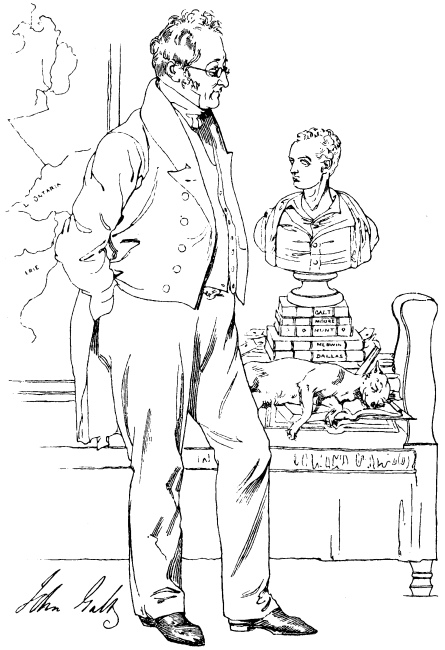
adorned the Thirties and the Forties—Hood, Hook, Galt,
Dickens, Albert Smith, Thackeray—all belonged to it;
George Eliot, whose country towns are those of the
Thirties and the Forties, was
essentially a woman of the
middle-class.
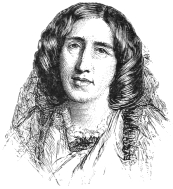
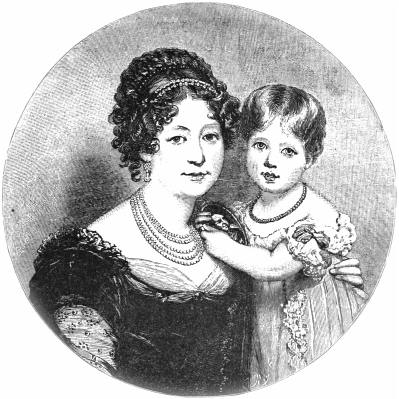
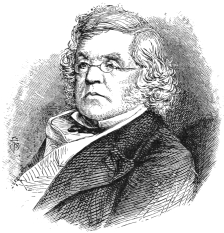
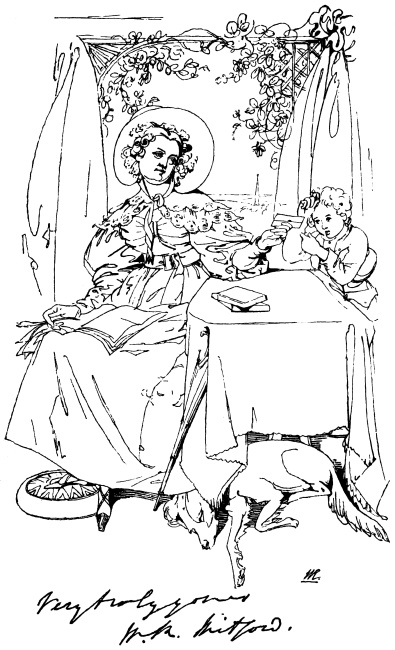
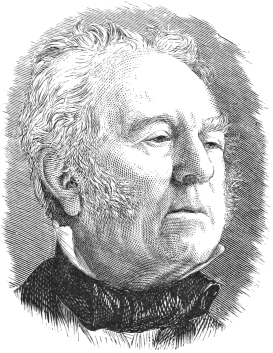
GEORGE ELIOT
(Taken from the Drawing in ‘The Graphic’
by permission)
Middle-class life—especially
in the country—was
dull, far, far duller than
modern life even in the
quietest country town. The
men had their business; the
women had the house. Incomes
ran small; a great
deal was done at home that
is now done out of it. There was a weekly washing-day,
when the house steamed with hot soap-suds, and
the ‘lines’ were out upon the poles—they were painted
green and were square—and on the lines hung half the
family linen. All the jam was made at home; the cakes,
the pies, and the puddings, by the wife and daughters;
the bread was home-made; the beer was home-brewed
(and better beer than good home-brewed no man need
desire); all those garments which are not worn outside
were made at home. Everybody dined in the middle
of the day. Therefore, in the society of the country
town dinner-parties did not exist. On the other hand,
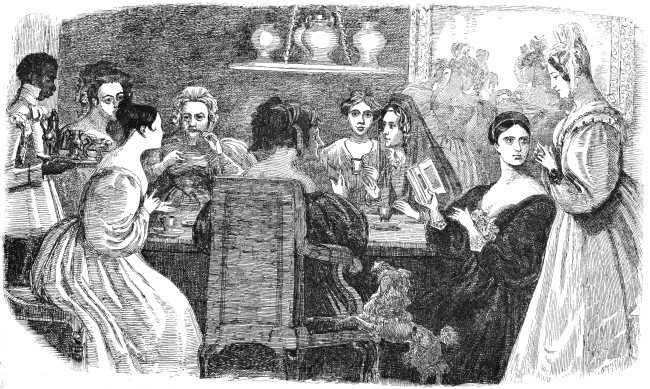
there were sociable evenings, which began with a sit-down
tea, with muffins and tea-cakes, very delightful,
and ended with a hot supper. Tobacco was not admitted
in any shape except that of snuff into the better
kind of middle-class house; only working men smoked
vulgar pipes; the Sabbath was respected; there was
no theatre nearer than the county town; the girls
had probably never seen a play; every man who
respected himself ‘laid down’ port, but there was little
drinking of wine except on Sunday afternoons; no one,
not even the ladies, scorned the glass of something
warm, with a spoon in it, after supper. For the young
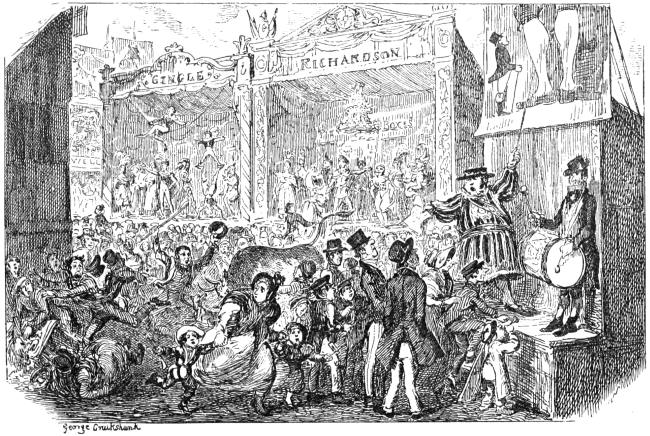
there was a fair once a year; now and then a travelling
circus came along; there was a lecture occasionally on
an instructive subject, such as chemistry, or astronomy,
or sculpture; there were picnics, but these were rare;
if there were show places in the neighbourhood, parties
were made to them, and tea was festively taken among
the ruins of the Abbey.
Fashion descends slowly; it is now the working
man who takes his wife into the country for tea: fifty
years ago he took his wife nowhere, and scorned tea.
Open-air games and sports there were none; no lawn-tennis,
Badminton, or anything of that kind in those
days; even croquet, which is now so far lost in the
mists of antiquity that men of thirty are too young to
remember the rage for it, was actually not yet invented.
Archery certainly existed, and the comic writers are
always drawing pictures of the young ladies sticking
their arrows into the legs of people a hundred feet or
so wide of the target. But archery belonged to a class
rather above that which we are now considering.
There was not much sketching and painting. There
was no amateur photography; there was no catching
of strange creatures in ponds for the aquarium—a
fashion also now happily extinct; there was not, in
fact, any single pursuit, amusement, or game which
would bring young people together in the open air.
There was no travelling; the summer holiday had not
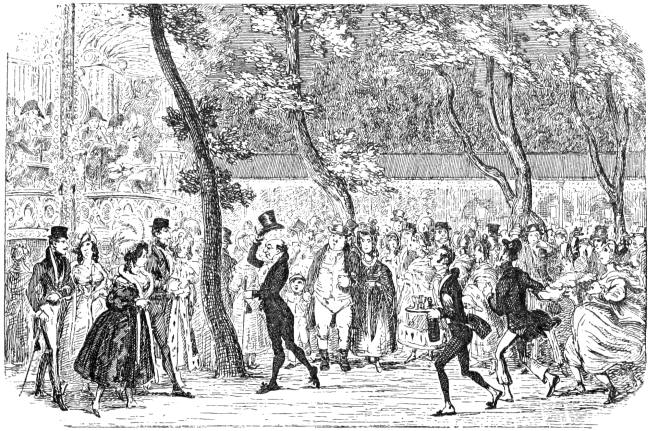
yet got down in the country. In London, to be sure,
everybody down to Bevis Marks and Simmery Axe
went out of town and to the seaside in July or August;
but in the country nobody thought of such a thing;
not the vicar’s daughters, not the solicitor’s wife, not
the family of the general practitioner; the very schoolmaster,
who got his four weeks in the summer and his
three at Christmas, spent them at home in such joy
as accompanies rest from labour. With no outdoor
amusements, and with no summer holiday, how much
is life simplified! But the simplicity of life means
monotony—faciunt vitam, balnea, vina, Venus.
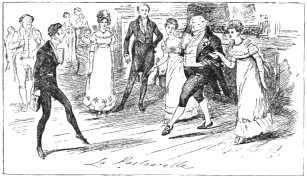
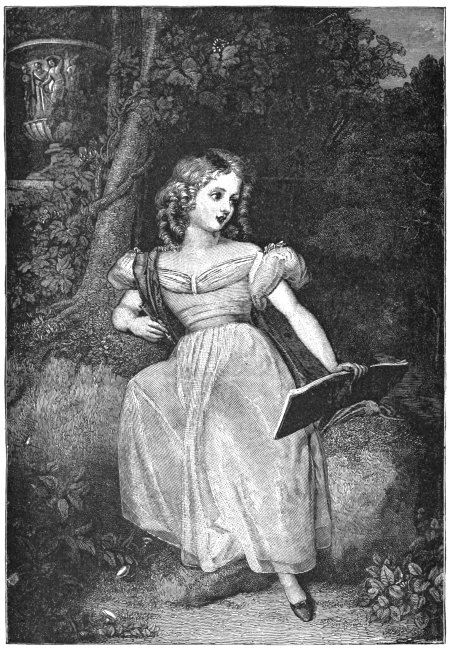
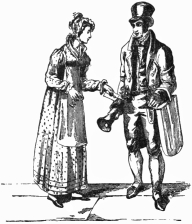
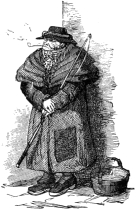
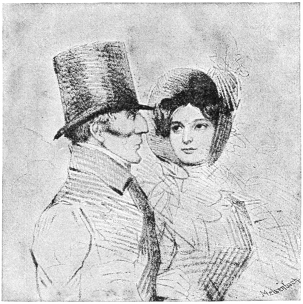
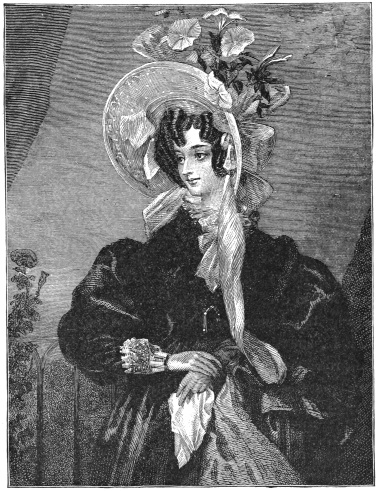
LA PASTOURELLE
In the winter, things were somewhat different. In
some towns there was the county ball. At this function
one had the pleasure of gazing upon ladies and
gentlemen of the highest rank and fashion, and of observing
that they kept to themselves like a Hindu caste,
danced with each other at the upper end of the room,
cast disparaging glances at the dresses of the ladies of
the lower end, and sniffed at their manner and appearance.
This was true joy. There were also occasional
dances at home, but these were rare, because people
had not learned how to meet and dance without making
a fuss over it, taking up carpets, putting candles in tin
sconces, keeping late hours, and having a supper, the
preparation of which was mainly done by the ladies of
the house, and it nearly killed them, and drove the
servants—the genteel middle-class family often got
along with only one—to give notice. I think that the
dances which had gone out in London still lingered in
the country. There were, for instance, the Caledonians
as well as the Lancers; there were country dances without
end, the very names of which are now lost; the
gentlemen performed the proper steps with grace and
agility, while the ladies were careful to preserve an
attitude supposed the only one possible for a lady
while dancing, in which the figure was bent forward,
the face was turned up with the chin stuck out, while
the hands were occupied in holding up the dress to the
regulation height. The elders, meanwhile, played long
whist at tables lit by candles which wanted snuffing
between the deals. The bashful youth of the party
was always covering himself with shame by his clumsiness
in snuffing out the candles, or, even if he succeeded
in taking off the red-hot ball of burnt thread, he too
often neglected to close the instrument with which he
effected the operation, and thereby mightily offended
the nostrils of the company. When there was no
dancing the younger members began with a ‘little
music.’ Their songs—how faded and stale they seem
now if one tries to sing them!—turned chiefly on the
affections, and the favourite poet was Felicia Hemans.
After the little music they sat down to a round game,
of which there were a great many, such as Commerce,
Speculation, Vingt-et-Un, Limited Loo, or Pope Joan.
The last was played with a board. I remember the
board—it was a round thing, lacquered, and like a
punch-bowl, but I think with divisions; as for the
game itself, and what was done with the board, I quite
forget, but both game and bowl lasted quite into the
Fifties. Are there any country circles now where they
still play Pope Joan with mother-o’-pearl counters, and
after the game have a grand settlement, and exchange
the counters for silver and copper, some with chuckles,
and others with outward smiles but inward rage?
People were extremely punctilious on the subject of
calls—one remembers the call in the ‘Mill on the Floss.’
The call was due at regular intervals, so that even the
day should almost be known on which it was paid or
returned. It was a ceremonial which necessitated a
great deal of ritual and make-believe. No one, for
instance, was to be surprised in doing any kind of
work. There was a fiction in genteel families that the
ladies of the house never did anything serious or
serviceable after dinner; the afternoon was supposed
to be devoted either to walking, or to making calls, or
to elegant trifling at home. Therefore, if the girls were
at the moment engaged upon any useful work—many
of them, poor things, never did anything but useful
work—they crammed it under the sofa, and pretended
to be reading a book, or painting, or knitting, or to be
engaged in easy and fashionable conversation. Why
they went through this elaborate pretence I have not
the least idea, because everybody knew that every girl
in the place was always making, mending, cutting-out,
basting, gusseting, trimming, turning, and contriving.
How do you suppose that the solicitor’s daughters made
so brave a show on Sundays if they were not clever
enough to make up things for themselves? Everybody,
of course, knew it, and why the girls would not own up
at once one cannot now understand. Perhaps it was a
sort of suspicion, or a faint hope, or a wild dream,
that a reputation for ladylike uselessness might enable
them to cross the line at the County Ball, and mingle
with the county people.
Are there still any circles of society in which, if a
lady with her daughters calls upon another lady with
her daughters, the decanters, biscuits, and glasses are
placed upon the table, and the visitors are asked whether
they will take port or sherry? This, fifty years ago,
was always done in country towns, and the visitors
always took a glass of port or sherry. In some houses
it was not port and sherry that were placed upon the
table, but ‘red’ and ‘white.’ I do not know whether
the red was currant or raspberry, but I think that the
white was generally cowslip. When the visitors were
gone, the ladies got out their work again, threaded
their needles, and spent an enjoyable hour or two in
discussing the appearance, the dress, the manners, and
the resources of their visitors. But the visit did them
good, because it compelled company manners, which
are always good for girls, and it dragged them a little
out of themselves. They were too much en famille,
these girls; they were never separated from each other.
The boys got out to school or to business all day; but
the poor girls were always together. Side by side they
did their household duties, side by side they sewed and
dressmaked, side by side they walked, side by side they
prayed in the church, side by side they slept. Small
chance of happiness was theirs—happiness is a separate,
distinct, individual kind of thing, in which one can consult
one’s own likes—until, in the fulness of time, there
came along the lover—a humdrum, commonplace kind
of lover, I dare say, but his sweetheart was as commonplace
as himself—and she exchanged a house, where
she was a better kind of servant, for one of exactly the
same sort, in which she was the mistress. And when
one says mistress, it must be remembered that man was,
in those days, much more of a master in the house than
he is now allowed to be. I speak not at random, but
from the evidence of those who remember and from
study of the literature, both that written by the men
and that by the women. I am certain that the husband,
unless he was hen-pecked—a pleasing word, now seldom
used—was always the Master and generally the Tyrant
in the house.
Let me, with some diffidence, approach the subject
of the Church in the country town. I never truly
understood the Church of fifty years ago until, in the
autumn of 1885, I perambulated with one who is jealous
for Church architecture and Church antiquities the
north-east corner of Norfolk, where there are many
churches, and most of them are fine. In our pilgrimage
among these monuments we presently came upon one
at the aspect of which we were fain to sit down and
weep. It was, externally, an old and venerable structure,
which might have been made beautiful within. Plaster
covered the walls, and hid the columns; the interior of
the church was crowded with high pews, painted white,
and having along the top a sham mahogany kind of
hand-rail; the chancel was encumbered with these enclosures,
which hid the old brass-work; that which
belonged to the Squire was provided with red curtains
on brass rods to keep the common people from gazing
at the Quality. The reading-desk, pulpit, and altar were
covered with a cloth which had been red, but had long
before faded away into an indescribably shabby brown.
The pulpit was not part of the old three-decker, but
was stuck into the wall; the windows had lost their
old tracery; the painted glass was gone; the roof was
a flat whitewashed ceiling. The church, to eyes accustomed
to better things, presented a deplorable appearance.
My friend, pointing solemnly to the general
shabbiness, remarked, ‘Donec templa refeceris.’ It was
the motto of the journal started early in the Forties by
a small knot of Cambridge men—among whom was
Mr. Beresford Hope, now, alas! no more—who desired
to raise and beautify public worship in the Anglican
faith, and also, I believe, to assert and insist upon
certain points of doctrine. And they clearly perceived
that, while the churches remained in their neglected
condition, and church architecture was at its then low
ebb, their doctrine was impossible. How far they have
succeeded not only the Ritualists themselves proclaim,
but also every other party in the Church, and even the
Nonconformists, who have shared in the increased
beauty and fitness of public worship.
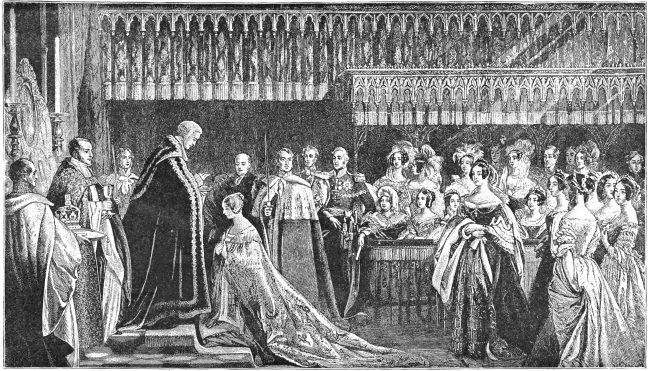
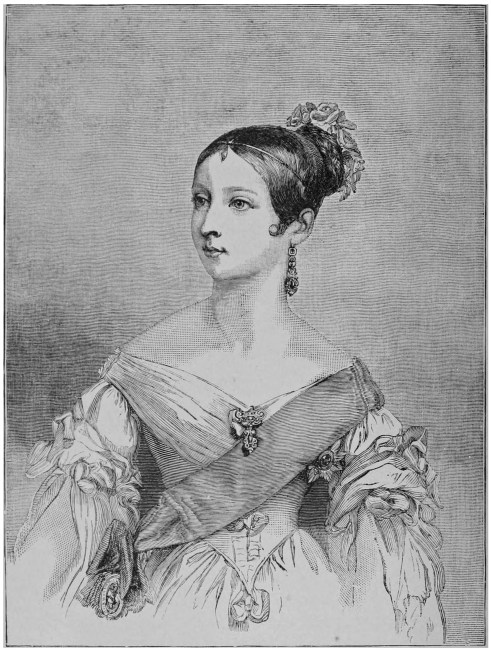
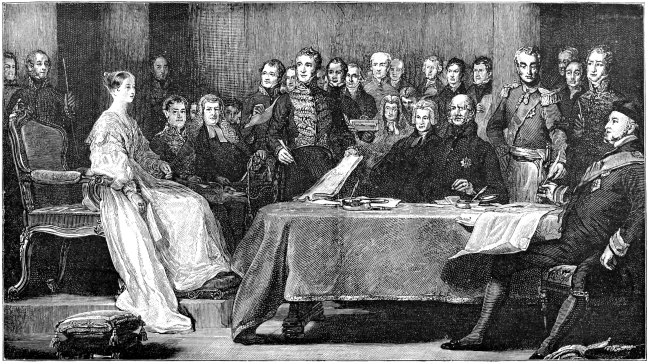
THE QUEEN RECEIVING THE SACRAMENT AFTER HER CORONATION—WESTMINSTER ABBEY, JUNE 29, 1838.
(From the Picture by C. R. Leslie, R.A., at Windsor Castle.)
He who can remember the ordinary Church Services
in the early Fifties very well knows what they were in
the Thirties, except that in the latter there were still
some venerable divines who wore a wig.
The musical part of the service was, to begin with,
taken slow—incredibly slow; no one now would, who
is not old enough to remember, believe how slow it
was. The voluntary at the beginning was a slow
rumble; the Psalms were very slowly read by the
clergyman and the clerk alternately, the Gloria alone
being sung, also to a slow rumble. The choir was
generally stationed in the organ loft, which has been
known to be built over the altar at the east end—as at
St. Mary’s, Cambridge—but was generally at the west
end. It was not a choir of boys and men only, but of
women and men. The ‘Te Deum’ was always ‘Jackson’—from
my youth up have I loathed ‘Jackson’; there
was just one lively bit in it for which one looked and
waited; but it lasted a very few bars; and then the
thing dragged on more slowly than ever till it came to
the welcome words, ‘Let me never be confounded.’
Two hymns were sung—very slowly; they were always
of the kind which expressed either the despair of the
sinner or the doubtful joy of the believer. I say
doubtful, because he was constantly being warned not
to be too confident, not to mistake a vague hope for
the assurance of election, and because, with the rest of
the congregation, he was always being told how few in
number were those elect, and how extremely unlikely
that there could be many of those few in that one
flock. Read any of the theological literature of the
period, and mark the gulf that lies between us and our
fathers. There were many kinds of preachers, just as
at present—the eloquent, the high and dry, the low and
threatening, the forcible-feeble, the florid, the prosy, the
scholarly—but they all seemed to preach the same doctrine
of hopelessness, the same Gospel of Despair, the
same Father of all Cruelty, the same Son who could at
best help only a few; and when any of the congregation
dared to speak the truth, which was seldom, these
blasphemous persons whispered that it was best to live
and enjoy the present, and to leave off trying to save
their souls against such fearful odds, and with the
knowledge that if they were going to be saved it would
be by election and by no merit or effort of their own,
while, if the contrary was going to happen, it was no
use striving against fate. Wretched, miserable creed!
To think that unto this was brought the Divine Message
of the Son of Man! And to think of the despairing
deathbeds of the careless, the lifelong terror of the
most religious, and the agony of the survivors over the
death of one ‘cut off in his sins’!
What we now call the ‘life’ of the Church, with its
meetings, committees, fraternities, guilds, societies, and
organisations, then simply did not exist. The clergyman
had an easy time; he visited little, he had an
Evening Service once a week, he did not pretend to
keep saints’ days and minor festivals and fasts—none of
his congregation expected him to keep them; as for his
being a teetotaller for the sake of the weaker brethren,
that would have seemed to everybody pure foolishness,
as, indeed, it is, only people now run to the opposite
belief; yet he was a good man, for the most part, who
lived a quiet and exemplary life, and a good scholar—scholars
are, indeed, sadly to seek among the modern
clergy—a sound theologian, a judge of good port, and
a gentleman. But processions, banners, surpliced choirs,
robes, and the like, he would have regarded as unworthy
the consideration of one who was a Churchman, a
Protestant, and a scholar.
To complete this brief study of the Church fifty
years ago, let us remark that out of 11,500 livings
which it possessed, 3,000 were under 100l. and 1,000
under 60l. a year, that there were 6,080 pluralists and
2,100 non-residents, that the Dissenters had only been
allowed to marry in their own chapels and by their
own clergy in the year 1831, that they were not admitted,
as Dissenters, to the Universities, and that the
incomes of some of the Bishops were enormous.
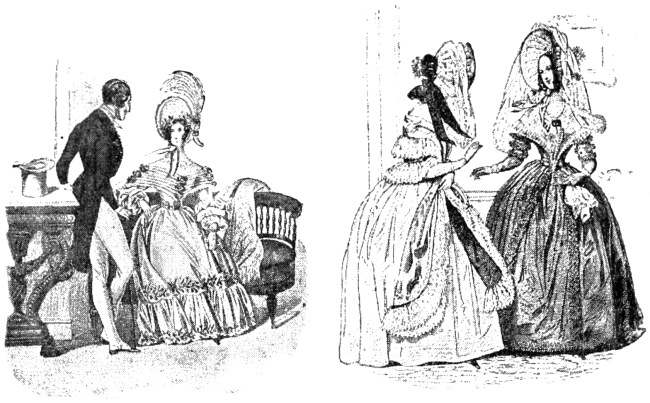
FASHIONS FOR AUGUST, 1836
FASHIONS FOR MARCH, 1837
As for Art, in the house or out of it, Art in pictures,
sculpture, architecture, dress, furniture, fiction, oratory,
acting, the middle-class person, the resident in the
country town, knew nothing of it. His church was
most likely a barn, his own house was four-square, his
furniture was mahogany, his pictures were coloured
engravings, the ornaments of his rooms were hideous
things in china, painted red and white, his hangings
were of a warm and comfortable red, his sofas were
horsehair, his drawing-room was furnished with a round
table, on which lay keepsakes and forget-me-nots; but
as the family never used the room, which was generally
kept locked, it mattered little how it was furnished.
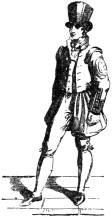
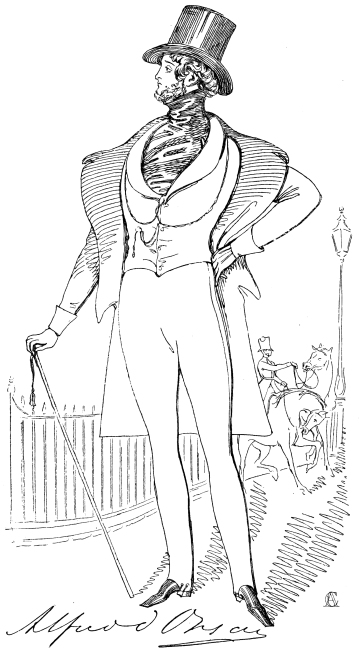
He dressed, if he was an elderly gentleman, in a spencer,
buttoned tight, a high black satin stock, and boots up
to his knees—very likely he still carried his hair in a
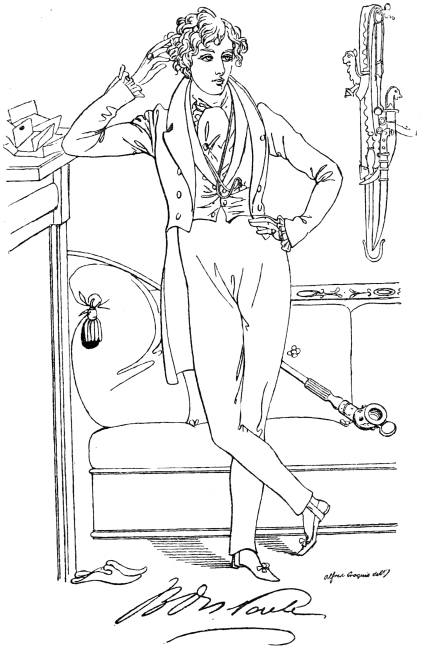
tail. If he was young, he had long and flowing hair,
waved and curled with the aid of pomade, bear’s grease,
and oil; he cultivated whiskers, also curled and oiled
all round his face; he wore a magnificent stock, with a
liberal kind of knot in the front: in this he stuck a
great pin; and he was magnificent in waistcoats. As
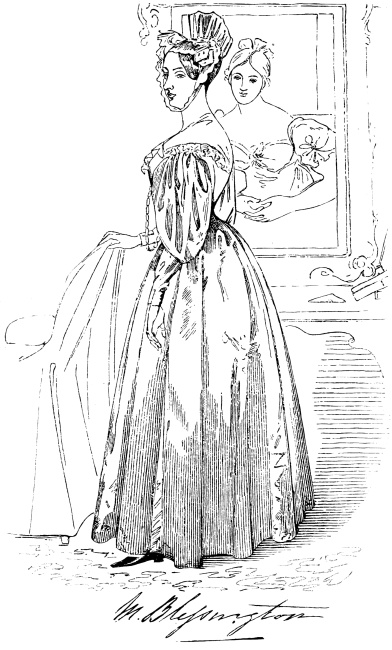
for the ladies’ dresses, I cannot trust myself to describe
them; the accompanying illustration will be of service
in bringing the fashion home to the reader. But this is
the effigy of a London and a fashionable lady. Her
country cousin would be two or three years, at least,
behind her. Well, the girls had blooming cheeks, bright
eyes, and simple manners. They were much more retiring
than the modern maiden; they knew very little
of young men and their manners, and the young men
knew very little of them—the novels of the time are
full of the shyness of the young man in presence of the
maiden. Their ideas were limited, they had strong
views as to rank and social degrees, and longed earnestly
for a chance of rising but a single step; their accomplishments
were generally contemptible, and of Art
they had no idea whatever. How should they have
any idea when, year after year, they saw no Art, and
heard of none? But they were good daughters, who
became good wives and good mothers—our own, my
friends—and we must not make even a show of holding
them up to ridicule.
One point must not be forgotten. In the midst of
all this conventional dulness there was, in the atmosphere
of the Thirties, a certain love of romance which
showed itself chiefly in a fireside enthusiasm for the
cause of oppressed races. Poland had many friends;
the negro—they even went so far in those days as to
call him a brother—was warmly befriended; the case
of the oppressed Greek attracted the good wishes of
everybody. Now, sympathy with oppression that is
unseen may sometimes be followed by sympathy with
the oppression which is before the eyes; so that one is
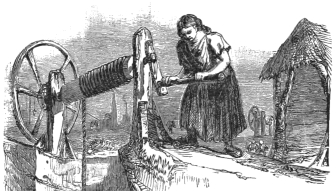
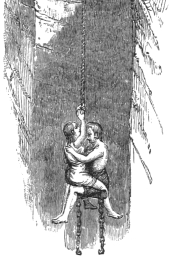
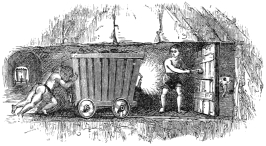
not surprised to hear that the case of the women and
the children in the mines and the factories was soon
afterwards taken seriously in hand. The verse which
then formed so large a part of family reading had a
great deal to do with the affections, especially their
tearful side; while the tales they loved the best were
those of knights and fair dames of adventure and
romance.
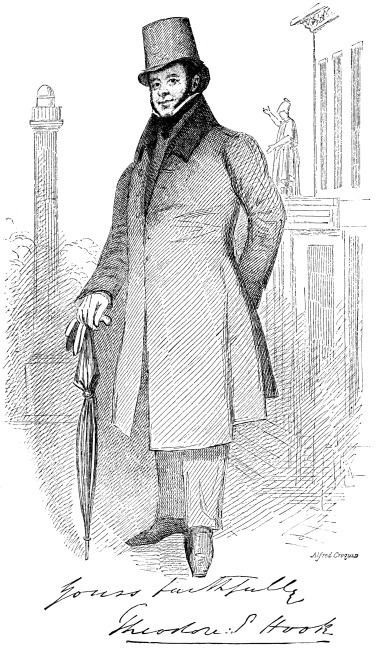
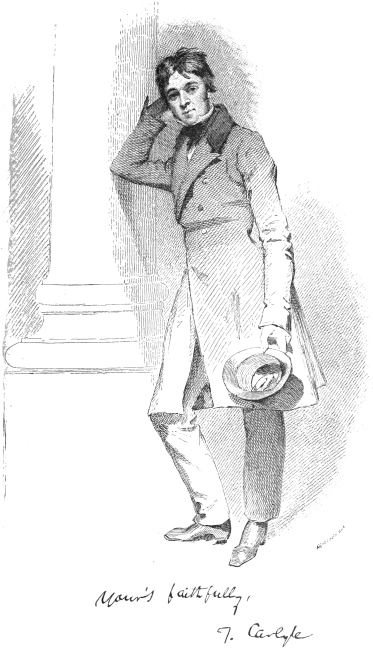
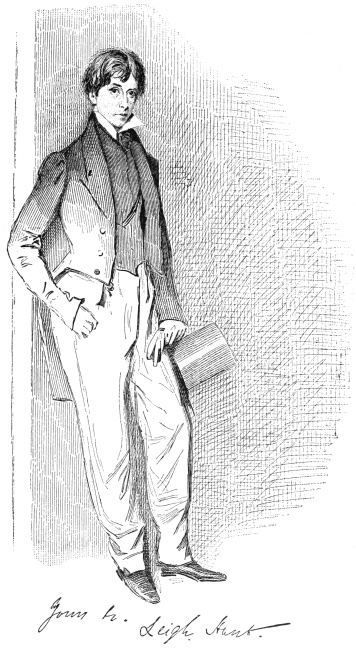
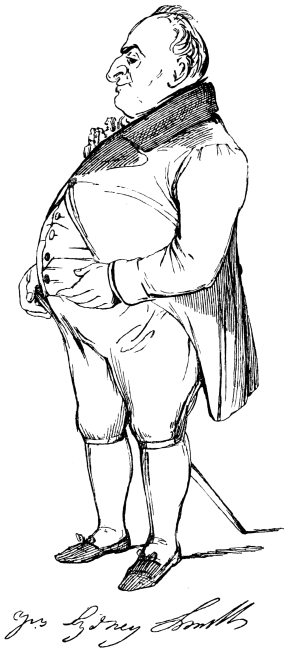
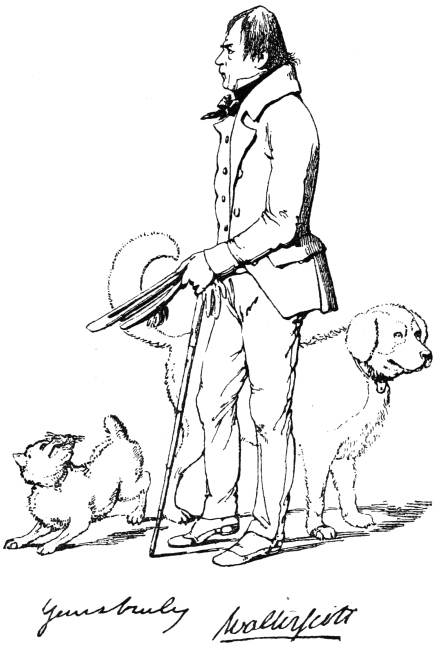
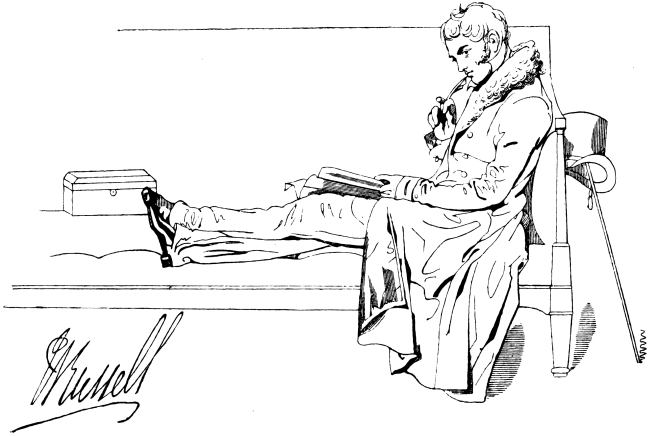
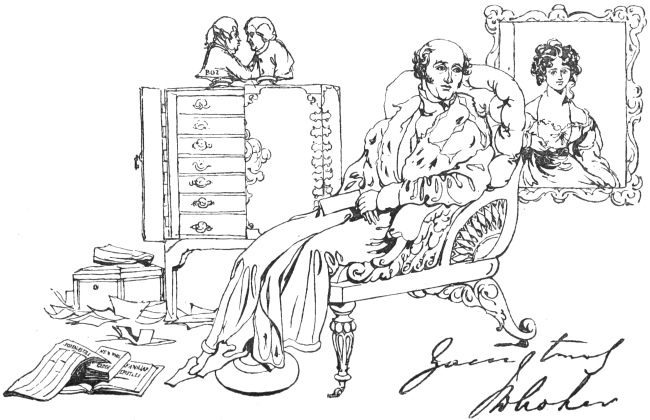
Yours faithfully
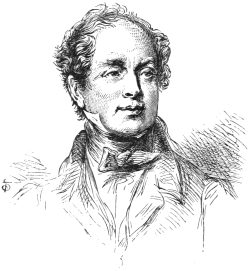
Theodore S Hook
-THEODORE HOOK-
A picture by Du Maurier in Punch once represented
a man singing a comic song at an ‘At Home.’ Nobody
laughed; some faces expressed wonder; some, pity;
some, contempt; a few, indignation; but not one face
smiled. Consider the difference: in the year 1837 every
face would have been broadened out in a grin. Do we,
therefore, laugh no more? We do not laugh so much,
certainly, and we laugh differently. Our comic man of
society still tells good stories, but he no longer sings
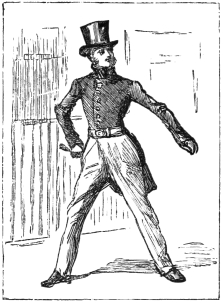
songs; in his stories he prefers the rapier or the jewelled
dagger to the bludgeon. Those who desire to make
the acquaintance of the comic man, as he was accepted
in society and in the middle-class, should read the
works of Theodore Hook and of Albert Smith. To
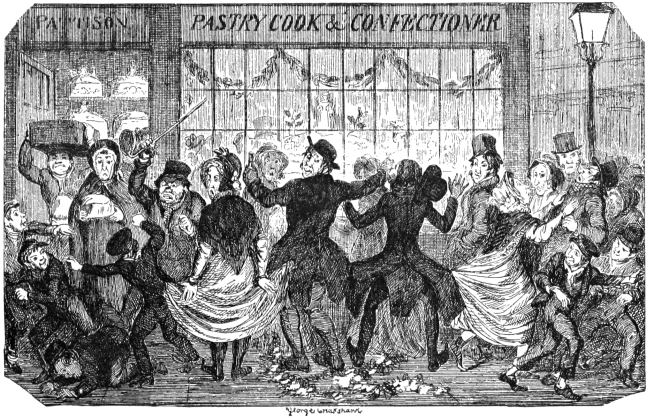
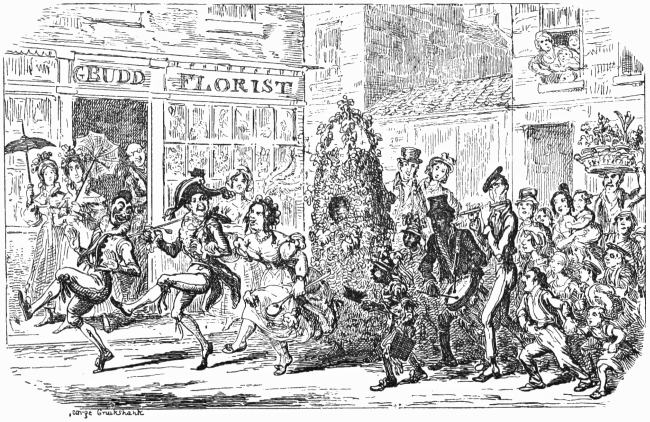
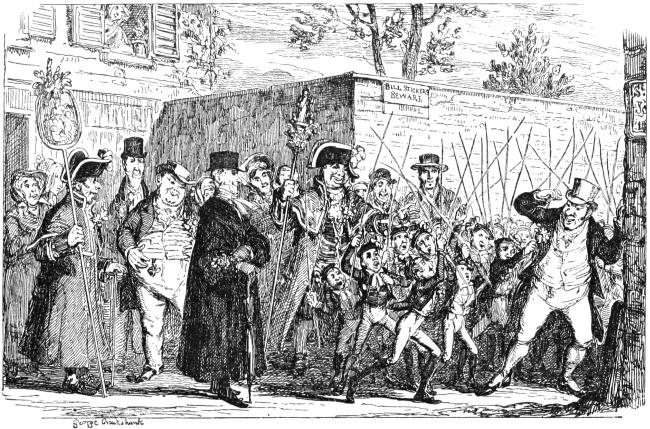
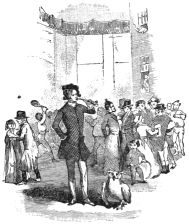
begin with, he played practical jokes; he continually
played practical jokes, and he was never killed, as
would now happen, by his victims. I am certain that
we should kill a man who came to our houses and
played the jokes which then were permitted to the
comic man. He poured melted butter into coat pockets
at suppers; he turned round signposts, and made them
point the wrong way, in order to send people whither
they did not wish to go. It may be remarked that his
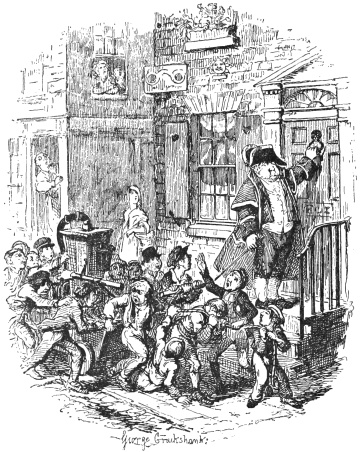
tricks were rarely original. He wrenched off door-knockers;
he turned off the gas at the meter; he tied
strings across the river to knock people backwards in
their boats; he tied two doors together, and then rang
both bells, and waited with a grin from ear to ear; he
rang up people in the dead of the night on any pretext;
he filled keyholes with powdered slate-pencil when the
master of the house was coming
home late; he hoaxed innocent
ladies, and laughed when they
were nearly driven mad with
worry and terror; he went to
masquerades, carrying a tray
full of medicated sweets—think
of such a thing!—which he distributed,
and then retired, and
came back in another dress to
gaze upon the havoc he had
wrought. Again, it was a time
when candles were still carried
about the house, and, as yet, it was thought that gas
in bedrooms was dangerous. He dipped the candles
waiting for the ladies when they went to bed into
water, so that they spluttered and went out, and made
alarming fireworks when they were lit; and then, to
remove the horrible smell, the candles being of tallow,
he offered to burn pastilles, but these were confections
of gunpowder and water, and caused the liveliest
emotions, and sent the poor ladies upstairs in an agony
of nervous terror.

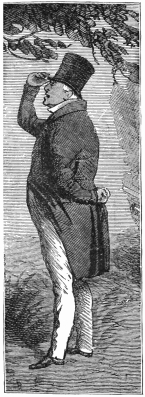
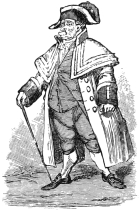
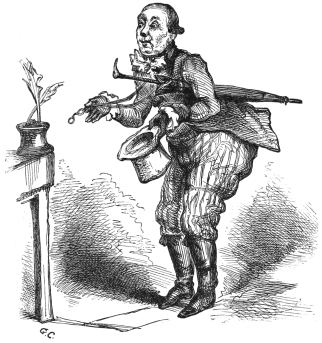
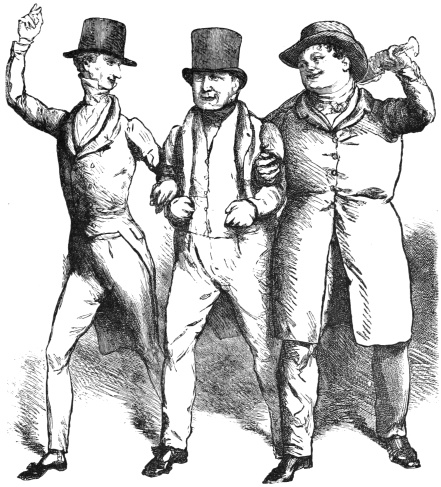
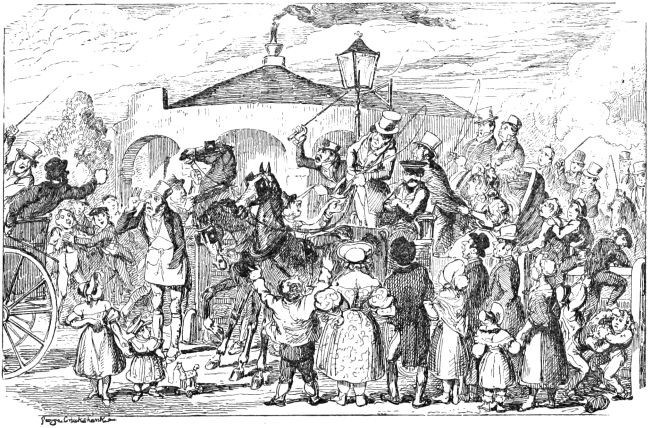
(From a Drawing by George Cruikshank
in ‘London Characters’)
There was no end to the tricks of this abominable
person. Once he received an invitation to a great ball,
which a Royal Personage was to honour with his presence.
The Royal Personage was to be regaled in a
special supper-room, apart from the common herd.
The table had been laid in this room with the most
elaborate care and splendour: down the middle of the
table there meandered a beautiful canal filled with gold
and silver fish—a contrivance believed in those remote
ages to set off and greatly increase the beauty of a
supper table. Our ingenious friend quickly discovered
that the room was accessible from the garden, where
some workmen were still putting the finishing touches
to their work, the men who had constructed the
marquee, and had arranged the lamps and things. He
went, therefore, into the garden: he invited these
workmen to partake of a little refreshment, led them
into the Royal supper-room, and begged them to help
themselves, and to spare nothing: in a twinkling the
tables were cleared. He then put certain chemicals
into the canal, which instantly killed every fish: this
done, he returned to the ballroom, and waited for the
moment when the Illustrious Personage, the hostess on
his arm, should enter that supper-room, and gaze upon
those empty dishes.
On another occasion, he discovered that a respectable
butler was in the habit of creeping upstairs, in
order to listen to the conversation, leaving his slippers,
in position, at the head of the kitchen stairs. He
therefore hid himself while the poor man, after adjusting
the slippers, walked noiselessly upstairs. He then
hammered a tintack into the heel of each slipper, and
waited again, until a confederate gave the alarm, and
the fat butler, hurrying down, slipped one foot into
each slipper, and—went headlong into the depths
below, and was nearly killed. ‘Never laughed so
much in all my life, sir.’
At Oxford, of course, he enjoyed himself wonderfully.
For, with a party of chosen friends, he met no
less a person than the Vice-Chancellor, at ten or eleven
at night, going home alone, and peacefully. To raise
that personage, lift him on their shoulders, crown him
with a lamp cover, and carry him triumphantly to the
gates of his own College, was not only a great stroke of
fun, but a thing not to be resisted. And he blew up
the group of Cain and Abel in the Quadrangle of Brasenose.
And what he did with proctors, bulldogs, and
the like, passeth all understanding. It was at Oxford
that the funny man made the acquaintance of the
Major. Now the Major was in love, but he was no
longer so young as he had been, and his hair was
getting thin on the top—a very serious thing in the
days of long hair, wavy, curled, singed, and oiled, flowing
gracefully over the ears and the coat-collar. The
Major, in an evil moment, commissioned the Practical
Joker, whose character, one would think, must have
been well known, to procure for him a bottle of a
certain patent hair-restorer. Of course, the Joker
brought him a bottle of depilatory mixture, which
being credulously accepted, and well rubbed in, deprived
the poor Major of every hair that was left. It
is needless to relate how, when he was at Richmond
with a party of ladies, the introduction of the ‘maids
of honour’ was a thing not to be resisted; and one can
quite understand how one of the young ladies was led
on to ordering, in addition to another ‘maid of honour,’
a small Gentleman Usher of the Black Rod, if they had
one quite cold.
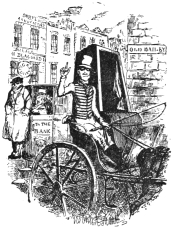
The middle-class of London, before the development
of omnibuses, lived in and round the City of London,
Bloomsbury being the principal suburb; many thousands
of well-to-do people, merchants and shopkeepers, lived
in the City itself, and were not ashamed of their houses,
and filled the City churches on the Sunday. Some lived
at Clapham, Camberwell, and Stockwell on the south;
a great many at Islington, where a vigorous offshoot of
the great city ran through the High Street past Sadler’s
Wells as far as Highbury; a few even lived at Highgate
and Hampstead. There were the ‘short’ stages from
London to all these places, but, so far as can be gathered,
most of those who lived in these suburbs before the
days of the omnibus had their own carriages, and drove
to town and home again every day. On Sunday they
entertained their friends, and the young gentlemen of
the City delighted to hire horses and ride down. The
comic literature of the time is full of the Cockney
horseman. It will be remembered how Mr. Horatio
Sparkins rode gallantly from town to dine with his
hospitable friends on Sunday.
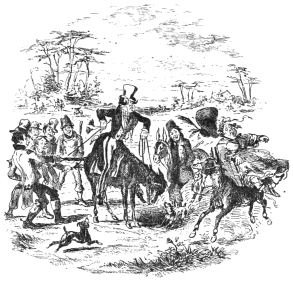
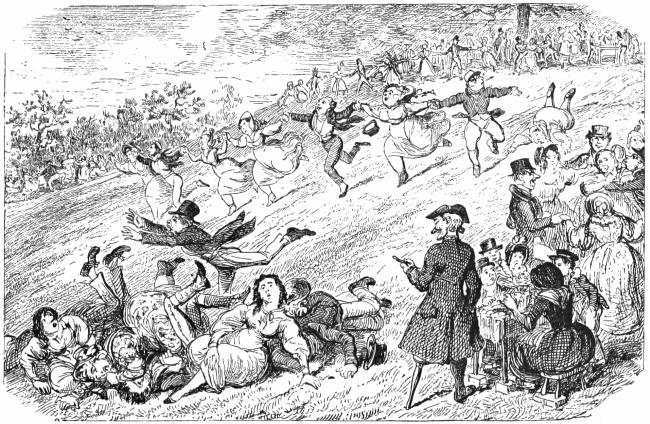
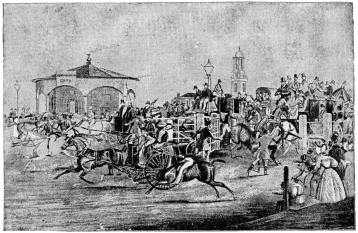
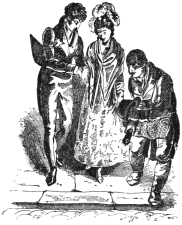
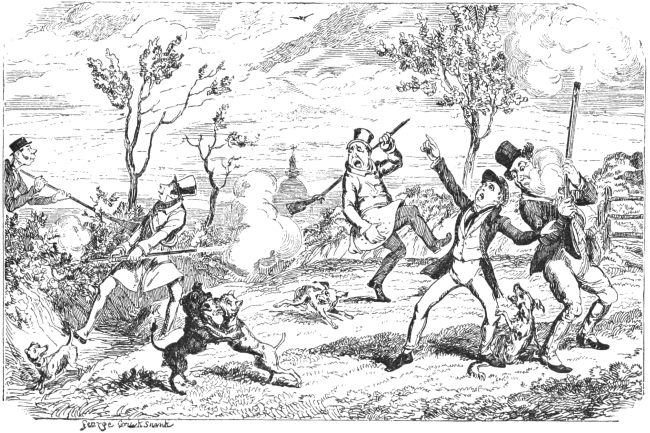
A SCENE ON BLACKHEATH
By ‘Phiz’
(From ‘Sketches in London,’ by James Grant)
The manners and customs of the Islington colony,
which may, I suppose, be taken for the suburban and
Bloomsbury people generally—except that Russell and
Bedford Squares were very, very much grander—may
be read in Albert Smith’s ‘Adventures of Mr. Ledbury,’
his ‘Natural History of the Gent,’ ‘The Pottleton
Legacy,’ and other contemporary works. Very good
reading they are, if approached in the right spirit,
which is a humble and an inquiring spirit. Many
remarkable things may be learned from these books.
For instance, would you know how the middle-class
evening party was conducted? Here are a few details.
The gentlemen, of whose long and wavy hair I have
already spoken, wore, for evening dress, a high black
stock, the many folds of which covered the shirt, and
were enriched by a massive pin; the white shirt-cuffs
were neatly turned over their wrists, their dress-coats
were buttoned, their trousers were tight, and they wore
straps and pumps. The ladies either wore curls neatly
arranged on each side—you may still see some old
ladies who have clung to the pretty fashion of their
youth—or they wore their hair dropped in a loop down
the cheek and behind the ear, and then fastened in
some kind of band with ribbons at the back of the
head. The machinery of the frocks reminds one of the
wedding morning in ‘Pickwick,’ when all the girls were
crying out to be ‘done up,’ for they had hooks and
eyes, and the girls were helpless by themselves. Pink
was the favourite colour—and a very pretty colour too;
and there was plenty of scope for the milliner’s art in
lace and artificial flowers. The elder ladies were magnificent
in turbans, and the younger ones wore across
the forehead a band of velvet or silk decorated with a
gold buckle, or something in pearls and diamonds.
This fashion lingered long. I remember—it must have
been about the year 1850—a certain elderly maiden
lady who always wore every day and all day a black
ribbon across her brows; this alone gave her a severe
and keep-your-distance kind of expression; but, in addition,
the ribbon contained in the middle, if I remember
aright, a steel buckle—though a lady, one thinks,
would hardly wear a steel buckle on her forehead.
Sometimes there was a wreath of flowers worn like a
coronet, and sometimes, but I think hardly in Islington,
a tiara of jewels. In middle-class circles, the fashion of
evening dress was marred by a fashion, common to
both sexes, of wearing cleaned
gloves. Now kid gloves could
only be cleaned by one process,
so that the result was an effect
of turps which could not be
subdued by any amount of
patchouli or eau-de-Cologne.
There were, as yet, no cards
for the dances, and when a
waltz was played, everybody
was afraid to begin. Quadrilles
of various kinds were danced,
and the country dance yet lingered at this end of the
town. The polka came later. Dancing was stopped
whenever any young lady could be persuaded to sing,
and happy was the young man whose avocations permitted
him to wear the delightful moustaches forbidden
in the City and in all the professions. Young Templars
wore them until they were called, when they had to be
shaved. For a City man to wear a moustache would
have been ruin and bankruptcy.
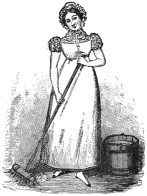
MAID SERVANT
(From a Drawing by Cruikshank in
‘London Characters’)
Other portions of Albert Smith’s works, if read with
discernment, will enable one to make discoveries of some
interest. One is that our modern ’Arry is really a
survival, not, as is sometimes believed, a growth of
modern days. His ally and mistress, ’Arriet, does not
seem to have existed at all fifty years ago; at least there
is no mention of her; but ’Arry flourished. He did
really dreadful things. He was even worse than the
Practical Joker. When he took Titus Ledbury abroad,
he went into the cathedrals on purpose to spill the holy
water, to blow out the candles, and to make faces at
the women kneeling at their prayers; he got barrel-organs
into lofts and invited men to bring grisettes and
dance all night, with a supper brought from the charcuterie;
wherever there was jumping, dancing, singing,
and riot, ’Arry was to the fore. On board the steamer
he seized a bottle of stout and took up a prominent
and commanding position, where he drank it before all
the world, smoking cigars, and laughing loudly at the
poor people who were ill. At home, he wrenched off
knockers, played practical jokes, drank more stout, ate
oysters, chaffed bar-maidens, and called for brandy and
water continually. He was loud in his dress and in his
voice; he was insolent, caddish, and offensive in his
manners. Generally, one thinks, he would end his
career in Whitecross Street, or the Fleet, or the Queen’s
Bench. Doubtless, however, there are still among us
old gentlemen who now sit at church on Sunday with
venerable white hair, among their children and grandchildren,
and while the voice of the preacher rises and
falls, their memory wanders back to the days when they
danced and sang with the grisettes, when they wrenched
the knockers, when they went from the theatre to the
Coal Cellar, and from the Coal Cellar to the Finish; and
came home with unsteady step and light purse in the
grey of the morning.
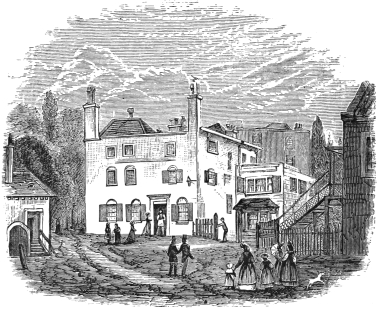
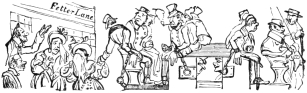
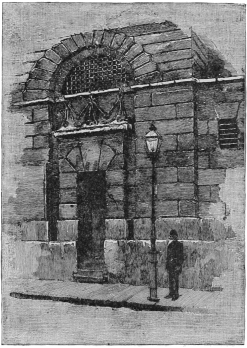
The Debtors’ Prison belonged chiefly to the great
middle-class. Before them stalked always a grisly
spectre, called by some Insolvency and by others Bankruptcy.
This villainous ghost seized its victims by the
collar and haled them within the walls of a Debtors’
Prison, where it made them abandon hope, and abide
there till the day of death. Everybody is familiar with
the inside of the Fleet, the Queen’s Bench, the Marshalsea,
and Whitecross Street. They are all pulled down
now, and the only way to get imprisoned for debt is to
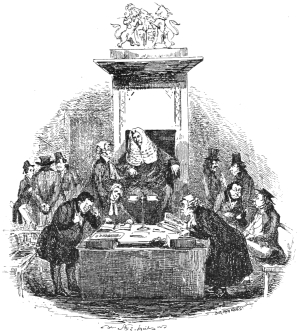
incur contempt of court, for which Holloway is the reward.
But what a drop from the humours of the
Queen’s Bench, with its drinking, tobacco, singing, and
noisy revelry, to the solitary cell of Holloway Prison!
The Debtors’ Prison is gone, and the world is the better
for its departure. Nowadays the ruined betting-man,
the rake, the sharper, the profligate, the fraudulent
bankrupt, have no prison where they can carry on their
old excesses again, though in humbler way. They go
down—below the surface—out of sight, and what
they do, and how they fare, nobody knows, and very
few care.